ECOPREACHER

The Rev. Dr. Leah D. Schade (To view this resource in Spanish, click here.)
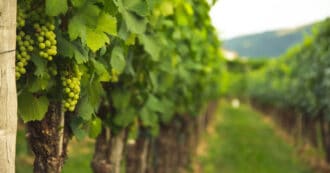
The biblical practice of gleaning reveals divine abundance from the Earth so that all are fed with equity and joyous fellowship.
Here are ideas for reading and preaching Isaiah 55:1-5, God’s invitation to abundant life, and Matthew 14:13-21, the story of Jesus feeding thousands of people. This is part of the EcoPreacher 1-2-3 series to equip preachers and congregations for engaging the Bible through an ecological lens. The Revised Common Lectionary assigns these texts for the Tenth Sunday after Pentecost, Year A.
Eco-Exegesis
Eco-exegesis is a method of interpreting the biblical text through a green lens using the principles of ecological theology.
Isaiah 55:1
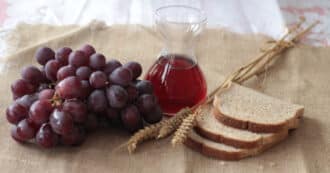
Ho, everyone who thirsts, come to the waters; and you that have no money, come, buy and eat! Come, buy wine and milk without money and without price.
Isaiah’s vision of divine abundance counters the narrative of scarcity and economic systems of commodification. In God’s economy, no one needs to pay for clean water. Food and the necessities of life have no cost. Living in covenant with God and each other ensures that everyone has what they need — not just to survive, but to flourish.
What’s more, this blessing of divine abundance is not limited to one tribe or nation. God intends for Israel to invite all peoples to participate in this economy of mutual care and generosity. There is no fear of the stranger or outsider in this God-ordained society. Neither is there a need to hoard or stand guard. Isaiah shows what is possible when everyone brings what they have, shares it, and delights in the “rich food” that results.
Matthew 14:20
And all ate and were filled; and they took up what was left over of the broken pieces, twelve baskets full.
Echoing Isaiah 55:1-5, the story of Jesus feeding thousands of people (Matt. 14:13-21) invites people to enjoy divine abundance without cost. We might see this as a “holy experiment.” Jesus’s teaching, community organizing, and equitable feeding all happen beyond Rome’s colonizing grasp.
In doing so, Jesus empowers the disciples to take the initiative in finding food. In this way, they reenact an archetypal story that has shaped the Jewish people for generations. That story is God giving manna in the wilderness (Exodus 16). The authors of Eco Bible remind us that “the Torah stresses the importance of each family gathering only as much as they needed, which would have protected them from the risks of overeating while still ensuring a daily moment of gratitude to God” (131). As a result, everyone eats for free and enjoys the God’s gifts with gratitude.
It’s worth noting that just as in the Exodus story, Matthew shows us that nothing goes to waste when Jesus feeds the people. They collect the leftovers and have twelve baskets full of bread. This implies that some who had gathered for teaching and healing took the food home. This detail can direct churches to consider their role in eliminating food waste while ensuring that people in poverty receive enough to eat.
One of the ways congregations can carry out Jesus’s feast of blessings is to find ways to bring fresh, nutritious produce to the areas with limited access to fresh food. Rev. Dr. Stephanie Moon and her congregation in North Middletown, Kentucky, did just that! North Middletown Christian Church began gleaning fresh produce from local farmers’ markets at the close of the day and taking it to low-income neighborhoods.
She received guidance from the director of Glean Kentucky, an organization that gathers and redistributes excess fresh fruits and vegetables to nourish hungry children and adults in the state. Rev. Dr. Moon first visited local farmers and talked with growers. Together, they arranged for church volunteers to deliver food directly to local residents. This eliminated the need for storage or refrigeration.
Rev. Dr. Moon and her congregation built relationships with residents in neighborhoods where they delivered the food. Word quickly spread that free, freshly gleaned produce would be available every week. “Within a few weeks, church members were delivering to twenty-five people. And by the end of the summer, the number was nearly forty. The number of recipients and the amount of food received grew in direct correlation,” says Rev. Dr. Moon.
A project like this can expand a congregation’s comfort zone by helping them interact with the community in ways they hadn’t previously explored. Partnering with programs like Glean Kentucky can build connections between the church, local orchards, farms, and residents in need.
When all eat and are fed without price or cost – and without predatory profit or profligate waste – this is something everyone can celebrate!
The Eco-Idea is one succinct statement that tells us who God is and/or what God does in relation to Creation and how we should respond as people of faith.
God invites us to glean divine abundance from the Earth so that all are nutritiously fed with equity and joyous fellowship.
Eco-Questions are what we can ask to help a congregation draw out the implications of the Eco-Exegesis and Eco-Idea.
- What are the gleaning organizations near your congregation? Visit the National Gleaning Project and discuss with your congregation how they might participate in efforts to reduce food waste and ensure hungry people are fed in your community.
- What does your church do with food waste after a community meal? Is it composted or thrown in a landfill? How you can reduce the amount of food you throw away? See FoodRecovery.org to learn more.
Eco-Actions are ways that a congregation might respond to the Eco-Idea and Eco-Questions. One of these possibilities may have salience for your ministry context.
- Encourage the gardeners in your congregation to grow an extra row of vegetables and donate the produce to a nearby food bank or a congregation that gives out free food.
- If your church doesn’t already have a compost bin, consider getting one. Then educate everyone about how to use it. Work with gardeners in the community to distribute the compost so leftover food nourishes future crops and plants. The United Church of Christ has a helpful webpage about church composting here.
- Collect a special offering this Sunday to donate to the gleaning organization closest to your congregation. If you live in Kentucky, you can donate to Glean Kentucky here.
*Credit for featured image: Unsplash.