ECOPREACHER

Leah D. Schade
(lschade@lextheo.edu)
Copyright 2026
(Permission for one-time use with attribution.)
(To view this resource in Spanish, click here.)
This resource is made possible through support from the Interfaith Center of Sustainable Development with editing assistance from Rabbi Yonatan Neril.
- Introduction
- Station 1 – Jesus is condemned to death. Fossil fuel emissions lead to climate tipping points.
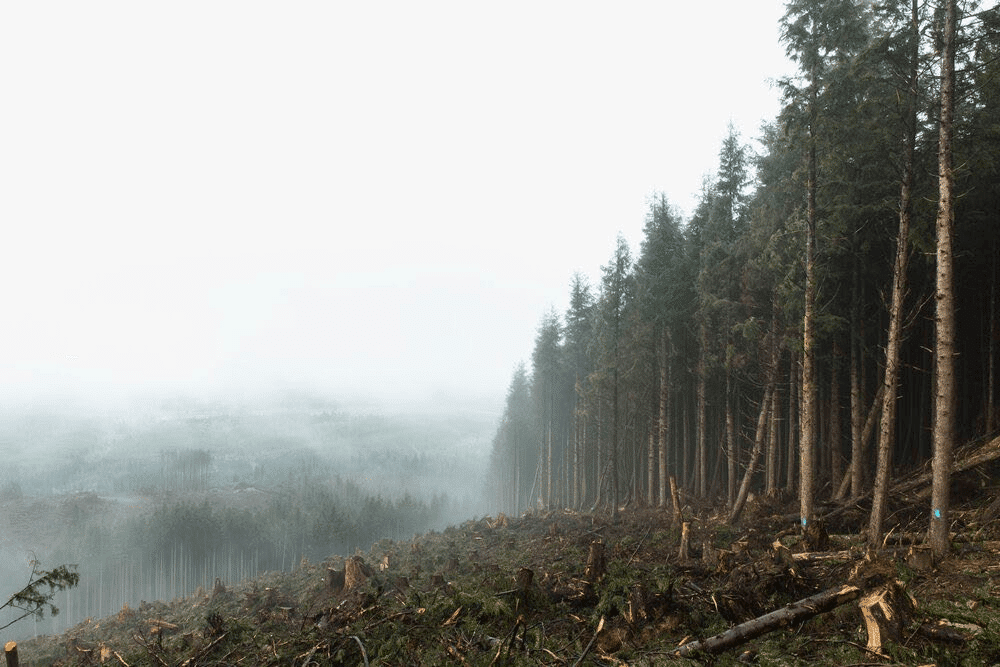
- Station 2 – Jesus takes up his cross. Deforestation leads to Earth’s suffocation.
- Station 3 – Simon of Cyrene carries Jesus’s cross. Communities of color bear the brunt of the eco-crucifixion.
- Station 4 – Jesus meets the women of Jerusalem. Women weep for their children in the age of eco-crucifixion.
- Station 5 – Jesus is stripped of his garments. Global plastics pollution strips Earth of its health and beauty.
- Station 6 – Jesus dies on the cross. Global wars crucify human and Earth communities.
- Station 7 – Jesus is laid in the tomb. Species extinction is leading to ecosystem collapse.
- What is the purpose of the Ecological Stations of the Cross?
- How can the Ecological Stations of the Cross be practiced?
- What does 'eco-crucifixion' mean?
- In what ways does environmental racism relate to the concept of eco-crucifixion?
- What actions are suggested after the Ecological Stations of the Cross to address environmental issues?
Introduction
As Christians remember the crucifixion of Jesus on Good Friday, many will engage in a practice called The Stations of the Cross. Also known as the Way of the Cross, or the Way of Sorrows, the Stations of the Cross is a series of images depicting scenes from the crucifixion of Jesus Christ. Often found in Roman Catholic churches or outdoor spaces, these images are designed as a kind of spiritual pilgrimage to help the faithful contemplate the Passion of Christ. [Read: “The Stations of the Cross, a City Park, and Justice.”]
Amid the eco-crucifixion of our planet, I suggest that Christians practice an Ecological Stations of the Cross.
[This resource is part of the EcoPreacher 1-2-3 series that helps preachers and congregations address environmental issues in their sermons and ministry. The Ecological Stations of the Cross is made possible through support from the Interfaith Center of Sustainable Development with editing assistance from Rabbi Yonatan Neril.]
What is Eco-Crucifixion?
I coined the word eco-crucifixion in my book, Creation-Crisis Preaching: Ecology, Theology, and the Pulpit (Chalice Press, 2015). This term describes the torture, suffering, and death of the natural world and human communities due to environmental violence.
In his book, Finding God in the Singing River: Christianity, Spirit, Nature Mark Wallace makes the case that the “cruciform Spirit” embodied in and through Earth suffers just as Jesus did on the cross. Today, the continual siege of ecological sin is leading to eco-crucifixion.
Ecological Stations of the Cross as a way to process eco-anxiety and eco-grief
I’ve been working with the BTS Center and Creation Justice Ministries to host the EcoPreacher Cohort. This is a monthly online gathering of preachers for education, encouragement, and to address environmental issues in sermons. Nine in ten participants say that exploring their own eco-anxiety and eco-grief is either a “high” or “medium” priority. As species extinction, habitat loss, deforestation, and catastrophic weather events increase every year, feelings of loss and grief become more acute.
One way that the church can help process these feelings is by creating rituals for eco-lament, such as funerals for trees and remembering extinct species on All Saints Day. We can also offer blessings for those who protest environmental devastation. The Ecological Stations of the Cross is one of these rituals.
Uses for Ecological Stations of the Cross
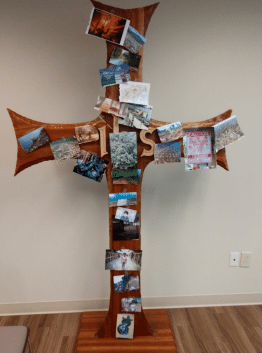
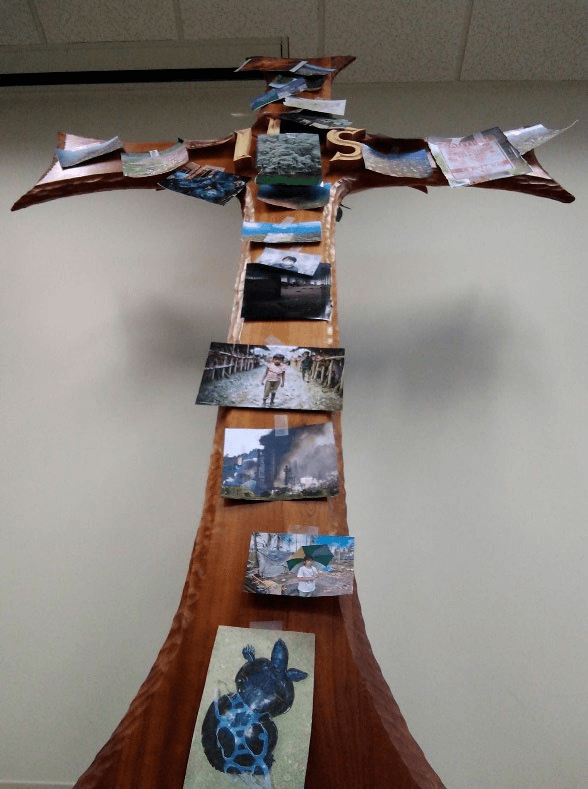
This Ecological Stations of the Cross can be done in a church sanctuary or outside on the church grounds. It can also be used in a local park or in a labyrinth. Place a cross affixed with images that symbolize the form of eco crucifixion commemorated at each station. Alternatively, in an outdoor space, the images could be temporarily fastened to trees (without damaging the trunks, of course). Or as in the photo below, invite participants to choose from images of environmental devastation to affix to one large cross.
This ritual could be done as a group with different individuals invited to read the meditation for each station. Also, local musicians could offer appropriate hymns or songs to help sing the lament of the people.
Or the ritual could be done individually with a booklet handed out during the time that the stations are open. The booklet could contain the meditations from the Ecological Stations of the Cross (which are free for use with proper attribution) to enable participants to contemplate and reflect on Earth’s Via Dolorosa (Way of Suffering). [Click here for the PDF version.]
The Ecological Stations of the Cross can also be used for personal devotions. There are seven entries which can be read as part of your meditations for the seven days of Holy Week. Begin on Palm Sunday and conclude on Holy Saturday.
Action Emerges from Lament
Offer materials with ideas to take action as participants in the Ecological Stations of the Cross conclude their time with this ritual. Here are just a few ideas:
- Begin a Creation-centered Bible study using Eco Bible to learn about the deep Earth-wisdom woven throughout the Hebrew Scriptures.
- Provide a list of local environmental organizations with whom people can join to maximize their impact for change.
- Start (or recommit) an eco ministry in the congregation to educate and advocate for Creation care.
- Educate clergy and parishioners about the climate crisis to take effective action on a personal, professional, and political level. Faith-based organizations with excellent resources include: Blessed Tomorrow, Creation Justice Ministries, The BTS Center, Interfaith Center for Sustainable Development, and GreenFaith.
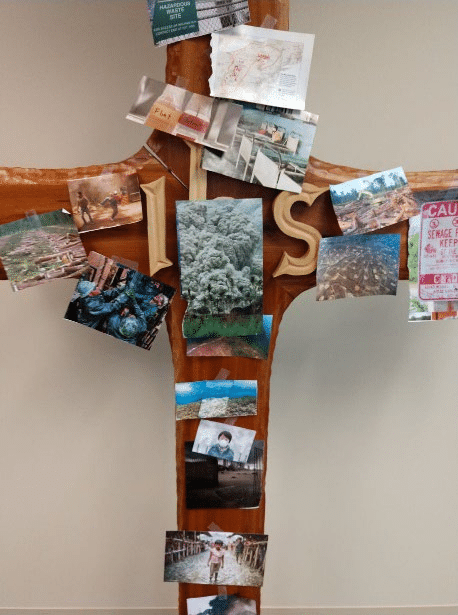
Station 1 – Jesus is condemned to death. Fossil fuel emissions lead to climate tipping points.
Scripture: Matthew 27:1-2
When morning came, all the chief priests and the elders of the people conferred together against Jesus in order to bring about his death. 2 They bound him, led him away, and handed him over to Pilate the governor.
The Gospels tell the story of powerful men in religion and politics condemning Jesus to death by crucifixion. Driven by the lust for domination, wealth, and control, these leaders decided to end Jesus’s life in order to silence his message of justice, non-violent civil disobedience, and non-compliance with oppression. The trial by the religious leaders followed by the trial in the imperial Roman court set off the series of events that would culminate in Jesus’s suffering and death.
Driven by the lust for power, wealth, and control, the fossil fuel industry has decided that their profits are worth more than the pain and suffering from environmental collapse. Recent measurements show atmospheric CO₂ concentrations have surpassed 429 parts per million (ppm) as of February 2026, a level higher than at any point in human history. The global average temperature for the winter period from December 2025 to February 2026 ranked among the highest ever recorded. These levels are setting off climate tipping points that are rapidly becoming unstoppable. From wildfires consuming vast swaths of land, to super-charged weather events devastating communities, to coral reef die-offs and loss of natural lands, suffering and death is widespread.
Prayer for mercy
God of Creation, have mercy on those who are suffering from climate devastation, especially those who have contributed the least but bear the heaviest burdens. We pray for impoverished communities, Indigenous peoples, threatened animals and birds, and ecosystems struggling to survive. Change the hearts and minds of the fossil-fuel imperial forces. Compel people of faith to call for justice through non-violent civil disobedience and non-compliance with oppression.
God in your mercy, hear our prayer.
Station 2 – Jesus takes up his cross. Deforestation leads to Earth’s suffocation.
Scripture: John 19:16-17
16Then he handed him over to them to be crucified. So they took Jesus; 17 and carrying the cross by himself, he went out to what is called The Place of the Skull, which in Hebrew is called Golgotha.
The cross used for crucifixion is made up of two heavy pieces of wood – the crossbar, called the patibulum, and the pole, called a stipes. Consider that these were once huge, majestic, life-giving trees. Once cut down, these trees become an instrument of torture and death. In the Gospels, Jesus was made to carry his own cross to the place where he was lashed and nailed to the trees. Hanging from the cross, his lungs suffocated under his own weight until he died.
According to Earth.org, “Every hour, forests the size of 300 football fields are cut down. By the year 2030, the planet might have only 10% of its forests; if deforestation isn’t stopped, they could all be gone in less than 100 years.” The forests are like the lungs of the Earth, inhaling and sequestering carbon dioxide while exhaling life giving oxygen. As we strip away the forests, we are slowly suffocating ourselves and the planet. When the trees die, all those who depend on them will also die.
Prayer for reforestation
Spirit of breath and life, renew the face of the Earth with a resurgence of trees. Breathe through communities with fresh efforts to protect existing forests while planting trees where they are most needed.
Spirit in your mercy, hear our prayer.
Station 3 – Simon of Cyrene carries Jesus’s cross. Communities of color bear the brunt of the eco-crucifixion.
Scripture: Matthew 27:32:
As they went out, they came upon a man from Cyrene named Simon; they compelled this man to carry his cross.
The Gospels of Matthew, Mark, and Luke tell of the Romans compelling a man from the northern African city of Cyrene to carry Jesus’s cross for him on the way to Golgotha. It is likely that Simon of Cyrene had no choice in the matter. The Roman forces conscripted him to shoulder the burden of a condemned man.
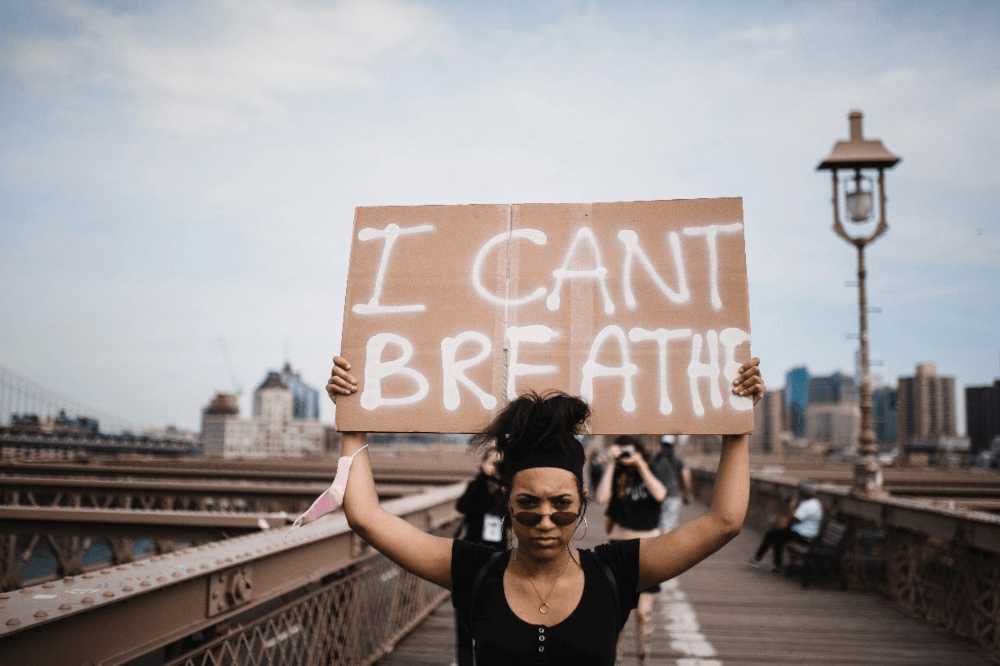
Environmental racism is the systemic oppression of people of color through policies and practices that put the burden of waste and pollution in close proximity to communities of color. Polluting industries have a history of siting things like plastics plants, fossil-fuel refineries, trash incinerators, and methane gas pipelines in places where people of color live. This exposes them to numerous harmful pollutants that afflict them with health problems and decreased lifespans. White and higher-wealth communities do not face these same problems. Our racist systems have conscripted black, brown, Indigenous, and impoverished neighborhoods to shoulder the burden of our fossil-fueled society.
Prayer for justice
Jesus our brother, bless those who are organizing to fight toxic industries and waste that is hurting and killing people of color. Empower activists with education, tools, courage, and funding to protect vulnerable communities and dismantle racist systems.
Jesus in your mercy, hear our prayer.
Station 4 – Jesus meets the women of Jerusalem. Women weep for their children in the age of eco-crucifixion.
Scripture: Luke 23:27-28
27A great number of the people followed him, and among them were women who were beating their breasts and wailing for him. 28 But Jesus turned to them and said, ‘Daughters of Jerusalem, do not weep for me, but weep for yourselves and for your children.”
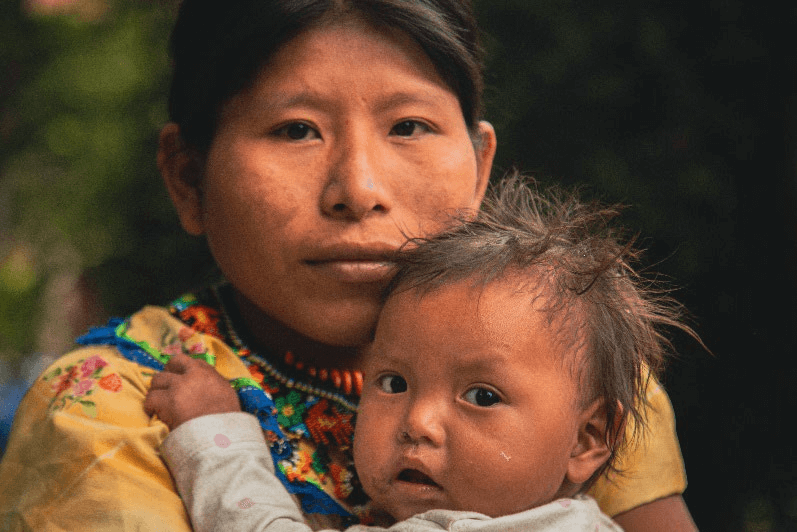
Seeing their beloved rabbi walking the procession to his death, the women cry for the pain they know he will suffer. They mourn for the death they know is coming. Yet Jesus points out that the women and the children are the ones who will truly suffer. He knows that when the imperial forces target vulnerable communities with military violence, women and children will be subjected to violence, starvation, rape, and murder.
Children, teens, and young adults acutely feel the pain of eco-anxiety and eco-grief. They learn about the effects of climate change in school, from articles on the Internet, and from the discussions they hear among adults. And some of them experience the effects of the climate crisis directly. Consider the children in eastern Kentucky who lost homes, schools, and family members to flooding. Think of the children of drought-ravaged countries around the world who leave their homes in search of survival and often suffer violence along the way. Mothers and fathers, grandmothers and grandfathers, teachers, ministers, and many other adults suffer grief and guilt for the damaged and diminished world they are leaving for their children.
Prayer for vision
God of renewed vision, comfort the young ones who feel the stress and fear of climate change unfolding around them. Surround them with adults who will help them process these feelings and to organize into movements for positive change. Inspire both youth and adults to work together to advocate for fossil fuel divestment, localized energy systems, and protecting children who suffer from climate devastation and migration.
God in your mercy, hear our prayer.
Station 5 – Jesus is stripped of his garments. Global plastics pollution strips Earth of its health and beauty.
Scripture: Matthew 27:28-30
28They stripped him and put a scarlet robe on him, 29and after twisting some thorns into a crown, they put it on his head. They put a reed in his right hand and knelt before him and mocked him, saying, ‘Hail, King of the Jews!’ 30They spat on him, and took the reed and struck him on the head.
Stripping Jesus of his clothes was an act of humiliation. The soldiers tore off his garments in order to shame him, remove his dignity, and expose him to the elements. Spitting on him was a form of insult. They polluted him with their spittle and beat him with the reed they had used to mock him.
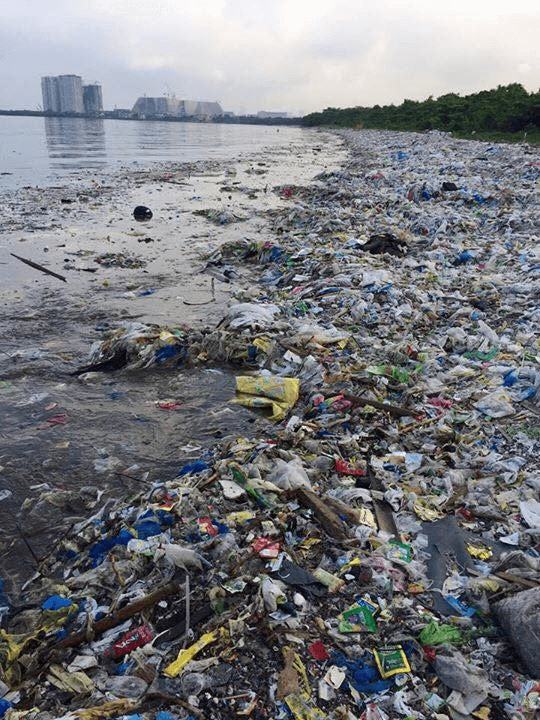
According to Our World in Data, humans produced 2 million tons of plastic in 1950. Today, the United Nations estimates that, globally, more than 400 million tonnes of plastic is produced each year. Half is for single use. Only 10% is recycled.
Plastics litter every part of the Earth, from bags caught in trees, to massive garbage patches in the oceans. Corpses of marine animals reveal the plastic in their stomachs mistakenly consumed as food. And microplastics now litter the blood of fish, animals, and humans, causing cancers and other health maladies. Our waste has stripped Earth of its beauty, insulted God and God’s Creation, and polluted our own bodies.
Prayer for cleansing
Holy God, you are ashamed by what we have done to your Creation and to ourselves by the intentional, as well as thoughtless, ways we have littered and polluted this planet. Compel us to halt the production of plastics and find other ways to make products that can be safely produced, used, and reused. Bless the efforts of all those who are cleaning up the land and waterways of this ecological sin.
God in your mercy, hear our prayer.
Station 6 – Jesus dies on the cross. Global wars crucify human and Earth communities.
Scripture: Matthew 27:35-36, 45-46
35And when they had crucified him, they divided his clothes among themselves by casting lots; 36 then they sat down there and kept watch over him. . . 45From noon on, darkness came over the whole land until three in the afternoon. 46And about three o’clock Jesus cried with a loud voice, ‘Eli, Eli, lemasabachthani?’ that is, ‘My God, my God, why have you forsaken me?’
Jesus’s death was a result of decisions made by powerful men who would brook no disruption of their economy of extraction. Religious and secular leaders built a system in which the labor, land, and livelihood of the common people were used to enrich the elite. In contrast, Jesus preached the “kingdom of God,” an economy of equitable sharing, justness, and compassion that privileged the most vulnerable. His message gave hope to people who lived in fear. But it also threatened to undermine the power structures that enjoyed total control. The crucifixion was a political act carried out with expedience and ruthless cruelty to quash a divine movement for transformation.
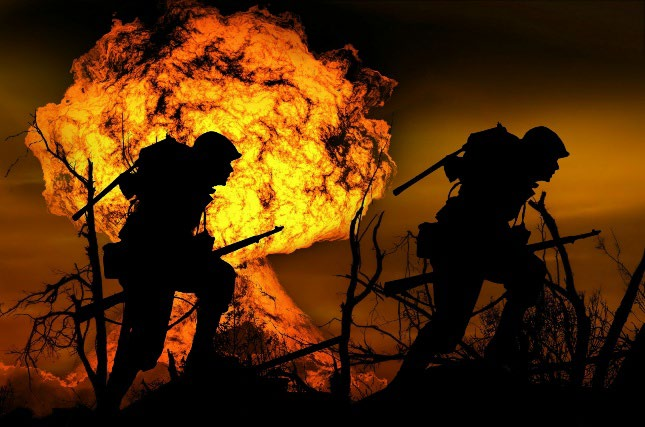
Today, as global wars destroy countless lives, the Earth seems to cry out with Jesus, “God, why have you forsaken me?” Missile strikes in industrial areas, oil reserves, and refineries release highly toxic substances. Mines, explosions, toxic spills, and munitions destroy agricultural lands, wildlife refuges, waterways and other natural areas.
Carroll Muffett of the Center for International Environmental Law (CEIL) explains, “One of the important things to understand about the environmental consequences of war is that they are human consequences in another form. They are often difficult to discern, and they can be very long-lasting.” Just as humans suffer, so does Creation. And Creation’s suffering eventually leads to more human suffering lasting for generations.
To respond to the environmental consequences of war, check with your denominational office about efforts to counter the humanitarian and environmental disaster. Like the women at the tomb, we are called to attend to the dead and respond to the impacts of war long after the missiles have stopped and the guns are silent.
Prayer of lament
Holy Jesus, your life mattered. The lives of those to whom you ministered mattered. The lives of our Earth kin matter. Hear our prayers of lament as we watch the continuous unfolding of the eco-crucifixion all around us. Gather our worries, fears, tears, and anger into yourself. Transform them by your life-giving power into a movement of resistance to the powers of war and extraction.
Jesus in your mercy, hear our prayer.
Station 7 – Jesus is laid in the tomb. Species extinction is leading to ecosystem collapse.
Scripture: Matthew 27:59-61
59So Joseph took the body and wrapped it in a clean linen cloth 60 and laid it in his own new tomb, which he had hewn in the rock. He then rolled a great stone to the door of the tomb and went away. 61Mary Magdalene and the other Mary were there, sitting opposite the tomb.
Once Jesus breathed his last, that was the end of his earthly life. There was no return from the collapse of his bodily systems deprived of oxygen once he was crucified. The tomb held his lifeless body as the women looked on, mourning the death of their rabbi, their friend.
Our planet is currently in the midst of a mass extinction event. Species are going extinct faster than in any of the previous five mass extinctions. As humans raze natural habitats for mining, farming, and habitation, vulnerable species are simultaneously threatened by global warming that is happening too fast for them to adapt. Added to all of this is the pollution, overhunting, and overfishing that are decimating birds, animals, and aquatic life to a tipping point for this planet. Scientists are warning us: “A biodiversity crash may be the harbinger of a more devastating ecosystem collapse.” Thus, conservation efforts today must focus not only on endangered species but also on preserving their habitats, curbing fossil fuel emissions, halting the use and pollution of plastics, and restoring natural lands. We must stop this planet from turning into nothing more than a tomb.
Prayer of grief
God, our comforter, come to us in our time of grief. As we mourn extinct species like the ivory-billed woodpecker, bridled white-eye, Mariana fruit bat, and northern white rhinoceros, move us to protect those species that are threatened, such as the amur leopard, orangutans, gorillas, tigers, porpoises, turtles, and elephants. Fill our hearts with compassion that embraces our fellow humanity and extends to our Earth kin. Bless the scientists and activists working to protect life on this precious, fragile Earth.
God in your mercy, hear our prayer.

* Featured image source