Sikhs and Environmental Consciousness
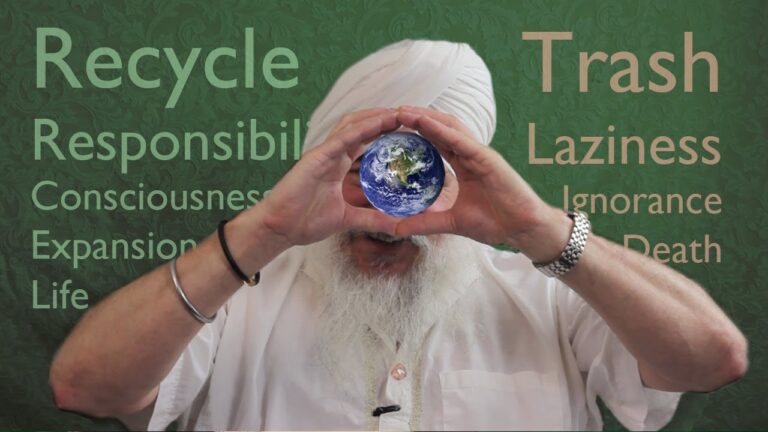
The speaker argues that environmental responsibility is not limited to Sikhs or any one faith community, but is a shared human obligation. Using examples such as massive plastic pollution in the oceans, they explain how humanity has treated the planet irresponsibly for generations — dumping waste into landfills, rivers, and seas without considering the long-term consequences for wildlife, ecosystems, and future generations. The issue, they suggest, is ultimately about awareness, responsibility, and recognizing that Earth is the only home humanity shares.
The discussion frames the planet as “spaceship Earth,” a shared environment that supports all life. From this perspective, caring for nature becomes part of waking up spiritually and ethically to humanity’s interconnectedness with the world around us. Environmental action can take many forms, from small personal lifestyle changes to collective efforts that create larger social and ecological transformation.
The speaker also reflects on environmental practices within Sikh communities, particularly at gurdwaras. While acts such as distributing bottled water are done with generosity and love, they point out that convenience often creates large amounts of unnecessary waste. Many gurdwaras, however, are beginning to adopt more sustainable practices, such as using reusable metal plates and improving waste management systems to reduce their environmental impact.
A key theme throughout the discussion is personal accountability. The speaker emphasizes that pollution and waste are everyone’s responsibility, not someone else’s problem to solve. Using a simple analogy, they note that even animals instinctively avoid polluting the spaces where they live, while humans often treat the Earth carelessly despite depending on it entirely for survival.
The message concludes by encouraging greater awareness in everyday actions and attitudes. Picking up litter, reducing waste, protecting plants and animals, and supporting cleaner communities are presented not merely as environmental tasks, but as expressions of human maturity, compassion, and collective responsibility. The speaker reminds viewers that “there is no away” when we throw things away — everything ultimately remains part of the world we all share.
Share this post: