Traditional Ecological Knowledge Learning from Indigenous Practices for Environmental Sustainability
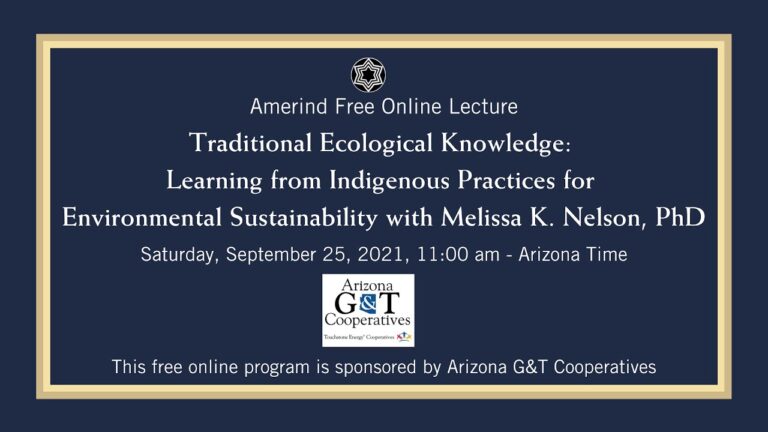
In this Amerind free online lecture, Indigenous sustainability scholar Dr. Melissa K. Nelson explores the importance of Traditional Ecological Knowledge (TEK) and its relevance for environmental sustainability in the modern world. Drawing from the collaborative book Traditional Ecological Knowledge: Learning from Indigenous Practices for Environmental Sustainability, Dr. Nelson discusses how Indigenous communities have developed time-tested approaches to living in balance with nature across diverse ecosystems and cultures.
The presentation examines compelling examples of sustainability practices from Tribal communities in North America and beyond, highlighting the deep connections between ecological knowledge, cultural traditions, environmental stewardship, and community wellbeing. Dr. Nelson also reflects on the implications of TEK for education, research, environmental justice, and the future of sustainable living.
As a professor of Indigenous Sustainability at Arizona State University and director of the Indigenous-led organization The Cultural Conservancy, Dr. Nelson brings decades of experience in Indigenous environmental studies, food sovereignty, cultural revitalization, and community-based activism. Her work emphasizes the importance of protecting Indigenous knowledge systems, biocultural heritage, and sustainable lifeways while fostering intercultural collaboration and ecological resilience.
This lecture offers valuable insights into how Indigenous wisdom and Traditional Ecological Knowledge can help guide global conversations about climate change, sustainability, and humanity’s relationship with the natural world.
Share this post: