The cost you pay when buying disposables!
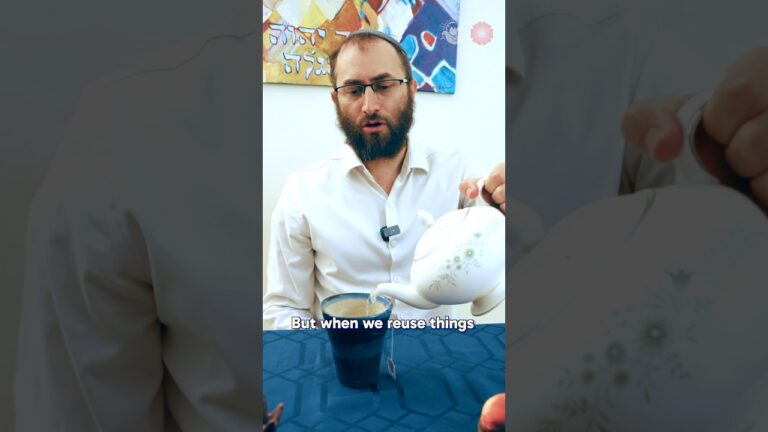
There’s a hidden cost to the convenience of disposable products—and it goes far beyond the trash we create. What happens to us when we get used to throwing things away every day? When we treat items as temporary, do we also begin to see less value in the world around us?
In Judaism, a deeper perspective invites us to think differently. Teachings inspired by figures like Rabbi Nachman of Breslov suggest that everything in the world contains sparks of holiness—even everyday objects like dishes, phones, or household items. These aren’t just tools; they carry meaning and purpose.
When we constantly discard what we use, we risk losing that sense of connection. The habit of throwing things away can make everything feel replaceable, reducing our appreciation for what we have. But when we choose to reuse and care for our belongings, we bring intention and respect back into our lives.
Mindful consumption isn’t just about sustainability—it’s about awareness. It encourages us to slow down, to value the objects we use, and to recognize their role in our daily experiences. A simple cup, passed down through generations, can hold far more meaning than something used once and discarded.
By shifting away from a disposable mindset, we not only reduce waste—we also rediscover gratitude. In valuing and reusing what we have, we elevate the ordinary and reconnect with a deeper sense of purpose in everyday life.
Share this post: