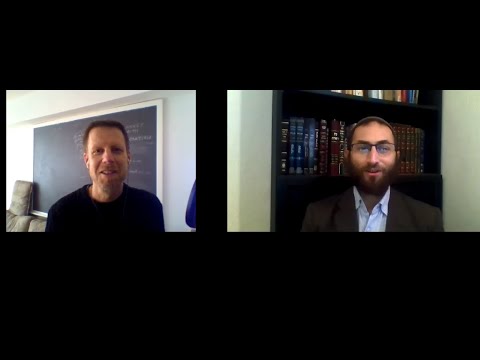
In this episode of the Leadership in the Environment Podcast, host Joshua Spodek speaks with Jonathan Neril about the intersection of religion, environmental ethics, and ecological sustainability. The conversation explores how ancient biblical teachings can inform modern responses to today’s environmental crises.
Neril shares the origins of his work, including his early experiences with nature, Jewish education, and environmental studies, which eventually led to the founding of the Interfaith Center for Sustainable Development. His work focuses on revealing the deep ecological wisdom found within religious traditions and mobilizing faith communities to take meaningful environmental action.
A central theme of the discussion is the Eco Bible, an ecological commentary on Genesis and Exodus. The book highlights how scriptural texts and centuries of rabbinic interpretation contain powerful teachings on stewardship, responsibility, and care for the natural world. Rather than introducing new ideas, the Eco Bible emphasizes re-discovering and applying long-standing wisdom to today’s ecological challenges.
The conversation also examines key concepts such as:
Stewardship and responsibility in religious teaching
The relationship between human behavior and environmental impact
The role of joy, meaning, and spiritual fulfillment in sustainable living
How faith communities can lead environmental change
The importance of hope in the face of climate and biodiversity crises
Neril and Spodek discuss how environmental action is often framed as a burden, and contrast that with a faith-based perspective that emphasizes purpose, joy, and connection. From reducing consumption to reconnecting with nature, the dialogue highlights practical ways individuals can align daily life with ecological values.
The episode also touches on broader societal systems, including consumption, advertising, and technology, and how these influence human behavior and environmental outcomes. Faith traditions, Neril argues, offer an alternative framework rooted in ethics, moderation, and long-term thinking.
Finally, the conversation returns to the personal level—encouraging simple practices like spending time in nature, slowing down, and cultivating awareness of our connection to the living world.
This episode is part of a broader effort to bridge environmental leadership with spiritual and ethical traditions, offering a hopeful and grounded vision for ecological responsibility.