EcoSikh: A Sikh Response to Climate Change – 2015
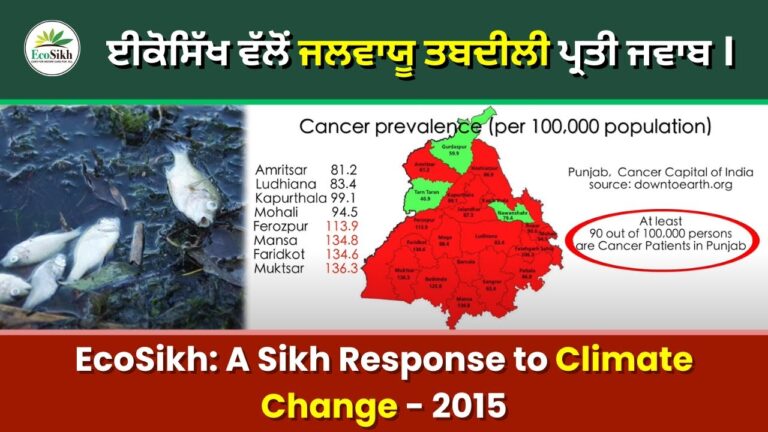
EOSC (EcoSikh) began as a Sikh response to climate change and the growing environmental crisis affecting communities across the world. In Punjab, groundwater levels have dropped dramatically after decades of over-extraction for agriculture, while widespread use of chemical pesticides has polluted remaining water supplies and contributed to rising health concerns. As the homeland of Sikh history and spirituality faces increasing ecological stress, the movement emphasizes that climate change is not only an environmental issue, but also a deeply spiritual and humanitarian one.
Rooted in Sikh teachings of harmony with nature, EOSC believes faith communities can play a powerful role in protecting the Earth and encouraging sustainable living. Its mission is to engage Sikhs through awareness, action, and advocacy on environmental issues in Punjab and globally, while inspiring young Sikh environmental leaders through the teachings of Guru Nanak and the principle of “Pavan Guru, Pani Pita, Mata Dharat Mahat” — air as the teacher, water as the father, and Earth as the great mother.
Since its launch in 2009 at Windsor Castle, EOSC has led and supported numerous environmental initiatives around the world. The organization participated in the historic People’s Climate March in New York, bringing Sikh voices into one of the largest climate mobilizations ever held. It also established Sikh Environment Day, celebrated annually on the Gur Gaddi Divas of Guru Har Rai, encouraging communities in more than 18 countries to plant trees, recycle, organize workshops, and reflect on humanity’s relationship with the Earth through Gurbani.
EOSC has also supported grassroots sustainability projects in Punjab, including the Green Nagar movement to improve sanitation and environmental conditions around gurdwaras and historic Sikh sites. Initiatives have included planting mature banyan trees in Amritsar, supporting volunteer street-cleaning efforts around sacred shrines, and promoting greener urban spaces for pilgrims and residents alike.
In partnership with organizations in Pakistan, EOSC also contributed to preparations for the 550th birth anniversary of Guru Nanak by supporting sustainability projects at sacred Sikh sites, including solar energy, organic farming, forest restoration, and waste management systems. These efforts aim to preserve spiritually significant lands for future generations while demonstrating how environmental stewardship can become an expression of Sikh seva — selfless service.
The movement argues that without initiatives like EOSC, Sikh environmental teachings and stories of ecological care may remain overlooked in global climate discussions. By combining faith, activism, and community action, EOSC seeks to ensure that Sikh voices remain actively engaged in protecting the planet and inspiring future generations to care for nature as a sacred responsibility.
Share this post: