Ecodharma – Buddhism and Ecology
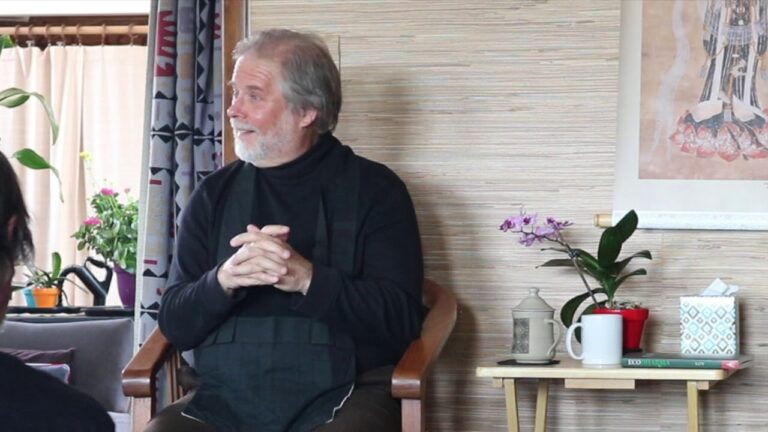
This talk explores how core Buddhist ideas—especially impermanence, non-self, and interdependence—extend beyond personal practice into how we understand society and the ecological crisis. The speaker argues that Buddhism doesn’t describe a world made of separate, fixed things, but rather a continuous flow of interconnected processes, where nothing exists independently on its own.
A major focus is the idea that Buddhism itself is not fixed either. As it has spread across cultures (China, Japan, Tibet, and now the West), it has been shaped through “mutual causality,” a term associated with thinkers like Joanna Macy. Traditions like Zen (Chan Buddhism) emerged through this kind of cultural exchange, raising the question of how Buddhism is now being transformed by modern, global, industrial civilization.
The speaker then turns to the ecological crisis and introduces Eco-Dharma as a developing response—an approach that connects Buddhist practice with environmental awareness and action. This includes:
- practice in the natural world,
- reinterpreting Buddhist teachings in light of today’s ecological conditions,
- and expanding the Bodhisattva path into what is sometimes called the “eco-sattva” path.
A key thread is the parallel between individual and collective suffering. Just as Buddhist practice addresses the illusion of a separate self, modern civilization is seen as operating under a similar illusion of separation from the Earth—driving consumerism, endless economic growth, and ecological destruction.
Thinkers like Dōgen are referenced to highlight the insight that mind and nature are not separate (“rivers and mountains are the mind itself”). The talk suggests that ecological crisis is therefore not only a political or technological issue, but also a spiritual crisis rooted in perception.
In the final section, the Bodhisattva path is reframed as active engagement with the world’s suffering. Practice is no longer limited to meditation, but includes compassionate action in society—an idea echoed in modern movements such as Extinction Rebellion. The speaker also draws on contemporary ecological Buddhism and initiatives like the EcoDharma Center.
Ultimately, the talk proposes a “both/and” path: inner transformation and outer engagement. The eco-sattva acts without attachment to outcomes, grounded in practice, responding to the world’s suffering without being driven by either hope or despair.
A closing reflection emphasizes that Buddhism today faces a defining question: whether it can meaningfully respond to the ecological crisis not just as philosophy, but as lived practice in a changing world.
Share this post: