A Jewish Approach to Climate Change – Rabbi Yonatan Neril
This video features Rabbi Yonatan Neril, founder and director of the Interfaith Center for Sustainable Development, discussing how Jewish tradition and biblical teachings relate to today’s climate crisis. Drawing from his work on the bestselling book Eco Bible, Rabbi Neril explores how ancient Jewish texts provide timeless guidance on environmental stewardship, responsibility, and sustainable living.
Throughout the talk, he connects religious wisdom with modern ecological challenges, showing how faith communities can play a critical role in addressing climate change. His message highlights that caring for the Earth is not only a scientific or political issue, but also a deeply spiritual and ethical responsibility shared across generations.
Key Themes Covered in the Video
1. Faith and Environmental Responsibility
Rabbi Neril explains how the Hebrew Bible emphasizes stewardship of nature, encouraging humans to act as caretakers rather than exploiters of the Earth. His analysis from Eco Bible connects scripture with modern environmental science.
2. The “Boat Analogy” and Collective Action
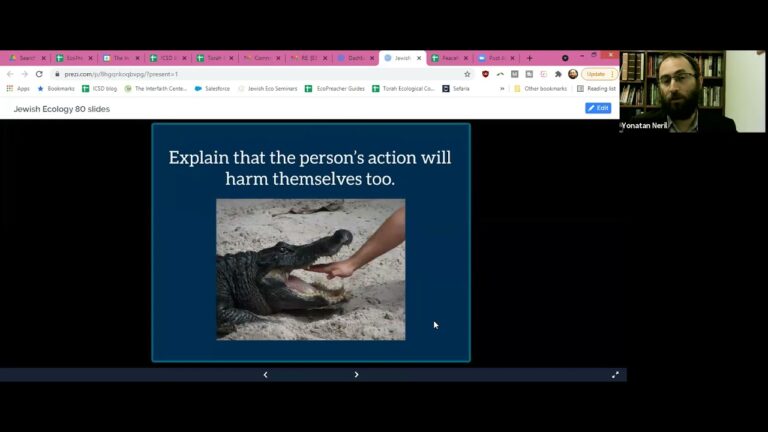
A central teaching in the talk is the Midrashic “boat analogy,” where individual actions that seem small can collectively endanger everyone. This metaphor is used to illustrate how everyday behaviors—consumption, travel, and resource use—contribute to global climate change.
3. Climate Change as a Spiritual Issue
Beyond science and policy, Rabbi Neril frames climate change as a moral and spiritual challenge. He argues that religious teachings can help shift human behavior from short-term self-interest to long-term global responsibility.
4. Lessons from Biblical Stories
Stories such as Noah’s Ark and Jonah are used to highlight themes of accountability, repentance, and environmental awareness. These narratives are interpreted as early reflections on sustainability and ecological balance.
5. Collective Responsibility and Systems Thinking
The talk emphasizes that climate change is not caused by one group or action alone, but by interconnected systems. Each individual decision contributes to a larger global impact.
About the Speaker
Rabbi Yonatan Neril is an international speaker on religion and the environment. He has organized numerous interfaith environmental conferences around the world and contributed to global discussions on sustainability, including presentations at major climate and interfaith summits. His work bridges religious tradition with environmental advocacy, encouraging faith communities to take active roles in ecological restoration.
Share this post: