# The Interfaith Center for Sustainable Development
> Uniting for a Sustainable Future
> Generated by All in One SEO Pro v5.0.3, this is an llms-full.txt file, used by LLMs to index the site.
## Posts
### [Blog](https://interfaithsustain.com/?page_id=9765)
**Published:** July 31, 2016
**Author:** ICSD
---
### [How Genesis 25 Has Direct Messages For Us Today](https://interfaithsustain.com/genesis-25/)
**Published:** November 1, 2021
**Author:** ICSD
**Excerpt:** Aryeh Ronay - In this chapter we read about how Abraham marries a new wife named Keturah and the long list of children that come from their marriage.
**Content:**
Table of Contents
Table of Contents
- [A Summary of Genesis 25](#aioseo-a-summary-of-genesis-25-3)
- [Eco Bible on Genesis 25](#aioseo-eco-bible-on-genesis-25-11)
- [Needs Versus Luxuries, from Genesis 25](#aioseo-needs-versus-luxuries-from-genesis-25-14)
- [The Conflict of Jacob and Esau: Sustainability or Destruction, by Rabbi Shaul David Judelman](#aioseo-the-conflict-of-jacob-and-esau-sustainability-or-destruction-by-rabbi-shaul-david-judelman-17)
- [Fast Food, Slow Food from Genesis 25](#aioseo-fast-food-slow-food-from-genesis-25-20)
- [Sources](#aioseo-sources-23)
In [Genesis](https://interfaithsustain.com/books-of-the-old-testament/) 25 we read about how **Abraham** marries a new wife named Keturah and the long list of children that come from their marriage:
She bore him Zimran, Jokshan, Medan, Midian, Ishbak, and Shuah. And Jokshan begat Sheba, and Dedan. And the sons of Dedan were Asshurim, and Letushim, and Leummim. And the sons of Midian were Ephah, Epher, Hanoch, Abidah, and Eldaah. All these were the children of Keturah.
## A Summary of Genesis 25
In the end, Abraham “gives everything he has to Isaac,” but also gives these other children “gifts” before sending them away. Then Abraham “breathed his last,” “was gathered to his people” and is buried by his sons Isaac and Ishmael in the cave of Machpelah.
After the death of Abraham, we read of how God blessed his son Isaac, and how Isaac dwelt by Beer Lahai Roi. We hear about the sons of Ishmael, how Ishmael dies and then the story continues with Isaac.
Similar to Abraham and Sarah, their child, Isaac, and his wife, Rebekah, are unable to have a child. But when Isaac prays, his prayers are answered and she becomes pregnant with twins. The twins struggle within her and she begins to question her life. God informs her that there are “two nations” in her womb and how “the elder shall serve the younger.”
The first appears red and hairy, and he is named Esau. The other is born holding onto Esau’s heel and so he is named Jacob, which means heel. They grow up and Esau becomes a hunter while Jacob becomes a simple tent dweller. Isaac loves Esau because Esau brings him tasty meat that he hunts, but Rebekah prefers Jacob.
The chapter ends with a story of Esau coming home famished from a hunt and begging Jacob to feed him some of the lentils Jacob had made. Jacob agrees, but on condition that Esau sells his birthright in exchange for those lentils. Esau agrees to these conditions, gulps down the lentils and leaves.
## [Eco Bible on Genesis 25](https://www.amazon.com/dp/B08LCKLM9G/ref=dp-kindle-redirect?_encoding=UTF8&btkr=1)
[Source](https://unsplash.com/@pablomerchanm/)
### Needs Versus Luxuries, from Genesis 25
*Genesis 25:23 – and the Lord Answered Her, “Two Nations Are in Your Womb, Two Separate Peoples Shall Issue from Your Body; One People Shall Be Mightier Than the Other, and the Older Shall Serve the Younger.”*
Rashi comments: “These \[two nations\] are Antoninus and Rabbi, for neither radish nor lettuce ceased \[to be found\] on their tables neither during the sunny season nor during the rainy season.”1 The Talmud states: “They \[Antoninus and Rabbi\] were ‘proud ones’ in that they were so wealthy that they could afford to have seasonal products all year round.”2 Antoninus was the Roman emperor, and Rabbi (Judah the Prince) was a key Jewish leader in Roman Judaea.
This Talmudic teaching reveals how [food availability](https://interfaithsustain.com/food-production/) has changed dramatically in the transition from pre-modern, pre-industrial society to modern industrial society. Today most Westerners take for granted the availability of seasonal produce all year. Ironically, Israel exports significant amounts of “summer produce” grown in greenhouses in the winter to Europe, including Rome. This does not just include radish and lettuce but an array of tropical fruits, including mango, which was unheard of in the time of Rabbi and Antoninus. While the amounts of vegetables exported have declined somewhat in the last decade, exports of avocados and dates have increased.3
This can help us gain perspective on how we define need versus luxury. What were considered luxuries for our parents and grandparents are now essential items to our generation. Yet choosing to live with fewer material products and favoring local produce is a critical part of [sustainable living](https://interfaithsustain.com/environmental-sustainability/). It becomes much easier when religious communities encourage and exemplify sustainability. In this regard, the emergence of “green teams” at houses of worship is an encouraging development. These green places of worship champion sustainability, often by using solar power, [composting](https://interfaithsustain.com/composting-101/), and maximizing the use of locally grown fruit and vegetables in their events.
- [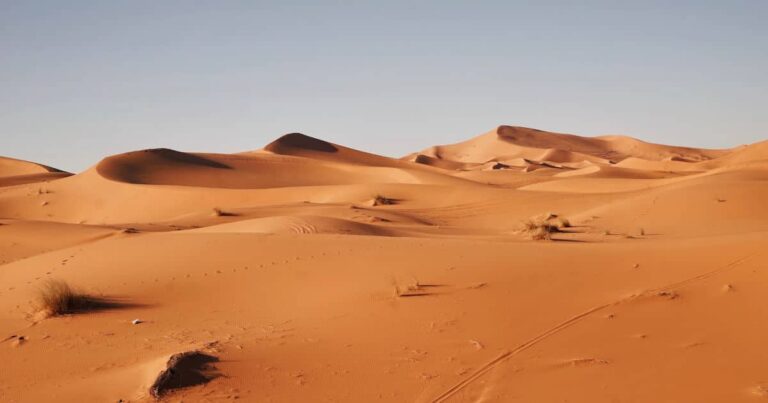](https://interfaithsustain.com/exodus-17/)
## [Water, War and The Wilderness in the Bible: Exodus 17](https://interfaithsustain.com/exodus-17/)
- [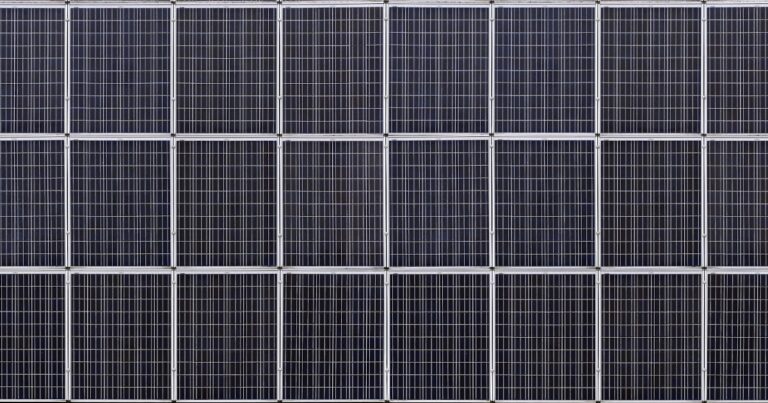](https://interfaithsustain.com/energy-conversion/)
## [Using The Bible to Understand Renewable Energy Conversion](https://interfaithsustain.com/energy-conversion/)
- [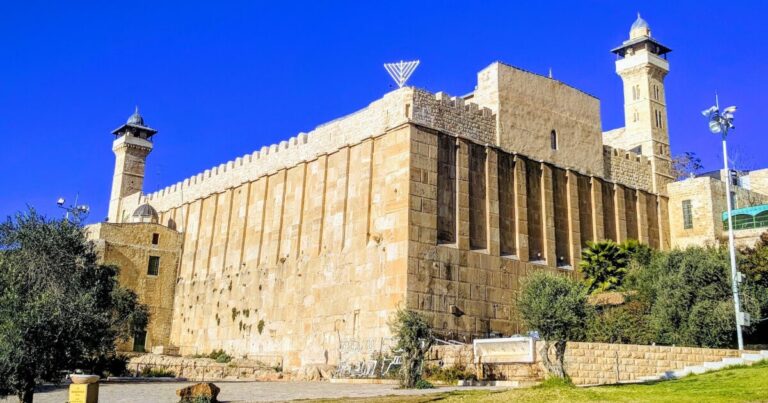](https://interfaithsustain.com/genesis-23/)
## [Understanding Sustainable Burial From Genesis 23](https://interfaithsustain.com/genesis-23/)
### The Conflict of Jacob and Esau: Sustainability or Destruction, by Rabbi Shaul David Judelman
*Genesis 25:27 – When the Boys Grew Up, Esau Became a Skillful Hunter, a Man of the Outdoors; but Jacob Was a Mild Man Who Stayed in Camp.*
The verse describes the growth of the two children. We can interpret this as saying Esau lives his life in the field, a place of open uncertainty, while Jacob is of the tent and the home, a place of stability and conviction. Esau and Jacob are destined for conflict, as prophetically related to Rebecca when she inquired of the unrest she felt in her womb. The dichotomy here is between the driving force of Esau’s unbridled desire and Jacob’s Tikkun, or repair, of this urge. Resulting tension pervades their interactions.
Kabbalistic interpretations teach that Esau’s soul came from the world of Tohu (chaotic and wild).5 This phrase refers to the story of creation and the status of the world before light and the beginning of order.6 Tohu is a spiritual state with recognizable manifestations in this world. In environmental terms, this state would be deemed unsustainable, though it is far more than this. Often, Tohu is dominated by urge over thought, the moment over the future. In this aspect, Esau’s actions represent much of what we see in the world today.
Esau returns from a day of hunting while Jacob has been cooking soup. Incidentally, these verses seem to tell us that Esau is also called Edom (red) because of his desire to pour the “red, red soup” down his throat upon his coming home tired. Esau offers a phenomenal reason for selling his birthright to Jacob for the soup: “I am at the point of death, so of what use is my birthright to me?”7
The Torah’s description of Esau’s decision offers deep insights for any society that so readily swallows the values of Esau. The culture that wants things now has given us fast food, fast cars, and quickly melting polar ice caps. This culture is out of balance. What does balance mean? Balance means that my own physical needs are balanced against a nexus of relationships. These might include other people’s needs, my future needs, or the availability of resources. There is a strong critique within environmental discourse against the nature of the society that developed modern technology. However, this is not a diatribe against technology or modernity, but rather a strong statement about the manner in which we pour things down our throat. This analysis occurs both on the personal level of our private consumption habits and on the societal level of manufacturing and pursuing lifestyles that have not yet proven their balance.
Esau and the energies of Tohu have a tendency toward destruction. The Kabbalah refers to the doomed Kings of Esau as the unsustainable elements of the creation process.8 They are the destroyed worlds. The lights broke the vessels. Their desires and abilities shattered the physical world’s capacity to contain them.
The Kings of Esau are still alive (though maybe not for long!) in our day. Consider the following statistic: If the whole world lived with the same [consumption](https://interfaithsustain.com/what-is-consumerism/) pattern as the average American, it would take 5.3 earths to support everyone.9 The Esau of today is living as if he’s going to die tomorrow. That is not without a kernel of truth. He will.
The crucial question is will we leave a livable earth for our children to inherit? Will there be fresh drinking water, fish in the seas, and birds in the trees? Will our children be able to run freely and breathe fresh air?
#### Fast Food, Slow Food from Genesis 25
*Genesis 25:34 – Jacob Then Gave Esau Bread and Lentil Stew; He Ate and Drank, and He Rose and Went Away. Thus Did Esau Spurn the Birthright.*
In explaining that Esau “ate and drank and rose,” the HaKetav VeHaKabbalah commentary10 suggests that he did not sit to eat like his father, Isaac (to whom Jacob beckons, “Please sit up and eat of my game”), and his grandfather Abraham (when he served the angels, “he waited on them under the tree as they ate”).11 Esau is uncouth, eating on the run, which shows his lack of self-control and ultimately his lack of qualification to hold the birthright. Esau is the root of wasteful consumption. The first use in the Torah of the word for wasting in relation to a person occurs with regard to Esau. He just thinks about the present without regard for the future, which causes him to waste the future. This is one of the spiritual roots of today’s ecological crisis.
With a healthy-looking snail as its logo, the Slow Food Movement (SFM), conceived in 1986 in Bra, Italy by Carlo Petrini,12 has grown and inspired the broader “Slow Movement.”13 Slow cities, slow tourism, slow money, slow journalism, slow travel, and slow fashion are a few examples. From its humble origins in a protest against the first McDonald’s in Italy (at the Piazza di Spagna in Rome), SFM now has more than 1,500 “convivia” or local chapters, with more than 100,000 members in 160 countries.14 Its members advocate a return to simple local food and leisure, benefiting local communities and reducing our carbon footprint. Esau is the antithesis of this ideology, and Jacob is its advocate – described by the Torah as “a mild man who stayed in camp.”15
#### Sources
1\. Citing Babylonian Talmud, Avodah Zarah 11a.
2\. Babylonian Talmud, Avodah Zarah 11a.
3\. Israel Central Bureau of Statistics, “Agricultural Statistics Quarterly July–September 2019,” https://www.cbs.gov.il/en/publications/Pages/2020/Agricultural-Statistics-Quarterly-July-September-2019.aspx.
4\. This content was produced by Canfei Nesharim, a branch of Grow Torah. It is available at http://canfeinesharim.org/the-conflict-of-yaakov-and-esav/.
5\. Etz Chayim, Heikhal HaNikudim (Sha’ar 8, ff.).
6\. Genesis 1:2.
7\. Ibid., 25:32.
8\. Arizal, Likutei Torah on Parshat Vayishlach.
9\. “U.S. Environmental Footprint Factsheet,” Center for Sustainable Systems, University of Michigan, accessed December 12, 2019, http://css.umich.edu/factsheets/us-environmental-footprint-factsheet.
10\. HaKetav VeHaKabbalah on Genesis 25:34.
11\. Genesis 18:8.
12\. Carlo Petrini, Slow Food Nation: Why Our Food Should Be Good, Clean, and Fair (New York: Rizzoli Publications, 2013).
13\. Carl Honoré, In Praise of Slow: How a Worldwide Movement Is Challenging the Cult of Speed (Toronto: Vintage Canada, 2004).
14\. Mark N. Wexler, Judy Oberlander, and Arjun Shankar, “The Slow Food Movement: A ‘Big Tent’ Ideology,” Journal of Ideology 37, no. 1 (January 2017).
15\. Genesis 25:27.
*\* Featured image [source](https://unsplash.com/@angshu_purkait/)*
**Categories:** Bible & Creation Care, Blog on Faith and Ecology
**Tags:** Eco Bible, Genesis 25
---
### [Genesis 28: Nature, Mental Health & Spirituality](https://interfaithsustain.com/genesis-28/)
**Published:** November 8, 2021
**Author:** ICSD
**Excerpt:** Aryeh Ronay - Genesis 28, through the story of Jacob, offers insights into the interconnectedness between nature, mental health and spirituality.
**Content:**
Table of Contents
Table of Contents
- [Genesis 28, Based on The King James Translation of the Bible](#aioseo-genesis-28-based-on-the-king-james-translation-of-the-bible-2)
- [Eco Bible](#aioseo-eco-bible-25)
- [Sleeping Alone in Nature](#aioseo-sleeping-alone-in-nature-26)
- [Spiritual Transcendence in Nature](#aioseo-spiritual-transcendence-in-nature-29)
- [Connecting With The Earth](#aioseo-connecting-with-the-earth-31)
- [The Connection Between Nature and Mental Health](#aioseo-the-connection-between-nature-and-mental-health-34)
*By Aryeh Ronay*
## Genesis 28, Based on The King James Translation of the [Bible](https://interfaithsustain.com/books-of-the-old-testament/)
**1** And **Isaac** called **Jacob**, and blessed him, and charged him, and said unto him, Thou shalt not take a wife from the daughters of Canaan.
**2** Arise, go to Paddan-Aram, to the house of Bethuel your mother’s father; and take thee a wife from thence of the daughters of **Laban**, your mother’s brother.
**3** And may God Almighty bless you, and make thee fruitful, and multiply thee, that thou mayest be a multitude of people;
**4** And give thee the blessing of **Abraham**, to thee, and to thy seed with thee; that thou mayest inherit the land wherein thou art a stranger, which God gave to Abraham.
**5** And Isaac sent Jacob away: and he went to Paddan-Aram to Laban, son of Bethuel the Syrian, the brother of Rebekah, Jacob’s and Esau’s mother.
**6** When Esau saw that Isaac had blessed Jacob, and sent him away to Paddan-Aram, to take him a wife from thence; and that as he blessed him he gave him a charge, saying, Thou shalt not take a wife of the daughters of Canaan;
**7** And that Jacob obeyed his father and his mother, and was gone to Paddan-Aram;
- [](https://interfaithsustain.com/deuteronomy-20/)
## [Deuteronomy 20: Discussing Both War and Saving Our Planet](https://interfaithsustain.com/deuteronomy-20/)
- [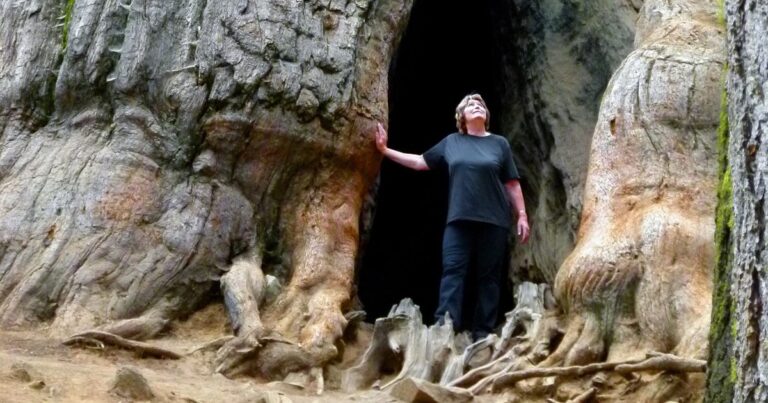](https://interfaithsustain.com/largest-trees-in-the-world/)
## [Exploring the Largest Trees in the World in Awe, Love and Wonder!](https://interfaithsustain.com/largest-trees-in-the-world/)
- [](https://interfaithsustain.com/genesis-1-29/)
## [Genesis 1:29: God Gives Humans A Plant-based Diet to Benefit Creation](https://interfaithsustain.com/genesis-1-29/)
**8** And Esau seeing that the daughters of Canaan pleased not Isaac his father;
**9** Then went Esau unto Ishmael, and took unto the wives which he had Mahalath the daughter of Ishmael Abraham’s son, the sister of Nebajoth, to be his wife.
**10** And Jacob went out from Beersheba, and went toward Haran.
**11** And he lighted upon a certain place, and tarried there all night, because the sun was set; and he took of the stones of that place, and put them for his pillows, and lay down in that place to sleep.
**12** And he dreamed, and behold a ladder set up on the earth, and the top of it reached to heaven: and behold the angels of God ascending and descending on it.
**13** And, behold, the Lord stood above it, and said, I am the Lord God of Abraham thy father, and the God of Isaac: the land whereon thou liest, to thee will I give it, and to thy seed;
**14** And thy seed shall be as the dust of the earth, and thou shalt spread abroad to the west, and to the east, and to the north, and to the south: and in thee and in thy seed shall all the families of the earth be blessed.
**15** And, behold, I am with thee, and will keep thee in all places whither thou goest, and will bring thee back to this land; for I will not leave thee, until I have done that which I have spoken to thee of.
**16** And Jacob awaked out of his sleep, and he said, Surely the Lord is in this place; and I knew it not.
**17** And he was afraid, and said, How dreadful is this place! this is none other but **the house of God**, and this is the gate of heaven.
**18** And Jacob rose up early in the morning, and took the stone that he had put for his pillows, and set it up for a pillar, and poured oil upon the top of it.
**19** And he called the name of that place Bethel: but the name of that city was called Luz at the first.
**20** And Jacob made a vow, saying, If God will be with me, and will keep me in this way that I go, and will give me bread to eat, and raiment to put on,
**21** So that I come again to my father’s house in peace; then shall the Lord be my God:
**22** And this stone, which I have set for a pillar, shall be God’s house: and of all that thou shalt give me I will surely give the tenth unto thee.
## [Eco Bible](https://www.amazon.com/dp/B08LCKLM9G/ref=dp-kindle-redirect?_encoding=UTF8&btkr=1)
### Sleeping Alone in Nature
*Genesis 28:11 – He Came Upon a Certain Place and Stopped There for the Night, for the Sun Had Set. Taking One of the Stones of That Place, He \[Jacob\] Put It Under His Head and Lay Down in That Place.*
Ibn Ezra explains that the stone was the Foundation Stone, the location of the Holy of Holies on the **Temple Mount in Jerusalem**. Ibn Ezra on Genesis 28:11 based on the Zohar 1:72. Rabbi Daniel Kohn explains the significance of this location, saying, “Jacob is connected to the holism of reality and existence. The Midrash states that the rocks united under him and the land of Israel folded underneath him. Genesis Rabbah 68. It reflects this aspect of Jacob, of a deep connectedness to the planet and the One that is. Jacob, by virtue of being a Tam, a wholehearted individual, encounters a magical moment when he sleeps at the core of creation, sleeping on the Foundation Stone itself. Lying on the earth creates such a deep **engagement with the planet** that he becomes conscious of all that this planet has to offer.” *Rabbi Daniel Kohn, oral teaching, 2013*.
### Spiritual Transcendence in Nature
Jacob connects to God while alone in nature; this time alone produces ripe moments for **spiritually transcendent experiences**. King Solomon teaches: “When you lie down, you should not fear.” Proverbs 3:24. Sleeping alone in nature can help a person trust in God due to the vulnerability of sleeping without visible protection from animals, people, and the elements. Jacob’s spiritual dream of the ladder with angels occurs precisely when he is sleeping alone in nature. Perhaps Jacob learned about being alone in nature from his father and grandfather. Abraham was commanded by God to walk “the width and breadth” of the land, and he built altars outside. Isaac is mentioned as one who “went out to pray in the field.”
#### Connecting With The Earth
*Genesis 28:13 – and God Was Standing Beside Him and He Said, “I Am the Divine, the God of Your Father Abraham and the God of Isaac: The Ground on Which You Are Lying I Will Assign to You and to Your Offspring.”*
God emphasizes to Jacob that he is lying on the land. Jacob established a connection with the land by lying on it. According to scientist [Gaétan Chevalier](https://www.hindawi.com/journals/jeph/2012/291541/) and others:
Emerging scientific research has revealed a surprisingly positive and overlooked environmental factor on health: direct physical contact with the vast supply of electrons on the surface of the earth. Modern lifestyle separates humans from such contact. The research suggests that this disconnect may be a major contributor to physiological dysfunction and un-wellness. Reconnection with the earth’s electrons has been found to promote intriguing physiological changes and subjective reports of well-being. Earthing (or grounding) refers to the discovery of benefits – including better sleep and reduced pain – from walking barefoot outside or sitting, working, or sleeping indoors connected to conductive systems that transfer the earth’s electrons from the ground into the body.
#### The Connection Between Nature and Mental Health
[Richard Louv’s book Last Child in the Woods](https://www.spiritualityandpractice.com/book-reviews/view/9865/last-child-in-the-woods?gclid=CjwKCAjw_L6LBhBbEiwA4c46uhF_4M4Wx8MATHN63GFH3DAe95vez-73KQBBtFw6wCs_-W0_yUjh6RoCM10QAvD_BwE): Saving Our Children from Nature-Deficit Disorder has raised public attention about the importance of devoting time to being in nature. In 2019, 24 scientists published a [groundbreaking study on the link between nature and mental health](https://www.science.org/doi/10.1126/sciadv.aax0903), including “the impacts of nature experience on cognitive functioning, emotional well-being, and other dimensions of mental health.” They then indicate “how ecosystem service assessments can be expanded to include mental health.” That is, humans receive tremendous value from nature in [balancing and maintaining our mental health](https://interfaithsustain.com/environmental-wellness/), and environmental economists try to put a price on such value.
\* *Featured image [source](https://unsplash.com/@dominik_jirovsky/)*
**Categories:** Bible & Creation Care, Blog on Faith and Ecology
**Tags:** Eco Bible, Genesis 28
---
### [Harnessing Our Faith to Ensure Sustainable Design In All That We Create!](https://interfaithsustain.com/sustainable-design/)
**Published:** November 10, 2021
**Author:** ICSD
**Excerpt:** Aryeh Ronay - "Everything is designed. Few things are designed well," said Brian Reed. Sustainable design is a way of designing well, by creating with the sustainability of the product and the planet as a top priority.
**Content:**
Table of Contents
Table of Contents
- [Energy Efficiency in Sustainable Design](#aioseo-energy-efficiency-in-sustainable-design-4)
- [Examples of Sustainable Design](#aioseo-examples-of-sustainable-design-9)
- [Green Building Design](#aioseo-green-building-design-16)
- [The Crystal- United Kingdom](#aioseo-the-crystal-united-kingdom-21)
- [ACROS Fukuoka Foundation Building- Fukuoka, Japan](#aioseo-acros-fukuoka-foundation-building-fukuoka-japan-25)
- [Wat Pa Maha Chedi Kaew- Sisaket, Thailand](#aioseo-wat-pa-maha-chedi-kaew-sisaket-thailand-27)
- [Sustainable Design in Religions](#aioseo-sustainable-design-in-religions-29)
- [Sikhism and Sustainable Design](#aioseo-sikhism-and-sustainable-design-31)
- [Lenape People and Sustainable Design](#aioseo-lenape-people-and-sustainable-design-35)
- [Christianity and Sustainable Design](#aioseo-christianity-and-sustainable-design-39)
- [Judaism and Sustainable Design](#aioseo-judaism-and-sustainable-design-41)
*By Aryeh Ronay* – “Everything is designed. Few things are designed well,” said Brian Reed. [Sustainable](https://interfaithsustain.com/how-to-optimize-the-three-pillars-of-sustainability/) design is a way of designing well, by creating with the sustainability of the product and the planet as a top priority.
Our greatest inspiration for sustainable design can come from the various indigenous communities who built their society by using local materials, minimizing waste and designing with an eye towards future generations.
By contrast, the typical business sources materials from wherever they are cheapest in the world, creates as much waste as they want and designs with an eye towards maximum profits. Modern industry can also design with sustainable design as a priority. We’ll see in this blog post a few brilliant examples of sustainable design in action.
## Energy Efficiency in Sustainable Design
One of the most important features of sustainable design is energy efficiency. Energy efficiency is achieved by creating buildings and products guided by the principles of “reduce, reuse and recycle,” and utilizing [sustainable forms of energy](https://interfaithsustain.com/renewable-and-non-renewable-resources/).
Reducing our consumption of non-renewable forms of energy like coal and gas and increasing our use of solar, wind and other eco-friendly sources of power is important. However, we also have to ensure that the process of delivering renewable forms of energy to where they’re needed is efficient, lest we waste excess energy in the process of delivering it.
## Examples of Sustainable Design
[Source](https://unsplash.com/@zburival/)
Designing products with [sustainable technology](https://interfaithsustain.com/what-is-clean-tech/) can produce amazing results. Sustainable designers utilize cutting-edge science for the development and construction of this high quality and highly sustainable technology. Check out the following examples from “[Bustle](https://www.bustle.com/p/7-examples-of-green-design-that-prove-the-future-will-be-sustainable-af-3218020)” below.
Bionic Chandelier: Julian Melchiorri designed this product that [provides light for humans and the algae inside of it](https://www.driving.co.uk/six-senses/sight/). These algae use photosynthesis to convert the light into energy, absorb carbon dioxide in the air and produce oxygen. They provide light and [clean air](https://interfaithsustain.com/air-pollution-solutions/) at the same time!
Bioluminescent Tree-Lights: scientists from Cambridge, Tel Aviv University, and other institutions are working to [bioengineer trees that produce light](https://www.theguardian.com/science/2016/jul/03/fungi-glow-dark-luminscent-mushrooms-conservation-enviroment-bioscience), similar to fireflies. We may soon have trees that light up the night without needing to be connected to the electrical grid.
Packaging Made of Mushrooms: a company called Ecovative is making Mycelium, the roots of mushrooms, into a [strong and waste-free form of packaging](https://www.theguardian.com/sustainable-business/mushrooms-new-plastic-ecovative) that could replace plastic.
- [](https://interfaithsustain.com/green-energy-exchange/)
## [The Sustainable Process Of Green Energy Exchange](https://interfaithsustain.com/green-energy-exchange/)
- [](https://interfaithsustain.com/geodesic-dome-home/)
## [The Remarkable Benefits of A Geodesic Dome Home](https://interfaithsustain.com/geodesic-dome-home/)
- [](https://interfaithsustain.com/sustainable-building-materials/)
## [The Benefits of Implementing Sustainable Building Materials](https://interfaithsustain.com/sustainable-building-materials/)
## Green Building Design
**Green building** is a way to design and create buildings that have fewer harmful effects on the environment and more positive effects. When architects design sustainable buildings, the architecture itself is an expression of commitment to our future. This architecture features integrated functionality, so that each building can serve multiple functions. These could include converting sunlight into energy with solar panels, catching water and even having a variety of plants growing on the building.
The eco-designer creates in a way that maximizes quality, cost and performance. The knowledge and professional acumen required to design these architectural wonders is astounding. Let’s look at a few examples taken from “[When on Earth](https://whenonearth.net/10-coolest-examples-of-green-buildings/)” below.
### The Crystal- United Kingdom
[Source](https://unsplash.com/@karsten_wuerth/)
This building features rainwater harvesting on the roof, black water (i.e. sewage) recycling and local purification of drinking water. Bullitt Center- Seattle, USA: This building is designed to last 250 years, it is carbon and energy neutral and utilizes solar panels on its roof to generate electricity.
#### ACROS Fukuoka Foundation Building- Fukuoka, Japan
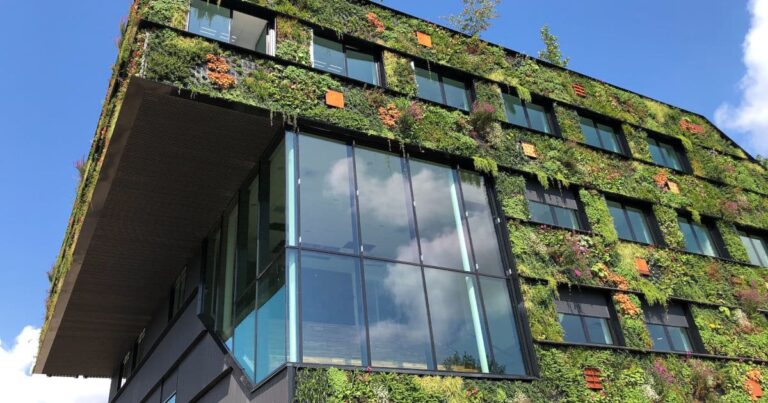
This building is covered in native greenery that is watered by the building’s natural irrigation system.
#### Wat Pa Maha Chedi Kaew- Sisaket, Thailand
This temple is made entirely of recycled beer bottles.
## Sustainable Design in Religions
The religions and spiritual thinkers, cited below, provide inspiration in their traditions for sustainable development. If these ideas can be implemented in our time, the future will look much greener.
## Sikhism and Sustainable Design
Sustainable design and development in the Sikh tradition is guided by listening to “the Divine Voice in our heart” ([Voices from Religions on Sustainable Development](https://www.partner-religion-development.org/wp-content/uploads/2023/10/Voices_from_Religions_on_Sustainable_Development_April2017_3rd_edition.pdf)). Design and development emerge through an internal process of discovery and sensitivity rather than an external grasping for power, wealth and consumption. Sikhs believe that “physical life is a dream – *maya* – that will end” ([Voices](https://www.partner-religion-development.org/wp-content/uploads/2023/10/Voices_from_Religions_on_Sustainable_Development_April2017_3rd_edition.pdf)), and so design should be carried out in a way that maximizes spiritual and environmental benefits rather than short-term and short-sighted goals. If we fail to apply spiritual wisdom to our projects and systems, they will be doomed to failure. However, if we design through listening to the Divine voice within us, we will create balanced products that enhance our lives and the lives of all who use our creations.
### Lenape People and Sustainable Design
The Lenape people are indigenous to the north-eastern United States. Their view on drawing energy from the sun can be a powerful perspective for sustainable design: “From a Lenape perspective, there is no need to rely on fossil sources of energy… Human activities currently consume around 12.8 terawatts of energy, but the sun continuously supplies the Earth with 800 terawatts. We only need to find ways of using this energy efficiently on a daily basis” ([Voices](https://www.partner-religion-development.org/wp-content/uploads/2023/10/Voices_from_Religions_on_Sustainable_Development_April2017_3rd_edition.pdf)). Designers who take these ideas into account can create buildings and services based on solar and other forms of renewable energy and help us shift away from our dependence on fossil fuels.
[Source](https://unsplash.com/@nathaliarosa/)
### Christianity and Sustainable Design
Pope Francis’ [*Laudito Si*](https://www.vatican.va/content/dam/francesco/pdf/encyclicals/documents/papa-francesco_20150524_enciclica-laudato-si_en.pdf) is a groundbreaking work for understanding the potential for religions to aid in sustainable development. Pope Francis explains how “the fact is that ‘contemporary man has not been trained to use power well,’ because our immense technological development has not been accompanied by a development in human responsibility, values and conscience.” For Pope Francis, sustainable development is achieved by ensuring that development is never just technological but is also spiritual.
### Judaism and Sustainable Design
According to Rabbis Yonatan Neril and Leo Dee in [Eco Bible Volume One,](https://www.amazon.com/Eco-Bible-Ecological-Commentary-Genesis-ebook/dp/B08LCKLM9G/) “**Noah’s Ark** was a ‘green building,’ with a window for natural lighting from the sun, a whole floor dedicated to composting of animal waste, and wood from forests Noah planted, according to the Midrash. Studying the design of the first Divine-commanded building could teach us about Divine green building standards.” Designing for natural lighting, composting and responsible forest management are ancient yet timeless environmental concepts.
We need to all harness our faiths to inspire and encourage **sustainable design** in all that we produce and create!
\* *Featured image [source](https://unsplash.com/@rhidabels/)*
**Categories:** Blog on Faith and Ecology, Sustainability
**Tags:** Clean Tech, Sustainable Design
---
### [Genesis 41](https://interfaithsustain.com/genesis-41/)
**Published:** November 29, 2021
**Author:** ICSD
**Excerpt:** Aryeh Ronay - As in Genesis 41, we learn from Joseph that famines follow feasts, we need to prepare for the effects of over-using resources.
**Content:**
Table of Contents
Table of Contents
- [Summary of Genesis 41](#aioseo-summary-of-genesis-41-1)
- [Joseph: From Prisoner to Ruler](#aioseo-joseph-from-prisoner-to-ruler-14)
- [Eco Bible](#aioseo-eco-bible-24)
- [The Song of the Land by Rabbi Shaul David Judelman](#aioseo-the-song-of-the-land-by-rabbi-shaul-david-judelman-25)
- [Foreseeing Future Challenges](#aioseo-foreseeing-future-challenges-37)
- [Cows and Crops](#aioseo-cows-and-crops-40)
## Summary of Genesis 41
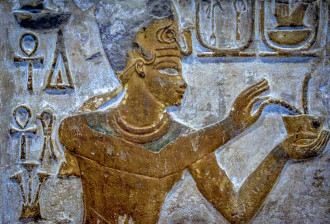
*By Aryeh Ronay* – In Genesis 41, we read about **Pharaoh, king of Egypt** and his mysterious dreams. In one dream he sees seven cows that are fat and healthy swallowed by seven cows that are “ugly and gaunt” (Genesis 41:4)
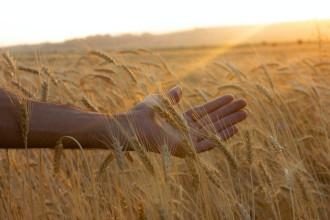
In another **dream** he sees seven heads of grain that are healthy and full, that are swallowed by seven thin heads of grain that are “blighted by the east wind” (ibid 41:6)
Pharaoh calls all the Egyptian wise men to interpret his dream, but no one is able to.
However, the chief cup-bearer tells Pharaoh that when he was a prisoner in the house of the captain of the guard, he and the chief baker had dreams that a “young Hebrew” (ibid 41:12) was able to interpret.
[*Source*](https://unsplash.com/@tompodmore86/)
Pharaoh calls for this young Hebrew, who happens to be our hero, Joseph.
**Joseph** interprets Pharaoh’s dream as meaning that there will be seven years of plenty followed by seven years of famine and someone should be appointed to manage the food in the land of **Egypt** in preparation for the famine years.
### Joseph: From Prisoner to Ruler
It is here that we witness one of the most transformative moments in the Bible as Joseph goes from prisoner in the land of Egypt, to second-in-command: “Pharaoh said to his servants ‘Can we find such a one as this is, a man in whom the Spirit of God is?’
And Pharaoh said to Joseph, ‘Forasmuch as God hath shewed thee all this, there is none so discreet and wise as thou art'” (ibid 41:38-39)
In rapid succession, Pharaoh put a golden chain on Joseph’s neck, Pharaoh called Joseph’s name “Zaphnath-Paaneah” so he would have an Egyptian name and Pharaoh gave Jacob, Asenath, the daughter of Potiphera, priest of On, as a wife.
[Source](https://unsplash.com/@usgs/)
The years of plenty arrive along with the years of famine, just as Joseph predicted.
The famine spreads and people come from the land of Egypt and from distant lands to buy food from Joseph. What can we learn when we look deeper into this chapter of [the Bible](https://interfaithsustain.com/books-of-the-old-testament/)?
## [Eco Bible](https://www.amazon.com/dp/B08LCKLM9G/ref=dp-kindle-redirect?_encoding=UTF8&btkr=1)
### [The Song of the Land](https://canfeinesharim.org/parshat-mikeitz-the-song-of-the-land-a-torah-teaching-for-the-western-environmentalist/) by Rabbi Shaul David Judelman
*Genesis 41:4 – and the Ugly Gaunt Cows Ate Up the Seven Handsome Sturdy Cows. And Pharaoh Awoke.*
[Source](https://unsplash.com/@sasun1990/)
- ## [Shared Earth, Common Destiny: Muslim, Jewish, and Christian Leaders Speak Out on the Environment](https://interfaithsustain.com/shared-earth-common-destiny-muslim-jewish-and-christian-leaders-speak-out-on-the-environment/)
- ## [World and Holy Land Religious Leaders Join Forces To Protect the Planet](https://interfaithsustain.com/world-and-holy-land-religious-leaders-join-forces-to-protect-the-planet/)
- ## [About Our Interfaith Eco Forum](https://interfaithsustain.com/about-our-interfaith-eco-forum/)
The environmental movement that has sprung forth from the West bears many imprints of the thought paradigms that have led to the [environmental crisis](https://interfaithsustain.com/environmental-degradation-and-the-future-of-our-planet-earth/) itself. There is a tendency to rush toward results and overlook the process required to organically arrive at those results. Part of our work in healing is to redress these internalized ways of thinking to arrive at a truly [sustainable way of living](https://interfaithsustain.com/sustainable-cities/). Through the Torah, we are learning this lesson of process.
In Pharaoh’s prophetic dream seven robust cows are devoured by seven frail ones (Genesis 41:2-4). The signs seem clear for all to see: seven good and seven so bad that they devour the good that was. It is a vision that may foretell of our human endeavors with technology: a golden age of Enlightenment and invention, industrialization, and higher qualities of life, now quivering under the unknown threat of today’s environmental crisis.
Why weren’t the Egyptians able to understand the dream? Upon hearing Joseph’s interpretation, it seems fairly clear. Was it myopia? Was it denial? How do we, aware of the “dreams” (predictions) of our scientists, share the interpretation? For the last 30 years, environmentalists have been struggling with this challenge of “giving over the bad news.” With news that nobody wants to hear, how do they spread the message? And as their goal is not to share bad news, but rather to inspire, motivate, and guide necessary changes that society and individuals need to make, how do they achieve this?
The **environmental movement** faces this challenge to catalyze change in two distinct realms: action and spirit. In the realm of action, [consumer patterns](https://interfaithsustain.com/ethical-consumerism/), industrial pollution, and carbon footprints are the terms of discourse and site of change. But from a broader perspective, those actions are the result of a deeper problem: an imbalance of spirit or exile. If our lifestyle is out of balance with the ecosystems we inhabit, is it fair to assume that our inner dimensions are also out of balance? And while we are seeing great advances and potential in addressing the action side of our crisis, are we paying enough attention to the inner dimensions of disconnect?
As **[green technologies](https://interfaithsustain.com/what-is-clean-tech/ "https://interfaithsustain.com/what-is-clean-tech/")** increase in public awareness and economic reality, the actions seem easier to fix, while our personal and intimate awareness of our surroundings remains as disconnected as ever. How do we address this experiential exile from our Place? How do we share that a connection to our larger self is the true importance of a personal connection to one’s habitat, the seasons, the fruits and the land, and the living experience of connection to a place?
An answer is given later in the story of Joseph’s family coming down to Egypt. Joseph, the favorite son – who, years before, was left for dead by his jealous brothers – has come to power in Egypt and is in charge of dispensing the only food stores in the region. Jacob, his father, sends a “care package” down with his brothers to the ruler, gifting him with fruits of the Land of Israel.
Jacob does not point out the bad points of Egypt; rather he sends Joseph the fruits of the land. [Rebbe Nachman writes](https://www.sefaria.org/Likutei_Moharan%2C_Part_II.63.1.1?lang=bi&with=all&lang2=he) that Jacob was sending this mysterious ruler of Egypt a taste of what the Land of Israel is. This is perhaps the true core of environmental work: to pass on the awareness of ourselves within our surroundings.
The taste and song of green living are our greatest allies in affecting substantial organic change in our patterns. For if we end up with an environmentally **sustainable lifestyle**, but don’t grow more aware of our surroundings and our personal connection to that which is outside of us, we may be missing one of the ultimate lessons that the environmental crisis can teach us.
#### Foreseeing Future Challenges
*Genesis 41:8 – Next Morning, His Spirit Was Agitated, and He Sent for All the Magicians of Egypt, and All its Wise Men; and Pharaoh Told Them His Dreams, but None Could Interpret Them for Pharaoh.*
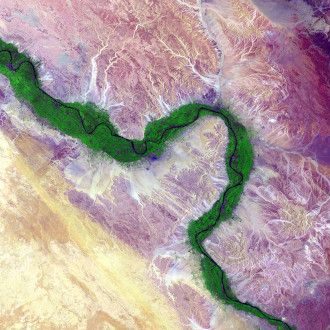
[Rabbi Michael Melchior teaches](https://www.youtube.com/watch?v=FgfRShMyiOY&feature=youtu.be) that the Egyptians could not interpret Pharaoh’s dream because they knew only abundance from the Nile. They could not imagine the Nile not flooding each year to provide water for their crops. Joseph, who experienced scarcity in Israel, was able to envision a famine in Egypt. Certainty and stability in the past can mislead us as we try to prepare for an uncertain future. For many people who have enjoyed material stability and abundance in the past half-century, it is difficult to imagine that the next half-century will be much different. One role of **spiritual leadership** is to see more deeply into where our current lifestyle is leading us, and to help us to change accordingly.
#### Cows and Crops
*Genesis 41:20, 24 – and the Seven Lean and Ugly Cows Ate Up the First Seven Cows, the Sturdy Ones . . . and the Thin Ears Swallowed the Seven Healthy Ears. I Have Told My Magicians, but None Has an Explanation for Me.*
Why did Pharaoh have two such similar dreams, and why did the dream about the cows precede the one about the crops? [Rabbi Matis Weinberg explains](https://www.amazon.com/Frameworks-Genesis-Matis-Weinberg/dp/1892984008): “The proximate failure of the earliest links in the [food chain](https://interfaithsustain.com/food-production/) (ears of grain) would lead to the rapid destruction of their only stockpile (the cows) and the collapse of society.”
In 1891, a severe famine in Russia affected 13 million people. Along with the severe drop in crop yields, [analysts assert](https://www.jstor.org/stable/4208433), “the most serious effect of the famine was . . . the widespread destruction of livestock in the famine area . . . only a third of the horses remained alive and one-eighth of the cattle.”
Pharaoh has a nightmare about the economic impact of a famine on his empire. Since cattle consume valuable crops that can sustain humans, they cannot be fed during the famine. We see evidence of this later in the story when the Egyptians willingly exchange their cattle for grain.
Today, about [one billion cattle](https://www.statista.com/statistics/263979/global-cattle-population-since-1990/) are raised for beef and milk. This requires grain and water that could sustain tens of billions of people. A cow weighing 1,300 pounds (590 kg), making 100 pounds (45.5 kg) of milk per day, or producing 490 pounds of beef (222 kg) requires 40,000 kcal/day of feed. This is approximately 16 times a human’s daily food consumption. In addition, such a cow would drink 20 gallons of water, compared to an average of half a gallon by a person – a multiple of 40 times. In a world with a rapidly growing human population, and with increasing food and water scarcity, should we be rearing a billion grain and water guzzling cows?
In Pharaoh’s dream, the cows and grain are separate. In modern times, the cattle (as well as hogs and chickens) consume much of the agricultural crops grown by people. Indeed, “Livestock takes up nearly [80 percent](https://ourworldindata.org/agricultural-land-by-global-diets) of global agricultural land yet produces less than 20 percent of the world’s supply of calories.”
*\* Featured image [source](https://unsplash.com/@rikydzee/)*
**Categories:** Bible & Creation Care, Blog on Faith and Ecology
**Tags:** Eco Bible, Genesis 41
---
### [Leviticus 11: The Deeper Meaning of “Kosher”](https://interfaithsustain.com/leviticus-11/)
**Published:** December 31, 2021
**Author:** ICSD
**Excerpt:** Aryeh Ronay - In this chapter, Moses and Aaron are given a variety of rules to tell the Israelites what makes different animals kosher or not kosher, i.e. good to eat or not good to eat for the Israelite people. A kosher animal needs to "chew the cud" and have "split hooves."
**Content:**
Table of Contents
Table of Contents
- [Eco Bible](#aioseo-eco-bible-5)
- [Feeding Cars, Cattle, and Peopleby Rabbi David Seidenberg](#aioseo-feeding-cars-cattle-and-peopleby-rabbi-david-seidenberg-6)
- [Finding Justice for The Poor](#aioseo-finding-justice-for-the-poor-9)
- [Fishing Sustainablyby Candace Nachman](#aioseo-fishing-sustainablyby-candace-nachman-11)
- [Global Over Fishing](#aioseo-global-over-fishing-15)
- [Is Aquaculture A Solution?](#aioseo-is-aquaculture-a-solution-22)
- [No Bees, No Honey (Or Many Other Foods)](#aioseo-no-bees-no-honey-or-many-other-foods-28)
*By Aryeh Ronay* – In this chapter of the [Bible](https://interfaithsustain.com/books-of-the-old-testament/) (Leviticus 11), Moses and Aaron are given a variety of rules to tell the Israelites what makes different animals ***kosher*** or ***not kosher****,* i.e. good to eat or not good to eat for the Israelite people. A kosher animal needs to “chew the cud” and have “split hooves.”
In addition, there is a long list of animals like the eagle, the vulture, flying insects, the gecko, the monitor lizard, the hoopoe and the bat to name a few, whose carcass “shall be unclean and shall not be eaten.”
Moreover, “whoever touches the carcass of any of them shall be unclean until the evening, and whoever carries any part of the carcass of any of them shall wash his clothes and be unclean until the evening” (Leviticus 11:24-45).
Let’s take a deeper look at these rules as they’re discussed in the book, *Eco Bible*, to understand how we can make a healthier, holier world.
## [Eco Bible](https://www.amazon.com/Eco-Bible-Ecological-Commentary-Genesis/dp/173533880X)
### [**Feeding Cars, Cattle, and People**](https://www.neohasid.org/torah/kashroots/) **by Rabbi David Seidenberg**
*Leviticus 11:3 – Any animal that has true hoofs, with clefts through the hoofs, and that chews the cud*—*such you may eat.*
Any animal that chews its cud, such as a cow, can eat grasses and plants that humans cannot digest. Any animal that has split hooves, such as sheep, can walk and graze on land too rocky for people to farm with a plow. Thus, the only land animals that we can eat, according to the Torah, are animals that do not compete with humans for food. Embedded in this wisdom is another truth: any culture that lets domesticated herds compete with humans for food also pits farmers against herders—and pits the poor who have no land against owners who control both land and herds. Rising world food prices now endanger the poor in many countries. Prices are driven up in part by massive industrial feeding of grain to cattle raised for beef—instead of giving them their natural diet of diverse grasses and other pasture plants. The cost is driven up further by the ethanol fuel industry’s competition for the grain, competition between feeding our cars or cattle, or people.
- [](https://interfaithsustain.com/genesis-23/)
## [Understanding Sustainable Burial From Genesis 23](https://interfaithsustain.com/genesis-23/)
- [](https://interfaithsustain.com/genesis-25/)
## [How Genesis 25 Has Direct Messages For Us Today](https://interfaithsustain.com/genesis-25/)
- [](https://interfaithsustain.com/genesis-28/)
## [Genesis 28: Nature, Mental Health & Spirituality](https://interfaithsustain.com/genesis-28/)
### Finding Justice for The Poor
To attain justice, possibly the most important value within Judaism’s culture, we need farming and animal husbandry to produce enough food for all people, poor and rich. We need to find alternatives to fuels from crops as well as fossil fuels.
### [**Fishing Sustainably**](https://canfeinesharim.org/parshat-shemini-an-abundance-of-fish/) **by Candace Nachman**
*Leviticus 11:9 – These you may eat of all that live in water: anything in water, whether in the seas or in the streams, that has fins and scales*—*these you may eat.*
The Torah explains that all creatures in the waters, in the seas and in the rivers with both fins and scales, are acceptable (kosher) (Leviticus 11:9-12). However, those creatures that do not have fins and scales and that swarm in the waters are an abomination, and we should not eat their flesh. Yet if a fish loses its scales upon removal from the water, it is permissible for eating (Shulchan Arukh, Yoreh Deah 83:3).
The first time God speaks to any of the living creatures, the speech is directed at the fish. The Torah relates, “God blessed them [saying](https://www.sefaria.org/Genesis.1.22?lang=bi&aliyot=0): ‘Be fruitful and multiply, and fill the waters in the seas.'” The Torah uses fish to connote fertility and abundance. Perhaps this is because many species are capable of giving birth to many young at one time. When Jacob blesses his grandsons Ephraim and Menasseh, [he says to them](https://www.sefaria.org/Genesis.1.22?lang=bi&aliyot=0), “Let them grow into a multitude in the midst of the earth.” In this verse, the Hebrew word *v’yidgu* means grow derived from the root *dag*, which means fish.
### Global Over Fishing
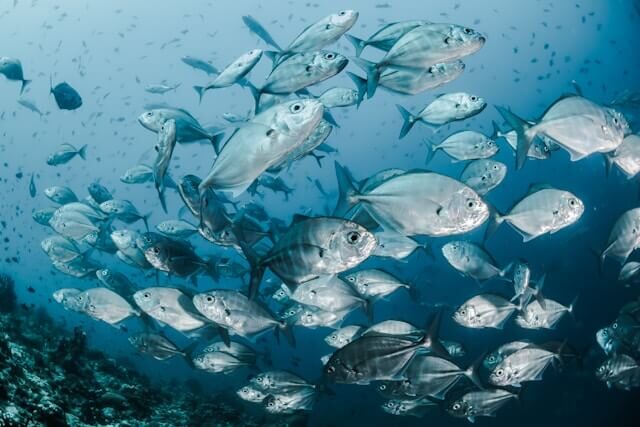
In today’s world, however, global overfishing is making fish less a symbol of fertility and abundance. [The UN Food and Agriculture Organization estimates](https://www.fao.org/state-of-fisheries-aquaculture) that since 1990, the percentage of fish stocks within biologically sustainable levels has declined dramatically, from 90 percent to 66 percent. It notes that “…in 2018, total global capture fisheries production reached the highest level ever recorded at 96.4 million tonnes—an increase of 5.4 percent from the average of the previous three years. World aquaculture production attained another all-time record high of 114.5 million tonnes in live weight in 2018.” These totals warn that many of the world’s marine fish stocks are currently being fished at their maximum or have already been overfished beyond their maximum and are now in decline.
[Source](https://unsplash.com/@sebaspenalambarri/)
Looking at the top ten wild-caught fish stocks, which account for 30 percent of the world capture fisheries production quantity, most are fully exploited or overexploited and cannot produce major increases in catch. For example, in the United States, Atlantic cod off Georges Bank (between Cape Cod and Nova Scotia) and the Gulf of Maine and yellowfin tuna in the Eastern Pacific were [categorized as overfished in 2019](https://www.fisheries.noaa.gov/national/sustainable-fisheries/status-stocks-2019).
#### Is Aquaculture A Solution?
Aquaculture has been touted by some as a solution to the crisis of world fisheries decline. [Aquaculture](https://oceanservice.noaa.gov/facts/aquaculture.html) is the “breeding, rearing, and harvesting of fish, shellfish, algae, and other organisms in all types of [water environments](https://interfaithsustain.com/why-are-coral-reefs-important/).” According to the FAO, aquaculture now provides nearly 50 percent of the world’s fish for consumption. In 2019, carp, salmon, and tilapia were among the [top ten species groups](https://www.fao.org/3/ca5187en/ca5187en.pdf) in aquaculture production. While some think aquaculture can solve the problem of overfishing and exploitation, there can be negative effects to the environment when aquaculture is not properly regulated.
Shrimp-farming operators have cut down thousands of acres of mangrove forests in Southeast Asia. Yet [mangroves are vital habitat](https://www.floridamuseum.ufl.edu/southflorida/habitats/mangroves/importance-mangroves/) for hundreds of marine species—including newborns of many species—as well as storm protection for upland areas. The world’s largest mangrove forest, the Sunderbans in India and Bangladesh, was hit directly by Cylone Amphon in May 2020, one of the largest storms in decades. “The tidal surge submerged part of the forest,” [said Belayet Hossain](https://www.floridamuseum.ufl.edu/southflorida/habitats/mangroves/importance-mangroves/), a Bangladeshi forest official. The mangroves softened the impact of Cyclone Amphon on tens of millions of people.
The best choice, other than eliminating or reducing the amount of fish we eat, is to eat fish from sustainable fisheries. There are many fish that are harvested in sustainable ways. The Marine Conservation Society provides a “[Good Fish Guide](https://www.mcsuk.org/goodfishguide/search?name=&start=46&perPage=15&min=1&max=2&mp=all&cm=all&tof=all)” which lists 139 fish and seafood on a scale of most sustainable (Green rated) to least sustainable (Red rated).
Our dominion over creatures in the waters does not also give us the right to cause their extinction. The world and all its inhabitants belong to God. Unsustainable fishing practices in many parts of the world have led to the current troubled state of the world’s fisheries. Our actions are working against the blessing that God gave fish species to be fruitful.
The opportunities before us are to buy fish sustainably, and work to promote environmental practices and policies that will not harm fish species or the waters where they should thrive. In these ways, we can fulfill the divine mandate for human stewardship of God’s planet, not just to use it but to protect it.
#### **No Bees, No Honey (Or Many Other Foods)**
*Leviticus 11:23 – But all other winged swarming things that have four legs shall be an abomination for you.*
Despite the Biblical prohibition against eating most insects, they have long been a [significant source of food in most parts of the world](https://en.wikipedia.org/wiki/Entomophagy), including Central and South America, Africa, Asia, and Australia. The [UN Food and Agriculture Organization suggests](https://en.wikipedia.org/wiki/Entomophagy) insects as a potential protein resource for feeding the world’s population, as other resources like fish decline. Meanwhile many insect species are also in [dangerous decline or threatened,](https://doi.org/10.1371/journal.pone.0185809) due to habitat loss, pesticide use, disease, and [climate change](https://assets.publishing.service.gov.uk/government/uploads/system/uploads/attachment_data/file/794708/20141103-supporting-doc-final.pdf). The Biblical prohibition against eating most insects likely had the effect of protecting insects in ancient Israel.
[Source](https://unsplash.com/@choudharyankith)
Bees are a striking example of insects critical to human life, put at risk by human activity. Bees pollinate 70 of the 100 species of crops that [provide 90 percent of food worldwide](https://www.gov.uk/government/news/bees-needs-food-and-a-home), but [bee populations are being devastated](https://www.syngenta.com/company/media/syngenta-news/year/2013/eu-member-states-again-fail-agree-restriction-key-crop). Nine percent of European wild bee species could go extinct, and five percent could be [threatened in the near future](https://www.iucn.org/content/nearly-one-10-wild-bee-species-face-extinction-europe-while-status-more-half-remains-unknown-iucn-report). Some governments are moving slowly to try to save bee populations, by [legislating against pesticides](https://commonslibrary.parliament.uk/research-briefings/cdp-2017-0226/) that end up harming beneficial insects.
In Israel, the bee population is holding steady thanks to 80,000 to 100,000 seedlings—especially eucalyptus trees—planted every year to give bees a varied, abundant diet across the seasons. The Jewish National Fund (KKL-JNF) nurseries provide these seedlings for free, and they are planted on beekeepers’ land. “As open areas are decreasing in the last decade, we find ourselves with less land for afforestation. \[But with this strategy of planting saplings on beekeepers’ lands\] everybody benefits: We have trees, the bees have flowers, and the keepers have honey,” [explains Aviv Eizenband](https://www.jpost.com/Business-and-Innovation/Health-and-Science/How-Israel-is-saving-the-honeybees-470238), head of forestry and professional development at KKL-JNF’s Forest Service.
Israel is known as the “land of milk and honey.” The Midrash says, “The purposes of the Blessed Holy One are carried out in all places, and God has not created a single thing in vain. Sometimes God’s purpose is achieved by means of a frog, sometimes by means of a hornet, sometimes by means of a scorpion.… This is indeed the way of the Blessed Holy One—to achieve a purpose by means of small things!” ([Midrash Numbers Rabbah 18.22](http://davidesstein.name/A_Garden_of_Choice_Fruits--Stein.pdf))
*\* Featured image [source](https://unsplash.com/@stijntestrake/)*
**Categories:** Bible & Creation Care, Blog on Faith and Ecology
**Tags:** Eco Bible, Leviticus 11
---
### [A Shabbat Blessing For Humanity and For Earth](https://interfaithsustain.com/shabbat-blessing/)
**Published:** June 24, 2022
**Author:** ICSD
**Excerpt:** Aryeh Ronay - One day a week, the Jewish people stop their work and dedicate a day to rest, rejuvenation and spiritual growth. Did you know that resting one day a week can be the best thing for your body, your soul and the planet? Let's explore the Shabbat blessings and their transformative power.
**Content:**
Table of Contents
Table of Contents
- [Saying "Shabbat Shalom"](#aioseo-saying-shabbat-shalom-2)
- [Friday Night Blessings](#aioseo-friday-night-blessings-4)
- [Lighting Shabbat Candles](#aioseo-lighting-shabbat-candles-6)
- [Blessing the Children](#aioseo-blessing-the-children-11)
- [Kiddush – Blessing Over Wine](#aioseo-kiddush-blessing-over-wine-22)
- [Challah – Blessing Over Bread](#aioseo-challah-blessing-over-bread-25)
- [Blessings at the End of Shabbat](#aioseo-blessings-at-the-end-of-shabbat-32)
- [How Shabbat Can Bless us and All of Creation](#aioseo-how-shabbat-can-bless-us-and-all-of-creation-37)
- ["The Sabbath and Ecology" By Rabbi Yonatan Neril, as seen in Eco Bible](#aioseo-the-sabbath-and-ecology-by-rabbi-yonatan-neril-as-seen-in-eco-bible-39)
- [Shabbat to Save The World](#aioseo-shabbat-to-save-the-world-43)
- [Society Needs To Rest and Reflect](#aioseo-society-needs-to-rest-and-reflect-46)
- [Shabbat Blessings to Our Creator](#aioseo-shabbat-blessings-to-our-creator-49)
*By Aryeh Ronay* – One day a week, the Jewish people stop their work and dedicate a day to rest, rejuvenation and **spiritual growth**. Did you know that **resting one day a week** can be the best thing for your body, your soul and the planet? Let’s explore the **Shabbat blessings** and their transformative power.
## Saying “Shabbat Shalom”
Saying “**Shabbat Shalom**” is a blessing we give to other people on Shabbat. As Lisa Cohen describes in her article, [Understanding the Meaning of “Shabbat Shalom”](https://interfaithsustain.com/shabbat-shalom-meaning/), saying “Shabbat Shalom” is a way to bless someone with a “peaceful Shabbat.” On other Jewish holidays we can say “*Chag Sameach*,” which means “happy holidays,” but only on Shabbat do we say “Shabbat Shalom.”
## Friday Night Blessings
In practice, Shabbat starts a few minutes before sunset on Friday and runs until an hour after sunset on Saturday. Therefore it lasts about 25 hours.
### Lighting Shabbat Candles
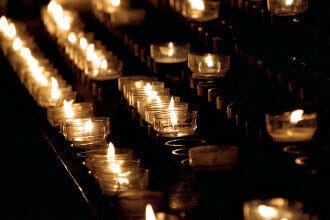
The first blessing of Shabbat occurs on Friday evening before sunset, during the **Shabbat candle lighting**, and like almost every traditional blessing in Judaism, it begins with the words “Blessed are you, LORD our God, king of the universe.”
Some Jewish communities light the candles and then say the Shabbat candle blessings and some say the blessings and then light the candles. Whatever order they bless, all Jewish communities understand that with the Shabbat candle blessing, we officially enter into the holy realm of Shabbat.
### Blessing the Children
[Source](https://unsplash.com/@thomasbormans)
On Friday night, parents bless their children using verses from the bible. Sons are blessed, “may you be like Ephraim and Menashe” and daughters are blessed, “may you be like Sarah, Rebecca, Rachel, and Leah.”
Both are blessed with the priestly blessing:
> May God bless you and protect you.
>
> May God show you favor and be gracious to you.
>
> May God show you kindness and grant you peace.
### Kiddush – Blessing Over Wine
***Kiddush*** is the blessing made over a cup of wine or grape juice. *Kiddush* is a way of sanctifying the day as not just a Saturday*,* but as a holy *Shabbat.*
In this prayer we hold up our grape beverage, bless God, and pray that God bless us in turn with a wonderful Shabbat.
#### Challah – Blessing Over Bread
[](https://unsplash.com/@robertina)[Source](https://unsplash.com/@robertina)
The last blessing we make before we eat the Shabbat meal is the blessing on **challah**, which is plaited bread.
First we wash our hands with a cup and a special blessing. Then we take two loaves of bread, bless God, and eat the challah, which is the first course of the Friday night meal.
## Blessings at the End of Shabbat
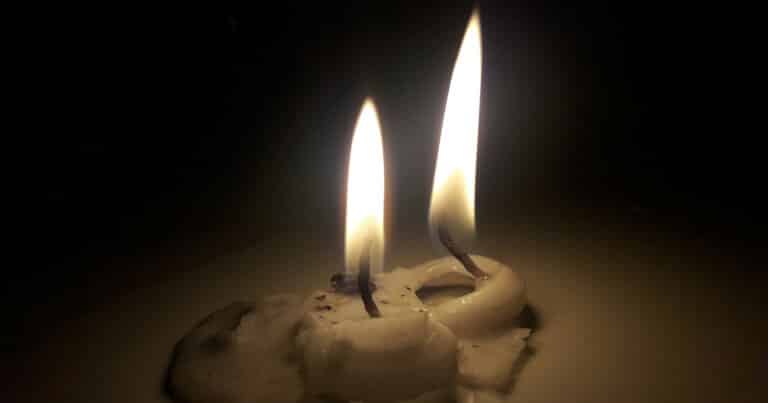
At the end of the Shabbat, an hour after sunset, we make ***havdalah****,* literally, “the separation.” We sing and do rituals to mark off that our holy Shabbat is coming to and end, and we are re-entering the work-week. We smell fragrant herbs, look at our finger nails in the light of the special *havdalah* candle flame and we contemplate our transition away from Shabbat.
[Source](https://unsplash.com/@svebar15)
- [](https://interfaithsustain.com/shabbat-blessing/)
## [A Shabbat Blessing For Humanity and For Earth](https://interfaithsustain.com/shabbat-blessing/)
- [](https://interfaithsustain.com/shabbat-shalom-meaning/)
## [Understanding the Meaning of “Shabbat Shalom”](https://interfaithsustain.com/shabbat-shalom-meaning/)
We don’t need to fret. We know that the special energy of Shabbat will accompany us through the week, and that the next Shabbat is never more than 6 days away.
## How Shabbat Can Bless us and All of Creation
*Exodus 35:2 – on Six Days Work May Be Done, but on the Seventh Day You Shall Have a Sabbath of Complete Rest, Holy to the Lord; Whoever Does Any Work on It Shall Be Put to Death.*
## “The Sabbath and Ecology” By Rabbi Yonatan Neril, as seen in [Eco Bible](https://www.amazon.com/Eco-Bible-Ecological-Commentary-Genesis/dp/173533880X/ref=tmm_pap_swatch_0?_encoding=UTF8&qid=&sr=)
So impactful is this commandment, today most of the world’s population enjoys a “weekend” that can be traced back to this commandment.
Rabbi Norman Lamm [writes](https://www.amazon.com/Faith-Doubt-Studies-Traditional-augmented/dp/0881259527):
Perhaps the most powerful expression of the Bible’s concern for man’s respect for the integrity of nature as the possession of its Creator, rather than his own preserve, is the Sabbath . . . The six workdays were given to man in which to carry out the commission to “subdue” the world, to impose on nature his creative talents.
But the seventh day is a Sabbath; man must cease his creative interference in the natural order (Jewish law’s definition of Melakha or work), and by this act of renunciation demonstrate his awareness that the earth is the Lord’s and that man therefore bears a moral responsibility to give an accounting to its Owner for how he has disposed of it during the days he “subdued it” . . . A new insight into Jewish eschatology: not a progressively growing technology and rising GNP, but a peaceful and mutually respectful coexistence between man and his environment.”
## Shabbat to Save The World
Observance of Shabbat – taking a day each week to refrain from the transformation of nature – has the potential to alter a person’s feeling of creative and technological control over nature.
In early nineteenth-century Germany, Rabbi Samson Raphael Hirsch senses the profound relevance of Shabbat for industrial society, exclaiming, “Sabbath in our time! To cease for a whole day from all business, from all work, in the frenzied hurry-scurry of our time! . . . The pulse of life would stop beating and the world perish! The world perish? On the contrary, it would be saved.”
## Society Needs To Rest and Reflect
This message of Shabbat is sorely needed in today’s Western society. The mentality and lifestyle of “doing” without regard to “being,” of transforming the natural world without taking time to reflect on the value of that transformation, is taking an environmental toll on the planet.
A society that never rests nor reflects is the same society that over-extracts and over-consumes. This mastery of the earth without sufficient contemplation of its consequences has produced ecological destruction on the local, regional, and global level.
## Shabbat Blessings to Our Creator
Air and water pollution. Species loss. Climate change. These are problems not of the environment, but of a society bent on doing and producing seven days a week.
A New York Times Magazine article commented on American lifestyles, saying, “A nation of remarkably productive, often well-paid workers . . . are becoming increasingly reluctant to pause from their labors and refresh their souls.”
On Shabbat, we are to walk on the earth without asserting our mastery over it, in order to acknowledge the sovereignty of the Creator. In this way, we will remember that we are only the custodians of the earth with the responsibility “to work it and to guard it” (Genesis 2:15).
*\* Featured image [source](https://unsplash.com/@guilhermestecanella)*
**Categories:** Bible & Creation Care, Blog on Faith and Ecology
**Tags:** Shabbat
---
### [The Remarkable Benefits of A Geodesic Dome Home](https://interfaithsustain.com/geodesic-dome-home/)
**Published:** April 13, 2022
**Author:** ICSD
**Excerpt:** Harry Cooper - Buckminster Fuller set out to design the most efficient style of home that he possibly could. For all intents and purposes, his geodesic dome house accomplished that goal.
**Content:**
Table of Contents
Table of Contents
- [Efficient Architecture](#aioseo-efficient-architecture-2)
- [What makes Geodesic Dome Homes so Remarkable?](#aioseo-what-makes-geodesic-dome-homes-so-remarkable-5)
- [The Spherical Shape of a Dome House](#aioseo-the-spherical-shape-of-a-dome-house-7)
- [A Geodesic Dome Home Is Easy to Build](#aioseo-a-geodesic-dome-home-is-easy-to-build-11)
- [A House That Is Resistant to Severe Weather](#aioseo-a-house-that-is-resistant-to-severe-weather-15)
- [Energy Efficient Geodesic Dome Homes](#aioseo-energy-efficient-geodesic-dome-homes-23)
- [Cheaper and Cleaner Energy Usage in A Geodesic Home](#aioseo-cheaper-and-cleaner-energy-usage-in-a-geodesic-home-26)
- [Downsides of Geodesic Dome Homes](#aioseo-downsides-of-geodesic-dome-homes-28)
- [The Spiritual Origin of The Geodesic Dome Home](#aioseo-the-spiritual-origin-of-the-geodesic-dome-home-37)
- [Domes and Religion](#aioseo-domes-and-religion-41)
*By Harry Cooper* – Buckminster Fuller set out to design the most efficient style of home that he possibly could. For all intents and purposes, his geodesic dome house accomplished that goal.
## Efficient Architecture
**Geodesic dome houses** are some of the cheapest houses to build and maintain on the market. Their simple yet sound design was made to provide quality housing for as many people as possible for as cheap as possible.
While these houses are not the most conventional living space, they require very few [building materials](https://interfaithsustain.com/sustainable-building-materials/ "building materials"), naturally regulate their own temperatures, and are built to last for an incredibly long time. You can even buy your own **geodesic dome** kit online if you want to build one yourself.
## What makes Geodesic Dome Homes so Remarkable?
When there are so many options for buying other homes, but eco homes are important to you, then it’s crucial that you study the many benefits of dome homes. From being the strongest shape, safer in earthquakes and hurricanes, well insulated resulting in less energy use to their cheaper price and easy assemblage they are a wonderful option.
### The Spherical Shape of a Dome House
The **spherical shape** of geodesic dome homes is meant to create as much support and stability while using as little materials as possible. This provides it with incredible [structural integrity](https://www.britannica.com/technology/geodesic-dome).
The secret to this design comes from its use of the lightweight triangle plates that make up its hemispherical shape. While not strong on their own, when put into a dome formation these plates can be incredibly practical, and structurally sound.
When geodesic domes are built with these triangles, the weight is distributed evenly across the house making it incredibly stable. This unique shape allows for geodesic homes to be built with as little materials as possible while still retaining a stable structure.
### A Geodesic Dome Home Is Easy to Build
By having such a simple design that requires so little building materials, geodesic domes are not just sturdy, they are also very cheap and easy to [build](https://www.bfi.org/about-fuller/big-ideas/geodesic-domes). This can help make housing more accessible to people everywhere.
- [](https://interfaithsustain.com/self-sustaining-home/)
## [A Self Sustaining Home is Beneficial To YOU And To The Environment](https://interfaithsustain.com/self-sustaining-home/)
- [](https://interfaithsustain.com/green-architecture/)
## [Green Architecture is Essential for Urban Environments](https://interfaithsustain.com/green-architecture/)
- [](https://interfaithsustain.com/building-off-the-grid/)
## [What To Consider When Building Off The Grid](https://interfaithsustain.com/building-off-the-grid/)
Making housing so accessible was one of the original purposes of the geodesic dome home. By using such light materials that are easy to put together which enables geodesic domes to be constructed easily, quickly and almost any where.
Not only do these light transportable materials make it easier to build a home, it also makes it cheaper. By using so little materials and requiring so little effort to construct, geodesic homes cost much less than a traditional house.
### A House That Is Resistant to Severe Weather
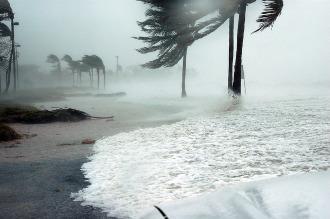
The geodesic dome’s efficient design is not only practical for making them cheap and easy to build. It also makes them more resilient in the face of strong winds and [severe weather](https://www.sustainabledomes.com.au/flex/the-benefits-of-geodesic-dome-homes/13/1).
This is because their spherical shape makes them much more aerodynamic. By being so aerodynamic, strong storm winds are less likely to do damage to a geodesic house than a regular house.
By being such resilient houses, **geodesic dome homes** can survive nearly any weather. This makes them able to be built in all different kinds of environments around the world. With increasing severe weather scenarios as a result of **climate change** geodesic dome homes offer a solution.
[Source](https://unsplash.com/@photoholgic/ "Source")
### Energy Efficient Geodesic Dome Homes
Geodesic dome homes’ shape aren’t just useful for structure and aesthetic. It also allows them to be a lot more [efficient](https://science.howstuffworks.com/engineering/structural/geodesic-dome5.htm) with their energy usage.
This is because their round interior allows for relatively uninhibited air circulation. This makes it a lot easier to regulate air temperature within the dome. Dome homes also have a lot less surface area than traditional house designs which makes them less susceptible to temperature changes outside. As a result, they are even better at regulating temperature than regular homes.
#### Cheaper and Cleaner Energy Usage in A Geodesic Home
By being so energy efficient, geodesic homes are made cheaper by reducing heating and cooling costs. Along with this, their energy efficiency is much better for the environment. By reducing the amount of energy used to heat and cool homes, less fossil fuels are needed to be burned for energy.
## Downsides of Geodesic Dome Homes
While geodesic domes were designed for cost and **energy efficiency**, there are some [drawbacks](https://legaleaglecontractors.com/dome-home-guide/) to living in one. One of these issues is finding furniture that will fit in the house. Since the walls of a geodesic dome home are curved it can be incredibly difficult to find cabinets, appliances, and wall art that fits neatly into the unconventional home structure.
Another issue is privacy. While the circular design of these houses allows air to flow easily throughout the house, it also causes noise to echo and travel around the house. This can make privacy in a geodesic home harder to come by, especially when the houses are already so small.
While building dome homes are hypothetically easy, actually constructing them can come with a lot of red tape. Many home owners associations may make it hard to get the building of a dome home approved, and since they are such unconventional houses, it may also be difficult to get your dome home appraised.
[Source](https://unsplash.com/@danlefeb/ "Source")
Nonetheless, geodesic dome homes were meant to provide cheap efficient housing, and that’s exactly what they do. The geodesic dome house works to solve both the housing crisis and the energy crisis. Despite its few flaws, its technology like this that drives us towards a more [sustainable future](https://interfaithsustain.com/sustainable-architecture/ "sustainable future").
## The Spiritual Origin of The Geodesic Dome Home
The Geodesic dome home was invented by [**R. Buckminster Fuller**](https://www.britannica.com/biography/R-Buckminster-Fuller), “an American engineer, architect, and futurist.” As the [Buckminster Fuller Institute](https://www.bfi.org/) explains, Fuller was committed to improving human shelter with modern construction technology to make them more comfortable, more efficient and more affordable.
Fuller was working on his design as far back as 1928, but it wasn’t until 1944 that the time was ripe as the United States “suffered a serious housing shortage. Government officials knew that Fuller had developed a prototype single family dwelling which could be produced rapidly, using the same equipment which had previously built war-time airplanes. They could be ‘installed’ anywhere, the way a telephone is installed, and with little additional difficulty”. Unsolicited checks began to pour in from people who wanted to purchase these houses, but there were serious problems inhibiting the production of these homes from unions, stockholders and financing.
[In the words of Buckminster Fuller](https://kidadl.com/articles/buckminster-fuller-quotes-from-the-influential-architect), “You never change things by fighting the existing reality. To change something, build a new model that makes the existing model obsolete”. This is just what Buckminster Fuller sought to do with his geodesic home design. While his homes did not reach the wide-scale distribution he dreamed of in his life time, they are inspiring people around the world and manifesting in new forms every day.
### Domes and Religion
Domes have a long history in religions around the world. An article in [Hurriyet Daily News](https://www.hurriyetdailynews.com/the-dome---symbol-of-power--60863#:~:text=%E2%80%9CThe%20dome%20is%2C%20of%20course,Mosques%2C%20Madrasas%20and%20Tombs.%E2%80%9D) discusses their origin:
> From early on in the Middle East and Southwest Asia it was a popular method of roofing in places where there was no timber. It was easy to build using mud bricks that either tilted slightly inwards or by placing layers of brick in circles that gradually became smaller. There have been a suggestion that the circular huts used by nomadic tribes may have had some impact. The Romans adopted the dome, as we see in the Pantheon in Rome, and the Byzantines used the dome to cover their monumental buildings.
The first domed building constructed by Arabs was the Dome of the Rock in Jerusalem (691), even though it wasn’t “until the 12th century that it became popular to place domes on mosques”. Today, almost every mosque has a dome shape.
An article on [Aleteia](https://aleteia.org/2017/07/24/look-up-the-spiritual-reason-why-churches-have-domes/) proposes that “Domes on Christian churches invite pilgrims to “look up” and remember that their lives are not meant to be downward in focus, but pointed upward, towards the heavens above”, a lesson that we all need to remember.
*\* Featured image [source](https://unsplash.com/@kylejglenn/ "source")*
**Categories:** Blog on Faith and Ecology
**Tags:** Sustainable Architecture, Sustainable Building
---
### [Consumerism Examples That Affect the Environment](https://interfaithsustain.com/consumerism-examples/)
**Published:** March 11, 2022
**Author:** ICSD
**Excerpt:** Harry Cooper - The word consumerism may seem like a catchy buzzword that's hard to understand. But understanding what the term consumerism is and where it can be found in the modern world can help us be more aware of the impact of what we buy.
**Content:**
Table of Contents
Table of Contents
- [Living in a Consumer Society](#living-in-a-consumer-society)
- [The History of Consumerism](#the-history-of-consumerism)
- [3 Factors That Encouraged Consumerism](#3-factors-that-encouraged-consumerism)
- [Self Control and Growing Debt](#self-control-and-growing-debt)
- [More Places to Shop](#more-places-to-shop)
- [A World of Ads](#a-world-of-ads)
- [Consumerism and the Environment](#consumerism-and-the-environment)
- [Exploiting Natural Resources for Consumerism](#exploiting-natural-resources-for-consumerism)
- [Consumerism Creates Waste](#consumerism-creates-waste)
- [Examples of Consumerism](#examples-of-consumerism)
- [The Auto Industry](#the-auto-industry)
- [The Meat Industry](#the-meat-industry)
- [Consumerism and Religion](#consumerism-and-religion)
- [Forbidden Fruit and Self-Control](#forbidden-fruit-and-self-control)
*By Harry Cooper* – The word **consumerism** may seem like a catchy buzzword that’s hard to understand. But understanding what the term consumerism is and where consumerism examples can be found in the modern world can help us be more aware of the impact of what we buy.
## Living in a Consumer Society
In essence, [consumerism](https://interfaithsustain.com/what-is-consumerism/) refers to the idea that purchasing and owning material goods is the key to being happy. While finding happiness and the concept of ownership are typically rooted more in philosophy, consumerism is also very relevant to economics and the ways in which business practices are done. From the economic perspective, **mass consumerism** leads individuals to spend more money on goods and services which stimulates the market and creates economic growth. However many [critics of consumerism](https://interfaithsustain.com/anti-consumerism/ "critics of consumerism") argue that this kind of mass consumption exhausts natural resources, creates a tremendous amount of waste disposal, and increases environmental problems at almost every stage in the production process.
## The History of Consumerism
Human society has always consumed material goods, but the intense consumer culture that exists today is a relatively [new concept](https://www.theatlantic.com/business/archive/2016/11/how-humans-became-consumers/508700/). In the late nineteenth and early twentieth centuries, purchasing and owning non-essential goods became a symbol of social status and many philosophers saw consumption as a sign of a countries power and influence; the more stuff people are buying shows how much money people have to spend. This trend died off when World War I, the depression, and World War II caused widespread economic hardship. During this period, instead of valuing the consumption of goods, many people valued frugality and thrift. However, things took a hard turn back in the direction of consumerism when World War II ended.
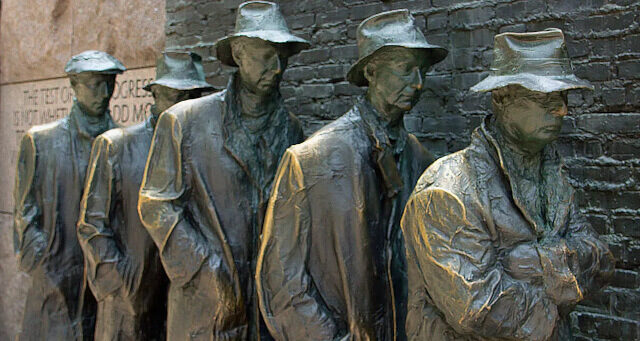[Source](https://unsplash.com/@sonderquest/ "Source")
After [the second world war](https://www.pbs.org/wgbh/americanexperience/features/tupperware-consumer/) the United States was a very different country than before. Wartime manufacturing and New Deal programs helped pull the the US out of the Great Depression and into a new era of economic plenty. Soldiers returning from war found themselves with new jobs, higher wages, and families to spend their money on. And thus once again, consumer spending became a symbol of social status, affluence, and power.
This new wave of mass consumerism hit American society harder than before. This was mainly due to recovery from the Great Depression, in part relying on stimulating the American economy through consumption, making being a consumer synonymous with being a patriot. Along with this, advances in technology made more new consumer goods available for consumers to buy, such as TVs, cars, washing machines, refrigerators, and vacuum cleaners. Ever since this sharp turn towards consumerism, Americans have only become more deeply ingrained in their consumer identity. Increased wages gave individuals higher spending power which resulted in increasing consumption to unprecedented levels. A consumer revolution happened that created today’s **throw-away society** characterized by excessive materialism: produce, consume, throw away!
- [](https://interfaithsustain.com/what-is-consumerism/)
## [What is consumerism, and what are its roots?](https://interfaithsustain.com/what-is-consumerism/)
- [](https://interfaithsustain.com/anti-consumerism/)
## [Anti-Consumerism Redefines Our Lives To Focus on Spiritual Growth](https://interfaithsustain.com/anti-consumerism/)
- [](https://interfaithsustain.com/ethical-consumerism/)
## [Ethical consumerism is Becoming a Movement for Change](https://interfaithsustain.com/ethical-consumerism/)
## 3 Factors That Encouraged Consumerism
Consumers have increased their spending at an alarming rate since the end of World War II, so much so that American savings rates have dropped to below zero. But with the depression having ended over eighty years ago, what has facilitated this strong urge to keep buying? Many people have offered [psychological](https://www.apa.org/monitor/2008/07-08/consumerism) answers to this question.
### Self Control and Growing Debt
One of these answers has been a decrease in self control due to new lifestyles. Many psychologists see self control as a muscle that needs to be treated well in order to function properly. When we have little experience with self control or if we are under too much stress to think about whether we actually need something or not, we can find ourselves with less control over our impulses. When companies work towards exploiting this lack of self control, we can find ourselves embracing consumerism and in a lot of debt.
One way in which **consumer society** has taken advantage of people lacking self control is through the advent of credit cards. Credit cards allow people to buy things on credit and pay it off later which makes it easier for people to give into impulse purchases, and buy stuff in the moment. This system of using consumer credit to buy things is problematic as it often puts people into a lot of debt, and as people get used to not exercising self control when buying stuff on credit, this debt will often only get worse and worse.
### More Places to Shop
Just a few decades ago, stores were the only place where people could go to buy things, and once you got home, you were safe from the temptations of consumer spending. However, with the advent of mail order catalogues and TV shopping channels the door was opened for people to spend money on consumer goods not just in a store, but from the comfort of their own home. This made it so that people not only had to resist spending money on goods and services when they’re out and about, but also in their own house. In even more recent years, the internet has allowed for **online shopping** which enables consumers to purchase goods and services anytime they have access to the internet. Today, consumer choices are unlimited and people spend without thinking twice. This has made the modern age one of the easiest times to buy unnecessary products, and one of the hardest times to save money.
#### A World of Ads
**Advertising** has become the [backbone](https://blogs.oregonstate.edu/digitalmarketing/2019/11/08/how-advertising-affects-society-and-our-life/) of consumerist society. Ads have found their way to every corner of our world, from the street, to the internet, to newspapers, to TV, to anywhere you can stick an image or short phrase. These mass media ads shape consumer behavior by telling us the ways in which a product can change our lives for the better. Ads do this in a very specific way. Firstly, ads often depict an unrealistically ideal life or way of living that sends a message to the viewer that their life is unsatisfactory, or lacking in some way. Ads then associate whatever product their selling to this ideal life, implying that all the consumer needs to be happy and reach this ideal life, is to buy more products and large quantities of products.
While ads only target one or two products, seeing ads for so many different things in so many different places drives home the message that shopping in general is the key to living a good life. As a result, people generally associate happiness to material possession and consumerism. When they realize that the equation does not work, the psychological consequences are huge and have created a population dependent on anti depressants and drugs.
## Consumerism and the Environment
Consumerism is very prevalent in our society and has a big impact on the way we live our lives. But what is the big deal? It may seem a little daunting that the corporate world has so much sway on our lives, but if people are happy spending money on consumer goods, why should we change anything? While consumerism may seem like it doesn’t create any amount of extensive harm, the intense extraction of natural resources and massive amounts of waste associated with the consumerist lifestyle cause a lot of [environmental pollution](https://interfaithsustain.com/prevention-of-air-pollution/ "environmental pollution").
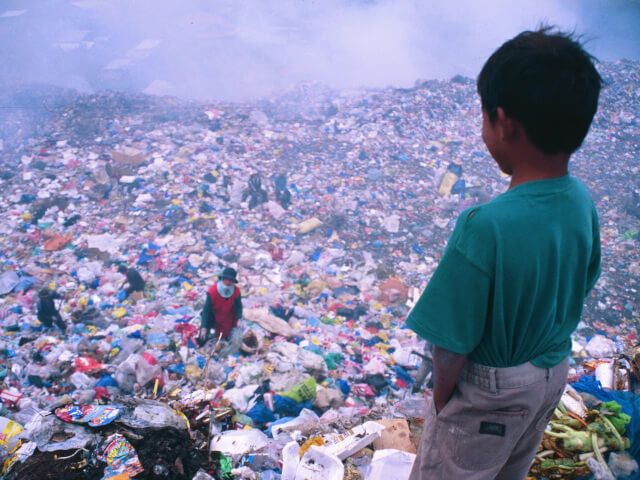[Source](https://pixabay.com/users/mariagullestrup-3418678/ "Source")
### Exploiting Natural Resources for Consumerism
Every product made requires some amount of resources extracted from the natural world; whether that be wood, water, metal, plastic, oil, or any number of things. As consumption of goods increases, the amount of resources that need to be extracted from the Earth also increases. We can see that this increased extraction of resources is caused by the increase in consumerism as 80% of the world’s resources are being used by 20% of the world’s population, most of these people coming from [consumerist societies](https://netimpact.org/blog/overproduction-overconsumption-consequences).
When we extract resources in this way it has grave impacts on the natural world. Certain means of extracting resources, such as deforestation and strip mining, can completely reshape the landscape of the natural world, destroying habitats and completely disrupting ecosystems. Many processes of **extracting resources** also require the burning of fossil fuels or the use of harmful chemicals. This causes dangerous air and [water pollution](https://interfaithsustain.com/effects-of-water-pollution/ "water pollution") which can have serious health effects on humans and the environment.
#### Consumerism Creates Waste
The extraction of resources to create the extra goods demanded in a consumption driven society cause a lot of harm to the environment. However, it’s not just the creation of goods that causes environmental harm, but disposing of used products can also cause serious problems. Consumerism drives people to constantly be buying more and newer products, making many people throw out their old products, creating a massive influx of trash and [waste](https://www.nwf.org/Eco-Schools-USA/Pathways/Consumption-Waste).
This waste often ends up in nature or the ocean which can harm local wildlife. Even if this waste doesn’t end up as litter, it is often transported to [landfills](https://www.colorado.edu/ecenter/2021/04/15/hidden-damage-landfills) where it meets a not much better fate. While landfills help keep waste out of the natural world they often emit methane, carbon dioxide, and other greenhouse gases. **Landfills** can also leak toxic chemicals into groundwater stores as well as into lakes and rivers. As consumers throw out more and more of the products they buy, more waste is created, and more landfills need to be made.
## Examples of Consumerism
Consumerism creates an entire culture around buying and valuing material goods. However, while consumers continue to buy more in general in a consumerist society, there are a few industries that are particularly notorious for promoting consumerism.
### The Auto Industry
Ever since their invention, cars have fascinated Americans. Whether its going on a road trip to explore the country or owning a sleek, stylish sports car, cars are a central part of American culture, so it’s no wonder that the automotive industry has taken advantage of the large spike in consumerism that has been happening in the last several decades.
Every year every car company comes out with a new version of every model of car it has. This fits the bill of how consumerism operates: constantly making new products for consumers to buy and replace there old ones with. But while most people don’t buy a new car every year, what is striking about car production, is how excessively harmful it is to the environment.
Not only does driving produce a lot of carbon emissions, but making a car uses a particularly large amount of natural resources. Cars are made up of thousands of parts, many of which come from materials that need to be shipped from all over the world. The actual process of making the car uses massive amounts of energy. It is estimated that when making one car [500kg](https://www.theturnsignalblog.com/blog/overconsumption/) of carbon dioxide are emitted. The annual mass production of cars to meet consumer demands has made cars one of the more harmful products in a consumerist world.
### The Meat Industry
The meat industry is another example of an incredibly popular product that has an exceptionally large impact on the environment. With an increase in fast food restaurants, meat consumption has gone up in recent years, so much so, that livestock animals raised to be eaten now outnumber wild animals by [15 to 1](https://interactive.carbonbrief.org/what-is-the-climate-impact-of-eating-meat-and-dairy/). By using land to accommodate one or two different types of animals in this way, we are decreasing our planets biodiversity and destroying habitats and ecosystems.
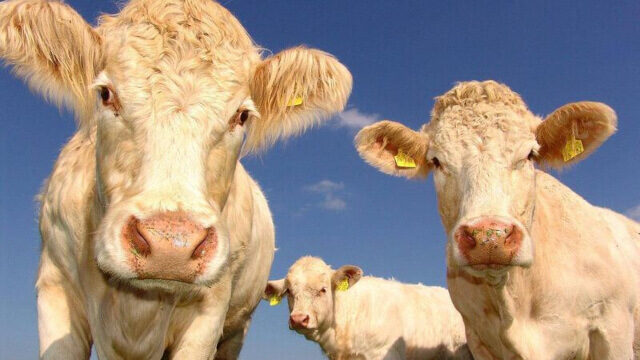[Source](https://pixabay.com/users/peggy_marco-1553824/ "Source")
Not only does meat production require a lot of land that forces wild life to live in smaller habitats, but meat production is a big contributor to climate change as well. Globally, agriculture produces around a fourth of all greenhouse gas emissions, and within that fourth, meat production specifically contributes about fourteen percent of all greenhouse gas emissions. This is because livestock animals such as cows and pigs produce methane, which is an incredibly potent greenhouse gas.
## Consumerism and Religion
Consumerism often manifests as a **lack of self-control**. It’s easier than ever before to make impulse purchases, spend beyond our means, and buy things we don’t really need.
The need for our self-control to curtail our excessive consumerism is explored in the following excerpt from [Eco Bible](https://www.amazon.com/Eco-Bible-Ecological-Commentary-Genesis/dp/173533880X/ref=tmm_pap_swatch_0?_encoding=UTF8&qid=&sr=).
## Forbidden Fruit and Self-Control
*Genesis 2:17 – but as for the Tree of Knowledge of Good and Bad, You Must Not Eat of It; for as Soon as You Eat of It, You Shall Die.*
The need for human self-control is a central message of God telling Adam and Eve not to eat from the Tree of Knowledge of good and evil. As the story plays out, human lack of restraint clearly leads God to expel people from the Garden of Eden, Rabbi Arthur Waskow teaches. Today, lack of moderation and excessive consumerism are driving the widespread degradation of our planet. We are on the verge of self-induced expulsion.
Irresponsible consumerism is destroying our planet. To learn from the mistake of Adam and Eve, we can reflect before we make each purchase, instead of just buying instinctively. By making each purchase mindfully and supplying our basic needs, we can ensure that our spending habits are sustainable for us and the planet alike.
*\* Featured image [source](https://unsplash.com/@anthonyrosset/ "source")*
**Categories:** Blog on Faith and Ecology, Food & Agriculture
**Tags:** Consumerism
---
### [Kentucky Fries](https://interfaithsustain.com/kentucky-fries/)
**Published:** July 15, 2019
**Author:** ICSD
**Excerpt:** Leo Dee - Kentucky has recently be experiencing extreme weather patterns. Lexington received almost 72 inches of rain in 2018, the most for almost 150 years. Whilst Louisville hit 92 degrees in May 2019, higher than the previous 1962 record for May.
**Content:**
*By Leo Dee*
Kentucky has recently be experiencing extreme weather patterns. Lexington received almost 72 inches of rain in 2018, the [most for almost 150 years](https://www.kentucky.com/news/local/article223784725.html). Whilst [Louisville hit 92 degrees in May 2019](https://www.weather.gov/lmk/RecordWarmthforMayContinues), higher than the previous 1962 record for May.
[Human caused climate change](https://climate.nasa.gov/causes/) is behind this strange weather pattern as carbon dioxide released from fossil fuels insulates the earth and prevents natural cooling and Kentucky is one of the [most power plant polluted States](https://wfpl.org/kentucky-ranks-first-toxic-air-pollution-power-plants/). The excessive heat also powers a much [stronger water cycle](https://scied.ucar.edu/longcontent/water-cycle-climate-change), with more water evaporating from the oceans and being dropped on land. This means that some parts of the US are experiencing excessive heat, and some are experiencing record storms and rainfall and some are experiencing both!
So, what’s the solution?
Well, part of the solution is making people aware. And that’s just what Kentucky’s religious seminaries are doing. [The Asbury Theological Seminary](https://interfaithsustain.com/wp-content/uploads/2019/07/Report-on-Faith-and-Ecology-in-N.-Amer-Sems-Oct.-17-final.pdf) is teaching future religious leaders in sustainability, with courses on “The Theology of Creation” and Lexington Theological Seminary is teaching about Consumerism and Global Warming.
Training religious leaders who will inspire their communities, in the future, with the importance of living a life that respects the world and climate, is an important step towards solving the climate crisis.
We are grateful for their initiative!
**Categories:** Blog on Faith and Ecology
---
### [Massive Storm in Middle East Presents Crisis and Opportunity](https://interfaithsustain.com/massive-storm-in-middle-east-presents-crisis-and-opportunity/)
**Published:** December 18, 2013
**Author:** ICSD
**Excerpt:** What do Israelis, Palestinians, Syrians, and Egyptians all have in common? Frostbite, [...]
**Content:**
By Rabbi Yonatan Neril, Founder and Director, The Interfaith Center for Sustainable Development
What do Israelis, Palestinians, Syrians, and Egyptians all have in common? Frostbite, snowball fights, and living through the region’s most powerful winter storm in 60 years. Winter Storm Alexa endured for three days, dumping a typical month’s worth of heavy rainfall and snow across the region. Several people died, tens of thousands of people fled from floodwaters, and hundreds of thousands lost power. This pattern of extreme weather events aligns with [predictions made by the Intergovernmental Panel on Climate Change](https://www.climatechange2013.org/images/uploads/WGI_AR5_SPM_brochure.pdf). Climate change has been linked to increases in the intensity of hurricanes, typhoons, and destructive winter storms like Alexa. This storm is a warning to us – that we need to change our behavior in a major way and to do so soon. Toward the end of this message I will share with you about a particular Initiative that promotes action for environmental sustainability.
Winter Storm Alexa pummeled much of the Eastern Mediterranean. Cairo saw its first snow in 112 years. In Gaza, the heavy precipitation caused massive flooding, forcing 40,000 people to flee their homes. Syrian civil war refugees faced exposure and cold-related illnesses, freezing in the only clothes they carried with them upon fleeing their homes. Jerusalem Mayor Barkat stated that nearly every tree in the city had been damaged in some way. The Bible states that “the human being is a tree of the field,” meaning that the fate of people is bound up with that of the trees. The storm followed an abnormally hot and dry fall. According to the Israeli newspaper, [Haaretz](https://www.haaretz.com/news/national/.premium-1.560306), Israel received less than a third of the average rainfall for this time of year, and the Israel Meteorological Service logged a record temperature of 95 degrees Fahrenheit (35 degrees Celsius) in late November .
Dr. Eric Chivian, Founder and Former Director of Harvard University’s Center for Health and the Global Environment, recently wrote a [letter to the editor of The New York Times](https://www.nytimes.com/2013/11/23/opinion/climate-a-medical-model.html?_r=0). “In recent years, after other extreme weather events like Typhoon Haiyan, one of the strongest storms ever recorded, scientists are always asked, ‘Has climate change caused this?’ And the answer is generally some variation of ‘perhaps, but we can’t be certain.’The right answer, but the wrong question. In a medical emergency, no physician ever waits for absolute proof of diagnosis before starting treatment, for to do so is to run the risk that the patient will become seriously, and perhaps irreversibly, ill, and may die. The greater the emergency, the more physicians rely on an accumulated body of evidence, on recognized patterns of disease… We must learn from the practice of medicine to recognize the accumulating signs and symptoms of climate change as it unfolds before our eyes, and to act before it is too late.” Every crisis presents an opportunity that we have the choice whether or not to embrace. With this in mind, I am asking you to support The United Planet Faith & Science Initiative ([UPFSI](http://www.uri.org/)), which unites prominent religious and science leaders to speak out on ecological sustainability. Leaders in faith and science, working together, are able to appeal to vast numbers of people to foster awareness and action. Since we launched this campaign on Indiegogo.com thirteen days ago, supporters have already contributed $10,343, which is 57% of our $18,000 campaign goal that we aim to hit by December 31st. The campaign offers ‘perks’ at different levels of giving and shows how funds will be spent. To learn more about the Initiative, see a short video, and make a U.S. tax-deductible donation, [click here](https://www.indiegogo.com/projects/united-planet-faith-science-initiative). Thank you for your support!
*Photo credits: ICSD staff, and Samuel Vengrinovich*
[](https://interfaithsustain.com/wp-content/uploads/2013/12/Snow-in-Jerusalem-outside-of-Old-City.jpg)
**Categories:** Blog on Faith and Ecology
---
### [Jerusalem Climate Action Highlights Urgency of Addressing Climate Crisis](https://interfaithsustain.com/israeli-startups-presenting-at-un-confab-on-climate-change/)
**Published:** December 3, 2015
**Author:** ICSD
**Excerpt:** Rabbi Yonatan Neril - About 60 people of different faiths came together today in Jerusalem calling for action on climate change, as global negotiations by 200 countries to address the climate crisis began in Paris. The event took place at Zion Gate of the Old City of Jerusalem, and was one of 2000 actions in 140 cities worldwide, including Tel Aviv and Ramallah.
**Content:**
About 60 people of different faiths came together today in Jerusalem calling for action on climate change, as global negotiations by 200 countries to address the climate crisis began in Paris. The event took place at Zion Gate of the Old City of Jerusalem, and was one of 2000 actions in 140 cities worldwide, including Tel Aviv and Ramallah. It coincided with the delivery of a petition to climate negotiators in Paris, signed by over 1.8 million people calling for climate justice. To read more, [click here](https://blogs.timesofisrael.com/jerusalem-climate-action-highlights-urgency-of-addressing-the-climate-crisis/).
*\* Featured image [source](https://unsplash.com/@mattpalmer)*
**Categories:** Blog on Faith and Ecology
---
### [Dr. James Hansen - The Climate Problem Will Not Go Away Until We Put a Price on Carbon](https://interfaithsustain.com/dr-james-hansen-the-climate-problem-will-not-go-away-until-we-put-a-price-on-carbon/)
**Published:** February 5, 2016
**Author:** ICSD
**Excerpt:** Nick Breeze - At the United Nations climate conference in Paris, one of the world's leading climate scientists and former director of the NASA Goddard Institute for Space Studies spoke critically of the current attempt to solve the climate crisis with a non-binding agreement and goals that are not realistic within the current political framework.
**Content:**
*By Nick Breeze*
At the United Nations climate conference in Paris, one of the world’s leading climate scientists and former director of the NASA Goddard Institute for Space Studies spoke critically of the current attempt to solve the climate crisis with a non-binding agreement and goals that are not realistic within the current political framework.
At the outset of this press conference, organized by the United Planet Faith & Science Initiative, Dr. Hansen points out that talking about temperature “targets” is not the best way to be communicating about climate change. When numbers like 2ºC (3.6ºF) or 1.5ªC (2.7ºF are bandied around, they become icons that people repeat over and over again but they do not really mean anything tangible.
The reason is that these are global mean temperature estimates derived from models and calculations. In the real world, temperature is highly variable depending exactly on where you happen to be measuring it. There are so many influencing factors that temperature goals cannot be meaningfully applied to the safety of people or nature.
**Hansen: “I prefer to talk in terms atmospheric composition of carbon dioxide”**
This may seem more technical but can be explained very simply and once understood, is a far better guide for action on climate change. Before the industrial revolution the atmospheric concentration of carbon was around 270 parts per million (ppm). With over 150 years of burning coal, oil and gas the level has risen to 400ppm.
Such an increase means the atmosphere is trapping radiative energy from the sun instead of reflecting the energy back to space. This is causing the temperature to rise due to the energy imbalance, which is shifting the climate system from the relative stability of the interglacial period of the last 10,000 years.
## Climate Moral Injustice
Hansen argues that climate change from human carbon pollution creates three different types of climate moral injustice:
1. It is generally the poorest people on the planet who are suffering. These are the people situated around the mid-latitudes and southern hemisphere. They are also often the poorest and most vulnerable people who are not responsible for the large growth in heat trapping emissions that have caused the crisis.
2. The second are huge numbers of species that we now know are vanishing due to extinction. As human populations grow and encroach up on much of the natural world, huge numbers of species are being left with nowhere to exist and so are dying out. A species of animal or plant cannot be replaced and this is a huge moral injustice that we are responsible for.
3. Climate impacts are already affecting huge parts of the planet. As they worsen in the form of droughts, floods, collapsed agriculture, sea-level rise and more, future generations, such as our children and grandchildren will inherit a planet that is severely degraded with an out of control climate system. This is grossly unjust when we know what we are doing and have the means to avert such an outcome.
## Approaching Critical T**ipping Points**
The danger is that the climate change, induced by human pollution, is tipping the planet into another state where much of nature and humanity will not be able to survive.
There are known thresholds in the climate system that can bring about abrupt changes such as longer extreme weather spells or the collapsing of global forests, or the dying off of the oceans from acidification. These kinds of abrupt climate feedbacks are irreversible in the timeframes that humans exist. Once we cross certain thresholds, there may be no way of stopping these horrific outcomes.
Hansen and others, such as the organization 350.org, state the need to reduce atmospheric concentrations of carbon dioxide to 350ppm. Currently emissions are still rising and the concentration is going up. We do not know if the current concentration is enough to trigger a runaway in the system that could lead to even greater extremes in climate change.
## Oceans and the Earth System La**g**
Many climate change skeptics noted an apparent hiatus in global warming around the year 2000 but scientists have since found that there was no hiatus. The heat was being absorbed by the oceans. This is a great concern because the oceans cover 70% of the earth surface and do not respond quickly to climate forcing, including human-caused burning of greenhouse gases.
The pollution that we emitted 40 years ago is producing the kinds of changes to climate that we are seeing today. That is the lag period for a response. Thus the current atmospheric burden of carbon dioxide is not going to be felt through climate impacts for decades to come.
### “Mitigati**on matters!”**
Stopping emissions from burning fossil fuels is now essential if we are to minimize the risk of a global catastrophe. In some regions of the world it seems that catastrophe is going to be unavoidable. But we do still have a chance to reduce the risk of tipping the world in chaos.
Hansen refers to the dangers of collapsing ice sheets. We do not know for sure how much sea-level rise will occur due to the current amount of carbon in the atmosphere. Paleo records (i.e. those showing changes in climate over the scale of earth’s history) show that the last time the Earth’s atmosphere was at 400 parts per million carbon composition (the current amount in our times), sea-levels were 10 metres (32 feet) higher.
1 metre (3.2 feet) of sea level is already predicted by the end of the century and this is a conservative estimate. It could be as high as 4 metres (13 feet) or more. At this level, we would see a collapse of the global economy, agriculture and a huge increase in human suffering. This is the world scenario that we are handing to our children. Even if the level is 1 metre, it will still cause enormous damage to human infrastructure, loss of agricultural land and great suffering and death.
## The Importance of P**utting a Price on Carbon**
Hansen’s message is the same now as it was when I interviewed him in 2012. It is time to put a price on carbon and start phasing out the pollution that has become an existential threat. Start with the EU, the USA and China and every other nation will follow. If the true price of carbon was charged at the borders of the three largest trading blocks, then every other country would follow so that they could collect their own taxes. It would be fair and equitable and the funds could be used to invest in the required infrastructure for clean energy infrastructure.
It takes courage and political leadership but it can be done.
It seems odd to be calling for increased taxes but this is debt repayment for the decades of degradation we have bestowed on the world’s poorest people and nature. We still have an opportunity to change the course of history from one where humanity is shown to be intelligent but lacking in wisdom, to one where we can live in harmony with the natural world, protecting it for future generations of humans and other species.
*Nick Breeze is a climate change writer and filmmaker based in London UK. Articles and interviews can be found at [http://genn.cc](https://genn.cc/)*
**Categories:** Blog on Faith and Ecology
---
### [Modern Megacity, Meet Ancient Wisdom](https://interfaithsustain.com/modern-megacity-meet-ancient-wisdom/)
**Published:** September 15, 2016
**Author:** ICSD
**Excerpt:** Rabbi Yonatan Neril - “City limits have become limitless cities,” proclaims a Prudential advertisement appearing in many airports. Jakarta, São Paolo, and Shanghai all have metropolitan area populations of more than 30 million people; Tokyo approaches 40 million.
**Content:**
By Rabbi Yonatan Neril
“City limits have become limitless cities,” proclaims a Prudential advertisement appearing in many airports. Jakarta, São Paolo, and Shanghai all have metropolitan area populations of [more than 30 million people](https://en.wikipedia.org/wiki/World%27s_largest_cities); Tokyo approaches 40 million. Prudential seems to have a good point. To read more, click [here](https://www.huffingtonpost.com/yonatan-neril/modern-megacity-meet-anci_b_11448614.html).
**Categories:** Blog on Faith and Ecology
---
### [Doing Well and Doing Good: Learning from KIND Snacks Founder Daniel Lubetzky](https://interfaithsustain.com/doing-well-and-doing-good-learning-from-kind-snacks-founder-daniel-lubetzky/)
**Published:** October 12, 2016
**Author:** ICSD
**Excerpt:** Rabbi Yonatan Neril - Do you eat KIND Bars, those ubiquitous fruit and nut bars wrapped in distinctive striped packaging? There’s a good chance you do since they are the fastest growing snack company in the US.
**Content:**
Do you eat KIND Bars, those ubiquitous fruit and nut bars wrapped in distinctive striped packaging? There’s a good chance you do since they are the fastest growing snack company in the US. Last week, I heard Daniel Lubetzky, founder and CEO of KIND Snacks, speak here in Jerusalem about his vision as a corporate citizen, and I was encouraged by what he said. To read more, click [here](https://www.huffingtonpost.com/yonatan-neril/doing-well-and-doing-good-learning-from-kind-snacks-founder-daniel-lubetzky_b_12099864.html)
**Categories:** Blog on Faith and Ecology
---
### [$13.6 Trillion Is The Cost Of Violence Last Year. What Is The Price Of Peace?](https://interfaithsustain.com/13-6-trillion-is-the-cost-of-violence-last-year-what-is-the-price-of-peace/)
**Published:** October 30, 2016
**Author:** ICSD
**Excerpt:** Rabbi Yonatan Neril - What are the biggest obstacles to living sustainably in harmony with both nature and other humans? Maybe climate change, reducing biodiversity loss, and not treating the oceans like a common sewer.
**Content:**
What are the biggest obstacles to living sustainably in harmony with both nature and other humans? Maybe climate change, reducing biodiversity loss, and not treating the oceans like a common sewer. Or eliminating disease, as the Bill and Melinda Gates and Zuckerberg-Chan Foundations are focusing their billions on. All of those matter, but none will be a sufficient long-term solution without significantly reducing war, violence, and military spending. Because the cost of war, economically, environmentally, and to quality of life, is tremendous. Since material resources are finite, devoting so much of our energy and money to military spending trades off with what we invest in promoting sustainable societies. To read more, click [here](https://www.huffingtonpost.com/yonatan-neril/what-is-the-price-of-peace_b_12428828.html).
*\* Featured image [source](https://unsplash.com/@uxgun "Featured image source")*
**Categories:** Blog on Faith and Ecology
---
### [What If Trump And Xi Were To See Eye To Eye On Sustainability?](https://interfaithsustain.com/what-if-trump-and-xi-were-to-see-eye-to-eye-on-sustainability/)
**Published:** May 5, 2017
**Author:** ICSD
**Excerpt:** It happened. President Trump withdrew the U.S. from the Paris climate agreement, and along with the U.S. withdrawal went any illusion that we can depend on US government to protect us from the impact of climate change. It is convenient yet mistaken to blame Trump for pulling the U.S. out of the climate accord, and to believe that the man in the White House is responsible for inaction on climate change. It is far more honest to acknowledge our own role in the unfolding climate crisis.
**Content:**
*President Trump and President Xi of China recently met. Imagine a world in which Trump and Xi, the leaders of the two largest national economies, came up with a plan to combat climate change, commit to renewable energy, and clean up the effects of industrial pollution.*

Here is my envisioning of Trump and Xi focusing on a transition to sustainability instead of trade deals and monetary policies. It is modeled on Trump’s [actual recent speech](https://web.archive.org/web/20171211081331/https://www.whitehouse.gov/the-press-office/2017/03/28/remarks-president-trump-signing-executive-order-create-energy) in which he re-committed to the old energy models of coal, oil, and gas. This post reimagines the American President as pro-planet instead of pro-coal. In a world where humanity was meeting the evolutionary challenge presented by the ecological crisis, here is what a dialogue might have sounded like between the leaders of the nations with the largest economies, consumption, pollution, and ecological footprint. (The actual meeting lacked any discussion on climate change or clean energy.) May this aspirational alt-news become real news while we still have time to address the human ecological crisis.
**President Trump:** Chinese President Xi Jinping and I had a great meeting. I told President Xi, I said, let’s deal with climate change the way you deal with economic development – because this is going to be a great operation. And we agreed on a plan to reduce emissions and pollution. Together, China and the U.S. are going to do a truly great job for our planet. We have a very, very impressive group here to celebrate the start of a new era in American and Chinese clean energy production and job creation.
Today, we are eliminating obstacles to deal effectively with climate change. We are restoring economic incentives for clean energy development, and allowing our companies and our workers to thrive, compete, and succeed on a level playing field for the first time in a long time, fellas.
**President Xi:** I couldn’t agree more with you. We are going to try to turn around the collective ship of humanity which is heading full steam ahead for an iceberg. One of the ways were going to do that is by engaging our religious communities— Buddhist, Daoist Confucian, Christian, and Muslim. They all have [profound religious teachings to promote sustainable living](https://interfaithsustain.com/religion-and-ecology-articles/). You know, since the Communist revolution here in the 1940s, we have been pursuing a materialistic world view that has put material and economic growth as a top priority and everything else behind it. We share that in common with America, even if the way we are seeking economic growth is different. We are doing it through a state-led economy, and you are doing it through a market led economy. But our people and your people have created a similar problem.
**President Trump:** I want to thank all of our clean energy industry leaders who are with us and who share our determination to create jobs in America, for Americans, and for President Xi to be doing the same in China. Thank you.
Today, I want us to take bold action to follow through on my promise to aggressively address climate change. My administration is honoring U.S. environmental commitments, putting an end to destructive carbon emissions, and working to develop sustainable energy alternatives. And we’re going to have safety, we’re going to have clean water, we’re going to have clear air.
One after another, we’re keeping our promises and putting power back into the hands of the people who understand the complex problems facing our planet, so we can win at fixing them. First, today’s energy policies call for an immediate reevaluation of the American reliance on fossil fuels. We will not open any new oil pipelines at this critical moment for people and the planet, so we denied the permit to build the Keystone XL pipeline and the Dakota Access pipeline. We will also ban fracking that threatens our water and ecosystems. I also commit to strengthening the Clean Power Plan.
Second, we are committed to developing alternatives to coal production, and re-training the workers in clean energy industries so they have jobs again. We are going to continue expanding clean energy production, and create more jobs in renewable energy. We’ll use sustainable sources like wind, solar, and geothermal power, without all the pollution or global warming emissions. These are the alternatives we need now to the production of oil, natural gas, clean coal, and shale energy.
**President Xi:** That is so important. In our cities on the eastern seaboard of China, the air is often unbreathable. This is not a way for anyone to live, and we can’t just keep burning coal with reckless abandon and think that the problem is going to resolve itself. There was actually a recent study that showed the [climate change is weakening the wind in northern China](https://www.nytimes.com/2017/03/24/world/asia/china-air-pollution-smog-climate-change.html), and that’s making our air pollution problems even worse. Until we stop, our coal burning is going to stay over our heads and in our lungs, and it is exacerbating the global problem of climate disruption.
**President Trump:** My action today is the latest in a series of steps to create American jobs and to grow American energy independence. (Applause.) President Xi is committed to the same in China. Trina Solar Limited is a huge Chinese alternative energy company that’s already succeeding, and a model for other similar companies. And if you noticed today, Solar Alliance of America — great company — announced massive new spending on three big projects in the state of Michigan — a state which I love very much.
Together, we are going to start a terrific new clean energy revolution — one that celebrates American production on American soil, and the same for our friends in China.
By Yonatan Neril & Celeste Aronoff, The Interfaith Center for Sustainable Development in Jerusalem
ICSD unites faith communities, teachers and leaders to promote co-existence, peace, and sustainability through advocacy, education and action-oriented projects. Learn more [here](https://interfaithsustain.com/).
This post was also published on our [HuffPost](https://www.huffingtonpost.com/entry/what-if-trump-and-xi-were-to-see-eye-to-eye-on-sustainability_us_58ee0a10e4b081da6ad0094c) Blog on May 5, 2017.
**Categories:** Blog on Faith and Ecology
---
### [Donald Sounds the Big Alarm on Climate](https://interfaithsustain.com/donald-sounds-the-big-alarm-on-climate/)
**Published:** June 2, 2017
**Author:** ICSD
**Excerpt:** It happened. President Trump withdrew the U.S. from the Paris climate agreement, and along with the U.S. withdrawal went any illusion that we can depend on US government to protect us from the impact of climate change. It is convenient yet mistaken to blame Trump for pulling the U.S. out of the climate accord, and to believe that the man in the White House is responsible for inaction on climate change. It is far more honest to acknowledge our own role in the unfolding climate crisis.
**Content:**
*It happened. President Trump withdrew the U.S. from the Paris climate agreement, and along with the U.S. withdrawal went any illusion that we can depend on US government to protect us from the impact of climate change. It is convenient yet mistaken to blame Trump for pulling the U.S. out of the climate accord, and to believe that the man in the White House is responsible for inaction on climate change. It is far more honest to acknowledge our own role in the unfolding climate crisis.*
Americans like big cars and trucks, plane travel, high consumption of meat, dairy products and imported food, and large homes filled with the biggest, newest, and latest in everything. Rapid climate change is happening because of a human lifestyle that is out of balance with the planet. Trump’s decision is a symptom of what most of us are doing.
If we lived on a more human, sustainable, and modest scale, utilizing efficient public transportation, plant-based diets, local food and travel, for starters, we would not be generating climate change in the way that we are doing. Climate change has grown out of our industrial, technological, consumerist society.
Let’s take cars, SUVs, and pickup trucks as an example. Americans bought over 130 million new cars and trucks over the past 8 years, a record. There are over 250 million registered passenger [vehicles](https://en.wikipedia.org/wiki/Passenger_vehicles_in_the_United_States#Total_number_of_vehicles) in America, a number that has steadily increased in the past century.
As U.S. News and World [Report](https://www.usnews.com/news/business/articles/2017-01-04/us-auto-sales-near-record-highs-in-2016) wrote, based on data from Autodata Corp and IHS Markit:
- Consumers bought a record number of new cars and trucks in 2016.
- Vehicle sales totaled 17.5 million—a new record—with 63 percent of them SUVs and trucks.
- 2016 was the seventh consecutive year of year-over-year sales gains, an unprecedented string.
- Consumers scratched small cars off their shopping lists in favor of SUVs.
Ford’s F-series pickups were the most popular car sold in the U.S., with over 800,000 sales. These sales occurred during the Obama administration, showing the dissonance between his vision for addressing climate change and American consumer choices. Why do Americans buy such large vehicles? Part of it has to do with cheap gas. Industrial technology has enabled extracting oil and gas from ever more remote places in the world. And the price we pay in air pollution and climate change is not incorporated into the price we pay at the pump. In Europe, where governments tax gas much more and raise its price, transportation via bicycle, train, bus, small cars and hybrids are the norm.
These cars and trucks are the main reason why the transportation sector in the U.S. accounted for 26% of overall U.S. greenhouse gas emissions, according to the EPA. While the U.S. accounts for just 4 percent of the world’s population, it has been responsible for releasing almost one third of the excess carbon dioxide that is heating the planet. To commit to curbing climate change while consuming cars and trucks with reckless abandon is like signing on to Weight Watchers while continuing to devour a diet of donuts, deli meat, and Haagen Daas. We cannot simultaneously curb climate change and expand consumer society. Sooner or later we will need to choose between our current consumption and our collective future.
What will it take to get Americans to change how they consume?
It’s not enough for politicians, scientists, or business leaders to talk about what we need to do. Chinese medicine distinguishes between superficial and deep illnesses. Today’s news underscores how climate change is a deep illness that requires inner and spiritual change to address it. Changing behavior on a mass scale will require the mobilization of religious leaders. We need clergy to help us think long-term, moderate consumption, and reign in greed.
In Jewish wisdom, the Ethics of the Fathers teaches, “Who is the wise person? The person who can see the effect of their actions and what is to come.” We are called upon today—individually and collectively— to look into what is likely to be, and to try change the way we are living now.
Yet personal automobile use, and use of large vehicles, is so ingrained in American society that most clergy have been unwilling to challenge this sacred cow. A 2014 survey by the Public Religion Research Institute and the American Academy of Religion found that about [90% of clergy in America](https://publicreligion.org/site/wp-content/uploads/2014/11/2014-Climate-Change-FINAL1.pdf) do not speak frequently about climate change, and 62% rarely or never speak about it. And a [](https://interfaithsustain.com/wp-content/uploads/2015/07/Report_Faith_Ecology2.pdf) by my organization, [The Interfaith Center for Sustainable Development](https://interfaithsustain.com/), found that the vast majority seminaries and theological schools in the U.S. do not make ecology a central part of the religious training of emerging priests, pastors, and rabbis.
So congratulations, Donald, on withdrawing the United States from the Paris Climate Accord and giving humanity a big wake up call. Most U.S. politicians, clergy, journalists, businesspeople, and philanthropists have never responded to climate change with the urgency it demands . A core group of Americans know that to curb climate change would mean that Americans would need to change. Indeed at the first UN climate change conference 25 years ago, the lead U.S. negotiator said that the U.S. would participate as long as the U.S. way of life was not negotiable.
We want to have it all—big cars and trucks, carbon-intensive diets, frequent plane travel, and large homes, as well as a stable climate for ourselves and future generations. But God’s creation is showing us that the earth—and the human being—need to live in balance, with modesty and humility. As the angel said to the Prophet Daniel, “you have humbled yourself before your God.” (Daniel 10:12)
Our present situation is analogous to the Titanic, which was not just a ship, but a mentality of excess and arrogance. Our lifestyle is on a collision course with the planet on which we live. destructive iceberg of climate change. It is more important that we summon our energies to ensuring that we and our children can simply live, than fight at all costs to maintain our current unsustainable standard of living.
Trump can be our biggest asset because his intransigence constantly reminds us that we can’t rely on the ship’s misguided co-captain to save us. As the tick tick tick of our collective climate clock continues, I join others in sounding the alarm. I pray. I cry. I try. In pulling out of the Paris Climate Accord, Trump is showing us that we ALL need to make radical changes in all sectors of society in order to change course and avert collision with the iceberg.
As Bill McKibben wrote today, “As the federal government reneges on its commitments, the rest of us will double down on ours.” Most of the change that we can make is being the most righteous and virtuous people we can be. In our times, a key part of that involves living as ecological an existence as we can. Let’s do it together.
*\* Featured image [source](https://unsplash.com/@historyhd)*



**Categories:** Blog on Faith and Ecology
---
### [Oil Mixes Well with Religion, Politics, and Weapons](https://interfaithsustain.com/oil-mixes-well-with-religion-politics-and-weapons/)
**Published:** June 12, 2017
**Author:** ICSD
**Excerpt:** On June 12, President Trump visited Saudi Arabia, home to the two holiest Muslim sites: Mecca and Medina. The Saudi leaders whom he met control the world’s largest oil deposits, produce and sell the most oil, and are supported by the Saudi Supreme Council of Religious Clergy.
**Content:**
*On June 12, President Trump visited Saudi Arabia, home to the two holiest Muslim sites: Mecca and Medina. The Saudi leaders whom he met control the world’s largest oil deposits, produce and sell the most oil, and are supported by the Saudi Supreme Council of Religious Clergy.*
Tomorrow, Trump will head to Jerusalem, a holy city for Jews, Christians, and Muslims. There he will meet with Israeli leaders, who are developing huge gas reserves off Israel’s coast. They are also supported by religious clergy— this time the Orthodox Jewish political parties. On Wednesday, he will meet with Pope Francis in Vatican City. Despite Pope Francis’ groundbreaking Encyclical “On Care for Our Common Home”, as well as the efforts of some Catholic groups to divest from coal, oil, and gas, the Catholic Church remains significantly invested in fossil fuel companies. President Trump, by his own right, is an investor in and supporter of oil pipelines and production. He received the votes of 81% of white Evangelicals, and the majority of U.S. Catholics and Orthodox Jews.

A different world is possible. As human-caused climate change begins to melt the [West Antarctic](https://www.nytimes.com/interactive/2017/05/18/climate/antarctica-ice-melt-climate-change-science.html?rref=collection%2Fsectioncollection%2Fscience&action=click&contentCollection=science®ion=rank&module=package&version=highlights&contentPlacement=2&pgtype=sectionfront) ice shelf, what might be a fitting religious response when a climate change denying, oil-drilling promoting president visits the centers of Islam, Judaism, and Christianity? He would be met with a passionate and withering religious response from the senior religious leadership of those faiths. Those religious figures would issue a plea on behalf of all humanity, all species, future generations, and the Lord Almighty (as Pope Francis, to his credit, may in fact do).

Climate change is as much a crisis of religion as it is a crisis of the environment. Religion is key to moderate consumption, think long term, and promote behavioral change on a mass scale. Yet, for many religious adherents, the issues that are more important to them, and on which they are most mobilized and energized, are stopping abortion, contraception, immodest dress, and transgender bathrooms. If millennia-old spiritual wisdom, ancient practices, and traditions are not able to turn around society to live more sustainably, then that wisdom itself will not be sustainable. Religion will be missing the forest for the trees and endangering our very existence as a result.
Today, Saudi Arabia agreed to buy $110 billion worth of American weapons, anti-missile systems, precision guided munitions, fighter jets, and more. As Senator Chris Murphy of Connecticut astutely [points out](https://www.huffingtonpost.com/entry/5920669be4b0e8f558bb26e9%20) about these weapons in the hands of the Saudis, “In the powder keg that is the Middle East, this sale may simply light a fuse that sends the region, and us, deeper down the rabbit hole of perpetual military conflict.” Let me be clear—the issue is not just about Trump and the G.O.P.; Barack Obama also sold the Saudis $115 billion in arms during his presidency. Where did the Saudis get so much money? From their best customer: the U.S., with their SUVs and multiple cars per family.

Oil and water don’t mix, but in our times oil mixes very well with politics, weapons, and religion. Why do religious leaders support or acquiesce to oil sales and profits? Because oil is money and power, and many religious figures seek connection to power. It might be unrealistic to expect Saudi Arabia’s Supreme Council of Religious Clergy to speak out again the use of oil, since the king [appoints](https://carnegieendowment.org/sada/?fa=41824) all of its members. Indeed, “the royal family and the clergy have always had a very symbiotic relationship,” says Nabil Mouline, author of “The Clerics of Islam: Religious Authority and Political Power in Saudi Arabia” “They need each other and want to keep the status quo.”
Most Saudi revenue is oil revenue, and they have a vested interest in bringing to market (and into the atmosphere) the vast fossil fuel reserves lying beneath them. The same goes for other large producers of oil, gas, and coal—among them Russia, the United States, Iraq, and Iran. As Upton Sinclair said, “It is difficult to get a man to understand something when his salary depends upon his not understanding it.” Yet unless we change course, there will come a time when climate change amplifies the punishing summer heat to make the Saudi desert kingdom unlivable.

Curbing climate change requires delinking oil from politics. Trump elevated the head of ExxonMobil, American’s largest oil company, to lead U.S. foreign policy. As the [New York Times](https://www.nytimes.com/2017/05/20/business/energy-environment/devon-energy.html?hp&action=click&pgtype=Homepage&clickSource=story-heading&module=first-column-region®ion=top-news&WT.nav=top-news%20) reported today, U.S. oil companies have already benefited significantly from a Trump administration. When the world political leadership is so closely tied with and in some cases actually is the oil leadership, then addressing climate change becomes unthinkable. It’s like after asking the wolf to protect the henhouse.
Imagine the following alternative possibility: As the world moves to a more enlightened state, the Saudi Supreme Council of Clerics issues a fatwa calling for the use of solar energy. The Saudi government then invests $110 billion to deploy solar fields across its vast desert, and becomes a huge exporter of solar-powered energy. It then declares that it no longer seeks to export oil, since doing so sells our children’s future for the sake of current profits. It requires long-term thinking from religious visionaries and true leaders to keep fossil fuels in the ground and forego trillions of dollars in potential profits.
The roots of this crisis go deeper than the depth at which oil is drilled. They reach down into a dark addiction. We are addicted to oil. We are addicted to cheap energy that enables personal automobile use, heating and air conditioning, plane travel, and food from anyone on this planet. We don’t want to compromise on any of those things. And as long as we resist, the addiction will continue, and grow stronger.
Each of us plays a part in fueling or freeing ourselves from this addiction, the Pharaoh of our times. When I was a child I was inspired by a member of my congregation, who became fed up with using oil, sold his car, and began biking to the metro and commuting using his legs and public transportation.
You may not be able to change the mind of Donald Trump or Saudi King Salman, but you can decide to buy less of the oil that they are bringing to market. How much oil you consume each day is a personal choice- there is no one in the world forcing you to make a daily or weekly payment to ExxonMobil or SaudiAramco. The mass collective of people is more powerful than the oil companies. But people must exercise their power at the pump, by switching from the gas pedal to the bicycle pedal, train, carpool, and bus.
Humanity can transition to greater degrees of spiritual awareness and living consistent with one’s values. A shift in how people of faith and clergy care for our common home and for each other is imminent. It will catalyze a [transition](https://interfaithsustain.com/) to a spiritually-aware, thriving human society and drive solutions to our sustainability challenges. May it come soon in our days.
**Categories:** Blog on Faith and Ecology
---
### [Drilling Holes on Our Collective Ship](https://interfaithsustain.com/drilling-holes-on-our-collective-ship/)
**Published:** July 19, 2017
**Author:** ICSD
**Excerpt:** We have one home. With seven and a half billion of us and 10 billion species, the earth is our collective ship. Jumping ship is out of the question. So we have to figure out how to make it work here, together.
**Content:**
*We have one home. With seven and a half billion of us and 10 billion species, the earth is our collective ship. Jumping ship is out of the question. So we have to figure out how to make it work here, together.*
An ancient Jewish teaching from almost 2,000 years ago helps illustrate this. Rabbi Shimon bar Yochai taught about a group of people who were travelling in a boat.
One of them took a drill and began to drill a hole beneath himself. His companions said to him: “Why are you doing this?”
The man replied: “Why are you concerned about it? Am I not drilling under my own place?” They said to him: “But you will flood the boat for all of us!”
Imagine being a passenger on this boat, and one person, without concern for you or others, jeopardizes your safety and security.
The person drilling a hole on the boat may have valid reasons for doing so. Perhaps they want to drop a fishing line because they are hungry. Maybe they want to use the water to cool their feet or wash. Maybe the boat is on a lake and they want water to drink. But no matter how rational the reason, drilling a hole in a boat to fulfill the desires of just one individual jeopardizes everyone’s safety. Rabbi Shimon’s story warns us of the destructive power of letting our selfish desires overtake all other considerations. It’s not about whatever floats your boat.
Furthermore, everyone on the boat [needs to work together](https://interfaithsustain.com/) to ensure this type of behavior doesn’t continue. The man drilling the hole is dangerous, but it’s equally dangerous to be the kind of person who doesn’t know or doesn’t care what happens. If the boat sinks, it is the fault of the driller, as well as of the others who don’t convince him to stop. That’s why we need all hands on deck.
On the communal ship we call earth, billions of people are drilling holes. Some dig bigger holes than others. We might measure it by one’s ecological footprint, or one’s carbon footprint, i.e. the amount of resources each person consumes, and the amount of climate change-causing carbon dioxide, methane, and HFCs (from air conditioners and refrigerators) they put in the atmosphere.
Praise the Lord who made a big and durable ship for us to live on. For hundreds of years, the oceans, boreal forests, and rainforests have absorbed tremendous amounts of our carbon emissions. But that resiliency appears to be weakening, especially as human population and consumption continue to increase. If we dig too many holes and disrupt the climate too much—then we and the next generation will pay a steep price for our excess consumption. This is both a theological and a scientific principle.
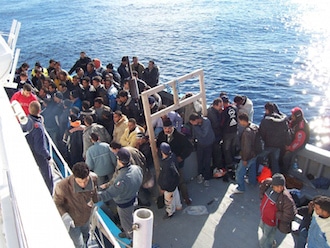
In my previous post, I wrote about how [we cannot simultaneously curb climate change and expand consumer society](https://www.huffpost.com/entry/donald-sounds-the-big-alarm-on-climate_b_593154b5e4b062a6ac0acebb). At its root, the consumer lifestyle involves drilling holes in the collective ship in order to produce and dispose of consumer products. The drilling metaphor is appropriate today because the main way that we are causing global environmental problems and fueling the industrial economy is through drilling for oil and gas. And while doing so is different than drilling a hole on a boat, if we continue to drill for gas and oil on this planet, and exploit the proven reserves that oil companies have shown exist, then we will likely sink the ship of human civilization.
The man drilling under his seat may not have realized how his action would impact others. If he had known the facts, he may not have drilled. The more ignorant a person is to how they impact their surroundings, the more likely they are to damage it. It’s a big illusion to think that what you do only impacts yourself. Many Americans continue to deny or be skeptical of [the scientific consensus on climate change](https://www.ipcc.ch/), thinking that how they live impacts only themselves. Beyond climate change, the unbreathable smog in one country travels the airways to a country with pristine, crisp, clean air. The water heavy with lead and other contaminants will sink into the ground water and make people sick. And the insecticides sprayed on crops reach the hands of those who pick them.
To rise to this ultimate challenge for human civilization, we will have to raise the level of our spiritual awareness and maturity. A person is able to live at varying levels of soul awareness, and a sustainable planet will require that we cultivate ourselves to live at higher levels of consciousness.
To address our challenges in time, we can’t take the slow boat to China. As the Jewish sage Hillel said, ‘If not now, when?’ With Earth as the home for humanity, we have a shared responsibility for each other. What you do and what I do matter, for ourselves and everyone else on board.
*By Yonatan Neril, Founder, The Interfaith Center of Sustainable Development in Jerusalem*
*ICSD unites faith communities, teachers and leaders to promote co-existence, peace, and sustainability through advocacy, education and action-oriented projects. Learn more [here](https://interfaithsustain.com).*
*This post was also published on our [HuffPost](https://www.huffpost.com/entry/drilling-holes-on-our-collective-ship_b_5964d9f3e4b0911162fc2ed9) Blog on July 11, 2017.*
**Categories:** Blog on Faith and Ecology
---
### [Earth to Houston: We have a Problem](https://interfaithsustain.com/earth-to-houston-we-have-a-problem/)
**Published:** September 1, 2017
**Author:** ICSD
**Excerpt:** Humanity this week experienced ecological disasters on an unprecedented scale. Flooding on the Gulf Coast and in South Asia impacted 60 million people, killed 1,200, and destroyed or damaged close to 1 million homes.
**Content:**
*Humanity this week experienced ecological disasters on an unprecedented scale. Flooding on the Gulf Coast and in South Asia impacted 60 million people, killed 1,200, and destroyed or damaged close to 1 million homes.*
In one week, parts of Houston received as much rain as they usually receive in a year—one trillion gallons. The National Weather Service said the storm is “unprecedented and all impacts are unknown and beyond anything experienced.” Explosions occurred at a chemical plant near Houston, and millions of pounds of hazardous chemicals were released into the air. In India, Bangladesh, and Nepal, [record floods](https://www.independent.co.uk/news/world/asia/india-floods-bangladesh-nepal-millions-affected-says-un-a7920721.html) swept away people, animals, and property, and left as much as a third of Bangladesh under water. We all feel for these people.
The Houston metro area has 6.6 million people, making it one of the largest in the U.S. Greater Houston was built partly on swampland, in what is essentially a large flood plain. But that’s only part of the story.
Climate change is increasing the risk of flooding by making extreme weather events more intense, as leading climate scientists say. Dr. Katharine Hayhoe, a climate scientist at Texas Tech University and a lead author of the 2017 *National Climate* Assessment, states that climate change is generating [more moisture in the atmosphere](https://www.nytimes.com/2017/08/25/us/hurricane-harvey-climate-change-texas.html?smprod=nytcore-iphone&smid=nytcore-iphone-share). This is increasing the amount and intensity of rain that falls during hurricanes and other storms. Dr. J. Marshall Shepherd, a climate scientist at the University of Georgia, notes that climate change is [warming the water in the Gulf of Mexico](https://www.nytimes.com/2017/08/25/us/hurricane-harvey-climate-change-texas.html?smprod=nytcore-iphone&smid=nytcore-iphone-share), which has created a “stream of moisture that is just firehosing in the Houston region.” In brief, warmer water and moister air that [stem from climate change](https://www.nytimes.com/2017/08/25/us/hurricane-harvey-climate-change-texas.html?smprod=nytcore-iphone&smid=nytcore-iphone-share) are contributing to the record-breaking catastrophic flooding we are seeing. Houston is also getting hotter, with an average of 106 days per year with a high of 90° F (32° C) or above.
While experiencing climate change first-hand, Houston remains one of the places in the world that most profits from extracting and refining oil. The [Greater Houston Partnership](https://www.houston.org/assets/pdf/opportunity/Energy-General-Info.pdf) lauds the city as the “Energy Capital of the World,” a “petrochemical powerhouse,” where “new energy technologies such as horizontal drilling, hydraulic fracturing, and deep water offshore technology began or are centered.” Houston is also known as the “chemical coast,” and has many Superfund toxic cleanup sites that have contributed to contaminating the floodwaters. (To its credit, [Texas leads the U.S. in wind](https://www.theguardian.com/us-news/2017/feb/20/texas-wind-energy-green-turbines-repbublicans-environment) energy generation, with 20 gigawatts, which provided 12% of the state’s electricity.)
By continuing with business as usual, we exploit and use oil and gas at record levels, despite the warnings of scientists. Scientists have revealed something important about how the earth works: the more oil we extract, refine and burn, the more Houston and Southeast Texas will alternately bake and flood.
The New York *Times* recently [quoted Maya Wadler](https://www.nytimes.com/2017/08/27/us/hurricane-harvey-texas.html?_r=0), a teenager in Houston whose family’s home was just flooded. “I usually just trust my parents that everything is going to be OK. But I looked up and I saw that my dad was closing his eyes, the water was getting in his eyes. And I just thought: He has absolutely no idea where we are going to go.”
This situation has striking similarities to the ship *Titanic*, whose captain, Edward Smith, received warnings of potential icebergs ahead, and ignored them. He believed that the ship—the largest ever built—was stronger than nature, and unsinkable. Minutes before the *Titanic* hit the iceberg, steaming at full speed, people on the ship were going about their normal business, assuming that everything was fine. By the time the crew spotted an iceberg, it was too late to turn the ship to avoid it. Then the ship hit the iceberg and everything changed.
The *Titanic* sank for many reasons. Captain Smith missed the window of opportunity he was given, based on a misguided belief that a ship could withstand hitting an iceberg. Most people on the ship perished because they falsely believed that their leaders were taking responsibility for their safety.
Humanity is on a collective ship and we have put ourselves on a collision course with an iceberg of our own making. (See this related, recent post I wrote about [humanity drilling holes on a collective ship](https://www.huffingtonpost.com/entry/5964d9f3e4b0911162fc2ed9).) The *Titanic* and Hurricane Harvey provide critical lessons for the climate crisis we are facing.
First, we are in this together. We are 7.5 billion human beings on the ship and our lifestyles and consumption determine the direction of the ship. Much of society goes on conducting business as usual, while a global consensus of scientists states that this is simply unsustainable. For us to change course, we need to act collectively. Second, we need to change while we still can. Hurricane Harvey bearing down on the Texas Gulf Coast is a warning siren. It provides us a rare glimpse into the degraded future we must prevent. We are heading full-steam ahead for the iceberg and we need to make radical changes in all sectors of society in order to turn around the ship and avert collision with the iceberg.
When any problem arises, there is usually a window of opportunity during which we can address and deal with it. If we ignore the problem for too long, we will lose that window of opportunity, and we are then left to face a catastrophic impact without the ability to do anything about it. Right now, we are in that window of opportunity to address the problem. If we continue with business as usual for the coming years, the window will likely close, jeopardizing our own future as well as that of our children, grandchildren and all species on this planet. Earth to Houston: we have a problem.
Third, we need [foresight and long-term thinking](https://www.jewishecoseminars.com/the-spiritual-roots-of-the-environmental-crisis/). The rabbis of the Talmud taught, “Who is the wise person? The person who can see the effect of their actions and what is to come.” (Tamid 32a) We must not live in a fool’s paradise thinking that we can continue on our current course and that everything will be okay.
The moment we learn that an iceberg may be ahead, everything needs to change. We all need to correct course to curb climate change, even though it may be inconvenient. In this country, the philosophy of “live free or die” resonates deeply, and many of us are resistant to changing how way we live or having our freedoms compromised by policies like a carbon tax. Nature goes by a different motto: live sustainably or die, and the Gulf Coast and the Bay of Bengal today proves that sooner or later, our lives will suffer the consequences of our carbon-intensive lifestyles. Choices we can make that impact our carbon footprint include how often we fly, drive a personal car, eat meat, and buy food from outside our locality. We need to put both the present and future of our children and grandchildren first, over maintaining and expanding our own standard of living.
Finally, we need motivation. Beyond all the scientific and political questions about climate control, the question we need to ask ourselves is, how can we control our ship’s direction and speed? By living in balance with creation, we can steer our future with the ultimate goal of the survival of everyone on board.
*By Yonatan Neril, Founder, The Interfaith Center for Sustainable Development in Jerusalem*
*ICSD unites faith communities, teachers and leaders to promote co-existence, peace, and sustainability through advocacy, education and action-oriented projects. Learn more [here](https://interfaithsustain.com).*
*This post was also published on our [HuffPost](https://www.huffingtonpost.com/entry/59a92ceee4b0c50640cd5e9b) Blog on September 1, 2017.*
**Categories:** Blog on Faith and Ecology
---
### [Do These Hurricanes Herald the Apocalypse? An argument.](https://interfaithsustain.com/do-these-hurricanes-herald-the-apocalypse-an-argument/)
**Published:** September 13, 2017
**Author:** ICSD
**Excerpt:** Do Hurricanes Irma, Harvey, Jose, and Katia herald the coming of the apocalypse? Or is humanity really behind these ‘natural’ disasters? An argument.
**Content:**
*Do Hurricanes Irma, Harvey, Jose, and Katia herald the coming of the apocalypse? Or is humanity really behind these ‘natural’ disasters? An argument.*
Millions of faith-adherents believe that humans cannot alter nature—only God can do that. One of the most prominent evangelical politicians, Senator Jim Inhofe, chair of the Senate Environment and Public Works Committee, said in an address to the Senate: “The hoax is that there are some people who are so arrogant to think they are so powerful they can change climate. Man can’t change climate.”
Senator Inhofe is by no means alone. Only 49% of white evangelicals in America said in a [poll](https://www.prri.org/research/prri-rns-december-2012-survey/) that they thought natural disasters were caused by climate change. By comparison, 77% of this group stated that “the severity of natural disasters is evidence of what the Bible calls ‘the end times’ (the apocalypse). Past [resolutions](https://www.prri.org/research/prri-rns-december-2012-survey/) of the Southern Baptist Convention, the largest body of U.S. Evangelicals, reveal a skepticism of climate science.
Victims of Hurricane Irma invoke the apocalypse. Catherine Clayton, a resident of the British Virgin Islands, [said](https://www.nytimes.com/2017/09/09/us/hurricane-irma-florida.html): “It is like an apocalyptic doomsday scene here. No trees, leaves or greenery. It’s the most intense thing I’ve ever seen.”
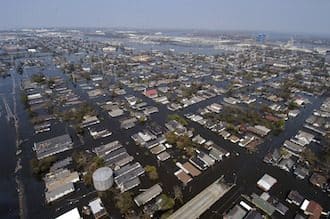
Indeed, we are living in times that our ancestors have been dreaming about for thousands of years, as Rabbi Avraham Sutton taught. We have extracted, burned, and released into the atmosphere the energy that plants and algae captured from the sun over millions of years. Coal, oil, and gas have fueled industrial, technological, and digital revolutions. Yet these fossil fuel powered revolutions have enabled the expansion of the ego and of consumer society.
The next stage in human evolution is a consciousness revolution. It can now spread around the world just like a viral YouTube video. It could be downright messianic. Its dominant features will be spirituality, altruism toward other people, and care for our common home and all species.
What is the first Biblical source for an ‘end of days’? It is Genesis 49:1, when Jacob gathered his sons and said, “Gather and I will tell you what will happen to you at the end of days.” According to the simple meaning of the verse, the end of days Jacob is referring to is a positive time after his death when his descendants reenter the land of Israel and return to being subsistence farmers. In the 3,500 years since then, many people have been declared that the end of days are upon us. About 1,900 years ago, Bar Kochba made such a proclamation. He incited a Jewish revolt against the Romans. However, the Romans triumphed and a million Jews were killed. He was proven wrong.
The danger of these proclamations is that if they are wrong, the consequences can be disastrous. It can be convenient to blame an unstable planet on the apocalypse. It means we have no power and it is right to continue with our out-of-balance lifestyles and not change anything. As Dr. Christiana Zenner Peppard, an associate professor of Christian Theology, Science, and Ethics at Fordham University, [said](https://www.nytimes.com/2017/09/08/us/hurricane-irma-earthquake-fires.html?smid=nytcore-iphone-share&smprod=nytcore-iphone&_r=0): “To pretend that it’s such a tragedy is to pretend that there’s no social and collective responsibility for the outcome.”
Rabbi Yehuda HaLevi Ashlag, a leading kabbalist of the twentieth century, wrote that God established the laws of nature in the world, and a person or society that transgresses one of these laws will be punished through nature. He likens nature to a judge that God created to punish those who violate the laws of nature.
How does this relate to people burning fossil fuels and releasing carbon dioxide (CO2) into the atmosphere? Today, we have an very complex understanding of how the earth’s systems work, and how we impact them. According to many climate scientists, there needs to be less than 350 parts per million of CO2 in the atmosphere for human society and most other species to be able to live on this planet. Prior to the industrial revolution, there were 180 parts per million (ppm) of CO2 in the atmosphere. We are currently past 400 ppm of CO2, with the concentration rising every year. As NASA scientists [explain](https://climate.nasa.gov/climate_resources/24/), these are “higher than they have been at any time in the past 400,000 years.”
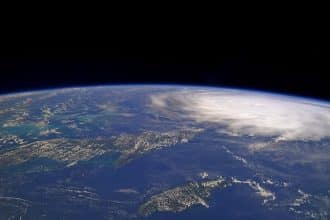
Earth scientists [explain](https://insideclimatenews.org/news/06092017/hurricane-irma-harvey-climate-change-warm-atlantic-ocean-questions?utm_source=Inside+Climate+News&utm_campaign=dcc10e6067-Weekly+Newsletter&utm_medium=email&utm_term=0_29c928ffb5-dcc10e6067-327820625) with increasing precision that this is why monster storms like Hurricane Irma and Harvey have come back to back. They broke records for storm size, rainfall and wind speed. It’s the first time on record that two hurricanes of [category 4](https://www.scientificamerican.com/article/ask-the-experts-how-did-2-such-powerful-hurricanes-occur-back-to-back/) strength or higher have struck America in one season, let alone one right after the other. According to evangelical climate scientist Katherine Hayhoe, climate change has raised the water temperature of the oceans and increased moisture in the atmosphere. Warm water and high moisture are the lifeblood of hurricanes.
This mess is an opportunity. Call me an apocaloptimist. I believe we are headed for a period of time when our spiritual awareness and physical living on this planet will be elevated. We will live at a higher level of soul awareness. For that to happen, we need to listen to what Harvey, Irma, Jose, and Katia are saying as messengers of God’s creation, planet earth. Something is out of balance in the way we are living, and the need to change is hitting us in the face.
So to answer the question, only God knows if these hurricanes herald the apocalypse. Yet, religion and science tell us that our fate is in our hands. In his final teaching in the Hebrew Bible, Moses repeats time and again the importance of living righteously in order to merit ‘length of days’—what we would call ‘sustainability’.
Our wisdom, humility, and foresight can enable our children to inherit a livable planet. That is worth changing for.
*By Yonatan Neril, Founder, The Interfaith Center for Sustainable Development in Jerusalem*
*ICSD unites faith communities, teachers and leaders to promote co-existence, peace and sustainability through advocacy, education and action-oriented projects. Learn more [here](https://interfaithsustain.com).*
*This post was also published on our [HuffPost](https://www.huffingtonpost.com/entry/do-these-hurricanes-herald-the-apocalypse_us_59b913cee4b02c642e4a12b5?ncid=engmodushpmg00000004) Blog on September 13, 2017*
**Categories:** Blog on Faith and Ecology
---
### [Blessed Rain washes away 6 Days of Dust](https://interfaithsustain.com/blessed-rain-washes-away-6-days-of-dust/)
**Published:** December 25, 2017
**Author:** ICSD
**Excerpt:** Rabbi Yonatan Neril - An added benefit to the much-needed rain that Israel received yesterday and today was in washing away the Beijing-level air pollution and dust that has plagued this land for the past week.
**Content:**
*My 7-year old son said to me today, “When it rains, it makes the streets slippery and hard to walk.” I said to him, “But we need the rain in order to drink.” He replied, “But the water comes out of the faucet.”*
*by Yonatan Neril*
An added benefit to the much-needed rain that Israel received yesterday and today was in washing away the Beijing-level air pollution and dust that has plagued this land for the past week. Unbeknownst to most people, the tiny particles “enter the lungs and cause local and systemic inflammation in the respiratory system and heart, thus cause cardiovascular and respiratory diseases such as asthma and bronchitis,” as [Breezometer notes](https://breezometer.com/) for the ‘poor air quality’ rating Jerusalem received for the past week. That’s because of both dust and human emissions from cars, power plants, and factories.
According to Israel’s top climate scientist, [Professor Pinhas Alpert](https://www.tau.ac.il/~pinhas/) of Tel Aviv University, the number of high dust days in Israel has doubled in the past 50 years, due to human-caused climate change. And the number of dust days has increased with an average rate of [2.7 days per decade](https://www.tau.ac.il/~pinhas/papers/2010/Ganor_et_al_JGR_2010.pdf). Israel lies between large deserts: the Sahara, the Arabian desert, the Sinai and Negev, and the deserts of Jordan, Syria, and Iraq. Climate change is making the region dryer and expanding deserts, with longer periods of no rain punctuated by intense rainfall events. These climate disruptions are also increasing the amount of high dust days, as the wind brings desert dust to populated areas.
The Bible warned about misguided human action impacting the rain and the dust. In Deuteronomy 28:23-4, it is written, “The skies above your head shall be copper and the earth under you iron. God will make the rain of your land dust, and sand shall drop on you from the sky, until you are wiped out.” The rabbinic commentator Hizkuni wrote, “The strong winds, which normally bring rain from the sky, will instead be sandstorms.” This curse only comes about as a result of people failing to live in [spiritual and physical balance](https://interfaithsustain.com/).
As The Associated Press recently reported, Israel is experiencing its [fifth consecutive dry year](https://www.timesofisrael.com/lingering-drought-threatens-holy-lands-waters/): “The Sea of Galilee stands at a century low, much of the Jordan River is a fetid trickle and the Dead Sea is rapidly shrinking.” AP quoted Doron Markel, the Israel Water Authority’s Sea of Galilee director, who said that “the amount of water that’s flowed into the Sea of Galilee in the past four years is the lowest ever.” This drop is due to the reduced rainfall during the winter months.
Water scientists warn that should the Sea of Galilee continue to decline below the “black line,” it could become a salt sea like the Dead Sea, as salt springs underground release saline water into the sea. It’s not that we are on a collision course with the earth. We are currently colliding with the earth’s systems, and the effects are playing out in front of us for those who seek to open their eyes to them.
Some say that Israel and other Middle Eastern countries need not worry about the lack of rain, since desalination plants now provide much of Israel’s drinking water, and a new such plant is being built by Jordan. After all, the ocean water is vast, fossil fuel reserves are huge, and the technology exists to burn fossil fuels to produce potable water. As Dr. Jeremy Benstein points out, desalination enthusiasts neglect to acknowledge current desalination addresses a short term challenge (water scarcity) while exacerbating a long term problem (climate change), which itself is contributing to the water scarcity. The technological paradigm has given birth to the ecological crisis. “We can’t solve problems by using the same kind of thinking we used when we created them,” taught Albert Einstein. We therefore cannot expect technology alone to solve our ecological problems, because they are in fact spiritual ones.
How is this the case with water? As I wrote in Canfei Nesharim’s Year of Jewish Learning on the Environment, in partnership with Jewcology, human beings depend on a sufficient supply of high quality fresh water for their survival. Because of this essential dependence, [Jewish sources equate water with life](https://www.jewishecoseminars.com/water-appreciating-a-limited-resource/).
The Talmud teaches that G-d directly waters the land of Israel and the rest of the world is watered by a messenger. Yet Israel is a semi-arid country with no major rivers. It receives modest rainfall, averaging less than 100 millimeters per year in the extreme south to 1,128 millimeters in the north. (By comparison, New York City averages between 710 and 1,140 millimeters of precipitation per year.) Since water is a sign of blessing, would not Indonesia be a more appropriate candidate for the Holy Land, as it receives six times as much precipitation, and is the wettest country in the world?
This water insecurity is by divine design, to help us realize that God is the ultimate Provider of water and all our needs. The land of Israel contrasts with the lands nourished by the Nile, Euphrates, and Tigris rivers. In those river valleys, farmers are able to irrigate their crops year-round from a reliable water source. Yet until the 20th century, most agriculture in Israel was rain-fed and not irrigated. The seven species that the Torah associates with the Land of Israel (grapes, olives, dates, pomegranates, figs, wheat, and barley) are all species that do not require irrigation in order to survive. The farmers who planted, tended, and harvested these particular crops depended on the winter rains in order to eat and live. In their acute need for rain each year, they depended on God who provided it, a spiritual reality that was not present in the more water abundant river valleys of nearby civilizations.
Which brings me back to my son’s comment about the rain. The younger generation is growing up with a belief that the water comes from the faucet — it always has, and it seemingly always will. Yet unless we change our business as usual approach to living on this planet, the heavens and clouds will bear witness to our imbalance. We can start by conserving water in all areas of our life, and reducing our carbon footprint by eating less meat and flying less. We can change course while we still have time.
About the Author
*A native of California, Yonatan completed an M.A. and B.A. from Stanford University with a focus on global environmental issues, and received rabbinical ordination in Israel.*
*He has spoken internationally on religion and the environment, and organized three interfaith environmental conferences in Jerusalem in which religious leaders of several faiths spoke.*
*Yonatan is the lead author and general editor of two publications on Jewish environmental ethics including [Uplifting People and Planet: 18 Essential Jewish Teachings on the Environment](https://www.amazon.com/Uplifting-People-Planet-Essential-Environment-ebook/dp/B00HJUZG3A/ref=sr_1_2?s=digital-text&ie=UTF8&qid=1388315963&sr=1-2&keywords=Jewish+lessons#reader_B00HJUZG3A). Yonatan also co-authored ICSD’s Report on Faith and Ecology Courses in North American Seminaries and a separate Report on Faith and Ecology Teaching in Holy Land Seminaries and was a Dorot and PresenTense Fellow. He lives with his wife, Shana and their two children in Jerusalem.*
*\*Featured image [source](https://unsplash.com/@robertbye "Featured image source")*
**Categories:** Blog on Faith and Ecology
---
### [The Arctic is Sick, and Florida is Freezing](https://interfaithsustain.com/the-arctic-is-sick-and-florida-is-freezing/)
**Published:** January 4, 2018
**Author:** ICSD
**Excerpt:** Rabbi Yonatan Neril & Louis Platt - What is being called ‘the bomb cyclone’ or a ‘winter hurricane’ is now striking North America. We are facing a crisis of civilization, an evolutionary crisis, a spiritual crisis. Our warming planet is a warning to us and a call for awakening. What on earth are we doing to God’s bountiful Creation?
**Content:**
*By Yonatan Neril & Louis Platt*
What is being called ‘the bomb cyclone’ or a ‘winter hurricane’ is now striking North America. We are facing a crisis of civilization, an evolutionary crisis, a spiritual crisis. Our warming planet is a warning to us and a call for awakening. What on earth are we doing to God’s bountiful Creation?
Ours and our children’s generations will have to live in covenant with the Creator and spread that awareness to the world or face consequences no generation has faced. Will the awakening process proceed fast enough to avert the deterioration process? As Rabbi Dov Berkowitz taught, “How do we [utilize 3,000 years of spiritual consciousness](https://www.jewishecoseminars.com/learning/) for the betterment of our contemporary situation?” The role of spiritual leadership is to redirect the course of humanity.
Let’s examine that through the lens of today’s weather. The Weather Channel said that temperatures in Florida’s capital were lower than those in Alaska’s capital. Twelve people have died so far from the past week of cold. According to the National Oceanic and Atmospheric Association, “Reinforcing shots of Arctic air will continue across much of the Eastern half of the country through this week, keeping afternoon highs as much as 10 to 20 degrees below normal.” Andrew Freedman of Mashable wrote, “Instead of breaking daily temperature records, as dozens of cities have been, **all-time cold temperature records will be threatened**” this weekend. We are in the midst of most extreme weather event.
**If the planet is heating at record rates due to human emissions, how could it be that record cold is occurring?**
Trump asked that question many years ago, and concluded that climate change is a hoax. People who are ignorant of climate science—including the U.S. President, the head of the Environmental Protection Agency, and the Senate chair of the Environment Committee—mistakenly think that extreme cold disproves climate change. Is that so? The earth systems, which include the climate and the oceans, are very complicated, and more accurate terms than global warming are climate disruption and global weirding. The planet as a whole is getting hotter, and at the same time extreme cold is engulfing North America and Siberia. The Arctic region has [lost two-thirds of its volume of sea ice](https://pubs.aip.org/physicstoday/article/69/3/38/415453/Is-the-melting-Arctic-changing-midlatitude-weather) since the 1980s, and snow pack has declined at a similar rate. **Climate change is likely disrupting the frigid Arctic jet stream and bringing extreme cold farther south to North America.** Just a few years ago climate scientists put forth the understanding that “[warming of the Arctic can modify the shape of the jet stream](https://pubs.aip.org/physicstoday/article/69/3/38/415453/Is-the-melting-Arctic-changing-midlatitude-weather)—the fast-flowing air currents that circle the planet—enough to directly influence the weather at midlatitudes,” i.e. the United States.
When the Arctic was healthy, its extreme cold would mostly circle around the North Pole (called the polar vortex) and would not reach the Southern U.S. **Now that we have made the Arctic sick, it is hemorrhaging cold, and even Tallahassee, Florida feels its chilling cough.** (And in the tropics, the oceans are releasing built up heat through hurricanes, and sending them farther north—i.e. Hurricane Sandy.) As Scientific American titled an article, ’[The Arctic is Getting Crazy](https://www.scientificamerican.com/article/the-arctic-is-getting-crazy/).’ Nature Geosciences provides further research on [Arctic jet stream destabilization](https://www.nature.com/articles/ngeo2234). While more research needs to be done, if we wait for clarity and certainty from scientists, it may be too late for us to do anything about it.

What is becoming clear is that the predictions of climate scientists have been too mild and timid. **The disruptions we are bringing to our home planet are unfolding at a faster rate and with greater intensity than the scientists and computer models were predicting**. Time and again, the climate predictions of leading scientists like Dr. James Hansen are taking place, even though many have labeled such scientists as ‘alarmist.’
I’d like to share the words of Dr. Gus Speth, former Dean of the Yale School of Forestry and Environmental Studies: “I used to think that top environmental problems were biodiversity loss, ecosystem collapse and climate change. I thought that thirty years of good science could address these problems. I was wrong. **The top environmental problems are selfishness, greed and apathy, and to deal with these we need a cultural and spiritual transformation.** And we scientists don’t know how to do that.”
The fight for a thriving, sustainable, and equitable human society on this planet is a fight of David and Goliath. The Goliath’s are material desire, the fossil fuel industry, and corporate power. The Davids are each of us. One key action is to restore balance within ourselves. This will enable us to live our values from the inside out. A global event takes place this week called “[7 Days of Rest](https://www.7days-of-rest.org/): for the Healing and Re-calibration of the Planet and its Inhabitants” is one effort in the right direction. Check it out.
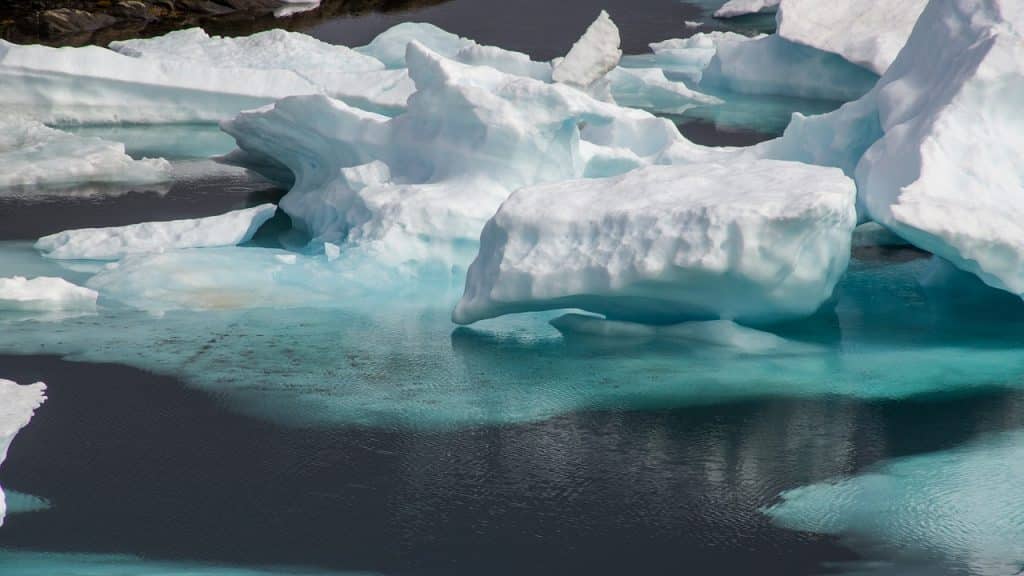
It is chilling that **in a year of record hurricanes, wildfires and extreme cold in the U.S., the stock market, corporate profits, CEO compensation, and climate denial in U.S. politics have reached record highs**. How could this be? It’s as if the economy doesn’t depend on nature, and that business as usual can continue from now until kingdom come. But alas, for humanity’s material abundance to continue, the earth needs to be healthy. It’s like we are sitting on high branch of a tree. If we start sawing, for a while everything will be fine. But if we continue, we and the branch will suffer a deep fall.
The earth is an inter-dependent system. What happens in the Arctic affects us and what we release into the earth will ultimately affect us as well. Our actions are the true indication of our commitments. In 1992, governments of the world‘s nations came together and committed to curbing climate change and reducing emissions of greenhouse gases. Every year since humanity’s emissions have risen. So clearly we are not sufficiently committed to doing this. What can shift us to commit? Here are some [practical advocacy steps](https://www.beforetheflood.com/) we can take.
We are being pushed to evolve our consciousness and spiritual awareness to know that everything is connected. We need to take responsibility for our own actions and the actions of our family and community as if the whole world depended on it.
Let’s start today.
*ICSD unites faith communities, teachers and leaders to promote co-existence, peace and sustainability through advocacy, education and action-oriented projects. Learn more [here](https://interfaithsustain.com/).*
*This post was also published on our [HuffPost](https://www.huffingtonpost.com/entry/the-arctic-is-sick-and-florida-is-freezing_us_5a4e4e7fe4b06cd2bd03e52d) Blog on January 4, 201.*
*\* Featured image [source](https://unsplash.com/@onthesearchforpineapples)*
**Categories:** Blog on Faith and Ecology
---
### [Floods, Cars and Our Collective Future](https://interfaithsustain.com/floods-cars-and-our-collective-future/)
**Published:** June 7, 2018
**Author:** ICSD
**Excerpt:** Israel and the Eastern Mediterranean are experiencing an extreme storm in late April. Twelve people, mostly teenagers, have already died from flash floods stemming from intense rainfall and hail. Most were hiking in a riverbed, and swept away before they could return to their vehicle.
**Content:**
Israel and the Eastern Mediterranean are experiencing an extreme storm in late April. Twelve people, mostly teenagers, have already died from flash floods stemming from intense rainfall and hail. Most were hiking in a riverbed, and swept away before they could return to their vehicle.
In some places, the rainfall of the past two days alone totalled about a third of what is normal in a year. The Tomb of the Patriarchs and Matriarchs in Hebron flooded. The [airport in Eilat shut down](https://www.jpost.com/Israel-News/Multiple-youth-feared-dead-in-southern-Israel-flash-floods-552823) after the flooding eroded the runway. [Read more](https://blogs.timesofisrael.com/floods-cars-and-our-collective-future/)
**Categories:** Blog on Faith and Ecology
---
### [California Burning: People in Paradise, Trees and Oil](https://interfaithsustain.com/california-burns-paradise-trees-and-oil/)
**Published:** November 14, 2018
**Author:** ICSD
**Excerpt:** Rabbi Yonatan Neril - The largest and deadliest wildfires in California's history took the lives of at least 83 people, burned 13,500 homes, and destroyed 200,000 acres. 563 people are still missing. It's a tragedy for people and nature, especially in and around Paradise, in Northern California.
**Content:**
*By Yonatan Neril, [ICSD Director](https://interfaithsustain.com/yonatan-neril/ "ICSD Director")*
The largest and deadliest wildfires in California’s history took the lives of at least 83 people, burned 13,500 homes, and destroyed 200,000 acres. 563 people are still missing. It’s a tragedy for people and nature, especially in and around Paradise, in Northern California.
For decades, scientists have been warning how a hotter, drier planet will make wildfires more intense. The burning of millions of trees is one of the biggest wake up calls on climate change that we are going to get from planet earth.
South of the wildfire are five oil refineries which call the San Francisco Bay Area home. As millions of trees burn, people continue to extract, refine, and burn millions of gallons of oil. Huge tankers deliver oil to the refinery from Alaska, and tanker trains bring it from where it is drilled in California. Together the refineries produce 830,000 barrels of oil every day. They take crude oil and by heating it up they make it into other things like motor oil and jet fuel.
The presence of these refineries is surprising because the Bay Area, and California, pride themselves as being world leaders for sustainability. Yet the Bay Area and California still use fossil fuels to power almost all of their cars, trucks, and airplanes. This shows the extent to which humanity is addicted to fossil fuels. According to the Energy Information Administration of the U.S. Department of Energy, the transportation sector makes up [28% of U.S. energy consumption](https://www.eia.gov/energyexplained/?page=us_energy_home), and 92% of that is powered by petroleum.
<https://www.facebook.com/interfaithsustain/videos/2029400653771530/>The refineries are a litmus test of where California stands in regards to curbing climate change. Their operating at full capacity indicates the extent of the Bay Area’s dependency on fossil fuels. As a recent UN report on climate change states, if we’re going to really address the climate crisis and curb climate change we’re going to have to get off oil very soon.
It’s also an issue of environmental justice here. Because the fumes from these five refineries pollute low income and minority communities nearby, in Richmond, Rodeo, Martinez, and Benicia, where over 150,000 people live.Ironically, John Muir lived most of his life in Martinez, which now hosts two major oil refineries, three chemical plants, and several hazardous waste dumps. An oil pipeline from the Central Valley reaches the Shell Oil Martinez Refinery. The [Chevron Richmond Refinery](https://ecology.iww.org/PDF/misc/BayAreaRefineryInfrastructure.pdf) is the largest on the West Coast, and one of the largest in North America
The central narrative in the Hebrew Bible is the Exodus from slavery to Pharaoh. This is also a powerful and relevant metaphor for own lives and the biggest challenges that we face. We are addicted to consumer society, to fossil fuels, and to seeking self-serving pleasure. Those addictions are some of the roots of the climate crisis, and the burning of Paradise, CA last week. One of the powers of religion in addressing the climate crisis is its ability to identify the deeper rooted issues driving the crisis. We need to understand that we all have an aspect of Pharaoh within us, of an unhealthy addiction to something.
Yet we also have the power to break free and enter a more redemptive way of living. We can switch to solar and wind energy. Renewable energy has to be a top priority for society at this moment in history. What will it take to liberate ourselves from fossil fuels? What will it take to break the addiction?
Adam and Eve lost Paradise because they didn’t have the self-restraint not to eat the forbidden fruit. Now our Paradise—a stable climate and thriving nature and humanity—is being threatened by our consumerist habits and our addition to fossil fuels. The time has come for us to wake up and realize that we can live differently.
Here are a few practical actions you can take:
1. Reduce air travel (and one’s consumption of highly refined jetfuel).
2. Bike or walk to places close by instead of driving.
3. Take public transportation.
4. If you use Uber or Lyft, do a ‘shared ride.’


**Categories:** Blog on Faith and Ecology
---
### [1 Billion Cars vs. 1 Billion Trees: You Decide](https://interfaithsustain.com/1-billion-cars-vs-1-billion-trees-you-decide/)
**Published:** November 19, 2018
**Author:** ICSD
**Excerpt:** Rabbi Yonatan Neril - Cars are on a collision course with trees. Why is that? Because cars need parking spaces. Most cars use multiple parking spaces throughout the day -- at home, work, the supermarket, movie theater, and elsewhere. This means every new car that's on the road requires building more parking spaces all across a city.
**Content:**
*By Yonatan Neril, [ICSD Director](https://interfaithsustain.com/yonatan-neril/)*
Cars are on a collision course with trees. Why is that? Because cars need parking spaces. Most cars use multiple parking spaces throughout the day — at home, work, the supermarket, movie theater, and elsewhere. This means every new car that’s on the road requires building more parking spaces all across a city.
In the video below, I witnessed a tractor and concrete truck pouring concrete to build a new retaining wall in order to create new parking spaces. As Joni Mitchell sang in 1970, ‘they paved paradise and put up a parking lot.’ Almost 50 years later, her words resonate even more.
One of the first things that God did in creating the world was to plant a forest. That was the Garden of Eden. As Genesis 2:15-16 states, “God took the human being and placed him in the garden of Eden, to serve it and conserve it. And God commanded the human being, saying, “Of every tree of the garden you are free to eat…” According to Jewish teaching, since God planted a forest, we should emulate God and also plant forests.
So what’s the link between cars and trees? Between 2010 and 2035, humanity will likely DOUBLE the number of personal automobiles on the road, from one billion to two billion cars. One billion new cars may mean a billion new parking spaces. Since many of these parking spaces will be built on forested land, this could mean a billion less trees. (Some parking spaces will require cutting several trees, and some will be built on treeless land.)
A [New York Times article](https://www.nytimes.com/2012/01/08/arts/design/taking-parking-lots-seriously-as-public-spaces.html) notes that the U.S. has up to two billion parking spaces. It cites a study that estimates that the U.S. has eight parking spots for every car in the country. 14% of the land in Los Angeles is devoted to parking infrastructure. An [MIT News article](https://news.mit.edu/2012/parking-lot-redesign-0313) about the work of Professor Eran Ben-Joseph (who wrote (*Rethinking a Lot: The Design and Culture of Parking)* notes, “Moreover, the economics of parking lot construction means that surface parking lots, where the whole lot is on ground level, occupy a large footprint because they are relatively cheap to build — four times less expensive than parking garages and six to eight times less expensive than underground parking lots.”

From an ecological perspective, trees and concrete do opposite things. Trees absorb rainwater through their roots. Concrete drains rainfall to culverts, where it drains to oceans. Trees provide shade and habitat. Concrete absorbs the sun’s heat, heat up cities, and covers natural habitat from sprouting life.
At this moment in 2018, we need to have some pause and think about whether the personal automobile is appropriate for planet earth. Humanity will likely reach 11 billion people by the end of this century. Can the earth sustain so many people driving so many cars that are currently powered by so much fossil fuel? Even if there is space on earth for so much new pavement, should we make more concrete at the expense of trees?
Dr. Seuss, in his book *The Lorax* written nearly 50 years ago, understood the plight of the trees at the hands of industrial society. He wrote, “I am the Lorax. I speak for the trees. I speak for the trees, for the trees have no tongues. And I’m telling you please, at the top of my lungs” that we need to protect the trees.

If you do not take inspiration from children’s books, the Bible also provides some key insights in this regard. “The human being is a tree of the field” (Deuteronomy 20:19), which is understood by Jewish sages to mean that the fate of the human being depends on the trees. Trees give us clean air. They help retain the soil and prevent landslides. They create ecosystems for plants and animals. That is a key reason why we need to tread very carefully when it comes to cutting down trees, especially on the mass scale that a billion new cars will require.
Think about trees before you buy a car. With fewer cars, parking lots can become parks.
How else can we protect trees? Here’s a few things all of us can do:
- Buy 100% recycled paper.
- Print only double sided.
- Print only when needed.
- Minimize online shopping that requires cardboard boxes.
- Plant trees.
- Pick up waste while on forest hikes.
*\*Featured image [source](https://unsplash.com/@von_co)*
**Categories:** Blog on Faith and Ecology
---
### [Seattle, Spirituality, and Sustainability](https://interfaithsustain.com/seattle-spirituality-and-sustainability/)
**Published:** November 27, 2018
**Author:** ICSD
**Excerpt:** Faygle Train - Seattle and Washington State have recently experienced climate change impacts. Last year, April ended the wettest winter period since records began in 1895. This year, Seattle experienced its driest start to November in 15 years with less than an inch of rain in the first 2 weeks.
**Content:**
*By Faygle Train*
Seattle and Washington State have recently experienced climate change impacts. Last year, April ended the wettest winter period since records began in 1895. This year, Seattle experienced its driest start to November in 15 years with less than an inch of rain in the first 2 weeks. [Record heat](https://www.climatecentral.org/) enveloped Seattle, and these dry conditions have contributed to wildfires. At the end of July 2018, monitoring stations reported air pollutants, ones with particles small enough to enter lungs.
Scientific evidence in July 2019 has made it increasingly clear that human activity is still changing the climate and making extreme weather events more common. For example, it is now 4.8° warmer at night and 4.1° in the day in Seattle than in surrounding rural countryside – a phenomenon called an urban heat island. On the worst days, Seattle can be a whopping 17° hotter! More heat means more wildfire, mosquitoes, and drought. There are also [heavier precipitation days](https://www.climatecentral.org/) and equally terrifying, of the[ 95 coastal flood days](https://www.climatecentral.org/) since 1950, scientists found 75% of them to be caused by humans.
In 2013, the city of Seattle initiated the [Seattle Climate Action Plan](https://www.seattle.gov/environment/climate-change/climate-planning/climate-action-plan) that reduces greenhouse emissions while supporting the community through better waste systems. Washington State then attempted to curb climate change through its adoption of a Clean Air Rule, but this was ruled invalid in March. Although they filed an appeal with the Washington State Supreme Court in May, it is worth noting that the original Rule does not directly engage faith communities. This is noteworthy because Seattle has the second-highest number of religious institutions per capita. Many residents of Seattle identify as people of faith and maintain some level of religious practice. Since they attend religious institutions, a significant potential exists for faith teachings to speak to the environmental challenges we are facing today, with climate change being at the top of the list.
As previously highlighted on the Philadelphia blog post available [here](https://interfaithsustain.com/mobilizing-religious-communities-to-care-for-philadelphia-and-the-earth/), faith leaders hold immense sway in preaching environmental consciousness. Many faiths – and their leaders – understand the ecological crisis to be a spiritual crisis, and the education of emerging clergy in this area is therefore critically important. Such an educational enterprise can be seen in the [Seattle University School of Theology and Ministry](https://www.seattleu.edu/stm/)’s Ecological Spirituality course with Dr. Alexandra Kovatz. This course educates seminary students about how:
*humankind in our day faces a moral challenge never before encountered by our species, and is designed to forge ways of living that Earth can sustain while also building social justice between and among societies. This course teaches that when something new is required of humankind, something new is required of religion. The informing undercurrent of this course is hope and moral-spiritual power in the face of the profound moral challenge posed by unsustainable Earth-human relations.*
Seattle University is part of a nation-wide trend of seminaries and theology schools educating emerging clergy on environmental issues. Based on inspiration from classes about caring for our planet, religious leaders will embrace more sustainable lifestyles for themselves and their congregants. There are wonderful examples of religious leaders enacting such changes in the community. For example, [St. Andrew’s Episcopal Church](https://www.saintandrewsseattle.org/) in Seattle is engaging in a variety of green initiatives. These include installing solar panels, growing their own organic vegetables, and supporting a carbon offset partnership with a church in the Philippines. Another house of worship working with its congregants to improve our planet’s health is based in Bellevue, Washington State. [Temple B’nai Torah](https://www.templebnaitorah.org/), a Reform Jewish temple, is committed to the “Refresh our Recycling!” program and to composting based on a Jewish principle of not wasting.
**Categories:** Blog on Faith and Ecology
---
### [Washington Wash-Out and the Way Ahead](https://interfaithsustain.com/washington-wash-out-and-the-way-ahead/)
**Published:** July 9, 2019
**Author:** ICSD
**Excerpt:** Leo Dee - Washington DC just experienced its wettest year EVER with 71 inches of rain in 2018!
**Content:**
*By Leo Dee*
Washington DC just experienced its wettest year EVER with [71 inches of rain in 2018](https://www.washingtonpost.com/weather/2019/05/13/washingtons-wettest-days-history-inches-precipitation-have-fallen-past-year/?utm_term=.55ff92bd1937)!
Mid-[May 2018 Derechos](https://www.cbsnews.com/news/extreme-weather-events-2018-top-3-most-expensive-climate-driven-events-took-place-in-us/) (straight damaging winds) hit hard causing over $1 billion of damage from Pennsylvania to Washington.
[Human caused climate change](https://climate.nasa.gov/causes/) is behind this strange weather pattern as carbon dioxide released from fossil fuels insulates the earth and prevents natural cooling. The excessive heat also powers a much [stronger water cycle](https://scied.ucar.edu/longcontent/water-cycle-climate-change), with more water evaporating from the oceans and being dropped on land.
So what’s the solution?
Well, part of the solution is making people aware. And that’s just what DC’s religious seminaries are doing. The [Catholic University of America](https://interfaithsustain.com/wp-content/uploads/2019/07/Report-on-Faith-and-Ecology-in-N.-Amer-Sems-Oct.-17-final.pdf) is teaching Religion and Ecology and about major religious authors who have addressed environmental degradation. The [Howard Divinity School](https://interfaithsustain.com/wp-content/uploads/2019/07/Report-on-Faith-and-Ecology-in-N.-Amer-Sems-Oct.-17-final.pdf) teaches about Creation Care. And, at the [Wesley Theological Seminary](https://interfaithsustain.com/wp-content/uploads/2019/07/Report-on-Faith-and-Ecology-in-N.-Amer-Sems-Oct.-17-final.pdf), students can learn how to green their churches.
Training religious leaders who will inspire their communities, in the future, with the importance of living a life that respects the world and climate, is an important step towards solving the climate crisis.
We are grateful for their initiative!
**Categories:** Blog on Faith and Ecology
---
### [Atlanta - In the Eye of the Storm](https://interfaithsustain.com/atlanta-in-the-eye-of-the-storm/)
**Published:** July 10, 2019
**Author:** ICSD
**Excerpt:** Leo Dee - May 2019 was the hottest May on record in Atlanta, Georgia. And in 2017, Hurricaine Irma caused 1.5 million businesses in Georgia and Florida to lose power.
**Content:**
*By Leo Dee*
May 2019 was the hottest May on record in Atlanta, Georgia. And in 2017, [Hurricaine Irma](https://www.weather.gov/ffc/2017_Irma) caused 1.5 million businesses in Georgia and Florida to lose power.
[Human caused climate change](https://climate.nasa.gov/causes/) is behind this strange weather pattern as carbon dioxide released from fossil fuels insulates the earth and prevents natural cooling. The excessive heat also powers a much [stronger water cycle](https://scied.ucar.edu/longcontent/water-cycle-climate-change), with more water evaporating from the oceans and being dropped on land. This means that some parts of the US are experiencing excessive heat, and some are experiencing record storms and rainfall and some are experiencing both!
So, what’s the solution?
Well, part of the solution is making people aware. And that’s just what Atlanta’s religious seminaries are doing. [Columbia Theological Seminary](https://interfaithsustain.com/wp-content/uploads/2019/07/Report-on-Faith-and-Ecology-in-N.-Amer-Sems-Oct.-17-final.pdf) is teaching its students about sustainability and has dedicated half of its campus garden to immigrants who are invited to grow their crops there! And the [Candler School of Theology](https://interfaithsustain.com/wp-content/uploads/2019/07/Report-on-Faith-and-Ecology-in-N.-Amer-Sems-Oct.-17-final.pdf) teaches “The Bible and Care of the Earth” and about the ecological dimensions of a Christian life.
Training religious leaders who will inspire their communities, in the future, with the importance of living a life that respects the world and climate, is an important step towards solving the climate crisis.
We are grateful for their initiative!
**Categories:** Blog on Faith and Ecology
---
### [Denver & the Ticking Time Bomb](https://interfaithsustain.com/denver-the-ticking-time-bomb/)
**Published:** July 10, 2019
**Author:** ICSD
**Excerpt:** Leo Dee - In March 2019, Colorado experienced it's worst ever cyclone with wind speeds of over 96 mph! This is called a "bomb cyclone" and occurred when hot Colorado air collided with icy Arctic air.
**Content:**
*By Leo Dee*
In [March 2019, Colorado experienced it’s worst ever cyclone](https://www.denverpost.com/2019/03/14/colorado-springs-record-wind-gust/) with wind speeds of over 96 mph! This is called a “bomb cyclone” and occurred when hot Colorado air collided with icy Arctic air.
Human caused climate change is behind this strange weather pattern as carbon dioxide released from fossil fuels insulates the earth and prevents natural cooling. Denver’s [increasing traffic congestion](https://www.thedenverchannel.com/news/local-news/report-denvers-traffic-congestion-is-21st-worst-in-us-120th-in-world) is therefore contributing to the global problem.
[Human caused climate change](https://climate.nasa.gov/causes/) is behind this strange weather pattern as carbon dioxide released from fossil fuels insulates the earth and prevents natural cooling. The excessive heat also powers a much [stronger water cycle](https://scied.ucar.edu/longcontent/water-cycle-climate-change), with more water evaporating from the oceans and being dropped on land. This means that some parts of the US are experiencing excessive heat, and some are experiencing record storms and rainfall and some are experiencing both!
So, what’s the solution?
Well, part of the solution is making people aware. And that’s just what Denver’s religious seminaries are doing. [Denver seminary](https://interfaithsustain.com/wp-content/uploads/2019/07/Report-on-Faith-and-Ecology-in-N.-Amer-Sems-Oct.-17-final.pdf) is teaching future religious leaders in sustainability, with courses on “Stewardship in Creation” and a Systems Thinking course that teaches how important it is to consider multiple inputs in our decision making (such as the impact on the environment).
Training religious leaders who will inspire their communities, in the future, with the importance of living a life that respects the world and climate, is an important step towards solving the climate crisis.
We are grateful for their initiative!
**Categories:** Blog on Faith and Ecology
---
### [North Carolina - Water Everywhere but not a Drop to Drink!](https://interfaithsustain.com/north-carolina-water-water-everywhere-but-not-a-drop-to-drink/)
**Published:** July 15, 2019
**Author:** ICSD
**Excerpt:** Leo Dee - North Carolina recorded record rainfall in 2018. Wilmington received over 8 feet of rain, smashing its previous record (set in 1877) by over 150%! The September storm caused almost 8 trillion gallons of polluted water to spill over into oceans. And North Carolina's water quality (already one of the worst in the States) fell to a new low.
**Content:**
*By Leo Dee*
North Carolina recorded [record rainfall in 2018](https://spectrumlocalnews.com/nc/coastal/weather-stories/2019/01/01/record-breaking-rainfall-recorded-for-most-of-nc-in-2018). Wilmington received over 8 feet of rain, [smashing its previous record](https://spectrumlocalnews.com/nc/coastal/weather-stories/2019/01/01/record-breaking-rainfall-recorded-for-most-of-nc-in-2018) (set in 1877) by over 150%! The September storm caused [almost 8 trillion gallons](https://www.foxnews.com/us/florence-dropped-an-estimated-8-trillion-gallons-of-rain-over-north-carolina) of polluted water to spill over into oceans. And North Carolina’s water quality (already one of the worst in the States) fell to a [new low](https://massivesci.com/articles/hurricane-florence-flood-water-contamination/).
[Human caused climate change](https://climate.nasa.gov/causes/) is behind this strange weather pattern as carbon dioxide released from fossil fuels insulates the earth and prevents natural cooling. The excessive heat also powers a much [stronger water cycle](https://scied.ucar.edu/longcontent/water-cycle-climate-change), with more water evaporating from the oceans and being dropped on land. This means that some parts of the US are experiencing excessive heat, and some are experiencing record storms and rainfall and some are experiencing both!
So, what’s the solution?
Well, part of the solution is making people aware. And that’s just what North Carolina’s religious seminaries are doing. [The Wake Forest University School of Divinity](https://interfaithsustain.com/wp-content/uploads/2019/07/Report-on-Faith-and-Ecology-in-N.-Amer-Sems-Oct.-17-final.pdf) is teaching future religious leaders in sustainability, with courses on “The Ecological and Spiritual Impact of our Food” and the [Duke Divinity School](https://interfaithsustain.com/wp-content/uploads/2019/07/Report-on-Faith-and-Ecology-in-N.-Amer-Sems-Oct.-17-final.pdf) is teaching about the Spirituality of Place, Agrarian Theology for an Urban World and Caring for Creation. And the [Southeastern Baptist Theological Seminary](https://interfaithsustain.com/wp-content/uploads/2019/07/Report-on-Faith-and-Ecology-in-N.-Amer-Sems-Oct.-17-final.pdf) teaches about Environmental Responsibility,
Training religious leaders who will inspire their communities, in the future, with the importance of living a life that respects the world and climate, is an important step towards solving the climate crisis.
We are grateful for their initiative!
**Categories:** Blog on Faith and Ecology
---
### [San Antonio - Out of Fuel](https://interfaithsustain.com/san-antonio-out-of-fuel/)
**Published:** July 15, 2019
**Author:** ICSD
**Excerpt:** Leo Dee - Texas is experiencing severe weather extremes. In August 2017, Hurricane Harvey caused a record $125 billion in damage! And 72% of San Antonio's gas stations ran out of fuel as panic ensued. The April 2016 hailstorm caused $1.4 billion in damage, the costliest in the history of Texas.
**Content:**
*By Leo Dee*
Texas is experiencing severe weather extremes. In August 2017, Hurricane Harvey caused a [record $125 billion](https://www.thebalancemoney.com/insurance-industry-trends-and-outlook-4774000) in damage! And 72% of San Antonio’s gas stations [ran out of fuel](https://www.mysanantonio.com/business/eagle-ford-energy/article/Almost-400-San-Antonio-gas-stations-didn-t-have-12166769.php) as panic ensued. The [April 2016 hailstorm](https://www.claimsjournal.com/news/southcentral/2016/12/19/275671.htm) caused $1.4 billion in damage, the costliest in the history of Texas.
[Human caused climate change](https://climate.nasa.gov/causes/) is behind this strange weather pattern as carbon dioxide released from fossil fuels insulates the earth and prevents natural cooling. The excessive heat also powers a much [stronger water cycle](https://scied.ucar.edu/longcontent/water-cycle-climate-change), with more water evaporating from the oceans and being dropped on land. This means that some parts of the US are experiencing excessive heat, and some are experiencing record storms and rainfall and some are experiencing both!
So, what’s the solution?
Well, part of the solution is making people aware. And that’s just what San Antonio’s religious seminaries are doing. [The Catholic Seminary](https://interfaithsustain.com/wp-content/uploads/2019/07/Report-on-Faith-and-Ecology-in-N.-Amer-Sems-Oct.-17-final.pdf) is teaching future religious leaders in sustainability, whilst the Oblate School of Theology is teaching “Earth Insights: Towards a Nature Based Christian Spirituality”.
Training religious leaders who will inspire their communities, in the future, with the importance of living a life that respects the world and climate, is an important step towards solving the climate crisis.
We are grateful for their initiative!
**Categories:** Blog on Faith and Ecology
---
### [LA - Hollywood Haze](https://interfaithsustain.com/la-hollywood-haze/)
**Published:** July 15, 2019
**Author:** ICSD
**Excerpt:** Leo Dee - Whilst 2018 was another record year for tourism in LA, it was, sadly, also another record year for ozone pollution. The temperature hit 111 degrees at UCLA in July 2018 (a new record high). And LA retains its record as the smoggiest city in the US.
**Content:**
Whilst 2018 was another record year for tourism in LA, it was, sadly, also another [record year for ozone pollution](https://weather.com/health/news/2018-09-28-los-angeles-bad-air-quality-record). The temperature hit 111 degrees at UCLA in July 2018 (a [new record](http://newsroom.ucla.edu/stories/this-summer-was-the-hottest-ever-at-ucla) high). And LA retains its record as the [smoggiest city](https://www.dwell.com/article/los-angeles-smoggiest-united-states-city-c3c0e5e2) in the US.
[Human caused climate change](https://climate.nasa.gov/causes/) is behind this strange weather pattern as carbon dioxide released from fossil fuels insulates the earth and prevents natural cooling. The excessive heat also powers a much [stronger water cycle](https://scied.ucar.edu/longcontent/water-cycle-climate-change), with more water evaporating from the oceans and being dropped on land. This means that some parts of the US are experiencing excessive heat, and some are experiencing record storms and rainfall and some are experiencing both!
So, what’s the solution?
Well, part of the solution is making people aware. And that’s just what LA’s religious seminaries are doing. [Fuller](https://interfaithsustain.com/wp-content/uploads/2019/07/Report-on-Faith-and-Ecology-in-N.-Amer-Sems-Oct.-17-final.pdf), the largest Evangelical seminary in the US, is teaching future religious leaders in sustainability and how to preach environmental awareness with a course on “Creation Care and Sabbath Economics”. The [Ziegler School](https://interfaithsustain.com/wp-content/uploads/2019/07/Report-on-Faith-and-Ecology-in-N.-Amer-Sems-Oct.-17-final.pdf) of Rabbinic Studies is teaching science and religion with a focus on Creation and the natural world.
Training religious leaders who will inspire their communities, in the future, with the importance of living a life that respects the world and climate, is an important step towards solving the climate crisis.
We are grateful for their initiative!
**Categories:** Blog on Faith and Ecology
---
### [Portland - Salmon Catastrophe](https://interfaithsustain.com/portland-salmon-catastrophe/)
**Published:** July 15, 2019
**Author:** ICSD
**Excerpt:** Leo Dee - June 11th 2019 was the hottest June 11th since records began! Wildfires, alone, cost Oregon a record half a billion dollars in 2018. And ocean warming reduced salmon numbers by 80% in just three years (from 2014-2016).
**Content:**
*By Leo Dee*
June 11th 2019 was the [hottest June 11th](https://www.wweek.com/news/2019/06/12/portland-breaks-two-consecutive-records-for-hottest-june-days/) since records began! Wildfires, alone, cost Oregon a [record half a billion](https://www.statesmanjournal.com/story/news/2018/10/10/oregon-wildfire-costs-hit-record-high-2018/1581132002/) dollars in 2018. And ocean warming reduced salmon numbers by 80% [in just three years](https://www.nationalgeographic.com/environment/2019/02/climate-change-is-shrinking-essential-fisheries/#) (from 2014-2016).
[Human caused climate change](https://climate.nasa.gov/causes/) is behind this strange weather pattern as carbon dioxide released from fossil fuels insulates the earth and prevents natural cooling. The excessive heat also powers a much [stronger water cycle](https://scied.ucar.edu/longcontent/water-cycle-climate-change), with more water evaporating from the oceans and being dropped on land. This means that some parts of the US are experiencing excessive heat, and some are experiencing record storms and rainfall and some are experiencing both!
So, what’s the solution?
Well, part of the solution is making people aware. And that’s just what Portland’s religious seminaries are doing. [Portland Seminary](https://interfaithsustain.com/wp-content/uploads/2019/07/Report-on-Faith-and-Ecology-in-N.-Amer-Sems-Oct.-17-final.pdf) is teaching future religious leaders in sustainability with modules on church greening, environmental advocacy and American Indian land ethics. Portland also has a number of top eco-theologians, focused on how to articulate the climate crisis as a religious imperative.
Training religious leaders who will inspire their communities, in the future, with the importance of living a life that respects the world and climate, is an important step towards solving the climate crisis.
We are grateful for their initiative!
**Categories:** Blog on Faith and Ecology
---
### [Indiana - Leaking Coal Ash](https://interfaithsustain.com/indiana/)
**Published:** July 15, 2019
**Author:** ICSD
**Excerpt:** Leo Dee - Indiana still generates over 70% of its electricity from coal and has over 60 million cubic yards of coal ash stored in leaky pits. Some local wells have over 20 times the permitted amounts of arsenic and 3 times the amount of lead - the water is being poisoned.
**Content:**
*By Leo Dee*
Indiana still generates over [70% of its electricity](https://www.eia.gov/state/analysis.php?sid=IN) from coal and has over [60 million cubic yards](https://www.indystar.com/story/news/2017/09/24/ipl-duke-coal-ash-contaminants-polluting-indiana-waterways/597873001/) of coal ash stored in leaky pits. Some local wells have over [20 times the permitted](https://www.indystar.com/story/news/2018/03/28/new-reports-contaminants-coal-ash-levels-40-times-above-safe-drinking-water-standards/454302002/) amounts of arsenic and 3 times the amount of lead – the water is being poisoned.
[Human caused climate change](https://climate.nasa.gov/causes/) is behind this strange weather pattern as carbon dioxide released from fossil fuels insulates the earth and prevents natural cooling. The excessive heat also powers a much [stronger water cycle](https://scied.ucar.edu/longcontent/water-cycle-climate-change), with more water evaporating from the oceans and being dropped on land. This means that some parts of the US are experiencing excessive heat, and some are experiencing record storms and rainfall and some are experiencing both.
So, what’s the solution?
Well, part of the solution is making people aware. And that’s just what Indiana’s religious seminaries are doing. [The Moreau Seminary at Notre Dame ](https://interfaithsustain.com/wp-content/uploads/2019/07/Report-on-Faith-and-Ecology-in-N.-Amer-Sems-Oct.-17-final.pdf)[University](https://interfaithsustain.com/wp-content/uploads/2019/07/Report-on-Faith-and-Ecology-in-N.-Amer-Sems-Oct.-17-final.pdf) has a center for Theology, Science and Human Flourishing. The [Christian Theological Seminary](https://interfaithsustain.com/wp-content/uploads/2019/07/Report-on-Faith-and-Ecology-in-N.-Amer-Sems-Oct.-17-final.pdf) teaches courses on Eco-justice and Ecology. The [Anabaptist Mennonite Biblical Seminary](https://interfaithsustain.com/wp-content/uploads/2019/07/Report-on-Faith-and-Ecology-in-N.-Amer-Sems-Oct.-17-final.pdf) teaches a course on “Spiritual Practices: Water of Life” and the [Earlham School of Religion](https://interfaithsustain.com/wp-content/uploads/2019/07/Report-on-Faith-and-Ecology-in-N.-Amer-Sems-Oct.-17-final.pdf) teaches about Eco Spirituality.
Training religious leaders who will inspire their communities, in the future, with the importance of living a life that respects the world and climate, is an important step towards solving the climate crisis.
We are grateful for their initiative!
**Categories:** Blog on Faith and Ecology
---
### [Chicago in Crisis](https://interfaithsustain.com/chicago-in-crisis/)
**Published:** July 31, 2019
**Author:** ICSD
**Excerpt:** Faygle Train - Chicago is one of many cities in the Midwest experiencing human-caused climate change, and in summer seasons, they are feeling it more than ever.
**Content:**
By Faygle Train
Chicago is one of many cities in the Midwest experiencing human-caused climate change, and in summer seasons, they are feeling it more than ever.
Fifteen of the last twenty years have had above-average temperatures and without rapid action, by 2050, Chicago’s summer temperatures could reach 100+ degrees on more than 30 days annually! Stagnant air days are also on the rise, an issue because it counteracts Ozone reductions. All this is a danger to the more than 310,000 people living in Illinois who are especially vulnerable to extreme heat. But climate change is not just global *warming*. Chicago’s winters are also getting colder each year.
Temperature extremes are only some of the danger signs of climate change. Increased precipitation in the Great Lakes region – 59% of it now rain rather than snow in the winter – means increased flooding is overpowering local sewers and hurting soybean and corn farms. It’s terrifying to think that without industrial and individual effort, the state of Illinois may see an increase in the severity of widespread drought by 2050. While they have a lower drought risk than other states, they are also vastly less prepared.
Chicago leadership, like Former Mayor Richard Daley and current Mayor Rahm Emanuel, have developed ambitious climate action plans, including a plan to transition buildings to 100% renewable energy by 2035. But they are not alone: Faith Schools are active in saving the city as well!
The Catholic Theological Union, the first Roman Catholic seminary to join the Green Seminary Initiative, offers three courses on environment. These include *Ethics, Spirituality, and Global Climate Change* about the spiritual, moral and actionable resources in Christian and Roman Catholic traditions to mitigate climate change. Another course is *Catholic Environmental Ethics: Sources, Norms, and Issues* about care for the Earth as a moral imperative, with student case projects on conversion from abusive relationships with the Earth, to moral, sustainable and reverential ways of living.
The Chicago Theological Seminary has two incredible courses. One is *Animals, Ecology, and Biblical Interpretation* with Professor Ken Stone. It examines the Hebrew Bible’s attitudes toward animals and food by reading contemporary animal studies and food studies literature, keeping in mind any contemporary ethics involved. Another course for CTS students is *Greening the Church: Theological and Practical Foundations* with Professor Robert Shore-Goss. His class explores the pastoral and theological implications of eco-justice.
Finally, Meadville Lombard Theological School, a school committed to sustainable building practices, offers *Religious Naturalism and the Climate Crisis* with Professor Michael Hogue. In this class, participants learn the importance of religious leaders committing to climate justice.
Catholic seminaries in Chicago are training leaders to care for creation. We applaud their holy work!
**Categories:** Blog on Faith and Ecology
---
### [New Jersey, New Future](https://interfaithsustain.com/new-jersey-new-future/)
**Published:** July 31, 2019
**Author:** ICSD
**Excerpt:** Faygle Train - New Jersey is the sixth-fastest warming state in the US. Higher ozone and smog levels from excessive car and truck use, as well as from boats accessing and lingering in local ports, is worsening asthma for more than 700,000 people. In the 2019 State of the Air report, 10 counties across New Jersey rated F, the worst grade possible for ozone air quality! The rising temperature has other environmental effects, like a growing mosquito season in Atlantic City.
**Content:**
*By Faygle Train*
Climate change is hurting New Jersey’s [environment and human population](https://statesatrisk.org/).
New Jersey is the [sixth-fastest warming state](https://www.climatecentral.org/partnership-journalism/n.j.-is-warming-at-an-alarming-rate-and-its-making-our-air-harder-to-breathe) in the US. Higher ozone and smog levels from excessive car and truck use, as well as from boats accessing and lingering in local ports, is [worsening asthma](https://www.climatecentral.org/partnership-journalism/n.j.-is-warming-at-an-alarming-rate-and-its-making-our-air-harder-to-breathe) for more than 700,000 people. In the 2019 State of the Air report, 10 counties across New Jersey rated F, the worst grade possible for ozone air quality! The rising temperature has other environmental effects, like a growing mosquito season in Atlantic City.
The issue is beyond the air – it’s the water, too. Sandy Hook has had over 530 coastal flood days since 1950, of which 60% were human-caused. Equally horrifying, after Hurricane Sandy, 5.1 billion gallons of sewage spilled in New Jersey!
Leadership is trying to manifest change. This is best seen at [Drew Theological School](https://www.drew.edu/theological-school/) in Madison, New Jersey. Eco-justice must now be covered in every required course, like *Global Faiths and the Earth*, about how all religions share the environmental crisis! This class is shared by professors Dr. Hyo-Dong Lee and Dr. Laurel Kearns.
Dr. Kearns is committed to the cause: she also teaches classes such as *Religions & Food: Feasts, Fasts, Farming and Famine* and *Christianity and Ecology*. Other passionate teachers include Dr. Kenneth Ngwa, who teaches on *Water and Survival: By the Rivers of Babylon*, about how water in the Hebrew Bible is a political, religious and environmental topic; Dr. Danna Nolan Fewell, who teaches on *Grounding the Bible: Land, Water, Food, Faith*; Dr. Robert Corrington, a leader on *Philosophy of Nature*; and finally, Dr. Catherine Keller, with a course called *Contemporary Theology: Creation, Cosmos, Climate*.
Seminaries like Drew are saving New Jersey – and the planet.
**Categories:** Blog on Faith and Ecology
---
### [Toronto in Eco Trouble](https://interfaithsustain.com/toronto-in-eco-trouble/)
**Published:** August 4, 2019
**Author:** ICSD
**Excerpt:** Faygle Train - People tend to associate Canada with nature, camping, and strong environmentalism. Unfortunately, Canada is experiencing the climate crisis just like other countries are. The problems look different from West Coast to East Coast, but one thing is the same: it's time to act.
**Content:**
*By Faygle Train*
People tend to associate Canada with nature, camping, and strong environmentalism. Unfortunately, Canada is experiencing the climate crisis just like other countries are. The problems look different from West Coast to East Coast, but one thing is the same: it’s time to act.
In the Greater Toronto Area, the largest metropolitan area in Canada with nearly six million residents, human-caused climate change can be seen in all seasons. The GTA experienced [catastrophic flooding](https://projects.thestar.com/climate-change-canada/toronto-flooding/) in winter 2018, and ice storms cut off power for weeks in Scarborough. Toronto summers are not faring much better. [Canada is warming twice as fast as the rest of the world](https://www.bbc.com/news/world-us-canada-47754189), according to a 2019 federal government climate report. Toronto is already seeing around [120 heat-related deaths each summer](https://www.thestar.com/opinion/contributors/2019/07/11/toronto-is-seeing-the-health-risks-of-climate-change-first-hand.html) – doctors fear this number will rise. And only a few years earlier, in 2013, severe weather events cost the City of Toronto [$1.3 billion in damages and repairs](https://climateatlas.ca/video/toronto-and-climate-change)!
With such significant threats to human welfare and city wallets, are people fighting for the planet? Yes – religious leadership across the GTA!
The [Toronto School of Theology](https://www.tst.edu/), an ecumenical consortium affiliated with University of Toronto, offers numerous environmental faith courses. For example, Professor Dr. Dennis Patrick O’Hara, who specializes in ecology and theology, teaches *Approaches to Environmental Ethics*. TST offers other courses, like *Ecology and the World Religions*, and even practical courses like *Eco-Theology Faith and Practice* or *Eco-Theology, Eco-Spirituality and Eco-Praxis* with Sister Mary Rowell and Sister Linda Gregg. They run courses from [Villa St. Joseph Ecology and Spirituality Centre](https://www.villastjoseph.ca/) in Cobourg, Ontario. There, students and locals alike can learn about the intersections of nature and faith, along with the important of social and eco-justice.
[Shoresh Jewish Environmental Programs](https://shoresh.ca/) is another amazing Canadian eco-justice initiative. They actively demonstrate, across the GTA, how sustainability is a Jewish value. For example, they grow organic vegetables at the Kavanah Garden, harvest fruit, nut and berry plants designed to promote pollinators like bees at Bela Farm, and provide nature-based content for Toronto-based Jewish schools and synagogues.
[TorontoMuslims](http://www.torontomuslims.com/) is yet another faith organization stepping up for our common earth. In 2017, they ran Waste-Free Ramadan, during which they distributed 10,000 reusable water bottles at local mosques!
Finally, Toronto was blessed to host the [Parliament of the World’s Religions](https://www.parliamentofreligions.org/parliament/2018-toronto/2018-toronto) in November 2018. Many speakers shared messages about faith and ecology working in tandem. For example, Indigenous leader Bob Goulais spoke about the [Anishinaabe people](https://anishinaabe.ca) and their prophecy about sharing their eco-wisdom with the world. At the Parliament, ICSD’s own Deputy Director Phillipa Friedland hosted a popular symposium on Religion and Renewable Energy where she highlighted the [Faith-Inspired Renewable Energy Project in Africa](https://interfaithsustain.com/faith-inspired-renewable-energy-project-in-africa/) and moderated panelists like Dr. Azza Karam ([UNFPA](https://www.unfpa.org/)), Father Joshtrum Kureethadam ([Vatican Dicastery for Promoting Integral Human Development](https://www.vatican.va/roman_curia/sviluppo-umano-integrale/index.htm)), Father John Chryssavgis (Archdeacon of the [Ecumenical Patriarchate](https://www.patriarchate.org/)), Rabbi David Rosen ([AJC](https://www.ajc.org/)), Maureen Goodman (Programme Director at [Brahma Kumaris](https://www.brahmakumaris.org/)), and Christine MacMillan (Commissioner of the [World Evangelical Alliance](https://www.worldea.org/)).
Toronto faith schools and leaders are stepping up to save the planet… Isn’t it time we joined them?
**Categories:** Blog on Faith and Ecology
---
### [New York, New Solutions](https://interfaithsustain.com/new-york-new-solutions/)
**Published:** August 8, 2019
**Author:** ICSD
**Excerpt:** Faygle Train - New York is one of the most famous cities on earth, known for its musical theater, its multiculturalism, its yellow taxi cabs, and its winding subways. However, like other states, it is also becoming known for its climate change risks.
**Content:**
*By Faygle Train*
New York is one of the most famous cities on earth, known for its musical theater, its multiculturalism, its yellow taxi cabs, and its winding subways. However, like other states, it is also becoming known for its climate change risks.
New York State has been experiencing [increased annual precipitation and a sea rising](https://statesatrisk.org/) at almost twice the observed global rate. This terrifying statistic puts the area at risk of future flooding. Don’t forget about the increasingly warmer summer temperatures (http://www.nyclimatescience.org). These tend to [increase pollen](https://www.dec.ny.gov/energy/94702.html) production in plants which exacerbates allergies and asthma in people!
Upsetting, yes, but there IS a community involved in manifesting meaningful change: religious seminaries!
First, you can visit [Union Theological Seminary](https://utsnyc.edu/) of the City of New York. Their professors inspire students with classes like *Eco-Feminism and Earth Spirituality Around the World* with Dr. Tara Hyun Kyung Chung or *Idol Meat and Vegetables: Towards a New Testament Theology of Food* about Biblical concepts of sustainable eating with Dr. Brigitte Kahl. For dedicated activists, you can join Dr. John Thatamanil in [The Insight Project *(Insight)*](https://utsnyc.edu/the-insight-project/), a multi-year program that discusses theology as part of the humanities, social sciences, and the natural sciences. *Insight* proves that theology matters most when it helps us to better care for our shared and sensitive earth.
UTS is also home to the Center for Earth Ethics, which has programs like *Eco-Ministry* and *Environmental Justice* *and Civic Engagement*. Their programs are led by Director Karenna Gore, daughter of former Vice President Al Gore. She also teaches courses, like *Religion and Climate Change: The World’s Faith and Wisdom Traditions in Ecological Crisis*. The Center for Earth Ethics is definitely an inspiring place to learn!
[Hebrew Union College](https://huc.edu/) in New York is a school dedicated to training rabbis and Jewish leaders. They created a [Greening the New York Campus](https://huc.edu/campus-life/new-york/greening-new-york-campus) program with Dr. Michael Pitkowsky, who also taught *Jewish Roots of Sustainable Living*, and with Rabbi Rachel Cowan (who recently passed away in 2018) and Dr. Adriane Leveen, who led *Spiritual Practices for Jewish Environmental Leadership*. HUC’s former Dean, Rabbi Shirley Idelson, said that “Addressing the environmental crisis is part of our Jewish mandate to prevent the destruction of our planet.”
New York theological schools are developing themselves and their students into leaders adept at connecting faith and ecology. We wish them much continued success!
**Categories:** Blog on Faith and Ecology
---
### [San Francisco, Climate, & Christianity](https://interfaithsustain.com/san-francisco-climate-christianity/)
**Published:** August 8, 2019
**Author:** ICSD
**Excerpt:** Faygle Train - The San Francisco-Bay Area is a special one. The first Chinese fortune cookies with predictions were baked here, the first Levi’s jeans were manufactured here, and it’s one of the top 50 most visited cities in the world! But not all ‘Fog City’ facts are fun ones. San Francisco and the state of California are also suffering the effects of human-caused climate change.
**Content:**
By Faygle Train
The San Francisco-Bay Area is a special one. The first Chinese fortune cookies with predictions were baked here, the first Levi’s jeans were manufactured here, and it’s one of the top 50 most visited cities in the world! But not all ‘Fog City’ facts are fun ones. San Francisco and the state of California are also suffering the effects of human-caused climate change.
Sea levels are rising, leading to floods. Of the [474 flood days](https://www.climatecentral.org/) since 1970, scientists report that 69% of them were caused by humans. Temperatures are rising, hurting two thirds of the fruits and nuts grown in the United States (https://thebolditalic.com/a-california-market-by-climate-change-what-does-that-look-like-2d72a4582b54). On top of all this, there’s an increased [risk of forest fires](https://www.climatecentral.org/toolkit-wildfire)! But the area is also a success story: Since 1990, San Francisco has [reduced citywide emissions by 36%](https://sfenvironment.org/climate)! We were thrilled to learn that part of this success comes from Christian seminaries.
[Santa Clara University](https://www.scu.edu/) offers courses with professors like Dr. Sarah Robinson-Bertoni. She teaches classes such as *Ways of Understanding Religion: Climate Change, Religion, and Our Common Home* along with *Comparative Religion and Environmentalism.* Other professors teach related sustainable content. Take Professor David Pinault’s course on *Religion and Animal Suffering* or a class with Paul J. Schutz, Ph.D. on *Religion, Science, and Ecology* or on *Sustainable Theologies*.
On SCU campus is the [Markkula Center for Applied Ethics](https://www.scu.edu/ethics/). It has an Environmental Ethics Fellowship and teaching material on *Ethics and Pope Francis’s Encyclical Letter Laudato Si* written by David E. DeCosse and Brian Patrick Green. You can also find the [Miller Center for Social Entrepreneurship](https://www.millersocent.org/) on campus. They have actively supported over 115 clean energy access projects all over the world!
In Berkeley, [Pacific Lutheran Theological Seminary](https://www.plts.edu/) offers many courses, like *Earth Ethics as Justice Ethics* and *Climate Justice: Theology and Action in Relationship*, both taught by Dr. Cynthia Moe-Lobeda. Her courses can help inspire Christian creation care. GTU is a special institution in other ways: they are one of few seminaries across the nation involved in the [Seminary Environmental Certification Program](https://www.ctsnet.edu/). They even have a brand-new concentration in Climate Justice!
[San Francisco Theological Seminary](https://www.redlands.edu/study/schools-and-centers/gst/) in San Anselmo offers a course on *Environmental Ethics* with Professor Dr. Carol Robb. Her course connects Christian ethics to environment, public policy, and biodiversity.
Even the [Archdiocese of San Francisco](https://sfarchdiocese.org/) provides information on their website to Catholic churches about Pope Francis’ environmental encyclical, *Laudato Si*, and [resources for how Catholics can go green](https://sfarchdiocese.org/laudato-si-action-platform/).
Bay Area schools are uniting religion and ecology to save the planet. The big question is… will you support them?
**Categories:** Blog on Faith and Ecology
---
### [From Crisis to Cosmos](https://interfaithsustain.com/from-crisis-to-cosmos/)
**Published:** August 27, 2019
**Author:** ICSD
**Excerpt:** Maria Fernanda Gebara - The roots of our ecological crisis can be found in the economic, political and social realities of modern industrial society, its organization of labour and methods of production.
**Content:**
**From crisis to cosmos: could a shift in our values save the planet?**
Guest Post by Maria Fernanda Gebara, author of [forestless](https://forestless.net/)
The roots of our ecological crisis can be found in the economic, political and social realities of modern industrial society, its organization of labour and methods of production. To turn things around, a total rethink of the traditional Western values that caused this crisis may be held to be the necessary response to fundamentally shift our attitudes towards the natural environment.
[](https://interfaithsustain.com/wp-content/uploads/2019/08/amazon1.jpg)Frog Medicine
Some argue that the ecological crisis is a spiritual crisis[1](#fn-17486-1). Spirituality is a category of growing salience for many Westerners. While its genealogy remains complex and usage fluid, it has come to mean something specific, referring to what may be known, as ‘new age’ or ‘spiritual era’. Certainly, indigenous spirituality offers a valuable perspective from which to question and rethink traditional Western values. Indigenous narratives emerge from low-lying islands, the tropics and subtropics, where environmental vulnerabilities are acute. Those inhabiting these ecosystems are on the front lines of environmental change, despite often being invisible to the international community. The ways in which such communities navigate environmental change are often shaped by understandings of the ‘other-than-human’ world; understandings that, if not always recognized as spiritual, can certainly be described as cosmological or theological[2](#fn-17486-2).
[](https://interfaithsustain.com/wp-content/uploads/2019/08/amazon3.jpeg)
Around the world, indigenous peoples’ movements are protesting against how they, and their sacred landscapes, are impacted by imposed environmental change, normally originating from Western neoliberal policies. In Brazil, the president Bolsonaro’s government is being seen as the essence of a barbarism that for 519 years attempted to exterminate indigenous peoples from their [lands](https://www.survivalinternational.org/news/12073). One million of the country’s 209 million inhabitants are indigenous, living on lands that occupy 13.3% of the country’s territory, mostly in the Amazon forest. Indigenous lands remain the forest’s main protective barrier. Last year, deforestation in the Amazon increased by almost 14% on the previous year, the highest rate in ten years. Yet the president, feeling legitimized by polls, attacked native peoples with policies that threaten their lives and rights. According to British NGO Global Witness, Brazil is already the most dangerous country for activists and environmental defenders: in 2017, 57 indigenous leaders, community activists and environmentalists were murdered for protecting the forest and traditional culture from threats like mining and agribusiness. Land conflicts have now increased and will likely get [worse](https://forestless.net/2018/11/10/bolsonaro-the-messias-has-arrived-but-there-is-no-salvation/).
In a world where artificial intelligence, biogenetics, and very powerful interests are at play, learning to think critically through different ethical models and value systems is timely. We know we depend on our natural environment, that we have the power to destabilize it, thereby threatening our own species. Yet few of us are sensitive to our moral or ethical environment – the surrounding ideas we absorb around how to live. It is this that determines our beliefs; what we find acceptable or unacceptable, what we feel is due to us or from us, and how we relate to others and nature. It shapes our very identities, predispositions, roles and the reciprocal interactions between human beings and their social and natural environments; ultimately, determining our personal and planetary wellbeing. At stake here is not simply whether a tradition supports action on environmental change, but how a tradition’s ideas and values are mobilized to interpret the relations and responsibilities of a particular context. Such ideas and values establish our possibilities for environmental politics; although not always mapping neatly into distinct political positions, they help us interpret which policies seem more or less responsible.
[](https://interfaithsustain.com/wp-content/uploads/2019/08/amazon2.jpg)Tata Shaman
In the past, religion was used to delineate “primitive” from advanced cultures, and thereby legitimate colonialism. It is sometimes still used in the postcolonial period to marginalize indigenous ecological knowledges (as sacred but not scientific) or treat relations with a landscape as individual spiritual experiences and, therefore, in the secular imagination, as inessential to political governance and portable across geography[3](#fn-17486-3). Many environmental thinkers consider the extension of sociability to non-human domains and persons as central to indigenous cosmologies, creating a moral field based on mutual obligations and respectful relationships[4](#fn-17486-4). Others, such as Sessions[5](#fn-17486-5), maintain that the anthropocentrism of the Judeo-Christian tradition – and its human mastery over an inanimate nature – represses the ecologically sustainable cosmographies of indigenous peoples. Some political scientists have suggested that the environmental antipathy of some American Evangelicals is tied up with “end times beliefs”[6](#fn-17486-6) .
With such reflexivity in view, scholars have begun to anticipate how contemporary environmental change may be stimulating religious and spiritual changes, and how this may affect human participation in ecosystems. Indigenous cultures implicitly locate human beings in larger social, as well as physical, environments. People belong not only to a human community, but to a community of all nature. Existence in this larger society, just as existence in a family and tribal context, places people in an environment in which reciprocal responsibilities and mutual obligations are taken for granted and assumed without question or reflection.
[](https://interfaithsustain.com/wp-content/uploads/2019/08/amazon4.jpg)Yawanawa Festival
Spirituality, often experienced in and through relationship with nature, allows us to talk more broadly about such existence, and acknowledge what is strangely invisible, but necessary, if we want to rethink and shape our values. This may rest upon a renewal of humans’ connection to the natural world, one that can drive inward change within the human spirit. Such change, according to Pope Francis, is required to hear “both the cry of the earth and … of the poor”[7](#fn-17486-7). It is time to question old certainties, current ideologies and practices, seek intellectual justification for beliefs and practices, and discover new ways to align individual and planetary wellbeing with traditional values, so Western societies can be steered towards more sustainable lifestyles. As Powys Whyte observes, many indigenous peoples are already living their ancestors’ worst fears; with climate change, they must live through yet another period of settler-imposed environmental dislocation[8](#fn-17486-8). Finally, according to Danowski and Viveiros des Castros[9](#fn-17486-9), if “the Anthropocene is the Apocalypse” then, “indigenous people have something to teach us when it comes to apocalypses…for the native people of the Americas, the end of the world already happened – five centuries ago.”
*For more content from Maria Fernanda Gebara, please visit her blog at* [forestless.](https://forestless.net/)
Cited Sources:
[1](#fnref-17486-1). Vaughan-Lee L. 2013. Spiritual Ecology: The Cry of the Earth. California: The Golden Sufi Center.
[2](#fnref-17486-2). Jenkins et al. 2018. Religious and Climate Change. Annual Review of Environment and Resources 43:9.1–9.24.
[3](#fnref-17486-3). Weaver J. 2015. Misfit messengers: Indigenous religious traditions and climate change. Journal of the American Academy of Religion 83(2):320–35.
Howe N. 2016. Landscapes of the Secular: Law, Religion, and American Sacred Space. Chicago: Chicago University Press.
Tsotie R. 2013. Climate change and indigenous peoples: Comparative models of sovereignty. Tulane Environmental Law Review 26(2):239–58.
[4](#fnref-17486-4). Kimmerer R. 2013. Braiding Sweetgrass: Indigenous Wisdom, Scientific Knowledge and the Teachings of Plants. Minneapolis, MN: Milkweed Editions.
Escobar A. 2016. Thinking-feeling with the Earth: Territorial struggles and the ontological dimension of the epistemologies of the South.
Revista de Antropología Iberoamericana 11 (1): 11-32.
[5](#fnref-17486-5). Sessions G. 1995. Deep Ecology for the 21st Century. Boulder, CO: Shambhala Publications.
[6](#fnref-17486-6).Barker D and Bearce D. 2013. End-times theology, the shadow of the future, and public resistance to addressing global climate change. Political Research Quarterly 66(2):267–79.
[7](#fnref-17486-7).Francis I. 2015. Laudato Si—On Care for Our Common Home. Vatican City: Vatican Publications. 49.
[8](#fnref-17486-8). Whyte K. 2017. Our ancestors’ dystopia now: indigenous conservation in the Anthropocene. In: Heise, J Christensen and Niemann M (eds.) Routledge Companion to the Environmental Humanities, 206–15. London: Routledge
[9](#fnref-17486-9). Danowski D and Viveiros des Castros E. 2016. The Ends of the World. Translated by Nunes RG. Malden, MA: Polity. 104.
**Categories:** Blog on Faith and Ecology
---
### [Coronavirus vs. Humans: Nature Out of Balance](https://interfaithsustain.com/coronavirus-vs-humans-nature-out-of-balance/)
**Published:** February 16, 2020
**Author:** ICSD
**Excerpt:** Rabbi Yonatan Neril - What does a pangolin — a scaly, ant-eating mammal — have to do with the coronavirus?
**Content:**
*By Rabbi Yonatan Neril*
What does a pangolin — a scaly, ant-eating mammal — have to do with the coronavirus?
It was the likely intermediate host of the virus, according to [recent research at South China Agricultural University](https://www.xinhuanet.com/english/2020-02/07/c_138764153.htm), as reported in China’s official Xinhua News Agency. The study found that the sequence of a pangolin coronavirus strain “was 99 percent identical to that of infected people in the recent coronavirus outbreak.” Liu Yahong, president of the university, said “Our task is to find the intermediate host that ‘bridges’ bats and people,” since bats hibernate in winter, when the virus emerged, making it an unlikely proximate cause of the outbreak.
To read more, [click here](https://blogs.timesofisrael.com/coronavirus-and-what-we-eat/).
**Categories:** Blog on Faith and Ecology, Home
**Tags:** animal, china, coronavirus, covid-19, pangolin, wuhan
---
### [Coronavirus, Megacities and the Bible](https://interfaithsustain.com/coronavirus-megacities-and-the-bible/)
**Published:** April 17, 2020
**Author:** ICSD
**Excerpt:** Rabbi Yonatan Neril - The coronavirus thrives in megacities. The coronavirus has spread the most in megacities of 20 million people — Wuhan, New York City, and Tehran. The Wuhan metropolitan area has 19 million people.
**Content:**
The coronavirus thrives in megacities. The coronavirus has spread the most in megacities of 20 million people — Wuhan, New York City, and Tehran. The Wuhan metropolitan area has 19 million people. New York City metropolitan area has 23 million people, as does the Tehran metropolitan area. And the virus has also spread considerably in smaller yet sizable cities like Milan, Madrid, Paris, London, and New Orleans. The SARS virus also emerged from the most densely populated province of China, which has Guangzhou, the world’s largest city, at 46 million people.
What’s the connection between the coronavirus and megacities? The coronavirus stays alive by multiplying and spreading from person to person who are in close proximity of each other. When the coronavirus is in a megacity it discovers a ripe place to spread sickness. The dense, fast-paced life of a megacity is the optimal place for the coronavirus to spread.
[Read More](https://blogs.timesofisrael.com/coronavirus-megacities-and-the-bible/)
**Categories:** Blog on Faith and Ecology
---
### [The Vaccine and Fighting the Pandemic’s Roots](https://interfaithsustain.com/the-vaccine-and-fighting-the-pandemics-roots/)
**Published:** March 1, 2021
**Author:** ICSD
**Excerpt:** Rabbi Yonatan Neril - The new COVID-19 vaccines being rolled out offer us the promise of returning to normal, getting back to work and school and the lives we had before.
**Content:**
By Rabbi Yonatan Neril
The new COVID-19 vaccines being rolled out offer us the promise of returning to normal, getting back to work and school and the lives we had before. The possibility of stamping out the coronavirus for now also provides an opportunity to think about whether our state-of-the-art vaccines, and treatments, will eradicate the problem at its root, or only address the latest symptoms.
[Read more](https://blogs.timesofisrael.com/the-vaccine-and-fighting-the-pandemics-roots/)
*\*Featured image [source](https://unsplash.com/@cdc)*
**Categories:** Blog on Faith and Ecology
---
### [When we became the weather](https://interfaithsustain.com/when-we-became-the-weather/)
**Published:** March 30, 2021
**Author:** ICSD
**Excerpt:** Rabbi Yonatan Neril - I am fortunate to have survived several flash floods. I ran for my life up a hill in northern India when floodwaters swept through.
**Content:**
By Rabbi Yonatan Neril
I am fortunate to have survived several flash floods. I ran for my life up a hill in northern India when floodwaters swept through. I watched the village where I had just been getting washed away. And last year in New Jersey, I was on the main boulevard that suddenly became a river.
[Read more](https://blogs.timesofisrael.com/when-we-became-the-weather/)
**Categories:** Blog on Faith and Ecology
---
### [Russia’s War and Ukraine’s Nuclear Reactors](https://interfaithsustain.com/russias-war-and-ukraines-nuclear-reactors/)
**Published:** March 10, 2022
**Author:** ICSD
**Excerpt:** Rabbi Yonatan Neril - Nuclear reactors. The Chernobyl Zone. Ammonia tanks. Missiles. These are some of the toxic ingredients in the escalating conflict that Russia is bringing to Ukraine.
**Content:**
*By Rabbi Yonatan Neril*
Nuclear reactors. The Chernobyl Zone. Ammonia tanks. Missiles. These are some of the toxic ingredients in the escalating conflict that Russia is bringing to Ukraine. Russia is not just playing with fire. Its military is now shooting ballistic and cruise missiles in a country with nuclear reactors, pipelines of ammonia, and swaths of radioactive land. Russia’s invasion of Ukraine is likely the first war in history where the theater of war is interspersed with nuclear reactors.
Ukraine has [fifteen active nuclear reactors](https://world-nuclear.org/information-library/country-profiles/countries-t-z/ukraine.aspx#:~:text=Ukraine's%20nuclear%20power%20plants%20are,and%20the%20rest%20V-320s.), which provide over half of its electricity. As Russia invades more of Ukraine, fighting could take place near some of these reactors. This should concern all of Europe—there do not need to be nuclear weapons used for this war to go nuclear. An errant or intentional mortar hitting a nuclear reactor in an armed conflict in Ukraine is a possibility, and the fallout will not stop at any geopolitical border.
[**Read more**](https://blogs.timesofisrael.com/russias-war-and-ukraines-nuclear-reactors/)
*\* Featured image [source](https://pixabay.com/users/justinite-8556281/)*
**Categories:** Blog on Faith and Ecology
---
### [Russia’s war in Ukraine reveals a crisis in religion](https://interfaithsustain.com/russias-war-in-ukraine-reveals-a-crisis-in-religion/)
**Published:** April 5, 2022
**Author:** ICSD
**Excerpt:** Russia’s war in Ukraine has exposed the deep connection between the Russian Orthodox Church and the Russian political and military leadership.
**Content:**
Russia’s war in Ukraine has exposed the deep connection between the Russian Orthodox Church and the Russian political and military leadership. In a recent statement made during the war, Patriarch Kirill of the Russian Orthodox Church (ROC) asked God to “preserve the Russian land” from “evil forces” and specified that he was referring to “the land which now includes Russia and Ukraine and Belarus and other tribes and peoples.”
For many people of faith, and religious leaders, Russian religious nationalism, including that espoused by religious leaders, is deeply troubling. It helps fuel Russia’s rationale for decimating Ukraine’s cities and forcing the flight of over ten million Ukrainian refugees, mostly women and children. Today the risks of nuclear accidents, nuclear conflict, and World War Three force us to highlight the dangers of religious militancy and expansionism, which are among the greatest threats to world peace.
[Read more](https://blogs.timesofisrael.com/russias-war-in-ukraine-reveals-a-crisis-in-religion/)
**Categories:** Blog on Faith and Ecology
---
### [Message from the Titan: The Titanic Mindset Could Sink Humanity](https://interfaithsustain.com/message-from-the-titan-the-titanic-mindset-could-sink-humanity/)
**Published:** May 8, 2024
**Author:** ICSD
**Excerpt:** Diving to explore the ruins of the historic, gigantic ocean liner the Titanic; the small, modern Titan submersible imploded under tremendous water pressure. Now the Titan, like the Titanic lies lifeless on the bottom of the sea.
**Content:**
Diving to explore the ruins of the historic, gigantic ocean liner the Titanic; the small, modern Titan submersible imploded under tremendous water pressure. Now the Titan, like the Titanic lies lifeless on the bottom of the sea. Ironically, “Titan” means “a person or thing of very great strength, intellect, or importance.” In Greek mythology, Titans were giants who ruled the Earth, until they were overthrown. The Titanic was named after them, because it was the biggest ship ever built, and was considered invincible. The fate of the “giants” who captained both the Titanic and the Titan was to be consumed by creatures living deep below the waves.
For the past 13 years, in teaching about spirituality and sustainability, I have been using a metaphor of eight ships, including Noah’s Ark and the Titanic. Here are a few insights that connect the Titanic to our current situation:
Humanity is on the ship Titanic and we’re heading dangerously fast for the iceberg; we either need to get into the captain’s room and turn around the ship, or we need to go into the boiler room and reverse the engines. The metaphor is a little bit imperfect, because there’s not really any unified captain on our potential collision course. We might think that political leaders of the world’s 193 countries are the captains, but for the past 35 years, they have been unable to reverse the ecological crisis, which intensifies each year. There are 8 billion human beings on Earth and all of us together have influence on which direction the ship is going. For us to change course, we need to act collectively.
[Read More](https://blogs.timesofisrael.com/message-from-the-titan-the-titanic-mindset-could-sink-humanity/)
**Categories:** Blog on Faith and Ecology
---
### [Wake-up Call: Jerusalem Water Contamination](https://interfaithsustain.com/wake-up-call-from-jerusalem-water-contamination/)
**Published:** May 20, 2014
**Author:** ICSD
**Excerpt:** Jerusalem’s ancient roots certainly had a spiritual context, but were also tied to access to some of the region’s most precious resource: water. [...]
**Content:**
*By Rabbi Yonatan Neril*
Jerusalem’s ancient roots certainly had a spiritual context, but were also tied to access to some of the region’s most precious resource: water. Since its original establishment, the city has struggled for thousands of years to maintain a supply of high quality fresh water for its inhabitants. The latest event in this saga occurred on April 30th when Jerusalem residents in select neighborhoods – around 130,000 people – were informed that their drinking water had been contaminated by treated wastewater. Nine neighborhoods were affected—five Jewish, three Arab, and two mixed. This is one example, among many, of how environmental problems do not discriminate based on religion or ethnicity. As the [Jerusalem Post](https://www.jpost.com/National-News/Jerusalem-municipality-says-water-is-fine-in-all-neighborhoods-except-for-Abu-Tor-350989) reported on May 1st, 2014, “Residents of select southern and eastern Jerusalem neighborhoods were instructed to boil their water on Wednesday, following a leakage of treated wastewater into the drinking water system. Results from preliminary tests conducted by Hagihon, Jerusalem’s municipal water corporation, indicated that treated wastewater had leaked at a ‘high level’ into the drinking water of several neighborhoods.”
Today, the industrialization of water distribution has increased the availability of water but reduced our appreciation of its importance and scarcity. We generally do not know where our drinking water originates nor understand its complex cycle of extraction, filtration, and distribution. Piped water and irrigated fields give us the false impression that our fresh water is virtually limitless. Can human society simultaneously enjoy safe pumped and piped water and use it wisely?
Modern technological innovations have relieved us from transporting water from streams and cisterns to our homes and fields, thus improving the efficiency and overall safety of the global water supply. While this represents a tremendous improvement in our quality of life, it also blinds us. .For many, this is partly a spiritual loss, but it also has very significant practical implications because where appreciation ends, misuse begins. For many residents of Jerusalem, this recent contamination was a daunting reminder of how precious our natural resources are, and how vulnerable we all become when they become contaminated. For modern use of water to continue in the long-term, our global community must develop deeper environmental awareness and take steps to address our disconnect from the resources on which we depend for our sustenance.
*Sections of this blog post are taken with permission from content previously written by the author and posted on Jewcology.com*
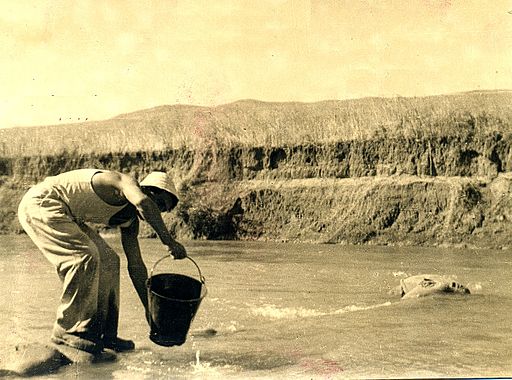
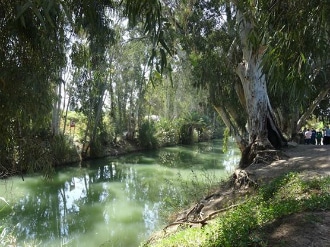
**Categories:** Blog on Faith and Ecology, Pollution
---
### [Urban Runoff Pollutes Our Rivers](https://interfaithsustain.com/urban-runoff/)
**Published:** June 8, 2022
**Author:** ICSD
**Excerpt:** Sydney Cohen - Urban runoff pollution is another of the world's environmental issues. Cities can contain up to 90 percent of impervious surfaces including roofs, sidewalks, and streets, where water accumulates and quickly runs away from the surface.
**Content:**
Table of Contents
Table of Contents
- [Why is Urban Runoff a Problem?](#aioseo-why-is-urban-runoff-a-problem-2)
- [Urban Stormwater Runoff](#aioseo-urban-stormwater-runoff-6)
- [Where Does Urban Runoff Occur?](#aioseo-where-does-urban-runoff-occur-21)
- [How Can We Prevent Urban Runoff?](#aioseo-how-can-we-prevent-urban-runoff-28)
- [Religion and Urban Runoff](#aioseo-religion-and-urban-runoff-35)
*By Sydney Cohen* – Urban runoff pollution is another of the world’s environmental issues. Cities can contain up to 90 percent of impervious surfaces including roofs, sidewalks, and streets, where water accumulates and quickly runs away from the surface.
## Why is Urban Runoff a Problem?
Urban places often contain major sources that contribute to runoff and pollution. Spaces like construction sites, car-washing and commercial car washes, parking lots, and factors such as land development and excess oil and grease are all sources of pollution that eventually make their way into rivers. [Air pollution](https://interfaithsustain.com/prevention-of-air-pollution/), which is often higher in urban areas, also contributes to [water pollution](https://interfaithsustain.com/types-of-water-pollution/), as the water can absorb pollutants from the air.
**Impervious surfaces** are primarily artificial structures such as paved surfaces like roads, sidewalks, driveways, and parking lots. In addition, all industrial areas that have an impervious cover of water-resistant materials like asphalt, concrete, brick, stone, and even rooftops contribute to urban runoff. Because impervious surfaces are not water-absorbent, they cause urban runoff containing pollutants that can harm aquatic organisms, freshwater ecosystems, and hamper drinking water quality.
According to the Environmental Protection Agency ([EPA](https://www.epa.gov/sourcewaterprotection/urbanization-and-stormwater-runoff#:~:text=Stormwater%20runoff%20is%20generated%20from,not%20soak%20into%20the%20ground.)), “stormwater runoff is generated from rain and snowmelt that flows over land or impervious surfaces, such as paved streets, parking lots, and building rooftops, and does not soak into the ground. Runoff can pick up and deposit harmful pollutants like trash, chemicals, and dirt/sediment into streams, lakes, and groundwater. Construction sites, lawns, improperly stored hazardous wastes, and illegal dumping are all potential sources of stormwater pollutants.” As one can imagine, storm-water runoff is much more detrimental to our **river ecosystems** when it comes from urban areas. Construction sites can contain high concentrations of heavy metals, which negatively affect our water quality and harm ecosystems.
### Urban Stormwater Runoff
According to the [Massachusetts Clean Water Toolkit](https://megamanual.geosyntec.com/npsmanual/sectionintrourbanstormwaterrunoff.aspx), “pollution in urban environments comes from a variety of sources. Storm-water is exposed to these sources as it flows over driveways, roads, parking areas, industrial sites, lawns and rooftops. In the case of septic systems, pollutants can enter the groundwater and eventually surface water bodies.”
Because there are so many sources that stormwater passes through, particularly in urban areas, often, pollution that enters our waterways through runoff is determined as nonpoint source pollution.
The EPA describes that nonpoint source pollution can include:
- Excess fertilizers, herbicides, and insecticides from [agricultural lands](https://www.epa.gov/nps/nonpoint-source-agriculture) and [residential areas](https://www.epa.gov/nps/nonpoint-source-urban-areas)
- Oil, grease, and toxic chemicals from [urban runoff](https://www.epa.gov/nps/nonpoint-source-urban-areas) and energy production
- Sediment from improperly managed construction sites, crop and forest lands, and eroding streambanks
- Salt from irrigation practices
- Bacteria and nutrients from livestock, pet waste, and faulty septic systems
[Source](https://pixabay.com/users/652234-652234/)
- [](https://interfaithsustain.com/what-are-the-causes-of-water-pollution/)
## [Another resource to destroy: What are the Causes of Water Pollution?](https://interfaithsustain.com/what-are-the-causes-of-water-pollution/)
- [](https://interfaithsustain.com/oil-spill-clean-up/)
## [As We Blog, Another Oil Spill Clean Up Is Underway!](https://interfaithsustain.com/oil-spill-clean-up/)
- [](https://interfaithsustain.com/how-to-prevent-water-pollution/)
## [How WE Can All Act to Prevent Water Pollution](https://interfaithsustain.com/how-to-prevent-water-pollution/)
Nonpoint source pollution is incredibly difficult to target and minimize because the source of pollution is not easily tracked once pollutants enter our world’s waterways. This is part of the danger of **urban runoff** – it is difficult to trace and in turn, difficult to fix.
### Where Does Urban Runoff Occur?
In short, urban runoff can occur in any urban area. Stormwater discharge occurs when rainfall or snowmelt is swept into the ground or on impervious surfaces, including asphalt roads, parking lots, and building facades, and cannot be absorbed into the ground.
In highly populated urban areas, some of the aspects that make urban runoff significantly more dangerous are combined sewer overflows, which contain untreated waste, as a result of rainwater and snowmelt. When this is paired with a flooded storm drain, for example, the amount of hazardous waste that is then brought into our waterways is dangerous to human health. Landscape irrigation also contributes to urban runoff. When people water their lawns, for example, they are adding to the surface waters that are carrying pollutants through urban areas and into waterways.
[Source](https://pixabay.com/users/wolfblur-2503887/)
#### How Can We Prevent Urban Runoff?
The EPA describes [the best ways that communities can employ management practices](https://www.epa.gov/sourcewaterprotection/urbanization-and-stormwater-runoff#:~:text=Stormwater%20runoff%20is%20generated%20from,not%20soak%20into%20the%20ground.) to control stormwater and prevent pollution at its source, protecting our waterways.
- [Public education and outreach](https://www.epa.gov/node/237549) with homeowners and businesses on topics such as proper use and storage of household toxic materials, equipment maintenance practices, and responsible lawn care and landscaping help prevent pollution.
- [Erosion and sediment control measures](https://www.epa.gov/npdes/stormwater-discharges-construction-activities) help prevent sediment, chemicals, and nutrients from washing off construction sites.
- [Land use controls and/or incentives](https://www.epa.gov/nps/urban-runoff-model-ordinances-prevent-and-control-nonpoint-source-pollution) restrain certain activities within a defined area, such as a source water protection area, or encourage certain land uses or best management practices. Local government officials can use subdivision growth controls, [zoning ordinances](https://www.epa.gov/nps/urban-runoff-model-ordinances-prevent-and-control-nonpoint-source-pollution), overlay districts, and other land use controls to limit impervious surfaces, encourage open space, impose runoff-efficient site design standards, and locate high-risk activities away from drinking water sources, or facilitate cluster development to reduce runoff.
All of these management practices work to protect human health by **managing urban runoff**. These environmentally friendly practices work at minimizing pollution sources and pollutant load.
## Religion and Urban Runoff
Inside Climate News discusses how [religious groups are working to address urban runoff,](https://insideclimatenews.org/news/23022022/baltimore-maryland-faith-congregations-stormwater/) especially in the city of Baltimore which has experienced severe flooding in recent years from climate-change induced extreme weather. The organization, [Interfaith Partners for the Chesapeake](https://www.interfaithchesapeake.org/) is working hard in Baltimore “to help as many as possible of the region’s more than 19,000 religious congregations produce safer stormwater runoff by planting trees, creating gardens and other projects that reduce the amount of pollutants or slow the flow of water.”
Interfaith Partners for the Chesapeake shows that religious organizations can be natural allies for stopping climate change and mitigating its worst effects. God has given us all one planet. It’s up to us to take care of it and each other.
[Source](https://pixabay.com/users/12019-12019/)
*\* Featured image [source](https://pixabay.com/users/live64-4282995/)*
Interested in learning more about water pollution? Check out this blog post about [the effects of water pollution](https://interfaithsustain.com/effects-of-water-pollution/)!
**Categories:** Blog on Faith and Ecology, Pollution
**Tags:** Water Pollution
---
### [Innovative Technology For An Ocean Cleanup](https://interfaithsustain.com/ocean-cleanup/)
**Published:** April 11, 2022
**Author:** ICSD
**Excerpt:** Sydney Cohen - There’s a lot of plastic in the ocean. In fact, it’s estimated that there are more than 5 trillion pieces of plastic in the world’s oceans. This is not only harmful to marine ecosystems, but also to humans as we rely on the ocean for food and other resources. Thankfully, there are people and organizations who are working to clean up the ocean and reduce the amount of plastic that ends up in it.
**Content:**
Table of Contents
Table of Contents
- [Plastic Pollution Problem](#aioseo-plastic-pollution-problem-3)
- [The Great Pacific Garbage Patch](#aioseo-the-great-pacific-garbage-patch-11)
- [Ocean Cleanup Solutions](#aioseo-ocean-cleanup-solutions-14)
- [Innovative Cleanup Technologies](#aioseo-innovative-cleanup-technologies-22)
- [The Ocean Cleanup – A Non-Profit with a Solution](#aioseo-the-ocean-cleanup-a-non-profit-with-a-solution-26)
- [Ocean Cleanup's Technologies](#aioseo-ocean-cleanups-technologies-30)
- [Religion and The Ocean](#aioseo-religion-and-the-ocean-35)
*By Sydney Cohen* – There’s a lot of plastic in the ocean. In fact, it’s estimated that there are more than 5 trillion pieces of **plastic** in the world’s oceans. This is not only harmful to **marine ecosystems**, but also to humans as we rely on the ocean for food and other resources. Thankfully, there are people and organizations who are working to clean up the ocean and reduce the amount of plastic that ends up in it.
We must make an effort to reduce our **plastic pollution** problem, to prevent floating ocean plastic and further harm to the food chain. There are many public **ocean cleanup** plans to remove plastic and clean plastic trash from the ocean surface and reduce these harmful garbage patches. Continue reading to learn more about the plastic waste that leads to floating ocean **plastic islands** and ways that you can get involved in ocean cleanup efforts!
## Plastic Pollution Problem
The plastic pollution problem in our oceans is a huge problem that must be addressed. Every day, 8 million tons of plastic end up on our ocean’s surface. [This is causing serious damage](https://interfaithsustain.com/effects-of-water-pollution/) to marine life and the environment. And the problem is only getting worse. Plastic pollution is a global issue, and it’s time we did something about it.
Most of the plastic that is in the ocean arrives via rivers, goes into marine garbage and becomes stuck by the ocean currents and wind that pass around the sea. Unless the problem is solved, the trash, plastics of various sizes, **micro plastics**, plastic debris, and marine debris will negatively affect ecosystem health.
Often, discarded fishing gear ends up as part of the debris found on the shore and in the open ocean. It is incredibly necessary that we minimize the human waste that is contributing to the trash wheel, as our waste only allows it to grow, further endangering our environment and marine ecosystems.
[Source](https://pixabay.com/users/geraldsimon00-80451/ "Source")
- [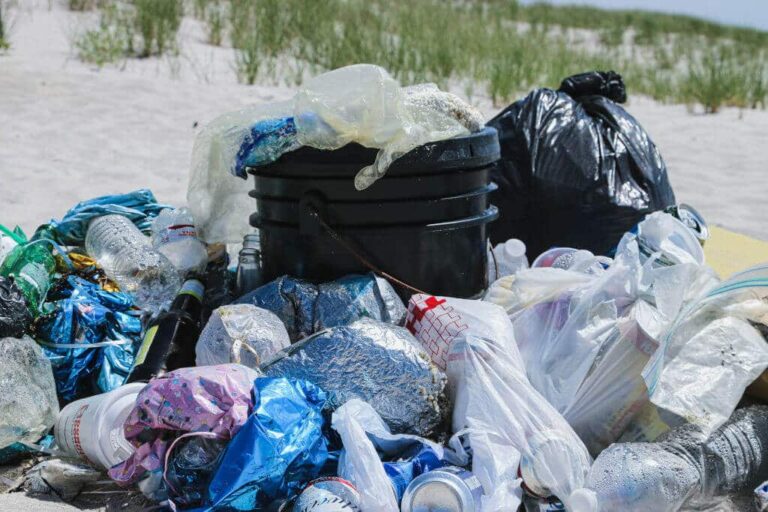](https://interfaithsustain.com/plastic-shopping-bags/)
## [Plastic Shopping Bags](https://interfaithsustain.com/plastic-shopping-bags/)
- [](https://interfaithsustain.com/plastic-eating-bacteria/)
## [Are Plastic Eating Bacteria the Solution to Plastic Pollution?](https://interfaithsustain.com/plastic-eating-bacteria/)
- [](https://interfaithsustain.com/plant-based-plastic/)
## [Can we Think of Plant Based Plastic As The Solution For Plastic Pollution?](https://interfaithsustain.com/plant-based-plastic/)
## **The Great Pacific Garbage Patch**
Did you know that there is a huge patch of plastic garbage floating in the ocean? It’s called the **Great Pacific Garbage Patch**, and it’s twice the size of Texas! This pollution is harming marine life and making our oceans increasingly uninhabitable.
According to [The Ocean Cleanup’s](https://theoceancleanup.com/great-pacific-garbage-patch/) website, “The Great Pacific Garbage Patch (GPGP) is the largest of the five offshore **plastic accumulation zones** in the world’s oceans. It is located halfway between Hawaii and California”. All of the plastic swirling in the sea makes its way into garbage patches throughout the oceans. These large patches, or trash wheels, prevent marine life from thriving.
## Ocean Cleanup Solutions
A recent study found that there are more than 5 trillion pieces of plastic in the world’s oceans. That’s a lot of plastic! And it’s not just floating on the surface – 92% of all plastic is located underwater, where it can be detrimental to marine life. So what can we do to clean up our oceans? There are a number of initiatives underway, but we need everyone’s help to make a difference.
Some ocean species can actually help us collect trash. Jellyfish are one of the species of marine life that can aid in reducing human pollution. According to [Planet Home](https://planethome.eco/how-jellyfish-can-help-us/), “**Jellyfish mucus** has an absorbing property that can catch microplastics that are present in water. These plastics are not visible to the eye and aren’t caught by seawater treatment plants due to their small size, so they enter our system and harm our health.”.
It is fascinating that though our trash is preventing so many species from thriving in the ocean, a few species can naturally help with ocean cleanups. While the major solution would be to stop polluting our oceans with trash, it is good to know that some species are able to help, without facing harm themselves.
[Source](https://www.pexels.com/@mrwandart/ "Source")
### Innovative Cleanup Technologies
Fortunately, there are many forms of [innovative technologies](https://interfaithsustain.com/what-is-clean-tech/ "innovative technologies") entering the market to aid in removing plastic from our waterways and even preventing plastic from entering oceans in the first place.
The non-profit Hawaii Wildlife Fund noticed that microplastics were [harming](https://www.fastcompany.com/90366838/this-giant-vacuum-is-designed-to-suck-up-plastic-from-the-beach) the ecosystems onshore. Their design team worked on creating a machine known as the [Hoola One](https://hoolaone.com/home/), which “sucks a mixture of sand and plastic into a tank that separates particles by weight, so plastic can be filtered out. Clean sand and rocks weigh more and sink to the bottom, where they can be returned to the beach. The machine processes around three gallons of sand a minute”.
However, scientist George Leonard notes that “if you really want to solve this problem, you need to solve this problem way farther upstream, before these materials ever get to the ocean”. Fortunately, there are other non-profits working to tackle this problem, using other tools.
### The Ocean Cleanup – A Non-Profit with a Solution
“Ocean Cleanup” is a non-profit organization in the Netherlands developing technology to remove [plastic pollution](https://interfaithsustain.com/single-use-plastic-threats-from-awareness-to-action/ "plastic pollution") from the oceans by intercepting it in water. They aim to eliminate plastic waste from our seas. The company’s prototypes were tested and deployed in the North Sea, before deploying the first full-scale prototype in a Great Pacific trash heap.
Boyan Slat, [founder](https://www.fastcompany.com/40560810/the-revolutionary-giant-ocean-cleanup-machine-is-about-to-set-sail) of the non-profit, “proposed using that movement \[of ocean currents\] as an advantage: With a barrier in the water, he argued, the swirling plastic could be collected much more quickly. Then it could be pulled out of the water and recycled”. The Ocean Cleanup’s ambitious plans have been featured in Hakai Magazine ([article](https://hakaimagazine.com/features/scooping-plastic-out-of-the-ocean-is-a-losing-game/) by Ryan Stuart) and USA Today.
The Ocean Cleanup’s mission is to rid oceans of plastic debris, reduce the accumulation of plastic that leads to the formation of **trash wheels**, and reduce the size of the Great Pacific Garbage Patch, in the north pacific ocean through various cleanup systems. They work to develop methods of removing plastic that will actually work, in order to protect our marine ecosystems from further plastic accumulation.
### Ocean Cleanup’s Technologies
Ocean Cleanup’s technology to remove floating plastic works by harnessing “the currents and the wind to herd the bigger floating pieces of plastic into horseshoe-shaped booms. Just as windblown trash gets ensnared in a fence, the plastic should get trapped in the booms until a boat can come to haul the debris to shore”. With their booms, they can collect plastics, such as plastic bags, and other larger pieces of debris that grow trash patches.
[In addition to these booms](https://www.usatoday.com/story/news/world/2021/10/29/great-pacific-garbage-patch-ocean-cleanup-nets-63000-pounds-trash/6138815001/), “The Ocean Cleanup plans to roll out new devices called “**Interceptors**” that aim to trap waste in rivers before they enter the ocean. The solar-powered contraptions, which closely resemble a boat, use a long barrier to direct waste towards a conveyor belt that drops all the debris into dumpsters”. With the combined two systems of the booms in the ocean and the river interceptors, The Ocean Cleanup plans to target the whole problem of plastic in our waterways.
However, The Ocean Cleanup’s plans have unfortunately faced various difficulties since 2018. Additionally, species such as sail jellyfish and other neuston species that drift with the winds and currents are potentially at risk by the booms that The Ocean Cleanup plans to deploy.
[Furthermore](https://hakaimagazine.com/features/scooping-plastic-out-of-the-ocean-is-a-losing-game/), “while there is plenty of plastic floating on the surface of the North Pacific gyre, even more is out of reach, suspended in the water column and degraded into tiny pieces that slip right through the booms”. Nonetheless, The Ocean Cleanup maintains its ambitious plans and is continuing to develop its innovative technologies. In 2021, The Ocean Cleanup announced that they have [partnered](https://theoceancleanup.com/press/press-releases/the-ocean-cleanup-and-the-coca-cola-company-announce-partnership/#:~:text=The%20Ocean%20Cleanup%20and%20The%20Coca%2DCola%20Company%20Announce%20Partnership,-Share%20Tweet%20Share&text=The%20unique%20partnership%20brings%20the,first%20intercepting%20waste%20in%20rivers.) with Coca-Cola to further develop and implement their cleanup system.
## Religion and The Ocean
[Interfaith Oceans](https://www.interfaithoceans.org) is an organization that brings together diverse faith groups to protect the ocean systems and species. Interfaith Oceans works to cultivate knowledge about ocean issues and faith perspectives, awaken others through spreading this information, and to take action through prayer, discussion, lobbying and other activities. On their website is a variety of faith-based organizations and resources to address ocean issues, including a quote from Ecumenical Patriarch Bartholomew who remarks: “So what we do to the oceans, God’s vast blue Creation, we do to God’s other creations, including ourselves. . . .”
The ocean is not some place “out there” that we can dump all our garbage without worrying about the consequences. The ocean is a key part of planet Earth, vital for the functioning of life above and below the sea, so let’s stop polluting and start cleaning.
*\*Featured image [source](https://pixabay.com/users/sergeitokmakov-3426571/ "source")*
**Categories:** Blog on Faith and Ecology, Pollution
**Tags:** Plastic Pollution, Water Pollution
---
### [Are Plastic Eating Bacteria the Solution to Plastic Pollution?](https://interfaithsustain.com/plastic-eating-bacteria/)
**Published:** July 13, 2022
**Author:** ICSD
**Excerpt:** Harry Cooper - Humanity's constant use of plastic bottles, packaging, and all kinds of products has created massive amounts of plastic pollution on our planet. As this plastic problem continues to grow, scientists everywhere are beginning to look for creative solutions.
**Content:**
Table of Contents
Table of Contents
- [The Plastic Pollution Problem](#aioseo-the-plastic-pollution-problem-2)
- [Ideonella Sakaiensis](#aioseo-ideonella-sakaiensis-11)
- [Challenges to Using Plastic Eating Bacteria](#aioseo-challenges-to-using-plastic-eating-bacteria-20)
- [The Bacteria Only Break Down PET Plastic](#aioseo-the-bacteria-only-break-down-pet-plastic-23)
- [Bacteria Can't Fully Break Down Plastic](#aioseo-bacteria-cant-fully-break-down-plastic-27)
- [The Future of Plastic Eating Bacteria](#aioseo-the-future-of-plastic-eating-bacteria-31)
- [Plastic Eating Bacteria From A Religious Perspective](#aioseo-plastic-eating-bacteria-from-a-religious-perspective-40)
*By Harry Cooper* – Humanity’s constant use of plastic bottles, packaging, and all kinds of [single-use plastic products](https://interfaithsustain.com/single-use-plastic-threats-from-awareness-to-action/ "single-use plastic products") has created massive amounts of **plastic pollution** on our planet. As this plastic problem continues to grow, scientists everywhere are beginning to look for creative solutions.
## The Plastic Pollution Problem
One of the biggest issues with plastic is that it is deadly for any animal to consume. However, recent discoveries have found that there are some naturally occurring bacteria capable of breaking down plastic.
These bacteria could provide a way to naturally degrade plastic. However, there are some limitations to its ability to break down plastic waste.
These bacteria can only break down specific types of plastic. They are also unable to break it down into a form that would not be harmful to other animals.
However, these bacteria are a very new discovery. As science and research into these bacteria continues to advance, we may see more practical applications of these bacteria to help eliminate plastic waste.
[Source](https://unsplash.com/@sylwiabartyzel)
## Ideonella Sakaiensis
In [2016](https://pubs.acs.org/doi/10.1021/cen-09449-cover3) in in Sakai, Japan, a team of researchers investigating sludge from a [recycling](https://interfaithsustain.com/plastic-free-life/) plant made an incredible discovery. They found bacteria that can eat plastic.
This bacteria was named **Ideonella Sakaiensis**. It produces plastic eating enzymes capable of breaking down PET plastic.
Polyethylene terephthalate plastic, PET plastic, is one of the most common varieties of plastic, and is usually marked with a one inside a recycling symbol. While it can easily be recycled, massive amounts of PET plastics still end up in landfills, on the ground, or in the ocean.
However, with the recent discovery of plastic eating organisms many believe that they could help provide a solution to [environmental plastic pollution](https://interfaithsustain.com/facts-about-plastic-pollution/). Although as it is a very recent discovery, there are some hurdles to using plastic eating bacteria to get rid of plastic on a larger scale.
[Source](https://pixabay.com/users/422737-422737/)
## Challenges to Using Plastic Eating Bacteria
Bacteria and other decomposers have had millions of years to evolve to decompose organic matter such as wood and flesh efficiently. Plastic, on the other hand, has only been around for a matter of decades, and bacteria are only just now being capable of breaking it down.
This means that **plastic eating bacteria** such as Ideonella Sakaiensis are not as capable at breaking down plastic as we would hope. In order to use them on an industrial scale to make a considerable impact on our plastic problem, there are several challenges we will have to deal with.
- [](https://interfaithsustain.com/plastic-shopping-bags/)
## [Plastic Shopping Bags](https://interfaithsustain.com/plastic-shopping-bags/)
- [](https://interfaithsustain.com/plastic-eating-bacteria/)
## [Are Plastic Eating Bacteria the Solution to Plastic Pollution?](https://interfaithsustain.com/plastic-eating-bacteria/)
- [](https://interfaithsustain.com/plant-based-plastic/)
## [Can we Think of Plant Based Plastic As The Solution For Plastic Pollution?](https://interfaithsustain.com/plant-based-plastic/)
### The Bacteria Only Break Down PET Plastic
PET plastic represents a considerable chunk of the plastic waste problem. However, it is only one of six different types of plastic.
One of the biggest [issues](https://www.livescience.com/plastic-eating-bacteria) with plastic eating bacteria is that it can only break down one form of plastic. No bacteria have yet to be found that are capable of breaking down the other six forms of plastic.
However, scientists are constantly researching different ways to improve plastic eating bacteria. Many have tried genetic engineering to make the bacteria more efficient and capable of degrading plastic waste.
### Bacteria Can’t Fully Break Down Plastic
Bacteria capable of breaking down plastic may sound like an easy way to make plastic magically disappear. However, the reality of the situation is not as ideal.
In order for plastic to be completely harmless in the environment, it would need to be broken down into their elemental building [blocks](https://www.forbes.com/sites/scottcarpenter/2021/03/10/the-race-to-develop-plastic-eating-bacteria/?sh=6a5492ef7406), carbon and hydrogen. Plastic eating bacteria is only capable of breaking plastic down into smaller plastic monomers.
This can help get rid of larger pieces of plastic waste. However these plastic monomers are still harmful to humans and the environment.
## The Future of Plastic Eating Bacteria
There are several limitations to using plastic eating bacteria at an industrial scale. However scientists are continuing to [research](https://www.theguardian.com/environment/2021/dec/14/bugs-across-globe-are-evolving-to-eat-plastic-study-finds) different ways to use plastic eating bacteria, and have already found a few practical applications.
Plastic eating bacteria are only capable of breaking down PET plastic into plastic monomers. While these still cause harm in the environment, plastic monomers can be more easily turned into new plastic.
Therefore, these bacteria can’t be used to fully break down plastic. But they can be used in recycling plants, to make the process of recycling plastic much easier.
Scientists doing research into using genetic [engineering](https://www.forbes.com/sites/scottcarpenter/2021/03/10/the-race-to-develop-plastic-eating-bacteria/?sh=6a5492ef7406) on Ideonella Sakaiensis could create bacteria capable of producing more efficient plastic degrading enzymes. These genetically engineered bacteria could potentially be able to breakdown other kinds of plastic, as well as break them down more fully. By continuing research into plastic eating bacteria, scientists are finding more natural and efficient ways to solve our plastic problem.
[Source](https://unsplash.com/@nci)
## Plastic Eating Bacteria From A Religious Perspective
While the discovery and culturing of plastic eating bacteria might seem like an excellent solution to our plastic crisis, we must also be careful about “playing God.” After all, if we want to cultivate these plastic eating bacteria to work even more efficiently, we might end up creating a much bigger problem. [Emily Flashman](https://theconversation.com/profiles/emily-flashman-259696) warns us about this danger in the journal, [“The Conversation:”](https://theconversation.com/how-plastic-eating-bacteria-actually-work-a-chemist-explains-95233)
> There is one worry, though. While any modified bacteria used in bioreactors are likely to be highly controlled, the fact that it evolved to degrade and consume plastic in the first place suggests this material we rely on so heavily may not be as durable as we thought.
>
> If more bacteria began eating plastic in the wild then products and structures designed to last many years could come under threat. The plastics industry would face the serious challenge of preventing its products becoming contaminated with hungry micro-organisms.
It’s a scary thought to consider highly-efficient plastic eating bacteria escaping into the world and destroying our civilization’s plastic-based infrastructure. Perhaps instead of trying to clean up our plastic problem and potentially create new ones, we should get to the source of the problem, and reduce our **consumption of disposable plastics**.
Just like with medication, if we don’t address the root cause of illness, we might end up taking pill after pill to endlessly address side-effects. May God help us break our addiction to disposable plastic and save us from ourselves.
*\* Featured image [source](https://unsplash.com/@cdc)*
**Categories:** Blog on Faith and Ecology, Pollution
**Tags:** Plastic Pollution
---
### [Plastic Shopping Bags](https://interfaithsustain.com/plastic-shopping-bags/)
**Published:** October 24, 2022
**Author:** ICSD
**Excerpt:** Harry Cooper - As our fast paced global economy continues to grow, the demand for single use plastics does as well. But, when these single use plastics are thrown into the environment they break down into harmful microplastics that have detrimental impacts on the environment and human health.
**Content:**
Table of Contents
Table of Contents
- [The Plastic Bag Problem Today](#aioseo-the-plastic-bag-problem-today-2)
- [The Problem of Plastic Shopping Bags](#aioseo-the-problem-of-plastic-shopping-bags-4)
- [The Impact of Single Use Plastics](#aioseo-the-impact-of-single-use-plastics-6)
- [Microplastics](#aioseo-microplastics-8)
- [Plastic Bags And Marine Life](#aioseo-plastic-bags-and-marine-life-12)
- [What Can You Do?](#aioseo-what-can-you-do-14)
- [Plastic Bag Alternatives](#aioseo-plastic-bag-alternatives-20)
- [Other Solutions](#aioseo-other-solutions-22)
- [Plastic Bag Bans](#aioseo-plastic-bag-bans-26)
- [Countries With Plastic Bag Bans](#aioseo-countries-with-plastic-bag-bans-30)
- [Plastic Bags and Religion](#aioseo-plastic-bags-and-religion-32)
*By Harry Cooper* – As our fast paced global economy continues to grow, the demand for **single use plastics** does as well. But, when these single use plastics, such as plastic shopping bags, are thrown into the environment they break down into **harmful microplastics** that have detrimental impacts on the environment and [human health](https://interfaithsustain.com/soil-pollution/).
## The Plastic Bag Problem Today
One of the worst offenders of these single use plastic products are the easy and convenient **plastic shopping bags**. With grocery stores all over the world handing out plastic shopping bags every day, it is estimated that nearly [2 million](https://www.earth-policy.org/images/uploads/press_room/Plastic_Bags.pdf) plastic shopping bags are used every minute.
### The Problem of Plastic Shopping Bags
In the 1960s you hardly ever saw a plastic bag but nowadays you can see them everywhere flying around the streets, parks, stuck in rivers and oceans – there is no where free of them! Every year, around **500 billion plastic bags** are used worldwide, [500,000,000,000](https://dpw.lacounty.gov/epd/plasticbags/articles/googobits_07-21-05.pdf). Five hundred followed by nine zeros. That’s a lot of bags that are just thrown out. [Plastic bags](https://dpw.lacounty.gov/epd/plasticbags/articles/googobits_07-21-05.pdf) are difficult and costly to recycle and most end up on landfill sites where they take around 300 years to photodegrade. They break down into tiny toxic particles that contaminate the soil and waterways and enter the food chain when animals accidentally ingest them.
- [](https://interfaithsustain.com/plastic-eating-bacteria/)
## [Are Plastic Eating Bacteria the Solution to Plastic Pollution?](https://interfaithsustain.com/plastic-eating-bacteria/)
- [](https://interfaithsustain.com/downcycling/)
## [Assessing The Environmental Impact of Downcycling](https://interfaithsustain.com/downcycling/)
- [](https://interfaithsustain.com/plant-based-plastic/)
## [Can we Think of Plant Based Plastic As The Solution For Plastic Pollution?](https://interfaithsustain.com/plant-based-plastic/)
## The Impact of Single Use Plastics
Organic waste is capable of decomposing and returning to the natural environment, but [plastic waste](https://interfaithsustain.com/facts-about-plastic-pollution/) is a different story. Plastic can only break down into microscopic pieces called [microplastics](https://education.nationalgeographic.org/resource/microplastics).
### Microplastics
As plastic pollution has worsened, **microplastics** have found their way into more and more places, everywhere from the bodies of humans and wildlife to commercial food and drinking water. Microplastics have even been found in the [placentas of unborn babies](https://www.nationalgeographic.com/environment/article/microplastics-are-in-our-bodies-how-much-do-they-harm-us#:~:text=In%20laboratory%20tests%2C%20microplastics%20have,microplastics%20and%20impacts%20on%20health.)!
[Source](https://unsplash.com/@soerenfunk)
#### Plastic Bags And Marine Life
Every plastic bag that finds its way into the ocean poses a serious threat to [marine animals](https://dpw.lacounty.gov/epd/plasticbags/articles/googobits_07-21-05.pdf). Many animals mistake shopping bags for food, especially sea turtles that mistake them for jelly fish, which is their main food source. When an animal tries to eat shopping bags they can choke on them and suffocate, or get them wrapped around their necks and strangle themselves. This is a very gruesome and unnatural way for these animals to die, and with more and more plastic bags being thrown out every day, the **threat to marine animals** is only growing.
## What Can You Do?
There are many things that every day customers to prevent using plastic shopping bags. One of the easiest things is bringing your own [reusable bag](https://1bagatatime.com/learn/reusable-bag-types/).
### Plastic Bag Alternatives
**Reusing bags** is a great way to cut down on plastic; every time you choose to carry your own bag when going to a store is one less plastic bag that will be thrown out. These bags can be made from sturdier plastic, up cycled t shirt bags, canvas, or even other recycled shopping bags.
[Source](https://unsplash.com/@lucianoparis)
### Other Solutions
There are also solutions that must be put into place legally by governments. Look for example at the ban in [Tanzania](https://worldexpeditions.com/Blog/tanzania-plastic-ban-what-travellers-need-to-know#:~:text=When%20you%20arrive%20into%20Tanzania,your%20personal%20items%20and%20laundry.), where they successfully use paper for packaging merchandise items.
### Plastic Bag Bans
One way that governments have addressed the plastic bag problem is by passing policy that restricts or completely [bans](https://www.statista.com/chart/14120/the-countries-banning-plastic-bags/) the use of plastic bags. These policies can take the form of higher taxes on plastic bags, requiring stores to provide bags with thicker plastic that can be more easily reused, stopping wholesale prices on plastic bags or best of all, completely outlawing plastic bags.
### Countries With Plastic Bag Bans
Developing countries, primarily ones in Africa, are actually more likely to have **plastic bag bans**. This is to finally prevent “developed” countries sending their waste to them. There are developed countries with plastic bag bans in place, notably France, Austria, Italy, and Germany. The US however, has no federal plastic bag bans or restrictions, although California has decided to put plastic bag regulations in place.
Source
### Plastic Bags and Religion
Brisbane Catholic Erin Kennedy views fighting against single-use plastic as a religious issue. “Using plastics is not a respectful use of resources,” she told [Catholic Leader.](https://catholicleader.com.au/news/catholics-urged-to-change-mentality-as-shopping-bags-head-for-historys-bin/) “It has such a detrimental effect that we might not see immediately but is still affecting the environment around us and is a real disrespect to the creation we have been given to use.” Thank you Erin Kennedy for being a role model of how religion can heal our planet.
*\* Featured image [source](https://unsplash.com/photos/trash-lot-close-up-photography-IvWEUvMwmlg)*
**Categories:** Blog on Faith and Ecology, Pollution
**Tags:** Plastic Pollution
---
### [Facing Single-Use Plastic Threats: From Awareness to Action](https://interfaithsustain.com/single-use-plastic-threats-from-awareness-to-action/)
**Published:** May 14, 2021
**Author:** ICSD
**Excerpt:** Elisheva Malomet and Deborah Rose - Plastic packaging and bags, drinking bottles and straws, disposable plastic plates, forks, knives and spoons—these are designed and created to be thrown away and destroyed. Throwaway mentality has created a massive environmental problem on Earth from single-use plastics.
**Content:**
Table of Contents
Table of Contents
- [The Problems With Single-Use Plastics](#aioseo-the-problems-with-single-use-plastics-9)
- [Plastics by the Numbers](#aioseo-plastics-by-the-numbers-12)
- [Plastics Breaking Down into Microplastics](#aioseo-plastics-breaking-down-into-microplastics-15)
- [Our Throwaway Relationship with Plastics](#aioseo-our-throwaway-relationship-with-plastics-18)
- [Plastic and Marine Life](#aioseo-plastic-and-marine-life-23)
- [Direct and Indirect Threats from Plastic](#aioseo-direct-and-indirect-threats-from-plastic-35)
- [Reducing Reliance on Single-Use Plastics](#aioseo-reducing-reliance-on-single-use-plastics-37)
- [Initiatives to Reduce Plastic](#aioseo-initiatives-to-reduce-plastic-44)
- [Bye Bye Plastic Bags](#aioseo-bye-bye-plastic-bags-47)
- [How Interfaith Groups Work to Reduce Single-Use Plastic](#aioseo-how-interfaith-groups-work-to-reduce-single-use-plastic-49)
- [What You Can Do on Single Use Plastic](#aioseo-what-you-can-do-on-single-use-plastic-52)
*By Elisheva Malomet and Deborah Rose* – Single-use plastic packaging and bags, drinking bottles and straws, disposable plastic plates, forks, knives and spoons—these are designed and **created to be thrown away** and destroyed. Throwaway mentality has created a massive environmental problem on Earth from these plastics.
With approximately [one trillion nonbiodegradable, single-use plastic bags](https://www.earth-policy.org/press_room/C68/plastic_bags_fact_sheet) used and thrown away every year worldwide, it’s no wonder there is increasing urgency for change in how we live, work and deal with this material. Scientific discoveries of microplastics in the deepest ocean, on the highest mountains, in the atmosphere, and even in the human body tell us there is no time to lose in ending our reliance on single-use plastic.
**But what can each of us do? How can one person make a difference in regards to plastic waste?**
In this post, we will explore the hazards of single-use plastic, critical strategies for reducing our reliance on them, and the impact of interfaith groups on solving this problem which affects everyone on Earth.
[Source](https://unsplash.com/@brian_yuri)
## The Problems With Single-Use Plastics
Where does all this plastic come from? [Made from crude oil, natural gas or coal](https://www.bpf.co.uk/plastipedia/how-is-plastic-made.aspx), each kind of plastic is labeled as[ one of seven categories](https://learn.eartheasy.com/articles/plastics-by-the-numbers/)—the number inside the three-arrow symbol on products we buy. The numbers let us know the type of plastic and whether it’s recyclable.
**What happens with the huge amount of plastic waste that really isn’t recyclable, and in fact is not recycled?**
### Plastics by the Numbers
The [United States Environmental Protection Agency](https://www.epa.gov/facts-and-figures-about-materials-waste-and-recycling/plastics-material-specific-data) found that plastic containers and packaging contributed to over 14.5 million tons of plastic in 2018. [National Geographic](https://www.nationalgeographic.com/science/article/plastic-produced-recycling-waste-ocean-trash-debris-environment) found that if this much use continues, by 2050 there will be 13 billion tons of plastic in landfills. That amount is 35,000 times as heavy as New York’s Empire State Building.
Most single-use plastics are numbered in categories 1-5, including drinking bottles, cleaning agent bottles, food packaging, **shopping bags and plastic straws**. Recycling centers don’t accept many of these because they contain toxic chemicals. The plastic ends up in garbage dumps and landfills. Plastics may then be blown by wind or carried into bodies of water by storm runoff (especially in countries without adequate waste disposal systems).
#### Plastics Breaking Down into Microplastics
Slowly these plastics break down into smaller and smaller pieces. A plastic bottle takes an estimated [450 years](https://chariotenergy.com/blog/how-long-until-plastic-decomposes/) to fully break down. The resulting microplastics remain in our ecosystems, from the deepest ocean to the atmosphere.
This means that while recycling is extremely important, our first steps should be to reduce and reuse. Economically, **recycling single-use plastics** does not even ensure worthwhile return. Instead of recycling plastic bags we should eliminate them entirely.
## Our Throwaway Relationship with Plastics
Single-use plastics damage our relationship with our planet’s resources, people and environment. If we continue to use once and destroy**,** we will have less and less appreciation for what we own, where we live, and the needs of others.
Plastic is often so cheap and accessible, it seems to make sense to use in place of other materials. We barely register the impact it has on the environment and **the more plastic we use, the cheaper it becomes.** Then people use it even more, because it’s ”cost free.” The result: a throwaway society with millions of tons of waste and microplastics spread everywhere.
### Plastic and Marine Life
Single-use plastics make their way into the wild through littering, haphazard throwaway practices, or movement from landfills. Plastic’s lethal impact is graphically highlighted on beaches and in the ocean, where it kills marine life small and large.
[Source](https://pixabay.com/users/hans-2/)
- [](https://interfaithsustain.com/plastic-shopping-bags/)
## [Plastic Shopping Bags](https://interfaithsustain.com/plastic-shopping-bags/)
- [](https://interfaithsustain.com/plastic-eating-bacteria/)
## [Are Plastic Eating Bacteria the Solution to Plastic Pollution?](https://interfaithsustain.com/plastic-eating-bacteria/)
- [](https://interfaithsustain.com/plant-based-plastic/)
## [Can we Think of Plant Based Plastic As The Solution For Plastic Pollution?](https://interfaithsustain.com/plant-based-plastic/)
At least [1,000,000 ](https://conserveturtles.org/information-sea-turtles-threats-marine-debris/)marine creatures—including whales, sea turtles, pelicans, and dolphins—die each year because of plastic in or around the ocean.
#### Direct and Indirect Threats from Plastic
The frightening reality is that the numbers are probably far greater than the aforementioned figure, as it only accounts for animals that have been found. Plastic poses a direct threat by killing wildlife that get trapped in it or mistake it for food, and an indirect threat from microplastics in the ocean’s food chain.
## Reducing Reliance on Single-Use Plastics
To slow and stop the damage, we need to and truly can take steps to [remove single-use plastics from our lives](https://interfaithsustain.com/plastic-free-life/). A great way to start is supporting retailers who don’t sell single-use plastic products, and taking an extra look at products we buy. If there is produce wrapped in plastic packaging versus without, opt for loose fruits and veggies (but bag them in nonplastic bags). Buy eggs in biodegradable cartons.
**Durable, reusable, and washable alternatives** exist to replace single-use plastic water bottles, straws, bags, coffee cups, and cutlery. We can bring reusable bags and containers when we shop or get food at restaurants. Instead of single-use plastics for meals, use ceramic or other reusable dishes and wash them. Many eco-friendly solutions can be found made of materials like metal, glass, paper, bamboo or other sustainable plant and natural fibers.
[Source](https://unsplash.com/@abhyudaymajhiphotography)
### Initiatives to Reduce Plastic
Find out what your local government is doing to reduce single-use plastics. Local governments and community initiatives can help ban or limit the use of products like plastic bags in stores.
Your locality can make recycling more accessible by providing receptacles for sorting garbage in public places. You can support efforts to incentivize recycling through taxes on products that are not recyclable (e.g., plastics) or subsidies for recycling. If there are no current efforts where you live, you can start a petition, voter initiative or even a local nonprofit, and advocate for change!
#### Bye Bye Plastic Bags
[Bye Bye Plastic Bags](https://www.byebyeplasticbags.org/) NGO is an excellent example of the power of taking initiative and working towards change. This worldwide organization founded by youth has been advocating for plastic bag bans since 2013. Their mission is to educate, find workable solutions, and rid the world of plastic bags.
## How Interfaith Groups Work to Reduce Single-Use Plastic
Interfaith groups are uniquely positioned to help educate and influence individuals and entire communities to reduce their own and others’ single-use plastics consumption. These groups’ stances on the environment and sustainable choices, and their public and private partnerships, can have an important impact.
Dozens of [rabbis have signed a joint letter](https://www.timesofisrael.com/rabbis-join-call-to-cut-single-use-plastic-starting-with-religious-holidays/) calling on their communities to “reduce their use of disposable plastic items as much as possible.” Canadian-based Plastic Bank launched the Social Plastic Interfaith Revolution through the [Seasons of Change Faith Webinar](https://www.youtube.com/watch?v=OiEGCsM-PUc), and promotes and provides partnerships engaging interfaith communities in preventing [plastic pollution](https://interfaithsustain.com/facts-about-plastic-pollution/ "plastic pollution"). These collaborations introduce and expand the overlap between religious teachings and a cleaner creation.
## What You Can Do on Single Use Plastic
If you are part of a faith-based community, you can start making changes right in your own house of worship or religious schools. Get kids involved too, so they can feel empowered to make change affecting the world they grow up in.
Right now we can reduce our dependence on plastics, be more mindful about our choices for sustainability, and take initiatives in our communities that will protect all life on Earth now and tomorrow.
**Further Resource:**
Rosas, C. (2020, December 3). Moving Toward a Zero Waste Lifestyle \[Blog post\]. Retrieved from <https://porch.com/advice/moving-toward-zero-waste-lifestyle/>
*\* Featured image [source](https://unsplash.com/@poleznova)*
**Categories:** Blog on Faith and Ecology, Pollution
**Tags:** Pollution, Resources for Green Living
---
### [The Alarming Facts about Plastic Pollution In Today’s World](https://interfaithsustain.com/facts-about-plastic-pollution/)
**Published:** March 18, 2022
**Author:** ICSD
**Excerpt:** Harry Cooper - The modern world is filled with plastic. The original plastic, created in 1869, was made from treated plant fibers and was meant to replace products made from ivory, which was incredibly expensive and required killing wild elephants.
**Content:**
Table of Contents
Table of Contents
- [The Growing Plastic Problem](#the-growing-plastic-problem)
- [Plastic and the Environment](#plastic-and-the-environment)
- [Plastic Production](#plastic-production)
- [The Harmful Effects of Making Plastic](#the-harmful-effects-of-making-plastic)
- [Animals Eating Plastic](#animals-eating-plastic)
- [Health Effects of Eating Plastic](#health-effects-of-eating-plastic)
- [Microplastic](#microplastic)
- [Why Do we Use So Much Plastic?](#why-do-we-use-so-much-plastic)
- [Single Use Plastics](#single-use-plastics)
- [Plastic Packaging](#plastic-packaging)
- [Recycling Plastic](#recycling-plastic)
- [Resin Codes on Plastic](#resin-codes-on-plastic)
- [Recycling Plastic Doesn't Always Work](#recycling-plastic-doesn-t-always-work)
- [What Can We Do?](#what-can-we-do)
- [Avoiding Plastic](#avoiding-plastic)
- [Religion and Plastic Pollution](#religion-and-plastic-pollution)
*By Harry Cooper* – The modern world is filled with **plastic**. The original plastic, created in [1869](https://www.sciencehistory.org/the-history-and-future-of-plastics), was made from treated plant fibers and was meant to replace products made from ivory, which was incredibly expensive and required killing wild elephants.
Not only was plastic more ethical, it was also more flexible, sturdier, cheaper, and easier to make. At the time, plastic was an invention that changed the world for the better.
## The Growing Plastic Problem
With plastic being a supposed miracle material its easy to see why so many things today are made with it. However, as we continue to make more and more plastic we are beginning to see how continuous improper **plastic disposal** is harming our planet, and the material that once saved countless elephants is becoming an environmental problem that could threaten all life on Earth.
## Plastic and the Environment
We have known for a while that the way that humans live their lives and treat the world has led to some serious environmental problems.
These problems range everywhere from a warming climate to dwindling drinkable water. However one of the biggest issues facing the environment today is **plastic pollution**.
### Plastic Production
The world’s annual **plastic production** is [380 million tonnes](https://ourworldindata.org/plastic-pollution#:~:text=The%20world%20now%20produces%20more,our%20natural%20environment%20and%20oceans.)! The original plastic was made from treated plant fibers. However modern plastics are made from fossil fuels.
**Fossil fuels** are notorious for contributing to climate change through releasing greenhouse gases when they are burned for fuel. However, the process of making plastic from fossil fuels also leaves a huge [environmental foot print](https://www.biologicaldiversity.org/campaigns/plastic-production/index.html#:~:text=Turning%20fossil%20fuels%20into%20plastics,accumulate%20in%20the%20food%20chain.).
### The Harmful Effects of Making Plastic
Although using oil to make plastics does not inherently release greenhouse gases, it still requires extracting the oil which can cause earthquakes and cause [water pollution](https://interfaithsustain.com/effects-of-water-pollution/ "water pollution"). Along with this, refining oil into plastic requires a lot of energy which does require burning fossil fuels and emitting greenhouse gases.
While plastic production often produces **greenhouse gases,** the treating process can also add many other harmful chemicals into the air and water such as toluene and benzene. These toxic chemicals can harm animals and humans by causing cancer, asthma, brain damage, and heart disease.
- [](https://interfaithsustain.com/plastic-free-life/)
## [The Realities Of A Plastic Free Lifestyle](https://interfaithsustain.com/plastic-free-life/)
- [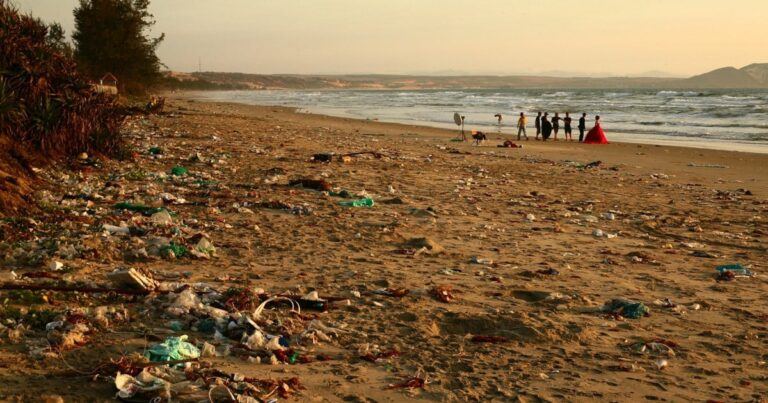](https://interfaithsustain.com/reusable-straws/)
## [The Epic Story of Reusable Straws](https://interfaithsustain.com/reusable-straws/)
- [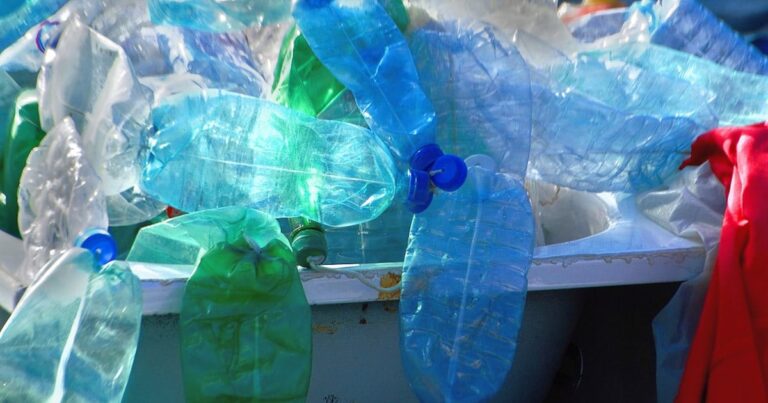](https://interfaithsustain.com/facts-about-plastic-pollution/)
## [The Alarming Facts about Plastic Pollution In Today’s World](https://interfaithsustain.com/facts-about-plastic-pollution/)
### Animals Eating Plastic
When plastic doesn’t make its way to landfill sites it often ends up as plastic debris out in the environment. This plastic waste is an unnatural part of the natural landscape, and when animals come into contact with it, it can often lead to [trouble](https://www.plasticsoupfoundation.org/en/plastic-problem/plastic-affect-animals/animals-eat-plastic/), particularly **plastic ingestion**.
Plastic debris and marine litter are often mistaken as food by animals. Marine litter floats so sea turtles think plastic bags are jelly fish, sea birds think floating plastic litter is fish so that **ocean pollution** is now endangering all the marine environment. Today there are five zones in the world’s oceans where used plastic has accumulated. The largest of these, **the great pacific garbage patch** covers an area of [1.6 million square kilometer](https://theoceancleanup.com/great-pacific-garbage-patch/)s!
#### Health Effects of Eating Plastic
When animals start **ingesting plastic** it can have numerous health effects. The plastic may reduce the feeling of hunger in the animal, causing it to stop eating, even though they gain no nutrients from the plastic.
The ingested plastic can also get caught in the animal’s throat or intestines. If the plastic gets caught in this way it very often leads to death. **Plastic consumption** is deadly.
## Microplastic
Large plastic pieces such as **plastic bags,** **plastic bottles**, and **plastic straws** can hurt the animals that eat them. But when microscopic pieces of plastic in the ocean are eaten, it can damage an entire food chain.
When ocean plastic pollution and marine debris get exposed to waves and radiation from the sun it gets broken down into microscopic pieces of plastic called [microplastics](https://www.nature.com/articles/d41586-021-01143-3). These **microplastics** are incredibly toxic to marine life and are one of the most harmful parts of **marine plastic pollution**.
These microplastics get ingested by tiny microorganisms. These tiny plastics contain toxic chemicals that can harm the organisms.
What makes matters extreme is that when other animals eat these microorganisms the toxic chemicals end up in them too, and when they are eaten their predators also get these toxins in their bodies. This cycle continues until it goes all the way up the food chain.
But it’s not just marine animals that are affected by this type of plastic pollution. Human consumption of plastics is an everyday occurrence when we eat tuna and other wild fish. We also end up ingesting toxic chemicals found in microplastics. The average person eats large quantities of microplastics straight off their dinner plates!
## Why Do we Use So Much Plastic?
Over the years world **plastic production** has skyrocketed to over [300](https://www.nrdc.org/stories/single-use-plastics-101#:~:text=We%20produce%20300%20million%20tons,to%20plastic%20production%20and%20use%29.) million tonnes of plastic a year.
This much plastic is incredibly unhealthy for ecosystems everywhere. It is important to understand who is using all this plastic, and more importantly, how it’s being used.
### Single Use Plastics
One of the biggest reasons why plastic pollution is as bad as it is is because so many plastic items are made to be used only once. These [single use](https://ec.europa.eu/environment/topics/plastics/single-use-plastics_en) plastics are meant to be thrown out soon after being bought. This is part of today’s throwaway culture problem.
**[Single use plastic](https://interfaithsustain.com/single-use-plastic-threats-from-awareness-to-action/ "Single use plastic")** items such as a plastic bag or plastic bottle cause our world plastic pollution to pile up at an alarming rate. While we continue to use single use plastics the plastic pollution problem will only get worse.
Some of the biggest offenders of the non reusable plastic items are food containers, plastic bags, plastic cups, straws, plastic cutlery, plastic bottles and bottle caps. Luckily, many of these single use plastics have reusable alternatives.
### Plastic Packaging
Single use plastics are a big part of growing plastic pollution. And one of the biggest contributors of single use plastics is plastic [packaging](https://supplychain.edf.org/resources/sustainability-101-packaging-waste-the-problem/#:~:text=Plastic%20packaging%20is%20extremely%20wasteful,disposed%20of%20into%20the%20environment.).
The issues behind **plastic packaging** are unique because they go beyond the environmental. Not only is plastic packaging often unnecessary or overdone for certain items, but it can also cost businesses quite a bit of money.
Using extra plastic packaging such as individually wrapped goods and goods that don’t really need to be wrapped in the first place cause businesses to pay for extra plastic that will inevitably get thrown away. Along with this, they often have to pay for extra labor costs to make the extra plastic packaging.
#### Recycling Plastic
Many people claim that recycling helps reduce plastic waste. While this is true, it can often be very [hard](https://media.alexandriava.gov/docs-archives/tes/solidwaste/info/recyclingplasticcomplications.pdf) for plastic to be recycled.
While plastic can be recycled, it is not as easy to recycle plastic products as it is to recycle materials like paper or aluminum. Even when plastic is put in the recycling bin, it often finds its way into badly managed landfill sites or an incinerator.
#### Resin Codes on Plastic
Part of what makes **recycling plastic** so complicated are labels called resin codes. **Resin codes** are the triangle made of three arrows with a number in them that you find on plastic products.
In today’s world there are many different kinds of plastic, with various different additives and dyes. Because of this it is hard to distinguish between different kinds of plastic when recycling.
Luckily, resin codes tell you what kind of plastic something is made out of and whether it can be recycled. However many people don’t understand these labels and often recycle anything made of plastic even if it can’t be recycled.
#### Recycling Plastic Doesn’t Always Work
Even when people only recycle plastic that is capable of being recycled, plastic recycling can still be a very arduous process. Therefore, recycling is not efficient.
Since there are so many different types of plastic it requires a lot of sorting and different recycling techniques. This can make recycling plastic very costly and inefficient.
Recycling plastic is very complicated. Many recycling plants find themselves without the resources or funds to properly recycle the massive influxes of plastic they receive.
As a result, a lot of recycled plastic ends up being thrown away. Unfortunately while recycling can help with lots of kinds of pollution, it does not combat plastic pollution.
## What Can We Do?
Recycling plastic is not very efficient, and it can often be hard to buy products that don’t use excessive amounts of plastic. So what can a responsible global citizen do about plastic pollution?
### Avoiding Plastic
One of the best things we can do to limit plastic pollution is by **avoiding plastic** as best we can. Even though we may not be able to completely cut out plastic, trying our best to cut down our plastic use is a start.
We can do this by buying products in ways that don’t require excess plastic to be made. This can be done by using **reusable water bottles**, buying things second hand, bringing your own grocery bags to the store, and buying in bulk.
## Religion and Plastic Pollution
Peter Nitshke, Congregation Manager for “Plastic Bank” wrote a blog describing his vision for sustainable use of plastic entitled, [Does God have an opinion about plastic?](https://web.archive.org/web/20230204114618/https://plasticbank.com/does-god-have-an-opinion-about-plastic/). In this article, Nitshke describes how in 1998 he lived in a slum in Manila, capital of the Philippines, as a grassroots worker for a Christian NGO.
Nitshke saw plastic waste everywhere he looked and was finding it difficult to convince the locals not to litter, as they were just focused on surviving in the face of extreme poverty. Nitshke worked with his friends to start a recycling business, buying plastic, glass, paper and metal from locals, and it was a huge success. A mother thanked him because “they were able to buy fish now” and another shared that she could now buy “school supplies for their children”.
17 years later, Nitshke found a way to scale-up this recycling solution and started to organize the **Plastic Bank in Manila**, a plastic collection center. Plastic pollution is a terrible problem in our world. But Nitshke has an inspiring vision for addressing this problem:
> God gave us the resources and the intellect to create plastic. But plastic never should become waste. There is no waste in nature. It is all circular and is transformed again and again. The circular model is God’s model to sustain life. With the new Interfaith program, the Plastic Bank is inviting faith-based movements to join us in creating this circular model in the way we use plastic. Our way of consuming goods and our faith cannot be separated. Our spiritual foundation and our relationship to the material world are intertwined.
>
> The concept of waste is not part of this. Waste does not exist, but all material is being transformed. Our calling is to ensure it is being transformed into something good, life-giving and useful. I have not found any approach to plastic that displays this better than the Plastic Bank way. It powerfully uses the circular approach to transform the material, the consumer and whole communities of people collecting the material. It puts faith into action. It uses plastic, the way God would want us to use it.
*\* Featured image [source](https://pixabay.com/users/viviane6276-8115285/ "source")*
**Categories:** Blog on Faith and Ecology, Pollution
**Tags:** Plastic Pollution, Pollution
---
### [The Effect of Nuclear Pollution on Our Health and Environment](https://interfaithsustain.com/nuclear-pollution/)
**Published:** December 10, 2021
**Author:** ICSD
**Excerpt:** Harry Cooper - Nuclear pollution is any kind of radioactive material present in the environment. This radiation gets into the environment primarily from the production of nuclear power.
**Content:**
Table of Contents
Table of Contents
- [What is Nuclear Pollution?](#aioseo-what-is-nuclear-pollution-1)
- [The Pros and Cons of Nuclear Power](#aioseo-the-pros-and-cons-of-nuclear-power-3)
- [Clean Nuclear Energy](#aioseo-clean-nuclear-energy-4)
- [Radioactive Nuclear Waste](#aioseo-radioactive-nuclear-waste-7)
- [The History of Nuclear Pollution](#aioseo-the-history-of-nuclear-pollution-10)
- [The Causes of Nuclear Pollution](#aioseo-the-causes-of-nuclear-pollution-13)
- [Nuclear Waste Disposal](#aioseo-nuclear-waste-disposal-15)
- [Nuclear Powerplant Meltdowns](#aioseo-nuclear-powerplant-meltdowns-20)
- [Nuclear Power Plant Disasters](#aioseo-nuclear-power-plant-disasters-24)
- [Chernobyl 1986](#aioseo-chernobyl-1986-25)
- [Fukushima 2011](#aioseo-fukushima-2011-30)
- [Learning from Nuclear Disasters](#aioseo-learning-from-nuclear-disasters-37)
- [The Jewish Community and Chernobyl Pollution](#aioseo-the-jewish-community-and-chernobyl-pollution-42)
- [What is nuclear pollution and how does it occur?](#aioseo-what-is-nuclear-pollution-and-how-does-it-occur-50)
- [What are the benefits of nuclear power?](#aioseo-what-are-the-benefits-of-nuclear-power-52)
- [What are the risks and downsides associated with nuclear power?](#aioseo-what-are-the-risks-and-downsides-associated-with-nuclear-power-54)
- [What are some major nuclear power plant disasters in history?](#aioseo-what-are-some-major-nuclear-power-plant-disasters-in-history-56)
- [How did the Jewish community respond to the Chernobyl nuclear pollution?](#aioseo-how-did-the-jewish-community-respond-to-the-chernobyl-nuclear-pollution-58)
## What is Nuclear Pollution?
*By Harry Cooper* – Nuclear pollution is any kind of radioactive material present in the environment. This radiation gets into the environment primarily from the production of nuclear power.
## The Pros and Cons of Nuclear Power
### Clean Nuclear Energy
In today’s world, humanity is desperately trying to shift to [sources of energy](https://interfaithsustain.com/renewable-and-non-renewable-resources/) other than fossil fuels, that won’t emit high amounts of carbon. Nuclear power comes with [almost no carbon emissions](https://www.power-technology.com/features/nuclear-power-pros-cons/).
As well as providing clean fuel, it also provides consistent fuel. Unlike other renewable energies, nuclear power does not rely on wind, water or sun to create energy. It is not a finite resource such as natural gas. Nuclear power can produce renewable power whenever we need it.
#### Radioactive Nuclear Waste
While nuclear power provides a lot of benefits, there are also a lot of downsides. While nuclear power does not release carbon emissions, it does produce radioactive waste, which needs to be disposed of properly or else it can cause nuclear pollution that can be harmful to the environment and human health.
Along with causing nuclear pollution through radioactive waste, nuclear power poses an inherent risk of a nuclear reactor meltdown. These disasters cause large amounts of radioactivity to be released into the world, causing wide-spread damage.
## The History of Nuclear Pollution
The first [nuclear reactor wasn’t built until 1942](https://www.energy.gov/sites/prod/files/The%20History%20of%20Nuclear%20Energy_0.pdf), and since then humanity has been trying to figure out how to properly run its nuclear industry. In fact there were no laws stopping countries from dumping their nuclear waste and spent fuel into the environment until [1972](http://large.stanford.edu/courses/2017/ph241/jones-a2/).
But what we have struggled with even more than regulating nuclear waste dumping is how to run nuclear plants safely. This is important because nuclear power’s very existence risks a potential nuclear disaster that could devastate [human health and the environment](https://interfaithsustain.com/industrial-pollution/).
- [](https://interfaithsustain.com/air-pollution-solutions/)
## [What are Air Pollution Solutions to Promote Cleaner Air for All?](https://interfaithsustain.com/air-pollution-solutions/)
- [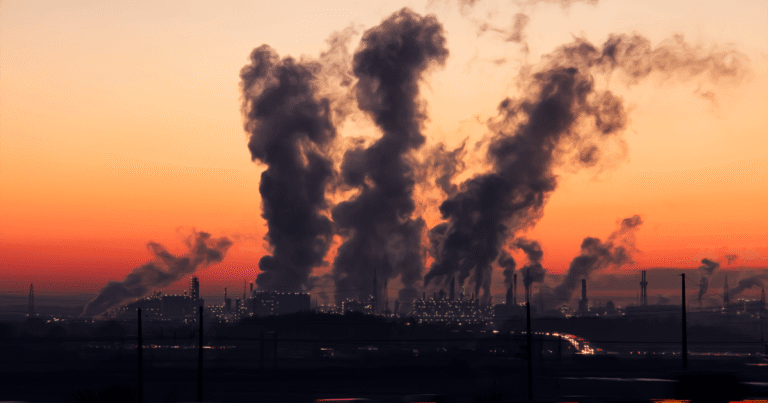](https://interfaithsustain.com/how-to-reduce-air-pollution/)
## [How to Reduce Air Pollution and Its Impacts on Our environment](https://interfaithsustain.com/how-to-reduce-air-pollution/)
- [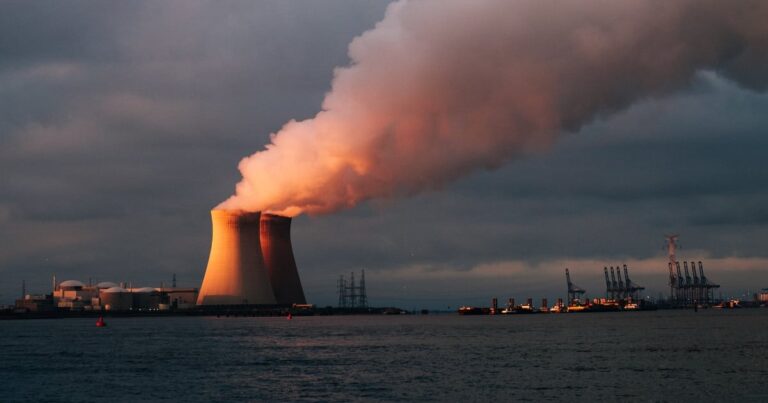](https://interfaithsustain.com/nuclear-pollution/)
## [The Effect of Nuclear Pollution on Our Health and Environment](https://interfaithsustain.com/nuclear-pollution/)
## The Causes of Nuclear Pollution
Nuclear pollution almost always occurs during nuclear power production. Nuclear power plants normally try to limit the amount of radioactive contamination that comes from their power plants, but there are still points in the production of nuclear energy where radioactive materials and nuclear waste can get into the environment.
### Nuclear Waste Disposal
One such point is during the disposal of nuclear waste. When fuel becomes no longer usable, nuclear power plants must dispose of the spent nuclear fuel. The spent fuel can have a half life of up to [four billion years](https://www.visionofearth.org/news/does-nuclear-waste-last-millions-of-years/), meaning that it will remain radioactive for four billion years. Wow!
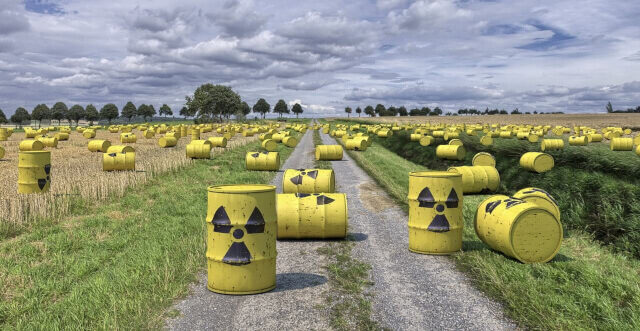[Source](https://pixabay.com/users/rabedirkwennigsen-578324/)
During the early years of nuclear energy, many people would dump nuclear waste in the ocean, which caused a great deal of nuclear pollution. However, [today](https://cen.acs.org/environment/pollution/nuclear-waste-pilesscientists-seek-best/98/i12) people are processing their spent fuel into more storable materials, in order to prevent them from leaking radioactive materials into the environment.
#### Nuclear Powerplant Meltdowns
One of the most catastrophic scenarios of nuclear pollution is nuclear meltdowns at nuclear power plants. There have only been a handful of these incidents at nuclear power plants throughout history, but the effects have been catastrophic. These incidents occur when the high levels of radioactivity get exposed to the outside world, effectively shutting down the plant and causing widespread, long term effects on the environment and human health.
## Nuclear Power Plant Disasters
### Chernobyl 1986
There have been several **nuclear power plant disasters**, but by far the most infamous and most devastating to public health is that of Chernobyl that happened 35 years ago. The disaster occurred in 1986 in modern day Ukraine when the power plant disabled the nuclear reactor’s power control system, but continued to run the nuclear reactor with low power. This caused a chain reaction that destroyed the reactor and caused eastern Europe to be contaminated with radioactive hazardous, nuclear materials and [air pollution](https://interfaithsustain.com/air-pollution-solutions/ "air pollution") affecting both tens of thousands of people and the environment.
[Source](https://unsplash.com/@ilja_nedilko/)
It is estimated that the nuclear reactor at Chernobyl exposed [1,600 square miles](https://www.britannica.com/explore/savingearth/chernobyl-disaster) to harmful radioactivity. Due to various cover up attempts, the total number of people who died because of radiation doses from Chernobyl remains debated. While the official death toll is 31, the [Union of Concerned Scientists](https://science.time.com/2011/04/22/how-many-did-chernobyl-kill-more-than-4000/) believe it could be as high as 12,000-57,000 deaths resulting from exposure to radioactivity from the Chernobyl reactor.
#### Fukushima 2011
The Fukushima incident is considered to be the second worst nuclear power plant disaster after Chernobyl. The incident occurred in 2011 in northern Japan when an earthquake created a tsunami that hit the plant and caused a power outage.
Because of the power outage the cooling systems started to fail. The excess heat in the nuclear reactors caused them to melt down. Despite efforts to cool down the nuclear reactors, there was an inevitable meltdown which caused [contamination in the environment](https://interfaithsustain.com/soil-pollution/).
Unlike after Chernobyl, Japan didn’t attempt a cover up of the disaster but instead immediately started evacuating people from the part of northern Japan surrounding Fukushima, as to avoid a public health contamination. Because of this, no one got exposed to a high level of radioactivity, only a small radiation dose that didn’t have a detrimental impact on human health.
However the radiation levels in the ocean surrounding the reactors rose significantly and continue to rise today. [Researchers](https://pubs.acs.org/doi/10.1021/es202816c) are still trying to determine how this radiation exposure will affect marine ecosystems and the deep geological ocean environment in the long run.
#### Learning from Nuclear Disasters
The World Nuclear Organization is comprised of various companies and stakeholders in the nuclear power industry and has the goal of promoting nuclear energy. [The WNO claims](https://www.world-nuclear.org/information-library/safety-and-security/safety-of-plants/chernobyl-accident.aspx#:~:text=It%20was%20a%20direct%20consequence%20of%20Cold%20War%20isolation%20and%20the%20resulting%20lack%20of%20any%20safety%20culture) that the meltdown of the nuclear reactors at Chernobyl “was a direct consequence of Cold War isolation and the resulting lack of any safety culture”, rather than the inherent risks of nuclear power itself.
However, when we look at Fukushima, we see that there was no human error that caused the reactor to breakdown and spill a high level of radioactive elements, hazardous material and contamination into northern Japan. The Fukushima reactor breakdown was due to a naturally occurring tsunami.
This shows that the risk of highly radioactive contamination from a reactor breakdown is not only caused by human error, and therefore can not be solved by proper nuclear reactor management. So, the use of nuclear power inherently poses the risk of a reactor breakdown and a high level of contamination.
The risk of a nuclear meltdown is present at every nuclear power plant in the world.
## The Jewish Community and Chernobyl Pollution
When the nuclear reactor in Chernobyl exploded in 1986, the immediate area was evacuated. However, nuclear pollution also affected the surrounding cities and villages, leading to a surge in reports of cancer cases by 1990. The Lubavitcher Rebbe, Rabbi Menachem M. Schneerson, sprang into action to save as many children as he could in a project that came to be called “Chabad’s Children of Chernobyl.”
[Dovid Margolin describes on Chabad.org](https://www.chabad.org/news/article_cdo/aid/3377542/jewish/30-Years-Since-Chernobyl-How-3000-Children-Were-Airlifted-Out-of-Nuclear-Disaster.htm) how the Rebbe’s quick action helped save 3,000 children:
In effect, the Rebbe’s reply was: “Children are becoming sick. We don’t have time to collect research and see what the long-term effects of exposure would be,” recalls Abi Raichik, who played a key part in establishing the project’s American office. “He said: You must do everything to rescue them.”
“Later, they started calling the resulting illnesses ‘Chernobyl AIDS,’ ” says Raichik. “The Rebbe responded to it before the problems had a name.”
As the Rebbe demonstrated, we can’t simply wait for governments or corporations to save us from nuclear pollution or other disasters. Religious leaders can bring moral clarity and mobilize their communities to step in before others even realize there’s a problem.
*\* Featured image [source](https://unsplash.com/@mcktrts/)*
**Categories:** Blog on Faith and Ecology, Pollution
**Tags:** Nuclear Pollution, Pollution
---
### [The Sources of Noise Pollution, its Effects and Solutions](https://interfaithsustain.com/sources-of-noise-pollution/)
**Published:** October 27, 2021
**Author:** ICSD
**Excerpt:** Sydney Cohen - Noise is the sound of life! Birds chirping, rain pattering, bells ringing, tractors chugging, dogs barking and babies crying all symbolize to us that we are part and parcel of society, of a greater life than just our own. So when and how do the sounds of life, that we all love, turn into noise pollution?
**Content:**
Table of Contents
Table of Contents
- [What are the Sources of Noise Pollution?](#aioseo-what-are-the-sources-of-noise-pollution-6)
- [Effects of Noise Pollution](#aioseo-effects-of-noise-pollution-15)
- [Effects of Noise Pollution on Humans](#aioseo-effects-of-noise-pollution-on-humans-19)
- [Effects of Noise Pollution on Children](#aioseo-effects-of-noise-pollution-on-children-25)
- [Effects of Noise Pollution on Wildlife and Ecosystems](#aioseo-effects-of-noise-pollution-on-wildlife-and-ecosystems-30)
- [World Health Organization Initiatives](#aioseo-world-health-organization-initiatives-35)
- [WHO Noise Pollution Guidelines](#aioseo-who-noise-pollution-guidelines-37)
- [WHO Government Recommendations](#aioseo-who-government-recommendations-41)
- [WHO Future Work](#aioseo-who-future-work-53)
- [Are Religions Increasing OR Decreasing Noise Pollution?](#aioseo-are-religions-increasing-or-decreasing-noise-pollution-63)
- [Simple Steps to Reduce Noise Pollution Harm](#aioseo-simple-steps-to-reduce-noise-pollution-harm-71)
*By Sydney Cohen* – Noise is the sound of life! Birds chirping, rain pattering, bells ringing, tractors chugging, dogs barking and babies crying all symbolize to us that we are part and parcel of society, of a greater life than just our own. So when and how do the sounds of life, that we all love, turn into noise pollution?
Noise pollution is a huge problem. According to the World Health Organization, more than one-third of people worldwide are exposed to noise levels higher than those deemed safe by WHO guidelines. Noise pollution can cause serious health problems such as hearing loss and heart disease and is deemed one of the most severe environmental threats to health by the WHO. In this blog post, we will discuss some common sources of noise pollution and how you can reduce your exposure to them, in order to protect your own human health and the marine ecosystems that are also affected!
**Noise pollution**, also known as **environmental noise** and **sound pollution**, refers to the spreading of noise which has ranging effects on the functioning of human or animal life. Worldwide pollution generated from outdoor noise is largely caused by machine systems, transportation, and transmission systems, that create loud noises.
In the United States, the highest rates of noise pollution are recorded in those communities in high-risk groups. High noise levels can contribute to human cardiovascular effects as well as increase the incidence of coronary artery disease.
In animals, noise causes the risk of dying by altering predator detection and avoiding, which then interferes with reproduction and navigation and contributes to permanent hearing loss. The vast majority of the noise produced by humans is concentrated in the ocean.
- [](https://interfaithsustain.com/prevention-of-air-pollution/)
## [Your Role in Contributing To The Prevention of Air Pollution](https://interfaithsustain.com/prevention-of-air-pollution/)
- [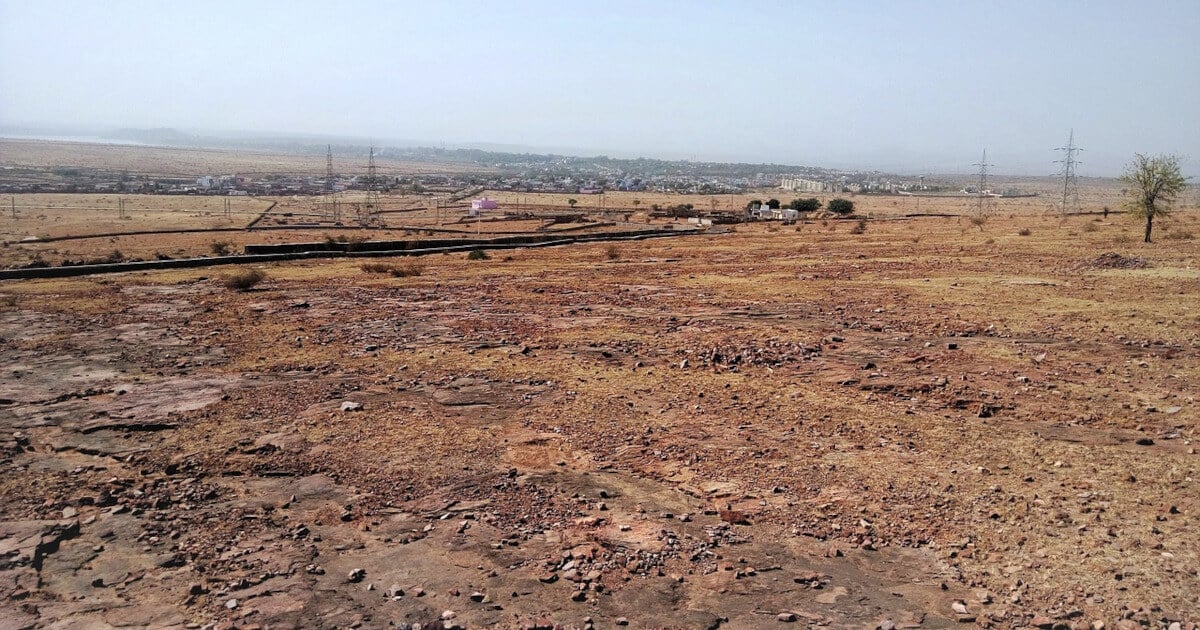](https://interfaithsustain.com/soil-pollution/)
## [What is Soil Pollution, & How Does it Affect Human Health?](https://interfaithsustain.com/soil-pollution/)
- [](https://interfaithsustain.com/air-pollution-solutions/)
## [What are Air Pollution Solutions to Promote Cleaner Air for All?](https://interfaithsustain.com/air-pollution-solutions/)
## What are the Sources of Noise Pollution?
Noise pollution has been a huge problem in many countries for decades. It is hard to escape from the constant noise that we hear every day caused by traffic, construction, and other sources of noise pollution. This can be a major annoyance and cause health problems for some people.
The sources of noise pollution are vast, but most commonly occur from car stereos while driving, construction and industrial equipment while building new buildings, airplanes while taking off and landing at an airport, loud neighbors who play music too loudly, traffic noise, noisy children playing outside all day long with no supervision by adults, people talking loudly during movies or sermons in churches – the list goes on and on.
[Source](https://pixabay.com/users/foto-rabe-715168/)
“Cities have become the epicenter” of various pollution sources, so that near cities and in urban areas, exposure to noise levels is high. Loud noise is considered noise pollution and is defined by the [WHO](https://www.iberdrola.com/environment/what-is-noise-pollution-causes-effects-solutions), as “**noise above 65 decibels (dB) is noise pollution.** To be precise, noise becomes harmful when it exceeds 75 decibels (dB) and is painful above 120 dB”. Despite these dangerous sound levels, it is frequent that city-dwellers experience noise around 80 dB and 90 dB on a regular basis.
Often, these loud sound levels result from industrial commercial equipment, vehicles and traffic noise, of which the frequency affects humans at night causing sleep disturbances when they are unable to sleep for the recommended amount of hours. Residential areas are particularly prone to these types of health effects as a result of traffic noise.
## Effects of Noise Pollution
The effects of noise pollution depend on the level of noise exposure that one experiences. High levels of noise pollution can have harmful, and even life-threatening effects. Noise pollution can cause hearing loss, high blood pressure, sleep disturbance, and stress.
### Effects of Noise Pollution on Humans
Noise from regular road traffic impairs the ability of adults to concentrate in front of a computer, which affects attention perception and focus abilities. Noise makes it difficult for sleepers. It is also dangerous when abrupt noises cause awakenings which a sleeper doesn’t sense or remember.
[Source](https://unsplash.com/photos/an-airplane-is-flying-in-the-blue-sky-_ciDodax1Ks)
Noise can trigger biological stress which then affects self-regulated chemicals to activate alertness in humans and stimulate an increase in arousal. Noise may have effects on conditions associated with **chronic stress** as well. Exposure to higher level street traffic noise is associated with a high risk of myocardial infarction and exposure to increased air traffic noise is associated with hypertension. Noise pollution can cause people to get into bed tired or feel restless in the morning.
**Hearing loss** caused primarily by loudspeakers is among the health risks associated with noise pollution in the United States, which can remarkably cause serious problems in breathing conditions. It can lead to a breakdown of memory, sleep deprivation, and disturbed sleep habits. It isn’t uncommon for people in major cities to hear all these sounds at once, such as traffic and air noise, plus other sounds of the city.
#### Effects of Noise Pollution on Children
Children also experience quite harmful health effects from noise pollution. It has been found that not only does noise pollution affect a child’s hearing, but also can cause digestion issues, such as digestive spasms, which can cause gastrointestinal problems. [Additionally](https://www.epa.gov/sites/default/files/2015-07/documents/ochp_noise_fs_rev1.pdf), noise pollution “can pose a serious threat to a child’s physical and psychological health, including learning and behavior.”
[Source](https://unsplash.com/@elyaspasban/)
In older children and teens, noise pollution can cause the development of learning disabilities, high blood pressure, resistance to insulin, attention deficit disorder, and ulcers caused by stress. It has also been found that even older children and adolescents can experience an increased risk of heart disease, as well as a variety of mental illnesses such as anxiety and depression.
#### Effects of Noise Pollution on Wildlife and Ecosystems
Noise pollution sound level is measured in decibels, and it has been found that the effects of noise pollution are also felt by our wildlife friends, particularly in the [marine environment](https://interfaithsustain.com/why-are-coral-reefs-important/). Noise pollution causes serious **damage to ecosystems**, as it can interfere with many species’ breeding cycles. Animals such as whales and dolphins, which are incredibly sensitive to sound levels, also experience health effects from exposure to noise pollution. Because of the incredibly large distance that sound frequency can travel, marine animals often experience the most adverse effects of noise pollution because they cannot hear their predators or prey. [Additionally](https://awionline.org/sites/default/files/uploads/documents/Weilgart_Biodiversity_2008-1238105851-10133.pdf), “decreased species diversity in whales and dolphins was related to an increase in seismic noise”.
The pressure of sounds in an underwater environment drastically affects the hearing of **marine species**, and it is particularly exacerbated in bodies of water near construction, cities, and residential and urban spaces.
## World Health Organization Initiatives
The World Health Organization (WHO) has announced that noise pollution is now considered to be a public health issue. WHO initiatives include raising awareness of the dangers of noise pollution, promoting legislation on limiting exposure levels, and encouraging more research into the effects of sound waves on human health.
### WHO Noise Pollution Guidelines
They [state](https://www.noiseoff.org/document/comnoise.1.pdf), “The scope of WHO’s effort to derive guidelines for community noise is to consolidate actual scientific knowledge on the health impacts of community noise and to provide guidance to environmental health authorities and professionals trying to protect people from the harmful effects of noise in non-industrial environments. Guidance on the health effects of noise exposure of the population has already been given in an early publication of the series of Environmental Health Criteria. The health risk to humans from exposure to environmental noise was evaluated and guidelines values derived”.
They have released a WHO guideline for community noise that provides recommendations on how to deal with environmental noise in order to prevent adverse health effects. WHO suggests implementing various strategies, such as education, regulation, and economic incentives in order to reduce noise pollution levels in communities.
All of their guidelines aim to promote noise reduction, lower sound levels, reduce noise-induced health consequences and loud sounds that can be managed, and regulate commercial and industrial noise levels. These guidelines work to control the harmful effects of noise pollution that humans and animals are exposed to.
#### WHO Government Recommendations
The WHO recommends that:
- Governments should protect the population from community noise and consider it an integral part of their policy of [environmental protection](https://interfaithsustain.com/environmental-progress-sustainable-energy/).
- Governments should consider implementing action plans with short-term, medium-term and long-term objectives for reducing noise levels.
- Governments should adopt the Health Guidelines for Community Noise values as targets to be achieved in the long-term.
- Governments should include noise as an important public health issue in environmental impact assessments.
- Legislation should be put in place to allow for the reduction of sound levels.
- Existing legislation should be enforced.
- Municipalities should develop low noise implementation plans.
- Cost-effectiveness and cost-benefit analyses should be considered potential instruments for meaningful management decisions.
- Governments should support more policy-relevant research.
#### WHO Future Work
The WHO also believes that in the future, they should:
- Provide leadership and technical direction in defining future noise research priorities.
- Organize workshops on how to apply the guidelines.
- Provide leadership and coordinate international efforts to develop techniques for designing supportive sound environments (e.g. “soundscapes”).
- Provide leadership for programs to assess the effectiveness of health-related noise policies and regulations.
- Provide leadership and technical direction for the development of sound methodologies for environmental and health impact plans.
- Encourage further investigation into using noise exposure as an indicator of [environmental deterioration](https://interfaithsustain.com/environmental-degradation-and-the-future-of-our-planet-earth/) (e.g. black spots in cities).
- Provide leadership and technical support, and advise developing countries to facilitate development of noise policies and noise management.
## Are Religions Increasing OR Decreasing Noise Pollution?
Religions themselves can be sources of noise pollution. Noise pollution can arise from prayers and music being broadcast over loudspeakers or simply when there are many religious people celebrating together. There can be excessive noise from religiously inspired fireworks and even from people driving on pilgrimages and honking their way to heaven.
Part of the controversy comes from the question of whether there is favoritism in which religions are allowed to produce noise. [This came up for debate in England ](https://www.researchgate.net/publication/265148054_Sacred_Space_and_the_City_Religious_Buildings_and_Noise_Pollution)where there was a “furor over the recent decision by a mosque in Oxford, England, to obtain permission from the local council to amplify its call to prayer (azan). The prospect of a muezzin’s call overlaying the peal of church bells in the so-called ‘**city of dreaming spires**‘ sparked national controversy.” When considering religious sources of noise, we need to be sensitive to our own biases that may lead us to feel that one source of noise is ok, but an equally loud source is not.
An NGO called “**Sanskar India Foundation**” is helping to reduce religious noise pollution through educating children and empowering them to become what Director Kiran Madan refers to as “change-agents.”
“In January, we took children outside where traffic signals are and asked them to spread awareness about noise pollution. They talked about it with people stuck in traffic and that worked out well. Our kids are now stopping their parents from honking, they have even stopped buying fire crackers during festivals that are noisy in order to cut down on noise level. These are some changes we have witnessed as the positive effects of our campaigns and initiatives,” [said Kiran](https://www.shethepeople.tv/news/why-is-noise-pollution-and-religion-such-a-touchy-subject/).
**Apostle Johnson Suleman** advises, “work hard in silence, let your success make the noise.” In many religions there is a sensitivity to the awareness that bigger is not always better and louder is not always more important.
This is captured poignantly in God’s revelation to **Elijah** the prophet: “Then He said, “Go out, and stand on the mountain before the Lord. And behold, the Lord passed by, and a great and strong wind tore into the mountains and broke the rocks in pieces before the Lord, but the Lord was not in the wind; and after the wind an earthquake, but the Lord was not in the earthquake; and after the earthquake a fire, but the Lord was not in the fire; and after the fire \[a\]a still small voice.” (1 Kings 19:11-13 KJV)
The world is full of noise pollution. It is up to the spiritual seeker to reduce their own noise pollution so we can all hear the “still small voice” of God.
### Simple Steps to Reduce Noise Pollution Harm
In many parts of the world, it’s easy to find yourself exposed to noise pollution. From loud music at a concert or bar to traffic on your morning commute, there are many sources of noise that can be harmful to you and those around you. To minimize exposure and protect your health – especially if you suffer from hearing loss or heart problems – try these ways to reduce noise levels in different environments:
- In bars with live bands, arrive early so as not to have an extremely long wait before the show begins,
- If possible use earplugs when traveling by plane,
- Consider using outside air conditioning units instead of window units,
- Keep windows closed during construction work near your home and
- Avoid working out close to busy streets.
Together we can reduce the harmful impacts of noise pollution and start taking care of ourselves and others!
*\* Featured image [source](https://pixabay.com/users/stux-12364/)*
*Interested in learning more about pollution? Check out this blog post on [Air Pollution](https://interfaithsustain.com/air-pollution-solutions/)*.
**Categories:** Blog on Faith and Ecology, Pollution
**Tags:** Noise Pollution
---
### [Understanding the Effects of Thermal Pollution and Possible Solutions](https://interfaithsustain.com/thermal-pollution/)
**Published:** September 24, 2021
**Author:** ICSD
**Excerpt:** Abby Rabinowitz - While fossil fuels have become widely recognized as a major source of pollution, far less attention has been devoted to thermal pollution. Thermal pollution occurs when water used to cool power plants and factories is released into the environment at a higher temperature.
**Content:**
Table of Contents
Table of Contents
- [What is Thermal Pollution?](#aioseo-what-is-thermal-pollution-2)
- [Thermal Pollution in The USA](#aioseo-thermal-pollution-in-the-usa-5)
- [The Effects of Thermal Pollution](#aioseo-the-effects-of-thermal-pollution-7)
- [The Effects of Thermal Shock](#aioseo-the-effects-of-thermal-shock-9)
- [Why is Thermal Pollution Harmful to Ecosystems?](#aioseo-why-is-thermal-pollution-harmful-to-ecosystems-13)
- [Regulatory Framework for Thermal Pollution](#aioseo-regulatory-framework-for-thermal-pollution-16)
- [Regulatory Framework for Thermal Pollution In Practice](#aioseo-regulatory-framework-for-thermal-pollution-in-practice-21)
- [Solutions To Thermal Pollution](#aioseo-solutions-to-thermal-pollution-23)
- [Enforce Regulations to Prevent Thermal Pollution](#aioseo-enforce-regulations-to-prevent-thermal-pollution-27)
- [Raise Awareness about Thermal Pollution](#aioseo-raise-awareness-about-thermal-pollution-31)
- [Religion and Thermal Pollution](#aioseo-religion-and-thermal-pollution-33)
*By Abby Rabinowitz* – While fossil fuels have become widely recognized as a major source of pollution, far less attention has been devoted to **thermal pollution**. Thermal pollution occurs when water used to cool power plants and factories is released into the environment at a higher temperature. Although this water is typically clean, it nevertheless causes significant environmental problems, such as harm to **aquatic life**, disrupted ecosystems and climate change.
## What is Thermal Pollution?
Thermal pollution is pollution caused by adding heat to an ecosystem which adversely impacts the ecosystem. The U.S. Geologic Survey’s report [Estimated Use of Water in the United States in 2005](https://www.usgs.gov/mission-areas/water-resources/science/water-use-united-states?qt-science_center_objects=0#qt-science_center_objects) estimates that power plants and industrial facilities withdraw approximately 219 billion gallons of cold water per day from surrounding ecosystems.
The primary purpose of this water is for cooling of industrial processes, which generate heat. In the U.S., about [75 to 82](https://en.wikipedia.org/wiki/Thermal_pollution) percent of thermal pollution is generated by **power plants**. Other sources of thermal pollution may include: a nuclear power plant, coal power plant, industrial waste, petroleum refineries, sewage, pulp and paper mills, chemical plants, steel mills, smelters, hydro-electric power, and a thermal power plant. The water being returned by any of these systems can cause temperature changes and have detrimental effects on an [aquatic ecosystem](https://interfaithsustain.com/why-are-coral-reefs-important/) as well as aquatic animals.
### Thermal Pollution in The USA
As of 2013, an estimated 1,260 facilities in the U.S. withdrew at least 2 million gallons per day of cooling water. Unlike a typical boiler system that reuses the same water over and over in a closed loop system, these facilities typically utilize “once-through” cooling systems that use cooling water once and immediately return it to the environment. **Once-through cooling systems** have been shown to return water at an average temperatures of 10 degrees Celsius warmer than above the ambient water temperature! As of 2014, there are over 1,200 facilities in the U.S alone which are using once-through cooling systems, however this is also a major global issue. By pumping this warm water into ecosystems, thermal pollution heats up surrounding water, greatly harming surrounding ecosystems.
- [](https://interfaithsustain.com/is-nuclear-energy-renewable/)
## [A Controversial Energy Source: Is Nuclear Energy Renewable?](https://interfaithsustain.com/is-nuclear-energy-renewable/)
- [](https://interfaithsustain.com/nuclear-pollution/)
## [The Effect of Nuclear Pollution on Our Health and Environment](https://interfaithsustain.com/nuclear-pollution/)
- [](https://interfaithsustain.com/factory-pollution/)
## [Factory Pollution Is a Leading Global Environmental Problem](https://interfaithsustain.com/factory-pollution/)
## The Effects of Thermal Pollution
Over millions of years, ecosystems have adapted to the Earth’s many changes. However, these changes occurred over long periods of time, far slower than what is happening right now as a result of thermal pollution. When the water temperature increases in a given area by even a few degrees Celsius, there can be significant implications for the present **aquatic ecosystem**.
### The Effects of Thermal Shock
Sudden temperature changes can cause **thermal shock**, hurting plants, fish and other marine animals. This is because waste heat from the cooling process in power stations and power plants generates and discharges warm water, which in turn decreases oxygen levels, killing fish, changing the composition of food chains, and reducing the biodiversity of the ocean ecosystems. Furthermore, higher water temperatures reduce the capacity for oxygen to reach deeper waters, majorly decreasing the water quality for aquatic species. This creates anaerobic conditions which are more suitable to bacteria, shifting the balance of the food chain and overall ecosystem.
### Why is Thermal Pollution Harmful to Ecosystems?
Why is warmer water so harmful to ecosystems? For starters, a warmer water temperature results in less oxygen in the water than in cooler water. The lack of oxygen kills fish and other aquatic species, while at the same time promoting anaerobic conditions that enable bacteria to thrive.
A prime example of this phenomenon exists in the [Gulf of Mexico](https://www.epa.gov/ms-htf/northern-gulf-mexico-hypoxic-zone), where discharges from nearby rivers has created a hypoxic “dead zone” that has grown to 6,334 square miles or more than 4 million acres now uninhabitable by fish. An estimated 79 billion fish and other marine animals are killed every year in California waters alone as a result of thermal pollution! This shockingly high number attests to the detrimental impacts of thermal pollution in just one ecosystem.
#### **Regulatory Framework for Thermal Pollution**
Thermal pollution falls under the auspices of the [Clean Water Act](https://www3.epa.gov/region1/npdes/merrimackstation/pdfs/ar/AR-338.pdf), which was enacted in 1948 and expanded in 1972. Section 316(a) governs sources of pollution with thermal discharges and empowers the U.S. Environmental Protection Agency (EPA) to regulate thermal discharges through National Pollutant Discharge Elimination System (NPDES) permitting authority.
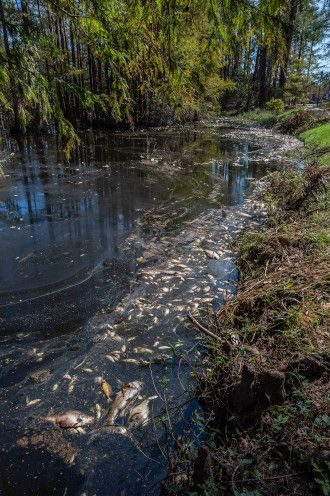[Source](https://unsplash.com/@weanimalsmedia/)
The EPA has in turn delegated permitting authority to 46 states. The process requires power plants and factories to apply for discharge permits and obtain variances when proposed discharge amounts exceed statutory levels. Importantly, section 316(a) of the **Clean Water Act** prohibits plants without variance permits from raising river temperatures above threshold limits to the extent that electricity generation may need to be curtailed.
#### **Regulatory Framework for Thermal Pollution In Practice**
So if a regulatory process is already in place, why does such a problem exist? In theory, plants are obligated to submit detailed supporting information to prove that proposed thermal discharges will not adversely impact [surrounding environments and biodiversity](https://interfaithsustain.com/why-is-biodiversity-important/), and regulators are supposed to provide variances only under environmentally acceptable conditions. Unfortunately, as reported in a 2013 Office of the Inspector General [audit of the Environmental Protection Agency (EPA)](https://www.epa.gov/sites/default/files/2015-09/documents/20130523-13-p-0264.pdf), many permits have been granted as a result of deficient oversight. For example, 55% of the permits reviewed under this study did not contain detailed justifications for a state’s decision to approve a variance. Also, some variances were granted on the basis that facilities would collect data on environmental impacts rather than require them to install the best available technology.
## Solutions To Thermal Pollution
The clearest solution is to stop discharging warmer water back into ecosystems.
But how?
An obvious step is to mandate that power plants and factories restore cooling water to its original temperature. An aspirational step would be to utilize the heated water to fuel other beneficial processes such as heating. Unfortunately, these extra steps are costly and would involve added costs for new plants and cumbersome retrofitting of existing plants. Such changes requires regulatory foresight and intervention.
## Enforce Regulations to Prevent Thermal Pollution
As a first step, the EPA needs to do its part to enforce existing regulations. We need stricter enforcement of all new permit and variance applications to ensure that new projects conform to existing standards.
Secondly, the EPA should revisit existing permits that may be deficient and mandate immediate improvements.
Thirdly, we should evaluate whether existing regulations are strict enough. For example, in the U.S., many states have regulations that cooling water discharge temperature can be no more than 30°C-40°C. However, in many cases, this high temperature is still far warmer than the natural temperature of surrounding lakes, streams, rivers, and oceans.
### Raise Awareness about Thermal Pollution
Finally, we need to publicize the message about thermal discharge in order to achieve awareness similar to [fossil fuels](https://interfaithsustain.com/environmental-sustainability/), which will in turn help to bring about important and necessary changes.
## Religion and Thermal Pollution
Changing the temperature of water does not seem like a significant issue as compared with [water pollution](https://interfaithsustain.com/what-are-the-causes-of-water-pollution/), but as this blog post has made clear, thermal pollution is a major issue that must be dealt with to protect our bodies of water and the aquatic organisms living within them.
In Judaism, there are laws concerning heating up water on the Sabbath. These laws help sensitize one to the awareness that heating up water is a basic part of our lives, and yet it is also extremely powerful. Many of us know someone who has been harmed by scalding hot water, or maybe it has even happened to us. Religious reminders as to the power and responsibilities of heating up water in our personal lives can help reinforce the importance of monitoring its regulation on an industrial scale.
May we recognize the blessing of having warm water and be vigilant in ensuring that thermal pollution does not harm our precious ecosystems.
*\* Featured image [source](https://unsplash.com/@jankolar/)*
*Interested in learning more about pollution? Check out this blog post on [Air Pollution](https://interfaithsustain.com/air-pollution-solutions/)*.
**Categories:** Blog on Faith and Ecology, Pollution
**Tags:** Thermal Pollution, Water Pollution
---
### [The Environmental Impacts of Nitrogen Pollution](https://interfaithsustain.com/nitrogen-pollution/)
**Published:** June 22, 2022
**Author:** ICSD
**Excerpt:** Harry Cooper - Nitrogen, or N2, makes up 80% of our atmosphere. Nitrogen is one of the most common elements on Earth, and is essential for plant growth all over the world.
**Content:**
Table of Contents
Table of Contents
- [The Environmental Impacts of Nitrogen](#aioseo-the-environmental-impacts-of-nitrogen-3)
- [Nitrogen Pollution in the Air](#aioseo-nitrogen-pollution-in-the-air-8)
- [Nitrogen Dioxide](#aioseo-nitrogen-dioxide-10)
- [Health Affects of Nitrogen Dioxide](#aioseo-health-affects-of-nitrogen-dioxide-16)
- [Short Term Effects](#aioseo-short-term-effects-18)
- [Long Term Effects](#aioseo-long-term-effects-20)
- [Acid Rain](#aioseo-acid-rain-23)
- [Nitrogen Pollution in the Water](#aioseo-nitrogen-pollution-in-the-water-27)
- [Nitrogen and Agriculture](#aioseo-nitrogen-and-agriculture-29)
- [The Effects of Nitrogen Pollution in Water](#aioseo-the-effects-of-nitrogen-pollution-in-water-37)
- [Eutrophication](#aioseo-eutrophication-39)
- [Eutrophication and Human Health](#aioseo-eutrophication-and-human-health-46)
- [Religion and Nitrogen Pollution](#aioseo-religion-and-nitrogen-pollution-53)
*By Harry Cooper* – Nitrogen, or N2, makes up [80%](https://unece.org/reactive-nitrogen) of our atmosphere. Nitrogen is one of the most common elements on Earth, and is essential for plant growth all over the world.
So if nitrogen is a prominent naturally occurring substance that helps plants grow, how could it be so bad for the environment? The answer lies in reactive nitrogen compounds. These compounds are [forms](https://www.umweltbundesamt.de/en/topics/air/reactive-nitrogen) of nitrogen attached to other elements, such as **ammonia**, **nitrous oxide**, and **nitrate**.
## The Environmental Impacts of Nitrogen
These reactive nitrogen compounds come from various sources of human activity such as fossil fuel emissions and overuse of chemical fertilizers, which have given us a very large nitrogen footprint. When these nitrogen compounds get into the environment they produce a variety of environmental impacts, everything from killing off wildlife to harming human health.
[Source](https://unsplash.com/@anniespratt)
**Nitrogen pollution** can occur both in the air and in the water, both with their own unique effects. But regardless of where nitrogen pollution is being released, if we want to protect ourselves and the planet, we need to look for solutions to nitrogen pollution.
### Nitrogen Pollution in the Air
Nitrogen [air pollution](https://interfaithsustain.com/air-pollution-solutions/) is a result of **nitrogen based greenhouse gas emissions**. These emissions are responsible for everything from acid rain to increased respiratory diseases.
#### Nitrogen Dioxide
Nitrogen dioxide is the specific type of reactive nitrogen compound and potent greenhouse gas that causes nitrogen based air pollution. This chemical comes almost exclusively from [sources](https://www.lung.org/clean-air/outdoors/what-makes-air-unhealthy/nitrogen-dioxide) that burn fossil fuels, such as cars, trucks, buses, power plants, diesel powered machinery, and other engine based equipment.
- [](https://interfaithsustain.com/prevention-of-air-pollution/)
## [Your Role in Contributing To The Prevention of Air Pollution](https://interfaithsustain.com/prevention-of-air-pollution/)
- [](https://interfaithsustain.com/how-to-reduce-air-pollution/)
## [How to Reduce Air Pollution and Its Impacts on Our environment](https://interfaithsustain.com/how-to-reduce-air-pollution/)
- [](https://interfaithsustain.com/air-pollution-solutions/)
## [What are Air Pollution Solutions to Promote Cleaner Air for All?](https://interfaithsustain.com/air-pollution-solutions/)
With all the fossil fuels we burn, we emit a massive amount of carbon dioxide and nitrogen dioxide; it is estimated that the US can emit up to 14 million metric tons of nitrogen dioxide in a year.
These emissions are primarily located in dense cities and over busy roads. However, indoor nitrogen pollution can also be an issue for houses with gas stoves or gas heaters. These emit considerable amounts of nitrogen dioxide, and can create harmful indoor air pollution.
### Health Affects of Nitrogen Dioxide
Nitrogen dioxide emissions are incredibly dangerous for [public health](https://www.epa.gov/no2-pollution/basic-information-about-no2). These affects can be short term or long term, but any amount of over exposure could have serious human health costs.
### Short Term Effects
Short term exposure to **nitrogen dioxide emissions** causes irritation in the respiratory system. This can lead to coughing, labored breathing, and wheezing. While these may not seem too serious, people with pre-existing respiratory diseases such as asthma, could end up being hospitalized, even as a result of short term exposure.
#### Long Term Effects
Long term exposure can end up causing respiratory diseases, such as asthma and respiratory infections. While everyone is at risk of developing these medical conditions, children and the elderly are known to be at greater risk.
If we do not decrease nitrogen pollution, these health impacts will become even worse. It is even more concerning when we look at the fact that nitrogen dioxide is so prevalent in our society. Cars and other vehicles are constantly filling our cities with this toxic gas, and thanks to indoor air pollution from gas based appliances, we may not even be safe from it in our own homes.
### Acid Rain
Reactive nitrogen compounds are also in part responsible for another environmentally devastating phenomenon, [acid rain](https://www.usgs.gov/special-topics/water-science-school/science/acid-rain-and-water). One of the main ingredients of **acid rain** is nitrous oxide emissions.
When these nitrous oxide emissions mix with water vapor in the air they form water particles that are inherently more acidic than normal. These acidic water particles eventually form clouds and fall to the ground as acid rain. Acid rain can have some serious environmental consequences. When it falls into water bodies, it can kill off marine animals that aren’t used to such high levels of acidity.
When acid rain falls over land it can have some devastating impacts on plant life and soil quality. Acid rain has been known to [devastate forests](https://interfaithsustain.com/consequences-of-deforestation/), sometimes only leaving behind blackened trees with limbs stripped of leaves. Acid rain also throws off the pH balance of soils. While the soil in some places is capable of recovering, many places have become much less capable of supporting plant life due to increased acidity in the soil.
## Nitrogen Pollution in the Water
Excess nitrogen can also have devastating effects on marine life and environments when it gets into bodies of water. While air based nitrogen pollution comes from nitrogen gas emissions, nitrogen pollution in our world’s water supplies comes mainly from synthetic nitrogen fertilizers used in agriculture and [food production](https://interfaithsustain.com/food-production/).
### Nitrogen and Agriculture
In order to improve crop yields many farmers use nitrogen and phosphorus based [fertilisers](https://www.epa.gov/nutrientpollution/sources-and-solutions-agriculture#:~:text=This%20excess%20nitrogen%20and%20phosphorus,cause%20eutrophication%20of%20water%20bodies.). While these [fertilisers help produce more food](https://interfaithsustain.com/green-revolution-definition/), when it rains the nitrogen in these synthetic nitrogen fertilisers gets into rain water run off and eventually finds its way into bodies of water and marine environments.
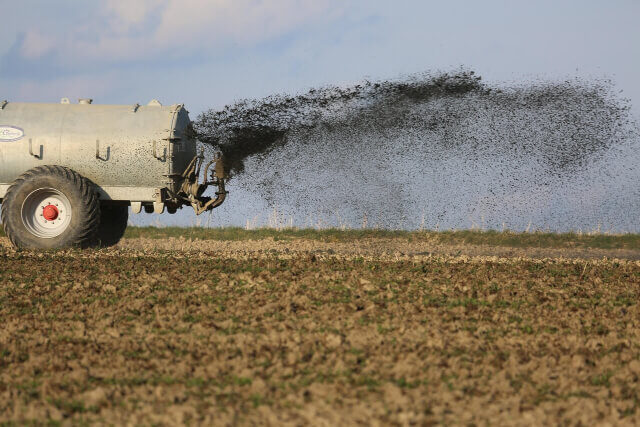[Source](https://pixabay.com/users/schauhi-2509795/)
The amount of nitrogen pollution released due to the use of chemical fertilisers is massive, but by using more environmentally conscious fertilising techniques, farmers can help to reduce nitrogen runoff. By using fertilisers in moderation and only at certain times of the year farmers can reduce nitrogen pollution that is produced by their farms.
Farmers can also plant cover crops in off seasons and plant trees and shrubs around the edges of their fields. These types of plants are capable of absorbing and preventing run off water. This lets the farms take up the nitrogen that would go to polluting our water systems.
### The Effects of Nitrogen Pollution in Water
While farmers are capable of reducing their nitrogen footprint, the agricultural industry as a whole is still responsible for massive amounts of nitrogen [ending up in bodies of water throughout the world](https://interfaithsustain.com/effects-of-water-pollution/ "ending up in bodies of water throughout the world"). This excess nitrogen has a lot of big impacts on marine life and human health, the most notable one being eutrophication.
### Eutrophication
[Eutrophication](https://interfaithsustain.com/types-of-water-pollution/) is the process by which excessive nutrients, such as synthetic nitrogen fertilisers make marine environments unsuitable for life. And thanks to the huge amount of nitrogen used in our agriculture industry, more and more places are undergoing eutrophication every day.
Eutrophication starts when the excess nitrogen enters a lake, pond, or coastal ecosystem. The extra nutrients allow for large population explosions of algae called algal blooms.
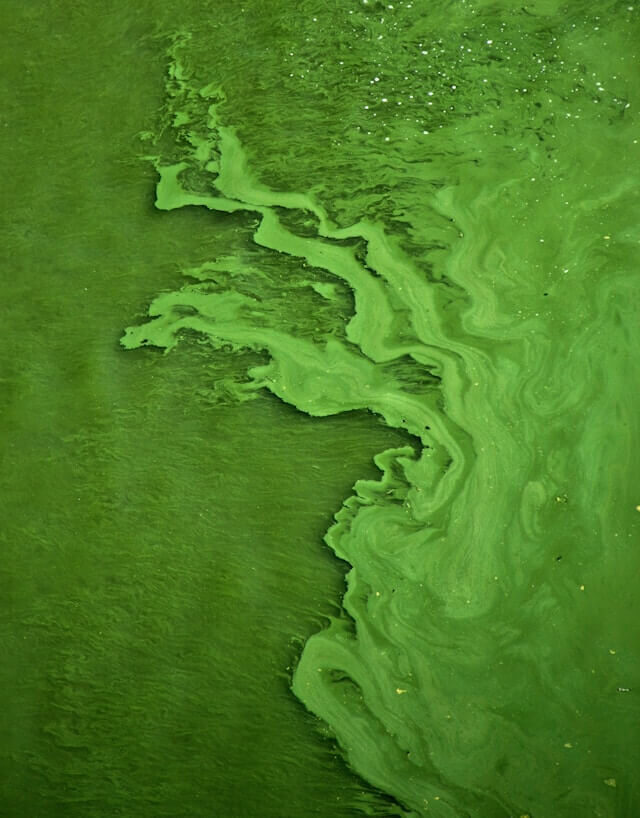[Source](https://unsplash.com/@mihaly_koles)
These algal blooms fill the water with all kinds of algae and phytoplankton. When these algal blooms die they sink to the bottom of the water. There, other microorganisms begin to decompose the giant [algal blooms](https://interfaithsustain.com/how-to-stop-ocean-acidification/). This process of decomposition uses up large amounts of oxygen. When big enough algal blooms die they can entirely deplete the water of oxygen, creating an anaerobic or hypoxic environment called a dead zone.
It is almost impossible for anything to survive when nitrogen pollution creates these dead zones. Sometimes these dead zones can take up entire swaths of coastline, killing hundreds of plants and animals.
### Eutrophication and Human Health
Eutrophication and nitrogen pollution are capable of killing off large amounts of marine plants and animals and making large areas of water unlivable. Along with this, eutrophication can have some serious affects on [human health](https://www.nature.org/en-us/about-us/where-we-work/united-states/new-york/stories-in-new-york/long-island-water-quality/what-is-nitrogen-pollution-/).
Most of the human health risks of eutrophication come from the different types of algae blooms that occur when water becomes nitrogen polluted. Many of the different kinds of algae that occur at nitrogen pollution sites are incredibly toxic to humans, and many places have had to ban humans from coming into contact with eutrophicated water.
One of the more notorious algae species associated with eutrophication is the red tide algae, named after its abilities to turn entire coastlines a rusty red color. Red tide algae produces powerful neurotoxins that poison the animals that eat them. Many coastlines that were once popular for catching shellfish and crustaceans have now been closed off, as when humans ingest these infected shellfish they can become exposed to the neurotoxins produced by the red tide.
Another dangerous algae that can result from eutrophication is blue green algae. Blue green algae is one of the more toxic types of algae that poisons wildlife, pets, livestock, and humans, whenever they come into contact with it. When blue green algal blooms arise in a body of water, there is no choice but to prevent anyone from coming into contact with the water.
## Religion and Nitrogen Pollution
An article in America: The Jesuit Review describes how a [“plant-based diet can help us meet Pope Francis’ ‘Laudato Si’ challenge.'”](https://www.americamagazine.org/politics-society/2022/03/14/meat-industry-vegetarianism-laudato-si-242456) [Mary E. McGann](https://www.americamagazine.org/voices/mary-e-mcgann), the author, writes about how consuming less animal products can help us protect the water from nitrogen pollution. She describes how “phosphorus and nitrogen pollution, which is released in high volumes by slaughterhouses, has created a huge [‘dead zone’ in the Gulf of Mexico](https://www.noaa.gov/news-release/larger-than-average-gulf-of-mexico-dead-zone-measured), larger than the size of Connecticut, which strips the water of oxygen, forcing fish to flee or suffocate.” Reducing our consumption of industrial meat and supporting farmers who are sustainably growing grass-fed cattle is a great way to combat climate change and live in sync with our religious values.
God only gave us one planet, let’s do everything we can to protect it.
*\* Featured image [source](https://unsplash.com/@dylu)*
**Categories:** Blog on Faith and Ecology, Pollution
**Tags:** Nitrogen Pollution
---
### [Nutrient Pollution Is Destroying Our Aquatic Ecosystems](https://interfaithsustain.com/nutrient-pollution/)
**Published:** June 17, 2022
**Author:** ICSD
**Excerpt:** Sydney Cohen - According to the National Ocean and Atmospheric Administration (NOAA), "nutrient pollution is the process where too many nutrients, mainly nitrogen and phosphorus, are added to bodies of water and can act like fertilizer, causing excessive growth of algae."
**Content:**
Table of Contents
Table of Contents
- [Eutrophication Process](#aioseo-eutrophication-process-2)
- [What are the Effects of Nutrient Pollution?](#aioseo-what-are-the-effects-of-nutrient-pollution-6)
- [Algal Blooms](#aioseo-algal-blooms-16)
- [What are the Solutions for Nutrient Pollution?](#aioseo-what-are-the-solutions-for-nutrient-pollution-25)
- [How You Can Take Action!](#aioseo-how-you-can-take-action-39)
- [Nutrient Pollution and Religion](#aioseo-nutrient-pollution-and-religion-42)
*By Sydney Cohen* – According to the National Ocean and Atmospheric Administration ([NOAA](https://oceanservice.noaa.gov/facts/nutpollution.html#:~:text=Nutrient%20pollution%20is%20the%20process,and%20garden%20fertilizers%20are%20used.)), “**nutrient pollution** is the process where too many nutrients, mainly nitrogen and phosphorus, are added to bodies of water and can act like fertilizer, causing excessive growth of algae.**“**
### Eutrophication Process
**Eutrophication**, or a body of water’s excessive richness of nutrients, promotes harmful algal growth. Sources of nutrient pollution include surface runoff from agricultural production and pasture, chemical fertilizers, septic systems, sewage treatment plants, and combustion.
Waste from sewage is mainly responsible for eutrophication because it contains many nutrients, particularly excess nitrogen and phosphorus, in addition to harmful bacteria that harm our water quality. Releasing untreated water into large bodies of water can also be called wastewater dumping, which is an issue that takes place throughout the world.
Often, much nutrient pollution occurs in our coastal waters, as a result of urban nutrient runoff. According to the [NOAA](https://oceanservice.noaa.gov/facts/nutpollution.html#:~:text=Nutrient%20pollution%20is%20the%20process,and%20garden%20fertilizers%20are%20used.), “because there are increasingly more people living in coastal areas, there are more nutrients entering our coastal waters from wastewater treatment facilities, runoff from land in urban areas during rains, and from farming.” As mentioned, nutrient pollution most frequently comes from human activities and results in harmful algal blooms, which in turn, affect water quality, plant growth, and aquatic life, and can be harmful to human health.
## What are the Effects of Nutrient Pollution?
Human activities contribute to eutrophication through the enrichment of nutrients in the water. It stimulates a wide variety of marine and terrestrial organisms, allowing algae to grow in places that it naturally would not. Nutrient pollution disturbs the natural balance in aquatic systems by damaging natural nutrient content. Excessive nutrients dramatically affect water networks and food webs in [lakes, rivers, and coastal ecosystems.](https://interfaithsustain.com/effects-of-water-pollution/) The system thus becomes dominated by phytoplankton, as phytoplankton communities feed on nutrients.
As one can concur, nutrient pollution has many harmful effects on our aquatic ecosystems. Continue reading to find out more about this environmental issue, and how we can work at reducing nutrient pollution. Typically, nutrients promote growth on land which can be incredibly beneficial to agricultural and farming industries. However, when these nutrients enter our water, they do not have the same advantages.
The basic concepts of nutrient-polluting can be easily explained. Nitrogen and phosphorous are naturally found in the soil and in our airways. They are mainly used as fertilizer by humans. Agricultural fertilization enhances growth on the land, and as we’ve seen with nutrient pollution, also in the oceans. At certain levels, nitrogen is causing algal population growth to take place more rapidly. As algae become degraded, they consume oxygen, which affects the vitality of other aquatic organisms such as fish, that rely on the oxygen in the water for survival.
[](https://www.pexels.com/photo/brown-and-green-grass-on-water-4828155/)[Source](https://www.pexels.com/photo/brown-and-green-grass-on-water-4828155/)
- [](https://interfaithsustain.com/urban-runoff/)
## [Urban Runoff Pollutes Our Rivers](https://interfaithsustain.com/urban-runoff/)
- [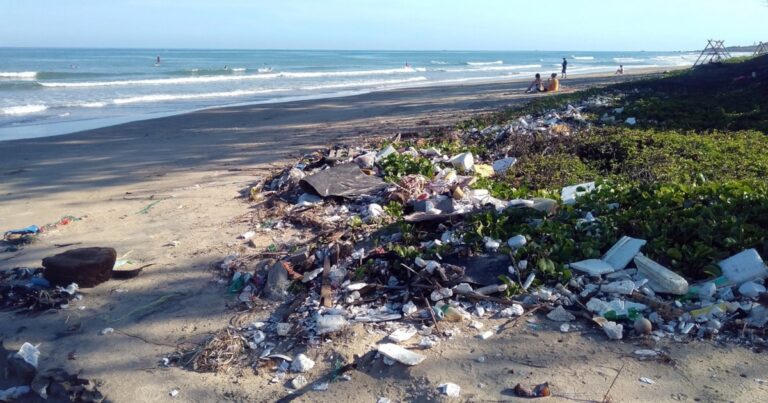](https://interfaithsustain.com/ocean-cleanup/)
## [Innovative Technology For An Ocean Cleanup](https://interfaithsustain.com/ocean-cleanup/)
- [](https://interfaithsustain.com/is-rain-water-safe-to-drink/)
## [In Your Opinion, Is Rain Water Safe to Drink Today?](https://interfaithsustain.com/is-rain-water-safe-to-drink/)
Nutrient pollution, resulting from both nitrogen pollution and phosphorus pollution, has an incredibly harmful effect on aquatic ecosystems, and aquatic plants, as these organisms cannot get the oxygen needed for survival from the water. [Nonpoint source pollution](https://www.epa.gov/nps/basic-information-about-nonpoint-source-nps-pollution#:~:text=Nonpoint%20source%20pollution%20can%20include,forest%20lands%2C%20and%20eroding%20streambanks) “generally results from land runoff, precipitation, atmospheric deposition, drainage, seepage or hydrologic modification” and, “unlike pollution from industrial and sewage treatment plants, comes from many diffuse sources.” Nonpoint source pollution makes reducing nutrient pollution very difficult, as the direct source of the nutrient pollution is nearly impossible to trace.
Nonpoint source pollution that contributes to nutrient pollution most commonly comes from “bacteria and nutrients from livestock, pet wastes and faulty septic systems.” As one can imagine, the higher amount of sewage treatment plants and septic systems, in addition to pets and agricultural and fertilizer runoff, are much more common and concentrated in urban areas. Because there is no one source of nutrient pollution that has been affecting our water quality and aquatic ecosystems, the persistent threat of nutrient runoff has been increasing nutrient pollution in our waters over decades.
## Algal Blooms
According to the [NOAA](https://www.noaa.gov/what-is-harmful-algal-bloom), “harmful **algal blooms**, or HABs, occur when colonies of algae — simple plants that live in the sea and freshwater — grow out of control and produce toxic or harmful effects on people, fish, shellfish, marine mammals and birds. The human illnesses caused by HABs, though rare, can be debilitating or even fatal.” Algal blooms are composed of phytoplankton communities and other aquatic organisms that feed on nutrients, creating dense clouds in the water.
The danger of harmful algal blooms is that “under the right conditions, algae may grow out of control — and a few of these “blooms” produce toxins that can kill fish, mammals and birds, and may cause human illness or even death in extreme cases. Other algae are nontoxic, but [eat up all of the oxygen](https://oceanservice.noaa.gov/hazards/hypoxia/) in the water as they decay, clog the gills of fish and invertebrates, or smother corals and submerged aquatic vegetation.”
The NOAA reports that “HABs occur naturally, but human activities that disturb ecosystems seem to play a role in their more frequent occurrence and intensity. Increased nutrient loadings and pollution, food web alterations, introduced species, water flow modifications and climate change all play a role.”
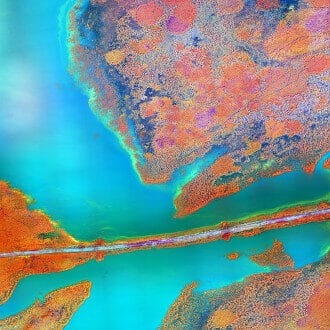[Source](https://unsplash.com/photos/08hjz7VzB84)
Excess nitrogen and phosphorus from agricultural production, atmospheric deposition, and burning fossil fuels are only some of the factors that contribute to the growth of algae. Enough algal growth can result in dead zones, where no aquatic organisms are able to survive since toxins and insufficient oxygen are a result of the algal blooms.
## What are the Solutions for Nutrient Pollution?
Government, industries, and individuals should be urged to reduce nutrient pollution. Among the most effective strategies are the control of nutrient pollutants and the restoration of damaged ecosystems.
This is done by managing and reducing emissions into air and water. Switching to renewable and [sustainable energy sources](https://interfaithsustain.com/environmental-progress-sustainable-energy/) effectively reduces pollution from fossil fuels. Additionally, industries involved in water and sewage treatment should be mindful of any leakages allowing untreated water to enter our streams and rivers.
Study results indicate that controlling external nutrient sources does not always reduce the nutritive loads or the algal bloom. Lakes respond very slowly to nutritional control interventions.
Restoration of ecosystems involves recovering damaged waters. The biological properties in the water bodies are restored with this process. Fortunately, the Environmental Protection Agency is taking action to restore ecosystems that have been damaged by nutrient pollution.
The Environmental Protection Agency’s Great Lakes Restoration Initiative ([GLRI](https://www.epa.gov/great-lakes-funding/great-lakes-restoration-initiative-glri)), under the united states government, works “to strategically target the biggest threats to the Great Lakes ecosystem and to accelerate progress toward long term goals.” The [focus areas](https://www.epa.gov/great-lakes-funding/great-lakes-restoration-initiative-glri) include:
- Toxic Substances and [Areas of Concern](https://www.epa.gov/great-lakes-aocs)
- Invasive Species
- Nonpoint Source Pollution Impacts on Nearshore Health
- Habitats and Species
- Foundations for Future Restoration Actions
On [April 14, 2020](https://www.epa.gov/newsreleases/epa-awards-over-9-million-glri-funding-projects-reduce-excess-nutrients-great-lakes), in order to combat nutrient pollution, “the U.S. Environmental Protection Agency (EPA) announced fifteen Great Lakes Restoration Initiative (GLRI) grants totaling $9,056,711 to fund projects addressing excess nutrient runoff from nonpoint sources, including [stormwater](https://interfaithsustain.com/urban-runoff/) and agriculture, to the Great Lakes.”
EPA Administrator Andrew Wheeler stated that “the key to restoring the health of the Great Lakes in the coming years is to lower the amount of fertilizer and stormwater runoff entering the region’s waterways…these grants will help more farmers make the shift toward more no-till agricultural methods that, when properly practiced, result in less top-soil erosion and better water quality.” These efforts by the EPA will hopefully reduce nutrient runoff, particularly that is coming from agricultural industries and urban areas. Government efforts are primarily geared towards controlling the flow of nutrient pollution from nonpoint sources. While this proves to be difficult work, as the EPA’s plan indicates, financially helping farmers switch to less environmentally harmful methods will help reduce the flow of nutrient pollution into our waterways.
### How You Can Take Action!
There are a few ways to reduce your personal contribution to nutrient pollution. To start, it is important to [fertilize responsibly](https://sarasotabay.org/8-ways-to-reduce-personal-nutrient-pollution/), and it is best to “use a product with slow-release nitrogen, or try amending your soil with [compost](https://interfaithsustain.com/composting-101/).”
You should also be sure to get your septic system inspected annually to make sure there are no leaks. You can also plant trees and other native plants, as “plants help reduce runoff by soaking up stormwater along with the nitrogen that often comes along with it.” Let’s all work together to prevent nutrient pollution from taking a further toll on our environment!
## Nutrient Pollution and Religion
An Indian Study from 2021 studied [The Effect of Religious Dietary Cultures on Food Nitrogen and Phosphorus Footprints](https://www.ncbi.nlm.nih.gov/pmc/articles/PMC8226710/). This study looked at different religious groups in India and how their different dietary practices (e.g. vegetarian, omnivore, etc) related to their Nitrogen (N) and Phosphorus (P) footprint.
As described in [another study](https://www.ncbi.nlm.nih.gov/pmc/articles/PMC8701145/), the Indian study “suggests that a shift from a diet based on animal protein to a plant-based diet would significantly decrease individual P footprints at the Indian national level.” In other words, our individual choices can have a big impact on our contribution to nutrient pollution. Through our personal practice and educating our coreligionists, we can shift our diet to be healthier and more sustainable.
*\* Featured image [source](https://www.pexels.com/photo/green-moss-on-rocks-in-the-lake-8888833/)*
**Categories:** Blog on Faith and Ecology, Pollution
**Tags:** Pollution
---
### [How WE Can All Act to Prevent Water Pollution](https://interfaithsustain.com/how-to-prevent-water-pollution/)
**Published:** August 2, 2021
**Author:** ICSD
**Excerpt:** Sydney Cohen - Water pollution is a huge problem all around the world. There are many ways to prevent this from happening and it all starts with educating yourself on the matter. People don't realize how much they depend on water use for their survival or how to prevent water pollution.
**Content:**
Table of Contents
Table of Contents
- [The Causes of Water Pollution](#aioseo-the-causes-of-water-pollution-2)
- [Water Pollution Prevention](#aioseo-water-pollution-prevention-11)
- [STOP Polluting Water!](#aioseo-stop-polluting-water-13)
- [Less Chemicals = Less water Pollution](#aioseo-less-chemicals-less-water-pollution-15)
- [Organic Food Reduces Water Pollution](#aioseo-organic-food-reduces-water-pollution-19)
- [Avoid Plastic Containers to Reduce Water Pollution](#aioseo-avoid-plastic-containers-to-reduce-water-pollution-21)
- [Leaking Vehicles Cause Water Pollution](#aioseo-leaking-vehicles-cause-water-pollution-23)
- [Raise Awareness About Water Pollution](#aioseo-raise-awareness-about-water-pollution-25)
- [Take Action to Prevent Water Pollution!](#aioseo-take-action-to-prevent-water-pollution-27)
- [What are the main causes of water pollution?](#aioseo-what-are-the-main-causes-of-water-pollution-36)
- [How can individuals help prevent water pollution?](#aioseo-how-can-individuals-help-prevent-water-pollution-38)
- [What steps can be taken to reduce chemical runoff into water sources?](#aioseo-what-steps-can-be-taken-to-reduce-chemical-runoff-into-water-sources-40)
- [Why is eating organic food effective in preventing water pollution?](#aioseo-why-is-eating-organic-food-effective-in-preventing-water-pollution-42)
- [What actions can communities take to combat water pollution?](#aioseo-what-actions-can-communities-take-to-combat-water-pollution-44)
*By Sydney Cohen* – Water pollution is a huge problem all around the world. There are many ways to prevent this from happening and it all starts with educating yourself on the matter. People don’t realize how much they depend on water use for their survival or how to **prevent water pollution**.
## The Causes of Water Pollution
[Water pollution has many causes](https://interfaithsustain.com/what-are-the-causes-of-water-pollution/). Most often, pollutants enter our lakes, rivers, oceans, and waterways through runoff resulting from improper disposal of chemicals, fertilizers, wastewater, and sewage that enter our **groundwater** and water systems.
Additionally, people frequently throw out garbage and litter, disregarding proper disposal methods. These larger pollutants enter our lakes, rivers, groundwater and ocean water, causing much harm to animals and plants that suffocate in large pieces of plastic, and releasing chemical substances into the water as they degrade.
[Source](https://pixabay.com/users/hans-2/)
Human waste is also a large contributor, as solid waste, sewage, and runoff from septic systems frequently contaminate ecosystems when they enter rivers or other bodies of water during heavy rainstorms.
Read more about the specific types of [water pollution here](https://interfaithsustain.com/what-are-the-causes-of-water-pollution/).
## Water Pollution Prevention
We all know how the pollution of our water is a major issue, especially as we ramp up our production of potentially harmful substances. Not only does water pollution result in contaminated water, but it also hurts the wildlife that depends on safe water for survival. Water pollution-related problems have been growing at a rapid pace and this in turn leads to more **waterborne diseases**.
- [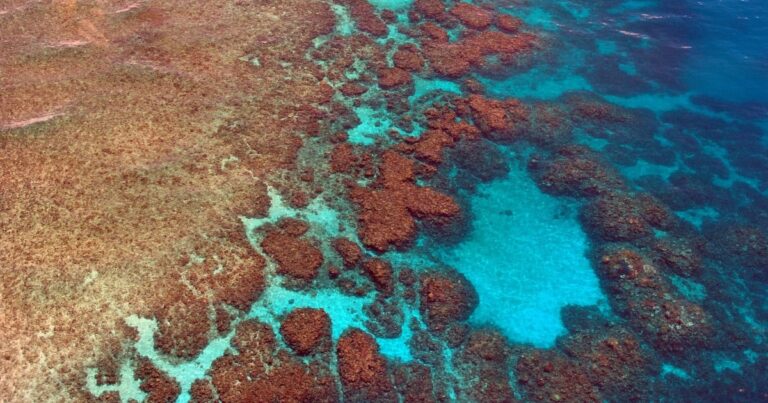](https://interfaithsustain.com/what-causes-coral-bleaching/)
## [What Causes Coral Bleaching and Its Connection to Climate Change](https://interfaithsustain.com/what-causes-coral-bleaching/)
- [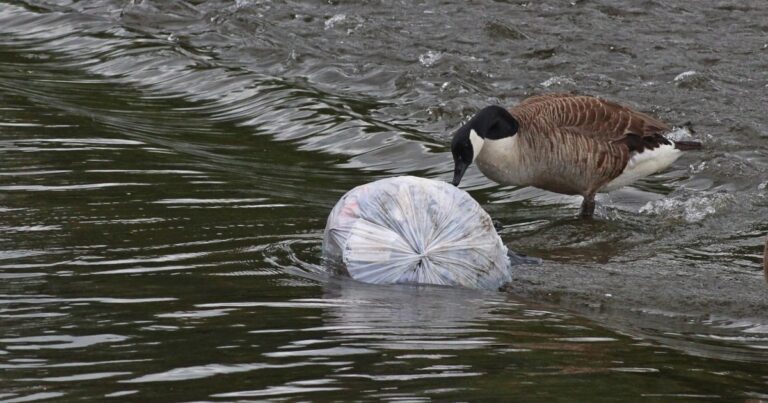](https://interfaithsustain.com/river-pollution/)
## [What Are The Sources of River Pollution, and How To Prevent It?](https://interfaithsustain.com/river-pollution/)
- [](https://interfaithsustain.com/urban-runoff/)
## [Urban Runoff Pollutes Our Rivers](https://interfaithsustain.com/urban-runoff/)
## STOP Polluting Water!
The best way to stop water pollution is to **stop polluting**! There are a number of things we can do to reduce water pollution.
### Less Chemicals = Less water Pollution
Homeowners like to keep the yard looking green and healthy which creates water pollution. Fertilizers and pesticides inevitably run off shrubs and lawns and into water. Select landscaping that is suitable to the climate also for pollution prevention and also so that your plants will be cheaper to care for. As a bonus, you will waste less water keeping those plants alive. No matter where you live, there are bound to be attractive plants that can thrive with minimal help from added chemical treatment.
**Non-toxic cleaners** and phosphate-free chemicals can reduce water pollution. Many companies now sell biodegradable industrial cleaning products and pesticides. Spending extra money on environmental products automatically increases pollution prevention – it is a worthwhile investment. The chemicals that cause water pollution should be avoided by not buying more harmful products, especially chemical cleaners.
Many **household chemicals** are becoming a serious problem. Millions of people a month are dumping toxic chemicals down the drain. Many are flushing them down the toilet into a sewer or just down the street. If you don’t dispose of them properly, the effects increase water pollution. Your community may have a recycling center that can take old paint, used motor oil, and other industrial chemicals and recycle them. They can even be dropped off at specific sites on hazardous waste collection days where people are encouraged to dispose of hazardous waste properly.
### Organic Food Reduces Water Pollution
Eating organic reduces the amount of water pollution. **Organic** produce results from a growing process that is significantly less harmful to the environment. Organic food can be grown without chemicals. Not only does this benefit the environment, but it also works to protect our own health. We need to choose to eat food in our life that has less impact on the environment. We need to think of factors such as the fuel used to transport crops, power for farm equipment, and industrial chemicals used in non-organic food production.
#### Avoid Plastic Containers to Reduce Water Pollution
**Plastic** shopping bags and plastic rings cause inordinate litter in the nation’s lakes and seas that harm animals. Buy some reusable cloth or [plastic grocery bags](https://interfaithsustain.com/single-use-plastic-threats-from-awareness-to-action/) instead. Use reusable, water-efficient, insulated containers to hold drinks, and make filtered water at home.
#### Leaking Vehicles Cause Water Pollution
A toxic oil spill that leaks from **motor vehicles** will end up in the storm drains and then in the local water system. This runoff into drains is a problem that is easy to treat; just be diligent about maintaining and repairing your vehicles.
#### Raise Awareness About Water Pollution
There are organizations active in your area working on water pollution cleanup in rivers and oceans and watershed protection. Search for an environmental organization that’s active, volunteer to help them raise awareness or make a donation every year to support their causes.
## Take Action to Prevent Water Pollution!
Many cases of illegal waste disposal, household litter and trash dumping go unreported and often aren’t cleaned up. Report people who pour oil, fat or grease in storm drains, throw bags and trash in a river, and so on, in order to reduce pollutants in our waterways and transboundary water system.
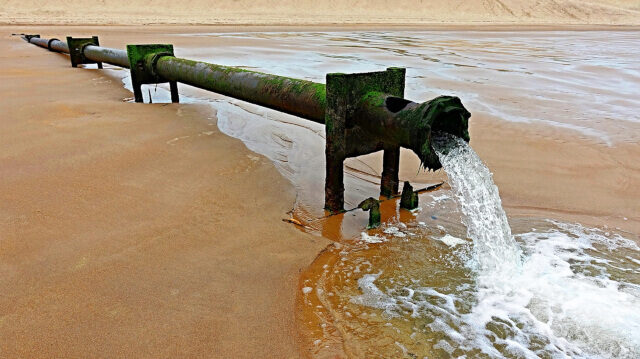[Source](https://pixabay.com/users/aitoff-388338/)
Clean water is a basic **human right** that we must all work together to protect. We are lucky enough to have [clean drinking water](https://interfaithsustain.com/effects-of-water-pollution/), but many people around the world don’t have access to safe drinking water and they need our help. Let’s make sure that every person has clean drinking water and clean washing water by making an effort in our communities, educating others about how their actions affect us all, volunteering and donating what we can today.
Join me in taking these steps so that we may reduce the number of pollutants entering rivers for future generations!
*\* Featured image [source](https://pixabay.com/users/rilsonav-1824615/)*
**Categories:** Blog on Faith and Ecology, Pollution
**Tags:** Pollution, Water Pollution
---
### [Knowing All the Different Types of Water Pollution](https://interfaithsustain.com/types-of-water-pollution/)
**Published:** December 1, 2021
**Author:** ICSD
**Excerpt:** Harry Cooper - Water pollution has become a prominent problem in today’s world. The world’s population is increasing, and with it, the demand for drinking water. As it becomes increasingly harder to find water, it is important that the water we do have stays clean and drinkable.
**Content:**
Table of Contents
Table of Contents
- [The Dangers of Water Pollution](#aioseo-the-dangers-of-water-pollution-2)
- [Groundwater Pollution](#aioseo-groundwater-pollution-5)
- [Surface Water Pollution](#aioseo-surface-water-pollution-10)
- [Ocean Water Pollution](#aioseo-ocean-water-pollution-15)
- [Point Source Pollution](#aioseo-point-source-pollution-21)
- [Nonpoint Source Pollution](#aioseo-nonpoint-source-pollution-25)
- [Eutrophication and Oxygen](#aioseo-eutrophication-and-oxygen-27)
- [The Main Sources of Water Pollution](#aioseo-the-main-sources-of-water-pollution-34)
- [Religion and Water Pollution](#aioseo-religion-and-water-pollution-37)
- [What Can We do About Water Pollution?](#aioseo-what-can-we-do-about-water-pollution-42)
*By Harry Cooper*
## The Dangers of Water Pollution
**Water pollution** has become a prominent problem in today’s world. The world’s population is increasing, and with it, the [demand ](https://www.fluencecorp.com/what-is-water-scarcity/)for drinking water. As it becomes increasingly harder to find water, it is important that the water we do have stays clean and drinkable.
[Water pollution](https://interfaithsustain.com/effects-of-water-pollution/) is dangerous to human life and also to the environment. It is estimated that more people die each year from health problems caused by unclean water than from all [war and violent acts](https://www.nrdc.org/stories/water-pollution-everything-you-need-know). Not only is polluted water putting human lives at risk, but it also has started to make many aquatic species endangered, which can throw entire ecosystems out of balance.
## Groundwater Pollution
Groundwater is water found underground in the spaces between soil and fractured rocks. [Groundwater](https://www.groundwater.org/get-informed/basics/whatis.html) is especially important because there are so many people in the world that rely on stores of underground water called aquifers for drinking water. Since these aquifers are replenished with rain water that seeps into the ground, it can make it very easy for harmful toxins to get in as well, causing **groundwater pollution.**
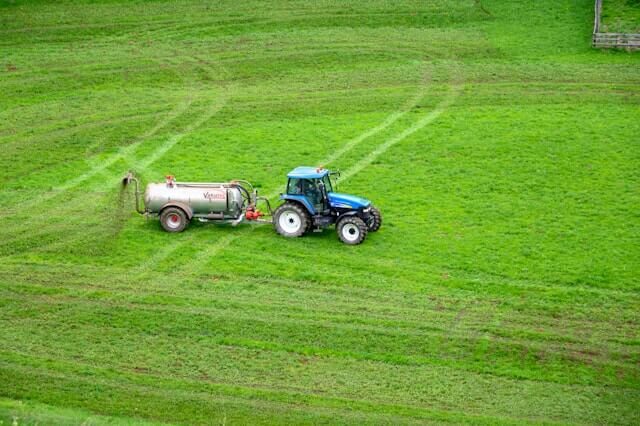[Source](https://unsplash.com/@etiennegirardet/)
This type of pollution can come from many [different sources](https://www.gsi.ie/en-ie/geoscience-topics/environmental-health/Pages/Groundwater-pollution.aspx). Heavy rain over landfills can cause heavy metals and other chemicals to leach into groundwater supplies. Fertilizers, animal waste, and pesticides found in agriculture can cause nitrates and bacteria to infiltrate into our aquifers. Additionally, septic tanks and sewage systems occasionally leak untreated waste into our groundwater supplies.
### Surface Water Pollution
Another one of the types of water pollution is **surface water pollution**. Surface water pollution refers to any water on the earth’s surface, such as lakes, rivers, and oceans, being polluted. This mainly occurs through chemicals in rainwater drainage. These chemicals come from fertilizers and pesticides that are used in agriculture and lawn-care, chemicals used on roads and highways, and from human waste. When it rains, these harmful toxins are swept into our rivers, lakes, and streams.
- [](https://interfaithsustain.com/urban-runoff/)
## [Urban Runoff Pollutes Our Rivers](https://interfaithsustain.com/urban-runoff/)
- [](https://interfaithsustain.com/ocean-cleanup/)
## [Innovative Technology For An Ocean Cleanup](https://interfaithsustain.com/ocean-cleanup/)
- [](https://interfaithsustain.com/is-rain-water-safe-to-drink/)
## [In Your Opinion, Is Rain Water Safe to Drink Today?](https://interfaithsustain.com/is-rain-water-safe-to-drink/)
Surface water is important for many things, such as ecosystems, drinking water, and recreation. The US Environmental Protection Agency found in its [2000 annual water quality report](https://www.epa.gov/sites/default/files/2015-09/documents/2000_06_30_305b_98report_98summary.pdf) that “more than 291,000 miles of assessed rivers and streams do not meet water quality standards. Across all types of waterbodies, states, territories, tribes, and other jurisdictions report that poor water quality affects aquatic life, fish consumption, swimming, and drinking water”. With so many water bodies and so much surface water already polluted, the demand for clean water is becoming more and more important.
### Ocean Water Pollution
Like lakes and rivers, the ocean is another type of surface water. The world’s oceans are also subject to surface water pollution, and while it may not be a major source of drinking water, it is still important for recreation, plants and animals, and even the quality of our atmosphere.
Phytoplankton are one of the most important factors when it comes to climate change. These single celled organisms live near the surface of every ocean in the world. Phytoplankton spend their days photosynthesizing, taking carbon out of the air, and producing oxygen, and because of their large number, they produce [nearly half](https://www.nationalgeographic.com/science/article/source-of-half-earth-s-oxygen-gets-little-credit) of all oxygen in the Earth’s atmosphere. However due to water pollution, phytoplankton numbers are dwindling, which is causing climate change to happen faster.
Another important type of water pollution in the ocean is [plastic pollution](https://interfaithsustain.com/single-use-plastic-threats-from-awareness-to-action/). Most people are familiar with the grim scenes of aquatic life being strangled by plastic bags and vast expanses of sea covered in a layer of grimy trash, but plastic in the ocean can have more of an impact on the environment and human health than we realize.
As plastic is tossed around in the waves and currents of the ocean it slowly breaks down into tiny pieces less than 5mm long called microplastics. Microplastics float in the water as suspended matter and are consumed by small marine organisms. As these organisms are eaten by larger marine animals, the toxic chemicals in the plastics move up the food chain. Scientists have now discovered microplastics in [114 marine animals](https://www.mdpi.com/2305-6304/9/2/41). Many of the contaminants in the microplastics can [prevent some species from reproducing](https://www.britannica.com/technology/microplastic), making the impact plastic has on aquatic life even worse.
Many fish contaminated with microplastics also find themselves on our dinner plates, putting human health at risk to microplastic exposure as well. [Researchers say](https://www.nature.com/articles/d41586-021-01143-3) that we don’t know exactly how these contaminants will harm us, but “the potential risk might be high”.
### Point Source Pollution
This kind of water pollution is not a pollution of a specific kind of water, but rather where the pollution comes from. **Point source pollution** is any kind of pollution that comes from one identifiable source. These water pollutants include oil spills, industrial waste, marine dumping, sewage, or any kind of water pollution that can be traced to a single source.
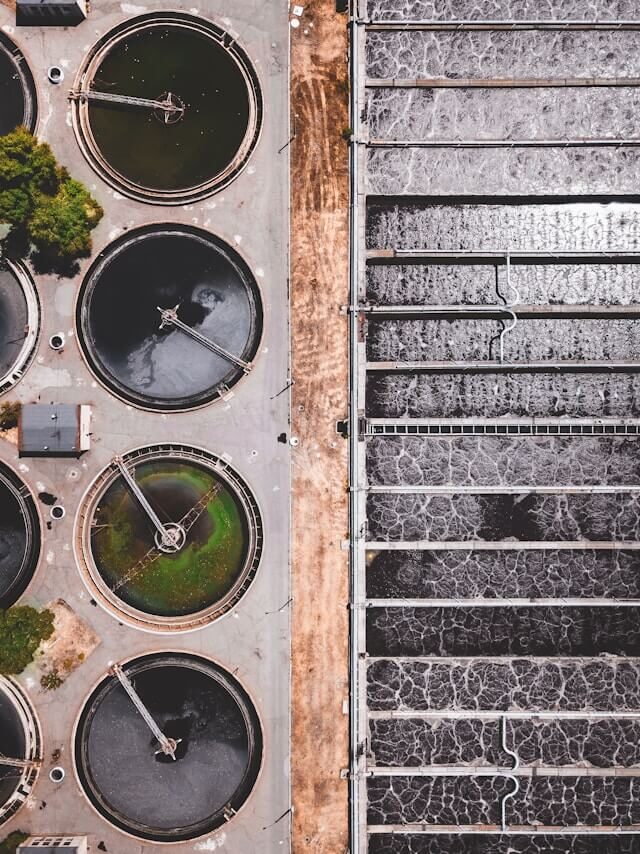[Source](https://unsplash.com/@unstable_affliction/)
### Nonpoint Source Pollution
As the name suggests, **nonpoint source pollution** is a type of water pollution that does not come from one specific source. This kind of pollution includes wastewater runoff, littering, and agricultural sources. All of these sources of pollution are hard to pinpoint what causes them as they don’t come from a single source, but nonetheless nonpoint source pollution still causes contamination in water bodies.
#### Eutrophication and Oxygen
We typically don’t think of oxygen as a problem when it comes to water pollution, but having too little oxygen is becoming a problem in many water bodies. This is caused by one of the types of water pollution called **eutrophication**.
[Eutrophication](https://www.nature.com/scitable/knowledge/library/eutrophication-causes-consequences-and-controls-in-aquatic-102364466/), also called nutrient pollution, occurs when an excess amount of nutrients get into a water body. These nutrients come from industrial and agricultural use of phosphorus and nitrogen that leak into the water system. These nutrients allow for phytoplankton to multiply almost unchecked. These phytoplankton population booms are called algal blooms.
While phytoplankton are usually heroes of the environment as they produce so much oxygen, when a water body has such a high density of these organisms it can cause some problems in the ecosystem. Algal blooms can raise the pH level of the water, release toxic chemicals, limit visibility for animals, and stop plants from photosynthesizing. But the most detrimental effects of eutrophication comes when the blooms eventually die.
When these phytoplankton die, they are decomposed by other microorganisms. This process of decomposition uses up a lot of the oxygen in the water causing severe oxygen depletion. When oxygen gets depleted like this it creates a dead zone. As the name implies, not much can survive in these dead zones due to the little amount of oxygen.
## The Main Sources of Water Pollution
As we have seen, there are many different types of water pollution and many different water pollution causes, but what are the main causes of water pollution? The biggest contributors to water pollution include both nonpoint sources, such as wastewater drainage, and point sources such as industrial waste, marine dumping, and sewage. However, while these sources contribute a lot to pollution, a report from the [UN Food and Agriculture Organization](https://www.fao.org/3/ca0146en/CA0146EN.pdf) found that “agriculture is the single largest producer of wastewater, by volume”.
The fertilizers and pesticides that industrial farms use often find themselves in freshwater, saltwater, and underground water sources due to rainwater runoff. The chemicals found in fertilizers and pesticides are responsible for many of the types of water pollution that we have talked about. The UNFAO report said that nitrate from fertilizers is the most prominent harmful chemical found in groundwater pollution. Phosphorus and Nitrogen are also water pollutants found in fertilizers that are the primary causes of eutrophication. And pesticides contain harmful substances that can cause health problems in humans and animals.
## Religion and Water Pollution
Many religions see holiness in water, and therefore greatly value its purity. Both Judaism and Christianity require ritual immersion in water, and in the Bible, we read how at the origins of Creation “the Spirit of God was hovering over the waters” (Genesis 1:2). According to [Zaharuddin and Sabri](https://onlinelibrary.wiley.com/doi/abs/10.1002/047147844X.wl43), “water is considered one of the most profound elements in Islam… It is also regarded as a blessing from Allah that gives and sustains all life in this world.” Water is fundamental to religions because without it, we couldn’t live.
Unfortunately, despite the high value of water in religion, religions can also be the source of water pollution. For example, this can be seen in the pollution of the Ganges river with dead bodies, ashes and ceremonial flowers. With a little creativity, however, we can find solutions to save our water without taking away from our religions.
An amazing example of this creativity can be seen in the transition away from throwing ceremonial flowers into the Ganges. These flowers are used for devotional activities in temples and mosques and so they can’t simply be thrown away due to their holy status. However, these mass produced flowers, which are often covered with pesticides and plastic can pollute the Ganges with an estimated 8 ton of them being thrown into the river each year.
Ankit Angwar saw how much harm these flowers were causing and worked with religious people and leaders to instead recycle these flowers. They hire mostly women from disadvantaged backgrounds to sort through them and then they spray them with chemicals that neutralize pesticides. A number of products have been created from these flowers, such as incense and compost. They even accidentally created a biodegradable vegan leather from the flower remains that won PETA India’s Best Fashion Innovation Award. Religions can create water pollution and be part of the problem, but with a little ingenuity, they can also help create amazing solutions for our [environmental problems](https://interfaithsustain.com/social-ecology/) that go far beyond what we ever could have imagined.
## What Can We do About Water Pollution?
There are many ways of changing the way we produce things and live our lives that can help end water pollution. Many farmers are advocating for greener agricultural practices such as using [organic](https://juniperpublishers.com/artoaj/ARTOAJ.MS.ID.556192.php) fertilizers and pesticides with less phosphorus, nitrogen, and other dangerous chemicals.
Also, many places in the world are getting better access to [water treatment technology](https://jphe.amegroups.com/article/view/4741/5523), as well as new, more efficient water treatment technology being developed every day. These technologies will make it easier to sanitize waste water and make it clean and drinkable.
Humanity has also started to come together to try and solve the problem of water pollution. The UN has is already taking steps toward ending pollution in our planet’s waters. The sect of the UN called the [Global Program of Action for the Protection of the Marine Environment from Land-based Activities](https://www.unep.org/explore-topics/oceans-seas/what-we-do/addressing-land-based-pollution/governing-global-programme) (GPA) was formed in 1995 in order to help combat pollution. Since then the GPA has been working to create plans on how to tackle pollution and allocate funds to help countries establish water treatment methods.
While a lot of our limited water has become polluted, humanity has started to cooperate to repair our oceans, lakes, rivers, and groundwater. We have a long way to go before the waters of the world are clean, but it is nice to know that humanity is starting to take steps in the right direction.
*\* Featured image [source](https://pixabay.com/users/pixundfertig-683277/)*
**Categories:** Blog on Faith and Ecology, Pollution
**Tags:** Pollution, Water Pollution
---
### [The Consequences and Effects of Water Pollution](https://interfaithsustain.com/effects-of-water-pollution/)
**Published:** June 30, 2021
**Author:** ICSD
**Excerpt:** Sydney Cohen - The effects of water pollution are devastating. Water is an essential part of life, and when it becomes polluted, the consequences can be fatal.
**Content:**
Table of Contents
Table of Contents
- [The Impact of Water Pollution on the Environment](#aioseo-the-impact-of-water-pollution-on-the-environment-3)
- [Air Pollution affects Water Pollution](#aioseo-air-pollution-affects-water-pollution-8)
- [The Impact of Water Pollution on Human Health](#aioseo-the-impact-of-water-pollution-on-human-health-12)
- [Skin Diseases Caused by Water Pollution](#aioseo-skin-diseases-caused-by-water-pollution-16)
- [Communities Affected by Water Pollution](#block-03aefc1f-c17e-422c-b72a-2f190f00e708)
- [Water pollution In Haiti](#aioseo-water-pollution-in-haiti-21)
- [Water pollution In Gaza](#aioseo-water-pollution-in-gaza-23)
- [Water pollution In Flint, Michigan](#aioseo-water-pollution-in-flint-michigan-26)
- [Solutions to Water Pollution](#aioseo-solutions-to-water-pollution-30)
- [Preventing Water Pollution](#aioseo-preventing-water-pollution-32)
- [Water Treatment](#aioseo-water-treatment-43)
- [Water Produced From Air](#aioseo-water-produced-from-air-47)
- [Desalination](#aioseo-desalination-49)
- [Water Pollution Is OUR Responsibility](#aioseo-water-pollution-is-our-responsibility-51)
*By Sydney Cohen* – The effects of water pollution are devastating. Water is an essential part of life, and when it becomes polluted, the consequences can be fatal. Research by the [World Health Organization](https://www.who.int/news-room/fact-sheets/detail/drinking-water) estimates that at least 2 billion people worldwide drink and use contaminated water.
The effects of **water pollution** are not just on the water and ecosystems themselves, but [as with every form of environmental degradation](https://interfaithsustain.com/environmental-degradation-and-the-future-of-our-planet-earth/ "as with every form of environmental degradation"), they also affect humans, plants, and animals that live near it.
## The Impact of Water Pollution on the Environment
Aquatic life is often severely affected by water pollution. In fact, animals and plant life in contaminated water sources “[may die or not reproduce properly](https://www.hsph.harvard.edu/ehep/82-2/).”
Heavy metals and chemicals, from municipal and industrial wastewater, are some examples of water contamination that affect aquatic organisms’ lifespans and abilities to reproduce. Tuna and other larger fish often have high levels of mercury.
Additionally, aquatic life is heavily affected by [algal blooms](https://interfaithsustain.com/nutrient-pollution/ "algal blooms") in lakes and marine environments, resulting from excess nutrients such as nitrates and phosphates, from agricultural runoff. These algal blooms are present in the Great Lakes.
Marine life is also threatened by debris and litter, which can suffocate and injure many aquatic organisms. Plastics, for example, can take up to 500 years to degrade and have even formed “plastic islands” in oceans.
- [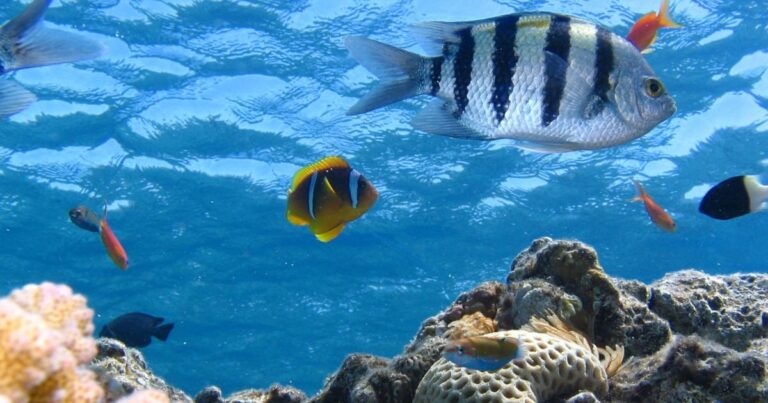](https://interfaithsustain.com/effects-of-ocean-acidification/)
## [The Effects and Consequences of Ocean Acidification](https://interfaithsustain.com/effects-of-ocean-acidification/)
- [](https://interfaithsustain.com/urban-runoff/)
## [Urban Runoff Pollutes Our Rivers](https://interfaithsustain.com/urban-runoff/)
- [](https://interfaithsustain.com/ocean-cleanup/)
## [Innovative Technology For An Ocean Cleanup](https://interfaithsustain.com/ocean-cleanup/)
### Air Pollution affects Water Pollution
Furthermore, air pollution as a result of **climate change** has a drastic effect on the ocean. Air pollution is causing [ocean acidification](https://interfaithsustain.com/how-to-stop-ocean-acidification/ "ocean acidification"), warming, and expansion, as our large bodies of water absorb much of the carbon pollution in the air.
## The Impact of Water Pollution on Human Health
Drinking or using polluted water can result in **health** problems, such as digestive issues, toxicity and death, or chronic toxicity and neurological issues from more serious chemical pollution.
Waterborne pathogens are the most common cause of illness in humans from polluted water. Diseases from the consumption of contaminated water include giardia, typhoid, and cholera. Accidental and illegal leaks from sewage facilities and [runoff from urban areas](https://interfaithsustain.com/urban-runoff/ "runoff from urban areas") and agriculture farms occur even in wealthy nations, affecting everyone’s water quality.
In fact, every year, the United Nations reports that [85,700 children](https://news.un.org/en/story/2019/03/1035171#:~:text=According%20to%20the%20report%2C%20every,3%2C400%20from%20war%2Drelated%20violence.) die from diarrhea caused by contaminated water.
### Skin Diseases Caused by Water Pollution
Additionally, chemical pollutants in contaminated water [come into contact with our skin](https://www.hsph.harvard.edu/ehep/82-2/#:~:text=Water%20pollution%20is%20the%20contamination,trash%2C%20bacteria%2C%20and%20parasites.&text=Land%20pollution%20can%20seep%20into,and%20finally%20to%20the%20ocean.) from swimming in polluted water or washing clothes and can cause various skin irritations, ranging in severity.
## Communities Affected by Water Pollution
While water contamination and its causes are a global issue, certain populations are much more vulnerable than others to illness and death from water pollution. The communities that are typically most affected by water pollution are often also communities of color.
Because of this demographic, the disparity in world heath on the topic of water pollution is frequently an example of [environmental racism](https://interfaithsustain.com/environmental-racism/).
### Water pollution In Haiti
The 2010 [cholera outbreak in Haiti](https://en.wikipedia.org/wiki/2010s_Haiti_cholera_outbreak), just 10 months after the devastating 2010 earthquake, is an example of the impact of water pollution on vulnerable communities. It was discovered that the Artibonite River, a body of water from which many Haitians use and consume, contained the bacteria that cause cholera.
### Water pollution In Gaza
Another example of water pollution is in [Gaza](https://www.muslimaid.org/media-centre/blog/the-effects-of-water-pollution-on-struggling-communities-around-the-globe/). The causes of water pollution in Gaza frequently result from frequent failure of water treatment and filtration systems. This allows for sewage, wastewater, bacteria, and disease to pollute the water supply.
Because of the transboundary nature of bodies of water and water sources, this issue does not only affect the very highly dense population living in Gaza, but also risks contamination of water sources in Israel and other Middle Eastern countries.
### Water pollution In Flint, Michigan
A third example of the effect of water pollution on a community is that of Flint, Michigan. Flint’s demographics consist of many communities of color, living below the poverty line. Because many of the homes in Flint are old, they have lead piping.
In 2013, Flint’s water was found to contain many harmful chemicals and bacteria, and when mixed with the lead piping , the lead degrades and enters the water at toxic levels. This caused an immense amount of health issues for Flint residents.
These examples demonstrate the drastic way that already vulnerable communities are exposed to the harmful effects of water pollution.
## Solutions to Water Pollution
The need for solutions to water pollution is urgent. Pollution from [sewage effluent](https://interfaithsustain.com/sewage-water/ "sewage effluent") and industrial waste are making it difficult to supply enough clean water to populations in developing countries, while climate change is also having an impact on the availability and quality of water resources.
### [Preventing Water Pollution](https://interfaithsustain.com/how-to-prevent-water-pollution/ "Preventing Water Pollution")
The first method of preventing water pollution is to conserve the clean water that we do use.
The second method of preventing further water pollution is by using fewer chemicals and cleaners in our homes and avoiding disposing of them down the sink and shower drains.
The next step toward better water quality is to get your home pipes checked for lead pollution. This reduces negative health effects from lead and other chemical substances and heavy metals and prevents further contamination into other bodies of water such as [oceans](https://interfaithsustain.com/ocean-cleanup/), [rivers](https://interfaithsustain.com/river-pollution/ "rivers"), and lakes.
Lastly, it is important to avoid polluting outdoor water sources and supplies.
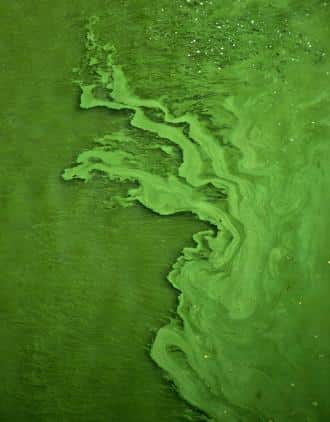[Source](https://unsplash.com/@mihaly_koles)
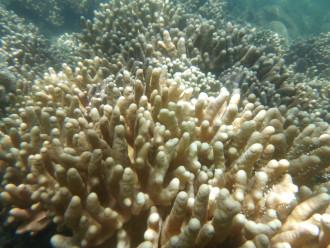[Source](https://unsplash.com/@nicosmit99)
[Source](https://unsplash.com/@jcotten)
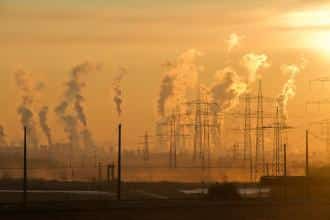[Source](https://www.pexels.com/photo/air-air-pollution-climate-change-dawn-221012/)
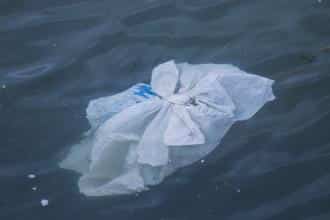[Source](https://unsplash.com/@brian_yuri)
#### Water Treatment
There are a number of organizations and technological advancements that aid in producing higher water quality and the [treatment of contaminated water,](https://interfaithsustain.com/water-treatment-plant/) throughout the world.
David L Knight comments on [water treatment in the Bible](https://davidknightwrites.blogspot.com/2010/11/bitter-waters-becomes-sweet.html), based on a story in which Moses turns water from “bitter,” i.e. undrinkable to “sweet,” i.e. drinkable by throwing wood into it. David Knight explains how “desert guides tell of barberry and other aromatic shrubs that can mask the acrid mineral taste of brackish water. Perhaps that’s what Moses used. Instead of miraculously zapping the bad water, God has Moses use natural means already at hand in the desert. But the miracle is there all the same – the wonder of nature’s healing powers.”
We can learn from Moses to harness the healing powers of nature to address the damage we’ve done. Even more importantly, we are reminded by Moses not to take fresh water for granted and to refrain from damaging our precious water resources.
#### Water Produced From Air
[Watergen](https://us.watergen.com/), for example, is an Israeli technological advancement that literally creates water from the air. “Watergen” creates drinking water devices that use humidity in the air to extract and purify water for use and consumption.
#### Desalination
Furthermore, there are 31 Israeli [desalination plants](https://en.wikipedia.org/wiki/Water_supply_and_sanitation_in_Israel) across the country that utilize seawater to provide fresh and clean water to the country. The desalination process removes salt and other impurities from the water, to create usable water.
## Water Pollution Is OUR Responsibility
Despite the difficulty of solving this global issue, it is important that we do everything in our power to reduce water pollution.
Don’t let water pollution be a global issue for your community. We must take care to protect our most vulnerable communities, environment, and aquatic life by taking measures to conserve and protect the clean water that we are fortunate to have and raising awareness of communities in need.
Make sure you are doing what you can to reduce the number of pollutants that enter our streams and rivers and help make safe drinking water accessible in impoverished communities around the world when possible.
We can all take small steps to reduce the global issue of water pollution. One way is by supporting organizations that provide [clean drinking water](https://www.watergen.com/) for those who need it most and encouraging others to do the same.
*\* Featured image [source](https://www.pexels.com/@jawadur-rahman-srijon-1943272)*
**Categories:** Blog on Faith and Ecology, Pollution
**Tags:** Water Pollution
---
### [Another resource to destroy: What are the Causes of Water Pollution?](https://interfaithsustain.com/what-are-the-causes-of-water-pollution/)
**Published:** June 24, 2021
**Author:** ICSD
**Excerpt:** Sydney Cohen - Water contamination, by "substances which make the water unusable for drinking, cooking, cleaning, swimming, and other activities," is termed water pollution.
**Content:**
Table of Contents
Table of Contents
- [Causes of Water Pollution](#aioseo-causes-of-water-pollution-4)
- [Categories of Water Pollution](#aioseo-categories-of-water-pollution-8)
- [Groundwater Pollution](#aioseo-groundwater-pollution-9)
- [Surface Water Pollution](#aioseo-surface-water-pollution-12)
- [Ocean Pollution](#aioseo-ocean-pollution-17)
- [Water Pollution is Transboundary](#aioseo-water-pollution-is-transboundary-23)
- [The Most Common Types of Contamination](#aioseo-the-most-common-types-of-contamination-30)
- [Agriculture](#aioseo-agriculture-31)
- [Sewage](#aioseo-sewage-34)
- [Industry](#aioseo-industry-39)
- [Solid Waste](#aioseo-solid-waste-42)
- [Global Warming and Water Pollution](#aioseo-global-warming-and-water-pollution-45)
- [Our Bible Teaches us to Appreciate Clean Water](#aioseo-our-bible-teaches-us-to-appreciate-clean-water-52)
*By Sydney Cohen* – **Water contamination**, by “substances which make the water unusable for drinking, cooking, cleaning, swimming, and other activities,” is termed [water pollution](https://www.hsph.harvard.edu/ehep/82-2/). Water pollution has many extremely harmful effects on humans, as well as ecosystems, animals, marine life, and plant life that utilize these contaminated water sources. So, what are the causes of water pollution?
The causes of water pollution are most frequently trash, bacteria, parasites, and chemicals. These various pollutants affect water quality and can cause many problems for us such as **disease** outbreaks and dead zones where nothing can live due to lack of oxygen in those areas.
Water pollution is a serious issue. The EPA reports that one-third of the rivers and streams in America are too polluted to support aquatic life, making it unsafe for humans to drink from as well. And yet water pollution continues to be an issue. What are the causes of water pollution?
## Causes of Water Pollution
The first cause of water pollution is **runoff** due to the improper disposal of chemicals or fertilizers on land near waterways. These chemicals often end up downstream where they contaminate drinking water sources like lakes and reservoirs. Pollutants from the air can settle on the surface of oceans and lakes, and seep into the water and the underground **aquifers**. Pollutants from the land can make their way into underground streams, rivers, and then to oceans. While specific pollutants can vary in their origin, all forms of pollution eventually make their way into all of the Earth’s bodies of water.
Human waste is also another main factor in water pollution. **Sewage** is a major contributor to global water pollution because it often contains both bacteria and chemicals that contaminate the local ecosystem when they enter rivers or other bodies of water during heavy rainstorms.
Septic systems also contribute to water pollution because they release untreated wastewater into the ground near residential areas where it eventually reaches nearby waterways through runoff. This type of contamination is harmful for humans as well because people may unknowingly consume polluted water supply.
- [](https://interfaithsustain.com/what-causes-coral-bleaching/)
## [What Causes Coral Bleaching and Its Connection to Climate Change](https://interfaithsustain.com/what-causes-coral-bleaching/)
- [](https://interfaithsustain.com/river-pollution/)
## [What Are The Sources of River Pollution, and How To Prevent It?](https://interfaithsustain.com/river-pollution/)
- [](https://interfaithsustain.com/urban-runoff/)
## [Urban Runoff Pollutes Our Rivers](https://interfaithsustain.com/urban-runoff/)
## Categories of Water Pollution
### Groundwater Pollution
The first category of water pollution is in [**groundwater**](https://www.nrdc.org/stories/water-pollution-everything-you-need-know#common). Groundwater results from fallen rain that soaks into the earth and fills cracks and crevices underground. It is then pumped to the surface to be used and consumed. Rural areas often rely on groundwater as their only freshwater source. When pesticides, fertilizers, and toxic chemicals from septic systems and landfills seep into these deeper water sources, the groundwater becomes contaminated.
It is incredibly costly and difficult to purify groundwater of pollutants, and contaminated groundwater can spread its pollution to other bodies of water such as streams, oceans, and lakes, far from the original source of pollution.
### Surface Water Pollution
The next category of water pollution is in [surface water](https://www.nrdc.org/stories/water-pollution-everything-you-need-know#common). Surface water is what the earth’s oceans, rivers, and lakes consist of. Nutrient pollution, primarily resulting from toxic chemicals such as nitrates and phosphates, is the main contributor to contamination in these water sources.
While these contaminants do prove helpful to the growth of plants and animals, excess of them can have harmful consequences to ecosystems and the humans using these water sources. Nutrient pollution most frequently results from agricultural fertilizer runoff and farm waste.
### Ocean Pollution
The last category of water pollution takes place in our **[ocean water](https://www.nrdc.org/stories/water-pollution-everything-you-need-know#common)**. The majority of ocean pollution comes from land. Rivers and streams carry contaminants – nutrients, chemicals, and heavy metals – from agricultural farms, cities, and factories into bays, where they then make their way into our oceans.
Additionally, oceans are also affected by **plastics** and debris that are both blown by the wind and carried, much like the pollutants, through drains and sewers into the ocean. Lastly, oceans are also affected by oil spills and leaks, no matter their size, and are regularly absorbing carbon emissions from pollution in the air.
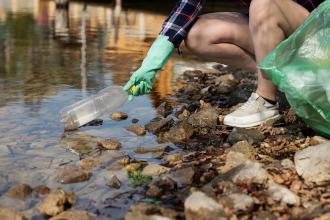[Source](https://pixabay.com/users/nastya_gepp-3773230/)
### Water Pollution is Transboundary
Water has no need of a passport to cross borders!
What furthers the issue of water pollution across the globe is that it is **transboundary**, meaning that because of the connection between so many of the world’s bodies of water, it is difficult to trace the source of water pollution. The fact that countries share water sources has led to severe disputes, and even wars, when one country pollutes another country’s water sources.
This also means that it is a **global** issue, affecting everyone on earth at varying levels. Water pollution can be point source or nonpoint source, meaning the origin of a certain pollutant is either traceable or results from the culmination of multiple contaminants.
Point source pollution allows for governmental regulations on corporations that utilize potentially harmful contaminants. However, “[nonpoint source pollution is the leading cause of water pollution in US water](https://www.nrdc.org/stories/water-pollution-everything-you-need-know#common)s,” which proves difficult to regulate, as there is no traceable source.
## The Most Common Types of Contamination
### Agriculture
As previously touched upon, water pollution is most frequently caused by [agricultural runoff, sewage and wastewater, heavy metals and toxic chemicals, oil pollution, and radioactive substances](https://www.nrdc.org/stories/water-pollution-everything-you-need-know#common).
When it rains, contaminants from the agricultural sector (farms and livestock operations) flow into all of our waterways. These pollutants consist of pesticides, fertilizers, and animal waste, as well as bacteria, viruses, and parasites. Additionally, nutrient pollution from nitrates and phosphates in the air and water create harmful effects on the environment.
#### Sewage
Next, sewage and wastewater from our toilets, showers, and sinks, as well as from industrial, commercial, and agricultural enterprises contribute to global water pollution. Often, this is from **[stormwater runoff](https://www.nrdc.org/stories/when-it-rains-it-pours-raw-sewage-new-york-citys-waterways)**, caused by rain that carries chemicals, grease, oil, debris, and road salts into our waterways.
[Source](https://pixabay.com/users/susuma-5497159/)
#### Industry
Another main contributor to water pollution is industrial waste such as [oil](https://www.nrdc.org/stories/water-pollution-everything-you-need-know#common), not just resulting from deep-sea oil spills and leaks, but the constant usage of gasoline in cars and vehicles, and land-based industrial factories, cities, and farms.
Additionally, another industrial waste is radioactive waste, “[generated by uranium mining, nuclear power plants, and the production and testing of military weapons, as well as by universities and hospitals that use radioactive materials for research and medicine](https://www.nrdc.org/stories/water-pollution-everything-you-need-know#common),” which is incredibly difficult and costly to dispose of, and is often accidentally released into marine resources, surface water, and groundwater.
#### Solid Waste
Lastly, but the easiest to prevent, is human dumping of garbage and litter is extremely harmful to our water sources across the world. The Ocean Conservatory reported that “[every year, 8 million metric tons of plastics enter our ocean on top of the estimated 150 million metric tons that currently circulate our marine environments](https://oceanconservancy.org/trash-free-seas/plastics-in-the-ocean/#:~:text=Every%20year%2C%208%20million%20metric,currently%20circulate%20our%20marine%20environments.).”
As one can imagine, thoughtless dumping of trash is incredibly detrimental to our marine life. Often, plants and animals become trapped in plastics and other debris, resulting in injury, health and reproductive issues, and death.
## **Global Warming and Water Pollution**
Global warming is also a large factor affecting water pollution across the world. Increased [air pollution](https://interfaithsustain.com/air-pollution-solutions/), as we’ve witnessed over the past century, has caused excess carbon dioxide, lead, nitrogen dioxide, ozone, particles, and sulfur dioxide, in the air from industrialization.
Our oceans are able to absorb carbon dioxide from the air, which results in the warming, expansion, and acidification of these bodies of water across our earth, which has a direct impact on marine water quality.
The increasing temperature has caused the oceans to warm and expand while simultaneously decreasing the amount of oxygen that can be dissolved in water. This change has led to an increase in oceanic dead zones, which are areas where there is not enough oxygen for marine life to survive.
Because of global warming caused by increased pollution, marine life and marine ecosystems and environments are particularly vulnerable to harm as their environment changes.
### Our Bible Teaches us to Appreciate Clean Water
**Valuing Water** is described in greater detail in [Eco Bible: Volume One: An Ecological Commentary on Genesis and Exodus](https://interfaithsustain.com/ecobible/): Deuteronomy 2:6 – “What food you eat you shall obtain from them for money; even the water you drink you shall procure from them for money.” This verse states that the Israelites were to buy water from the inhabitants when they passed through the land of Seir, in today’s Jordan.
Elsewhere in the Torah, water is free, especially in the desert when, according to the Midrash, Miriam’s well freely provides water for 40 years. Today, an important aspect of [Israel’s water policy](https://en.globes.co.il/en/article-israel-water-authority-hikes-prices-following-comptroller-criticism-1001258076) is to charge a “market price” for water, not a subsidized price as seen in many nations. This encourages people to conserve water appropriately, and allows for increasing the price during a drought.
[Source](https://pixabay.com/users/cocoparisienne-127419/)
A story about Rabbi Yisroel Salanter in Paris describes him waiting in a fancy hotel for a potential donor to his Torah academy. He orders a glass of water, and when the bill comes, he’s shocked at the cost. Rabbi Salanter summons the waiter and asks him if they had made a mistake over the charge for a simple glass of water.
The waiter, somewhat embarrassed, explains that the charge also includes the ambience, the beautiful building, the expensive furnishings, the expansive gardens surrounding him and the attentive care of the waiters. At this point, Rabbi Salanter thanks the waiter profusely and pays willingly.
Afterwards, he explains to his students that he learned from the waiter the answer to an important question. Why do we recite the blessing before drinking a simple glass of water (“Blessed are You, God … that everything exists by God’s word”)? After all, water is the simplest thing we can drink. Why thank God for everything in the Universe? The waiter’s answer helped him appreciate that we are all in God’s luxury hotel.
When we drink a simple sip of water, we must realize that we are getting far more than pure refreshment. We have solid ground beneath our feet, plentiful fresh air, a beautiful sky, the smell of flowers, the chirping of birds and all the beauty and conveniences of creation. When we take a sip of water, we should remember, not only do we owe God a thank you for the water, but also for the ambience of the Creator’s luxurious world.
In that world, nature cleanses water, which economists quantify as an “ecosystem service.’” New York City has spent $1.5 billion in protecting over 108,000 acres of land in the [Hudson River watershed](https://www1.nyc.gov/html/dep/html/press_releases/10-32pr.shtml#.X_PpeukzbX4), rather than build expensive drinking water treatment facilities. By letting nature do the work, it saves significant costs and reduces energy use. This program is one of the most comprehensive in the world.
We think of water as our most basic **resource**, but today over 40% of the global population do not have access to safe drinking water. If we start to value water, like the Bible teaches us to, then we will not cause pollution of our most vital resource.
*\* Featured image [source](https://pixabay.com/users/yogendras31-12827898/)*
**Categories:** Blog on Faith and Ecology, Pollution
**Tags:** Water Pollution
---
### [The Mauritius Oil Spill: A Disaster with Ecological and Human Impacts](https://interfaithsustain.com/mauritius-oil-spill/)
**Published:** December 3, 2021
**Author:** ICSD
**Excerpt:** Sydney Cohen - The MV Wakashio oil spill is a tragedy that happened in August of 2020. It is believed to have started when a cargo ship called MV Wakashio lost power and drifted into a reef off Mauritius, in the Indian Ocean.
**Content:**
Table of Contents
Table of Contents
- [MV Wakashio in the Indian Ocean](#aioseo-mv-wakashio-in-the-indian-ocean-4)
- [Oil Spills: Hazardous to the Environment](#aioseo-oil-spills-hazardous-to-the-environment-8)
- [Species Affected By Oil Spills](#aioseo-species-affected-by-oil-spills-13)
- [The Human Impact of Oil Spills](#aioseo-the-human-impact-of-oil-spills-18)
- [Impacts of Past Oil Spills](#aioseo-impacts-of-past-oil-spills-23)
- [Oil Spill in Mauritius: Questions Mount Over Ship Fuel Safety](#aioseo-oil-spill-in-mauritius-questions-mount-over-ship-fuel-safety-29)
- [Oil Spill Clean Ups](#aioseo-oil-spill-clean-ups-32)
- [What was the response to the Mauritius spill?](#aioseo-what-was-the-response-to-the-mauritius-spill-37)
- [What Ecosystems Were Affected by the Mauritius spill?](#aioseo-what-ecosystems-were-affected-by-the-mauritius-spill-42)
- [Religious Responses to The Mauritius Oil Spill](#aioseo-religious-responses-to-the-mauritius-oil-spill-45)
*By Sydney Cohen* – The **MV Wakashio oil spill** is a tragedy that happened in August of 2020. It is believed to have started when a cargo ship called MV Wakashio lost power and drifted into a reef off Mauritius, in the Indian Ocean.
The accident caused 1,000 tons of fuel oil to leak from the vessel and pollute an area spanning more than 400 m deep.
Not only did the initial accident cause an environmental disaster, but the Mauritius oil spill also had an incredibly botched clean-up job, that claimed the lives of humans and more than 50 whales. Even the [Pope](https://www.forbes.com/sites/nishandegnarain/2020/09/03/global-shippings-moral-authority-plunges-in-mauritius-as-pope-intervenes-in-wakashio-saga/?sh=22d47e3253a1) got involved, calling for nature to be better respected.
## MV Wakashio in the Indian Ocean
The MV Wakashio oil spill occurred when the Japanese bulk carrier ship MV Wakashio ran aground on a [coral reef](https://interfaithsustain.com/why-are-coral-reefs-important/) in the Indian Ocean south of Mauritius, leaking fuel in the following weeks, and breaking apart in mid-august.
Though most of the oil was drained before the ship broke apart, it was still estimated that around 1,000 tons of oil spilled into the ocean. Some scientists [consider](https://en.wikipedia.org/wiki/MV_Wakashio_oil_spill) this the worst environmental disaster ever in Mauritius.
Two weeks after the incident, the Mauritian government declared the incident a national emergency, calling on help from around the world with clean-up efforts.
- [](https://interfaithsustain.com/oil-pollution/)
## [The Financial and Ecological Cost of Oil Pollution From Oil Spills](https://interfaithsustain.com/oil-pollution/)
- [](https://interfaithsustain.com/when-will-we-run-out-of-oil/)
## [To Burn Or Not To Burn: When Will We Run Out of Oil?](https://interfaithsustain.com/when-will-we-run-out-of-oil/)
## Oil Spills: Hazardous to the Environment
[Oil spills are incredibly hazardous to the environment](https://interfaithsustain.com/oil-pollution/ "Oil spills are incredibly hazardous to the environment"). Seawater has a high salt content, which means it’s difficult for oil to dissolve into it. This means that when an oil spill occurs, it often remains on top of the water surface and can’t be cleaned up by traditional methods.
Oil spills have devastating effects on marine life because of their toxicity and ability to suffocate animals if ingested or touched directly by them. There are many different types of species affected including fish, seabirds, sea otters, turtles, and dolphins, and they also affect human livelihood as well.
### Species Affected By Oil Spills
It is not any singular species that could be vulnerable due to the dispersal of water-soluble chemicals within the water. Filter feeders, such as corals, crustaceans, and mollusks are often the first species to be affected. This particular incident also affected larger species quite drastically, as almost 50 whales were seen washed up on the beach in one week alone.
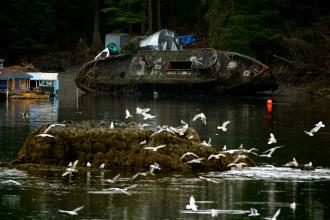[Source](https://pixabay.com/users/lisaredfern-910282/)
Bad weather in the two weeks after the incident forced the vessel to retreat to the coral reef. It pushed a lot of sand and broken coral over the reef towards the lagoon that created a sand bar around the reef.
#### The Human Impact of Oil Spills
Firstly, it was expected that the taxpayers living on the small island nation of Mauritius would go toward the [oil spill clean-up](https://interfaithsustain.com/oil-spill-clean-up/), rather than the multi-billion dollar shipping lines that operate these vessels. However, thousands of people in Japan signed petitions demanding Nagashiki Shipping take responsibility for the incident and contribute to the clean-up, and fortunately, they’ve agreed to help fund not only the clean-up efforts but wildlife and [ecosystem restoration](https://interfaithsustain.com/ecological-restoration/) projects as well.
Secondly, the fishing communities living in the region were no longer able to fish because the fish caught now contained high amounts of arsenic.
#### Impacts of Past Oil Spills
In 2010, the Deepwater Horizon disaster off the Gulf of Mexico witnessed nearly 600 million barrels of oil pumped into the air.
[Source](https://www.pexels.com/@michalmarek/)
A commercial crude ship ran aground off France’s coast in 1978 and leaked 70 million gallons into the ocean. During the weekend a French air force unit was deployed to the islands of Réunion for an environmental cleanup.
However, in some jurisdictions, it appears that despite best efforts being employed, there is less than a 10% chance of a clean up after an oil spill. Scientists believe that it will be left for generations.
#### Oil Spill in Mauritius: Questions Mount Over Ship Fuel Safety
More than six months after the oil spill, officials in Mauritania were still waiting for the Wakashio gas rig to recover from its burning lands. The spill has been described by experts as the worst ecological disaster affecting the western Indian Ocean.
Coastal scientists are warning that even more vessels could be damaged by coral reefs in the Indian Ocean such as in this incident, and lead to further environmental pollution.
## Oil Spill Clean Ups
Oil spills are disastrous for the environment and can devastate wildlife. Clean-up efforts often take years to complete, and there are many steps to take in order to clean up an oil spill. There is a lot of research that needs to be done in order to understand the magnitude and severity of the situation.
This includes understanding how much crude oil was spilled, what type it is, and where it has gone. Once this information is gathered, responders will know how best to manage and contain the damage caused by the spill.
## What was the response to the Mauritius spill?
A French crew came first from nearby Réunion and put in ocean booms. The UN deployed experts in the area of oil spill management and crisis management. Marine ecologists were working from Japan and the United Kingdom.
[Source](https://www.pexels.com/@jan-rune-smenes-reite-221584/)
The Mauritians took active action and constructed 80 kilometers of makeshift ocean booms. They managed to contain and remove nearly 75% of the oil, but the largest problem is that the oil has water-soluble substances that dilute into the water without scooping up the sediments. Only a tiny amount reached the sea, where it became difficult to clean.
### What Ecosystems Were Affected by the Mauritius spill?
The ship was grounded just off Pointe d’Esny, north of Blue Bay Marine Park, a region considered a [biodiversity](https://interfaithsustain.com/why-is-biodiversity-important/) hotspot and a part of the Ramsar Convention on Wetlands of International importance.
The Île aux Acrettes, near the wreckage, also was hit by the spill. The oil was dripping from a large and rare patch of marine grass where seahorses live. Coral reefs are also home to thousands of species, and the ship’s wreckage harmed many of the coral polyps, in addition to the oil killing off thousands of coral species.
## Religious Responses to The Mauritius Oil Spill
Cardinal Maurice E. Piat, the **Bishop of Port-Louis**, [spoke about his concerns ](https://aleteia.org/2020/08/31/pope-laments-oil-spill-near-mauritius-as-christians-unite-to-pray-for-respect-of-creation/)over the oil spill: “I think especially of the people of Mahebourg and the villages on the southeast coast for whom the oil spill is not only an ecological disaster but a human disaster: the sea for them is their livelihood, and more (than that) it is a place of life, their passion. With the devastated lagoon, it’s a lifetime, a whole culture that collapses.”
Even [the Pope offered prayers for Mauritius](https://www.vaticannews.va/en/pope/news/2020-08/pope-francis-looks-ahead-to-world-day-prayer-creation-angelul.html) and expressed concern for their “environmental disaster.”
The government of Mauritius is working to clean up the oil and restore the environment, but this will take time, as most oil spills do. In order for our global society to live in harmony with nature we need a more sustainable future.
**The Mauritius oil spill** is an example of how devastating a natural disaster can be for people and wildlife in the region. There are many other examples throughout history where countries have been affected by natural disasters, including earthquakes and tsunamis. When these events happen it’s important to remember that they not only affect the environment but also human life.
*\* Featured image* [*source*](//commons.wikimedia.org/w/index.php?curid=93781176)
**Categories:** Blog on Faith and Ecology, Pollution
**Tags:** Oil Spills, Pollution
---
### [As We Blog, Another Oil Spill Clean Up Is Underway!](https://interfaithsustain.com/oil-spill-clean-up/)
**Published:** October 22, 2021
**Author:** ICSD
**Excerpt:** Sydney Cohen - Just this month, October 4th 2021, stunning beach locations in California were again destroyed by a huge oil spill.
**Content:**
Table of Contents
Table of Contents
- [Oil Spills](#aioseo-oil-spills-4)
- [The Consequences of Oil Spills](#aioseo-the-consequences-of-oil-spills-6)
- [Oil Spills in The Gulf of Mexico](#aioseo-oil-spills-in-the-gulf-of-mexico-15)
- [Oil Spill Clean Up](#aioseo-oil-spill-clean-up-24)
- [Methods For Oil Spill Clean-Ups](#aioseo-methods-for-oil-spill-clean-ups-33)
- [Responding to Oil Spills on Shore](#aioseo-responding-to-oil-spills-on-shore-37)
- [Use of Skimmers in Clean Ups](#aioseo-use-of-skimmers-in-clean-ups-42)
- [Using Oil Booms in Clean Ups](#aioseo-using-oil-booms-in-clean-ups-44)
- [Chemical Stabilization of Oil by Elastomizers](#aioseo-chemical-stabilization-of-oil-by-elastomizers-46)
- [Religion and Oil Spills](#aioseo-religion-and-oil-spills-50)
*By Sydney Cohen* – Just this month, **October 4th 2021**, stunning beach locations in California were again destroyed by a huge oil spill. Look at the scope of the oil spill clean up going on right now while you read our blog: <https://www.youtube.com/watch?v=RqKrUcXoNQQ>
The **Deepwater Horizon oil spill** was the largest accidental marine oil spill in history, and it took months for workers to clean up. The disaster resulted from an explosion on April 20th, 2010 that killed eleven people and released four million barrels of crude oil into the Gulf of Mexico. The effects were felt as far as Florida, Washington State, and West Virginia.
There are many environmental disasters that happen, but one of the most devastating is an **oil spill**. It doesn’t only harm wildlife and marine life; it also has adverse effects on humans like **respiratory problems**. When faced with this type of problem, you need to act quickly in order to save what you can. This blog post will cover how to handle a large-scale cleanup of an ocean or river with spilled oil using natural materials you can find right at home!
## Oil Spills
Oil spills are one of the most devastating environmental disasters to happen. They can devastate our coastlines, kill marine life and cause oil slicks in the water that contaminate beaches, marshes, and wetlands for years. The oil gets into food chains where it is ingested by fish or other animals. It contaminates drinking water sources when oil seeps underground. And oil also has a big impact on tourism; beachgoers don’t want to go near an oil slick! But there’s good news: clean-up efforts have been successful in many cases.
### The Consequences of Oil Spills
Oil spilled in the ocean or oil wells that result from a spill are highly dangerous because the waves are resisting very high elasticity. When not dealt with quickly this menace can quickly reach the shoreline and other areas adding to the consequences of the catastrophe.
How long it takes for an ecosystem to recover from a spill is dependent on its size. The effect of a small oil spill takes 10 years to fully disappear though a larger spill could take more time. Oil spills can result in the collapse of a range of species. including fish, which will later die in an **ecosystem collapse** with the occurrence of long-lasting water contamination.
Many wildlife species can potentially be compromised by the dispersion of contaminated water and water-containing nutrients. Filter feeders, including coral and crustaceans, skimmers such as birds and other surface feeders, and mollusks are typically the first to be affected.
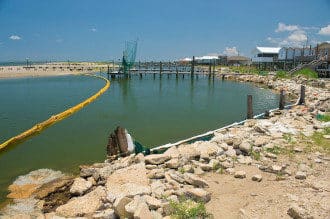[Source](https://pixabay.com/users/12019-12019/)
- [](https://interfaithsustain.com/pros-and-cons-of-oil/)
## [The Pros And Cons Of Oil For Our Energy Needs](https://interfaithsustain.com/pros-and-cons-of-oil/)
- [](https://interfaithsustain.com/what-is-peak-oil/)
## [Understanding What Is Peak Oil](https://interfaithsustain.com/what-is-peak-oil/)
- [](https://interfaithsustain.com/when-will-we-run-out-of-oil/)
## [To Burn Or Not To Burn: When Will We Run Out of Oil?](https://interfaithsustain.com/when-will-we-run-out-of-oil/)
There is also a social impact that results from oil spills, aside from the damage to the environment that they cause. Fishing communities in the region of an oil spill can no longer fish because the fish caught contain high levels of arsenic and chemicals from the [water pollution](https://interfaithsustain.com/effects-of-water-pollution/). This affects the industry of many shoreline and coastal populations.
## Oil Spills in The Gulf of Mexico
All gulf coast residents know that the Gulf of Mexico is an important part of their lives. It provides them with recreation and work opportunities, as well as a place to live. Unfortunately, it has been under attack for years now by pollution from the oil spills resulting from the fracking industry.
The gulf coast is home to many people who rely on fishing and tourism industries for their livelihoods, and these industries have suffered greatly because of oil spills in the gulf.
The Deepwater Horizon oil spill occurred on April 20, 2010, in the Gulf of Mexico. [It was](https://en.wikipedia.org/wiki/Deepwater_Horizon_oil_spill) “considered to be the largest marine [oil spill](https://en.wikipedia.org/wiki/Oil_spill) in the history of the petroleum industry,” and the oil well was still considered leaking in 2012.
There was a massive clean-up effort, using oil dispersants, controlled burns, floating booms, and skimmer ships in an effort to protect the nearby beaches, estuaries, and wetlands. The spill was considered one of the biggest environmental disasters in history.
[Source](https://unsplash.com/@brnkd/)
## Oil Spill Clean Up
Oil spills are not pretty. They can cause serious [environmental damage](https://interfaithsustain.com/environmental-degradation-and-the-future-of-our-planet-earth/), and they also bring down the property value of homes in the area. This is why the clean-up is so important! When an oil spill occurs, it needs to be cleaned up as quickly as possible before it causes any more harm.
If you find yourself in this situation, here are some steps that you should take:
- Contact clean-up professionals immediately
- Hire clean-up crews with equipment for removing all traces of oil
- Do not use water or other liquids on-site while cleaning
- Minimize contact with the spilled material
An oil spill response team is a specialized group of people that clean up oil spills or any mess created by an oil spill. They are usually contracted when the clean-up efforts fall outside the scope of traditional response organizations or if cleanup technologies are not available in a timely manner.
### Methods For Oil Spill Clean-Ups
Oil spills are usually a very difficult task to clean up, but methods have been developed over the years to help. The methods range from simple methods that do not require any special equipment or knowledge of chemistry, to methods that involve hazardous materials and should only be undertaken by professionals.
### Responding to Oil Spills on Shore
In the wake of the [EXXON Valdez](https://www.history.com/topics/1980s/exxon-valdez-oil-spill) spill, in 1989, responders were handed shovels and pipes to use. Throughout that time many more techniques were developed that are now used routinely in coastal cleaning. [NOAA](https://www.noaa.gov/)‘s team reviewed and recommended trade-offs in assessing the use of spill intervention tools and technologies.
In March 1989, NOAA Scientists raced to remote **Prince William Sound Alaska** in March 1989 to respond to the massive oil spill in Prince William Sound, Alaskan Sound, one of the worse oil spills in United States history.
[Source](https://unsplash.com/@austris_a/)
### Use of Skimmers in Clean Ups
Oil booms, skimmers, or oil scoops are commonly applied to boats to help remove contaminants from surface waters. Skimmers are specially designed machines that squeeze out oil like vacuum cleaners. They are used to physically isolate oil from the surface water and to collect and process for re-use. Oil can be confined utilizing the boom if it has an oil boom or a pump-out oil.
#### Using Oil Booms in Clean Ups
The use of oil booms is a simple and successful way to control spills. Equipment called containment booms act like fences to stop oil from spreading. Booms have multiple parts: the ‘free-board’ is the part above the surface and is intended to help contain oil or to prevent it from flowing over the top. A ‘skirt’ is attached beneath the surface to prevent the oil in the booms from getting caught under the boom and escaping.
#### Chemical Stabilization of Oil by Elastomizers
Experts have formulated chemicals like **‘elastol’** to prevent oil spills and to contain leakage. The compound gelatinizes or solidifies the oil at the surface of the water and prevents it from spreading or escaping.
Furthermore, the gelatin is easy to obtain and thus makes the procedure highly efficient. The oil removal step is simple to use and quick to recover from the spill site so that it is highly efficient and helps prevent spreading contamination in adjacent areas.
Most oil spills take place at the edges of the sea. Most people leave them to naturally decompose in the environment. As they get closer to shore we slowly begin treating them.
## Religion and Oil Spills
There is a wonderful collection of resources on faith organizations responding to the **BP oil spill** on the site [ReligionLink](https://www.religionlink.com/source-guides/oil-spill-apocalypse-religion-the-environment-and-bp/). Here are a few examples and quotes:
[“The BP Oil Spill: A Christian Call for Lament and Reconciliation”](https://www.ipetitions.com/petition/lamentbpoilspill/) is an online petition which “called on Americans to observe a ‘fast from oil’ on Sunday, June 20, 2010, the two-month anniversary of the spill.”
In [“Buddhist Ethics for a Harm-Free Livelihood: An Open Letter to the CEO of BP,”](https://www.huffingtonpost.com/josh-schrei/a-livelihood-that-does-no_b_591612.html) Josh Schrei writes about how “In the Buddhist worldview of my upbringing, the livelihood of a human being must be based on one basic criterion — do no harm. The more complex the economy of our world becomes — and the more fragile its environment — the more vital it is for individuals to personally adopt this ethical outlook and this way of living.” The author calls upon BP to adopt the **Buddhist “do no harm,”** approach and shift away from their harmful practices that culminated in a massive oil spill.
Lastly, Rev. Fletcher Harper in his article, [“Silence, God, and the Gulf Coast Oil Spill,”](https://www.huffingtonpost.com/rev-fletcher-harper/gulf-oil-spill_b_567834.html) calls upon us to develop “strong federal policies to create renewable energy and fight climate change, and to regulate and replace the toxins we’re spewing into the earth” based on various faith traditions.
God is calling us to protect the planet and ourselves from oil spills. Will we heed the call?
*\* Featured image [source](https://pixabay.com/users/catmoz-4975455/)*
**Categories:** Blog on Faith and Ecology, Pollution
**Tags:** Oil Spills, Water Pollution
---
### [The Financial and Ecological Cost of Oil Pollution From Oil Spills](https://interfaithsustain.com/oil-pollution/)
**Published:** December 27, 2021
**Author:** ICSD
**Excerpt:** Sydney Cohen - The effects of oil pollution are felt worldwide, and the United States is no exception. From Alaska to Florida, there are many animals that have been affected by oil spills.
**Content:**
Table of Contents
Table of Contents
- [What Is Crude Oil?](#aioseo-what-is-crude-oil-3)
- [Crude Oil to Refined Oil](#aioseo-crude-oil-to-refined-oil-8)
- [What Is An Oil Spill?](#aioseo-what-is-an-oil-spill-14)
- [Oil Spills In The USA](#aioseo-oil-spills-in-the-usa-24)
- [What Does The NOAA Do After an Oil Spill?](#aioseo-what-does-the-noaa-do-after-an-oil-spill-32)
- [Historic Oil Spills](#aioseo-historic-oil-spills-36)
- [The Ixtoc 1 Oil Spill (1979)](#aioseo-the-ixtoc-1-oil-spill-1979-39)
- [The Deepwater Horizon Oil Spill (2010)](#aioseo-the-deepwater-horizon-oil-spill-2010-41)
- [Paying for Oil Spill Cleanups and Restoration](#aioseo-paying-for-oil-spill-cleanups-and-restoration-44)
- [Religion and Oil Pollution](#aioseo-religion-and-oil-pollution-47)
- [Oil Pollution As a Reflection of Our Inner Pollution](#aioseo-oil-pollution-as-a-reflection-of-our-inner-pollution-51)
*By Sydney Cohen* – The effects of **oil pollution** are felt worldwide, and the United States is no exception. From Alaska to Florida, there are many animals that have been affected by oil spills. The Atlantic coast has also seen its fair share of far-reaching impacts from these [environmental disasters](https://interfaithsustain.com/oil-spill-clean-up/). Oil spills affect marine life in so many ways, by ingestion or absorption through their skin. It’s important to be aware of how these spills happen and what you can do to help clean up the damage!
Oil pollution is a major problem in the world today. Not only does it destroy our natural resources, but it also has many negative effects on people and animals. This article will go over the main causes of oil spills, how they cause [environmental degradation](https://interfaithsustain.com/environmental-degradation-and-the-future-of-our-planet-earth/ "environmental degradation"), and what we can do to prevent them from happening again.
## What Is Crude Oil?
Crude oil is a natural resource that we all need to use. However, crude oil can be very toxic and dangerous if it spills into the environment or if we release too much of it into the atmosphere.
Crude oil is a thick black liquid. It has been used for many purposes in the past and it will be used in the future as well. However, crude oil can also be very harmful to our environment if not properly handled or disposed of.
### Crude Oil to Refined Oil
Crude oil is located under the water or in underwater reservoirs where drops of oil are deposited in holes or small pores in rocks. After drilling and pumping, the crude oil is transported by pipelines, ships, trucks, or trains to the refineries and processing plants. There it is refined so that it can be incorporated into different petroleum products including gasoline and other fuels, in addition to other products including asphalt, plastics, soaps, and paints.
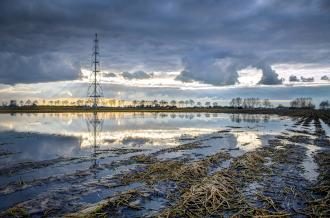[Source](https://pixabay.com/users/skitterphoto-324082/)
Oil pollution resulting from the leakage of crude oil into the environment is one of the most serious [environmental problems in this world](https://interfaithsustain.com/environmental-degradation-and-the-future-of-our-planet-earth/). The crude oil found in the ground, crude oil that has been spilled by an oil tanker, or crude oil that is refined into gasoline and other petroleum products can contaminate water supplies, kill plants and animals, destroy natural habitats and cause respiratory problems for humans. Oil spills are also a major problem because they can severely damage coastal areas like wetlands, beaches, and estuaries where many people vacation during the summer months.
- [](https://interfaithsustain.com/when-will-we-run-out-of-oil/)
## [To Burn Or Not To Burn: When Will We Run Out of Oil?](https://interfaithsustain.com/when-will-we-run-out-of-oil/)
- [](https://interfaithsustain.com/mauritius-oil-spill/)
## [The Mauritius Oil Spill: A Disaster with Ecological and Human Impacts](https://interfaithsustain.com/mauritius-oil-spill/)
- [](https://interfaithsustain.com/oil-pollution/)
## [The Financial and Ecological Cost of Oil Pollution From Oil Spills](https://interfaithsustain.com/oil-pollution/)
## What Is An Oil Spill?
The term is used mostly to describe a maritime **oil spill** in which a large amount of oil is pumped or spilled into the ocean or coastal waters.
Oil spills penetrate into the plumage of birds and the skin of mammals. This reduces their isolating effects and makes them more vulnerable to temperature fluctuations. Cleanup and recovery from an oil spill is difficult and is dependent on many factors such as the type of oil spilled and the temperature of the water which affects evaporation and biodegradation.
Oil spills can harm sea creatures and ruin beaches, in addition to making certain seafood unsafe to consume. Not only does this affect human seafood consumption, but it harms marine life food chains as well.
It takes science and research to clean up sea surface water, the ocean floor, and beach areas affected by oil spills. There is also much science involved in efforts to reduce toxicity.
[Source](https://pixabay.com/users/analogicus-8164369/)
Oil is an ancient fossil fuel used by humans to warm up homes, to create electricity and to power our economy. But if oil is spilled directly into the ocean it can create huge devastation.
## Oil Spills In The USA
The oil industry is a booming business in the United States. The oil spills that occur in this country are not always caused by oil rigs, but rather by oil tankers and trucks that have been involved in accidents. When an oil spill occurs, it can lead to many serious environmental problems.
When oil spills into the ocean, it is a disaster for both marine life and people. The oil can kill animals in many ways, from suffocation to starvation to poisoning by the oil which they mistake for food. Oil also affects birds who feed on fish or smaller animals covered in oil. In addition, oil particles can be inhaled by these animals and humans alike, causing severe health problems such as lung cancer.
Oil spills are devastating because of the impact they have on our environment and human lives.
[Source](https://pixabay.com/users/466654-466654/)
## What Does The NOAA Do After an Oil Spill?
National Oceanic and Atmospheric Administration (NOAA) and Environmental Protection Agency (EPA) professionals assess what happened and assess the effects before designing the restoration work needed to help the oceans recover. Restoration and cleaning efforts have different processes.
Besides constructing new swampland or protecting animals’ habitats, these initiatives are also necessary to protect the environments they already contain.
The group responsible for the spill can also be held accountable by financially funding the restoration of natural spaces affected by the oil spill such as parks, boat docks, and fishing lines. Restoration projects slow the time it takes for some species and different habitats to regenerate, NOAA experts say. This is not the same as oil spill clean-ups, which are necessary to restore habitats and therefore take place prior to restoration efforts.
## Historic Oil Spills
Oil spills have been a historic problem for decades. These historic oil spills are still being dealt with today, and they will be tomorrow as well. It is important to know the history of this issue so that we can make an educated decision about how to deal with them now and in the future.
Many historic oil spills have occurred on the ocean, polluting it with decades of spilled oil. These spills are devastating for marine life that live in the area and can destroy their habitats for years to come. One example is the historic Exxon Valdez spill which took place in 1989. This historic spill released more than 10 million gallons of crude oil into Alaska’s Prince William Sound, making it one of the worst environmental disasters in US history.
### The Ixtoc 1 Oil Spill (1979)
Between June 1979 and March 1980, Mexico’s Ixtoc 1 incident sent 140 million gallons of crude oil into the Bay of Campeche D’Estrada. The spill started from an explosion at an oil pipeline station on the platform. The explosion was created when drilling mud did not circulate and resulted in the building up of oil and gas in the pipe. Due to the explosion, some of that oil is now washed up along beaches between the western Yucatan Peninsula and southern Texas.
#### **The Deepwater Horizon Oil Spill (2010)**
**The Deepwater Horizon oil spill** was an environmental disaster that occurred in the Gulf of Mexico. The spill occurred on April 20, 2010, when the wellhead ruptured and collapsed under high pressure, releasing 4.9 million barrels of crude oil into the deep ocean. This is one of America’s worst environmental disasters to date.
It is considered one of the worst environmental disasters in recent times, with implications that are still being felt today. Eleven people died when the Deepwater Horizon Wellhead exploded. The explosion caused an estimated 4.9 million barrels of crude oil to leak into the Gulf of Mexico. The Deepwater Horizon Oil Spill was officially declared over in September 2012, almost two years later, which speaks volumes about the intensive clean-up measures taken in order to clean up oil that is spilled miles offshore.
## Paying for Oil Spill Cleanups and Restoration
The Oil Pollution Act of 1990 established that anyone responsible for oil spills is accountable and is obliged to pay for cleanup and repairs. Over the past ten years, NOAA has helped recover over $9 billion from the parties who were responsible for the spill. Federal, state, and tribal agencies jointly oversee the oil spill response plan in all areas of Natural Resource Damage Assessment (NRDA), which is the process of assessing the impacts of a spill and reaching a settlement to support restoration projects.
Oil pollution resulting from oil spills has disastrous environmental effects. While many countries are taking precautions to prevent future spills, it’s important that we all do our part too by not littering or dumping hazardous materials into waterways where they could leak out into coastal waters.
## Religion and Oil Pollution
The [Church Times ](https://www.churchtimes.co.uk/articles/2021/29-october/news/uk/we-are-disinvesting-from-fossil-fuel-72-religious-investors-declare)recently wrote about how in preparation for COP-26, “72 faith-based institutions, including 37 from the UK, have announced their disinvestment from fossil fuels… The move is the largest-ever joint disinvestment announcement by religious organizations, and represents more than $4.2 billion in financial assets.” By disinvesting from fossil fuels, faith based institutions are able to stand up against oil pollution by weakening the fossil fuel industry.
Sarah Jawaid described in a [Huffington Post Blog](https://www.huffpost.com/entry/islam-and-the-spiritual-m_b_605937), her perspective on the 2011 BP Oil spill:
> Being Muslim, environmental stewardship is an instrumental expression of my faith. God bestowed on mankind a covenant to protect the Earth in the role of vicegerent… Our environment reflects ourselves. The clutter of our bedrooms, the disarray of our community spaces and in this case the destruction of a habitat by oil and gas due to human intervention; all reveal the lack of order within us.”
### Oil Pollution As a Reflection of Our Inner Pollution
An important religious perspective, that Jawaid is advocating for, is that the oil pollution in the world is a reflection of pollution in ourselves.
The more we focus inwards to purify ourselves internally, the better equipped we will be to clean up the world, and vice versa.
*\* Featured image [source](https://pixabay.com/users/curioso_photography-4192946/)*
**Categories:** Blog on Faith and Ecology, Pollution
**Tags:** Oil Pollution, Oil Spills
---
### [What Are The Sources of River Pollution, and How To Prevent It?](https://interfaithsustain.com/river-pollution/)
**Published:** December 15, 2021
**Author:** ICSD
**Excerpt:** Sydney Cohen - The pollution of rivers is a big problem in many countries. It can cause people to get sick, and it also contributes to the extinction of fish species. The most common type of river pollution is caused by sewage or industrial waste that has been dumped into the water.
**Content:**
Table of Contents
Table of Contents
- [Pollution in Rivers and Streams](#aioseo-pollution-in-rivers-and-streams-2)
- [The Causes of River Pollution](#aioseo-the-causes-of-river-pollution-4)
- [Agricultural Runoff Into Rivers](#aioseo-agricultural-runoff-into-rivers-12)
- [River Pollution Creates Algal Blooms](#aioseo-river-pollution-creates-algal-blooms-15)
- [Littering Is a Source of River Pollution](#aioseo-littering-is-a-source-of-river-pollution-15)
- [The Effects of River Pollution](#aioseo-the-effects-of-river-pollution-25)
- [The Benefits of Green Infrastructure in Preventing Pollution](#aioseo-the-benefits-of-green-infrastructure-in-preventing-pollution-22)
- [Green Urban Planning](#aioseo-green-urban-planning-35)
- [The Importance of Water Quality](#aioseo-the-importance-of-water-quality-38)
- [River Pollution Tragedy Leads to River Restoration](#aioseo-river-pollution-tragedy-leads-to-river-restoration-41)
- [Preventing River Pollution](#aioseo-preventing-river-pollution-45)
- [Law Enforcement to Prevent River Pollution](#aioseo-law-enforcement-to-prevent-river-pollution-47)
*By Sydney Cohen* – The pollution of rivers is a big problem in many countries. It can cause people to get sick, and it also contributes to the extinction of fish species. The most common type of river pollution is caused by sewage or industrial waste that has been dumped into the water.
## Pollution in Rivers and Streams
Many parts of the world have no laws or regulations regarding river safety and the quality of streams. Numerous rivers have suffered acutely from a range of pollutants that pose hazards to plant and [animal life and the environment](https://interfaithsustain.com/population-ecology/). There are also cases where people have fallen into polluted rivers and died as a result of pollution poisoning.
## The Causes of River Pollution
Many of the world’s major cities have been built close to rivers and lakes. The water collected at these sources is vital in providing water to the nearby population. It will also water their crops, provide water for washing clothes and dishes as well as drinking water for the population.
[Source](https://pixabay.com/users/kevinleung78-4713811/)
However, the flip side of this configuration is that although rivers are great for humans, humans aren’t always great for rivers. Many of the areas close to urban epicenters result in [anthropogenic pollution](https://interfaithsustain.com/factory-pollution/) of the waterways in question, compromising the quality of the water and potentially endangering the life of aquatic organisms therein.
Sources of **river pollution** include runoff from mismanaged wastewater treatment plants, sewage, industrial runoff, as well as storm runoff which delivers high concentrations of contaminants such as oil and sediment from roads.
- [](https://interfaithsustain.com/water-trading/)
## [Water Trading Is Used to Combat Global Water Scarcity Due To Climate Change](https://interfaithsustain.com/water-trading/)
- [](https://interfaithsustain.com/urban-runoff/)
## [Urban Runoff Pollutes Our Rivers](https://interfaithsustain.com/urban-runoff/)
- [](https://interfaithsustain.com/ocean-cleanup/)
## [Innovative Technology For An Ocean Cleanup](https://interfaithsustain.com/ocean-cleanup/)
## Agricultural Runoff Into Rivers
Sources of **nutrient pollution** are surface runoff from farming fields and pastures, septic systems, and pastures. Fish production on fish farms is also a source of pollution.
Agricultural fields have traditionally contained many toxic chemical compounds that include pesticide and organic compounds. In most cases, fertilizer causes overuse or excessive nutrient pollution – often resulting from nitrogen and/or phosphor-containing compounds. The presence of phosphorus and nitrogen in water causes water pollution and the contamination of ecosystems for its occupants.
### River Pollution Creates Algal Blooms
Nutrient pollution, particularly from excess phosphorus in the water, creates algal blooms, which heavily affect environmental health. Often the algae suffocate the plant and aquatic life in the water below as they prevent access to oxygen. A great example of algal blooms resulting from excess nutrients in a body of water is on Lake Michigan.
Agricultural pollution of rivers also affects drinking water, as the filtration processes that create clean water from streams, rivers, and lakes are much more difficult when there are high levels of substances in the water.
### Littering Is a Source of River Pollution
Sometimes people are careless or just reckless, dumping their waste next to, or even into, a river. A polluted river eventually flows into the oceans, with trillions of floating fragments, affecting the health of both the river and [ocean ecosystems](https://interfaithsustain.com/why-are-coral-reefs-important/).
[Source](https://pixabay.com/users/boomboomc-41994/)
The waste can entangle the fauna and flora, and aquatic life can even ingest larger parts of the waste which can damage internal organs. Much of the plastic pollution that litters our world eventually makes its way into our oceans via natural groundwater flows.
### The Effects of River Pollution
Pollution of waterways can cause damage to plants, animals, and humans. The river ecosystem both collects and transports pollutants, concentrating organic and inorganic pollutants in ways that negatively affect flora and fauna. Excess oil, heavy metals, pathogens, lead, sediment, and other materials in rivers eventually make their way to the ocean, where even more damage occurs since oceans contain even larger ecosystems. Not only is there potential for more damage, but pollution management and control becomes even more difficult once contaminants enter our oceans.
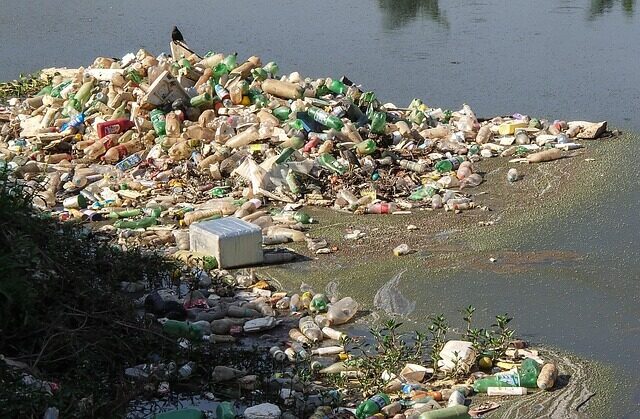[Source](https://pixabay.com/users/rafael_neddermeyer-5342045/)
Rivers are a way of life for massive numbers of people providing their income through fishing and aquaculture. A polluted river could also negatively affect the food supply in many countries. Rivers are an integral part of the human ecosystem and the wider environment.
### The Benefits of Green Infrastructure in Preventing Pollution
Green infrastructure practices make buildings in cities more environmentally friendly. For example, filtering rainwater collects rainwater where it has fallen so that there is an opportunity to use the water instead of allowing it to runoff into the sewage system.
These practices filter pollutants and save water and are therefore a more sustainable way of obtaining clean drinking water.
#### Green Urban Planning
A green urban approach to water management reduces pollutant presence in rivers, that reduces diseases in rivers and in other water supplies.
Green infrastructure solutions are cost-effective and can mitigate localized flooding from storm-water, which can lead to more oil and sediment in our rivers.
## The Importance of Water Quality
The water quality of a river is important for many reasons, but the most obvious one is that water sustains all life.
A [polluted water](https://interfaithsustain.com/effects-of-water-pollution/) supply can lead to serious health problems and even to death.
### River Pollution Tragedy Leads to River Restoration
At the 1997 Maccabiah games in Israel, a bridge crossing over the Yarkon River collapsed and tragically led to the deaths of four athletes that fell into the very polluted river. This shock brought about the process of completely rehabilitating and cleaning the Yarkon river.
Methods used included law enforcement, education and raising awareness. The river was also dredged to return the river to its natural depth and flow. Wastewater plants were set up to treat water entering the river and natural ecological parks were created at the source of the river to ensure all water that enters the river is clean.
The transformation of the water quality has been chosen as an example of a model for a countrywide educational programme on **river restoration**
## Preventing River Pollution
Combined sewer overflow treatment and storm-water treatment systems enable the capture and storage of solids, oils, and hydrocarbons, metals, chemicals, and nutrients from sewage and storm-water plants.
### Law Enforcement to Prevent River Pollution
The best way for reducing pollution in river waters is to capture pollutants before they can reach waterways, then remove them or clean them. Of course, law enforcement and legal action against polluters will reduce the amount of pollutants that need to be stopped from going into the rivers.
*\* Featured image [source](https://pixabay.com/users/gwizuk-9414052/)*
**Categories:** Blog on Faith and Ecology, Pollution
**Tags:** River Pollution, Water Pollution
---
### [Types of Sewage Water and Methods of Treatment](https://interfaithsustain.com/sewage-water/)
**Published:** December 17, 2021
**Author:** ICSD
**Excerpt:** Harry Cooper - Sewage, or wastewater, is water that has been used in factories, homes, or other buildings and contains pollutants because of it. The pollutants found in wastewater have detrimental impacts on human health and the environment.
**Content:**
Show Table of Contents
Hide Table of Contents
- [What Is Sewage Water?](#aioseo-what-is-sewage-water-1)
- [Types of Wastewater](#aioseo-types-of-wastewater-3)
- [Industrial Wastewater](#aioseo-industrial-wastewater-4)
- [Nutrient Pollution](#aioseo-nutrient-pollution-7)
- [Storm-water](#aioseo-storm-water-11)
- [Domestic Sewage Water](#aioseo-domestic-sewage-water-21)
- [Greywater Sewage](#aioseo-greywater-sewage-26)
- [Blackwater Sewage](#aioseo-blackwater-sewage-31)
- [Sewage Treatment](#aioseo-sewage-treatment-34)
- [Sewage Treatment Process](#aioseo-sewage-treatment-process-39)
- [Religion and Sewage Water](#aioseo-religion-and-sewage-water-45)
## What Is Sewage Water?
*By Harry Cooper* – **Sewage**, or wastewater, is water that has been used in factories, homes, or other buildings and contains pollutants because of it. The pollutants found in sewage water have [detrimental impacts on human health and the environment.](https://interfaithsustain.com/effects-of-water-pollution/ "detrimental impacts on human health and the environment.")
## Types of Wastewater
### Industrial Wastewater
Almost all industries require water at some point in production, and in almost every industrial system water becomes contaminated with various pollutants. Since there are many different kinds of manufacturing processes, the specifics of the pollution that’s caused from improper sewage disposal can vary greatly.
Depending on what is being made and the process it involves, [the type](https://www.micronicsinc.com/filtration-news/what-is-industrial-wastewater/) of waste that comes from industrial processes can change. These can range anywhere from ammonia as a byproduct of iron production to oil fracking bringing toxic substances from underground to the surface.
### Nutrient Pollution
The most notable example of industrial sewage is that which cohttps://doee.dc.gov/sites/default/files/dc/sites/ddoe/publication/attachments/Building%2C%20Stormwater%20P2.pdfmes from agriculture and other industries that contaminate their wastewater with nitrogen and phosphorus. These chemicals are important because they contribute to a very unique kind of pollution known as eutrophication or [nutrient pollution](https://ijarbs.com/pdfcopy/june2016/ijarbs8.pdf).
Nitrogen and phosphorous are the key ingredients in most industrial fertilizers, and therefore when they manage to get into water bodies through sewage they actually act as a surplus of nutrients for algae. This allows for large growths of algae called algal blooms that can greatly offset [aquatic ecosystems](https://interfaithsustain.com/why-are-coral-reefs-important/).
At first the algae produces excessive amounts of oxygen, but after the blooms inevitably die, microorganisms use up all the oxygen during decomposition. This creates an aquatic environment completely deprived of oxygen called a dead zone, where little to nothing can live.
- [](https://interfaithsustain.com/urban-runoff/)
## [Urban Runoff Pollutes Our Rivers](https://interfaithsustain.com/urban-runoff/)
- [](https://interfaithsustain.com/ocean-cleanup/)
## [Innovative Technology For An Ocean Cleanup](https://interfaithsustain.com/ocean-cleanup/)
- [](https://interfaithsustain.com/is-rain-water-safe-to-drink/)
## [In Your Opinion, Is Rain Water Safe to Drink Today?](https://interfaithsustain.com/is-rain-water-safe-to-drink/)
#### Storm-water
Whenever it rains, the water on the ground picks up chemicals and other substances as it starts to flow towards water bodies and storm drains. When rain becomes polluted with these chemicals on the ground it becomes a type of wastewater called [storm-water runoff](https://news.climate.columbia.edu/2018/04/03/stormwater-runoff-rain-flood/).
Storm-water normally soaks into the the ground and is absorbed by plants. However, in urban areas there is not as much dirt or plants to absorb all the water, and thus storm-water is able to pollute nearby water bodies.
The types of pollutants that can be picked up by storm-water come from a variety of sources and therefore can have a lot of negative effects on local water systems. [These pollutants](https://doee.dc.gov/sites/default/files/dc/sites/ddoe/publication/attachments/Building%2C%20Stormwater%20P2.pdf) can include pet waste, fertilizer, pesticide, oil, and pretty much any chemical you could expect to find on the ground in an [urban environment](https://interfaithsustain.com/urban-ecology/).
[Source](https://pixabay.com/users/manfredrichter-4055600/)
Storm-water has also been particularly topical in recent weeks, as Western Canada has been experiencing torrential rain and flooding. This has caused several landslides across the region.
Not only are these landslides capable of destroying houses and other buildings, but they also dump massive amounts of sediment into nearby water bodies destroying marine habitats.
## Domestic Sewage Water
Domestic sewage consists of all the water we use in our home. This type of sewage can be divided into two groups, the sewage that comes from our toilets (blackwater), and the water that comes from the kitchen, bathing, and washing clothes (greywater).
Domestic sewage contains both inorganic chemicals and organic material. About 30% of [domestic sewage](https://cgi.tu-harburg.de/~awwweb/wbt/emwater/lessons/lesson_a1/lm_pg_1066.html) is inorganic material, while the other 70% is organic matter that can spread bacteria and other pathogens.
### Greywater Sewage
Greywater includes all domestic wastewater without human waste. Greywater therefore contains high amounts of chemicals from washing clothes, showering, and general cleaning.
[Source](https://unsplash.com/@filios_sazeides/)
The chemicals that greywater contains can be very toxic and harmful to aquatic environments. Some of these substances also include nitrogen and phosphorus which can lead to nutrient pollution as we’ve seen in many other types of wastewater.
### Blackwater Sewage
Blackwater includes all domestic sewage that comes from our toilets. Most of the pollutants found in blackwater are forms of organic matter found in human waste such as bacteria and other microscopic organisms.
Blackwater can have a heavy cost on [human health](https://www.healthywa.wa.gov.au/Articles/F_I/Household-wastewater-and-health-risks) when left untreated. Because blackwater contains lots of organic materials it also contains a wide array of viruses, parasites, bacteria, and other pathogens that can spread infections and other diseases.
## Sewage Treatment
**Wastewater treatment plants** can be divided into two main kinds: industrial treatment and domestic treatment. The main difference between domestic and industrial treatment plants is industrial treatment is done on site while domestic treatment plants treat sewage from a surrounding area.
While these types of wastewater treatment plant serve to treat different types of sewage, the process of treatment is very similar at any given treatment plant. The only difference is that industrial treatment is more focused on removing chemicals, while the domestic process is more inclined to remove organic matter.
## Sewage Treatment Process
[There are three stages](https://www.organicawater.com/primary-secondary-tertiary-wastewater-treatment-work/) in wastewater treatment, the first stage is called primary primary treatment. Primary treatment starts by filtering out larger contaminants. This allows them to get rid of most suspended solids in the sewage.
The second stage is called secondary treatment, in which the wastewater is further treated and purified. This can be done in several ways. One such way is through a more intense filtration that involves sand filters and contact filters. Another way is done by exposing the sewage to microorganisms and activated sludge that naturally filters the wastewater over time.
[Source](https://unsplash.com/@unstable_affliction?utm_source=unsplash&utm_medium=referral&utm_content=creditCopyText)
The third step, or tertiary treatment, is mainly focused on removing any remaining phosphates or nitrates that could cause nutrient pollution. This is done mainly through filtration through carbon and sand.
## Religion and Sewage Water
Native Americans and other ecological activists have been involved in a [prolonged struggle](https://www.bbc.com/news/magazine-15176711) to protect one of their sacred mountains in Arizona. The mountain is used as a ski resort, and to ensure there is enough snow for skiing, treated wastewater has been brought in as snow. Native American groups like the Hopi tribe view this as a [desecration of their sacred mountain](https://www.azcentral.com/in-depth/news/local/arizona/2021/08/20/reclaimed-sewage-water-san-francisco-peaks-contamination/7903872002/) and are concerned about the spiritual and ecological implications of dumping sewage water on their mountain.
Sewage water is also an issue at other holy sites like [the Jordan River, ](https://www.timesofisrael.com/baptism-by-mire-in-jordan-river-sewage-mucks-up-christian-rite/)which is considered a place of miracles for Jews and Christians as it was miraculously split by the ancient Israelites and it was the place of Jesus’ baptism. According to EcoPeace Israeli director Gidon Bromberg, “The water quality is anything but holy in nature.” Nader Khateeb, the Palestinian director of EcoPeace adds “The water at the baptism site is unhealthy… It has so many potential health risks. We believe that the people who want to be baptized in that part of the river should be baptized in fresh healthy water.”
[Protecting our water resources](https://interfaithsustain.com/how-to-prevent-water-pollution/) from raw sewage and other effluents should be a top priority for every religious person, especially when that water was a place of miracles. Though in truth, one who understands the rarity of life in the universe and life’s dependence on clean water, recognizes that all **water is miraculous**.
*\* Featured image [source](https://pixabay.com/users/aitoff-388338/)*
**Categories:** Blog on Faith and Ecology, Pollution
**Tags:** Pollution, Water Pollution
---
### [In Your Opinion, Is Rain Water Safe to Drink Today?](https://interfaithsustain.com/is-rain-water-safe-to-drink/)
**Published:** March 16, 2022
**Author:** ICSD
**Excerpt:** Ilana Stein - There is nothing more fun than drinking clean rainwater! But, can you drink rainwater today?
**Content:**
Table of Contents
Table of Contents
- [Drinking Rainwater](#drinking-rainwater)
- [Collecting Rainwater](#collecting-rainwater)
- [The Benefits of Rainwater Collection](#the-benefits-of-rainwater-collection-1)
- [Rainwater Composition](#rainwater-composition)
- [Is Rainwater Safe To Drink ?](#is-rainwater-safe-to-drink)
- [Drinking Water – A Priority For The World](#drinking-water-a-priority-for-the-world)
- [Rainwater and Religion](#rainwater-and-religion)
- [Being Grateful for Rainwater](#being-grateful-for-rainwater)
*By Ilana Stein* – There is nothing more fun than drinking clean rainwater! But, can you drink rainwater today?
Many of us may remember standing outside with the rain falling and opening our mouths to catch the drops. But is it safe to drink rain today?
## Drinking Rainwater
While it seems like the world has an endless supply of water, only 3% is **drinkable freshwater**. The water cycle is a closed system, meaning that there is a constant yet limited amount of water in the world, which moves through different phases, from rivers and oceans, evaporation and coalescing to form clouds, before falling as rain. Before the increase in fossil fuels and [industrial pollutants](https://interfaithsustain.com/industrial-pollution/ "industrial pollutants"), our water supply was clean and it was generally safe to drink rain.
Today, things are a little more complicated: we need to understand what rainwater is, how one collects it, what water quality is and how to make it safe for human consumption so as to augment our water supply.
### What is Rainwater?
**Rainwater** – also written as **rain water** – is not merely water that falls as rain from the sky. It is water that can be collected and used. It is defined as [“rainfall precipitation collected from a roof catchment”](https://www.sciencedirect.com/topics/engineering/rainwater).
In other words, rainwater is a source of free water that can be used for various purposes in a perfectly healthy way, such as watering plants, flushing the toilet, laundry, heating and cooling and even drinking – after going through a water filtration system, similar to a coffee filter.
[Source](https://unsplash.com/@globencer "Source")
#### Collecting Rainwater
To collect rainwater is known as rainwater harvesting. When it rains, rainwater is captured and collected by diverting the runoff water from pavements or roofs, and then storing rainwater in rain barrels, tanks, aquifers, wells, or other artificial storage places.
A [rain water barrel](https://interfaithsustain.com/rain-water-barrel/) is a great way to collect and store rainwater.
#### The Benefits of Rainwater Collection
By making use of rainwater, other water can be conserved and the pressure on the public drinking water supply can be alleviated. “**Rainwater harvesting**, in conjunction with urban agriculture, would be a viable way to help meet the [United Nations Sustainable Development Goals](https://en.wikipedia.org/wiki/Rainwater_harvesting) for cleaner and [sustainable cities](https://interfaithsustain.com/sustainable-cities/), health and well-being, and food and water security”.
- [](https://interfaithsustain.com/urban-runoff/)
## [Urban Runoff Pollutes Our Rivers](https://interfaithsustain.com/urban-runoff/)
- [](https://interfaithsustain.com/ocean-cleanup/)
## [Innovative Technology For An Ocean Cleanup](https://interfaithsustain.com/ocean-cleanup/)
- [](https://interfaithsustain.com/is-rain-water-safe-to-drink/)
## [In Your Opinion, Is Rain Water Safe to Drink Today?](https://interfaithsustain.com/is-rain-water-safe-to-drink/)
## Rainwater Composition
Rainwater is composed of gases such as carbon dioxide, nitrogen and sulphur, and can therefore be quite acidic and low in mineral content. It does not contain dissolved solids and so is rather tasteless. Aside from this, one would think that it is the purest water and that one could safely drink rainwater.
However, as rain makes its way through the atmosphere and then lands on different surfaces or in dirty containers, it picks up harmful bacteria and even heavy metals in areas of chemical plants, thus changing its chemical composition.
Add to this the fact that rainwater pouring off roofs through gutters, particularly for the first time, will have a lot of detritus and heavy particulates – leaves, occasional insect parts or bird poop – and instead of being safe to drink, carry bacteria that can constitute a significant health hazard to the human body.
Today, “we now know that *E. coli* and other harmful bacteria can be passed along in untreated [contaminated water](https://www.harvesth2o.com/filtration_purification.shtml)“.
### Acid Rainwater
Today, fossil fuels, chemical plants, paper mills, air pollution and the proliferation of toxic chemicals have caused acidic elements such as sulfur dioxide and nitrogen oxide to be emitted into the atmosphere. Here they “react with water, oxygen and other chemicals to form sulfuric and nitric acids. These then mix with water and other materials before falling to the ground” thus creating acid rain ([EPA](https://www.epa.gov/acidrain/what-acid-rain)).
[Source](https://unsplash.com/@jakeacharles/ "Source")
Most rain today has some of these chemicals, polluting our rivers, the soil, as well as our collected rainwater. The question is whether it is safe to drink rainwater that has dissolved minerals and chemicals within it.
## Is Rainwater Safe To Drink ?
Most rainwater today is therefore not safe to drink, polluted as it is by chemical contaminants, harmful bacteria, and other contaminants. While it can be used for other things such as washing clothes or irrigation in agriculture, it must be treated and tested regularly if we want to drink it too.
There are a number of [ways to treat rainwater](https://interfaithsustain.com/rain-water-treatment/), so that it is safe for human consumption, such as using sand filters or ultraviolet light.
Many people [recommend ](https://www.bluebarrelsystems.com/blog/first-flush-diverter/)using a first flush diverter, which “is a simple contraption that diverts the first flow of water away from a rainwater catchment system. The first pass of water in any storm essentially washes your roof of all the sediments that have collected since the last rain. The idea is that diverting the first flush can help ensure cleaner water in your rain tanks or barrels”.
Other methods include a home water filtration pitcher or simply boiling water. But immense care must be taken to ensure that harmful bacteria and other contaminants are removed. Treated water is safe to drink.
### Drinking Water – A Priority For The World
According to the [United Nations](https://sdgs.un.org/goals/goal6), some two billion people lack safely managed drinking water. A rainwater collection system and treatment methods are vital in order to ensure that rainwater can be safe to drink and perfectly healthy for all humans across the world. This will help to achieve the UN’s Sustainable Development Goal no. 6: “Ensure availability and sustainable management of water and sanitation for all”.
## Rainwater and Religion
Terje Oestigaard discusses in an article on [CulturallyModified](https://culturallymodified.org/rain-and-rivers-divine-works-and-religious-waters/) how rain is perceived in different religions. Ancient Israel, the Jewish homeland, is described as “a land of hills and valleys \[that\] soaks up its water from the rains of heaven” (Deuteronomy 11:11). Jewish tradition adds a prayer for rain during Israel’s rainy season. Ancient Egypt, on the other hand, received most of its water from the annual overflowing of the Nile River.
### Being Grateful for Rainwater
Different ways of receiving water can have big influences on a culture. Today, in the western world, tap water pours out with the turn of a faucet – it’s easy to forget that even our water is limited. As [water scarcity](https://www.unwater.org/water-facts/scarcity/) becomes a larger and larger issue with more drought, forest fires, and acid rain, we must learn to recognize that perfectly safe water doesn’t just magically appear in our homes, but it must be drawn from somewhere, treated and protected.
We tend to drink water – or waste it – without thought or gratitude.
In Islam, the *Qur’an* states, “Consider the water which you drink. Was it you that brought it down from the rain cloud or We? If We had pleased, We could make it bitter: why then do you not give thanks?” (56:68-70). Recognizing that rainwater comes down from the sky, and not from our own effort is a powerful reminder to be humble and grateful.
We may feel that we’ve mastered nature and have all the water we need on demand, but that is not the case. We must treasure every drop, and make the most of it, for ourselves and those who still lack it, using technology and applied scientific environmental management.
*\* Featured image [source](https://unsplash.com/@hannah_e_d/ "source")*
**Categories:** Blog on Faith and Ecology, Pollution
**Tags:** Pollution, Water Pollution
---
### [Rain Water Treatment as One Solution to Growing World Water Shortages](https://interfaithsustain.com/rain-water-treatment/)
**Published:** February 23, 2022
**Author:** ICSD
**Excerpt:** Sydney Cohen - Water is essential to life. It provides for drinking, sanitation, and irrigation needs to the world's population. However, in many parts of the world, water is not available without a significant expenditure or travel time.
**Content:**
Table of Contents
Table of Contents
- [Rainwater Harvesting](#rainwater-harvesting)
- [Rain Water Treatment](#rain-water-treatment)
- [Sand Filters for Cleaning Harvested Rain Water](#sand-filters-for-cleaning-harvested-rain-water)
- [Ultraviolet Sterilization of Rain Water](#ultraviolet-sterilization-of-rain-water)
- [UV Light For Rainwater Treatment](#uv-light-for-rainwater-treatment)
- [Ultraviolet Light Filtration Systems](#ultraviolet-light-filtration-systems)
- [Chlorine Sterilization of Rain Water](#chlorine-sterilization-of-rain-water)
- [Religion and Rain Water Harvesting](#religion-and-rain-water-harvesting)
- [The Benefits of Rain Water Harvesting](#the-benefits-of-rain-water-harvesting)
*By Sydney Cohen* – Water is essential to life. It provides for drinking, sanitation, and irrigation needs to the world’s population. However, in many parts of the world, water is not available without a significant expenditure or travel time. Sometimes no water is available except by [water trading with other countries](https://interfaithsustain.com/water-trading/ "trading with other countries").
Rainwater harvesting offers an alternative source of water that has been around since the days when man first walked on earth, but advances in technology have made it more accessible than ever before.
We now have methods of removing naturally occurring organic material and harmful pathogens, through membrane filtration, charcoal filters, chlorine treatment and UV units, all as part of the filtration and purification process after rainwater collection.
Continue reading to learn more about these various rainwater systems, and ways to treat rainwater for an eco-friendly solution to water scarcity!
## Rainwater Harvesting
Typically **rainwater harvest** is achieved using surface runoff in urban areas. In some situations, surface water may be used for farming. In another system, rainfall and water are transferred to the surface and stored as a water supply.
Rainwater can contain pollutants, animal toxins, and particles that are toxic. The harvested rainwater should be filtered and treated before being used as water for consumption. Rainwater could also contain contaminated soils, animal excrement, or other substances contaminating humans. So collected rainwater should be cleaned to ensure its safe usage.
The harvesting of rainwater from homes began very early on. Rainwater stores are used for drinking water and other purposes. Because of the occurrence of global warming, water is scarce worldwide. Water levels have fallen steadily, creating a lack of water, and the available water has become very dangerous because it is so polluted and as a result can cause illness or even death for citizens.
[Source](https://pixabay.com/users/wkidesign-1940642/?utm_source=link-attribution&utm_medium=referral&utm_campaign=image&utm_content=1158027 "Source")
- [](https://interfaithsustain.com/what-are-the-causes-of-water-pollution/)
## [Another resource to destroy: What are the Causes of Water Pollution?](https://interfaithsustain.com/what-are-the-causes-of-water-pollution/)
- [](https://interfaithsustain.com/effects-of-water-pollution/)
## [The Consequences and Effects of Water Pollution](https://interfaithsustain.com/effects-of-water-pollution/)
- [](https://interfaithsustain.com/how-to-prevent-water-pollution/)
## [How WE Can All Act to Prevent Water Pollution](https://interfaithsustain.com/how-to-prevent-water-pollution/)
## Rain Water Treatment
What are the best ways to reclaim water from a rainy day for [safe human consumption](https://interfaithsustain.com/is-rain-water-safe-to-drink/ "safe human consumption")? The treatment of rainwater involves two main stages — filtration and then sterilization by chlorine or UV illumination. Rainwater can be filtered for drinking by using a proper filter. Water in a home is filterable with a UV filter or the quantum filtration system or using a gravity filter like a Berkey water filter. All these can be used to purify the water.
### Sand Filters for Cleaning Harvested Rain Water
Sand filters provide a safe and environmentally efficient method of handling rainwater collected for washing clothes or baths. During the filtration period, slow sand can significantly reduce bacteria and protozoan contamination but is not able to remove viruses.
Generally, it comprises a layers of sand/ gravel on plastic or concrete containers. This filter forms a bioactivated layer which increase protection from disease-causing organisms and bacteria. Sand filters are available in DIY stores.
### Ultraviolet Sterilization of Rain Water
A good method of disinfecting rainwater is using UV light. Historically, it was used by Europeans nearly a century ago, and now it has been widely adopted in many countries. The UV lighting technique passes water first through a filtration system. **UV light sterilization** requires rainwater to have very little sediment, so the harvested rainwater must go through a filtration process, being first run through a sediment filter such as an activated carbon filter, for example.
[Source](https://pixabay.com/users/ankita_gkd-5971842/?utm_source=link-attribution&utm_medium=referral&utm_campaign=image&utm_content=4432061 "Source")
If the water did not enter the filter, the pathogen casts a shadow over the water, enabling the live bacteria to enter unharmed. UV light penetrates cells and prevents reproduction thus making them harmless. UV lights can alter the water chemical content without leaving any byproducts. Ultraviolet light offers an efficient way of sterilization by blocking pathogen-producing cells.
### UV Light For Rainwater Treatment
**UV light and rainwater treatment** are a natural fit. UV water disinfection systems use UV-C light to destroy harmful organisms that may be present in the water, providing a safe, clean supply of drinking water. UV lights also provide an excellent means of killing bacteria on surfaces that come into contact with raw sewage or other sources of contamination as well as those found in storm-water runoff from streets and roofs.
UV light is an effective way to kill bacteria and other microorganisms that can be found in water. UV lamps are typically used for disinfection, but they also help to remove chlorine from drinking water. UV radiation works by altering the DNA of these organisms so they cannot reproduce.
UV light filtration is not harmful or toxic to humans because it does not penetrate human skin very deeply at all, which means that UV lights are safe for use around people and animals.
[Source](https://www.pexels.com/@marcin-jozwiak-199600?utm_content=attributionCopyText&utm_medium=referral&utm_source=pexels "Source")
In response to the current water crisis, UV light is being used as a solution. UV lights are able to purify rainwater by killing bacteria and microorganisms that can cause illness or harm people’s health. UV light technology has been around for quite some time now and has been proven effective in many regions including India, China, Taiwan, and more!
#### Ultraviolet Light Filtration Systems
**Ultraviolet light filtration systems** are an essential part of any rainwater treatment system because they remove bacteria, viruses, and other contaminants from your drinking water, making it safer to drink. The ultraviolet light filtration system is able to get rid of these harmful bacteria without using chemicals or additional power supplies by harnessing ultraviolet energy with a UV lamp.
UV light plays a crucial role in water treatment. Its ultraviolet rays kill microorganisms and break down organic matter, reducing the risk of contamination from bacteria and viruses. UV filtration systems are an important part of any rainwater harvesting system.
They can be incorporated into an existing tank or it may be necessary to have a separate holding tank for the ultraviolet light that is used to treat the water before it enters your home.
#### Chlorine Sterilization of Rain Water
Using chlorine to **sterilize drinking water** makes it easy to generate consumable water after it’s been filtered. For water tanks of 50 liters, 250 mg chlorine should be added for sterility. Afterwards, a dose of 25mg of chlorine per liter is required.
## Religion and Rain Water Harvesting
Rainwater has been harvested in many cultures around the world, as is described [in an article by Ezekiel Rochat](https://4perfectwater.com/blog/history-of-rainwater-harvesting). Rochat details how rainwater has been harvested as far back as 2000 BC in India, Mesopotamia, China, and Israel, as well as more recently in modern times.
Because **rainwater** is a freely available resource that is relatively clean when there is no [air pollution](https://interfaithsustain.com/prevention-of-air-pollution/ "air pollution"), rainwater harvesting used to occur around the world. Individual, as well as communal cisterns for capturing rain, have been found throughout the middle east. In India, technologies were developed like “large reservoirs to hold rainwater and dams to divert and capture rainwater”.
Ancient Romans “would build entire cities with the infrastructure to divert rainwater into large cisterns”. In the Americas, “ancient Native Americans used the natural flow of mountain rainwater runoff to collect and use throughout villages”. So, if so many people were collecting rainwater, why did they stop?
[Source](https://www.pexels.com/@ron-lach?utm_content=attributionCopyText&utm_medium=referral&utm_source=pexels "Source")
The answer is that “as civilizations grew, the cisterns would become more and more contaminated”. Disease was being spread through the water, and there was no modern technology to remove bacteria. As countries developed, they began to shift towards centralized water utilities providing everyone’s water needs. These water utilities would draw heavily upon local water resources that they would purify.
But today, we are experiencing water crises around the world. Many of our freshwater sources are being exhausted from a combination of human use and irregular weather patterns caused by [climate change](https://interfaithsustain.com/evidence-of-climate-change/ "climate change").
**Rainwater harvesting** may be the answer we need to make the most of every precious drop of water. Even if rainwater is not safe for humans to drink because of air pollution, it can be used for animals, washing, and many other uses that do not require pristine water.
Using the rainwater harvesting technologies of our ancestors and treating that water with modern technologies we can ensure everyone has access to clean water and [a sustainable future](https://interfaithsustain.com/sustainable-construction/ "a sustainable future").
### The Benefits of Rain Water Harvesting
**Rainwater collection** has numerous advantages. A bad monsoon may lead to reduced crops and food shortages. Animals can also have severe problems with water shortages. For instance, India and Africa have faced numerous water emergencies during the summer.
Farmers are severely affected as the soil lacks enough nutrients to support the good health of animals and vegetation. Rainwater harvesting, therefore, provides an alternative for farmers who depend on rain for water supply.
*\* Featured image [source](https://pixabay.com/users/markusspiske-670330/?utm_source=link-attribution&utm_medium=referral&utm_campaign=image&utm_content=1461288 "source")*
**Categories:** Blog on Faith and Ecology, Pollution
**Tags:** Pollution, Water Pollution
---
### [The Necessity For A Water Treatment Plant](https://interfaithsustain.com/water-treatment-plant/)
**Published:** February 9, 2022
**Author:** ICSD
**Excerpt:** Harry Cooper - Water pollution includes any water contaminated with harmful substances or chemicals that makes its way into our dwindling freshwater supply. This contaminated water is called wastewater and is produced both in our homes and in industry.
**Content:**
Table of Contents
Table of Contents
- [Water Pollution](#water-pollution)
- [Sources of Wastewater Pollution](#sources-of-wastewater-pollution)
- [Effects of Wastewater Pollution](#effects-of-wastewater-pollution)
- [Effect on the Environment](#effect-on-the-environment)
- [Effect on human health](#effect-on-human-health)
- [Wastewater Treatment](#wastewater-treatment)
- [Water Treatment Process](#water-treatment-process)
- [Effects of Water Treatment Plants](#effects-of-water-treatment-plants)
- [Water Treatment and Religion](#water-treatment-and-religion)
## Water Pollution
*By Harry Cooper* – **Water pollution** includes any water contaminated with harmful substances or chemicals that makes its way into our dwindling freshwater supply. This [contaminated water](https://interfaithsustain.com/types-of-water-pollution/) is called wastewater and is produced both in our homes and in industry.
### Sources of Wastewater Pollution
**Wastewater** can be divided into [three main categories](https://www.britannica.com/technology/wastewater-treatment/Sources-of-water-pollution). These categories include storm-water, domestic wastewater and industrial wastewater.
**Storm-water** is created when rain or snow melts and runs off the surface of land into waterways. It often contains pollutants like oil, trash, and pesticides from roads and other developed areas.
**Domestic wastewater** is any wastewater that comes from homes, businesses, or other buildings. This wastewater comes from cleaning, bathing, and flushing toilets.
**Industrial wastewater** includes any kind of pollutant that is created by factories or businesses. These industrial processes can add many different types of contaminants, depending on the process.
[Source](https://pixabay.com/users/ivabalk-782511/?utm_source=link-attribution&utm_medium=referral&utm_campaign=image&utm_content=3836236)
## [Effects of Wastewater Pollution](https://interfaithsustain.com/effects-of-water-pollution/ "Effects of Wastewater Pollution")
Wastewater can become contaminated from many different kinds of pollutants. Because of this, the different effects it has on human health and the environment can vary greatly.
### Effect on the Environment
When wastewater gets into the environment it can have a big impact on ecosystems. This impact primarily comes from industrial usage of harmful inorganic chemicals such as nitrogen and phosphorus. When nitrogen and phosphorus get into water supplies, they can cause a chemical process called [eutrophication](https://ijarbs.com/pdfcopy/june2016/ijarbs8.pdf) which depletes the dissolved oxygen until nothing can live there. Eutrophication, along with other toxic chemicals found in water, kill off [marine life](https://interfaithsustain.com/what-causes-coral-bleaching/) and destroy ecosystems around the world.
#### Effect on human health
Wastewater pollution can also be a human health concern when it gets into potable water and drinking water supplies. This is mainly caused by pathogenic bacteria found in organic chemicals present in domestic wastewater. Oftentimes, [wastewater](https://transformingdrainage.org/), containing microorganisms, bacteria, and other pathogens, gets into freshwater sources such as lakes or ground water and causes diseases such as cholera or cryptosporidiosis.
- [](https://interfaithsustain.com/water-trading/)
## [Water Trading Is Used to Combat Global Water Scarcity Due To Climate Change](https://interfaithsustain.com/water-trading/)
- [](https://interfaithsustain.com/urban-runoff/)
## [Urban Runoff Pollutes Our Rivers](https://interfaithsustain.com/urban-runoff/)
- [](https://interfaithsustain.com/ocean-cleanup/)
## [Innovative Technology For An Ocean Cleanup](https://interfaithsustain.com/ocean-cleanup/)
## Wastewater Treatment
With so many human activities causing water to become [harmful to health and the environment](https://interfaithsustain.com/industrial-pollution/), the only way to remedy wastewater pollution is through wastewater treatment. **Wastewater treatment** is a process that makes use of biological, chemical and physical processes to remove harmful substances from contaminated water. This allows the treated wastewater to be clean enough for reuse as an industrial, agricultural or domestic water source.
Because there are so many different chemicals that can be found in wastewater there are also different types of **water treatment plants**. These plants can mainly be divided into [two groups](http://www.19hj.com/en/detail-2636-1208.html), industrial and domestic water treatment.
While the procedure at each type of water treatment plant is very similar, there are some notable differences. An industrial wastewater treatment plant is typically installed on site at a factory, and uses water treatment for the specific contaminants being put into the water at that factory. A domestic water treatment plant treats water at a centralized location for all the domestic wastewater and storm-water in a specific area.
[Source](https://pixabay.com/users/kubinger-1679475/?utm_source=link-attribution&utm_medium=referral&utm_campaign=image&utm_content=4337156)
### Water Treatment Process
A domestic water treatment plant and an industrial water treatment plant treat for different chemicals found in their water supply. However, the actually treatment process for improving water quality is very similar.
Water treatment found at water treatment plants can usually be divided into [three main stages](https://www.organicawater.com/primary-secondary-tertiary-wastewater-treatment-work/). The first stage of improving water quality is a filtration process called sedimentation. In this stage, water passes through filter beds which filter out larger particles.
The next stage at the water plant is meant to remove any harmful substances not removed in the initial filtration. This can be done in a number of ways. One was is through further, more thorough, filtration of the already filtered water, this provides further disinfection of the water. The coagulation process is a chemical treatment, whereby the substances are manipulated by electrostatic charges. Another means of disinfection is through [activated sludge](https://www.wwdmag.com/sludge-dewatering/what-activated-sludge). This is a biological process that involves exposing the water to microorganisms for an extended period of time that naturally breakdown harmful substances and created treated water.
The third stage of disinfection and improving water quality involves specifically removing nitrates and phosphates from the water supply. This can be done through activated carbon or further filtration.
#### Effects of Water Treatment Plants
While wastewater pollution remains a problem in today’s world, water treatment plants are incredibly efficient at creating drinking water and replenishing water resources. On average, water treatment is able to remove up to [90%](https://www.usgs.gov/special-topics/water-science-school/science/wastewater-treatment-water-use) of contaminants in wastewater and all the water treatment plants in the US can treat up to [34 billion gallons](https://www.organicawater.com/primary-secondary-tertiary-wastewater-treatment-work/) of wastewater a day. As a result, wastewater treatment plants are one of our greatest defenses in the fight to keep our freshwater sources.
## Water Treatment and Religion
Water pollution is threatening to destroy one of the world’s earliest religions. Sheikh Anmar Ayid is part of the Mandaean religion, which is a pre-Abrahamic faith that’s native to the Fertile Crescent. Mandeans believe the Tigris and Euphrates rivers are sacred and flow from heaven. Their religious leaders are only supposed to drink from and eat food washed in the waters of these rivers, but the rivers have become so polluted that drinking from them is extremely dangerous.
As a [UNEP article on the Mandaean’s ](https://www.unep.org/news-and-stories/story/how-dangerously-dirty-water-threatening-one-worlds-ancient-religions)describes: “[Eighty per cent ](https://www.unep.org/resources/publication/2017-un-world-water-development-report-wastewater-untapped-resource)of all wastewater goes untreated, and much of finds its way back into rivers and lakes: “This **untreated wastewater** is endangering the Mandaeans’ way of life and future. “Our daily life depends on nature,” explains Sheikh Ayid, “but nature is not being kind to us.” If we can do a better job treating our wastewater, nature will be kind to us in return.
*\* Featured image [source](https://unsplash.com/@rldgs?utm_source=unsplash&utm_medium=referral&utm_content=creditCopyText)*
**Categories:** Blog on Faith and Ecology, Pollution
**Tags:** Pollution, Water Pollution
---
### [Taking Responsibility for the Causes & Effects of Land Pollution](https://interfaithsustain.com/land-pollution/)
**Published:** August 9, 2021
**Author:** ICSD
**Excerpt:** Sydney Cohen - When people hear the term pollution, they often think of pollution in our air and water. However, land pollution is an incredibly pressing issue as all forms of pollution work together to contribute to the high levels of air, land, and water pollution around the world today.
**Content:**
Table of Contents
Table of Contents
- [What is Land Pollution?](#aioseo-what-is-land-pollution-6)
- [Common Causes of Land Pollution](#aioseo-common-causes-of-land-pollution-17)
- [Land Pollution Caused by Litter](#aioseo-land-pollution-caused-by-litter-19)
- [Land Pollution Caused by Urbanization](#aioseo-land-pollution-caused-by-urbanization-22)
- [Land Pollution Caused by Mining](#aioseo-land-pollution-caused-by-mining-25)
- [Land Pollution Caused by Agriculture](#aioseo-land-pollution-caused-by-agriculture-28)
- [Examples of Land Pollution](#aioseo-examples-of-land-pollution-30)
- [The Effects of Land Pollution](#aioseo-the-effects-of-land-pollution-36)
- [How Can We Prevent Land Pollution?](#aioseo-how-can-we-prevent-land-pollution-54)
- [Taking Responsibility To Prevent Land Pollution](#aioseo-taking-responsibility-to-prevent-land-pollution-56)
*By Sydney Cohen* – When people hear the term **pollution**, they often think of pollution in our air and water. However, land pollution is an incredibly pressing issue as all forms of pollution work together to contribute to the high levels of air, land, and water pollution around the world today.
**Land pollution** can be caused by many different things, such as dumping garbage or chemicals on land, runoff from roads and agricultural fields, oil spills in our oceans or rivers, etc.
The effects of land pollution include water contamination, [biodiversity loss](https://interfaithsustain.com/why-is-biodiversity-important/), loss of natural habitat for plants and animals, destruction of ecosystems like coral reefs which are so important to marine life and coastal economies.
Land pollution has a huge impact on our environment and it is important that we do something about it now before it continues to worsen.
If you’d like to know more about this topic that is so important for our world and environmental health, keep reading!
## What is Land Pollution?
Land pollution refers to [“the deterioration of the earth’s land surfaces, at and below ground level.”](https://www.texasdisposal.com/blog/land-pollution/) It is one of three main types of pollution that drastically affect human health.
Air pollution, water pollution, and land pollution not only affect human health but have incredibly harmful effects on the environment as well.
[Source](https://pixabay.com/users/filmbetrachter-4391290/)
All of these forms of pollution affect our soil, drinking water, land use, and our natural environment. In addition, remember that humans can not be healthy whilst living in a polluted environment.
Solid waste and liquid waste materials, that accumulate on the earth’s surface and contaminate groundwater and soil around the world, cause land pollution.
Additionally, the permeability of the soil, or rather, how easily soil can absorb materials, is a major factor in levels of land pollution.
A soil that is highly permeable is much more vulnerable to absorbing pollutants such as toxic chemicals, hazardous waste, plastic, trash, oil, sewage, pesticides, and other harmful contaminants.
- [](https://interfaithsustain.com/nutrient-pollution/)
## [Nutrient Pollution Is Destroying Our Aquatic Ecosystems](https://interfaithsustain.com/nutrient-pollution/)
- [](https://interfaithsustain.com/how-to-reduce/)
## [How To Reduce What We Buy And Consequently What We Waste](https://interfaithsustain.com/how-to-reduce/)
- [](https://interfaithsustain.com/bamboo-straws/)
## [If You Must Use A Straw, Then Switch To Sustainable Bamboo Straws!](https://interfaithsustain.com/bamboo-straws/)
## Common Causes of Land Pollution
There are [many causes](https://www.texasdisposal.com/blog/land-pollution/) of land pollution. Man-made, natural, and accidental sources all contribute to this major problem.
### Land Pollution Caused by Litter
The first cause of land pollution is litter. Litter can be both intentionally dumped or accidental such as items that fall off of the backs of trucks or vehicles.
Either way, litter is incredibly harmful to our soil and water, as it releases chemicals and microparticles as it degrades.
### Land Pollution Caused by Urbanization
**Urbanization** and construction are also some of the main causes of land pollution. Large amounts of people living, producing trash, and littering are common in urbanized areas, and this inevitably leads to higher amounts of land pollution.
Construction also results from urbanization to accommodate increasing populations, and this often results in large waste materials like metal, wood, plastic, and bricks. Without proper disposal of these materials, the environmental effects can be harmful.
### Land Pollution Caused by Mining
Another common cause of land pollution is mining. Mining extracts minerals and other geological materials from the ground, which have many uses but are most commonly used in the production of gasoline and generating electricity.
However, the methods used for extraction and the extraction itself deplete the earth’s natural resources and often cause pollution and damage.
#### Land Pollution Caused by Agriculture
A fourth common cause of land pollution is agriculture. Pollutants, such as chemicals, pesticides, bacteria, and waste, from growing food crops and raising livestock on agricultural farms cause harmful contamination of both our water and soil.
## Examples of Land Pollution
An example of land pollution resulting from sewage and waste disposal sites takes place in Pakistan. [Rawalpindi and Islamabad](https://www.dawn.com/news/1356730). Both of these cities dump **untreated sewage** and wastewater into the Korang and Soan rivers.
The lack of sewage treatment plants in these Pakistani cities have been a violation of the law and has contributed to much water and land pollution as the soil absorbs much of the pollutants released into the rivers.
This pollution has incredibly harmful environmental and human effects, causing many illnesses, and diseases for both wildlife and people. This is just one example of millions from around our world!
Human activities, such as littering, are also a major cause of land pollution in [Bangladesh](https://www.thedailystar.net/opinion/environment/news/when-the-garbage-piles-1810375#:~:text=Bangladesh%2C%20the%20eighth%20most%20populous,acute%20urban%20waste%20management%20problem.&text=The%20total%20urban%20solid%20waste,in%20per%20capita%20waste%20generation.). The incredibly high amounts of litter are a result of high rates of urbanization, as it is inevitable that larger populations create larger amounts of garbage and waste.
As previously explained, litter releases chemicals and microparticles into our soil and water as it breaks down.
## The Effects of Land Pollution
Land pollution has many harmful effects on the environment, air pollution, human quality of life, fish, plants, and animals, and all ecosystems across the world.
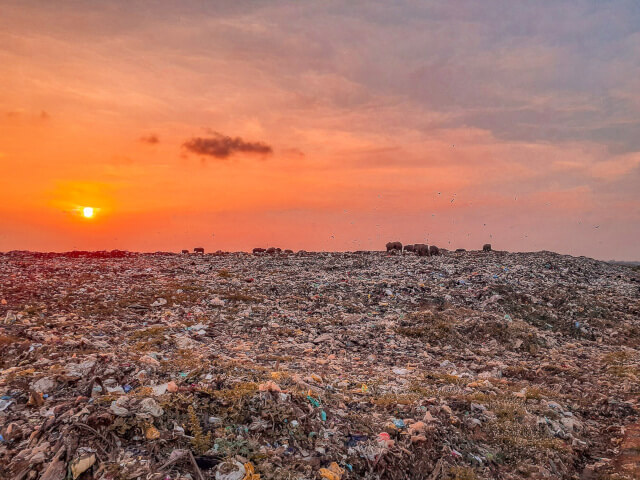[Source](https://pixabay.com/users/karuvadgraphy-13124451/)
Due to the connectivity between our land, water, and air, land pollution affects many aspects of human and environmental life and contributes to these other forms of pollution.
Some of the main effects of land pollution include:
- undrinkable and unusable water
- soil erosion and pollution, which diminishes fertile land for agriculture
- climate change, which is an incredibly pressing issue affecting world health, and resulting in irregular rainfalls and flash floods
- endangerment and extinction of plants, animals, and other wildlife
- changing habitats, which forces much wildlife to flee their natural habitats for survival
- increased wildfires, as a result of polluted land areas frequently becoming dry
- [increased air pollution](https://interfaithsustain.com/air-pollution-solutions/), caused by burning waste
As previously stated, many of these effects of land pollution result from both intentional and accidental origins.
In the list above, you can see that land pollution can cause many different problems, such as air and water contamination, the extinction of animals and plants, and [soil degradation](https://interfaithsustain.com/soil-pollution/) which in turn affects agricultural industries and wildlife.
## How Can We Prevent Land Pollution?
Land pollution is a major issue in our society, and it affects us all. The land around our homes could be contaminated with pesticides, fertilizers, and other chemicals that can cause everything from respiratory problems to cancer.
### **Taking Responsibility To Prevent Land Pollution**
There are many ways to reduce the number of pollutants entering the ground. One way is by choosing organic foods over those that have been treated with pesticides and fertilizers.
Another way is to manage your lawn responsibly; leaving grass clippings on the ground lets them biodegrade into soil-enriching compost, which will reduce chemical levels in the soil near your home!
[Source](https://pixabay.com/users/luboshouska-198496/)
Land pollution is an issue that affects us all. With an ever increasing population, more land is being used for housing, development and agriculture.
There is no denying the impact that humans are having on our environment. We pollute land, air and water on a regular basis, with little regard for future generations.
In order to maintain the health of our Earth, we must all take action and **personal responsibility.** We, humans, have caused major damage to the Earth’s vital resources, so we must make efforts to repair what we have done.
*\* Featured image [source](https://pixabay.com/users/andreas160578-2383079/)*
**Categories:** Blog on Faith and Ecology, Pollution
**Tags:** Land Pollution, Pollution
---
### [Soil Contamination, Its Remedy & Prevention](https://interfaithsustain.com/soil-contamination/)
**Published:** September 17, 2021
**Author:** ICSD
**Excerpt:** Sydney Cohen - The soil plays a vital role in the ecosystem and is often overlooked. It provides food, prevents erosion, regulates water flow, and purifies the air. However, when the soil becomes contaminated it can cause serious harm to both humans and animals alike.
**Content:**
Table of Contents
Table of Contents
- [Soil Contaminants](#aioseo-soil-contaminants-3)
- [Soil Contamination](#aioseo-soil-contamination-7)
- [The Main Sources of Soil Contamination](#aioseo-the-main-sources-of-soil-contamination-10)
- [The Main Causes of Soil Contamination](#aioseo-the-main-causes-of-soil-contamination-16)
- [Agriculture's Impact on Soil Contamination](#aioseo-agricultures-impact-on-soil-contamination-18)
- [Where Does Soil Contamination occur?](#aioseo-where-does-soil-contamination-occur-23)
- [Exposure to Soil Contamination](#aioseo-exposure-to-soil-contamination-25)
- [Action to Reduce The Harm from Soil Contamination](#aioseo-action-to-reduce-the-harm-from-soil-contamination-29)
- [Soil Contaminated Sites](#aioseo-soil-contaminated-sites-33)
- [Religion and Soil Contamination](#aioseo-religion-and-soil-contamination-36)
*By Sydney Cohen* – The **soil** plays a vital role in the ecosystem and is often overlooked. It provides food, prevents erosion, regulates water flow, and purifies the air. However, when soil contamination occurs it can cause serious harm to both humans and animals alike.
More than ever before, people and wildlife are being exposed to various chemicals and toxins in their everyday lives. One of the most common ways this happens is through contact with soil that has been contaminated with toxic substances. When we walk on or touch contaminated soil, these substances may be transferred to our skin and ingested into our bodies more easily than if they were airborne particles.
## Soil Contaminants
Most soil is perfectly safe for playing, gardening, and recreation. The biggest threats from soil contamination are in urban areas and former manufacturing installations. Contaminants include radon, radon-containing pesticide, the chemically characterized copper, and creosote. The type of soil also plays a role in how contamination spreads out in an area. Certain substances may reach groundwater sources more easily within sand than in clay. This is due to faster infiltration rates in coarse-grained sandy soils.
### Soil Contamination
Pollution occurs after the presence of xenobiotic substances, or human substances resulting from human activities, in the **soil environment**. Its typical cause is industrial activity, agricultural chemicals, or poorly disposed of materials, and it is a serious issue for public health. Contaminants in soil associated with industrial activity and chemical substance intensity are measured to determine the level of [soil pollution](https://interfaithsustain.com/soil-pollution/).
The concerns over **soil contamination** mainly stem from the risk to human health from direct contact with the contaminated surface or from vapor from the contaminants in or beneath the soil. Mapping sites and cleanups, that subsequently are cleaned is time-consuming and expensive requiring extensive geological and hydrological resources.
### The Main Sources of Soil Contamination
[Source](https://unsplash.com/@gabrielj_photography/)
Regulations and standardization made by officials have been enacted progressively in the aim of prevention of soil contamination in the past 30-40 years. Many heavily polluted sites are safer now, while some still exist, that have not yet been cleaned.
- [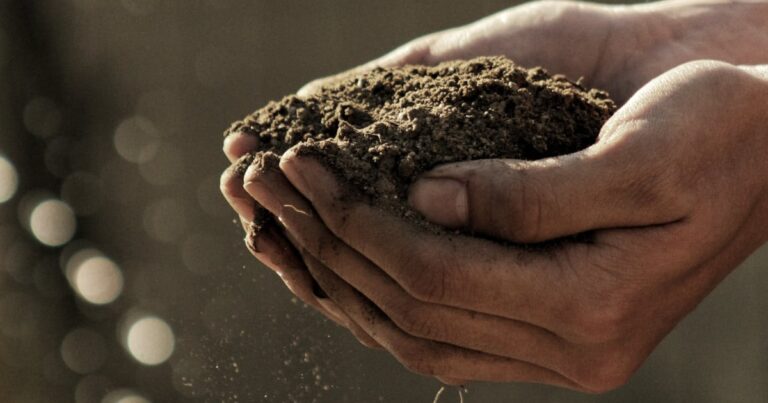](https://interfaithsustain.com/importance-of-soil/)
## [The Importance of Soil: Nature’s Hidden Helpers](https://interfaithsustain.com/importance-of-soil/)
- [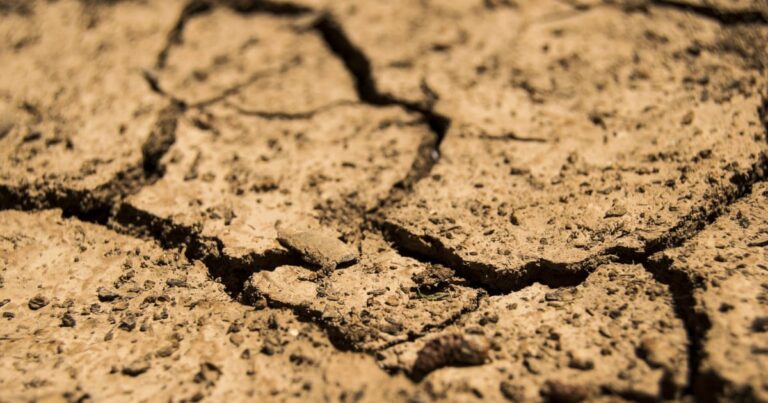](https://interfaithsustain.com/soil-exhaustion/)
## [Soil Exhaustion Is Caused By Humanity](https://interfaithsustain.com/soil-exhaustion/)
- [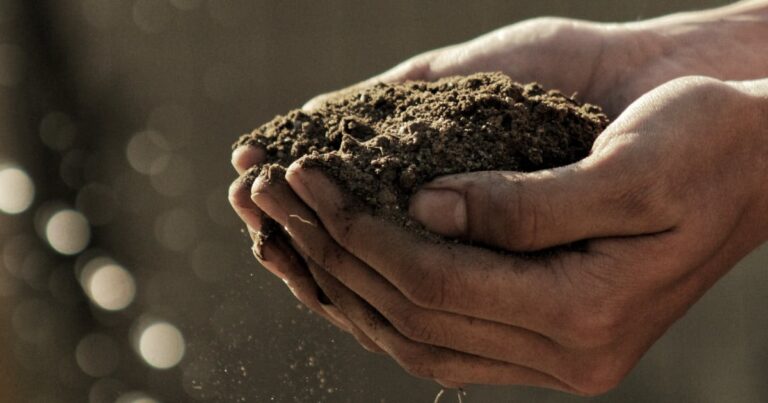](https://interfaithsustain.com/soil-conservation/)
## [Why Soil Conservation Is So Critical Today](https://interfaithsustain.com/soil-conservation/)
The critical issue is the degree of residual risk we are ready to accept in connection with the cost of remediation, according to biologist Dr. Andrew Hammond. Using different technologies, a wide variety of methods are available to help curb the risk of earth contaminants, whether by cleaning the contaminant or condensing its presence in the soil.
There is a wide range of different types of contamination, with varying human and [environmental consequences](https://interfaithsustain.com/social-ecology/). These include not only metals, but also a variety of organic molecules, as well as pathogens and biologically active materials.
### The Main Causes of Soil Contamination
The main causes of **soil pollution** involve humans. Municipal and industrial waste contribute much to earth contamination (37%); industrial and commercial sectors (333%). Mineral oil, industrial wastes, and heavy metals contribute about 60% to it. In regards to budget, the management of contaminated sites is estimated to cost around 6 billion euros annually. Pollutants such as industrial production of waste disposal or diffusion pollution examples are industrial activities car emissions, chemical applications, and manure containing veterinary drugs and etc.
### Agriculture’s Impact on Soil Contamination
For **fertilizers**, cadmium is an impurity, but there is certainly the occasional addition of cadmium in the soil where these fertilizers are used. Copper is found in areas that have vineyards as it was previously used as an antifungal agent. Once cadmium, copper and other metallic materials are added to soil, there are few real prospects for them being dissipated.
Pesticides are another concern associated with farming. For example, organo-chlorine pesticides, that were banned long ago across Europe, still exist in soils, from their prior use.
#### Where Does Soil Contamination occur?
Around 2.5 million potentially contaminated sites exist all over Europe, which continues to need thorough investigation. From there it is projected that about 14% is contaminated and will require remediation. Over one-third of these contaminated sites have already been identified and almost half were cleaned up, but that still leaves a lot of contaminated land.
## Exposure to Soil Contamination
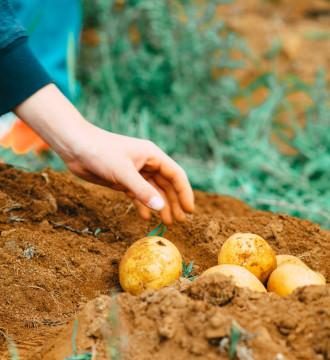[Source](https://unsplash.com/@markusspiske/)
There are many places people can experience exposure to soil contamination. Some bacteria found in contaminated soils are ingested, particularly when the soil is used for agriculture or in gardens. Contaminated dust can also be detrimental to our human health, and our supply of foods. Not only is contaminated soil harmful to human health, but to plants and animals as well, who also experience negative consequences from the pollutants found at a contaminated site.
## Action to Reduce The Harm from Soil Contamination
It is important to wash vegetables well to prevent the accumulation of harmful contaminants in our bodies when their growth occurs. If you have grown food on contaminated soil there is the possibility of accumulation of toxic materials, such as lead, waste, chemicals, and other pollutants that we can gain exposure to through consumption of the grown produce.
It is important to test your soil if you think there might be possible contaminants. Fortunately, there are several ways to “fix” contaminated soil although first it needs to undergo screening in order to assure that your soil doesn’t contain pollutants whose accumulation in our bodies can have detrimental health consequences.
Through a drilling process, geophysicists gather discreet samples of groundwater from the soil, to examine the type of contamination that the soil may contain. Afterward, these samples undergo laboratory tests in the presence of specialized chemical compounds. This process generally follows the EPA standards and guidelines and is included in the category of service “**Environmental Site Assessment**.” Surface water can also be tested in this process, as often contaminants in the soil are naturally occurring at nearby water sources as well.
## Soil Contaminated Sites
An example of a contaminated site is that of Bayview Hunter’s Point, in San Francisco, CA. The neighborhood was previously used as a shipyard for the Naval Radiological Defense Laboratory (NRDL) from 1945-1974. During these years, “[NRDL activities](https://cumulis.epa.gov/supercpad/SiteProfiles/index.cfm?fuseaction=second.cleanup&id=0902722) contaminated soil, dust, sediments, surface water and groundwater with petroleum fuels, pesticides, heavy metals, polychlorinated biphenyls (PCBs), volatile organic compounds (VOCs) and radionuclides.” This has resulted in the soil at the site containing naturally occurring asbestos and metals, substances that have incredibly detrimental **health consequences**. Many of the residents have experienced serious and irreversible health issues over the years, and, given the demographic of the neighborhood as a predominantly low-income, neighborhood of color, this environmental issue is not only dangerous to the wildlife in the area, and the human residents, but it is an example of [environmental racism](https://interfaithsustain.com/environmental-racism/) as well.
The good news is that we can do something about this problem. Cleaning up contaminated sites and preventing further pollution are relatively easy tasks for humans to accomplish, but they will require a concerted effort on the part of many people in order to be successful. We must work together, as communities, towards cleaning up these toxic areas if we want our planet’s resources, human health, and animal populations to thrive.
## Religion and Soil Contamination
Humanity is seen in the **Abrahamic faiths** and other traditions as coming from the soil. The Hebrew word for human, “Adam,” actually comes from the Hebrew word for soil, “Adamah.”
As [Franciscan Priest Richard Rohr wrote](https://www.gvsu.edu/cms4/asset/843249C9-B1E5-BD47-A25EDBC68363B726/grandrapidspress_2017-sep_14_from_the_earth_-_humus_humanity_humility.pdf): “Being human means acknowledging that we’re made from the earth and will return to the earth.” Let’s make sure we return to earth that is just as clean as we were made from!
*\* Featured image [source](https://unsplash.com/@unstable_affliction/)*
**Categories:** Blog on Faith and Ecology, Pollution
**Tags:** Soil Pollution
---
### [Factory Pollution Is a Leading Global Environmental Problem](https://interfaithsustain.com/factory-pollution/)
**Published:** November 12, 2021
**Author:** ICSD
**Excerpt:** Sydney Cohen - Despite the award winning movie, Eric Brockovich, factory pollution is still a leading problem in Hinkley , California, as it is in the rest of the USA and the entire world. The EPA estimates that over 100 million pounds of air pollutants are released from factories every year. This not only damages the environment but also has a negative effect on our health and quality of life.
**Content:**
Table of Contents
Table of Contents
- [Pollution With Carbon Dioxide](#aioseo-pollution-with-carbon-dioxide-3)
- [Factory Air Pollution](#aioseo-factory-air-pollution-8)
- [Air Quality](#aioseo-air-quality-13)
- [Factory Pollution Affects Our Health](#aioseo-factory-pollution-affects-our-health-16)
- [Factory Air Pollutants and Greenhouse Gases](#aioseo-factory-air-pollutants-and-greenhouse-gases-18)
- [How Can We Reduce Factory Pollution?](#aioseo-how-can-we-reduce-factory-pollution-21)
- [Renewable Energy Sources Decrease Factory Pollution](#aioseo-renewable-energy-sources-decrease-factory-pollution-23)
- [Controlling Air Pollution](#aioseo-controlling-air-pollution-26)
- [Religions Joining Together Against Pollution](#aioseo-religions-joining-together-against-pollution-30)
*By Sydney Cohen* – Despite the award winning movie, [Erin Brockovich](https://grist.org/Array/the-true-story-of-the-town-behind-erin-brockovich/), **factory pollution** is still a leading problem in Hinkley, California, as it is in the rest of the USA and the entire world. The EPA estimates that over 100 million pounds of air pollutants are released from factories every year. This not only damages the environment but also has a negative effect on our health and quality of life.
In this blog post, we will explore how factory polluters can be held responsible for their actions and what you can do to protect yourself from factory pollution.
## Pollution With Carbon Dioxide
Carbon dioxide, carbon monoxide, and carbon tetrachloride are all carbon-based pollutants that can harm the environment and human health. We need to put a stop to factory pollution now before it’s too late!
[Source](https://unsplash.com/@majorsparkles/)
Carbon dioxide is released during combustion – when coal or gasoline are burned without enough oxygen present. Carbon monoxide has no odor or color, but it can kill you by preventing your body from using oxygen properly. Finally, carbon tetrachloride is what you get when hydrocarbons react with chlorine under high pressure and temperature conditions – which doesn’t sound very healthy at all.
## Factory Air Pollution
[Air pollution](https://interfaithsustain.com/air-pollution-solutions/) is a major problem in the world. It affects our health and can cause serious illnesses, not to mention that it’s a huge factor in climate change. Factory pollution is one of the main sources of air pollution that we need to address as soon as possible, to prevent further [environmental damage](https://interfaithsustain.com/environmental-degradation-and-the-future-of-our-planet-earth/).
Industries account for two-quarters of greenhouse gas emissions. The volume of toxic gases that factories release into the environment increase health and environmental damage. Industrial factories are discharging toxic gases into the atmosphere and contribute to air pollution, toxic waste, and [water pollution. ](https://grist.org/Array/the-true-story-of-the-town-behind-erin-brockovich/)
- [](https://interfaithsustain.com/prevention-of-air-pollution/)
## [Your Role in Contributing To The Prevention of Air Pollution](https://interfaithsustain.com/prevention-of-air-pollution/)
- [](https://interfaithsustain.com/how-to-reduce-air-pollution/)
## [How to Reduce Air Pollution and Its Impacts on Our environment](https://interfaithsustain.com/how-to-reduce-air-pollution/)
- [](https://interfaithsustain.com/air-pollution-solutions/)
## [What are Air Pollution Solutions to Promote Cleaner Air for All?](https://interfaithsustain.com/air-pollution-solutions/)
## Air Quality
The air quality in the United States is declining rapidly as a result of pollution. The air pollution in China, for example, has caused many people to take notice of how important air quality is. Factory emissions are polluting the air and causing problems with air quality all over the world.
Pollution can be reduced by taking steps like carpooling or using [renewable energy sources](https://interfaithsustain.com/renewable-and-non-renewable-resources/). Since factories still continue to pollute our air every day, we must take steps in our everyday lives to reduce our carbon footprints.
### Factory Pollution Affects Our Health
5 percent of lung cancer sufferers will face environmental and occupational exposures to pollution. The WHO also finds that a small percentage of cardiac illnesses and lung infections have their origins from pollution. This has led to increased legal claims against workplaces because workers are being overly exposed to diesel pollution at work.
### Factory Air Pollutants and Greenhouse Gases
Most air pollutants come from factories, but you can also be exposed to air pollution in your own home if you use chemical sprays indoors, or live in a house with asbestos. Even natural air pollutants like pollen and dust can cause discomfort for some people. These air pollutants lead to increased rates of asthma, allergies, and other respiratory issues that are often difficult to live with on a daily basis.
Factory emissions contribute greatly towards greenhouse gas emissions into the atmosphere. About 80% of total greenhouse gas emissions in America come from power, coal, or industrial output. Another harmful gas from the consumption of fossil fuels is sulfur dioxide, the key component of the formation of acid rain, another environmental consequence from pollution.
## How Can We Reduce Factory Pollution?
It is so important that we take action to reduce the air pollution that we can control, such as the amount of electricity and fuel we use. Continue reading to learn more about other ways to reduce air pollution!
### **Renewable Energy Sources Decrease Factory Pollution**
Many governments recognize green initiatives and offer incentives or tax credits to promote more corporates to follow suit. Depending on the economic condition and environmental factors, manufacturing facilities must switch to renewable energy sources.
Factory owners making the effort to increase company sustainability cultures are usually encouraged to reduce their environmental impact. They encourage owners of a company to invest in eco-friendly products. Companies have several options for renewable energy options, including wind-solar energy or geothermal wind energy.
### Controlling Air Pollution
The Clean Air Act of 1970 is still a key tool for reducing harmful air pollution. A key way to address air pollution is to accelerate the transition towards cleaner fuels and industrial processes. The benefits include the prevention of 191 to 370,000 premature aging deaths, 189,000 fewer hospital admissions for cardiac and respiratory diseases, and net economic effects of around 3.8 trillion for the United States economy each year.
It is estimated that cleaner air costs around 40 times the cost of Clean Air regulations. With the Clean Air Act, we will be reducing air contamination at its source while curbing global warming that makes many of its worst effects worse.
Factory pollution has immense environmental consequences that result in ecosystem degradation and human health issues. We must work together to reduce our carbon footprints, and advocate change in industrial businesses that contribute to this pollution if we want to take care of our planet!
#### Religions Joining Together Against Pollution
For more information about improving air quality from a religious perspective, check out [this wonderful resource ](https://www.sustrans.org.uk/media/7956/brum-breathes-role-of-faith-groups.pdf)from Birmingham, England. Believers of all religions believe that humans should be caring and nourishing the natural environment. Each faith contributes its perspective on the serious problems caused by air pollution in Birmingham.
*\* Featured image [source](https://unsplash.com/@inconstantus/)*
**Categories:** Blog on Faith and Ecology, Pollution
**Tags:** Factory Pollution, Pollution
---
### [How to Reduce Air Pollution and Its Impacts on Our environment](https://interfaithsustain.com/how-to-reduce-air-pollution/)
**Published:** December 8, 2021
**Author:** ICSD
**Excerpt:** Sydney Cohen - Air pollution is one of the most pressing and scary issues that we will face in our lifetime, and it's not going away anytime soon.
**Content:**
Table of Contents
Table of Contents
- [Air Pollution](#aioseo-air-pollution-4)
- [Air Quality](#aioseo-air-quality-9)
- [The Benefits of Clean Air](#aioseo-the-benefits-of-clean-air-14)
- [How We Can Work to Reduce Air Pollution](#aioseo-how-we-can-work-to-reduce-air-pollution-17)
- [Tips to Improve Air Quality](#aioseo-tips-to-improve-air-quality-22)
- [The Causes of Air Pollution](#aioseo-the-causes-of-air-pollution-28)
- [Reducing Urban Air Pollution](#aioseo-reducing-urban-air-pollution-33)
- [The Clean Air Act 1970](#aioseo-the-clean-air-act-1970-39)
- [Religious Perspectives on Air Pollution](#aioseo-religious-perspectives-on-air-pollution-43)
- [Contribute NOW to Reducing Air Pollution](#aioseo-contribute-now-to-reducing-air-pollution-49)
- [The Benefits of Reducing Air Pollution](#aioseo-the-benefits-of-reducing-air-pollution-58)
- [What are the main causes of air pollution and how can they be mitigated?](#aioseo-what-are-the-main-causes-of-air-pollution-and-how-can-they-be-mitigated-62)
- [Why is clean air beneficial for health and the environment?](#aioseo-why-is-clean-air-beneficial-for-health-and-the-environment-64)
- [What strategies can individuals adopt to reduce their contribution to air pollution?](#aioseo-what-strategies-can-individuals-adopt-to-reduce-their-contribution-to-air-pollution-66)
- [What are some policies and programs aimed at reducing urban air pollution?](#aioseo-what-are-some-policies-and-programs-aimed-at-reducing-urban-air-pollution-68)
- [How do religious perspectives view air pollution and its reduction?](#aioseo-how-do-religious-perspectives-view-air-pollution-and-its-reduction-70)
*By Sydney Cohen* – **Air pollution** is one of the most pressing and scary issues that we will face in our lifetime, and it’s not going away anytime soon.
This blog talks about what causes air pollution, particular air pollutants, why it can be harmful to your health and to the environment, and how you can reduce your exposure to it.
Most importantly, we suggest some simple changes in your daily life that you can implement in order to reduce the harmful effects of air pollution.
## Air Pollution
Air pollution is a problem that is hard to ignore. It’s the world’s top environmental health risk, and it has been linked to many serious illnesses.
If you want to know steps for reducing air pollution, first learn everything you need to know about what causes air pollution, and how we can work together as a society towards reducing its impact on our health.
## Air Quality
**Good air quality** is something that we all want to live with. It is important for air quality to be high in order to reduce air pollution and improve the air that we breathe each day.
[Source](https://pixabay.com/users/geralt-9301/)
Air can become polluted by many things like vehicles, factories, power plants, agriculture etc., but there are some simple ways you can stop air pollution from happening.
## The Benefits of Clean Air
The benefits of **clean air** are innumerable. Clean air is important for our environment as it [benefits biodiversity](https://interfaithsustain.com/why-is-biodiversity-important/), and improves the general health of all living things on earth.
It’s also great for human beings! But we must know how to reduce our personal contribution to air pollution if we really want clean air.
- [](https://interfaithsustain.com/prevention-of-air-pollution/)
## [Your Role in Contributing To The Prevention of Air Pollution](https://interfaithsustain.com/prevention-of-air-pollution/)
- [](https://interfaithsustain.com/air-pollution-solutions/)
## [What are Air Pollution Solutions to Promote Cleaner Air for All?](https://interfaithsustain.com/air-pollution-solutions/)
- [](https://interfaithsustain.com/nuclear-pollution/)
## [The Effect of Nuclear Pollution on Our Health and Environment](https://interfaithsustain.com/nuclear-pollution/)
## How We Can Work to Reduce Air Pollution
There are many [solutions to air pollution](https://interfaithsustain.com/air-pollution-solutions/). To improve the quality of air and slow climate warming, change must be done on a national and global level.
However, action in both individual and community settings is also important.
### Tips to Improve Air Quality
Commuting to school on foot is the ideal method to begin the day. Try leaving the vehicle at home and traveling by bus or train, then walking or biking that last mile.
Animal farming is one of the largest producers of air pollution. Cattle and dairy farming are major sources of ammonia which causes pollution not only in the air but also in surface and ground waters. so, make an effort to eat less meat.
Switch energy suppliers to companies that generate renewable power. Plant new trees and greenery to improve the air quality in the neighborhood. Support Clean Air zones that reduce motorized transportation.
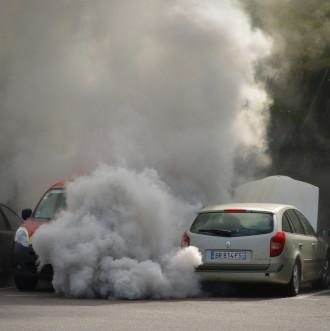[Source](https://pixabay.com/users/ben_kerckx-69781/)
### The Causes of Air Pollution
There are many tiny but critical ways to cause pollution in our communities. Trucks, construction tools, yard mowers, dry cleaning companies, garden-fire departments, and automotive auto-body shops make up some of them.
Total greenhouse gas emissions from these small but widespread sources represent a substantially higher proportion than any other industrial source combined.
#### Reducing Urban Air Pollution
In an effort to reduce pollution, reduce emissions, and reduce the potential for environmental damages in the air, the [MPCA](https://www.pca.state.mn.us/), for example, provides educational instruction and incentive programs. They have programs for businesses, cities, nonprofit organizations, and communities dealing with a broad array of environmental challenges, including air quality.
[Source](https://pixabay.com/photos/)
As more governments and private corporations begin to acknowledge the tremendous impacts on the environment and cost to our health of air pollution and smog, more resources will be allocated. The UN has also advocated international cooperation to reduce air pollution and [address climate change](https://interfaithsustain.com/sustainable-food/).
In order to improve the sustainability of city infrastructure, these changes must be constant. Its combined elements enable us to make urban paradise a reality for generations to come. The goals of tackling climate change and emission reduction must go far beyond the urban areas of current infrastructure transportation.
#### The Clean Air Act 1970
**The Clean Air Act** set the scene for numerous efforts to improve U.S. air quality. The law requires the EPA to establish air quality standards for numerous toxic air pollutants.
In addition, it is concerned with acid rain, high ozone levels, and the warming caused by carbon dioxide emissions. The Clean Air Act was passed by the Environmental Protection Agency in 1970 and was subsequently repealed in 2001.
The EPA has established standards for certain pollutants through the Air Quality Index ([AQI](https://www.airnow.gov/)) and states must develop plans to address air pollution.
## Religious Perspectives on Air Pollution
Rabbis Yonatan Neril and Leo Dee write in **Eco Bible,** Volume 2, how the Bible can inspire us to reduce air pollution.
In the Sanctuary in the desert and land of Israel, and in the Temple in Jerusalem, God commanded the priests to raise up a pleasing aroma through the burning of incense. The Talmudic scholar Rabba bar bar Chana taught that the pleasant smell of incense reached all the way to Jericho, over ten miles away. Pleasant fragrance was the dominant smell in Jerusalem, stronger than anything else (such as cookfire smoke) in the air.
**The Talmud** discusses how large ovens were not even allowed in Jerusalem, so their smoke wouldn’t blacken the walls of the Holy City and make it less beautiful. Jerusalem had the highest level of sanctity of all cities in the Land of Israel, thus requiring that its physical beauty, including air quality, be preserved…
The rabbinic laws to preserve the beauty of Jerusalem and Israel’s other cities are for the most part not in force today, but we should consider restoring them for the sake of the world.
In 2019, around 11 percent of global primary energy came from renewable technologies. Technologies of alternative energy sources including solar and wind power, and changes in human behavior including less use of fossil fuels, hold out hope for the sanctity of Jerusalem, Israel, and all cities and nations.
### Contribute NOW to Reducing Air Pollution
Air pollution is an incredibly pressing issue affecting our human and environmental health.
Fortunately, there are many things we can do to **reduce air pollution**. These include:
- carpooling or using public transportation,
- planting more trees in cities with high levels of particulate matter (PM),
- working toward zero waste initiatives,
- reducing food packaging that ends up as trash,
- [recycling plastics](https://interfaithsustain.com/single-use-plastic-threats-from-awareness-to-action/), which helps keep them out of landfills where they break down into smaller particles that end up back in the atmosphere contributing to PMs.
#### The Benefits of Reducing Air Pollution
This isn’t a comprehensive list but it should give you some ideas on how you might help make your city cleaner by taking small steps at home or work.
The benefits of breathing clean air, both to our health and for our planet’s interconnected systems, will always outweigh the sacrifices you could contribute to reducing air pollution.
*\* Featured image [source](https://pixabay.com/users/sd-pictures-3553481/)*
**Categories:** Blog on Faith and Ecology, Pollution
**Tags:** Air Pollution, Pollution
---
### [Your Role in Contributing To The Prevention of Air Pollution](https://interfaithsustain.com/prevention-of-air-pollution/)
**Published:** December 29, 2021
**Author:** ICSD
**Excerpt:** Sydney Cohen - Air pollution is one of the most pressing global crises that we are currently facing. Air pollution has been linked to many different diseases, including asthma and cancer, in addition to the environmental and ecosystem harm that it causes.
**Content:**
Table of Contents
Table of Contents
- [The Health Effects of Air Pollution](#aioseo-the-health-effects-of-air-pollution-2)
- [Air Pollution](#aioseo-air-pollution-5)
- [Air Quality](#aioseo-air-quality-11)
- [Reducing Air Pollution](#aioseo-reducing-air-pollution-16)
- [YOUR Decision Contributes to Air Pollution Prevention!](#aioseo-your-decision-contributes-to-air-pollution-prevention-18)
- [Air Pollution and Religion](#aioseo-air-pollution-and-religion-20)
- [Taking Responsibility for Those Affected by Air Pollution](#aioseo-taking-responsibility-for-those-affected-by-air-pollution-23)
- [YOU Can Contribute to Reducing Air Pollution](#aioseo-you-can-contribute-to-reducing-air-pollution-25)
- [Use Filters In Chimneys To Prevent Air Pollution](#aioseo-use-filters-in-chimneys-to-prevent-air-pollution-30)
- [Recycle and Reuse To Prevent Air Pollution](#aioseo-recycle-and-reuse-to-prevent-air-pollution-34)
- [Using Alternative Transport To Prevent Air Pollution](#aioseo-using-alternative-transport-to-prevent-air-pollution-36)
*By Sydney Cohen*
## The Health Effects of Air Pollution
Air pollution is one of the most pressing global crises that we are currently facing. Air pollution has been linked to many different diseases, including asthma and cancer, in addition to the environmental and ecosystem harm that it causes. The World Health Organization (WHO) estimates that **air pollution** kills around 7 million people every year.
This blog post will discuss how you can help reduce your impact on air quality!
## Air Pollution
Fuel and gasoline-powered vehicles release exhaust particles into our air, which contribute to global warming. The carbon dioxide fumes get trapped in our atmosphere, warming the planet as sunlight heats the carbon dioxide. Air pollution has many negative health effects on humans and the environment, as the earth rapidly warms.
Cities are a major contributor to air pollution. The large and often dense populations of people using fuel and energy to power their homes and vehicles lead to inefficient and harmful energy use.
The Environmental Protection Agency ([EPA](https://www.epa.gov/clean-air-act-overview/air-pollution-current-and-future-challenges)) initiated the Clean Air Act to attempt important pollution control, by developing and implementing outdoor air regulations in order “to protect the air we breathe”.
## Air Quality
Having access to good air quality is vital for human and wildlife health. As stated, the many negative health consequences of air pollution result from poor air quality, from air pollution. Simple changes in daily routines, such as taking public transportation, walking, biking, or using an electric car to get around, contribute to controlling pollution levels. And in turn, they reduce the fast pace of [climate change](https://interfaithsustain.com/evidence-of-climate-change/).
[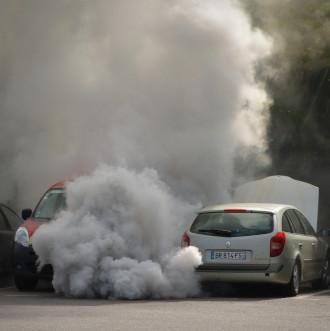](https://pixabay.com/users/ben_kerckx-69781/)[Source](https://pixabay.com/users/ben_kerckx-69781/)
**Energy conservation** is so important to preserving our planet, and even making sure to turn off the lights in your home helps fossil-fuel-powered homes save energy.
- [](https://interfaithsustain.com/air-pollution-solutions/)
## [What are Air Pollution Solutions to Promote Cleaner Air for All?](https://interfaithsustain.com/air-pollution-solutions/)
- [](https://interfaithsustain.com/how-to-reduce-air-pollution/)
## [How to Reduce Air Pollution and Its Impacts on Our environment](https://interfaithsustain.com/how-to-reduce-air-pollution/)
- [](https://interfaithsustain.com/prevention-of-air-pollution/)
## [Your Role in Contributing To The Prevention of Air Pollution](https://interfaithsustain.com/prevention-of-air-pollution/)
## Reducing Air Pollution
We all make choices that impact the air that we breathe. Common activities – such as driving the motor vehicle, mowing the lawn, or burning wood in the fire pit – may add significant amounts of [pollution to the air](https://interfaithsustain.com/air-pollution-solutions/).
### YOUR Decision Contributes to Air Pollution Prevention!
Even though you may not solve the problem of global warming by changing your activities, everyone’s decisions are important. You have the power to change your home, [transportation](https://interfaithsustain.com/sustainable-transport/), and consumer habits in order to help clean the air and save our planet for future generations.
## Air Pollution and Religion
Rabbis Yonatan Neril and Leo Dee discuss in [Eco Bible](https://www.amazon.com/Eco-Bible-Ecological-Commentary-Genesis/dp/173533880X) how preventing air pollution is a religious imperative. They discuss the biblical verse in which Moses and Aaron go to Pharaoh and say to him on behalf of God, “How long will you refuse to humble yourself before me? Let my people go that they may worship me” (Exodus 10:3). The Eco Bible says the following about this verse:
[Rashi explains](https://www.sefaria.org/Exodus.10.3?lang=bi&aliyot=0&p2=Rashi_on_Exodus.10.3.1&lang2=bi): “The word Le’anot, to humble, is derived from the word ‘Ani, poor. You have refused to be humble and meek \[poor\] before Me.” The implication of this statement is that if Pharaoh were humble, he would properly feel the effects of the plagues, and act differently. Currently, poor people are more impacted by environmental degradation. [According to a study](https://ajph.aphapublications.org/doi/10.2105/AJPH.2017.304297) published in the American Journal of Public Health, those living in poverty had a 35 percent higher air pollution exposure than the overall population. Related diseases such as asthma have higher prevalence in poorer areas, especially where people live near factories spewing fumes.
### Taking Responsibility for Those Affected by Air Pollution
Air pollution [disproportionately affects lower-income communities](https://interfaithsustain.com/environmental-racism/). It is the responsibility of religious people to care for these people who may otherwise be ignored. We can do this by working to reduce air pollution and ensuring that everyone has access to clean air.
## YOU Can Contribute to Reducing Air Pollution
Air pollution occurs often in homes and neighborhoods – small causes but with very serious effects. Automobiles, construction, tractors, dry cleaners, backyard fireplaces, and auto parts suppliers are among the most important sources.
Total emissions from these small but widely used sources are considerably larger than all industrial sources put together. To **prevent air pollution** from these sources the MPCA provides education, guidance, and incentives for reducing air pollution. There are programs that address a range of environmental problems in communities, including improving air quality
### Use Filters In Chimneys To Prevent Air Pollution
[Source](https://pixabay.com/users/geralt-9301/)
There should be at least a filtering solution if consumption cannot be lessened. It will help reduce the effectiveness of harmful gas emissions being released into the air. The greenhouse gases emitted from stoves in homes and factories are hazardous to human consumption and harmful to human health.
#### Recycle and Reuse To Prevent Air Pollution
The notion of recycling and reuse can use resources not only judiciously but is also helpful to combat air pollution and reduce greenhouse gas emissions. The recycled products use less energy for making others and control the pollutants that enter our environment.
#### Using Alternative Transport To Prevent Air Pollution
Using **public transport** systems provides the cheapest way to reduce air pollutants as it reduces energy gas emissions. The reduction in emissions by transporting fuels and gas can also help in saving money. When going to school or work, you can also walk or bike, both of which release no pollutants into the atmosphere.
Additionally, **electric cars** and vehicles have higher efficiency and minimize waste and your carbon footprint. Consider reducing the pollutants you release into the environment by using alternative transportation methods.
\* *Featured image [source](https://pixabay.com/users/medi2go-1930196/)*
**Categories:** Blog on Faith and Ecology, Pollution
**Tags:** Air Pollution, Pollution
---
### [What are Air Pollution Solutions to Promote Cleaner Air for All?](https://interfaithsustain.com/air-pollution-solutions/)
**Published:** May 31, 2021
**Author:** ICSD
**Excerpt:** Matthew Mausner - Ever since humans discovered fire, there have been human activities that impact air quality. When those burning activities reach a certain scale, and when the smoke and emissions stay in the air and atmosphere and cause negative impacts, we call it air pollution.
**Content:**
Table of Contents
Table of Contents
- [Are there solutions to reduce air pollution?](#aioseo-are-there-solutions-to-reduce-air-pollution-2)
- [What are the specific ways we can reduce air pollution?](#aioseo-what-are-the-specific-ways-we-can-reduce-air-pollution-4)
- [Solutions to air pollution](#aioseo-solutions-to-air-pollution-7)
- [An air pollution example: Los Angeles](#aioseo-an-air-pollution-example-los-angeles-11)
- [Air Pollution and Air Quality Awareness](#aioseo-air-pollution-and-air-quality-awareness-17)
- [Air pollution solutions and the growing role of China](#aioseo-air-pollution-solutions-and-the-growing-role-of-china-21)
- [Smarter new cities in China in relation to air pollution](#aioseo-smarter-new-cities-in-china-in-relation-to-air-pollution-24)
- [Efficiency and cleaner air](#aioseo-efficiency-and-cleaner-air-29)
- [The right incentives](#aioseo-the-right-incentives-31)
- [The Bible, Air Quality, and Jerusalem](#aioseo-the-bible-air-quality-and-jerusalem-35)
- [Air Pollution in Today's Jerusalem](#aioseo-air-pollution-in-todays-jerusalem-41)
- [Much More to do to Tackle Air Pollution](#aioseo-much-more-to-do-to-tackle-air-pollution-43)
- [A Summary of Air Pollution Solutions](#aioseo-a-summary-of-air-pollution-solutions-45)
*By Matthew Mausner* – Ever since humans discovered fire, there have been human activities that impact air quality. When those burning activities reach a certain scale, and when the smoke and emissions stay in the air and atmosphere and cause [environmental degradation](https://interfaithsustain.com/environmental-degradation-and-the-future-of-our-planet-earth/ "environmental degradation") and other negative impacts, we call it **air pollution**. Here we turn our attention to air pollution solutions.
## Are there solutions to reduce air pollution?
While there is probably no pure and complete ‘solution’ that would make human activity put zero pollutants into the air, there are many ways we can [reduce the amount of air pollution](https://interfaithsustain.com/how-to-reduce-air-pollution/ "reduce the amount of air pollution").
## What are the specific ways we can reduce air pollution?
We can improve the efficiency of our activities that cause emissions, which would mean less pollution for each level of activity such as manufacturing and transportation. We can develop ways to capture, reuse, or transform the **emissions** so that the problematic parts of the pollution, **such as carbon dioxide**, are reduced.
**We can switch from fossil-fuel-based activities to renewable energy**, especially where there’s a net reduction in pollution. And we can alter our activities, by choosing to bike, take public transportation, and walk rather than drive personal automobiles.
## Solutions to air pollution
A true solution would bring all of human activities or ‘footprint’ within the ‘tolerances’ of our natural and technological systems to absorb it. This would need to be lasting **in order to truly improve air quality**, and would affect many areas of life.
- [](https://interfaithsustain.com/prevention-of-air-pollution/)
## [Your Role in Contributing To The Prevention of Air Pollution](https://interfaithsustain.com/prevention-of-air-pollution/)
- [](https://interfaithsustain.com/how-to-reduce-air-pollution/)
## [How to Reduce Air Pollution and Its Impacts on Our environment](https://interfaithsustain.com/how-to-reduce-air-pollution/)
### An air pollution example: Los Angeles
Sometimes it is an accumulation of many small factors that add up to a big improvement. For example, there used to be terrible smog in the Los Angeles basin. This was due to both the tremendous air pollution from cars and factories, and the fact that the local mountains and atmospheric conditions ‘trapped’ air in the LA basin.
So both individuals, companies, and state governments took **environmental protection initiatives** to make stringent emissions controls. Consumers demanded that cars be more efficient or even electric. The city reduced or relocated factories that pollute.
More people changed behavior towards walking and biking, which also involved creation of bike paths, parks, and pedestrian zones. Now [Los Angeles has cleaner air](https://www.iqair.com/usa/california/los-angeles), in fact better air quality than most major cities in the US.
[Source](https://unsplash.com/@dillonjshook)
## Air Pollution and Air Quality Awareness
More and more cities and countries around the world are reflecting awareness, in their policies, **of their people’s desire to improve air quality**. This includes less use of cars, more desire to use electric cars instead of gas, and increased in bicycling. Factories are encouraged to adopt techniques that emit less pollutants and where possible, use more renewable energy and less [fossil fuels](https://interfaithsustain.com/environmental-degradation-and-the-future-of-our-planet-earth/), for example by timing their production to peak times of renewable energy availability.
### Air pollution solutions and the growing role of China
China is the world’s largest industrializing economy, with a tremendous amount of manufacturing and breakneck growth. Initially much of their growth was powered by burning coal, which was a disaster for their air quality.
In the face of air quality that was nearly unbreathable and bad for health a few decades ago due to burning coal and other pollution, the Chinese government has increasingly pushed to switch to more renewable energy, even though most of their power is still generated by coal, oil, and gas. They have even become the world’s leader in production of technology for renewable energy including solar panels, photovoltaic cells, and wind power turbines.
### Smarter new cities in China in relation to air pollution
Nowhere does this have more impact than in the rebuilt and new cities in China as the country as a whole moves towards more urbanization and modernization for its 1.4 billion people (one-fifth of the world’s population). Most cities have bike and scooter lanes that extend comprehensively across the city as a primary design feature, not an afterthought.
That’s paired with extremely inexpensive and plentiful bike rentals that make biking so easy as to be far preferable for most short and mid-length trips for most able-bodied children and adults. This contributes a great deal to reducing carbon dioxide and other car related pollution. In addition there are massive investments in public transportation, with highly fuel-efficient high-speed trains.
[Source](https://unsplash.com/@dnevozhai)
## Efficiency and cleaner air
People are people, and while there are some things about civilization that can change significantly in face of challenges like [**climate change**](https://interfaithsustain.com/global-warming-vs-climate-change/), people will continue to seek certain things now considered central to modern life. These include heating and cooling of homes and offices, and high-speed transportation of people and goods. The better and more efficient our infrastructure, **the better we will be able to continue to live meaningful lives and meet our needs while continuing to be able to breath healthy clean air**.
### The right incentives
People just want to get from point A to point B; if they can do that easily, quickly, inexpensively, and sustainably– so much the better. If walking or biking through a green park is available as a quicker and more pleasant alternative to sitting in gas powered cars in traffic, they will walk or bike and not produce more air pollution.
### The Bible, Air Quality, and Jerusalem
The Bible states, “You shall offer a meal offering of broken pieces, \[with\] a pleasing fragrance to God.” (Leviticus 6:14) Within the walls of the Temple in Jerusalem, God commanded the priests to raise up a pleasing aroma through the burning of incense.
The Talmudic scholar Rabba bar bar Chana taught that the pleasant smell of incense reached all the way to Jericho, over ten miles away. Pleasant fragrance was the dominant smell in Jerusalem, stronger than anything else (such as cookfire smoke) in the air.
The Talmud discusses how large ovens were not even allowed in Jerusalem, so their smoke wouldn’t blacken the walls of the Holy City and make it less beautiful. Jerusalem had the highest level of sanctity of all cities in the Land of Israel, and this required that its physical beauty, including air quality, be preserved.
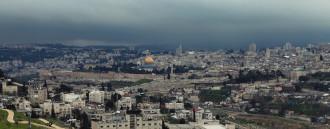[Source](https://unsplash.com/@chesnutt)
### Air Pollution in Today’s Jerusalem
In our times, Jerusalem is blessed with the pleasing smell of many bakeries and flower shops. Yet many roads also smell of air exhaust fumes, containing nitrous dioxide and other foul-smelling pollutants. In 2020 the Municipality of Jerusalem banned older, highly-polluting trucks from the city center to decrease air pollution.
#### Much More to do to Tackle Air Pollution
Yet there’s still much to be done. Many policies and practices need to be changed and developed to support sustainability in how we produce, use and relate to energy. In 2019, around 11% of global primary energy came from renewable technologies. Technologies of alternative energy sources including solar and wind power, and changes in human behavior including **less use of fossil fuels**, hold out hope to promote clean air .
## A Summary of Air Pollution Solutions
Here’s a few key ways to address air pollution, one of the key environmental issues in our world today:
- Cities should be designed for bikes and public transportation instead of personal automobiles.
- [Try to bike, walk, or take public transportation ](https://interfaithsustain.com/prevention-of-air-pollution/ "Try to bike, walk, or take public transportation ")whenever you can.
- Wherever possible, switch to renewable energy generated by homes and power facilities, instead of coal and gas-fired **power plants** (and electric vehicles that are powered from renewable energy arrays).
*\* Featured image [source](https://pixabay.com/users/geralt-9301/?utm_source=link-attribution&utm_medium=referral&utm_campaign=image&utm_content=4767388)*
**Categories:** Blog on Faith and Ecology, Pollution
**Tags:** Air Pollution, Pollution
---
### [What is Soil Pollution, & How Does it Affect Human Health?](https://interfaithsustain.com/soil-pollution/)
**Published:** June 15, 2021
**Author:** ICSD
**Excerpt:** Matthew Mausner - When we speak about soil pollution, we're referring to human-generated pollution finding its way into the earth which negatively affects the ecosystems down to the microscopic levels. This soil contamination is usually in the form of soil contaminants like artificially produced chemicals, concentrated fossil fuel byproducts, nuclear or other forms of toxic waste.
**Content:**
Table of Contents
Table of Contents
- [What is soil pollution?](#aioseo-what-is-soil-pollution-1)
- [Not all waste pollutes the soil](#aioseo-not-all-waste-pollutes-the-soil-3)
- [What are soil contaminants?](#aioseo-what-are-soil-contaminants-9)
- [Main Cause of Soil Pollution – Humans](#aioseo-main-cause-of-soil-pollution-humans-11)
- [Xenobiotics Cause Soil Contamination](#aioseo-xenobiotics-cause-soil-contamination-15)
- [Environmental geology](#aioseo-environmental-geology-20)
- [Rooted in Culture and Faith](#aioseo-rooted-in-culture-and-faith-22)
- [Consciously Protecting our Soil](#aioseo-consciously-protecting-our-soil-24)
- [Agricultural Practices](#aioseo-agricultural-practices-26)
- [Industrial Pesticides and Herbicides](#aioseo-industrial-pesticides-and-herbicides-28)
- [What are pests?](#aioseo-what-are-pests-30)
- [Drawbacks](#aioseo-drawbacks-32)
- [Conclusion: Human Health Depends on Soil Health](#aioseo-conclusion-human-health-depends-on-soil-health-34)
## What is soil pollution?
When we speak about soil pollution, we’re referring to [human-generated pollution](https://interfaithsustain.com/air-pollution-solutions/) finding its way into the earth which negatively affects the ecosystems down to the microscopic levels. This [soil contamination](https://interfaithsustain.com/soil-contamination/) is usually in the form of **soil contaminants** like artificially produced chemicals, concentrated fossil fuel byproducts, nuclear or other forms of toxic waste that [degrade our environment](https://interfaithsustain.com/environmental-degradation-and-the-future-of-our-planet-earth/).
### Not all waste pollutes the soil
While civilization has advanced considerably in science, it’s still a stretch scientifically to say that something man made is not ‘natural’- how would we define what is and isn’t? This demarcation is therefore fuzzy between normal ‘waste’ and actual ‘pollution’ in any given set of cycles. It’s more about how concentrated it is, and where it winds up compared to that soil’s ability to absorb it back into its natural uptake processes- and what role humans played in moving it around or dumping it somewhere. So waste such as banana peels or bat guano, ash from fires or even much human sewage need not become ‘pollution’. But some of the concentrated chemicals we have created are so far removed from their places of origin and place in the normal cycles that they are not easily re-absorbed into the soil, often causing great harm. These, we call contaminants or soil pollution.
[Source](https://pixabay.com/users/thoxuan99-8757361/)
## What are soil contaminants?
In urban areas, soil contamination is largely caused by human activity. The type of soil will also play a role in its distribution. Certain contaminants may reach groundwater sources more easily in sand than in clay or loamy soils. Contaminants may also be retained at a site, which could pose on-site risk of exposure.
## Main Cause of Soil Pollution – Humans
The leading causes of soil pollution are ultimately rooted in **human indifference** or deliberate damage. Consumers litter non-biodegradable objects like [plastic bags which degrade into micro-plastics](https://interfaithsustain.com/single-use-plastic-threats-from-awareness-to-action/) that have the ability to infiltrate everywhere. Landfills, dumps, and sewage outflows routinely cause soil pollution from most cities. Effluents and tailings from mining and quarrying activities which pit and scar the earth, turn it into ‘slurry’ of the mixed remains of the whole side of a hill. The targeted element of the mine is leached or removed from a large pile, and the slurry is usually dumped nearby. Many factories create varieties of concentrated wastes which cannot be easily disposed of or stored and therefore find their way into the soil. In addition, chemical fertilizers in agriculture and gardens seep into the soil and water supply.
[Source](https://pixabay.com/users/felix_w-6547745/)
## Xenobiotics Cause Soil Contamination
So, therefore, what we call **soil pollution** or soil contamination is caused by the presence of “**xenobiotics**,” e.g. human-made chemicals or alteration in the natural soil environment. It is typically caused by industrial activity, agricultural chemicals or the improper disposal of waste. The most common chemicals involved are petroleum hydrocarbons, solvents, minerals, lead, and other heavy metals. Contamination is highly correlated with the degree of industrialization and the intensity of the chemical substance. Mapping the contaminated soil sites, and the resulting cleanups necessary are time-consuming and they are both expensive tasks requiring extensive amounts of investment in geology, hydrology, chemistry, computer modeling skills, and GIS in environmental contamination.
[Source](https://pixabay.com/users/pexels-2286921/)
- [](https://interfaithsustain.com/soil-exhaustion/)
## [Soil Exhaustion Is Caused By Humanity](https://interfaithsustain.com/soil-exhaustion/)
- [](https://interfaithsustain.com/soil-conservation/)
## [Why Soil Conservation Is So Critical Today](https://interfaithsustain.com/soil-conservation/)
- [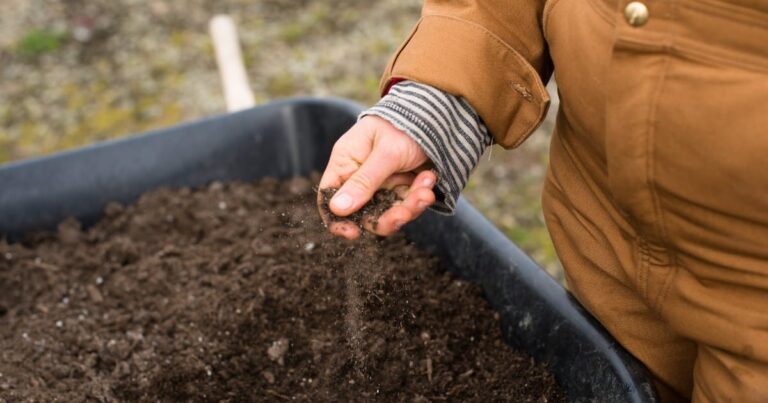](https://interfaithsustain.com/soil-degradation/)
## [Soil Gives Life But Soil Degradation Poses A Threat To Life On Earth](https://interfaithsustain.com/soil-degradation/)
#### Environmental geology
A significant role of the environmental geology profession is devoted to determining levels of soil contaminants at a given site, remediation of the soil pollution, and certification of the land as ready for other uses, once it has been treated. In formerly industrial zones it is recommended or required to test the ground’s safety and its resulting implications for health before future use.
## Rooted in Culture and Faith
Soil pollution is a consequence to the environment of many factors affecting land, soils, food, and health, but they are all rooted in cultures that don’t take full responsibility for the cycles of what they produce and expel or waste. In contrast, some more traditional cultures are more sustainable, such as the terraced rice paddies of a place like Bali. Built over centuries of relatively isolated dependence on inter-cooperation of all its residents, Bali’s famous landscape is shaped by intricate soil, water, irrigation, and waste management practices. Not out of a modern environmental consciousness but rather out of a combination of necessity and their **Hindu faith**, they neither produce things that cannot be re-absorbed into the growth cycles, nor get rid of their excess wastes, even human waste, which is processed into fertilizer along with fish bones and locally available minerals.
### Consciously Protecting our Soil
In most of the modern west, we have neither the consciousness or spirituality guiding an integrated valuing of our landscape, nor the practices of reusing and reabsorbing all of our wastes into our productive relationship with our contaminated land.[ To prevent the continuation of soil degradation](https://interfaithsustain.com/land-pollution/) we have to recognise it and become conscious to its importance.
## Agricultural Practices
Intensive agriculture runs the risk of exhausting the nutrients in the soils, except in cases of regular annual floods that deposit new topsoil, such as used to be the case in Egypt’s Nile River Valley. Fertility of the soil is often fragile, and thus since the beginnings of civilization, farmers have learned by trial and error the necessity of adding substances like animal manure, fish bones, or other materials to help fertilize and replenish the soil. The invention of artificial fertilizers using chemicals such as nitrates in the last 150 years seemed to initially greatly enhance food production, but this was at the cost of the longer term sustainability of the soil. So now, much of the soil that all our crops and other life forms on land depend on, is polluted with artificial pesticides, fertilizers, herbicides, slurry, debris, and plastics. The soil has been contaminated in many places.
### Industrial Pesticides and Herbicides
**Agriculture** means modifying the ecosystem to encourage the plants and animals we prefer. This generates a sort of moral logic where any organisms that act in ways that eat, harm, or replace the species we have planted, become re-defined as ‘pests’ or ‘weeds’ or ‘vermin’. Since the start of the industrial revolution, artificial substances have been invented, distributed and used to limit, repel, or kill these undesired species.
#### What are pests?
Pests include insects, plant pathogens, weeds, mollusks, birds, mammals, fish, nematodes (roundworms) and microbes that compete with us for food, destroy property, spread widely, are a vector for disease or cause a nuisance. There are benefits to the use of pesticides, which are designed to efficiently protect our food crops and animals by targeting, repelling, or killing the pests or insects that are harming our crops (the root ‘cide’ means ‘kill’). But do the disadvantages of using pesticides outweigh these “benefits”?
#### Drawbacks
But there are also drawbacks to such pesticides, such as potential unintended toxicity to **human health** and other organisms beyond their intended targets, and sometimes other forms of downstream toxicity and impacts to the ecosystem. DDT was used on a massive scale from the 1930s, with a peak of 72,000 tonnes used in 1970. Instead of just killing the intended targets such as mosquitoes, DDT caused terrible toxic problems to the larger environment, such as damaging the eggshells and thus reproductive viability of several apex predator birds that were higher up the food chain from the DDT-saturated mosquitoes. Pesticides can accumulate at high or even toxic concentrations and cause similar damage to many, many species on which the health of the soil depends.
### Conclusion: Human Health Depends on Soil Health
Many civilizations going back to Sumer have exhausted their soils and seen their civilization collapse as a consequence. We must aspire to a comprehensive change in our harmful practices to ensure the health of the soil on which our continuing existence and survival depend.
*By Matthew Mausner*
*\* Featured image [source](https://pixabay.com/users/akumarphotos-6283834/)*
**Categories:** Blog on Faith and Ecology, Pollution
**Tags:** Pollution, Soil Pollution
---
### [Industrial Pollution Affects The Environment and Our Health](https://interfaithsustain.com/industrial-pollution/)
**Published:** July 21, 2021
**Author:** ICSD
**Excerpt:** Sydney Cohen - Industrial pollution is a side effect of the industrial revolution that has been going on for hundreds of years. The term "industrialization" was coined by John Stuart Mill in 1848. At its core, it is the transition from an agrarian society to an industrialized one.
**Content:**
Table of Contents
Table of Contents
- [Industrial Pollution Is a Global Problem](#aioseo-industrial-pollution-is-a-global-problem-2)
- [What is Industrial Pollution?](#aioseo-what-is-industrial-pollution-5)
- [Industrial Pollution Causes Climate Change](#aioseo-industrial-pollution-causes-climate-change-16)
- [Why Industrial Pollution Persists](#aioseo-why-industrial-pollution-persists-19)
- [Waste Disposal Causes Industrial Pollution](#aioseo-waste-disposal-causes-industrial-pollution-28)
- [The Extraction of Natural Resources causes Industrial Pollution](#aioseo-the-extraction-of-natural-resources-causes-industrial-pollution-31)
- [Industrial Pollution Caused By Organic Compounds](#aioseo-industrial-pollution-caused-by-organic-compounds-33)
- [Persistent Organic Pollutants Cause Industrial Pollution](#aioseo-persistent-organic-pollutants-cause-industrial-pollution-38)
- [Heavy Metals Cause Industrial Pollution](#aioseo-heavy-metals-cause-industrial-pollution-46)
- [Regulating Industrial Pollution](#aioseo-regulating-industrial-pollution-51)
- [Actions to Reduce Industrial Pollution](#aioseo-actions-to-reduce-industrial-pollution-54)
- [Industrial Pollution from Biblical Sources](#aioseo-industrial-pollution-from-biblical-sources-59)
- [Working Together Globally to Prevent Industrial Pollution](#aioseo-working-together-globally-to-prevent-industrial-pollution-64)
*By Sydney Cohen* – Industrial pollution is a side effect of the industrial revolution that has been going on for hundreds of years. The term “industrialization” was coined by John Stuart Mill in 1848. At its core, it is the transition from an agrarian society to an industrialized one. This includes new ways of producing goods like mass production and manufacturing processes, as well as new forms of transportation like automobiles and trains.
## Industrial Pollution Is a Global Problem
One unintended consequence is the release of pollutants into our environment which cause harm to human health, ecosystems, agriculture and to economic development. **Industrialization** can be seen all over the world, where many factories are located near rivers or coastal areas with little regulation or oversight for their release into the environment.
Industrial pollution is a major issue that many countries are facing in the world. While some pollution can be caused by natural causes, most of it comes from industrial processes and human activities.
## What is Industrial Pollution?
We have to be careful about what we breathe. This is because pollution from factories and other industrial sources can cause a variety of health problems, including asthma and respiratory illness.
So what is **industrial pollution**? It’s the emissions that come out of factories or manufacturing plants that pollute the air, ground, water, or people in our communities. These emissions can come from cars, trucks, trains, and airplanes as well as from power plants and industrial facilities.
Industrial pollution results from industrial activities that emit various pollutants into our atmosphere. Some of these activities [include](https://www.conserve-energy-future.com/causes-effects-of-industrial-pollution.php#:~:text=Industrial%20Pollution%20Facts,-Industrial%20pollution%20is&text=Burning%20coal,being%20released%20into%20the%20environment):
- the burning of coal
- the burning of fossil fuels, such as oil, petroleum, and natural gas
- the chemical solvents used in tanning and dyeing industries
- liquid waste and untreated gas that is released into the environment
- unregulated and improper disposal of toxic chemicals and radioactive materials
All of these pollutants, as a result of industrial pollution, enter our environment through various methods. Coal, for example, when burned for power, releases high amounts of sulfur dioxide, nitrogen oxide, particles, carbon dioxide, mercury and other heavy metals, as well as fly ash and bottom ash, into the air and atmosphere.
- [](https://interfaithsustain.com/prevention-of-air-pollution/)
## [Your Role in Contributing To The Prevention of Air Pollution](https://interfaithsustain.com/prevention-of-air-pollution/)
- [](https://interfaithsustain.com/how-to-reduce-air-pollution/)
## [How to Reduce Air Pollution and Its Impacts on Our environment](https://interfaithsustain.com/how-to-reduce-air-pollution/)
- [](https://interfaithsustain.com/factory-pollution/)
## [Factory Pollution Is a Leading Global Environmental Problem](https://interfaithsustain.com/factory-pollution/)
### Industrial Pollution Causes Climate Change
All of these [emissions](https://www.eia.gov/energyexplained/coal/coal-and-the-environment.php#:~:text=Several%20principal%20emissions%20result%20from,to%20smog%20and%20respiratory%20illnesses) have a severe health, biological, and environmental impact, such as reduced air quality and high air pollution levels. Carbon dioxide, one of the primary greenhouse gases released from burning fossil fuels like coal, oil, and natural gas, is a leading cause of **climate change**.
The greenhouse effect occurs when these greenhouse gases in the earth’s atmosphere trap the heat from the sun, raising global land and water temperatures. Because so much industrial pollution is caused by the release of greenhouse gases from the burning of fuel, it is necessary that we reduce industrial pollution in order to protect our global and environmental health.
### Why Industrial Pollution Persists
However, while it is well-known that industrial pollution is a huge contributor to air, water, and land pollution, there are [many factors](https://www.conserve-energy-future.com/causes-effects-of-industrial-pollution.php#:~:text=Industrial%20Pollution%20Facts,-Industrial%20pollution%20is&text=Burning%20coal,being%20released%20into%20the%20environment) that continue to allow industrial pollution to exist.
[Source](https://pixabay.com/users/12019-12019/)
For example, there is a lack of consistent policies to control pollution. Many policies are not effective and lack enforcement. This is one of the main causes of mass-scale pollution that affects so many people and ecosystems.
Another factor in the cause of industrial pollution is unplanned industrial growth and the use of [outdated technologies](https://interfaithsustain.com/what-is-clean-tech/). During the industrial revolution, when the rapid growth of the manufacturing industry created an influx of jobs and mass movements into cities, companies disregarded regulations in order to generate as much profit as possible.
This resulted in many pollutants entering our land, air, and water sources. Additionally, the continued use of outdated technologies, such as factories that still rely on fuel derived from natural resources for power, drastically reduces the factory’s efficiency and sustainable manufacturing processes. China, for example, has over [1,000 power stations](https://www.statista.com/statistics/859266/number-of-coal-power-plants-by-country/) that still rely on coal.
### Waste Disposal Causes Industrial Pollution
A huge cause of industrial pollution is inefficient waste disposal. Most wastewater treatment facilities are not equipped to filter out the many organic compounds, heavy metals, toxic chemicals, and other hazardous pollutants that enter our ground and surface water sources.
As “long-term exposure to [polluted air](https://interfaithsustain.com/air-pollution-solutions/) and water causes chronic health problems,” and, given the interconnectedness of our water sources, industrial pollution is an incredibly pressing issue.
#### The Extraction of Natural Resources causes Industrial Pollution
Another main cause of industrial pollution is the extraction and use of natural resources. The invasive extraction of these minerals and materials, such as oil fracking, for example, can often cause [soil pollution](https://interfaithsustain.com/soil-pollution/), and oil leaks and spills, which have adverse effects on human, plant, animal, and marine life.
## Industrial Pollution Caused By Organic Compounds
Industrial pollution is a huge problem in many countries. It can be caused by factories, coal-fired power plants, and other sources of air pollution. The most common type of industrial pollutants are organic compounds.
These compounds are created during the production process for certain items like fertilizers and plastics. They can also come from the incineration or burning of materials containing organic material such as wood or fossil fuels. Organic compounds are considered hazardous because they have been linked to cancer, birth defects, respiratory problems, skin irritation, and damage to the nervous system among other things.
[Source](https://pixabay.com/users/stevepb-282134/)
### Persistent Organic Pollutants Cause Industrial Pollution
Let’s take a closer look at some of these organic compounds that result from industrial pollution. The organic compounds that are released into our environment through industrial pollution are known as [Persistent Organic Pollutants](https://www.epa.gov/international-cooperation/persistent-organic-pollutants-global-issue-global-response#pops) or POPs.
POPs are **toxic chemicals** that have a detrimental effect on human and environmental health. POPs include [various substances such as](https://www.epa.gov/international-cooperation/persistent-organic-pollutants-global-issue-global-response#pops) “intentionally produced chemicals currently or once used in agriculture, disease control, manufacturing, or industrial processes,” and “unintentionally produced chemicals, such as dioxins, that result from some industrial processes and from combustion.”
DDT is an example of a POP that has caused a variety of harm to humans and animals. DDT has been used worldwide since the 1940s in agriculture as a pesticide and to protect against insect-borne diseases. However, it was found in the 1960s that birds with high levels of DDE (a metabolite of DDT) suffered from the inability to produce offspring due to the chemicals’ biological interaction, causing the thinning of eggshells.
The emerging research on the harmful long-term effects of DDT on humans and animals prompted the Environmental Protection Agency (EPA) to restrict the registration of DDT in 1972.
Additionally, the burning of chemicals, most frequently from incineration plants, release toxic compounds known as dioxins, which cause immense environmental hazards as they are absorbed by the soil and then enter the food chain through animals. Animals frequently accumulate large levels of dioxins, which then enter the human body through animal consumption and [food production](https://interfaithsustain.com/food-production/).
#### **Heavy Metals Cause Industrial Pollution**
Heavy metals are also a major cause of industrial pollution. They enter the environment through mining, smelting and refining processes, manufacturing activities and transportation. These heavy metals can be found in soil, water and air as well as food products.
Heavy metals are inorganic pollutants that “[are being discarded in our waters, soils and into the atmosphere due to the rapidly growing agriculture and metal industries, improper waste disposal, fertilizers and pesticides.](https://www.sciencedirect.com/science/article/pii/S2405844020315346)” Some of these metals, such as titanium, vanadium, chromium, manganese, and iron, are quite common in our everyday lives.
All of these materials are naturally found in the earth’s crust. However, they enter our environment at hazardous levels from activities like mining, shipwrecks, oil spills, and fires. The entry of these pollutants into our ecosystems results in [soil](https://interfaithsustain.com/soil-pollution/ "soil"), [water](https://interfaithsustain.com/effects-of-water-pollution/ "water"), and [air pollution](https://interfaithsustain.com/air-pollution-solutions/ "air pollution").
Contaminated sites where the soil has absorbed significant amounts of heavy metals make it incredibly hard for plant and animal life to thrive. Human bodies, when consuming contaminated water or food, can accumulate toxic levels of these metals, which can result in chronic disease and illness, sometimes fatal.
## Regulating Industrial Pollution
The United States Environmental Protection Agency (EPA) is the government agency that regulates pollution levels in the environment.
They are responsible for enforcing a variety of environmental laws and regulations, including those pertaining to hazardous waste management and toxic air emissions. The EPA is also tasked with setting performance standards for various industries which emit toxic substances into the atmosphere.
### Actions to Reduce Industrial Pollution
Fortunately, the EPA has taken measures over the last 50 years to reduce the environmental impact of industrial pollution.
One example of these changes is the restriction of DDT use, which started in the 1970s, and now DDT is no longer registered for use.
Additionally, the EPA implemented the Clean Air Act, Clean Water Act, and the EPA Superfund and Resource Conservation and Recovery Act Corrective Action programs.
All of these initiatives work to regulate the number of dioxins released into the air and water and clean up contaminated soil. These efforts gather information on dioxin release to inform future actions and reduce the risk associated with exposure to dioxins.
## Industrial Pollution from Biblical Sources
> The environmental effects of industrial pollution are demonstrated in [Eco Bible: Volume One: An Ecological Commentary on Genesis and Exodus](https://interfaithsustain.com/ecobible/): Genesis 14:10 – “Now the Valley of Siddim was dotted with bitumen pits; and the kings of Sodom and Gomorrah, in their flight, threw themselves into them, while the rest escaped to the hill country.”
>
> Rabbi Yonatan emphasizes this biblical connection to the contaminants resulting from industrial pollution, commenting that “today, we and our leaders are trapped by economic inertia and political resistance. Oil remains our fuel of choice to make gasoline for cars and trucks, jet fuels for airplanes, tar and asphalt for paving the roads, and even plastic which is filling our oceans with trash that never fully breaks down.”
>
> “Abraham provides an example of lifting people from being trapped in fossil fuels…We do not need to wait until someone rescues us – or until we run out of all fossil fuels – but can now take steps as individuals, communities, and nations to free ourselves from devastating fossil-fuel use.”
### **Working Together Globally to Prevent Industrial Pollution**
Industrial pollution has become a major problem in the past century. The majority of this pollution is caused by organic compounds and dioxins entering our environment at toxic levels. This results in air, water, and land pollution that causes environmental and human health issues.
In order to combat the industrial pollutants that are polluting our planet’s resources, we need to work together with industries and policymakers globally to prevent further harm.
*\* Featured image [source](https://pixabay.com/users/lisaredfern-910282/)*
**Categories:** Blog on Faith and Ecology, Pollution
**Tags:** Industrial Pollution, Pollution
---
### [Tennessee blues and hope on the horizon](https://interfaithsustain.com/tennessee-blues-and-hope-on-the-horizon/)
**Published:** July 8, 2019
**Author:** ICSD
**Excerpt:** Leo Dee - Tennessee is getting hotter each decade. The proportion of record hot days to record cold nights has switched from the 1960's where 90% of the record measures were cold nights, to the current decade where 80% of the record temperatures are hot days.
**Content:**
*By Leo Dee*
Tennessee is getting hotter each decade. The [proportion of record hot days](https://www.tennessean.com/story/news/2019/03/19/tennessee-weather-more-high-temperature-records-broken-than-lows/3206653002/) to record cold nights has switched from the 1960’s where 90% of the record measures were cold nights, to the current decade where 80% of the record temperatures are hot days.
Why should we care? Well, Tennessee has a $56 billion industry in agriculture, and the higher temperatures [affect yields](https://www.tennessean.com/story/news/2019/03/19/tennessee-weather-more-high-temperature-records-broken-than-lows/3206653002/) and require more valuable water for irrigation. And it’s not just crops, livestock yields have dropped some 10% since the 1960’s as animal fertility is affected by the excessive heat.
February 2018 was also a [record month](https://www.weather.gov/ohx/lateFebruary2019flooding) for rain in Nashville with the city receiving 9% more than the previous wettest February back in 1880 when records began!
[Human caused climate change](https://climate.nasa.gov/causes/) is behind this strange weather pattern as carbon dioxide released from fossil fuels insulates the earth and prevents natural cooling. The excessive heat also powers a much [stronger water cycle](https://scied.ucar.edu/longcontent/water-cycle-climate-change), with more water evaporating from the oceans and being dropped on land.
So what’s the solution?
Well, part of the solution is making people aware. And that’s just what the [School of Theology in the University of the South (Sewanee)](https://interfaithsustain.com/wp-content/uploads/2019/07/Report-on-Faith-and-Ecology-in-N.-Amer-Sems-Oct.-17-final.pdf) is doing. It has an MA in religion and environment and courses on “God in Nature”, “Creation, Evolution and God” and “Climate Ethics”. And their Center for Religion and Environment is offering a course in “Contemplation and Care for Creation”.
Training religious leaders of the future who will inspire their communities with the importance of living a life that respects the world and climate, is an important step towards getting to a solution.
**Categories:** Blog on Faith and Ecology
---
### [How Much More Tar Needs to be Spilled to Awaken Us?](https://interfaithsustain.com/how-much-more-tar-needs-to-be-spilled-to-awaken-us/)
**Published:** February 25, 2021
**Author:** ICSD
**Excerpt:** Rabbi Yonatan Neril - On February 21, the Israeli Ministries of Environmental Protection, the Interior and Health jointly asked the public to refrain from going to any Mediterranean beaches on Israel’s 121 mile (195 kilometer) coastline...
**Content:**
*By Rabbi Yonatan Neril*
On February 21, the Israeli Ministries of Environmental Protection, the Interior and Health jointly asked the public to refrain from going to any Mediterranean beaches on Israel’s 121 mile (195 kilometer) coastline, until further notice, due to a spill of hundreds of tons of tar. Beachgoers must stay away, at a time when Israelis are finally emerging from an extended lockdown and seeking the critical and soul nourishing peace of the sea.
[Read more](https://blogs.timesofisrael.com/how-much-more-tar-needs-to-be-spilled-to-awaken-us/)
*\*Featured image [source](https://unsplash.com/@luckybeanz)*
**Categories:** Blog on Faith and Ecology
---
### [Be Fruitful and Multiply and Fill the Earth: Until When?](https://interfaithsustain.com/be-fruitful-and-multiply-and-fill-the-earth-until-when/)
**Published:** April 8, 2021
**Author:** ICSD
**Excerpt:** Rabbi Yonatan Neril - I asked the former Anglican Archbishop of Burundi whether God’s statement to the first human beings, to “be fruitful and multiply and fill the earth,” still applies. Burundi is one of the world’s poorest countries, and has a high birth rate, a low rate of family planning, and a deeply religious population.
**Content:**
By Rabbi Yonatan Neril
I asked the former Anglican Archbishop of Burundi whether God’s statement to the first human beings, to “be fruitful and multiply and fill the earth,” still applies. Burundi is one of the world’s poorest countries, and has a [high birth rate, a low rate of family planning](https://data.worldbank.org/indicator/SP.DYN.TFRT.IN?locations=BI), and a deeply religious population. In a country of 11.5 million people, a million have already fled food scarcity, violence, and political unrest. The Archbishop replied that the people in Burundi no longer need to be fruitful and multiply, since the land can barely sustain them. I found his response eye-opening since he’s a senior religious figure on the African continent, where religion tends to be deeply conservative.
[Read more](https://blogs.timesofisrael.com/be-fruitful-and-multiply-and-fill-the-earth-until-when/)
**Categories:** Bible & Creation Care, Blog on Faith and Ecology
---
### [Why I Like To Compost, and Why Noah Did Too](https://interfaithsustain.com/why-i-like-to-compost-and-why-noah-did-too/)
**Published:** March 22, 2021
**Author:** ICSD
**Excerpt:** Rabbi Yonatan Neril - There’s something earthy about seeing my food peelings become soil that connects me to the circular nature of life.
**Content:**
By Rabbi Yonatan Neril
I have to admit– I like to [compost](https://interfaithsustain.com/benefits-of-composting-ancient-civilizations-to-todays-technology/). I’ve been doing so since my mom taught me about it as a kid. There’s something earthy about seeing my food peelings become soil that connects me to the circular nature of life. Today I ate an apple. Now what should I do with the core? I can think of several choices.
[Read more](https://blogs.timesofisrael.com/why-i-like-to-compost-and-why-noah-did-too/)
*\*Featured image [source](https://pixabay.com/photos/garden-compost-nature-bio-floor-4725522/)*
**Categories:** Bible & Creation Care, Blog on Faith and Ecology
---
### [What Does God Have to do with Disposables?](https://interfaithsustain.com/what-does-god-have-to-do-with-disposables/)
**Published:** March 16, 2021
**Author:** ICSD
**Excerpt:** Rabbi Yonatan Neril - A few months ago, I went swimming in the warm waters of the Mediterranean Sea on the coast of Israel. As I swam, I kept getting pieces of plastic in my hands and on my face.
**Content:**
By Rabbi Yonatan Neril
A few months ago, I went swimming in the warm waters of the Mediterranean Sea on the coast of Israel. As I swam, I kept getting pieces of [plastic](https://interfaithsustain.com/single-use-plastic-threats-from-awareness-to-action/) in my hands and on my face. This was the first time in my life that I had seen so much plastic in the water. And little did I realize that I was swimming in a sea of microplastic.
[Read more](https://blogs.timesofisrael.com/what-does-god-have-to-do-with-disposables/)
*\*Featured image [source](https://pixabay.com/photos/pollution-trash-garbage-ocean-4855507/)*
**Categories:** Bible & Creation Care, Blog on Faith and Ecology
---
### [What Does God Have To Do With Solar Energy?](https://interfaithsustain.com/what-does-god-have-to-do-with-solar-energy/)
**Published:** February 19, 2021
**Author:** ICSD
**Excerpt:** Rabbi Yonatan Neril - I pray in a synagogue in Jerusalem with solar panels on the roof. While people have prayed in buildings — and times in history — both light and dark, renewable energy can enable the flow of spiritual energy.
**Content:**
By Rabbi Yonatan Neril
I pray in a synagogue in Jerusalem with solar panels on the roof. While people have prayed in buildings — and times in history — both light and dark, renewable energy can enable the flow of spiritual energy. Harnessing the sun’s light for energy today can advance our collective enlightenment. The sun’s rays are emissaries illuminating and supporting all life on the earth.
[Read more](https://blogs.timesofisrael.com/what-does-god-have-to-do-with-solar-energy/)
**Categories:** Bible & Creation Care, Blog on Faith and Ecology
---
### [What does God have to do with eggs?](https://interfaithsustain.com/what-does-god-have-to-do-with-eggs/)
**Published:** June 1, 2018
**Author:** ICSD
**Excerpt:** Rabbi Yonatan Neril - Where do the eggs we eat come from? How do the chickens that produce those eggs live? Is this in line with religious and ethical values?
**Content:**
Where do the eggs we eat come from? How do the chickens that produce those eggs live? Is this in line with religious and ethical values? I ask these questions in part because this week, the US recalled and destroyed 206 million eggs, following a salmonella outbreak. Those eggs were laid by chickens in the 200 million population chicken facility of ‘Rose Acre Farms.’ These eggs were to be scrambled or poached, baked in cakes or muffins, or cooked in pancakes, waffles, or French toast. But some of them had become contaminated with salmonella bacteria, likely arising from faulty conditions in a facility with 200 million chickens crowded in massive sheds. This week I visited a chicken shed, saw first-hand some of the conditions. [Read more](https://blogs.timesofisrael.com/what-does-god-have-to-do-with-eggs/)
*\*Featured image [source](https://unsplash.com/@codesxt "Featured image source")*
**Categories:** Bible & Creation Care, Blog on Faith and Ecology
---
### [In Our Divine Universe, Why Does God Allow Natural Disasters?](https://interfaithsustain.com/why-does-god-allow-natural-disasters/)
**Published:** May 9, 2022
**Author:** ICSD
**Excerpt:** Ilana Stein - When faced with natural disasters, those who worship and believe in a loving God have a number of questions: if God created the natural world, why would He allow natural disasters to happen to human beings?
**Content:**
Table of Contents
Table of Contents
- [Are Volcanoes, Earthquakes, Storms, Fires Natural Disasters or Divine Wrath?](#aioseo-are-volcanoes-earthquakes-storms-fires-natural-disasters-or-divine-wrath-3)
- [Are Natural Disasters Natural?](#aioseo-are-natural-disasters-natural-8)
- [A Loving God?](#aioseo-a-loving-god-11)
- [Noah's Flood](#aioseo-noahs-flood-18)
- [The Book of Job](#aioseo-the-book-of-job-26)
- [Human Response to Suffering](#aioseo-human-response-to-suffering-31)
- [Disaster Or Wonder?](#aioseo-disaster-or-wonder-34)
- [Natural Disasters Today](#aioseo-natural-disasters-today-38)
- [Natural Disaster OR Apocalypse?](#aioseo-natural-disaster-or-apocalypse-43)
*By Ilana Stein* – When faced with **natural disasters**, those who worship and believe in a **loving God** have a number of questions: if God created the natural world, why would He allow natural disasters to happen to human beings?
Are natural disasters acts of God? If they aren’t, why are they called this? If they are, why does God allow natural disasters to happen? Or could God prevent natural disasters? How does this fit in with the idea of a God who loves us? These, and other questions, are asked whenever a natural disaster occurs.
## Are Volcanoes, Earthquakes, Storms, Fires Natural Disasters or Divine Wrath?
On 15 January 2022, the Hunga Tonga-Hunga Ha’apai volcano erupted just off the island of Tonga. It had been building up since December 2021, and now it threw up ash, steam and gas for 160 miles around, and in destroying infrastructure and homes, negatively impacted the lives of some 100,000 people on the island. People lost their lives. The Tongan government called it an “unprecedented disaster”. NASA [said](https://www.bbc.com/news/world-asia-60106981) that it was “hundreds of times more powerful” than the first atom bomb.
How did the Tonga eruption happen in the first place? Like most such occurrences, it was a natural one. Most of the time, we know of volcanoes that are towering mountains which erupt into the air, throwing up ash and burning rock called lava. When this occurs, it is considered disastrous for any life on the mountain or in the path of the lava or ash. For example, in 1815, Mount Tabora in Indonesia erupted, killing over 10,000 people which is considered the deadliest volcano ever recorded.
But in fact, volcanoes [are vital](https://www.nationalgeographic.com/environment/article/volcanoes) to how the Earth was formed, as they have “created more than [80 percent](https://www.usgs.gov/faqs/how-much-earth-volcanic?qt-news_science_products=0#qt-news_science_products) of our planet’s surface, laying the foundation that has allowed life to thrive”. Underwater volcanoes are less well known but equally considered natural events, where magma builds up beneath the ocean floor and then erupts outward and upward. Sometimes the movement of the Earth’s plates cause an earthquake, which in turn can cause a volcanic eruption through the Earth’s crust.
When we call something a natural disaster, it is an acknowledgement of an event that has occurred through the natural processes of the planet. However, due to its impact on humans or other life, it is termed a disaster – or, as the [Oxford English Dictionary defines](https://www.lexico.com/definition/disaster) it: “a sudden accident or a natural catastrophe that causes great damage or loss of life”.
### Are Natural Disasters Natural?
It is ironic that when natural disasters occur, people tend to term them **“acts of God”**. In so doing, the implication is that natural disasters are not truly ‘natural’.
It is easy then to question how a good God can allow such things to happen. If God rules the world, then why does God allow natural disasters, death or suffering? If God doesn’t, then is God truly omnipotent?
### A Loving God?
The other implication is that a volcano, flood or terrible storm and any resulting suffering is not just ‘nature’ but the result of **Divine wrath**. This is one of the greatest challenges for believers, sometimes known as theodicy, [which asks](https://books.google.com/books?hl=en&lr=&id=A87RAwAAQBAJ&oi=fnd&dq=White,+Robert+S.+2014.+Who+is+to+blame%3F+Disasters,+nature+and+acts+of+God,+revised+edn.+Oxford:+Monarch.&ots=NgN8YhXGMU&sig=_avBaWyumYSQcQ7pd4X_2YYJguI) “the hard questions of life and death. For atheists and agnostics they challenge humankind’s hubris that we can control our environment—or that our cleverness can keep us from suffering. For Christians they raise the hard question of why an all-powerful, all-loving God allows such things to happen”.
One answer often offered is that God seeks a personal relationship with people, but in order to ensure that the relationship is ‘real’, the premise [states](https://link.springer.com/chapter/10.1007/978-3-319-92722-0_3) that: “our world corresponds well with the existence of an all-loving, all-powerful God who so values loving relationships that he allows free will to exist even though this risks allowing humans to experience pain and suffering”. But the Bible asks the next logical question: if we use our free will for bad, what is God’s role in nature as a response?
[Source](https://unsplash.com/@create4eyes)
- [](https://interfaithsustain.com/cicada-vs-locust/)
## [Evolutionary Traits of Biblical Locusts Versus Orchestral Cicadas](https://interfaithsustain.com/cicada-vs-locust/)
- [](https://interfaithsustain.com/oil-spill-clean-up/)
## [As We Blog, Another Oil Spill Clean Up Is Underway!](https://interfaithsustain.com/oil-spill-clean-up/)
- [](https://interfaithsustain.com/mauritius-oil-spill/)
## [The Mauritius Oil Spill: A Disaster with Ecological and Human Impacts](https://interfaithsustain.com/mauritius-oil-spill/)
#### Noah’s Flood
The story of Noah and the Flood in Genesis is one of how disasters are allowed to occur. “And God saw that the wickedness of man was great in the Earth, and that every imagination of the thoughts of his heart was only evil continually” [(Genesis 6:5](https://www.sefaria.org/Genesis.6.5)).
People were evil and God’s judgment was given: the whole world would be destroyed. This seems to indicate that bad things, terrible tragedies and other disasters can occur as a result of people sinning – the ‘natural evil’ of humanity, as we read in [Genesis 8:21](https://www.sefaria.org/Genesis.8.21): “The Lord said, ‘Never again will I doom the earth because of humankind, since the devisings of the human mind are evil from youth'”.
The ultimate cause of a natural disaster is not natural law but humans using their free will to sin. And in extreme circumstances, even innocent people can die or suffer – by being in the wrong place at the wrong time. In a perfect world, the Bible seems to indicate, moral evil is followed by God’s judgment. Natural forces in a physical world carry out divine retribution.
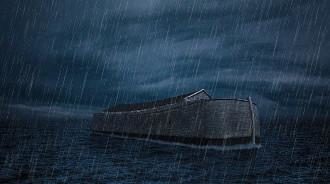[Source](https://pixabay.com/users/jeffjacobs1990-7438739/)
#### The Book of Job
This idea – that all natural disasters happen because of human beings’ bad actions – is overturned in the Book of Job. Here, in the Old Testament, the questioner par excellence regarding natural disasters is a righteous man – Job. He is afflicted by all the suffering a person can endure – and is told by his wife to “curse God and die” ([Job 2:9](https://www.sefaria.org/Job.2.9)). But instead, he continues to ask the difficult questions.
The Book of Job shows that this question is a natural one for human beings to ask – but importantly also has God express an answer: “Then the LORD answered Job out of the whirlwind, and said, Who is this that darkens counsel by words without knowledge? Gird up now your loins like a man; for I will demand of you, and answer you me. Where were you when I laid the foundations of the earth? declare, if you have understanding”([Job 38:1-3](https://www.sefaria.org/Job.38.1)).
In other words, since God created the world, nature and natural laws, it is impossible for a mere mortal to understand how God runs the world. From a human point of view, says God, bad things happen and you will never know the ultimate cause.
The New Testament echoes this with the statement that Jesus Christ holds all of nature together: “And he is before all things, and by him all things consist” ([Colossians 1:17](https://www.kingjamesbibleonline.org/Colossians-1-17/)).
#### Human Response to Suffering
Another way to look at disasters that are not of our making is not to question “why”, but rather to ask: “what can I do to help?” In the 1500s, Martin Luther [praised](https://link.springer.com/chapter/10.1007/978-3-319-92722-0_3#CR10) those who went out to help people who were suffering from the Black Death. This idea of action is something important – regardless of the nature of the disaster, humanity can and should act rather than sit immobilized and ask questions to which there are no clear answers.
It is also important to differentiate between natural disasters and those made by humanity. It is not enough to clamor about the moral evil of those who declare war on the innocents, we must react, take in refugees and do our utmost to stop the killing.
## Disaster Or Wonder?
It is difficult sometimes to see the wonder within the disaster, but it is also important to understand that through natural forces, God created the perfect environment for life on Earth. For example, when there are volcanic eruptions in the ocean, the lava that is spewed out becomes islands. On these, the volcanic ash becomes fertile soil for a wealth of plants and animals to thrive on, and the climate can be cooled thanks to the ash in the atmosphere.
Another example is fire. Fire seems destructive but is vital to the survival of ecosystems such as forests or grasslands. Fire [in fact](https://defenders.org/blog/2020/07/fire-adapted-plants-and-animals-rely-wildfires-resilient-ecosystems) “promotes vitality and new growth” and ensures healthy ecosystems on Earth.
So the natural system that maintains the whole world contains both the natural laws, the many amazing miracles, and yes, the natural events that we call natural disasters. Why then do we see fires and floods as natural ‘disasters’ today?
### Natural Disasters Today
All religions do not pretend to know why natural disasters happen. However, what we do know is that today, regardless of God’s role but rather due to human activity, natural disasters are becoming more intense – and disastrous.
For example, [population growth](https://interfaithsustain.com/population-ecology/) over the centuries means that when a volcano erupts, there are more people to be affected than in the past. On islands like Tonga, people have no choice but to build their homes wherever there is space – and often that is close to a volcano. Today, with hundreds of millions of people living on the planet, when most natural disasters happen there is horrendous devastation, impacting human life negatively, which can transform the natural event into a disaster.
In addition, due to climate change, we are experiencing more extreme weather conditions, from increased heat to increased risk of flooding. As climate scientists [warn](https://www.huffpost.com/entry/earth-to-houston-we-have-a-problem_b_59a92ceee4b0c50640cd5e9b), “climate change is generating more moisture in the atmosphere. This is increasing the amount and intensity of rain that falls during hurricanes and other storms. … In brief, warmer water and moister air that stem from climate change are contributing to the record-breaking catastrophic flooding we are seeing”.
In a nutshell, this [could be called](https://interfaithsustain.com/environmental-degradation-and-the-future-of-our-planet-earth/) “self-destructive behavior”: “…it feels qualitatively different when we actually know such damage is a self-inflicted wound—when we actually do have enough knowledge, understanding, scientific evidence and data to recognize that our own actions and habits as a human collective are increasing our risk of local and global disasters”.
## Natural Disaster OR Apocalypse?
It is the wrong actions of people in their heavy usage of the Earth that in fact has caused much of the ‘disaster’ in natural events. And yet, as Rabbi Yonatan Neril [writes](https://www.huffpost.com/entry/do-these-hurricanes-herald-the-apocalypse_b_59b913cee4b02c642e4a12b5), “only 49% of white evangelicals in America said [in a poll](https://www.prri.org/research/prri-rns-december-2012-survey/) that they thought natural disasters were caused by climate change. By comparison, 77% stated that “the severity of natural disasters is evidence of what the Bible calls ‘the end times’ (the apocalypse)'”.
Such individuals look to a time at which point people will no longer be suffering, where there will be no more pain, and where all will be good. But by seeing such events as an “act of God”, people are removing themselves from the equation of life on Earth. They can consider with equanimity that they are not accountable for what is happening around them. If God allowed the terrible tragedies, they reason, it’s nothing to do with our actions on this planet, or our burning of fossil fuels, our spewing of pollution into the air and water or our [throwaway society](https://interfaithsustain.com/single-use-plastic-threats-from-awareness-to-action/).
But as Job and Noah have shown us, the Bible concludes that the answers are not simple. Physical actions have consequences in a physical world, and the ultimate cause of a disaster is not something we can know with certainty.
In conclusion, we don’t know why God causes natural disasters, but we do know why people cause disasters. As the [Eco Bible states](https://www.amazon.com/Eco-Bible-Ecological-Commentary-Genesis/dp/173533880X): “Ecological disasters and COVID-19’s devastating spread are causing the tragic loss of so many lives as well as a profound disruption of natural ecosystems, families, communities, cultures, and the populations of entire nations”.
It is not enough to trust God or consider a particular sin. If we want to protect people and the wondrous world around us, we must look at our actions, and not merely in terms of moral evil but in the havoc we have wreaked in nature. If we are to join God in an effort to prevent natural disasters, we need to change our own actions. We need to take responsibility for all of our actions.
God created humanity as a partner, to benefit from and yet to protect the physical world; “The Lord God put the human in the Garden of Eden to work it and to guard it” ([Genesis 2:15](https://www.sefaria.org/Genesis.2.15)).
We need to **own our natural disasters**.
*\* Featured image [source](https://unsplash.com/@yoshginsu)*
**Categories:** Bible & Creation Care, Blog on Faith and Ecology
**Tags:** Natural Disasters
---
### [What does Passover have to do with the Earth?](https://interfaithsustain.com/what-does-passover-have-to-do-with-the-earth/)
**Published:** May 27, 2016
**Author:** ICSD
**Excerpt:** David Miron-Wapner - Passover and Earth Day coincide this year. The juxtaposition of these ancient and modern days can help augment our awareness of the pharaoh-like power humanity collectively wields so abusively in relation to our Mother – the Earth. We humans – in Hebrew B’nei Adam -are 100% earth elements – in Hebrew Adama – imbued with consciousness and perhaps a conscience.
**Content:**
*By David Miron-Wapner*
Passover and Earth Day coincide this year. The juxtaposition of these ancient and modern days can help augment our awareness of the pharaoh-like power humanity collectively wields so abusively in relation to our Mother – the Earth. We humans – in Hebrew *B’nei **Adam*** -are 100% earth elements – in Hebrew ***Adama*** *–* imbued with consciousness and perhaps a conscience.
This is the story of one Earth people, just a large clan or small tribe, all children of the same nation. They seek refuge from persistent drought impacting their own chosen land of promise, finding asylum in the midst of their most powerful and gracious neighbor. For some time all is harmonious, everyone prospers, the economy grows, especially with a new source of productive labor and entrepreneurship. By the time the drought is over, the clan has re-settled amidst its hosts. Then the exploitation begins. Power and greed, feeding off one another in a deathly spiral of “more, bigger and grander,” lead to the emergence of a completely unbalanced relationship of exploitation and oppression, from which the clan, still clinging to its original identity seeks liberation.
As a traditional people, engaged in herding and agriculture, the children of Israel certainly lived on a smaller scale than the far greater, civilized society of Pharaoh’s Egypt. Their basic identity revolved around the land and its seasons. Their ancestors had domesticated animals and wild grains. Theirs had been a land of milk and honey, also abundant in – olive oil. And then something occurred, at the time probably just cyclical weather and climate patterns, thoroughly disrupting their ability to sustain themselves.
The Children of Israel went to Egypt seeking economic asylum, as the result of a famine in their own land. Famine is the outcome of a long process of deterioration of sustainability. In our times similarly, we are increasingly bringing upon ourselves the plague of drought, as well as its polar opposite, floods washing away topsoil, creating many more refugees seeking relief from failed farms and an inability to adapt to harsher and harsher climatic conditions. How many are aware that the chaos and brutality Syria is experiencing stems from a 2006-2010 drought of Biblical proportions, not seen for over 900 years? Sixty percent of its arable land became unproductive, farms failed and its people sought refuge in the already overcrowded cities of a collapsing state.
**Confronting Business as Usual on Earth Day 2016**
The ecological crises of our times impacts us more today than most of us imagined at the inaugural Earth Day in 1970. It is much more than “just” climate change that is bringing us dramatically extreme weather events as harbingers of disaster emerging on humanity’s path to an uncertain future. Alongside this grave threat to modern, comfortable, progressive human civilization there is also wanton destruction of biodiversity, burning of the rainforests, toxic chemical waste, fresh water scarcity and urbanization.
In the face of all the devastation of so much of creation, we continue to pursue “business as usual” in a stubborn and obdurate fashion, anything to avoid moving beyond the holy grail of our modern industrial market system, consumption and endless growth, towards a more balanced human society based on prosperity, liberty and the pursuit of meaning and happiness.
We may be able to point to certain objective causal factors for our ecological quandary. Profligate waste of resources, toxic chemicals fouling our waters, CO2 pollution, over-population. All relate to a basic ignorance. A lack of understanding that humanity has accumulated the power to disrupt the Earth’s natural systems evolved as part of the process of creation with a purpose – to support life, all life in all its glorious, wondrous forms. So too, there may be objective fixes, mostly employing more innovative, effective and powerful technology the misuse of which got us into this mess.
Ultimately, none offer a true solution to what at the heart is not an objective problem. Rather it is a crises of the spirit, stemming from an imbalance in humanity’s relationship with the Earth – the *Adama* from which we all were formed. Unless and until we direct our attention to this more fundamental crises we will continue to destroy the planet out from under our feet.
The Exodus from Egypt led the Israelites to wander in the wilderness of the Sinai. The crucible of the desert reminded them of what it is to live simply, in harmony with their surroundings, relying on what they could glean.
**Early Farmer Devil’s Bargain**
At the end of their journey, Jews returned to Israel and resumed an agricultural economy, having been in the forefront of the agricultural revolution. Farmers in the region had made what has turned out to be a devil’s bargain with a limited number of the hardier strains of wild grains and certain cooperative animals to the detriment of diversity. Advances in agriculture were made by human ingenuity and insights, leading to innovations, progress and apparent abundance. Nothing was designed with an overall purpose or appreciation of the tradeoffs made along the way.
Not unlike the Agricultural Revolution that preceded it by 10, 000 years, the Industrial Revolution was not designed rationally. It unfolded haphazardly, leaping from one innovation, the cotton gin, to the steam engine, light bulb, telegraph, telephone, TV and the silicon chip. In, the industrial and now post-industrial world, machines of metal and plastic, and efficient cheap, chemical fuels have taken the place of human and animal muscle, but the exploitation of masses of people that began with pharaoh’s work gangs continues in the form of the assembly line, the white collar office workers each in a wired cubicle. The worker is seduced by an advertising-fueled consumer market where each newer gadget is better, allowing us to discard the old and still functional. Like in Egypt in the disparity of wealth and power left more and more people suffering.
Passover is a holiday of the spring, a time of renewal and rebirth. Here, Jews celebrate the birth and renewal of a people forged during their wanderings in the wilderness. In Sinai, they struggled to redress their relationship with Nature, which had been severed in Egypt. A true camaraderie with nature is possible only when a living presence of nature exists. As urbanization takes hold, dominating and subduing every vestige of that vital presence in its way, wild things have no autonomy, no space to survive.
**The Real Symbolism of the Seder Plate**
At the Passover, Jews celebrate and bless various foods, as symbolizing elements of the story. Today Jews need to understand not only the symbolism of this food, but also its sources. Jews are called to become aware of the impact of industrialized agri-business on the soil and water, and the extra costs in energy to bring this great abundance to the Seder tables. This heightened awareness must extend from the systemic all the way to the smallest personal actions, sensing the myriad ways we interact with and impact our environment.
The urbanization of Egypt around the narrow space of the Nile has become the norm in our world. We all feel the constriction, the choking congestion. Too easily we have bought into the illusion of endless growth and development. The children of Israel needed to escape the bondage of the urbanization they were building brick by brick, to celebrate wilderness wandering and get back to their land to tend their own gardens.
When Pharaoh, the embodiment of human power, refused Moses’ entreaties, over and over, in spite of mounting and overwhelming evidence of God’s supernatural power, God hardened Pharaoh’s heart. While a popular English translation, it might be better to say stiffened, encased, or covered. Individually and collectively humanity has been stiff-necked and stubborn in its refusal to heed clear scientific evidence that continuing our current abundant Western life-style in pursuit of endless growth is perilous. We have been warned, repeatedly, each warning more disturbing and dire than the last; ice sheets melting, acidification of oceans, massive bleaching of coral reefs, all leave us fearful and frozen.
At Passover, Jews are directed to tell the Passover story to their children and grandchildren. The admonition to pass the story on from generation to generation wisely teaches a long-term inter-generational perspective
As well, Jews are called upon to reject hard-heartedness, stubbornness and obstinacy, to cease being stiff-necked, individually and collectively taking full responsibility for their actions and omissions. In a revealing passage in Deuteronomy 10, verse 15 we see the same Hebrew word, signifying the heart being covered, trapped and impenetrable, literally “uncircumcised.” Our hearts are encased, enslaved by the illusion of separateness, from one another, from other species, from the Earth. How do we remove the covering on our hearts and help others do so as well? Once opened, freed of its outer shell, how do we soften our hearts, especially men, and prevent going back to old patterns of abusing our power? Without a healthy I-Thou relationship with our Earth and its purposeful life-sustaining systems, any path to a true relationship with the divine and real transcendence is blocked. May we be blessed this Passover and Earth Day with the capacity to open ourselves to new ways, soften, repent and become more receptive, turning towards a new balance.
*David Miron-Wapner is board chair of the Interfaith Center for Sustainable Development.*
**Categories:** Bible & Creation Care, Blog on Faith and Ecology
---
### [Understanding the Meaning of "Shabbat Shalom"](https://interfaithsustain.com/shabbat-shalom-meaning/)
**Published:** June 25, 2021
**Author:** ICSD
**Excerpt:** Lisa Cohen - Shabbat is one of the most important Jewish observances and is the 4th of the Ten Commandments.
**Content:**
Table of Contents
Table of Contents
- [When is Shabbat?](#aioseo-when-is-shabbat-5)
- [Shabbat led to the Five Day Work-Week](#aioseo-shabbat-led-to-the-5-day-week-8)
- [What Do Jews Do on Their Day of Rest?](#aioseo-but-what-do-you-do-on-a-day-of-rest-11)
- [What Does a Traditional Jewish Family Do on Shabbat?](#aioseo-what-does-a-traditional-jewish-family-do-on-shabbat-17)
- [Friday Night](#aioseo-friday-night-18)
- [Shabbat Day](#aioseo-shabbat-day-25)
- [The Benefits of Shabbat](#aioseo-the-benefits-of-shabbat-30)
- [What do our Rabbis teach us about Shabbat?](#aioseo-what-do-our-rabbis-teach-us-about-shabbat-33)
- [We Need Shabbat in Order to Save Both Ourselves and God's Earth!](#aioseo-we-need-shabbat-in-order-to-save-both-ourselves-and-gods-earth-35)
- [Greeting for the End of Shabbat](#aioseo-greeting-for-the-end-of-shabbat-42)
- [What does 'Shabbat Shalom' mean?](#aioseo-what-does-shabbat-shalom-mean-48)
- [When does Shabbat begin and end each week?](#aioseo-when-does-shabbat-begin-and-end-each-week-50)
- [What activities are traditionally done to observe Shabbat?](#aioseo-what-activities-are-traditionally-done-to-observe-shabbat-52)
- [Why is Shabbat considered necessary for our well-being and the environment?](#aioseo-why-is-shabbat-considered-necessary-for-our-well-being-and-the-environment-54)
- [What is the significance of the Havdalah ceremony at the end of Shabbat?](#aioseo-what-is-the-significance-of-the-havdalah-ceremony-at-the-end-of-shabbat-56)
*By Lisa Cohen and Rabbi Yonatan Neril*
Shabbat, the Sabbath day, is one of the most important Jewish observances and is the 4th of the Ten Commandments.
Jews greet each other as the Sabbath is arriving each week with this phrase, “Shabbat Shalom”. The word “shalom” has many meanings in English, including, “hello”, “goodbye” and of course “peace”.
Shabbat is the Hebrew word for Saturday. So literally “Shabbat Shalom” is a wish for a “**peaceful** Shabbat”. It’s a very happy blessing to wish someone as everyone is thrilled when Shabbat – the day of rest – arrives.
## When is Shabbat?
Shabbat starts from an hour before **sundown** on Friday evening and continues until the appearance of three stars, on Saturday night – all in all, 25 hours. The beginning of Shabbat is marked by the lighting of two Shabbat candles with your eyes closed which involves [blessings for the Shabbat](https://interfaithsustain.com/shabbat-blessing/ "blessings for the Shabbat"). The moment you open your eyes and see the two flames of holiness a feeling of peacefulness fills the home.
Shabbat is an official day of rest coming from the Bible: Genesis chapter 2 verses 2-3 which state “And on the seventh day God ended His work which He had done, and He rested on the seventh day from all His work which He had done. Then God blessed the seventh day and sanctified it, because in it He rested from all His work which God had created and made.”
### Shabbat led to the Five Day Work-Week
The seventh day of rest is celebrated by Christians on Sunday. In 19th century Britain, [Sundays became an official day of rest](https://www.bbc.co.uk/bitesize/articles/zf22kmn) with no work allowed. However, this did not take into account the Jewish workers. In 1932, the United States officially adopted a 5-day work-week, with both Saturday and Sunday as days of rest.
## What Do Jews Do on Their Day of Rest?
Well that’s the point – we stop DOING!
Just like God stopped “making” on the 7th day, we too change from “doing” to “**being**“. This is one of the most conscious concepts that is currently being encouraged and adopted by meditators, new-age thinkers. medical experts, philosophers, business leaders as well as religious leaders. When we are in a mode of being we are able to connect to ourselves, to others and to spirituality.
[Source](https://pixabay.com/users/clker-free-vector-images-3736/)
One of the main **connections** made on Shabbat is between family members, as for one whole day the family spends time with them. According to traditional Jewish teachings, it is forbidden on Shabbat to actively use technology like phones or computers, travel in car, train, or plane, or do work. Consequently, a whole day is spent together as a family – reading, chatting, playing , visiting friends and connecting spiritually through prayer, expressing gratefulness. This all sounds like a very current self help book, despite its beginning **3,500 years old** with the revelation on Mt. Sinai!
### What Does a Traditional Jewish Family Do on Shabbat?
### Friday Night
On Friday night, after **candle** lighting, there are prayer services in the synagogue with singing of Psalms and blessing God and His creations, followed by a family meal filled with delicious traditional Jewish foods. The meal is opened with blessings over wine called “**Kiddush**“, followed by blessings over two loaves of special braided bread called “**hallah**“.
- [](https://interfaithsustain.com/shabbat-blessing/)
## [A Shabbat Blessing For Humanity and For Earth](https://interfaithsustain.com/shabbat-blessing/)
- [](https://interfaithsustain.com/books-of-the-old-testament/)
## [The Books of The Old Testament: The Hebrew Bible](https://interfaithsustain.com/books-of-the-old-testament/)
The traditional Jewish sabbath meal involves the singing of sacred songs and a discussion of a weekly section of the Hebrew Bible. At the end of the meal, the family says a prayer of thanks to God for providing the sustenance. Shabbat dinner, on Friday night, is an opportunity of real connection physically and spiritually.
### Shabbat Day
On Shabbat morning there is another **prayer** service in the synagogue, where the weekly portion of the Torah (Hebrew Bible) is read in Hebrew from a hand-written scroll. This is often followed by a “Kiddush” in which the prayer community takes the opportunity to join together to bless the wine and eat a snack together as a community. Then, each family goes home for another family meal, together with friends and visitors from the synagogue. Then Sabbath-observers take a rest, read, go for a walk, or engage together in Bible study.
[Source](https://upload.wikimedia.org/wikipedia/commons/thumb/f/fa/Family_eating_meal.jpg/640px-Family_eating_meal.jpg)
#### The Benefits of Shabbat
As you can see, such a day of rest honored by Judaism, nourishes every part of us – body, mind and soul. It has been proven [scientifically](https://www.inc.com/rhett-power/a-day-of-rest-12-scientific-reasons-it-works.html) that people can not keep running on and on with no break from such hectic lives, from technology addiction to work addiction.
A day of rest has been [proven](https://www.becomingminimalist.com/resting/) to promote a healthy, balanced life. There is a [human need](https://edition.cnn.com/2013/01/11/health/sleeth-take-day-off/index.html) to recharge our batteries before they run out of energy and we collapse. God gave us the answer eons ago when He took a day of rest after completing Creation. He commanded us to do likewise.
## What do our Rabbis teach us about Shabbat?
In [Eco Bible, Volume 1: An Ecological Commentary on Genesis and Exodus](https://interfaithsustain.com/ecobible/), the authors quote Rabbi Samphson Rafael Hirsch (19th century Germany) who said that Shabbat was given to humanity “in order that one should not grow overbearing in his dominion” of God’s creation. On the Day of Rest, a person should “return the borrowed world to its Divine Owner in order to realize that it is but lent to” that person.
### We Need Shabbat in Order to Save Both Ourselves and God’s Earth!
Observance of a Sabbath day – taking a day each week to refrain from the transformation of nature – has the potential to alter a person’s feeling of creative and technological control over nature. Rabbi Hirsch sensed the profound relevance of Shabbat for industrial society, exclaiming, “Sabbath in our time! To cease for a whole day from all business, from all work, in the frenzied hurry-scurry of our time! . . . The pulse of life would stop beating and the world perish! The world perish? On the contrary, it would be saved.”
This message of Shabbat is sorely needed in today’s Western society. Our lifestyle is based on taking from the natural world, is having a big impact on the health of nature, God’s creation. A society that never rests nor reflects is the same society that over-extracts and over-consumes. This mastery of the earth without sufficient contemplation of its consequences has produced ecological destruction on the local, regional, and global level.
On Shabbat, we are to walk on the earth without asserting our mastery over it, in order to acknowledge the sovereignty of the Creator. In this way, we will remember that we are only the custodians of the earth with the responsibility “to work it and to guard it.”
As Rabbi Norman Lamm taught, the observance of Shabbat promotes “not a progressively growing technology and rising GNP, but a peaceful and mutually respectful coexistence between man and his environment.” He explains that through “this act of renunciation” of resting on the seventh day, a person “demonstrate their awareness that “the Earth is the Lord’s.” (Psalms 24:1)
## Greeting for the End of Shabbat
As Shabbat ends there is a unique ceremony that blesses the division between the holiness of the Shabbat day from the normal routine of the rest of the week. Without a busy, hectic routine of “doing” we could not appreciate the greatness of time for “being”, so this differentiation shows our gratefulness. The Havdalah (meaning ‘separation’) ceremony involves blessings on wine, spices, and a braided candle to mark the transition from the Sabbath to the new week.
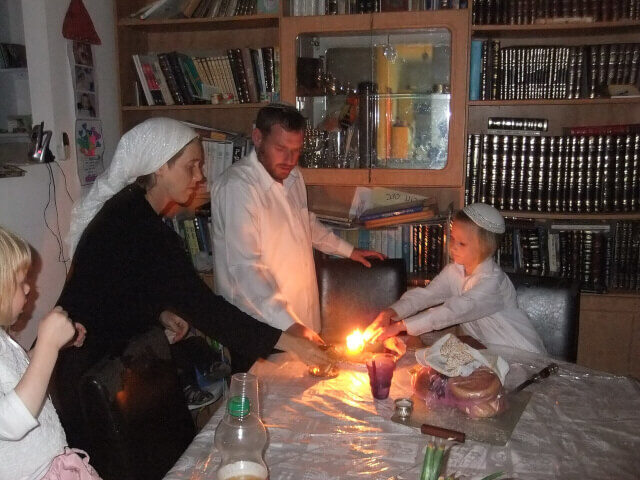[Source](https://upload.wikimedia.org/wikipedia/commons/thumb/5/5f/Havdala727.JPG/640px-Havdala727.JPG)
Finally, with recharged batteries, a rested body and soul we wish each other greetings of – “Shavua Tov”. “Shavua” is the Hebrew word for “week” and “tov” is the Hebrew word for “good”. So, having been replenished spiritually and physically by a Shabbat Shalom, a peaceful Shabbat, a day of rest, we wish each other to have a good week – Shavua Tov!
*\* Featured image [source](https://unsplash.com/photos/white-candle-on-white-surface-nulA6m0UjuU)*
**Categories:** Bible & Creation Care, Blog on Faith and Ecology
---
### [A Rainbow! What Does The Rainbow Mean In The Bible?](https://interfaithsustain.com/what-does-the-rainbow-mean-in-the-bible/)
**Published:** January 31, 2022
**Author:** ICSD
**Excerpt:** Ilana Stein - The rainbow is found in the Bible in the book of Genesis. The flood to destroy the Earth and all living creatures of every kind has receded and Noah and his family have come out of the ark.
**Content:**
Table of Contents
Table of Contents
- [The Rainbow In The Bible](#the-rainbow-in-the-bible)
- [The Lessons Of The Rainbow](#the-lessons-of-the-rainbow)
- [The Meaning Of The Rainbow In The Clouds](#the-meaning-of-the-rainbow-in-the-clouds)
- [The Rainbow As A Comfort or A Warning?](#the-rainbow-as-a-comfort-or-a-warning)
- [A Covenant Of Diversity](#a-covenant-of-diversity)
- [The Rainbow Reminds Us To Take Responsibility For The Planet](#the-rainbow-reminds-us-to-take-responsibility-for-the-planet)
- [The Beauty of The Rainbow](#the-beauty-of-the-rainbow)
- [The Blessing On Seeing A Rainbow](#the-blessing-on-seeing-a-rainbow)
- [The Three-Dimensions of The Rainbow](#the-three-dimensions-of-the-rainbow)
*By Ilana Stein* – The rainbow is found in the **Bible** in the book of **Genesis**. The flood to destroy the Earth and all living creatures of every kind has receded and [Noah and his family](https://interfaithsustain.com/how-long-did-it-take-noah-to-build-the-ark-and-why-it-matters/) have come out of the ark.
God places a **rainbow** in the sky and promises that this is the sign of an everlasting covenant between God and humanity.
## The Rainbow In The Bible
And God spoke unto **Noah**, and his family with him, saying, And I, behold, I establish my covenant with you, and with your seed after you; and with every living creature that is with you, of the fowl, of the cattle, and of every beast of the earth with you…. And I will establish my covenant with you; neither shall all flesh be cut off any more by the waters of a flood; neither shall there any more be a flood to destroy the earth. And God said, This is the sign of the covenant which I make between me and you and every living creature that is with you, for perpetual generations: I do set my rainbow in the cloud, and it shall be for a sign of the covenant between me and the earth. And it shall come to pass, when I bring a cloud over the earth, that the rainbow shall be seen in the cloud: And I will remember my covenant, which is between me and you and every living creature of all flesh; and the waters shall no more become a flood to destroy all flesh. And the rainbow shall be in the cloud; and I will look upon it, that I may remember the everlasting covenant between God and every living creature of all flesh that is upon the earth. And God said unto Noah, This is the sign of the covenant, which I have established between me and all flesh that is upon the earth. (Genesis 9:8-17)
[Source](https://unsplash.com/@yulia_gadalina?utm_source=unsplash&utm_medium=referral&utm_content=creditCopyText)
## The Lessons Of The Rainbow
[A previous blog](https://interfaithsustain.com/noah-and-the-flood/) dealt with some of the lessons of the flood and of Noah and his family. When we see the rainbow in particular, there are a few more concepts to consider.
### The Meaning Of The Rainbow In The Clouds
What is the meaning of the rainbow, when it appears in the clouds over the Earth on a rainy day?
When clouds would gather in the sky, people might fear that the rains would become a flood and destroy all life. God therefore placed the rainbow in the clouds as a reminder of God’s covenant to future generations – that God would never destroy the Earth again.
- [](https://interfaithsustain.com/noah-and-the-flood/)
## [Noah and the Flood Teach Contemporary Environmental Lessons](https://interfaithsustain.com/noah-and-the-flood/)
- [](https://interfaithsustain.com/how-long-did-it-take-noah-to-build-the-ark-and-why-it-matters/)
## [How Long Did it Take Noah to Build the Ark, and Why It Matters](https://interfaithsustain.com/how-long-did-it-take-noah-to-build-the-ark-and-why-it-matters/)
### The Rainbow As A Comfort or A Warning?
While the rainbow may comfort people’s fears, there is an underlying warning. For while the rainbow means that God will never destroy all living creatures again, it also reminds humanity that it was their actions in the first place that caused the destruction.
The meaning of the rainbow then is the connection between humanity’s sins or immoral actions and the destruction of all life on Earth.
[Source](https://pixabay.com/users/fietzfotos-6795508/?utm_source=link-attribution&utm_medium=referral&utm_campaign=image&utm_content=4047523)
Today, perhaps the greatest risk of humans destroying the world comes not from those with the *intent* to do so but rather from the collective, *unintentional* actions of billions of people. Scientists tell us that our way of life is making war on nature, and will likely bring more flooding, tropical disease, severe storms, and intense hurricanes. In a sense, we are upending the balance that God for His part promised not to upset.
For the first time in human history, we now have the ability to destroy the world and all life on it. We may have no malicious intent, but our shortsightedness and selfishness can also destroy the world ([Countering Destruction: Lessons from Noach](https://www.jewishecoseminars.com/countering-destruction-lessons-from-noach-longer-article/)).
While God promises not to destroy humankind again, it is up to humankind not to destroy itself.
### A Covenant Of Diversity
Rabbi Sampson Rafael Hirsch (on Genesis 9:15) sees a deeper meaning of the rainbow – that of [maintaining the world’s diversity](https://interfaithsustain.com/why-is-biodiversity-important/), as God created it.
The colors of the rainbow, from “one pure complete ray of light, broken up into seven degrees of seven colors,” symbolize different types of living creatures of every kind.
Yet, “God unites them all together in one common bond of peace, all fragments of one life, all refracted rays of the one spirit of God….” (The Pentateuch, vol. 1: Genesis, Judaica Press, Gateshead, England, 1989 , p. 182)
#### The Rainbow Reminds Us To Take Responsibility For The Planet
When Noah obeys the Creator’s will and helps to preserve life on the ark, his actions result in a message shining from the rainbow, thus serving as a model for us to take responsibility for the continuation of a living and livable planet.
#### The Beauty of The Rainbow
Rainbows are beautiful, inspiring wonder. In the famous Vision of the Chariot of the prophet Ezekiel, the rainbow represents a view of the likeness of God:
Like the appearance of the bow which is in the cloud on the day of rain, such was the appearance of the brightness round about. That was the appearance of the likeness of the glory of the Lord. When I saw it, I fell upon my face. And I heard the voice of someone speaking. (Ezekiel 1:28)
The Zohar understands this on a deeper level, as a symbol for the Divine Presence on Earth.
## The Blessing On Seeing A Rainbow
According to Jewish tradition, on seeing a rainbow, one says a blessing:
Blessed are you, O Lord our God, King of the Universe, Who remembers the Covenant, is faithful to Your Covenant and keeps Your promise. (Maimonides, Mishneh Torah, Blessings 10:16)
A blessing is not merely a saying. It transforms the passive experience of seeing something beautiful to an active reaction. The human being reacts by expressing his/her wonder and gratitude to God.
This takes the meaning of the rainbow up one more level: through it, the human being connects to God and acknowledges that God’s covenant has been fulfilled.
Indeed, a medieval commentator (Seforno on Genesis 9:17) understands the rainbow as a wake-up call for Noah and his family, “to awaken the people of the generation to repent, to be wise, and to do good”.
Today, we too realise that human action – which once led to destruction – can be positive, and can lead to *tikkun olam* – a literal repair of the world.
The [most recent studies ](https://www.carbonbrief.org/avoiding-temperature-overshoot-reduces-multiple-climate-change-risks-say-scientists)have found that by undertaking positive actions in reducing our carbon emissions, and thus keeping below the global temperature goals, we may be able to [reduce the risk of climate extremes](https://interfaithsustain.com/evidence-of-climate-change/), such as heatwaves and flooding.
## The Three-Dimensions of The Rainbow
[Rabbi Jonathan Sacks spoke](https://rabbisacks.org/address-by-the-chief-rabbi-to-the-lambeth-conference/) movingly on this at the Lambeth Conference in 2008:
God says: Never again will I destroy the world. But I cannot promise that *you* will never destroy the world — because I have given you free will. All I can do is teach you how not to destroy the world. How?
The covenant of Noah has three dimensions. First: ‘He who sheds the blood of man, by man shall his blood be shed, for in the image of God, He created man.’ The first element is *the sanctity of human life*.
The second: Read [Genesis 9](https://www.sefaria.org/Genesis.9?lang=he-en&utm_source=rabbisacks.org&utm_medium=sefaria_linker) carefully and you will see that *five times* God insists that the covenant of Noah is not merely with humanity, but with all life on earth. So the second element is *the integrity of the created world*.
The third lies in the symbol of the covenant, the rainbow, in which the white light of God is refracted into all the colors of the spectrum. The rainbow symbolises what I have called the dignity of difference. The miracle at the heart of monotheism is that unity up there creates diversity down here. These three dimensions define the covenant of fate.
\* *Featured image [source](https://unsplash.com/@ramone)*
**Categories:** Bible & Creation Care, Blog on Faith and Ecology
**Tags:** Bible
---
### [How Long Did it Take Noah to Build the Ark, and Why It Matters](https://interfaithsustain.com/how-long-did-it-take-noah-to-build-the-ark-and-why-it-matters/)
**Published:** May 24, 2021
**Author:** ICSD
**Excerpt:** Rabbi Yonatan Neril - How long did Noah take to build the Ark mentioned in the Bible? And why do we care? The Bible doesn't say exactly how long, and not much is known about the ship-building process when Noah was alive—especially a ship commissioned by God. Some believe it took just 40 days for Noah to build it, some say 120 days, and others believe he had as many as 300 years.
**Content:**
Table of Contents
Table of Contents
- [How many years did Noah take to build the Ark?](#aioseo-how-many-years-did-noah-take-to-build-the-ark-5)
- [How was the ark supposed to be constructed?](#aioseo-how-was-the-ark-supposed-to-be-constructed-12)
- [Why did Noah build the Ark with three levels?](#aioseo-why-did-noah-build-the-ark-with-three-levels-15)
- [Noah's Ark as a green building](#aioseo-noahs-ark-as-a-green-building-21)
- [Why Was an Ark Needed?](#aioseo-why-was-an-ark-needed-28)
- [Floods in Our Times and the Relevance of Noah](#aioseo-floods-in-our-times-and-the-relevance-of-noah-33)
*By Rabbi Yonatan Neril* – How long did Noah take to **build the Ark** mentioned in [the Bible](https://interfaithsustain.com/books-of-the-old-testament/)? And why do we care? The Bible doesn’t say exactly how long, and not much is known about the ship-building process when Noah was alive—especially a ship commissioned by God. Some believe it took just 40 days for Noah to build it, some say 120 days, and others believe he had as many as 300 years.
In this post, we’ll see what Scripture itself and Bible commentators say about how long Noah spent **building the Ark**, what else he did to protect the environment **years before the flood** came, and what lessons we can learn from this story with regard to our relationship today with the earth.
## How many years did Noah take to build the Ark?
The Ark that Noah built is the [first ship mentioned in the Bible](https://www.jewishvirtuallibrary.org/ships-sailing). There are many interpretations of how long he worked on constructing it. Genesis chapter 6 verse 6 states: “**Noah was six hundred** years old when the **Flood came**, waters upon the earth.” So we see that the ages of people then was more than in our times, and that Noah was already quite old when the flood came. Noah died 350 years after the flood, at the age of 950.
Jewish tradition says that a **hundred and twenty years** before the Flood, Noah specially planted the trees from which he would take the wood for the Ark—no old-growth logging here! Aware of the massive resources that his project would demand, Noah actively worked to be as self-sustaining as possible. The Bible mentions 120 years in the Noah story, in Genesis chapter 6 verse 3: The Lord said, “**My spirit shall not strive** with man forever, since he too is flesh, yet his days shall be one hundred and twenty years.”
[Sefer Hayashar](https://en.wikipedia.org/wiki/Sefer_haYashar_(midrash)#History) (written as early as the 9th century), states that it took [just five years](https://en.wikipedia.org/wiki/Noah_in_rabbinic_literature) for Noah to build the ark. According to a 9th Jewish commentary from Italy, God used a “finger” in providing instructions for Noah to build the ark ([Pirke De-Rabbi Eliezer](https://en.wikipedia.org/wiki/Pirke_De-Rabbi_Eliezer) 23). This source states that it took 52 years for Noah to build the ark, with Divine guidance.
[Source](https://pixabay.com/users/3209107-3209107/ "https://pixabay.com/users/3209107-3209107/?utm_source=link-attribution&utm_medium=referral&utm_campaign=image&utm_content=1636156")
- [](https://interfaithsustain.com/message-from-the-titan-the-titanic-mindset-could-sink-humanity/)
## [Message from the Titan: The Titanic Mindset Could Sink Humanity](https://interfaithsustain.com/message-from-the-titan-the-titanic-mindset-could-sink-humanity/)
- [](https://interfaithsustain.com/solar-tubes/)
## [Save Money, Save Energy, Save Earth With Sustainable Solar Tubes](https://interfaithsustain.com/solar-tubes/)
- [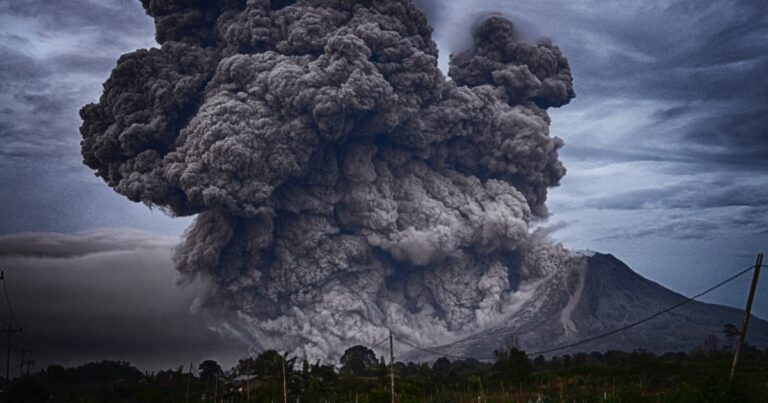](https://interfaithsustain.com/why-does-god-allow-natural-disasters/)
## [In Our Divine Universe, Why Does God Allow Natural Disasters?](https://interfaithsustain.com/why-does-god-allow-natural-disasters/)
### How was the ark supposed to be constructed?
God gave Noah clear instructions on building the ark. [As Rabbi Yehuda Altein](https://www.chabad.org/library/article_cdo/aid/246609/jewish/The-Story-of-Noah-and-the-Ark-in-the-Bible.htm) explains about the verses in Genesis, “It was to be crafted of *gopher* (likely cedar) wood and sealed from both within and without with pitch. It was to comprise three stories: the top for Noah and his family; the middle for the animals; and the bottom for refuse.
It was to measure 300 cubits in length, 50 cubits in width, and 30 in height. The ark was illuminated by a *tzohar,* which was either a window through which light shone from the outside, or a radiant precious stone.” **Construction of the ark** was a precise process.
## Why did Noah build the Ark with three levels?
The Talmud explains why **Noah’s Ark** had three levels: one for Noah and his family, one for the animals, and one for the waste—tons upon tons of animal droppings. Noah’s family spent a lot of their time shoveling manure. The amount may have come to 800 tons of manure during the year on the Ark, according to San Diego Zoo researchers.
Whether Noah and his family systematically removed manure from the Ark (and dumped it in the water), or stored some or all in a designated waste area, Noah toiled to maintain the cleanliness of the Ark. Noah’s lesson teaches us today that the benefits of a clean, healthy living space—clean of both natural and industrially created waste—are worth the effort for humans and animals to coexist on earth.
A even larger key lesson we can learn from Noah is critically seeing the world as a “closed,” integrated system. Noah, his wife, Shem, Ham, and Japheth and their wives maintained a sort of proto-Biodome inside the Ark, struggling to preserve a functional level of ecological balance in a very challenging situation.
### Noah’s Ark as a green building
[The Ark was a “green” project in Biblical times](https://interfaithsustain.com/noah-and-the-flood/), created by Noah, Shem, Ham, and Japheth and their wives. According to Jewish tradition, the ship had a window for natural lighting from the sun, a whole floor dedicated to composting animal waste, and wood from forests Noah planted for this purpose. Studying the design of the first Divine-commanded building could help inform our modern green building standards.
Today, about one-third of US building projects are [considered “green,”](https://www.worldgbc.org/news-media/world-green-building-trends) saving an average of 15 percent on water and electricity costs compared to conventional buildings. Natural lighting, solar power, and water recycling (such as diverting “gray” sink waste to water external gardens) are just some of the many architectural and design features that ensure buildings will consume less of nature’s resources.
Within such an architectural and engineering system, every action has a significant impact and ramifications, and individual elements can be designed and aligned to strengthen and reinforce other elements in reducing environmental impacts.
[Source](https://pixabay.com/users/chenspec-7784448/)
### Why Was an Ark Needed?
The biblical story of Noah tells us that God judged the people of the earth with a Flood, killing everyone and everything not on board the Ark. Only eight people survived: Noah, his wife, **Shem, Ham, and Japheth**. The flood was caused when “the Lord saw that man’s wickedness had increased to such an extent that it filled the earth.” God decided to send a great judgment against the people by destroying all life on Earth.
According to the Bible, God gave humans **120 years** before unleashing the most serious environmental catastrophe in human history, as punishment for the misbehavior and excesses of humankind. God chose Noah as a messenger, instructing him to build the Ark as a sign to the people that the flood would come unless they changed their actions. Noah said to the people, “Return from your evil ways and deeds.” They did not change in those 120 years.
The judgment was sealed because of the sin of lawlessness, robbery, or wrongdoing (chamas). The rabbis of the Talmud teach that “a person would put out a market stall full of beans, and each person would come and take less than a penny’s worth so that they could not be prosecuted by the law.” (Midrash Genesis Rabbah 31:5)
**God said**, “You are not playing by the book, so I too will not play by the book.” God responded by bringing a single drop of rain and then another. Just as the people took one bean and then another, without looking at the consequences of their combined actions, so God punished them drop by drop. After 120 years, the Flood came.
#### Floods in Our Times and the Relevance of Noah
In 1896, Swedish Nobel chemist Svante Arrhenius was recognized for his theory of climate change. Nearly a century later, in 1988, the UN created the [Intergovernmental Panel on Climate Change](https://www.ipcc.ch/about/history/) “to provide the governments of the world with a clear scientific view of what is happening to the world’s climate.”
The world has largely ignored the panel’s warnings. Even concerned nations struggle to significantly change the actions of their governments and populations. As Rabbi Samson Raphael Hirsch teaches, “chamas” which led to the Biblical flood and which threatens us today “is a wrong that is too petty to be caught by human justice, but if committed continuously can gradually ruin your fellow person.” We can see parallels in our modern times. with both individuals and corporations developing more and more land that was once protective wetland, or pumping more and more carbon from fossil fuel use into the atmosphere.
It has now been 120 years since Arrhenius’ climate change theory, and massive floods repeatedly threaten even the most developed countries. We cannot forget that in Noah’s time, God gave the people 120 years of warning…
**The Great Human-Caused Extinction Event, and Noah**
[Floods today cause devastating harm](https://interfaithsustain.com/flash-floods-and-our-world/) in many ways. They temporarily or permanently displace people whose homes are destroyed; floods cause many deaths; they wreck agricultural crops and erode huge areas of topsoil; a flood can cripple transportation systems; and they spread disease and toxic pollutants.
Floods’ emotional impact can be devastating too, as people lose their entire sense of safety and security where they live and in many cases can never return to where they and generations of their family have lived.
Devastating flood events are now arriving sooner, more frequently, and more intensely each season than predicted. We are ill-prepared. With eight billion people sharing our planet, the greatest risk comes—as it did in Noah’s time—from seemingly inconsequential actions of individuals combining in their impact. This age is even called the [Anthropocene](https://www.pnas.org/content/117/24/13596), including the human-caused sixth great extinction event on earth. For the first time, humans can now destroy or radically alter virtually all life on earth, a power so great in Noah’s time, it could once only be ascribed to God.
Though we will never know how long Noah took to literally build the Ark, we are in control of a much weightier question: how long will humanity take to live sustainably? Dr. Bill McKibben says that with climate change, if we win too slowly, we lose. In other words, we need to prioritize sustainability as our top priority, making changes starting NOW so the next generations can inherit a livable planet. Noah devoted his life to the same deeply hopeful goal, and so should we.
*\* Featured image [source](https://pixabay.com/users/jeffjacobs1990-7438739/)*
**Categories:** Bible & Creation Care, Blog on Faith and Ecology
**Tags:** Noah's Ark
---
### [Noah and the Flood Teach Contemporary Environmental Lessons](https://interfaithsustain.com/noah-and-the-flood/)
**Published:** November 19, 2021
**Author:** ICSD
**Excerpt:** Lisa Cohen - Noah appears in Genesis 5:29, the son of Lamech, the 9th generation descended from Adam. Noah, father of Shem, Ham and Japeth , the originator of the vineyard, the image of a righteous man was commanded by God to restart the human race after a flood that would kill all his contemporaries and all living beings, except fish and the animals he was commanded to save: a male and female of every living species plus seven specimens of every kosher animal.
**Content:**
Table of Contents
Table of Contents
- [The Flood](#aioseo-the-flood-8)
- [Noah Emerging From The Ark](#aioseo-noah-emerging-from-the-ark-17)
- [Noah's Legacies](#aioseo-noahs-legacies-21)
- [Noah's Green Building](#aioseo-noahs-green-building-31)
*By Lisa Cohen* – Noah appears in Genesis 5:29, the son of Lamech, the 9th generation descended from Adam. Noah, father of Shem, Ham and Japeth, the originator of the vineyard, the image of a righteous man was commanded by God to restart the human race after a [flood](https://interfaithsustain.com/flash-floods-and-our-world/) that would kill all his contemporaries and all living beings, except fish and the animals he was commanded to save: a male and female of every living species plus seven specimens of every kosher animal.
In the 1,656th year of Creation, 2105 BCE, the Great Flood came to destroy the earth and cleanse it of the evil ways of humankind, including theft, idolatry and incest.
God had commanded **Noah** to build an ark to house his family and the animals and gave Noah the exact dimensions: 300 cubits in length, 50 cubits width and 30 cubits height. It was to be three floors with the upper floor to house Noah and his family, the middle floor for the animals and the lowest floor for refuse that would become [composted](https://interfaithsustain.com/why-i-like-to-compost-and-why-noah-did-too/).
[Source](https://pixabay.com/users/prawny-162579/)
## The Flood
**Noah’s Ark** took 120 years to build, giving time for the population to repent their ways of living which they did not. Read more in the [ICSD blog here](https://interfaithsustain.com/how-long-did-it-take-noah-to-build-the-ark-and-why-it-matters/) on why it took 120 years to build the Ark.
On the 17th day of the Hebrew month of Cheshvan, rain began to fall from heaven, whilst boiling hot jets of water gushed forth from the earth. For forty days and forty nights the rain continued submerging all of earth until the water was 15 cubits deep.
After the rain ceased, the waters continued to rage for another 150 days, before slowly receding, allowing the ark to come to rest on the Mountains of Ararat, in Turkey.
Noah sent out a raven to assess the situation but the raven stayed near the ark. Noah then sent out a dove on three separate missions. The first time the dove too stayed near the ark, but on the second trip it returned with an olive leaf, showing new growth had begun, and on its third trip the dove never returned having found a new home on dry ground.
[Source](https://pixabay.com/users/jeffjacobs1990-7438739/)
- [](https://interfaithsustain.com/noah-and-the-flood/)
## [Noah and the Flood Teach Contemporary Environmental Lessons](https://interfaithsustain.com/noah-and-the-flood/)
- [](https://interfaithsustain.com/how-long-did-it-take-noah-to-build-the-ark-and-why-it-matters/)
## [How Long Did it Take Noah to Build the Ark, and Why It Matters](https://interfaithsustain.com/how-long-did-it-take-noah-to-build-the-ark-and-why-it-matters/)
### Noah Emerging From The Ark
On the first day of the Hebrew month of Tishrei 1,657 (2104 BCE) the water had subsided. Two months later on the 27th of Cheshvan, the ground had dried and Noah and all of the Ark’s inhabitants emerged to the newly cleansed earth. Noah had spent 365 days in the Ark – one complete solar year!
#### Noah’s Legacies
The Noah narrative leaves us with many important legacies.
Firstly we have God’s promise and assurance of nature’s protection from any future catastrophe made by God. God made **the rainbow** to remind us of His promise. This clearly does not include nature’s protection from human made catastrophes!
[Source](https://pixabay.com/users/ykaiavu-7068951/)
Secondly, Noah and his family are commanded to procreate and fill the Earth. Therefore, history, and the entire human race, is descended from Noah’s three sons and their wives.
Thirdly, God also gave them permission to eat certain animals, which had been forbidden up until this point.
Finally, we also learn that with all the manure created by a year on the Ark, Noah developed agriculture and was the originator of the vineyard.
Noah died at the age of 950 years, after witnessing the most catastrophic event of God wiping out all life from earth. We have so much to learn from Noah and the Biblical flood story.
In [**The Eco Bible**](https://www.amazon.com/dp/B08LCKLM9G/ref=dp-kindle-redirect?_encoding=UTF8&btkr=1), we can see how Noah had a great impact on contemporary environmental issues that we are still challenged by today.
## Noah’s Green Building
There’s a suggestive hint about building sustainably in Genesis 6:16, where it says “Make an opening \[tzohar\] for daylight in the Ark and terminate it within a cubit of the top. Put the entrance to the Ark in its side; make it with bottom, second, and third decks.”
Rashi offers two possible meanings of *tzohar*, an “opening” or a “stone that emits light.” The Ark was a “green building,” with a window for natural lighting from the sun, a whole floor dedicated to composting of animal waste, and wood from forests Noah planted, according to the Midrash. Studying the design of the first Divine-commanded building could teach us about Divine green building standards.
The end of this verse states that God commanded Noah to build the Ark with three levels. The Talmud explains why. Humans were to be on the top deck, the animals in the middle deck, and their manure stored at the bottom. Why store the manure? After all, it could have just been thrown into the sea! As farmers in the Midwestern United States learned after the 2019 floods, “Flooding drains nutrients out of the soil that are necessary for plant growth as well as reducing oxygen needed for plant roots to breathe and gather water and nutrients.”
### Noah Created Biblical Fertilizer
This may be the first Biblical reference to organic fertilizer. Recent years have seen multiple unintended explosions of ammonium nitrate. In August 2020, 2,750 metric tons of ammonium nitrate exploded in Beirut, killing 157 people, wounding 5,000, and causing 300,000 to be homeless. Large explosions also occurred in Tianjin, China (2015) and Texas (2013). These disasters reveal another impact of the widespread use of ammonium nitrate.
The Ark was a “green” project in Biblical times. Today, about one- third of US building projects are considered “green,” saving an average of 15 percent on water and electricity costs compared to conventional buildings. Natural lighting, [solar power](https://interfaithsustain.com/advantages-of-solar-energy/), and water recycling are just some of the many architectural and design features that ensure buildings will consume less of nature’s resources.
## Noah as Earth Steward, by **Shimshon Stüart Siegel**
Take a deeper look at Genesis 6:19, where it says “And of all that lives, of all flesh, you shall take two of each into the Ark to keep alive with you; they shall be male and female”. We are seeing Noah through the eyes of the rabbinic commentaries, discovering a man who spent his life caring for nature and spreading Divine awareness. This fresh look can provide us many lessons as we strive to bring our world back to a state of holy balance. What can we learn from Noah’s efforts?
We can learn that caring about the environment requires patience and forethought. The Midrash says that 120 years before the Flood, Noah actually planted the trees from which he would take the wood for the Ark. (No old-growth logging here!) Aware of the massive resources that his project would demand, Noah tried to be as self-sustaining as possible.
### Noah Created The First Biodome
Another lesson we can learn from Noah is that it helps to see the world as a “closed,” integrated system. Noah and his seven-person crew maintained a sort of proto-Biodome inside the Ark, struggling to preserve a functional level of [ecological balance](https://interfaithsustain.com/ecological-balance/) in the most challenging of situations. Within such a system, every action has a significant impact and ramifications, and individual elements can be aligned to strengthen and assist one another.
In modern times, this ecological balance is demonstrated by walking, riding bikes, and using [public transportation](https://interfaithsustain.com/sustainable-transport/) in congested areas. These individual decisions collectively reduce pollution while easing traffic jams. Partly as a result of the coronavirus pandemic, cities are exploring how to permanently block off more areas for walkers and bikers traveling to work or getting outdoors after work and on weekends. Less traffic and cleaner air reduce many kinds of human health risk from both accidents, pollution, and communicable disease. Individually, these very same choices can reduce personal stress and keep us more fit as well.
### Noah as an Agricultural Pioneer
After the flood, Noah reinvented himself as an agricultural pioneer. The Midrash explains that Noah revolutionized farming techniques to soften the backbreaking toil that had been the way of the land since the sin of Adam and Eve. By easing the burdens on people and the soil, he truly earned the meaning of his name, “rest.”
Overall, Noah’s relationship with the land was harmonious and productive, not adversarial or injurious to the planet for his own well-being. Like Noah, modern farmers can promote agricultural techniques, such as organic farming, that keep consumers healthier and keep the land fruitful, both literally and figuratively, for future generations. Also we must not fill our breadbasket at the expense of suffering by farmworkers – such as their exposure in the fields to toxic pesticides.
For Noah, the Ark was an unfortunate but necessary solution to a global crisis. Even when all signs were grim, he maintained his faith, greeting every challenge with further innovation. So, too, must we continue to strive for a better tomorrow, educate others about environmental issues, and ensure that our actions on every level make a difference. When we step outside after a rainstorm and see the rainbow in the sky, we remember God’s promise to Noah, and we can believe and know that we are not alone in our efforts.
## Noah Caring For Animals
Malbim (Rabbi Meir Leibush ben Yechiel Michel) looks at Genesis 6:21 – “For your part, take of everything that is eaten and store it away, to serve as food for you and for them.” He explains that God is telling Noah, “Don’t expect that each animal will bring food for itself in the same way that it hides away food during the summer for the winter months, but rather, make sure that you bring all the necessary provisions with you on to the Ark.”
In other words, due to the disruption of animals’ usual behavior in their ecosystems, Noah becomes responsible not just to bring the animals onto the Ark, but to guarantee their survival by supplying appropriate food for all of the animals, birds, and insects. In our times, ecological devastation has a similar impact and puts similar demands on humans.
After catastrophic fires in Australia wiped out eucalyptus forests, leaving any surviving koalas without their only food source, human rescuers are relocating koalas to other eucalyptus areas that were not burned.
## The Flood, Rainbows and Responsibility
Rabbi Samson Raphael Hirsch explains that the symbolism of the rainbow is its multiple colors in one cohesive structure. He starts from Genesis 9:13 – “I have set My bow in the clouds, and it shall serve as a sign of the covenant between Me and the earth.” God’s pact of peace with humankind and all of creation is represented by this eternal symbol of diversity. Today we know that our global ecosystem is extremely complex and interlinked, even beyond what humans can currently comprehend. Our actions in diverting a single river or allowing the use of a single refrigerant chemical can have devastating effects on aspects of the planet we don’t even know about – including even species not yet identified – that could affect us for generations to come.
Nachmanides teaches that the rainbow signifies an upside-down bow and serves as “a reminder of peace.” The feet of the rainbow are bent downward to show that the Heavenly “shooting” (the torrential rains) has ceased.
Rabbi Shlomo Riskin explains the meaning of Nachmanides’ teaching: “Ancient cultures fought their wars with the bow and arrow, and the side which surrendered, pursuing peace instead of war, would express their will to do so by raising an inverted bow that the enemy could see. Similarly, God places an inverted bow in the heavens as a sign that He is no longer warring against humanity.”
The rainbow testifies to the Creator’s intention for life on our planet to continue to exist. It is a sign that God desires the existence of the world and not its destruction.
Rabbi Riskin continues that the symbolism of the rainbow extends beyond God’s commitment – to encompass humans: “The rainbow is a half-picture, lacking a second half to complete the circle of wholeness. God can pledge not to destroy humanity, but since He created humanity with freedom of choice, He cannot guarantee that humanity will not destroy itself.”
Yet the rabbis make clear that God does not want us to destroy creation either.
## Will Noah Save Earth Again?
At present, humanity is emitting over 36 billion tons of CO2 per year into the atmosphere. In the past 800,000 years, atmospheric concentrations of CO2 did not exceed 300 parts per million (ppm). Yet people have dramatically increased the concentration of CO2 in the atmosphere in the past 200 years, to 417 parts per million and rising every year.
A consensus of climate scientists understands that humans are directly causing climate change. Through our [consumption](https://interfaithsustain.com/sustainable-consumption/), it is as if we are shooting carbon arrows into the atmosphere, inadvertently waging war on God’s creation.
In Israel, one first sees rainbows after the Jewish New Year and Day of Atonement, when the winter rains begin to fall in October. According to the Ziv HaZohar commentary, the rainbow as a whole reminds us to turn our hearts to improve our actions. Perhaps the timing of the rainbow’s appearance, soon after the period of repentance, can motivate each of us to keep improving ourselves and become better servants of the Creator and collective stewards of creation.
*\* Featured image [source](https://pixabay.com/users/hanyalashkar-14309275/)*
**Categories:** Bible & Creation Care, Blog on Faith and Ecology
**Tags:** Climate Change, Noah's Ark
---
### [Deuteronomy 20: Discussing Both War and Saving Our Planet](https://interfaithsustain.com/deuteronomy-20/)
**Published:** January 10, 2022
**Author:** ICSD
**Excerpt:** Ilana Stein - Deuteronomy 20 is considered the “section of war” of the Bible, where the Children of Israel are commanded how to go to battle – and how not to. This chapter discusses war and peace, morale and sustainability, fear and faith.
**Content:**
Table of Contents
Table of Contents
- [The War to Save Our Planet](#aioseo-the-war-to-save-our-planet-3)
- [Finish What We Begin](#aioseo-finish-what-we-begin-9)
- [Fighting Climate Change Anxiety](#aioseo-fighting-climate-change-anxiety-15)
- [Begin with Terms of Peace](#aioseo-begin-with-terms-of-peace-22)
- [You Shall Not Destroy Trees](#aioseo-you-shall-not-destroy-trees-26)
- [Wasteful Destruction](#aioseo-wasteful-destruction-31)
*By Ilana Stein* – Deuteronomy 20 is considered the “section of war” of the [Hebrew Bible](https://interfaithsustain.com/books-of-the-old-testament/), where the Children of Israel are commanded how to go to battle – and how not to. This chapter discusses war and peace, morale and sustainability, fear and faith.
While Deuteronomy may be discussing war in the real sense, there are many lessons in this chapter for those who fight for the planet – there are challenges and forces to be confronted and to “go to war” for.
## The War to Save Our Planet
When you go to war against your enemies and see horses and chariots and an army greater than yours, do not be afraid of them, because the LORD your God, is with you, who brought you up out of the land of Egypt. (Deuteronomy 20:1)
Any army that had horses and chariots in the Ancient Near East was bound to be the most powerful. The verse is speaking to the people, telling them to trust in God, no matter how intimidating the enemy, and “the Lord your God delivers”. The land of Egypt is mentioned here as the place where slavery was the norm, and where consumerism ruled.
Today, even if the foes are big industry with lots of money [causing climate change](https://interfaithsustain.com/evidence-of-climate-change/), and even if there are many people in the developed world with habits that produce much waste and many greenhouse gases, the text tells us that God is our partner who will help us save ourselves from ecological destruction. We only have to act.
### Finish What We Begin
[Source](https://pixabay.com/users/artsybee-462611/)
Then the officers shall speak to the troops, as follows: “Is there anyone who has built a new house but has not dedicated it? Let him go back to his house, lest he die in the battle and another man dedicate it. Is there anyone who has planted a vineyard but has never harvested it? Let him go back to his home, lest he die in the battle and another harvest it. Is there anyone who has betrothed a wife, but who has not yet married her? Let him go back to his home, lest he die in the battle and another man marry her.” (Deuteronomy 20:2-7)
Fascinatingly, even for an important war, the officers speak up for those have begun something important and allow them to leave in order to complete it.
Many people and groups begin projects or actions with great excitement, but do they follow through? How many nations signed the [Glasgow Climate Pact](https://ukcop26.org/wp-content/uploads/2021/11/COP26-Presidency-Outcomes-The-Climate-Pact.pdf) – and how many will finish what they have begun?
- [](https://interfaithsustain.com/exodus-17/)
## [Water, War and The Wilderness in the Bible: Exodus 17](https://interfaithsustain.com/exodus-17/)
- [](https://interfaithsustain.com/energy-conversion/)
## [Using The Bible to Understand Renewable Energy Conversion](https://interfaithsustain.com/energy-conversion/)
- [](https://interfaithsustain.com/genesis-23/)
## [Understanding Sustainable Burial From Genesis 23](https://interfaithsustain.com/genesis-23/)
### Fighting Climate Change Anxiety
The officials shall speak to the people further and say, “Is there anyone fearful and fainthearted? Let him go back to his house lest the heart of his comrades flag like his.” (Deuteronomy 20: 8)
More and more, the news about climate change has led to many people experiencing high levels of “climate change anxiety” and even being overwhelmed by despair. In our globalized world, people can affect each other rapidly to become “fearful and fainthearted” – something that Deuteronomy 20 understands well when it comes to its battles.
So too, in order to fight climate change with confidence, we need to practice self-care before we move forward with the fight.
Instead of fear, we should approach the battle with hope, as David Attenborough [said ](https://www.youtube.com/watch?v=DEI6cpmmhJo)at COP26:
> We must use this opportunity to create a more equal world, and our motivation should not be fear, but hope.”
### Begin with Terms of Peace
When you come near to a city to fight against it, make its people an offer of peace. And it shall be, if it makes you an answer of peace and lets you in, all the people present there shall serve you with forced labor. If it does not make peace with you, but would join battle with you, you shall besiege it (vv. 10-12).
When encouraging industries to take steps towards solving climate change, it is best to start with making peaceful suggestions and dialogue.
Only if these “peaceful” measures do not work, one can move on to protesting and boycotting.
### **You Shall Not Destroy Trees**
When you shall besiege a city for a long time in order to capture it, you shall not destroy its trees by wielding the ax against them. You may eat of them, but you shall not cut them down. Are trees of the field human to withdraw before you into the besieged city? Only the trees which you know are not trees for food you may destroy and cut down, you may cut them down for constructing siege works against the city that is waging war on you, until it has been reduced (vv. 19-20).
Once again, the verses are discussing war, but there is much more to be learnt from them.
#### **Wasteful Destruction**
[Eco Bible Volume 2](https://www.amazon.com/Eco-Bible-Ecological-Commentary-Deuteronomy-ebook/dp/B09MYCLRMV/ref=sr_1_3?keywords=eco+bible&qid=1638693062&s=books&sr=1-3) explains the concept:
The rabbis of the Talmud understood these verses to be communicating a general prohibition against needless destruction—against destroying directly or indirectly anything that may be of use, including wasting energy, clothing, water, money, and more.
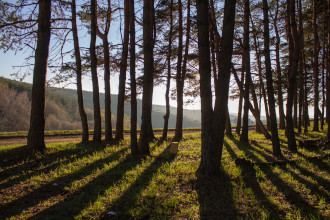[Source](https://unsplash.com/@aisvri/)
One type of waste rampant in our society is the [waste of food](https://interfaithsustain.com/sustainable-food/). According to the US Department of Agriculture, “In the United States, food waste is estimated at between 30-40 percent of the food supply wasting over $160 billion per year as well as valuable water and land resources” ([US Department of Agriculture, “Food Waste FAQs,”](https://www.usda.gov/foodwaste/faqs)).
Less than three percent of this waste is recovered and recycled. While some of this food waste is inedible, part of it is good food discarded by restaurant diners who ordered too much. People throw away edible leftovers from refrigerators in homes. Confusing expiration dates on food leads to disposal while the food was still actually safe.
The Talmudic sage Rabbi Ishmael taught: If the Torah warns us not to destroy fruit trees, then we should be even more careful about not destroying the fruit itself. This applies to all food, not only the fruit of trees. Wasting food wastes money, energy, and water, and harms the environment. Disposal, alone, of wasted food costs about one billion dollars annually in the US. In garbage dumps and landfills, decomposing food waste produces methane, a potent greenhouse gas. Also, fossil fuels, water, and land were required to produce this food. One study examined the energy embedded in wasted food from agriculture, [transportation](https://interfaithsustain.com/electrical-buses/), processing, food sales, storage, and preparation. It concluded that this energy “represents approximately 2 percent of annual energy consumption in the United States.”
Food waste occurs at many stages, including on farms, in transport, and at stores and restaurants. In terms of food consumption at home, buying and preparing too much food and letting the leftovers spoil in the fridge may violate this precept against wastefulness. One practical action is to become mindful of how much food we buy and put in our refrigerators. Another is to finish the food we refrigerate, including by sharing with others if we have too much to use.
Rabbi David Rosen explains: “The Torah prohibition of wanton destruction is of enormous importance with regards to the imperative to change our lifestyle, our diet, and to save our planet and of our environmental responsibility. All God’s gifts—material gifts—should be valued and should not be wasted. So wastage is in simple terms a sin, according to Judaism, it is a desecration of the material blessing that God has provided for us.”
[Source](https://unsplash.com/@markusspiske/)
Rabbi Samson Raphael Hirsch (19th century) explains in very strong language that the command not to destroy is “the most comprehensive warning to human beings not to misuse the position which God has given them as masters of the world and its matter through capricious, passionate, or merely thoughtless wasteful destruction of anything on earth.” He further states, “If … you should regard the beings beneath you as objects without rights, not perceiving God Who created them … then God’s call proclaims to you, ‘Do not destroy anything!’ Be a mensch! Only if you use the things around you for wise human purposes, sanctified by the word of My teaching, only then are you a mensch and have the right over them which I have given you as a human … However, if you destroy, if you ruin, at that moment you are not a human…and have no right to the things around you. I lent them to you for wise use only; never forget that I lent them to you. As soon as you use them unwisely, be it the greatest or the smallest, you commit treachery against My world, you commit murder and robbery against My property, you sin against Me! … In truth, there is no one nearer to idolatry than one who can disregard the fact that all things are the creatures and property of God, and who then presumes to have the right, because he has the might, to destroy them according to a presumptuous act of will. Yes, that one is already serving the most powerful idols—anger, pride, and above all ego, which in its passion regards itself as the master of things.”
By not wasting food, we can produce ecological, social, financial, and spiritual benefits. The verses that introduce this commandment describe a war against an external enemy. But the rabbis make clear that we wage the real battle within ourselves. By strengthening our ability to avoid waste, we become holier, stronger people. This strength can help us to approach other spiritual and environmental challenges. The changes we make in our own lives ripple outward to our families, communities, nations, and planet.
\* *Featured image [source](https://unsplash.com/@sincerelymedia/)*
**Categories:** Bible & Creation Care, Blog on Faith and Ecology
**Tags:** Deuteronomy 20, Eco Bible
---
### [Water, War and The Wilderness in the Bible: Exodus 17](https://interfaithsustain.com/exodus-17/)
**Published:** February 16, 2022
**Author:** ICSD
**Excerpt:** Ilana Stein - In the second book of the Bible, in Exodus 17, we read about how the Israelites began their wandering through the desert and experienced their first challenge of thirst.
**Content:**
Table of Contents
Table of Contents
- [Eco Bible](#eco-bible)
- [Inspiration of the Wilderness](#inspiration-of-the-wilderness)
- [Thirst as a Driver of Conflict](#thirst-as-a-driver-of-conflict)
- [Identifying Water Resources](#identifying-water-resources)
- [Protecting and Sharing Water Resources](#protecting-and-sharing-water-resources)
*By Ilana Stein* – In the second book of [the Bible](https://interfaithsustain.com/books-of-the-old-testament/), in Exodus 17, we read about how the Israelites began their wandering through the desert and experienced their first challenge of thirst. The Israelites complained to Moses, who went to God, and God told Moses to strike a rock to get water. Moses did so, the water began flowing from the rock, and as a result the Israelites got abundant water from the rock.
The Israelites then continued on their way, but their old and weak were attacked by a nomadic tribe called Amalek. The Israelites gained courage from seeing Moses leading them from on top of the hill with his arms in the air. However, when Moses became tired, his arms fell, and so did the resolve of the Israelites. Aaron and Hur joined Moses and helped hold up his arms. When the people looked up and saw Moses, Aaron and Hur, they were inspired and defeated Amalek. After the war with Amalek, Moses built an altar to remember this important victory and the cruelty of Amalek.
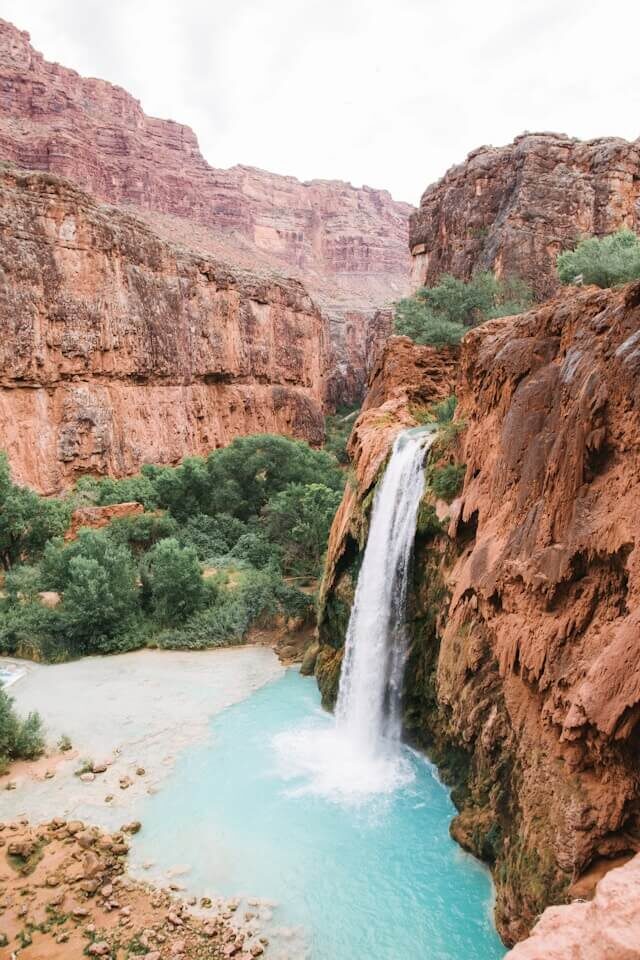[Source](https://unsplash.com/@caraventurera?utm_source=unsplash&utm_medium=referral&utm_content=creditCopyText)
This chapter contains important ideas that can inspire us in taking better care of our planet and ourselves. Let’s look deeper to understand what’s lying beneath the surface, starting with a commentary from the best-selling book, “Eco Bible.”
## [Eco Bible](https://www.amazon.com/Eco-Bible-Ecological-Commentary-Genesis/dp/173533880X)
*“From the Wilderness of Sin the Whole Israelite Community Continued by Stages as the Lord Would Command. They Encamped at Rephidim, and There Was No Water for the People to Drink” (Exodus 17:1).*
[Maimonides writes](https://www.sefaria.org/Guide_for_the_Perplexed), “It was the wisdom of God to cause them to wander in the wilderness until they learned heroism – as it is known that camping in the desert and limiting the pampering of the body by bathing, and the like, generates strength of character, while the opposite yields a spirit of soft-heartedness – and it thereby generates people who will not be inferior or slaves.”
According to [research](https://citeseerx.ist.psu.edu/viewdoc/download?doi=10.1.1.497.3773&rep=rep1&type=pdf) on the impact of family camping holidays on youth:
There is considerable evidence that family outdoor recreation helps in developing family strength and relationships. Outdoor programs often incorporate leisure activities that not only develop skills and require physical movement beneficial to health, but also teach perseverance, teamwork, and cooperation among family members. Further, outdoor recreation is important for healthy growth of youth. Most outdoor leisure activities take place in a variety of natural settings that are quite distinct from the constructed environment of the schoolyard or home. Outdoor recreation programs contain inherent challenges and offer opportunities for overwhelming mastery experiences that produce feelings of efficacy and have positive effects on family functioning. In addition, the feeling of collective efficacy through outdoor recreation can be generalized to other domains of family functioning, such as the ability to resolve conflict.
This is the power of exposing ourselves and our families to nature!
- [](https://interfaithsustain.com/address-climate-crisis/)
## [Summoning the Will to Address the Climate Crisis](https://interfaithsustain.com/address-climate-crisis/)
- [](https://interfaithsustain.com/maps-the-metaverse-and-the-maker/)
## [Maps, the Metaverse, and the Maker](https://interfaithsustain.com/maps-the-metaverse-and-the-maker/)
- [](https://interfaithsustain.com/sea-jellies/)
## [Are Sea Jellies Taking Over The Animal Kingdom?](https://interfaithsustain.com/sea-jellies/)
Camping is considered extremely beneficial, for [a number of reasons](https://www.eurekacamping.com/blog/article/10-health-benefits-camping) as we saw above. But one of the most fundamental benefits is that of [connecting with nature](https://interfaithsustain.com/environmental-wellness/) which can inspire one or raise one’s mood. Anne Frank, who died in the Holocaust, wrote about it in her diary, subsequently published as “Diary of a Young Girl”:
The best remedy for those who are afraid, lonely or unhappy is to go outside, somewhere where they can be quiet, along with the heavens, nature and God. Because only then does one feel that all is as it should be and that God wishes to see people happy, amidst the simple beauty of nature. As long as this exists, and it certainly always will, I know that then there will always be comfort for every sorrow, whatever the circumstances may be. And I firmly believe that nature brings solace in all troubles.
### Inspiration of the Wilderness
The word ‘mdbar’ is translated as ‘wilderness’ in the King James bible and ‘desert’ in other translations. The word ‘wilderness’ itself has a negative connotation: “an uncultivated, uninhabited, and inhospitable region” ([OED](https://www.lexico.com/definition/wilderness)). However, this does not have to be so. A place that is not filled with the noise of towns and societies allows for an experience of silence and connection.
The Israelites may have struggled in the desert, and grumbled against Moses, but we can learn from the experience: Connecting with nature not only reconnects us to our world but also to its creator. The way to do this is through the silence of the desert, as [Rabbi Sacks](https://rabbisacks.org/sound-silence-bamidbar-5776/) so beautifully put it:
The desert is a place of silence. There is nothing visually to distract you, and there is no ambient noise to muffle sound. To be sure, when the Israelites received the Torah, there was thunder and lightening and the sound of a shofar. The earth felt as if it were shaking at its foundations. In the silence of the *midbar*, the desert, you can hear the *Medaber*, the Speaker, and the *medubar*, that which is spoken. To hear the voice of God you need a listening silence in the soul.
### Thirst as a Driver of Conflict
Perhaps it is no coincidence that the intense internal struggle among the Israelites over their lack of water was followed by the attack by Amalek. Let’s read a bit about these struggles directly from the Biblical verses:
**2** The people quarreled with Moses and said “Give us water to drink,” and Moses replied to them, “Why do you quarrel with me? Why do you try the LORD?”
**3** And the people thirsted there for water; and the people murmured against Moses, and said, Why is this that you have brought us up out of Egypt, to kill us and our children and our cattle with thirst?
**4** And Moses cried to the Lord, saying, What shall I do with this people? They are almost ready to stone me.
**8** Then Amalek came and fought with Israel in Rephidim.
Contemporary research shows a strong correlation between water and conflict. “[Could a Lack of Water Cause Wars?](https://www.scientificamerican.com/article/could-a-lack-of-water-cause-wars/)” in *Scientific American* explores this correlation, especially as it is exacerbated by climate change.
Less water availability can cause war, not just between countries but internally: “… if individuals use water scarcity as an opportunity to consolidate political power, or accuse others of stealing water, the result can be war.”
There is nothing like a waterless desert to make us understand that there is a limit to our water resources.
### Identifying Water Resources
We read in Chapter 17 about how God instructed Moses to find water in the desert:
**5** And the Lord said to Moses, Go on before the people, and take with you the elders of Israel; and your rod, with which you struck the Nile, take in your hand, and go.
**6** Behold, I will stand before you there upon the rock at Horeb; and you shall strike the rock, and there shall come water out of it, for the people to drink. And Moses did so in the sight of the elders of Israel.
Finding water in the desert is as important today as it was then. In Africa, which is generally dry, with most water trapped underground, companies like [Innovation Africa](https://innoafrica.org/) do as Moses did – releasing water from the ground through the use of solar energy and boreholes.
#### Protecting and Sharing Water Resources
Freshwater is getting scarcer, as the [Worldwide Fund for Nature ](https://www.worldwildlife.org/initiatives/freshwater)reports: “Climate change, population growth and [changing consumption patterns](https://interfaithsustain.com/sustainable-consumption/) are just a few of the myriad forces putting freshwater systems increasingly at risk”.
Water pollution is a major part of this: water is [being contaminated more and more](https://interfaithsustain.com/what-are-the-causes-of-water-pollution/) due to untreated [sewage](https://interfaithsustain.com/sewage-water/), industry, agriculture and more. We need to value our resources, just as the Israelites in the desert did.
The rock in the desert provided clean, drinkable water for the people. Today, this aim is one of the United Nations’ Sustainable Development Goals – [Goal no. 6](https://www.undp.org/sustainable-development-goals#clean-water-and-sanitation) – which is: Clean water and sanitation for all.
But we can all help. There are a number of actions that individuals can take, [for example](https://www.epa.gov/sourcewaterprotection/easy-things-you-can-do-protect-drinking-water-sources):
- Undertake a cleanup of your local river or beach,
- Cut down on pesticides or fertilizers that you use,
- Be careful what substances you use and allow to go down the drain.
Even more inspiring than finding water is sharing water, as can be seen in a [water-for-energy deal](https://foreignpolicy.com/2021/12/16/water-for-energy-is-better-than-land-for-peace/) made between Jordan and Israel which aims to ease the impact of climate change. Here, Israel has more water than it needs, whereas Jordan doesn’t. On the other hand, Jordan has the room – and the sun – for a solar power plant that can export 600 megawatts of energy a year to Israel.
Sharing of our resources in such a way is a high ideal that paves the way for peace.
*\* Featured image [source](https://unsplash.com/@kryszpin?utm_source=unsplash&utm_medium=referral&utm_content=creditCopyText)*
**Categories:** Bible & Creation Care, Blog on Faith and Ecology
**Tags:** Eco Bible
---
### [Genesis 47: Insights we Learn from Joseph in Egypt](https://interfaithsustain.com/genesis-47/)
**Published:** December 13, 2021
**Author:** ICSD
**Excerpt:** Aryeh Ronay - In Genesis 47 we read about how the children of Israel, i.e. the brothers of Joseph, have come from the land of Canaan and have settled in Goshen.
**Content:**
## A Summary of Genesis 47
*By Aryeh Ronay* – In Genesis 47 we read about how the children of Israel, i.e. the brothers of **Joseph**, have come from the **land of Canaan** and have settled in **Goshen**.
Joseph brings his brothers before Pharaoh and they tell him “Thy servants are shepherds, both we, and also our fathers… For to sojourn in the land are we come; for thy servants have no pasture for their flocks; for the famine is sore in the land of Canaan: now therefore, we pray thee, please let your servants dwell in the land of Goshen” (Genesis 47:3-4, based on the **King James Version** of the [Bible](https://interfaithsustain.com/books-of-the-old-testament/)).
### Goshen Granted To Joseph’s Family
Pharaoh gives a favorable answer to their request. Pharaoh responds and says to Joseph, “Your father and your brothers are come unto thee: The land of Egypt is before thee; in the best of the land make thy father and brethren to dwell; in the land of Goshen let them dwell: and if thou knowest any men of activity among them, then make them rulers over my cattle” (ibid 47:5-6).
#### Jacob Blessed Pharaoh
Pharaoh also speaks with Joseph’s father Jacob/Israel. Pharaoh asks Jacob how old he is, and Jacob responds “The days of the years of my pilgrimage are an hundred and thirty years: few and evil have the days of the years of my life been, and have not attained unto the days of the years of the life of my fathers in the days of their pilgrimage” (ibid 47:9). Their interaction concludes: “And Jacob blessed Pharaoh, and went out from before Pharaoh.” (ibid 47:10).
[Source](https://unsplash.com/@thebethanyrandall/)
After these interactions, Joseph settles his family in **the land of Goshen** as Pharaoh commanded. Joseph gives his family bread and they live well under his care.
Meanwhile, the rest of Egypt is starving, and they must come to Joseph to get food. Joseph offers them food in exchange for their livestock, and step by step, the Egyptians give up everything they have. Joseph brings all their money into Pharaoh’s house, and even gains control over their land. The only land Joseph doesn’t take is the land of the priests, because the priests receive their land and food from Pharaoh.
#### The Finale of Genesis 47
At the end of the chapter, we read about Joseph’s arrangements with the Egyptians to keep them alive, while they work as serfs to Pharaoh. We also read about how Jacob calls his son Joseph, and says that he wants to be buried in **Canaan** and not in **Egypt**.
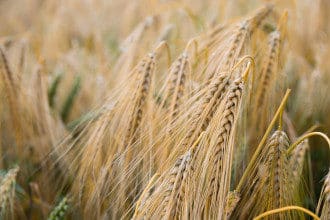[Source](https://unsplash.com/@kaip/)
- [](https://interfaithsustain.com/exodus-17/)
## [Water, War and The Wilderness in the Bible: Exodus 17](https://interfaithsustain.com/exodus-17/)
- [](https://interfaithsustain.com/energy-conversion/)
## [Using The Bible to Understand Renewable Energy Conversion](https://interfaithsustain.com/energy-conversion/)
- [](https://interfaithsustain.com/genesis-23/)
## [Understanding Sustainable Burial From Genesis 23](https://interfaithsustain.com/genesis-23/)
In this chapter we read about major developments in Egyptian society as they transition from freedom to serfdom, and major transitions in Joseph’s family, as he settles them in Goshen, and their father prepares to die.
Let’s look at some commentaries in the best-selling book “Eco Bible” to gain a deeper understanding.
## [**Eco Bible**](https://www.amazon.com/Eco-Bible-Ecological-Commentary-Genesis-ebook/dp/B08LCKLM9G/ref=sr_1_1?keywords=eco+bible&qid=1705577876&sr=8-1)
### Replacing Animals with Plants
*Genesis 47:17 – so They Brought Their Livestock to Joseph, and Joseph Gave Them Bread in Exchange for the Horses, for the Stocks of Sheep and Cattle, and the Donkeys; Thus He Provided Them with Bread That Year in Exchange for All Their Livestock.*
Netziv, in his commentary Ha’amek Davar, asks why the animals are listed in this way, and he answers that they are listed in order of importance to the state and economy. First come the horses required for Pharaoh’s army and national defense; next the sheep that provide wool, milk, and meat; then the cows that provide milk and meat; and finally, the donkeys suitable only for transportation.
In a time of crisis, Egyptians gave up their animals for a plant-derived food – bread – demonstrating that a plant-based diet consumes far fewer resources of land, nutrients, and water. Eating less meat has also been associated with better health. In the words of the [Harvard Women’s Health Watch](https://www.health.harvard.edu/staying-healthy/becoming-a-vegetarian), “a Mediterranean eating pattern – known to be associated with longer life and reduced risk of several chronic illnesses – features an emphasis on plant foods with a sparing use of meat.”
In our modern society we are far less reliant on animals for things like agriculture, clothing, and transportation than in Biblical times. In warfare, tanks and airplanes have replaced horses. We have largely replaced sheep’s wool with other fibers. We use trucks instead of donkeys to transport goods. And many people replace animal protein with soy or other food sources of plant-based protein. We have the potential to consume far fewer resources in our lives than previous generations could, yet we consume far more. Our choice to consume more and more meat and dairy products, despite the environmental cost, is one of our generation’s key challenges.
### [Joseph’s Foresight and Restraint](https://canfeinesharim.org/parshat-vayigash-lessons-from-yosefs-foresight-and-restraint/) by David Goldblatt
*Genesis 47:18 – and When That Year Was Ended, They Came to Him the Next Year and Said to Him, “We Cannot Hide from My Lord That, with All the Money and Animal Stocks Consigned to My Lord, Nothing Is Left at My Lord’s Disposal Save Our Persons and Our Farmland.”*
Joseph embodies foresight, self-discipline, and concern for the larger community. He used his prophetic insight to instruct Egypt to make provisions, during seven years of plenty, for seven years of famine that would follow. Anticipating an impending human-ecological disaster, he had Egyptians gather grain in the time of plenty as insurance against hard times to come. Egypt benefited because Joseph forced the Egyptians to show restraint ahead of a crisis – to consume less in the short term, in return for some non-material gain, and survival in leaner times to come.
Pharaoh (whose name implies *Paru’ah*, undisciplined) is the quintessential self-indulger. By contrast, Joseph exemplifies self-discipline. (Jacob likens him to an ox, *Shor*, which also means to see.) Self-restraint, discipline, and making pleasure secondary to the pursuit of goodness create a path to the World to Come. In this case, Joseph shows how societal restraint and discipline are also the means to secure one’s future survival in this world.
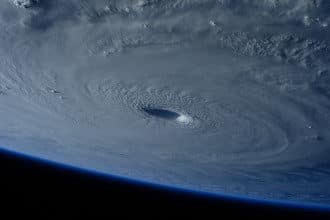[Source](https://unsplash.com/@nasa/)
In the words of Rabbi Avraham Greenbaum, “Joseph used the Seven Years of Plenty to teach the Egyptians to put limits on immediate consumption and gratification in order to save for the future.” This is a discipline modern societies sorely need to learn. If we do not plan for the future, we will be unprepared when it arrives.
During the second year of the famine, all the Egyptians’ grain rotted and after selling their livestock for food, they sold their land to the state (Genesis 47:13-19). Rabbi Daniel Kohn says that Joseph ultimately brought the Egyptians into a caring relationship with the earth (“and the land will not become desolate” (Gen. 47:19)). Even though the land no longer belonged to them, they followed Joseph’s insistence that they symbolically commit themselves to a path of self-restraint.
Today we lack two distinct advantages Joseph had in implementing his plan to safeguard Egypt. His knowledge of the future was perfect for God revealed to Joseph what would transpire, in the form of Pharaoh’s dreams. And Joseph’s control was absolute over managing the Egyptian agrarian system and achieving his plan, as Pharaoh’s appointed leader.
We do not have perfect knowledge of our impact on the environment, nor does any single leader have absolute power to change that impact. Some level of uncertainty is inherent in most current environmental problems.
Our challenge is to deal with this uncertainty responsibly, incorporating the [Precautionary Principle](https://www.ncbi.nlm.nih.gov/pubmed/12605931), which demands “a willingness to take action in advance of \[complete\] scientific proof of evidence of the need for the proposed action on the grounds that further delay may prove ultimately most costly to society and nature, and, in the longer term, selfish and unfair to future generations.” We may not have the luxury of Joseph’s God-given absolute knowledge and power, but we do have the past to learn from, and dreams for our future to drive us to action.
### Let Us Not Perish
*Genesis 47:19 – Let Us Not Perish Before Your Eyes, Both We and Our Land. Take Us and Our Land in Exchange for Bread, and We with Our Land Will Be Serfs to Pharaoh; Provide the Seed, That We May Live and Not Die, and That the Land May Not Become Desolate.*
The verse shows the desperation people experience when environmental problems reach a crisis stage. Nature, through the famine, overwhelms the Egyptians.
In today’s world, environmental problems are reaching crisis stage for millions of people. In September 2019, Hurricane Dorian decimated the Bahamas. A [*New York Times* article ](https://www.nytimes.com/2019/09/03/world/americas/bahamas-hurricane-dorian.html)quotes Cindy Russell, a resident of Marsh Harbour in the Bahamas, whose home was destroyed: “It’s like we just need to be rescued and put on another island to start over again,” she said. “Complete devastation.” The ravages of such a storm – and the increasing frequency and intensity of storm activity – are the canary in the coal mine, a sign of imminent danger if we don’t curb climate change.
\* *Featured image [source](https://unsplash.com/@_zacferguson_/)*
**Categories:** Bible & Creation Care, Blog on Faith and Ecology
**Tags:** Eco Bible, Genesis 47
---
### [Genesis 37: The Wisdom of Shepherd Consciousness](https://interfaithsustain.com/genesis-37/)
**Published:** November 22, 2021
**Author:** ICSD
**Excerpt:** Aryeh Ronay - In Genesis 37, we are pained by Jacob’s broken family, but learn the wisdom of shepherd consciousness.
**Content:**
Table of Contents
Table of Contents
- [Genesis 37 in Summary](#aioseo-genesis-37-in-summary-1)
- [The Consequences of Favoritism](#aioseo-the-consequences-of-favoritism-5)
- [Eco Bible](#aioseo-eco-bible-11)
- [Shepherd Consciousness by Rabbi Fivel Yedidya Glasser](#aioseo-shepherd-consciousness-by-rabbi-fivel-yedidya-glasser-12)
- [To "Be" and Not To "Do"!](#aioseo-to-be-and-not-to-do-21)
- [Nature and Violence](#aioseo-nature-and-violence-25)
- [Concluding Genesis 37](#aioseo-concluding-genesis-37-29)
## Genesis 37 in Summary
In **Genesis 37**, we hear the continuation of the tale of Jacob/Israel (Jacob received the name “Israel” in his struggle with the angel) and his children in the land of Canaan . We read in this first book of the [Bible](https://interfaithsustain.com/books-of-the-old-testament/) how “Israel loved Joseph more than all his children, because he was the son of his old age: and he made him a coat of many colours” (Genesis 37:3) and this is where all the trouble begins.
### The Consequences of Favoritism
Jacob’s favoritism towards **Joseph** causes Joseph’s brothers’ hatred of him. “They hated him and could not speak peaceably with him” (Ibid 37:4). Joseph had a dream of being bowed down to, and “when he told it to his brothers they hated him even more” (Ibid 37:5).
After Joseph shares another dream of being bowed down to, his brothers are so upset they are ready to kill him. Indeed, that’s what they almost do, but instead they end up throwing him in a pit and then selling him for twenty shekels of silver. They take **Joseph’s colored coat**, dip it in goat blood and bring it to their father Jacob/Israel. They tell Jacob/Israel that Joseph was killed by a wild animal, and Jacob/Israel mourns for his son. Joseph is sold into Egypt, and the chapter ends.
[Source](https://unsplash.com/@dikaseva/)
Let’s look deeper into this chapter by studying two commentaries on it from the bestseller, “Eco Bible.” In these commentaries we’ll examine the “**[shepherd consciousness](https://interfaithsustain.com/ecobible-7-day-challenge/)**” cultivated by Jacob and his sons and the relationship between **nature and violence**.
## [Eco Bible](https://www.amazon.com/dp/B08LCKLM9G/ref=dp-kindle-redirect?_encoding=UTF8&btkr=1)
### Shepherd Consciousness by Rabbi Fivel Yedidya Glasser
*Genesis 37:2 – These are the generations of Jacob. Joseph, being seventeen years old, was feeding the flock with his brethren; and the lad was with the sons of Bilhah, and with the sons of Zilpah, his father’s wives: and Joseph brought unto his father their evil report.*
The patriarchs and matriarchs were shepherds. The Torah tells us that Abraham, Isaac, Jacob, Rachel, Joseph and his brothers, and later Moses, his wife Zippora, and young King David, all herded goats and sheep (Genesis 37:2). The greatest of the early Biblical leaders chose this profession, a livelihood scorned by surrounding cultures. Years after Joseph’s exile to Egypt and rise to viceroy to the king of Egypt, when his brothers came to him in exile, Joseph presented them to Pharaoh, the king of Egypt. The question that most interested the king was: “What is your occupation?” “We are shepherds,” they replied to Pharaoh, “like our fathers before us” (Ibid 47:3) Shepherding was not a respected occupation in Egypt, and Pharaoh relegated Joseph’s family to the far-off land of Goshen.
Why did so many Israelite original leaders become shepherds? Rabbi Abraham Isaac Kook explains that the advantage of shepherding may be found in the shepherd’s secluded lifestyle (*Ein Eyah and Orot HaKodesh*). While engaged with flocks, ambling through hills and valleys, the shepherd is removed from the noisy distractions of society, providing him or her with ample time for inner reflection. Unlike farming, shepherding does not require great exertion. Shepherds engage constantly with the real world, seeking water, shade, and good fodder for the animals.
What is the value of the solitude and simplicity of the shepherd? And how can it translate into our own lives? How do we balance reclusive behavior with the greater ideals of refining humanity and elevating the universe?
- [](https://interfaithsustain.com/videos/vatican-recognized-her-as-a-martyr/)
## [Vatican recognized her as a Martyr!](https://interfaithsustain.com/videos/vatican-recognized-her-as-a-martyr/)
- [](https://interfaithsustain.com/videos/psalm-232-3/)
## [Psalm 23:2-3](https://interfaithsustain.com/videos/psalm-232-3/)
- [](https://interfaithsustain.com/videos/who-deserves-the-ark/)
## [Who deserves the Ark?](https://interfaithsustain.com/videos/who-deserves-the-ark/)
Rabbi Kook explains, “The greater the soul, the more it must struggle in order to find itself; the more the depths of the human soul are hidden from the conscious mind. One must have extended solitude and self-reflective prayer, examining ideas, deepening thoughts, and expanding the mind, until finally the soul will truly reveal itself, unveiling some of the splendor of its brilliant inner light” (Orot Hakodesh).
In order to cultivate one’s greatness, it is first necessary to develop a **deep soul-awareness,** including through silence and isolation. When one truly engages in such a practice, one will experience a positive impact on both their personal life, as well as on their surroundings. Ultimately, the intent of this withdrawal is to benefit the larger world, and not only to gain personal spiritual fulfillment. The intent of the personal spiritual path of growth is to positively impact the larger world, both in the immediate orbit of the individual, but also on a deeper and more spiritual level for the world as a whole.
The “silence” of the shepherd is not just the absence of speech. It is a sublime language of silence, flowing from an outpouring of the soul, a vehicle of Divine inspiration. The depths of the soul demand silence. Silence is full of life, revealing treasures from the beauty of wisdom. Yet today’s high-tech, Internet-connected world does not leave space for an individual to hear silence. Does wireless access enable us to access the inner recesses of our own being?
Rebbe Nachman of Breslov teaches that one should spend an hour of every day in self-reflective prayer (Likutei Moharan). This significant investment of time, to simply be with God – without formal prayers, and without study or engaging in religious commandments, provides a platform to simply “be.” This time could include mundane conversation with God or soul-wrenching self-analysis. Regardless of the content, in this sacred time, we can come to taste the Divine encounter that our forefathers exemplified as shepherds. This one hour of being with God, of simply being, will come to inform who we are and what we do in the world.
### To “Be” and Not To “Do”!
When we are too caught up in experiencing the world without “shepherd consciousness,” we tend to make decisions from our own narrow, “get-ahead” reality. When we focus too much on “doing,” without making time for “being” – that is to say, communing with the Divine – we are more likely to make decisions that transform the earth in negative ways. This is the source of many [environmental problems](https://interfaithsustain.com/environmental-degradation-and-the-future-of-our-planet-earth/) today. A [society driven by consumption](https://interfaithsustain.com/sustainable-consumption/) and industrial development can overlook [deforesting the rainforests](https://interfaithsustain.com/what-causes-deforestation/) or irrevocably harming the climate. It is precisely the accessing of our inner selves that enables us to encounter the larger picture of our own reality.
If everyone, from the average consumer to the corporate CEO, dedicates time each day to rekindle their own inner potential as vehicles for God in the world, their use of the natural world will be informed by their relationship with the Creator of the natural world. Mindfulness of the bigger picture is an essential tool for any individual who cares about the world in which we live.
We do not need to become shepherds in the field to learn “shepherd consciousness.” A simple commitment to withdraw from the world for brief periods and engage with more spiritual realms will provide us with a broader perspective on our own lives and the decisions we make. We need to focus on human being, not human doing. If we stand any chance of returning to [ecological balance](https://interfaithsustain.com/ecological-balance/), we must find inner **spiritual balance** and clarity of vision that our ancestors may have found more easily in simpler times.
### Nature and Violence
*Genesis 37:12 – Now His Brothers Had Gone to Pasture Their Father’s Flock at Shechem.*
The incident of how Joseph’s brothers maltreated him near Shechem exemplifies how acts of violence against others inevitably turn to acts of violence amongst one’s own family and community. This may explain why the Torah mentions Shechem, the brothers’ location before throwing Joseph into the pit, three times. The repetition seems unnecessary, but points to the earlier incident where Simeon and Levi massacred the men of Shechem in response to the rape of their sister, Dinah (Genesis 34). The Torah appears to be teaching that one act of violence leads to another, ultimately with more victims.
Jared Diamond, in his book [Collapse](https://www.amazon.com/Collapse-Societies-Choose-Succeed-Revised/dp/0143117009), provides many maps: one illustrates the world’s war zones, another shows the world’s areas of greatest environmental degradation. The two maps are essentially identical, underscoring a correlation between war and environmental impact.323 Does war cause environmental degradation, the other way around, or both? When humankind wages war on itself, nature and the environment are often the greatest victims. At the same time, pollution of critical natural resources, like rivers, can foment competition for survival so intense, it can turn to war.
#### Concluding Genesis 37
In this thrilling chapter, we saw the unravelling of a family, and when we looked deeper, we saw the power of the shepherd consciousness and the relationship between nature and violence. Learning the tales of our Biblical ancestors, we are inspired by their greatness and pained by their flaws. They were imperfect humans like us, yet they can remind us that no matter our flaws, we have potential to **change the world.**
*\* Featured image [source](https://unsplash.com/@thor1991/)*
[Source](https://unsplash.com/@thor1991/)
**Categories:** Bible & Creation Care, Blog on Faith and Ecology
**Tags:** Eco Bible, Genesis 37
---
### [Genesis 32, Based on The King James’ Bible](https://interfaithsustain.com/genesis-32/)
**Published:** November 15, 2021
**Author:** ICSD
**Excerpt:** Aryeh Ronay - Genesis 32, where Jacob’s actions highlight the Godly value in our worldly possessions in light of today’s throwaway society.
**Content:**
Table of Contents
Table of Contents
- [Genesis 32, Verses 1 – 12 in the Bible](#aioseo-genesis-32-verses-1-12-in-the-bible-1)
- [Genesis 32 Verses 13 – 23](#aioseo-genesis-32-verses-13-23-18)
- [Genesis 32 Verses 24 – 32](#aioseo-genesis-32-verses-24-32-34)
- [Eco Bible](#aioseo-eco-bible-44)
- [Small Vessels by Rabbi Yonatan Neril](#aioseo-small-vessels-by-rabbi-yonatan-neril-45)
- [Perceptions of Possessions from Genesis 32](#aioseo-perceptions-of-possessions-from-genesis-32-51)
## Genesis 32, Verses 1 – 12 in [the Bible](https://interfaithsustain.com/books-of-the-old-testament/ "the Bible")
**1** And Jacob went on his way, and the angels of God met him.
**2** And when Jacob saw them, he said, This is God’s host: and he called the name of that place **Mahanaim**.
**3** And Jacob sent messengers before him to Esau his brother unto the land of Seir, the country of **Edom.**
**4** And he commanded them, saying, Thus shall ye speak unto my lord Esau; Thy servant Jacob saith thus, I have sojourned with Laban, and stayed there until now:
**5** And I have oxen, donkeys, flocks, and male and female servants: and I have sent to tell my lord, that I may find grace in thy sight.
**6** And the messengers returned to Jacob, saying, We came to thy brother Esau, and also he cometh to meet thee, and four hundred men with him.
**7** Then Jacob was greatly afraid and distressed: and he divided the people that was with him, and the flocks, and herds, and the camels, into two bands;
**8** And said, If Esau come to the one company, and smite it, then the other company which is left shall escape.
**9** And Jacob said, O God of my father **Abraham**, and God of my father **Isaac**, the Lord which saidst unto me, Return unto thy country, and to thy kindred, and I will deal well with thee:
**10** I am not worthy of the least of all the mercies, and of all the truth, which thou hast shewed unto thy servant; for with my staff I passed over this Jordan; and now I am become two bands.
**11** Deliver me, I pray thee, from the hand of my brother, from the hand of Esau: for I fear him, lest he will come and smite me, and the mother with the children.
[Source](https://unsplash.com/@arianaprestes/)
- [](https://interfaithsustain.com/deuteronomy-20/)
## [Deuteronomy 20: Discussing Both War and Saving Our Planet](https://interfaithsustain.com/deuteronomy-20/)
- [](https://interfaithsustain.com/largest-trees-in-the-world/)
## [Exploring the Largest Trees in the World in Awe, Love and Wonder!](https://interfaithsustain.com/largest-trees-in-the-world/)
- [](https://interfaithsustain.com/genesis-1-29/)
## [Genesis 1:29: God Gives Humans A Plant-based Diet to Benefit Creation](https://interfaithsustain.com/genesis-1-29/)
**12** And thou saidst, I will surely do thee good, and make thy seed as the sand of the sea, which cannot be numbered for multitude.
### Genesis 32 Verses 13 – 23
**13** And he lodged there that same night; and took of that which came to his hand a present for Esau his brother;
**14** Two hundred female goats, and twenty male goats, two hundred ewes, and twenty rams,
**15** Thirty milch camels with their colts, forty cows, and ten bulls, twenty female donkeys, and ten foals.
**16** And he delivered them into the hand of his servants, every drove by themselves; and said unto his servants, Pass over before me, and put a space betwixt drove and drove.
**17** And he commanded the foremost, saying, When Esau my brother meeteth thee, and asketh thee, saying, Whose art thou? and whither goest thou? and whose are these before thee?
[Source](https://unsplash.com/@gabiontheroad/)
**18** Then thou shalt say, They be thy servant Jacob’s; it is a present sent unto my lord Esau: and, behold, also he is behind us.
**19** And so commanded he the second, and the third, and all that followed the droves, saying, On this manner shall ye speak unto Esau, when ye find him.
**20** And say ye moreover, Behold, thy servant Jacob is behind us. For he said, I will appease him with the present that goeth before me, and afterward I will see his face; peradventure he will accept of me.
**21** So went the present over before him: and himself lodged that night in the company.
**22** And he rose up that night, and took his two wives, and his two women servants, and his eleven sons, and passed over the ford Jabbok.
**23** And he took them, and sent them over the brook, and sent over that he had.
#### Genesis 32 Verses 24 – 32
**24** And Jacob was left alone; and there wrestled a man with him until the breaking of the day.
**25** And when he saw that he prevailed not against him, he touched the hollow of his thigh; and knocked the socket of Jacob’s hip, as he wrestled with him.
**26** And he said, Let me go, for the day breaketh. And he said, I will not let thee go, unless you bless me.
**27** And he said unto him, What is thy name? And he said, Jacob.
**28** And he said, Thy name shall be called no more Jacob, but **Israel**: for as a prince hast thou power with God and with men, and hast prevailed.
**29** And Jacob asked him, and said, Tell me, I pray thee, thy name. And he said, Wherefore is it that thou dost ask after my name? And he blessed him there.
**30** And Jacob called the name of the place Peniel: for I have seen God face to face, and my life is preserved.
**31** And as he passed over Peniel the sun rose upon him, and he halted upon his thigh.
**32** Therefore the children of Israel **eat not of the sinew** which shrank, which is upon the hollow of the thigh, unto this day: because the socket of Jacob’s hip was touched near the tendon.
## [Eco Bible](https://www.amazon.com/dp/B08LCKLM9G/ref=dp-kindle-redirect?_encoding=UTF8&btkr=1)
### [Small Vessels](https://canfeinesharim.org/parshat-vayishlach-small-vessels/) by **Rabbi Yonatan Neril**
*Genesis 32:24 – After Taking Them Across the Stream, He Sent Across All His Possessions.*
Before Jacob’s epic encounter with **Esau** – reuniting with his brother after decades of estrangement – **Jacob** brings his family and possessions across a stream. He then returns at night to the other side of the stream, and the Torah narrates that “Jacob remained alone.” The rabbis see the word “alone” (Levado) as superfluous and understand it as related to the similar sounding Lekado, “for his vessel,” yielding “Jacob remained for his vessel.” That is, say the rabbis, he re-crossed the stream at night to recover a few **small vessels** he forgot to bring across (Rashi on Genesis 32:25). Why does Jacob, facing an imminent confrontation with Esau and his 400-man militia, leave his family alone and vulnerable at night to recover a few forgotten flasks? Why were they so important to him?
The seeming absurdity of Jacob’s action becomes understandable when one examines his worldview: he believes that everything in his possession comes from God, has a specific purpose, and must be used to its full potential. As one rabbinic commentary explains, each material item that a righteous person uses is a means toward spiritual repair in the world (Orchot Tzadikim on Genesis 32:24). Jacob went back for the vessels to ensure he would use them optimally and realize their full potential.
The righteous strive to recognize the value of their **God-given possessions** and to be careful with them, no matter how small or seemingly insignificant they are. While not overly attached to material things, they do not dispose of objects prematurely or use them inappropriately.
Jacob’s re-crossing of the stream exposes a striking contrast between two worldviews on material possessions. One sees the things we own as essential and indispensable. The other views them as expendable and disposable. Jacob’s example presents a particular challenge for those of us who live in a world of abundance and built-in obsolescence where it is so easy to throw things away and often difficult to get older things repaired.
#### Perceptions of Possessions from Genesis 32
Today’s **global environmental crises** can be pinned on no one group of people or nation. This holds for plastic in the ocean, vast garbage dumps, and [climate change](https://interfaithsustain.com/evidence-of-climate-change/). Solving these challenges will require the participation of billions of individuals. It is on this crucial level of the individual that Jacob’s actions can speak so profoundly.
Rebbe Nachman of Breslov offers a teaching based on **Kabbalistic sources** that can also help us understand the likely reason for Jacob’s actions. He wrote, “Everything in the world has in it sparks of holiness . . . According to this understanding, an object comes to a person for the purpose of spiritual elevation, and reuse of a physical object enables a further spiritual elevation of the sparks of holiness within the object”(Likutei Moharan §54c).
By raising the sparks to Heaven, we also refrain from [littering the earth](https://interfaithsustain.com/land-pollution/). These examples show the relationship our sages had with material objects, and the effort they invested in elevating the holy sparks in the objects.
*\* Featured image [source](https://unsplash.com/@timoun/)*
**Categories:** Bible & Creation Care, Blog on Faith and Ecology
**Tags:** Eco Bible, Genesis 32
---
### [Understanding Sustainable Burial From Genesis 23](https://interfaithsustain.com/genesis-23/)
**Published:** October 25, 2021
**Author:** ICSD
**Excerpt:** Aryeh Ronay - In this chapter we see the death of Abraham's wife Sarah in Hebron in the land of Canaan at 127 years old. Abraham goes to Hebron to "mourn for Sarah and to weep over her," and then pursues the practical aspects of burying her.
**Content:**
Table of Contents
Table of Contents
- [Eco Bible](#aioseo-eco-bible-8)
- [Sarah and Sustainable Burial from Genesis 23](#aioseo-sarah-and-sustainable-burial-from-genesis-23-9)
- [Relationship with the Earth in Genesis](#aioseo-relationship-with-the-earth-in-genesis-12)
- [Reflections on Genesis 23](#aioseo-reflections-on-genesis-23-15)
- [Sources](#aioseo-sources-19)
*By Aryeh Ronay* – In chapter 23 of [Genesis](https://interfaithsustain.com/books-of-the-old-testament/), we see the death of Abraham’s wife Sarah in Hebron in the land of Canaan at 127 years old. Abraham goes to Hebron to “mourn for Sarah and to weep over her,” and then pursues the practical aspects of burying her. In order to bury her, Abraham wants to buy a piece of land, and asks the local Hittites if he could buy a burial plot from them. Abraham buying land serves two purposes here. One: to purchase land in which his wife, and eventually himself and his descendants can be buried. Two: to ensure his ancestors are rooted in the land not just spiritually, but also in terms of possessing real estate.
The Hittites are eager to accommodate this request, telling Abraham, “you are a mighty prince among us, bury your dead in the choicest of our burial places.” Abraham “rose and bowed” before the Hittites because of their kindness. He then asks them to intercede for him with Ephron son of Zohar, to sell him the “The Cave of Machpelah,” also known as, the “Cave of the Patriarchs.”
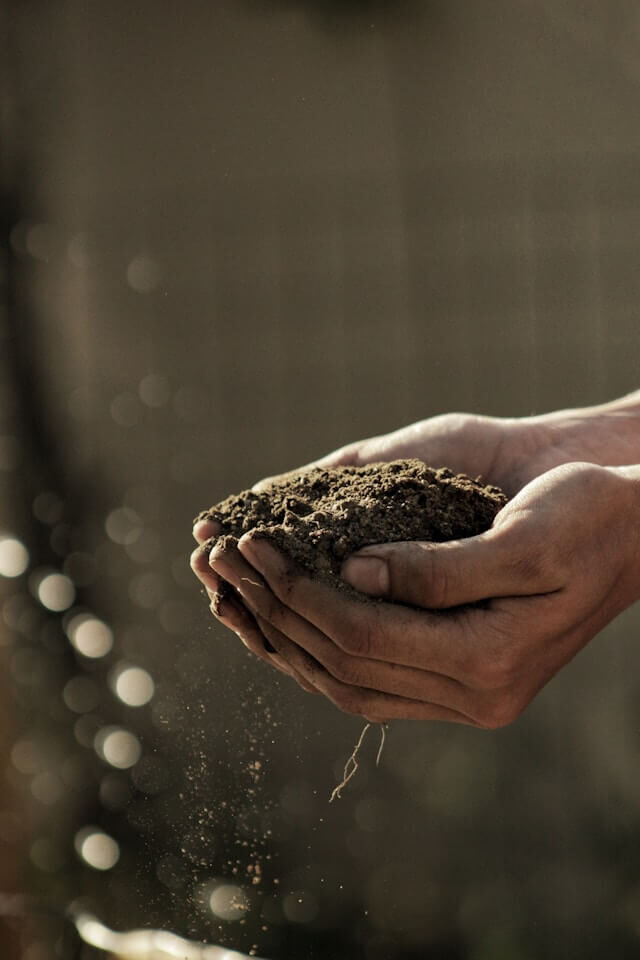[Source](https://unsplash.com/@gabrielj_photography/)
Ephron happened to be there at that moment, and offers to give Abraham the cave and surrounding field for free, but Abraham insists on paying, and pays Ephron four hundred shekels of silver for the cave and field. Abraham wants to ensure that by paying for the field it will really be his through a financial purchase in front of witnesses. If the land is just a gift, it can be easier for Ephron or his descendants to later claim that they want their “gift” back. Abraham buries his wife Sarah in the cave, and the chapter ends with a summary of how this cave in the land of Canaan passed from the Hittites to Abraham.
## [Eco Bible](https://www.amazon.com/dp/B08LCKLM9G/ref=dp-kindle-redirect?_encoding=UTF8&btkr=1)
### Sarah and Sustainable Burial from Genesis 23
*Genesis 23:4 – “I am a resident alien among you; sell me some property for a burial site among you, that I may remove my dead for burial.”*
Abraham seeks to buy land to bury Sarah. While he purchases both a field and cave in Hebron, Sarah was buried in a cave. Rabbeinu Bachaya explains that there was a custom for every family to have their own burial area.1 Contemporary scholar Eldad Keynan explains the Biblical method of burial: “The body was not laid and covered with dust for eternity, like the trench graves practices. Instead, it was laid in a shallow pit or on a shelf for the first year, during which the flesh decayed, while the soul underwent the purifying process. A year after the burial, the relatives returned to the tomb, collected the bones, and put them in stone boxes: ossuaries . . . Now they moved the bones to the ossuary, and put the ossuary in a niche, carved into the tomb wall.”2 Contemporary researchers have identified two major ecological risks posed by modern cemeteries: contamination of local water sources and of the soil.3
Traditional Jewish burial practices in Israel overcame these two issues through burial in a rock cave to minimize water contamination, and through burial in simple cloth, without a coffin or other non-decomposable objects. Modern Jerusalem, a society that lives mostly in urban space and spends most of its time in buildings, now buries many of its dead in multistory structures that resemble parking lots. The main cemetery is next to an urban area and expanded highway, which is common in many cities. A different recent burial design in West Jerusalem’s main Har HaMenuchot cemetery is based on the Biblical method of burying in a cave, but creates crypts that are up to 160 feet underground in order to leave space above ground for the living.4 This may be needed since Israel faces a shortage of 1.5 million burial plots in the coming decades, according to a report from the State Comptroller.5
- [](https://interfaithsustain.com/deuteronomy-20/)
## [Deuteronomy 20: Discussing Both War and Saving Our Planet](https://interfaithsustain.com/deuteronomy-20/)
- [](https://interfaithsustain.com/largest-trees-in-the-world/)
## [Exploring the Largest Trees in the World in Awe, Love and Wonder!](https://interfaithsustain.com/largest-trees-in-the-world/)
- [](https://interfaithsustain.com/genesis-1-29/)
## [Genesis 1:29: God Gives Humans A Plant-based Diet to Benefit Creation](https://interfaithsustain.com/genesis-1-29/)
#### Relationship with the Earth in Genesis
*Genesis 23:13 – And \[Abraham\] Spoke to Ephron in the Hearing of the People of the Land, Saying, “If Only You Would Hear Me Out! Let Me Pay the Price of the Land; Accept It from Me, That I May Bury My Dead There.”*
Rabbi Matis Weinberg explains: God tells humankind in the Creation story that we “will return to the earth for you were taken from it. For you are dust, and to dust you will return.”6 God does not inform people of mortality per se, but of burial: to dust you will return. It is the underlying relationship with the earth that needs to be restored. That relationship, as with a spouse, is not like the use of an object, but rather through the deep connection we make with the other party. It is because we were “taken from the earth” in the first place, that we are able to “return to it” and ultimately to find peace. The Midrash teaches that “God collected the dust for man’s creation from the four corners of the earth, so that wherever he would die he would find his place for burial.”7 The earth, Adama, is the name of our species humankind Adam, just as “human” is drawn from the Latin “humus” meaning “earth.” If we lose sight of that connection we lose all connection to ourselves and to life. Burial is a restoration of that connection.8 To invoke the philosopher Martin Buber, our connection to the earth should not be an I–It relationship, but rather an I–Thou relationship, much like an ideal marriage.9
## Reflections on Genesis 23
In this momentous chapter, we find Abraham staking his claim to a piece of the land of Israel through buying his wife a burial plot. This burial plot, the Cave of the Patriarchs, will continue for the next 3,000 years to be a place that the followers of Abraham— Jews, Muslims and Christians— will consider to be their personal stake in the land. This has led to violence and competition, but it can also lead to peace. Recognizing our common heritage in this land, and inspired by our common patriarch, **Abraham**, we can use the **Cave of the Patriarchs** in **Hebron** as a place to come together, as a place to pray together and as a place to recognize that we have more that unites us than divides us.
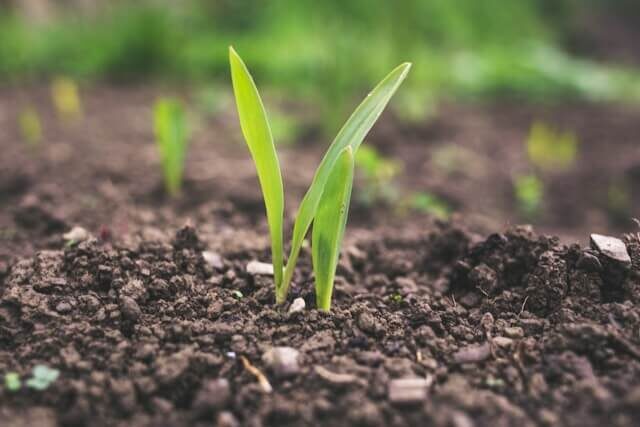[Source](https://unsplash.com/@synkevych/)
### Sources
1\. Rabbeinu Bachaya on Genesis 23:4.
2\. Eldad Keynan, “Private vs. Public Burials: Differences and Time Span,” The Bible and Interpretation, The University of Arizona, October 2010, http://www.bibleinterp.com/articles/burial357907.shtml#sdfootnote9sym. Citing Jerusalem Talmud, Mo’ed Katan 1:5, 80d; Sanhedrin 6:10, 23d.
3\. Aysel Uslu, Emin Bariş, and Elmas Erdoğan, “Ecological Concerns over Cemeteries,” African Journal of Agricultural Research 4, 13, December 2009, 1505–1511.
4\. Sam Sokol, “Squeezed for Burial Space, Jerusalem Prepares an Underground City of the Dead,” The Times of Israel, October 26, 2019, https://www.timesofisrael.com/squeezed-for-burial-space-jerusalem-prepares-an-underground-city-of-the-dead/.
5\. Yair Altman, “Shortage of 1.5 Million Graves in the Center of Israel” (in Hebrew), Israel Hayom, March 23, 2020, https://www.israelhayom.co.il/article/744597.
6\. Genesis 3:19.
7\. Tanchuma, Pekudei 3.
8\. Rabbi Matis Weinberg, Frameworks: Genesis (Boston: Foundation for Jewish Publications, 1st edition, 1998), 100–101.
9\. Martin Buber, I and Thou (London: A&C Black, 1937).
*\* Featured image [source](https://unsplash.com/@hebronfan/)*
**Categories:** Bible & Creation Care, Blog on Faith and Ecology
**Tags:** Eco Bible, Genesis 23
---
### [Genesis 18: Reflections and Interpretations](https://interfaithsustain.com/genesis-18/)
**Published:** October 15, 2021
**Author:** ICSD
**Excerpt:** Aryeh Ronay - In this chapter, Abraham is sitting at the entrance to his tent during the "heat of the day." He is visited by three angels whom he invites to "come to your servant," i.e. himself, and he rushes to serve them. Abraham "hurried into the tent" to ask his wife, Sarah, to prepare food for these distinguished guests, and he serves them a lavish meal of milk and meat.
**Content:**
Table of Contents
Table of Contents
- [Eco Bible](#aioseo-eco-bible-11)
- [The Resilience of Trees in Genesis 18](#aioseo-the-resilience-of-trees-in-genesis-18-12)
- [Comparing Veal in Genesis to Today](#aioseo-comparing-veal-in-genesis-to-today-15)
- [Comparing Climate Change to Genesis 18](#aioseo-comparing-climate-change-to-genesis-18-18)
- [Closing Thoughts on Genesis 18](#aioseo-closing-thoughts-on-genesis-18-24)
*By Aryeh Ronay* – In chapter 18 in [the Biblical book of Genesis](https://interfaithsustain.com/books-of-the-old-testament/ "the Biblical book of Genesis"), **Abraham** is sitting at the entrance to his tent during the “heat of the day.” He is visited by three angels whom he invites to “come to your servant,” i.e. himself, and he rushes to serve them. Abraham “hurried into the tent” to ask his wife, Sarah, to prepare food for these distinguished guests, and he serves them a lavish meal of milk and meat. After this scrumptious meal, they tell him the good news that they’ll return in a year and “Sarah your wife shall have a son.”
Sarah, who was “listening at the tent door behind him” laughs at this suggestion, as Abraham and Sarah are both over a 100 years old. In response “The LORD said to Abraham, ‘Why did Sarah laugh?'” Sarah denies laughing because she’s afraid, but God insists on the truth: that she did indeed laugh. For this reason they name their son Isaac, meaning, “he will laugh.”
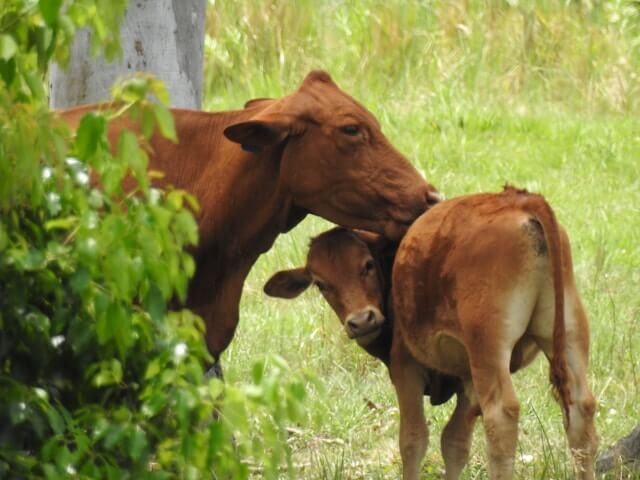[Source](https://unsplash.com/@sharon_co/)
The angels set out from the tent toward Sodom and “Abraham walks with them to see them off.” Yet, as the angels are leaving, God reveals that the angels are going to “wipe out **Sodom and Gomorrah**.”
The angels continue on their way toward Sodom, but Abraham is disturbed by this and asks if God will really “sweep away the righteous with the wicked.”
In one of the boldest acts in human history, Abraham attempts to negotiate with God, asking Him if there are “50 righteous within the city,” will God still destroy it? The Lord said in response that if He finds 50 righteous people in the city, he will spare it.
- [](https://interfaithsustain.com/exodus-17/)
## [Water, War and The Wilderness in the Bible: Exodus 17](https://interfaithsustain.com/exodus-17/)
- [](https://interfaithsustain.com/largest-trees-in-the-world/)
## [Exploring the Largest Trees in the World in Awe, Love and Wonder!](https://interfaithsustain.com/largest-trees-in-the-world/)
- [](https://interfaithsustain.com/deuteronomy-20/)
## [Deuteronomy 20: Discussing Both War and Saving Our Planet](https://interfaithsustain.com/deuteronomy-20/)
Abraham speaks with the utmost humility and chutzpa, asking that since he’s already been “so bold to speak to the Lord, though I am but dust and ashes,” can he lower the number of righteous people for whose sake God would not destroy Sodom and Gomorrah? Abraham continues to ask for a lower and lower minimum number of righteous people, until he reaches 10, and then God leaves.
## [Eco Bible](https://www.amazon.com/dp/B08LCKLM9G/ref=dp-kindle-redirect?_encoding=UTF8&btkr=1)
### The Resilience of Trees in Genesis 18
*Genesis 18:4 – Let a Little Water Be Brought; Bathe Your Feet and Recline Under the Tree.*
Rabbeinu Chananel asked why the angels revealed themselves to Abraham under a tree. He answered that in doing so they revealed a message to Abraham: “You, like a tree, will flourish even in your old age,” as it says in the book of Job, “For a tree has hope; if it is cut it will again renew itself, and its trunk will never cease (Job 14:7),” and in the words of the Psalmist, “He shall be as a tree planted beside streams of water, which brings forth its fruit in its season. Its leaves do not wilt; and whatever it does prospers (Psalms 1:3).”
Abraham’s resilience and prosperity are compared to a tree. Indeed, trees are one of the most resilient organisms, specifically against drought. This is increasingly important in light of [climate change](https://interfaithsustain.com/evidence-of-climate-change/) causing unpredictable rainfall, extreme weather events, and stronger pests that threaten forests.1 Contemporary researchers have discovered that diverse “forests with trees that employ a high diversity of traits related to water use suffer less of an impact from drought.”2 They are also more resilient to forest fires.
#### Comparing Veal in Genesis to Today
*Genesis 18:7 – Then Abraham Ran to the Herd, Took a Calf, Tender and Choice, and Gave It to a Servant-Boy, Who Hastened to Prepare It.*
Radak (Rabbi David Kimchi, 1160–1235) explains that the calf was “fatty.” A Biblical fatty calf would have been naturally well fed by its mother and not overworked, so that it could put on weight. Today, however, calves are raised unnaturally for veal, kept in cramped conditions, and fed artificial fluids.
Regarding the permissibility of this modern way of raising calves, Rabbi Moshe Feinstein, one of the greatest twentieth-century authorities on Jewish law, writes, “Regarding the new method of fattening calves in special, narrow stalls where they don’t even have enough room to take a few steps, and they are not fed any normal animal feed nor are they allowed to suckle at all but instead are fed with fatty liquids from which they derive no pleasure at all and they are also frequently ill because of this and require all kinds of medication: Those who perform this (the fattening) are surely guilty of the prohibition of causing pain to animals. For even though it (pain) is permitted when there is a purpose, for example to slaughter them for food or to use them for plowing or [transport](https://interfaithsustain.com/sustainable-transport/), etc. but not for senseless pain, which is forbidden even if someone makes monetary gain from it . . . In any case, it is forbidden to cause pain to an animal, to feed it food which it doesn’t enjoy, which causes pain, or which causes it to be ill.”3
#### Comparing Climate Change to Genesis 18
Just like Abraham was concerned about God destroying “the innocent along with the guilty,” climate change also threatens to “sweep away the innocent along with the guilty.” Moreover, the wealthy developed countries that are guilty of producing the most **greenhouse gasses** are in fact the least vulnerable to **climate change** as compared to the less developed countries who contribute the least greenhouse gasses.
[Source](https://unsplash.com/@tingeyinjurylawfirm/)
In [a recent joint appeal](https://www.reuters.com/world/europe/pope-world-religious-leaders-issue-pre-cop26-appeal-climate-change-2021-10-04/) from Pope Francis and other religious leaders, the following call was made: “Wealthier countries must take the lead in reducing their own emissions and in financing poorer nations’ emission reductions”.
Climate change affects all of us, but especially countries that are impoverished and highly dependent on their local land. Following the example of Abraham, we can call for justice, and ensure that the innocent are not harmed by the greed of the guilty.
## Closing Thoughts on Genesis 18
**Genesis 18** inspires us with an incredible story of Abraham’s hospitality for angels and his audacity in arguing with God. Furthermore, by reflecting on this story from an ecological lens, we have gained many insights into how our world has changed from the time of the Bible, how our world has stayed the same and how we need to find inspiration in the Bible to make our world even better.
It is not easy to change the world, but looking at Abraham and Sarah, we see that from one amazing couple, there are now over four billion people who consider him their spiritual patriarch.
Abraham was called “Abraham the Hebrew” in the Bible. According to Jewish tradition, this is because the word “Hebrew,” aka “Ivri,” means “the one who stands on the other side.” The whole world stood on one side, but Abraham stood firm on the other. As we fight for the sake of our planet, we can be inspired by Abraham to never let ourselves be overwhelmed by the odds against us. With the help of God, we can persevere.
**Sources**
1\. Moises Velasquez-Manoff, “Can Humans Help Trees Outrun Climate Change?” The New York Times, April 25, 2019, https://www.nytimes.com/2019/04/25/climate/trees-climate-change.html?searchResultPosition=7.
2\. William R. L. Anderegg et al., “Hydraulic Diversity of Forests Regulates Ecosystem Resilience during Drought,” Nature 561, no. 7724, September 2018, https://doi.org/10.1038/s41586-018-0539-7.
3\. Responsa Igrot Moshe, Even Ha’Ezer, vol. iv 92. Quoted in “The Environment in Jewish Thought and Law,” Saul Stokar, Sviva Israel (2018), 28.
\* *Featured image [source](https://unsplash.com/@rebecca_lee_creative/)*
**Categories:** Bible & Creation Care, Blog on Faith and Ecology
**Tags:** Genesis 18
---
### [Explore Genesis 5 To Discover Its Deeper Meaning](https://interfaithsustain.com/genesis-5/)
**Published:** October 8, 2021
**Author:** ICSD
**Excerpt:** Aryeh Ronay - Readers of Genesis 5 often wonder about its deeper meaning. The chapter opens with: "This is the book of the generations of Adam. In the day that God created man, in the likeness of God made he him."
**Content:**
Table of Contents
Table of Contents
- [Equality in Genesis 5](#aioseo-equality-in-genesis-5-4)
- [Adam and His Descendants In Genesis 5](#aioseo-adam-and-his-descendants-in-genesis-5-15)
- [Enoch Walked With God](#aioseo-enoch-walked-with-god-19)
- [To Live Passively or Proactively?](#aioseo-to-live-passively-or-proactively-25)
- [Noah Relieved the "Curse of the Earth"](#aioseo-noah-relieved-the-curse-of-the-earth-29)
- [Noah and The Flood](#aioseo-noah-and-the-flood-41)
*By Aryeh Ronay* – Readers of Genesis 5 often wonder about its deeper meaning. The chapter opens with: “This is the book of the generations of Adam. In the day that God created man, in the likeness of God made he him.” ([Genesis](https://interfaithsustain.com/books-of-the-old-testament/), King James Version).
Adam is described as being created “in the likeness of God.” As Chief Rabbi Emeritus **Lord Jonathan Sacks**, may his memory be blessed, comments in [Eco Bible](https://interfaithsustain.com/ecobible/)*,* being created in the image of God means we have “the capacity to alter and possibly endanger the natural world.” Rabbi Sacks continues, “If we see in our roles as masters of the earth a unique opportunity to truly serve and care for the planet, its creatures and its resources, then we can reclaim our status as stewards of the world, and raise our new and future generations in an environment much closer to that of Eden.”
With great power comes great opportunity.
## Equality in Genesis 5
Genesis 5 continues: “He created them male and female; and blessed them, and called their name Adam, in the day when they were created.” (Genesis 5:2). The rabbis address this strange language of “he created them male and female… and called their name Adam” by explaining Adam as being created originally both male and female. This is important, because the King James Version translates Eve as coming from the “rib” of Adam (Genesis 2:22), but she could instead be translated as coming from the “side” of Adam, due to an ambiguity in the original Hebrew text. In other words, Eve might not have come from a piece of Adam, but from his side, as an equal.
Recognizing the primordial equality of men and women can help repair our relationship with the Earth, by helping us shift from an attitude of domination to an attitude of cooperation.
There is a long list of people in this chapter, 10 to be precise, stretching from Adam to Noah. Each person is described as fathering one prominent son, and then having “sons and daughters”. Why does this chapter mention “sons and daughters”, if the only one who is mentioned by name is one son in each generation?
[Source](https://unsplash.com/@kevingent/)
Perhaps this reveals an error in their way of thinking. Each person had sons and daughters, but they focused all their attention on only one child. This theme is repeated throughout the book of Genesis: with Isaac and Ishmael, Jacob and Esau and Joseph and his brothers. Over and over again, one child is favored over another, and the results are disastrous.
Even if we’ve come a long way in increasing equality between men and women, our planet is still plagued by the belief that certain people deserve more than others. The result is that a small percentage of the population is consuming a majority of the Earth’s resources.
We need to think more deeply about how we can share the abundance of the Earth fairly, focusing not just on the top 1%, but on all the “sons and daughters” of humanity.
### Adam and His Descendants In Genesis 5
If you consider how many generations Adam saw during the years that he lived, you’ll find something interesting. Adam, similar to other other people described in the Bible, lived long enough to see eight generations that came after him. Imagine if we could live to see the next eight generations. Would we act differently?
Today, we see the youngest generation is at the forefront of addressing climate change and other global issues. This is often the case. The youngest generation is the most motivated to make the world better, because they are the ones who are inheriting it next. Unfortunately, as we grow older, we often begin to lose steam. The closer people come to death, the less value they may see in improving life. After all, they only have so much more time to enjoy it.
What if we were able to think like Adam could about the next eight generations? Maybe, instead of losing steam as we got older, we would gain momentum. If we see ourselves connected to the next eight generations after us, there would be no limit to what we would try and accomplish.
- [](https://interfaithsustain.com/what-does-the-rainbow-mean-in-the-bible/)
## [A Rainbow! What Does The Rainbow Mean In The Bible?](https://interfaithsustain.com/what-does-the-rainbow-mean-in-the-bible/)
- [](https://interfaithsustain.com/noah-and-the-flood/)
## [Noah and the Flood Teach Contemporary Environmental Lessons](https://interfaithsustain.com/noah-and-the-flood/)
- [](https://interfaithsustain.com/books-of-the-old-testament/)
## [The Books of The Old Testament: The Hebrew Bible](https://interfaithsustain.com/books-of-the-old-testament/)
### Enoch Walked With God
The figures in this section all lived very long lives (between 800 and 970 years), except for Enoch, who lived 365 years. Enoch is described as someone who “walked with God” (Genesis 5:24), a term reserved for only the most righteous of people. If Enoch was so righteous, why was his life so much shorter?
According to the Midrash, a commentary by Jewish rabbis on the Bible that was compiled about 1,200 years ago, Enoch was righteous, but prone to be drawn to wickedness, so God took his life earlier than the people who preceded and followed him. By this account, God taking Enoch’s life early was not a curse but a blessing.
We typically think of longevity as a blessing. Humanity has been obsessed from time immemorial with “fountains of youth” and “trees of life” in our pursuit of immortality. Thinking about the growing population and rising life-expectancy, there are also challenges with more people living more years.
Our planet is already being pushed to the limit. God forbid that people should not live full lives, but we do need to consider how our lives are being lived. As **Mahatma Gandhi** said “The world has enough for everyone’s need, but not enough for everyone’s greed.”
Enoch’s relatively shorter life reminds us that more important than the number of years in our life, is what we do with them.
## To Live Passively or Proactively?
Over and over again we read about people living a certain number of years and then dying. We read how “Adam lived 930 years, and then he died…Seth lived 912 years, and then he died…Enosh lived 905 years and he died… Kenan lived 910 years and he died… Mahalalel lived 895 years and he died….Jared lived 962 years and he died… Methuselah lived 969 years, and he died… Lamech lived 777 years, and he died.”
What does it mean for each of these people to live, give birth to children and then die? Besides Enoch, it seems as though none of these characters did anything significant. It almost seems as if they are only here to connect Adam to his great, great, etc. grandchild, Noah. Noah saved his family and many animals species from [ecological destruction](https://interfaithsustain.com/what-is-clean-tech/), while his ancestors seemed to have passively participated in the degeneration of their time.
This should be a wake up call for all of us. Will we be like Noah’s ancestors, passive in our lifetimes, living a certain number of years and then dying? Or will we be like Noah, proactive and doing the best we can to save as many creatures as we can from [environmental catastrophe](https://interfaithsustain.com/environmental-awareness/)? The choice is ours.
### Noah Relieved the “Curse of the Earth”
In chapter three of Genesis, the ground is cursed and humanity along with it: “Cursed be the ground because of you; By toil shall you eat of it all the days of your life” (Genesis 3:17). But in chapter five, ten generations later, we find relief from this curse through Noah: “And he called his name Noah, saying, ‘This one will give us rest from our work and from the toil of our hands from the ground, which the Lord has cursed’” (Genesis 5:29). How did Noah help relieve the curse of the ground?
The Midrash provides an answer:
“'\[Noah\] will ease (ינחמנו) the toil of our hands.’ For until **Noah** came, people had no agricultural instruments and those are what he prepared for them. The earth had brought forth thorns and thistles when they sowed wheat in consequence of the curse imposed upon the first man, Adam: in the days of Noah, however, this ceased.”
According to the Midrash, besides [building an ark](https://interfaithsustain.com/how-long-did-it-take-noah-to-build-the-ark-and-why-it-matters/) that saved innumerable species from extinction, Noah also revolutionized agriculture by creating new tools to make working the ground easier. Noah’s agricultural innovations can be understood on a broader level as part of the first agricultural revolution. This was when humanity shifted from hunter/gatherers to farmers who domesticated plants and used tools to ease their cultivation.
The second agricultural revolution occurred within the past 400 years as technology advanced, enabling the creation of mechanical plows to improve crop yield, and steamships to that facilitated faster transportation of agricultural goods.
The third agricultural revolution occurred in the past 70 years. This revolution involved the development and application of fertilizers and pesticides, and more recently, the widespread use of genetically modified organisms.
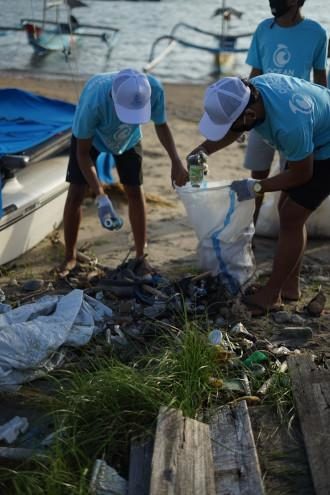[Source](https://unsplash.com/@oceancleanupgroup/)
With each of these advances in agriculture came problems as well. The third agricultural revolution, for example, threatens to push the land to its limit, and exhaust our natural resources. How can agriculture evolve to meet our needs without our needs surpassing the planet’s capacities? Perhaps we need a fourth agricultural revolution.
#### Noah and The Flood
The prophet Isiah gives a prophecy of hope in the Bible: “The earth will be filled with consciousness of God as water covers the ocean floor.” (Isaiah 11:9).
In Zoroastrianism, Christianity, Judaism and Hinduism, there is a belief in a world to come that will be better than this one.
According to the Jewish mystical tradition, this better world to come will also feature a flood, but it will be a flood of divine **consciousness** and care for creation, not a flood of violence and destructive water as Noah experienced.
Perhaps a fourth **agricultural revolution** could help create a better world in our lifetimes. Perhaps we could work towards an agricultural revolution that is not just technological, but also spiritual, to help us to reconnect with the Earth in a healthy, sustainable way.
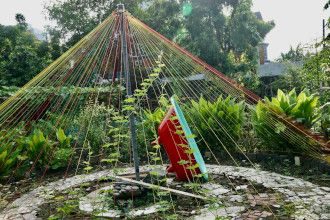[Source](https://unsplash.com/@elsbethcat/)
Drawing on indigenous farming techniques, permaculture, modern technology, and our rich cultural heritages, we can create a system of agriculture in sync with both our needs and the rhythms of the Earth. We can build societies that will cater to the next eight generations, and the next 800 generations. We don’t have to build an ark to escape the coming flood of Divine and ecological consciousness, we just have to learn how to channel the waters in a way that we can all enjoy our planet’s abundance.
*\* Featured image [source](https://unsplash.com/@kellysikkema/)*
**Categories:** Bible & Creation Care, Blog on Faith and Ecology
**Tags:** Genesis 5
---
### [Genesis 3:19: Adam Eats From The Tree of Knowledge.](https://interfaithsustain.com/genesis-3-19/)
**Published:** December 24, 2021
**Author:** ICSD
**Excerpt:** Ilana Stein - In Genesis 3:19 God pronounces Adam's punishment for eating from the Tree of Knowledge of Good and Evil. While this verse is short, like all of the Bible, it contains deeper worlds in every letter and word.
**Content:**
Table of Contents
Table of Contents
- [Eco Bible on Genesis 3:19](#aioseo-eco-bible-on-genesis-319-3)
- [Working For Our Food – A Change in Culture](#aioseo-working-for-our-food-a-change-in-culture-6)
- [The Effort that Goes into Making Bread](#aioseo-the-effort-that-goes-into-making-bread-12)
- [Coming from Dust and Returning to Dust](#aioseo-coming-from-dust-and-returning-to-dust-24)
- [Our Relationship With the Earth](#aioseo-our-relationship-with-the-earth-30)
- [A Return to Harmony](#aioseo-a-return-to-harmony-39)
*By Ilana Stein* – In **Genesis 3:19** God pronounces Adam’s punishment for eating from the **Tree of Knowledge** of Good and Evil. While this verse is short, like all of the [Bible](https://interfaithsustain.com/books-of-the-old-testament/), it contains deeper worlds in every letter and word.
Let’s unpack some of the meanings contained within Genesis 3:19. We’ll begin with an idea from the seminal work, **Eco Bible**.
## [Eco Bible on Genesis 3:19](https://www.amazon.com/dp/B08LCKLM9G/ref=dp-kindle-redirect?_encoding=UTF8&btkr=1)
*Genesis 3:19 – In the sweat of thy face shalt thou eat bread, till you return to the ground; for out of it wast thou taken: for dust thou art, and unto dust shalt thou return (King James Version).*
The Torah reminds us that we are made up, ultimately, of stardust, as is the rest of creation. We share that origin with every substance in the universe. Terrestrial life on our planet absorbs most of its vitality from a six-inch layer of topsoil. Even though we operate daily on the assumption that we are separate from the earth, this verse reminds us in fact we are intricately connected: “For dust you are, and to dust you shall return.”
- [](https://interfaithsustain.com/exodus-17/)
## [Water, War and The Wilderness in the Bible: Exodus 17](https://interfaithsustain.com/exodus-17/)
- [](https://interfaithsustain.com/largest-trees-in-the-world/)
## [Exploring the Largest Trees in the World in Awe, Love and Wonder!](https://interfaithsustain.com/largest-trees-in-the-world/)
- [](https://interfaithsustain.com/deuteronomy-20/)
## [Deuteronomy 20: Discussing Both War and Saving Our Planet](https://interfaithsustain.com/deuteronomy-20/)
### Working For Our Food – A Change in Culture
In this verse, the Bible records a change in the way that [human societies](https://interfaithsustain.com/urban-ecology/) would obtain food. While in the **Garden of Eden**, **Adam and Eve** could gather fruit from any tree (except one); they received all the [food](https://interfaithsustain.com/food-production/) they needed without much effort.
However, after eating from the Tree of Knowledge of Good and Evil, they became farmers instead of gatherers. Humanity entered a new reality: what is known as “the agricultural revolution,” where farming became the dominant lifestyle.
This lifestyle was hard work – as expressed in “the sweat of thy face” (or “sweat of your brow” in the New International Version).
### The Effort that Goes into Making Bread
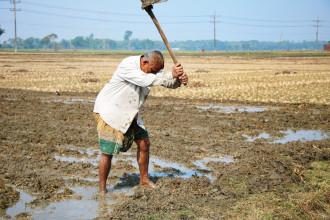[Source](https://unsplash.com/@kamal86/)
Across the Bible, bread is the quintessential food. In other words, it represents all food. Our verse in Genesis is no exception, but it also echoes human history. Wheat was one of the first plants to be ‘domesticated,’ planted year after year, beginning some 10,000 years ago.
Bread making is even older than that and was a process that took a lot of time and energy. After harvesting, there was winnowing and grinding the kernels, making them into a flour, then adding water (and eventually yeast) and kneading the mixture. All this was necessary before baking it in the ground and later, in a free-standing oven.
As wonderful as bread is, studies show that making it takes more energy than merely gathering fruit does:
Growing plants and tending animals increased yields per hectare, notably the caloric return, although doing so necessitated greater labor inputs and investments in the land itself. [Early agriculture’s toll on human health](https://www.pnas.org/content/116/28/13721).
While many innovations occurred through the ages, the Industrial Revolution brought about a sea-change in how we make bread: the invention of the automated flour mill. This and other inventions have cooled the “sweat of your face” somewhat.
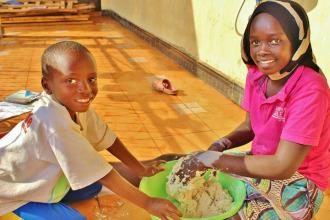[Source](https://pixabay.com/users/michelle_raponi-165491/)
### Coming from Dust and Returning to Dust
Adam’s punishment included eating bread “*till you return to the ground; for out of it wast thou taken: for dust thou art, and unto dust shalt thou return (King James Version).”*
We can see Adam and his descendants working the earth, their eyes drawn downwards to the dirt or soil which they ploughed, and their thoughts naturally turning to their origins and mortality.
They would remember the verse of Genesis 2:7: *And the LORD God formed man of the dust of the ground, and breathed into his nostrils the breath of life; and man became a living soul* (King James Version). Genesis 3:19 deliberately connects the two in our consciousness.
#### Our Relationship With the Earth
[Source](https://unsplash.com/@priscilladupreez/)
The name “Adam” comes from the Hebrew word “adamah” – land or ground. Our physical bodies are made of the same minerals, nutrients and other elements as the earth itself, and at the end of our lives, they will be recycled, returning to the place they came from.
We are made of earth, and we are of the earth. This intimate connection should inspire us to connect to and care for our ‘brethren’ – after all, in Genesis 2:15, the Bible commands us to work and protect the earth.
Rabbi Joseph B. Soloveitchik writes that this verse expresses “the unique relationship that prevails between man and earth. First, the earth claims man; he was taken out of Mother Earth, and to her he must return ([Emergence of Ethical Man](https://www.academia.edu/35032880/The_Emergence_of_Ethical_Man_The_Environmental_Ethics_of_Joseph_Soloveitchik_in_Contex)). “
He describes the mitzvah (commandment) of burial as a demand that the earth itself makes on human beings – “She insists upon the return of a part of her own self. As soon as the Ruah Elokim (the spirit of God) departs man, his inanimate body must be delivered to its rightful owner (Ibid.).”
#### A Return to Harmony
The verse can be seen in a different way.
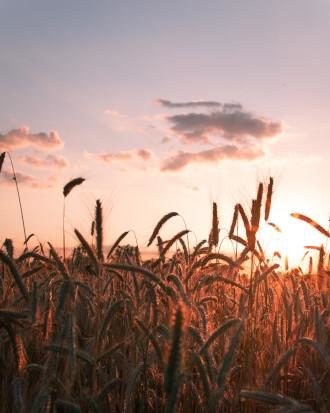[Source](https://unsplash.com/@nadine/)
Instead of it being a curse of death as we’ve mentioned above, it may be a promise. Instead of being seen as “dust”, the word ‘adamah’ can be translated as ‘the earth.’
We have treated the earth shabbily over thousands of years. Perhaps one day, we will understand just how closely we are intertwined, and we will return to the earth and our former harmonious relationship.
There is a beautiful symbiotic relationship between the earth and humanity – between adam (humanity) and adamah (earth): The earth serves us, granting us food and abundance. We in turn [need to look after the earth](https://interfaithsustain.com/environmental-sustainability/). Only then will our relationship blossom.
*\* Featured image [source](https://pixabay.com/users/couleur-1195798/)*
**Categories:** Bible & Creation Care, Blog on Faith and Ecology
**Tags:** Eco Bible, Genesis 3
---
### [Genesis 1:29: God Gives Humans A Plant-based Diet to Benefit Creation](https://interfaithsustain.com/genesis-1-29/)
**Published:** December 20, 2021
**Author:** ICSD
**Excerpt:** Harry Cooper - After creating the entire Universe, God creates humans and tells humanity about their special diet. There are many translations for what their diet was: "every herb bearing seed," "every plant yielding seed," "every fruit yielding seed," "every tree that has fruit" or "the fruit of a tree yielding seed."
**Content:**
Table of Contents
Table of Contents
- [A Summary of Genesis 1:29](#aioseo-a-summary-of-genesis-129-2)
- [Eco Bible](#aioseo-eco-bible-7)
- [A Plant-Based Diet Is Prescribed to Humanity in Genesis 1:29](#aioseo-a-plant-based-diet-is-prescribed-to-humanity-in-genesis-129-8)
- [God Gives Us A Vegan Diet: Genesis 1:29](#aioseo-god-gives-us-a-vegan-diet-genesis-129-14)
- [How The Genesis 1:29 Diet Helps the Planet](#aioseo-how-the-genesis-129-diet-helps-the-planet-26)
*By Harry Cooper*
## A Summary of Genesis 1:29
After creating the entire Universe, God creates humans and tells humanity about their special diet. There are many translations for what their diet was: “every herb bearing seed,” “every plant yielding seed,” “every fruit yielding seed,” “every tree that has fruit” or “the fruit of a tree yielding seed.”
What all these translations have in common is that they are clearly stating that trees and plants shall be food and not animals.
Later, in the story of Noah, humanity was told that animals shall be for meat as well. However, in the Garden of Eden, plants and trees were all we needed.
Let’s explore deeper what it means for humanity to be prescribed a plant-based diet in the beginning of the [Bible](https://interfaithsustain.com/books-of-the-old-testament/).
## [Eco Bible](https://www.amazon.com/dp/B08LCKLM9G/ref=dp-kindle-redirect?_encoding=UTF8&btkr=1)
### A Plant-Based Diet Is Prescribed to Humanity in Genesis 1:29
*Genesis 1:29 – God Said, “Behold, I Have Given You Every Seed-Bearing Plant That Is Upon All the Earth, and Every Tree That Has Seed-Bearing Fruit; They Shall Be Yours for Food.”*
One of the only statements God made to people when they were created is to eat a plant-based diet. “It is altogether impossible to conceive of the Blessed Ruler of all creation . . . imposing upon this most excellent creation an eternal decree such as this: that the human race would maintain its existence by going against its moral sensibilities through the shedding of blood, albeit the blood of animals,” Rabbi Abraham Isaac Kook writes. “Is it possible to conceive that a highly valued moral virtue, which had already existed as a part of the human legacy, should be lost forever?”(Excerpted from [“The Vision of Eden”](https://www.amazon.com/dp/B00SJPYHHU/ref=dp-kindle-redirect?_encoding=UTF8&btkr=1)) Rabbi Kook wrote in the early 1900s that in a “brighter era,” people will return to a plant-based diet and “God shall cause us to make great spiritual strides, and thus extricate us from this complex question.” ([Ibid](https://www.amazon.com/dp/B00SJPYHHU/ref=dp-kindle-redirect?_encoding=UTF8&btkr=1))
[Source](https://pixabay.com/users/b0red-4473488/)
Rabbi Elchanan Samet teaches: “What is the content of God’s first statements to man? They do not contain commandments and prohibitions related to man’s relationship to God. Rather, these initial statements are intended to mold people’s relationship with creation. In current times, this question has become crucial, owing to the [ecological crisis threatening the world](https://interfaithsustain.com/ecological-engineering/) and all its inhabitants. Human beings, having ‘filled the world and conquered it, and ruling’ over all its elements (animal, vegetable, mineral), have brought our generation to this crisis, which already threatens our world and places a question mark over the future of the generations to come.”([Samet](https://www.etzion.org.il/en/tanakh/torah/sefer-bereishit/parashat-bereishit/bereishit-story-creation-and-our-ecological-crisis)) Indeed, our own survival depends on the health and thriving of creation.
### God Gives Us A Vegan Diet: Genesis 1:29
**Genesis 1:29** discusses eating a **plant based diet** in terms of “every herb bearing seed”, “every plant yielding seed”, “fruit yielding seed”, “tree that has fruit”, “fruit of a tree yielding seed”, and so on. But what does God telling us to eat a plant based diet mean in a more practical sense?
In today’s world, the movement to live a plant-based life has moved beyond only eating food made from plants.
[Source](https://unsplash.com/@sammywilliams)
There are many [different types](https://www.bbcgoodfood.com/howto/guide/what-plant-based-diet) of plant-based diets. There are [vegetarian diets](https://interfaithsustain.com/difference-between-vegan-and-vegetarian/) which can include food such as eggs and dairy, there are vegan diets that resemble what God said to eat in Genesis 1:29, which include no meat or animals products whatsoever, and there are even flexitarian or reducetarian diets which don’t take any kind of food off the table, but involve trying to eat minimal meat and animal products.
- [](https://interfaithsustain.com/exodus-17/)
## [Water, War and The Wilderness in the Bible: Exodus 17](https://interfaithsustain.com/exodus-17/)
- [](https://interfaithsustain.com/largest-trees-in-the-world/)
## [Exploring the Largest Trees in the World in Awe, Love and Wonder!](https://interfaithsustain.com/largest-trees-in-the-world/)
- [](https://interfaithsustain.com/deuteronomy-20/)
## [Deuteronomy 20: Discussing Both War and Saving Our Planet](https://interfaithsustain.com/deuteronomy-20/)
Starting on a plant-based diet can have many [health benefits](https://www.health.harvard.edu/blog/what-is-a-plant-based-diet-and-why-should-you-try-it-2018092614760). By starting to cut out meat from your diet and eating more plant-based food you can reduce the risk of heart disease, cancer, diabetes, and even increase overall longevity.
Whether you’re a flexitarian who only stays away from the animal products that they know they can live without, or a full fledged vegan that eats plant-based foods, you can still gain the benefits of thinking about your food, and eating less meat.
### How The Genesis 1:29 Diet Helps the Planet
As previously mentioned, the Eco-Bible discusses how Genesis 1:29 is not about God commanding us to respect him, but rather respect his creation. In order to understand how respecting God’s creation relates to modern plant-based diets, we have to look at what are the benefits of eating vegetarian/vegan food for the environment.
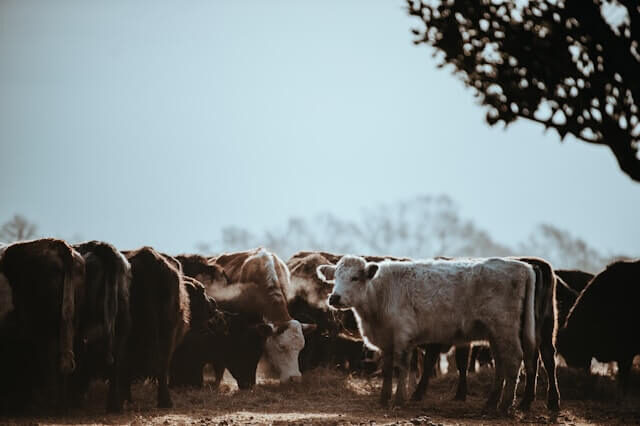[Source](https://unsplash.com/@anniespratt/)
One of the most important benefits for the environment that comes from eating less meat, and one of the most relevant to Genesis 1:29, is that it [uses land more efficiently](https://www.theguardian.com/lifeandstyle/2021/apr/25/going-vegan-can-switching-to-a-plant-based-diet-really-save-the-planet). In order to produce meat, you have to also grow the food to feed the animals, whereas to grow plant-based food you only need to use land to grow plants. This means a plant-based diet requires a lot less land to feed people.
But what does that have to do with respecting **God’s creation**?
In a fully carnivorous world, the planet would be dominated by industrial meat farms that represent humankind’s conquering and ruling of the world. However when we use less land for [food production](https://interfaithsustain.com/food-production/), we have more land to to leave untouched and and unconquered.
By respecting the natural world that is God’s creation, we are able to fulfil the commandment God gave us in Eden, help the planet and care for ourselves.
*\* Featured image [source](https://pixabay.com/users/pasja1000-6355831/)*
**Categories:** Bible & Creation Care, Blog on Faith and Ecology
**Tags:** Eco Bible, Genesis 1
---
### [Genesis 1:5 Illuminates Light, Artificial Light and the Absence of Light](https://interfaithsustain.com/genesis-1-5/)
**Published:** November 26, 2021
**Author:** ICSD
**Excerpt:** Lisa Cohen - In Genesis 1:5, God creates light and dark. The extinction of darkness, has resulted in affecting society and health.
**Content:**
Table of Contents
Table of Contents
- [Genesis 1:5: Light was Good](#aioseo-genesis-15-light-was-good-5)
- [Genesis 1:5 – The Darkness, He Called Night](#aioseo-genesis-15-the-darkness-he-called-night-9)
- ["Only In The Darkness Can We See The Stars"](#aioseo-only-in-the-darkness-can-we-see-the-stars-12)
- [Genesis 1:5 – Before Night There Was Evening](#aioseo-genesis-15-before-night-there-was-evening-17)
- [Living as Ascribed in Genesis 1:5](#aioseo-living-as-ascribed-in-genesis-15-30)
- [The Eco Bible on Genesis 1:5](#aioseo-the-eco-bible-on-genesis-15-35)
- [Extinction Events](#aioseo-extinction-events-40)
In 1:5 of The King James [Bible](https://interfaithsustain.com/books-of-the-old-testament/), verse 6 says: “And **God called the light Day**, and the darkness he called Night. And the evening and the morning were the first day”. The first day was marked by the passing of two separate entities: light marked day, dark signified night.
100 years ago when you went out at night, it was dark! Gradually nighttime has become lighter, so much so that today when you go out at night it is extremely light.
**Artificial light**, allows for the the western world to operate 24/7 so that factories, medical centers, businesses, restaurants and clubs are active throughout the night with no hindrance of darkness to prevent them.
This is progress, right? Or is it actually a phenomenon that is causing [grave health issues globally](https://interfaithsustain.com/industrial-pollution/) and the [extinction of the natural](https://interfaithsustain.com/environmental-wellness/), God given gift to humanity – the absence of light?
## Genesis 1:5: Light was Good
In 1:5 of [The King James Bible](https://www.kingjamesbibleonline.org/Genesis-1-4/), verse 4 says: “And God saw the light, that *it was* good”. In order to know that is was “good” we infer that the light had advantages over the darkness.
We believe that in order to know something is “good” we need to experience the opposite. That is to know we love, we experience hate; to appreciate wealth we know poverty; to know good we experience bad and thus to know light, we first must know darkness.
But, this dichotomy does not really exist. Goodness is the whole, so evil is the absence of good. Hate exists when love is distinguished. Light is the whole being and therefore darkness is the absence of light.
- [](https://interfaithsustain.com/exodus-17/)
## [Water, War and The Wilderness in the Bible: Exodus 17](https://interfaithsustain.com/exodus-17/)
- [](https://interfaithsustain.com/energy-conversion/)
## [Using The Bible to Understand Renewable Energy Conversion](https://interfaithsustain.com/energy-conversion/)
- [](https://interfaithsustain.com/genesis-23/)
## [Understanding Sustainable Burial From Genesis 23](https://interfaithsustain.com/genesis-23/)
### Genesis 1:5 – The Darkness, He Called Night
So, in today’s world, as shown on [NASA ](https://www.nasa.gov/connect/ebooks/earthatnight_detail.html)photos from space, our nighttimes have been changed due to an absence of darkness. This began with the invention of the light bulb, the wide use of electricity and ever-since the First World War we have lost our ability to see real darkness.
As a result, we can no longer witness events, such as the “[nocturnal sun](https://www.theguardian.com/science/2017/jun/28/bright-nights-scientists-explain)“, see the milky way or even count more than 4 or 5 stars each night.
### “Only In The Darkness Can We See The Stars”
The quote from [Martin Luther King Jr](https://brightdrops.com/inspirational-martin-luther-king-jr-quotes), may be an analogy for the human condition of only seeing the light in times of suffering and not appreciating the stars when in times of prosperity, health and wealth.
But, the quote is also completely literal in that we can no longer see the stars, as we no longer have darkness. Only when we seek out and make a conscious effort to find true darkness, such as in the desert or in remote rural areas, do we have the capacity to see the stars, the milky way and all the wonders of the night sky.
### Genesis 1:5 – Before Night There Was Evening
God named the light day. What are the effects of increasing day and losing night?
[Source](https://unsplash.com/@vklemen/)
The increase in artificial light causes an acute suppression of the hormone melatonin, responsible for our sleep cycles.
In addition, light acts as a stimulant, keeping us awake for longer into the night as well as preventing our minds to relax.
Together, these cause the development of [circadian rhythm sleep-wake disorders ](https://www.ncbi.nlm.nih.gov/pmc/articles/PMC6751071/)(CRSWD) which alters the sleep patterns of humans.
Artificial light from televisions, smartphones and computers, used until late into the night when the timing of our circadian clock is paramount to our sleep, all contribute to delaying sleep onset.
The lack of sleep clearly affects our emotional and mental well being. Lack of sleep has been [proven time and time again, scientifically](https://www.health.harvard.edu/newsletter_article/sleep-and-mental-health), to increase depression, anxiety, anger, bipolar disorder and ADHD.
[Source](https://unsplash.com/@theyshane/)
### Living as Ascribed in Genesis 1:5
The **extinction of darkness** is having profound negative effects on society and the health of our children. We are living in light – the light of exhaustion, depression and ADHD.
Is it possible to try to find a balance where we recognize the importance of evening and nighttimes as God created gifts to the sanity of humanity? It is a fascinating read about the difficult efforts [Linda Geddes](https://www.bbc.com/future/article/20180424-what-i-learnt-by-living-without-artificial-light) made in order to live for weeks without artificial nighttime light and the positive affects it had on her life.
### The Eco Bible on Genesis 1:5
Genesis 1:5 describes God’s creation of the Universe. We read how “in the beginning God created the heavens and the Earth” and how “the spirit of God hovered over the face of the water.” We read how God creates light through the utterance “let there be light,” and “separates the light from the darkness.”
Now let’s dive into Genesis 1:5, though the lens of the bestselling book, [Eco Bible](https://www.amazon.com/dp/B08LCKLM9G/ref=dp-kindle-redirect?_encoding=UTF8&btkr=1).
[Source](https://unsplash.com/@some_tale/)
### Extinction Events
*Genesis 1:5 – God Called the Light Day, and the Darkness He Called Night. And There Was Evening and There Was Morning, the First Day.*
The Midrash asks why this verse reads “And there was evening” rather than just “There was evening” – implying that there was something else before. The Midrash answers, “ . . . time existed before this . . . God created and destroyed worlds until this one . . . when it says, ‘God saw everything He had made and behold it was very good,’(Genesis 1:31) that teaches us that the previous ones were not.” (Midrash Genesis Rabbah 3:7) This explanation suggests that cataclysmic extinction events once occurred, and that sustained existence on this planet is not guaranteed. Scientists understand that five extinction events occurred in the last 500 million years, and humans are causing a sixth one at the current time ([Greshko](https://www.nationalgeographic.com/science/article/mass-extinction)). The previous extinction events were caused by “acts of God,” like comets and massive volcanic eruptions. But the current one is caused by people on a creation that God declared “very good.”
*\* Featured image [source](https://unsplash.com/@j_wozy/)*
**Categories:** Bible & Creation Care, Blog on Faith and Ecology
**Tags:** Eco Bible, Genesis 1
---
### [The Books of The Old Testament: The Hebrew Bible](https://interfaithsustain.com/books-of-the-old-testament/)
**Published:** September 22, 2021
**Author:** ICSD
**Excerpt:** Aryeh Ronay - The Old Testament gets its name from its relationship to "The New Testament", but for Jews, it's called "The Hebrew Bible", "The Bible" or in Hebrew, "The Tanakh." The name "TaNaKh" is an abbreviation for "Torah", "Nevi'im" and "Ketuvim." The Hebrew Bible is a collection of works stretching all the way back from Creation until the return of the Jewish people to Israel, after the Babylonian exile.
**Content:**
Table of Contents
Table of Contents
- [The Five Books of Moses: The Torah](#aioseo-the-five-books-of-moses-the-torah-2)
- [The Connection of The Land and the People of The Old Testament](#aioseo-the-connection-of-the-land-and-the-people-of-the-old-testament-5)
- [The Books of the Prophets: Nevi'im](#aioseo-the-books-of-the-prophets-neviim-10)
- [The Poetic Books: Ketuvim](#aioseo-the-poetic-books-ketuvim-16)
- [Poetic Books of The Old Testament](#aioseo-poetic-books-of-the-old-testament-18)
- [The Five Scrolls of The Old Testament](#aioseo-the-five-scrolls-of-the-old-testament-29)
- [More books of The Old Testament](#aioseo-more-books-of-the-old-testament-39)
- [The Book of Daniel](#aioseo-the-book-of-daniel-42)
- [Chronicles: The Last Book of The Old Testament](#aioseo-chronicles-the-last-book-of-the-old-testament-48)
- [The Significance of The Books of The Old Testament](#aioseo-the-significance-of-the-books-of-the-old-testament-52)
- [What are the Five Books of Moses, and what do they cover?](#aioseo-what-are-the-five-books-of-moses-and-what-do-they-cover-57)
- [How is the land of Israel connected to the story of the Old Testament?](#aioseo-how-is-the-land-of-israel-connected-to-the-story-of-the-old-testament-59)
- [Who are the prophets in the Old Testament, and what is their significance?](#aioseo-who-are-the-prophets-in-the-old-testament-and-what-is-their-significance-61)
- [What is the Book of Daniel, and what themes does it explore?](#aioseo-what-is-the-book-of-daniel-and-what-themes-does-it-explore-63)
*By Aryeh Ronay* – The **Old Testament** gets its name from its relationship to “The New Testament”, but for Jews, it’s called “The Hebrew Bible”, “**The Bible**” or in Hebrew, “The Tanakh.” The name “TaNaKh” is an abbreviation for “Torah,” “Nevi’im” and “Ketuvim.” The Hebrew Bible is a collection of works stretching all the way back from Creation until the return of the Jewish people to Israel after the Babylonian exile.
## The Five Books of Moses: The Torah
The Torah, or Pentateuch, is composed of the Five Books of Moses: Genesis, Exodus, Leviticus, Numbers and Deuteronomy. These names come from Greek, as does the name **Pentateuch**, meaning “five scrolls.”
Broadly speaking, the Torah begins with God’s creation of the universe, the history of humanity, the history of the Hebrew people, enslavement in Egypt, liberation, receiving the Torah, building a tabernacle for God, and preparation for the twelve Israelites tribes to enter the land of Israel.
### The Connection of The Land and the People of The Old Testament
The story of the **Israelite people** is deeply connected to **the promised land**, the land of Israel. During the 3,000 years since the giving of the Torah, the Jewish people have lived as both a physical people in the land of Israel and as a nation exiled and scattered, but with their hearts and prayers attuned to the land of Israel.
[Source](https://unsplash.com/photos/CJP2MbGx1NY/)
The Bible, and the Torah within it, are more than just general wisdom books. They are about a particular people’s relationship with a particular land. Rather than this being a drawback, today, more than ever, we recognize that we need to “think globally and act locally.” As one of the oldest and most resilient indigenous peoples, the Jews have much to teach the world about relating to land. Perhaps this strong relationship to the land is the reason that Israel is one of the only nations that’s gaining trees instead of losing them. Jews recognize that the land of Israel is not just their promised land, it’s their children’s promised land, and it’s on their shoulders to protect it for their children’s sake.
## The Books of the Prophets: Nevi’im
The second section of books in the Old Testament covers the time from the entrance into the land of Israel until the exile to Babylon, and can be further divided into three sections. The first section, The Former Prophets, includes Joshua, Judges, Samuel and Kings. They are followed by The Latter **Prophets**, Isaiah, Jeremiah and Ezekiel. Finally, there are The Minor Prophets, including Hosea, Joel, Amos, Obadiah, Jonah, Micah, Nahum, Habakkuk, Zephaniah, Haggai, Zechariah, and Malachi.
One of the most fascinating facts about the prophets is that almost all of them failed. Again and again they attempted to change the hearts and minds of their contemporaries, but none of them succeeded— except for one. While each prophet waxed poetic about the sins of the nations and their need for repentance, Jonah achieved what no other prophet could in a few short words. “Forty days more, and Nineveh shall be overthrown,” (Jonah 3:4), Jonah proclaimed to the city of Nineveh, and from the highest dignitary to the lowest animal, the entire city repented, and were saved from destruction by virtue of their repentance.
- [](https://interfaithsustain.com/exodus-17/)
## [Water, War and The Wilderness in the Bible: Exodus 17](https://interfaithsustain.com/exodus-17/)
- [](https://interfaithsustain.com/energy-conversion/)
## [Using The Bible to Understand Renewable Energy Conversion](https://interfaithsustain.com/energy-conversion/)
- [](https://interfaithsustain.com/genesis-23/)
## [Understanding Sustainable Burial From Genesis 23](https://interfaithsustain.com/genesis-23/)
Considering how much effort we invest in thinking about and sharing doomsday prophecies concerning Earth, climate change, sea levels rising, species destruction and all the other ills, perhaps we should think more about Jonah’s technique. When it comes to changing the world, less is more. If we can find a few choice words, everything can be transformed.
## The Poetic Books: Ketuvim
The last section of The Old Testament can be divided into three smaller sections.
### Poetic Books **of The Old Testament**
Psalms, Proverbs and Job are the poetic books, but they are are also called *Sifrei Emet* ( *Emet* אמ”ת, the Hebrew for “truth,” is an acronym of the titles in Hebrew, איוב, משלי, תהלים). Some Christians have a wider definition of the “**Poetic books**” and the Old Testament in general, and have the following list:
- The Book of Job
- Psalms
- Proverbs
- Ecclesiastes
- Song of Songs
- Wisdom (only included in the Catholic and Orthodox canons)
- Sirach (only included in the Catholic and Orthodox canons)
These last two books are considered **Deuterocanonical,** meaning the Catholic Church, the Eastern Orthodox Church, the Oriental Orthodox Churches and the Assyrian Church of the East consider these books canonical books of the Old Testament, whilst the Protestant denominations don’t. These wisdom books have much to say about living in sync with nature and our fellow humans.
### The Five Scrolls **of The Old Testament**
The next five books are known as the five books Song of Songs, the Book of Ruth, the Book of Lamentations, Ecclesiastes, and the Book of Esther are collectively known as the Ḥamesh Megillot (Five Scrolls). These are designated as “authoritative” in the Jewish canon, with the latest parts having dates ranging into the 2nd century BCE. These scrolls are traditionally read over the course of the year in Jewish communities.
These books are read aloud in the synagogue on certain holidays, which are written in parenthesis after each book.
- Shīr Hashīrīm (שִׁיר הַשִּׁירִים) – Song of Songs, also known as Song of Solomon (on Passover)
- Rūth (רוּת) – Book of Ruth (on Shavuot)
- Eikhah (אֵיכָה) – Book of Lamentations (on Tisha B’Av)
- Qōheleth (קֹהֶלֶת) – Ecclesiastes (on Sukkot)
- Estēr (אֶסְתֵר) – Book of Esther (on Purim)
“Song of Songs”, in particular, is full of natural imagery and metaphors. It is in the Edenic-like garden that their love flourishes. But in the city, they cannot reach each other, the maiden searches for her lover to no avail. It is interesting to consider the significance of the effects of our environments on our relationships and the extent to which just as plants can have difficulty flourishing in the city, so can humans and human relationships.
### More books **of The Old Testament**
The last books in Ketuvim, written in both Hebrew and in Aramaic, are Daniel, Ezra and Nehemiah. In these books we read about the Babylonian captivity and the return to Zion.
Just as Song of Songs stood out among the five scrolls for its nature imagery, so does the Book of Daniel in this last set of books. In the Book of Daniel, there are natural materials like gold, silver and bronze, a prophetic dream of a tree being cut down, humans turning into beasts, humans being thrown to lions, beasts emerging from the sea, goats fighting with rams and most popular among vegans—Daniel’s raw, plant-based diet.
### The Book of Daniel
The natural imagery in **the book of Daniel** demonstrates a chaotic world, mirrored by the chaotic Babylonian government that vacillates between honoring and attacking the local Jewish minority. However, Daniel and his companions who are are able to subsist and thrive on vegetables and can survive even the lions’ dens, represent a different relationship with nature. Daniel and his companions show that humanity can coexist with nature in a healthy and sustainable manner, without being subsumed by the chaos that surrounds them.
[Source](https://unsplash.com/photos/i5pJ04VZza0/)
The Book of Daniel, placed at the end of the Old Testament, provides a framework for the Jewish people for surviving in a world of temperamental animals and tyrants. Major empires from Babylon to Rome, from the Third Reich to the USSR have taken advantage of the Jews and then tried to get rid of them. These empires collapsed, while the Jewish people continue to live and thrive.
The Jews, more than any other people, have shown what **sustainability** means, by lasting longer than any other civilization, all while exiled from the Jewish homeland. The Jews show the world that [sustainability](https://interfaithsustain.com/importance-of-sustainable-development/) doesn’t have to start when we’re comfortable at home, sustainability is something we can take with us wherever we go. Today, tiny homes are very much in vogue. The Jews, through the Old Testament and its commentaries have brought with them wherever they’ve lived a “tiny civilization.”
## Chronicles: The Last Book of The Old Testament
As its title describes it is a chronicle, often split into two parts, detailing the history of the Jewish people from the time of the first person, Adam, to the proclamation of King Cyrus the Great that the Jews should leave Babylonian exile and return to live within Israel’s borders.
### The Significance of The Books of The Old Testament
This summary of the main events of the Old Testament is a fitting end to the Hebrew Canon. The Hebrew Bible, like the Hebrew calendar, is based on cycles. But the idea is not to go around and around on an endless carousel, but rather to climb higher and higher with each rotation. As Joni Mitchell sang “the seasons, they go round and round,” but we are not meant to uselessly spin in circles. Rather, the Old Testament call us to climb higher and higher with each revolution, reaching our potential by improving ourselves and learning from the mistakes of the past.
This is why the Bible is so significant for every Jew, Christian and Muslim. The Bible is a book of wisdom, written to connect humanity to God’s perspective. Whether one is reading the Bible in Greek, English, Hebrew or any other language, the Bible can help humanity to gain a broader perspective on the world and our place in it.
In this time of [ecological crisis](https://interfaithsustain.com/ecology-and-environment/), fueled by a fast-paced consumer culture, we need now more than ever to slow down, notice the cycles of nature and history and chart our course towards a better world.
*\* Featured image [source](https://unsplash.com/photos/b_SHPU5M3nk/)*
**Categories:** Bible & Creation Care, Blog on Faith and Ecology
**Tags:** Old Testament, The Hebrew Bible
---
### [On the Spirituality of Sustainability](https://interfaithsustain.com/on-the-spirituality-of-sustainability/)
**Published:** July 25, 2013
**Author:** ICSD
**Excerpt:** In this post we are going to offer what will be the first of three teachings on the 'spirituality of sustainability' from the Christian, Jewish and Islamic faiths.
**Content:**
By Eitan Press
In this post we are going to offer what will be the first of three teachings on the ‘spirituality of sustainability’ from the Christian, Jewish and Islamic faiths. Besides the external changes we need to make in order to live more sustainably, what are the changes that needs to happen on the inside? The spirituality of sustainability seeks to answers to this question.
Our first post in this series is based on the writings of St. Francis of Assisi. St. Francis (1181/1182 – October 3, 1226 ) is known for his love of all of Gods creatures, it is said that besides preaching to people, he also preached to animals. His statue often appears in many gardens with birds resting on his shoulder. His love of peace inspired St. Francis to travel to Egypt and seek rapprochement with the Muslim world and after his death, it was the Franciscan order that was allowed to stay during Muslim control of Palestine after the fall of the Crusader kingdom. The Franciscans were known as the Christian “Custodians of the Holy Land”. St. Francis wrote a canticle or song called ‘In Praise of the Creatures’ that holds an important key to sustainable thinking. Here a passage from the canticle where he sings about nature:
“Most high, all powerful, all good Lord!
All praise is yours, all glory, all honor, and all blessing.
To you, alone, Most High, do they belong.
No mortal lips are worthy to pronounce your name.
Be praised, my Lord, through all your creatures,
especially through my lord Brother Sun,
who brings the day; and you give light through him.
And he is beautiful and radiant in all his splendor!
Of you, Most High, he bears the likeness.
Be praised, my Lord, through Sister Moon and the stars;
in the heavens you have made them bright, precious and beautiful.
Be praised, my Lord, through Brothers Wind and Air,
and clouds and storms, and all the weather,
through which you give your creatures sustenance.
Be praised, My Lord, through Sister Water;
she is very useful, and humble, and precious, and pure.
Be praised, my Lord, through Brother Fire,
through whom you brighten the night.
He is beautiful and cheerful, and powerful and strong.
Be praised, my Lord, through our sister Mother Earth,
who feeds us and rules us,
and produces various fruits with colored flowers and herbs.
Be praised, my Lord, through those who forgive for love of you;
through those who endure sickness and trial.
Happy those who endure in peace,
for by you, Most High, they will be crowned.”
In this canticle St. Francis is talking to God, praising God through expressing his gratitude for the natural world God created. Through his words one can see that St. Francis was reverential and respectful of nature, referring to the natural world as his family. The sun is his ‘brother’, the moon is his ‘sister’. Nature was a part of St. Francis and he a part of it. This attitude is a crucial ingredient in in understanding the spirituality of sustainability.
Often, humankind relates to the natural world as if humanity is separate from and ‘other’ than it. Nature is seen in terms of its utilitarian purposes, as a resource to be consumed. This map of our connection to nature is based on a false dichotomy. The danger of looking at the environment simply as a resource, is that it allows for a much more callous attitude towards it, one in which if we are destructive and wasteful, it is not affecting us, just that object ‘over there’. If we think and act towards nature with this perspective we are undermining our own survival, for we are part of the ecosystem we are destroying. The most simple example is trees.
We breathe in oxygen and exhale carbon dioxide. Trees absorb in or ‘inhale’ carbon dioxide and then retain the carbon in their trunks (which reduces greenhouse gases) and release or ‘exhale’ oxygen. Trees are known as the “lungs of the world.” According to National Geographic forests now cover 30% of the worlds surface, but every year the earth is losing area equivalent to the size of Panama to deforestation. If things continue as they are we could lose much of the worlds forests in less than 100 years. This is not good for the trees, the animals, insects and countless other forms of life that make up these ecosystems including us, the human race. We all need to breathe.
This brings us back to St. Francis and the spirituality of sustainability. “Be praised, my Lord, through our sister Mother Earth, who feeds us and rules us, and produces various fruits with colored flowers and herbs.” The solution is not just change on the outside through more sustainable practices, but also change on the inside in terms of how we see ourselves in relationship to nature, we have to change our map. St. Francis saw himself, as interconnected to nature, rather than divorced from it, he was of nature, and nature was of him. Planet earth was not an object but his ‘Mother’. Seeing ourselves and nature as one family which is an interdependent whole, is important medicine we need to live more lovingly, responsibly, and sustainably towards the gifts the Infinite has given us.
**Categories:** Blog on Faith and Ecology, Faith & Ecology
---
### [Environmental Justice and Religion](https://interfaithsustain.com/environmental-justice-and-religion/)
**Published:** July 6, 2020
**Author:** ICSD
**Excerpt:** Quinn McVeigh - Environmental racism is a key focus of the environmental justice movement. It refers to not only a disproportionate access to environmental benefits such as clean air and local parks, but also to disproportionate exposure to hazards such as toxic waste and contaminated water supply.
**Content:**
By Quinn McVeigh
Environmental racism is a key focus of the environmental justice movement. It refers to not only a disproportionate access to environmental benefits such as clean air and local parks, but also to disproportionate exposure to hazards such as toxic waste and contaminated water supply 1. It is not caused by anything relating to the essence of the environment itself, but instead by race relations, governance, systemic racism, resource dynamics, and institutional failures. For example, many suggest that environmental racism is rooted in corporations targeting communities of color for potentially hazardous projects, because the communities may not have the political and economic resources to combat them.2 Some others believe that environmental racism can be partly attributed to Western environmentalism’s lackluster efforts to help mobilize people of color, and even having a relatively racist past in itself.3
Regardless of what the cause of environmental racism is, one thing we do know for sure is that it exists. A variety of studies have concluded that people of color are more exposed to particulate matter, volatile organic compounds like benzene, and greater levels of overall pollution.4 Data has shown that race is one of the major determinants of accessibility to water supplies and sanitation.5 We have seen all over the world that people of color are more burdened with environmental injustices than others.
In the United States, there is a stretch of land in Louisiana nicknamed, “Cancer Alley,” where residential areas are excessively exposed to pollution from petrochemical facilities putting their health disproportionately at risk. Within this stretch of land is a community called Reserve, in which the residents are 50 times more likely to get cancer than other Americans.6 The majority of residents in Reserve are black or African American. In Nigeria, there is a long past of unregulated drilling by oil companies like Shell. This has exposed many people of color to environmental hazards and depletion of land needed for livelihoods. Additionally, it has even resulted in deaths of environmental activists including Ken-Saro Wiwa and eight others killed by government officials.7 Environmental racism exists, and many do not have the political and economic capacity to fight it.
The United Church of Christ (UCC), a prominent faith-based organization involved in a plethora of social justice initiatives, was one of the major players in the birth of Western environmental justice. Soon after protests in Warren County, Ohio over the placement of a landfill for toxic chemicals such as Polychlorinated biphenyl (PCBs) in a mostly black community, the organization published a report analyzing race and toxic waste facilities in the U.S. The Report, “Toxic Race and Race” found that toxic waste facilities were disproportionately distributed throughout black communities and that race is one of the “top among variables associated with the location of a toxic waste facility.”8 The UCC brought attention to environmental racism in the Western world. In fact, Benjamin Chavis, an integral figure in Warren County and UCC efforts and the Southern regional program director of the UCC Commission for Racial Justice at the time, coined the term “environmental racism.”9
As demonstrated by the UCC’s influential history in the environmental justice movement, faith organizations can play a key role in promoting the elimination of environmental racism. With recent events surrounding the killings of Breonna Taylor, George Floyd, Amhaud Arbery, and more, the world has seen inspiring activism around condemning racism and pushing it out of systemic society. In this time, faith organizations have been stepping up to bring awareness to the violence and injustice inflicted upon black people and communities. For example, Buddhist centers like the Brooklyn Zen Center and the Soto Zen Buddhist Organization have released a series of statements to bring awareness to police brutality.10 A group of 130 Jewish organizations have collaborated to release a statement pledging to combat systemic racism.11 Behind the leadership of Imam Jihad Saafir, The Muslim Anti-Racism Collaborative has created a set of “[solidarity actions](https://www.muslimarc.org/action_items_for_solidarity)” to highlight actions for non-Black Muslims should take to show support.12
We must acknowledge that all of this is not enough though, and that it certainly cannot only be during times of great civil unrest and international coverage that faith organizations pledge to spread awareness.
Systemic oppression of marginalized races and ethnicities, including through environmental racism, is an issue that is dynamic and perpetual.
Thus, faith organizations must be in dynamic and perpetual motion, empowering communities to fight and spread awareness as far as their reach can go.
1. “Environmental Justice & Environmental Racism.” Greenaction for Health and Environmental Justice. http://greenaction.org/what-is-environmental-justice/.
2. “Getting to the Root of Environmental Injustice.” Vermont Journal of Environmental Law. http://vjel.vermontlaw.edu/getting-to-the-root-of-environmental-injustice/.
3. Purdy, Jedediah, Elizabeth Kolbert, and Naomi Klein. “Environmentalism’s Racist History.” The New Yorker. https://www.newyorker.com/news/news-desk/environmentalisms-racist-history.
4. II, Vann R. Newkirk. “Environmental Racism Is Real, According to Trump’s EPA.” The Atlantic. Atlantic Media Company, February 28, 2018. https://www.theatlantic.com/politics/archive/2018/02/the-trump-administration-finds-that-environmental-racism-is-real/554315/.
5. “Uswateralliance.org.” *Uswateralliance.org*, n.d. http://uswateralliance.org/sites/uswateralliance.org/files/Closing the Water Access Gap in the United States\_DIGITAL.pdf.
6. Lartey, Jamiles, Oliver Laughland, and Sam Morris. “’Almost Every Household Has Someone That Has Died from Cancer’.” The Guardian. Guardian News and Media. https://www.theguardian.com/us-news/ng-interactive/2019/may/06/cancertown-louisana-reserve-special-report.
7. “Ken Saro-Wiwa.” Goldman Environmental Foundation. https://www.goldmanprize.org/recipient/ken-saro-wiwa/.
8. “A Movement Is Born: Environmental Justice and the UCC.” United Church of Christ. Accessed June 15, 2020. https://www.ucc.org/a\_movement\_is\_born\_environmental\_justice\_and\_the\_ucc.
9. “Benjamin F. Chavis, Jr.’s Biography.” The HistoryMakers. https://www.thehistorymakers.org/biography/benjamin-f-chavis-jr.
10. Buddhadharma, Roar Staff, Lion’s Roar, and Lion’s Roar. “Buddhist Organizations and Teachers Respond to George Floyd Killing, Protests.” https://www.lionsroar.com/buddhist-organizations-and-teachers-respond-to-george-floyd-killing-protests/.
11. Dolsten, Joseph. “130 US Jewish Groups, Outraged by Floyd Killing, Pledge to Fight Systemic Racism.” The Times of Israel, June 3, 2020. https://www.timesofisrael.com/130-jewish-groups-outraged-by-floyd-killing-pledge-to-fight-systemic-racism/.
12. “Action Items for Solidarity Against the Murder of Black Men and Women.” Muslim Anti-Racism Collaborative, May 31, 2020. http://www.muslimarc.org/action\_items\_for\_solidarity.
[](https://interfaithsustain.com/wp-content/uploads/2020/07/Dr._Benjamin_F._Chavis_Jr..jpg)Photo Credit: MeetDrBen
[](https://interfaithsustain.com/wp-content/uploads/2020/07/3926622477_ae78c422b0_b-e1594059849451.jpg)Photo Credit: Ken Lund
[](https://interfaithsustain.com/wp-content/uploads/2020/07/43784419552_098b53526a_b-e1594060281572.jpg)Photo Credit: jmmcdgll
[](https://interfaithsustain.com/wp-content/uploads/2020/07/Black_Lives_Matter_50007395296-scaled-e1594060494213.jpg)Photo Credit: Dale Cruse from San Francisco, CA, USA
*Quinn McVeigh is an intern at The Interfaith Center for Sustainable Development.*
*\*Featured image [source](https://unsplash.com/@mlightbody)*
**Categories:** Blog on Faith and Ecology, Faith & Ecology
---
### [How Religious Communities Are Curbing Climate Change](https://interfaithsustain.com/how-religious-communities-are-curbing-climate-change/)
**Published:** October 31, 2022
**Author:** ICSD
**Excerpt:** Alana House - Faith groups are constantly at the forefront of human rights initiatives, working as a support system for victims who have suffered a variety of abuse. Religious groups are adept at recognizing the most vulnerable groups within society and work diligently to assist them.
**Content:**
Table of Contents
Table of Contents
- [Scientific Findings Lead To Climate Change Initiatives](#aioseo-scientific-findings-lead-to-climate-change-initiatives-2)
- [Examples Of Faith Supported Environmental Sustainability](#aioseo-examples-of-faith-supported-environmental-sustainability-10)
- [Faith Groups Recognizing Climate Change](#aioseo-faith-groups-recognizing-climate-change-12)
- [Nonprofit Faith Communities](#aioseo-nonprofit-faith-communities-18)
- [Religion, Rainbows and Climate Change Responsibility](#aioseo-religion-rainbows-and-climate-change-responsibility-24)
- [God Did Not Promise That Humanity Will Not destroy Itself!](#aioseo-god-did-not-promise-that-humanity-will-not-destroy-itself-30)
- [Taking Responsibility](#aioseo-taking-responsibility-33)
*By Alana House* – Faith groups are constantly at the forefront of human rights initiatives, working as a support system for victims who have suffered a variety of abuse. **Religious groups** are adept at recognizing the most vulnerable groups within society and work diligently to assist them. This too is the case as human beings acknowledge that the latest target of abuse is the earth itself, suffering at the hands of human-caused climate change.
## Scientific Findings Lead To Climate Change Initiatives
Over the years scientists studying climate change have provided evidence that due to human activity, the Earth is facing several environmental issues including global warming. Overuse of fossil fuels has led to pollution on the land, sea and even in our atmosphere through carbon emissions.
[Source](https://unsplash.com/@emben)
Research has shown that the amount of carbon dioxide in the atmosphere has risen about 25% when compared to pre industrial levels, before the year 1958. Scientists have documented that the presence of greenhouse gases has caused a rise in the Earth’s average temperature. Effects of the climate crisis can be witnessed in the destruction and degradation of the environment due to melting glaciers, deforestation and [desertification](https://interfaithsustain.com/soil-degradation/).
People from all of the planet have begun to strive for environmental justice through the establishment of climate action projects. These initiatives to help reverse **climate change** include engineering renewable energy systems, establishing sustainable agriculture practices, and employing strategies to protect natural organisms and the environment.
## Examples Of Faith Supported Environmental Sustainability
Governments have displayed limited support in terms of climate change politics. Unfortunately, the presence of a yearly climate conference or a world council hindered by bureaucratic restraints is just not enough to take on the climate crisis. It has become the sacred duty of **faith groups** to band together in order to protect god’s creation.
- [](https://interfaithsustain.com/how-religious-communities-are-curbing-climate-change/)
## [How Religious Communities Are Curbing Climate Change](https://interfaithsustain.com/how-religious-communities-are-curbing-climate-change/)
- [](https://interfaithsustain.com/how-does-deforestation-affect-climate-change/)
## [Environmental Destruction and How Does Deforestation Affect Climate Change?](https://interfaithsustain.com/how-does-deforestation-affect-climate-change/)
- [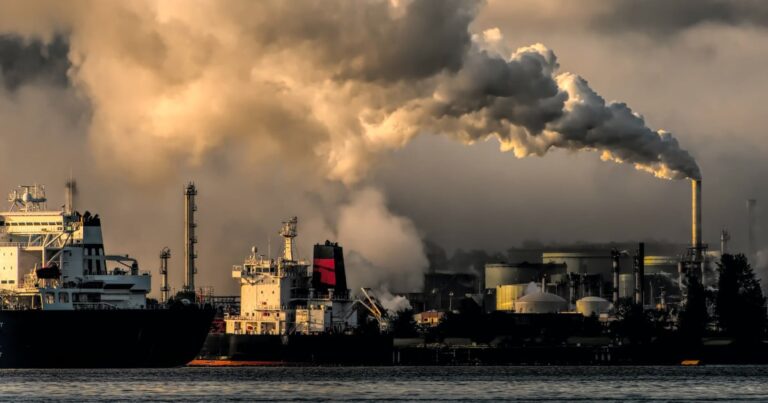](https://interfaithsustain.com/decarbonization/)
## [The Necessity of Decarbonization to Save our Planet](https://interfaithsustain.com/decarbonization/)
### Faith Groups Recognizing Climate Change
Indigenous peoples, Hindu groups, Sikh temples, faith traditions and all world’s religions must be part of making addressing climate change a moral imperative. **Religious leaders** and religious organizations must become an example of good stewards to other world leaders and for future generations in their fight against climate change.
Faith based organizations that play a major role in the fight against climate change include national places of worship. The Protestant Church of England has developed a plan of action, known as the [RouteMap](https://www.churchofengland.org/about/environment-and-climate-change/net-zero-carbon-routemap), that will be utilized to achieve [carbon neutrality](https://interfaithsustain.com/environmental-progress-sustainable-energy/) by 2030. In order to reduce their carbon footprint, the Church looks to end their reliance on fossil fuels and implement methods of clean energy in their buildings. The National Lutheran Church of Finland and Sweden share similar goals, planning to be climate neutral in the year 2030 as well.
Many faith leaders continue to be the embodiment of righteous action which includes promoting the care and protection of Mother Earth. One of the faith leaders that has stepped out among the others is Pope Francis, the head of the Catholic Church and sovereign of the Vatican City state. In 2015, Pope Francis made his [first comment on climate change](https://unfccc.int/news/pope-francis-releases-encyclical-on-climate-and-environment), backing the validity of climate science, as few faith leaders had done before. The Pope asserted that climate change is one of the greatest threats facing humanity, and that it is the responsibility of the faith community to engage in climate action to ensure the Earth’s longevity.
[Source](https://unsplash.com/@ashwinv11)
### Nonprofit Faith Communities
Connecting the communities of belief, politics and science together is exemplified through the United Nations Faith for Earth initiative. [The mission](https://www.unep.org/about-un-environment/faith-earth-initiative) of UNEP faith, is to engage with the interfaith community in order to achieve the sustainable development goals. This branch of the United Nations continues to encourage faith communities to become stakeholders in the climate crisis, while also taking part in tangible initiatives such as environmental [cleanups](https://www.unep.org/faith-earth-national-coordination-hubs).
The organization Green Faith is a conglomerate of individuals from varying faiths who have come together in a movement to help save the environment and curb climate change. This grassroots initiative conducts demonstrations backed by religious communities to bring about justice for the environment. One example of this includes a [Multi-faith climate finance campaign](https://greenfaith.org/global-coalition-of-42-faith-institutions-divest-from-fossil-fuels/), in which people of faith call on financial leaders to end their support of fossil fuel companies and deforestation.
After recognizing the power that comes from faith based donations, one company saw an opportunity to properly utilize these charitable funds. [Faith Invest](https://www.faithinvest.org/our-mission) is a nonprofit organization that promotes communities of faith to effectively and consistently invest in projects to create a sustainable planet. While any charity may be seen as helpful, Faith Invest recognizes that if the endowment does not go towards sustainable initiatives, then it is simply money wasted on a recurring problem.
## Religion, Rainbows and Climate Change Responsibility
*Genesis 9:13 “I have set My bow in the clouds, and it shall serve as a sign of the covenant between Me and the Earth.”*
Let’s look in [Eco Bible](https://interfaithsustain.com/ecobible/) to see why religious communities must take **religious responsibility** for leading the way in everything to do with caring for Earth.
Rabbi Samson Raphael Hirsch explains that the symbolism of the rainbow is its multiple colors in one cohesive structure. God’s pact of peace with humankind and all of creation is represented by this eternal symbol of diversity. Today we know that our global ecosystem is extremely complex and interlinked, even beyond what humans can currently comprehend. Our actions in diverting a single river or allowing the use of a single refrigerant chemical can have devastating effects on aspects of the planet we don’t even know about–including even species not yet identified–that could affect us for generations to come.
Nachmanides teaches that the rainbow signifies an upside-down bow and serves as “a reminder of peace.” The feet of the rainbow are bent downward to show that the Heavenly “shooting” (the torrential rains) has ceased. Rabbi Shlomo Riskin explains the meaning of Nachmanides’ teaching: “Ancient cultures fought their wars with the bow and arrow, and the side which surrendered, pursuing peace instead of war, would express their will to do so by raising an inverted bow that the enemy could see.
Similarly, God places an inverted bow in the heavens as a sign that He is no longer warring against humanity.” The rainbow testifies to the Creator’s intention for life on our planet to continue to exist. It is a sign that God desires the existence of the world and not its destruction.
### God Did Not Promise That Humanity Will Not destroy Itself!
Rabbi Riskin continues that the symbolism of the rainbow extends beyond God’s commitment–to encompass humans: “The rainbow is a half-picture, lacking a second half to complete the circle of wholeness. God can pledge not to destroy humanity, but since He created humanity with freedom of choice, He cannot guarantee that humanity will not destroy itself.” Yet the rabbis make clear that God does not want us to destroy creation either.
At present, humanity is emitting over 36 billion tons of CO2 per year into the atmosphere. In the past 800,000 years, atmospheric concentrations of CO2 did not exceed 300 parts per million (ppm). Yet people have dramatically increased the concentration of CO2 in the atmosphere in the past 200 years, to 417 parts per million and rising every year. A consensus of climate scientists understands that humans are directly causing climate change. Through our consumption, it is as if we are shooting carbon arrows into the atmosphere, inadvertently waging war on God’s creation.
#### Taking Responsibility
In Israel, one first sees rainbows after the Jewish New Year and Day of Atonement, when the winter rains begin to fall in October. According to the Ziv HaZohar commentary, the rainbow as a whole reminds us to turn our hearts to improve our actions. Perhaps the timing of the rainbow’s appearance, soon after the period of repentance, can motivate each of us to keep improving ourselves and become better servants of the Creator and collective stewards of creation.”
*\* Featured image [source](https://unsplash.com/@polarmermaid)*
**Categories:** Blog on Faith and Ecology, Faith & Ecology
**Tags:** Climate Change
---
### [Thoughts After Meeting the Pope to Talk About Our Planet's Health](https://interfaithsustain.com/thoughts-after-meeting-the-pope-to-talk-about-our-planets-health/)
**Published:** July 18, 2018
**Author:** ICSD
**Excerpt:** Rabbi Yonatan Neril - I recently met Pope Francis at a Vatican conference titled Laudato Si’: Saving Our Common Home and the Future of Life on Earth. What I appreciate about Pope Francis is that he is a forward-thinking religious leader who is aware of the ecological and spiritual crisis which humanity faces. His Encyclical, Laudato Si’: On Care for Our Common Home, is one of the most powerful articulations of a religious environmental ethic. Caring for our common home shouldn’t be a right or left wing, conservative or liberal issue. It’s a religious issue because this is God’s earth.
**Content:**
I recently met Pope Francis at a Vatican conference titled Laudato Si’: Saving Our Common Home and the Future of Life on Earth. What I appreciate about Pope Francis is that he is a forward-thinking religious leader who is aware of the ecological and spiritual crisis which humanity faces. His Encyclical, Laudato Si’: On Care for Our Common Home, is one of the most powerful articulations of a religious environmental ethic. Caring for our common home shouldn’t be a right or left wing, conservative or liberal issue. It’s a religious issue because this is God’s earth.
In Laudato Si’, Pope Francis critiques such a view, saying, “This has made it easy to accept the idea of infinite or unlimited growth, which proves so attractive to economists, financiers, and experts in technology. It is based on the lie that there is an infinite supply of the earth’s goods, and this leads to the planet being squeezed dry beyond every limit.” (Laudato Si’, Paragraph 106).
Yet Pope Francis’ advocacy has been strongly opposed by a number of Catholic Cardinals and Bishops, especially in the United States. This opposition stems in part from a religious view that people should dominate nature, and that there is no limit to our taking from nature. Such a worldview has helped support the views of conservative Catholic Supreme Court justices– Thomas, Roberts Jr., Kennedy, and Alito, the recently deceased Scalia, and the nominated Kavanaugh.
The most significant schism in the 21st century Catholic Church concerns care for our common home. While Pope Francis demonstrates tremendous leadership for a sustainable future, this Catholic conservative majority on the Supreme Court in 2016 ordered the EPA to halt enforcement of the Clean Power Plan that was set to reduce U.S. greenhouse gas emissions. Such an approach may continue for decades to come. As The New York Times reported, Judge Kavanaugh “has repeatedly taken a skeptical approach to Environmental Protection Agency regulations attempting to address greenhouse gas emissions using a clean-air law crafted before climate change had emerged as a major policy concern.”
But it’s not just about a schism among Catholics. This divide in the Catholic Church is paralleled in most other religions, including my own. There are many religious clergy and practitioners who support the prominence of corporate power and the spread of consumer culture. Most faith adherents (with the exception of indigenous religions, Jainism, and Baha’i) exhibit a divide in regards to care for our common home. The Ecumenical Patriarch of the Orthodox Church has been a champion of faith-based ecological sustainability for 300 million Orthodox Christians, despite the apathy and opposition from other religious leaders within the Orthodox Church. Dozens of Muslim sheiks and imams spoke at the launch of the Islamic Climate Change Declaration in Istanbul, despite the apathy and opposition from other Muslim religious leaders. Dozens of rabbis signed a Jewish Climate Change Declaration, despite the silence of the Chief Rabbis of Israel on the topic of ecological sustainability. And hundreds of Hindu swamis call for ecological harmony and balance, while the Hindu-inspired BJP party promotes a pro-business agenda.
The sharp divergence of views among prominent Catholics reveals how the ecological crisis is not primarily about climate and oceans and forests, but about theology and interpretation of Scripture. Countless religious clergy and faith adherents embrace the growth paradigm and remain skeptical of environmental science. Most of the six billion people on earth who identify with a religion have yet to hear faith-based guidance for living sustainably. And until they do, humanity will continue to push the earth to its breaking point. For the 2.2 billion Christians and 15 million Jews who look to the Bible, much depends on the interpretation of key verses like Genesis 1:28 and 2:15 that relate to dominion, stewardship, and relationship with God’s creation.
Conference convener Cardinal Peter Turkson, president of the Dicastery for Promoting Integral Human Development, spoke about how the first chapter of Genesis emphasizes God ordering creation. The word ‘cosmos’ means an ‘orderly arrangement,’ indicating that God created this world as an embodiment of harmony in an ordered way, with laws of nature. Dr. Bill Mckibben spoke about how according to many climate scientists, 350 parts per million (ppm) of carbon dioxide in the atmosphere is the upper limit of what the atmosphere can take for there to be a stable climate on earth. Humans have pushed that level from 280 ppm at the beginning of the industrial revolution to 410 ppm today. With current consumption, it may rise to 500 ppm in the coming decades. We are upsetting the order of God’s world.
Rabbi Yehuda HaLevi Ashlag, a leading kabbalist of the twentieth century, wrote that God established the laws of nature in the world, and a person or society that transgresses one of these laws will be punished by means of nature. He likens nature to a judge God established to punish those who violate the laws of nature.
Pope Francis quoted Saint John Paul II in a similar vein: “Once the human being declares independence from reality and behaves with absolute dominion, the very foundations of our life begin to crumble, for ‘instead of carrying out his role as a cooperator with God in the work of creation, man sets himself up in place of God and thus ends up provoking a rebellion on the part of nature'” (Laudato Si’, paragraph 117).
My hope is that religious leaders, clergy, and adherents around the world will understand the urgent need to bring back harmony to God’s creation. We are all in this together, and the time to act is now.
**Categories:** Blog on Faith and Ecology, Faith & Ecology
---
### [Toward a Faith-Based Paradigm Shift](https://interfaithsustain.com/toward-a-faith-based-paradigm-shift/)
**Published:** April 8, 2014
**Author:** ICSD
**Excerpt:** Rev. Dr. Martin Otto Zimmann, co-Pastor for the Lutheran Church of the Redeemer in Jerusalem and Assistant to Bishop Munib Younan [...]
**Content:**
Rev. Dr. Martin Otto Zimmann, co-Pastor for the Lutheran Church of the Redeemer in Jerusalem and Assistant to Bishop Munib Younan of the the Evangelical Lutheran Church in the Holy Land and Jordan, shares about his perspectives on faith and ecology
By virtue of my calling and subsequent ordination into the ministry of the Evangelical Lutheran Church in America, I came to understand that the role of pastor (and person) is one of steward within the *creatio continua,* or ongoing creative acts of God in the universe. In my spiritual journey I began to understand that good stewardship was not so much about how we spent our money or time, but who and what our lifestyle decisions affect to either the benefit or detriment of both. In my research I discovered that my personal lifestyle choices which I had, for the most part, accepted as normative and even benevolent, were in fact harmful and exploitative by their very nature. I began to look for ways and means by which I could lessen my harmful impact on creation through less conspicuous consumption, better stewardship of non-renewal resources, and paradigm shifts in my daily lifestyle.
I also learned that my American lifestyle promoted consumption for the sake of helping the economy, which is a false idol. Because capitalism loves profit more than creation, it will continue to exploit and manipulate humanity and the Earth’s diminishing resources until the planet is no longer inhabitable by our species. If we wish to survive, then we must change our way of thinking and living. This is what I strive to do through example and exhortation in my work.
For a Christian, the very notion of the Jordan is etched in our spiritual underpinnings—this is where God and humanity met in order that we might have a better, more intimate relationship with the very One who sang the stars into existence. My experience during the seminar showed me what I had only read in books—the degradation of a precious landmark holy to Jews, Muslims, and Christians by virtue of the theophanic events linked to our respective faiths. To me, the state of the river is a metaphor for the state of our species. We are suffering a deprivation of the soul, and the restoration of this river not only restores an eco-habitat, but helps in our search for understanding and healing in the Middle East and the world over. The restoration of this river is not simply a good ecological choice, but also a theological imperative.
Christians the world over recognize the Lord’s Prayer (commemorated at the Pater Noster Church on the Mt. of Olives) as the definitive statement of spiritual yearning as given to us by Jesus himself. There is nothing in the prayer about receiving everything we *want,* but rather that which we *need.* We need to recognize that God is holy. We need God’s will to be done here on Earth and God’s creation to be complete in the manner in which the Creator intends. We need our daily bread. We need to forgive and be forgiven. We need to be protected from evil impulses that would harm us and cause us to harm others. This is the model of stewardship toward creation for which Christians need to strive. Unfortunately, we all too often pray this prayer with a lack of conviction or intention of ever carrying it out. In the final analysis, the Lord’s Prayer is not about asking God for anything at all except for the strength to change ourselves into better human beings and stewards.
I believe that mobilization on the part of faith communities will only be a matter of time. As the levels of CO2 and methane in the atmosphere continue to increase, the rising temperatures will trigger a positive feedback loop which will continue to melt the permafrost and arctic ice, causing further global paradigm shifts in weather, agriculture, sociology, and economy. Synagogues, mosques, and church communities are in a unique position to form cooperatives that will engender sustainable living in the midst of these changes.
I believe that mobilization on the part of faith communities will only be a matter of time. As the levels of CO2 and methane in the atmosphere continue to increase, the rising temperatures will trigger a positive feedback loop which will continue to melt the permafrost and arctic ice, causing further global paradigm shifts in weather, agriculture, sociology, and economy. Synagogues, mosques, and church communities are in a unique position to form cooperatives that will engender sustainable living in the midst of these changes.
In essence, these adaptive cooperatives will be able to undo the lifestyle changes wrought by the industrial revolution. Manufacturing and consumption processes will become more de-centralized, smaller, and less impactful over time. Resources will be shared (as they are in African communities) in the Western world in ways not seen since the 19th Century. People will feel a sense of community through the growing and harvesting of produce and the cultivation of artisanal skills long forgotten because of the assembly line and factory production. We can learn something from the Amish, whose seemingly simple lifestyle choices are actually a very nuanced understanding of their place within the tapestry of Creation and the intricate system of symbiosis in which we were placed by our Creator.
Martin Otto Zimmann (“MOZ”) holds a PhD in American Culture Studies from Bowling Green State University in Ohio. He wrote his dissertation on the power of nostalgia and its influence on detached religious communities, using a Lutheran church camp as the focus of his thesis. Martin helped shape the ecumenical partnership between the Southeast Michigan Synod of the Evangelical Lutheran Church in America (ELCA) and the Evangelical Lutheran Church in the Holy Land and Jordan (ELCJHL) and has helped to organize ELCA delegations to Palestine and Israel. He has taught at Siena Heights University in Adrian Michigan and Bowling Green State University in Bowling Green, Ohio on a variety of topics, including Ethnic Studies, Literature and Composition, Climate Change and Sustainability, and Apocalypse Theology. He is currently serving as co-Pastor for the English-speaking congregation at the Lutheran Church of the Redeemer in Jerusalem and also as Assistant to Bishop Munib Younan of the ELCJHL. He lives on the Mt. of Olives with his wife, Angela, and their children Seth and Chelsea.
[](https://interfaithsustain.com/wp-content/uploads/2014/04/Zimman1.jpg)
[](https://interfaithsustain.com/wp-content/uploads/2014/04/image-1.jpg)

**Categories:** Blog on Faith and Ecology, Faith & Ecology
---
### [Islamic Call on Climate Appeals to 1.6 Billion Muslims](https://interfaithsustain.com/islamic-call-on-climate-appeals-to-1-6-billion-muslims/)
**Published:** September 7, 2015
**Author:** ICSD
**Excerpt:** Rabbi Yonatan Neril - Muslim clergy issued a bold Declaration on climate change at the Islamic Climate Change Symposium this week. ICSD’s director, Rabbi Yonatan Neril, had the honor of participating in the Symposium in Istanbul and speaking as the Jewish representative in the interfaith session of the event.
**Content:**
Muslim clergy issued a bold Declaration on climate change at the Islamic Climate Change Symposium this week. ICSD’s director, Rabbi Yonatan Neril, had the honor of participating in the Symposium in Istanbul and speaking as the Jewish representative in the interfaith session of the event. He wrote on his Huffington Post blog about his experience at the event, as well as about the Islamic Climate Change Declaration, which was launched there as well. Read the blog post by [clicking here](https://www.huffingtonpost.com/yonatan-neril/islamic-climate-change-de_b_8014460.html).
[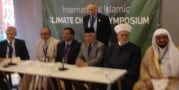](https://interfaithsustain.com/wp-content/uploads/2015/09/IslamicClimateChangeSymposium-179x90.jpg)
**Categories:** Blog on Faith and Ecology, Faith & Ecology
---
### [A Jewish Response to Climate Change](https://interfaithsustain.com/a-jewish-response-to-climate-change/)
**Published:** January 31, 2016
**Author:** ICSD
**Excerpt:** Andrew Deutsch - In late December 2015, a leading theologian, a Member of the Israeli parliament, the CEO of a leading solar energy company, and others revealed insights into “A Jewish Response to Climate Change.” The event was organized by and held at Jerusalem’s Kol HaNeshama synagogue, and its Rabbi, R’ Levi Weiman-Kelman opened the event.
**Content:**
*By Andrew Deutsch*
In late December 2015, a leading theologian, a Member of the Israeli parliament, the CEO of a leading solar energy company, and others revealed insights into “A Jewish Response to Climate Change.” The event was organized by and held at Jerusalem’s Kol HaNeshama synagogue, and its Rabbi, R’ Levi Weiman-Kelman opened the event.
David Miron-Wapner, the Board Chair of The Interfaith Center for Sustainable Development, and Yosef Abramowitz, CEO of the solar company Gigawatt Global, shared their experiences as Israeli delegates at the UN Climate Conference in Paris (COP21). David spoke about how the urgency of the mission was palpable, and all countries managed to come to an agreement, but the results fell far short of what was actually necessary. At COP21 Al-Gore emphasized that climate change was as much of a challenge for humanity as was the battle for women’s rights, and the ending of slavery. Yosef mentioned the Israeli government’s unambitious internal sustainability goals, in such a sun-blessed country, aiming at 17% renewables by the year 2030, compared to 2% today. By comparison, countries like Sweden, Portugal, Ireland, and Germany, with less sun, are already achieving far higher percentages of renewable energy.
Keynote speaker Rabbi Arthur (Art) Green, Professor of Jewish Mysticism & Hasidut, visiting Israel from the Hebrew College of Boston, was next to speak. Art was very encouraged by two events in 2015 – the agreement reached at COP21, and the publishing of Pope Francis’ Encyclical Laudato Si. The Pope presented climate change as a reality we must confront, and connected it to poverty, and social justice. Rabbi Green spoke about how humankind will have to make many drastic changes in the way we live. Religion can help us solve the enormous climate challenges facing us today. He mentioned an understanding of Adam and Eve who in Chapter Two of Genesis did not seek to control nature or be above it, but were a are part of it. He spoke about the recently published book, “Kabbalah and Ecology”, by Rabbi David Seidenberg, which puts forth a bio-centric theology based on a range of Jewish sources.
Rachel Azariya, a member of the Israeli parliament, and of the official Government delegation to COP21 in Paris, spoke of her experiences at the conference, the sense of urgency and the need for repairing the World. MP Azariya stated that we need to bring back hope, and the possibility of repair, in Israel, including by taking responsibility for how we live based on an awareness of how it will impact the next seven generations.
Rabbi Yonatan Neril, Executive Director of The Interfaith Center for Sustainable Development spoke about the role of religious institutions and teachings as a key avenue for change to reorient the world view of billions of people from one excessively focused on consumption of material goods, to a sustainable worldview that has sustained humanity for thousands of years based on community and family and spiritual pleasures.
*\* Featured image [source](https://unsplash.com/@pauli152 "Featured image source")*
**Categories:** Blog on Faith and Ecology, Faith & Ecology
---
### [Daoism and the Construction of Sustainable Societies](https://interfaithsustain.com/daoism-and-the-construction-of-sustainable-societies/)
**Published:** September 26, 2019
**Author:** ICSD
**Excerpt:** Clara Calabuig - According to Dr. Sarah Flavel, scholar from the Bath Spa University, the environmental problems that we face today can be explained by the Daoist principle of yin-yang, and thus are a result of a loss of balance in the human-nature relationship: “We have gone too far in exploiting the environment, to the extent that if we do not retreat from this path, we will lose balance completely”.
**Content:**
By Clara Calabuig, *based on a*n* interview with Dr. Sarah Flavel.*
According to Dr. Sarah Flavel, scholar from the [Bath Spa University](https://www.bathspa.ac.uk/), the environmental problems that we face today can be explained by the Daoist principle of *yin-yang*, and thus are a result of a loss of balance in the human-nature relationship: “We have gone too far in exploiting the environment, to the extent that if we do not retreat from this path, we will lose balance completely”.
[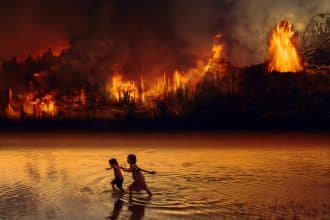](https://interfaithsustain.com/wp-content/uploads/2019/09/LEIB.jpg)
Daoism would point that if we are not at peace with ourselves, we cannot be at peace with what surrounds us. Therefore, achieving environmental balance at the individual level is fundamental. As Flavel states, if we live our lives like rabbit consumers, we cannot relate to the world in a balanced way since all we are doing is taking –“there is no give and take, no back and forth, no reciprocity established between the natural and the human”. On the other hand, as Flavel puts it, there are industrial, commercial and political forces which are true players in the global game to attain this balance of human-nature, and thus the question is established whether individuals can make enough change on their own terms to change the world. Regarding *wu-wei*, the Daoist principle of actionless action, the belief doesn’t command one to do nothing, but to act producing less of an interfering effect. And today the relationship between humans and nature does not follow this path as we are interfering in the environment in a very obviously aggressive way. **How could a preferable human-nature dynamic fit with urban life and appeal to our** **lifestyle?**
[](https://interfaithsustain.com/wp-content/uploads/2019/09/LEIB-1.jpg)Mt. Qingcheng, 青城山. Daoist temple and nature sanctuary. Aishan Foundation.
One type of living experience of Daoist ecology are the Daoist “nature sanctuaries” in China. The so-called *dongtian* (‘cave heavens’) or *fudi* (‘blessed lands’) appeared for the first time in the province of Sichuan, based on the spiritual belief that individual (inner) well-being is conditional to, and interrelated with, environmental (outer) welfare, and thus built by Daoist monks as humble temples using the available resources in the area. Following the Dao De Jing path (“the Earth respects Heaven, Heaven abides by the Dao, and the Dao follows the natural course of everything”), these sanctuaries were established in mountainous sites and remote forests; they were not seeking human alienation, but trying to integrate and equalize human life as another inhabitant of the planet. For more than one thousand years they have considerably succeeded in preserving biodiversity, conserving natural equilibrium, and reducing human footprint to its minimum by plant gathering, land cleaning, forbidding hunting, and by using biofuels and solar-powered lighting. The Qinling Agreement of the Daoist Ecological Protection Network, joined by 120 temples, pledged to protect the environment for a new green revolution. However, its scarce residents put into question the application of this model into larger populated communities and scenarios. Nowadays our economic model and way of living is endangering and is pushing the ecological limits and capacity of the planet; but, **is it possible to conceal both alignment with nature and commodity?**
[](https://interfaithsustain.com/wp-content/uploads/2019/09/LEIB-2.jpg)Tainjin (天津) eco-city model. BBC.
Dr. Flavel stresses the view that an urban environment should not be regarded as an unnatural environment. If we started to understand our cities within the broader landscape of nature as a whole, she explains, it could change our present attitude. “Redirecting our relationship with nature doesn’t have to imply that humans become a completely different creature, but that we do need to undergo a process of rebalancing”. In China, the scholar explains, efforts are being made in trying to develop models of *eco-cities*, **creating urban spaces that include nature** and thus attempting to remove the dichotomist opposition between the urban and the rural, whilst also minimizing the environmental damage that is generally considered an externality of any populous city. For while we won’t abandon cities, Flavel establishes, this idea of concealing both nature and society is put at the forefront of political thinking in China in trying to maintain a relation with nature that is not exhausting, abusing, and lacking balance. Indeed, the scholar even suggests that we already have this relationship adhered in our livelihoods to some extent: “where there is not access to alive animals in the city, people have pets”. We also acknowledge the appearance of certain establishments destined to this purpose, like thematic coffee shops (i.e. cat cafes), and this incarnates a need to return to a greater contact with nature, even to the “animality” that we have lost.
[](https://interfaithsustain.com/wp-content/uploads/2019/09/LEIB-5.jpg)
It is undeniable that Daoist practitioners exhibit a completely different lifestyle –“they don’t eat meat, they usually live in monasteries or temples where they seek to live in tune with living in modesty and nature…”- but in China, the scholar explains, lay people likewise follow Daoist ideas as the Yin-Yang, which has influenced, for example, Chinese traditional medicine enormously, even when it is practiced in tandem with Western medicine. For example: if you are hot you shouldn’t drink cold beverages for it is going to interrupt your balance; heal the body from the outside instead of having surgery; or acknowledge certain illnesses with spiritual and inner imbalance. **These beliefs have favoured Chinese people enormously, who have historically shown greater life expectancies.** This is now changing due to a developing taste for Western food that contains greater doses of meat, or frequenting fast food chains like McDonalds, which are becoming very popular as well. Originally, Dr. Flavel explains, traditional Chinese diets avoided over-excesses, and it has recognized the importance of movement, lack of stress and psychological and emotional as well as physical well-being. Chinese medicine is holistic and gives great importance to preventive action. All these aspects, as can be noted, descend and are influenced by Daoism.
[](https://interfaithsustain.com/wp-content/uploads/2019/09/LEIB-3.jpg)Beijing Donyue Temple, 北京东岳庙. BigStock.
Xi Jinping’s government, the author explains, has repeatedly stressed their commitment to the promotion of Daoism and Confucianism as to recover Chinese national identity, but also for the positive ultimate impact in ecology it could entail, regarding sustainability in the management of natural resources. It is also noticeable the huge amount of action adjustment behaviour per capita towards the environment that the country is accomplishing, “more than any nation on earth”, and for this reason, Dr. Flavel acknowledges the genuine interest in the party to adjust the degree in which China is playing its part in the environmental conundrum.
A convinced Daoist practitioner is committing their life to the preservation of local natural environment, with its cycles and in the entirety of the complexity of the surrounding ecosystem. Therefore, should Daoism gain followers, the range of committed guardians of ecological balance of their respective surroundings would concurrently grow. However, relevantly, Flavel concludes, it is worth noting that there are Daoist temples in the centre of Beijing, still preserving a distinctively quiet and reflective environment that emulates nature strategically making use of plants. The Daoists that dwell there eat differently and present a certainly different lifestyle; and thus “they live in kind of sanctuaries within that which is urban”. This, the scholar states, is again proof that **Daoism could contribute to the elaboration of the most needed eco-cities**, which for their success require not being addressed only from material urbanism, but from the social relations that are expected to develop within.
---
*This interview was conducted by Mariona Bonsfills Clotet in light of the BA in Global Studies dissertation “The Dao in Life on Land: a way to sustainability”. University Pompeu Fabra. Academic year 2018/2019.*
More about [Dr. Sarah Flavel](https://www.bathspa.ac.uk/our-people/sarah-flavel/):
Sarah Flavel is a senior lecturer in Religions, Philosophy and Ethics at Bath Spa University. Her previous research has focused on the Buddhist Kyoto school philosopher Keiji Nishitani through the comparative lens of his critical relationship to the writings of Friedrich Nietzsche. Sarah serves as an editor for Comparative and Continental Philosophy (Taylor and Francis Journals) and is an Associate Board Officer of the Comparative and Continental Philosophy Circle, one of the largest international societies dedicated to the study of global philosophy.
**Categories:** Blog on Faith and Ecology, Faith & Ecology
**Tags:** Dao, Daoism, Doaist, Environment, Lifestyle, Sustainable
---
### [About Our Interfaith Eco Forum](https://interfaithsustain.com/about-our-interfaith-eco-forum/)
**Published:** July 25, 2013
**Author:** ICSD
**Excerpt:** We at The Interfaith Center For Sustainable development are incredibly grateful to have hosted our first Interfaith Eco Forum here in the holy city of Jerusalem
**Content:**
*By Eitan Press*
We at The Interfaith Center For Sustainable development are incredibly grateful to have hosted our first Interfaith Eco Forum here in the holy city of Jerusalem. It was in incredibly positive coming together of leaders from the Jewish, Christian and Muslim faiths. You can read more about it by [clicking here](https://interfaithsustain.com/interfaith-eco-forum/).

We are also grateful to be starting up our online community and blog. One of our goals in starting this project is to build an online community people of all faiths who sincerely care about the environment. We believe that there are so many people from many different religions that see caring for the environment as an expression of their faith, who want to do something. What we want to do is to bring together, and plug into the collective power of all these people in order to live a more sustainable lifestyle, and to help heal humankind’s relationship to the Infinite, the earth, and each other. So please, [contact us!](https://interfaithsustain.com/contact/)
We hope to share with you information on this blog that will inspire you, is practical in terms of how to think and live more sustainably, and that shares teachings from the worlds wisdom traditions and religions, that we can draw upon for strength in doing good work.
**Categories:** Blog on Faith and Ecology, Faith & Ecology
---
### [Connecting on the Way to Jerusalem](https://interfaithsustain.com/connecting-on-the-way-to-jerusalem/)
**Published:** October 2, 2013
**Author:** ICSD
**Excerpt:** On September 23rd, 2013 The Interfaith Center for Sustainable Development (ICSD) collaborated with several organizations in providing programming for the.....
**Content:**
By Rotem Weizman for The Interfaith Center for Sustainable Development
On September 23rd, 2013 The Interfaith Center for Sustainable Development (ICSD) collaborated with several organizations in providing programming for the “Connecting on the Way to Jerusalem” project. Three members of the ICSD team led outdoor, experiential activities to hundreds of participants. The project, organized by city councils in Israel and the group “Connecting–Building a Future Together,” aims to relaunch the old tradition of pilgrimage to Jerusalem while bringing together people from all walks of life. About 4,500 Israeli Jews and Arabs participated in the event. At 7:30 a.m. we arrived at the natural spring of Ein Lamur, about twenty minutes outside of Jerualem. We joined staff from several Israeli environmental organizations and the people of Ein Rafa to raise awareness on environmental issues.
These organizations led a variety of activities, such as making recycled decorations for the sukkah (temporary structure or ‘Tabernacle’ that is linked to the Jewish festival of Sukkot), and signing the “Green Travel Declaration”. ICSD staff and interns led outdoor activities with participants in small groups about how different religions relate to environmental issues, specifically about faith perspectives on the importance of rain and water. We lead a unique activity that facilitated participants connecting to their surroundings through their sense of touch. The activity also introduced ways to understand the environment in relation to faith teachings. We are very lucky to work with a variety of people from different backgrounds and to take part with thousands of other people and organizations in projects that support a green sustainable future for Israel and cooperation among the different part of society. We wish to thank our partner organizations in this successful event:: Connecting–Building a Future Together, The Society for the Protection of Nature in Israel (SPNI), Jewish National Fund (JNF), The Center for Local Community Councils, Ein Rafa, Green Pilgrimage Network, and the Israel Nature and Parks Authority.
[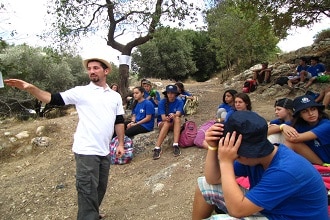](https://interfaithsustain.com/wp-content/uploads/2013/10/IMG_8555-edited.jpg)
[](https://interfaithsustain.com/wp-content/uploads/2013/10/IMG_8530-edited.jpg)
[](https://interfaithsustain.com/wp-content/uploads/2013/10/IMG_8521-edited.jpg)
[](https://interfaithsustain.com/wp-content/uploads/2013/10/IMG_8563-edited.jpg)
[](https://interfaithsustain.com/wp-content/uploads/2013/10/IMG_8546-edited.jpg)
[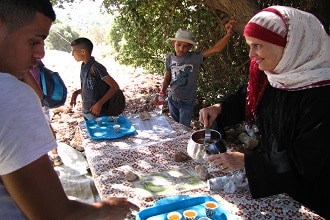](https://interfaithsustain.com/wp-content/uploads/2013/10/IMG_8568-edited.jpg)
**Categories:** Blog on Faith and Ecology, Faith & Ecology
---
### [Jerusalem Interfaith Panels Zero In On Ecology and Coexistence](https://interfaithsustain.com/jerusalem-interfaith-panels-zero-in-on-ecology-and-coexistence/)
**Published:** March 29, 2015
**Author:** ICSD
**Excerpt:** Joy Auciello - Since 2011, the Interfaith Center for Sustainable Development (ICSD) has organized over 15 interfaith panels, which have reached about 1,000 people. On February 23, 2015 ICSD hosted an interfaith panel for a group of 40 Dutch students on a Holy Land church tour at the Commodore Hotel in East Jerusalem.
**Content:**
*By Joy Auciello for the Interfaith Center for Sustainable Development*
Since 2011, the Interfaith Center for Sustainable Development (ICSD) has organized over 15 interfaith panels, which have reached about 1,000 people. On February 23, 2015 ICSD hosted an interfaith panel for a group of 40 Dutch students on a Holy Land church tour at the Commodore Hotel in East Jerusalem.
The three panelists were Yasmin Barhum, landscape architect and facilitator at ‘Living in the Levant’, which aims to present Islam and the Arab population of Israel to non-Muslims through tours in the village of Ein Rafa and visits at the local mosque; Rev. Russell McDougall, Rector of the Tantur Ecumenical Institute in Jerusalem; and Rabbi Yonatan Neril, Director of ICSD.
Rachel Winner of ICSD moderated the panel asked about the panelists’ intercultural work. Ms. Barhum lives in a small Arab village in Israel, and stated, “Where we live, as soon as we step out of our village, we’re in a completely different country. The language changes, the religion changes. Our experience living here in a minority community is that in every stage in which we leave our village we are encountering other \[cultures\]. We have had to absorb a lot of those things into who we are.”
Rev. McDougalll reflected on his pastoral experience in Kenya and Uganda where he had to adjust to a very different way of life. He repeated the sage advice of one of his colleagues there: “Let your first instinct be to realize that there is a wisdom to the way people have ordered their lives.”
In order to express how these issues interact with everyday life in Israel, Rabbi Neril said that he finds that language is a huge way of crossing the cultural barriers and that everyday cross-cultural interactions are very important in bringing people together. “There is a big variation in the amount of interaction people have with people from a different faith. With some people, there is almost no interaction. I think that is one of the things that perpetuates the conflict.”
The discussion also related to religion and the environment. Rev. McDougall reminded us of the joint statement of Pope Francis and Patriarch Bartholomew in May 2014: “It is our profound conviction that the future of the human family depends also on how we safeguard both prudently and compassionately with justice and fairness the gift of creation that our creator has entrusted to us. Therefore, we acknowledge in repentance the wrongful mistreatment of our planet which is tantamount to sin in the eyes of God.”
Rabbi Neril related how “environmental issues are one thing that can really unite people in this land. For people of faith, there is actually more that unites us than separates us.”
Several questions from the audience closed the discussion. These included, “This country, especially Jerusalem, is claimed by so many people. Is coexistence, for you, the ultimate goal?” “As just one person in the world, what can I do for coming generations?” and “How much of this can we (an Israeli or Palestinian) bring home to our communities?”
Ms. Barhum ended the panel by saying, “It’s about being open to receiving the Other and also to venturing into a place you feel less comfortable in. On the level of building trust, you don’t have to agree in order to work here, you have to be able to work with respect. At every opportunity of contact that you have, leave it in a positive situation.” The group tour was organized by Pastor Marten de Vries of Bedum, the Netherlands and by [Keshet Educational Journeys](https://www.keshetjourneys.com/ "Keshet Educational Journeys").
[](https://interfaithsustain.com/wp-content/uploads/2015/03/IMGA0315-edited1-165x220.jpg)
*\* Featured image [source](https://unsplash.com/@jxk)*
**Categories:** Blog on Faith and Ecology, Faith & Ecology
---
### [Partnering in Good Faith, for the Rehabilitation of the Jordan River](https://interfaithsustain.com/partnering-in-good-faith-towards-the-rehabilitation-of-the-jordan-river/)
**Published:** March 1, 2016
**Author:** ICSD
**Excerpt:** Andrew Deutsch - A very special interfaith ecology tour, “Partnering in Good Faith, Towards the Rehabilitation of the Jordan River,” took place on January 28th, 2016. EcoPeace led the tour, and Interfaith Center for Sustainable Development (ICSD) organized an interfaith group of participants to attend, from its Women’s Faith and Ecology Project. Similar tours are taking place with Jordanians and Palestinians, with the intention to enable Jews, Christians, and Muslims to learn about, and discuss the relationship between faith traditions, ecology and the Jordan River.
**Content:**
*By Andrew Deutsch*
A very special interfaith ecology tour, “Partnering in Good Faith, Towards the Rehabilitation of the Jordan River,” took place on January 28th, 2016. EcoPeace led the tour, and Interfaith Center for Sustainable Development (ICSD) organized an interfaith group of participants to attend, from its Women’s Faith and Ecology Project. Similar tours are taking place with Jordanians and Palestinians, with the intention to enable Jews, Christians, and Muslims to learn about, and discuss the relationship between faith traditions, ecology and the Jordan River.
We headed down the ear-popping and picturesque descent to the Dead Sea plain, to the lowest river valley on planet Earth and the lower Jordan River. The tour itinerary included three sites along the river, beginning with the Baptism site at Qasr al-Yahud on the Israeli side of the Jordan River. The second site we visited was the St. Gerassimos monastery, and the final stop was an abandoned hotel with painted murals of the Jordan valley around its walls, on the northern tip of what was once the Dead Sea. The Dead Sea has since declined significantly, and has receded hundreds of meters from the sea-side hotel.
All through the tour EcoPeace Middle East expert Mira Elizabeth Edelstein gave well-researched and informative presentations to the participants about the rich cultural and natural heritage of the Jordan River, its sad demise, the related geopolitical and environmental issues, and encouraged discussion of related faith-based themes. Terry Hendin, a participant from Jerusalem, commented that the tour was “enjoyable and enlightening as well as inspiring.” The role of the different faith communities in sustaining the restoration, and reconciliation between human kind and nature, and the possibility of taking action were also discussed, culminating in the signing of EcoPeace’s ‘Covenant of the Jordan River. You can sign the covenant here: www.SavetheJordan.com



**Photos by Naama**
*\* Featured image [source](https://unsplash.com/@tomvog "Featured image source")*
**Categories:** Blog on Faith and Ecology, Faith & Ecology
---
### [Partnering in Good Faith Jordan River Seminar](https://interfaithsustain.com/partnering-in-good-faith-jordan-river-seminar/)
**Published:** April 10, 2014
**Author:** ICSD
**Excerpt:** The Jordan River holds religious significance for Jews, Muslims, and Christians, which served to unite an interfaith group of clergy and [...]
**Content:**
The Jordan River holds religious significance for Jews, Muslims, and Christians, which served to unite an interfaith group of clergy and seminarians at the recent Partnering in Good Faith Jordan River Seminar. The site of the Israelites passage into the Promised Land, Jesus’s baptism, and the final resting place of many of the Companions to the Prophet Muhammad; this body of water now barely resembles a river ecosystem, let alone a holy site for three major world religions. Around 96% of the Jordan’s natural flow has been diverted by Israelis, Jordanians and Syrians, and today the small amount of water that flows through the holy river includes sewage, diverted saline streams and agricultural runoff.
For many, the man-made disaster reflects our disconnect and disregard for the natural world and our failure to act responsibly as custodians of God’s earth. The unique Partnering in Good Faith Seminar served to inspire a group of multi-faith spiritual leaders to act towards rehabilitating these life-giving waters.
On March 31st, 2014, a group of Jewish and Christian seminary students, clergy, and others spent a day at the Jordan River in a seminar organized and facilitated by the Interfaith Center for Sustainable Development (ICSD) and Friends of the Earth Middle East (FoEME – www.foeme.org). The day began at the Yardenit baptismal site where Christian pilgrims from across the globe come to follow the steps of Jesus and be baptized in a beautiful, healthy river oasis. Elizabeth Koch-Ya’ari, Jordan River Projects Coordinator at FoEME’s Tel Aviv office, introduced the seminar and the ecological challenges facing the River, and then Rabbi Yonatan Neril, founder and executive director of ICSD, led icebreaker activities. Taking a twenty-minute hike to the Alumot dam, the group saw where the Jordan ceases to flow with the gentle yet mighty force, and is reduced to a stream of sludge. While the dramatic reduction in size was certainly shocking to the participants, it was the overwhelming smell of human sewage that was undoubtedly the most unsettling and notable change to the river.
As shocking as the sewage flowing into the river is, Alumot dam also serves to highlight the importance of raising voices to call upon regional decision makers to implement sanitation solutions for communities along the Jordan River to take the sewage out of the river and return freshwater resources to the River. At Alumot, visitors were pleased to see that the Israeli Water Authority is now allowing a small but significant amount of fresh water to flow back to the Lower Jordan River – the first fresh water returned to the river in 49 years! (http://foeme.org/peace.php?id=109) This change, Elizabeth explained, is largely due to the large number of residents and visitors from around the world that have called upon leaders to rehabilitate the river. FoEME’s faith based campaign provides information and practical guidance to communities in the region and around the world to raise their voices to call upon regional decision makers to rehabilitate the Jordan.
The next stop on the tour, known as Old Gesher, was a pleasant contrast to the previous site. Elizabeth explained that while the river remains polluted, the area is also a place of hope as the location of a joint initiative where Jordanian and Israeli stakeholders (including local authorities, community businesses, and FoEME) are working together to develop the area to become the future home of the transboundary Jordan River Peace Park. Among a host of benefits, this project would advance the rehabilitation of the Lower Jordan River, create economic and job opportunities and protect the numerous cultural and natural heritage sites located throughout the proposed Jordan River Peace Park.
The tour made its final stop at Ohalo where the participants engaged in an intriguing conversation over lunch on the shores of the Sea of Galilee. Then the group delved into the spiritual significance of the Jordan River. Rabbi Neril explored Jewish sources and perspectives on the Jordan River, and Rev. Dr. Martin Otto Zimmann taught a Christian perspective on the River. Respect for God’s natural creation and the physical and metaphorical power of water runs deep within both religious philosophies: ritual bathing in a Jewish mikvah has similar symbolism of healing and cleansing as a baptism in the Christian tradition. While the Jordan River needs substantial support to regain full health, work is under way to bring Muslim, Christians, and Jews together to restore these important waters. You can find more information about the current state of the Jordan and regional efforts to rehabilitate the river on FoEME’s website (www.foeme.org/) or email Elizabeth, <elizabeth@foeme.org> to learn what your congregation can do to join in this important campaign. You can also contact ICSD by clicking [here](https://.interfaithsustain.com/contact/) to inquire about eco-educational opportunities in the Holy Land.
[](https://interfaithsustain.com/wp-content/uploads/2014/04/Group-Photo-Resized-small1.jpg)


**Categories:** Blog on Faith and Ecology, Faith & Ecology
---
### [An Interfaith Look at the Jordan River](https://interfaithsustain.com/an-interfaith-look-at-the-jordan-river/)
**Published:** July 25, 2013
**Author:** ICSD
**Excerpt:** A body of water surrounded by wild nature? Moses, Jacob, the Biblical prophets? Jesus? Muslim historical ruins? Arab towns? Tourist attraction? Natural borders?
**Content:**
*By Vanessa Coriat for The Interfaith Center for Sustainable Development*
What comes to mind when you think of the “Jordan River”? A body of water surrounded by wild nature? Moses, Jacob, the Biblical prophets? Jesus? Muslim historical ruins? Arab towns? Tourist attraction? Natural borders? Political conflict between neighbors? Turns out it is all of that, and more. On May 30th, 2012, I participated in the “Interfaith Crossing the Jordan Seminar: A Faith-Based Ecological Look at the Jordan River,” a full-day event organized by the Interfaith Center for Sustainable Development (ICSD) in conjunction with Friends of the Earth Middle East (FOEME), Al Qasemi Academy, and Rabbis for Human Rights (RfHR). The seminar was the third in the spring 2012 series of The Interfaith Seminary Students Sustainability Program, bringing together Jewish, Muslim, and Christian seminary students for a series of interactive workshops on faith and ecology in the Holy Land.
Over twenty Jewish, Christian, and Muslim religious studies students – many studying to be rabbis, priests, and imams – joined by already ordained clergy, toured several sites along the northwest bank of the Lower Jordan River. They experienced firsthand the heritage, natural environment, and significance of this river from their respective faith perspectives.
We started the trip in Israel at the Yardenit baptism site, a section of the Lower Jordan River near the Sea of Galilee. Visited by 600,000 people a year, mostly Christian pilgrims, Yardenit is an area of clean water where the faithful can take a dip amidst diverse local fauna and flora. Based on this section of the Jordan River, one might get the impression that the Jordan River remains robust and vibrant from when it exits the Sea of Galilee until it arrives to the Dead Sea.
Our next stop, Alumot, showed that that was not the case. Alumot is a small, man-made dam where a sewage treatment plant is being built. Our guides from FOEME explained that the water flow diverted to the Yardenit baptism site reaches the Alumot dam, and this fresh water is diverted for human consumption, industry, and agriculture. On the southern side of the dam, the liquid that flows in the Lower Jordan River is currently a combination of sewage, agricultural runoff, and saline water. The river’s ecosystem does somewhat clean the effluent as it flows towards the Dead Sea, but by the time it reaches its final destination, it is essentially a small stream of muddy-looking salt water. We learned that the non-native flora along the flow of this effluent have been rapidly replacing the native species and are now threatening the populations of native fauna.
From Alumot we headed to “The Island of Peace.” One of the most amazing sites I’ve ever seen, the Island is land administered by an Israeli kibbutz on Jordanian territory. It is located on the eastern side of the Jordan River, where the Yarmouk River from Jordan meets the Jordan River. At the site, FOEME aims to create a “Jordan River Peace Park.”
We learned about a hydroelectric plant built and founded in the 1930s based on the strong flow of the Jordan and Yarmouk Rivers. Today, however, the Yarmouk River experiences a similar fate as the Jordan River; just as Israel captures or diverts most the water of the Jordan river for human uses, Jordan and Syria divert most of the Yarmouk River.
Next, we had lunch and learned about the Jordan River in the context of the Muslim, Christian, and Jewish traditions. Mufti Dr. Nizar Joron, Professor of Islamic Studies at Al Qassemi Academic College, spoke on the passages in the Islamic tradition where the Jordan River is mentioned. According to Islam, miracles were performed in the Jordan River. In addition, several of the Prophet Muhammad’s companions were buried on the Eastern bank of the Jordan River. Mufti Joron explained how Muslims visit those sites out of respect for the Companions to the Prophet Muhammed but do not pray there. He described how he personally visited these sites.
Next spoke Abbot Gregory Collins, a Catholic priest from Ireland who heads the Dormition Abbey in Jerusalem. He discussed the significance of water in Christianity. His key topics ranged from the meaning of baptism, to the basis for hundreds of thousands of Christian pilgrims visiting the Jordan River every year, to the vitality of water for human life. Jesus was baptized in the Jordan River at the site where the Israelites crossed upon entering the Land of Israel. Therefore, the Jordan River for Christians symbolizes all the rivers and body of waters everywhere in the world.
Rabbi Yonatan Neril, director of the Interfaith Center for Sustainable Development, then led a guided learning session on the passages from the Hebrew Bible that relate to the Jordan River. We learned that Lot saw the banks of the Jordan full of water and life and that the area near the Jordan River was compared to the Garden of Eden. The fifth book of the Hebrew Bible—Deuteronomy—was spoken by Moses as the Israelites were encamped near the banks of the Jordan River. Afterward, God split the Jordan River to allow the Israelites to cross it. The river was split again when the prophets Elija and Elisha wanted to cross it. Elisha also performed two miracles in it. Rabbi Neril emphasized how the vigor and heal powers that the Hebrew Bible describes in relation to the Jordan River can inspire us to promote a healthy future for the river as well.
Concluding a full day of deeply moving experiences, all participants agreed that the symbolism of the Jordan River can promote the Jewish, Christian, and Muslim faithful to actively support the conservation efforts of nature anywhere in the world, and the Jordan River in particular. Many participants were inspired by the proposed “Jordan River Peace Park,” with its potential for intercultural and interreligious exchange, job creation, and ecological benefits.
For me, the seminar was incredibly positive and outstandingly beautiful. Things can change if there are really good and practical reasons for it, and passionate people are committed it to make them happen. The Interfaith Center for Sustainable Development and Ecopeace Middle East are two examples of groups of people with really good reasons and the human force to make it so. The seminar demonstrated how faith and ecology together can form a framework for promoting coexistence. Participants came from diverse faiths and nationalities, and this diversity of backgrounds made for a rich and engaging experience.
So what comes to mind when I think “Jordan River”? A strong flow of peaceful and beautiful possibilities.
[](https://interfaithsustain.com/wp-content/uploads/2013/09/Jordan-River-Eco-Tour.jpg)
[](https://interfaithsustain.com/wp-content/uploads/2013/09/Jordan-River-Eco-Tour-1.jpg)
[](https://interfaithsustain.com/wp-content/uploads/2013/09/Jordan-River-Eco-Tour-2.jpg)
[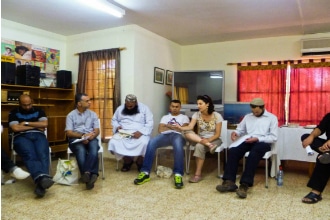](https://interfaithsustain.com/wp-content/uploads/2013/09/Jordan-River-Eco-Tour-3.jpg)
[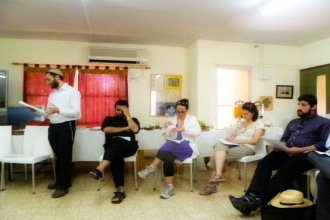](https://interfaithsustain.com/wp-content/uploads/2013/09/Jordan-River-Eco-Tour-4.jpg)
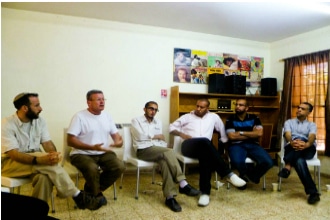
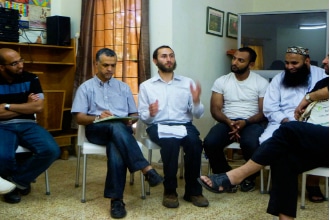
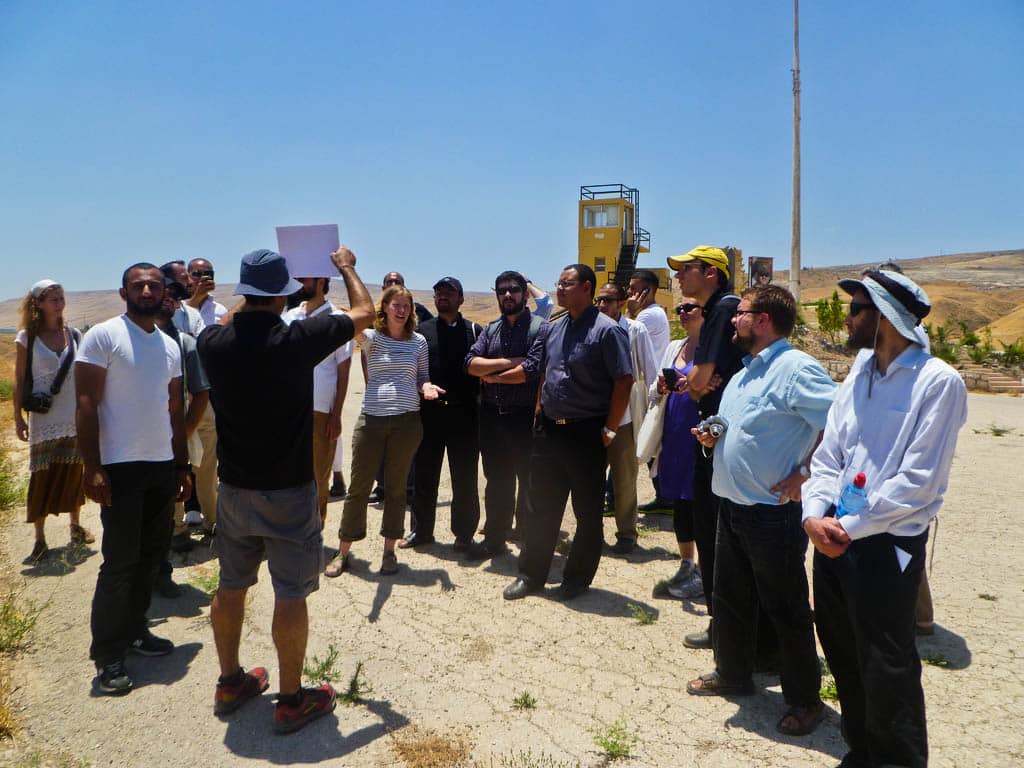
**Categories:** Blog on Faith and Ecology, Faith & Ecology
---
### [Meeting the 'Green Patriarch' in Jerusalem](https://interfaithsustain.com/meeting-the-green-patriarch-in-jerusalem/)
**Published:** June 8, 2014
**Author:** ICSD
**Excerpt:** We are waiting for that moment when our consultations, dialogues, and steps toward unity become expressions of truepeace [...]
**Content:**
“We are waiting for that moment when our consultations, dialogues, and steps toward unity become expressions of true peace. Imagine what that day will be like: Abraham’s children —as numerous as the stars in the sky— working together without fear of ‘the other’”. These powerful words were spoken in May 2014 by HAH (His Ecumenical Patriarch Bartholomew I of the Orthodox Church, also known as the ‘[Green Patriarch](https://www.apostolicpilgrimage.org/).’ I recently had the opportunity to meet HAH Ecumenical Patriarch Bartholomew when he spoke at a luncheon put on by the American Jewish Committee, organized by Rabbi David Rosen and Avril Promislow, who are on the Interfaith Center for Sustainable Development’s Board of Advisors and Board of Directors, respectively. Chief Rabbi of Israel David Lau also spoke at the event. Ecumenical Patriarch Bartholomew continued his emphatic support for relationship building:
“We have to come to truly know one another through dialogue in order to move towards mercy and forgiveness… Peace will come when the world chooses to love their neighbors as themselves.” He ended with a blessing, “May God be gracious to us, and grant us the wisdom and courage to love our neighbor by acting justly, loving mercy, and walking humbly with our God.” Ecumenical Patriarch Bartholomew’s visit to the Holy Land took place together with that of [Pope Francis I](https://www.huffingtonpost.com/2014/05/30/pope-francis-bartholomew-ecumenical_n_5419114.html), fifty years after the historic visit to the Holy Land of Pope Paul VI and Patriarch Athenagoras, which brought a new level of closeness between Catholic and Orthodox Christians. Father John Chryssavgis, Patriarch Bartholomew’s environmental advisor, [describes the Ecumenical Patriarch](https://www.patriarchate.org/patriarch/the-green-patriach): “His All Holiness Ecumenical Patriarch Bartholomew has persistently proclaimed the primacy of spiritual values in determining environmental ethics and action.
\[Coined by the media and environmental leaders like Al Gore as the ‘Green Patriarch’,\] Patriarch Bartholomew was named one of Time Magazine’s 100 Most Influential People in the World in 2008 for ‘defining environmentalism as a spiritual responsibility’.” A [New York Times article](https://www.nytimes.com/2012/12/04/science/bartholomew-i-of-constantinoples-bold-green-stance.html) illustrates the Green Patriarch’s revolutionary theological stance on ecology: “In September \[2012\], he published a [strongly worded encyclical](https://www.patriarchate.org/documents/encyclical-of-his-all-holiness-for-the-church-new-year) calling on all Orthodox Christians to repent ‘for our sinfulness’ in not doing enough to protect the planet.
Biodiversity, ‘the work of divine wisdom,’ was not granted to humanity to abuse it, he wrote; human dominion over the earth does not mean the right to greedily acquire and destroy its resources. He singled out ‘the powerful of this world,’ saying they need a new mind-set to stop destroying the planet for profit or short-term interest.” At a personal level, it was particularly meaningful for me to meet Ecumenical Patriarch Bartholomew because he has been the most outspoken world religious leader on environmental issues over the past several decades. He has also been supportive of the work of ICSD, delivering a video address to the 2012 Interfaith Climate and Energy Conference in Jerusalem, which ICSD co-organized with the Konrad Adenauer Stiftung Foundation. ICSD’s [One Home video ](https://interfaithsustain.com/all-faith-ecology-videos/interfaith-eco-video-one-home/)of faith leaders also quotes him speaking out on ecological sustainability.
In addition to meeting Patriarch Bartholomew, I had the privilege to meet at length with His Eminence Metropolitan Emmanuel – Exarch of Europe and representative of Ecumenical Patriarch Bartholomew to the European Union, and Father Chryssavgis to explore collaboration opportunities between the Interfaith Center for Sustainable Development and the Orthodox Church. Our meeting refreshed a connection we began at an interfaith conference in Athens five years ago between Jewish and Orthodox Christian clergy. As a result of this meeting, Fr. Chryssavgis has committed to becoming a member of the [United Planet Faith and Science Initiative](https://www.uri.org), which signifies the support and solidarity by the Orthodox Church in this project! For more details about the forward momentum of UPFSI, see our project’s [website](https://www.uri.org).
**Photo credits:** Nikolaos Manginas, Greek Orthodox Archdiocese of America for photo of R’ Yonatan Neril meeting HAH Ecumenical Patriarch Bartholomew
**Other photos:** Noam Moshkovitz
[](https://interfaithsustain.com/wp-content/uploads/2014/06/HAH-Ecumenical-Patriarch-Bartholomew-speaking-in-Jerusalem.jpg)HAH Ecumenical Patriarch Bartholomew speaking in Jerusalem
Chief Rabbi of Israel David Lau speaking at event
Rabbi Yonatan Neril meeting HAH Ecumenical Patriarch Bartholomew
Sikh, Jewish, and Muslim religious figures at event
**Categories:** Blog on Faith and Ecology, Faith & Ecology
---
### [Mobilizing Religious Communities to Care for Philadelphia and the Earth](https://interfaithsustain.com/mobilizing-religious-communities-to-care-for-philadelphia-and-the-earth/)
**Published:** August 3, 2018
**Author:** ICSD
**Excerpt:** Rabbi Yonatan Neril - As Philadelphia has experienced a rise in temperatures due to climate change, Mayor Jim Kenney has committed the city to 100 percent clean energy by 2030. This is a positive direction, since scientific evidence has made it increasingly clear that human activity is changing the climate and making extreme weather events more common.
**Content:**
By Rabbi Yonatan Neril

As Philadelphia has experienced a rise in temperatures due to climate change, Mayor Jim Kenney has committed the city to 100 percent clean energy by 2030. This is a positive direction, since scientific evidence has made it increasingly clear that human activity is changing the climate and making extreme weather events more common. To enable a sustainable future, we need all hands on deck. That’s why Philadelphia’s faith communities will be key. Many residents of Philadelphia identify as people of faith and maintain some level of religious practice. They attend religious institutions, hear from clergy, and conduct their lives in a manner associated with the values of their faith. A significant potential exists for faith teachings to speak to the environmental challenges we are facing today, with climate change being at the top of the list.
Yet a 2014 survey by the Public Religion Research Institute and the American Academy of Religion found that “most Americans who attend religious services at least once or twice a month hear little from their clergy leaders about the issue of climate change.” The low incidence of American clergy teaching on climate change, and by extension, environmental issues in general, is reflected in how American citizens view the issue of climate change.
While many have sought to address climate change and other global environmental challenges, the current approaches have yet to succeed in catalyzing a collective global response commensurate with the challenge. This stems in part from the failure to engage those people with the greatest track record of inspiring behavior change: faith leaders, clergy, and teachers. Seminaries influence the reach and impact of future faith leaders. Many faiths understand the ecological crisis to be a spiritual crisis, and the education of emerging clergy in this area is therefore critically important.
Such an enterprise can be seen in the United Lutheran Seminary, with campuses in Philadephia and Gettysburg. In addition to an *Ecology & Stewardship* course offered at its Gettysburg campus since 1994, an immersion course, *Environment & Religion in Northern Appalachia*, guides students to the home of Rachel Carson, the earliest oil fields, streams restored from mine drainage, virgin forest, carbon-zero buildings and other sites. The United Lutheran Seminary also offers a *Green Preaching* course. Sustainable infrastructure at the seminary includes geo-thermal heating and cooling in major buildings, water conservation and a productive seminary garden. The Seminary Ridge Museum earned LEED green building certification by renovating its 1832 building on the popular Gettysburg Battlefield. In May 2018, the United Lutheran Seminary then announced a trust to permanently preserve 18 acres of historic land with the Museum.
Also in Philadelphia, the Reconstructionist Rabbinical College offers the course *Rabbis as Activist Leaders for Environmental Sustainability and Justice*. This rabbinical school has been an early leader of including Jewish ecological learning as part of training rabbis. They also offer resources for creating sustainable synagogues. As well, leaders from Green Muslims and CAIR-Philadelphia (the Council on American-Islamic Relations) have been working to educate the community on climate change. For example, they teamed up with other ecology-activism organizations last year for a program about spiritual ecology at Respect Graduate School.
These Philadelphia seminaries and activism organizations are part of a nation-wide trend of seminaries and theology schools educating emerging clergy on environmental issues. Religious leaders trained in this way will then synthesize the religious value of caring for the planet when preaching, teaching, or providing other clerical services to their congregants. Based on that inspiration, religious individuals will embrace more sustainable lifestyles.
The hurricanes that hit Puerto Rico, Florida, and Texas, as well as the wildfires in the West, are warning sirens. They provide us a glimpse into the degraded future we must prevent. When any ecological problem arises, it is usually accompanied by a window of opportunity during which we can address it. If we ignore the problem for too long, we will lose that option, and we are then left to face a catastrophic impact without the ability to do anything about it. Right now, we are in that window of opportunity to address the problem. If we continue with business as usual for the coming years, the window will likely close, jeopardizing our own future as well as that of our children, grandchildren and all species on this planet. May faith-based institutions and their leaders help forge the path to a sustainable future.
**Categories:** Blog on Faith and Ecology, Faith & Ecology
---
### [Religious Leaders Pour Hope into Jordan River](https://interfaithsustain.com/religious-leaders-pour-hope-into-jordan-river/)
**Published:** December 11, 2013
**Author:** ICSD
**Excerpt:** Friends of Earth Middle East (FoEME) hosted a regional conference on November 10-12, 2013, inviting clerics from Judaism, Christianity, and Islam to [...]
**Content:**
By *Neria Greniman and Rachel Winner for the Interfaith Center for Sustainable Development*
Friends of Earth Middle East (FoEME) hosted a regional conference on November 10-12, 2013, inviting clerics from Judaism, Christianity, and Islam to address the state of the lower Jordan River. I (Neria) attended the conference as a staff member of The Interfaith Center for Sustainable Development. Nearly 300 Israelis, Palestinians, and Jordanians showed up for the event, including a number of international academics, students, and non-profit and religious representatives.
As a holy, historical site for all three traditions and an imperative natural resource for Israelis, Palestinians, and Jordanians, the Jordan River has transformed over time from a flourishing and revered wetland into a contaminated, trickling canal. According to FoEME, 96% of the river is diverted for agricultural and domestic use, and the remaining water is laden with sewage and agricultural runoff.
Distinguished rabbis, priests, and imams took the stage at the commencement and spoke with great passion on the importance of the Jordan River in their respective faiths. Atallah Hanna, the Archbishop of Sebastia, Greek Orthodox Patriarchate of Jerusalem, highlighted that despite our differences, we are truly all one family in our common use and protection of the Jordan River.
Rabbi David Rosen, International Director of Interreligious Affairs of the American Jewish Committee (AJC) and board member of the Interfaith Center for Sustainable Development, acknowledged the motif of water in the Jewish daily Shema prayer, and the importance of treating the land with care. One particularly fiery speech was given by Dr. Yahya Hendi, Muslim Chaplain at Georgetown University. Dr. Hendi opened by asserting that women’s voices in the environmental movement and society are key to promoting environmental stewardship. He offered an image of religious leaders working together to save the Jordan River, of floating down the river in a modern Noah’s Ark. Rather than presenting the river’s health as a crisis, he framed the work that lies ahead as a vehicle for collaboration and peace that could transform the region. FoEME provided all participants with a toolkit – a compilation of faith-based resources for communities of different religious backgrounds to engage in promoting the rehabilitation of the Jordan River. The organization also offered more comprehensive sourcebooks with religious texts, songs, essays and other materials to help leaders motivate and lead their communities in the project and in general environmental practices.
The religious leaders were invited to sign “The Jordan River Covenant,” to ask regional governments to act on behalf of the River’s rejuvenation. Once the covenant receives wider circulation and more signatures, it will be sent to President Mahmoud Abbas of the Palestinian Authority, Jordan’s King Abdullah II, and Israel’s Prime Minister Binyamin Netanyahu. The next morning, the group traveled to the Jordan River to the historical site where Jesus was baptized by John. The field trip was a mixture of sadness and hope. The toxic river was a sorry sight, but FoEME informed the group that the Israeli water authority has recently begun to release previously diverted fresh water back into the river and has an ultimate goal of 30 million cubic meters annually. A new Israeli sewage treatment plant will soon be opened that will stop the flow of Israel’s wastewater into the river. Finally, the saline spring that runs into the River will also soon be desalinated.
Together, FoEME and religious leaders and communities from across the region are using faith as a bridge over the Jordan River, and flooding its murky basin with hope. It was meaningful to attend the conference on behalf of The Interfaith Center for Sustainable Development and to show our support for this important project.
*Photos by Neria Greniman and FoEME*
[](https://interfaithsustain.com/wp-content/uploads/2013/12/IMG_6796.jpg)
[](https://interfaithsustain.com/wp-content/uploads/2013/12/IMG_7160.jpg)
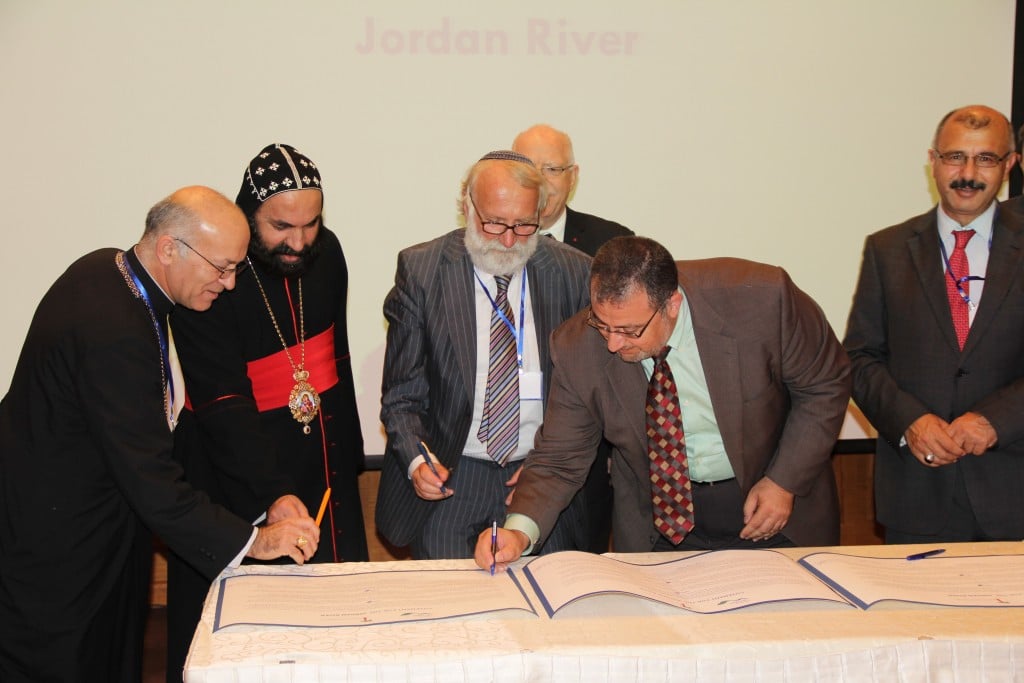
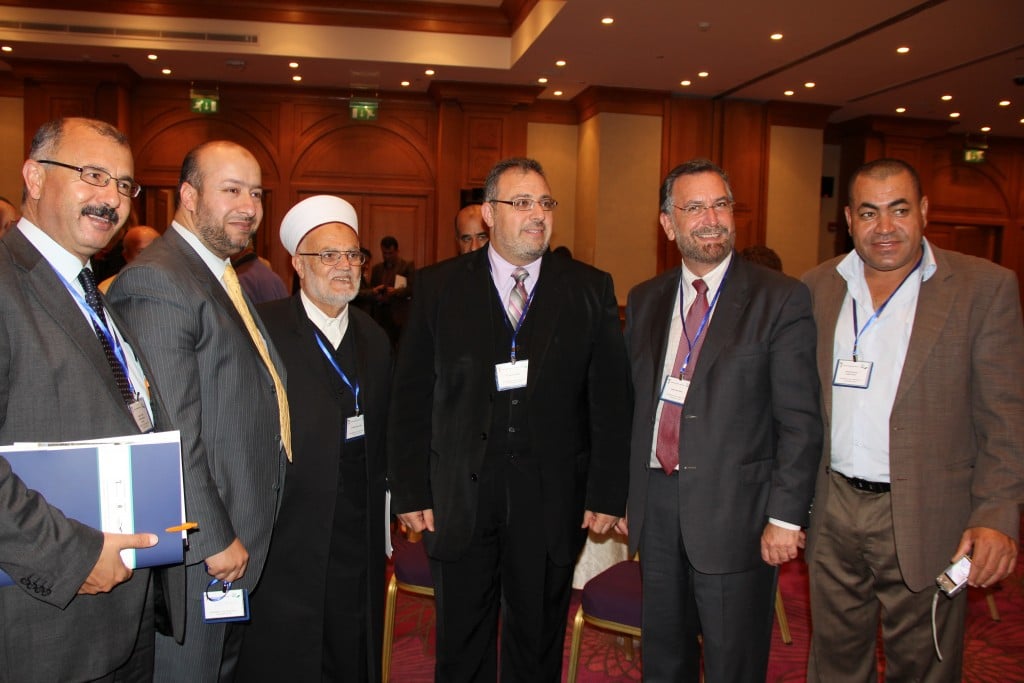
**Categories:** Blog on Faith and Ecology, Faith & Ecology
---
### [Women's Interfaith Ecology Project](https://interfaithsustain.com/womens-interfaith-eco-project-2/)
**Published:** August 25, 2013
**Author:** ICSD
**Excerpt:** These seminars bring together Muslims, Christians, Jews, and Druse to focus on how religious teachings relate to ecology and the Holy Land.
**Content:**
The Women Faith and Ecology Project in Jerusalem continues to engage Christian, Muslim, and Jewish women in the Jerusalem area for inspiring seminars on faith and ecology. Originally launched in 2013, the project continued with [five meetings in 2014](https://interfaithsustain.com/urban-hiking-recycled-origami-and-twenty-two-women-from-three-religions/), [two seminars in 2015](https://interfaithsustain.com/womens-faith-and-ecology-project-in-jerusalem-spurs-dialogue-and-action-part-2/), and four gatherings in early 2016. The participants continue to work together toward the common cause of sustainability, leading by example in peaceful cooperation towards sustainable lifestyles.
The most recent seminars in late 2015 and early 2016 focused on women’s leadership, ecology and faith and involved various lectures, workshops discussions, and an environmental outing to the Jordan River. They are being followed by a local environmental fair, highlighting ecological work and activism taking place throughout the greater Jerusalem area. The meetings were attended by women of the three faiths, with six Christian, Jewish and Muslim speakers. The meetings were attended by Jewish and Arab women from Jerusalem, as well as women native to Turkey, the U.S., Europe, and New Zealand. We had women from the Bedouin sector, East Jerusalem, Arab villages around Jerusalem, Arab Christians, Protestants, Catholics, and Orthodox, reform, and secular Jews. The women came from various professional backgrounds- some working as religious leaders, others in ecologically oriented organizations and other great leaders and wonderful people. Sessions included textual study based on texts from Bible and the Koran which focused on ours and God’s responsibility towards the earth. We spoke of our own and nature’s vulnerability, and women’s role in this as a mother, teacher, daughter, wife and activist. We spoke of the challenges that the world and Jerusalem faces in terms of environmental challenges and what our role can be in changing it- as women who are an integral part of their community and as religious people and clergy.
**Project Goals:**
1\. To encourage a better understanding of the “other” and support the creation of cross-cultural and inter-religious friendships and partnerships;
2\. To educate the group about teachings on sustainability within their own faiths and foster a culture of appreciation of similar teachings from different religions and cultures;
3\. To increase the understanding of the human and environmental challenges in Jerusalem and the region among female leaders of multiple faiths;
4\. To facilitate a sustained network of Jerusalem-based female leaders in developing and implementing a plan of environmental action and advocacy for their communities.
To read about a previous seminar, click [here](https://interfaithsustain.com/sisterhood-stewardship-and-sustainability/). Pictures and videos from the December 2013 project are below.
*To watch short videos from speakers at the seminar held in December 2013, click on the videos below.*
**Categories:** Blog on Faith and Ecology, Faith & Ecology
---
### [Sisterhood, Stewardship, and Sustainability](https://interfaithsustain.com/sisterhood-stewardship-and-sustainability/)
**Published:** January 1, 2014
**Author:** ICSD
**Excerpt:** What’s in a name? Strong woman. Giving. The powerful reverberation from the small tongue of a bell. Golden sword. Family tradition. Grace. In the opening of [...]
**Content:**
*By Rachel Winner for the Interfaith Center for Sustainable Development*
What’s in a name? *Strong woman. Giving. The powerful reverberation from the small tongue of a bell. Golden sword. Family tradition. Grace.* In the opening of an Interfaith Center for Sustainable Development (ICSD) women’s conference, women of multiple faiths, skin colors, and roots shared the meanings of their given names, drawing common threads of the power and light that they carry in their identities. On Thursday, December 19th, the ICSD brought together women from across the Holy Land for a seminar on faith, environment, and activism. Over the course of seven hours, over thirty women took a deep look at their identities and respectfully explored those of their fellow sisters. They raised the challenging questions regarding faith’s role in environmental stewardship, women’s role in society and ecology, and the most impactful ways to elevate our influence in all of these sectors.
The first panel hosted three religious leaders discussing how their faiths are linked to environmental sustainability. Rabbi Naamah Kelman, Dean of Hebrew Union College in Jerusalem, drew parallels between stewardship and Shabbat – the Jewish Sabbath. She explained that Shabbat is a regenerative tradition that reaches all the way back to Genesis (before there were flags or boundaries, she pointed out) to rejuvenate and prepare ourselves for the demands of the world during the rest of the week. Similarly, sabbaticals are not just for religious leaders and college professors – the custom is rooted in agriculture to let arable land lie fallow every seven years. Not only is this practice better for long-term productivity, but it is indicative of responsible and compassionate management of the land.
The Lutheran tradition of Christianity has similar practices, explained Rev. Angela Zimmann, PhD, who is a pastor at Lutheran Church of the Redeemer in the Old City of Jerusalem and Special Assistant to Bishop Munib Younan. She emphasized how the Lutheran denomination shares values of rest, moderation, and ecological respect. She explained that like Islam, no one is entitled to own land over anyone else. Yasmin Barhum, representing the Muslim faith, is a landscape architect and gardener whose love of nature attracted her to Islam. Echoing the sentiments of the other panelists, Yasmin highlighted the Muslim principle of *tawhid*, which means the Oneness of God as evidenced by the interconnection of all things. Humans represent the epitome of this oneness because we have free will. Therefore, we are collectively responsible to treat God’s domain with intentional and communal respect.
So we have these three monotheistic religions all claiming to truly respect the environment. Where, then, did society divert itself from these tenets and begin to abuse our space and its resources? And how do we bolster conservation through faith? The rest of the day was dedicated to answering these questions; and Elizabeth Koch-Ya’ari joined us from Friends of the Earth Middle East (FoEME) to provide a practical approach. FoEME works on trans-boundary water issues in the region through grassroots organizing. Elizabeth spoke about a current project to bring the three faith traditions together to rehabilitate the Jordan River. Her presentation generated a combination of outrage and enthusiasm regarding the divergence of the River’s water for agriculture and its desecration via the raw sewage that joins the remaining dribble and snakes its way to the Dead Sea. More information about ICSD’s involvement in this campaign can be found in two ICSD blog posts: on [an interfaith conference in Jordan](https://interfaithsustain.com/religious-leaders-pour-hope-into-jordan-river/) and on [a group of seminary students’ tour of the Jordan River](https://interfaithsustain.com/an-interfaith-look-at-the-jordan-river/). Elizabeth’s presentation offered a stimulating bridge between faith and activism, which segued well into our final panel with two women using different channels to significantly impact the local community.
As Yasmin mentioned in the first panel, when you live in a marginalized community without education and resources, it creates an added challenge for environmental conscientiousness. Rana Khalaf understands this sentiment first-hand. As an educator and school principal in East Jerusalem, she witnesses the parallel between limited resources and environmental disregard in her school for children with ADD and ADHD. The Muslim tradition has a ritual cleaning component before prayer. But unfortunately, explained Rana, this practice tends to translate personally and not practically – people cleanse themselves and their houses, but then throw the trash out on the streets. Therefore, she is educating her students on cleaning the streets and bringing trash to schools to use for recycled projects like making furniture. Rana’s school is creating a tangible shift: at first, the notion of carrying trash around was scorned by the locals, but Rana and her school are slowly gaining respect and reconnecting the Muslim community to its inherent environmental values. Her work is proof that education leads to empowerment, which derives a true and collective shift for community development. Sitting to her right, Naomi Tsur represented the political face of women-led environmental activism. As Jerusalem’s former deputy mayor, she pushed for stronger green initiatives involving recycling and managing the Sustainable Jerusalem Coalition within the municipality. She split off to form a new party when her colleagues rebuffed her efforts. “We need a new definition of feminism through political change. The world is busy discussing us, but no one is asking the city of Jerusalem how we feel. The message must come from within Jerusalem. Women who run their homes understand this better than the men.” Whereas Rana is focused on grassroots education, Naomi’s platform emphasizes political empowerment and inclusion of women in the civil sector. Naomi explained that in the current political system, we are focused on survival instead of stewardship and collaboration; and she aims to swing the pendulum in the other direction. Furthermore, Naomi has started an international green pilgrimage network to fortify the connection between environmentalism and religion in pilgrimage sites around the world: “If \[the environmental crisis\] is the most burning issue of our day, then my faith has to find the relevance in this work. We cannot go in to worship and then go right back to throwing trash in the streets.”
The personal responses to these panels were as diverse and powerful as the introductions at the beginning of the day: “I get it – but how do I make others understand the importance of environmental work?” “I know the work I want to do, but I’m trying to figure out how it relates to my faith.” “This makes me just want to go out and pick up trash.” “How can I have a micro effect and make a macro difference?” “How do we bridge the intimacy of faith?” and of course… “What next?” The participants of the seminar committed to follow-up to discuss ideas for environmental action, specifically pursuing the idea of a trash cleanup in the Old City or other mixed neighborhoods around Jerusalem. With enthusiasm, love, and a host of avenues for inciting a conscious shift, the teachers, environmentalists, political and social activists, professionals, students, volunteers, worshipers, and sisters departed this ICSD seminar to go out and create a cleaner and brighter world.
[](https://interfaithsustain.com/wp-content/uploads/2014/01/Womens-seminar-121913-9.jpg)
[](https://interfaithsustain.com/wp-content/uploads/2014/01/Womens-seminar-121913-13.jpg)

[](https://interfaithsustain.com/wp-content/uploads/2014/01/Womens-seminar-121913-1.jpg)
[](https://interfaithsustain.com/wp-content/uploads/2014/01/Womens-seminar-121913-4.jpg)
[](https://interfaithsustain.com/wp-content/uploads/2014/01/Womens-seminar-121913-10b.jpg)
**Categories:** Blog on Faith and Ecology, Faith & Ecology
---
### [Women's Faith and Ecology Project in Jerusalem Spurs Dialogue and Action](https://interfaithsustain.com/womens-faith-and-ecology-project-in-jerusalem-spurs-dialogue-and-action-part-2/)
**Published:** February 21, 2016
**Author:** ICSD
**Excerpt:** Manya Kagan - The Women's Faith and Ecology Project in Jerusalem continues to engage Christian, Muslim, and Jewish women in the Jerusalem area for inspiring seminars on faith and ecology.
**Content:**
*By Manya Kagan*
The Women’s Faith and Ecology Project in Jerusalem continues to engage Christian, Muslim, and Jewish women in the Jerusalem area for inspiring seminars on faith and ecology.
The seminar held on December, 17th 2015 helped us move forward in creating individual work plans for Jerusalem-based eco project. We discussed various project ideas as part of a brainstorming session. As part of this process, Naomi Tsur, former Deputy Mayor of Jerusalem and founder of the Jerusalem Green Fund spoke about her work in the municipality and with other offices in which she was able to promote significant changes related to sustainability, ecology and faith in Jerusalem. She spoke of the importance of women leadership, politics and the significance of faith-inspired organizations to Jerusalem’s future. She told us about her achievements in creating a greener Jerusalem: among them the Gazelle Valley Park, the Old Railway park, and various compost and recycling projects. It was fascinating to hear about them and provided inspiration for the women to create their own project.
Our next seminar, on January 3rd, 2016, made me feel really thankful to the world for giving me the opportunity to meet and have quality time with all the wonderful and inspiring women who joined me in the meetings- it was really a pleasure and I learned so much! The ideas for future projects that were discussed seemed quite feasible.
At the meeting we had a really great panel with Soher, Samah and Mira who are doing amazing things and so we all decided we want to come and join them in all their projects and come visit them in the field.
Soher, a Christian Arab originally from Haifa, told us about her work as an economist and work with Catholic seminary students, at the Jewish-Christian Relations Center and various minority groups of women in Israel and how she empowers them through her classes and workshops on finances and other topics.
Samah, a Muslim woman from East Jerusalem, shared with us stories from her work with the amazing projects in the Kidron Valley (Wadi al-Nar) of Jerusalem, her photography project with young Muslim women and her work in the Jerusalem municipality. Her work really inspired me and showed the richness of the work in East Jerusalem that we have not known about.
Lastly Mira, a Jewish woman from Tel Aviv, spoke about her work on the Jordan River with EcoPeace Middle East. She gave us a sense of the complexity and importance of the issues surrounding the Jordan River and we all became excited and ready to go to a Jordan River seminar that she will be leading!
Our panels were followed by a workshop session in which we reviewed different tools used by NGOs and practitioners in development that can help us translate our ideas and goals into feasible work plans. In addition we worked in small groups and discussed our projects and gave each other valuable advice and comments on how to realize our goals for local women’s social entrepreneurship in Jerusalem relating to ecology.
For me this was an amazing experience and I was so happy to meet all of these women and I am sure we will all stay in touch and help each other develop our work.
Thanks for the German Embassy in Tel Aviv for supporting our work on this project.
**Photos by Massat**
*\* Featured image [source](https://unsplash.com/@cristina_gottardi "Featured image source")*
**Categories:** Blog on Faith and Ecology, Faith & Ecology
---
### [On Sisterhood and Sustainability in Jerusalem](https://interfaithsustain.com/womens-faith-and-ecology-project-in-jerusalem-spurs-dialogue-and-action/)
**Published:** February 14, 2016
**Author:** ICSD
**Excerpt:** Manya Kagan - Fourteen Muslim, Christian, and Jewish women participated in a Women's Faith Ecology Seminar in Jerusalem, along with panelists of the three faiths. The participants were quite diverse within each religion, and geographically-- Bedouin women, women from East Jerusalem and Arab villages near Jerusalem, Protestants and Catholics, and Orthodox, liberal, and secular Jews.
**Content:**
*By Manya Kagan, Women’s Project Manager at the Interfaith Center for Sustainable Development*
Fourteen Muslim, Christian, and Jewish women participated in a Women’s Faith Ecology Seminar in Jerusalem, along with panelists of the three faiths. The participants were quite diverse within each religion, and geographically– Bedouin women, women from East Jerusalem and Arab villages near Jerusalem, Protestants and Catholics, and Orthodox, liberal, and secular Jews. The women came from various professional backgrounds- some working as religious clergy, others in ecologically oriented organizations and many more who work mostly in the non-profit sector and in education. It was very exciting to see all these women gathering together and interacting- finding that they have so much in common and so much to learn one from another. The seminar took place on December 3rd, 2015.
The meeting started with an activity in which women chose from cutout magazine pictures of: women, nature, ocean, cosmos, culture, religion, and homes. Through these pictures they told the others about themselves and what they expect and wish to take from the seminar. This activity raised key issues on the interrelation of faith and ecology and raised new levels of understanding on the importance of combining these two issues. We then convened a panel of three female speakers of the three faiths– Reverend Carrie Smith, Rabbi Meesh Hammer, and Yasmin Barhum. The panelists spoke of their work and challenges they faced in implementing projects. This generated deep and meaningful conversation on the challenges that the world and Jerusalem faces in terms of environmental challenges and what our role can be in changing it- as women who are an integral part of their community and as religious people and leaders. We discussed what these experiences can teach us and what we can take from their experiences in to our work.
Afterwards we had a short textual study based on texts from the Hebrew Bible/Old Testament and the Koran which focused on ours and God’s responsibility towards the earth. We spoke of our own and the environment’s vulnerability and our dependence on our surroundings. We also discussed women’s role in this as mother, teacher, daughter, wife and activist.
The discussions were very interesting and ranged from consumerism to feminism, from globalisation to our everyday life and responsibilities such as cooking and doing the laundry. During the three and a half hour seminar, the conversations were very deep and intimate and a strong bond was created among the participants. Participants wrote to thank me for the wonderful evening and phone numbers were exchanged so that friendships and collaborations could begin. In the next meeting more than 20 participants already RSVP’ed their participation and I am really looking forward to it!
**Photos: Massat**

**Categories:** Blog on Faith and Ecology, Faith & Ecology
---
### [Interfaith Eco Slam Attracts Muslims, Christians, and Jews in Jerusalem](https://interfaithsustain.com/interfaith-eco-slam-attracts-muslims-christians-and-jews-in-jerusalem/)
**Published:** July 6, 2015
**Author:** ICSD
**Excerpt:** Hannah Kober - On June 4th, 2015, I joined over 60 residents from Israel, and the West Bank for the Interfaith Center for Sustainable Development’s Interfaith Eco Slam, held in Hebrew, Arabic, and English. The diversity of voices present and the multiple social and political angles that were mentioned made it particularly unique.
**Content:**
*By Hannah Kober*
On June 4th, 2015, I joined over 60 residents from Israel, and the West Bank for the Interfaith Center for Sustainable Development’s Interfaith Eco Slam, held in Hebrew, Arabic, and English. The diversity of voices present and the multiple social and political angles that were mentioned made it particularly unique. What made the slam especially interesting was Jews, Muslims, and Christians, Israelis and Palestinians, could come together to share religious-inspired poetry on the ecological crisis facing all of us.
As one of the ICSD event organizers, Nadav Slovin, wrote, “this event revealed the strength of desire within many people living on this land to connect and reach beyond themselves to meet their neighbor. There was great interest and support of the event as well as strong attendance. Most of the presenters spoke on the intersection between sustainability and religion; some compared alienation from nature with struggles to connect to one another peacefully over religious divides.” There are 700,000 Arabs who are Israeli citizens, 2.7 million Palestinians in the West bank, and 1.7 million Palestinians in Gaza, yet Jews and Arabs seldom have meaningful interactions with each other despite living on the same land. For one evening, among a group of 60 people on a rooftop in Jerusalem, something changed.
One participant shared her reactions to the event: “I really realized that I’ve always had a very negative outlook on peace. I guess what tonight made me realize is it starts one person at a time. And it can take years. I really do believe there is room for both of us here, and even though that could take hundreds of years i think it is possible. The hateful Jewish and Arab leaders don’t come from nowhere, they come from a society that’s breeding hate. If we change that society, then the leaders will change. Listen it’s easy to believe it’s impossible because then you don’t have to work on it. But it’s harder to accept that it can happen with a lot of work over years, because that means you have to work. You guys really inspired me tonight! It’s very clear to see that you are all people who see a very big picture.”
The element of listening at the expense of brainstorming had a particular power in creating a sense of productive discomfort. Had the audience had the opportunity to respond to each and every speaker in a public way, it would have been more difficult for most of us to internalize the sincerity of the narratives presented. Although I personally understand a lot of environmental challenges of the region to be inextricably tied to the geopolitical reality, I found some of the more politically-oriented statements to be challenging to swallow (even if I identified with much of what was said). I had to silently acknowledge my requisite privilege when the various Palestinian presenters incurred many obstacles and hours of waiting to get to “my neighborhood.” In my mind, this effectively expanded the concept of respecting “nature” beyond your ever-so-typical image (and unfortunately so) of a deforested area, extinct species, and other natural disasters. The term must accommodate other more-directly-human-made natural disasters such as war, hunger, and intolerance. A number of the speakers touched on the broader impact of said consequential destruction in incredibly thoughtful ways, which made me reflect on the avenues by which solving those problems can have a significant effect on healing our earth, but also can redirect our attention to the ground on which these events are taking place.
Furthermore, it was remarkable to see the extent to which the organizers provided a minimally-wasteful space. Following the directions on Facebook, I brought my reusable water bottle so I could try the refreshments (water in wine bottles, to be exact and charming). Each of the presenters read their pieces off of their phones instead of sheets of paper, which also contributed to the sustainability of the event. These examples demonstrated really simple ways in which events like this one could model responsibility toward the environment. Granted that many of us have wildly different ideas and priorities surrounding that responsibility, the Interfaith Eco Slam created a community of those are at least interested in dabbling in these issues in a critical yet respectful way.
[](https://interfaithsustain.com/wp-content/uploads/2015/07/eco-slam-edited-31-294x220.jpg)
**Categories:** Blog on Faith and Ecology, Faith & Ecology
---
### [Interfaith Climate Action in Jerusalem Joins Up with Global Effort](https://interfaithsustain.com/interfaith-climate-action-in-jerusalem-joins-up-with-global-effort/)
**Published:** December 27, 2014
**Author:** ICSD
**Excerpt:** Lucy Atkinson - The Interfaith Center forICSD_Lima_climate change action_3 Sustainable Development (ICSD) organized an Interfaith Climate Action in Jerusalem on December 7th, 2014, in which dozens of people participated. ICSD joined OurVoices’s global #LightforLima campaign in raising awareness about the urgency of acting on climate change, at the beginning of the UN Conference of Parties (COP-20) climate talks in Lima, Peru.
**Content:**
*By Lucy Atkinson for The Interfaith Center for Sustainable Development and photos by Gundula M. Tegtmeyer*
The Interfaith Center for Sustainable Development (ICSD) organized an Interfaith Climate Action in Jerusalem on December 7th, 2014, in which dozens of people participated. ICSD joined OurVoices’s global #LightforLima campaign in raising awareness about the urgency of acting on climate change, at the beginning of the UN Conference of Parties (COP-20) climate talks in Lima, Peru. #LightforLima built on the momentum from the People’s Climate March in September that mobilized hundreds of thousands of people in Manhattan, and preceded the historic climate deal between the United States and China that took place in November.
The event in Jerusalem, as well as in twelve other locations around the world, gave an ecological twist to the traditional practice of lighting candles as a sign of hope, by using solar-powered lamps instead. Events also took place in Australia, Canada, India, Japan, Nigeria, the UK, and the USA. They were organized by a range of interfaith and faith-based groups, and involved the participation of Muslims, Hindus, Buddhists, Christians, Jews, and secular people.
At the gathering in Jerusalem, dozens of people gathered at Jaffa Gate of the Old City. Some held a banner that stated, ‘We call for climate action.’ From there participants ascended the centuries-old walls of the Old City (known as the Ramparts Walk), aided by their solar lights and the full moon. The event continued at Jerusalem University College on Mt. Zion, where people shared their words, thoughts and prayers on key topics for discussion at Lima. Participants wrote ‘word storms’ on the topics of consumerism, water, energy and food security.
As Rabbi Yonatan Neril, founder and executive director of ICSD, said, “Jerusalem is tense, and the world knows it. Yet, here we are, religious people of different faiths, walking side by side in our Old City of Jerusalem. By marching with solar lights on these ancient walls together, we are showing that people of faith can come together to address our collective challenges.”
Senior religious leaders from several traditions wrote prayers specifically for the campaign, with Imam Zaid Shakir, H.H. Radhanath Swami, and Archbishops Desmond Tutu and Thabo Makgoba encouraging their followers to pray for world leaders during the Lima meetings.
For each solar lamp used in #LightforLima, SolarAid is delivering two lamps to African rural communities. The solar lamps will replace kerosene lanterns whose noxious fumes cause thousands of deaths annually.
[](https://interfaithsustain.com/wp-content/uploads/2014/12/ICSD_Lima_climate-change-action_3.jpg)

©*Photos by Gundula M. Tegtmeyer*
**Categories:** Blog on Faith and Ecology, Faith & Ecology
**Tags:** "homepost"
---
### [Faith & Ecology Conference in Jerusalem](https://interfaithsustain.com/faith-ecology-conference-in-jerusalem/)
**Published:** September 17, 2014
**Author:** ICSD
**Excerpt:** Faith and Ecology Conference empowered current and emerging faith leaders to be a powerful vehicle for environmental stewardship. Christian, Jewish, and Muslim clergy and seminary students convened around a shared vision of ecological sustainability at the Faith and Ecology Conference in Jerusalem on Wednesday, October 22nd.
**Content:**
*Faith and Ecology Conference empowered current and emerging faith leaders to be a powerful vehicle for environmental stewardship. Christian, Jewish, and Muslim clergy and seminary students convened around a shared vision of ecological sustainability at the Faith and Ecology Conference in Jerusalem on Wednesday, October 22nd. The conference educated over 100 clergy, seminary students, and others and provided tools and inspiration to expand faith-based environmental teaching and action.*
Speakers included Jerusalem-area priests, rabbis, imams, and a scientist, such as Bishop William Shomali (Latin Patriarchate of Jerusalem), Rabbi Yuval Cherlow (Rosh Yeshiva, Yeshivat Hesder Petach Tikva), Dr. Nurit Hashimony Yaffe (Academic College of Tel Aviv-Yafo), and Member of Knesset Rabbi Dov Lipman; interactive workshops, an outdoor session, and a video session featuring pre-recorded addresses from the Dalai Lama, Archbishop Desmond Tutu, and Rabbi Lord Jonathan Sacks. Part of the event was dedicated to generating action plans within each faith community, which resulted in commitments for continued collaboration on the environment.
This event was part of the [United Planet Faith & Science Initiative](https://www.uri.org/), which brings faith and science leaders together to catalyze shifts in society to address climate change. It is part of a series of events in late 2014 taking place on three continents in New York, Jerusalem, and Lima. The events coincide with UN climate talks and aim to generate tangible environmental action within faith-based communities. In regards to environmental challenges, Bishop William Shomali said, “We need to collaborate together– Christians, Muslims, Jews, Buddhists, and Hindus. Ecology unites the religions. If we speak together as religious leaders, our impact is really stronger.” In the Holy Land, members of the three Abrahamic traditions all share the importance of being stewards of Creation. Rabbi Michael Melchior, former Member of Knesset and co-founder of the Knesset environmental caucus, said that “the holy city of Jerusalem sometimes goes astray to points of violence, but really we can make it a gate to Heaven. The world really belongs to God, and all of us are temporary residents in this world, which we have been given to take care of.”
The Conference was held at the Mishkenot Sha’ananim Conference Center in Jerusalem, and was co-organized by the [Konrad Adenauer Foundation](https://www.kas.de/), the Interfaith Center for Sustainable Development, and the [Salesian Pontifical University](https://jerusalem.unisal.it/). To view the event schedule, click [here](https://interfaithsustain.com/wp-content/uploads/2014/09/Interfaith-Conference-on-Faith-and-Ecology-Draft-Schedule-Oct.-7-14.pdf). To read more about the conference, click [here](https://interfaithsustain.com/despite-jerusalem-violence-emerging-clergy-seed-future-with-hope-2/). Videos of the conference can be viewed [here](https://interfaithsustain.com/event-videos-2/ "Event videos of the Faith & Ecology Conference in Jerusalem") and news articles regarding the conference can be found [here](https://interfaithsustain.com/articles-and-radio/ "Articles and Radio").

**Categories:** Blog on Faith and Ecology, Faith & Ecology
---
### [Religion and the Rights of Nature](https://interfaithsustain.com/religion-and-the-rights-of-nature/)
**Published:** July 21, 2023
**Author:** ICSD
**Excerpt:** Typically, when we think of legal rights, we envision the rights between people and their government. But what about rights regarding the environment? In recent years, a new legal strategy known as the Rights of Nature (RoN) has emerged, aimed at protecting the environment from the threats of climate change, pollution, and overdevelopment.
**Content:**
Table of Contents
Table of Contents
- [The Emergence of Rights of Nature (RoN)](#aioseo-the-emergence-of-rights-of-nature-ron-1)
- [Recognizing Nature's Independent Rights](#aioseo-recognizing-natures-independent-rights-3)
- [Shift in Human-Nature Relationship: Industrial Revolution's Impact](#aioseo-shift-in-human-nature-relationship-industrial-revolutions-impact-5)
- [RoN Concept Rooted in Centuries-Old Religious Ideas](#aioseo-ron-concept-rooted-in-centuries-old-religious-ideas-10)
- [Biocentrism vs. Theocentrism vs. Anthropocentrism](#aioseo-biocentrism-vs-theocentrism-vs-anthropocentrism-15)
- [RoN Implementation Worldwide: Ecuador's Landmark Case](#aioseo-ron-implementation-worldwide-ecuadors-landmark-case-24)
- [Challenges and Ambiguities in Practical Application](#aioseo-challenges-and-ambiguities-in-practical-application-27)
## **The Emergence of Rights of Nature (RoN)**
*By Alina Sterenfeld* – Typically, when we think of legal rights, we envision the rights between people and their government. But what about rights regarding the environment? In recent years, a new legal strategy known as the Rights of Nature (RoN) has emerged, aimed at protecting the environment from the threats of climate change, pollution, and overdevelopment. The fundamental premise of this legal strategy is to recognize nature as independent from human use, and thereby grant it power, through the guardianship of local communities, to safeguard itself from harm.
## **Recognizing Nature’s Independent Rights**
The concept of nature having its own rights originated from the writings of Christopher D. Stone. In 1972, Stone, a then-professor at the University of Southern California published a paper titled [“Should Trees Have Standing? — Toward Legal Rights for Natural Objects.”](https://iseethics.files.wordpress.com/2013/02/stone-christopher-d-should-trees-have-standing.pdf "Should Trees Have Standing?") It is in this article where Stone proposed “that we give legal rights to forests, oceans, rivers and other so-called ‘natural objects’ in the environment.”
## **Shift in Human-Nature Relationship: Industrial Revolution’s Impact**
Stone argued that nature is worthy of legal personhood status once we cease viewing nature as property. This perspective of humans looking to nature as property is a phenomenon which is relatively recent. The core relationship between humans and nature drastically changed during the late 18th century with the Industrial Revolution.
*[Source](https://pixabay.com/photos/oranges-fruits-grove-orange-trees-1117628/)*
Rather than living *with* the land, humans began living *on top of* the land, inherently separating themselves from their surroundings, looking to the earth as a source of extraction, exploiting it for personal use such as energy, timber, and minerals. Because of this break in the relationship between humankind and nature, the environment has remained at great risk, so that the majority of legal systems classify nature as a commodity for human use, leaving it vulnerable to irreversible degradation.
### **RoN Concept Rooted in Centuries-Old Religious Ideas**
If a person can sue for personal damages, why can’t a river? To clarify, RoN are not equating rivers to humans. But, they are equating rights of protection which humans possess to the rights of protection which rivers should also possess. The idea that nature is an entity on its own, and has to be protected, dates back to centuries-old religious ideas.
- [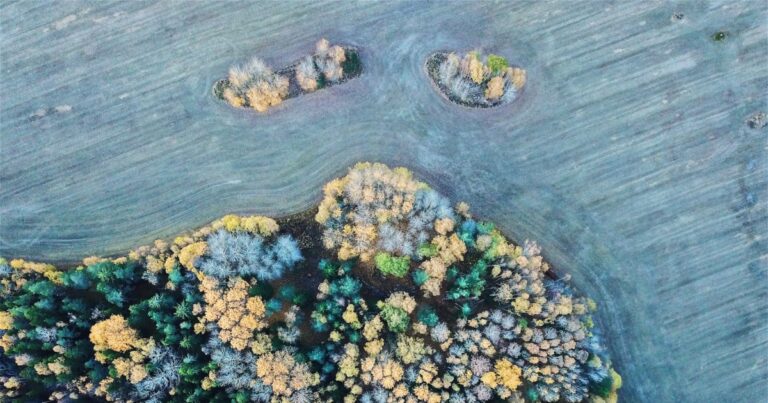](https://interfaithsustain.com/are-trees-a-renewable-resource/)
## [Trees are Life, But Are Trees a Renewable Resource?](https://interfaithsustain.com/are-trees-a-renewable-resource/)
- [](https://interfaithsustain.com/largest-trees-in-the-world/)
## [Exploring the Largest Trees in the World in Awe, Love and Wonder!](https://interfaithsustain.com/largest-trees-in-the-world/)
- [](https://interfaithsustain.com/enabling-children-to-experience-nature/)
## [Enabling Children to Experience Nature](https://interfaithsustain.com/enabling-children-to-experience-nature/)
## **Biocentrism vs. Theocentrism vs. Anthropocentrism**
In chapter 20 of Deuteronomy, God commands “When you besiege a town for many days, waging war against it you are not to bring ruin upon its trees.” Rashi, a highly influential, medieval Jewish scholar on Biblical liturgy, explains that trees are merely “innocent bystanders” during war, and cannot hide or run away. We are not permitted to cut down trees, for trees have a purpose and life of their own, entirely separate from their use for humans. We need to take exceptional caution as well, because trees cannot defend themselves against destructive human intentions and technologies.
Here, Rashi takes a biocentric view, where nature, and all living organisms hold moral consideration. In [biocentrism](https://webuser.bus.umich.edu/ajhoff/pub_academic/2005%20O&E%20Nature.pdf "biocentrism"), nature was not only created to serve the needs of humans, but serve an independent purpose on this earth and thus have inherent value. This perspective of nature having inherent value is similar to the view of theocentrism, or the belief that God is the absolute center of the universe.
[*Source*](https://pixabay.com/photos/carchi-ecuador-andes-nature-7890573/)
In theocentrism, God, who is above both humans and the ecosystem created a world for harmonious coexistence between humankind and nature, imparting the role of steward on humans. On the other end of the moral, philosophical spectrum is anthropocentrism, or the belief that humans are the central entity of creation, and thus humans alone, and not nature, possess intrinsic worth. All other creations are only as worthy as their use for humans.
## **RoN Implementation Worldwide: Ecuador’s Landmark Case**
In a world where many people harbor an anthropocentric view, trees indeed become “innocent bystanders” in need of protection: not only in the physical realm, for trees have no legs to run and hide, but also in the legal realm, as they have no legal standing to protect themselves. Humans do not ask permission to drill into the earth, and the ecosystem has no say when they do.
The RoN changes this. The RoN has been gaining momentum on an international scale, and has even been actualized in many legal systems throughout the world. Most notably, in 2008, Ecuador became the first country to [codify the RoN into its constitution](https://news.climate.columbia.edu/2021/04/22/rights-of-nature-lawsuits/ "codify the RoN into its constitution"). Other countries have followed suit, including Bolivia, Colombia, and New Zealand.
## **Challenges and Ambiguities in Practical Application**
Critics highlight the major challenges to the RoN which primarily include the ambiguity of its practical application. In 2021, however, the RoN transitioned from theoretical and symbolic law to a very concrete one.
Enami EP, which is the national mining company of Ecuador, held permits to begin mining in 68% of Los Cedros forest. Los Cedros is a region in northwestern Ecuador home to great biodiversity such as dozens of rare orchid species and the brown-headed spider monkey, one of the world’s rarest primates. Outraged by the environmental destruction that mining would cause, the people of Cotacachi, a town located near the Los Cedros forest, brought a legal case in opposition to Enami EP.
In December of 2021, The [Ecuadorian Constitutional Court made a landmark ruling](https://insideclimatenews.org/news/03122021/ecuador-rights-of-nature/ "landmark ruling") in favor of the Los Cedros Forest and deemed that the mining was unconstitutional, as it would harm the biodiversity of the forest, and thus, violate the RoN. This ruling turned the brown-headed spider monkey from an “innocent bystander” to an entity with a voice and the legal ability for self-preservation.
The RoN are pivotal to global ecological preservation. We must fight for our planet by reverting to living *with* nature, and not just *on top* of it, and create long-lasting change in our hearts, our behaviors, and our legal system.
*\*Featured image [source](https://unsplash.com/photos/6xeDIZgoPaw)*
**Categories:** Blog on Faith and Ecology, Faith & Ecology
---
### [Examining Some of the Pros and Cons of Globalization](https://interfaithsustain.com/pros-and-cons-of-globalization/)
**Published:** May 6, 2021
**Author:** ICSD
**Excerpt:** Matthew Mausner and Yonatan Neril - Our world has become much “smaller” and more interconnected in just the last generation. The rise and acceleration of globalization has ushered in vast increases in global migration, trade and communication—including negative effects on our environment and cultures.
**Content:**
Table of Contents
Table of Contents
- [A Brief History of Globalization](#aioseo-a-brief-history-of-globalization-2)
- [Pros and Cons of Globalization](#aioseo-pros-and-cons-of-globalization-11)
- [What are the detriments of globalization?](#aioseo-what-are-the-detriments-of-globalization-15)
- [Without globalization, do nature and human society look different?](#aioseo-without-globalization-do-nature-and-human-society-look-different-22)
- [Can globalization bring more good than bad?](#aioseo-can-globalization-bring-more-good-than-bad-26)
- [Natural Capitalism and Globalization](#aioseo-natural-capitalism-and-globalization-29)
- [Isn’t globalization unstoppable?](#aioseo-isnt-globalization-unstoppable-33)
- [Faith Wisdom and Globalization](#aioseo-faith-wisdom-and-globalization-37)
*By Matthew Mausner and Yonatan Neril* – Our world has become much “smaller” and more interconnected in just the last generation. The rise and acceleration of globalization has ushered in vast increases in global migration, trade and communication—including negative effects on our environment and cultures. To put this broad topic in context, we will consider some of the pros and cons of globalization, as well as perspectives about human rights, values, and interfaith sustainability that may help you decide for yourself how you feel about globalization.
## A Brief History of Globalization
Since the Cold War ended in 1991, the world has become intertwined in terms of shared commerce, international shipping and airplane travel, and a worldwide communication web, together called “globalization.”
This is qualitatively different from previous eras when the world also “shrank” in significant ways, like the 1500s when different countries in Europe spread a lifestyle, religion, conquest and diseases to the Americas, and American foods, tobacco, gold and silver were transported from the Americas to Europeans, Asians, and Africans.
Since 1980, global trade [increased tenfold](https://www.statista.com/statistics/264682/worldwide-export-volume-in-the-trade-since-1950/) to about $20 trillion per year, yet in comparison the world population has [less than doubled](https://www.worldometers.info/world-population/world-population-by-year/).
Today, the immediacy and enormity of the internet, the scale of giant cargo ships—many loaded with 20,000 large containers—carrying factory goods from China to Europe and the US—and many other factors make us more aware than ever of our interconnectedness on one small shared planet.
[Source](https://pixabay.com/illustrations/hands-globe-earth-protection-1222866/)
## Pros and Cons of Globalization
Some of the ‘pros’ are so good that we perhaps take them for granted.
For example, since 1991, a tremendous increase in **economic growth** has raised material standards of living for the world’s poor. With the spread of information, goods and services, billions of people moved from Third World poverty into the world middle class, in places like China, India, and much of South America and sub-Saharan Africa. Some of the world’s worst diseases are now near eradication.
Clean water, basic infrastructure and sanitation are available to a majority of people in the world. Education, literacy and health care have spread. Trade and travel to almost every corner of the earth is safer. Due to expanded **international trade**, the foods people eat have become much more diverse.
- [](https://interfaithsustain.com/sustainable-development-examples/)
## [Sustainable Development Examples Implemented Around The World](https://interfaithsustain.com/sustainable-development-examples/)
- [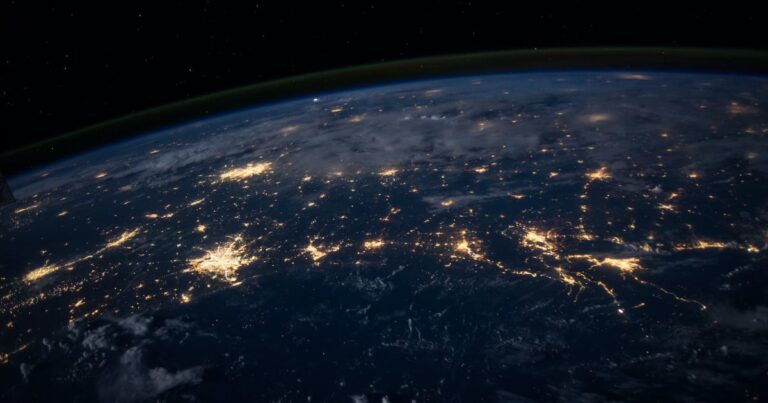](https://interfaithsustain.com/principles-of-sustainable-development/)
## [Understanding The Principles of Sustainable Development](https://interfaithsustain.com/principles-of-sustainable-development/)
- [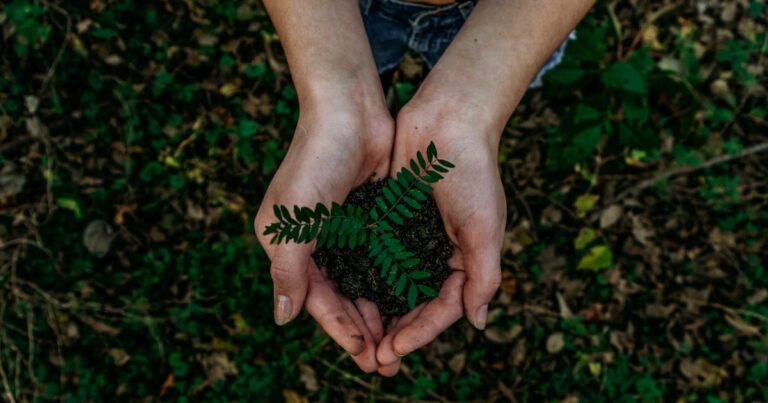](https://interfaithsustain.com/concept-of-sustainable-development/)
## [Understanding The Concept of Sustainable Development](https://interfaithsustain.com/concept-of-sustainable-development/)
### What are the detriments of globalization?
We have seen **free trade** lead to unfair trade agreements, that let corporations from developed countries exploit resources in poorer regions without regard to local environmental impact. These multinational corporations promote materialism and ever-increasing demand.
Based on “economies of scale,” many products a country buys end up being created in other countries, at a cheaper cost than domestically produced goods. But the cost of “cheaper” production may ignore things like the dignity of workers and the depletion of natural resources in the producing countries.
**Cultural diversity** and biodiversity are both being swamped by our global civilization. At least 43% of the estimated 6,000 languages spoken in the world are endangered, [according to UNESCO.](https://www.unesco.org/en/articles/international-congress-endangered-languages-risk-begins-advance-unescos-high-level-event)
The variety of life on earth is suffering perhaps irreparably, especially in the shrinking tropical forests and acidifying coral reefs that contain the lion’s share of the different species on earth.
Human pollution in all of its impacts, including [plastic in the oceans](https://interfaithsustain.com/single-use-plastic-threats-from-awareness-to-action/), carbon in the atmosphere, toxic chemicals in the soils, and even nuclear waste, may render our ecosystems inhospitable to life as we know it far more quickly than we understand.
These disadvantages of globalization just might be overtaking the pros, and if the benefits of globalization are not sustainable, they will disappear, leaving only the negative impacts.
### Without globalization, do nature and human society look different?
One can argue that the pros of globalization still outweigh the cons. A vivid example of the contradiction: next to North Korea, one of earth’s most isolated, nonglobalized societies, is one of the most vibrant and biodiverse ecological preserves on earth.
The Demilitarized Zone (DMZ) border with South Korea, a “frozen” relic of the Korean War 70 years ago, has become a green oasis, a stopping point for countless bird migrations, and one of the few places on the planet that humans mostly leave untouched.
Yet the context for that preservation has been North Korea cutting itself off from the world, creating a deeply impoverished society with frequent famines and starvation.
#### Can globalization bring more good than bad?
There are some arguments that global prosperity itself is the engine to bring more good than bad. Many of the worst environmental impacts, from strip mining to overfishing, result from people making economic decisions driven by scarcity, desperation, or ruthless profit-seeking.
When people are less pressed by survival needs to make the most extreme short-term decisions—and when they and their enterprises are more intertwined in a global system that incentivizes not just economic growth but sustainability—globalization makes our long term survival more feasible.
## Natural Capitalism and Globalization
A globalization driven by what [Pawl Hawken, Amory Lovins and Hunter Lovins called ‘Natural Capitalism](https://en.wikipedia.org/wiki/Natural_Capitalism)‘ will relate differently to nature than the global economy led by multinational corporations that has taken place in the past 30 years.
Natural Capitalism critiques “Industrial Capitalism”, saying that the traditional system of capitalism does not “value or appreciate ‘natural capital’– the natural resources and living systems, as well as the social and cultural systems that are the basis of human capital.”
By not valuing them, industrial capitalism extracts and degrades them.
### Isn’t globalization unstoppable?
Whether we say globalization is a net positive or negative, the question is no longer whether globalization will continue, but how.
Larger developing economies like China’s have shifted from protectionist to embracing free trade. China has also invested hundreds of billions of dollars in other countries as part of its Belt and Road Initiative. In 2020, for the first time, the [majority of Chinese energy investment](https://green-bri.org/wp-content/uploads/2021/01/China-BRI-Investment-Report-2020.pdf) in this Initiative went to renewable energy projects.
Can trade and investment be inspired, guided, and led in environmentally sustainable directions? Will holistic and faith-based values have enough influence, to ensure we hold to a path of healthy and livable sustainability, instead of destruction?
## Faith Wisdom and Globalization
In the book *Spiritual Perspectives on Globalization*, Ira Rifkin writes, “On an individual level, globalization is about the promotion of consumer values that feed on the perception that happiness is rooted in material progress, that choice equals the highest freedom, and that being well connected is more important than being deeply connected.”
Religious traditions hold and have potential to offer profound wisdom [to make globalization more ecologically sustainable](https://interfaithsustain.com/religion-and-ecology-articles/). Some clergy, like Rabbi Micha Odenheimer, have written [faith-based perspectives on globalization](https://tevelbtzedek.org/a-judaic-critique-of-neo-liberal-globalization-rabbi-micha-odenheimer/) based on his work in countries like Burundi and Nepal.
Most clergy do not yet teach and preach about sustainability, or receive training on how to do so as part of their religious training. To actively help steer us onto a more sustainable path, people of faith can ask their clergy to engage in teaching on how a globalized humanity can live sustainably.
Since 2010, The Interfaith Center for Sustainable Development (ICSD) has [organized over twelve conferences on religion and ecology](https://interfaithsustain.com/about-all-conferences/), specifically engaging clergy and the institutions that train emerging clergy. ICSD’s [Faith Inspired Renewable Energy Project](https://interfaithsustain.com/faith-inspired-renewable-energy-project-in-africa/) works in Africa to deploy commercial-scale solar fields on church lands.
While the overwhelming majority (86%) of the world’s people identify to some degree as religious, the values of religion have not yet been sufficiently integrated into our rapidly changing patterns of technology and international trade. Therefore religion is one of our biggest untapped resources for positive change.
*\* Featured image [source](https://pixabay.com/photos/hands-world-map-global-earth-600497/)*
**Categories:** Blog on Faith and Ecology, Food & Agriculture
**Tags:** Globalization
---
### [Have You Heard of Eco-Friendly, Biodegradable Golf Balls?](https://interfaithsustain.com/biodegradable-golf-balls/)
**Published:** January 24, 2022
**Author:** ICSD
**Excerpt:** Sydney Cohen - The biodegradable golf ball is a relatively new idea that is quickly taking off. They do not harm the environment and they can be recycled.
**Content:**
Table of Contents
Table of Contents
- [Traditional Golf Balls](#aioseo-traditional-golf-balls-2)
- [Traditional Golf Balls Harm The Environment](#aioseo-traditional-golf-balls-harm-the-environment-7)
- [What are Biodegradable Golf Balls Made From?](#aioseo-what-are-biodegradable-golf-balls-made-from-11)
- [Green Golf Balls](#aioseo-green-golf-balls-13)
- [Rubber Golf Balls](#aioseo-rubber-golf-balls-17)
- [The Biodegradable Golf Ball is Better for Beginners!](#aioseo-the-biodegradable-golf-ball-is-better-for-beginners-19)
- [How Do Biodegradable Golf Balls Work?](#aioseo-how-do-biodegradable-golf-balls-work-24)
- [The Best Brands of Biodegradable Golf Balls](#aioseo-the-best-brands-of-biodegradable-golf-balls-27)
- [Golf and Religion](#aioseo-golf-and-religion-35)
- [Why Use Eco-Friendly, Biodegradable Golf Balls?](#aioseo-why-use-eco-friendly-biodegradable-golf-balls-38)
*By Sydney Cohen* – Biodegradable golf balls are a relatively new concept that has quickly taken off. They do not harm the environment and they can be recycled. This means that golfers who use these products can enjoy their game without worrying about what impact it will have on the environment.
## Traditional Golf Balls
**Golf** is a popular sport that people play for fun, as well as competitively. One of the main concerns that players have is how their golf ball will affect the environment, particularly when golfing close to [marine environments](https://interfaithsustain.com/types-of-water-pollution/), once they are done playing it. Golf balls can be made from many different materials, but some of them are not [biodegradable](https://interfaithsustain.com/composting-101/) and others contain harmful chemicals.
Golf balls consist of hard plastic called polyurethane. This material is not biodegradable therefore can break down into harmful substances, affecting [marine flora and fauna](https://interfaithsustain.com/what-causes-coral-bleaching/).
### Traditional Golf Balls Harm The Environment
When traditional golf balls decompose, harmful minerals such as zinc can be released. Golf balls take centuries to decompose and slowly break down into microplastics that kill the environment and can also harm us in our consumption of seafood. As we continue to produce raw, wasteful plastic, there’ll be more plastic accumulated across the seas, lakes, and rivers than in recent decades.
[Source](https://pixabay.com/users/22563-22563/)
## What are Biodegradable Golf Balls Made From?
The material use to produce biologically degradable golf balls originates from corn. Unlike other plastic substances, especially polyurethane, sulfur is not an ingredient. Thus they deteriorate naturally into the environment.
- [](https://interfaithsustain.com/sustainable-food/)
## [A Sustainable Food System to Address Climate Change](https://interfaithsustain.com/sustainable-food/)
- [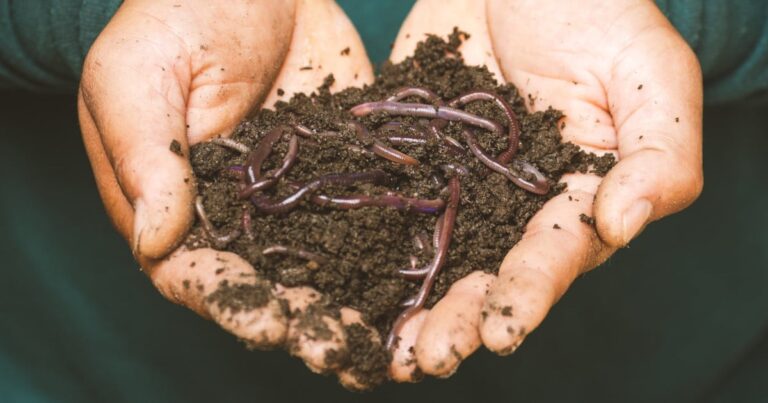](https://interfaithsustain.com/composting-101/)
## [Composting 101: The Composting Process for Beginners](https://interfaithsustain.com/composting-101/)
- [](https://interfaithsustain.com/how-to-dispose-of-batteries/)
## [Discover How To Dispose Of Batteries](https://interfaithsustain.com/how-to-dispose-of-batteries/)
### Green Golf Balls
The balls are often colored green to identify them as being environmentally friendly and are usually made with natural materials like corn starch or sugar cane. They also don’t require petroleum products in the process.
#### Rubber Golf Balls
A **biodegradable golf ball** is made of pure rubber, not artificial material. Pure rubbers are more durable than recent new plastic materials. This pure natural rubber will end up breaking down when exposed to light and water, particularly marine environments. Biodegradable balls are environmentally friendly because they do not leave any toxic residue when decomposing.
#### The Biodegradable Golf Ball is Better for Beginners!
[Source](https://pixabay.com/users/pictures_with_impact-820101/)
They also have a higher compressed rate than non-degradable ones making it easier for first-timers to learn golf. They come in varied forms with most being either more soft or tough depending on one’s skill level. There is a variety of colors so whatever you prefer, there is an option for you.
## How Do Biodegradable Golf Balls Work?
Biodegradable golf balls work as normal balls but are made of organic materials that are compostable. The golf ball is made with eco-friendly ingredients such as cornstarch, which breaks down with weathering and exposure to sunlight or sulfur in the water and marine environments.
You can even make them at home, using one cup of cornstarch mixed with three tablespoons of vegetable oil.
### The Best Brands of Biodegradable Golf Balls
Dixon Golf developed the first patented high-performance biodegradable golf ball. Dixon Golf has successfully removed all traces of lead and other harmful substances from its core.
Taylor made Racquetballs and Speed Balls that are designed to give you a perfect combination of distance and soft sensation.
The “**ecobioball**” is a golf ball created by Albus Golf, with an environmental focus at its core. When exposed to water, it decomposes immediately in just 24 hours. As the ecobioball degrades, it releases fish food into the water from its core. It is considered one of the best biodegradable golf balls on the market.
[Source](https://pixabay.com/users/22563-22563/)
## Golf and Religion
**Perfect Liberty** (PL) Kyodan is a Japanese religion that gained popularity in the 70s and 80s. PL has a large focus on self-expression, especially through golf and other sports. In fact, according to [Trivia Library](https://www.trivia-library.com/b/interesting-religious-sects-japanese-golf-religion-part-1.htm), “it is also called the “Golf Religion” because several PL churches feature rooftop driving ranges so members don’t have to travel to practice self-expression”.
A New York Times article, from 1975, describes PL’s perspective on golf in more detail. According to Rev. Seiki Sakiyama, the church’s chief minister for North America, golf “is a little miniature of life. We can learn about ourselves through golf. Our teachings say that in life, anger, worry, and sorrow destroy success, just as in golf. Like golfing, life is an individual game, where you seek individuality; in golf, as in life, it’s always the next shot, another chance for perfection”.
### Why Use Eco-Friendly, Biodegradable Golf Balls?
Biodegradable material is non-toxic and is decomposed by natural processes. Biodegradable golf balls that are buried underground or in nature will decompose without damaging animals or plant species. Since they don’t contain hazardous chemicals. you won’t feel guilty about causing environmental contamination while you play golf.
Environmentally conscious people playing golf, who naturally care about lakes, rivers, marine life and oceans can no longer allow themselves to play normal golf. They need to search for and purchase a good value pack of biodegradable golf balls at a great price in order to stop the environmental damage related to traditional golf balls. Eco friendly golf balls leads to eco friendly golf!
A friendly golf ball is the only option for people who enjoy golfing and have an environment-friendly agenda.
*\* Featured image [source](https://pixabay.com/photos/golf-tee-golf-course-golf-club-1486354/)*
**Categories:** Blog on Faith and Ecology, Food & Agriculture
**Tags:** Golf, Pollution
---
### [Can an Ethical Liberal Eat Kosher Meat?](https://interfaithsustain.com/koshermeat/)
**Published:** September 27, 2017
**Author:** ICSD
**Excerpt:** Fran Hawthorne - “Choosing food is now so complicated, between the environmental destruction, cruelty to animals, exploitation of workers, and carbon production due to transport,” summarized University of Virginia psychology professor Jonathan Haidt.
**Content:**
*By Fran Hawthorne*
*Organic. Free-range. Cage-free. Barn-roaming. Free-roaming. Local. Natural. No preservatives. No antibiotics. No added hormones. No added steroids. No animal byproducts. Not genetically modified. Grass-fed. Vegetarian diet. Family-farmed. Certified humane-raised. Sustainable. Dolphin Safe. Fair-trade. Vegetarian. Vegan. Kosher. Halal.*
Where does the food come from? How many pounds of greenhouse gases did it take to grow, package, and transport the food? If it’s from a developing country, were the local farmers compensated according to fair-trade criteria? How are the workers treated? Do they get proper training and safety equipment? Are they unionized? If animals are involved, how are they treated? Are they allowed to go outdoors? How much space do they get? What are they fed? What kind of fertilizer is used? If the product includes fish, is the species endangered? Were any at-risk habitats damaged to grow the crops or raise the animals? Is the packaging recyclable?
“Choosing food is now so complicated, between the environmental destruction, cruelty to animals, exploitation of workers, and carbon production due to transport,” summarized University of Virginia psychology professor Jonathan Haidt.
Among this confusion of choices, even non-Jews have generally considered kosher meat a bit more ethical than standard cuts, because the laws of kashrut require what are supposed to be humane methods of slaughter. The animal must be killed with one smooth cut to the throat, using a knife with no nicks, so that the death can be as quick and painless as possible.
Kosher carnivores can also feel a little smug that they’re not eating pigs – which ethicist Peter Singer claims “have cognitive functioning abilities similar to that of a three-year-old human child,” and which are crammed into gestation crates with no room to turn around. Nor are kashrut-observant Jews guilty of eating factory-farmed shrimp that are destroying the environment of countries like Bangladesh, Ecuador, Honduras and Thailand. In those countries, the local water sources are drained to supply the farms; then that farm water, polluted with salt, fish meal food, growth stimulants, and antibiotics, leaks back into the nearby land and water, wrecking it for either farming or fishing. The shrimp farm owners also frequently cut down the mangrove swamps that protected the area from tropical storms and floods, provided shelter for other animals, and helped nurture native fisheries.
> “Okay, we can eat meat, but we can’t gobble all flesh down indiscriminately.”
And keeping kosher isn’t just about the species that are shunned or the kind of knife that’s used. Many Jews say it makes them stop and think about the animals they’re eating. According to some scholars, the rules spiritually connect the killing of animals for eating with the killing of animals for ritual sacrifice, in order to remind people of God as the source of their food. Another view is that the dietary laws represent a compromise with the original vegetarian lifestyle in the Garden of Eden, which imperfect humans were ultimately unable to maintain. (“See, I give you every seed-bearing plant that is upon the earth, and every tree that has seed-bearing fruit; they shall be yours for food” – Genesis I:29) It’s as though the laws of kashrut say*:* Okay, we can eat meat, but we can’t gobble all flesh down indiscriminately.
> Tza’ar ba’alei chayim, or the prevention of cruelty to animals
There is, as well, a concept in Judaism known as *tza’ar ba’alei chayim*, or the prevention of cruelty to animals. However, this has never precluded observant Jews from using animals for heavy farm work or eating them, and it has not traditionally been incorporated as part of the kosher laws.
With the burgeoning of vegetarianism, animal rights, environmentalism, and the consumer movement in recent years, more and more Jews became troubled by the idea that their dietary laws seemed to care about animals only at the moment of death, not throughout their life. Nor did the laws of kashrut talk about how to treat the workers who handle the animals (though other Jewish laws do).
In 2007 the official Rabbinical Assembly of Conservative Judaism in the U.S. set up a six-member commission of rabbis and lay people to write a *hekhsher tzedek*, or a voluntary kosher certification that would add workers’ pay and safety, environmental impact, corporate behavior, and animal welfare to the traditional laws. “Over the last twenty years, the observance of kashrut was increasingly seen as related to ritual minutia. Broccoli was questionable because of the potential of microscopic bugs existing,” explained Morris Allen, the rabbi of Beth Jacob Congregation in Mendota Heights, Minnesota (a small city near Minneapolis), who spearheaded the drive for the *hekhsher tzedek*. “Is it appropriate for us to call something kosher if it meets the ritual demands of the Jewish people, but is produced in a way that people are exploited? Is that what we want to say about ourselves?”
In the committee’s guidelines, which were formally approved in 2008, the animal-welfare section seems like a contradictory mix of ethical and business-pleasing criteria. It promises that companies “will be favored for the Hekhsher if they adhere to the Humane Farm Animal Care Standards” (that is, the standards of the Humane Farm Animal Care organization, a respected nonprofit based in Virginia, which certifies humane treatment of farm animals). These standards require that animals be able to “engage in their natural behavior,” with “sufficient space, shelter and gentle handling to limit stress” and a diet free of added hormones and antibiotics. Sounds great. But the *hekhsher tzedek* also tells companies to follow guidelines endorsed by a slew of U.S. food-industry groups, such as the American Meat Institute, the National Cattlemen’s Beef Association, and the National Chicken Council. Bruce G. Friedrich, vice president of the international grassroots campaign of the U.S. animal rights group People for the Ethical Treatment of Animals (PETA), scoffed that “it’s no better than industry standard. All of the standard mutilations without pain relief are allowed, as are cramming hens into cages and calves into crates.” In fact, Friedrich and Paul Shapiro, senior director of the U.S. Humane Society’s factory farming campaign, are only marginally impressed with kosher ritual in general. “In its ideal, it is” more humane, Friedrich allowed, but then he pointed to scandals like the abuse of workers and animals at the meatpacker Agriprocessors Inc. as an example of how the laws aren’t always carried out in practice.
> The Case of Agriprocessors
The Agriprocessors story started in the 1980s in the small town of Postville in northeastern Iowa, where Agriprocessors established a slaughterhouse that carefully followed all the ritual rules. After thoroughly cleaning and refurbishing an abandoned meatpacking plant, the company brought in rabbis to certify that the cattle and chickens were killed in the appropriate manner, with the appropriate knives, to minimize suffering. And for the next two decades, the main course of most American kosher meals came from that slaughterhouse.
But in May 2008, inspectors from the federal Immigration and Customs Enforcement Agency and other government bureaus found that nearly 400 illegal immigrants were working at the plant, including children as young as thirteen, many of them under dangerous conditions, without proper safety training, cheated out of overtime pay, forced to work twelve hours at a stretch, yelled at, sexually harassed, and pressured to keep working even after they were injured on the job. The Iowa attorney general ultimately charged Agriprocessors with over nine thousand violations of child-labor laws, while the state labor department issued thirty-one citations for safety problems and fined the company $10 million for breaking state wage laws. On top of that, PETA twice filmed surreptitious videos showing workers slicing animals with painful, nonkosher cuts. All this followed hundreds of citations and fines for environmental, health, and safety violations over the prior couple of years.
Within six months, Agriprocessors’s chief executive was forced out and then arrested for harboring illegal immigrants; the Union of Orthodox Jewish Congregations of America threatened to withdraw its official kosher certification; the Conservative movement issued its *hekhsher tzedek* label regarding the treatment of animals, workers, and the environment; and Agriprocessors filed for bankruptcy. News reports jumped on the irony of a company getting the highest religious certification for its treatment of animals while its workers were treated in the lowest possible ways.
> Still, the *hekhsher tzedek* isn’t the end of the story.
For Carie Carter, rabbi of the Park Slope Jewish Center in Brooklyn, N.Y. – the Conservative synagogue I belong to — food juggling begins with one clear requirement: “If it’s not kosher, I’m not going to eat it.” The next steps are more complex. “If it’s kosher but animals are not treated humanely and workers are treated poorly, I’m not going to eat it.” However, that’s almost impossible to know unless conditions are so bad that they make news, as happened with Agriprocessors. On top of all those considerations, Rabbi Carter has been making more efforts to buy organic food since her daughter, Noa, was born in 2007. Organic produce is fairly easy to find, but kosher organic chicken is a problem.
With some searching, Americans can find suppliers like KOL (for Kosher Organic-Raised Local) Foods, founded in July 2007, which sells grass-fed, organic, local, kosher meat through six “buying clubs” in Philadelphia, Washington DC, New Jersey, Maryland, and the New York City metro area. Rabbi Carter’s compromise is that she will get nonorganic kosher chicken from a company that at least hasn’t had any bad headlines.
As long as we’re putting something in our mouths and chewing, we’re probably hurting some creature that lives on the planet. Nevertheless, these new efforts are a lot better than the ethical vacuum that existed before.
So, yes, an ethical liberal can eat meat, kosher or not – carefully. And, I think, with some inevitable guilt.
Adapted from: *The Overloaded Liberal: Shopping, Investing, Parenting, and Other Daily Dilemmas in an Age of Political Activism*, by Fran Hawthorne, Copyright 2010.
Reprinted with permission by Beacon Press
**About the Author**

Fran Hawthorne is the author of the award-winning *Ethical Chic: The Inside Story of the Companies We Think We Love* (Beacon Press) and seven other books about business, consumers and social issues. She writes regularly for T*he New York Times, Newsday, Institutional Investor*, and other publications.
**Categories:** Blog on Faith and Ecology, Food & Agriculture
---
### [Can we Think of Plant Based Plastic As The Solution For Plastic Pollution?](https://interfaithsustain.com/plant-based-plastic/)
**Published:** June 29, 2022
**Author:** ICSD
**Excerpt:** Harry Cooper - Plastics have become one of the biggest environmental issues facing our world today. The public's concern over plastic pollution has consequently continued to grow.
**Content:**
Table of Contents
Table of Contents
- [The Plastic Problem](#aioseo-the-plastic-problem-6)
- [What Are Plant Based Plastics?](#aioseo-what-are-plant-based-plastics-16)
- [Advantages of Plant Based Plastic](#aioseo-advantages-of-plant-based-plastic-25)
- [Disadvantages of Plant Based Plastic](#aioseo-disadvantages-of-plant-based-plastic-28)
- [Plant Based Plastic Still Uses Petroleum](#aioseo-plant-based-plastic-still-uses-petroleum-30)
- [Not Completely Biodegradable](#aioseo-not-completely-biodegradable-34)
- [Alternative Solutions](#aioseo-alternative-solutions-40)
- [Religion and Plastic](#aioseo-religion-and-plastic-46)
- [Reusing Containers From Eco Bible](#aioseo-reusing-containers-from-eco-bible-48)
*By Harry Cooper* – Plastics have become one of the biggest environmental issues facing our world today. The public’s concern over [plastic pollution](https://interfaithsustain.com/facts-about-plastic-pollution/) has consequently continued to grow.
The growing awareness has spurred consumers and corporations alike to look for solutions. One way people have tried to fix **plastic pollution** is by using plant based plastics.
Plant based plastic is a type of bioplastic, meaning it’s made from [renewable](https://interfaithsustain.com/renewable-and-non-renewable-resources/ "renewable"), organic materials. These materials are meant to create a more biodegradable plastic.
By being more biodegradable, **plant based plastic** should be able to decompose and become a part of the environment instead of ending up as litter. While plant based plastics use less fossil fuels than petroleum based plastics, and requires less oil refinement, it may not be a fix all to plastic pollution.
Plant based plastics are not perfect. Bioplastic production still uses a certain amount of petroleum that makes it harmful to the environment to an extent, and makes it less biodegradable than one is led to believe.
## The Plastic Problem
Plastic is a versatile light weight material that can be used for lots of different purposes. However our usage of plastic has become so excessive that it is starting to cause some serious environmental problems.
It is estimated that there is [8 million](https://oceanservice.noaa.gov/hazards/marinedebris/plastics-in-the-ocean.html#:~:text=Unlike%20some%20other%20kinds%20of,into%20tiny%20pieces%2C%20called%20microplastics.) and growing metric tons of plastic in the ocean. This massive amount of plastic is known to cause animals to choke or become entangled in it, but the real threat of plastics to the ocean is when the plastic starts to break down.
Plastics such as plastic bottles and bags do not decompose like some kinds of waste. This means that if it ends up in the environment it can stay there almost indefinitely.
While plastic is capable of breaking down, it only breakdowns into microscopic pieces called [microplastics](https://www.plasticsoupfoundation.org/en/plastic-problem/plastic-environment/break-down/). These microplastics are incredibly toxic and when they exist in high enough concentrations they are ingested by marine animals which can greatly disrupt ecosystems.
[Source](https://unsplash.com/@naja_bertolt_jensen)
- [](https://interfaithsustain.com/reusable-straws/)
## [The Epic Story of Reusable Straws](https://interfaithsustain.com/reusable-straws/)
- [](https://interfaithsustain.com/reusable-grocery-bags/)
## [Reusable Grocery Bags To Reduce Global Pollution](https://interfaithsustain.com/reusable-grocery-bags/)
- [](https://interfaithsustain.com/facts-about-plastic-pollution/)
## [The Alarming Facts about Plastic Pollution In Today’s World](https://interfaithsustain.com/facts-about-plastic-pollution/)
Microplastics can also be found in humans from when we eat fish that have been caught in areas with lots of microplastics. Thus, as plastic pollution gets worse and worse, human health and the environment will become increasingly more at risk.
## What Are Plant Based Plastics?
Plant based plastic is a type of bio based plastic made from plants of microorganisms. By making plastic in this way, manufacturers hope to offer an alternative to traditional plastic that is more environmentally friendly.
Plastic production relies heavily on fossil fuels and petroleum to make plastic products. This way of making petroleum based plastics has an incredibly high carbon footprint and is incapable of biodegrading.
On the contrary, plant based plastic is made from organic materials. This is done by extracting sugar from sugar cane or corn starch in order to make polylactic acids that can be made into plastics.
Bioplastics can also be made from polyhydroxyalkanoates which are synthesized from microorganisms. By using these organic materials, we can start making more biodegradable plastics with smaller carbon footprints.
[Source](https://pixabay.com/users/ritae-19628/)
### Advantages of Plant Based Plastic
There are many advantages of using plant based plastic over fossil based plastic. Not only is it more biodegradable, but it also has a significantly smaller carbon footprint. Traditional petroleum based plastic uses large amounts of fossil fuels. In fact it is estimated that plastic production uses around eight percent of the world’s oil supplies.
Proponents of plant based plastic tout that if we were to stop using so much oil for plastic production we would have much greater oil supplies. Thus by using plant based plastics we could greatly reduce the amount of oil and fossil fuels we use, and in turn our carbon footprint.
### Disadvantages of Plant Based Plastic
Plant based plastic may seem like a good way to keep making plastic without having to worry about it harming the environment. However, when we look past the surface, plant based plastics are not the fix all to our plastic problem that they seem to be.
#### Plant Based Plastic Still Uses Petroleum
Coca-Cola recently announced its new [PlantBottle](https://e360.yale.edu/features/why-bioplastics-will-not-solve-the-worlds-plastics-problem) which is a coke bottle made out of plant based plastic. While this was meant to be seen as a big step by the company to reduce plastic waste, it was not necessarily helpful.
Only around 30% of the plastic in the PlantBottle comes from plant sources, the other 70% comes from traditional petroleum. So while the bottle may be in part plant based, it is not completely made from environmentally friendly materials.
While the PlantBottle is only one case of ineffective plant based plastic, it does speak to how not all bioplastics are sustainable. While plant based plastic may use less petroleum, it does not mean that it is made completely without it.
#### Not Completely Biodegradable
Plant based plastics are also not as biodegradable as they initially seem. While some bio plastics may be a little more biodegradable, the reality is a little more complicated.
As it turns out biodegradable plastics are not able to decompose anywhere you would throw them on the ground. In fact, most plant based plastic requires the help of industrial facilities to decompose.
Plant based plastic requires being super heated in order to fully decompose. This is done at industrial composting facilities, which are not equally accessible throughout the world.
Thus, when plant based plastic gets thrown out, it often ends up breaking down in the same way petroleum based plastic does, instead of biodegrading. This creates more microplastics, and continues to make our plastic problem worse.
It is still not known how harmful plastic is to our health, and even less research has been done into plant based plastic specifically. However, initial research has found that bioplastics contain some toxic chemicals that come from additives to the plastic.
## Alternative Solutions
While plant based plastics are capable of reducing our carbon emissions by using less petroleum and in some cases being partially biodegradable, they are often cited as a prime example of greenwashing. **Greenwashing** is a business tactic where companies present a product or business practice that seems environmentally friendly on paper in order to make their company look good, but doesn’t actually do anything to solve the world’s environmental problems.
Many companies have started making their products out of plant based plastic. However, this does not do much for the environment or anyone, other than make the companies look better.
Rather than trying to make plastic more compostable, many experts suggest solving our plastic problem by simply using [less plastic](https://e360.yale.edu/features/why-bioplastics-will-not-solve-the-worlds-plastics-problem) in general. This task may seem pretty daunting as we already throw around 11 million tons of plastic waste into the ocean every year, and plastic production is set to triple by 2040. Curbing our plastic usage will not be easy.
While it may not be as easy as making more environmentally friendly plastic, it is certainly more effective. We can start by using less plastic packaging, as this is seen as one of the main drivers of plastic pollution. We can also start replacing some of our plastic items with more biodegradable ones such as paper, compostable materials, and even some of the more effective bioplastics.
While our plastic based economy would take a lot of time and money to completely overhaul, it would not be to no avail. A study done by Pew Research found that if we were to follow expert plans and recommendations on how to shift our society away from plastic, we could expect to see an 80% reduction in plastic waste throughout the next twenty years.
## Religion and Plastic
*Numbers 19:14–15 – This is the ritual: When a person dies in a tent, whoever enters the tent and whoever is in the tent shall be unclean seven days; and every open vessel, with no lid fastened down, shall be unclean.*
### Reusing Containers From [Eco Bible](https://www.amazon.com/Eco-Bible-Ecological-Commentary-Deuteronomy-ebook/dp/B09MYCLRMV)
The Talmud teaches that immediately before he died, Rabbi Yochanan ben Zakkai (1st century CE) told his students to remove earthenware vessels from the room he was in, so the vessels would not become impure and need to be destroyed. Caring for physical possessions that he would no longer use – but someone else could – was one of the last acts before Rabbi Yochanan ben Zakkai’s transition from the physical world.
Prior to the COVID-19 pandemic, cities and restaurants were making strides in reducing the use of single-use plastic bags and containers. Yet, plastic pollution overall was still expected to grow by 40 percent between 2020 and 2030. The component of worldwide plastic pollution increasing most rapidly is nonreusable food packaging, which comprises more than 40 percent.
During the pandemic, people increased their use of disposable packaging for takeaway food. As a 2021 study indicated, “The amount of plastic wastes generated worldwide since the outbreak is estimated at 1.6 million tons/day. Approximately 3.4 billion single-use facemasks/face shields are discarded daily as a result of COVID-19 pandemic, globally. . . . COVID-19 will reverse the momentum of years-long global battle to reduce plastic waste pollution.”
More and more, we take for granted our use and “easy” disposal of plastic wrap, plastic sandwich bags, and food and snack items in individual plastic wrappers. Yet, the example of Rabbi Yochanan ben Zakkai can show us how to make concern for the containers and wrapping materials we use part and parcel of spirituality.
**Categories:** Blog on Faith and Ecology, Food & Agriculture
**Tags:** Plastic Pollution
---
### [Green Revolution Definition and Assessment of Its Environmental Impact](https://interfaithsustain.com/green-revolution-definition/)
**Published:** March 2, 2022
**Author:** ICSD
**Excerpt:** Harry Cooper - The Green Revolution was one of the greatest shifts in the process of agricultural production in the history of humankind. In the 1940s through the 1960s, new agricultural techniques and agricultural technology was developed causing a huge increase in crop production.
**Content:**
Table of Contents
Table of Contents
- [What Is The Green Revolution?](#aioseo-what-is-the-green-revolution-2)
- [The History & Consequences of the Green Revolution](#aioseo-the-history-consequences-of-the-green-revolution-4)
- [Green Revolution Agricultural Technology](#aioseo-green-revolution-agricultural-technology-11)
- [Mixed Results of the Green Revolution](#aioseo-mixed-results-of-the-green-revolution-19)
- [Environmental Impacts of the Green Revolution](#aioseo-environmental-impacts-of-the-green-revolution-27)
- [Green Revolution and Religion](#aioseo-green-revolution-and-religion-31)
- [What is the Green Revolution?](#aioseo-what-is-the-green-revolution-40)
- [Who started the Green Revolution and how did it develop?](#aioseo-who-started-the-green-revolution-and-how-did-it-develop-42)
- [What were some key agricultural technologies of the Green Revolution?](#aioseo-what-were-some-key-agricultural-technologies-of-the-green-revolution-44)
- [What are the environmental impacts of the Green Revolution?](#aioseo-what-are-the-environmental-impacts-of-the-green-revolution-46)
- [How has the Green Revolution influenced religion and environmental awareness among religious communities?](#aioseo-how-has-the-green-revolution-influenced-religion-and-environmental-awareness-among-religious-communities-48)
*By Harry Cooper*
## What Is The Green Revolution?
**The Green Revolution** was one of the greatest shifts in the process of agricultural production in the history of humankind. In the 1940s through the 1960s, new agricultural techniques and agricultural technology was developed causing a huge increase in crop production. This, in turn, caused increased [food production](https://interfaithsustain.com/food-production/ "food production"), combating starvation and making more food accessible to people in developing countries. However, even though on paper the Green Revolution seems like a great benefit for humanity, it does face criticism. Some argue that increasing food production does not account for an increasing population as well. Others argue that the new crops are not as nutritious. But arguably the thing most people are critical about, are the ways in which the new farming techniques brought on by the Green Revolution caused [serious environmental](https://interfaithsustain.com/environmental-degradation-and-the-future-of-our-planet-earth/ "serious environment") damage.
## The History & Consequences of the Green Revolution
The Green Revolution was started in the 1940s by an American agricultural scientist named [Norman Borlaug](https://www.thoughtco.com/green-revolution-overview-1434948). Borlaug was doing agricultural research on crops in Mexico in the 1940s. In his time there he was able to develop a variety of wheat that was disease resistant and produced a high yield. With these high yield varieties, Mexico was able to go from a wheat importing country to a wheat exporting country. Once word spread about Borlaug’s agricultural development, other places around the world started to adopt his Green Revolution techniques.
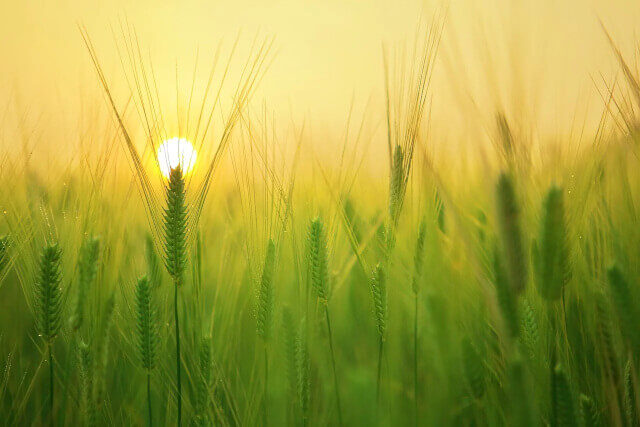[Source](https://pixabay.com/users/kangbch-3007100/ "Source")
As people began to see the good that these agricultural techniques could do for the world, many people started to invest in the production of new agricultural techniques. Borlaug eventually got funding from both the Ford and Rockefeller foundation to continue his international agricultural research. Borlaug would eventually put his research to good use again in the 1960s as rapid population growth on the Indian subcontinent caused widespread famine. Similar to the wheat in Mexico, Borlaug developed high yield crop varieties of rice, that greatly increased agricultural productivity. Since the advent of these high yielding varieties, India’s famine has largely subsided, and India has even become an exporter of rice.
### Green Revolution Agricultural Technology
During the Green Revolution, Borlaug developed and used a serious of [technologies](https://www.pbs.org/wgbh/americanexperience/features/green-revolution-norman-borlaug-race-to-fight-global-hunger/) and modern agricultural techniques that had been invented which allowed him to create high yields of crops around the world. One of the biggest problems that farmers faced before the Green Revolution, especially in Mexico, was crippling drought. [Simcha Blass](https://en.wikipedia.org/wiki/Simcha_Blass#:~:text=Simcha%20Blass%20%28November%2027%2C%201897,system%20with%20his%20son%20Yeshayahu.) developed the innovative drip irrigation system, in 1956 in Israel, that made it easier for water to get to more crops. Drip irrigation involves threading pipes throughout farms that would drip water directly onto the roots of plants. Borlaug used this technique as it was more efficient than previous methods and also required less water.
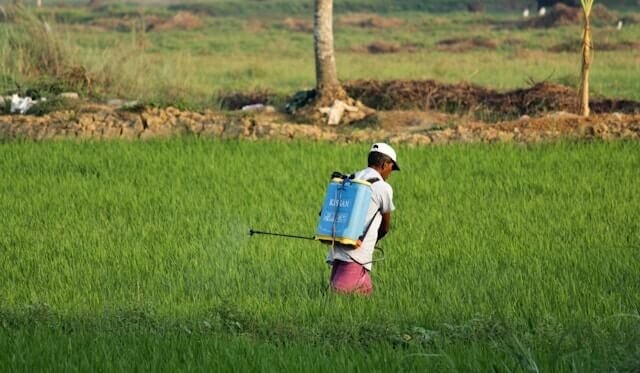[Source](https://unsplash.com/@arjun_mj/ "Source")
Borlaug also used genetic engineering to develop high yielding varieties of crops that provided more food than traditional varieties. These genetically engineered high yield crops were designed to grow more food, be more efficient, and be hardier against harsh weather conditions and drought. While these modified plants helped increase crops yields, they were also designed to be more receptive to chemical fertilizers and pesticides, making farmers who used them rely more on potentially dangerous substances.
One of the more controversial advents of the Green Revolution was the invention and implementation of **synthetic fertilizers and pesticides**. These products worked amazingly for Borlaug’s crops, helping them produce higher yields and keeping pests off of them. However, while the synthetic pesticides and fertilizers helped feed people around the world, they often contaminated soil and water and caused some serious environmental harm. The increased use of **chemicals in agriculture** also has a direct correlation with the increase in human **cancer diagnoses**. The chemicals are such that they can not be simply “washed off”, as they are absorbed into the plant itself, which is then consumed.
#### Mixed Results of the Green Revolution
Many sociologists have studied the extent to which increasing food production has actually helped fight hunger. The impact of the Green Revolution is often hotly debated, as some claim that it had little to no impact on increasing food security at all. Whether you believe that the Green Revolution created any benefit for the world or not, there is some evidence that the Green Revolution was, to a certain extent, a [mixed success](https://www.wsfcs.k12.nc.us/cms/lib/NC01001395/Centricity/ModuleInstance/17064/Green_Revolution.pdf).
While the Green Revolution provided a lot more food, the food itself was not necessarily as helpful or utilized as some would expect. While the Green Revolution allowed countries to grow more food, a lot of this food was not actually going to combat hunger. Much of the food produced in the Green Revolution was exported to be used as feed for animals or to be made into biofuels.
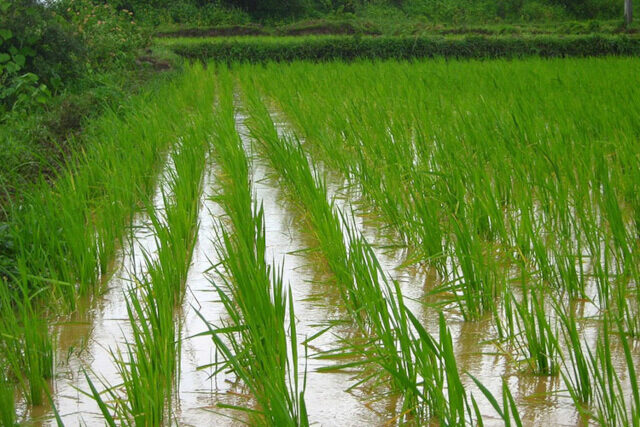[Source](https://pixabay.com/users/abhisheklyrics-4162509/ "Source")
Along with this, the kind of agriculture that the Green Revolution brought on relied heavily on monoculture crops, meaning most farms only grew one type of crop. This destroys the health of the soil which is then blown or washed away leaving farmers to grow food in almost synthetic soils. In addition, his can be very problematic, as people were eating less types of food. This means that even though they had more food overall, they weren’t getting as many nutrients to combat malnutrition and nutrient deficiencies. This problem was made even worse by Green Revolution farming methods damaging the surrounding environment. This harmed fisheries, native plants, other crops, and traditional farming methods making it even harder to find sources of nutrients other than the Green Revolution monocultures.
- [](https://interfaithsustain.com/growing-your-own-food/)
## [Growing Your Own Food For Good Health And A Healthy Environment](https://interfaithsustain.com/growing-your-own-food/)
- [](https://interfaithsustain.com/aquaponics-system/)
## [Understanding The Enormous Benefits of The Aquaponics System](https://interfaithsustain.com/aquaponics-system/)
- [](https://interfaithsustain.com/regenerative-agriculture/)
## [Regenerative Agriculture Produces Food Without Destroying The Environment](https://interfaithsustain.com/regenerative-agriculture/)
## Environmental Impacts of the Green Revolution
There are [a lot of environmental issues](https://www.ncbi.nlm.nih.gov/pmc/articles/PMC7611098/) associated with the Green Revolution, but one of the most prominent issues with the techniques brought on by the Green Revolution was the usage of industrial fertilizers and pesticides. Pesticides are incredibly poisonous and can harm soil quality, as well as kill off local animals when the pesticides runs off into local water supplies. Not only that, but as pests grow more and more resistant to pesticides, farmers need to use increasingly more potent pesticides every year, adding more dangerous chemicals to the surrounding environment. Fertilizers also cause a great deal of harm to the environment. When it rains, fertilizers run off from farms and enter local water supplies. When this happens, the chemicals that once helped plants grow then help algae grow at unnaturally rapid rates. This quickly depletes oxygen in the water supply and kills off aquatic life through a process called [eutrophication](https://oceanservice.noaa.gov/facts/eutrophication.html).
Another environmental impact of the Green Revolution was how much water it required farms to use. Drinkable water is already in short supply in today’s world, and part of the reason why is because of water intensive Green Revolution Farming techniques. This shortage of water due to the Green Revolution can best be seen in India, where Borlaug introduced the Green Revolution through rice cultivation. Before the Green Revolution India grew all types of crops such as lentils, millets, and even indigenous varieties of rice. However the type of genetically modified rice that the Green Revolution introduced required lots of water, extensive irrigation, and even flooding, which caused a lot of places in India to be even more stressed to find clean water in a world already facing extreme water shortages.
Techniques used in the Green Revolution have also caused a great deal of [air pollution](https://interfaithsustain.com/air-pollution-solutions/ "air pollution"). In both pre and post Green Revolution farming, crop rotation is an important part of a healthy farm. This means that every crop cycle farmers must plant their crops in a different area as to keep the soil healthy, and the farm running efficiently. However, this becomes a problem for people using Green Revolution farming techniques. Since genetically engineered crops grow faster, they often have shorter growth cycles, meaning crops must be rotated faster. Because of this, farmers often have to burn old crops to make way for new ones. This controlled crop burning often releases green house gasses such as carbon dioxide and methane, and can cause dangerous air pollution that is harmful to humans and can contribute to global warming.
## Green Revolution and Religion
[Yonat Shimron’s article in Deseret News](https://www.deseret.com/2018/1/26/20638949/for-christians-the-green-revolution-is-stalling-and-politics-may-be-why) discusses advances and stalls in Christian support for the Green revolution. On the one hand, “In Protestant churches across the country, they have gone on [carbon fasts,](https://interfaithpowerandlight.org/wp-content/uploads/2015/02/Carbon-Fast.pdf) planted church [vegetable gardens](https://religionnews.com/2013/05/15/congregations-tend-the-soil-and-the-soul-with-vegetable-gardens/), and struck [alliances with Native Americans](https://religionnews.com/2016/12/05/religious-leaders-celebrate-denial-of-easement-for-dakota-access-pipeline/) and others to protect the country from the environmental harm caused by drilling, fracking, mining and building underground gas pipelines” In a similar vein, Pope Francis has been increasing environmental awareness and care through his groundbreaking work [“’Laudato Si’: On Care for Our Common Home,”](https://w2.vatican.va/content/francesco/en/encyclicals/documents/papa-francesco_20150524_enciclica-laudato-si.html) a 2015 encyclical on the environment.
On the other hand, a [study](https://papers.ssrn.com/sol3/papers.cfm?abstract_id=3092262) conducted from 2005-2015 reveals that “Christians have not become more concerned about the environment, and in some cases have become less so.” Yonat theorizes about why there has been this stagnancy and in support for the environment among Christians.
Some have criticized the study itself, citing that “for many evangelicals, words in the survey like ‘climate change’ and ‘global warming’ invoke pitched political and ideological battles. They may have been more responsive when asked about environmental stewardship — or, in the more common Christian parlance, ‘creation care.'”
A Pew Research [poll](https://www.people-press.org/2018/01/25/economic-issues-decline-among-publics-policy-priorities/) in 2018 found that “81 percent of Democrats say protecting the environment should be a top priority, compared with 37 percent of Republicans.” Environmentalism is highly politicized, but with sensitivity to our language we can build allies across the political spectrum.
Yonat also mentions how decreased concern for environmentalism among Christians could come from “the massive public relations campaign developed by several industries, such as tobacco, gasoline and coal-burning power plants, to sow doubt and confusion about scientific data.” This is the theory of Katharine Hayhoe, a climate scientist at Texas Tech University and an evangelical who works to convince Christians about the reality of global warming.
It is disturbing to see how billions of industry dollars can be used to convince people that climate change isn’t real, despite the fact that [at least 97% of climate scientists](https://climate.nasa.gov/scientific-consensus/) agree to the existence of climate change. We have a religious obligation to help the green revolution continue to grow among our fellow believers, no matter the power and wealth of our opponents. In the words of God to the Prophet Zecharia, we shall triumph “not by might nor by power, but by my Spirit.” With God’s spirit on our side, we can save Creation.
*\* Featured image [source](https://pixabay.com/users/12019-12019/ "source")*
**Categories:** Blog on Faith and Ecology, Food & Agriculture
**Tags:** Food Production, Sustainable Food
---
### [Anti-Consumerism Redefines Our Lives To Focus on Spiritual Growth](https://interfaithsustain.com/anti-consumerism/)
**Published:** October 4, 2021
**Author:** ICSD
**Excerpt:** Aryeh Ronay - Consumer culture is part and parcel of our modern civilization. There are 7-11's everywhere from Thailand to Alaska, Coca-Cola in the Amazon, Siberia and Tahiti, and it's hard to even imagine the world without the consumerist ethos.
**Content:**
Table of Contents
Table of Contents
- [Consumerism Versus Anti Consumerism](#aioseo-consumerism-versus-anti-consumerism-3)
- [Consumerism Via Advertising](#aioseo-consumerism-via-advertising-10)
- [Consumerism Via Social Media](#aioseo-consumerism-via-social-media-16)
- [Consumerism and Religion](#aioseo-consumerism-and-religion-21)
- [Anti Consumerism In Judaism](#aioseo-anti-consumerism-in-judaism-24)
- [Anti Consumerism In Christianity](#aioseo-anti-consumerism-in-christianity-27)
- [Anti Consumerism In Islam](#aioseo-anti-consumerism-in-islam-30)
- [Anti Consumerism In Buddhism](#aioseo-anti-consumerism-in-buddhism-33)
*By Aryeh Ronay* – **Consumer culture** is part and parcel of our modern civilization. There are 7-11’s everywhere from Thailand to Alaska, Coca-Cola in the Amazon, Siberia and Tahiti, and it’s hard to even imagine the world without the consumerist ethos.
Yet, a growing movement has started to push against consumption, against the way advertising pollutes our minds and plastic pollutes our oceans, towards a way of life defined by meaningful connection, a relationship with nature, and a rejection of consuming as a primary way of being.
## Consumerism Versus Anti Consumerism
Human life is all too often defined, measured, summarized, or reduced to economic life. Happiness is too often seen as a function of material well being or an affluent or easy lifestyle as opposed to fulfillment in non-material ways.
Who we are is defined by what we consume, what we watch and what we buy. And we even commodify ourselves: social media has become one of the biggest ways we interact with each other, where other people ‘consume your content’ instead of actually being with you in real life.
Wall Street is one of the centers of [modern consumerism](https://interfaithsustain.com/what-is-consumerism/), which is why it was the site of one of the major protests of our time: “Occupy Wall Street.” Protesters gathered to rise against the disproportionate concentration of wealth in the hands of 1% of the population and the corruption and poverty that came with this inequality in consumption.
**Anti-consumerism** is a response to an economics that impoverishes humanity and the planet alike, as energy is poured into producing things people don’t need, indifferent to the environmental and social costs that come with this waste of resources.
## Consumerism Via Advertising
Advertising has become ubiquitous today, leading to more than one [movement to ban billboards](https://www.theguardian.com/cities/2015/aug/11/can-cities-kick-ads-ban-urban-billboards) in certain cities and other efforts to curtail the influence of capitalism and materialism on society. [Psychologists are concerned](https://www.apa.org/monitor/jun04/protecting) about how advertising is affecting children, with 12 billion dollars alone being spent annually on ads targeting children.
Moreover, advertising is often subliminal, with product placement being used to normalize lifestyles based on satisfaction through possessions and through specific products and services. In June of 2021, a video went viral of the famous soccer player Cristiano [Ronaldo removing coke bottles](https://www.youtube.com/watch?v=x2ZLS1V3iMw) that had been placed in front of him for a press conference, and instead holding up a bottle of water.
[Source](https://unsplash.com/photos/WHOsTjzkLDE)
Celebrities are often used to promote harmful products and so they also have a great potential for influencing consumers to live a more [environmental lifestyle](https://interfaithsustain.com/environmental-determinism/), reduce waste and heal the earth.
- [](https://interfaithsustain.com/what-is-consumerism/)
## [What is consumerism, and what are its roots?](https://interfaithsustain.com/what-is-consumerism/)
- [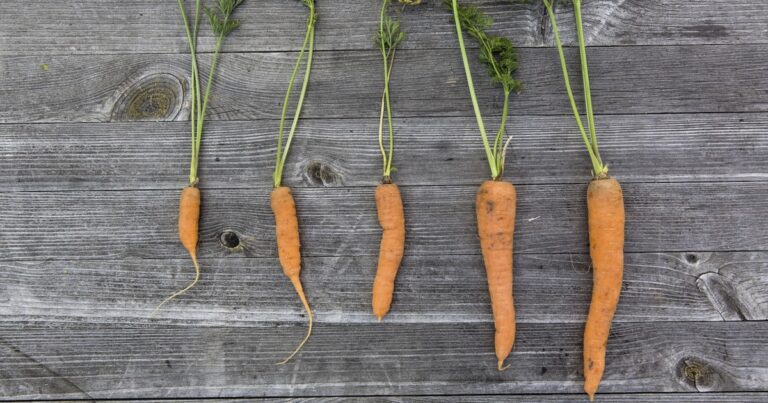](https://interfaithsustain.com/sustainable-consumption/)
## [Sustainable Consumption Will Reduce Our Impact On The Environment](https://interfaithsustain.com/sustainable-consumption/)
- [](https://interfaithsustain.com/ethical-consumerism/)
## [Ethical consumerism is Becoming a Movement for Change](https://interfaithsustain.com/ethical-consumerism/)
## Consumerism Via Social Media
Since so much of our society and economy has shifted from in-person to online, so has a lot of advertising. Social media, which today is one of the main tools for communication, offers many resources for every advertiser looking to grow their business and for every website looking to make money off of the personal details of their consumers.
Consumers love using these free and addictive resources, but as the saying goes, “if it’s free, you’re probably the product.” Recent movies like [The Social Dilemma](https://www.youtube.com/watch?v=uaaC57tcci0) show how social media companies take advantage of our data to influence our consumption patterns, our relationships and even to influence our political leanings.
In the U.S., [up to 72% of adults use social media](https://www.pewresearch.org/internet/fact-sheet/social-media/), and so it’s important to consider how these platforms are currently being used to subtly influence consumer behavior. We can also recognize the powerful powerful potential of these websites for fighting pollution, climate change and poverty.
The global influence of social media could be utilized to create a more sustainable planet, but responsible individuals from different countries and businesses will need to work together to clarify the values and message that people need to hear to shift their ideas toward [sustainable growth](https://interfaithsustain.com/importance-of-sustainable-development/).
## Consumerism and Religion
Many religious holidays are full of consumerism, for example Christmas and Chanukah have become synonymous with shopping and exchanging material items. Others believe that [consumerism itself has become a religion](https://mentatul.com/2017/03/24/consumerism-as-religion/), with shopping malls replacing churches, CEOs serving as bishops and advertising the new evangelism.
On the other hand, religions can also play a major role in cultivating anti-consumerism, as religions work to maximize human happiness based on spiritual instead of material growth. Here we’ll explore a few religious ideas on anti-consumerism.
### Anti Consumerism In Judaism
Commenting on a verse in the book of Deuteronomy, Rabbi Yuval Cherlow makes the following observation in the forthcoming Eco Bible Volume 2, “The earth testifies to how we live our lives. The failure to protect the environment exposes a society driven by consumerism and greed, one that knows little fulfillment and fails to restrain itself from exhausting the pleasures of this world. A society that destroys the environment lacks sensitivity for future generations. It espouses the philosophy that the prophet Isaiah critiqued—“eat and drink, for tomorrow we shall die”—while abandoning its children and grandchildren to an unknown future.”
Judaism is not against consumption, but believes it must be moderated so we don’t consume too much. We find in Judaism the laws of the Sabbath in which not just work is stopped, but also economic activity. This is a powerful method of anti-consumerism, observing a day each week in which nothing is bought or sold.
### Anti Consumerism In Christianity
According to William Schweiker as quoted in [CONSUMERISM AND CHRISTIAN ETHICS](https://www.yumpu.com/en/document/view/27315407/consumerism-and-christian-ethics-theological-studies), “the love of God . . . can limit the desire for acquisition precisely because what is desired exceeds objectification.” In Christianity, there is a focus on God over the things of the world, summarized in the verse, “don’t love the world or the things in the world. If anyone loves the world, the love of the Father is not in them” (1 John 2:15).
According to Schweiker, Christians are called to love God, who is beyond objectification or acquisition, and this is powerful path to anti-consumerism.
### Anti Consumerism In Islam
Yusuf Al-Khabbaz writes in [Islam, consumerism and the environmental crisis](https://crescent.icit-digital.org/articles/islam-consumerism-and-the-environmental-crisis) about the concept of “zuhd” in Islamic ethics, which refers to “living with the real necessities of life.” Al-Khabbaz describes consumerism as part of a larger process of colonialism, that manifests not just in shopping but also in school, which teaches children “to be passive, to seek only what is being offered by the system, but never to explore new possibilities by moving outside that narrow structure, which is the real tragedy of consumerism.”
Al-Khabbaz proposes new forms of schooling and production as antidotes to consumerism as well as leveraging of Muslim buying-power to influence suppliers and, similar to Buddhism, breaking out of the consumerism spell.
### Anti Consumerism In Buddhism
According to Bobbi Patterson as quoted in [Combatting consumerism with Buddhist principles](https://news.emory.edu/stories/2012/03/er_soundbites_rob_walker_consumed_patterson/campus.html), “All of us are caught in this dynamic of consuming, and we think it will create a self, it will make us happy… But none of us gets a pass from the suffering we set up for ourselves in trying to be happy through the things we consume, without mindfulness.”
According to Buddhist philosophy, we are constantly trying to acquire material goods to find ourselves, but the search for ourselves can only be fulfilled through mindfulness. Awareness of breath is used as a powerful tool to become aware in the present moment and to break the spell of consumerism.
With **religions working together**, each drawing upon their communities and traditions to galvanize change, we can create a more sustainable world. We can shift our focus from consumption to spiritual growth and from stuff to relationships.
The stories we tell in our religions will shape the future of our society. Let’s tell the story of how we overcame an addiction to consumption and saved our planet.
*\* Featured image [source](https://unsplash.com/@bernardhermant/)*
**Categories:** Blog on Faith and Ecology, Food & Agriculture
**Tags:** Consumerism
---
### [What is consumerism, and what are its roots?](https://interfaithsustain.com/what-is-consumerism/)
**Published:** June 2, 2021
**Author:** ICSD
**Excerpt:** Matthew Mausner - We talk about a 'consumer culture'. We talk about people as consumers as if that's their identity- rather than citizens, workers, or any other aspects of a full human life. But what is consumerism, really? The point is not consumption of goods and services- the emphasis is rather on the consumer.
**Content:**
Table of Contents
Table of Contents
- [Is consumerism specifically an American thing?](#aioseo-is-consumerism-specifically-an-american-thing-5)
- [The economy drives consumerism](#aioseo-the-economy-drives-consumerism-8)
- [How does consumerism coexist with being religiously affiliated?](#aioseo-how-does-consumerism-coexist-with-being-religiously-affiliated-14)
- [Prosperous communities and consumer culture](#aioseo-prosperous-communities-and-consumer-culture-22)
- [Creating consumer demand](#aioseo-creating-consumer-demand-29)
- [Advertising and consumerism](#aioseo-advertising-and-consumerism-32)
- [Short-Term Consumerism](#aioseo-short-term-consumerism-38)
- [Consumerism without a soul](#aioseo-consumerism-without-a-soul-42)
- [Where is religion in regards to consumerism?](#aioseo-where-is-religion-in-regards-to-consumerism-45)
- [Relating to consumer society based on the Bible](#aioseo-relating-to-consumer-society-based-on-the-bible-49)
- [What is consumerism and how does it influence society?](#aioseo-what-is-consumerism-and-how-does-it-influence-society-58)
- [Is consumerism mainly an American phenomenon?](#aioseo-is-consumerism-mainly-an-american-phenomenon-60)
- [How does the economy drive consumerism in society?](#aioseo-how-does-the-economy-drive-consumerism-in-society-62)
- [How does consumerism coexist with religious values in America?](#aioseo-how-does-consumerism-coexist-with-religious-values-in-america-64)
- [What does biblical teaching suggest about consumption and resource use?](#aioseo-what-does-biblical-teaching-suggest-about-consumption-and-resource-use-66)
*By Matthew Mausner* – We talk about a ‘**consumer culture**‘. We talk about people as consumers as if that’s their identity- rather than citizens, workers, or any other aspects of a full human life. But what is consumerism, really? The point is not consumption of goods and services- the emphasis is rather on the consumer.
Consumerism refers to an orientation of society, of ordinary people, to be defined by what they consume: not merely resources, goods, and services, but brands, fashion, identity, and their rights as purchasers of those goods and services. We see this in social and economic terms, in media, in the goals of business, and in the idea of buying things as a goal and process for life in and of itself.
## Is consumerism specifically an American thing?
America, more than any other major society today, has a culture that’s been defined by consumerism, by the spending choices and habits of its people, and by the identity traits consumerism creates. ‘**Conspicuous consumption**‘ might be seen as unsophisticated in France or looked down upon in Denmark, but in America it’s seen as a virtue.
[Source](https://unsplash.com/@sharonmccutcheon)
Yet American consumerism, led by its brands, products, and lifestyle with cars and Coca-Cola, has indeed spread to the much of humanity.
## The economy drives consumerism
Some say that’s actually a function of the economy itself, and [for the last 130 years](https://en.wikipedia.org/wiki/Angus_Maddison_statistics_of_the_ten_largest_economies_by_GDP_(PPP)), America has had the world’s largest, most vital, and creative economy.
- [](https://interfaithsustain.com/consumerism-examples/)
## [Consumerism Examples That Affect the Environment](https://interfaithsustain.com/consumerism-examples/)
- [](https://interfaithsustain.com/ethical-consumerism/)
## [Ethical consumerism is Becoming a Movement for Change](https://interfaithsustain.com/ethical-consumerism/)
- [](https://interfaithsustain.com/anti-consumerism/)
## [Anti-Consumerism Redefines Our Lives To Focus on Spiritual Growth](https://interfaithsustain.com/anti-consumerism/)
Business creates consumer demand, and competition drives better and better products, goods and services to cater to that demand. Jobs are generated producing and delivering all the goods and services, and the wages and wealth are spent on more and more products and goods and services.
Yet such a cycle always had downsides. The ‘**rat race**‘ was the common parlance for this endless search for wealth, for increasing consumption for its own sake. The above equation means more and more use of resources, some of which are non-renewable and damaged the landscape, like logging and mining. More and more marketing to ‘create demand’ meant more and more of a focus on material, rather than spiritual, life satisfaction in society.
### How does consumerism coexist with being religiously affiliated?
Much of American history has been shaped by the varied religions and movements, from its beginnings in refugee Christian sects settling in the early 17th century, through the Great Awakening, the Temperance movement, and the Evangelical movement. Town or neighborhood life centered on religious activities was a hallmark of American life until quite recently, and America was measured as quite a bit more religious than most other Western countries.
Back as far as[ Alexis de Tocqueville’s visit to America](https://en.wikipedia.org/wiki/Democracy_in_America) in the 1830s, visitors were struck by both how consumerist America was, and also how fervently invested American society was in their faith communities in that century.
Many people thought of those faith traditions, particularly the strains that emphasize various values above materialism, as a necessary counterweight to the stunning powerful influence of consumerism that grew and spread to the world along with American economic growth, inventions, business, services, and way of life.
Some Protestants developed a very distinct pro-material and pro-wealth theology, which also has had a lasting impact on American consumerism and society. As Tara Isabella Burton wrote in Vox, “The [prosperity gospel](https://www.vox.com/identities/2017/9/1/15951874/prosperity-gospel-explained-why-joel-osteen-believes-prayer-can-make-you-rich-trump) is an umbrella term for a group of ideas — popular among charismatic preachers in the evangelical tradition — that equate Christian faith with material, and particularly financial, success.”
America, following and soon surpassing its parent countries of England and France, became a center and the cutting edge of the Industrial Revolution in the 19th century. With its vast natural resources and a huge domestic economy ready to consume the plentiful goods and services generated by its artisans, inventors, and factories, America became both the biggest producer and consumer of the abundance of the industrial economy.
### Prosperous communities and consumer culture
Americans themselves embodied that industriousness, and from that time even to our own century, lead the world in entrepreneurship and risk-taking. Some of this comes from the values that came out of its faith traditions including not only Calvinism and Puritanism, but also the immigrant shop-owner and small-business-owner habits common to particularly Jewish-American, Asian-American and Caribbean-American communities. They brought their own partly faith-based values of innovation and industriousness. Yet all of this together, while increasing America’s prosperity, also included ever-increasing consumer culture.
[Source](https://unsplash.com/@imajingation)
As there were no more ‘noble’ families, Americans became more and more wealth-obsessed, as wealth became conflated with status, and the clothes, toys, gadgets, and cars of consumerism became identified with striving for wealth.
America developed a unique sort of attitude about a ‘self-made man’- and the symbols and trappings of status became more and more associated with wealth itself.
The wealthier America became and the more people became secure in their livelihoods especially in the 20th century, ‘worker’ became a less common self-identification — and ‘consumer’ became the more common self-identify. Individual consumers became self-defined by the brand and quality of their shoes, shirts, suits, watches, televisions, and houses.
## Creating consumer demand
The ‘original’ ideal of some of the founding fathers, particularly Thomas Jefferson, was the self-sufficient ‘yeoman farmer’, with enough fertile land on his fully-owned farm to be independent of the market- and even of the power of the state.
Yet by the 1820s when the market revolution truly swept across America (read ‘[The Market Revolution](https://global.oup.com/academic/product/the-market-revolution-9780195089202?cc=us&lang=en&)‘ by Charles Sellers), such self-sufficiency was already unrealistic (if indeed it ever was) and everyone was caught up in redefining themselves around consumerism and the new economy. Most of all this was seen in the new phenomenon of advertising.
### Advertising and consumerism
What do you actually need to live- and what do you think or believe that you need? Advertising is the practice of persuasion for people to purchase products and services, and it is nowhere more advanced than in the United States.
While some products are known about, chosen, or bought by consumers for reasons other than advertising and marketing, most products and services are only known about by those who purchase them because they were advertised to them.
Very often the goal of advertising is to ‘create demand’- possibly where there is none. Shampoo that ‘treats or prevents dandruff’ is almost entirely an invention of the advertising industry: before the early 20th century, dandruff was simply a minor and uninteresting occasional fact of life.
Advertising campaigns convinced people that dandruff was a problem, had negative social consequences, and therefore that you should buy their heretofore unnecessary product: (anti-)dandruff shampoo.
Most people would consider such behavior ‘lying’ or manipulation – yet it so pervades our consumerism culture and society and economy, that it is now such lying, rather than dandruff, that is considered normal.
#### Short-Term Consumerism
In 1955, the retailing analyst Victor Lebow highlighted a trend in consumer society, one moving away from greater mindfulness regarding possessions and toward a more short-term view.
He wrote, “Our enormously productive economy demands that we make consumption our way of life, that we convert the buying and use of goods into rituals, that we seek our spiritual satisfactions, our ego satisfactions, in consumption . . . **We need things consumed, burned up, worn out, replaced, and discarded at an ever increasing pace.**”
Harvard economist John Kenneth Galbraith wrote on how advertising tends to confuse the public and direct them away from their core values.
## Consumerism without a soul
Increasingly in the culture of consumerism, everything is a product, and the product itself increasingly is its own advertisement. Packaging contains the logo and an ad to buy it again. So-called television news is its own advertisement, is far more concerned with entertainment that drives ‘ratings’ to generate revenue from advertising, and plugs its own or its network’s other shows.
If this sort of advertising, marketing, spin, and manipulation becomes the norm everywhere, and some would say that it has– what are we left with? Where is there any truth, integrity, or meaning that we can count on?
### Where is religion in regards to consumerism?
In spite of America’s leading role in inventing and creating and disseminating consumerism and consumer culture, it also used to have an adequate counterweight of values that were in many ways held together by organized religion.
The massive weakening of organized religious affiliation in the latter 20th century has left Americans, even if they identify as ‘spiritual’, without the coherent and consistent context of church, synagogue, or other similar organized ongoing community activities.
In the absence of the sacred, consumerism and political tribal identities have taken up much of that energy. And yet consumption of goods and services continues unabated, even to the exhaustion of bountiful natural resources and an irresistible momentum of destruction.
### Relating to consumer society based on the Bible
Consumer society didn’t exist at the time of the Bible, but there are [Bible teachings](https://interfaithsustain.com/how-long-did-it-take-noah-to-build-the-ark-and-why-it-matters/) that are relevant for how we relate to modern consumerism. In Genesis chapter 32 verses 24-25 state that Jacob remained alone despite facing an imminent confrontation with Esau and his 400-man militia.
According to the rabbis of the Talmud, he recrossed a stream at night to recover a few small vessels he forgot to bring across. Why does Jacob, in this moment of danger, leave his family alone and vulnerable at night to [recover a few forgotten flasks](https://www.jewishecoseminars.com/holy-use-relating-to-resources-sustainably-longer-article-for-deeper-study/), as the [commentary Eco Bible notes](https://interfaithsustain.com/ecobible/)?
Jacob’s recrossing of the stream exposes a striking contrast between two worldviews on material possessions. One sees the things we own as essential and indispensable. The other views them as expendable and disposable. Jacob’s example presents a particular challenge for those of us who live in a world of abundance and built-in obsolescence where it is so easy to throw things away and often difficult to get older things repaired.
Today, we throw away usable items because they are a few years old and may be outdated by new products. Instead of repairing clothing and appliances, we often just buy new ones. Our relationship with the resources we consume has significant consequences for the planet.
Yet, how is it possible that human beings could cause such widespread imbalance?
Most of the big things that happen in the world result from an accumulation of many small things –like the mining of aluminum needed for each can, the fuel needed to truck each glass bottle to a faraway dump – combined with countless small acts, and multiplied by 250 years of industrial society and billions of people.
The seeming absurdity of Jacob’s action becomes understandable when one examines his worldview: he believes that everything in his possession comes from God, has a specific purpose, and must be used to its full potential. May we follow in his example.
*\* Featured image [source](https://unsplash.com/@bernardhermant)*
**Categories:** Blog on Faith and Ecology, Food & Agriculture
**Tags:** Consumerism
---
### [Ethical consumerism is Becoming a Movement for Change](https://interfaithsustain.com/ethical-consumerism/)
**Published:** October 18, 2021
**Author:** ICSD
**Excerpt:** Ilana Stein - Walk into a shop in a developed country, and the choices are enormous - of goods, brands and prices. The shelves groan with food, the fashion stores are filled with clothing...
**Content:**
Table of Contents
Table of Contents
- [Are Consumerism and Happiness Connected?](#aioseo-are-consumerism-and-happiness-connected-10)
- [Ethical Consumerism](#aioseo-ethical-consumerism-18)
- [Ethical Labels](#aioseo-ethical-labels-25)
- [The Morality of Consumerism](#aioseo-the-morality-of-consumerism-37)
- [Ethical products – a Brief Survey](#aioseo-ethical-products-a-brief-survey-40)
- [Consumerism and Religion](#aioseo-consumerism-and-religion-50)
*By Ilana Stein* – Walk into a shop in a developed country, and the choices are enormous – of goods, brands and prices. The shelves groan with food, the fashion stores are filled with clothing… and all this points to a healthy economy. Or does it?
According to the Oxford English Dictionary, the word ‘[consumerism](https://www.lexico.com/definition/consumerism)’ can have a positive or a negative connotation – in other words, fascinatingly, the same word can have two contradictory meanings, depending on how you read it. On the positive side, consumerism means “the protection or promotion of the interests of consumers”, while the other definition is: “the preoccupation of society with the acquisition of consumer goods” – a somewhat critical understanding of the word.
Human beings initially bartered for goods that were necessities for survival. As society developed, the concept of money, and economics, came into being, but the idea of paying for goods produced by others, as a sign of one’s wealth, was still one that only happened to a small minority of people across the world.
[Source](https://pixabay.com/users/clker-free-vector-images-3736/)
In the 19th century, as the Industrial Revolution took off, this began to change. In Britain, for example, the amount and variety of foodstuffs on shop shelves increased, allowing people to buy more than just the necessary basics. This took place in the United States at the turn of the century, where large department stores and the mail order system increased to the extent that overproduction became the norm.
In order to accommodate this, the very culture of society began to change. This culture said that the only way to be happy was to spend money on acquisitions; indeed, money now was the basic measure of one’s value in society. A sure sign of success was not just how much money one had but how much one spent. The markets and businesses pushed this – and people began to change their behavior, to create what is known today as a [consumer-based society](https://interfaithsustain.com/what-is-consumerism/ "consumer-based society").
- [](https://interfaithsustain.com/anti-consumerism/)
## [Anti-Consumerism Redefines Our Lives To Focus on Spiritual Growth](https://interfaithsustain.com/anti-consumerism/)
- [](https://interfaithsustain.com/consumerism-examples/)
## [Consumerism Examples That Affect the Environment](https://interfaithsustain.com/consumerism-examples/)
- [](https://interfaithsustain.com/ethical-consumerism/)
## [Ethical consumerism is Becoming a Movement for Change](https://interfaithsustain.com/ethical-consumerism/)
## Are Consumerism and Happiness Connected?
Today not only are we all consumers, but to many, this seems to be a good thing – something that helps drive the world’s economy. [Investopedia](https://www.investopedia.com/terms/c/consumerism.asp) defines it in this way: “Consumerism is the idea that increasing the consumption of goods and services purchased in the market is always a desirable goal and that a person’s wellbeing and happiness depend fundamentally on obtaining consumer goods and material possessions.”
The system of economics works on buying and selling, on spend and save – where it is money rather than love that makes the world go around. But does this mean that we should buy everything we can? Must the drive to possess and consume to such an extent be our defining characteristic? And, does this really make us happy?
Perhaps it’s time to start thinking further than the next shopping spree.
[Source](https://unsplash.com/@anastasiiachepinska/)
### Ethical Consumerism
It may be too late to step away from the system of consumerism – although some have tried, as the concept of [anti-consumerism](https://interfaithsustain.com/anti-consumerism/) states. There is another way however, and that is to look ethically at the wealth of products or services on offer – known today as ethical consumption or **ethical consumerism**.
The concept arose in the last years of the 20th century, indicating a slow move from conspicuous consumption to responsible or ethical consumption. Here, the consumer consciously takes responsibility for his/her purchasing of products by understanding that there is more to the product than how it looks on the shelf.
In other words, every element of the item purchased across the supply chain, from the source material to the workers involved in manufacture – the entire production line – is taken into account from the point of view of values. Where does the raw material grow – and has growing it destroyed something else? Who are the workers involved in each stage of production, and what are the labor practices? Do they get a fair wage and are they treated fairly? Is the process of manufacturing environmentally friendly or does it pollute the air or water?
Since then, ethical consumerism has taken on political and civil overtones. The act of choosing one product over another allows the consumer to take back power from the production system. By choosing a product based on ethical values held by the individual, producers can be pushed to change their practices to fit in with the buyer’s values.
### Ethical Labels
[Source](https://unsplash.com/@bernardhermant/)
But how can a buyer know what product is ethical? Enter a system of certification where each product must prove to the prospective buyer that it has been made or sourced in an ethical manner. Through this, companies are able to market themselves as ethical brands or ethical products.
**The Green Label.** The rise of the environmental movement in the 1970s led to the idea of “being green” – and to that of green consumerism – where the customer attempts to avoid purchasing products harmful to the environment and rather buys products and services that try to minimize environmental damage. It is [defined](https://www.igi-global.com/dictionary/sustainable-consumption-and-green-marketing-in-developing-countries/39357) as: “Consumer behavior under which the consumer purchases a product which is more environment friendly than the alternatives and is least harmful to the environment.”
[Source](https://upload.wikimedia.org/wikipedia/en/thumb/6/6b/Fairtrade_Certification_Mark.svg/180px-Fairtrade_Certification_Mark.svg.png)
This covers everything from source to end point, for example, from habitat or species destruction to the fossil fuels used to get the product from source to manufacture to shop, and in between, pesticides or animal testing on the product.
**Fair Trade**. By the 1990s, the green label was followed by the concept of fair trade – a principle that states that fair prices are to be paid to the producers of goods in developing countries by producers who are in developing countries.
One of the most successful, global certifications is [Fairtrade International](https://www.fairtrade.net/), which “enables farmers and workers to have more control over their lives and decide how to invest in their future.”
## The Morality of Consumerism
Do the labels work? Latest research shows that while people like to see themselves as ethical consumers, their buying habits say differently. One issue is ethical consumer fatigue as well as “greenwashing” (false marketing). However, on the upside, certification has helped to bring ethics into the market.
The proliferation of labelling means being conscious at every point in the shopping process, and reading every label in sight; this can become tiring and lead to “consumer fatigue.” But, more and more companies believe that being responsible suppliers will ultimately help the economic health of the company – and help their sustainability too.
### Ethical products – a Brief Survey
Basically almost everything in almost any form can be looked at from the point of view of ethical products or practices. For example, here are the main categories found on The Ethical Consumer [website](https://www.ethicalconsumer.org/):
1. Energy – This looks at fossil fuels that generate electricity, [renewable energy options](https://interfaithsustain.com/environmental-progress-sustainable-energy/), biogas and ‘vegan’ energy, energy prices, fracking and fuel poverty.
2. Food and drink – The [food production system](https://interfaithsustain.com/sustainable-food/) effects people, animals and the environment, as it is inherently related to animal welfare and even climate change. This area covers slow vs. fast foods, vegan and low carbon diets, pesticides, fair trade and labor issues, animal cruelty, environmental damage such as palm oil production and packaging.
3. Fashion and clothing – The fashion industry suffers from worker and labour abuses, toxic chemicals, and high fossil fuel emissions across the supply chain. Today, there are small, independent ethical and sustainable brands and companies that are creating [sustainable clothes](https://interfaithsustain.com/sustainable-clothing/). The battle against mass production lines continues however.
4. Health and beauty – This covers a range of issues such as animal testing, plastic pollution, palm oil and toxic chemicals, unethical practices in the cosmetics industry. Increasing numbers of products are not just “animal friendly” but vegan. However, price is still a barrier to many people changing their behavior in this sector.
5. Technology – While technology is often seen as helping to create the answer to many of today’s environmental issues, it is also infamous for low wages, bad labour practices, tax avoidance and conflict minerals.
6. Travel – The use of fossil fuels to get from A to B is an obvious issue , but there are other ethical issues being looked at in the transport sector, such as car companies cheating emission tests, and toxic chemicals. On the positive side are increasing greener travel options, such as bicycles and the electric car.
7. Home and garden – In this category, possibly thanks to our preoccupation with our own health, there are hundreds of ethical brands, from green cleaning products to [organic fertilizers](https://interfaithsustain.com/composting-101/ "https://interfaithsustain.com/composting-101/").
#### Consumerism and Religion
A primary value in religion is the idea that the world belongs to a power greater than humanity. During the Sabbatical Year, for example, farmers and producers renounce their ownership of their land and produce – in this way detaching from the world of money, property and consumption.
On the other hand, religion can be used to create hyper-consumerism. In the 1920s, the image of Santa Claus was co-opted by advertisers and stores, creating a Christmas holiday where religion was used to promote more sales. This has been followed by other religious holidays and even memories of Saints also celebrated through hyper-consumerism.
Each person who chooses to buy ethical products adds a powerful voice to the type of world we want to live in. Although it can seem like a single purchase doesn’t make a difference, it is a deep part of religious belief to recognize that every decision we make has an effect on the entirety of Creation. Our spending power helps, one item at a time, to change the world to one that is more sustainable, ethical and hopefully better, not only for businesses but for the individual and the individual’s children – and helping the planet in the process.
*\* Featured image [source](https://unsplash.com/@michael_marais/)*
**Categories:** Blog on Faith and Ecology, Food & Agriculture
**Tags:** Consumerism, Resources for Green Living
---
### [Understanding the Real Difference Between Vegan and Vegetarian Diets](https://interfaithsustain.com/difference-between-vegan-and-vegetarian/)
**Published:** November 3, 2021
**Author:** ICSD
**Excerpt:** Harry Cooper - Vegans and Vegetarians live lifestyles based around limiting one's diet to primarily fruits, vegetables, and other plant based foods. The idea has been around for centuries, appearing in Hinduism, Buddhism, and Greek Philosophy.
**Content:**
Table of Contents
Table of Contents
- [The Difference Between Vegan and Vegetarian](#aioseo-the-difference-between-vegan-and-vegetarian-3)
- [Vegetarians who Eat Fish](#aioseo-vegetarians-who-eat-fish-6)
- [Vegans Don't Eat Eggs](#aioseo-vegans-dont-eat-eggs-9)
- [Vegetarians Eat Dairy](#aioseo-vegetarians-eat-dairy-17)
- [How Dairy Food Affects Health](#aioseo-how-dairy-food-affects-health-23)
- [Vegans Don't Eat Honey](#aioseo-vegans-dont-eat-honey-28)
- [The Plant Based Diet](#aioseo-the-plant-based-diet-31)
- [Challenges For Vegans](#aioseo-challenges-for-vegans-34)
- [Animal Treatment](#aioseo-animal-treatment-37)
- [Change in the Food Industry](#aioseo-change-in-the-food-industry-42)
- [Vegans Eat Environmentally](#aioseo-vegans-eat-environmentally-44)
- [Regenerative Agriculture](#aioseo-regenerative-agriculture-50)
- [Religion and Diet](#aioseo-religion-and-diet-53)
*By Harry Cooper* – Vegans and Vegetarians live lifestyles based around limiting one’s **diet** to primarily fruits, vegetables, and other plant based foods. The idea has been around for [centuries](https://time.com/3958070/history-of-veganism/), appearing in Hinduism, Buddhism, and Greek Philosophy.
It was originally meant to help humans live a life without hurting any animal, but as it became modernized through the 18th to early 20th century, the idea of **vegetarian** and **vegan** diets also became about nutrition and eating healthier. And today, we are starting to see how eating plant based foods plays a unique role in the world of environmentalism.
## The Difference Between Vegan and Vegetarian
The vegetarian and vegan lifestyles are very similar in concept, but they can have very different impacts on an individual’s nutrition and [ecological footprint](https://interfaithsustain.com/sustainable-clothing/). The main difference between the two is that a vegetarian won’t eat meat, and a vegan won’t eat meat as well as any animal product coming from animals.
There are also [variations](https://health.usnews.com/wellness/compare-diets/articles/pescatarian-vs-vegetarian) on the rules of being vegetarian such as some refrain from eating dairy or eggs while some allow themselves to eat fish. Both ideologies seek to help people live a lifestyle that is healthier and more sustainable for the environment. But what exactly is it about what we do and don’t eat that has such an effect on the planet?
### Vegetarians who Eat Fish
**Pescatarians** follow the normal rules of vegetarianism, except they allow themselves to eat fish and seafood.
However, including fish and seafood in you diet can cause some of the [environmental impacts](https://interfaithsustain.com/environmental-progress-sustainable-energy/) that the typical vegetarian and vegan try to avoid. For example, [commercial fishing](https://www.surgeactivism.org/fishandtheenvironment) often uses techniques that harm other marine life and deplete fish populations. This offset to marine ecosystems is causing a decrease in the oceans’ biodiversity.
### Vegans Don’t Eat Eggs
As being vegan involves eating no animal products, eggs are already off the table for them. However, there are some vegetarians who will eat eggs, and some who won’t. Vegetarians who eat eggs are called ovo-vegetarians, or lacto-ovo-vegetarians (vegetarians who eat both eggs and dairy).
There are a lot of reasons why vegan and vegetarian diets sometimes don’t include eggs. One of the primary reasons is that in the past hundred years the egg and poultry industry has been incredibly industrialized. This has created [horrendous living conditions](https://www.milliondollarvegan.com/egg-farming/) for the hens laying the eggs.
Egg laying hens live in tiny cages that are often stacked on top of one another in dark rooms where the hens may never see the outdoors. Ovo-vegetarians and lacto-ovo-vegetarians often see eating eggs as still avoiding the slaughter of animals, however it does not stop animals from facing poor living conditions.
[Source](https://unsplash.com/@helloimnik/)
- [](https://interfaithsustain.com/industrial-agriculture/)
## [Evaluating the Environmental Impacts of Industrial Agriculture](https://interfaithsustain.com/industrial-agriculture/)
- [](https://interfaithsustain.com/aquaponics-system/)
## [Understanding The Enormous Benefits of The Aquaponics System](https://interfaithsustain.com/aquaponics-system/)
- [](https://interfaithsustain.com/regenerative-agriculture/)
## [Regenerative Agriculture Produces Food Without Destroying The Environment](https://interfaithsustain.com/regenerative-agriculture/)
### Vegetarians Eat Dairy
Like eggs and seafood, the vegan and vegetarian world has mixed views of dairy products such as milk and cheese. Vegans, following a completely plant based diet, avoid dairy altogether, whilst the only vegetarians that eat dairy are lacto-vegetarians and lacto-ovo-vegetarians.
One of the biggest issues that vegans and vegetarians have with dairy products, and meat production in general, is the energy efficiency of a plant based diet versus a meat and dairy based diet.
In terms of calories per acre, a kilogram of beef requires around 20 times more land to produce than soybeans. This is because we not only need to use land to house and raise cows for [meat and dairy](https://academic.oup.com/ajcn), but we also need to grow enough grains to feed them, whereas on a plant based diet, the food going to feed our cows would go directly to us.
#### How Dairy Food Affects Health
While there are reasons for veganism and vegetarianism not including dairy, there are many good reasons to include it as well. Dairy food provides an excellent source of nutrients like calcium and vitamin B12, which can be hard to obtain through a plant based diet. Eating dairy products also creates a lower risk of cancer, diabetes, and heart disease when eaten in [moderate amounts](https://www.healthline.com/nutrition/is-dairy-bad-or-good#obesity-and-diabetes).
However dairy food can contain high amounts of sodium and cholesterol. While there are good things in dairy, when eaten in moderation, dairy can have some negative **health** impacts. Dairy can help prevent heart disease and cancer, but in some cases eating dairy can help [lead to it](https://foodstruct.com/compare/cheese-vs-milk).
[Source](https://unsplash.com/@maga_girl/)
#### Vegans Don’t Eat Honey
All kinds of vegetarians will eat honey although vegans consider it an animal product as it is made by bees. Producing honey has been shown to contribute to diminishing the world’s already shrinking bee population. Bees help the environment by helping plants pollinate and reproduce. If it weren’t for their vital function in the [environment](https://friendsoftheearth.uk/nature/why-do-we-need-bees), we would not have nearly the amount of [biodiversity in our ecosystems](https://interfaithsustain.com/why-is-biodiversity-important/).
However, [commercial bee farming](https://www.surgeactivism.org/articles/but-eating-honey-is-good-for-the-environment-right) can overwhelm a native ecosystem with one kind of bee: the honey bee. The **honey bees** compete with local bee populations for food, and create a system of pollination that is insufficient at supporting a diverse range of plants.
## The Plant Based Diet
Following a partially plant based vegetarian diet or a completely plant based vegan diet diet can be very [healthy](https://health.clevelandclinic.org/is-a-plant-based-diet-right-for-you/). Plant based diets have been shown to make a lower risk of cancer, heat disease, diabetes, and obesity.
This is because a **plant based diet** allows people to avoid the added sugars, saturated fat, and cholesterol that is found in animal products and other processed foods.
### Challenges For Vegans
However, there are a lot of nutrients that are found in animal products that are harder to get a sufficient amount of them from fruits and vegetables in a plant based diet. These nutrients can include zinc, iron, vitamin D, and vitamin B12.
Vegetarians don’t have as big of an issue with nutrient deficiencies as vegans, as many animal products contain the vitamins and minerals of a balanced diet. However, on a completely plant based vegan diet it is sometimes difficult to achieve completely healthy nutrition.
## Animal Treatment
Not having to harm and kill an animal for every meal is one of the original reasons behind a plant based diet, and since the industrialization of the food industry, animal treatment has become increasingly [inhumane](https://thehumaneleague.org/article/factory-farming-animal-cruelty).
Animals are usually forced to live in tiny enclosed spaces, mother pigs and cows have their young torn away from them at birth, and the animals are often forced to endure physical abuse such as tail removal for cows and pigs and debeaking for chickens.
### Change in the Food Industry
However, the animal treatment in meat production is not all doom and gloom. A [New York Times article](https://www.nytimes.com/2020/12/29/science/dairy-farming-cows-milk.html) about cruelty on farms discusses how “research by animal welfare scientists has led to a number of changes in the industry”. Small spaces are used less, animal mutilation is less common, and overall an animal on a meat farm will usually get proper treatment. It has reached the point that animal cruelty is the exception rather than the rule in meat production.
## Vegans Eat Environmentally
Vegetarian and vegan diets are typically better for the environment. Vegetables are produced more efficiently than meat and less resources are required overall. Even if you don’t follow a vegetarian or vegan diet, there are still ways to contribute to to the vegan and vegetarian cause.
[Source](https://unsplash.com/)
The reducetarian movement is a dietary movement focused on allowing people to eat more environmentally consciously without going full vegan or vegetarian. Reducetarians do not seek to eliminate meat or dairy from a person’s diet, but rather “encourage people at least to [reduce](https://www.amazon.com/Eco-Bible-Ecological-Commentary-Genesis-ebook/dp/B08LCKLM9G/ref=sr_1_1?dchild=1&keywords=eco+bible&qid=1633091971&sr=8-1) their meat and dairy intake, and their impact on the planet’s limited food resources”.
This philosophy is based on the idea that in order to make an actual positive impact on the environment and animal welfare, everyone must contribute a little bit.
## Regenerative Agriculture
There is also a growing movement in favor of regenerative agriculture. Recognizing the difficulty of getting people to stop eating animal products completely, more and more farmers are using their animals to help improve the soil.
While factory farming has a net negative effect on the environment, regenerative agriculture can be good for animals, people and planet, by ensuring animals can live happy, healthy lives, provide healthier meat/dairy/eggs/etc. and improve soil quality through providing natural fertilizer and soil aeration. Check out the documentary [Kiss the Ground](https://kisstheground.com) to learn more about the regenerative agriculture movement.
## Religion and Diet
Rabbis Yonatan Neril and Leo Dee discuss in [Eco Bible ](https://www.amazon.com/Eco-Bible-Ecological-Commentary-Genesis-ebook/dp/B08LCKLM9G/ref=sr_1_1?dchild=1&keywords=eco+bible&qid=1633091971&sr=8-1)how the original human diet in the Garden of Eden was plant based, according to Genesis 1:29:
“God Said, ‘See, I Give You Every Seed-Bearing Plant That Is Upon All the Earth, and Every Tree That Has Seed-Bearing Fruit; They Shall Be Yours for Food.'”
Rabbis Neril and Dee point how “one of the only statements God made to people when they were created is to eat a plant-based diet.”
Keeping this concept in mind, we can use every plant based meal we eat as an opportunity to reconnect to **the Garden of Eden** and the Creator who placed us there.
*\* Featured image [source](https://unsplash.com/@idelamaza/)*
*Follow this link to learn more about [Food Production](https://interfaithsustain.com/food-production/ "Food Production").*
**Categories:** Blog on Faith and Ecology, Food & Agriculture
**Tags:** Resources for Green Living, vegan, Vegetarian
---
### [GMO Seeds](https://interfaithsustain.com/gmo-seeds/)
**Published:** August 4, 2021
**Author:** ICSD
**Excerpt:** Jordan Rindler - GMO seeds are genetically modified seeds that are developed by genetically modifying the DNA of a seed. The process is also referred to as genetically engineered (GE) technology, or more generally as genetically modified organisms (GMOs). The modification of a seed's DNA can be accomplished in many ways, including through gene editing.
**Content:**
Table of Contents
Table of Contents
- [Babylonians Use GMO, Despite No Knowledge of Genes](#aioseo-babylonians-use-gmo-despite-no-knowledge-of-genes-3)
- [GMO Today, Using Genomic Theory](#aioseo-gmo-today-using-genomic-theory-7)
- [Commercializing GMO Seeds](#aioseo-commercializing-gmo-seeds-9)
- [The Legality of GMO Seeds](#aioseo-the-legality-of-gmo-seeds-14)
- [The Patenting of GMO Seeds](#aioseo-the-patenting-of-gmo-seeds-16)
- [The Risks and Rewards of GMO Seeds](#aioseo-the-risks-and-rewards-of-gmo-seeds-18)
- [GMO Seeds – Yes or No?](#aioseo-gmo-seeds-yes-or-no-23)
- [Forcing Indigenous Farmers to use GMO Seeds](#aioseo-forcing-indigenous-farmers-to-use-gmo-seeds-29)
- [Globalization and The Use of GMO Seeds](#aioseo-globalization-and-the-use-of-gmo-seeds-31)
- [Gene Editing and GMO Seeds](#aioseo-gene-editing-and-gmo-seeds-33)
- [Religious Ethics and GMO Seeds](#aioseo-religious-ethics-and-gmo-seeds-38)
- [A Spiritual Perspective on GMO Seeds](#aioseo-a-spiritual-perspective-on-gmo-seeds-44)
*By Jordan Rindler* – GMO seeds are **genetically modified** seeds that are developed by genetically modifying the DNA of a seed. The process is also referred to as **genetically engineered** (GE) technology, or more generally as genetically modified organisms (GMOs). The modification of a seed’s DNA can be accomplished in many ways, including through gene editing.
The term GMO is relatively new when compared to the history of agriculture, but humans have been genetically modifying agricultural products for thousands of years through selective breeding and vertical evolution.
## Babylonians Use GMO, Despite No Knowledge of Genes
When the Babylonians discovered that a certain strain of wheat produced a significantly higher and denser quality of crop which resulted in much more flour per harvest, they made sure to grow this crop again the next year. This method of choosing the best strains of the crop to grow is also genetic modification on a much more natural and random level. The farmers had no idea what a gene was or why this specific plant grew more wheat than the previous plants, but because they knew that this specific species of wheat was more fruitful than others, they kept planting it.
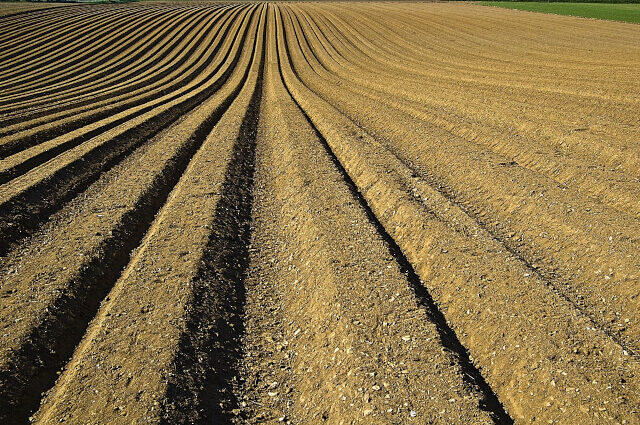[Source](https://pixabay.com/photos/)
### GMO Today, Using Genomic Theory
Today, we have a much greater understanding of genomic theory and can create a vegetable hybrid plant in a laboratory. Genetic modification has become more advanced in the past century, expanding from grains to fruit, sugar, canola, and even to animals.
## Commercializing GMO Seeds
Two major global companies — Bayer (which [purchased Monsanto in 2018](https://cban.ca/gmos/issues/monsanto/)) and DuPont Pioneer — produce 95% of genetically engineered seeds for agricultural use worldwide. These two companies have been criticized for imposing harsh restrictions on farmers using their products, including their use of legal intimidation.
### The Legality of GMO Seeds
Genetically modified crops have been a controversial topic ever since their initial introduction in 1994. People who object to GMOs in food products argue that genetically modified seeds are harmful to human health because they may cause long-term damage to humans’ DNA or they may produce unnatural substances within the body. They also contend that GMO crops could lead to antibiotic resistance and [environmental degradation](https://interfaithsustain.com/environmental-degradation-and-the-future-of-our-planet-earth/) among other things. Opponents also claim that genetically engineered plants violate farmers’ rights by introducing patents on physical seeds.
- [](https://interfaithsustain.com/industrial-agriculture/)
## [Evaluating the Environmental Impacts of Industrial Agriculture](https://interfaithsustain.com/industrial-agriculture/)
- [](https://interfaithsustain.com/environmental-determinism/)
## [Environmental Determinism and Your Personal Values](https://interfaithsustain.com/environmental-determinism/)
- [](https://interfaithsustain.com/cellular-agriculture/)
## [Cellular Agriculture: The Fourth Agricultural Revolution](https://interfaithsustain.com/cellular-agriculture/)
#### The Patenting of GMO Seeds
Prohibiting farmers from using certain seeds can set a dangerous legal precedent. One example of this occurred in a Canadian soybean farm, where Monsanto sued a small farmer for having a disproportionately high amount of specially designed “Round-Up” resistant soybean seeds which Monsanto developed and holds patents for. The judge eventually ruled in favor of Monsanto because the evidence clearly pointed to the farmer using patented seeds without paying any royalties.
## The Risks and Rewards of GMO Seeds
The safety of genetically engineered seeds is hotly disputed but the impact of GMO food on human health remains unknown. According to a 2014 study published in The Annals of Applied Statistics regarding genetically modified field crops in the U.S., “while genetically modified crops have been shown to pose risks to animal welfare, [wildlife and biodiversity](https://interfaithsustain.com/why-is-biodiversity-important/), there is comparatively little empirical basis for assessing their effects on environmental quality”.
It could take several generations before such long-term effects are able to be seen and studied on a global level.
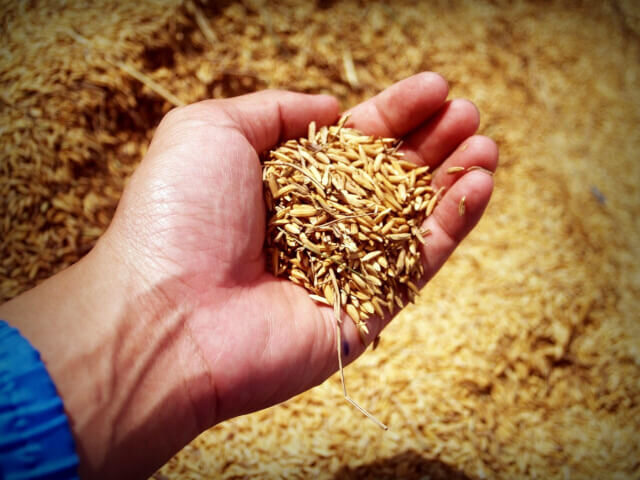[Source](https://pixabay.com/users/41330-41330/)
### GMO Seeds – Yes or No?
The International Service for the Acquisition of Agri-biotech Applications writes: “A study assessing the global economic and environmental impacts of biotech crops for the first twenty-one years (1996-2016) of adoption showed that the technology has reduced pesticide spraying by 671.2 million kg and has reduced environmental footprint associated with pesticide use by 18.4%. The technology has also significantly reduced the release of greenhouse gas emissions from agriculture equivalent to removing 16.75 million cars from the roads.”
It is clear that there are positive environmental effects stemming from the use of genetically modified crops, but there are also links to much more damaging effects that are often overlooked.
Tenny Pirri-Simonian, a professor at the Webster University of Geneva, exposes a side of GMO usage that is not often looked at by the media. She writes in the book, [“Sacred Seed”](https://workingwithoneness.org/video/sacred-seed-a-collection-of-essays-book-trailer/), “Today, particularly in poor countries, transnational business organizations dictate what sort of food will be consumed and the nutritional value of that food. These enterprises seek to maximize the production of crops for export by forcing small farmers to give up their indigenous life-giving agriculture and buy genetically modified seeds for higher yields.”
#### Forcing Indigenous Farmers to use GMO Seeds
While the developed world is maybe benefiting from cheaper and longer-lasting foods, are these plastic tasting products really desired? Meanwhile developing countries are having their entire way of life flipped on its head. Indigenous farmers will never be able to compete their traditional agricultural techniques, using non GMO seeds, with genetic modification. Therefore, they are forced out of their long-standing culture of working with nature, throughout the seasons, using open pollinated seeds and garden seeds and they are forced into the modern world.
#### **Globalization and The Use of GMO Seeds**
Over 300 million acres of genetically engineered crops were planted worldwide in 2013, with over 90% of them being genetically engineered to tolerate herbicides or produce an insecticide.
## Gene Editing and GMO Seeds
GMO seeds can be genetically engineered in different ways. In the past, GMOs contained DNA from another organism that was inserted into the DNA of a GMO to produce certain traits and characteristics.
Today, methods include using **RNAi** (or double-stranded RNA) which is used to silence genes that are linked to specific traits and utilizing **CRISPR** technology (Clustered Regularly Inter-Spaced Palindromic Repeats).
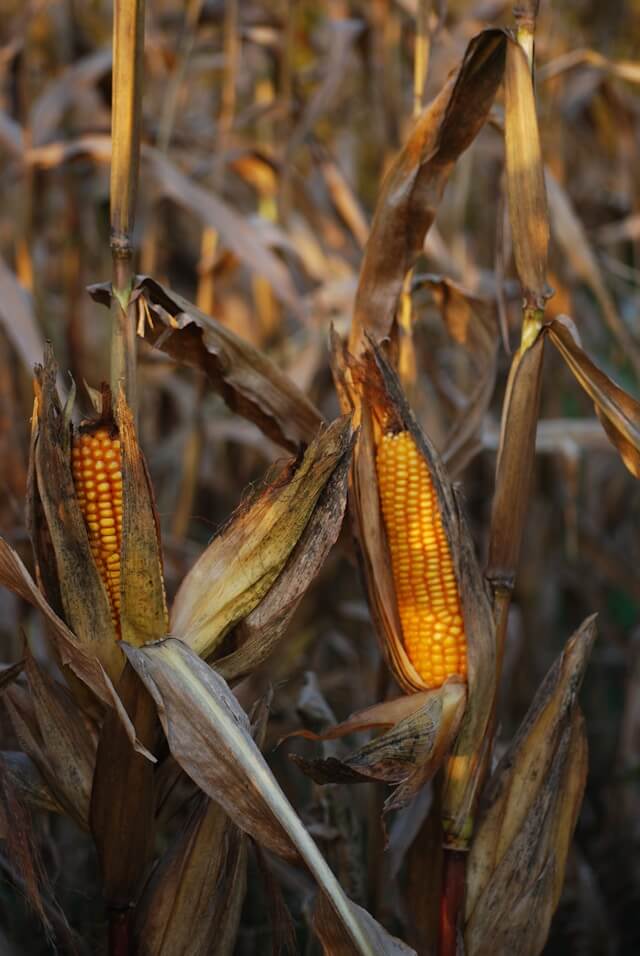[Source](https://unsplash.com/@christophem71)
## Religious Ethics and GMO Seeds
The book of Leviticus in chapter 19 writes, “*you shall not sow your field with two kinds of seed.”* [*Eco Bible: An Ecological Commentary on Genesis and Exodus*](https://interfaithsustain.com/ecobible/)*,* notes that Nachmanides, a rabbi in 13th century Spain, wrote, “one who intermixes two species thereby changes and defies the act of creation, as though he thinks that God did not complete His world sufficiently. \[Such a person\] denies and throws into disorder the work of creation.”
The ethics of genetic engineering are complex, and Nachmanides’ warning against mixing species should serve as an impetus for an **ethical evaluation** of GMO seeds.
Dr. Jeremy Benstein writes: “We moderns may be long on knowledge, but we’re painfully short on wisdom. An issue in the laws of mixing species is whether there are, or should be, limits. How far is too far? These ancient, seemingly archaic, conceptions of human self-restraint as a condition for holiness are essential for us to grapple with the ethical questions of appropriate technology, human needs, the natural world and “progress.” Many environmentalists turn to pre-modern, indigenous cultures tied closely to the land for a vantage point outside our modern ethos, from which to critique it”.
## A Spiritual Perspective on GMO Seeds
The book, “**Sacred Seed**“, “inspired by physicist and environmental leader Dr. Vandana Shiva”, offers a spiritual perspective on seeds, and relates to GMO seeds.
David Suzuki wrote, “If life is sacred, then we cannot treat other organisms as if they are cars or computers, we must act with humility, respect and love. “Sacred Seed” provides a powerful perspective to temper our unseemly rush to engineer everything within the biosphere.”
*\* Featured image [source](https://pixabay.com/users/vijayanarasimha-110318/)*
*Follow this link to learn more about [Food Production](https://interfaithsustain.com/food-production/ "Food Production")*
**Categories:** Blog on Faith and Ecology, Food & Agriculture
**Tags:** GMO Seeds
---
### [The Sustainable Way to Eating Meat is Through Lab-Grown Synthetic Meat](https://interfaithsustain.com/synthetic-meat/)
**Published:** July 12, 2021
**Author:** ICSD
**Excerpt:** Noga Wies - If you’ve ever considered becoming a vegetarian or at least cutting down on meat consumption, the chances are that you were motivated by a desire to reduce animal suffering. In 2018, 302 million cattle, 1.5 billion pigs, and a staggering 69 billion chickens were slaughtered for meat production.
**Content:**
Table of Contents
Table of Contents
- [The Benefits of Synthetic Meat](#aioseo-the-benefits-of-synthetic-meat-5)
- [Synthetic Meat Saves Land](#aioseo-synthetic-meat-saves-land-9)
- [Synthetic Meat Saves Feeding the Animals](#aioseo-synthetic-meat-saves-feeding-the-animals-12)
- [Synthetic Meat Reduces Emissions from Food Production](#aioseo-synthetic-meat-reduces-emissions-from-food-production-15)
- [Synthetic Meat Can Meet the Demand of the Growing Human Population](#aioseo-synthetic-meat-can-meet-the-demand-of-the-growing-human-population-19)
- [Synthetic Meat is more Efficient than Slaughtering Animals](#aioseo-synthetic-meat-is-more-efficient-than-slaughtering-animals-21)
- [Directing Cells to Grow Synthetic Meat](#aioseo-directing-cells-to-grow-synthetic-meat-23)
- [Labs Culturing Meat](#aioseo-labs-culturing-meat-26)
- [Synthetic Meat Provides Enhanced Nutrition](#aioseo-synthetic-meat-provides-enhanced-nutrition-31)
- [Meat in Space ….. like Star Trek](#aioseo-meat-in-space-like-star-trek-36)
- [Meat and Religious Ethics](#aioseo-meat-and-religious-ethics-38)
- [Is Synthetic Meat Playing God?](#aioseo-is-synthetic-meat-playing-god-42)
- [Interfaith Animal Efforts, and Synthetic Meat](#aioseo-interfaith-animal-efforts-and-synthetic-meat-44)
- [Israel Leads the Way in Synthetic Meat Production](#aioseo-israel-leads-the-way-in-synthetic-meat-production-46)
*By Noga Wies* – If you’ve ever considered becoming a vegetarian or at least cutting down on meat consumption, the chances are that you were motivated by a desire to reduce animal suffering and will be interested in learning more about synthetic meat. In 2018, 302 million cattle, 1.5 billion pigs, and a staggering 69 billion chickens were [slaughtered for meat production](https://ourworldindata.org/meat-production).
This may sound horrific, but surprisingly, this is hardly the only problem with the meat industry. In fact, although the environmental impacts of the meat industry aren’t as well known, they are certainly far more hazardous than the suffering of the billions of animals that make their way to our plates each year.
## The Benefits of Synthetic Meat
It sure sounds like something out of this universe creating meat in laboratories. But when you understand how many benefits there are to this production method, you will begin to see that this is a key way forward to feeding the growing global population.
[Source](https://pixabay.com/users/pexels-2286921/)
### Synthetic Meat Saves Land
Let’s start with the land on which all these animals are raised before being slaughtered. Due to land-covering glaciers and vast expanses of barren land, only 71% of the land on our planet is habitable to begin with, and a whopping 38.5% of all habitable land is [allocated to livestock farming](https://ourworldindata.org/land-use).
This leaves very little land for cities, towns and villages, and as these grow to support ever-growing populations, wild habitats are increasingly annexed or converted into agricultural land to satisfy the skyrocketing demand for food. This is especially tragic when the wild habitats that are being destroyed to clear land for livestock farming are rainforests or similar priceless treasures of [biodiversity](https://interfaithsustain.com/why-is-biodiversity-important/).
- [](https://interfaithsustain.com/cellular-agriculture/)
## [Cellular Agriculture: The Fourth Agricultural Revolution](https://interfaithsustain.com/cellular-agriculture/)
- [](https://interfaithsustain.com/sustainable-food/)
## [A Sustainable Food System to Address Climate Change](https://interfaithsustain.com/sustainable-food/)
- [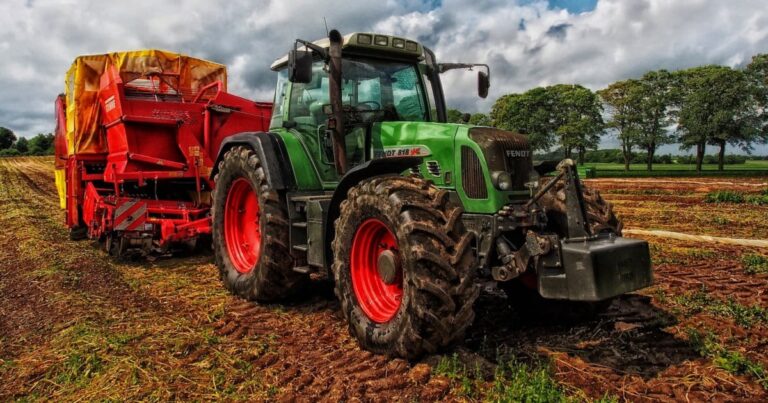](https://interfaithsustain.com/green-revolution-definition/)
## [Green Revolution Definition and Assessment of Its Environmental Impact](https://interfaithsustain.com/green-revolution-definition/)
### Synthetic Meat Saves Feeding the Animals
Now that we’ve cleared land for our livestock, how much will they need to eat before they’re fit for slaughtering? As it turns out, the process by which animals convert the plants that they eat into the meat we eat is extremely inefficient; 3.3 kilograms of feed are required to produce each kilogram of poultry, and almost twice that – 6.4 kilograms of feed – is required to produce just one kilogram of pork. If you’re a steak enthusiast, the inefficiency is even harder to swallow – the production of a kilogram of beef requires a mind-boggling 25 kilograms of feed! 25 kilograms of feed!
Needless to say, countless more acres of land must be dedicated to growing all this feed and an astonishing amount of freshwater is used for its irrigation.
### Synthetic Meat Reduces Emissions from Food Production
Surely now that we’ve paid an exorbitant environmental price just to provide our livestock with food and land to live on, we can sit back and enjoy our meat. But unfortunately, that’s hardly the last of the environmental sacrifices we make for a burger!
26% of all greenhouse gas emissions are due to food production, with livestock being responsible for a large percentage of those emissions. There are emissions associated with fertilizer production and application, emissions from seed and feed production and transport, and emissions resulting from agricultural infrastructure construction and maintenance.
Consequently, 9.87 kilograms of greenhouse gases are emitted per kilogram of poultry and 12.31 kilograms of greenhouse gases are emitted per kilogram of pork. Cattle host special methane-producing bacteria in their digestive systems, and this methane greatly contributes to the astounding 99.48 kilograms of [greenhouse gases emitted per kilogram of beef](https://ourworldindata.org/environmental-impacts-of-food). Moreover, since methane is 20 times more efficient than carbon dioxide at trapping radiation, cattle farming is the most significant agricultural cause of greenhouse gas emissions and thus of global warming.
#### Synthetic Meat Can Meet the Demand of the Growing Human Population
As the Earth’s population grows, so does the demand for real meat. Growing meat has more than tripled over the last 50 years, leading to the growing severity of the problems described above. Given that a mass conversion to vegetarianism is extremely unlikely, what can we do? The answer is simple – we can grow meat in a lab.
#### Synthetic Meat is more Efficient than Slaughtering Animals
The meat we eat is mostly muscle tissue. Why, then, must we raise a whole animal and invest copious resources in it before slaughtering the poor creature, only to consume a few of its muscles? To solve this problem, scientists turned to stem cells. Most of the cells in your body are specialized cells, such as bone cells, blood cells, skin cells, and muscle cells. But this wasn’t always the case.
## Directing Cells to Grow Synthetic Meat
Back in your earliest embryological days, before you had anything resembling a body, all of your types of cells had the capacity to “choose” a path and differentiate into specific kinds of cells. Cells capable of differentiating into the myriad cell types in your body are known as stem cells, and although few of them remain in the adult body, they are the key to producing lab-grown, or cultured, meat.
Here’s how it works: scientists can, for example, collect stem cells from a cow under local anesthesia (without harming the cow). The stem cells are then taken to a lab, where they are immersed in a special medium, or nutrient-rich liquid, that induces both differentiation into muscle tissue and rapid cell division. This is how a few stem cells can quickly give rise to a large piece of cow muscle tissue in a petri dish. The cultured beef of a cow muscle, which is nearly identical to a natural cow muscle, can then be grilled and consumed.
### Labs Culturing Meat
There are dozens of academic labs and meat companies around the world working on cultured meat. The lucky few who have tasted the fruit of their labor have found its taste to be almost indistinguishable from natural meat.
Although cultured meat is currently too expensive to be a viable alternative to natural meat, researchers are toiling away to reduce the cost of the expensive media used in the culturing process, and cultured meat is expected to be sold in [grocery stores](https://interfaithsustain.com/what-is-consumerism/) in the not too distant future.
#### Synthetic Meat Provides Enhanced Nutrition
Once that goal is achieved, scientists will be able to turn their attention to genetically engineering cultured meat to enhance its nutritional value. By introducing genes involved in the synthesis of various nutrients into the DNA of the stem cells used to produce cultured meat, scientists will create “super-meat”, that could prove especially useful in combatting malnutrition in developing countries.
In other words, cultured meat is expected to become a nutrient-rich, cruelty-free animal food source with a drastically decreased environmental impact.
[Source](https://unsplash.com/@thisisengineering)
## Meat in Space ….. like Star Trek
Amazingly, **synthetic meat** may be the solution to problems both on Earth and in outer space! Storing sufficient meat for astronauts on prolonged missions, such as those traveling to Mars, would require huge storage facilities aboard relatively small spacecraft. To solve this problem, NASA is conducting research on meat culturing in hopes that astronauts will one day grow their own meat while exploring space.
## Meat and Religious Ethics
Deuteronomy chapter 12, verse 15 uses the word ‘desire’ in relation to eating meat. Contemporary [Rabbi David Rosen explains](https://www.youtube.com/watch?v=UHIyXrN1JAI) how “the Hebrew word ta’avah (desire) of this verse may be translated into English as ‘lust,’ which is not a positive word. Despite this, the Torah (Pentateuch) allows for the consumption of animal products and surely there were times and places in the course of history where human beings could not get all their necessary nutrients without a certain amount of animal protein. But then again the conditions under which that animal protein was obtained were totally different from that which the vast majority of meat is provided on the market today.”
Rabbi Rosen continues, “Nevertheless, it is clear that, for the Torah, the ideal is not a meat consumptive lifestyle. This is to be seen already in the Garden of Eden where the ideal society is a vegan society and even to many of our commentators, early commentators, in the vision of the messianic age as articulated by the prophet Isaiah where the wolf and the lion are living with the lamb and the goat. So you have this vision of an ideal society.”
The above teachings are based on those of many earlier rabbis, including Rabbi Don Isaac Abarbanel states that “eating plant-based foods is right and proper,” since such foods are less likely to spoil, and promote in us the correct balance between materialism and spirituality. He mentions the opinion of Rabbi Joseph Albo, who states that originally Adam and Eve were given only fruit and vegetables since killing animals to eat meat breeds cruelty in humankind.
### **Is Synthetic Meat Playing God?**
One might wonder about the ethics of lab grown meat, since it involves humans growing something in labs that exists naturally as animals. Many religious clergy, including Rabbi Rosen, support synthetic meat, since it replaces conventional meat production, which as mentioned below is highly problematic in regards to animal cruelty, climate change, and water pollution.
#### Interfaith Animal Efforts, and Synthetic Meat
Many interfaith efforts exist in regards to animal welfare, and these dovetail with efforts to promote synthetic meat. For example, the [Animal Interfaith Alliance](https://animal-interfaith-alliance.com/about-us/introducing-the-aia/) works “to promote a vegetarian/vegan diet, which also embraces the issues of environmental protection, healthy lifestyles and ending world hunger, and to end animal exploitation.”
## Israel Leads the Way in Synthetic Meat Production
Aleph Farms is one of Israel’s cutting edge Start Ups that is becoming the world’s first industry leader in the field of synthetic meat.” [Aleph Farms](https://www.aleph-farms.com/) is the brainchild of the beloved heritage food company, Strauss Group, top research university, Technion – Israel Institute of Technology, and veteran CEO, food engineer and biologist, Didier Toubia. Founded in 2017 by this group of food experts, parents, nature lovers, and scientists, we’re humbly united in our mission to feed the world and preserve the planet.”
As we know, [current methods of meat production aren’t sustainable](https://www.theburnin.com/science/3-ways-end-world-hunger/). As the world’s population increasingly expands, people will have no choice but to eventually add meat alternatives, that have been developed in unique ways, into their diet, unless they want to give it up all together.
Despite sounding like science fiction, synthetic meat may become a staple of our diets in the near future!
[Source](https://unsplash.com/@spacexuan)
*\* Featured image [source](https://pixabay.com/photos/)*
*Interested in learning more? Check out our post on [The Principles of Sustainable Development](https://interfaithsustain.com/principles-of-sustainable-development/ "The Principles of Sustainable Development")*.
**Categories:** Blog on Faith and Ecology, Food & Agriculture
**Tags:** Synthetic Meat
---
### [Cellular Agriculture: The Fourth Agricultural Revolution](https://interfaithsustain.com/cellular-agriculture/)
**Published:** July 14, 2021
**Author:** ICSD
**Excerpt:** Jordan Rindler - Cellular Agriculture is the process of replicating naturally occurring cellular tissues (which are groups of similar cells that work together to serve a function) in a controlled, growth-oriented environment. Animal cells are programmed to replicate, which causes the organism to grow.
**Content:**
Table of Contents
Table of Contents
- [Industrial Agriculture is Destroying our Climate](#aioseo-industrial-agriculture-is-destroying-our-climate-9)
- [Agricultural Carbon Emissions are Rapidly Warming up the Earth](#aioseo-agricultural-carbon-emissions-are-rapidly-warming-up-the-earth-12)
- [Let them Eat Cellular Meat!](#aioseo-let-them-eat-cellular-meat-23)
- [Cool Concept, but is Cellular Agriculture a Viable Alternative to Farms?](#aioseo-cool-concept-but-is-cellular-agriculture-a-viable-alternative-to-farms-19)
- [So, How Far Along Is Cellular Agriculture?](#aioseo-so-how-far-along-is-cellular-agriculture-27)
- [Lab-Grown Ribeye, an Israeli Scientific Feat of Tissue Engineering](#aioseo-lab-grown-ribeye-an-israeli-scientific-feat-of-tissue-engineering-37)
- [Beyond Agriculture: Materials and Medicine](#aioseo-beyond-agriculture-materials-and-medicine-36)
- [Will Cellular Production Lead to The End of Poaching?](#aioseo-will-cellular-production-lead-to-the-end-of-poaching-39)
- [Antibiotics, Superbugs, and a Potential Cellular Solution](#aioseo-antibiotics-superbugs-and-a-potential-cellular-solution-42)
- [What's the Future of Cellular Agriculture?](#aioseo-whats-the-future-of-cellular-agriculture-46)
*By Jordan Rindler* – Cellular **Agriculture** is the process of replicating naturally occurring cellular tissues (which are groups of similar cells that work together to serve a function) in a controlled, growth-oriented environment. Animal cells are programmed to replicate, which causes the organism to grow.
**Cellular** Agriculture uses the replication instructions that are coded in animal DNA and isolates the specific desired tissue. A nutrient-rich serum called growth media provides all of the necessary nutrients for the tissue to grow in a controlled environment.
To grow a chicken breast, a small initial culture of cells is harvested from, you guessed it, a chicken breast. This serves as the base for cellular cultivation. These cells don’t know that they are not in fact inside of a chicken anymore.
All the cells know how to do is create more chicken breast cells out of the nutrients that they receive. The growth media is then injected into the cells, supplying them with the necessary materials to follow their genetic code. This catalyzes the cell replication and the result will be a functionally identical chicken breast, grown from a microscopic culture of cells.
[Source](https://miro.medium.com/max/2400/1%2Ai3w_Vs39KGpentKqrH8F4w.jpeg)
## Industrial Agriculture is Destroying our Climate
Animal products have been an enormous source of nutrition and utility even before humans learned the art of domestication. Our prehistoric ancestors used the meat of a hunted animal to feed their tribe, its hide to keep warm in the winter and create shelter, and its bones for tools, weapons, and jewelry.
Today, industrial agriculture and factory farming have transformed the way we consume animal-derived products and turned animal agriculture into an extremely destructive industry in respect to green house gas emissions and thus the climate.
- [](https://interfaithsustain.com/industrial-agriculture/)
## [Evaluating the Environmental Impacts of Industrial Agriculture](https://interfaithsustain.com/industrial-agriculture/)
- [](https://interfaithsustain.com/aquaponics-system/)
## [Understanding The Enormous Benefits of The Aquaponics System](https://interfaithsustain.com/aquaponics-system/)
- [](https://interfaithsustain.com/regenerative-agriculture/)
## [Regenerative Agriculture Produces Food Without Destroying The Environment](https://interfaithsustain.com/regenerative-agriculture/)
### Agricultural Carbon Emissions are Rapidly Warming up the Earth
The animal agricultural sector is responsible for 18% of all anthropogenic greenhouse gas emissions (GHG), which is more than all cars, trains, and planes combined, and that is without even considering food transportation, packaging, and waste. The entire global food sector is responsible for 32% of GHG emissions and 37% of all methane emissions, which traps 26 times more radiation in the atmosphere than carbon dioxide.
Cellular agriculture has the incredible potential to reduce land and water use by up to 99% and greenhouse gas emissions by 96% per kilogram of animal product by cultivating biologically identical organic tissues without needing to raise, feed, and slaughter the animal. Instead of having to feed a calf until maturity, which takes an enormous amount of food, water, and energy proportional to the total product that the cow will create in its lifetime, we can grow beef, synthesize milk, and engineer genuine leather, all in a lab.
If cellular agriculture can be scaled to produce meat in a sustainable and ethical way, the potential for reducing land use could not only help address agricultural emissions but also reduce [deforestation](https://interfaithsustain.com/environmental-degradation-and-the-future-of-our-planet-earth/), which is another significant source of GHG emissions.
#### Let them Eat Cellular Meat!
One of the biggest climate resistance points we are facing, especially in the western world, is the mass refusal to adopt sustainable eating habits. The vegan and vegetarian diets have seen a substantial increase in popularity especially in the last decade, but the large majority of the population still have no intention of cutting down on meat.
Cellular agriculture can reconcile the cultural rejection of plant-based protein with the absolute necessity to significantly cut agricultural **carbon emissions** through **lab grown meat** that is indistinguishable from its traditional livestock counterpart.
## Cool Concept, but is Cellular Agriculture a Viable Alternative to Farms?
Currently, the world is still skeptical, with good reason. The concept of cellular agriculture is so abstract and counterintuitive; creating an egg without a chicken and a chicken without an egg makes the question of which came first even more confusing. As the technology progresses and becomes more integrated into the mainstream, skeptics will have their doubts refuted by a perfect burger, porkchop, or filet that comes straight from a lab.
When Ford invented the modern automobile, the leaders of the horse industry laughed at him and asked why anyone would pay an absurd price for a car that’s more dangerous, harder to fuel, and less practical than the trusty stallion that had been used without fail for thousands of years.
It wasn’t until the automobile industry began to scale up and integrate itself into society via infrastructure and legislation that the same horse dealers who mocked Ford began to realize that their own industry would soon be rendered obsolete.
## So, How Far Along Is Cellular Agriculture?
Cellular agriculture is currently an infant industry with a lot more research and market testing needed before it can truly compete with traditional big agriculture on a global scale. However, we have seen incredible progress within the last 8 years.
In 2013, the first **lab-grown burger** was produced. This was an amazing scientific achievement with revolutionary potential, but absolutely obsolete as a long-term, sustainable alternative to traditional meat, because the burger cost a whopping 300,000 USD to grow.
### **Lab-Grown Ribeye, an Israeli Scientific Feat of Tissue Engineering**
Israeli start-up, [Aleph Farms](https://www.aleph-farms.com/), the first company to ever lab-grow a steak in 2018, uses a proprietary 3D bioprinting technology to specifically tailor the texture and nutritional content of their steaks. By adjusting the collagen to fat tissue ratio, the company is able to create an incredibly wide variety of steaks that can mimic the different tastes and textures found in steaks today.
To grow a steak, layers of lean meat cells must be combined with connective tissue and intramuscular fats in addition to more complex proteins that must be arranged in a way that resembles the iconic “marbling” in a steak, which is a term used to describe the visible fat spread and content seen when looking at a high-quality steak.
Beef, and especially steaks, are the most expensive cellular agriculture products to produce due to the various amount of tissues needed to replicate the mouthfeel of a non-cultured steak. This is parallel to the cost of beef in traditional agriculture, which requires more than 10 times as many resources to produce in comparison to poultry, dairy, eggs, or pork.
Meat is much more challenging and resource-intensive to produce than a chicken breast, which has a smaller variety of protein and fats and therefore demands fewer cell cultures. Another Israeli company, [Future Meat Technologies](https://future-meat.com/), has developed a different method for cellular agriculture and is pushing the limits of lab-grown cellular meat production.
On June 25th, 2021, Future Meat Technologies opened the world’s firsts synthetic meat production plant in Rehovot, a city outside Tel Aviv. This factory currently produces 500kg of cultured chicken, lamb, and pork, every day. This milestone happened many years ahead of what the market anticipated and proves that while cellular agriculture is still an industry of the future, the widespread adoption of cell-based meat is not as far beyond the horizon as we thought.
## Beyond Agriculture: Materials and Medicine
This specific manipulation of cellular structures used to engineer steak can also be applied to other animal products such as milk, honey, and even non-food products. The production potential of animal products, via cellular agriculture, stretches beyond a more sustainable food source. Virtually any protein or tissue that is synthesized in an animal will soon be replicable with stem cells and gene-editing technologies.
Growing meat is just the beginning for cellular agriculture. Agricultural products like leather, silk, and even extremely rare materials like rhino horn and sturgeon caviar can all be lab-grown without animals using cell tissue engineering.
## Will Cellular Production Lead to The End of Poaching?
The ability to create such rare and sought-after materials that are only found in endangered animals has the potential to effectively end the poaching industry by causing supply to skyrocket and therefore diminish demand.
With lower prices on the black market for illegal animal products like rhino horns, shark fins, or elephant tusks, poachers will not be able to keep up with the influx of completely identical cellular products. Eventually, they will be forced to end their senseless slaughtering because the money that goes into the poaching industry will dry up.
### Antibiotics, Superbugs, and a Potential Cellular Solution
A commonly overlooked issue in industrial agriculture is the proliferation of antibiotic use on domesticated animals. Not only are these antibiotics expensive to research and produce, but there are also adverse effects from injecting billions of animals each year with these antibiotic concoctions.
Superbug refers to a bacterial disease that has evolved a resistance to our antibiotics. When we allow common bacteria to be perpetually exposed to these antibiotics, we are creating an environment where a random genetic mutation can create a strain of bacteria that we are helpless against. This is a fear that has inspired a movement against the use of mass antibiotics in agriculture, as the potential risk is too high to justify continuing this practice.
Luckily, cellular agriculture happens in a sterile environment completely absent of these bacteria, which makes the use of antibiotics in labs obsolete. This offers a solution and potential alternative in case of a catastrophic superbug breakout, so that a mass adoption of cellular agriculture can preemptively stop the threat before it even happens.
## What’s the Future of Cellular Agriculture?
With the first cellular agriculture factory already open and bringing in revenue, there will now be market data to support or disprove the viability of cellular agriculture to be a long-term solution to the problems we are facing due to traditional agriculture.
We know that the concept and the science are absolutely solid, but the fastest way for an industry to grow is with the support of investors and venture capitalists. These entities will look past the scientific proof of concept and focus on the business proof of concept instead, which means that if cellular agriculture can’t become a profitable business then its adoption will be delayed until it can.
The future is looking extremely bright. Future Meat Technologies can already produce an entire chicken breast for under $4 USD, which is only slightly more expensive than the normal production cost. As the technology and business sides of this sector both continue to scale up, costs will continue to decrease.
By 2025 we could find ourselves eating synthetic meats at restaurants and at home on a regular basis. [Jews](https://www.chabad.org/library/article_cdo/aid/2293219/jewish/Is-the-Lab-Created-Burger-Kosher.htm), [Muslims](https://www.ikim.gov.my/new-wp/index.php/2021/03/19/cultured-meat-as-a-new-culture-in-muslim-community/), and [Hindus](https://www.wsj.com/articles/BL-IRTB-19777) are already discussing how to understand cellular agriculture within their traditional religious restrictions around meat consumption. One thing is for sure, cellular agriculture is a more ethical, sustainable option and is poised to change our relationship with [food production](https://interfaithsustain.com/food-production/) and the planet forever.
*\* Featured image [source](https://www.alfa-editores.com.mx/wp-content/uploads/2020/09/INGLE%CC%81S-1-fake-meat-1210x642.jpg)*
**Categories:** Blog on Faith and Ecology, Food & Agriculture
**Tags:** Cellular Agriculture, Synthetic Meat
---
### [Understanding The Enormous Benefits of The Aquaponics System](https://interfaithsustain.com/aquaponics-system/)
**Published:** April 15, 2022
**Author:** ICSD
**Excerpt:** Harry Cooper - Growing plants is an essential part of the modern food system. But unfortunately, many practices used to grow plants and produce food on an industrial scale are inefficient and harmful to the environment.
**Content:**
Table of Contents
Table of Contents
- [A Better Way to Grow Plants](#aioseo-a-better-way-to-grow-plants-3)
- [What Is an Aquaponics System?](#aioseo-what-is-an-aquaponics-system-6)
- [How The Aquaponics System Works](#aioseo-how-the-aquaponics-system-works-9)
- [Types of Aquaponics Systems](#aioseo-types-of-aquaponics-systems-18)
- [Nutrient Film Technique](#aioseo-nutrient-film-technique-20)
- [Media Bed System](#aioseo-media-bed-system-25)
- [Deep Water Culture Technique](#aioseo-deep-water-culture-technique-27)
- [Aquaponics Versus Industrial Farms](#aioseo-aquaponics-versus-industrial-farms-32)
- [Saving Fresh Water](#aioseo-saving-fresh-water-34)
- [Aquaponics Is Water Efficient](#aioseo-aquaponics-is-water-efficient-42)
- [Nutrient Pollution](#aioseo-nutrient-pollution-46)
- [Aquaponics Don't Require Chemical Fertilizers](#aioseo-aquaponics-dont-require-chemical-fertilizers-48)
- [Land Usage and Transportation](#aioseo-land-usage-and-transportation-51)
- [Aquaponics Make For More Accessible Food](#aioseo-aquaponics-make-for-more-accessible-food-58)
- [Aquaponics and Religion](#aioseo-aquaponics-and-religion-60)
*By Harry Cooper* – Growing plants is an essential part of the modern food system. But unfortunately, many practices used to grow plants and produce food on an industrial scale are inefficient and harmful to the environment.
Modern **industrial methods of plant production** require extensive water use, harmful chemicals, and large expanses of arable land. As our **food production system** has grown, these have all become in short supply, but luckily there is a more sustainable alternative.
## A Better Way to Grow Plants
**Aquaponics systems** are a modern method of growing plants that require less water, less added nutrients, and can be installed just about anywhere. Aquaponics systems come in all shapes and sizes, but the basic aquaponics system works by growing plants directly in water and filtering nutrients in from a fish tank.
**Aquaponic systems** use man made ecosystems to create a more efficient way of growing plants. This method minimizes human involvement in the plant growing process and makes [food production](https://interfaithsustain.com/food-production/ "food production") all around more efficient.
## What Is an Aquaponics System?
[Aquaponics](https://youmatter.world/en/definition/aquaponics-sustainable-benefits-system/) is a combination of the two practices of hydroponics systems and aquaculture systems. Hydroponics systems are plant growing systems that use no soil but instead put plant roots directly into water, and aquaculture is the process of raising fish.
Combining hydroponics and fish production through aquaponics creates a mini ecosystem that allows for an incredibly efficient use of nutrients. These aquaponics systems usually require three different parts; a plant growing area, a fish tank, and a biological filtration system.
### How The Aquaponics System Works
These three parts work together to make the flow of nutrients run smoothly. The system starts with the only human added nutrient input in the whole process, feeding the fish with fish food.
As the fish eat and process the food, they produce fish waste that is rich in ammonia and other toxic substances. After the fish tank stage, it is time for the waste water to move into the biofiltration tank.
This tank is filled with beneficial bacteria that break down the fish waste into nitrogen and other nutrients. These nutrients are incredibly helpful for plant growth, and are then pumped into the plant growing area to fertilize the plants.
Once the plants have absorbed all the nutrients, the water can then be used in the fish tank once again. Once the water is pumped back into the fish tank the cycle starts back again.
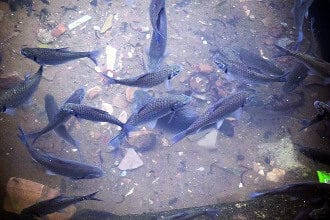[Source](https://pixabay.com/users/balouriarajesh-6205857/ "Source")
- [](https://interfaithsustain.com/sustainable-food/)
## [A Sustainable Food System to Address Climate Change](https://interfaithsustain.com/sustainable-food/)
- [](https://interfaithsustain.com/food-waste-facts/)
## [Essential Food Waste Facts That Everyone Must Know](https://interfaithsustain.com/food-waste-facts/)
- [](https://interfaithsustain.com/industrial-agriculture/)
## [Evaluating the Environmental Impacts of Industrial Agriculture](https://interfaithsustain.com/industrial-agriculture/)
### Types of Aquaponics Systems
There are many [different types](https://aquaponics.com/methods-of-aquaponics/) of aquaponic systems. However there are a handful that are typically more well known and more popular.
#### Nutrient Film Technique
Using a **nutrient film technique aquaponic system** entails keeping plants in very thin gutters. Nutrient rich water flows in a shallow film across the roots of the plants in order to keep them healthy.
This type of aquaponics system requires a very light weight set up. The best kinds of plants to use with the nutrient film technique are leafy greens or other plants with small root systems.
#### Media Bed System
A **media bed** uses plant beds filled with rocks, clay, or a similar material. The water from the biofilter is then pumped over the material to water the plants.
#### Deep Water Culture Technique
**Deep water culture aquaponic systems** are built to have plants floating on top of the water and let their roots grow deep into the water. This is commonly done by having plants sit on rafts above the water.
This kind of aquaponic system is meant for more large scale operations and allows for bigger plants to grow. This is the more popular kind of aquaponics system used for commercial aquaponic farming.
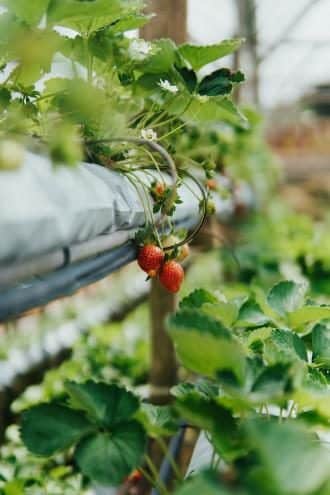
## Aquaponics Versus Industrial Farms
Modern methods of producing food are designed to grow plants on a massive industrial scale. For a long time these methods were considered incredibly efficient. However, many of these methods have proven to not only to be inefficient, but also very environmentally harmful. Luckily, growing plants with aquaponics produces plants incredibly efficiently while bypassing the environmental consequences of industrial agriculture.
### Saving Fresh Water
With human populations growing, and many parts of the world being plagued by drought, freshwater is becoming one of the most valuable resources for people to have access to. With freshwater becoming more and more important, many industries are looking for ways to save water.
One of the biggest offenders of [overusing water](https://htt.io/water-usage-in-the-agricultural-industry/#:~:text=How%20Much%20Water%20Does%20The,and%20overall%20poor%20water%20management.) is the agricultural industry. It is estimated that 70% of the world’s annual water usage goes to farming. Of that 70% it is estimated that 40% is wasted. This is mainly due to water evaporating, running off, and general inefficient watering and irrigation techniques.
With so much water being wasted due to poor farming, many have sought after a more efficient means of using water in agriculture. Luckily aquaponics could provide the solution.
[Source](https://pixabay.com/users/wrazor-13786093/ "Source")
### Aquaponics Is Water Efficient
Hydroponic systems are designed to use as little water as possible to water plants. This same principle is applied to the different types of aquaponics systems.
By exposing plant roots directly to water without worrying about soil or irrigation, aquaponic systems are able to avoid losing water through evaporation, run off, or poor watering techniques. It is estimated that most aquaponics systems are able to reuse [95%](https://theaquaponicsguide.com/why-are-aquaponics-systems-important-for-the-environment/#:~:text=Aquaponics%20systems%20provide%20many%20environmental,our%20environment%20and%20your%20gardeners.) of their water, making them much more water efficient than traditional growing methods.
Saving water in this way is incredibly important for any industry in a world with such scarce **freshwater supply**. But if aquaponics could in part replace commercial growing methods, one of the biggest users of water in the world would become much more efficient with their water.
### Nutrient Pollution
One of the biggest issues of commercial farming is the excessive usage of chemical [fertilizers](https://www.epa.gov/nutrientpollution/sources-and-solutions-agriculture). These cause deadly nutrient pollution in nearby water bodies. **Chemical fertilizers** are used in massive amounts on many industrial farms in order to provide nutrients to help plants grow. However when these nutrients flow into run off water they end up in local freshwater sources and cause serious damage in the form of nutrient pollution. These nutrients cause harmful algal blooms that kill marine animals and can disrupt entire freshwater ecosystems.
### Aquaponics Don’t Require Chemical Fertilizers
One of the most prolific benefits of using aquaponics is how [efficient](https://iopscience.iop.org/article/10.1088/1755-1315/137/1/012098/pdf) it is at using nutrients. Aquaponics systems require almost no excess nutrients that could cause nutrient pollution to be released into the environment.
Unlike modern commercial agriculture, aquaponic systems require very little human added nutrients. In fact most aquaponics systems only need the fish to be fed in order to provide the system with enough nutrients to support both the fish and the plants. While this is only a small amount of nutrients, by filtering it through the biological filter and recirculating the nutrients between the fish and the plants, this small amount of nutrients is just enough to keep plants growing without having to waste excessive amounts of nutrients that could end up polluting local water bodies.
#### Land Usage and Transportation
Another big problem with modern farming is how much land it takes up. Human development has pushed natural ecosystems into smaller and smaller areas of land, putting biodiversity in many places around the world at risk. It is estimated that [half](https://ourworldindata.org/land-use#:~:text=Half%20of%20all%20habitable%20land,roads%20and%20other%20human%20infrastructure.) of all the land habitable for humans is being used for farming purposes. This has made farming a very spatially intensive industry.
Another spatial issue created by farming is the [transportation](https://www.resilience.org/stories/2017-03-10/struggle-sustainable-food-transportation/) of crops and other agricultural goods. Even though farming takes up so much space, many people live in cities and very far away from farm land. This makes transporting food from farms to cities a priority in the agricultural industry. This becomes a problem as transporting so much food across such long distances requires large trucks that burn a lot of fossil fuels. Not only that, but the longer it takes to transport food, the more likely it is that it will spoil on the way.
[Source](https://pixabay.com/users/artisticoperations-4161274/ "Source")
#### Aquaponics Make For More Accessible Food
Aquaponics systems provide a solution for the spatial issues surrounding modern farms, as they are much more [accessible](https://theaquaponicsguide.com/why-are-aquaponics-systems-important-for-the-environment/#:~:text=Aquaponics%20systems%20provide%20many%20environmental,our%20environment%20and%20your%20gardeners.) than the traditional outdoor fields of crops. Unlike outdoor farming that requires specific soil and weather conditions to grow plants, aquaponics can be used just about anywhere. By not having to rely on a place having arable soil opens up a lot more places that can be used to grow food. Not only that, but by being able to grow plants closer to and in cities, there would be less need to burn large amounts of **fossil fuels** to transport food long distances.
## Aquaponics and Religion
[TEAM](https://www.team.org) missionaries Dave and Cheryl Jereb are [bringing aquaponics to Zimbabwe](https://www.team.org). They are using aquaponics to help provide [sustainable food](https://interfaithsustain.com/sustainable-food/ "sustainable food") and job training for the local communities. Dave built the first experimental aquaponics system in 2014, and “hired Zimbabwean pastor and gardener Joshua Masunga to help tend the system and educate the community. The small team calls the project ‘Fish for Life'”. The project was successful, and their next goal was to build a larger aquaponics system “to feed patients and workers at the [local mission hospital](https://www.team.org)“. This project was also a huge success, and “After months of hard work, the hospital kitchen received its [first harvest of tomatoes in October](https://www.youtube.com/watch?v=iPDli0dWa_Q)“.
Dave explains how he uses his aquaponics system as a way to build relationships and speak about God:
> These relationships are open doors to talking about how the Lord is their provider. When they visit and see how plants can grow in just water and stones, they see how it can only be of God that these ‘impossible’ things can happen.
Aquaponics and other [sustainable technologies](https://interfaithsustain.com/what-is-clean-tech/ "sustainable technologies") may look miraculous, but that’s only because the natural world itself is miraculous. The more we learn how to work with nature and channel it sustainably, the more we will reveal the miracles of life.
*\* Featured image [source](https://pixabay.com/users/sasint-3639875/ "source")*
**Categories:** Blog on Faith and Ecology, Food & Agriculture
**Tags:** Food Production, Sustainable Food
---
### [Evaluating the Environmental Impacts of Industrial Agriculture](https://interfaithsustain.com/industrial-agriculture/)
**Published:** August 8, 2022
**Author:** ICSD
**Excerpt:** Ethel Mendius - Industrial agriculture is the mainstay of the modern food system. With its global prevalence and far-reaching consequences, it is necessary we evaluate industrial agriculture for its impact on the environment and human health.
**Content:**
Table of Contents
Table of Contents
- [The Rise of Industrial Agriculture](#aioseo-the-rise-of-industrial-agriculture-2)
- [The British Agricultural Revolution](#aioseo-the-british-agricultural-revolution-4)
- [The Green Revolution](#aioseo-the-green-revolution-6)
- [Features of Industrial agriculture](#aioseo-features-of-industrial-agriculture-8)
- [Big Farms](#aioseo-big-farms-16)
- [Today's Industrial Farms](#aioseo-todays-industrial-farms-19)
- [Too Big to Fail?](#aioseo-too-big-to-fail-22)
- [The Benefits of Industrial Agriculture](#aioseo-the-benefits-of-industrial-agriculture-24)
- [The Hidden Cost of Industrial Agriculture](#aioseo-the-hidden-cost-of-industrial-agriculture-27)
- [Environmental Health Perspectives](#aioseo-environmental-health-perspectives-35)
- [Sustainable Agriculture](#aioseo-sustainable-agriculture-37)
- [Religion and Industrial Agriculture](#aioseo-religion-and-industrial-agriculture-45)
- [Grapes, Figs, and Pomegranates, Eco Bible Volume 2](#aioseo-grapes-figs-and-pomegranates-eco-bible-volume-2-47)
*By Ethel Mendius* – Industrial agriculture is the mainstay of the modern food system. With its global prevalence and far-reaching consequences, it is necessary we evaluate **industrial agriculture** for its impact on the **environment** and **human health**. Following this, we can advocate for policy changes and new solutions that strive toward **feeding the world sustainably**.
## **The Rise of Industrial Agriculture**
The transition from hunting and gathering to farming, or the Neolithic Revolution, occurred in ancient times. Since then, innovations in agriculture have been pivotal to the growth of human societies, changing how human beings eat and live.
### The British Agricultural Revolution
In the 17th century, the British Agriculture Revolution brought tools and techniques that led to a population boom: “the increased availability of food allowed for populations across the world to grow” and join the urban workforce. As technologies have advanced, this trend has persisted.
#### **The Green Revolution**
The [Green Revolution](https://interfaithsustain.com/green-revolution-definition/), beginning in the 1940s, was a contributing factor to modern industrial agriculture. Led by American agricultural scientist Norman Borlaug, this era ushered in its own array of technological reform to industrial farming and increased the yield of [food production](https://interfaithsustain.com/food-production/) for the growing global population. This new approach included genetic engineering and drip irrigation, but its most lasting and controversial impacts come from the use of chemical pesticides and synthetic fertilizers used to aid growth.
## Features of Industrial agriculture
In the U.S., industrialized faming has altered the fabric of society. [John Hopkins](https://www.foodsystemprimer.org/food-production/industrialization-of-agriculture/) reports that “in the early 1900s, more than half of Americans were either farmers or lived in rural communities”, and these farmers produced a variety of animals and crops. Throughout the course of the century, all of this changed.
[Source](https://unsplash.com/@thebrewerss)
Food production became a specialized process, as farms began devoting themselves to a single animal species or crop (often corn, wheat, or soy). As farmers specialized, the mechanical techniques they used continued to improve, leading to a dramatic decline in the agricultural workforce by the end of the 20th century, from 41 to 2 percent, and an overhaul of the American food system.
New chemical technology changed the face of industrialized farming. In addition to the chemical fertilizers and pesticides produced by **the Green Revolution**, agriculturalists made greater use of genetically modified organisms as well as antibiotics to artificially bolster the health and size of farm animals.
### Big Farms
The economic impacts of industrial agriculture have been as vast as the technological changes that made them possible. While small to mid-sized farms were the norm before industrial agriculture, the scale allowed by new farming methods made it harder for small farms to survive.
The government embraced this change with policy that paved the way for industrial farms; U.S. Secretary of Agriculture Ezra Taft Benson called on those in the industry to “get big or get out.” Getting big meant the scale of production must increase to feed the rising population and contribute to an increasingly complex global food system.
- [](https://interfaithsustain.com/growing-your-own-food/)
## [Growing Your Own Food For Good Health And A Healthy Environment](https://interfaithsustain.com/growing-your-own-food/)
- [](https://interfaithsustain.com/aquaponics-system/)
## [Understanding The Enormous Benefits of The Aquaponics System](https://interfaithsustain.com/aquaponics-system/)
- [](https://interfaithsustain.com/regenerative-agriculture/)
## [Regenerative Agriculture Produces Food Without Destroying The Environment](https://interfaithsustain.com/regenerative-agriculture/)
## Today’s Industrial Farms
Industrial farming looks little like the small farms of yore. Instead of being raised with access to the outdoors, farm animals are reared in concentrated animal feeding operations (CAFOs) designed to accelerate meat production. These facilities raise alarm bells for proponents of animal welfare.
On the other hand, much of the produce grown on industrial farms have become commodity crops, used not as food but for animal feed or biofuel. Because of these changes, the productivity of industrial farming has not had a straightforward impact on [food security](https://interfaithsustain.com/regenerative-agriculture/), and has come with severe health and environmental drawbacks.
### Too Big to Fail?
Industrial agriculture has brought the potential of food production to unimaginable heights, and [research](https://www.globalagriculture.org/report-topics/industrial-agriculture-and-small-scale-farming/industrial-agriculture-and-small-scale-farming.html) suggests that “our current agricultural production could feed 10 to 14 billion people if it was used exclusively and as efficiently as possible as food.” However, with **food insecurity** still a sad reality, the efficiency of industrialized farming is called into question.
## The Benefits of Industrial Agriculture
[Advocates](https://foreignpolicy.com/2021/04/18/big-agriculture-is-best/) for industrial agriculture point towards its ability to keep Americans fed while living and working away from the realm of agriculture, contributing to the prosperity of a developed society. The yield of American agriculture has a vast surplus, “making the country the world’s largest agricultural exporter” and demonstrating how industrial agriculture can help feed the world’s burgeoning population.
Even proponents of industrial agriculture see room for improvement, namely vertical integration. The structure of the industry today means that many farm operations do not own or care for the land they operate on, leading to management practices that harm the long term environmental health of these farmlands and do damage to neighboring and downstream economies.
## The Hidden Cost of Industrial Agriculture
As the United Nations Environmental Programme (UNEP) has found, “[decades](https://www.unep.org/news-and-stories/story/10-things-you-should-know-about-industrial-farming#) of industrial farming have taken a heavy toll on the environment” in addition to having adverse effects on human health and even the economy. While the latter point may be surprising, UNEP takes into account the knock-on effects of these practices.
[Source](https://www.pexels.com/photo/claas-tractor-on-meadow-delivering-manure-and-got-stuck-11530551/)
For instance, chemical fertilization and animal waste can lead to water pollution that needs cleaning, consequently burdening taxpayers. Antibiotics “commonly used to accelerate livestock growth” pose a public health risk by allowing for the growth of antibiotic resistant bacteria that defy modern medicine.
Also, the prevalence of certain commodity crops used in food processing has lead to poor nutrition in the U.S. even as food is readily available. Worse yet, the current supply chain leaves those in developing countries dependent on our system, and our aid if that system fails.
### Environmental Health Perspectives
Industrial agriculture has taken a toll on the [environment](https://sentientmedia.org/industrial-agriculture/). Because monoculture, “the planting of a single crop on large tracts of land”, is the standard practice, we have seen the loss of biodiversity and increased soil erosion in farms. **Factory farming**, particularly CAFOs, “produce massive amounts of methane, nitrous oxide, and ammonia which accelerate climate change.”
## Sustainable Agriculture
With these drawbacks, we must turn toward methods of sustainable agriculture. However, it can be hard to imagine a different system when the current one is so entrenched in the farming industry. Facing this challenge requires innovative solutions.
However, these solutions can also be drawn from existing human wisdom. [*From the Ground Up: Rethinking Industrial Agriculture*](https://www.localfutures.org/store/From-the-Ground-Up-Rethinking-Industrial-Agriculture-p16039322) is one book that elucidates traditional systems which “often closely mimic the productivity, stability and sustainability of the surrounding ecosystem.” Before industrial agriculture, people developed farming practices that paid heed to local resources and natural habitats instead of manipulating them for short-term benefit.
[Source](https://unsplash.com/)
Such practices have been incorporated into the modern approach of [regenerative agriculture](https://www.greenamerica.org/what-regenerative-agriculture). This movement “focuses on improving and revitalizing soil health” and restoring lost biodiversity while urging the agricultural industry to fight climate change.
## Religion and Industrial Agriculture
*Numbers 13:22–23 – They went up into the Negeb and came to Hebron, where lived Ahiman, Sheshai, and Talmai, the Anakites. – Now Hebron was founded seven years before Zoan of Egypt. – They reached the wadi Eshcol, and there they cut down a branch with a single cluster of grapes – it had to be borne on a carrying frame by two of them – and some pomegranates and figs.*
### Grapes, Figs, and Pomegranates, [Eco Bible Volume 2](https://www.amazon.com/dp/1735338842?psc=1&smid=ATVPDKIKX0DER&ref_=chk_typ_imgToDp)
Rabbi Moshe ben Nachman (Nachmanides; Ramban) suggests that despite Hebron being built many generations earlier, it continued to yield huge fruits. Hence, much greater yields should have been expected from newly plowed fields, such as those in Zoan!
In the words of Rabbi Daniel Kohn (contemporary), the Rabbis relate that Abraham recognized the Land he had been sent to when he saw people “weeding when the land needed weeding, hoeing when the land needed hoeing.” He said, “Let my place be here!” and God said, “I have given it to your children.” What he saw was people who were responsive to their land, acting in its rhythms, respectfully. This relates deeply to agricultural sustainability – the ability to farm the land in a way that the land continues to produce for many, many years, and was its advantage over the younger, but less fruitful Zoan.
Unsustainable agricultural practices contributed to salinity buildup in Mesopotamia and the decline of Mesopotamian civilizations and continue to impact agriculture in Syria and Iraq. Western industrial agriculture produces big fruits now, but its long-term sustainability is very much in question.
Rabbi Yaakov Tzvi Mecklenburg (HaKetav VeHaKabbalah; 18th–19th century) writes, “Our rabbis taught us the glory of the Land of Israel from this, because the soil in the Hebron region is comparably thin, weak and dry and unfit for cultivating human food, and therefore it is generally used for growing animal feed. And yet, its fruits were far better than those grown in the land of Zoan (of Egypt) that was famed for the quality of its fruits.”
Zoan, identified as the ancient Egyptian city of Tanis, sits on the Nile delta and would have had excessive irrigation from the flooding of the river. However, in the words of a contemporary wine expert, “Over-irrigation can have serious adverse effects on grape quality, which is equally important to yield for premium wine grape production.”
A report about agriculture states: “The vast majority of vineyards in Hebron are rain fed and not irrigated. Grapes are considered the most important crop in the Hebron district as they form the main source of income for a large number of farmers. They are amongst the oldest cultivated fruits in the district as demonstrated by the presence of ancient stone grape presses.” More than 50 percent of the grape production in Hebron is the ancient Dabouki (meaning “sweetness” in Arabic) variety, characterized by “green-yellow colored fruits, high degree of sweetness, early ripening, soft-medium flesh firmness, well developed seeds, drought resistance, and successful cultivation under a wide variety of soil types.” Sometimes, the ancient agricultural techniques and crops, which have been tried and tested over many generations, are the most fit for agricultural success and sustainability of the land.
*\* Featured image [source](https://unsplash.com/@cjoudrey)*
**Categories:** Blog on Faith and Ecology, Food & Agriculture
**Tags:** Industrial Agriculture, Sustainable Food
---
### [Regenerative Agriculture Produces Food Without Destroying The Environment](https://interfaithsustain.com/regenerative-agriculture/)
**Published:** March 25, 2022
**Author:** ICSD
**Excerpt:** Harry Cooper - There are many people out there that talk about how the food system needs fixing, and about how we need to make our industries more sustainable. But what does this actually mean?
**Content:**
Table of Contents
Table of Contents
- [Fixing the Food System](#fixing-the-food-system)
- [Industrial Agriculture](#industrial-agriculture)
- [Industrial Agriculture Techniques](#industrial-agriculture-techniques)
- [The Effects of Industrial Agriculture](#the-effects-of-industrial-agriculture)
- [The Environmental Impacts of Our Food System](#the-environmental-impacts-of-our-food-system)
- [Biodiversity Loss](#biodiversity-loss)
- [Greenhouse Gas Emissions](#greenhouse-gas-emissions)
- [The Economic and Social Impacts](#the-economic-and-social-impacts)
- [Regenerative Organic Agriculture](#regenerative-organic-agriculture)
- [Crop Rotation and Cover Crops](#crop-rotation-and-cover-crops)
- [Regenerative Grazing](#regenerative-grazing)
- [Religion and Regenerative Agriculture](#religion-and-regenerative-agriculture)
*By Harry Cooper* – There are many people out there that talk about how the food system needs fixing, and about how we need to make our industries more sustainable. But what does this actually mean?
In reality, **sustainability** is more of a philosophical concept than a scientific one. Making our industries and lifestyles sustainable means being conscious of the long and short term effects of the choices we make in our production processes and our everyday lives.
## Fixing the Food System
We have found that many things we do are very harmful to the planet and the people that live on it. Part of a [sustainable mindset](https://interfaithsustain.com/sustainable-food/ "sustainable mindset") is trying to find ways to function as a society that aren’t going to deplete our resources or put the public health at risk. When we run our industries and our lives with sustainability in mind we create new systems of operating and living that can be more beneficial and be “sustained” for longer.
One of the biggest industries that sustainability advocates are trying to change is the **agricultural industry**. Growing food relies on natural systems that have been in place for thousands of years, and drastically altering these systems to grow food for humans has put a lot of strain on the environment.
This has created a catch-22 for humanity. We need food to survive, but by exploiting the land to provide that food we are destroying the environment that we, and so many other species, rely on.
[Source](https://pixabay.com/users/natuerlichgut-22519/ "Source")
However, **sustainable regenerative agriculture** is not an impossible reality. Environmentalists have identified many specific issues with our current agricultural systems, and have come up with solutions that could lead to a healthier planet, healthier people, and healthier farms.
### Industrial Agriculture
The current agriculture sector is fraught with problems. In order to understand these problems, it is important to understand the industrial mindset.
During the industrial revolution, every industry underwent radical changes; new technology was implemented into the production process, goods started becoming mass produced, and production became focused on making as much as possible, as efficiently as possible. Among these industries that became industrialized was [agriculture](https://www.encyclopedia.com/science/encyclopedias-almanacs-transcripts-and-maps/industrialization-agriculture).
By the end of the 1800s, agriculture looked completely different than it did before. Small scale farms that centered around local rural communities would eventually become large scale industrial farms that were focused on producing one or two different products to increase [food production](https://interfaithsustain.com/food-production/ "food production").
[Source](https://pixabay.com/users/publicdomainpictures-14/ "Source")
These dramatic changes to the scale and diversity of these farms were based around prioritizing efficiency in food production. When we look at these farms from a productive standpoint, it is easy to rationalize why early industrialists abandoned community style farms for more factory style ones.
### Industrial Agriculture Techniques
The industrial revolution drastically changed what agriculture looked like. [These changes](https://www.foodsystemprimer.org/food-production/industrialization-of-agriculture/) included how the farm was organized, and the different technologies used.
One of the biggest organizational changes was a decrease in diversity on farms. Before the industrial revolution, farms would often grow multiple crops and have a variety of animals on their farms.
After industrialization farms typically only grew one or two types of crops, or raised one or two types of animals. This largely separated the dairy and meat industry from the farming industry, and was done to allow farmers to specialize and focus on producing as much as possible of one thing.
Another tactic done to increase productivity on farms was using more industrial machinery. Using large machines to sow seeds and harvest crops allowed more work to be done in a shorter amount of time and made human labor less necessary.
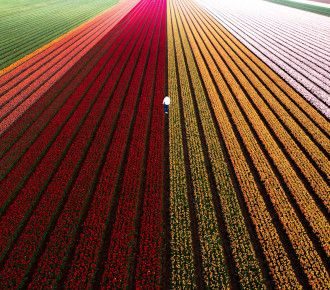[Source](https://unsplash.com/@danasaki/ "Source")
Large machinery was not the only new technology to be used on industrial farms. Many farmers started relying on **chemical additives** to help grow their crops and raise their animals.
These chemicals came in the form of **fertilizers** and **pesticides** that artificially made better growing conditions for plants. Livestock was also given hormones, modern medicine, and underwent genetic modification in order to make them produce more meat, dairy, and eggs.
One of the most notable changes is the scale at which farms began to operate. Instead of small farms centered on rural communities, the **agricultural industry** shifted to consisting of only a handful of massive farms.
This consolidation of smaller farms into bigger ones caused the market for agricultural products to be dominated by a small number of companies. This centralized food production and made it so that most food in America comes from only a few different locations.
- [](https://interfaithsustain.com/growing-your-own-food/)
## [Growing Your Own Food For Good Health And A Healthy Environment](https://interfaithsustain.com/growing-your-own-food/)
- [](https://interfaithsustain.com/industrial-agriculture/)
## [Evaluating the Environmental Impacts of Industrial Agriculture](https://interfaithsustain.com/industrial-agriculture/)
- [](https://interfaithsustain.com/aquaponics-system/)
## [Understanding The Enormous Benefits of The Aquaponics System](https://interfaithsustain.com/aquaponics-system/)
#### The Effects of Industrial Agriculture
The industrialization of agriculture did what it was meant to do. It made food systems that produced cheaper food in a more [efficient way](https://farmingbase.com/industrial-agriculture-pros-and-cons/).
After the industrial revolution there was more food security as more people were being fed. The chemicals used to grow and preserve food also allowed food to stay on shelves longer.
Overall, industrial agriculture made food cheaper and more widely available. But while at first glance industrial agriculture improved food security, it came with some detrimental consequences too.
## The Environmental Impacts of Our Food System
Agriculture is more than just the way that humans feed themselves; it is a complex and scientific system that relies on systems found in the natural world. And when industrialists implemented new techniques into the agricultural system, they paid little regard to the consequences they had on the planet.
### Biodiversity Loss
Before the industrial revolution farmers would grow multiple crops and often leave certain fields empty some years. This practice was a much more regenerative agriculture than what is done today.
Massive fields that grow only one type of crop every year put a lot of strain on soil health and the environment. This strain mainly comes in the form of [biodiversity loss](https://frontiergroup.org/blogs/blog/fg/problems-industrial-agriculture-now-and-future).
When an industrial farm uses a large field for only one crop, they replace land that was once used for multiple crops, or even diverse natural environments that were habitats for numerous different types of animals. Preindustrial farms used more regenerative agriculture practices such as crop rotation. However, monoculture farms are devastating for soil health, deplete soil fertility and cause soil erosion.
**Monoculture farming** also made worse growing conditions for the crops themselves, which made it necessary for farmers to try and improve growing conditions artificially with chemical pesticides and fertilizers. These chemical additives further decreased **biodiversity**, as they did little to improve soil health, and ended up polluting local water bodies, and water quality to the point where little to nothing can live there.
#### Greenhouse Gas Emissions
The implementation of new technology has made the agricultural sector a major contributor to climate change. This is because many of these technologies involved producing massive amounts of greenhouse gas emissions.
Some of these new technologies includes the production of nitrogen fertilizers, which is a very energy intensive process that emits massive amounts of nitrous oxide. Along with this, the new massive machinery used to tend to farms often required burning fossil fuels for their operation resulting in releasing carbon dioxide and consequently further contributing to **global greenhouse gas emissions**.
However, it was not just the new technologies contributing to climate change but also the new massive amounts of livestock found on industrial farms which emit methane gas that is [detrimental to climate health](https://interfaithsustain.com/evidence-of-climate-change/ "detrimental to climate health"). Thus through new technologies and larger scale farms, modern agriculture has become a primary contributor to climate change.
That said, agriculture is not just a factor causing climate change, but also a [victim](https://www.epa.gov/agriculture/agriculture-and-climate#:~:text=Changes%20in%20ozone%2C%20greenhouse%20gases,change%20may%20hinder%20farming%20practices.) of climate change. This is because agriculture relies heavily on consistent seasonal temperatures and rain patterns. Thus when climate change makes certain seasons hotter, drier, or changes any factor that crops or livestock rely on a farm could be in serious trouble.
#### The Economic and Social Impacts
In addition to the environmental impacts of industrial farms, the modern farming system has also created and perpetuated inequality and [social consequences.](https://www.nrdc.org/stories/regenerative-agriculture-101) This is mainly an issue about equal access to land since by consolidating our farming systems into a small handful of large farms owned by a few companies, it has driven out and prevented new small farms from growing as businesses.
This unequal access to land has a darker history than many initially realize. A lot of the consolidation of farms that created these large industrial farms were a result of racist laws and policies that prevented African Americans, indigenous peoples, and other minorities from owning land.
Now that most farm land is owned by big companies, new farms find themselves in an increasingly competitive market that is hard to survive in. Not only does industrial agriculture negatively affect the environment, but it also creates an unequal access to land that makes it harder for small farms to turn a profit.
## **Regenerative Organic Agriculture**
With so many problems created by our modern agricultural system, sustainability advocates are very adamant about making changes to our food system. While modern farming systems are harmful to soil health and the environment, growing large amounts of food is essential for supporting such a large global population.
Because of this many people are advocating for regenerative agriculture. Regenerative agriculture is a more sustainability driven type of growing food. While there is no one way to do regenerative agriculture, there are certain **regenerative agricultural practices** that attempt to solve some of the problems caused by current farming methods in order to produce food in a way that is healthier for humans, the economy, and the environment.
### Crop Rotation and Cover Crops
One way to make a farm run naturally more smoothly is through using crop rotation. This practice is incredibly important for establishing healthy soil and healthy plants.
[Crop rotation](https://rodaleinstitute.org/why-organic/organic-farming-practices/crop-rotations/#:~:text=Crop%20rotation%20is%20the%20practice,combat%20pest%20and%20weed%20pressure.&text=A%20simple%20rotation%20might%20involve,incorporate%20a%20dozen%20or%20more.) involves planting different crops in different parts of a farm each year. This creates significantly better growing conditions for crops than using one massive field for one kind of crop each year.
Most crops rely on specific nutrients in the soil and are targeted by specific bugs and pests. When you plant the same plants in the same places each year the nutrients needed by plants is depleted from the soil, and pests find themselves with a consistent place to call home.
**Crop rotation** provides a simple solution to this. When crops are rotated their soils are able to keep a balanced level of nutrients, and pests find it harder to stick around on a farm.
This practice is simple but essential. Since industrial farms usually grow only one crop they find themselves with poor soil health and lots of pests. This makes it so that industrial farms have to rely on ever increasing amounts of chemical fertilizers and pesticides to keep their farms up and running, something that farms practicing regenerative agriculture don’t have to worry about.
Another example of a regenerative agriculture technique that creates healthy soil is the use of [cover crops](https://rodaleinstitute.org/why-organic/organic-farming-practices/cover-crops/). These are specific plants that a farmer grows in a field during an offseason that they don’t intend to sell, but rather are only there to improve soil health.
**Cover crops** work by regulating soil nutrients rather than depleting them. By planting them in a field instead of a cash crop it lets the soil replenish its nutrients to make for a more bountiful harvest the next time something is planted there.
Not only that but cover crops can choke out weeds and prevent them from growing and taking over. Along with this, when cover crops die they create a natural mulch on the ground that helps other plants grow, and prevents weeds from growing.
### Regenerative Grazing
Livestock can also help increase a farms overall health. This is done through allowing livestock to graze in specific strategic parts of a farm.
Similar to crop rotation, allowing certain plots of land to be grazed on by livestock at certain parts of the growing season can have numerous benefits. Grazing allows cows and other animals to regulate the growth of cover crops which can help prevent weeds from growing. Along with this, the manure produced by cows contains vital nutrients which help build an even healthier soil.
Allowing livestock to graze on farms can be excellent for bountiful harvests and increasing biodiversity. Modern industrial farms which often don’t mix livestock and crops are unable to get the benefits of this kind of regenerative grazing.
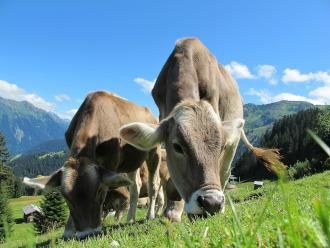[Source](https://pixabay.com/users/pixel-sepp-69900/ "Source")
## Religion and Regenerative Agriculture
Pastor Sam Chamelin is on a mission to spread the gospel of God and regenerative agriculture. He describes in an article on [Bearings Online](https://collegevilleinstitute.org/bearings/sustainable-agriculture-rural/) his “vision of rural renewal through regenerative agriculture and **ecological conservation**, all rooted in radical Christian faith”. For Pastor Chamelin, regenerative agriculture is a spiritual mission, deeply embedded in religious beliefs. Pastor Chamelin’s community, [The Keep & Till](https://www.thekeepandtill.org/), is merging regenerative agriculture and religion, and he’s not alone.
People from every faith tradition are rising to the challenges of our time, and aren’t afraid to get their hands dirty in the process. [Faithlands](https://agrariantrust.org/initiatives/faithlands/) is a “growing national movement to connect and inspire faith communities to use their land in new ways that promote ecological and human health, support local food and farming, enact reparative justice, and strengthen communities”. Faithlands is showing how our faith can unite us to protect the land we farm for future generations, especially by transforming the land held by religious institutions “into sustainable gardens and farms for the greater good of the land and all who depend on its bounty for sustenance and well-being”. Our religions hold great wealth, both in terms of physical assets and spiritual traditions. Using this wealth to promote regenerative agriculture is one of the greatest investments we can make.
*\* Featured image [source](https://unsplash.com/@dirtjoy/ "source")*
*Interested in learning more? Check out our post on [The Principles of Sustainable Development](https://interfaithsustain.com/principles-of-sustainable-development/ "The Principles of Sustainable Development")*.
**Categories:** Blog on Faith and Ecology, Food & Agriculture
**Tags:** Food Production, Sustainable Food
---
### [Growing Your Own Food For Good Health And A Healthy Environment](https://interfaithsustain.com/growing-your-own-food/)
**Published:** October 3, 2022
**Author:** ICSD
**Excerpt:** Harry Cooper - The commercial food system is one of the worst offenders of environmental degradation in the modern world. Producing the second most greenhouses gases after electricity production, the agricultural industry has left a large mark on the environmental health of our planet.
**Content:**
Table of Contents
Table of Contents
- [A Better Way to Eat](#aioseo-a-better-way-to-eat-2)
- [The Environmental Benefits of Growing Your Own Food](#aioseo-the-environmental-benefits-of-growing-your-own-food-7)
- [Transportation](#aioseo-transportation-12)
- [Pesticides and Fertilizers](#aioseo-pesticides-and-fertilizers-16)
- [Monocultures](#aioseo-monocultures-21)
- [How to Start Growing Your Own Food](#aioseo-how-to-start-growing-your-own-food-27)
- [Getting Started](#aioseo-getting-started-29)
- [Environmentally Friendly Gardening](#aioseo-environmentally-friendly-gardening-37)
- [Composting](#aioseo-composting-39)
- [Crop Rotation](#aioseo-crop-rotation-41)
- [Growing Your Own Food And Religion](#aioseo-growing-your-own-food-and-religion-44)
The commercial food system is one of the worst offenders of environmental degradation in the modern world. Producing the [second](https://www.epa.gov/ghgemissions/global-greenhouse-gas-emissions-data) most greenhouses gases after electricity production, the agricultural industry has left a large mark on the environmental health of our planet. Many different brands boast being organic or GMO free, but it can be hard to tell which products are actually produced in an environmentally friendly way, and what is just greenwashed marketing. Luckily, there is a way to eat delicious food and avoid the food industry all together. YES, by **growing your own food**.
## A Better Way to Eat
Planting fruit trees, a vegetable garden, or other food crops is a great way to know exactly where your food comes from. This ensures that nothing harmful was done to it or the environment in the process of growing it.
While it may seem complicated to grow your own produce, starting out with a small edible garden can be a great way to get into gardening and learn how to grow food. With a little bit of time, effort, and care anyone can learn how to garden and reap the benefits of growing your own vegetables.
[Source](https://unsplash.com/photos/white-truck-on-road-during-daytime-GBVDilE8yvI)
## The Environmental Benefits of Growing Your Own Food
Our food system has managed to produce large quantities of food that have helped to feed lots of people. However, this abundance of food has come with a variety of negative impacts on the environment.
Luckily, eating good food does not have to come at the cost of destroying our planet. Many of the negative impacts of the food system can be bypassed by planting edible gardens and growing our own food.
### Transportation
Before being eaten, food has to travel from farms to stores to homes and to restaurants. And with farms for different crops being spread out across different regions, it is estimated that food travels an average of [1,500](https://foodwise.org/learn/how-far-does-your-food-travel-to-get-to-your-plate/) miles before being eaten.
The large amount of transportation associated with the food industry is responsible for a massive amount of carbon emissions. On average, every calorie of food we consume requires ten calories of fossil fuel emitting energy to transport it to us.
Eating local produce and growing your own food helps to avoid these emissions. Every piece of food you eat that comes from your own garden is one less piece of food that needs to travel hundreds of miles on a carbon emitting vehicle.
### Pesticides and Fertilizers
Another impact of the food system is the pollution caused by [chemical](https://www.epa.gov/nps/nonpoint-source-agriculture) pesticides and fertilizers used in commercial farming. When a farm uses fertilizer or sprays its crops with pesticide, the harmful chemical compounds within them will leech into the soil and groundwater or get washed away with rainwater runoff and contaminate nearby water bodies.
[Source](https://pixabay.com/users/wuzefe-680554/)
These chemicals are often highly carcinogenic and cause great deals of soil and water pollution. On top of that, food grown with the help of these chemicals also contain carcinogenic substances. By growing food at home in raised beds, in the ground, or even as potted plants, you can ensure that no harmful chemicals are used on the plants, and won’t wind up in the environment, or on your plate.
#### Monocultures
A large majority of agricultural activity consists of growing only a handful of commodity crop species such as corn, rice, soybeans, and wheat. These crops often go to make different kinds of animal feeds rather than going straight to human stomachs. But the impact that this system of farming has on the environment is detrimental; many industrial farms consist of vast fields containing only one species of crop called a [monoculture](https://www.onegreenplanet.org/animalsandnature/monoculture-crops-environment/).
Monoculture farming strips the land of its biodiversity and disrupts the natural flow of nutrients into the soil. When a piece of land only has one species of plant on it for a long enough time, the soil degrades in quality and loses its ability to replenish nutrients. This causes many monoculture farmers to have to resort to using excess chemical fertilizers to offset the nutrient imbalance.
By growing your own food, you can choose to grow a variety of edible plants instead of focusing on producing only one type of crop like commercial agriculture. By planting a variety of species, it is possible to utilize techniques, such as crop rotation or cover crops, in your own garden that naturally replenish soil nutrients without the need of chemical fertilizers.
- [](https://interfaithsustain.com/sustainable-food/)
## [A Sustainable Food System to Address Climate Change](https://interfaithsustain.com/sustainable-food/)
- [](https://interfaithsustain.com/food-waste-facts/)
## [Essential Food Waste Facts That Everyone Must Know](https://interfaithsustain.com/food-waste-facts/)
- [](https://interfaithsustain.com/industrial-agriculture/)
## [Evaluating the Environmental Impacts of Industrial Agriculture](https://interfaithsustain.com/industrial-agriculture/)
## How to Start Growing Your Own Food
The process of growing your own food may seem intimidating at first. But by learning some basic gardening fundamentals and a few simple techniques, anyone can start to grow food at home and reduce their impact on the environment.
### Getting Started
The most important part of planting a garden is proper [planning](https://foodprint.org/growing-your-own-food/). Before doing any planting it is important to know exactly what you want out of a garden. How big do you want it to be? How much money and time are you willing to spend on it? What kinds of fresh produce do you want? Once you understand what exactly you want out of your garden, it’s time to start thinking about the logistics of planting.
[Source](https://pixabay.com/users/flockine-5479910/)
When going to plant seeds or young plants it is important to know when and where the plants should be planted. Different species of crops will need to be planted at different times of the year depending on what region they are being planted in. In the US, regions are divided into [plant hardiness zones](https://planthardiness.ars.usda.gov/). It is important to make sure the plants you want to grow will do well in your zone and climate of the Earth, and to know the best season they should be planted.
Another important factor for gardening and growing food is [soil health](https://theherbexchange.com/the-importance-of-soil-the-foundation-of-your-garden/). Good soil is essential for healthy plants as they rely on it to absorb nutrients and water and stay stabilized. While industrial farming uses harmful chemical fertilizers to enhance their soil, there are different environmentally friendly ways of enhancing your soil and growing healthier crops.
## Environmentally Friendly Gardening
With limited space, even on a balcony you can grow food in hanging baskets, small containers or try **vertical gardening**. You can grow herbs even on a window sill. The two main helpful tips needed for a healthy home garden in your backyard or outdoor space are **composting** and **crop rotation**.
### Composting
[Composting](https://www.epa.gov/sustainable-management-food/reducing-impact-wasted-food-feeding-soil-and-composting) is a great way to make healthier soil in your garden while reducing food waste. By disposing organic food waste in outdoor piles it will break down into dense nutrient rich soil called compost. Using compost in your garden not only acts as an incredibly effective natural fertilizer, but also prevents food waste from being sent off to methane producing landfills.
### Crop Rotation
Industrial farms often plant one type of crop in large-scale monocultures that degrades soil quality. In a natural setting soil relies on a multitude of plant species to restore and cycle nutrients in the soil.
This process can be replicated in a garden through a process called crop rotation, whereby different crops are planted in different spots each season. This allows the soil to naturally restore nutrients, eliminating the need for chemical fertilizers.
## Growing Your Own Food And Religion
A 2020 [Reuters article](https://www.reuters.com/article/us-health-coronavirus-cuba-urban-gardens-idUSKBN2402P1) describes how Cubans were called on to grow their own food during the COVID pandemic and in the 1990s. In the ’90s there was a kind of “green revolution” in Cuba as the Soviet Union collapsed, along with it’s support for Cuba, promoting a deep economic depression. To avoid starvation “Cuba became something of an organic farming pioneer in the 1990s, developing techniques like worm composting, soil conservation and the use of biopesticides, to replace imported supplies and large scale monoculture.”
[Source](https://unsplash.com/@honeypoppet)
In 2020, as imports shut down because of COVID, Cubans were called upon to again return to growing their own food as in the 1990s. The article highlights Nelson Piloto, who pulled up the lawn in a courtyard Temple of the Abakua Afro-Cuban religious brotherhood in Havana to “plant bell peppers and cassava in the face of Cuba’s looming food crisis.”
Many religious buildings are surrounded by huge lawns full of grass or weeds. Perhaps more communities should follow Piloto’s example and turn their lawns into gardens. In the words of sustainable agriculture enthusiast Marnia Briones, “It’s great more people are planting but it cannot just be when there is a crisis… It should be fomented as a healthier lifestyle for the whole of humanity.” Don’t wait around for crisis to strike. Call upon your religious community to lead by example and save our future.
*\* Featured image [source](https://pixabay.com/users/caniceus-15612619/)*
**Categories:** Blog on Faith and Ecology, Food & Agriculture
**Tags:** Food Production
---
### [Can We Use Food As Medicine And Stop Swallowing Pills?](https://interfaithsustain.com/food-as-medicine/)
**Published:** October 12, 2022
**Author:** ICSD
**Excerpt:** Ethel Mendius - We all understand the crucial role nutrition fulfills in human well being. The food as medicine approach promotes nutritious foods for the health of individuals, communities, and societies.
**Content:**
Table of Contents
Table of Contents
- [The Importance Of Nutrition](#aioseo-the-importance-of-nutrition-2)
- [What Does Food As Medicine Mean?](#aioseo-what-does-food-as-medicine-mean-5)
- [Existing Food As Medicine Approaches](#aioseo-existing-food-as-medicine-approaches-7)
- [What Is A Healthy Diet?](#aioseo-what-is-a-healthy-diet-11)
- [Food And Cardiovascular Disease](#aioseo-food-and-cardiovascular-disease-13)
- [Preventing Chronic Disease](#aioseo-preventing-chronic-disease-17)
- [Promoting Food And Nutrition Services](#aioseo-promoting-food-and-nutrition-services-23)
- [Medically Tailored Meals](#aioseo-medically-tailored-meals-28)
- [Community-Level Healthy Food Programs](#aioseo-community-level-healthy-food-programs-31)
- [The Wider Benefits Of Food As Medicine](#aioseo-the-wider-benefits-of-food-as-medicine-37)
- [Food As Medicine In Religion](#aioseo-food-as-medicine-in-religion-43)
- [Why is nutrition considered essential for global health and disease prevention?](#aioseo-why-is-nutrition-considered-essential-for-global-health-and-disease-prevention-52)
- [What does the concept of food as medicine entail?](#aioseo-what-does-the-concept-of-food-as-medicine-entail-54)
- [How can healthcare providers incorporate food as medicine in treatment plans?](#aioseo-how-can-healthcare-providers-incorporate-food-as-medicine-in-treatment-plans-56)
- [What features characterize a healthy diet according to general nutrition guidelines?](#aioseo-what-features-characterize-a-healthy-diet-according-to-general-nutrition-guidelines-58)
- [What are the wider societal benefits of adopting a food as medicine approach?](#aioseo-what-are-the-wider-societal-benefits-of-adopting-a-food-as-medicine-approach-60)
*By Ethel Mendius* – We all understand the crucial role **nutrition** fulfills in human well being. The **food as medicine approach** promotes **nutritious foods** for the health of individuals, communities, and societies.
## The Importance Of Nutrition
A [2019 study](https://www.bmj.com/content/369/bmj.m2482) considered 195 countries and found “one of every five deaths across the globe is attributable to suboptimal diet, more than any other risk factor.” These findings suggest the potential of food and nutrition intervention in improving health outcomes.
Nutrition is key in advancing **global health** and **disease prevention**: “interventions that are effective for individual patients have the potential to affect population health and shape broader food and health policy reform.”
## What Does Food As Medicine Mean?
The [guiding principle](https://www.medicalnewstoday.com/articles/can-food-be-medicine-pros-and-cons#Food-as-medicine) of this concept is that healthy food can treat, prevent, and alleviate disease. **Food as medicine** means “prioritizing food and diet in an individual’s health plan” and challenging the primacy of pharmaceutical drugs.
### Existing Food As Medicine Approaches
As a movement, food as medicine gained traction during the [HIV epidemic](https://www.everydayhealth.com/diet-nutrition/food-as-medicine-what-it-means-and-how-to-reap-the-benefits/) of the 1980s, “when public health advocates launched nutrition programs to aid management of AIDS.” It has remained a powerful tool in promoting better health outcomes for individuals and populations.
Healthcare providers may already “prescribe dietary and lifestyle changes as a first-line treatment,” for example for polycystic ovary syndrome (PCOS). Those who suffer from [PCOS](https://www.healthline.com/health/pcos-diet#foods-to-add) are advised to eat high fiber, lean protein, and anti-inflammatory foods.
It would be irresponsible to suggest that [food](https://interfaithsustain.com/growing-your-own-food/) can replace conventional medicine. However, “[eating a diet](https://www.everydayhealth.com/diet-nutrition/food-as-medicine-what-it-means-and-how-to-reap-the-benefits/) high in whole, nutritious foods has the power to complement conventional treatments for certain diseases.”
- [](https://interfaithsustain.com/industrial-agriculture/)
## [Evaluating the Environmental Impacts of Industrial Agriculture](https://interfaithsustain.com/industrial-agriculture/)
- [](https://interfaithsustain.com/aquaponics-system/)
## [Understanding The Enormous Benefits of The Aquaponics System](https://interfaithsustain.com/aquaponics-system/)
- [](https://interfaithsustain.com/regenerative-agriculture/)
## [Regenerative Agriculture Produces Food Without Destroying The Environment](https://interfaithsustain.com/regenerative-agriculture/)
## What Is A Healthy Diet?
General nutrition [guidelines](https://www.medicalnewstoday.com/articles/can-food-be-medicine-pros-and-cons#Food-as-medicine) point to whole foods and a “minimally-processed plant-based” diet to ensure health. Specialized diets can be used to address specific conditions.
### Food And Cardiovascular Disease
According to [WHO](https://www.who.int/news-room/fact-sheets/detail/the-top-10-causes-of-death), cardiovascular disease is the leading cause of death worldwide: “The world’s biggest killer is ischaemic heart disease, responsible for 16% of the world’s total deaths.”
Heart disease is directly linked with diet quality. A study from [2019](https://pubmed.ncbi.nlm.nih.gov/31142457/) found that “even a 10% increase in the consumption of ultra-processed foods was associated with a higher risk of heart disease and stroke.”
The American Heart Association [recommends](https://www.medicalnewstoday.com/articles/can-food-be-medicine-pros-and-cons#Food-as-medicine) a “diet rich in fruits, vegetables, whole grains, legumes, low-fat dairy, and plant-based or lean animal protein.” A heart healthy diet, along with exercise and a tobacco-free lifestyle, are “[the keys](https://www.heart.org/en/healthy-living/healthy-eating/eat-smart/nutrition-basics/aha-diet-and-lifestyle-recommendations) to preventing and managing cardiovascular disease.”
### Preventing Chronic Disease
Heart disease is one of many chronic diseases. The [CDC](https://www.cdc.gov/chronicdisease/about/index.htm) estimates that six in ten adults in the U.S. live with a chronic disease, such as cancer, kidney disease, and diabetes.
[Source](https://pixabay.com/users/artisticoperations-4161274/)
In recent decades, “[chronic disease incidence](https://www.researchgate.net/publication/343184575_The_role_of_diet_in_chronic_disease) and prevalence has been growing rapidly throughout the globe”. Nutrition can be used in disease management to better the quality of life for chronically ill people.
[Evidence](https://www.medicalnewstoday.com/articles/can-food-be-medicine-pros-and-cons) suggests that food can even prevent some chronic health conditions: “Various healthy diets… could reduce the risk associated with the development of chronic diseases.”
### Promoting Food And Nutrition Services
The proof is in the pudding: food cannot replace medicine, but it should play an important role in our healthcare system. Many organizations throughout the U.S. advocate for public policy that promotes national well being through **nutrition science**.
Food Is Medicine Massachusetts ([FIMMA](https://foodismedicinema.org/food-is-medicine-issue)) is one such organization. FIMMA promotes a multifaceted approach to nutrition intervention, starting with individuals and then considering the health of communities.
### Medically Tailored Meals
FIMMA recommends medically tailored meals that are “[developed](https://foodismedicinema.org/food-is-medicine-interventions) to address the dietary needs of an individual’s medical condition by a Registered Dietitian Nutritionist.” These meals help individuals manage chronic conditions in their day to day lives.
The [Food Is Medicine](http://www.fimcoalition.org/)[Coalition](http://www.fimcoalition.org/) is another organization that specializes in medically tailored meals. Their research finds that individuals with these plans are 50% less likely to be admitted to the hospital for their conditions.
## **Community-Level Healthy Food Programs**
Community-level healthy food programs target poor nutrition at its source. They “[provide](https://foodismedicinema.org/food-is-medicine-interventions) nutritious foods for a population that currently has or is at increased risk for chronic disease associated with [food insecurity](https://interfaithsustain.com/regenerative-agriculture/).”
[Source](https://pixabay.com/photos/fruit-stand-fruits-produce-harvest-1275551/)
These programs are designed to alleviate the societal causes of a poor diet, such as poverty or lack of access to healthy foods. They go further than “generalized federal nutrition programs such as SNAP and WIC” to address nutritional deficits.
This approach [includes](https://static1.squarespace.com/static/5c82ced1a56827591142c3df/t/60c8e2753b50360b5bd43b5d/1623777911566/FIM+Program+Standards+updated+6.10.21.pdf) community gardens and agriculture, discounted food markets, and food pantries. It can be facilitated by healthy food prescriptions, which “generally begin with a partnership between a hospital and a local farmer’s market or community supported agriculture.”
### The Wider Benefits Of Food As Medicine
The [Friedman School](https://nutrition.tufts.edu/about/public-impact-initiative-friedman-school/food-is-medicine) of Nutrition Science writes that the U.S. faces a “national nutrition crisis” of great consequence: “Our food system is a major cause of poor health, ever-rising healthcare costs, strangled government budgets… and hunger and disparities.”
Fortunately, addressing the “nutrition crisis” is a “win-win”. Coherent nutrition policy would also promote “lower health care costs, greater sustainability, reduced disparities, improved economic competitiveness, and greater national security.”
When we look at the wider benefits, we can plainly see food is medicine. The knock-on effects of a healthier society would benefit people and planet.
## Food As Medicine In Religion
[Future Learn](https://www.futurelearn.com/info/courses/food-as-medicine/0/steps/15141) provides a great overview of different cultures’ and religions’ understanding of food as medicine. Their article highlights different approaches to food as medicine throughout human history.
In Greece and Rome, health was understood through the balance of “the four humors.” The humors determined your health and temperament, and they could be methodically altered by changing your diet.
The Okinawan people live on the Ryukyu Islands between Japan and China and are one of the longest-living people in the world. They are very influenced by the Chinese ideas of longevity through diet. The Okinawans “believe that ‘food maketh the man’ and that the food they eat is ‘nuchi gusui’, or ‘medicine for life’.”
And in old traditional European diets, people ate many wild greens for good health and for recovering from illnesses.” Today we know scientifically that “most of these edible wild greens provide a rich source of vitamins and micronutrients.”
Our religions can give us a framework for eating foods that are healthy for us and the planet. The importance of eating fresh organic fruits and vegetables should be highlighted in our religions. Religions teach us how to live, and they connect us with healthy food traditions that can stretch back thousands of years.
The body is a temple. How will you protect yours?
*\* Featured image [source](https://pixabay.com/users/dbreen-1643989/)*
**Categories:** Blog on Faith and Ecology, Food & Agriculture
---
### [Essential Food Waste Facts That Everyone Must Know](https://interfaithsustain.com/food-waste-facts/)
**Published:** March 14, 2022
**Author:** ICSD
**Excerpt:** Harry Cooper - Pollution and waste are some of the biggest contributors to the environmental problems our world is facing.
**Content:**
Table of Contents
Table of Contents
- [What is Food Waste?](#what-is-food-waste)
- [Global Food Waste Facts](#global-food-waste-facts)
- [Where does Food Waste Come From?](#where-does-food-waste-come-from)
- [Developing Countries VS Developed Countries](#developing-countries-vs-developed-countries)
- [Why is There so Much Food Waste?](#why-is-there-so-much-food-waste)
- [Food Waste in Restaurants](#food-waste-in-restaurants)
- [Food Waste at Home](#food-waste-at-home)
- [The Environmental Impact of Food Waste](#the-environmental-impact-of-food-waste)
- [Food Waste in Landfills](#food-waste-in-landfills)
- [More Farms](#more-farms)
- [Decreased Biodiversity](#decreased-biodiversity)
- [Religion and Food Waste Facts](#religion-and-food-waste-facts)
*By Harry Cooper* – Pollution and waste are some of the biggest contributors to the environmental problems our world is facing.
## What is Food Waste?
One of the most unique kinds of waste is the wasted food we all too often leave on our plates, goes off in our fridge or out of date in our cupboard.
As more and more food finds its way into the trash in the developed world, food waste has become a prominent issue in the fight against [environmental degradation](https://interfaithsustain.com/environmental-degradation-and-the-future-of-our-planet-earth/ "environmental degradation"). Every one of us is responsible for food waste and can also [take action to prevent food waste](https://interfaithsustain.com/how-to-reduce/). Let’s learn some food waste facts!
### Global Food Waste Facts
The[ United Nations](https://www.unep.org/thinkeatsave/get-informed/worldwide-food-waste) has provided some interesting statistics on how much and in what way different countries and regions contribute to food waste. The UN found that global food waste amounts to one third of all food produced annually. This amounts to 680 billion dollars lost in developed countries, and 310 billion dollars in developing countries.
#### Where does Food Waste Come From?
**Food waste** in America, Europe, and other developing countries amounts to about 95-115 kg per person a year, whereas in developing countries it is a measly 6-11 kg per person a year. This shows how individuals are more to blame for food waste in America and other rich countries.
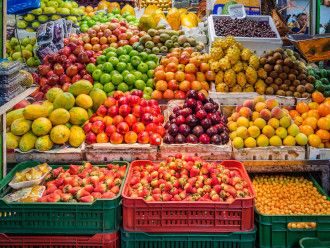[Source](https://unsplash.com/@alschim/ "Source")
#### Developing Countries VS Developed Countries
What’s even more striking about the difference between food waste in developed countries versus developing countries, is at what stage in the [food production supply chain](https://interfaithsustain.com/food-production/ "food production supply chain") food gets wasted. In developing countries, food usually gets wasted when it is harvested or being stored.
This statistic makes sense, as developing countries often lack the technology to properly store and preserve food, making a lot of it go to waste. However, in developed countries food waste occurs mainly at later stages in food production, usually at the stores selling the food, or when food is bought and taken home.
## Why is There so Much Food Waste?
Food waste in America and other developed countries happens when food is already in grocery stores, restaurants, in our homes and on our plates. But what is it exactly about the way we buy, sell, and eat food that makes so much of it end up in the trash?
### Food Wasted by Stores
There are many [reasons](https://foodprint.org/issues/the-problem-of-food-waste/#:~:text=Food%20is%20lost%20or%20wasted,at%20stores%20and%20in%20homes.) why so much food is wasted at grocery stores.
One reason is that many stores want their food displays to look good. To make their displays look better, stores overorder and overstock their displays to make them look bigger. Over ordering inevitably leads to throwing out the unsold, but perfectly good, food at the end of the day.
[Source](https://pixabay.com/users/guillermovuljevas-4444312/ "Source")
- [](https://interfaithsustain.com/bokashi-composting/)
## [How Bokashi Composting Turns Waste into a Valuable Resource](https://interfaithsustain.com/bokashi-composting/)
- [](https://interfaithsustain.com/composting-101/)
## [Composting 101: The Composting Process for Beginners](https://interfaithsustain.com/composting-101/)
- [](https://interfaithsustain.com/benefits-of-composting-ancient-civilizations-to-todays-technology/)
## [The Benefits of Composting: Ancient Civilizations to Today’s Technology](https://interfaithsustain.com/benefits-of-composting-ancient-civilizations-to-todays-technology/)
Stores throw out fruits and vegetables that are blemished or imperfectly shaped. In fact 40% of fruits and vegetables are just chucked because they are [too ugly to sell](https://www.youtube.com/watch?v=vDQmdG0z6oc). Additionally, food with damaged packaging is thrown out too in order to make the products cosmetically appealing.
#### Food Waste in Restaurants
Many restaurants are also very [guilty](https://www.nrdc.org/sites/default/files/wasted-2017-report.pdf) of wasting food. Many restaurants design their menus to be more appealing to the consumer, but this often leads to menu items being more likely to be wasted.
Meals produced at restaurants often come in portions that are too big to be finished, making customers more likely to leave leftovers that need to be thrown out.
Menus that are long and extensive cause restaurants to need many different ingredients in stock even though they won’t all be needed and eventually they too will be thrown away.
#### Food Waste at Home
Wasteful practices in restaurants, grocery stores, and other food vendors play a big role in food waste. However, the biggest portion of food waste from the developed world comes from [households](https://foodprint.org/issues/the-problem-of-food-waste/#easy-footnote-bottom-42-1309).
Most of this food waste comes from poor planning. Many people buy too much food or overprepare food so it ends up going bad. Just how much food can we eat? Others don’t even check the expiry date on goods when shopping leaving them little to no time to consume what they bought.
#### Expiration Dates
Food waste can also be caused by confusion over expiration dates. Expiration dates often use terms like “sell by”, “best by”, or “use by”. These terms seem to dictate an exact point in time in which a food becomes perishable, but there is actually no FDA regulations surrounding expiration dates. These dates are suggestions made by producers as to when a food’s peak level of quality is.
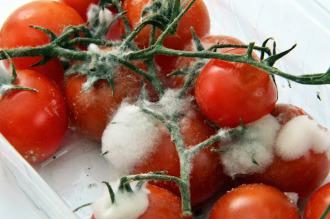[Source](https://pixabay.com/users/adonyig-4265448/ "Source")
How much food is thrown out before it has gone bad? Milk producers usually print an expiry date that is about a week before the real expiry date just to insure themselves against lawsuits. This results in enormous quantities of good food wasted globally for absolutely no reason.
## The Environmental Impact of Food Waste
So why is food waste such a problem, and why should we try to **reduce food waste**? Many would argue that since many parts of the world face food insecurity, consuming and wasting so much food in the developed world is selfish and unfair. While this is a very valid point, food waste can also have serious environmental impacts.
### Food Waste in Landfills
When wasted food is thrown away it often ends up in [landfills](https://www.epa.gov/lmop/basic-information-about-landfill-gas). When in landfills food waste begins to break down and decompose. While organic food matter normally decomposes in nature, in landfills decomposition produces more methane than normal, due to the lack of oxygen in landfills.
This methane is a [greenhouse gas that contributes to global warming](https://interfaithsustain.com/global-warming-vs-climate-change/ "greenhouse gas that contributes to global warming"). It is estimated that one years worth of greenhouse gas emissions from a landfill is equal to the emissions from 21 million cars, or to the energy used by 12 million homes each year.
### More Farms
Producing more food than necessary means that more farmland is needed to make this food. This becomes an issue as many modern farming [techniques](https://www.worldwildlife.org/industries/sustainable-agriculture#:~:text=Agriculture%20is%20the%20leading%20source,in%20the%20environment%20for%20generations.&text=Fertilizer%20run%2Doff%20impacts%20waterways%20and%20coral%20reefs.) are already very unsustainable and harmful to the environment.
Many farms use pesticides and fertilizers on their crops that contain toxic chemicals. When it rains, these chemicals can get caught up in rain water run off which ends up polluting local water sources and disrupting marine ecosystems. Additionally, the livestock industry contributes 18% of all greenhouse gasses, as farm animals produce an incredible amount of methane which contributes to the climate crisis.
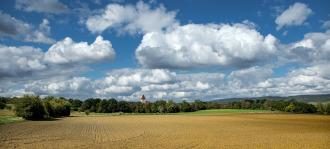[Source](https://pixabay.com/users/luboshouska-198496/ "Source")
#### Decreased Biodiversity
The extra farmland created to meet the food demands of food wasting countries not only contributes to pollution and climate change, but can also decrease [biodiversity](https://www.tandfonline.com/doi/abs/10.1080/14888386.2017.1351892?journalCode=tbid20#:~:text=Agriculture%20is%20the%20largest%20contributor,releasing%20pollutants%2C%20including%20greenhouses%20gases.). When land is set aside for agriculture, it can destroy biodiverse ecosystems that once inhabited a space in order to grow one or two species of plants or raise one or two species of animals.
#### Religion and Food Waste Facts
An article in the Journal of Consumer affairs entitled [Is it godly to waste food?](https://onlinelibrary.wiley.com/doi/10.1111/joca.12328) discusses studies done to explore how religious beliefs influence food waste and how to best reduce that food waste in religious communities. Interestingly, one of the studies showed that “supportive religious norms (e.g., sharing food) lead to reduced food waste”.
Perhaps in eating together, we remember the sacredness of food. Whatever the reason, the data is clear: the more we break bread together, the less we waste bread. So let’s start sharing and stop wasting.
*\* Featured image [source](https://unsplash.com/@bnewman/)*
**Categories:** Blog on Faith and Ecology, Food & Agriculture
**Tags:** Sustainable Food
---
### [A Sustainable Food System to Address Climate Change](https://interfaithsustain.com/sustainable-food/)
**Published:** July 28, 2021
**Author:** ICSD
**Excerpt:** Sydney Cohen - What is sustainable food? Sustainable food is a term that has been used to describe the production of food in ways that are environmentally healthy, socially just, and economically viable.
**Content:**
Table of Contents
Table of Contents
- [An Un-Sustainable Food System](#aioseo-an-un-sustainable-food-system-2)
- [A Sustainable Food System](#aioseo-a-sustainable-food-system-6)
- [How Sustainable Food Impacts the Environment](#aioseo-how-sustainable-food-impacts-the-environment-11)
- [Greenhouse Gas Emissions](#aioseo-greenhouse-gas-emissions-15)
- [Sustainable Food Production](#aioseo-sustainable-food-production-19)
- [Choosing Sustainable Food](#aioseo-choosing-sustainable-food-23)
- [How You Can Contribute to Sustainable Food production](#aioseo-how-you-can-contribute-to-sustainable-food-production-28)
- [The Difference Between Local Food and Sustainable Food](#aioseo-the-difference-between-local-food-and-sustainable-food-30)
- [Sustainable Food is Better for the Environment](#aioseo-sustainable-food-is-better-for-the-environment-33)
- [Tips for Eating Sustainable Food](#aioseo-tips-for-eating-sustainable-food-42)
*By Sydney Cohen* – What is sustainable food? **Sustainable food** is a term that has been used to describe the production of food in ways that are environmentally healthy, socially just, and economically viable.
## An Un-Sustainable Food System
There are many harmful consequences that come from unsustainable farms and farming practices. These include land and [water degradation](https://interfaithsustain.com/effects-of-water-pollution/), from mass-farming methods and agricultural pollutant runoffs that enter our land and waterways. Another consequence is the greenhouse gas emissions that result from burning fossil fuels, contributing to global warming.
## A Sustainable Food System
A sustainable food system is an important component of addressing the causes of climate change. Up to 37% of global greenhouse gas emissions could be attributed to the food system. This includes crop and livestock production, transportation, changing land use (including deforestation), and food loss and waste.
Sustainable food systems start with the development of **sustainable agricultural practices**, development of more sustainable food distribution systems, creation of sustainable diets, and reduction of food waste throughout the system, say proponents of sustainable eating and saving money for health and the environment.
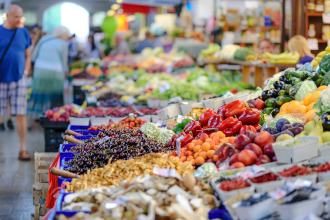[Source](https://pixabay.com/photos/the-market-fresh-groceries-food-3147758/)
## How Sustainable Food Impacts the Environment
Food is responsible for 60% of **biodiversity loss** worldwide according to the World Wildlife Fund ([WWF](https://www.worldwildlife.org/initiatives/food)). Sustainable food systems and agriculture attempt to conserve energy by using renewable energy sources such as wind and solar power. This creates a more sustainable [food production](https://interfaithsustain.com/food-production/), with less environmental harm.
### Greenhouse Gas Emissions
As previously mentioned, the large, mass-producing agricultural farms around the world primarily run off of burning fossil fuels like coal, which is a large factor in global warming. The pollution from greenhouse gas emissions affects ecosystems around the world, in addition to human and wildlife health.
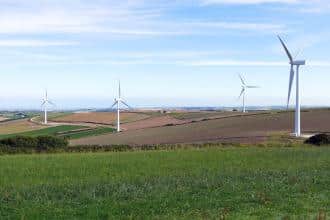[Source](https://pixabay.com/users/inspiredimages-57296/)
- [](https://interfaithsustain.com/industrial-agriculture/)
## [Evaluating the Environmental Impacts of Industrial Agriculture](https://interfaithsustain.com/industrial-agriculture/)
- [](https://interfaithsustain.com/aquaponics-system/)
## [Understanding The Enormous Benefits of The Aquaponics System](https://interfaithsustain.com/aquaponics-system/)
- [](https://interfaithsustain.com/regenerative-agriculture/)
## [Regenerative Agriculture Produces Food Without Destroying The Environment](https://interfaithsustain.com/regenerative-agriculture/)
## Sustainable Food Production
Sustainable agriculture is a production system that’s good for the environment. According to the [One Earth Science & Technology Initiative](https://www.oneearth.org/science/agriculture/), proper farming without the use of pesticides actually increases the soil’s carbon content and fertility in organic farming. In fact, according to the initiative, more than half of farmland in North America is now self-sufficient in terms of organic farming, and the majority are sustainable.
## Choosing Sustainable Food
Sustainable eating is about choosing foods that are healthful to our environment and our bodies. According to the [2019 EAT-Lancet commission](https://eatforum.org/eat-lancet-commission/eat-lancet-commission-summary-report/), a shift toward more plant-based foods would help feed the world’s growing population. Sustainable agriculture enables us to produce healthful food without compromising future generations’ ability to do the same.
Sustainable eating includes more legumes (beans, peas, lentils, peanuts, peanuts), whole grains, vegetables, fruits, and nuts, and less animal-based food, especially red meat and processed meat. Limiting refined grains and added sugars are encouraged as well. “Sustainable” is applied toward the production of plant and animal products using farming techniques and practices that help to conserve natural resources with minimal impact on the environment.
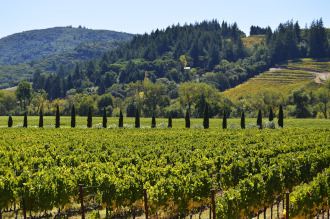[Source](https://pixabay.com/users/islandworks-1139623/)
### How You Can Contribute to Sustainable Food production
Choosing to eat **organic produce** is a more sustainable food option. When shopping, people should ask vendors if they grew the produce themselves, when it was picked and where their farm is located. You can contribute to sustainable agriculture by buying organic produce or from producers who engage in practices such as organic farming or regenerative farming.
#### The Difference Between Local Food and Sustainable Food
Farmer’s markets have created new opportunities for many farmers and customers across the world. Shopping at farmer’s markets is a more environmentally friendly option, as buying from local vendors and farmers means that there is less pollution involved in the transport of food and produce, creating a more sustainable practice.
While buying organic food is a method of eating sustainably, it is not quite the same as sustainable agriculture farms. The difference is that organic farming avoids using synthetic pesticides, GMOs, and fertilizers, while sustainable farming refers to the agricultural processes themselves, which aim to reduce erosion, keep more carbon in the soil, and preserve higher levels of organic matter.
#### Sustainable Food is Better for the Environment
Modern industrial agriculture is a system that erodes soils, pollutes air and water. Sustainable farms encourage biodiversity and conserve [scarce water resources](https://interfaithsustain.com/what-are-the-causes-of-water-pollution/). They use less fossil fuel, produce fewer greenhouse gases, and often depend on human labor. Sustainable ranchers in California, for example, raise a moderate number of animals at a time and rotate the animals around a pasture to minimize their impact.
[Sustainable businesses](https://interfaithsustain.com/sustainable-clothing/) can green their businesses by using locally grown, sustainable ingredients, energy-saving production practices, and waste-free packaging. Restaurants and manufacturers also have a role to play and can use locally grown ingredients, like locally sourced ingredients and locally produced produce. The goal is to reduce environmental waste and pollutants that enter our air, water, and soil.
Choosing local produce cuts down on [wasteful transportation emissions](https://interfaithsustain.com/sustainable-transport/). Buying local produce also helps farm families stay on the land. Well-managed farms help preserve soil, protect water sources and remove carbon from the atmosphere. Buying local produce has been beneficial to our various ecosystems since the 1970s, as well as saving our environment and reducing greenhouse gas.
In particular, buying in-season produce is another smart and sustainable choice, because it is fresher causes less waste, and involves less transport.
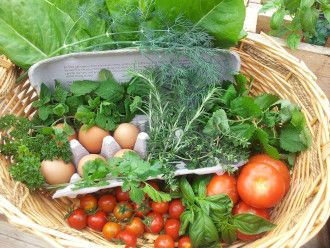[Source](https://pixabay.com/users/axe77-800104/)
## Tips for Eating Sustainable Food
The best way to support sustainable farming is to buy locally. Eat seasonally, shop locally, and shop in bulk and opt for plant-based food choices, in order to minimize waste and reduce pollution. Ask your food providers to support local farmers and producers.
Choose less packaging and less waste and water to produce food. Aim to support businesses and brands that use less packaging, waste, energy, and water when creating your grocery list to get the most of your shopping for organic produce and healthier foods.
It’s important to support sustainable farming processes in order to reduce pollution. Not only are sustainable farms better for the environment, using fewer pesticides and fertilizers that contribute to water pollution, and avoiding burning fossil fuels whose emissions are causing global warming, but the food they produce is better for our bodies too!
This is why it is important to buy from local and sustainable farmers by making smart decisions about where your food comes from.
*\* Featured image [source](https://pixabay.com/users/pexels-2286921/)*
*Interested in learning more? Check out our post on [The Principles of Sustainable Development](https://interfaithsustain.com/principles-of-sustainable-development/ "The Principles of Sustainable Development")*.
**Categories:** Blog on Faith and Ecology, Food & Agriculture
**Tags:** Resources for Green Living, Sustainable Food
---
### [Food Production, Where and How on Earth Did We Go Wrong?](https://interfaithsustain.com/food-production/)
**Published:** June 17, 2021
**Author:** ICSD
**Excerpt:** Elisheva Malomet and Ethan Keller - The proverbial saying "you are what you eat" bears extreme importance to global food production. The saying was originally meant to describe the connection between the food we consume and our mental and physical health.
**Content:**
Table of Contents
Table of Contents
- [The History of Food Production](#aioseo-the-history-of-food-production-4)
- [Global Food Production](#aioseo-global-food-production-13)
- [Food Insecurity](#aioseo-food-insecurity-15)
- [Environmental Impacts of Food Production](#aioseo-environmental-impacts-of-food-production-19)
- [Animal products in food production](#aioseo-animal-products-in-food-production-25)
- [Food Production and Greenhouse Gas Emissions](#aioseo-food-production-and-greenhouse-gas-emissions-33)
- [Food Production from the Farm to our Plate](#aioseo-food-production-from-the-farm-to-our-plate-39)
- [Food Waste](#aioseo-food-waste-41)
- [Food Production and Fertilizers and Pesticides](#aioseo-food-production-and-fertilizers-and-pesticides-45)
- [Food Production Choices: Why Buy Locally? Why Buy Organic?](#aioseo-food-production-choices-why-buy-locally-why-buy-organic-48)
- [Religious Teachings and the Basis for Sustainable Food Production](#aioseo-religious-teachings-and-the-basis-for-sustainable-food-production-52)
*By Elisheva Malomet and Ethan Keller* – The proverbial saying “**you are what you eat**” bears extreme importance to global food production. The saying was originally meant to describe the connection between the food we consume and our mental and physical health.
## The History of Food Production
We have been producing food for thousands of years. For millennia, humans used a hunter-gatherer system, living off of the land and moving from area to area across the world. Then, ten thousand years ago, [agriculture](https://www.nationalgeographic.com/foodfeatures/evolution-of-diet/) was developed in the fertile crescent, a part of what is now known as the Middle East. This development allowed permanent communities to develop and population growth to increase. This sustenance farming resulted in the growth of small villages, and as time went on, more efficient ways to produce crops were developed to increase their size even more.
Then came the [Arab Agricultural Revolution](https://www.jstor.org/stable/pdf/2116954.pdf?casa_token=RzVHMYD9fYMAAAAA:1V9DQ7xl1QVnt6-KXaw6_tqTEAHDR7no60itKIWz9QOgue5qs2z0jNZpHsTNznTkQKHcjdOHTC5AdXPZvTqPPDkB4f3wz2iCbNcYHXGJLlvQa0f_Nswn), which occurred roughly between 700-1100 C.E. During this time period, refined farming techniques were developed including two-field crop rotation, better irrigation systems as well as new ploughing methods. Increased crop yields meant farmers became prosperous by selling what they had, gaining capital and improving the overall community they were in.
In the mid 18th-early 19th centuries came the [British Agricultural Revolution](https://courses.lumenlearning.com/boundless-worldhistory/chapter/the-agricultural-revolution/). The Norfolk four-field system allowed for even more nutrients to stay in the soil, preventing fields from becoming unproductive. The planting of turnips and clovers kept weeds away during the summer and winter harvests, while also acting as food for livestock, which increased the amount of meat produced. This all led to the conditions that preceded the Industrial Revolution. In both of these agricultural revolutions, the increased availability of food allowed for populations across the world to grow.
Finally, the Green Agricultural Revolution of the ’50s and ’60s arrived. With a more connected global population and said population increasing, new technologies needed to be developed. Thus came along pesticides and fertilizers. The pesticides decreased the amount of crop loss by insects and parasites, and the fertilizers allowed for even more crops to be grown.
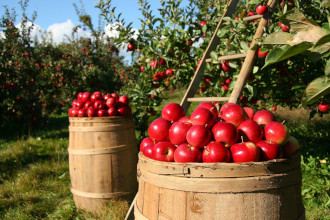[Source](https://pixabay.com/users/lumix2004-3890388/)
- [](https://interfaithsustain.com/industrial-agriculture/)
## [Evaluating the Environmental Impacts of Industrial Agriculture](https://interfaithsustain.com/industrial-agriculture/)
- [](https://interfaithsustain.com/aquaponics-system/)
## [Understanding The Enormous Benefits of The Aquaponics System](https://interfaithsustain.com/aquaponics-system/)
- [](https://interfaithsustain.com/regenerative-agriculture/)
## [Regenerative Agriculture Produces Food Without Destroying The Environment](https://interfaithsustain.com/regenerative-agriculture/)
## Global Food Production
The issues that surround global food production are food security and distribution and the environmental impact of food and agriculture production. However, both the food production and its distrubution have huge impacts on the environment.
### Food Insecurity
[The Food and Agriculture Organization of the United Nations (FAO) ](https://www.fao.org/home/en/)collected and analyzed data on food production and consumption around the world from the years 1961 to 2013. Through data on caloric supply, this organization of the United Nations provided crucial information. That indicates food security around the world. The caloric availability delivered to households (including possible food waste) was [3100 kcal/person/day](https://ourworldindata.org/food-supply) in countries across Europe, Oceania, and North America, and that countries across South Asia, Sub-Saharan Africa, and South America ranged in [2300-3000kcal/person/day.](https://ourworldindata.org/food-supply)
## Environmental Impacts of Food Production
**Sustainable development** should fuel the process that produces our food and the importance of sustainable development is discussed in our post [“How to Optimize the Three Pillars of Sustainability.”](https://interfaithsustain.com/how-to-optimize-the-three-pillars-of-sustainability/) Food production is reliant on our social, economic, and environmental needs and resources.
Unfortunately, current **food production** does not use sustainable practices and in fact, causes a lot of harm to the environment. Climate change is directly caused by dangerous, modern farming techniques, to land use, greenhouse gas emissions, and the overproduction of livestock and livestock feed.
The threat to [biodiversity](https://interfaithsustain.com/why-is-biodiversity-important/) is also of extreme concern as a result of harmful food production processes. Currently, there is an extreme reliance on livestock for food production which is connected to the amount of land needed to generate agricultural production. With more land being used or large-scale farming projects, there is less room for animals, who are then in [danger of extinction](https://ourworldindata.org/environmental-impacts-of-food), to find and build natural habitats.
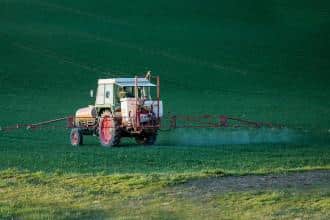[Source](https://pixabay.com/users/maxmann-665103/)
### Animal products in food production
A huge part of our diet and food system today is based on the consumption of **animal products**. Meat, dairy, fish, and eggs are the normative food found on plates worldwide. Awareness of the negative impact of the food industry and the treatment of animals has grown in the past years due to groundbreaking documentaries and investigations. While the massive industry of factory farming is inhumane it also impacts the environment to a huge extent.
The **meat industry** has a significant environmental impact because of the amount of energy and land needed to produce meat. According to a study by [Our World in Data,](https://ourworldindata.org/environmental-impacts-of-food#scarcity-weighted-water-footprint-of-food) 77% of global farming land is used for growing feed for the animals. In addition, livestock and specifically cows, produce methane through their digestive system. Methane gas is released in a huge amount by livestock production, contributing to global green house gasses.
Meat production also has significant impacts on water consumption. A report on the state of the world’s land and water resources for food and agriculture, put out by the food and agriculture organization in 2011, showed that 70% of global freshwater is used for agricultural production. The impact on water pollution is also extreme. The pollution occurs mainly as a result of runoff from agricultural production into fresh streams and underground acquifers.
The beef industry specifically uses an exorbitant amount of water. According to the [USGS](https://water.usgs.gov/edu/activity-watercontent.php) (United States Geological Survey), it takes over 1,800 gallons of water just to produce a pound of beef, about 700 gallons to produce a pound of pork and 500 gallons for a pound of chicken. In comparison, it takes 100 gallons of water to produce a pound of fruit and just 40 gallons of water for a pound of vegetable production.
Dairy production has a similar impact to meat production. Dairy cows need to be fed a lot of feed which is grown in the form of cereals, legumes, and soybeans. A study done at the [University of Minnesota](https://iopscience.iop.org/article/10.1088/1748-9326/8/3/034015/pdf) in 2013 found that only 12% of the 36% of calories produced by global crop production contribute to the human diet, meaning that 24% of produced calories from crops go exclusively to the feeding of the livestock. This is an example of the extreme imbalance of the number of calories produced for animal products versus the number of calories that are actually contributing to human food consumption.
The production of fish and seafood is also a big contributor to harmful environmental problems. Overfishing, damage to marine life habitats, bycatch, plastic pollution from bottom trawling, habitat damage as well as fish feed production, which uses unsustainable levels of commercial fishing activity, are all examples of the extreme harm of the current fishing industry. Waste from fish farms also contribute to the pollution of local water sources and acquifers. Overfishing depletes natural resources while contributing to an increase in exhaust gases in the atmosphere from ships, processing plants, and refrigeration systems.
Eggs and poultry farming is also a big contributor to environmental problems due to the massive industrialization of this food process. In addition to the inhumane nature of this industry, egg and poultry farming contribute to greenhouse gas emissions.
## Food Production and Greenhouse Gas Emissions
Greenhouse gas and carbon dioxide emissions are inexplicitly linked to the farming industry. [Approximately 26% ](https://ourworldindata.org/environmental-impacts-of-food#scarcity-weighted-water-footprint-of-food)of global greenhouse gases are emitted because of agricultural processes. The emissions come from livestock, crop production, land clearing by logging, and all the processes by which the food reaches our plate.
As we mentioned previously, livestock, primarily cows, release methane through their digestive systems. Additionally, their manure is frequently used in farming techniques that also release emissions. Crop production and the general upkeep of farming through plowing and tractors also release carbon dioxide into the atmosphere. Large-scale ocean fishing operations also require harmful fuel to work and produce fish releasing carbon dioxide.
The land that agriculture needs also contributes to emissions. As land is converted for the needs of agricultural processes emissions are produced. Cutting forests for farmland, plowing practices and overturning soil cause significant environmental problems and emissions.
### Food Production from the Farm to our Plate
The transport system that takes the food from the farms to our supermarkets requires fuel and energy that causes emissions. Harvesting, transportation, packaging production and wate, and the actual selling of the foods also clearly have an effect on emissions.
### Food Waste
**Food waste** is one of the biggest contributors to the high amounts of emissions. The majority of food waste is due to the lack of storage in the countries the food has been delivered to. The food has used a huge amount of natural resources to be produced, a large quantity of resources to be delivered and eventually is left to rot far away from where it was produced. While it rots it produces even more greenhouse gasses.
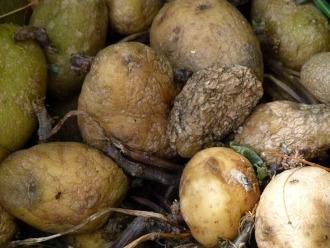[Source](https://pixabay.com/users/stheaker-55372/)
#### Food Production and Fertilizers and Pesticides
**Industrialized fertilizers** are also generally composed of nitrogen and [phosphorous](https://interfaithsustain.com/renewable-and-non-renewable-resources/) which have the negative effect of releasing harmful nitrous oxide into the atmosphere. [Pesticides](https://www.ncbi.nlm.nih.gov/pmc/articles/PMC2984095/) increase efficiency in agriculture, but the cost they come at is high. The effect on humans is profound, but in food even more so. There is no way for crops to be void of any pesticide, though the question often is if the pesticides exceed the MRL (Maximum Residue Level). In most cases, fruits and vegetables are below the MRL though some, like spinach, exceeded the MRL 7.3% of the time. This is not good, of course, as pesticides and herbicides have a variety of effects on humans.
Then there is the impact on the environment. Surface and ground water contamination isn’t uncommon, with pesticides being detected in 99% of urban streams, and found in many ground water sources. And like fertilizers, pesticides interfere with fungi and microbes that live in the soil, and are important to the ecosystem.
## Food Production Choices: Why Buy Locally? Why Buy Organic?
A oneliner often heard in environmentally conscious or sustainable communities is to “**buy locally.**” While this choice is extremely important for building a sustainable local economy the concern that food is traveling a far distance and thereby emitting a huge amount of carbon dioxide on the way to us is not the main problem. The carbon footprint of the food we consume comes primarily from the farming practices and the product itself, and not the way it gets to our supermarkets.
**Organic food** is produced without the use of chemicals or [genetic modification](https://interfaithsustain.com/gmo-seeds/). Pest and herb control is practiced through natural processes, but may be more labour intensive. Organic animals are animals that are free to live their life in an open field, as opposed to being factory farmed, whilst being fed wholesome, nutritious food.
There are many facets of organic food production that are beneficial to the environment. For example, growing monocultures deplete the soil of certain nutrients. Instead, crop rotations can be implemented so that soils have the chance to replenish nutrients via the growth of other crops. In general agricultural production there’s also the problem of artificial fertilizers, which when overused, are harmful to the soil and leach into waterways, polluting them. Using organic fertilizers, such as [compost or animal manure](https://www.fao.org/organicag/oa-faq/oa-faq6/en/), not only reduces the pollution of the land and water, but also increases the biodiversity in the soil, which in turn helps the crops grow. Additionally, organic farming, through crop rotation, tends to lead to an increased diversity in crops planted. This not only helps preserve different plant species, but also reduces susceptibility to plant disease outbreak, as different species have certain resistances.
## Religious Teachings and the Basis for Sustainable Food Production
Food production is also a key topic in parts of the Bible. Genesis 41:41 states, “Pharaoh further said to Joseph, “See, I put you in charge of all the land of Egypt.”
In [Eco Bible](https://interfaithsustain.com/ecobible/), Rabbis Yonatan Neril and Leo Dee write, “Pharaoh trusted Joseph to maximize food production for the Egyptian people, and to store grain during the good years in advance of the coming. Joseph’s success certainly required immediate attention to the natural world – sun, rain, wind, and insects – and long-term attention to the coming drought and famine. The rabbis proclaim, “Who is wise? One who sees the long-term effect of their actions”. Joseph was one such wise man, ensuring that everyone received food during the famine.
In contrast, many of today’s large corporations buy agricultural land from indigenous people, then leave the local population without sufficient means to feed themselves. Globally, between 2001 and 2013, 227 million hectares of land – an area the size of Western Europe – were sold or leased around the world, mainly to international investors. (This trend actually intensified after the 2008 food crisis.)
Much of this land is now left unused, despite being [greatly needed by local populations for food production](https://books.google.co.il/books?hl=en&lr=&id=pyeNA0iNg_4C&oi=fnd&pg=PR5&dq=Klaus+Deininger+et+al.,+Rising+Global+Interest+in+Farmland:+Can+It+Yield+Sustainable+and+Equitable+Benefits%3F&ots=gfXbmQPPwy&sig=UnwuKJytetaFUHYDNP8muB2zpvU&redir_esc=y#v=onepage&q&f=false). If we want to be ecologically wise like Joseph, shouldn’t we be concerned that while our world produces enough food for every person on earth, some [820 million people go hungry](https://www.who.int/news-room/detail/11) and two billion remain malnourished?
*\* Featured image [source](https://pixabay.com/users/add-44917/)*
**Categories:** Blog on Faith and Ecology, Food & Agriculture
**Tags:** Food Production
---
### [The Pros And Cons Of Oil For Our Energy Needs](https://interfaithsustain.com/pros-and-cons-of-oil/)
**Published:** October 5, 2022
**Author:** ICSD
**Excerpt:** Harry Cooper - Since the industrial revolution, oil has fueled the growth of human societies across the globe, and led us into the modern world as we know it. But building the world's economy on the foundation of fossil fuel has come at a price: pollution, a warming climate resulting in extreme climate events globally and devastating environmental degradation.
**Content:**
Table of Contents
Table of Contents
- [Balancing Our Oil Usage](#aioseo-balancing-our-oil-usage-3)
- [Pros Of Oil Energy](#aioseo-pros-of-oil-energy-11)
- [Convenient Energy Source](#aioseo-convenient-energy-source-12)
- [Efficient Energy Source](#aioseo-efficient-energy-source-15)
- [Oil and Industrialization](#aioseo-oil-and-industrialization-18)
- [Cons of Oil Energy](#aioseo-cons-of-oil-energy-22)
- [Air Pollution](#aioseo-air-pollution-23)
- [Climate Change](#aioseo-climate-change-27)
- [Oil Spills](#aioseo-oil-spills-32)
- [Finding a Balance For Modern Energy Needs](#aioseo-finding-a-balance-for-modern-energy-needs-36)
- [Global Carbon Budget](#aioseo-global-carbon-budget-39)
- [Cutting Back](#aioseo-cutting-back-41)
- [Phasing Out Internal Combustion Engine Vehicles](#aioseo-phasing-out-internal-combustion-engine-vehicles-43)
- [Religion and the Pros and Cons of Oil](#aioseo-religion-and-the-pros-and-cons-of-oil-46)
*By Harry Cooper* – Since the industrial revolution, oil has fueled the growth of human societies across the globe, and led us into the modern world as we know it. But building the world’s economy on the foundation of fossil fuel has come at a price: pollution, a warming climate resulting in extreme climate events globally and devastating environmental degradation.
The continual usage of **oil** and **fossil fuels** has exacerbated our environmental issues. And humanity has now come to face the difficult task of deciding how to design our energy systems moving forward.
## Balancing Our Oil Usage
We must undo our century long dependence on oil. However, we still must provide enough energy to power our industrialized world.
It can be hard to conceive of how we can effectively reform our energy system to work for both humans and the environment. But experts all over the world are looking for ways in which we can phase out the use of oil energy while still being able to power our civilization.
[Source](https://pixabay.com/users/publicdomainpictures-14/)
It is important to find the right balance of oil usage. With this, we can hope to make a better world for both people and planet.
## Pros Of Oil Energy
### Convenient Energy Source
Because [oil](https://www.clean-energy-ideas.com/energy/non-renewable-energy/pros-and-cons-of-oil/) has been our primary energy resource for over a hundred years, a lot of time and money has been spent on building the **oil industry** and **oil extraction infrastructure**. This has made it so that oil is more readily available to use.
In addition, oil can be easily stored in barrels, as opposed to other forms of energy that require limited batteries. This preexisting oil infrastructure and easy means of storage have made oil a cheap and readily available energy source that can help meet energy needs across the globe.
### Efficient Energy Source
On top of oil’s convenience and availability, oil is already a very [efficient](https://environmental-conscience.com/oil-pros-cons/) energy source. Oil is also incredibly energy dense – in fact it is the most energy dense fossil fuel that we have discovered.
This density makes oil an incredibly powerful fuel source. In fact, it is one of the most efficient fuel sources available to us today.
#### Oil and Industrialization
It is easy to see how the world has come to be so [reliant](https://www.bbc.co.uk/teach/how-did-oil-come-to-run-our-world/zn6gnrd) on oil. This reliance started during the industrial revolution, whereby countries began to focus more on manufacturing goods.
This shift to industrial societies entailed a variety of technological innovations. These new technologies, as well as the new manufacturing industries, were fueled in large part by oil.
Oil was one of the most significant driving forces of the industrial revolution. Oil is responsible for creating our fast-paced, mobile, globalized economy. This has helped to create a much more connected world.
- [](https://interfaithsustain.com/when-will-we-run-out-of-oil/)
## [To Burn Or Not To Burn: When Will We Run Out of Oil?](https://interfaithsustain.com/when-will-we-run-out-of-oil/)
- [](https://interfaithsustain.com/mauritius-oil-spill/)
## [The Mauritius Oil Spill: A Disaster with Ecological and Human Impacts](https://interfaithsustain.com/mauritius-oil-spill/)
- [](https://interfaithsustain.com/oil-pollution/)
## [The Financial and Ecological Cost of Oil Pollution From Oil Spills](https://interfaithsustain.com/oil-pollution/)
## Cons of Oil Energy
### Air Pollution
Oil is an incredibly harmful and toxic substance, that causes innumerable damage to the environment and public health. One way in which it does this is by releasing harmful [air pollution](https://www.americangeosciences.org/geoscience-currents/air-quality-impacts-oil-and-gas#:~:text=Oil%2D%20and%20gas%2Dproducing%20areas,in%20surrounding%20roads%20and%20communities.).
Oil releases high levels of volatile organic compounds (VOCs) into the air when burned. These VOCs help to form harmful levels of atmospheric ozone.
This kind of ozone is incredibly toxic to humans. It is estimated that [8.7 million](https://ourworldindata.org/data-review-air-pollution-deaths#:~:text=(2021)%20in%20Environmental%20Research%3A,caused%20by%20burning%20fossil%20fuels) people die each year due to air pollution caused by burning fossil fuels.
### Climate Change
Climate change is one of the most notorious environmental issues of our time, and is in part caused by our over dependence on oil. Oil energy creates large amounts of carbon dioxide and other greenhouse gases, which are the main contributors of **climate change**.
[Source](https://pixabay.com/users/openclipart-vectors-30363/)
Electricity generation via the burning of oil and other fossil fuels contributes around [25%](https://www.epa.gov/ghgemissions/global-greenhouse-gas-emissions-data) of total greenhouse gas emissions. This makes the oil and gas industry the largest contributor of carbon emissions into the atmosphere.
#### Oil Spills
Another way that oil pollution can occur is through [oil spills](https://www.noaa.gov/education/resource-collections/ocean-coasts/oil-spills) which occur in the ocean when pipelines burst or oil tankers sink. These spills leak dangerous chemicals into the ocean that cause widespread environmental pollution that kill large quantities of marine life.
## Finding a Balance For Modern Energy Needs
Historically, oil helped humanity industrialize and move into the modern world. But oil now seems to be causing more trouble than it’s worth.
However, with renewable energy technologies on the rise, we are starting to see an alternative to our oil based energy system. But switching to an entirely sustainable energy system is no easy task.
### Global Carbon Budget
A group of researchers from the [Global Carbon Project](https://www.globalcarbonproject.org/carbonbudget/index.htm), produce an annual “carbon budget” detailing the maximum emissions we can release in the next year before making global warming worse. Unfortunately, we are already close to meeting [the budget](https://www.theguardian.com/environment/2022/sep/19/world-fossil-fuel-reserve-greenhouse-gas-emissions), and the amount of oil currently available for extraction and consumption is almost seven times the current budget. And with more countries developing oil and gas projects, we can expect oil to be a major part of our society for the foreseeable future.
### Cutting Back
While oil usage is still on the rise, renewable technologies are as well. As renewable energy becomes more widespread and accessible, we will start to see more and more places moving away form oil towards more sustainable options.
### Phasing Out Internal Combustion Engine Vehicles
Many countries are attempting to phase out oil used in internal combustion engine (ICE) vehicles in favor of electric ones. For example, the UK plans to fully ban ICE vehicles by 2030.
The expansion of electric vehicle technology allowing for countries to set such ambitious goals for cutting back on carbon is just one example of how countries are beginning to favor renewable energy. Just take a look at the test flight of the [World’s first all-electric airplane](https://edition.cnn.com/videos/business/2022/09/28/eviation-alice-first-test-flight-orig-ht.cnn-business). As renewable energy technology becomes more accessible, companies will start to turn away from oil as an energy source.
## Religion and the Pros and Cons of Oil
There are good reasons for using oil energy and good reasons for transitioning away from oil energy. In fighting for a more sustainable future, in which we are not dependent on fossil fuels like oil, it’s important to acknowledge the value of oil, while also fighting for what we believe in. Looking to religious wisdom, we can find inspiration on how to fight for what we know to be true, while acknowledging there is truth in the opinion of our opponents.
Here is a [classic story from the Babylonian Talmud](https://www.sefaria.org.il/sheets/3834.1?lang=bi&with=all&lang2=en) that illustrates the power of holding onto our truth, while also acknowledging the truth of others:
> For three years there was a dispute between Beth Shammai and Beth Hillel, the former asserting, ‘The law is in agreement with our views’ and the latter contending, ‘The law is in agreement with our views’. Then a heavenly voice issued announcing, ‘\[The utterances of\] both are the words of the living God, but the law is in agreement with the rulings of Beth Hillel’.
>
> Since, however, both are ‘the words of the living God’ what was it that entitled Beth Hillel to have the law fixed in agreement with their rulings? Because they were kindly and modest, they studied their own rulings and those of Beth Shammai, and were even so \[humble\] as to mention the opinion of Beth Shammai before theirs.
In our increasingly polarized world, can we recognize those who are fighting for oil as also articulating “the words of the living God”? We don’t have to agree with our opponents, but the more we understand where they’re coming from, the more progress we can make.
If we try to save planet Earth by ignoring those who think differently from us, we will be on the surest path to destruction. May God give us too kindness, modesty and humility to hear the opinions of others, while holding strong to our commitment to a sustainable future.
*\* Featured image [source](https://pixabay.com/users/geralt-9301/)*
**Categories:** Blog on Faith and Ecology, Renewable Energy
**Tags:** Oil
---
### [To Burn Or Not To Burn: When Will We Run Out of Oil?](https://interfaithsustain.com/when-will-we-run-out-of-oil/)
**Published:** July 11, 2022
**Author:** ICSD
**Excerpt:** Sydney Cohen - This is a question that many people are beginning to ask. It is known that natural resources are not infinite, and they will run out at some point. According to a Stanford University research team, it is predicted that "the world’s oil reserves will run out by 2052, natural gas by 2060 and coal by 2090."
**Content:**
Table of Contents
Table of Contents
- [What are Fossil Fuels and Why is Burning them Problematic?](#aioseo-what-are-fossil-fuels-and-why-is-burning-them-problematic-10)
- [Natural Gas and Crude Oil](#aioseo-natural-gas-and-crude-oil-19)
- [World's Oil Supply](#aioseo-worlds-oil-supply-27)
- [What is Peak Oil?](#aioseo-what-is-peak-oil-30)
- [What is the Carbon Budget?](#aioseo-what-is-the-carbon-budget-33)
- [Religion and Oil](#aioseo-religion-and-oil-36)
- [What are fossil fuels and why is their burning associated with environmental problems?](#aioseo-what-are-fossil-fuels-and-why-is-their-burning-associated-with-environmental-problems-40)
- [What is the concept of peak oil and why is it significant?](#aioseo-what-is-the-concept-of-peak-oil-and-why-is-it-significant-42)
- [What is the global carbon budget and how does it relate to climate change?](#aioseo-what-is-the-global-carbon-budget-and-how-does-it-relate-to-climate-change-44)
- [Why is the concept of 'how much oil can we burn' important in environmental discussions?](#aioseo-why-is-the-concept-of-how-much-oil-can-we-burn-important-in-environmental-discussions-46)
- [How does the speed of technological and industrial development impact environmental safety?](#aioseo-how-does-the-speed-of-technological-and-industrial-development-impact-environmental-safety-48)
*By Sydney Cohen* – This is a question that many people are beginning to ask. It is known that [many natural resources are not infinite](https://interfaithsustain.com/renewable-and-non-renewable-resources/ "many natural resources are not infinite"), and they will run out at some point. According to a [Stanford University research team](https://www.mytwintiers.com/news-cat/international/what-are-fossil-fuels-and-when-will-they-run-out/#:~:text=According%20to%20the%20MAHB%2C%20the,gas%20to%20last%2084%20years.), it is predicted that “the world’s oil reserves will run out by 2052, natural gas by 2060 and coal by 2090.”
However, oil companies have historically continued to find more and more deposits of oil. Even though oil is a dwindling resource, used in exorbitant amounts every day, miraculously we have come very far in technologies that allow us to continue to find oil.
In considering the environmental outcomes of burning oil, and the release of greenhouse gases into the atmosphere that rapidly accelerate climate change, a more important question to consider is not whether we will run out of oil, but rather, how much oil can we burn and still have a livable planet for humanity and 8 million other species?
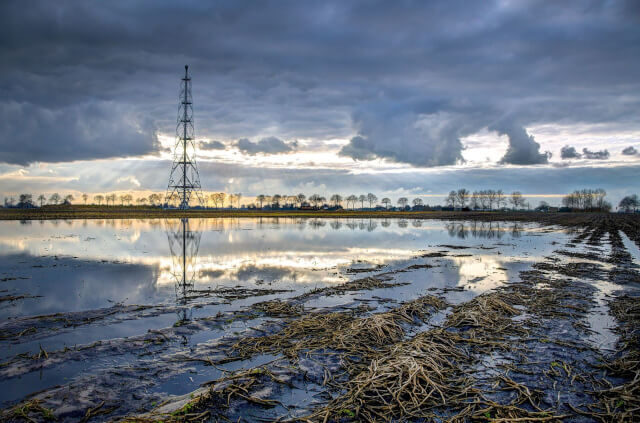[Source](https://pixabay.com/users/skitterphoto-324082/)
Scientists have published what they call a carbon budget for humanity, and unfortunately, we are fast approaching the end of that budget.
Continue reading to learn more about this limited resource, how we can burn oil and still preserve our planet, and what the carbon budget predicts!
## What are Fossil Fuels and Why is Burning them Problematic?
According to the Natural Resources Defense Council ([NRDC](https://www.nrdc.org/stories/fossil-fuels-dirty-facts)), “coal, crude oil, and natural gas are all considered [fossil fuels](https://www.nrdc.org/issues/reduce-fossil-fuels) because they were formed from the fossilized, buried remains of plants and animals that lived millions of years ago. Because of their origins, fossil fuels have a high carbon content.”
**Burning fossil fuels** releases carbon dioxide and other greenhouse gases into our planet’s atmosphere. When sunlight gets trapped under this layer of gases, our planet warms up, which is known as climate change, or [global warming](https://interfaithsustain.com/global-warming-vs-climate-change/).
[Source](https://pixabay.com/users/wasi1370-8259843/)
Although many countries are actively pursuing alternative fuel sources, the global demand for energy rises. Global Energy and CO2 Status Reports show that the energy demand in the world and the global consumption of fossil fuels has increased by a record 1.5%. For that reason, nations have retreated toward fossil fuels.
More than 70 percent of the global growth in electricity and gas demand has been achieved through the extraction and use of oil, coal, and other natural gas.
- [](https://interfaithsustain.com/pros-and-cons-of-oil/)
## [The Pros And Cons Of Oil For Our Energy Needs](https://interfaithsustain.com/pros-and-cons-of-oil/)
- [](https://interfaithsustain.com/what-is-peak-oil/)
## [Understanding What Is Peak Oil](https://interfaithsustain.com/what-is-peak-oil/)
- [](https://interfaithsustain.com/oil-pollution/)
## [The Financial and Ecological Cost of Oil Pollution From Oil Spills](https://interfaithsustain.com/oil-pollution/)
### Natural Gas and Crude Oil
According to the US Energy Information Administration, [natural gas](https://www.eia.gov/energyexplained/natural-gas/) “is a fossil energy source that formed deep beneath the earth’s surface. Natural gas contains many different compounds. The largest component of natural gas is methane, a compound with one carbon atom and four hydrogen atoms (CH**4**).”
“Natural gas withdrawn from natural gas or crude oil wells is called *wet natural gas* because, along with methane, it usually contains NGLs—ethane, propane, butanes, and pentanes—and water vapor.” Natural gas is in high demand. “Natural gas accounted for 40% of [total utility-scale U.S. electricity generation](https://www.eia.gov/energyexplained/electricity/electricity-in-the-us-generation-capacity-and-sales.php) by all sectors in 2020. The [**industrial sector**](https://www.eia.gov/tools/glossary/index.php?id=Industrial%20sector) uses natural gas as a fuel for process heating, in [combined heat and power systems](https://www.eia.gov/tools/glossary/index.php?id=Combined%20heat%20and%20power%20(CHP)%20plant), as a raw material (feedstock) to produce chemicals, fertilizer, and hydrogen, and as [lease and plant fuel](https://www.eia.gov/tools/glossary/index.php?id=Lease%20and%20plant%20fuel).”
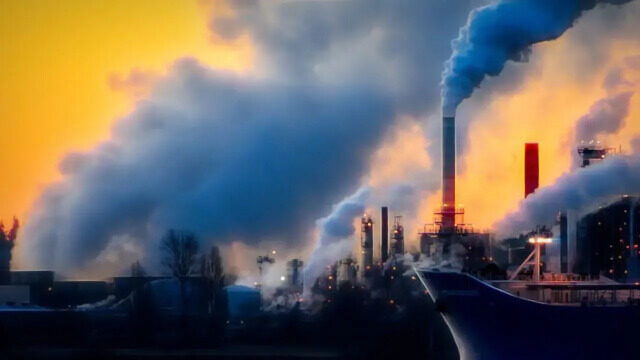[Source](https://pixabay.com/users/chris_leboutillier-5540531/)
Crude oil is perhaps the most important component in oil production. “[Crude oil](https://www.investopedia.com/terms/c/crude-oil.asp) is a naturally occurring petroleum product composed of hydrocarbon deposits and other organic materials. A type of fossil fuel, crude oil is refined to produce usable products including gasoline, diesel, and various other forms of petrochemicals. It is a [nonrenewable resource](https://www.investopedia.com/terms/n/nonrenewableresource.asp), which means that it can’t be replaced naturally at the rate we consume it and is, therefore, a limited resource.”
## World’s Oil Supply
The world does not have an unlimited supply of proven oil reserves. As mentioned, we are facing a double-sided crisis. The world relies upon fossil fuels as energy sources. However, the burning of fossil fuels also causes the warming of our planet. This is why we must find alternative energy solutions that allow us to both preserve oil and our planet.
The American Petroleum Institute ([API](https://www.api.org/products-and-services/statistics)) provides estimations for “the total number of wells and footage drilled” on a quarterly basis. The American Petroleum Institute estimated in the second quarter of [2018](https://ssw-americas.com/api-releases-its-well-completion-report/) that there had been a “265 percent increase in estimated exploratory gas well completions as compared to the second quarter of 2017,” demonstrating “the continued growth and strength of U.S. energy production.”
## What is Peak Oil?
Peak oil is described as “the moment at which [extraction of petroleum](https://en.wikipedia.org/wiki/Extraction_of_petroleum) reaches a rate greater than that at any time in the past and starts to permanently decrease.” It is relevant to understand this limited resource, and “while global petroleum reserves are finite, the limiting factor is not whether the oil exists but whether it can be extracted economically at a given price.”
How much oil we have left depends on the wells that have reached peak oil. All the oil wells in existence reach peak oil at some point, and then the oil extraction begins to decline.
### What is the Carbon Budget?
The world’s carbon budget is a [report](https://www.carbonindependent.org/54.html) that was released by the Intergovernmental Panel on Climate Change (IPCC) in August 2021. The carbon budget estimates that “the residual global carbon budget to remain within 1.5°C global warming with 66% probability is given as 400 billion tonnes CO2 from the start of 2020. With the world population reaching 8 billion people within the next few years, this is 50 tonnes per person. Global CO2 emissions are about 36 billion tonnes per year, so the 400 billion tonnes will last just 11 years if no reductions are made.”
Therefore, the global carbon budget runs out at the end of 2030.
### Religion and Oil
By extracting and burning through oil more and more quickly, we are rushing to make the most of this limited resource, without putting enough thought into considering the consequences. The consequences of our prioritization of speed and profit over prudence in oil extraction are explored in [Eco Bible Volume 1](https://www.amazon.com/dp/B08LCKLM9G/ref=dp-kindle-redirect?_encoding=UTF8&btkr=1). Here’s a poignant excerpt on this topic from the essay “How Fast We Move”:
Rabbi Shaul David Judelman teaches: “Thus the paths of Esau and Jacob split. We must learn the lesson that Jacob tries to give Esau: that the considerations for our children and animals must also determine the pace of our travel. We must find sustainable vessels for our tremendous creative abilities. When we consider how to act in the moment at hand, our attention must focus on our shared futures on this earth, and we must remember to make responsible decisions in accordance with this reality.”
Here, we see the brothers’ different views: Esau with his rapid pace, and Jacob with patience to accommodate the needs of his children and nursing flocks and cattle. According to the Midrash, Esau’s offspring become Rome, and more broadly, Western civilization. In recent centuries, the West has promoted a pace of life much faster than in pre-modern societies.
We can relate this verse to how the rate of technological change today is occurring faster than our conscious ability to consider its implications. One example is the BP oil spill. Federal investigators found that the companies BP, Halliburton, and Transocean acted in haste in trying to complete the cementing of the oil well, which was weeks behind schedule. Due to the great depth of the drilling, it took engineers 87 days to stop the oil spill, although it continued to leak for years. BP’s Deepwater Horizon rig drilled and spilled at a depth of 18,360 feet, in 5,100 feet of water, which shows what happens when humans lose control. A 2020 study found that the extent of the spill was much greater than commonly thought. Ten years after the spill, oil drilling has moved further offshore and deeper underwater. The bipartisan National Commission on the BP Deepwater Horizon Oil Spill and Offshore Drilling “accused Congress of a near-complete failure to adopt their recommendations on drilling safety.” New oil wells at even greater depths are now operating near the site of the BP Macondo well that spilled.
In deep water or high in the air, in particular, the process of moving too fast can be catastrophic. At a global level, a humanity that is moving too fast is generating a global ecological crisis.
*\* Featured image [source](https://pixabay.com/users/catmoz-4975455/)*
**Categories:** Blog on Faith and Ecology, Renewable Energy
**Tags:** Oil Pollution
---
### [Understanding What Is Peak Oil](https://interfaithsustain.com/what-is-peak-oil/)
**Published:** September 23, 2022
**Author:** ICSD
**Excerpt:** Ethel Mendius - The peak oil concept suggests that the world's oil production will reach a maximum rate and then decline as oil reserves dwindle and extraction becomes difficult and costly. While scientists have not reached a consensus about peak oil, cautions about our oil consumption should be welcome in an era of climate crisis.
**Content:**
Table of Contents
Table of Contents
- [The Origins of Peak Oil Theory](#aioseo-the-origins-of-peak-oil-theory-2)
- [Peak Oil And Oil Depletion](#aioseo-peak-oil-and-oil-depletion-6)
- [The 1973 Oil Crisis](#aioseo-the-1973-oil-crisis-10)
- [Oil Production And Modern Technology](#aioseo-oil-production-and-modern-technology-13)
- [The Environmental Impact of Oil Production](#aioseo-the-environmental-impact-of-oil-production-25)
- [Reaching Peak Oil Demand](#aioseo-reaching-peak-oil-demand-31)
- [Alternative Energy Sources](#aioseo-alternative-energy-sources-38)
- [Religion And Oil](#aioseo-religion-and-oil-47)
- [Stuck In Crude Oil From Eco Bible Volume 1](#aioseo-stuck-in-crude-oil-from-eco-bible-volume-1-49)
*By Ethel Mendius* – The peak oil concept suggests that the world’s oil production will reach a maximum rate and then decline as oil reserves dwindle and extraction becomes difficult and costly. While scientists have not reached a consensus about peak oil, cautions about our oil consumption should be welcome in an era of climate crisis.
## The Origins of Peak Oil Theory
In the 1950s, a researcher for the Shell Oil Company named Marion King Hubbert [observed](https://www.treehugger.com/what-is-peak-oil-have-we-reached-it-5189178) many instances in the United States where “oil production follows a bell-shaped curve”. In 1956, he presented a paper to the American Petroleum Institute that “hypothesized that U.S. petroleum production would peak between 1965 and 1975.”
Oil is a finite resource, “made up of hydrocarbons formed from the remains of animals and plants that lived millions of years ago.” Like other fossil fuel resources, it becomes harder to source as reserves are depleted.
In Hubbert’s peak oil theory, [peak oil occurs](https://www.investopedia.com/terms/p/peak_oil.asp) when “the production decline accelerates” and the cost of oil extraction rises. In the 1970s, Hubbert [extrapolated this research](https://www.treehugger.com/what-is-peak-oil-have-we-reached-it-5189178) to a prediction that global production would peak in 2000.
### Peak Oil And Oil Depletion
Peak oil is sometimes confused with oil depletion, a related concept that refers to the decline of oil reserves in a given region. However, economic factors, such as the demand for oil and the cost of production, could also cause oil to reach peak production.
[Source](https://unsplash.com/@john_cameron)
#### The 1973 Oil Crisis
Hubbert’s peak oil theory gained prominence in 1973 with the [oil embargo](https://www.investopedia.com/terms/p/peak_oil.asp) led by the Organization of Petroleum Exporting Countries (OPEC), which “exposed the United States’ vulnerability to a drop in oil supplies.” The resulting economic fallout drew national attention to oil production.
Since then, peak oil “has been a major concern for energy-dependent nations” seeking to maintain energy security. Countries like the United States are aware that a compromised oil supply would lead to rising fuel prices and other disastrous implications for the global economy.
## Oil Production And Modern Technology
Over the course of the 20th century, peak oil theory seemed to prove [correct](https://www.strausscenter.org/energy-and-security-project/peak-oil/): U.S. crude oil production “reached 9.6 million barrels per day in 1970 before decreasing through 2008.” However, oil companies have sought to avoid reaching peak oil, and government policies have been shaped to maintain independence from the global oil supply.
In practice, these concerns have led to investment in [new technologies](https://www.strausscenter.org/energy-and-security-project/the-u-s-shale-revolution/) with results that defy the predictions of peak oil theory. 2008 marked the beginning of the U.S. Shale Revolution, which brought techniques such as hydraulic fracturing (fracking) and horizontal drilling to the forefront to reduce our reliance on conventional crude oil.
These methods instead give access to “unconventional oil”, which cannot be extracted using vertical drilling methods. Unconventional oil [includes](https://studentenergy.org/source/unconventional-oil/) **tight oil** which is oil “trapped in geologic formations with low permeability”, **bitumen** which is “grains of sand enveloped by layers of water and heavy oil”, also known as asphalt and **oil shale** which is a rock containing “kerogen, a precursor to oil.”
[Source](https://pixabay.com/users/catmoz-4975455/)
Oil production in the U.S. has expanded vastly because of these newly accessible oil resources. The U.S. Energy Information Administration [estimates](https://www.eia.gov/tools/faqs/faq.php?id=268&t=6#:~) that in 2021, crude oil production reached 11.185 million barrels per day, with [65%](https://www.eia.gov/tools/faqs/faq.php?id=847&t=6) of that oil extracted “directly from tight oil resources” using fracking.
For more than a decade, this technology has served to reduce oil prices in the U.S. with knock-on effects in the global energy sector. Daniel Raimi, a researcher at [Resources for the Future](https://www.resources.org/common-resources/getting-real-economic-and-environmental-impacts-shale-revolution/), writes that “cheaper energy encourages people to use more energy” and the Shale Revolution has motivated further global oil production.
- [](https://interfaithsustain.com/oil-spill-clean-up/)
## [As We Blog, Another Oil Spill Clean Up Is Underway!](https://interfaithsustain.com/oil-spill-clean-up/)
- [](https://interfaithsustain.com/oil-pollution/)
## [The Financial and Ecological Cost of Oil Pollution From Oil Spills](https://interfaithsustain.com/oil-pollution/)
- [](https://interfaithsustain.com/mauritius-oil-spill/)
## [The Mauritius Oil Spill: A Disaster with Ecological and Human Impacts](https://interfaithsustain.com/mauritius-oil-spill/)
## The Environmental Impact of Oil Production
The above figures rebuff the notion that the U.S. has reached peak oil, at least in terms of supply, and modern drilling techniques have been adopted by other oil producers across the globe. However, environmental factors give us a reason to predict, and encourage, a decline in oil production.
Oil is well-known as a fossil fuel, and when burned it releases carbon dioxide that contributes to global warming. [Recent estimates](https://www.clientearth.org/latest/latest-updates/stories/fossil-fuels-and-climate-change-the-facts/) suggest 89% of carbon dioxide emissions come from “fossil fuels and industry,” which includes oil, coal, natural gas. Oil accounts for “approximately a third of the world’s total carbon emissions.”
[Global warming](https://www.clientearth.org/latest/latest-updates/stories/fossil-fuels-and-climate-change-the-facts/) is the preeminent risk of our times. If the global temperature increases above 1.5° Celsius, we risk “further sea level rise, extreme weather, biodiversity loss and species extinction” that will prove disastrous to human life. The health of the planet necessitates we reduce carbon dioxide emissions by curbing our oil production.
Like other fossil fuels, oil is known to contribute to air, water, and [soil pollution](https://interfaithsustain.com/soil-pollution/) that threaten both human and animal life. Drilling for oil disrupts local wildlands and habitats, and “the damage is often irreversible”.
In addition, oil production contributes to [environmental disasters](https://www.greenpeace.org/usa/fighting-climate-chaos/issues/oil/). In 2010, the British Petroleum Deepwater Horizon oil spill killed 11 people and “dumped more than 200 million gallons of crude oil into the Gulf of Mexico, leading to a wave of wildlife deaths.”
## Reaching Peak Oil Demand
Environmental concerns contributed to a decline in world oil production witnessed in recent years. In 2020, the oil industry faced a [triple threat](https://e360.yale.edu/features/amid-troubles-for-fossil-fuels-has-the-era-of-peak-oil-arrived); “the politics of decarbonization, lifestyle changes stimulated by the pandemic, and the rapid rollout of green technologies” led to a 9% decline in global demand.
This scenario offers a revised model of peak oil; if consumption patterns change, we could bring about peak oil regardless of the reserves at our disposal.
Sustainability researcher Mark Lewis cited [three trends reasons](https://e360.yale.edu/features/amid-troubles-for-fossil-fuels-has-the-era-of-peak-oil-arrived) that may lead to a decline in oil demand: “decarbonization of economies to meet the Paris climate agreement; deflation of demand as renewable energy sources and electric vehicles kick in; and ‘detoxification’ as cities curb particulates and nitrogen oxide emissions from burning petroleum.”
The emergence of these trends indicates that global oil production would peak if crude oil becomes a less profitable venture than other energy sources, and if policies were shaped to prioritize energy efficiency over economic growth.
Making this transition requires a commitment to [cost-effective energy efficiency](https://www.cop28.com/en/global-renewables-and-energy-efficiency-pledge).
The Environmental Protection Agency advocates for a National Action Plan for Energy Efficiency that would “reduce energy use, save billions on customer energy bills, and reduce the need for new power supplies.”
## Alternative Energy Sources
In order to reach peak oil demand and inhibit future production, we must invest in renewable energy sources to meet our needs. World oil production continues to expand because we have chosen to rely on crude oil as our primary energy source.
The geopolitical instability seen in 2022 because of [the war in Ukraine](https://www.cnbc.com/2022/06/27/renewable-energy-vs-fossil-fuels-a-false-choice-says-john-doerr.html) has demonstrated that we cannot rely on oil as fuel. Journalist Eric Rosenbaum writes, “society should recognize the need for more sources of energy, and especially the need for more sources of clean energy.”
[Source](https://unsplash.com/@thomasrichter)
Clean energy reaps [many benefits](https://www.ucsusa.org/resources/benefits-renewable-energy-use). In addition to reducing our carbon footprint and pollution, investing in wind and solar energy “provide\[s\] a vast and constantly replenished supply of energy”, benefitting our economies and societies. A recent study conducted by the U.S. Department of Energy “found that renewable energy could comfortably provide up to 80 percent of US electricity by 2050.”
These changes would facilitate a declining demand for oil and a greener future for our planet. While peak oil theory has not played out as Marion King Hubbert imagined, we can hope to see its continued relevance in our times.
## Religion And Oil
*Genesis 14:10 – Now the Valley of Siddim Was Dotted with Bitumen Pits; and the Kings of Sodom and Gomorrah, in Their Flight, Threw Themselves Into Them, While the Rest Escaped to the Hill Country.*
### Stuck In Crude Oil From [Eco Bible Volume 1](https://www.amazon.com/dp/B08LCKLM9G/ref=dp-kindle-redirect?_encoding=UTF8&btkr=1)
The kings of Sodom and Gomorrah fell into pits of “black gold” or bitumen (in Hebrew, Chemar). In ancient times as today, surface seepages of this thick, sticky form of crude oil occurred and still occur in a limited number of places in the world, including Azerbaijan, Iran, Pennsylvania, Alberta, and the Dead Sea. People used and still use the natural tar for its waterproofing qualities and for roads.
Why does the Torah mention this geological detail in relation to the leaders of these ultimately decimated societies? The Torah continues, “The invaders \[four Middle Eastern kings\] seized all the wealth of Sodom and Gomorrah and all their provisions, and went their way.” Once the kings of Sodom and Gomorrah fell into the bitumen pits, they got trapped and lost all of their wickedly gained wealth.
The story of the kings stuck in bitumen relates deeply to our world today. Canada is the planet’s fourth-largest oil producer, with 60 percent of its oil produced from the bitumen of oil sands. The Canadian province of Alberta has most of the world’s reserves of natural bitumen in the Athabasca oil sands, an area larger than England. Bitumen is considered the dirtiest and most polluting fossil fuel, due to the energy required to separate the crude oil from the sand and the carcinogenic chemicals used to thin it for pipeline transport.
Today, we and our leaders are trapped by economic inertia and political resistance. Oil remains our fuel of choice to make gasoline for cars and trucks, jet fuel for airplanes, tar and asphalt for paving the roads, and even plastic which is filling our oceans with trash that never fully breaks down.
The Midrash teaches that Abraham, the prophet of light, pulled the kings out of the bitumen pits. Abraham provides an example of lifting people from being trapped in fossil fuels. Comparatively, scientists published a 2017 study and environmental roadmap on how most countries in the world could transition to 100 percent wind, water, and solar energy by 2050.
We do not need to wait until someone rescues us – or until we run out of all fossil fuels. Instead, we can take steps now as individuals, communities, and nations to free ourselves from devastating fossil-fuel use.
*\* Featured image [source](https://unsplash.com/@zburival)*
**Categories:** Blog on Faith and Ecology, Renewable Energy
**Tags:** Oil
---
### [Environmental Progress & Sustainable Energy](https://interfaithsustain.com/environmental-progress-sustainable-energy/)
**Published:** September 13, 2021
**Author:** ICSD
**Excerpt:** Abby Rabinowitz - August 2021, the U.N. issued a climate change report that "unequivocally" blamed humans for causing global warming and warned that future climate disruption is now a certainty. U.N. Secretary General Antonio Guterres referred to the report as a "code red for humanity."
**Content:**
Table of Contents
Table of Contents
- [The Progress In Sustainable Energy Use](#aioseo-the-progress-in-sustainable-energy-use-2)
- [Sustainable Energy Alternatives](#aioseo-sustainable-energy-alternatives-6)
- [The Commitment To Environmental Progress and Sustainable Energy](#aioseo-the-commitment-to-environmental-progress-and-sustainable-energy-12)
- [Measuring Environmental Progress](#aioseo-measuring-environmental-progress-15)
- [Awareness of Environmental Progress and Sustainable Energy](#aioseo-awareness-of-environmental-progress-and-sustainable-energy-19)
- [Action Toward Environmental Progress and Sustainable Energy](#aioseo-action-toward-environmental-progress-and-sustainable-energy-23)
- [Religion and Sustainable Energy](#aioseo-religion-and-sustainable-energy-27)
*By Abby Rabinowitz* – August 2021, the [U.N. issued a climate change report](https://www.reuters.com/business/environment/un-sounds-clarion-call-over-irreversible-climate-impacts-by-humans-2021-08-09/) that “unequivocally” blamed humans for causing global warming and warned that future climate disruption is now a certainty. U.N. Secretary General Antonio Guterres referred to the report as a “code red for humanity.” This **climate crisis** is largely due to the consumption of fossil fuels. Fortunately, many environmental movements have arisen to combat this problem, promoting sustainable **clean energy** as alternatives to fossil fuels.
## The Progress In Sustainable Energy Use
Historically, non-renewable resources such as wood, coal, oil and natural gas were the primary sources of energy in society. These resources produced reliable power, but resulted in large amounts of pollution and emissions of **carbon dioxide** into the atmosphere. As awareness of these side effects grew, scientists began to consider alternative, cleaner sources of power. The key drawbacks of these were initially high installation costs, higher ongoing costs of energy and a lack of reliability as primary power sources. Recently, great strides have been made in improving upon these technologies, to lower their costs and improve their efficacy. We are now finally at a stage at which countries and companies are beginning to set target date goals to fully transition from fossil fuels to sustainable energy sources.
### Sustainable Energy Alternatives
[Source](https://unsplash.com/@logvisuals/)
While scientists are experimenting with many new [sustainable energy technologies](https://interfaithsustain.com/what-is-clean-tech/), the following are the most advanced and commercially viable alternatives:
**Solar energy** uses energy from the sun and converts usable electrical energy. This is a key sustainable energy source which addresses various environmental concerns. According to the [Solar Energy Industries Association](https://www.seia.org/initiatives/about-solar-energy), there are on average 103 gigawatts (GW) of solar installed in the U.S., enough to power 18.6 million homes.
Another prime source of sustainable energy is **wind energy**. This harnesses the kinetic energy found in the wind and by spinning the turbine, turns it into usable energy. Studies done by the Department of Energy show its promise in being a sustainable alternative to [fossil fuel energy](https://interfaithsustain.com/environmental-degradation-and-the-future-of-our-planet-earth/). There are also many other sources of sustainable clean energy such as hydro-power, nuclear, hydrogen and geothermal.
- [](https://interfaithsustain.com/tidal-energy/)
## [Tidal Energy As A Potential Energy Source](https://interfaithsustain.com/tidal-energy/)
- [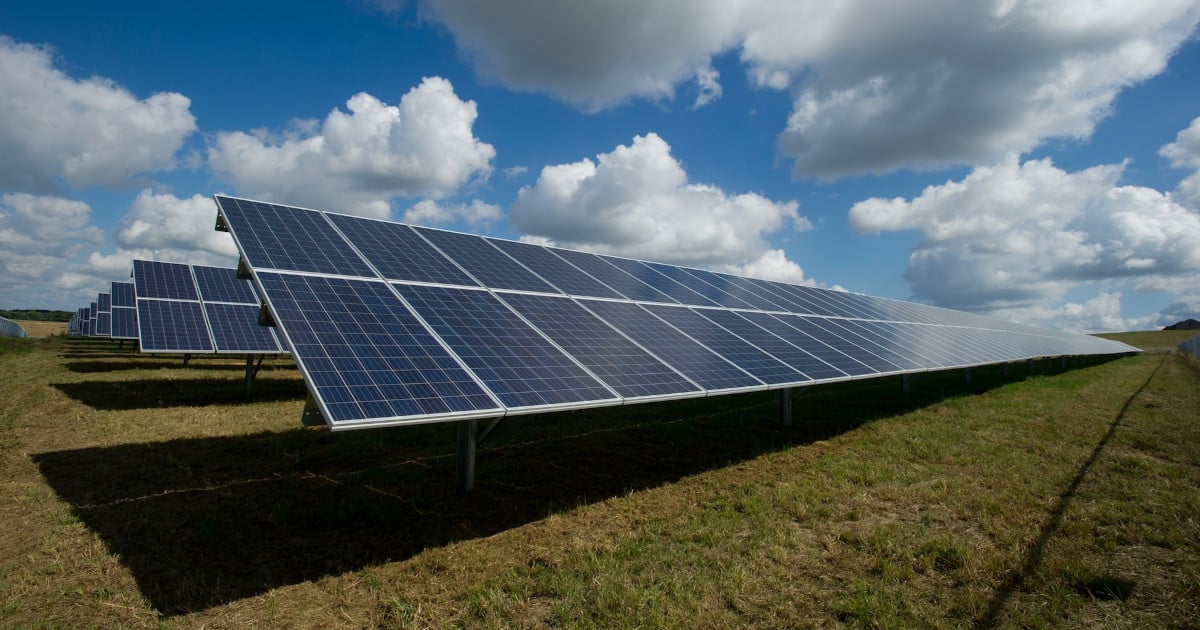](https://interfaithsustain.com/solar-and-wind-energy/)
## [Understanding the Importance of Solar and Wind Energy in Today’s World](https://interfaithsustain.com/solar-and-wind-energy/)
- [](https://interfaithsustain.com/is-nuclear-energy-renewable/)
## [A Controversial Energy Source: Is Nuclear Energy Renewable?](https://interfaithsustain.com/is-nuclear-energy-renewable/)
#### The Commitment To Environmental Progress and Sustainable Energy
In August this year, the U.S. Senate passed the [Bipartisan Infrastructure Investment and Jobs Act](https://www.whitehouse.gov/briefing-room/statements-releases/2021/08/02/updated-fact-sheet-bipartisan-infrastructure-investment-and-jobs-act/). While the bill is broadly focused on infrastructure, the Bill notably prioritizes clean energy as a key piece of its forward thinking infrastructure mandate. This legislative achievement represents a giant step in the right direction toward promoting sustainable energy and reducing our country’s dependence on fossil fuels.
The U.S. is not alone in its commitment to clean energy. According to [NS Energy](https://www.nsenergybusiness.com/features/top-countries-renewable-energy-investment/), the U.S. is one of the top five countries for renewable energy investment, among other countries such as Germany, The United Kingdom, China, France and Spain. These as well as many other countries are beginning to invest more to reduce the use of fossil fuels and other non environmentally friendly energy sources, in the hope of cutting carbon emissions by [50-52% by 2030 as compared to 2005 levels](https://www.nsenergybusiness.com/news/industry-news/us-emissions-target-2030/). These commitments are a significant down payment toward the European Union’s goal of achieving **carbon neutrality** by 2050, a major milestone in terms of sustainability and sustainable energy.
## Measuring Environmental Progress
How then can we measure **environmental progress**? Certainly carbon dioxide emissions would be a good start, and hopefully by 2030, we will be able to measure tangible progress. But in addition, there are other forms of progress that we can measure today. Consider advances in four key areas: 1) awareness of sustainability, 2) changing consumer preferences, 3) corporate actions and 4) governmental actions.
### Awareness of Environmental Progress and Sustainable Energy
Awareness – There are now many publications focused on **sustainability**. For example, the journal, [the American Institute of Chemical Engineers](https://www.aiche.org/ifs/environmental-progress-sustainable-energy) gives a review on critical issues of the environment including remediation and treatment of solid or aqueous wastes, [air pollution](https://interfaithsustain.com/air-pollution-solutions/), sustainability, sustainable energy and more. [This journal](https://www.aiche.org/ifs/environmental-progress-sustainable-energy) aims to help engineers and scientists stay on top of technological advances and science in all areas associated with the environment, which is key to the advancement of environmental sustainability.
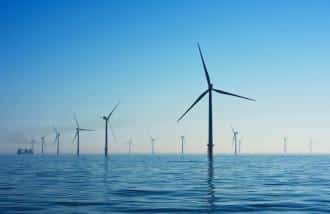[Source](https://unsplash.com/@nrdoherty/)
### Action Toward Environmental Progress and Sustainable Energy
Changing consumer preferences – Consider that electric cars did not exist ten years ago and are now becoming pervasive. Consumers are also installing solar panels on new homes.
Corporate actions – Although Tesla pioneered the electric car, even General Motors has announced that it intends to [only manufacture electric vehicles](https://www.cnbc.com/2021/01/28/general-motors-plans-to-exclusively-offer-electric-vehicles-by-2035.html) by 2035. [Exxon Mobil](https://www.wsj.com/articles/exxon-considers-pledging-net-zero-carbon-by-2050-11628161201), one of the largest fossil fuel companies in the world, is even considering a “net zero pledge,” to achieve carbon neutrality by 2050.
Governmental actions – Governments have the power to legislate and spend – both of which can be used to promote and, if necessary, compel certain types of behavior. [The U.S. Senate’s recent passing of the Bipartisan Infrastructure Investment and Jobs Act](https://www.whitehouse.gov/briefing-room/statements-releases/2021/08/05/fact-sheet-the-bipartisan-infrastructure-investment-and-jobs-act-advances-president-bidens-climate-agenda/) is a prime example of a government’s action to promote sustainable energy. This Bill allocates massive funding for sustainable initiatives such as electric vehicle infrastructure, electric buses, environmental remediation, sustainable technology, reducing waste, environmental management and more.
## Religion and Sustainable Energy
Transitioning to sustainable sources of energy is a deeply religious issue, as it determines the future of life on Earth. At the COP21 Climate Conference in Paris, a delegate of **Buddhists** [announced](https://www.partner-religion-development.org/wp-content/uploads/2023/10/Voices_from_Religions_on_Sustainable_Development_April2017_3rd_edition.pdf) that “phasing out fossil fuels and moving toward 100 percent renewable and clean energy will not only spur a global, low-carbon transformation, it will also help us to embark on a much-needed path of **spiritual renewal**.”
Environmental progress and spiritual renewal are inextricably linked, we cannot achieve one without the other. With this awareness in mind, we can transition our planet and ourselves into the reality of which we dream.
[Source](https://unsplash.com/@jxk/)
*\* Featured image [source](https://unsplash.com/@chrisleboutillier/)*
*Interested in learning more? Check out our post on [The Principles of Sustainable Development](https://interfaithsustain.com/principles-of-sustainable-development/ "The Principles of Sustainable Development")*.
**Categories:** Blog on Faith and Ecology, Renewable Energy
**Tags:** Environmental Progress, Sustainable Energy
---
### [Getting to Grips With The Global Growth of Green Banking](https://interfaithsustain.com/green-banking/)
**Published:** January 14, 2022
**Author:** ICSD
**Excerpt:** Sydney Cohen - Green banking is the most sustainable way of managing your finances. Green banking may sound like an abstract concept but we still need to consider it.
**Content:**
Table of Contents
Table of Contents
- [What is Green Banking?](#aioseo-what-is-green-banking-1)
- [Green Banks](#aioseo-green-banks-5)
- [Global Growth of Green Banking](#aioseo-global-growth-of-green-banking-10)
- [How a Green Bank Operates](#aioseo-how-a-green-bank-operates-12)
- [Green Bank Partnerships](#aioseo-green-bank-partnerships-16)
- [Virtual Green Banking](#aioseo-virtual-green-banking-18)
- [How To Help the Environment With My Account?](#aioseo-how-to-help-the-environment-with-my-account-20)
- [Ways of Green Banking](#aioseo-ways-of-green-banking-23)
- [Your Green Actions Have an Impact](#aioseo-your-green-actions-have-an-impact-25)
- [Examples of Successful Green Banks](#aioseo-examples-of-successful-green-banks-27)
- [How To Get Involved in Green Banking?](#aioseo-how-to-get-involved-in-green-banking-31)
- [The Future of Green Banking](#aioseo-the-future-of-green-banking-35)
- [Religion and Green Banking](#aioseo-religion-and-green-banking-38)
- [Why Choose a Green Bank?](#aioseo-why-choose-a-green-bank-43)
## What is Green Banking?
*By Sydney Cohen* – Green banking is the most sustainable way of managing your finances. Green banking may sound like an abstract concept but we still need to consider it. The unfortunate truth is that if we don’t start thinking green in every aspect of our lives, then we don’t help ourselves or our planet.
**Green banking** is an idea that has been around for a long time, but it’s still not very well known. It’s the concept of investing in [environmentally-friendly companies](https://interfaithsustain.com/sustainable-furniture/) and products instead of those with a negative impact on the environment.
This could mean buying stocks from companies that are making huge strides in [green technology](https://interfaithsustain.com/ethical-consumerism/) or avoiding banks that invest heavily in fossil fuels. Many people have never heard about this before because there are so many different types of ‘green’ initiatives out there!
## Green Banks
When you want to reduce your **carbon footprint**, what is the first thing that comes to mind? You might think about driving less or using more energy-efficient light bulbs.
But did you know that there are also green banks that use renewable resources and produce little waste? These banks offer checking accounts, loans, mortgages, and other financial services while [promoting sustainability.](https://interfaithsustain.com/sustainable-competitive-advantage/)
### Global Growth of Green Banking
The green banking trend has been prevalent in North America for some time, with many banks attempting to reduce their carbon footprint. The trend is gaining traction in Europe and Asia as well.
## **How a Green Bank Operates**
A green bank may help the private sector develop innovation and new market development tools to accelerate the deployment of clean energy technologies. Green banks leverage private financing to fund green energy technologies that, despite their commercial viability, have struggled to establish a widespread presence in consumer markets.
[Source](https://pixabay.com/users/mohamed_hassan-5229782/)
- [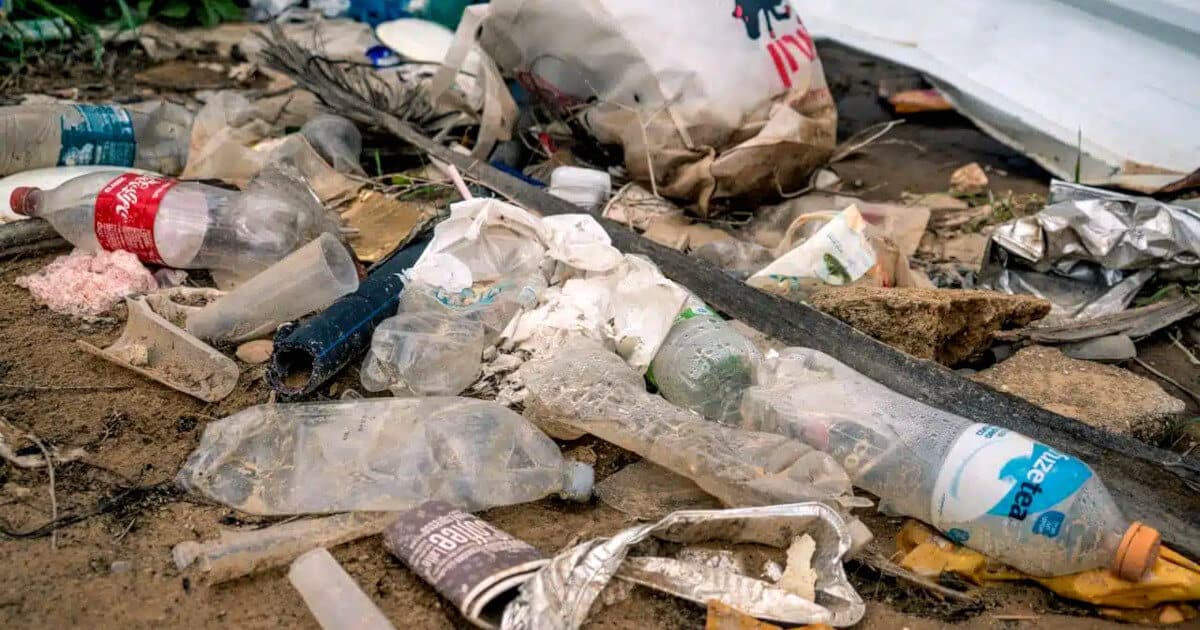](https://interfaithsustain.com/single-use-plastic-threats-from-awareness-to-action/)
## [Facing Single-Use Plastic Threats: From Awareness to Action](https://interfaithsustain.com/single-use-plastic-threats-from-awareness-to-action/)
- [](https://interfaithsustain.com/benefits-of-composting-ancient-civilizations-to-todays-technology/)
## [The Benefits of Composting: Ancient Civilizations to Today’s Technology](https://interfaithsustain.com/benefits-of-composting-ancient-civilizations-to-todays-technology/)
- [](https://interfaithsustain.com/sustainable-clothing/)
## [Sustainable Clothing: Industry, Pollution and The Alternatives](https://interfaithsustain.com/sustainable-clothing/)
### Green Bank Partnerships
**Green bank partnerships** drive about $60 billion in shale gas energy investments across the world. The UK, Australia, Japan, China, New Zealand, and Malaysia developed national banks and are committed to investing heavily in clean energy technologies. Green bankers say their goals include cost reductions for ratepayers, stimulating the private sector investment, and supporting economic activity.
#### Virtual Green Banking
Green bankers use the money to fund businesses that do no harm to the world. Many banking systems send debit/credit/check-out cards that are handmade out of recyclable plastics or wood. A few green bank buildings have brick-and-mortar locations you can actually visit, but most of them are digital.
## How To Help the Environment With My Account?
Banks generally have principal aspects which are taken into consideration during transactional relations with consumers. Green bankers try to be accountable for reducing waste by using [renewable energy resources](https://interfaithsustain.com/how-does-wind-energy-work/) and increasing environmental awareness.
Each bank uses its practices in different ways but, in general, there are steps that every bank must take when practicing green banking. Understanding how business decisions impact people’s lives currently and in the future is essential because this knowledge can help each company establish guidelines for its financial policy, including considerations about climate change policy or sustainability goals.
### Ways of Green Banking
**Green banking** works well with the environment and it does you well by saving you money. Clean banking practices could help people save money on all kinds of things such as electricity bills and the rate of vehicle insurance. Even shopping online will be cheaper for you and better for the environment if you buy through companies with recycling programs, instead of shipping plastic or paper boxes without recycling them first.
#### Your Green Actions Have an Impact
Another green banking method is using cash instead of credit cards for little purchases, reducing the need of digital or paper bills. Further use of green banking involves avoiding the use of ATM outside of the bank hours, so that lights don’t have to remain on the whole night.
## Examples of Successful Green Banks
Green bank projects have appeared almost everywhere in recent years. Tri-State Sustainable Energy Association created one of the first green banks in 2006. The Initiative Bank tries to be not only environmentally, but also socially responsible. The Netherlands Rabobank Corporation is a pioneer in sustainable banking, a provider of [environmentally safe products](https://interfaithsustain.com/sustainable-building-materials/) for rural farmers who reduce pollution from animal waste.
### How To Get Involved in Green Banking?
Most people feel that they can save money simply by taking care of bills and expenditures more responsibly. Solar panels have been released at affordable prices and could provide heat for cooking and heating water. All these changes will affect your monthly spending without required purchases as well as reduce your carbon footprint.
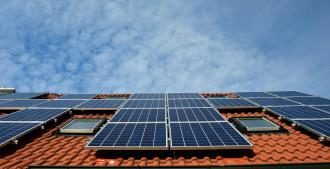[Source](https://pixabay.com/users/ulleo-1834854/)
## The Future of Green Banking
Green banking will combine conventional and sustainable practices to become a major trend as it matures, changing the world for the better. Due to climate change, we are becoming more attentive to the value of our materials.
Some countries will perhaps adopt green banking as a standard, such as Germany Energie Bank Deutsche Annington (EBA). Other nations might want traditional banks rather than green banking. Green banking could become an option with some countries, such as Australia where traditional banking dominates the market.
## Religion and Green Banking
Green banking is becoming more popular in Muslim communities. A recent article entitled [Green Banking and Islam: two sides of the same coin](https://www.researchgate.net/publication/334693886_Green_Banking_and_Islam_two_sides_of_the_same_coin) explores this phenomenon and gives the following explanation:
> It is observed that the doctrine of Islam established for mankind 1,400 years ago consists of the same principles that are now being implemented in the shape of Green Banking. The dimensions of Green Banking are in line with Islamic teachings and, thus, can easily be adopted and marketed by banks, especially Islamic banks, targeting the Muslim consumers. The congruence of Green Banking with Islamic principles can play a major role in fostering the growth of this imperative ideology for the Green Muslim consumers. Islamic banks can market green products and services on the basis of religious congruity to the Muslim consumer market and create greater acceptability and loyalty.
The increasing recognition in Muslim communities that their banks need to be environmentally positive to resonate with their religious values is an exciting development. God willing, we will see this trend continue to grow in faith communities.
## Why Choose a Green Bank?
Green banking is the antithesis of traditional banking. Instead of financially supporting industries that are good for the environment, with non-green banks you inherently support industries that you may not like such as tobacco, oil, and fossil fuel projects.
With green banking, you can support a renewable future, as green banking allows you to invest in renewable energy projects and other important industries that benefit the environment.
*\* Featured image [source](https://pixabay.com/users/geralt-9301/)*
**Categories:** Blog on Faith and Ecology, Renewable Energy
**Tags:** Green Banking, Resources for Green Living
---
### [Trees are Life, But Are Trees a Renewable Resource?](https://interfaithsustain.com/are-trees-a-renewable-resource/)
**Published:** March 23, 2022
**Author:** ICSD
**Excerpt:** Ilana Stein - Trees come in all shapes, sizes and species, from enormous sequoias and wide baobabs to the dwarf willow, possibly the smallest species of tree in the world at 1.6 cm high. But while trees represent the top of the plant ecosystem, there is more to them than that.
**Content:**
Table of Contents
Table of Contents
- [What is a Renewable or Nonrenewable Resource?](#what-is-a-renewable-or-nonrenewable-resource)
- [Harvesting Trees](#harvesting-trees)
- [Seeing The Forest For The Trees](#seeing-the-forest-for-the-trees)
- [Forest Products](#forest-products)
- [Deforestation and Damage](#deforestation-and-damage)
- [How Can We Renew Forests?](#how-can-we-renew-forests)
- [Trees and Religion](#trees-and-religion)
*By Ilana Stein* – Trees come in all shapes, sizes and species, from [enormous sequoias and wide baobabs](https://interfaithsustain.com/largest-trees-in-the-world/) to the [dwarf willow](https://www.bbcearth.com/news/the-worlds-tiniest-tree), possibly the smallest species of tree in the world at 1.6 cm high. But while trees represent the top of the plant ecosystem, there is more to them than that. They represent one of the primary resources on planet Earth, on which all living things depend.
**Trees** are defined as plants which contain a woody stem and side limbs. As [defined ](https://www.lexico.com/definition/tree)by the Oxford English Dictionary: “a woody perennial plant, typically having a single stem or trunk growing to a considerable height and bearing lateral branches at some distance from the ground”.
## What is a Renewable or Nonrenewable Resource?
Renewable resources are natural elements or items that can be used again and again, as they renew themselves in some way, or never run out such as sunlight or water. Importantly, such a resource can also be replaced, either naturally or through human endeavor.
If a resource cannot be reused then it is nonrenewable. Nonrenewable resources include coal, gas and oil. Whether something is a [renewable or nonrenewable resource](https://interfaithsustain.com/renewable-and-non-renewable-resources/), we need them for many reasons such as “to produce energy, generate electricity, enable transportation, and also use resources for agricultural production”.
### The Tree As a Renewable Resource
A single tree can be said to be a renewable resource of nature, in the amount that it gives to and benefits humanity and other life.
[Source](https://unsplash.com/@imjustintime/ "Source")
Like all plants, trees hold the key to survival on Earth. All animals depend on oxygen in the air to breathe, and expel carbon dioxide in return. The trees take in carbon dioxide and release oxygen into the atmosphere. In this way, trees help to balance the gases and energy being cycled on Earth.
Put simply, trees allow us to breathe.
Trees also release water vapour in a process called transpiration. This water evaporation releases the precious liquid back into the atmosphere to be transformed into clouds and then into rain, thus helping the water cycle. This moisture combined with shade mean that trees cool the area around them.
Trees are also homes or habitats. Animals depend on trees for sustenance, shade, and sometimes as a place to live. For example, birds nest in holes in the trunk, or build their nests in the fork of tree limbs. Therefore, it can be [said](https://renewablepedia.com/are-trees-a-renewable-resource/) that “trees can be utilized as a resource of energy, food, and power”.
- [](https://interfaithsustain.com/renewable-and-non-renewable-resources/)
## [Renewable and Non-Renewable Resources: Let’s Take A Deeper Dive](https://interfaithsustain.com/renewable-and-non-renewable-resources/)
- [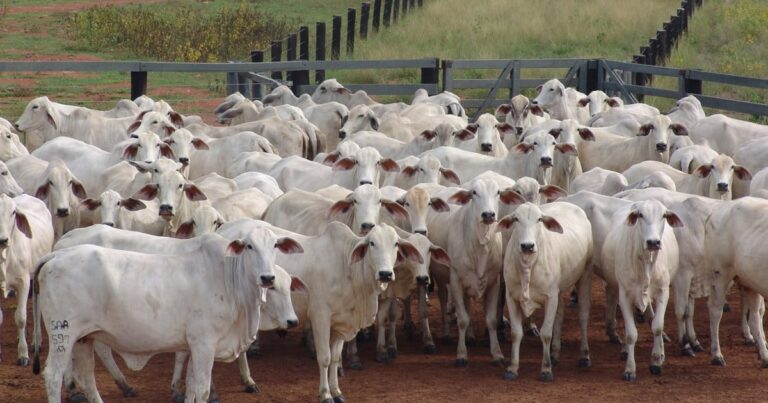](https://interfaithsustain.com/what-causes-deforestation/)
## [The Causes of Deforestation and Its Global Consequences](https://interfaithsustain.com/what-causes-deforestation/)
- [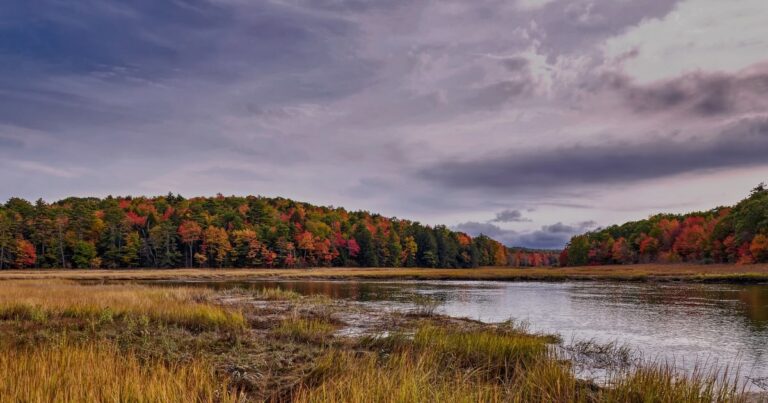](https://interfaithsustain.com/deforestation-solutions/)
## [Become An Advocate For The Solutions To Deforestation](https://interfaithsustain.com/deforestation-solutions/)
### Harvesting Trees
Then there are the benefits that trees provide when they are cut down or harvested. For example, the timber is made into wood products such as furniture, houses or paper products.
Once a tree has been cut down, that particular tree can not be reused. After all, it is no longer a tree. It is now a piece of wood, or a piece of paper. However, it can regrow by saving its seeds, using only a small part of the tree or the tree limbs or by leaving the mother plants intact. In this way, it can be said that trees are a renewable resource.
### Renewing a Tree
Trees as living things are renewed by growing from a seed into the towering green plants that are an essential part of our world. The growth rate, however, depends on the amount of rain, the amount of sunlight, good soil and other elements coming together. Some trees take many years to grow while others are just the opposite, shooting up towards the sun in a matter of months.
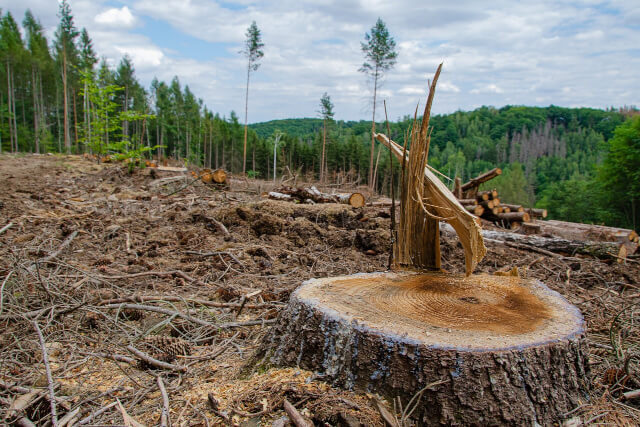[Source](https://unsplash.com/@royaannmiller/ "Source")
“Biomass” is another way that trees contribute to renewable energy. This is when wood waste – for example, parts of trees such as the bark, branches, or sawdust shavings can be used to fuel carbon-neutral electricity. This is another way that trees are a renewable resource.
However, if new trees are not planted to replace those that have been harvested, then a tree [has become a fossil fuel](https://www.nrdc.org/resources/our-forests-arent-fuel) – and in fact: “because wood is a less energy-dense fuel, biomass-burning plants emit more CO2 from their smokestacks than coal to generate the same amount of electricity”.
### Seeing The Forest For The Trees
While trees as individuals may be renewable resources, as groups – in forests or woods – care must be taken to ensure they are sustainable and can be conserved so as to continue to help to balance the planet’s elements and continue to be a valuable resource.
#### Forest Products
Forests are harvested through logging, for the organic material that trees produce. The wood provides timber for many forest products, examples of which are wood for furniture, poles, packaging, paper products from wood pulp, and other materials.
However, forests are often destroyed because of the space it creates: for example, commercial farmers and companies are taking down trees to create grazing areas for animals – particularly to grow beef cattle which will eventually end up as hamburgers on a plate.
In the Amazon and other developing areas, [another type of destruction is taking place](https://www.coolgeography.co.uk/gcsen/Amazon_Case_study.php), albeit at a slower rate than beef farmers. This is known as subsistence farming, and “is where poor farmers occupy plots of the forest to grow food to feed themselves and their families. They clear forest and then burn it, hence the name slash and burn. They grow crops until the soil is exhausted and then move on”.
#### Deforestation and Damage
In our unending search for more energy and more things, we are destroying forests at a rate that makes it difficult for them to be naturally replaced. In addition, when wood and other by products of trees are burnt, this causes further imbalance by releasing carbon into the air instead of the trees’ oxygen. Global warming and climate change is a result of such global-scale deforestation.
In the place where the forest once stood, soil is now eroded and the topsoil is washed away in floods as there are no trees any longer to hold the soil in place. Trees as fossil fuels provide energy which is an integral part of the modern technological world, but at a cost that is not renewable.
#### How Can We Renew Forests?
If we do not deal with the loss of our rainforests, by reforestation, trees will rapidly become a nonrenewable resource. Planting trees is essential to make forests renewable!
New forests must be planted, and existing ones must be managed sustainably. Sustainable forestry means harvesting trees [in a way ](https://localtreeestimates.com/are-trees-a-renewable-resource/)that allows the forest as a whole to remain intact: “The wider availability of sustainably grown and harvested biomass could help move consumers away from non-renewable energy sources like oil all the sooner”.
[Source](https://unsplash.com/@raynertulus/ "Source")
Forest products are regulated and certified, [where owners](https://www.forestfoundation.org/how-we-do-it/tools-and-support-for-landowners/) “adhere to sustainable forest management practices that ensure the provision of wood supplies, wildlife habitat, recreational opportunities and clean water.” Sustainable forestry means that the trees are used sustainably, are not used as fossil fuel, and therefore can continue to be a renewable resource.
In this way we can maintain the balance of the world and it is in our best interest – as all oxygen-breathers – to do so.
## Trees and Religion
Trees play a major role in almost every religion, perhaps because trees play a major role in life. Without trees there would be no life. Trees are the air we breathe.
It is difficult for a religious person to look at a tree and not be in awe at God’s Creation. Here is a fantastic excerpt from [Eco Bible](https://www.amazon.com/dp/1735338842?psc=1&smid=ATVPDKIKX0DER&ref_=chk_typ_imgToDp) that discusses the importance of trees in the Bible and in life:
*Leviticus 27:30 – All tithes from the land, whether seed from the ground or fruit from the tree, are the Lord’s; they are holy to the Lord.*
Why are the “fruits” of trees, both physical and metaphorical, holy to God? It’s not just their fruit that we cherish. In the words of Rabbi Matis Weinberg (2000): If we did not have the development of an earth with trees, then we simply would not be here. There’s no way we can translate the sun’s energy into life and there is no way that we can have the oxygen that we need to live without trees. The earth, as our environment, is maintained because of trees – they are basic fuel, basic shelter, basic food, and air. If that’s the case, then it makes a lot of sense that when God originally creates the world, [the first thing He does when He has a world is plant trees.](https://www.thelivingtree.org/media-file/?file=audio/pdf/spiral/tubshevatspiral.pdf)
Another statement in the Bible [discusses the prohibition of destroying trees needlessly](https://interfaithsustain.com/deuteronomy-20/), even if one needs the wood – a command that we can heed today.
It’s up to us to protect our trees for the sake of future generations. Trees can be a renewable resource, but only if we give them the chance to grow and reproduce. It’s up to us [to make the choice](https://interfaithsustain.com/1-billion-cars-vs-1-billion-trees-you-decide/) – and make our world greener than ever!
*\* Featured image [source](https://unsplash.com/@xamh/ "source")*
**Categories:** Blog on Faith and Ecology, Renewable Energy
**Tags:** Renewable Energy, Trees
---
### [Mankind Must Switch to Perpetual Resources](https://interfaithsustain.com/perpetual-resources/)
**Published:** February 18, 2022
**Author:** ICSD
**Excerpt:** Harry Cooper - In many religions and cultures, God is identified as energy: the wind, lightning, the sun and volcanoes. Indigenous people believe their is spiritual energy in water.
**Content:**
Table of Contents
Table of Contents
- [What Are Perpetual Resources?](#aioseo-what-are-perpetual-resources-3)
- [Using Perpetual Resources](#aioseo-using-perpetual-resources-7)
- [Examples Of Perpetual Resources](#aioseo-examples-of-perpetual-resources-11)
- [Solar Power](#aioseo-solar-power-14)
- [Wind Power](#aioseo-wind-power-17)
- [Geothermal Energy](#aioseo-geothermal-energy-24)
*By Harry Cooper* – In many religions and cultures, God is identified as energy: the wind, lightning, the sun and volcanoes. Indigenous people believe their is spiritual energy in water. The Egyptians and Greeks worshiped the sun, as do Hindus today in their yearly Chhath Puja festival. In Chinese Taoism, Qi energy flows throughout nature. Religions show humanity that God given energies are the ones humanity should use as they are holy and perpetual resources.
People have been talking about the switch from [non-renewable resources](https://interfaithsustain.com/renewable-and-non-renewable-resources/ "non-renewable resources") to renewable resources for years now. Nonrenewable resources, such as oil or coal, will run out, and then the people who relied on them, as well as the planet, will be in trouble.
## What Are Perpetual Resources?
[Renewable resources](https://interfaithsustain.com/energy-conversion/ "Renewable resources") solve this problem by being assets that we can rely on consistently now, and in the future. However, renewable resources are just that, renewable. These resources have to be used at a rate slower than they can renew themselves or they too will be exhausted, and as our population and demand for resources grows every day, more and more resources that normally regenerate are being extorted and depleted. Enter the perpetual resources. **Perpetual resources** are a separate class of natural renewable resources that include any resource that can be used seemingly indefinitely, such as solar, wind, or geothermal.
## Using Perpetual Resources
Humanity currently relies heavily on nonrenewable fossil fuels that create [harmful greenhouse gasses](https://interfaithsustain.com/evidence-of-climate-change/ "harmful greenhouse gasses") to power our planet. However with perpetual resources, we could have endless energy, if we used them properly.
However, there are still some [hurdles](https://economicpoint.com/perpetual-resources) in using perpetual resources to their full extent. Using any kind of resource requires investing in and building infrastructure in order to harness the energy, such as wind farms and solar panels. This infrastructure requires lots of money and resources. Along with this, we may not have the technology to harness certain perpetual resources efficiently yet.
Thus, even though perpetual resources can provide a great alternative to the current way we produce electricity and energy, we still have to make sure we use them in an efficient way.
## Examples Of Perpetual Resources
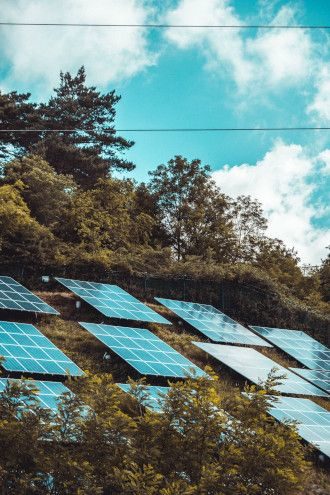[Source](https://unsplash.com/@moritz_photography/ "Source")
### Solar Power
The sun is one of our most prominent natural resources available to us; it is estimated that the amount of sunlight that hits the surface of the Earth in an [hour and a half](https://economicpoint.com/perpetual-resources) would be enough to fulfil our energy consumption for a full year. Solar energy can already be used to generate electricity through a solar panel, which harnesses the suns energy and stores it in a battery as electricity.
Solar power is an incredibly [beneficial](https://www.energy.gov/energysaver/benefits-residential-solar-electricity) source of energy. Not only does solar energy produce no greenhouse gas emissions, but it is also more economically beneficial. Installing solar panels on homes and businesses provide incredible returns on investments and raises property values, as they are a free and endless source of energy. However, solar energy does have some [short comings](https://www.sepco-solarlighting.com/blog/solar-power-advantages-and-disadvantages): while solar panels are cost efficient over time, they are expensive to build and install initially. Along with this, the amount of energy they produce can vary depending on the weather, season, or location, making them less reliable.
- [](https://interfaithsustain.com/renewable-and-non-renewable-resources/)
## [Renewable and Non-Renewable Resources: Let’s Take A Deeper Dive](https://interfaithsustain.com/renewable-and-non-renewable-resources/)
- [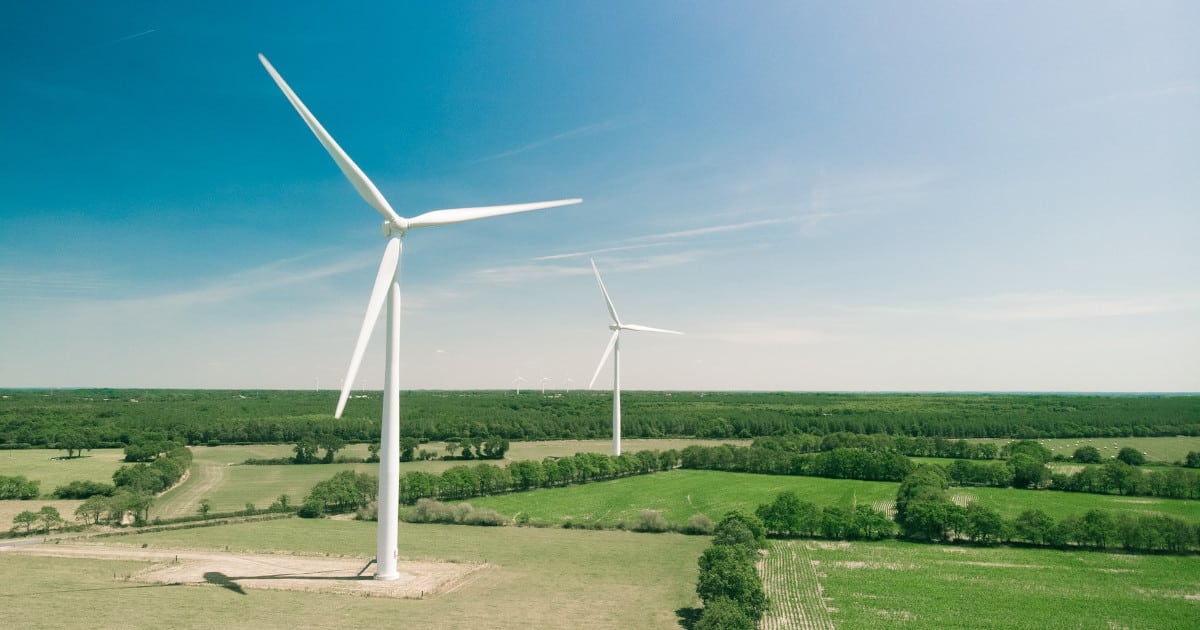](https://interfaithsustain.com/wind-energy-pros-and-cons/)
## [Wind energy pros and cons: A Deeper Look](https://interfaithsustain.com/wind-energy-pros-and-cons/)
- [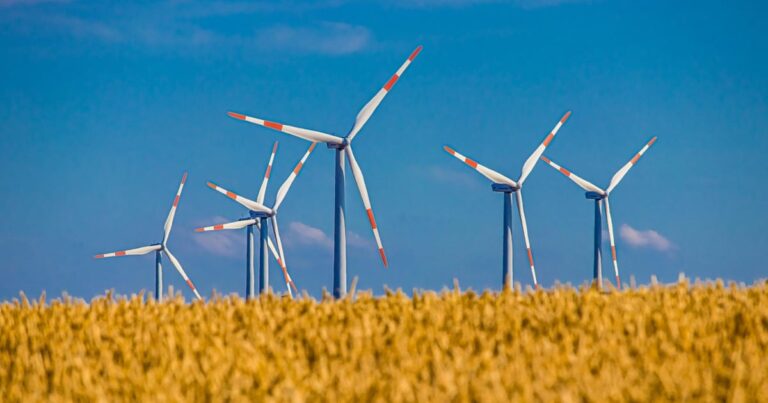](https://interfaithsustain.com/how-does-wind-energy-work/)
## [Understanding Wind Energy and Wind Turbines](https://interfaithsustain.com/how-does-wind-energy-work/)
### Wind Power
Strong [winds](https://www.irena.org/wind) can be found all over the world. Wind power is harnessed through the use of wind turbines. When wind blows, the turbine harnesses the kinetic energy created by the wind and uses it to power a generator that creates an electric current.
Wind energy has numerous benefits, making it one of the [fastest growing](https://www.energy.gov/eere/wind/advantages-and-challenges-wind-energy) energy sources in the world. Not only is wind sustainable and cost effective because of it being perpetual, but it has also created jobs and can be built on existing ranch land. One big disadvantage of wind as a resource is that wind turbines need to be built in locations with lots of wind which can often be remote and and hard to get to, making usable land for wind farming limited even when using preexisting ranch land. One solution people have found for this is investing in [offshore wind farming](https://www.iberdrola.com/sustainability/how-does-offshore-wind-energy-work), which makes use of the powerful winds on the high seas to power wind turbines.
[Source](https://pixabay.com/users/orange31-11320226/ "Source")
#### Geothermal Energy
The center of the Earth is estimated to be just as hot as [the surface of the sun](https://www.eia.gov/energyexplained/geothermal/), and some of this energy can be found beneath our feet in the Earth’s crust. Geothermal energy works by extracting materials super heated by the Earth’s natural energy, and using it to boil water to create steam to turn turbines, and create energy.
Geothermal is [one of the most untapped](https://www.twi-global.com/technical-knowledge/faqs/geothermal-energy/pros-and-cons#WhataretheAdvantagesofUsingGeothermal) perpetual resources; scientists have identified many wells of geothermal power that are waiting to be tapped into. However, while geothermal is a clean energy source that has yet to provide humanity with its full potential as an endless source of energy, it has faced some criticism, as the process of extracting materials heated by the Earth’s core has been shown to cause earthquakes.
[Source](https://pixabay.com/users/wikiimages-1897/ "Source")
*\* Featured image [source](https://pixabay.com/users/jwigley-895310/ "source")*
**Categories:** Blog on Faith and Ecology, Renewable Energy
**Tags:** Renewable Energy
---
### [Renewable and Non-Renewable Resources: Let's Take A Deeper Dive](https://interfaithsustain.com/renewable-and-non-renewable-resources/)
**Published:** June 4, 2021
**Author:** ICSD
**Excerpt:** Elisheva Malomet - We utilize earth’s resources in almost every aspect of our lives. This includes renewable and non-renewable resources used to produce energy, generate electricity, enable transportation, and also use resources for agricultural production.
**Content:**
Table of Contents
Table of Contents
- [Natural Resources, Renewable or Non-Renewable?](#aioseo-natural-resources-renewable-or-non-renewable-5)
- [Nonrenewable resources](#aioseo-nonrenewable-resources-8)
- [Coal – Nonrenewable](#aioseo-coal-nonrenewable-12)
- [Gas and Oil – Nonrenewable](#aioseo-gas-and-oil-nonrenewable-18)
- [Steel and Aluminum – Nonrenewable](#aioseo-steel-and-aluminum-nonrenewable-21)
- [Rare Earth Metals – Nonrenewable](#aioseo-rare-earth-metals-nonrenewable-24)
- [Phosphates – Nonrenewable](#aioseo-phosphates-nonrenewable-27)
- [Renewable Resources](#aioseo-renewable-resources-30)
- [Solar Energy – Renewable](#aioseo-solar-energy-renewable-35)
- [Wind – Renewable](#aioseo-wind-renewable-38)
- [Hydroelectric Power – Renewable](#aioseo-hydroelectric-power-renewable-40)
- [Compost – Renewable](#aioseo-compost-renewable-43)
- [The Bible and The Non renewable](#aioseo-the-bible-and-the-non-renewable-49)
*By Elisheva Malomet* – We utilize earth’s resources in almost every aspect of our lives. This includes renewable and non-renewable resources used to produce energy, generate electricity, enable transportation, and also use resources for agricultural production.
The pure magic of electricity, modern electronics, and general consumption is lost on us because of the concealment of this power by the simplicity of the flip of a switch.
While electricity and therefore energy is extremely accessible to many people in the modern world, **we are currently depleting nonrenewable resources at drastic rates.**
However, not all earth’s resources are finite. If we shift our focus to renewable resources that are infinite, we will harness a more sustainable future for the planet.
## Natural Resources, Renewable or Non-Renewable?
Let’s understand what kind of resources we are using during our daily lives. We will explore nonrenewable resources; what they are and **how they are dangerous**, and explore the solutions that come from renewable and nondepletable resources.
Firstly, an important distinction should be made: natural resources, including [fossil fuels](https://interfaithsustain.com/environmental-degradation-and-the-future-of-our-planet-earth/) like coal and natural gas, are resources that come from the earth. This **does not mean that they are renewable**, and in fact many of them are nonrenewable.
- [](https://interfaithsustain.com/tidal-energy/)
## [Tidal Energy As A Potential Energy Source](https://interfaithsustain.com/tidal-energy/)
- [](https://interfaithsustain.com/solar-and-wind-energy/)
## [Understanding the Importance of Solar and Wind Energy in Today’s World](https://interfaithsustain.com/solar-and-wind-energy/)
- [](https://interfaithsustain.com/is-nuclear-energy-renewable/)
## [A Controversial Energy Source: Is Nuclear Energy Renewable?](https://interfaithsustain.com/is-nuclear-energy-renewable/)
## Nonrenewable resources
Energy is the main way we interact with nonrenewable resources. Non-renewable energy sources include fossil fuels such as coal and natural gas. Additionally, nonrenewable resources appear in our manufacturing tools and our electronics in the form of steel, aluminum, phosphates, and rare earth metals. All of these resources are **nonrenewable because when they are used their source diminishes.**
### Coal – Nonrenewable
Coal, a fossil fuel, is one of the prevailing nonrenewable energy resources that we use and abuse. Coal is formed primarily from the remains of trees and plant materials that were preserved up to 360 million years ago. Most electricity generation in the world today is fueled by coal, especially in China. Coal is also seemingly plentiful, as the [U.S. Energy Information Association notes](https://www.eia.gov/energyexplained/coal/how-much-coal-is-left.php).
[Source](https://pixabay.com/vectors/power-station-current-the-industry-3664263/)
**The negative environmental impacts of** [**coal**](https://www.nationalgeographic.org/encyclopedia/coal/) **are extremely significant.** The mining process of coal on the earth’s surface has a devastating effect on the earth’s landscape, specifically when utilizing the mountaintop removal technique. This type of coal acquisition destroys the ecosystems of mountains and leads to erosion and horrible runoff which enters the freshwater supplies in the area.
The burning and combustion of coal are also problematic. This process releases greenhouse gases into the atmosphere, contributing to toxic [air pollution](https://interfaithsustain.com/air-pollution-solutions/) and [climate change](https://interfaithsustain.com/evidence-of-climate-change/).
### Gas and Oil – Nonrenewable
Gas and oil are nonrenewable energy fuels that also function as main energy resources. Most of the world’s car, trucks, and planes use petroleum as fuel. Petroleum is formed from the remains of ocean-dwelling phytoplankton that died approximately 150 million years ago. Natural gas is found as a component of petroleum, as well as in gaseous deposits separate from petroleum.
Both of these energy sources release carbon dioxide into the atmosphere and natural gas also releases methane due to leaks in the process of extracting it. The extraction of oil fuel has caused major damage to marine ecosystems from oil rig malfunctions and spills in our oceans and from runoff caused by extraction on land.
### Steel and Aluminum – Nonrenewable
Steel and aluminum are metals that are extracted from the earth and are nonrenewable. These resources are part of our daily lives, whether they make up our appliances or manufacturing equipment or enable the agricultural processes that feed our planet to work.
Aluminum and iron ore, a main component of steel, are acquired from open-pit mining which is detrimental to the earth and ecosystems, resulting in pollutant-filled runoff and climate problems.
### Rare Earth Metals – Nonrenewable
The extraction of rare earth metals is complicated as these elemental structures are connected with other minerals. Rare earth metals are an important nonrenewable resource that is an essential component in all our electronic and high-tech devices.
The extraction of these rare earth metals from the earth is harmful to our environment and our extreme dependence on them as nonrenewable resources is a cause for concern. **It is time to start studying and exploring renewable solutions to create our high-tech gadgets.**
### Phosphates – Nonrenewable
Phosphates, which come from the element phosphorus, are an extremely important resource in our daily lives. This resource is so important in conventional agriculture, much of farming and cultivating is actually dependent on phosphates in fertilizer to feed our plants and animals.
Phosphates are mined from minerals inside of the earth and refined and purified for its application in many widespread products. However, continued massive extraction of this nonrenewable resource is not sustainable, as [Julia Rosen notes in The Atlantic](https://www.theatlantic.com/science/archive/2021/02/phosphorus-pollution-fertilizer/617937/).
## Renewable Resources
Alas, there are renewable solutions that cause exponentially less harm to the environment and could enable a cleaner future. We are able to harness energy that fuels our environment with renewable resources and methods.
**Renewable resources, such as solar and wind, [will never run out](https://interfaithsustain.com/perpetual-resources/ "will never run out")**. These resources are preferable because we know their supply will not diminish. Whether they are used in the creation of tools or agricultural practices, to generate electricity or [build buildings](https://interfaithsustain.com/sustainable-building-materials/ "build buildings"), they do not harm the environment.
### Solar Energy – Renewable
**The sun is a phenomenal source of energy that is nondepletable.** The creation of photovoltaic solar cells, solar panels, does require non renewable energy and creates carbon dioxide and fossil fuel emissions.
[Source](https://pixabay.com/users/openclipart-vectors-30363/)
After the installation of solar panels, there is no harmful by-product in harnessing solar energy. Solar panels use the sun’s rays and energy and convert it into an electrical current that is fit for our light switches and charging our devices.
### Wind – Renewable
The wind is a nondepletable and renewable resource. Harnessing wind energy requires turbines that harness wind energy when they are turned by the wind. These turbines do create noise and are geographically limited based on their size and the wind that is generated in certain areas. Like solar, wind energy has the capacity to covert and power the electric systems in our homes.
[Source](https://pixabay.com/users/openclipart-vectors-30363/)
#### Hydroelectric Power – Renewable
[Hydroelectric energy ](https://www.usgs.gov/special-topic/water-science-school/science/hydroelectric-power-how-it-works?qt-science_center_objects=0#qt-science_center_objects)is renewable and helps flood control in certain areas. Its production uses gravity and water to turn the turbines that produce energy. This process is much like how energy is produced in nonrenewable power plants.
Major downsides of hydroelectric dams included ecosystem loss by flooding large tracts of land, and decline in fish species due to rivers impassable for fish. In the U.S., hydroelectric dams are being dismantled to restore ecosystems.
#### Compost – Renewable
It is important to recognize the significant changes that are within our reach for renewable resources without changing the entire energy and electrical system. [Compost](https://interfaithsustain.com/benefits-of-composting-ancient-civilizations-to-todays-technology/) is a renewable resource that we can create out of what would otherwise be thrown in the garbage.
Our food consumption and waste is a resource we should not take for granted, especially when comparing the helpful effects of our composting with the harmful ones of phosphorus mining. Try using compost as your main fertilizer source rather than phosphorus-rich fertilizers.
### The Bible and The Non renewable
Some religious people believe that there is no such thing as non renewable resources, since God is Infinite and God created this world. However, other religious people understand that God created a finite world, and placed people on it ‘to serve it and conserve it’ (Genesis chapter 2, verse 15). **The fact that resources are limited means that people need to use them only for wise use.**
Rabbi Samson Raphael Hirsch explains in very strong language that the Bible’s instruction in Deuteronomy chapter 20 verse 19 not to destroy fruit trees is part of a broader principle.
Indeed, it is “the most comprehensive warning to human beings not to misuse the position which God has given them as masters of the world and its matter through capricious, passionate, or merely thoughtless wasteful destruction of anything on earth.”
He further states, “If … you should regard the beings beneath you as objects without rights, not perceiving God Who created them … then God’s call proclaims to you, ‘Do not destroy anything!’ Be a good person! Only if you use the things around you for wise human purposes, sanctified by the word of My teaching, only then are you a good person …
However, if you destroy, if you ruin, at that moment you are not a human…and have no right to the things around you. I lent them to you for wise use only; never forget that I lent them to you.”
In many cases, we can choose whether to use renewable or non renewable resources. Knowing that **the same system and technology can be used but produced by less harmful resources and with a less damaging effect** on the environment should compel us to use and choose renewable solutions and [reduce our use of non-renewable resources](https://interfaithsustain.com/how-to-reduce/ "reduce our use of non-renewable resources").
*\* Featured image [source](https://pixabay.com/users/geralt-9301/)*
**Categories:** Blog on Faith and Ecology, Renewable Energy
**Tags:** Non-renewable Resources, Renewable Resources
---
### [Can "Clean Coal" Be Considered Clean Energy or An Oxymoron?](https://interfaithsustain.com/clean-coal/)
**Published:** August 17, 2022
**Author:** ICSD
**Excerpt:** Ethel Mendius - Coal played an essential role in the industrial revolution. It is the most abundant fossil fuel and a source of heat and power generation that dates back millennia. However, burning coal causes air pollution and climate change.
**Content:**
Table of Contents
Table of Contents
- [The History Of Clean Coal](#aioseo-the-history-of-clean-coal-4)
- [Clean Coal Today](#aioseo-clean-coal-today-13)
- [Clean Coal: Carbon Capture & Storage](#aioseo-clean-coal-carbon-capture-storage-16)
- [The Clean Coal Power Initiative](#aioseo-the-clean-coal-power-initiative-28)
- [The Cost of Carbon Capture](#aioseo-the-cost-of-carbon-capture-37)
- [Continued support for clean coal](#aioseo-continued-support-for-clean-coal-41)
- [Clean Energy](#aioseo-clean-energy-46)
- [Lifestyle Changes](#aioseo-lifestyle-changes-51)
- [Clean Coal And Religion](#aioseo-clean-coal-and-religion-55)
*By Ethel Mendius* – Coal played an essential role in the **industrial revolution**. It is the most abundant fossil fuel and a source of heat and power generation that dates back millennia. However, burning coal causes air pollution and climate change.
Policy makers and industry specialists have turned their attention towards mitigating the environmental effects of **burning coal**. The U.S. government and private firms have invested billions in so-called **clean coal plants** using an approach called **carbon capture**. Most of these new coal plants, including one in [Alabama](https://www.al.com/news/2017/06/southern_co_suspends_kemper.html) that cost $7.5 billion, have stalled.
With **coal production** reaching an [all-time high in 2022,](https://electrek.co/2021/12/17/coal-production-will-rise-to-its-highest-ever-levels-in-2022-says-iea/) there is a mounting demand for **clean coal technologies**. However, the results we have seen so far cast doubts that we can make coal clean enough to justify its use.
## The History Of Clean Coal
“**Clean coal**” has become a catch-all phrase encompassing several different initiatives. To make sense of clean coal, we must determine what its proponents are seeking to achieve.
The environmental impact of coal burning power plants has been scrutinized for [decades](https://www.factcheck.org/2018/11/clearing-up-the-facts-behind-trumps-clean-coal-catchphrase/). In the 1980s, when acid rain was a major concern, the Department of Energy launched its Clean Coal program to prevent coal combustion from producing “acid-rain-causing chemicals such as sulfur dioxide and nitrogen oxides” using carbon scrubbers and catalytic converters.
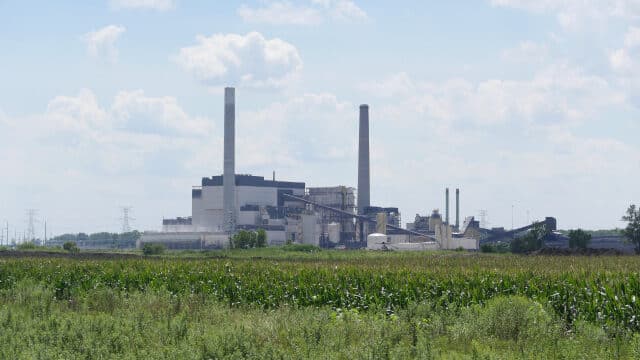[Source](https://pixabay.com/users/dnavarrojr-1496945/)
In the 1990s, coal power plants were linked to mercury emissions, which can “become a health hazard for humans and damage ecosystems and wildlife.” At this time, mercury emissions reduction became another marker of cleaner coal.
[Federal programs](https://www.reuters.com/investigates/special-report/usa-coal-pollution/) have often promoted a quick fix for these pollutants: make coal cleaner by refining it with chemicals. Despite billions of dollars of subsidies, research has shown that these efforts have not been effective at reducing pollution, least of all for its contribution to carbon emissions, which accelerate global warming.
## Clean Coal Today
[In 2009](https://www.factcheck.org/2018/11/clearing-up-the-facts-behind-trumps-clean-coal-catchphrase/), the EPA formally recognized carbon dioxide as a pollutant. Julio Friedmann, a senior research scholar at Columbia University’s Center on Global Energy Policy, argues that “coal cannot be clean unless it controls carbon dioxide emissions as well.”
In light of the climate crisis, “clean coal” must signify coal plants that both do not contribute to air pollution (be it sulfur dioxide, nitrogen oxide, or mercury) and whose carbon emissions are neutralized or offset.
### Clean Coal: Carbon Capture & Storage
[Carbon capture](https://www.c2es.org/content/carbon-capture/) and storage, the preeminent clean coal technology, has been promoted by government and industry alike as a solution for coal fired plants to reduce their emissions. According to the Center for Climate and Energy Solutions, “carbon capture, use, and storage technologies can capture more than 90 percent of carbon dioxide emissions from power plants and industrial facilities.”
[Source](https://unsplash.com/@the_philpott)
**Carbon capture** requires an overhaul of existing coal plants: “current systems must be redesigned to capture and concentrate carbon dioxide” either before or after combustion, using technologies that can isolate carbon dioxide. After this process, the carbon dioxide must be stored, usually “injected into geological formations and stored deep underground.”
Carbon capture has been lauded as having “the potential to help achieve [global net zero](https://www.bsr.org/en/emerging-issues/carbon-captures-net-zero-promise) by 2050 and even to mitigate job loss in high-emission industries”, so it is an attractive solution to the environmental harms of the coal industry. However, while small-scale plants show promise, “carbon capture, utilizations and storage at scale remains largely unproven.”
Widespread implementation is challenging and often cost-prohibitive. The International Energy Agency [affirmed](https://world-nuclear.org/information-library/energy-and-the-environment/clean-coal-technologies.aspx) in a report that “carbon capture and storage is advancing slowly, due to high costs and lack of political and financial commitment”, but little else besides carbon capture systems could effectively reduce our emissions.
The IEA makes reference to another technology associated with clean coal, specifically supercritical and ultra-supercritical coal fired power plants, also known as “high-efficiency low-emissions” plants. Unfortunately, these coal plants have only been shown to reduce emissions by 25%.
When proposing alternatives to carbon capture, organizations must remember the ultimate goal of clean coal is to integrate the coal industry into a framework of sustainable development and not merely to mitigate its worst harms. If industrial society wants to continue to rely on coal for power generation and for jobs, it will need to invest in the technology that makes coal plants compatible with sustainable development goals.
If these policies are not lucrative enough to draw support from investors alone, it will make sense for governments to facilitate them. However, what we have seen so far casts doubts on the advisability of funding clean coal projects altogether.
### The Clean Coal Power Initiative
The [U.S. Department of Energy](https://www.energy.gov/fecm/clean-coal-power-initiative-round-iii) initiated its third Clean Coal Power Initiative in 2009. Since then, they have invested almost a billion dollars into carbon capture systems, taken in part from the American Recovery and Reinvestment Act combined with private capital.
Their goal was to “make progress toward a target CO2 capture efficiency of 90 percent” through projects all around the country. This Clean Coal Power Initiative has fallen short by several measures.
[Source](https://unsplash.com/@tobiastu)
In a 2021 study, the [U.S. Government Accountability Office](https://www.gao.gov/products/gao-22-105111) surveyed $1.1 billion of government dollars, including funds from the American Recovery and Reinvestment Act, invested in carbon capture since 2009. They found that $684 million was invested into eight coal projects but resulted in only one operating facility.
These failings were chiefly due to economic reasons “including decreased natural gas prices and uncertainty regarding carbon markets” that rendered their goals impractical. Lack of cost control within the Department of Energy resulted in an expenditure of $472 million—almost $300 million more than planned—on unfinished projects.
- [](https://interfaithsustain.com/diy-wind-turbine/)
## [The Global And Individual Benefits of A DIY Wind Turbine](https://interfaithsustain.com/diy-wind-turbine/)
- [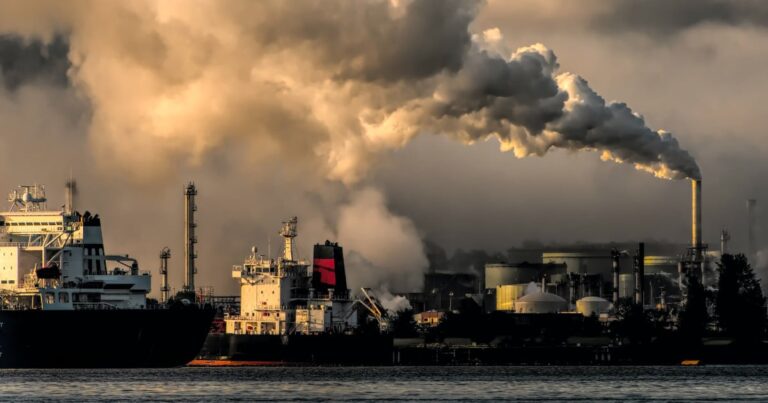](https://interfaithsustain.com/environmental-progress-sustainable-energy/)
## [Environmental Progress & Sustainable Energy](https://interfaithsustain.com/environmental-progress-sustainable-energy/)
- [](https://interfaithsustain.com/wind-energy-pros-and-cons/)
## [Wind energy pros and cons: A Deeper Look](https://interfaithsustain.com/wind-energy-pros-and-cons/)
### The Cost of Carbon Capture
The [Southern Company power plant](https://www.al.com/news/2017/06/southern_co_suspends_kemper.html) in Alabama is one example of the Clean Coal Power Initiative going awry due to setbacks that undermine its economic viability. This site was intended as “a model for coal’s future” and was funded with $2.9 billion to build the plant.
In reality, $7.5 billion was spent on the plant with production “more than three years behind schedule.” Eventually, the Southern Company executives decided to cut their losses and convert the plant to run on natural gas, another fossil fuel.
For many energy specialists, these examples are a nail in the coffin for clean coal technology, which is simply too expensive. Private investors and shareholders are now turning away from these projects. Kelley Williams, chairman of a free-market economics group, explains that “It’s hard to make any investment in cleaning up coal, when you’re looking at natural gas as an alternative.” Without the support of the private sector, it is wasteful for the government to keep spending on clean coal.
#### Continued support for clean coal
Despite these results, carbon capture and storage continues to receive bipartisan support in the U.S. [In November 2021](https://www.theverge.com/2021/12/30/22860207/carbon-capture-coal-plants-wasted-federal-dollars-watchdog-gao), Congress passed an infrastructure bill including $2.5 billion for carbon capture and storage demonstration projects and $6 billion for other large scale carbon capture projects.
This bill marks “the largest investment in carbon capture and storage in the history of the technology”. The Department of Energy defends their projects on the basis that “globally many new coal power plants will continue to be built in coming decades” and therefore carbon capture and storage is “an essential mitigation option.”
Environmental advocates such as Adrien Salazar, policy director at the nonprofit Grassroots Global Justice Alliance, see these federal investments as [greenwashing](https://interfaithsustain.com/plant-based-plastic/): “they are simply fossil fuel subsidies by another name.” He argues that we should stop deploying billions of dollars “to prop up the industries responsible for the climate crisis through fantasy technologies” such as carbon capture and storage.
Ironically, in one respect Salazar’s position aligns with those in the energy industry, such as the Southern Company shareholders; both see clean coal as a poor investment.
## Clean Energy
At the very least, these attempts demonstrate that clean coal is an unwise use of taxpayer dollars. In the bigger picture, the transition away from coal, clean or otherwise, is part of the broader process of “[decarbonization,](https://interfaithsustain.com/decarbonization/) or making our world less centered around carbon emitting technology,” a necessary step for the conservation of our planet.
Decarbonization requires an overhaul of reliance on fossil energy in favor of clean, renewable alternatives. [Solar and wind power](https://interfaithsustain.com/solar-and-wind-energy/) are economically sustainable and the fast-growing sources of **clean energy**.
These “cleaner, more efficient” energy sources are cheap to construct and maintain, and would be even cheaper with greater government support and [fewer subsidies](https://www.nature.com/articles/d41586-021-02847-2) for fossil energy, which pose a massive barrier to decarbonization. A 2020 report by the The International Renewable Energy Agency found that of $634 billion in energy sector subsidies in 2020, 70% went to fossil fuels, and only 20% went to renewables.
The rationale behind government subsidies are “often intertwined with its industrial policies.” If we could reconcile the priorities of our government with the necessities of the planet, clean energy would be easier to achieve.
## Lifestyle Changes
The overhaul of our current energy system is no small task. An IEA report on the global net zero goal acknowledges that “a transition of such scale and speed cannot be achieved without sustained support and participation from citizens, whose lives will be affected in multiple ways.”
Today’s societies are addicted to fossil fuels, and this is not only the industrial sector and its employees. Anytime we fill up our gas tanks or even come into contact with disposable plastics, we are demonstrating our direct and personal relationship with fossil energy.
As we rethink our energy sources, it is also worth pondering how our species developed a reliance on energy source that could in our lifetimes lead to the global temperature rising 1.5 °C (or 2.7 °F) from pre-industrial times. Our individual reflections will not directly influence this figure, but they may help as we align ourselves with policies to combat it.
## Clean Coal And Religion
In light of the major impacts of burning coal like air pollution and climate change, many religious leaders recognize the importance of keeping coal in the ground and transitioning away from burning coal.
An article for [Politico](https://www.politico.eu/article/sinful-coal-a-problem-for-the-religious-pole/) discusses how Pope Francis’ encyclical “[Laudato Si](https://www.vatican.va/content/francesco/en/encyclicals/documents/papa-francesco_20150524_enciclica-laudato-si.html)” is creating tension for religious Catholics who also highly value using coal for fuel. Pope Francis comes out strongly against coal in Laudato Si, describing how “technology based on the use of highly polluting fossil fuels – especially coal, but also oil and, to a lesser degree, gas – needs to be progressively replaced without delay.”
The Politico article details how Pope Francis’ Laudato Si was viewed by Poles as “an ‘anti-Polish’ encyclical” according to Poland’s [Rzeczpospolita](https://www4.rp.pl/artykul/1208467-Papiez-Franciszek-kontra-wegiel--A-Polska-ma-klopot.html) newspaper. This is no surprise, as Poland’s coal industry “employs about 100,000 people and generates almost 90 percent of its electricity.”
As we move into a more sustainable future, we need to recognize the extent to which sustainability itself is perceived as a highly political issue, with many people afraid of losing their jobs or afraid of their country being harmed because of their economic dependence on fossil fuels.
But if we stop fighting against coal because of short term concerns, the long term consequences can be catastrophic. According to [Thea Ormerod](https://www.theguardian.com/environment/planet-oz/2014/dec/05/gods-and-faith-versus-coal-in-name-of-climate-change), the chair of the Australian Religious Response to Climate Change (ARRCC):
> Our conviction has been growing that the greatest damage Australia is doing to global climate systems is through our coal and gas exports.
>
> That Australia continues with expansionary plans amounts to willful neglect of our collective moral responsibility. Thus, our resistance must continue. What is at stake is, firstly, the life chances of those in developing countries at the front line of climate impacts and secondly, humanity’s long-term survival. Other species with which we share this planet are also under threat.
Can we ensure good jobs and a flourishing planet Earth? At ICSD, we say yes. May God help us to work together to find sustainable solutions that help us flourish in both the short term and for many generations to come.
*\* Featured image [source](https://pixabay.com/users/stevepb-282134/)*
**Categories:** Blog on Faith and Ecology, Renewable Energy
**Tags:** Coal
---
### [A Controversial Energy Source: Is Nuclear Energy Renewable?](https://interfaithsustain.com/is-nuclear-energy-renewable/)
**Published:** July 6, 2022
**Author:** ICSD
**Excerpt:** Harry Cooper - Climate change has made our planet drastically warmer. As a result, species are dying off, severe weather has increased, and sea levels are rising. The culprit is fossil fuels. By burning fossil fuels for energy, the human race has put itself and the entire Earth in a very tough situation.
**Content:**
Table of Contents
Table of Contents
- [Benefits of Nuclear Energy](#aioseo-benefits-of-nuclear-energy-5)
- [Is Nuclear Energy Renewable?](#aioseo-is-nuclear-energy-renewable-8)
- [Nuclear Fusion](#aioseo-nuclear-fusion-17)
- [Drawbacks of Nuclear Energy](#aioseo-drawbacks-of-nuclear-energy-20)
- [Nuclear Waste](#aioseo-nuclear-waste-22)
- [Nuclear Power Plant Disasters](#aioseo-nuclear-power-plant-disasters-30)
- [Chernobyl](#aioseo-chernobyl-33)
- [Nuclear Pollution in Ukraine Today](#aioseo-nuclear-pollution-in-ukraine-today-40)
- [The War Between Ukraine and Russia](#aioseo-the-war-between-ukraine-and-russia-42)
- [Containing a Meltdown](#aioseo-containing-a-meltdown-46)
- [Nuclear Energy and Religion](#aioseo-nuclear-energy-and-religion-49)
*By Harry Cooper* – Climate change has made our planet drastically warmer. As a result, species are dying off, severe weather has increased, and sea levels are rising. The culprit is fossil fuels. By burning fossil fuels for energy, the human race has put itself and the entire Earth in a very tough situation. The search for an alternative to fossil fuels has been an ongoing conversation for the past several decades. While many alternatives to burning oil and gas have presented themselves, one of these energy sources seems particularly promising, although it is not without controversy.
**Nuclear energy** is a form of energy that is produced from the breakdown of radioactive material. This process produces enormous amounts of energy. But one question we have to ask is, is nuclear energy [a renewable or nonrenewable resource](https://interfaithsustain.com/renewable-and-non-renewable-resources/ "renewable")?
In short, no, but the reality is a little more complicated than that. While not technically a renewable energy source, nuclear energy does have the capacity to last us a very long time. But beyond the question of renewable energy sources, there are a variety of other environmental impacts that come with using nuclear energy.
Not only do these **nuclear power plants** produce **radioactive waste**, but they also have the chance of melting down and creating widespread environmental devastation. The high risks posed by nuclear energy makes it incredibly unpredictable, and in an ever changing world with an increasing amount of nuclear energy, the future of energy, the environment, and humanity is just as uncertain.
## Benefits of Nuclear Energy
While [nuclear energy](https://www.energy.gov/ne/articles/3-reasons-why-nuclear-clean-and-sustainable) is a very controversial source of energy, there are some benefits to it that are hard to deny. One of the most important of those benefits is that it produces no carbon emissions. By producing no carbon emissions, nuclear power plants hardly contribute anything to climate change, while still being capable of producing a large amount of energy.
Along with this, nuclear energy takes up very little space compared to other clean energies such as wind power, solar power, and geothermal energy. Nuclear power plants are also capable of producing more energy than alternative clean energy sources. It is estimated that you would need 3 million solar panels or 430 wind turbines to produce energy at the same rate as a nuclear plant.
### Is Nuclear Energy Renewable?
As was mentioned earlier, nuclear energy is not technically renewable, but the reality of it is a bit more complicated. In order to fully understand just how long we could rely on nuclear energy, we have to look at the process of creating and harnessing nuclear energy.
Nuclear energy starts with an incredibly radioactive material called [uranium](https://www.inspirecleanenergy.com/blog/clean-energy-101/is-nuclear-energy-renewable). The uranium then undergoes a complex process called nuclear fission which involves splitting apart uranium atoms. This process causes the uranium to emit large quantities of heat. This heat generated by the nuclear fission is then used to boil water and create steam. The steam then goes on to power a turbine, generating electricity.
While the steam is capable of being reused, once the uranium is spent it must be disposed of. Since we don’t have an unlimited amount of uranium to be used for electricity generation, nuclear energy is therefore unrenewable.
[Source](https://pixabay.com/users/wikiimages-1897/)
- [](https://interfaithsustain.com/wind-energy-pros-and-cons/)
## [Wind energy pros and cons: A Deeper Look](https://interfaithsustain.com/wind-energy-pros-and-cons/)
- [](https://interfaithsustain.com/how-does-wind-energy-work/)
## [Understanding Wind Energy and Wind Turbines](https://interfaithsustain.com/how-does-wind-energy-work/)
- [](https://interfaithsustain.com/nuclear-pollution/)
## [The Effect of Nuclear Pollution on Our Health and Environment](https://interfaithsustain.com/nuclear-pollution/)
However, uranium is a fairly common material. On top of that, nuclear power generates so much electricity that it is unlikely that we would run out of uranium to power our homes and businesses anytime soon.
#### Nuclear Fusion
Another reason why many don’t consider it an issue that nuclear energy is technically not renewable is nuclear fusion. **Nuclear fusion** is a different method of extracting heat from uranium that relies on fusing atomic particles together rather than breaking them up. This process could be used to create much more energy that nuclear fission, and also produce less waste.
While this could make our uranium supplies much more profitable, fusion has actually yet to be invented. However many believe nuclear fusion could be a possibility within the next 5 to 20 years.
## Drawbacks of Nuclear Energy
Nuclear energy is a very viable source of energy that could serve as a replacement for fossil fuels and provide the world with energy for the foreseeable future. However, there are many other environmental issues associated with nuclear energy.
### Nuclear Waste
While nuclear energy doesn’t produce any greenhouse gases as a byproduct of making energy, it does generate a good amount of nuclear [waste](https://www.visionofearth.org/news/does-nuclear-waste-last-millions-of-years/) from spent uranium fuel. This radioactive waste can be very dangerous to humans when not disposed of properly.
Nuclear waste made from uranium has a half-life of 700 million years, meaning that it won’t stop being radioactive until very far into the future. After a few hundred years the danger is significantly decreased, but this does not stop the waste from posing a serious threat to human health.
Even as nuclear energy is just starting to become widespread, we have already built up [thousands](https://cen.acs.org/environment/pollution/nuclear-waste-pilesscientists-seek-best/98/i12) of tons of spent fuel and nuclear waste. Many different methods have been tried to find a way to store and dispose of all this nuclear waste; scientists have tried everything from putting it in glass to storing it in containers deep underground. But none of these methods have been able to find a permanent solution to disposing of our nuclear waste. As we continue to leave our spent fuel in storage we risk it leaking into the air and water and contaminating nearby environments.
[](https://unsplash.com/@romainchllet)[Source](https://unsplash.com/@romainchllet)
### Nuclear Power Plant Disasters
Another notable impact of nuclear energy are **nuclear power plant disasters**. These disasters occur when nuclear reactors get too [hot](https://www.fairewinds.org/what-is-a-meltdown) and can’t cool themselves down. When these reactors get too hot they become incredibly unstable and release massive amounts of radiation.
A relatively small number of these [meltdown](https://interfaithsustain.com/nuclear-pollution/) events have happened throughout history, but they are still something that should be taken very seriously. A disaster such as a nuclear meltdown can contaminate miles of land with nuclear pollution. This kind of event is catastrophic for the health of local communities, and the environment.
### Chernobyl
Arguably the worst and most notable of nuclear power plant meltdowns, is the [Chernobyl](https://www.britannica.com/explore/savingearth/chernobyl-disaster) power plant in modern day Ukraine that melted down in 1986. This disaster contaminated 1,600 square miles of land and left many dead. The meltdown started when a safety test went horribly wrong and triggered a chain reaction in the power plant’s reactor, causing several explosions. 30,000 people in the nearby town of Pripyat had to be evacuated, and contaminated winds blew radioactivity from the power plant all over Europe.
The amount of radiation released during the Chernobyl meltdown was exponentially higher than the radiation released by both atomic bombs dropped on Hiroshima and Nagasaki, and the Soviet Union was quick to attempt an ambitious cover up to downplay the accident. The Soviet Union puts the official death tole of Chernobyl at 31 people. However the Union of Concerned Scientists estimates that after factoring in the adverse health affects developed due to exposure to radiation, the real death total is somewhere around [27,000](https://science.time.com/2011/04/22/how-many-did-chernobyl-kill-more-than-4000/).
[Source](https://unsplash.com/@maxkuk)
### Nuclear Pollution in Ukraine Today
35 years after undergoing the worst nuclear disaster in history, parts of Ukraine are still contaminated with radioactivity, and people are still haunted by the Chernobyl disaster. But recently Ukrainians have been put at risk of another nuclear disaster.
### The War Between Ukraine and Russia
On April 28th, a Russian [missile](https://www.reuters.com/world/iaea-probing-ukraine-report-that-missile-flew-over-nuclear-power-plant-2022-04-28/) was reported passing over one of Ukraine’s fifteen active nuclear plants. This does a good job of illustrating just how important nuclear power plants are when considering how conflict affects a country.
Nuclear power plants have certainly been an important part of the war in Ukraine. Not only does fighting around the massive Chernobyl containment zone risk chances of exposure, but Zaporizhzhia, the largest nuclear power plant in Ukraine and in Europe, is also at a high risk of melting down due to nearby fighting.
While there are protocols to deal with potential meltdowns, none of the nuclear power plants are designed to be bullet, explosion, or tank proof. If these nuclear utilities were to shut down and cause a meltdown, there would not only be devastating affects across the local population, but the radioactive clouds and contamination would likely spread to many other European countries. Thus, “there do not need to be nuclear weapons for this war to go [nuclear](https://blogs.timesofisrael.com/russias-war-and-ukraines-nuclear-reactors/)“.
#### Containing a Meltdown
While the world has learned its lesson from events like Chernobyl, and has implemented varieties of safety precautions at nuclear power stations across the world, containing a meltdown in Ukraine at the moment would be extremely difficult. Not only are nuclear meltdowns already hard to contain, but trying to evacuate nearby people and safely contain the radiation would be next to impossible amidst an all out war.
It is also not just nuclear reactors that pose a threat to Ukraine during their war with Russia. Many other facilities storing different toxic materials are also at risk of coming under fire and leaking into the nearby environment. One such place is a large chemical fertilizer plant in northern Ukraine that has started leaking [ammonia](https://english.alarabiya.net/News/world/2022/03/21/Ammonia-leak-reported-at-chemicals-plant-in-Ukraine-s-besieged-Sumy), which is thought to have been caused by nearby warfare. This shows how warfare not only directly poses a threat to people, but can devastate the environment around them, and expose them to environmental hazards and toxic materials.
## Nuclear Energy and Religion
Wherever you come out on the debate of going full steam ahead with nuclear energy or stepping on the breaks, one thing is clear: nuclear energy and the waste created by it are powerful. So powerful in fact, that “In 1981, the US Department of Energy commissioned a “Human Interference Task Force” (HITF) that would examine the possibilities of how to maintain the security of nuclear waste storage sites for 10,000 years, a period during which our civilization would likely perish, but the dangerous nature of nuclear waste would persist,” as Sebastian Musch wrote about for the [Zygon Journal](https://onlinelibrary.wiley.com/doi/abs/10.1111/zygo.12268). Musch discusses the idea of “‘an atomic priesthood,” a religious caste that would preserve and transmit the knowledge of nuclear waste management for future generations.” This idea comes up in science fiction, but as Musch shows, it’s not so farfetched.
One role of religion is to give us a perspective that stretches beyond our lives to the lives of generations before us and generations to come. Recognizing that the dangers of nuclear energy production can be felt for thousands of years, we must turn to our religions both to find inspiration from the past on how to navigate these dangers but also to craft guidance for the future.
*\* Featured image [source](https://pixabay.com/users/distelapparath-2726923/)*
**Categories:** Blog on Faith and Ecology, Renewable Energy
**Tags:** Nuclear Pollution, Renewable Energy
---
### [Tidal Energy As A Potential Energy Source](https://interfaithsustain.com/tidal-energy/)
**Published:** November 29, 2022
**Author:** ICSD
**Excerpt:** Ethel Mendius - In an era of climate crisis, there is heightened interest in new modes of renewable energy. The rise and fall of ocean tides is a largely untapped source of electricity generation, but there are drawbacks to the prospect of tidal power.
**Content:**
Table of Contents
Table of Contents
- [Renewable Energy](#aioseo-renewable-energy-2)
- [The History Of Tidal Energy](#aioseo-the-history-of-tidal-energy-5)
- [How Does Tidal Energy Work?](#aioseo-how-does-tidal-energy-work-15)
- [Generating Tidal Power](#aioseo-generating-tidal-power-18)
- [Tidal Barrages](#aioseo-tidal-barrages-20)
- [Tidal Turbines](#aioseo-tidal-turbines-23)
- [Tidal Fences](#aioseo-tidal-fences-27)
- [Advantages Of Tidal Energy](#aioseo-advantages-of-tidal-energy-29)
- [Disadvantages Of Tidal Energy](#aioseo-disadvantages-of-tidal-energy-39)
- [Environmental Concerns](#aioseo-environmental-concerns-49)
- [The Future Of Tidal Energy](#aioseo-the-future-of-tidal-energy-59)
- [Tidal Energy And Religion](#aioseo-tidal-energy-and-religion-63)
*By Ethel Mendius* – In an era of **climate crisis**, there is heightened interest in new modes of **renewable energy**. The rise and fall of **ocean tides** is a largely untapped source of **electricity generation**, but there are drawbacks to the prospect of **tidal energy**.
## Renewable Energy
[Renewable energy](https://www.un.org/en/climatechange/what-is-renewable-energy) is “derived from natural sources that are replenished at a higher rate than they are consumed,” in contrast to fossil fuels, which are a non-renewable resource. Not only is this type of energy sustainable, it also produces many less greenhouse gases, which “is key to addressing the climate crisis.”
Because of these benefits, renewable energy sources, such as wind and solar power, have taken off in the past few decades, and “[governments](https://interfaithsustain.com/is-geothermal-energy-renewable/), scientists, and companies everywhere have been undergoing an intensive search for new renewable energies.” Tidal power is another sustainable resource to pursue in the search for clean energy.
### The History Of Tidal Energy
For over a thousand years, humans have been relying on the rise and fall of the tide for [energy](https://www.pnnl.gov/explainer-articles/tidal-energy). In the Middle Ages, the tide was used to operate grain mills: “incoming tidewater was retained in storage ponds and the outgoing tidal movement was used to turn waterwheels.”
[Source](https://pixabay.com/users/mitto-774763/)
In the centuries before electricity was invented, these [tide mills](https://www.trvst.world/renewable-energy/a-brief-history-of-tidal-energy/) “provided as much as three hours’ worth of power each day.” After the Industrial Revolution, “the idea of using tidal power to generate electricity became a serious consideration,” which required serious investment.
In 1924, the US Federal Power Commission funded a research project on large scale tidal power plants, and in the 1950s, a similar project ran in Canada. However, neither of these government efforts resulted in significant tidal energy production because of the high operational costs.
- [](https://interfaithsustain.com/tidal-energy/)
## [Tidal Energy As A Potential Energy Source](https://interfaithsustain.com/tidal-energy/)
- [](https://interfaithsustain.com/solar-and-wind-energy/)
## [Understanding the Importance of Solar and Wind Energy in Today’s World](https://interfaithsustain.com/solar-and-wind-energy/)
- [](https://interfaithsustain.com/is-nuclear-energy-renewable/)
## [A Controversial Energy Source: Is Nuclear Energy Renewable?](https://interfaithsustain.com/is-nuclear-energy-renewable/)
Tidal power received more attention later in the [century](https://www.pnnl.gov/explainer-articles/tidal-energy). In 1966, a tidal power station was constructed in La Rance, France, that still operates today. Operating with 240 megawatts of electricity generation capacity, it was the largest tidal power station in the world until 2011.
In recent decades, there has there been further investment in new techniques to harness **tidal energy** “as developers bring forward new and improved tidal current technologies that show promise for clearing key hurdles to commercial viability.” However, we have not yet seen tidal power implemented on a vast scale.
## How Does Tidal Energy Work?
Tidal energy relies on the fluctuation of ocean tides. In turn, these tides are [caused](https://www.eia.gov/energyexplained/hydropower/tidal-power.php) by “the gravitational pull of the moon and sun along with the rotation of the earth.”
The movement of bodies of water can be converted into [power](https://www.pnnl.gov/explainer-articles/tidal-energy) “when water passes through a constriction, causing the water to move faster.” This kinetic energy passes through **tidal turbines** and is stored as usable electricity.
### Generating Tidal Power
**Tidal power generation** can be configured in several ways. The most common approaches include tidal barrages, tidal turbines, and tidal fences.
### Tidal Barrages
Traditionally, [tidal power](https://www.eia.gov/energyexplained/hydropower/tidal-power.php) is generated in a tidal barrage system. A barrage is a dam-like structure which includes a turbine at the bottom, “installed across an inlet of an ocean bay or lagoon that forms a tidal basin.”
Tidal barrages [take advantage](https://www.britannica.com/science/tidal-power) of outgoing tides to produce electricity: “At low tide, water behind the barrage is released, and the water passes through a turbine that generates electricity.”
### Tidal Turbines
There are also tidal turbines, “which resemble underwater wind turbines” and are connected to a tidal energy generator to make electricity. [Tidal turbines](https://u.osu.edu/engr2367publicdocument/currents-tides-2/how-does-it-work/#:~:text=Tidal%20turbines%20act%20as%20a,generators%20in%20a%20condensed%20area.) themselves are compact, but they “are often placed closely to each other to produce large amounts of energy.”
[Source](https://unsplash.com/@thomasrichter)
#### Tidal Fences
Tidal fences are a hybrid of these two methods. They “act as a single unit with multiple turbines along the vertical structure” and are placed across a channel. Tidal fence [projects](https://www.alternative-energy-tutorials.com/tidal-energy/tidal-fence.html) “directly exploit fast flowing underwater ocean currents” to create electricity.
## Advantages Of Tidal Energy
We have already considered the importance of the tides as a source of clean energy. In addition, tidal energy resources boast unique advantages over solar and wind power.
For one, tidal energy generation has the potential to be much more [efficient](https://www.pnnl.gov/explainer-articles/tidal-energy). “Because water is denser than air, tidal energy is more powerful than wind energy, producing exponentially more power” at the same speeds.
In many ways, tidal power stations are more sustainable than other clean power plants. For example, tidal energy systems are more [compact](https://www.power-technology.com/features/tidal-energy-advantages-and-disadvantages/) and less land-intensive.
For example, the Sihwa Lake Tidal Power Station in South Korea, now the world’s largest tidal power plant, “was easily added to a 12.5km-long seawall.” In comparison, wind and solar farms can span hundreds of kilometers.
Tidal energy devices are also more long-lasting, and thus less wasteful, than other equipment. A tidal barrage can be expected to last 100 years, compared to wind turbines (20-25 years) and solar panels (40 years).
Tidal power is more consistent and predictable in terms of its energy output; the natural cycle of low and high tides are more dependable than the wind or sun.
The vast swathes of ocean at our disposal make tidal energy an appealing natural [resource](https://www.pnnl.gov/explainer-articles/tidal-energy). While “tidal energy is best captured in areas with high tidal ranges and strong currents,” it has been tested and implemented in projects all throughout the world. The European Commission [estimates](https://ec.europa.eu/research-and-innovation/en/projects/success-stories/all/tidal-flows-generate-huge-potential-clean-electricity) that ocean energy “could meet 10% of the EU’s power demand by 2050.”
### Disadvantages Of Tidal Energy
Tidal energy comes with its [trade-offs](https://www.solarreviews.com/blog/tidal-energy-pros-and-cons). Despite the potential of tidal energy technologies, it has been a struggle to engineer projects to meet large-scale energy needs.
[Source](https://unsplash.com/@thenata)
Tidal energy has mainly been held back by its relatively high cost: “the initial construction cost makes investing in tidal energy a particularly risky venture.” Tidal power stations can cost hundreds of millions of dollars and produce much less energy than similarly priced wind and solar farms.
The overhead cost has [hampered](https://www.trvst.world/renewable-energy/a-brief-history-of-tidal-energy/) the development of tidal energy for the past hundred years: “there has been a clear lack of progress or adoption” of tidal power technologies, and thus its potential has not been fully developed.
In addition to production costs, tidal power projects must factor in the higher cost of [research](https://web.archive.org/web/20230129100602/https://www.power-technology.com/analysis/tidal-energy-advantages-and-disadvantages/) and development. With so few projects in motion, it is necessary to hire environmentalists, marine biologists, and geographical experts “to conduct continuous analysis into the effect it has on the specific environment in which they are operating.”
Because of this lack of investment, we have yet to see the full impact of tidal energy on the oceans and the planet at large. However, there is reason to be wary of its environmental consequences, particularly for sea life.
#### Environmental Concerns
What we do know about tidal energy suggests an adverse impact on marine animals. This threat must be addressed before tidal energy technologies are rolled out more widely.
Writing for the [NewScientist](http://tmp.hansvanharen.nl/pedef/Tidalpowercomment.pdf), Hans van Haren warns that “extracting \[tidal energy\] will have devastating effects on the ocean ecosystem.” This is because the bulk of tidal energy available is found in biodiverse ocean regions.
[Source](https://unsplash.com/@pyvovarova_yevheniia8)
The areas with viable speeds for tidal energy “are all in extraordinarily rich and ecologically fragile straits and estuaries that are critically important spawning grounds for marine life.” Tides correlate with biodiversity for a reason: “Strong tides are what make these waters so productive: their turbulence stirs up nutrients vital for life.”
Furthermore, the turbines used for generating power “kill up to 80 per cent of fish passing through them, and changes in current affect nutrient supply, thereby altering the ecology of estuarine life.” The knock-on effect of this would have a vast impact on plant and animal life.
We have yet to see the full impact of tidal power, but it has been [known](https://www.nsenergybusiness.com/features/newsmajor-tidal-power-pros-and-cons-5766117/) to also lead to reduced water and sediment quality and changes to the shoreline and saltwater levels. These effects would impact ocean life in unseen ways.
## The Future Of Tidal Energy
For the most part, we have yet to see tidal energy implemented on a large scale. It is still a cost-prohibitive venture for most investors and plays a small role in today’s global energy supply.
However, academic Ted Brekken [suggests](https://web.archive.org/web/20230129100602/https://www.power-technology.com/analysis/tidal-energy-advantages-and-disadvantages/) that the embrace of tidal energy is on the horizon: “‘At some point, all the easy, cheap installations for wind and solar will be done. And then it’s ocean energy that’s next in line.'”
If this is true, proponents of tidal energy must cultivate a greater understanding of its environmental impacts and mitigate its ill effects. Failing to consider the true cost of generating electricity has been a contributing factor to the climate crisis we now face.
### Tidal Energy And Religion
Instead of trying to break our addiction to fossil fuels by switching to a new power source with new problems, let’s get to the root of the problem. Living more simply, using less power, we’ll find that there’s more than enough power to go around. As Gandhi said “there is enough on Earth for everybody’s need, but not enough for everybody’s greed.”
*\* Featured image [source](https://unsplash.com/@franciscokemeny)*
**Categories:** Blog on Faith and Ecology, Renewable Energy
**Tags:** Renewable Energy
---
### [Growing Garden Plants, Fruits and Vegetables With a Geothermal Greenhouse](https://interfaithsustain.com/geothermal-greenhouse/)
**Published:** March 21, 2022
**Author:** ICSD
**Excerpt:** Harry Cooper - Plants are at the center of all life on Earth. They provide us with food, clean our air, and play a part in every ecosystem on Earth.
**Content:**
Table of Contents
Table of Contents
- [A Greener Way of Growing Plants](#a-greener-way-of-growing-plants)
- [The Problem With Industrial Agriculture](#the-problem-with-industrial-agriculture)
- [Chemicals and Excessive Energy](#chemicals-and-excessive-energy)
- [Growing Your Own Food](#growing-your-own-food)
- [Issues with Growing Food](#issues-with-growing-food)
- [Greenhouses](#greenhouses)
- [Geothermal Greenhouses](#geothermal-greenhouses)
- [How the Geothermal Systems Work](#how-the-geothermal-systems-work)
- [Closed and Open Loop Systems](#closed-and-open-loop-systems)
- [The Walipini Geothermal Greenhouse](#the-walipini-geothermal-greenhouse)
*By Harry Cooper* – Plants are at the center of all life on Earth. They provide us with food, clean our air, and play a part in every ecosystem on Earth.
But, growing plants for agriculture on an industrial scale requires lots of energy and hazardous chemicals. One way that many people used to get around having to rely on industrial agriculture, is through gardening and growing their own food.
## A Greener Way of Growing Plants
By growing our own food, we are able to make the choice not to use chemical fertilizers and pesticides or energy extensive farming techniques. One of the more advanced energy saving techniques when gardening is using **geothermal greenhouses**.
A greenhouse is a small building designed to house plants and let them grow all year round. One of the biggest issues with greenhouses is making sure they stay cool in the summer and warm in the winter.
Heating and cooling greenhouses can be expensive and requires a lot of energy. However, a geothermal greenhouse relies on **geothermal heating systems** to regulate greenhouse temperatures using only the warmth from the sun and soil.
[Source](https://unsplash.com/@gervele "Source")
### The Problem With Industrial Agriculture
During the last century, humans have adopted new farming techniques that allow them to grow larger quantities of food. While this has helped combat world hunger, industrial agriculture has come with some unintended environmental consequences.
#### Chemicals and Excessive Energy
Industrial farming relies on the use of powerful chemical fertilizers and pesticides to grow food. These chemicals often run off into local water supplies and cause [water pollution](https://www.ucsusa.org/resources/hidden-costs-industrial-agriculture).
Water pollution can have serious effects on human health and the environment. Many of these chemicals are highly poisonous to humans and animals and can increase rates of chronic illnesses.
The agricultural industry is also one of the biggest [energy users](https://www.fao.org/energy/home/en/#:~:text=Current%20food%20systems%20use%20about,heavily%20dependent%20on%20fossil%20fuels.) in the world. It uses about 30% of available global energy, and because most industrial farms are still reliant on fossil fuels, agriculture also accounts for 30% of all [greenhouse gas emissions](https://interfaithsustain.com/prevention-of-air-pollution/ "greenhouse gas emissions").
This makes industrial agriculture a huge issue. On the one hand it has a huge negative environmental impact, while on the other hand it provides food on a mass scale to a world with an alarming amount of [food security](https://interfaithsustain.com/food-production/ "food security").
- [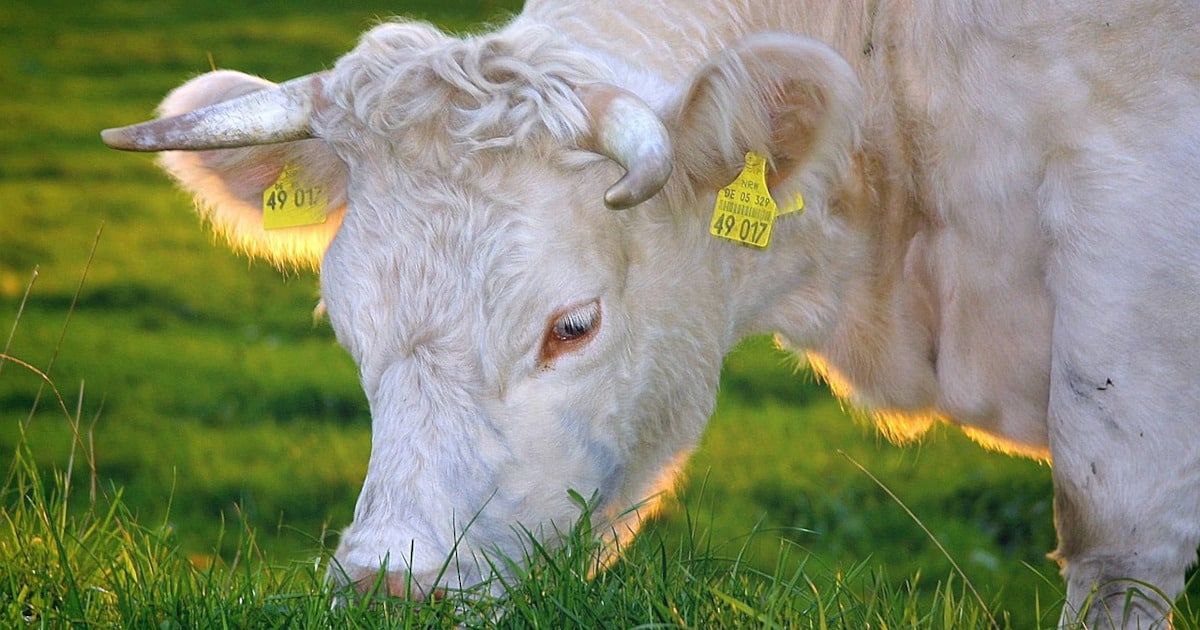](https://interfaithsustain.com/food-production/)
## [Food Production, Where and How on Earth Did We Go Wrong?](https://interfaithsustain.com/food-production/)
- [](https://interfaithsustain.com/sustainable-food/)
## [A Sustainable Food System to Address Climate Change](https://interfaithsustain.com/sustainable-food/)
- [](https://interfaithsustain.com/green-revolution-definition/)
## [Green Revolution Definition and Assessment of Its Environmental Impact](https://interfaithsustain.com/green-revolution-definition/)
## Growing Your Own Food
Planting a garden and [growing](https://www.sparkpeople.com/resource/nutrition_articles.asp?id=1275) your own food is a great way to reduce the impact that industrial farming has on the environment. By not using chemicals, fertilizers, and pesticides or any energy intensive industrial machinery, food grown in gardens has a much smaller impact on the environment.
Along with being better for the environment, growing your own food can also have numerous other benefits. Food grown at home is usually healthier than food bought at the store. Additionally, it is also much cheaper to grow food rather than buying it.
### Issues with Growing Food
Growing your own food may seem like a simple solution to avoid supporting industrial agricultural systems. However, growing fruits and vegetables and taking care of a garden are a lot more complex than most people realize.
Taking care of a garden requires careful attention to the plants’ needs, such as water, removing pests, where to plant certain plants, soil quality, etc. Along with this, plants have specific growing seasons, and may not even produce enough food to fully feed someone.
#### Greenhouses
Using a greenhouse can make it much easier to grow your own food. Greenhouses shield plants from extreme weather and temperatures which makes growing seasons longer, more fruitful, and more reliable. Keeping plants in a greenhouse makes it easier to grow any type of plant.
While greenhouses come with a lot of advantages, they are also very costly. Not only can building a greenhouse be very expensive, but heating and cooling a greenhouse can also be very pricey.
Along with this, heating and cooling greenhouses uses a lot of energy, which is a big environmental problem for industrially grown food. Luckily, there is a sustainable way of regulating greenhouse temperatures that saves money and is better for the environment.
[Source](https://pixabay.com/users/hsvall-975796/ "Source")
## Geothermal Greenhouses
**Geothermal energy** is one of the many types of renewable energy that could replace fossil fuels. Geothermal energy relies on harvesting thermal energy that is trapped beneath our feet in the Earth’s crust.
On a large scale this requires lots of drilling and expensive turbines. However, harvesting geothermal heat can be used on a smaller scale to regulate greenhouse heating systems.
Collecting **geothermal heat** from underneath the Earth’s surface may seem incredibly complicated. However, it really only requires a simple geothermal system.
### How the Geothermal Systems Work
The main types of geothermal heating systems are air systems. However, there are many other alternative heating systems that also work. Regardless of the specifics of the heating system, the general idea of [how they work](https://farm-energy.extension.org/geothermal-heat-for-greenhouses/) is the same.
Tubes attached to the greenhouse hold air beneath the ground. In the winter this air is warmed by the geothermal heat in the soil.
When the air in the greenhouse becomes too cold a heat pump, or heat exchanger, replaces the cold air in the greenhouse with warm air in the tubes. The cold air is then left in the tubes to be heated by the soil’s thermal energy, until the plants are ready for warm air again.
Geothermal greenhouses can also keep plants cool in the summer. The system that heats the greenhouse works the same way for cooling.
Since the sun doesn’t reach the pipes underground, the air in them stays cooler than the air in the greenhouse. When the greenhouse gets too hot, the heat pump changes out the air in the greenhouse for the cooler air, and pumps the hot air underground to cool off.
### Closed and Open Loop Systems
Some other specific types of geothermal greenhouse heating systems include closed loop and open loop. The difference in these lies in exactly how they heat and cool.
Open loop systems use natural nearby bodies of water or groundwater as a way to cool and heat their pipes. This works very well as water is a very good heat conductor, and can cool and heat the pipes very efficiently.
On the other hand, closed loop systems use an antifreeze solution and water to help regulate the pipes. Closed loop systems are typically not as efficient as open loop systems, as natural water sources can heat and cool more consistently. However, depending on where you put your greenhouse, there may not be access to a natural water source, and a closed loop may be your best option.
## The Walipini Geothermal Greenhouse
The Walipini greenhouse also uses geothermal energy, but without having to dig tubes deep into the ground. This greenhouse works by digging it into the ground so it takes advantage of the earth’s heat, but also utilizing a plastic or glass greenhouse roof to take advantage of the sun’s heat. The simplicity of this design drew an[ Amish farm in Maine](https://bangordailynews.com/2020/05/25/news/in-ground-walipini-greenhouse-is-the-first-of-its-kind-in-maine/) to build their own. Now they are reaping a larger harvest with a naturally heated greenhouse, and all while adhering to their Amish beliefs of avoiding modern technology.
As “[Garden&Happy](https://gardenandhappy.com/walipini/)” describes “Walipinis were created by a Mormon outreach group called [the Benson Institute](https://www.motherearthnews.com/organic-gardening/essential-tips-for-building-a-durable-walipini-greenhouse-zbcz1706), to help farmers in Bolivia extend their growing season and maximize productivity. Its creators hoped the earthen greenhouse concept would help struggling farmers find a more efficient and sustainable way to farm”. The Walipini greenhouse is a great example of how using natural resources like the sun and geothermal heat can create a [sustainable way to grow food](https://interfaithsustain.com/sustainable-food/ "sustainable way to grow food").
*\* Featured image [source](https://pixabay.com/users/derks24-5892478/ "source")*
**Categories:** Blog on Faith and Ecology, Renewable Energy
**Tags:** Geothermal, Renewable Energy
---
### [Is Geothermal Energy Renewable, An Endless Energy Supply?](https://interfaithsustain.com/is-geothermal-energy-renewable/)
**Published:** June 20, 2022
**Author:** ICSD
**Excerpt:** Harry Cooper - Humanity has begun to exhaust its resources trying to power our constantly growing modern societies. Governments, scientists, and companies everywhere have been undergoing an intensive search for new renewable energies and new renewable energy sources.
**Content:**
Table of Contents
Table of Contents
- [What is Geothermal Energy?](#aioseo-what-is-geothermal-energy-5)
- [How Does Geothermal Energy Production Work?](#aioseo-how-does-geothermal-energy-production-work-10)
- [How Renewable is Geothermal Energy?](#aioseo-how-renewable-is-geothermal-energy-14)
- [Perpetual Resources](#aioseo-perpetual-resources-16)
- [Geothermal is Endless Energy](#aioseo-geothermal-is-endless-energy-18)
- [Limits to Geothermal Energy](#aioseo-limits-to-geothermal-energy-21)
- [Location Specific](#aioseo-location-specific-23)
- [Geothermal Going Forward](#aioseo-geothermal-going-forward-26)
- [Drilling for Geothermal](#aioseo-drilling-for-geothermal-28)
- [Geothermal and Fracking](#aioseo-geothermal-and-fracking-33)
- [The Case of Iceland](#aioseo-the-case-of-iceland-38)
- [Religion and Geothermal Energy](#aioseo-religion-and-geothermal-energy-45)
*By Harry Cooper* – Humanity has begun to exhaust its resources trying to power our constantly growing modern societies. Governments, scientists, and companies everywhere have been undergoing an intensive search for new renewable energies and new renewable energy sources.
One of these sources of energy is [geothermal energy](https://interfaithsustain.com/geothermal-energy-facts/ "geothermal energy"). **Geothermal energy** is energy that comes from Earth’s super heated internal layers.
Geothermal energy can be harnessed through **geothermal power plants** that rely on steam heated by the Earth’s internal energy to spin turbines. Hypothetically, we could rely on geothermal as a source of energy indefinitely, however geothermal does have some limitations.
A geothermal power plant can only be placed in places with lots of **geothermal activity**, making them not viable in many parts of the world. However as **geothermal technologies** get better all the time, we are starting to be able to harness geothermal energy in places we weren’t able to before.
## What is Geothermal Energy?
[Geothermal](https://www.energy.gov/eere/geothermal/how-geothermal-power-plant-works-simple-text-version) energy comes from the heat beneath the Earth’s surface. In order to generate electricity from this, power plants must be able to access reservoirs of hot water from deep below the Earth’s surface.
These reservoirs of hot water are heated by the molten rock in the Earth’s mantle. This not only makes them incredibly hot, but also incredibly pressurized.
### How Does Geothermal Energy Production Work?
After the wells have been dug to access the reservoirs the water is pumped through a series of pipes. From there the hot water, or steam from the hot water, is used to spin turbines that generate electricity. This electricity is then sent through power lines to power homes and businesses. Once the hot water has been all used up it sent back down into the underground reservoirs. There it is reheated by the Earth’s mantle to be reused later for more electricity generation.
[Source](https://pixabay.com/users/mikegoad-29415/)
## How Renewable is Geothermal Energy?
One of the most important things when considering how viable an energy source is, is whether it is renewable or not. Fortunately, geothermal energy is not just a renewable resource, but a [perpetual](https://economicpoint.com/perpetual-resources#:~:text=Geothermal%20energy%20is%20another%20form,power%20turbines%20and%20generate%20electricity.) resource, meaning it will almost never run out.
### Perpetual Resources
Renewable resources are ones that will renew and regenerate over time if they are not used up too quickly. **Perpetual resources** are similar to renewable resource, except that they will never run out regardless of how much we use of them.
- [](https://interfaithsustain.com/tidal-energy/)
## [Tidal Energy As A Potential Energy Source](https://interfaithsustain.com/tidal-energy/)
- [](https://interfaithsustain.com/solar-and-wind-energy/)
## [Understanding the Importance of Solar and Wind Energy in Today’s World](https://interfaithsustain.com/solar-and-wind-energy/)
- [](https://interfaithsustain.com/is-nuclear-energy-renewable/)
## [A Controversial Energy Source: Is Nuclear Energy Renewable?](https://interfaithsustain.com/is-nuclear-energy-renewable/)
#### Geothermal is Endless Energy
[Geothermal energy](https://interfaithsustain.com/geothermal-energy-facts/) is very much a perpetual resource. Geothermal heat comes from the slow [decay](https://www.eia.gov/energyexplained/geothermal/#:~:text=Geothermal%20energy%20is%20a%20renewable,buildings%2C%20and%20to%20generate%20electricity.) of radioactive elements within the center of the Earth, a process that will go on for as long as the Earth is standing.
Because of this we will never run out of geothermal energy. Hypothetically, the human race could power its homes, businesses, and cities with geothermal energy for as long as they wanted to.
## Limits to Geothermal Energy
While geothermal heat sources provide us with hypothetically unlimited energy, extracting it and distributing it to everyone that needs energy is not that simple. Geothermal energy does come with some limitations, most notably, where geothermal power plants can be built.
### Location Specific
While there is a massive amount of geothermal energy sitting beneath our feet, this energy can only be accessed in specific spots on the Earth’s surface. Thus, only places with large amounts of geothermal activity are viable places to build geothermal power plants.
On top of that, a geothermal plant requires underground reservoirs of hot water in order to actually extract the energy and generate electricity. This makes expanding geothermal energy use very [limited](https://www.twi-global.com/technical-knowledge/faqs/geothermal-energy/pros-and-cons#WhataretheDisadvantagesofGeothermalEnergy), despite geothermal being such an incredible source of perpetual energy.
## Geothermal Going Forward
Almost every kind of renewable energy source has its limitations, wind turbines can’t work if the wind doesn’t blow, solar panels don’t work when the sun doesn’t shine. But geothermal has started to adopt new forms of technology that have come from an unexpected place, that could help geothermal contribute to [20%](https://grist.org/Array/the-ticket-to-100-renewable-power-is-under-our-feet/) of US energy.
### Drilling for Geothermal
Geothermal energy is limited by the amount of places that power plants can be built. If a place doesn’t have any wells of geothermal heat, it can’t expect to get geothermal power. However another source of unexpected technology has made it possible to put geothermal power plants in places we wouldn’t have been able to before. This technology is fracking.
Fracking is notorious for being one of the most devastating aspects of the fossil fuel industry. By drilling massive wells and and fracturing underground rocks, the oil and gas industry has caused massive [environmental damage](https://interfaithsustain.com/environmental-degradation-and-the-future-of-our-planet-earth/) in the form of earthquakes and pollution. But as it turns out, fracking may be essential in running our world on renewable energy.
#### Geothermal and Fracking
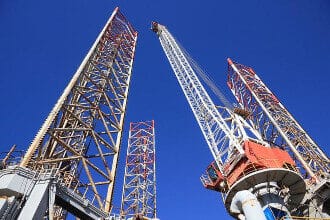[Source](https://pixabay.com/users/2427999-2427999/)
While it was once, and still is used to extract climate warming, unrenewable fossil fuels, fracking is starting to be used as a technique to dig geothermal wells. Instead of looking for naturally occurring underground reservoirs of hot water, by drilling geothermal wells using [fracking](https://interfaithsustain.com/fracking-ban/), we could put geothermal power plants just about anywhere. The oil and gas industry has been developing drilling technology for decades now, meaning that the technology to build these kinds of wells is already here.
However, one of the biggest challenges to utilizing geothermal in this way is the politics of renewable energy. Most renewable energy tax credits have been passed for wind and solar, and numerous regulation cuts have been given to the oil and gas industry. This red tape has made building artificial geothermal wells much harder than building new oil and gas wells, even though geothermal wells are not necessarily that much harder to build.
#### The Case of Iceland
[Iceland](https://www.warpnews.org/energy/icelands-nature-allows-for-100-renewable-energy/) is notorious for its widespread use of geothermal energy. The island nation is on one of the biggest hot beads of geothermal energy in the world. By utilizing this energy Iceland has been able to power 90% of its households from geothermal energy. By supplementing the rest with hydropower, Iceland is able to run itself entirely from **renewable energy**.
While this may seem like Iceland got a geographical lucky break by being located next to so many geothermal vents, by using fracking to build new geothermal plants, the US could not be very [far behind](https://grist.org/Array/the-ticket-to-100-renewable-power-is-under-our-feet/). By creating these artificial geothermal wells, we could spread geothermal across the entire country, and produce enough electricity to power 100 million homes. This is about as much as all the nuclear energy plants in the US are capable of providing. By utilizing renewable energy sources such as geothermal in this way, we can establish a completely renewable society.
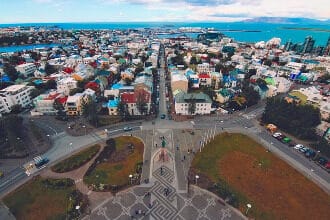[Source](https://pixabay.com/users/12019-12019/)
## Religion and Geothermal Energy
Costa Rica is a battleground in the fight for sustainability. Over 98% of the country’s electricity comes from renewable sources, of which [13% is from geothermal energy](https://www.thinkgeoenergy.com/costa-rica-reaches-record-level-geothermal-power-generation/#:~:text=With%20132.7%20GWh%2C%20Costa%20Rica,the%20country%2C%20so%20Grupo%20ICE). But on April 4th, 2022, Rodrigo Chaves won the presidential election, and now Costa Rica’s environmental progress is in great danger.
[According to Rodrigo Chaves](https://dialogochino.net/en/climate-energy/costa-rica-new-president-environment-record-risk/), there is an “almost religious fanaticism of saying: let’s not allow Costa Ricans to use and benefit from a resource that god gave us.” Chaves is worried that by not extracting gas, we’re rejecting God’s gifts to humanity. In other words, Chaves feels we have a religious obligation to take advantage of local gas resources.
But look at the damage that gas extraction has caused: pollution, greenhouse gases, and many more. Geothermal energy and other renewable resources are God’s true gifts to humanity, as they are clean, powerful and available for our children to enjoy and benefit from, without harming them in the process. Natural gas is a temptation, an easy solution that ends up harming more than it helps.
Religious people have a unique perspective. We draw upon the ancient texts of our ancestors to inspire righteous actions on behalf of our descendants. God has given us renewable gifts and polluting temptations. For the sake of our descendants, we must know the difference.
*\* Featured image [source](https://pixabay.com/users/simon-3/)*
**Categories:** Blog on Faith and Ecology, Renewable Energy
**Tags:** Geothermal
---
### [Knowing Geothermal Energy Facts Could Save us From Climate Change](https://interfaithsustain.com/geothermal-energy-facts/)
**Published:** June 6, 2022
**Author:** ICSD
**Excerpt:** Harry Cooper - In a world becoming increasingly aware of climate change, the demand for renewable energy has never been higher. We have found many different forms of renewable energy from wind to solar to hydro. One of the less talked about, but still very viable sources of renewable electricity is geothermal energy.
**Content:**
Table of Contents
Table of Contents
- [Renewable Energy Beneath our Feet](#aioseo-renewable-energy-beneath-our-feet-2)
- [How Does Geothermal Energy Work?](#aioseo-how-does-geothermal-energy-work-5)
- [Types of Geothermal Power Plants](#aioseo-types-of-geothermal-power-plants-10)
- [Dry Steam](#aioseo-dry-steam-14)
- [Flash Steam](#aioseo-flash-steam-16)
- [Binary Steam](#aioseo-binary-steam-18)
- [The Pros and Cons of Geothermal Energy](#aioseo-the-pros-and-cons-of-geothermal-energy-20)
- [Pros](#aioseo-pros-22)
- [Cons](#aioseo-cons-25)
- [At Home Geothermal](#aioseo-at-home-geothermal-32)
- [Geothermal Heating and Cooling Systems](#aioseo-geothermal-heating-and-cooling-systems-36)
- [The Advantages of Using Geothermal at Home](#aioseo-the-advantages-of-using-geothermal-at-home-40)
- [Religion and Geothermal Energy](#aioseo-religion-and-geothermal-energy-43)
*By Harry Cooper* – In a world becoming increasingly aware of [climate change](https://interfaithsustain.com/evidence-of-climate-change/), the demand for renewable energy has never been higher. We have found many different forms of renewable energy from wind to solar to hydro. One of the less talked about, but still very viable sources of renewable electricity is geothermal energy.
## Renewable Energy Beneath our Feet
**Geothermal energy** is energy that comes from the Earth itself, and uses the natural geothermal heat stored beneath the Earth’s surface to generate electricity. Geothermal can be used on a large scale at **geothermal energy plants**, or on a small scale with single building **geothermal heating and cooling systems**.
Like all forms of energy, geothermal energy has its benefits and drawbacks, but with new technologies in renewables coming out all the time, it is important to understand all the facts about the **alternative energy sources** that could save us from **climate change**.
## How Does Geothermal Energy Work?
The Earth is filled with various layers, the inner core, the outer core, the mantle, and the crust. Each of these layers is incredibly hot except the crust, the thin top layer on which we live. However the inner layers are hot enough to heat certain parts of the Earth’s crust, specifically underground stores of hot springs. These hot springs are underground reservoirs of hot water that can be tapped into and used for [geothermal energy](https://www.saveonenergy.com/how-geothermal-energy-works/).
In order to do this, geothermal plants drill down to the hot water and use the steam that comes off of it to spin turbines that produce electricity. This water can be reused by pumping it back into the Earth’s crust to be reheated by the planet’s natural internal energy which makes geothermal energy [completely renewable](https://interfaithsustain.com/is-geothermal-energy-renewable/ "completely renewable"), as it will never run out.
### Types of Geothermal Power Plants
While the same principle of using the Earth’s internal heat for electricity generation applies to all geothermal systems, there are still some different types of **geothermal energy production**. In fact there are [three](https://www.nrel.gov/research/re-geo-elec-production.html#:~:text=Geothermal%20power%20plants%20use%20steam,more%20below%20the%20earth's%20surface.&text=The%20steam%20rotates%20a%20turbine,a%20generator%2C%20which%20produces%20electricity.) main ways of conducting geothermal power generation at large scale geothermal power plants.
[Source](https://pixabay.com/users/artsybeekids-392631/)
### Dry Steam
Rather than relying on underground sources of water to create steam, dry steam power plants use already existing underground steam. The steam is directly pumped up to the turbine through geothermal heat pumps to create electricity in a fairly simple process. However, these underground reservoirs of steam are harder to find, and so dry stream plants are not very common, as there are only a handful of them around the world.
- [](https://interfaithsustain.com/is-nuclear-energy-renewable/)
## [A Controversial Energy Source: Is Nuclear Energy Renewable?](https://interfaithsustain.com/is-nuclear-energy-renewable/)
- [](https://interfaithsustain.com/geothermal-greenhouse/)
## [Growing Garden Plants, Fruits and Vegetables With a Geothermal Greenhouse](https://interfaithsustain.com/geothermal-greenhouse/)
- [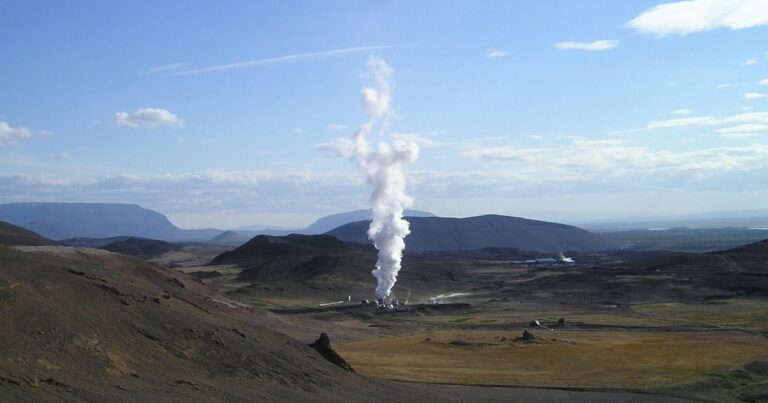](https://interfaithsustain.com/is-geothermal-energy-renewable/)
## [Is Geothermal Energy Renewable, An Endless Energy Supply?](https://interfaithsustain.com/is-geothermal-energy-renewable/)
### Flash Steam
Flash steam plants are the most common out of the three. Geothermal electricity generation form flash steam relies on underground pools of water that are over 360°F. These pools are under so much pressure that they tend to flow upwards of their own fruition, with little help from geothermal heat pump systems. Once they flow high enough, the water loses enough pressure to start boiling. Once the water is boiling it releases steam that then powers a generator.
#### Binary Steam
Binary steam is a process that makes use of cooler underground water that is not at boiling point, usually between 220°F and 360°F. The cooler water is then used to heat a second liquid with a lower boiling point that will create steam to power the turbines.
## The Pros and Cons of Geothermal Energy
Like all emerging energy sources, geothermal energy has both [pros and cons](https://www.energysage.com/about-clean-energy/geothermal/pros-cons-geothermal-energy/). While there are many benefits to powering our society with geothermal energy, there are also a few drawbacks that we need to take into consideration.
### Pros
One of the most obvious advantages of using geothermal energy is that, as a renewable source of energy, it produces minimal greenhouse gases compared fossil fuels. Also unlike fossil fuels, geothermal energy is a perpetual resource, meaning that no matter how much we use of it, it will never run out.
Geothermal also has a few significant advantages over other renewable energy sources such as solar and wind energy. For instance, geothermal energy is much more consistent in its energy production. While solar and wind energies have to rely on the sun to be shining or the wind to be blowing, geothermal energy can operate at any time. Geothermal also needs very little land to function. While other renewables need massive wind and [solar farms](https://interfaithsustain.com/solar-farm/ "solar farms") that can take up large swaths of land, geothermal only needs enough room to drill into the ground in order to produce energy.
#### Cons
While geothermal is incredibly efficient and renewable, it is not without its drawbacks. Since geothermal energy relies on pockets of hot water and steam beneath the Earth’s surface, it can only be built at specific spots, and these spots may not always be an ideal location for a power plant. Along with this, the deep drilling required to reach pockets of geothermal energy can cause instability in the Earth’s crust. This instability can lead to an increase in earthquake activity.
Another drawback to geothermal energy systems is that it has very high upfront costs, especially compared to other forms of renewable energy. While all renewables struggle with high upfront costs because of the amount of new infrastructure that needs to be built, geothermal energy is particularly expensive to build. On average, geothermal upfront costs are around 4,000 dollars to 6,000 dollars per kilowatt-hour produced. On the the other hand, solar energy costs around 1,250 dollars per kilowatt hour, and wind costs around 1,550 dollars per kilowatt hour. However, since geothermal is an efficient renewable energy source, it can pay itself off fairly easily.
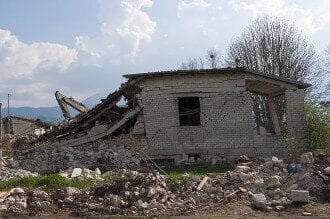[Source](https://pixabay.com/users/angelo_giordano-753934/)
## At Home Geothermal
So far we’ve talked about using geothermal energy pockets from deep beneath the Earth’s surface to generate electricity through massive turbines. But geothermal energy can be utilized on a smaller scale too. In fact, it is even possible to heat and cool your home using a small geothermal system. These [household](https://www.thisoldhouse.com/heating-cooling/21014980/geothermal-heat-pump-how-it-works) geothermal systems are built around the fact that even ten feet below ground the Earth consistently remains around 50°F no matter what the season is or what the temperature is outside.
### Geothermal Heating and Cooling Systems
At home geothermal systems work by using underground temperatures to heat and cool buildings directly. These systems involve installing underground coiled pipes filled with air or water that are regulated to the constant underground temperature of about 50°F. The air in these pipes is circulated, pumped into the building and then the air in the building is pumped back underground to be heated or cooled back to 50°F. The great thing about these kinds of systems is that since the underground temperature is kept constant they can easily work as both heating and cooling systems depending on the temperature outside.
[Source](https://unsplash.com/@philhearing)
### The Advantages of Using Geothermal at Home
At home geothermal energy is incredibly beneficial and incredibly energy efficient. It is estimated that at home geothermal can help save up 70% off utility bills. This is because geothermal heating and cooling systems are thought to be around twice as efficient at cooling and around fifty percent more efficient at heating than traditional heating and cooling systems.
While these systems may seem like the perfect way to heat and cool any building, they don’t exactly come cheap. Home Geothermal systems can cost as much as 20,000 dollars. While this is a lot of money, geothermal systems also save lots of money on heating and cooling costs, and can usually pay themselves off in about seven to eight years, and can last for another 40 to 45 years before needing to be replaced. Some governments have started offering tax breaks to people installing at home geothermal systems.
## Religion and Geothermal Energy
Geothermal energy is a wonderful renewable resource, but which must be channeled with wisdom. Cultures around the world have been benefiting from geothermal energy [for thousands of years.](https://www.nationalgeographic.com/environment/article/geothermal-energy) Emily Pontecorvo wrote for Grist Magazine about some of the opportunities and dangers of geothermal energy. Pontecorvo describes how we could transition from geothermal power plants producing 0.5 percent of U.S. electricity, as they do currently, to producing up to 8.5 percent by 2050, according to an [analysis by the Department of Energy](https://www.energy.gov/eere/geothermal/geovision). Geothermal power plants can play a crucial role in our transition to [sustainable energy](https://interfaithsustain.com/environmental-progress-sustainable-energy/). But Pontecorvo also reminds us that that “the transition to renewables should not repeat historically exploitative practices.”
In extracting resources from the earth like oil, diamonds and many other resources, native people have been harmed through pollution, theft and enslavement. Native Americans in Nevada are worried that historical cycles of exploitation are repeating themselves as Ormat Technologies is poised to open a geothermal power plant next to one of the Fallon Paiute-Shoshone’s most sacred springs.
The Fallon Paiute-Shoshone Tribe and Center for Biological Diversity are suing the Bureau of Land Management (BLM) for approving the project. The lawsuit describes how members of the Fallon Paiute-Shoshone Tribe use the site for “healing, soaking, camping, and harvesting native plants for weaving and other uses. These practices require quiet for contemplation, and darkness to see the night sky.” The geothermal power plant would make continued use of the spring impossible. As Pontecorvo points out, “The geothermal company behind the Dixie Meadows project, Ormat Technologies, [opened a geothermal power plant in 2011](https://www.thinkgeoenergy.com/ormat-brings-nevada-15mw-jersey-valley-facility-online/) about 40 miles away on another hot springs called Jersey Valley. The springs [dried up entirely](https://www.blm.gov/press-release/environmental-assessment-available-orni-15-llcormat-nevada-inc-jersey-valley) a few years after the plant began operating.”
We can utilize geothermal energy without harming people. Pontecorvo clarifies that geothermal power plants are often built in areas “with known geothermal resources close to the surface of the earth, which are often indicated by natural hot springs.” But she also cites [research at the Department of Energy](https://www.energy.gov/eere/forge/forge-home) which points towards new ways “to tap into geothermal resources much deeper underground \[which\] could open up new areas to geothermal development, potentially sparing treasured natural resources like Dixie Meadows.” Since hot springs are often sacred for indigenous peoples and wonderful natural resources for everyone, it is good to know that research is being conducted to find ways to utilize geothermal energy without harming them. God willing, we will transition towards sustainable energy as peacefully as possible, with all of humanity fighting on the same side.
*\* Featured image [source](https://pixabay.com/users/wikiimages-1897/)*
**Categories:** Blog on Faith and Ecology, Renewable Energy
**Tags:** Geothermal
---
### [It’s Time to Understand Exactly What Is Radiant Energy](https://interfaithsustain.com/what-is-radiant-energy/)
**Published:** January 7, 2022
**Author:** ICSD
**Excerpt:** Sydney Cohen - Radiant energy is the energy contained in the vibrationally charged particles around an object. It is a form of "electromagnetic energy," that "can take the form of visible waves – which is what we call light energy – or invisible waves such as radio waves or x-rays."
**Content:**
Table of Contents
Table of Contents
- [What is Radiant Energy?](#aioseo-what-is-radiant-energy-1)
- [Examples of Radiant Energy](#aioseo-examples-of-radiant-energy-7)
- [Electromagnetic Waves Carry Energy](#aioseo-electromagnetic-waves-carry-energy-12)
- [The Connection Between Waves and Energy](#aioseo-the-connection-between-waves-and-energy-15)
- [Radiant Energy and Religion](#aioseo-radiant-energy-and-religion-20)
- [Ancient Relationships with Radiant Energy](#aioseo-ancient-relationships-with-radiant-energy-25)
- [Understanding Radiant Energy](#aioseo-understanding-radiant-energy-31)
## What is Radiant Energy?
*By Sydney Cohen* – **Radiant energy** is the energy contained in the vibrationally charged particles around an object. It is a form of “electromagnetic energy,” that “can take the form of [visible waves](https://www.solarschools.net/knowledge-bank/energy/types/radiant) – which is what we call light energy – or invisible waves such as radio waves or x-rays.”
Different electromagnetic waves of the same nature are identified by their size and frequencies. **Electromagnetic energy waves** that are with low frequency and long wavelength are high energy waves. Those with low frequency and long wavelengths are low power waves.
[Source](https://www.pexels.com/@oandremoura/)
Unlike light energy, that is reflected into the atmosphere by air where energy has the capability to work, radiant energy is transmitted into the atmosphere in the form of electromagnetic waves with electrical and magnetic properties.
### Examples of Radiant Energy
An electromagnetic wave that scatters radioactive radiation can have many forms. **Light waves** are the only wavelengths we can typically see within our human sight.
Some examples of radiant energy include x-rays, radiant heat systems, and solar cells or solar panels that convert the energy of the sun into solar electricity. Further “examples of radiant energy include the warmth that radiates from a hot stove and the warmth from direct [sunlight](https://energyeducation.ca/encyclopedia/Sunlight).”
- [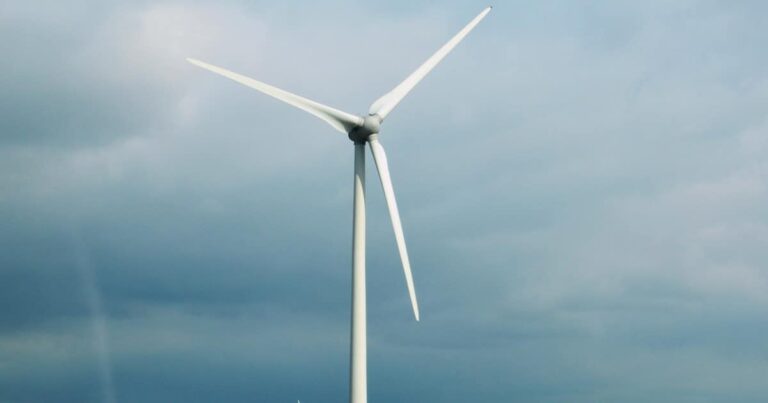](https://interfaithsustain.com/energy-transformation-examples/)
## [Energy Transformation Examples: Physical and Spiritual](https://interfaithsustain.com/energy-transformation-examples/)
- [](https://interfaithsustain.com/what-is-radiant-energy/)
## [It’s Time to Understand Exactly What Is Radiant Energy](https://interfaithsustain.com/what-is-radiant-energy/)
- [](https://interfaithsustain.com/energy-conversion/)
## [Using The Bible to Understand Renewable Energy Conversion](https://interfaithsustain.com/energy-conversion/)
#### Electromagnetic Waves Carry Energy
Electromagnetic waves are similar to other waves like waves in an ocean, in that they have higher parts and lower parts and they move. All types of electromagnetic waves are defined by wavelengths which are usually the distance between waves.
Another way of looking at the different types of waves is based on their frequency which can be thought of as the speed at which the wave can move. Waves with long wavelengths have more power. The number of waves formed in a period of time can also be expressed in terms of hertz – which is the number of waves produced in a certain period.
#### The Connection Between Waves and Energy
Electromagnetic waves with shorter wavelengths and high frequency carry more energy. A wave with a higher frequency has more ability to do work and thus carry more energy.
Consider someone throwing a punch into a punch-bag: each hit can be seen as a wave. If the opponent punches faster the bag will move more. And that means more work will happen. Higher frequencies carry more radiation compared to faster wavelengths. Imagine each punch is the equivalent of an electromagnetic wave. This wave is equivalent to the energy in another wave. A wave has stronger energy.
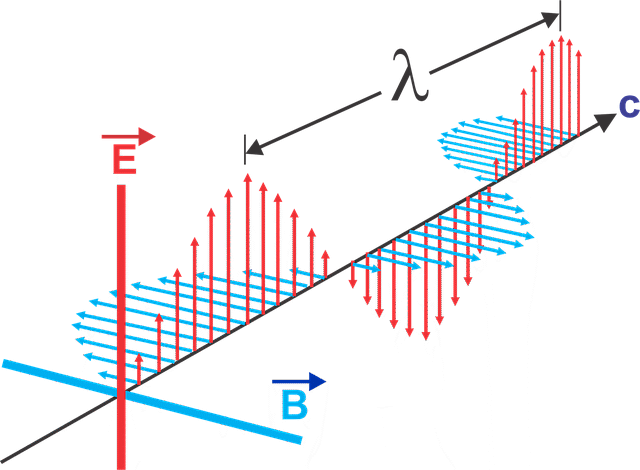[Source](https://pixabay.com/users/helder100-2938596/)
## Radiant Energy and Religion
According to an article entitled [Development of Knowledge of Radiant Energy as Applied to Medical Uses](https://pubs.rsna.org/doi/10.1148/7.4.292), “Primitive man evidently had some sort of idea of the importance of sunlight—the only form of radiant energy he recognized—in [human health and welfare](https://interfaithsustain.com/environmental-wellness/), for all primitive religions contained some element of sun worship”.
Other forms of radiant energy are recognized by humans only by the effects they have, such as radiation, but the sun has offered visible radiant energy that has influenced every culture in the world for centuries.
## Ancient Relationships with Radiant Energy
The website [Healing Earth](https://healingearth.ijep.net/energy/energy-and-spirituality) explains different cultures’ relationship with the sun:
- Ancient Egyptians honored a **sun god named Ra**. Egyptian temples were built with openings at the top so that the sacred rays of the sun could beam down upon the ritual altar and provide spiritual energy for the prayers and sacrifices performed there.
- The Ancient Greeks also honored a **sun god, called Helios**. In his poetry, Homer, (8th century BCE), described how Helios began and ended each day by driving a chariot of four-winged stallions across the sky.
- For many Indigenous People in the Northern Hemisphere, rituals related to sun worship traditionally occur in June, at the time of the summer solstice, (the longest day of the year). The Iroquois and Sioux Native Americans, in particular, recognize the sun as a life-giving force. Each year members of these nations perform the Sun Dance which reestablishes the bond between themselves, the Earth, the sun, and the energies of the new growing season.
## Understanding Radiant Energy
In conclusion, radiant energy is a type of electromagnetic radiation. It can be emitted by certain materials, such as glass and metal, when heated up.
When the radiant energy is absorbed it creates heat which may produce light or other types of thermal effects like heating objects around it. It is important to know the science behind radiant energy, as it is present in our everyday lives.
*\* Featured image [source](https://www.pexels.com/@byrahul/)*
**Categories:** Blog on Faith and Ecology, Renewable Energy
**Tags:** Energy
---
### [Energy Transformation Examples: Physical and Spiritual](https://interfaithsustain.com/energy-transformation-examples/)
**Published:** January 12, 2022
**Author:** ICSD
**Excerpt:** Sydney Cohen - In physics, energy is a quantity providing the ability to create or supply heat. Energy is transferable into different locations or objects, but it cannot be derived or destroyed.
**Content:**
Table of Contents
Table of Contents
- [Energy Transformations](#energy-transformations)
- [What is Energy Transformation?](#what-is-energy-transformation)
- [Electrical Energy and Kinetic Energy](#electrical-energy-and-kinetic-energy)
- [Types of Energy Transformations](#types-of-energy-transformations)
- [How is Kinetic Energy Used Daily?](#how-is-kinetic-energy-used-daily)
- [Energy Conversion: Transfer and Transformation](#energy-conversion-transfer-and-transformation)
- [Examples of Energy Transformation](#examples-of-energy-transformation)
- [Energy Transformation in Our Body](#energy-transformation-in-our-body)
- [Energy Transformation and Religion](#energy-transformation-and-religion)
*By Sydney Cohen* – In physics, energy is a quantity providing the ability to create or supply heat. Energy is transferable into different locations or objects, but it cannot be derived or destroyed.
For example, when heating a home, the furnace burning fire transforms its chemical potential energy into thermal energy which is transmitted to the air to raise its temperature.
“In recent years, considerable attention has been devoted to certain direct [**energy-conversion**](https://www.britannica.com/technology/energy-conversion) devices, notably solar cells and fuel cells, that bypass the intermediate step of conversion to [heat](https://www.britannica.com/science/heat) energy in electrical power generation.”
Continue reading to learn about **energy transformation**, and what we can to do reduce our **environmental impact** when using energy!
## Energy Transformations
Over the past couple of centuries, energy production has fueled [industrialization](https://interfaithsustain.com/industrial-pollution/). It has transformed the way people live their lives and worked, but it also created waste products that are not environmentally friendly.
The burning of **fossil fuels** for electricity generation and transformation has led to [air pollution](https://interfaithsustain.com/air-pollution-solutions/), greenhouse gases, acid rain, ozone depletion, and global warming. Pollutants damage ecosystems on land and in bodies of water by killing wildlife or disturbing food chains.
The search for [sustainable forms of energy](https://interfaithsustain.com/environmental-progress-sustainable-energy/) is one solution to this problem. So called ‘clean energy’ like solar and wind produces fewer negative byproducts when used to produce power for human use.
- [](https://interfaithsustain.com/energy-conversion/)
## [Using The Bible to Understand Renewable Energy Conversion](https://interfaithsustain.com/energy-conversion/)
- [](https://interfaithsustain.com/what-is-radiant-energy/)
## [It’s Time to Understand Exactly What Is Radiant Energy](https://interfaithsustain.com/what-is-radiant-energy/)
- [](https://interfaithsustain.com/energy-transformation-examples/)
## [Energy Transformation Examples: Physical and Spiritual](https://interfaithsustain.com/energy-transformation-examples/)
### What is Energy Transformation?
**The Law of Conservation of Energy** claims that energy cannot be created nor destroyed. Why do handheld PC gaming systems always run out of energy? There are various types of energy which include: kinetic energy, potential energy, and mechanical energy.
**Kinetic energy** is energy that is used by objects during movement. Potential is the energy that is stored, based on a situation or state of being of an object or thing. **Electrical energy** from a power outlet provides the **thermal energy** needed for making toast or heating a home.
## Electrical Energy and Kinetic Energy
Electrical and kinetic energy are two different forms of energy. They both have many similarities, but they differ in one very important way: electrical energy is created by the movement of electrons that flow through a conductor such as copper wire, while kinetic energy is generated from the motion of an object which has mass.
[Source](https://pixabay.com/users/dimitrisvetsikas1969-1857980/)
### Types of Energy Transformations
Often a result of energy transformation is thermal energy. Thermal energy is commonly a byproduct of other energy transformations. It is typically absorbed by other objects in the system or absorbed into the atmosphere.
When you use chemical energy to generate kinetic movement during exercise, you feel warm, because you created thermal energy. Thermal energy is produced through certain chemical reactions that form or crack chemical bonds.
When electrical energy fuels a light bulb, this light bulb emits thermal energy.
#### How is Kinetic Energy Used Daily?
Moving air has kinetic energy and it is used to propel windmills and sailboats for fuel. A bullet from a gun uses kinetic energy which penetrates into targets. Remember, kinetic energy is energy resulting from motion.
## Energy Conversion: Transfer and Transformation
**Energy transfer** involves the transport of energy from one place to another. For example, electricity is transferred via a plug or charger into a battery device.
Energy transformation is where the energy is changed from one form to another – like with a hydroelectric dam that converts heat to electricity. Although energy can be transferred or transformed, the overall amount of energy doesn’t change. This is called **energy conservation**.
### Examples of Energy Transformation
Electric power systems, electrical and electronic systems that fuel cell batteries, electricity, other electric batteries, fire energy, chemical energy, and electrical and mechanical energy, are all forms of energy transformation.
The sun converts nuclear energy to heat and light. Via photosynthesis, plants transform solar energy produced by the sun into chemical energy.
#### Energy Transformation in Our Body
Our body converts the chemical energy of food into kinetic energy that is used when moving. An electric fan converts electrical energy to kinetic energy. The transformation of energy is happening everywhere.
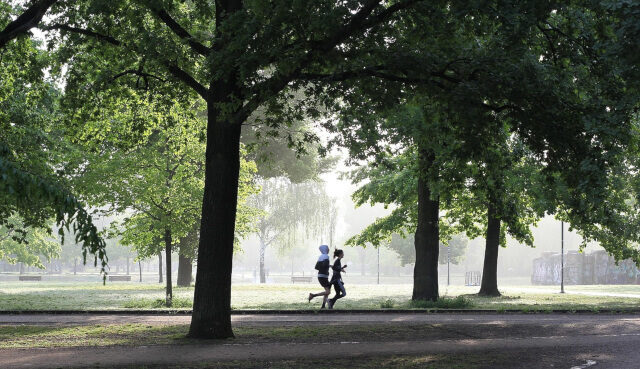[Source](https://pixabay.com/users/wal_172619-12138562/)
## Energy Transformation and Religion
**Ken McLeod** discusses in [**What to Do When Energy Runs Wild**](https://www.lionsroar.com/what-to-do-when-energy-runs-wild/) how “when you practice **meditation**, or any discipline that requires attention, you inevitably transform energy.” Religions can help us tap into a spiritual reality, whether through prayer, meditation or other spiritual practices.
Ken McLeod explains this process more deeply: “To be a little technical, when the level of energy in the attention is higher than the level of energy in what you are experiencing, say, anger or love, then you can experience the anger or love without getting lost in it. When you experience it that way, energy is transformed to a still higher level, making it possible for you to experience deeper levels of clarity and stillness, and also deeper levels of conditioning.”
Just as energy transformation is important in the physical world, it is an important part of our **spiritual practice**. Through our spiritual practices, we can transform energy, transform ourselves and ultimately **transform the world**.
*\* Featured image [source](https://pixabay.com/users/viviane6276-8115285/)*
**Categories:** Blog on Faith and Ecology, Renewable Energy
**Tags:** Energy
---
### [Using The Bible to Understand Renewable Energy Conversion](https://interfaithsustain.com/energy-conversion/)
**Published:** January 5, 2022
**Author:** ICSD
**Excerpt:** Aryeh Ronay & Sydney Cohen - Energy conversion is the process of changing energy from one form to another. The term is also used more specifically to refer to the transformation of natural energy into energy usable by humans.
**Content:**
Table of Contents
Table of Contents
- [Energy Conversion](#aioseo-energy-conversion-1)
- [Electrical Energy and Kinetic Energy](#aioseo-electrical-energy-and-kinetic-energy-6)
- [Energy Conversion and Religion](#aioseo-energy-conversion-and-religion-11)
- [Eco Bible](#aioseo-eco-bible-14)
- [Palm Trees and Solar Energy](#aioseo-palm-trees-and-solar-energy-15)
- [The Challenge of Storing Renewable Energy](#aioseo-the-challenge-of-storing-renewable-energy-20)
- [The Texas Energy Outage](#aioseo-the-texas-energy-outage-22)
- [Don't Blame The Energy](#aioseo-dont-blame-the-energy-25)
- [Understanding Energy Conversion](#aioseo-understanding-energy-conversion-28)
## Energy Conversion
*By Aryeh Ronay & Sydney Cohen* – Energy conversion is the process of changing energy from one form to another. The term is also used more specifically to refer to the **transformation of natural energy** into energy usable by humans.
This energy conversion can occur through renewable energy such as through solar panels and wind turbines turning the sun and wind into electricity or through non-renewable energy, like turning fossil fuels into electricity.
## Electrical Energy and Kinetic Energy
Have you ever wondered what happens when you plug your phone charger in? Energy is converted from electrical energy to kinetic energy. This conversion process also occurs when converting solar, thermal, or mechanical energies into electricity.
[](https://pixabay.com/users/viviane6276-8115285/)[Source](https://pixabay.com/users/viviane6276-8115285/)
You may be wondering how this physics phenomenon works. The answer lies in the power source and the type of work being done by an electric generator.
## Energy Conversion and Religion
In “[Eco Bible](https://interfaithsustain.com/ecobible/),” Rabbis Yonatan Neril and Leo Dee discuss energy conversion in the Bible and what the future of energy conversion may look like.
Quoted below is their exploration of one of the most important forms of energy conversion, solar energy conversion.
## [**Eco Bible**](https://www.amazon.com/Eco-Bible-Ecological-Commentary-Genesis/dp/173533880X)
### Palm Trees and Solar Energy
*Exodus 15:27 – and They Came to Elim, Where There Were Twelve Springs of Water and Seventy Palm Trees; and They Encamped There Beside the Water.*
Tamar, the Hebrew word for date palm, has the same Gematria, or kabbalistic numbering, as Shemesh, the Hebrew word for sun: [640](https://images.shulcloud.com/725/uploads/Lev_Echad_Editions/lev-echad-2014-01-10-beshalach.pdf). The tops of some date trees actually look like a green sun with leaves radiating outward from a circular trunk. The date is one of the sweetest fruits with [60 to 80 percent sugar content by weight](https://link.springer.com/article/10.1007/BF02858783), which means that it is highly efficient at converting abundant desert sunlight into energy. Modern solar panels mimic this photosynthesis by creating energy from sunlight.
Recent research into **solar power** explains how photosynthesis may contain the secret to sustainable power for future generations. According to a [recent study](https://www.sciencedirect.com/science/article/pii/S1389556716300727?via%3Dihub), “Solar energy has great potential as a clean, cheap, renewable and sustainable energy source, but it must be captured and transformed into useful forms of energy similar to plants. An especially attractive approach is to store [solar energy](https://interfaithsustain.com/advantages-of-solar-energy/) in the form of chemical bonds as performed in natural photosynthesis. Therefore, there has been a challenge in the last few decades to construct . . . artificial photosynthetic systems, which are able to efficiently capture and convert solar energy and store it in the form of chemical bonds.”
- [](https://interfaithsustain.com/exodus-17/)
## [Water, War and The Wilderness in the Bible: Exodus 17](https://interfaithsustain.com/exodus-17/)
- [](https://interfaithsustain.com/largest-trees-in-the-world/)
## [Exploring the Largest Trees in the World in Awe, Love and Wonder!](https://interfaithsustain.com/largest-trees-in-the-world/)
- [](https://interfaithsustain.com/deuteronomy-20/)
## [Deuteronomy 20: Discussing Both War and Saving Our Planet](https://interfaithsustain.com/deuteronomy-20/)
In 1981, one of the leading rabbis in America, [the Lubavitcher Rebbe, said about the US](https://www.amazon.com/Mind-Over-Matter-Lubavitcher-Technology/dp/0866390162), “Very soon, the entire country should switch, first of all, to energy that can be generated from the sun’s rays in the south \[of the US\], which should be supplied to the entire country . . . In fact, this can be practically implemented in such a manner as to provide more than enough, so that there is extra energy that can be supplied to other countries as well.”
### The Challenge of Storing Renewable Energy
One of the biggest challenges of working with [renewable sources of energy](https://interfaithsustain.com/renewable-and-non-renewable-resources/) like wind and sun is that it is difficult to store them. Contrast this with coal and oil, which can be stored forever and are easily converted to other forms of energy.
### The Texas Energy Outage
In fact, this difficulty of **storing wind and solar energy** was highlighted at the beginning of 2021 when a blizzard hit Texas and knocked out power for millions. Former Energy Secretary, Rick Perry, and Texas Gov., Greg Abbott, blamed solar and wind power for the power outages, but further investigation shows a different story.
Camila Damonoske wrote an article entitled, [No, The Blackouts In Texas Weren’t Caused By Renewables](https://www.npr.org/sections/live-updates-winter-storms-2021/2021/02/18/968967137/no-the-blackouts-in-texas-werent-caused-by-renewables-heres-what-really-happened), in which she explains how “grid operators say it simply doesn’t make sense to pinpoint any one generation source for criticism” because “*every* kind of power generation fell short in this storm”.
#### Don’t Blame The Energy
In other words, it’s unfair to blame the frozen windmills when the natural gas wells, pipelines and equipment panels also froze and became unusable. It’s clearly unfair to blame **renewable energy** sources for the Texas power outages. However, it is still important to improve the storage of renewable energy so it can achieve parity with fossil fuels.
Storing solar energy through chemical bonds, as discussed in the Eco Bible quote above, could be a great innovation in renewable energy conversion that would help the world shift away from [fossil fuel dependence](https://interfaithsustain.com/thermal-pollution/).
#### Understanding Energy Conversion
Energy cannot be destroyed, it can only be transferred. This is important to remember as we learn about energy transformation and conservation so that we can ensure that we are just using the amount of energy we need, and not wasting any.
In the end, it is all about understanding how **energy conversion** and transformation take place. These principles can be applied to your life as well as in business. Understanding this will help you make better decisions for both!
*\* Featured image* [*source*](https://pixabay.com/users/anaterate-2348028/)
**Categories:** Blog on Faith and Ecology, Renewable Energy
**Tags:** Eco Bible, Energy
---
### [Clean tech: Will it solve the ecological crisis?](https://interfaithsustain.com/what-is-clean-tech/)
**Published:** May 26, 2021
**Author:** ICSD
**Excerpt:** Matthew Mausner - "Clean Tech", like its close cousin Green Tech, is both a description and an aspiration for innovative technologies and techniques to improve, repurpose, or replace our industrial practices in favor of more sustainable and less polluting practices.
**Content:**
Table of Contents
Table of Contents
- [What can make technology "clean"?](#aioseo-what-can-make-technology-clean-4)
- [Clean Tech and Investment](#aioseo-clean-tech-and-investment-7)
- [Clean tech Incentives and Efficiency](#aioseo-clean-tech-incentives-and-efficiency-13)
- [Clean Tech and the Climate Crisis](#aioseo-clean-tech-and-the-climate-crisis-19)
- [Clean Spiritual Solutions](#aioseo-clean-spiritual-solutions-26)
- [Clean Changes to Lifestyle](#aioseo-clean-changes-to-lifestyle-28)
- [Religion and Cleantech](#aioseo-religion-and-cleantech-32)
- [Cleantech and Spirituality](#aioseo-cleantech-and-spirituality-35)
- [Clean tech Mindshift](#aioseo-clean-tech-mindshift-37)
- [Clean Energy](#aioseo-clean-energy-39)
- [Solar in Clean tech](#aioseo-solar-in-clean-tech-41)
- [Cleantech and Houses of Worship](#aioseo-cleantech-and-houses-of-worship-43)
*By Matthew Mausner* – **“**Clean Tech**“**, like its close cousin Green Tech, is both a description and an aspiration for innovative technologies and techniques to improve, repurpose, or replace our industrial practices in favor of more sustainable and less polluting practices.
## What can make technology “clean”?
There are widespread fears that human-generated pollution and devastation such as deforestation, overfishing, habitat destruction, and global warming, may lead us to a crisis that threatens our civilization and the stability of our current web of life on Earth. However, many people have faith in technology, that it will solve the ecological crisis.
**Partly driven by these hopes and fears, and partly driven by the opportunities inherent in every waste stream, investment in clean tech has skyrocketed in recent years.**
## Clean Tech and Investment
Clean tech has therefore become a new category for Venture Capital funds, conferences, and the investment and business environment of many countries. These actors in the business sector increasingly care about sustainability, energy efficiency, reducing pollution, and increasing ‘circular’ economy dynamics like recycling, reusing, and repurposing the ‘waste’ of our various forms of production and resource use.
[Source](https://pixabay.com/users/mohamed_hassan-5229782/)
### Clean tech Incentives and Efficiency
There are government incentives, tax breaks, international NGOs, United Nations programs, and other private and public frameworks to encourage cleantech. There has been increasing investment and growth in categories such as solar and wind power, electric vehicles, and tools for companies in various branches of industry that reduce energy use, waste and emissions, and increase efficiency.
[Source](https://pixabay.com/users/200degrees-2051452/)
- [](https://interfaithsustain.com/green-energy-exchange/)
## [The Sustainable Process Of Green Energy Exchange](https://interfaithsustain.com/green-energy-exchange/)
- [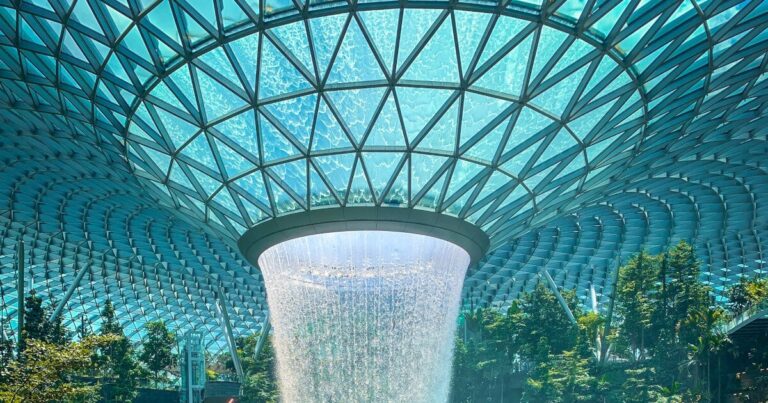](https://interfaithsustain.com/sustainable-design/)
## [Harnessing Our Faith to Ensure Sustainable Design In All That We Create!](https://interfaithsustain.com/sustainable-design/)
## Clean Tech and the Climate Crisis
In actuality, **clean tech has yet to solve the ecological crisis**, as [climate change](https://interfaithsustain.com/evidence-of-climate-change/) and biodiversity loss get worse each year. Clean tech has not added up enough to actually offset the negative continued impacts of human resource use on the earth today. Despite massive investment in and deployment of clean tech, it has not succeeded in catalyzing a global shift to environmental sustainability.
A reason for this is that the ecological crisis is also a spiritual crisis, and requires spiritual approaches and solutions. Technological ‘fixes’ are not adequate.
[Source](https://pixabay.com/users/stephen4-489524/)
## Clean Spiritual Solutions
Spiritual solutions to the ecological crisis can include things like moderating consumption, finding pleasure in spiritual pursuits, and thinking long-term. These could even be called “spiritual technologies.” We call those spiritual solutions in the sense that, they are generated by a set of deeper values and can be part of our spiritual practice. They can also be intertwined with our involvement in self-improvement, community and ecumenical group engagement, and our relationships with a higher power.
### Clean Changes to Lifestyle
Unlike a mere cost-saving or utilitarian reason to change behavior, we can apply changes to our way of life that are thus inspired and infused with our spirituality. They thus create deeper and more comprehensive shifts in our individual and collective actions.
[Source](https://pixabay.com/users/prawny-162579/)
### Religion and Cleantech
Some of these concepts are not new. [Recycling plastic ](https://interfaithsustain.com/single-use-plastic-threats-from-awareness-to-action/)and cardboard might be new. However, recycling waste products including manure, fish bones, and similar materials into fertilizer or fuel is as old as human societies. And in places like Bali or in European Catholic monasteries, such cycles are explicitly part of their spiritual practice.
Once religion gets on board in addressing the ecological crisis, we will have a fighting chance of curbing global warming and stemming biodiversity loss.
### Cleantech and Spirituality
When we talk about **clean tech together with spirituality**, then we’re not just talking about technologies and techniques that use less energy, or generate less carbon, or impact air or water quality less, or shift us away from fossil fuel resources towards renewables.
### Clean tech Mindshift
We’re talking about changes in the underlying outlook and purpose, of people, businesses, communities, from the ground up, that shift mindsets and paradigms and thereby address the spiritual roots of the ecological crisis: greed, apathy, arrogance, and short-term thinking.
### **Clean Energy**
For example, there are a number of ways that **spiritually-informed shifts to more clean ways of implementing technology** can have far-reaching effects, for business, companies, and industry.
#### Solar in Clean tech
Solar, in particular, is considered cleantech par excellence, as it embodies sustainability by being primarily local, environmentally friendly, and in the sense that it does not generate pollution while operating (although pollution does occur in the production, transportation, and disposal of solar panels).
### Cleantech and Houses of Worship
Cleantech is a mode for the spiritual desire to live in harmony with the environment to be made real, focused into concrete action, and embodied in our daily lives. When solar power is put into practice in an architectural, city planning, and related holistic approach to structuring community and life cycle, it can strengthen local sustainability, including in a house of worship. Many religious congregations have embraced clean tech like solar panels, which is **a win-win for the congregation and the earth.**
*\* Featured image [source](https://pixabay.com/users/katielwhite91-5572368/)*
**Categories:** Blog on Faith and Ecology, Renewable Energy
**Tags:** Clean Tech
---
### [The Sustainable Process Of Green Energy Exchange](https://interfaithsustain.com/green-energy-exchange/)
**Published:** March 4, 2022
**Author:** ICSD
**Excerpt:** Sydney Cohen - There's no doubt that the world is moving towards more sustainable energy sources in the electricity sector, and green energy exchange is playing a big role in that transition.
**Content:**
Table of Contents
Table of Contents
- [Renewable Energy](#renewable-energy)
- [Sustainable Green Energy](#sustainable-green-energy)
- [The Green Energy Exchange Process](#the-green-energy-exchange-process)
- [Green Energy Exchange Partners with Religious Institutions](#green-energy-exchange-partners-with-religious-institutions)
- [Hubs for Green Energy Exchange](#hubs-for-green-energy-exchange)
- [Invest For Our Future In Green Energy Exchange](#invest-for-our-future-in-green-energy-exchange)
*By Sydney Cohen* – There’s no doubt that the world is moving towards more sustainable energy sources in the electricity sector, and green energy exchange is playing a big role in that transition.
For those who are unfamiliar, the process of **green energy exchange**, (which also happens to be the name of an American energy company), is the process of swapping homes and businesses to [renewable energy sources](https://interfaithsustain.com/renewable-and-non-renewable-resources/ "renewable energy sources").
Grid operators involved in green energy platforms can play a large role in aiding green energy exchange. Not to mention, non-green sources of energy often have incredibly high costs to businesses and consumers. Imagine how much more money you would save on your electric bill if you were able to generate all of the electricity that you needed, from the sun, such as with solar power! This blog post will give some insight into this topic and outline what exactly green energy exchange is.
## Renewable Energy
Did you know that renewable energy is becoming more and more popular? In fact, it is now the fastest-growing source of energy in the world. There are many reasons for this growth, including the fact that renewable energy is cleaner and more sustainable than other forms of energy.
Renewable energy “is energy that is collected from [renewable resources](https://en.wikipedia.org/wiki/Renewable_resource) that are naturally replenished on a [human timescale](https://en.wikipedia.org/wiki/Orders_of_magnitude_(time))“.
### Cost Effective Green Energy
Renewable energy is becoming more and more important as we become increasingly aware of the impact that traditional forms of energy generation have on our planet. Not only is renewable energy more environmentally friendly, but it’s also becoming more cost-effective as technology improves, such as the example of green energy exchange.
[Source](https://pixabay.com/users/clker-free-vector-images-3736/ "Source")
#### Sustainable Green Energy
Renewable energy is the future of green energy exchange, which works to protect and preserve our planet. The sources of renewable energy include solar power, wind power, hydroelectricity, geothermal electricity, and biofuel. These renewable sources are non-polluting and sustainable for many decades to come. Renewable resources are naturally replenished with time so they don’t run out, nor damage the environment such as fossil fuels do.
- [](https://interfaithsustain.com/tidal-energy/)
## [Tidal Energy As A Potential Energy Source](https://interfaithsustain.com/tidal-energy/)
- [](https://interfaithsustain.com/solar-and-wind-energy/)
## [Understanding the Importance of Solar and Wind Energy in Today’s World](https://interfaithsustain.com/solar-and-wind-energy/)
- [](https://interfaithsustain.com/is-nuclear-energy-renewable/)
## [A Controversial Energy Source: Is Nuclear Energy Renewable?](https://interfaithsustain.com/is-nuclear-energy-renewable/)
## The Green Energy Exchange Process
An example of affordable renewable electricity plans can be seen in Britain, where the National Grid has launched the Power of Now Carbon Dashboard, which shows the impact of green energy exchange in real-time. The National Grid works to provide green energy and promote innovative ways of reducing carbon emissions.
For their green energy exchange, they utilize the power of “[**interconnectors**](https://www.nationalgrid.com/stories/energy-explained/what-are-electricity-interconnectors) – undersea cables that allow us to exchange surplus electricity with neighbouring countries”. Furthermore, interconnectors provide a platform that allows countries to work together to share and provide green energy exchange.
The Power of Now Carbon Dashboard shows the rapid positive environmental impact of interconnector operations in reducing carbon emissions.
## Religion and Green Energy Exchange
A [2019 NPR article ](https://www.npr.org/2019/12/15/784483810/powered-by-faith-religious-groups-emerge-as-a-conduit-for-a-just-solar-boom)explores the important role that faith organizations are providing in helping transition communities to affordable green energy plans. According to Gabriel Chan, a solar researcher and assistant professor at the University of Minnesota, “Religious institutions are long-standing community anchors… which makes them ideal partners for developers struggling to connect low-income households with clean energy”.
[Source](https://pixabay.com/users/clker-free-vector-images-3736/ "Source")
### Green Energy Exchange Partners with Religious Institutions
People trust their local religious institution, which makes them ideal partners in helping transition people to the experimental new territory of green energy exchange.
#### Hubs for Green Energy Exchange
Religious institutions are being used as sites for solar energy collection and distribution like at Shiloh Temple, a majority-black church in north Minneapolis. The 630-panel array on the roof of Shiloh Temple “provides Shiloh itself, the nearby Masjid An-Nur Mosque, and 29 local households with green energy”. Turning our religious buildings into hubs for sustainable energy makes a big practical difference in congregants’ lives and is a great way for our religions to pave the way [towards a more sustainable future](https://interfaithsustain.com/sustainable-construction/ "towards a more sustainable future").
#### Invest For Our Future In Green Energy Exchange
Renewable, clean sources of power are not only good for our planet in general but also important to consider when it comes to protecting ourselves from [climate change](https://interfaithsustain.com/evidence-of-climate-change/ "climate change") and pollution. It’s an investment for companies and consumers, but the more we switch over to green energy, the better off our future will be. We can all make a difference in the future of our planet by supporting green energy exchange. With renewable resources and sustainable practices, we can forge a better world for generations to come. The time is now – let’s show our children what it means to live sustainably!
*\* Featured image [source](https://pixabay.com/users/seagul-191369/ "source")*
**Categories:** Blog on Faith and Ecology, Renewable Energy
**Tags:** Green Energy, Renewable Energy
---
### [The Fast Global Growth In The Use Of Electrical Buses](https://interfaithsustain.com/electrical-buses/)
**Published:** September 8, 2021
**Author:** ICSD
**Excerpt:** Sydney Cohen - An electric vehicle (EV) is a type of vehicle that uses only electricity to produce power. Unlike hybrid vehicles that utilize battery power combined with an internal combustion engine, electric vehicles are sometimes referred to as "all-electric vehicles" to show that they don't use gasoline or any other power source besides electricity, and have zero emissions.
**Content:**
Table of Contents
Table of Contents
- [The History of Electric Buses](#aioseo-the-history-of-electric-buses-3)
- [V2G Technology Supports Electric Buses](#aioseo-v2g-technology-supports-electric-buses-12)
- [How Electric Buses Function](#aioseo-how-electric-buses-function-17)
- [The Benefits of Electric Buses](#aioseo-the-benefits-of-electric-buses-22)
- [The Carbon footprint of Electric Buses](#aioseo-the-carbon-footprint-of-electric-buses-26)
- [Minimal Maintenance for Electric Buses](#aioseo-minimal-maintenance-for-electric-buses-31)
- [A Global Increase in Electric Buses](#aioseo-a-global-increase-in-electric-buses-35)
- [A Growing Number of Electric Buses are Running Worldwide](#aioseo-a-growing-number-of-electric-buses-are-running-worldwide-40)
- [China Leads the Way in Electric Bus Fleets](#aioseo-china-leads-the-way-in-electric-bus-fleets-44)
- [Latin America Moving In Electric Buses](#aioseo-latin-america-moving-in-electric-buses-47)
- [European Advances in Using Electric Bus Fleets](#aioseo-european-advances-in-using-electric-bus-fleets-49)
- [India's interesting Electric Bus Market](#aioseo-indias-interesting-electric-bus-market-54)
- [Are Electric Buses Healthier?](#aioseo-are-electric-buses-healthier-58)
*By Sydney Cohen* – An **electric vehicle (EV)** is a type of vehicle that uses only electricity to produce power. Unlike **hybrid vehicles** that utilize battery power combined with an internal combustion engine, electric vehicles are sometimes referred to as “all-electric vehicles” to show that they don’t use gasoline or any other power source besides electricity, and have zero emissions.
Electric buses have many environmental benefits, as often, travel and transport services in cities leave a large **carbon footprint** with the **greenhouse gas emissions** that burning **gasoline** releases.
## The History of Electric Buses
Early in the nineteenth century, inventors had already developed electric vehicles. Williams Morrison created the first successful EV in the United States, a new vehicle that has experienced a resurgence in popularity recently.
In 1994, **Blue Bird** was the first electric school bus company to go public. Blue Bird was the only manufacturer to market an all-electric school bus in 1994. However, electric vehicles have become more common in the past few years, particularly in the operation of school buses.
The Blue Bird Company first introduced electric school buses in 1994. Blue Bird Vision and All American RE are bus manufacturers, producing electric buses that reduce fuel consumption and have fewer moving parts.
They are accompanied by lower maintenance and fuel costs, and more government subsidies. Schools within districts that prioritize electric buses can often get government subsidies.
[Source](https://pixabay.com/users/hans-2/)
- [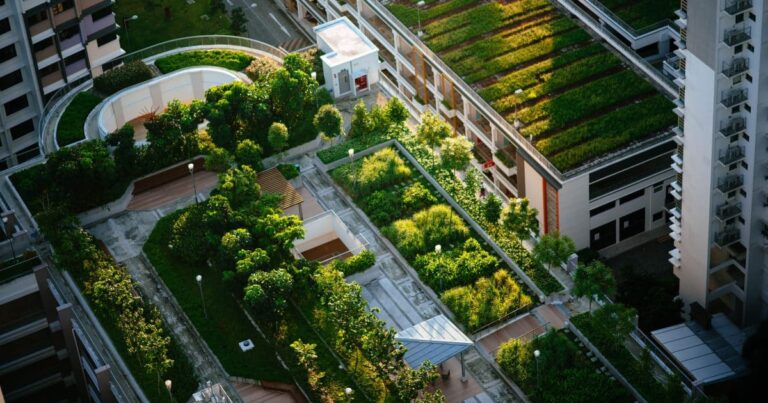](https://interfaithsustain.com/living-roof/)
## [Living In Harmony With Nature in Urban Areas With a Living Roof](https://interfaithsustain.com/living-roof/)
- [](https://interfaithsustain.com/sustainable-cities/)
## [Developing Sustainable Cities and Society](https://interfaithsustain.com/sustainable-cities/)
- [](https://interfaithsustain.com/daoism-and-the-construction-of-sustainable-societies/)
## [Daoism and the Construction of Sustainable Societies](https://interfaithsustain.com/daoism-and-the-construction-of-sustainable-societies/)
### V2G Technology Supports Electric Buses
The [V2G](https://en.wikipedia.org/wiki/Vehicle-to-grid#:~:text=Vehicle%2Dto%2Dgrid%20%28V2G,the%20grid%20or%20by%20throttling) technology program allows energy manufacturers to “buy back” energy that the buses have. V2G also allows the generation of [renewable energy](https://interfaithsustain.com/renewable-and-non-renewable-resources/), through sources like solar and wind.
Blue bird’s electric bus can cover 120 miles at once depending on terrain and driving habits. Infrastructure enhancements in the introduction of an electric bus into an electric bus line are part of the integration process.
An electric bus uses electric power from the power grid which is stored in batteries that can be recharged. The difference between electric buses to our phone devices and laptops is that the buses’ electric motor is the power source.
In a typical bus, a motor works along with an alternator, but an electric vehicle is a double function of acting like an alternator and the motor. When the driver’s foot presses the accelerator, the battery powers the engine motor and moves it to turn it into gears that rotate the bus.
### How Electric Buses Function
Electric buses store their electricity on board or can be continuously fed by external sources. The majority of buses with electricity storage use batteries. Electric buses use electricity that is stored in an onboard battery.
As of 2019, almost half of all cars used in China are battery-electric cars. There are more than 421,000 of them running. In addition 17% of the total bus fleet in China is run on electric power.
The battery electric buses use one of three types of **lithium-ion batteries**, which are the same kind as those used by phones and laptops. They hold significant energy for their size but are needed to be recharged. Fortunately, electric buses can become fully charged in [6 to 8 hours](https://www.gregorypoole.com/electric-bus-guide/#:~:text=Even%20for%20buses%20with%20the,around%20six%20to%20eight%20hours.).
Modern lithium-ion batteries have become progressively more accessible to bus drivers over the years. The cost in the past decade of electric buses has fallen dramatically, and now they are significantly more cost-efficient than other electric vehicles.
## The Benefits of Electric Buses
So, why is there a sudden move to use **electric vehicles**? After all they still use electricity and not always green electricity produced from sun or wind.
### The Carbon footprint of Electric Buses
Electrical buses are efficient, quiet, and inexpensive. They can be considered relatively lightweight in terms of their carbon footprint, or the pollution that they emit and the environmental consequences that they have.
All-electric buses emit less [greenhouse gas](https://interfaithsustain.com/evidence-of-climate-change/) over the course of their lifetime compared with petrol and diesel hybrids. The carbon footprint is reduced in the manufacturing process when making electrical buses. however, it is important to purchase from manufacturers that use environmentally responsible processes.
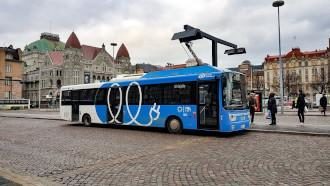[Source](https://pixabay.com/users/eniemela-13852903/)
### Minimal Maintenance for Electric Buses
Electric buses require less maintenance compared to other vehicles. Many maintenance tasks are unnecessary when compared to gas and diesel-powered buses.
Lower maintenance costs can lead to cost savings, which is why electric buses not only benefit the environment but the economy of cities and transit agencies as well. It also means that electric buses stay on the road for longer, requiring less shop maintenance.
Electric cars are also low maintenance when compared with with gas and diesel vehicles. According to the manufacturer of electric buses, electric buses can operate more efficiently than combustion engines for diesel. Electric-powered buses also have a longer life than diesel buses.
## A Global Increase in Electric Buses
Electrical buses are used by the public sector and city fleets and are developing all around the world. In fact, there has been a major increase in the travel and transit agencies that have started acquiring electric buses.
Starting with China, many other regions and countries have caught onto the trend as well. The number of electrical buses registered in Western Europe grew threefold in 2019, for example. And in 2020, the year of Covid-19, the battery-electrical bus market in the same region improved by 22%. It is predicted that city buses and other transport and service operations will be electric sooner than other segments of public transport.
### A Growing Number of Electric Buses are Running Worldwide
Most of the electric buses in the world are installed in Chinese cities. At the end of the year 2019, electric buses had dominated the sales volume of city buses in Europe by 10 percent. India can generate a big potential even by using a small portion of electric buses. In 2025, Interact analysis anticipates that India will have a 10% higher demand of global Electric Buses than Europe and North America combined. On a long-term basis, this demand is predicted to continue growing quickly.
[Source](https://www.pexels.com/photo/green-motherboard-163140/)
### China Leads the Way in Electric Bus Fleets
Bloomberg New Energy Finance tells us about the [vast scale](https://www.bloomberg.com/news/articles/2018-02-01/electric-buses-will-take-over-half-the-world-by-2025) of this revolution of electric buses on city streets. In 2016 China registered 340 electric buses every single day.
This increase in electrical buses mirrors a **faith-based environmental revival** in China, seen in such figures as **Yang Shihua**, who “has set out to spur action through religion, building a $17.7 million eco-friendly temple and citing 2,000-year-old texts to rail against waste and pollution” ([NYT, 2017](https://www.nytimes.com/2017/07/12/world/asia/mao-mountain-china-religion-environment.html)).
#### Latin America Moving In Electric Buses
Chile is hoping to have the second-biggest **electrical bus fleet** worldwide after Beijing. Chile has already received 200 electrical buses from China. Medellin also ordered 64 **Zero Emission** bus orders of BYD brand electrical buses. Santiago is the first city in the state of Latin America with an electrical bus fleet. In 2019, Colombia also ordered 64 electric buses, the first step towards their electric fleet.
#### European Advances in Using Electric Bus Fleets
Europe puts about 70 buses on roads each day in spite of the category of the bus (city buses and intercity coach) and the type of fuel used.
In this epochal shift towards replacing all of our diesel-powered buses with electric buses, European and American countries are playing an important role in this transition to reducing the pollution generated by vehicles.
EMT Madrid has placed 20 bus Irizarry Zero Emission orders on the local market. In February 2020, Spanish manufacturers received an order for fourteen E-Business Buses in Genoa, demonstrating the increasing popularity rate of switching to electric vehicles.
EMT also received orders from Orléans in France and Frankfort in Germany for 20 buses in 2020 and 14 for Genoa in January 2020. A third-order began for EMT in Madrid to provide 20 buses for the capital, Madrid, in 2020.
#### India’s interesting Electric Bus Market
The Indian bus market is representing some 430,000 vehicles sold above 6 tons in total. This represents over 24.95% of the overall total orders, excluding China.
The Indian market could easily become China’s second-largest market. Nearly 70,000 busses over 6 tones were purchased last year in India, making up nearly 60% of the global electric bus supply. Interact Analysis has tracked the public ordering of city electric buses, totaling 932 units.
This **ecological sensitivity** is being promoted by one of India’s biggest spiritual leaders, the **Dalai Lama**. Speaking recently about the United Nations, the Dalai Lama expressed his hope “to see those big nations who spent a lot of money for weapons or war turn their resources to the preservation of the climate” ([The Guardian, 2020](https://www.theguardian.com/world/2020/nov/11/buddha-would-be-green-dalai-lama-calls-for-urgent-climate-action)).
## Are Electric Buses Healthier?
Because electric buses have zero emissions from fossil fuels, they don’t cause the same emissions that less environmentally friendly buses do. By being fast charging electric buses, they [prevent air pollution](https://interfaithsustain.com/air-pollution-solutions/) and also keep your city’s air fresher and cleaner.
Pedestrians as well as passengers shouldn’t have to inhale emissions from **diesel engines** that could cause negative health impacts. While avoiding **exhaust fumes** can reduce the health risks from a diesel bus, an electric bus is a healthier choice to consider.
When it comes to getting people on board with the idea of electric buses, there are a number of benefits that come into play. Not only do they provide immense environmental benefits for our world and [public transportation](https://interfaithsustain.com/sustainable-transport/) sectors but also extreme economic benefits as well.
This is why it’s so important to support the increase of these vehicles in our cities; not just because we’re being **environmentally conscious** but because when you factor in how much money can be saved by switching over from diesel or gasoline engines, **electrifying your fleet** makes all the sense in the world!
*\* Featured image [source](https://pixabay.com/users/ab27-5201130/)*
**Categories:** Blog on Faith and Ecology, Renewable Energy
**Tags:** Sustainable Transport
---
### [The Global And Individual Benefits of A DIY Wind Turbine](https://interfaithsustain.com/diy-wind-turbine/)
**Published:** April 20, 2022
**Author:** ICSD
**Excerpt:** Harry Cooper - Fossil fuels have dominated the energy game since the industrial revolution, but for several decades now we have known about the deadly impacts of fossil fuels and climate change.
**Content:**
Table of Contents
Table of Contents
- [Switching To Renewables](#aioseo-switching-to-renewables-2)
- [Pros of Wind Energy](#aioseo-pros-of-wind-energy-7)
- [Clean Energy](#aioseo-clean-energy-8)
- [Perpetual Resource](#aioseo-perpetual-resource-13)
- [Wind is Cheap](#aioseo-wind-is-cheap-18)
- [Cons of Wind Energy](#aioseo-cons-of-wind-energy-21)
- [Limited Land for Wind Farms](#aioseo-limited-land-for-wind-farms-22)
- [Wind Farms Create Waste](#aioseo-wind-farms-create-waste-25)
- [Noise Pollution](#aioseo-noise-pollution-30)
- [Using a Wind Turbine at Home](#aioseo-using-a-wind-turbine-at-home-37)
- [How to Build a DIY Wind Turbine](#aioseo-how-to-build-a-diy-wind-turbine-42)
- [Wind Turbines and Religion](#aioseo-wind-turbines-and-religion-51)
*By Harry Cooper* – **Fossil fuels** have dominated the energy game since the industrial revolution, but for several decades now we have known about the deadly impacts of fossil fuels and **climate change**. And with global temperatures rising higher and higher all the time, the call to switch to renewable has never been greater than it is today. One of the more prominent renewables that could potentially help phase out the use of fossil fuels is **[wind energy](https://interfaithsustain.com/wind-energy-pros-and-cons/)**.
## Switching To Renewables
Wind is a very important form of energy because, even though it may change, it will never stop. This means that wind power is something we can rely on seemingly forever without having to worry about it running out.
Wind power is harnessed through the use of a **wind turbine**. These large wind turbines are installed in wind power systems, called wind farms, located in areas with strong winds. A massive commercial wind turbine operation such as this can provide power for hundreds of people, but it is not without its flaws.
Wind turbines require lots of space and can only be used practically in areas with large amounts of wind, so space is limited for **wind farms**. On top of this many people find wind farms a nuisance as they can create noise pollution, and since a wind turbine is so massive, their production creates a large amount of waste.
Luckily, commercial wind farms are not the only way to harness wind power. There are many ways to build a smaller **DIY wind turbine** at home that can provide power for only a building or two. DIY wind turbines are much smaller and less of a nuisance than traditional wind farming, and can even help you save on energy costs.
## Pros of Wind Energy
### Clean Energy
The world is slowly trying to decrease their [carbon emissions](https://news.globallandscapesforum.org/55376/wind-energy-could-cut-global-warming-by-up-to-0-8-degrees-c-says-report/) to combat climate change. And wind is one of the most important tools in the fight against global warming.
Burning fossil fuels at our current rate is estimated to release around 33 gigatons of carbon dioxide into the atmosphere every year, but unlike fossil fuels, energy from wind produces virtually no carbon emissions. This has made replacing our current energy sources with wind a great way to try and lower carbon emissions and mitigate climate change.
### Perpetual Resource
Wind energy is a type of renewable resource that’s known as a [**perpetual**](https://economicpoint.com/perpetual-resources#:~:text=in%20some%20places.-,Waves,used%20to%20produce%20electrical%20energy.) **resource**. This means that not only will wind renew itself over time as an energy source, but it will never run out.
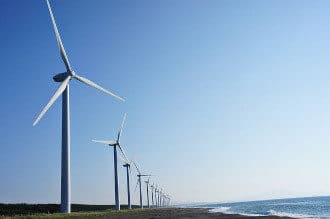[Source](https://pixabay.com/users/orange31-11320226/)
Wind is caused by the sun heating the Earth’s surface unevenly causing wind currents. This means that wind will be available for us to use as an energy source for as long as the sun is shining, and using more wind power won’t deplete wind sources.
### Wind is Cheap
Wind is not only an efficient use of energy, it is also very cost efficient. In fact, the wind turbine rated one of the [cheapest](https://blogs.scientificamerican.com/plugged-in/wind-energy-is-one-of-the-cheapest-sources-of-electricity-and-its-getting-cheaper/) sources of energy available for use in the US today.
It is estimated that people pay around twelve cents per kilo watt per hour for electricity generated by wind farms. Wind farms can therefore generate the same amount of electricity that a natural gas power plant would for around half the price. Electricity generated by wind is consistently below the national average price for electricity. This makes wind an incredibly cost efficient source of **clean renewable energy**.
- [](https://interfaithsustain.com/wind-energy-pros-and-cons/)
## [Wind energy pros and cons: A Deeper Look](https://interfaithsustain.com/wind-energy-pros-and-cons/)
- [](https://interfaithsustain.com/how-does-wind-energy-work/)
## [Understanding Wind Energy and Wind Turbines](https://interfaithsustain.com/how-does-wind-energy-work/)
- [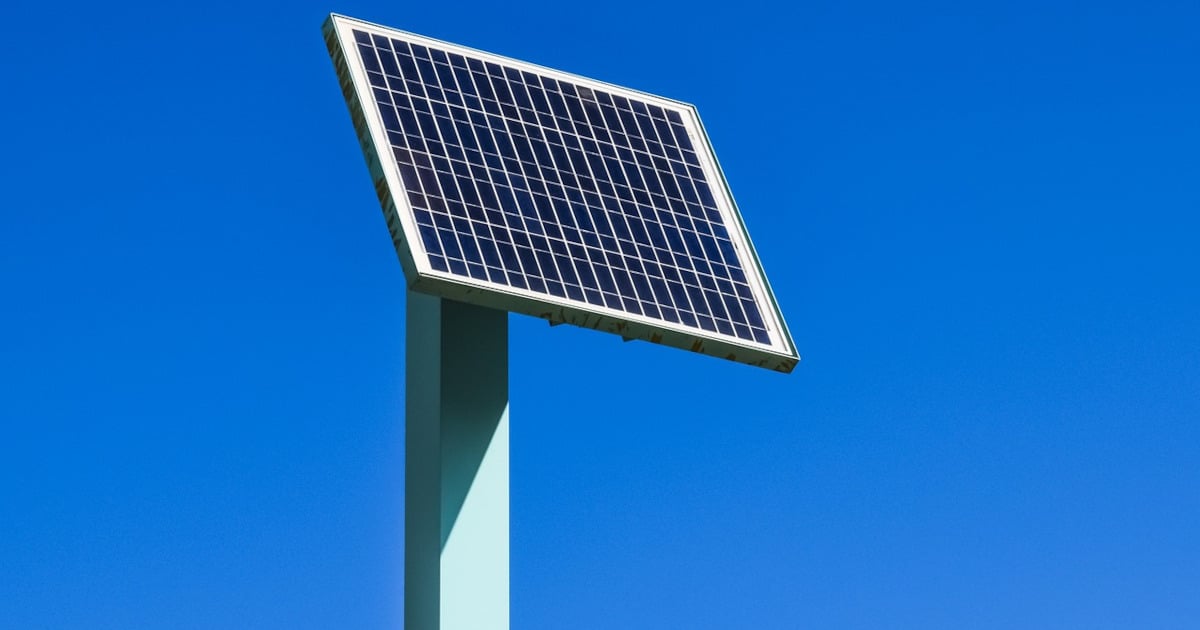](https://interfaithsustain.com/solar-lantern/)
## [The Environmental, Health and Social Impacts of A Solar Lantern](https://interfaithsustain.com/solar-lantern/)
## Cons of Wind Energy
### Limited Land for Wind Farms
While wind is an incredible source of energy, it is often [hard to find](https://www.energy.gov/eere/wind/advantages-and-challenges-wind-energy) places to put wind farms. This makes available locations for wind farming a sizeable challenge when trying to implement wind power.
Wind farms can’t be built anywhere, they need to be in a place with high annual average wind speed, usually somewhere on a large plain with few obstructions to the wind. These places are often far away from cities. Since good locations for wind farms are often very remote and far away from people who need energy, transporting wind energy can often be a hassle. This can make [wind farms a less than ideal source of energy](https://interfaithsustain.com/wind-energy-pros-and-cons/).
### Wind Farms Create Waste
Since wind turbines are such large structures, they require a lot of [materials](https://www.eia.gov/energyexplained/wind/wind-energy-and-the-environment.php#:~:text=Wind%20is%20an%20emissions%2Dfree%20source%20of%20energy&text=Overall%2C%20using%20wind%20to%20produce,not%20require%20water%20for%20cooling.) to build them. This can cause problems as these materials can have negative impacts on the environment.
The process of creating materials for wind turbines often entails using fossil fuels. So while wind farms themselves do not emit any carbon, building wind farms does. The materials used to build wind turbines also degrade over time and eventually need to be replaced. This means that the old wind turbine parts will be thrown out and create a considerable amount of waste.
#### Noise Pollution
Wind turbines typically make a lot of noise when they operate. This makes noise pollution another prominent issue associated with wind farms.
Noise pollution is when something that consistently makes a lot of noise causes adverse health affects on nearby communities. A [study](https://www.healthvermont.gov/sites/default/files/documents/pdf/PHA_wind_turbine_sound_05_2017.pdf) on wind farms in Vermont found that they can cause noise pollution.
The study found that the noise created by wind farms was associated with an elevated level of stress and increase in adverse health effects for people living nearby. Some of these health effects included migraines, dizziness, chronic pain, lack of sleep, tinnitus, and high blood pressure.
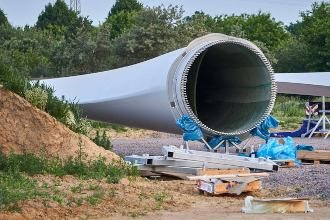[Source](https://pixabay.com/users/distelapparath-2726923/)[Source](https://unsplash.com/@chairulfajar_)
## Using a Wind Turbine at Home
A DIY wind turbine is a type of small wind turbine that is relatively easy to build that can supply wind power to a single building. By using an at home wind generator, you can gain the benefits of cheap clean wind energy on your own terms, with more control over the negative affects that come with commercial wind farming.
Installing a DIY wind turbine gives individual home owners numerous [benefits](https://www.treehugger.com/home-wind-turbine-5089097). Not only are these turbines clean and more environmentally friendly than powering your home with fossil fuels, but they are also make energy costs a lot lower.
While a DIY wind turbine might be initially expensive depending on how you build it, they are very cost effective in the long run. It is estimated that at home wind turbines can save up to 90% on home energy bills depending on how windy the area it’s used in is. And since wind is a perpetual resource, after the initial cost to build and install a DIY wind turbine, there are very little costs to it other than routine maintenance.
DIY wind turbines also come with less of the negative aspects of commercial wind farming. Because these wind turbines are so small, DIY wind turbines don’t require looking for large plots of unused land with consistently high wind speeds. Instead all you need to power your house with wind is to check your local wind speeds on a wind resource map to see if your house is in a good place for a **small wind turbine**. Noise pollution is also less of an issue with household wind turbines, as they are smaller, make less noise, and if they become an issue they can simply be turned off.
### How to Build a DIY Wind Turbine
There are countless different [designs](https://thumbwind.com/2020/07/21/diy-renewable-energy-projects/) on how to build a DIY wind turbine that all use different materials and structures, but all designs have a few basic [essentials](https://www.instructables.com/How-I-built-an-electricity-producing-wind-turbine/) in common. No matter how you decide to build a DIY wind turbine, it must include some kind of stand, a generator, a battery bank, and something to act as fan blades.
One of the first things you should do is find what to use as your blades. These blades can be made from anything from PVC pipe to snow shovels to old bicycle tires. Once you have your blades, attach them together to make your fan. There are many different ways of designing your fan, but as long as it will spin in the wind, it should work.
After this, you might want to start assembling a stand to mount your turbine on. This stand should be sturdy enough to hold up a heavy generator and a fan that will be spinning rapidly at times. It is also important to make your stand high enough to be able to catch stronger winds.
[Source](https://pixabay.com/users/eryan76-6979140/)
Next, you will want to assemble the electronic side of the turbine. Make sure the generator is connected to the battery bank so that the electricity can be properly stored. Once all your electronics are lined up, it’s time to erect your wind turbine. Put your wind turbine somewhere where you know it can get a lot of wind. Once everything is connected and up and running, you can enjoy clean, renewable, and **homemade wind energy**.
## Wind Turbines and Religion
An article on the website [OpenDemocracy](https://www.opendemocracy.net/en/democraciaabierta/colombia-wind-power-guajira-en/) reminds us that harnessing wind power is no panacea. Wind turbines can be a wonderful way to harness a renewable resource, but they must be built without harming the local people. In the Caribbean coastal desert of Colombia, the indigenous Wayúu communities are being ignored as the government and corporations force them to sell their land to build the wind turbines. But the Wayúu don’t want to sell their land. In the words of Nancy Gómez, a local indigenous environmental leader:
> Our territory is priceless… they can give us all the thousands and thousands and millions, but we will still not be well paid. Our wealth is in the land. Our wealth is in the sea. Our wealth is in the air. How are we going to get rid of what is ours? How are we going to allow them to come and fool us like that, and talk about development?”
These planned wind farms threaten the Wayúu people’s territory, but they are not the only ones threatened by the wind turbines. These wind turbines also threaten [biodiversity](https://interfaithsustain.com/why-is-biodiversity-important/). Migratory birds “will have to alter their routes” and bats, “which play a central role in the local ecosystem as pollinators of the *cardón* cactus species on which the Wayúus depend, will be badly affected. Their wave navigation system gets thrown off by wind turbines. Mortality rates of these flying mammals [soars on wind farms](https://www.ecologistasenaccion.org/175077/la-mortalidad-de-aves-y-murcielagos-se-dispara-con-los-grandes-aerogeneradores-de-ultima-generacion/).”
Destroying the ecosystems of birds and bats threatens the fruiting plants they pollinate and the humans who depend on those plants. Moreover, “Democracy Now” reminds us that destroying the bat’s ecosystem increases the chances of them being forced into human areas and transmitting the viruses they carry into humans, as likely happened with the Coronavirus.
So how can we harness the wind without harming the natives? This article offers a great start. Building your own wind turbine is a wonderful way to locally harvest wind power.
Wind turbines can be a great solution, but only if they are built with the consent and desire of those who will be most affected by them. So start building your own wind turbine, talk with your neighbors about wind power and be willing to listen. The winds of change are blowing, but harnessing them sustainably and ethically is up to us.
*\* Featured image [source](https://unsplash.com/@chrisdickens/)*
**Categories:** Blog on Faith and Ecology, Renewable Energy
**Tags:** Wind Energy
---
### [Save Money, Save Energy, Save Earth With Sustainable Solar Tubes](https://interfaithsustain.com/solar-tubes/)
**Published:** September 29, 2022
**Author:** ICSD
**Excerpt:** Ethel Mendius - Solar tubes are a cost effective way to brighten a room without using electricity. Using natural light in your home can help reduce your carbon footprint while enhancing your quality of life.
**Content:**
Table of Contents
Table of Contents
- [How Do Solar Tubes Work?](#aioseo-how-do-solar-tubes-work-2)
- [Output](#aioseo-output-5)
- [Solar Tubes On Cloudy Days](#aioseo-solar-tubes-on-cloudy-days-10)
- [Electric Light Options](#aioseo-electric-light-options-15)
- [The Benefits Of Solar Tubes](#aioseo-the-benefits-of-solar-tubes-17)
- [Low Maintenance](#aioseo-low-maintenance-19)
- [Energy efficiency](#aioseo-energy-efficiency-22)
- [Solar Tubes Versus Skylights](#aioseo-solar-tubes-versus-skylights-27)
- [Design](#aioseo-design-31)
- [Cost](#aioseo-cost-34)
- [How Are Solar Tube Lights Installed?](#aioseo-how-are-solar-tube-lights-installed-38)
- [Choosing A Brand](#aioseo-choosing-a-brand-41)
- [Would Solar Tubes Work In My Home?](#aioseo-would-solar-tubes-work-in-my-home-47)
- [The Environmental Benefits Of Solar Tubes](#aioseo-the-environmental-benefits-of-solar-tubes-57)
- [Solar Tubes And Religion](#aioseo-solar-tubes-and-religion-62)
*By Ethel Mendius* – **Solar tubes** are a cost effective way to brighten a room without using electricity. Using **natural light** in your home can help **reduce your carbon footprint** while enhancing your quality of life.
## How Do Solar Tubes Work?
[Solar tubes](https://news.energysage.com/solar-tubes-vs-skylights/), otherwise known as **sun tunnels** or **light tubes**, are used to channel sunlight into a house’s interior: “natural light is collected on the roof by a polycarbonate or acrylic dome top, and a series of mirrors then reflect it down to the bottom of a sheet metal tube.”
The bottom of this tube feeds into a circular diffuser installed in the ceiling of a room, which looks like an ordinary light fixture. Throughout the day, these fixtures bring natural light into your home.
### Output
Solar tubes are powerful for their small size. Each tube typically has a 10 or 14 inch diameter and provides as much light as three 100-watt bulbs, diffused evenly throughout the r0om.
[Source](https://pixabay.com/users/jplenio-7645255/)
Each solar tube light greatly reduces the need for artificial lighting. Just one is “enough to illuminate a 200 sq. ft. room well enough for office work or light a 300 sq. ft. room enough for less visual activities such as taking a shower or folding the laundry.”
#### Solar Tubes On Cloudy Days
Solar tubes are [designed](https://thesolarguys.com/about-us/faqs/what-happens-on-a-cloudy-day/) with a continuous mirror that “transfer\[s\] the maximum amount of daylight from the rooftop down into the interior with minimal light loss, even on cloudy days.” Because of this technology, they are a viable option even in cloudy settings.
That being said, “there will be a noticeable difference in light intensity between a clear, sunny day and a heavily overcast day.” This is a factor to consider before making your decision.
#### Electric Light Options
There are options for those who want their solar tube lighting to work throughout the night and in all weather conditions. While solar tubes are designed to run on natural light alone, “some newer products have integrated photovoltaic technologies \[solar panels\] to provide artificial lighting when the sun isn’t shining”.
- [](https://interfaithsustain.com/is-nuclear-energy-renewable/)
## [A Controversial Energy Source: Is Nuclear Energy Renewable?](https://interfaithsustain.com/is-nuclear-energy-renewable/)
- [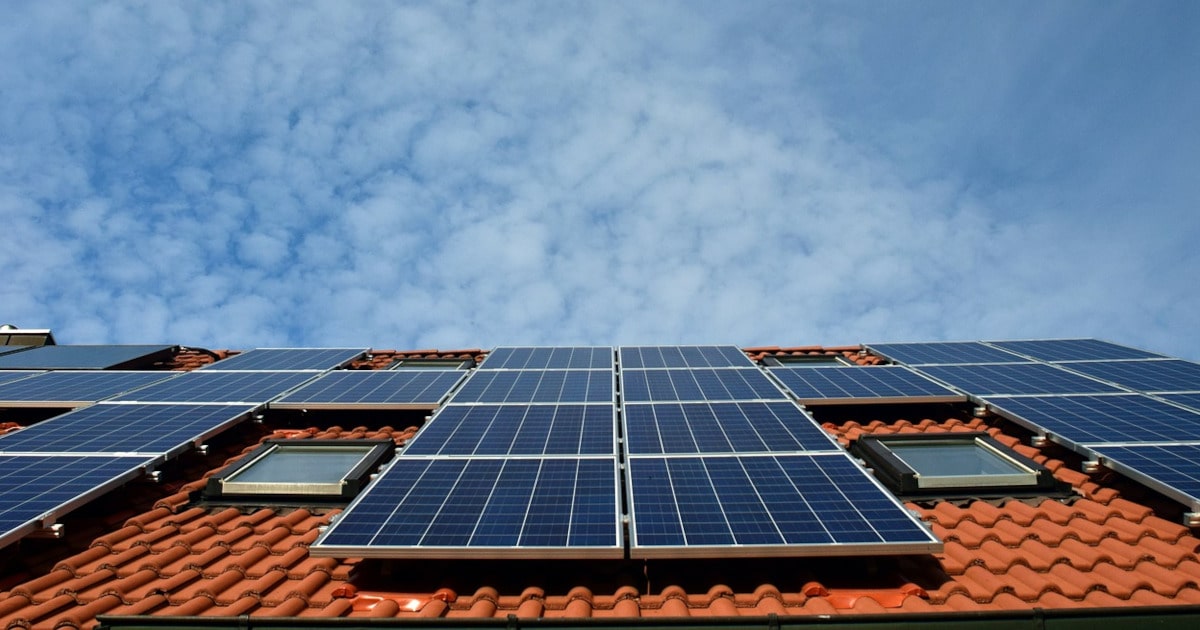](https://interfaithsustain.com/advantages-of-solar-energy/)
## [Exploring the many great advantages of solar energy](https://interfaithsustain.com/advantages-of-solar-energy/)
- [](https://interfaithsustain.com/geothermal-greenhouse/)
## [Growing Garden Plants, Fruits and Vegetables With a Geothermal Greenhouse](https://interfaithsustain.com/geothermal-greenhouse/)
## The Benefits Of Solar Tubes
So, what are the main benefits of solar tubes? Let’s find out.
### Low Maintenance
Solar tubes are [designed](https://www.solarlightsandmore.com/blog/2015/10/exploring-the-benefits-of-solar-tubes/) with a weather resistant acrylic dome that prevents leaks and “also serves to keep it safe from insects, humidity, and sun damage.” If you install solar tubes, you will benefit from the natural light they offer with minimal upkeep.
When installed correctly, these tubes will provide [decades](https://www.angi.com/articles/solar-tube-and-skylight-repair-worth-cost.htm) of free lighting. The average solar tube has a lifespan of 10-20 years, and “higher-end models are said to last as long as 55.”
### Energy efficiency
Solar tubes contribute to an **energy efficient home** by [reducing the need](https://www.homereference.net/solar-tubes-pros-cons/) for electric lighting, saving money on your energy bills. In every room a tube is installed, so that “you’ll no longer have to use an electric light on sunny or even moderately cloudy days.”
[Source](https://unsplash.com/@sonance)
Energy efficiency benefits individuals and the planet at large. For [example](https://energysavingtrust.org.uk/energy-at-home/), in the UK, 21% of the [carbon emissions](https://interfaithsustain.com/decarbonization/) driving climate change come from the home. Solar tubes, which reduce both carbon emissions and energy bills, are a choice consumers can feel good about.
## Solar Tubes Versus Skylights
Solar tubes and skylights both can brighten dark spaces with natural light. Skylights are the more popular option, providing an attractive view and direct natural sunlight, but solar tubes offer their own advantages.
### Design
Solar tubes may appeal to homeowners seeking the environmental or economic benefits of more natural light without a drastic change to their home design: “If you want to bring more light into your living room or bedroom without altering the room’s architecture, solar tubes let you do it.”
Because of their modest size, solar tubes offer a wide range of applications in the home. They work well in smaller spaces where there is no room for a skylight, offering “a practical way to brighten up a small, dim hallway or pantry.”
#### Cost
Skylights are not always the best option for budget-conscious consumers. Solar tubes could be the right choice “if you’re looking for an inexpensive way to introduce natural light to a space in your home and don’t need the full view of the sky that a skylight provides.”
For one, it costs less to install solar tubes, averaging $500-100 when done professionally. In comparison, skylights requires substantial carpentry work that can reach up to $2,000.
When it comes to energy efficiency, skylights may be counterintuitive. On hotter days, the direct sunlight offered by skylights can raise air conditioning costs.
## How Are Solar Tube Lights Installed?
The price of solar tube installation reflects a straightforward process, “with setup, flashing, and finishing taking only a couple of hours or half a day’s work.” For those with building expertise, [do-it-yourself](https://www.solarreviews.com/blog/how-solar-tubes-work) solar tube kits are available at a cost of about $300.
The best choice depends on your level of knowledge as well as the structure of your roof: “in certain more complicated cases where installation requires fitting the tube around wiring, pipes or air ducts, you’ll get better results by hiring a professional.”
### Choosing A Brand
Whether you hire contractors or do it yourself, it is wise to do your research and buy from an established company to meet your specific needs. There are many online resources to guide you in your choice.
Solatube, an Australian brand, has been on the market since the 1980s. Their line offers “several unique attachments to their solar tubes, giving customers plenty of options when it comes to customizing the appearance of their lighting”.
Solatube is a good choice for those seeking light in an overcast climate, because their patented [technology](https://medium.com/@solabritemarketing/do-tube-skylights-work-on-cloudy-days-a7fbd73ec6a1) “leads the pack in terms of light reflectivity, with the highest reflectivity percentage for its solar light tubes, at a level of 99.7%”.
An alternative is Velux, known as “the original Sun Tunnel manufacturer”. Velux offers a flexible tubing range that can ease installation, depending on your home’s architecture.
Velux’s line of [sun tunnels](https://www.velux.co.uk/products/sun-tunnels/pitched-roof) include flex tunnels, which “can be used when the distance between the roof and the ceiling is too small for a rigid tunnel”, as well as rigid tunnels “for when the ceiling is placed directly under the exterior window”.
### Would Solar Tubes Work In My Home?
Not every roof is suited for solar tube lighting. Most solar tubes are designed for roofs with a slope of 15° to 60°.
Flat roofs require special models and careful installation. In some cases, “on a steeply pitched roof, such as an A-frame, installation might not be possible at all.”
[Source](https://unsplash.com/@skyestudios)
In humid environments, “condensation on the inside of the tube is a common problem.” However, there are ways to insulate your tube and prevent this issue ahead of time.
It also depends on your roofing material: “Most solar tube kits are designed for asphalt shingle roofing material, though adapters are readily available which make installation on wood, metal, or tile roof types straightforward.”
It is advisable to check for additional requirements by brand before proceeding with installation. For example, [Velux](https://www.veluxusa.com/landing/solar-daylight-tubes-sun-tubes) requires “6 meters or less between your ceiling and your roof.”
## The Environmental Benefits Of Solar Tubes
The effects of carbon emissions on our environment are well documented. The Paris agreement stresses the necessity of [net zero](https://netzeroclimate.org/what-is-net-zero/), “a state in which the [greenhouse gases](https://interfaithsustain.com/urban-heat-island-effect/) going into the atmosphere are balanced by removal out of the atmosphere.”
**Achieving net zero** requires the cooperation of people, communities, and societies. While these changes can feel daunting, it is empowering to model positive change in our individual choices.
Solar tubes are on example of a small lifestyle change that can add up to make a great deal of difference. Ed Essex, a sustainability advocate living in Washington state, [writes](https://www.motherearthnews.com/homesteading-and-livestock/living-off-grid-solar-tubes/) that solar tubes have reduced his daily light usage by an estimated 90% and are “a must have for any home.”
You do not need to be an avid environmentalist for your choices to be significant. **Climate change affects everyone**, and sustainable choices will bring benefits for ourselves while protecting the planet for future generations.
## Solar Tubes And Religion
In [Eco Bible](https://www.amazon.com/dp/B08LCKLM9G/ref=dp-kindle-redirect?_encoding=UTF8&btkr=1), Rabbis Yonatan Neril and Leo Dee discuss a light source that sounds a lot like a solar tube. They discuss how in Noah’s ark there was a *Tzohar,* which according to the medieval biblical commentator, Rashi, was either an “opening” or a “stone that emits light.” Perhaps it was both.
The solar tube could roughly fit that description by being both an “opening” to outside, but also a stone (or more likely, metal) structure that emits far more light than a simple window. Perhaps Noah built a solar tube in the ark to fill the ark without light, without having to build large glass windows.
As a concluding thought, we can recognize a spiritual message in the solar tube as well. The solar tube takes in light and magnifies it. We can do the same in our work on behalf of Creation.
Sharing the inspiration we receive from our religious texts and environmentalism, we act like solar tubes and magnify that inspiration for others. We can bring more light to God’s Creation: all it takes is a little reflection!
*\* Featured image [source](https://unsplash.com/@juligentx)*
**Categories:** Blog on Faith and Ecology, Renewable Energy
**Tags:** Solar Energy
---
### [The Environmental, Health and Social Impacts of A Solar Lantern](https://interfaithsustain.com/solar-lantern/)
**Published:** January 21, 2022
**Author:** ICSD
**Excerpt:** Harry Cooper - A solar lantern is a light powered by solar batteries. By being outdoors in the sun during the day, the solar panels on the lantern charge its battery, and by night it is ready to be used as a light source.
**Content:**
Table of Contents
Table of Contents
- [What Is a Solar Lantern?](#aioseo-what-is-a-solar-lantern-1)
- [How do Solar Lanterns Work?](#aioseo-how-do-solar-lanterns-work-6)
- [Why Use Solar Lanterns?](#aioseo-why-use-solar-lanterns-9)
- [The Benefits of Solar Energy](#aioseo-the-benefits-of-solar-energy-10)
- [Solar Lanterns Are Cheap](#aioseo-solar-lanterns-are-cheap-16)
- [Solar Lantern Gardens](#aioseo-solar-lantern-gardens-22)
- [Solar Lanterns in the Developing World](#aioseo-solar-lanterns-in-the-developing-world-27)
- [Why is Light so Important?](#aioseo-why-is-light-so-important-30)
- [Solar Lanterns Versus Kerosene](#aioseo-solar-lanterns-versus-kerosene-36)
- [The Health Effects of Kerosene](#aioseo-the-health-effects-of-kerosene-38)
- [The Environmental Effects of Kerosene](#aioseo-the-environmental-effects-of-kerosene-42)
- [Solar lanterns Over Kerosene](#aioseo-solar-lanterns-over-kerosene-48)
- [Solar Lantern Success Stories](#aioseo-solar-lantern-success-stories-53)
- [Solar Lanterns and Religion](#aioseo-solar-lanterns-and-religion-58)
## What Is a Solar Lantern?
*By Harry Cooper* – A **solar lantern** is a light powered by solar batteries. By being outdoors in the sun during the day, the solar panels on the lantern charge its battery, and by night it is ready to be used as a light source.
Solar power was first discovered in France in [1834](https://www.smithsonianmag.com/sponsored/brief-history-solar-panels-180972006/) by Edmond Becquerel. Since then, Solar powered devices have undergone many innovations, and have helped power everything from satellites to our homes.
But, even with solar being one of the most notable [forms of renewable energy](https://interfaithsustain.com/renewable-and-non-renewable-resources/), it still seems a little redundant to use natural light to power artificial lights. However, solar lanterns have already proved themselves useful to many people throughout the world.
Having access to light is a commodity that many people in the developed world often take for granted. Many people don’t realize how amazing it is that solar lanterns are able to provide cheap, consistent light to people who don’t normally have light as a commodity.
## How do Solar Lanterns Work?
Solar lanterns [are made up of](https://www.unitetolight.org/blog/solar-light#/) four parts: the solar panel, the battery, the control electronics, and a led light. Since there is no need to use solar lanterns during the day, they remain in an outdoor space while the sun is out and are ready to use by night.
The **solar panels** convert the sunlight to electricity through photovoltaic cells. These cells contain negatively charged electrons that react to the sunlight. When light hits the negatively charged electrons they become excited and enter a positively charged space in the panel. This creates an electric current that is sent to the batteries to charge them for later use.
- [](https://interfaithsustain.com/tidal-energy/)
## [Tidal Energy As A Potential Energy Source](https://interfaithsustain.com/tidal-energy/)
- [](https://interfaithsustain.com/solar-and-wind-energy/)
## [Understanding the Importance of Solar and Wind Energy in Today’s World](https://interfaithsustain.com/solar-and-wind-energy/)
- [](https://interfaithsustain.com/is-nuclear-energy-renewable/)
## [A Controversial Energy Source: Is Nuclear Energy Renewable?](https://interfaithsustain.com/is-nuclear-energy-renewable/)
## Why Use Solar Lanterns?
### The Benefits of Solar Energy
Solar lanterns are incredibly practical. But before getting into the specific benefits of solar lanterns, we can already see the benefits of solar energy in general.
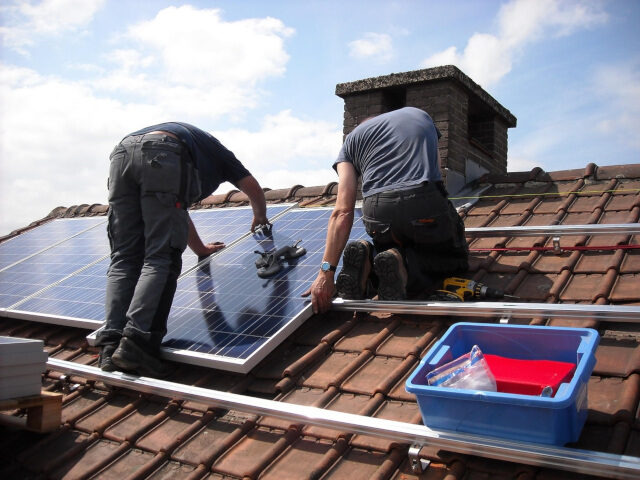[Source](https://pixabay.com/users/mariagodfrida-1297734/)
The most inherent benefit of solar is the fact that it produces no greenhouse gasses whatsoever. As people transition from fossil fuels to solar, [we have seen it](https://environmentamerica.org/feature/ame/true-value-solar) “power more than 6 million homes each year, and resulting in annual carbon dioxide emission reductions equivalent to taking 4.4 million passenger vehicles off the road”.
Using solar panels as a power source for individual items and buildings reduces the need to get power from a centralized power grid. This is important because once localized solar powered systems are installed, the energy is completely free as long as there is enough sunlight.
### Solar Lanterns Are Cheap
Solar panels provide seemingly free, endless, and clean energy. However, running an entire building on the sun can be costly.
The average cost of installing a solar panel in the US can be anywhere from [$10,000-$15,000](https://usgreentechnology.com/reasons-you-should-use-solar-lights/). While they will pay for themselves overtime, installing solar panels is a big investment that not everyone is willing to make.
While using the sun as a power source may be a hassle on a larger scale, using solar lanterns in select places can help people reap the benefits solar powered living without breaking the bank. Using solar lanterns for camping, lighting an outdoor space, or any other outdoor use can help people make use of the power that comes from the sunlight that shines almost everyday, everywhere in the world.
#### Solar Lantern Gardens
Many people have taken advantage of these cheap solar powered lights as outdoor décor for [gardens](https://solarmagazine.com/sustainable-solar-lighting-for-the-garden/). Outdoor solar lanterns are not only practical, but also decorative.
[Source](https://pixabay.com/users/devolk-3045099/)
Outdoor lighting is often difficult because it requires outlets, but an outdoor solar lantern can be a great decorative way to light up a garden at night. And so, many people have turned solar lanterns into a way to combine sustainability and style.
## Solar Lanterns in the Developing World
Solar lanterns can be an easy way for people to use the sun as a power source without making a big investment. However many people don’t realize that the real benefit of a solar powered lantern comes in their use in the developing world.
Many parts of the underdeveloped world lack access to many things the developed world takes for granted such as internet access, clean water, or modern medicine. But what many people don’t think of, is that many people don’t have the ability to light up the dark when need be.
### Why is Light so Important?
**Lighting poverty** is a significant issue in today’s world. Light is [an essential part of development](https://www.weforum.org/agenda/2015/01/how-can-we-switch-off-lighting-poverty/), and many communities find it incredibly difficult to live without.
Living without light prevents kids from learning, businesses from operating, and even doctors from helping patients. Without a reliable light source, communities are strictly limited in what they can accomplish in a day.
Fortunately, many humanitarian efforts have already started trying to provide underdeveloped communities with solar lanterns. Since solar lanterns are such a cheap and renewable source of light, they are an almost perfect solution to the issue of lighting poverty.
## Solar Lanterns Versus Kerosene
It may seem a little hard to believe that light poverty is such a big issue in so many places. After all, fire was one of the first things humanity invented, shouldn’t most people be able to light up the dark in some way or another?
### The Health Effects of Kerosene
As it turns out, many places do have sources of light, although they are unreliable and potentially dangerous to human health. The most infamous and widespread of these unreliable light sources is **kerosene lamps**.
Around [1.6 billion people](https://energyeducation.ca/encyclopedia/Kerosene_lantern) in the world use kerosene lamps as a primary source of lighting. These people live mainly in developing communities that have few options for lighting.
These lamps produce toxic carcinogens when burned that cause indoor air pollution. These harmful chemicals can lead to many harmful diseases, including [tuberculosis, asthma, and cancer](https://www.ncbi.nlm.nih.gov/pmc/articles/PMC3664014/).
### The Environmental Effects of Kerosene
Kerosene lamps are incredibly dangerous to human health, especially when used on a daily basis like they are in many parts of the world. But in addition to being a threat to human health, they can also contribute to climate change.
[Source](https://pixabay.com/users/dokumol-4495957/)
Kerosene lamps burn their fuel incredibly inefficiently. On top of that these lamps emit large amounts of black carbon. Black carbon is a part of soot, a chemical compound that absorbs light at an alarming rate. By doing this, black carbon absorbs energy and prevents it from leaving the atmosphere, [contributing to climate change](https://interfaithsustain.com/evidence-of-climate-change/).
Black carbon is one of the most harmful contributors to climate change. Not only does it help warm the Earth, but it can absorb about [million times more energy](https://www3.epa.gov/airquality/blackcarbon/basic.html) than typical carbon dioxide.
#### Solar lanterns Over Kerosene
Kerosene lamps are incredibly harmful to the planet and the people that use them. Fortunately, the implementation of solar lanterns in developing communities is helping phase them out.
Solar lanterns are powered by completely clean energy, and so they don’t emit any toxic substances that could harm the environment or human health. And so, solar lanterns are not only much cheaper than kerosene lamps because they don’t require any fuel other than being left outside in the sun, but they also eliminate any toxic emissions caused by kerosene.
## Solar Lantern Success Stories
There have been many humanitarian efforts aimed at implementing solar lanterns all over the world. One such successful attempt was the [SEP Lake Victoria Project](https://www.wisions.net/projects/promoting-sustainable-livelihoods-at-lake-victoria-by-introducing-solar-lam). The project aimed at getting solar lamps to night fishermen at Lake Victoria in Uganda and Kenya.
Before the project, night fishermen used kerosene lamps to see by, which not only harmed them, but also the lake’s ecosystem. The lamps were not only used by the fishermen, but also by their families at home. The project aimed at providing 1,000 households with solar lanterns, but in the end it was able provide them to 3,000 households.
Another success story is the development of the [Nokero lamp](https://corp.maxeon.com/blog/light-world-tiny-solar-lanterns-bring-hope-and-light-millions). The CEO of Nokero lamps, Steve Katsaros, sought to design smaller lanterns that were more powerful. In doing so, Nokero developed the most efficient solar lantern on the market today.
These lanterns are small enough to fit in a pocket, yet produce twice as much light as some of their competitors. Nokero lanterns have made their way to light impoverished communities in over 120 different countries, and as solar technologies continue to improve, better solar lanterns will become more widely available.
## Solar Lanterns and Religion
**Liter of Light**, a Filipino-born global grassroots solar lighting movement, marked 500 years of Christianity in the Philippines by [creating one of the largest images of Santo Niño de Cebu in the world out of solar lights](https://www.speedmagazine.ph/solar-lights/). Liter of Light has gifted and given more than 350,000 lights to 15 countries all over the world.
In an article in [Christianity Today](https://www.christianitytoday.com/thisisourcity/7thcity/well-lit-pathway-solar-lamps-poverty.html), Brian Rants describes his work with the company Nokero (short for “No Kerosene”) selling $15 solar lamps to people around the world. Brian Rants is a graduate from Grace College with a Bible degree, and he is using his God-given talents to bring affordable lighting to those living in poverty around the world, who don’t have access to an electric grid.
Rants observes that by selling these lamps instead of just giving them away, people take better care of them. Additionally, his customers give him important feedback that helps him improve the product.
Over a million people die each year from kerosene fires. When individuals live with kerosene lamps, they experience the same health effects of smoking. According to [the article above](https://www.christianitytoday.com/thisisourcity/7thcity/well-lit-pathway-solar-lamps-poverty.html) “When individuals live with kerosene lamps, they experience the same health effects of smoking 40 cigarettes a day.”
Moreover, “The average family off the electric grid spends 10% of their income on kerosene, with many spending up to 25%. When Nokero customers buy the $15 solar lamps, they recoup the purchase price in a few months—sometimes just weeks—from the fuel savings alone.”
This all goes to show that sustainability is good for companies, good for consumers and good for the planet. Solar lanterns are a great example of a sustainable solution that’s lighting the way forward for all of us.
*\* Featured image [source](https://pixabay.com/users/dimitrisvetsikas1969-1857980/)*
**Categories:** Blog on Faith and Ecology, Renewable Energy
**Tags:** Renewable Energy, Resources for Green Living, Solar Energy
---
### [Providing Energy Through A Solar Farm or Solar Project](https://interfaithsustain.com/solar-farm/)
**Published:** May 11, 2022
**Author:** ICSD
**Excerpt:** Harry Cooper - Ever since the industrial revolution the world has relied on fossil fuels for its energy. While this drove development and economic growth, scientists have found the burning of fossil fuels to be detrimental to the environment and the human race.
**Content:**
Table of Contents
Table of Contents
- [Why Solar Energy Is So Important](#aioseo-why-solar-energy-is-so-important-7)
- [How Solar Farms Work](#aioseo-how-solar-farms-work-16)
- [Types of Solar Farm](#aioseo-types-of-solar-farm-24)
- [Pros and Cons of Solar Farming](#aioseo-pros-and-cons-of-solar-farming-28)
- [Pros of Solar Power](#aioseo-pros-of-solar-power-30)
- [Clean, Safe, Modern Technology](#aioseo-clean-safe-modern-technology-31)
- [Cheap Energy Creates a Healthy Economy](#aioseo-cheap-energy-creates-a-healthy-economy-41)
- [Cons of Solar Power](#aioseo-cons-of-solar-power-49)
- [Solar Needs Space](#aioseo-solar-needs-space-50)
- [Solar is Unreliable](#aioseo-solar-is-unreliable-54)
- [Solar Farms and Religion](#aioseo-solar-farms-and-religion-57)
*By Harry Cooper* – Ever since the industrial revolution the world has relied on **fossil fuels** for its energy. While this drove development and economic growth, scientists have found the burning of fossil fuels to be detrimental to the environment and the human race.
Fossil fuels release **greenhouse gases** such as carbon when burned, causing **climate change** on a global scale. While this has threatened the Earth with extreme changes in temperature and weather, fortunately there are many alternatives to fossil fuels that can provide energy, just as efficiently, if not more efficiently than burning fossil fuels.
One such form of **renewable energy** is solar power. Solar power relies on solar panels to capture the light and heat energy that comes from the sun as it hits the Earth.
Many people have started installing solar panels on their individual homes and businesses. This has helped lower personal energy costs and decrease personal carbon footprints, helping switch the world to renewable energy.
While individually solar powered buildings are helpful for the fight against climate change, there are other ways to implement [solar energy](https://interfaithsustain.com/advantages-of-solar-energy/) on a larger scale. This can be done by creating massive photovoltaic power stations, or **solar farms**.
These larger scale farms entail utilizing entire plots of land for fields of **solar panels** collecting **solar energy**. By using these large scale **solar operations**, we can fight climate change not by relying on individuals to install solar panels, but by addressing the societal reliance of fossil fuels, by converting a large portion of our total energy usage to **green energy**.
## Why Solar Energy Is So Important
Renewable resources are resources that renew themselves over time and will hypothetically never run out. However solar energy is a specific type of renewable energy called a [perpetual resource](https://economicpoint.com/perpetual-resources).
Being a **perpetual resource** means that not only will the resource renew over time, but using it will not deplete the resource at all in the first place. These kinds of resources include wind energy, hydroelectricity, [geothermal energy](https://interfaithsustain.com/geothermal-energy-facts/ "geothermal energy"), tidal energy, and of course, solar energy.
Solar energy is one of the most [abundant](https://www.energy.gov/eere/solar/how-does-solar-work#:~:text=When%20the%20sun%20shines%20onto,cell%2C%20causing%20electricity%20to%20flow.) resources on Earth. It is estimated that the amount of sunlight that hits the surface of the Earth in an hour and a half would be enough to fulfil humanity’s energy needs for an entire year.
[Source](https://unsplash.com/@von_co)
- [](https://interfaithsustain.com/is-nuclear-energy-renewable/)
## [A Controversial Energy Source: Is Nuclear Energy Renewable?](https://interfaithsustain.com/is-nuclear-energy-renewable/)
- [](https://interfaithsustain.com/advantages-of-solar-energy/)
## [Exploring the many great advantages of solar energy](https://interfaithsustain.com/advantages-of-solar-energy/)
- [](https://interfaithsustain.com/geothermal-greenhouse/)
## [Growing Garden Plants, Fruits and Vegetables With a Geothermal Greenhouse](https://interfaithsustain.com/geothermal-greenhouse/)
This shows just how viable **solar power generation** is. Utilizing the **green energy** from the sun could help to solve the world’s energy crisis in a **sustainable** and **environmentally friendly** way, by relying on an energy source that will never run out.
### How Solar Farms Work
Solar panels are made of of smaller units called [photovoltaic cells](https://www.livescience.com/41995-how-do-solar-panels-work.html). These cells work by harnessing **solar radiation** and converting it into usable electricity.
The photovoltaic cells are made up of three layers. The top layer is made of phosphorus mixed with silicon, the middle layer pure silicon, and the bottom layer boron mixed with silicon.
These materials mixed together create an electric field. When photons from sunlight hit this field it knocks electrons lose. These lose electrons then travel to a layer of metal around the photovoltaic cells and become electricity which then travels through an electricity grid to be stored in a battery, and eventually through power lines to be used in homes and businesses.
[Source](https://pixabay.com/users/valli_photography-13626041/)
#### Types of Solar Farm
Once the electricity from the solar farm has been stored, there are two different ways this energy can be distributed to the people and buildings that need it. These [two types](https://www.treehugger.com/how-do-solar-farms-work-5201378) of solar farm are called a **utility scale solar farm** and a **community scale solar farm**.
On a community scale solar farm customers tend to have more participation in the operations. A community solar farm involves customers jointly owning or subscribing to solar projects. When customers do this, they receive credit on their utility bills based on how much energy their share of the solar project produces.
A utility scale solar farm works a little differently than a community based one. Instead of having customers being directly or indirectly involved in the solar farm operation, a utility scale solar farm is either run by electric utilities, or run by private companies that sell their solar energy to utilities.
## Pros and Cons of Solar Farming
Thanks to the emerging **solar industry**, **solar installations** are becoming more and more common in the US and the world. But what are the specific benefits and drawbacks of using solar energy?
### Pros of Solar Power
### Clean, Safe, Modern Technology
Solar panels and solar farms are on the cutting edge of modern technology. Their design makes them cleaner and all around [more efficient](https://solarsena.com/pros-cons-solar-farm/).
Unlike fossil fuels, solar energy is an almost completely carbon neutral source of energy. This is because producing solar power emits no carbon or greenhouse gases whatsoever, making it an incredibly viable replacement of fossil fuels to help combat climate change.
A solar farm also has an edge over other types of power plants because it requires so little maintenance. Most solar farms require one time installations with very little upkeep over the years. This is because solar panels require no extra resources while in operation and have no moving parts. This makes them very resistant to degrading over time. Many solar panels can last a couple of decades without any kind of repairs, usually around 25 years.
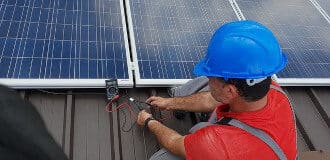[Source](https://pixabay.com/users/theotherkev-9436196/)
This lack of external inputs and moving parts also makes a solar farm a lot simpler in its operation. Without having the massive moving parts and a workforce constantly tending to the machinery, dangerous workplace accidents are much less likely to happen on a solar farm than they would be in more conventional power plants. By creating a safer way to harness power, a solar farm also doesn’t need to worry about as many work place regulations and red tape. Along with this, the lack of complex machinery means a solar farm makes very little noise, making for more peaceful environments.
Along with **solar technology** being cleaner and safer, it is also a very [new technology](https://interfaithsustain.com/what-is-clean-tech/), meaning that it still has a lot of room to become more efficient, as scientists continue researching the potentials of solar technology. By looking at past trends in solar technological development, we can expect to see solar farms becoming even more efficient at producing energy than they already are.
### Cheap Energy Creates a Healthy Economy
The technology behind solar energy is cleaner and safer. Along with this, implementing solar farms can also have numerous benefits for the economy.
For starters, installing solar farms requires one investment in its initial installation, followed by long term returns. This is because solar farms require little maintenance, meaning that there is rarely a need to pay to repair or replace parts on a solar farm. It is estimated that most solar farms pay for themselves after about eight years and after this they continue to generate profit for the rest of their approximately 25 year lifetime. This makes solar farms an incredibly **cost efficient form of energy production**.
Solar farms can also contribute to local economies by creating jobs. While solar farms require little maintenance over their lifetime, they require a lot of initial work to get them up and running. This can provide a lot of jobs to local communities around solar farms. Thus solar farms can contribute to local economies by providing cheap energy and creating a lot of job opportunities.
Source
#### Cons of Solar Power
#### Solar Needs Space
While there are many advantages to installing a solar farm, there are also a few [cons](https://vittana.org/11-prevailing-solar-farms-pros-and-cons), such as the amount of space it takes to build a solar farm. Usually a solar farm requires at least a couple of acres in order to operate properly which results in solar farms usually having to be installed in rural areas.
Once installed, the land used by solar farms can’t really be used for anything else. And because solar farms are often installed in rural areas, it can detract from land that would be used for agriculture by local farmers.
Solar farms can also be harmful to local ecosystems. Because they take up so much space, solar farms can encroach on local wildlife habitats. This can force many animals out of their homes and destroy nearby ecosystems.
#### Solar is Unreliable
It should come as no surprise that solar energy is incredibly reliant on the sun. When the sun doesn’t shine because of overcast weather solar panels can’t produce as much electricity. Solar panels also fall short in producing energy during the winter time because of the shorter days.
Because **solar energy production** is so dependent on weather, it can make it very hard to predict just how profitable a solar farm will be each year. This inconsistency can also be a problem because many homes and businesses rely on energy, and not being able to count on consistent energy can be a nuisance.
## Solar Farms and Religion
**The Interfaith Center for Sustainable Development** (ICSD) is building “**large-scale solar fields** on **Anglican church lands in Mozambique**” as part of the [Faith Inspired Renewable Energy Project in Africa](https://interfaithsustain.com/faith-inspired-renewable-energy-project-in-africa/), in partnership with organizations like [Gigawatt Global Coöperatief U.A](https://gigawattglobal.com/)., [Green Anglicans–Anglican Church of Southern African Environmental Network](https://www.greenanglicans.org/), [Shine Campaign](https://theshinecampaign.org/) and [PaRD](https://www.partner-religion-development.org/) (The International Partnership on Religion and Sustainable Development).
As **Pope Francis** wrote in *Laudato Si: On Care for Our Common Home*: “Taking advantage of abundant solar energy will require the establishment of mechanisms and subsidies which allow developing countries access to technology transfer, technical assistance and financial resources.” ICSD is working hard to make Pope Francis’ dream of utilizing our planet’s “abundant solar energy” come true.
*\* Featured image [source](https://pixabay.com/users/theotherkev-9436196/)*
**Categories:** Blog on Faith and Ecology, Renewable Energy
**Tags:** Solar Energy
---
### [Understanding the Importance of Solar and Wind Energy in Today’s World](https://interfaithsustain.com/solar-and-wind-energy/)
**Published:** July 22, 2022
**Author:** ICSD
**Excerpt:** Aaron Norton - A renewable power source is one that will never run out in nature, because it naturally replenishes or recycles itself, and is included in the umbrella term "sustainable" energy source. A sustainable energy source is one that is able to be used for the foreseeable future, without depleting the source entirely.
**Content:**
Table of Contents
Table of Contents
- [Introduction to Renewable Energy Sources](#aioseo-introduction-to-renewable-energy-sources-3)
- [Solar Energy](#aioseo-solar-energy-5)
- [Wind Energy](#aioseo-wind-energy-8)
- [The History of Solar and Wind Power](#aioseo-the-history-of-solar-and-wind-power-16)
- [Advantages of Solar and Wind](#aioseo-advantages-of-solar-and-wind-19)
- [Disadvantages of Solar and Wind](#aioseo-disadvantages-of-solar-and-wind-24)
- [Clean Energy and Religion](#aioseo-clean-energy-and-religion-29)
- [Wind Energy and Religion](#aioseo-wind-energy-and-religion-30)
- [Solar Energy and Religion](#aioseo-solar-energy-and-religion-35)
*By Aaron Norton* – A **renewable power source** is one that will never run out in nature, because it naturally replenishes or recycles itself, and is included in the umbrella term “sustainable” energy source. A **sustainable energy source** is one that is able to be used for the foreseeable future, without depleting the source entirely.
Therefore, sustainable energy is an energy source that can be used without worry of it running out any time soon. Even though all renewable energy sources are considered sustainable, not all sustainable energy sources are considered forms of renewable energy.
## Introduction to Renewable Energy Sources
**Solar and wind energy** both are considered renewable energy sources, because they both technically come from the sun’s rays, which aren’t going to disappear for many lifetimes to come. So, as long as the sun shines on the earth, we’ll continue to be able to harness solar and wind power, and generate electricity with them.
### Solar Energy
**Solar power** is produced in large solar energy systems, by using photovoltaic (PV) solar panels that house large numbers of solar cells that generate power by absorbing energy and radiation from the sun, which is then converted into electricity. The most ideal places for solar panels depends on the geography and what type of environment (rural, suburban, or urban) the solar panels are going to be located in.
In rural communities it’s ideal to place PV panels in a flat, open space, facing south and tilted at a [30 or 40 degree](https://keepthatshort.com/where-is-the-best-place-to-build-a-solar-farm) angle to maximize their exposure to sunlight, especially during the summer months. In urban areas, it’s possible and effective to place PV panels on the tops of skyscrapers and other tall buildings, as long as they’re not spending a significant amount of time in the shade of surrounding structures.
### Wind Energy
**Wind energy** is produced in wind farms comprised of wind turbines that generate electricity as the wind blows through the wind farm and turns the blades of the turbines, which are connected to a generator. Wind power is harnessed indirectly from sunlight, as wind itself is caused by the uneven heating of the Earth and atmosphere by the sun as a result of uneven and inconsistent topographical and geographical features of the Earth’s surface.
[Source](https://unsplash.com/@samyzfs/)
Places that are heated more than others have warmer air which is lower pressure than that of cooler areas that have cooler, higher pressure air. The cool, high pressure air then moves towards the warmer, more high pressure areas, creating wind as we know it to be.
The most optimal locations to build wind turbines are, naturally, in areas that have the highest and most consistent average wind speeds. These locations are mostly in rural areas, ideally at high elevations, and, according to the [US EIA](https://www.eia.gov/energyexplained/wind/where-wind-power-is-harnessed.php), are most favorable “on the tops of smooth, rounded hills; open plains and water; and mountain gaps that funnel and intensify wind”. Locations near the coast are also optimal locations for a wind turbine and electricity generation because of strong offshore wind that’s good for turning the blades of the turbines.
- [](https://interfaithsustain.com/solar-tubes/)
## [Save Money, Save Energy, Save Earth With Sustainable Solar Tubes](https://interfaithsustain.com/solar-tubes/)
- [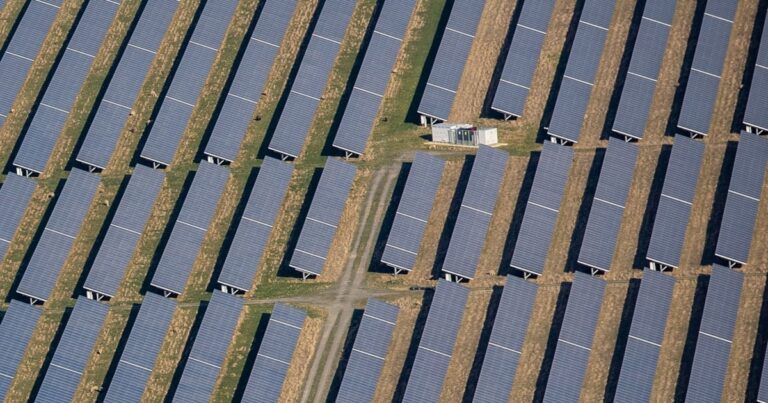](https://interfaithsustain.com/solar-farm/)
## [Providing Energy Through A Solar Farm or Solar Project](https://interfaithsustain.com/solar-farm/)
- [](https://interfaithsustain.com/diy-wind-turbine/)
## [The Global And Individual Benefits of A DIY Wind Turbine](https://interfaithsustain.com/diy-wind-turbine/)
### The History of Solar and Wind Power
Both wind and solar power have been harnessed and used by humans for millennia for a variety of different functions. Wind power has been used to propel sails and sailboats, power water pumps, and even grind grain and [produce food](https://www.eia.gov/energyexplained/wind/history-of-wind-power.php). It wasn’t until European settlers came to America and the West that wind and solar technologies advanced into the systems that perform the functions that they do today.
Clean energy from sustainable and renewable energy sources has become much more popular in the past decade, not only for residential use, but also on a utility scale, with solar energy accounting for “[28% of the world’s renewable electricity generation capacity, just ahead of wind with 27%](https://www.forbes.com/sites/dominicdudley/2022/04/12/solar-overtakes-wind-energy-for-first-time-in-global-rush-for-renewables/?sh=7d57f07569a9)“. Because the popularity of wind and solar power has increased, so has accessibility to the infrastructure required in order to utilize both forms of [renewable energy](https://interfaithsustain.com/green-energy-exchange/).
#### Advantages of Solar and Wind
There are many advantages of wind and solar power plants that make them more favorable than fossil fuels like coal and natural gas, the main one being that they’ll never run out or stop producing electricity, whereas the supply of fossil fuels is very finite. They are also favorable over types of sustainable electricity and energy like bioenergy and biofuels, as even those will eventually stop being able to replenish themselves.
Wind farms and solar energy systems don’t produce any significant carbon or greenhouse gas emissions, as opposed to large power plants that use traditional sources of energy, which emit huge amounts of pollution into the atmosphere. At a time where the effects of climate change are visible all around us in virtually every corner of the world, sustainable and renewable energy are important things to invest in, in order to combat the very real effects of climate change that nearly every person on earth is living with.
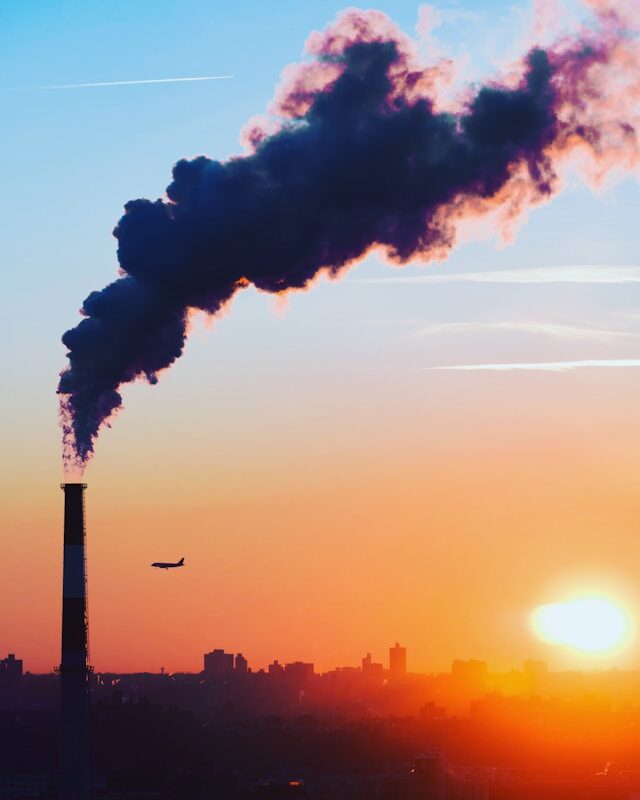[Source](https://unsplash.com/@thijsstoop/)
#### Disadvantages of Solar and Wind
Perhaps the most obvious disadvantage of these forms of sustainable and clean energy is the amount of land required to house both solar panels and wind turbines, the physical infrastructures required for electricity generation. In order to produce significant amounts of solar power, and be considered a utility scale power plant, a large number of PV panels, and land to house them, are required, which isn’t possible for some communities. Also, in order to generate wind energy, wind turbines are required to “catch” the wind and then convert it to electricity, which are seldom established in a residential setting at this point.
Despite the increased use of sustainable and renewable sources over the past few decades, the amount of electricity generated in the United States was still only a fraction of all electricity generation in the country, sitting at about [3%](https://www.eia.gov/todayinenergy/detail.php?id=50357) in the year 2020. In many local and national economies, it’s much easier for businesses to stick with forms of traditional energy that they’ve been using for decades
## Clean Energy and Religion
### Wind Energy and Religion
Rabbi Yonatan Neril, the founder of the ICSD, and Rabbi Leo Dee speak about what Judaism has to say concerning Local Energy in Volume 2 of their Eco Bible:
> *Numbers 15:32 – Once, when the Israelites were in the wilderness, they came upon a man gathering wood on the Sabbath day.*
>
> According to Jewish law, picking up fallen pieces of wood on Shabbat is not a sin punishable by death, yet this man was given the death penalty. Rabbi Don Isaac Abarbanel (15th–16th century) suggests, “Since the desert is a place where wood is not easily found, it is possible that he went outside the permitted limits of the camp on Shabbat and gathered the wood back in.” This suggests that he transported sticks from the public to the private domain and traveled too far outside his camp to collect fuel – both forbidden acts of “work” on Shabbat. Distributed solar power has the lowest transmission loss, as it can be sited near the customer (consider a solar panel on your roof). Wind power, despite generally being sourced further from the customer, has the highest efficiency of power conversion.
### Solar Energy and Religion
The Lubavitcher Rebbe [spoke strongly](https://books.google.co.il/books?id=FmabnhsgSVAC&pg=PA254&lpg=PA254&dq=There+is+especially+a+great+availability+of+solar+heat+in+the+south+of+country.+It+would+be+fairly+simple+to+transport+this+energy+throughout+the+country.+This+energy+source+requires+very+little+time,+relative+to+the+time+needed+to+develop+other+energy+sources+which+require+heating,+etc.+How+will+it+be+possible+to+succeed?+It+will+be+successful+if+it+is+built+upon+G-d%27s+assistance,+upon+belief+in+G-d.+Then+they+will+be+able+to+ignore+the+claims+and+libels+proposed+by+those+who+might+personally+profit+by+impeding+this+development.&source=bl&ots=K-JaCQOZrQ&sig=ACfU3U1W8QDbUfPStB5Rz8xF-ZoMcmmS0g&hl=en&sa=X&ved=2ahUKEwibv8TE-rH4AhWEg_0HHS2fBfkQ6AF6BAgCEAM#v=onepage&q=There%20is%20especially%20a%20great%20availability%20of%20solar%20heat%20in%20the%20south%20of%20country.%20It%20would%20be%20fairly%20simple%20to%20transport%20this%20energy%20throughout%20the%20country.%20This%20energy%20source%20requires%20very%20little%20time%2C%20relative%20to%20the%20time%20needed%20to%20develop%20other%20energy%20sources%20which%20require%20heating%2C%20etc.%20How%20will%20it%20be%20possible%20to%20succeed%3F%20It%20will%20be%20successful%20if%20it%20is%20built%20upon%20G-d's%20assistance%2C%20upon%20belief%20in%20G-d.%20Then%20they%20will%20be%20able%20to%20ignore%20the%20claims%20and%20libels%20proposed%20by%20those%20who%20might%20personally%20profit%20by%20impeding%20this%20development.&f=false) for the need to develop solar energy capabilities in America:
> There is especially a great availability of solar heat in the south of country. It would be fairly simple to transport this energy throughout the country. This energy source requires very little time, relative to the time needed to develop other energy sources which require heating, etc. How will it be possible to succeed? It will be successful if it is built upon God’s assistance, upon belief in God. Then they will be able to ignore the claims and libels proposed by those who might personally profit by impeding this development.
Fighting for clean energy like solar and wind shouldn’t be in conflict with belief in God. In fact, it is our belief in God that the Lubavitcher Rebbe believed would help us overcome the lies and distortions of the fossil fuel industry that are impeding our progress to this day. May God help us to bring the Lubavitcher Rebbe’s vision to life soon of a world powered by [sustainable energy](https://interfaithsustain.com/environmental-progress-sustainable-energy/).
*\* Featured image [source](https://unsplash.com/@publicpowerorg)*
**Categories:** Blog on Faith and Ecology, Renewable Energy
**Tags:** Renewable Energy
---
### [Wind energy pros and cons: A Deeper Look](https://interfaithsustain.com/wind-energy-pros-and-cons/)
**Published:** June 11, 2021
**Author:** ICSD
**Excerpt:** Matthew Mausner - When we speak of wind energy, we are speaking of the ability to generate power through the harnessing of wind. it's the category of power generation from harnessing the wind. With technology that includes including fans, windmills, propellers, or other forms of wind turbines, humans have discovered and invented many ways of turning the naturally flowing force of wind into usable renewable energy.
**Content:**
Table of Contents
Table of Contents
- [What is wind energy?](#aioseo-what-is-wind-energy-4)
- [The history of wind power](#aioseo-the-history-of-wind-power-6)
- [Wind energy pros and cons](#aioseo-wind-energy-pros-and-cons-12)
- [Wind Energy is a Clean Source of Power](#aioseo-wind-energy-is-a-clean-source-of-power-16)
- [Modern Wind Energy](#aioseo-modern-wind-energy-18)
- [Pros and cons of wind energy](#aioseo-pros-and-cons-of-wind-energy-20)
- [For the Birds](#aioseo-for-the-birds-24)
- [Wind as a Renewable Source](#aioseo-wind-as-a-renewable-source-26)
- [Meteorology](#aioseo-meteorology-28)
- [Advantages of Wind Energy](#aioseo-advantages-of-wind-energy-30)
- [Economic Advantages](#aioseo-economic-advantages-32)
- [Environmental Advantages](#aioseo-environmental-advantages-35)
- [Use of Modern Technology](#aioseo-use-of-modern-technology-37)
- [Great Potential for Residential Uses](#aioseo-great-potential-for-residential-uses-39)
- [Biblical wind](#aioseo-biblical-wind-41)
*By Matthew Mausner* – When we speak of wind energy, we are speaking of the ability to generate power through the harnessing of wind. It’s the category of power generation from harnessing the wind. With technology that includes fans, windmills, propellers, or other forms of wind turbines, humans have discovered and invented many ways of turning the naturally flowing force of wind into usable [renewable energy](https://interfaithsustain.com/advantages-of-solar-energy/). Exploring wind energy pros and cons helps us better understand its potential and limitations as a renewable energy source.
## **What is wind energy?**
Except in some very unique parts of the earth’s atmosphere, the force of air moving is inconsistent. Wind is a function of weather patterns, pressure differentials, sunlight, latitude, topography (i.e. flat land vs. mountainous terrain), and land vs. water. Thus the critical con of harnessing wind energy is, quite simply, that it is entirely dependent on how much the wind blows.
## **The history of wind power**
There is evidence that humans have always understood and used wind in various ways, possibly going back tens of thousands of years, for uses as varied as fanning fires to sailing early rafts and canoes across the seas and oceans. Wind power to turn turbines in the familiar form of windmills dates back at least 1,000 years, all across Eurasia from China and India to the Muslim world and Christian Europe.
Often it was used to power mills for grain or to move water for irrigation. The most famous medieval use is probably the windmills in the Netherlands which removed water from ‘polder’ swamps near, or even below, sea level and created a larger amount of for land for cultivation and habitation, giving Holland its distinct character, (the ‘Low Countries’).
[Source](https://pixabay.com/users/dd15-1459154/)
[Source](https://unsplash.com/@pedrosanz)
### **Wind energy pros and cons**
We can take a look at some of the **pros and cons** of generating electricity from wind turbines. Wind energy is a relatively straightforward type of renewable energy because once it’s set up, it doesn’t require a lot of maintenance, and doesn’t pollute the air or water. It’s already a significant and growing part of the total energy footprint in many western countries, powering about 7% of the electric grid in the U.S. and 6% globally. However, this clean energy source also poses certain cons with a few specific disadvantages.
- [](https://interfaithsustain.com/is-nuclear-energy-renewable/)
## [A Controversial Energy Source: Is Nuclear Energy Renewable?](https://interfaithsustain.com/is-nuclear-energy-renewable/)
- [](https://interfaithsustain.com/geothermal-greenhouse/)
## [Growing Garden Plants, Fruits and Vegetables With a Geothermal Greenhouse](https://interfaithsustain.com/geothermal-greenhouse/)
- [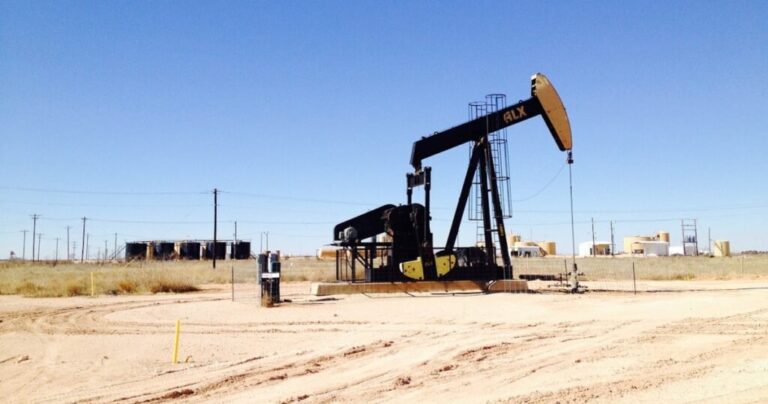](https://interfaithsustain.com/perpetual-resources/)
## [Mankind Must Switch to Perpetual Resources](https://interfaithsustain.com/perpetual-resources/)
#### **Wind Energy is a Clean Source of Power**
The production of **wind energy** is considered “clean.” Unlike burning coal or oil, creating energy from the wind doesn’t [pollute the air](https://interfaithsustain.com/air-pollution-solutions/) or require or disperse any destructive chemicals. Wind energy lessens any given country’s reliance on fossil fuels from outside nations as well, which helps a the national economy and offers a variety of other benefits as well as other ‘circular economic’ benefits. Thus, wind energy reduces the need for fossil fuel imports from other nations.
#### **Modern Wind Energy**
Wind energy in the modern sense is a renewable energy that harnesses energy generated by wind through the use of **wind turbines** that convert it into it into electricity. Wind is generated from the uneven heating of the atmosphere, mountains, valleys, and the planets revolution around the sun. The first windmill used specifically for electricity production was built in 1888. [The way wind turbines work](https://interfaithsustain.com/how-does-wind-energy-work/ "The way wind turbines work") boils down to a process where the kinetic energy of the wind turns the blades of the turbine around a rotor, which is what creates usable electricity.
### **Pros and cons of wind energy**
Certain renewable energies work better in different regions of the world depending on the local limitations and circumstances. Wind is a clean, renewable energy source, and is one of the most cost-effective sources for electricity. One of the disadvantages is that wind turbines can be noisy and unappealing aesthetically: some people even consider them an eyesore. Another major con, that is actually similar to solar power, is the issue that wind power is also intermittent, meaning that turbines are reliant on weather and therefore aren’t capable of generating electricity 24/7. Politicians, policymakers, and consumers should determine which works best for their part of the country.
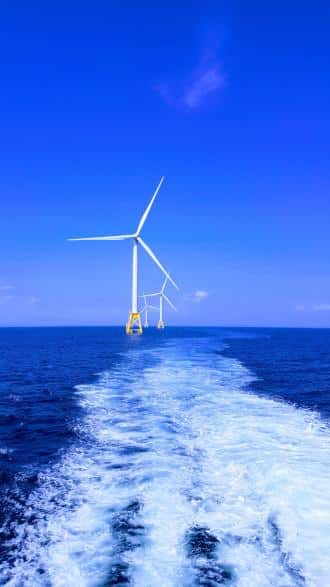[Source](https://unsplash.com/@dakinshaun)
#### **For the Birds**
Wind turbines need to be sited and operated properly to avoid, minimize, and mitigate effectively for the impacts that they can have on birds and other wildlife. Some large turbines’ powerful air flow draws in and kills birds, and the noise and [distortions to natural air flow](https://www.audubon.org/news/wind-power-and-birds) also affect bats and insects.
#### **Wind as a Renewable Source**
We call wind a renewable asset, because it does not get exhausted like other finite non-renewable assets. The expense of delivering wind energy has dropped fundamentally lately, and as the techniques become more efficient and using it becomes more popular with the general population, it will just continue to become cheaper. Depending on the materials used in building a wind energy system, it often pays for itself relatively quickly.
#### **Meteorology**
In essence, the wind is caused by a combination of rotation of the earth, heating of the atmosphere by the sun, differences in air pressure due to ocean currents and and earth’s surface irregularities, and other complex factors, yet it has become generally predictable and reliable in many locations. With our advances in sophisticated sensing equipment and algorithmic modeling of the weather, we’re getting far better at optimizing our ability to capture the wind. Thus, we should be able to use wind energy to generate power as long as the sun shines and the wind blows.
## **Advantages of Wind Energy**
Wind energy generates electricity without polluting air or water, and without adding greenhouse gases to the atmosphere. Wind energy has some unique environmental and economic benefits as well as some cons. It is an efficient option for many different parts of the world since it doesn’t depend on direct sunlight exposure like solar energy.
### Economic Advantages**
**Wind farms** or individual turbines can be expensive to build and install because of high quality materials and composites that are needed. They should be both light and strong and optimally designed to translate the maximum functional leverage of the airflow into rotational energy. However, once built and set up, operating costs are relatively low. Wind itself is free, and the turbines don’t require too much maintenance over the course of their lifetime. Wind “farms” can be difficult to install, with upfront costs of installing and operating costs of up to $1,000 per turbine or far more for larger models. There are wind farms in carefully chosen selected locations around the world, and when those they are well chosen locations with steady wind, it’s a win-win.
By certain measures, wind energy creates far more jobs than a coal plant or than a nuclear power plant per unit of energy generated. Wind does not need to be mined or transported, in effect taking off two of the expensive costs out of long-term energy expenses. The cost of **wind-generated electricity** has fallen from nearly 40¢ per kWh in the early 1980s to 2.5-5¢ today, depending on wind speed and project size. The revenue from a wind farm can add a new source of property taxes income in rural areas that otherwise have a hard time attracting new industry.
### **Environmental Advantages**
Wind turbines generally produce no emissions or pollution that would wind up in in our lakes and streams. Making the choice to use more wind energy also arguably conserves water resources: to produce the same amount of electricity with nuclear power can take about 600 times more water than wind. Other sources of electricity produce harmful emissions which contribute to global climate change, acid rain and generally the poisoning of our air, and water and soil. Wind farms are spaced spread out over a large geographic area, but their actual “footprint” covers only a small portion of land, resulting in a relatively smaller impact on crop production or livestock grazing.
### **Use of Modern Technology**
New techniques with better materials, gearing, and efficiencies can generate ever more electricity, require less maintenance, and run more quietly and safely. Turbines are increasingly being manufactured for a wide range of sizes and customizations for farms, factories, and large private residences or estates. **Portable wind turbines** are also available and can power small devices on the go, such as smartphones and iPads, for example; wind and solar are sometimes fully adequate for a boat’s voyage. **Cutting edge technology** has transformed older standard windmills into extremely efficient energy harvesters.
### **Great Potential for Residential Uses**
Using wind as an energy source is increasingly appealing to the residential market. People are able to generate their own electricity with wind power in the same manner as people do with the best solar panels. In addition to this, wind-powered homeowners also gain access to something called net metering. Often your home-scale wind turbines are generating more power than your house needs- and the extra energy is sent into the larger regional power network. Net metering provides credit to electricity bills for any excess power generated in a given month. You actually get paid for extra energy production, offsetting what you spend. This method can even protect from blackouts as well as fluctuating energy prices.
## **Biblical wind**
Exodus 14:21 – “Then Moses held out his arm over the sea and the Lord drove back the sea with a strong east wind all that night and turned the sea into dry ground. The waters were split.” The book of Exodus describes a miracle, by natural means of wind, to split the Red Sea. The ‘kamikaze’ or **divine wind** saved the Japanese islands from a massive Mongol invasion. Those are extreme cases, but from the perspective of spirituality, God has placed in creation this amazing resource, insubstantial yet incontestably real, which almost miraculously, we can be used to power our lives without the need for ‘revealed miracles’.
Wind energy is in many ways the simplest and **cleanest of all the renewable energies**. In a way, the **golden age of wind energy** was hundreds of years ago when wind was virtually the only power source to transport goods and services around the world via sailing ships. Scientists published a 2017 study and environmental roadmap on how most countries in the world could transition to 100% wind, water, and solar energy by 2050. Perhaps as our society today becomes more and more sustainable, we can sail more and more in that direction.
\* *Featured image [source](https://unsplash.com/@rawfilm)*
**Categories:** Blog on Faith and Ecology, Renewable Energy
**Tags:** Renewable Energy, Wind Energy
---
### [Understanding Wind Energy and Wind Turbines](https://interfaithsustain.com/how-does-wind-energy-work/)
**Published:** August 27, 2021
**Author:** ICSD
**Excerpt:** Abby Rabinowitz - Wind power is a clean, commonly used source of renewable energy. Wind turbines use energy captured from the wind and converts it into usable electrical energy.
**Content:**
Table of Contents
Table of Contents
- [The Capacity of Wind Turbines](#aioseo-the-capacity-of-wind-turbines-5)
- [Modern Wind Turbines](#aioseo-modern-wind-turbines-11)
- [Wind Becomes Electricity](#aioseo-wind-becomes-electricity-17)
- [Generating Electricity From Kinetic Wind Energy](#aioseo-generating-electricity-from-kinetic-wind-energy-19)
- [Wind Speed](#aioseo-wind-speed-21)
- [Does Wind Power Need Wind?](#aioseo-does-wind-power-need-wind-24)
- [Wind Energy: On The Land and In The Sea](#aioseo-wind-energy-on-the-land-and-in-the-sea-32)
- [Storing Wind Energy](#aioseo-storing-wind-energy-35)
- [Our Future Using Wind Energy](#aioseo-our-future-using-wind-energy-39)
*By Abby Rabinowitz* – **[Wind power](https://interfaithsustain.com/wind-energy-pros-and-cons/ "Wind power")** is a clean, commonly used source of renewable energy.
**Wind turbines** use energy captured from the wind and converts it into usable electrical energy.
**Wind farms** are collections of turbines that generate large quantities of electricity without emitting any pollutants or greenhouse gases into the air, making them a clean alternative to other power sources.
## The Capacity of Wind Turbines
Wind turbines are typically around [79 meters (260 feet) high](https://www.explainthatstuff.com/windturbines.html). The top section of each turbine, known as the nacelle, rotates so that the blades in the wind face the turbine.
Currently, there are over [60,000 wind turbines in the United States](https://cleanpower.org/news/us-wind-industry-delivers-strong-first-quarter/) alone. Those turbines have a combined output of 105,583 megawatts. That is enough energy to power over 31 million houses!
Wind turbines work using an 18 foot rotor which allows for the generation of around [8,000 kWh ](https://www.clean-energy-ideas.com/wind/wind-turbines/how-much-energy-does-a-wind-turbine-produce/)of electric power when powered by winds of approximately 12 miles per hour. According to the [Wind Energy Foundation](https://windenergyfoundation.org/about-wind-energy/faqs/), a single turbine of this size can produce nearly 100% of the electricity needed for an average American home.
### Modern Wind Turbines
There are various [types of wind turbines](https://www.eia.gov/energyexplained/wind/types-of-wind-turbines.php) used to generate renewable energy.
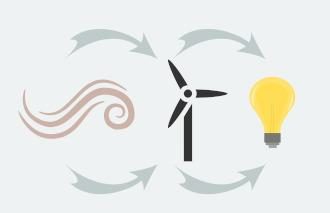[Source](https://pixabay.com/users/mohamed_hassan-5229782/)
Vertical axis turbines are available in numerous types however most commonly seen in the Darrius model. These turbines are omnidirectional, or facing in all directions, so the turbine can produce energy without being turned to face the wind.
Horizontal axis turbines can be recognized by their three main blades. These blades can be moved in order to face the wind and maximize their efficiency. They are used more commonly than Vertical axis turbines.
- [](https://interfaithsustain.com/tidal-energy/)
## [Tidal Energy As A Potential Energy Source](https://interfaithsustain.com/tidal-energy/)
- [](https://interfaithsustain.com/solar-and-wind-energy/)
## [Understanding the Importance of Solar and Wind Energy in Today’s World](https://interfaithsustain.com/solar-and-wind-energy/)
- [](https://interfaithsustain.com/is-nuclear-energy-renewable/)
## [A Controversial Energy Source: Is Nuclear Energy Renewable?](https://interfaithsustain.com/is-nuclear-energy-renewable/)
### Wind Becomes Electricity
So, how does wind energy work? On wind farms, turbines spin and use wind to convert the energy found in the wind into electrical energy. The process starts when wind turns a rotor on top of a tower and force the blades to spin. The spinning blades power an electrical generator that produces electricity, which in turn forms usable power from the kinetic energy in the wind.
### Generating Electricity From Kinetic Wind Energy
In order to create electricity from wind energy there are two key components required. The first is a generator or turbine that uses the kinetic energy of moving air which spins a rotor. The second is an electric power converter or alternator which transforms the rotor’s kinetic energy into a usable electrical current.
#### Wind Speed
Wind turbines come with either one-bladed rotating devices called propellers or multiple bladed rotors on shafts. The blades catch the wind and can rotate at speeds of up to [320 km/hour](https://www.sciencedirect.com/topics/engineering/floating-offshore-wind-turbine) . This force causes the blades to push against the spinning mass, like a lever pushing against a fulcrum, generating torque proportional to both speed and area swept per revolution by each rotor blade.
In order to generate energy for the power grid, it takes a [10-20 RPM (revolutions per minute)](https://www.hydroquebec.com/learning/eolienne/) of speed. As a result, turbine blades are built with a calculated curve in order for their surfaces to capture as much wind as possible. The wind’s kinetic energy can spin a central shaft turning which turns a drive shaft.
## **Does Wind Power Need Wind?**
Some people worry that wind power is limited because wind levels are unpredictable. In times of minimal wind, the power generated can vary and prove to be inadequate, resulting in blackouts. However, in order to combat this, wind turbines are typically coupled with traditional [fossil fuel energy sources](https://interfaithsustain.com/wind-energy-pros-and-cons/) such as oil, gas, or coal.
In addition, when used on a large scale, wind turbines are often spread out over many different locations, resulting in a lattice configuration that diversifies a customer’s exposure to wind across multiple locations. This diversification of regions helps guarantee a relatively steady supply of wind energy throughout the year.
Wind turbines are also typically built in regions with high wind levels on tall ground where wind speeds are greater. Before people invest in wind farms, there are often multiple studies and a search conducted in order to find the best possible place for a wind farm. This maximizes the efficiency of those wind farms and their ability to capture more energy from the passing air currents.
[Source](https://pixabay.com/users/distelapparath-2726923/)
### Wind Energy: On The Land and In The Sea
Wind turbines can be used either on land or offshore in order to generate electricity, which is then delivered through power lines to homes and businesses near the source. While historically land based wind farms have been more popular, more recently, offshore windfarms have gained in popularity.
Off shore windfarms are located over water where the offshore wind tends to blow faster and more consistently than on land, resulting in fewer interruptions. However, most wind farms are currently located on land, and use onshore wind to power the turbines.
### Storing Wind Energy
In addition to pairing wind energy with fossil fuels and strategically positioning wind turbines to ensure a constant supply of wind energy, the national department of energy and scientists are also exploring ways to efficiently store wind energy.
New research findings show that in the future, electric batteries, such as lithium car batteries, may be used to store the energy generated by the wind turbines. This would reduce the vulnerability of small turbines to wind fluctuations, enabling them to become a reliable, primary energy source.
During periods of heavy wind, excess wind, that is now wasted, would be stored enabling customers to utilize stored wind energy at times of low wind.
#### Our Future Using Wind Energy
As storage technology advances, it is likely that wind energy will become a pervasive clean, cost effective, power source that will allow for energy efficiency. [Over 40 religious groups](https://cleanenergy.org/blog/creationcare/) have already adopted wind power in their communities, will yours be next?
*\* Featured image [source](https://pixabay.com/users/al3xanderd-1476718/)*
**Categories:** Blog on Faith and Ecology, Renewable Energy
**Tags:** Renewable Energy
---
### [Exploring the many great advantages of solar energy](https://interfaithsustain.com/advantages-of-solar-energy/)
**Published:** June 9, 2021
**Author:** ICSD
**Excerpt:** Matthew Mausner - Turning sunlight into energy is a remarkable accomplishment. Solar energy refers to photovoltaic cells contained within a solar panel, which turn the sun's radiation directly into usable energy in a human-created power grid. Solar energy is in certain ways the best way to generate electricity locally and relatively sustainably in climates and locations with lots of sunlight.
**Content:**
Table of Contents
Table of Contents
- [Solar use in the world today](#aioseo-solar-use-in-the-world-today-5)
- [What are the advantages of solar power compared to other options?](#aioseo-what-are-the-advantages-of-solar-power-compared-to-other-options-10)
- [Disadvantages of fossil fuels as compared to solar](#aioseo-disadvantages-of-fossil-fuels-as-compared-to-solar-18)
- [Smart and efficient solar systems](#aioseo-smart-and-efficient-solar-systems-21)
- [Disadvantages of other renewable energy sources aside from solar](#aioseo-disadvantages-of-other-renewable-energy-sources-aside-from-solar-24)
- [Mining the materials used in solar panels](#aioseo-mining-the-materials-used-in-solar-panels-27)
- [Assessing the costs and benefits of solar](#aioseo-assessing-the-costs-and-benefits-of-solar-29)
- [Disadvantages of Solar: Local environmental impact](#aioseo-disadvantages-of-solar-local-environmental-impact-31)
- [Solar Energy as a solution](#aioseo-solar-energy-as-a-solution-35)
- [Is Solar enough?](#aioseo-is-solar-enough-38)
- [Spiritual benefits of solar](#aioseo-spiritual-benefits-of-solar-42)
- [Oil in the Bible](#aioseo-oil-in-the-bible-46)
- [What does the Bible imply about oil? (Solar didn't exist then)](#aioseo-what-does-the-bible-imply-about-oil-solar-didnt-exist-then-49)
- [Disadvantages of Bitumen as compared to solar](#aioseo-disadvantages-of-bitumen-as-compared-to-solar-54)
- [Trapped in Fossil Fuel use](#aioseo-trapped-in-fossil-fuel-use-57)
- [Solar in the Book of Genesis](#aioseo-solar-in-the-book-of-genesis-59)
- [The choice to use solar](#aioseo-the-choice-to-use-solar-62)
*By Matthew Mausner* – Turning sunlight into energy is a remarkable accomplishment. Solar energy refers to photovoltaic cells contained within a solar panel, which turn the sun’s radiation directly into usable energy in a human-created power grid. This form of energy is in certain ways the best way to generate electricity locally and one of the many advantages of solar energy is that it can be generated relatively sustainably in climates and locations with lots of sunlight.
Except for manufacturing the materials to create the solar panels and equipment, and transporting and installing the panels, solar energy is renewable and sustainable. It is an ideal to aspire to in certain key ways compared to the conventional options for power generation, which are power from fossil fuel burning including coal, oil, and natural gas; nuclear power; and hydroelectric power.
## Solar use in the world today
As photovoltaic technology improves, more and more possible variations of a solar array or system become possible. In certain high-sunlight regions like southern California, Israel’s Negev desert, the Persian Gulf, and elsewhere, there are large and efficient solar energy production sites operating by a variety of principles. Even in places as far north as Germany and Denmark, there are efforts to create large scale solar energy systems because of those societies’ commitments to sustainability.
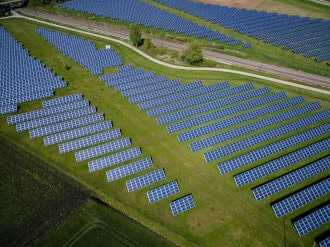[Source](https://unsplash.com/@draufsicht)
### What are the advantages of solar power compared to other options?
A great challenge for power generation is that it is difficult to store or transport. The [World Bank estimates](https://data.worldbank.org/indicator/EG.ELC.LOSS.ZS) that over 8 percent of electricity is lost through the transmission network before reaching any customer. This is after the 50 percent or more power that is lost as heat in generating electricity at the power station.
Distributed **solar power** has the lowest transmission loss as it can be sited near the customer (consider a solar panel on your roof). This avoids energy being lost in being transported over wires to places where it is used in households, businesses, and factories.
So a significant **advantage of solar energy** is that it can be produced and used locally, even on the same site, in a more economical way than other energy sources.
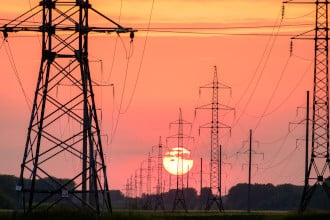[Source](https://unsplash.com/@metelevan)
- [](https://interfaithsustain.com/solar-tubes/)
## [Save Money, Save Energy, Save Earth With Sustainable Solar Tubes](https://interfaithsustain.com/solar-tubes/)
- [](https://interfaithsustain.com/solar-farm/)
## [Providing Energy Through A Solar Farm or Solar Project](https://interfaithsustain.com/solar-farm/)
- [](https://interfaithsustain.com/solar-lantern/)
## [The Environmental, Health and Social Impacts of A Solar Lantern](https://interfaithsustain.com/solar-lantern/)
## Disadvantages of fossil fuels as compared to solar
Fossil fuels as a source of power have large and visible negative net costs to the environment. First of all, Their use entails a large amount of pollution including smog and greenhouse gases. There are also polluting impacts in the extracting and mining, in the burning/ use, and even in the side effects, spills, and toxins of the entire fossil fuel process.
They have literally fueled humanity’s massive rise since the industrial revolution, but at great cost to the web of life on earth. Fossil fuels are also finite- we are using up millions of years’ worth of what is essentially previous eons of carbon-based life, compressed by geology into fuel, but not renewing itself within the timeline we live.
### Smart and efficient solar systems
Solar power is produced in daylight hours, and because of the difficulties of storing energy and transporting it, it’s best to use it locally during those hours of peak production. Smart net metering and ‘smart’ technologies that can allocate energy as needed can bring great benefits.
Armed with such data, one can schedule high-energy-use activities like factory production for times when energy is more efficiently available. This can lower energy bills and incentivize use of clean energy and reduce carbon dioxide pollution.
### Disadvantages of other renewable energy sources aside from solar
Wind energy is considered to be even less reliable than solar, since wind intensity can fluctuate. The large windmills that generate enough energy to register on the grid and contribute significantly to human energy needs also create problems such as noise pollution with some impacts on birds and fish and insects.
Hydroelectric energy often causes huge impact to the environment in the form of dams, interfering with fish migration and flooding unique ecosystems. There is also very little room for that form of electric power generation to grow, as most major rivers are now dammed and used as energy sources.
### Mining the materials used in solar panels
The metals and other relatively rare materials involved in photovoltaics and other solar power systems are non renewable resources. Mining or even repurposing them into the process of manufacturing solar panels causes environmental impacts.
## Assessing the costs and benefits of solar
So to truly reckon on the **cost of solar**, we need to factor in the impacts of such mining and manufacturing, which does potentially scar the earth or leave toxins in the environment. Any accounting in comparison with fossil fuels or other [renewable energy](https://interfaithsustain.com/renewable-and-non-renewable-resources/) techniques needs to balance these net costs and impacts.
### Disadvantages of Solar: Local environmental impact
In some ‘solar farms’, the methods used are more like reflecting mirrors focusing on a central heated turbine where the concentrated heat energy generates electricity. While these are often placed in desert locations not suitable for agriculture, they do sometimes cause many birds to be drawn to the light and then seared or killed by the heat.
### Solar Energy as a solution
So by comparison, **solar energy might be close to the most sustainable of the options to provide electric power for human needs**. That begs the question: what do we need it for? Economic forces do tend to push towards ever more efficient technologies, if only for cost savings.
But with ever increasing modernization of eight billion people or more’s lifestyles and travel and distribution of goods and food, it would seem that no amount of efficiency will bring us into a ‘steady state’. It seems likely that the only way we will get our civilization into balance will involve a true shift in the way we live.
#### Is Solar enough?
We can save money on our electric bills, **we can give tax credits for installing solar or other renewable energy sources for home energy**. But this will likely not be enough to curb [climate change](https://interfaithsustain.com/evidence-of-climate-change/) and avoid its most drastic impacts.
[Source](https://pixabay.com/users/geralt-9301/)
## Spiritual benefits of solar
How can we understand how using, and living within the implicit limits of, solar power, would point us towards a more healthy spirituality? A verse in the Book of Genesis (14:10) can shed light on this question: *“Now the Valley of Siddim was dotted with bitumen pits; and the kings of Sodom and Gomorrah, in their flight, threw themselves into them, while the rest escaped to the hill country.”*
### Oil in the Bible
Rabbi Yonatan Neril and Rabbi Leo Dee explored this verse in the [Eco Bible](https://www.amazon.com/Eco-Bible-Ecological-Commentary-Genesis/dp/173533880X/): “The kings of Sodom and Gomorrah fell into pits of “black gold” or bitumen, also known as asphalt (in Hebrew, *chemar*).
“In ancient times as today, surface seepages of this thick, sticky form of crude oil occurred and still occur in a limited number of places in the world. People used and still use the natural tar for its waterproofing qualities and for roads.
#### What does the Bible imply about oil? (Solar didn’t exist then)
“Why does the Torah mention this geological detail in relation to the leaders of these ultimately decimated societies? The Torah continues, “The invaders \[four Middle Eastern kings\] seized all the wealth of Sodom and Gomorrah and all their provisions, and went their way” (Genesis 14:11).
“Once the kings of Sodom and Gomorrah fell into the bitumen pits, they got trapped and lost all of their wickedly gained wealth. The story of the kings stuck in bitumen relates deeply to our world today.”
[Source](https://unsplash.com/@chesnutt)
#### Disadvantages of Bitumen as compared to solar
Bitumen [is considered](https://www.reuters.com/article/idUS201043482520120522) the dirtiest and most polluting fossil fuel, due to the energy required to separate the crude oil from the sand and the carcinogenic chemicals used to thin it for pipeline transport. In July 2010, the largest oil pipeline spill in US history occurred, spilling over a million gallons of Canadian diluted bitumen (dilbit) into Michigan’s Kalamazoo River.
As Inside Climate News [reported](https://insideclimatenews.org/news/26062012/dilbit-diluted-bitumen-enbridge-kalamazoo-river-marshall-michigan-oil-spill-6b-pipeline-epa/), “The spill triggered the most expensive \[on-land\] clean-up in US history – more than ¾ of a billion dollars – and it lingered on for years.” Pipelines for transporting tar sands oil are still being built in the U.S.
#### Trapped in Fossil Fuel use
Today, we and our leaders are trapped in **fossil fuel** use by economic inertia and political resistance. Oil remains our fuel of choice to make gasoline for cars and trucks, jet fuel for airplanes, tar and asphalt for paving roads, and even plastics which are filling our oceans with toxic trash that never fully breaks down.
## Solar in the Book of Genesis
The rabbis of the Midrash (around 5th century C.E.) teach that Abraham, the prophet of light, pulled the kings out of the bitumen pits. Abraham provides an example of lifting people from being trapped in oil.
The sun’s rays are emissaries of light, like angels sent here to provide light and energy to the earth. Genesis chapter 1: verse 14-15 state, “And God said, ‘Let there be luminaries in the expanse of the heavens, to separate between the day and between the night, and they shall be for signs and for appointed seasons and for days and years. And they shall be for luminaries in the expanse of the heavens to shed light upon the earth.’ And it was so.”
## The choice to use solar
We are blessed with abundant sunlight that we can utilize to create energy, instead of using fossil fuels. The choice is ours.
**A key advantage of solar energy is that it is an alternative to fossil fuels**. From a sustainability perspective, it’s clear that we can’t power an industrial economy on fossil fuels. In light of this, when will we change course?
*\* Featured image [source](https://pixabay.com/users/ulleo-1834854/)*
*Interested in learning more about renewable energy? Check out our post on [wind energy](https://interfaithsustain.com/wind-energy-pros-and-cons/)!*
**Categories:** Blog on Faith and Ecology, Renewable Energy
**Tags:** Solar Energy
---
### [Forest Destruction OR Survival of The Fittest By The Pine Beetle?](https://interfaithsustain.com/pine-beetle/)
**Published:** July 18, 2022
**Author:** ICSD
**Excerpt:** Harry Cooper - Pine beetles, or bark beetles, have been a part of the rocky mountain ecosystem for a long time. However as the Earth's climate is warming, they have started to destroy the forests in which they live.
**Content:**
Table of Contents
Table of Contents
- [Pine Beetle Causes Trouble in the Rocky Mountains](#aioseo-pine-beetle-causes-trouble-in-the-rocky-mountains-2)
- [What Are Pine Beetles?](#aioseo-what-are-pine-beetles-10)
- [Climate Change in the Rocky Mountains](#aioseo-climate-change-in-the-rocky-mountains-15)
- [Increased Reproduction of The Pine Beetle](#aioseo-increased-reproduction-of-the-pine-beetle-17)
- [Mountain pine beetles expand their range](#aioseo-mountain-pine-beetles-expand-their-range-26)
- [Efforts to Fight The Pine Beetle](#aioseo-efforts-to-fight-the-pine-beetle-31)
- [Hope for the Future](#aioseo-hope-for-the-future-36)
- [Pine Beetle and Religion](#aioseo-pine-beetle-and-religion-41)
- [Will Humans Rule, or Animals?](#aioseo-will-humans-rule-or-animals-45)
*By Harry Cooper* – The pine beetle, or bark beetle, has been a part of the **rocky mountain ecosystem** for a long time. However as the Earth’s climate is warming, they have started to destroy the forests in which they live.
## Pine Beetle Causes Trouble in the Rocky Mountains
The warming climate has given the mountain pine beetle a broader range and longer mating season. This has caused a mountain pine beetle infestation across the Rocky Mountains.
This **pine beetle** infestation has destroyed pine trees all across western North America. Efforts to conserve the forests have largely failed.
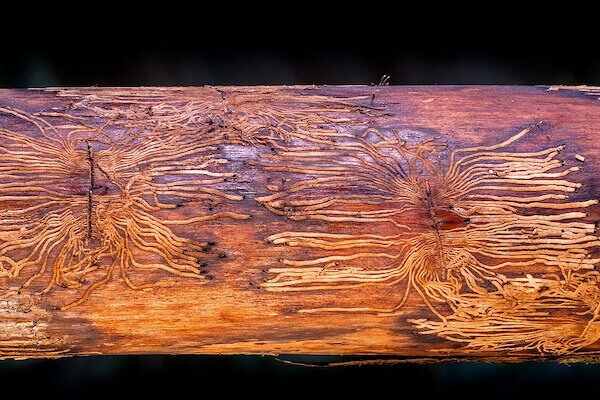[Source](https://pixabay.com/users/adege-4994132/)
**Rocky Mountain pine forests** are largely incapable of defending themselves from the pine beetle. This has left many dead trees in the wake of these pine beetle infestations. While many believe that this could spell the end of the pine forests of North America, some think this could aid in the natural selection of more resistant trees.
### What Are Pine Beetles?
The **southern pine beetles** are beetle natives to the **Rocky Mountains of North America**. The southern pine beetle reproduces by burrowing into pine trees and laying eggs.
The pine beetle then leaves the eggs to eventually hatch. However, the southern pine beetles often leave behind a deadly fungi that often kills off the [tree](https://www.motherjones.com/environment/2015/03/bark-pine-beetles-climate-change-diana-six/).
This process normally fits within the dynamic of the Rocky Mountain ecosystem. By killing off a few trees, the pine beetle prevents the forest from overcrowding and makes space for healthy trees to grow.
However, changes in the Rocky Mountain climate has allowed for pine beetle populations to explode. This has caused an excessive amount of infested trees, beetle killed trees, killing off more trees than forest [fires](https://www.fs.usda.gov/ccrc/topics/bark-beetles-and-climate-change-united-states) in the Rocky Mountains.
## Climate Change in the Rocky Mountains
As it turns out, the mountain pine beetle outbreak can mainly be attributed to **climate change**. As the Rocky Mountains are getting warmer, several different conditions are put into place that allow the mountain pine beetles to spread across the region.
- [](https://interfaithsustain.com/what-causes-deforestation/)
## [The Causes of Deforestation and Its Global Consequences](https://interfaithsustain.com/what-causes-deforestation/)
- [](https://interfaithsustain.com/deforestation-solutions/)
## [Become An Advocate For The Solutions To Deforestation](https://interfaithsustain.com/deforestation-solutions/)
- [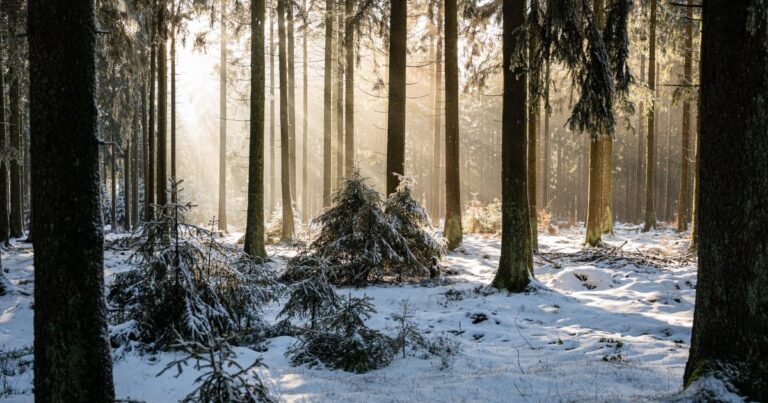](https://interfaithsustain.com/boreal-forest/)
## [Prevent Extinction Of The Boreal Forest](https://interfaithsustain.com/boreal-forest/)
### Increased Reproduction of The Pine Beetle
Bark beetles usually follow a fairly standard [lifecycle](https://yaleclimateconnections.org/2020/03/global-warming-fuels-bark-beetles-tree-killing-menaces/). Once it gets warm in the spring, the bark beetles become active, reproduce in the summer, and are eventually killed off by the cold during the winter.
However, as the climate is warming, winter in the Rocky Mountains is getting shorter, and the spring and summer are getting longer. This is causing some pretty major shifts in the bark beetles life cycle.
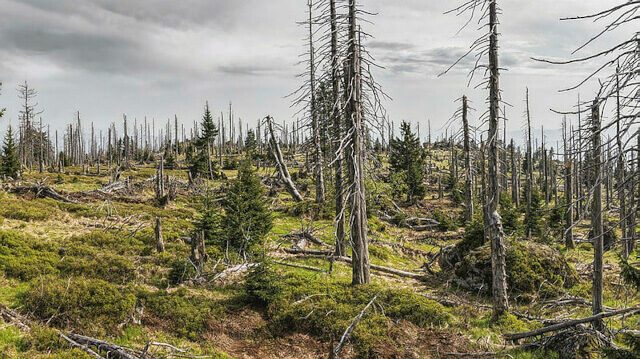[Source](https://pixabay.com/users/felixmittermeier-4397258/)
With longer warm periods throughout the year, the beetles are able to reproduce more often than they normally would. And with shorter winters, less bark beetles die off from the cold.
This has allowed the pine beetle populations to grow exponentially. And with more beetles in the Rocky Mountains every year, more and more infested trees and high value trees are being killed off.
#### Mountain pine beetles expand their range
The pine beetle normally attacks high value trees that live at lower elevations such as the lodgepole pine. However, as temperatures continue to warm in the Rocky Mountains, the beetles are starting to expand their [range](https://canvas.ou.edu/courses/231563/files/48169301/download?download_frd=1).
As beetle populations are starting to climb into higher elevations, they are starting to attack new kinds of tree species, such as the Whitebark pine. These new species are less adapted to dealing with pine beetles, and have less natural defenses. Because the attacking beetles are starting to spread to less adapted trees, they are able to kill off the trees easier and faster.
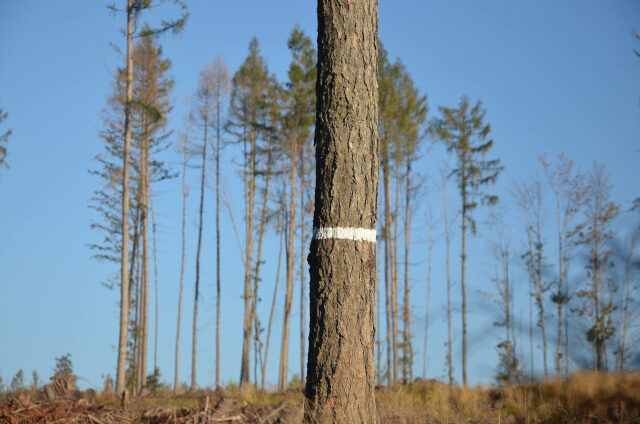[Source](https://pixabay.com/users/janakudrnova-1518559/)
## Efforts to Fight The Pine Beetle
The forest service has tried many different [methods](https://www.nps.gov/romo/learn/nature/mtn_pine_beetle_background.htm) to control **pine beetle populations**. Many have attempted to spray infected trees with carbaryl to kill off the beetles, or even removing infected trees from the forest altogether.
However, the beetles have expanded their range so extensively that stopping their spread is nearly impossible. But even with populations so out of control, some believe that the pine forests of the Rocky Mountains will live on.
### Hope for the Future
While the pine beetles are killing off trees at unprecedented rates, many believe that the forests have a good chance of surviving. Since the beetles are able to kill off trees with less natural defenses faster, some scientists theorize that they are actually aiding in [**natural selection**](https://www.motherjones.com/environment/2015/03/bark-pine-beetles-climate-change-diana-six/).
As the beetles kill off the weaker trees, only the stronger ones will be capable of surviving and reproducing. It is possible that the beetles could end up helping the pine trees of the Rocky Mountains adapt to create overall stronger forests in the long run. That is what the US forest service, woodland owners and the southern research station are all hoping for!
[Source](https://pixabay.com/users/mateusz_foto-8377794/)
### Pine Beetle and Religion
The Bible teaches us that when humanity exploits and abuses nature, nature fights back, as can be seen in the essay below. The example from this blog is that of humans [burning fossil fuels](https://interfaithsustain.com/thermal-pollution/), fossil fuels then [warming the climate](https://interfaithsustain.com/evidence-of-climate-change/), warmer weather meaning less pine beetle eggs are killed in the winter resulting in a proliferation of the pine beetles that are killing the trees we rely on. Other examples of nature fighting back against humanity’s irresponsible stewardship can be found in the following essay from [**Eco Bible Volume 1**](https://www.amazon.com/dp/B08LCKLM9G/ref=dp-kindle-redirect?_encoding=UTF8&btkr=1)**.**
#### Will Humans Rule, or Animals?
*Genesis 1:28 – God Blessed Them and God Said to Them, “Be Fertile and Increase, Fill the Earth and Master It; and Rule the Fish of the Sea, the Birds of the Sky, and All the Living Things That Creep on Earth.”*
On the surface, the words of this verse appear to give people license to degrade and subdue the earth, but the rabbis over the millennia for the most part do not read them this way. The rabbinic commentaries reveal much about these verses beyond the simple reading and make clear that a wholly different message is being conveyed.
Verse 26 states, God said, “Let Us make man in Our image, after Our likeness. They shall rule \[Ve-Yir-Du\] the fish of the sea, the birds of the sky, the cattle, the whole earth, and all the creeping things that creep on earth.” Verse 28 uses a command verb form, with God saying, “Rule \[U-Re-Du\] the fish of the sea, the birds of the sky, and all the living things that creep on earth.’”
The Midrash commentary here is based on a play on words in Hebrew, in which the root of the word “to rule” is the same root as the word “to be taken down.” Rabbi Chanina interpreted the Midrash to say: “If humankind is worthy, God says ‘U-Re-Du’ \[you rule!\]; while if humankind is not worthy, God says, ‘Yé-Ra-Du’ – he will be taken down (or let others \[the animals\] rule over him).”
Based on the Midrash, Rashi (Rabbi Shlomo ben Yitzchak) agrees that if we are not worthy, we will be ruled by animals. In this vein, H. Freedman and Maurice Simon comment, “Man is entitled to pre-eminence only as long as he cultivates his God-like qualities; when he voluntarily abandons them he is even lower than the brute creation.”
Can humans be ruled by animals today? At first, we may think human beings are so powerful, we are immune to these predictions. Yet, for example, insect infestations around the world have caused tremendous havoc in human life, from grasshoppers in Africa to bed bugs in North America. Insect-borne diseases such as malaria, dengue fever, West Nile virus, and Zika virus have spread to more northern latitudes, as human-induced climate change expands the range of certain mosquito species. The most recent case of tiny organisms antagonizing people is the coronavirus pandemic. Some research indicates that the virus likely spread from bats to pangolins (a spiny anteater) to people.
One key message from the Midrash is that God’s blessing to rule over other creatures depends on our living as righteous people. If humanity becomes worthy by living in a righteous way, then humans shall rule over nature. But if humans do not merit dominion, because they do not act in an upright fashion, then humanity will descend and not be granted rulership over nature. The rabbis learn this from the juxtaposition of God saying that humans will be created in God’s image immediately before saying that humans will rule over other creatures.
Rabbi David Sears writes that ruling “comprises a form of stewardship for which humanity is answerable to God. Both Talmudic and kabbalistic sources state that it is forbidden to kill any creature unnecessarily, or to engage in wanton destruction of the earth’s resources. All forms of life are precious by virtue of the Divine wisdom that brings them into existence, whatever rung they may occupy in the hierarchy of creation . . . The Divine mandate for man to dominate the natural world is a sacred trust, not a carte blanche for destructiveness.”
*\* Featured image [source](https://pixabay.com/users/ulleo-1834854/)*
**Categories:** Biodiversity, Blog on Faith and Ecology
**Tags:** Deforestation
---
### [Evolutionary Traits of Biblical Locusts Versus Orchestral Cicadas](https://interfaithsustain.com/cicada-vs-locust/)
**Published:** July 23, 2021
**Author:** ICSD
**Excerpt:** Jordan Rindler - Locusts and Cicadas seem to be very similar insects: they're both known for their enormous numbers, they both feast on vegetation, and they do look similar to an untrained eye.
**Content:**
Table of Contents
Table of Contents
- [Locust](#aioseo-locust-4)
- [Disasters Caused by Locusts](#aioseo-disasters-caused-by-locusts-7)
- [Strength in Numbers: Locust Swarms](#aioseo-strength-in-numbers-locust-swarms-11)
- [The Role of Climate Change in Locust Breeding](#aioseo-the-role-of-climate-change-in-locust-breeding-16)
- [Human Retaliation on Locusts](#aioseo-human-retaliation-on-locusts-21)
- [Locusts as Biblical Pests](#aioseo-locusts-as-biblical-pests-25)
- [Locusts As A Bad Omen](#aioseo-locusts-as-a-bad-omen-34)
- [Locusts as an Emergency Food Source](#aioseo-locusts-as-an-emergency-food-source-37)
- [Cicada](#aioseo-cicada-40)
- [Periodic Cicadas](#aioseo-periodic-cicadas-46)
- [Cicada Versus Locust](#aioseo-cicada-versus-locust-58)
*By Jordan Rindler* – **Locusts** and **Cicadas** seem to be very similar insects: they’re both known for their enormous numbers, they both feast on vegetation, and they do look similar to an untrained eye.
In fact, they are entirely different species!
## Locust
Locusts belong to a species of grasshopper that, under the right environmental conditions, relinquishes its solitary nature and becomes gregarious.
There is no taxonomical difference between grasshoppers and locusts, but of the 7,000 species of grasshoppers, a small minority of them exhibit the swarming behavior that differentiates the two.
## Disasters Caused by Locusts
**Locust swarms** have become natural disasters in much of Africa, Asia, and Australia for centuries.
Most locust species live in Africa and the Middle East, in very arid climates.
However, after a heavy rainfall season locusts are able to lay their eggs in the moist soil in large numbers. Vegetation in the desert also thrives off a wet season, leading to young locusts having plenty of food to devour.
### Strength in Numbers: Locust Swarms
These conditions form a locust swarm, where thousands of locusts lay millions of eggs that eventually result in a swarm of billions.
These locusts fly across continents looking for their next meal, often with such great population density that they obscure the sunlight.
Locust swarms are absolutely devastating to agricultural communities. Entire fields of crops and months of investment can be consumed overnight, before farmers are even aware of what is happening.
**Famine**, poverty, and economic instability are usually left in the wake of these disasters.
- [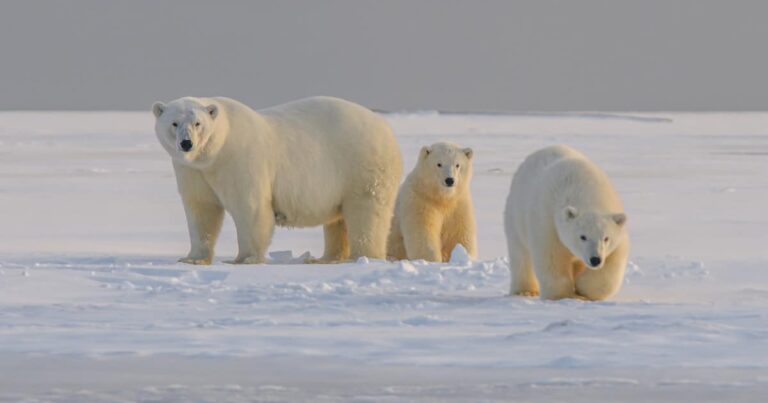](https://interfaithsustain.com/are-polar-bears-going-extinct/)
## [As Climate Change Accelerates, Are Polar Bears Going Extinct?](https://interfaithsustain.com/are-polar-bears-going-extinct/)
- [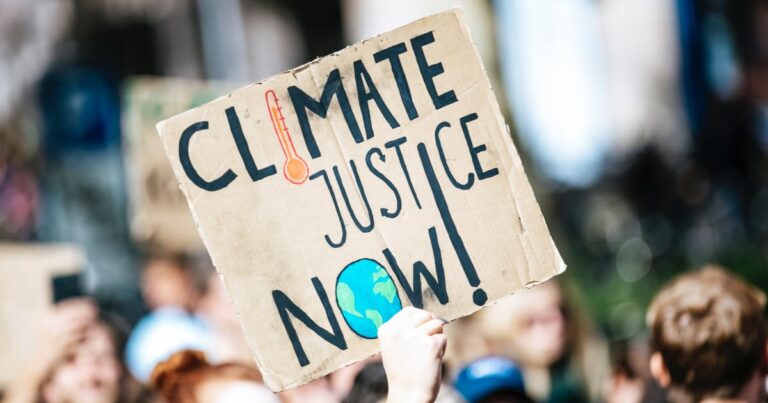](https://interfaithsustain.com/climate-week/)
## [Climate Week: How Cities Combat Climate Change](https://interfaithsustain.com/climate-week/)
- [](https://interfaithsustain.com/how-does-deforestation-affect-climate-change/)
## [Environmental Destruction and How Does Deforestation Affect Climate Change?](https://interfaithsustain.com/how-does-deforestation-affect-climate-change/)
### The Role of Climate Change in Locust Breeding
An excerpt from the *[Eco Bible](https://interfaithsustain.com/ecobible/)* reads:
“In 2020, the largest locust swarms in more than 50 years spread from Kenya to Iran and impacted tens of millions of subsistence farmers. An article in Nature noted how one swarm in Kenya had tens of billions of locusts and was three times the size of New York City.”
Journalist Bob Berwyn explains the role of **[climate change](https://interfaithsustain.com/evidence-of-climate-change/)**:
“Warm weather and heavy rains at the end of 2019 set up a perfect storm of breeding conditions for the destructive bugs . . . Changes in plant growth caused by higher carbon dioxide levels … can lead to more prolific and unpredictable locust swarming”.
#### Human Retaliation on Locusts
The war waged on all agricultural pests from weeds to blight to insects has not ignored the potential devastation of locust swarms.
Chemical pesticides and other effective methods of insect control have reduced the plague of these swarms in developed nations that can afford these advancements.
However, developing countries in Africa and parts of Asia are still just as vulnerable to these pests as the Egyptians were in the times of Exodus.
## Locusts as Biblical Pests
Locusts have been associated with disasters for thousands of years. In the **bible**, locusts are one of the plagues brought on Egypt, by Moses, in order to free the Israelite slaves.
Locusts are also found in the Qur’an in Sura 7:138.
Locust plagues in China are mentioned in ancient Chinese texts, such as the “Zuo Zhuan”, one of the first pieces of literature produced by the Chinese empire during the Zhou Dynasty.
The reference to locusts in religious and cultural texts in early human civilization shows just how prevalent and dangerous locust swarms have been since humans became dependent on agriculture for their sustenance.
[Source](https://pixabay.com/users/bergadder-20679/)
### Locusts As A Bad Omen
Locust swarms devastate agricultural land and eat crops that otherwise would have been used for food.
These swarms represent uncontrolled reproduction without social structures, so they appear chaotic, cause confusion, and feed on vegetation indiscriminately.
#### Locusts as an Emergency Food Source
Interestingly, locusts are the only insect that is considered Kosher in Judaism. This stems from the fact that when a locust swarm consumes all the vegetation in the land, it becomes one of the only sources of nutrition remaining for the affected region.
In times of famine, Kosher laws are put to the side and survival becomes a priority again!
## **Cicada**
Cicadas are an entirely different type of insect. The cicada family can be separated into two categories, periodical and non-periodical.
The non-periodical cicada species behave similarly to other winged insects, feeding on leaves for a majority of their 1-3 year life cycle.
The periodic cicadas, however, are found exclusively in North America, and fill an extremely specific niche in the insect world.
## Periodic Cicadas
These 7 species of **periodic cicadas** have one of the most unique life cycles of any member of the animal kingdom, shown below:
[Source](https://pixabay.com/users/bergadder-20679/)
- Cicada eggs are laid in the stem of woody plants.
- Once the eggs hatch, cicada nymphs drop to the ground and begin burrowing into the soil.
- These nymphs go through their entire juvenile lives underground, feeding on a fluid found in tree roots.
- After 13 or 17 years the now-mature cicadas are ready to emerge, in spring.
- The synchronized emergence of millions of Cicadas is triggered when the soil temperature reaches a critical value, releasing a chemical signal to the Cicadas causing them to dig upwards and see the surface for the first time in their 17 years of life.
- The following 4-6 weeks, Cicadas begin their mating cycle. Males produce a symphony of buzzing sounds by rubbing their clear wings together, while females click with their hind legs to reciprocate interest.
- Females lay their eggs in the same trees where they were born, die, and the cycle repeats itself.
## Cicada Versus Locust
When we understand the differences between cicadas and locusts, we can better appreciate how these different insects shape their environment.
Locusts pose a threat to farmers and human communities through their ravenous appetite for any vegetation they can get their mandibles on, while cicadas not only spend most of their life underground but also avoid interaction with humankind.
Both insects serve as a feast for their local ecological communities, propping up the ecosystem with near-endless protein snacks.
*\* Featured image [source](https://pixabay.com/users/christels-3741991/)*
**Categories:** Biodiversity, Blog on Faith and Ecology
**Tags:** Natural Disasters
---
### [Exploring the Largest Trees in the World in Awe, Love and Wonder!](https://interfaithsustain.com/largest-trees-in-the-world/)
**Published:** January 17, 2022
**Author:** ICSD
**Excerpt:** Ilana Stein - In a world where size matters, the question of the largest tree in the world is a good one. But how do we measure trees? Is the biggest tree the widest tree? The tallest tree? Perhaps it is the volume of the tree's trunk?
**Content:**
Table of Contents
Table of Contents
- [Measuring The Largest Trees](#measuring-the-largest-trees)
- [The Largest Species of Trees on Earth](#the-largest-species-of-trees-on-earth)
- [The Tallest Trees in the world](#the-tallest-trees-in-the-world)
- [The Largest Tree in the World](#the-largest-tree-in-the-world)
- [The Widest Trunk in the World](#the-widest-trunk-in-the-world)
- [What’s in a name?](#what-s-in-a-name)
- [Threats to Trees](#threats-to-trees)
- [Tree Logging](#tree-logging)
- [Forest Fires](#forest-fires)
- [Solutions – Protection and Planting Trees](#solutions-protection-and-planting-trees)
- [Trees in the Bible](#trees-in-the-bible)
- [The Power of The Largest Trees in The World](#the-power-of-the-largest-trees-in-the-world)
## Measuring The Largest Trees
*By Ilana Stein* – In a world where size matters, the question of the largest tree in the world is a good one. But how do we measure trees? Is the biggest tree the widest tree? The tallest tree? Perhaps it is the volume of the tree’s trunk?
## The Largest Species of Trees on Earth
Trees are impressive. They can live for longer and grow larger than anything around them, but also support many species. One tree can generate enough oxygen for four people to breathe (Blackwell, *The Life and Love of Trees*).
A number of species have the **tallest trees** in the world: the sequoia family has a number of members, from the giant sequoia (*Sequoiadendron giganteum*) to the coast redwood (*Sequoia sempervirens*). Many of these giants are located in Sequoia National Park.
Many of the world’s tallest trees are also the longest lived. The age of a number of the giant sequoias have been calculated to be over 3,000 years old!
### The Tallest Trees in the world
The **largest tree** – in the sense of the tallest known tree – in the world is a coast redwood (*Sequoia sempervirens*) located in the Redwoods State Park in California. Called Hyperion it stands at an enormous 380 feet / 115 meters tall. Its exact location is kept a secret to protect it from loggers.
The second tallest is in the Danum Valley Conservation Area, Asia. This is the yellow meranti (*Shorea faguetiana*) which is 331 feet / 100.8 meters tall.
This is followed by a mountain ash (*Eucalyptus regnans*) in Tasmania, Australia at 330 feet / 100 meters. This mountain ash, known as Centurion, is also considered the ‘luckiest’ tree in the world, as it narrowly missed being burnt down in 2019.
Under the 100-meter mark but still impressive are two trees in California: a coast Douglas fir (*Pseudotsuga menziesii)* at a ‘mere’ 327 feet / 99.7 meters tall and a Sitka spruce (*Picea sitchensis*) at 317 feet / 96.7 meters tall. The latter giant lives in Prairie Creek Redwoods State Park. Sadly, many of the great spruce forests native to the western United States have been logged to oblivion.
[Source](https://pixabay.com/users/eldergeek-20812744/)
- [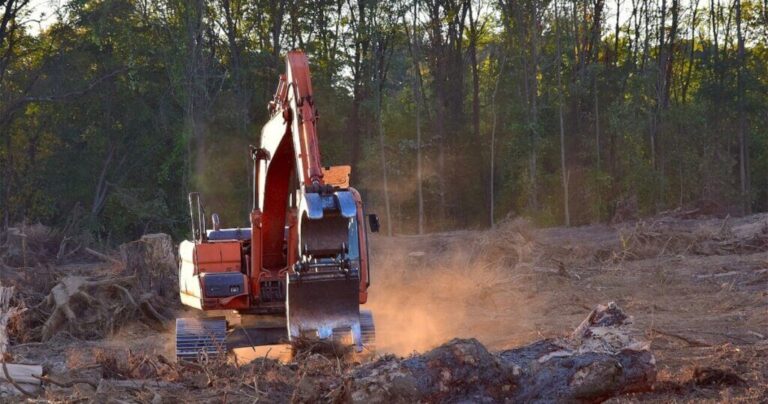](https://interfaithsustain.com/how-deforestation-is-affecting-global-water-cycles/)
## [Why And How Deforestation Is Affecting Global Water Cycles](https://interfaithsustain.com/how-deforestation-is-affecting-global-water-cycles/)
- [](https://interfaithsustain.com/how-does-deforestation-affect-climate-change/)
## [Environmental Destruction and How Does Deforestation Affect Climate Change?](https://interfaithsustain.com/how-does-deforestation-affect-climate-change/)
- [](https://interfaithsustain.com/pine-beetle/)
## [Forest Destruction OR Survival of The Fittest By The Pine Beetle?](https://interfaithsustain.com/pine-beetle/)
### The Largest Tree in the World
The **biggest tree** in the world in terms of volume, officially, is a giant sequoia (*Sequoiadendron giganteum)* found in Sequoia National Park, California. Popularly known as General Sherman, this tree has a wood volume of 52,500 cubic feet / 1,486 cubic meters – now that’s a big tree!
### The Widest Trunk in the World
The **widest tree** is one that has the largest girth or diameter. While this honour belongs to the baobab as a species, the tree with the largest girth is a Montezuma cypress (*Taxodium mucronatum*) in Mexico. Measurements of its trunk give it a diameter of 38.1 feet / 11.62 meters. It is 1,400 years old.
Second in line is a baobab (*Adansonia digitata*) in South Africa at 34.9 feet / 10.6 meters, well known for having a hollow trunk that housed a bar and wine cellar until 2017, when it suddenly split!
#### What’s in a name?
Trees that are so large or wide or have gained great age, get named and can even be said to have a distinct character. For example, the largest eucalyptus in the world, a southern blue gum (*Eucalyptus globulus*) of Tasmania, Australia at 302 feet / 92 meters, is also known as “the Mother and Daughter” of blue gums.
## Threats to Trees
One would have thought that such giants, having survived for so long and being admired as the world’s largest, would be safe. Sadly, there are increasing threats to the forests of the world and the individual trees that make them great. Even in a national park, from Douglas fir to giant sequoia, redwood to mountain ash, the largest trees on Earth are in danger.
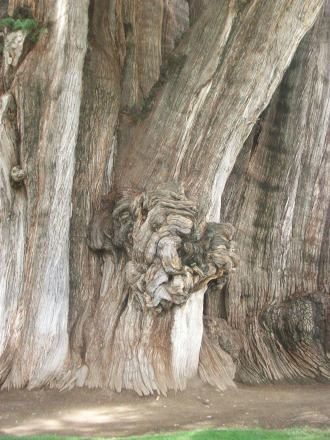[Source](https://pixabay.com/users/redlodyas-21061/)
### Tree Logging
Trees have always been at risk from logging, their wood and bark being highly sought after for furniture, houses and more. From the 1700s onwards, when European empires were won or lost on the sea, any tree with a tall, straight trunk was cut down to be used as [masts for ships](https://wou.edu/history/files/2015/08/Melby-Patrick.pdf).
[Deforestation ](https://interfaithsustain.com/what-causes-deforestation/)has swathes of tropical forests being destroyed for wood and paper, or to use the ground for subsistence farming or as pasture for livestock: “Over the past quarter century, forests have been cleared from an area the size of India” ([FAO: Livestock Policy Brief](https://www.fao.org/3/a0262e/a0262e.pdf)).
#### Forest Fires
Sadly, the giant sequoia is one of a number of tree species that are listed as Endangered on the [IUCN Red List](https://www.iucnredlist.org/) – fewer than 80,000 of these magnificent trees are left. The main reason is wildfires:
The present trend in recruitment of *Sequoiadendron giganteum* is downwards, due to competition in the absence of periodic fires in many of the protected groves. This leads over time to a downward trend in the number of mature individuals in the population. (IUCN: [Giant Sequoia](https://www.iucnredlist.org/species/34023/2840676))
While periodic fires [play an important part in forest ecology](https://interfaithsustain.com/fire-ecology/), the wildfires that ripped across California in 2020 and 2021 were devastating, burning 3,083,507 acres of the state [(Fire Statistics](https://www.fire.ca.gov/incidents/), October 2021).
One of the prime reasons behind the increase in wildfires is considered to be climate change; drought, later rains and other elements have increased both the frequency and temperature of these fires that could lead to the death of our giant trees.
## Solutions – Protection and Planting Trees
How can we protect the forest and trees? One way is preservation and protection, which is where national parks come in, such as Sequoia National Park.
[Another solution to deforestation](https://interfaithsustain.com/deforestation-solutions/) is reforestation, which can be undertaken by governments, or by each person. There are many organisations who help individuals to plant a tree in the places that need them most. The Jewish National Fund is famous for its ‘tree gift certificates’; a tree is planted in the name of the recipient. Another organisation is [OneTreePlanted.org](https://onetreeplanted.org/) which plants trees all over the world.
## Trees in the Bible
The most famous tree in the Bible is the Tree of Knowledge of Good and Evil – but was it the largest? The Bible is silent on this but the fact that God plants a multitude of trees in the Garden of Eden tells us just how important trees are to Earth. The Talmud tells a story about the longevity of trees and their power to create a sustainable world:
[Source](https://pixabay.com/users/usa-reiseblogger-328188/)
One day, Honi was walking along and saw a man planting a carob tree. Honi asked him, “How many years until it will bear fruit? The man answered, “not for seventy years.” Honi asked him, “Do you really believe you’ll live another seventy years? The man answered, “I found this world provided with carob trees, and as my ancestors planted them for me, so I too plant them for my descendants” ([Taanit 23a](https://www.sefaria.org/Taanit.23a)).
## The Power of The Largest Trees in The World
The power of trees is not merely in their measurements, size or diameter, or even in their ability to give in such powerful ways to all life.
It is the power of inspiration and awe that we feel from seeing these trees. As we stand near one of these giants we may feel tiny, yet we also feel uplifted by having our lives put into perspective by the huge trees.
They give us air to breathe and the gift of wonder.
*\* Featured image [source](https://pixabay.com/users/arttower-5337/)*
**Categories:** Biodiversity, Blog on Faith and Ecology
**Tags:** Eco Bible, Trees
---
### [Sahara Desert Animals In Their Sandy Hot Habitat](https://interfaithsustain.com/sahara-desert-animals/)
**Published:** October 19, 2022
**Author:** ICSD
**Excerpt:** Alana House - Life on Earth has always thrived despite facing some of the hardest challenges that nature throws at it. Organisms that inhabit hot and dry deserts are no exception. Whether covered in fur, feathers or scales, desert animals are experts in navigating their sandy landscape.
**Content:**
Table of Contents
Table of Contents
- [The Sahara Desert](#aioseo-the-sahara-desert-2)
- [Mammals](#aioseo-mammals-5)
- [Small Mammals](#aioseo-small-mammals-7)
- [Larger Mammals](#aioseo-larger-mammals-12)
- [Birds](#aioseo-birds-18)
- [Taking Flight](#aioseo-taking-flight-22)
- [Running with wings](#aioseo-running-with-wings-28)
- [Reptiles](#aioseo-reptiles-31)
- [Bugs](#aioseo-bugs-35)
- [Unconventional Desert Helpers](#aioseo-unconventional-desert-helpers-39)
- [Endangered Species](#aioseo-endangered-species-41)
- [Effects Of Overhunting](#aioseo-effects-of-overhunting-45)
- [Sahara Desert And Religion](#aioseo-sahara-desert-and-religion-53)
*By Alana House* – Life on Earth has always thrived despite facing some of the hardest challenges that nature throws at it. Organisms that inhabit hot and dry deserts are no exception. Whether covered in fur, feathers or scales, desert animals are experts in navigating their sandy landscape.
## The Sahara Desert
Located in North Africa, the **Sahara** is the largest hot desert in the world. About 8,600,000 square kilometers in size, this desert is extended across [11 countries](https://www.onthegotours.com/blog/2019/08/facts-about-the-sahara-desert/) in Northern Africa. The most distinct feature of the **Sahara desert** is its extremely harsh conditions, as daytime temperatures can reach to 120℉ (49℃) but nights have lows that [drop below freezing](https://thinkmorocco.com/sahara-desert-temperature/).
A common misconception is that the Sahara desert is primarily composed of desert sand. In actuality, the Sahara contains mountains, oases, arid valleys, stone plateaus and [even rivers](https://thebucketlistcompany.co.uk/10-facts-about-the-sahara/)!
## Mammals
It is bizarre to think that both human beings and bunny rabbits are both classified as mammals because the differences between them are physically obvious. Indeed, while different mammals thrive in the Sahara desert their methods of survival are far from identical.
### Small Mammals
Hiding from predators, using less resources and a greater range for locomotion are all biological advantages that many animals get from their small size. Numerous species of rodents can be found navigating the Sahara desert.
Gerbils are one of the smaller animals that survive the desert conditions by adapting to a [nocturnal lifestyle](https://www.britannica.com/animal/gerbil), burrowing during the day to avoid the extreme heat. Another dexterous small animal is the Jerboa who burrows during the day like it’s rodent kin, but in the evening emerges to forage for grass seeds, succulent parts of desert plants and [hardy insects](https://www.britannica.com/animal/jerboa).
Averaging at a body weight of 2.2 to 3.3 pounds and length of 9.5 to 16 inches is the fennec fox. Using their unusually large ears to radiate body heat, these tiny sly creatures have expertly adapted to outsmart the Sahara desert heat.
- [](https://interfaithsustain.com/how-many-animals-go-extinct-every-day/)
## [Is it Possible To Know How Many Animals Go Extinct Every Day?](https://interfaithsustain.com/how-many-animals-go-extinct-every-day/)
- [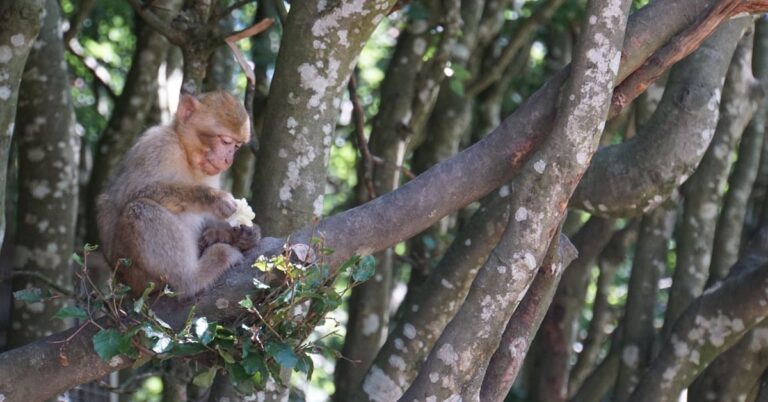](https://interfaithsustain.com/threats-to-biodiversity/)
## [What are The Major Threats to Global Biodiversity?](https://interfaithsustain.com/threats-to-biodiversity/)
- [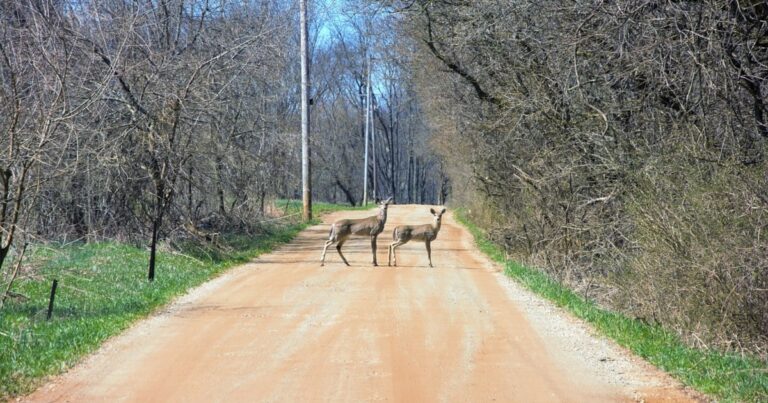](https://interfaithsustain.com/habitat-corridors/)
## [Habitat Corridors Allow Human Development Whilst Saving Biodiversity](https://interfaithsustain.com/habitat-corridors/)
As one of the smallest canid species, the male fennec fox, like many canines, will mark their territory at the arrival of mating season, signifying to passing fennec foxes they are eligible mates or [deadly competition](https://www.nationalgeographic.com/animals/mammals/facts/fennec-fox). Similarly to the pale fox which also roams the Sahara desert, the fennec fox diet consists of [insects, eggs, small animals, and any fruit they can find](https://thewebsiteofeverything.com/animals/mammals/Carnivora/Canidae/Vulpes/Vulpes-pallida.html#:~:text=Unlike%20another%20species%20of%20African,not%20do%20well%20in%20zoos.&text=The%20pale%20fox%20is%20a,to%20a%20pale%20silver%2Dgrey.). As drinking water is scarce, much of animals’ hydration comes from ingestion of desert plants.
### Larger Mammals
The Sahara desert is called home by many large grazing mammals who have over the years adapted to the deathly dry conditions of their habitat. The barbary sheep is a species of goat-antelope [known as caprid](https://www.worldatlas.com/articles/animals-of-the-atlas-mountains.html) and are found in the rock crevices of the Atlas mountains. Using shelter and shade during daylight hours, the barbary sheep keeps to grazing grass and bushes at [dusk or dawn](https://www.zoobarcelona.cat/en/animals/barbary-sheep#:~:text=The%20Barbary%20sheep%20is%20the,Sahara%20region%20in%20small%20groups.).
Prowling the **North Western Sahara** is the **African cheetah**, an elusive cat that leaves people with many questions about this desert predator. Comparable to other species of predatory mammals, the Saharan cheetah is an obligate carnivore.
Their diet consists of herd animals such as the Dorcas gazelle or the Addax antelope. The Saharan cheetah will also eat small animals like hares to sustain their [dietary requirements](https://kidzfeed.com/northwest-african-cheetah-facts/).
Traveling the largest desert in the world is no simple feat for humankind. Human bodies are not well adapted to the extreme heats of the desert, and therefore must rely on creatures who are. One animal that has been assisting Arab groups with desert travel for centuries is the Dromedary camel.
A healthy adult camel can reach an average weight of 1,600 pounds and a height of over [7 feet tall at the hump](https://www.nationalgeographic.com/animals/mammals/facts/arabian-camel). These humps are stored with fat that allows camels to travel distances of up to 100 miles through harsh desert terrain. Other adaptions include long eyelashes that protect their eyes from sand and large tough lips that allow them to nibble on thorny plants.
## Birds
Classified as Aves, all birds are [warm-blooded vertebrates](https://www.britannica.com/animal/bird-animal) who share the distinguishing and unique factor of having feathers. In many cases, similarities between bird species end here, but many birds have learned to adapt to the Sahara desert in significantly different ways.
[Source](https://images.surferseo.art/7494d0df-d2ef-4d2d-aa2b-18ebc521b8ba.jpeg)
### Taking Flight
Avoiding hot desert sands is a lot easier when you have wings to glide above it. One of these high fliers include vultures, specifically the Lappet-faced vulture and the **Egyptian vulture**. As scavengers, vultures play an important part in the Saharan ecosystem by [disposing of dead carcasses](https://africageographic.com/stories/vultures/), lessening the chance of diseases spreading by means of animals remains.
Another desert dweller that roams the sky is the sandgrouse, a bird closely related to the common pigeon. Unlike its city bound kin, the sandgrouse’s feathers are laid densely as an impressive desert adaption.
Not only do these feathers allow for protection against extreme heat, [they also act as sponges](https://www.audubon.org/news/why-would-bird-carry-water-its-feathers). Male sandgrouses will wade around in pools of water to store moisture in their feathers, which allows their young birds to drink water from the safety of their nest.
#### Running with wings
Not all birds are created equally, and while all may have feathers, some do not put those feathers to use. This is the case with the **North African Ostrich**.
A lack of flying ability does not make these giant birds any less impressive as they are able to [sprint up to 43 mph](https://nationalzoo.si.edu/animals/news/how-fast-ostrich-and-more-fun-facts#:~:text=Ostriches%20can't%20fly%2C%20but,feet%20in%20a%20single%20stride.) and have an average life span of 30-40 years. These resident birds are a critically endangered species and many fear that it will follow in the steps of its cousin, the Arabian Ostrich, and [face extinction](https://saharaconservation.org/north-african-ostrich/#:~:text=camelus%29%20is%20one%20of%20four,been%20reduced%20to%20just%20six.) if conservation efforts aren’t made quickly.
## Reptiles
A popular way to characterize reptiles is by calling them ‘cold-blooded’. Scientifically, reptiles are [ectotherms](https://www.sciencedirect.com/science/article/pii/S0960982213001954#:~:text=By%20and%20large%20%28with%20more,to%20shade%20to%20cool%20down.), meaning they use external sources of thermal heterogeneity to regulate internal temperatures. Access to the hot desert sun that is present in the Sahara, allows reptiles to thrive in these arid conditions.
The West African crocodile is one large reptile that has special adaptations, unlike other members of its species, that make it perfect for the Sahara desert. One example is these crocodiles will cool themselves by finding shelter in [caves or burrows](https://animalia.bio/west-african-crocodile) because water is not as prolific in their arid habitat.
The horned viper is one of the many venomous snakes that call the Sahara desert their home. In order to navigate the loose sand dunes of the desert, the horned viper adapted a way of movement known as [‘sidewinding’](https://www.britannica.com/animal/sidewinder#ref837575). This method of movement prevents this snake from having excessive contact with hot desert sand, so it is less likely to overheat.
## Bugs
Hiding in dense bushes, unreachable crevices and under rocks, insects in the Sahara desert have made it impossible to calculate just how many bug species are present in the largest hot desert. According to the [Invasive Species Compendium](https://www.cabi.org/Uploads/CABI/publishing/promotional-materials/insert/IS%20Compendium%20-%20A4%20Insert.pdf), 28 species of termites alone have been recorded from the Sahara, exposing just how vast the diversity of bug life is.
[Source](https://images.surferseo.art/b66ad7e7-ba9d-4dd0-9b82-522380cb2496.jpeg)
### Unconventional Desert Helpers
A bug that has made its presence known in the Sahara desert is the scarab beetle, a tiny creature that makes an appearance throughout Egyptian history as a [very meaningful symbol](https://www.thecollector.com/egyptian-scarabs/) representing life. This bug’s fame does not end here, as it plays an essential role in the Sahara desert ecosystem, aiding in the decomposition of animal waste. Dung beetles, as they are comically called throughout the world, are notorious for rolling animal dung into a ball and then [feasting on it when the need arises](https://www.desertcampmorocco.com/blog/post.php?s=2015-12-09-elusive-and-not-so-elusive-creatures-of-the-desert).
### Endangered Species
Due to unbridled human presence, several species in the Sahara desert have become critically endangered. Habitat destruction and accelerated desertification has made the Sahara desert uninhabitable by animals that had previously called this desert their home.
### Effects Of Overhunting
For centuries, humans were able to live in an [ecological balance](https://interfaithsustain.com/ecological-restoration/) with animals in the great Sahara desert. With the invention of weapons, such as rifles, the ability to hunt animals in the open desert terrain has become far too easy, contributing to species endangerment in the wild.
[Source](https://images.surferseo.art/d24e9321-5f31-46c1-b3d6-a24f3eeefecd.jpeg)
The Addax antelope once ranged the Sahara desert in herds of up to 20. Since 2000, the Addax has been labeled as endangered, and the number of them surviving in the wild is estimated as [less than 100](https://www.britannica.com/animal/addax-antelope). Other mammals sought by hunters such as the Scimitar Horned oryx is completely extinct in natural habitats and is sustained only [through breeding in captivity](https://news.mongabay.com/2013/12/86-percent-of-big-animals-in-the-sahara-desert-are-extinct-or-endangered/).
When prey decreases due to overhunting, natural predators also suffer. The number of Wild Dogs in the Sahara desert has dwindled to only a handful, as their main food sources have been stolen by human activity. The African wild dog is also a victim of poaching itself as the [illegal meat trade](https://www.wildlifeact.com/blog/why-african-wild-dogs-are-endangered/) is common throughout Africa including within the Sahara desert.
## Sahara Desert And Religion
The Tuareg are a fascinating nomadic people who live in the Saharan desert. [An article on the Bradshaw Foundation](https://www.bradshawfoundation.com/tuareg/) describes this fascinating group. The men wear indigo veils but the women do not.
The women do, however, play an important role in family and tribal decisions. Their religion is a combination of pre-Islamic animism and Islam, which they adopted from the great Prophet El Maghili in the early 16th century. As far back as the 5th century BCE, there is a record of them in the works of the Greek historian Herodotus.
Their name, “Tuareg,” is an Arabic term for, “Abandoned by God.” Perhaps it’s better to refer to them as they call themselves, “Imohag,” meaning “free men.” It’s ironic to think of these people who make the desert their home and are called by others, “abandoned by God,” but think of themselves as “free men.”
This is a reminder not to judge others. After all, one man’s desert is another man’s home. Supporting indigenous people to thrive in their local environment is incumbent on the Western world, as [climate change](https://interfaithsustain.com/are-polar-bears-going-extinct/) threatens Africa and other vulnerable areas. We must never abandon the indigenous peoples.
*\* Featured image [source](https://unsplash.com/@jaeh)*
**Categories:** Biodiversity, Blog on Faith and Ecology
**Tags:** Desert
---
### [Are Sea Jellies Taking Over The Animal Kingdom?](https://interfaithsustain.com/sea-jellies/)
**Published:** December 7, 2022
**Author:** ICSD
**Excerpt:** Harry Cooper - Climate change and other human activities have had numerous impacts on the natural ecosystems of our world. While many species have struggled to adapt to these rapidly changing environments, others have taken advantage of the new conditions.
**Content:**
Table of Contents
Table of Contents
- [How Human Impacts Are Affecting Jellyfish Populations](#aioseo-how-human-impacts-are-affecting-jellyfish-populations-5)
- [Warmer Oceans](#aioseo-warmer-oceans-10)
- [Lower Oxygen Levels](#aioseo-lower-oxygen-levels-17)
- [Overfishing of Other Species](#aioseo-overfishing-of-other-species-23)
- [Consequences of Increasing Jellyfish](#aioseo-consequences-of-increasing-jellyfish-31)
- [Infrastructural Impacts](#aioseo-infrastructural-impacts-32)
- [Impacts On The Fishing Industry](#aioseo-impacts-on-the-fishing-industry-35)
- [Decreased Tourism](#aioseo-decreased-tourism-39)
- [Examples of Jellyfish Blooms](#aioseo-examples-of-jellyfish-blooms-45)
- [Sea Nettles in Chesapeake Bay](#aioseo-sea-nettles-in-chesapeake-bay-48)
- [Nomura's Jellyfish in Japan](#aioseo-nomuras-jellyfish-in-japan-52)
- [Jellyfish And Religion](#aioseo-jellyfish-and-religion-58)
*By Harry Cooper* – **Climate change** and other human activities have had numerous impacts on the **natural ecosystems** of our world. While many species have struggled to adapt to these rapidly changing environments, others have taken advantage of the new conditions.
Human changes to the environment have been particularly favorable to the various species of **sea jellies**, such as moon jellies, comb jellies, box jellies, and upside down jellyfish. While **increasing ocean temperatures**, **rising salinity**, and **lower oxygen levels** caused by human activity have forced some species to struggle to survive, jellyfish actually prefer these environments and are able to thrive in record numbers around the world.
While this may be good for jellyfish, **rising jellyfish populations** should not be interpreted as an unexpected boon to environmental degradation. This rapid **increase in jellyfish** numbers is having serious consequences for both ocean ecosystems and human industries.
These **jellyfish blooms** have been known to clog infrastructural pipes and disrupt local ecosystems. And as human activity continues to impact our oceans, we can expect to see more and more places across the world with jellyfish problems on their hands.
## How Human Impacts Are Affecting Jellyfish Populations
Humans have impacted the Earth’s oceans in a variety of ways. Most of the time these impacts negatively affect communities of marine species. However, it is important to understand the ways in which these changing conditions are beneficial to jellyfish.
[Source](https://unsplash.com/photos/aerial-view-of-forest-vDDm1B-n65Q)
This is due to the nature of their lifecycle and simple body plans. Jellyfish are very simple organisms that are incredibly adaptable to different environments and conditions; one species of jellyfish has even managed to live forever. Others for a million years! As jellyfish are so capable of adapting in these new environments, while their competitors and predators fall behind, jelly populations around the world are thriving.
### Warmer Oceans
As climate change and [increasing greenhouse gases](https://interfaithsustain.com/how-religious-communities-are-curbing-climate-change/) trap more and more heat in the Earth’s atmosphere, areas across the world are seeing record high temperatures and climates, including the ocean. It is estimated that the surface layer of the ocean has risen about [1.5°F](https://www.whoi.edu/know-your-ocean/ocean-topics/climate-weather/ocean-warming/#:~:text=The%20ocean's%20surface%20layer%2C%20home,1.5%C2%B0F%20since%201901.) since 1901.
While this might not seem like a lot, it’s enough to make survival incredibly difficult for the majority of marine life. However, this is not the case for jellyfish.
- [](https://interfaithsustain.com/sustainable-tourism/)
## [Plan Your Next Trip Using Sustainable Tourism](https://interfaithsustain.com/sustainable-tourism/)
- [](https://interfaithsustain.com/effects-of-ocean-acidification/)
## [The Effects and Consequences of Ocean Acidification](https://interfaithsustain.com/effects-of-ocean-acidification/)
- [](https://interfaithsustain.com/nutrient-pollution/)
## [Nutrient Pollution Is Destroying Our Aquatic Ecosystems](https://interfaithsustain.com/nutrient-pollution/)
Jellies reproduce at an already incredibly fast rate. It is estimated that one female jellyfish can lay up to [45,000](https://www.businessinsider.com/jellyfish-thriving-climate-change-warm-oceans-2019-10#in-the-last-100-years-average-ocean-surface-temperatures-have-risen-by-about-16-degrees-fahrenheit-09-degrees-celsius-according-to-the-national-oceanic-and-atmospheric-administration-last-year-was-the-hottest-on-record-for-the-seas-5) eggs a day!
But with rising temperatures jellyfish incubation times are shortening, allowing jelly eggs to hatch much faster. On top of that, with oceans being warmer for longer during the year, some jellyfish are even capable of reproducing multiple times in a season, causing a population explosion.
### Lower Oxygen Levels
Inland agricultural activity has impacts on the ocean and coastal environments hundreds of miles away. Industrial farms often use harmful chemical fertilizers that run off into rivers and eventually into the ocean.
When these fertilizers get into coastal ecosystems they trigger harmful algal blooms that deplete the water of oxygen. These coastal areas with depleted oxygen are called [dead zones](https://oceanservice.noaa.gov/facts/eutrophication.html#:~:text=the%20nation's%20estuaries.-,Harmful%20algal%20blooms%2C%20dead%20zones%2C%20and%20fish%20kills%20are%20the,to%20estuaries%20and%20coastal%20waters.), as little to nothing can survive in them.
However, these dead zones are actually ideal environments for jellyfish. Having no blood or complex organs jellyfish require very [little oxygen](https://daily.jstor.org/global-jellyfish-crisis-perspective/) to survive, and with other competition and predators out of the way, jellies are able to thrive.
The algal blooms bring large amounts of plankton with them. This leaves a large amount of food for the jellies with very little competition to interfere.
On top of that, once jelly populations explode, they also prey on fish eggs and baby fish. This makes it harder for the ecosystem to bounce back.
#### Overfishing of Other Species
Another human impact that has favored jellyfish populations is [overfishing](https://www.sciencedirect.com/science/article/pii/S0160412022006262). This eliminates species that would otherwise compete with jellyfish for food, or prey on them to keep their populations in check.
[Source](https://pixabay.com/users/mcsc1995-3539629/)
Commercial fish such as herring, anchovies, and sardines typically eat zooplankton, the jellyfish’s main food source. When overfishing largely removes these fish from marine ecosystems, jellyfish no longer have to compete for food, and flourish.
On top of that, larger commercial fish such as bluefin tuna and sea turtles, which capture prey and eat jellyfish, now get caught in fishing nets and their population numbers are dwindling. These species would normally keep jellyfish populations down, but with them removed from the ecosystem as well, jellyfish numbers are able to skyrocket even higher.
## Consequences of Increasing Jellyfish
### Infrastructural Impacts
Jellyfish have been known to get stuck in seawater [intake valves](https://www.int-res.com/articles/meps2007/350/m350p153.pdf). Various kinds of industrial processes rely on these intake valves for a constant supply of seawater.
These clogs create all kinds of problems. Desalination plants have been rendered unable to produce fresh water, power plants can be completely shut down and they can even cause emergency situations at nuclear plants.
### Impacts On The Fishing Industry
The fishing industry is in part responsible for the overpopulation of jellyfish. However jellyfish blooms also have negative impacts on the [fishing industry](https://www.tandfonline.com/doi/full/10.1080/23308249.2020.1806201) itself.
Jellyfish can completely take over fishing stocks and greatly reduce the number of commercial fish in an area. These gelatinous animals can also clog up fishing nets, this can taint the fish stock, prevent fishermen from catching fish, and even capsize fishing boats when nets become too clogged to haul in.
Jellyfish blooms have caused damage to fishing industries all over the world. It is estimated that the annual damage caused by jellyfish blooms to the fishing industry is around 70-200 million dollars.
## Decreased Tourism
Many coastal cities around the world rely on beach [tourism](https://news.climate.columbia.edu/2011/02/26/giant-jellyfish-swarms-%E2%80%93-are-humans-the-cause/#:~:text=Jellyfish%20blooms%20disrupt%20the%20fishing,causing%20power%20reductions%20or%20shutdowns.) for their economy. But when coastal waters become filled with jellyfish and their stinging tentacles, beach tourism is not as viable.
The stinging cells of jelly stings contain varying kinds of potency, some causing discomfort and pain while others can lead to death. With more and more jellyfish blooms occurring around the world, many beaches have had to close due to an increase in jellyfish stings.
[Source](https://unsplash.com/@silasbaisch)
Beaches closed due to jelly stings can have a considerable impact on an areas economy. Many coastal areas rely on a short season of tourist activity, and if beaches are closed during that time businesses can lose out on a lot of money.
## Examples of Jellyfish Blooms
### Sea Nettles in Chesapeake Bay
Sea nettles are a specific type of jellyfish found across the world. Species of sea nettles such as the comb jelly and the moon jelly naturally occur in [Chesapeake Bay](https://www.climatecentral.org/news/changing-jellyfish-season-could-shift-fish-food-supply-in-chesapeake-bay) during their seasonal reproductive cycle, but human changes to the Chesapeake ecosystem has caused them to appear for longer and in greater numbers.
This is due to [agricultural runoff](https://interfaithsustain.com/river-pollution/) from inland farms, and an increase in the water temperature of the bay. This has caused the yearly natural appearance of sea nettles to become an explosive jellyfish bloom.
This bloom has closed down beaches and prevented fishermen from catching crab and fish. As these human caused conditions worsen, we have began to see these blooms occurring all over the eastern seaboard.
#### Nomura’s Jellyfish in Japan
The [Nomura’s jellyfish](https://daily.jstor.org/global-jellyfish-crisis-perspective/) is a massive human sized jellyfish that is found in the pacific ocean near Japan. Normally blooms of the Nomura would occur every forty years in a natural cycle, but human interference has changed this.
In recent years blooms of Nomura’s jellyfish have been occurring annually. Japan blames this on agricultural nutrient run off from China creating favorable conditions for the jellyfish.
The Nomura’s jellyfish have caused especially bad problems for Japan. This is mainly due to the massive size of the jellies, and their unusually painful sting.
These jellies have clogged intake valves causing power outages, and have devastated fish population for both fishermen and local ecosystems. They were even responsible for capsizing a fishing trawler.
The Japanese government has been at a loss for how to deal with these massive jellies. It seems the only way we can stop these jellyfish blooms is by working together to solve the global environmental issues in our world such as nutrient pollution and climate change.
## Jellyfish And Religion
Beatrice Marovich writes for [Religion Dispatches](https://religiondispatches.org/beloved-immortals-science-miracles-and-jellyfish-time/) her own commentary on an [article](https://www.nytimes.com/2012/12/02/magazine/can-a-jellyfish-unlock-the-secret-of-immortality.html?pagewanted=all) that was published in the *New York Times* about how Japanese researcher Shin Kubota is studying a jellyfish species to learn the secret of immortality. Maravich describes the jelly, *Turritopsis dohrnii*, aka, the “immortal jellyfish.” This Jelly species, according to Maravich, is “able to—crudely speaking—reverse the aging process, returning to its earliest stage of development, and Kubota is the man who watches them do this. Tirelessly. His research (conducted through Kyoto University’s Seto Marine Biological Laboratory) is designed to observe their death-defeating transition over and over again.”
But Maravich is not comfortable with this. He worries that were humans to figure out the secret of these jellyfish, they would exploit it. Kubota is also concerned and tells his interviewer that we’re currently too violent to unlock the secret of these jellyfish. “If everyone learns to love living organisms, there will be no crime. No murder. No suicide. Spiritual change is needed,” says Kubota. But in the meantime, humans exploit living organisms. So what will happen if we learn the secrets of immortality? We’ll be able to live and exploit forever.
We all die some day. Except for these jellyfish, it seems. And perhaps that’s a good thing. Life has an expiration date. And after that, we don’t know what happens. Sure, we all have our theories, but all we know is that someday we’ll leave this world behind. While we’re here, we have the opportunity to make the world a little better than when we arrived. If we lived forever, we might feel we have forever. We might exploit forever, and leave off giving back until a tomorrow that may never come.
These immortal jellyfish can perhaps teach us the secret of mortality. But even more important, in my opinion, they can remind us to recognize our own mortality. We were sent into this world for a purpose. It’s up to us to figure out what that purpose is and to leave the world a better place for having pursued our purpose to the end. We don’t have forever.
*\* Featured image [source](https://pixabay.com/users/publicdomainpictures-14/)*
**Categories:** Biodiversity, Blog on Faith and Ecology
**Tags:** Ecosystems
---
### [The Incredible Increase & Impact of Jellyfish, Mediterranean Sea](https://interfaithsustain.com/jellyfish-mediterranean/)
**Published:** October 17, 2022
**Author:** ICSD
**Excerpt:** Lisa Cohen - Looking back at this year's summer vacation, remembering the days that we excitedly packed up our sandwiches, towels, bucket and spade ready for a fun day out at the beach with the family...…
**Content:**
Table of Contents
Table of Contents
- [Mediterranean Jellyfish](#aioseo-mediterranean-jellyfish-3)
- [Native & Invasive Jellyfish In The Mediterranean](#aioseo-native-invasive-jellyfish-in-the-mediterranean-8)
- [The Decline in Jellyfish Predators](#aioseo-the-decline-in-jellyfish-predators-15)
- [The Correlation Between Increased Pollution and Jellyfish Numbers](#aioseo-the-correlation-between-increased-pollution-and-jellyfish-numbers-23)
- [Climate Change Helping Jellyfish Populations](#aioseo-climate-change-helping-jellyfish-populations-25)
- [The Impacts Of An Increase In Jellyfish](#aioseo-the-impacts-of-an-increase-in-jellyfish-27)
- [Jellyfish Change Marine Ecosystems](#aioseo-jellyfish-change-marine-ecosystems-32)
- [When A Jellyfish Bites You!](#aioseo-when-a-jellyfish-bites-you-34)
- [Jellyfish and Religion](#aioseo-jellyfish-and-religion-40)
*By Lisa Cohen*
Looking back at this year’s summer vacation, remembering the days that we excitedly packed up our sandwiches, towels, bucket and spade ready for a fun day out at the beach with the family…… but, later came home with crying children who had been bitten by **Mediterranean jellyfish**, we want to know why! Not knowing whether we are swimming by a plastic bag or a **jellyfish species** is confusing and painful either way! But, this is the new reality for families in Israel, Lebanon, Turkey and Greece: pollution and many jellyfish in the eastern Mediterranean Sea.
## Mediterranean Jellyfish
There is an alarming annual increase in the jellyfish population. It has been found that this increase includes native species but increasingly invasive species, not native to the Mediterranean Sea.
[Source](https://pixabay.com/users/ebenezer42-16340824/)
More than 500 new species have entered the region through the Suez Canal. The most common jellyfish is the Nomad Jellyfish, rhopilema nomadica, which today makes up over 90% of the population in the Mediterranean. It arrived as part of the largest invasion of marine life ever to occur on the planet – the Lessepsian migration – from the tropical waters of the Indo Pacific Ocean through the Suez canal to the Mediterranean.
### Native & Invasive Jellyfish In The Mediterranean
The Cotylorhiza tuberculata is the Mediterranean’s commonly found native jellyfish, of the Phylum Cnidaria family, is also known as the fried egg jellyfish. The moon jellyfish can be found in the whole Mediterranean sea and the Black sea.
Non indigenous jellyfish arrive in many ways. The previously mentioned rhopilema nomadica jellyfish was first sighted in 1976 but large populations of them were witnessed from 1980 onwards.
Australian Spotted Jellyfish and the Purple Jellyfish originated from the Pacific ocean. They presumably arrived to the Mediterranean as small polyps, small jellyfish or tiny jellyfish attached to boats or they slowly drift through the Red Sea as eggs, larvae or adults.
- [](https://interfaithsustain.com/effects-of-ocean-acidification/)
## [The Effects and Consequences of Ocean Acidification](https://interfaithsustain.com/effects-of-ocean-acidification/)
- [](https://interfaithsustain.com/water-trading/)
## [Water Trading Is Used to Combat Global Water Scarcity Due To Climate Change](https://interfaithsustain.com/water-trading/)
- [](https://interfaithsustain.com/urban-runoff/)
## [Urban Runoff Pollutes Our Rivers](https://interfaithsustain.com/urban-runoff/)
New jellyfish in the area include the Comb Jellyfish which is also an invasive species and was first noticed in 2009. As long as the Suez Canal is open, obviously invasive species will continue their migration to the temperate waters of the eastern Mediterranean sea.
### The Decline in Jellyfish Predators
However, another reason for the increase in the **jellyfish blooms** we see today is the decline of jellyfish predators in the [marine ecosystem](https://interfaithsustain.com/types-of-ecosystems/). The global systematic removal of predator-like fishes such as tunas and cods and overfishing of fishes in pond waters can cause a devastating impact. In marine ecosystems species’ biodiversity are eventually replaced by primitive species like jellyfish.
[Source](https://pixabay.com/photos/sea-turtle-diving-animal-2361247/)
For example, the collapse of a small fish species near the surface, like sardine or anchovies reduces the pressure to eat jellyfish and increases their nutritional value. The change to the ecosystem is then amplified when jellyfish outcompete them to attack the same zooplankton species. Consequently, the increase in jellyfish populations may appear beneficial to critically endangered species like the leatherback turtle.
Turtles however are among the only few predators for bigger jellyfish but are themselves at risk from overfishing and therefore negate their potential impact on jellyfish numbers. If you want to see a decline in jellyfish numbers, start by saving turtles!
#### The Correlation Between Increased Pollution and Jellyfish Numbers
Sewage and agricultural nutrients that run from land into the sea increase the nutrients in the sea. As a result, there is an increase of plankton in the oceans for the jellyfish to feed on. Additionally, the life cycle of jellyfish is encouraged by low levels of oxygen so that the sewage is beneficial in every way to them, resulting in exploding population numbers.
#### Climate Change Helping Jellyfish Populations
As climate change heats up the world’s oceans many marine ecosystems are not surviving, including coral reefs and mangroves. But at the same time jellyfish are thriving due to the new environmental conditions created by climate change as the Mediterranean jelly, the adult medusa multiplies rapidly in warmer, less oxygenated and more acidic waters.
## The Impacts Of An Increase In Jellyfish
“[Jellyfish directly interfere with many human activities](https://www.everythingconnects.org/uploads/7/0/3/5/7035190/art3a10.10072fs10750-012-1039-71.pdf) specifically, through stings (beach closures, tourism impacts, injuries, deaths), clogging intakes (coastal power and desalination plants, mining and military operations, shipping, aquaria), interference with fishing (clogged and split nets, spoiled catch, stung fishers, damaged gear, capsized boats), aquaculture (fish deaths, pens fouled by polyps), and marine biological surveys (interference with trawls and acoustic surveys).”
[Source](https://pixabay.com/users/lebierre-5045804/)
Jelly fish are affecting life saving desalinization projects by blocking the pipes. Tourism is obviously one of the most harmed industries, especially as summer swarms of jellyfish range from May to August, the beach going season, peaking in July – for the school summer holidays.
### Jellyfish Change Marine Ecosystems
The marine ecosystem is adversely affected by the increase in Jellyfish populations. By feeding on eggs, larvae, gelatinous zooplankton and young fish the jellyfish are affecting fishery resources. The fish also need to compete with the jellyfish for the same food with the jellyfish winning.
### When A Jellyfish Bites You!
Winter Jellyfish swarms include the Mauve Stinger, swept from the western Mediterranean in winter storms. They are venomous but most people in the sea in winter are surfers who are protected from the sting by their wetsuits.
To help protect summer swimmers from a jellyfish sting, Israeli scientists developed a [jellyfish tracking app](https://thejellyfishapp.com/) for beachgoers so that everyone can see where there are jellyfish outbreaks. Then, you can choose whether to enter the sea, put on a protective wet suit or use anti jellyfish sunscreen.
If you do get a sting you first need to remove any visible tentacles with tweezers and then soak the affected area in warm water. It helps to reduce the pH level by pouring vinegar on the sting to reduce the pain and inflammation, but do not rub the affected area which causes the venom to spread. For accurate information, look at the [Ministry of Health’](https://www.health.gov.il/English/News_and_Events/Spokespersons_Messages/Pages/27062018_1.aspx)s website.
### Jellyfish and Religion
Here’s a fun connection: Three weeks a year, religious Jews avoid certain activities, like swimming, as a way to mourn the destruction of the Jewish Holy Temple, 2000 years ago. And during that same “Three Week” time period, [there is often a swarm of jellyfish](https://www.jewishpress.com/news/israel/jellyfish-swarm-in-israel-unusually-intense-as-9-bav-approaches/2022/07/28/) off the coast of Israel that makes swimming in the ocean a dangerous activity.
Mystical synchronicity? Random coincidence? Who knows?
Whatever the reason for the overlap between the Jewish custom of not swimming during the “Three Weeks” and the jellyfish that plague the beaches, one can derive an important lesson: there’s something special about indigenous traditions. Whether by chance or design, indigenous traditions are often correlated with local natural events. We can learn from the indigenous traditions in our area how to live in harmony with our natural surroundings. Or ignore these traditions until we get stung.
*\* Featured image [source](https://unsplash.com/@leorivas)*
**Categories:** Biodiversity, Blog on Faith and Ecology
---
### [Should Humanity Be Resurrecting Extinct Species Through De Extinction?](https://interfaithsustain.com/de-extinction/)
**Published:** July 20, 2022
**Author:** ICSD
**Excerpt:** Ilana Stein - Did you know that extinct species can be brought back to life through a process called de extinction? We could create a world that we share with the great wooly mammoths!
**Content:**
Table of Contents
Table of Contents
- [Defining and Explaining De Extinction](#Defining_and_Explaining_De_Extinction)
- [Bringing Extinct Animals Back to Life](#Bringing_Extinct_Animals_Back_to_Life)
- [Can All Species Be Brought Back to Life?](#Can_All_Species_Be_Brought_Back_to_Life?)
- [The Revive and Restore Project](#The_Revive_and_Restore_Project)
- [Other species to de extinct](#Other_species_to_de_extinct)
- [It's not just about one lost species](#Its_not_just_about_one_lost_species)
- [To De Extinct Or Not To De Extinct?](#To_De_Extinct_Or_Not_To_De_Extinct?)
- [The Ethics of De Extinction](#The_Ethics_of_De_Extinction)
- [Conservation OR De Extinction?](#Conservation_OR_De_Extinction?)
- [Religion and De Extinction](#Religion_and_De_Extinction)
- [A Balancing Act](#A_Balancing_Act)
*By Ilana Stein* – Did you know that extinct species can be brought back to life through a process called de extinction? We could create a world that we share with the great woolly mammoths!
## Defining and Explaining De Extinction
**De extinction** is [defined](https://www.britannica.com/science/de-extinction) as: “the process of resurrecting species that have died out, or gone extinct.” Today, thanks to huge leaps in technology, it seems that we have the ability to use an extinct genome to resurrect extinct species and bring them back to life. This process is also known as **resurrection biology**.
### Bringing Extinct Animals Back to Life
De extinction techniques are incredibly complex experiments in molecular biology. The first step is to find the most closely-related species, known as a candidate species – or locate a species that is genetically identical to the extinct species.
Sometimes museum specimens can be used to obtain the germ cells needed. If the animal is an extinct subspecies, DNA can be taken from an existing subspecies.
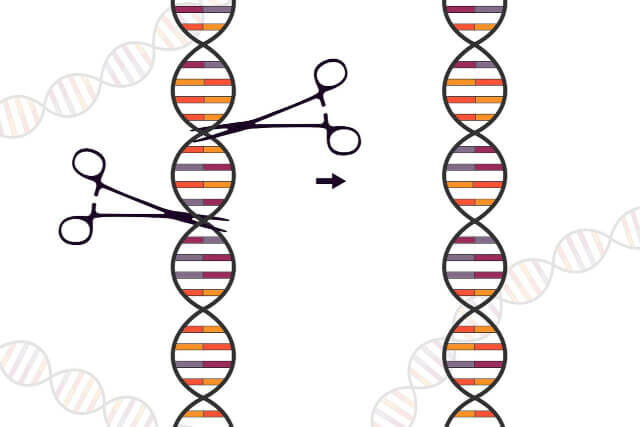[Source](https://pixabay.com/users/ljnovascotia-1859446/)
Then, with **genetic engineering or genome editing**, the genome or ‘germ-line’ of the living species is ‘edited’ to resemble that of the extinct species, after which ‘back breeding’ is done. If this all succeeds, then it may be possible to reintroduce the resurrected animals into their former habitats.
What is important to note is that often, the species being brought back is not the original species, but something that is close enough in its DNA. De extinction is very much still in the development phase, but that development is moving rapidly.
- [](https://interfaithsustain.com/how-religious-communities-are-curbing-climate-change/)
## [How Religious Communities Are Curbing Climate Change](https://interfaithsustain.com/how-religious-communities-are-curbing-climate-change/)
- [](https://interfaithsustain.com/how-many-animals-go-extinct-every-day/)
## [Is it Possible To Know How Many Animals Go Extinct Every Day?](https://interfaithsustain.com/how-many-animals-go-extinct-every-day/)
- [](https://interfaithsustain.com/how-does-deforestation-affect-climate-change/)
## [Environmental Destruction and How Does Deforestation Affect Climate Change?](https://interfaithsustain.com/how-does-deforestation-affect-climate-change/)
### Can All Species Be Brought Back to Life?
That depends on the DNA or germ cells. The primordial germ cells of dinosaurs, for example, are too old and degraded to reanimate (and many, with Jurassic Park in mind, are thankful for this!).
#### The Revive and Restore Project
There are a number of **de extinction programs** currently operating. One such program, “The Revive & Restore Project”, is looking to resurrect the extinct passenger pigeon.
Passenger pigeons are one of the most famous species in the world to become extinct. Once found in the millions across North America, due to hunting and habitat loss, the passenger pigeon became extinct, the last one dying in Cincinnati Zoo in 1914.
[Source](https://pixabay.com/users/vizetelly-6208731/)
The project [discovered](https://www.vaildaily.com/opinion/curious-nature-the-age-of-de-extinction) that the closest living species to the passenger pigeon is the band-tailed pigeon so genetic technologies are being used to edit their germ cells and identify key genes. These are used in selective breeding techniques so as to breed back to the first species.
#### Other species to de extinct
A famous project is looking at bringing back to life the woolly mammoth. A less well known project is the attempt at de extinction of the heath hen, “[an extinct subspecies of the greater prairie chicken](https://en.wikipedia.org/wiki/Heath_hen)” which lived in huge numbers in New England. The heath hen became extinct by 1932, primarily due to hunting. It is also the first species that US conservationists attempted to bring back from the brink, but to no avail.
#### It’s not just about one lost species
This is not only about seeing passenger pigeons taking to the skies, or heath hens running around the prairies. The study of nature ecology has resulted in the realization that it is not just the extinct organism that counts but the gap it leaves in the ecosystem.
For example, the woodland biodiversity of the eastern United States would benefit from the passenger pigeon as a resurrected species. So bringing back passenger pigeons, or the heath hen, may well improve the overall [health of biodiversity](https://interfaithsustain.com/importance-of-biodiversity/) in North America, thus making it an important conservation tool.
[Source](https://unsplash.com/@js90)
Another animal is the extinct wild ox or aurochs of Europe. It is understood today that the European landscape was a mixture of forest and grassland, and that the aurochs helped to keep it that way. If the extinct wild ox were resurrected, it could help us [“rewild” European countries](https://rewildingeurope.com/what-is-rewilding-2/).
#### To De Extinct Or Not To De Extinct?
Should we resurrect extinct animals? The jury is out, both from the point of view of which animals to bring back and whether to do so at all.
An example of this is the Christmas Island rat – also known as Maclear’s rat. It is a large rat endemic to Christmas Island, in the Indian Ocean, whose numbers were decimated when the black rat was inadvertently brought onto the island in the 1800s. The Christmas Island rat succumbed to a disease carried by the invasive black rat species. The last individual Christmas Island rat died in 1903.
Recently, researchers have been working on bringing this species back. Using gene-splicing technology, great strides have been made, but not all of the Christmas Island rat genome was recoverable, which means that from a [scientific point of view](https://www.nbcnews.com/science/science-news/scientists-think-de-extinct-christmas-island-rat-rcna19218) we do not know what part of the rat’s existence will have changed – or even, what will have been created?
## The Ethics of De Extinction
Clearly, it is the ethics of the project that bother many people. It is all very well to bring a species back to life, but if the only place the resurrected animals can live is a zoo, then the species remains functionally extinct, and many in the biological sciences oppose this vehemently.
If they are released, then why achieve the genetic rescue of a species only to have it struggle to live in a former habitat, one that is no longer viable thanks to human action? If the result of de extinction is to put creatures in zoos, it seems like a highly unethical move.
## Conservation OR De Extinction?
While the idea of bringing some of the species back to life that humankind has destroyed or that became extinct on their own is extremely tempting, many scientists are of the opinion that our [conservation efforts](https://interfaithsustain.com/fsc-certified-wood/) and conservation funding should rather go to endangered species today which are disappearing rapidly – again thanks to human action.
Having said this, even if bringing an extinct species back seems more exciting than protecting an endangered species, [scientists note](https://www.sciencefocus.com/nature/de-extinction-can-we-bring-extinct-animals-back-from-the-dead/) that: “The same techniques being developed to help resurrect extinct species can also be used to help save living species on the brink of extinction.”
## Religion and De Extinction
From a religious point of view, are we allowed to re-create animals? There are many different views on the matter.
Reverend Donna Schaper discusses [the downside of de extinction](https://www.ncronline.org/blogs/spirituality/eco-catholic/de-extinction-science-has-downside) on EarthBeat. She shares her deep concern that by the de extinction of species we threaten the natural order:
> We can love things and we can lose them. When we hang on too tight to any species, or beloved, or moment in time, we move out of the great flow of infinity, which is God’s name for time and space.
>
> Once we are part of the great ongoing conversation that Charles Darwin called evolution, once our genes are in the mix, we flow on. Flowing on is so much better than fixing. I’m not “against” de-extinction science. Instead, I am for going with the flow of God’s life and death pattern for infinity.
In other words, de extinction is a rebellion against God’s ordering of the world. Creatures live and die. And that’s the way it should be.
[Dr. Rolf Bouma](https://thinkchristian.net/contributors/rolf-bouma) offers another perspective on de extinction, expressing uncertainty about how God feels about de extinction, but offers the following supposition: “my instincts tell me that if we champion God as the author of life, then God is more pleased by de extinction than by extinction.” If God is all about life, the more we can do to create life, the better. But on the other side of this issue is what kind of life are we creating and what will the lives of these creatures be like?
Dr. Bouma is concerned about cloning creatures that will all have the same genetics, making for a very unhealthy species. He’s also concerned about bringing back extinct species without them having the appropriate habitat. His last argument implies that if scientists undergo de extinction of creatures that are disappearing because their habitat is being destroyed, then we may be less motivated to protect that species and their habitat. If we can just bring it back to life later, than we lose the impetus to protect that species and their home in the here and now.
## A Balancing Act
Most people believe that we should prioritize saving the species that are disappearing every year at an alarming rate over investing millions of dollars in the de extinction of animals. We have limited resources, so the question is how to channel them?
Bringing back extinct species may be an interesting way to flex our technological prowess, but the more pressing need is to protect the species and habitats that we’re wiping out— before it’s too late for all of us.
*\* Featured image [source](https://unsplash.com/@maud_beauregard)*
**Categories:** Biodiversity, Blog on Faith and Ecology
---
### [Is it Possible To Know How Many Animals Go Extinct Every Day?](https://interfaithsustain.com/how-many-animals-go-extinct-every-day/)
**Published:** July 29, 2022
**Author:** ICSD
**Excerpt:** Rachel Cohen - Jared Diamon, an American geographer and author once wrote, “Elimination of lots of lousy little species regularly causes big harmful consequences for humans, just as does randomly knocking out many of the lousy little rivets holding together an airplane.”
**Content:**
Table of Contents
Table of Contents
- [Previous Extinctions](#aioseo-previous-extinctions-2)
- [Humans Causing The Current 6th Extinction](#aioseo-humans-causing-the-current-6th-extinction-10)
- [Humans and Extinction: Global Warming & Climate Change](#aioseo-humans-and-extinction-global-warming-climate-change-20)
- [Categorizing Extinctions](#aioseo-categorizing-extinctions-23)
- [How Many Animals Go Extinct Every Day?](#aioseo-how-many-animals-go-extinct-every-day-33)
- [Defining the Number of species lost each day](#aioseo-defining-the-number-of-species-lost-each-day-42)
- [Take Action!](#aioseo-take-action-46)
- [Wildlife Sanctuaries](#aioseo-wildlife-sanctuaries-48)
- [Landscaping](#aioseo-landscaping-52)
- [Native Species](#aioseo-native-species-57)
- [Religion and Extinction](#aioseo-religion-and-extinction-61)
- [Protecting Species Eco Bible Volume 2](#aioseo-protecting-species-eco-bible-volume-2-63)
*By Rachel Cohen* – Dr. Jared Diamond, an American geographer and author once wrote, “Elimination of lots of lousy little species regularly causes big harmful consequences for humans, just as does randomly knocking out many of the lousy little rivets holding together an airplane.” The extinction of a few species may not seem that harmful in the short run, but in the long run, it will break down the natural ecosystems, create biodiversity loss and continue to create irreversible changes we have already seen from climate change.
## Previous Extinctions
Scientists refer to the current mass extinction we are seeing as the **sixth mass extinction**. As the name suggests, there have been five other mass extinction events.
[Source](https://pixabay.com/users/nickbar-1177651/)
[The five other extinctions](https://www.amnh.org/exhibitions/dinosaurs-ancient-fossils/extinction/mass-extinction) occurred over the course of hundreds of millions of years, the first being the Ordovician-Silurian extinction. This took place 440 million years ago and mainly small marine organisms died out. The next extinction was the Devonian extinction which took place 365 million years ago when tropical marine species went extinct. The third extinction took place 250 million years ago and eliminated a variety of species including many vertebrates. Further extinction took place 210 million years ago during the Triassic-Jurassic extinction. This extinction wiped out many other vertebrate species that allowed the dinosaurs to flourish. The fifth extinction was the Cretaceous-tertiary mass extinction in which ¾ of the world’s species were wiped out.
All previous extinctions were natural. However, the current sixth mass extinction is linked directly to humans.
## Humans Causing The Current 6th Extinction
Humans are the reason for exacerbated [global warming and climate change](https://interfaithsustain.com/global-warming-vs-climate-change/) as well as the current mass extinction we are seeing. We are causing this extinction through our unsustainable use of nature.
Currently, [30% of land containing](https://www.worldwildlife.org/stories/what-is-the-sixth-mass-extinction-and-what-can-we-do-about-it) biodiversity has been converted for food use. This means habitats for hundred and thousands of living species have been wiped out. Clearing a forest removes homes and food sources for animals, and repeating this all over the world impacts the biodiversity and survival of many key species.
Beyond our [unsustainable use of land](https://interfaithsustain.com/fsc-certified-wood/), the dramatic use of water by humans greatly impacts the survival of animals. Water is a basic necessity of life for all living things, but the way humans use water is unsustainable and impacts the natural world.
[Source](https://unsplash.com/@karsten116)
For instance, creating just ONE cotton t-shirt requires 2,700 liters of water. Now multiplying that by the billions of T-shirts and other clothing items produced each year by the [fashion industry](https://interfaithsustain.com/sustainable-clothing/), in addition to the water used for drinking, showering, gardening, etc. all from a finite source, does not leave much water for the animals of the world or the support of sustaining biodiversity.
We can already see the impact of our water use on bodies of water such as the [Aral Sea](https://theconversation.com/humans-drained-the-aral-sea-once-before-but-there-are-no-free-refills-this-time-round-32513). The irrigation of cotton in nearby countries limited the amount of water that could replenish the sea and combined with rising temperatures, the sea has disappeared reducing a water source for desert animals.
### Humans and Extinction: Global Warming & Climate Change
It is a known fact that through human activities we greatly increase the Co2 in the air which traps heat on earth, leading to rising temperatures, melting glaciers, and rising sea levels. These drastic changes to the earth are greatly impacting the animals of the world.
Animals are losing habitats, and the **extinction of key species** is causing a chain reaction within the animal kingdom. A balance in the ecosystem keeps the **biodiversity** of the natural world and the disruption from humans ruins this and puts the world’s ecosystems at risk.
- [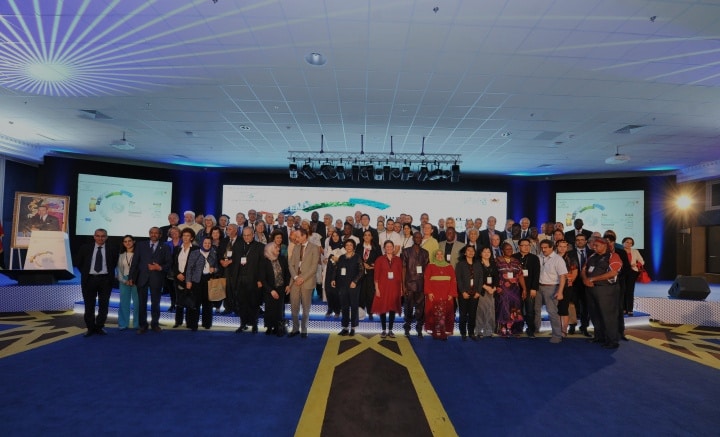](https://interfaithsustain.com/united-nations-framework-convention-on-climate-change/)
## [United Nations Framework Convention on Climate Change](https://interfaithsustain.com/united-nations-framework-convention-on-climate-change/)
- [](https://interfaithsustain.com/decarbonization/)
## [The Necessity of Decarbonization to Save our Planet](https://interfaithsustain.com/decarbonization/)
- [](https://interfaithsustain.com/noah-and-the-flood/)
## [Noah and the Flood Teach Contemporary Environmental Lessons](https://interfaithsustain.com/noah-and-the-flood/)
#### Categorizing Extinctions
As we talk about extinction it is important to understand the different types of “ranking” an animal or species may receive before it is labeled as an extinct species. The International Union for Conservation of Nature uses a variety of categories to classify the **endangerment of animals**, referred to as the Red List of Threatened Species. The seven levels include:
- least concerned
- near threatened with extinction
- vulnerable
- endangered
- critically endangered species
- extinct in the wild
- extinct
## How Many Animals Go Extinct Every Day?
Now that we can understand the impact humans have on the extinction of species, let’s look deeper into how many animals and species we are losing. There are 1.7 million known species on earth but it is estimated that there are more species, as many as 8 million unknown species in existence. These species are all interconnected through the food web and have created harmony in their world, which humans have destroyed.
[Source](https://unsplash.com/@polarmermaid)
Before humans, there was a natural rate of extinction also known as the background rate. The background rate was the normal rate of extinction that occurred through natural causes. The earth has constantly been freezing, warming, and forming for hundreds of millions of years. Through these transitions animals and species naturally died off. Most species died from a loss of resources, natural causes, and/or the inability to reproduce for a variety of reasons. These natural changes lead to a natural rate of extinction of one species per every one million species per year. We are able to track this rate through fossil records. Sadly, this natural rate does not exist anymore as human behavior has greatly increased it.
Poaching is a human-related reason for extinction. Engaging in the illegal killing of animals, or poaching has led to a biodiversity crisis as species disappear. This biodiversity crisis is a disruption of the natural world and the balance that is set.
For example, the last White Rhino died in March 2018 after the species had been severely hunted for its ivory. Other species such as the Malaysian tiger face a similar fate.
### Defining the Number of species lost each day
For all the reasons mentioned above, humans have drastically changed the world. The human impact can be seen in the **extinction risk** and rate of today which is estimated to be as high as [24 species a day](https://e360.yale.edu/features/global_extinction_rates_why_do_estimates_vary_so_wildly#:~:text=More%20recently%2C%20scientists%20at%20the,as%2010%20percent%20a%20decade.). The issue with defining the true number is that it is hard to track as we have a massive gap between the known population and the real population of animals on earth. Thus, we may not know when an animal has died off.
Furthermore, some animals may not interact with humans on a regular basis which leads us to believe they have gone extinct. An example of this is the Guadalupe fur seal which was believed to have gone extinct over a century ago but it has now been reported that there are actually over 20,000 seals.
It is quite difficult to know exactly how many species we lose in one day, but we can deduce that through the harm humans have done to the earth, there has been just as much harm to the ecosystems, causing biodiversity loss and greatly impacting the number of species in existence today.
## Take Action!
According to the Red List, “there are more than 142,500 species on The IUCN Red List, with more than 40,000 species threatened with extinction, including 41% of amphibians, 37% of sharks and rays, 34% of conifers, 33% of reef-building corals, 26% of mammals and 13% of birds.” With the threat of extinction, there is a large concern about new extinctions and what species are going extinct.
### Wildlife Sanctuaries
One small step to take to try and mitigate the issue is to support organizations and conservation efforts by visiting [wildlife sanctuaries](https://www.endangered.org/10-easy-things-you-can-do-to-save-endangered-species/). By visiting, individuals can give monetary donations which help continue the conservation efforts. Furthermore, visitors will be educated about more steps they can take to try and slow down the rate of extinction. . Learning and educating others can help individuals make more informed decisions which can create a positive impact in the long term.
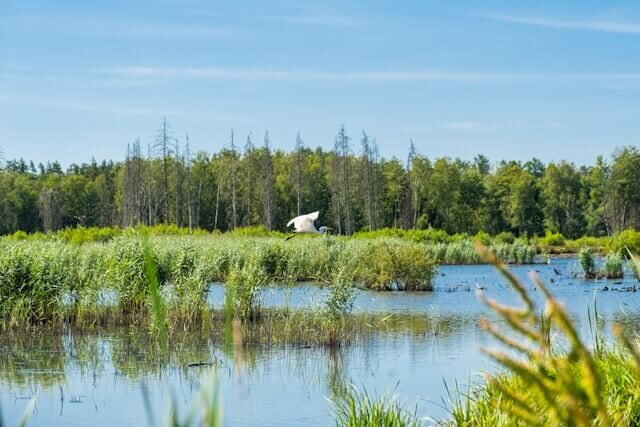[Source](https://unsplash.com/@cmeurice)
#### Landscaping
Another step includes changing how you may take care of your [landscape](https://www.endangered.org/10-easy-things-you-can-do-to-save-endangered-species/). It is extremely common in America to use pesticides, which may leave your grass looking beautiful but can actually be extremely harmful to the planet.
Pesticides are poisonous to animals. Any animal that may eat from your lawn or pesticide-treated plants risks the possibility of sickness or death. If a predator eats sick prey there is a risk of the predator dying as well and creating a chain reaction. Another risk with pesticides is contaminated runoff. When it rains, pesticides will runoff and contaminate water in sewers which can contaminate larger bodies of water that animals use for survival. Unknowingly, animals can be killed off and continue the threat of the sixth mass extinction.
#### Native Species
To further support protecting endangered species through landscaping it is important to only plant native species. Planting native species continues to support the natural wildlife through giving food options and supporting natural processes like pollination.
When **non-native species** are introduced it creates competition for the native plants and animals. Non-native plants can use up valuable resources killing native plants and harming the native ecosystem. The red squirrel of The United Kingdom is now a critically endangered species, found today only in The Isle Of Wight, after the grey squirrel was brought into the country from The United States.
We may not know the exact number of species that die off every day but it is more than the natural/background rate. The current sixth mass extinction has been caused by human activities including but not limited to poaching, pesticides, and invasive plants. There are small steps such as educating others, monetarily supporting conservation work, and changing some of our habits which may help reduce our losses.
##
Religion and Extinction
*Deuteronomy 7:22 – The Lord your God will dislodge those peoples before you little by little; you will not be able to put an end to them at once, else the wild beasts would multiply to your hurt.*
### Protecting Species [Eco Bible Volume 2](https://www.amazon.com/dp/1735338842?psc=1&smid=ATVPDKIKX0DER&ref_=chk_typ_imgToDp)
Rabbi Moshe ben Nachman (Nachmanides; Ramban) [explains](https://www.sefaria.org/Deuteronomy.7.22?lang=bi&with=Ramban&lang2=en) that if God were to let the Israelites conquer the Canaanites in one day or drive them out over a year, then the land would become desolate and overrun by wild animals. The verse is referring to the lions, leopards, and bears that once roamed biblical Israel.
In this verse, humans are being recognized as a predator species, keeping the wild animals at bay. In our times, while coronavirus lockdowns have led to some wildlife expanding their territories, even entering cities, humans still pose the greatest risk to wildlife, not the other way around. The biblical fear of large groups of wild animals is not one held by most people today.
[The Australian wildfires of 2019 and 2020](https://www.cbsnews.com/news/australia-fires-have-pushed-as-many-as-100-threatened-species-closer-to-extinction-2020-01-18/) pushed 100 endangered species, including Australia’s beloved koalas, closer to extinction, with an estimated one billion animals being killed by fires that bore the fingerprint of human-caused climate change. In the words of Harvard University’s Professor Richard Zeckhauser, “Humans . . . despite their regulatory tools, have contributed to innumerable extinctions. Humans can disrupt equilibrium patterns through their often outsized hunting capabilities, their habitat destruction, and their introductions of invasive species.”
One of the most recent species people made functionally extinct is the northern white rhinoceros. While our verse warns of war increasing animal populations, wars in central Africa allowed poachers to run rampant and decimate the rhino population. The last male, named Sudan, died in 2018. His caretakers “scratched Sudan’s rough skin, said goodbye, made promises, apologized for the sins of humanity,” and cried. For this subspecies, it was 55 million years of life and a farewell. The Javan, Sumatran, and black rhinos, all critically endangered, [may soon suffer a similar fate.](https://www.google.com/url?sa=t&rct=j&q=&esrc=s&source=web&cd=&cad=rja&uact=8&ved=2ahUKEwirwJqe75_4AhWF66QKHfGGDP0QFnoECAMQAQ&url=https%3A%2F%2Fwww.nytimes.com%2F2021%2F01%2F06%2Fmagazine%2Fthe-last-two-northern-white-rhinos-on-earth.html&usg=AOvVaw0UKgB8z1KFUCxphTeoUC8-)
In a limited success story, the population of Indian rhinos, the world’s largest rhinos, has risen from around 200 in 1900 to around 3,700 today. This was due to strict protection and management by wildlife authorities in India and Nepal, [which moved the status of these rhinos from critically endangered to vulnerable.](https://www.google.com/url?sa=t&rct=j&q=&esrc=s&source=web&cd=&cad=rja&uact=8&ved=2ahUKEwjNp4Ot75_4AhWO_KQKHcaKDPQQFnoECAkQAQ&url=https%3A%2F%2Fwww.worldwildlife.org%2Fspecies%2Fgreater-one-horned-rhino&usg=AOvVaw2TebVI_H3kWSSZkHzM7g8m)
Humans, unlike other predators, have a moral choice to protect species or endanger them and even drive them to extinction. The fate of millions of species is in our hands. Pulitzer Prize-winning author [Elizabeth Kolbert](https://www.google.com/url?sa=t&rct=j&q=&esrc=s&source=web&cd=&cad=rja&uact=8&ved=2ahUKEwiV0LPA75_4AhUIHewKHZb1C7YQFnoECAkQAQ&url=https%3A%2F%2Fwww.amazon.com%2FSixth-Extinction-Unnatural-History%2Fdp%2F1250062187&usg=AOvVaw0Qy6cREuDBn3Vh5u6MnwV2) notes that the anthropologist Richard Leakey has warned, “Homo sapiens might not only be the agent of the sixth extinction but also risks being one of its victims.”
*\* Featured image [source](https://pixabay.com/users/dimitrisvetsikas1969-1857980/)*
**Categories:** Biodiversity, Blog on Faith and Ecology
**Tags:** Extinction
---
### [As Climate Change Accelerates, Are Polar Bears Going Extinct?](https://interfaithsustain.com/are-polar-bears-going-extinct/)
**Published:** April 8, 2022
**Author:** ICSD
**Excerpt:** Harry Cooper - Polar bears have long been a poignant symbol in the fight against climate change. The desperate pictures of polar bears stranded on blocks of melting sea ice, encapsulate a feeling of natures vulnerability in the face of so much human created change.
**Content:**
Table of Contents
Table of Contents
- [Global Warming In The Arctic](#aioseo-global-warming-in-the-arctic-5)
- [Polar Bear Habitat](#aioseo-polar-bear-habitat-14)
- [Habitat Loss](#aioseo-habitat-loss-18)
- [Polar Bears are Vulnerable To Extinction](#aioseo-polar-bears-are-vulnerable-to-extinction-27)
- [Climate Change Scenarios](#aioseo-climate-change-scenarios-31)
- [Is It Too Late for Polar Bears?](#aioseo-is-it-too-late-for-polar-bears-39)
- [The Impact of Declining Polar Bears](#aioseo-the-impact-of-declining-polar-bears-42)
- [Polar Bears and Religion](#aioseo-polar-bears-and-religion-45)
**Polar bears** have long been a poignant symbol in the fight against climate change. The desperate pictures of polar bears stranded on blocks of melting sea ice, encapsulate a feeling of nature’s vulnerability in the face of so much human created change.
But are these once apex predators of the Arctic Ocean really going to be gone for good? Scientists agree that if we don’t put a halt on **[global warming](https://interfaithsustain.com/global-warming-vs-climate-change/ "global warming")**, then the polar bears of the world will find themselves without a home.
Polar bears spend their lives in a very small and very niche habitat on arctic sea ice. This habitat, which is already very small, is one of the most affected regions by climate change in the world.
Furthermore, **climate change** will not just change the landscape of polar bear habitats, but will cause it to completely disappear. If the arctic sea ice melts in this way, it would not just spell trouble for polar bear populations, but for ecosystems and people around the world.
## Global Warming In The Arctic
Increased amounts of [greenhouse gas emissions](https://interfaithsustain.com/how-to-reduce-air-pollution/ "greenhouse gas emissions") has made global warming a serious issue felt around the world. But the places warming the [fastest](https://climate.mit.edu/ask-mit/which-parts-planet-are-warming-fastest-and-why#:~:text=The%20earth's%20largest%20land%20masses,reflect%20energy%20from%20the%20sun.&text=For%20more%20than%20a%20century,labs%2C%20ships%2C%20and%20satellites.) are the north and south poles.
This is due to something called surface albedo. Albedo is the measurement of how well something reflects light.
Light surfaces reflect more sunlight while dark ones absorb it. Snow has a high albedo, and is incredibly good at reflecting light, which is normally what helps the poles stay so cool.
However, as temperatures start to rise, the snow melts revealing dark ground underneath, this absorbs sunlight and makes the arctic even warmer. This makes it so that the arctic is not just warming fast, but at an exponential rate.
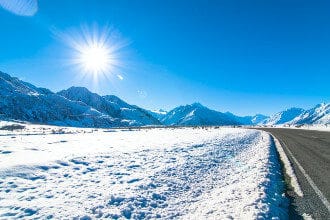[Source](https://unsplash.com/@photoholgic/ "Source")
## Polar Bear Habitat
This melting snow does more than just make the arctic warmer. It also destroys the most quintessential part of the vital habitat of the polar bear, arctic sea ice.
In order to understand why artic sea ice is so important to polar bears, it is important to understand how polar bears [live](https://www.wwf.org.uk/learn/wildlife/polar-bears#:~:text=Polar%20bears%20are%20the%20planet's,sea%20ice%20they%20depend%20on.). Even though polar bears are the largest land dwelling carnivore, they spend the majority of their lives on and around ice and water.
Polar bears are built to be able to swim for miles on end, and hunt for seals under thick layers of ice. This makes the large pieces of floating sea ice a perfect habitat for the Arctic’s top predator.
### Habitat Loss
There are 19 different **polar bear populations** that live across the arctic circle everywhere from Alaska to Canada to Russia. [Almost all](https://www.nytimes.com/2020/07/20/climate/polar-bear-extinction.html) of these polar bear populations could face extinction due to melting sea ice.
Arctic ice is essential for polar bears to survive. Some polar bears even spend their entire lives on this sea ice.
Sea ice is at its largest in the winter, but shrinks in the summer and spring. Normally, a polar bear would stay on the ice in the winter and go ashore when the summer ice melts, but with temperatures rising, the winter ice is melting sooner and there are less areas covered by summer sea ice.
This makes it increasingly hard for polar bears to survive. Polar bears rely on sea ice to hunt, and many polar bears that spend their entire lives on sea ice are finding themselves in an even more desperate situation, facing a total loss of habitat in the coming years.
[Source](https://unsplash.com/@anniespratt/ "Source")
- [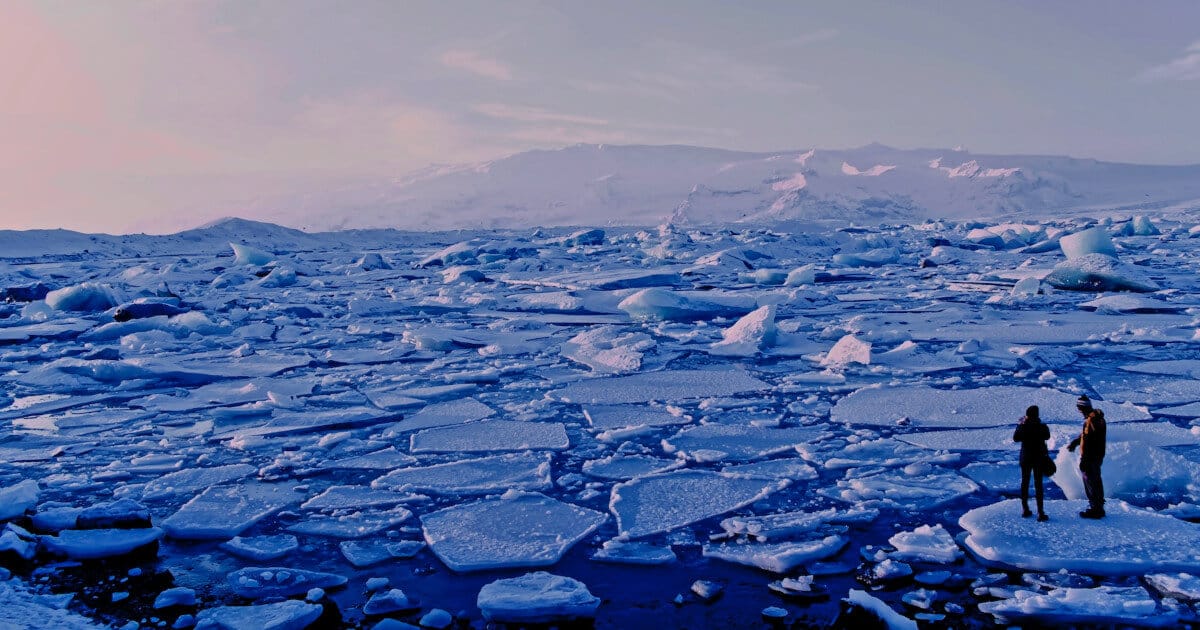](https://interfaithsustain.com/global-warming-vs-climate-change/)
## [Global warming vs climate change: Examining how these terms relate to each other](https://interfaithsustain.com/global-warming-vs-climate-change/)
- [](https://interfaithsustain.com/evidence-of-climate-change/)
## [Evidence of Climate Change: Satellites, Ice Core Samples, and More](https://interfaithsustain.com/evidence-of-climate-change/)
- [](https://interfaithsustain.com/factors-affecting-climate/)
## [Leading up to COP 26, Know what Factors are affecting the Climate](https://interfaithsustain.com/factors-affecting-climate/)
## Polar Bears are Vulnerable To Extinction
Polar bears are in an incredibly desperate situation. But what exactly does the future hold for them, and how can we stop more polar bears from dying?
However, the current classification of polar bears is that they are “**vulnerable to extinction**” under the International Union for Conservation of Nature, or [IUCN](https://portals.iucn.org/library/sites/library/files/documents/SSC-OP-026.pdf). While this means that polar bears are a still a step above endangered, they are still at risk of going extinct.
This vulnerability to extinction is made even worse when we look at what the future might hold for polar bears. With an already melting habitat it is becoming increasingly difficult to fix the problem.
### Climate Change Scenarios
Scientists have created several different scenarios of how much the Earth will warm during the rest of the century based on how much emissions we continue to emit. These scenarios are based on expecting carbon emissions to reduce, increase, or continue at the rate unabated.
The [increased emissions](https://www.bbc.com/news/science-environment-53474445) scenario is, as one would think, the worst case scenario. If emissions were increase at a rate higher than they are increasing now, almost all polar bear populations would be completely gone.
This worst case emissions scenario would spell the end for one of the Earth’s largest animals. However, the other decreased and unabated carbon emission [scenarios](https://www.usgs.gov/news/national-news-release/greenhouse-gas-emissions-remain-primary-threat-polar-bears) also hold a grim future for polar bears.
[Source](https://unsplash.com/@hansjurgen007/ "Source")
## Is It Too Late for Polar Bears?
Under the projected scenario for decreased carbon emissions it is expected that our emissions would peak in 2040, and then start to decline. While this would ideally put an end to, or at least slow down, our warming climate, by that time polar bear numbers across the Arctic would have already declined drastically.
If greenhouse gas emissions continue as normal this sharp decline in polar bear numbers would happen about 25 years sooner. In other words, even if we start lowering our carbon emissions now, it may already be too late for polar bears.
### The Impact of Declining Polar Bears
[Polar Bears International](https://polarbearsinternational.org/polar-bears-changing-arctic/conservation-concerns/), a non-profit dedicated to the conservation of polar bears, has highlighted a few different impacts that the extinction of polar bears would have on the human world. One of which is that as polar bears lose their habitat many would start to move ashore. While finding a new habitat ashore might seem like a good way of adapting, it often has some more gruesome consequences. When polar bears come ashore they risk interacting with coastal villages. These types of encounters are not only dangerous for humans, but also for the bears interacting with humans trying to defend themselves.
Polar Bears International also discusses how polar bears hold a very important cultural significance to indigenous people that live around the Arctic Circle. Without polar bears, many people will lose important hunting and religious traditions.
### Polar Bears and Religion
Polar bears are deeply significant for Canadian indigenous people like the Inuit and Inuvialuit. These indigenous communities have been sustainably hunting the polar bear for generations.
Polar bears provide many resources to the indigenous peoples who hunt them. According to a [2017 Joint Management Plan](https://www.polarbearscanada.ca/sites/default/files/public/isr_polar_bear_joint_management_plan_2017_final.pdf), polar bears “meat nourished people and their dog teams alike, especially at certain times of the year when other food is in short supply. Polar bear pelts provide clothing, mattresses and tools. Apart from bears’ economic contribution, they also nourish the Inuvialuit imagination, due in large measure to their strength, agility, and above all, their great intelligence. Polar bears feature prominently in Inuvialuit mythology, spirituality, storytelling, art, song, and other forms of cultural expression and traditions”. Polar bears are essential to these communities’ spiritual beliefs and physical needs.
A [traditional knowledge study](https://www.polarbearscanada.ca/sites/default/files/public/394_polar-bear-tk-report-low-res.pdf) on polar bears describes how “polar bears are greatly respected by Inuit hunters as the most intelligent animal in the Arctic, and as a symbol of the resilience, patience and determination that is need to survive in the harsh climate”. But, with climate change and melting ice, polar bears may not be able to overcome these existential threats. The Inuit and Inuvialuit built their societies to live in balance with polar bears. We also need to ensure our society exists in balance with other species. The ice may be melting, but it’s not yet too late. We need to act NOW!
*\* Featured image [source](https://unsplash.com/@hansjurgen007/ "source")*
**Categories:** Biodiversity, Blog on Faith and Ecology
**Tags:** Climate Change, Polar Bears
---
### [Maximum Sustainable Yield For Sustainable Fishing](https://interfaithsustain.com/maximum-sustainable-yield/)
**Published:** September 21, 2022
**Author:** ICSD
**Excerpt:** Harry Cooper - Maximum sustainable yield, or MSY, refers to the optimal amount of fish that can be harvested consistently from an area over an extended period of time. This is done by harvesting fish at rates that won't cause any disruptions to the ecosystem's balance.
**Content:**
## What is Maximum Sustainable Yield?
Table of Contents
Table of Contents
- [The Importance of Sustainable Fishing](#aioseo-the-importance-of-sustainable-fishing-8)
- [Implementing Maximum Sustainable Yield](#aioseo-implementing-maximum-sustainable-yield-16)
- [Calculating Maximum Sustainable Yield](#aioseo-calculating-maximum-sustainable-yield-20)
- [Issues With Maximum Sustainable Yield](#aioseo-issues-with-maximum-sustainable-yield-30)
- [Alternatives to Maximum Sustainable Yield](#aioseo-alternatives-to-maximum-sustainable-yield-35)
- [Maximum Economic Yield](#aioseo-maximum-economic-yield-39)
- [Maximum Sustainable Yield and Religion](#aioseo-maximum-sustainable-yield-and-religion-41)
- [The Tragedy of the Commons](#aioseo-the-tragedy-of-the-commons-43)
**Maximum sustainable yield**, or **MSY**, refers to the optimal amount of fish that can be harvested consistently from an area over an extended period of time. This is done by harvesting fish at rates that won’t cause any disruptions to the ecosystem’s balance.
Harvesting fish at an ecosystem’s **MSY level** is incredibly important for both the well being of the ecosystem and the fishing industry. Overfishing can lead to devastating impacts that cause ecological disaster, as well as lowered catch rates.
However, while MSY is an important measurement to know, it is often difficult to calculate. Biologists must determine the growth rate and mortality rates of their fish populations in order to ascertain an accurate MSY level. This is not always easy as fish stock can be hard to monitor, and there are a variety of other factors that could impact a fish population.
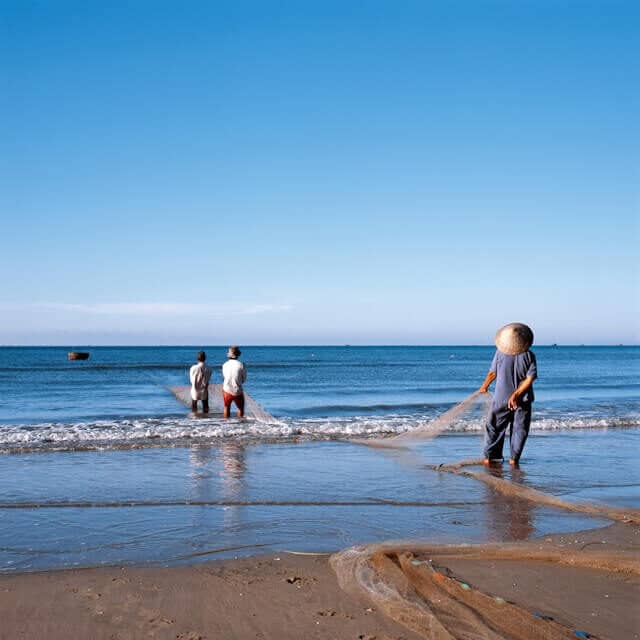[Source](https://unsplash.com/@nelmin)
This has led to experts trying to find other ways to determine a sustainable level of fishing, such as maximum economic yield, which looks at the most economically productive rates of fishing. But however you determine the most effective fishing method, taking the health of fish population into consideration is important for both the fishing industry and marine ecosystems.
## The Importance of Sustainable Fishing
The UN estimates that almost six billion tons of fish, invertebrates, and other aquatic species have been extracted from the oceans since 1950. This kind of [overexploitation](https://www.iberdrola.com/social-commitment/sustainable-fishing#:~:text=Sustainable%20artisanal%20fishing%20provides%20employment,development%20of%20small%20fishing%20communities.&text=Sustainable%20fishing%20generates%20less%20waste,that%20damage%20the%20ozone%20layer.) by the fishing industry has greatly threatened the survival of numerous commercial fish species, causing a drastic blow to marine [biodiversity](https://interfaithsustain.com/importance-of-biodiversity/) around the world.
This over extraction of fish is not just detrimental to the biodiversity of the oceans, but it also has a devastating human impact as well. While the commercial fishing industry has increased their intake of fish, local fishing industries have been left with depleted stocks. This has put billions of people whose livelihoods depend on their ability to catch fish in jeopardy, forcing them to seek out more fertile fishing grounds.
[Source](https://unsplash.com/@crnikralj)
As a result of fish stocks becoming depleted, more and more people are turning to illegal fishing methods, making the problem even bigger. If we don’t make a bigger effort to fish sustainably, we can expect to find ourselves with almost nonexistent fish stocks.
## Implementing Maximum Sustainable Yield
In practice, [MSY](https://oceana.org/blog/whats-maximum-sustainable-yield/) involves catching enough fish to meet fish market demands while still leaving fish populations high enough to recover and stabilize. The UN and many other countries use the standard of MSY to implement fishing quotas and other fishing regulations. But even with these regulations in place, achieving totally sustainable fishing is still reliant on our ability to measure and determine a feasible MSY.
- [](https://interfaithsustain.com/sea-jellies/)
## [Are Sea Jellies Taking Over The Animal Kingdom?](https://interfaithsustain.com/sea-jellies/)
- [](https://interfaithsustain.com/oil-spill-clean-up/)
## [As We Blog, Another Oil Spill Clean Up Is Underway!](https://interfaithsustain.com/oil-spill-clean-up/)
- [](https://interfaithsustain.com/deforestation-solutions/)
## [Become An Advocate For The Solutions To Deforestation](https://interfaithsustain.com/deforestation-solutions/)
### Calculating Maximum Sustainable Yield
There are many different [factors](https://www.sciencedirect.com/topics/agricultural-and-biological-sciences/maximum-sustainable-yield) and natural fluctuations that go into **calculating MSY**. This makes it difficult for fisheries scientists to get an exact determination.
But in order to begin calculating MSY it is first important to determine an area’s **fish biomass** and its change over time. Biomass is the total weight of a certain kind of fish in an area, and by looking at its change overtime, we can start to determine an optimum sustainable yield. However, this number varies greatly from species to species, as different species of fish will have a different life history and reproduce, grow, and die at different rates.
In order to accurately calculate biomass, it is important to look at the growth rate and reproductive rate of a fish population minus its mortality rates. Once the biomass is determined the biomass maximum sustainable yield, or **BSMY**, can be calculated. This is the biomass level at which fish can be most optimally caught. Fishing at rates [both](https://awsassets.panda.org/downloads/wwf_msy_oct2011_final.pdf) above and below the BSMY will have consequences for ocean wildlife and ocean fisheries.
[Source](https://unsplash.com/@frogman39)
When fishing below BMSY, fish stocks become overfished and populations decline. When a fish population gets low enough it loses its ability to reproduce quickly. This makes it even harder for fish stocks to recover from fishing.
On the other side of the spectrum, when a fish stock is fished above BMSY, population growth eventually reaches carrying capacity. This can create issues with food and resource availability, leaving a population made up of older, larger, and slow-growing fish. This leaves less of the fish population available for fisheries to harvest and sell, impacting the fishing industry.
## Issues With Maximum Sustainable Yield
While the MSY model has been widely used to help create a global system of sustainable fishing for the fishing industry, many [experts](https://www.seaaroundus.org/fisheries-managers-should-not-abuse-maximum-sustainable-yield/) believe that the system is fairly outdated. This is mainly due to the fact that MSY is so difficult to accurately calculate. With such variable calculations for a sustainable fishing model, it is very easy for fisheries managers to overshoot the amount of fish they harvest.
Fisheries management will often use MSY as a target for fishing rather than a limit, which becomes problematic as it is very difficult to get an accurate MSY, and fisheries will often overshoot and overfish their stocks. Many experts suggest fishing a little less than the MSY, in order to give some leeway for inaccurate calculations, making it less likely that a fish stock will be overfished.
[Source](https://unsplash.com/@maplerockdesign)
### Alternatives to Maximum Sustainable Yield
With our oceans being increasingly overfished, and the inaccuracy of MSY, many people are looking for a better alternative to set a standard for sustainable fishing. While MSY can still be effective when used properly, some experts believe that the **maximum economic yield** system, or **MEY,** could be a viable alternative.
#### Maximum Economic Yield
MEY is used to set fishing quotas at the most economically efficient rate of harvest. While this may seem like it would not take biomass or fish biodiversity into account; when accounting for the money spent on boats and labor, fishing rates are actually lower at MEY than MSY. Not only is MEY much easier to calculate, but it also save fisheries money, and allows for more plentiful fish populations.
## Maximum Sustainable Yield and Religion
Pursuing the maximum sustainable yield sounds good, but in practice, the “tragedy of the commons” tends to win out. Here’s a selection from the book [Eco Bible](https://www.amazon.com/dp/B08LCKLM9G/ref=dp-kindle-redirect?_encoding=UTF8&btkr=1) explaining how the **tragedy of the commons** works:
### The Tragedy of the Commons
> *Exodus 24:7 – Then He Took the Record of the Covenant and Read It Aloud to the People. And They Said, “All That the Lord Has Spoken We Will Faithfully Do!”*
>
> The Hebrew verse states literally, “We will do and we will understand!” The Talmud tells of a man who asks the sage, Rava, why the Israelites preceded “We will understand” with “We will do.” After all, the normal way is to understand first and then to decide whether or not to act.
>
> Rava explained that one must act according to the Torah’s laws without a complete understanding, because we must trust that God would only lead us on the right path. Where a whole group or nation must make a decision, such as in the acceptance of the Torah, acting on trust is even more imperative as it is unlikely that everyone will fully understand.
>
> Ecological economics speaks about the “tragedy of the commons,” a situation in a shared-resource system where individuals act independently, according to their own self-interest. In so doing, they behave contrary to the common good by depleting or spoiling a resource through their collective actions. The classic, historical example is of many shepherds grazing sheep on a collective field (the commons). Each shepherd tries to maximize his or her grazing of sheep, even though overgrazing is ultimately to the long-term detriment of all. Professor Elinor Ostrom of Indiana University was awarded the Nobel Prize in Economics for characterizing the ways that cooperative agreements allow communities to break out of the “tragedy of the commons” dynamic. A group of sheep owners sharing one field for grazing might agree collectively that it would be sensible to leave the field fallow for a period of time in order to regrow its grass.
>
> If everyone could be trusted to cooperate, it would be in their combined best interests to leave enough grass to regrow (or in the case of fishing, enough fish to breed). But in the absence of cooperation, many individuals will consume the complete stock of grass or fish. In this situation, the best outcome would be achieved if each individual would “do and then understand.” In other words, their long-term best interests are achieved only when each person acts against their own short-term self-interest. At Sinai, the Israelites were modest enough to admit that they might not be able to see the whole picture and its long-term implications. When given good advice by those we trust, sometimes we need to “do” before we fully understand.
\* *Featured image [source](https://pixabay.com/users/dimitrisvetsikas1969-1857980/)*
**Categories:** Biodiversity, Blog on Faith and Ecology
**Tags:** Sustainability
---
### [Habitat Corridors Allow Human Development Whilst Saving Biodiversity](https://interfaithsustain.com/habitat-corridors/)
**Published:** June 10, 2022
**Author:** ICSD
**Excerpt:** Harry Cooper - Humans have altered the natural environment to a considerable extent. Building massive cities, and roads has completely reshaped the landscape of the natural world to better suit humans. However, this new and changing world is certainly not beneficial to everything living in it.
**Content:**
Table of Contents
Table of Contents
- [Biodiversity at Risk](#aioseo-biodiversity-at-risk-3)
- [Habitat Fragmentation](#aioseo-habitat-fragmentation-6)
- [Affects of Habitat Fragmentation](#aioseo-affects-of-habitat-fragmentation-11)
- [Life in a Fragmented Habitat](#aioseo-life-in-a-fragmented-habitat-15)
- [Wildlife Corridors](#aioseo-wildlife-corridors-21)
- [What is a Habitat Corridor?](#aioseo-what-is-a-habitat-corridor-27)
- [Examples of Habitat Corridors](#aioseo-examples-of-habitat-corridors-32)
- [Protected Land](#aioseo-protected-land-36)
- [Burnham Park](#aioseo-burnham-park-38)
- [Wildlife Underpasses and Bridges](#aioseo-wildlife-underpasses-and-bridges-42)
- [Christmas Island](#aioseo-christmas-island-45)
- [Banff National Park](#aioseo-banff-national-park-49)
- [Religion and Habitat Corridors](#aioseo-religion-and-habitat-corridors-53)
*By Harry Cooper* – Humans have altered the natural environment to a considerable extent. Building massive cities, and roads has completely reshaped the landscape of the natural world to better suit humans. However, this new and changing world is certainly not beneficial to everything living in it.
As animals are finding themselves on an increasingly changing planet they are having to find ways to adjust to a new lifestyle. One of the most important parts of any animal’s survival, and one of the hardest things to adapt in a human run world, is movement. Migratory species move along seasonal pathways, and other animal species move to find more suitable habitats with better resources and more food.
## Biodiversity at Risk
Human activities have made this movement incredibly hard, as animals now find roads, cities, and [pollution](https://interfaithsustain.com/facts-about-plastic-pollution/) where they were once able to travel freely. When wildlife species are unable to move they may find themselves stranded on tiny islands of habitat amongst a sea of human activity. As more and more animals lose suitable habitat this way, we can expect to see a decrease in [biodiversity](https://interfaithsustain.com/importance-of-biodiversity/).
However, there is a simple solution to this. Humans have started building **habitat corridors**, which allow animals to migrate and travel between suitable environments. These habitat corridors come in many different forms, but the idea of planning human development around the world of animals is helping to save biodiversity all over the world.
### Habitat Fragmentation
Habitat destruction is the [main cause](https://files.ipbes.net/ipbes-web-prod-public-files/spm_3bi_ldr_digital.pdf) of decreasing biodiversity in today’s world. As species’ natural habitats are destroyed they lose their suitable living environment, and when animals are unable to find a suitable living environment, they are put at risk of going extinct.
However, before a habitat is completely destroyed it often gets broken up into smaller pieces leaving smaller “habitat islands” among the human altered environment. Breaking up habitats in this way makes it harder for animals to move between them, and can often leave them stranded.
#### Affects of Habitat Fragmentation
**Habitat fragmentation** is a widespread and detrimental issue for wild animals everywhere. It is estimated that around 70% of the world’s forests are within one kilometer from a human altered environment, such as agricultural and urban areas. This makes them much more susceptible to pollution, degradation, and other human disturbances.
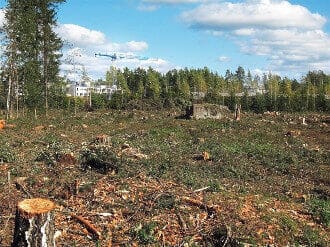[Source](https://pixabay.com/users/chadonihi-634818/)
- [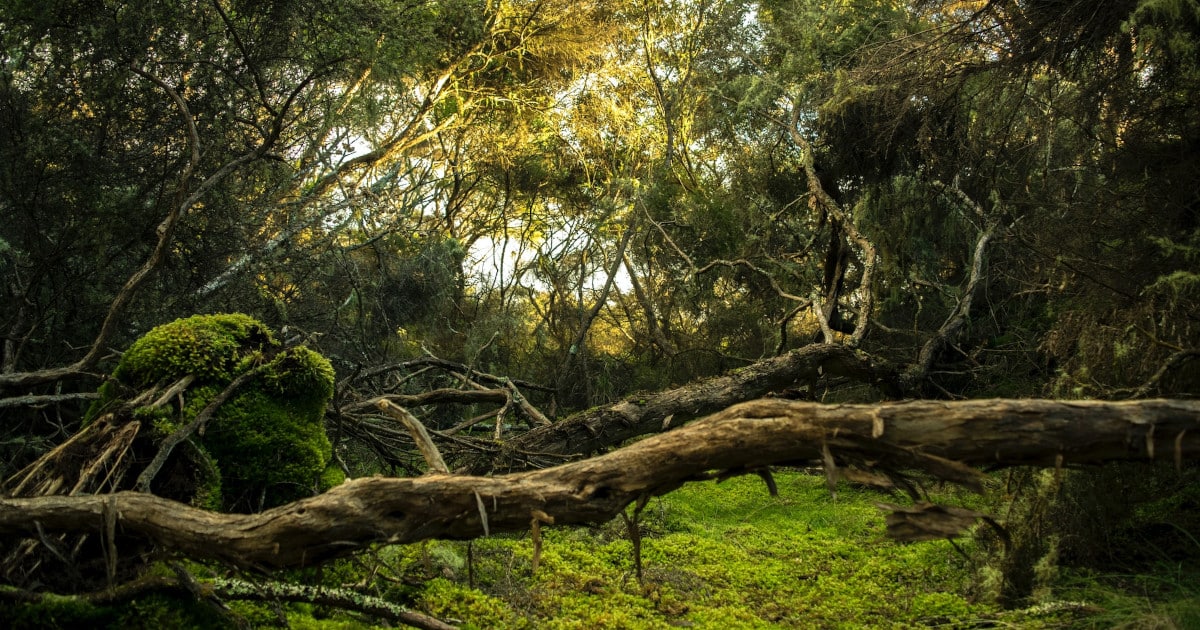](https://interfaithsustain.com/why-is-biodiversity-important/)
## [Why is Biodiversity Important for Human Survival?](https://interfaithsustain.com/why-is-biodiversity-important/)
- [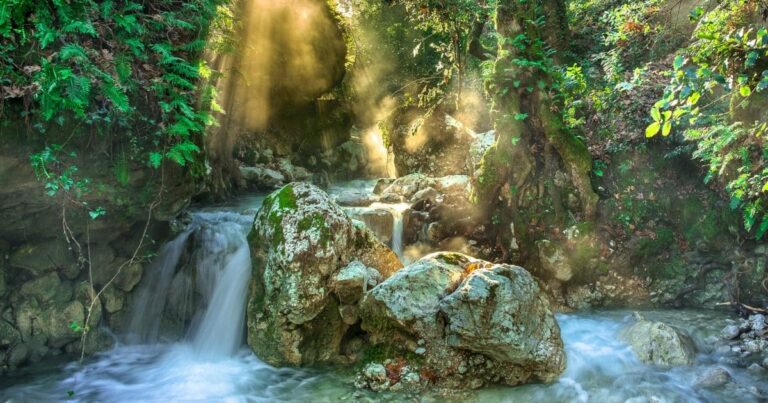](https://interfaithsustain.com/importance-of-biodiversity/)
## [The Importance of Biodiversity For Humans and For Earth](https://interfaithsustain.com/importance-of-biodiversity/)
- [](https://interfaithsustain.com/habitat-corridors/)
## [Habitat Corridors Allow Human Development Whilst Saving Biodiversity](https://interfaithsustain.com/habitat-corridors/)
#### Life in a Fragmented Habitat
With the surrounding habitat of so many different places being replaced with cities and farms, many species are finding their natural habitats becoming increasingly [vulnerable](https://treesforlife.org.uk/into-the-forest/habitats-and-ecology/human-impacts/habitat-fragmentation/). This can make life incredibly hard for animals stuck in a fragmented habitat.
Smaller population sizes means less diversity among species. This means that inbreeding is more common among fragmented habitats. Inbreeding results in genetic deformations and illnesses.
As there are less animals in each habitat, natural disasters such as extreme weather or disease have a bigger chance of killing off all the species in a smaller area. This makes it easier for animals to go locally extinct in an area, instead of having their population bounce back.
Fragmented habitats also have less food. This makes it harder for places to support bigger varieties of animals such as large mammals and predators. Without these top predators, entire ecosystems can be thrown out of balance.
Thus habitat fragmentation is turning once perfect habitats into places incapable of supporting healthy ecosystems. As habitats become more and more fragmented we are putting more and more species at risk of extinction.
## Wildlife Corridors
Humans have started taking notice of the decrease in habitat connectivity. Wildlife conservation efforts have started to focus on ways to increase landscape connectivity in order to help preserve biodiversity and prevent animal species from going extinct.
One of the best ways of doing this is through implementing [habitat corridors](https://www.esa.org/esablog/2011/08/02/habitat-corridors-help-preserve-wildlife-in-the-midst-of-human-society/#:~:text=Habitat%20corridors%20allow%20movement%20between,juvenile%20dispersal%20and%20seasonal%20migrations.). A habitat corridor works to create wildlife crossings between fragmented habitats in order to allow animals to travel between habitat patches.
By building passageways to other suitable habitats animals are able to go about their business with minimal interaction with humans. This not only helps animals avoid the negative impacts of human influence, but it also decreases the chances of a human running into a large animal on the road, or from encountering a potentially dangerous animal whose habitat has been lost.
## What is a Habitat Corridor?
[Habitat corridors](https://www.esa.org/esablog/2011/08/02/habitat-corridors-help-preserve-wildlife-in-the-midst-of-human-society/#:~:text=Habitat%20corridors%20allow%20movement%20between,juvenile%20dispersal%20and%20seasonal%20migrations.) can come in many different shapes and sizes. There is no one definition of how a habitat corridor should look so it can be anything from a complex strategically placed nature conservation area to something as simple as a tunnel under a road.
Regardless of how a habitat corridor is planned, as long as it is designed to create a more connected ecosystem and allow animals to move freely without being disturbed by humans, it is doing its job to increase wildlife connectivity.
[Source](https://unsplash.com/@paul_nic)
## Examples of Habitat Corridors
Habitat corridors can be found all over the [world](https://www.treehugger.com/important-wildlife-corridors-4863700). Habitat corridors in different places can be used in different ways and designed for different things, such as using different materials, being designed for different species, and having different structures.
### Protected Land
One of the best ways to ensure that animals are capable of moving between suitable habitats is to protect the land in between them. Government agencies such as the wildlife service have the ability to allocate protected areas. These protected areas can act as pathways between suitable habitats, and can help preserve all kinds of animals from panthers to butterflies.
### Burnham Park
Instances of land being protected to act as a habitat corridor can be seen all over the US. One example of this is the Burnham Wildlife Corridor in Chicago. [The Burnham Wildlife Corridor](https://www.chicagoparkdistrict.com/parks-facilities/burnham-wildlife-corridor#:~:text=The%20Burnham%20Wildlife%20Corridor%20%28BWC,Sanctuary%2C%20and%20McCormick%20Bird%20Sanctuary.) is a hundred acre strip of natural land stretching through Chicago’s Burnham Park. The corridor contains prairie, savannah, and woodland ecosystems that provide protection for migratory and local species alike from the highly urbanized landscape of Chicago.
[Source](https://pixabay.com/users/dennisflarsen-2321124/)
### Wildlife Underpasses and Bridges
One of the biggest contributors to habitat fragmentation is roads. When animals try to cross highways and other major roads, they put themselves, and the drivers that could hit them, at risk. In order to prevent animals from having to cross dangerous roads many places have started to implement underpasses and bridges for wildlife to use in order to avoid having to cross a potentially dangerous road.
This type of wildlife underpass and bridge helps animals in their search of food and suitable habitat by keeping them safe from cars. These structures have been installed across major roads everywhere, and can be found giving animals safe passage throughout the world.
#### Christmas Island
Christmas Island is a small island in the Indian Ocean owned by Australia. The island is famous for its massive annual [red crab migration](https://parksaustralia.gov.au/christmas/discover/highlights/red-crab-migration/), where thousands of red crabs swarm across the island looking for a place to breed. The migration is a big tourist attraction, as well as an important part in the red crab lifecycle, but recently human built roads has made it increasingly harder for these crabs to make their journey to the sea. Fortunately, the island has several wildlife bridges designed for crabs cross many of the major roads. This allows crabs to reach their breeding grounds without facing human interference.
#### Banff National Park
One of the most prominent examples of habitat corridors is [Banff National Park](https://nationalpost.com/pmn/news-pmn/canada-news-pmn/success-of-wildlife-corridors-in-banff-national-park-has-advocates-wanting-more#:~:text=The%20Trans%2DCanada%20Highway%20inside,to%20protect%20humans%20and%20animals.). This park in Alberta, Canada. is home to many different species, as well as a 40 kilometer stretch of the Trans Canada Highway. In order to stop animals from having to cross one of the countries busiest roads, Banff National Park now has thirty eight wildlife underpasses and six wildlife bridges. These bridges and overpasses help protect animals and people driving on the Trans Canada Highway, in order to make the park a more suitable place for both animals and humans.
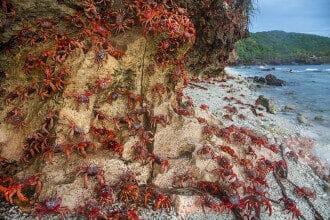[Source](https://unsplash.com/@picturejourneys)
## Religion and Habitat Corridors
James Krupa shared with Mongabay about the [efforts to protect a wildlife corridor in Belize](https://news.mongabay.com/2021/07/huge-wildlife-corridor-in-belize-sees-progress-boosting-hope-for-jaguars-and-more-commentary/). The Maya Forest Corridor (MFC) is intended to connect the Belize Maya Forest to the Maya Mountain Massif. Various animals live in these areas and would benefit from the MFC such as “tapirs, opossums, armadillos, pacas, agoutis, and the five great cats of the Belize jungles.” But the species that excites Krupa and the Belize locals more than any other is the jaguar.
Krupa describes in detail the local love for the jaguar:
> Everywhere we went in Belize contemporary art, paintings on walls, statues, and figurines of this creature were visible. This species has a deep history in Maya culture and religion. Many Mayan gods don attributes of this creature, especially those of the underworld. The Maya believed the Sun God of the day transformed into the underworld god of the night – the jaguar.
[Another article](https://tepeubeckons.wordpress.com/2013/03/20/balam-the-jaguar-in-mayan-cosmology/) goes more into details about jaguars in Mayan culture. The article discusses how “Balam, the word for jaguar, also means ‘priest’ and ‘sorcerer,’ and shamans frequently chose them as the object of their transformations.” This is fascinating because in the Hebrew Bible there is also a character named Balam, who is a [sorcerer](https://www.learnreligions.com/balaam-and-the-donkey-bible-story-700077). It’s unclear what to make of this connection, but it certainly added mystique to the already enigmatic jaguar.
Back to the MFC, how is it being established? The answer is through buying land to turn into wildlife sanctuaries and through building wildlife underpasses beneath the Coastal Road. It’s exciting to see the progress being made that will help protect jaguars and other species. Whether we wish to protect jaguars because we view them as ecologically important or we wish to protect them because of the Mayan belief that they are the “underworld god of the night,” we have good reason to work together to protect these magnificent creatures and other animals who depend on wildlife corridors.
*\* Featured image [source](https://pixabay.com/users/scottslm-10594535/)*
**Categories:** Biodiversity, Blog on Faith and Ecology
**Tags:** Biodiversity
---
### [Interconnected But Different Types of Ecosystems](https://interfaithsustain.com/types-of-ecosystems/)
**Published:** August 15, 2022
**Author:** ICSD
**Excerpt:** Rachel Cohen - An ecosystem is a combination of all living things (biotic) and nonliving things (abiotic) in a confined area. Across the world, there are three major different types of ecosystems, freshwater, ocean or aquatic ecosystems, and terrestrial ecosystems.
**Content:**
Table of Contents
Table of Contents
- [The Composition Of An Ecosystem](#aioseo-the-composition-of-an-ecosystem-2)
- [Humans Are Part of The Ecosystems](#aioseo-humans-are-part-of-the-ecosystems-10)
- [Freshwater Ecosystems](#aioseo-freshwater-ecosystems-13)
- [Threats to Freshwater Ecosystems](#aioseo-threats-to-freshwater-ecosystems-18)
- [Pollution As A Threat To A Freshwater Ecosystem](#aioseo-pollution-as-a-threat-to-a-freshwater-ecosystem-20)
- [Hydraulic Alterations Are A Threat To A Freshwater Ecosystem](#aioseo-hydraulic-alterations-are-a-threat-to-a-freshwater-ecosystem-29)
- [Rising Temperatures Are A Threat to A Freshwater Ecosystem](#aioseo-rising-temperatures-are-a-threat-to-a-freshwater-ecosystem-33)
- [The Oceanic Ecosystem](#aioseo-the-oceanic-ecosystem-35)
- [Threats to Coral Reef Ecosystems](#aioseo-threats-to-coral-reef-ecosystems-38)
- [Terrestrial Ecosystems](#aioseo-terrestrial-ecosystems-44)
- [Threats To Terrestrial Ecosystems](#aioseo-threats-to-terrestrial-ecosystems-52)
- [Actions To Care for Ecosystems](#aioseo-actions-to-care-for-ecosystems-58)
- [Ecosystems and Religion](#aioseo-ecosystems-and-religion-63)
- [All Creations Are Connected, Excerpted from Eco Bible Volume 1](#aioseo-all-creations-are-connected-excerpted-from-eco-bible-volume-1-65)
- [A Planet of Interconnected Ecosystems](#aioseo-a-planet-of-interconnected-ecosystems-68)
*By Rachel Cohen* – **An ecosystem** is a combination of all living things (biotic) and nonliving things (abiotic) in a confined area. Across the world, there are three major different **types of ecosystems**, freshwater, **ocean or aquatic ecosystems**, and **terrestrial ecosystems**.
## The Composition Of An Ecosystem
Though there are many different types of ecosystems there are some common factors between all of them. This includes the biotic and abiotic components, a food chain and a variety of energy flows.
Energy flows take place between the food chain and the biotic and abiotic factors. For instance, the sun (abiotic) supports photosynthesis for plants (biotic), which is then eaten by an animal, and that animal is then sustained.
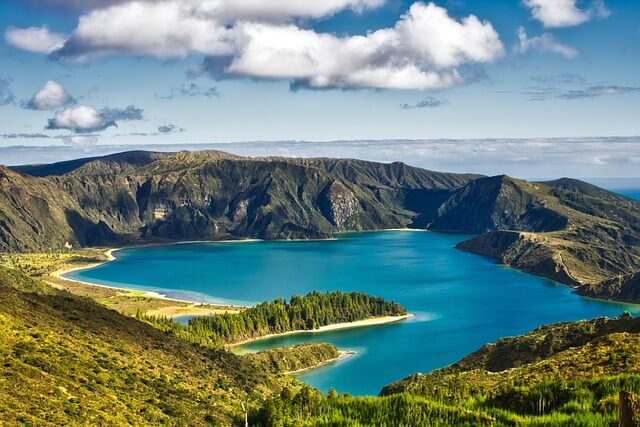[Source](https://pixabay.com/users/comanche0-5689786/)
There are various levels of biotic components: producers, consumers, and decomposers. A producer is a plant that uses energy from the sun to produce glucose which will feed the food chain later on. A [consumer](https://interfaithsustain.com/consumerism-examples/) then eats the producer. For example, a rabbit eating grass. Once the consumer dies, decomposers such as fungi will break down the consumer’s body which will be absorbed back into the ground.
### Humans Are Part of The Ecosystems
Each of these ecosystems acts as a home for millions of animals and plants, and even more for humans. Humans can take food, shelter, and resources from all of these ecosystems. Though there seems to be a beneficial relationship, our constant taking of resources is actually hurting the ecosystems.
Some of the biggest threats facing our ecosystems include [deforestation](https://interfaithsustain.com/consequences-of-deforestation/), [coral bleaching](https://interfaithsustain.com/what-causes-coral-bleaching/), overfishing, climate change, and pollution, which have all been caused by humans. Each type of ecosystem is naturally balanced and human disruption is causing an imbalance.
## Freshwater Ecosystems
Freshwater is water that is naturally produced by the earth and contains very little salt. With this stringent requirement, it becomes very difficult to find fresh water. [Only about 3% of the world’s water is freshwater](https://education.nationalgeographic.org/resource/earths-fresh-water), and even less than that is in liquid form as most of it is frozen in glaciers or found in underground aquifers.
Though there is a limit to how much freshwater we have for drinking, showering, or washing hundreds of millions of animals call freshwater areas their homes. Some of these animals include [fish, frogs, turtles, alligators, and many types of insects.](https://education.nationalgeographic.org/resource/marine-ecosystems) These animals live in harmony and have a natural balance that is being greatly disturbed by humans.
**Freshwater ecosystems** host different animal species than saltwater. This is due to the biological differences between the animals. Animals that live in salt water [have a high concentration of salt solution that keeps water out of their cells](https://www.divescotty.com/underwater-blog/why-saltwater-fish-cannot-live-in-freshwater-and-vice-versa.php#:~:text=Saltwater%20fish%20can't%20survive,they%20bloat%20and%20die%20eventually.). If they were to go into freshwater, their bodies would absorb all the water eventually killing them.
In contrast, freshwater animals in salt water would become dehydrated. The salt concentration would pull the water out of their bodies leading to their deaths.
- [](https://interfaithsustain.com/urban-runoff/)
## [Urban Runoff Pollutes Our Rivers](https://interfaithsustain.com/urban-runoff/)
- [](https://interfaithsustain.com/ocean-cleanup/)
## [Innovative Technology For An Ocean Cleanup](https://interfaithsustain.com/ocean-cleanup/)
- [](https://interfaithsustain.com/is-rain-water-safe-to-drink/)
## [In Your Opinion, Is Rain Water Safe to Drink Today?](https://interfaithsustain.com/is-rain-water-safe-to-drink/)
### Threats to Freshwater Ecosystems
As with all aspects of the earth, humans are causing irreversible damage, especially to freshwater ecosystems. Whether it is through pollution, building hydraulic dams, farming or rising global temperatures there are huge threats to freshwater ecosystems.
### Pollution As A Threat To A Freshwater Ecosystem
One of the first threats facing this ecosystem is the threat of pollution. **Pollution** comes in many different forms. It can be seen in the accumulation of trash in freshwater, or even as toxic chemicals being dumped into the ecosystem. Trash accumulation can harm animals in the area if they mistake it for food.
A very common scenario is an aquatic animal eating a piece of plastic that they ultimately choke on. Though one small action may not seem to matter, each one begins to add up and causes great harm to the animals of the ecosystem.
[Source](https://pixabay.com/users/rilsonav-1824615/)
The **dumping of toxic chemicals** creates **unsafe habitats** for the animals, again resulting in a deadly chain reaction. It can even harm humans as some may have to rely on an area of fresh water for drinking or showering which they can no longer do.
Not only can toxic chemicals cause harmful situations, but the build-up of nutrients can also greatly impact aquatic ecosystems. In [this blog post](https://interfaithsustain.com/nutrient-pollution/) from ICSD’s blog, Sydney Cohen explains the harmful process of eutrophication which is also causing harm to the ecosystem.
### Hydraulic Alterations Are A Threat To A Freshwater Ecosystem
A second threat facing freshwater is **hydraulic alterations**. [These alterations can include activities such as farming and the creation of dams.](https://theconversation.com/we-all-live-downstream-its-time-to-restore-our-freshwater-ecosystems-58934) Anytime that the natural flow of water is disturbed, the natural balance will be altered.
Issues that can arise from this include a lack of resources for those who use the water and the possibility of water downstream disappearing. For example, fish farming can hoard massive amounts of fish from downstream.
Animals who may rely on the stream for those fish will have to drastically change their diets and can face major complications. Building dams can cause similar issues. The blocking of water will reduce how much water downstream will be available for those who need it. This affects both animals’ and humans’ way of life.
#### Rising Temperatures Are A Threat to A Freshwater Ecosystem
**Rising temperatures** cause issues for the entire world and freshwater ecosystems. When the air temperatures rise, it also increases the temperatures of the water. As the water warms it becomes uninhabitable for many fish.
## The Oceanic Ecosystem
Just like freshwater ecosystems, ocean or **marine ecosystems** are filled with millions of animal species that call the ecosystem home. Marine ecosystems include the ocean as well as [estuaries, salt marshes, mangrove forests, coral reefs, the open ocean, and the deep-sea ocean.](https://education.nationalgeographic.org/resource/marine-ecosystems) Each of these areas hosts different types of animals that create a natural balance in nature.
Each mini-ecosystem offers protection, food, and resources for animals. Animals range from massive in size, like whales and sharks, to tiny bacteria that live at the bottom of the ocean where there is no light.
### Threats to Coral Reef Ecosystems
The ocean covers 70% of the earth’s surface which lends itself to hundreds of threats. However, one of the areas that is regularly threatened is the **coral reef ecosystem**.
[Source](https://pixabay.com/users/joakant-313743/)
[Coral reefs](https://interfaithsustain.com/why-are-coral-reefs-important/) act as homes and protection for millions of animals, yet humans are destroying the area. These threats include [rising ocean temperatures leading to ocean acidification and coral bleaching.](https://www.noaa.gov/education/resource-collections/marine-life/coral-reef-ecosystems) Chemicals can lead to algae growth which harms the coral reefs and creates a harsh environment for other organisms.
Other threats include physical damage from people. Some people may feel it is okay to take small bits of coral as souvenirs, but each small action adds up and causes great harm to the reefs.
## Terrestrial Ecosystems
A terrestrial ecosystem encompasses a wide variety of ecosystems, including the grassland ecosystem, forest ecosystem, temperate forest ecosystems, desert ecosystem, temperate deciduous forests, tropical rainforests, and tundra ecosystems.
Just like the other ecosystems terrestrial ecosystems offer resources for animals and humans, homes for many animal species, and food options. These relationships are important to the balance of the natural world.
Each of the previously mentioned terrestrial ecosystem hosts different species that have created a natural balance. A grassland ecosystem hosts animals in warm climates such as lions or giraffes, while tropical rainforests host millions of species of birds, frogs, snakes, and other organisms.
[Source](https://pixabay.com/users/nathalieburblis-3857394/)
### Threats To Terrestrial Ecosystems
One of the largest terrestrial ecosystems is the **rainforest** which is facing threats every day. Some of these threats include logging, unsustainable cattle ranching, slash and burn practices, mining, and destruction of trees for roads.
Logging can be unsustainable if no trees are being planted in replacement. For instance, in the [last 50 years, 17% of the Amazon Rainforest has been destroyed](https://www.nationalgeographic.com/environment/article/deforestation#:~:text=About%2017%20percent%20of%20the,loss%20the%20size%20of%20Israel.). By not planting trees for each one cut down, we run the risk of destroying the entire ecosystem.
These unsustainable habits place stress on the biotic and abiotic components of the ecosystem. Animals lose homes, plants disappear and the possibility of invasive species arises. The disturbance of the natural world by human practices put the balanced ecosystem at a risk.
## Actions To Care for Ecosystems
It can seem overwhelming to think about what can be done to save the earth. However, there are a lot of small choices you can make that can make a difference. Every action you take can add up and create a difference.
When it comes to our aquatic ecosystems, one of the best choices you can make is to be mindful of your trash. Keeping your trash out of the water will help save the lives of aquatic animals.
Another choice you can make, especially in the warm months, is to be mindful of your sunscreen choices. Sunscreen that is filled with chemicals will wash off your body and can be harmful to animals in the ocean.
A third choice you can make is to shop from brands that have **sustainable practices**. These practices include fair trade products which typically treat individuals and the planet fairly.
## Ecosystems and Religion
*Genesis 3:11 – Then He \[god\] Asked, “Who Told You That You Were Naked? Did You Eat of the Tree from Which I Had Forbidden You to Eat?”*
### All Creations Are Connected, Excerpted from [Eco Bible Volume 1](https://www.amazon.com/dp/B08LCKLM9G/ref=dp-kindle-redirect?_encoding=UTF8&btkr=1)
Why did Adam and Eve not previously realize they were naked? The Midrash explains that initially Adam and Eve were created with translucent suits, like fingernails. This is one reason why many Jews look at their fingernails in the flame light of the candle used at the end of Shabbat each week. This tradition is to remember their God-given state before the sin of the fruit. After Adam and Eve ate the forbidden fruit, the translucent coverings became opaque, and the first man and woman realized they were naked.
Rashi states that before Eve was removed from Adam, the original human was both male and female together. When you look through an infrared (heat imaging) camera at two people standing close together, you see them merge into a single heat unit. Life before the forbidden fruit may have been like that – all of creation merged together without opaque boundaries. There was no “you” and no “me,” just “us.” When humankind today, or in the future, returns to the understanding that all God’s creations are inseparably linked, we will truly have returned to the Garden of Eden.
#### A Planet of Interconnected Ecosystems
Indeed, we must learn to view our planet through a lens of **interconnected ecosystems**, not just individual species. Modern science has only scraped the surface of understanding how intricately all biological species interrelate – for example how a hummingbird’s beak fits so well for collecting nectar from a particular flower species. Therefore, we must preserve the entire web of life around us as much as possible.
We can compare our ecosystem to a line of dominoes: If we push down a single species, others will follow. Through our lack of, or ignoring of deep ecological understanding, we have caused great damage to God’s creation. Our challenge is to see life more holistically, just as Adam and Eve saw life before the forbidden fruit.
*\* Featured image [source](https://pixabay.com/users/alainaudet-631535/)*
**Categories:** Biodiversity, Blog on Faith and Ecology
**Tags:** Ecosystems
---
### [Unique Desert Ecosystems Are Teeming With Life](https://interfaithsustain.com/desert-ecosystem/)
**Published:** October 14, 2022
**Author:** ICSD
**Excerpt:** Alana House - There is a common misconception that deserts are simply unbearably hot regions that due to very little rainfall, do not have the capacity to sustain life. The word desert itself comes from the Latin term "desertus", which translates to abandoned or lying in waste.
**Content:**
Table of Contents
Table of Contents
- [Describing Desert Ecosystems](#aioseo-describing-desert-ecosystems-2)
- [Cold Deserts](#aioseo-cold-deserts-9)
- [The Ecosystems Of Cold Deserts](#aioseo-the-ecosystems-of-cold-deserts-11)
- [Coastal Deserts](#aioseo-coastal-deserts-16)
- [Coastal Desert Ecosystems](#aioseo-coastal-desert-ecosystems-20)
- [Atacama desert](#aioseo-atacama-desert-23)
- [Hot Deserts](#aioseo-hot-deserts-25)
- [Hot Desert Ecosystems](#aioseo-hot-desert-ecosystems-27)
- [Desert Tourism](#aioseo-desert-tourism-32)
- [The Impacts Of Desert Tourism](#aioseo-the-impacts-of-desert-tourism-37)
- [Deserts and Religion](#aioseo-deserts-and-religion-41)
*By Alana House* – There is a common misconception that **deserts** are simply unbearably hot regions that due to very little rainfall, do not have the capacity to sustain life. The word desert itself comes from the Latin term “[desertus](https://www.vocabulary.com/dictionary/desert#:~:text=Desert%20comes%20from%20the%20Latin,army%20is%20called%20a%20deserter.)“, which translates to abandoned or lying in waste. While many locations fit this description of hot and **dry deserts**, there are many exceptions to the rule. And the idea that deserts do not foster growth is a pure fallacy, as many a **desert ecosystem** is teeming with life.
## Describing Desert Ecosystems
A desert ecosystem can even experience rain even though the [water loss by evaporation](https://www.yourarticlelibrary.com/deserts-environment/deserts-definitions-and-classification-of-deserts/64229) exceeds the the amount of annual precipitation received, creating an arid environment. The makeup of the Earth’s land allows for deserts to be scattered all of the globe. Major deserts can be found in North Africa, South America, the Middle East and even Antarctica.
[Source](https://pixabay.com/users/grebmot-12754236/)
As described by [National Geographic](https://education.nationalgeographic.org/resource/ecosystem), an ecosystem is a geographic area in which both biological factors such as plants and animals work with abiotic components like [weather](https://interfaithsustain.com/what-is-the-difference-between-weather-and-climate/) or landscape to form a bubble of life. A biome is simply an ecosystem occupying a specific habitat. There are 5 major biomes in the world including aquatic, grassland, forest, desert and tundra. **Semi arid deserts** are described as experiencing about 400mm of precipitation, give or take, whereas **arid deserts** receive less than 100mm of [precipitation](https://www.yourarticlelibrary.com/deserts-environment/deserts-definitions-and-classification-of-deserts/64229).
## Cold Deserts
When picturing a desert ecosystem, many individuals will immediately imagine yellow sand dunes and blazing heat. In some parts of the the world however, deserts can look more blue in appearance, as they are covered in ice. This phenomenon of **cold deserts** seems to defy logic as there is water everywhere, but the extremely cold conditions do not allow for the desert ecosystem to use this water in its solid form. Life in cold deserts is still very much possible, but the outcome does not resemble the plant life found in climates with more viable water sources.
### The Ecosystems Of Cold Deserts
Cold deserts do not receive enough rainfall necessary to sustain large plant life like trees. Instead, semiarid deserts are viable for plants such as desert shrubs and grasses that grow in clumps known as [bunchgrass](https://sciencing.com/australian-deserts-6688517.html).
[Source](https://pixabay.com/users/michael_luenen-2998623/)
Animal life follows similar rules as many desert animal species use their small size to make the most out of limited resources. Common in this **cold desert ecosystem** includes petite rodents such as moles, pocket mice, hedgehogs and jackrabbits. Reptiles are also present in a cold desert ecosystem but appear much less than in a hot desert ecosystem.
## Coastal Deserts
Despite the sometimes extreme conditions and salty soil, **coastal deserts** are considered to have the best **desert ecology** for sustaining life, containing many tenacious plants and animals.
- [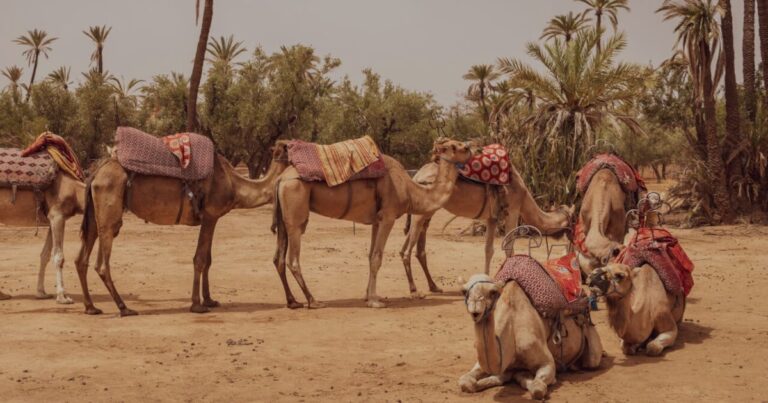](https://interfaithsustain.com/sahara-desert-animals/)
## [Sahara Desert Animals In Their Sandy Hot Habitat](https://interfaithsustain.com/sahara-desert-animals/)
- [](https://interfaithsustain.com/threats-to-biodiversity/)
## [What are The Major Threats to Global Biodiversity?](https://interfaithsustain.com/threats-to-biodiversity/)
- [](https://interfaithsustain.com/habitat-corridors/)
## [Habitat Corridors Allow Human Development Whilst Saving Biodiversity](https://interfaithsustain.com/habitat-corridors/)
### Coastal Desert Ecosystems
While most desert regions are homes to animals whose size relates to the limited amount of resources, coastal deserts propose an exception. In Kaokoveld, a coastal desert in Southwestern Africa, threatened species like [elephants and black rhinoceroses](https://sciencing.com/list-mammals-tennessee-6784864.html) roam this temperate desert.
The desert plants in these **temperate deserts** have adapted to the cold winters followed by the warm temperatures present in the summer. Such plants have evolved to have a special [shallow root system](https://www.gardenguides.com/12382883-coastal-desert-biome-plants.html) that can catch any rainfall present in the area.
#### Atacama desert
Located in northern Chile, the Atacama Desert is a coastal desert on the edge of the Andes mountains. This cold desert ecosystem remains arid due to the South Pacific high-pressure cell which creates a thermal inversion, in which the cold air at sea level rises and warms, creating a fog with [stratus clouds](https://www.britannica.com/place/Atacama-Desert) but no rain. The mild temperatures of this desert ecosystem, about 63 degrees Fahrenheit / 19 degrees Celsius, that remain constant throughout the year amaze scientists. Some believe that this dusty environment can give insights to how life may survive in conditions such as the nature of the [planet Mars.](https://www.livescience.com/64752-atacama-desert.html)
## Hot Deserts
A hot and dry desert may only experience annual rainfall a couple of times as they receive less than 25 cm (or 10 in) of precipitation a year. The driest **desert ecosystem** on earth is located in the Mojave desert and is known as Death valley and it experiences extreme temperatures including the highest ever [recorded at 57℃ (137℉)](https://www.nps.gov/deva/planyourvisit/weather.htm). Rolling sand dunesare common in hot deserts but don’t be deceived into thinking that sand is the only thing this desert ecosystem has to offer.
### Hot Desert Ecosystems
Over the centuries plants have adapted to this arduous desert ecosystem and the dry land that their roots must endure. Some of these biological modifications include ‘replete’ leaves with [water saving characteristics](https://ucmp.berkeley.edu/exhibits/biomes/deserts.php#hot) and a waxy layer over the leaves that [reduces evaporative loss](https://www.nps.gov/teachers/classrooms/plant-adaptations.htm#:~:text=The%20leaves%20and%20stems%20of,reduce%20moisture%20loss%20during%20transpiration.) through the form of water vapor.
Other plants survive the hot climate of the desert biome by controlling their ability to photosynthesize, by either carrying out most of the process in their stems, or even by temporarily shutting down photosynthesis all together. The conservation of water through these biological loopholes allows many plants to thrive in desert areas and even to produce fruit.
Animals that live in this desert ecosystem have evolved to outsmart the deadly high daytime temperatures that would overwhelm most organisms . Several creatures survive by avoiding the daytime entirely and fully commit to being [nocturnal animals](https://ucmp.berkeley.edu/exhibits/biomes/deserts.php#hot).
Another method to escape the heat is by going underground, making this desert ecosystem perfect for burrowing animals such as kangaroo rats. A true marvel of nature is the Bactrian Camel which is commonly found in the Sahara desert of Northern Africa. Their sturdy bodies are acclimated to hiking shifting mountain slopes in hot summer temperatures, making camels the perfect companion for those daring enough to take on desert biomes.
### Desert Tourism
As people learn that desert ecosystems are more than what meets the eye, they feel encouraged to seek adventure in these vast environments. **Desert tourism** attracts millions of individuals every year. Activities in these leisure and tourism deserts range from sand surfing in the Israeli Negev to embarking on a safari in the Kalahari desert.
The geographical beauty of desert sands and mountain ranges is only a portion of what deserts have to offer. Extraordinary displays of history also exist in these terrains, such as the well preserved archaeological ruins of the city of Petra, in the Arabian desert.
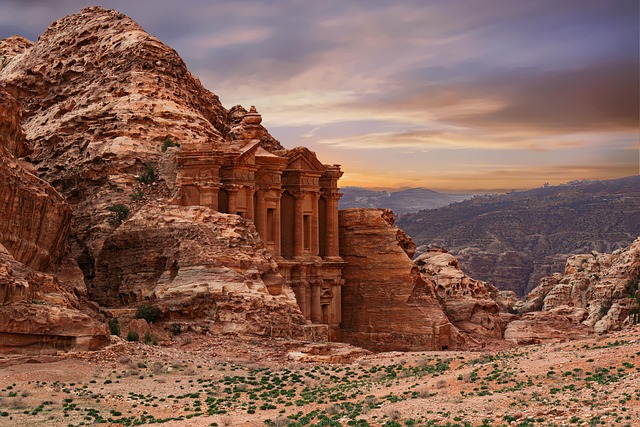[Source](https://pixabay.com/users/chiemseherin-1425977/)
### The Impacts Of Desert Tourism
When exploring any environmental ecosystem it is of the utmost importance to remember to leave every place as it was found. All the deserts are susceptible to environmental degradation due to human activity. In order to enable **tourism of desert environments**, the land is impacted in ways such as clearing vegetation to set up structures for tourist activity or an overuse of the habitat’s [natural resources](https://ecotourismkenya.org/greentour/tourism-and-desertification/). However, the more people who become acquainted with these unique ecosystems the more support we gain for protecting them.
## Deserts and Religion
An article in [Quadrangle](https://mcquad.org/2021/09/22/dune-a-fascinating-exploration-of-ecology-and-religion/) by Kyla Guilfoil discusses the popular book and now movie “Dune,” which reveals the interplay between religion, politics and environmentalism. The book is fiction, but it’s themes contain deep truths. As Guilfoil explains, “the setting of Dune consistently emphasizes the [importance of water](https://interfaithsustain.com/rain-water-barrel/) by introducing many technologies and rituals that all relate to the lack of water on the planet. From suits that redistribute water lost from the skin back into the body, to ‘taking the water of the dead’, Fremen are raised in practices of strict water discipline.” Limited water shapes the technology and culture of Dune, and this can resonate deeply as many modern states experience extreme drought.
The main character, Paul, becomes a messianic figure and strives to fulfill a prophecy of creating a new ecosystem on Dune, namely, an ecosystem with open water, something unheard of on this desert planet.
Guilfoil explains how Dune’s author, Frank Herbert, uses his novel to show the power of religion for good and evil
> Throughout history, humans have caused war, death, and violence in the name of a religion that is paradoxically rooted in spirituality and moral guidance.
>
> Unlike many science fiction writers of his time, Herbert did not believe that religion was an outdated institution, but instead one that would continue to hold incredible authority over humanity. Despite the adoption of the “separation of church and state” in many modern democracies, religion continues to have persistent influences on the law. We see this in the US today, from the recent Texas abortion ban to the harsh opponents of same-sex marriage.
>
> Religion, environmentalism, and politics cannot be separated in our world. Finite resources and the breadth of humanity both rely on these things and can be destroyed by them.
Perhaps more than any other place, the desert inspires spirituality, perhaps because of its frugality, harshness and scant resources. Christianity, Islam and Judaism all began in the desert so lets harness the power of our religions to care for all desert ecosystems.
*\* Featured image [source](https://pixabay.com/users/hbieser-343207/)*
**Categories:** Biodiversity, Blog on Faith and Ecology
**Tags:** Ecosystems
---
### [What is a Boreal Forest and What’s Their Importance?](https://interfaithsustain.com/what-is-a-boreal-forest/)
**Published:** August 19, 2022
**Author:** ICSD
**Excerpt:** Harry Cooper - Boreal forests are some of the most important forests on the planet. Unlike deciduous and tropical forests, boreal forests are cold, coniferous forests that cover the top part of the northern hemisphere.
**Content:**
Table of Contents
Table of Contents
- [The Forests of the North](#aioseo-the-forests-of-the-north-2)
- [The Boreal Ecosystem](#aioseo-the-boreal-ecosystem-4)
- [Vegetation in the Boreal Biome](#aioseo-vegetation-in-the-boreal-biome-6)
- [Other Types of Boreal Plants](#aioseo-other-types-of-boreal-plants-9)
- [Wildlife in the Boreal Biome](#aioseo-wildlife-in-the-boreal-biome-11)
- [Birds in the Boreal Zone](#aioseo-birds-in-the-boreal-zone-15)
- [Threats to the Boreal Forest](#aioseo-threats-to-the-boreal-forest-20)
- [The Threat Caused by Climate Change](#aioseo-the-threat-caused-by-climate-change-24)
- [Deforestation Threatens Boreal Forests](#aioseo-deforestation-threatens-boreal-forests-29)
- [Religion and the Boreal Forest](#aioseo-religion-and-the-boreal-forest-31)
*By Harry Cooper* – Boreal forests are some of the most important forests on the planet. Unlike deciduous and tropical forests, **boreal forests** are cold, coniferous forests that cover the top part of the **northern hemisphere**. The **boreal forest** extends throughout Scandinavia, Russia, Canada, and Alaska, and is one of the biggest forests in the world. Making up a [third](https://www.ramp-alberta.org/river/boreal.aspx) of all forested area on the planet, boreal forests can stretch for miles, spanning the length of entire continents.
## The Forests of the North
Not only are these forests massive, but they are an important part in maintaining the arctic and **global environment**. The vast forests and tall trees support a diverse local wildlife habitat, as well as serving as an important stopping point for many migratory birds. In addition, the soil of boreal forests contains **carbon rich permafrost** that has been keeping **greenhouse gases** out of the atmosphere for thousands of years. While the boreal forests are a beautiful part of nature that provides numerous ecosystem services, human impacts have started to pose a huge threat to these northern forests.
## The Boreal Ecosystem
By taking up such a vast amount of space, the boreal forest is capable of supporting a variety of different species. Home to many different species of mammals, birds, fish, insects, plants, and even a handful of reptiles and amphibians, the boreal forest holds a **massive ecosystem**, rich with [biodiversity](https://interfaithsustain.com/threats-to-biodiversity/).
### Vegetation in the Boreal Biome
The [plant](https://www.ramp-alberta.org/river/boreal/alberta/trees.aspx) life in **boreal forest ecosystems** is mainly dominated by coniferous tree species such as white spruce, black spruce, jack pine, balsam fir, and tamarack. While these trees keep their needle-like leaves all year round, there are also a few deciduous trees that call the boreal forest their home, such as white birch and aspen trees.
These trees need to be adapted to the harsh cold winters of the boreal forests in order to survive. The coniferous trees maintain a narrow shape with little surface area. This decreased surface area prevents large amounts of snow from building up and breaking branches, as well as makes them resistant to harsh winds that would normally dry out less adapted tree species. Deciduous trees make sure to get all their energy from photosynthesizing in the spring and summer before shedding their leaves in the early fall to prevent snow build up from breaking their branches.
#### Other Types of Boreal Plants
The massive trees of the boreal forest take up most of the light and nutrients leaving the forest floor relatively empty of other [plant](https://www.hww.ca/en/wild-spaces/boreal-forest.html) life save for a few species of shrubs, moss, and lichen. While these other plants are not as dominate as the trademark coniferous trees, they are still very important to the boreal forest ecosystem. Many shrubs provide berries to birds, rodents, and other herbivores, while mosses and lichens blanket the forest floor keeping the soil cool and moist.
- [](https://interfaithsustain.com/how-deforestation-is-affecting-global-water-cycles/)
## [Why And How Deforestation Is Affecting Global Water Cycles](https://interfaithsustain.com/how-deforestation-is-affecting-global-water-cycles/)
- [](https://interfaithsustain.com/how-does-deforestation-affect-climate-change/)
## [Environmental Destruction and How Does Deforestation Affect Climate Change?](https://interfaithsustain.com/how-does-deforestation-affect-climate-change/)
- [](https://interfaithsustain.com/pine-beetle/)
## [Forest Destruction OR Survival of The Fittest By The Pine Beetle?](https://interfaithsustain.com/pine-beetle/)
## Wildlife in the Boreal Biome
Other than plants, the boreal region is home to a variety of [animal](https://www.hww.ca/en/wild-spaces/boreal-forest.html) species, including mammals, fish, birds, insects, reptiles, and amphibians. These **boreal species** all exist within a complex food web that makes up the boreal ecosystem. One of the more important animals in this ecosystem is snowshoe hare. These rabbits have white fur in the winter to camouflage against the snow cover, and brown fur in the summer, but regardless of their attempts to hide, they are one of the most prominent sources of food for predators such as wolves, lynxes, and birds of prey. While the snowshoe hares and other herbivores rely on the shrubs, leaves, and berries, predators higher up in the food chain require a steady population of prey in order to survive.
[Source](https://unsplash.com/@kris_ricepees)
## Birds in the Boreal Zone
Another type of animal that relies heavily on the boreal forests of North America are the thousands of migratory [birds](https://www.borealbirds.org/boreal-birds) that come to the region every year. These boreal forests are colloquially known as North America’s bird nursery, this is because of the vast amount of bird species that rely on the boreal forest during their breeding season. A little over half of the bird species in North America migrate to the boreal forest during their breeding season. It is estimated that around three billion birds migrate to the boreal region each year, and around five billion return (including the offspring).
Although, while these forests are incredibly important for birds and other species, the boreal forests have come under **threat from human activity** such as **deforestation** and **climate change**. While organizations such as the **boreal songbird** initiative work to help protect the migratory birds that rely on the boreal forest, there is still a lot of work to be done to ensure that the boreal forest will survive.
## Threats to the Boreal Forest
[Permafrost](https://earth.org/data_visualization/permafrost-thaw-and-methane-emissions/#:~:text=Permafrost%20is%20ground%20that%20remains,keeping%20carbon%2Ddense%20peatlands%20cool.) is a type of soil that remains permanently frozen throughout the year. Near the surface of the permafrost are large quantities of organic matter that can’t decompose due to the cold temperatures, this makes permafrost ideal for storing carbon long term.
### The Threat Caused by Climate Change
With almost one fourth of the northern hemisphere’s land mass covered in permafrost, the boreal forests are some of the most carbon rich ecosystems in the world. However, as climate is warming a lot of this permafrost is starting to melt, releasing large amounts of carbon into the atmosphere each year.
[Source](https://unsplash.com/@aleskrivec)
Climate change is one of the biggest threats to the boreal forest. Not only is the boreal forest warming three time faster than most parts of the world, causing an increase in forest fires and changing species distribution, but the warming of the forest is actually creating a very dangerous positive feedback loop.
#### Deforestation Threatens Boreal Forests
The massive [logging](https://www.nrdc.org/experts/anthony-swift/new-study-shows-canada-underreporting-deforestation-rates#:~:text=In%20its%20Boreal%20Logging%20Scars,landings%E2%80%94has%20converted%20over%201.6) industries of northern countries such as Canada and Russia have a huge impact on the destruction of the boreal forest. Canada, home to the largest intact portion of the boreal forest, has consistently boasted to being close to achieving net zero [deforestation](https://interfaithsustain.com/how-does-deforestation-affect-climate-change/), but recent findings have shown that this is not the case. It is estimated that Canada cuts down nearly a million acres of forest a year, most of which is in the southern boreal forest of Ontario. This has made Canada one of the top three offenders of deforestation along with Brazil and Russia. This kind of industrial logging destroys essential habitats and releases massive amounts of [carbon emissions](https://interfaithsustain.com/decarbonization/) from lost permafrost.
## Religion and the Boreal Forest
Jennifer Lamson wrote for Pew about how [Indigenous groups are playing a key role in protecting boreal forests.](https://www.pewtrusts.org/en/research-and-analysis/articles/2016/04/in-canadas-boreal-forest-every-day-is-earth-day) She describes how “**Indigenous peoples** who live in Canada’s boreal forest have been guardians of the region’s land and waters for millennia. Their stewardship and cultural perspective point the way toward a more sustainable future for all of us.” What can we learn from the indigenous approach to conservation? Let’s dive deeper to find out.
Lamson interviews Valérie Courtois, director of the Indigenous Leadership Initiative (ILI), whose description of the indigenous relationship with the land is inspiring, and yet painful to hear, because our Western society has yet to realize it’s obvious truth:
> Indigenous peoples have a conservation ethic that is innate and is a very logical and natural thing. Without lands, there would be no Indigenous peoples. So that has translated into the whole spiritual relationship that Indigenous peoples have with their lands.
>
> If you look at locations where **First Nations** \[indigenous people of Canada\] have control over lands, they have conserved well over 50 percent of those lands.
Imagine if we could conserve at least half as much land as we develop. Recognizing that our well-being is tied to the well-being of the land as indigenous people do, we would be well on our way towards a more sustainable future.
But the indigenous people have hope. We have been pushing our planet to the breaking point through greed and indifference, yet Courtois assures us, it is not too late:
> There are prophecies within our culture that say that one day people of the world will look to First Nations in the boreal for solutions and protection from the impacts of bad decisions and destruction of lands. Not only do Indigenous people see a personal responsibility to the land, but we also feel a responsibility for everybody else.
May we soon see the day when this prophecy will come true, and indigenous people will lead us towards living in balance with our Mother Earth.
Today the boreal remains one of the largest intact forest ecosystems on Earth, in large part because of Indigenous communities guided by a conservation ethic rooted in traditional knowledge and science that has been passed down through generations. The cultural and spiritual lives of Indigenous people are intricately tied to the natural world they inhabit: The land and the people are the same.
Some of the biggest recent conservation gains in Canada have been achieved thanks to innovative land use planning by, and leadership of, Indigenous communities. Successes include protection of 6.4 million acres of boreal forest in the [Thaidene Nene](https://landoftheancestors.ca/) region of the Northwest Territories—in parks to be co-managed by the Dene community of Lutsel K’e—and creation of the 2.6 million-acre [Mealy Mountains National Park](https://www.tourismnunatsiavut.com/home/mealy_mountain_national_park_reserve.htm) on traditional Innu territory in Newfoundland and Labrador.
*\* Featured image [source](https://unsplash.com/@sakulich)*
**Categories:** Biodiversity, Blog on Faith and Ecology
**Tags:** Forests
---
### [Prevent Extinction Of The Boreal Forest](https://interfaithsustain.com/boreal-forest/)
**Published:** May 16, 2022
**Author:** ICSD
**Excerpt:** Harry Cooper - Forests are some of the most important places on Earth. They provide numerous environmental benefits from heat mitigation, control of climate change through carbon storage, prevention of extreme weather and drought, and protection of biodiversity.
**Content:**
Table of Contents
Table of Contents
- [A Very Important Biome](#aioseo-a-very-important-biome-2)
- [What is a Boreal Forest?](#aioseo-what-is-a-boreal-forest-10)
- [The Boreal Forest and Climate Change](#aioseo-the-boreal-forest-and-climate-change-13)
- [Climate Change In The Boreal Forest](#aioseo-climate-change-in-the-boreal-forest-15)
- [Increasing Forest Fires](#aioseo-increasing-forest-fires-18)
- [The Boreal Forest Carbon Sink](#aioseo-the-boreal-forest-carbon-sink-24)
- [Deforestation in the Boreal Forest](#aioseo-deforestation-in-the-boreal-forest-27)
- [Deforestation in Canada's Boreal Forest](#aioseo-deforestation-in-canadas-boreal-forest-29)
- [Consequences of Deforestation](#aioseo-consequences-of-deforestation-36)
- [Boreal Forest and Religion](#aioseo-boreal-forest-and-religion-38)
*By Harry Cooper* – **Forests** are some of the most [important](https://www.theguardian.com/environment/2022/mar/23/forests-climate-crisis-carbon-cooling-effect) places on Earth. They provide numerous environmental benefits from heat mitigation, control of climate change through carbon storage, prevention of extreme weather and drought, and protection of biodiversity. Many activists, climate movements, and environmental policy makers have spent a lot of time focusing on how to save the rainforests of the Amazon, Southern Asia, and Africa. While these rainforests are a massive carbon sink and home to hundreds of different species, there is another kind of forest that is often overlooked in conservation efforts, and is just as important as rainforests, **the boreal forests**.
## A Very Important Biome
Boreal forests, or **Taigas**, are **cold forests** in the northernmost parts of the northern hemisphere in regions such as Russia, Alaska, Canada, and Scandinavia. These forests are some of the largest in the world and are home to many different species of plants and animals. The large swath of boreal forest that covers much of the Arctic tundra is also home to the world’s largest carbon sink, the **boreal permafrost**. This means that the boreal forest and permafrost store more carbon than anywhere else in the world and prevent it from getting into the atmosphere.
Unfortunately for the Boreal forest, it is expected to face one of the biggest temperature shifts due to **climate warming**. This will disrupt the **boreal forest ecosystems** and threaten to release some of its stored carbon into the atmosphere. Along with the threat of human caused **global warming**, humans are also threatening the boreal forest through large scale industrial logging that is causing alarming rates of [deforestation](https://interfaithsustain.com/what-causes-deforestation/) across boreal regions around the world.
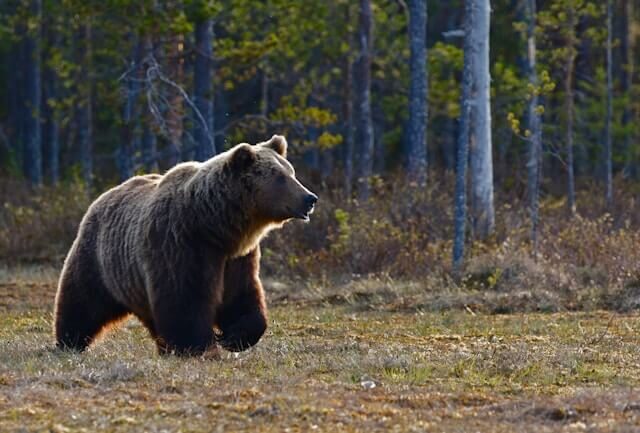[Source](https://unsplash.com/@zmachacek?utm_source=unsplash&utm_medium=referral&utm_content=creditCopyText)
The boreal forests are at a high risk of disappearing. This could not only threaten the wildlife habitat of plants and animals that live in the boreal forest, but because the boreal forests of the world contain so much carbon, the disappearing of the boreal forests could help make global warming even worse.
## What is a Boreal Forest?
The boreal forest is a big, largely unmanaged northern forest, and one of the most important things to understand about this forest is just how big it is. The boreal forest is the world’s **largest biome** on land and makes up about 30% of all forested areas worldwide. Boreal forests also contain more surface level freshwater environments than any other biome in the world.
- [](https://interfaithsustain.com/how-deforestation-is-affecting-global-water-cycles/)
## [Why And How Deforestation Is Affecting Global Water Cycles](https://interfaithsustain.com/how-deforestation-is-affecting-global-water-cycles/)
- [](https://interfaithsustain.com/how-does-deforestation-affect-climate-change/)
## [Environmental Destruction and How Does Deforestation Affect Climate Change?](https://interfaithsustain.com/how-does-deforestation-affect-climate-change/)
- [](https://interfaithsustain.com/pine-beetle/)
## [Forest Destruction OR Survival of The Fittest By The Pine Beetle?](https://interfaithsustain.com/pine-beetle/)
Boreal forests are mainly characterized by having small amounts of deciduous trees, many coniferous tree species, usually spruce, fir, and pine, and experiencing freezing temperatures for six to eight months out of the year, leaving much of the ground to be covered in permafrost. While this environment may seem incredibly barren and lacking in [biodiversity](https://interfaithsustain.com/why-is-biodiversity-important/), it is actually home to many different [species](https://link.springer.com/referenceworkentry/10.1007/978-3-319-71065-5_17-1). The boreal forest contains 20 different plant species, including coniferous trees, broadleaf trees, and several varieties of shrubs, 85 different species of mammals, including bison, grizzly bears, and elk, 130 fish species including walleye, salmon, and trout, various bird species depending on the region of the forest including, woodpeckers, storks, and eagles, and over 32,000 species of insects.
## The Boreal Forest and Climate Change
Like all ecosystems throughout the world, ecosystems in the boreal zone are becoming increasingly affected by global warming. This is causing drastic changes in the boreal region and around the world as Asia’s and North America’s boreal forest continue to warm at alarming rates.
### Climate Change In The Boreal Forest
Global warming has caused almost the entire world to start warming, but one thing many people don’t understand about global warming is that the whole world is not warming evenly; some parts of the world are warming quickly, some slowly, and in a few cases, even cooling down. Unfortunately, one of the [fastest](https://www.sciencedaily.com/releases/2015/08/150820144722.htm) warming places on Earth is in the boreal forest.
The boreal forests of the world have been warming at an average rate of 0.5 degrees Celsius per decade, and by the end of the century we could see the boreal forest warm as much as up to eleven degrees Celsius. This is especially alarming as many believe that the boreal forest ecosystem will not be able to catch up to these rapidly warming temperatures. It is estimated that the climate zones are shifting northwards in the boreal regions at a rate ten times faster than trees are able to migrate.
### Increasing Forest Fires
One striking consequence of the rapidly increasing temperature in the boreal forest is the increase in the amount of **forest fires.** According to the [National Parks Service](https://www.nps.gov/articles/000/fire-in-ecosystems-boreal-forest.htm#:~:text=The%20boreal%20forest%20is%20adapted,new%20young%20forests%20can%20begin.), fires in the boreal forest are common historically and can even be helpful in establishing new forests as they help remove thick undergrowth and allow for new growth to begin. While the coniferous forests of the boreal zone are normally tolerant to fire, as global warming causes boreal forests to become hotter and drier, fires have become more and more common in the boreal forest. This is causing less diversity of plants, harming trees that are normally resistant to fires, and most disturbingly, quickening the melting of the boreal permafrost.
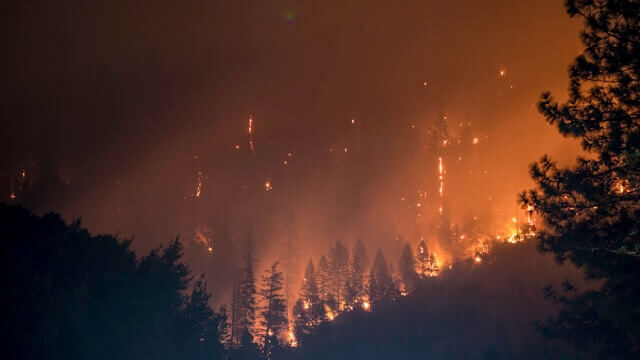[Source](https://unsplash.com/@thematthoward?utm_source=unsplash&utm_medium=referral&utm_content=creditCopyText)
### The Boreal Forest Carbon Sink
One of the most unique aspects of the boreal forest is how much carbon is [stored](https://daily.jstor.org/climate-changes-dangerous-effects-on-the-boreal-forest/#:~:text=Of%20all%20the%20biomes%20with,that%20is%20generally%20below%20freezing.) there. While the massive coniferous trees hold large amounts of carbon in their roots, trunks, and branches, the real carbon storing power of the boreal forest is in the underground permafrost. Permafrost is a layer of rocks, sand, and ice that sits beneath the ground of the boreal forest. This permafrost holds massive amounts of carbon and is thought to be the largest **carbon sink** in the world.
This carbon sink has historically prevented carbon dioxide from getting into the atmosphere, but as the climate in the boreal forest warms, and wildfires become more common, this vital layer of permafrost is starting to melt. The melting of the boreal permafrost has started to turn the biggest carbon sink on the planet into a source of carbon into the atmosphere, causing climate to change even faster, and further pushing global warming in the boreal forest and around the world.
## Deforestation in the Boreal Forest
Another issue boreal forests are facing is deforestation. In the Russian and North American boreal forest, loggers are cutting down trees at alarming rates. While [climate change](https://interfaithsustain.com/are-polar-bears-going-extinct/) and forest fires are proving large threats to boreal forests, excessive logging rates are also creating a grim future for these great northern forests.
### Deforestation in Canada’s Boreal Forest
One of the worst places in the boreal forest for deforestation is in the [Canadian](https://www.nrdc.org/experts/anthony-swift/new-study-shows-canada-underreporting-deforestation-rates) boreal forest. Canada has boasted in the past about having almost no deforestation, but what remains of Canada’s boreal forest tells a different story. Canada’s boreal forest is the world’s largest intact forest with the largest carbon dense boreal ecosystem in the world.
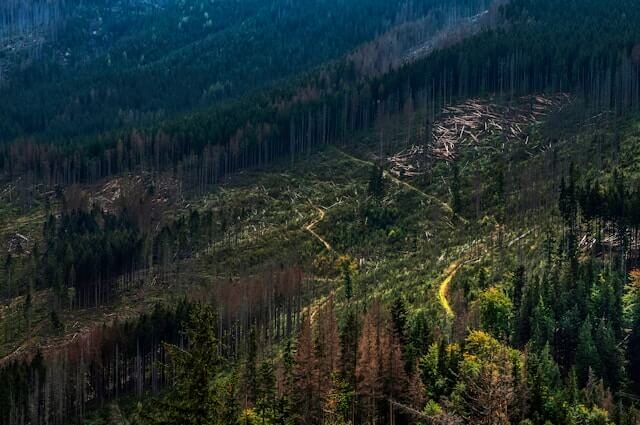[Source](https://unsplash.com/@rndr_foto?utm_source=unsplash&utm_medium=referral&utm_content=creditCopyText)
Nearly 1.6 million acres of Canada’s boreal forest have been cut down in Ontario alone. While the Canadian boreal forest is still the largest intact forest on the planet, Canada is now one of the top three countries for deforestation in the world, and has left the once beautiful forested Canadian landscape covered in the scars and remnants of industrial logging.
#### Consequences of Deforestation
Deforestation in the boreal forest has had some devastating impacts on the ecosystem. By removing trees from the forest, deforestation helps to speed up the process of releasing carbon from the carbon sink of the boreal forest. In addition, the industrial machinery and processing used in the lumber industry also burn a lot of fossil fuels and release even more carbon emissions into the air.
## Boreal Forest and Religion
Indigenous and faith leaders are working hard to protect northern Canada’s boreal forests. [Religion News Service](https://religionnews.com/2021/11/09/indigenous-faith-leaders-urge-procter-gamble-to-end-logging-of-old-growth-forests/) discusses how these leaders are advocating for Proctor and Gamble to stop cutting down boreal forests and other old-growth forests to produce their Charmin toilet paper.
The article describes how “Indigenous spirituality for many North American cultures is intimately tied in with the land, which native peoples see as an extension of themselves. Everywhere Indigenous people live their lives — the sites where they build their houses, harvest wild rice, hunt and collect traditional medicine — are spiritual sites as well.” Protecting boreal forests is also about protecting indigenous peoples and their way of life. We have much to learn from their way of life as we transition our society to living in harmony with the land.
The article in Religion News Service references an important letter written in 2020 by Cincinnati religious leaders to Proctor and Gamble. [In this letter](https://www.stand.earth/sites/stand/files/FaithLeaderLetterProcterGamble.pdf), these leaders describes their concerns:
As people of faith, and leaders in our city, we write to you on behalf of our current communities and future generations who are currently experiencing the recent upheaval of daily life due to the Covid-19 pandemic, and who will also live to experience another one of the greatest upheavals in our modern era — climate change. While many news stories have been focused on the curious trend of toilet paper disappearing off of store shelves, today, we are writing to draw attention to the environmental and social impacts of your tissue products.
Protecting the Earth has always been a spiritual and religious commitment that people of all faiths from all over the world have embraced. The delicacy of nature’s balance depends on each one of us doing our part to protect it. With that, we are committed to caring for all of creation: the air that we breathe, the water that sustains life, the fruits of the land that nourish us, and the entire web of life without which humanity itself cannot flourish. Climate change and the loss of biodiversity are a threat to our future, and addressing them is a moral and spiritual imperative. We believe our response to global climate change should be a sign of our respect for creation, and that we all must take this climate crisis seriously and act with urgency to fulfill our moral obligation to steward the Earth.
\* *Featured image [source](https://unsplash.com/@babettelandmesser)*
**Categories:** Biodiversity, Blog on Faith and Ecology
**Tags:** Deforestation, Forests
---
### [Kelp Forest: An Incredible, Biodiverse Ecosystem](https://interfaithsustain.com/kelp-forest/)
**Published:** August 3, 2022
**Author:** ICSD
**Excerpt:** Harry Cooper - When most people think of biodiverse ocean ecosystems, they usually think of vibrant coral reefs in tropical waters. But there are many other unique types of ocean ecosystems that are home to numerous species, such as kelp forests.
**Content:**
Table of Contents
Table of Contents
- [Kelp Ecosystems](#aioseo-kelp-ecosystems-2)
- [What Makes a Kelp Forest Special?](#aioseo-what-makes-a-kelp-forest-special-10)
- [Kelp Biology](#aioseo-kelp-biology-12)
- [Kelp LifeCyle](#aioseo-kelp-lifecyle-14)
- [Kelp Forest Ecosystem](#aioseo-kelp-forest-ecosystem-19)
- [Biodiversity in the Kelp Forest](#aioseo-biodiversity-in-the-kelp-forest-23)
- [Kelp Forests and Ecosystem Services](#aioseo-kelp-forests-and-ecosystem-services-28)
- [Kelp Tourism and Recreation](#aioseo-kelp-tourism-and-recreation-30)
- [Kelp Carbon Sequestration](#aioseo-kelp-carbon-sequestration-33)
- [Fishing Industries](#aioseo-fishing-industries-38)
- [Threats to Kelp Forests](#aioseo-threats-to-kelp-forests-43)
- [Kelp Forest Collapse](#aioseo-kelp-forest-collapse-45)
- [Repairing Kelp Forests](#aioseo-repairing-kelp-forests-52)
- [Religion and Kelp](#aioseo-religion-and-kelp-60)
*By Harry Cooper* – When most people think of biodiverse **ocean ecosystems,** they usually think of vibrant [coral reefs](https://interfaithsustain.com/why-are-coral-reefs-important/) in tropical waters. But there are many other unique types of ocean ecosystems that are home to numerous species, such as a **kelp forest**.
## Kelp Ecosystems
**Kelp forest ecosystems** are made up of dense plumes of of giant kelp that provide food and shelter to a variety of marine animals. These forests can be found throughout the world in cold nutrient rich water.
These kelp forests are not only stunningly beautiful and biologically diverse, but they also provide various environmental and human benefits. But as human activity continues to encroach on these forests, the integrity of kelp forest ecosystems around the world are being threatened.
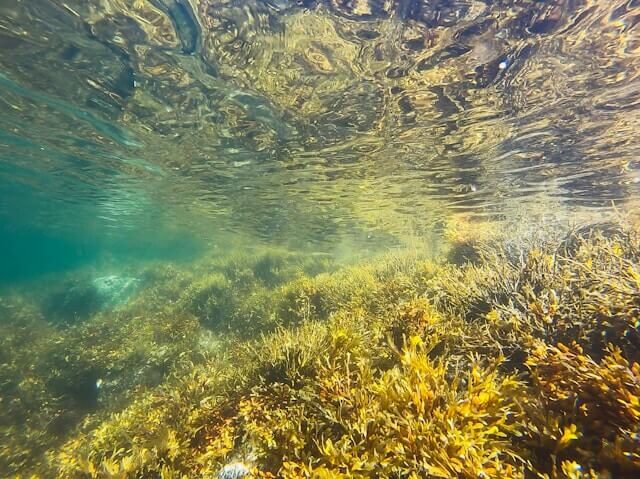[Source](https://unsplash.com/@brian_yuri)
Issues such as overfishing and **climate change** have disrupted the ecological balance of several major **kelp forest communities**. However, environmental movements and conservation efforts have been working hard to ensure that the kelp forests don’t die out.
## What Makes a Kelp Forest Special?
One of the most unique features about kelp forests is that they are not actually made up of plants. Kelp is actually an excessively large species of **brown algae**.
### Kelp Biology
Because kelp is a type of algae there are many different things it needs to survive that are different from plants. This allows kelp forests to pop up in very specific spots.
#### Kelp LifeCyle
Unlike marine plants, kelp species release spores rather than seeds in order to reproduce. These spores then must find a shallow rocky area of coast line in order to grow into large pillars of kelp.
In order to grow to their famously tall heights, kelp must secure themselves in the rocks with root-like structures known as [holdfasts](https://www.nps.gov/glba/learn/nature/kelp-forest.htm#:~:text=Kelp%20forests%20are%20home%20to,kelp%20by%20the%20food%20supply.). While these structures resemble roots, they do not take in any nutrients; instead kelp get all their nutrients by filter feeding the water around them.
This is why it is incredibly important for kelp to not only grow in shallow rocky areas, but also in places with cold nutrient rich waters. While kelp habitat is very specific, if the right conditions are met, kelp flourishes.
In fact, kelp can be capable of growing up to [30.5 cm](https://www.themarinediaries.com/tmd-blog/kelp-forests-of-the-sea) a day. This means that kelp can be fully grown in around three months, and can live up to seven years.
- [](https://interfaithsustain.com/how-deforestation-is-affecting-global-water-cycles/)
## [Why And How Deforestation Is Affecting Global Water Cycles](https://interfaithsustain.com/how-deforestation-is-affecting-global-water-cycles/)
- [](https://interfaithsustain.com/how-does-deforestation-affect-climate-change/)
## [Environmental Destruction and How Does Deforestation Affect Climate Change?](https://interfaithsustain.com/how-does-deforestation-affect-climate-change/)
- [](https://interfaithsustain.com/pine-beetle/)
## [Forest Destruction OR Survival of The Fittest By The Pine Beetle?](https://interfaithsustain.com/pine-beetle/)
## Kelp Forest Ecosystem
Once fully grown, a kelp forest also provides a habitat for a variety of marine life. The kelp not only serves as a food source for numerous herbivores, but they also act as an excellent home for animals to hide and hunt in.
### Biodiversity in the Kelp Forest
Kelp forests are some of the most **biodiverse** and productive [ecosystems](https://www.fisheries.noaa.gov/west-coast/habitat-conservation/kelp-forest-habitat-west-coast) in the world. The kelp forests provide food and serve as a home for species such as bass, rock fish, sunfish, sea otters, sea lions, whales, sea birds, sea urchins, sea stars, and many other animals and marine life.
[Source](https://unsplash.com/@kieran_wood)
These kelp forest species each fill specific biological niches in the food web. This helps make for an elaborate and healthy kelp forest community.
## Kelp Forests and Ecosystem Services
In addition to holding a wide variety of life, kelp forests also provide numerous ecosystem services. This makes them not only an important part of nature, but also valuable to humans as wells.
### Kelp Tourism and Recreation
The serene beauty of the kelp forests attract people from all over the world to swim, kayak, scuba dive, and explore the underwater forests. This is incredibly important for coastal [tourism](https://www.fisheries.noaa.gov/west-coast/habitat-conservation/kelp-forest-habitat-west-coast) industries all around the world.
In addition to directly drawing in tourism, kelp forests act as a wave break. This prevents erosion along beaches and keeps them sandy and pleasant for tourists and beach goers.
### Kelp Carbon Sequestration
While kelp is a type of algae, not a plant, it still photosynthesizes and takes carbon dioxide out of the water around it and replaces it with oxygen. Because kelp grows at such an astonishing rate, it makes kelp forests incredibly efficient at [**sequestering carbon**](https://sitn.hms.harvard.edu/flash/2019/how-kelp-naturally-combats-global-climate-change/).
As humans continue to put massive amounts of climate change causing greenhouse gases into the air, the more important it becomes to sequester carbon and store it away. The easiest way to do this is to plants and algae to naturally take in carbon.
While most people think of trees as the best way to store carbon, many forests are prone to disruption and deforestation, and often grow slowly. Coastal ecosystems, on the other hand, grow incredibly fast, and are 20 times more efficient at storing away carbon than terrestrial forests.
On top of that, most kelp gets taken by currents out into the deep ocean. This makes it very hard for the carbon stored in the kelp to ever be disturbed and put back into the atmosphere.
### Fishing Industries
Kelp forests are an important habitat for commercial fish species such as bass and rockfish. By providing a place for these fish to live and eat, kelp forests are critical for commercial and recreational [fishing industries](https://dornsife.usc.edu/uscseagrant/2021/04/30/new-findings-suggest-that-the-removal-of-sea-urchins-result-in-helping-kelp-forest-ecosystems/).
[Source](https://unsplash.com/@natecheney)
As important as the kelp forests are for fishing industries, in many parts of the world the fishing industries themselves are becoming a serious problem. Overfishing, as well as some other issues, are putting kelp forests at risk of disappearing.
## Threats to Kelp Forests
Due to human involvement, kelp forests are beginning to face a chain reaction of affects that could cause a total collapse of their ecosystem. While [overfishing](https://oceana.org/marine-life/kelp-forest/) removes vital species from the ecosystem that help feed top predators, and keep sea urchins and other primary consumers in check, kelp forests face another daunting threat: [climate change](https://interfaithsustain.com/what-causes-coral-bleaching/).
### Kelp Forest Collapse
One of the most important factors in the kelp lifecycle is having enough nutrients in the water to be able to rapidly grow so tall. These nutrients come primarily from a process of cold deep ocean currents bring nutrients to the shallow coasts called [upwelling](https://insideclimatenews.org/news/16032021/pacific-ocean-climate-change-kelp-urchin-sea-otter-sea-stars/#:~:text=The%20disintegration%20of%20Northern%20California,by%20industrial%20greenhouse%20gas%20pollution.).
**Upwelling** is usually a predictable annual process, but as the the Earth’s climate is changing, coastal communities are seeing more and more heat spells. Kelp is normally adapted to withstand heat spells, but as climate change makes the heat spells more intense and frequent, they are starting to inhibit the annual upwelling, and leaving kelp forests with insufficient nutrients.
On top of that, in some parts of the world the warmer waters are also causing disruptions in the kelp ecosystems themselves. This can be seen in the southern California kelp forests where heat waves have killed off large amounts of sea stars, a natural predator of sea urchins.
These urchins eat kelp, and usually keep the forest in check. However with less natural predators, the urchins are capable of feeding on kelp unchecked, turning massive areas of kelp forest into barren ocean floor, known as urchin barrens.
## Repairing Kelp Forests
Kelp forests have started disappearing in many places around the world. However, [conservation](https://www.youtube.com/watch?v=w90mHA-S9NY&t=52s) efforts have proved to be fairly successful at repairing kelp ecosystems.
[Source](https://unsplash.com/@noaa)
One of the most important things being done to combat kelp forest decline is manually removing sea urchins in lieu of the natural predators such as sea stars and sea otters that usually keep their populations in check. This has shown to help remove urchin barrens and allow for kelp forests to be reestablished in treated areas.
While these conservation efforts have been able to bring back some kelp forests, overall kelp forests are still in danger of being pushed out. Even with urchin removal, it is still not a permanent solution to the broader issues of climate change and **overfishing**.
## Religion and Kelp
Soli Salgado writes for [Global Sisters Report](https://www.globalsistersreport.org/news/environment/news/nuns-and-nones-project-teaches-sisters-how-create-land-legacies-justice) about how the St. Joseph Sisters of Brentwood, New York are teaming up with the Shinnecock Indian Nation. Recently “one of the Shinnecock leaders contacted (Sister Joan) Gallagher in January 2021 about accessing the congregation’s waters in Hampton Bays so they could launch a **kelp farming project**” and Gallagher and her fellows nuns were eager to help. Gallagher explained, “How can we not? They walked this land before our coming here.”
The kelp that is being grown is sold to farmers as fertilizer, and has the added benefit that it “will help purify the bay and attract shellfish for the tribe to eat.” It’s wonderful to see how Christians and Native Americans can work together, not just with each other, but also with nature and local farmers.
As Gallagher commented, “If those farmers can then use this kelp that was grown in the Shinnecock Bay and harvested by the Shinnecock farmers, it’s just a beautiful relationship.” It is our hope and prayer at the Interfaith Center for Sustainable Development to see many more beautiful relationships grow between people of different religions. The fate of humanity and our planet depends on them.
*\* Featured image [source](https://pixabay.com/users/jackdrafahl-11600124/)*
**Categories:** Biodiversity, Blog on Faith and Ecology
**Tags:** Kelp Forest
---
### [What Causes Coral Bleaching and Its Connection to Climate Change](https://interfaithsustain.com/what-causes-coral-bleaching/)
**Published:** December 22, 2021
**Author:** ICSD
**Excerpt:** Sydney Cohen - One of the most alarming things happening in our oceans is coral bleaching. Although this phenomenon has been observed for decades, recent studies have shown that it's becoming more frequent.
**Content:**
Table of Contents
Table of Contents
- [Coral Reefs](#aioseo-coral-reefs-3)
- [Coral Bleaching](#aioseo-coral-bleaching-8)
- [What Happens When a Coral Reef is Bleached?](#aioseo-what-happens-when-a-coral-reef-is-bleached-12)
- [The Great Barrier Reef](#aioseo-the-great-barrier-reef-14)
- [How The Great Barrier Reef Bleached](#aioseo-how-the-great-barrier-reef-bleached-23)
- [Religion and Coral Bleaching](#aioseo-religion-and-coral-bleaching-26)
- [Can Coral Recover from Bleaching?](#aioseo-can-coral-recover-from-bleaching-33)
*By Sydney Cohen* – One of the most alarming things happening in our oceans is **coral bleaching**. Although this phenomenon has been observed for decades, recent studies have shown that it’s becoming more frequent and lasting longer. **Coral reefs** are home to 25% of all marine life on Earth, so, if they die off, we’ll experience a major extinction event! [Coral reefs are very important. ](https://interfaithsustain.com/why-are-coral-reefs-important/ "Coral reefs are very important. ")
So what causes this coral bleaching? It turns out there are many factors responsible for this terrible environmental problem.
## Coral Reefs
[Coral reefs](https://interfaithsustain.com/why-are-coral-reefs-important/) are coral formations that lie in shallow waters. The coral polyps produce a hard, calcareous skeleton and form extensive coral reef structures. Coral reefs are among the most diverse ecosystems on Earth which attract tourists to see their dazzling colors and shapes.
Scientists estimate that coral reefs cover about 10% of the world’s seafloor area but the world’s coral reefs have been disappearing at an alarming rate and experiencing bleaching events due to climate change and global warming (causing rising ocean temperatures), [pollution from sewage runoff](https://interfaithsustain.com/sewage-water/), overfishing of fish species important for [food security](https://interfaithsustain.com/sustainable-food/), tourism development and other human activities such as anchoring or dredging.
## Coral Bleaching
Coral bleaching is a term used to describe the loss of color from coral. Coral lives in symbiosis with algae called **zooxanthellae**. When their relationship becomes disrupted, the coral loses its vibrant colors and turns white, hence “bleached.”
[Source](https://pixabay.com/users/csharker-43284/)
- [](https://interfaithsustain.com/effects-of-ocean-acidification/)
## [The Effects and Consequences of Ocean Acidification](https://interfaithsustain.com/effects-of-ocean-acidification/)
- [](https://interfaithsustain.com/what-causes-coral-bleaching/)
## [What Causes Coral Bleaching and Its Connection to Climate Change](https://interfaithsustain.com/what-causes-coral-bleaching/)
- [](https://interfaithsustain.com/why-are-coral-reefs-important/)
## [Why are Coral Reefs Crucially Important to the Ecosystem?](https://interfaithsustain.com/why-are-coral-reefs-important/)
### What Happens When a Coral Reef is Bleached?
Rising water temperatures cause the coral polyps to expel their microscopic algae, known as zooxanthellae. Without the zooxanthellae, the polyps have a much harder time collecting food and absorbing the nutrients that the coral colonies need to survive.
### The Great Barrier Reef
**The Great Barrier Reef** is the world’s largest coral reef, and it is located off the coast of Queensland in Australia. This massive structure stretches for 2,300 kilometers (1,400 miles) across the continental shelf.
The Great Barrier Reef was declared a World Heritage Site by UNESCO in 1981 due to its exceptional beauty and uniqueness. For an idea of how big it is, the Great Barrier reef covers 133,000 square kilometers (which is about the size of Italy).
The Great Barrier Reef is also one of the most important ecosystems on Earth. It’s so vast that it can be seen from space! Coral reefs support some 27 different types of marine life including whales, dolphins, sea turtles, and manta rays.
However, this ecological wonder has been threatened and damaged by climate change and pollution in recent years. It has been subject to massive bleaching events as a [result of climate change](https://interfaithsustain.com/evidence-of-climate-change/) that causes rising water temperatures and ocean acidification, damage from low tides, and decreased water quality from trash and pollution.
[Source](https://pixabay.com/users/steinchen-21981/)
#### How The Great Barrier Reef Bleached
Over 2016 and 2017, The Great Barrier Reef suffered back-to-back bleaching leaving half of the shallow water corals dead. A combination of two severe bleaching events: Cyclone Debbie and outbreaks of coral-eating starfish, are substantially affecting the health of the Great Barrier Reef.
A further estimated 20% of corals were killed in the 2017 bleaching incident which moved south further from Port Douglas to Townsville. To compound the situation further, a Category 4 cyclone ravaged the Whitsundays destroying reefs that lie beneath its shoreline.
## Religion and Coral Bleaching
In “[A Pastoral Letter on the Great Barrier Reef](https://catholicearthcare.org.au/wp-content/uploads/2015/02/Let-The-Many-Coastlines-Be-Glad-A-Pastoral-Letter-on-the-Great-Barrior-Reef.pdf),” the Catholic Bishops of Queensland discuss the disaster of widespread coral bleaching from climate change and other threats to the Great Barrier Reef. In response, the Bishops call for a “candid examination of lifestyle choices, a realization that creation is sacred and endangered and a radical change of heart – an ‘ecological conversion’
Pope John Paul II’s [Ecclesia in Oceania](https://www.vatican.va/content/john-paul-ii/en/apost_exhortations/documents/hf_jp-ii_exh_20011122_ecclesia-in-oceania.html) is quoted in the letter as he describes our “special responsibility to assume, on behalf of all humanity, stewardship of the Pacific Ocean, containing over half of the Earth’s total supply of water. The continued health of this and other oceans is crucial for the welfare of peoples, not only in Oceania but in every part of the world.”
According to an article in [Evangelical Focus](https://evangelicalfocus.com/zoe/4440/corals-in-the-scriptures):
> Despite the very small size of each individual organism, the only animals that can be detected from space are corals, and the huge extensions of diatomaceous algae. Their apparent fragility is more than compensated for by the tenacity with which they can build reefs of more than two thousand kilometers in length. The secret of corals’ success lies in their solidarity. The union of millions of individuals is the source of the spectacular strength of their constructions.
Religious believers can draw inspiration from the humble coral, which may be tiny as an individual organism, but united, they are enormous. We too are small as individuals, but we can band together around the world to protect coral reefs, protect the oceans and protect all of Creation.
### Can Coral Recover from Bleaching?
The future of coral life depends on what levels of emissions continue burning fossil fuel and which species will cause bleaching to occur. If we continue at our current rate of [global warming](https://interfaithsustain.com/global-warming-vs-climate-change/), it would be catastrophic for coral reefs as they would not be able to recover.
In order to stop global warming, we must urgently **reduce carbon emissions** and limit the rise of global temperatures. It may take decades for corals to fully recover from bleaching events, so it is important that these events do not occur regularly.
*\* Featured image [source](https://pixabay.com/users/steinchen-21981/)*
**Categories:** Biodiversity, Blog on Faith and Ecology
**Tags:** Coral Reefs, Water Pollution
---
### [Why are Coral Reefs Crucially Important to the Ecosystem?](https://interfaithsustain.com/why-are-coral-reefs-important/)
**Published:** July 26, 2021
**Author:** ICSD
**Excerpt:** Sydney Cohen - Coral reefs are a vital part of the ocean ecosystem. Coral reefs help to keep our planet's carbon dioxide levels under control by absorbing CO2 from the atmosphere. But these fragile ecosystems are in danger due to human activity.
**Content:**
Table of Contents
Table of Contents
- [What are Coral Reefs?](#aioseo-what-are-coral-reefs-3)
- [The Important Biodiversity of Coral Reefs](#aioseo-the-important-biodiversity-of-coral-reefs-13)
- [Why are Coral Reefs Important to Humans?](#aioseo-why-are-coral-reefs-important-to-humans-16)
- [Coral Reef Degradation](#aioseo-coral-reef-degradation-25)
- [The Impact of Climate Change on Coral Reefs](#aioseo-the-impact-of-climate-change-on-coral-reefs-32)
*By Sydney Cohen* – Coral reefs are a vital part of the **ocean ecosystem**. Coral reefs help to keep our planet’s carbon dioxide levels under control by absorbing CO2 from the atmosphere. But these fragile ecosystems are in danger due to human activity.
## What are Coral Reefs?
Coral reefs are large underwater structures composed of skeletons of marine invertebrates. Coral reefs are home to fish, crustaceans, mollusks, and other invertebrate species.
The actual structure of coral is created by organisms known as **coral polyps**. Coral polyps can take on many different forms, which is why there are so many varieties of coral structures! [Thousands](https://www.noaa.gov/education/resource-collections/marine-life/coral-reef-ecosystems) of species of corals have been found in all sea environments.
The majority of [corals feed at night](https://oceanservice.noaa.gov/education/tutorial_corals/coral01_intro.html), through a polyp’s single stomach that opens at one end. Corals use nematocysts, or stinging cells, to capture their prey. Their prey consists of a range of species, such as microscopic zooplankton, and small fish, depending on the size of the polyp. They also gather small organic particles through their mucus films and strands.
Reef-building corals that live in shallow water have a symbiotic relationship with zooxanthellae, photosynthetic algae, that lives in their tissues. The coral supplies a home for these algae, with the compounds needed for their photosynthesis, while the zooxanthellae produce oxygen and carbohydrates that the coral polyps need in order to thrive, in addition to helping the coral remove waste.
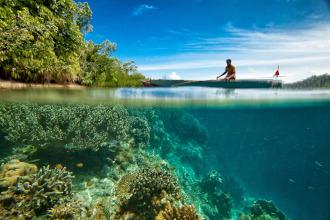[Source](https://pixabay.com/users/kanenori-4749850/)
### The Important Biodiversity of Coral Reefs
**Coral reefs** are ecosystems with exceptional diversity. [In fact](https://oceanservice.noaa.gov/education/tutorial_corals/coral07_importance.html), they “support more species per unit area than any other marine environment”. Scientists believe there may be millions of other species and resources that inhabit coral reefs that we have yet to discover.
The immense [biodiversity](https://interfaithsustain.com/why-is-biodiversity-important/) within coral reefs aids in pharmaceutical developments, and many drugs are being made from the plants and animals as potential cures for arthritis, bacterial infections, cancer, viruses, and other human diseases.
- [](https://interfaithsustain.com/sea-jellies/)
## [Are Sea Jellies Taking Over The Animal Kingdom?](https://interfaithsustain.com/sea-jellies/)
- [](https://interfaithsustain.com/desert-ecosystem/)
## [Unique Desert Ecosystems Are Teeming With Life](https://interfaithsustain.com/desert-ecosystem/)
- [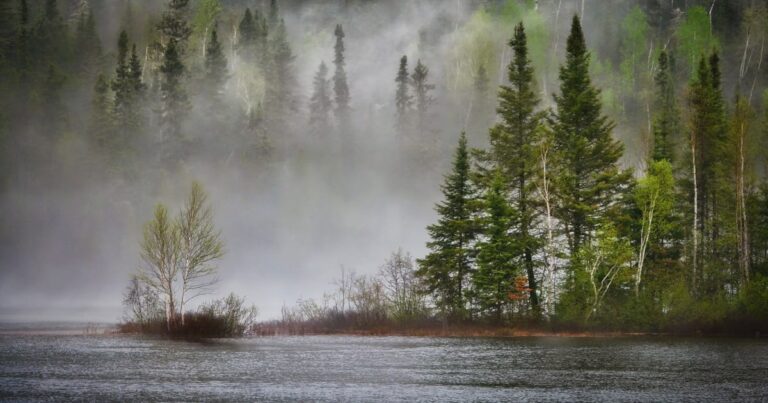](https://interfaithsustain.com/types-of-ecosystems/)
## [Interconnected But Different Types of Ecosystems](https://interfaithsustain.com/types-of-ecosystems/)
### Why are Coral Reefs Important to Humans?
Coral reefs are also an essential economic contributor to various global economies. Coral reefs support commercial and subsistence fisheries, in addition to other businesses and jobs involved in recreation and tourism.
It is estimated by the [National Marines Fisheries Services](https://oceanservice.noaa.gov/education/tutorial_corals/coral07_importance.html) that “the commercial value of U.S. fisheries from coral reefs is over $100 million.” The Great Barrier Reef generates more than $1.5 billion every year for the Australian economy. Data shows that people near to these areas use the reefs for food.
A study published in the Journal of Marine Policy shows that reef-adjacent tourism accounts for $16 billion a year. Visitors are willing to pay for the most pristine spots to enjoy spectacular coral landscapes.
Coral reefs protect coastlines by absorbing wave energy and contributing to the reduction of coastal erosion. They reduce damage in the event of storms, hurricanes, and cyclones, as well as the energy of tsunamis. Coral reefs form a barrier that absorbs elements coming from the ocean in a very efficient way. They protect both the ecosystems between the reefs and the coasts, such as lagoons with seagrass beds and human settlements along the coast. Without this protective role, some countries located in atolls would no longer exist.
[Source](https://pixabay.com/users/lpittman-38659/)
## Coral Reef Degradation
However, despite all the benefits that coral reefs provide for humans, coral reefs are facing immense threats from human activities. Human activities are the main cause of coral reef endangerment. [Pollution](https://interfaithsustain.com/effects-of-water-pollution/), disease, habitat destruction, sedimentation, unsustainable fishing practices, and climate change, which is increasing ocean temperatures in addition to causing **ocean acidification**, are all factors that endanger coral reefs and the thousands of species of fish that inhabit them. Not only are these threats to the coral and marine life, but also to many local economies that rely on tourism as their primary source of income, as tourism declines as coral reefs lose their diverse value.
Other anthropogenic activities, like collecting pieces of natural coral and fish for jewelry and aquarium businesses, and deep-water trawling, a common mass fishing method, harm these ecosystems.
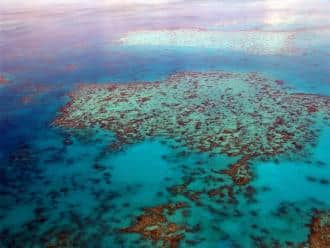[Source](https://pixabay.com/users/steinchen-21981/)
### The Impact of Climate Change on Coral Reefs
Lastly, ocean acidification and rising ocean temperatures, as a result of climate change cause **coral bleaching**. [Coral bleaching](https://interfaithsustain.com/what-causes-coral-bleaching/ "Coral bleaching") is a process in which the warming water causes coral to expel the zooxanthellae and other mutually beneficial algae from its tissues, resulting in the coral paling in color.
While the coral does not die in this process, it becomes unhealthy as it is harder to obtain the nutrients it needs to survive. Coral bleaching is an issue amongst the world’s coral reefs, as the harmful effects of **global warming** are seen everywhere.
Coral Reefs are a unique world resource that need protection!
*\* Featured image [source](https://pixabay.com/users/shadi6454-16406505/)*
**Categories:** Biodiversity, Blog on Faith and Ecology
**Tags:** Coral Reefs
---
### [What are The Major Threats to Global Biodiversity?](https://interfaithsustain.com/threats-to-biodiversity/)
**Published:** July 8, 2022
**Author:** ICSD
**Excerpt:** Ilana Stein - While the term is in fact a shortening of "biological diversity", biodiversity is defined as "The variety of plant and animal life in the world or in a particular habitat, a high level of which is usually considered to be important and desirable."
**Content:**
Table of Contents
Table of Contents
- [What is Biodiversity?](#aioseo-what-is-biodiversity-2)
- [Biodiversity Loss](#aioseo-biodiversity-loss-5)
- [The Sixth Extinction](#aioseo-the-sixth-extinction-13)
- [Threats to Biodiversity](#aioseo-threats-to-biodiversity-16)
- [Habitat Loss](#aioseo-habitat-loss-18)
- [Invasive Species](#aioseo-invasive-species-25)
- [Climate Change](#aioseo-climate-change-28)
- [Pollution](#aioseo-pollution-35)
- [Overexploitation](#aioseo-overexploitation-43)
- [Biodiversity Supports Our Health](#aioseo-biodiversity-supports-our-health-46)
- [Is There Hope?](#aioseo-is-there-hope-48)
- [Biodiversity and the Bible](#aioseo-biodiversity-and-the-bible-51)
*By Ilana Stein* – While the term is in fact a shortening of “**biological diversity**“, biodiversity is [defined](https://www.lexico.com/definition/biodiversity) as “The variety of plant and animal life in the world or in a particular habitat, a high level of which is usually considered to be important and desirable.” But such a definition does not convey the sheer abundance and amazing variety of animal and bird species, plants and more that inhabit Earth’s ecosystems and different habitats.
## What is Biodiversity?
Charles Darwin put it more poetically, when he said in [*On The Origin of Species*](https://en.wikipedia.org/wiki/On_the_Origin_of_Species), 1859, ch. 14,”There is grandeur in this view of life, with its several powers, having been originally breathed into a few forms or into one; and that, whilst this planet has gone cycling on according to the fixed law of gravity, from so simple a beginning endless forms most beautiful and most wonderful have been, and are being, evolved.”
Scientists estimate that there are about 8.7 million species on the planet – but they have only confirmed 1.2 million. That means that there are many tens of thousands of species still to be discovered. Some plants or animals are too small to be seen with the naked eye while others live in places that humans can’t access – like the very bottom of the ocean – and others may be made up of only a single cell.
## Biodiversity Loss
With so many species, one would think that one more or less would not be so problematic. But sadly, this is not so. The major threats to biodiversity can be summed up as the **extinction of species** – in other words, the disappearance from the planet of all individual members of a species.
First, it is important to understand that extinction is something that has happened naturally over the millions of years that life has existed on the planet. In a natural system, scientists speculate that species extinctions happen at the rate of one in four years. But while some species are lost, others become stronger and more numerous, and so the balance remains. Biodiversity loss also helps biodiversity gain – and this is part of the [ecological balance](https://interfaithsustain.com/ecological-balance/) of the Earth.
In the last 200 years however, human activities have caused this delicate balance to implode. In the 19th century, one species became extinct per year, but by 1975 the extinction rate hit 1,000 species per year – and today it is assumed to have reached 40,000 species a year! With such numbers, we many never know most of the species on the planet, as they will have disappeared before we even knew they were here.
[Source](https://unsplash.com/@marcospradobr)
### The Sixth Extinction
While extinctions have occurred throughout the world’s history, there have been five mass extinction events. A mass extinction is [defined as](https://www.worldwildlife.org/stories/what-is-the-sixth-mass-extinction-and-what-can-we-do-about-it) “a short period of geological time in which a high percentage of [biodiversity](https://www.worldwildlife.org/pages/what-is-biodiversity), or distinct species*—*bacteria, fungi, plants, mammals, birds, reptiles, amphibians, fish, invertebrates*—*dies out.” The most famous one was the event, 65.5 million years ago, which wiped out the dinosaurs and other species.
While the five events were caused by natural events, we are living through one today that is caused by human activities. The extinction rates are so great, that this sixth mass extinction is also called “the **Anthropocene extinction**” – the word ‘anthropocene’ [means](https://en.wikipedia.org/wiki/Anthropocene) the “significant human impact on Earth’s geology and ecosystems”.
- [](https://interfaithsustain.com/why-is-biodiversity-important/)
## [Why is Biodiversity Important for Human Survival?](https://interfaithsustain.com/why-is-biodiversity-important/)
- [](https://interfaithsustain.com/importance-of-biodiversity/)
## [The Importance of Biodiversity For Humans and For Earth](https://interfaithsustain.com/importance-of-biodiversity/)
- [](https://interfaithsustain.com/habitat-corridors/)
## [Habitat Corridors Allow Human Development Whilst Saving Biodiversity](https://interfaithsustain.com/habitat-corridors/)
## Threats to Biodiversity
There are major threats to biodiversity across terrestrial habitats, in marine environments and freshwater habitats. The [IUCN Red List](https://www.iucnredlist.org/) monitors all species that we know of living on Earth, their numbers and status. It is “a critical indicator of the health of the world’s biodiversity” and it is easy to see that the numbers of threatened species are growing. The main threats to biodiversity are many.
### Habitat Loss
Biodiversity loss today is primarily being caused by humanity. Population growth has increased exponentially over the past centuries, and the human population requires resources for food production. Through the increase in agricultural land and tropical deforestation for example, habitat loss has occurred to such an extent that many living creatures have lost their space on the planet. This habitat destruction is a core threat to biodiversity; after all when an entire habitat is destroyed, all those who have lived there have nowhere to go and so die out.
Sometimes it is not an entire habitat that has been destroyed but instead human population growth has exploded so that habitat fragmentation has occurred, where small pieces of forest or grassland exist on their own resulting in animal or plant populations being squeezed into smaller, disconnected areas. This **habitat fragmentation** causes individuals to be cut off from the rest of their species, which means less natural growth of the species. In addition, when a species begins to decline, it becomes less resilient and is at further extinction risk. These factors ultimately combine to create irrevocable loss and extinction. Just look at the battle to [save the colobus monkeys](https://www.youtube.com/watch?v=cGmE84GpX8I) in Diani, Kenya.
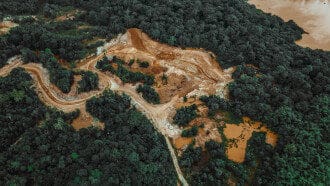[Source](https://unsplash.com/@rmvisuals)
### Invasive Species
Humans have spread out over the earth’s surface, and wherever they have gone, they have taken some of their native species with them. These invasive species – for example, pigeons, starlings and rats but also exotic species – settle in their new home forcing the native species out.
This is particularly dire in fish species both in freshwater and the marine environment where invasive species have virtually destroyed all native species in certain rivers in [Europe](https://doi.org/10.1002/aqc.2345) and North America.
### Climate Change
A major threat to biodiversity loss is that of [climate change](https://interfaithsustain.com/global-warming-vs-climate-change/), caused by human activities. As a result of fossil fuel combustion, more carbon dioxide is released into the atmosphere, which in turn causes an increase in greenhouse gases, sharply fluctuating temperatures and weather events such as storms or droughts becoming more severe. Many species are unable to adapt to such rapidly-changing conditions and their populations can dwindle and crash. Coral reefs are in particular danger due to global warming from climate change, with [coral bleaching](https://interfaithsustain.com/what-causes-coral-bleaching/) taking place; the death of these marine species means a huge extinction risk as coral reefs are home to a quarter of all marine life.
Another example of **climate change** induced biodiversity loss is the warming of the Arctic. Snow and sea ice melting at a rapid rate is a huge threat to many species, [including the iconic polar bear](https://interfaithsustain.com/are-polar-bears-going-extinct/), which has shown sharp population declines over the past 50 years and has become known as one of the flagship species showing the risk of animal extinctions. A further result of climate change is also the threat of sea level rise, flooding low-lying or coastal areas, once again causing habitat loss and adding to the biodiversity threats and rising extinction rates.
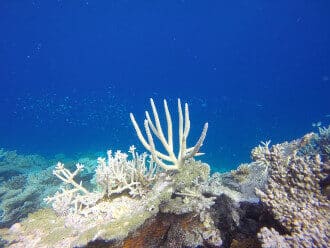[Source](https://unsplash.com/@ahmed_areef)
### Pollution
As a result of the increase in human population growth and its striving for constant economic development, there has been a surge in pollution of all kinds. Aside from being a factor in climate change, pollution of soil, air and water makes it very difficult for animals and plants to live in their natural habitats, creating further threats to biodiversity.
For example, particles of plastic end up in the water, clogging the gills and lungs of the fish species, mammals and others who live in the oceans. Nutrients from nitrogen compounds and fertilizers end up in rivers and the sea, often contributing to an overgrowth of toxic algae, known as algal blooms. Aside from being harmful to humans, algal blooms deplete the oxygen in the water causing the deaths of many fish species and therefore biodiversity loss.
In addition to causing climate change, burning fossil fuels and other fumes spew particles into the air, [causing air pollution](https://interfaithsustain.com/prevention-of-air-pollution/). These particles often mix with water droplets in clouds, ultimately falling to earth as acid rain and coating trees and plants in soot. This prevents the plants from taking in carbon dioxide and releasing oxygen – effectively stopping them from breathing.
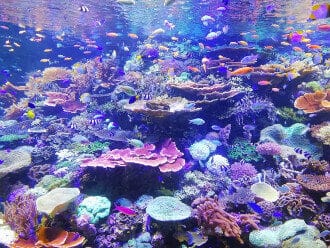[Source](https://unsplash.com/@sgr)
#### Overexploitation
While we all need to eat and food production is important, we tend to overuse our land and sea use, removing more species from the ecosystems. We log tens of thousands of acres of land causing tropical deforestation. Farming takes up more agricultural land and strips the soil of its nutrition so that soil fertility drops and less crops can be grown.
Meanwhile, overfishing has drained our freshwater resources as well as the marine environment – “70% of fish stocks in the ocean are currently being overfished”. Global trade in animals and plants is a major threat to biodiversity by removing species from natural ecosystems: “Global trade includes at least 40,000 primates, ivory from at least 90,000 African elephants, 1 million orchids, 4 million live birds, 10 million reptile skins, 15 million furs and over 350 million tropical fish.”
#### Biodiversity Supports Our Health
Biological diversity is not just beautiful, it is vital for the health of the Earth, and our existence. The life-supporting processes of these ecosystem services depend on the interplay between the many species, and the natural systems and cycles that they live in, such as water cycles, pollination of plants and soil fertility. Threats to biodiversity decrease the resilience of these systems. Ultimately, if we do not look after global biodiversity, human welfare and human health is at stake.
## Is There Hope?
Can we hold back the sixth mass extinction? It depends on how we protect biodiversity, and how sustainably we deal with land and sea use as [sustainable development](https://interfaithsustain.com/concept-of-sustainable-development/). Do we need to protect a habitat in its entirety or is it better to protect individual species, one species at a time? Will climate change cause another mass extinction? How do we deal with all these varied threats to biodiversity? These are questions that those dealing with **environmental sustainability** must consider, as by protecting wildlife, we can protect global biodiversity.
There is hope as people are beginning to understand that when biodiversity is safe, humanity thrives: [Increasingly](https://nbs.net/articles/5-main-threats-to-biodiversity/), “businesses, individuals, and organizations are finding innovative, collaborative ways to protect the planet.”
### Biodiversity and the Bible
In Genesis, the Bible describes the creation of a world that is filled with biodiversity. Many commentators question why we need this account at all. Rabbi Samson Raphael Hirsch (*Nineteen Letters*, Letter Three) explains:
> It was not just with one word, one summons of creation, that the Almighty brought this world into being, the whole of it and every detail; for if it had been created in this manner, everything would have been directly dependent upon God’s word for its existence, life and functioning. Instead, He called forth His world into existence in ten stages; He created an abundance of forces, intermingled and functioning closely together, according to His Word – and then He separated them, so that each had to sustain the other; none was henceforth able to exist and function by itself but had to be sustained by its fellow creatures and, in turn, had to help them exist and function.
>
> In this way, everything contributes according to its strength, however much or little, to the existence of the whole, and if it destroys a fellow creature, it robs itself of what it needs for its own existence.
*\* Featured image [source](https://pixabay.com/users/mylene2401-10328767/)*
**Categories:** Biodiversity, Blog on Faith and Ecology
**Tags:** Biodiversity
---
### [Why is Biodiversity Important for Human Survival?](https://interfaithsustain.com/why-is-biodiversity-important/)
**Published:** June 7, 2021
**Author:** ICSD
**Excerpt:** Matthew Mausner and Elisheva Malomet - Biodiversity is a word that sounds complicated, but it just means the variety of life on Earth. There are many different species of animals and plants, as well as microbes and other organisms. The more variety there is in an ecosystem, the healthier the system is.
**Content:**
Table of Contents
Table of Contents
- [Relevance of biodiversity to humans](#aioseo-relevance-of-biodiversity-to-humans-6)
- [Biodiversity: Plants and Animals](#aioseo-biodiversity-plants-and-animals-13)
- [Biodiversity in Action: Andes Mountains Tropical Hotspot](#aioseo-biodiversity-in-action-andes-mountains-tropical-hotspot-18)
- [Biodiversity for our Health](#aioseo-biodiversity-for-our-health-25)
- [Biodiversity: Medicine](#)
- [Biodiversity: Agriculture](#aioseo-biodiversity-agriculture-34)
- [The Agricultural Revolution- against Biodiversity?](#)
- [Nutrition and food biodiversity](#aioseo-nutrition-and-food-biodiversity-47)
- [Impoverished Diet in Civilization](#aioseo-impoverished-diet-in-civilization-50)
- [Humans are degrading biodiversity](#aioseo-humans-are-degrading-biodiversity-53)
- [Spirituality of Protecting Biodiversity](#aioseo-spirituality-of-protecting-biodiversity-56)
*By Matthew Mausner and Elisheva Malomet* – Biodiversity is a word that sounds complicated, but it just means the variety of life on Earth. There are many different species of animals and plants, as well as microbes and other organisms. Why is biodiversity important? Put simply, **the more variety there is in an ecosystem, the healthier the system is.**
The health of ecosystems has a huge impact on human beings because we depend on them for our survival—we need [clean air to breathe](https://interfaithsustain.com/air-pollution-solutions/), water to drink, food from crops grown by farmers who use natural fertilizers instead of chemicals (which pollute rivers), and so much more.
When people speak about biodiversity loss they are talking about [how humans have degraded or destroyed habitats](https://interfaithsustain.com/environmental-degradation-and-the-future-of-our-planet-earth/) which can result in the extinction of species – making it harder for future generations to enjoy these places or benefit from them.
## Relevance of biodiversity to humans
The more that we understand about biodiversity [the better it is for humans](https://interfaithsustain.com/importance-of-biodiversity/). There are so many reasons why protecting biodiversity matters to us, including finding new medicines and maintaining an interconnected ecosystem that sustains life on Earth.
[Source](https://unsplash.com/@garyellisphoto)
Biodiversity also provides spiritual fulfillment in knowing that God created the variety of life on earth around us that we must protect.
A healthy ecosystem is dependent on biodiversity. The symbiosis of an ecosystem is contingent on all the different species living together and helping each other.
Ecosystems that are rich in species diversity, genetic diversity, and biological diversity are healthy because of the different qualities that the variety of life brings.
- [](https://interfaithsustain.com/threats-to-biodiversity/)
## [What are The Major Threats to Global Biodiversity?](https://interfaithsustain.com/threats-to-biodiversity/)
- [](https://interfaithsustain.com/habitat-corridors/)
## [Habitat Corridors Allow Human Development Whilst Saving Biodiversity](https://interfaithsustain.com/habitat-corridors/)
- [](https://interfaithsustain.com/importance-of-biodiversity/)
## [The Importance of Biodiversity For Humans and For Earth](https://interfaithsustain.com/importance-of-biodiversity/)
### Biodiversity: Plants and Animals
A variety of plant and animal life creates a more resilient ecosystem. If a species goes extinct, it will not drastically affect other plants’ survival rates because of other sources for food within their habitat. This also means that when animals eat these plants, they won’t be eating just one type.
This is one of the most important reasons why biodiversity is important. If there was only one source for food and it became harmful or poisonous it would affect all of its consumers. An advantage to diverse ecosystems is the diversity in producer and consumer options.
#### Biodiversity in Action: Andes Mountains Tropical Hotspot
A hotspot is an ecosystem with very high levels of biodiversity. One such example is the Andes Mountains Tropical Hotspot in South America.
[Source](https://unsplash.com/@omridcohen)
It has high levels of biodiversity due to many different unique habitats, such as alpine grasslands, rainforests, and high plain. These exist side by side in the spectacular microclimates generated by the jagged high peaks of the Andes which plunge down into tropical jungles and coastal valleys.
This creates many interdependent ecological niches in nature which exist nowhere else on earth. The inaccessible nature of the terrain makes it safer for biological diversity to flourish and stay out of reach of human exploitation and destruction.
## Biodiversity for our Health
While the impact of biodiversity loss may not seem so great, actually **biodiversity provides benefits to our health and medicines.** Scientific development in pharmacology occurs in biological diverse spaces and ecosystems.
Treatments for infectious diseases and health problems are derived from traditional medicine sources that utilize natural organisms, microorganisms, and plants.
#### Biodiversity: Medicine
Regions high in biodiversity, such as the Amazon or the foothills of the Himalaya, are disproportionately sources of medicinal compounds and herbs.
As a civilization, we are doing collectively destroying biodiverse regions by encouraging deforestation of Borneo or Brazil in the name of our logging or ranching ‘needs’.
This causes biodiversity loss, destroying the very flowers, ferns, animals, fungi, or microorganisms that could have been the miracle drug to save us from the next pandemic. And we would never know because it’s possible those species only existed in that small niche, only in that local habitat.
#### Biodiversity: Agriculture
Agriculture initially developed in certain ecosystems around the idea of humans not just encouraging, but deliberately planting and protecting certain species.
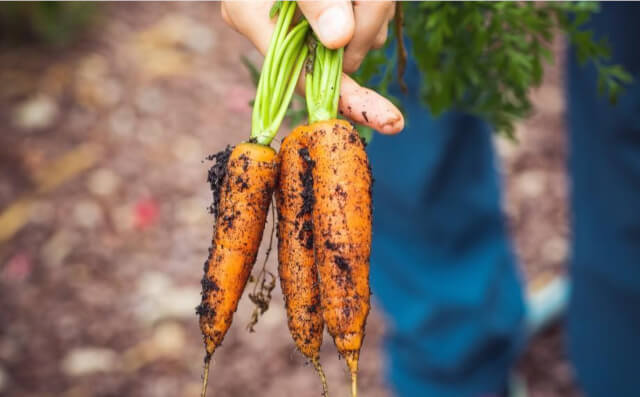[Source](https://unsplash.com/@markusspiske)
Most forms of ancient agriculture, in almost all places humans were up until 6,000 years ago, tended to preserve and take advantage of local biodiversity, cultivating a wide variety of plant species including those highest in protein or nutritional value.
The diversity itself acted as a survival mechanism to account for fluctuations in harvest, climate, floods, or other normal hazards of nature.
### The Agricultural Revolution- against Biodiversity?
But what some scholars call ‘totalitarian agriculture’ began- what is usually termed the ‘agricultural revolution’- around 5,700 years ago.
The hallmark of this was an explicit reduction in biodiversity: land was taken over for the exclusive use of a single crop, usually ‘cereal’ crops that are higher in protein and/or carbohydrates, albeit lower in nutritional value otherwise, such as wheat, barley, lentils, corn, beans, rice, manioc, millet, yams, spelt, amaranth, or quinoa.
A new, adversarial and possessive relationship between human agricultural societies and nature itself developed. Animals and insects that used to freely range across a landscape became seen as enemies of those agricultural societies, redefined as weeds, pests, or vermin if they crossed onto the farms of human cultivation.
By prioritizing and even monopolizing the productive capacity of the land towards maximizing calories exclusively for humans and their domesticated animals, those societies were ‘successful’ and expanded- but there were catastrophic consequences for all the other species in their way.
**As ecosystems were made subservient to their human overlords, biodiversity plummeted.**
## Nutrition and food biodiversity
While it might seem on the surface that the agricultural revolution was to the benefit of humans (or at least to those in the civilizations), their diets became far narrower, largely restricted to the relatively small number of cultivated plants and animals, and the quality of their nutrition declined drastically. Scholars think this is directly related to why biodiversity is so important.
Hunter-gatherer societies typically have scores, even hundreds of edible flora and fauna they use for food throughout the year, and they often prefer not just the diversity of diet but the very movement and migration that brings them to different parts of their region’s healthy ecosystems through the year.
### Impoverished Diet in Civilization
By contrast, those in agricultural civilization frequently get their food from less than 10 species of crops and animals. They cut down forests and encounter less wildlife, and the quality of their lives, as well as their nutrition, can decline dramatically.
Thus human encounters with natural biodiversity directly impact our health. [The development of infectious diseases](https://www.who.int/news-room/fact-sheets/detail/biodiversity-and-health) proceeds quicker when a region is less biodiverse, as there is less diverse immune reactions and more vulnerability.
## Humans are degrading biodiversity
Pollution and climate change are among the consequences of human civilizations not respecting biodiversity. This is one of the reasons why biodiversity is important.
Early civilizations overdid monoculture agriculture, exhausted the soils causing salinization, caused biodiversity loss, and sometimes nothing was left but a salt plain. These impacted vast regions like the Mediterranean basin and Mesopotamia, the northern China plain, the southwestern U.S.
## Spirituality of Protecting Biodiversity
There is also a spiritual answer for the question: why is biodiversity important. There’s a spiritual basis for protecting God’s creation and the species that God created. Going all the way back to Noah, it was **a value to recognize and preserve all of the species** so that they could reproduce.
[According to Gus Speth](https://doi.org/10.1080/09692290.2019.1635513), former dean of the Yale School of Forestry and Environmental Studies, “I used to think that top global environmental problems were biodiversity loss, ecosystem collapse and [climate change](https://interfaithsustain.com/evidence-of-climate-change/).
I thought that with 30 years of good science, we could address these problems, but I was wrong. The top environmental problems are selfishness, greed, and apathy, and to deal with these we need a spiritual and cultural transformation. And we scientists don’t know how to do that.”
The realization and appreciation of natural ecosystems’ wholeness is crucial to a holistic and sustainable future. Biodiversity provides protection, food, resilience, and a more joyous and conscious spiritual relationship with nature.
*\* Featured image [source](https://unsplash.com/@karlkiwi90)*
**Categories:** Biodiversity, Blog on Faith and Ecology
**Tags:** Biodiversity
---
### [The Importance of Biodiversity For Humans and For Earth](https://interfaithsustain.com/importance-of-biodiversity/)
**Published:** May 18, 2022
**Author:** ICSD
**Excerpt:** Sydney Cohen - Did you know that human health is directly linked to the health of our natural world? It's true! The more diverse our ecosystems are, the healthier we all are. Biodiversity is essential for human survival, and it is important that we do everything we can to protect it.
**Content:**
Table of Contents
Table of Contents
- [What Is Biological Diversity?](#aioseo-what-is-biological-diversity-5)
- [Measuring Biodiversity](#aioseo-measuring-biodiversity-8)
- [Genetic and Chemical Biodiversity](#aioseo-genetic-and-chemical-biodiversity-10)
- [What Are Ecosystem Services?](#aioseo-what-are-ecosystem-services-14)
- [Moving Toward Sustainable Development](#aioseo-moving-toward-sustainable-development-21)
- [Healthy Ecosystems](#aioseo-healthy-ecosystems-23)
- [Current Species Diversity](#aioseo-current-species-diversity-31)
- [Species Depend on Each Other](#aioseo-species-depend-on-each-other-34)
- [Biodiversity Loss](#aioseo-biodiversity-loss-36)
- [Coral Reefs And Biodiversity Loss](#aioseo-coral-reefs-and-biodiversity-loss-40)
- [Human Dependence](#aioseo-human-dependence-43)
- [Biodiversity and Religion](#aioseo-biodiversity-and-religion-48)
- [Safeguarding Biodiversity: Ora Sheinson](#aioseo-safeguarding-biodiversity-ora-sheinson-50)
- [Spreading Awareness of Biodiversity Importance](#aioseo-spreading-awareness-of-biodiversity-importance-57)
*By Sydney Cohen* – Did you know that human health is directly linked to the health of our natural world? It’s true! The more diverse our ecosystems are, the healthier we all are. [**Biodiversity** is essential for human survival](https://interfaithsustain.com/why-is-biodiversity-important/ "Biodiversity is essential for human survival"), and it is important that we do everything we can to protect it.
The natural world provides us with many essential resources that we need for survival. Medicines, fresh water, and food are just a few examples of what can be derived from biodiverse ecosystems. Biodiversity is also important for regulating the climate and maintaining soil quality.
Biodiversity is critical to life-supporting processes, which include human lives. Without many animal species and microorganisms, it’s impossible to sustain our **healthy ecosystems,** which provide our breadth of life and food. Some aspects of biodiversity are highly valued by humans. Human life depends on biodiversity in several ways and it is critical to preserve this resource as much as we can.
Without biodiversity, our planet would be a very different place. In this blog post, we will discuss the importance of biodiversity and why it is so vital for both human beings and our planet.
## What Is Biological Diversity?
What is biodiversity? Simply put, biodiversity is the variety of life on Earth. This includes all the different plants, animals, and microorganisms that live in natural habitats around the world. Biodiversity also includes the genetic diversity of these species.
Endemic species are those that are found only in one specific area, and they are often threatened and endangered species at risk of becoming extinct. The **loss of biodiversity** is a major concern because it could lead to the extinction of many species.
### Measuring Biodiversity
Counting species is one way to measure biodiversity, and scientists have estimated that there are anywhere from 3 to 30 million species on earth! Coral reefs are home to immense biodiversity, and are often called “the rainforest of the sea.” Unfortunately, coral reefs have suffered much biodiversity loss, due to climate change, which will be elaborated on shortly.
- [](https://interfaithsustain.com/habitat-corridors/)
## [Habitat Corridors Allow Human Development Whilst Saving Biodiversity](https://interfaithsustain.com/habitat-corridors/)
- [](https://interfaithsustain.com/importance-of-biodiversity/)
## [The Importance of Biodiversity For Humans and For Earth](https://interfaithsustain.com/importance-of-biodiversity/)
- [](https://interfaithsustain.com/threats-to-biodiversity/)
## [What are The Major Threats to Global Biodiversity?](https://interfaithsustain.com/threats-to-biodiversity/)
#### Genetic and Chemical Biodiversity
Genetic diversity represents the alternative concept for biodiversity. Molecular variations are a source of adaptation for many species. A species’ future adaptive potential depends upon the genetic diversity in its genome.
The negative impact of **climate change** is that extinction increases and genetic defects are closely connected to the warming of the planet. Species and their ecosystems, as well as ecosystem services, are suffering due to the warming of our planet. Their genomes cannot adapt quickly enough to survive on our planet.
As mentioned, humans depend on biodiversity within ecosystems. Part of the importance of biodiversity is that often, both medicinal plants and manufactured pharmaceuticals create modern drugs by studying the earth’s biodiversity. Maintaining our earth’s biodiversity, for both ecosystem and human health, requires [ecological balance](https://interfaithsustain.com/ecological-balance/).
## What Are Ecosystem Services?
Ecosystem services are the benefits that humans receive from ecosystems. These benefits can include the provision of food, water, and fiber; regulation of climate and air quality; support of human health and well-being; maintenance of soil productivity and cultural enrichment. Biodiversity is essential to the provision of these benefits, so it is important to protect biodiversity in order to maintain the health of our ecosystems.
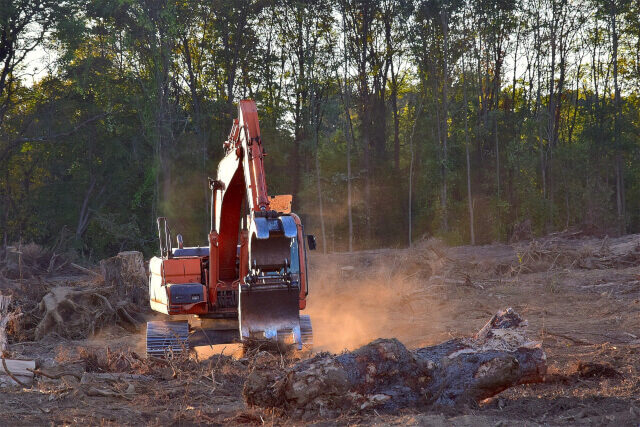[Source](https://pixabay.com/users/bones64-219712/?utm_source=link-attribution&utm_medium=referral&utm_campaign=image&utm_content=2833687)
Many healthy ecosystems provide biological resources that we, as humans, would otherwise not have access to. This is why it is important to prevent climate change, which results in biodiversity loss in ecosystems.
### Moving Toward Sustainable Development
Given that healthy biodiversity offers humans a variety of natural benefits, a shift towards sustainable development is logical for both economic and environmental reasons. Sustainable development has been gaining popularity over the last decade, as it is more economically friendly and better for the environment! But, it is important to realize that sustainable development can specifically protect and preserve our Earth’s ecosystems, maintaining biodiversity which is vital to human life.
## Healthy Ecosystems
In order to understand how to protect our environment, we need to know what a healthy ecosystem looks like. Studies have shown that in order for an ecosystem to be productive, it must have a rich biodiversity.
Rich biodiversity, found in healthy ecosystems, leads to ecosystem diversity, and in turn, ecosystem productivity. Biodiversity hotspots with rich biodiversity are often found in national parks, where the different ecosystems are free to develop within protected areas. Productive ecosystems generate nutrient storage, nutrient cycling, and some ecosystems even provide raw materials such as wood, biofuels, and plant oils to the world’s economy, aiding in economic development.
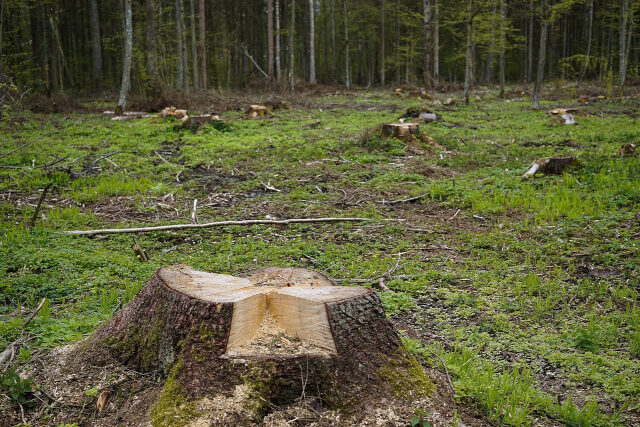[Source](https://pixabay.com/users/summa-2019693/)
Biodiverse ecosystems can also provide natural soil fertility, pest control, and food production, which, as you might deduct, have high value to agricultural scientists, and agriculture industries that grow food and provide food sources for the human population.
### Current Species Diversity
Although efforts are devoted, understandings about the exact number of species that live on our planet are very limited. Research has shown that eukaryote species, which are organisms that contain a nucleus and other organelles in their cells, account for less than 20% of total species. This means that there are so many species out there!
Estimation of the number of prokaryotic species, which are single-celled organisms that lack a distinct membrane-bound nucleus in their cells, are primarily guesses. Biologists say science only recently began cataloging prokaryotic diverse nature, due to the complexity of the number of prokaryotic species.
#### Species Depend on Each Other
In certain species, there may be survival of the fittest, but all animals are dependent on other species to survive. Such is the food chain, for example. Species’ dependence on one another, in some cases known as symbiotic relationships, enables cooperation that is focused on the reciprocal survival of the species and is often key to balanced ecosystems.
## Biodiversity Loss
Unfortunately, due to the warming of our planet with climate change, our ecosystems have been facing much biodiversity loss. While habitat restoration efforts can be useful, some ecosystems are harmed beyond repair.
### Coral Reefs And Biodiversity Loss
Coral reefs were once home to hundreds of thousands of species. The high level of species diversity allowed for ecosystem productivity, where species relied on one another for survival, and also benefitted each other.
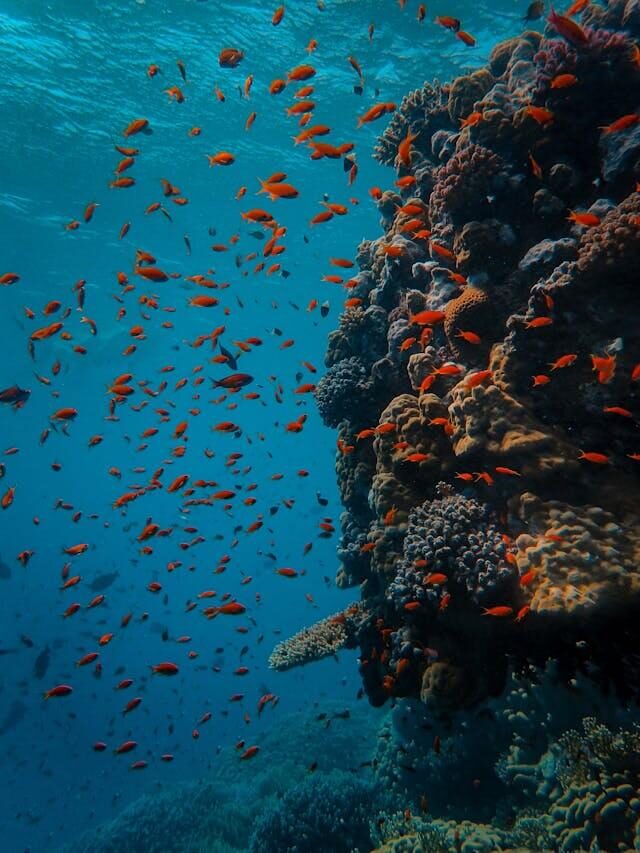[Source](https://pixabay.com/users/shadi6454-16406505/)
Climate change has resulted in ocean acidification, where the ocean’s rising acidic levels have resulted in coral bleaching. Coral bleaching is a process where the colorful algae that make coral so beautiful are expelled from the coral polyps, as the rising ocean temperatures and acid levels make it impossible for some species to survive.
### Human Dependence
There is immense economic value in biodiversity. Biodiversity, which helps with discoveries in crop pollination, water purification, flood protection and carbon sequestration, is necessary for our economy. Human life on earth depends on particular industries that need the ecosystem services that biodiversity allows for.
In fact, there are many conservation efforts to create more protected areas, as industries such as agriculture, fisheries and forestry rely on biodiverse ecosystems. [Tropical forests](https://www.pnas.org/doi/10.1073/pnas.1706264114#:~:text=Tropical%20forests%20are%20incredibly%20biodiverse,Earth's%20land%20surface%20(2).), despite only taking up a small percentage of our planet, are a geographical area home to many wild animals, and they “support at least two-thirds of the world’s biodiversity.” However, due to deforestation, we are losing much of this biodiversity that is essential to the previously listed aspects of our world’s economy. It is more important to conserve our forests than it is to cut them down for various economic opportunities, in order to preserve our ecosystems and make use of the rich biodiversity that allows other human industries to thrive.
## Biodiversity and Religion
The following essay appears on Canfei Nesharim and in the book [Eco Bible Volume 2](https://www.amazon.com/dp/1735338842?psc=1&smid=ATVPDKIKX0DER&ref_=chk_typ_imgToDp). *Leviticus 22:28 – No animal from the herd or from the flock shall be slaughtered on the same day with its young.*
### Safeguarding Biodiversity: Ora Sheinson
When [the Torah prohibits](https://www.sefaria.org/Leviticus.22.28?ven=The_Contemporary_Torah,_Jewish_Publication_Society,_2006&vhe=Miqra_according_to_the_Masorah&lang=bi&with=all&lang2=en) slaughter of a mother and calf on the same day, Rabbi Moshe ben Nachman (Nachmanides; Ramban) [indicates](https://www.sefaria.org/Leviticus.22.28?ven=The_Contemporary_Torah,_Jewish_Publication_Society,_2006&vhe=Miqra_according_to_the_Masorah&lang=bi&with=Ramban&lang2=en) that God is telling us not to eliminate a species. He offers [the same comment](https://www.sefaria.org/Deuteronomy.22.6?ven=The_Contemporary_Torah,_Jewish_Publication_Society,_2006&vhe=Miqra_according_to_the_Masorah&lang=bi&with=Ramban&lang2=en) on the biblical commandment to send away a mother bird before taking eggs from a nest found in the wild. Both prohibitions revolve around the killing of two generations, an act symbolic of the destruction of a species’ ability to persist.
The species of planet earth are increasingly endangered. Zoologist Edward O. Wilson [estimates](https://www.discovermagazine.com/planet-earth/biologist-edward-o-wilsonthe-bard-of-biodiversity) that “if we continue at the current rate of deforestation and destruction of major ecosystems like rainforests and coral reefs, where most of the biodiversity is concentrated, we will surely lose more than half of all the species of plants and animals on earth by the end of the 21st century.”
Humans need biodiversity and benefit from it in immeasurable ways. Many of our most potent medicines come from the plants and animals that God put on earth. Aspirin from the willow tree, vincristine (for childhood leukemia) from the rosy periwinkle of Madagascar, and painkillers from cone snails, snake venom, and [frog skin poison](https://www.amnh.org/content/download/35213/519257/file/biodiversity). What if the willow tree or periwinkle had gone extinct before we discovered their medicinal properties?
The Midrash tells the story of King David who, as a young boy, asked why God created spiders. God answered that there would come a day when David would need a spider and then, he would thank God for creating it. Years later, when David incurred the wrath of King Saul, David escaped into a cave to hide. He heard soldiers near the cave and thought they would find him. Suddenly, a spider appeared in front of the cave and spun a web across the opening. The soldiers did not look in David’s cave but assumed he would have torn the web when he entered. His life saved by a spider, David understood God’s wisdom and thanked God for creating all creatures. (Ben Sira 23b, Otzar Midrashim 47)
Today, scientists discuss biodiversity in terms of “webs.” The more we learn about biodiversity, the more we begin to see its weblike strengthening of every kind of ecosystem against disturbances. Diversity brings stability to an ecosystem because the greater the species’ diversity, the greater the potential for species adaptation and the higher the chance that variation will persist. Species diversity preservation is within our reach. Through our actions, we can adhere to God’s commandment to honor the importance of all that God has created.
The Torah’s outlook is generally one of respect and recognition for all species and has important ramifications for biodiversity issues today. The Talmud [teaches](https://www.sefaria.org/Shabbat.77b.6?ven=William_Davidson_Edition_-_English&vhe=William_Davidson_Edition_-_Vocalized_Aramaic&lang=bi&with=all&lang2=en), “Rabbi Judah said in the name of Rav: Everything that the Holy One, Blessed Be, created in God’s world, God did not create a single thing in vain.” In [Genesis](https://www.sefaria.org/Genesis.1.31?ven=The_Contemporary_Torah,_Jewish_Publication_Society,_2006&vhe=Miqra_according_to_the_Masorah&lang=bi&with=all&lang2=en), God looked at all that God created and saw that it was very good. Since then, the vast diversity of life on the planet has not gone unnoticed by the rabbis. [The Midrash notes](https://www.sefaria.org/Shemot_Rabbah.10.1?ven=Sefaria_Community_Translation&vhe=Midrash_Rabbah_--_TE&lang=bi&with=all&lang2=en) in the name of Rabbi Acha bar Rabbi Hanina (4th century CE) that “everything you see as superfluous in this world – like snakes and scorpions – are part of the greater scheme of the creation of the world.”
#### Spreading Awareness of Biodiversity Importance
The economic value of biodiversity is immense, and it provides a wide range of benefits which are essential to the global economy. Human use of biodiversity and climate regulation are just two examples of the many ways in which this natural resource impacts our lives.
It is clear that we must do everything possible to protect and conserve biodiversity if we want to maintain our standard of living, and protect life on earth for future generations.
*\* Featured image [source](https://pixabay.com/users/atlantios-4957810/)*
**Categories:** Biodiversity, Blog on Faith and Ecology
**Tags:** Biodiversity
---
### [Environmental Determinism and Your Personal Values](https://interfaithsustain.com/environmental-determinism/)
**Published:** July 16, 2021
**Author:** ICSD
**Excerpt:** Sydney Cohen - Environmental determinism is a study within the field of social science, particularly studied in sociology and anthropology.
**Content:**
Table of Contents
Table of Contents
- [Does Environmental Determinism Support or Reject Racism?](#aioseo-does-environmental-determinism-support-or-reject-racism-2)
- [The History of Environmental Determinism](#aioseo-the-history-of-environmental-determinism-4)
- [Is Economic Development due to Environmental Determinism?](#aioseo-is-economic-development-due-to-environmental-determinism-8)
- [Environmental Determinism Is Affected by Climate Change](#aioseo-environmental-determinism-is-affected-by-climate-change-15)
- [Environmental Determinism in Alaska](#aioseo-environmental-determinism-in-alaska-17)
- [Environmental Determinism in Haiti](#aioseo-environmental-determinism-in-haiti-20)
- [An Important Example of Environmental Determinism](#aioseo-an-important-example-of-environmental-determinism-24)
- [Environmental Determinism and its Relevance Today](#aioseo-environmental-determinism-and-its-relevance-today-26)
- [Are your values affected by Environmental Determinism?](#aioseo-are-your-values-affected-by-environmental-determinism-29)
*By Sydney Cohen* – [**Environmental determinism**](https://en.wikipedia.org/wiki/Environmental_determinism) is a study within the field of social science, particularly studied in sociology and anthropology. It examines the way that the physical environment predisposes states and societies to particular socio-cultural development trajectories. **Environmental determinism** suggests that people are not born with predetermined traits or personalities – but rather they develop according to their physical geography. Developed in the late 20th century by Ian Morris, Jeffrey Herbst, Jared Diamond, and other social scientists and scholars, the theory of environmental determinism has revolutionized the way we observe different human cultures, human societies, and human behavior, through a geographical lens.
## Does Environmental Determinism Support or Reject Racism?
The study of environmental determinism also informs us of the way environmental factors and physical geography influence the economic and social development of societies, and the creation of institutions. While many scholars believe this method of thought is used to support and perpetuate Eurocentrism and colonialism, degrading and dehumanizing non-Western societies and cultures, modern scholars like Diamond, however, have argued that this approach actually rejects racism.
## The History of Environmental Determinism
Ideas of environmental determinism have been around since the time of Ancient Greece, Ancient China, and Ancient Rome. However, these theories suggested that “[environmental features completely determined the physical and intellectual qualities of whole societies.](https://en.wikipedia.org/wiki/Environmental_determinism)” Specifically, in Ancient Greece, Hippocrates tried to explain why people from different regions of Greece had different skin colors. He argued that their geographic environment was responsible for this difference in color, and theorized that Greeks living closer to the sea would have lighter skin because they were exposed to more sunlight than those living inland.
- [](https://interfaithsustain.com/environmental-progress-sustainable-energy/)
## [Environmental Progress & Sustainable Energy](https://interfaithsustain.com/environmental-progress-sustainable-energy/)
- [](https://interfaithsustain.com/environmental-ethics/)
## [The Complexities and Balancing Act of Environmental Ethics](https://interfaithsustain.com/environmental-ethics/)
Medieval Middle Eastern writers also had similar ideas of environmental determinism. Afro-Arab author, Al-Jahiz, believed that the water, soil, and heat of a geographic environment determined the skin color of its population and livestock. Likewise, Arab polymath and sociologist, Ibn Khaldun, also linked skin color to climate. However, many of Ibn Khaldun’s writings were believed at the time to advance the colonialist agenda.
Even well-known American figures, such as Thomas Jefferson, used environmental determinism to justify colonialism and slavery, perpetuating racist propaganda. We now know these theories are not true, but it does show how deeply rooted environmental determinism is in history. Fortunately, many modern social scientists have critiqued classic environmental determinism as lacking scientific evidence. They’ve acknowledged its use in the encouragement of racism and colonialism, and have worked to reshape the application of the theory.
## Is Economic Development due to Environmental Determinism?
Environmental determinism is one of many theories that try to explain why some countries are more economically developed than others. One theory is that the geographic environment in which a country exists can determine its economic development level. Environmental determinism suggests the physical environment has a significant and direct effect on social, political, and economic patterns of life within a given society. If this idea were true, then it would be possible for one society to change their environmental conditions through changes in technology or other methods so as to improve their economy.
[Historians have noted ](https://en.wikipedia.org/wiki/Environmental_determinism#Direct_effects_of_geography_on_economic_development)that coastal societies generally trend to be more successful with trade and productivity than those that are landlocked. This is noted by the population densities and average incomes on coastlines compared to populations that are not. Inland terrains that are rugged and harsh typically have smaller populations and generate lower incomes. However, landlocked areas with fertile soil, access to rivers and other inland waterways, and [ecological systems](https://interfaithsustain.com/deep-ecology/) suited for crops like grains and rice can contribute to denser inland populations.
[Source](https://pixabay.com/users/msjennm-3115171/)
## Environmental Determinism Is Affected by Climate Change
The climate of a terrain also plays a huge role in the thriving of the cultures and societies in that area. Unfortunately, climate change is shifting the function of many societies that have historically relied on their geographic environment for their livelihood.
### Environmental Determinism in Alaska
Many indigenous cultures rely on the land for their livelihood. An example of how climate change and environmental determinism work in conjunction to shape a society is in Shishmaref, Alaska. [Shishmaref](https://www.aksik.org/node/3594) is an Inupiat village that has resided in its present location on Sarichef Island for over 4,000 years. As you can imagine, in the early times of hunting and gathering, the people of Shishmaref heavily relied on the land’s natural resources and wildlife, and a subsistence lifestyle is an important cultural aspect to them. They have historically fed and continue to feed on the natural sea mammals there, such as seals, walruses, fish, and birds. Their culture includes many preparation rituals for the [meat](https://interfaithsustain.com/synthetic-meat/) they consume, as well as using animal bones and leftovers to create art.
However, climate change has made an immense impact on the livelihood of the Inupiat people. Rising sea levels, sea ice loss, and coastal soil erosion as a result of climate change have made it very hard for Shishmaref to maintain their lifestyle and practices. Now, the Inupiat people face the difficult decision of continuing to live with the challenges of upholding their cultural practices and livelihood or choosing to migrate inland where they face fewer environmental challenges. This is an example of environmental determinism that illustrates the way that a society’s function and practices, embedded in and shaped by its physical geography, is altered as a result of [global warming and climate change](https://interfaithsustain.com/global-warming-vs-climate-change/).
### Environmental Determinism in Haiti
Environmental determinism has many applications outside of understanding its effect on a society’s economic development and income generation, though these topics frequently connect. Environmental determinism can be applied to education, as the way students are raised and the schools they attend will affect what they learn in school. It can also be applied to business, where entrepreneurs who don’t have access to capital or resources may never get off the ground because of a lack of opportunity.
A [Harvard article](https://www.cambridge.org/core/journals/archaeological-dialogues/article/environmental-determinism-and-archaeology-understanding-and-evaluating-determinism-in-research-design/B33E33A38120AD5A2F062817E78535B6) outlines the relationship between the geographic environment and the sociocultural organization of people. It also examines the impacts of environmental determinism, and how a change in a geographic environment has effects on a society’s culture. The article summarizes Oliver Smith’s account of Haiti, post-2010 earthquake, and how the region has historically been predisposed to vulnerability. Most of Haiti’s vulnerability results from a long history of exploitation, capitalism, and colonialism.
Smith recounts: “A lack of building codes, together with informal settlements, widespread undernourishment and hunger, disease, poor access to clean water or electricity, inadequate educational and health facilities and services at the national and municipal levels, and crime and corruption led to the construction of extreme vulnerability. In addition, Haitians were largely unaware of the seismic risk on the island, although seismologists had been warning of the possibility of a strong earthquake.”
#### An Important Example of Environmental Determinism
Haiti’s predisposition to vulnerability given its history resulted in the devastating aftermath after the horrific earthquake. This is an example of environmental determinism in the way that a society’s organization was not equipped nor prepared to deal with a catastrophic natural disaster, and ultimately collapsed into further poverty.
## Environmental Determinism and its Relevance Today
The theory of environmental determinism is more nuanced than it may seem at first glance. With the recent rise of [globalization](https://interfaithsustain.com/pros-and-cons-of-globalization/), it is important to understand how environmental determinism impacts society. While the original concept was used to justify colonialist and racist behavior, there has been a recent push from anthropology and sociology to change how this idea can be applied in order for it to be relevant today.
Understanding the origins of cultural practices has never been more important. The environmental determinism theory can help us understand how geography and culture intersect to create a society’s socio-cultural organization, which is why it’s essential that we take this theory into consideration when evaluating our political landscape today. We must remember that not all societies are created equal – their social systems are often dictated by geographical constraints such as different climates or varying regional natural resources. With this in mind, should we be surprised if some countries have developed democracies while others still struggle?
### Are your values affected by Environmental Determinism?
The knowledge in this blog post will equip you with a deeper understanding of the relationship between geographic environment and societal structure, and you might be prompted to explore where your own values come from. In conclusion, while we cannot ignore that our environment does have an impact on our culture, we should not let ourselves believe that this means one society’s practices are better or worse than those of another.
*\* Featured image [source](https://unsplash.com/@himalaya1788)*
*Learn more about [enviornmental ethics](https://interfaithsustain.com/environmental-ethics/ "enviornmental ethics") at this link*.
**Categories:** Biodiversity, Blog on Faith and Ecology
**Tags:** Environmental Determinism
---
### [Environmental Wellness & the Role of Nature in Health](https://interfaithsustain.com/environmental-wellness/)
**Published:** July 19, 2021
**Author:** ICSD
**Excerpt:** Matthew Mausner - The global wellness industry is estimated to be in the range of 4 trillion dollars. WOW!
**Content:**
Table of Contents
Table of Contents
- [How Does the Environment Relate to Wellness?](#aioseo-how-does-the-environment-relate-to-wellness-2)
- [Forest Baths and Environmental Wellness](#aioseo-forest-baths-and-environmental-wellness-6)
- [Grounding or Earthing and Environmental Wellness](#aioseo-grounding-or-earthing-and-environmental-wellness-12)
- [Environmental Wellness from Being in Nature](#aioseo-environmental-wellness-from-being-in-nature-18)
- [Environmental Wellness Begins with Your Awareness](#aioseo-environmental-wellness-begins-with-your-awareness-21)
- [Environmental Wellness Outdoors](#aioseo-environmental-wellness-outdoors-23)
- [Environmental Wellness Indoors](#aioseo-environmental-wellness-indoors-27)
- [What Can YOU Do to Increase YOUR Environmental Wellness?](#aioseo-what-can-you-do-to-increase-your-environmental-wellness-31)
- [Environmental Wellness is Living in Harmony](#aioseo-environmental-wellness-is-living-in-harmony-36)
- [Making Changes to Improve YOUR Environmental Wellness](#aioseo-making-changes-to-improve-your-environmental-wellness-38)
*By Matthew Mausner* – The global wellness industry is estimated to be in the range of [4 trillion dollars](https://www.statista.com/topics/1336/wellness-and-spa/). WOW! Loosely defined, wellness includes all manner of health services, including preventative health programs, **corporate wellness** programs including retreats, proactive massage and yoga, much of the fitness industry, spas, resorts, and related tourism, and city **green spaces** for exercise and workouts. All of which brings us to environmental wellness.
## How Does the Environment Relate to Wellness?
Wellness is generally understood to be preventative or holistic approaches to **health**, including a healthy and balanced diet, and regular exercise. A growing set of understandings recognizes the crucial role that the quality of our local environment and nature plays in our wellness.
In general, the more green spaces that are nearby to where a person lives, and the more regular time they spend in nature, the healthier they are, on average, given equal other factors like reliable health care and nutrition.
Specific ways of incorporating nature into proactive health practice are becoming known as ‘environmental wellness’. While holistic concepts like general environmental wellness practice are difficult to measure, there is increasing [evidence](https://www.nature.com/articles/s41598-019-44097-3) that aspects of it are indeed beneficial to human health.
### Forest Baths and Environmental Wellness
One of the most striking examples of an environmental wellness practice is the Japanese [shinrin-yoku](https://www.nationalgeographic.com/travel/article/forest-bathing-nature-walk-health). Translated as ‘**forest bathing**‘ or ‘taking in the forest atmosphere’, it’s a refined and intentional way of immersing oneself in nature.
Almost all cultures worldwide have some level of positive enjoyment of nature, of course, but the Japanese made this ‘ecotherapy’ explicit, starting in the 1980s, as a specific treatment for burnout, and also as a way to encourage the Japanese to reconnect to forests and to conservation efforts.
Other countries and cultures with similarly explicit forest-immersion practices or techniques include Hawaii, Kenya, and New Zealand.
### Grounding or Earthing and Environmental Wellness
Another significant environmental wellness practice is known as ‘earthing’ or ‘grounding’.
Putting your body physically in direct contact with the earth- laying on the ground- has surprisingly provable benefits. It facilitates a kind of electrical connectivity or alignment with the soil’s magnetism, and has a salutary [benefit similar to antioxidants](https://www.healthline.com/health/grounding#the-science).
This resonates with the concept, common in the regions near the Andes of South America among groups like the Quechua, that ‘Pachamama’ (mother earth) likes to feel the caresses of our bare feet on her flesh.
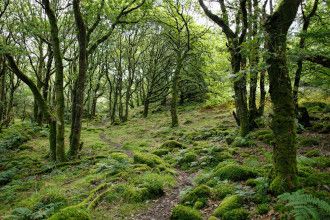[Source](https://unsplash.com/@blinky264)
- [](https://interfaithsustain.com/environmental-determinism/)
## [Environmental Determinism and Your Personal Values](https://interfaithsustain.com/environmental-determinism/)
- [](https://interfaithsustain.com/environmental-ethics/)
## [The Complexities and Balancing Act of Environmental Ethics](https://interfaithsustain.com/environmental-ethics/)
- [](https://interfaithsustain.com/enabling-children-to-experience-nature/)
## [Enabling Children to Experience Nature](https://interfaithsustain.com/enabling-children-to-experience-nature/)
#### Environmental Wellness from Being in Nature
An aspect of environmental wellness is to simply spend more time in **nature**. [Studies](https://www.nature.com/articles/s41598-019-44097-3) have supported the idea that spending at least 120 minutes a week in nature, even in a small park, has significant benefits in terms of [lowering stress](https://www.takingcharge.csh.umn.edu/how-does-nature-impact-our-wellbeing), improving mood and mental health, and feeling more connected to the world.
As a result, municipalities, universities, and corporations have all taken steps to encourage and incentivize their residents, students, or employees to embrace this benefit.
## Environmental Wellness Begins with Your Awareness
Benefitting from the therapeutic qualities of the environment starts with simply becoming aware of the actual environment around you, whatever your starting point. Your room or apartment, your office or desk, your yard, the street you live in or your work place.
### Environmental Wellness Outdoors
If you’re outdoors, how is the air quality? Many phone apps like Plume and AirVisual empower people to keep track of the air quality in their city, and to take appropriate precautions on days (which unfortunately happen fairly frequently all over the planet) when [air pollution](https://interfaithsustain.com/air-pollution-solutions/) is high enough to indicate the need to wear masks or stay in doors. [The National Institute of Health (NIH) maintains a page](https://www.nih.gov/health-information/environmental-wellness-toolkit) as a public resource with environmental wellness recommendations and updates.
Will you be near highways or going through tunnels? Do you live in a city which ‘traps’ air in its valley, like Los Angeles, Mexico City, Medellin, or Chongqing? How many people are near you? How many food markets, bakeries, coffee shops, and their associated smells? How far would you need to travel from where you work or live to get to a park big enough in order to be surrounded by nature with no other humans?
You should pay attention to all of these factors. Once you have become aware, you can make more conscious decisions about your environmental wellness.
#### Environmental Wellness Indoors
If you’re indoors, is there good air circulation? Are there windows letting in fresh air or sunlight? Are there plants or domestic animals giving life to your space? Are there any significant chemicals or gases in your indoor space, especially if it has industrial machinery or processes, or even household cleaning chemicals or older insulation or paint on the walls? Become aware of your indoor environments both at home and at work.
## What Can YOU Do to Increase YOUR Environmental Wellness?
Beyond the specific techniques mentioned above, there are more general principles one can follow or aspire to, in order to put yourself, your family, your community, your company, or your city on the path to environmental wellness. Many small changes in daily habits of your lifestyle can add up to large benefits in your well-being.
Can you cultivate plants in your home or workplace? Do you have a garden in your yard or a planter on the balcony? Does your neighborhood have parks, or a community garden that you can contribute to and spend time in? Are there local environmental organizations where you can volunteer? Frequently, small parks, trails, and other small-scale nature destinations are maintained and improved by volunteers.
[Source](https://unsplash.com/@wocintechchat)
### Environmental Wellness is Living in Harmony
As Rabbis Yonatan Neril and Leo Dee write in [Eco Bible](https://interfaithsustain.com/ecobible/), “The litany of ecological problems we face – from air and [water pollution](https://interfaithsustain.com/what-are-the-causes-of-water-pollution/) to species extinction and urban sprawl – testify to our disconnect from the natural environment which God gave us. Yet we can regain a sense of the grandeur of God’s world and of our responsibility to live in balance with it.”
### Making Changes to Improve YOUR Environmental Wellness
Respect for nature and all species is a core principle of an environmental wellness life. It encourages us to become more attuned to our environment both local and global, and to take active and even therapeutic steps to connect to that.
Whether you spend time in a national park, a retreat, a wellness spa, or in your local community garden, living in harmony with the earth has more benefits than you can imagine for your health and wellness.
*\* Featured image [source](https://unsplash.com/)*
*Learn more about [enviornmental ethics](https://interfaithsustain.com/environmental-ethics/ "enviornmental ethics") at this link*.
**Categories:** Biodiversity, Blog on Faith and Ecology
**Tags:** Environmental Wellness
---
### [Environmental Awareness Plus Global Action Could Lead To Change](https://interfaithsustain.com/environmental-awareness/)
**Published:** August 18, 2021
**Author:** ICSD
**Excerpt:** Sydney Cohen - It is important to be aware of how your actions affect the environment, but it isn't always easy. The good news is that there are some simple steps you can take to help protect the planet and make a difference.
**Content:**
Table of Contents
Table of Contents
- [Awareness of Environmental Issues](#aioseo-awareness-of-environmental-issues-2)
- [Awareness of Greenhouse Gas Emissions](#aioseo-awareness-of-greenhouse-gas-emissions-9)
- [United Nations Actions To Raise Environmental Awareness](#aioseo-united-nations-actions-to-raise-environmental-awareness-18)
- [Are you Aware of The Sustainable Development Goals for 2030?](#aioseo-are-you-aware-of-the-sustainable-development-goals-for-2030-20)
- [How Can You Raise Environmental Awareness?](#aioseo-how-can-you-raise-environmental-awareness-23)
- [Steps to Increase Environmental Awareness:](#aioseo-steps-to-increase-environmental-awareness-28)
- [Volunteer in an Organization that Increases Environmental Awareness](#aioseo-volunteer-in-an-organization-that-increases-environmental-awareness-32)
- [Advocate for Environmental Awareness](#aioseo-advocate-for-environmental-awareness-34)
- [Environmental Awareness in Education](#aioseo-environmental-awareness-in-education-37)
*By Sydney Cohen* – It is important to be aware of how your actions affect the environment, but it isn’t always easy. The good news is that there are some simple steps you can take to help protect the planet and make a difference. Environmental awareness stems from the political ideology of environmentalism. Having environmental awareness is to understand the importance of our world’s ecosystems, their fragility, and the necessity to protect them.
## Awareness of Environmental Issues
The environment is a very important issue that should not be taken lightly. We’re at risk of losing many different species of animals because of how quickly certain environmental issues are progressing.
One of the first environmental issue that affects our ecosystems’ health is oil drilling. Oil is a primary source of fuel for industrial activities. But leaks from oil fracking, and even the process of harvesting oil, detrimentally affect marine life and exhaust our natural resources.
Another environmental issue is deforestation. Humans cut down trees in the forest to use for various production and manufacturing activities and industrial purposes. Deforestation is incredibly harmful to the plant and animal life residing in forests, and, like oil fracking, depletes our global natural resources.
Furthermore, plastic production not only generates waste in its disposal process but humans frequently litter, poisoning our oceans, land, and waterways with plastic. Are people aware how long it takes plastic to degrade?
All of these processes also contribute to [climate change and global warming](https://interfaithsustain.com/global-warming-vs-climate-change/), which is not only dangerous to our global ecosystems but to human health as well. When oil and other fossil fuels such as carbon are burned for energy, they release greenhouse gases into the atmosphere, which trap the heat from the sun, causing our world to rise in temperature.
The issue of global warming is incredibly pressing, as its development is rapid in reducing our air quality, harming our environment, plants, and animals, and threatening human health.
- [](https://interfaithsustain.com/united-nations-framework-convention-on-climate-change/)
## [United Nations Framework Convention on Climate Change](https://interfaithsustain.com/united-nations-framework-convention-on-climate-change/)
- [](https://interfaithsustain.com/decarbonization/)
## [The Necessity of Decarbonization to Save our Planet](https://interfaithsustain.com/decarbonization/)
- [](https://interfaithsustain.com/noah-and-the-flood/)
## [Noah and the Flood Teach Contemporary Environmental Lessons](https://interfaithsustain.com/noah-and-the-flood/)
## Awareness of Greenhouse Gas Emissions
A [greenhouse gas](https://www.epa.gov/climate-indicators/greenhouse-gases), or GHG, is a gas in an atmosphere that absorbs and emits radiation within the thermal infrared range. This process is the fundamental cause of the **greenhouse effect**.
As previously stated, global warming affects the entire international community, and has been developing rapidly since the mid-20th century. Carbon dioxide is the primary gas released in burning fossil fuels and is responsible for contributing to the greenhouse effect.
Additionally, as mentioned, waste, oil, plastic production, and other related materials and forms of pollution also contribute to global warming and to ecological, and environmental issues, as they affect our environmental [ecological balance](https://interfaithsustain.com/ecological-balance/).
Most ecosystems are able to maintain or fix their balance, even during [environmental changes](https://interfaithsustain.com/environmental-degradation-and-the-future-of-our-planet-earth/), but it is vital that we work to protect them regardless, spreading environmental awareness of these issues.
[Source](https://pixabay.com/users/sasint-3639875/)
## United Nations Actions To Raise Environmental Awareness
Every day, the United Nations works with governments around the world to provide leadership on climate change and sustainable development. They also work to address poverty, hunger, disease, conflict, and other global issues that affect more than one-fifth of the world’s population.
### Are you Aware of The Sustainable Development Goals for 2030?
In an effort to address some of the world’s most pressing environmental concerns, the United Nations has been taking a number of actions. They have set up goals for **sustainable development** and are working to reduce pollution around the globe. 2030 is only six years away, so what are you doing to help achieve these goals?
The UN is also working on global initiatives that support [renewable energy](https://interfaithsustain.com/renewable-and-non-renewable-resources/) and protect marine life from unsustainable fishing practices. These efforts demonstrate their commitment to protecting our planet for future generations.
## How Can You Raise Environmental Awareness?
In a world where we are constantly surrounded by all things that lead to environmental degradation, how can you increase awareness about the environment and our pressing **environmental issues**? It starts with education. By taking the time to read this blog post, you are taking the first step of action toward increasing environmental awareness!
Continue reading to gain insights into how you can educate people and inspire them to make changes in their life for the betterment of the planet as a whole.
### Steps to Increase Environmental Awareness:
It is important that we work to include sustainable, environmentally friendly forms of green power and energy in our new buildings. There are many cities that have green building requirements, such as [San Francisco](https://sfenvironment.org/green-building-ordinance-sf-building-code), for example.
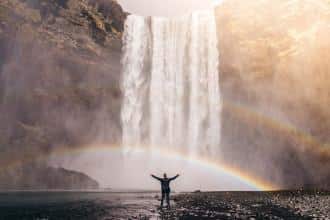[Source](https://pixabay.com/photos/)
### Volunteer in an Organization that Increases Environmental Awareness
A little bit of googling research will help you find a local non profit organization working endlessly to raise environmental awareness through all types of activities. **Volunteer** to help them achieve their goals and help yourself knowing you are taking action. Organizations do vital work with local governments and communities, to find [sustainable strategies](https://interfaithsustain.com/environmental-sustainability/) that will provide conservation and protection for our urban ecosystems. This could include increasing community gardens, reducing environmentally harmful industrial production processes such as the production of plastic, or even just advocating for public park clean-ups.
### Advocate for Environmental Awareness
One of the steps you can take is to attend a rally or a march. Think of social movements like the 2017 People’s Climate March in Washington, D.C., and in 2019 when millions of young people and old people gathered in their own countries before the UN Climate Action Summit. It might even be possible to start a local movement of your own!
Another way to increase environmental awareness is to **use social media**. There has been a rise in young people on social media who spread activism and awareness across their platforms. This is a simple way to increase environmental awareness, without even leaving your home!
#### Environmental Awareness in Education
Another crucial way to increase interest in environmental awareness is to promote teaching children in school. It is necessary that we update our school curriculums to include recent research, educate on natural resources, conservation, waste reduction, world movements, and promote innovative ideas. Young people have the chance to make significant positive impacts on our environment! **Environmental education** must also be added into informal youth activities such as debate, science and creative competitions and of course also within youth groups.
Our religious communities also offer a **unique opportunity** for educating towards environmental awareness. Noel Basil Effiong conducted a study entitled [Religious education for environmental awareness](https://research.library.fordham.edu/dissertations/AAI3446880/), and makes the powerful argument that “theological and religious educational insights can offer a prophetic call for sustainable development as a way of addressing the environmental crisis.” Religions can **cultivate environmental awareness** at the same time as cultivating divine consciousness. In fact, cultivating environmental awareness through religious education may be the best strategy we have for saving our planet.
*\* Featured image [source](https://pixabay.com/users/imordaf-117056/)*
**Categories:** Biodiversity, Blog on Faith and Ecology
**Tags:** Environment, Environmentalism
---
### [The Complexities and Balancing Act of Environmental Ethics](https://interfaithsustain.com/environmental-ethics/)
**Published:** June 22, 2021
**Author:** ICSD
**Excerpt:** Matthew Mausner - What does it mean to act ethically with respect to the environment? What does it mean to have environmental ethics? These are questions that include many sides and angles of understanding the complex and intertwined set of relationships human society has to ecosystems and the planet as a whole. It raises issues of how to treat animals, plants, and other humans ethically, in a context in which human civilization has major global effects.
**Content:**
Table of Contents
Table of Contents
- [What are Environmental Ethics?](#aioseo-what-are-environmental-ethics-5)
- [Philosophical Aspects of Environmental Ethics](#aioseo-philosophical-aspects-of-environmental-ethics-7)
- [Ethics in Environmental Management](#aioseo-ethics-in-environmental-management-11)
- [Religious Ethics about The Environment](#aioseo-religious-ethics-about-the-environment-17)
- [Scientific Ethics](#aioseo-scientific-ethics-22)
- [Evaluating Tradeoffs Ethically](#aioseo-evaluating-tradeoffs-ethically-28)
- [Environmental Ethics in Wealthy Countries](#aioseo-environmental-ethics-in-wealthy-countries-30)
- [Environmental Ethics in Developing Countries](#aioseo-environmental-ethics-in-developing-countries-33)
- [The Ethics of Power Production](#aioseo-the-ethics-of-power-production-41)
*By Matthew Mausner* –What does it mean to act ethically with respect to the environment? What does it mean to have environmental **ethics**? These are questions that include many sides and angles of understanding the complex and intertwined set of relationships human society has to ecosystems and the planet as a whole.
It raises issues of how to treat animals, plants, and other humans ethically, in a context in which human civilization has major global effects.
## What are Environmental Ethics?
There is a broad set of ideas that interact when we explore this concept. To be ethical in complex situations implies including **moral** considerations at many levels, some of which may contradict each other. Environmental ethics gives us a rubric to think morally about the implications of our policies, decisions, actions, and even inaction in our impacts on the environment.
### Philosophical Aspects of Environmental Ethics
When we talk about the [moral relationship](https://plato.stanford.edu/entries/ethics-environmental/) of human beings to the environment, there are many factors. There are values that cannot be quantified but are not necessarily consonant with each other. Human populations, above all, seek to keep themselves alive, with concomitant impacts on the environment around them. That consideration often outweighs any given concern about the larger environment or other species, especially in [times of stress](https://www.scu.edu/environmental-ethics/short-course-in-environmental-ethics/lesson-three/), drought, or war.
[Source](https://pixabay.com/users/pcdazero-2615/)
### Ethics in Environmental Management
Even hunter-gatherer groups act on this survival value, and modify the environment significantly. Sometimes this takes the form of intentional burning to encourage grassland regrowth and higher game populations and sometimes it is intentional reseeding of preferred trees or plants short of agriculture.
Even if an ethos is embedded in their animist worldviews, there are always trade-offs, and other species that might suffer or lose their habitat. Hunter-gatherers tend to accumulate encyclopedic knowledge about their environment, and have highly sophisticated ways of maintaining their [prosperity](https://www.uvm.edu/~jdericks/EE/Sahlins-Original_Affluent_Society.pdf) thereof. However, even such impressive ecological management techniques involve **value** decisions about which species are favored and which are discouraged.
Human agricultural civilization inevitably generates larger scale environmental problems. Animal **welfare** fundamentally alters when some animals are domesticated, which also involves an ethical shift in breeding, controlling, and slaughtering captive life.
Agriculture is thus implicitly a moral decision, whereby humans decide what lives and what dies on a given territory. Ethics of ownership of land and animals (and even other humans) often arise with civilization.
Yet unfortunately, such ethical or moral considerations have not often been held as core principles by most of the world’s conquering empires. Philosophers have long noted this **anthropocentrism** as a significant feature of civilization.
- [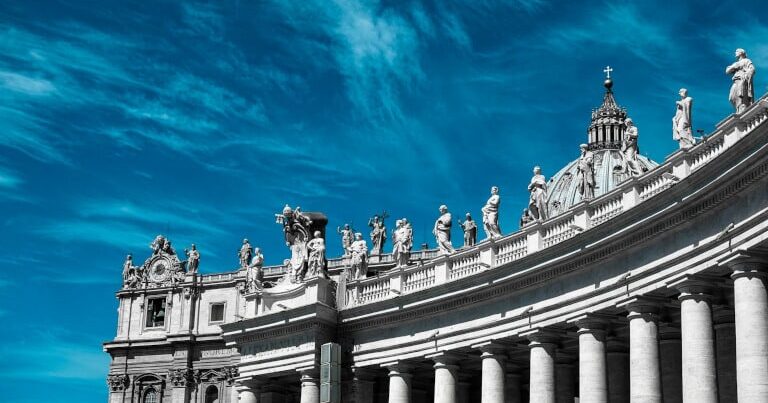](https://interfaithsustain.com/cardinal-jaime-spengler-highlights-faith-based-action-ecology-creation-care/)
## [New Video Series Featuring Cardinal Jaime Spengler Highlights Faith-Based Action on Ecology and Creation Care](https://interfaithsustain.com/cardinal-jaime-spengler-highlights-faith-based-action-ecology-creation-care/)
- [](https://interfaithsustain.com/interfaith-ecology-summit-jerusalem/)
## [Christian, Jewish, and Muslim Figures Unite at Interfaith Ecology Summit in Jerusalem](https://interfaithsustain.com/interfaith-ecology-summit-jerusalem/)
- [](https://interfaithsustain.com/message-from-the-titan-the-titanic-mindset-could-sink-humanity/)
## [Message from the Titan: The Titanic Mindset Could Sink Humanity](https://interfaithsustain.com/message-from-the-titan-the-titanic-mindset-could-sink-humanity/)
## Religious Ethics about The Environment
Philosophies that aspire to integrate an understanding of the whole of human life on earth have each sought, in different ways, to inculcate values of sustainable human existence that have respect for the continuing web of life.
Religions from time immemorial have embedded ethics with a component of ecological awareness. For example, the ‘ahimsa’ respect for all life forms is common to many Indian traditions like Jainism and Buddhism. The ‘Shmita’ or sabbatical year concept in Judaism calls for letting the land lie fallow from continuous cultivation and replenish its nutrients every seventh year.
This is described in greater detail in [Eco Bible: Volume One: An Ecological Commentary on Genesis and Exodus](https://interfaithsustain.com/ecobible/). In our times, religious groups are making a concerted effort to apply religious environmental ethics to manifest a **sustainable** humanity.
As [FaithInvest describes](https://www.faithinvest.org/faith-plans), “The world’s major faiths are taking a lead by developing [Faith Plans](https://1a956828-fe29-43d1-a8f0-31f34ea86a62.filesusr.com/ugd/72b7c5_43f51796f97242a8badd11bc5b31c68a.pdf) – long-term commitments looking at how they will manage their assets, investments, influence and resources to drive action on climate change, [biodiversity](https://interfaithsustain.com/why-is-biodiversity-important/) and sustainable development over the next seven to ten years. This is already the biggest environmental initiative ever launched by the faiths. Dozens of faith groups have signed up to develop a Plan. The Plan will be launched ahead of the UN’s COP 26 Climate Conference to be held in Glasgow, UK” in November, 2021.
### Scientific Ethics
Recent science has been increasingly arriving at and encouraging similar ethical values, even if not articulated as such. For example, scientists studying climate change [advise](https://www.nature.com/scitable/knowledge/environmental-ethics-96467512/) limiting and **balancing** the massive impacts of our current industrial global consumerist civilization with ethics that ask us to allow the natural world an opportunity to continue to survive alongside us.
Evolutionary biologists, oceanographers, soil scientists, and many other specialties give us ever more insight into the scope of human impacts on the environment, and on the vulnerability of species to the human onslaught.
But science does not usually articulate values to make decisions, only facts. For values and moral decisions, we need ecologists, philosophers… and formalized environmental ethics.
## Evaluating Tradeoffs Ethically
Every decision we make collectively with respect to the global environment has tradeoffs. Depending on our level of analysis and the moral and ethical values we seek to balance, there are always various considerations to a given practice, even while it might appear on the surface as an intrinsic value.
### Environmental Ethics in Wealthy Countries
When we look at today’s civilization as a whole, it might appear on the surface that advanced industrial nations are responsible for most pollution and use of resources that threaten the global environment.
However, the economic growth and high standards of living and education of wealthy countries are positively correlated with environmental awareness, consciousness, and desire for policymaking to reflect environmental ethics as a value.
### Environmental Ethics in Developing Countries
By contrast, poor countries often have a far smaller pollution and carbon footprint per person. However, their runaway population growth and subsistence living situations mean that they have much bigger impacts in other ways. For example, they are more likely to use inefficient wood and charcoal and coal for fuel, causing deforestation and degradation.
Also, burgeoning populations pose a significant long-term burden to the sustaining capacity of the environment, by contrast to the steady or declining populations of many wealthier countries.
By some measures, the best and most cost-effective way to reduce impacts and increase sustainability in the longer term is to rapidly raise the standards of living of developing nations, as higher prosperity and education both raise standards of living, lower birth rates, and increase environmental consciousness as the population can focus on things other than survival.
[Source](https://pixabay.com/photos/?utm_source=link-attribution&utm_medium=referral&utm_campaign=image&utm_content=438393)
#### The Ethics of Power Production
Another place where we see these sort of moral balancing acts is in power generation. Even the ‘cleanest’ types of energy have potential downsides to the environment. Solar energy requires industrial manufacturing of panels and cells, using relatively rare chemicals and minerals that must be mined, sometimes leaving scars on the landscape.
Wind energy can impact birds and insects. By some measures nuclear energy may be the most efficient and least impactful, but that assumes future generations will continue to maintain it responsibly and ensure a minimum of nuclear waste. Yet for right now, fossil fuels like oil produce by far the most efficient energy for effort, and its byproducts are reused in a wide range of industrial and consumer ways.
Every energy decision contains possible tradeoffs in pollution, efficiency, long and short term considerations, and arguments about how society itself should be shaped. A perspective that values direct protection of the environment today, and also sees the significance of human prosperity to the longer term interdependence of humans and the environment, is impossible without environmental ethics and philosophy.
Our political leaders and **ethicists** rarely have all of the scientific and spiritual and practical expertise necessary to see the whole picture. Society as a whole, with help from many different angles, is responsible for our sustainability as a species on this planet.
[Source](https://pixabay.com/users/stevepb-282134/)
*\* Featured image [source](https://pixabay.com/users/tumisu-148124/)*
**Categories:** Biodiversity, Blog on Faith and Ecology
**Tags:** Environmental Ethics
---
### [Ecological Balance And Living In Harmony With The Planet](https://interfaithsustain.com/ecological-balance/)
**Published:** August 11, 2021
**Author:** ICSD
**Excerpt:** Sydney Cohen - What makes something "balanced"? The term is thrown around a lot in discussions about the environment, but what does it really mean?
**Content:**
Table of Contents
Table of Contents
- [The Ecological Balance of Nature](#aioseo-the-ecological-balance-of-nature-3)
- [One Species Can Affect The Ecological Balance](#aioseo-one-species-can-affect-the-ecological-balance-6)
- [Examples of Ecological Balance](#aioseo-examples-of-ecological-balance-9)
- [Climate Change and Ecological Balance](#aioseo-climate-change-and-ecological-balance-17)
- [How Can We Work to Maintain Ecological Balance?](#aioseo-how-can-we-work-to-maintain-ecological-balance-20)
- [The Ecological Balance Within Ecosystems](#aioseo-the-ecological-balance-within-ecosystems-24)
- [The Need To Control the Population to Achieve Ecological Balance](#aioseo-the-need-to-control-the-population-to-achieve-ecological-balance-29)
- [Ecological Balance from Biblical Sources](#aioseo-ecological-balance-from-biblical-sources-31)
- [Taking Action To Achieve Ecological Balance](#aioseo-taking-action-to-achieve-ecological-balance-38)
*By Sydney Cohen* – What makes something “balanced”? The term is thrown around a lot in discussions about the [environment](https://interfaithsustain.com/ecology-and-environment/), but what does it really mean? Ecological balance is achieved when there are no negative effects on the planet. This means that every organism has to have enough resources available for survival and reproduction.
The goal of an ecological balance is to maintain as many species as possible while preventing any from going extinct. Humans need to take care of the natural world they live in by recycling more, using less water and electricity, and reducing pollution which harms wildlife habitats.
## The Ecological Balance of Nature
The balance of nature proposes that [ecological systems](https://interfaithsustain.com/ecological-system/) are usually in a stable equilibrium. The theory says that a small change (the size of a particular population) will be corrected by negative feedback. The theory has been used to describe the relationship between ecosystems, the atmosphere, and the world’s weather. It is often depicted as easily disturbed and delicate, while other times portrayed as powerful enough to correct imbalances by itself. The concept is described as “normative”, as well as teleological. However, it has been largely discredited by scientists working in ecology, as it has found that constant disturbances leading to chaotic and dynamic changes are the norm in nature.
Ecological balance involves the relations and interdependencies between living things and their (nonliving) environments. This includes relations between living organisms and non-living environments.
### One Species Can Affect The Ecological Balance
All species in an ecosystem each play an important role in keeping the ecosystem running smoothly. You can think of ecosystems like a house of cards, with each card representing a different species. Even if an ecosystem is balanced, that doesn’t mean that no changes ever occur.
The good news is that an ecosystem will typically recover back to a balanced state after a disturbance occurs, but there will always be a disturbance to the ecosystem, like a windstorm or a predator being hunted, a drought reducing the availability of food resources. A disturbance can cause a chain reaction in the entire ecosystem, not just individuals, like removing one species.
- [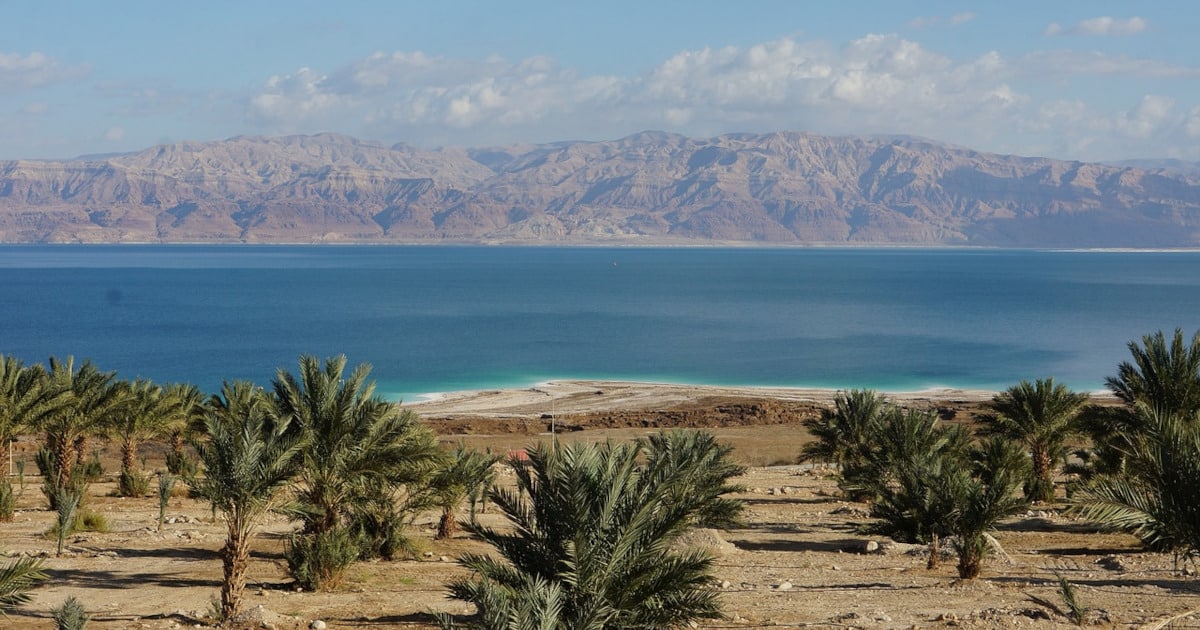](https://interfaithsustain.com/ecological-engineering/)
## [Is Ecological Engineering the Solution to the Global Ecological Crisis?](https://interfaithsustain.com/ecological-engineering/)
- [](https://interfaithsustain.com/political-ecology/)
## [What is The Concept of Political Ecology?](https://interfaithsustain.com/political-ecology/)
- [](https://interfaithsustain.com/ecology-and-environment/)
## [Understanding Ecology and The Environment](https://interfaithsustain.com/ecology-and-environment/)
#### Examples of Ecological Balance
The balance of nature is a beautiful thing. It can be found all around us, and if we look closely enough, we will find that it exists in the most unlikely places. There are many examples of ecological balance in the world. We need to have a variety of different types of ecosystems near each other so as not to disrupt any one ecosystem. Another aspect of ecological balance is the concept that everything needs to be balanced within each ecosystem, such as predator and prey or herbivores and carnivores.
An example of ecological balance takes place in Yellowstone National Park, in Wyoming. In [Yellowstone National Park](https://earthjustice.org/features/infographic-wolves-keep-yellowstone-in-the-balance), the gray wolf was an important thread keeping the ecosystem balanced. In the 1920s, the government allowed the extermination of the grey wolf. This resulted in the rapid growth of elk populations, and without their primary predator, there was severe overgrazing on aspen and willow trees, that we needed by other animals to thrive. This caused a chain reaction in other animals, as new predators emerged, and various species suffered from the overpopulation of the elk. When the grey wolf population diminished, the local ecosystem began to unravel, becoming unbalanced.
[Source](https://pixabay.com/users/sansiona-1172026/)
In 1995, ecologists and conservationists recognized the harmful effects of removing the grey wolf from the ecosystem and began to reintroduce the species to [restore ecological balance](https://interfaithsustain.com/ecological-restoration/ "restore ecological balance"). Now, the biodiversity of Yellowstone National Park is enriched by this balanced ecosystem where all plants and animals are able to thrive.
## Climate Change and Ecological Balance
Climate change has a drastic, detrimental effect on the maintenance and stability of ecological balance. In fact, a [NASA](https://climate.nasa.gov/news/645/climate-change-may-bring-big-ecosystem-changes/#:~:text=In%20addition%20to%20altering%20plant,carbon%20and%20other%20element%20cycles.) scientific study on climate change from 2011, predicted that vegetation, organisms, plants, and animals are subject to increased competition for survival with the succession of climate change, from human-produced greenhouse gases as a result of [industrial pollution](https://interfaithsustain.com/industrial-pollution/).
The data from the study depicts that “most of Earth’s land that is not covered by ice or desert is projected to undergo at least a 30 percent change in plant cover — changes that will require humans and animals to adapt and often relocate.” Because of this disruption in the stability of various ecosystems around the world, not only does the health of ecosystems suffer, but also the diversity.
## How Can We Work to Maintain Ecological Balance?
Many people are unaware of the significance that ecological balance plays in our lives. We live in a society that is completely dependent on natural resources for survival, yet we do not always protect them. There are many things that contribute to an imbalance, and we want to talk about some of them in this article. So, how can we work to maintain ecological balance? There are some ways you can help make the world a more ecologically balanced place!
[Source](https://pixabay.com/users/alainaudet-631535/)
### The Ecological Balance Within Ecosystems
[Sewage and agricultural runoff](https://interfaithsustain.com/what-are-the-causes-of-water-pollution/) can lead to algae growth in lakes and streams. The growth of algae blocks sunlight, depletes the oxygen in the water, and kills animals that eat on it. Taking steps to reduce pollution from nonpoint sources such as streets and farms will help to maintain the balance of ecosystems, according to the National Institute of Science and Policy (NSPI) and the World Institute for Environmental Studies. Additionally, the conservation of the clean water that we do have is important in order to not exacerbate this resource that is required for life.
Overfishing and [habitat destruction](https://interfaithsustain.com/why-are-coral-reefs-important/) create a loss of biodiversity. Minerals, fossil fuels, and other natural resources disappear at an alarming rate. The overuse or destruction of these habitats threatens species with extinction. Efforts to use natural resources in a sustainable manner will help to protect and maintain ecological balance, writes John Defterios, marine ecologist and author.
### The Need To Control the [Population](https://interfaithsustain.com/population-ecology/) to Achieve Ecological Balance
Between 1927 and 1987, the Earth’s population increased to 5 billion. By 1999, the total population reached 6 billion, and estimated that nearly 9 billion people will be living on the Earth in 2050. Just as too many fish in fouls your aquarium, too many humans on the planet can upset the ecological balance. Controlling the birth rate through contraception and family planning will reduce the strain on the ecosystem by reducing the rate at which people consume natural resources, such as food and water. In nature, predators prevent species from over-populating; humans don’t have any natural predators to control the population. This problem is important despite emotional, cultural, or religious sensitivity to the issue.
## Ecological Balance from Biblical Sources
> **Ecological balance** and the importance of maintaining biodiversity is described in greater detail in [Eco Bible: Volume One: An Ecological Commentary on Genesis and Exodus](https://interfaithsustain.com/ecobible/): Genesis 11:6 – “And the Lord said, ‘If, as one people with one language for all, this is how they have begun to act, then nothing that they may propose to do will be out of their reach.’”
>
> Rabbi Yonatan Neril explains the necessity of “diversity for sustainability, both in the animal kingdom and in the human world.” He further describes, referencing Jared Diamond, that even destroying single organisms or species has the same effect on our ecosystems as removing little screws that hold an airplane together.
This highlights the importance of maintaining ecological balance. In preserving all species, we allow our world’s ecosystems to thrive. However, small acts that harm any aspect of an ecosystem can result in a chain reaction, which can “diminish the holiness of creation.” Therefore, we must work quickly against climate change, taking action to reverse its effects on our world and sustain the wonderful [biodiversity](https://interfaithsustain.com/why-is-biodiversity-important/) that allows our ecosystems to flourish.
## Taking Action To Achieve Ecological Balance
Maintaining ecological balance is necessary to the vitality of the world. A single, minuscule disruption to an ecosystem can result in drastic changes, damaging the harmony of the ecosystem. As listed in this blog post, we must take action to work to maintain ecological balance around the world, especially in the wake of global warming.
The ecological balance is a delicate thing, and the Earth’s ecosystems are fragile. We must work together to maintain an equilibrium that keeps our planet healthy – for ourselves, but also for generations of people yet to come.
Will you commit to taking action in all capacities? Share this blog post so that more people will join us on this journey! Together we will make a difference, one step at a time.
*\* Featured image [source](https://pixabay.com/users/gustavovillegas-3062532/)*
**Categories:** Biodiversity, Blog on Faith and Ecology
**Tags:** Ecological Balance, Pollution
---
### [Understanding The Different Types of Ecological Pyramids](https://interfaithsustain.com/ecological-pyramid/)
**Published:** September 3, 2021
**Author:** ICSD
**Excerpt:** Sydney Cohen - The ecological pyramid is a graphical representation of living organisms in an ecosystem's food chain, providing a way to look at the relationship between different levels of organisms in an ecosystem.
**Content:**
Table of Contents
Table of Contents
- [The Importance of The Ecological Pyramid Modal](#aioseo-the-importance-of-the-ecological-pyramid-modal-2)
- [Different Forms of The Ecological Model](#aioseo-different-forms-of-the-ecological-model-4)
- [A Variety of Ecological Pyramids](#aioseo-a-variety-of-ecological-pyramids-6)
- [The Trophic Ecological Pyramid](#aioseo-the-trophic-ecological-pyramid-12)
- [The Ecological Pyramid of Biomass](#aioseo-the-ecological-pyramid-of-biomass-17)
- [The Ecological Pyramid of Energy](#aioseo-the-ecological-pyramid-of-energy-23)
- [The Function of Ecological Pyramids](#aioseo-the-function-of-ecological-pyramids-28)
- [The Ecological Pyramid Reflects Environmental Conditions](#aioseo-the-ecological-pyramid-reflects-environmental-conditions-30)
*By Sydney Cohen* – **The ecological pyramid** is a graphical representation of living organisms in an ecosystem’s food chain, providing a way to look at the relationship between different levels of organisms in an ecosystem. As far back as [the ancient Egyptians](https://en.wikipedia.org/wiki/Egyptian_pyramids), humanity has utilized pyramids. Today as well, pyramids are a useful tool for communicating and understanding hierarchical data.
## The Importance of The Ecological Pyramid Modal
It shows how the number and variety of life change as it moves up through different layers, with plants and animals on the bottom level, followed by predators, herbivores, omnivores, and finally at the top, the predators.
### Different Forms of The Ecological Model
This model comes in many forms, such as an upright pyramid, an inverted pyramid, and even a pyramid of numbers that displays the amount of energy or flow of energy through the pyramid. This structure has been used for many years to help us understand how ecosystems work.
## A Variety of Ecological Pyramids
**Biodiversity** is the number of individuals of different species that exist in a particular ecosystem. An ecosystem is defined by a community combining both living and not living entities and interacting with each other. The different levels of [biodiversity](https://interfaithsustain.com/why-is-biodiversity-important/) in the ecological pyramid are called trophic.
Organisms that use sunlight to make their own meals are called primary producers. The next trophic level contains the consumers that consume the primary producers – they are sorted into primary and secondary categories. Primary producers feed primary consumers and secondary consumers, while secondary consumers feed third-level or tertiary consumers.
[Source](https://clipart-library.com/clipart/n1628610.htm)
At the top of the pyramid are the apex predators, such as lions in a jungle ecosystem, where they are the highest up on the food chain.
### The Trophic Ecological Pyramid
There are different types of ecological pyramids. The trophic pyramid is composed of various levels the lowest one being the autotrophic level, or species that do not rely on a source of energy other than sunlight. These species are most important in the ecosystem and are at the base of the pyramid. All other organisms in the ecosystem are consumers called heterotrophs.
In this context, plants rely on a fraction of the enormous amount of [solar energy](https://interfaithsustain.com/advantages-of-solar-energy/) their resources produce to generate food. Herbs and detritivores (primary consumers) take less available energy because they have limited biomass. This implies that carnivorous animals feed on herbivores.
- [](https://interfaithsustain.com/ecological-model/)
## [The Ecological Model Is Used To Improve Health Programs](https://interfaithsustain.com/ecological-model/)
- [](https://interfaithsustain.com/ecological-balance/)
## [Ecological Balance And Living In Harmony With The Planet](https://interfaithsustain.com/ecological-balance/)
- [](https://interfaithsustain.com/ecological-engineering/)
## [Is Ecological Engineering the Solution to the Global Ecological Crisis?](https://interfaithsustain.com/ecological-engineering/)
#### The Ecological Pyramid of Biomass
Another pyramid is the pyramid of biomass, which, at different trophic levels, contains the number of organisms, organic matter, and biomass per individual area.
The pyramid of **biomass** is generally achieved by collecting each living organism separately at the trophic level and measuring its dry mass. Then, the pyramid is drawn between the producer at the base and the top carnivore at the tip.
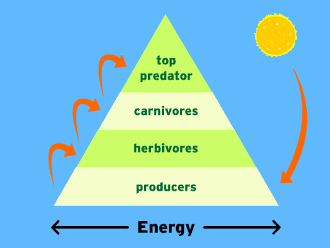[Source](https://clipart-library.com/clipart/n1628606.htm)
It is drawn so that producers and carnivores are found at the bottom of the pyramid and the top prey on each pyramid. ‘Biomass pyramids’ are commonly known as pyramids showing the number of living species.
#### The Ecological Pyramid of Energy
The pyramid of energy demonstrates the energy from the sun that an ecological pyramid of species requires. Energy from the sun is the primary source of electricity, as plants and animals at the bottom of the ecological pyramid food chain use the most.
The energy pyramid always holds the sun and decomposed nutrients such as bacteria and fungi.
## The Function of Ecological Pyramids
The ecological pyramid tells us about the feeding of different organisms in various environments. It can also help to understand the efficiency of energy transfers. A further example is the impact of trophic level change on the levels above and below.
### The Ecological Pyramid Reflects Environmental Conditions
In addition to collected data over the years, studies on organisms can be undertaken for changes in the environment through the comparison of this data. When conditions of ecosystems in an environment are found to be deteriorating due to pollution or human overhunting then action can be taken to prevent further damage and possibly reverse some of the present damage.
Understanding the different layers of an ecological pyramid is important for understanding how our world works. The energy and food chains are essential to understand because they can tell us about a species’ habitat, niche, or ecosystem.
*\* Featured image [source](https://clipart-library.com/clipart/n1628583.htm)*
*Follow this link to learn more about [Ecological Balance](https://interfaithsustain.com/ecological-balance/ "Ecological Balance")*
**Categories:** Biodiversity, Blog on Faith and Ecology
**Tags:** Ecological Pyramid
---
### [The Ecological Model Is Used To Improve Health Programs](https://interfaithsustain.com/ecological-model/)
**Published:** October 13, 2021
**Author:** ICSD
**Excerpt:** Ilana Stein - For many of us, the word "ecology" brings to mind images of nature, of food webs and pyramids, of how every living thing is interconnected with another. But, the idea of an ecological model has little to do with nature and much to do with health, human behavior and health education.
**Content:**
Table of Contents
Table of Contents
- [The Purpose of an Ecological Model](#aioseo-the-purpose-of-an-ecological-model-3)
- [The Levels of Influence in The Ecological Model](#aioseo-the-levels-of-influence-in-the-ecological-model-8)
- [How to Build an Ecological Model](#aioseo-how-to-build-an-ecological-model-13)
- [Inward and Outward Interactions of The Ecological Model](#aioseo-inward-and-outward-interactions-of-the-ecological-model-18)
- [Results of the Ecological Model](#aioseo-results-of-the-ecological-model-23)
- [Emphasizing the "Ecological" in the Model](#aioseo-emphasizing-the-ecological-in-the-model-28)
- [Religion and the Ecological Model](#aioseo-religion-and-the-ecological-model-31)
- [What is an ecological model in health promotion?](#aioseo-what-is-an-ecological-model-in-health-promotion-35)
- [What is the main purpose of using an ecological model in health education?](#aioseo-what-is-the-main-purpose-of-using-an-ecological-model-in-health-education-37)
- [What are the levels of influence in the ecological model?](#aioseo-what-are-the-levels-of-influence-in-the-ecological-model-39)
- [How can one build an ecological model for a health issue?](#aioseo-how-can-one-build-an-ecological-model-for-a-health-issue-41)
- [What are the potential outcomes of implementing an ecological model successfully?](#aioseo-what-are-the-potential-outcomes-of-implementing-an-ecological-model-successfully-43)
*By Ilana Stein* – For many of us, the word “ecology” brings to mind images of nature, of [food webs and pyramids](https://interfaithsustain.com/ecological-pyramid/), of how every living thing is interconnected with another. But, the idea of an ecological model has little to do with nature and much to do with health, human behavior and health education. It is the way that ecology works – [its interconnectedness](https://interfaithsustain.com/social-ecology/) – that is being used.
An **ecological model** is a strategy used by health promotion programs, which looks at the interaction between factors and elements of a particular health issue. In ecological models – also called **social ecological models** – the idea is that there are multiple levels of influence affecting health behaviors.
## The Purpose of an Ecological Model
The point of ecological models is to help improve health behaviors and health education through the use of what is known as the “ecological perspective”. This model explains that there is more to **health promotion** than eating right or basic health practice.
Social ecological models take into account the health behavior across society or a community – the societal factors – from an organizational, physical and social point of view. Through using this ecological framework, health promotion and health education, as well as public policy, can be developed.
### The Levels of Influence in The Ecological Model
The ecological framework works with what is known as “multiple levels of influence.” These are factors that are defined as follows: individual, interpersonal, organizational, community, and public policy.
[Source](https://unsplash.com/@fishmac/)
Each or any of these different levels of influence, or the interaction between them, will have an impact on health behavior. Studying the interaction between and interplay of factors helps create the social ecological model.
- [](https://interfaithsustain.com/ecological-pyramid/)
## [Understanding The Different Types of Ecological Pyramids](https://interfaithsustain.com/ecological-pyramid/)
- [](https://interfaithsustain.com/ecological-balance/)
## [Ecological Balance And Living In Harmony With The Planet](https://interfaithsustain.com/ecological-balance/)
- [](https://interfaithsustain.com/ecological-engineering/)
## [Is Ecological Engineering the Solution to the Global Ecological Crisis?](https://interfaithsustain.com/ecological-engineering/)
## How to Build an Ecological Model
Let’s say we’re looking at a health issue in public health. Perhaps it is the need to promote healthy eating to prevent diseases. It is not enough to discuss the health problem on its own. We need to look at it from different perspectives and using the interaction of different factors. So we would need to research the issue at hand.
Once done, we must take the attitudes or beliefs of the individual into account, as well as the social and cultural norms of the society in which he or she lives. We would need to look at the influence of his/her social networks and family, aligning this to the interpersonal factor, and the health organizations that provide health education – as well as the availability of any public health organization within the person’s immediate environment.
### Inward and Outward Interactions of The Ecological Model
[Source](https://unsplash.com/)
After all, people interact with their physical environment as well as their [social environment](https://interfaithsustain.com/social-ecology/). This interaction works both ways – we all behave in a way that affects those around us and we are in turn affected by the environment around us. This idea of behavior that influences and is in turn impacted by multiple levels of influence is an important element of the ecological perspective; these points can promote healthy behavior and health education.
Once we have the range of factors and how they work with each other, these are now analyzed, which allows for better understanding of the influences of health behavior. Other models can be brought in as well, so that eventually, there is a design of a public policy program aimed at disease prevention or encouraging health behavior that is all-encompassing. The [ecological nature](https://interfaithsustain.com/ecological-balance/) of such a model usually results in a much more effective program with a higher success rate of being implemented.
## Results of the Ecological Model
The results of a successfully implemented ecological model can be more than just good strategies for health organizations. They can lead to positive changes in health behavior of individuals and communities. What strategies does the ecological model use? There are a number of ways to change behavior successfully. These include: [Behavior change communication, social change communication, social mobilization, and advocacy](https://courses.lumenlearning.com/suny-buffalo-environmentalhealth/chapter/core-principles-of-the-ecological-model/).
Communication is one of the most important methods, from that of communicating with individuals, to communicating within social groups. One way of communicating is to spread knowledge or making people aware of issues. Social change communication makes use of social media or other societal resources or influences, such as community organizations – these can help to change attitudes or beliefs.
Social mobilization is when the community comes on board and begins to become the change it wishes to see. Here, the community is in charge and creates the change itself.
Finally, advocacy empowers the individual (sometimes via the community) to take up the cause by demanding policy changes at the leadership level.
## Emphasizing the “Ecological” in the Model
While this model has been developed and used successfully in the health sphere, for example in disease control and prevention, the same idea can apply to the environmental sphere. In trying to get people to change their behavior to help the natural environment, we can use the same methods – researching the various factors involved in people’s behaviors.
Once the factors have been identified on the five levels of individual, interpersonal, organizational, community and public policy, strategies can be implemented in which we can communicate ways to change behavior that can make our planet a healthier one for all who live on it.
### Religion and the Ecological Model
Religious organizations offer a powerful venue from which to influence society, especially when utilizing the social ecological model. In [a study](https://pubmed.ncbi.nlm.nih.gov/17155879/) on using churches for promoting health, researchers found the following: “From a socioecological perspective, churches and other religious organizations can influence members’ behaviors at multiple levels of change.” Utilizing religious organizations to address the biggest issues facing society like climate change is a crucial part of our work at the Interfaith Center for Sustainable Development (ICSD).
However, the study cited above comes with a caveat: “A collaborative partnership approach utilizing principles of community-based participatory research, and involving churches in program design and delivery, is essential for recruitment, participation, and sustainability.” The ecological model works wonderfully in tandem with religious organizations, but it must be implemented in a spirit of “collaborative partnership.” We can save the planet using religion and the ecological model, but only if we work together as equals.
*\* Featured image [source](https://unsplash.com/)*
**Categories:** Biodiversity, Blog on Faith and Ecology
**Tags:** Ecological Model, Ecology
---
### [Understanding the Importance of the Ecological System Theory](https://interfaithsustain.com/ecological-system/)
**Published:** September 15, 2021
**Author:** ICSD
**Excerpt:** Sydney Cohen - Social environmental science is studying how we interact with the environment around us and how a person responds to his or her environment. Social ecologists look at an overall picture of our societal systems and look at how individual collectives and institutions interact with one another.
**Content:**
Table of Contents
Table of Contents
- [Bronfenbrenner's Ecological System](#aioseo-bronfenbrenners-ecological-system-2)
- [The Ecological Systems Theory Model](#aioseo-the-ecological-systems-theory-model-12)
- [The Microsystem of The Ecological System](#aioseo-the-microsystem-of-the-ecological-system-15)
- [The Mesosystems of The Ecological System](#aioseo-the-mesosystems-of-the-ecological-system-19)
- [The Exosystems of The Ecological System](#aioseo-the-exosystems-of-the-ecological-system-22)
- [The Macrosystems of The Ecological System](#aioseo-the-macrosystems-of-the-ecological-system-25)
- [The Chronosystem of The Ecological System](#aioseo-the-chronosystem-of-the-ecological-system-27)
- [A Critical Evaluation of The Ecological System](#aioseo-a-critical-evaluation-of-the-ecological-system-30)
- [The Ecological Systems Theory to Understand Human Development](#aioseo-the-ecological-systems-theory-to-understand-human-development-41)
- [Religion and Social Ecology](#aioseo-religion-and-social-ecology-44)
*By Sydney Cohen* – **Social environmental science** is studying how we interact with the environment around us and how a person responds to his or her environment. Social ecologists look at an overall picture of our societal systems and look at [how individual, collectives and institutions interact with one another](https://interfaithsustain.com/ecological-balance/). **Social ecology** allows a broader view of collective problems.
## Bronfenbrenner’s Ecological System
Urie Bronfenbrenner was critical of previous social-ecological theories on development. He claimed that the study of children in unfamiliar confined laboratories, often with a stranger, was ecologically invalid.
His thesis was entitled **Ecological and System Theory (EST)**, which is based on dynamic interactions between environments and the developing child. His perspective shares some similarities with Albert Bandura’s Social Learning Theory and Lev Vygotsky’s Sociocultural Theory, in which [environmental context](https://interfaithsustain.com/environmental-awareness/) is explicitly or implicitly considered as affecting child development.
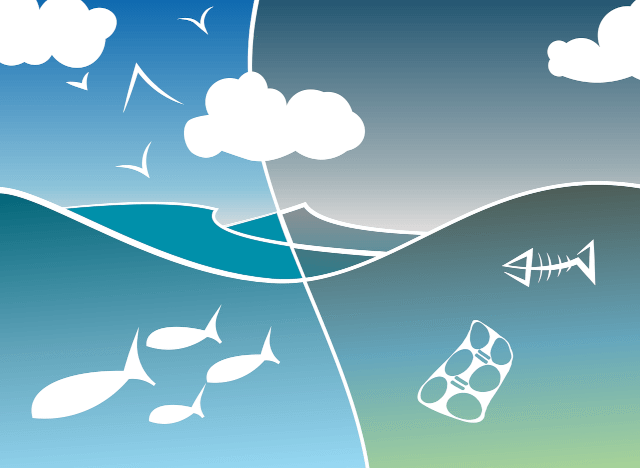[Source](https://pixabay.com/users/wild0ne-920941/)
In creating the EST, Bronfenbrenner acknowledged that many aspects of a developing child’s life interact with each other.
Urie Bronfenbrenner developed the Ecological Systems Theory (EST) to explain how societal characteristics and structures interact and in turn affect [human development](https://interfaithsustain.com/urban-ecology/). According to the theory, children tend to often find themselves embedded in different environments from the smallest ecosystem at home, to the larger system of education, and finally to the largest system that includes society and culture.
The different ecosystems in each child’s life both interact and influence each other according to Bronfenbrenner. The philosophy emphasizes the need to study the children in multiple environments, also known as ecological systems, in order to learn more about and understand their development.
- [](https://interfaithsustain.com/ecological-pyramid/)
## [Understanding The Different Types of Ecological Pyramids](https://interfaithsustain.com/ecological-pyramid/)
- [](https://interfaithsustain.com/ecological-balance/)
## [Ecological Balance And Living In Harmony With The Planet](https://interfaithsustain.com/ecological-balance/)
- [](https://interfaithsustain.com/ecological-engineering/)
## [Is Ecological Engineering the Solution to the Global Ecological Crisis?](https://interfaithsustain.com/ecological-engineering/)
## The Ecological Systems Theory Model
The four systems which **Bronfenbrenner** proposed have roles, standards and rules derived. The first system is the microsystem and the second is the mesosystem. The third one is called the exosystem which does not directly affect children but can affect microsystems. The outermost system of children’s development is not directly affected by the macrosystem though it can be in contact with all social, economic, and political systems.
These four systems that construct EST, take into account the effects of these social systems and influences on the child and human development. In the context of the system, many social factors influence the development of children in various important ways such as behavior and interaction, for example.
### The Microsystem of The Ecological System
Bronfenbrenner’s theories say that the microsystem is the most immediate and smallest environment where children live. The microsystem consists of the daily home, daycare, school environment as well as [community environment](https://interfaithsustain.com/how-to-optimize-the-three-pillars-of-sustainability/).
**Microsystems** are people, groups, and organizations that are most directly influencing an infant’s development. For instance, people such as teachers, family members, neighbors, or religious institutions should be included.
How these groups interact with these children has an impact on their growth. The particular characteristics of a certain child in life including his/her temperament play a part in how he/she is treated. Positive interaction and relationships will positively benefit the children’s development.
### The Mesosystems of The Ecological System
The **mesosystem** in Bronfenbrenner’s EST is the relationship and interactions between the different microsystems in which the child finds themselves. It involves connections between the home and school, between peers, group, and family, and between family and the community.
According to Bronfenbrenner’s Ecological Systems Theory, parents are actively involved in children’s social friendships by inviting their children’s friends over to play, and showing positive reactions to their child’s friends. Moreover, if one openly criticizes a child and dislikes his or her peers, they’re likely to develop a disequilibrium and conflicting thoughts that could lead their child to negative development.
### The Exosystems of The Ecological System
Environments can still interact with their children’s growth in ways that may not directly affect them. For example, if a father gets constantly mistreated by a boss at his job, he can take this stress away from work and may take it out on his children at home.
Many of these places within an **exosystem** may be children’s workplaces or the homes and neighborhoods where they live. The exosystem involves the linkages that could exist between one and several settings that may not directly contain the developing children. However, these environments will affect child development indirectly, according to Bronfenbrenner’s analysis.
#### The Macrosystems of The Ecological System
The **macrosystem** is generally an influencer of the culture which influences the development of the child in the macrosystems and the mesosystems. It includes things like socioeconomic status, ethnicity, race, and geographical location.
#### The Chronosystem of The Ecological System
The **chronosystem** is social science’s way of describing change during their life span. It can include socio-historical situations which influence a person’s development. One example of this is how the birth of new siblings, divorce and relocation all have major effects on children.
According to a majority of studies, children will be negatively affected in the first year after a parent’s divorce. In the years afterward, the child will discover which relationships between family members became more stable and acceptable.
## A Critical Evaluation of The Ecological System
EST provides an integrated approach to child development. Paat (2013) thinks about how Bronfenbrenner’s theories could be useful when studying immigrant children. They suggest immigrant children’s experiences are likely shaped by their cultural diversity across the different ecological systems.
[Source](https://unsplash.com/photos/aerial-view-of-trees-during-daytime-P4lJjr7r1tQ "Source")
An understanding of these children’s ecologies can improve child welfare services for them. There is however limited research studying mesosystems, and current research mainly focuses on interactions among neighborhoods or within the child’s family.
EST supports teachers and school administrators in developing educational environments appropriate for students and their own needs and character traits in addition to culture and society. This model supports parents in educating their children. It encourages parents to help children choose friendships and find good schools.
Research is also able to write questions from the components or concepts of the EST. Further, the four levels of EST can be combined as research tools to frame qualitative, quantifiable, and mixed research.
To examine the factors of obesity in overweight children with disabilities, Walker (2019) used an EST framework. The study focused on how layers of an ecological system/environmental system negatively affect kids with special needs such as weight and obesity. Microsystems like school, home, and extracurricular activities can influence health through physical activities and food selection.
The study also dealt with the governmental culture and religious beliefs. Within the field of language teaching, Mohammad Abadi used an ecological framework to analyze what factors influence language teachers at different levels. The ecological systems affect language teaching, and in turn, the learners.
### The Ecological Systems Theory to Understand Human Development
In **child development** studies, the EST was used to describe infants’ initial development influenced by personal, social, and political conditions. Currently, the EST is well-applied to various domains. Schools may use EST to improve their students’ achievements and cater their teaching to best fit the students’ needs.
**Ecological systems theory** indicates that human development depends on various types of environmental systems. This theoretical theory assists us to understand what causes humans to behave differently, by looking for patterns that contrast behavior at home with behavior at school or work, for example.
## Religion and Social Ecology
As Vernon Reynolds and Ralph Tanner describe in their book, [The Social Ecology of Religion](https://www.amazon.com/Social-Ecology-Religion-Vernon-Reynolds/dp/0195069749), “**religions** have down-to-earth functions in the control and management of the main events of the human life-cycle-birth, marriage, death, and the events in between.” Protecting our children must be a key part of our religious practices. Our future depends on it.
*\* Featured image [source](https://pixabay.com/users/sasint-3639875/)*
**Categories:** Biodiversity, Blog on Faith and Ecology
**Tags:** Ecological System
---
### [The Importance of Ecological Restoration](https://interfaithsustain.com/ecological-restoration/)
**Published:** August 25, 2021
**Author:** ICSD
**Excerpt:** Sydney Cohen - Regeneration ecology was first officially recognized as its own scientific area in the 1990s. The Society for Ecological Restoration describes ecological restoring as supporting the restoring process of damaged, deteriorated, or destroyed systems.
**Content:**
Table of Contents
Table of Contents
- [What is Ecological Restoration?](#aioseo-what-is-ecological-restoration-2)
- [Principles and Definitions of Ecological Restoration](#aioseo-principles-and-definitions-of-ecological-restoration-5)
- [Ecological Restoration](#aioseo-ecological-restoration-17)
- [Restoration Ecology](#aioseo-restoration-ecology-20)
- [What Does Ecosystem Restoration Look Like?](#aioseo-what-does-ecosystem-restoration-look-like-23)
- [Socioeconomic Issues of Ecological Restoration](#aioseo-socioeconomic-issues-of-ecological-restoration-26)
- [Society for Ecological Restoration](#aioseo-society-for-ecological-restoration-35)
- [Ecological Restoration Project Example](#aioseo-ecological-restoration-project-example-41)
- [YOU can help!](#aioseo-you-can-help-44)
- [Ecological Restoration for Sustainability](#aioseo-ecological-restoration-for-sustainability-48)
- [Restoration Projects as a Spiritual Practice](#aioseo-restoration-projects-as-a-spiritual-practice-50)
*By Sydney Cohen* – Regeneration ecology was first officially recognized as its own scientific area in the 1990s. The Society for Ecological Restoration describes ecological restoring as supporting the restoring process of damaged, deteriorated, or destroyed systems.
## What is Ecological Restoration?
The first step of an ecosystem or landscape restoration project is the clear definition of the project’s goals. Project goals of “restoring native vegetation” or “recover a perturbation environment” are not acceptable. Instead, concrete goals are needed for the restoration, and [restoration practitioners](https://www.ser-rrc.org/what-is-ecological-restoration/#:~:text=Ecological%20restoration%20is%20the%20process,degraded%2C%20damaged%2C%20or%20destroyed.&text=Ecosystems%20are%20destroyed%20by%20such,%2C%20coastal%20erosion%2C%20and%20mining.) “create the conditions needed for recovery so that the plants, animals, and microorganisms can carry out the work of recovery themselves.”
According to the Society for Ecological Restoration, “assisting recovery can be as simple as removing an invasive species or reintroducing a lost species or a lost function (like fire); or as complex as altering landforms, planting vegetation, changing the hydrology, and reintroducing wildlife.”
### Principles and Definitions of Ecological Restoration
As previously mentioned, ecological restoration is the process of aiding the recovery of an ecology either [degraded or destroyed ecosystems](https://interfaithsustain.com/environmental-degradation-and-the-future-of-our-planet-earth/). The aim is to repair the landscape of the environment. In our modern world, ecosystems face three factors – damage, degradation, and destruction.
According to the [Society of Ecological Restoration](https://www.ser-rrc.org/what-is-ecological-restoration/#:~:text=Ecological%20restoration%20is%20the%20process,degraded%2C%20damaged%2C%20or%20destroyed.&text=Ecosystems%20are%20destroyed%20by%20such,%2C%20coastal%20erosion%2C%20and%20mining.), “damage refers to an acute and obvious harmful impact upon an ecosystem such as selective logging, road building, poaching, or invasions of non-native species.”
“Degradation refers to chronic human impacts resulting in the loss of biodiversity and the disruption of an ecosystem’s structure, composition, and functionality. Examples include long-term grazing impacts, long-term over fishing or hunting pressure, and persistent invasions by non-native species.”
“Destruction is the most severe level of impact, when degradation or damage removes all macroscopic life and commonly ruins the physical environment. Ecosystems are destroyed by such activities as land clearing, urbanization, coastal erosion, and mining.”
Ecological restoration works toward the **recovery of an ecosystem**, particularly those damaged or destroyed from human activity, through ecological restoration projects, restoration activities, and the practice of conservation.
**Restoration ecologists** and restoration practitioners use research, science and practice, and **restoration science** to create conditions needed for recovery to work toward **ecosystem restoration**. They support the diversity of biological species, aiming for more sustainable natural resources and land use in our future.
[Source](https://www.pexels.com/@catiamatos/)
- [](https://interfaithsustain.com/ecological-model/)
## [The Ecological Model Is Used To Improve Health Programs](https://interfaithsustain.com/ecological-model/)
- [](https://interfaithsustain.com/ecological-balance/)
## [Ecological Balance And Living In Harmony With The Planet](https://interfaithsustain.com/ecological-balance/)
- [](https://interfaithsustain.com/ecological-engineering/)
## [Is Ecological Engineering the Solution to the Global Ecological Crisis?](https://interfaithsustain.com/ecological-engineering/)
#### Ecological Restoration
The most important goal for ecological restoration is to create a self-supporting ecosystem that is resilient to perturbation and has no more intervention. Restoration of coral reefs seagrass beds and mangrove forests in the tropics is feasible. The difficulty levels are different depending on the various ecosystem types. Mangrove forest is likely the easiest habitat to save, then seagrass beds and finally coral reefs.
An example of a successful restoration on a relatively large scale is the work of Guzman (1991) on the reefs on the Pacific coast of Costa Rica. The reefs had been affected by a combination of natural and human activities that resulted in ecosystem damage.
## Restoration Ecology
Restoration ecology is the scientific field that supports the practice and efforts of ecological restoration. The difference between restoration ecology and ecological restoration is that restoration ecology is the research and practices advised for the actual ecological restoration process and projects around the world.
The UN declared 2021-2030 as its **Decade of Ecosystem Restoration**. During the last few years, commercial applications of eco-restoring have increased exponentially. Habitat loss is causing both species extinction and declining ecosystems.
### What Does Ecosystem Restoration Look Like?
Ecological restoration occurs when an action is implemented in the form of new vegetation, grass or other vegetation sown, natural and assisted restoration and agroforestry. The tangible benefits in this decade can therefore be viewed through the lens of the **Sustainable Development Goals** ([SDGs](https://sdgs.un.org/goals)), created by the UN in 2012 at the United Nations World Conference on Sustainable Development.
The world already has millions of hectares of marine and terrestrial forests restored through efforts such as the Global Mangrove Alliance and the Bonn Challenge. There will be additional opportunities for the regeneration of degraded ecosystems around the world.
### Socioeconomic Issues of Ecological Restoration
Economic and social problems that afflict most reforestation activities are also problematic. One of the most significant challenges is the economic cost of reforestation. Some landholders would be willing to commit to reforestation in order to conserve biodiversity. However, most of them depend on some form of financial benefits or incentives to assist with the direct or indirect costs accrued in order to carry out the action.
These include supporting monocultural plantations with species-rich buffer strips or plants and varying species for each site depending on the environmental conditions around it. Another possibility consists in building polycultures incorporating a number of different tree and understory species.
The connection between socioeconomic issues and ecological restoration is quite prominent. Ecological restoration processes restore ecosystems so that we can harvest natural resources in sustainable ways. The process of utilizing natural resources boosts the economy in these local communities. However, often the cost to restore ecosystems is quite high and requires significant governmental funding, which is often difficult to acquire.
While ecological restoration benefits the economy in the long run, not only is it a costly endeavor, but it can also be very time-consuming. Consequently, not all communities are willing to commit to the process, given its price and demands.
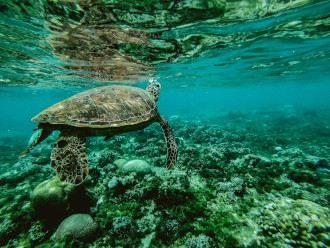[Source](https://www.pexels.com/photo/photo-of-a-turtle-underwater-847393/)
## Society for Ecological Restoration
Ecological restoration has a growing role in the management of environmental degradation. It includes activities related to the recovery of the structure and function of the ecosystem, and corresponding goods and services. Restoration of soil quality together with improved nutrient cycling, water retention pollination services, and regulation of soil erosion is expected to enhance conventional agricultural production. It further enhances access to other important environmental services including clean water, habitat for wildlife, carbon sequestration, and leisure.
Payments for these ecosystem services are growing sources of income for rural inhabitants such as nature-driven tourism, game-hunting, and companies based on native plant materials.
The Society for Ecological Restoration publishes a bi-monthly scientific and peer-reviewed journal, that covers topics of experimental, observational, and theoretical studies, within the field of ecological restoration. The journal addresses global concerns, communicating them to the international practitioner and research communities. You can find the link to the journal [here](https://www.ser.org/page/RestorationEcology).
It is important that we provide communities access, local and international, to research the information on the process of ecosystem conservation practice, so that the public can learn of the scale of global ecosystem damage, and work to restore it.
The journal provides examples of ecological restoration activities, conservation practices that we can include in our everyday lives, and the important research that practitioners have conducted in order to conserve our resources and support future restoration. This blog post will later highlight some of the practices and steps that we can take to conserve and restore our [ecosystems and nature](https://interfaithsustain.com/environmental-wellness/), especially in the wake of **[climate change](https://interfaithsustain.com/evidence-of-climate-change/).**
## Ecological Restoration Project Example
The ecological restoration project on **Santa Fe** island was initiated in 2015 through repopulation with replacement tortoises on Española Island.
A total of 551 ospreys between 5 and 11 years old that translocated from the tortoise breeding program in batches bi-annually have received a total high and steady annual survival rate in juveniles, accelerating the process of establishing a breeding population on the island. This has effectively contributed to the process of restoring the ecological integrity and biodiversity of Santa Fe.
### YOU can help!
Fortunately, there are simple changes we can make in our lives and local communities to work toward ecological restoration and conservation of our natural resources.
The most important way to restore our ecosystems is to conserve and use our natural resources sustainably, so as to not further damage or degrade our local ecosystems.
Conservation is an easy action to implement in our daily lives – be it turning off the water while we are brushing our teeth, or even making sure to follow guidelines on “spare the air days” by not lighting fires.
#### Ecological Restoration for Sustainability
Ecological restoration is important for restoring our ecosystem. It’s not just about conserving the resources we have, but also preventing further damage to our environment and ensuring that future generations will be able to enjoy these natural resources as well.
## Restoration Projects as a Spiritual Practice
According to Gretel Van Wieren in [Ecological Restoration as Public Spiritual Practice](https://citeseerx.ist.psu.edu/viewdoc/download?doi=10.1.1.663.5464&rep=rep1&type=pdf), “we can view restoration not only as a promising contemporary environmental practice, but also as a burgeoning public spiritual practice.” As more and more spiritual communities unite for restoration projects, we will see our planet and our relationship with our Creator transform.
*\* Featured image [source](https://www.pexels.com/@catiamatos/)*
*Follow this link to learn more about [ecological balance](https://interfaithsustain.com/ecological-balance/ "ecological balance").*
**Categories:** Biodiversity, Blog on Faith and Ecology
**Tags:** Ecology
---
### [Is Ecological Engineering the Solution to the Global Ecological Crisis?](https://interfaithsustain.com/ecological-engineering/)
**Published:** August 6, 2021
**Author:** ICSD
**Excerpt:** Matthew Mausner - Creating a functioning ecosystem used to be considered only within the scope of the divine. Human scientific and engineering abilities have advanced to the point now that we modify, alter, or even attempt to reconstruct or even create whole ecosystems... sometimes with ideas that are actual science fiction.
**Content:**
Table of Contents
Table of Contents
- [The Origins of Ecological Engineering](#aioseo-the-origins-of-ecological-engineering-2)
- [Is Ecological Engineering Science Fiction?](#aioseo-is-ecological-engineering-science-fiction-5)
- [Ecological Engineering Becomes Reality!](#aioseo-ecological-engineering-becomes-reality-8)
- [Examples of Ecological Engineering](#aioseo-examples-of-ecological-engineering-10)
- [A Belief in Ecological Technology](#aioseo-a-belief-in-ecological-technology-16)
- [Ecological Restoration](#aioseo-ecological-restoration-22)
- [The Arrogance of Ecological Engineering](#aioseo-the-arrogance-of-ecological-engineering-33)
- [Ecological Engineering Solutions For Our Global Ecosystem](#aioseo-ecological-engineering-solutions-for-our-global-ecosystem-37)
*By Matthew Mausner* – Creating a functioning ecosystem used to be considered only within the scope of the divine. Human scientific and engineering abilities have advanced to the point now that we modify, alter, or even attempt to reconstruct or even create whole ecosystems… sometimes with ideas that are actual science fiction. The issues inherent in a world industrial civilization of 8 billion people, including possible catastrophic ways that civilization is interacting with nature, push us to explore and contemplate large-scale ecological engineering to meet these challenges in imaginative ways.
## The Origins of Ecological Engineering
The famous scientist Freeman Dyson was known for proposing elaborate ideas to use human engineering capabilities to expand our habitable ecosystems. He proposed seeding comets with genetically engineered ‘trees’ and hollow out a habitat humans could live in, and his thought experiments shaped many proposed means of sustainable space exploration with a portable natural environment. His proposals for genetically engineered microorganisms were aimed to support and expand our resource base, restore a rural village self-sufficiency pattern, be solar-powered, and reduce inequality, for which he coined the term ‘[green technology](https://interfaithsustain.com/what-is-clean-tech/)‘.
Other scientists including Howard Odum, Mitsch, and Jorgensen followed his lead and helped formally establish the field of ‘ecological engineering’ in the 1960s.
### Is Ecological Engineering Science Fiction?
An even more all-encompassing idea of his took his name: the [**Dyson Sphere**](https://en.wikipedia.org/wiki/Dyson_sphere), where a civilization would build a whole sphere, at the distance of earth’s orbit, from its sun, to capture as much as possible of its life-giving solar energy, and expand its civilization all across the vast surface of this inward-facing sphere (Dyson himself credited part of the inspiration to a 1937 early sci-fi novel ‘[Star Maker](https://www.goodreads.com/book/show/525304.Star_Maker?ac=1&from_search=true&qid=NA6FkdjeTV&rank=1)‘ by Olaf Stapledon).
This inspired the classic Larry Niven science fiction book ‘[Ringworld](https://www.amazon.com/Ringworld-Novel-Larry-Niven/dp/0345333926)‘, where a beyond-human civilization had engineered a massive ‘ring’ to completely encircle their sun, and expand the habitat for its humans to an area of a million earths. Science fiction authors’ ideas have often inspired **ecological engineering** ideas, including Arthur C. Clarke’s rotating-garden spaceship in ‘[Rendezvous with Rama](https://www.amazon.com/Rendezvous-Rama-Arthur-C-Clarke-ebook/dp/B07XD75HGV/ref=sr_1_1?crid=238QO2NJENB2J&dchild=1&keywords=arthur+c.+clarke+rama&qid=1626697208&sprefix=Arthur+C.+Clarke+r%2Cstripbooks-intl-ship%2C274&sr=8-1)‘, Nicole Griffith’s elaborate recycling and detoxifying technologies in ‘[Slow River](https://www.goodreads.com/book/show/270259.Slow_River)‘, and many others.
#### Ecological Engineering Becomes Reality!
Yet, now these ideas are far more than science fiction. Civilizations have engineered massive changes to ecosystems for many millennia, creating canals and dams for water and irrigation, draining ‘swamps’ (now we call them ‘wetlands’), turning garbage dumps into man-made mountains, planting forests and orchards, and otherwise significantly altering the environment. Today’s ecological engineering is often similar but scaled up and more technological.
- [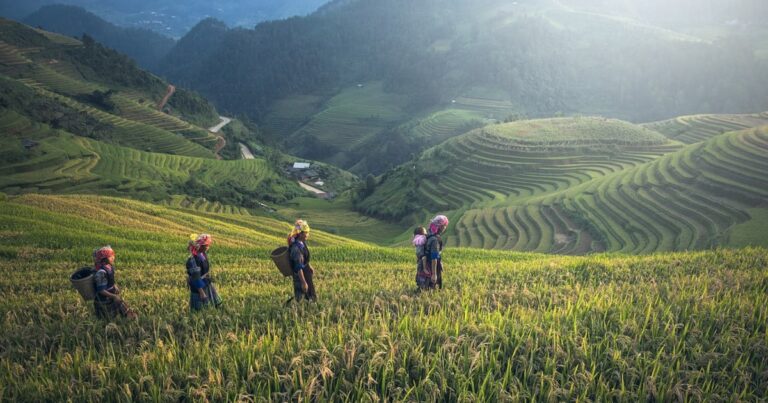](https://interfaithsustain.com/ecological-system/)
## [Understanding the Importance of the Ecological System Theory](https://interfaithsustain.com/ecological-system/)
- [](https://interfaithsustain.com/ecological-pyramid/)
## [Understanding The Different Types of Ecological Pyramids](https://interfaithsustain.com/ecological-pyramid/)
- [](https://interfaithsustain.com/ecological-balance/)
## [Ecological Balance And Living In Harmony With The Planet](https://interfaithsustain.com/ecological-balance/)
## Examples of Ecological Engineering
Sometimes ecological engineering is aimed at creatively expanding artificial habitats for people, like the [Palm Islands](https://interestingengineering.com/7-curious-facts-about-dubais-palm-islands) of Dubai.
Other times it is aimed at restoring ecosystems, hoping to stave off or repair a human-created disaster, like the joint Jordanian-Israeli plans to [refill the Dead Sea](https://www.nrdc.org/onearth/could-water-red-sea-help-revive-dead-sea) by opening water flow from the Red Sea.
It can also be used in vast experiments to address much vaster crises, like the specially designed trawlers seeking to scoop up the waste floating in the [great Pacific plastic garbage patch](https://theoceancleanup.com/great-pacific-garbage-patch/), attempts to genetically engineer[ plastic-eating fungus ](https://interestingengineering.com/could-plastic-eating-mushrooms-solve-humanitys-plastic-problem)to deal with our massive plastic global pollution problems, or the Bill Gates-sponsored attempts to spray [sunlight-reflecting particles](https://www.nature.com/articles/d41586-018-07533-4) high into the atmosphere to slow or head off global warming.
### A Belief in Ecological Technology
There is considerable optimism from some people that such elaborate and advanced technological ideas will indeed solve our problems. This **techno-philia** is not entirely groundless: ‘necessity is the mother of invention’, and indeed ingenuity has solved massive problems that we thought were unsolvable.
For example, the eternal issues civilizations had with recurrent famines were addressed with innovations like artificial fertilizers, fixing nitrogen, refrigeration and preserving, and global food transportation, which has enabled us to vastly scale up our population since the late 1800s.
Vaccine technologies have nearly wiped out pathogens that were perpetually dangerous and were thought to be endemic to human populations. And the massive yet routine ecological engineering projects we call ‘sanitation’– e.g. [clean water infrastructure](https://interfaithsustain.com/what-are-the-causes-of-water-pollution/) and sewage systems — may be responsible, more than any other single cause, for the expansion and safety of the earth’s population.
[Source](https://unsplash.com/@christoph)
## Ecological Restoration
**Restoring ecosystems** may not entirely be a pipe dream. To integrate human society with its natural activities of today’s unprecedented populations and their technologies and needs, into the web of nature, takes ever more ingenuity and engineering. The design of sustainable large-scale alterations of the natural environment to repair or restore, or even the restoration of ecosystems, is at least theoretically within our reach, according to the more ambitious visions. Many such [initiatives](https://www.globalcitizen.org/en/content/ecological-restoration-projects/) are engineering ecological ecosystem restoration solutions on a large scale all over the world.
Places like the Great Plains of the US rebuilt some of their topsoil after the ‘Dust Bowl’ era of the 1930s, using technologies like artificial fertilizer and other industrial agriculture techniques, but the constant need for more and more additives make it questionable whether these engineering principles work in the long run.
High levels of pollution have already affected our entire global ecosystem, and some approaches are being tried to address or reverse these trends. Seeding or ‘[fertilizing](https://www.frontiersin.org/articles/10.3389/fmars.2019.00022/full)‘ the ocean with iron micro-particles to stimulate **green phytoplankton** growth is one, with the goals to capture carbon and lower or reverse acidification, and therefore restore a healthier ocean ecosystem.
While this may be relatively inexpensive compared to some of the more elaborate ecological engineering solutions proposed, the experiments done so far have generated [doubts](https://news.mongabay.com/2020/03/climate-fix-fertilizing-oceans-with-iron-unlikely-to-sequester-more-carbon/) about whether it could actually be effective in the ways hoped for.
Similarly, there are attempts to spray micro-particles high in the atmosphere to reduce [greenhouse effects](https://interfaithsustain.com/evidence-of-climate-change/), solar radiation, and thus ameliorate global warming. One such experiment is a proposal to put [**calcium carbonate**](https://www.nature.com/articles/d41586-018-07533-4) into the stratosphere, to reflect more light and possibly also trap less heat.
However, even that project’s proponents acknowledge that since calcium carbonate isn’t usually found in the stratosphere, there are unknown risks.
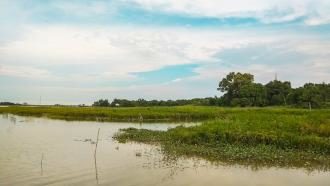[Source](https://pixabay.com/users/swandee-6458636/)
### The Arrogance of Ecological Engineering
As many thinkers, including David Ehrenfeld, have pointed out, there’s an arrogance in overestimating our **technological capabilities**, and conveniently forgetting the many times and ways our interventions in the environment have led to collapse and ruin. Technology should be thought of as [guilty until proven innocent](https://www.goodreads.com/en/book/show/300518), as Jerry Mander’s book ‘In the Absence of The Sacred’ suggests.
Too often, the predictions and projections turn out to be wrong, even disastrously wrong, especially about systemic risks like to [cod populations in the 1960s, effects of fracking ](https://www.scribd.com/document/147223821/When-Risk-Assessment-is-Risky-David-Ehrenfeld#download&from_embed)in Pennsylvania and New York, the safety of BP’s Deepwater Horizon offshore drilling platform, the safety of the Chernobyl and Fukushima nuclear reactors, and many more.
Even the nuclear engineering prowess of the Japanese failed in the face of a predictable natural disaster.
## Ecological Engineering Solutions For Our Global Ecosystem
All the more so is this the case when massive technological ‘solutions’ are proposed to address major society-generated imbalances in our ecosystems. There are three entirely different levels of problems with this approach.
One level is, determining whether or not the ‘solutions’ actually could work, or are worthwhile, considering the scale of investment needed (often gargantuan, as in carbon…).
The second is whether the alleged promise of such solutions to human activities, and the faith in them, incorrectly incentivizes our **technophilic** civilization to postpone changing the destructive habits which caused the problems in the first place, imagining that ‘technology will save us’.
And then the third level would say… what choice/s do we have besides attempting such massive interventions to prevent our own self-destruction? Ecological engineering by its very nature is large scale and dealing with chaotic natural systems. We may not have an opportunity to do controlled and patient experiments within the time frame within which civilization-caused damage to the earth’s ecosystem has any chance of stopping before becoming irreversibly catastrophic.
[Paul Hawken](https://paulhawken.com/) and [Stewart Brand](https://www.ecomodernism.org/manifesto-english) are two of the most prominent articulators of research into cost accounting, where economic ‘externalities’ must be included in the ‘**true cost accounting**‘ of any given idea, project, technology, company, or economy.
We are facing a crisis too large and comprehensive to avoid thinking of things holistically: we must be clear-minded and practical, and yet also move quickly, in moving towards a more sustainable and achievable future.
Ecological engineering, even on the vastest scale, is something we must entertain as one of the critical management tools to face up to the unprecedented challenges of our current predicament.
*\* Featured image [source](https://pixabay.com/users/bloqed-17461199/)*
*Follow this link to learn more about [Ecological Balance](https://interfaithsustain.com/ecological-balance/ "Ecological Balance")*.
**Categories:** Biodiversity, Blog on Faith and Ecology
**Tags:** Ecological Engineering, Ecology
---
### [Population Ecology in Plants, Animals, and Humans](https://interfaithsustain.com/population-ecology/)
**Published:** November 17, 2021
**Author:** ICSD
**Excerpt:** Harry Cooper - Population ecology is the study of plant, animal, and human populations, and the factors that affect their growth and distribution. Population ecology is a very important field of study because it allows us to better understand how we affect the world and how the world affects us.
**Content:**
Table of Contents
Table of Contents
- [Population Ecology's Connection To Sustainability](#aioseo-population-ecologys-connection-to-sustainability-3)
- [Terms to Know in Population Ecology](#aioseo-terms-to-know-in-population-ecology-6)
- [Life History in Population Ecology](#aioseo-life-history-in-population-ecology-14)
- [Human Population Ecology](#aioseo-human-population-ecology-18)
- [How We Use our Resources](#aioseo-how-we-use-our-resources-25)
- [A Global Population of 11 Billion](#aioseo-a-global-population-of-11-billion-28)
- [Biblical Insight into Population Ecology](#aioseo-biblical-insight-into-population-ecology-33)
- [Comparing Biblical Population Ecology with Today](#aioseo-comparing-biblical-population-ecology-with-today-39)
- [Biblical Green Belts For Human Ecology](#aioseo-biblical-green-belts-for-human-ecology-42)
*By Harry Cooper* – Population ecology is the study of plant, animal, and human populations, and the factors that affect their growth and distribution. Population ecology is a very important field of study because it allows us to better understand how we affect the world and how the world affects us.
Every resource we’ve ever used has come from the environment, and the key to ensuring that the environment and our species survives lies in making sure we [maintain a balanced relationship with our planet’s ecology](https://interfaithsustain.com/ecological-balance/ "maintain a balanced relationship with our planet's ecology"), and the things it has to offer us.
## Population Ecology’s Connection To Sustainability
Population ecology is deeply connected to the future of human society. Understanding how a group of human beings will affect their environment is crucial for creating **sustainable development**. [Sustainable development](https://interfaithsustain.com/principles-of-sustainable-development/) is all about growing our species’ population and economy while using what we have wisely. By understanding population ecology we are able to see what aspects of the way we live will help contribute to a more sustainable future, and what aspects will lead to [environmental degradation](https://interfaithsustain.com/environmental-degradation-and-the-future-of-our-planet-earth/ "https://interfaithsustain.com/environmental-degradation-and-the-future-of-our-planet-earth/") and health crises.
The factors that affect population ecology can be divided into [two groups](https://www.discoveringgalapagos.org.uk/tag/density-independent-factors/): **density dependent** and density independent. Density independent factors will affect a population in the same way regardless of the population size. An example of these factors would be, weather, fires, climate, or natural disasters. A density dependent factor will impact a population differently depending on how big the population size is. An example of density dependent factors would be food availability, disease, or water availability.
### Terms to Know in Population Ecology
As population size grows, the density dependent factors start to have more of an impact on the population. As population growth increases, food scarcity, water scarcity, and general competition also increase. As food and water become increasingly unavailable, death rates start to exceed the birth rates, and the number of individuals in the population starts to decrease.
[Source](https://cdn.pixabay.com/photo/2013/07/18/10/56/graph-163509_1280.jpg)
[The point](https://www.biologyonline.com/dictionary/carrying-capacity) at which population begins to decrease rather than increase is called **carrying capacity**. The carrying capacity for any given population is determined by the resources available to them. As resources increase so does population growth.
For humans, we have been able to use modern technology and industrialization to extract more and more resources, allowing us seemingly endless population growth. But our continuing to extract limited resources and subject our planet to harmful production methods could spell trouble for the human species.
#### Life History in Population Ecology
One very important factor that affects a population’s size, behavior, and density is **life history**. Life histories are how the individuals in a population will live their life; how long they live, how many times they reproduce, how many offspring they have, at what age they reproduce, survival rate of offspring, and so on.
Population growth occurs in [two different ways](https://opentextbc.ca/conceptsofbiologyopenstax/chapter/population-growth-and-regulation/). Logistic growth is the more common of the two. Logistic growth occurs when there are enough resources for a population to grow, but also enough factors limiting growth to keep the birth rate and death rate similar and the increase in population steady.
Exponential growth occurs when a species has enough resources to grow seemingly indefinitely. Exponential growth happens rapidly and only under ideal conditions. With the continual progression of technology and industrialization, humans have found themselves with abundant supplies and ideal conditions for exponential growth. However, climate change and [biodiversity loss](https://interfaithsustain.com/why-is-biodiversity-important/) may constrain our ability to sustain our rapid population growth.
## Human Population Ecology
Humans were designed to only have a few offspring with high survival rates in order to not exceed carrying capacity. However, with our easy access to resources our population size has began to grow exponentially, causing us to rapidly approach the carrying capacity for our species. The UN estimates that by the year 2100, the world population will reach [11 billion people](https://population.un.org/wpp/Graphs/Probabilistic/POP/TOT/900), 50% more than the current global population size. If our species’ population grows to this size, we may not be able to support everyone in our species. Indeed, even at the current population of 8 billion people, the UN reported that [690 million people are undernourished](https://www.actionagainsthunger.org/world-hunger-facts-statistics#:~:text=The%20proportion%20of%20undernourished%20people,million%20people%20globally%20are%20undernourished.).
[Source](https://cdn.pixabay.com/photo/2015/12/22/14/44/turkey-1104206_1280.jpg)
In addition to the problem of rapid population growth, rapid economic growth has also contributed to the issue of our **dwindling resource reserves**. While the increase in technology has allowed to us to increase the supplies available to us and produce more goods, [the global demand for these supplies](https://www.scientificamerican.com/article/the-delusion-of-infinite-economic-growth/) has also increased. As our access to resources grows we are able to produce goods for cheaper, which allows more people to buy them, and in turn creates explosive economic growth in the developed world. This causes the producers of the goods to be able to produce and sell even more goods, creating a system of exponential economic growth. This exponential [economic growth](https://interfaithsustain.com/sustainable-growth/) paired with our exponential population growth has created a society designed to use resources at an alarming rate.
- [](https://interfaithsustain.com/threats-to-biodiversity/)
## [What are The Major Threats to Global Biodiversity?](https://interfaithsustain.com/threats-to-biodiversity/)
- [](https://interfaithsustain.com/habitat-corridors/)
## [Habitat Corridors Allow Human Development Whilst Saving Biodiversity](https://interfaithsustain.com/habitat-corridors/)
- [](https://interfaithsustain.com/importance-of-biodiversity/)
## [The Importance of Biodiversity For Humans and For Earth](https://interfaithsustain.com/importance-of-biodiversity/)
### How We Use our Resources
This issue has been made worse by the ways in which we use our resources. Many people in the developed world consume many more resources than they need or should. We can already see [how this is harmful](https://reliefweb.int/report/world/rich-poor-and-future-earth-equity-constrained-world) as the upper 20% of wealthiest people in the world use about 80% of available resources, while the bottom 20% often don’t have enough resources to stay out of poverty.
We have been focused not only on rapid population growth but also on rapid economic growth. This [exponential growth](https://www.newscientist.com/article/dn17569-consumerism-is-eating-the-future/) has lead to a [consumerist culture](https://interfaithsustain.com/what-is-consumerism/). As resource availability decreases, and we start to approach carrying capacity, both our planet and our way of life will become increasingly threatened.
### A Global Population of 11 Billion
The author **Paul Hanley** discusses in his book [**11**](https://www.amazon.com/Eleven-Paul-Hanley-ebook/dp/B00NVR5RCU) how since the industrial use of resources is so focused on exponential economic growth, it often overlooks it’s impact on the environment and human health. Industrial production often uses harmful substances and methods to create goods, such as allowing dangerous substances into products and mass producing unhealthy food. This has triggered a wide spread health crisis that has led to an increase in healthcare costs and chronic disease. These harmful methods also leak harmful substances into the environment, such as fossil fuels, doing damage to the ecology of the planet as well.
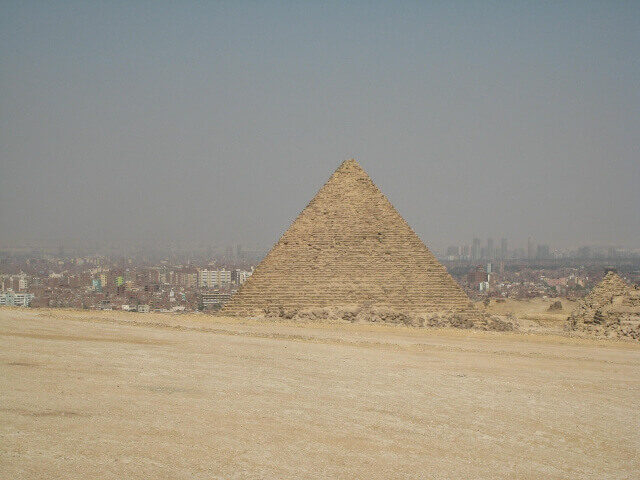[Source](https://cdn.pixabay.com/photo/2013/12/31/21/47/pyramid-237064_1280.jpg)
If our species’ population growth continues at the rate it’s going, which will leave us with a population of 11 billion by 2100, we will begin to see our harmful methods of production wreak havoc public health and the environment even more.
## Biblical Insight into Population Ecology
In **Genesis** 1:28, God tells Adam and Eve to “be fruitful and multiply, and fill the Earth”. In [*Eco Bible: An Ecological Commentary on Genesis and Exodus*](https://interfaithsustain.com/ecobible/)*,* Rabbis Yonatan Neril and Leo Dee explain some of the deeper meaning of this verse. One might interpret this as the Bible telling us to expand our population with no regard for growth regulation, but God not only told Adam and Eve to multiply, he also told them to be fruitful, and depleting our natural resources for the sake of this continual population growth is hardly fruitful.
There are many examples of the Bible discussing ways to limit population growth rate; The Eco-Bible points to how “God’s statement to Noah does not mention husbands and wives together, but intentionally separates them. This signifies to Noah that in a time of limited resources, human energies should go into surviving and not procreating”.
Another example of limiting growth rate the Eco-Bible points to can be seen in the Shulkhan Arukh Code of Torah Law, as it interprets “be fruitful and multiply” to mean having one son and one daughter. This shows how “the intention of the Creator is that our being fruitful should lead to life, blessing, and prosperity, and not the opposite”.
### Comparing Biblical Population Ecology with Today
But how does the population ecology of the biblical age compare to the population ecology of our species today? The Eco-Bible points to Exodus where it says that “the earth was filled with the people… ancient Egypt at that time had two to three million people in total, and the Israelites were only part of the population—perhaps one million. So, the Bible itself calls the land of Egypt “full” with even one million Israelites, while today Egypt has 100 million people”.
With such a high population density Egypt has started to face some of the problems that the Bible was hoping to avoid. Because of it’s explosive growth rate, [Egypt](https://www.nytimes.com/2020/02/11/world/middleeast/egypt-population-100-million.html) has begun to see a decrease in water, jobs, and even room for people to live in. As other countries face a similar pattern of spikes in population, they will also face a lack of water, space, and supplies. While this fulfilled biblical premonition feels very daunting, comparing the population dynamics of the bible to our species’ current population dynamics can help us understand how to go about solving the problem.
#### Biblical Green Belts For Human Ecology
The primary biblical wisdom we can draw from to help us with our population problem, lies in the way it’s instructions for city structure. In **Leviticus**, God instructs us to to build cities surrounded by a ring of untouched natural land followed by the city’s agricultural fields, and once the population of a city becomes too high, to build a new city nearby. This model for [civilization](https://www.huffpost.com/entry/modern-megacity-meet-anci_b_11448614) could solve a lot of the issues caused by our current population problem.
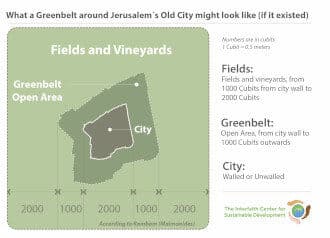[Source](https://images.huffingtonpost.com/2016-08-11-1470917206-355356-InfographicofpotentialJerusalemgreenbelt.jpg)
If we followed this model for city structure, we would force ourselves to live among nature. This nature would not only provide a habitat for plants and animals, but it would also help clean the air and water, which often gets polluted through the industrial production methods that come with exponential growth. Ensuring that every city has a green space would also help preserve some of our resources provided by the environment, such as lumber and food. The building of new cities every time an old one gets full would also ensure that our species’ would have a more even distribution rather than having one city having too much population density.
*\* Featured image [source](https://cdn.pixabay.com/photo/2016/01/30/17/58/africa-1170179_1280.jpg)*
**Categories:** Biodiversity, Blog on Faith and Ecology
**Tags:** Population Ecology
---
### [Fire Ecology: Its Importance for Forest Health](https://interfaithsustain.com/fire-ecology/)
**Published:** December 6, 2021
**Author:** ICSD
**Excerpt:** Sydney Cohen - Fire ecology is an extensive and complex topic. It involves many different aspects, from the chemical reactions that cause a flame to burn to the social impacts of large-scale wildfires.
**Content:**
Table of Contents
Table of Contents
- [The Definition of Fire Ecology](#aioseo-the-definition-of-fire-ecology-3)
- [The History of Fire Ecology](#aioseo-the-history-of-fire-ecology-7)
- [Understanding Fire History](#aioseo-understanding-fire-history-11)
- [The Perception of Fire](#aioseo-the-perception-of-fire-14)
- [The Causes of Fire](#aioseo-the-causes-of-fire-19)
- [The Effects of Fire](#aioseo-the-effects-of-fire-24)
- [The Advantages of Fire for Ecology](#aioseo-the-advantages-of-fire-for-ecology-29)
- [The Disadvantages of Fire for Ecology](#aioseo-the-disadvantages-of-fire-for-ecology-34)
- [The U.S. Forest Service Manages Fire Ecology](#aioseo-the-u-s-forest-service-manages-fire-ecology-37)
- [Fire in The Media](#aioseo-fire-in-the-media-40)
- [Fire and Religion](#aioseo-fire-and-religion-48)
*By Sydney Cohen* – **Fire ecology** is an extensive and complex topic. It involves many different aspects, from the chemical reactions that cause a flame to burn to the social impacts of large-scale wildfires.
In this blog post, we will discuss what fires do to the environment and how they interact with other aspects of the natural world. We will also talk about how different species react to fire and their survival strategies when faced with an inferno.
## The Definition of Fire Ecology
Fire ecology refers to research that investigates interactions among ecosystems and the fires that occur in them naturally. **Wildfires** are generally recurring in [diverse environments](https://interfaithsustain.com/why-is-biodiversity-important/) and may be necessary for plant development processes. Fire ecology also studies the effect of anthropogenic change and management on the incidence and effects of wildfires.
### The History of Fire Ecology
Fire history is one of the least-studied aspects of ecology. However, it’s an important issue because fire history can have a significant impact on **forest health**, wildlife habitat, and carbon storage. The history of fire ecology has been shaped by three major forces: [climate change](https://interfaithsustain.com/evidence-of-climate-change/), human activities, and natural phenomena.
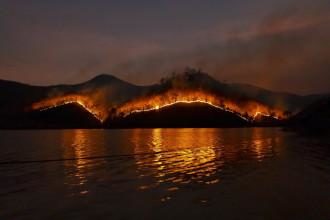[Source](https://pixabay.com/users/sippakorn-1917747/)
### Understanding Fire History
An important concept of fire ecology is **fire history** which determines how often fire occurs in a geographical area.
An annual tree adds a new layer of cells increasing the tree’s height. During fires and storms, forests can only become shattered. A layer of charcoal stays on the active tree and is covered by the layer of new growth. These fire scars provide a record that provide scientists with the ability to record when a fire occurred.
- [](https://interfaithsustain.com/threats-to-biodiversity/)
## [What are The Major Threats to Global Biodiversity?](https://interfaithsustain.com/threats-to-biodiversity/)
- [](https://interfaithsustain.com/habitat-corridors/)
## [Habitat Corridors Allow Human Development Whilst Saving Biodiversity](https://interfaithsustain.com/habitat-corridors/)
- [](https://interfaithsustain.com/importance-of-biodiversity/)
## [The Importance of Biodiversity For Humans and For Earth](https://interfaithsustain.com/importance-of-biodiversity/)
## The Perception of Fire
Fires are a natural part of the Earth’s ecosystem. They have been happening since before humans were around and they will continue to happen long after we’re gone.
The perception of fire has changed dramatically in the last century. In the early 1900s, fires were seen as natural and necessary to maintain healthy ecosystems. But by 1973, when the National Fire Prevention and Control Administration was created, this idea shifted; people began to see fire as a destructive force that needed to be eliminated at all costs. And even though we now know more about how important it is for an ecosystem to have periodic fires, few people understand how fire ecology works or can easily identify trees that are likely to catch on fire.
### The Causes of Fire
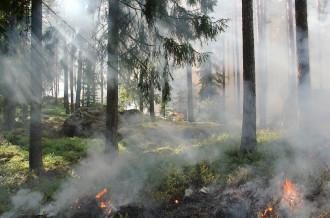[Source](https://pixabay.com/users/ylvers-337353/)
The cause of fires is often debated, but it has been found that lightning strikes are the most common way fires start.
The next most common causes of fires are intentional ignition by humans, followed by the spontaneous combustion of materials, like coal or wood, inside a building.
### The Effects of Fire
The effects of fire on a landscape can be devastating. For example, high-intensity fires kill all vegetation and wildlife in their path.
However, fires kill many trees, which allows for new growth to take place. which is essential for a healthy forest ecosystem.
### The Advantages of Fire for Ecology
Sometimes, fire affects ecosystems positively. The [positive environmental fire effects](https://www.fire.ca.gov/what-we-do/-/media/calfire-website/about/communications/benifitsoffire.pdf) include removing low-growing underbrush, cleaning the forest floor of debris, opening it up to sunlight, and nourishing the soil. This allows for species of plants and trees to grow healthier, even though there are fewer of them with these clearings of the forest floor.
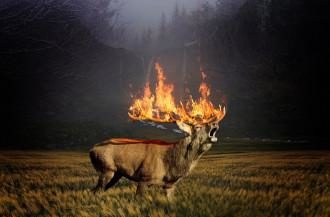[Source](https://pixabay.com/users/comfreak-51581/)
There are also such things as prescribed burns, also known as a planned fire. [Researchers create](https://www.nps.gov/articles/what-is-a-prescribed-fire.htm) “a scientific prescription for each fire, prepared in advance, describes its objectives, fuels, size, the precise environmental conditions under which it will burn, and conditions under which it may be suppressed.”
#### The Disadvantages of Fire for Ecology
Despite the benefits of prescribed burns and controlled fires, they post many risks as well. The disadvantages to [prescribed burns include](https://www.for.gov.bc.ca/hfp/publications/00099/siteprep/3-Fire.htm) “a risk of escape; its use can be restricted by weather; it is cause for public concern in areas sensitive to smoke; under certain conditions, it may reduce long-term soil fertility; and it can be very costly.”
Ultimately, fire needs fuel to continue, such as oxygen and combustible material, both of which are very prominent in forested areas.
## The U.S. Forest Service Manages Fire Ecology
The U.S. Forest Service is the United State’s federal agency that manages all U.S. national forest and grassland, which covers 193 million acres of land in 44 states and Puerto Rico, including 922 federally recognized tribes and Alaska Native villages. Managing fire ecology is their number one priority due to the importance of fire in maintaining healthy forests in both urban and rural areas (USDA).
The U.S. Forest Service is one of the largest land management, protection, and conservation organizations in the U.S., with responsibilities that include fire suppression, forest health monitoring, and disease prevention, watershed management, recreation management, natural resources research, and development for timber production.
### Fire in The Media
Unfortunately the global media portrays fires as negative, catastrophic disasters, never explaining the positive impact they have, and their necessity for ecological forest and woodland development!
California is constantly featured in the media because its ecosystems and forests are incredibly prone to wildland fire. The frequency, intensity, and severity of the burning of California’s vegetation, resulting from climate change and increasing, drier temperatures, has caused the depletion of many natural nutrients in soils, and the endangerment of many animals.
Fortunately, there are many restoration processes in place, such as the [California Wildfire Restoration Project](https://www.arborday.org/programs/replanting/documents/California-Wildfires.pdf), which works to restore California’s historical vegetation by planting trees in burned areas.
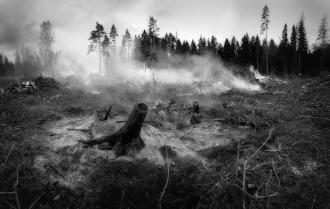[Source](https://pixabay.com/users/ojkumena-5540942/)
## Fire and Religion
William D. Nikolakis and Emma Roberts discuss in [“Indigenous fire management: a conceptual model from literature”](https://www.ecologyandsociety.org/vol25/iss4/art11/) how “fire is perceived through the lens of culture, and is rooted in mythology and religion” (Nikolakis and Roberts). Different cultures have different understandings of fire ecology.
For example, Ancient Greek mythology and Indigenous cultures from the Pacific Northwest have stories of fire stolen from the gods and gifted to humanity. Western religions, on the other hand, “cast fire as being pagan, destructive, and even apocalyptic, shaping modern Western perspectives on fire, and fire management” (ibid)
Western religions can help us recognize the awesome power and danger of fire, while Indigenous wisdom and Indigenous fire management (IFM) can help [ensure our ecosystems are healthy, balanced and safe ](https://interfaithsustain.com/ecological-balance/ "ensure our ecosystems are healthy, balanced and safe ")through controlled burns.
The concern of wildfire is high in the United States. To help reduce this risk, we need to understand how fire has traditionally played an integral part in ecological science and ecosystem dynamics. We also need to think about what steps are needed for future research on managing wildland fires that will be necessary for restoration programs on federal land.
The role of fire in the [ecology](https://interfaithsustain.com/ecology-and-environment/) and management of wildland landscapes is complex. Fires are a natural part of ecosystem dynamics that can be used for restoration purposes, but they also have costs to humans and wildlife alike. [Ecological science research](https://interfaithsustain.com/ecological-system/) and the study of fire ecology is vitally important to preserving our planet and has led us to understand not only how fires work, but what factors influence them so we can better manage the environment.
*\* Featured image [source](https://pixabay.com/users/geralt-9301/)*
**Categories:** Biodiversity, Blog on Faith and Ecology
**Tags:** Fire Ecology
---
### [Urban Ecology is Essential for Human Survival](https://interfaithsustain.com/urban-ecology/)
**Published:** July 30, 2021
**Author:** ICSD
**Excerpt:** Sydney Cohen - Urban ecology is the study of all living organisms in an urban environment. It focuses on the relationship between ecosystems and the layout of an urban environment, aiming to understand how we can better achieve a balance between the natural environment and human behavior, in urban areas.
**Content:**
Table of Contents
Table of Contents
- [What is Urban Ecology?](#aioseo-what-is-urban-ecology-2)
- [Urban Ecologists](#aioseo-urban-ecologists-6)
- [Why is Studying Urban Ecology So Important?](#aioseo-why-is-studying-urban-ecology-so-important-12)
- [Urban Ecology for 60% of the World Population](#aioseo-urban-ecology-for-60-of-the-world-population-16)
- [Urban Ecology Creates Green Spaces](#aioseo-urban-ecology-creates-green-spaces-23)
- [Communities Benefit from Urban Ecology](#aioseo-communities-benefit-from-urban-ecology-25)
- [Urban Ecosystems](#aioseo-urban-ecosystems-27)
- [Urban Population Density](#aioseo-urban-population-density-31)
- [Ecology in Urban Areas](#aioseo-ecology-in-urban-areas-34)
- [Urban Ecology and the Roles of Urban Agriculture](#aioseo-urban-ecology-and-the-roles-of-urban-agriculture-37)
- [Urban Ecology Success Stories](#aioseo-urban-ecology-success-stories-40)
- [Local Governments Increase Urban Ecology Development](#aioseo-local-governments-increase-urban-ecology-development-43)
- [Urban Ecology is our Future](#aioseo-urban-ecology-is-our-future-49)
*By Sydney Cohen* – Urban ecology is the study of all living organisms in an urban environment. It focuses on the relationship between ecosystems and the layout of an urban environment, aiming to understand how we can better achieve a [balance between the natural environment and human behavior](https://interfaithsustain.com/ecological-balance/ "balance between the natural environment and human behavior"), in urban areas.
## What is Urban Ecology?
The field aims to understand how human and ecological processes can coexist in human-dominated systems. Urban ecology has been described as a study of **humans in cities**, of **nature in cities**. It has been used variously to describe scientific relationships between humans and nature. This includes looking at how humans interact with natural systems, as well as how nature interacts with human systems in cities.
[Source](https://pixabay.com/users/akuptsova-1176597/)
### Urban Ecologists
Urban ecologists are typically interested in topics like [biodiversity](https://interfaithsustain.com/why-is-biodiversity-important/), ecological succession, ecosystem services, green infrastructure design, green space within cities, and [climate change](https://interfaithsustain.com/evidence-of-climate-change/) adaptation. They often study city planning, transportation, architecture, public health issues such as air pollution and water quality as well as [food security](https://interfaithsustain.com/food-production/) including local farming practices that exist in cities.
Urban Ecology has a unique focus on humans and natural systems. Each research area, in University, contributes to our understanding of urban ecosystems and each must be understood to fully grasp the science of Urban Ecology.
Urban Ecology is a science that can help societies with their efforts to become more sustainable.
- [](https://interfaithsustain.com/living-roof/)
## [Living In Harmony With Nature in Urban Areas With a Living Roof](https://interfaithsustain.com/living-roof/)
- [](https://interfaithsustain.com/sustainable-development-examples/)
## [Sustainable Development Examples Implemented Around The World](https://interfaithsustain.com/sustainable-development-examples/)
- [](https://interfaithsustain.com/principles-of-sustainable-development/)
## [Understanding The Principles of Sustainable Development](https://interfaithsustain.com/principles-of-sustainable-development/)
## Why is Studying Urban Ecology So Important?
Urban ecologists often have to consider how they can help make an urban environment better for its human inhabitants while still maintaining green space and healthy ecosystems overall. It is important to study because cities are becoming increasingly more common, so it is vital that we understand what effects they have on our natural environment.
### Urban Ecology for 60% of the World Population
By 2030, more than 2 billion people will live in cities – that is 60 percent of the world’s population. In addition to space in which to live, all of these people will need breathable air, drinkable water, and food. The entire planet is becoming more urbanized, a phenomenon that is already having a profound effect on the environment itself.
[Source](https://pixabay.com/users/igorovsyannykov-6222956/)
But large areas of green spaces exist within cities; they filter pollution and produce oxygen, and provide habitat for songbirds and other wildlife. Understanding the interactions of the living and nonliving components of these urban ecosystems is vital to the future of all life on earth, including ourselves.
Urban ecology is a particularly important field of study, given the rise in fossil fuel emissions that are contributing to climate change. Much of the emissions that poison our air and cause drastic environmental changes, [come out of city areas](https://www.unep.org/explore-topics/resource-efficiency/what-we-do/cities/cities-and-climate-change#:~:text=At%20the%20same%20time%2C%20cities,being%20among%20the%20largest%20contributors.).
This is why we must find ways to make our urban areas more livable and environmentally friendly, for both wildlife species and humans.
#### Urban Ecology Creates Green Spaces
Creating green spaces in urban environments has had incredibly beneficial effects on human health in the populations that utilize these spaces. [It has been found that](https://www.frontiersin.org/research-topics/20676/urban-ecology-and-human-health) “valuing nature and biodiversity exercises have begun to strengthen the case for investment in nature-based solution, prescribing nature walks and open space exercise, improving access to urban greenspaces and restoring derelict land,” demonstrating the success of urban ecology in expanding urban ecosystems.
#### Communities Benefit from Urban Ecology
Having a habitat within a city improves ecological processes, providing a home for plant and animal life. Simultaneously, humans reap these benefits as well, by being provided with a space within the city, where they can access nature. [Research has shown](https://www.frontiersin.org/research-topics/20676/urban-ecology-and-human-health) that the quality of life in humans is significantly higher when they have access to nature in their everyday life.
#### Urban Ecosystems
Urban ecosystems are not only about the plants and animals that live in urban environments, but also the social interactions of people. The way that cities are built can have a huge effect on animal habitats, as well as human health. What we do to our urban areas will determine how healthy they are and what kind of lives future generations will have.
While urban ecology studies the ecology of ecosystems in an urban context, it is important to understand the influence that cities and land use have on these habitats. Oftentimes, the way cities are designed affects the diversity of species that are found in urban habitats.
It is no mystery that cities are busy, with many people and businesses constantly moving about. You can imagine the impact this has on the abundance of species in cities.
#### Urban Population Density
Population density plays a huge role in the diversity of species in urban environments. Research in 2019 for the [Landscape and Urban Planning](https://www.sciencedirect.com/science/article/abs/pii/S0169204618309137) issue, indicated that while cities can harbor rich diversity in their species, it is important to create a variety of ecosystems within the city, man-made and natural.
Creating these spaces, in addition to preserving those that naturally exist, is one way that we can preserve the ecological diversity in our cities.
## Ecology in Urban Areas
Urbanization in developing countries is driven by economic benefits while developed countries can focus on efficiency reducing the impact of urban growth on the ecosystem. While urbanization has many detrimental effects on the ecosystem, it has also led to innovations aimed at reducing these effects such as water harvesting systems, energy-efficient homes, landscape planning, sustainable commuting, and green space accessibility.
Society is losing its appreciation for ecosystem services, thereby diminishing resilience in terms of mitigating problems such as air quality deterioration, restricted living space, urban heat island effect, urban health, groundwater scarcity, loss of water bodies, and so on.
### Urban Ecology and the Roles of Urban Agriculture
Urban Agriculture is considered to be valuable within cities. It is also important in the creation of green spaces, grasslands, green spaces, and wildlife. The roles of urban agriculture can also vary substantially between different areas.
It’s important to maintain water resources, maintain lakes and rivers, protect the environment and promote the health and sustainability of urban landscapes. We have to recognize that living organisms are not all alike in an urban environment, and their presence can vary substantially.
### Urban Ecology Success Stories
Kirsten is one of the Environmental Educators at the Urban Ecology Center. She talks about her “Equity, Dignity, and Justice” committee which “is dedicated to learning about oppression alongside our fellow staff at the UEC. As a Land Steward, I garden for wildlife. I do my best to keep wildlife out of the garden. Then I consider what plants I can add to the land for the benefit of wildlife. As a gardener, I enjoy pondering what food I can grow for myself and my family.”
Kirsten is a great example of the way we can take steps in our everyday lives to make our urban environments more eco-friendly.
### Local Governments Increase Urban Ecology Development
Additionally, there has been a rise in local government efforts to increase the management of ecology and biodiversity in urban communities. For example, The Noe Valley Community Benefits District in San Francisco was created by the San Francisco Green Business Team. It includes Urban Ecology, the Department of Public Health, and the San Francisco Department of the Environment.
[Source](https://pixabay.com/users/696188-696188/)
A thriving population of homegrown neighborhood artists has emerged in Oakland, California, encouraging community participation in the arts through after-school training programs and events for young adults, street banners, and murals.
A successful urban ecosystem has biodiversity, and humans experience the benefits of urban ecosystems by having access to nature.
### Urban Ecology is our Future
Hopefully, this article has expanded your knowledge on the importance of having successful and healthy habitats in our cities and towns. In this way we can have a more prosperous future with less environmental destruction, and we can work together to keep a diversity of species, even in our cities.
*\* Featured image [source](https://pixabay.com/users/blazejosh-64945/)*
**Categories:** Biodiversity, Blog on Faith and Ecology
**Tags:** Urban Ecology
---
### [What is The Concept of Political Ecology?](https://interfaithsustain.com/political-ecology/)
**Published:** August 13, 2021
**Author:** ICSD
**Excerpt:** Sydney Cohen - The study of political ecology is the combination of politics, which includes government and institutions, with ecology. It looks at how human activity impacts environments to produce natural resource scarcity or abundance.
**Content:**
Table of Contents
Table of Contents
- [Studying the Political Economy in Relation to Political Ecology](#aioseo-studying-the-political-economy-in-relation-to-political-ecology-4)
- [Environmental Determinism in Understanding Political Ecology](#aioseo-environmental-determinism-in-understanding-political-ecology-10)
- [Environmental Racism in Understanding Political Ecology](#aioseo-environmental-racism-in-understanding-political-ecology-18)
- [Political Ecologists](#aioseo-political-ecologists-20)
- [The Origin of the Term "Political Ecology"](#aioseo-the-origin-of-the-term-political-ecology-29)
- [The Development of Political Ecology](#aioseo-the-development-of-political-ecology-33)
- [Feminist Political Ecology](#aioseo-feminist-political-ecology-37)
- [A Leader in Feminist Political Ecology](#aioseo-a-leader-in-feminist-political-ecology-40)
- [Political Ecology In The University Of California Press](#aioseo-political-ecology-in-the-university-of-california-press-43)
- [The Journal of Political Ecology](#aioseo-the-journal-of-political-ecology-46)
- [Why Political Ecology is Essential to YOU!](#aioseo-why-political-ecology-is-essential-to-you-48)
*By Sydney Cohen* – The study of political ecology is the combination of politics, which includes government and institutions, with ecology. It looks at how human activity impacts environments to produce natural resource scarcity or abundance. For example, a drought in one country may lead to famine if there are not adequate food storage facilities available because people have depleted their resources in other areas like deforestation.
This blog post is about the ways that humans can interact with their environment. It goes into depth about how we have to think of our natural resources as a whole, rather than just individual parts, in order to make better decisions for future generations.
Continue reading to learn more about how our political landscape intersects with the environment, and what we can do to make the world a more sustainable place, for future generations!
## Studying the Political Economy in Relation to Political Ecology
The modern concept and term **political ecology** emerged in the late 1960s with a group of French scholars and activists, including Michel Foucault, who linked ecological ideas to questions of power. These scholars argued that it is important to study how different social groups interact with each other and the environment. They wanted to see connections between [environmental degradation](https://interfaithsustain.com/environmental-degradation-and-the-future-of-our-planet-earth/), social inequality, poverty and hunger.
The **political economy** is a term that addresses the intersection between politics and economics. It looks at how economic systems are structured, what forces influence them, and who benefits from their existence. The study of the political economy emerged as an intellectual movement in response to the **Industrial Revolution** and its negative impact on living conditions for many people.
Political ecology is also concerned with these issues, but it applies more specifically to environmental issues such as land use or resource extraction that have been shaped by political factors such as colonialism or [globalization](https://interfaithsustain.com/pros-and-cons-of-globalization/).
The study of urban political economy and ecology is an important one. Social scientists look at power relations (material and discursive) and dynamics in urban environments, often fueled by economic incentives, and examine the way that these power dynamics influence and shape the lives of humans and other species in city settings.
Given our increasing populations in cities, scientists recognize the importance of understanding the political-economic aspects of life and seek to understand ways that we can better our responses to environmental problems that are impacted by the economy, such as distribution of costs, access to and control of local food, nature, and natural resources, our relations to physical geography and how that works together with social and economic dynamics, and affects our social organization.
- [](https://interfaithsustain.com/ecological-model/)
## [The Ecological Model Is Used To Improve Health Programs](https://interfaithsustain.com/ecological-model/)
- [](https://interfaithsustain.com/ecological-restoration/)
## [The Importance of Ecological Restoration](https://interfaithsustain.com/ecological-restoration/)
- [](https://interfaithsustain.com/ecology-and-environment/)
## [Understanding Ecology and The Environment](https://interfaithsustain.com/ecology-and-environment/)
## Environmental Determinism in Understanding Political Ecology
Social sciences emphasize focus on cultural ecology – that is, how our culture is shaped by our physical geography. This is often referred to as [**environmental determinism**](https://interfaithsustain.com/environmental-determinism/), which understands cultural organization and behaviors as directly influenced by the physical geography of the land.
This is an incredibly important subfield of study, as it works to understand the ecology of various environmental problems, such as soil erosion, land degradation and society, costs and benefits of living in a physical space that allows for trade and commerce, human geography and human ecology, the environmental history of particular regions, and the field of political and economic geography.
Environmental determinism is vital to understanding the political and economic aspects of life, particularly in the study of third world political ecology. Over the hundreds of years that this field of study has been around, it has worked to understand economic development in regions, based upon their physical geography. It is a multi-disciplinary take on political ecology anthropological studies and has found that there are physical explanations for the success and challenges of different regions’ political development studies.
[Source](https://pixabay.com/users/bones64-219712/)
## Environmental Racism in Understanding Political Ecology
In the developing world, there is an uneven distribution of wealth and power, as many nations with more recent histories of colonization do not have the same resources and societal organization for thriving cultures and societies, which affects their political-economic landscape and income generation. Environmental change in a natural environment is not always realistic, and economic determinism is a solid explanation for why some countries have successfully developed democracies, and why others still struggle. This additionally affects studies of environmental justice in the context of environmental racism, as responses to environmental racism can be supported by understanding how geography anthropology directly affects the development of cultural ecology, organization, and society.
## Political Ecologists
A political ecologist is a political scientist with an ecological focus. The political ecology of a region, nation, or world can be studied by political ecologists in order to understand how political and economic forces interact with natural resources and landscapes. Political ecology can help us understand why some areas in the world are rich while other regions are poor.
For example, many people believe that oil-producing nations like Saudi Arabia have grown wealthy because they were fortunate enough to live near such valuable resources. However, this has not been true for all countries which have had access to petroleum.
Political ecologists study broader topics such as environmental politics and development studies. Within these studies, political ecologists can focus on subjects such as the political economy of soil, or the economy of soil erosion, for example.
[Source](https://www.pexels.com/photo/windmills-on-seashore-under-white-clouds-1108814/)
### The Origin of the Term “Political Ecology”
While the term political ecology was originally coined in 1935 by Frank Throne in an article, it was not popularized until 1972 when anthropologist Eric Wolf published an article titled “Ownership and Political Ecology”, that revolutionized the field.
This prompted many more studies in the 1970s and 1980s that focused on the topics of development geography and cultural ecology, topics that were becoming increasingly more relevant to our rapidly modernizing and globalizing world.
In these lines of study, geographer and scholar Piers Blaikie published many works on the sociopolitical [origins](https://en.wikipedia.org/wiki/Political_ecology) of soil erosion, and it was Blaikie 1985 that launched the popularity of the study of the political economy of soil, in particular. Harold Brookfield and Piers Blaikie also published a book on 1987 land degradation. Blaikie and Brookfield 1987 acknowledge the interconnectedness of land degradation and society, a more focused topic within the field of political ecology and political economy.
### The Development of Political Ecology
Historically, political ecology “research has sought primarily to understand the political dynamics surrounding material and discursive struggles over the environment in the third world,” according to geographer Raymond L. Bryant in his 1998 article.
Additionally, British geographer Richard Peet and University of California professor Michael Watts published “Liberation Ecologies: Environment, Development, Social Movements” in 2004. Peet and Watts explored the dynamic and power relations in our world, unpacking new ecological problems at the time and global ecological politics.
Even more modern than that, in 2019, Paul Robbins published “Political Ecology: A Critical Introduction”, creating an accessible exploration of the field. As the study of political ecology has grown exponentially in importance given the increasing globalization of our modern world, there have been many publications aiming to make the field more accessible to everyone.
## Feminist Political Ecology
Feminist political ecology is an emerging field of study that seeks to understand the intersectionality between feminist theories and environmental issues. The feminist political ecology studies how systems of oppression such as colonialism, patriarchy, capitalism, and racism have influenced ecological processes.
**Cristina Flesher Fominaya**‘s feminist political ecology is a feminist perspective on the field of environmentalism that focuses on “the relationship between social and ecological justice.” It takes into account how people are marginalized in society by race, class, or gender. The feminist political ecology view strives to understand how these different factors can harm both humans and ecosystems.
### A Leader in Feminist Political Ecology
Cristina Flesher Fominaya’s early work in the relationship between social justice and the environment paved the way to her current career, where she is the editor-in-chief of Social Movement Studies peer-reviewed academic journal, that covers social science research on social movements, collective behavior, and protests. According to her Loughborough University biography, where she has previously taught, “her work focuses on European and global social movement and politics with special attention to democracy, culture, collective identity and media,” and “she has won numerous international scholarships including the Marie Sklodowska-Curie IEF Fellowship, the National Science Foundation Fellowship, the German Marshall Fellowship, and the Leo Lowenthal Prize for Outstanding Paper in Culture and Critical Theory awarded by the University of California, Berkeley.”
Cristina Flesher Fominaya is only one example of a feminist political ecologist who has received an immense amount of university press, as a result of her rigorous academic accomplishments in political ecology and political-economic studies.
## Political Ecology In The University Of California Press
The University of California Press has released many articles on various topics of social sciences, political ecology and the political economy, such as on progress in human geography, environmental knowledge, and relations between human development and the environment.
They have many useful articles on their site, that are helpful to understanding the political landscape of different countries, and the relations between the political economy and the natural environment. Topics such as these include health and education, food sovereignty, and the use of local natural resources. Their website can be found [here](https://online.ucpress.edu/journals).
### The Journal of Political Ecology
An [additional resource](https://journals.librarypublishing.arizona.edu/jpe/site/About/) for learning more about studies within the field of political ecology is the Journal of Political Ecology. The Journal of Political Ecology studies **interdisciplinary** topics in the field of political ecology, such as “multi-scalar analysis of environmental issues and ecologies, access to resources (e.g. by race, gender, status, wealth), environmental and social justice, feminist, materialist, and intersectional theories, and studies of vulnerability and disadvantage.” These are all important issues to learn about if we want to better understand our world today, and formulate solutions to our societal and ecological problems.
## Why Political Ecology is Essential to YOU!
Political ecology is an incredibly important area of study if we want to understand the relationship between economic systems and our environment. It can be just as important to understanding our world today, and how it will evolve in the future. As we face a changing climate and an ever-changing geopolitical landscape, political ecology provides insight into why certain countries are more successful than others at forming functional democracies that prioritize **sustainable development** practices for their people.
It’s time we all start paying attention to this area of study if we want to understand what is happening around us – from changes in global temperatures to increased poverty rates worldwide.
According to Dominic Wilkins in [Where is religion in political ecology](https://journals.sagepub.com/doi/10.1177/0309132520901772), “the failure to critically engage with the study of religion has led political ecologists to neglect important factors in their analyses and has resulted in incomplete conceptualizations of interpersonal power relations.” Understanding political ecology and the role of religion can give us the understanding we need to save our planet and ourselves from environmental catastrophe.
*\* Featured image [source](https://pixabay.com/users/jordandemuth-1533215/)*
*Follow this link to learn more about [Ecological Balance](https://interfaithsustain.com/ecological-balance/ "Ecological Balance")*.
**Categories:** Biodiversity, Blog on Faith and Ecology
**Tags:** Ecology, Political Ecology
---
### [Social Ecology: The Correlation Between Environmental & Social Issues](https://interfaithsustain.com/social-ecology/)
**Published:** July 2, 2021
**Author:** ICSD
**Excerpt:** Sydney Cohen - Social ecology is one of the most important fields of study in sociology. It deals with the relationship people have to their social living environment, and how they interact with each other and the environment around them.
**Content:**
Table of Contents
Table of Contents
- [The Goal of Social Ecology](#aioseo-the-goal-of-social-ecology-4)
- [What is Social Ecology?](#aioseo-what-is-social-ecology-6)
- [The Principles of Social Ecology](#aioseo-the-principles-of-social-ecology-10)
- [Social Ecology Research](#aioseo-social-ecology-research-13)
- [The Social Ecological Model](#aioseo-the-social-ecological-model-15)
- [Human Beings, Human Society, Competition, and Social Ecology](#)
- [Example of the Intersection between Environmental and Social Issues](#aioseo-example-of-the-intersection-between-environmental-and-social-issues-25)
- [The Social Ecological Impacts of The Destruction of Rainforests.](#aioseo-the-social-ecological-impacts-of-the-destruction-of-rainforests-30)
- [Social Ecology from Biblical Sources](#aioseo-social-ecology-from-biblical-sources-32)
- [The Interconnectedness of All](#)
*By Sydney Cohen* – Social ecology is one of the most important fields of study in sociology. It deals with the relationship people have to their social living environment, and how they interact with each other and the environment around them. This includes looking at data like crime rates, poverty levels, education levels, social class, and hierarchy, as well as air quality and pollution levels, and focusing on topics such as population dynamics, resource management, and waste disposal.
## The Goal of Social Ecology
It seeks to understand how we are dependent on nature for our existence, but also how humans have negative impacts on it. The goal of social ecology is to create an **ecology of freedom** that promotes sustainability and [balance](https://interfaithsustain.com/ecological-balance/) between humans and nature.
[Source](https://unsplash.com/@lianamikah)
### What is Social Ecology?
[Social ecology](https://www.onlinemswprograms.com/social-work/what-is-social-ecology/#:~:text=Social%20ecology%20is%20the%20study,the%20environment%20as%20a%20whole.) is defined as the study of how human beings interact with and respond to their environment, and how these interactions and relationships influence society as a whole. The field of social ecology examines society holistically, attempting to understand exactly how society’s collective environmental problems stem from social problems, social interaction, and interaction with the environment. Social ecology applies ecological concepts to studying human society, as human beings and non-human beings initially originate similarly.
## The Principles of Social Ecology
The core [fundamental](https://www.socialworkdegreeguide.com/faq/what-is-social-ecology/) principles of social ecology are that: 1) ecological issues directly result from social issues, and these environmental problems will only resolve with the amending of social issues, 2) social factors, such as racism, poverty, sexism, and exploitation of developing countries lead to environmental problems.
Social ecology prioritizes the establishment of a more egalitarian society, promoting equality and cooperation with less focus on individual profiting, which frequently results in so many of our world’s social injustices. Social ecology believes that with less inequality in the world, there will be fewer environmental consequences.
- [](https://interfaithsustain.com/political-ecology/)
## [What is The Concept of Political Ecology?](https://interfaithsustain.com/political-ecology/)
- [](https://interfaithsustain.com/ecology-and-environment/)
## [Understanding Ecology and The Environment](https://interfaithsustain.com/ecology-and-environment/)
- [](https://interfaithsustain.com/ecological-restoration/)
## [The Importance of Ecological Restoration](https://interfaithsustain.com/ecological-restoration/)
### Social Ecology Research
Murray Bookchin, born in 1921 in New York, was a leading thinker in the field of social ecology. He wrote extensively about the importance of human relationships to our environment. He developed revolutionary ideas, such as deep ecology and social ecology, that built on the work of European philosophers like Plato and Rousseau. Murray Bookchin was an active socialist who had radical critiques of capitalism. He is best known for his thoughts on environmentalism and the need to create a society that will not harm the environment we live in, a core principle of social ecology. His work has been influential in shaping our understanding of what it means to be human: how we are embedded within nature, and how important it is to protect the Earth from ecological destruction.
### The Social Ecological Model
The study of social issues by examining the relationships between all of society’s working parts, that create a whole, brings us into the social-ecological model. The **social-ecological model** is a social science theory that analyzes the relationships between social factors and environmental factors. It was created by Urie Bronfenbrenner in 1979, who wanted to find a way to look at “the interplay of social institutions with individual development over time. The social-ecological model looks at five levels: microsystem, mesosystem, exosystem, macrosystem, and chronosystem.
The social-ecological model examines the interactions between microsystems (a child’s immediate and physical social environment), mesosystems (systems within the environment), exosystem (broader social, political, and economic conditions), macrosystems (shared beliefs and attitudes of a society). Bronfenbrenner believed that macrosystems influence exosystems, and exosystems directly influence microsystems, all of which affect a child’s development. This social-ecological model acknowledges that everything is connected and can be connected to something else, and to understand societal and environmental problems, one must understand how each system works and affects other systems for society’s function as a whole.
### Human Beings, Human Society, Competition, and Social Ecology
[Social ecology advocates](https://social-ecology.org/wp/1986/01/what-is-social-ecology/#:~:text=The%20massive%20oil%20spill%20by,sobering%20reminders%20that%20the%20real) that the underlying causes of ecological problems directly result from social problems. Capitalism, the majority of the world’s countries’ economic system, calls for competition and individual profit, industrial expansion, and corporate self-interest. Social ecologists have the perspective that the dismissal of ecological problems onto mechanical or technological failure or population growth, ignores economic, political, and social problems, as these are often at the root of accidents, such as oil spills or pollutants in the water, that harm our environment.
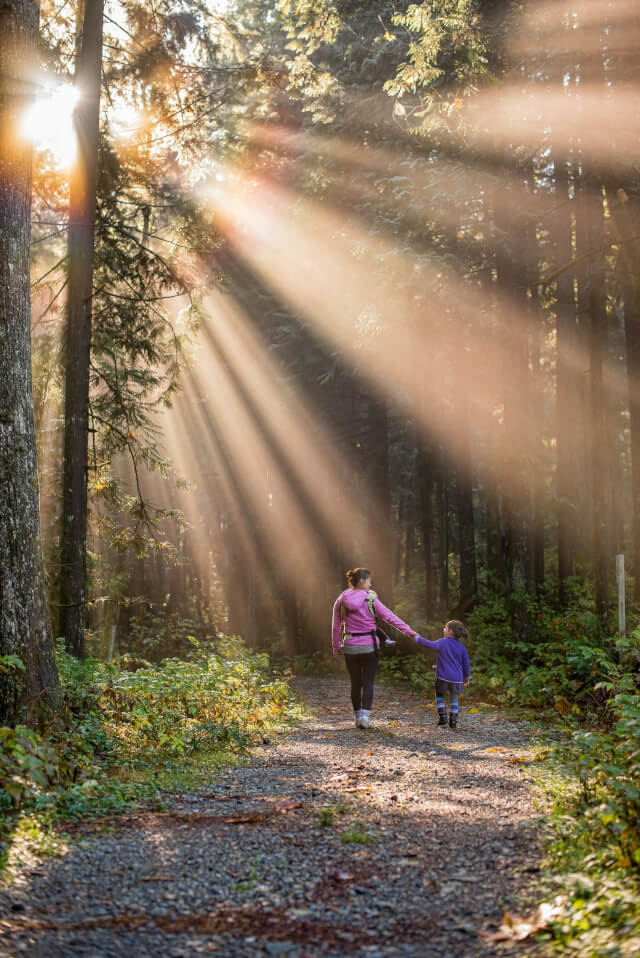[Source](https://unsplash.com/@souvenirpixels)
A social-ecological perspective is particularly applicable and usable by social workers to help their clients. So frequently, those needing help from social workers are at the bottom of society’s class hierarchy – impoverished families of color. “[**A holistic approach**](https://www.onlinemswprograms.com/social-work/what-is-social-ecology/) to finding out how a person or group of people landed in the position they’re in will help a social worker by giving them a look into some of society’s problems and what demographics they affect most.”
## **Example of the Intersection between Environmental and Social Issues**
An example of **environmental problems** stemming from hierarchical social issues, the crux of what is studied in the field of social ecology, is the deforestation of rainforests. Many communities rely on the natural resources in their nearby rainforests. However, competitive demand for palm oil results in [social conflict, land grabs, and loss of livelihood](https://www.spott.org/palm-oil-resource-archive/impacts/social/).
When large corporations buy up land to take advantage of the high demand and competition for natural resources, many conflicts occur. The first social conflict from this problem is between communities and the corporations that buy their land. The corporations are essentially stealing the natural resources from the communities that rely on them.
The next social conflict that occurs is between communities and non-native workers. Workers that are moved to work in these rainforests result in fewer jobs for the people who live there. Another social conflict that occurs is within these local communities, as often an income gap is created by those who are able to get jobs working for these large corporations, and those who do not.
Over 50 million Indonesians rely on their forests for their livelihoods. Capitalism not only depletes these natural resources when companies buy and exploit the land but also causes many social and cultural issues among the native groups and communities.
### The Social Ecological Impacts of The Destruction of Rainforests.
From a social ecology perspective, one would examine the environmental impacts of deforestation and exploitation of natural resources, such as [water pollution](https://interfaithsustain.com/effects-of-water-pollution/), air pollution levels, soil erosion, and flooding, in relationship to capitalism, competition, technological advancement, and profit. There are varying levels of social issues involved in deforestation, named above, and social ecology provides a framework to examine how our relationship to the environment, and our current environmental issues, results from the different facets of social issues.
## Social Ecology from Biblical Sources
**The relationship between human communities and the environment** is described in greater detail in [Eco Bible: Volume One: An Ecological Commentary on Genesis and Exodus](https://interfaithsustain.com/ecobible/): Exodus 9:29 – “Moses said to him, ‘As I go out of the city, I shall spread out my hands to the Lord; the thunder will cease and the hail will fall no more, so that you may know that the earth is the Lord’s.'”
In his story “The Master of Prayer,” Rebbe Nachman of Breslov comments that prayer flows best in nature, rather than in a city. He suggests that civilizations are actually more devoid of prayer and God, and how, despite popular opinion, nature actually provides more stability and feeling of civilization than a city.
This draws a similar comparison to social ecology. It emphasizes how our society, which we as human beings have created, has resulted in class hierarchies and an incredibly competitive and unequal economic system. As Rebbe Nachman suggests, perhaps our civilization is uncivilized.
We have a plethora of social issues and inequalities that not only affect human communities but the environment as well. Is it possible that nature, void of civilization and human touch, is a place where one can pray and find God, and where prayer flows best? Social ecology captures the interconnectedness of social and environmental problems so that ideally, the environment and human beings can coexist without inequalities.
#### The Interconnectedness of All
Ultimately, social ecology is about the process of working toward creating healthy and functioning environments in which people can thrive. It’s a complex system that begins with understanding the interconnectedness of all aspects of society and their impact on ecological problems. That means we must first address our world’s social problems to create [sustainable living](https://interfaithsustain.com/environmental-sustainability/) conditions for everyone – including ourselves.
*\* Featured image [source](https://unsplash.com/@dragonfruit)*
**Categories:** Biodiversity, Blog on Faith and Ecology
**Tags:** Social Ecology
---
### [Understanding Ecology and The Environment](https://interfaithsustain.com/ecology-and-environment/)
**Published:** August 16, 2021
**Author:** ICSD
**Excerpt:** Sydney Cohen - The word ecology is derived from the Greek "oikos" which means home. Ecology, then, is the study of how organisms interact with each other and their environment in order to maintain a stable system.
**Content:**
Table of Contents
Table of Contents
- [The Difference Between Ecology and Environmental Studies](#aioseo-the-difference-between-ecology-and-environmental-studies-2)
- [Environment](#aioseo-environment-4)
- [Ecology](#aioseo-ecology-6)
- [An Ecosystem in Ecology](#aioseo-an-ecosystem-in-ecology-8)
- [Who Researches Ecology?](#aioseo-who-researches-ecology-10)
- [The Role of Ecology in Our Lives](#aioseo-the-role-of-ecology-in-our-lives-14)
- [Ecology Research](#aioseo-ecology-research-18)
- [Non-Native Species Disrupt The Ecology](#aioseo-non-native-species-disrupt-the-ecology-20)
- [A Biodiverse Ecology](#aioseo-a-biodiverse-ecology-24)
- [Agroecology](#aioseo-agroecology-26)
- [Ecology and Environment from Biblical Sources](#aioseo-ecology-and-environment-from-biblical-sources-30)
- [Act NOW to Protect Ecology and Improve Our Environment!](#aioseo-act-now-to-protect-ecology-and-improve-our-environment-36)
*By Sydney Cohen* – The word ecology is derived from the Greek “oikos” which means home. Ecology, then, is the study of how organisms interact with each other and their environment in order [to maintain a stable system](https://interfaithsustain.com/ecological-balance/ "to maintain a stable system"). The central idea behind ecology is that everything living on earth exists together, not as separate entities fighting for survival but as a whole – a complex ecosystem – that must be understood in order to survive.
## The Difference Between Ecology and Environmental Studies
Both fields play a role in educating individuals about the importance of protecting and preserving our planet. However, environmental studies is a far broader field encompassing scientists, geographers, assessors, analysts, and many other professionals. Ecology is a more specialized and focused field of study.
### Environment
**Environmental science** is an interdisciplinary field focused on humans’ impact on the environment. Environmental science seeks to protect both human beings and the environment from negative factors such as climate change and pollution, and other things.
### Ecology
**Ecology** seeks to understand how ecosystems develop, how humans can have a negative impact on those ecosystems. Ecology is the study of the relationships between living organisms: humans and animals, animals and plants, plants and organisms.
#### An Ecosystem in Ecology
An ecosystem is a geographic area that includes organisms and nonliving parts of their physical environment. An ecosystem can be a wilderness area, a suburban lake or forest, or a heavily used area such as a city. The more natural an ecosystem is, the more ecosystem services it provides. These include cleansing the water (wetlands and marshes) and air (forests) and pollinating crops and other important plants (insects, birds, bats), and absorbing and detoxifying pollutants (soils and plants). An ecosystem has important ecological services, such as pollination of crops, pollination, air, and absorption and detoxification of pollutants.
- [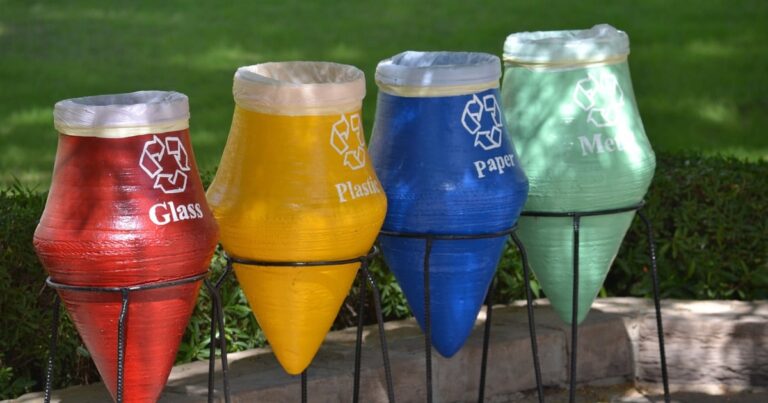](https://interfaithsustain.com/environmental-awareness/)
## [Environmental Awareness Plus Global Action Could Lead To Change](https://interfaithsustain.com/environmental-awareness/)
- [](https://interfaithsustain.com/ecology-and-environment/)
## [Understanding Ecology and The Environment](https://interfaithsustain.com/ecology-and-environment/)
- [](https://interfaithsustain.com/daoism-and-the-construction-of-sustainable-societies/)
## [Daoism and the Construction of Sustainable Societies](https://interfaithsustain.com/daoism-and-the-construction-of-sustainable-societies/)
## Who Researches Ecology?
**Ecologists** study relationships among organisms and habitats. Ecologists also study complex interactions between plants, animals, and other communities found in ecosystems all over the world. For example, they study microbes in soil in a forest, or on the ocean bed or in a tropical rain forest in order to understand ecosystems and their organisms’ relationships with each other. Both scientists and ecologists use principles of scientific analysis. Ecologists and environmental scientists interact with the environments they study by collecting data, analyzing information, organizing evidence, and writing reports about their findings. They observe air and water quality, [preservation of biodiversity](https://interfaithsustain.com/why-is-biodiversity-important/), accessibility to resources, among other subjects.
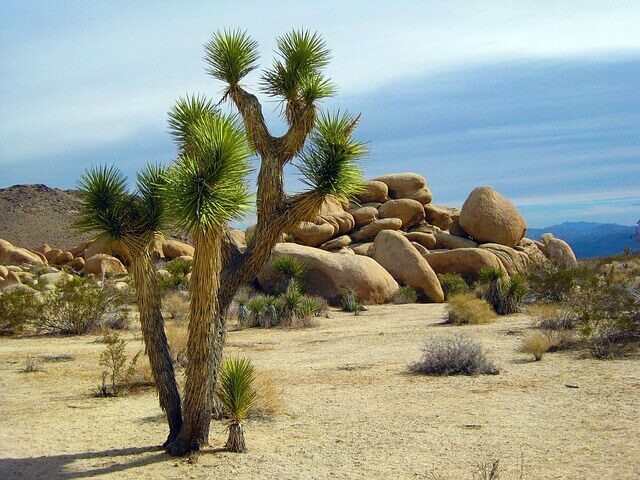[Source](https://pixabay.com/users/sspiehs3-3438126/)
### The Role of Ecology in Our Lives
Ecological specialties include marine, vegetation, and statistical ecology. This information can help us improve our environment and manage our natural resources. Ecological knowledge has positively influenced our lives, as well as our own human health.
## Ecology Research
A [new report](https://esajournals.onlinelibrary.wiley.com/doi/full/10.1002/ecs2.3501) on the ecology of the Pacific Northwest was published by researchers from the University of North Texas, Georgia Southern University, and the Cary Institute of Ecosystem Studies. It presents new research, that identifies a hybrid of two species of sand-stabilizing beach-grasses introduced to the Pacific Northwest starting in the early 1900s. In the study, it was stated that this new understanding of “the ecological and population genetic consequences of this novel hybridization event is of the utmost importance in a system where any change in dominant beach-grass species can have large effects on both biodiversity management and coastal protection.” This is just one example of the importance of [ecological studies](https://interfaithsustain.com/political-ecology/), in understanding, maintaining, and restoring our ecosystems that face increasing threats from human activities, climate change, and declining biodiversity.
## Non-Native Species Disrupt The Ecology
Introduced species, not originally from a given area, compete with plants, animals, and microbes of an existing ecosystem, damaging the environment in the process. The gypsy moth, for example, a native of Asia, wreaks havoc on forest lands in other continents by defoliating or eating the leaves off of trees. Ecologists were able to devise minimally toxic approaches to control gypsy moths’ numbers by targeting vulnerable stages in their life cycle in order to control numbers of their numbers. This is another example of the many important uses of knowledge obtained through ecological studies.
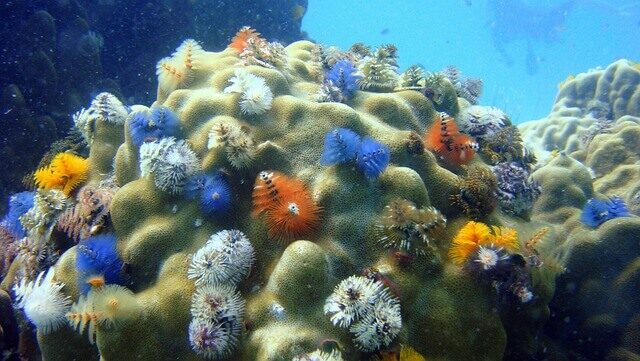[Source](https://pixabay.com/photos/christmastree-worms-close-up-coral-202320/)
## A Biodiverse Ecology
Ecology provides the essential basis for nature conservation. Maintaining a mosaic of habitats ensures the survival of species. They key for a species to survive is that we do not harm its **habitat**. For example, as soon as we destroy a forest, an ocean or a desert we eliminate all the living creatures living within it. That is we alter the **biodiversity** that exists in a specific ecological system.
### Agroecology
Agroecology provides an interdisciplinary framework with which to study the activity of agriculture. The term agroecologist can be used in multiple ways, as a science, as a movement, and as a practice. Broadly stated, it is the study of the role of agriculture in the world in which agriculture does not exist as an isolated entity but as part of an ecology of contexts.
## Ecology and Environment from Biblical Sources
> The bible teaches us the importance of conserving habitats and biodiversity, and particularly preserving and restoring our relationship to the earth. This is described in greater detail in [Eco Bible: Volume One: An Ecological Commentary on Genesis and Exodus](https://interfaithsustain.com/ecobible/): Genesis 23:13 – “And \[Abraham\] spoke to Ephron in the hearing of the people of the land, saying, ‘If only you would hear me out! Let me pay the price of the land; accept it from me, that I may bury my dead there.'”
>
> Rabbi Matis Weinberg interprets this verse, understanding that “it is the underlying relationship with the earth that needs to be restored,” and that, “if we lose sight of that connection we lose all connection to ourselves and to life.”
This emphasizes the need for humans to reconnect with the earth, ultimately restoring this relationship, and working toward preserving our ecosystems as we would preserve ourselves. Let us work together, starting now! Together, we can make the world a more sustainable place for generations to come. The effects of climate change are becoming increasingly evident and as population growth continues apace, it will be crucial that we address these issues with an eye [towards sustainability](https://interfaithsustain.com/environmental-sustainability/) in order to preserve our ecosystems.
### Act NOW to Protect Ecology and Improve Our Environment!
With your help and support today, let’s start working towards global ecological sustainability by implementing policies that reduce greenhouse gas emissions; taking care not to overexploit natural resources; utilizing [renewable energy sources](https://interfaithsustain.com/renewable-and-non-renewable-resources/); reducing water consumption through smarter irrigation practices as well as optimizing agricultural production using organic farming principles.
We must make a global effort, including populations all around the world, to work towards future ecological sustainability. Let’s work together to make the world a more sustainable place, for generations to come!
*\* Featured image [source](https://pixabay.com/users/alainaudet-631535/)*
**Categories:** Biodiversity, Blog on Faith and Ecology
**Tags:** Ecology, Environment, Oikos
---
### [Deep Ecology: What Is It and Why It Matters](https://interfaithsustain.com/deep-ecology/)
**Published:** July 9, 2021
**Author:** ICSD
**Excerpt:** Matthew Mausner - Deep ecology is a movement and approach to living that pursues respect and compassion between people and all species. There were always ways of life that might be loosely called deep ecology.
**Content:**
Table of Contents
Table of Contents
- [What is deep ecology?](#aioseo-what-is-deep-ecology-9)
- [Deep Ecology and A Language Older Than Words](#aioseo-deep-ecology-and-a-language-older-than-words-12)
- [Deep Communication with Animals](#aioseo-deep-communication-with-animals-14)
- [Deep Fear and Suppression](#aioseo-deep-fear-and-suppression-17)
- [Other Species and Deep Ecology](#aioseo-other-species-and-deep-ecology-19)
- [Deep Ecologists Ask: What if humans aren't the center?](#aioseo-deep-ecologists-ask-what-if-humans-arent-the-center-22)
- [The Garden of Eden and a Deeper Ecology](#aioseo-the-garden-of-eden-and-a-deeper-ecology-31)
*By Matthew Mausner* – Deep ecology is a movement and approach to living that pursues respect, compassion and [balance](https://interfaithsustain.com/ecological-balance/ "balance") between people and all species. There were always ways of life that might be loosely called **deep ecology**. People like American Indian groups embedded their lives and beliefs in close relationship to nature. Groups like the Amish practice ‘organic agriculture’ and forms of related full cycle [permaculture](https://modernfarmer.com/2016/04/permaculture/). A few iconoclastic writers and philosophers like Henry David Thoreau and John Muir held the wholeness of nature as a high value.
Galvanized by Rachel Carson’s famous 1961 book “Silent Spring” about the impacts of DDT on birds, a genuine movement arose that questioned the rampant industrialization and expansion of Western civilization. Pollution, habitat destruction, and many other negative ‘externalities’ to the economy were recognized as serious problems in need of regulation and remediation.
The movement won significant early victories in the U.S., like the banning of the pesticide DDT, and passage of the Clean Air and Water acts. But some thinkers and activists believed that this type of response to the impacts of [industrial civilization](https://interfaithsustain.com/sustainable-clothing/) did not go far enough.
[Edward Abbey](https://www.abbeyweb.net/), an itinerant park ranger and fire scout in the American West starting in the 1960s, wrote a set of fictionalized books about a group of highly motivated activists who engaged in direct action to protect old growth trees, pristine deserts and mountains, and endangered habitats fast succumbing to the encroachments of mining, logging, sprawl, and tourism. Abbey’s book ‘Monkey Wrench Gang’ threw a proverbial ‘monkey wrench’ in industry’s consumption of nature.
[Source](https://interfaithsustain.com/)
- [](https://interfaithsustain.com/fire-ecology/)
## [Fire Ecology: Its Importance for Forest Health](https://interfaithsustain.com/fire-ecology/)
- [](https://interfaithsustain.com/ecological-model/)
## [The Ecological Model Is Used To Improve Health Programs](https://interfaithsustain.com/ecological-model/)
- [](https://interfaithsustain.com/ecological-restoration/)
## [The Importance of Ecological Restoration](https://interfaithsustain.com/ecological-restoration/)
## What is deep ecology?
A set of more comprehensive philosophies began to form around these principles and around the intuition of a fabric of wholeness to nature. The term “deep ecology” was coined by Norwegian philosopher Arne Naess in 1972 to describe and empower these idealists.
As [Dr. Peter Madsen defines it](https://www.britannica.com/topic/deep-ecology), “Deep ecology distinguishes itself from other types of environmentalism by making broader and more basic philosophical claims about metaphysics and social justice. Sometimes called an “ecosophy,” deep ecology offers a definition of the self that differs from traditional notions and is a social movement that sometimes has religious and mystical undertones.”
### Deep Ecology and *A Language Older Than Words*
Thinkers such as Derrick Jensen and Lierre Keith became notable proponents of the movement. Jensen’s seminal book [*A Language Older Than Words*](https://www.goodreads.com/book/show/60970.A_Language_Older_Than_Words) explores human relationships to all the nonhuman life around us, speculating and questioning why and how most modern humans in civilization have become so alienated from all these other species around us. If only human interests are driving our interactions, if the **intrinsic value** of **non human** life-forms are not respected by humans except to satisfy vital **human needs**, human life becomes very lonely- and very dangerous to the rest of the web of life around us.
### Deep Communication with Animals
In the preface to his book, [Derek Jensen described](https://www.amazon.com/A-Language-Older-Than-Words-audiobook/dp/B07N7P4LV4) a small event that sparked his desire to write his book: he had been raising chickens and ducks, and discovered that coyotes were coming and breaking into the coop and eating them when Jensen was not nearby supervising. One time when he actually saw a coyote nearby stalking his chickens. Out of a sort of frustration, he asked the coyote to stop stalking and eating his chickens. As he then recounts, the coyote *did stop*, and neither it nor its pack members returned. While he was skeptical that it ‘meant anything’, it fed a growing suspicion that “interspecies communication might be real.”
At first he thought he was crazy, as this went against ‘official narratives’ in school, church, science, all of our dominant conception of ourselves as the only ‘sentient’ beings. But over time, he shared this story with people and asked if they had experienced anything similar, and found that more often than not, the answer was… yes. They also had experienced what they described as real, two-way communication, with “pigs, dogs, squirrels, even rivers, trees, and rocks!”
### Deep Fear and Suppression
Yet those he shared with, too, feared that if they shared these stories then other people would think they were crazy. He began to wonder if this was a widely shared intuition and experience that was actively being suppressed. Looking back at the expansion of civilization, the [subjugation of nature](https://interfaithsustain.com/environmental-ethics/) along with the more widely discussed stories of subjection of women, or of enslaved people, or of various ethnic groups, came into focus. As he puts it, “if the salmon or the chickens or the forests could write a book, what would it be like?”
## Other Species and Deep Ecology
This insight led Jensen, and other thinkers including Lierre Keith, [Stan Goff,](https://www.americanswhotellthetruth.org/portraits/stan-goff) John Zerzan, and others, to explore these ideas in deeper directions. Anthropology from important contributors like [Marshall Sahlins](https://en.wikipedia.org/wiki/Marshall_Sahlins) had noticed that most hunter-gatherers seemed to live in an abundant state he called the ‘original affluent society’, with a sort of full-field awareness and perception of all the species around them, all the plants, birds, animals, insects, and even their annual cycles and songs and migrations.
These deep ecologists asked- how did we stop paying attention? How had we numbed ourselves to our own experience of the voices and vital, intentional lives of all the non-human life around us? How had we ‘tuned out’? And what were the consequences of that tuning out- what harm did it cause?
### Deep Ecologists Ask: What if humans aren’t the center?
Many of the philosophies, disciplines, and movements of the 20th century have had holistic aspects, and have made more space for [environmental concerns](https://interfaithsustain.com/environmental-racism/). But in the point of view of the deep ecologists, these other approaches suffer from being too shallow. As Henry David Thoreau said, “for every hundred people hacking at the branches of the tree of evil, one person is hacking at the roots.”
While any of these other movements that work on the flourishing of human society with respect to reducing injustice, or improving the rights of women and of oppressed minorities, might appear to be good things, if they implicitly allow business as usual to continue in a way that consumes and destroys the richness and diversity of all the non-human nature, then deep ecology would still place them on the side of ‘part of the problem.’
Deep ecology asks us to reconsider the fundamental relationship humans have with nature, and to question if even something like industrial civilization itself, that most of us take for granted, is itself a monumental assault on the wholeness of **life on earth**.
John Zerzan and some other ‘primitivists’ take this exploration even further. They note anthropological and archaeological evidence that human society was small-scale, peaceful bands for many millenia before civilization, who may have even had [bigger brains and higher intelligence](https://theanarchistlibrary.org/library/john-zerzan-future-primitive) than humans in the most recent 6,000 years since large-scale civilization expanded. He posits that division of labor, hierarchy, and even something as seemingly basic as language, were all steps ‘down’ from that optimal engaged, holistic interaction of humans with the environment and with each other.
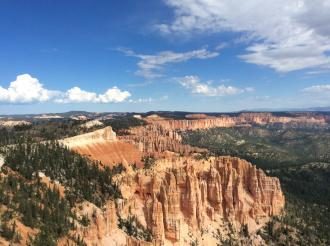[Source](https://interfaithsustain.com/)
### The Garden of Eden and a Deeper Ecology
Religious traditions have always had an ambivalent attitude about civilization, and about controlling or dominating nature. The story of the Paradise in the Garden of Eden is deeply familiar and rings true for many people because it clearly is at least built in part on aspects of the true history detailed above, however many generations removed from it we may be now. Jewish tradition details how animals could speak to humans in the garden, that all of the web of life was ‘up one level’ of consciousness; this would seem to corroborate Jensen’s insights.
Genesis 2:19 and Deep Ecology
Genesis chapter 2 verse 19 states “And the Lord God formed out of the earth all the wild animals and all the birds of the sky, and brought them to the man to see what he would call them; and whatever the man called each living creature, that would be its name.”
As Rabbis Yonatan Neril and Leo Dee write in [Eco Bible: Volume 1: An Ecological Commentary on Genesis](https://www.amazon.com/Eco-Bible-Ecological-Commentary-Genesis/dp/173533880X/),
> God created animals after people in the second creation story, with the purpose of Adam naming the animals. Adam was engaged in a relationship of recognition and non-violent interaction: I-Thou, not I-It. Today, encountering meat in a supermarket is an I-It relationship, but encountering animals directly – from a bird nesting in a nearby tree, to an eagle soaring high overhead – can be I-Thou. The language the Bible uses for insects, animals, and people is *nefesh chaya*, literally “a soul of life.”
>
> As a Jewish oral tradition (Midrash Pirkei D’Rabbi Eliezer) notes regarding Adam and Eve’s burial of their son Abel: “Adam and his partner came and cried \[over Abel\], and they didn’t know what to do. . . One raven whose companion died said, ‘I will teach Adam this is what to do.’ The raven set down his friend and dug in the earth before their eyes and buried him. Adam said, ‘Like the raven, this is what we will do.’”
>
> Rabbi David Seidenberg writes, “The rabbis that told these stories clearly thought that we could learn God’s ways by observing the other animals. The thread that unites these midrashim is that the animals come to us as teachers, providing moral examples for us; they are not just presented as vassals or objects to be taken care of. We can learn from them only by humbly standing in relation to them, i.e., by ‘under-standing,’ in the truest and deepest sense of the word.” As the rabbis said, “Even if the Torah had not been given we would have been able to learn modesty from the cat and an aversion to theft from the ant.” Indeed, the Book of Proverbs states, “Lazybones, go to the ant; study its ways and learn.”
Early European explorers to the New World mention similar stories, animals who were unafraid, and native tribes who were confident in their close communication with the cornucopia of life around them. Stories of life among American Indians in the period before they were conquered and colonized also contain many stories of idyllic, close communion and cooperation with nature.
Deep Ecology in Protests and Politics
Some modern activist groups like Extinction Rebellion and Earth First! have taken deep-ecology ideas into fairly extreme forms of protest action to protect nature. ‘No compromise in defense of Mother Earth’ became the slogan of many who believed that the mortal danger posed to the web of life on earth by industry must be fought in ways more direct and even extreme than the typical persuasive and legislative means peaceful activists employed.
Deep ecology ideas have been seeping into the mainstream, as Green parties and the Green New Deal ideas in many countries increasingly adopt visions of the future informed by these kinds of awareness. One hopes that a true integration of the spiritual with the practical, as deep ecology would advise, can open the path to a truly sustainable, fully alive future of human and non-human alike.
*\* Featured image [source](https://interfaithsustain.com/)*
**Categories:** Biodiversity, Blog on Faith and Ecology
**Tags:** Deep Ecology
---
### [Create Repurposed Materials to Reduce Your Carbon Footprint](https://interfaithsustain.com/repurposed-materials/)
**Published:** May 2, 2022
**Author:** ICSD
**Excerpt:** Sydney Cohen - There's a lot of talk these days about being environmentally conscious and the three Rs: reducing, reusing, and recycling. But here is another R: repurposing! Repurposing materials is a great way to reduce your environmental impact while also creating something new and unique.
**Content:**
Table of Contents
Table of Contents
- [Repurposing: Examples](#aioseo-repurposing-examples-2)
- [Old Fire Hoses](#aioseo-old-fire-hoses-4)
- [Repurpose Natural Elements](#aioseo-repurpose-natural-elements-9)
- ['repurposedMATERIALS'](#aioseo-repurposedmaterials-14)
- ['repurposedMATERIALS' on Facebook](#aioseo-repurposedmaterials-on-facebook-18)
- [A 'repurposedMATERIALS' Project](#aioseo-a-repurposedmaterials-project-20)
- [America's Largest Industrial Thrift Store](#aioseo-americas-largest-industrial-thrift-store-25)
- [Repurposing and Religion](#aioseo-repurposing-and-religion-27)
- [The Importance of Repurposing Materials](#aioseo-the-importance-of-repurposing-materials-32)
*By Sydney Cohen* – There’s a lot of talk these days about being environmentally conscious and the **three Rs**: reducing, reusing, and recycling. But here is another R: **repurposing**! Repurposing materials is a great way to reduce your environmental impact while also creating something new and unique. In this blog post, we will discuss some of the best ways to repurpose common materials into something useful and beautiful!
## Repurposing: Examples
There are many ways to be creative using **repurposed materials** that reduce your carbon footprint and give materials a second life. One way is to use old fabric to make new pillows. Another is to use recycled glass to make new kitchen countertops. You can also use recycled wood to create new furniture.
### Old Fire Hoses
It is very possible to repurpose an old fire hose. Because fire hoses are generally not recyclable, using them as repurposed material is a sustainable solution instead of throwing them away. There are various companies, such as [Recycled Firefighter](https://recycledfirefighter.com/), that “reuse the canvas from discarded fire hoses and donate back to the local burn unit at their local hospital,” to make wallets, belts, notebook covers, and more.
Another company, “[Hu-Made](https://humade.nl/products/hu-made-fire-1) in the Netherlands is making furniture from reclaimed fire hoses.” You can also buy old fire hoses to repurpose, making them into swings, rugs, hanging light fixtures, and more. Feel free to get creative!
## Repurpose Natural Elements
While the primary goal of repurposing by products and waste is to make sustainable use of materials that are harder to recycle, you can also repurpose natural materials, such as those found in nature. Repurpose pine cones by spray painting them, to use as decoration around the house or as ornaments!
The possibilities are endless when it comes to repurposing materials! There are many ways to give new life to old objects. From upcycling [furniture](https://interfaithsustain.com/sustainable-furniture/) to turning scraps into art, there is something for everyone. So get inspired and start creating!
[Source](https://pixabay.com/users/momentmal-5324081/)
- [](https://interfaithsustain.com/waste-free-living/)
## [Waste Free Living – The Benefits of Living With a Conscience](https://interfaithsustain.com/waste-free-living/)
- [](https://interfaithsustain.com/household-battery-recycling/)
## [Methods For Household Battery Recycling](https://interfaithsustain.com/household-battery-recycling/)
- [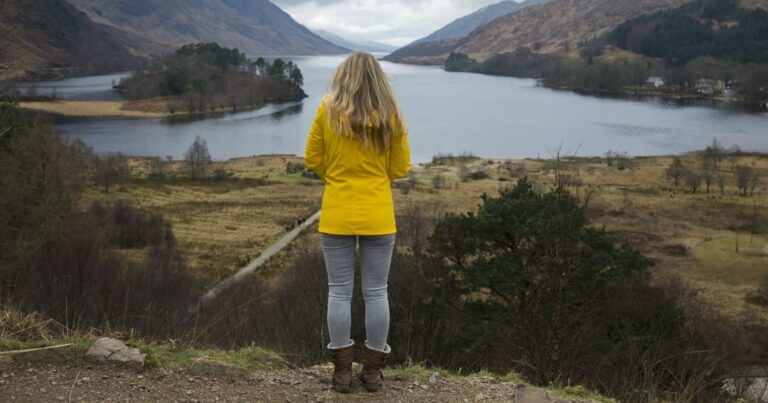](https://interfaithsustain.com/how-to-go-zero-waste/)
## [Everything You Need To Know On How To Go Zero Waste](https://interfaithsustain.com/how-to-go-zero-waste/)
## ‘repurposedMATERIALS’
‘[repurposedMATERIALS](https://www.repurposedmaterialsinc.com/)‘ (rpm) is a company that works to connect people through the repurposing of various materials. They have a newsletter on their website, where they post inquiries of people looking to do specific building projects that use repurposed materials.
### ‘repurposedMATERIALS’ on Facebook
There has been a recent rise in the ‘repurposedMATERIALS’ [Facebook](https://www.facebook.com/RepurposedMaterials/) page. Their Facebook posts pictures and captions are of examples of larger-scale projects, built from repurposing materials that are less easily recycled.
#### A ‘repurposedMATERIALS’ Project
[Source](https://pixabay.com/users/karin_van_duke-1262731/)
On the ‘repurposedMATERIALS’ [newsletter](https://repurposedmaterialsinc.us4.list-manage.com/subscribe?u=fb3fd57f2eab9a4411ad0060c&id=56e275107a), they posted an inquiry from Gary, saying, “We are constructing a new Elephant exhibit at our Zoo. One of the things we need to construct obviously is an elephant proof fence around their yard…We have heard of other elephant facilities that have built their containment from old oil and gas drilling sleeves or pipes and we were wondering if any of those have come across your way…Any assistance you may be able to offer is appreciated.”
Gary’s project attempted to repurpose materials, such as walls from the oil and gas industry. The ‘repurposedMATERIALS’ newsletter provides a way to email those with inquiries a response, particularly if they are asking for specific products to repurpose.
#### America’s Largest Industrial Thrift Store
‘repurposedMATERIALS’ is considered [America’s largest industrial thrift](https://www.appa.org/repurposedmaterials-americas-largest-industrial-thrift-store/) store for a reason. Their large network of those looking to start repurposing projects and those looking to get rid of old materials proves that this is a growing industry of sustainability.
## Repurposing and Religion
While this blog post has been discussing the positive aspects of **repurposing to reduce waste**, there are also more controversial aspects of repurposing. This is clearly seen in the repurposing of religious centers, as an article in [Deseret News](https://www.deseret.com/2020/11/5/21546689/daniel-peterson-religious-building-repurposed-aztec-tenochtitlan-mexico-dome-rock-jerusalem-hagia) presents. Around the world, religious sites that were used by one religion, are taken over by a second, and maybe even a third and fourth.
Repurposing can give new value to the value-less but it can also be a way to violently appropriate the priceless. It is up to us to approach repurposing with reverence and thereby help each item and place achieve its Divine purpose.
## The Importance of Repurposing Materials
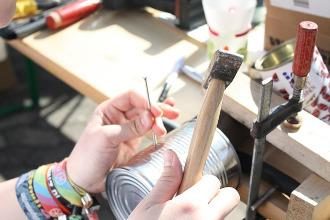[Source](https://pixabay.com/users/citypraiser-5515777/)
All in all, repurposing is a great way to reduce waste, help the environment and [transform a non-renewable resource into a renewable resource](https://interfaithsustain.com/renewable-and-non-renewable-resources/ "transform a non-renewable resource into a renewable resource"). It can also be a cost-effective way to get more use out of materials you already have. You may be surprised at how many different things you can make from old clothes, magazines, or even plastic bottles.
*\* Featured image [source](https://pixabay.com/users/lisaredfern-910282/)*
**Categories:** Blog on Faith and Ecology, Recycling
**Tags:** Recycling, Repurposing
---
### [Assessing The Environmental Impact of Downcycling](https://interfaithsustain.com/downcycling/)
**Published:** April 4, 2022
**Author:** ICSD
**Excerpt:** Sydney Cohen - Downcycling is the process of turning waste materials into new products of lesser quality. This is often done as a way to reduce the amount of waste that is produced, and it can be a sustainable way to reuse materials. This can be done by either reprocessing the material into a new product that uses less of the original material, or by using the material in a way that does not require as much processing.
**Content:**
Table of Contents
Table of Contents
- [Downcycling to Reduce Plastic Pollution](#downcycling-to-reduce-plastic-pollution)
- [Downcycling Plastic Into Fleece](#downcycling-plastic-into-fleece)
- [The Benefits of Downcycling Plastic](#the-benefits-of-downcycling-plastic)
- [The Downsides to Downcycling](#the-downsides-to-downcycling)
- [Downcycling and Religion](#downcycling-and-religion)
- [Is Downcycling an Eco-Friendly Solution to Waste?](#is-downcycling-an-eco-friendly-solution-to-waste)
*By Sydney Cohen* – **Downcycling** is the process of turning waste materials into new products of lesser quality. This is often done as a way to reduce the amount of waste that is produced, and it can be a sustainable way to reuse materials. This can be done by either reprocessing the material into a new product that uses less of the original material, or by using the material in a way that does not require as much processing.
For example, when you recycle a plastic bottle, it can be turned into a lesser-quality plastic product like a park bench or PVC flooring. In this blog post, we will discuss the benefits and drawbacks of downcycling and provide some examples of how it can be used in everyday life.
## Downcycling to Reduce Plastic Pollution
The world is facing a [plastic pollution crisis](https://interfaithsustain.com/reusable-grocery-bags/ "plastic pollution crisis"). **Plastic bottles** are a major contributor to this problem. It is estimated that over 500 billion plastic bottles are produced each year, and that number is growing.
Most of these plastic bottles end up in landfills or the ocean, where they pollute the planet’s ecosystems. Some of them are recycled.
Did you know that there is a whole process that happens between the time you toss your empty water bottle, plastic bags, or other plastic products in the recycling bin and the time it becomes a new plastic product? A process that is very energy intensive, producing its own waste materials. That’s right – there’s a lot more to recycling plastic than just tossing it in a bin.
### Downcycling Plastic Into Fleece
There are a variety of fleece and carpeting materials that can be produced from downcycling plastic. Downcycling breaks down the original materials into their component parts and then rebuilds them into something new.
There has been a recent trend in the fleece and carpeting industries to use downcycled materials in their products. This is great news for the planet, as it helps reduce plastic waste and conserves resources.
However, there is a downside to this trend: carpeting or fleece fibers made from recycled materials often have lower quality than those made from virgin materials.
[Source](https://pixabay.com/users/jarmoluk-143740/ "Source")
#### The Benefits of Downcycling Plastic
Downcycling uses various recyclable materials from plastic waste to create fleece fibers as well as a variety of plastic lumber products used in construction. Downcycling eliminates the need to use raw materials and create more plastic products.
Downcycling reduces the consumption of more raw materials because it repurposes used plastic waste. It also reduces “the energy usage, [greenhouse gas emissions](https://en.wikipedia.org/wiki/Greenhouse_gas_emissions), [air pollution](https://en.wikipedia.org/wiki/Air_pollution), and [water pollution](https://en.wikipedia.org/wiki/Water_pollution) of primary production and resource extraction”.
Downcycling is similar to other recycling processes. Downcycling plastic waste results in the production of plastic products of lower value and quality, whereas the [open-loop recycling process](https://en.wikipedia.org/wiki/Downcycling) “denotes a situation where the secondary material is used in a different product system than the original material”.
[Source](https://www.pexels.com/@mali/ "Source")
However, experts argue on whether the benefits of downcycling outweigh the disadvantages.
- [](https://interfaithsustain.com/how-to-dispose-of-batteries/)
## [Discover How To Dispose Of Batteries](https://interfaithsustain.com/how-to-dispose-of-batteries/)
- [](https://interfaithsustain.com/how-to-go-zero-waste/)
## [Everything You Need To Know On How To Go Zero Waste](https://interfaithsustain.com/how-to-go-zero-waste/)
- [](https://interfaithsustain.com/repurposed-materials/)
## [Create Repurposed Materials to Reduce Your Carbon Footprint](https://interfaithsustain.com/repurposed-materials/)
## The Downsides to Downcycling
Downcycling is often done as a way to reduce environmental impact since it results in less material being wasted. While it may seem like a more environmentally friendly option than simply throwing materials away, there are some significant downsides to downcycling that you should be aware of.
Downcycling has rather large manufacturing costs. Currently, in the US, recycling is more expensive than simply throwing away trash. It also produces lower quality products from waste, that are more likely to quickly degrade into harmful substances.
The downcycling of plastic, for example, can ultimately contribute to microplastics in the environment, as the downcycled products break down easier. When they eventually reach landfills, they can degrade into tiny particles that are harmful to the environment and human health.
[Source](https://www.pexels.com/@polina-tankilevitch/ "Source")
## Downcycling and Religion
Downcycling is a great way to keep resources out of the dump, but it’s still problematic in that it means reducing the overall quality of the resource. Things cannot be downcycled endlessly. Each time they are downcycled, they become lower and lower quality, useful for fewer and fewer things. In other words, downcycling follows the same trajectory as other products that end up as trash, namely, “cradle to grave.”
What upcycling offers is a different paradigm “cradle to cradle” in the words of upcycling pioneers William McDonough and Michael Braungart.
Aimee Moiso, an ordained minister in the Presbyterian Church and PhD candidate at Vanderbilt University discusses all this in her article “[Upcycling and Christian Conflict Transformation](https://www.societyarts.org/on-the-street-upcycling-and-christian-conflict-transformation.html).” In the words of Moiso “the future-oriented practice of upcycling ties us to others we cannot see and may never know, deepening our sense of interdependence and the shared reality of our world. It is an imaginative perspective that keeps the future bright with possibilities and mirrors the Christian hope in the endlessly redemptive and inventive power of God”.
In other words, practices like downcycling, and upcycling in particular, can broaden our perspective. Living a religious life with upcycling and downcycling is a testament to our Creator that just as every person was created with a purpose, so too was every material item. It is up to us to reveal that purpose and achieve redemption in the process.
### Is Downcycling an Eco-Friendly Solution to Waste?
Common misconceptions by the public are that [products can be recycled over and over without losing quality](https://www.greenmatters.com/p/what-is-downcycling). However, the quality of the recyclable materials is reduced with each downcycling process.
A more environmentally friendly recycling process is upcycling, which turns the recycled material into a higher quality product. This process poses fewer threats to the environment than downcycling does.
And let’s not forget, best of all is to simply [reduce what we buy in the first place](https://interfaithsustain.com/how-to-reduce/). Then there’s no need to find new uses and use energy to transform old products.
*\* Featured image [source](https://pixabay.com/users/congerdesign-509903/ "source")*
**Categories:** Blog on Faith and Ecology, Recycling
**Tags:** Downcycling, Plastic Pollution
---
### [Methods For Household Battery Recycling](https://interfaithsustain.com/household-battery-recycling/)
**Published:** May 6, 2022
**Author:** ICSD
**Excerpt:** Sydney Cohen - Did you know that batteries can be recycled? In fact, recycling batteries is one of the most important things you can do to protect the environment. Batteries contain harmful chemicals that can pollute the air and water if they are not disposed of properly.
**Content:**
Table of Contents
Table of Contents
- [Single-Use Batteries](#aioseo-single-use-batteries-4)
- [Alkaline Batteries](#aioseo-alkaline-batteries-6)
- [Zinc Carbon Batteries](#aioseo-zinc-carbon-batteries-9)
- [Lithium Single-Use Batteries](#aioseo-lithium-single-use-batteries-12)
- [Rechargeable Batteries](#aioseo-rechargeable-batteries-16)
- [Nickel-Cadmium or Lithium-Ion Batteries](#aioseo-nickel-cadmium-or-lithium-ion-batteries-21)
- [A Rechargeable Battery is More Economically Friendly](#aioseo-a-rechargeable-battery-is-more-economically-friendly-28)
- [Batteries and Religion](#aioseo-batteries-and-religion-33)
*By Sydney Cohen* – Did you know that batteries can be recycled? In fact, **recycling batteries** is one of the most important things you can do to protect the environment. Batteries contain harmful chemicals that can pollute the air and water [if they are not disposed of properly](https://interfaithsustain.com/how-to-dispose-of-batteries/). In this blog post, we will discuss how to recycle household batteries safely and responsibly.
Despite the push for more use of electricity in the wake of climate change in substitution for fossil fuel use, “[in](https://theconversation.com/designing-batteries-for-easier-recycling-could-avert-a-looming-e-waste-crisis-146065) the U.S. only about 5% of lithium-ion batteries – the technology of choice for electric vehicles and many high-tech products – [are actually recycled](https://www.energy.gov/sites/prod/files/2019/07/f64/112306-battery-recycling-brochure-June-2019%202-web150.pdf). As sales of electric vehicles and tech gadgets continue to grow, it is unclear who should handle hazardous battery waste or how to do it.”
This blog post will inform you on the methods of disposing of particular **household batteries**, so continue reading to learn how to protect your household garbage from hazardous waste, as well as protecting the environment!
## Single-Use Batteries
**Single-use batteries** are most commonly used in everyday household objects, such as clocks, calculators, smoke detectors, and more. But what happens once the battery runs out of power? We must take care to prevent toxic chemicals from entering the environment, so it is important to follow local guidelines for recycling.
### Alkaline Batteries
**Alkaline batteries** are a common household battery used to power digital clocks, cameras, calculators, flashlights, etc. Alkaline batteries are often single-use batteries, and battery recycling is not hard with these common batteries.
The EPA notes that many communities allow you to place these battery types in the household trash. However, some reclamation companies recycle batteries, and [it is best to](https://www.epa.gov/recycle/used-household-batteries) “send used alkaline and zinc carbon batteries to battery recyclers or check with your local or state solid waste authority.”
### Zinc Carbon Batteries
**Zinc carbon batteries**, similar to alkaline batteries, are another common form of single-use batteries used around the house. According to the EPA’s battery recycling [webpage](https://www.epa.gov/recycle/used-household-batteries), “some common alkaline and zinc-carbon batteries include 9 Volt, AA, AAA, C, D and some button cells.”
These single-use batteries can often be safely thrown into the trash, but it is always a good idea to check with your local district to find out how to recycle batteries in your house.
- [](https://interfaithsustain.com/how-to-dispose-of-batteries/)
## [Discover How To Dispose Of Batteries](https://interfaithsustain.com/how-to-dispose-of-batteries/)
- [](https://interfaithsustain.com/how-to-go-zero-waste/)
## [Everything You Need To Know On How To Go Zero Waste](https://interfaithsustain.com/how-to-go-zero-waste/)
- [](https://interfaithsustain.com/repurposed-materials/)
## [Create Repurposed Materials to Reduce Your Carbon Footprint](https://interfaithsustain.com/repurposed-materials/)
#### Lithium Single-Use Batteries
Another form of single-use batteries are made with lithium metal and are non-rechargeable batteries. Some products that use these batteries are cameras, watches, remote controls, and smoke detectors.
According to the EPA, “they can be brought to specialized battery recyclers, participating retailers that provide battery takeback services or local household hazardous waste collection programs.” It is also a good idea to check with your “local solid waste authority for additional management options.”
“EPA recommendation: Check for the word “lithium” marked on the battery. Do not put button-cell, coin, or lithium single use batteries in the trash or municipal recycling bins.”
## Rechargeable Batteries
**Rechargeable batteries** are also quite common, particularly in electronics that are quick to drain a lot of energy. Rechargeable batteries can be used for 5-7 years!
However, when it comes to recycling rechargeable batteries safely, we must take proper care to recycle them in a way that will not harm the environment. Continue reading to learn more about the types of rechargeable batteries and how to recycle them!
### Nickel-Cadmium or Lithium-Ion Batteries
According to the EPA, **nickel-cadmium batteries** “are typically used in cordless power tools, cordless phones, digital and video cameras, two-way radios, bio-medical equipment and video cameras.” It is recommended to “look for labels identifying battery chemistry. Do not put rechargeable batteries in the trash or municipal recycling bins.” You should look into local recycling facility guidelines.
[Source](https://pixabay.com/users/paulbr75-2938186/)
**Lithium-ion batteries** are “commonly found in older cellphones, power tools, digital cameras, laptops, children’s toys, e-cigarettes, small and large appliances, tablets and e-readers.” A lithium battery can be dangerous if broken, so it is recommended to find a local recycling location that has guidelines for household battery recycling.
## A Rechargeable Battery is More Economically Friendly
Rechargeable batteries can be a preferred choice of battery because they generate less waste. They can last for years, but still often contain chemicals that can create **household hazardous waste**.
To avoid this household [hazardous waste](https://interfaithsustain.com/industrial-pollution/), it is important to follow local guidelines on recycling batteries. You can find detailed guidelines on the EPA’s website for specific household battery recycling.
[Source](https://pixabay.com/users/alexei_other-9114223/)
## Batteries and Religion
As this blog has made clear, recycling batteries is very important for a variety of reasons, such as preventing pollution and not wasting resources. But just as important is that the more batteries we recycle, the less we have to extract from the land to make new batteries.
This extracting from the land to make batteries can be harmful both environmentally and religiously, as shown in a [Guardian article](https://www.theguardian.com/environment/2021/oct/15/indigenous-tribes-block-car-battery-mine-courts) published in October 2021. The author, Hallie Golden, describes how indigenous people in Northern Nevada are trying to protect their land from a “new 1,000-acre lithium mine that would destroy sacred land in order to extract a central component for electric car batteries.” Transition from gas guzzling vehicles to electric cars is important, but it shouldn’t come at the expense of native people and the environment.
In each battery there are precious materials that were extracted from the land, and so we should work to reduce battery waste and creating new batteries when we can instead use the battery materials we already have. A battery can lose its electric spark, but it can never lose its Divine spark that compels us to deal with it as the gift from God that it is.
[The Conversation](https://theconversation.com/designing-batteries-for-easier-recycling-could-avert-a-looming-e-waste-crisis-146065), an online academic journal, has ideas to make battery recycling safer. They believe that “one useful step would be for governments to require that batteries carry universal tags, similar to the internationally recognized standard labels used for plastics and metals recycling. These could help to educate consumers and waste collectors about how to handle different types of used batteries.”
*\*Featured image [source](https://pixabay.com/users/fotoblend-87167/)*
**Categories:** Blog on Faith and Ecology, Recycling
**Tags:** Recycling, Sustainable Living
---
### [How to Dispose of Light Bulbs Responsibly](https://interfaithsustain.com/how-to-dispose-of-light-bulbs/)
**Published:** March 9, 2022
**Author:** ICSD
**Excerpt:** Sydney Cohen - It is not ideal for light bulbs to be thrown out because the glass can break and corrode the plastic bag in your household waste bin. Additionally, damaged light bulbs might release gases including argon, nitrogen, or helium, that contribute to global warming.
**Content:**
Table of Contents
Table of Contents
- [How To Dispose of Light Bulbs](#how-to-dispose-of-light-bulbs)
- [How To Dispose of An Incandescent Bulb](#how-to-dispose-of-an-incandescent-bulb)
- [How To Dispose of A Compact Fluorescent Light or A Fluorescent Light Bulb](#how-to-dispose-of-a-compact-fluorescent-light-or-a-fluorescent-light-bulb)
- [How To Dispose of Fluorescent Tubes](#how-to-dispose-of-fluorescent-tubes)
- [How to Dispose of Halogen Light Bulbs](#how-to-dispose-of-halogen-light-bulbs)
- [How to Dispose of LED Light Bulbs](#how-to-dispose-of-led-light-bulbs)
- [Religion and Disposing of Light Bulbs](#religion-and-disposing-of-light-bulbs)
- ["And There Was Light"!](#and-there-was-light)
- [How To Reuse Used Light Bulbs](#how-to-reuse-used-light-bulbs)
- [What is the proper way to dispose of incandescent light bulbs?](#)
- [How should I dispose of compact fluorescent or fluorescent light bulbs?](#)
- [What is the safest way to dispose of fluorescent tubes?](#)
- [Can I throw away LED light bulbs in regular household trash?](#)
- [What are the environmental benefits of recycling light bulbs correctly?](#)
*By Sydney Cohen* – It is not ideal for **light bulbs** to be thrown out because the glass can break and corrode the plastic bag in your household waste bin. Additionally, damaged light bulbs might release gases including argon, nitrogen, or helium, that contribute to **global warming**.
## How To Dispose of Light Bulbs
Different types of light bulbs need different types of disposal in order not to harm the environment.
### How To Dispose of An Incandescent Bulb
Most **incandescent light bulbs** have **toxic chemicals** so you can’t just dump them into the trash. You must also avoid glass fragments as you would when disposing of any other glass.
The bulb should be wrapped before it goes in the garbage, so you and the trash collector can avoid the danger of broken glass in garbage bags.
If your bulb is intact, you can find creative ways to up-cycle it. Incandescent lights may be transformed into Christmas decorations for small trees, tiny vases for flowers, or miniature lamps. Of course, you have to be cautious with all DIY projects that involve glass.
### How To Dispose of A Compact Fluorescent Light or A Fluorescent Light Bulb
**Compact fluorescent bulbs** have much less heat than traditional fluorescent bulbs, and therefore they are highly useful. Unfortunately, their efficiency is because they contain mercury, which when disposed of can pose environmental threats.
**Mercury** [contaminates groundwater](https://interfaithsustain.com/types-of-water-pollution/ "contaminates groundwater"), making its way to our water supply. If properly processed, mercury, glass, and steel parts in the bulbs of compact fluorescent lamps can all be reused or recycled. Recycling instructions can vary, so check your local recycling department’s regulations.
If your light bulb is damaged, repurpose the bulbs. There are a number of organizations and websites such as [recycleabulb.com](https://recycleabulb.veoliaes.com/home) that provide free collection to be taken to recycling centers throughout America.
[Source](https://www.pexels.com/@zaktech90 "Source")
### How To Dispose of Fluorescent Tubes
**Fluorescent tubes** also contain mercury, making their recycling difficult. In some cases, fluorescent tubes are very dangerous.
Fluorescent tubes have been considered hazardous and have never been accepted for public collection because of their fragile nature and toxic components. However, a lot of recycling facilities accept fluorescent tubes for processing through specialized programs. If not, these tubes should be taken to a [hazardous waste](https://interfaithsustain.com/land-pollution/ "hazardous waste") collection center.
- [](https://interfaithsustain.com/household-battery-recycling/)
## [Methods For Household Battery Recycling](https://interfaithsustain.com/household-battery-recycling/)
- [](https://interfaithsustain.com/repurposed-materials/)
## [Create Repurposed Materials to Reduce Your Carbon Footprint](https://interfaithsustain.com/repurposed-materials/)
- [](https://interfaithsustain.com/how-to-dispose-of-batteries/)
## [Discover How To Dispose Of Batteries](https://interfaithsustain.com/how-to-dispose-of-batteries/)
### How to Dispose of Halogen Light Bulbs
The filaments in **halogen light bulbs** have wires that are pressed into a high-performance glass. It is an efficient bulb that can be utilized in light fixtures, both indoors and outdoors. You can dispose of a halogen bulb in a typical household recycling container.
While fluorescent halogen bulbs are much safer in preventing breakage because of their thick glass, it is better if they are not broken when disposed of. It is recommended to put the used bulb back in the packaging container or wrap the bulb to avoid breaking.
If you don’t want the bulb in your trash can, check with your local recycling center if there’s an approved program to collect halogen bulbs.
[Source](https://www.pexels.com/@pixabay "Source")
#### How to Dispose of LED Light Bulbs
Rapidly emerging in the home lighting market, Light Emission Diodes (LEDs) emit light by passing electrons into a semiconductor material causing an electroluminescence reaction. This is similar to what happens during a solar eclipse.
They are energy efficient, and not only produce 35,000 to 50,000 light hours with less energy consumption than incandescent bulbs, but they’re also safer to dispose of in your home waste.
**LED bulbs** contain no hazardous substances and can be safely tossed into the recycling or regular trash bin.
## Religion and Disposing of Light Bulbs
What has hopefully become clear through this article is that how a light bulb must be disposed of depends on what kind of light bulb it is, i.e. what it’s made of. Recognizing the differences between lightbulbs and how they can best be disposed of takes a combination of knowledge, ability and facilities equipped for proper disposal. This is a powerful lesson for the religious person.
## “And There Was Light”!
Everything in Creation has its own role. To remove one species can throw off the balance of an entire ecosystem. Similarly, everything in Creation must be dealt with in its appropriate manner. God willing, we are heading towards a more circular economy, where everything can be easily recycled and reused, instead of ending up in landfills. Yet for now, most of our societies are based on landfills.
Knowing what can go safely to a landfill, and what can’t, may seem small when it comes to a single lightbulb. However, if millions of people aren’t disposing of their lightbulbs correctly, we can end up poisoning ourselves through the chemicals in those lightbulbs. Everything in Creation has a purpose and a place. When we learn and act in accordance with this awareness, we can create God’s kingdom on Earth.
## How To Reuse Used Light Bulbs
Old light bulbs can be repurposed in an enjoyable and artistic way. Try making painted holiday decorations, mosaics, or even making unique sculptures. If you can, try to find creative ways to up-cycle and **recycle light bulbs** in your home!
*\* Featured image [source](https://pixabay.com/users/qimono-1962238/ "source")*
**Categories:** Blog on Faith and Ecology, Recycling
**Tags:** Light Bulbs, Pollution
---
### [How to Dispose of Old Gas But Still Protect The Planet](https://interfaithsustain.com/how-to-dispose-of-old-gas/)
**Published:** February 21, 2022
**Author:** ICSD
**Excerpt:** Harry Cooper - Gasoline is used to power everything from lawn mowers to cars, making it a common household substance. However, when gasoline is left in storage too long it can go bad and become unusable.
**Content:**
Table of Contents
Table of Contents
- ["Out Of Date" Gas](#aioseo-out-of-date-gas-2)
- [Old Gasoline Is Harmful](#aioseo-old-gasoline-is-harmful-6)
- [The Public Health Risks Of Old Gas](#aioseo-the-public-health-risks-of-old-gas-8)
- [The Environmental Risks Of Illegally Disposing Of Old Gas](#aioseo-the-environmental-risks-of-illegally-disposing-of-old-gas-10)
- [The Fire Risks Of Old Gas](#aioseo-the-fire-risks-of-old-gas-18)
- [How To Store Gasoline](#aioseo-how-to-store-gasoline-24)
- [How To Safely Dispose Of Old Gasoline](#aioseo-how-to-safely-dispose-of-old-gasoline-30)
- [How To Check If Your Gas Is Old](#aioseo-how-to-check-if-your-gas-is-old-32)
- [Storing Old Gas](#aioseo-storing-old-gas-35)
- [Dispose Of Old Gas](#aioseo-dispose-of-old-gas-40)
- [Reuse Old Gas](#aioseo-reuse-old-gas-45)
- [Religion And Disposing Of Old Gas](#aioseo-religion-and-disposing-of-old-gas-51)
- [Taking Responsibility For Others](#aioseo-taking-responsibility-for-others-56)
- [What are the risks associated with old gasoline?](#aioseo-what-are-the-risks-associated-with-old-gasoline-65)
- [How can improper disposal of old gasoline affect the environment?](#aioseo-how-can-improper-disposal-of-old-gasoline-affect-the-environment-67)
- [What are the health hazards of exposure to old gasoline?](#aioseo-what-are-the-health-hazards-of-exposure-to-old-gasoline-69)
- [What safety precautions should I take when storing or disposing of gasoline?](#aioseo-what-safety-precautions-should-i-take-when-storing-or-disposing-of-gasoline-71)
- [How can I determine if my gasoline is old and needs disposal?](#aioseo-how-can-i-determine-if-my-gasoline-is-old-and-needs-disposal-73)
*By Harry Cooper* – **Gasoline** is used to power everything from lawn mowers to cars, making it a common household substance. However, when gasoline is left in storage too long it can go bad and become unusable.
## “Out Of Date” Gas
**Old gas** can damage your gas tank and engines and flat out not work. However, old gas still retains some of its volatile and dangerous properties that can harm humans and the environment if not disposed of properly.
There are many methods out there for getting rid of old gas, but many of them can be very [unsafe for humans and the environment](https://interfaithsustain.com/mauritius-oil-spill/ "unsafe for humans and the environment"). Many people claim that [old gas](https://www.yourgreenpal.com/blog/how-do-you-dispose-of-old-and-bad-gas-including-unconvential-methods) can be used as a weed killer or that if left out the old gas will just evaporate.
While these methods work to get rid of old gasoline, they don’t necessarily get rid of gasoline safely. Improper disposal methods often let harmful gasoline and **gasoline vapors** into the environment.
## Old Gasoline Is Harmful
When **gasoline disposal** is done [improperly](https://www.vdh.virginia.gov/environmental-health/public-health-toxicology/gasoline/) it can leak into water sources through groundwater or storm drains, as well as harmful gas fumes polluting the air. Whether in liquid form or gaseous form, gasoline can be very harmful when people come into contact with it.
### The Public Health Risks Of Old Gas
Exposure to gasoline can cause numerous symptoms such as headaches, nausea, confusion, breathing difficulties, and rashes. When people are exposed to gasoline for longer periods of time it can also cause more serious health effects, such as nervous system damage, lung damage, and increased risk of leukemia.
### The Environmental Risks Of Illegally Disposing Of Old Gas
When old gasoline is improperly disposed of it often winds up out in the environment. When gasoline gets into the environment in this way it can harm plants and animals and greatly disrupt ecosystems.
[Source](https://pixabay.com/users/skitterphoto-324082/ "Source")
If **old gas disposal** is not done [properly](https://www.actenviro.com/hazardous-waste-disposal-gasoline/) gasoline can leak into groundwater stores. These stores of water are where many plants get their water from, when they absorb water contaminated with old gasoline it can often harm or kill them.
Along with killing off plants, animals that eat these plants will also become subject to the harmful effects of gasoline contamination. When animals do this it causes a process called [biomagnification](https://science.jrank.org/pages/2801/Food-Chain-Web-Biomagnification.html) which causes contaminates from the old gas to go up the food chain and contaminate entire ecosystems.
#### The Fire Risks Of Old Gas
While old gas doesn’t work in an engine in the same way that fresh gas does, it is still highly flammable. Because of this, when gas disposal is not done safely, it can pose a serious fire hazard.
Both old gas and new gas are incredibly [flammable](https://www.api.org/oil-and-natural-gas/consumer-information/consumer-resources/safe-storage-and-disposal-of-gasoline). Gasoline can be ignited very easily, so, storing gasoline near a heater or a furnace can cause it to ignite and actually even putting it in direct sunlight can be enough to cause a fire sometimes.
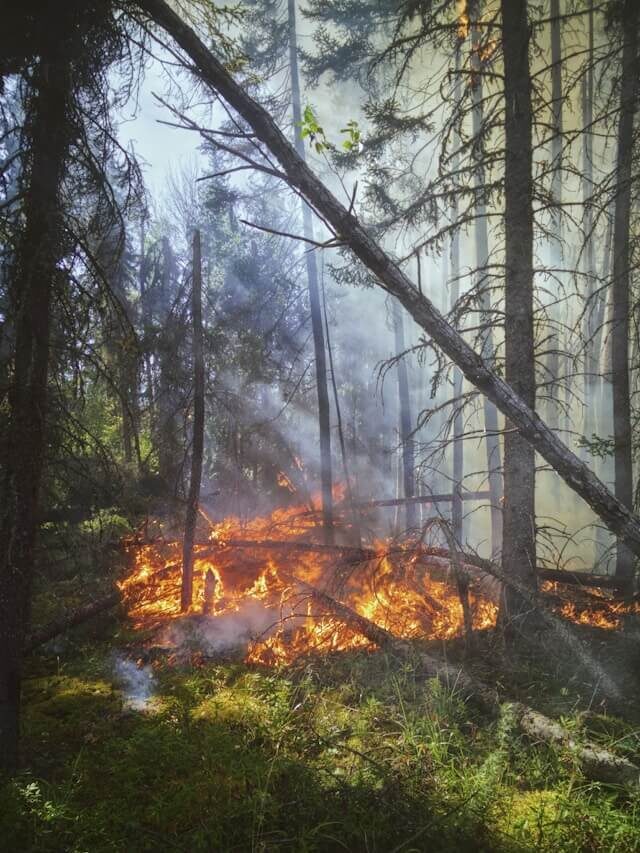[Source](https://unsplash.com/@landonparenteau?utm_source=unsplash&utm_medium=referral&utm_content=creditCopyText "Source")
When bad gas is left out to evaporate or used as a weed killer, it often gets put in a position to where it could potentially ignite, especially on a hot summer day. Thus, improper disposal of gas not only can poison plants, animals, and humans, but it can also potentially lead to a call to the fire department.
## How To Store Gasoline
Disposing of old gas properly helps [prevent environmental harm](https://interfaithsustain.com/environmental-sustainability/ "prevent environmental harm"). However, sometimes the best way to prevent harm done by improper gas disposal is making sure it doesn’t need to be thrown out at all.
**Storing gasoline** properly makes it so that no old gas has to be disposed of. Not only that, but it also makes sure that no gasoline is wasted.
One of the most important factors in gasoline going bad is how much [oxygen](https://www.bobvila.com/articles/how-long-does-gasoline-last/) it is exposed to. In order to stop this, it is important to keep gasoline in air tight containers at room temperature which can make gasoline last for three to six months.
- [](https://interfaithsustain.com/nutrient-pollution/)
## [Nutrient Pollution Is Destroying Our Aquatic Ecosystems](https://interfaithsustain.com/nutrient-pollution/)
- [](https://interfaithsustain.com/how-to-reduce/)
## [How To Reduce What We Buy And Consequently What We Waste](https://interfaithsustain.com/how-to-reduce/)
- [](https://interfaithsustain.com/bamboo-straws/)
## [If You Must Use A Straw, Then Switch To Sustainable Bamboo Straws!](https://interfaithsustain.com/bamboo-straws/)
## How To Safely Dispose Of Old Gasoline
Before you go and properly dispose of gasoline, it is important to check whether or not your gas is actually old or not. Luckily, there are a few [key tell tale signs](https://www.hyperlube.com/blog/blog/does-gasoline-go-bad/) in determining whether you’ve got good gas or not.
### How To Check If Your Gas Is Old
The first thing to look at is the color of your gas. Fresh gas typically has a light yellow-brown color, however the older gas gets, the darker it gets. Therefore, if your gas has a dark color to it, it might be time to dispose of old gasoline.
Another way to see if your gas is old, is by doing a smell test. When you take off your gas cap and give your gasoline a smell, try and detect a sour smell as old gas has a distinct sour smell to it that new gas doesn’t have.
### Storing Old Gas
In order to properly [dispose](https://www.bobvila.com/articles/how-to-dispose-of-gasoline/) of gasoline it is important to make sure it is in the right container. It is important to note that you can’t use just any container as it often needs to be a government approved container.
[Source](https://unsplash.com/@alexmihu?utm_source=unsplash&utm_medium=referral&utm_content=creditCopyText "Source")
The average plastic gas container will typically work as a container to hold gasoline. However it is still important to check local regulations on what exact kinds of container will work.
#### Dispose Of Old Gas
It is important to make sure that you take your old gas to the proper **waste disposal site**. These sites can be [anywhere](https://www.actenviro.com/hazardous-waste-disposal-gasoline/) from a local fire department, a hazardous waste disposal center, recycling centers, or even gas stations.
These locations usually are willing and able to take old gas and dispose of it properly. However, it is still important to check local government websites to make sure you’re taking it to the right place.
## Reuse Old Gas
Taking old gasoline to disposal sites is the proper, and most efficient way of getting rid of old gas. However, it is not the only method of getting rid of gasoline.
[Mixing old gas](https://www.thecleverhomeowner.com/can-you-mix-old-gas-with-new-gas/) with fresh gas is a good way make use of old gas. However when mixing old gas it is important to make sure you get the right ratio, so you aren’t putting too much old gas in your engine.
[Source](https://unsplash.com/@eidsvold?utm_source=unsplash&utm_medium=referral&utm_content=creditCopyText "Source")
Mixing old gas can damage your engine, and it is important to make sure you do it properly. But if you don’t want to throw out your old gas, this can be a good way to put it to good use.
## Religion And Disposing Of Old Gas
Disposing of old gas in a responsible way is important because if we just dump it down the drain, it can pollute our water. God wants us to protect our planet, not destroy it.
If we think that our actions aren’t making a difference, we should remember that everything we do affects the entirety of Creation. The importance of taking responsibility for our environmental actions is made clear in the following commentary from [Eco Bible](https://www.amazon.com/dp/B08LCKLM9G/ref=dp-kindle-redirect?_encoding=UTF8&btkr=1).
### Taking Responsibility For Others
> *Genesis 4:9 – the Lord Said to Cain, “Where Is Your Brother Abel?” and He Said, “I Do Not Know. Am I My Brother’s Keeper?”*
>
> Rabbi Shlomo Riskin teaches that to be a protector means to be responsible. Rabbi Riskin’s teacher, Rabbi Joseph Ber Soloveitchik, taught this as a core Jewish value: “I am responsible, therefore I am.” Being responsible and taking responsibility is core to being human. This is very clear from Cain’s response to God when asked of Abel’s whereabouts: “Am I my brother’s keeper?” The actual term used is not “keeper” here but “protector” in the same sense of “protection” mentioned in the Garden of Eden. To Cain’s question, the Bible surely implies, “Yes!”
>
> **Sustainable living** involves being attentive to and taking responsibility for the effects of our actions. In a globally and environmentally connected world, today our failure to take responsibility for our actions on a planet of almost eight billion people has major, detrimental consequences. We use the resources of the world – trees, mineral ores, petroleum – without sufficient attention to how these resources are gathered or mined, refined, transported, and disposed of. We often fail to see, or ignore, the consequences to air and water where we live and far beyond, as well as to our own health and other people’s health. [Studies in the US](https://ajph.aphapublications.org/doi/10.2105/AJPH.2017.304297) indicate that minority, especially African-American, communities suffer disproportionately from living near factories that emit high levels of air pollutants. Exposure results in more cases of asthma and other lung diseases, which in turn make people more susceptible to the most severe incidence of diseases like COVID-19.
Recognizing the impact of our actions can inspire us to be better environmental stewards. By properly disposing of old gas and other products that can harm the environment, we will protect the world for generations to come.
*\* Featured image [source](https://pixabay.com/users/pexels-2286921/?utm_source=link-attribution&utm_medium=referral&utm_campaign=image&utm_content=2178234 "source")*
*Looking to learn more about preventing fossil fuel pollution? Check out our blog post about [oil pollution](https://interfaithsustain.com/oil-pollution/ "the costs of oil pollution")*.
**Categories:** Blog on Faith and Ecology, Recycling
**Tags:** Gas, Pollution
---
### [Discover How To Dispose Of Batteries](https://interfaithsustain.com/how-to-dispose-of-batteries/)
**Published:** February 7, 2022
**Author:** ICSD
**Excerpt:** Harry Cooper - Batteries contain numerous harmful chemicals, and when improperly disposed of, these chemicals can enter our planet's water and air. As many of these chemicals are carcinogenic or harmful in some way, improper disposal of old batteries can be harmful to plant, animal, and human life everywhere.
**Content:**
Table of Contents
Table of Contents
- [The Improper Disposal of Batteries](#the-improper-disposal-of-batteries)
- [The Effects of Single Use Batteries](#the-effects-of-single-use-batteries)
- [Rechargeable Lithium Ion Batteries](#rechargeable-lithium-ion-batteries)
- [Harmful Effects of Lithium Ion Batteries](#harmful-effects-of-lithium-ion-batteries)
- [Recycling Batteries](#recycling-batteries)
- [How to Recycle Batteries](#how-to-recycle-batteries)
- [Religion and Battery Disposal](#religion-and-battery-disposal)
- [Why is improper disposal of batteries harmful to the environment?](#)
- [What chemicals in batteries are most concerning for health and the environment?](#)
- [How can I properly dispose of or recycle batteries?](#)
- [What are the risks associated with lithium-ion rechargeable batteries?](#)
- [What role do companies like Interstate Batteries play in battery recycling and environmental protection?](#)
## The Improper Disposal of Batteries
*By Harry Cooper* – Batteries contain numerous harmful chemicals, and when improperly disposed of, these [chemicals can enter our planet’s water](https://interfaithsustain.com/what-are-the-causes-of-water-pollution/) and air. As many of these chemicals are carcinogenic or harmful in some way, improper disposal of old batteries can be harmful to plant, animal, and human life everywhere.
Fortunately, used batteries can be recycled or taken into stores to be disposed of in a safe way. By properly disposing of batteries we can help reduce the amount of harmful chemicals that end up in our environment.
**Batteries** may seem like a small household item found in electronic devices from children’s toys to TV remotes. However, because there are so many different battery types, used in so many different items, from smoke detectors to mobility scooters, batteries often contain a slew of often toxic chemicals.
[Source](https://pixabay.com/users/xtrodinary-14501601/?utm_source=link-attribution&utm_medium=referral&utm_campaign=image&utm_content=6560089)
When these old batteries are thrown out they often wind up in [landfills](https://www.azocleantech.com/article.aspx?ArticleID=132). Once in these landfills the **hazardous waste** inside the batteries leaks into the soil and water, which then ends up not only harming wildlife, but also our own health.
## The Effects of Single Use Batteries
Single use batteries, or **alkaline batteries**, are batteries that can only be used once, and they often contain incredibly harmful chemicals. However there are a few certain [chemicals](https://batteryuniversity.com/article/bu-703-health-concerns-with-batteries) found in batteries that make for a particularly potent hazardous waste when the batteries start corroding.
Firstly, **single use batteries** contain a number of carcinogenic substances such as nickel and cadmium. Coming into contact with these metals can lead to increased cancer rates.
Another harmful substance found in dead batteries is sulfuric acid. This substance is highly corrosive and helps break down batteries when they’re in the landfill. This substance can also cause blindness and internal organ damage when humans come into direct contact.
Single use batteries also contain heavy metals such as lead. Lead is a harmful heavy metal that can become airborne and cause [air pollution](https://interfaithsustain.com/how-to-reduce-air-pollution/) that cause development issues as well as damage to the heart, brain, and kidneys.
With batteries being incredibly dangerous to human health and the environment, it may be hard to know how to dispose of batteries. An easy way to properly dispose of batteries is through battery recycling.
However, some people promote other batteries, such as rechargeable batteries, as an alternative to single use batteries. While these batteries last longer, even rechargeable batteries have their environmental downsides.
- [](https://interfaithsustain.com/household-battery-recycling/)
## [Methods For Household Battery Recycling](https://interfaithsustain.com/household-battery-recycling/)
- [](https://interfaithsustain.com/repurposed-materials/)
## [Create Repurposed Materials to Reduce Your Carbon Footprint](https://interfaithsustain.com/repurposed-materials/)
- [](https://interfaithsustain.com/how-to-dispose-of-batteries/)
## [Discover How To Dispose Of Batteries](https://interfaithsustain.com/how-to-dispose-of-batteries/)
### Rechargeable Lithium Ion Batteries
The first rechargeable **lithium ion battery** became available for commercial use in 1991. Since then they have been used to power everything from mobile phones to electric cars. While they were meant to bring about the next age of efficient batteries, they have proven to have some [serious pitfalls](https://www.nsenergybusiness.com/features/lithium-ion-battery-environmental-impact/).
Lithium single use batteries exist in a non-rechargeable form. However the rechargeable form of lithium ion batteries were meant to be a groundbreaking achievement, as it would answer the problem of not knowing how to dispose of batteries by not disposing of batteries at all.
However, lithium ion batteries can still be spent and require being disposed of. This becomes an issue as lithium batteries still contain many harmful chemicals, and create hazardous waste when disposed of improperly.
#### Harmful Effects of Lithium Ion Batteries
These **carcinogenic chemicals** found in a lithium battery can include nickel cadmium and lead acid. These chemicals become can be a very alarming issue when disposed of, as they can contaminate the surrounding environment.
Not only do these batteries become an issue during disposal, they can also leak into the environment during the raw materials mining process. This means that even if someone knows how to dispose of batteries containing lithium, they still can cause issues for human health and the environment.
Lithium ion rechargeable batteries have been know to [overheat and combust](https://www.petro-online.com/article/safety/15/gfg-gas-detection-uk-ltd/risks-and-side-effectsbr-the-underestimated-dangers-of-lithium-ion-batteries/2395) and are a fire hazard. Many companies have started recalling and stopping production of certain products to help prevent fires.
On top of these issues with the battery, the technology to recycle rechargeable batteries is [not all there yet](https://www.nsenergybusiness.com/features/lithium-ion-battery-environmental-impact/). Since battery recyclers have a harder time recycling a rechargeable battery it makes it harder to keep up with the demand for lithium ion batteries, and thus they continue to create problems for the environment.
## Recycling Batteries
While batteries contain chemicals with a high risk of causing health problems, batteries are an important part of powering the devices we use every day. And so phasing them out completely would be harder without a good alternative.
With batteries being so important it is also important to recycle batteries. **[Battery recycling](https://interfaithsustain.com/household-battery-recycling/ "Battery recycling")** is one of the best ways to properly dispose of batteries, and stop harmful chemicals such as nickel metal hydride from getting into the environment.
### How to Recycle Batteries
Since batteries contain waste that is so volatile, they must be recycled separately from regular recyclables. Luckily there are tons of programs and recycling facilities dedicated to helping people start recycling their [batteries](https://www.financialexpress.com/life/science-how-recycling-battery-waste-is-important-for-environmental-health-2601507/).
[Source](https://unsplash.com/@sigmund?utm_source=unsplash&utm_medium=referral&utm_content=creditCopyText)
Some programs are simple, such as taking your old car batteries to your local automotive store or mailing in your old phone to its manufactures for proper recycling. There are also a number of online resources to help people find where they can recycle their batteries such as [**Call2Recycle**](https://www.call2recycle.org/)**,** which helps people find over thousands of battery recycling facilities across the US.
## Religion and Battery Disposal
**Interstate Batteries** is a billion dollar company whose mission on [their website](https://www.interstatebatteries.com/about/our-culture) is “to glorify God as we supply our customers worldwide with top quality, value-priced batteries, related electrical power-source products, and distribution services.” They describe how their **religious values** manifest in how they treat their employees and customers, but they can also be seen in their emphasis on recycling batteries. According to an article on [AfterMarketNews](https://www.aftermarketnews.com/interstate-batteries-recycles-more-than-1b-pounds-of-batteries-again/), Interstate Batteries has recycled over 3 billion pounds of lead batteries.
According to Tod Lyons, their sustainability program manager: “Effectively, the battery manufacturing, distribution and recycling industry is a circular economy… It’s a closed loop using the same material, the same element on the periodic table, over and over for more than 70 years. We… will continue to do our part to make our industry and the planet greener.” Interstate Batteries is a great example of how a company dedicated to “glorify\[ing\] God” can do just that, by protecting God’s beautiful planet.
*\* Featured image [source](https://unsplash.com/@john_cameron?utm_source=unsplash&utm_medium=referral&utm_content=creditCopyText)*
**Categories:** Blog on Faith and Ecology, Recycling
**Tags:** Pollution, Recycling, Resources for Green Living
---
### [How to Dispose of Cooking Oil Without Harming the Environment](https://interfaithsustain.com/how-to-dispose-of-cooking-oil/)
**Published:** February 4, 2022
**Author:** ICSD
**Excerpt:** Sydney Cohen - It is important to know how to dispose of cooking oil. Fortunately, it is not too difficult to take the proper steps of disposal, in order to protect the health of our environment and the people that we care about. Continue reading to learn some practical steps you can take for cooking oil disposal!
**Content:**
Table of Contents
Table of Contents
- [The Proper Disposal of Used Cooking Oil](#aioseo-the-proper-disposal-of-used-cooking-oil-2)
- [Hot Cooking Oil](#aioseo-hot-cooking-oil-7)
- [Small Quantities of Cooking Oil](#aioseo-small-quantities-of-cooking-oil-12)
- [Large Quantities of Cooking Oil](#aioseo-large-quantities-of-cooking-oil-17)
- [Why Should I Properly Dispose of Cooking Oil?](#aioseo-why-should-i-properly-dispose-of-cooking-oil-21)
- [The Environmental Impacts of Oil Disposal](#aioseo-the-environmental-impacts-of-oil-disposal-25)
- [Avoid Pouring Oil Down The Drain](#aioseo-avoid-pouring-oil-down-the-drain-29)
- [Reusing Cooking Oil As Biodiesel](#aioseo-reusing-cooking-oil-as-biodiesel-31)
- [Where To Dispose of Used Cooking Oil?](#aioseo-where-to-dispose-of-used-cooking-oil-40)
- [Religious Communities Recycling Cooking Oil](#aioseo-religious-communities-recycling-cooking-oil-44)
- [What are the proper steps for disposing of used cooking oil?](#aioseo-what-are-the-proper-steps-for-disposing-of-used-cooking-oil-51)
- [How should hot cooking oil be handled before disposal?](#aioseo-how-should-hot-cooking-oil-be-handled-before-disposal-53)
- [What is the recommended way to dispose of small quantities of used cooking oil?](#aioseo-what-is-the-recommended-way-to-dispose-of-small-quantities-of-used-cooking-oil-55)
- [Why is it important to dispose of cooking oil properly?](#aioseo-why-is-it-important-to-dispose-of-cooking-oil-properly-57)
- [Can used cooking oil be reused or recycled? If so, how?](#aioseo-can-used-cooking-oil-be-reused-or-recycled-if-so-how-59)
*By Sydney Cohen* – It is important to know how to dispose of **cooking oil**. Fortunately, it is not too difficult to take the proper steps of disposal, in order to protect the health of our environment and the people that we care about. Continue reading to learn some practical steps you can take for cooking oil disposal!
## The Proper Disposal of Used Cooking Oil
There are a [few easy steps](https://www.actenviro.com/easy-ways-on-how-to-dispose-of-cooking-oil-safely/) to properly dispose of used cooking oil. To start, you should make sure the used oil is cool enough, and then store it in sealable, disposable containers like plastic bottles, a plastic container, take-out boxes, or empty milk cartons that are tightly sealed. Then, you can include this in your food waste bin for disposal.
[Source](https://pixabay.com/users/ivabalk-782511/?utm_source=link-attribution&utm_medium=referral&utm_campaign=image&utm_content=1827747)
You can also take used oil to some restaurants, which may have a grease disposal system with the ability to dispose of used oil. Proper cooking oil disposal is important if we want to [take care of our environment](https://interfaithsustain.com/environmental-awareness/)!
### Hot Cooking Oil
If the hot oil is dangerous to touch, you should let the cooking oil and grease cool before attempting to transfer or pour the cooking oil, which can be dangerous. Warm cooking oil can potentially leak if poured directly into a garbage bag. Pour the oil into a sealable container, rather than directly into a garbage can’s plastic bag, to avoid any mess.
Continue reading as we discuss more methods of cooking oil and kitchen grease disposal.
### Small Quantities of Cooking Oil
If you have only used a tablespoon or so in your cooking, this amount of cooking oil and grease can be stored in glass jars or alternatively, poured directly into the garbage can, preferably already filled with absorbent goods such as paper towels or cat litter, to prevent leaks. If you do this method, it is important to have absorbent goods and other household waste in the trash can with the oil, to eliminate a potentially damaging oil leak from underneath trash bags. As previously mentioned, leaks can be avoided if you place a paper towel into the trash, before you pour vegetable oil, frying oil, or any other oil used for cooking.
[Source](https://pixabay.com/users/peggy_marco-1553824/?utm_source=link-attribution&utm_medium=referral&utm_campaign=image&utm_content=1647192)
However, if the amount of oil is more than this, you must take the necessary steps to dispose of it, and contacting your local waste center to learn about their protocols and guidelines is a good first step.
#### Large Quantities of Cooking Oil
Cooking oil must not be kept in storage until the oils have cooled or hardened. You can pour oil into a can, foil lined bags, or into an airtight container such as a storage box and put it into the freezer. Once the oil is completely solid, the container can be put in the trash. This is an easier, less messy method of disposing of your old cooking oil.
- [](https://interfaithsustain.com/reusable-paper-towels/)
## [The Environmental and Health Benefits of Reusable Paper Towels](https://interfaithsustain.com/reusable-paper-towels/)
- [](https://interfaithsustain.com/reusable-grocery-bags/)
## [Reusable Grocery Bags To Reduce Global Pollution](https://interfaithsustain.com/reusable-grocery-bags/)
- [](https://interfaithsustain.com/how-to-dispose-of-batteries/)
## [Discover How To Dispose Of Batteries](https://interfaithsustain.com/how-to-dispose-of-batteries/)
## Why Should I Properly Dispose of Cooking Oil?
It is important to take proper care when disposing of oil, as oil can harm pipes, ultimately causing environmental hazards with the potential of leaks. Mixing cooking oil with absorbent materials or food can cause the product to become solid waste, which is often easier to dispose of.
### The Environmental Impacts of Oil Disposal
Pouring too much oil down the kitchen sink can clog pipes and damage sewage pipes, which can lead to health and environmental hazards. This particularly occurs with deep frying, when a large amount of oil is often used, as in the preparation of French fries and other fried foods. While liquid grease poured down the drain may seem fine at first, it can cling to kitchen pipes and accumulate, causing blockages and then eventually reach the local wastewater mains and from there travel into the sewer system. This can ultimately result in [sanitary sewage overflows, septic system failures, and polluted storm-water runoff. ](https://hgic.clemson.edu/factsheet/f-o-g-fats-oils-and-grease-pollution/)
[Source](https://pixabay.com/users/stevepb-282134/?utm_source=link-attribution&utm_medium=referral&utm_campaign=image&utm_content=968657)
### Avoid Pouring Oil Down The Drain
It can be tough for people to get rid of leftover kitchen oils such as expired vegetable based oils, coconut oil, olive oil and all types of cooking oils and grease. It’s possible you want to pour it down a drain or sink, for ease of disposal. But this can cause blocked and damaged pipes in your home. Moreover, doing so is also unsafe for fish and birds, which rely on creek, river, and ocean ecosystems that the oil will ultimately go to.
## Reusing Cooking Oil As Biodiesel
If the oil was not used at an incredibly hot temperature or looks relatively free of food particles, you can recycle cooking oil and reuse oil to avoid liquid waste. You can recycle used cooking oil by using a local waste collector site in your region that accepts cooking oil, allowing the transformation into **biodiesel**, an environmentally friendly way to reuse cooking oil.
[Biodiesel](https://afdc.energy.gov/fuels/biodiesel_production.html) is a type of biofuel that “is produced from vegetable oils, yellow grease, used cooking oils, or animal fats. The fuel is produced by transesterification—a process that converts fats and oils into biodiesel and glycerin (a coproduct)”.
[Source](https://pixabay.com/users/a_different_perspective-2135817/?utm_source=link-attribution&utm_medium=referral&utm_campaign=image&utm_content=1438382)
Biodiesel has many important uses. It can be used for transportation to power vehicles, energy generation, to provide heat to homes and buildings, charging electronics, cleaning up oil spills, and it will eventually be used for energy once the planet runs out of fossil fuels. Biofuel can be produced without harming the environment and exploiting a limited natural resource, which is why it is so important to the future of [renewable energy use](https://interfaithsustain.com/renewable-and-non-renewable-resources/).
Other biofuels include wood, biogas, ethanol, methanol, and butanol, which are all renewable sources of energy, are relatively cheap and are much more environmentally friendly.
## Where To Dispose of Used Cooking Oil?
We encourage you to consider alternative disposal methods. Cooking oil can be safely disposed of at specialist facilities.
To find recycling centers, you can visit [Green Directory](https://greencitizen.com/green-directory/), a website that provides listings of recycling centers across the United States. On the [Green Directory](https://greencitizen.com/green-directory/) website, select “Cooking Oil” and then select your zip code.
Green Directory offers downloadable sites to recycle discarded household goods that include grease.
## Religious Communities Recycling Cooking Oil
The Catholic Church in Brazil is leading by example through collecting used cooking oil, as described in an article on [Vatican News](https://www.vaticannews.va/en/church/news/2021-07/laudato-si-brazil-cooking-oil-fresh-air-story.html). Volunteers go around the Apucarana neighborhoods collecting used cooking oils and electronics. This avoids these products polluting three local rivers, the Pirapó River, the Tibagi River and the Ivaí River.
According to the article, “more than 1,000 liters were collected, avoiding the contamination of 1 billion liters of water.” The collected oil is sent to a company that filters it and sends it to a soap factory in town. Collecting used cooking oil creates jobs, soap and community, and all while protecting the environment from pollution.
This project is an expression of Pope Francis’s call to protect the environment, as famously expressed in his encyclical, “Laudato si’.” Amauri Henrique Rosina, a Laudato si’ Animator who coordinates the recycling collection explains how “God has entrusted us with the task of cultivating and caring for creation… We try to change habits, to recycle and also encourage a decrease in the use of materials to reduce household waste. It is a great harmony we are seeking: we need to start from the inside.”
The next time you cook with oil and have oil leftover, make an effort to dispose of it properly. If your goal is to keep our environment clean for future generations, don’t forget about proper disposal! Who’s ready to take action?
*\* Featured image* [*source*](https://pixabay.com/users/jyliagorbacheva-5290522/?utm_source=link-attribution&utm_medium=referral&utm_campaign=image&utm_content=2288443)
*Looking to learn more about preventing pollution? Check out our blog post on [the costs of oil pollution](https://interfaithsustain.com/oil-pollution/ "the costs of oil pollution")*.
**Categories:** Blog on Faith and Ecology, Recycling
**Tags:** Pollution, Resources for Green Living
---
### [The Epic Story of Reusable Straws](https://interfaithsustain.com/reusable-straws/)
**Published:** February 2, 2022
**Author:** ICSD
**Excerpt:** Sydney Cohen - The average American uses over 500 plastic straws in a year. That's 18,000 straws for you to suck up your drink with!
**Content:**
Table of Contents
Table of Contents
- [Disposable Straws](#disposable-straws)
- [The Problem of Straws](#the-problem-of-straws)
- [Why Buy a Reusable Straw?](#why-buy-a-reusable-straw)
- [Stainless Steel Straws](#stainless-steel-straws)
- [Silicone Straws](#silicone-straws)
- [The Safety of Silicone Straws](#the-safety-of-silicone-straws)
- [Cons of Silicone Straws?](#cons-of-silicone-straws)
- [Glass and Bamboo Straws](#glass-and-bamboo-straws)
- [Cleaning Straws](#cleaning-straws)
- [Religious Efforts to Reduce Plastic Straw Usage](#religious-efforts-to-reduce-plastic-straw-usage)
- [Which Reusable Straw?](#which-reusable-straw)
- [Reusable Straw Example](#reusable-straw-example)
*By Sydney Cohen* – The average American uses over 500 **plastic straws** in a year. That’s 18,000 straws for you to suck up your drink with! The good news is that many big companies are now offering **reusable straws** as a more environmentally-friendly alternative.
## Disposable Straws
Did you know that disposable, plastic straws are one of the top ten waste items found in beach cleanups worldwide? The problem with these straws is that they don’t biodegrade and can accumulate in landfills or natural environments. Plastic is a [non-renewable resource](https://interfaithsustain.com/renewable-and-non-renewable-resources/ "non-renewable resource") that we need to use much more mindfully.
### The Problem of Straws
It is estimated that 500 million **disposable straws** are used per year. That’s a lot of waste in the environment, in addition to the many plastic to-go lids that are found in the environment. Disposable straws have become increasingly problematic to the environment over recent years because they are non-biodegradable, meaning they never break down in nature. They also release toxic chemicals into the ground when heated. The solution to this problem is simple: reusable straws!
### Why Buy a Reusable Straw?
The plastic that is used to make disposable straws doesn’t degrade easily – it takes years for them to break down. Over time, these tiny pieces of plastic find their way into the ocean and animals ingest them. Since they are so lightweight, they don’t travel far before being carried across oceans. When you use a reusable straw, you’re not only improving your health but also protecting our planet!
## Stainless Steel Straws
[Source](https://pixabay.com/users/7303458-7303458/?utm_source=link-attribution&utm_medium=referral&utm_campaign=image&utm_content=4519112)
**Stainless steel straws** are reusable metal straws. Stainless steel is one of the most durable substances on earth, and stainless steel has a very low carbon footprint! Therefore, a stainless steel straw is an eco-friendly alternative to disposable straws.
## Silicone Straws
**Plastic waste** is a [huge environmental issue](https://interfaithsustain.com/nuclear-pollution/) that we need to stop. One way you can do this is by using **silicone reusable straws** which are sustainable. Reusable straws made of silicone are a great way to reduce waste and save money. They are durable, the straws are dishwasher safe, and even come in different bright colors!
### The Safety of Silicone Straws
Unlike polyethylene or metal, silicone releases no harmful chemicals even when heated. Some of the best collapsible, reusable straw examples on the market are made of silicone.
[Source](https://pixabay.com/users/ivabalk-782511/)
- [](https://interfaithsustain.com/reusable-paper-towels/)
## [The Environmental and Health Benefits of Reusable Paper Towels](https://interfaithsustain.com/reusable-paper-towels/)
- [](https://interfaithsustain.com/reusable-grocery-bags/)
## [Reusable Grocery Bags To Reduce Global Pollution](https://interfaithsustain.com/reusable-grocery-bags/)
- [](https://interfaithsustain.com/how-to-dispose-of-batteries/)
## [Discover How To Dispose Of Batteries](https://interfaithsustain.com/how-to-dispose-of-batteries/)
#### Cons of Silicone Straws?
It’s an excellent choice to buy straws with open-top molded silicone. However, while there are many benefits, a disadvantage of these straws is that silicone is neither compostable nor recyclable – unlike glass or steel.
## Glass and Bamboo Straws
Glass and bamboo are other materials used to make sustainable straws. They are great reusable straw options, as they are both recyclable. Cleaning your reusable **glass straw** or **bamboo straw** is a must if you want to get rid of any mold, but fortunately, many come with one cleaning brush or multiple cleaning brushes, and a carrying case, to make for easy transport and cleaning.
### Cleaning Straws
Many straws come with a cleaning brush so you can keep them clean, which will prevent any bacteria from growing. If you want to have an environmentally friendly drink, start using silicone or stainless steel instead of single use plastic straws!
## Religious Efforts to Reduce Plastic Straw Usage
Lent is a time of year in which Christians give up certain indulgences. Dozens of Pennsylvania churches that are part of the Evangelical Lutheran Church in America are using Lent as an opportunity to encourage their members to reduce their consumption of single-use plastic.
According to [an article in The Washington Post,](https://www.washingtonpost.com/religion/2019/03/05/latest-lent-challenge-churches-give-up-plastic/) “each week, parishioners will be encouraged to give up a different item: shopping bags, drinking straws, water bottles, plastic foam and food wrappers.” Similarly, at Saint Mark Presbyterian Church in Maryland, “church leaders are asking congregants to fast from single-use plastics, especially straws.”
Focusing on the reduction of plastic straws and other **single-use plastics** during the weeks of Lent is a brilliant way for religion to lead the way in sustainability. Through our religious holidays and rituals, we have the spiritual technology to save the planet. The only question is, will we rise to the occasion?
### Which Reusable Straw?
Reusable straws can be a safer way to drink while taking care of our environment. Food-grade silicone, 17/9 stainless steel, and reusable BPA-free plastics represent the most commonly used substitutes for plastic straws. The most popular reusable straws are flexible, portable, and some are even collapsible straws that can either be bent or collapsed into two.
Stainless steel is the most durable alternative, but thermal transference when drinking hot and cold beverages, and whether there is a wider straw for beverages, such as thick smoothies, should also be taken into account when deciding which straw to buy.
[Source](https://www.pexels.com/)
#### Reusable Straw Example
OXO Grappy Strokes uses silicone with stainless steel to make one of the best reusable straws on the market. There are some amazing designs, for both adults and children. All sets contain two brushes to clean the straws, and a reusable bag to carry them in.
While this is not a collapsible straw, the straws are stainless steel bodies with comfortable, removable silicone tips for drinking from. These straws are unique because they are made of separate segments of stainless steel and silicone, and can be used for cold drinks and hot drinks. This is why the OXO Grappy Stroke is the best overall reusable straw.
*\* Featured image [source](https://pixabay.com/users/sergeitokmakov-3426571/)*
**Categories:** Blog on Faith and Ecology, Recycling
**Tags:** Plastic Pollution, Pollution, Resources for Green Living
---
### [How to Dispose of Paint & Not Harm the Environment](https://interfaithsustain.com/how-to-dispose-of-paint/)
**Published:** January 28, 2022
**Author:** ICSD
**Excerpt:** Sydney Cohen - When you finish painting your house, the last thing you can do is throw away all of those cans and leftover paint in the household trash. There are a few options that make disposal safe!
**Content:**
Table of Contents
Table of Contents
- [Can You Dispose of Paint?](#can-you-dispose-of-paint)
- [How To Dispose of Paint](#how-to-dispose-of-paint)
- [Latex Paint](#latex-paint)
- [Disposal of Latex Paint](#disposal-of-latex-paint)
- [Oil Based Paint](#oil-based-paint)
- [Disposal of Oil-Based Paint](#disposal-of-oil-based-paint)
- [Recycling Paint Cans](#recycling-paint-cans)
- [Religion and Paint Pollution](#religion-and-paint-pollution)
- [Paint Disposal Advice](#paint-disposal-advice)
- [Why is it important to consider environmental impacts when disposing of paint and paint-related products?](#)
- [How can I recycle empty paint cans safely?](#)
- [What is the recommended way to dispose of oil-based paints?](#)
- [How do I properly dispose of latex-based paint?](#)
- [Can paint be disposed of directly in household trash?](#)
*By Sydney Cohen* – When you finish painting your house, the last thing you can do is throw away all of those cans and leftover paint in the household trash. There are a few options that make disposal safe!
## Can You Dispose of Paint?
**How to dispose of paint** varies depending on the type of paint that needs to be thrown away. Paint on petroleum-based surfaces can pose a health threat to vulnerable groups such as infants, children in pregnancy, and senior citizens. Latex-based paints have more toxic chemicals to withstand extreme heat than oils.
Paint must be dried before it is disposed of, as often wet paint has toxic substances and chemicals. Before drying the paint you can thicken it. When the paint is dry, you can dispose of it in the recycling box. If no paint is left behind, peel out the lid to dry. There are also several commercial paint hardening devices available.
Throwing out leftover paint containers is a less effective alternative to taking the proper care to recycle the can. If there is any leftover paint in the container, you must ensure that the container is sealed properly before disposal.
[Source](https://pixabay.com/users/freephotocc-2275370/)
## How To Dispose of Paint
Throwing out paint creates the possibility that its hazardous chemicals will reach the environment and [contaminate soil](https://interfaithsustain.com/soil-pollution/) or water. If discarded paint from recent projects is sitting around, you will probably need to use a guide to recycling unused paint. Paint manufacturers often give instructions on the original label on how to dispose of the paint, so that it is not considered hazardous waste.
### Latex Paint
**Latex paint or water based paints** can be applied to various surfaces. They have many advantages over other types of paint, such as the fact that it’s more durable and offers better coverage. However, you must be sure to dispose of leftover latex paint in the proper way, so that it is not considered as [hazardous materials](https://interfaithsustain.com/nuclear-pollution/).
- [](https://interfaithsustain.com/reusable-paper-towels/)
## [The Environmental and Health Benefits of Reusable Paper Towels](https://interfaithsustain.com/reusable-paper-towels/)
- [](https://interfaithsustain.com/reusable-grocery-bags/)
## [Reusable Grocery Bags To Reduce Global Pollution](https://interfaithsustain.com/reusable-grocery-bags/)
- [](https://interfaithsustain.com/how-to-dispose-of-batteries/)
## [Discover How To Dispose Of Batteries](https://interfaithsustain.com/how-to-dispose-of-batteries/)
### Disposal of Latex Paint
Many disposals and recycling facilities require solid latex paints and chemicals to be removed at landfill locations. This means you might have to dry out the latex paint before disposing of it, but fortunately, this process is not too complicated and can easily be done with ordinary household products.
To dry out the paint, you can try mixing cat litter or shredded newspaper into the wet paint. You can get paint hardeners in most retail locations. Add it to the wet paint, mix it, and make sure everything is sealed properly before putting it in the trash, in order to avoid the hazardous waste drop.
### Oil Based Paint
[Source](https://pixabay.com/users/bodobe-1222375/?utm_source=link-attribution&utm_medium=referral&utm_campaign=image&utm_content=911804)
**Oil-based paint** is a type of painting that has been around for centuries. It’s still popular today because it covers well and has a long shelf life. However, you must make sure the old paint is completely dry before you properly dispose of it.
#### Disposal of Oil-Based Paint
Some oils in paints contain toxic substances. If disposed of improperly, oil-based paint might negatively affect drinking water in the region. So, instead of just throwing oil-based paints in the garbage, contact your local municipal waste authorities about disposal methods for oil-based paints.
## Recycling Paint Cans
There are many ways to reuse and recycle empty paint cans.
Paint cans can be recycled, although they must contain no paint. Generally, after paints dry completely they can be discarded into normal trash. To reuse paint cans that contain latex, pour all the remaining paint into a new container. After cleaning out all your waste containers, you can recycle them.
Again, not all curbside recycling programs accept paint cans easily. You can check with your local city waste department or municipality to see if there are restrictions to recycling paint cans, more information or other options that they offer.
## Religion and Paint Pollution
Environmentalist Hindus in India are working to change a custom that is causing [paint pollution in rivers](https://interfaithsustain.com/types-of-water-pollution/). An [article in Reuters](https://www.reuters.com/article/us-india-festival-pollution-idUSDEL3263220080818) describes how idols are worshipped and then taken to be immersed in water. However, these idols are often “painted with toxic dyes” and these toxins “contaminate food crops when villagers use the polluted water for irrigation.” And even if the water isn’t used for irrigation, the paints “contain metals like mercury, cadmium and lead, which can pass up the food chain from fish to human beings”.
[Source](https://pixabay.com/users/mamashaw-5136746/?utm_source=link-attribution&utm_medium=referral&utm_campaign=image&utm_content=2247395)
Traditionally these idols were made from mud and clay and painted with vegetable-based dyes, thereby causing little or no damage to the environment. But today, “people want bigger and brighter idols and are no longer happy with the eco-friendly statues.” In this example, as is often the case, we need to find a way to balance people’s desires with the needs of nature. In the words of Manisha Gutman of environmental group [Eco Exist](https://www.e-coexist.com), “if we do not respect nature then we are not respecting God”.
## Paint Disposal Advice
Before starting to paint a painting project, consider taking measurements. This gives you precisely how much paint to buy so that none is wasted.
Ensure leftover paint is kept in an open place without excessive shade and temperatures. Secure the lid with a rubber band. This way, we can reduce the [negative environmental impact](https://interfaithsustain.com/environmental-degradation-and-the-future-of-our-planet-earth/) that the discarding of wet paint has!
*Looking to learn more about preventing pollution? Check out our blog post on [the costs of oil pollution](https://interfaithsustain.com/oil-pollution/ "the costs of oil pollution")*.
**Categories:** Blog on Faith and Ecology, Recycling
**Tags:** Paint, Pollution
---
### [If You Must Use A Straw, Then Switch To Sustainable Bamboo Straws!](https://interfaithsustain.com/bamboo-straws/)
**Published:** March 28, 2022
**Author:** ICSD
**Excerpt:** Sydney Cohen - Looking for a more sustainable option when it comes to straws? Check out bamboo straws! These environmentally friendly straws are made from natural bamboo, and they are biodegradable and compostable.
**Content:**
Table of Contents
Table of Contents
- [The Problem With Plastic Straws](#the-problem-with-plastic-straws)
- [Eco-Friendly Straws](#eco-friendly-straws)
- [NRDC Statement on Straws](#nrdc-statement-on-straws)
- [Do You Even Need to Use a Straw?](#do-you-even-need-to-use-a-straw)
- [Types of Reusable Straws](#types-of-reusable-straws)
- [A Sustainable Straw Solution](#a-sustainable-straw-solution)
- [Where You Can Buy a Bamboo Straw](#where-you-can-buy-a-bamboo-straw)
- [Purchasing Wholesale Bamboo Straws](#purchasing-wholesale-bamboo-straws)
- [Religion and Bamboo Straws](#religion-and-bamboo-straws)
- [Have You Made the Straw Switch Yet?](#have-you-made-the-straw-switch-yet)
*By Sydney Cohen* –Looking for a more sustainable option when it comes to straws? Check out **bamboo straws**! These environmentally friendly straws are made from natural bamboo, and they are biodegradable and compostable. They are also reusable, which makes them a great choice for eco-conscious consumers. Bamboo straws come in a variety of sizes and colors, so you can find the perfect one for your needs. Plus, they make a great addition to any eco-friendly home or office.
**Bamboo** is a fast-growing plant, and it doesn’t require any pesticides or fertilizers. It also grows in many different climates, so it is perfect for sustainable farming. Bamboo is also one of the most renewable resources on earth because it grows so quickly, so we, as humans, will not deplete this resource. Using bamboo straws helps to keep plastic out of our landfills and oceans. Not only are bamboo straws reusable, but reusable straws also make a great conversation starter, and send the message to others that you care about the environment, and make eco-conscious decisions!
## The Problem With Plastic Straws
Did you know that the production of **plastic straws** uses vast quantities of fossil fuels and emits gases that contribute to climate change? It’s true! In addition, [most plastic straws are not recyclable](https://interfaithsustain.com/single-use-plastic-threats-from-awareness-to-action/ "most plastic straws are not recyclable"), which means they end up in our oceans and landfills. There is a movement afoot to eliminate the use of plastic straws, and increase the use of [reusable straws](https://interfaithsustain.com/reusable-straws/ "reusable straws"), and for good reason.
Plastic straws have been in the news a lot lately. This is because of the growing awareness of the problem of plastic pollution. Plastic straws are one of the most common forms of plastic pollution. They are often used once and then thrown away, which means that they end up [polluting our oceans and waterways](https://interfaithsustain.com/river-pollution/ "polluting our oceans and waterways"). This is a huge problem, and it needs to be addressed.
There is a problem with plastic straws, and it’s not just that they’re made from plastic, whose production process can pose many environmental threats. But plastic straws are one of the most common items found in the ocean as it’s incredibly easy to throw away straws, and they’re wreaking havoc on marine life.
### Plastic Pollution
[Source](https://www.pexels.com/@sarah-chai/ "Source")
According to the World Wild Life Fund ([WWF](https://www.dw.com/en/plastic-pollution-affects-88-of-marine-species-wwf/a-60692503#:~:text=A%20new%20WWF%20report%20says,every%20part%20of%20the%20ocean.%22&text=Wildlife%20group%20WWF%20said%20on,an%20international%20treaty%20on%20plastics.)), “**Plastic pollution** affects 88% of marine species.” They have deemed our world’s plastic pollution problem incredibly severe, and we even have “plastic islands,” a mass composite of plastic waste, floating through the Atlantic and Pacific oceans. “WWF has indicated that at least 2,144 species suffer from plastic pollution in their habitat, and some of these species also end up ingesting these materials. This is the case of 90% of marine birds and 52% of turtles, according to the report”.
As you can imagine, plastic waste as small as a disposable plastic straw can easily make its way into our waterways, and eventually the oceans, contributing to the already incredibly harmful plastic waste problem. Furthermore, the WWF report on plastic pollution “predicts that plastic production will double by 2040, which will cause a fourfold increase in plastic waste in the ocean. This will affect an area that is two and a half times the size of Greenland”, according to the WWF. A single straw hastily thrown into the trash can end up killing an animal – which is why we must find other alternatives to single-use plastic straws.
- [](https://interfaithsustain.com/waste-free-living/)
## [Waste Free Living – The Benefits of Living With a Conscience](https://interfaithsustain.com/waste-free-living/)
- [](https://interfaithsustain.com/bamboo-yarn/)
## [Bamboo Yarn: The Renewable, Sustainable Choice](https://interfaithsustain.com/bamboo-yarn/)
- [](https://interfaithsustain.com/how-to-go-zero-waste/)
## [Everything You Need To Know On How To Go Zero Waste](https://interfaithsustain.com/how-to-go-zero-waste/)
## Eco-Friendly Straws
The environmental impacts of plastic pollution and plastic waste are why many people are choosing to make the switch to a reusable straw. **Reusable drinking straws** often come with a cleaning brush and can be made from a variety of more eco-friendly and sustainable materials.
### NRDC Statement on Straws
The reason for the movement to reusable straws has a few [explanations](https://www.nrdc.org/stories/will-shifting-reusable-straws-really-make-difference), according to the Natural Resources Defense Council (NRDC). They note that “of all the types of plastic trash we could regulate, there are a few smart reasons to target straws specifically. First, they’re pretty easy to do without—a low-hanging fruit in the vast battle against plastic disposables. Second, unlike many other single-use items, it’s essentially impossible to recycle straws…Third, there are a *lot* of them. Some estimates say hundreds of millions of straws are tossed each day in the United States alone”.
If you care about the environment and want to find solutions to our world’s plastic problem, the NRDC further recommends “following the gold standard in the fight against plastic waste: Use less. On most occasions, you can [enjoy your beverage just fine without using a straw](https://www.catholicadkk.org/2019/01/21/the-future-of-borneo-bamboo-straw-and-the-churchs-role/) at all”.
#### Do You Even Need to Use a Straw?
This is an incredibly important question that we first must consider, before turning to plastic alternatives. The best method to ending the problem of plastic pollution is to simply not to use plastic. The process of manufacturing plastic goods releases many hazardous and polluting gases into the air, warming our planet. Plastic waste easily makes its way into our oceans, harming marine life and ecosystems. If you are able to, the best alternative to using a plastic straw is to **avoid using a straw** in the first place.
Keeping that in mind, the NRDC continues, noting that “if you prefer drinking certain beverages through a straw (smoothies or iced coffee, for example)—buy a few reusable metal or bamboo straws, which can later be recycled or composted. Keep these on hand in your bag, or stow them in your kitchen, workplace, and car”.
## Types of Reusable Straws
Reusable straws can come in the form of glass straws, stainless steel straws, and metal straws, and, though they are not reusable, paper straws, which have less of an environmental impact. If you must use a straw when consuming a beverage, it is important to use an alternative to plastic in order to protect our planet from warming, protect ecosystems, and our human health.
These organic, raw materials involved in creating reusable straws are vital to creating eco-friendly solutions to our world’s plastic pollution and waste problems. Furthermore, bamboo straws are crafted from a renewable resource, so the manufacturing process is not damaging to the environment as bamboo straw materials are naturally replenishing.
## Reusable Bamboo Straws
Bamboo straws are a great eco-friendly alternative to disposable plastic straws. They are made of natural materials which can be composted or recycled. Bamboo straws come in a variety of shapes and sizes, so you can find the perfect one for your needs. They are also affordable, making them a great option for those who want to reduce their environmental impact.
[Source](https://www.pexels.com/@sarah-chai/ "Source")
### A Sustainable Straw Solution
**Reusable bamboo straws** are one of the most viable options to replace single-use plastic straws. These plastic-free straws are composed of organic bamboo stalks, and help reduce plastic pollution that is endangering our environment.
**Organic bamboo straws** are not only made of completely sustainable and natural materials, but they are a natural alternative to plastic straws, devoid of harmful chemicals, and have a clean manufacturing process. Reusable bamboo straws are completely safe for drinking, are fully compostable, and are a zero-waste alternative to plastic straws.
### Bamboo as a Renewable Resource
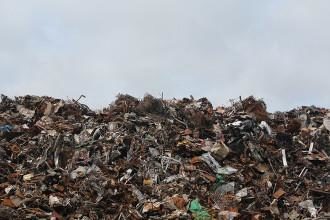[Source](https://www.pexels.com/photo/dumpsite-under-clear-sky-128421/ "Source")
Reusable bamboo drinking straws are an especially eco-friendly alternative to plastic straws as they are composed of bamboo, which grows at such a rapid rate that it is considered a renewable resource. This means that while we may use a lot of it in the manufacturing process of bamboo straws, organic bamboo will not deplete. This is part of the reasons why bamboo straws are such favorable reusable alternatives.
Part of the appeal of reusable straws is that they’re often dishwasher safe, biodegradable, and considered ethical products. They are frequently bought with, or come with, a cleaning brush, that makes it each to hand wash them if you don’t have a dishwasher or if they happen to not be dishwasher safe.
## Where You Can Buy a Bamboo Straw
[Hirose Products](https://hirose-products.jp/en/bamboostraw_en) provides a great alternative to plastic straws with multiple bamboo drinking straws available for purchase.
Their site provides two size options of bamboo straws for purchase. They have a smaller size for regular beverages and a larger straw for thicker beverages such as smoothies. You can even customize your straw with a personal engravement! They are available with or without a coating, although the coating does allow the straw to last longer. Their straws are “water resistant and durable, and can be used for a long time without breaking.”
### A Safe Straw Alternative
[Source](https://www.pexels.com/@ifreestock/ "Source")
According to their website, “no antifungal and preservatives are used in the manufacturing process and meets the Food and Law standards”. In addition to bamboo straws, Hirose Products also manufactures eco-friendly skewers, ice sticks, ice spoons, cutlery, and bamboo toothbrushes. Companies like Hirose Products are committed to saving our planet and keeping it free of pollution and plastics!
#### Purchasing Wholesale Bamboo Straws
You can even purchase wholesale bamboo straws for your office building or business! [The Other Straw](https://theotherstraw.com/pages/wholesale-bamboo-straws) provides many options for wholesale purchase of bamboo straws, so you can make your business more environmentally friendly. Their bamboo straws are customizable, so you can spread awareness of your business while also acting in favor of the planet. Their straws are high quality, durable, and organic, and are made with 100% natural materials so they are safe for use. They are ethically and sustainably sourced, come in a variety of lengths and diameters for use with various beverages, and are even dishwasher safe!
According to their website, they emphasize that “ethical consumerism is on the rise. With more and more individuals shopping for eco-friendly products and services. Eco-friendly bamboo straws are a great way to demonstrate sustainable brand values for your retail business. It can also increase your revenue streams”. Make the right decision for your planet, and human health, by encouraging the use of reusable straws at home and in the workplace.
## Religion and Bamboo Straws
In a [touching story](https://www.catholicadkk.org/2019/01/21/bamboo-straw-the-way-to-go/) from the Catholic Archdiocese of Kota Kinabalu, we read about Ester Ermerlissa Ngoai, aka Lissa Johannes, who works at a Catholic school in Kuala Penyu, Malaysia. While visiting a landfill and conducting interviews as part of a program at her school called SERASI (*Sekolah Rakan Alam Sekitar* or Environmental Friendly School in English), she had an epiphany. She realized how many single-use plastics were accumulating in the landfill and how they could be replaced with more sustainable products. As the article describes, “The service stint opened her eyes to see creation with the eyes of faith, which spurred her on to make it her own personal mission.”
Lissa got her idea from a video about a restaurant that uses bamboo straws. She began asking around if their village had bamboo that could be made into straws, and her neighbors not only answered yes, but were eager to help her find the local bamboo. Lissa helped create what is now known as the *Borneo Bamboo Straw*.
As Lissa explains in [another article](https://www.catholicadkk.org/2019/01/21/the-future-of-borneo-bamboo-straw-and-the-churchs-role/) about her work, Pope Francis’ Environmental Encyclical *Laudato Si* is a guide for her work. “Wherever I am planted, there I can act and give” Lissa shared. Her work is an inspiration for us all.
## Have You Made the Straw Switch Yet?
Plastic pollution is a real and pressing issue. It’s up to all of us to make small changes in our everyday lives that will add up to big results for the planet. Bamboo straws are a great way to reduce your plastic waste, and we hope you’ll consider making the switch. If every person reading this blog post pledged that if they really need a straw, then they would use bamboo straws instead of disposable plastic ones, think about how much difference we could make collectively!
Let’s work together to keep our planet healthy for future generations. Make two decisions. Firstly, do you really need a straw? Secondly, have you made the switch from disposable plastic straws to a bamboo straw? Know, Decide, Act!
*\* Featured image [source](https://pixabay.com/users/tommileew-8051414/ "source")*
**Categories:** Blog on Faith and Ecology, Recycling
**Tags:** Bamboo, Pollution
---
### [The Environmental and Health Benefits of Reusable Paper Towels](https://interfaithsustain.com/reusable-paper-towels/)
**Published:** February 14, 2022
**Author:** ICSD
**Excerpt:** Harry Cooper - Paper pollution has become a striking issue in today's world. Not only does paper requires thousands of trees to be cut down every day but when it's discarded it winds up in our landfills, water, and natural environment.
**Content:**
Table of Contents
Table of Contents
- [A Solution to Paper Towels](#a-solution-to-paper-towels)
- [Paper Pollution](#paper-pollution)
- [Deforestation for Paper Towels](#deforestation-for-paper-towels)
- [Water and Soil Pollution Caused by Paper Towels](#water-and-soil-pollution-caused-by-paper-towels)
- [Water and Energy Usage to Produce Paper Towels](#water-and-energy-usage-to-produce-paper-towels)
- [Reusable Paper Towels](#reusable-paper-towels)
- [How Reusable Paper Towels Work](#how-reusable-paper-towels-work)
- [Less Deforestation To Produce Reusable Towels](#less-deforestation-to-produce-reusable-towels)
- [Less Pollution To Produce Reusable Towels](#less-pollution-to-produce-reusable-towels)
- [Bamboo Paper Towels](#bamboo-paper-towels)
- [Sustainable Alternatives to Paper Towels](#sustainable-alternatives-to-paper-towels)
- [Religion and Paper Towels](#religion-and-paper-towels)
*By Harry Cooper* – **Paper pollution** has become a striking issue in today’s world. Not only does paper requires thousands of trees to be cut down every day but when it’s discarded it winds up in our landfills, water, and natural environment.
## A Solution to Paper Towels
Luckily there are alternatives such as **reusable paper towels** that don’t need to be thrown away or require so many trees to be cut down. Along with these are other sustainable options are biodegradable bamboo paper towels that don’t require any wood to make.
## Paper Pollution
**Paper towel waste** is a significant problem in today’s world. However, paper towels are only one part of a broader problem of paper pollution, and it is important to understand just how much of an impact paper can have on our planet.
### Deforestation for Paper Towels
One of the biggest issues created by large-scale paper production is **deforestation**. This destroys hundreds of habitats and destroys one of our planet’s greatest natural defenses against carbon.
Deforestation has become so much of a problem that on average [80,000](https://onetreeplanted.org/pages/tree-facts) acres of forest are torn down every day for the sake of producing wood products. This is especially relevant to paper, as [40%](https://www.theworldcounts.com/stories/Environmental_Impact_of_Paper_Production) of all wood cut down from trees goes towards creating paper.
As far as how paper towels fit into this, [51,000](https://www.norwexmovement.com/9-reasons-pass-paper/) trees of the 80,000 acres cut down each day go towards making paper towels. Thus the paper towel is in part responsible for the [habitat destruction](https://interfaithsustain.com/why-is-biodiversity-important/) and the carbon footprint created by deforestation.
### Water and Soil Pollution Caused by Paper Towels
[Source](https://pixabay.com/users/bones64-219712/?utm_source=link-attribution&utm_medium=referral&utm_campaign=image&utm_content=2833687)
The extraction of **natural resources** to create paper creates some [serious environmental issues](https://interfaithsustain.com/social-ecology/). Along with this, the actual production of paper products requires the use of non eco friendly chemicals that can get into the water, soil, and environment in general when paper products are made and thrown out.
In order to make paper towels, the **wood pulp** extracted from trees must be treated in a certain way before it can be made into the final product. This process of treating wood pulp involves using [chemicals](https://www.storednaturally.com/blog/blog/is-paper-towel-safe-for-me-and-my-food/) such as formaldehyde and chlorine bleach. These chemicals can cause numerous health problems such as cancer, hormone disruption, birth defects, reduced fertility, and immune system impairment.
These chemicals can come into contact with humans in various ways, such as using paper towels to wash our hands or when we rinse our food. These chemicals are not only harmful to humans, but when paper towels are thrown away, the chemicals in paper towel waste can leak into soil and or water. This exposes the harmful chemicals in paper towels to the environment and wildlife.
- [](https://interfaithsustain.com/hemp-insulation/)
## [Choose Environmentally Friendly Hemp Insulation](https://interfaithsustain.com/hemp-insulation/)
- [](https://interfaithsustain.com/waste-free-living/)
## [Waste Free Living – The Benefits of Living With a Conscience](https://interfaithsustain.com/waste-free-living/)
- [](https://interfaithsustain.com/how-to-go-zero-waste/)
## [Everything You Need To Know On How To Go Zero Waste](https://interfaithsustain.com/how-to-go-zero-waste/)
#### Water and Energy Usage to Produce Paper Towels
Another environmental effect of paper production is the amount of resources it uses other than wood from trees. The two most notable of these resources are water and energy.
Our world is already plagued by **fossil fuel burning** and the lack of access to clean water. And it doesn’t help that excessive paper production greatly contributes to both problems.
The paper industry uses about [4%](https://environmentalpaper.org/wp-content/uploads/2018/04/StateOfTheGlobalPaperIndustry2018_FullReport-Final.pdf) of the world’s energy. Because of this, paper production ends up being the [fourth](https://impactful.ninja/are-paper-towels-sustainable/) biggest contributor to greenhouse gas emissions.
Along with using extensive amounts of energy, paper production uses massive amounts of freshwater. Even when we look at just paper towels, the process that turns wood pulp into paper towels requires polluting [20,000](https://impactful.ninja/are-paper-towels-sustainable/) gallons of freshwater per one tone of paper towels.
[Source](https://pixabay.com/users/lehoo88-431844/?utm_source=link-attribution&utm_medium=referral&utm_campaign=image&utm_content=6752003)
## Reusable Paper Towels
One of the most feasible solutions to our world’s paper towel problem is using reusable paper towels. Unlike traditional paper towels, reusable towels give more usage per towel and require less resources to be produced, resulting in less deforestation, less pollution, and less water and energy usage.
### How Reusable Paper Towels Work
Reusable paper towels are similar in concept to regular dish towels. Made from cotton, cellulose, or another durable material, these reusable towels are made more durable than regular paper towels and are meant to be used for multiple kitchen tasks before being washed in a dishwasher or by hand and then being left air dry like any other kitchen cloth.
Reusable towels still have their [flaws](https://www.mindbodygreen.com/articles/reusable-paper-towels), they will need to be thrown out eventually from overuse, and can be annoying or hard to get used to at first. But at the end of the day, they are much more efficient than regular paper towels, which cause environmental harm at every stage of production.
### Less Deforestation To Produce Reusable Towels
Thousands of trees are cut down to supply our daily paper towel fix. However, since most reusable towels don’t require any wood at all to make them, using them can be a great way to [combat deforestation](https://interfaithsustain.com/deforestation-solutions/).
The average reusable towel is made of a material called [diaper cloth](https://medium.com/eco-lit/reusable-paper-towels-the-definitive-guide-d933236ff9f2). Diaper cloth is a flannel like fabric made from a special cotton called Birdseye cotton. Since reusable paper towels are made from materials entirely different from wood, such as cotton, they don’t require a single tree to be cut down. Thus, if everyone switched to reusable paper towels, no deforestation would be required to make such a common cleaning commodity.
#### Less Pollution To Produce Reusable Towels
Many producers of reusable paper towels make them with helping the environment in mind, and try and make them as sustainable as possible. Thus, many producers of reusable paper towels will only make them with sustainable [organic](https://greencitizen.com/reusable-paper-towels/) materials. This means that reusable paper towels normally won’t contain the harmful chemicals found in traditional paper towels, making them an environmentally friendly alternative that won’t harm the environment or the people using them.
Since one reusable paper towel can get the job done of multiple ordinary paper towels, they require a lot less resources overall. This means by simply using less towels overall by switching to reusable **eco- friendly paper towels**, we are able to cut down on usage of resources such as water and energy, which ordinary paper towel production uses a lot of.
## Bamboo Paper Towels
While reusable paper towels are a great way to cut down on paper waste, there are other tree free paper towels that can clean up messes without harmful environmental consequences in addition to reusable paper towels. One such eco friendly alternative is paper towels made from bamboo. [Bamboo products](https://interfaithsustain.com/reusable-straws/) have started being used as a sustainable alternative many wood based products. Everything from toilet paper to flooring is being made from the tall stalky plant in hopes of replacing their unsustainable wooden alternatives.
Bamboo has proven itself a much more efficient and environmentally friendly [alternative](https://www.apartmenttherapy.com/bamboo-toilet-paper-towels-environment-36906523) to traditional wood products. Since bamboo comes from a grass, it requires very little trees to be cut down in order to make products out of it. Bamboo also grows a lot faster and a lot easier than trees. Because of this, it gives us more usable pulp to create products than trees, and does not require many fertilizers in order to grow and doesn’t need to be replanted. On top of that, bamboo is also a lot more [biodegradable](https://www.ecotradecompany.com/blogs/news/are-bamboo-products-eco-friendly) than wood products and goes through the decomposition process much faster, meaning that waste from these products is much less of an issue.
[Source](https://pixabay.com/users/fietzfotos-6795508/?utm_source=link-attribution&utm_medium=referral&utm_campaign=image&utm_content=3028709)
The only [downside](https://thegreenhubonline.com/2017/11/27/how-sustainable-is-bamboo-and-is-it-really-eco-friendly/) to bamboo products is that they might not always be as eco friendly as they might seem. While not using wood may seem like it would help to stop deforestation, but farming bamboo can sometimes help contribute to it. The primary issue with bamboo products is that in order to farm it forest ecosystems often need to be cut down in order to make way for monoculture plantations. However, even though forests are cut down to make way for bamboo plantations, bamboo products still cause less deforestation and create less waste than traditional wood products.
### Sustainable Alternatives to Paper Towels
Both **bamboo paper towels** and reusable paper towels are more sustainable than regular paper towels, but reusable paper towels made from bamboo are a good way to gain the environmental benefits of [both](https://greencitizen.com/reusable-paper-towels/).
Buying a roll of **reusable cloths** or a pack of reusable towels, instead of paper towels, also helps the consumer to save money. If you follow the care instructions that prevent fraying of the cloth towels they are extremely durable, compared to regular single use kitchen towels.
Reusable paper towels made from bamboo are highly absorbent but don’t need to be produced as often making their less of a need for bamboo farms that destroy forests. Additionally, these paper towels are also biodegradable, meaning less waste is created from the few times you need to throw away your reusable paper towels. This helps in reaching our zero waste goals. That’s two great benefits of reusable towels for the environment!
## Religion and Paper Towels
Rabbi Marc D. Angel discusses in an article on [JewishIdeas.org](https://www.jewishideas.org/paper-towel-syndromethoughts-parashat-vayeshev) what he calls “**the paper towel syndrome**.” Rabbi Angel explains this phenomenon in the following manner:
> Paper towels are used and then tossed away without an afterthought. They are expendable. Once people have gotten what they need, they unceremoniously discard the used paper. The paper towel syndrome manifests itself when people exploit others, squeeze out whatever benefit they can derive, and then discard these people and forget them fairly quickly. In a healthy society, people are valued as human beings; they are respected and appreciated. In an unhealthy society, people are treated like paper towels—exploited, tossed away, and forgotten.
Rabbi Angel discusses this phenomenon in reference to the [Biblical character of Joseph](https://interfaithsustain.com/genesis-47/) who is used and abused by his brothers, Pharaoh’s butler and Pharaoh himself.
How we treat things is a reflection of how we treat people and vice versa. Building a habit of caring for the people and things in our life is a great way to make a healthier, happier and more sustainable world.
*\* Featured image [source](https://pixabay.com/users/mabelamber-1377835/?utm_source=link-attribution&utm_medium=referral&utm_campaign=image&utm_content=3491910)*
*Click here to learn more about [renewable and non-renewable resources](https://interfaithsustain.com/renewable-and-non-renewable-resources/ "renewable and non-renewable resources").*
**Categories:** Blog on Faith and Ecology, Recycling
**Tags:** Paper Pollution, Pollution, Resources for Green Living
---
### [Reusable Grocery Bags To Reduce Global Pollution](https://interfaithsustain.com/reusable-grocery-bags/)
**Published:** February 11, 2022
**Author:** ICSD
**Excerpt:** Ilana Stein - Today there is an extra element to the grocery shopping list: don't forget to take your reusable grocery bags!
**Content:**
Table of Contents
Table of Contents
- [A History of Plastic Bags](#a-history-of-plastic-bags)
- [Today's Throwaway Society](#today-s-throwaway-society)
- [The Great Pacific Garbage Patch](#the-great-pacific-garbage-patch)
- [Reducing The Production of Plastic Bags](#reducing-the-production-of-plastic-bags)
- [Reusable Grocery Bags](#reusable-grocery-bags)
- [A Paper Grocery Bag](#a-paper-grocery-bag)
- [Reusable Grocery Bags](#reusable-grocery-bags)
- [Religion and Reducing Usage of Plastic Bags](#religion-and-reducing-usage-of-plastic-bags)
- [A Law Against Wasteful Destruction](#a-law-against-wasteful-destruction)
*By Ilana Stein* – Today there is an extra element to the grocery shopping list: don’t forget to take your reusable grocery bags!
## A History of Plastic Bags
[Plastic bags](https://interfaithsustain.com/single-use-plastic-threats-from-awareness-to-action/) were originally invented in order to help save the environment. Until the 1960s, paper or cloth shopping bags were used to pack produce or groceries in at the grocery store. However, paper bags are made from wood pulp, and forests were being destroyed to create them. Swedish engineer, Sten Gustaf Thulin, designed a one-piece plastic bag from a useful chemical substance called polyethylene which had been invented by accident in 1933.
It still took many years before they became cheaper and grocery stores began to stock them as free produce bags. By the 1980s, plastic bags had almost entirely replaced paper bags – in fact, such was the glut, that shoppers would take more empty ones when they shopped, ‘just in case’!
Plastic bag production carries a lower environmental cost than other bags, where less carbon and other harmful by-products are released during production. However it is what happens afterwards that is the issue: most are used once and then thrown away. They are not biodegradable, filling landfills, endangering wildlife, clogging drainage systems and eventually breaking up into microplastics – in other words, microscopic pieces which are now found in the soil, rain and air.
According to [The World Counts](https://www.theworldcounts.com/stories/interesting-facts-about-plastic-bags), “Plastic will only start degrading after 700 years and will only fully degrade in 1000 years”.
[Source](https://unsplash.com/@naja_bertolt_jensen?utm_source=unsplash&utm_medium=referral&utm_content=creditCopyText)
## Today’s Throwaway Society
We live in a throwaway society and much of what we throw away is made of some sort of plastic. The aim is to [become aware and then begin to act](https://interfaithsustain.com/single-use-plastic-threats-from-awareness-to-action/).
### The Great Pacific Garbage Patch
In 1997, researcher Charles Moore discovered an enormous [‘island’ floating in the Pacific](https://www.nationalgeographic.org/encyclopedia/great-pacific-garbage-patch/), made of plastic waste. Moreover, plastic had gotten into everything including causing the death of wildlife and clogging drainage systems and rivers. Despite the obvious damage being done, according to [UNEP](https://www.unep.org/news-and-stories/story/birth-ban-history-plastic-shopping-bag), in 2018, plastic bags were being produced “at a rate of up to one trillion bags per year”.
### Reducing The Production of Plastic Bags
Countries have begun to enact legislation by placing bans or taxes on thin, [single use plastic bags](https://interfaithsustain.com/single-use-plastic-threats-from-awareness-to-action/) in an effort to reduce the amount of plastic waste and marine litter. Now grocery shopping is best done with reusable bags.
- [](https://interfaithsustain.com/plastic-free-life/)
## [The Realities Of A Plastic Free Lifestyle](https://interfaithsustain.com/plastic-free-life/)
- [](https://interfaithsustain.com/reusable-straws/)
## [The Epic Story of Reusable Straws](https://interfaithsustain.com/reusable-straws/)
- [](https://interfaithsustain.com/facts-about-plastic-pollution/)
## [The Alarming Facts about Plastic Pollution In Today’s World](https://interfaithsustain.com/facts-about-plastic-pollution/)
### Reusable Grocery Bags
There are different types of bags to use at the grocery store, from paper to cotton bags.
#### A Paper Grocery Bag
Paper bags, with reinforced bottoms, are biodegradable and can be used in [composting](https://interfaithsustain.com/composting-101/). But producing these uses a lot of energy as well as chemicals and other substances which cause harm to the environment – to say nothing of the trees that are cut down to produce them. However, they are the easiest bags to recycle; in 2018, [over 60% of paper ](https://www.nationalgeographic.org/media/sustainable-shoppingwhich-bag-best/)used in the US ended up being recycled.
#### Reusable Grocery Bags
Cotton bags are fashionable and machine washable, but the environmental cost to make them – the amount of water and energy needed – is very high. Each one must be reused hundreds of times before they become environmentally friendly.
Synthetic fibers are also used to make reusable grocery bags. These include polypropylene (PP), polyester or nylon – which are all durable, often colourful and fun. PP shopping bags are those that are available at grocery stores. They are not necessarily biodegradable but are still more eco-friendly than plastic bags.
Nylon and polyester reusable bags are durable and fashionable, but they’re made of petrochemicals and thermoplastic which require much more energy to produce than cotton produced bags.
[Source](https://unsplash.com/@markusspiske?utm_source=unsplash&utm_medium=referral&utm_content=creditCopyText)
The best **reusable bags** on the market currently are recycled PET bags. These grocery bags are made from recycled materials such as water bottles and other plastic containers. In this way, there is little waste in creating a useful and reusable bag, giving it the lowest environmental footprint.
## **Religion and Reducing Usage of Plastic Bags**
Religious leaders have come on board to help reduce the plastic that plagues our Earth. For example, in Indonesia – one of the largest contributors to marine plastic waste – two of the largest Islamic organizations in the country, Nahdlatul Ulama (NU) and Muhammadiyah, are encouraging their some 100 million followers to reuse their plastic bags. This shows [the power of using religion to fight plastic usage](https://www.theguardian.com/world/2018/jun/07/indonesia-plastic-rubbish-religious-leaders-join-fight-to-cut-waste) to affect change on the national and local level; Indonesia aims to cut plastic waste by 70% by 2025.
“In the past we had more environmentally friendly practices and used traditional bags. We want people to return to that, to the times of their grandmothers when people would go out and not use so much plastic” ([Fitri Aryani](https://www.theguardian.com/world/2018/jun/07/indonesia-plastic-rubbish-religious-leaders-join-fight-to-cut-waste), 2018). Using reusable bags is not an innovation but rather a return to the ways of our ancestors. By helping us return to our roots, religions can catalyze the creation of a more sustainable world.
## A Law Against Wasteful Destruction
[Source](https://pixabay.com/users/thedigitalartist-202249/?utm_source=link-attribution&utm_medium=referral&utm_campaign=image&utm_content=684997)
In the Bible, there is a law called “bal tashchit” (Deuteronomy 20:19) – saying: “do not needlessly destroy” fruit trees. The Talmud and commentaries explain that this applies to all objects: “And likewise not to do any damage – such as burning or ripping a garment or breaking a vessel for no reason” ([Sefer Hachinuch, law 529](https://www.sefaria.org/Sefer_HaChinukh.529.1?lang=bi&with=all&lang2=en)). The reason for this law is:
> … in order to teach our souls to love good and benefit and to cling to it…. And this is the way of the pious … they love peace and are happy for the good of the creatures and bring them close to Torah, and they do not destroy even a grain of mustard in the world. And they are distressed by all loss and destruction that they see; and if they can prevent it, they will prevent any destruction with all of their strength.
While there are many options of reusable bags, which can be confusing, the rule of thumb is – reduce the number of bags, reuse them as often as possible, and in that way, we can help cut down on plastic waste.
The best reusable grocery bags then are ones that we use mindfully, aware of our impact on the Earth.
*\* Featured image [source](https://unsplash.com/@kotliarenko?utm_source=unsplash&utm_medium=referral&utm_content=creditCopyText)*
**Categories:** Blog on Faith and Ecology, Recycling
**Tags:** Plastic Pollution, Pollution, Resources for Green Living
---
### [Ditch Disposable Cups & Switch To Reusable Cups](https://interfaithsustain.com/reusable-cups/)
**Published:** February 25, 2022
**Author:** ICSD
**Excerpt:** Harry Cooper - Single use items have become a nuisance to keeping our planet clean. And single use cups are no exception to this. Landfills and oceans have started filling up with Styrofoam, plastic, and paper.
**Content:**
Table of Contents
Table of Contents
- [Ditching Disposable Cups](#ditching-disposable-cups)
- [Disposable Cups are Wasteful](#disposable-cups-are-wasteful)
- [Cups as Ocean Waste](#cups-as-ocean-waste)
- [Cups in Landfills](#cups-in-landfills)
- [Types of Disposable Cups](#types-of-disposable-cups)
- [Styrofoam Cups](#styrofoam-cups)
- [Paper Cups](#paper-cups)
- [Plastic Cups](#plastic-cups)
- [The Benefits Of Switching To A Reusable Cup](#the-benefits-of-switching-to-a-reusable-cup)
- [Reusable Cups and Religion](#reusable-cups-and-religion)
- [Let Us Raise Our Reusable Cup – Cheers to Change!](#let-us-raise-our-reusable-cup-cheers-to-change)
*By Harry Cooper* – Single use items have become a nuisance to keeping our planet clean. And **single use cups** are no exception to this. Landfills and oceans have started filling up with Styrofoam, plastic, and paper. While recycling can help reduce waste, many items made from these materials, especially cups, are not always so easy to recycle. Reusable cups present a solution.
## Ditching Disposable Cups
The answer to this problem may lie in ditching the disposable cup all together. When you drink your beverage from a reusable cup, switching to a reusable cup requires no wasteful materials to be made into a cup or thrown out what-so-ever!
## Disposable Cups are Wasteful
Every disposable cup that gets thrown away contributes to the larger waste problem that our planet is facing. Trash is piling up in our landfills and oceans and causing serious environmental damage.
### Cups as Ocean Waste
Every year around [14 million](https://www.iucn.org/resources/issues-briefs/marine-plastic-pollution) tons of plastic make their way into the ocean. This trash makes up 80% of all ocean debris and can kill animals that get entangled in it or attempt to eat it, which can cause big disruptions in [marine ecosystems](https://interfaithsustain.com/why-are-coral-reefs-important/).
### Cups in Landfills
Waste created by single use cups are also pilling up in landfills. **Disposable cups** fill up landfills fast and can cause some [serious harm](https://www.colorado.edu/ecenter/2021/04/15/hidden-damage-landfills), such as toxic chemicals leaking into the environment and even raising property values.
[Source](https://unsplash.com/@naja_bertolt_jensen?utm_source=unsplash&utm_medium=referral&utm_content=creditCopyText "Source")
- [](https://interfaithsustain.com/waste-free-living/)
## [Waste Free Living – The Benefits of Living With a Conscience](https://interfaithsustain.com/waste-free-living/)
- [](https://interfaithsustain.com/household-battery-recycling/)
## [Methods For Household Battery Recycling](https://interfaithsustain.com/household-battery-recycling/)
- [](https://interfaithsustain.com/repurposed-materials/)
## [Create Repurposed Materials to Reduce Your Carbon Footprint](https://interfaithsustain.com/repurposed-materials/)
## Types of Disposable Cups
### Styrofoam Cups
Styrofoam coffee cups are really popular for hot coffee, iced coffee, or even tea. But using this kind of cup for your hot morning brew can have some serious [environmental impacts](https://www.sej.org/publications/backgrounders/styrofoam-facts-why-you-may-want-bring-your-own-cup).
Styrofoam is incredibly hard to recycle, and often ends up in landfills and oceans. Not only that, but Styrofoam is estimated to take up to 500 years to decompose, meaning it will stay in the environment a very long time.
Styrofoam is also known to release deadly carcinogens when heated up. This can cause harmful [air pollution](https://interfaithsustain.com/prevention-of-air-pollution/) when Styrofoam sits outside, in a landfill or floating on the ocean, baking in the hot sun. Not only that, if you’re someone who drinks hot coffee out of a Styrofoam cup, these toxic chemicals could wind up in your coffee.
### Paper Cups
[Source](https://pixabay.com/users/prylarer-482417/?utm_source=link-attribution&utm_medium=referral&utm_campaign=image&utm_content=879437 "Source")
Paper is notorious for being a highly recyclable material. However, making a cup out of paper is a [different story](https://foodprint.org/blog/environmental-impact-coffee-cup/). Paper is not a strong enough material to hold liquid on its own, so paper cups are often double walled and reinforced with a slew of chemicals that make paper cups incredibly hard to recycle.
#### Plastic Cups
While some plastic cups can be recycled, [many cannot be](https://web.archive.org/web/20230709225849/https://supcups.com/pages/the-plastic-problem), and often wind up in our oceans and our landfills. Before plastic can decompose, (which can take over [450 years](https://getcaddle.com/blog/how-long-does-it-take-plastic-to-decompose-longer-than-you-think/#:~:text=Well%2C%20according%20to%20some%20researchers,really%20hits%20home%20for%20you.)), it often breaks down into deadly microscopic pieces called microplastics.
These microplastics contain harmful chemicals that can leak into the ground and water. When animals, often marine animals, consume microplastics, it can seriously harm them and their ecosystem, and subsequently, when humans eat fish containing microplastics, they end up with toxic microplastics in their bodies.
## The Benefits Of Switching To A Reusable Cup
Switching to a reusable cup can be a great way to combat waste. By not having to use a new cup every time you buy a drink, you stop having to worry about throwing away your cup and creating waste at all.
Not only do **reusable cups** have numerous environmental benefits, but they also have some personal benefits as well. Coffee shops all over the world have started promoting the use of reusable cups.
Not only does switching to reusable coffee cups save them money, but it also saves you money. Several coffee shops have started giving discounts to people who bring their own cup, making reusable cups a win-win for everyone.
## Reusable Cups and Religion
[Source](https://unsplash.com/@bluewaterglobe?utm_source=unsplash&utm_medium=referral&utm_content=creditCopyText "Source")
If instead of using reusable cups, we continue using **plastic cups**, our descendants will have to pay the costs. This is explained in [Eco Bible](https://www.amazon.com/dp/1735338842?psc=1&smid=ATVPDKIKX0DER&ref_=chk_typ_imgToDp), as Rabbis Yonatan Neril and Leo Dee discuss the similarity between the difficulty of getting rid of the effects of sin, and the difficulty of getting rid of the effects of plastic. They comment on the following quote from the Bible: “Because of their iniquity, your remnant will disintegrate in the lands of your enemies; and because the sins of their forefathers are with them as well, they will disintegrate” (Leviticus 26:39).
Rabbi Shlomo ben Yitzchak (Rashi) [explains](https://www.sefaria.org/Leviticus.26.39?lang=bi&with=Rashi&lang2=en) that the Hebrew word for disintegrate used in the Bible means dissolve. In our times, it is ecological sins, of both current and previous generations, that have been dissolved into nature and are not going away. CO2 from fossil fuel emissions remains in the atmosphere for about 100 years. Over the past 200 years, about 38 percent (500 gigatons) of human-caused CO2 emissions have also dissolved into the ocean, [making the seawater hotter and more acidic.](https://linkinghub.elsevier.com/retrieve/pii/B9781856176361000122) This acidification has contributed to the [dying, or bleaching, of vast coral reefs.](https://www.ucsusa.org/resources/co2-and-ocean-acidification) Scientists note that human heating of the ocean directly harms marine life and has the potential to harm all living things on earth. The Bible does not shy away from warning of curses due to such human failings: “Because of their iniquity, your remnant will disintegrate in the lands of your enemies.” Our children will suffer from the carbon excess of our and previous generations released into the atmosphere and dissolved in the ocean.
Plastic pollution is a human-caused detriment which never fully dissolves or decomposes. It breaks into smaller and smaller particles until it reaches the size of microplastics, now even being detected in many food products and tap water. Making the health threat even worse, [a recent study](https://orbmedia.org/the-invisibles) noted, “Microplastics have been shown to absorb toxic chemicals linked to cancer and other illnesses, and then release them when consumed by fish and mammals.” Microplastics are now seemingly ubiquitous as they have been found in the deepest ocean, on the highest mountains, and [in the atmosphere.](https://www.npr.org/2019/04/15/713561484/microplastic-found-even-in-the-air-in-frances-pyrenees-mountains)
[In one success story](https://www.goldmanprize.org/recipient/gloria-majiga-kamoto/), the East African country of Malawi banned the production, importation, distribution, and use of thin plastics, including thin, plastic bags. Gloria Majiga-Kamoto, a 30-year-old Malawian environmental activist, engaged in a multiyear campaign to promote such a ban.
## Let Us Raise Our Reusable Cup – Cheers to Change!
Gloria Majiga-Kamoto shows that shifting from **throw-away plastics** to reusable items is possible. We love our plastic, but it’s not too late to change. And I’ll raise my glass to that!
*\* Featured image [source](https://unsplash.com/@honeyfangs?utm_source=unsplash&utm_medium=referral&utm_content=creditCopyText "source")*
**Categories:** Blog on Faith and Ecology, Recycling
**Tags:** Pollution
---
### [Composting 101: The Composting Process for Beginners](https://interfaithsustain.com/composting-101/)
**Published:** August 23, 2021
**Author:** ICSD
**Excerpt:** Sydney Cohen - Composting is the process of adding a balanced combination of biodegradable materials together. Compost is a rich, balanced, natural organic fertilizer, made from food and garden waste scraps. It can be applied to the soil surface as mulch or mixed into the soil.
**Content:**
Table of Contents
Table of Contents
- [The Science of Composting](#aioseo-the-science-of-composting-5)
- [The Benefits of Home Composting](#aioseo-the-benefits-of-home-composting-16)
- [Composting as The Source of Plant Nutrients](#aioseo-composting-as-the-source-of-plant-nutrients-21)
- [Composting for Beginners](#aioseo-composting-for-beginners-29)
- [What NOT To Use When Composting!](#aioseo-what-not-to-use-when-composting-35)
- [Compost Bins](#aioseo-compost-bins-37)
- [Composting Organic Materials](#aioseo-composting-organic-materials-41)
- [Compost Tea](#aioseo-compost-tea-44)
- [The Benefits of Composting](#aioseo-the-benefits-of-composting-46)
- [Composting Conserves Water](#aioseo-composting-conserves-water-51)
- [Composting Improves Soil Health](#aioseo-composting-improves-soil-health-54)
- [Composting 101](#aioseo-composting-101-59)
*By Sydney Cohen*
**Composting** is the process of adding a balanced combination of biodegradable materials together. Compost is a rich, balanced, natural **organic fertilizer**, made from food and garden waste scraps. It can be applied to the soil surface as mulch or mixed into the soil.
It is often mixed into the soil and used by organic farmers and gardeners. The finished composts are a nutrient-rich, soil-like material, which is often said to be essential for organic farming.
Composting is a free way to turn your organic waste into something useful. The finished product comes after organic materials decompose with the help of water, oxygen, and organisms like worms and fungi. Piling up organic material will eventually make compost.
## The Science of Composting
Microorganisms decompose carbon (C) and nitrogen (N), so plant life can further extract nutrients and grow to release oxygen (O2) back into the atmosphere. Experts say the composting process can take anywhere from months to three years.
Composting is a key component to living a sustainable lifestyle and can also help turbo-charge your garden.
There are three types of microbes that work to digest organic matter in composts. Psychrophiles, mesophilic bacteria, and thermophiles work best in specific temperature ranges. Thermophiles raise the temperature of the pile to 155 degrees F. Thermitilic bacteria kill weed seeds and pathogens that can cause disease.
A properly made and well-maintained compost pile creates the perfect environment for beneficial microbial activity. Microorganisms’ activity and the bulk of the pile increase the temperature of the compost material and rapidly accelerates decomposition.
Raw materials can break down into usable finished compost in just a matter of weeks (3 to 8 weeks, depending on conditions). The pile can be heated up to 160 degrees Fahrenheit, with tangible heat and steam.
A bucket of compost can be easily used in your perennial gardens in spring, winter, or fall. Add compost into the top few inches of soil in vegetable gardens or mulch around individual plants. Nurture shrubs and trees with a 3″ to 4″ deep layer of compost in a band extending beyond the edge of their canopy. If soil is compacted, rent an aerator first to open up the soil so water will wash the compost down to the roots of the plants.
[Source](https://www.pexels.com/@anntarazevich/)
- [](https://interfaithsustain.com/benefits-of-composting-ancient-civilizations-to-todays-technology/)
## [The Benefits of Composting: Ancient Civilizations to Today’s Technology](https://interfaithsustain.com/benefits-of-composting-ancient-civilizations-to-todays-technology/)
- [](https://interfaithsustain.com/bokashi-composting/)
## [How Bokashi Composting Turns Waste into a Valuable Resource](https://interfaithsustain.com/bokashi-composting/)
## The Benefits of Home Composting
Building and maintaining a compost pile is the surest, easiest way to become a better gardener and steward of our Earth. Leaves, eggshells, orange rinds, and grass clippings should be turned into rich compost. The compost will be filled with various types of worms and other soil creatures.
When you compost, you’ll be learning what **[healthy soil](https://interfaithsustain.com/soil-pollution/)** is all about, and becoming a better human on our planet by repurposing your waste.
### Composting as The Source of Plant Nutrients
The nutrients that you get from compost are available gradually to your plants. Microorganisms in the compost also help your plants absorb nutrients from fertilizers more efficiently. No commercial fertilizer, even one that is totally organic, provides the full spectrum of nutrients that composters get from their composting.
Compost contains enzymes, vitamins, and antibiotics that help prevent many soil pathogens. Earthworms, millipedes, and other macro-organisms tunnel through your soil, opening up passageways for air, water to reach your plants. Compost is teeming with microorganisms and soil fauna also containing natural antibiotics, enzymes, and vitamins that can prevent pathogens in your garden.
When compost is ready it improves soil texture and water-holding capacity. Your soil will gradually become fluffy and brown, the ideal home for healthy plants. Add compost to your soil to keep plants well-watered and nutrient-healthy.
Some methods are active and involved, while others are hands-off. Enclosed compost tumblers or worm bins are ideal for small gardens and urban conditions.
Despite popular belief, compost piles do not stink and do not attract pests! As long as the piles are properly maintained, they shouldn’t smell.
[Source](https://www.pexels.com/)
## Composting for Beginners
Backyard composting can have a massive impact to aid gardening and lawn care. Food waste is estimated to be 40% at municipal landfills. We will help you understand what composting is with dos and don’ts and tips for each stage of the process.
Compost bins are of two types: a stationary or a rotating compost bin. A stationary compost bin can be as simple as a well-ventilated cage or wooden crates assembled from a kit. Alternatively, a compost tumbler is an easy-to-turn compost bin that speeds up the composting process by frequent oxygen infusions.
A low-maintenance pile has a combination of brown and green plant matter, plus some moisture to keep the good bacteria humming. Shredded newspaper, wood chips, and dry leaves are ideal for the brown elements; kitchen waste and grass clippings are perfect for the green add-ins.
### What NOT To Use When Composting!
Anything organic can be composted, but there are many things that are not well-suited. Meat waste from carnivores and omnivores is not a good idea for a compost heap. Very thick and heavy waste matter is also not a good idea in a compost heap. The compost heap would require years for the decomposition process to take effect.
## Compost Bins
To compost at home you need a compost bin! Tumbling compost bins come in all shapes, sizes, and styles. An enclosed compost tumbler is far less attractive and accessible to rodents. When it comes time to harvest finished compost, we simply stick a bucket and tub below it, turn it over it, slide open the door, and out it pours.
[Source](https://www.pexels.com/@greta-hoffman/)
### Composting Organic Materials
Coffee grounds, rotten fruit, dried leaves, and dried grass are all sources of nitrogen. Dry materials like straw and dried leaves are also nitrogen sources in composting. But dry material like paper, paper, and even coffee grounds can also be composted into the brown materials.
It can get a bit confusing, since not every nutrient source will actually be green materials. But in general, all compostable materials can be broken down into those two main categories of “green” or “brown”. The browns are all carbon sources of carbon in a pile – the “browns” are the nutrient-rich sources that have a high moisture content.
#### Compost Tea
Compost tea is an easy-to-make-at-home drink for plants, made of compost and molasses. It’s known to fight plant disease and serve as a useful liquid fertilizer. The tea is a mix of finished compost, molasses, and kelp, and fish fertilizers.
## The Benefits of Composting
Rotting food waste pollutes water in landfills and creates methane. Methane gas is a potent [greenhouse gas](https://interfaithsustain.com/air-pollution-solutions/). It is 25 times more detrimental than carbon dioxide at trapping heat in the atmosphere. “Globally, if food waste could be represented as its own country, it would be the third-largest **greenhouse gas** emitter, behind China and the U.S.”, says CNN.
The act of composting diverts food waste from the landfill. Less food rotting in the landfill means less greenhouse gas emissions.
### Composting Conserves Water
Farmers are using compost to foster healthy soil, and farmers can still have better fruit and vegetable yields than degraded soil. Research has shown the water-retaining capacities of soil increase with the addition of organic matter.
“A 1 percent increase in soil organic matter helps soil hold 20,000 gallons more water per acre”, says Dr. Robert Schurrini of Cornell University, professor of agriculture.
### Composting Improves Soil Health
Compost contains three primary nutrients needed by garden crops: nitrogen, phosphorus, potassium, and phosphorus. It also includes traces of other essential elements like calcium, magnesium, iron, and zinc.
Research has shown the capability of compost to increase soil’s water retention capacity, productivity, and resiliency. Instead of relying on synthetic fertilizers that contain harmful chemicals, composting offers an organic alternative.
[Source](https://www.pexels.com/@greta-hoffman/)
## Composting 101
30 to 40% of the food supply in the U.S. goes to waste each year. Faith communities can mobilize to ensure this huge amount of food scraps, grass clippings and other organic materials end up in a compost pile, instead of in a landfill. By making composting part of our faith communities, we can **serve our Creator through protecting the Creation.**
Lets turn our waste into black gold, giving back to the earth all we have taken from it!
*\* Featured image [source](https://www.pexels.com/@sippakorn-yamkasikorn-1745809/)*
**Categories:** Blog on Faith and Ecology, Recycling
**Tags:** Composting, Resources for Green Living
---
### [The Realities Of A Plastic Free Lifestyle](https://interfaithsustain.com/plastic-free-life/)
**Published:** June 1, 2022
**Author:** ICSD
**Excerpt:** Sarah Kudishevich - On an average day, Sarah Kudishevich wakes up in the morning, makes herself some eggs that she bought package-free from her local farm, adds in some chopped veggies that she purchased in her reusable shopping bags, pours some loose leaf tea in her reusable mug, and heads out for the day.
**Content:**
Table of Contents
Table of Contents
- [Our Plastic Footprint](#aioseo-our-plastic-footprint-3)
- [The Issue With Plastic](#aioseo-the-issue-with-plastic-5)
- [Plastic Waste](#aioseo-plastic-waste-9)
- [Going Plastic Free](#aioseo-going-plastic-free-12)
- [Common Examples of Plastic Usage](#aioseo-common-examples-of-plastic-usage-18)
- [The Plastic Test](#aioseo-the-plastic-test-28)
- [The Plastic Free Journey](#aioseo-the-plastic-free-journey-34)
- [A Practical Guide To Plastic Alternatives](#aioseo-a-practical-guide-to-plastic-alternatives-37)
- [The Realities Of A Plastic Free Lifestyle](#aioseo-the-realities-of-a-plastic-free-lifestyle-48)
- [The Three "R"s of Plastic Disposal](#aioseo-the-three-rs-of-plastic-disposal-58)
- [Reduce Plastic Use](#aioseo-reduce-plastic-use-62)
- [Reuse Plastic](#aioseo-reuse-plastic-64)
- [Recycle Plastic: A LAST Resort](#aioseo-recycle-plastic-a-last-resort-66)
- [Religion & The Plastic Free Life](#aioseo-religion-the-plastic-free-life-69)
- [The Zero Plastic Waste Project](#aioseo-the-zero-plastic-waste-project-72)
- [Make Change in Your Community](#aioseo-make-change-in-your-community-74)
*By Sarah Kudishevich* – On an average day, Sarah Kudishevich wakes up in the morning, makes herself some eggs that she bought package-free from her local farm, adds in some chopped veggies that she purchased in her reusable shopping bags, pours some loose leaf tea in her reusable mug, and heads out for the day.
Millions of people around the world are beginning to explore how they can make **living plastic free** a part of their lifestyle.
## Our Plastic Footprint
We use around [100 million tons of plastic every single year](https://www.theworldcounts.com/challenges/planet-earth/waste/plastic-bags-used-per-year#:~:text=In%20total%2C%20we%20use%20100,end%20up%20in%20the%20oceans.). Plastic consumption globally continues to rise as we increase our reliance on **[single use plastic](https://interfaithsustain.com/single-use-plastic-threats-from-awareness-to-action/ "single use plastic")** and convenience items.
### The Issue With Plastic
The problem with plastic is both the way that it is manufactured and the way in which is it disposed of. Most people don’t realize that plastic is actually made from oils. There are a variety of [different processes](https://www.bpf.co.uk/plastipedia/how-is-plastic-made.aspx) in order to produce plastic. Most of these require extracting large quantities of crude oil, natural gas, or coal from the earth. These materials then go through intense refinement and processing before they become usable.
#### Plastic Waste
According to National Geographic, 91% of the plastic produced never gets recycled. [“The vast majority—79 percent—is accumulating in landfills or sloughing off in the natural environment as litter.”](https://www.nationalgeographic.com/science/article/plastic-produced-recycling-waste-ocean-trash-debris-environment#:~:text=The%20vast%20majority%E2%80%9479%20percent,tons%20of%20plastic%20in%20landfills.)
A shocking amount of our plastic waste ends up in the oceans, impacting marine life and underwater ecosystems. Plastics that end up in landfills can leak toxic chemicals into ground waters and soils, eventually impacting the farms and agricultural systems that provide the food we consume.
## Going Plastic Free
The good news is that there is something we can do about it. To start, it’s important to pay attention to our personal **plastic footprint** and [consumption habits](https://interfaithsustain.com/ethical-consumerism/) by noticing all the ways that we use plastic in our lives, eventually leading to **less plastic usage**.
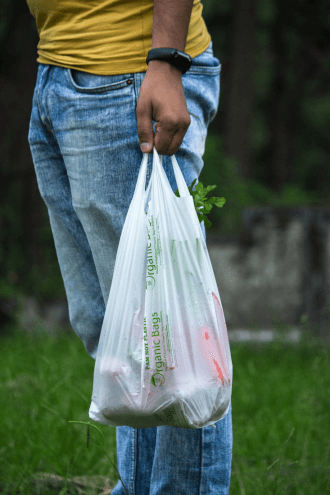[Source](https://images.unsplash.com/photo-1604564841521-a87b82cd3c22?ixlib=rb-1.2.1&ixid=MnwxMjA3fDB8MHxzZWFyY2h8NHx8cGxhc3RpYyUyMGJhZ3xlbnwwfHwwfHw%3D&w=1000&q=80)
### Common Examples of Plastic Usage
- **Plastic bags** to carry our purchases home from the grocery store
- Plastic wrap to store leftovers and pack lunches
- **Plastic straws** at bars and restaurants
- Plastic produce bags to keep our produce fresh
- **Plastic waster bottles** that we purchase at gas stations, bring to work, and drink from in the home
- Plastic bottles that store items such as shampoo/conditioner, laundry detergent, soap
- Packaging for grains, snacks, meat, cheeses, and other food products
- Disposable plastic bags for storing sandwiches and packing lunches
#### The Plastic Test
The greatest irony comes when we start to notice the amount of time we use plastic versus the amount of time and effort it takes to produce and properly dispose of it.
[The average plastic bag](https://medium.com/@hoode764/the-lifespan-of-a-plastic-bag-1f12194d51ec) is used for about **twelve minutes** before getting tossed in the trash where it will be sent to a landfill to degrade for hundreds of years.
[Source](https://images.unsplash.com/photo-1537130508986-20f4fd870b4e?ixlib=rb-1.2.1&ixid=MnwxMjA3fDB8MHxzZWFyY2h8Mnx8emVybyUyMHdhc3RlfGVufDB8fDB8fA%3D%3D&w=1000&q=80)
- [](https://interfaithsustain.com/plastic-free-life/)
## [The Realities Of A Plastic Free Lifestyle](https://interfaithsustain.com/plastic-free-life/)
- [](https://interfaithsustain.com/reusable-straws/)
## [The Epic Story of Reusable Straws](https://interfaithsustain.com/reusable-straws/)
- [](https://interfaithsustain.com/facts-about-plastic-pollution/)
## [The Alarming Facts about Plastic Pollution In Today’s World](https://interfaithsustain.com/facts-about-plastic-pollution/)
Simply beginning to pay attention to our use of plastic can inspire great change – both in ourselves and in those around us. Much of our plastic usage is unconscious as it is so integrated into societal habits and behaviors. The first step in a plastic free life is increasing our level of consciousness to the plastic habit that exists all around us.
## The Plastic Free Journey
By deciding to begin a plastic free journey, each of us can contribute to a growing movement to reduce the amount of plastic waste we create globally.
Many of the most common plastic items that we use revolve around food packaging. Some of the plastic free alternatives that you could consider transitioning to as part of a move towards a plastic free lifestyle are listed below:
## A Practical Guide To Plastic Alternatives
- Choosing to bring reusable bags to the grocery store to carry groceries from the store to your home. Store reusable shopping bags in your car to remember to take them with you when you leave to go shopping.
- Bring your own container to purchase meats and cheeses from the deli instead of purchasing these items in single use plastic packaging.
- Avoid purchasing items that come in a plastic container. If these items are unavoidable, make sure to reuse the container as many times as possible, and then properly recycle it.
- Choose a reusable water bottle instead of having to buy single use plastic water bottles.
- Purchase metal straws to bring with you when you go out to a bar or restaurant, and make sure to ask your server for no straw with your drink.
- Use reusable cloth bags for purchasing produce and keeping it fresh.
In addition to these swaps, there are several plastic free products you can consider such as bar soap and shampoo, reusable coffee cups, stainless steel containers, and many more.
## The Realities Of A Plastic Free Lifestyle
It’s important to recognize that it’s nearly impossible to go 100% completely plastic free. Plastic is found in our food packaging, in our storage tools, and even in our clothing, so we won’t be able to eliminate plastic completely. However, by committing to a journey and to constantly raising our awareness of the issue in ourselves and in others, we can make a big difference.
[Source](https://images.unsplash.com/photo-1517213366875-80be633d4f9a?ixlib=rb-1.2.1&ixid=MnwxMjA3fDB8MHxzZWFyY2h8M3x8cmV1c2FibGUlMjBzaG9wcGluZyUyMGJhZ3N8ZW58MHx8MHx8&w=1000&q=80)
Simply by choosing 1-2 swaps to make in your daily life, you can make a big difference in creating less plastic. While it may seem that one person changing their habits doesn’t seem like it will make a big difference, we must remember that our actions have ripple effects.
By requesting no straw at the restaurant or insisting on using your own bag at the grocery store, you are influencing all those that you are interacting with and raising their level of awareness.
This happens each and every time you make choices aligned with a plastic free lifestyle, eventually snowballing into a larger and larger movement that changes the way we think about and engage with plastic around the world.
One of the more [recent phenomena](https://www.plasticfreejuly.org/) in the movement towards plastic free living is Plastic Free July. Every year, millions of people take on the challenge to work towards plastic free living over the month of July. Plastic Free July is an organization that provides several resources and information on how you can go about reducing your waste.
## The Three “R”s of Plastic Disposal
The last important component of a plastic free lifestyle is to become educated on proper disposal. There will inevitably be several situations in which we encounter plastic in our lives. Therefore, it is important to make sure we are properly disposing of this plastic in a conscious way.
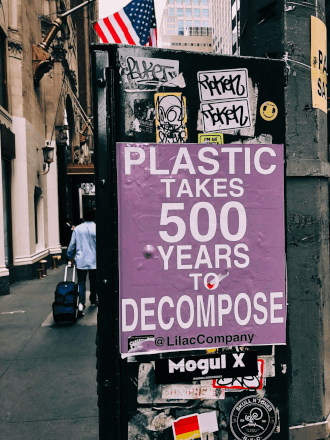[Source](https://images.unsplash.com/photo-1529702859952-6ade6266947c?ixlib=rb-1.2.1&ixid=MnwxMjA3fDB8MHxzZWFyY2h8MTV8fHBsYXN0aWMlMjBwb2xsdXRpb258ZW58MHx8MHx8&w=1000&q=80%22)
### Reduce Plastic Use
The [Environmental Protection Agency](https://www.epa.gov/recycle) teaches “Reduce, Reuse, Recycle”. First, we work to reduce [plastic pollution](https://interfaithsustain.com/facts-about-plastic-pollution/) by avoiding the purchase of unnecessary plastics.
### Reuse Plastic
Next, we should do our best to reuse any plastics that we already have in our possession. Consider washing and reusing plastic containers for food storage and leftovers. You can wash and reuse plastic sandwich bags to pack lunches. You can reuse some plastics for kids art projects or some organization projects around the house.
#### Recycle Plastic: A LAST Resort
Only as a last resort should we turn to recycling. If we have no other option but recycling, then make sure to get educated on what plastics are being accepted at your local recycling facility and which plastics are recyclable versus not. As a general rule, hard plastics are more likely to be accepted for recycling, while softer and thinner plastics (such as plastic bags and thin packaging) must go in the trash.
Most importantly, commit to a plastic free lifestyle by making a lifelong commitment to plastic awareness. As Sarah Kudishevich writes in her book, [The Zero-Waste Workbook](https://www.amazon.com/Zero-Waste-Workbook-how-reducing-generations/dp/B09M57DYWC/ref=sr_1_1?crid=2SX6BG63735AR&keywords=the+zero+waste+workbook&qid=1648630757&sprefix=the+zero+waste+workbook%2Caps%2C271&sr=8-1), “Our success should be measured by whether or not we are engaging with the journey and raising our awareness about waste and the awareness of those around us, not by how small of a container we can squeeze our waste into.”
## Religion & The Plastic Free Life
An article on MDPI called, [“The Reincarnation of Waste,”](https://www.mdpi.com/2077-1444/10/9/514/htm) gives a fascinating case study of how the Buddhist teacher, Dzongsar Jamyang Khyentse Rinpoche, used spiritual ecology to initiate a waste reduction project in Bhutan. Rinpoche was successful by “engaging cultural and spiritual values, and drawing on the inspirational qualities of social and spiritual leaders.” He helped created “the Samdrup Jongkhar Initiative’s Zero Waste project” which addresses household waste management and waste reduction.
The article discusses how before the 2000s, there were few manufactured consumer products in the rural areas of Bhutan. Just as karma and rebirth were central ideas in their Buddhist religion, items were used and reused in creative ways; items were frequently “reborn” for new purposes and rarely tossed. But as cheap manufactured items became more readily available, this ethic of reuse began to wane, and disposal items began filling the streets as garbage. In the words of the historian Karma Phuntsho, “People initially fell for the new, light, cheap and weather-proof materials \[plastic and other synthetic materials\] but their attraction is slowly fading away as the non-biodegradable synthetic materials outlast their use, clogging drains or littering even remote sacred sites.”
## The Zero Plastic Waste Project
Buddhist teacher, Rinpoche, helped start the Samdrup Jongkhar Initiative (SJI) which is addressing plastic pollution in a variety of inspiring ways. SJI organized “Zero Waste Festivals,” in which, “school children performed Zero Waste dances, wearing costumes fashioned from waste materials like plastic wrappers, bottles, and straws [**Lindström 2012, p. 7**](https://www.mdpi.com/2077-1444/10/9/514/htm#B44-religions-10-00514)). The festivals included presentations on [composting](https://interfaithsustain.com/composting-101/) and bio-gas techniques from Indian experts, as well as a recycled art workshop by an expert from the USA ([**Lindström 2012, pp. 8–9**](https://www.mdpi.com/2077-1444/10/9/514/htm#B44-religions-10-00514))”. SJI’s Zero Waste project also “provides education and support to help local producers create goods by re-using discarded materials.” The Zero Waste Project helped train people to turn “strips of plastic bottles and wrappers… into bracelets, belts, and bags,” and to make “bags, boxes, brooches and other jewellery \[sic\] from used truck inner tubes, plastic bottles, wrappers and used phone vouchers” ([**Lindström 2012, p. 13**](https://www.mdpi.com/2077-1444/10/9/514/htm#B44-religions-10-00514)).
## Make Change in Your Community
Rinpoche shows us how achieving the plastic free life can be a national and religious enterprise. What would it look like for each of us to do the same in our communities?
Who knows, perhaps we were born into the religion and country we live in for just this very purpose.
*\* Featured image [source](https://images.unsplash.com/photo-1532996122724-e3c354a0b15b?ixlib=rb-1.2.1&ixid=MnwxMjA3fDB8MHxwaG90by1wYWdlfHx8fGVufDB8fHx8&auto=format&fit=crop&w=1000&q=80)*
**Categories:** Blog on Faith and Ecology, Recycling
**Tags:** Plastic Pollution
---
### [Waste Free Living - The Benefits of Living With a Conscience](https://interfaithsustain.com/waste-free-living/)
**Published:** June 3, 2022
**Author:** ICSD
**Excerpt:** Sarah Kudishecich - Anyone who reads the news today is exposed to alarming articles about climate change and environmental degradation. Most recently, a study found micro-plastics for the first time in human blood. The average adult actually consumes a credit card worth of plastic every week.
**Content:**
Table of Contents
Table of Contents
- [The Zero Waste Movement](#aioseo-the-zero-waste-movement-3)
- [A Zero Waste Life](#aioseo-a-zero-waste-life-8)
- [1. Awareness](#aioseo-1-awareness-12)
- [2. Action](#aioseo-2-action-15)
- [3. Education](#aioseo-3-education-28)
- [Benefits of a Zero Waste Lifestyle](#aioseo-benefits-of-a-zero-waste-lifestyle-32)
- [1. Saving Money](#aioseo-1-saving-money-36)
- [2. Sustainable Lifestyle](#aioseo-2-sustainable-lifestyle-38)
- [3. Supporting Local Businesses](#aioseo-3-supporting-local-businesses-40)
- [Influencing Large Scale Change](#aioseo-influencing-large-scale-change-44)
- [Proper Disposal](#aioseo-proper-disposal-47)
- [Waste Free Living and Religion](#aioseo-waste-free-living-and-religion-58)
*By Sarah Kudishecich* – Anyone who reads the news today is exposed to alarming articles about climate change and environmental degradation. Most recently, [a study](https://www.theguardian.com/environment/2022/mar/24/microplastics-found-in-human-blood-for-first-time) found **micro-plastics** for the first time in human blood. The average adult actually consumes a [credit card worth of plastic](https://www.theguardian.com/environment/2022/feb/06/australians-ingest-a-credit-cards-worth-of-plastic-a-week-so-whats-it-doing-to-us#:~:text=On%20average%2C%20we%20ingest%20about,research%20scientist%20at%20the%20CSIRO.) every week.
Rather than getting overwhelmed by all the negative news, we can take action by changing our own relationship to waste and [reducing the amount of trash that we produce](https://interfaithsustain.com/how-to-reduce/ "reducing the amount of trash that we produce").
## The Zero Waste Movement
A growing number of individuals have been pursuing a **zero waste lifestyle**, where they attempt to send zero waste to a landfill or incinerator. The **zero waste movement** has grown to hundreds of thousands of people around the world who attempt to reduce their waste as much as possible.
While **reducing your waste** to nothing may sound daunting, it is important to remember that the effort matters more than the outcome. Each time we take a step to reduce waste, we also influence those around us to become more conscious about our impact on the planet. A zero waste lifestyle is less about being perfect, and more about every individual action we take.
## A Zero Waste Life
If you are interested in exploring the possibilities of **zero waste living**, you can consider following a three phased process:
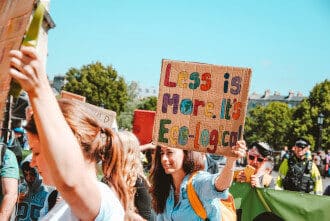[Source](https://images.unsplash.com/photo-1558770147-68c0607adb26?ixlib=rb-1.2.1&ixid=MnwxMjA3fDB8MHxzZWFyY2h8OHx8emVybyUyMHdhc3RlfGVufDB8fDB8fA%3D%3D&w=1000&q=80)
### 1. Awareness
The most important part in starting a zero waste lifestyle is to increase awareness. Start by reflecting on what types of waste you produce today. Is it [plastic packaging](https://interfaithsustain.com/facts-about-plastic-pollution/)? Food waste? Plastic bags? Paper towels? Water bottles?
When we start to become aware of our waste, we can also start becoming aware of how to reduce it and what the alternatives are. Often as we start to become aware of our waste, we may influence others to become of their waste as well.
### 2. Action
The zero waste lifestyle was started by people like you who wanted to take action and change their habits around how they engage with the environment around them.
There are many things that you can consider doing when it comes to taking action. Several of these are so simple, that you could make a change even this week!
- Consider taking your food scraps to a local compost bin.
- Bring reusable bags when you go to grocery stores
- Opt for reusable bottles instead of disposable plastic bottles
- Choose bar soap over body wash from a plastic bottle
- Reuse things that you already have instead of buying new
- Shop in the bulk section using your own containers
It’s important to remember that a zero waste home doesn’t happen overnight, but with small changes we can make a big difference in our personal lives and in our communities.
### 3. Education
Most importantly, educate the individuals and businesses that you engage with. Consider writing a letter to your local government requesting city-wide compost options. Educate your friends and family on social media about the changes you are making and what they can do. Start a petition to a local business about reducing their plastic packaging.
[Source](https://images.unsplash.com/photo-1605600659908-0ef719419d41?ixlib=rb-1.2.1&ixid=MnwxMjA3fDB8MHxzZWFyY2h8MXx8dHJhc2h8ZW58MHx8MHx8&w=1000&q=80)
- [](https://interfaithsustain.com/household-battery-recycling/)
## [Methods For Household Battery Recycling](https://interfaithsustain.com/household-battery-recycling/)
- [](https://interfaithsustain.com/repurposed-materials/)
## [Create Repurposed Materials to Reduce Your Carbon Footprint](https://interfaithsustain.com/repurposed-materials/)
- [](https://interfaithsustain.com/how-to-dispose-of-batteries/)
## [Discover How To Dispose Of Batteries](https://interfaithsustain.com/how-to-dispose-of-batteries/)
## Benefits of a Zero Waste Lifestyle
In addition to reducing your personal consumption of single use plastic, there are many other benefits of low waste living.
### 1. Saving Money
In her book, [The Zero Waste Workbook](https://www.amazon.com/Zero-Waste-Workbook-how-reducing-generations/dp/B09M57DYWC/ref=sr_1_1?crid=2SSOP1ES4KAX&keywords=zero+waste+workbook&qid=1648712877&sprefix=zero+waste+workboo%2Caps%2C258&sr=8-1), Sarah Kudishevich demonstrates that the average family could save up to $4,000 every year, simply by going zero waste.
### 2. Sustainable Lifestyle
Another benefit is living in accordance with your values. Zero waste living is a practical way to live by the things you care about, and bring your values into your daily life.
### 3. Supporting Local Businesses
Zero waste living goes beyond the eco friendly swaps and considers all aspects of how we engage with the planet. By supporting the local economy, we reduce transportation emissions and support small businesses in our communities.
[Source](https://images.unsplash.com/photo-1533808235766-376cdc7e7661?ixlib=rb-1.2.1&ixid=MnwxMjA3fDB8MHxzZWFyY2h8MTJ8fHN1c3RhaW5hYmlsaXR5fGVufDB8fDB8fA%3D%3D&w=1000&q=80)
## **Influencing Large Scale Change**
When consumers change, businesses also change. The zero waste movement has already influenced many companies to reduce their **plastic packaging** and opt for more eco friendly options.
The benefits of waste free living extend far beyond the impact to your personal life. By focusing on our **personal waste habits**, we can make a global impact.
## Proper Disposal
One of the important components of building a [zero waste](https://interfaithsustain.com/how-to-go-zero-waste/) home is to consider proper disposal of the items that come into your house. Here are some of the things to consider as it comes to disposal of waste:
- Choose to reuse. Rather than tossing something in the trash, see if there is another way to use it first.
- Get familiar with local recycling. Check to see what materials are currently being recycled as not all recyclable materials are in demand. Consider a tour at the local recycling facility or check online to see what is being accepted.
- Choose to compost instead of sending food waste to a landfill. When food scraps end up in the trash, they release potent greenhouse gasses that damage the environment. When we [compost food waste](https://interfaithsustain.com/benefits-of-composting-ancient-civilizations-to-todays-technology/), our trash is transformed into nutrients that nourish future growth.
By focusing on **proper waste disposal**, we take responsibility for the full lifecycle of items that we purchase and bring into our homes.
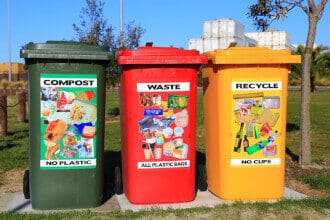[Source](https://images.unsplash.com/photo-1611284446314-60a58ac0deb9?ixlib=rb-1.2.1&ixid=MnwxMjA3fDB8MHxzZWFyY2h8MTR8fHdhc3RlJTIwbG9nfGVufDB8fDB8fA%3D%3D&w=1000&q=80%22)
## Waste Free Living and Religion
“When Eating Meat Was a Sacrifice” is an essay by Dr. Richard H. Schwartz, (adapted from content published on [Canfei Nesharim ](https://canfeinesharim.org/parshat-tzav-when-eating-meat-was-a-sacrifice/)and in [Eco Bible](https://www.amazon.com/dp/1735338842?psc=1&smid=ATVPDKIKX0DER&ref_=chk_typ_imgToDp)).
> *Leviticus 6:2 – Command Aaron and his sons: This is the ritual of the burnt offering: The burnt offering itself shall remain where it is burned upon the altar all night until morning, while the fire on the altar is kept going on it.*
When the Israelites were in the wilderness before they entered the Land of Israel, eating meat was associated with holiness. Every piece eaten came from an animal sacrificed in the Tabernacle, an act meant to bring the worshipper closer to God. The word *korban*, sacrifice, is related to *le-karev*, to come close. Through the sacrifice, worshippers felt that they were giving themselves vicariously to God. People owned animals as sources of labor or food as well as capital, so slaughtering them for God and burning them as a burnt offering was a sacrifice of a precious source of income and food. Other sacrifices were then eaten by the people who offered them.
Today, many people eat meat daily, and more than once a day, with little if any sense of sacrifice. While the Torah forbids inflicting unnecessary pain on animals, most farm animals, including those raised for kosher consumers, are now raised on “factory farms” in cramped, confined spaces, with many being drugged, mutilated, and denied fresh air, sunlight, and exercise.
Modern livestock agriculture also contributes substantially to global warming, soil erosion, air and water pollution, overuse of chemical fertilizers and pesticides, destruction of tropical rainforests and other habitats, and other environmental damage. Animal-based agriculture emits more greenhouse gases (26 percent in CO2 equivalents) than the entire transportation sector.
While the Torah mandates we not waste, or unnecessarily destroy, anything of value (see commentary in *Eco Bible* to Deuteronomy 20:19), animal agriculture wastes grain, land, water, energy, and other precious resources. More than half the world’s population will live in areas chronically short of water by the mid-21st century, yet animal-based human diets require up to 13 times as much water (to raise the animals) as diets free of animal products.
While the Torah stresses we are to assist the poor and share our bread with hungry people, about 70 percent of grain grown in the United States and more than 40 percent grown worldwide is fed to animals destined for slaughter. Grain-fed cattle are given corn and soy, and some are fed in concentrated animal feeding operations, known as feed lots. Meanwhile, [more than seven million people](https://editorials.voa.gov/a/world-hunger-day-2019/4935420.html) worldwide die each year from malnutrition and its effects.
*\* Featured image [source](https://images.unsplash.com/photo-1578670812003-60745e2c2ea9?ixlib=rb-1.2.1&ixid=MnwxMjA3fDB8MHxzZWFyY2h8Nnx8Y3JlZGl0JTIwY2FyZHxlbnwwfHwwfHw%3D&w=1000&q=80)*
**Categories:** Blog on Faith and Ecology, Recycling
**Tags:** Zero Waste
---
### [Everything You Need To Know On How To Go Zero Waste](https://interfaithsustain.com/how-to-go-zero-waste/)
**Published:** April 6, 2022
**Author:** ICSD
**Excerpt:** Sarah Kudishevich - Zero waste living means making intentional effort in every part of our lives to reduce the amount of waste we send to a landfill, incinerator, or the ocean.
**Content:**
Table of Contents
Table of Contents
- [The Zero Waste Journey](#the-zero-waste-journey)
- [Easy Tips for Reducing Your Waste](#easy-tips-for-reducing-your-waste)
- [Say NO to Plastic Water Bottles & Toothbrushes](#say-no-to-plastic-water-bottles-toothbrushes)
- [Food Consumption & Waste](#food-consumption-waste)
- [Switch From Disposable Diapers & Paper Towels](#switch-from-disposable-diapers-paper-towels)
- [The Intangibles of a Zero Waste Lifestyle](#the-intangibles-of-a-zero-waste-lifestyle)
- [Talk to Family Members and Friends About Waste](#talk-to-family-members-and-friends-about-waste)
- [Opt For Public Transit](#opt-for-public-transit)
- [Eat Less Meat](#eat-less-meat)
- [Own Your Zero Waste Journey](#own-your-zero-waste-journey)
- [Disposal Habits](#disposal-habits)
- [Religion and Zero Waste](#religion-and-zero-waste)
- [What does zero waste living mean and why is it important?](#)
- [How can I start my journey towards zero waste living without feeling overwhelmed?](#)
- [Why is reducing plastic waste crucial in a zero waste lifestyle?](#)
- [What practical tips can I implement to reduce my waste at home and in my daily routine?](#)
- [How does religion relate to zero waste principles, and how can faith communities support environmental sustainability?](#)
*By Sarah Kudishevich* – **Zero waste living** means making intentional effort in every part of our lives to [reduce the amount of things we buy](https://interfaithsustain.com/how-to-reduce/ " reduce the amount of things we buy") and reduce the waste we send to a landfill, incinerator, or the ocean. This also includes becoming more conscious of our recycling and disposal habits. We all have the potential to make an impact on the environment, and the biggest change starts with shifting the individual behaviors we engage with each day.
Over the last several decades, humanity has developed a **plastic addiction** so that [50% of all plastics ever made have been manufactured in the last 15 years.](https://www.nationalgeographic.com/environment/article/plastic-pollution) Have you ever stopped to notice how much plastic waste we are each individually producing in our daily lives?
The good news is that there is something we can do about it. The **zero waste movement** is an effort to raise awareness and reduce waste, reversing the trend of convenience culture and our addiction to single-use materials.
## The Zero Waste Journey
**Going zero waste** is first and foremost a journey, and nobody can transition to zero waste living overnight. There are an endless number of ways that we can change our behaviours to **reduce our waste** on both an individual and societal level. Because of this, it’s important not to get overwhelmed by how much there is to do. Instead, pick one transition to make at a time. Habit changes require time, and we must be patient with ourselves along the way.
By working towards a zero waste lifestyle and constantly trying to find new ways to **reduce waste** in your life, you may soon find that you are producing little to no waste at all and even educating others on how to go **zero waste**! The key is remaining focused on the next step in your journey, and not striving for perfection.
As author of [The Zero-Waste Workbook](https://www.amazon.com/Zero-Waste-Workbook-how-reducing-generations/dp/B09M57DYWC/), Sarah Kudishevich, says “our success should be measured by whether or not we are engaging with the journey and raising our awareness about waste \[…\], not by how small of a container we can squeeze our waste into”.
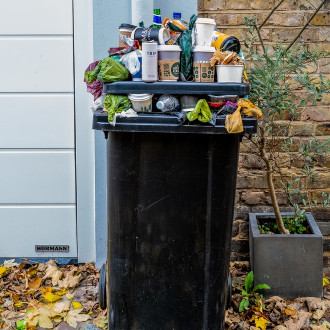[Source](https://unsplash.com/@theblowup/ "Source")
Much of zero waste living focuses on reducing the amount of plastic packaging we use, and for good reason. Did you know that plastic never actually decomposes? It breaks down into smaller and smaller pieces, eventually turning into micro-plastics that end up in our food and water supply.
[One study](https://www.surfrider.org/coastal-blog/entry/microplastics-found-in-bottled-and-tap-drinking-water%20/#:~:text=A%20recent%20study%20by%20OrbMedia,particles%20per%20liter%20of%20water.) even found micro-plastics in 80% of both tap and bottled water across 14 countries. [Another study](https://d2ouvy59p0dg6k.cloudfront.net/downloads/plastic_ingestion_web_spreads.pdf) found that we are ingesting on average a credit card-worth of plastic every single week.
Today plastics are used in everything ranging from the packaging of food to the manufacturing of clothing to the lining of tea bags. Plastic is everywhere. But the good news is, there is a lot we can do to reverse this trend.
- [](https://interfaithsustain.com/waste-free-living/)
## [Waste Free Living – The Benefits of Living With a Conscience](https://interfaithsustain.com/waste-free-living/)
- [](https://interfaithsustain.com/household-battery-recycling/)
## [Methods For Household Battery Recycling](https://interfaithsustain.com/household-battery-recycling/)
- [](https://interfaithsustain.com/repurposed-materials/)
## [Create Repurposed Materials to Reduce Your Carbon Footprint](https://interfaithsustain.com/repurposed-materials/)
## Easy Tips for Reducing Your Waste
If you are interested in reducing your waste, there are lots of simple and practical zero waste tips to get you started. If you want to better understand how to go zero waste, here are crucial zero waste tips to consider:
### **Say NO to Plastic Water Bottles & Toothbrushes**
One of the easiest swaps we can make is to opt for a **reusable bottle** instead of a disposable one to stay hydrated. More [than one million plastic bottles are sold globally every minute](https://www.nationalgeographic.com/environment/article/plastic-bottles "How the plastic bottle went from miracle container to hated garbage"), and it takes at least 450 years for a plastic bottle to degrade. By refilling a **reusable water bottle**, you are avoiding [plastic waste and setting an example for others around you on the importance of avoiding plastic bottles.](https://interfaithsustain.com/single-use-plastic-threats-from-awareness-to-action/ "plastic waste and setting an example for others around you on the importance of avoiding plastic bottles.")
Imagine every single toothbrush you have ever used in your life, still rotting away somewhere in a landfill. [A plastic toothbrush takes about 500 years to degrade.](https://www.wwf.org.au/news/blogs/the-lifecycle-of-plastics#:~:text=Plastic%20toothbrush%20%E2%80%93%20500%20years&text=Most%20get%20lost%20in%20the,years%20or%20more%20to%20decompose.) Instead, try using a **bamboo toothbrush** or getting an **electric brush** with a reusable handle. This swap is super simple to make in your life and can make a big impact.
### **Food Consumption & Waste**
Grocery shopping contributes to a large percentage of our trash. Most of this waste comes from plastic packaging that we buy food products in. This includes plastic bags for produce, plastics packaging for grains and snacks, and plastic wrappers for cheeses and meat.
Instead, try bringing your own reusable containers, mason jars, or reusable totes. Produce, grains from the bulk section, and meat/cheese from the deli section can easily be placed in your own container instead. You can experiment by limiting your shopping to the bulk section at grocery stores to see just how much you can reduce your grocery waste.
[Over 20% of waste production comes from food waste.](https://www.fda.gov/food/consumers/food-loss-and-waste) Simply by separating out your **food waste** into a compost pile, you can dramatically reduce how much you are sending to the landfill. Not only does this help reduce waste, but returning food waste to the earth helps it to decompose faster and creates rich nutrients in the soil to support growth and new life.
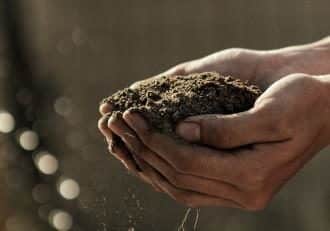[Source](https://unsplash.com/@gabrielj_photography/ "Source")
See if your community has curb-side **compost** collection or a local garden [compost pile](https://interfaithsustain.com/benefits-of-composting-ancient-civilizations-to-todays-technology/ "compost pile") where you can bring your fruit peels, leftovers, and other food waste. You can even consider starting a simple backyard or patio compost bin yourself.
### **Switch From Disposable Diapers & Paper Towels**
[Disposable diapers take at least 500 years to degrade.](https://realdiapers.org/diaper-facts/) Considering how many diapers a baby needs, it becomes a huge source of waste. By switching to reusable **cloth diapers**, not only are you reducing your waste and protecting the planet, but it’s [better for your baby’s health](https://www.medicalnewstoday.com/articles/327289#:~:text=There%20may%20be%20some%20health,skin%20conditions%20such%20as%20eczema.&text=Depending%20on%20the%20type%20of,cotton%20diapers%20are%20pesticide%2Dfree.) as well. Not only that, it can also save you over $700 per year per child.
In the United States alone, [13 billion pounds of paper towels are used every year](https://ecofamilylife.com/eco-articles/paper-towel-usage-facts-amazing-things-you-need-to-know/). While **paper towels** may be convenient, they create a lot of damage to forests and result in an incredible amount of waste. Instead, switch to **cloth napkins** or tea towels to clean up spills and wipe up the kitchen. Making this replacement could save you [up to $100 per year.](https://www.facebook.com/TheZeroTrashLife/)
## The Intangibles of a Zero Waste Lifestyle
In addition to the practical zero waste swaps, there are many other things that you can consider as part of a zero waste lifestyle. Waste reduction goes far beyond the physical waste we produce. It is also about recognising where we are supporting **wasteful industries** and how we can educate others about waste reduction.
Waste free living is really about becoming aware of all the different areas in which we can be less wasteful, and recognising our own individual power to make change. Here are six other areas to consider as you make the transition to a waste free lifestyle:
### **Talk to Family Members and Friends About Waste**
A huge part of zero waste living is education and awareness. Start a conversation with your family members and friends about why you are choosing to reduce your waste. Help them become **aware of their waste production**. Inspire them by sharing some of your favourite zero waste tips. One conversation can have many ripple effects.
Additionally, one of the most important parts of the zero waste movement is building community. Going zero waste is an effort by consumers to change the way that we engage with waste. Collective consumer actions influences businesses to change their behaviour in response to consumer demands. [Companies such as Patagonia and Adidas ](https://hbr.org/2016/06/companies-are-working-with-consumers-to-reduce-waste)have begun **waste reduction initiatives** in response to their customers’ concern for the environment.
This cannot be done without building community and working together for the values that are important to us. Find some friends to place bulk food orders with on the items that are hard to find without packaging. Get in touch with your local farm. Work with local restaurants to encourage them to reduce their waste. When we bring our collective efforts together, the possibilities are endless.
### **Opt For Public Transit**
Transportation is one of the most wasteful industries that we all engage in. The impacts to air quality and the release of harmful **greenhouse gasses** are just a few of the negative effects. Consider how many individuals around the world drive a car every day to get to work. By opting for **public transport**, you can reduce your personal greenhouse gas emissions as well as save money.
### **Thrift Shops**
The **clothing industry** creates [more CO2 emissions](https://www.bbc.com/news/science-environment-60382624) than the aviation and shipping industries combined. [92 million tons of clothing related waste](https://earth.org/fast-fashion-statistics/) are created each year due to our [wasteful shopping habits.](https://interfaithsustain.com/ethical-consumerism/ "wasteful shopping habits.")
Rather than supporting the wasteful fast fashion industry, buy your clothing gently used from the **thrift store**. Not only is thrift shopping much better for the planet, but it’s also much better for your wallet.
[Source](https://unsplash.com/@jaredmurray/ "Source")
### **Eat Less Meat**
Did you know that if the global population transitioned to a **plant-based diet**, we would use [75% less farmland ](https://ourworldindata.org/land-use-diets)than what we use today? **Meat production** is far more resource intensive than the production of vegetables and grains.
If you are a meat-eater, consider reducing your meat consumption to once per week. Meat could even become a treat for special occasions. This simple choice is one of the biggest things that you can do to reduce your personal waste and impact on the planet.
#### **Own Your Zero Waste Journey**
There is no single way to go zero waste, and everyone has their own journey. Part of zero waste living is finding your own path and taking on the swaps that are best for your circumstances and constraints.
[As zero waste author Sarah Kudishevich says](https://www.facebook.com/TheZeroTrashLife/), “you should never take on something that you are not ready for. We should always strive to grow and do better, but choosing a zero waste lifestyle is first and foremost a journey”.
Rather than taking on everything at once, pick one thing that you want to change today and implement it in your life.
#### Disposal Habits
Another aspect of zero waste living is paying attention to **disposal habits**. Making sure that we are properly disposing of the items we use is just as important as reducing our waste.
Many communities are fortunate to have curb-side pickup for **recycling** and compost. However, it’s easy to become complacent with these luxuries and forget to pay attention to what we are throwing away in each bin.
[According to National Geographic](https://www.nationalgeographic.org/article/whopping-91-percent-plastic-isnt-recycled/), 91% of the plastics we throw into the recycling bin do not actually get recycled. Lack of education and awareness around what goes in which bin is the primary cause of this issue.
Even before something gets to the recycling bin, there are several other steps to consider first. [The Environmental Protection Agency](https://www.epa.gov/recycle) teaches the strategy of **3 R’s: Reduce, Reuse, Recycle**.
[Source](https://unsplash.com/@shanerounce/ "Source")
The first step is to work to **reduce waste** using the strategies outlines above. Next, reuse what is already available. Instead of tossing something out, see if you have a way to reuse it first. It could even serve a different purpose than what it was originally intended for. Lastly, when all other options have been explored, then recycling is the last resort. Make sure it is headed to the right bin and is accepted for recycling in your community before you throw it out.
Most importantly, do not get overwhelmed! There are a lot of changes that can be made to reduce our waste, but it’s important to take it one step at a time and honour your personal journey.
## Religion and Zero Waste
[Anne-Marie Bonneau](https://zerowastechef.com/author/annemariebonneau/) writes tongue in cheek on her blog Zero Waste Chef about the Church of Zero Waste and 10 commandments for her **environmental religion** (although she assures us that they’re really just suggestions, and you won’t go to Hell for breaking them). Here’s her list, and make sure to check out [the article ](https://zerowastechef.com/2018/01/30/the-church-of-zero-waste/)to get explanations for each one:
1. You will start small
2. You will ask yourself if you really need something before you buy it
3. You will refuse single-use plastics whenever possible
4. You will use your head
5. You will not judge others
6. You will meet with a congregation of like-minded people occasionally
7. You will not covet your neighbor’s zero-waste lifestyle
8. You will not covet your neighbor’s jars
9. You will not feel guilty when you mess up
10. You will not give up
These suggestions are a great place to start. Zero waste is an ambitious goal, we won’t get there overnight. But having these suggestions can help us get a little closer each day to a healthier and more **sustainable lifestyle**.
If you’re not ready to give over your life to the Church of Zero Waste, no need to fret. There’s a good chance that you already have environmental suggestions in your faith tradition.
For example, in **Judaism** there is the concept of [*Baal Tashchit*](https://www.jewishecoseminars.com/bal-tashchit-summoning-the-will-not-to-waste/)*,* not to waste. In **Islam**, there is “a rich tradition of highlighting the importance of environmental protection and conservation of natural resources,” as described on [EcoMENA](https://www.ecomena.org/sustainability-islam/). And in **Christianity**, there is a strong tradition of respecting and protecting nature, as illuminated by Rev. Dr. Leah Schade in her free [Eco Preacher](https://interfaithsustain.com/ecopreacher-123/) resources. And of course there is much more environmental wisdom in these faiths and other faiths as well than what I’ve briefly outlined above.
There is no shortage of wisdom in our religions to address the environmental crisis in our time. The question is, how do we bring that wisdom to light and action in our faith communities? This blog post is merely an introduction. The rest is up to you.
*\* Featured image [source](https://unsplash.com/@vladbagacian/ "source")*
**Categories:** Blog on Faith and Ecology, Recycling
**Tags:** Waste, Zero Waste
---
### [How Bokashi Composting Turns Waste into a Valuable Resource](https://interfaithsustain.com/bokashi-composting/)
**Published:** September 27, 2021
**Author:** ICSD
**Excerpt:** Sydney Cohen - Bokashi composting is a form of fermentation that helps create healthy, nutrient-rich food. You may be thinking "what is bokashi?" We're here to answer your question!
**Content:**
Table of Contents
Table of Contents
- [Composting](#aioseo-composting-2)
- [Composting Food Waste](#aioseo-composting-food-waste-6)
- [Traditional Composting](#aioseo-traditional-composting-11)
- [Vermicomposting](#aioseo-vermicomposting-15)
- [Bokashi Composting](#aioseo-bokashi-composting-17)
- [What is Bokashi?](#aioseo-what-is-bokashi-19)
- [How Does Bokashi Compost Work?](#aioseo-how-does-bokashi-compost-work-24)
- [Where Did Bokashi Come From?](#aioseo-where-did-bokashi-come-from-27)
- [Bokashi Represents The Buddhist "Mottanai" Concept](#aioseo-bokashi-represents-the-buddhist-mottanai-concept-29)
- [Why Choose Bokashi Composting?](#aioseo-why-choose-bokashi-composting-32)
- [The Benefits of Bokashi](#aioseo-the-benefits-of-bokashi-34)
- [Urban Composting](#aioseo-urban-composting-36)
- [Turn Your Waste Into A Resource](#aioseo-turn-your-waste-into-a-resource-38)
*By Sydney Cohen* – **Bokashi composting** is a form of fermentation that helps create healthy, nutrient-rich food. You may be thinking “what is bokashi?” We’re here to answer your question! The Bokashi process originated in Japan and has been used for centuries as a natural way to decompose organic material like fruits and vegetables. This process also creates an end product called “biochar.” Biochar can improve the fertility of soils, reduce the need for synthetic fertilizers, and even cut down greenhouse gas emissions from farming operations!
## Composting
Organic matter, organic materials, and natural matter refer to the carbon-based compounds that are found in our natural environments. This matter most frequently is formed from the decomposed remains from animals, plants and organisms, and their waste products and can be used for composting. According to Wikipedia, “Basic structures are created from [cellulose](https://en.wikipedia.org/wiki/Cellulose), [tannin](https://en.wikipedia.org/wiki/Tannin), [cutin](https://en.wikipedia.org/wiki/Cutin), and [lignin](https://en.wikipedia.org/wiki/Lignin), along with other various [proteins](https://en.wikipedia.org/wiki/Protein), [lipids](https://en.wikipedia.org/wiki/Lipid), and [carbohydrates](https://en.wikipedia.org/wiki/Carbohydrate). Organic matter is very important in the movement of nutrients in the environment and plays a role in water retention on the surface of the planet.”
### Composting Food Waste
**Food waste** results from unused food, and the largest and most shocking amount of food waste actually comes from commercial sources. Large amounts of produce rejected from grocery stores frequently pile up in landfills and start to decompose. Not only is this simply an issue of wasted food, but it is also a waste of resources such as water, land and soil that were used to grow the food, as well as the the incredibly [detrimental environmental effects](https://interfaithsustain.com/environmental-degradation-and-the-future-of-our-planet-earth/) on the planet of pollution resulting from the transport of the food both nationally and internationally.
[Source](https://unsplash.com/@jwatson95/)
- [](https://interfaithsustain.com/benefits-of-composting-ancient-civilizations-to-todays-technology/)
## [The Benefits of Composting: Ancient Civilizations to Today’s Technology](https://interfaithsustain.com/benefits-of-composting-ancient-civilizations-to-todays-technology/)
- [](https://interfaithsustain.com/composting-101/)
## [Composting 101: The Composting Process for Beginners](https://interfaithsustain.com/composting-101/)
Even if we work to eliminate or minimize food waste, it is still natural for there to be food scraps that we cannot eat, such as bones from meat, fruit peels, and eggshells. Kitchen scraps and kitchen waste, however, can be utilized in more sustainable and environmentally friendly ways. Composting is a great method of creating a more circular life-cycle for our food scraps. It is quite easy to incorporate a compost bin or even a plastic bag dedicated to saving kitchen scraps into our kitchens and lifestyles. The composting process and the mixture that results has an immense benefit on our gardens and homes, and the environment.
### Traditional Composting
[Traditional composting](https://interfaithsustain.com/composting-101/), also known as backyard composting, is a process that involves layering green and brown materials, that decompose to create an organic material that acts as nutrient-rich food for our gardens. A compost heap or pile can be formed when the bucket is full, and the process is even more sufficient and can take as little as two weeks to generate nutrient and nitrogen-rich compost if it is kept in an air-tight bucket. As previously mentioned, when added to garden soil, traditional compost is a method that provides effective microorganisms and microbes to the soil, that highly benefit plants.
#### Vermicomposting
While traditional composting is the most well-known method, **vermicomposting**, or worm composting, is also highly efficient. This composting process involves specific worm species that break down food waste. “Despite their differences, traditional composting and vermicomposting use the same basic process: organic matter is consumed then excreted by decomposer organisms in the presence of air, breaking materials down into their constituents.”
## Bokashi Composting
Bokashi composting, [however](https://solanacenter.org/bokashi-method/), “is not a composting or decomposition process, but a way to treat organic matter prior to composting.”
### What is Bokashi?
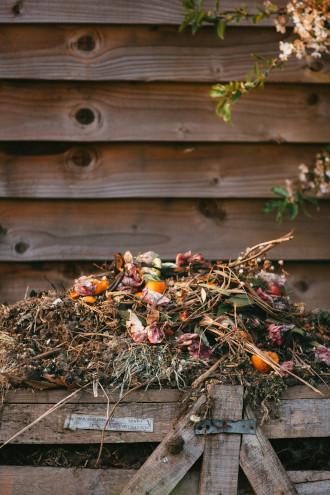[Source](https://unsplash.com/@edwardhowellphotography/)
Bokashi is a Japanese word that means “fermented organic matter.” The host material can be almost any fine organic grain or grass-like substance which is immersed in microbes and allowed to ferment for days. The bacteria belong to three strains: yeasts, saccharomyces, lactic acid, lactobacillus and rhodopseudomonas. According to a [Solana Center](https://solanacenter.org/bokashi-method/) article on the different composting methods, “the basic idea \[of bokashi composting\] is that fresh food waste is placed in an anaerobic environment and inoculated with a special mix of microbes, including lactobacillus, that facilitate fermentation.”
Then, “as the microbes multiply, they create a highly-acidic environment that allows the organic material to retain most of its structure and nitrogen for an extended period of time. Of course, this won’t create finished compost on its own– in fact, while kept anaerobic, bokashi prevents decomposition from occurring. The real magic happens when air is re-introduced to the system.” The Bokashi fermentation process only takes about two weeks after the bucket has been sealed, and the fermentation process can be accelerated with the addition of bokashi bran, which infuses microbes into the fermented material.
### How Does Bokashi Compost Work?
Bokashi is an anaerobic process that involves layering kitchen waste and scraps with a special inoculant. The result is a highly nutritious plant nutrient that can be buried in compost trenches in a garden. The liquid byproduct makes excellent fertilizer bokashi tea for feeding plants directly. The bokashi method requires an airtight bokashi bucket or bokashi bin with the ability to drain off the liquid that is produced. That way, the liquid can be drained off to prevent smells of foulness in the bucket without wasting oxygen.
“Once food waste has been fully fermented, it can be added to an aerobic composting system to fully degrade.” One can add the bokashi compost to be used with both traditional and vermicomposting methods, once the fermented bokashi has finished. “Bokashi-treated waste can be combined with “browns” for traditional composting, or added to a worm bin in the same manner as regular food waste. Additionally, using bokashi provides an additional and very low-maintenance composting; the fermented waste can be “trenched” (buried and covered with 12–18 inches of the excavated soil) where it can decompose and enrich the soil”, where the oxygen in the soil also aids the decomposition process.
### Where Did Bokashi Come From?
Most Bokashi sites state that the inoculant (usually called EM or Effective Micro-organism) was discovered or developed by Dr. Teuro Higa. In Asian countries, including Korea, deliberate collection and culturing of naturally occurring soil microorganisms has been common agricultural practice for centuries. While there’s a huge body of independent scientific work establishing the many virtues of both regular compost and of vermicompost, no such body of work yet exists for Bokashi. Bokashi is the new kid on the home composting block.
## Bokashi Represents The Buddhist “Mottanai” Concept
Bokashi’s discovery in Japan is not surprising given the deep importance of sustainability in Japanese culture. In Japanese culture, there is a Buddhist concept called “**Mottanai**” that is meant to communicate the value of each item and the anguish over wasting that item’s potential.
As Lily Crossley-Baxter describes in her article, [Japan’s ancient way to save the planet](https://www.bbc.com/travel/article/20200308-japans-ancient-way-to-save-the-planet), Mottanai is visible today in the metals used for making the medals, made from recycled materials, at this year’s Olympic Games in Tokyo, as well as in Shikoku, Japan’s fourth-largest island, where they are striving to make their whole community waste-free. The use of the word Mottanai to galvanize modern efforts towards sustainability in Japan and [around the world](https://en.wikipedia.org/wiki/Mottainai#Use_by_Wangari_Maathai) is an exciting development that can inspire all those looking to increase sustainability through their unique religious and cultural heritage.
## Why Choose Bokashi Composting?
Bokashi compost is richer in effective microorganisms than any other form of compost. Plants thrive when the soil is full of beneficial microorganisms. Food waste has a higher value for building health for [bio-diverse soils](https://interfaithsustain.com/why-is-biodiversity-important/) than general yard trimmings. These microbes multiply on the organic materials we supply for them and end up in our garden soil.
### The Benefits of Bokashi
Both bokashi composting and traditional composting provide your garden and plants with the same benefits. The tea has no real value and the fermented food scraps still need to be disposed of.
#### Urban Composting
Using these methods Bokashi makes sense for apartment owners and others with no garden. The bokashi process is incredibly sustainable as all of the fermented materials involved in the process benefit your soil and plants’ roots. Bokashi tea, for example, is a liquid resulting from the fermenting process that also enriches whatever soil it is poured onto. Additionally, the bokashi bran can be added directly into the soil as an organic fertilizer, though this method does not contain as many nutrients as the full 2-week process generates.
#### Turn Your Waste Into A Resource
As the world population continues to grow and we continue to produce more food, there is an increased need for [buying less](https://interfaithsustain.com/how-to-reduce/ "buying less") and finding sustainable methods of managing the waste we produce. Bokashi composting offers a great solution that can help you do your part in creating something new from what would otherwise be considered trash.
*\* Featured image [source](https://unsplash.com/@jupp/)*
**Categories:** Blog on Faith and Ecology, Recycling
**Tags:** Composting
---
### [The Benefits of Composting: Ancient Civilizations to Today's Technology](https://interfaithsustain.com/benefits-of-composting-ancient-civilizations-to-todays-technology/)
**Published:** May 17, 2021
**Author:** ICSD
**Excerpt:** Matthew Mausner - Composting has become far more than just a “quirky” side practice of organic farmers and is now an advanced industry with a wide range of applications. Composting—the intentional use of natural decomposition and fermentation processes, to turn food waste, yard waste, and other organic material into useful soil and even fuel—has been refined and just now understood in ways that hold keys to our sustainable future.
**Content:**
Table of Contents
Table of Contents
- [What is Composting?](#aioseo-what-is-composting-4)
- [Compost vs. Garbage dumps](#aioseo-compost-vs-garbage-dumps-6)
- [Failure to compost](#aioseo-failure-to-compost-7)
- [Consequences of not composting](#aioseo-consequences-of-not-composting-9)
- [Methane gas](#aioseo-methane-gas-14)
- [Benefits of composting](#aioseo-benefits-of-composting-18)
- [Composting is natural](#aioseo-composting-is-natural-20)
- [Ideal Composting](#aioseo-ideal-composting-24)
- [Composting at home](#aioseo-composting-at-home-28)
- [How to compost at home](#aioseo-how-to-compost-at-home-30)
- [Advanced composting in history](#aioseo-advanced-composting-in-history-35)
- [Cleantech and Compost](#aioseo-cleantech-and-compost-40)
- [Municipal Waste](#aioseo-municipal-waste-42)
- [Noah's Ark and Compost](#aioseo-noahs-ark-and-compost-47)
- [Religious imperative to compost](#aioseo-religious-imperative-to-compost-50)
- [Conclusion](#aioseo-conclusion-52)
*By Matthew Mausner* – Composting has become far more than just a “quirky” side practice of organic farmers and is now an advanced industry with a wide range of applications, while the benefits of composting to our environment are beyond question.
## What is Composting?
Composting—the intentional use of natural decomposition and fermentation processes, to turn food waste, yard waste, and other organic material into useful soil and even fuel—has been refined and just now understood in ways that hold keys to our sustainable future.
## Compost vs. Garbage dumps
### Failure to compost
If you do not compost, waste creates unnecessary problems. The first is waste transport and disposal, which adds to landfills and garbage dumps, blights the landscape, exposes communities—most often low-income communities—to toxins, and greatly reduces the natural recycling of key elements and nutrients, such as [phosphorus](https://www.theatlantic.com/science/archive/2021/02/phosphorus-pollution-fertilizer/617937/), back into the earth.
### Consequences of not composting
The second problem is the use of toxic and expensive substitutes instead of naturally composted materials. This requires manufacturing, acquiring, and transporting such products as artificial fertilizers and chemical pesticides.
These cost more to produce, which drives up costs of use. They are less sustainable, exhausting topsoil and its fertility, and contaminating the environment, damaging countless organisms and food webs.
[Source](https://interfaithsustain.com/)
- [](https://interfaithsustain.com/sustainable-food/)
## [A Sustainable Food System to Address Climate Change](https://interfaithsustain.com/sustainable-food/)
- [](https://interfaithsustain.com/composting-101/)
## [Composting 101: The Composting Process for Beginners](https://interfaithsustain.com/composting-101/)
- [](https://interfaithsustain.com/how-to-dispose-of-batteries/)
## [Discover How To Dispose Of Batteries](https://interfaithsustain.com/how-to-dispose-of-batteries/)
#### Methane gas
Third, waste will decompose whether we intentionally compost or not; the wrong kind of decomposition is anaerobic (no-oxygen), as often happens with compressed organic waste in landfills. Anaerobic decay emits a high proportion of methane gas, a **[greenhouse gas](https://interfaithsustain.com/global-warming-vs-climate-change/)**. Scientists predict that over the next 100 years, each ton of methane will [heat the earth 30 times more](https://www.epa.gov/ghgemissions/understanding-global-warming-potentials) than each ton of carbon dioxide.
## Benefits of composting
The amount of trash generated by most human endeavors, from households to farms to factories, is daunting. But when trash is reconfigured as a tremendously useful resource for potential compost, the environmental equation can appear surprisingly positive. The **benefits of composting**, both by individuals and as a green industry, are immense and have only begun to be tapped.
### Composting is natural
Composting is a fundamentally natural process throughout Earth’s ecosystem, involving both plants and animals. Organic materials, whether fallen leaves or trees, decomposing animals, seaweed, fungi, or another manner of organic waste will compost given the right range of humidity, local microorganisms, and other factors.
[Source](https://interfaithsustain.com/)
### Ideal Composting
Ideally, the composted material will become nutrient-rich soil rapidly filled with new, natural growth, or in the context of human agriculture, will become the most fertile ground for the plants we cultivate. Before the last 100 years, composting was a necessity, not a luxury**.**
### Composting at home
The simplest method of creating compost for a small home, farm, or garden is to create a compost pile. Food scraps, including everything from coffee grounds to eggshells, organic fodder and yard waste such as grass clippings, and a surprising variety of other organic matter, can be used in compost.
#### How to compost at home
Composting at home is done by layering organic waste, preferably with alternating and appropriately aerated layers of other organic materials, and providing the right balance of shade and sunlight.
This generates a decay, decomposition, and fermentation process that converts composting materials into a rich, beneficial material full of nutrients for fertilizer or even fully activated soil for a garden.
[Source](https://interfaithsustain.com/)
## Advanced composting in history
Advanced compost methods can include technologies, innovations, and special ways of treating waste to compost more effectively, efficiently, or on a larger scale. In the pre-Colombian Amazon, people processed their food waste and other organic matter into uniquely dense soil “bricks” we call [*terra prieta*](https://en.wikipedia.org/wiki/Terra_preta), which was so remarkable, even today’s science has not replicated it.
Other ancient techniques like “[night soil](https://en.wikipedia.org/wiki/Night_soil#:~:text=Night%20soil%20is%20a%20historically,workers%20employed%20in%20this%20trade.)”—still used in some parts of the world— were practiced in east Asia, to generate rich soil and fertilizer from combinations of human, animal, and plant wastes.
### Cleantech and Compost
New cleantech innovations are taking compost to new levels. New forms of “digester” or “bio-digester” machines can speed up, intensify, and optimize the conversion of organic material into useful, immediately available fuel and soil. Some of these machines are [ten times as efficient](https://compostbiotic.wordpress.com/) as standard compost piles or earlier generations of digesters.
#### Municipal Waste
**Municipal waste collection** and disposal systems are increasingly aware of the need for environmental protection and responsibility. They see the cost/benefit of turning waste into compost via local conversion of huge trash loads into soil, fuel, fertilizers, and nutrients.
Reducing the cost of shipping waste to landfills, and of transporting and importing fertilizers and soil to every garden in their local jurisdiction, benefits all.
[Source](https://interfaithsustain.com/)
## Noah’s Ark and Compost
God told Noah to make an Ark that had three levels, according to [Genesis 6:16](https://www.sefaria.org/Genesis.6.16?lang=he-en&utm_source=blogs.timesofisrael.com&utm_medium=sefaria_linker). The Talmud explains why. Humans were to be on the top deck, animals in the middle deck, and their manure held in the bottom. The Bible also says that one of Noah’s first actions after the flood was planting a vineyard.
The wisely accumulated manure stored on the bottom level likely helped Noah restart agriculture after the flood depleted the topsoil. . This may be the first Biblical reference to organic fertilizer. (See more in [*Eco Bible: Volume 1: An Ecological Commentary on Genesis and Exodus*](https://www.amazon.com/Eco-Bible-Ecological-Commentary-Genesis/dp/173533880X/)*.*)
### Religious imperative to compost
If more houses of worship start to compost, that will have a big ripple effect. Does your house of worship serve as a positive example of mindful resource use, especially in regards to composting its **organic waste**? To compost shows, we value the whole life cycle, by wisely creating living soil from dying matter.
## Conclusion
We can use modern words like “circular economies” to encourage a compost cycle, but it’s one of our oldest lessons. Proudly taking full responsibility for all the outputs and inputs of your life cycle embodies a spiritual and holistic approach that is part and parcel of religious traditions.
*Interested in learning more? Check out our post on [The Principles of Sustainable Development](https://interfaithsustain.com/principles-of-sustainable-development/ "The Principles of Sustainable Development")*.
**Categories:** Blog on Faith and Ecology, Recycling
**Tags:** Composting, Resources for Green Living
---
### [How to Optimize the Three Pillars of Sustainability](https://interfaithsustain.com/how-to-optimize-the-three-pillars-of-sustainability/)
**Published:** May 28, 2021
**Author:** ICSD
**Excerpt:** Matthew Mausner - An old maxim about business says that you can have any two of the following three principles: Good, Fast, and Cheap. Pick two.
**Content:**
Table of Contents
Table of Contents
- [A Pillar Can Not Stand Alone](#aioseo-a-pillar-can-not-stand-alone-6)
- [Weakness of The Environmental Pillar Alone](#aioseo-weakness-of-the-environmental-pillar-alone-8)
- [Weakness of The Social Pillar Alone](#aioseo-weakness-of-the-social-pillar-alone-13)
- [How The Three Pillars Can Work Together](#aioseo-how-the-three-pillars-can-work-together-18)
- [The Pillars and the Fragility of the Natural World](#aioseo-the-pillars-and-the-fragility-of-the-natural-world-21)
- [Balance and Sustainability: A Basketball Example](#aioseo-balance-and-sustainability-a-basketball-example-27)
- [Sustainable Spurs](#aioseo-sustainable-spurs-32)
- [A Shared Vision of the Three Pillars](#aioseo-a-shared-vision-of-the-three-pillars-34)
- [The Three Pillars and the Tragedy of the Commons](#aioseo-the-three-pillars-and-the-tragedy-of-the-commons-38)
- [Politics of Sustainability](#aioseo-politics-of-sustainability-44)
- [The Pillars and the Spurs](#aioseo-the-pillars-and-the-spurs-48)
- [An Un-Sustainable Example](#aioseo-an-un-sustainable-example-51)
- [What are the three pillars of sustainability?](#aioseo-what-are-the-three-pillars-of-sustainability-60)
- [Why can't a single pillar of sustainability stand alone?](#aioseo-why-cant-a-single-pillar-of-sustainability-stand-alone-62)
- [How do the three pillars of sustainability work together in practice?](#aioseo-how-do-the-three-pillars-of-sustainability-work-together-in-practice-64)
- [What is the tragedy of the commons and how does it relate to sustainability?](#aioseo-what-is-the-tragedy-of-the-commons-and-how-does-it-relate-to-sustainability-66)
- [What are the challenges faced by political systems in balancing the three pillars of sustainability?](#aioseo-what-are-the-challenges-faced-by-political-systems-in-balancing-the-three-pillars-of-sustainability-68)
*By Matthew Mausner* – An old maxim about business says that you can have any two of the following three principles: Good, Fast, and Cheap. Pick two. **For a sustainable future, the challenge is that we need all three**– despite knowing that they all involve tradeoffs and potentially pull in different directions. Economic, Social, and Environmental spheres all can be ‘optimized’ or prioritized in different ways, as you see in the diagram above. The Bible reminds us, “a cord of three strands is not quickly broken,” (Ecclesiastes 4:12). Similarly, it is only when all three pillars of sustainability are achieved that human civilization can be said to be genuinely sustainable.
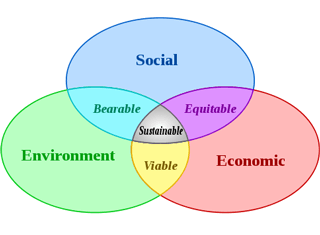*Three Pillars of Sustainability*
This is the Venn diagram of sustainable development. Making these principles fit and work symbiotically is the essence of sustainable development. Sustainable development is the assurance that the **integrity of the present needs can be met without compromising resources in the future**. The [United Nations](https://en.unesco.org/themes/education-sustainable-development/what-is-esd/sd) definition of sustainable development is “development that meets the needs of the present without compromising the ability of future generations to meet their own needs.”
## A Pillar Can Not Stand Alone
In a sense, ‘sustainability’ is precisely the best measure of the success of the others. For example, if economic needs are given too much focus over the environment, it can cause a collapse of the environment, with the cascading collapse of that part of the economy, such as overfishing or [deforestation](https://interfaithsustain.com/environmental-degradation-and-the-future-of-our-planet-earth/). The over-use of the environment’s natural resources directly impacts humanity’s well-being.
### Weakness of The Environmental Pillar Alone
If the environment is pursued to the exclusion of the economic or social, such as protection of big game in Africa in the 1980s, it can lead to a backlash of activity, as desperate and starving Africans legally excluded from land use in the region took to newly lucrative poaching in order to ensure their basic human right to survive, and it undermined the environment that the rules had been designed to protect.
Of the three pillars of sustainability, the environment and the depletion of natural resources for future generations pose a giant threat. The environmental pillar includes environmental protection and securing the ecological needs of our green systems of the world.
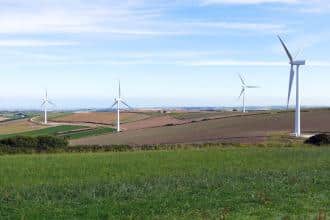[Source](https://pixabay.com/users/inspiredimages-57296/)
- [](https://interfaithsustain.com/economic-sustainability/)
## [The Future of Humanity on Earth Requires Economic Sustainability](https://interfaithsustain.com/economic-sustainability/)
- [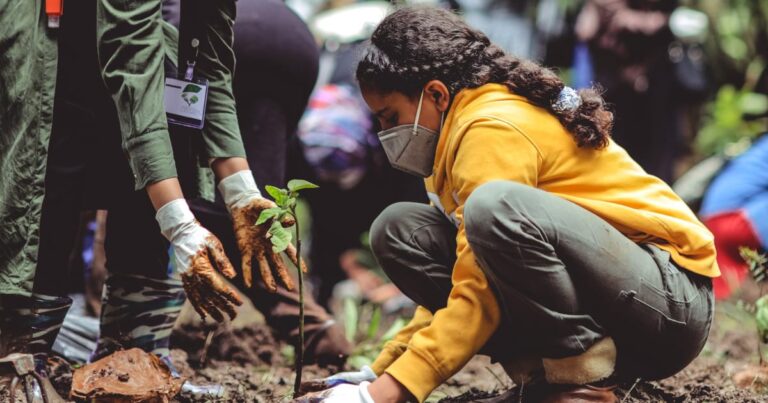](https://interfaithsustain.com/what-is-environmental-sustainability/)
## [Understanding What Is Environmental Sustainability](https://interfaithsustain.com/what-is-environmental-sustainability/)
- [](https://interfaithsustain.com/sustainable-tourism/)
## [Plan Your Next Trip Using Sustainable Tourism](https://interfaithsustain.com/sustainable-tourism/)
### Weakness of The Social Pillar Alone
If the social is pursued to the detriment of the others, similar consequences follow. A high standard of living, strong community life, and thriving economy that is built on exploiting other countries’ natural resources far away will lead to environmental degradation, pollution, and migration that eventually undermines the social and economic fabric of even the richest countries.
The concept of the three pillars helps us identify where they all overlap, and therefore which priorities to balance. And only when all three are honored, with all the detailed implications, we can approach sustainability. We can call that a **triple bottom line**.
## How The Three Pillars Can Work Together
Sometimes looking at the short-term and the long-term framework can also help clarify what is genuinely sustainable. **Durability and stability are harder than they look**, as even a system or practice that works efficiently for 5 or 10 or even 30 years runs increasing risks of breaking down.
Socially there are risks over time of even a well-run industry or government becoming stagnant or corrupt or top-heavy, leading to declines in economic performance. Economically optimizing might lean towards efficiency- and inequality, as natural ‘hockey stick’ and monopoly trends emerge, that damage the social system.
### The Pillars and the Fragility of the Natural World
And the natural world, with its cycles of nutrients and seasons and interdependency of species for pollination and shade and fertilizer and more, is inherently fragile in the face of a consistently exploitative human practice of agriculture, animal husbandry, fishing, or other resource use. Even a reasonable ‘crop rotation’ might exhaust soils eventually, and limits on fishing, when not rigorous enough, can [reduce a population below replacement](https://interfaithsustain.com/be-fruitful-and-multiply-and-fill-the-earth-until-when/) over time.
[Source](https://pixabay.com/users/valiphotos-1720744/)
## Balance and Sustainability: A Basketball Example
So how do you make decisions that even address, much less genuinely optimize and balance all three pillars of sustainablity? I can give the analogy of a sports team striving for sustainable success, like the San Antonio Spurs. They must strive for as many wins as possible each season, like ‘economic’ growth and success (which it does in fact translate into).
They attempt to preserve their players’ health, managing their minutes and resting them as needed, like [‘environmental’ sustainability](https://interfaithsustain.com/environmental-sustainability/). And yet they must stay sportsmanlike- not compete unfairly- and when there are nationally televised games, they are expected to play their best lineups (like ‘social’ sustainability, for the good of the league as a whole).
[Source](https://pixabay.com/users/tortugadatacorp-5195555/)
### Sustainable Spurs
This became an issue many people noticed when the Spurs became the first team to rest their star players in the second game of ‘back-to-back,’ two-nights-in-a-row games, despite it being nationally televised. They were fined for that, and their often quotable coach in response described exactly the three-pronged logic. It’s always a balance, and even this most-successful-franchise was having trouble balancing the development of all three pillars of sustainability.
#### A Shared Vision of the Three Pillars
The Spurs have the advantage of ownership, management, coach, and training staff that are **all on the same page about how to achieve all three goals**. Many other teams sacrifice the long term for the short term, or the short for the long (‘tanking’), or take risks with players’ health (some risk is inevitable in a contact sport, but some teams used to be accused of inadequate rehabilitation or other physical management issues.)
## The Three Pillars and the Tragedy of the Commons
Ecological economics speaks about the “[tragedy of the commons](https://science.sciencemag.org/content/162/3859/1243.full.pdf+html),” **a situation in a shared-resource system where individuals act independently, according to their own self-interest**. In so doing, they behave contrary to the common good by depleting or spoiling a resource through their collective actions. The classic, historical example is of many shepherds grazing sheep on a collective field (the commons).
Each shepherd tries to maximize his or her grazing of sheep, **even though overgrazing is ultimately to the long-term detriment of all**. Professor Elinor Ostrom of Indiana University was awarded the Nobel Prize in Economics for characterizing the ways that cooperative agreements allow communities to break out of the “tragedy of the commons” dynamic. A group of sheep owners sharing one field for grazing might agree collectively that it would be sensible to leave the field fallow for a period of time in order to regrow its grass.
If everyone could be trusted to cooperate, it would be in their combined best interests to leave enough grass to regrow (or in the case of fishing, enough fish to breed). But in the absence of cooperation, many individuals will consume the complete stock of grass or fish. In this situation, their long-term best interests are achieved only when each person acts against their own short-term self-interest.
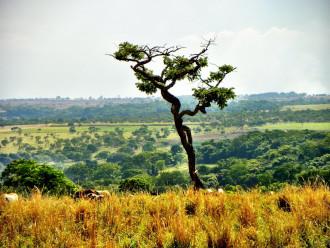[Source](https://pixabay.com/users/rosarioxavier-1022762/)
### Politics of Sustainability
But in our society, decision-making and political power is distributed, some might say balkanized. Those who advocate for any one goal are pulling very hard in that one direction, otherwise, it will probably be sacrificed to the other two pillars of sustainability.
Entire political parties sometimes pull towards the environmental impact on future generations, like the green party in several European countries. Others insist on the primacy of the economy, such as many right-leaning or conservative parties in most Western countries. And some prioritize the social safety net, protections for workers, and regulating the profit-driven actions of the economic and corporate actors of their countries.
Since the political process is in effect adversarial, with extremes driving voter turnout and each side often forced to compromise in order to work together, **very little incentive exists for a true balancing of economic, environmental, and social goals.**
#### The Pillars and the Spurs
All the more so when short-term election motives leave little room for long-term planning. The San Antonio Spurs made the playoffs over 20 years in a row and won 5 NBA championships; such sustained success is rare or absent in democratic politics.
But the consequences of failure are worse for nations. If the Spurs stop winning so many games, their fans may be patient or forgive them, or they may not; but if countries fail to balance the social, economic, or environmental bottom lines, they face outright civilizational collapse.
## An Un-Sustainable Example
An example is the sad story of the Aral Sea. As recently as the 1980s it was the world’s fourth-biggest lake, in the central Asian region of the former USSR. Well-intentioned officials and engineers wanted to encourage agriculture along the Syr Darya and Amu Darya rivers in this relatively impoverished area and irrigated 2.5 million acres of farmland in an attempt to improve both the economic and social situation.
At first, it looked like it succeeded, but surprisingly rapidly [the vast Aral Sea dried up](https://openoregon.pressbooks.pub/envirobiology/chapter/7-5-case-study-the-aral-sea-going-going-gone/), becoming a literal desert, littered with polluted wreckage of former fishing and other industries and corporations. The post-Soviet countries of Kazakhstan and Uzbekistan inherited a deeply scarred landscape.
Their **environmental catastrophe has now degraded the economy and the social fabric** as well, quality of life has collapsed, and as many as one-third of the population has either left or has become dependent on migrations and remittances from abroad.
This disaster spread across four countries (Tajikstan, Kyrgyzstan, Kazakstan and Uzbekistan) and it also literally illustrates the ‘downstream’ effects of these sorts of failures. When we get a global dynamic that fails the three pillars test on that level… we could face a global catastrophe.
**The three pillars of sustainability, economic, social, and environmental are all interconnected.** They overlap in different ways depending on the situation. Optimizing for a sustainable future means ensuring that these pillars work together in sustainable development meant to create a better environment for everyone.
*\* Featured image [source](https://pixabay.com/users/ybernardi-9716082/)*
*Curious to learn more? Follow these links to learn more about [The principles of sustainable development ](https://interfaithsustain.com/principles-of-sustainable-development/)and* [*Sustainable Food Systems*.](https://interfaithsustain.com/sustainable-food/ "Sustainable Food Systems.")
**Categories:** Blog on Faith and Ecology, Sustainability
**Tags:** Three Pillars of Sustainability
---
### [The Future of Humanity on Earth Requires Economic Sustainability](https://interfaithsustain.com/economic-sustainability/)
**Published:** August 29, 2022
**Author:** ICSD
**Excerpt:** Ethel Mendius - When planning for the future of our species and planet, sustainability is the foremost aim. Economic sustainability in particular "refers to practices that support long-term economic growth" without negative social and environmental consequences.
**Content:**
Table of Contents
Table of Contents
- [Sustainable Development](#aioseo-sustainable-development-3)
- [Social, Environmental and Economic Sustainability](#aioseo-social-environmental-and-economic-sustainability-8)
- [Natural Resources and Sustainability](#aioseo-natural-resources-and-sustainability-13)
- [Deforestation](#aioseo-deforestation-16)
- [Agroforestry](#aioseo-agroforestry-21)
- [The Amazon Rainforest](#aioseo-the-amazon-rainforest-25)
- [Energy Consumption](#aioseo-energy-consumption-29)
- [Economic Sustainability and Climate Change](#aioseo-economic-sustainability-and-climate-change-33)
- [California Solar Initiative](#aioseo-california-solar-initiative-39)
- [Thinking Beyond Economic Growth](#aioseo-thinking-beyond-economic-growth-42)
- [Economic Sustainability and the Global Economy](#aioseo-economic-sustainability-and-the-global-economy-51)
- [Economic Sustainability and Religion](#aioseo-economic-sustainability-and-religion-56)
- [Spiritual Sustainability](#aioseo-spiritual-sustainability-59)
*By Ethel Mendius* – When planning for the future of our species and planet, **sustainability** is the foremost aim. **Economic sustainability** in particular “refers to [practices](https://sustainability.umw.edu/areas-of-sustainability/economic-sustainability/) that support long-term economic growth” without negative **social and environmental consequences**.
Economic sustainability can be implemented locally and individually, but at its root it is a **global goal**. It is necessary we understand economic sustainability in order to develop **holistically sustainable practices** and achieve long-term well-being for human life on this Earth.
## Sustainable Development
[Development](https://sid-israel.org/en/what-is-development/) is one of the key issues addressed by the international community since the late 20th century. It is defined as “a process that creates growth, progress, \[and\] positive change.”
While development yields economic benefits, economist Amartya Sen [writes](https://www.worldcat.org/title/development-as-freedom/oclc/45146643) that “economic growth cannot sensibly be treated as an end in itself. Development has to be more concerned with enhancing the lives we lead and the freedoms we enjoy.”
A closely related concept has come to prominence with the help of economists such as Jeffrey Sachs called sustainable development. **Sustainable development** is concerned with economic development that enhances the lives of both ourselves and future generations.
The most common definition of [sustainable development](https://circularecology.com/sustainability-and-sustainable-development.html#:~:text=Economic%20Sustainability%3A%20Economic%20sustainability%20requires,business%20cannot%20sustain%20it's%20activities.) is “development that meets the needs of the present without compromising the ability of future generations to meet their own needs.” In other words, it becomes a sustainable aspect of human existence.
### Social, Environmental and Economic Sustainability
Sustainability can be understood through three closely related terms: environmental sustainability, economic sustainability and social sustainability, which are all necessary components that need to be taken into consideration for sustainable business practices.
[**Social sustainability**](https://www.unglobalcompact.org/what-is-gc/our-work/social), according to the United Nations Global Compact, is “about identifying and managing business impacts, both positive and negative, on people.” This includes fostering thriving communities and promoting equity for disadvantaged groups.
[Environmental sustainability](https://circularecology.com/sustainability-and-sustainable-development.html) “means that we are living within the means of our natural resources” and ensuring the planet will be inhabitable for generations to come. **Environmental sustainability** is a major aim of the climate movement.
[Economic sustainability](https://greenly.earth/en-gb/blog/ecology-news/what-is-economic-sustainability) accounts for social and environmental issues as it necessitates “we use, safeguard and sustain resources (human and material) to create long-term sustainable values.” Its ideal is an economic system that can be maintained and replicated without detriment to people or the planet.
## Natural Resources and Sustainability
One area that demonstrates the interconnectedness of the three pillars of sustainability is the governance of [natural resources](https://interfaithsustain.com/how-to-optimize-the-three-pillars-of-sustainability/). Even “\[a\] thriving economy that is built on exploiting other countries’ **natural resources** far away will lead to environmental degradation, pollution, and migration” eventually felt by the whole of the global population.
The management of natural resources, otherwise known as natural capital, is a major concern of economic sustainability. Economically sustainable [practices](https://www.oecd-ilibrary.org/docserver/9789264060258-5-en.pdf?expires=1658763202&id=id&accname=guest&checksum=0E716E62B43163E0C34AE3EE28A43A0A) avoid “growth that is accompanied by degradation or conversion of natural capital on which the poor depend for their livelihoods.”
### Deforestation
One example of this is [deforestation](https://climatetransform.com/the-economic-impact-of-deforestation/). Although cutting down forests is a quick source of timber and biofuel, it also sacrifices the resources of those who live in forests or rely on them for food, medicine, or fuel; particularly for those in developing countries, “**deforestation** means lost income, lost subsistence, and even a lost home.”
These issues will persist to harm locals, compromise land use, and hinder economic production indefinitely, outweighing the short term benefits of commodity production. These consequences must be considered when making decisions and ensuring a sustainable economy for future generations.
[Source](https://unsplash.com/@denisagati)
### Agroforestry
An economically sustainable solution to conserving resources can be found in [agroforestry](https://smallfarms.cornell.edu/projects/agroforestry/), “a wide range of practices that integrate trees, forests, and agricultural production.” These practices allow for economic growth and agricultural production in forested areas while preventing the environmental impacts of all-out deforestation.
#### The Amazon Rainforest
The World Bank funds agroforestry projects in the Amazon rainforest in [Acre, Brazil](https://www.worldbank.org/en/news/feature/2018/09/19/when-forest-protection-and-economic-renewal-grow-hand-in-hand). These projects support an agroforestry system amounting to “the restoration of 11,000 hectares of abandoned pastureland” with robust [biodiversity](https://interfaithsustain.com/threats-to-biodiversity/).
Valerie Hickey, a biodiversity specialist for the World Bank, argues “Agriculture can take advantage of degraded lands, while forestry is more than conservation and climate values. Forestry creates market opportunities and production activities for people.”
Underlina Cavalcante dos Santos, a pineapple farmer in Acre, explains that “Saving the forest is important to us because it also saves livelihoods. Sustaining the forest also sustains the urban areas and gives us better conditions for our families to live.”
- [](https://interfaithsustain.com/water-resilience/)
## [For Businesses, A Water Sustainable And Resilient Premises Should Be A No-Brainer](https://interfaithsustain.com/water-resilience/)
- [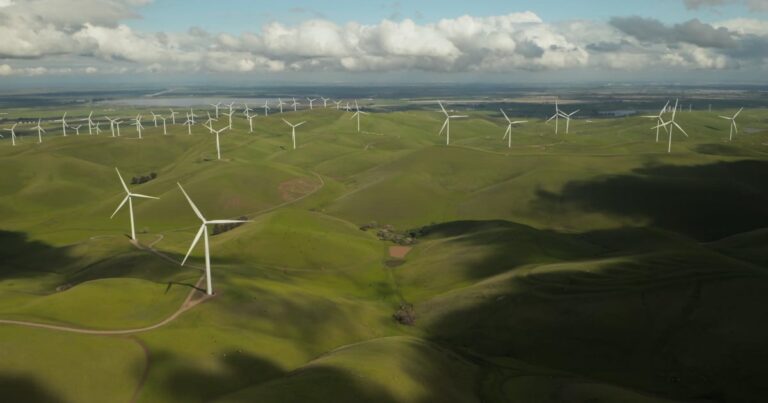](https://interfaithsustain.com/sustainable-resources/)
## [For Now, and For the Future Sustainable Resources are Crucial](https://interfaithsustain.com/sustainable-resources/)
- [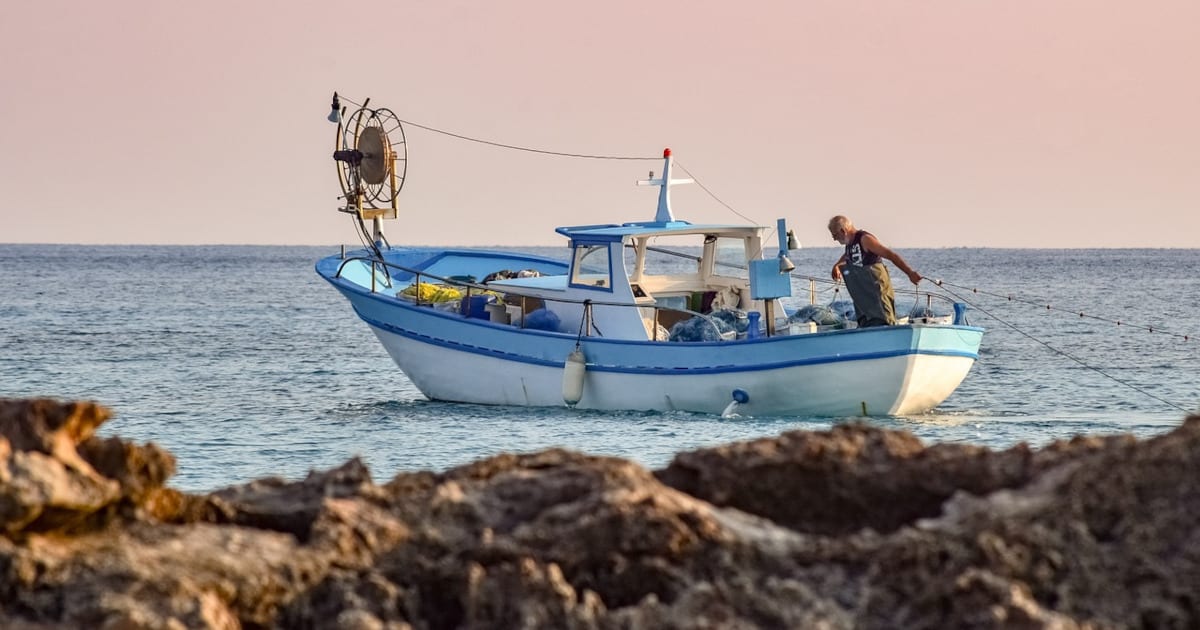](https://interfaithsustain.com/maximum-sustainable-yield/)
## [Maximum Sustainable Yield For Sustainable Fishing](https://interfaithsustain.com/maximum-sustainable-yield/)
## Energy Consumption
Another element of economic sustainability involves the transition from fossil fuels to **renewable energy sources**. Fossil fuels are finite resources, the exhaustion of which will put economic strain on the communities that produce and consume them.
### Economic Sustainability and Climate Change
In addition to its other risks, “**climate change** is one of the biggest threats to [economic stability](https://www.iberdrola.com/sustainability/impacts-of-climate-change).” The natural disasters it causes leave many in abject poverty, and droughts pose a challenge to food security.
[Source](https://unsplash.com/@alexeckermann)
The global business community is a major culprit when it comes to pollution and carbon emissions. However, “measures aimed at dealing with global climate change are a golden opportunity for ensuring sustainable development and driving economic growth.”
Economists have now turned their attention to business models that support economic sustainability. By encouraging cleaner energy systems, improved land and water management, and “more circular and efficient use of materials” via recycling, the private sector could mitigate its environmental impact while promoting long term economic growth.
#### California Solar Initiative
Economic sustainability encourages a transition to renewable energy sources. For example, the [California Solar Initiative](https://www.cpuc.ca.gov/-/media/cpuc-website/about-cpuc/documents/transparency-and-reporting/fact_sheets/csifactsheet_v4.pdf) is a state-run program “that gives low-income families the opportunity to add solar panels to their homes, with the goals of decreasing overall energy usage, helping families enjoy lower energy bills, and reducing the cost of solar energy.”
The program has achieved success and reached more than 1 million Californians. Similar initiatives worldwide could integrate energy consumption into the economic sustainability agenda.
## Thinking Beyond Economic Growth
The reason these measures have not been achieved is that economic sustainability is at face-value incompatible with economic growth. [Economic growth](https://www.eea.europa.eu/publications/growth-without-economic-growth/growth-without-economic-growth) “does not limit the resource exploitation and energy, being mainly focused on productivity increase.”
The European Environmental Agency (EEA) [reports](https://www.eea.europa.eu/publications/growth-without-economic-growth/growth-without-economic-growth) that “loss of biodiversity, climate change, pollution and loss of natural capital is tightly coupled to economic activities and economic growth.” Therefore, it us incumbent upon business practices to look beyond growth in order to achieve economic sustainability.
[Source](https://unsplash.com/@towfiqu999999)
While we have seen that sustainable practices can also be profitable, this overhaul is no small task, especially for businesses in competition with each other, the report finds. “Political initiatives for a sustainable future require not only technological change, but also changes in consumption and social practices,” amounting to a radical transformation of our economic systems.
According to the [EEA,](https://www.eea.europa.eu/highlights/sustainability-what-are-the-alternatives) “The challenge is to innovate lifestyles that consume less but are attractive to individuals without an environmental, spiritual or ideological interest.” One could counterargue that the real challenge is to inspire an environmental, spiritual or ideological dedication to economic sustainability in the world’s population.
## Economic Sustainability and the Global Economy
The era of [globaliza](https://interfaithsustain.com/environmental-sustainability/)[tion](https://interfaithsustain.com/environmental-sustainability/) has raised the potential, and the stakes, for economic sustainability: “we have made the world far more capable of sustaining a large population, even in places with little environmental resources of their own,” and yet, we are chiefly using this system to exploit the natural and human resources of developing nations.
The United Nations’ [Sustainable Development Goals](https://www.un.org/en/desa/four-steps-towards-more-sustainable-global-economy) promotes interwoven environmental, social, and economic sustainability initiatives. If met, these goals could bolster the global economy and ensure prosperity for all in the long term.
Strategies in reaching a more sustainable global economy include diversifying the economies of less developed countries and, more broadly, targeting inequalities that prevent long-term growth: “countries will have to urgently raise the living standards of the most deprived and address the inequality of opportunities in the long term” to make economic sustainability a global reality.
While economic sustainability can begin at the individual level, its need is truly felt at the level of international governance and the global business community and felt by the world population in total. It is necessary we recognize the problems in our present global economy so we may eat, shop, travel, and vote in ways that promote economic sustainability.
## Economic Sustainability and Religion
Is religion just about focusing on the spiritual and not being distracted by the material? Well according to [Rabbi Israel Salanter](https://www.rabbisacks.org/archive/someone-elses-material-needs-are-my-spiritual-responsibility/), “Someone else’s material needs are my spiritual responsibility.” Spirituality should not only exist in a cave, but should be found in helping others.
At the same time, spirituality ensures we’re not just seeking stuff for stuff’s sake. Religion can inspire us to live a life of balance by giving us a broader perspective. While a corporation is responsible to its current shareholders, religion make us responsible to God and future generations.
### Spiritual Sustainability
It’s true, religion is often used as an excuse to just focus on the here and now. *It’s ok to pollute,* we may tell ourselves. *God will take care of everything.* Or, *we’re headed towards apocalypse anyways, might as well enjoy this moment.* This is not pious thinking.
Pious thinking for a religious person must recognize that God gave us this planet to “conserve and protect it” (Genesis 1). In the words of [**Gautama Buddha**](https://www.azquotes.com/author/37842-Gautama_Buddha)*, “*As the bee collects nectar and departs without injuring the flower, or its color or fragrance, so let the sage dwell on earth.” And as we learn from [The Quran](https://www.siasat.com/conserving-environment-is-every-muslims-responsibility-the-quran-says-so-2237586/) “Don’t seek to cause corruption in the Earth” (*Surah Al Qasas: 77).*
In almost every religion there are traditions about protecting the planet. We must live in balance with Earth and our fellow humans, preventing the greed of the moment from destroying the resources of the future.
May God help us to live in balance, so that each person can have what they need, both physically and spiritually.
*\* Featured image [source](https://unsplash.com/@guillaumedegermain)*
**Categories:** Blog on Faith and Ecology, Sustainability
**Tags:** Sustainability
---
### [Social Sustainability Enshrines Our Rights for Spiritual Wellbeing](https://interfaithsustain.com/social-sustainability/)
**Published:** November 3, 2022
**Author:** ICSD
**Excerpt:** Ethel Mendius - Sustainability is the key to a healthy present and a prosperous future. Social sustainability is an approach which tasks institutions to consider the social factors necessary for human well being.
**Content:**
Table of Contents
Table of Contents
- [What Is Social Sustainability?](#aioseo-what-is-social-sustainability-2)
- [Environmental Sustainability](#aioseo-environmental-sustainability-6)
- [Economic Sustainability](#aioseo-economic-sustainability-11)
- [Future Generations](#aioseo-future-generations-18)
- [Sustainable Development Goals](#aioseo-sustainable-development-goals-20)
- [Dimensions Of Social Sustainability](#aioseo-dimensions-of-social-sustainability-25)
- [Quality Of Life](#aioseo-quality-of-life-30)
- [Equity](#aioseo-equity-33)
- [Diversity](#aioseo-diversity-35)
- [Social Cohesion](#aioseo-social-cohesion-37)
- [Democracy and Governance](#aioseo-democracy-and-governance-39)
- [Social Sustainability And Religion](#aioseo-social-sustainability-and-religion-42)
*By Ethel Mendius* – Sustainability is the key to a healthy present and a prosperous future. **Social sustainability** is an approach which tasks institutions to consider the social factors necessary for human well being.
## What Is Social Sustainability?
**Sustainable development** is a popular but elusive goal, so it is important to identify different avenues of its pursuit. There are **three pillars of sustainability**: environmental, economic, and social. Social sustainability is the pillar which considers the importance of social and cultural life in maintaining a healthy world.
According to [researcher](https://nbs.net/what-is-social-sustainability/) Dr. Laura Spence, “at its core, social sustainability means the aspects of sustainability that relate to people… the emphasis in social sustainability is on ensuring humans have what they need.” Needs can include material things, like access to food, healthcare and a decent livelihood, as well as more abstract concepts such as “dignity, equality, and peace and justice.” In essence, social sustainability is about enshrining human rights; it is the belief that every individual has the right to live with their needs accounted for and met.
Because of the breadth of issues considered, a commitment to social sustainability will yield many positive [outcomes](https://www.adecesg.com/resources/faq/what-is-social-sustainability): “**socially sustainable communities** are equitable, diverse, connected and democratic and provide a good quality of life.” To understand this, we must consider how social sustainability is interlinked with the other pillars of sustainability.
### Environmental Sustainability
Social sustainability is an interwoven goal with [environmental sustainability](https://interfaithsustain.com/what-is-environmental-sustainability/), the most obvious aspect of sustainable development. Environmental sustainability means tackling environmental issues such as climate change by managing natural resources and decarbonizing our planet. While these goals are a prerequisite for human survival, “[environmental sustainability](https://circularecology.com/sustainability-and-sustainable-development.html) should not be confused with full sustainability, which also needs to balance economic and social factors.”
[Source](https://unsplash.com/@mauromora)
These two pillars are often taken together, [encompassing](https://www.deginvest.de/Impact-climate-focus/A-guide-to-our-standards/DEG-Guideline-for-environmental-and-social-sustainability) “the protection of people’s lives and health, the economic basis of their livelihood and their ecological, social and cultural environment as well as the sustainable use of natural resources.” The effects of climate change, a phenomenon caused by humans, also play out in the lives of individuals and across societies. The physical environment is a determining factor in social well being, and a healthy society is better equipped to tackle and prevent environmental problems.
### Economic Sustainability
Social sustainability is closely linked with [economic sustainability](https://web.archive.org/web/20221006011752/https://www.hig.se/Ext/En/University-of-Gavle/About-the-University/Environmental-Work/What-is-sustainable-development-at-HiG/Economic-sustainability.html), which looks beyond economic growth and envisions a private sector that “must use, safeguard and sustain resources (human and material) to create long-term sustainable values.” Economic sustainability is about maintaining profit and reducing [waste](https://circularecology.com/sustainability-and-sustainable-development.html): “without acting responsibly and using its resources efficiently a company will not be able to sustain its activities in the long term.”
Social sustainability requires us to consider the social impact of [industrial activity](https://www.unglobalcompact.org/what-is-gc/our-work/social): “Social sustainability is about identifying and managing business impacts, both positive and negative, on people.” While economic sustainability is mostly concerned with business strategy, social sustainability asks businesses to consider their human stakeholders, such as workers and their families, as well as the broader social costs of their projects.
The [Network for Business Sustainability](https://nbs.net/what-is-social-sustainability/) identifies three areas to strive for to ensure a socially sustainable business for its internal stakeholders—those working for or otherwise connected to the business. These include health and safety practices, equality and inclusion and fair labor practices and working conditions. While these changes must be enacted and enforced at the corporate level, everybody should be aware of them as ideals so they know their rights and understand what policies are best for them.
Socially sustainable companies must also look beyond the workplace at outside stakeholders, “including the local community and even broader society.” They must actively support infrastructure and social amenities and liaise with the communities and governments in their remit to ensure they are meeting their social responsibility.
- [](https://interfaithsustain.com/water-resilience/)
## [For Businesses, A Water Sustainable And Resilient Premises Should Be A No-Brainer](https://interfaithsustain.com/water-resilience/)
- [](https://interfaithsustain.com/sustainable-bedding/)
## [Sleeping Soundly With A Clear Conscience In Sustainable Bedding](https://interfaithsustain.com/sustainable-bedding/)
- [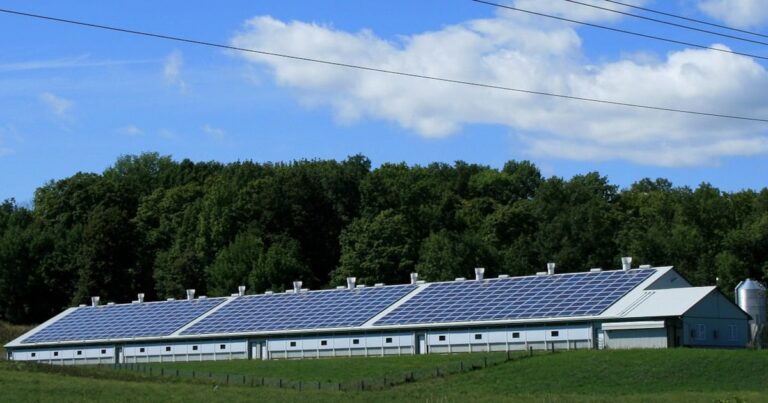](https://interfaithsustain.com/sustainability-jobs/)
## [Today’s Rapid Expansion In Sustainability Jobs](https://interfaithsustain.com/sustainability-jobs/)
## Future Generations
Social, economic and environmental sustainability are concerned with the well being of both current and future generations. Social sustainability has been [defined](https://www.adecesg.com/resources/faq/what-is-social-sustainability/) as “the ability of a community to develop processes and structures which not only meet the needs of its current members but also support the ability of future generations to maintain a healthy community.” Every aspect of sustainability must be pursued with future needs and mind.
## Sustainable Development Goals
The United Nations’ Sustainable Development Goals are designed to promote all the facets of sustainability, particularly in developing countries. Many of the [goals](https://www.un.org/sustainabledevelopment/sustainable-development-goals/), such as achieving gender equality, quality education, and sustainable cities and communities, are direct elements of social sustainability.
[Source](https://unsplash.com/@ajaegers)
These [goals](https://nbs.net/what-is-social-sustainability/) explore the social dimension necessary to promote wellbeing: “Linking these social sustainability topics are the ideas of human rights and social justice: that everyone is equal and that opportunities should be fairly distributed.”
## Dimensions Of Social Sustainability
According to Social Life, a social enterprise based in the UK, social sustainability is “[a process](https://www.designingbuildings.co.uk/wiki/Social_sustainability) for creating sustainable, successful places that promote wellbeing, by understanding what people need from the places they live and work.” Social sustainability must be considered when planning projects and developing communities.
Renowned economist and Nobel Laureate Amartya Sen identifies five [**dimensions**](https://www.adecesg.com/resources/faq/what-is-social-sustainability/) **of social sustainability**: “These are factors to be considered in determining if a business or a project is socially sustainable.” We will explore them below.
### Quality Of Life
The first dimension, quality of life, is an expansive topic. It includes human health, affordable housing, job security and a healthy work life balance, as well as “education, training and skill development opportunities” for local communities.
In practice, this means jobs that offer fair pay, reasonable hours, and opportunities to progress within the organization. It also means active public and civic institutions ensuring these amenities are provided.
### Equity
Sustainability cannot be, but is too often perceived, as “a luxury commodity.” Socially sustainable [projects](https://metropolismag.com/viewpoints/social-equity-sustainability/) require “social impact thinking—particularly at the community level…introduced in the early stages,” with lower-income and minority race groups treated as equal stakeholders. While social equity will have the most impact on marginalized groups, “[working](https://www.masterclass.com/articles/social-sustainability) to address the needs of underserved groups improves the social and economic climate for all.”
### Diversity
[Diversity](https://rescogita.medium.com/the-role-of-inclusion-and-diversity-in-social-sustainability-7ed8611bcd75) must be honored when promoting social sustainability: “communities are diverse and this is something to be embraced for the community itself to grow and develop.” Diverse groups and viewpoints must be elevated in community development. Rescogita, a service company that promotes social sustainability, observe that just as [biodiversity](https://interfaithsustain.com/importance-of-biodiversity/) is “essential for human survival,” so too is diversity in human communities.
#### Social Cohesion
In many ways, social cohesion is the natural product of a diverse and equitable community. Social cohesion can take many different [forms](https://www.sofidel.com/en/softandgreen/sustainability-as-a-value/sustainability-and-social-cohesion/): “Sometimes it is people organized in informal groups that find answers to social problems; sometimes it is institutions that launch projects encouraging participation; sometimes it is networks of different stakeholders… that create partnerships to manage community projects.” Across the board, social cohesion means increased participation within the social structures of communities.
#### Democracy and Governance
The crises of today [require](https://rescogita.medium.com/the-role-of-inclusion-and-diversity-in-social-sustainability-7ed8611bcd75) “a democratic and participatory approach” to ensure just and sustainable solutions. Unfettered public participation ensures we are heading in the right direction and meeting the needs of every social group.
Democracy exists at the [core](https://blog.apaonline.org/2021/10/21/socially-sustainable-thoroughly-democratic-power/) of social sustainability and must be carried into the framework of environmental and economic sustainability, too: “A commitment to a robust conception of democracy and social sustainability is the best way to guard against replicating those injustices as the world transitions to a renewable energy system.” Clear participatory processes and transparent institutions are necessary in implementing and maintaining social sustainability.
## Social Sustainability And Religion
The Spirituality and Sustainability Initiative (SSI) is an organization dedicated to promoting spirituality and sustainability through public events, activities, and research. They describe on their website how “spirituality plays a part in protecting and enhancing resilience and sustainability through numerous modalities. These may include mindfulness practices, participation in communities of faith, social action, service, art, and immersion in nature.”
Want to have a sustainable society? The answer is clear. Put spirituality at the core.
*\* Featured image [source](https://unsplash.com/@shanerounce)*
**Categories:** Blog on Faith and Ecology, Sustainability
---
### [Corporate Sustainability: Good For Business, Good For Society](https://interfaithsustain.com/corporate-sustainability/)
**Published:** August 10, 2022
**Author:** ICSD
**Excerpt:** Rachel Cohen - A common confusion can occur with corporate social responsibility (CSR) and corporate sustainability. Corporate sustainability focuses on "growth and profitability through intentional business practices in three areas of society."
**Content:**
Table of Contents
Table of Contents
- [What is Corporate Social Responsibility?](#What_is_Corporate_Social_Responsibility?)
- [Examples of Corporate Sustainability](#Examples_of_Corporate_Sustainability)
- [Why participate in Corporate Social Responsibility?](#Why_participate_in_Corporate_Social_Responsibility?)
- [Corporate Sustainability Puts The Customer First](#Corporate_Sustainability_Puts_The_Customer_First)
- [Corporate Sustainability To Attract and Retain Employees](#Corporate_Sustainability_To_Attract_and_Retain_Employees)
- [Corporate Sustainability For Future Generations](#Corporate_Sustainability_For_Future_Generations)
- [B Certified Corporations](#B_Certified_Corporations)
- [B Certified "Patagonia"](#B_Certified_Patagonia)
- [Interfaith Organizations For Corporate Sustainability](#Interfaith_Organisations_For_Corporate_Sustainability)
- [Boycotts For Corporate Sustainability](#Boycotts_For_Corporate_Sustainability)
- [Petitions For Corporate Sustainability](#Petitions_For_Corporate_Sustainability)
- [The Future of Corporate Social Responsibility](#The_Future_of_Corporate_Social_Responsibility)
- [Corporate Sustainability & Religion](#Corporate_Sustainability_amp;_Religion)
*By Rachel Cohen* – A common confusion can occur with **corporate social responsibility** (CSR) and corporate sustainability. **Corporate sustainability** focuses on “[growth and profitability](https://www.unboxedtechnology.com/blog/the-difference-between-sustainability-and-corporate-social-responsibility/) through intentional business practices in three areas of society.” CSR is taking corporate sustainability a step further to participate in practices regularly to support corporate sustainability.
Corporate social responsibility has existed since 1953 when economist Howard Bowen coined the term in his publication Social Responsibilities of the Businessman. Since then, Corporate Social Responsibility (**CSR**) has taken on a life of its own. There are various types of CSR ranging from focuses on the environment to **diversity, equity, and inclusion** (DEI).
## What is Corporate Social Responsibility?
Today, the standard definition of CSR is [a self-regulating business](https://www.investopedia.com/terms/c/corp-social-responsibility.asp) model that helps a company be **socially accountable** to itself, its stakeholders, and the public. Though the definition can be broad, companies will spell out directly how they will be upholding CSR. Typically, this is seen when a company will list out the company’s values which will mention topics such as environmental sustainability, sustainability efforts, and how their business objectives can relate.
[Source](https://pixabay.com/users/vait_mcright-327613/)
Some values may include **reducing a carbon footprint**, economic sustainability, limiting fossil fuels, or helping local communities. These values will shape how a company will participate in **corporate social responsibility**.
### Examples of Corporate Sustainability
Rolex has partnered with various environmental organizations that work to protect the [environment.](https://www.rolex.org/environment) Other companies like LEGO go beyond just the environment and look at other social issues such as workplace equality and local community engagement. Having values that reflect what [sustainable conscious consumers](https://interfaithsustain.com/ethical-consumerism/) want will lead to **sustainable business**.
## Why participate in Corporate Social Responsibility?
Consumers may not realize the power they have as an individual, but CSR is a direct result of [consumer influence](https://interfaithsustain.com/anti-consumerism/). As social media has grown into its own power, the social campaigns that have occurred through sites have helped move companies to be more socially responsible. It has become easier to organize boycotts, and petitions and spread valuable information about business practices, both good and bad.
### Corporate Sustainability Puts The Customer First
In a company’s business strategy, the customer is always at the center, which means to be successful the company needs to listen to them. When customers demand for a company to think about their carbon footprint, sustainable practices, and even human rights, it would be harmful to businesses to ignore that. Thus, by being a company that listens to its consumers, it will create a positive impression of the company and continue to attract and retain customers.
### Corporate Sustainability To Attract and Retain Employees
Another reason for participating in corporate social responsibility is that it impacts on the company’s ability to attract and retain employees. Just like consumers, employees have a lot of power to help create change. If a company is not practicing good general or sustainable practices it can be difficult to hold onto and/or attract new talent.
According to a study conducted by Deloitte, [49%](https://www.businessnewsdaily.com/4679-corporate-social-responsibility.html) of Gen Zers rely on their personal ethics to determine the type of work and companies they would prefer to join. Ignoring the values of possible talent can lead to a struggle to find employees and retain them, causing financial stress for the company.
- [](https://interfaithsustain.com/what-is-environmental-sustainability/)
## [Understanding What Is Environmental Sustainability](https://interfaithsustain.com/what-is-environmental-sustainability/)
- [](https://interfaithsustain.com/sustainability-jobs/)
## [Today’s Rapid Expansion In Sustainability Jobs](https://interfaithsustain.com/sustainability-jobs/)
- [](https://interfaithsustain.com/economic-sustainability/)
## [The Future of Humanity on Earth Requires Economic Sustainability](https://interfaithsustain.com/economic-sustainability/)
### Corporate Sustainability For Future Generations
A third reason to participate in corporate social responsibility is the effects it will have on future generations. We are living in a time of extreme climate change and irreversible damage. It is no secret that everyone from an individual level to a corporate level needs to take action.
Having large corporations with a corporate sustainability plan can help create a difference for future generations. By using their power and money for good, they could help the world. To understand further about why a company should choose to practice CSR check out this blog on the [ICSD website](https://interfaithsustain.com/sustainable-competitive-advantage/), where Harry Cooper delves deeper into the advantages of sustainability practices.
[Source](https://pixabay.com/users/jarmoluk-143740/)
Some of the largest companies in the world have dedicated themselves to incorporating **sustainable development goals**. This is a great example of how a company can participate in corporate social responsibility.
## B Certified Corporations
One of the easiest ways to know which companies are working towards corporate sustainability or corporate social responsibility is by looking at B Lab. B Lab is an organization that works to support companies to be able to improve the social and environmental impacts of their work. Some of this support can come through impact assessments, self-assessments to compare a company’s work to the UN goals, and programs to help corporations become **B certified**.
To become a B certified organization, an organization must be reviewed by B Lab’s Standards Advisory Council. This council is “an independent, global, multi-stakeholder group with specific expertise in responsible and sustainable business.” This advisory council offers continuous feedback and adjustment to the standards.
## B Certified “Patagonia”
One of the most famous B certified corporations is Patagonia. The company supports a variety of organizations that are working to curb the impacts of climate change, as well as their own efforts.
One of these programs is the **environmental responsibility** program. Through the program, Patagonia has reached 100% renewable energy in their buildings, participated in fair labor practices, and even use 88% preferred materials.
Patagonia goes even beyond the environment to help make a change. One of their social programs includes Global Sports Activist. The sponsored athlete works to create social and environmental change in their community. For example, Ramón Navarro a surfer from Chile, organized and led community opposition to a proposed sewage pipeline. By working with influential figures, Patagonia is able to support local causes they may not have before.
International organizations are not the only companies that can make a difference in the world. Lesser known or smaller organizations are able to participate in this corporate sustainability strategy as well, such as Zordan a luxury designer brand that prides itself on creating products that are attractive and sustainable for people and the environment.
The company is working to become carbon-free and even reduce its carbon footprint in more untraditional ways. Their current landing page is very simple to eliminate any extra energy that is needed to [complete browsing](https://www.zordan1965.com/landing/index-en.html).
## Interfaith Organizations For Corporate Sustainability
Secular or non-religious organizations are not the only organizations that can be focusing on corporate sustainability. The organization Interfaith Center on Corporate Responsibility (ICCR) is an organization working on this area.
ICCR is working to help their shareholders look beyond their bottom line and analyze their actions to be aware of the well-being of their stakeholders including their communities and employees. They are able to do this through various projects in the areas of food justice, climate change, human rights, and health.
### Boycotts For Corporate Sustainability
The number one way for consumers to participate in CSR is through consumer boycotts. A consumer boycott is when consumers stop buying particular items or buying at large from a company.
Many companies have experienced this including Goya, Amazon, and Coca-Cola. The consumer has an extreme amount of power and withholding their money can greatly influence a company.
[Source](https://unsplash.com/@dole777)
#### Petitions For Corporate Sustainability
Another way consumers can participate in CSR is through singing petitions. As mentioned before, social media holds a lot of power today. By banning together on social media and spreading petitions that call out unsafe, environmentally harmful practices or violations of human rights by companies, change can occur. Companies that ignore their consumer’s wants, and values will not last that long in today’s world.
## The Future of Corporate Social Responsibility
When companies choose to create a business model and strategy that will incorporate sustainability we will be better off for future generations. We are reaching a point where over 22 billion tons of greenhouse gas emissions are being emitted into the atmosphere in a [year](https://www.theworldcounts.com/challenges/climate-change/global-warming/global-co2-emissions). These irreversible actions will have social and environmental impacts that we will soon see.
Continuing to pressure companies to have sustainable practices, and use their wealth for bettering communities can hopefully reverse or slow down some of the damage occurring to the earth. There is no one answer for how much money it will take to reduce climate change, but an estimate is over $130 billion dollars. Many of the companies mentioned have billions that they can use to be part of the solution.
[Source](https://unsplash.com/@liane)
## Corporate Sustainability & Religion
Corporate Responsibility is a book published in 2018 that features a [chapter](https://www.taylorfrancis.com/chapters/edit/10.4324/9781315639185-8/faith-based-organizations-corporate-sustainability-joyce-stubblefield-jan-jaap-bouma) on how Faith-Based Organizations (FBOs) can increase corporate sustainability through their “religious capital.” Positive progress is reported: “Several businesses which at one time were purely motivated by profit margins, now, inspired by FBOs, integrate in their business sustainability by means of, for example, environmental management standards and codes of conduct.” When we bring in a religious perspective, people remember that life is about more than just making money, it’s about making a positive difference.
The summary of this chapter concludes: “Since the 1970s to the present, it has been noticed that religious organizations’ business models and social networks have played critical roles in managing and implementing sustainable actions of individuals and organizations.” When **religious organizations** prioritize sustainable business practices, everyone takes notice. May we be blessed to see more businesses integrating their religion and corporate sustainability to inspire us all and change the world.
*\* Featured image [source](https://pixabay.com/users/heatherpaque-753865/)*
**Categories:** Blog on Faith and Ecology, Sustainability
**Tags:** Corporate Sustainability
---
### [Today’s Rapid Expansion In Sustainability Jobs](https://interfaithsustain.com/sustainability-jobs/)
**Published:** October 7, 2022
**Author:** ICSD
**Excerpt:** Alana House - In the current economic reality of the world, materialism and the dream of wealth influences what jobs are readily available.
**Content:**
Table of Contents
Table of Contents
- [What Is A Career In Environmental Sustainability?](#aioseo-what-is-a-career-in-environmental-sustainability-2)
- [The Future of Jobs](#aioseo-the-future-of-jobs-4)
- [Sustainability in the Technology Field](#aioseo-sustainability-in-the-technology-field-8)
- [A Blossoming Opportunity For Entrepreneurs](#aioseo-a-blossoming-opportunity-for-entrepreneurs-10)
- [Politics or People](#aioseo-politics-or-people-12)
- [Jobs In Government](#aioseo-jobs-in-government-16)
- [Jobs in Non-profit](#aioseo-jobs-in-non-profit-18)
- [Sustainability Project manager](#aioseo-sustainability-project-manager-23)
- [Environmental Education](#aioseo-environmental-education-27)
- [The Reality of Jobs in Sustainability](#aioseo-the-reality-of-jobs-in-sustainability-32)
- [Advantages](#aioseo-advantages-34)
- [Disadvantages](#aioseo-disadvantages-38)
- [Sustainability Jobs And Religion](#aioseo-sustainability-jobs-and-religion-40)
*By Alana House* – In the current economic reality of the world, materialism and the dream of wealth influences what jobs are readily available.
## What Is A Career In Environmental Sustainability?
**Jobs in sustainability** focus on avoiding the depletion of the world’s natural resources, in order to maintain an ecological balance. Even with a common goal, **sustainability jobs** can take on many forms from non-profit to corporate, hands-on to virtual.
## The Future of Jobs
As the world population grows, the strain on the Earth’s resources becomes ever more present. Fossil fuels are a limited commodity but they still supply 84% of the world’s energy supply, according to [BP’s energy review](https://www.forbes.com/sites/rrapier/2020/06/20/bp-review-new-highs-in-global-energy-consumption-and-carbon-emissions-in-2019/?sh=34820b4f66a1). In response to this imminent issue, the field of technology has turned its focus to **energy sustainability**.
[Source](https://pixabay.com/users/hhochwald-6002384/)
### Sustainability in the Technology Field
Job opportunities for engineers, scientists, and technology specialists have exploded as people begin to look to the natural elements as sources of power. The [5 major](https://www.eia.gov/energyexplained/what-is-energy/sources-of-energy.php) renewable energy sources are recognized as biomass from plant waste, hydropower, solar, geothermal, and wind energy. For each of these new sectors there are job opportunities such as laborers, engineers, architects, landscapers and ecologists.
#### A Blossoming Opportunity For Entrepreneurs
The concept of reducing, reusing and recycling in combination with economic mindsets has encouraged many individuals to **generate profit from waste.** [Upcycling](https://smallbiztrends.com/2022/01/how-to-start-an-upcycling-business.html) is expanding. Creating **compost**/**biogas from waste** are huge developing sectors. In fact, the largest number of **start ups** are now in environmental technology.
## Politics or People
As an authority that cares for the needs of its people, governments are one of the most important organizations in the advocacy of sustainability. In the United states, the government department designated to this topic is the EPA (environmental protection agency) and in Israel it is the Ministry of Environmental Protection. [Around the world](https://www.eea.europa.eu/about-us/countries-and-eionet/national-pages), governments have designated branches focused on sustainability and environmental longevity.
### Jobs In Government
Every department that endeavors to protect environmental sustainability offers [jobs](https://www.epa.gov/careers/what-kind-people-work-epa) that address every aspect of the challenge. This includes scientists of every specialty, financial experts, communication and information consultants, and even law enforcement.
### Jobs in Non-profit
Rather than focusing on how to achieve financial superiority, **non-profit organizations** look to achieve certain goals or objectives that help to improve society. One of the best ways to ensure a better future for society as a whole, is through sustainability. Thus, many non-profits are created for the exact purpose of fighting climate change and environmental degradation.
[Source](https://pixabay.com/vectors/greek-parthenon-temple-icon-symbol-27579/)
Usually, each non-profit handles a certain [niche for sustainability](https://greendreamer.com/journal/environmental-organizations-nonprofits-for-a-sustainable-future), whether that be conservation, wildlife protection or environmental justice. There are numerous opportunities available to find employment in a non-profit company or even a chance to [create your own](https://www.councilofnonprofits.org/tools-resources/how-start-nonprofit) company!
#### Sustainability Project manager
Both government and non-profit organizations require employees in the position of sustainability project managers, individuals who ensure that the goals of the association come to fruition. There are several career resources that can be use as a [guide](https://www.goconstruct.org/construction-careers/what-jobs-are-right-for-me/sustainability-manager/#:~:text=A%20sustainability%20manager%20oversees%20the,and%20environmentally%20friendly%20methods%20possible.) to find jobs as a sustainability manager. Most sources agree that for this job, even entry level positions require someone with an ambitious personality and an ability to create a sustainability strategy.
- [](https://interfaithsustain.com/social-sustainability/)
## [Social Sustainability Enshrines Our Rights for Spiritual Wellbeing](https://interfaithsustain.com/social-sustainability/)
- [](https://interfaithsustain.com/sustainability-jobs/)
## [Today’s Rapid Expansion In Sustainability Jobs](https://interfaithsustain.com/sustainability-jobs/)
- [](https://interfaithsustain.com/sustainable-forestry/)
## [Sustainable Forestry As Sustainable Development Goal 15](https://interfaithsustain.com/sustainable-forestry/)
#### Environmental Education
As sustainability jobs develop and expand, it is crucial that society continues to build on its research of **environmental science**. Lessons on the environment are integral in all levels of education, from primary schools to college or universities. **Environmental education** is the greatest tool in inspiring social responsibility in regards to protecting the health of the planet.
[Environmental education](https://www.plt.org/educator-tips/top-ten-benefits-environmental-education) touches upon many topics of sustainability science, including clean energy, climate tech, waste and solutions to environmental degradation. Courses in sustainability also encourage volunteer opportunities that tend to support **community development** as well as **leadership skills**.
## The Reality of Jobs in Sustainability
As in all choices in life there are pros and cons to choosing to work in sustainability. Always know them before choosing!
[Source](https://pixabay.com/vectors/volunteer-charity-cloud-community-1326758/)
### Advantages
The reasons to join the the sustainability field are plentiful. Jobs in the industry of manufacturing will begin to wither when the world begins to run out of its natural resources. Sustainable projects and solutions will continue to require employment from those committed to contribute to the health and safety of the planet.
### Disadvantages
The economic inflation of society has made an individual’s job search increasingly stressful. When it comes down to it, green jobs may not the correct business for those set on excessive economic wealth. Essential job functions of sustainability careers may also demand more intellectual ability or higher levels of college education.
## Sustainability Jobs And Religion
GreenBiz discusses how sustainability in the workplace can take the place that religion once held:
> \[Sustainability\] upholds basic tenets of every religion, like responsibility for other humans, protecting the environment, and improving the world however we can. It also goes hand in hand with helping employees find fulfillment and balancing their work and life.
>
> Even though we don’t all agree on the best way to create sustainability, we can all agree that it is our goal. Sustainability is a powerful movement because it puts everyone on the same page and helps people unite over shared values.
Rev. David M. Schilling, Director of Human Rights at the Interfaith Center on Corporate Responsibility, also sees the value that sustainability can add to **workplace culture**: “Sustainability, especially if we emphasize its social dimension, can provide the fabric of a **good corporate culture** grounded in a vision for the future that can inspire and unite.”
Sustainability isn’t just good for the planet, it’s good for our relationships with each other and the workplace. Working together to build a more sustainable world— that can truly unite us all.
*\* Featured image [source](https://pixabay.com/users/publicdomainpictures-14/)*
**Categories:** Blog on Faith and Ecology, Sustainability
**Tags:** Sustainability
---
### [For Now, and For the Future Sustainable Resources are Crucial](https://interfaithsustain.com/sustainable-resources/)
**Published:** September 19, 2022
**Author:** ICSD
**Excerpt:** Harry Cooper - Everything we do requires an incredible amount of resources. Driving cars, eating food, building infrastructure, etc. all use natural resources that were once extracted from the world.
**Content:**
Table of Contents
Table of Contents
- [The Need For Sustainable Resources](#aioseo-the-need-for-sustainable-resources-3)
- [What Are Sustainable Resources?](#aioseo-what-are-sustainable-resources-6)
- [Sustainable Energy](#aioseo-sustainable-energy-15)
- [Sustainable Energy Sources](#aioseo-sustainable-energy-sources-18)
- [Deforestation](#aioseo-deforestation-22)
- [Sustainable Forestry](#aioseo-sustainable-forestry-30)
- [Sustainable Water Resources](#aioseo-sustainable-water-resources-33)
- [Rainwater Harvesting](#aioseo-rainwater-harvesting-42)
- [Desalination](#aioseo-desalination-44)
- [Sustainable Resources and Religion From Eco Bible Volume 2](#aioseo-sustainable-resources-and-religion-from-eco-bible-volume-2-46)
*By Harry Cooper* – Everything we do requires an incredible amount of resources. Driving cars, eating food, building infrastructure, etc. all use **natural resources** that were once extracted from the world.
And with global populations continually rising, the world is demanding more and more natural resources to keep up with human and economic development. However, if we continue to extract natural resources in an unsustainable way, humanity and the environment will both be in big trouble.
## The Need For Sustainable Resources
If we want to make sure that we have a prosperous future, it is important that we utilize **sustainable resources**. This will help us work towards practicing sustainable development.
However, it is often not enough to simply use renewable resources, as many of them can not replenish faster than we are currently using them. But by using more **renewable resources**, and using them in moderation, we can ensure that there will be enough resources to power our world and **the world of future generations**.
## What Are Sustainable Resources?
For a resource to be sustainable it must meet [two](https://citizensustainable.com/natural-resources/) criteria. First, it must be renewable, and second, it must be managed responsibly.
In order for a resource to be renewable it must regenerate itself over time. But just because a resource is renewable doesn’t mean it will last forever.
[Source](https://pixabay.com/users/byrev-23277/)
Even renewable resources must be managed properly or they too can be depleted. In order to ensure that we have enough resources to last us for the foreseeable future, it is important to use them responsibly.
It is estimated that on average we use resources at [1.75](https://www.robeco.com/en/key-strengths/sustainable-investing/glossary/resource-sustainability.html#:~:text=Resource%20sustainability%20refers%20to%20the,it%20will%20eventually%20run%20out%29.) times the rate that the Earth can regenerate them. And as global populations increase, it is important, more now than ever, to make sure that we use our resources sustainably.
## Sustainable Energy
One of the most important resources in the modern world is energy. But for the past few centuries we have relied very heavily on non renewable resources for energy, such as [fossil fuels](https://www.nrdc.org/stories/fossil-fuels-dirty-facts). If we want to ensure that we have enough energy to power human society in the future, we will need to make the switch to sustainable energy sources.
Our over reliance on fossil fuels is also a problem as they release greenhouse gas emissions and are the primary cause of climate change. If we don’t find a way to start using sustainable and renewable energy we will soon find ourselves in the middle of a planet-wide environmental disaster. But luckily there are a variety of other energy sources other than fossil fuels that are much more sustainable.
- [](https://interfaithsustain.com/solar-tubes/)
## [Save Money, Save Energy, Save Earth With Sustainable Solar Tubes](https://interfaithsustain.com/solar-tubes/)
- [](https://interfaithsustain.com/solar-farm/)
## [Providing Energy Through A Solar Farm or Solar Project](https://interfaithsustain.com/solar-farm/)
- [](https://interfaithsustain.com/solar-lantern/)
## [The Environmental, Health and Social Impacts of A Solar Lantern](https://interfaithsustain.com/solar-lantern/)
## Sustainable Energy Sources
As long as the sun shines, the wind blows, the ocean tides move and the Earth’s core stays hot we will have reliable sources of [energy](https://www.conserve-energy-future.com/sustainableenergy.php) at our disposal. Since renewable sources of extracting energy such as geothermal, wind, hydro and solar rely on energy sources that will never run out, we could hypothetically rely on them indefinitely.
Although, even though we have a variety of renewable energy sources at our disposal, they would still require some sustainable management in order to work as a large scale energy source. One of the biggest obstacles in implementing sustainable energy is the fact that solar, wind, and geothermal plants can only be built in places where there energy source is abundant. If a location can’t rely consistently on bright sunlight or strong winds, then solar panels and wind turbines would not be an effective means of getting energy.
On top of that, limitations in battery technology make storing and transporting energy difficult. In order to achieve a world with sustainable energy and end global warming we must be strategic about how we use every natural resource available to us.
### Deforestation
One of the most significant resources that we currently use unsustainably is [forests](https://education.nationalgeographic.org/resource/sustainability). For centuries humanity has relied on forests for valuable resources such as lumber, food, medicine, and other services, as well as acting as natural habitats for a variety of plants and animals.
[Source](https://unsplash.com/@aleskrivec)
But unfortunately, unsustainable forestry and land clearing for agriculture have caused forests to dwindle. It is estimated that around 18 million trees are lost each year from deforestation.
However, since lumber is a renewable resource there are ways to harvest it sustainably. By switching to sustainable practices in forestry methods we can enjoy the benefits of forests while maintaining a healthy environment.
### Sustainable Forestry
Modern logging techniques involve clear cutting forests and removing all trees from the landscape, and effectively destroying the forest. However [sustainable forestry](https://www.rainforest-alliance.org/insights/what-is-sustainable-forestry/) techniques allow us to harvest wood while maintaining the forest’s health.
While cutting down trees may seem counterproductive to preserving a forest, when done in moderation forests are generally able to recover. By cutting down trees in a way that mimics the way trees would fall naturally in a forest, and allowing trees to regrow in their place, we are able to harvest lumber while sustainably maintaining the forest.
### Sustainable Water Resources
While the world is made up of 75% [water](https://www.amacad.org/publication/water-unsustainability#:~:text=Currently%2C%20more%20than%2099%20percent,of%20freshwater%20available%20for%20humans.), less than one percent of it is available for human use because it is too salty or is trapped in glaciers. This makes it even more important that we protect what little freshwater we do have.
Earth’s hydrological cycles replenish water supplies and keep water renewable. However, this does not necessarily mean that we will always have water available for us.
[Source](https://pixabay.com/users/russmac-756431/)
Overconsumption of water causes droughts, and water pollution makes many supplies of freshwater unusable. This unsustainable usage of water leaves many parts of the world without access to clean water.
However, there are various techniques of using water that are fairly sustainable. By relying on these sustainable methods of using water, we can work to make sure more people have consistent access to clean water.
#### Rainwater Harvesting
Harvesting rainwater in rain barrels is a great way to sustainably use water. Collecting rainwater in barrels or other containers allows people to have a small, home supply of water that won’t deplete groundwater or other freshwater sources when used.
#### Desalination
Another way in which water can be used sustainably is through desalination. This process removes salt from seawater, making it drinkable. While the process is incredibly expensive and energy intensive, as desalination technology improves, more and more people will have access to clean water.
## Sustainable Resources and Religion From [Eco Bible Volume 2](https://www.amazon.com/Eco-Bible-Ecological-Commentary-Deuteronomy-ebook/dp/B09MYCLRMV)
*Numbers 8:2 – Speak to Aaron and say to him, “When you mount the lamps, let the seven lamps give light at the front of the lampstand.”*
Rabbi Shlomo ben Yitzchak (Rashi) teaches about the lighting of the oil lamp: “You must hold the light until you cause the flame to rise up by itself.” From this, we can learn about investing the proper time and resources for sustainable lighting. Although it may cost more, we value the means over the ends. The initial cost is worth the sustainable outcome. For example, despite the initial capital cost, LED lighting today saves money both by reducing electricity consumption and by less frequent bulb replacement.
The lighting of the biblical candelabrum was done with olive oil, a renewable resource. With sustainable energy, if we light our homes with fuels that don’t run out, we are causing our lights “to rise up by themselves.”
In 2018, 12.1 percent of world energy consumption came from renewables, and this capacity is growing at over 8 percent per year, avoiding 1.8 billion tons of carbon dioxide emissions per year. More and more municipalities are committing to all sustainable energy sources. However, global energy demand is also growing. As of 2019, renewables have yet to displace fossil fuels in the overall share of energy supply, which has remained constant over several decades at around 80 percent.
*\* Featured image [source](https://unsplash.com/@tylercaseyprod)*
**Categories:** Blog on Faith and Ecology, Sustainability
**Tags:** Sustainability, Sustainable Resources
---
### [Developing Sustainable Cities and Society](https://interfaithsustain.com/sustainable-cities/)
**Published:** September 6, 2021
**Author:** ICSD
**Excerpt:** Matthew Mausner - What would a sustainable city be, and how would it fit in our society, and into our ecology? Mega-cities have become perhaps the defining feature of global civilization in the last 30 years. Not so long ago, New York, Tokyo, and Mexico City were the only megalopolis, over 15 million people.
**Content:**
Table of Contents
Table of Contents
- [Cities Can Be Sustainable](#aioseo-cities-can-be-sustainable-2)
- [The Development of Sustainable Cities](#aioseo-the-development-of-sustainable-cities-10)
- [Interdisciplinary Interest in Sustainable Cities](#aioseo-interdisciplinary-interest-in-sustainable-cities-13)
- [Environmental Development in Sustainable Cities and Society](#aioseo-environmental-development-in-sustainable-cities-and-society-18)
- [The Benefits of Sustainable Cities](#aioseo-the-benefits-of-sustainable-cities-25)
- [Resilient, Sustainable Cities](#aioseo-resilient-sustainable-cities-28)
- [Awards for Sustainable Cities](#aioseo-awards-for-sustainable-cities-33)
*By Matthew Mausner* – What would a sustainable city be, and how would it fit in our society, and into our ecology? Mega-cities have become perhaps the defining feature of global civilization in the last 30 years. Not so long ago, New York, Tokyo, and Mexico City were the only megalopolis, over 15 million people. Now there are dozens of massive urban conglomerations, at least [35 metropolitan areas](https://en.wikipedia.org/wiki/List_of_largest_cities) over 15 million, and for the first time ever, more than half of the world’s population lives in urban areas. How can we live sustainably in such a situation?
## Cities Can Be Sustainable
On the surface, it would appear that living in cities is the most unsustainable way to live. For example, Los Angeles takes most of the water from a huge area of the American southwest, and almost everyone there owns and commutes by car. Concrete and asphalt for roads, parking lots, and suburbia covers over soils, farms, forests, and wetlands expanding outward from almost every growing city on earth.
Yet, a multi disciplinary approach can discover many ways that these trends can be a net positive for sustainability. Dense cities like New York and Hong Kong have a high proportion of people who live in large apartment buildings with centralized heating and cooling, and commute by public transportation or on foot. As a result, the average New York city resident has less environmental impact and only one tenth the [carbon footprint](https://www.bloomberg.com/news/articles/2021-01-21/one-big-pandemic-dividend-u-s-cities-spewed-less-pollution) of the average American.
Many of the world’s largest and most important cities are on the coast and are highly vulnerable to possible [rises in sea level](https://news.harvard.edu/gazette/story/2021/04/study-says-antarctic-ice-sheet-melt-to-lift-sea-level-higher-than-thought/) as a result of **climate change**. Already cities including Jakarta, Amsterdam, New Orleans, New York and Lagos have had to address these issues, and are already facing issues like subsidence (the ground itself shifting or becoming unstable), escalating damage from storms, and the inexorable pressure from the rising seas on their seawalls and levees. Despite research and [ecological engineering](https://interfaithsustain.com/blog/) towards controlling carbon emissions, [green technology](https://interfaithsustain.com/what-is-clean-tech/) progress development, and policies like the green new deal, there may simply be limits difficult to overcome on what can be done to make cities on the sea sustainable. Sustainable cities and society as a whole may have to face the future impossibility of urban areas being located on the coastlines as we know them.
[Source](https://pixabay.com/users/geralt-9301/)
- [](https://interfaithsustain.com/green-architecture/)
## [Green Architecture is Essential for Urban Environments](https://interfaithsustain.com/green-architecture/)
- [](https://interfaithsustain.com/living-roof/)
## [Living In Harmony With Nature in Urban Areas With a Living Roof](https://interfaithsustain.com/living-roof/)
- [](https://interfaithsustain.com/sustainable-architecture/)
## [Society Can Only Thrive if we use Sustainable Architecture](https://interfaithsustain.com/sustainable-architecture/)
## The Development of Sustainable Cities
For better or worse, the country of the Netherlands (literally ‘the low countries’) has been coping with subsidence for many centuries, with elaborate attempts to hold back the effects of the North Sea on their small and highly vulnerable country. They are thus famous for their polder land- land reclaimed from below sea level via their iconic windmills pumping and proverbial dikes. This history has led them to take the lead in many innovative developments related to sustainability. They have always built their main cities- Amsterdam, Rotterdam, the Hague- as ports with large and conscious modifications of the shorelines and canals, with a high degree of readiness and seawalls to cope with floods and changing sea levels. Since their terrible famine in the winter of 1944-45, the Dutch have led the world in productive greenhouse agriculture. More and more of their housing is structured with goals of sustainability in mind, with solar power, access for bikes, and direct government support and subsidies for development that accrue higher costs in the service of these longer term goals.
According to [The Nature of Cities,](https://www.thenatureofcities.com/2017/10/22/can-religion-help-pursuit-urban-sustainability/) “A [recent study](https://www.mdpi.com/2071-1050/9/9/1628/pdf) in Cape Town, South Africa, found that sacred sites functioned as places for rich and meaningful spiritual experiences, and that aesthetic appreciation was correlated with the species richness of woody plants. In many cities, parks and grounds owned by religious organizations are important green infrastructure features.” Religious communities and sites have much to offer when it comes to enhancing urban sustainability.
### Interdisciplinary Interest in Sustainable Cities
More and more disciplines, from [urban planning and architecture](https://interfaithsustain.com/sustainable-architecture/) to sociology, environmental studies, ecological engineering, and artificial intelligence, are all focusing on the impact of our current cities and on helping redesign them for the future. This is manifesting in new multi disciplinary approaches to design, materials, integrated infrastructure, ‘**smart cities**‘, and other forms of research, and publications in a wide range of academic journals. “Sustainable cities and society”, or [SCS](https://www.journals.elsevier.com/sustainable-cities-and-society) is an international journal focusing on fundamental and applied research aimed at designing, understanding, and promoting environmentally sustainable and socially resilient cities. Cities and society SCS is an international multi disciplinary research journal. There is no other international journal focusing on fundamental and applied research about sustainable cities and society, but there is not yet evidence that their focus has made their articles a highly regarded nor relevant guide to policy.
Even more mainstream media like the Economist have aggregated these ideas about the potential gains from making cities denser, smarter, and more sustainable, and have estimated that it could add [trillions of dollars](https://www.economist.com/leaders/2015/04/04/space-and-the-city) to the world’s economy while simultaneously lowering pollution and other negative indicators. Fundamental and applied research could help this succeed.
But are sustainable cities possible to develop? There probably are no sustainable cities by any of the many criteria used in these ivory tower academic journals. Their standards for what would make cities and society sustainable are likely unattainable, as they include both zero impact and also high levels of technology, with ‘smart cities’-style artificial intelligence measuring and controlling every impact factor. In reality cities and society are organic systems, with urban development that happens naturally in response to human needs for housing, access to work and goods and services, support, and mitigation and adaptation to their challenges of living in an overpopulated society in their country.
No abstract analysis or scientific management of development guided by data or by the cross cutting environmental guidance of the hallowed researchers at a journal focused on sustainable cities and society can actually reshape our cities into efficient sustainable cities. Such utopian thinking might cause terrible economic or even climate changes if put into practice. However, the usual counter argument is that in the long run we have no choice, because if cities and society are not sustainable, eventually we will see a collapse. In other words, we can do this the easy way or the hard way.
#### Environmental Development in Sustainable Cities and Society
Smart cities monitoring the most relevant measures of urban data can identify efficient economic related growth. While communities in society might not appreciate the reduction in their consumption guided by an article in a journal of environmental management, or their buildings becoming abstract systems to support the idealistic goals of scholars of climate or carbon science, they are clearly not in touch with the efficiency possible if only they could afford these ideal housing buildings.
In order to genuinely achieve the kind of urban management envisioned in the journal articles’ mode of comprehending the attainable, a reduction in population might be the best solution to achieving genuinely sustainable cities. While such an impact factor could be seen as undesirable for those whose consumerist lifestyles do not easily fit into environmental society managed by the scientific development envisioned by the research in the articles in the journal, it’s more likely that they do not yet appreciate the benefits of living under the management of the goals of sustainable cities and society; monitoring, education and clearer presentation of the data are the factors most likely to aid in successful compliance.
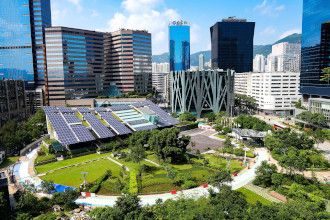[Source](https://pixabay.com/users/blazejosh-64945/)
## The Benefits of Sustainable Cities
Megacities or their agglomeration, a megalopolis, is a more and more common feature of the world, especially places like the new cities in China. On the plus side, denser arrangements with newer and greener housing and public transportation, infrastructure built with pedestrian and bicycle mobility in mind, and integrated composting and waste management, improves our chances that such an urbanized future has more hope.
Urban planning is a maturing field with many journals of its own. [Public transportation](https://interfaithsustain.com/sustainable-transport/) is better, faster, and has higher coverage and greater convenience. Air quality improves with more people using public transportation and there is less air pollution. Green spaces are built into the plans of the city from the beginning. Shifting to renewable energy and energy efficient existing infrastructure decreases the carbon footprint. Pedestrian friendly neighborhood centers with genuine community, as Jane Jacobs long recommended, improves the social fabric with many benefits for the health of the people as a whole. Local styles of architecture help people feel a connection to their home and culture.
### Resilient, Sustainable Cities
One way to think about this set of issues is towards ‘resilience’, not simply sustainable as it used to be defined. Applied research aimed at understanding the tradeoffs inherently incurred by inevitable development aims to encourage these modes of building sustainable cities and society. There needs to be mitigation and adaptation to increasing impacts, with an understanding that there are both known and unknown risks and likely consequences to continued growth of human civilization and population.
Dense **sustainable cities** are necessary if we are to maintain enough space for the rest of nature and the rest of the web of life to continue to flourish alongside our urbanized environment. And recognizing that our technologies and cultural preferences will change and evolve in unpredictable ways means being ready and flexible to accommodate the natural environment into our future as well. We need to have plans for the things that aren’t planned, both in terms of disasters generated by the natural world such as earthquakes, generated by human error like deforestation and climate change, and by other things that we can’t even predict. That’s the way to make cities truly sustainable.
### Awards for Sustainable Cities
The “Sustainable Cities And Human Settlements Awards” (SCAHSA) is an annual global prize awarded by Global Forum on Human Settlements (GFHS) and supported by UNEP for the past fifteen years. It focuses on promoting the mission of GFHS and encourages the implementation of the 2015 Sustainable Development Goals by encouraging awardees through recognizing their incredible progress and their substantial experience over the course of implementing more sustainable goals.
The **Global Green City Award** for 2020 went to [Glasgow](https://www.euronews.com/green/2021/03/23/how-glasgow-scooped-the-environment-and-sustainability-prize-on-the-road-to-cop26) for their efforts in becoming a sustainable city. “The city was ranked top for categories including planning, transport, low carbon and energy efficiency, transportation, buildings, open spaces and the economy.” From being one of the first leaders in the Industrial Revolution, **Glasgow** is today a Global example of a leader in the Green Revolution. Glasgow is definitely deserving of the honor of hosting [the COP26 ](https://ukcop26.org/)this November 2021!
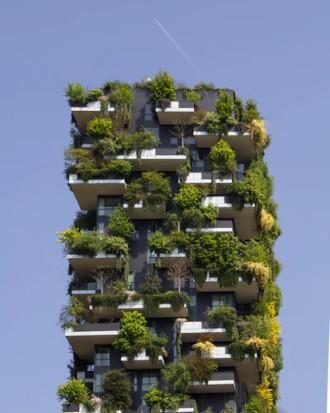[Source](https://images.unsplash.com/photo-1556983852-43bf21186b2a?ixid=MnwxMjA3fDB8MHxwaG90by1wYWdlfHx8fGVufDB8fHx8&ixlib=rb-1.2.1)
*\* Featured image [source](https://unsplash.com/@philreid/)*
*Curious to learn more? Follow this link to learn about the [Three Pillars of Sustainability](https://interfaithsustain.com/how-to-optimize-the-three-pillars-of-sustainability/).*
**Categories:** Blog on Faith and Ecology, Sustainability
**Tags:** Sustainable Cities
---
### [Plan Your Next Trip Using Sustainable Tourism](https://interfaithsustain.com/sustainable-tourism/)
**Published:** September 5, 2022
**Author:** ICSD
**Excerpt:** Rachel Cohen - It may be your dream to travel the world and visit every country. Now that is a great goal but the local and global impacts of tourism should not be forgotten.
**Content:**
Table of Contents
Table of Contents
- [Environmental Impacts Of The Tourism Industry](#aioseo-environmental-impacts-of-the-tourism-industry-2)
- [What Is Sustainable Tourism?](#aioseo-what-is-sustainable-tourism-6)
- [Sustainable Tourism Versus Responsible Tourism](#aioseo-sustainable-tourism-versus-responsible-tourism-10)
- [Promoting Sustainable Tourism Practices](#aioseo-promoting-sustainable-tourism-practices-13)
- [Sustainability Global Goals In The Tourism Sector](#aioseo-sustainability-global-goals-in-the-tourism-sector-16)
- [Benefits Of Sustainable Tourism](#aioseo-benefits-of-sustainable-tourism-20)
- [Socio Cultural Aspects Of Sustainable Tourism](#aioseo-socio-cultural-aspects-of-sustainable-tourism-24)
- [Eco-Tourism](#aioseo-eco-tourism-26)
- [Sustainable Tourism Facilities: Fiji](#aioseo-sustainable-tourism-facilities-fiji-30)
- [Sustainable Tourism Facilities: Columbia](#aioseo-sustainable-tourism-facilities-columbia-34)
- [Sustainable Tourism and Religion](#aioseo-sustainable-tourism-and-religion-36)
*By Rachel Cohen* – It may be your dream to **travel the world** and visit every country. Now that is a great goal but the local and global **impacts of tourism** should not be forgotten. Since the Corona Virus Pandemic, tourism has dropped significantly. But as we slowly are coming out on the other end 2.5 years later, **tourism** is beginning to pick back up. As it picks up it’s important to think about our habits regarding the **tourism industry** and how we can participate in **sustainable tourism** practices, and **responsible tourism**.
## Environmental Impacts Of The Tourism Industry
As the world has begun to open back up we are reminded of the environmental impacts and negative impacts of tourism, such as flying, destruction of land to build resorts, and the removal of local residents. Flying has an extremely large **carbon footprint** where the entire aviation industry counts for [1.9%](https://ourworldindata.org/co2-emissions-from-aviation#:~:text=Global%20aviation%20%28including%20domestic%20and,of%20its%20impact%20on%20warming.) of all greenhouse gas emissions. The **mass tourism** we are seeing after Covid is contributing to these greenhouse gas emissions. The destruction of land and natural resources for resorts is an unsustainable practice. Destroying the land might have future economic gains for an area but at a large cost, such as displacing people and ruining essential ecological processes.
[Source](https://pixabay.com/users/stokpic-692575/ "Source")
## What Is Sustainable Tourism?
According to The World Tourism Organization, sustainable tourism is [tourism](https://sustainabledevelopment.un.org/topics/sustainabletourism#:~:text=The%20World%20Tourism%20Organization%20defines,the%20environment%20and%20host%20communities%22.) that meets the needs of tourists and host regions at present while protecting and enhancing opportunities for the future. Sustainable tourism aims for a tourist to think about the local communities, local culture, and environmental impacts of their time in the destination. Achieving sustainable tourism may seem like a daunting task, but there are always different ways to incorporate sustainable tourism practices into your travel.
### Sustainable Tourism Versus Responsible Tourism
Before talking about what actions you can take to participate in sustainable tourism it should be noted there are other options, such as responsible tourism. Responsible tourism only relates to the [specific actions](https://integotravel.com/blog/difference-between-sustainable-tourism-and-responsible-tourism/#:~:text=Sustainable%20tourism%20refers%20to%20the,create%20a%20sustainable%20tourism%20industry.) and strategies that local communities, businesses, and tourism managers can take to minimize the impact of their tourism activities.
Responsible tourism habits may be habits you already practice in your day-to-day life, such as using reusable like water bottles, not littering, and minimizing waste production. Other habits of responsible tourism include generating economic benefits for locals by buying from local communities rather than large businesses, appreciating local culture and cultural diversity, and minimizing the environmental impacts of tourism. The tourism industry can make this difficult, but with commitment to sustainable practices it is possible.
## Promoting Sustainable Tourism Practices
The tourism industry is a [massive](https://www.mckinsey.com/industries/travel-logistics-and-infrastructure/our-insights/reimagining-the-9-trillion-tourism-economy-what-will-it-take) sector of the world’s Gross Domestic Product (GDP) making up 10% of it. With such a big impact it’s important to think about how our actions are contributing, or not, to the places we visit from the lives of the local residents, the **local culture**, the use of **natural resources** to the local economy. With so many areas to consider it is important to promote sustainable tourism.
Some tips include taking the train over the plane as a train has a lower carbon footprint. You can also support businesses that have good sustainable tourism practices such as tour guides who have [environmental awareness](https://interfaithsustain.com/environmental-awareness/).
- [](https://interfaithsustain.com/sea-jellies/)
## [Are Sea Jellies Taking Over The Animal Kingdom?](https://interfaithsustain.com/sea-jellies/)
- [](https://interfaithsustain.com/jellyfish-mediterranean/)
## [The Incredible Increase & Impact of Jellyfish, Mediterranean Sea](https://interfaithsustain.com/jellyfish-mediterranean/)
- [](https://interfaithsustain.com/desert-ecosystem/)
## [Unique Desert Ecosystems Are Teeming With Life](https://interfaithsustain.com/desert-ecosystem/)
### Sustainability Global Goals In The Tourism Sector
The World Tourism Organization is a specialized agency of the United Nations. The organization works toward educating the tourist industry about responsible and sustainable tourism and **universally accessible tourism**. The work of The World Tourism Organization is deeply connected to the sustainable development goals of the United Nations environment program. The World Tourism Organization specifically works toward Sustainable Development Goals [\#8, 12, and 14](https://sdgs.un.org/goals) which focus on economic benefits, **responsible consumption** and production, and life below water. By practicing sustainable tourism, individuals can participate in these goals as well.
[Source](https://pixabay.com/users/cuncon-3452518/)
## Benefits Of Sustainable Tourism
Sustainable tourism makes good economic sense. When the tourism industry participates in sustainable tourism, it’s possible to help support local communities by creating jobs. Tourism development typically happens in the more densely populated areas of the world, which can create extreme inequality among residents of a country. By participating in sustainable tourism and making it known there is a demand for “off the beaten path” experiences, local communities can be put on the map. This means that jobs come to the area to help support the tourism industry which in turn helps **empower local communities** and local populations to **share the local culture**.
### Socio Cultural Aspects Of Sustainable Tourism
The socio cultural aspect of sustainable tourism is making sure that the international tourism you are partaking in is not disrupting the daily lives of the residents. Coming into a local town and taking pictures, staring, pointing, or making comments is not okay. Dressing immodestly in modest communities is not acceptable. This might make the local people feel uncomfortable in their own homes. Being responsible, respecting and appreciating the local people and culture is important to preserving the traditional culture of the land.
## Eco-Tourism
Eco-tourism development is a new kind of tourist industry and falls under sustainable tourism development. Eco-tourism is tourism that is focused on highlighting the importance of maintaining essential ecological processes through highlighting more natural environments. For example, [ICSD leads eco-tours](https://interfaithsustain.com/ecotourism/) around Israel, bringing participants to non traditional tourism destinations in order to bring awareness to Israel’s natural resources and beauty.
[Source](https://unsplash.com/@anniespratt)
### Sustainable Tourism Facilities: Fiji
Sustainable tourism does not only have to come from your actions but there are also resorts, hostels, hotels, and other tourist organizations that are practicing sustainable tourism. [Six Sense Fiji](https://www.sixsenses.com/en/resorts/fiji/sustainability) is a resort that runs on 100% solar power, captures rainwater, and does not allow single-use plastic.
#### Sustainable Tourism Facilities: Columbia
Other places such as [BIOHOTEL](https://www.biospheretourism.com/en/blog/17-sustainable-tourism-examples-for-this-2017/2) in Columbia is a LEED (Leader in Energy and Environmental Design) certified hotel that uses eco-friendly suppliers. Sustainable tourism does not have to be something that only you can do but choosing the right tourism destination and tourism activities makes it possible to always participate in sustainable tourism.
## Sustainable Tourism and Religion
The Indonesian government has big plans for “sustainable tourism” on Flores Island. An article in [ThinkGeoenergy](https://www.thinkgeoenergy.com/sustainable-tourism-on-flores-geothermal-island-indonesia/) describes Flores Island as “an island with natural wealth and high tourism potential, an Indonesian hidden treasure that needs to be honed.” Tourism development requires a lot of electricity, and to meet those energy needs, the Indonesian government is turning to the the abundant geothermal energy that is uniquely available in the region. “ThinkGeoenergy” explains how geothermal energy “is an environmentally friendly energy source, where geothermal drilling is carried out at a depth of 1,500 – 2,500 meters far below surface water sources commonly used by the community.”
This all sounds great, but with quite a bit of digging, another story emerges. [UCA News](https://www.ucanews.com/news/indonesian-prelate-wades-into-flores-geothermal-row/88407) reports that the residents of Wae Sano on Indonesia’s Flores island are not on board at all. Indonesian Bishop Siprianus Hormat explains how the locals feel “intimidated by the presence of military and police officers providing security at the site” and that they are very worried with the drilling point being “only 20 to 30 meters from the center of the village and 100 meters from a Catholic Church. Likewise, waste disposal is located in residential areas.” This project may be advertised as green and good for everyone, but Bishop Hormat argues on behalf of the indigenous locals that “the project is harmful to nature, clean water sources, air, agricultural land and also livestock.”
But then the plot thickens. [A new article came out from UCA News just a few days later](https://www.ucanews.com/news/indonesian-bishop-in-hot-water-over-geothermal-plant-row/92938), updating the situation. While Bishop Hormat had initially spoken out strongly on behalf of the locals, over the next year, he changed his course 180 degrees:
> The villagers initially felt their hopes were answered when in June last year, three months after being ordained, Bishop Hormat wrote to the president calling for the project to be scrapped. Community-based agriculture and tourism should be developed instead, he wrote.
>
> However, unbeknown to the villagers, the bishop signed a memorandum of understanding (MoU) with the Ministry of Energy and Mineral Resources in October, purporting to seek a comprehensive solution to the row.
>
> The MoU then became the basis for the formation of a joint team involving the diocese, the government and the company in charge of promoting the project among the community, which in turn led to the bishop writing to Widodo backing the project.
Bishop Hormat’s support for the villagers and their concerns and then turning against them is a sad development. But thankfully there are other advocates of the villagers that are helping this story come to light. UCA News explains how “criticism of the bishop over his move has emerged within the Church itself, with the Franciscans having declared their support for the villagers in social media posts in recent days.” This story illustrates the power of local indigenous people to work together with international religions like Catholicism to elevate their voice, but also the dangers of those international allies turning into enemies.
Seeing this story unfold and all its twists and turns is a cautionary tale. As we have seen again and again, religion can be an incredible force for good, but it can also be an incredible force for evil and corruption. Additionally, we can learn from this that if we are part of one of the world’s major religions, the most valuable contribution we can offer is not necessarily to teach, but even more so, to make space for those whose voices may otherwise not be heard.
May God bless us to work together for a more [sustainable future](https://interfaithsustain.com/sustainable-construction/), with truly sustainable tourism: visiting each other in peace and learning from the greatest sustainability experts of all time, our indigenous brothers and sisters.
*\* Featured image [source](https://pixabay.com/users/mustangjoe-2162920/)*
**Categories:** Blog on Faith and Ecology, Sustainability
**Tags:** Sustainability, Sustainable Toursim
---
### [Sustainable Clothing: Industry, Pollution and The Alternatives](https://interfaithsustain.com/sustainable-clothing/)
**Published:** June 28, 2021
**Author:** ICSD
**Excerpt:** Ethan Keller and Jocelyn Cohn - Have you ever considered that fashion is one of the most polluting industries in the world? Well, it is! Due to low quality material, customers are more likely to buy more clothes which creates more waste.
**Content:**
Table of Contents
Table of Contents
- [We Need Sustainable Clothes](#aioseo-we-need-sustainable-clothes-2)
- [Fast Fashion is Not Sustainable](#aioseo-fast-fashion-is-not-sustainable-6)
- [Increase in Production](#aioseo-increase-in-production-9)
- [Impacts of the Clothing Industry on the Environment](#aioseo-impacts-of-the-clothing-industry-on-the-environment-16)
- [Pollution From the Clothing Industry](#aioseo-pollution-from-the-clothing-industry-18)
- [What Is Sustainable Clothing?](#aioseo-what-is-sustainable-clothing-20)
- [The 3 Pillars of Sustainable Clothing](#aioseo-the-3-pillars-of-sustainable-clothing-27)
- [The Economics of Sustainable Clothing](#aioseo-the-economics-of-sustainable-clothing-29)
- [Impacts of Sustainable Clothing on The Environment](#aioseo-impacts-of-sustainable-clothing-on-the-environment-33)
- [The Social Impacts of Sustainable Clothing](#aioseo-the-social-impacts-of-sustainable-clothing-35)
- [Disadvantages in Sustainable Clothing Production](#aioseo-disadvantages-in-sustainable-clothing-production-37)
- [Advantages in Sustainable Clothing Production](#aioseo-advantages-in-sustainable-clothing-production-39)
- [Sustainable Clothing Brands](#aioseo-sustainable-clothing-brands-41)
- [Sustainability Isn't Just for the Environment](#aioseo-sustainability-isnt-just-for-the-environment-44)
- [An Alternative to Sustainable Clothing Brands](#aioseo-an-alternative-to-sustainable-clothing-brands-47)
- [Sustainable Clothing Options are the Best!](#aioseo-sustainable-clothing-options-are-the-best-50)
- [Faith in Sustainable Fashion](#aioseo-faith-in-sustainable-fashion-53)
- [Reducing the Impact of The Clothing Industry](#aioseo-reducing-the-impact-of-the-clothing-industry-57)
*By Ethan Keller and Jocelyn* *Cohn* – Have you ever considered that fashion is one of the most polluting industries in the world? Well, it is! Due to low quality material, customers are more likely to buy more **clothes** which creates more **waste**. Sustainable clothing offers a solution.
## We Need Sustainable Clothes
However, if companies were to spend more money to produce [sustainable](https://interfaithsustain.com/how-to-optimize-the-three-pillars-of-sustainability/ "sustainable") clothing it would be better quality and customers would want to buy it as well. If fashion brands don’t keep up, eco-friendly options, like more sustainable clothing brands, as well as secondhand clothing stores, will overtake them.
## Fast Fashion is Not Sustainable
Clothing produced by a given clothing brand, sold in **chain stores**, is not expensive for a reason. [Fast-fashion](https://www.vox.com/the-goods/2020/2/3/21080364/fast-fashion-h-and-m-zara), a term invented by Eileen Fisher, entails a few key components, the most important of which is **unethical labor** in the production process. Workers sew in **sweatshops** and don’t get even a minimum wage for their work.
This happens in China, India, Bangladesh, and many other places around the world. Another attribute of fast fashion is its abundance of clothing brand “collections”.
### Increase in Production
Since the 1960s, clothing brands produce dozens of collections a year. As a consequence, fast fashion is **disposable**. Clothes are made not to last, so that every year, [13 million tons](https://theprettyplaneteer.com/fashion-industry-waste/) of textile waste is produced globally.
It is **unsustainable** for brands to continue creating this much clothing which is detrimental to the environment. This **consumerist culture** cannot continue any longer.
[Source](https://pixabay.com/photos/?utm_source=link-attribution&utm_medium=referral&utm_campaign=image&utm_content=984393)
- [](https://interfaithsustain.com/reusable-paper-towels/)
## [The Environmental and Health Benefits of Reusable Paper Towels](https://interfaithsustain.com/reusable-paper-towels/)
- [](https://interfaithsustain.com/reusable-grocery-bags/)
## [Reusable Grocery Bags To Reduce Global Pollution](https://interfaithsustain.com/reusable-grocery-bags/)
- [](https://interfaithsustain.com/how-to-dispose-of-batteries/)
## [Discover How To Dispose Of Batteries](https://interfaithsustain.com/how-to-dispose-of-batteries/)
## Impacts of the Clothing Industry on the Environment
Next to oil, the clothing industry is the most polluting industry in the world. One reason is that synthetic fibers like polyester are oil based, and thus contribute to the impacts the petroleum industry has on the environment.
### Pollution From the Clothing Industry
In the process that changes raw material into wearable clothing, many steps actively [harm the environment](https://www.theconsciouschallenge.org/ecologicalfootprintbibleoverview/clothing-pollution). The fertilizers used for non organic cotton production and the chemicals used to treat and dye fabrics end up in rivers, making them polluted. Textile factories emit toxic gasses, including VOCs (volatile organic compounds), which pollute the air and cause health problems for people living near a production site. These factories, powered by coal, account for 10% of global carbon emissions, worsening climate change. And the waste produced by factories, together with millions of tons of clothing thrown away each year, end up in landfills, not decomposing for centuries.
## **What Is Sustainable Clothing?**
Sustainable clothing is ethically made in an ecologically sustainable way and using **fair-trade**. Buying such clothing reduces one’s **ecological footprint** and ensures that workers are treated in a just way. Making sustainable clothing means using **eco-friendly fabrics** and certified organic materials, such as all-natural organic cotton and certified organic hemp, or using recycled materials like recycled nylon. This lessens the industry’s impact on the environment as well as leading to the production of high-quality clothing.
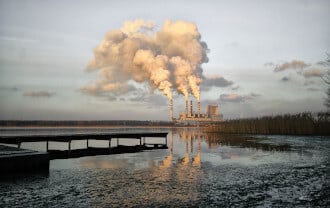[Source](https://pixabay.com/users/jwvein-5584447/)
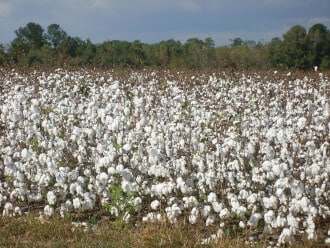[Source](https://pixabay.com/users/valdosta-119230/)
## **The 3 Pillars of Sustainable Clothing**
Whether it’s using organic and fair-trade materials, or treating workers fairly, these 3 pillars of sustainable and ethical clothing can benefit both people and the environment.
### The Economics of Sustainable Clothing
Supporting economic development means to support economic growth as well as preserve the quality of the environment. This means that companies use accurate and transparent accounting methods. The profit from the sale of your clothing must cover production, marketing, and management costs.
[Source](https://pixabay.com/users/angelsover-8201692/)
### Impacts of Sustainable Clothing on The Environment
The [environment](https://www.investopedia.com/articles/investing/100515/three-pillars-corporate-sustainability.asp#the-economic-pillar) pillar is when the company focuses on reducing their carbon footprint, packaging waste, water usage and their overall effect on the environment.
### The Social Impacts of Sustainable Clothing
The company takes social responsibility to treat their employees and neighbors with respect as well as their community. Fair trade clothing is made from fair labor: clothing companies that pay their workers fair wages, provide them with safe working conditions, allowing the workers to organize into unions if they choose.
## **Disadvantages in Sustainable Clothing Production**
It is very expensive to buy and sell clothes. Companies do everything that they can to reduce clothing costs, but by making sustainable clothing or products they are actually raising the costs, even though they are ultimately making better quality clothing. Companies use child labor or sweatshops to lower the costs of clothes production despite it not being ethical and sustainable.
## **Advantages in Sustainable Clothing Production**
So clothing companies may ask, “why be sustainable, when it’s so expensive?” Well, when a company conducts their business sustainably, they are benefitting the earth and those who are buying their products. However, this comes at a literal cost. Sourcing sustainable materials, engaging in ethical labor practices, and conducting the rest of their processes in a way that minimizes their carbon footprint can increase the price range of those sustainable clothing products.
## **Sustainable Clothing Brands**
Sustainable fashion brands such as [Oak + Fort](https://www.oakandfort.com/) and [Patagonia](https://www.patagonia.com/home/) (also fair trade certified) puts sustainable practices and **eco-friendly** materials as their top priority. For example, Oak + Fort actively work to minimize their carbon footprint by partnering with Hallotex which is a company whose goal is to manufacture garments to the highest sustainable standards.
Patagonia’s mission, as a sustainable clothing brand, is to make social and environmental change around the world, while producing their ethical fashion using fair labor practices and natural fibers.
### Sustainability Isn’t Just for the Environment
One may perceive sustainability as just helping the environment. However, it also takes economic and social issues into consideration. By shopping sustainably, you are also making certain that child and slave labor are not involved in the process of making your clothing.
This “slow fashion” may be a more expensive process, and out of some consumer’s price range, but the eco-friendly clothing produced by these companies not only benefits the workers they employ, but the sustainable practices don’t harm the environment as much as other processes would.
### An Alternative to Sustainable Clothing Brands
In the conversation around sustainable fashion, an afterthought is the use of **secondhand** clothing, or alternative apparel. According to 2020 [GlobalData](https://www.thredup.com/resale/#transforming-closets) Market Sizing Estimates, the secondhand clothing market is expected to be twice as big than the fast fashion market by 2030. This includes thrift stores as well as secondhand resale stores.
While owning and wearing **secondhand clothing** was previously seen as an issue of affordability, there has been a shift in recent years. Younger generations are not only more open to shopping at thrift and secondhand stores, but they are more likely to buy clothing from them over established stores and fashion brands. These stores are sustainable in a number of ways, including using plastic free packaging as well as, of course, not polluting the environment in the numerous ways that fashion brands do.
#### Sustainable Clothing Options are the Best!
People are fed up with the disposable culture of one-time wear of clothes. One idea for professional women is to create a **capsule wardrobe** of women’s clothing. This is when you choose a few wardrobe staples, from fabrics like organic cotton or fabrics from sustainable fashion brands produced in factories that are fair trade certified, and then the clothes are mixed and matched repeatedly.
Whether someone purchases clothing made from **eco-friendly fabrics**, cotton and hemp, recycled materials from certified factories, or chooses to shop at a **thrift store**, they are all options that are better than shopping at a chain store, where a fashion brand was sewn together by a worker not paid even a living wage.
## Faith in Sustainable Fashion
> A passage of text from the book “[Eco Bible](https://interfaithsustain.com/ecobible/)” reads “Exodus 29:29 – The sacral vestments of Aaron shall pass on to his sons after him, for them to be anointed and ordained in.” The Torah describes in great length and detail the eight special garments of the High Priest, which were to be made by hand by embroiderers, weavers, and artisans. Indeed, the clothing of the High Priest is the focus of more Torah verses than any other item aside from the Sanctuary. It is therefore fitting that these **garments** would not be thrown out upon his death but rather would be used and reused from generation to generation causing zero waste!
>
> A big issue with non-sustainable clothing is their long-term effect on the environment when they are disposed of. By recycling clothing, the process becomes sustainable. This concept even dates back to biblical times!
### Reducing the Impact of The Clothing Industry
> In Britain today, the average piece of clothing is worn seven times before being thrown out. Some $3.4 billion in clothing is purchased each summer in Britain alone for one-time use at weddings, barbecues, and festivals. Only 1 percent of the material from discarded clothing is recycled. Our use and reuse of clothing has **global impacts**.
>
> Today, clothing accounts for around 10 percent of global greenhouse **gas emissions**. Many garments could be worn hundreds of times, repaired, and then worn some more. Donating our used clothes to **charity shops**, or sharing them with friends and relatives, can reduce lifecycle emissions by over 50 percent (5 percent of global total emissions).
*\* Featured image [source](https://pixabay.com/users/quanlecntt2004-8196954/)*
**Categories:** Blog on Faith and Ecology, Sustainability
**Tags:** Resources for Green Living, Sustainable Clothing
---
### [Sleeping Soundly With A Clear Conscience In Sustainable Bedding](https://interfaithsustain.com/sustainable-bedding/)
**Published:** October 21, 2022
**Author:** ICSD
**Excerpt:** Ethel Mendius - Sleep sets the tone for our health and mindset. Sustainable bedding is a choice with benefits both for our bodies and our planet.
**Content:**
Table of Contents
Table of Contents
- [Sustainable Lifestyles](#aioseo-sustainable-lifestyles-2)
- [Corporate Responsibility](#aioseo-corporate-responsibility-6)
- [The Benefits Of Sustainable Bedding](#aioseo-the-benefits-of-sustainable-bedding-9)
- [What Makes Bedding Sustainable?](#aioseo-what-makes-bedding-sustainable-14)
- [Eco Friendly Materials](#aioseo-eco-friendly-materials-19)
- [The Problem With Cotton](#aioseo-the-problem-with-cotton-21)
- [Organic Cotton](#aioseo-organic-cotton-27)
- [GOTS Certified Organic Cotton](#aioseo-gots-certified-organic-cotton-33)
- [Other Materials](#aioseo-other-materials-36)
- [Fair Trade Materials](#aioseo-fair-trade-materials-43)
- [Fair Trade Certification](#aioseo-fair-trade-certification-49)
- [Sustainable Bedding Brands](#aioseo-sustainable-bedding-brands-52)
- [Sustainable Bedding For All Consumers](#aioseo-sustainable-bedding-for-all-consumers-63)
- [Sustainable Bedding And Religion](#aioseo-sustainable-bedding-and-religion-68)
*By Ethel Mendius* – Sleep sets the tone for our health and mindset. **Sustainable bedding** is a choice with benefits both for our bodies and our planet.
## Sustainable Lifestyles
The devastating **effects of climate change** have increased the global demand for sustainability. The UN defines [sustainability](https://www.un.org/en/academic-impact/sustainability) as “meeting the needs of the present without compromising the ability of future generations to meet their own needs.”
Turning the tide on climate change requires international political effort and an overhaul of corporate policy; it is [estimated](https://www.theguardian.com/sustainable-business/2017/jul/10/100-fossil-fuel-companies-investors-responsible-71-global-emissions-cdp-study-climate-change) that “just 100 companies \[are\] responsible for 71% of global emissions.”
That being said, the climate crisis also requires effort and lifestyle changes from every one of us. By becoming **conscious consumers**, we can lead by example and strive for a **greener future**.
### Corporate Responsibility
The choices we make have a ripple effect. By being **ethical consumers**, we put pressure on companies to enact [corporate responsibility](https://interfaithsustain.com/corporate-sustainability/) and commit themselves to the values of their consumers.
In practice, this includes “reducing their **carbon footprint** \[and\] limiting fossil fuels.” By demanding sustainability through **our choice of bedding** and other products, we can have a good night’s sleep knowing we our doing our part.
## The Benefits Of Sustainable Bedding
**Environmentally friendly bedding** [benefits](https://www.architecturaldigest.com/story/best-eco-friendly-products-for-bedroom) people and planet alike: “**Eco-friendly bedding** is made with fabrics that boast benefits like moisture wicking and antibacterial properties and are, generally, easy to recycle.”
In addition to these conveniences, the environmental impact is vast. Sustainable products “don’t require harsh chemicals like pesticides or bleach or inexpensive and dangerous additives like microplastics.”
- [](https://interfaithsustain.com/building-off-the-grid/)
## [What To Consider When Building Off The Grid](https://interfaithsustain.com/building-off-the-grid/)
- [](https://interfaithsustain.com/geodesic-dome-home/)
## [The Remarkable Benefits of A Geodesic Dome Home](https://interfaithsustain.com/geodesic-dome-home/)
- [](https://interfaithsustain.com/living-roof/)
## [Living In Harmony With Nature in Urban Areas With a Living Roof](https://interfaithsustain.com/living-roof/)
These advantages are interlinked with human health. Toxic dyes and chemicals used in traditional bedding “can end up in our drinking water and soil, eventually infiltrating our bodies.”
Eco friendly bedding is a win-win, better for us and the planet. We spend a third of our lives in our beds, so it makes sense to give some thought to sustainable bedding.
## What Makes Bedding Sustainable?
With many brands touting sustainability, there are a plethora of options for conscious consumers. It can be a challenge to know what to look for.
In reality, some sustainable bedding brands are better than others. Shoppers must look past buzzwords and greenwashing to determine what is **the most sustainable choice**.
In addition to the product itself, it is important to pay attention to **the ethos of the company**. For example, many eco friendly bedding brands “promote [social action](https://www.refinery29.com/en-us/best-sustainable-bedding-products), too.”
This could mean “planting a tree per purchase, exploring alternative energy options, practicing people-first employee ethics, and equal pay.” These are advantages to consider before buying.
### Eco Friendly Materials
The biggest factor of sustainable bedding is the materials being used. Organic materials are a better choice for your own health and the well being of the planet.
### The Problem With Cotton
When it comes to fabric, cotton is the obvious natural choice. However, not all cotton is made and manufactured sustainably.
[Source](https://unsplash.com/@amberjmartin)
Conventional cotton is actually known as the world’s “dirtiest” crop because of the pesticides and insecticides it requires to grow. This [type](https://www.swedishlinens.com/blogs/news/organic-vs-conventional-cotton) of cotton production accounts for “16% of the world’s insecticides.”
The toxic chemicals infiltrate the environment and do serious harm, compounded by water-intensive irrigation techniques. Organic cotton is a sustainable alternative that mitigates these risks.
### Organic Cotton
Organic cotton is “grown without harmful chemicals, leaving the soil, air and water free from contaminates.” It also uses much less water, “since organic cotton growers typically utilize rain far more than irrigation.”
Instead of harming living creatures with toxic chemicals, “organic cotton growers use beneficial insects to control unwanted pests… thus encouraging biodiversity.” When it comes to **eco friendly fabrics**, organic cotton is a no-brainer.
These benefits mean shopping for organic cotton slows climate change, by virtue of its smaller carbon footprint: 46% less carbon dioxide is produced in the manufacturing process.
### GOTS Certified Organic Cotton
Look out for cotton with Global Organic Textile Standard (GOTS) certification. GOTS “is the world’s leading textile processing standard for organic fibers,” including cotton.
GOTS ensures organic materials are used throughout every stage of the product’s lifecycle. This includes “harvesting of the raw materials through environmentally and socially responsible manufacturing all the way to labeling.”
### Other Materials
Cotton is one of many organic fabrics certified by GOTS. You can also shop for bedding made from organic linen, organic hemp, or even eucalyptus.
Natural fibers often come with a higher price tag and do not provide all the features of synthetic materials. In this case, Tencel sheets are a realistic alternative.
[Source](https://unsplash.com/@melpoole)
[Tencel](https://www.sleepfoundation.org/bedding-information/tencel-vs-cotton-sheets) is known for its temperature regulating properties and silky feel. It may appeal to shoppers looking for year round sheets at a lower price than most certified organic cotton sheets.
Tencel is preferable to other synthetics. However, it is important to remember it is “[better](https://goodonyou.eco/how-ethical-is-tencel/) for the environment than other similar fabrics, but not as sustainable as top-tier fabrics like organic linen or recycled cotton.”
### Fair Trade Materials
Eco friendly bedding is important, but not the only aspect of sustainability. Ethical considerations about how materials are sourced must also inform your purchase.
True [sustainability](https://theecohub.com/sustainable-eco-friendly-bedding/) is fair trade as well as environmentally sustainable: “This includes how textiles are produced and manufactured, labor standards, and wages.”
Fair trade standards protect the farmers and workers who manufacture bedding and other goods. Fair trade refers to both the production of raw materials and the finished product.
#### Fair Trade Certification
[Fairtrade International](https://www.fairtrade.org.uk/what-is-fairtrade/) is a global certification standard that ensures “workers’ rights, safer working conditions and fairer pay.” They also promote environmentally friendly practices in their partners.
Other organizations, such as the World Fair Trade Organization and Fair Trade USA, set standards and promote fair trade products. Many products are called “fair trade”, so ensure the one you are buying has been vetted.
## Sustainable Bedding Brands
There are so many sustainable bedding brands you can choose from. To begin, here is a [shortlist](https://www.wellandgood.com/eco-friendly-bedding/) of eco friendly and organic bedding brands.
Under the Canopy is a long time leader in sustainable bedding. Their products are made from certified organic products and recycled materials.
[Source](https://unsplash.com/@flaxeco)
West Elm is known for sustainable, fair trade bedding and furniture. West Elm offers a wide range of bedding made from GOTS certified textiles.
SOL Organics is an affordable organic bedding brand, “made in fair trade factories that do not employ child labor.” Their products use 100% organic cotton and non toxic dyes.
Pact is another brand that uses organic cotton and fair trade factories to produce sustainable bedding at a reasonable price. In addition, they offer minimalized packaging and carbon offsetting in their shipping.
The brand right for you depends on your needs, preferences, and budget. If you feel unsure, consult an eco friendly brand directory such as [good on you](https://directory.goodonyou.eco/) to compare your options.
## Sustainable Bedding For All Consumers
A sustainable lifestyle can take many different forms. High-end shoppers might appreciate the opportunity to make an ethical purchase with a sustainable luxury brand.
As we have considered, there is a range of affordable eco friendly bedding options. There is no need to break the bank for sustainable bedding, or any other good.
The essence of sustainability is a [waste free lifestyle](https://interfaithsustain.com/waste-free-living/). It is not about where you shop as much as your attitude towards what you buy.
Sustainability is for everyone. Each of us can use our available resources to meet our needs and enhance our lives while skipping out on what is not essential.
## Sustainable Bedding And Religion
[Many companies](https://www.healthline.com/health/healthy-sleep/best-eucalyptus-sheets#comparison-table) that want to produce bedding from a more sustainable source are turning towards eucalyptus. Eucalyptus is a more sustainable bedding material for many reasons, as described on [good on you](https://goodonyou.eco/eucalyptus-fabric/):
> Eucalyptus trees are felled rather than uprooted, meaning that there is no need to continuously plant new trees. They also grow quickly, don’t need irrigation or pesticides, and can grow in relatively poor, dry, and rocky soil.
>
> Lenzing have demonstrated that it is possible to create a closed-loop system in the manufacturing of lyocell: they manage to recover and reuse [99% of the solvent](https://www.lenzing.com/sustainability) in new processing cycles. In addition, the solvent is considered non-toxic for air and water. This approach minimizes any environmental impacts. And, crucially, the wood used by Lenzing originates from sustainable forestry—more on this below.
>
> When compared to conventional cotton, the lyocell production process used 50% less water.
>
> Finally, in terms of product use and end-of-life, lyocell doesn’t release toxic microfibers—a significant advantage over synthetic fabrics—and is recyclable and biodegradable.
Eucalyptus has a deep history in Aboriginal traditions. The [Joy of Plants](https://www.thejoyofplants.co.uk/eucalyptus) discusses how “The eucalyptus is a holy tree for the Aboriginals. For them it represents the division of underworld, Earth and heaven.”
Eucalyptus is a holy tree, but that doesn’t mean that it’s always a sustainable source. “Good on you” points out that eucalyptus can be harvested unsustainably if it is grown through cutting down native forests to grow eucalyptus through intensive monocultures.
Another issue is when eucalyptus trees are stolen from indigenous peoples who want to protect their trees. A [Guardian article](https://www.theguardian.com/commentisfree/2019/apr/01/trees-are-at-the-heart-of-our-country-we-should-learn-their-indigenous-names) describes how the “Djab Wurrung people are trying to stop the Victorian government from cutting down sacred eucalyptus trees, including birthing trees where countless generations of their people have been born.”
Understanding the blessings of eucalyptus and the dangers in its exploitation offers us a reminder: sustainability is more than one-size-fits-all solutions. Sustainability needs to be part of a broader consciousness of environmental, cultural and spiritual awareness to truly transform our world.
We all have a role to play in healing our world. But first, we need to learn to listen.
*\* Featured image [source](https://unsplash.com/@fromitaly)*
**Categories:** Blog on Faith and Ecology, Sustainability
**Tags:** Sustainability
---
### [Sustainable Furniture: Good for Both You & The Environment](https://interfaithsustain.com/sustainable-furniture/)
**Published:** October 20, 2021
**Author:** ICSD
**Excerpt:** Sydney Cohen - You may be wondering what is so special about eco-friendly furniture. Sustainable furniture doesn't use any harmful chemicals in the manufacturing process to create its products. It also uses materials like bamboo, cork, or recycled cotton to make its pieces of furniture. All of these things are better for you and for the environment.
**Content:**
Table of Contents
Table of Contents
- [Fast Furniture](#aioseo-fast-furniture-3)
- [Waste in Furniture Production](#aioseo-waste-in-furniture-production-6)
- [Eco-Friendly Furniture and Design](#aioseo-eco-friendly-furniture-and-design-8)
- [Sustainable Furniture Materials](#aioseo-sustainable-furniture-materials-15)
- [Fair Trade in Furniture Production](#aioseo-fair-trade-in-furniture-production-18)
- [Sustainable Furniture Brands](#aioseo-sustainable-furniture-brands-22)
- [West Elm Furniture](#aioseo-west-elm-furniture-30)
- [Certified B Corp Furniture](#aioseo-certified-b-corp-furniture-36)
- [The Joinery Furniture](#aioseo-the-joinery-furniture-39)
- [Fully Furniture](#aioseo-fully-furniture-41)
- [Religion and Sustainable Furniture](#aioseo-religion-and-sustainable-furniture-46)
- [Is Sustainable Furniture For You?](#aioseo-is-sustainable-furniture-for-you-52)
*By Sydney Cohen* – You may be wondering what is so special about eco-friendly furniture. [Sustainable](https://interfaithsustain.com/how-to-optimize-the-three-pillars-of-sustainability/ "Sustainable") furniture doesn’t use any harmful chemicals in the manufacturing process to create its products. It also uses materials like **bamboo**, **cork**, or **recycled cotton** to make its pieces of furniture. All of these things are better for you and for the environment.
These days people are becoming more conscious about sustainability and want to live a **green lifestyle.**
## Fast Furniture
Did you know that **fast furniture** is made with fast fashion in mind?
This means it is usually mass-produced, making it hard to repair and it also doesn’t last for very long, not to mention that it is made with harsh chemicals and toxic materials. Sustainable furniture, on the other hand, is made with longevity in mind. It’s built to last, so there is less waste involved.
### Waste in Furniture Production
There is an immense amount of waste generated in the **furniture industry**, and the waste has only increased rapidly each year since [1960](https://newrepublic.com/article/156208/fast-furniture-environmental-fiasco), similar to the fast fashion industry. Quality furniture is expensive, and it is unfair to the average consumer that they are expected to “invest” in furniture. Instead, it should be the furniture companies that make the gradual, positive change.
- [](https://interfaithsustain.com/building-off-the-grid/)
## [What To Consider When Building Off The Grid](https://interfaithsustain.com/building-off-the-grid/)
- [](https://interfaithsustain.com/geodesic-dome-home/)
## [The Remarkable Benefits of A Geodesic Dome Home](https://interfaithsustain.com/geodesic-dome-home/)
- [](https://interfaithsustain.com/living-roof/)
## [Living In Harmony With Nature in Urban Areas With a Living Roof](https://interfaithsustain.com/living-roof/)
## Eco-Friendly Furniture and Design
When looking for **eco-friendly furniture**, it is important to know what eco-friendly really means. Eco-friendly can be a confusing term because there are many different standards that eco-labeling organizations use. Continue reading to learn more about the basics of eco-labeling and how to find eco-furniture for your home.
There are many criteria that sustainable furniture can fall under. “[For example, a piece of sustainable furniture might be made using renewable energy and composed of recycled materials.](https://www.thespruce.com/what-is-sustainable-furniture-1391721)“
Additionally, the transport of furniture is important to consider, as certain modes of transportation have worse environmental effects.
[**Biomimicry**](https://www.mdpi.com/1999-4907/11/12/1277/pdf) is an emerging design strategy in creating eco-friendly furniture. Many **sustainable furniture** companies use this strategy, which opts to create designs that mimic nature and biological structures, in the formation of their furniture. This has been shown to increase environmental awareness through the utilizing and appreciating of these furniture items in people’s homes, not to mention the support of sustainable furniture in the purchase of these pieces.
### Sustainable Furniture Materials
Did you know that sustainable materials are becoming more popular in **furniture manufacturing**? It is not just about sustainable design anymore. Now, sustainable material options are increasing rapidly, and there are many ways for designers to provide sustainable materials without sacrificing quality or style.
Some sustainable materials include FSC certified wood, organic cotton, natural materials, non-toxic binding agents, ethical wood, and other [environmentally friendly](https://interfaithsustain.com/principles-of-sustainable-development/) materials.
#### Fair Trade in Furniture Production
Fairtrade is a movement that promotes fair labor practices for workers globally. It was designed to help [reduce poverty](https://interfaithsustain.com/sustainable-growth/), fight inequality, and protect human rights.
The fair trade certification system helps ensure that producers are paid fair prices for their products, which can then be sold at fair prices to consumers.
Fair trade practices such as fair wages, family-owned businesses, locally sourced and locally made materials and products, all manufactured with ethical production methods, are part of the Fairtrade movement.
## Sustainable Furniture Brands
With sustainable furniture brands on the rise, it’s more important than ever to get your hands on sustainable pieces of furniture. As you look for sustainable brands, there are some key things to keep in mind.
The first is quality and price – the most sustainable furniture will be built with materials that are durable and long-lasting so they can stand up against our changing climate.
Second, think about comfort – these pieces should have a design that makes them comfortable enough to use every day without being too supportive or too soft.
Thirdly is the [environmental impact](https://interfaithsustain.com/sustainable-consumption/) – this is an area where many sustainable brands excel by using recycled materials and sourcing sustainable wood sources.
Not only do eco-friendly, sustainable pieces of furniture look amazing, have various price options, and are of great quality, but they also have a positive impact on the environment due to their ethical, eco-conscious, and eco-friendly manufacturing processes.
This is because sustainable furniture brands use sustainable materials in their products and sustainable manufacturing practices when creating them. Ethical furniture also frequently follows fair trade practices, which is another plus.
So, if you’re looking for any kind of sustainable furniture brand, then take a look at these various options!
### West Elm Furniture
West Elm is a New York furniture company with a new ethical furniture collection. Their [products](https://www.westelm.com/) include sofas, chairs, bed frames, dining room furniture options, tables, chairs, and sofas, made from organic, natural, and ethically sourced materials. West Elm follows fair trade practices, and most of its furniture is available at a reasonable price.
[Source](https://unsplash.com/@anniespratt/)[Source](https://www.pexels.com/photo/set-of-natural-toiletries-on-marble-table-in-bathroom-4202918/)[Source](https://unsplash.com/@andreaedavis/)
### Certified B Corp Furniture
Certified B Corps are certified by the nonprofit organization B Lab to meet rigorous standards of social and environmental performance, accountability, and transparency.
Certification is based on a comprehensive set of legal requirements that includes certified public accountants’ auditing process, third-party assessment from an accredited assessor, annual reporting system for certified companies. Certified B Corps are committed to using business as a force for good in order to have a positive impact on society while continuing to create profits.
### The Joinery Furniture
The Joinery is an example of [a certified b corp furniture brand](https://www.thejoinery.com/about-us/story) promoting sustainability. Their furniture is made in the USA, and they use organic reclaimed wood and natural and sustainably sourced materials to create affordably priced furniture pieces such as bed frames, storage, chairs, sofas, sectionals, and other furniture.
### Fully Furniture
[Fully is an eco-friendly ethical furniture company](https://www.fully.com/why-fully), that uses FSC certified wood, reclaimed wood, and other organic and natural materials to create quality furniture pieces at an affordable price. Some of their pieces include coffee tables, chairs, accent tables, end tables, sofas, sectionals, home décor, and other dining room and living room pieces.
Their furniture is made in the USA, and they are committed to using only responsibly sourced and environmentally friendly materials.
## Religion and Sustainable Furniture
[Source](https://unsplash.com/@alexazabache/)
As described on [TrendHunter](https://www.trendhunter.com/trends/boris-the-enlightenment-series), a designer named Boris unveiled in 2012 a design collection entitled ‘The Enlightenment Series.’
According to the article: “The ‘Enlightenment Series’ is compromised of four pieces including a Rosary Lamp, Confession Box, Omikuji Carpet, and Seven Pieces Mirror. This Hong Kong-based company, which started in 2009, has ‘developed a unique style of work blending design, sustainability and technology.'”
Moreover, religions can lead the trend towards sustainable furniture by religious people having eco-friendly furniture in their homes and **places of worship**. This is a great way for religious people to model their **religious values** in a practical way.
## Is Sustainable Furniture For You?
If you’re looking to make your home a more sustainable place, then furniture is one of the easiest ways. That’s because all it takes is a little research and some creativity when redesigning – or even making from scratch! We’ve given you several ideas for how you can support green furniture in this blog post.
Now, it’s your turn to make a change. If you’re looking for a way to go green without sacrificing style then sustainable furniture might be right up your alley!
*\* Featured image [source](https://unsplash.com/@pickawood/)*
**Categories:** Blog on Faith and Ecology, Sustainability
**Tags:** Resources for Green Living, Sustainable Furniture
---
### [The Benefits of Implementing Sustainable Building Materials](https://interfaithsustain.com/sustainable-building-materials/)
**Published:** November 5, 2021
**Author:** ICSD
**Excerpt:** Sydney Cohen - Sustainable building materials are in high demand these days. Companies are looking for ways to reduce their carbon footprint in order to be more environmentally friendly.
**Content:**
Table of Contents
Table of Contents
- [Building Affects Climate Change](#aioseo-building-affects-climate-change-3)
- [Sustainable Building Processes](#aioseo-sustainable-building-processes-8)
- [Access to Sustainable Building Materials](#aioseo-access-to-sustainable-building-materials-12)
- [Challenges in Australian Access to Green Building Materials](#aioseo-challenges-in-australian-access-to-green-building-materials-15)
- [Eco-Friendly Building Materials](#aioseo-eco-friendly-building-materials-18)
- [Green Building Materials](#aioseo-green-building-materials-21)
- [Sustainable Building Materials](#aioseo-sustainable-building-materials-26)
- [The Advantages of These Sustainable Materials](#aioseo-the-advantages-of-these-sustainable-materials-46)
- [The Importance of Sustainable Building and Construction](#aioseo-the-importance-of-sustainable-building-and-construction-51)
- [The Benefits of Using Sustainable Building Materials](#aioseo-the-benefits-of-using-sustainable-building-materials-53)
- [Religion and Sustainable Building Materials](#aioseo-religion-and-sustainable-building-materials-62)
*By Sydney Cohen* – Sustainable building materials are in high demand these days. Companies are looking for ways to reduce their carbon footprint in order to be more environmentally friendly. There is an increased interest among homeowners and builders for [sustainable development](https://interfaithsustain.com/concept-of-sustainable-development/), which means that green building materials will continue to grow in popularity.
So what exactly does ‘sustainable’ mean? It’s not just about using recycled or renewable resources as it also includes energy efficiency, water conservation, natural lighting and ventilation, non-toxic chemicals, and healthy indoor air quality. Eco-friendly products can help you achieve your goals of reducing the use of fossil fuels, and in turn carbon emissions, by consuming less electricity at home or at work!
## Building Affects Climate Change
The **construction industry** is one of the largest contributors to greenhouse gas emissions. This can be attributed to the construction industry’s reliance on materials that are not environmentally friendly, such as plastics and metals.
Construction processes require large amounts of energy, which also contribute to carbon dioxide emissions and in turn to climate change. With construction being so detrimental to the environment, it’s important that we adopt sustainable building practices in order to minimize their impact on our planet.
### Sustainable Building Processes
Emerging building techniques, such as passive design, allow for more environmentally friendly heating and cooling. In fact, there are many ways that [sustainable architecture](https://interfaithsustain.com/sustainable-architecture/) can have a positive environmental impact, such as “strategies that take advantage of circular economics, such as [composting](https://interfaithsustain.com/benefits-of-composting-ancient-civilizations-to-todays-technology/), efficient heating and cooling systems and LEED incentives (Leadership for Environmental and Energy Design- a rubric used for sustainable design features) which can all influence and improve the sustainability of your structures.”
[Source](https://www.pexels.com/photo/man-sawing-a-wooden-panel-8829877/)
- [](https://interfaithsustain.com/green-architecture/)
## [Green Architecture is Essential for Urban Environments](https://interfaithsustain.com/green-architecture/)
- [](https://interfaithsustain.com/building-off-the-grid/)
## [What To Consider When Building Off The Grid](https://interfaithsustain.com/building-off-the-grid/)
- [](https://interfaithsustain.com/geodesic-dome-home/)
## [The Remarkable Benefits of A Geodesic Dome Home](https://interfaithsustain.com/geodesic-dome-home/)
## Access to Sustainable Building Materials
Access to sustainable building materials is an important factor in the construction of any building. These types of materials are necessary for many reasons, not least of which is that they can be used over and over again without losing their integrity.
Sustainable materials also help promote sustainability by eliminating waste products or reducing them as much as possible.
### Challenges in Australian Access to Green Building Materials
However, access to these green building materials isn’t always easy. Depending on the location needing the materials, such as Australia, for example, access to sustainable resources that contribute to sustainable design is difficult and expensive. An [article](https://www.fastcompany.com/90653389/how-an-ancient-design-technique-could-help-us-survive-extreme-heat-no-ac-needed?partner=rss&utm_campaign=rss+fastcompany&utm_content=rss&utm_medium=feed&utm_source=rss) on sustainable design, construction, and materials states that “for things like wood fiber and hemp insulation…getting materials sent over from Europe can take four to five months, and be four to five times as expensive as conventional materials”.
The article also explains how due to climate change, alternative sustainable design, planning, and architecture are needed in regions where the heat is increasing. However, through using recycled materials, renewable energy production, and sustainable design techniques in walls, flooring, panels, and windows, we can reduce our energy used and have a more positive environmental impact to reduce the fast-growing [effects of climate change](https://interfaithsustain.com/evidence-of-climate-change/).
## Eco-Friendly Building Materials
The word “**eco-friendly**” is used to describe something that can be maintained at a certain level. One of the ways we maintain our environment and ourselves is by using **green building materials**. Sustainable materials are typically made out of eco-friendly building materials such as bamboo, cork, and recycled paper products.
These materials reduce waste and help us focus on sustainability for future generations while reducing our **environmental footprint** now!
### Green Building Materials
As the world’s population continues to grow, so does our need for energy and housing. This has led to a rise in people living in urban areas with limited space. With this increase comes the demand for green building materials that are affordable and can be used without sacrificing quality or durability.
There is no one solution to this problem, but there are many products on the market now that offer an environmentally friendly alternative to traditional building materials like wood, steel, brick and concrete. One such product is **hempcrete**; it is made of lime mixed with hemp shives (dried plant stems) which produces a material similar in strength to concrete while having insulation properties comparable to fiberglass insulation boards.
### Sustainable Building Materials
[Source](https://www.pexels.com/photo/woman-measuring-with-yellow-pencil-on-board-8447773/)
There are many [options](https://www.conserve-energy-future.com/sustainable-construction-materials.php) for sustainable building materials that replace less sustainable ones. These options include:
- Bamboo
- Precast concrete slabs
- Cork
- Straw bales
- Recycled plastic
- Reclaimed wood
- Reclaimed or recycled steel
- Plant-based polyurethane rigid foam
- Sheep’s wool
- Rammed earth
- Hempcrete
- Mycelium
- Ferrock
- Timbercrete
- Terrazzo
#### The Advantages of These Sustainable Materials
Some of these materials have incredibly interesting manufacturing processes and uses. For example, “the sustainability of precast concrete slabs is higher than many traditional concrete options as the slabs often take much less energy to produce and assemble”.
Additionally, cork “excellently absorbs noise, making it perfect for insulation sheets, and due to its excellent shock absorption qualities, it is perfect for sub-flooring. It can also be a good thermal insulator as it is fire resistant, especially if untreated, and does not release toxic gases when it burns”.
Hempcrete “is a concrete-like material created from the woody inner fibers of the hemp plant. The fibers are bound with lime to create concrete-like shapes that are strong and light. Hemp concrete blocks are lightweight, dramatically reducing the energy used to transport the blocks. Hempcrete is sturdy, has good thermal and acoustic insulation qualities and is fire resistant. Additionally, its biggest sustainable property is that it is CO2 negative, meaning it absorbs more CO2 than it emits. Hemp itself is a fast-growing and [renewable resource](https://interfaithsustain.com/renewable-and-non-renewable-resources/ "renewable resource").”
All of these materials are much more economical and environmentally friendly than traditional materials like concrete and cement, whose production processes emit immense amounts of carbon dioxide into the earth’s atmosphere, contributing to global climate change.
## The Importance of Sustainable Building and Construction
The importance of sustainable building and construction is an ever-growing topic in the industry. With the rise of global warming, it’s important to make sure that we are doing our part to contribute towards a better environment for future generations. The importance of **sustainable building materials** is essential because these are what will be used in today’s buildings for years to come.
### The Benefits of Using Sustainable Building Materials
To start, the literal definition of “sustainable” is to create something that is long-lasting. Constructing a home that is long-lasting is very cost-efficient long-term, as it lowers maintenance costs and reduces the need for upkeep. A few [examples](https://www.mymove.com/home-renovation/guides/reasons-you-should-use-sustainable-building-materials/) of housing fixtures that use sustainable building materials include “low-flow plumbing fixtures, durable bamboo and cork flooring, solar panels, natural fiber wool carpeting, concrete flooring & walls, reclaimed wood, and metal roofing & siding”.
Another reason to build sustainably is by utilizing advanced framing techniques. This technique uses less wood in the framing of a house. “Advanced framing actually results in less material and labor costs, it improves the homes energy performance, it still meets building codes, and it results in a more durable, sturdy home”.
A third reason for the importance of sustainable building materials is due to energy conservation and saving of money that sustainable building materials allow. According to [MyMove.com](https://www.mymove.com/home-renovation/guides/reasons-you-should-use-sustainable-building-materials/), with sustainable building materials, “energy is conserved two-fold—one, you conserve energy on a larger scale by using sustainable materials whose manufacturing results in less waste products that fill the world’s landfills. Two, you conserve your homes energy by using materials that are more efficient, such as low-flow toilets, green insulating materials that result in a better insulated home, [eco-friendly heating systems](https://www.mymove.com/home-renovation/guides/eco-friendly-ways-to-renovate-your-home/), on-demand water heaters, and programmable thermostats…” which “means that you save money AND help to save the worlds resources!”.
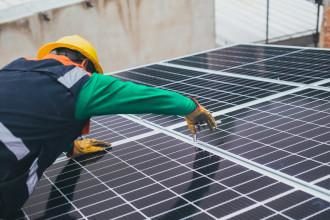[Source](https://www.pexels.com/photo/solar-technician-installing-solar-panel-8853502/)
There are many other reasons to use sustainable building materials in the construction of your home, including health benefits, waste minimization, environmental benefits, improved resale value, and more flexible styling, and you can read more about the further benefits [here](https://www.mymove.com/home-renovation/guides/reasons-you-should-use-sustainable-building-materials/).
## Religion and Sustainable Building Materials
“The sukkah” is a wonderful example of a structure made with sustainable building materials. The sukkah is a temporary booth made from natural materials like unprocessed wood and palm fronds that is lived in during the Jewish holiday of Sukkot.
The **Sukkah** can easily be built from recycled materials, and according to Eco Bible Volume 2 it “can remind us about reducing the ecological impact of a home. This accords with contemporary research which suggests that building homes with timber harvested in a renewable manner reduces the ecological impact by around 25 percent to that of cement and steel structures, without significantly affecting safety, cost, insulation, or comfort” according to Shankar Adhikari & Barbara Ozarska in [“Environmental Systems Research.”](https://environmentalsystemsresearch.springeropen.com/articles/10.1186/s40068-018-0109-x) Creating religious buildings that model sustainable building is a great way to practically apply our spiritual teachings.
Implementing sustainable building materials in new construction has so many benefits for human health, the economy, and the health of our planet. Let’s work together on designing eco-friendly structures with reduced environmental impact!
*\* Featured image [source](https://pixabay.com/users/markusspiske-670330/)*
**Categories:** Blog on Faith and Ecology, Sustainability
**Tags:** Sustainable Architecture, Sustainable Building
---
### [Society Can Only Thrive if we use Sustainable Architecture](https://interfaithsustain.com/sustainable-architecture/)
**Published:** July 5, 2021
**Author:** ICSD
**Excerpt:** Matthew Mausner - What does it mean for architecture to be sustainable? How can we create buildings and infrastructure in ways that both serve human needs, and yet minimize the total human impact to the environment?
**Content:**
*By Matthew Mausner* – What does it mean to have sustainable **architecture**? How can we create buildings and infrastructure in ways that both serve human needs, and yet minimize the total human impact to the environment?
## Sustainable Design Principles
The easiest, maybe intuitive and most natural way to build **sustainable architecture** was, and still is, a process of Vernacular architecture or ‘Architecture without Architects’ (Rudofsky 1964) whereby a community builds its own shelters and houses, using shared local knowledge, methods and labor using local materials and techniques.
### Eco-Friendly Principles of Sustainable Architecture
In those cases, one can aspire to the most eco-friendly and cutting edge **design** principles, building **materials**, energy consumption (where possible using renewable energy systems), sited appropriately in the environment, and respecting the surrounding natural environment.
Strategies that take advantage of circular economics, such as [composting](https://interfaithsustain.com/benefits-of-composting-ancient-civilizations-to-todays-technology/), passive heating and cooling, efficient heating and cooling systems, LEED incentives (Leadership for Environmental and Energy Design- a rubric used for sustainable design features), and more, can all influence and improve the sustainability of your structures.
[Source](https://pixabay.com/photos/)
#### The Challenges of Adapting to Sustainability Principles
There are all too few places in our generally densely populated world where brand new cities can be built, where on both a macro and micro scale sustainable design principles can be ideally applied. Most architectural projects happen in the context of an already built up environment, with a wide range of existing constraints of infrastructure and regulation.
Repurposing and recycling are critical to construction in most modern cities. Environmental geologists and engineers have to get involved before even the architects do, with phase 1 and phase 2 site assessments, soil remediation, and sometimes replacing or gutting or reconstructing the foundation of the construction site before anything else can happen on the project.
## Building Materials for Sustainable Architecture
Once there is an opportunity to build anew, then plans can be drawn up that incorporate sustainable design principles, and choosing your materials appropriately is a central element. An important factor to keep in mind for the construction of buildings is resource transportation. Sending materials like bricks, wood, and steel via land or sea will emit a lot of greenhouse gases.
Where there is locally grown wood and it’s appropriate for the environment, like in the Pacific Northwest or in many South American countries, then wood can be an excellent choice.
Recycled materials like the magnificent hardwoods from Indonesia that were used in old Dutch Batavian villas can have a lifespan of hundreds of years even in a wholly new building there. Concrete with locally quarried rock can last a long time, especially with newer innovations in blends and composites. Well insulated materials have various benefits for the efficiency of the building with respect to heating and cooling as well.
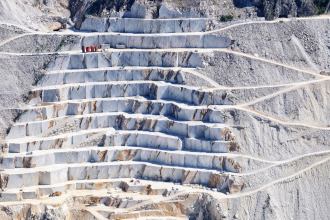[Source](https://pixabay.com/users/dexmac-12233086/)
## Two Main Questions of Green Architecture
- How the materials affect the environment in the production process. Concrete, for example, is very polluting and uses lots of energy.
- How the materials affect the environment during their life span and later after their disposal. For example, can they be re-used, recycled or re-composited into other building materials?
## Location in Sustainable Architecture
A critical aspect of sustainable architecture is the location of it and how that relates to its use, to the larger city or area it sits in, and to the environment. One can imagine, for example, a stand-alone skyscraper made from the newest eco-friendly materials, with solar panels and wind power generation and appropriately facing south for maximum passive heating and cooling, and a very high LEED score.
Yet, if this skyscraper is sited in a suburban office park, where every single person who uses it drives there in single-occupancy cars with long commutes, its net impact on the environment will be negative.
### Adapting the Architecture to the Location
Similarly, a building design technique that works excellently in one location may work poorly in another. Innovative use of concrete in a set of building projects at a university Phoenix, AZ created its own ‘local wind’ on the campus and between the buildings, helping cool people in the hot dry climate.
That architecture was replicated in a university campus in Albany, NY- and was discovered to be a disaster in the cold, windy winter, literally driving people underground to avoid the bitterly cold winds that were amplified by the concrete design, and generating massive problems as students used maintenance tunnels underground!
Any [approach to **sustainability**](https://interfaithsustain.com/environmental-sustainability/) must take such considerations into account.
#### Formal Ways to Measure Sustainability
**LEED** is only one of many rubrics used by municipalities, countries, and architects to measure and balance the aspects of sustainable architecture and its related tradeoffs. **Green building** codes in many places such as [San Francisco](https://www.sfenvironment.org/green-building-ordinance-sf-building-code "https://sfenvironment.org/article/metricsdashboard/commercial"), CA and Copenhagen, [Denmark](https://bcapcodes.org/code-status/country/denmark/) are considered among the most comprehensive and progressive.
[Source](https://pixabay.com/photos/)
## Factors That Influence Sustainable Architecture
These factors range from energy considerations, to the existing **built environment**, the sensitivity of the regional natural environment, the local air circulation and pollution patterns, other nearby construction age and use of materials, to the broader values of the community.
These scores are used to incentivize every architect to build sustainability considerations into their plans and cost from the start, and the net impact is therefore highly likely to be positive.
### What is Driving Sustainable Architecture?
Our advancing scientific understandings of nature and the ecosystems, paired with discoveries of dozens of failed civilizations from humanity’s past and recent disasters such as the Aral Sea or the desertification of the Sahel in Africa, have made humans more aware of our collective vulnerability.
Our civilization, like every one that came before, is fragile and dependent on the earth’s environment. **Sustainability is therefore an imperative.**
#### Religion and Sustainable Architecture
Sustainability is deeply embedded in many religious traditions’ approaches to architecture. For example, Shahd Abu Sirryeh wrote in [Sustainability Principles in Traditional Islamic Architecture](https://www.ecomena.org/sustainability-islamic-architecture/) about how Islamic buildings were designed with such factors as appropriate building materials, natural ventilation and similar factors in mind.
With modern features like centralized A/C, it can be tempting to abandon traditional architecture’s sustainable insights as unnecessary. However, recognizing the ecological crisis we face, we must integrate traditional architecture into our modern architecture to ensure a sustainable world for all of us.
*\* Featured image [source](https://pixabay.com/users/melwoh-9959446/)*
**Categories:** Blog on Faith and Ecology, Sustainability
**Tags:** Sustainable Architecture
---
### [Sustainable Construction for a Sustainable Future](https://interfaithsustain.com/sustainable-construction/)
**Published:** October 11, 2021
**Author:** ICSD
**Excerpt:** Sydney Cohen - Sustainable construction is a concept that focuses on the use of materials and methods that are environmentally responsible, socially equitable, and economically viable. This type of construction emphasizes green building practices such as energy efficiency and water conservation. Sustainable architecture can be applied to both new buildings and existing structures.
**Content:**
Table of Contents
Table of Contents
- [The Construction Industry](#aioseo-the-construction-industry-3)
- [Green Building](#aioseo-green-building-6)
- [The Passive Building Design Technique for Sustainable Construction](#aioseo-the-passive-building-design-technique-for-sustainable-construction-11)
- [Sustainable Building and Green Construction Materials](#aioseo-sustainable-building-and-green-construction-materials-17)
- [Careers in Green Construction](#aioseo-careers-in-green-construction-21)
- [Examples of Sustainable Green Building](#aioseo-examples-of-sustainable-green-building-27)
- [Sustainable Construction in Bahrain](#aioseo-sustainable-construction-in-bahrain-29)
- [The Importance of Sustainable Construction](#aioseo-the-importance-of-sustainable-construction-33)
- [Indigenous Methods of Sustainable Construction](#aioseo-indigenous-methods-of-sustainable-construction-42)
- [Natural Building = Sustainable Construction](#aioseo-natural-building-sustainable-construction-44)
*By Sydney Cohen* – **[Sustainable](https://interfaithsustain.com/how-to-optimize-the-three-pillars-of-sustainability/ "Sustainable") construction** is a concept that focuses on the use of materials and methods that are environmentally responsible, socially equitable, and economically viable. This type of construction emphasizes green building practices such as energy efficiency and water conservation. [Sustainable architecture](https://interfaithsustain.com/sustainable-architecture/) can be applied to both new buildings and existing structures.
The goal is to reduce the environmental impact of buildings by using natural ventilation instead of relying on the air conditioning or heating systems; minimizing waste production through recycling materials; implementing renewable energy sources for power; incorporating features like rainwater harvesting so landscapes don’t need irrigation; and utilizing eco-friendly design principles such as nontoxic paints, recycled content in flooring materials, low VOC finishes, etc.
## The Construction Industry
The construction industry is a booming business, and construction workers are in high demand. The construction process can be messy and dangerous, which translates into higher construction costs for the end product.
However, there is a solution that will save you money while still providing an excellent work environment for your crew: sustainable construction practices. Sustainable construction is not only good for the environment but is also cheaper than traditional methods of building homes or commercial spaces.
- [](https://interfaithsustain.com/sustainable-cities/)
## [Developing Sustainable Cities and Society](https://interfaithsustain.com/sustainable-cities/)
- [](https://interfaithsustain.com/sustainable-building-materials/)
## [The Benefits of Implementing Sustainable Building Materials](https://interfaithsustain.com/sustainable-building-materials/)
- [](https://interfaithsustain.com/living-roof/)
## [Living In Harmony With Nature in Urban Areas With a Living Roof](https://interfaithsustain.com/living-roof/)
## Green Building
Some people hear about green buildings and think of eco-friendly homes. Some **green building** is done in residential areas, although green building can also be applied to commercial construction. With green buildings, you are not only looking at the materials that were used in making them but also how energy efficient they are.
Green builders focus on reducing emissions by using natural lighting, recycling rainwater for irrigation purposes, and using sustainable materials like bamboo flooring or recycled glass countertops.
### The Passive Building Design Technique for Sustainable Construction
The passive building design is a sustainable construction technique that can help reduce energy costs, material waste, and carbon emissions. The passive approach relies on the use of natural ventilation, passive solar heating, and lighting to regulate space temperatures.
[Source](https://unsplash.com/@alexabero/)
It also takes advantage of passive night cooling by using thick walls and insulation to retain heat during the day and release it at night when people are typically asleep.
Passive building design is a relatively new technology but is becoming increasingly prominent in sustainable construction practices.
### Sustainable Building and Green Construction Materials
Building green is a great way to save money and reduce your [environmental impact](https://interfaithsustain.com/environmental-awareness/). Sustainable construction materials are becoming more available, which means that you have the opportunity to be more environmentally conscious with your building plans.
#### Careers in Green Construction
Green construction is a growing industry with many different opportunities for those looking to work in the field. [Careers in Green Construction](https://www.bls.gov/green/construction/) is your guide to sustainable construction careers, including information on how you can get started and what it takes to succeed.
Careers in Green Construction will help you explore the possibilities of this growing industry by providing an overview of green construction jobs.
[Source](https://unsplash.com/@etienne_beauregard/)
Some [examples](https://www.bls.gov/green/construction/) of the career opportunities associated with green construction companies include architects, electrical engineers, mechanical engineers, and urban planners. All of these occupations are vital to the development of environmentally friendly construction projects.
## Examples of Sustainable Green Building
In a world where sustainability is becoming more and more important, there are many people who are looking for sustainable green building examples. Sustainable construction methods should be the norm in all new building projects. Sustainable buildings will help to conserve our natural resources while also reducing costs over time due to their lower operating expenses.
### Sustainable Construction in Bahrain
An [example](https://edition.cnn.com/style/article/green-buildings-world-sustainable-design/index.html) of sustainable construction is the Bahrain World Trade Center. The towers are positioned to optimally use the island nation’s desert winds and coastal location to generate electricity, with three mounted wind turbines. Harnessing the sea breeze, wind energy provides the building with 15% of its energy needs. It is Bahrain’s first intelligent building, an incredible project that is now leading the way and setting the precedent for long term sustainable construction.
## The Importance of Sustainable Construction
**Sustainable construction** is the future of construction projects. It’s important that we all start to think more about how our buildings are made, and what materials they’re made out of. If you want an idea of why sustainable construction is so important, look at this list:
- It has a lower impact on the environment than traditional methods
- Reduces [construction waste](https://interfaithsustain.com/land-pollution/) products as it doesn’t use toxic chemicals or produce as much gas as traditional methods do
- Increases air quality by limiting the release of volatile organic compounds from building materials which can lead to respiratory issues such as asthma in children and adults
- It reduces energy consumption because it uses solar collectors for heating and cooling systems
[Source](https://unsplash.com/@hike_feel_film/)
## Indigenous Methods of Sustainable Construction
The best examples of sustainable construction can be found among indigenous peoples. Their methodologies have been popularized in recent years by the Permaculture movement as [natural building](https://treeyopermacultureedu.com/natural-building/).
### Natural Building = Sustainable Construction
Natural building involves considering such elements such as the location of the sun, seasons and the weather. The key to indigenous sustainable construction is building in sync with the natural environment, sourcing building materials from what is available locally and minimizing waste. Patterns from nature are imitated in natural building. For example, seeing how birds use earth and straw to build their nests, a person can be inspired to build their home from earth and straw.
We can construct sustainably by drawing on indigenous wisdom, which in turn draws on the wisdom of nature, in order to construct sustainably for ourselves and generations to come.
*\* Featured image [source](https://pixabay.com/photos/architecture-construction-usa-1083270/)*
**Categories:** Blog on Faith and Ecology, Sustainability
**Tags:** Sustainable Construction
---
### [What’s Our Chance of Achieving Environmental Sustainability?](https://interfaithsustain.com/environmental-sustainability/)
**Published:** June 21, 2021
**Author:** ICSD
**Excerpt:** Matthew Mausner - When humans were primarily living as small nomadic bands, their impacts on the ecosystems they lived in, and seasonally migrated to, were fairly limited by the relatively small scale of their activities, such as hunting and gathering and so environmental sustainability was the norm. That is humans were living within the resource limits providing the ability of future generations to survive.
**Content:**
Table of Contents
Table of Contents
- [Can a Civilization be Sustainable?](#aioseo-can-a-civilization-be-sustainable-4)
- [Modern Global Civilization: Higher Stakes for Environmental Sustainability](#aioseo-modern-global-civilization-higher-stakes-for-environmental-sustainability-8)
- [What Does it Mean to be Sustainable?](#aioseo-what-does-it-mean-to-be-sustainable-13)
- [Human Impact on Environmental Sustainability](#aioseo-human-impact-on-environmental-sustainability-19)
- [Sustainability and Civilizations](#aioseo-sustainability-and-civilizations-27)
- [Environmental Sustainability Since Industrialization](#aioseo-environmental-sustainability-since-industrialization-34)
- [New Dangers to Environmental Sustainability](#aioseo-new-dangers-to-environmental-sustainability-37)
- [Environmental Sustainability Influenced By Industrial Civilization](#aioseo-environmental-sustainability-influenced-by-industrial-civilization-41)
- [Alternative Paths to Environmental Sustainability](#aioseo-alternative-paths-to-environmental-sustainability-48)
- [Poverty, Population, and Environmental Sustainability](#aioseo-poverty-population-and-environmental-sustainability-57)
- [A Glimmer of Hope for Environmental Sustainability](#aioseo-a-glimmer-of-hope-for-environmental-sustainability-62)
*By Matthew Mausner* – When humans were primarily living as small nomadic bands, their impacts on the ecosystems they lived in, and seasonally migrated to, were fairly limited by the relatively small scale of their activities, such as hunting and gathering and so **environmental sustainability** was the norm. Humans were living within the Earth’s **resource limits**, providing the ability of future generations to survive.
However, even [ancient civilizations had negative impacts on their environments and local ecosystems](https://www.sciencedaily.com/releases/2019/08/190829150702.htm) – environmental sustainability is not an exclusively modern issue. Nonetheless, modern civilization’s rapid growth continues to deplete our natural resources and harm our ecosystems.
With the advent of agricultural civilizations, humans have encouraged economic growth, including modifying the environment to grow the crops or animals they prefer and ‘weed out’ or eliminate pests, predators, or vermin.
## Can a Civilization be Sustainable?
Every civilization has faced the **challenge** of economic growth without causing the ecosystems they depend on to collapse. Economic growth needs to be achieved without compromising the ability of sustainable development.
We call the ability of the civilization to keep its resource use commensurate with the ability of the ecosystem to replenish itself through the natural cycles, sustainability.
Of the hundreds of civilizations that we know of in history and archaeology, the vast majority- more than 100 have collapsed, some with hardly a trace due to the lack of balance between the consumption of resources and development. Environmental sustainability is not easy.
### Modern Global Civilization: Higher Stakes for Environmental Sustainability
In the developed world, those impacts have grown to include systems of draining swamps, practices of mining vast holes in the ground, expelling pollutants into the air leading to climate change, using chemical fertilizers that alter the soil and water quality, and we have built machines and techniques for mass animal husbandry, fishing, global transportation, and more.
With the expansion and integration of almost all countries into an intertwined global economy, as well as a push for increased globalization of businesses and organizations, we have made the world far more capable of sustaining a large population, even in places with little environmental resources of their own.
However, as a consequence of this long term global expansion of economics [that creates economic development and jobs, we are simultaneously exhausting resources](https://foster.uw.edu/wp-content/uploads/2014/12/KathyDanda_JoyceOslandFinal.pdf) all over the planet.
In addition, we are **polluting** far more than any previous civilization, and our pollution reaches ecosystems in the far corners of the earth.
- [](https://interfaithsustain.com/what-is-environmental-sustainability/)
## [Understanding What Is Environmental Sustainability](https://interfaithsustain.com/what-is-environmental-sustainability/)
- [](https://interfaithsustain.com/sustainable-competitive-advantage/)
## [Sustainable Competitive Advantage Created by Environmental Sustainability](https://interfaithsustain.com/sustainable-competitive-advantage/)
## What Does it Mean to be Sustainable?
As our civilization has advanced, so has our understanding of our world, and so have our disciplines of science, biology, ecology, forestry, oceanography, climatology, and many more related fields. As this understanding has become more sophisticated, so has our appreciation of the complexity of our finite globe’s interconnected ecosystems.
We can now see that any ecosystem could have a fragile ecosystem or a resilient one, could have thin or easily damaged soils, or thick, rich or naturally regenerating soils. We also can see how interrelated all the world’s ecosystems are.
If humans’ management of the environment provides the ability of future generations to continue to survive and prosper, we call it sustainable.
### Human Impact on Environmental Sustainability
[Human environmental impact](https://interfaithsustain.com/social-ecology/) can at times be positive and support, or amplify local cycles that allow species and soils to regenerate for future generations. Or, it can be destructive in a variety of ways, sometimes leaving behind deeply damaged, impoverished, or destroyed ecosystems, leading to a collapse of that civilization and/or the species who used to exist near it.
The first civilization of which we have historical records, Sumer, exhausted its soils in a few hundred years through unsustainable farming practices, causing salinization and leaving behind a hard-baked clay where once had been fertile grasslands.
Many, many other civilizations have met similar fates for what were likely similar reasons, from the Anasazi to the ancient Maya to Angkor Wat. Sometimes, all we have left are ruins, eroding in a jungle or desert, and a mystery.
[Source](https://pixabay.com/users/agmclellan-14517490/)
### Sustainability and Civilizations
In some cases, civilizations have avoided that fate by creating ways to live with the **regenerative capability** of their lands. We will share a few examples:
In the Dark Ages in Europe, the ‘fallow’ practices, of allowing a rotating parcel of every farm to ‘rest’ and go wild for a year or more to replenish nutrients in the soil, made that civilization’s use of its temperate soils sustainable for more than a thousand years.
In medieval Japan, the Shogun instituted a sustainable forestry policy, reversing a dangerous deforestation, empowering local village heads to manage the regrowth and harvest of trees in every local region, and successfully reforesting Japan. A success which continues to today that reduces the impact on climate change.
In much of India and China, careful reuse of animal and human waste into fertilizer for farming, paired with various irrigation management practices and inventions, has allowed them to continue farming densely populated land for the long term.
[Source](https://pixabay.com/users/solarimo-15097051/)
### Environmental Sustainability Since Industrialization
It may well be that even before agriculture, humans caused massive extinctions to large animals. For example, on arriving in Australia up to 60,000 years ago and in North America around 11,000 years ago. Many civilizations have probably contributed to ecological catastrophes related to their collapses.
However, since the advent of the **industrial revolution** in the 1700s, our ability to damage the environment, both locally and globally, has increased exponentially.
### New Dangers to Environmental Sustainability
Industrial civilization introduced the use of large scale power, burning **fossil fuels** such as coal, oil, natural gas, shale, and other variants which are not renewable. Industrial development has generated a massive range of carbon emissions, substances, wastes, and leftovers, many of which are toxic.
Industrial agricultural management has used artificial pesticides, fertilizers, and other techniques that massively pollute natural resources and affect the health of the consumer of the produced food.
Industrial production has generated plastic, metal, resins, and composites which do not easily biodegrade and are incredibly harmful to the health of our ecosystems, particularly [marine wildlife](https://www.iucn.org/resources/issues-briefs/marine-plastics#:~:text=At%20least%208%20million%20tons,causes%20severe%20injuries%20and%20deaths.), that often get trapped in plastic debris.
#### Environmental Sustainability Influenced By Industrial Civilization
All of these are considered to be **destabilizing** to the environment both locally and globally, and are having effects which call into question our ability to live in the present without compromising the future. Unlike previous civilizations which caused damage in their regions and which could collapse without necessarily affecting the rest of the planet, our new global united nations risks the sustainability of all of us at once.
The dangers are not just local overfishing, overhunting, depleting a species, or exhausting quality top-soils, as in most previous civilizations that collapsed. Now we risk pollution causing comprehensive collapses of large ecosystems. Some examples are: the Soviet destruction of the Aral Sea or the desertification of the soil.
As a result of fossil fuel pollution, we risk consequences to our atmosphere, ice caps, ocean currents, climate change and global warming that could lead to a domino effect of global ecological collapses.
Whether via irresponsible nuclear power or weapons, or the non renewable environmental impact of our ‘advanced’ technologies, we know we risk making the planet **inhospitable** to life as we know it.
## Alternative Paths to Environmental Sustainability
While it is hard to imagine that we could instantly alter, change or stop the momentum of a global interconnected civilization built on a great many unsustainable and destructive practices, there still may be hope.
Environmental management and development, resulting from advancing technology can reduce pollution or the impact of consumption.
More and more renewable energy is being used, including wind, solar, hydropower, geothermal energy, and others, for many reasons including idealism, aesthetics, economics, subsidies, and sometimes corporate calculations.
More cities are being built around pedestrian and bike infrastructures. People are spurning the profoundly unsustainable car-centric suburban consumer market culture, in favor of either dense cities or local rural life, reducing their impact.
And **consciousness** is being raised both from ancient value systems such as indigenous peoples’, and from modern holistic and scientific understandings of our environment, to change our collective practices, such as an increase in recycling, plant protection, less fuel consumption, green business management which will lead to sustainable development.
[](https://pixabay.com/users/inspiredimages-57296/)[Source](https://pixabay.com/users/inspiredimages-57296/)
### Poverty, Population, and Environmental Sustainability
Research shows that there are trade-offs for every change we make to live more sustainably.
When one takes a long term view, certain fascinating patterns and opportunities emerge. Many critics question whether sustainable development is possible for burgeoning third world populations aspiring to a western standard of living, with modern appliances and energy use.
A university education is a great predictor of a declining birth rate, which is probably the single biggest hope we have of keeping global population within sustainable limits. Programs to increase university studies will allow future generations to meet the balance necessary for sustainable development.
Fossil fuels create pollution, but when their relatively efficient use replaces burning wood, charcoal or garbage among the third world poor, it net decreases both pollution and damage to the environment dramatically. Examples of this can be seen in places like India, China, and sub-Saharan Africa.
#### A Glimmer of Hope for Environmental Sustainability
Without compromising the ability of future generations to regenerate, it is possible to address and shape the needs of the present with [awareness of these interconnected environmental management methods](https://interfaithsustain.com/environmental-awareness/).
The human relationship to the environment is necessarily complex, but like beaver dams or birds’ nests, it’s possible for our **existence** to weave into a web that includes our development without compromising environmental sustainability.
Whether it is by planting forests and plants, protecting species and ecosystems, channeling irrigation to previously arid regions, encouraging specially bred fungus to process and ‘eat’ our plastic waste, or any of a hundred new and creative environmental programs we find to engage in we have hope to grant the ability of future generations to survive and also thrive.
We can and must blaze a path to collective environmental sustainability. We don’t really have any other choice.
*\* Featured image [source](https://pixabay.com/users/geralt-9301/)*
**Categories:** Blog on Faith and Ecology, Sustainability
**Tags:** Environmental Sustainability
---
### [Corporate Strategies for Sustainable Growth](https://interfaithsustain.com/sustainable-growth/)
**Published:** September 10, 2021
**Author:** ICSD
**Excerpt:** Matthew Mausner - Much of the world is oriented towards economic growth, or even expects it. Our capitalist system, most people's companies and jobs, and even the tax revenues of the governments and the fortunes that fund most non-profits, derive from all these kinds of growth.
**Content:**
Table of Contents
Table of Contents
- [Economic Growth is Good](#aioseo-economic-growth-is-good-4)
- [Sustainable Growth Versus Economic Growth](#aioseo-sustainable-growth-versus-economic-growth-6)
- [Is Sustainable Growth an Oxymoron?](#aioseo-is-sustainable-growth-an-oxymoron-10)
- [Can Economic Growth Be Sustainable Growth?](#aioseo-can-economic-growth-be-sustainable-growth-17)
- [The Trade-Offs of Sustainable Growth](#aioseo-the-trade-offs-of-sustainable-growth-21)
- [Long-term Growth Strategy](#aioseo-long-term-growth-strategy-25)
- [The Role of Religion in Sustainable Growth](#aioseo-the-role-of-religion-in-sustainable-growth-31)
*By Matthew Mausner* – Much of the world is oriented towards **economic growth**, or even expects it. Our capitalist system, most people’s companies and jobs, and even the tax revenues of the governments and the fortunes that fund most non-profits, derive from all these kinds of growth. Dividend payout ratio, returns on investment, returns on equity, growth rates, growth strategy, net income, financial leverage, cash flow, returns to shareholders, sustainable growth rate (when ‘sustainable’ is referring to profits, not to anything explicitly environmental), profitability, earnings, revenue, financing, short term earnings, long term growth, all are fundamental metrics by which we judge the health of our society.
## Economic Growth is Good
A growing market is conceived as the prerequisite for investment; a growing economy is a given baseline expectation for a country’s leadership, jobs, consumerism, and business in general. The formula of maximum growth and maximum profit being equated with the public good, with ‘GDP’, and with things going well as a society, is a fundamental belief shared by decision makers in almost every country on our planet today.
### Sustainable Growth Versus Economic Growth
Yet the scope of policy makers and business leaders who make almost all the decisions that matter rarely take ‘externalities’ into consideration, except as a minimal concession to regulation or to public relations. Growth is the goal of almost all of these impulses- the growth of their respective companies, countries, trade, and economies.
But, is that growth genuinely sustainable in a way that takes into account the fate of the web of life, other species, or even the social fabric of all the human societies affected? It seems fair to say that despite the lip service paid by many public figures to the importance of the environment, ecologically sustainable growth is not their goal.
At most, it is an incidental benefit that occasionally helps PR and marketing, or an onerous impediment of restrictive regulations that retard or inhibit the economic growth they primarily seek.
#### Is Sustainable Growth an Oxymoron?
[Source](https://unsplash.com/@alexblock/)
[Source](https://unsplash.com/@polarmermaid/)
When one envisages the full picture of human civilization on earth, one is confronted with some very real limits. The math games we play with money, GDP, equity, cash flow, and future projections of any given company’s future earnings and debt can exist in their own self-referencing cyclical logic, even if they ‘grow’.
However, our consumption of the earth’s resources, fisheries, forests, and land cannot continue to grow, nor can our population, without using up a larger and larger share of the earth’s biomass.
This growth has both known and unknown impacts on the ability of the [ecosystem](https://interfaithsustain.com/why-are-coral-reefs-important/) as a whole to even support our current population, much less a larger one.
- [](https://interfaithsustain.com/sustainable-development-examples/)
## [Sustainable Development Examples Implemented Around The World](https://interfaithsustain.com/sustainable-development-examples/)
- [](https://interfaithsustain.com/principles-of-sustainable-development/)
## [Understanding The Principles of Sustainable Development](https://interfaithsustain.com/principles-of-sustainable-development/)
- [](https://interfaithsustain.com/concept-of-sustainable-development/)
## [Understanding The Concept of Sustainable Development](https://interfaithsustain.com/concept-of-sustainable-development/)
## Can Economic Growth Be Sustainable Growth?
Development and progress, e.g. economic growth, can have large measurable benefits on much of the world’s human population and raise people out of poverty and insecurity.
However, if it means everyone in China or India is ‘raised’ up to American-style resource use, owning two cars and living a western lifestyle, there are sheer math limits that we would shatter, with potentially catastrophic consequences.
It is perhaps therefore not a stretch to question whether any growth at all is ‘sustainable’ if we include this fuller set of measures in our accounting.
### The Trade-Offs of Sustainable Growth
While it is not practical or possible for every third world family to own two cars, an improving standard of living does in fact correlate with some positive economic indicators. As people become more prosperous, they tend to become more educated, and to prioritize educating their children; and with more education, they are likely to bear less children.
Slowing population growth is probably the single biggest factor to reduce the net human impact on the earth. Higher standard of living is also associated with being able to prioritize healthier and more sustainable habits, such as gas instead of wood cooking, caring about air quality, and longer-term rather than short-term-survival decision making.
Thus there can be what appears to be a contradiction: increased economic growth leads to slower population growth- and thus more **sustainable growth**.
### Long-term Growth Strategy
So, despite the genuine concerns of [ecological](https://interfaithsustain.com/ecological-engineering/) or true cost accounting, there is still a strong argument to be made for growth that a company aims for: return on equity, maximizing rate of growth, maximizing value to shareholders, dividend payout ratio, and seeking to sustain and achieve key indicators of improving profit. Appreciating value of assets depends on strongly grounded growth factors, not dependent on debt financing but on reliable revenue that does not itself destroy the conditions for its success.
While **capital industry** is often centered on net income that cannot happen without a focus on resource use and growth, despite the finite resources of the world, a wise approach can keep the ratio of resource use to the replenishment of resources within sustainable limits.
A sustainable growth rate (SGR) is a useful measure of this, as it incorporates many of these factors in a calculated balance for a company or even a country.
## The Role of Religion in Sustainable Growth
While Marx called religion “the opiate of the Masses,” we know that religion can be one of the most powerful engines of awareness and change. A [recent study](https://www.tandfonline.com/doi/abs/10.1080/15570274.2019.1608664?journalCode=rfia20) explored the power of religion for reaching sustainability goals and documented the following discovery:
“After decades of being ignored by global development processes, greater portions of development aid are now channeled via **faith-based organizations**, and religion is increasingly recognized as a human resource rather than just an obstacle to development.”
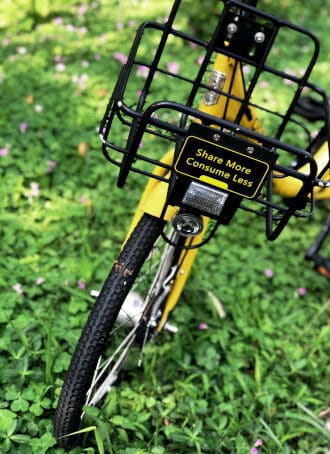[Source](https://unsplash.com/@popnzebra/)
Religion can unite communities, clarify our values and broaden our perspectives. Religion will have a key role to play in our planet’s transition from frenetic to sustainable growth.
All we have to do is believe and get to work.
*\* Featured image [source](https://unsplash.com/@ibrahimboran/)*
*Curious to learn more? Follow this link to learn about the [Three Pillars of Sustainability](https://interfaithsustain.com/how-to-optimize-the-three-pillars-of-sustainability/).*
**Categories:** Blog on Faith and Ecology, Sustainability
**Tags:** Sustainable Growth
---
### [Sustainable Development Examples Implemented Around The World](https://interfaithsustain.com/sustainable-development-examples/)
**Published:** October 6, 2021
**Author:** ICSD
**Excerpt:** Sydney Cohen - The term "sustainable development" is a broad and complex topic. There are many definitions of what sustainable development means, but the most commonly accepted ones state that it is the ability to provide for future generations without compromising our planet's natural resources or quality of
**Content:**
Table of Contents
Table of Contents
- [What is Sustainable Development?](#aioseo-what-is-sustainable-development-4)
- [Sustainable Development Practices](#aioseo-sustainable-development-practices-8)
- [How We Can Retain the Ability of Future Generations to Meet Economic Growth Goals, Without Sacrificing the Environment?](#aioseo-how-we-can-retain-the-ability-of-future-generations-to-meet-economic-growth-goals-without-sacrificing-the-environment-13)
- [The Importance of Economic Growth and Sustainable Development](#aioseo-the-importance-of-economic-growth-and-sustainable-development-15)
- [Sustainable Development Is NOT Just For The Young or Wealthy](#aioseo-sustainable-development-is-not-just-for-the-young-or-wealthy-17)
- [Examples of Sustainable Development](#aioseo-examples-of-sustainable-development-20)
- [Sustainable Development in Practice](#aioseo-sustainable-development-in-practice-24)
- [3D Printed Schools As An Example of Sustainable Development](#aioseo-3d-printed-schools-as-an-example-of-sustainable-development-26)
- [Crop Rotation As An Example of Sustainable Development](#aioseo-crop-rotation-as-an-example-of-sustainable-development-30)
- [Sustainable Energy As An Example of Sustainable Development](#aioseo-sustainable-energy-as-an-example-of-sustainable-development-33)
- [Green Power and Green Buildings As Examples of Sustainable Development](#aioseo-green-power-and-green-buildings-as-examples-of-sustainable-development-38)
- [Increasing and Protecting Our Green Spaces](#aioseo-increasing-and-protecting-our-green-spaces-45)
- [Sustainable Development Examples From The Bible](#aioseo-sustainable-development-examples-from-the-bible-53)
*By Sydney Cohen* – The term “**[sustainable development](https://interfaithsustain.com/principles-of-sustainable-development/ "sustainable development")**” is a broad and complex topic. There are many definitions of what sustainable development means, but the most commonly accepted ones state that it is the ability to provide for future generations without compromising our planet’s natural resources or quality of life.
However, this can be a difficult task in today’s world where population growth and [resource depletion](https://interfaithsustain.com/environmental-degradation-and-the-future-of-our-planet-earth/) are going hand-in-hand.
In this post, we will discuss some **examples of sustainable development** with an emphasis on how they have been implemented throughout different regions around the world.
## What is Sustainable Development?
Sustainable development is a sustainable process of economic and social change that meets the needs of the present without compromising the ability of future generations to meet their own needs. Sustainable development can be achieved through sustainable practices in four domains: economic, social, environmental, and governance.
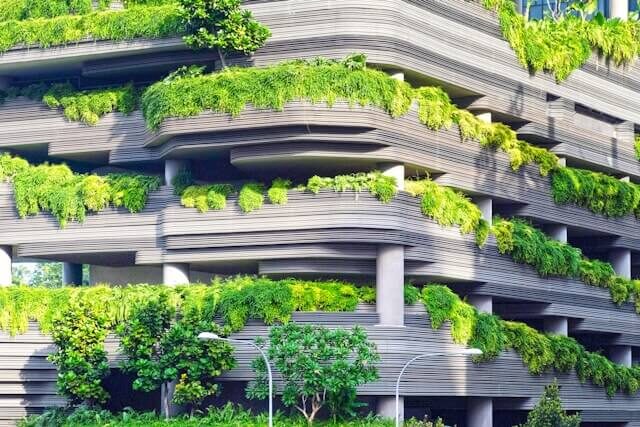[Source](https://pixabay.com/photos/garage-floors-balconies-plants-1149542/)
### Sustainable Development Practices
These sustainable practices must work together to create **sustainable solutions** for **global challenges** such as poverty alleviation, access to energy and water resources, climate protection, etc.
The official definition of sustainable development is “the economic development that is conducted without depletion of natural resources.” As the human population continues to grow, it is important that we prioritize saving our natural resources that we have only a limited supply of, protecting the environment and stopping the detrimental wildlife and human health effects of **climate change**, all without compromising potential economic growth in our world.
- [](https://interfaithsustain.com/importance-of-sustainable-development/)
## [What is the Importance of Sustainable Development?](https://interfaithsustain.com/importance-of-sustainable-development/)
- [](https://interfaithsustain.com/principles-of-sustainable-development/)
## [Understanding The Principles of Sustainable Development](https://interfaithsustain.com/principles-of-sustainable-development/)
- [](https://interfaithsustain.com/concept-of-sustainable-development/)
## [Understanding The Concept of Sustainable Development](https://interfaithsustain.com/concept-of-sustainable-development/)
## How We Can Retain the Ability of Future Generations to Meet Economic Growth Goals, Without Sacrificing the Environment?
Sustainable development is a sustainable approach to economic growth and social progress. It can be achieved by balancing the need for sustainable environmental, social, and economic policies with public participation in decision-making.
### The Importance of Economic Growth and Sustainable Development
The United Nations defines sustainable development as “development that meets the needs of the present without compromising the ability of future generations to meet their own needs.”
### Sustainable Development Is NOT Just For The Young or Wealthy
So frequently, the pressure is put on younger generations to save our planet from the drastic effects of greenhouse gases in our atmosphere that have caused climate change.
However, it is important that we make a global effort to work, no matter our generation, to include sustainable development practices in our daily lives in order to protect the environment, human health, our air, water, and soil, and continue to research the ways we can preserve our natural resources that are vital to the quality of human life.
## Examples of Sustainable Development
Sustainable development examples are important to us all. The examples of sustainable development show that we can work together and care for our environment while still living life in a way that is comfortable.
Sustainable development examples are a good way to show how sustainable development can be achieved in the world. There are examples of sustainable development everywhere, so it might be hard to pick out examples that will make sense for your needs.
However, it is important for people who want their business to be successful in the future and know that they will still be in business 10 years from now, to think about sustainability. It’s not just an environmental issue anymore – it has become a matter of economic necessity as well.
### Sustainable Development in Practice
The examples of sustainable development are all around us. We can look at examples in our own lives, as well as examples from other people and communities that we know or have heard about. There is a lot to learn from these examples, so let’s take a closer look.
### 3D Printed Schools As An Example of Sustainable Development
One of many examples of sustainable development includes [**3D printed schools**](https://www.weforum.org/agenda/2021/02/the-world-s-first-3d-printed-school-is-taking-shape-in-madagascar/?utm_source=linkedin&utm_medium=social_video&utm_term=1_1&utm_content=22754_Malawi_3D_printed_school&utm_campaign=social_video_2021) in Madagascar. 3D printed schools are an example of sustainable construction, that follows sustainable development processes, as it creates less waste than traditional construction processes. The process builds solids objects layer by layer, preventing building waste, which has severe environmental consequences.
This process uses technology developed by the Finnish company known as Hyperion Robotics, and the project will be built using local resources and locally sourced materials to further minimize the import of materials that so frequently causes additional air pollution and greenhouse gas production in the transportation process. Additionally, “the 3D cement mixture also emits less carbon dioxide compared to traditional concrete.”
Many countries suffer from having accessible education, and building more schools will alleviate this struggle, as well as following one of the United Nations Sustainable Development Goals in providing equal education opportunities to all, especially in developing countries.
### Crop Rotation As An Example of Sustainable Development
Another [example](https://rodaleinstitute.org/why-organic/organic-farming-practices/crop-rotations/#:~:text=Crop%20rotation%20is%20the%20practice,combat%20pest%20and%20weed%20pressure.&text=A%20simple%20rotation%20might%20involve,incorporate%20a%20dozen%20or%20more.) of sustainable development planning is **crop rotation**. [Crop rotation is an agriculture practice](https://interfaithsustain.com/food-production/) that involves the planting of different crops on the same plot of land in order to improve soil fertility and health. It allows for optimal soil nutrients and works to prevent polluted runoff from pesticides. Crop rotation can involve just a few different crops, or even up to dozens.
This chemical-free practice allows the different crops to protect each other from various pests, minimizing and even eliminating the need for pesticides, which have drastic consequences on the environment and world health as a result of the pollution they cause. This practice also improves ecosystem health, as it promotes biodiversity. Crop rotation is an example of sustainable development that does wonders to improve the health of our environment.
#### Sustainable Energy As An Example of Sustainable Development
A further [example](https://interfaithsustain.com/wind-energy-pros-and-cons/) of sustainable development is the inclusion of **wind energy, renewable energy, and solar energy** in industrial development. Wind turbines generate power and wind energy through efficient methods of harnessing the wind.
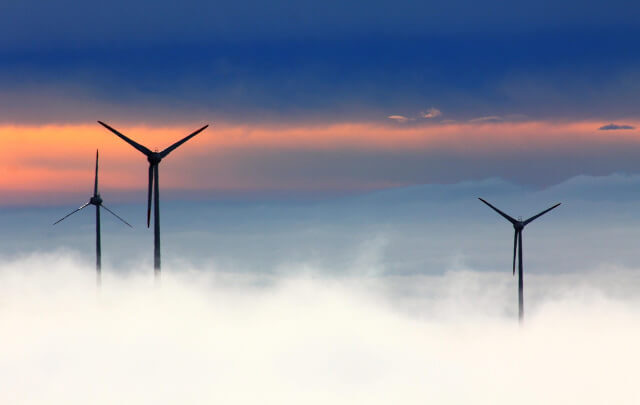
As Matthew Mausner states, “wind energy is a relatively straightforward type of renewable energy because once it’s set up, it doesn’t require a lot of maintenance, and doesn’t pollute the air or water.” The efficiency of wind energy makes it a viable example of sustainable development.
#### Green Power and Green Buildings As Examples of Sustainable Development
**Green power and green regulations** on a construction project are strong examples of the changes we can make in urban planning to [make our cities more sustainable.](https://interfaithsustain.com/sustainable-cities/)
San Francisco, for example, has a set of green building regulations that must be followed in any construction planning in order to decrease the long-term effects of climate change. Not only do green buildings decrease air pollution, but even the process of green construction in a construction project uses practices that reduce the harmful environmental effects caused by large construction projects.
**Green buildings** are made with sustainable materials, and often include renewable energy sources that allow for more efficient energy consumption and improve air quality. Furthermore, efficient technology is more cost-beneficial in the long term, as there is less electrical and power waste.
The sustainability and efficiency of a green construction project are something that many urban spaces should prioritize.
#### Increasing and Protecting Our Green Spaces
Another example of sustainable development is the creation of **green spaces in urban areas**. [Urban ecoloogy](https://interfaithsustain.com/urban-ecology/) is the important study of the coexistence between humans and ecological processes in a human-dominated space, such as a city. One way to improve biodiversity, environmental and global health is to increase green spaces in urban areas. There are a number of related processes pertaining to this, but an example is to create efficient urban planning to allow for green spaces.
[Source](https://pixabay.com/photos/new-york-usa-nyc-ny-manhattan-4352072/)
Having soil and water in these spaces is vital to creating healthy **ecosystems**, and humans reap many benefits from green spaces as well. For one, air quality is improved in places with trees, and often cities have high levels of air pollution.
Furthermore, “[research has shown](https://www.frontiersin.org/research-topics/20676/urban-ecology-and-human-health) that the quality of life in humans is significantly higher when they have access to nature in their everyday life.” Green spaces provide a way for humans in cities to connect to the outdoors and value what nature does to improve our quality of life.
## Sustainable Development Examples From The Bible
In the Bible, we read about how the Levites should be given cities with “pasture land around their towns” (Numbers 35:2), that is today known as a “**greenbelt**“.
In the forthcoming **Eco Bible Volume 2,** we read the following commentary on this verse: “Rabbi Samson Raphael Hirsch makes clear that for a city to be truly livable, it must be surrounded by green space. A society that lacks green spaces can become stifling, oppressive, disconnected, and unnatural. Green space enables people to walk and sit in nature, promoting physical, emotional, and spiritual balance. Trees generate oxygen and help filter the air. The greenbelt ensures that nature stays close to the people, enabling the people to remain connected to nature. The greenbelt promotes balance in an urban society as well as balance between humans and nature, and dovecotes.”
As Rabba Sara Hurwitz wrote, “I imagine people, taking a break from a long hard day’s work in the city, going out to the “migrash”, to the field, to commune with Nature, where they can engage in an activity that is relaxing and enjoyable, **rejuvenating the spirit**.”
There are many more examples of sustainable development throughout religious texts and religious communities. Religions aren’t “the opiate of the masses,” they’re the blueprints for a healthier, more sustainable planet.
*\* Featured image [source](https://pixabay.com/photos/people-africa-madagascar-child-4597471/)*
**Categories:** Blog on Faith and Ecology, Sustainability
**Tags:** Sustainable Development
---
### [Understanding The Principles of Sustainable Development](https://interfaithsustain.com/principles-of-sustainable-development/)
**Published:** September 29, 2021
**Author:** ICSD
**Excerpt:** Sydney Cohen - Have you ever wondered why there is a need for sustainable development? The answer lies in population growth and natural resource depletion. To put it simply, the Earth has limited resources that cannot sustain an infinite number of people.
**Content:**
Table of Contents
Table of Contents
- [Natural Resources](#aioseo-natural-resources-2)
- [The Idea of Sustainable Development](#aioseo-the-idea-of-sustainable-development-10)
- [The History of Sustainable Development](#aioseo-the-history-of-sustainable-development-14)
- [The Principles of Sustainable Development](#aioseo-the-principles-of-sustainable-development-18)
- [Zero Waste As An Example Of Sustainability](#aioseo-zero-waste-as-an-example-of-sustainability-27)
- [The 17 Sustainable Development Goals](#aioseo-the-17-sustainable-development-goals-31)
- [Religion and the Principles of Sustainable Development](#aioseo-religion-and-the-principles-of-sustainable-development-53)
- [The Spiritual Qualities Necessary for Sustainable Development](#aioseo-the-spiritual-qualities-necessary-for-sustainable-development-57)
- [Becoming Conscious Humans](#aioseo-becoming-conscious-humans-67)
- [Taking Responsibility for Sustainable Development](#aioseo-taking-responsibility-for-sustainable-development-69)
- [Educate Yourself and Others Towards Sustainable Development](#aioseo-educate-yourself-and-others-towards-sustainable-development-72)
*By Sydney Cohen* – Have you ever wondered why there is a need for **sustainable development**? The answer lies in **population growth** and **natural resource depletion**. To put it simply, the Earth has limited resources that cannot sustain an infinite number of people. This blog post will explore the principles of sustainable development to help increase your understanding of how to live more responsibly.
## Natural Resources
**Natural resources** are natural assets that provide natural capital for the production of natural goods and services. In other words, natural resources are minerals or substances such as coal, water, wood, and air which can be used in the production process to make a product.
Natural resources include both [renewable and non-renewable natural resources](https://interfaithsustain.com/renewable-and-non-renewable-resources/). **Renewable natural resources** will eventually run out if they’re not replaced by something else, but most people don’t worry about this because they think we have a lot of them on Earth. They include our forests, oceans, air, rivers, soil, grasslands, fisheries, etc. **Non-renewable natural resources** won’t last forever – like oil reserves that will one day run out once they have been used and they’re all gone from the earth’s surface.
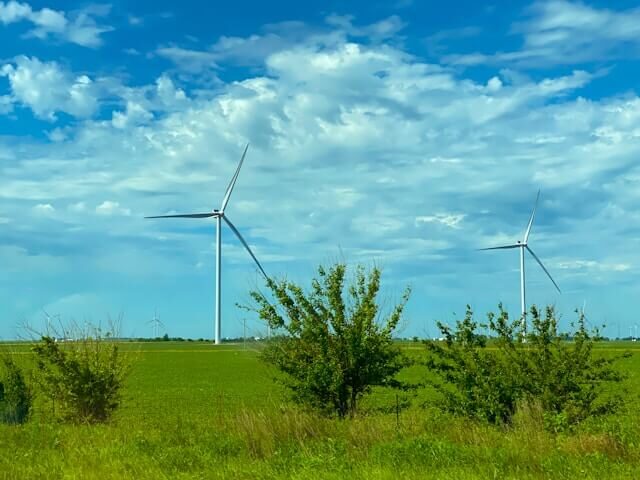[Source](https://unsplash.com/@dotjpg/)
Oil, coal, natural gases, metals, stone, and sand are all [examples](https://scdhec.gov/sites/default/files/Library/OR-0689.pdf) of natural resources that are found on earth. Other natural resources include soil, water, sunlight, and air, as well as plants and animals. Present and future generations rely on these natural resources for survival, which is why we must find sustainable methods of harvesting these resources in order to ensure environmental protection without compromising the ability of economic growth for future generations.
## The Idea of Sustainable Development
[The concept of sustainable development](https://interfaithsustain.com/concept-of-sustainable-development/ "The concept of sustainable development") is not new. In fact, it has been around for a few decades and was formulated in 1987 by the **Brundtland Commission** as “development that meets the needs of the present without compromising the ability of future generations to meet their own needs.”
The concept comes from [three core pillars](https://interfaithsustain.com/how-to-optimize-the-three-pillars-of-sustainability/), also known as the sustainable development principles: economic growth, social equity, and environmental protection. The idea behind these pillars is that they are mutually supportive; one cannot exist without the other two because humans have an infinite need for natural resources on this planet.
The term “**sustainability**” should be viewed as humanity’s target goal of human–ecosystem equilibrium, while “**sustainable development**” refers to the holistic approach and temporal processes that lead us to the endpoint of sustainability. When we start to understand how all three components work together to create a more sustainable world, then we can form our own concept about what it means to be an environmentally friendly citizen or business owner!
- [](https://interfaithsustain.com/sustainable-cities/)
## [Developing Sustainable Cities and Society](https://interfaithsustain.com/sustainable-cities/)
- [](https://interfaithsustain.com/living-roof/)
## [Living In Harmony With Nature in Urban Areas With a Living Roof](https://interfaithsustain.com/living-roof/)
- [](https://interfaithsustain.com/sustainable-development-examples/)
## [Sustainable Development Examples Implemented Around The World](https://interfaithsustain.com/sustainable-development-examples/)
### The History of Sustainable Development
The term ‘sustainable development’ was developed in 1972 at the UN Conference on the Human Environment. The Brundtland Report called “**Our Common Future**” was written in 1987. There have been multiple forums and conferences since the report was published, to check in on world progress working toward sustainability through sustainable development approaches.
In 2015, the United Nations adopted a plan of sustainable development with a set of guidelines, working toward making our planet more sustainable for future generations, allowing for economic growth and economic development while at the same time prioritizing environmental protection. This plan is known as the **Sustainable Development Goals** (SDGs). It follows the principles of sustainability, understanding the important intersections between society and quality of life, social and economic needs, the economic system, and the dangers of environmental degradation that result from our current exploitation of natural resources.
However, the [concept of sustainable development](https://interfaithsustain.com/concept-of-sustainable-development/) has been, and is still, subject to criticism. Modern economies are still trying to reconcile ambitious economic development and obligations of preserving natural resources and ecosystems for future generations. The desired result of sustainable development is a state of society where living conditions and resources are used to continue to meet human needs without undermining the integrity of the natural system.
### The Principles of Sustainable Development
As previously mentioned, the **principles of sustainable development** involve the intersection of societal sustainability, economic sustainability, and environmental sustainability. The sustainability of society depends on the availability of health, employment, and quality education. It is necessary to conserve all the living beings in the world. Population control and management are also essential for sustainable development. People can play a vital role in the utilization and conservation of the environment. Human resource contributes to adopting the principles of sustainable development. Public participation should be increased in every program.
[Source](https://unsplash.com/photos/a-woman-is-opening-the-door-of-her-house-DQQ2jvg-mjI)
Sustainable development focuses on [biodiversity](https://interfaithsustain.com/why-is-biodiversity-important/), cultural heritage, and cultural aspects of people. Its conservation supports the environmental balance. People cannot over-exploit natural resources to meet their needs for life and sustainability. People must keep the earth within the carrying capacity of the earth’s resources. The earth has limited resources, and we must protect them for future generations, which is why adopting sustainable development practices is vital to the success and longevity of society and human life.
One key principle of sustainable development hinges on the **conservation** of the **ecosystem** and **biodiversity**, production systems, population control, human resource management, conservation of progressive culture, and people’s participation. Sustainable development is built on the principle of participation, which requires positive attitudes of the people so meaningful progress can be achieved with responsibility.
Education and training can also influence society towards conserving the environment and appreciating human values as well as acceptable production methods.
#### Zero Waste As An Example Of Sustainability
The zero-waste movement is a lifestyle that encourages people to use all types of waste in a circular way. It follows a set of principles that are focused on waste prevention, encouraging circular resource life cycles, so as to limit waste as much as possible. The ultimate goal of this philosophy is to avoid resources to follow a linear route. For this, people must refuse what they don’t need, reduce what they’re getting, reuse, recycle or compost it.
The movement is also very well known by people taking their own containers to shops to buy commodities such as chickpeas, rice, or liquid soap. It also prioritizes the reusing of plastics, as plastic is one of the biggest threats to the ecosystems of our oceans.
[Zero-waste](https://en.wikipedia.org/wiki/Zero_waste#:~:text=Zero%20waste%20is%20a%20set,landfills%2C%20incinerators%20or%20the%20ocean.&text=Zero%20Waste%20refers%20to%20waste,%2Dof%2Dpipe%20waste%20management.) requires “responsible production, consumption, reuse and recovery of all products, packaging, and materials, without burning them, and without discharges to land, water or air that threaten the [environment](https://en.wikipedia.org/wiki/Environmental_hazard) or human health.” The zero-waste movement is an example of a sustainable development process that works toward environmental protection while at the same time allowing for economic growth since it creates new opportunities for businesses to generate money in a sustainable way by creating recyclable materials.
## The 17 Sustainable Development Goals
The United Nations (UN) is an international organization that was founded on October 24, 1945. It has a membership of 193 countries and territories. One of its main goals is to promote sustainable development in poorer countries by providing humanitarian aid and working with other agencies.
On October 4th, 2015, the UN adopted 17 sustainable development goals. These goals are designed to be completed by 2030 and they will have a significant impact on every person in the world. According to [Wikipedia](https://simple.wikipedia.org/wiki/Sustainable_Development_Goals), in August of 2015, 193 countries agreed to adopt the 17 goals:
1. No [poverty](https://simple.wikipedia.org/wiki/Poverty)
2. Zero [hunger](https://simple.wikipedia.org/wiki/Hunger)
3. Good [health](https://simple.wikipedia.org/wiki/Health) and wellbeing
4. Quality [education](https://simple.wikipedia.org/wiki/Education)
5. [Gender](https://simple.wikipedia.org/wiki/Gender) equality
6. Clean water and [sanitation](https://simple.wikipedia.org/wiki/Sanitation)
7. Affordable and clean [energy](https://simple.wikipedia.org/wiki/Energy)
8. Decent work and [economic](https://simple.wikipedia.org/wiki/Economic) growth
9. Industry, innovation and [infrastructure](https://simple.wikipedia.org/wiki/Infrastructure)
10. [Reduce inequality](https://simple.wikipedia.org/wiki/Social_equality)
11. [Sustainable](https://simple.wikipedia.org/wiki/Sustainability) cities and communities
12. Responsible consumption and production
13. [Climate](https://simple.wikipedia.org/wiki/Climate_change) action
14. Life below [water](https://simple.wikipedia.org/wiki/Water)
15. Life on land
16. [Peace](https://simple.wikipedia.org/wiki/Peace) and [justice](https://simple.wikipedia.org/wiki/Justice). Strong institutions
17. [Partnerships](https://simple.wikipedia.org/wiki/Partnership) for the goals
These goals outline the steps of sustainable development needed to meet the long-term goal of a sustainable world. They include the principles of sustainable development that focus on the intersection between society, the economy, and the environment and work toward economic and environmental harmony. Sustainable production and consumption is also a vital aspect of sustainable development, as it, similar to the zero-waste movement, focuses on creating a circular life-cycle for consumable products, creating minimal waste.
## Religion and the Principles of Sustainable Development
Peter Adriance of the [**Bahai** faith](https://interfaithsustain.com/bahai-faith-statement-on-the-environment/) gave a speech prior to the International Energy Forum (IEF) conference in 2011 entitled “[Spiritual Principles for Sustainable Development](https://iefworld.org/dAdriance11a).” In this speech he gives a powerful illustration of the importance of religion for sustainable development:
“In conceptualizing sustainable development, many people have compared it to a stool with three legs. There’s the environmental leg, the social leg and the economic leg. If any one of these legs is short or weak, the stool is not going to be very stable. In fact, it may even collapse. You need all three legs to be equally strong, to maintain balance. When the principles associated with each of these legs are spiritually based, it’s like reinforcing the legs of the stool. It is made even stronger.”
This beautiful image of sustainable development principles being reinforced by spirituality is a powerful reminder of the importance of religion in our sustainability work.
### The Spiritual Qualities Necessary for Sustainable Development
Peter Adriance concludes his address with the following list of “**spiritual qualities** that go hand in hand with the transition to sustainability”:
- A deep sense of world citizenship
- A commitment to justice
- An inclination toward treating one another with love and compassion.
- A commitment to stewardship of the earth
- A willingness to sacrifice for the betterment of society.
- Moderation
- Detachment from the things of this world.
### Becoming Conscious Humans
For each of us to recognize these spiritual qualities in our own traditions and bring them to bear on the environmental crisis we now face is essential in “reinforcing the legs of the stool” of sustainable development. We all need to individually become conscious in ensuring sustainable development, so that the earth is sustainable for us now and also for those to whom we will pass the torch. Individual change will have a ripple effect causing collective change for the good of all.
#### Taking Responsibility for Sustainable Development
We must work to reverse the environmental damage that we’ve caused by exploiting our natural resources, in order to provide for present and future generations without compromising the ability for their survival.
Understanding the principles of sustainable development is vital to ensuring the success of our environment, economy, and society. We can work together and share in the ability of future generations to work to save our planet from climate change through sustainable development processes, working to make our world a more sustainable place.
#### Educate Yourself and Others Towards Sustainable Development
Each of us has a responsibility to ensure that we are living sustainably. If you want help figuring out how to make your business more sustainable, or if you need guidance on the best ways for individuals and communities to contribute in order to reduce our environmental footprint, [contact us](https://interfaithsustain.com/contact/) , share this blog post and educate yourself and others as much as you can – knowledge is power!
*\* Featured image [source](https://unsplash.com/@nasa/)*
**Categories:** Blog on Faith and Ecology, Sustainability
**Tags:** Sustainable Development
---
### [What is the Importance of Sustainable Development?](https://interfaithsustain.com/importance-of-sustainable-development/)
**Published:** August 20, 2021
**Author:** ICSD
**Excerpt:** Abby Rabinowitz - Sustainable development refers to the goal of providing a secure future for the coming generations by respecting Earth’s resources.
**Content:**
Table of Contents
Table of Contents
- [The Importance of Sustainable Development Explained](#aioseo-the-importance-of-sustainable-development-explained-4)
- [The Three Pillars of Sustainable Development](#aioseo-the-three-pillars-of-sustainable-development-7)
- [The 17 United Nations Sustainable Development Goals](#aioseo-the-17-united-nations-sustainable-development-goals-9)
- [What is Preventing Sustainable Development?](#aioseo-what-is-preventing-sustainable-development-18)
- [The Importance of Environmental Sustainable Development](#aioseo-the-importance-of-environmental-sustainable-development-22)
- [Economic Sustainable Development](#aioseo-economic-sustainable-development-32)
- [The Social Aspect of Sustainable Development](#aioseo-the-social-aspect-of-sustainable-development-35)
- [Reaching Sustainable Development](#aioseo-reaching-sustainable-development-38)
*By Abby Rabinowitz* – [Sustainable development](https://interfaithsustain.com/principles-of-sustainable-development/ "Sustainable development") refers to the goal of providing a secure future for the coming generations by respecting Earth’s resources.
The main goals pertaining to sustainable development are outlined by the **United Nations 17** [**sustainable development goals**](https://sdgs.un.org/goals) and covers a wide range of issues. Currently, we are consuming resources at such a fast pace that **future generations are being put at major risk.** The Bible tells us not to sacrifice our children in the book of Leviticus, yet by failing to protect our natural resources we are sacrificing our children’s future.
Sustainable development aims to combat this risk by mobilizing people to change their actions in a way that will provide a safe sustainable future for the coming generations.
## The Importance of Sustainable Development Explained
Sustainability is about ensuring that future generations will have access to clean air, water, food security and other resources necessary for their quality of life. The United Nations defined sustainable development in the Brundtland Report as “development that meets the needs of the present without compromising the ability of future generations to meet their own needs”. Sustainability is the ability to exist and develop without depleting natural resources for the future.
Today we are using about [40% more resources ](https://www.environmentalscience.org/sustainability)every year than we can put back, an alarmingly high and unsustainable amount. However, sustainable development encompasses more than just the environment as it also includes the overall health of out society. It requires studying the consequences of the actions people are taking today, and finding ways to improve these outcomes.
## The Three Pillars of Sustainable Development
In 2005 at the World Summit on Sustainable Development three core areas in relation to sustainability were highlighted: social needs, economic issues, and the environment. These became known as the [**three “pillars” of sustainability**](https://interfaithsustain.com/how-to-optimize-the-three-pillars-of-sustainability/). They were created to serve as the basic guidelines and groups to address various core problems. The summit agreed to address its goals by catering towards current needs in all three categories, without sacrificing the ability of future generations to meet their own needs.
- [](https://interfaithsustain.com/sustainable-development-examples/)
## [Sustainable Development Examples Implemented Around The World](https://interfaithsustain.com/sustainable-development-examples/)
- [](https://interfaithsustain.com/principles-of-sustainable-development/)
## [Understanding The Principles of Sustainable Development](https://interfaithsustain.com/principles-of-sustainable-development/)
- [](https://interfaithsustain.com/concept-of-sustainable-development/)
## [Understanding The Concept of Sustainable Development](https://interfaithsustain.com/concept-of-sustainable-development/)
### **The 17 United Nations Sustainable Development Goals**
Later, in 2015, at the United Nations sustainable development summit, the UN adopted 17 **sustainable development goals** as part of a larger 15 year plan to achieve sustainability by 2030. These 17 goals can be split into three main categories:
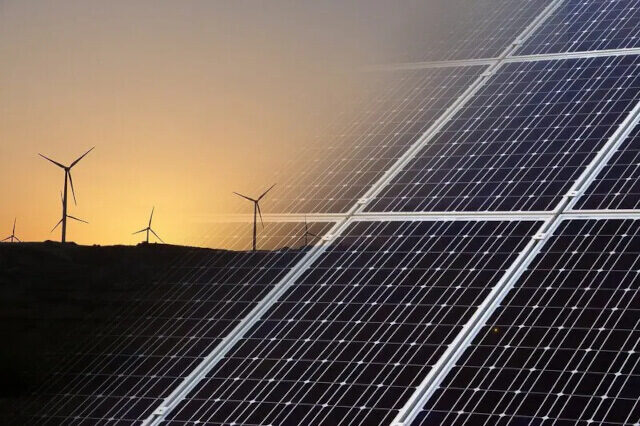[Source](https://pixabay.com/users/seagul-191369/)
Social goals: including no poverty, zero hunger, good health & well being, quality education, gender equality, reduced inequalities, peace justice & strong institutions, and partnerships for the goals
Economic goals: including decent work and economic growth, industry innovation and infrastructure, [sustainable cities](https://interfaithsustain.com/sustainable-architecture/) & communities, and responsible consumption & production.
Environmental goals: including [clean water](https://interfaithsustain.com/what-are-the-causes-of-water-pollution/) & sanitation, affordable & clean energy, climate action, life below water, and life on land.
## What is Preventing Sustainable Development?
There are two major issues that block the sustainable development process.
First, creating and maintaining sustainable alternatives is far more expensive than the current infrastructure. People are much less likely to invest in sustainable options such as clean energy, because it is more cost efficient to use coal or natural gas.
The second issue, is that irresponsible development doesn’t provide an imminent threat, but rather a long term danger towards future generations, which de-incentivizes immediate action.
## The Importance of Environmental Sustainable Development
In 2015 the UN launched its agenda on sustainability. In order to achieve sustainability, the issues facing our environment need to be solved. To do so however, important steps need to be made to change human practices. For example, dis-investing from fossil fuels, reducing carbon emissions, and finding renewable resources as alternatives. In December of 2015, [The Paris Agreement](https://www.nrdc.org/stories/paris-climate-agreement-everything-you-need-know) was signed by 197 countries.
[Source](https://pixabay.com/users/geralt-9301/)
This is a legally binding treaty which addresses climate change. The **Paris Agreement** aims to improve the global response to climate change threats by ensuring that the global temperature rise will be well below 1.5 / 2 degrees Celsius above preindustrial levels. New attempts to experiment with renewable energy sources such as solar energy or wind energy have been developed. They provide clean alternatives to non-renewable resources, create thousands of new jobs and are a strong first step in protecting our planet!
In addition to the Paris Accords, it is key that people take action on their own and support environmentally friendly options. Additionally, not only are environmental issues important goals of their own, but they are also contributing to problems within public health, water insecurity, food insecurity and many other pervasive issues.
For example, according to the [World Health Organization](https://www.who.int/news/item/18-06-2019-1-in-3-people-globally-do-not-have-access-to-safe-drinking-water-unicef-who), “1 in 3 people globally do not have access to safe drinking water”. Clean Water and Sanitation, which is the 6th of the 17 UN Sustainable Development Goals, is a major issue which is affecting over a billion people.
Additionally, peoples current abuse of our environment has led to a dramatic decrease in air quality. Practicing environmental protection will not only dramatically improve the [health of our environment](https://interfaithsustain.com/environmental-degradation-and-the-future-of-our-planet-earth/), but it will also be able to improve our quality of life in many other ways.
### **Economic Sustainable Development**
Moreover, by introducing sustainable thinking into society, we can impact societal values in a way that helps bend the curve toward sustainability. Consumers are now becoming conscious about sustainable products. While some companies only care about profitability will nevertheless disregard this changing sentiment, others may change their consumption and production habits to be environmentally friendly and sustainable in order to appeal to customers.
Interestingly, sustainability can also be economically sound. While it might cost more to manufacture products adhering to sustainable principles, businesses such as Tesla and KIND Bar have already found that customers are willing to pay for sustainable products. In addition, sustainable practices often are less costly that wasteful production practices. These results prove that sustainable economic growth can be achieved without compromising a companies success.
#### The Social Aspect of Sustainable Development
A key piece of the concept of sustainable development is how we relate to social issues. Currently, we are failing to meet the basic needs of peoples in terms of education, clean water & sanitation, poverty, gender equality and much more.
Typically, these issues are more common in developing countries that do not have the resources to prioritize these social issues, which are often viewed as less threatening than economic or environmental threats. These pervasive issues have consistently been ignored and continue to grow in urgency. In order to achieve true sustainability, they must be addressed.
## Reaching Sustainable Development
An important aspect of sustainability is the recognition that we cannot simply achieve sustainability overnight by immediately terminating activities that pollute or are not sufficiently energy efficient. What we can do is ensure that new projects, factories, cars and buildings placed into service take sustainable goals into account.
Therefore, over the longer term, as we phase in new, sustainable modalities and technology, we will achieve sustainability in two critical ways – we will prevent new environmentally unfriendly activities from taking place and we will also replace older environmentally unfriendly activities with sustainable ones.
If we consider the useful life of a given asset – suppose a car has a 15 year useful life – if all new cars were engineered for sustainability, we could reasonably expect that 15 years from now, the entire global stock of cars would meet **sustainability parameters**.
The same could be applied to power plants; if we were to only build sustainable plants, even without forced retirements of coal and gas plants, we would eventually achieve the goal of sustainability.
These examples further clarify the importance of sustainability in that we will either remain on a destructive path that utilizes [40% more resources](https://www.environmentalscience.org/sustainability) than can be replaced, or begin to bend the curve toward a breakeven or point of neutrality in which we are no longer stealing environmental capacity from the future.
*\* Featured image [source](https://pixabay.com/users/anncapictures-1564471/)*
**Categories:** Blog on Faith and Ecology, Sustainability
**Tags:** Sustainable Development
---
### [Understanding What Is Environmental Sustainability](https://interfaithsustain.com/what-is-environmental-sustainability/)
**Published:** August 31, 2022
**Author:** ICSD
**Excerpt:** Rachel Cohen - Environmental sustainability is a term that may be familiar, but what does it actually mean? Environmental sustainability can encompass areas of environmental work from environmental justice to renewable energy.
**Content:**
Table of Contents
Table of Contents
- [Topics Covered Under Environmental Sustainability?](#aioseo-topics-covered-under-environmental-sustainability-4)
- [Why Is Environmental Sustainability Important?](#aioseo-why-is-environmental-sustainability-important-10)
- [The History of Environmental Sustainability](#aioseo-the-history-of-environmental-sustainability-16)
- [Native Americans and Environmentalism](#aioseo-native-americans-and-environmentalism-25)
- [Environmental Sustainability In The 1960's](#aioseo-environmental-sustainability-in-the-1960s-28)
- [Environmental Legislation](#aioseo-environmental-legislation-33)
- [The Future of Environmental Sustainability](#aioseo-the-future-of-environmental-sustainability-39)
- [Religion and Environmental sustainability](#aioseo-religion-and-environmental-sustainability-50)
- [Indigenous to the Land, From Eco Bible Volume 2](#aioseo-indigenous-to-the-land-from-eco-bible-volume-2-52)
*By Rachel Cohen* – Environmental sustainability is a term that may be familiar, but what does it actually mean? **Environmental sustainability** can encompass areas of environmental work from environmental justice to renewable energy.
The U.N. Environment Programme defines the term as “making life choices that ensure an equal if not better way of life for future generations.”
This means we need to find an equilibrium in improving and sustaining life without the strain on the earth. This is hard for us to do as we live on a planet with finite resources, yet act like there are an infinite amount of resources.
## Topics Covered Under Environmental Sustainability?
Environmental sustainability efforts can range from local issues to global issues. An example of a local issue could be a park covered in liter. In response to this, a group may organize a trash clean up.
Cleaning up the trash protects the animals and the ecosystem, ensuring survival for future generations. These actions help to make a difference.
[Source](https://unsplash.com/@cytngl)
A global issue is the effort to reduce greenhouse gases. To reduce humanity’s carbon footprint, many are working on solutions. This can include learning how to better produce and use renewable energy, change agricultural methods or other techniques.
### Why Is Environmental Sustainability Important?
Environmental Sustainability is important because we’re living in a way that is unsustainable resulting from **unsustainable habits** that will greatly affect future generations. We’re using up our natural resources at an unprecedented rate, rainforests are being destroyed, overfishing is a common practice and overall economic growth is more important than protecting earth.
Our [consumeristic way of life](https://interfaithsustain.com/consumerism-examples/) has greatly impacted our need for environmental sustainability. In a 2015 study it was found that the production and use of household goods and services are responsible for 60% of global greenhouse gas (GHG) emissions.
Other areas of life have impacts on GHGs such as fast fashion, which accounts for 10% of global emissions. These are not **environmentally sustainable practices**, as they continue to pollute the earth and cause harm, greatly affecting present and future generations.
#### The History of Environmental Sustainability
Some may think that environmental sustainability is a new concept, yet its thousands of years old. Under the umbrella term ‘environmental sustainability’ there’s environmentalism, which is the concern and action of protecting the environment.
Humans always had a deep connection to the earth, before industrialization and exponential population growth. The first record of environmental awareness was recorded 5,000 years ago in Buddhist texts which praise wild forests in hymns.
[Source](https://unsplash.com/@iyankurnia)
Though this might be different than how we think about environmental sustainability today, it supports the notion that this has always been an important aspect of human life. Today, the concept of nature and our connection to it has changed.
As the world became more industrialized writers such as Aldo Leopold began urging people to look at the beauty of the earth. Looking at the earth for beauty was popular during the 1800s and was heavily influenced by the Christian religion. This view was more anthropocentric which is still seen today.
### Native Americans and Environmentalism
**Native Americans** have been at the forefront of environmentalism for a long time. Their view of the world sees the land and environment as two things intertwined and dependent on one another. They use sustainable practices such as crop rotation so as to not deplete the soil of its nutrients.
This way of thinking has been ignored, leading us to overconsumption, nonrenewable resources, and fossil fuel-dependent lifestyles greatly impacting climate change. Adopting a more intertwined understanding regarding the environmental impact of our actions may have put us in a better situation.
- [](https://interfaithsustain.com/water-resilience/)
## [For Businesses, A Water Sustainable And Resilient Premises Should Be A No-Brainer](https://interfaithsustain.com/water-resilience/)
- [](https://interfaithsustain.com/sustainable-bedding/)
## [Sleeping Soundly With A Clear Conscience In Sustainable Bedding](https://interfaithsustain.com/sustainable-bedding/)
- [](https://interfaithsustain.com/sustainability-jobs/)
## [Today’s Rapid Expansion In Sustainability Jobs](https://interfaithsustain.com/sustainability-jobs/)
### Environmental Sustainability In The 1960’s
How many of us realize that sustainability efforts such as combating climate change and focusing on renewable resources is thanks to the work done in the 1960s. The environmental movement can be linked back to the work of **Rachel Carson**‘s 1962 publication of “Silent Spring”.
“**Silent Spring**” exposed the harm that the use of DDT (a pesticide) had on the environment. Carson showed the link between the use of pesticides, harm to the planet, and people, which changed thinking in the environmental movement.
**Environmentalism** developed and was no longer just about the earth’s beauty but it was to understand the interconnections between the environment and humanity. We see this through [environmental justice issues](https://interfaithsustain.com/environmental-justice-issues/).
This was a time of drastic changes in social attitudes and attitudes towards the American government. During the 1960s there was the Civil Rights movement which showed people the extreme inequality occurring around the world and just outside their houses. People were beginning to turn on the government and call for more action which ultimately helped change the course. This can be seen in the wave of legislation signed in the 60s.
## Environmental Legislation
During the movement of the 1960s important environmental regulations were signed that changed the course of our world and helped to curb some global warming issues.
The Clean Air Act (1963) was signed by Lyndon Johnson. This limited emissions, with the goal of cleaning up the air. Specifically, this banned lead gasoline which lowered the levels of lead in children’s blood.
The Endangered Species Act (1973), was signed by Richard Nixon. This has saved over 40 species which has been one step to achieve environmental sustainability and to save biodiversity.
The Montreal Protocol changed the world for present and future generations as it reduced the use of chlorofluorocarbons and hydrochlorofluorocarbons. These molecules were being trapped in the ozone layer and creating large holes and leading to global warming.
The Clean Water Act was signed by Nixon in 1972. This act was signed because the Cuyahoga River caught fire due to chemical fertilizers, trash, and other impurities in the water.
## The Future of Environmental Sustainability
As we move into a world where we’re trying to avoid a global temperature increase of 1.5 C we have to think about sustainable development goals. The U.N. published [17](https://sdgs.un.org/goals) sustainable development goals in 2015, yet we’re still no close to reaching any of them.
The goals cover areas of [water pollution](https://interfaithsustain.com/types-of-water-pollution/), toxic substances, clean energy, freshwater, the environment, sustainability, and the living world. Essentially, the U.N. is calling for all aspects of our wasteful life to be examined.
[Source](https://unsplash.com/photos/person-holding-clear-glass-glass-xU5Mqq0Chck "Source")
People like Greta Thunberg have been a big push into changing our ways. Thunberg as a young teenager captured the world’s attention as the spokesperson for future generations. Thunberg isn’t scared to call out politicians as she did in her [EU Conference Speech](https://www.youtube.com/watch?v=xgadosxS6Q0&ab_channel=GuardianNews). She understands the severity of the problem and urges everyone to work towards a more sustainable future.
Many are joining the fight for sustainability as they are concerned with the long term consequences. The fight is seen on social media through hashtags and accounts that work to spread awareness.
Through social media, further sustainability concerns have been raised, related to human health, waste generation, the overuse and destruction of natural resources, fossil fuels, pollution creation, global warming and environmental justice. Many non profit organisations are sprouting up globally to combat energy use, water resources, sustainable energy, the environmental impacts of the western lifestyle and ways to reduce further damage.
The future can be uncertain, but we all already know that if we don’t change behaviors we won’t have much of a planet to rely on. We need to stop living as if the world has infinite resources when there’s only a finite amount.
## Religion and Environmental sustainability
*Numbers 2:2 – The Israelites shall camp each with his standard, under the banners of their ancestral house; they shall camp around the Tent of Meeting at a distance.*
### Indigenous to the Land, From [Eco Bible Volume 2](https://www.amazon.com/dp/1735338842?psc=1&smid=ATVPDKIKX0DER&ref_=chk_typ_imgToDp)
[Rabbi Abraham ben Meir ibn Ezra](https://www.sefaria.org/Numbers.2.2?lang=en&with=Ibn%20Ezra&lang2=en) (11th–12th century) understands “standard” (*otot*) to mean pictures: the tribe of Reuben had a person with flowers, the tribe of Judah had a lion, the tribe of Ephraim an ox, the tribe of Dan an eagle, and the tribe of Asher an olive tree. Most of the tribal images were of animals, trees, or plants, showing their rootedness in the land. Living in the Sinai desert, the Israelite tribes were on their way to becoming indigenous to the Land of Israel. Being an indigenous people continued for about 1,500 years (with a 70-year break in Babylon) until the time of the Byzantines. Being indigenous meant being connected to and knowing the contours of the land and having tribal identities. This intimacy with the land enabled a greater degree of sustainability than we know today.
Contemporary Native American farmer Vena A-dae Romero beautifully explains [the importance of having an indigenous relationship with the land](https://sustainablefoodcenter.org/latest/gardening/indigenous-agriculture-and-sustainable-food):
> Indigenous people are as much a part of the land as the land is part of us. We cultivate the land while the land cultivates us. This relationship that has supported my people since time immemorial is remembered daily when we place our fingers in the dirt, pull the weeds from our fields, or plant our seeds with water, prayer, and hope, cook the food which we grow, and ingest the world with each bite of food we eat.
[A 2021 study](https://www.smithsonianmag.com/smithsonian-institution/remote-amazon-region-study-shows-indigenous-peoples-have-practiced-forest-conservation-millennia-180978038/) found that indigenous people in the Amazon practiced forest conversation for thousands of years. As lead investigator and archaeobotanist Dolores Piperno said, “Indigenous people have always played an important role in the sustainable use of the forest and the conservation of biodiversity, and they should continue to be central to it, especially because of their deep knowledge of the forest and its relevance in their daily lives.”
*\* Featured image [source](https://unsplash.com/@eyoelkahssay)*
**Categories:** Blog on Faith and Ecology, Sustainability
**Tags:** Environmental Sustainability, Sustainability
---
### [United Nations Framework Convention on Climate Change](https://interfaithsustain.com/united-nations-framework-convention-on-climate-change/)
**Published:** January 3, 2022
**Author:** ICSD
**Excerpt:** Harry Cooper - During the end of the 20th century, it became clear that climate change was becoming a more and more pressing issue. As a result, in Rio De Janeiro in June 1992, 153 countries signed the United Nations Framework Convention on Climate Change, or UNFCCC, committing to work together to combat climate change.
**Content:**
Show Table of Contents
Hide Table of Contents
- [What is the United Nations Framework Convention on Climate Change?](#aioseo-what-is-the-united-nations-framework-convention-on-climate-change-1)
- [Main Strategies of the UNFCCC](#aioseo-main-strategies-of-the-unfccc-3)
- [Global Development as Part of The Framework](#aioseo-global-development-as-part-of-the-framework-5)
- [Communication Through The Convention on Climate Change](#aioseo-communication-through-the-convention-on-climate-change-9)
- [Notable UNFCCC Conventions](#aioseo-notable-unfccc-conventions-11)
- [The Kyoto Convention](#aioseo-the-kyoto-convention-12)
- [The Effects of the Kyoto Protocol](#aioseo-the-effects-of-the-kyoto-protocol-14)
- [The Paris Convention](#aioseo-the-paris-convention-19)
- [The Effects of the Paris Agreement](#aioseo-the-effects-of-the-paris-agreement-23)
- [The Future: UNFCCC and the Planet](#aioseo-the-future-unfccc-and-the-planet-25)
- [COP-26 Convention on Climate Change](#aioseo-cop-26-convention-on-climate-change-27)
- [Faith Based Organizations at the UNFCCC](#aioseo-faith-based-organizations-at-the-unfccc-32)
## What is the United Nations Framework Convention on Climate Change?
*By Harry Cooper* – During the end of the 20th century, it became clear that [climate change](https://interfaithsustain.com/evidence-of-climate-change/) was becoming a more and more pressing issue. As a result, in Rio De Janeiro in June 1992, [153 countries signed](http://www.ciesin.org/docs/003-312/003-312.html) the United Nations Framework Convention on Climate Change, or UNFCCC, committing to work together to combat [climate change](https://interfaithsustain.com/global-warming-vs-climate-change/ "climate change").
### Main Strategies of the UNFCCC
The ultimate objective of the UNFCCC is to lower greenhouse gas, or GHG, emissions to “[a level](https://unfccc.int/resource/docs/convkp/conveng.pdf) that would prevent dangerous anthropogenic interference with the climate system”. In order to do this, the UNFCCC details a strategy involving cooperation and development to create a more sustainable global climate system.
#### Global Development as Part of The Framework
One of the main tenets of the original UNFCCC document is that it emphasizes the importance of development in it’s strategy to combat [global warming](https://interfaithsustain.com/global-warming-vs-climate-change/ "https://interfaithsustain.com/global-warming-vs-climate-change/"). It specifically puts an emphasis on the importance of the difference between developed and developing countries, and how [developed countries](https://publications.gc.ca/Collection-R/LoPBdP/BP/bp317-e.htm#Now) should take the majority of the responsibility in fighting climate change.
The UNFCCC also talks about the specific responsibilities the developed world has in combating climate change. Not only does it discuss how the developing world needs to work towards reducing its own GHG emissions, but also about how it needs to promote sustainable development in developing countries through [sharing technology](https://unfccc.int/resource/docs/convkp/conveng.pdf).
By promoting sustainable development in developing countries, developed countries are able to reduce the negative effects of climate change in the developing world. Not only that, but it enables developing countries to be less reliant on unsustainable practices as they develop, so that they will emit less greenhouse gases later down the line.
#### Communication Through The Convention on Climate Change
The UNFCCC also emphasizes the importance of communication in solving climate change. The UNFCCC details this by requiring its parties to meet every year to discuss their progress and future [climate action](https://interfaithsustain.com/environmental-awareness/).
- [](https://interfaithsustain.com/how-religious-communities-are-curbing-climate-change/)
## [How Religious Communities Are Curbing Climate Change](https://interfaithsustain.com/how-religious-communities-are-curbing-climate-change/)
- [](https://interfaithsustain.com/how-does-deforestation-affect-climate-change/)
## [Environmental Destruction and How Does Deforestation Affect Climate Change?](https://interfaithsustain.com/how-does-deforestation-affect-climate-change/)
- [](https://interfaithsustain.com/decarbonization/)
## [The Necessity of Decarbonization to Save our Planet](https://interfaithsustain.com/decarbonization/)
## Notable UNFCCC Conventions
## The Kyoto Convention
The **Kyoto Protocol** was established in 1997. The main focus of the Kyoto Protocol was reducing GHG emissions in developed countries. The goal set for these countries included reducing the level of GHG emissions to [5% from what they were](https://unfccc.int/resource/docs/convkp/kpeng.pdf) at in 1990 in the five year commitment period from 2008-2012.
### The Effects of the Kyoto Protocol
From the moment it was signed it was already evident that the Kyoto Protocol would not be very successful in combating climate change. [The two biggest contributors](https://www.britannica.com/event/Kyoto-Protocol) to GHG emissions were China and the US, and neither of them were required to complete the goals set in the protocol.
This was because China was considered to be a developing nation, and The US never ratified the Kyoto Protocol in the first place. This effectively exempt them from having to participate in the treaty.
Along with China and the US not being subject to the Kyoto Protocol, the countries that did commit to reducing emissions had [mixed results](https://www.newscientist.com/article/2093579-was-kyoto-climate-deal-a-success-figures-reveal-mixed-results/). Of the 150 countries who signed the protocol, only 38 were developed countries, 36 of which did meet the protocol’s goals.
However, globally, emissions rose overall in the 2008-2012 period. So, while on paper Kyoto looked successful as far as it’s actual positive impact on climate, it’s considered a failure.
### The Paris Convention
After the failure of the Kyoto Protocol, there was a need for another global effort at combatting climate change. The next attempt by the UNFCCC was **The Paris Agreement**, signed in 2016.
The Paris Agreement was signed by 125 countries. [The initial goal](https://unfccc.int/sites/default/files/english_paris_agreement.pdf) was to lower the average global temperature to below 2°C above the pre-industrial era levels. After achieving this, they hoped to lower it to below 1.5°C above the pre-industrial levels.
The Paris Agreement also involved a large amount of communication. The main facet of this communication is requiring the countries involved to report their progress at reducing their carbon emissions at a global stocktaking meeting in 2023, and every five years after.
### The Effects of the Paris Agreement
Because the countries that signed the Paris Agreement haven’t met yet, we don’t have an official report of how successful they have been. However, with [2020 tying with 2016](https://www.nasa.gov/press-release/2020-tied-for-warmest-year-on-record-nasa-analysis-shows) as the hottest year on record, it doesn’t seem like the Paris Agreement will be meeting its goals anytime soon.
## The Future: UNFCCC and the Planet
**COP-26**, the most recent UN conference on climate, was held in Glasgow in November of 2021. At the conference, the countries agreed on other emission reduction goals in edition to the ones found in the Paris Agreement.
## COP-26 Convention on Climate Change
These agreements [include reducing coal emissions](https://www.bbc.com/news/science-environment-56901261) by 40% as well as a pledge to phase out fossil fuel subsidies. While no firm dates were set for these goals, the pact also included the goals of ending deforestation and cutting 30% of methane emissions by 2030. But with most of these policies not being enforced by anyone other than the countries themselves, it seems unlikely that they will succeed.
While none of the decisions or treaties made by the UNFCCC have been successful historically, there are still some success stories. For instance, in 2020, the European Union officially started using [more energy from clean renewable sources](https://www.forbes.com/sites/davidrvetter/2020/07/23/european-renewables-just-crushed-fossil-fuels-heres-how-it-happened/) than from fossil fuels, effectively meeting the goals they set for themselves and the ones set by the UNFCCC.
Even [outside of the political arena](https://www.youthpolicy.org/blog/sustainability/1-should-we-persist-with-unfccc/), [new environmental technologies](https://interfaithsustain.com/what-is-clean-tech/) are being invented all the time that help combat climate change. There are also numerous grassroots movements pushing companies and governments to do something about climate change.
So, while the UNFCCC may not be the greatest success as the official form for climate action, there is still a lot being done elsewhere. The global stock-take for the Paris Agreement coming up in 2023, may also cause a shift in the role of the UNFCCC in the fight against climate change.
## Faith Based Organizations at the UNFCCC
At the most recent COP in Glasgow, religious leaders from many different faith mobilized their communities to advocate for climate action. They did this through hosting vigils, sermons, marches and protests, as well as coming together between faiths to discuss climate action.
Faith organizations have started playing a more and more important role in moving people towards climate action. [Some even claim](https://www.faithinvest.org/post/a-tale-of-two-cops-lorna-gold-reflects-on-what-it-was-like-to-be-there) that their ability to move communities towards action is more helpful than the unenforceable plans drawn up by the actual UNFCCC.
The Interfaith Center for Sustainable Development, or ICSD, is one such accredited organization with observer status, and has attended multiple COPs in recent years. The founder of the organization, Rabbi Yonatan Neril, wrote in [Eco-Bible Volume 1](https://www.amazon.com/Eco-Bible-Ecological-Commentary-Genesis/dp/173533880X) about global climate action and the failure of the UNFCCC.
“Our actions are the true indication of our commitments. In 1992, the world’s governments committed to curbing climate change and reducing emissions of greenhouse gases, yet every year since, humanity’s emissions have risen. Emissions of CO2 in 2020 have doubled since 1990. Clearly, we are not sufficiently committed to the announced goal. Since 1992, billions of people have continued to source their food unsustainably from across the planet, collectively taken millions of plane flights and driven billions of miles, and eaten a tremendous amount of food cultivated through unsustainable and even dangerous processes. These trends show no sign of reversing. What can shift our direction, to care and work more diligently toward what is most important—a thriving, spiritually aware, and sustainable humanity—and to live in ways that can actually achieve this?”
As a society it may seem like no one is ready to give up their unsustainable practices, and commit to actually reaching the goals set by the UNFCCC. However in Eco-Bible Volume 2, Rabbi Neril talks about youth in grassroots movements and their role in the fight against climate change.
“Young climate leaders engage with leaders at events like the United Nations Youth Climate Summit as well as the annual UN Climate Change Conference (COP). Khishigjargal, age 24, from Mongolia said, “We are the last generation that can end climate change. We can and we will.”691 Young people seem to sense and act on the urgency of climate change more than older generations and are therefore a key channel for humanity changing quickly to a sustainable path.”
**Categories:** Blog on Faith and Ecology, Climate Change
**Tags:** Climate Change, UNFCCC
---
### [Amidst Hottest Year on Earth, Faith Leaders Unite and Call for Climate Action](https://interfaithsustain.com/amidst-hottest-year-on-earth-faith-leaders-unite-and-call-for-climate-action/)
**Published:** October 25, 2015
**Author:** ICSD
**Excerpt:** Rabbi Yonatan Neril - In light of new evidence that 2015 will be the hottest year ever recorded, Muslim, Hindu, Christian, Jewish, Buddhist and Jain leaders joined together at the Parliament of World Religions pledging faith-based action to combat climate change.
**Content:**
[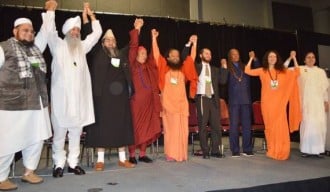](https://interfaithsustain.com/wp-content/uploads/2015/10/faith_leaders_unite-330x192.jpg)
In light of new evidence that 2015 will be the hottest year ever recorded, Muslim, Hindu, Christian, Jewish, Buddhist and Jain leaders joined together at the Parliament of World Religions pledging faith-based action to combat climate change. The event took place in Salt Lake City, and brought together over 8,000 people from scores of faiths and nations. ICSD executive director Rabbi Yonatan Neril spoke at the event, and wrote a blog post about it on *The Huffington Post* titled “[Amidst Hottest Year on Earth, Faith Leaders Unite and Call for Climate Action](https://www.huffingtonpost.com/yonatan-neril/amidst-hottest-year-on-earth-faith-leaders-unite-and-call-for-climate-action_b_8360832.html).” To read the full blog post, click [here](https://www.huffingtonpost.com/yonatan-neril/amidst-hottest-year-on-earth-faith-leaders-unite-and-call-for-climate-action_b_8360832.html).
*\* Featured image [source](https://unsplash.com/@karsten_wuerth)*
**Categories:** Blog on Faith and Ecology, Climate Change
---
### [Record Heat, Extreme Snow: Israel in the Era of Climate Change](https://interfaithsustain.com/record-heat-extreme-snow-israel-in-the-era-of-climate-change/)
**Published:** June 11, 2015
**Author:** ICSD
**Excerpt:** Rabbi Yonatan Neril and Chelsea Revell - From the hills of Jerusalem, we are seeing with our own eyes the signs of climate change in the ecology of Israel. As the Times of Israel reported yesterday, “Record-breaking heat wave hits Israel, sparks brush fires.” The Israeli Meteorological Service stated that the Habesor station in the south of Israel recorded a temperature of 44.3°C (112 F), the highest recording there since the IMS began measuring there in 1975.
**Content:**
*By Rabbi Yonatan Neril and Chelsea Revell*
From the hills of Jerusalem, we are seeing with our own eyes the signs of climate change in the ecology of Israel. As the Times of Israel reported yesterday, “[Record-breaking heat wave hits Israel, sparks brush fires](https://www.timesofisrael.com/record-breaking-heat-wave-hits-israel-sparks-brush-fires/).”
The Israeli Meteorological Service stated that the Habesor station in the south of Israel recorded a temperature of 44.3°C (112 F), the [highest recording there](https://www.jpost.com/Israel-News/Residents-evacuated-from-central-Israel-moshav-hit-hard-by-blaze-404308) since the IMS began measuring there in 1975. Beyond the headlines of the political, national, and religious tension in this land, a much bigger phenomenon has impacted Israelis and Palestinians alike.
With 2014 ranking as the earth’s [warmest year on record](https://www.nasa.gov/press/2015/january/nasa-determines-2014-warmest-year-in-modern-record/#.VOLfbS7eI8Q.), the weather over the past year has been somewhat abnormal, which aligns with how scientists predict climate change will impact this region. To read more [click here!](https://blogs.timesofisrael.com/record-heat-extreme-snow-israel-in-the-era-of-climate-change/)
**Categories:** Blog on Faith and Ecology, Climate Change
---
### [Holy Land, Climate Change](https://interfaithsustain.com/holy-land-climate-change/)
**Published:** December 21, 2014
**Author:** ICSD
**Excerpt:** Rabbi Yonatan Neril and Chelsea Revell - From the hills of Jerusalem, we are seeing with our own eyes the signs of climate change in the ecology of the Holy Land. Beyond the headlines of the political, national, and religious tension in this land, a much bigger phenomenon has impacted Israelis and Palestinians alike.
**Content:**
*By Rabbi Yonatan Neril and Chelsea Revell*
From the hills of Jerusalem, we are seeing with our own eyes the signs of climate change in the ecology of the Holy Land. Beyond the headlines of the political, national, and religious tension in this land, a much bigger phenomenon has impacted Israelis and Palestinians alike. The weather over the past year has been quite abnormal, which aligns unnervingly with how scientists predict climate change will impact this religion.
The winter of 2013-2014 was marked by unusually dry weather but interrupted by two powerful storms. First, December 2013’s winter storm Alexa garnered worldwide attention when Israel received its heaviest December snowfall since 1953 (and Cairo its first snow in more than 100 years!). Jerusalem’s Mayor Nir Barkat remarked about the storm, “In my 54 years I don’t remember a sight like this; such an amount I cannot recall.” Torrential rains followed, causing discomfort for some and unbearable devastation for others. Food and relief agencies, for example, were unable fully to meet humanitarian demands of refugees. But from small-scale challenges like local power outages to large-scale inconveniences such as a temporary ban of tankers from crossing the Bosphorus Strait, the effects of Alexa were felt in the entire Eastern Mediterranean basin.
Five months later, heavy downpours made May 8th the wettest day in May in Israel’s history. Hundreds were stranded on highways; flash flooding prompted Route 90 to close in areas along the Dead Sea; and massive flooding ensued in Gaza and the Negev. In the south, Arad received 44 mm of rain – 40 times its average for the time of year; and in the north, the Sea of Galilee rose 25 mm (one inch). In 2013, there was virtually no rain in November, while *this* year the Israel Meteorological Society reported that November 2014 has delivered more rain to central Israel than any other rainy season in the last two decades.
What can we learn from such seemingly irregular weather occurrences? The unusual patterns of precipitation in Israel and the wider region serve as evidence of global climate change unfolding before our eyes. Extreme weather events are consistent with the [Intergovernmental Panel on Climate Change’s (IPCC) predictions](https://www.ipcc.ch/report/ar4/wg1/global-climate-projections/). And contrary to what torrential storms might suggest, the Mediterranean Basin has actually experienced a warming and drying trend since the 1960s, a phenomena also in alignment with the IPCC’s expectations. The Holy Land, a land as real and susceptible as any other, is experiencing changes in step with the rest of the globe: in the midst of the drying trend, precipitation events are becoming less frequent but more intense. What is contributing to this phenomenon? Humanity’s industrial activities have exacerbated the greenhouse effect, which has increased levels of water vapor in the atmosphere. When the conditions are right for precipitation, there is an increased amount of water vapor waiting to come down.
Dr. Eric Chivian, Founder and Former Director of Harvard University’s Center for Health and the Global Environment, explains in this [letter published in The New York Times](https://www.nytimes.com/2013/11/23/opinion/climate-a-medical-model.html?_r=1&) how these irregular weather patterns are all interconnected: “In recent years, after other extreme weather events like Typhoon Haiyan, one of the strongest storms ever recorded, scientists are always asked, ‘Has climate change caused this?’ And the answer is generally some variation of ‘perhaps, but we can’t be certain.’ The right answer, but the wrong question. In a medical emergency, no physician ever waits for absolute proof of diagnosis before starting treatment, for to do so is to run the risk that the patient will become seriously, and perhaps irreversibly, ill, and may die. The greater the emergency, the more physicians rely on an accumulated body of evidence, on recognized patterns of disease… We must learn from the practice of medicine to recognize the accumulating signs and symptoms of climate change as it unfolds before our eyes, and to act before it is too late.” What does it take to act before it is too late, before our planet becomes seriously, perhaps irreversibly, ill? With climate change already a very present reality, a primary task is to prevent its further progression. In our interconnected world, each country has a role to play. In November, the U.S. and China set unprecedented goals to reduce emissions, since they alone produce about 45% of the world’s carbon dioxide. Their move added momentum to a global deal of reducing emissions after 2020. 196 nations agreed on a voluntary plan to limit emissions in Lima, Peru last week, and this awaits finalization in Paris in 2015.
Yet the plan put forth in Lima to limit emissions will not ‘solve’ the problem of climate change, since it does not plan to cut emissions at anywhere near the rate that scientists say is the threshold beyond which dramatic climate disruption is likely to occur. Therefore, we as individuals must consider our roles in the problem, and to what extent we are committed ourselves to enabling our children to inherit a livable planet. In a subsequent post we intend to discuss how faith communities and [interfaith environmental cooperation](https://www.uri.org/) can help address the climate crisis. In the Holy Land, passion runs deeply for holy sites and questions of who controls what land. But the real question is: can we live and create a reality in which people will care so much about the land itself, this planet, and the future of everyone living on it that they will devote themselves to ensuring that it stays in balance? We hope and pray that we can.
### **About the authors:**
**Rabbi Yonatan Neril** founded and directs [the Interfaith Center for Sustainable Development](https://interfaithsustain.com)**.** A native of California, he completed an M.A. and B.A. from Stanford University with a focus on global environmental issues, and received rabbinical ordination in Israel. He has spoken internationally on religion and the environment, and organized two interfaith environmental conferences in Jerusalem in which religious leaders of several faiths spoke. He is the lead author and general editor of two publications on Jewish environmental ethics including [Uplifting People and Planet: 18 Essential Jewish Teachings on the Environment](https://www.amazon.com/Uplifting-People-Planet-Essential-Environment-ebook/dp/B00HJUZG3A/ref=sr_1_2?s=digital-text&ie=UTF8&qid=1388315963&sr=1-2&keywords=Jewish+lessons#reader_B00HJUZG3A). He lives with his wife, Shana, and son, Shacharya, in Jerusalem.
**Chelsea Revell** is on staff at Jerusalem University College (Jerusalem, Israel), where she works with Ancient & Modern Middle Eastern academic resources. On the side she volunteers with the Interfaith Center for Sustainable Development, a Jerusalem-based NGO that promotes peace and sustainability through educational means.
[](https://interfaithsustain.com/wp-content/uploads/2014/12/IMG_9796.jpg)
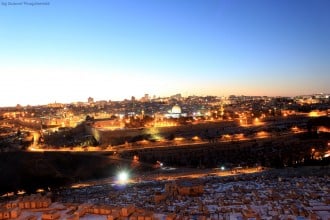
[](https://interfaithsustain.com/wp-content/uploads/2013/12/IMG_9795.jpg)

[](https://interfaithsustain.com/wp-content/uploads/2013/12/Collapsed-Building-in-Jerusalem-13.jpg)
[](https://interfaithsustain.com/wp-content/uploads/2013/12/fallen-tree.jpg)

**Categories:** Blog on Faith and Ecology, Climate Change
**Tags:** "homepost"
---
### [Virginia's Changing Climate](https://interfaithsustain.com/virginias-changing-climate/)
**Published:** July 31, 2019
**Author:** ICSD
**Excerpt:** Faygle Train - Virginia is being hit hard by climate change. The Barrier Islands along Virginia’s Atlantic coast are experiencing sea-level rise, leading 260,000 people to be at risk of in-land flooding. Summers are getting much hotter and muggier, putting 160,000 vulnerable Virginians, like children and the elderly, at risk of heat-related health complications. This heat is even lengthening mosquito season!
**Content:**
*By Faygle Train*
Virginia is being hit hard by climate change. The Barrier Islands along Virginia’s Atlantic coast are [experiencing sea-level rise](https://www.sciencedaily.com/releases/2019/04/190409135818.htm), leading 260,000 people to be at risk of [in-land flooding](https://www.sciencedaily.com/releases/2019/04/190409135818.htm). Summers are getting much hotter and muggier, putting 160,000 vulnerable Virginians, like children and the elderly, at risk of heat-related health complications. This heat is even lengthening mosquito season!
It’s time to fight for Virginia’s future – and faith leaders and schools are up to the task.
[Eastern Mennonite Seminary](https://emu.edu/seminary/) in Harrisonburg is one school committed to sustainable change. They have a climate action plan to achieve carbon-neutrality by the year 2035, and to achieve this goal, they have filled their campus with LEED-certified residence halls and the first commercial scale solar installation in Virginia. Students can take a class on *Environmental Ethics*, about Anabaptist perspectives on sustainability. Retired professor Dr. Dorothy Jean Weaver recently taught a course on *Creation Care in Scripture and Church*, about practical applications of the Biblical command to be a steward of God’s gift, earth. There is even a Graduate-level class on *Biomedicine, Faith and Ethics* with Dr. Roman Miller.
Also housed on the Eastern Mennonite University campus, where EMS is the graduate theological institute, is the [Center for Sustainable Climate Solutions](https://sustainableclimatesolutions.org/). It actively engages Anabaptist and other church communities on climate issues.
In Richmond, [Union Presbyterian Seminary](https://www.upsem.edu/) students can engage in climate issues from a variety of perspectives. They can volunteer on 5 acres of campus land cultivated by [Shalom Farms](https://shalomfarms.org/), a local NGO dedicated to promoting food justice through healthy food and healthy lives. Students can also attend workshops led by Dr. Frances Taylor Gench. Her workshop on *Reading the Gospel of John Ecologically* is a great option for those who cannot take her full course, *The Bible from the Underside*, in which she hosts an Ecological Readings week. By reading voices from both the US and around the globe – including readings from environmental and religious scholars like Ellen Davis, Barbara Rossing, Richard Bauckham, David Rhoads, and Norman Wirzba – students can better develop an understanding of nature and religion.
For those who like to curl up with a good book, there are also UPSem options! Dr. Henry Simmons, now retired, helped co-write *Ecotheology and the Practice of Hope*, about religious views of the natural world and our relationship to it. Students can also read one of two books written by professor Dr. Paul Galbreath, both of which deal with ecological and spiritual themes: *Leading into the World* and *Re-Forming the Liturgy*. He now teaches on the Charlotte campus of UPSem.
Seminaries are not the only saviors. In Reston, you can visit [Northern Virginia Hebrew Congregation](https://www.nvhcreston.org/), a synagogue with a Green Team for a sustainable future. They are working to reduce their community’s carbon footprint.
Virginian faith leaders are preaching for the planet. Isn’t it time we joined them?
**Categories:** Blog on Faith and Ecology, Climate Change
---
### [Flash Floods and Our World](https://interfaithsustain.com/flash-floods-and-our-world/)
**Published:** May 10, 2021
**Author:** ICSD
**Excerpt:** Yonatan Neril and Elisheva Malomet - Flash floods can occur in as little as minutes or an hour, but their devastation can last months or decades. Triggered and intensified by climate change, deforestation, development and more, flashfloods destroy homes, infrastructure, human lives and the environment.
**Content:**
Table of Contents
Table of Contents
- [Why are Flash Floods Happening More Now?](#aioseo-why-are-flash-floods-happening-more-now-4)
- [Higher Risk of Flood Damage in Urban Areas](#aioseo-higher-risk-of-flood-damage-in-urban-areas-15)
- [Impermeable Pavement and Floods](#aioseo-impermeable-pavement-and-floods-23)
- [The Disastrous Effects of Runoff](#aioseo-the-disastrous-effects-of-runoff-26)
- [The Deadly Impact of Flash Floods](#aioseo-the-deadly-impact-of-flash-floods-30)
- [Emotional impact of flash floods](#aioseo-emotional-impact-of-flash-floods-33)
- [What can we do to mitigate flash flooding?](#aioseo-what-can-we-do-to-mitigate-flash-flooding-35)
- [Protect and Preserve and Restore Floodplains](#aioseo-protect-and-preserve-and-restore-floodplains-39)
- [A Natural Flood Protection Success Story](#aioseo-a-natural-flood-protection-success-story-42)
- [Noah Also Prepared for a Flood](#aioseo-noah-also-prepared-for-a-flood-44)
- [How does our situation with floods today relate?](#aioseo-how-does-our-situation-with-floods-today-relate-52)
- [Making a Difference to Stop Flash Floods](#aioseo-making-a-difference-to-stop-flash-floods-55)
- [Summing Up on Flash Floods](#aioseo-summing-up-on-flash-floods-57)
*By Yonatan Neril and Elisheva Malomet* – Flash floods can occur in as little as minutes or an hour, but their devastation can last months or decades. Triggered and intensified by [climate change](https://interfaithsustain.com/global-warming-vs-climate-change/), deforestation, development and more, flash floods destroy homes, infrastructure, human lives and the environment.
Flash floods occur worldwide, mostly due to heavy rainfall over a short period of time during storms, U.S. [National Weather Service](https://www.weather.gov/mrx/flood_and_flash) notes. I have survived flash floods on two continents, while tragically, many lives are lost in floods. In northern India, I ran for my life uphill when a river swelled from torrential rain. Part of the village where I had just been could be seen flowing downstream in the floodwaters. In New Jersey, I was on a main street when water started rising fast, as I describe in a [related blog post](https://blogs.timesofisrael.com/when-we-became-the-weather/).
In this post, we’ll discuss how flash floods happen and what their impacts are on society and the environment. We’ll also explore the Biblical story of Noah’s Ark featuring an apocalyptic flood.
## Why are Flash Floods Happening More Now?
While flash floods have occurred for time immemorial, today they’re exacerbated by two human caused factors.
First, flash flooding is more extreme due to climate change. Human burning of fossil fuels and rainforests raises our planet’s average annual global temperature.
The [Center for Climate and Energy Solutions notes](https://www.c2es.org/content/extreme-precipitation-and-climate-change/): “In the U.S., the Midwest and Northeast have seen the strongest increases in heavy precipitation events. Warmer air can hold more water vapor. For each degree of warming, the air’s capacity for water vapor goes up by about 7 percent. An atmosphere with more moisture can produce more intense precipitation events, which is exactly what has been observed.”
Flash floods may see random, but they’ve become consistently more destructive due to global warming. We are increasingly vulnerable to natural disasters that are no longer “natural,” but human caused.
Why might we care about flash flooding? Because of the threat to us, our community, other people, and animals and plants of many species. It’s not only people near coastlines and major rivers who face flash floods. People, plants, and animals near quiet streams and lakes, and in major downtown areas, can all be impacted.
When flash floods overwhelm natural and human made bodies of water, floodwaters turn major roads and entire neighborhoods into temporary rivers and lakes. Fast flowing water can overflow a simple streambed or burst into someone’s living room! Flash floods also oversaturate the ground and can cause landslides. The damage can shut down power sources and cut people off from emergency services.
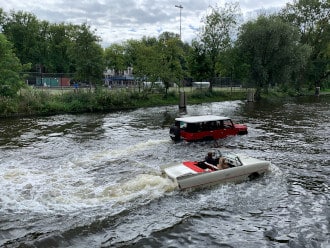[Source](https://unsplash.com/@jonfordphotos)
- [](https://interfaithsustain.com/address-climate-crisis/)
## [Summoning the Will to Address the Climate Crisis](https://interfaithsustain.com/address-climate-crisis/)
- [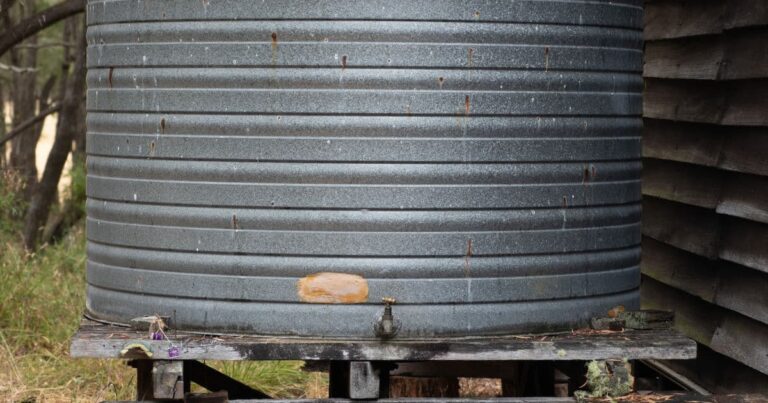](https://interfaithsustain.com/rain-water-barrel/)
## [Save Rain With A Rain Water Barrel](https://interfaithsustain.com/rain-water-barrel/)
## Higher Risk of Flood Damage in Urban Areas
A second human-caused factor in increased flash flood risk is rapid expansion of urban areas in recent decades.
A flood’s severity is greatly determined by the landscape. Floods can rapidly develop in urban areas due to impermeable pavement on city roads. Unable to soak into the earth, water builds on top of roads and can turn major highways into fast-moving streams.
Human vulnerability to flash floods has additionally increased due to poor drainage planning for communities, and housing development in areas that are no longer truly “100-year” flood zones. Recent hurricanes that flooded areas of New Orleans and Houston illustrated this danger. Flooding was far more severe than it might have been before all the urban expansion.
[Source](https://unsplash.com/@jonfordphotos)
### Impermeable Pavement and Floods
As cities and suburbs have expanded into what were floodplains, more and more land that was farms, swamps, and wetlands has been drained and covered with impermeable asphalt.
This paving makes it much harder for water to filter into natural watersheds, and so this water becomes runoff. Soil in the remaining unpaved land areas can only absorb so much rain before becoming saturated, and the excess water must keep moving somewhere.
#### The Disastrous Effects of Runoff
When rain is no longer captured in natural or human made catchments, like rivers or reservoirs, water runs off into already overloaded paved systems and underground sewer systems.
[Runoff can harm the environment](https://www.nationalgeographic.com/environment/article/floods) by carrying dangerous objects and materials, and toxic pollutants. When floodwaters drain away, many a new problem is left behind.
Silt and mud may cover streets and fill the bottom floors of houses and buildings. Large debris, sewage, and chemicals from damaged industrial plants can enter the drinking water systems. Mold from persistent dampness can develop in homes. All these degrade and endanger communities, and render rebuilding extremely difficult.
## The Deadly Impact of Flash Floods
Floods are the most deadly natural disasters in the United States. With huge amounts of powerful water rapidly flowing and moving objects, even as large as cars, dwellings can be damaged beyond repair and infrastructure made unusable for long periods.
Flash floods cause destruction, death, and massive financial damage. People in poorer areas, even within wealthy cities, often have no flood insurance and may lose everything. When the financial cost of hurricanes and slower moving floods is included, the full toll skyrockets. Even help from national and international government and rescue agencies never covers the true price of what is lost.
### Emotional impact of flash floods
Flooding has real and traumatic emotional impact too. [*The New York Times* quoted Maya Wadler](https://www.nytimes.com/2017/08/27/us/hurricane-harvey-texas.html?_r=0), a teenager in Houston, Texas, as she recalled the moments her family’s home flooded in 2017. “I usually just trust my parents that everything is going to be okay. But I looked up, and I saw that my dad was closing his eyes, the water was getting in his eyes. And I just thought: He has absolutely no idea where we are going to go.” By 2019, Houston flooded for the third time in three years.
### What can we do to mitigate flash flooding?
Making changes to our homes and communities can help reduce the impact of flash flooding. Homeowners and local governments can create natural buffers by planting trees, shrubs, or grasses in a community’s watersheds, so more runoff water can enter the watershed and percolate through the soil before reaching homes or businesses.
Creating [swales](https://en.wikipedia.org/wiki/Swale_(landform)), or shallow channels with gently sloping sides, also offers drainage during heavy rainfall events. These channels help slow down the flow of rain from higher to lower elevations, preventing flooding downstream.
Trenches filled with gravel are another option for storing excess stormwater before it overflows onto streets and into neighborhoods. Citizens can ask their local government to undertake such measures.
### Protect and Preserve and Restore Floodplains
The best overall strategy is to ensure that natural wetlands, rivers, lakes, and aquifers are protected and preserved to absorb their full capacity of water during storms. A critical preventative measure to mitigate flood damage is protect floodplains, the natural barriers between bodies of water and dry land.
These essential areas must be preserved or restored to help lessen impacts of flooding. Sprawling cities with buildings, infrastructure, and endless acres of pavement on floodplains increase the severity of flooding triggered by climate change.
#### A Natural Flood Protection Success Story
The city of Napa, California, is a success story in its approach following a devastating flood in 1986, the 30th flood in 150 years. They looked at flood control from a broader and more comprehensive perspective. As [Kaitlin Almack wrote](https://www.teebweb.org/wp-content/uploads/CaseStudies/Restoring%20Ecosystem%20Services%20to%20Prevent%20Flood%20Damage%20in%20Napa%20River%20Basin.pdf), “The goal of the “living river” initiative is to increase the river’s capacity to handle flood waters while maintaining and restoring the original shape and alignment. Engineers replaced high floodwalls and levees with terraced marshes and wider wetland barriers…”
## Noah Also Prepared for a Flood
I wonder what Noah, survivor of the first flood recounted in the Bible, would think of the increasingly frequent flash floods that occur in our time. Would he relate to the causes and impacts, and to attitudes people now hold about flooding? Would he think we are being punished by flood, as the Bible says people were in his time? Could he help us understand how to survive?
The flood and Noah’s ark are parts of one of the best known Biblical stories—a parable for how to live with water and disaster without being defeated by them.
In Genesis 7:9, God chose to save Noah because he was “righteous.” In preparation for the flood, Noah took precautionary measures that can teach us. He made himself and his family a shelter in the ark, as a refuge from God’s impending judgment, but he also made sure to account for the survival of other living creatures. From Noah’s consciousness and righteousness we can learn about the importance of helping people and all species.
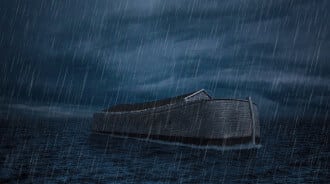[Source](https://pixabay.com/users/jeffjacobs1990-7438739/)
### How does our situation with floods today relate?
As I write in [Eco Bible](https://interfaithsustain.com/ecobible/), the Ark was Noah’s difficult but necessary solution to a “global” crisis. Noah had warning from God, and responded by maintaining his faith and meeting every challenge. We have warnings now, and must meet them with spiritual commitment as well as technological innovation.
For decades, scientists have provided us with warnings that flash floods will become worse if we don’t change our fossil fuel intensive lifestyle. Like Noah, we must meet this global challenge as well as strive for a better tomorrow. This includes educating others about environmental issues and ensuring that our actions on every level make a difference.
### Making a Difference to Stop Flash Floods
Making more environmentally conscious choices, like fueling our lives with wind and solar power, can influence not only our own lives but the lives of those around us. Protecting wetlands, floodplains, and topsoils can protect us from flash floods. If we make efforts to stop global warming, reduce greenhouse gas emissions, and educate about climate change, all of these can reduce flood danger as well.
## Summing Up on Flash Floods
It is important to remember we are not alone. Just like Noah, we can be righteous in this generation. As weather events get increasingly extreme and natural disasters have irreversible impacts, we must hold ourselves responsible and accountable for the environment, our common home.
Taking actions in our lives that benefit the environment now and for generations to come is incredibly important. Engaging people and educating them and ourselves about these issues is a powerful place to start.
*\* Featured image [source](https://unsplash.com/@chriswebdog)*
**Categories:** Blog on Faith and Ecology, Climate Change
**Tags:** Floods
---
### [Environmental Destruction and How Does Deforestation Affect Climate Change?](https://interfaithsustain.com/how-does-deforestation-affect-climate-change/)
**Published:** July 25, 2022
**Author:** ICSD
**Excerpt:** Harry Cooper - Any environmentalist would be a strong proponent of stopping both deforestation and climate change. But what many people don't realize is that the two issues are more related than meets the eye.
**Content:**
Table of Contents
Table of Contents
- [Trees and Global Warming](#aioseo-trees-and-global-warming-2)
- [Carbon Sequestration](#aioseo-carbon-sequestration-7)
- [Long Term Carbon Storage](#aioseo-long-term-carbon-storage-9)
- [Other Factors that Impact Carbon Sequestration](#aioseo-other-factors-that-impact-carbon-sequestration-16)
- [Deforestation and Stored Carbon](#aioseo-deforestation-and-stored-carbon-19)
- [Carbon Sink to Carbon Source](#aioseo-carbon-sink-to-carbon-source-23)
- [Clearing Forests for Unsustainable Land Use](#aioseo-clearing-forests-for-unsustainable-land-use-28)
- [Tropical Deforestation and Commodity Production](#aioseo-tropical-deforestation-and-commodity-production-30)
- [Palm Oil in Southeast Asia](#aioseo-palm-oil-in-southeast-asia-34)
- [Beef Production in the Amazon Rainforest](#aioseo-beef-production-in-the-amazon-rainforest-36)
- [Sustainable Forest Management](#aioseo-sustainable-forest-management-41)
- [Religion and Deforestation](#aioseo-religion-and-deforestation-48)
- [Who Is Held Accountable? Eco Bible Volume 2](#aioseo-who-is-held-accountable-eco-bible-volume-2-50)
*By Harry Cooper* – Any environmentalist would be a strong proponent of stopping both deforestation and climate change. But what many people don’t realize is that the two issues are more related than meets the eye. Trees are incredibly important for sustaining ecosystems and protecting biodiversity. However, they are also an important factor in the carbon cycle and the fight against **climate change**.
## Trees and Global Warming
When trees grow they take in carbon dioxide and release oxygen. Each tree takes in around [48](https://www.co2meter.com/blogs/news/could-global-co2-levels-be-reduced-by-planting-trees#:~:text=While%20a%20typical%20hardwood%20tree,into%20the%20air%20each%20year.) pounds of carbon a year out of the atmosphere, and harmlessly stores it away. When these trees disappear due to **deforestation** they become incapable of storing carbon. On top of that, all the stored carbon in the tree’s trunk and root system gets released into the atmosphere when they get cut down.
[Source](https://unsplash.com/@miharekar)
Not only does deforestation directly contribute to climate change by releasing carbon dioxide into the atmosphere, but in many parts of the world, forests are cleared for unsustainable land uses, such as industrial agriculture. These practices often involve releasing greenhouse gases and other environmentally harmful practices.
## Carbon Sequestration
During photosynthesis, trees capture carbon dioxide from the air, bind it with sugar, and release oxygen. This process makes trees an incredible way to naturally store carbon that would otherwise contribute towards warming the planet.
### Long Term Carbon Storage
There are several different [factors](https://extension.psu.edu/how-forests-store-carbon#:~:text=According%20to%20the%20US%20Forest,mainly%20in%20trees%20and%20soil.) that determine how well a tree can sequester carbon. One of the most important is its age.
Saplings and young trees grow rapidly and therefore take in carbon faster than older trees. However these are more likely to die off, and are not as capable of storing carbon long term.
Middle aged trees take in carbon at a slower rate than young trees. However, since they are often hardier trees, forests with more middle aged trees tend to take in more overall carbon than younger forests.
Old growth forests are usually spread out and take up carbon fairly slowly. While they are not as efficient as young and middle aged trees, because old growth trees live so long, they can store large quantities of carbon in their massive trunks, branches, and root systems for hundreds of years.
#### Other Factors that Impact Carbon Sequestration
There are many other factors that impact carbon sequestration, such as soil. Forests with a lot of debris and leaf litter in their soil are often much better at binding carbon atoms into the soil.
Another important factor is temperature. While warmer tropical forests grow faster and take in more carbon, colder temperatures allow for carbon to stay in soil and plant matter easier. So while warm forests may take in more carbon, colder forests have more overall stored carbon dioxide.
- [](https://interfaithsustain.com/how-religious-communities-are-curbing-climate-change/)
## [How Religious Communities Are Curbing Climate Change](https://interfaithsustain.com/how-religious-communities-are-curbing-climate-change/)
- [](https://interfaithsustain.com/how-does-deforestation-affect-climate-change/)
## [Environmental Destruction and How Does Deforestation Affect Climate Change?](https://interfaithsustain.com/how-does-deforestation-affect-climate-change/)
- [](https://interfaithsustain.com/decarbonization/)
## [The Necessity of Decarbonization to Save our Planet](https://interfaithsustain.com/decarbonization/)
## Deforestation and Stored Carbon
Forests have historically been one of the planets best ways to keep extra carbon from getting into the atmosphere. However, as deforestation rates have risen in the past century, so has the atmosphere’s total carbon.
### Carbon Sink to Carbon Source
When a tree dies and starts to decompose, all the carbon stored inside it gets released into the atmosphere. As more and more trees get cut down through [deforestation](https://interfaithsustain.com/consequences-of-deforestation/) and forest degradation, the more important it becomes for us to protect forests.
[Source](https://unsplash.com/@onkysf)
It is estimated that the carbon released during deforestation contributes around 10-15% of greenhouse gas emissions to global climate change. As a result, the forests of the world are no longer a net carbon sink, but rather an overall source of carbon entering into the atmosphere.
## Clearing Forests for Unsustainable Land Use
The act of cutting down forests directly contributes to climate change by getting rid of Earth’s natural way of keeping carbon out of the atmosphere. On top of that, former forest cover is often replaced with unsustainable land usage.
### Tropical Deforestation and Commodity Production
One of the biggest drivers of deforestation, specifically tropical deforestation, is not lumber, but rather to make room for commodity production and industrial agriculture. These practices often release more greenhouse gases on top of the ones released during deforestation.
#### Palm Oil in Southeast Asia
Southeast Asia is home to some incredibly biodiverse and healthy rainforests. However these have begun to disappear due to the increasing demand for [palm oil](https://www.rainforest-rescue.org/topics/palm-oil). Palm oil plantations consist of massive monoculture fields that provide little biodiversity and have little capacity to sequester and store carbon.
[Source](https://unsplash.com/@nazahery)
#### Beef Production in the Amazon Rainforest
The Amazon rainforest is one of the largest continuous rainforests in the world, but it is constantly being cleared away to make room for cattle ranching and beef production. This gets rid of forests, and also creates environmentally harmful [industrial farms](https://wwf.panda.org/discover/knowledge_hub/where_we_work/amazon/amazon_threats/unsustainable_cattle_ranching/#:~:text=Extensive%20cattle%20ranching%20is%20the,current%20deforestation%20%28Nepstad%20et%20al.).
Cattle ranching not only creates drier environments, but the practice of slash and burn agriculture to clear land for farming leads to an increase in forest fires. These forest fires cause more deforestation and release massive amounts of carbon into the atmosphere.
## Sustainable Forest Management
While the future may seem bleak for the Earth’s forests and climate, there is still hope that we can recover. **Sustainable forestry** [initiatives](https://www.ucsusa.org/resources/tropical-deforestation-and-global-warming#:~:text=When%20forests%20are%20cut%20down,percent%20of%20global%20warming%20pollution.) have shown that sustainable forestry practices can not only help rebuild forests, but do so in a way that helps them sequester and store more carbon. These sustainable forestry practices are apart of a group of policies known as Reducing Emissions from Deforestation and Degradation, or [REDD+](https://www.lse.ac.uk/granthaminstitute/explainers/whats-redd-and-will-it-help-tackle-climate-change/) for short.
REDD+ policies were designed by environmental policy makers to guide governments in reestablishing forests for the sake of sequestering carbon. These kinds of policies have been used in the outlining of the Paris Agreement and have helped countries everywhere work towards reducing deforestation.
[Source](https://unsplash.com/@vixxer)
### Religion and Deforestation
*Deuteronomy 29:17 and 29:21–24 – Perhaps there is among you some man or woman or some clan or tribe, whose heart is even now turning away from the Lord our God to go and worship the gods of those nations – perchance there is among you a root sprouting poison weed and wormwood . . . And later generations will ask – the children who succeed you, and foreigners who come from distant lands and see the plagues and diseases that God has inflicted upon that land, all its soil devastated by sulfur and salt, beyond sowing and producing, no grass growing in it just like the upheaval of Sodom and Gomorrah, Admah and Zeboiim, which the Lord overthrew in His fierce anger – all nations will ask, “Why did the Lord do thus to this land? Why that awful wrath?”*
### Who Is Held Accountable? [Eco Bible Volume 2](https://www.amazon.com/dp/1735338842?psc=1&smid=ATVPDKIKX0DER&ref_=chk_typ_imgToDp)
Rabbi Shlomo ben Yitzchak (Rashi) asks how God can justify punishing the whole community for the sins of the few. God says: “I will not punish you (the community) for the concealed acts.” As Deuteronomy 29:28 states, “The concealed acts concern God,” and God will exact punishment directly upon the individual who sins covertly.
In this verse, Moses states that “the overt acts apply to us and to our children.” We are responsible for detecting the sins committed openly in our community and to eradicate any evil among us. And if we do not execute judgement upon transgressions of which we are fully aware, then the whole community will be punished [because we have avoided our responsibility.](https://www.sefaria.org/Deuteronomy.29.28?lang=bi&with=Rashi&lang2=en)
In our times, why must we hold specific people or corporations accountable to protect society as a whole? In Brazil, more than 700,000 hectares of rainforest are cleared per year, [mainly for beef cattle ranching.](https://rainforests.mongabay.com/amazon/deforestation_calculations.html) In 2017, Brazilian company JBS, the largest beef producer in the world, was substantially fined for its contribution to deforestation. This one company was responsible for the annual deforestation of an area [three times the size of Manhattan](https://www.google.com/url?sa=t&rct=j&q=&esrc=s&source=web&cd=&cad=rja&uact=8&ved=2ahUKEwjfnL638p_4AhXAlP0HHfS5CjsQFnoECAcQAQ&url=https%3A%2F%2Fwww.forbes.com%2Fsites%2Fmindylubber%2F2018%2F01%2F23%2Ffood-companies-need-to-face-the-high-cost-of-tropical-deforestation%2F&usg=AOvVaw0uoEDaUoJZvxVwU-tcPDN5) (as well as corruption, bribery, financial and accounting violations, and insider trading). Yet, the fines are insufficient to stop a multibillion-dollar industry.
In 2021, a new effort emerged to make such “ecocide” by major polluters an offense punishable by the International Criminal Court in The Hague. The word “ecocide” refers to all forms of environmental destruction. [As Time magazine reported](https://time.com/5940759/ecocide-law-environment-destruction-icc/), “In December 2020, lawyers from around the world gathered to begin drafting a legal definition of ecocide. If they succeed, it would potentially situate environmental destruction in the same legal category as war crimes, genocide, and crimes against humanity.”
*\* Featured image [source](https://unsplash.com/@maksimshutov)*
**Categories:** Blog on Faith and Ecology, Climate Change
**Tags:** Climate Change, Deforestation
---
### [Let’s Discover What Is the Difference Between Weather and Climate](https://interfaithsustain.com/what-is-the-difference-between-weather-and-climate/)
**Published:** March 7, 2022
**Author:** ICSD
**Excerpt:** Harry Cooper - Climate change is one of the most pressing issues in today's world, and like most important issues, it is very prominent in media and current events. Climate change is being talked about on news outlets, in political discussions, and in conversations in day to day life.
**Content:**
Table of Contents
Table of Contents
- [What Is The Difference Between Weather and Climate?](#what-is-the-difference-between-weather-and-climate)
- [Differences in Measuring Weather and Climate](#differences-in-measuring-weather-and-climate)
- [Why the Distinction Matters When Talking about Climate Change](#why-the-distinction-matters-when-talking-about-climate-change)
- [How Does Climate Change Affect Weather?](#how-does-climate-change-affect-weather)
- [Examples of the Effects of Climate Change](#examples-of-the-effects-of-climate-change)
- [Weather, Climate, and Religion](#weather-climate-and-religion)
*By Harry Cooper* – **Climate change** is one of the most pressing issues in today’s world, and like most important issues, it is very prominent in media and current events. Climate change is being talked about on news outlets, in political discussions, and in conversations in day to day life.
Because global warming is a hot topic rooted in complicated **environmental science**, it often feels like an issue that is hard to comprehend without some scientific background on climate. In order to fully understand [climate change](https://interfaithsustain.com/evidence-of-climate-change/ "climate change") as a topical issue in today’s world, it is important to understand the basics of what a changing climate means scientifically.
## What Is The Difference Between Weather and Climate?
One of the biggest [misconceptions](https://oceanservice.noaa.gov/facts/weather_climate.html) people have about climate is the conflation of **weather** and **climate**. Many people assume that the terms weather and climate are interchangeable, but mixing the two up like this can lead to some issues in understanding what it means to live in a world with a changing climate.
Weather refers to the atmospheric conditions at any given point in time at a certain place. This is the kind of thing you see in your daily weather forecasts: what temperature it will be, if it is going to rain or not, if it will be sunny or cloudy, the speed and direction of wind etc.
On the other hand, climate is the average weather conditions of a place, measured over a period of time which is often 30 years. Therefore, when talking about climate, people don’t talk in terms of specific weather conditions at a certain place in time, but rather about weather trends. For example, saying it is usually hot in the summer, or usually rains in the spring.
### Differences in Measuring Weather and Climate
In order to understand climate change, it is also important to understand how weather and climate are both [measured](https://nsidc.org/cryosphere/arctic-meteorology/climate_vs_weather.html). Weather forecasts seek to explain what the weather will be like in the next few days or weeks. This relies on interpreting numerical measurements of things like air pressure, humidity, temperature, and wind speed that can indicate something about weather patterns in the coming days.
Climate is a little more difficult to predict than weather. Weather looks at signs in the atmosphere to see how it will behave. However, since predicting climate requires scientists to look at a long period of time, the signs that a weather forecaster would use to predict the weather won’t help someone trying to create climate predictions for the next hundred years.
[Source](https://pixabay.com/users/stocksnap-894430/ "Source")
- [](https://interfaithsustain.com/how-religious-communities-are-curbing-climate-change/)
## [How Religious Communities Are Curbing Climate Change](https://interfaithsustain.com/how-religious-communities-are-curbing-climate-change/)
- [](https://interfaithsustain.com/how-does-deforestation-affect-climate-change/)
## [Environmental Destruction and How Does Deforestation Affect Climate Change?](https://interfaithsustain.com/how-does-deforestation-affect-climate-change/)
- [](https://interfaithsustain.com/decarbonization/)
## [The Necessity of Decarbonization to Save our Planet](https://interfaithsustain.com/decarbonization/)
Instead, **climate scientists** have to look at past climate trends to try and predict how climate will behave in the future. By observing the way that climate has changed over a past period of time, scientists are able to look at trends in climate to determine what the future of the Earth’s climate will look like.
### Why the Distinction Matters When Talking about Climate Change
Rising global temperatures due to greenhouse gases are causing a lot of [harm](https://www.worldwildlife.org/threats/effects-of-climate-change) in our world. The affects of climate change have caused rising sea levels, intense droughts, animals going extinct, and general environmental destruction.
How bad climate change is something we’ve all heard a lot about, but if climate change is causing so much damage in our world, how come we don’t see the atrocities brought on by climate change in our everyday lives? It seems like a simple question, but it’s a very important one to ask, and the answer can be found in understanding the difference between weather and climate.
On February 26th 2015 [Jim Inhofe](https://www.cnn.com/2015/02/26/politics/james-inhofe-snowball-climate-change/index.html), a senator from Oklahoma and staunch climate change denier, spoke on the senate floor. During his speech Inhofe presented a snowball that he had made outside just before entering the building. Inhofe explained that climate scientists talk about the increasing danger of [global warming](https://interfaithsustain.com/global-warming-vs-climate-change/ "global warming"), but how could it be cold enough to snow if the threat of climate change was real? After his short speech, senator Inhofe playfully tossed his bombshell evidence aside and sat down.
While senator Inhofe’s argument doesn’t make a lot of sense, it’s hard to understand why. The biggest flaw in Inhofe’s snow based argument, was a classic case of not knowing the difference between weather and climate.
**Global warming** means that global temperature trends are rising but it doesn’t mean that the Earth is warming uniformly, or even that everyday is going to be hotter than the last. So while climate change may mean less snowy days as time passes, it doesn’t mean that it can’t snow at all.
### How Does Climate Change Affect Weather?
So, if the Earth’s climate getting warmer isn’t going to stop people from ever seeing a snowy day, how does climate affect weather conditions? Earth’s average temperature has risen about [1.1](https://earthobservatory.nasa.gov/world-of-change/global-temperatures) degrees Celsius since the industrial revolution, and while that may not seem like a lot, that change isn’t distributed evenly in every place, or even in every season of the year. Since the Earth is already heated unevenly, it makes sense that it would warm unevenly too.
Some places in the world have warmed less than others, while some have even gotten colder on average. This [temperature increase](https://www.epa.gov/climate-indicators/weather-climate) is also not even for every time of the year. Every season has seen different rates of increasing temperatures. In most parts of the US average winter temperatures have increased at twice the rate that average summer temperatures have.
[Source](https://pixabay.com/users/sarahnic-4180276/ "Source")
Another important effect that climate change has had on the Earth’s weather patterns is the increased amount of **extreme weather events**. This means that occasional instances of temperature and weather extremes have become more common, such as record high temperature days, heavy precipitation, droughts, storms, and even cyclones. Since most of these extreme temperatures are extreme highs, these events often bring up the average global temperature, as well as cause serious damage to communities and the environment.
#### Examples of the Effects of Climate Change
As global climate is slowly getting warmer, many ice stores found in the Arctic and Antarctica are starting to melt. This melting of the ice has caused global sea levels to slowly rise. As these sea levels continue to rise, it will start to cause some trouble for people living on coasts and in regions below current sea level. In the coming decades, if sea levels continue to rise, many people may find their homes experiencing frequent flooding, or even become immersed completely underwater.
It is estimated that by the end of the century in 2100, the homes of approximately [200 million](https://www.statista.com/chart/19884/number-of-people-affected-by-rising-sea-levels-per-country/) people around the world will be underwater. Along with these 200 million people, another 160 million people will experience increased annual flooding, making for a total of approximately 360 million people either displaced, or greatly affected by rising sea levels. The majority of these people live in Asian countries such as China, Bangladesh, India, Thailand, Vietnam, and Indonesia and they will become refugees. However, many non Asian countries would also be affected such as Germany, the UK, the Netherlands, Brazil, and the US.
Another way in which weather is affected by climate change is through decreasing rainfall in some areas, and powerful [droughts](https://yaleclimateconnections.org/2021/08/climate-change-and-droughts-whats-the-connection/) in other regions. As the average air temperature gets warmer, and some areas experience more extreme high temperatures in the summer months, more water stored in lakes, plants, and the ground will evaporate, making water a scarce resource in places affected by these droughts. Warmer temperatures not only cause droughts to happen in more places, but regions undergoing naturally occurring droughts often experience more intense drought conditions.
Warmer average temperatures not only cause drought through more evaporation, but also through decreasing snowfall. Many water sources are fed by snow melting on mountain tops in the spring and running down the mountain into rivers and lakes. When global temperatures rise, winters become shorter, and the period of time that snow can fall on these mountains also shortens. As a result there is less melting snow to feed into water sources in the spring.
## Weather, Climate, and Religion
What is the relationship between weather, climate and religion? A fascinating study by Yale researches explored this topic, focused on the primary question “[Why Are Gods Thought to Cause Weather?](https://hraf.yale.edu/why-are-gods-thought-to-cause-weather/)“. This study found that “resource stress itself appears to be the more important variable predicting both religious belief and sharing”. In other words, societies that experience resource stress, such as from a lack of rain, are more likely to look to their God or gods to save them and to share resources to help each other get through hard times.
Another way to express this concept is the aphorism “there are no atheists in foxholes”, which means that in times of extreme stress or fear, people are drawn to belief in a higher power. Climate change and extreme weather can be scary and overwhelming. Yet religion can give us the inspiration and communal force to overcome these challenges and save our planet.
*\* Featured image [source](https://pixabay.com/users/12019-12019/ "source")*
**Categories:** Blog on Faith and Ecology, Climate Change
**Tags:** Climate Change
---
### [The Value Of The NOAA Climate Prediction Center](https://interfaithsustain.com/noaa-climate-prediction/)
**Published:** April 22, 2022
**Author:** ICSD
**Excerpt:** Sydney Cohen - The National Oceanic and Atmospheric Administration (NOAA) has some predictions for the upcoming year, from their climate prediction center. According to their website, climate prediction is not an exact science, but they use various models and data sets to make informed guesses. So what can we expect in the future? Read on to find out!
**Content:**
Table of Contents
Table of Contents
- [The National Oceanic and Atmospheric Administration (NOAA)](#aioseo-the-national-oceanic-and-atmospheric-administration-noaa-2)
- [How Does The NOAA Predict Climate?](#aioseo-how-does-the-noaa-predict-climate-4)
- [Upper Mississippi Valley](#aioseo-upper-mississippi-valley-6)
- [Western Great Lakes](#aioseo-western-great-lakes-8)
- [Arctic Air in NOAA's Arctic Program](#aioseo-arctic-air-in-noaas-arctic-program-10)
- [Climate Prediction and Religion](#aioseo-climate-prediction-and-religion-24)
- [The Importance of the NOAA's Programs](#aioseo-the-importance-of-the-noaas-programs-30)
*By Sydney Cohen* – The National Oceanic and Atmospheric Administration (NOAA) has some predictions for the upcoming year, from their climate prediction center. According to their website, climate prediction is not an exact science, but they use various models and data sets to make informed guesses. So what can we expect in the future? Read on to find out!
## The National Oceanic and Atmospheric Administration (NOAA)
The National Oceanic and Atmospheric Administration (NOAA) is a United States government organization that specializes in climate prediction, done so by their climate prediction center. Every day of every week, they release updated forecasts for temperature, precipitation, and other conditions around the globe. Their predictions are used by businesses, farmers, and other organizations to make important decisions about the future.
### How Does The NOAA Predict Climate?
The NOAA uses a variety of data sources to make their climate predictions and conduct research studies on our rapidly changing planet. Their data collection methods include satellites, weather balloons, and climate models, as well as research in the arctic and other regions that are facing more drastic and [rapid consequences from climate change](https://interfaithsustain.com/evidence-of-climate-change/). In this blog post, we will take a closer look at the climate prediction for a variety of areas this week, as well as the NOAA Arctic Program. The NOAA provides climate prediction for many regions across the United States. Continue reading to learn more about upcoming weather predictions for two particular Midwest regions in the US, and all that the NOAA includes in their predictions.
#### Upper Mississippi Valley
The Upper Mississippi Valley is a Midwest region that typically has chances of precipitation and rain during the spring and summer months. Generally, as we warm into the spring and summer months, the NOAA predicts fair temperatures closer to Iowa, with slightly cooler temperatures overnight and during the day in the more northern states. Over the weekends, as the weather warms, it becomes more and more possible for residents of this region to enjoy outdoor activities as we enter the summer.
#### Western Great Lakes
The climate prediction center for this region in the Midwest typically estimates probabilities of fair temperatures, as we transition from winter to spring, ranging from the south to the north of this region. The southern ends of this region often have warmer temperatures during the day, but generally colder temperatures at night. This region has high probabilities of precipitation in the northernmost points, though generally has a few days of dry weather after rain showers.
#### Arctic Air in NOAA’s Arctic Program
In addition to the usefulness of the NOAA’s climate prediction center, it also has a program that is informative of climate change and climate prediction, known as the NOAA Arctic Program. The Arctic Program releases arctic report cards, that give updates on arctic surface air temperature, air temperature variation, seasonal air temperature changes, snow cover, ice sheets, and more. These updates are important to the national weather service, as arctic ecosystems are rapidly changing (and therefore their weather forecast is affected), as [climate change warms our planet.](https://interfaithsustain.com/global-warming-vs-climate-change/)
The annual arctic report cards draw on studies and scientists’ research from across the pacific northwest, parts of Asia, and the UK. The variety of data that informs the report card is vital to encompassing all changes that are taking place in our arctic regions.
[Source](https://pixabay.com/users/358611-358611/)
According to the [2021 NOAA Arctic Report](https://arctic.noaa.gov/Report-Card/Report-Card-2021/ArtMID/8022/ArticleID/948/Surface-Air-Temperature), it was found that:
- “This past year (October 2020-September 2021) was the seventh warmest on record over Arctic lands (beginning in 1900 with surface air temperature anomalies 1.1°C above the 1981-2010 mean).
- The *warmest* Pan-Arctic and Asian Arctic autumn (October-December) terrestrial air temperatures were observed in 2020.
- For the second consecutive year, much higher-than-normal air temperatures were observed over northern Eurasia, and especially the Laptev Sea, during autumn of 2020 and spring of 2021.
- Temperature extremes yielded some unprecedented impacts on the Arctic environment, including the *first* rainfall observed at Summit at the top of Greenland.”
- [](https://interfaithsustain.com/how-religious-communities-are-curbing-climate-change/)
## [How Religious Communities Are Curbing Climate Change](https://interfaithsustain.com/how-religious-communities-are-curbing-climate-change/)
- [](https://interfaithsustain.com/how-does-deforestation-affect-climate-change/)
## [Environmental Destruction and How Does Deforestation Affect Climate Change?](https://interfaithsustain.com/how-does-deforestation-affect-climate-change/)
- [](https://interfaithsustain.com/decarbonization/)
## [The Necessity of Decarbonization to Save our Planet](https://interfaithsustain.com/decarbonization/)
As one can tell, these reports are incredibly important in tracking the progression of global warming. In order for climate prediction centers and weather services to work properly, accurately predicting daily, weekly, and monthly weather forecasts, they must be informed of the ways that global warming is affecting our world’s atmospheric climate.
#### Climate Prediction and Religion
Predicting weather, which is measured over a short period of time is no easy feat. It is even more difficult to predict climate, which is measured over the long term. This was part of the challenge of one the first people who tried to scientifically predict weather, Vice Admiral Robert FitzRoy. FitzRoy’s weather predictions were ridiculed by the public, as with his crude instruments, he couldn’t get very accurate predictions. FitzRoy “collected data on temperature, pressure and humidity by telegraph from sites across Britain and distributed his forecasts to seaports and newspapers,” but the other main weather predictor of his time was “Richard James Morrison, a popular astrologer who wrote under the pen name ‘Zadkiel'” and “issued forecasts that were purportedly based on the movement of celestial bodies.” FitzRoy’s weather department was nicknamed “the government’s Zadkiel.”
[Source](https://pixabay.com/users/nika_akin-13521770/)
#### The Importance of the NOAA’s Programs
The **NOAA Climate Prediction Center** and other programs are incredibly important. By providing information on [weather forecasts and climate change](https://interfaithsustain.com/what-is-the-difference-between-weather-and-climate/), the NOAA helps farmers, fishermen, and others who are directly dependent on the planet’s ecosystems make decisions that can save them money and protect their livelihoods. As we continue to face the effects of **climate change**, it’s more important than ever that we have access to this data so that we can make informed decisions about the future.
*\* Featured image [source](https://pixabay.com/users/felixmittermeier-4397258/)*
**Categories:** Blog on Faith and Ecology, Climate Change
**Tags:** Climate Prediction, Weather
---
### [Leading up to COP 26, Know what Factors are affecting the Climate](https://interfaithsustain.com/factors-affecting-climate/)
**Published:** October 29, 2021
**Author:** ICSD
**Excerpt:** Ilana Stein - We are excited as we approach October 31st when the 2021 Climate Change Conference (COP26) starts in Glasgow.
**Content:**
Table of Contents
Table of Contents
- [Global Climate](#aioseo-global-climate-3)
- [Local Climate](#aioseo-local-climate-7)
- [The Difference between Weather and Climate?](#aioseo-the-difference-between-weather-and-climate-11)
- [Natural Factors Affecting Climate](#aioseo-natural-factors-affecting-climate-15)
- [The Affect of Location](#aioseo-the-affect-of-location-17)
- [The Earth's Surface Affects Climate](#aioseo-the-earths-surface-affects-climate-22)
- [Human Factors Affecting The Climate](#aioseo-human-factors-affecting-the-climate-27)
- [Global Climate Action](#aioseo-global-climate-action-33)
*By Ilana Stein* – We are excited as we approach October 31st when the **2021 Climate Change Conference** (**COP26**) starts in Glasgow. Today, we hear the term “**climate change**” or “**global warming**” everywhere. And as the summer temperatures soared, many could be heard saying, “You see, it’s [climate change](https://interfaithsustain.com/global-warming-vs-climate-change/)!” But is it? First we have to understand what climate is, what usually affects it, and what new factors affecting climate have come into play to influence it.
One of the reasons that working out this system is so complex is that there are multiple factors affecting climate – and climate can be analyzed locally or globally. What is the difference between the two?
## Global Climate
The Earth’s atmosphere, ocean currents, weather and climate are part of a complex dynamic that we as a species are continually attempting to understand. Attempts to model the fluid dynamics of the weather, air, water, clouds, pressure, latitude, sunlight and chemicals in earth’s miraculous life-giving bubble of breathable, cosmic-ray-protecting atmosphere, has driven our creation of technology – including computers themselves.
## Local Climate
Local climate is also called “the climate of a place” and can be looked at through many lenses. Climatologists study the overall pattern of experienced and measurable conditions in that place’s unique location. Salient aspects that they track include surface and air temperatures and seasonal fluctuations and volatility, prevailing winds, precipitation including rainfall, snow, fog, and storms, groundwater and aridity, ocean currents, river flows, flooding patterns, and many other phenomena – these all make up the aggregate climate of a place.
[Source](https://unsplash.com/@nasa/)
### The Difference between Weather and Climate?
The difference between the two is in essence about time.
Weather is a short-term view that takes into account observations of temperature, precipitation, wind, air pressure changes and moisture in the air – or humidity. It looks at what the conditions will be in a few minutes, tomorrow or over the next few days.
Climate, on the other hand, looks at patterns of weather over the long term – at least 30 years or more. Here the patterns of the past must be examined to see trends or regular changes in such factors as wind cycles, temperatures of the ocean, rainfall in the Pacific that causes a change in the Atlantic. These are gathered together to create a bigger, global picture – called [global climate models](https://www.gfdl.noaa.gov/climate-models/).
- [](https://interfaithsustain.com/how-religious-communities-are-curbing-climate-change/)
## [How Religious Communities Are Curbing Climate Change](https://interfaithsustain.com/how-religious-communities-are-curbing-climate-change/)
- [](https://interfaithsustain.com/how-does-deforestation-affect-climate-change/)
## [Environmental Destruction and How Does Deforestation Affect Climate Change?](https://interfaithsustain.com/how-does-deforestation-affect-climate-change/)
- [](https://interfaithsustain.com/decarbonization/)
## [The Necessity of Decarbonization to Save our Planet](https://interfaithsustain.com/decarbonization/)
## Natural Factors Affecting Climate
There are a number of factors to take into account when we try to understand the climate. Here are a few:
### The Affect of Location
Thanks to the axis at which the Earth is tilted, the particular latitude on which climate is being measured makes a difference. For example, at the Equator the sun’s rays and solar radiation are directly angled at the surface of the earth. At the poles, the sun’s rays are oblique or slanted, so that the rays’ energy is spread out more and less intense.
Latitude also means that the amount of daylight hours varies at different parts of the planet. At the north and south poles of the Arctic and Antarctic regions the difference is largest, with almost continuous day during summer and continuous night in winter in those regions.
Elevation, or the altitude, also makes a difference. The higher one goes – on a mountain range for example – the cooler the air. The plants that grow at this altitude will be different to those in the warmer climes of the valleys or closer to sea level.
Wind depends on warm air rising and then cooling, which causes the air to circulate in a specific direction. Prevailing winds are air masses that circulate in the same direction all the time. There are six main prevailing winds – three in the northern hemisphere and three in the southern hemisphere. These affect not just temperature but importantly rainfall as well.
### The Earth’s Surface Affects Climate
Where the earth’s surface is covered with trees and other types of plants, the heat of the sun is absorbed better, while ice and snow reflect the heat back out. Oceans, which cover much of the earth’s surface, are slower at absorbing and releasing heat, helping to regulate temperatures across the planet.
Ocean currents are powerful forces in creating climate. Currents carry warm or cool water for thousands of miles, which in turn change the temperature of the air above the water. The movement of air is also affected based on whether it is moving over water or land. Over water, the air masses are cooler – so coastal areas tend to have cool breezes as well.
## **Human Factors Affecting The Climate**
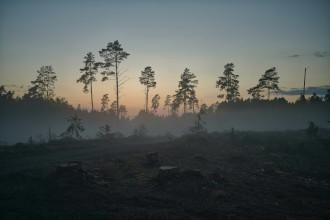[Source](https://unsplash.com/@maksimshutov/)
Since the Industrial Revolution, human impact on our planet has increased, as recorded in [climate data ](https://interfaithsustain.com/evidence-of-climate-change/)and records. In particular, our use of fossil fuels has caused an increase in carbon dioxide. At the same time, forests are being destroyed across the planet, which means that there are less plants to take up the carbon dioxide. Factor in the millions of acres that used to be forest being used for cattle with their methane emissions and all of this has led to what is known as the [greenhouse effect](https://interfaithsustain.com/ecological-engineering/).
More cities with less plants create mini-climates with higher temperatures, and the [oceans are warming](https://interfaithsustain.com/evidence-of-climate-change/). These factors have caused changes in global and local climate, also known as global warming (the difference between the terms [global warming and climate change is discussed here](https://interfaithsustain.com/global-warming-vs-climate-change/)).
As [NASA states](https://climate.nasa.gov/scientific-consensus/), “human activities are the primary cause of the observed climate-warming trend over the past century.” This view is supported by 98% of climate scientists, and represents the scientific consensus.
### Global Climate Action
The climate system is enormously complicated. It is literally a planet-sized complex system, and no amount of computation can ever be complete.
In the words of God to Job, “Where were you when I laid the earth’s foundations?” (Job 38:4).
[COP26 is a critical summit for global climate action](https://www.chathamhouse.org/2021/09/what-cop26-and-why-it-important?gclid=CjwKCAjw49qKBhAoEiwAHQVTo9tKqnSbZ1ajd5d3mvDkcZT638_ocNET0iauw9XN3V9ZlJUfUgm6NhoC9AMQAvD_BwE). To have a chance of limiting warming to 1.5 degrees, global emissions must halve by 2030 and reach **‘net-zero’** by 2050. “The difference between 1.5 and 2 degrees is substantial: every increment of a degree translates into increased risks for people, communities, and ecosystems. The UK’s overarching aim for the Glasgow summit is to ‘keep 1.5 degrees alive’.”
We at the ICSD will update you with the outcomes of this global collaboration.
*\* Featured image [source](https://unsplash.com/@kenrickmills/)*
**Categories:** Blog on Faith and Ecology, Climate Change
**Tags:** Climate Change, COP26
---
### [Evidence of Climate Change: Satellites, Ice Core Samples, and More](https://interfaithsustain.com/evidence-of-climate-change/)
**Published:** May 21, 2021
**Author:** ICSD
**Excerpt:** Elisheva Malomet - The hot button topic of climate change has been in the public sphere, and many are concerned about drastic changes they are witnessing. The evidence of global warming is significant and is measured in many ways.
**Content:**
Table of Contents
Table of Contents
- [Satellites Provide Climate Data](#aioseo-satellites-provide-climate-data-8)
- [Paleoclimate Evidence](#aioseo-paleoclimate-evidence-12)
- [Ice Cores as Climate Data](#aioseo-ice-cores-as-climate-data-14)
- [Tree Rings as Climate Data](#aioseo-tree-rings-as-climate-data-21)
- [Ocean Sediments as Climate Data](#aioseo-ocean-sediments-as-climate-data-27)
- [Carbon Dioxide and Climate Data](#aioseo-carbon-dioxide-and-climate-data-30)
- [Change in Global Temperature](#aioseo-change-in-global-temperature-36)
- [Climate Change in the Ocean](#aioseo-climate-change-in-the-ocean-42)
- [Ice Melting and Climate Change](#aioseo-ice-melting-and-climate-change-45)
- [Retreating Glaciers](#aioseo-retreating-glaciers-48)
- [Evidence of a Glacier's bigger impact](#aioseo-evidence-of-a-glaciers-bigger-impact-50)
- [Sea level rise as evidence of global warming](#aioseo-sea-level-rise-as-evidence-of-global-warming-53)
- [Interfaith Response to Climate Change](#aioseo-interfaith-response-to-climate-change-55)
- [Evidence for how Religious Responses can Help](#aioseo-evidence-for-how-religious-responses-can-help-59)
- [Change in Consumption](#aioseo-change-in-consumption-61)
- [Change in Expanding Knowledge](#aioseo-change-in-expanding-knowledge-63)
- [There is Evidence for Hope](#aioseo-there-is-evidence-for-hope-65)
*By Elisheva Malomet* – The hot button topic of climate change has been in the public sphere, and many are concerned about drastic changes they are witnessing. The evidence of climate change in the form of global warming is significant and is measured in many ways.
In the past few years, there has been an increase in the temperature on earth. This is a problem because it means that there has been an extreme shift in Earth’s climate system and that the changes are faster than ever before.
In this post, I will discuss how we measure climate change, and how data collection provides a big picture of the changes we are experiencing. The evidence for [global warming](https://interfaithsustain.com/global-warming-vs-climate-change/) comes from many different sources that measure temperatures or the effect of temperatures. These sources all point to one conclusion: climate change is happening now, more than ever before.
[Source](https://pixabay.com/users/pexels-2286921/)
## Satellites Provide Climate Data
Satellites that orbit Earth collect data on the entire globe, providing an overview for large-scale data. Satellites that orbit the earth collect pictures and data every single day that measures the changing climate. Satellites pick up on large-term patterns through the comparison of the data collection over time.
Significant changes in temperature over a long span of time have been collected by the satellites that orbit Earth. Satellites also measure and monitor ocean temperatures and currents. From this technology, we can see how sea levels have been rising by [three millimeters a year](https://www.ucsusa.org/resources/what-are-satellites-used) around the world.
Imaging satellites help determine the changing sizes of glaciers, which is difficult to do from the ground. Satellites also help us see long-term patterns of rainfall, vegetation cover, and greenhouse gas emissions.
- [](https://interfaithsustain.com/global-warming-vs-climate-change/)
## [Global warming vs climate change: Examining how these terms relate to each other](https://interfaithsustain.com/global-warming-vs-climate-change/)
- [](https://interfaithsustain.com/evidence-of-climate-change/)
## [Evidence of Climate Change: Satellites, Ice Core Samples, and More](https://interfaithsustain.com/evidence-of-climate-change/)
- [](https://interfaithsustain.com/factors-affecting-climate/)
## [Leading up to COP 26, Know what Factors are affecting the Climate](https://interfaithsustain.com/factors-affecting-climate/)
## Paleoclimate Evidence
Paleoclimate is the ancient evidence of climates. Just like a paleontologist studies fossils of dinosaurs, the study of paleoclimatology investigates the Earth’s records of past climates and climate events. Some important tools used in researching and measuring paleoclimate are ice cores, tree rings, and ocean sediments.
### Ice Cores as Climate Data
Ice cores mark significant changes in climate and the Earth’s response to an increase in greenhouse gas emissions. Ice cores are retrieved through drilling in glaciers and have frozen sections that span thousands of years.
Ice cores, taken from ancient ice sheets in the Arctic, Antarctic, and glaciers of the other continents, help scientists see how temperature changes have happened throughout Earth’s history. This is called paleoclimate data.
Air bubbles in the frozen cores indicate the saturation of gases in the atmosphere. Greenhouse gases like carbon dioxide and methane are found in the cores.
Scientists have found that the chemical composition of ice cores[ reveals significant increases in the levels of atmospheric carbon dioxide since the 1950s](https://climate.nasa.gov/evidence/) due to the burning of fossil fuels from the industrial revolution. The increasing concentration over time indicates that human emissions of carbon dioxide, and other greenhouse gases, are causing climate change.
### Tree Rings as Climate Data
Tree rings, or a cross-section of a tree trunk, are most commonly used to determine the age of trees. However, they also reveal the changes in the trees’ environment during its lifespan.
[Climate change is indicated in tree rings](https://www.climate.gov/news-features/blogs/beyond-data/how-tree-rings-tell-time-and-climate-history) when a tree was experiencing one type of climate for much of its life and then there is a change also seen over a longer period of time.
[Source](https://pixabay.com/users/mabelamber-1377835/)
### Ocean Sediments as Climate Data
Climate scientists also study ocean sediments in relation to climate change. The sediments that are on the ocean floor got there because of currents and movement in the ocean. Some of the sediments come from the materials that melted out of icebergs and other ice formations.
Sediments and ocean cores provide a picture of what the climate of the ocean used to be like. The current sediments and carbon compound collections can be compared to what once was to get another picture of the global climate. Scientists have found that ocean sediments reveal climate change to be occurring now.
### Carbon Dioxide and Climate Data
The common climate change culprit is human-caused emissions of carbon dioxide. CO 2 and other greenhouse gases are raising the earth’s temperature. These gases absorb the sun’s heat and release it gradually over time.
However, because we have inundated the earth’s climate system with an overwhelming amount of CO 2 emissions from fossil fuels, too much heat is released and then trapped within the earth’s atmosphere, causing climate change through increasing temperatures. It’s as if we have placed a blanket around the earth which traps heat and prevents it from being released into space.
Many point the finger at CO 2 because as humanity continues to industrialize and consume more, the rate at which carbon dioxide increases grows exponentially. In 2018, climate scientists found that carbon dioxide has [increased at a rate 100 times faster](https://www.climate.gov/news-features/understanding-climate/climate-change-atmospheric-carbon-dioxide) than natural increases over the past 60 years.
## Change in Global Temperature
The tools we use to measure climate change lead us to observe some alarming phenomena on our planet. Temperatures have risen dramatically both on land and in the ocean and have major effects on our world climate system.
Scientists have been recording global surface temperatures since 1880. Based on comparative data, NASA scientists have been able to conclude that 19 of the hottest years have occurred since 2000.
This rise and change in global temperature is alarming. A hotter planet means there is an increase in the global average air and sea surface temperature. Some call this increase in temperature “Global warming.” This also pertains to climate anomalies like droughts, which are becoming more common, as well as severe weather events such as floods, wildfires, heatwaves, and hurricanes.
[Source](https://pixabay.com/users/caniceus-15612619/)
## Climate Change in the Ocean
Ocean warming is also linked to climate change, and as such is a major concern of many. The warming trend in ocean temperatures are due to the increased heat being trapped in our atmosphere from greenhouse gases, which lead to an increase in global sea surface temperature by [0.14 degrees Fahrenheit per decade since 1901](https://www.epa.gov/climate-indicators/climate-change-indicators-sea-surface-temperature). While that may not sound like much, the heating of oceans has contributed to the massive dieoffs (called bleaching) of the much of the world’s coral reefs, which are the main source of ocean biodiversity.
A 2018 National Oceanic and Atmospheric Administration (NOAA) study on changes seen at the North Atlantic Ocean’s seafloor shows that it has warmed nearly [seven times faster than the global average rate since the early 2000s](https://www.nesdis.noaa.gov/content/warm-sea-surface-temperatures-western-north-atlantic). This warming will have effects on all marine life but can be particularly devastating for deep-sea corals and fish species who live near or below freezing regions where they cannot survive without cold water currents that keep them cool.
## Ice Melting and Climate Change
In addition to the warming of the insides of our oceans, ice sheets are shrinking, glaciers are retracting, and snow cover is reducing. All of these melting elements are contributing to a rise in sea level which is causing new problems for our changing climate system.
Greenland and Antarctic contain the world’s largest ice sheets, and they are melting. The melting ice sheets in Greenland and Antarctica, which combined make up a significant chunk of the world’s snow-covered area, has been accelerating over the past few decades due to warmer temperatures caused by climate change. Data collected by NASA reveals that approximately 427 billion tons of ice per year from 1993 to 2019 has melted from Greenland and Antarctica’s ice sheets. This is causing sea levels to rise as more water enters our oceans.
### Retreating Glaciers
Glacier retreat is an increasing problem for climate change. Glaciers play an extremely important role in regulating cold climates. Due to their frozen white surfaces glaciers actually reflect the sun’s rays instead of absorbing the intense heat.
#### Evidence of a Glacier’s bigger impact
However, glaciers melting and retreating shed the layers of frozen surface ice and reveal darker surfaces. When exposed, these darker surfaces absorb heat. This is a dangerous way that temperatures can increase in some of the coldest places on Earth, and contribute to a positive feedback loop where heating of the earth causes more heating to occur.
As the melting process begins, the melting affects the entire structure of the glacier, causing it to melt even faster. Once glacial ice begins to break down, the interaction of meltwater with the glacier’s structure can cause increasingly fast melting. Arctic sea ice is also declining and melting in a similar way, causing sea-level rise. A tremendous amount of water is stored in Arctic sea ice.
## Sea level rise as evidence of global warming
The warming of the ocean’s surface ice has been estimated to be a major cause for increased sea levels. Sea levels rise as the water expands and also from melting ice sheets, retreating glaciers and other land-based sources of freshwater (from rain or snow) that enter into the ocean. Hundreds of millions of people live in cities that are next to the ocean or seas, including megacities like Cairo, Jakarta, Guangzhou, New York City, and Lagos.
## Interfaith Response to Climate Change
While the problem is certainly great, humanity is capable of curbing climate change and living sustainably. Solving the climate crisis requires everyone’s participation and awareness. This is specifically relevant for religious and faith-based communities as their outreach is extremely significant. Taking action on climate change is a moral and ethical imperative for all of us.
The faith-based community has been active in calling attention to this issue, with religious leaders engaging at the highest levels by participating in [interfaith climate conferences](https://interfaithsustain.com/about-all-conferences/), and the creation of coalitions to do climate work and protect creation from faith perspectives. The book [Eco Bible](https://interfaithsustain.com/ecobible-climatechange/) specifically relates to the connections between many Bible verses and climate change.
As a fundamental part of many people’s lives, religion can be a key motivator by shaping values. Religion appeals not just to our intellect but to our soul—and this is where change is most needed. At this moment in history, we need a major infusion of energy specifically to help faith groups inspire behavioral change for sustainable living.
## Evidence for how Religious Responses can Help
Interfaith responses to climate change can take many forms: advocacy, education, and action. The light of spirituality can spark a hopeful approach with deeper and broader effect. Here are three reasons why.
### Change in Consumption
Religion can persuade people to consume in moderation as they find true satisfaction in spirituality, community, and family. Spiritual living should bring consciousness to our consumption. To rise to this ultimate challenge for human civilization, we have to raise our spiritual awareness and maturity. A person can exist at varying levels of soul awareness, but a sustainable planet will require that we learn to live and thrive at higher levels of spiritual consciousness.
### Change in Expanding Knowledge
Religious teachings help instill foresight and long-term thinking. The rabbis of the Talmud taught about 1,500 years ago: “Who is the wise person? The person who can see the effect of their actions.” We must put both the present and future of our children and grandchildren first, above expanding our own standard of living. Spiritual awareness can help us recognize the link between our actions and the larger problem, while cultivating foresight, concern, and change.
### There is Evidence for Hope
Finally, and perhaps most importantly, religion embodies hope. Some people—out of terror, anger, or depression—despair of our ever returning to personal and planetary balance and sustainability. Yet as Rabbi Jonathan Sacks writes, “Hope is a human virtue, but one with religious underpinnings.” Together, we can enable the next generation to inherit a thriving planet.
*\*Featured image [source](https://pixabay.com/users/piro4d-2707530/)*
**Categories:** Blog on Faith and Ecology, Climate Change
**Tags:** Climate Change
---
### [Global warming vs climate change: Examining how these terms relate to each other](https://interfaithsustain.com/global-warming-vs-climate-change/)
**Published:** May 12, 2021
**Author:** ICSD
**Excerpt:** Matthew Mausner and Yonatan Neril - Global warming and climate change are two terms that are often used interchangeably, but they actually have distinct meanings.
**Content:**
Table of Contents
Table of Contents
- [The Difference Between Global Warming and Climate Change](#aioseo-the-difference-between-global-warming-and-climate-change-5)
- [Climate Change and Global Warming as Catchall Terms](#aioseo-climate-change-and-global-warming-as-catchall-terms-8)
- [A Brief Look at Global Climate Change in the Past Century](#aioseo-a-brief-look-at-global-climate-change-in-the-past-century-10)
- [Which Term to Use: Global Warming vs Climate Change](#aioseo-which-term-to-use-global-warming-vs-climate-change-21)
- [Climate Change or Global Warming: What Matters is Whether We Act](#aioseo-climate-change-or-global-warming-what-matters-is-whether-we-act-24)
- [Global Warming, Scientists, and the Power to Affect Change](#aioseo-global-warming-scientists-and-the-power-to-affect-change-31)
- [Climate Change and The Role of Faith Communities](#aioseo-climate-change-and-the-role-of-faith-communities-35)
- [Religion's Power to Help Curb Global Warming and Climate Change](#aioseo-religions-power-to-help-curb-global-warming-and-climate-change-40)
- [Our Hope for a Future Free of Climate Change](#aioseo-our-hope-for-a-future-free-of-climate-change-49)
*By Matthew Mausner and Yonatan Neril* – Understanding the differences between global warming vs climate change is key to addressing the environmental challenges we face today. These two terms are often used interchangeably, yet they carry distinct meanings and implications.
According to [NASA,](https://climate.nasa.gov/resources/global-warming-vs-climate-change/) **global warming refers to** “the long-term heating of Earth’s climate system observed since the pre-industrial period (between 1850 and 1900) due to human activities, primarily fossil fuel burning, which increases heat-trapping greenhouse gas levels in Earth’s atmosphere.”
And NASA defines **climate change** as “long-term change in the average weather patterns that have come to define Earth’s local, regional and global climates.”
When people today commonly use the terms global warming and climate change, they are referring to the same thing: the warming of average global **surface temperature** by about 1 degree Celsius (1.8 degrees Fahrenheit), mostly due to burning of **fossil fuels** like coal, oil, and gas. Global warming has only become an issue in recent history because we are now releasing greenhouse gases into our atmosphere at such high rates.
## **The Difference Between Global Warming and Climate Change**
What is the **difference between global warming and climate change**? Because of the complexities of Earth’s climate, a term like “climate change” is more neutral and therefore more accurate. The consequences of human-generated emissions are resulting in both short-term and longer-term fluctuations that don’t fit such a neat term as “warming.” For example, much of the U.S. has experienced more intense winter storms and cold in recent years, which is also attributed to the effects of climate change.
[There is very little debate anymore](https://interfaithsustain.com/evidence-of-climate-change/ "There is very little debate anymore") among scientists about the validity of stating that human-generated emissions are causing global climate change.
- [](https://interfaithsustain.com/address-climate-crisis/)
## [Summoning the Will to Address the Climate Crisis](https://interfaithsustain.com/address-climate-crisis/)
- [](https://interfaithsustain.com/global-warming-vs-climate-change/)
## [Global warming vs climate change: Examining how these terms relate to each other](https://interfaithsustain.com/global-warming-vs-climate-change/)
## Climate Change and Global Warming as Catchall Terms
Both “global warming” and “climate change,” instead of simply describing human-caused changes to the climate, have become larger summary terms that speak to human degradation of the natural environment. The scientists who study climate change—including oceanographers, atmospheric scientists, meteorologists, and computer scientists—understand Earth as an interconnected ecosystem, where the ocean, climate, forests, sea life, and land life all relate to each other and are interdependent.
### A Brief Look at Global Climate Change in the Past Century
—As far back as the 1920s, scientists noticed that the “El Nino” oscillation—a shift in Pacific Ocean temperatures and patterns—was affecting climate over a several year cycle.
—In the 1950s, governments led by the U.S. started attempting to model or predict the weather using computers.
—By 1979, every significant scientific basis for understanding human-caused climate change was established.
By the early 1980s, different strands of all this progress came together. Scientists succeeded in both gathering enough data and constructing mathematical models so that weather-predicting computers could accurately predict essential elements of the climate-affecting El Nino. One of the most important factors in these predictions was the amount of “greenhouse gases,” particularly carbon dioxide, in the atmosphere.
Higher amounts of carbon dioxide and other greenhouse gases due to human activities could now be scientifically shown to be causing global warming and raising the earth’s average global temperature. The reason was that the gases trapped certain kinds of radiation and heat in the Earth’s atmosphere. Using this groundbreaking analysis, scientists began to [predict global warming](https://interfaithsustain.com/noaa-climate-prediction/ "predict global warming"), sea level changes, further surface temperature rises and more.
They revealed some alarming news: [human-generated emissions of greenhouse gases were already having a massive effect on our atmosphere](https://interfaithsustain.com/factors-affecting-climate/ "human-generated emissions of greenhouse gases were already having a massive effect on our atmosphere"), the affect is accelerating, and the impact may lead to catastrophic changes in our climate, ultimately making the entire planet less able to support human (and other) life as we know it.
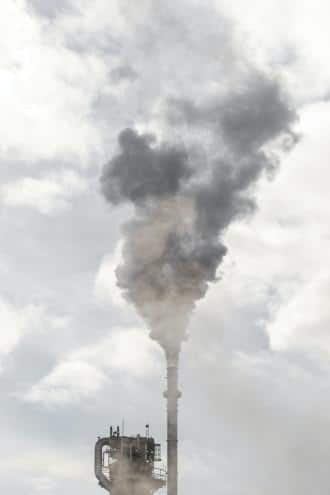[Source](https://unsplash.com/@worldsbetweenlines)
### Which Term to Use: Global Warming vs Climate Change
Some scientists, have gently pushed back against use of the term “global warming” and favor the term “climate change” which can encompass the great complexity of global climate. Some people take issue with “global warming” since warmer days are frequently considered more desirable, and things such as warm baths are well liked. But some also take issue with the term “climate change” since change also be considered a positive thing, as in social change.
Climate scientist Dr. Katherine Hayhoe prefers the term “global weirding” since it communicates nature going out of balance. The large British newspaper *The Guardian* uses terms like “global heating” and “climate emergency.”
## Climate Change or Global Warming: What Matters is Whether We Act
If we fail to act, and keep letting fossil fuel use raise the global temperature, then no matter what terms we use, we may see disastrous, runaway feedback loops from global warming. Glaciers and even the polar ice caps would melt, the Gulf Stream current would stop its flow of heat and moisture across the Atlantic Ocean, and we could face apocalyptic events on the order of a 20-meter rise in sea level, a re-glaciation of Europe (as shown in Al Gore’s documentary “An Inconvenient Truth”), and massive climate shifts that might make many current population centers uninhabitable.
More and more people today are fearing that our own modern, global civilization, may also be headed for a similar fate due to our own widespread unsustainable activities. But we still have the ability to change course for a sustainable future, and avert climate change.
[Source](https://unsplash.com/@markusspiske)
### Global Warming, Scientists, and the Power to Affect Change
[Gus Speth, former dean of the Yale School of Forestry and Environmental Studies, says](https://doi.org/10.1080/09692290.2019.1635513), “I used to think that top global environmental problems were biodiversity loss, ecosystem collapse and climate change. I thought that with 30 years of good science, we could address these problems, but I was wrong. The top environmental problems are selfishness, greed, and apathy, and to deal with these we need a spiritual and cultural transformation. And we scientists don’t know how to do that.”
Scientific research has powerfully revealed the widespread degradation of nature, yet scientists’ ability to motivate society to curb climate change is limited. Religious belief and understanding have the potential to move many more people worldwide to action on global warming than science has done.
The [Pew Research Center’s Forum on Religion and Public Life estimates](https://www.pewforum.org/2012/12/18/global-religious-landscape-exec/) that 84 percent of the 2010 world population are affiliated with a religion. More than 76 percent of Americans are religiously affiliated, according to a [2014 Pew study](https://www.pewforum.org/religious-landscape-study/). Nonetheless, religions have so far failed to substantially integrate scientific and ecological findings into their preaching, teaching, and living.
## Climate Change and The Role of Faith Communities
The environmental movement has failed to effect transformational change in the past 50 years partly because fear of the darkness of ecological collapse has driven the movement. The light of spirituality can spark a more hopeful approach with deeper and broader effect. Here are three reasons why.
*First, religion can persuade people to consume in moderation as they find true satisfaction in spirituality, community, and family.* Spiritual living should bring consciousness to our consumption. To rise to this ultimate challenge for human civilization, we have to raise our spiritual awareness and maturity.
*Second, religious teachings help instill foresight and long-term thinking.* The rabbis of the Talmud taught about 1,500 years ago: “Who is the wise person? The person who can see the effect of their actions.” We must put both the present and future of our children and grandchildren first, above expanding our own standard of living.
*Finally, and perhaps most importantly, religion embodies hope.* Some people – out of terror, anger, or depression – despair of our ever returning to personal and planetary balance and sustainability. Yet, as Rabbi Jonathan Sacks taught, “Hope is a human virtue, but one with religious underpinnings.”
### Religion’s Power to Help Curb Global Warming and Climate Change
The power of faith communities is a tremendous yet under-utilized and under-leveraged resource for climate action. Religion may one of the most critical forces in the world that can affect the change we need to see at the global scale. Religious institutions have:
- membership that in the aggregate include billions of people;
- tremendous land and buildings they own and use;
- massive educational systems and media channels.
- partnerships from the level of local communities to international NGOs.
Religion informs values, which inform environmentally conscious behavior. For example, clergy and houses of worship can promote a multiplier effect to reduce personal consumption of fossil fuels, lowering greenhouse gas emissions, and tackling global warming and climate.
Religion is a fundamental part of and key motivator for many people’s lives. Religious institutions are a tremendous vehicle to influence mindset and values, and give people a wider and longer-term view of what they truly value. A mass multi-faith movement can serve as a distribution channel for key messages, including living sustainably and curbing global warming and climate change .
## Our Hope for a Future Free of Climate Change
At this moment in history, in contrast to our use of fossil fuels for energy, we need a major infusion of spiritual energy—promoting faith groups’ work to inspire behavioral change for to address global warming and climate change. This is a movement whose time has come. We need to leverage the determination of people of faith, the moral authority of religious leaders, and the credibility of leading scientists to mobilize communities worldwide for environmental sustainability. Inspiring and galvanizing faith communities to move the needle on sustainability is a deeply needed and worthwhile effort.
*\* Featured image [source](https://unsplash.com/@roxannedesgagnes)*
**Categories:** Blog on Faith and Ecology, Climate Change
**Tags:** Climate Change, Global Warming
---
### [For Businesses, A Water Sustainable And Resilient Premises Should Be A No-Brainer](https://interfaithsustain.com/water-resilience/)
**Published:** March 9, 2023
**Author:** ICSD
**Excerpt:** Beneath the veneer of pollution and extreme weather lies one of the biggest challenges posed by encroaching climate change - water resilience.
**Content:**
Table of Contents
Table of Contents
- [The Cost of Water](#aioseo-the-cost-of-water-4)
- [Using Smart Water Measures](#aioseo-using-smart-water-measures-10)
- [Moving to Water-Positive Landscapes](#aioseo-moving-to-water-positive-landscapes-15)
*By Sabrina Cooper* – Beneath the veneer of pollution and extreme weather lies one of the biggest challenges posed by encroaching climate change – water resilience.
America and the world as a whole wastes a huge amount of precious freshwater, which forms only 0.5% of the world’s supply – according to the Berkeley Economic Review, 6 billion gallons of water are lost every day.
[With drought ri](https://interfaithsustain.com/how-deforestation-is-affecting-global-water-cycles/)[sing in the USA](https://interfaithsustain.com/how-deforestation-is-affecting-global-water-cycles/ "How Deforestation Is Affecting Global Water Cycles") and now at crisis levels in East Africa and the Arabian Peninsula, it is staggering how much could be done to build resilience. While governmental and policy change is required to make long-term change, businesses have a part to play – and they stand to improve their revenue by taking part.
## The Cost of Water
Studies have been conducted on the potential financial benefits of stopping water leaks, and the crucial factor involved is that it’s a lot more efficient than putting in expensive water-retaining technologies.
One study published by IOP Science found that simple water retention policies [could save 34.7% of water losses](https://iopscience.iop.org/article/10.1088/1748-9326/ac54cb "IOP Science research study") every year, costing only $277 per acre-feet in urban settings.
Simple changes, such as assessing water flow systems in the business and using modern materials to move water, can achieve this.
There’s also the reputational aspect to consider. According to the American Marketing Association, nearly 90% of millennials now desire sustainability as part of every purchase – they’re willing to pay more for products where the parent company is “green and clean.”
Moreover, they are willing to restrict their custom for businesses with a bad reputation. There is a clear business case for [water sustainability and resilience](https://uslawns.com/blog/the-business-case-for-a-water-retaining-landscape/ "The Business Case for a Water Retaining Landscape"), and there’s more that businesses can do beyond just fixing leaks.
- [](https://interfaithsustain.com/water-trading/)
## [Water Trading Is Used to Combat Global Water Scarcity Due To Climate Change](https://interfaithsustain.com/water-trading/)
- [](https://interfaithsustain.com/urban-runoff/)
## [Urban Runoff Pollutes Our Rivers](https://interfaithsustain.com/urban-runoff/)
- [](https://interfaithsustain.com/ocean-cleanup/)
## [Innovative Technology For An Ocean Cleanup](https://interfaithsustain.com/ocean-cleanup/)
## Using Smart Water Measures
As well as looking at non-deliberate water loss, businesses should consider smart irrigation methods to ensure that their deliberate water usage is as finely controlled as possible.
Again, there’s a huge business incentive to do so; according to Landscape America, up to 50% of water bills can be saved by simply using irrigation systems that engage smartly with the landscape rather than simply dousing it in water without any fine control.
This can be managed in one of two ways. Firstly, businesses can use rotational irrigation to ensure that only plants that demand water will receive it by looking at growing seasons.
Secondly, using smart water sensors embedded within the soil can give a fine picture of exactly what needs watering and what doesn’t – giving supreme control over the water amounts used.
## Moving to Water-Positive Landscapes
Too many American businesses have landscaping solutions where water is left to runoff or drain immediately into storm gutters and overspills.
Not only does this mean that the business is displacing natural rainfall immediately, but it can also lead to huge risks, as the devastating impact of Hurricane Katrina showed, where the largely impermeable ground failed to disperse hurricane waters breaking the city levee.
Businesses should instead look to use water-permeable landscaping where the ground takes up the water and use plants that benefit from that- such as cacti, succulents, and other arid environment flora.
Businesses can also spread the good word locally. Consider creating a cooperative with other businesses to minimize water usage – these methods are best employed when spread across a wider area. That includes plant usage, creating a diverse and resilient ecosystem over a wider area.
Businesses need to get involved with tackling water loss, just as every other part of public society does. To do so requires a bit of radical thinking. However, with a clear business case behind the water-resilient business operation, the money is there to justify change.
**Categories:** Blog on Faith and Ecology, Sustainability
**Tags:** Sustainability
---
### [The Divine Versatility of Bamboo: Embracing Sustainability and Spirituality](https://interfaithsustain.com/versatility-of-bamboo/)
**Published:** July 28, 2023
**Author:** ICSD
**Excerpt:** In the world of sustainability, bamboo is leading the way as an alternative for common items, ranging from textiles to toothbrushes to furniture and flooring.
**Content:**
Table of Contents
Table of Contents
- [What is Bamboo?](#aioseo-what-is-bamboo-2)
- [Why is Bamboo Sustainable?](#aioseo-why-is-bamboo-sustainable-7)
- [1. Carbon Sequestration](#aioseo-1-carbon-sequestration-11)
- [2. Renewable Resource](#aioseo-2-renewable-resource-13)
- [3. Low Environmental Impact](#aioseo-3-low-environmental-impact-15)
- [Bamboo Paper Production](#aioseo-bamboo-paper-production-17)
- [What Are the Possible Downsides of Bamboo?](#aioseo-what-are-the-possible-downsides-of-bamboo-31)
- [Religion and the Versatility of Bamboo](#aioseo-religion-and-the-versatility-of-bamboo-34)
*By Alina Sterenfeld* – The versatility of bamboo has been a boon to world of sustainability and is leading the way as an alternative for common items, ranging from textiles to toothbrushes to furniture and flooring.
## **What is Bamboo?**
Bamboo is a type of [woody grass](https://www.britannica.com/plant/bamboo "woody grass") that belongs to the family Poaceae. It is an umbrella term that encompasses a wide range of species (over 1,400) within the subfamily Bambusoideae.
Bamboo is characterized by its hollow stalks, or culms, essentially the “trunks” of the bamboo plant and separated by nodes. It’s most often found in tropical and subtropical regions, predominantly in East and Southeast Asia where it has a deep-rooted cultural and economic significance, but can also be found in South America, Australia, and other regions.
*[Source](https://pixabay.com/photos/wende-court-palm-bamboo-ma-zhu-1542271/ "Source")*
## **Why is Bamboo Sustainable?**
Bamboo is eco-friendly for a number of reasons:
### 1. Carbon Sequestration
Bamboo is one of the [fastest-growing](https://www.guinnessworldrecords.com/world-records/fastest-growing-plant/ "fastest-growing") plants in the world, with some species growing up to 91 cm (36 inches) in only 24 hours. This rapid growth translates into an efficient [carbon sequ](https://insideclimatenews.org/news/11012021/the-radical-case-for-growing-huge-swaths-bamboo-in-north-america/)[e](https://insideclimatenews.org/news/11012021/the-radical-case-for-growing-huge-swaths-bamboo-in-north-america/ "carbon sequestration")[stration](https://insideclimatenews.org/news/11012021/the-radical-case-for-growing-huge-swaths-bamboo-in-north-america/), or absorption of carbon dioxide (CO2) from the atmosphere during photosynthesis. Compared to other plants, bamboo can absorb more carbon and produce more oxygen, thereby mitigating climate change and reducing greenhouse gas emissions.
### 2. Renewable Resource
Bamboo is a [renewable resource](https://interfaithsustain.com/renewable-and-non-renewable-resources/ "renewable resource") because unlike trees which need to be replanted after harvested, bamboo grows from the same root system, so after a bamboo stalk is harvested, it simply regrows from that same root. This eliminates the need for extensive land clearing and reduces the pressure on forests. Bamboo is able to regenerate in this way due to a unique [rhizome system](https://rhizome.design/pages/bamboo-and-rhizome "rhizome system"), or underground network of interconnected stems.
### 3. Low Environmental Impact
Bamboo [cultivation](https://bamboovandiemen.com.au/why-bamboo-is-a-renewable-resource/ "cultivation") requires minimal water, pesticides, and fertilizers compared to other plants. Additionally, bamboo’s extensive root system helps prevent soil erosion because bamboo roots spread horizontally and vertically into the soil, binding the soil particles together. This creates a dense root mat that helps hold the soil in place which prevents erosion caused by wind or water runoff.
- [](https://interfaithsustain.com/water-resilience/)
## [For Businesses, A Water Sustainable And Resilient Premises Should Be A No-Brainer](https://interfaithsustain.com/water-resilience/)
- [](https://interfaithsustain.com/sustainable-bedding/)
## [Sleeping Soundly With A Clear Conscience In Sustainable Bedding](https://interfaithsustain.com/sustainable-bedding/)
- [](https://interfaithsustain.com/sustainability-jobs/)
## [Today’s Rapid Expansion In Sustainability Jobs](https://interfaithsustain.com/sustainability-jobs/)
## **Bamboo Paper Production**
The [produc](https://worldpapermill.com/how-to-make-paper-pulp-from-bamboo/)[t](https://worldpapermill.com/how-to-make-paper-pulp-from-bamboo/ "production")[ion](https://worldpapermill.com/how-to-make-paper-pulp-from-bamboo/) and manufacturing of bamboo paper is a multi-step process:
1. Harvesting and Preparation: First, mature bamboo stalks (3-5 years old) are harvested. The stalks are cut at the base and transported to the processing facility, where they are cleaned and stripped of leaves and branches.
2. Extraction of Bamboo Fibers: Next, the harvested bamboo stalks undergo a process called pulping, where the bamboo fibers are separated from the rest of the plant material. Various methods can be used for pulping, including mechanical pulping, chemical pulping, or a combination of both. Mechanical pulping involves mechanically grinding or crushing the bamboo stalks to separate the fibers, while chemical pulping involves the use of chemicals to break down the bamboo into fibers.
3. Fiber Treatment: After the pulping process, the extracted bamboo fibers are treated to remove various impurities, such as lignin and hemicellulose, which can affect the quality and appearance of the paper. This treatment process typically involves bleaching and washing the fibers.
4. Paper Formation: The treated bamboo fibers are then mixed with water to create a pulp slurry. This mixture is then formed into a thin layer across a conveyer belt and any excess water is drained away.
5. Drying and Finishing: The formed bamboo paper then begins the drying process. Once the paper is dry, it is passed through various finishing processes, such as calendering (smoothing and compacting the surface), coating (for added strength or enhanced printability), and cutting into desired sizes and shapes.
6. Packaging and Distribution: The final step involves packaging the bamboo paper into suitable formats for distribution, such as reams or rolls. The paper is then ready to be shipped and used for various applications, such as printing, writing, or packaging.
## **What Are the Possible Downsides of Bamboo?**
Despite its eco-friendly nature, it’s important to note that bamboo might not always be the most sustainable option. For example, if the final destination of the bamboo is thousands of miles from its original source, then the carbon footprint of the transportation can be significant.
Additionally, the increasing demand for bamboo products can lead to unsustainable farming practices which include [over-farming](https://www.unsustainablemagazine.com/sustainability-of-bamboo/#The_Downsides_of_Bamboo "over-farming"). Over-farming consists of clearing natural habitats to plant an excessive amount of bamboo, and thus disrupts the local biodiversity in the region. Also, unsustainable farming practices can include the harvesting of immature culms, so that they are removed before reaching maturity, thereby hindering the ability of the bamboo to regenerate and sustain its population.
## **Religion and the Versatility of Bamboo**
In his paper [“](https://scholarspace.manoa.hawaii.edu/server/api/core/bitstreams/8f2c50dd-7ff7-45a4-86f4-666bf82bbe5c/content)[Bamboo Paper Production and Religious Use by the Lanten Yao in Northern Lao PDR,](https://scholarspace.manoa.hawaii.edu/server/api/core/bitstreams/8f2c50dd-7ff7-45a4-86f4-666bf82bbe5c/content "Bamboo Paper Production and Religious Use by the Lanten Yao in Northern Lao PDR")[”](https://scholarspace.manoa.hawaii.edu/server/api/core/bitstreams/8f2c50dd-7ff7-45a4-86f4-666bf82bbe5c/content) Claudio O. Delang expounds on the religious significance of bamboo paper for the Lanten Yao. For religious practices and ceremonies, only bamboo paper is allowed to be used. It is primarily used for ritual books, decoration of altars, and to be burned as a means of inviting the spirits.
Bamboo paper acts as the cultural fabric – both metaphorically and physically – for the Lanten Yao, an ethnic subgroup of the Yao who have their own distinct cultural practices and traditions, and primarily reside in Laos and northern Thailand.
Delang writes:
> Religious events are the only ceremonies where the whole village – the haves and the have nots – participate. As such they are important in cementing the social fabric in Lanten villages. The Lanten might move from one village to another, according to the particular circumstances of their life-cycle, but they will always stay in a Lanten environment. Religion is the final barrier of their ethnic frontier, and as such, it might be the most treasured part of their cultural heritage. Bamboo paper, as the only paper that can be used in such ceremonies, and – when it is burned – as the means to communicate with the spirits of the phenomenal world, has an essential role in such ceremonies.
*Featured image [source](https://unsplash.com/photos/LVdiXyu2eTc "Featured image source")*
**Categories:** Blog on Faith and Ecology, Sustainability
---
### [Summoning the Will to Address the Climate Crisis](https://interfaithsustain.com/address-climate-crisis/)
**Published:** September 14, 2023
**Author:** ICSD
**Excerpt:** I just returned from a glorious family holiday in northern Italy. Again and again, whether swimming in the sparkling waters of Lakes Maggiore, Varese and Orta, or ascending the forests of the Stelvio National Park in the Martello valley, I sensed the awesome majesty of the natural world.
**Content:**
*By David Miron-Wapner, Board Chair, The Interfaith Center for Sustainable Development*
I just returned from a glorious family holiday in northern Italy. Again and again, whether swimming in the sparkling waters of Lakes Maggiore, Varese and Orta, or ascending the forests of the Stelvio National Park in the Martello valley, I sensed the awesome majesty of the natural world. While we were travelling, the Jewish month of Elul began. For Jews, Elul is a time of repentance in preparation for the High Holidays of Rosh Hashanah and Yom Kippur, and is a particularly propitious time for repentance.
One afternoon, I sat on a bed of alpine moss in a forest clearing and meditated amidst a plethora of mushroom bursting from the underground purposeful intelligence linking the trees, roots, and mycelium. Tears of joy and gratitude for being alive mixed with sadness and pain at the retreating glaciers on the peaks around me, which stimulated my reflections on our place in the world.
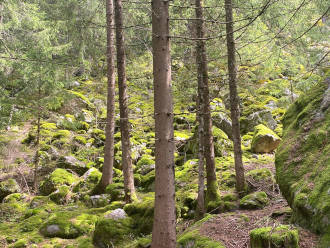[Source](https://interfaithsustain.com/)
Creation is awesome and mysterious, perhaps beyond human understanding. Not a static event, but an unfolding process, creation is the story of life’s miraculous emergence on Earth. The creation story in Genesis seems to place humanity at the pinnacle of Creation, with its highest expression, Adam and Eve, living in their own separate Garden. Adam, literally from the Hebrew word ‘Adama’, meaning ‘earth’ or ‘soil’, is just an earthling, who is destined to return to dust. Humans are a part of, not apart from, creation and the natural world. Pointedly, Genesis chapter 2 verse 15 calls upon us to ‘serve and conserve’ and be stewards of Creation.
Every day, I strive to do my utmost to meet our common challenge. None of us can do it alone, but each positive act we each perform leads to our collective success. I retain faith in the face of uncertainty and fear, that human society can summon the will to survive climate change still as a modern, progressive, evolving, enlightened civilization. I pray for humanity’s ability to meet the complex challenges we face collectively and individually, especially in the very moment we willfully diminish the vital life-sustaining systems humans and all biodiversity rely upon.
Each of us bears responsibility for our predicament. We all participate in the ongoing habits and behaviors supporting the extractivist, wasteful, polluting industrial energy economy. So too, we have the capacity to engage in actualizing the prophetic vison of *tikkun olam,* a Jewish concept literally meaning “repair of a broken world”. Will we, all of humanity hear the ***word,*** out there blowin’ in the winds of the forests like I engaged with in the Alps? Can we summon the will, the desire to repent? All of us sense that something very fundamental is wrong, even if as Bob Dylan sang “we don’t know what it is…”. We have the power within us to make it right, and though perhaps not just like it was before, still a place to develop and thrive.
[Source](https://interfaithsustain.com/)
From its earliest days, humanity has tried to make sense of the heavens and attribute meaning and order to nature. The awesome cosmos inspired us. As our knowledge expanded, many of the mysteries of life began to be illuminated. Faith in a common foundational creation myth offered us comfort in the face of cruel unfeeling nature. In seemingly random events we sought spiritual explanations. Now, in seemingly random “natural” extreme weather events, a summer tropical storm in southern California or the wildfires of Maui or Greece, we find a clear scientific basis for knowing that the hand of people, not God, or any other supernatural force, is the primary cause of the myriad ecological crises and the intensification of our weather. Science tells us that no less than 50%, but perhaps up to 80% of extreme weather events are linked to human-caused climate change. Everything is connected. Earth’s systems are all complex and integrated, each one feeding back on the other, in ways we only slowly and humbly are beginning to understand and appreciate.
In parallel with the acceleration of the climate crisis, we need to accelerate the pace of our shift in consciousness towards balance and harmony with the natural world. As a Jew living in Jerusalem, at this time of collective stock taking in advance of the new year, I seek forgiveness for my contribution to an unfolding tragedy wrought by misplaced trust in technology and abusive manipulation of the environment. Every day I ask: what more might I be blessed and able to do? What other small positive act can I commit to? Perhaps for the moment, just a deep breath in appreciation of the changing seasons. Each of us rising up daily similarly challenging ourselves will bring us all closer to collective realization of our goal.
*\* Featured image [source](https://unsplash.com/photos/0n65WP86uy4)*
**Categories:** Blog on Faith and Ecology, Climate Change
**Tags:** Climate Crisis
---
### [New Video Series Featuring Cardinal Jaime Spengler Highlights Faith-Based Action on Ecology and Creation Care](https://interfaithsustain.com/cardinal-jaime-spengler-highlights-faith-based-action-ecology-creation-care/)
**Published:** April 21, 2026
**Author:** ICSD
**Excerpt:** A groundbreaking new series of short videos featuring Cardinal Jaime Spengler, President of CELAM (Latin American and Caribbean Episcopal Council), was launched today to inspire faith-based action on environmental stewardship.
**Content:**
*Jerusalem / Brasília — April 21, 2026* — A groundbreaking new series of short videos featuring Cardinal Jaime Spengler, President of CELAM (Latin American and Caribbean Episcopal Council), was launched today to inspire faith-based action on environmental stewardship.
The series is a collaboration between CELAM and the Interfaith Center for Sustainable Development (ICSD), an organization dedicated to revealing the connection between religion and ecology and mobilizing people to act. The videos engage Catholic, Evangelical, and other religious communities in the United States and Latin America, offering a compelling vision of ecological responsibility rooted in faith. The project is releasing 100 short videos in multiple languages distributed across major social media platforms, placing it at the forefront of digital storytelling on faith, climate and care for our common home.
In a recent video released as part of the series, Cardinal Spengler, considered the senior Catholic religious figure in Latin America, said, “Everything is interconnected. Nature is not a resource to be exploited, but a gift to be cared for.”
Rabbi Yonatan Neril, founder and executive director of ICSD said, “By combining the moral authority of religious leaders with high-quality digital media, this initiative seeks to catalyze a new wave of faith-driven ecological engagement at a critical moment for the planet.”
The series is produced by 1000 Media, the production arm of Nas Daily, a leading global digital storytelling company. This builds on a highly successful collaboration last year between ICSD and The Episcopal Church, which produced 50 short videos on religion and ecology that garnered over nine million views across six social media platforms.
The video campaign is part of a broader initiative that includes ten multi-faith regional summits in different cities in the United States and Brazil. These summits will bring together hundreds of faith leaders, equipping and inspiring them to take public action on environmental issues within their communities. This initiative seeks to unleash the power of clergy and faith communities as agents of meaningful change. Here is a link to view the [series of videos](https://interfaithsustain.com/all-faith-ecology-videos/?type=shorts&playlist_id) or watch [Cardinal Jaime Spengler’s message](https://interfaithsustain.com/videos/cardinal-jaime-spengler-has-a-message-to-you/) below.
**Media Contacts:** Dr. Óscar Elizalde Prada, CELAM Communications Director, (57) 313 3089152, comunicacion.celam@celam.org.
Rabbi Yonatan Neril, founder and executive director, The Interfaith Center for Sustainable Development, yneril@interfaithsustain.com.
*\* Featured image [source](https://unsplash.com/photos/statues-on-top-of-building-Eq0LwAfwHDI)*
**Categories:** Press Releases
**Tags:** Press Releases
---
### [Today’s Crucial Development of Sustainable Transport](https://interfaithsustain.com/sustainable-transport/)
**Published:** July 7, 2021
**Author:** ICSD
**Excerpt:** Elisheva Malomet - Travel is a huge part of our lives, whether it is our daily commute to work or school, a trip to the store, or a vacation that we have been planning for a year. People need to get to places and easy access to mobility is becoming increasingly important.
**Content:**
Table of Contents
Table of Contents
- [Sustainable Transport Development](#aioseo-sustainable-transport-development-2)
- [Relying on Un-Sustainable Transport](#aioseo-relying-on-un-sustainable-transport-6)
- [The Traffic Light System of Sustainable Transportation](#aioseo-the-traffic-light-system-of-sustainable-transportation-9)
- [Red: Un-Sustainable Transport](#aioseo-red-un-sustainable-transport-11)
- [Yellow: Sustainable Transport Systems](#aioseo-yellow-sustainable-transport-systems-21)
- [Green: The Best Sustainable Transport](#aioseo-green-the-best-sustainable-transport-33)
- [Biblical Sustainable Transportation](#aioseo-biblical-sustainable-transportation-36)
- [Sustainable Transport: Holy and Humble](#aioseo-sustainable-transport-holy-and-humble-42)
- [Cycling as Sustainable Transport](#aioseo-cycling-as-sustainable-transport-49)
*By Elisheva Malomet* – Travel is a huge part of our lives, whether it is our daily commute to work or school, a trip to the store, or a vacation that we have been planning for a year. However, our current methods of transportation are in no way sustainable as we are emitting tons of fossil fuels which directly contribute to **global warming**. The good news, however, is that there are many sustainable transport options for everyone!
## Sustainable Transport Development
As we discussed in our blog on the [three pillars of sustainability](https://interfaithsustain.com/how-to-optimize-the-three-pillars-of-sustainability/), “**sustainable development** is the assurance that the integrity of the present needs can be met without compromising resources in the future.” Transportation is an incredibly important cog in the wheel of sustainable development and must take into consideration the potential damage it is creating in the present and for the future.
The social, environmental, and economic pillars that define sustainable development can be applied to transport. The balance or imbalance of these pillars within the innerworkings of our current transport systems will help determine how sustainable they are.
**Urban** transport systems are primarily made up of privately registered vehicles and public transit systems that include buses and trains, passenger and **freight**, aircraft, and water vessels. These vehicles and their fuels are all factors in sustainable transportation as they are our known way of movement and mobility.
### Relying on Un-Sustainable Transport
The most common form of transport in urban areas, based on the US Bureau of Transportation Statistics 2019 data, are passenger cars, light trucks, vans, and some sport utility vehicles. The widespread nature of these types of vehicles demonstrates that the US transport system relies heavily, if not primarily, on private transit instead of public transport. This also results in **traffic congestion** as a result of the ever-increasing number of cars on the road.
These vehicles, while essential to the daily lives of many, cause tremendous damage to the environment. It is imperative for us to work towards green ways to travel from city to city.
- [](https://interfaithsustain.com/sustainable-growth/)
## [Corporate Strategies for Sustainable Growth](https://interfaithsustain.com/sustainable-growth/)
- [](https://interfaithsustain.com/daoism-and-the-construction-of-sustainable-societies/)
## [Daoism and the Construction of Sustainable Societies](https://interfaithsustain.com/daoism-and-the-construction-of-sustainable-societies/)
- [](https://interfaithsustain.com/electrical-buses/)
## [The Fast Global Growth In The Use Of Electrical Buses](https://interfaithsustain.com/electrical-buses/)
## The Traffic Light System of Sustainable Transportation
While there are unfortunate consequences of gas-guzzling automobiles we cannot eradicate them from our lives entirely. As such, we must utilize the public transport systems in place such as car sharing, **carpooling**, walking or biking when available, as well as initiate solutions to prevent the emissions caused by the current system. Sustainable transportation not only revolves around our individual mobility, but also the mobility of our goods and services.
## Red: Un-Sustainable Transport
Let’s talk about the problem – our current method of transportation is not sustainable. As discussed, the drastic number of cars in the **world** is overwhelming and ever-increasing. They increase greenhouse gas emissions that cause **climate change** as well as lead to a depletion of nonrenewable resources.
The [US Environmental Protection Agency](https://www.epa.gov/ghgemissions/sources-greenhouse-gas-emissions) classified transportation as one of the primary greenhouse gas emitters with 29% of emissions coming from transportation in 2019. This makes transportation the biggest emitting category in comparison to industry, commercial and residential electricity production, and even agriculture.
**Emissions** are so high in transportation because of the fuel. The **fossil fuel** that powers most transportation comes from **petroleum** which is a [nonrenewable resource](https://interfaithsustain.com/renewable-and-non-renewable-resources/). Petroleum emits greenhouse gas emissions through the [combustion processes](https://epa.gov/ghgemissions/sources-greenhouse-gas-emissions#transportation).
With more cars on the road, there is more traffic **congestion** which in turn leads to **cars** idling for longer and thus emitting more carbon dioxide, and then needing even more fuel to continue the journey. Urban transport with crowded and tiny streets contributes to air pollution.
Emissions contribute to both **air pollution** globally and poor urban air quality.
[Source](https://pixabay.com/users/ben_kerckx-69781/)
## Yellow: Sustainable Transport Systems
Let’s understand some small and easy changes we can make with our relationship to modes of transport which can include carpooling, public transit, and ride-sharing.
While maintaining lifestyles with private cars we can still ensure a lower environmental impact by initiating carpooling. Carpooling is important for limiting the number of cars going from the same area to the same location, and of course for energy efficiency. This small action can also unite the **community** by bringing people together in informal settings and can inspire more ecologically minded thinking.
**Car sharing** is a very good option for making ecological and economic choices. Car sharing is when a person will share a car with another driver. The car can be used by multiple drivers contributing to fewer cars in cities. The strategy causes us to realize that a private car is not essential to our quality of life.
**Public transport** has significant benefits when considering sustainability. Public infrastructure strategies support sustainability because their carbon footprint is lower than private vehicles. Utilizing the existing public transport systems is also an excellent option to reduce the number of vehicles on the road.
[Source](https://pixabay.com/users/pixel2013-2364555/)
## Green: The Best Sustainable Transport
Biking and walking are the ultimate sustainable mobility options for reducing our carbon footprint. While these options are limited by our mobility within our neighborhoods, they are essential options. Biking and walking are good for our health and they are free of costs.
Biking is not only an eco-friendly form of transportation but it also increases physical activity in those who are using it to commute. The prime benefits of this type of transport system include reduced vehicles, cleaner air quality, reduced impact on climate change, increased physical activity from exercise, and a more durable infrastructure that can withstand natural disasters better than cars.
## Biblical Sustainable Transportation
[Source](https://pixabay.com/users/couleur-1195798/)
A passage of text from the book “[Eco Bible](https://interfaithsustain.com/ecobible/)“, Volume 2 reads in Numbers 7:2-3 – “The chieftains of Israel, the heads of ancestral houses, namely, the chieftains of the tribes, those who were in charge of enrollment, drew near and brought their offering before the Lord: six full carts and twelve oxen, a cart for every two chieftains and an ox for each one. When they had brought them before the Tabernacle”.
The Ramban understands the Hebrew word “tzav’ to mean full, that the wagons were full of items. Rabbi Yaakov Kagan said this meant that they were packed in a very intentional way, using up all the space and doing so in order to only bring six wagons with twelve oxen, despite the fact that they had the physical means to bring many more.d the physical means to bring many more.
In the Exodus, 600 Egyptian chariots, filled with soldiers and weapons, served as an instrument of violence and control. They pursued the Israelites at the splitting of the sea and were destroyed. In contrast, the Israelite tribal leaders brought six wagons to transport their material possessions as offerings to the Divine. On four of these wagons, the sons of Merari transported 59 wooden pillars and other heavy wooden parts of the Tabernacle. Each wagon had two horsepower (or two oxen, to be more precise). Since God owns everything, the material world should be used in service of the Divine Ideal, and humbly.
### Sustainable Transport: Holy and Humble
During their 40 years in the desert, the Israelites were nomadic. Numbers chapter 33 in fact lists each of the 42 locations to which they travelled. Many verses in the Torah speak to how the Israelites were to break camp, travel, and set up camp.
In the Great Plains of the U.S., some Native Americans lived a nomadic lifestyle. They lived in and transported tipis, which were tents made of animal skins supported by wooden poles. Prior to the European introduction of horses, the tipis were transported by people and dogs.
In the past century, nations worldwide have embraced buying bigger and more cars, houses, garages and appliances such as refrigerators, computers and televisions. In recent decades a new self-storage industry has emerged, which now has 1.7 billion square feet and $39 billion in revenues in the U.S. Among passenger vehicles in America, larger crossover utility vehicles replaced cars as the most popular vehicles sold. High-end SUVs have between 500 and 707 horsepower.
The Bible in this verse here reveals a different orientation toward physical possessions. Since God owns everything, the material world should be used in service of the Divine Ideal, and humbly. The example of the tribal chiefs show us how less can be more.
Later another passage of text from the book “[Eco Bible](https://interfaithsustain.com/ecobible/)“, Volume 2 reads in Numbers 7:7-9 – “Two carts and four oxen he gave to the Gershonites, as required for their service and four carts and eight oxen he gave to the Merarites, as required for their service—under the direction of Ithamar son of Aaron the priest. But to the Kohathites he did not give any; since theirs was the service of the \[most\] sacred objects, their porterage was by shoulder”.
Rashi explains that, because these were the holiest items (the ark, table, etc.), they had to be carried on people’s shoulders. An American study showed that walking or biking instead of driving on short trips of less than 5 miles (8 km) would prevent 1,295 deaths a year in an urban area of 31.3 million people by improving air quality and increasing exercise. The study estimated the related financial benefits at over $8 billion a year.
#### Cycling as Sustainable Transport
It’s clear why local governments across the Western world are investing heavily in bicycle lanes. Copenhagen is described as a veritable utopia for bikers — with a giant network of bike paths and lanes, and an extensive “Cycle Super Highway” that joins over 25 municipalities and the capital. In Denmark, nine out of 10 people own a bike and 25 percent of people opt to bike when the journey is less than 5 kilometers (just over 3 miles).
Since holiness involves thinking of others when we act, holy transportation is active transport with zero pollutants. This is beneficial to ourselves and at the same time not harmful to others.
*\* Featured image [source](https://pixabay.com/users/pexels-2286921/)*
**Categories:** Blog on Faith and Ecology
**Tags:** Resources for Green Living, Sustainable Transport
---
### [Maps, the Metaverse, and the Maker](https://interfaithsustain.com/maps-the-metaverse-and-the-maker/)
**Published:** July 24, 2023
**Author:** ICSD
**Excerpt:** Maps are the stories of the world. Maps show us how big different countries are, and how close one region is to another. Maps give us insights into places we've never seen before and enable a relationship with places distant from ourselves. But our maps of the world are changing, and so is the story of our home.
**Content:**
Table of Contents
Table of Contents
- [Changing World Maps and the Impacts of Climate Change](#aioseo-changing-world-maps-and-the-impacts-of-climate-change-2)
- [Threatened Nations: South Pacific Island, Tuvalu](#aioseo-threatened-nations-south-pacific-island-tuvalu-5)
- [The Eco Bible's Message on Human-Induced Climate Change](#aioseo-the-eco-bibles-message-on-human-induced-climate-change-12)
- [Tuvalu's Vision for Preservation: Digitizing into the Metaverse](#aioseo-tuvalus-vision-for-preservation-digitizing-into-the-metaverse-17)
*By Alina Sterenfeld*
## Changing World Maps and the Impacts of Climate Change
Maps are the stories of the world. Maps show us how big different countries are, and how close one region is to another. Maps give us insights into places we’ve never seen before and enable a relationship with places distant from ourselves. But our maps of the world are changing, and so is the story of our home.
As explorers ventured to new lands, they would bring back new information about those lands, and update the maps of the world as they knew it. Now, we, like the explorers, are updating our world maps…not because we’re discovering new lands, but because these lands which have already been discovered are now disappearing.
## Threatened Nations: South Pacific Island, Tuvalu
In 2018, the government of Tuvalu, a small island nation in the South Pacific, announced that they will begin to redraw the map of their island to reflect the changing coastlines. An archipelago comprised of nine islands, Tuvalu’s highest point is a mere [4.6 meters above sea level](https://earth.org/data_visualization/early-victims-of-climate-change-the-pacific-islands/). Threatened by rising sea levels as well as coastal erosion and storm surges, Tuvalu is expected to be completely submerged by the end of the century. Tuvalu is not alone; other Pacific island nations such as Kiribati, the Marshall Islands, and the Solomon Islands are in similar situations.
*[Source](https://pixabay.com/photos/coast-sea-surf-rock-beach-waves-410762/ "Source")*
In Genesis 1:9 it states: “God said, ‘Let the water below the sky be gathered into one area, that the dry land may appear.’ And it was so” In other words, God intended for there to be a separation between land and water. Yet, human-induced climate change is deviating from this ideal.
### The Eco Bible’s Message on Human-Induced Climate Change
Expanded upon in [*Ec*](https://interfaithsustain.com/ecobible/)*[o](https://interfaithsustain.com/ecobible/ "Eco Bible")*[ *Bible: An Ecological Commentary on the Hebrew Bible*](https://interfaithsustain.com/ecobible/), Rabbi Yonatan Neril and Rabbi Leo Dee write about the first chapter in Genesis: “God said that dry land should appear from the water, yet by humanity’s actions, more and more water is covering land.” The climate crisis is creating a reality where areas like Tuvalu are victims of submersion.
While the nation of Tuvalu is adapting to climate change by building seawalls and developing early warning systems for storm surges, these efforts are temporary at best. There is only one true long-term solution to enable the people of Tuvalu to continue to live on their islands: to curb climate change.
With the fate of Tuvalu’s land at stake, the question becomes, without a land, what happens to the people of Tuvalu? What happens to its statehood? Will/should Tuvalu continue to be [recognized as a state in international politics](https://www.theguardian.com/world/2021/nov/11/tuvalu-seeks-to-retain-statehood-if-it-sinks-completely-as-sea-levels-rise "recognized as a state in international politics") even without a land of their own? Without a land, what happens to the culture of Tuvalu? The native language?
- [](https://interfaithsustain.com/how-religious-communities-are-curbing-climate-change/)
## [How Religious Communities Are Curbing Climate Change](https://interfaithsustain.com/how-religious-communities-are-curbing-climate-change/)
- [](https://interfaithsustain.com/how-does-deforestation-affect-climate-change/)
## [Environmental Destruction and How Does Deforestation Affect Climate Change?](https://interfaithsustain.com/how-does-deforestation-affect-climate-change/)
- [](https://interfaithsustain.com/decarbonization/)
## [The Necessity of Decarbonization to Save our Planet](https://interfaithsustain.com/decarbonization/)
The United Nations estimates that around 350,000 people live in the South Pacific and are at risk of losing their homes due to human-caused climate change.
## Tuvalu’s Vision for Preservation: Digitizing into the Metaverse
Simon Kofe, Tuvalu’s foreign minister, announced in 2021 that Tuvalu will be the first nation to [digitize into the metaverse](https://www.theguardian.com/world/video/2022/nov/17/first-digital-nation-tuvalu-turns-to-metaverse-as-rising-seas-threaten-existence-video "digitize into the metaverse"), a virtual/augmented reality for social interaction. Kofe said, “islands like this one won’t survive rapid temperature increases, rising sea levels, and droughts. So we’ll recreate them virtually. Piece by piece we’ll preserve our country, provide solace to our people and remind our children and our grandchildren what our home once was.”
Is this our future? To digitally interact with our planet? Our connection with the earth was never supposed to be through electronics. There are countless lived experiences that will be lost with this digitization, as they apply to a sensory experience with nature, and we will no longer be able to touch and feel and smell the land.
Our maps are being redrawn. We cannot allow our home to be erased.
*Featured image [source](https://unsplash.com/photos/rkFIIE9PxH0 "Featured image source")*
**Categories:** Blog on Faith and Ecology
---
### [Environmental degradation and the future of our planet Earth](https://interfaithsustain.com/environmental-degradation-and-the-future-of-our-planet-earth/)
**Published:** May 19, 2021
**Author:** ICSD
**Excerpt:** Matthew Mausner - Human civilization has always been a risky enterprise. Archaeologists have found the ruins of over 100 civilizations that have collapsed, some with hardly a trace, over the last 5,000 or more years. Most of these collapses have happened because people damaged their local environment and ecosystem until they could no longer support human life.
**Content:**
Table of Contents
Table of Contents
- [How Vulnerable is Civilization?](#aioseo-how-vulnerable-is-civilization-4)
- [What is environmental degradation?](#aioseo-what-is-environmental-degradation-6)
- [What is natural and not human-caused?](#aioseo-what-is-natural-and-not-human-caused-10)
- [Holistic awareness of Risk](#aioseo-holistic-awareness-of-risk-12)
- [Self-destructive behavior](#aioseo-self-destructive-behavior-14)
- [It's a moral view of the environment](#aioseo-its-a-moral-view-of-the-environment-16)
- [Is environmental degradation noticeable?](#aioseo-is-environmental-degradation-noticeable-21)
- [Entitlement and Environmental Degradation](#aioseo-entitlement-and-environmental-degradation-25)
- [Pollution and Environmental Degradation](#aioseo-pollution-and-environmental-degradation-28)
- [The Beginning of the Environmental Movement](#aioseo-the-beginning-of-the-environmental-movement-31)
- [Faith Wisdom and Environmental Sustainability](#aioseo-faith-wisdom-and-environmental-sustainability-36)
- [Modern Industrial Environmental Degradation](#aioseo-modern-industrial-environmental-degradation-40)
- [The Power of Faith-based Environmental Action](#aioseo-the-power-of-faith-based-environmental-action-44)
*By Matthew Mausner* – Human civilization has always been a risky enterprise. Archaeologists have found the ruins of over 100 civilizations that have collapsed, some with hardly a trace, over the last 5,000 or more years. Most of these collapses have happened because people caused environmental degradation, damaging their local environment and ecosystem to the point where they could no longer support human life.
## How Vulnerable is Civilization?
Today, for the first time, we have a truly global civilization—and for the first time, we are at risk of causing such vast environmental degradation, to Earth’s entire ecosphere, that all human life could become unsustainable.
## What is environmental degradation?
It is any negative change or disturbance to the environment. This includes impacts like air and [water pollution](https://interfaithsustain.com/effects-of-water-pollution/), wildlife extinction, deforestation, biodiversity loss, overfishing, ocean acidification, and desertification.
[Source](https://pixabay.com/users/ejaugsburg-148268/)
## What is natural and not human-caused?
When volcanoes, earthquakes, hurricanes or other natural events destroy ecosystems or civilizations, we generally don’t perceive the destruction to be in the same category as human-generated disasters.
### Holistic awareness of Risk
Faith traditions have always had a deep awareness of human and environmental vulnerability to “divine decisions” such as seasonal rains or droughts, that can save or destroy critical crops and drinking water supplies.
- [](https://interfaithsustain.com/prevention-of-air-pollution/)
## [Your Role in Contributing To The Prevention of Air Pollution](https://interfaithsustain.com/prevention-of-air-pollution/)
- [](https://interfaithsustain.com/soil-pollution/)
## [What is Soil Pollution, & How Does it Affect Human Health?](https://interfaithsustain.com/soil-pollution/)
- [](https://interfaithsustain.com/air-pollution-solutions/)
## [What are Air Pollution Solutions to Promote Cleaner Air for All?](https://interfaithsustain.com/air-pollution-solutions/)
### Self-destructive behavior
But it feels qualitatively different when we actually know such damage is a self-inflicted wound—when we actually do have enough knowledge, understanding, scientific evidence and data to recognize that our own actions and habits as a human collective are increasing our risk of local and global disasters.
### It’s a moral view of the environment
In other words, what we may analytically describe as “**environmental degradation**” is really a moral judgment on ourselves and the disasters we ourselves are causing.
Collective human actions have indeed destroyed entire regions. The ancient city-state Sumer caused part of the farmland in Mesopotamia to become salt flats inhospitable to life. The Romans deforested much of the Mediterranean basin. The early people of Rapa Nui (Easter Island) cut down trees until their forests were decimated, as Jared Diamond points out in his book *Collapse*.
We do not know whether all these civilizations had awareness that they could change, or choose different resource use patterns, that would have been less destructive and nurtured their environment.
Some premodern civilizations have made consciously sustainable choices. Japan in the 1600s wisely stopped deforestation and reforested. Europe in medieval times worked out a system to avoid exhausting the soil by rotating periods of active crop planting with fallow periods of no planting. Native Americans in pre-colonial New England managed elaborate systems to maintain forests and wild game.
## Is environmental degradation noticeable?
Most humans have a difficult time noticing environmental degradation, especially when it’s gradual. One measure of a society’s wisdom is its ability to monitor and respond to larger and longer-term trends in their environment. These matter especially where they affect subsistence, and all the more when human actions are shaping the dangerous arc of change.
Several factors make noticing and taking action more difficult when human activities cause gradual and devastating impact. In the “**tragedy of the commons**,” many different people use a “common” resource without coordinating their various uses. Each person has an incentive to use as much as possible for his or her own success or survival. The phrase comes from English history when everyone could graze their cattle on common land.
Other examples today are the overfishing of various fish and seafood species in the ocean, and excessive use of scarce resources such as water, whether from the Aral Sea or lakes in California. If each individual continues to use as much as possible, a common resource may be depleted beyond any ability to replenish or even maintain itself, and may collapse.
### Entitlement and Environmental Degradation
This dynamic of competing uses—and sense of entitlement—helps explain much of the environmental degradation happening today. Whether through mining, fishing, industrial agriculture, or a hundred other ways humans are extracting or using the resources around us, many different people—from many nations—are doing similar activities in a largely uncoordinated way.
Since the major technologies of the industrial and tech revolution have spread to almost all societies on earth, the impacts are now global. When “tragedies of the commons” degraded English sheep pastures, decimated the Newfoundland cod population, drove the passenger pigeon to extinction, or shrank the Aral Sea, these catastrophes were still local degradation. Now we are faced with global impacts, and the dangers are increasing exponentially.
### Pollution and Environmental Degradation
Foremost among unsustainable human activities is **pollution**: our factories, cars, planes, stoves, ships, and small consumer product industries are built on a process of waste, often extracting and burning fossil fuels, and emitting toxic gases and liquids. From the “tails” of coal mines to the oil spills and [plastic garbage](https://interfaithsustain.com/single-use-plastic-threats-from-awareness-to-action/) that find their way into our rivers and ocean, to the burned fuel emissions that fill our skies, any of these can cause visible devastation to the land, water and air on which we all depend. West Virginia mountains and rivers are toxic and devastated after 50 years of a coal mine.
Some of these impacts seem primarily local. We have seen how sea and coast life suffered in Alaska after the Exxon Valdez spill and in the Gulf of Mexico after the Deepwater Horizon spill. Yet ocean pollution does not stay in one place or only in one layer of ocean water. How much of this pollution washes far from its source?
## The Beginning of the Environmental Movement
From the 1960s to the early 1980s, the environmental movement was birthed and centered around bringing people’s attention to pollution. Rachel Carson’s seminal book *Silent Spring* raised the alarm about the pesticide DDT and how it devastated bird populations, which fed on contaminated fish in DDD contaminated bodies. Other horrific pollution events included the Cuyahoga river in Cleveland literally burning from chemical pollutants. **Chlorofluorocarbons** (CFCs) often used in aerosol sprays were discovered to be making a hole in the protective ozone layer of our atmosphere (a different environmental impact than [global warming](https://interfaithsustain.com/global-warming-vs-climate-change/)).
The environmental movement was able to raise awareness of human impacts, and major policy changes resulted, including the 1970 establishment of the EPA, passage of the Clean Air and Clean Water Acts in 1972, and a global ban on CFC’s by the early 1980s which successfully stopped destruction of the ozone layer.
Humans consume things in nature in order to stay alive, and that consumption has massively increased over the past centuries. Most of us now personally use at least some electric power every day, and the web of our global distribution system requires more and more use of power worldwide. Powering our world from purely renewable sources like wind and solar energy would take a massive contraction and change in the way we choose to live. Weaning ourselves from fossil and nuclear fuels is proving extremely difficult.
However, for many eons people have been aware of animal populations rising and falling, of climates affecting the crops we gather and plant, and of soil use affecting crop yields. In short, we have become aware of the long-term consequences of our actions. But making real change is not easy, even when there’s a clear understanding of the actions that would degrade the environment and deplete resources.
## Faith Wisdom and Environmental Sustainability
Wise cultures have noticed the patterns and tendencies that lead to environmental degradation, and proactively taken steps or practiced techniques to ensure continuity and sustainability of their people’s existence in their environment. Often this wisdom is embedded in faith traditions rather than encoded as scientific knowledge. And today, science is underscoring ancient faith wisdom.
The Bible, in the Book of Leviticus, famously sets aside every seventh year as a sabbatical year—to stop planting and plowing, and to let the land of Israel regenerate itself. ([Eco Bible: Volume One: An Ecological Commentary on Genesis and Exodus](https://interfaithsustain.com/ecobible/) relates to a range of similar themes.)
Christians in Europe, inspired by that concept, developed “fallow” farming practices that rotated fields, allowed some land to be “wild” and replenish itself and its nutrients, and notably prevented European agriculture from exhausting soils in the Middle Ages.
### Modern Industrial Environmental Degradation
Can we bring such concepts into modern industrial practices? Obviously, agriculture needs to be guided by such techniques, as even with the massive industrial inputs, or even because of them, [soils are at risk](https://interfaithsustain.com/soil-pollution/) of degradation and exhaustion. See, for example, The Atlantic’s analysis of the “[phosphorus problem](https://www.theatlantic.com/science/archive/2021/02/phosphorus-pollution-fertilizer/617937/)” in regards to agriculture and fertilizer, and the possibility of phosphorus supplies being exhausted in the coming decades.
By their very natures, mining and fossil fuel use are not sustainable. We do not put as much carbon back into the Earth as we take out in the forms of oil, natural gas, and oil, and such resources take hundreds of millions of years to accumulate.
But the momentum of our economic growth ‘s natural resources overuse is so intense, we can hardly imagine even slowing down, let alone stopping, this impact on the environment. Air pollution is a tragedy of the commons times a thousand. The scars of strip mines will remain for millennia. Oil spills and pollution from carbon emissions have [effects that have not yet been fully calculated](https://interfaithsustain.com/oil-pollution/). The “Anthropocene” or “Holocene” epoch—our own times in which humans are having massive impact—may have already degraded our environment beyond the point of no return. But here at the Interfaith Center for Sustainable Development, we believe that we must always have hope for the future. For example, click on this link for some [air pollution solutions ](https://interfaithsustain.com/air-pollution-solutions/ "air pollution solutions ")we can start implementing today.
## The Power of Faith-based Environmental Action
Could faith-based ideas and movements inspire and mobilize where scientific-based protest and action have not succeeded? Could ancient concepts like the sabbatical year help inject an ethos of sustainability into industrial civilization, as it once revolutionized agriculture?
Our industrial and political leaders have failed us in many ways. Technologies are introduced at a dizzying rate, and are basically considered innocent until proven guilty—which sometimes means devastating the environment before we even become aware of the dangers from any given new technique, technology, chemical or type of pollution or impact that brings great environmental degradation.
Religions mostly got their initial footholds as a response to various forms of crisis, social, political, or even environmental. Connecting spirituality and sustainability could help to renew the relevance of religion in our times, drawing on ancient understandings of an interdependent web of life and a deeper unity of creation. We can celebrate and appreciate the environment, rather than exploit and destroy it.
The fact that we have made environmental degradation part of our language and consciousness suggests that we can, indeed, address this decline. The very definition of the phrase implies an awareness that human impacts can be detrimental and that we can make a moral judgment on ourselves and choose to change. Religious belief has tremendous potential to promote increased environmental action now.
Religions have often been perceived as following rather than leading environmentalism. However, the seeds of moral environmental leadership were always there, in the Biblical injunction to be stewards of the Earth, in the insistence on sabbatical years for agricultural protection, in the holistic view of the world, that today can incorporate deep scientific understanding. Time is of the essence. If we reassert the deep power of our moral and ethical frameworks in guiding our collective actions, it’s still possible to save the commons and stop the environmental degradation our current global civilization is causing, so that future generations everywhere can not only survive, but thrive.
*\* Featured image [source](https://pixabay.com/users/foto-rabe-715168/)*
Learn more about similar topics like [Environmental racism](https://interfaithsustain.com/environmental-racism/ "Environmental racism ") and [how to dispose of lightbulbs](https://interfaithsustain.com/how-to-dispose-of-light-bulbs/) by clicking on the words in blue.
**Categories:** Blog on Faith and Ecology
**Tags:** Pollution
---
### [Environmental Racism: Race, Place, and Environmental Justice](https://interfaithsustain.com/environmental-racism/)
**Published:** June 18, 2021
**Author:** ICSD
**Excerpt:** Ethan Keller - In the USA in the 1980s a new term was developed to represent the movement of environmental justice. Environmental racism is a concept in the environmental justice movement. The term is used to describe injustice that occurs within a racialized context. In the U.S. environmental racism criticizes inequalities between urban and exurban areas after white flight.
**Content:**
Table of Contents
Table of Contents
- [Environmental Justice](#aioseo-environmental-justice-4)
- [History of Environmental Racism](#aioseo-history-of-environmental-racism-11)
- [Research on Environmental Racism and Justice](#aioseo-research-on-environmental-racism-and-justice-21)
- [Examples of Environmental Racism](#aioseo-examples-of-environmental-racism-27)
- [The Impact of Environmental Racism](#aioseo-the-impact-of-environmental-racism-32)
- [What Comes Next for Environmental Justice](#aioseo-what-comes-next-for-environmental-justice-36)
- [A Biblical Reflection on Environmental Justice](#aioseo-a-biblical-reflection-on-environmental-justice-40)
*By Ethan Keller* – In the USA in the 1980s a new term was developed to represent the movement of environmental justice. Environmental racism is a concept in the environmental justice movement. The term is used to describe injustice that occurs within a racialized context. In the U.S. environmental racism criticizes inequalities between urban and exurban areas after **white flight**. Internationally, environmental racism can refer to the effects of the global waste trade, like the negative health impact of the export of electronic waste to China from developed countries.
## Environmental Justice
The **environmental Justice** movement has broadened the scope of environment beyond conservation and preservation of natural resources. The movement promotes environmental, economic and social justice by recognizing the link between economic, environmental and health issues and demanding a safe, clean community and workplace environment.
Environmental Justice is realized when all people can realize their highest potential, without interruption by environmental racism or inequity. It is supported by decent paying and secure jobs; quality schools and recreation; decent housing and adequate health care; democratic decision-making; and finally, personal empowerment.
[Source](https://pixabay.com/users/theotherkev-9436196/)
### History of Environmental Racism
Two stalwarts of the environmental justice movement are Dr. Robert Bullard and Reverend Benjamin Chavis, and both helped create the movement because of injustices in their own communities.
In 1979, a [solid-waste site](https://www.nationalgeographic.com/environment/article/environmental-justice-origins-why-finally-getting-the-attention-it-deserves) was going to be placed in a majority-Black community in Houston, Texas. Residents were frustrated and didn’t know why their home was chosen over others. Bullard looked at the data and found that in Houston, solid-waste facilities were disproportionately placed in **communities of color**. They fought, won, and the facility was built somewhere else.
Three years later in 1982, the residents of Afton, North Carolina, a rural majority-Black town, were in a [similar situation](https://www.nrdc.org/stories/environmental-justice-movement). 6,000 truckloads of soil contaminated with PCBs, a toxic chemical used in specialized equipment, were going to be unloaded into a landfill in their small town. Furious, the residents protested the dumping of this hazardous waste with lie-ins and marches. Unfortunately, they were not successful and the soil was dumped.
However, with what happened in Warren County, N.C. capturing the attention of the nation, the event was the spark that inspired people to get involved with the environmental justice movement. As a protestor in Afton, Rev. Chavis, who was also active in the civil rights movement of the 1960s, knew this was a nationwide problem.
In 1987, Chavis lead an organization called the Commission for Racial Justice (CRJ) that published a study titled “Toxic Wastes and Race in the United States”. In it, researchers found that not only was race the single most important factor in determining where hazardous waste sites would be placed, but that this was the result of policy from all levels of government. Bullard came out with a similar study in 1990 titled “Dumping in Dixie: Race, Class, and Environmental Quality”.
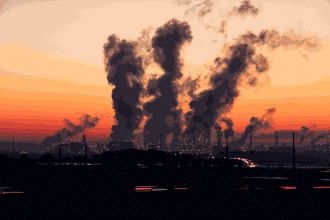[Source](https://pixabay.com/users/sd-pictures-3553481/)
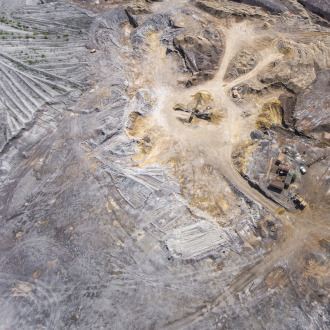[Source](https://pixabay.com/users/curioso_photography-4192946/)
- [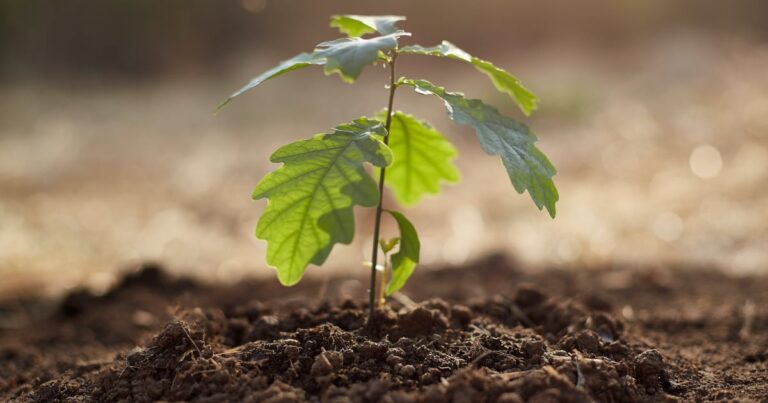](https://interfaithsustain.com/environmental-justice-issues/)
## [Environmental Justice Issues Need Interfaith Cooperation](https://interfaithsustain.com/environmental-justice-issues/)
- [](https://interfaithsustain.com/environmental-progress-sustainable-energy/)
## [Environmental Progress & Sustainable Energy](https://interfaithsustain.com/environmental-progress-sustainable-energy/)
- [](https://interfaithsustain.com/environmental-ethics/)
## [The Complexities and Balancing Act of Environmental Ethics](https://interfaithsustain.com/environmental-ethics/)
## Research on Environmental Racism and Justice
Recognizing both the importance of acknowledging **environmental racism** and the work that both Chavis and Bullard had done, [President-Elect Bill Clinton](https://www.nytimes.com/1992/11/23/us/the-transition-energy-policy-clinton-to-revamp-energy-dept-role.html) appointed the two to his Natural Resources transition team. There, they worked on Clinton’s environmental policy and focused on the importance of environmental justice, in an effort to raise awareness.
Then in 1994, Pres. Clinton signed [Executive Order 12898](https://www.epa.gov/laws-regulations/summary-executive-order-12898-federal-actions-address-environmental-justice), titled “Federal Actions to Address Environmental Justice in Minority Populations and Low-Income Populations”. The purpose of this E.O. was to direct federal government agencies (mainly the E.P.A., but also H.H.S. and H.U.D.) toward conducting research in factories that contribute to [air pollution](https://interfaithsustain.com/air-pollution-solutions/) and hazardous waste, and the effect it has on the health of the people of color they are built near, as well as “develop interagency model projects on environmental justice that evidence cooperation among Federal agencies”. As well as research, environmental laws are necessary for environmental protection for communities of color.
More recently, in 2018, [E.P.A. scientists](https://www.theatlantic.com/politics/archive/2018/02/the-trump-administration-finds-that-environmental-racism-is-real/554315/) found that Americans, that are people of color or native indigenous populations, are more impacted by toxic air pollution than white individuals, including those who are impoverished. According to the study, Black Americans are 1.5 times as likely to breath air pollution with Hispanics 1.2 times as likely than white Americans are. Over 20 years after Clinton’s E.O., there are still disparities.
A landmark 2007 study by academic Dr. Robert Bullard – the ‘father of **environmental justice**’ – found race to be more important than socioeconomic status in predicting the location of the nation’s commercial hazardous waste facilities. Even black communities making $50-60,000 a year were more likely to live in polluted areas than their poor white counterparts making $10,000.
In the UK, a government report found that Black British children are exposed to up to 30% more air pollution than white children. Clean air, that assures quality of life and environmental health, are clearly related to power and poverty.
### Examples of Environmental Racism
An example of environmental racism is the neighborhood of Bayview-Hunters Point, in San Francisco, California. The [neighborhood residents ](https://en.wikipedia.org/wiki/Bayview%E2%80%93Hunters_Point,_San_Francisco#:~:text=The%20census%20data%20showed%20the,3.2%25%20Native%20Hawaiian%20or%20Pacific)are almost entirely low-income, people of color, and primarily African-American. Between 1945-1974, this land was used as a Naval Radiological Defense Laboratory (NRDL) shipyard, one of California’s many hazardous waste sites, though the only one in San Francisco. The [NRDL activities](https://cumulis.epa.gov/supercpad/SiteProfiles/index.cfm?fuseaction=second.Cleanup&id=0902722#bkground) resulted in long term pollution of the soil, dust, air, and water in the area that had become contaminated with toxic waste chemicals and radioactive material.
Exposure to these chemicals has resulted in many health problems among the residents. [Very little has been done](https://goldengatexpress.org/93978/city/bayview-coalition-demands-justice-for-environmental-racism/) by the local or federal government to clean the area of the remaining toxic waste, and, given the neighborhood’s demographics, the neglect of the neighborhood is an example of environmental racism.
Another example is that of the city of Flint, Michigan. The city’s population has a majority of African-Americans, with an incredibly [high poverty rate of almost 38%](https://worldpopulationreview.com/us-cities/flint-mi-population). In 2011, Michigan Governor Rick Snyder unofficially elected an emergency manager to help budget and cut the economic costs of the city. In 2013, the city’s water source was switched from treated water to the Flint River water, despite the river’s history of being treated as an unofficial waste disposal site from the surrounding industrial businesses. The “[river water was highly corrosive](https://www.nrdc.org/stories/flint-water-crisis-everything-you-need-know#sec-summary),” and Flint officials did not treat it, which led to the degradation of the piping of old homes, and further [environmental pollution](https://interfaithsustain.com/environmental-degradation-and-the-future-of-our-planet-earth/) of the water with lead particles.
As a result of this, many children and adults in Flint have health problems from lead poisoning. Again, this is an example of environmental racism because of the neglect of Flint’s public health by officials, and the environmental hazards that the low-income communities of color were, and still are, exposed to. Environmental hazards disproportionately affect low-income communities of color.
## The Impact of Environmental Racism
Environmental racism, and environmental justice as a whole, aren’t just abstract concepts from the past. In fact, they are active players in the lives of people in the present day, and sadly will continue into the long term.
The COVID-19 pandemic swept the world in February-March of 2020 and is still ongoing. Those who are immunocompromised are among the most impacted, because their immune systems are weaker and wouldn’t be able to fight off the virus as well.
Those who have lived their lives near an air-polluting factory, or a hazardous waste site, have long-term health complications. Long exposure to air pollutants can cause asthma. Chlorine, a byproduct of some factories, can cause heart disease over time. Both of these conditions can cause individuals to become immunocompromised, thus changing how they have to live their life during an already difficult time.
## What Comes Next for Environmental Justice
It can be disheartening to see that over 40 years since Robert Bullard saved that Houston neighborhood from a waste site being constructed that environmental racism is still a problem that communities of color across the country still face.
However, groups like the NRDC and the Sierra Club, as well as scientists at the E.P.A., have not stopped fighting for people of color. Hard work by these groups, with the help of the federal government, can work to undo the policies and regulations that partially caused this problem in the first place.
Additionally, activism in these communities and on social media can help raise awareness that environmental racism and disparities in environmental issues are disproportionately focused in neighborhoods of Americans who are people of color and this is a problem that still needs to be dealt with.
### A Biblical Reflection on Environmental Justice
As Rabbi Avi Neuman cites in “Eco Bible”: [Eco Bible, Volume 1: An Ecological Commentary on Genesis and Exodus](https://interfaithsustain.com/ecobible/)
> Genesis 28:21 states: ‘And I return in peace to my father’s house, then God will be a God to me.’ It was necessary for Jacob to leave the comforts of home and society in order to gestate, transform, and become. It then became necessary for him to reenter society and bring that which is holy into all that is profane. That is a labor that can only be accomplished through bringing awareness to action.
>
> Jacob is perhaps the first spiritual social activist. Jacob teaches us that environmental or any other social action is rooted in the recognition that our lives can manifest the world as it should be, rather than accepting what it is or appears to be. A truly “religious” ecology must recognize spiritual orientation, or reorientation, as the starting point for meaningful, practical action.
>
> Following his encounter, Jacob doesn’t withdraw into meditative prayer and ecstatic communion with the Divine. Alive with a new purpose, he “lifted his feet” and stepped forward to struggle with the realities of sustenance, family, social living and justice. Sforno tells us that when a person travels to a place with purpose, it drives him to lift his feet.
*\* Featured image [source](https://pixabay.com/users/artisticoperations-4161274/)*
**Categories:** Blog on Faith and Ecology
**Tags:** Environmental Racism
---
### [The Undeniable & Disastrous Consequences of Deforestation](https://interfaithsustain.com/consequences-of-deforestation/)
**Published:** May 27, 2022
**Author:** ICSD
**Excerpt:** Harry Cooper - It is estimated that 30% of our world is covered in forests. These forests are home to thousands of species, harbor many different ecosystems, and support countless people.
**Content:**
Table of Contents
Table of Contents
- [Destroying Our Forests](#aioseo-destroying-our-forests-4)
- [Deforestation Statistics](#aioseo-deforestation-statistics-6)
- [Why Is Deforestation SO Bad?](#aioseo-why-is-deforestation-so-bad-10)
- [The Impacts of Deforestation](#aioseo-the-impacts-of-deforestation-14)
- [Global Warming](#aioseo-global-warming-16)
- [Forest Fires](#aioseo-forest-fires-19)
- [Biodiversity Loss](#aioseo-biodiversity-loss-23)
- [The Impacts on Local Populations](#aioseo-the-impacts-on-local-populations-28)
- [Soil Erosion](#aioseo-soil-erosion-37)
- [Deforestation and Religion](#aioseo-deforestation-and-religion-45)
- [Grazing and Sustainability From the Eco Bible](#aioseo-grazing-and-sustainability-from-the-eco-bible-47)
*By Harry Cooper* – It is estimated that [30%](https://reliefweb.int/report/world/state-world-s-forests-2020-forests-biodiversity-and-people-enarru#:~:text=Forests%20cover%2031%20percent%20of,one%2Dthird%20is%20primary%20forest.) of our world is covered in forests. These forests are home to thousands of species, harbor many different ecosystems, and support countless people.
But despite all the wonderful things forests give us, they are at a risk of disappearing. This could destroy some of the most lively and lush places on Earth.
## Destroying Our Forests
If we were to lose our forests we would be harming hundreds of plants, animals, and humans by contributing to climate change, destroying [biodiversity](https://interfaithsustain.com/importance-of-biodiversity/), and taking away many people’s source of income and livelihood. Many of the plants in amazon rainforests have medicinal properties that only slowly are being discovered. One of the consequences of deforestation is the loss of healing plants for some of humanity’s major diseases. It is of the utmost importance that we work to protect forests from encroaching deforestation before it is too late.
### Deforestation Statistics
At the beginning of the 2010s the Earth lost around 12 million hectares of forest every year. While this has decreased to 10 million hectares of forest lost each year since 2015, with millions of trees cut down every year, these are incredibly alarming [statistics](https://news.un.org/en/story/2020/07/1068761#:~:text=The%20annual%20rate%20of%20deforestation,great%20concern%2C%20according%20to%20FAO.), despite the slow decrease.
Another important thing to understand about **global deforestation** is that it does not happen evenly across the world. Deforestation occurs most severely in tropical forests in countries such as Brazil, the Democratic Republic of the Congo, Indonesia, and Angola.
Deforestation is particularly harmful in these countries not only because so much biodiversity is lost due to tropical deforestation, but people in developing countries are more [vulnerable](https://blogs.worldbank.org/climatechange/deforestation-disastrous-consequences-climate-and-food-security) to the adverse affects of deforestation and are also more exposed to it.
### Why Is Deforestation SO Bad?
Humans have been cutting down trees for almost our entire history. But as populations grow, so does our demand for supplies and materials, causing an exponential need for more trees to be [cut down](https://earthobservatory.nasa.gov/features/Deforestation/deforestation_update3.php#:~:text=Direct%20causes%20of%20deforestation%20are,as%20road%20building%20and%20urbanization.).
Deforestation doesn’t happen for one specific reason. Forest cover can be cut down to clear land for the development of roads and cities, for wood extraction through logging, for agricultural and palm oil plantations.
All of these reasons for forest destruction are driven by the desire for economic growth. But with industrialization occurring at such a fast rate, it may come at the cost of losing the world’s forests.
- [](https://interfaithsustain.com/what-causes-deforestation/)
## [The Causes of Deforestation and Its Global Consequences](https://interfaithsustain.com/what-causes-deforestation/)
- [](https://interfaithsustain.com/deforestation-solutions/)
## [Become An Advocate For The Solutions To Deforestation](https://interfaithsustain.com/deforestation-solutions/)
- [](https://interfaithsustain.com/boreal-forest/)
## [Prevent Extinction Of The Boreal Forest](https://interfaithsustain.com/boreal-forest/)
## The Impacts of Deforestation
The effects of deforestation are undeniable. Forests play such a critical role in [our planet’s ecosystems](https://interfaithsustain.com/boreal-forest/), our climate, and our well being. Without them we will face serious consequences.
### Global Warming
Trees play a very important role in regulating greenhouse gas emissions from fossil fuels. Trees are able to take carbon dioxide out of the atmosphere during photosynthesis and store it. These [carbon stores](https://www.ucsusa.org/resources/tropical-deforestation-and-global-warming) have traditionally kept large amounts of greenhouse gases out of the atmosphere, but that has started to change with increasing deforestation.
When trees are cut down they release the carbon stored in their massive bodies. It is estimated that with current deforestation rates, the forests of the world are now releasing more carbon than they are taking in, making them sources of carbon emissions rather than stores of them.
### Forest Fires
[Climate change](https://interfaithsustain.com/global-warming-vs-climate-change/ "Climate change") can also be a cause of deforestation. **Global warming** has been known to cause an increase in natural disasters, such as drought. An increase in global droughts has also led to more [wildfires](https://www.c2es.org/content/wildfires-and-climate-change/) occurring, which in turn cause more deforestation.
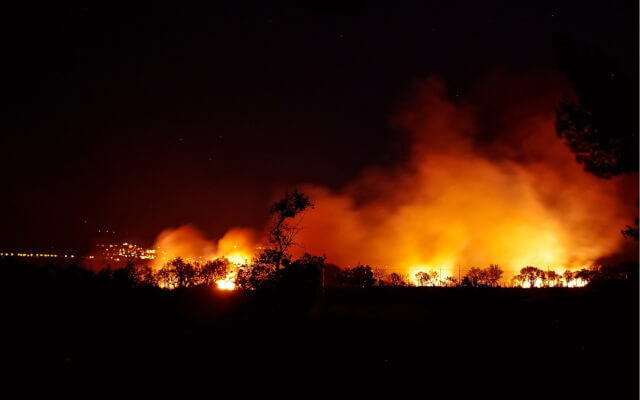[Source](https://pixabay.com/photos/fire-flames-night-summer-flush-2730796/)
### Biodiversity Loss
Forests are home to many different species, providing a [habitat](https://www.nationalgeographic.com/environment/article/deforestation?loggedin=true) that is rich with food, water, and shelter. It is estimated that 80% of all animals and plant species that live on land rely on forests for their habitat. This makes forests incredibly important for maintaining biodiversity.
With the amount of forested land lost to deforestation, **habitat loss** has been occurring on an unprecedented scale. It is estimated that anywhere from 4,ooo to 6,000 forest dwelling species go extinct every year as result of deforestation. If we want to protect the ecosystems and habitats of our world, it is critical that we find a solution to deforestation.
### The Impacts on Local Populations
Some of the people who are most affected by deforestation are the people who live near forests. These people that are often apart of vulnerable or indigenous communities can find themselves without a home, and without their [livelihood](https://thehumaneleague.org/article/effects-of-deforestation). Many people are completely forced out of their homes due to deforestation, but those who are able to stay still face the consequences of deforestation.
As animals lose their habitat, they are likely to wander to find new places to live which leads to more interactions between humans and wild animals. These interactions can be dangerous in more ways than one.
[Source](https://unsplash.com/photos/nKGio_6E_4k)
While an animal might not necessarily attack a human it comes into contact with, it does increase the spread of zoonotic diseases. Zoonotic diseases are diseases that are spread through animals, such as malaria, Ebola, and even COVID-19, which is thought to have been caused by human interaction with animals.
Many people also rely directly on forests for food, clean water, and jobs. When forests get torn down it can destroy people’s entire source of living, and lead to food insecurity and increased poverty rates. Thus deforestation is not just important for protecting the environment, but for protecting the lives of people everywhere.
#### Soil Erosion
Forests are also key to making sure that that the water cycle operates properly. Tree roots are capable of keeping soil in place when it rains which helps the ground retain its structure.
When trees start disappearing due to deforestation soil becomes looser and can [erode](https://www.pachamama.org/effects-of-deforestation#:~:text=The%20loss%20of%20trees%20and,of%20problems%20for%20indigenous%20people.) much more easily. Erosion can restructure the landscape as well as take nutrients out of the top soil. Without the nutrients soils become much less fertile, and it becomes much harder for things to grow there.
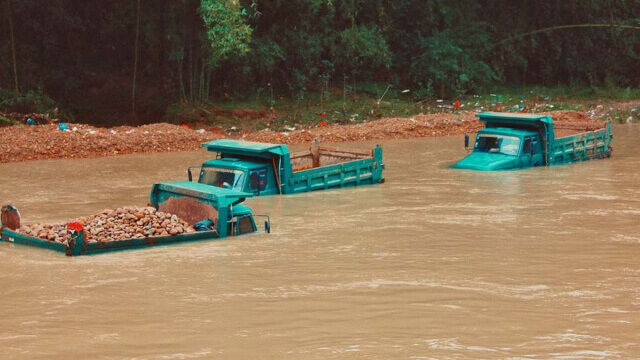[Source](https://unsplash.com/photos/BN5tccq1qYk)
Along with this, deforestation leads to conditions that are more suitable for flooding. Not only are there less trees to absorb the water, but less dense soil won’t stay in place as well, making it easier for floods to occur.
## Deforestation and Religion
*Exodus 33:3 – a Land Flowing with Milk and Honey. But I Will Not Go in Your Midst, Since You Are a Stiff-Necked People, Lest I Destroy You on the Way.*
## Grazing and Sustainability From the [Eco Bible](https://www.amazon.com/dp/B08LCKLM9G/ref=dp-kindle-redirect?_encoding=UTF8&btkr=1)
The Torah often describes the Land of Israel as “a land flowing with milk and honey.” [The Talmud interprets this](https://www.sefaria.org/Ketubot.111b.22?ven=William_Davidson_Edition_-_English&vhe=William_Davidson_Edition_-_Vocalized_Aramaic&lang=bi&with=all&lang2=en) to mean: “milk flows from the goats \[udders\], and honey flows from the dates and the figs.” From this, one can understand the significance of goats and shepherding to ancient Israel’s society.
Some herders would take their flocks to graze for six months at a time, between Passover and the beginning of winter, while others would keep their flocks in pasture [year-round](https://www.sefaria.org/Beitzah.40a.16?ven=William_Davidson_Edition_-_English&vhe=William_Davidson_Edition_-_Vocalized_Aramaic&lang=bi&with=all&lang2=en). Professor Gedaliah Alon, in his noted [history of Mishnaic and Talmudic times](https://www.amazon.com/Hayehudim-Yisrael-bTekufat-haMishna-vhaTalmud/dp/B000GWDXGA), writes that some herders raised flocks of sheep and goats in great numbers. Yet goats and sheep are voracious herbivores, and the rabbis in the times of the Mishnah and Talmud witnessed how these animals could devour field crops.
In response, [the Mishnah prohibited](https://www.sefaria.org/Mishnah_Bava_Kamma.7.7?ven=William_Davidson_Edition_-_English&vhe=Torat_Emet_357&lang=bi&with=all&lang2=en) raising goats and sheep in agriculturally productive parts of Israel. This enactment was likewise [adopted by the rabbis in Babylonia](https://www.sefaria.org/Bava_Kamma.80a.13?ven=William_Davidson_Edition_-_English&vhe=Wikisource_Talmud_Bavli&lang=bi&with=all&lang2=en) for the Jewish community there, which in the times of the Talmud replaced Israel as the most sizable Jewish community in the world. Further, [the Talmud prohibited](https://www.sefaria.org/Sanhedrin.25b.17?ven=William_Davidson_Edition_-_English&vhe=Wikisource_Talmud_Bavli&lang=bi&with=all&lang2=en) freely grazing oxen and cows as well.
From the patriarchs and the tribes of Israel, to Moses and King David, the Bible is replete with a rich history of shepherding and livestock raising. Nevertheless, the Mishnaic decree addressed the need to stop goats from harming farmers’ crops by preventing Jews from raising them in settled parts of Israel. If the rabbis were prepared to contravene thousands of years of Biblical tradition by forbidding herding, this should serve as a lesson to contemporary humankind about the need to limit the raising of livestock in massive numbers, when we are aware of the environmental damage that this causes.
As Yale’s Global Forest Atlas notes, “Cattle ranching is the largest driver of deforestation in every Amazon country, accounting for 80 percent of current deforestation rates. Amazon Brazil is home to approximately 200 million head of cattle, and is the largest exporter in the world, supplying about one-quarter of the global market. Approximately 280,000 square miles (450,000 square kilometers) of deforested Amazon in Brazil are now in cattle pasture.”
In the coronavirus pandemic of 2019–20, a new disease infected people in Wuhan, China, before rapidly spreading across the globe. Contemporary scientists are beginning to see a connection between such pandemics and human impacts on the environment. When humans cut down forests and destroy the habitat of animals, the surviving animals move to new territories where they encounter new diseases, [some of which may be transferred to humans](https://www.scientificamerican.com/article/destroyed-habitat-creates-the-perfect-conditions-for-coronavirus-to-emerge/). For example, 27 outbreaks of the Ebola virus were found to have a [strong association with nearby cutting down of forests](https://www.nature.com/articles/s41598-017-14727-9). Close to 75 percent of all emerging infectious diseases have jumped from an animal to a human, according to researchers. When people destroy ecosystems, pathogens like viruses that emerge from nature have [fewer and fewer non-humans to infect](https://www.npr.org/2020/06/23/882481310/scientists-say-the-coronavirus-pandemic-has-worsened-deforestation-worldwide). In the interconnected earth on which we live, deforesting the world’s rainforests can have unforeseen and major consequences.
*\* Featured image [source](https://unsplash.com/photos/BkTsP32Dfnc)*
**Categories:** Blog on Faith and Ecology
**Tags:** Deforestation
---
### [The Causes of Deforestation and Its Global Consequences](https://interfaithsustain.com/what-causes-deforestation/)
**Published:** August 30, 2021
**Author:** ICSD
**Excerpt:** Matthew Mausner - One of the biggest problems in the global environmental situation today is deforestation. The problems caused by deforestation include global warming, desertification, habitat destruction, topsoil loss, erosion, and the general human devastation of the forest environment.
**Content:**
Table of Contents
Table of Contents
- [Civilization Before Deforestation](#aioseo-civilization-before-deforestation-2)
- [Deforestation Increases with The Agricultural Revolution](#aioseo-deforestation-increases-with-the-agricultural-revolution-6)
- [Causes of Deforestation Today](#aioseo-causes-of-deforestation-today-9)
- [Paper, Beef, and Deforestation](#aioseo-paper-beef-and-deforestation-17)
- [Survival Causes Deforestation](#aioseo-survival-causes-deforestation-20)
- [Palm Oil Causes Deforestation](#aioseo-palm-oil-causes-deforestation-22)
- [Global Economics Demands Deforestation](#aioseo-global-economics-demands-deforestation-26)
- [The Interaction Between Deforestation and Climate Change](#aioseo-the-interaction-between-deforestation-and-climate-change-29)
- [Is Deforestation Leading to Catastrophe?](#aioseo-is-deforestation-leading-to-catastrophe-38)
*By Matthew Mausner* – One of the biggest problems in the global environmental situation today is deforestation. The problems caused by deforestation include [global warming](https://interfaithsustain.com/global-warming-vs-climate-change/), desertification, habitat destruction, topsoil loss, erosion, and the general human devastation of the forest environment.
## Civilization Before Deforestation
Humans have modified the environment in various ways everywhere they have lived. In general, hunter-gatherer societies embraced forest growth, especially when trees bore desirable fruit or nuts, or their bark or sap could be used.
In a few rare cases like Easter Island, it appears that a hunter-gatherer society caused catastrophic deforestation of its environment. But in general, like the island of [Tikopia](https://www.journals.uchicago.edu/doi/full/10.1086/497663), proactive forest management for long-term sustainability of society and its local ecosystem was the general practice for hunter-gatherer groups.
William Cronon’s seminal study ‘[Changes in the Land](https://www.amazon.com/Changes-Land-Indians-Colonists-Ecology/dp/0809016346)‘ demonstrated the advanced **forest management** techniques of many Native American groups. While the Native American nations he described, in what’s today New England, used the solution of controlled fire burning and underbrush clearing to encourage game, they also emphatically supported a vibrant sustainable forestry. Wood was certainly used for fires, but only on a very small scale, and rarely cut down- the usual amount of fallen and dried out trees would generally suffice.
### Deforestation Increases with The Agricultural Revolution
Since the beginning of the ‘**agricultural revolution**‘, forested areas have often been cleared in favor of fields for planting our chosen crops. Previous semi-forested areas across Mesopotamia and the Nile River valley, the northern Chinese plain, the Indus River valley, and then wherever agriculture spread globally, were cleared for monoculture farms of expanding civilizations.
Trees were cut down to be resources for housing, and for fuel. Cooking with wood for fires was only one of many uses of fire. Once metal became a significant factor in human civilization, massive amounts of firewood was needed to fire the kilns to make copper, iron, bronze, and other industrial products. In the Mediterranean region this need was already generating significant deforestation by 1200BCE.
## Causes of Deforestation Today
The main question is, what causes deforestation today? Since European colonization of much of the world and especially since the industrial revolution, deforestation has scaled up even more dramatically. There have been many causes of deforestation stemming from these vast changes.
[Source](https://unsplash.com/@thematthoward/)
Clear-cutting for lumber for the voracious needs of expanding civilization was wildly irresponsible, often chopping down priceless old growth forests and leaving behind barren empty fields where nothing could easily regrow. Mining is an industry that leaves giant scars on the landscape, sometimes cutting down not just forests but entire mountains in the search for what lies beneath.
In certain regions like the Amazon, irresponsible expansion of cattle ranching into previously rainforest ecosystems led to cutting down wide stretches of the most [biodiverse habitat](https://interfaithsustain.com/why-is-biodiversity-important/) on earth, in favor of temporary ranchland for growing animals, that not only destroyed the forest but usually within a few short years left nothing but a depleted clay that is essentially infertile. As a result, the forest cannot grow back, but it’s no longer useful for ranching either, as even grass does not grow.
Deforestation can been devastating, and what’s worse is that we have long known that it’s destructive. The famous ‘**Carthaginian Peace**‘ refers to the Roman deliberate devastation of the empire of Carthage when they won the third Punic War. They cut down all the forests and salted the fields, so that nothing could grow back and it became a barren wasteland for many generations, so that Carthage could not return to power and threaten Rome again. Today we have in effect done the same, without a military purpose in places all over the planet.
### Paper, Beef, and Deforestation
Both rich countries and poor countries are participating in current deforestation in different ways. Urban and suburban sprawl are eating into forest cover almost everywhere. Use for paper is unsustainable except for timber byproducts, but continues to drive logging. Rich countries such as Japan, the US, and China have voracious appetites for fine hardwoods from places like Indonesia and South America, driving irresponsible clear-cutting and even **illegal logging** because the profit incentives are so high.
- [](https://interfaithsustain.com/how-deforestation-is-affecting-global-water-cycles/)
## [Why And How Deforestation Is Affecting Global Water Cycles](https://interfaithsustain.com/how-deforestation-is-affecting-global-water-cycles/)
- [](https://interfaithsustain.com/how-does-deforestation-affect-climate-change/)
## [Environmental Destruction and How Does Deforestation Affect Climate Change?](https://interfaithsustain.com/how-does-deforestation-affect-climate-change/)
- [](https://interfaithsustain.com/pine-beetle/)
## [Forest Destruction OR Survival of The Fittest By The Pine Beetle?](https://interfaithsustain.com/pine-beetle/)
Western demand for beef, fuels the demand for expanding cheap ranching, and slash-and-burn agriculture in the Amazon by poor Brazilian farmers seeking to meet demand for inexpensive beef. This drives the cutting of large swaths of the Amazon, destroying both the forest and its rich biodiversity. This is in spite of the unsuitability of that land for cattle as they rapidly exhaust the surprisingly thin soils (tropical forests keep most of their nutrients circulating up to the canopy, rarely in the soil) so that what remains from a brief ranching experiment is an infertile hard-clay wasteland.
### Survival Causes Deforestation
In places where the worst [third world poverty](https://www.sciencedirect.com/science/article/pii/S0305750X16305411) drives people to the edge of survival, such as much of the overcrowded regions surrounding the Himalayas and vast areas of sub-Saharan Africa, people cut down trees for essential fuel for cooking fires. They do this even to boil water to make it safer to drink, despite the irreversible cost of cutting down every single tree where none can grow back. This is compounded by regions where [people equally poor](https://www.greenbiz.com/article/how-developing-countries-put-forests-climate-agenda) might burn all the wood to make charcoal to sell.
#### Palm Oil Causes Deforestation
Another cause of deforestation is the production of palm oil, and the related cultivation of ‘hearts of palm’ and related products. In places of biodiverse tropical forests, areas are cleared and put under cultivation for the production of palm oil.
This is often happening in tandem with other deforestation patterns common in tropical forest regions like the Amazon Rainforest and Indonesia, including illegal logging especially of hardwoods, slash and burn farming, short-term cattle ranching, and the increasing sprawl of megacities.
These causes of deforestation and forest loss are all rooted in global economic trends which drive more and more people in the developing world away from traditional subsistence towards a voraciously unsustainable urbanized and alienated slum poverty.
## Global Economics Demands Deforestation
The world’s rising population has generated increasing demand for all sorts of products, including lumber, meat, and palm oil, which all cause **deforestation**. Similarly, there are other agricultural plants and [food products](https://interfaithsustain.com/food-production/) that can be produced in a former area of forest, and too often there are local decisions to convert large scale forest land into logging, ranching, or agriculture.
Even sadder is when these decisions are made without regard to the actual viability of such a choice, as soil erosion is a frequent consequence of deforestation. As a result, new trees cannot be planted, and the soil can be exhausted rapidly by grazing cattle, or mining, or other improper land use. In some temperate lands, soil erosion can be reversed gradually and carefully by replanting, but in some tropical deforested areas of the world, all that is left behind from deforestation is a hard infertile clay.
## The Interaction Between Deforestation and Climate Change
Other causes of deforestation are possibly caused by aspects of **climate change**. In both the Amazon rainforest, the forests of the American west, and in the vast taiga forests of Siberia, notable changes in climate and extended droughts or unprecedented heat-waves have led to more and more forest fires and forest loss. When there is record breaking heat around the world, as in our current summer of 2021 with temperatures reaching into the 110s (45+ Celsius) around the world from Oregon to Siberia to British Colombia to Iran, forest fires can be far larger and more out of control than ever before.
Such global large scale shifts in climate affect every region from tropical land all the way to the arctic. While there has been suggestion that increased carbon in the atmosphere may actually lead to reforestation in places like the Sahel, as trees literally eat carbon, most scientists see far more ways that climate change is leading to deforestation.
In addition, deforestation causes climate change. Trees themselves have cooling effects, with a canopy routinely screening lower levels of a forest from the sun’s direct heat. They draw water up from the soil, and in their shade, moisture and a cooler temperature can prevail.
[Source](https://unsplash.com/@denisagati/)
Due to the large scale of the tropical rainforests and the vast taiga forests of Siberia and Canada, this helps moderate climate, as does the oxygen that such huge green forests give off, and of course the carbon they consume and convert into life. Illegal logging of tropical forests for timber, for expansion of human mining, for livestock use, for agriculture or for other short-term food needs, reduces all these positive impacts forests have on climate.
Expansion of deforestation causes the bare land to heat up and dry out. These heat sinks add to the reflected heat in the atmosphere, and without the ability of every single tree to consume and convert carbon, global warming accelerates.
### Is Deforestation Leading to Catastrophe?
With all these myriad **causes of deforestation**, is there any hope for our planet before it descends into a runaway, self-reinforcing loop of environmental catastrophe? Can we stop deforestation?
Certainly because of the basic level of human natural need for agriculture, livestock, timber and paper, global demand and consumption will always give us a reason to cut down trees. The forests support an enormous numbers of plant and animal species, some of which are important resources as medicinal treatments for human health. We have to find solutions that are responsible in order to preserve the forests.
See our next post for [deforestation solutions](https://interfaithsustain.com/deforestation-solutions/ " deforestation solutions")!
\* *Featured image [source](https://pixabay.com/users/ericojuniormorais0-1290974/)*
**Categories:** Blog on Faith and Ecology
**Tags:** Deforestation
---
### [Become An Advocate For The Solutions To Deforestation](https://interfaithsustain.com/deforestation-solutions/)
**Published:** September 1, 2021
**Author:** ICSD
**Excerpt:** Matthew Mausner - Deforestation is one of the most pressing issues of our time. The effects of deforestation are disastrous, with some comparing the deforestation of the Amazon rainforest, for example, to destroying "the lungs of the planet."
**Content:**
Table of Contents
Table of Contents
- [Solutions to Deforestation](#aioseo-solutions-to-deforestation-5)
- [Deforestation Solutions Reduce Greenhouse Gas Emissions](#aioseo-deforestation-solutions-reduce-greenhouse-gas-emissions-10)
- [The Solutions to Deforestation](#aioseo-the-solutions-to-deforestation-12)
- [Solutions to Deforestation: Reducing the Impact of Palm Oil](#aioseo-solutions-to-deforestation-reducing-the-impact-of-palm-oil-14)
- [Solutions to Deforestation: Carbon Credits and Incentives](#aioseo-solutions-to-deforestation-carbon-credits-and-incentives-16)
- [Solutions to Deforestation: Changing Land Use](#aioseo-solutions-to-deforestation-changing-land-use-19)
- [Solutions to Deforestation: Reforestation](#aioseo-solutions-to-deforestation-reforestation-23)
- [Solutions to Deforestation: Reforestation Case Studies](#aioseo-solutions-to-deforestation-reforestation-case-studies-27)
- [Solutions to Deforestation: Sustainable Reforestation](#aioseo-solutions-to-deforestation-sustainable-reforestation-30)
- [Spiritual Thinking On Deforestation](#aioseo-spiritual-thinking-on-deforestation-34)
- [Religious Thinking On Deforestation](#aioseo-religious-thinking-on-deforestation-36)
- [Eco Bible Speaking On Deforestation](#aioseo-eco-bible-speaking-on-deforestation-44)
*By Matthew Mausner* – Deforestation is one of the most pressing issues of our time. The effects of deforestation are disastrous, with some comparing the deforestation of the Amazon rainforest, for example, to destroying “[the lungs of the planet](https://www.bbc.com/future/article/20130226-amazon-lungs-of-the-planet).” Due to deforestation we experience global warming, soil erosion, forest fires, flooding and so many other issues around the world. We must wonder, how can we stop deforestation?
Our recent post, [causes of deforestation](https://interfaithsustain.com/what-causes-deforestation/) focused on the major causes of deforestation. This post will focus on **solutions to deforestation**.
## Solutions to Deforestation
The solution may be easier than we realize. For example, if cooking fuel akin to western camping-stoves were made available to the 2 billion people at the fringes of the Sahel and central Asia, this could disproportionately reduce deforestation.
Similar to recognizing these 2 billion people’s fundamental need for cooking fuel, recognizing the sources of deforestation can be the best way to finding the solutions to deforestation.
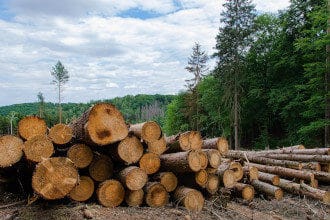[Source](https://pixabay.com/users/kathas_fotos-11174123/)
## Deforestation Solutions Reduce Greenhouse Gas Emissions
Burning trees and fossil fuels increases **greenhouse gases**. According to the United Nation’s Food and Agriculture Organization (FAO), the 33 million acres of forestland which are lost yearly around the world are responsible for 20% of human-caused greenhouse gas emissions. But by protecting trees from being cut down, trees can breathe in greenhouse gases like carbon dioxide and make our atmosphere healthier. Stopping deforestation is a great natural way to take action and help stop climate change.
## The Solutions to Deforestation
There are a number of ways to stop deforestation that will make an impact on the world’s environment. The solutions will save wildlife, [slow down climate change](https://interfaithsustain.com/evidence-of-climate-change/) and will have many long term affects on our one and only planet!
### Solutions to Deforestation: Reducing the Impact of Palm Oil
According to the WWF, “Palm oil has been and continues to be a major driver of deforestation of some of the world’s most biodiverse forests, destroying the habitat of already endangered species like the orangutan, pygmy elephant and Sumatran rhino” ([WWF](https://www.wwf.org.uk/updates/8-things-know-about-palm-oil)). By either using products free of **palm oil**, or looking for palm oil with certification that proves it has been harvested sustainably (like RSPO), we can address a major cause of deforestation.
### Solutions to Deforestation: Carbon Credits and Incentives
One of the biggest global policy initiatives taken by many global agencies is an international system of ‘**carbon credits**‘. This is designed to incentivize countries with forests to not cut them down, and even to plant trees and tropical forests, by ‘offsetting’ pollution in wealthier countries or companies.
Any company or country that is polluting with fossil fuels pays various amounts into a carbon offset fund, and the money goes to conserving forests, especially in places that have the lushest ‘carbon sink’ forests like tropical forests and the jungles of the tropics.
- [](https://interfaithsustain.com/how-deforestation-is-affecting-global-water-cycles/)
## [Why And How Deforestation Is Affecting Global Water Cycles](https://interfaithsustain.com/how-deforestation-is-affecting-global-water-cycles/)
- [](https://interfaithsustain.com/how-does-deforestation-affect-climate-change/)
## [Environmental Destruction and How Does Deforestation Affect Climate Change?](https://interfaithsustain.com/how-does-deforestation-affect-climate-change/)
- [](https://interfaithsustain.com/pine-beetle/)
## [Forest Destruction OR Survival of The Fittest By The Pine Beetle?](https://interfaithsustain.com/pine-beetle/)
### Solutions to Deforestation: Changing Land Use
Wherever possible, conservation efforts should seek to both protect forests and incentivize the desperate populations that might misuse the land or cut down the forests to find other productive activities that are more sustainable. For example, there has been a flood of illegal logging in Brazil, “by ranchers, loggers, miners, and land grabbers who seek to profit from the occupation and exploitation of public forest lands” ([ScienceMag](https://www.sciencemag.org/news/2020/08/illegal-deforestation-brazil-soars-amid-climate-impunity)).
In Kenya, after failed ‘absolute’ conservation efforts only encouraged poachers, an [innovative cooperation](https://www.amazon.com/Dust-Kilimanjaro-Shearwater-Book/dp/1559635347) was worked out with local Masai ranchers to double as preservers of the Serengeti and as anti-poaching police, leveraging their unique local knowledge and their own desire to protect their herds and game.
In New England, regions that had been clear-cut for lumber in colonial times, then heavily farmed and ranched in the 1700s and 1800s, were left with exhausted soils. They were no longer productive for agriculture and fell into almost complete disuse. This benign neglect gradually resulted in regrowth of lush forests over the last 100 years that now blanket land from Maine all the way to upstate New York. This was an accident of history and economics, but there is hope that this can serve as a model for more proactive planning about appropriate land use everywhere.
### Solutions to Deforestation: Reforestation
How about just plant more trees? Direct **reforestation** is the policy in certain countries. Israel in particular, even since before its founding, has actively sought to replant forests that had not flourished since the Romans crushed the Jewish revolts (cutting down the trees Jewish guerillas used for cover) almost 2,000 years ago. Now Israel is one of only two bioregions on earth (along with New England) that is significantly more forested than 100 years ago.
As leading Israeli ecologist and Member of Parliament Dr. Alon Tal writes, “A land that was synonymous with erosion, desertification, and human neglect is enjoying an environmental makeover. This exercise in ecological rehabilitation occurred in a country where 97 percent of the ground is classified as ‘drylands,’ making it particularly relevant for half of the planet where water will always be scarce.” Now more and more countries are seeking to follow this example, planting lots of trees which help trap and build topsoil, create cover for shade, cooling, and biodiversity under their canopies, improve the quality of life, and absorb carbon from the air.
The World Economic Forum has announced a [One Trillion Trees Initiative](https://www.weforum.org/agenda/2020/01/one-trillion-trees-world-economic-forum-launches-plan-to-help-nature-and-the-climate/) and the Trump Administration in January 2020 announced its commitment to coordinate support with the [One Trillion Trees Interagency Council](https://www.doi.gov/pressreleases/trump-administration-furthers-commitment-one-trillion-trees-initiative), bringing the world’s largest economy into comprehensive cooperation with this aspirational project.
#### Solutions to Deforestation: Reforestation Case Studies
Ecological engineering may provide hope for reforestation of logged or degraded regions in [Costa Rica](https://psmag.com/environment/costa-ricas-young-forests-never-had-a-chance), [Peru and Brazil](https://theconversation.com/restoring-tropical-forests-isnt-meaningful-if-those-forests-only-stand-for-10-or-20-years-107880). However, these [ecological engineering principles](https://interfaithsustain.com/ecological-engineering/ "https://interfaithsustain.com/ecological-engineering/") can only achieve limited progress if other trends in those societies can’t be stopped. Those projects saw a lot of progress in their first 10 years but have not been able to prevent later expansion of cities, ranching and industry that subsequently re-cleared those very re-planted forests in the 2010s.
[Pakistan](https://www.weforum.org/agenda/2018/07/pakistan-s-billion-tree-tsunami-is-astonishing/) and the African Sahel have been expanding ‘[Green Wall](https://www.greatgreenwall.org/about-great-green-wall)‘ type eco-engineering plans to stave off desertification, capture carbon, provide drinking watersheds and jobs, and many other benefits. These approaches combine traditional techniques with modern technological and breeding methods to plant hardier breeds, supplement with irrigation where necessary, and encourage large forests with impacts on many aspects of their ecosystems, from topsoil to moisture to more stable agricultural bases.
#### Solutions to Deforestation: Sustainable Reforestation
Sustainable logging practices, whether in Indonesia or Oregon, usually include replanting forests, tree farms, and the avoidance of clear cutting in favor of selective culling that does not negatively impact the health of the forest as a whole.
Efforts to stem desertification in regions across the Sahel, Israel, India, central Asia, and the American southwest all involve massive efforts to plant forests, preserving topsoil whilst preventing erosion. Raising standards of living across the globe leads to higher levels of education resulting in increased environmental awareness, building support for sustainable policies.
There is even [counterintuitive hope](https://www.theregister.com/2012/07/08/global_warming_good_for_the_environment/) that increased carbon in the atmosphere may actually create conditions for forests to grow, since carbon dioxide is ‘plant food’. All hope is not yet lost for the future, if we can see the forest for the trees.
## Spiritual Thinking On Deforestation
Trees have spiritual roots! Trees are given great great respect in almost every religion, since pagan times. Non religious people also find so much meaning in trees. However much they are destroyed they find a crack in which they can regrow. This gives people the strength to know that they too can survive difficulties and even thrive again. Just like all living beings, trees breathe and connect to each other as a community, always used as a symbol of life and the embodiment of hope.
### Religious Thinking On Deforestation
**Hinduism** sees trees as the givers of knowledge and enlightenment and the Rig Veda instructs against cutting down trees or uprooting them as they provide protection to living beings.
Tree planting is seen as a form of charity in **Islam** and trees are seen as worthy of respect and care. In the Islamic holy scriptures, there is a story of boy throwing stones at a date palm to gather fruits. The Prophet Mohammed gave the boy a gentle chastisement, telling him to eat what falls, without harming the tree.
Trees are central to **Judaism** and **Christianity**. In the garden of Eden, the original paradise, they grew in abundance. Additionally, sacred trees were located at the center of the Garden of Eden, the Tree of Knowledge of Good and Evil and The Tree of Life. Moreover, there is a prohibition in the Bible against cutting down fruit trees and an account of the dangers of logging.
[Source](https://pixabay.com/users/welshpixie-10119553/)
### Eco Bible Speaking On Deforestation
Rabbis Yonatan Neril and Leo Dee comment in “Eco Bible Volume 2” about the dangers of deforestation from a verse describing an accidental death during logging: Deuteronomy 19:5 –
> For instance, a man goes with his neighbor into a grove to cut wood; as his hand swings the ax to cut down a tree, the ax-head flies off the handle and strikes the other so that he dies. That man shall flee to one of these cities and live. This verse relates to the profound danger to people, from multiple causes, of cutting trees. Even today, logging is the profession in the United States with the most number of fatalities, and 25 percent higher than the next most dangerous profession – fishing. Technology has not succeeded in making logging safe for workers.
>
> Logging also threatens whole populations. The UN Global Forest Resources Assessment found the world’s forests decreased by a full 1 percent of the world’s surface in 25 years, mainly in South America and Africa. We have reached the moment when human impact is causing the Amazon rainforest to release more climate-warming gases than it stores. People logging, mining, and clearing forest for agriculture and ranching have weakened the rainforest’s natural ability to take in carbon dioxide and serve as the main lung on planet earth.
>
> Since this verse speaks of unintentional damage, we can learn today to be especially careful about unintentional damage. We are unintentionally contributing to rainforest destruction in using paper, cardboard, and wood unnecessarily. While forces such as the Covid-19 pandemic force many people to shop online, they may not realize shopping online is seven times more cardboard-intensive than shopping in a store. Destruction of more and more trees for such paper products then contributes to species loss, decreased oxygen ordinarily released by trees, worsened air quality and global climate change.”
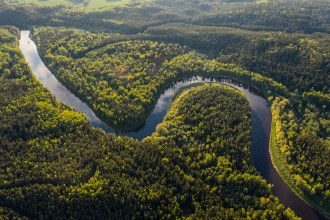[Source](https://unsplash.com/@ivoprod/)
The solutions are not difficult to implement. Let us stop being the cause of deforestation, and become supporters and advocates for the solutions to deforestation.
*\* Featured image [source](https://pixabay.com/users/1778011-1778011/)*
**Categories:** Blog on Faith and Ecology
**Tags:** Deforestation
---
### [Understanding The Concept of Sustainable Development](https://interfaithsustain.com/concept-of-sustainable-development/)
**Published:** September 20, 2021
**Author:** ICSD
**Excerpt:** Sydney Cohen - The concept of sustainable development is the idea that all economic activities should be carried out in a way that they do not undermine our natural environment, enabling future generations to meet their needs in a sustainable manner.
**Content:**
Table of Contents
Table of Contents
- [Sustainable Development Changed The World's Trajectory](#aioseo-sustainable-development-changed-the-worlds-trajectory-3)
- [Sustainable Development](#aioseo-sustainable-development-7)
- [Sustainability Versus Sustainable Development](#aioseo-sustainability-versus-sustainable-development-17)
- [The Ability of Future Generations to Meet Their Needs](#aioseo-the-ability-of-future-generations-to-meet-their-needs-20)
- [The Pillars of Sustainable Development](#aioseo-the-pillars-of-sustainable-development-22)
- [Sustainability Without Compromising the Ability of Economic Success](#aioseo-sustainability-without-compromising-the-ability-of-economic-success-31)
- [The Sustainable Development Goals](#aioseo-the-sustainable-development-goals-33)
- [Religion and Sustainable Development](#aioseo-religion-and-sustainable-development-42)
*By Sydney Cohen* – The concept of sustainable development is the idea that all economic activities should be carried out in a way that they do not undermine our natural environment, enabling future generations to meet their needs in a sustainable manner. This includes ensuring social equity, such as access to clean water and [food security](https://interfaithsustain.com/food-production/), and promoting cultural diversity. It also means preserving the earth’s natural resources in the present without compromising them for future generations, by reducing pollution and waste and eliminating toxins from production processes.
The term “sustainable development” was coined in 1987 when it was included in the [**Brundtland Report**](https://en.wikipedia.org/wiki/Brundtland_Commission), which “recognized that human resource development in the form of poverty reduction, gender equity, and wealth redistribution was crucial to formulating strategies for environmental conservation, and it also recognized that environmental limits to economic growth in industrialized and industrializing societies existed.”
- [](https://interfaithsustain.com/sustainable-development-examples/)
## [Sustainable Development Examples Implemented Around The World](https://interfaithsustain.com/sustainable-development-examples/)
- [](https://interfaithsustain.com/principles-of-sustainable-development/)
## [Understanding The Principles of Sustainable Development](https://interfaithsustain.com/principles-of-sustainable-development/)
## Sustainable Development Changed The World’s Trajectory
Sustainable development as a term, concept, and movement was meant to stop the **exploitation of natural resources**. Governments and nations must make a conscious effort to understand sustainable development and be willing to implement regulations and practices that enforce it.
Sustainable development is a way of organizing society so it can exist in the present without compromising future generations’ ability to meet the goal of becoming even more sustainable. It takes into account both the imperatives in the present and future. Sustainable development also takes into account the preservation of the environment, natural resources, and social equity, particularly for the common future.
The Brundtland Report, published in 1987, prompted a change in the world’s trajectory in sustainable development for the first time. The study was authorized by the European Commission in 1986 which is based in Stockholm, Sweden, and Norway.
## Sustainable Development
The industrial revolution prompted the first step towards the idea of sustainable development. The industrial revolution and the rise of ecological and social crises took place in the 20th century. Some of the crises resulting from the pollution that the industrial revolution caused, raised awareness that a more sustainable model was needed in our rapidly developing world.
[Source](https://unsplash.com/@opixels/)
It is important to find sustainable fixes for the environmental needs of the present without compromising the economic prospect of the future that industrialization and globalization have brought to our world and continue to bring. This is why we must find a method of sustainable development that meets the needs of economic, social, and environmental aspects of our life on this planet.
Sustainability is an organizing principle for meeting human development goals while simultaneously sustaining the ability of natural systems to provide natural resources and ecosystem services on which the economy and society depend. It is a state of society where living conditions and resources are used to continue to meet human needs without undermining the integrity and stability of the natural system. The concept of sustainable development has been subject to criticism, including the question of what resources should be sustained in sustainable development.
The economic development brought by such organized principles and practices in an economy is called Managed Sustainable Development (MSD). It has also been argued that the meaning of the concept has opportunistically been stretched from ‘conservation management’ to ‘economic development.’ Achieving sustainable development through practical methods will take time, but it is crucially important in order to sustain our quality of life, the economic and social needs around the world, and make the most out of our natural resources.
[Achieving sustainability hinges on a number of principles](https://interfaithsustain.com/principles-of-sustainable-development/ "Achieving sustainability hinges on a number of principles"), including [conservation of ecosystems and biodiversity](https://interfaithsustain.com/why-is-biodiversity-important/), human resource management, and population control. Population control and population management are essential to achieving sustainable development. People meet their own needs by utilizing resources on the earth, but due to population growth, human needs cannot always be met through the sustainable use of the resources we have available. The over-exploitation of resources has negative effects on the environment. Sustainable resource use is a key component of sustainable development.
## Sustainability Versus Sustainable Development
Considering [sustainability vs. sustainable development](https://en.unesco.org/themes/education-sustainable-development/what-is-esd/sd#:~:text=Sustainability%20is%20often%20thought%20of,research%20and%20technology%20transfer%2C%20education) is essential for understanding these two crucial concepts. Sustainability and **sustainable development** play a central role in business. In fact, a brand’s sustainability is a deciding factor for 70% of U.S. consumers.
Sustainability is thought of as a long-term goal around the world, whereas sustainable development is the many processes needed for the ability to meet sustainability. Examples of sustainable development processes that work toward the goal of a sustainable world include sustainable agricultural methods such as organic farming and restricting the use of pesticides, sustainable use of resources in production and consumption, governmental regulations on industrial factories, and education.
### The Ability of Future Generations to Meet Their Needs
The ability of future generations to meet responsibilities and benefit from the natural resources that we have now has been an increasingly important subject for discussion. We can’t keep consuming at the rate we are without depleting all our resources in a matter of years!
#### The Pillars of Sustainable Development
[Source](https://unsplash.com/@tylercaseyprod/)
The concept of **sustainability** appears poised to continue to influence future discourse regarding development science. This implies that the best choices are likely to remain those that meet the needs of society and are both environmentally and economically viable.
This leads to three interconnected domains of sustainability that describe relationships among the [environmental, economic, and social aspects of sustainable development](https://interfaithsustain.com/how-to-optimize-the-three-pillars-of-sustainability/). As a forward-looking development paradigm, sustainable development emphasizes a positive transformation trajectory anchored on social, economic, and environmental factors. Based on this, it can be argued that the concept of sustainable development rests, fundamentally, on three conceptual pillars.
These pillars are ‘economic sustainability,’ ‘social sustainability,’ and ‘environmental sustainability.’ These three pillars are often visualized as a Venn diagram. Sustainability professionals can apply this understanding of these pillars to specific social, environmental, and economic issues in our world.
They can also help organizations align themselves with the United Nations Sustainable Development Goals (SDGs), which are 17 interconnected goals focused on creating a more sustainable future for all.
## Sustainability Without Compromising the Ability of Economic Success
In the future, our work will be about how we can maintain an economy that is sustainable. Sustainable development has been a goal in many countries for decades now, but only recently have people started to take this idea seriously.
### The Sustainable Development Goals
The **UN Sustainable Development Goals (SDGs)** aim to protect the world’s environment and human life. These goals work to end poverty and guarantee the well-being of all people, particularly in developing countries, fostering economic growth and social inclusion while protecting the environment.
The 17 SDGs mainly seek to achieve the following summarized objectives:
1\) Eradicate poverty and hunger,
2\) universalize access to basic services such as water and sanitation,
3\) foster innovation and resilient infrastructure, creating communities and cities able to [produce and consume sustainably](https://interfaithsustain.com/sustainable-clothing/),
4\) reduce inequality in the world, especially that concerning gender equality,
5\) care for environmental integrity through combating climate change and protecting our ecosystems.
Sustainable development is a vital concept to ensuring the success of our environment, economy, and society. We can work together and share in the ability of future generations to work to save our planet from climate change through sustainable development processes, working to make our world a more sustainable place.
## Religion and Sustainable Development
The Dhammapada declares that “contentment is the greatest wealth.” Religions address the root of unsustainable development by cultivating contentment with what we have. Satisfied with what we have, we can enjoy our planet without squandering her resources.
*\* Featured image [source](https://unsplash.com/@noahbuscher/)*
**Categories:** Blog on Faith and Ecology
**Tags:** Sustainable Development
---
### [Sustainable Consumption Will Reduce Our Impact On The Environment](https://interfaithsustain.com/sustainable-consumption/)
**Published:** October 1, 2021
**Author:** ICSD
**Excerpt:** Sydney Cohen - The world is changing. The lifestyles of the past, where people consumed and produced without restraint and with little consideration for future consequences, are coming to an end.
**Content:**
Table of Contents
Table of Contents
- [Consumption and Production Patterns](#aioseo-consumption-and-production-patterns-4)
- [Sustainable Consumption](#aioseo-sustainable-consumption-12)
- [Sustainable Production](#aioseo-sustainable-production-14)
- [Sustainable Product Life Cycle](#aioseo-sustainable-product-life-cycle-16)
- [Prioritizing our Planet](#aioseo-prioritizing-our-planet-27)
- [Sustainable Development](#aioseo-sustainable-development-31)
- [Sustainability](#aioseo-sustainability-33)
- [Sustainable Development Goals](#aioseo-sustainable-development-goals-36)
- [Sustainable Consumption is Our Responsibility](#aioseo-sustainable-consumption-is-our-responsibility-39)
- [Religion and Sustainable Consumption](#aioseo-religion-and-sustainable-consumption-44)
- [Don't Swallow The Values of Esau](#aioseo-dont-swallow-the-values-of-esau-48)
*By Sydney Cohen* – The world is changing. The lifestyles of the past, where people consumed and produced without restraint and with little consideration for future consequences, are coming to an end. Consumers around the world are demanding better products that are made in a more sustainable way – not just for our planet’s sake but also for their own health and happiness.
In a world where the earth’s resources are limited, sustainable production and consumption is an important way to reduce our impact on the planet. Consumers have been shifting their attitudes towards sustainability in recent years and it has become a major trend for companies as well, particularly those that produce consumable goods and services.
In this blog post, we will explore how you can take steps to live more sustainably and why making changes in your everyday life to live a little greener is not only incredibly beneficial for your health but also necessary for the environment.
## Consumption and Production Patterns
One of the most important things to know about consumption and production patterns is that [they have an impact on our society, economy, and environment.](https://interfaithsustain.com/what-is-consumerism/ "they have an impact on our society, economy, and environment.") Consumption refers to “the use of a product or service.” Consumption can be broken down into two categories: durable goods and nondurable goods. **Durable goods** last for more than three years while nondurable goods are intended for immediate use. Consumption also includes the end-of-life process which takes care of products in order to make sure that they do not become hazardous waste. Production is how we create consumer products such as food, clothing, and cars using natural resources like water, soil, air emissions from factories etcetera.
Examples of unsustainable production and consumption processes are very prominent in mass [agricultural farming techniques](https://www.nrdc.org/stories/industrial-agriculture-101). One includes using many chemicals such as pesticides in order to yield the most crops. On large agricultural farms, this mass production method depletes natural resources and toxic materials enter our atmosphere at alarming rates. The use of toxic materials creates greenhouse gas emissions, which does not protect the needs of future generations as greenhouse gases in our atmosphere results in **climate change**, which harms our natural environment and global health.
[Source](https://unsplash.com/@markusspiske/)
- [](https://interfaithsustain.com/consumerism-examples/)
## [Consumerism Examples That Affect the Environment](https://interfaithsustain.com/consumerism-examples/)
- [](https://interfaithsustain.com/ethical-consumerism/)
## [Ethical consumerism is Becoming a Movement for Change](https://interfaithsustain.com/ethical-consumerism/)
- [](https://interfaithsustain.com/anti-consumerism/)
## [Anti-Consumerism Redefines Our Lives To Focus on Spiritual Growth](https://interfaithsustain.com/anti-consumerism/)
Our current consumption and production processes are improving, but still have a long way to go in order to be completely sustainable. Incredible amounts of greenhouse gases and pollutants enter our atmosphere every day as a result of industrial production processes. In order to ensure **sustainable consumption** patterns and better quality of life, we must work to incorporate more **sustainable production** practices into our industries in order to prevent further environmental degradation and bring a better quality of life to future generations.
## Sustainable Consumption
Sustainable consumption is a term that refers to the act of consuming goods and services in such a way that they do not have an adverse effect on the environment. Sustainable consumption can be achieved by reducing environmental impacts, using [renewable resources](https://interfaithsustain.com/renewable-and-non-renewable-resources/) and raw materials, and avoiding or minimizing toxic chemicals throughout production.
### Sustainable Production
Sustainable production is about producing goods so as to minimize any negative environmental effects. Sustainable production should also use renewable resources and raw materials while being careful not to produce any toxic substances that would impact the environment negatively.
### Sustainable Product Life Cycle
It is important to consider the entire **product life cycle** when determining the sustainability of the production and consumption patterns of a product or company. Sustainable consumption and production processes involve practices that start at the very beginning of a product’s life cycle. For example, environmentally friendly production processes aim to include as many of the following [goals](https://www.ifu.com/sustainable-production/) as possible:
- reducing and avoiding harmful emissions into the environment
- efficiently using energy and resources
- utilizing renewable energies
- using sustainably produced resources
- avoiding waste, and recycling materials
- working to restore and maintain the biological diversity of the world’s ecosystems
#### Prioritizing our Planet
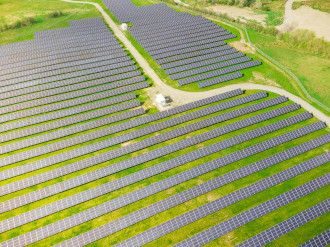[Source](https://unsplash.com/@dereksutton/)
Sustainable consumption and production processes are not incredibly difficult to accomplish – it is about prioritizing our planet and our global health, to ensure **environmental sustainability**, economic growth, and goods and services for future generations.
## Sustainable Development
**Sustainable development** is the meeting of [social, economic, and environmental needs](https://interfaithsustain.com/how-to-optimize-the-three-pillars-of-sustainability/). Sustainable consumption has been a key component of sustainable development in recent years, as consumers have come to realize that their purchasing habits affect the environment around them. In order for sustainable consumption to be achieved, there must be an understanding of how human behavior can affect natural resources and waste production.
### Sustainability
Sustainable development differs from the term sustainability, as sustainability is a long-term goal for our world, and sustainable development refers to the processes needed to be taken and implemented in order to reach this goal. An important aspect of sustainable development is creating more sustainable industrial practices, enhancing social inclusion, and still ensuring economic growth. The industrial revolution brought an incredible boost to our economy which continues to grow even after hundreds of years. However, industrial manufacturing processes often have incredibly harmful effects on the environment, such as climate change, and are in desperate need of a change.
Our use of natural resources is frequently and has historically been not sustainable, which is why we must work to support companies that prioritize [sustainable development](https://interfaithsustain.com/importance-of-sustainable-development/) and consumption, limiting their emissions of waste and working to take care of our natural environment.
### Sustainable Development Goals
**The Sustainable Development Goals** (SDGs) are a set of 17 goals that were agreed upon by 193 United Nations member states at the Sustainable Development Summit in September 2015. The SDGs aim to promote sustainable development, reduce poverty and inequality, protect the environment, and improve prosperity for all people across the world. One important goal is [sustainable consumption and production](https://interfaithsustain.com/sustainable-clothing/) which aims to “ensure access to safe food” as well as “sustainable production of goods”.
The SDGs respond to basic needs, particularly in developing countries. They work to promote social inclusion in many developing countries, by providing access to employment and work opportunities. Not only do the SDGs stand for environmental protection, but also benefit the quality of life. Additionally, energy consumption is an important aspect of the SDGs. The SDGs, in their work to regulate production processes and make them more environmentally friendly, focus on energy consumption and usage to ensure the sustainable utilization of our natural resources and prevent further harm to the planet.
## Sustainable Consumption is Our Responsibility
The future of our environment, economy, and society is in all of our hands. Together we can work to make sustainable development, and eventually a sustainable world a reality for the sake of future generations that will be working hard to save our planet from climate change through sustainable processes.
Let’s start today by doing what we can with small changes. These can be as easy as supporting companies that are known to use sustainable production processes, consuming produce that is grown locally or organically, and even turning off lights when you leave the room or unplugging electronics before bedtime so they won’t continue drawing power while idle. These are just a few simple examples but there are many more ways that each person has an impact on our world reaching sustainability. Let’s see how far we can go!
### Religion and Sustainable Consumption
[Source](https://pixabay.com/users/stevepb-282134/)
We find in the Bible a critique of non-sustainable consumption through the impulsive character of **Esau**, who is ready to sell his birthright for a bowl of soup that he “pours down his throat.”
#### Don’t Swallow The Values of Esau
Rabbi Shaul David Judelman makes the following observation in [Eco Bible Volume 1](https://www.amazon.com/Eco-Bible-Ecological-Commentary-Genesis/dp/173533880X): “The Torah’s description of Esau’s decision offers deep insights for any society that so readily swallows the values of Esau. The culture that wants things now has given us fast food, fast cars, and quickly melting polar ice caps. This culture is out of balance. What does balance mean? Balance means that my own physical needs are balanced against a nexus of relationships. These might include other people’s needs, my future needs, or the availability of resources. There is a strong critique within environmental discourse against the nature of the society that developed modern technology. However, this is not a diatribe against technology or modernity, but rather a strong statement about the manner in which we pour things down our throat. This analysis occurs both on the personal level of our private consumption habits and on the societal level of manufacturing and pursuing lifestyles that have not yet proven their balance.”
Rabbi Judelman invites us to shift away from the chaotic consumption of Esau as a society and towards a more calm and balanced approach. By treating each resource as a precious gift from God, and not something to be either poured down our throats or thrown away, we can transform our relationship with creation and the Creator alike, ensuring a vibrant world for future generations.
*\* Featured image [source](https://pixabay.com/users/markusspiske-670330/)*
**Categories:** Blog on Faith and Ecology
**Tags:** Sustainable Consumption
---
### [Sustainable Competitive Advantage Created by Environmental Sustainability](https://interfaithsustain.com/sustainable-competitive-advantage/)
**Published:** November 24, 2021
**Author:** ICSD
**Excerpt:** Harry Cooper - A sustainable competitive advantage is something businesses use to gain an edge over their competition in their industry. These advantages can be any asset or feature of the business as long as it gives it a leg up against it's competitors and is not easy for the competitors to replicate.
**Content:**
Table of Contents
Table of Contents
- [Businesses Helping Profit and Planet](#aioseo-businesses-helping-profit-and-planet-3)
- [What Is A Sustainable Competitive Advantage?](#aioseo-what-is-a-sustainable-competitive-advantage-6)
- [Competitive Advantages](#aioseo-competitive-advantages-11)
- [Sustainable Advantages](#aioseo-sustainable-advantages-18)
- [Religious Sustainable Advantages](#aioseo-religious-sustainable-advantages-21)
- [How to Make a Competitive Advantage Sustainable](#aioseo-how-to-make-a-competitive-advantage-sustainable-29)
- [Environmental Sustainability Provides Sustainable Competitive Advantage](#aioseo-environmental-sustainability-provides-sustainable-competitive-advantage-32)
- [Appealing to The Environmentally Conscious Customers](#aioseo-appealing-to-the-environmentally-conscious-customers-35)
- [Getting Certified as a Green Business](#aioseo-getting-certified-as-a-green-business-39)
- [Sustainable Competitive Practices](#aioseo-sustainable-competitive-practices-43)
- [The Advantage of Making Products Sustainably](#aioseo-the-advantage-of-making-products-sustainably-51)
*By Harry Cooper* – A **sustainable competitive advantage** is something businesses use to gain an edge over their competition in their industry through [sustainable development](https://interfaithsustain.com/principles-of-sustainable-development/).
These advantages can be any asset or feature of the business as long as it gives it a leg up against it’s competitors and is not easy for the competitors to replicate.
## Businesses Helping Profit and Planet
One of the more effective ways of achieving a sustainable competitive advantage is by making a business more **environmentally sustainable**. Today, many consumers are looking for brands and companies that practice environmentally sustainable means of production.
These methods of production also help make the use of materials more efficient, which in turn saves money.
## What Is A Sustainable Competitive Advantage?
As the name suggests, a sustainable competitive advantage must be both a sustainable advantage and a competitive advantage. But what exactly do these terms mean? A competitive advantage is an advantage that gives a company an edge over its competitors by making more profit. In order for an advantage to be truly competitive it must make the business or product genuinely have a higher quality in order to attract customers and shareholders.
However, it is often not enough for an advantage to be competitive. In order for an advantage to be a sustainable advantage as well, it must be something that other competitors in the industry can’t replicate easily, so that a business can sustain their advantage for longer, allowing them to make more profits over time.
### Competitive Advantages
To create a **competitive advantage**, a company must make itself more desirable than the other companies on the market. There are [three main](https://corporatefinanceinstitute.com/resources/knowledge/strategy/competitive-advantage/) strategies how a company to do this.
The first way is cost leadership, and is done by lowering the price of products. By making products that sell for a low cost, companies become more desirable to customers and profit more.
The second strategy for creating competitive advantages is through differentiation from the competing brand. This can be done by making very high quality products or by making products in a way that no one else in the industry is making them. However for the product to be differentiated from the competing products, it must be something that is noticeable to customers, so that they will be willing to buy it for a higher price.
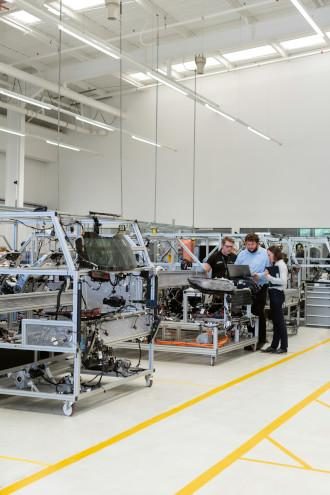[Source](https://unsplash.com/@thisisengineering/)
- [](https://interfaithsustain.com/water-resilience/)
## [For Businesses, A Water Sustainable And Resilient Premises Should Be A No-Brainer](https://interfaithsustain.com/water-resilience/)
- [](https://interfaithsustain.com/sustainable-bedding/)
## [Sleeping Soundly With A Clear Conscience In Sustainable Bedding](https://interfaithsustain.com/sustainable-bedding/)
- [](https://interfaithsustain.com/sustainability-jobs/)
## [Today’s Rapid Expansion In Sustainability Jobs](https://interfaithsustain.com/sustainability-jobs/)
The third of the three strategies involves focusing on a specific demographic in order to create a competitive advantage. This strategy requires a company to focus on making its products appeal to one or two types of customer. By focusing on those types of customer, companies are able to profit more from those specific groups of people.
### Sustainable Advantages
While competitive advantages can help a company make more profits, there isn’t much stopping other companies on the market from doing the same thing. That’s where an advantage being sustainable comes in.
A **sustainable advantage** is one that is hard to replicate, so other competitors on the market are unable to catch up. There are many ways in which a company can make their advantages sustainable. An article in the [Harvard business Review](https://hbr.org/1986/09/sustainable-advantage) about sustainable competitive advantage details some examples of them.
## Religious Sustainable Advantages
There are a growing number of companies that are carving out their place in the **religious sustainability** marketplace by creating products that appeal to religious dietary practices and sensitivity to the Earth.
[A Guardian article from 2014](https://www.theguardian.com/lifeandstyle/2014/may/18/halal-food-uk-ethical-organic-safe) highlights a number of food providers that are providing food that meets Muslim dietary standards, i.e. Halal, while also doing so in a sustainable and ethical way, such as the [Willowbrook Farm](https://www.willowbrookfarm.co.uk). In the Jewish world, companies like [Grow and Behold](https://www.growandbehold.com) and [Kol Foods](https://kolfoods.com/) are providing Kosher pasture-raised meat.
More and more religious consumers are demanding sustainable, ethical food that fits with their religious values. This expanding market is a wonderful opportunity for producers to pursue a competitive advantage that is good for people and planet alike.
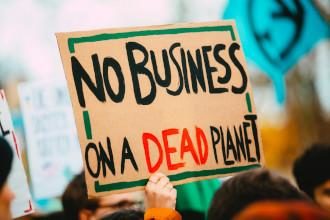[Source](https://unsplash.com/@markusspiske/)
### How to Make a Competitive Advantage Sustainable
One way suggested is through gaining superior access to resources. By finding easier ways to access the resources needed to create a product a company can make their products at a low cost and therefore lower their prices. This allows a company to maintain a lower price on their products without fear of their competition matching their prices.
Another way they suggest making a competitive advantage sustainable is through having better technology and methods for production. If a company is able to figure out a method of producing goods that allows it to produce more or higher quality goods for cheaper, they can patent that method, to prevent their competition from copying it. This allows a company to gain a competitive advantage based around differentiation or cost leadership that is also sustainable.
## Environmental Sustainability Provides Sustainable Competitive Advantage
Sustainable competitive advantages don’t necessarily have to only benefit businesses. Converting companies to more environmentally sustainable business practices can also help create a sustainable competitive advantage.
As the need to [solve environmental problems](https://interfaithsustain.com/environmental-sustainability/) becomes more and more drastic, many people are calling on companies to abandon their unsustainable practices in order to adopt more environmentally friendly business tactics. What many people don’t realize, is that by conducting business more environmentally, businesses can achieve some sustainable competitive advantages.
### Appealing to The Environmentally Conscious Customers
One of the more obvious competitive advantage to come from being environmentally friendly, is appealing to customers who care about the environment. A recent study done by [GreenPrint](https://www.businesswire.com/news/home/20210322005061/en/GreenPrint-Survey-Finds-Consumers-Want-to-Buy-Eco-Friendly-Products-but-Don%E2%80%99t-Know-How-to-Identify-Them) shows that 78% of customers are more likely to buy products and services advertising themselves as environmentally friendly.
While it may seem like a business only needs to brand its services as green in order to target certain customers, the same survey found “53% of Americans never or only sometimes believe such claims. To trust a company statement, 45% of Americans say they need a third-party validating source”.
Therefore, a company cannot achieve a competitive advantage by simply putting a marketing focus on the large group of people who care about the environment. They must actually deliver on their claims rather than greenwashing their brand.
#### Getting Certified as a Green Business
An article in [Waste Advantage Magazine](https://wasteadvantagemag.com/5-ways-to-tell-if-a-product-is-really-eco-friendly/) lists some of the certifications a company can get for being an environmental business. Some examples of these are the Forest Stewardship Council, USDA Organic Seal, Green Seal, and Energy Star.
If a business could be successful in getting some of these certifications in a way that other businesses might not be in a position to do, such as by having access to greener technology, they would then be able to gain a sustainable competitive advantage.
Companies can use the strategy of making their marketing target the type of customer who cares about the environment. If they can make their products and services in a way that is environmental and hard to replicate, they could achieve a sustainable competitive advantage.
## Sustainable Competitive Practices
Committing to to more environmentally friendly business practices can also be strategic for achieving business growth. By using resources more efficiently a company can the benefits of competitive advantages based around both cost leadership and differentiation.
If goods and services are produced sustainably, than they will allow for resources to be produced more easily and with greater quality. For example, a cotton farm in Egypt called [Sekem](https://hbr.org/2013/03/making-sustainability-profitable) committed to the innovation of being Egypt’s first organic cotton farm.
Overtime, as Sekem began to produce cotton sustainably, their non-industrial techniques were successful in improving the dessert soil quality. This turned the once arid dessert into farmable land with incredible value.
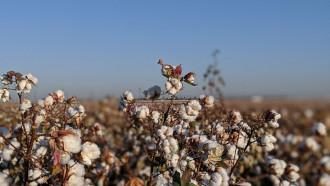[Source](https://unsplash.com/@fredinlimbo/)
### The Advantage of Making Products Sustainably
By using the green innovation of organic farming, **Sekem** was able to give themselves a significant leg-up in the Egyptian cotton market. By creating farmable land with better nutrient value, Sekem was able to gain benefits by “lowering the farm’s costs, improving average yields by almost 30%, and producing a raw cotton that was more elastic than its conventionally grown [counterpart](https://hbr.org/2013/03/making-sustainability-profitable)“.
This advantage gave Sekem the ability to make their brand the cheapest on the market through cost leadership. It also allowed them to use differentiation to make superior quality cotton to their other competitors on the market.
This is also a good example of an advantage that is sustainable as well as competitive. Because it is impossible to [improve soil quality](https://interfaithsustain.com/soil-contamination/) in such a way overnight, Sekem’s competitors will have a hard time replicating their techniques. This allows them to sustain their lead in the markets for longer.
*\* Featured image [source](https://unsplash.com/@karenuppal/)*
**Categories:** Blog on Faith and Ecology
**Tags:** Environmental Sustainability
---
### [Noetic Science Attempts to Understand Consciousness](https://interfaithsustain.com/noetic-science/)
**Published:** January 19, 2022
**Author:** ICSD
**Excerpt:** Aryeh Ronay - "Noetic Science" appears to be a paradoxical term. The term "noetic" refers to our subjective experience, while science is the study of objective phenomenon. Nevertheless, noetic science exists to explore the subjective world, to understand and gain knowledge about the subtle reality of consciousness.
**Content:**
Table of Contents
Table of Contents
- [The Paradox of Noetic Science](#aioseo-the-paradox-of-noetic-science-1)
- [What is Consciousness?](#aioseo-what-is-consciousness-3)
- [The Institute of Noetic Sciences](#aioseo-the-institute-of-noetic-sciences-9)
- [Noetic Ecology](#aioseo-noetic-ecology-15)
- [Noetic Scientists in Popular Culture](#aioseo-noetic-scientists-in-popular-culture-26)
- [Noetic Science Investigates Life After Death](#aioseo-noetic-science-investigates-life-after-death-29)
- [Noetic Science and Religion](#aioseo-noetic-science-and-religion-31)
- [Religious Arguments AGAINST Noetic Sciences](#aioseo-religious-arguments-against-noetic-sciences-32)
- [Religious Argument FOR Noetic Sciences](#aioseo-religious-argument-for-noetic-sciences-38)
- [Meditation as a Noetic Science](#aioseo-meditation-as-a-noetic-science-41)
- [Is Noetic Science Real?](#aioseo-is-noetic-science-real-45)
- [What is the main focus of noetic science?](#aioseo-what-is-the-main-focus-of-noetic-science-49)
- [How does the Institute of Noetic Sciences (IONS) define consciousness?](#aioseo-how-does-the-institute-of-noetic-sciences-ions-define-consciousness-51)
- [What is noetic ecology and what does it aim to achieve?](#aioseo-what-is-noetic-ecology-and-what-does-it-aim-to-achieve-53)
- [How is meditation related to noetic science?](#aioseo-how-is-meditation-related-to-noetic-science-55)
- [Is noetic science considered a legitimate field of study?](#aioseo-is-noetic-science-considered-a-legitimate-field-of-study-57)
## The Paradox of Noetic Science
*By Aryeh Ronay* – “**Noetic Science**” appears to be a paradoxical term. The term “noetic” refers to our subjective experience, while science is the study of objective phenomenon. Nevertheless, noetic science exists to explore the subjective world, to understand and gain knowledge about the subtle reality of consciousness.
### What is Consciousness?
Dr. Cassandra Vieten, former director of research at the [Institute of Noetic Sciences](https://www.noetic.org/) (IONS) describes **consciousness** in the following ways:
On one level, consciousness is simply awareness — how people perceive, interpret, and direct their [attention](https://www.psychologytoday.com/us/basics/attention) and [intention toward their environment](https://interfaithsustain.com/environmental-awareness/). Collective consciousness is how a group (an institution, a society, a species) perceives, attends to, and makes meaning of the world. In some formulations, consciousness goes beyond awareness and includes everything we perceive and experience, even at the [subconscious](https://www.psychologytoday.com/us/basics/unconscious) level. In its largest, most universal sense, consciousness has been referred to as a “milieu of potential,” the shared ground of being from which all experiences and phenomena arise and eventually return.
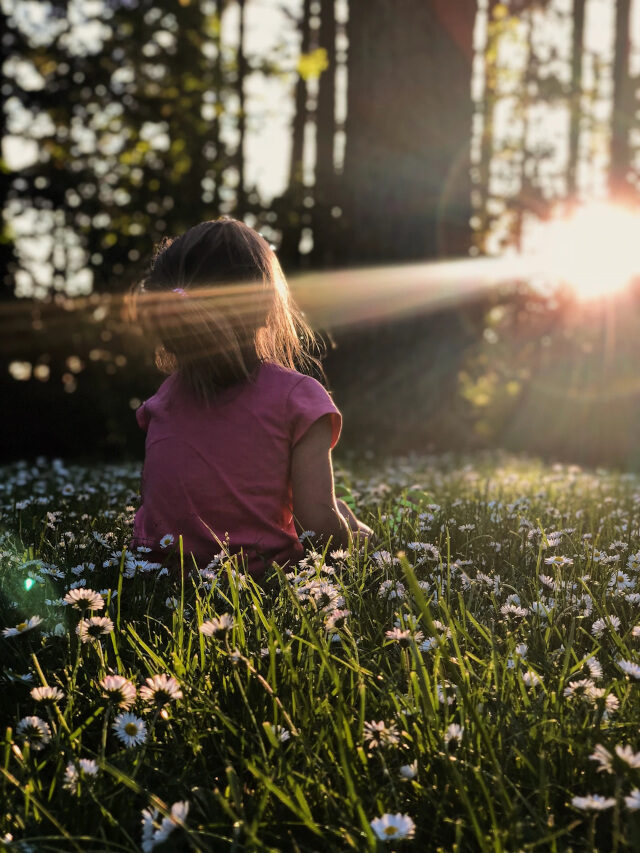[Source](https://unsplash.com/@melissaaskew/)
In other words, consciousness can exist at multiple levels: The personal, collective, subconscious and universal. Studying consciousness is no simple matter, but the Institute of Noetic Sciences is no simple organization.
## The Institute of Noetic Sciences
**IONS** was founded by Dr. Edgar Mitchell, the 6th person to walk on the moon. As we was traveling back to Earth, “he was enveloped by a profound sense of universal connectedness” and [he described ](https://noetic.org/about/origins/)the following:
I realized that the story of ourselves as told by science—our cosmology, our religion—was incomplete and likely flawed. I recognized that the Newtonian idea of separate, independent, discrete things in the universe wasn’t a fully accurate description. What was needed was a new story of who we are and what we are capable of becoming.
This led Dr. Mitchell to [develop IONS](https://noetic.org/about/origins/) **“**to reveal the interconnected nature of reality through scientific exploration and personal discovery.” Experiments conducted by IONS focus on [topics such as](https://noetic.org/science/experiments/) how consciousness can affect the physical world, how minds can gain information from beyond the physical world and the powers of meditation.
- [](https://interfaithsustain.com/ecological-model/)
## [The Ecological Model Is Used To Improve Health Programs](https://interfaithsustain.com/ecological-model/)
- [](https://interfaithsustain.com/ecological-restoration/)
## [The Importance of Ecological Restoration](https://interfaithsustain.com/ecological-restoration/)
- [](https://interfaithsustain.com/ecology-and-environment/)
## [Understanding Ecology and The Environment](https://interfaithsustain.com/ecology-and-environment/)
## Noetic Ecology
**Noetic ecology** is a field of Noetic science focused on exploring and enhancing the relationship between humanity and nature. The [Organization for Noetic Ecology](https://noeticecology.org/about/what-is-noetic-ecology/) (ONE) explains their work in the following manner:
***Noetic ecology*** is a ‘practice’, a ‘field’ and a ‘movement’.
As a *dedicated practice*, it is essentially the art of **noticing**: the how and what we pay attention to in nature. It is a fundamental appreciation that the quality of attention determines not only the quality of our experience (and the benefits derived from our nature interactions), but is capable of profoundly changing the world we perceive.
[Source](https://unsplash.com/@davidmarcu/)
As an open *field of learning*, it applies transdisciplinary approaches to rigorously explore the full spectrum of human-nature experience. Utilising scholarly inquiry, it draws on cross-cultural science and wisdom traditions to further understandings of interconnectedness and how it can best guide and support regenerative living.
As an inspired *philosophical movement*, noetic ecology invites ‘active hope’ through ‘delicate activism’: cultivating receptivity, awareness and compassion as a basis for authentic action. It provides practices that allow us to see the world with new eyes and to take a fresh view of realities different to our own. It focuses on what inspires us and what we can tangibly do in our lives. It invites us to utilise the power of consciousness – through *intention* and *attention* – to generate deep *connection* with nature, people, self and our greater source of purpose. As agents of change, it requires us to embody what we wish to see – from the inside out.
Noetic Ecology is about reconnecting with nature in the world and in ourselves. Bridging the inner and outer worlds, noetic ecology facilitates inner and outer healing.
### Noetic Scientists in Popular Culture
Noetic Science gained popularity in 2009 when it was featured in Dan Brown’s blockbuster novel, *The Lost Symbol.*
[NPR wrote](https://www.npr.org/templates/story/story.php?storyId=113676181) about how the President of IONS, Marilyn Schlitz, found out about *The Lost Symbol*: “Waking up one morning to find yourself a fictional character in a best-selling novel has taken a little adjusting to,’ she says, laughing.”
#### Noetic Science Investigates Life After Death
Schlitz emphasized that the book exaggerated the in saying that IONS had found conclusive scientific proof for the power of prayer, life after death, etc. Nevertheless, she pointed out that those are the very crucial questions being investigated at IONS.
## Noetic Science and Religion
### Religious Arguments AGAINST Noetic Sciences
There is criticism of the noetic sciences on a few Christian websites. For example, [BibleAsk comments ](https://bibleask.org/noetic-science-supported-bible/)that “the Bible teaches that truth should be based and tested by the law of God and the testimony of the prophets and not by fleeting feelings and impressions” ([Isaiah 8:20](https://bible.bibleask.org/#/search/Isaia%208:20/KJV)).
Similarly, [CompellingTruth critiques the Noetic sciences](https://www.compellingtruth.org/noetic-science.html) in the following manner:
Noetic science delves into the areas of telepathy, telekinesis, precognition, and self-healing. In spite of the exhaustive studies into these areas, where they have been found to be unscientific at best and outright fiction at worst, people continue to seek knowledge through them. This is little more than the ancient practice of Gnosticism, which is seeking a higher knowledge, not from the Bible, but acquired on some mystical higher plane of existence.
These websites criticize the noetic sciences for seeking truth through the subjective experiences of consciousness instead of through the Bible and the prophets.
One could argue in response that the Bible and prophets accessed that very same “mystical higher plane of existence” that Noetic sciences are directed towards. The question would then be, are we contemporaries able to access those same “mystical higher planes” or not?
### **Religious Argument FOR Noetic Sciences**
On [IONS page about The Future of Meditation Research Project](https://noetic.org/science/fomr-paper/), they quote from the Dalai Lama about the power for meditation to transform consciousness:
Until recently, scientists believed that after adolescence, the hardware of the human brain becomes relatively unchangeable. But new discoveries in neurobiology have uncovered a remarkable potential for changeability in the human brain even in adults as old as I am. At the Mind and Life Conference in Dharamsala in 2004, I learned of the growing subdiscipline of neuroscience dealing with this question, called “brain plasticity.” This phenomenon suggests to me that traits that were assumed to be fixed – such as personality, disposition, even moods – are not permanent and that mental exercises or changes in the environment can affect these traits. Already experiments have shown that experienced meditators have more activity in the left frontal lobe, the part of the brain associated with positive emotions such as happiness, joy, and contentment.
### Meditation as a Noetic Science
IONS see their work as furthering and strengthening the meditation tradition of **Buddhism** by giving it a scientific foundation.
They explain how “the Buddha himself argued that if one wishes to avoid certain types of results, one needs to change the conditions that give rise to them. So, if one changes the conditions of one’s state of mind (which normally gives rise to particular habitual patterns of mental activity), one can change the traits of one’s consciousness and the resulting attitudes and emotions.”
In other words, as the Buddha pointed out over 2,000 years ago, [meditation](https://interfaithsustain.com/environmental-wellness/) has the power to change our mind and change our lives.
### Is Noetic Science Real?
The jury is still out. Some, like Stephen Barrett, consider the organization a “quack” for its fringe theories. Other researchers take Noetic science more seriously.
Is noetic science real? Can we change reality through our minds? There’s only one way to find out, so let’s put our heads together and do out best to change the world.
*\* Featured image [source](https://unsplash.com/@samaustin/)*
**Categories:** Blog on Faith and Ecology
**Tags:** Consciousness, Noetic Science
---
### [Save Rain With A Rain Water Barrel](https://interfaithsustain.com/rain-water-barrel/)
**Published:** February 28, 2022
**Author:** ICSD
**Excerpt:** Harry Cooper - Due to poor water quality, as a result of pollution and overuse of freshwater supplies, the drinkable stored water in the world is declining rapidly. Because of this, people are constantly looking for ways to conserve water, and one way to do this is to collect rainwater in a rain barrel.
**Content:**
Table of Contents
Table of Contents
- [Rainwater Harvesting](#aioseo-rainwater-harvesting-2)
- [Where Has All Our Water Gone?](#aioseo-where-has-all-our-water-gone-4)
- [How Much Water Do We Have?](#aioseo-how-much-water-do-we-have-5)
- [Water Pollution](#aioseo-water-pollution-7)
- [Wasting Water](#aioseo-wasting-water-11)
- [Water For Landscaping and Gardening](#aioseo-water-for-landscaping-and-gardening-14)
- [Rain Water Barrels](#aioseo-rain-water-barrels-22)
- [How Does a Rain Barrel Work?](#aioseo-how-does-a-rain-barrel-work-23)
- [Using A Rain Water Barrel](#aioseo-using-a-rain-water-barrel-26)
- [The Benefits of Using a Rain Barrel](#aioseo-the-benefits-of-using-a-rain-barrel-28)
- [The Downside of Rain Barrels](#aioseo-the-downside-of-rain-barrels-32)
- [Using The Water In Your Rain Water Barrel](#aioseo-using-the-water-in-your-rain-water-barrel-35)
- [Religion and Rain Water Barrels](#aioseo-religion-and-rain-water-barrels-38)
*By Harry Cooper* – Due to poor water quality, as a result of pollution and overuse of freshwater supplies, the drinkable stored water in the world is declining rapidly. Because of this, people are constantly looking for ways to conserve water, and one way to do this is to collect rainwater in a rain water barrel.
## Rainwater Harvesting
Rainwater is an important resource that often goes unused, and **rainwater harvesting** provides households and businesses with an extra supply of water that can be used for watering plants or landscaping. By installing a rain barrel system correctly, we can start harvesting rainwater and making use of excess water that would normally be storm-water runoff.
## Where Has All Our Water Gone?
### How Much Water Do We Have?
Even though [70%](https://www.worldwildlife.org/threats/water-scarcity) of the Earth is covered in water, very little of that water is actually available for us to drink. Of that 70%, only 3% is drinkable freshwater, and only 1% is not frozen in glaciers. Since there is already so little drinkable water on the planet, it is important we do everything we can to protect and conserve it. However, globally we are doing just the opposite as pollution and water wasting is depleting our already strained resource.
### Water Pollution
Since water is such a versatile substance it is used almost every where from homes to businesses to factories. When water gets used in this way it often picks up a lot of different chemicals and substances that can be [incredibly harmful](https://www.nrdc.org/stories/water-pollution-everything-you-need-know) both to the environment and to humans.
These substances can range anywhere from human waste to radioactive substances. When water is not treated properly, these substances can get into many different sources of freshwater.
This pollution can harm animals and cause damage to ecosystems. Not only that, but they can also contaminate drinking water sources such as rivers, lakes, and groundwater making them virtually unusable. Thus [water pollution](https://interfaithsustain.com/types-of-water-pollution/ "water pollution") shrinks our already scarce freshwater supply.
- [](https://interfaithsustain.com/water-trading/)
## [Water Trading Is Used to Combat Global Water Scarcity Due To Climate Change](https://interfaithsustain.com/water-trading/)
- [](https://interfaithsustain.com/urban-runoff/)
## [Urban Runoff Pollutes Our Rivers](https://interfaithsustain.com/urban-runoff/)
- [](https://interfaithsustain.com/ocean-cleanup/)
## [Innovative Technology For An Ocean Cleanup](https://interfaithsustain.com/ocean-cleanup/)
### Wasting Water
Water is an incredibly scarce resource. However in the developed world where clean drinkable water is available by turning on the tap, it can be hard to be frugal about the water we use.
[Overusing water](https://www.doh.wa.gov/portals/1/Documents/pubs/331-450.pdf) in the developed world can put serious strain on local water sources. Sources of water can become completely used up and completely reshape the surrounding environment, as well as potentially leave us with less water to live with in the future. Overuse of water can occur in homes and businesses in many forms. These include long showers, leaving the faucet on, and even landscaping and gardening.
#### Water For Landscaping and Gardening
Lawns and gardening require large amounts of water to maintain. [Not only](https://psci.princeton.edu/tips/2020/5/11/law-maintenance-and-climate-change) does landscaping have the environmental impact of using lots of water, but they also use lots of harmful pesticides and lawn equipment such as mowers and leaf blowers that usually run on fossil fuels and emit harmful greenhouse gasses. Many people argue that landscaping is a waste of water because it has so many consequences and has very little benefits other than aesthetic. However, when done properly, landscaping can have some environmental benefits.
When gardening and landscaping don’t use harmful techniques such as pesticides or fossil fuel powered equipment, they can become incredibly [environmentally beneficial](https://usgreentechnology.com/environmental-benefits-gardening/). Gardens and lawns can take in carbon from the atmosphere and turn it into oxygen, prevent soil erosion, replenish the soil with nutrients and provide food and shelter for certain bugs and small animals.
[Source](https://unsplash.com/@jupp/ "Source")
One of the most important things in making sure your garden is helping the planet rather than being an environmental nuisance is making sure you’re using water efficiently. This can be done by making watering schedules, planting only native plants, or many other techniques but, one of the most beneficial tools to the eco-friendly landscaper is a rain barrel that can harvest rainwater, which can then be put to good use.
## Rain Water Barrels
### How Does a Rain Barrel Work?
**Rain water barrels** are [large barrels](https://getbusygardening.com/how-do-rain-barrels-work/) with open tops, designed to collect rain water from gutters. Rain barrels sit on stands normally made from concrete blocks so that the brass spigot used to release the rainwater can be accessed easier.
When it rains, the rain barrel fills up. Some rain barrels have more sophisticated gutter attachments that sense when the rain barrel is full and stop filling it, but most rain barrels have overflow valves at the top of the rain barrel that let out overflow water when it’s full. When there is enough rainwater in the rain barrel, a standard garden hose can be attached the spigot at the bottom, or you can get the water straight from the spigot and put it into a watering can or other container.
### Using A Rain Water Barrel
Since so much water goes to waste in homes and businesses in the developed world, many people look to find new sources of usable water to fulfill their water needs, and it’s no surprise that rain barrels have become so popular. It’s estimated that the average roof can collect [600](https://www.worldwildlife.org/blogs/sustainability-works/posts/saving-water-and-money-with-rain-barrels) gallons of water for every inch of rain. This rainwater normally falls of the roof and runs down a storm drain. However, using household rainwater harvesting techniques such as a rain barrel, we can start using the rain as a viable supplement to our dwindling freshwater supply.
## The Benefits of Using a Rain Barrel
Rain barrels reduce the amount of freshwater we use from permanent sources such as lakes or groundwater, but using less water in this way can also have several [other benefits](https://homeguides.sfgate.com/purposes-rain-barrels-78351.html). By collecting water in rain barrels, you could end up saving hundreds of gallons of water that would normally come from the tap depending on the season and how rainy it is. Saving that much water can help lower your water bill and save you lots of money.
Rain barrels can also help reduce storm-water run off. While water flowing down storm drains and returning to a body of water may seem like a natural process, storm-water often picks up pesticides, heavy metals, fertilizers, and other harmful chemicals when it flows across the ground making storm-water runoff a prominent source of water pollution. When we collect rainwater in rain barrels, every gallon of water that goes into a rain barrel is one that doesn’t mix with toxic substances on the ground and flow into water sources.
Another benefit of rain barrels is that they can often be better for watering plants. Tap water often contains inorganic matter and fluoride which can be harmful to some plants, whereas rainwater doesn’t contain these additives and is much healthier for gardens.
## The Downside of Rain Barrels
While rain barrels are a great way to save water and help the planet, it does have one major [downside](https://www.homestead.org/ecology/pros-and-cons-of-owning-a-rain-barrel-on-the-homestead/): rainwater isn’t clean enough for drinking. While there are other things to do with water other than drink it, we do mainly use water to drink or to bathe in, and the water in rain barrels just isn’t a good enough quality for that.
While it is possible to install a filter into rain barrels to make the water drinkable, they are often costly and hard to install. So while installing a rain barrel can be a great way to supplement water, and in the rainy season they do indeed fill up fast, it’s important to know what you can do with the water in you’re rain barrel.
## Using The Water In Your Rain Water Barrel
While rain water isn’t clean enough to be drunk, it still has a lot of good [household uses](https://www.installitdirect.com/learn/how-to-use-water-from-rain-barrels/). Water collected in rain barrels can be used to water gardens, potted plants, lawns, or other plants. However, it is important to note that water collected in rain barrels should only be used on vegetable gardens if the water only goes in the soil and not on the plants.
This water can also be used for washing cars and other vehicles. Additionally, the water can be used to wash patios, windows, garden furniture and the sides of your house.
## Religion and Rain Water Barrels
Religious people who want to help communities are recognizing the importance of rain barrels for preventing flooding and collecting fresh water. For example, the organization Faith in Place gives away rain barrels to Chicago [communities prone to flooding](https://interfaithsustain.com/flash-floods-and-our-world/ "communities prone to flooding") because of their [lack of green spaces](https://interfaithsustain.com/sustainable-cities/ "lack of green spaces") to naturally absorb water. According to [an article on WTTW](https://news.wttw.com/2016/08/24/rain-barrels-fight-flooding-distributed-underserved-areas), “by collecting rainwater from a building’s downspout, the barrels divert water that would normally flow into streets, sidewalks and the city’s combined sewer system, where overflows during heavy storms cause mixtures of storm-water and untreated sewage to be dumped into the Chicago River”.
Rain doesn’t have to fall at the level of [Noah’s flood](https://interfaithsustain.com/noah-and-the-flood/ "Noah's flood") to cause destruction. Heavy rain fall in an urban area with poor infrastructure can be disastrous. Faith Plan’s distribution of rain barrels in these communities shows how faith communities can support the most vulnerable communities with sustainable solutions.
*\* Featured image [source](https://unsplash.com/@harrycunningham/ "source")*
**Categories:** Blog on Faith and Ecology
**Tags:** Floods, Water Pollution
---
### [How To Reduce What We Buy And Consequently What We Waste](https://interfaithsustain.com/how-to-reduce/)
**Published:** April 1, 2022
**Author:** ICSD
**Excerpt:** Harry Cooper - It's no secret that many of the things we do in our everyday lives have a tremendous impact on the health of the environment. While it may seem very small in comparison to a global scale, the amount of things we use in our everyday lives cause a tremendous amount of pollution, and negative environmental impact.
**Content:**
Table of Contents
Table of Contents
- [Living a More Environmentally Healthy Life](#living-a-more-environmentally-healthy-life)
- [Reduce What You Buy!](#reduce-what-you-buy)
- [Reduce Food](#reduce-food)
- [Where Does Food Waste Come From?](#where-does-food-waste-come-from)
- [Food Waste and the Environment](#food-waste-and-the-environment)
- [Reduce Plastic](#reduce-plastic)
- [Reducing Plastic Waste](#reducing-plastic-waste)
- [Reduce Paper](#reduce-paper)
- [Reduce and Religion](#reduce-and-religion)
- [What are practical steps I can take to live a more environmentally healthy life?](#)
- [How can I effectively reduce food waste at home?](#)
- [Why is reducing plastic waste important, and what are some alternatives to disposable plastic products?](#)
- [How does paper waste impact the environment, and what are sustainable practices to reduce it?](#)
- [In what ways can religious teachings support environmental conservation efforts?](#)
*By Harry Cooper* – It’s no secret that many of the things we do in our everyday lives have a tremendous impact on the health of the environment. While it may seem very small in comparison to a global scale, the amount of things we use in our everyday lives cause a tremendous amount of pollution, and negative **environmental impact**.
## Living a More Environmentally Healthy Life
In today’s society we tend to consume more goods than we have ever done in the past. While some people see this as a sign of economic prosperity, the creation and disposal of such enormous amounts of goods has some very grave consequences for the environment. Choose sustainable living, [reduce your use of non-renewable resources](https://interfaithsustain.com/renewable-and-non-renewable-resources/ "reduce your use of natural resources"), reduce waste or aim for zero waste and have a positive impact on the environment.
## Reduce What You Buy!
Fortunately there are many ways in which we can cut down on the things we use and household waste, and still live comfortably. By putting even just a little bit of thought and awareness into how we live our day to day lives, we can start working to reduce what we buy and consequently reduce waste. Think about buying secondhand clothes or products at thrift stores to reduce production cycles, save energy and save money. Buy foods when needed in quantities that you really need for your meal plan. Convert to using paperless bills, tap water, old clothes, digital subscriptions and mason jars. Repair items instead of just throwing them in the trash. Most importantly, learn to differentiate between what you need and what you want!
## Reduce Food
Food is necessary for everyone on Earth to survive. But even with food being such an essential product, we have found that massive amounts of food go uneaten, unused, and completely wasted every year. The [UN](https://www.unep.org/thinkeatsave/get-informed/worldwide-food-waste) estimates that half of all fruits and veggies are thrown out each year. This has made **food waste** one of the biggest challenges in tackling waste issues.
### Where Does Food Waste Come From?
With so many people in the world facing [food insecurity](https://interfaithsustain.com/food-production/ "food insecurity"), it can be hard to understand how we can let so much food go to waste. As it turns out, there are a variety of different [sources](https://foodprint.org/issues/the-problem-of-food-waste/#:~:text=Food%20is%20lost%20or%20wasted,at%20stores%20and%20in%20homes.) where food is wasted. Grocery stores overstock displays with food products that end up going bad. Restaurants give large portion sizes that cause customers to leave food on their plates.
But the largest amount of wasted food comes from residential homes. This is often due to improper planning, overbuying during grocery shopping, and misinterpreting food labels that lead to people having an abundance of spoiled food which is thrown into the trash.
### Food Waste and the Environment
Reducing waste caused by food is not only important because there are so many people living with food insecurity, but also because it can have some negative impacts on the environment. Most food that ends up being thrown out ends up in a [landfill](https://sciencing.com/effects-landfills-environment-8662463.html).
While food decomposes naturally, in landfills food often decomposes without oxygen. When organic matter decomposes in this way it releases methane, an incredibly potent greenhouse gas.
One of many good ways to reduce waste and stop food scraps from ending up in a landfill is by [composting](https://www.epa.gov/recycle/composting-home#:~:text=Benefits%20of%20Composting,-Enriches%20soil%2C%20helping&text=Reduces%20the%20need%20for%20chemical,and%20lowers%20your%20carbon%20footprint.). By putting your old food in a compost pile, and letting it decompose naturally, not only do you end up with a natural fertilizer, but you reduce the amount of food going to landfills.
- [](https://interfaithsustain.com/waste-free-living/)
## [Waste Free Living – The Benefits of Living With a Conscience](https://interfaithsustain.com/waste-free-living/)
- [](https://interfaithsustain.com/how-to-go-zero-waste/)
## [Everything You Need To Know On How To Go Zero Waste](https://interfaithsustain.com/how-to-go-zero-waste/)
- [](https://interfaithsustain.com/bokashi-composting/)
## [How Bokashi Composting Turns Waste into a Valuable Resource](https://interfaithsustain.com/bokashi-composting/)
## Reduce Plastic
One of the most notable things that gets wasted on a daily basis is [plastic products](https://interfaithsustain.com/single-use-plastic-threats-from-awareness-to-action/ "plastic products") such as plastic wrap, plastic bags, and plastic bottles. While these products may seem like everyday items, they have a detrimental environmental impact when they’re thrown out and wasted.
### Plastic and the Environment
Plastic has a [tremendous impact](https://ecologycenter.org/plastics/ptf/report3/#:~:text=Manufacturing%20PET%20resin%20generates%20more,%2C%20benzene%29%20than%20manufacturing%20glass.&text=PET%20bottle%20generates%20more%20than,be%20hazardous%20to%20workers%2C%20too.) on the environment at every stage of its life. When it is created it releases harmful gases, when it is used it often winds up as litter, but probably the most shocking effect of plastic is what happens when it starts to break down.
### Microplastics
When plastic winds up in the environment, especially ocean environments, it becomes exposed to natural forces such as sunlight, wind, and waves that break it down into tinier pieces of plastic called [microplastics](https://www.nationalgeographic.org/encyclopedia/microplastics/). These microplastics are not only incredibly toxic, but also small enough for animals of all sizes to swallow undetected. Not only do toxic microplastics end up killing animals, but they also find their way into sea food that humans end up eating.
[Source](https://unsplash.com/@shots_of_aspartame/ "Source")
#### Reducing Plastic Waste
One of the more well know solutions to cutting down on plastic is by recycling, but recycling is very energy intensive, and it can be hard to find a recycling bin when you need one. Luckily there are plenty of [reusable products](https://learn.eartheasy.com/guides/the-best-eco-friendly-alternatives-for-the-plastic-in-your-life/) that can replace some of their more wasteful plastic alternatives. such as reusable containers, a reusable water bottle, reusable cutlery, and reusable bags, along with many other products. Using reusable products, by bringing your own containers and using cloth bags can greatly help **reduce waste**.
## Reduce Paper
Paper is another product that gets wasted all too often. Due to junk mail, printing errors, packaging waste, and countless other unnecessarily excessive uses of paper, paper waste has become a serious problem. Paper accounts for nearly [26%](https://www.theworldcounts.com/stories/paper-waste-facts) of all waste in landfills, however a more notable environmental concern that paper causes is deforestation.
### Deforestation
The more paper we throw away, the more paper we use, and in turn the more paper we need to produce. Producing paper would not be such a problem if it didn’t involve cutting down so many trees, but researchers estimate that paper production is responsible for 10% of all [deforestation](https://www.aiche.org/chenected/2016/10/sustainability-challenges-paper-industry#:~:text=promote%20environmental%20sustainability%3F-,Deforestation,12%25%20of%20greenhouse%20gas%20emissions.&text=The%20Union%20of%20Concerned%20Scientists,are%20the%20other%20major%20culprits.).
[Source](https://unsplash.com/@shots_of_aspartame/ "Source")
**Deforestation** is used for clearing land for supporting local farmers and making wood products such as paper. [Deforestation is one of the biggest environmental problems](https://interfaithsustain.com/what-causes-deforestation/ "Deforestation is one of the biggest environmental problems") the world is facing. Deforestation accounts for around 12% of all greenhouse gas emissions in the world, and is destroying hundreds of ecosystems at an alarmingly rapid pace. It is estimated that over [80,000 acres](https://www.scientificamerican.com/article/earth-talks-daily-destruction/#:~:text=Pinning%20down%20exact%20numbers%20is,day%20on%20top%20of%20that.) of forest are lost a day.
### Reducing Paper Waste
Similar to plastic waste, there are many more sustainable products that we can use to replace the paper products we use in our everyday lives. By replacing paper towels with cloth napkins or paper cups with reusable drink containers we can greatly reduce the waste we produce from using so much paper.
[Source](https://unsplash.com/@maksimshutov/ "Source")
## Reduce and Religion
Amber Khan describes in [Wisconsin Muslim Journal](https://wisconsinmuslimjournal.org/https-americanmuslimtoday-com-details-4e744bde-7721-42b9-862c-5bb48891f45a/) how Islamic tradition provides inspiration for reducing waste. Khan details how the classic concept of “**reduce, reuse, recycle**” has strong foundations in Islam:
REDUCE: We are encouraged to reduce our use of water (Abu Dawud), even during the spiritual act of purification, and reduce our waste: “Eat and drink but do not waste…” (Quran 7:31).
REUSE: We are encouraged to re-purpose old items. It is [reported](https://muslimmatters.org/2011/01/14/make-your-deen-green-muslims-and-their-responsibility-to-the-environment/) that Muslim potters heated their kilns by burning fruit husks, fruit stones, pine cones and vegetable waste; millers ground their corn in mills turned by the wind; and windmills and animals were used to lift water into irrigation channels. Additionally, we are encouraged to use items until they can no longer be used. It is reported that Prophets repaired shoes and urged Muslims to wear-out clothes until they had patches on them.
RECYCLE: What may be waste to one may be useful to another. An example is donating excess food or sharing it with others rather than throwing it away. The Prophet(s) encouraged companions to share food with their neighbors (al-Albani).
*\* Featured image [source](https://pixabay.com/users/shotrav-14284910/ "source")*
**Categories:** Blog on Faith and Ecology
**Tags:** Pollution, Waste
---
### [Bamboo Yarn: The Renewable, Sustainable Choice](https://interfaithsustain.com/bamboo-yarn/)
**Published:** April 25, 2022
**Author:** ICSD
**Excerpt:** Marcelo Beilin - If you're looking for a renewable, sustainable option to cotton or wool, bamboo yarn is a great choice. Bamboo is one of the most environmentally friendly materials available, and it makes a beautiful, silky soft yarn. It grows quickly and doesn't require much water or fertilizer.
**Content:**
Table of Contents
Table of Contents
- [What Is Bamboo Yarn?](#aioseo-what-is-bamboo-yarn-3)
- [The Benefits of Bamboo Yarn](#aioseo-the-benefits-of-bamboo-yarn-5)
- [Bamboo Compared to Other Materials](#aioseo-bamboo-compared-to-other-materials-8)
- [The Downside of Bamboo Yarn in Consumer Products](#aioseo-the-downside-of-bamboo-yarn-in-consumer-products-13)
- [How Is Bamboo Yarn Made?](#aioseo-how-is-bamboo-yarn-made-18)
- [Environmentally Friendly](#aioseo-environmentally-friendly-21)
- [Sustainable Production](#aioseo-sustainable-production-23)
- [Caring for Bamboo Fabrics](#aioseo-caring-for-bamboo-fabrics-25)
- [Religion and Bamboo](#aioseo-religion-and-bamboo-28)
- [The Legend of Maa Sita](#aioseo-the-legend-of-maa-sita-30)
- [Lord Krishna’s Flute](#aioseo-lord-krishnas-flute-32)
- [The Bamboo King Story](#aioseo-the-bamboo-king-story-34)
- [In Summary](#aioseo-in-summary-37)
*By Marcelo Beilin* – If you’re looking for a renewable, sustainable option to cotton or wool, **bamboo yarn** is a great choice. Bamboo is one of the most environmentally friendly materials available, and it makes a beautiful, silky soft yarn. It grows quickly and doesn’t require much water or fertilizer.
In this blog post, we’ll discuss the environmental benefits of bamboo yarn.
## What Is Bamboo Yarn?
Bamboo yarn is a type of yarn made from **bamboo grass fibers.** It is soft, durable and hypoallergenic. Bamboo grows very quickly, doesn’t require much water or fertilizer to grow and it’s eco-friendly and sustainable.
### The Benefits of Bamboo Yarn
Bamboo yarn has several key benefits: it is renewable, biodegradable, moisture wicking, anti-bacterial and thermal regulating.
Additionally, bamboo yarn is soft and silky, making it a great choice for garments, linens and accessories.
## Bamboo Compared to Other Materials
The **cultivation of bamboo** requires a much smaller **carbon footprint** than other materials like cotton, wool or other fibers. In addition, bamboo also doesn’t require pesticides or herbicides in order to grow. In fact, bamboo is a very efficient plant as it can grow over three feet tall in just 24 hours, making it the fastest-growing plant on Earth.
Also, bamboo fibers readily accept natural color dies without the use of additives, whereas cotton needs to be chemically processed in order to properly absorb dies (this technique is know as mercerizing cotton).
### The Downside of Bamboo Yarn in Consumer Products
[Source](https://unsplash.com/@eleonoralbasi)
The main downside of bamboo yarn is that it tends to be more expensive than other types of fibers, given its relative newness. However, the price difference is typically only a few dollars and it’s expected to come down over time with increasing economies of scale.
Additionally, bamboo yarn may not be as strong as some synthetic fibers. But overall, it’s an excellent choice for people looking for yarn that can be woven into a silky fabric that’s very comfortable to the skin.
- [](https://interfaithsustain.com/waste-free-living/)
## [Waste Free Living – The Benefits of Living With a Conscience](https://interfaithsustain.com/waste-free-living/)
- [](https://interfaithsustain.com/bamboo-straws/)
## [If You Must Use A Straw, Then Switch To Sustainable Bamboo Straws!](https://interfaithsustain.com/bamboo-straws/)
- [](https://interfaithsustain.com/how-to-go-zero-waste/)
## [Everything You Need To Know On How To Go Zero Waste](https://interfaithsustain.com/how-to-go-zero-waste/)
## How Is Bamboo Yarn Made?
Bamboo yarn is made by extracting **bamboo fiber** from the **bamboo stalk.** The bamboo stack is typically crushed and then its fibers are extracted through a process that uses natural dissolving enzymes. The fibers are then cleaned and spun into yarn.
This process is environmentally friendly and results in a product with low-carbon impact.
## Environmentally Friendly
Bamboo yarn is **environmentally friendly** and sustainable because bamboo is a [renewable resource](https://interfaithsustain.com/renewable-and-non-renewable-resources/). Bamboo grows quickly and can be easily replanted in a wide range of environments, making it a more sustainable choice than other materials such as cotton, whose growth is limited to very specific environments with the right amount of sunlight, care and water.
## Sustainable Production
There are no known negative environmental impacts associated with the production or use of bamboo yarn provided it’s produced mechanically and not chemically. Due to its very fast growth rate and low use of water, bamboo can be replanted and used over and over again in a relatively small cultivation area, resulting in minimal soil erosion during harvesting. Also, bamboo can be harvested without killing the plant and it can be re-harvested after a short few months making it an attractive renewable crop.
## Caring for Bamboo Fabrics
The best way to care for garments or linen made with bamboo yarn is to wash them in warm water using a normal cycle and then machine dry them.
Although you can hang **bamboo fabrics** to dry, you run the risk of stretching them to the point of making them permanently lose their shape due to the high yarn weight, because bamboo fibers are very heavy and flexible.
## Religion and Bamboo
There are a variety of fascinating stories about bamboo in Hinduism. Here are a few from an article on Floweraura.com.
### The Legend of Maa Sita
It is said that Maa Sita had an extra finger on one hand, so she cut it off and buried it in the ground. It is believed that from the finger the lucky bamboo plant grew. Later, pigs started chewing on the plant and made holes in the stalks. In those holes different grains and pulses were found and that is how sacred grains like millet and sorghum were discovered in India. According to this story, keeping bamboo plants at home will ensure there won’t be any shortage of food.
### Lord Krishna’s Flute
If you are an indoor plant enthusiast living in India, then you must have heard that you must not burn bamboo. Now, there are scientific reasons for it as bamboo contains heavy metals like chromium, cadmium, copper etc., and burning it produces lead oxide which is harmful, but according to Hindu legends, bamboo must not be burnt as it is the origin of Lord Krishna’s favorite musical instrument, the flute.
### The Bamboo King Story
Another fascinating legend is of the Bamboo King who went on a hunting spree. After a while, he got tired and was resting on the forest floor when an unusually bulky bamboo caught his eye. Unable to resist himself, he ordered his people to cut it and bring it to him.
From inside the bamboo, emerged the most handsome little boy anyone had ever seen. The Raja didn’t have a son so he adopted the child who later ruled the kingdom as the “Raja of the Bamboo”.
## In Summary
Bamboo yarn has a lot of great benefits for garments, linen and other knitting projects and applications. It’s comfortable to wear, it’s hypoallergenic, it’s sustainable to cultivate, and there are no negative environmental impacts associated with its production or use.
Whether you use this knowledge about bamboo yarn to purchase a beautiful drape, bed linen or pair of trousers, you’ll be making a sustainable choice that has clear long-lasting benefits for the environment.
*\* Featured image [source](https://unsplash.com/@zimbarus)*
**Categories:** Blog on Faith and Ecology
**Tags:** Bamboo
---
### [Climate Week: How Cities Combat Climate Change](https://interfaithsustain.com/climate-week/)
**Published:** April 29, 2022
**Author:** ICSD
**Excerpt:** Marcel Beilin - Climate week is a time for cities around the world to organize events in order to discuss ways to combat climate change. This year, the focus is on efforts to advance climate action, including reducing emissions, switching to renewable energy sources, leading sustainable development goals and preparing for climate hazards, extreme weather events and climate change in general.
**Content:**
Table of Contents
Table of Contents
- [What Are Some of the Climate Week Events Happening In Cities Around the World?](#aioseo-what-are-some-of-the-climate-week-events-happening-in-cities-around-the-world-3)
- [Climate Week NYC](#aioseo-climate-week-nyc-4)
- [California Climate Action Week](#aioseo-california-climate-action-week-13)
- [London Climate Action Week](#aioseo-london-climate-action-week-26)
- [Climate Change Conference Week Frankfurt](#aioseo-climate-change-conference-week-frankfurt-29)
- [Stockholm+50](#aioseo-stockholm50-32)
- [Middle East & North Africa Climate Week](#aioseo-middle-east-north-africa-climate-week-35)
- [How Can Citizens Get Involved In Efforts to Address Climate Change?](#aioseo-how-can-citizens-get-involved-in-efforts-to-address-climate-change-42)
- [What Happens After Climate Week Events End?](#aioseo-what-happens-after-climate-week-events-end-51)
- [Religion and Fighting Climate Change](#aioseo-religion-and-fighting-climate-change-56)
- [Religion and Climate Action](#aioseo-religion-and-climate-action-58)
- [How To Get Involved](#aioseo-how-to-get-involved-63)
- [What To Do Next](#aioseo-what-to-do-next-66)
*By Marcel Beilin* – **Climate week** is a time for cities around the world to organize events in order to discuss ways to combat climate change. This year, the focus is on efforts to advance **climate action**, including reducing emissions, switching to renewable energy sources, leading sustainable development goals and preparing for climate hazards, extreme weather events and **climate change** in general.
Cities are on the front lines of our **climate emergency** and they are taking action to protect their citizenry. Below you’ll find a summary of key events planned for this year.
## What Are Some of the Climate Week Events Happening In Cities Around the World?
### Climate Week NYC
New York City holds one of the largest climate weeks in the world, hosted annually by the international non-profit The Climate Group in conjunction with the United Nations and in partnership with the city of New York. This year, they’ll be focusing on climate action and raising awareness about the issue with the goal of increasing commitments from businesses, governments, and organizations.
Some examples of planned events include:
- Building the grid of the future
- The future of buildings: From Dumb to Digital
- Advancing sustainable aviation fuels
- Planning the way forward for industrial energy transition
[Climate week NYC](https://www.climateweeknyc.org/) will be held from September 19-25, 2022.
### California Climate Action Week
California is known for its car culture, but the state is also proactively working to combat climate change. California Climate Action Week is the premier annual event that focuses on new approaches and technologies necessary to **mitigate climate change** and protect the state’s natural resources. This year the event will center on five key climate themes:
- Greening California
- Exploring energy options
- Reducing organic waste
- Wildfire preparation and prevention
- Water conservation
[Source](https://unsplash.com/@sigmund)
[California Climate Action Week](https://www.californiavolunteers.ca.gov/climate-action-week/) will be held from September 21-25, 2022
- [](https://interfaithsustain.com/how-religious-communities-are-curbing-climate-change/)
## [How Religious Communities Are Curbing Climate Change](https://interfaithsustain.com/how-religious-communities-are-curbing-climate-change/)
- [](https://interfaithsustain.com/how-does-deforestation-affect-climate-change/)
## [Environmental Destruction and How Does Deforestation Affect Climate Change?](https://interfaithsustain.com/how-does-deforestation-affect-climate-change/)
- [](https://interfaithsustain.com/decarbonization/)
## [The Necessity of Decarbonization to Save our Planet](https://interfaithsustain.com/decarbonization/)
### London Climate Action Week
London has some of the most ambitious **climate initiatives** in the world. The city has pledged to **cut 80% of greenhouse gas emissions** by 2050 and it is making progress towards this goal. The city is also working to reduce emissions from transportation. One way that London is doing this is by incentivizing the switch to electric vehicles. There are now over 50,000 electric vehicles on the road in London and the wider South East of England and this number is growing every day.
[London Climate Action Week](https://www.londonclimateactionweek.org/) will be held from June 25-July 3, 2022
### Climate Change Conference Week Frankfurt
Frankfurt is one of the top climate change cities in Germany and is home to a number of initiatives aimed at reducing emissions. This year, it’ll host the World Conference on Climate Change and Sustainability, focusing on **global warming** effects and causes, sustainability and climate change, [evidence of climate change](https://interfaithsustain.com/evidence-of-climate-change/) and CO2 capture and sequestration, among 20 topics of discussion.
The [World Conference on Climate Change and Sustainability](https://climateweek.thepeopleevents.com) will be held from August 22-24, 2022.
### Stockholm+50
The city of Stockholm hosted the first world conference on the environment fifty years ago, and this year it’ll host Stockholm+50 to mark five decades of continuous work to strengthen its commitment to fighting climate change, [biodiversity loss](https://interfaithsustain.com/why-is-biodiversity-important/) and pollution.
[Stockholm+50](https://www.stockholm50.global/) will be held from June 2-3, 2022.
### Middle East & North Africa Climate Week
The first-ever **MENA Regional Climate Week** will take place in March, hosted by the United Arab Emirates in Dubai as a platform for governments, cities and private sector leaders to discuss opportunities for climate action. The event is being organized around three tracks:
- National actions and economy wide approaches
- Integrated approaches for climate-resilient development
- Seizing transformation opportunities
[MENA Climate Week](https://climate-diplomacy.org/events/mena-climate-week-2022) will be held from March 28-31, 2022.
## How Can Citizens Get Involved In Efforts to Address Climate Change?
The best way for people to get involved in climate change efforts is to participate in planned events, to stay informed or even volunteer their time to help run the events. On a personal level, there are many actions you can take to reduce your carbon footprint day in and day out. Here are a few ideas:
- Ride your bike or walk instead of driving
- Recycle and compost as much as possible
- Switch to energy-efficient light bulbs
- Turn off electronics when not in use
## What Happens After Climate Week Events End?
[](https://pixabay.com/users/niklaspntk-2730176/)[Source](https://pixabay.com/users/niklaspntk-2730176/)
The goal of climate week events is to create a lasting legacy of climate action in participating cities and countries. This is done through the sharing of best practices, the development of new partnerships and the promotion of climate-friendly initiatives.
Cities are on the front lines of climate change and they are taking significant steps to combat it. Climate action week events are opportunities for all cities — big and small, developed and developing — to come together and share their successes, challenges, and plans for the future.
## Religion and Fighting Climate Change
[A recent article from the Center for American Progress ](https://www.americanprogress.org/article/religious-americans-demand-climate-action/)discusses how more and more religious Americans are demanding climate action. The article cites statistics from a [2021 Politico/Morning Consult poll](https://assets.morningconsult.com/wp-uploads/2021/04/07082047/210419_crosstabs_POLITICO_RVs_v1_SH.pdf) that “Sixty percent of Christians and 79 percent of Jews, Buddhists, Hindus, and Muslims believe that “passing a bill to address climate change and its effects” should be a top or an important priority for Congress. More religious people than ever recognize the reality of climate change and want to see it addressed.
### Religion and Climate Action
Religions are coming together to amplify their voice for addressing climate change. For example “3,400 faith leaders” signed a [statement](https://www.interfaithpowerandlight.org/2021/06/faith-leaders-from-across-the-country-call-on-congress-to-act-on-climate-justice-and-jobs/) organized by Interfaith Power & Light “in support of significant investments in climate action and climate-ready infrastructure.” Included in the letter is the following quote:
> As leaders from many diverse faith traditions, we are united in our call for a bold economic recovery and infrastructure package that creates family and community sustaining jobs while caring for our climate and our neighbors. It is the moral responsibility of our nation, and our sacred task as people of faith, to protect our ecosystems, work for environmental justice and public health, and address the climate crisis.
Religious leaders are setting the tone that addressing climate change is a priority. The article concludes with, “the moral case to address the climate crisis is resounding in the halls of Congress and in faith communities around the world.” The call to address the climate crisis is rising. Will we heed and amplify this call to save our planet or ignore it? The choice is ours.
### How To Get Involved
You can also sign up for email updates from the various climate week planning committees or follow them on social media.
If you have any questions or suggestions, use the feedback buttons on their websites (see links above).
### What To Do Next
Now that you’re familiar with the upcoming climate week events planned around the world, it’s time to decide what your personal plan of action is.
Here are some things you can do to make a difference:
- Educate yourself and others about climate change and its solutions
- Support or join an environmental organization working on the front lines of climate change
- Lobby your elected officials and urge them to take action on climate change
- Divest from fossil fuels by switching to an electric means of transportation
- Reduce your own carbon footprint as much as you can
*\* Featured image [source](https://unsplash.com/@markusspiske)*
**Categories:** Blog on Faith and Ecology
**Tags:** Climate Change
---
### [School Bus Conversion: The Newest Trend in Sustainable Living](https://interfaithsustain.com/school-bus-conversion/)
**Published:** May 4, 2022
**Author:** ICSD
**Excerpt:** Harry Copper - Automobiles have been a thorn in the side of the environment for a while. They produce lots of carbon emissions and they create large amounts of waste when they are disposed of.
**Content:**
Table of Contents
Table of Contents
- [Getting the Most Out of Automobiles](#aioseo-getting-the-most-out-of-automobiles-2)
- [The Impact of Automobiles on the Environment](#aioseo-the-impact-of-automobiles-on-the-environment-5)
- [Greenhouse Gas Emissions](#aioseo-greenhouse-gas-emissions-7)
- [Waste From Automobiles](#aioseo-waste-from-automobiles-10)
- [School Bus Conversion](#aioseo-school-bus-conversion-18)
- [How to Convert an Old School Bus](#aioseo-how-to-convert-an-old-school-bus-20)
- [Different Types of Bus Conversions](#aioseo-different-types-of-bus-conversions-31)
- [Choosing a School Bus](#aioseo-choosing-a-school-bus-33)
- [Dog-Nose School Buses](#aioseo-dog-nose-school-buses-36)
- [Flat-Nose School Buses](#aioseo-flat-nose-school-buses-45)
- [Making School Buses More Efficient](#aioseo-making-school-buses-more-efficient-51)
- [Religion and the New School Bus](#aioseo-religion-and-the-new-school-bus-55)
*By Harry Cooper* – Automobiles have been a thorn in the side of the environment for a while. They produce lots of carbon emissions and they create large amounts of waste when they are disposed of. Getting rid of cars and buses altogether is not a practical solution in such a driving driven world. However, many people have found creative ways to make the most out of old vehicles, specifically old school buses. School bus conversion is the newest trend in **sustainable living**.
## Getting the Most Out of Automobiles
There has been a growing movement to repurpose or renovate old school buses. People everywhere have started taking old school buses and turning them into tiny mobile homes or new, more efficient vehicles.
These converted school buses have become trendy ways to reduce the waste created by the automobile industry. While living in a converted bus may not be for everyone, it can be a great way to live a more sustainable lifestyle.
## The Impact of Automobiles on the Environment
The invention of cars and buses changed the world. It allowed for people to get around faster and helped moved the world forward. However, as the demand for cars grew, we began to see the devastating impacts that the mass production of motor vehicles had on the environment. These impacts have only gotten worse with the increasing demand for automobiles.
### Greenhouse Gas Emissions
It’s no secret that a car and a school bus require burning lots of fossil fuels to operate. This makes them one of the biggest contributors to greenhouse gas emissions.
In the US, transportation accounts for [29%](https://www.epa.gov/ghgemissions/sources-greenhouse-gas-emissions#:~:text=In%202019%2C%20greenhouse%20gas%20emissions,of%20U.S.%20greenhouse%20gas%20emissions.) of all greenhouse gas emissions. This includes, transport by planes, boats, and of course, automobiles. This makes the transportation sector the biggest contributor to greenhouse gas emissions in the US. Thus the massive amounts of cars and buses on the road today make a serious contribution to the carbon emissions causing climate change.
- [](https://interfaithsustain.com/how-religious-communities-are-curbing-climate-change/)
## [How Religious Communities Are Curbing Climate Change](https://interfaithsustain.com/how-religious-communities-are-curbing-climate-change/)
- [](https://interfaithsustain.com/how-does-deforestation-affect-climate-change/)
## [Environmental Destruction and How Does Deforestation Affect Climate Change?](https://interfaithsustain.com/how-does-deforestation-affect-climate-change/)
- [](https://interfaithsustain.com/decarbonization/)
## [The Necessity of Decarbonization to Save our Planet](https://interfaithsustain.com/decarbonization/)
### Waste From Automobiles
Producing, using, and disposing of cars and buses creates a tremendous amount of [waste](https://www.roadrunnerwm.com/blog/automotive-industry-waste-streams). This waste can range from anywhere from acid to heavy metals and can have a devastating impact on the environment.
Materials used in automobiles such as motor oil, batteries, and anti-freeze contain incredibly toxic chemicals. When these chemicals are disposed of improperly they can leak into the environment and ground water, and cause tremendous harm to animals and humans who come into contact with them. Along with this, disposing of old cars and buses also entails getting rid of large amounts of tires and scrap metal. These large waste products take up a lot of room in landfills and can stay there for a very long time.
Producing cars not only creates large volumes of waste, but also creates a lot of different types of waste, with lots of different effects on the environment. While some of these materials can be recycled, others have found ways to reuse old buses that would have been thrown away.
[Source](https://pixabay.com/users/garyslens-8753144/)
## School Bus Conversion
As the auto industry continues to produce massive amounts of waste, many people have found creative ways to repurpose old school buses by turning them into mobile spaces that can act as a tiny house or home on wheels. While this kind of converted school bus home can be an unconventional lifestyle, many have found bus life to be be comfortable and sustainable.
### How to Convert an Old School Bus
School bus conversions can be very arduous and time consuming. But if they are done right, they can be very rewarding.
There are many different things to consider when doing a **school bus conversion**. It is important to [plan out](https://www.doityourselfrv.com/skoolie-bus-book/) each step, and know what you’re doing to make sure that there aren’t any structural or design flaws in your converted bus. Firstly, it is important to plan out the logistics of what you want your converted bus to look like. It is important to think about what you will need and want in order to determine how big of a project your conversion will be.
Will you use solar panels? Will you have a wood burning stove? Will you use bunk beds? Will the master bedroom have a queen size bed? Where will you place your dining table? Will you choose a composting toilet? What about a farmhouse sink? Since your school bus conversion is custom built you have many decisions to make before you start. Estimate the school bus conversion cost at the start of your project as there will definitely be hidden costs.
You will also have to do a great deal of prep work to get your bus ready for construction. This usually entails repainting the bus, gutting it, cleaning it, and finding the necessary insulation.
[Source](https://unsplash.com/@modcatshop)
Once you’ve gotten your bus ready to start looking more like a home, you will want to think about how you will get plumbing and power, for your off grid lifestyle. This will be important for having clean water, climate control, and especially for disposing of wastewater.
Finally, you can think about putting in furniture and decorations. Once your home on wheels has been finished off, your perfect, tiny house should be able to drive around freely.
## Different Types of Bus Conversions
There are many different [shapes and sizes](https://pavedtopines.com/blogs/a-blog-about-van-conversons-and-skoolies/beginners-skoolie-guide-what-is-the-best-bus-to-convert) that a retired school bus can come in. Whichever used school bus works best for you depends on what you intend to get out of a bus conversion, how much living space and storage space you want, and what you’re willing to spend on a school bus conversion.
### Choosing a School Bus
Old school buses can come in many different shapes and sizes. The size school bus you choose will determine how much you can fit in your bus, and the school bus conversion cost. A larger bus will give you more room to add more stuff to your home on wheels, but will probably take a lot more time and money.
There are also a couple different types of school buses that can be converted. Each one comes with its own specific benefits and challenges.
#### Dog-Nose School Buses
Dog-nose buses are what people typically think of when imagining a generic school bus. This type of school bus has a large nose sticking out of the front containing the engine and the front wheel wells.
Some of the benefits of using a dog-nose school bus is that it only has one wheel well in the back rather than two, which can get in the way when furnishing your bus. Additionally, it has much easier engine access for when you need to look under the hood.
There are also some downsides to using a dog-nose bus. The nose jutting out in the front can reduce visibility in an already hard to handle vehicle.
It also has an overall reduced square footage compared to other bus types, even though it only has one wheel well in the back.
[Source](https://unsplash.com/@renankamikoga)
#### Flat-Nose School Buses
As the name would suggest, flat nose school buses are buses with a flat front part, and what makes them unique is that their engine bay is on the inside of the bus. Much like the dog-nose design, flat-nose buses come with both advantages and disadvantages.
One advantage of the flat-nose bus is that it is a lot easier to see out of, and provides a lot more visibility while driving. Flat nose buses also have a lot more space over all, and can make for a much roomier, tiny home.
Having the engine bay inside the bus can lead to some challenges with this bus design. Being so close to the engine while driving, can make the driver hot and uncomfortable, and working on your engine in the same space that you live in could lead to some serious messes.
## Making School Buses More Efficient
[Source](https://unsplash.com/@jamesday)
While turning old buses into mobile tiny houses, there are also ways to reuse school buses by converting them into more [efficient vehicles](https://cleantechnica.com/2022/01/30/nycs-first-electric-school-buses-are-diesel-to-electric-repowers-thats-a-big-deal/). New York Cities schools have taken a different approach to dealing with their old buses. Instead of scrapping them or making them into homes, they have simply replaced their diesel engines with more efficient electric batteries. By doing this, New York City schools are creating less waste, and transporting kids with much less carbon emissions. This is another creative way to use old school buses instead of throwing them into the dump.
## Religion and the New School Bus
Converting a school bus is a great sustainable solution to keep them from being scrapped for parts, or even worse, ending up in a dump. But what if before they even needed to be converted, they could be created in a sustainable way? Enter the electric school bus.
An article in [Muskogee Phoenix](https://www.muskogeephoenix.com/news/cherokee-nation-unveils-first-rural-electric-transit-buses-first-electric-school-bus-in-region/article_58f6e944-8d4e-5a6c-a980-59c086258396.html) describes how the Cherokee Nation unveiled their rural [electric transit buses](https://interfaithsustain.com/electrical-buses/) and electric school bus, which are the first in the region. The bus is to be used to transport students to Sequoyah High School. Principal Chief Chuck Hoskin Jr. is highly enthusiastic about these new buses:
> The Cherokee Nation has always been a leader in environmental conservation and forward-thinking efforts that will reduce harmful activities impacting our natural resources… As we work to reduce our carbon emissions by 25 percent by 2027, we are wisely investing in sustainable projects that will have many long-term benefits. Our responsibility as stewards of the land, air and water will always be one of our most significant values, and introducing these eco-friendly transit vehicles into our fleet is an example of how we can make a great difference in our environment.
Deputy Chief Bryan Warner added that “Taking care of our land, our water and our air has always been important to Cherokees. We understand the sacred responsibility that comes with being good stewards of everything the Creator has given us… Replacing traditional transit buses with eco-friendly vehicles is a great way to reduce the carbon footprint we are leaving on the Earth.”
There are two ways to address the problem of unsustainable vehicles. One that was highlighted in this article is repurposing them. Another approach is to think of new ways to produce vehicles sustainably from the beginning. With these two approaches, we can transition our society towards a healthy, [sustainable future](https://interfaithsustain.com/sustainable-construction/).
*\* Featured image [source](https://unsplash.com/@skoolieproject)*
**Categories:** Blog on Faith and Ecology
**Tags:** Sustainable Living
---
### [The Reasons We Need To Urgently Campaign For a Fracking Ban](https://interfaithsustain.com/fracking-ban/)
**Published:** May 20, 2022
**Author:** ICSD
**Excerpt:** Harry Cooper - Hydraulic fracturing, otherwise known as fracking, has been a controversial topic in the US for some time now. While the implementation of fracking bolstered the US economy by allowing it to stop relying on foreign oil and grow its oil and gas industry, the environmental and public health consequences of widespread fracking have been tremendous.
**Content:**
Table of Contents
Table of Contents
- [What is Fracking?](#aioseo-what-is-fracking-4)
- [Impacts of Fracking](#aioseo-impacts-of-fracking-7)
- [Water Pollution](#aioseo-water-pollution-9)
- [Air Pollution](#aioseo-air-pollution-17)
- [Earthquakes](#aioseo-earthquakes-25)
- [Banning Fracking](#aioseo-banning-fracking-33)
- [Fracking Bans and International Law](#aioseo-fracking-bans-and-international-law-36)
- [Successful Fracking Bans](#aioseo-successful-fracking-bans-44)
- [What Can You Do?](#aioseo-what-can-you-do-48)
- [Religion and Fracking](#aioseo-religion-and-fracking-51)
*By Harry Cooper* – **Hydraulic fracturing**, otherwise known as fracking, has been a controversial topic in the US for some time now. While the implementation of fracking bolstered the US economy by allowing it to stop relying on foreign oil and grow its oil and gas industry, the environmental and public health consequences of widespread fracking have been tremendous.
**Fracking** involves drilling into the Earth’s surface in order to extract fossil fuels. This process has lead to an increase in water pollution, air pollution, and even earthquakes. Fracking has hurt the environment as well as many everyday people, making it another way that fossil fuels have caused the planet harm.
This has caused a widespread call for governments everywhere to ban oil and gas companies from fracking. By banning fracking, activists and environmental groups hope to create a safer, cleaner world, with one less means of environmental degradation.
## What is Fracking?
Fracking was first invented in the 1860s but since then technological improvements such as horizontal drilling have caused it to explode in [popularity](https://www.nrdc.org/stories/fracking-101). Throughout recent history many countries such as the US have relied heavily on foreign oil and gas production, but as fracking grew in use across the world many countries no longer needed to import their oil. This has even turned the US from an importer of oil to an exporter of [oil](https://www.cnbc.com/2020/01/06/the-impact-of-fracking-on-us-consumers-and-local-communities.html).
The fracking [process](https://www.nationalgeographic.org/media/how-hydraulic-fracturing-works/#:~:text=In%20the%20fracking%20process%2C%20cracks,in%20hard%20shale%20rock%20formations.) starts with shale rocks deep below the Earth’s surface that contain oil and natural gas. In order to access these deposits, fracking wells drill pipes down to the shale that then curve and drill horizontally through the rocks. The pipes then shoot out water at extremely high pressure into the shale fracturing the rocks, hence the name fracking. Once the rocks have been fractured the oil and natural gas can be easily extracted from the rocks.
## Impacts of Fracking
Fracking is incredibly bad for the environment and human health. While fracking may have helped oil and gas industries, the impact they have had on the planet and human life is unacceptable.
- [](https://interfaithsustain.com/when-will-we-run-out-of-oil/)
## [To Burn Or Not To Burn: When Will We Run Out of Oil?](https://interfaithsustain.com/when-will-we-run-out-of-oil/)
- [](https://interfaithsustain.com/oil-pollution/)
## [The Financial and Ecological Cost of Oil Pollution From Oil Spills](https://interfaithsustain.com/oil-pollution/)
- [](https://interfaithsustain.com/mauritius-oil-spill/)
## [The Mauritius Oil Spill: A Disaster with Ecological and Human Impacts](https://interfaithsustain.com/mauritius-oil-spill/)
### Water Pollution
Fracking uses massive amounts of [water](https://www.investopedia.com/ask/answers/011915/what-are-effects-fracking-environment.asp) for oil and gas extraction when they inject it into their wells. Not only does this fossil fuel production use lots of already scarce freshwater that would normally go to local communities, but it also creates enormous amounts of toxic wastewater.
While some of this wastewater gets reused in the fracking process, it is only a small fraction of the billions of gallons of wastewater generated by hydraulic fracking. Most of this wastewater ends up going to wastewater disposal sites in underground wells or is shipped off to be treated.
While this disposal method into wells works on paper, it is highly prone to leaking into groundwater and freshwater supplies. This can cause very harmful [water pollution](https://interfaithsustain.com/types-of-water-pollution/) and soil contamination around these disposal well sites.
[Source](https://unsplash.com/photos/uVLBeE7QuN8)
### Air Pollution
Along with water pollution, oil production from fracking involves releasing many harmful contaminates into the [air](https://serc.carleton.edu/NAGTWorkshops/health/case_studies/hydrofracking_w.html). This has caused severe [air pollution](https://interfaithsustain.com/prevention-of-air-pollution/) around well sites that pose a serious health risk to people living in the area.
Some of these chemicals include benzene, toluene, particulate matter, ozone, smog and many other chemicals. Cancer, birth defects, and organ and nervous system damage can all be caused by exposure to these chemicals, but perhaps the most notable of chemicals released at well sites is methane.
Methane is one of the actual natural gases being mined for during fracking, but four percent of it mined at oil wells ends up escaping into the atmosphere as methane emissions. While this may not sound like a lot, methane is a potent greenhouse gas that is 25 time stronger than carbon emissions. It is estimated that the amount of methane leaked into the atmosphere at fracking rigs is equal to the greenhouse gas emissions from 1-3 million cars.
[Source](https://unsplash.com/photos/2vb-_3t6YCM)
#### Earthquakes
Fracking has also been know to cause an increase in seismic activity and [earthquakes](https://www.usgs.gov/faqs/how-hydraulic-fracturing-related-earthquakes-and-tremors). While these earthquakes are not caused directly by the fracking process, the disposal of fracking wastewater in underground wells has been know to increase pressure in underground rock layers which leads to an increasing amount of earthquakes.
This can especially be seen in [Oklahoma](https://www.usgs.gov/faqs/does-fracking-cause-earthquakes#:~:text=Most%20induced%20earthquakes%20are%20not,a%20byproduct%20of%20oil%20production.) which has had more wastewater disposal induced earthquakes than anywhere else in the US. Fracking activities have caused a massive increase in earthquakes across Oklahoma, and from 2014 to 2017 Oklahoma even had more earthquakes than [California](https://www.usgs.gov/faqs/oklahoma-has-had-surge-earthquakes-2009-are-they-due-fracking).
However, thanks to new fracking [regulations](https://www.cbsnews.com/news/oklahoma-earthquakes-man-made-quakes-decline-after-new-regulations/) in Oklahoma limiting wastewater injections in the fossil fuel industry, earthquakes in Oklahoma have decreased significantly. Oklahoma isn’t the only place pushing for tighter regulations around fracking, people everywhere are concerned about the environmental health risks of fracking and are pushing to further regulate and even ban fracking.
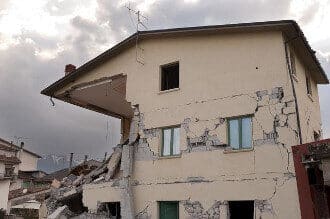[Source](https://pixabay.com/photos/earthquake-rubble-collapse-disaster-1665887/)
## Banning Fracking
The impacts of fracking on human health and the environment are undeniable. Earthquakes, water pollution, air pollution, and climate change all related to fracking are harming communities and landscapes around fracking wells all over the world.
Many people across the world have called for their governments to institute a fracking ban. While it is ultimately up to federal and local governments, there are various [international laws](https://gnhre.org/human-rights/the-legal-status-of-fracking-worldwide-an-environmental-law-and-human-rights-perspective/) pertaining to human rights and the environment that suggest the banning of fracking.
## Fracking Bans and International Law
One of the most prominent international environmental law policies against fracking is the precautionary principle. This principle has been mentioned in several international law documents such as the Rio Declaration on Environment and Development and the United Nations Framework Convention of Climate Change.
The principle states that countries should not implement any new technologies or products without first testing them to see if they are safe, in order to prevent potentially irreversible damage to health or the environment. Even though fracking is already known to be very harmful to the environment and human health, countries across the world still use it.
International law on human rights also presents a case in favor of banning fracking. Fracking puts many human rights in jeopardy such as access to clean water, health, and housing. According to international law, countries are required to protect these rights for their citizens and not compromise them through things such as fracking.
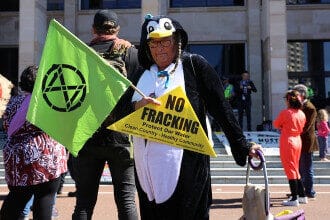[Source](https://unsplash.com/photos/WVG7oz4NTsU)
## Successful Fracking Bans
Many countries continue to frack the Earth for fossil fuels, and many people are mobilizing to try stop them. While there is still a lot of work to be done to end fracking, there are a few countries in the world that have managed to [successfully](https://www.onegreenplanet.org/environment/countries-except-united-states-that-have-banned-fracking/) ban fracking.
Several European countries have started to fully ban fracking, starting with France in 2011, which was quickly followed by Bulgaria, Germany, and Scotland also banning fracking. Moratoriums on fracking in other countries such as the UK, Romania, Ireland, Denmark, South Africa, and the Czech Republic have also gone into affect. These moratoriums have placed a temporary ban on fracking until more information on the long term effects of fracking are discovered to help them make a more informed decision.
Many state and local governments in the US have also placed bans on fracking. New York state, Vermont, and various cities have implemented these bans. The devastating impacts of fracking are coming to light across the US and all over the world. Activist movements are getting the attention of governments and helping to end fracking through the means of creating policies and laws against it. However there is still a lot of work to be done to end fracking once and for all, and the time do something about it is now.
### What Can You Do?
It may seem like a big task to stop the massive oil and gas industry from fracking the Earth, but there are many organizations dedicated to ending fracking, such as [Food and Water Watch](https://secure.foodandwaterwatch.org/donate/donate-ban-fracking-2) and [Americans Against Fracking](https://www.americansagainstfracking.org/about-the-coalition/). These organizations work to support local, state, and federal movements and policies to ban fracking.
Getting involved in organizations like this is one of the ways ordinary people can stand up to big oil and gas companies from infringing on human rights through fracking and [polluting our environment](https://interfaithsustain.com/oil-pollution/ "polluting our environment"). While fracking is still widely used, the fight against fracking has come a long way and is still going strong thanks to everyday supporters and advocates of the movement to ban fracking.
## Religion and Fracking
Ken Homan discusses in America magazine [the spiritual implications of fracking.](https://www.americamagazine.org/issue/faith-focus/unnatural-gas) He describes the dangers of fracking and his fears of giving his children a polluted world. Homan refuses “to give a broken world to the next generation, a world in which we might one day hold up a photo of a beautiful dairy farm knowing the land it once rested upon is now littered with rusting rigs.”
Homan calls for us to protect the earth for the next generation, to “put effort, research and sacrifice into clean energy” for the greater glory of God. Fracking can give us short term gains like fuel and jobs, but we people of faith must look not just towards the gains of the moment, but towards the eternal goods. Clean air. Clean water. Clean land.
We inherited a beautiful world. Let’s give our children a beautiful world.
*\* Featured image [source](https://pixabay.com/users/jwigley-895310/ "source")*
**Categories:** Blog on Faith and Ecology
**Tags:** Fracking
---
### [How to Stop Ocean Acidification](https://interfaithsustain.com/how-to-stop-ocean-acidification/)
**Published:** May 23, 2022
**Author:** ICSD
**Excerpt:** Sydney Cohen - Professor Ove Hoegh-Guldberg of the ARC Centre of Excellence for Coral Reef Studies and The University of Queensland says in a Science Daily article that "evidence gathered by scientists around the world over the last few years suggests that ocean acidification could represent an equal..... or perhaps even greater threat..... to the biology of our planet than global warming".
**Content:**
Table of Contents
Table of Contents
- [The "Evil Twin of Global Warming"](#aioseo-the-evil-twin-of-global-warming-2)
- [Fossil Fuels and their Role in Global Warming](#aioseo-fossil-fuels-and-their-role-in-global-warming-4)
- [What is Ocean Acidification?](#aioseo-what-is-ocean-acidification-7)
- [CO2 Concentrations Drive Rising Temperatures and Acidification](#aioseo-co2-concentrations-drive-rising-temperatures-and-acidification-10)
- [Ocean Acidification Affects Marine Life](#aioseo-ocean-acidification-affects-marine-life-13)
- [The Impacts of Ocean Acidification](#aioseo-the-impacts-of-ocean-acidification-22)
- [Coastal Acidification](#aioseo-coastal-acidification-24)
- [Consequences on Coral Reefs](#aioseo-consequences-on-coral-reefs-28)
- [Effects on the Economy, People's Livelihoods, and Communities](#aioseo-effects-on-the-economy-peoples-livelihoods-and-communities-37)
- [How Growing Sea Plants Can Help Slow Ocean Acidification](#aioseo-how-growing-sea-plants-can-help-slow-ocean-acidification-40)
- [How YOU Can Work to Stop Ocean Acidification!](#aioseo-how-you-can-work-to-stop-ocean-acidification-42)
- [Ocean Acidification and Religion](#aioseo-ocean-acidification-and-religion-44)
- [What is ocean acidification and how does it occur?](#aioseo-what-is-ocean-acidification-and-how-does-it-occur-48)
- [How does human activity contribute to ocean acidification?](#aioseo-how-does-human-activity-contribute-to-ocean-acidification-50)
- [What impact does ocean acidification have on marine life?](#aioseo-what-impact-does-ocean-acidification-have-on-marine-life-52)
- [What are the regional differences in ocean acidification?](#aioseo-what-are-the-regional-differences-in-ocean-acidification-54)
- [How can individuals help prevent ocean acidification?](#aioseo-how-can-individuals-help-prevent-ocean-acidification-56)
*By Sydney Cohen* – Professor Ove Hoegh-Guldberg of the ARC Centre of Excellence for Coral Reef Studies and The University of Queensland says in a [Science Daily](https://www.sciencedaily.com/releases/2010/03/100330092821.htm) article that “evidence gathered by scientists around the world over the last few years suggests that ocean acidification could represent an equal….. or perhaps even greater threat….. to the biology of our planet than global warming”.
## The “Evil Twin of Global Warming”
Researchers have deemed ocean acidification the “**evil twin of global warming**.” Ocean acidification refers to the process when the CO2 emitted by human activity, mainly by burning fossil fuels, dissolves into the oceans. It is happening independently of but in combination with, global warming.
### Fossil Fuels and their Role in Global Warming
**Carbon pollution** is one of the biggest threats to our planet. When carbon dioxide builds up in the atmosphere, it creates a greenhouse effect that traps heat and causes climate change. One of the major sources of carbon pollution is the burning of fossil fuels.
**Marine ecosystems** and coastal ecosystems, containing marine life and marine organisms are impacted quite negatively by climate change, resulting from the burning of fossil fuels.
## What is Ocean Acidification?
**Ocean acidification** occurs when sea waters absorb atmospheric carbon. This process results from the warming of our oceans, due to climate change, which allows for oceans to absorb excess carbon dioxide. The warmer oceans get, the more absorption power they have.
Carbon dioxide reacts with ocean water to produce a chemical known as carbonic acid. The presence of carbonic acid causes the acidity of our oceans to increase. And the more acidic our oceans become, the less calcium carbonate they can hold, which is a chemical compound necessary for the formation of many shells and marine species.
- [](https://interfaithsustain.com/water-trading/)
## [Water Trading Is Used to Combat Global Water Scarcity Due To Climate Change](https://interfaithsustain.com/water-trading/)
- [](https://interfaithsustain.com/urban-runoff/)
## [Urban Runoff Pollutes Our Rivers](https://interfaithsustain.com/urban-runoff/)
- [](https://interfaithsustain.com/ocean-cleanup/)
## [Innovative Technology For An Ocean Cleanup](https://interfaithsustain.com/ocean-cleanup/)
## CO2 Concentrations Drive Rising Temperatures and Acidification
As the burning of **fossil fuels** increases the amount of carbon dioxide in our atmosphere, and in turn heats the planet and ocean temperatures, ocean acidification occurs. This change in the sea is not happening the same everywhere – there are regional differences, such as varying temperatures, elevations, and depths.
The water absorbance rate increases as water temperature increases. Therefore, the warmer our planet gets, the more likely our warming oceans will absorb excess CO2.
## Ocean Acidification Affects Marine Life
Coastal and marine ecosystems are being threatened by global warming. The resulting acidification in the oceans along the coast and other climate effects are serious threats. The acidification of marine waters prevents the production of skeletons and shells of many species, because acidic oceans cannot hold as much calcium carbonate, a required chemical for this process.
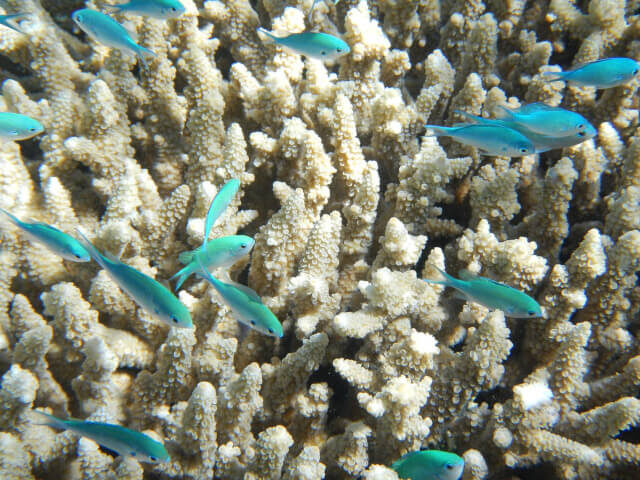[Source](https://pixabay.com/photos/fish-coral-great-barrier-reef-382487/)
This, in turn, affects the marine food chain. The Environmental Protection Agency (EPA) states that, “if acidification reduces the populations of small animals like clams, oysters, and sea urchins, the larger animals like fish that feed upon those could run short of food, and so on up the food chain.”
The [EPA](https://www.epa.gov/ocean-acidification/understanding-science-ocean-and-coastal-acidification#:~:text=Solutions%20with%20low%20pH%20are,ocean%20pH%20is%20about%208.1.) describes that “the acidity of a liquid results from its concentration of hydrogen ions, which is typically measured and reported as pH. The lower the pH value, the higher the acidity of a liquid. Solutions with low pH are acidic and solutions with high pH are basic (also known as alkaline).”
On their [Ocean Acidification webpage](https://www.epa.gov/ocean-acidification/understanding-science-ocean-and-coastal-acidification#:~:text=Solutions%20with%20low%20pH%20are,ocean%20pH%20is%20about%208.1.), they state that “prior to the Industrial Revolution, average ocean pH was about 8.2. Today, average ocean pH is about 8.1. Each decrease of one pH unit is a ten-fold increase in acidity. This means that the acidity of the ocean today, on average, is about 25% greater than it was during preindustrial times.”
## The Impacts of Ocean Acidification
Ocean water has naturally been slightly less acidic than it is today. Ocean science and pH measurements have revealed that today’s ocean acidity is a result of the absorption of excess carbon dioxide, that has occurred as our planet and ocean temperatures have increased due to global warming.
### Coastal Acidification
While ocean acidification describes changes in ocean chemistry from atmosphere-driven emissions of carbon dioxide, a coastal acidification mechanism is a different method by which coastal chemistry changes. Coastal acidification includes local changes in the chemical composition caused by freshwater sources from rivers and excess dietary wastes such as nitrogen and organic carbons.
Excess fertilization or runoff can cause the growth of algae. The [EPA](https://www.epa.gov/ocean-acidification/understanding-science-ocean-and-coastal-acidification#:~:text=Solutions%20with%20low%20pH%20are,ocean%20pH%20is%20about%208.1.) describes how “in coastal waters excess nutrients stimulate the growth of algae. Algae multiply rapidly under ideal growing conditions and algal blooms can impair water quality by causing hypoxia, foul odors and even toxins. A less well-known fact is that algal blooms can contribute to acidification. When algae die their decomposing tissue releases carbon dioxide directly into the water, resulting in acidification.”
Because algal blooms are often caused by agricultural runoff, the increased acidification as a result of dead algal blooms is specified as coastal acidification which generally takes place in coastal ecosystems, near coastal communities.
### Consequences on Coral Reefs
[Coral reefs](https://interfaithsustain.com/why-are-coral-reefs-important/) are one of the most beautiful and diverse ecosystems on Earth. However, they are also one of the most endangered. One of the main threats to coral reefs is ocean acidification. This can have serious consequences for marine life and coastal communities.
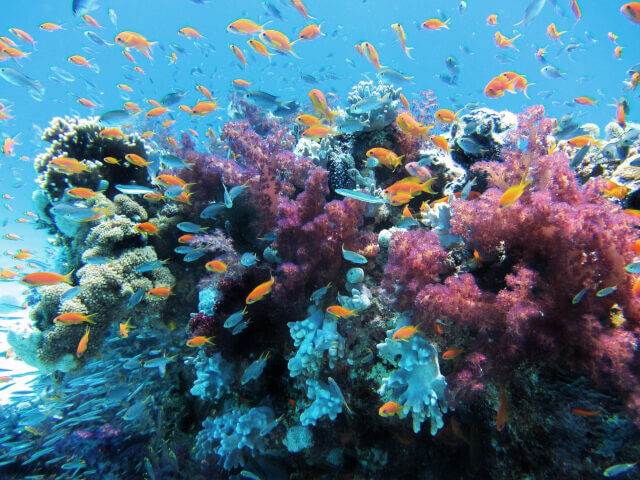[Source](https://pixabay.com/photos/underwater-sea-fishes-corals-123282/)
[Carbon pollution](https://interfaithsustain.com/global-warming-vs-climate-change/), and atmospheric warming as a result of climate change have been causing coastal acidification, where most of our world’s coral reefs exist. Healthy, coral reefs can provide protection for coastal communities, preventing strong waves from damaging shores.
However, corals are one of the species whose calcium carbonate production has been hampered by our increasingly acidic ocean waters.
According to [National Geographic](https://news-oceanacidification-icc.org/2012/08/02/bubble-coral-in-sogod-bay-mpas-cannot-protect-against-ocean-acidification/), without successful calcium carbonate production, “shells grow slowly and become weak. Coral reefs with breakable, slow-growing corals erode more quickly than they accrete. Reefs can disappear, and the extinction of entire species is possible.”
### Effects on the Economy, People’s Livelihoods, and Communities
Shell fishing also suffers from carbon pollution. In a wide variety of locations, the warming water is expected to decrease the Dungeness crab population. The Northwest fishing industry is feeling the impact on its economy as the temperatures increase.
Warm water temperatures can cause rapid growth in toxic algae. Toxic algae produce toxic neurotoxins called domoic acids which build up in shellfish, posing an acute threat to health. The shellfish then becomes inconsumable and affects the fishing industry that season.
#### How Growing Sea Plants Can Help Slow Ocean Acidification
Scientists have discovered that kelp, eelgrass, and other vegetation absorb carbon dioxide effectively and lower the acidity of our oceans. Scientists believe introducing these plants into local waters could prevent contaminated seawater and other contaminants.
#### How *YOU* Can Work to Stop Ocean Acidification!
We must all do our part to reduce ocean acidification and help preserve the marine ecosystems we love. Start by evaluating your daily habits and see where you can make small changes that will have a big impact. If every person makes an effort to reduce their carbon footprint, such as choosing to bike or walk to school rather than driving, switching to an electric vehicle, or even powering their house with solar panels, it will go a long way in conserving our marine ecosystems and preserving the healthiness of our oceans for future generations.
## Ocean Acidification and Religion
Interfaith Oceans is an organization bringing together different faith communities to protect our oceans. For example, one page of their website is dedicated to [Indigenous resources and organizations.](https://www.interfaithoceans.org/other) Here they describe how the elders in coastal nations have vastly different beliefs, but what many of them have in common is that they “share the perspective that all of life is interconnected, just as the generations are. If we respect the waters and the earth, they will nurture us, as we are all connected and related.” The ocean can be our greatest ally, or our greatest enemy. It is up to us to protect the ocean from acidification and the ocean will protect us in return.
*\* Featured image [source](https://pixabay.com/photos/coral-anemone-coral-reef-aquarium-1053837/)*
Interested in learning more about water pollution? [Check out this blog post](https://interfaithsustain.com/effects-of-water-pollution/ "Check out this blog post")!
**Categories:** Blog on Faith and Ecology
**Tags:** Acidification
---
### [Activism And Education On How To Stop Deforestation](https://interfaithsustain.com/how-to-stop-deforestation/)
**Published:** May 30, 2022
**Author:** ICSD
**Excerpt:** Harry Cooper - Deforestation has destroyed hundreds of habitats, put many species at risk of extinction, contributed to climate change, and caused wide-spread and tragic environmental degradation.
**Content:**
Table of Contents
Table of Contents
- [The Politics of Trees](#aioseo-the-politics-of-trees-2)
- [Economic Growth](#aioseo-economic-growth-4)
- [Developing Countries](#aioseo-developing-countries-7)
- [A Complicated Controversy](#aioseo-a-complicated-controversy-10)
- [International Action](#aioseo-international-action-13)
- [Global Forest Pledge](#aioseo-global-forest-pledge-15)
- [Sustainable Forest Management](#aioseo-sustainable-forest-management-20)
- [What is Sustainable Forestry?](#aioseo-what-is-sustainable-forestry-22)
- [Challenges to Sustainable Forestry and Illegal Logging](#aioseo-challenges-to-sustainable-forestry-and-illegal-logging-29)
- [Action to Stop Deforestation](#aioseo-action-to-stop-deforestation-34)
- [Indigenous Communities](#aioseo-indigenous-communities-38)
- [Education](#aioseo-education-42)
- [Be Proactive to Stop Deforestation](#aioseo-be-proactive-to-stop-deforestation-46)
- [The Future of Deforestation](#aioseo-the-future-of-deforestation-49)
- [Religious Approaches to Stopping Deforestation](#aioseo-religious-approaches-to-stopping-deforestation-57)
*By Harry Cooper* – Deforestation has destroyed hundreds of habitats, put many species at risk of extinction, contributed to **[climate change](https://interfaithsustain.com/global-warming-vs-climate-change/)**, and caused wide-spread and tragic environmental degradation. Activists everywhere have tried to stop deforestation by educating people, protesting, and even **sitting in trees** to prevent them from being cut down.
## The Politics of Trees
So if **deforestation** is so bad, and so many people are advocating to stop it, why are people still cutting down trees? The short answer is money, but the reality of the situation is a little more complicated.
### Economic Growth
The money motivators of deforestation can really be seen when we look at just how much of it is motivated by economic growth. Only around 23% of forest loss can be attributed to **wildfires**. The rest is estimated to be attributed to deforestation with 27% cleared for permanent commodity production such as mining sites and agriculture, and **logging industry** operations accounting for the other 50%.
This shows just how much of deforestation is caused by industries seeking to make a profit. And while it might be easy to point fingers at the businesses and countries that seek to gain from deforestation, the larger scope of the situation is not as simple.
### Developing Countries
When we look at where the majority of deforestation is happening in the world we can start to understand why deforestation is so widespread. Deforestation mainly occurs in underdeveloped tropical countries in Africa, South America, and Southeast Asia. These countries are less developed economically and often rely on the economic growth that comes from deforestation, despite the negative impacts on the environment.
These underdeveloped countries rely on land clearance and industries such as logging, the pulp and paper industry, and palm oil production for their already struggling economies. While logging and development may cause deforestation, many countries in the developing world see this as a necessary evil.
- [](https://interfaithsustain.com/how-deforestation-is-affecting-global-water-cycles/)
## [Why And How Deforestation Is Affecting Global Water Cycles](https://interfaithsustain.com/how-deforestation-is-affecting-global-water-cycles/)
- [](https://interfaithsustain.com/how-does-deforestation-affect-climate-change/)
## [Environmental Destruction and How Does Deforestation Affect Climate Change?](https://interfaithsustain.com/how-does-deforestation-affect-climate-change/)
- [](https://interfaithsustain.com/pine-beetle/)
## [Forest Destruction OR Survival of The Fittest By The Pine Beetle?](https://interfaithsustain.com/pine-beetle/)
### A Complicated Controversy
While countries may cite the economic benefits of deforestation in order to justify it, this economic productivity is only short term. Deforestation has been proven to have many economic downsides, such as contributing to climate change and destroying the homes and jobs of people who live in the forest. This has made [deforestation both a nuisance and a necessity](https://interfaithsustain.com/consequences-of-deforestation/) for the economies and people of developing nations.
With both economic benefits and drawbacks, deforestation has become controversial politically, making it hard to do anything about it. However, international treaties and activist groups have been relentless in their attempts to stop deforestation from destroying anymore of our dwindling forests.
#### International Action
Deforestation has been a rising issue for some time now. It has gained so much prominence that it has warranted the attention of one of the highest bodies of international authority, the UN.
#### Global Forest Pledge
The United Nations has discussed and signed agreements related to deforestation in the past, but those goals were reestablished last November in the United Nations Climate Change Conference in Glasgow. 141 different countries signed a [pledge](https://ukcop26.org/glasgow-leaders-declaration-on-forests-and-land-use/) to **stop deforestation**, with the hope of completely ending it by 2030.
This pledge was built on past agreements such as the [New York Declaration of Forest Goals](https://www.undp.org/blog/renewed-call-halt-deforestation-2030) in 2014. The new pledge reiterated ambitious goals of ending deforestation in the near future through global cooperation and international action.
The COP26 deforestation pledge highlights the importance of promoting sustainable development. The countries that signed on agreed to utilize international financial institutions to help struggling economies not just grow, but grow sustainably.
By promoting sustainable growth of economies, the countries of the United Nations are attempting to help economically struggling countries grow while developing sustainable agriculture and sustainable forestry. These more sustainable methods could help counties gain the economic benefits that they would get through deforestation without harming their forests or their population.
## Sustainable Forest Management
Many people have began fulfilling the pledges to achieve more sustainable forestry practices around the world. These **sustainable forestry practices** can help extract natural resources from trees without harming the larger environment.
### What is Sustainable Forestry?
It may be hard to conceive how we could cut down enough trees to meet the world logging and agriculture demands without harming the forests they come from, but it may not be as impossible as it seems. Many simple sustainable forestry techniques are capable of helping solve deforestation, while still providing us with wood and other forest resources.
[Source](https://unsplash.com/)
In a landscape completely untouched by humans trees still die and fall down as a natural function of an ecosystem; [sustainable forestry](https://www.rainforest-alliance.org/insights/what-is-sustainable-forestry/) aims to mimic the natural falling of trees in order to cause minimal disruption to the forest ecosystem. Since trees are a renewable resource, by respecting forest ecosystems with sustainable forestry, logging industries can create a balance between wildlife, local communities, and wood production.
#### Challenges to Sustainable Forestry and Illegal Logging
Sustainable forestry has proven to be profitable and healthier to the environment than traditional forest clearing. However, even as countries start to implement sustainable forestry laws, there are still people who are finding ways to cut down trees [illegally](https://rainforests.mongabay.com/09-consequences-of-deforestation.html).
**Illegal logging** undermines the efforts and pledges to stop deforestation and has proven to be a nuisance for governments and activists trying to protect the environment. Illegal logging has also caused some serious economic harm, it is estimated that countries struggling with illegal logging annually lose around ten billion dollars a year due to illegal deforestation.
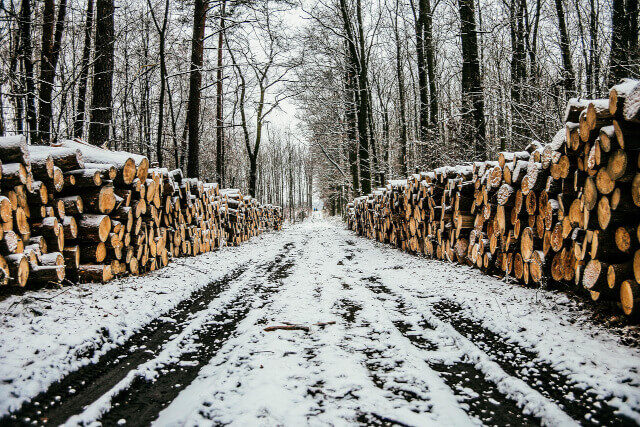[Source](https://pixabay.com/photos/winter-way-snow-landscape-nature-3882892/)
## Action to Stop Deforestation
As sustainable forestry and environmental consciousness have become more widespread in recent years, deforestation has decreased. However, illegal logging and unregulated industries still threaten the Earth’s forests with deforestation. Thankfully there are many organizations that are still adamant about [finding a solution to deforestation](https://interfaithsustain.com/deforestation-solutions/) once and for all.
### Indigenous Communities
Deforestation is very strongly associated with indigenous rights, as many of the rural communities affected by deforestation are made up of indigenous peoples. This has made indigenous rights advocacy and deforestation activism often go hand and hand. Organizations such as [Amazon Watch](https://amazonwatch.org/work#stop) work to empower native communities through an environmental justice lens to move people towards emboldening native rights and stopping deforestation at the same time.
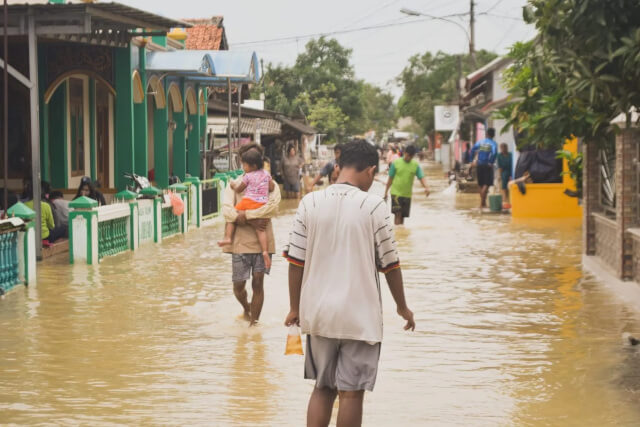[Source](https://unsplash.com/photos/38CTbydRZXI)
### Education
One of the best ways to mobilize people to act against any social problem is to educate people on the problem, why it needs to be solved, and how to solve it. Organizations such as the [Sustainable Forestry Initiative](https://forests.org/who-we-are/) and the [Forest Stewardship Council](https://forests.org/who-we-are/) work to educate children and adults about the impacts of deforestation and how they can make sustainable choices in their own lives to help work towards ending deforestation.
### Be Proactive to Stop Deforestation
Education and empowerment are great ways to move people to care about issues. But sometimes the best way to deal with problems, especially pressing ones such as deforestation, is to act.
Organizations such as the [Rainforest Alliance](https://www.rainforest-alliance.org/approach/?_ga=2.214127575.151954089.1648516023-2001634410.1648516023) and [Trees for the Future](https://trees.org/) do work in the field to help restore the world’s forests and stop deforestation. By planting new trees and teaching local farmers more sustainable farming and forestry techniques activist organizations are helping to create a more tree friendly world, where humans and forests can live together.
## The Future of Deforestation
For the past few decades people everywhere have been **fighting deforestation** in many different ways, and more people are being mobilized to act everyday. But what does this mean for the future of our forests?
While deforestation rates were increasing throughout the 1990s and 2000s, recent studies have shown that in the past decade deforestation has started to [decrease](https://www.ecosystemmarketplace.com/articles/what-we-got-right-on-deforestation-in-the-past-decade/) globally. This shows that activism, government action, and implementation of sustainable techniques can have a meaningful impact on ending deforestation.
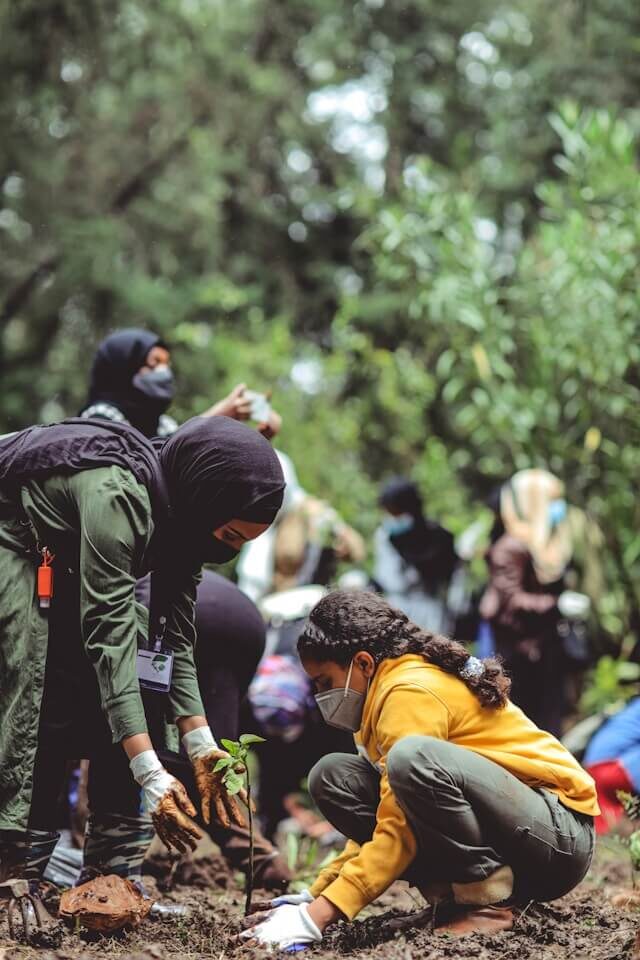[Source](https://unsplash.com/photos/FyCjvyPG9Pg)
This statistic is cause for some optimism and hope for the world’s forests. However, it does not mean that deforestation will soon be a thing of the past.
While deforestation is decreasing overall, it is increasing in several parts of the world. Places such as the Amazon rainforest continue to see increasing logging and land clearing.
Thus, while many countries are making strides to stop deforestation, there is still a lot of work to be done, but with continued action and advocacy we can help stop deforestation and save our world’s forests.
### Religious Approaches to Stopping Deforestation
Religious people around the world are coming together to “protect the world’s ‘sacred’ rainforests” as an [article on Mongabay](https://news.mongabay.com/2019/09/interfaith-leaders-step-up-to-protect-the-worlds-sacred-rainforests/) describes. In June 2017, leaders from diverse faith traditions came together in solidarity with indigenous people from five tropical countries to from the Interfaith Rainforest Initiative (IRI) and protect the world’s last great rainforests.
Joe Corcoran, IRI program manager with UNEP, the United Nations Environment Programme explains that “This isn’t about churches planting trees…We want to say clearly and definitively to world leaders: religious leaders take this issue of forests and climate very seriously, and they are going to be holding public officials accountable to make sure these issues are addressed.” The tone of these comments and others seen throughout this article is that encouraging small-scale sustainability is a start, but we really need to see religious leaders engendering political change to protect forests on a large-scale.
The call for religious leaders to have a political influence can been seen clearly in the words of Rev. Fletcher Harper, an Episcopal priest and the executive director of GreenFaith, a U.S.-based interfaith environmental coalition.
> “Does this effort stand a chance?” he asked. “I think it does. But around the world, that question is still up in the air. Religious groups have more potential for political influence than they have yet deployed. But it’s going to take a level of education, resolve and scale of action that is altogether larger and different than we’ve seen so far.”
*\* Featured image [source](https://unsplash.com/@justusmenke/)*
**Categories:** Blog on Faith and Ecology
**Tags:** Deforestation
---
### [Respect and Protect The Unique Arctic National Wildlife Refuge](https://interfaithsustain.com/arctic-national-wildlife-refuge/)
**Published:** June 13, 2022
**Author:** ICSD
**Excerpt:** Harry Cooper - The Arctic National Wildlife Refuge, often shortened to ANWR, is a massive wildlife refuge in northeast Alaska. The ANWR is the largest national wildlife refuge in the United States, and is about the size of South Carolina.
**Content:**
Table of Contents
Table of Contents
- [Protecting the North](#aioseo-protecting-the-north-2)
- [The History of The Arctic National Wildlife Refuge](#aioseo-the-history-of-the-arctic-national-wildlife-refuge-5)
- [The Ecology of the Arctic National Wildlife Refuge](#aioseo-the-ecology-of-the-arctic-national-wildlife-refuge-8)
- [Caribou](#aioseo-caribou-10)
- [Migratory Birds](#aioseo-migratory-birds-14)
- [Polar Bears](#aioseo-polar-bears-16)
- [Other Wildlife](#aioseo-other-wildlife-18)
- [Recreation](#aioseo-recreation-24)
- [Threats to the Arctic National Wildlife Refuge](#aioseo-threats-to-the-arctic-national-wildlife-refuge-26)
- [Oil in the Arctic Refuge Coastal Plain](#aioseo-oil-in-the-arctic-refuge-coastal-plain-28)
- [Politics](#aioseo-politics-32)
- [Religion and the ANWR](#aioseo-religion-and-the-anwr-37)
*By Harry Cooper* – **The Arctic National Wildlife Refuge**, often shortened to [ANWR](https://www.fws.gov/refuge/arctic), is a massive wildlife refuge in northeast Alaska. The **ANWR** is the largest national wildlife refuge in the United States, and is about the size of South Carolina. With around 19 million acres of federally protected land, the arctic refuge is home to many different species of mammals, fish, and birds, and facilitates a massive arctic ecosystem.
## Protecting the North
While the refuge system is considered one of the greatest natural treasures in America, the ANWR has recently come under threat. Oil and gas companies are seeking to undergo major oil and gas development along the northern arctic ocean coast, as many fossil fuel deposits have been found in the coastal plains region of the ANWR.
This oil and gas drilling would devastate the natural ecosystems in the refuge. Activists everywhere are advocating to keep the ANWR protected from human influence, as such a large natural space is so environmentally valuable in a world rapidly losing its wilderness.
## The History of The Arctic National Wildlife Refuge
The land of the Arctic National Wildlife Refuge has [historically](https://www.protectthearctic.org/history-of-the-arctic-national-wildlife-refuge#:~:text=Eisenhower%20established%20the%208.9%20million,the%20Arctic%20National%20Wildlife%20Refuge.) been used by indigenous communities for tens of thousands of years for caribou hunting. However, it was not until more recent history that the land became protected under the US federal government.
The ANWR was first established in 1960 after pressure from conservationist movements at the time. Initially the park was only 8.9 millions acres but later the protected refuge was expanded to the size it is today.
## The Ecology of the Arctic National Wildlife Refuge
As the name suggests, the Arctic National Wildlife Refuge is home to many different kinds of wildlife. The massive area is capable of supporting a large diverse ecosystem with a wide variety of species.
### Caribou
The ANWR is incredibly important for maintaining [caribou](https://alaskaconservation.org/protecting-alaska/priorities/protecting-lands-waters/arctic/anwr/) populations. One of the world’s largest caribou herds, the porcupine caribou herd, uses the ANWR as annual calving grounds. By leaving the wildlife refuge untouched by human influence, this caribou herd with almost 200,000 caribou is able to have a consistent natural wilderness space to help raise their young.
### Migratory Birds
The Arctic National Wildlife Refuge also plays an important role in hundreds of different [bird migrations](https://ak.audubon.org/conservation/arctic-national-wildlife-refuge). Birds from six different continents all come to the ANWR to nest and raise their young. The long days of the Arctic summer facilitate an unusually high amount of bugs and plants for the Arctic, making the region of the ANWR ideal for bird migration. With such a large number of birds using the ANWR for a critical stage in their migratory life cycle, the ANWR has earned the nickname of the world’s bird nursery.
### Polar Bears
[Polar bears](https://defenders.org/sites/default/files/publications/polar_bears_in_the_arctic_national_wildlife_refuge.pdf) are a species that is becoming increasingly threatened with extinction, and the Arctic National Wildlife Refuge has become one of the most critical polar bear habitats in the world. As polar bears become more and more vulnerable to human influence the ANWR provides a protected safe haven. It is estimated that around 43% of all polar bear land dens in Alaska are located in the ANWR. These dens are used by mothers to birth and raise their cubs. Thus the the protection provided by the ANWR plays an important role in helping polar bears resist extinction.
#### Other Wildlife
Along with caribou, migratory birds, and polar bears there are also many [other animals](https://www.travelalaska.com/Destinations/Parks-Public-Lands/Arctic-National-Wildlife-Refuge) that call the ANWR home. The ANWR provides protection to 42 different fish species, 39 different types of land mammal, seven marine mammals, and over 200 different birds. This makes the ANWR an incredibly important and [biodiverse](https://interfaithsustain.com/importance-of-biodiversity/) place for protecting all kinds of arctic life.
[Source](https://pixabay.com/users/gayleenfroese2-708998/)[Source](https://unsplash.com/@7bbbailey)[Source](https://pixabay.com/users/bdougherty-4513390/)
- [](https://interfaithsustain.com/threats-to-biodiversity/)
## [What are The Major Threats to Global Biodiversity?](https://interfaithsustain.com/threats-to-biodiversity/)
- [](https://interfaithsustain.com/habitat-corridors/)
## [Habitat Corridors Allow Human Development Whilst Saving Biodiversity](https://interfaithsustain.com/habitat-corridors/)
- [](https://interfaithsustain.com/importance-of-biodiversity/)
## [The Importance of Biodiversity For Humans and For Earth](https://interfaithsustain.com/importance-of-biodiversity/)
## Recreation
While there are no roads or trails within the Arctic National Wildlife Refuge, there are still several recreational [activities](https://www.travelalaska.com/Destinations/Parks-Public-Lands/Arctic-National-Wildlife-Refuge) allowed for humans within the ANWR. Most visitors will find themselves having to be taken to the park via plane or guided tour. Many outdoor activities are allowed in the refuge such as hiking, fishing, rafting, wildlife viewing, etc. While the ANWR is incredibly remote, visiting such a pristine and grand piece of wilderness can be a great way for visitors to experience a very raw form of natural environment.
## Threats to the Arctic National Wildlife Refuge
The ANWR constitutes a great asset to hundreds of different animals. But recently the ANWR’s protection status has been threatened.
### Oil in the Arctic Refuge Coastal Plain
Along the northern part of the ANWR lies the arctic refuge’s coastal plain. This region is not only essential for wildlife, but it is also one of the [largest](https://pubs.usgs.gov/fs/fs-0028-01/fs-0028-01.pdf) oil reserves in the US. It is estimated that there is anywhere from 4.3 to 11.8 billion barrels of oil available for extraction in the costal plains region of the ANWR. While these oil reserves present a major opportunity for oil and gas drilling, it means devastating the pristine wildlife there.
### Politics
In 2017, congress added a policy onto the Tax Cuts and Jobs Act that would lease land in the vulnerable coastal plains region to major oil companies for drilling. The current administration has since paused the oil and gas drilling developments until further environmental impact reports have been filed, but the region is still under threat from those who seek to drill there. Since Russian oil and gas is becoming an unattractive option since their invasion of Ukraine, we can not predict what the impact will be on the ANWR.
[Source](https://pixabay.com/users/robzor-840419/)
It is already known that the impact of this drilling would be huge. The once completely untouched piece of land would be filled with development, roads, noise, pollution, and heavy machinery. This kind of oil and gas development would threaten the species and migration patterns that the ANWR stands to protect, undermining the entire purpose of the refuge.
## Religion and the ANWR
Courtney Blackmer-Raynolds [wrote for Colorado College](https://www.coursehero.com/file/185935548/Artic-National-Wildlife-Refuge-docx/) about the ANWR, the native people who live there, and how they are threatened by oil drilling. **The native Gwich’in people** call ANWR “the sacred place where life begins,” and their identity is deeply tied to the land and the wild herbs of caribou that live there. In fact, the word “Gwich’in,” means “the caribou people.” But why are they so connected to the caribou?
For the Gwich’in, caribou are “their currency and their main source of sustenance… The caribou provide meat, furs and leather for clothing and construction, and bone for tools. These herd animals provide not only subsistence for the Gwich’in, but they also create a cultural and spiritual grounding for the people.” The Gwich’in live in sync with the land and her animals, viewing them as sacred and worthy of the highest respect.
Oil drilling threatens to pollute the Gwich’in’s land and deplete their caribou, by some studies [by as much as 40%](https://sacredland.org/). Blackmer-Raynolds explains how according to one tribal activist, “the environmental degradation caused by oil drilling would be like a ‘cultural genocide’ for the Gwich’in people.” To live with [environmental degradation](https://interfaithsustain.com/environmental-degradation-and-the-future-of-our-planet-earth/) and the loss of the caribou would be no better than exiling the Gwich’in people, because they would lose the pristine land and animals of their ancestors that defines their identity.
We must protect the Artic National Wildlife Refuge for the sake of the land and her protectors, the Gwich’in people. Different religions can feel tied to different lands. For example, Jews are connected to Israel, Muslims are connected to Mecca and Catholics are connected to the Vatican. With this awareness, we can respect the Gwich’in’s connection to their land in Northern Alaska, and support them in their struggle to protect the land and their way of life. In looking out for each other, we’ll find ourselves safer than we could ever be alone.
*\* Featured image [source](https://pixabay.com/users/barbarajackson-494586/)*
**Categories:** Blog on Faith and Ecology
**Tags:** Wildlife Refuge
---
### [Choose Environmentally Friendly Hemp Insulation](https://interfaithsustain.com/hemp-insulation/)
**Published:** June 15, 2022
**Author:** ICSD
**Excerpt:** Ilana Stein - Hemp is the perfect example of something that was looked down on for the past 100 years, before being recognized as a material that is not only extremely useful but is also the environmentally-friendly choice for building materials - not least of which is hemp insulation.
**Content:**
Table of Contents
Table of Contents
- [What is Hemp?](#aioseo-what-is-hemp-2)
- [Hemp Fiber](#aioseo-hemp-fiber-5)
- [What is Insulation?](#aioseo-what-is-insulation-16)
- [What is Hemp Insulation?](#aioseo-what-is-hemp-insulation-20)
- [Comparing Hemp Insulation With Fiberglass Insulation](#aioseo-comparing-hemp-insulation-with-fiberglass-insulation-28)
- [Spray Foam Insulation](#aioseo-spray-foam-insulation-31)
- [Hemp Insulation Wins](#aioseo-hemp-insulation-wins-34)
- [US Confusion Over Hemp](#aioseo-us-confusion-over-hemp-37)
- [Green Buildings and Building Materials](#aioseo-green-buildings-and-building-materials-41)
- [The Cost of Hemp Insulation](#aioseo-the-cost-of-hemp-insulation-46)
- [Hemp and Religion](#aioseo-hemp-and-religion-48)
- [Using Hemp Today](#aioseo-using-hemp-today-52)
*By Ilana Stein* – Hemp is the perfect example of something that was looked down on for the past 100 years, before being recognized as a material that is not only extremely useful but is also the environmentally-friendly choice for building materials – not least of which is **hemp insulation**.
## What is Hemp?
Hemp – or to give its scientific name, ***Cannabis sativa*** *–* is an aromatic annual herb that belongs to the same family as the cannabis plant, which is famously the source of marijuana and hashish.
To differentiate it from the drugs, this hemp plant is also known as **industrial hemp**, and as such, it is an incredibly useful plant.
## Hemp Fiber
Originating in central Asia, hemp has been in use for thousands of years. **Hemp fibers** are longer and stronger than wood fibers so that they can be used to produce anything from rope to string, from sacking to canvas. Its plant fibers can even be made into linen and shoes! From an environmental point of view, its fibers have become important in making bioplastics – in other words, plastics that are recyclable and biodegradable, to say nothing of being a good alternative to wood pulp and thus useful in [paper making](https://interfaithsustain.com/hemp-toilet-paper/).
Hemp is also edible – it was first used mainly for birdfeed. Today, humans eat it too as the seeds are good sources of protein, fiber and magnesium, and are sprinkled into salads or smoothies.
Hemp fibers are used in a manufacturing process that results in a composite material – that is, a material created from hemp fiber and another material such as lime binder. The result is something called “hempcrete” and is used as an alternative to concrete.
When pressed together with a soy-based glue, hemp wood is created, which can be used for wall assemblies. In fact, it has recently, since 2020, become the eco-friendly replacement of bamboo floors.
Most recently, it has become pivotal in the building material industry as a sustainable way to create hemp insulation.
[Source](https://pixabay.com/users/dizzyroseblade-2411987/)[Source](https://pixabay.com/users/ulleo-1834854/)
- [](https://interfaithsustain.com/building-off-the-grid/)
## [What To Consider When Building Off The Grid](https://interfaithsustain.com/building-off-the-grid/)
- [](https://interfaithsustain.com/geodesic-dome-home/)
## [The Remarkable Benefits of A Geodesic Dome Home](https://interfaithsustain.com/geodesic-dome-home/)
- [](https://interfaithsustain.com/living-roof/)
## [Living In Harmony With Nature in Urban Areas With a Living Roof](https://interfaithsustain.com/living-roof/)
## What is Insulation?
Insulation is [defined](https://dictionary.cambridge.org/dictionary/english/insulation) as a “material that is used to stop heat, sound, or electricity from escaping or entering.” There are a variety of materials that can do this, for example mineral wool, expanded polystyrene and fiberglass batts.
Part of understanding how to insulate areas is understanding thermal resistance. This is a measurement of the heat flow between two points – the lower the resistance, the easier it is for heat to move from one place to another. This heat transfer is also known as thermal energy transfer.
The way a material’s resistance to heat or thermal resistance is measured is known as the R value. The higher the R value, the better the insulation; hemp’s R value measures well compared to other [building materials](https://interfaithsustain.com/sustainable-building-materials/).
## What is Hemp Insulation?
The hemp fiber is very long – usually almost six feet long (1.8 meters) – and very tough. When these natural fibers, also known as hemp wool, are combined with non-toxic bonding agents or with kenaf fibers, a composite material is created.
This natural insulating material is non-toxic, strong and breathable, and as such is considered healthy for insulating homes – as well as healthy for the environment since the insulation provided helps reduce the amount of heating or cooling needed.
Hemp wool is extremely strong and thus is used to make hemp batts – which are firm slabs of hemp that can be fitted easily into floors, roofs or walls.
[Source](https://pixabay.com/users/nickype-10327513/)
### Comparing Hemp Insulation With Fiberglass Insulation
Fiberglass material is extremely versatile, and can be used as stiff boards, rolled fiberglass, fiberglass batts, or loose fill insulation. It is inexpensive, insect-friendly and a sustainable product as it is produced from recycled glass. However, it can be toxic, as it has chemical binders that contain formaldehyde and [there have been studies that](https://www.homelogic.co.uk/hemp-insulation-vs-fiberglass-how-do-they-compare) “have shown that inhaled slivers of fiberglass can cause lung disease.”
Hemp is not toxic. In addition, hemp insulation has a similar thermal performance to fiberglass insulation, and products of hemp good for insulation include rigid foam boards, batt insulation materials and floor insulation applications. Hemp insulation also has a similar R value to fiberglass insulation.
### Spray Foam Insulation
A new insulation product is spray foam insulation. While fiberglass insulation allows air into and out of the building, spray foam stops air coming in or escaping.
Like hemp insulation, spray foam insulation comes in different forms, from rigid foam board to open cell spray foam. When [compared to](https://www.homelogic.co.uk/spray-foam-insulation-vs-traditional) traditional insulation, spray foam can “expand up to 100 times in size on contact with the area of application.” By expanding like this, spray foam can fill wall cavities well and easily.
### Hemp Insulation Wins
Many people [recommend](https://www.roofingmegastore.co.uk/blog/hemp-insulation-guide.html) hemp insulation as being better than traditional insulation: “Hemp is a medium density insulation material with low conductivity and a high thermal mass. These factors enable it to retain heat, whilst efficiently regulating the building’s thermal performance.”
Hemp insulation, or **batt insulation**, has excellent acoustic absorption properties, absorbing noise well. It is also good for heat absorption, and thus used in external wall insulation for exterior walls as well as an inner fibrous layer. It absorbs moisture as well, preventing mold build up.
#### US Confusion Over Hemp
So why doesn’t everyone install hemp insulation?
Hemp has been grown and used for at least 6,000 years, but became illegal across North America in the 1930s. Because hemp used as a building material was classified as the same plant as that of medical cannabis, the authorities were convinced that industrial hemp had the same psychoactive properties as marijuana. However, industrial hemp is [known to be](https://home.howstuffworks.com/home-improvement/construction/green/hemp-building-material1.htm) “cultivated to lower the level of the narcotic *tetrahydrocannabinol*, or THC, the chemical that gives marijuana its ‘high’.”
Although the ban was reversed in the US in 2018, North America is far behind the UK and other countries, where hemp is considered the new green crop and has become a popular building material, with applications for all parts of buildings and other building processes. But its popularity, finally understood, [has soared](https://stroudcenter.org/news/hemp-fiber-soil-health-and-water-quality): “Between 2014 and 2019, hemp as a crop increased from zero to nearly 150,000 acres across the United States.”
## Green Buildings and Building Materials
Hemp is [considered](https://home.howstuffworks.com/home-improvement/construction/green/hemp-building-material1.htm) one of the most environmentally-friendly building materials today: “Houses built with hemp use less energy, create less waste, and cost less money to heat or cool.”
The **environmental impact of hemp** [goes even further](https://www.ecohome.net/guides/3342/hemp-insulation/): “as a crop, hemp requires no pesticides or insecticides and consumes very little water. It can also [sequester 5 times more CO² than wood](https://www.theguardian.com/sustainable-business/2014/sep/25/hemp-wood-fibre-construction-climate-change?utm_campaign=ecohome&utm_source=ecohome.net&utm_medium=referral&utm_content=/guides/3342/) during the same growing period. In addition, it can bring value to idle land since it is grown as part of a normal crop rotation.”
Hemp insulation, moreover, is created from natural fibers, it is a rapidly renewable material and at the end of its usefulness, it can be composted and recycled. Its R value is good – meaning it transfers heat efficiently, so that the temperature in the room or home is comfortable all the time. It is non-toxic and is safe to handle without gloves.
Finally, as it grows, this plant reduces the amount of greenhouse gases that enter our atmosphere.
### The Cost of Hemp Insulation
Hemp insulation costs depend on hemp production and the size of the hemp batts; the batt is charged per square foot. As consumer demand increases, the price of hemp insulation has begun to drop. However, at present, it is still much more expensive than traditional insulation.
## Hemp and Religion
Hemp has deep roots in civilization and religion.
In particular, hemp has a long history of use in Japanese culture and the Shinto religion. This is no surprise, because hemp is such a strong and useful material, as discussed above. Hemp [was used](http://www.japanhemp.org/en/shinto.htm) “to purify, to drive out evil (exorcism). Hemp seeds were used in Shinto marriage ceremonies. In some ceremonies hemp leaves were burnt as an ‘invitation to the spirits’.”
In addition, “the priests’ clothes were made from hemp linen and and bell ropes in shrines were made from hemp too. Hemp for bell ropes is still grown in Nagano prefecture today. Several hemp fields are cultivated on Shikoku (one of the four main islands of Japan) to make ceremonial linen clothes for the Imperial family and for Shinto priests.”
## Using Hemp Today
As hemp insulation becomes more accessible, there are concerns regarding soil health and water health and scientists [advocate that](https://stroudcenter.org/news/hemp-fiber-soil-health-and-water-quality): “As hemp use expands, there will be a critical need to better understand the environmental benefits (and risks) to water quality and quantity in our nation’s stream, rivers, and groundwater systems.”
Are you building or remodeling your religious building? Talk to your community about using hemp for the building materials.
This is a great way to break the hemp stigma and simultaneously build a strong and sustainable home for your religious community.
*\* Featured image [source](https://unsplash.com/@mrbrodeur)*
**Categories:** Blog on Faith and Ecology
**Tags:** Hemp
---
### [Water Trading Is Used to Combat Global Water Scarcity Due To Climate Change](https://interfaithsustain.com/water-trading/)
**Published:** July 1, 2022
**Author:** ICSD
**Excerpt:** Sydney Cohen - Water trading refers to "the process of buying and selling water access entitlements, also often called water rights. The terms of the trade can be either permanent or temporary, depending on the legal status of the water rights."
**Content:**
Table of Contents
Table of Contents
- [Water Trading](#aioseo-water-trading-4)
- [What are Water Markets?](#aioseo-what-are-water-markets-8)
- [What is a Futures Market?](#aioseo-what-is-a-futures-market-11)
- [Water Futures Market](#aioseo-water-futures-market-13)
- [Hedge Funds and Investing](#aioseo-hedge-funds-and-investing-15)
- [Water Trading for Conservation](#aioseo-water-trading-for-conservation-18)
- [Environmental Outcomes of Water Trading](#aioseo-environmental-outcomes-of-water-trading-25)
- [Water Trading and Religion](#aioseo-water-trading-and-religion-31)
- [Water Wars by Rabbi Yuval Cherlow, Eco Bible Volume 1](#aioseo-water-wars-by-rabbi-yuval-cherlow-eco-bible-volume-1-35)
- [Water Is Life!](#aioseo-water-is-life-40)
- [The Necessity of Sharing Water](#aioseo-the-necessity-of-sharing-water-47)
*By Sydney Cohen* – Water trading refers to “the process of buying and selling water access entitlements, also often called [water rights](https://en.wikipedia.org/wiki/Water_rights). The terms of the trade can be either permanent or temporary, depending on the legal status of the water rights.”
“Some of the western states of the [United States](https://en.wikipedia.org/wiki/United_States), [Israel,](https://www.trtworld.com/middle-east/jordan-agrees-on-major-deal-with-israel-on-water-sale-palestine-trade-48210) [Chile](https://en.wikipedia.org/wiki/Chile), [South Africa](https://en.wikipedia.org/wiki/South_Africa), [Australia](https://en.wikipedia.org/wiki/Australia), [Iran](https://en.wikipedia.org/wiki/Iran) and [Spain](https://en.wikipedia.org/wiki/Spain)‘s [Canary Islands](https://en.wikipedia.org/wiki/Canary_Islands) have **water trading schemes**…Some other countries, especially in [South Asia](https://en.wikipedia.org/wiki/South_Asia), also have informal water trading schemes. Water markets tend to be local and informal, as opposed to more formal schemes.”
However, most of the countries in the global north that engage in water trading encompass it into their formal markets.
## Water Trading
**Water trading** is the purchase or sale of access rights to the water, sometimes called rights, taking place within water markets. Trade conditions may vary according to the legal status of the water rights. Various countries, including South Asia, also run informal water trade arrangements. Water prices are generally local and are in the sect of informal economics rather than formal.
Water trading works to combat **water scarcity** in the world. The pricing of water allows for water supply to meet water demand, as corporations buy shares in the world’s water supplies.
However, the process of water trading has received some [controversy](https://www.discovermagazine.com/environment/yes-people-are-now-trading-and-investing-in-water-as-a-commodity). Some “say creating a **water futures market** won’t solve the bigger problem of what’s causing the dearth of water availability in the first place. ‘Water scarcity is not primarily driven by individual farmers making bad choices about using water’…says Basav Sen, climate justice project director at the Institute for Policy Studies. Rather…it’s the burning of fossil fuels, which drives climate change, and the agribusiness empire — which can harm water quality through chemical and animal waste runoff — that must be changed to ensure there’s enough clean water for everyone.”
### What are Water Markets?
**Water markets** provide institutional and retail trading platforms that can speculate about water prices. They allow people to invest in water trading, which ultimately privatizes water.
While the privatization of water has been seen as widely controversial, ultimately, by engaging in water markets, we ensure the rationing and allocating of water for many future generations, [as climate change progresses](https://interfaithsustain.com/are-polar-bears-going-extinct/).
### What is a Futures Market?
The fundamental principle of a futures market is that a buyer will purchase a specified quantity of an asset at a certain price, and the buyer is also required to sell this amount of an asset at a price. A futures agreement refers to negotiating an agreement for a future purchase. In simple terms, futures contracts are agreements to negotiate for a future transaction.
#### Water Futures Market
The water futures market has emerged in recent years as the threat of climate change progresses. Farmers, hedge funds, and municipalities investing in water trading have become increasingly more [common](https://www.moneycontrol.com/news/business/in-a-first-water-futures-to-start-trading-on-wall-street-amid-growing-fears-of-scarcity-6201301.html), “joining gold, oil and other commodities that are traded on Wall Street.” Water futures contracts are a way for traders to bet on a future price, and therefore, access to water for the next decades as scarcity conditions exacerbate.
- [](https://interfaithsustain.com/what-are-the-causes-of-water-pollution/)
## [Another resource to destroy: What are the Causes of Water Pollution?](https://interfaithsustain.com/what-are-the-causes-of-water-pollution/)
- [](https://interfaithsustain.com/effects-of-water-pollution/)
## [The Consequences and Effects of Water Pollution](https://interfaithsustain.com/effects-of-water-pollution/)
- [](https://interfaithsustain.com/how-to-prevent-water-pollution/)
## [How WE Can All Act to Prevent Water Pollution](https://interfaithsustain.com/how-to-prevent-water-pollution/)
#### Hedge Funds and Investing
[Last year](https://www.discovermagazine.com/environment/yes-people-are-now-trading-and-investing-in-water-as-a-commodity), “the Chicago Mercantile Exchange started the first-ever futures market for water, meaning farmers, as well as investors, municipalities and hedge funds, can buy a legal agreement known as a ‘futures contract’ that locks in a predetermined price for water that will be used in the future.”
“If an event like drought drives up the price, the contract seller must make up the difference (and vice versa) if it drops. This kind of speculative trading has long been done for commodities, such as gold or oil, but not for a life-sustaining resource such as water.”
## Water Trading for Conservation
In areas that are suffering a drought, water trading provides the conservation and longevity of available water resources. According to [OpenMarkets](https://www.cmegroup.com/openmarkets/commodities/2021/california-water-risk-finds-a-new-market-will-it-help.html), “California water is [very much a ‘market,](https://www.cmegroup.com/openmarkets/commodities/2020/californias-complex-water-market-faces-new-challenges.html)‘ valued at $1.1 billion according WestWater Research, and it’s a market that has evolved to the point where, some argue, it’s ready for an exchange-traded financial vehicle, like a futures contract, to help farmers and other stakeholders gain greater visibility into market conditions and better manage risks.”
“In December, [CME Group launched a futures contract](https://www.cmegroup.com/trading/equity-index/us-index/nasdaq-veles-california-water-futures.html) based on the Nasdaq Veles California Water Index (ticker symbol H2O). The index tracks the price of water rights leases and sales transactions across the five largest and most actively traded regions in California.”
[](https://pixabay.com/users/pellissierjp-785732/)[Source](https://pixabay.com/users/pellissierjp-785732/)
## Environmental Outcomes of Water Trading
Water trading allows for productive water allocations. Water markets also provide a clear measure of the value of water and encourage conservation.
“[Potential environmental benefits](https://en.wikipedia.org/wiki/Water_trading) of trading can also include improved instream [water quality](https://en.wikipedia.org/wiki/Water_quality), because water will not be diverted to the least economically productive users. Trading also re-allocates risk, whereas the prior appropriation system inefficiently and unequally allocates water and risk among similar users.”
While putting a price on water may seem like an absurd idea, if done correctly, it can actually conserve the quality of our water resources, and make water accessibility as productive as possible.
## Water Trading and Religion
*Genesis 26:20 – the Herdsmen of Gerar Quarreled with Isaac’s Herdsmen, Saying, “the Water Is Ours.” He Named That Well Esek \[contention\], Because They Contended with Him.*
[Source](https://pixabay.com/users/felix_w-6547745/)
### Water Wars by Rabbi Yuval Cherlow, [Eco Bible Volume 1](https://www.amazon.com/dp/B08LCKLM9G/ref=dp-kindle-redirect?_encoding=UTF8&btkr=1)
Isaac’s conflict with the Philistines and the people of Gerar is rooted in the age-old struggle for scarce water. The shepherds of Gerar claim, “The water is ours,” and effectively expel Isaac from the area of the well in contention, forcing him to find a new source of water. The Philistines go further, filling the wells Isaac used with dirt rather than sharing them with him. So fierce is their enmity that they destroyed some of their own vital water sources to expel him and attain their political end.
Access to fresh water is arguably the primary environmental issue in the history of humankind. Our need for clean water is the concern that requires us to directly face the undeniable and harsh consequences of depleting a critically limited natural resource.
The narrative of Isaac and the wells offers us insight into how to deal with the contemporary water crisis. The first teaching is the necessity to protect natural resources from destruction in times of conflict and war. The deliberate destruction of the wells by the Philistines, to expel Isaac from their midst, illustrates the danger of war fought without regard for the environment. The Torah places limits on how harshly we respond during war. It forbids us from wantonly destroying fruit-bearing trees as a military tactic. Even in the midst of struggle, we must consider the “day after” and understand the profound need for sustainability for both sides of the conflict.
The narrative continues with Isaac developing additional water sources after being forced to abandon the wells of his father, as well as some of his own. He continuously searches for new sources of water. We too are bound by the unremitting task of expanding and protecting our water resources, rather than relying solely on our current “wells.”
## Water Is Life!
There are many ways to increase access to potable water. One is to [capture rainwater](https://interfaithsustain.com/rain-water-treatment/), instead of letting it run off into the sea. Another highly successful method is recycling and purifying waste water, as is commonly done in **Israel’s agricultural sector** and increasingly in other countries. In addition, the Israeli invention of drip irrigation in 1965 revolutionized agriculture. Implemented in over 110 countries, over 150 billion dripper mechanisms have been sold.
The ethics for wise and appropriate water consumption practices are included in the general prohibition of wanton destruction (Ba’al Tashchit). Due to the direct connection between water and life, the conservation of water also becomes a Jewish legal obligation.
[Source](https://pixabay.com/users/publicdomainpictures-14/)
## The Necessity of Sharing Water
In the semi-arid and arid Middle East, the lack of fresh water often adds fuel to the existing political conflagrations. Climate change is making the Middle East drier and water scarcer. Some scientists understand the 2006–7 [drought](https://interfaithsustain.com/consequences-of-deforestation/) – the worst in 900 years – to be a key driver of the [Syrian civil and regional war](https://www.smithsonianmag.com/innovation/is-a-lack-of-water-to-blame-for-the-conflict-in-syria-72513729/).
May we look to a future where peace between nations is fostered by our shared water resources.
*\* Featured image [source](https://pixabay.com/users/jonaskim-7133458/)*
**Categories:** Blog on Faith and Ecology
**Tags:** Water
---
### [FSC Certified Wood Supports Forest Sustainability](https://interfaithsustain.com/fsc-certified-wood/)
**Published:** June 27, 2022
**Author:** ICSD
**Excerpt:** Sydney Cohen - FSC-certified wood products are emblematic of a sustainable wood harvesting process. The wood that meets the standard of FSC certifications is "harvested from forests that are responsibly managed, socially beneficial, environmentally conscious, and economically viable."
**Content:**
Table of Contents
Table of Contents
- [FSC: The Forest Stewardship Council](#aioseo-fsc-the-forest-stewardship-council-2)
- [FSC Goal](#aioseo-fsc-goal-5)
- [FSC Certification](#aioseo-fsc-certification-7)
- [FSC Certified Products](#aioseo-fsc-certified-products-9)
- [The Value of FSC Certification](#aioseo-the-value-of-fsc-certification-13)
- [How To Obtain FSC Certification?](#aioseo-how-to-obtain-fsc-certification-18)
- [Religion and Wood Harvesting](#aioseo-religion-and-wood-harvesting-21)
- [FSC Versus SFI](#aioseo-fsc-versus-sfi-29)
- [FSC Certified Wood is Better for the Environment](#aioseo-fsc-certified-wood-is-better-for-the-environment-32)
- [Why Is FSC Certification Important?](#aioseo-why-is-fsc-certification-important-34)
- [Why Buy FSC-Certified Wood?](#aioseo-why-buy-fsc-certified-wood-36)
*By Sydney Cohen* – FSC certified wood products are emblematic of a sustainable wood harvesting process. The wood that [meets the standard of FSC certifications](https://www.thespruce.com/what-does-fsc-certified-stand-for-2736657) is “harvested from forests that are responsibly managed, socially beneficial, environmentally conscious, and economically viable.” Wood is a [renewable resource](https://interfaithsustain.com/renewable-and-non-renewable-resources/ "renewable resource"). But only if we allow it to renew itself.
## FSC: The Forest Stewardship Council
FSC represents **the Forest Stewardship Council**, a 1993 nonprofit organization that has been established worldwide. It protects forest ecosystems against unethical and illegal logging.
If the company satisfies the FSC requirements of sustainable management, it gets certification.
### FSC Goal
Their goal is to promote sustainable lumber manufacturing through their “FSC” wood certificate labels. The organization’s objective is to promote environmentally sustainable, socially beneficial, and economically viable use of the world forest from which the majority of our lumber is derived.
## FSC Certification
The wood products and lumber coming from FSC-certified forests indicate that the Forest Stewardship Council has assessed the forest. It receives certification indicating responsible forest management and sustainability.
### FSC Certified Products
The FSC’s product lines are quite wide. Besides ensuring a high-quality product, the FSC inspects the forest products which originate primarily from [deforestation](https://interfaithsustain.com/how-to-stop-deforestation/) areas. They make sure that they come from places with responsible forest management, and are devoid of the use of chemical pesticides.
### The Value of FSC Certification
All lumber or paper products with FSC certification have passed rigorous checks and comply with the highest standards of the FSC accreditation program. To be environmentally conscious with your purchases, ensure that the wood product you buy is FSC-certified. Wood producers are subject to mandatory audit processes that require obtaining recertification.
[Source](https://pixabay.com/users/helgaka-2849566/)
FSC recycled and FSC-certified products only obtain certification through FSC if they meet ethical production guidelines. That is forests whose wood has been harvested sustainably, in a socially and environmentally responsible manner.
#### How To Obtain FSC Certification?
The FSC logo encapsulates forest compliance with laws, workers’ rights and employment conditions, indigenous peoples’ rights, environmental values and impact, sustainable forest management planning and high conservation values.
These principles work to highlight the accomplishments of sustainably managed forests with the FSC logo on [wood products](https://interfaithsustain.com/sustainable-furniture/) from forests that meet these guidelines.
- [](https://interfaithsustain.com/economic-sustainability/)
## [The Future of Humanity on Earth Requires Economic Sustainability](https://interfaithsustain.com/economic-sustainability/)
- [](https://interfaithsustain.com/what-is-environmental-sustainability/)
## [Understanding What Is Environmental Sustainability](https://interfaithsustain.com/what-is-environmental-sustainability/)
- [](https://interfaithsustain.com/sustainable-tourism/)
## [Plan Your Next Trip Using Sustainable Tourism](https://interfaithsustain.com/sustainable-tourism/)
## Religion and Wood Harvesting
The importance of sustainable wood harvesting is illustrated by the disproportionate damage that indigenous communities bear from unsustainable wood harvesting. [**Diego Cazar Baquero**](https://news.mongabay.com/by/diego-cazar-baquero/) wrote for Mongabay about how [Indigenous Amazonian communities are suffering from Ecuador’s balsa boom](https://news.mongabay.com/2021/08/indigenous-amazonian-communities-bear-the-burden-of-ecuadors-balsa-boom/). Balsa is a soft, lightweight wood high in demand. In 2020, $402 million worth of balsa timber was exported from Ecuador.
But harvesting balsa wood is harming indigenous peoples. Narcisa Mashienta said the balsa logging activity is “like a machine, exploiting so fast.” Belén Páez, the director of a group advocating for Indigenous and environmental rights, talked about how there is no authoritative monitoring of deforestation. Lack of monitoring by the authorities may have led to the abduction of Rubí Pujupat Achampash, a 6-year-old girl who went missing on May 4th, 2021 and appears to have been abducted by Balsa loggers.
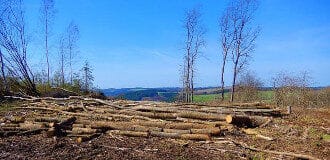[Source](https://pixabay.com/users/pier52-13422867/)
The Ecuadorian government must ensure that logging is being supervised and conducted in a sustainable and ethical way. We pray that Rubí should be found soon and returned safely to her family.
## FSC Versus SFI
The FSC considers certification easier than the Sustainable Forestry Initiative in North America (SFI). The SFI was established in 1994 and is rooted in the logging industry.
The difference is that “SFI requires companies to monitor impacts of management on conservation areas while FSC protects areas of high conservation value forests.”
## FSC Certified Wood is Better for the Environment
There are many reasons why **FSC certification** is important. Deforestation is a pressing issue on our planet that contributes to climate change, for starters. Support sustainable forest management by purchasing FSC-certified wood products!
### Why Is FSC Certification Important?
The FSC manages 154.7 billion acres across 15 countries. Even if the company could operate as ethically as possible without the FSC, these certification guidelines offer the guidelines necessary for maintaining the sustainability of the business.
#### Why Buy FSC-Certified Wood?
Buying **FSC-certified wood** can mitigate climate change through better forest management and the recycling of wood and paper. Forests eliminate carbon dioxide (CO2) from the atmosphere.
Buying wood from FSC-certified producers ensures the replacement of trees and allows the natural regeneration of the forests.
*\* Featured image [source](https://pixabay.com/users/skitterphoto-324082/)*
**Categories:** Blog on Faith and Ecology
**Tags:** Forests
---
### [The Increase of Mass Timber for Sustainable Construction](https://interfaithsustain.com/mass-timber/)
**Published:** July 4, 2022
**Author:** ICSD
**Excerpt:** Harry Cooper - As the global population has increasingly grown over the past century and the world continues to industrialize, cities have started to build bigger and better buildings and infrastructure. The problem with this continual expansion is that it uses up large amounts of resources and produces greenhouse gas emissions.
**Content:**
Table of Contents
Table of Contents
- [What is Mass Timber?](#aioseo-what-is-mass-timber-3)
- [Issues With Modern Construction](#aioseo-issues-with-modern-construction-6)
- [Concrete and Steel](#aioseo-concrete-and-steel-8)
- [The Solution of Mass Timber](#aioseo-the-solution-of-mass-timber-12)
- [Smaller Carbon Impact](#aioseo-smaller-carbon-impact-16)
- [Concerns over Mass Timber](#aioseo-concerns-over-mass-timber-18)
- [Mass Timber Technology](#aioseo-mass-timber-technology-20)
- [Cross Laminated Timber](#aioseo-cross-laminated-timber-24)
- [More Structural Integrity](#aioseo-more-structural-integrity-26)
- [Fire Resistant](#aioseo-fire-resistant-29)
- [Mass Timber and Deforestation](#aioseo-mass-timber-and-deforestation-34)
- [Sustainably Managed Forests](#aioseo-sustainably-managed-forests-36)
- [Timber and Religion](#aioseo-timber-and-religion-41)
- ["Sustainable Forestry for the Tabernacle" By Rabbi Yonatan Neril, Eco Bible Volume 1](#aioseo-sustainable-forestry-for-the-tabernacle-by-rabbi-yonatan-neril-eco-bible-volume-1-45)
*By Harry Cooper* – As the global population has increasingly grown over the past century and the world continues to industrialize, cities have started to build bigger and better buildings and infrastructure. The problem with this continual expansion is that it uses up large amounts of resources and produces greenhouse gas emissions.
Many people have espoused that in order to fix problems such as this, we need a more sustainable method of construction development. One such way people are trying to bring sustainability into the construction industry is by replacing **environmentally harmful building materials** with more sustainable ones. As we’ll soon see, mass timber is a great construction material that addresses [the three pillars of sustainability](https://interfaithsustain.com/how-to-optimize-the-three-pillars-of-sustainability/ " the three pillars of sustainability"): social, environmental and economic.
## What is Mass Timber?
One such building material is wood. While wood has historically been too weak and flammable to be used extensively in modern construction, mass timber building techniques are allowing wood to be used as the primary building material in large scale construction projects. Mass timber, “**massive timber**”, is a method of building whereby wood is bonded together in layers to create strong and sustainable structural elements. It is a building method that cuts building costs while simultaneously **reducing carbon emissions** from the **construction industry**.
There are many concerns with this construction type and **mass timber** buildings; how sturdy are these tall wood buildings? How does this affect **deforestation**? These are important things to consider when implementing mass timber construction. However, many new technologies have been continuing to make mass timber more sustainable.
### Issues With Modern Construction
The current construction industry consumes massive amounts of raw materials. In fact, it is estimated that the construction industry in the US consumes around [75%](https://core.ac.uk/download/pdf/4399726.pdf) of all raw materials produced. This becomes a significant environmental issue as these materials are not always used in the most ecologically friendly ways.
- [](https://interfaithsustain.com/building-off-the-grid/)
## [What To Consider When Building Off The Grid](https://interfaithsustain.com/building-off-the-grid/)
- [](https://interfaithsustain.com/geodesic-dome-home/)
## [The Remarkable Benefits of A Geodesic Dome Home](https://interfaithsustain.com/geodesic-dome-home/)
- [](https://interfaithsustain.com/living-roof/)
## [Living In Harmony With Nature in Urban Areas With a Living Roof](https://interfaithsustain.com/living-roof/)
### Concrete and Steel
The two materials that are most prominently used in construction are concrete and steel. These two materials require massive amounts of energy at every stage of production; extraction, refinement, transport, and construction. This [energy](https://www.istructe.org/resources/blog/steel-concrete-and-climate-change/) intensive process makes producing steel and cement responsible for 10% of total global carbon emissions. While this has contributed significantly to global warming, there have been few alternatives to concrete and steel construction until recently.
## The Solution of Mass Timber
Because concrete and steel are such durable materials, for a long time it was hard to imagine such large heavy buildings being made out of anything else. However with the advent of mass timber, large wood structural systems and heavy timber buildings are becoming a real possibility.
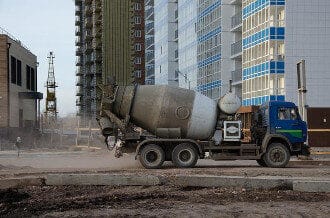[Source](https://pixabay.com/users/oknesanofa-6331557/)
### Smaller Carbon Impact
These mass timber structures have a considerably smaller environmental impact than steel and concrete buildings. While buildings usually require a lot of energy and carbon to get built, mass timber buildings can actually [store](https://www.forbes.com/sites/jimvinoski/2019/12/20/is-mass-timber-the-path-to-sustainable-construction/?sh=67694faf71d2) carbon away. When trees grow, they take up carbon from the atmosphere and store it in their wood. When this wood gets taken to be used in wood construction, the carbon stays stored in the wood until the building is destroyed or burned down.
#### Concerns over Mass Timber
While mass timber has the capacity to make our construction and our society much more sustainable, many have concerns over the structural integrity or flammability of these taller mass timber buildings. However, mass timber is still an emerging field, and advances in technology have made mass timber incredibly durable and viable as a construction material.
## Mass Timber Technology
Mass timber first became a possibility with the invention of cross laminated timber (CLT) in [1990s](https://www.vox.com/energy-and-environment/2020/1/15/21058051/climate-change-building-materials-mass-timber-cross-laminated-clt) Austria. While it slowly spread in popularity throughout Europe in the 2000s, as mass timber is becoming cheaper and cheaper, it is currently spreading in popularity across the world.
### Cross Laminated Timber
In order to make wood capable of supporting large structures, the wood must be cut into specific shapes and patterns to facilitate such a large weight. Certain techniques such as dowel laminated timber and nail laminated timber allow the wood to be just as structurally sound as concrete or steel, but the original and most common of these techniques is cross laminated timber.
### More Structural Integrity
[CLT](https://www.naturallywood.com/products/cross-laminated-timber/) gets its structural soundness from laying wood planks in layers with perpendicular gradients between each layer. Once the planks are layered in this way, they are then glued or nailed together to make a durable panel of wood.
CLT can be just as strong as concrete or steel. These large structural panels are then used in mass timber projects where they can support massive amounts of weight.
#### Fire Resistant
Another advantage of CLT is that they are surprisingly [fire resistant](https://www.naturallywood.com/products/cross-laminated-timber/). While historically wood buildings have enabled large fires in many different parts of the world, CLT is actually designed to protect buildings from burning down.
[Source](https://unsplash.com/@hitobywong)
CLT contains several fire resistant chemicals that cause it to char on the outside, without actually burning. This slow burning makes it harder for CLT to actually catch fire, and ensures it maintains its structural integrity if it would burn.
#### Mass Timber and Deforestation
Another potential issue that mass timber could bring up is deforestation. It is estimated that since the beginning of the 20th century, we have lost almost [3.9 million](https://www.livescience.com/27692-deforestation.html) square miles of forested area. As [deforestation devastates ecosystems](https://interfaithsustain.com/consequences-of-deforestation/) and rural communities everywhere, building skyscrapers completely out of wood may seem like a step in the wrong direction, but as it turns out, there may be a solution in sustainable forestry.
#### Sustainably Managed Forests
It is important to note that mass wood products such as CLT are not carbon neutral, cutting down trees and transporting the wood uses a good amount of carbon. But it is still significantly less impact than concrete or steel.
[Deforestation](https://www.vox.com/energy-and-environment/2020/1/15/21058051/climate-change-building-materials-mass-timber-cross-laminated-clt) also causes other issues such as destroying forest ecosystems and services that are incredibly important for humanity and the natural environment. However, sustainable forest methods allow loggers to harvest wood without harming the overall forest ecosystem. This has actually created a lot of surplus wood supplies in many places, and mass timber construction has become a creative way to use this excess wood and decrease carbon emissions rather than a source of demand for more deforestation.
## Timber and Religion
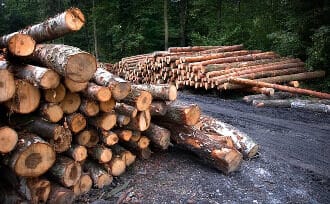[Source](https://pixabay.com/photos/wood-cutting-bale-pine-trees-3662510/)
*Exodus 25:10 – They Shall Make an Ark of Acacia Wood, Two and a Half Cubits Long, a Cubit and a Half Wide, and a Cubit and a Half High.*
### “Sustainable Forestry for the Tabernacle” By Rabbi Yonatan Neril, [Eco Bible Volume 1](https://www.amazon.com/dp/B08LCKLM9G/ref=dp-kindle-redirect?_encoding=UTF8&btkr=1)
When building the Tabernacle, the Israelites were instructed to use acacia wood. Where did this wood come from? The Midrash teaches that when Jacob went down to Egypt, he received a prophecy that his descendants would be redeemed from there and be commanded to build a Tabernacle in the desert. Jacob instructed his children to plant acacia trees in Egypt. Over the hundreds of years of slavery, those saplings grew into large, mature trees. Before the Exodus, the Israelites cut down those trees and brought them with them through the Sea of Reeds into the desert. When the Israelites built the Sanctuary out of these trees, the trees sang jubilantly before God, as it says in Psalms, “then all the trees of the forest will sing with joy before God.”
This may be the earliest reference to sustainable forest management. Under many circumstances, we should not cut down trees – to prevent erosion, protect wildlife habitat, and preserve an important source of oxygen for humans to breathe. But for building the Tabernacle, using trees was not only planned and permitted, it was a source of joy. Perhaps we can learn what the Torah considers an appropriate use of our resources, a kind of “Torah litmus test” for ethical resource use.
According to horticulturalist James Duke, “The acacia tree is extremely hardy and tolerates hot, arid climates; it is extremely drought resistant and can survive with less than four inches (100 millimeters) annual rainfall and long, erratic dry seasons; it grows fairly well in shallow soil.” The Tabernacle was built from one of the hardiest trees, and teaches us that a Torah life is built on stamina and resilience to outside pressures, whether religious persecution or environmental threats. In addition, the Midrash explains that God specified use of acacia wood for the construction of the Sanctuary, rather than wood from fruit-bearing trees, to teach us the importance of preserving fruit trees.
Nowadays, we use trees in myriad ways – for homes, furniture, paper, and packaging. The ecological threat comes from people currently cutting down 15 billion trees per year and only replenishing five billion.
In the building of the Tabernacle, we can find the ultimate example of trees used for a higher goal. According to the sages, these trees were in relationship with people for thousands of years, from the Garden of Eden to the moment they were cut for the Sanctuary. They became the pillars of the Sanctuary of God, which the Torah describes as the dwelling place of the Divine Presence amidst the Israelites, and which existed as a center for Divine worship for over 400 years.
*\* Featured image [source](https://unsplash.com/@ryunosuke_kikuno)*
**Categories:** Blog on Faith and Ecology
**Tags:** Mass Timber
---
### [The Effects and Consequences of Ocean Acidification](https://interfaithsustain.com/effects-of-ocean-acidification/)
**Published:** July 15, 2022
**Author:** ICSD
**Excerpt:** Sydney Cohen - According to the National Oceanic and Atmospheric Administration (NOAA), "Ocean acidification is expected to have negative overall effects on many marine species. This could alter marine food chains and food supply to humans. Acidification could also decrease storm protection from reefs, tourism opportunities, and other benefits that are difficult to value."
**Content:**
Table of Contents
Table of Contents
- [What is Ocean Acidification?](#aioseo-what-is-ocean-acidification-3)
- [The Consequences of Ocean Acidification?](#aioseo-the-consequences-of-ocean-acidification-10)
- [Why is Ocean Acidification a Problem?](#aioseo-why-is-ocean-acidification-a-problem-13)
- [Ocean Warming](#aioseo-ocean-warming-20)
- [What are the Effects of Ocean Acidification?](#aioseo-what-are-the-effects-of-ocean-acidification-22)
- [Ocean Acidification on Coral Reefs](#aioseo-ocean-acidification-on-coral-reefs-25)
- [Struggling to Build Shells](#aioseo-struggling-to-build-shells-29)
- [Ocean Acidification on Marine Ecosystems](#aioseo-ocean-acidification-on-marine-ecosystems-34)
- [Coral Bleaching](#aioseo-coral-bleaching-36)
- [Ocean Acidification on Marine Species](#aioseo-ocean-acidification-on-marine-species-39)
- [Food Webs](#aioseo-food-webs-41)
- [Looking to the Future](#aioseo-looking-to-the-future-46)
- [How You Can Contribute to Slowing Ocean Acidification!](#aioseo-how-you-can-contribute-to-slowing-ocean-acidification-50)
- [Keeping Track by Measuring](#aioseo-keeping-track-by-measuring-52)
- [A Religious Perspective on Ocean Acidification](#aioseo-a-religious-perspective-on-ocean-acidification-55)
*By Sydney Cohen* – According to the National Oceanic and Atmospheric Administration ([NOAA](https://www.fisheries.noaa.gov/insight/understanding-ocean-acidification#:~:text=Ocean%20acidification%20is%20expected%20to,that%20are%20difficult%20to%20value.)), “Ocean acidification is expected to have negative overall effects on many marine species. This could alter marine food chains and food supply to humans. Acidification could also decrease storm protection from reefs, tourism opportunities, and other benefits that are difficult to value.”
Continue reading to learn more about the harmful environmental effects of **ocean acidification**, its causes, and what we can do to help prevent it.
## What is Ocean Acidification?
Ocean acidification “is often called “climate change’s evil twin” and is projected to grow as carbon dioxide continues to be emitted into the atmosphere at record-high levels.” The NOAA explains that “the atmospheric concentration of carbon dioxide has increased because of the burning of fossil fuels such as coal, gas, and oil along with land use change. The oceans have absorbed roughly one-third of all carbon dioxide emissions related to human activities since the 1700s. Estimates of future carbon dioxide levels…indicate that by the end of this century the surface waters of the ocean could be nearly 150 percent more acidic, resulting in a pH that the oceans haven’t experienced for more than 20 million years.”
As the NOAA describes, “Like a sponge, our oceans are absorbing increasing amounts of carbon dioxide from the atmosphere. This exchange helps regulate the planet’s atmospheric carbon dioxide concentrations, but comes at a cost for the oceans and sea life, particularly shellfish.”
[Source](https://pixabay.com/users/tandocjared-3386041/)
### The Consequences of Ocean Acidification?
“[Ocean acidification](https://www.fisheries.noaa.gov/insight/understanding-ocean-acidification#:~:text=Ocean%20acidification%20is%20expected%20to,that%20are%20difficult%20to%20value.) is best known for its osteoporosis-like effects on shellfish, which makes building and maintaining shells difficult for these creatures. Acidification also affects other species vital to the marine ecosystem, including reef-building corals and pteropods (tiny snails eaten by numerous species such as fish and whales).”
Ocean acidification has an incredibly harmful effect on [coral reefs](https://interfaithsustain.com/why-are-coral-reefs-important/) and **coral reef ecosystems**, in addition to the marine species, marine life, and marine organisms that these ecosystems service and house. The carbon dioxide emissions from burning fossil fuels both warm the ocean water, and acidify it – effects that are troublesome for our ocean life. This is why we must work fast to reduce burning fossil fuels.
## Why is Ocean Acidification a Problem?
The effects of ocean acidification on an otherwise stable marine environment have started to manifest themselves over several decades. Ocean acidification literally causes sea change and threatens seawater from pole to pole in a global manner. The effects of ocean acidification on **marine ecosystems** prevents the formation of oyster shells, clams, lobster, and shrimp. It also affects human health, as these species, often consumed for food, are not healthy. Ocean acidification also causes growth of harmful algae that can infest these marine species, and in turn, are consumed by humans.
In a [2018 study](https://www.maritime-executive.com/editorials/ocean-acidification-could-promote-toxic-algae-blooms) off the Canary Islands, it was found that ocean acidification results in the “rapid growth of the toxic alga *Vicicitus globosus* at CO2 concentrations above 600 ppm.” According to one of the researchers, “this CO2 level could be reached in the next three to four decades if our carbon dioxide emissions are not declining rapidly.” Ocean acidification has various harmful consequences for coral reefs, marine ecosystems, and marine life, in addition to human health.
[Source](https://pixabay.com/users/rchung-47930/)
- [](https://interfaithsustain.com/sea-jellies/)
## [Are Sea Jellies Taking Over The Animal Kingdom?](https://interfaithsustain.com/sea-jellies/)
- [](https://interfaithsustain.com/desert-ecosystem/)
## [Unique Desert Ecosystems Are Teeming With Life](https://interfaithsustain.com/desert-ecosystem/)
- [](https://interfaithsustain.com/types-of-ecosystems/)
## [Interconnected But Different Types of Ecosystems](https://interfaithsustain.com/types-of-ecosystems/)
### Ocean Warming
Since the Industrial Revolution, the global average temperatures are linearly correlated with CO2 atmospheric vapor levels. Since 1970, oceans absorb over 90% of the Earth’s temperature, which leads to ocean warming. In the past decade, ocean temperatures have increased about 1° Celsius on the surface in polar regions. It is further estimated that the average Earth-surface temperature will rise from 2 to 4 degrees Celsius.
## What are the Effects of Ocean Acidification?
Lab studies suggest changing ocean chemistry may 1) damage living organisms whose skeleton relies on carbonates, and 2) harm organisms sensitive to acidity. The resulting damage may be detrimental for organisms in higher food chains feeding on such vulnerable organisms.
With the combination of warming ocean temperatures with the increasing acidity, certain microorganisms, such as phytoplankton, struggle to fully form their calcium carbonate shells. Because of this, their health is compromised, as is the health of the organisms that feed on smaller organisms such as phytoplankton.
### Ocean Acidification on Coral Reefs
The increasingly acidic oceans also make it difficult for **coral reefs** to build their polyp structures. According to National Science Foundation ([NSF](https://www.nsf.gov/discoveries/disc_summ.jsp?cntn_id=244292#:~:text=The%20rising%20acidity%20of%20the,corals%20will%20be%20most%20vulnerable.)) research in 2018, “Corals grow their skeletons upward toward sunlight, thickening and reinforcing them. The new research, led by National Science Foundation (NSF)-funded scientists at the Woods Hole Oceanographic Institution (WHOI), shows that ocean acidification impedes the thickening process — decreasing the skeletons’ density and leaving them more vulnerable to breaking.”
#### Struggling to Build Shells
The NSF further explains that “coral skeletons are made of aragonite, a form of calcium carbonate. Corals grow their skeletons upward by stacking bundles of aragonite crystals on top of each other. They thicken the bundles with additional crystals, strengthening the skeletons and helping them withstand breakage from currents, waves, storms and the boring and biting of worms, molluscs, and parrotfish.”
However, “rising levels of carbon dioxide in the atmosphere, mostly from burning fossil fuels, [cause ocean acidification](https://interfaithsustain.com/how-to-stop-ocean-acidification/). When carbon dioxide is absorbed by seawater, it’s harder for corals to accrete their aragonite skeletons.” The research notes that the warming water temperatures, in addition to their increasing acidity, will continue to hamper coral growth.
[Source](https://unsplash.com/@7homas_0wen)
## Ocean Acidification on Marine Ecosystems
In conjunction with phytoplankton and coral polyps growth and shell-formation being challenged by the increasing acidity of oceans, another phenomenon, known as coral bleaching, occurs due to warming and acidifying waters.
### Coral Bleaching
As the [NOAA](https://oceanservice.noaa.gov/facts/coral_bleach.html#:~:text=When%20water%20is%20too%20warm,and%20are%20subject%20to%20mortality.) states, “when water is too warm, corals will expel the algae (zooxanthellae) living in their tissues causing the coral to turn completely white. This is called **coral bleaching**. When a coral bleaches, it is not dead. Corals can survive a bleaching event, but they are under more stress and are subject to mortality.”
Healthy coral reefs occur when “coral and algae depend on each other to survive. Corals have a symbiotic relationship with microscopic algae called zooxanthellae that live in their tissues. These algae are the coral’s primary food source and give them their color. When the symbiotic relationship becomes stressed due to increased ocean temperature or pollution, the algae leave the coral’s tissue. Without the algae, the coral loses its major source of food, turns white or very pale, and is more susceptible to disease.”
### Ocean Acidification on Marine Species
One of the species affected by ocean acidification is sea urchins. “Ocean acidification could interfere with the urchins’ ability to transform calcium, magnesium and other minerals from seawater into their “tests” (the white shell left when the animal dies), spines and teeth. Other animals that can be affected include oysters, clams and other mollusks, and crabs and other crustaceans.”
#### Food Webs
As can be inferred, ocean acidification has a large effect on **marine food webs**. When species lower on the food chain are effected, that means that the larger species that consume them are no longer consuming healthy and thriving species.
Furthermore, the [NOAA](https://www.fisheries.noaa.gov/resource/data/forecast-fish-and-marine-mammal-population-responses-ocean-acidification-north) states that “ocean acidification may indirectly affect fish and marine mammals…through reduced abundance of marine calcifiers at the base of the food web. Changes in ocean pH also may affect reproductive success of commercially important species by reducing demersal egg adhesion or the fertilization success of eggs broadcast into the ocean.” So much carbon dioxide, released through the burning of fossil fuels, is detrimental to the food chain in the ocean, in addition to animal and human health on land. This is why we must work to slow fossil fuel use and the resulting climate change!
## Looking to the Future
As carbon dioxide is reduced, it becomes buffered and the pH in oceans becomes normal again. Buffering can last for several thousand years, however, this is too long for the aquatic species that have already been affected. We must take action against **climate change** in order to truly make a positive impact so that our oceans can thrive again.
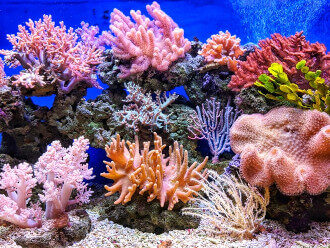[Source](https://unsplash.com/@quinguyen)
## How You Can Contribute to Slowing Ocean Acidification!
The [NOAA](https://www.fisheries.noaa.gov/insight/understanding-ocean-acidification#:~:text=Ocean%20acidification%20is%20expected%20to,that%20are%20difficult%20to%20value.) has recommendations for what we can do about ocean acidification. “Smart investments in monitoring and observing are critical to hedging the risks. We can‘t manage what we don’t measure, and observations are vital to providing the environmental intelligence that underpins sound approaches to countering acidification.”
## Keeping Track by Measuring
“NOAA’s around-the-clock monitoring of global atmospheric carbon dioxide indicates that the rate of increase has never been higher than during the past 3 years, accelerating the ocean acidification process.”
“To prevent ocean acidification from being a game-changer, robust forecasting capabilities and public–private partnerships are needed to interpret the global picture as well as the regional and community conditions. For this reason, NOAA co-leads the pioneering, 66-nation [Global Ocean Acidification Observing Network](https://sdgs.un.org/partnerships/global-ocean-acidification-observing-network-goa), which monitors the progression of acidification and identifies areas of highest risk.”
## A Religious Perspective on Ocean Acidification
An article in [Bega District News](https://www.begadistrictnews.com.au/story/7744118/ocean-acidification-and-heating-a-threat-to-our-seafood-industry-south-east-climate-alliance/) discusses how ocean acidification is harming sea life:
> Increased acidity hinders shellfish from extracting the vital calcium they need from seawater to construct and maintain their shells.
>
> Dr Elek said as acidity increased, shells would start to dissolve.
>
> “This will especially affect tiny zooplankton such as krill and larval shellfish that are important food for many larger marine animals, including our favourite fish,” she said.
A religious person must recognize how all life is connected. If the smallest creatures in the ocean are harmed, so will the larger creatures that eat them be harmed. God has commanded us to “serve and protect” our planet (Genesis 2:15). We must protect all the creatures on planet Earth, no matter how small.
*\* Featured image [source](https://pixabay.com/users/kimhiz-195431/)*
**Categories:** Blog on Faith and Ecology
**Tags:** Ocean Acidification
---
### [Environmental Justice Issues Need Interfaith Cooperation](https://interfaithsustain.com/environmental-justice-issues/)
**Published:** July 27, 2022
**Author:** ICSD
**Excerpt:** Ethel Mendius - Time and time again, we see environmental degradation has a disproportionate effect on vulnerable populations and in particular communities of color. Environmental justice requires us to consider the influence of race, socioeconomic status and other factors in the choices we make to protect the natural world.
**Content:**
Table of Contents
Table of Contents
- [What Is Environmental Justice?](#aioseo-what-is-environmental-justice-2)
- [Origins of the Environmental Justice Movement](#aioseo-origins-of-the-environmental-justice-movement-4)
- [Dr. Robert Bullard](#aioseo-dr-robert-bullard-6)
- [Reverend Benjamin Chavis](#aioseo-reverend-benjamin-chavis-14)
- [Today's Environmental Hazards](#aioseo-todays-environmental-hazards-18)
- [Hazardous Waste Sites](#aioseo-hazardous-waste-sites-22)
- [Air Pollution](#aioseo-air-pollution-27)
- [The COVID-19 Pandemic](#aioseo-the-covid-19-pandemic-31)
- [Air Quality standards](#aioseo-air-quality-standards-34)
- [Climate Change and Environmental Justice](#aioseo-climate-change-and-environmental-justice-37)
- [Current Attitudes](#aioseo-current-attitudes-46)
- [Religion and Environmental Justice](#aioseo-religion-and-environmental-justice-51)
- [Twin Crises: Climate & Racial Inequality](#aioseo-twin-crises-climate-racial-inequality-53)
*By Ethel Mendius* – Time and time again, we see environmental degradation has a disproportionate effect on **vulnerable populations** and in particular **communities of color**. Environmental justice issues require us to consider the influence of race, socioeconomic status and other factors in the choices we make to protect the natural world.Dr. Rolf Bouma
## What Is Environmental Justice?
The [U.S. Environmental Protection Agency](https://online.law.tulane.edu/blog/toxic-waste-and-race-environmental-justice) defines **environmental justice** as “the fair treatment and meaningful involvement of all people” in policy surrounding the environment, asserting that “no one group should be disproportionately affected by negative environmental consequences due to current government policies.” Until this is the case, we feel the need for environmental justice.
## Origins of the Environmental Justice Movement
On a national scale, the Environmental Justice (EJ) Movement has “broadened the scope of environment beyond conservation and preservation of natural resources.” The early efforts of environmental justice communities and the research done by the founders of the EJ movement have brought [environmental racism](https://interfaithsustain.com/environmental-racism/) to the forefront of climate justice.
### Dr. Robert Bullard
In 1970s Houston, black residents challenged the construction of a solid-waste disposal site in their neighborhood. Sociologist Dr. Robert Bullard, regarded as the “father of environmental justice”, began collecting [data](https://www.nationalgeographic.com/environment/article/environmental-justice-origins-why-finally-getting-the-attention-it-deserves) and discovered that 14 of 17 of the industrial waste sites in Houston were situated near communities of color.
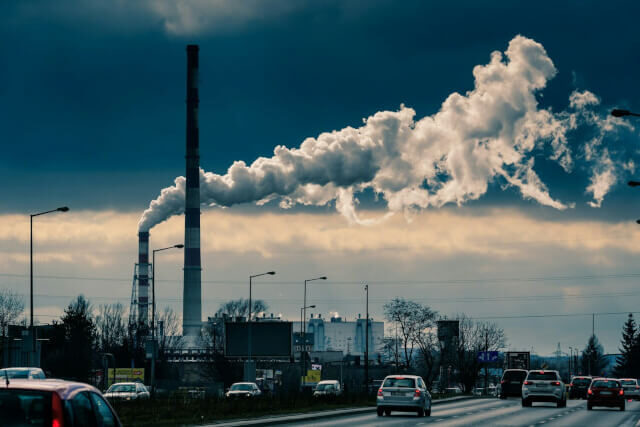[Source](https://unsplash.com/@dylu)
Bullard’s research concluded that systematically, “environmentally harmful infrastructure was more likely to end up in places where minority populations lived.” This work raised the issue of environmental racism and put pressure on local agencies to move the sites elsewhere.
Bullard continues to support “the [principle](https://drrobertbullard.com/) that all people and communities have a right to equal protection and equal enforcement of environmental laws and regulations.” His early findings inspired the EJ movement that was to follow.
### Reverend Benjamin Chavis
A few years later in 1982, black residents of Warren County, North Carolina, with the help of the NAACP, initiated a non-violent demonstration against the arranged disposal of toxic waste in their community. [Reverend Benjamin Chavis](https://www.nrdc.org/stories/environmental-justice-movement), a civil rights activist, became involved firsthand in these protests.
While the Warren County residents were unable to stop the construction of the site, they did bring national attention to the environmental risks felt by minority groups. This act of community engagement has been called “the first major milestone in the national movement for environmental justice.”
Chavis remained deeply involved in environmental justice and commissioned a report in 1982 that confirmed that “race was the single most important factor in determining where toxic waste facilities were sited in the United States.” This sobering reality persists today.
## Today’s Environmental Hazards
The **environmental injustices** highlighted by Bullard and Chavis have continued well into the 21st century alongside the broader social inequalities that cause them. Current environmental hazards disproportionately impact communities of color, demonstrating a need for environmental protections of vulnerable populations.
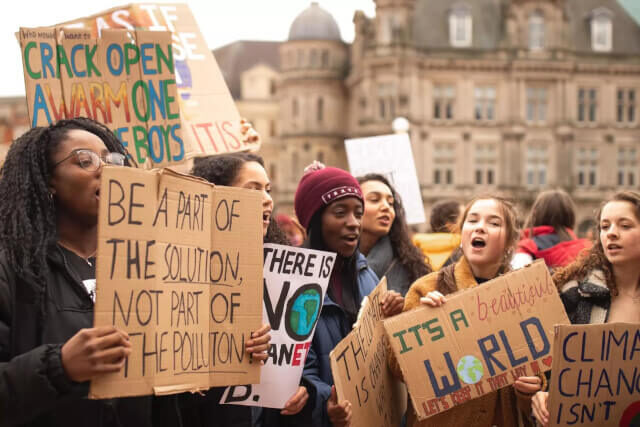[Source](https://unsplash.com/@callumshaw)
### Hazardous Waste Sites
The Center for Effective Government released a report on communities living “in the shadow of danger”, that is, in close proximity to hazardous waste sites. They found that people of color are almost twice as likely to live near these facilities than their white counterparts, and that hazardous waste sites situated in minority communities have almost twice the rate of incidents that directly lead to environmental health issues.
Furthermore, this report concludes that “increasing social inequality is linked to environmental degradation.” The environmental injustices faced by minority communities have a [long-term impact](https://blog.idrenvironmental.com/how-hazardous-waste-disposal-affects-the-environment) on the wildlife and green spaces around them and increase the chances of water contamination, all of which jeopardize the well being of the planet at large.
- [](https://interfaithsustain.com/environmental-awareness/)
## [Environmental Awareness Plus Global Action Could Lead To Change](https://interfaithsustain.com/environmental-awareness/)
- [](https://interfaithsustain.com/ecology-and-environment/)
## [Understanding Ecology and The Environment](https://interfaithsustain.com/ecology-and-environment/)
- [](https://interfaithsustain.com/daoism-and-the-construction-of-sustainable-societies/)
## [Daoism and the Construction of Sustainable Societies](https://interfaithsustain.com/daoism-and-the-construction-of-sustainable-societies/)
### Air Pollution
Many of the health hazards posed by these sites are the result of air pollution. A [report](https://ej4all.org/life-at-the-fenceline) found that hazardous waste disposal sites are not vetted for their long-term impact on human health before construction. Because of toxic air pollution, communities situated within three miles of a hazardous facility are at much higher risk for health problems such as cancer and respiratory illness.
Industrial facilities are only one source of air pollution. Living in high-traffic areas and near power plants and landfills also means a vast reduction in the local air quality, and “[historical](https://progressivereform.org/cpr-blog/environmental-justice-and-covid-19-pandemic-why-epa-needs-funding-boost/) practices have led to the concentration of poor communities and communities of color in neighborhoods” closest to these health hazards.
These sources prevent local communities from living in a healthy environment by threatening them with “high levels of exposure to harmful pollutants such as nitrogen dioxide, ozone, and fine particulate matter” that pose a myriad of health risks. Environmental justice seeks to protect public health as well as the planet from the consequences of environmental pollution.
#### The COVID-19 Pandemic
The COVID-19 pandemic has had a devastating impact on those who are already victims of environmental injustice. Black and Latino minority [groups](https://progressivereform.org/cpr-blog/environmental-justice-and-covid-19-pandemic-why-epa-needs-funding-boost/) “were almost three times more likely to be hospitalized and nearly twice as likely to die from COVID-19 as compared to their white counterparts.”
While there are many factors to be considered here, the science suggests air pollution prevalent in communities of color “plays a significant role in these disparities.” These statistics have provided the federal government another impetus to address environmental justice.
#### Air Quality standards
Recent events have shown us that “air pollution is the biggest threat to poor communities and communities of color” as exposure to pollutants leads to asthma attacks, hospitalizations, and deaths, all factors that are exacerbated by the ongoing effects of COVID-19. In light of this, proponents of environmental justice demand that the United States Environmental Protection Agency turn their attention toward [National Ambient Air Quality Standards (NAAQS)](https://legal-planet.org/2022/02/24/air-quality-as-environmental-justice/).
Once NAAQS is enforced more strictly, local government will be required to maintain safe levels of air pollution within all their communities. This change could offset the disproportionate exposure of vulnerable communities to unsafe air. Of course, these measures will be also effective at reducing the impact of air pollution on the planet.
## Climate Change and Environmental Justice
As we reckon with the impact of climate change on our planet, it is also necessary to recognize that “[fighting climate change](https://news.climate.columbia.edu/2020/09/22/climate-change-environmental-justice/) and environmental justice are inextricably linked.” The environmental issues brought on by climate change are also matters of environmental injustice.
[Source](https://unsplash.com/@hudsonhintze)
For example, the burning of fossil fuels releases carbon dioxide that degrades the atmosphere and causes temperatures to rise. Heatwaves decrease air quality, posing a greater threat to community health when air quality is already inadequate. Heat itself can be a deadly risk when suitable housing and air-conditioning is not readily available. All of these factors leave communities impacted by climate change extremely vulnerable.
**Climate change** is a preeminent issue in environmental injustice because it does harm to all but does not affect everybody equally. While the health risks of climate change are a concern in the U.S., they do even more damage on a global scale, where low income populations in the global south are particularly susceptible.
[Research](https://www.publichealth.columbia.edu/public-health-now/news/air-pollution-and-climate-change-take-growing-toll-childrens-health) has found that children are uniquely vulnerable to the consequences of climate change, and that “the greatest burden falls on those who are socially and economically disadvantaged.” It is the responsibility of more privileged nations and peoples to address issues of environmental justice on a local level and beyond.
## **Current Attitudes**
In 2022, we witness real change, thanks to the EJ movement. Government policies are beginning to reflect the urgency of environmental justice in light of climate change, COVID-19, and other factors.
The U.S. political climate is now more hospitable to environmental justice. The preservation of climate health has become a high priority for many Americans, and increased social awareness has brought attention to the social issues that precipitate climate injustice.
The current administration has responded to these needs and taken up the [Justice40 initiative](https://insideclimatenews.org/news/01082021/biden-environmental-justice/). These guidelines require that “40 percent of climate, energy and infrastructure spending go to overburdened and marginalized neighborhoods.”
While we have a long way to go in pursuing environmental justice, EJ activists are encouraged by these changes. As Dr. Robert Bullard observes, “\[In\] 1979, [environmental justice](https://www.wastedive.com/news/enviornmental-justice-epa-waterhouse-bullard-houston/622414/) was a footnote… Today it’s a headline.”
## Religion and Environmental Justice
Drawing on faith communities and traditions can be a powerful way to fight for environmental justice issues, as explored in the article [Environmental Justice and Religion](https://interfaithsustain.com/environmental-justice-and-religion/). The importance of faith in the fight against climate change shouldn’t surprise us. People of faith have been fighting for justice for thousands of years from Abraham to Buddha, from Gandhi to Rev. Martin Luther King Jr.
## Twin Crises: Climate & Racial Inequality
In our modern time as well, people of faith are standing up to fight for a healthy environment. Adelle M. Banks writes for [Religion News Services](https://religionnews.com/2022/05/18/gore-says-climate-crisis-like-nature-hike-right-through-the-book-of-revelation/) about how Black interfaith leaders and environmental activists are working together to address what Former Vice President Al Gore calls the “twin crises of climate and racial justice.”
Ibrahim Abdul-Matin, a Muslim environmental activist, adds in the article “The transition to a cleaner future can also be a transition to a more just and equitable future… Instead of building up dirty fossil fuel infrastructure that drags down communities, we can harness sources like the wind and the sun to lift them up.”
With black Americans facing disproportionately high exposure to polluting fossil fuels like coal and oil, environmental justice is certainly an issue of race and an issue of faith. When we transition to cleaner energy sources we will all win, but if we continue with business as usual, some communities will lose more than others. May God help us to work together to achieve environmental justice, speedily in our days.
*\* Featured image [source](https://unsplash.com/)*
**Categories:** Blog on Faith and Ecology
**Tags:** Environmental Justice
---
### [What is Desalination And What is Its Impact?](https://interfaithsustain.com/what-is-desalination/)
**Published:** August 1, 2022
**Author:** ICSD
**Excerpt:** Harry Cooper - While the earth is covered in water, 99% of it is unusable. Only 2.5% of the earth's water supply is fresh water, and of that fresh water supply around 70% of it is frozen in glaciers and ice caps, leaving relatively little water available for human consumption.
**Content:**
Table of Contents
Table of Contents
- [A World Wide Water Crisis](#aioseo-a-world-wide-water-crisis-2)
- [What is Desalination?](#aioseo-what-is-desalination-4)
- [The Desalination Process](#aioseo-the-desalination-process-9)
- [Multi Stage Flash Distillation](#aioseo-multi-stage-flash-distillation-13)
- [Reverse Osmosis desalination plant](#aioseo-reverse-osmosis-desalination-plant-16)
- [Restoring Water Balance](#aioseo-restoring-water-balance-20)
- [Israel: A Case Study on Desalination](#aioseo-israel-a-case-study-on-desalination-22)
- [Restoring Israeli Water Supply](#aioseo-restoring-israeli-water-supply-27)
- [Using Water in Peace Negotiations](#aioseo-using-water-in-peace-negotiations-31)
- [Desalination and Palestinian Peace](#aioseo-desalination-and-palestinian-peace-36)
- [Desalination and Religion](#aioseo-desalination-and-religion-41)
- ["Appreciating Water" By Rabbi Yonatan Neril and Evonne Marzouk, Eco Bible Volume 1](#aioseo-appreciating-water-by-rabbi-yonatan-neril-and-evonne-marzouk-eco-bible-volume-1-43)
*By Harry Cooper* – While the earth is covered in water, 99% of it is unusable. Only 2.5% of the earth’s water supply is fresh water, and of that fresh water supply around 70% of it is frozen in glaciers and ice caps, leaving relatively little water [available](https://www.usgs.gov/special-topics/water-science-school/science/where-earths-water#:~:text=In%20the%20first%20bar%2C%20notice,serves%20most%20of%20life's%20needs.) for human consumption.
## A World Wide Water Crisis
As human populations multiply, this small amount of water gets stretched dangerously thin, leaving many parts of the world with limited access to clean water. The [growing issue of water scarcity](https://interfaithsustain.com/water-trading/) has prompted many people to look for solutions into the ways we use water, and where we get our water from.
### What is Desalination?
One such solution is the process of **seawater desalination**. What is desalination? Desalination is the process of taking large amounts of undrinkable seawater or brackish water, removing the salt and other contaminants, and turning it into potable water.
While **desalination** has proved itself a viable way to remove drinking water contaminants and alleviate water scarcity, it is not without its flaws. Desalination plants are often very expensive to run and require massive amounts of energy. This has made it harder to utilize seawater desalination on a large, global scale.
[Source](https://unsplash.com/@helloschmitt)
## The Desalination Process
Seawater is far from being drinkable when taken straight from the ocean, and it must undergo intensive desalination processes in order to become usable. The two main methods of seawater desalination are multi stage flash distillation and reverse osmosis.
### Multi Stage Flash Distillation
One of the easiest ways of separating water from its contaminants is by using heat. Heated water gives off steam which can be condensed as desalinated water. On an industrial level, this is done through a process known as multistage flash distillation.
This [process](https://www.chemeurope.com/en/encyclopedia/Multi-stage_flash_distillation.html) involves using a series of increasingly lower pressure chambers to rapidly boil water and create steam at desalination plants. Once enough clean water has been removed as steam, the excess concentrated brine is discarded.
#### Reverse Osmosis desalination plant
Unlike multi stage flash distillation, a reverse osmosis desalination plant relies on pushing seawater through semipermeable membranes at incredibly high pressures. These membranes filter out larger contaminants and salt particles to turn salt water into drinkable freshwater.
The process of [reverse osmosis](https://www.usgs.gov/special-topics/water-science-school/science/desalination) is very efficient at desalinating water. However it is incredibly expensive compared to thermal desalination processes.
This makes it much harder for reverse osmosis desalination plants to be installed in poorer, more water stressed areas. Although as desalination technologies improve and become less expensive, we can hope to see a more widespread use of desalination through the construction of desalination plants.
## Restoring Water Balance
Dwindling water supplies has made access to water a source of conflict in many water stressed parts of the world. But many believe that increasing water supplies through desalinated seawater can help to spark negotiations and spread peace.
- [](https://interfaithsustain.com/urban-runoff/)
## [Urban Runoff Pollutes Our Rivers](https://interfaithsustain.com/urban-runoff/)
- [](https://interfaithsustain.com/ocean-cleanup/)
## [Innovative Technology For An Ocean Cleanup](https://interfaithsustain.com/ocean-cleanup/)
- [](https://interfaithsustain.com/is-rain-water-safe-to-drink/)
## [In Your Opinion, Is Rain Water Safe to Drink Today?](https://interfaithsustain.com/is-rain-water-safe-to-drink/)
## Israel: A Case Study on Desalination
Over the past decade, Israel has invested lots of time, money, and resources into building its **desalination infrastructure**; including the [largest](https://www.water-technology.net/projects/sorek-desalination-plant/#:~:text=The%20Sorek%20desalination%20is%20the,south%20of%20Tel%20Aviv%2C%20Israel.) desalination plant in the world: the Sorek Desalination Plant.
This freshwater producing infrastructure is especially important in a region like the Middle East, one of the driest and most water stressed parts of the world. But, with so much conflict between the countries and peoples of the region, many question whether Israel’s water supply will be another source of controversy, or the key to peace and prosperity in the Middle East.
[Source](https://unsplash.com/photos/silhouette-photography-of-national-flag-pOCQuo4b-3E)
## Restoring Israeli Water Supply
The historic diversions of water from the Jordan River, and its tributaries in Syria and Jordan, has put many of Israel’s iconic natural [water bodies](https://phys.org/news/2022-04-israel-sea-galilee-desalinated.html) under extreme duress, but Israel’s development and new reliance on desalination has helped restore it into a water rich country. While the Sea of Galilee has shrunken considerably due to water usage and [climate change](https://interfaithsustain.com/evidence-of-climate-change/), Israel has now set in place plans to move excess desalinated water back into the Sea of Galilee, to restore it to its former glory. In addition, some have discussed using the excess salt water from the desalination process to replenish the shrinking [Dead Sea](https://www.circleofblue.org/2016/middle-east/israels-mediterranean-desalination-plants-shift-regional-water-balance/). Along with renewing these water bodies, Israel is also using its newfound water source as a means of diplomacy.
## Using Water in Peace Negotiations
With almost the entire region of the Middle East being plagued by water scarcity, drinkable water is a valuable commodity. And with Israel’s new influx of desalinated water, they are beginning to use it as a bargaining chips in peaceful negotiations with its neighbors.
One such **water trading** [**treaty**](https://www.reuters.com/business/energy/israel-jordan-partner-water-for-energy-deal-israeli-ministry-says-2021-11-22/) has been made with Jordan, and brokered by the UAE. The treaty promises that Israel will provide Jordan with 200 million cubic meters of fresh water in exchange for 600 megawatts of solar generated electricity. Renewable energy for potable water!
[Source](https://pixabay.com/users/shlomaster-2095460/)
### Desalination and Palestinian Peace
Another key issue in the reworking of the Middle Eastern water balance through desalination, is the [Israeli-Palestinian](https://ecopeaceme.org/water-resilience/) conflict. Water has been an issue between Israelis and Palestinians for as long as the conflict itself, both sides vying for access to the limited fresh water.
But as Israel increases its water supply through desalination, there is room for both Israelis and Palestinians to have enough [clean water](https://interfaithsustain.com/is-rain-water-safe-to-drink/). While there is still a lot of work to be down to solve the conflict, thanks to desalination plants, we can hope to see everyone in the region with **access to fresh water**.
## Desalination and Religion
*Exodus 15:22 – Then Moses Caused Israel to Set Out from the Sea of Reeds. They Went on Into the Wilderness of Shur; They Traveled Three Days in the Wilderness and Found No Water.*
### “Appreciating Water” By Rabbi Yonatan Neril and Evonne Marzouk, [Eco Bible Volume 1](https://www.amazon.com/dp/B08LCKLM9G/ref=dp-kindle-redirect?_encoding=UTF8&btkr=1)
Even before the Israelites entered the Land of Israel, water was central to their collective experience. In the desert, uncertainty about water resources inspired numerous complaints and lessons for the wandering Jews.
The Talmud teaches that in the spiritual merit of Miriam’s song, a well appeared in the desert and accompanied the Israelites wherever they went. God gave this essential resource, without which one cannot live for more than a few days, in the water-scarce desert. But the long-term security of the resource was never certain. The Biblical experiences with water in the desert can be understood as a spiritual training to cultivate appreciation for God’s goodness. Through the process of taking water for granted, losing it, and then receiving it directly from God, the desert wanderers certainly appreciated water and the One who provided it. Thus, at the end of the Israelites’ desert experience, they sang an exultant song about their appreciation of water to God.
Water scarcity continued after the Israelites entered Israel with Joshua and formed an agrarian society whose bounty or famine was regulated by rain. The Talmud teaches that God directly waters the Land of Israel while a messenger waters the rest of the world. Israel is a semi-arid country with no major rivers. It receives modest rainfall, averaging less than four inches (100 millimeters) per year in the extreme south to 44 inches (1,128 millimeters) a year in the north.(By comparison, New York City averages between 28 inches \[710 millimeters\] and 45 inches \[1140 millimeters\] of precipitation per year.) Why is the one land in the world that God waters directly a land that receives far less water than many others? Since water is a sign of blessing, would not the Pacific Northwest or the rainforests of Brazil or Indonesia be more appropriate candidates for the Promised Land?
Water insecurity is by Divine design, to remind us that God is the ultimate Provider of all our needs. The Land of Israel contrasts with the land on both sides of the Nile, Euphrates, and Tigris rivers. In those river valleys, farmers can irrigate their crops year-round from a reliable water source. Yet until the twentieth century, most agriculture in Israel was rain-fed and not irrigated. The seven species that the Torah associates with the Land of Israel (grapes, olives, dates, pomegranates, figs, wheat, and barley) are all species that do not require irrigation. The farmers who planted, tended, and harvested these crops depended on the winter rains to survive. In their acute need for rain each year, the Israelites depended on the God who provided it, a spiritual reality that was not present in the more water-abundant river valleys of nearby civilizations.
Today, Israel is working hard to address a recent water crisis spurred by a long-term drought induced by climate change. Reuse of wastewater for irrigation is a key method for increasing the supply of available water. Desalination of Mediterranean seawater is becoming an increasing source of freshwater, yet requires a significant amount of energy to produce the water – energy currently supplied by burning fossil fuels.
The world faces a growing water crisis particularly affecting the people of Africa, Southern Asia, and China. Indeed, insufficient safe drinking water is a leading cause of death in the world. Some 884 million people do not have access to safe drinking water sources. A 2018 UN-Water report notes that “over two billion people live in countries experiencing high water stress.” The Torah’s wisdom on water awareness is more relevant now than ever.
*\* Featured image [source](https://pixabay.com/users/raymark-2255846/)*
**Categories:** Blog on Faith and Ecology
**Tags:** Desalination
---
### [Urban Heat Island Effect & How To Combat It!](https://interfaithsustain.com/urban-heat-island-effect/)
**Published:** August 5, 2022
**Author:** ICSD
**Excerpt:** Harry Cooper - Throughout the past couple centuries more and more people have been moving into cities. This, combined with exponential population growth, has greatly increased the amount of urban area on the globe.
**Content:**
Table of Contents
Table of Contents
- [Hotter Cities](#aioseo-hotter-cities-2)
- [What Causes the Urban Heat Island Effect?](#aioseo-what-causes-the-urban-heat-island-effect-8)
- [Less Vegetation](#aioseo-less-vegetation-12)
- [Dark, Paved Surfaces](#aioseo-dark-paved-surfaces-15)
- [Human Generated Heat](#aioseo-human-generated-heat-19)
- [Localized Urban Heat Islands](#aioseo-localized-urban-heat-islands-24)
- [Positive Feedback Loop of Urban heat Islands](#aioseo-positive-feedback-loop-of-urban-heat-islands-26)
- [Human Health Effects](#aioseo-human-health-effects-32)
- [Combating The Urban Heat Island Effect](#aioseo-combating-the-urban-heat-island-effect-35)
- [Green Architecture](#aioseo-green-architecture-37)
- [Increasing Vegetation](#aioseo-increasing-vegetation-45)
- [How Religions are Fighting the Urban Heat Island Effect](#aioseo-how-religions-are-fighting-the-urban-heat-island-effect-51)
*By Harry Cooper* – Throughout the past couple centuries more and more people have been moving into cities. This, combined with **exponential population growth**, has greatly increased the amount of urban area on the globe. This **urbanization** has numerous affects on the environment in and around cities. Urbanization can be linked to everything from light pollution to habitat fragmentation, but one of the most notable aspects of an increased urban environment is the **urban heat island effect.**
## Hotter Cities
The **urban heat island** effect is a phenomena where cities and urban areas become notably hotter than the area around them. Cities can be [warmed](https://science2017.globalchange.gov/chapter/10/#:~:text=In%20recent%20decades%2C%20land%20use,since%201980%20(high%20confidence).) anywhere from 1-7°F during the day and 2-5°F during the night.
On top of this, **climate change** is already making many parts of the world hotter. When these two effects combine they cause cities to reach dangerously high air temperatures.
[Source](https://pixabay.com/users/dannfish-15998227/)
While the urban heat island effect is affecting cities across the world, there have been efforts to counteract it. Proper urban planning and green design are helping to make naturally cooler cities.
## What Causes the Urban Heat Island Effect?
There are many forces in nature that help to naturally cool areas. However, when an area becomes urbanized, many of these forces get replaced with heat inducing ones, resulting in heat islands.
### Less Vegetation
[Plants](https://www.conserve-energy-future.com/effects-solutions-urban-heat-island.php) are excellent at naturally cooling their surrounding environment. Not only do they provide shade, but they help cool the air around them through a process called evapotranspiration.
Normally plants act as a natural way to keep temperatures cool and regulated. But as cities are built and ultimately expand, more and more plants and trees are replaced with concrete.
### Dark, Paved Surfaces
In urban areas, vegetation is usually replaced by dark materials such as metal or concrete. Not only do these materials provide no natural cooling benefits, but they work to make the environment around them much [hotter](https://www.buildings.com/cooling/article/10185567/6-causes-of-urban-heat-islands-and-4-ways-to-offset-them).
Dark surfaces such as concrete absorb and store more heat during the day than natural surfaces, and reach much higher surface temperatures. These surfaces eventually release this heat and make the air around them much hotter.
In addition, paved concrete and other sealed surfaces can’t absorb water, forcing most rain water to run off. This prevents the process of evapotranspiration, which would normally help to cool an area off.
#### Human Generated Heat
A lot of everyday [human activity](https://www.epa.gov/heatislands/learn-about-heat-islands#_ftnref1) releases heat into the atmosphere. In dense, highly populated cities, these actions can add a lot of heat into the atmosphere.
[Source](https://unsplash.com/@chromatograph)
This heat mainly comes from using technologies and infrastructure such as air conditioning, carbon dioxide emitting vehicles, and latent energy usage from buildings. These all produce heat and contribute to the urban heat island effects.
## Localized Urban Heat Islands
The heating caused by urban heat islands is only a localized effect within urban areas, not a large scale shift in global temperature like climate change. However, there are still many negative [impacts](https://www.epa.gov/heatislands/heat-island-impacts) associated with urban heat islands.
## Positive Feedback Loop of Urban heat Islands
Air conditioning requires a lot of energy to run. This makes it one of the more prominent causes of urban heat islands.
However, as temperatures rise in cities the demand for air conditioning grows. This creates a positive feedback loop where buildings use more heat creating energy the more air temperature rises.
This causes a massive spike in demand for energy and air conditioning, making midday during the summer one of the highest times for energy demand throughout the year. On top of this, as urban heat islands cause people to use more energy, more greenhouse gases are burned, contributing to global climate change as well.
## Human Health Effects
When urban heat islands create levels of extreme heat, human health is put at risk. As cities grow hotter, people become more at risk of experiencing heat related illness, such as heat cramps, heat stroke, heat exhaustion, respiratory problems, and even death.
People who are at higher risk for these effects include the elderly, young children, people who work outside, lower-income individuals, and people with preexisting health conditions. But as city temperatures continue to rise, anyone outside in extreme heat is at risk of contracting a heat related illness.
- [](https://interfaithsustain.com/how-religious-communities-are-curbing-climate-change/)
## [How Religious Communities Are Curbing Climate Change](https://interfaithsustain.com/how-religious-communities-are-curbing-climate-change/)
- [](https://interfaithsustain.com/how-does-deforestation-affect-climate-change/)
## [Environmental Destruction and How Does Deforestation Affect Climate Change?](https://interfaithsustain.com/how-does-deforestation-affect-climate-change/)
- [](https://interfaithsustain.com/decarbonization/)
## [The Necessity of Decarbonization to Save our Planet](https://interfaithsustain.com/decarbonization/)
## Combating The Urban Heat Island Effect
While urban areas across the world are warming at unprecedented rates, there are ways of making them naturally cooler. By using **environmental city planning** methods such as [green architecture](https://interfaithsustain.com/green-architecture/), increased vegetation, and decreased dark surfaces, cities can make themselves less susceptible to becoming urban heat islands.
## Green Architecture
Energy intensive buildings made of dark materials are some of the primary causes of the urban heat island effect. However, when architects design buildings with the environment and heat islands in mind, it can make a big difference.
One strategy cities have used is implementing **cool roofs and cool pavements**. These are essentially the same as regular roofs and pavements, except made from a lighter colored material.
[Source](https://unsplash.com/@jupp)
Materials that reflect sunlight rather than absorb it can have a big impact in helping to make cities cooler. Many cool roofs and pavement can reflect up to 60% more sunlight than traditional dark concrete.
Another way that buildings can reduce the amount of heat they contribute is by installing [green roofs](https://interfaithsustain.com/living-roof/). These are roofs with vegetation planted on them.
Much like cool roofs, **green roofs** are a good way to reduce the amount of heat absorbed by buildings. On top of that, green roofs cool the air around them, further reducing the heat emitted by buildings, and reducing the need for air conditioning inside the building.
### Increasing Vegetation
Another good way to combat heat islands is by planting trees, bushes, flowers, and other plants around the city. Plants naturally cool the air around them through **evapotranspiration**, and replace what would otherwise be heat absorbing concrete.
While green roofs are a more innovative way to increase plant cover in cities, planting things anywhere can be helpful. Adding green parks and planting trees along roads is a great way to beautify a city while helping to cool it down.
Increasing vegetation throughout a city is also a great way for everyday citizens to help fight heat islands. Planting trees or a garden in your yard is something almost everyone can do to help green up cities.
## How Religions are Fighting the Urban Heat Island Effect
Laura Bliss wrote for Grist about how [Louisville is beating urban heat with the help of local faith communities](https://grist.org/article/louisville-is-beating-urban-heat-with-the-help-of-local-faith-communities/). This article offers an inspirational example of how **faith communities** are coming together in Louisville, Kentucky, the nation’s fastest warming “[urban heat island](https://wfpl.org/louisvilles-urban-heat-islands-are-among-most-intense-fastest-growing-in-the-u-s-report-says/).” While certain religious groups show much less concern than others for environmental issues, Bliss writes about how “a growing contingent of religious groups — including Evangelical Protestants, a group that represents the majority of believers in the Louisville area — are squaring their faith with science’s climate warnings. [Some call it ‘creation care.](https://www.newsweek.com/2016/03/18/creation-care-evangelical-christianity-climate-change-434865.html)‘”
The growing concern for climate change among religious people, and their particular experience of the intense heat in Louisville, helped catalyze a partnership between the local Nature Conservancy and the Center for Interfaith Relations (CIR). These organizations worked together “to develop a landscape ‘audit’ designed especially for religious communities,” which started by recruiting participants from “an all-boys Catholic high school, an Episcopal church, and a mosque— all located in particularly hot spots around Louisville.”
Using the Conservancy’s [Healthy Trees, Healthy Cities App](https://apps.apple.com/us/app/healthy-cities/id1555296254), participants were able to get a real-time understanding of the “environmental, economic, and health benefits of individual tree species, which helps users understand how landscaping choices can serve them or not.” Using this and similar tools and questionnaires, participants were able to get a much better understanding of the nature around their institutions, and this translated to real changes in their attitude and approach.
For example, Sikander Chowhan, chief strategic officer at Muslim Americans for Compassion and former board member at the River Road Mosque, was the point of contact for the mosque’s auditing work and as Bliss describes, had his perspective transformed by the experience:
> Prior to the audit, Chowhan says, his mosque had never appreciated how an overgrown wooded expanse in the back of its property could tie into Islamic teachings. Now, armed with scientific knowledge on how to put that tangle of trees to better service, Chowhan is spearheading plans to clear a small nature trail and plant a wildflower garden. The very act of revamping the landscape will serve as a conversation starter among congregants, and maybe even a topic at services. He quotes the Quran: “And do good as Allah has been good to you. And do not seek to cause corruption in the Earth.”
Our religious institutions are often vestiges for nature in cities and centers for spiritual growth. Using these institutions as platforms for fighting the urban heat island effect and other environmental issues is a wonderful way to bring religious values to life. We only have one planet. May God help us to protect it.
\* *Featured image [source](https://pixabay.com/users/12019-12019/)*
**Categories:** Blog on Faith and Ecology
**Tags:** Urban Heat Island Effect
---
### [What Important Functions Are Performed By Soil?](https://interfaithsustain.com/what-important-functions-are-performed-by-soil/)
**Published:** August 12, 2022
**Author:** ICSD
**Excerpt:** Harry Cooper - Many people may think of soil as nothing more than the dirt beneath our feet, but the reality of soil science is much more complex than that. Read on to discover how soil serves our lives!
**Content:**
Table of Contents
Table of Contents
- [What is Soil?](#aioseo-what-is-soil-2)
- [Soil Properties](#aioseo-soil-properties-5)
- [Important Soil Functions](#aioseo-important-soil-functions-10)
- [Soil Function of Plant Growth](#aioseo-soil-function-of-plant-growth-14)
- [Soil Function of Nutrient Cycling](#aioseo-soil-function-of-nutrient-cycling-18)
- [Soil Function of Water Quality Regulation](#aioseo-soil-function-of-water-quality-regulation-25)
- [Soil Functions and Religion](#aioseo-soil-functions-and-religion-27)
- [Let the Land Rest by Rabbi Noam Yehuda Sendor, Eco Bible Volume 2](#aioseo-let-the-land-rest-by-rabbi-noam-yehuda-sendor-eco-bible-volume-2-31)
*By Harry Cooper* – Many people may think of soil as nothing more than the dirt beneath our feet, but the reality of **soil science** is much more complex than that. Read on to discover how soil serves our lives!
## What is Soil?
Put simply, [soil](https://www.ctahr.hawaii.edu/mauisoil/a_comp.aspx#:~:text=The%20basic%20components%20of%20soil,are%20only%20generalizations%20at%20best.) is the top most layer of the Earth’s crust that is comprised of organic matter, minerals, air, and water. While this may seem like a simple recipe, soil is a dynamic and important part of the natural world that comes in many different varieties, all with different physical, chemical and biological properties.
**Soil formation** consists of its basic ingredients binding and cementing together to form larger soil particles called aggregates. The content of these aggregates and the way they’re arranged impact their structure, texture, and overall soil properties. The specifics of what makes up differing **soil types** and how it’s formed determines its soil fertility, soil health, and soil quality.
## Soil Properties
Soil [texture](https://agriculture.vic.gov.au/farm-management/soil/what-is-soil) is determined by how large or small soil aggregates are. Larger particles will create a sandier texture while smaller ones create a more clay like texture. **Soil textures** are important for determining how well soil can retain and transfer water and air, with sandier soils typically having better retention, resulting in more productive soils.
[Source](https://pixabay.com/users/jing-48262/)
Another important **soil property** is its organic matter content. Soil organic matter usually makes up less than 10% of soil content, but nonetheless it is incredibly important for soil function. Soil biota comes from decomposing organic matter, such as plant roots, as well as a variety of microscopic soil organisms including bacteria and fungi. A higher organic matter content means a more nutrient rich soil, as well as it being more capable of decomposing other organic matter.
## Important Soil Functions
The physical and chemical properties of soil are crucial to enable soil to best achieve its key functions. Soil scientists outline these three ecological functions for soil as the most important soil functions.
### Soil Function of Plant Growth
Soil is required for every [plant](https://www.gardenhealth.com/advice/soil-and-compost/the-importance-of-soil#:~:text=Soil%20provides%20plants%20with%20the,excess%20rainwater%2C%20which%20prevents%20flooding.) on Earth to grow. Soil acts as a place for plants to put their roots, but soils with lots of stored nutrients and water also provide plants with the sustenance they need to thrive and grow. Soils with more organic matter and more capacity to hold water create an optimal environment for plant growth. This is why soil quality is incredibly important for [agricultural productivity](https://interfaithsustain.com/industrial-agriculture/), [maintaining biodiversity](https://interfaithsustain.com/threats-to-biodiversity/), and plant life everywhere.
[Source](https://unsplash.com/@sweeksco)
### Soil Function of Nutrient Cycling
The process of soil taking up nutrients from decomposing organic material and transferring them into plants and the water and air around them is very important to many different [nutrient cycles](https://earthhow.com/nutrient-cycle/). This helps distribute nutrients such as nitrogen and phosphorus across a variety of species and ecosystems, but one of the most important nutrients to be taken up by soil is carbon.
The storage of soil organic carbon is an important tool in the fight against climate change. As plants photosynthesize they take carbon dioxide out of the air. This carbon would normally be put back into the atmosphere when the plant dies and decomposes, but as soil takes up the carbon from the dying plants, it stores it away long term and prevents it from returning to the atmosphere. This sequestration of carbon effectively removes greenhouse gases from the atmosphere, contributing to **reducing global climate change**.
[Source](https://pixabay.com/users/adege-4994132/)
#### Soil Function of Water Quality Regulation
Healthy soil, with high soil porosity, is capable of storing water and transferring it into surface bodies of water and groundwater stores. This is a very important part of the water cycle as healthy soil helps to filter out dissolved materials, silt particles and other pollutants in the water. This is another reason why it is important to maintain the physical properties and the chemical properties of soil as a healthy soil structure is capable of retaining and transferring water, whereas poorly managed soil can lead to erosion and sedimentation.
## Soil Functions and Religion
*Leviticus 25:4 – But in the seventh year the land shall have a sabbath of complete rest, a sabbath of the Lord: You shall not sow your field or prune your vineyard.*
- [](https://interfaithsustain.com/soil-pollution/)
## [What is Soil Pollution, & How Does it Affect Human Health?](https://interfaithsustain.com/soil-pollution/)
- [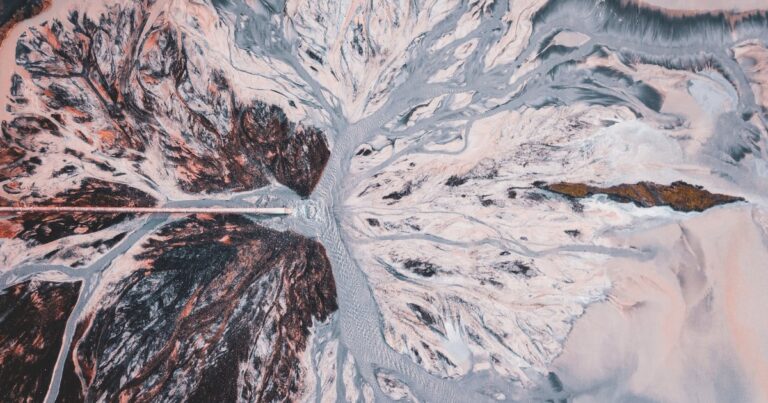](https://interfaithsustain.com/soil-contamination/)
## [Soil Contamination, Its Remedy & Prevention](https://interfaithsustain.com/soil-contamination/)
- [](https://interfaithsustain.com/soil-degradation/)
## [Soil Gives Life But Soil Degradation Poses A Threat To Life On Earth](https://interfaithsustain.com/soil-degradation/)
## Let the Land Rest by Rabbi Noam Yehuda Sendor, [Eco Bible Volume 2](https://www.amazon.com/dp/1735338842?psc=1&smid=ATVPDKIKX0DER&ref_=chk_typ_imgToDp)
Before the sin of Adam and Eve, the earth provided sustenance not through the plotting and plowing of people but rather through prayer. In the Talmud, the sage Rav Assi (3rd century CE) [expounds](https://www.sefaria.org/Chullin.60b.5?lang=en&with=all&lang2=en) that vegetation would not break through the earth until Adam came and prayed to God to have mercy on the earth. The rains fell, and the earth sprouted.
We can interpret the removal of the fruit from the Tree of Knowledge of Good and Evil as a decision to derive pleasure from God’s earth without paying attention to consequences. As a result, humankind’s working of the land was no longer within the context of safeguarding it. Thus, the earth became cursed, sprouting thorns and thistles, only giving forth its fruit by the sweat of one’s brow. The commandment of the Sabbatical year enables a return to the ideal relationship between humankind and creation. The laws and rulings relating to the Sabbatical year are numerous and complex, yet they derive from [four general commandments in the Torah](https://www.judaicaplace.com/sefer-hashmittah-hardcover/hshmt/):
1. [The land should rest](https://www.sefaria.org/Leviticus.25.2?lang=en&with=all&lang2=en), as it says: “ . . . and the land shall rest a sabbath to God.” Though this commandment is directed at the land, it is humanity’s responsibility to return all of creation to a proper relationship with God. By refraining from planting, pruning, plowing, harvesting, or any other form of working the land, the land is allowed to rest and move toward achieving the union of Shabbat.
2. All seventh-year produce is declared ownerless and free for all to take and enjoy.
3. All seventh-year produce is sanctified. The Torah prohibits any business whatsoever with the produce and obligates that it is consumed properly and equitably and does not go to waste.
4. All unrepaid loans that have come to the end of their term are to be [canceled.](https://www.sefaria.org/Shulchan_Arukh%2C_Choshen_Mishpat.67.6?lang=en&with=all&lang2=en)
The mandated abstinence from attempting to control the land and own its produce frees us from the enslavement of the constant pursuit of material goods and wealth and the idolatrous illusion that they make up our existence.
Additionally, the Sabbatical year provides ample time to contemplate and understand that it is not through the strength or the might of our hand that the earth brings forth its fruits. This both instills a deeper sense of faith and trust in God and allows a shift in how we relate to the earth. We must view the earth as a precious gift that has been entrusted to us. We must treat it in a caring and sustainable manner.
The inner teachings of the commandment of the Sabbatical year are vital today as humankind flirts dangerously with destroying the beautiful world we have been given. One example is the deforestation of vast portions of earth’s most vital ecosystems to support the growing demand for beef. The “slash-and-burn” method of clearing land for agriculture, employed globally by both small- and large-scale cattle farmers, involves cutting the vegetation of a plot of land and allowing it to dry, at which point it is burned. The land is then cultivated for a few seasons before being used for cattle pasture. Though this process releases nutrients to fertilize the soil, it is only sustainable on a small scale on nutrient-rich soil. When applied on an industrial level to nutrient-poor soil – as with the current situation in the Amazon rainforest –[the result is an ecological disaster.](https://www.pnas.org/doi/10.1073/pnas.1605516113)
[Source](https://pixabay.com/users/askridshock-18018302/)
As author [Richard Robbins](https://www.amazon.com/Global-Problems-Culture-Capitalism-6th/dp/0205917658) puts it: “Hundreds of thousands of acres of tropical forests in Brazil, Guatemala, Costa Rica, and Honduras, to name just a few countries, have been leveled to create pasture for cattle. Since most of the forest is cleared by burning, the extension of cattle pasture also creates CO2, and . . . contributes significantly to global warming.” Such operations lead to erosion and remove most of the nutrients from the soil, leaving it desolate. The result is severe damage to the biodiversity of the rainforest, an increase in the release of CO2, and general [biosphere instability.](https://www.scientificamerican.com/article/deforestation-and-global-warming/) Instead of being elevated and sanctified, the earth has become trampled and disgraced. The frightening ecological reality we are facing morally obligates us to rethink our relationship with the land and the consequences of our actions.
*\* Featured image [source](https://unsplash.com/@synkevych)*
**Categories:** Blog on Faith and Ecology
**Tags:** Soil
---
### [Soil Gives Life But Soil Degradation Poses A Threat To Life On Earth](https://interfaithsustain.com/soil-degradation/)
**Published:** September 2, 2022
**Author:** ICSD
**Excerpt:** Ethel Mendius - Soil is one of our most essential natural resources and "the basis for all terrestrial life" as a food and life source for plants, animals, and people. Soil exists in abundance, but human activity is leading to a decline in soil quality. This process, known as soil degradation, poses a threat to life on earth.
**Content:**
Table of Contents
Table of Contents
- [Soil Erosion, Soil Degradation, and Land Degradation](#aioseo-soil-erosion-soil-degradation-and-land-degradation-2)
- [Consequences of Soil Degradation](#aioseo-consequences-of-soil-degradation-11)
- [Ecological Features](#aioseo-ecological-features-13)
- [Soil Degradation and Climate Change](#aioseo-soil-degradation-and-climate-change-16)
- [Soil Degradation and the Human Population](#aioseo-soil-degradation-and-the-human-population-19)
- [Who Is Affected By Soil Degradation?](#aioseo-who-is-affected-by-soil-degradation-22)
- [What Causes Soil Degradation?](#aioseo-what-causes-soil-degradation-26)
- [Human Activity That Affects Soil Quality](#aioseo-human-activity-that-affects-soil-quality-31)
- [Unsustainable Agricultural Practices](#aioseo-unsustainable-agricultural-practices-37)
- [The Hidden Cost](#aioseo-the-hidden-cost-42)
- [Promoting Soil Health](#aioseo-promoting-soil-health-46)
- [Soil Degradation and Religion](#aioseo-soil-degradation-and-religion-55)
*By Ethel Mendius* – [Soil](https://www.environment.nsw.gov.au/topics/land-and-soil/soil-degradation#:~:text=Soil%20degradation%20is%20the%20physical,chemicals%2C%20pollutants%20or%20excessive%20flooding.) is one of our most essential natural resources and “the basis for all terrestrial life” as a food and life source for plants, animals, and people. **Soil** exists in abundance, but human activity is leading to a **decline in soil quality**. This process, known as **soil degradation**, poses a threat to life on earth.
## Soil Erosion, Soil Degradation, and Land Degradation
[Soil erosion](https://foodinsight.org/preserving-the-worlds-land-from-soil-degradation/) and soil degradation are interlinked concepts often discussed in the same breath or even interchangeably. For instance, the White House Office of Science and Technology Policy has “announced a nationwide call to action to address soil degradation and erosion.”
Technically speaking, **soil erosion** is an aspect of soil degradation that “specifically refers to the loss of top soil and soil nutrients.” Soil erosion can result from a natural process such as wind and water erosion, but these processes are accelerated by irresponsible human behavior.
[Source](https://unsplash.com/@elizabethlies)
Soil degradation is the leading cause of **land degradation**, a “broader term referring to the decline of the entire ecosystem’s ability to provide goods and [services](https://www.ipcc.ch/srccl/chapter/chapter-4/)” such as pollination and carbon storage.
Land degradation is strongly associated with [**desertification**](https://www.who.int/news-room/questions-and-answers/item/climate-change-land-degradation-and-desertification), an irreversible process happening worldwide in which arable land becomes desert. While [land](https://www.thegef.org/what-we-do/topics/land-degradation-neutrality) is “a complex mixture of soil, water and biodiversity,” we must turn toward soil health to get to the “root” of the issue.
### Consequences of Soil Degradation
In addition to supporting [95% of all food production](https://www.theconsciouschallenge.org/ecologicalfootprintbibleoverview/agriculture-soil-degradation), soil functions to filter water, sequester carbon, and support biodiversity. However, soil and land degradation “is affecting regions inhabited by over one-third of the global population,” and we are starting to see far-reaching consequences.
#### Ecological Features
Soil degradation is “the physical, chemical and biological [decline](https://www.environment.nsw.gov.au/topics/land-and-soil/soil-degradation#:~:text=Soil%20degradation%20is%20the%20physical,chemicals%2C%20pollutants%20or%20excessive%20flooding.) in **soil quality**.” In addition to erosion, this process is marked by soil compaction, salination, and nutrient degradation.
All of these factors result in the loss of [soil fertility](https://www.fao.org/global-soil-partnership/areas-of-work/soil-fertility/en/), “the ability of a soil to sustain plant growth.” The harm done is felt by the ecosystem at large, contributing to pollution, affecting the water supply, and impacting **soil biodiversity** that affects life at all levels.
- [](https://interfaithsustain.com/soil-conservation/)
## [Why Soil Conservation Is So Critical Today](https://interfaithsustain.com/soil-conservation/)
- [](https://interfaithsustain.com/soil-pollution/)
## [What is Soil Pollution, & How Does it Affect Human Health?](https://interfaithsustain.com/soil-pollution/)
- [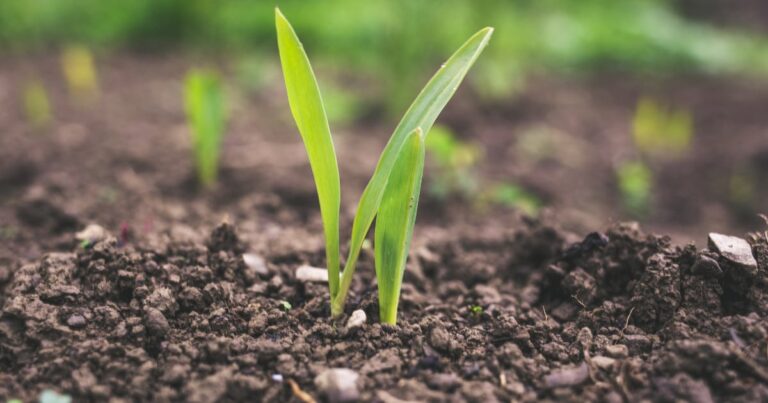](https://interfaithsustain.com/what-important-functions-are-performed-by-soil/)
## [What Important Functions Are Performed By Soil?](https://interfaithsustain.com/what-important-functions-are-performed-by-soil/)
## Soil Degradation and Climate Change
Soil degradation also contributes to climate change. Soil provides a [natural storage](https://www.nrdc.org/stories/soil-erosion-101#impacts) for carbon dioxide and organic matter. Soil degradation can release this carbon into the atmosphere.
On the other hand, the effects of [climate change](https://interfaithsustain.com/water-trading/) increase soil degradation. [Global warming](https://interfaithsustain.com/global-warming-vs-climate-change/), extreme weather events, and wildfires precipitated by climate change all worsen soil erosion and lead to further degradation.
### Soil Degradation and the Human Population
Even apart from the consequences of climate change, soil degradation poses a direct risk to human life and health. Soil fertility is what allows us to grow crops, and in our increasingly global food system, “one of the [biggest threats](https://www.nhm.ac.uk/discover/soil-degradation.html) to our future food security is land degradation and the associated loss in soil productivity.”
According to [UN estimates](https://foodinsight.org/preserving-the-worlds-land-from-soil-degradation/), “12 million hectares of land are lost to drought and desertification each year, a potential loss of 20 million tons of grain.” Furthermore, they predict that “land and soil degradation will reduce food production of the next 25 years by 12 percent.”
### Who Is Affected By Soil Degradation?
These processes [disproportionately affect](https://www.thegef.org/what-we-do/topics/land-degradation) populations in the Global South: “the vast majority of people who depend on drylands live in developing countries.”
Women and children are particularly vulnerable to the impacts of soil and land degradation. However, the consequences affects all of the world’s population and will worsen if we do not take measures to prevent soil loss.
Soil degradation that results in all-out desertification leads to abandonment of land and global social instability; these were “[contributing factors ](https://theconversation.com/on-dangerous-ground-land-degradation-is-turning-soils-into-deserts-94100)in the wars in Sudan and Syria.”
## What Causes Soil Degradation?
There are several [factors](https://www.conserve-energy-future.com/causes-effects-solutions-soil-degradation.php) that directly influence soil quality. While some are natural processes, the rate of decline we are seeing today is largely the result of human influence. Physical factors of soil degradation lead to erosion: “Rainfall, surface runoff, floods, wind erosion, tillage, and mass movements” can all lead to the loss of topsoil.
[Source](https://unsplash.com/@kingimaging)
Biological factors affect the microbial activity of soil and can affect soil’s ability to grow crops and produce food. Chemical factors, such as the salinity of soil, “bring forth the irreversible loss of soil nutrients and production capacities.”
### Human Activity That Affects Soil Quality
Speaking more broadly, much of the soil degradation we see today can be attributed to human practices. Our unsustainable relationship with the natural world is harmful to not just the soil but to the future of all species.
For one, deforestation exposes soil nutrients and removes plant cover, harming the resilience of soil. Urbanization is also harmful, because it “covers the soil in an impermeable layer of concrete that amplifies the amount of surface runoff,” amounting in severe soil erosion.
Much of the soil degradation we see today is the result of pollution from industry and mining. Industrial activities release toxic chemicals into the environment, corrupt organic matter, and through water runoff damage our soil: “Altogether, industrial and mining activities degrade the soil’s physical, chemical, and biological properties.”
### Unsustainable Agricultural Practices
Unfortunately, the [current agricultural practices](https://foodprint.org/issues/how-industrial-agriculture-affects-our-soil/) we employ on an industrial scale increase soil erosion and degradation in several ways. Poor land management becomes a vicious cycle as we look for quick fixes for the problems it creates.
The industry standard of focusing on one crop (“monocropping”) or at best a simple crop rotation does nothing to preserve soil health, necessitating more fertilizers and pesticides. Furthermore, it “alters the microbial landscape of soil,” affecting plant growth.
Synthetic fertilizers lead to a decline in soil health and result in a build-up of harmful salts and metals, leading to chemical changes that affect crop yield. This practice requires more synthetic fertilizers to supply plant nutrients and maintain agricultural productivity for the next harvest.
Intensive farming practices pose further harms to soil. Pesticides affect its microbial health, killing healthy and harmful bacteria alike, and mechanical tilling and heavy farm equipment leads to the degradation of soil structure. Animal waste from factory farms also contaminates soil with heavy metals and harmful microbes. Taken together, all these industrial farming practices jeopardize the future of our soil system.
## The Hidden Cost
Our current relationship with soil and in particular our intensive agriculture practices are not only harmful but inefficient. Soil degradation must be addressed for humankind to be healthy and prosperous.
The solutions we rely on to maintain agricultural productivity without soil health are increasingly costly. A [recent study shows](https://www.sciencedaily.com/releases/2021/01/210112125215.htm) “one-third of the fertilizer applied to grow corn in the U.S. each year simply compensates for the ongoing loss of soil fertility, leading to more than a half-billion dollars in extra costs to U.S. farmers every year.”
Human society cannot get around the [high cost of soil erosion](https://www.wri.org/insights/causes-and-effects-soil-erosion-and-how-prevent-it): “One study estimated global economic losses from soil erosion to be around $8 billion, due to reduced soil fertility, decreased crop yields and increased water usage.”
### Promoting Soil Health
The soil erosion and degradation we are seeing today is totally unsustainable. In the [Midwestern United States](https://www.smithsonianmag.com/smart-news/57-billion-tons-of-top-soil-have-eroded-in-the-midwest-in-the-last-160-years-180979936/), over 50 billion tons of topsoil have eroded since farming took off in the mid-19th century, “nearly double the rate” that we can maintain.
[Source](https://unsplash.com/@cdc)
We can and must take [steps](https://www.positive.news/environment/soil-degradation-five-possible-solutions/) to minimize soil erosion and degradation for the benefit of ourselves and our natural environments. These measures involve systemic overhaul as well as lifestyle changes.
Sustainable agriculture, and meaning “responsible regulation of land and agriculture”, and less demand for meat and dairy would curb some of the impacts of soil degradation. Sustainable forest management, planting trees where they have been cut down, has been shown to curb erosion.
Letting the land rest, while being economical with what we are using, is another solution: “it takes around 500 years for just 2.5cm of topsoil to be created,” and at that rate it will be a challenge to make up for the soil we have lost from unsustainable practices.
## Soil Degradation and Religion
Soil’s importance and the danger of its degradation appear in cultures around the world. Katsuyuki Minami’s [Soil and humanity: Culture, civilization, livelihood and health](https://www.tandfonline.com/doi/full/10.1111/j.1747-0765.2009.00401.x) is a great survey of different culture’s relationship with soil. For example, this article quotes a poem from the Chinese work *Hongfan Wuxingzhuan*, that speaks of “soil virtue”:
> Trees do not grow or flourish without the soil. Fire has no vigor without soil, and it exists as fire only because there is soil. Metal can become useful when it is put in earthen molds. If there were no soil, water would spill over and never stop flowing; water does not spill over because there are dikes.
>
> Soil energy helps new things to sprout and allows that which has weakened to waste away and attain its path. Therefore, the cycle of the five elements is dependent on the power of soil virtue. Soil energy is at the center of seasonal changes, is the driving force behind the seasons, and is the king of the seasons.
The closer people have been tied to the earth, the more they have appreciated soil. Today we in the western world have become more and more estranged from the Earth, and similarly treat soil as a disposable commodity. We farm without concern for future generations, which is the death sentence for a civilization. Listen to how Minami describes the collapse of the Greek empire:
> Why did the Greeks fall in a mere 30–40 generations? Like other societies, they depended on agriculture to feed themselves. However, as they increased crop production because of population growth, they plundered soil fertility and abetted soil erosion. As a consequence, the soil resources were exhausted and ecosystem destruction proceeded.
>
> When Greece was strong, it was still able to prosper, despite the degraded soil, by using its colonies for food production. However, when deprived of its colonies, Greek civilization rapidly declined, suggesting that the progress of civilization is limited by the extent to which it can plunder soil resources from nature.
Soil degradation should be a concern for every religious person. God has blessed us with a bountiful Earth and bountiful healthy soil. But protecting these blessings is up to us.
*\* Featured image [source](https://unsplash.com/@dirtjoy)*
**Categories:** Blog on Faith and Ecology
**Tags:** Soil Pollution
---
### [The Effects of Soil Creep And Its Prevention](https://interfaithsustain.com/soil-creep/)
**Published:** September 9, 2022
**Author:** ICSD
**Excerpt:** Harry Cooper - If you've ever been by a steep hill and seen slanted fence posts or tilted signs the culprit may be soil creep. Soil creep is the process of soil and other surface material slowly moving downhill when on a steep enough slope.
**Content:**
Table of Contents
Table of Contents
- [What is Soil Creep?](#aioseo-what-is-soil-creep-4)
- [How Does Soil Creep Work?](#aioseo-how-does-soil-creep-work-7)
- [Phenomenon Affecting Soil Creep](#aioseo-phenomenon-affecting-soil-creep-11)
- [Effects of Soil Creep](#aioseo-effects-of-soil-creep-16)
- [Preventing Soil Creep](#aioseo-preventing-soil-creep-22)
- [Soil Creep and Religion](#aioseo-soil-creep-and-religion-27)
- [What is soil creep and how does it occur?](#aioseo-what-is-soil-creep-and-how-does-it-occur-32)
- [How does soil creep affect the landscape and man-made structures?](#aioseo-how-does-soil-creep-affect-the-landscape-and-man-made-structures-34)
- [What natural processes contribute to soil creep?](#aioseo-what-natural-processes-contribute-to-soil-creep-36)
- [Are there any methods to prevent soil creep on slopes?](#aioseo-are-there-any-methods-to-prevent-soil-creep-on-slopes-38)
- [Can human-made structures be designed to resist soil creep?](#aioseo-can-human-made-structures-be-designed-to-resist-soil-creep-40)
*By Harry Cooper* – If you’ve ever been by a steep hill and seen slanted fence posts or tilted signs the culprit may be soil creep. **Soil creep** is the process of soil and other surface material slowly moving downhill when on a steep enough slope.
This process happens at an imperceptibly slow rate. However, the affects of soil creep can be seen in trees and fences being slanted over time, and the surface of these slopes having a rippling texture.
The main driving factor behind soil creep is gravity whereby the pressure from gravity pushes down on soil particles and slowly forces them downhill. However, this process is aided by several other natural forces such as rain and freezing temperatures which help soil in its downslope movement through slope wash and frost heaving.
## What is Soil Creep?
Soil creep is a type of [mass movement](https://www3.nd.edu/~cneal/planetearth/Chapt-16-Marshak.pdf). Mass movement is a term used to describe a specific type of erosion in which dirt, rocks, and other surface material is moved down a slope by gravity.
There are many different types of mass movements. Some occur suddenly and rapidly such as rock falls and landslides, where large amounts of rock and earth quickly move downhill. Others are less volatile such as earthflows, where mud and debris flow downslope as a viscous fluid after heavy rain. However the slowest type of mass movement is soil creep, which occurs as gravity gradually pushes down on soil overtime, slowly moving it downhill.
## How Does Soil Creep Work?
While soil creep relies on gravity to push soil downslope there are several [conditions](https://geoforcxc.com/denudation/mass-wasting/) that need to be met that help gravity move the soil. Firstly, the ground must be at a steep enough angle in order for gravity to have any affect on the soil; the steeper the slope, the faster the soil will move. Another factor is how moist the soil is; water in the soil acts as a lubricant that helps the soil move faster. In addition to these conditions there are a handful of other factors that can move soil creep along.
[Source](https://pixabay.com/users/xmax88-2745648/)
### Phenomenon Affecting Soil Creep
One of these factors is a [phenomenon](https://www.britannica.com/science/creep-slope-movement) called frost heaving. Frost heaving is a process that involves the water in the soil freezing and melting, aiding in the gradual downslope movement of soil. This occurs as water in the soil freezes and expands, this forces surface soil grains upward, making them perpendicular to the sloped ground; then as the ice melts, the soil particles are forced directly downwards by gravity, resulting in a slight downhill movement every time soil freezes and melts.
- [](https://interfaithsustain.com/soil-conservation/)
## [Why Soil Conservation Is So Critical Today](https://interfaithsustain.com/soil-conservation/)
- [](https://interfaithsustain.com/soil-pollution/)
## [What is Soil Pollution, & How Does it Affect Human Health?](https://interfaithsustain.com/soil-pollution/)
- [](https://interfaithsustain.com/what-important-functions-are-performed-by-soil/)
## [What Important Functions Are Performed By Soil?](https://interfaithsustain.com/what-important-functions-are-performed-by-soil/)
Another phenomenon that works to move soil downhill is [rain splash](https://www.britannica.com/science/sheet-erosion#ref229314). Rain splash occurs as rain drops dislodge surface soil and sand particles upon impact and cause them to fall downhill. Not only does rain directly move soil downslope through rain splash, but rain also works to moisten the soil, making it easier for it fall downhill.
## Effects of Soil Creep
While soil creep is a slow imperceptible phenomenon, the [effects](https://geoforcxc.com/denudation/mass-wasting/) of it can still be seen on the steep slopes where it occurs. One such affect is the tilting of signs, poles, and fence posts. This is a result of such objects being staked deep into the ground. As surface soils are more susceptible to factors affecting creep such as moisture and frost wedging, soils towards the surface tend to move downhill faster than deeper ones. Therefore the faster creeping top soils push the signs and posts at an angle, tilting them downslope.
Another effect of soil creep is its ability to damage infrastructure. Roads and buildings built on hillsides susceptible to soil creep will often find themselves with cracked pavement or unstable foundations. This is because while soil creep may be a slow gradual force, it is still a very strong one. While it may take a while for any damages to show, infrastructure built on top of creeping soil is prone to be damaged overtime by the slow moving force.
[Source](https://pixabay.com/users/projekt_kaffeebart-5458960/)
While soil creep and [landslides](https://www.sciencedirect.com/science/article/abs/pii/S0165125000800176) are considered to different types of mass movements, it is thought that soil creep can lead to some landslides. A study out of Japan found that soil creep helps build up soil in places where landslides could occur. As more and more soil builds up at these points, the more tension there is. These points of tension eventually release, causing debris flows and landslides.
## Preventing Soil Creep
While soil creep is a process that occurs naturally on steep hills, it can still be harmful to human infrastructure, and a hassle to anyone building on a steep surface. Luckily there is an easy and natural way to **prevent soil creep** almost anywhere, planting trees and other [plants](https://homeguides.sfgate.com/stop-earth-creep-hillside-96871.html).
The more plants a surface has on it, the more roots there are in the soil. These roots help keep the soil in place and prevent it from moving. Not only does stabilizing the soil with root systems slow down soil creep, but it also prevents all kinds of erosion.
## Soil Creep and Religion
The Bahai Shrine and Gardens is the world headquarters of the [Bahai faith](https://interfaithsustain.com/bahai-ecology/) and is located in Haifa, Israel. Because the Bahai Shrine is located on a slope, it was in danger of soil creep, and nobody wanted to see this sacred shrine sliding down the mountain. Therefore, it was intentionally designed with something called “Neoloy® Tough Cell stabilization,” which “were installed on the compacted slope at each of the 19 terraced gardens, where they create a stable soil mass via soil-root interlock. The Tough Cells confine the soil and minimize the movement of soil particles as well as the impact of rain drops and runoff.”
Building the Bahai Shrine and Garden in a manner that avoids soil creep is an impressive feat, and the shrine and garden themselves are no less impressive. Our religious buildings can be beautiful models for [sustainable architecture](https://interfaithsustain.com/sustainable-architecture/). Let’s use them to point the way to a better, more sustainable future.
*\* Featured image [source](https://pixabay.com/users/696188-696188/)*
**Categories:** Blog on Faith and Ecology
**Tags:** Soil
---
### [Knowing Wind Erosion Facts In Order To Prevent It](https://interfaithsustain.com/wind-erosion-facts/)
**Published:** September 7, 2022
**Author:** ICSD
**Excerpt:** Harry Cooper - Wind erosion is a type of erosion much like water erosion or splash erosion. It is a natural process for that helps shape rocks and other natural features in the environment.
**Content:**
Table of Contents
Table of Contents
- [Is Wind Erosion A Natural Process?](#aioseo-is-wind-erosion-a-natural-process-5)
- [How Wind Erosion Works](#aioseo-how-wind-erosion-works-9)
- [Types of Wind Erosion](#aioseo-types-of-wind-erosion-11)
- [Human Activity Affecting Wind Erosion](#aioseo-human-activity-affecting-wind-erosion-15)
- [Agriculture and Erosion](#aioseo-agriculture-and-erosion-18)
- [Impacts of Wind Erosion](#aioseo-impacts-of-wind-erosion-28)
- [Preventing Wind Erosion](#aioseo-preventing-wind-erosion-42)
- [Religion and Wind Erosion](#aioseo-religion-and-wind-erosion-49)
*By Harry Cooper* – **Wind erosion** is a type of **erosion** much like **water erosion** or **splash erosion**. It is a natural process for that helps shape rocks and other natural features in the environment.
Wind erosion occurs as wind moves tiny sand and dirt particles across the landscape. The process is slow and gradual, but over time it can move massive amounts of earth.
There are several different natural features on the landscape shaped by the wind. These features are called [aeolian features](https://www.nps.gov/subjects/geology/aeolian-landforms.htm).
Some **aeolian features** are less permanent and constantly shifting, such as desert sand dunes and coastal dunes. However, others are shaped by the wind over long periods of time, such as loesses, ventifacts, and yardangs.
## Is Wind Erosion A Natural Process?
Wind erosion is normally a natural process. However human interference has exacerbated erosion in many parts of the world.
Harmful agricultural practices such as overgrazing and land clearing has led to severe wind erosion. This erosion has caused dangerous **dust storms**, decreases in agricultural productivity, and an overall decrease in air and water quality.
Increased wind erosion is just one of the many **environmental consequences** of extensive human land use. If we want to solve issues such as wind erosion, we need to find ways to farm and use land with minimal disturbance to the natural landscape.
### How Wind Erosion Works
There are a variety of factors that contribute to wind erosion. The size of soil particles, soil moisture, wind speed, and ground cover all affect how intense and impactful wind erosion will be. The strength of the erosion is also used to divide wind erosion into different [categories](https://globalroadtechnology.com/wind-erosion-types-factors-causes/).
- [](https://interfaithsustain.com/wind-energy-pros-and-cons/)
## [Wind energy pros and cons: A Deeper Look](https://interfaithsustain.com/wind-energy-pros-and-cons/)
- [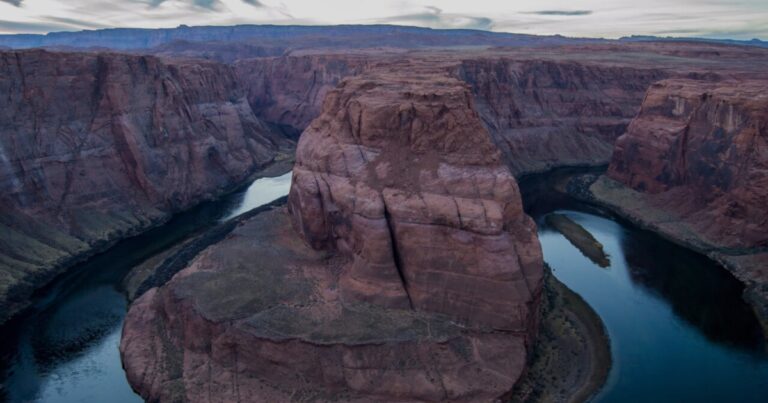](https://interfaithsustain.com/what-is-the-most-common-and-powerful-agent-of-erosion/)
## [What Is The Most Common And Powerful Agent Of Erosion?](https://interfaithsustain.com/what-is-the-most-common-and-powerful-agent-of-erosion/)
- [](https://interfaithsustain.com/diy-wind-turbine/)
## [The Global And Individual Benefits of A DIY Wind Turbine](https://interfaithsustain.com/diy-wind-turbine/)
### Types of Wind Erosion
**Surface creep** is the weakest kind of erosion caused by wind. This kind of erosion consists of soil particles usually 0.5 mm to 2 mm being dislodged and moving across the Earth’s surface without being suspended in the air, and traveling usually no more than a few meters.
**Saltation** consists of the movement of loose particles between 0.05 mm and 0.5 mm. During saltation, particles bounce along a surface material and often break down into smaller particles.
The most intensive type of wind erosion is suspension. **Suspension** involves incredibly fine particles of soil, sand, and clay being lifted into the air and often traveling several kilometers or forming dust storms.
### Human Activity Affecting Wind Erosion
Wind erosion is a part of the natural forces that shape our world. For thousands of years wind has helped cycle nutrients, make landforms, and move Earth.
However, while wind erosion may be a natural process, human activity has made many kinds of erosion an ecological problem. One of the more predominant of these human activities is agriculture.
#### Agriculture and Erosion
Human populations have grown exponentially in the last couple of centuries. This has created an increasing need for food and agriculture.
[Source](https://pixabay.com/users/chris_leboutillier-5540531/)
This has caused humans to convert more and more land for farming. However as land is converted for agricultural use, it becomes more vulnerable to soil [erosion](https://www.worldwildlife.org/threats/soil-erosion-and-degradation).
As land is converted for farming, natural environments such as forests and grasslands are removed, and soil is tilled to make way for planting crops. This process removes roots, nutrients, and microorganisms from the soil making it much less complex.
Without its complex structure, the soil becomes loose and dry. This creates the perfect conditions for soil erosion, and makes natural erosion processes that much more intensive.
This alteration of the land has enabled wind to cause erosion at a much larger scale. It is estimated that human activity has caused a huge amount, almost half of **Earth’s topsoil** to be lost within the past 150 years.
## Impacts of Wind Erosion
When wind erosion gets out of hand it can have a variety of negative [impacts](https://www.environment.nsw.gov.au/topics/land-and-soil/soil-degradation/wind-erosion). These impacts not only affect the environment, but have consequences for all living organisms and humans as well.
One of the most immediate affects of wind erosion is an increase of soil particles in the air. This can manifest as harsh dust storms, travelling long distances, when there are high winds, or a general increase in air borne dust, soil and other particles in regular wind conditions.
Dust storms are large clouds of sand and dust particles that sweep across the landscape at high speeds. This damages plants and commercial crops with their abrasive dust particles.
[Source](https://pixabay.com/photos/sandstorm-sand-flood-storm-dust-165332/)
Dust storms can also be economically harmful. This is due to their ability to cause environmental damage which disrupts transportation and damages infrastructure.
More dust and sand particles in the air also decreases general air quality. People living in areas with more particles in the air are at greater risk of developing asthma and other lung related health problems.
In addition to [polluting the air](https://interfaithsustain.com/how-to-reduce-air-pollution/), wind erosion also causes water pollution. When soil particles in the air get deposited in water it causes a serious decrease in water quality.
An influx of soil particles in water can clog streams and even powerful rivers. This interferes with the natural flow of water and disrupts the water cycle
Soil deposited into water bodies can also carry an excess amount of [pollutants into the water](https://interfaithsustain.com/types-of-water-pollution/). This can make it undrinkable for humans and unlivable for aquatic animals.
Along with these negative affects, wind erosion can also impact [agriculture](https://www.environment.nsw.gov.au/topics/land-and-soil/soil-degradation/wind-erosion) by stripping away layers of fertile soil. Thus, excess farming not only causes wind erosion, but is also impacted by it, creating an environmentally devastating feedback loop.
## Preventing Wind Erosion
Wind erosion is most severe in places where soil is uncovered, loose, and dry. This allows for particles to be easily moved by the wind.
One of the best ways to prevent areas from having these conditions is by growing plants. By keeping an area covered in [vegetation](https://cropwatch.unl.edu/2018/practices-reduce-wind-erosion) the soil is protected from the wind and held together by complex root systems.
While one could argue that farming is a good way to keep an area covered in vegetation, that is not necessarily the case. Farming requires a lot of tilling and soil disturbance which promotes soil erosion.
A recent study out of [Northern China](https://www.mdpi.com/2071-1050/6/12/8951/htm) analyzed the best ways to prevent wind erosion. What it found was that the best way to prevent wind erosion is to leave the land alone.
Leaving an area untouched by human interference allows for plants to grow without human caused soil disturbance. This creates a sturdier soil that is more resistant to erosion.
While leaving the land to grow undisturbed would be ideal, we still need a certain amount of agricultural land to grow our food. But while farming may be counterproductive to preventing erosion, there are a variety of no till farming techniques that leave soil less disturbed and help prevent erosion.
### Religion and Wind Erosion
Perhaps one of the best strategies for preventing erosion can be found in the Bible:
> Six years you shall sow your land and gather in its yield; but in the seventh you shall let it rest and lie fallow. Let the needy among your people eat of it, and what they leave let the wild beasts eat. You shall do the same with your vineyards and your olive groves. (Exodus 23:10-11)
Letting the land lie fallow periodically gives the Earth the chance to heal. Just like we need to time to rest on the weekend, at night and on vacations, the Earth also needs time to heal. May we give the Earth the time she needs to heal, before she will take it for herself.
*\* Featured image [source](https://pixabay.com/users/dennisflarsen-2321124/)*
**Categories:** Blog on Faith and Ecology
**Tags:** Erosion
---
### [Soil Exhaustion Is Caused By Humanity](https://interfaithsustain.com/soil-exhaustion/)
**Published:** September 14, 2022
**Author:** ICSD
**Excerpt:** Harry Cooper - Soil is one of the most important parts of our environment. It is essential for plant growth, nutrient cycling, water conservation, and erosion control. In addition to its environmental importance, it is also important for humanity as well; agricultural industries all around the world rely on healthy soil for growing crops.
**Content:**
Table of Contents
Table of Contents
- [Why Healthy Soil is Important](#aioseo-why-healthy-soil-is-important-4)
- [Soil Nutrients](#aioseo-soil-nutrients-8)
- [Soil Organisms](#aioseo-soil-organisms-13)
- [Soil Structure](#aioseo-soil-structure-17)
- [Causes Of Soil Exhaustion](#aioseo-causes-of-soil-exhaustion-21)
- [Chemical Contaminates](#aioseo-chemical-contaminates-23)
- [Tillage](#aioseo-tillage-27)
- [How to Prevent Soil Exhaustion](#aioseo-how-to-prevent-soil-exhaustion-32)
- [Soil Friendly Agricultural Practices](#aioseo-soil-friendly-agricultural-practices-36)
- [Soil Exhaustion and Religion](#aioseo-soil-exhaustion-and-religion-42)
*By Harry Cooper* – Soil is one of the most important parts of our environment. It is essential for plant growth, nutrient cycling, water conservation, and erosion control. In addition to its environmental importance, it is also important for humanity as well; agricultural industries all around the world rely on healthy soil for growing crops.
Like other parts of the natural environment, soil requires being maintained in a healthy state to function. Since soil performs such a wide variety of functions, there are many different attributes of a healthy soil. These can include nutrient availability, presence of organic matter, and physical strength.
In an undisturbed environment, soil is kept healthy and balanced by natural cycles such as the water and nutrient cycles. However, human disturbances such as agriculture and land clearing disrupt and degrade soils. When soil becomes degraded to the point that it can no longer support any plant life, it becomes exhausted. **Soil exhaustion**, sometimes called **soil fatigue**, is a major problem that affects many parts of the world reliant on industrial agriculture. However, by using the proper sustainable farming techniques, **soil degradation** and exhaustion can be prevented, and soils can recover to a healthy productive state.
## Why Healthy Soil is Important
Soil provides us with many different essential functions that are necessary for our society and our ecosystems to function. In order to understand just how important protecting our soil is, it is important to understand the different ways in which we benefit from a healthy soil.
[Source](https://unsplash.com/@danielhajdacki)
### Soil Nutrients
Soil is the primary source of nutrients for plants, and a healthy soil must contain an abundant and wide variety of nutrients. The [three](https://www.dpi.nsw.gov.au/agriculture/soils/soil-testing-and-analysis/plant-nutrients#:~:text=Soil%20is%20a%20major%20source,are%20calcium%2C%20magnesium%20and%20sulfur.) most important of these nutrients being nitrogen, phosphorus, and potassium. These help plants resist disease, take up energy, and generally grow bigger and stronger.
All of a plant’s [nutrients](https://www.botanicalconceptschicago.com/the-importance-of-healthy-nutrient-rich-soil/) come from the soil. Without a nutrient rich soil, plants are unable to grow. This makes keeping soils healthy and nutrient rich incredibly important for agriculture, conservation, and plants everywhere.
- [](https://interfaithsustain.com/soil-contamination/)
## [Soil Contamination, Its Remedy & Prevention](https://interfaithsustain.com/soil-contamination/)
- [](https://interfaithsustain.com/soil-exhaustion/)
## [Soil Exhaustion Is Caused By Humanity](https://interfaithsustain.com/soil-exhaustion/)
- [](https://interfaithsustain.com/soil-degradation/)
## [Soil Gives Life But Soil Degradation Poses A Threat To Life On Earth](https://interfaithsustain.com/soil-degradation/)
### Soil Organisms
Another essential component of a healthy soil is an abundance of **soil biodiversity**. [Organisms](https://www.nrcs.usda.gov/wps/portal/nrcs/detailfull/soils/health/biology/?cid=nrcs142p2_053868#:~:text=Soil%20organisms%20decompose%20organic%20compounds,making%20it%20available%20to%20plants.) in soil including bacteria, fungi, worms, and insects help to decompose organic matter. This process helps filter out pollutants and excess nutrients that would otherwise seep through the soil into bodies of water. The decomposition of organic matter in soils is also helpful in mitigating air pollution as well; by taking in things like carbon and nitrogen, soil organisms help soil sequester it away for long term storage.
[Source](https://unsplash.com/@jupp)
#### Soil Structure
Soil is made up of [aggregates](https://smallgrains.wsu.edu/soil-structure-critical-for-soil-stability-and-crop-production/#:~:text=Soil%20structure%20stabilizes%20our%20soil,nutrient%20holding%20capacity%20and%20cycling.), which are various soil particles bound together in clumps. These aggregates need to be made up of a delicate balance of minerals, water, air, and other particles in order to maintain a strong physical structure. Soils with a healthy physical structure are very important for plant roots, movement of microorganisms, water mitigation, and so much more. When a soil loses its healthy structure it becomes susceptible to soil erosion, and can be washed or blown away entirely.
## Causes Of Soil Exhaustion
Soil exhaustion is most often caused by harmful human activity. While these [soil degrading](https://interfaithsustain.com/soil-degradation/) impacts come primarily from agricultural practices, everyday human activity can also have a large and varied impact on soil health.
### Chemical Contaminates
One of the biggest challenges to maintaining soil health is [chemical contaminants](https://www.soils.org/about-soils/contaminants/) polluting the soil. This kind of [soil pollution](https://interfaithsustain.com/soil-pollution/) can be caused accidentally through run off of harmful chemicals or intentionally by using chemical fertilizers and pesticides that harm the soil.
Both industrial and domestic activities release harmful materials into runoff water that eventually ends up in soil. Common contaminants include heavy metals from roads, petroleum products from cars, and pesticides from yards. When it rains, all these chemicals will flow into the runoff water and contaminate both the water supply and the soil.
Another way that chemical contaminates can get into the soil is through the use of pesticides and fertilizers in [agriculture](https://link.springer.com/chapter/10.1007/978-3-030-44364-1_15#:~:text=These%20chemicals%20tend%20to%20stay,of%20organic%20and%20inorganic%20matter.). These chemicals often seep into the soil which kills off organisms in the soil and disrupts the natural production of nutrients. This prevents the soil from performing its natural functions and can often lead to soil exhaustion.
#### Tillage
Another way that soil becomes degraded is through soil [tillage](https://www.britannica.com/topic/tillage). Tilling is used in agriculture to loosen up soil to make it easier to plant seeds in it although loosening soil in this way also destroys a lot of its quality. Tilling completely rearranges soil structure, making it much looser and more susceptible to erosion.
[Source](https://pixabay.com/users/3345557-3345557/)
By disrupting the soil at such a large scale, tilling also destroys the habitat of helpful soil organisms. This ruins a soils ability to cycle nutrients and decompose organic matter. By tilling the land, agricultural soil looses much of its ability to support plant life and perform its other important functions, effectively making it exhausted.
## How to Prevent Soil Exhaustion
Soil exhaustion is harmful to both the environment and human development, and it is incredibly important that we do everything in our power to prevent it. One of the most important places that we can reform to prevent soil exhaustion is the agricultural industry.
### Soil Friendly Agricultural Practices
Tilling and chemical fertilizers may seem like important for keeping farms bountiful and productive. However, there are actually many alternative methods of farming that are better for soil health, and are also more sustainable.
One adjustment that can be made to traditional farming techniques is the use of [crop rotation](https://agrozono.net/en/soil-fatigue-or-soil-exhaustion/). Crop rotation involves planting different kinds of crops in different spots each year. When one crop species is planted in one spot, it depletes the specific nutrients needed for it to grow. By switching which crops are planted in which spot each year, it gives the soil time to recover lost nutrients and regain its ability to support a wide variety of plant species.
[Source](https://unsplash.com/@markusspiske)
Another way to maintain healthy soil in agriculture is by utilizing cover crops. Cover crops are plants planted in the off season that leave nutrients in the soil after they are gone. This prevents erosion by keeping the land from being barren and gets rid of the need for harmful chemical fertilizers. There are also many other ways of fertilizing soil without harming it, such as compost, manure, and other organic fertilizers.
## Soil Exhaustion and Religion
In many spiritual traditions, soil is linked closely to human fate. There is good scientific/historical reason for this, as [**Katsuyuki Minami**](https://www.tandfonline.com/author/Minami%2C+Katsuyuki) discusses in his article, “[**Soil and humanity: Culture, civilization, livelihood and health**](https://www.tandfonline.com/doi/full/10.1111/j.1747-0765.2009.00401.x)**“** how many civilizations have been destroyed because of mismanagement of soil.
The awareness of the importance of soil is found in many indigenous cultures. So important is the soil in these traditions, there must be spirits who exist to protect it and discourage us from abusing the land. Minami gives various examples of “soil spirits” who protect the land:
> In Celtic cultures, the spirits of the soil (*dei terreni*) are spirits of agriculture that make grains yield well and cows give much milk. They are the guardian spirits of farmers. Australian Aborigines feel that harming the land is harming themselves. Communication with the land by the ancients was based on a totally different perception from that of the present. In Switzerland spirits called gnomes, who look like small old men, were believed to dwell in the soil. According to the Swiss alchemist Paracelsus (AD 1493–1541), they represent one of the four elements (earth, water, wind and fire). Soil-related spirits are also common throughout Asia. Examples are the Ainu *kamui*, the Ryukyu *nirai kanaii*, China’s *tiandi*, Thailand’s *phi*, and the Philippines’*anito*.
With all our scientific advancement, we’ve blinded ourselves to one of the most basic truths of indigenous wisdom, soil is the source of our life. Destroying the soil, we destroy ourselves. [Saving the soil](https://interfaithsustain.com/soil-conservation/), we save our future.
*\* Featured image [source](https://pixabay.com/users/daeron-634912/)*
**Categories:** Blog on Faith and Ecology
**Tags:** Soil, Soil Pollution
---
### [Sustainable Forestry As Sustainable Development Goal 15](https://interfaithsustain.com/sustainable-forestry/)
**Published:** September 16, 2022
**Author:** ICSD
**Excerpt:** Ethel Mendius - Forests sustain "more than three-quarters of the world's life on land," including wildlife and many human communities. They are also the source of timber, a resource that has been essential for human progress.
**Content:**
Table of Contents
Table of Contents
- [Why Do We Need Sustainable Forestry?](#aioseo-why-do-we-need-sustainable-forestry-3)
- [Deforestation](#aioseo-deforestation-8)
- [Climate Change](#aioseo-climate-change-13)
- [Sustainable Forestry Practices](#aioseo-sustainable-forestry-practices-15)
- [Traditional Knowledge](#aioseo-traditional-knowledge-19)
- [Benefits Of Sustainable Forestry](#aioseo-benefits-of-sustainable-forestry-23)
- [Biodiversity](#aioseo-biodiversity-25)
- [Economic Development](#aioseo-economic-development-29)
- [Timber](#aioseo-timber-33)
- [Water Resources](#aioseo-water-resources-35)
- [Monitoring Sustainable Forestry](#aioseo-monitoring-sustainable-forestry-37)
- [The Bigger Picture](#aioseo-the-bigger-picture-44)
- [Sustainable Forestry and Religion](#aioseo-sustainable-forestry-and-religion-46)
*By Ethel Mendius* – [Forests](https://www.worldwildlife.org/initiatives/forests) sustain “more than three-quarters of the world’s life on land,” including wildlife and many human communities. They are also the source of timber, a resource that has been essential for human progress. However, our species has not been able to protect forests or preserve them for future generations. The largest forest in the world, the Amazon Rainforest, has “lost at least 17% of its forest cover in the last half century due to human activity”, with devastating consequences.
Sustainable forestry is a set of forestry principles that seeks to “create a balance between wildlife, local communities, and wood production.” In practice, this means an attempt to “mimic the natural falling of trees in order to cause minimal disruption to the forest ecosystem” and preserve forests as both a natural resource and a wildlife habitat.
## Why Do We Need Sustainable Forestry?
For the sake of short-term economic growth, [forests](https://interfaithsustain.com/consequences-of-deforestation/) have been “cut down to clear land for the development of roads and cities” and for commodities such as wood and palm oil. Developing countries feel the greatest need for this growth and also suffer the greatest consequences when forest resources are not managed sustainably.
[Source](https://unsplash.com/@markusspiske)
In recent years, “**sustainable forestry** has proven to be profitable and healthier to the environment than traditional forest clearing” and has become an essential sustainable development goal. At the [2021 COP26 conference](https://ukcop26.org/glasgow-leaders-declaration-on-forests-and-land-use/), world leaders committed to “‘working collectively to halt and reverse forest loss and land degradation by 2030.'”
### Deforestation
The [loss ](https://pachamama.org/effects-of-deforestation)of forest lands leads to a host of environmental problems such as degraded land, soil erosion, coastal flooding, and a loss of animal and plant species. Many of these problems are irreversible and come with their own knock-on effects such as poor water quality and forest fires.
[Deforestation](https://interfaithsustain.com/how-to-stop-deforestation/) “has been proven to have many economic downsides,” threatening communities and posing a threat to local livelihoods. In the extreme, “many people are completely forced out of their homes due to deforestation.”
#### Climate Change
[Deforestation](https://interfaithsustain.com/how-does-deforestation-affect-climate-change/) “directly contribute\[s\] to climate change by releasing carbon dioxide into the atmosphere” and prevents forest trees from sequestering it. Current [estimates](https://climate.org/) suggest that “25% of the world’s total greenhouse gas production comes from deforestation alone.” Sustainable forestry has emerged as a practice that “can not only help rebuild forests, but do so in a way that helps them sequester and store more carbon,” providing a powerful tool with which policy makers can fight climate change and another incentive for sustainable forestry.
- [](https://interfaithsustain.com/how-deforestation-is-affecting-global-water-cycles/)
## [Why And How Deforestation Is Affecting Global Water Cycles](https://interfaithsustain.com/how-deforestation-is-affecting-global-water-cycles/)
- [](https://interfaithsustain.com/how-does-deforestation-affect-climate-change/)
## [Environmental Destruction and How Does Deforestation Affect Climate Change?](https://interfaithsustain.com/how-does-deforestation-affect-climate-change/)
- [](https://interfaithsustain.com/pine-beetle/)
## [Forest Destruction OR Survival of The Fittest By The Pine Beetle?](https://interfaithsustain.com/pine-beetle/)
## Sustainable Forestry Practices
Sustainable forestry [practices](https://science.howstuffworks.com/environmental/green-science/sustainable-forestry1.htm) “vary from forest to forest.” The goal is to “harvest timber in a way that doesn’t destroy the overall health of the forest” and even encourage forest regeneration by felling older trees and planting new ones. Sustainable management begins with extensive knowledge of the forest areas being served, including its wildlife and local community. Forest managers and workers alike must be well-versed in the needs of local forests. Their work requires efficient use and maintenance of these lands by means such as selective logging, pruning and controlled burns.
[Source](https://unsplash.com/@iriser)
### Traditional Knowledge
These and other sustainable forestry practices include techniques developed by [indigenous communities](https://interfaithsustain.com/what-causes-deforestation/) over the centuries. Sustainable forestry can be helped along by this traditional knowledge. For example, many historic Native American communities “used the solution of controlled fire burning and underbrush clearing” and “emphatically supported a vibrant sustainable forestry.” Sustainable forest management can draw from these techniques. In the case of Latin America and other regions with a high indigenous population, it can inspire cooperation between local governments and forest communities.
## Benefits Of Sustainable Forestry
Sustainable forestry ensures that forests are able to “provide the natural resources, such as wood and clean water, we need now and in the future.” Protecting these **forest resources** provides benefits for plant, animal, and human life.
### Biodiversity
The resources provided by a [diverse ecosystem](https://interfaithsustain.com/importance-of-biodiversity/) are “essential for human survival,” and the key to preserving biological diversity is forest conservation. The United Nations Environment Programme (UNEP) reports that forests cover “almost a third of the global land area and harbour most of the Earth’s terrestrial biodiversity.” Will Simonson, a Senior Programme Officer at UNEP, says that “‘Conservation, restoration and sustainable use are key to curbing deforestation and protecting the world’s forests into the future.”‘ These choices protect the breadth of forest ecosystem services available to us.
[Source](https://unsplash.com/@royaannmiller)
### Economic Development
The same report emphasizes that economic activity is dependent on healthy forests, particularly in the developing world, where forests provide 86 million jobs. In the global communities facing extreme poverty, “over 90 percent are dependent on forests for wild food, firewood or part of their livelihoods,” and forestry must take their needs into account.
### Timber
**Sustainable forest management** allows us to get the most from the [natural resources](https://interfaithsustain.com/mass-timber/) forests have to offer. With these methods, we can yield timber without harming forest health. The best management practices leave a surplus of timber, and “mass timber construction has become a creative way to use this excess wood and decrease carbon emissions.”
#### Water Resources
In addition to the wood provided by forest trees, “forests play an important role in regulating the [global water system](https://www.cdp.net/en/articles/climate/why-forests-and-water-are-key-to-our-sustainable-future)” by absorbing and purifying rainwater into underground aquifers. It is estimated that “75% of the freshwater that we rely on,” including in many urban areas, “is dependent on forests.” Threats to forest health is a threat to economic stability at large, so there exists a “strong business case” for forestry practices that heed water availability.
## Monitoring Sustainable Forestry
Sustainable forestry requires a high level of accountability, which begins with local government taking measures to regulate sustainable forestry and prevent illegal logging. In addition, many forest landowners undergo [third party certification](https://science.howstuffworks.com/environmental/green-science/sustainable-forestry2.htm) to prove products from their forests meet internationally-recognized standards. Two examples of forest certification providers are The Sustainable Forestry Initiative (SFI), which operates in North America, and the Forest Stewardship Council (FSC), which is worldwide. [Certifications](https://interfaithsustain.com/fsc-certified-wood/) such as these are “emblematic of a sustainable wood harvesting process.”
[Source](https://unsplash.com/)
Third party certification also allows for an international sustainable forestry agenda that includes “particular care to protect ‘high conservation value forests,'” which includes forests with high biodiversity, rare ecosystems, or “are fundamental to meeting the basic needs or defining the cultural identity of forest communities.” These certifications themselves must be monitored by [other organizations](https://www.greenpeace.org/international/press-release/46802/certification-schemes-such-as-fsc-are-greenwashing-forest-destruction/) to ensure they are meeting the true needs of the forest.
## The Bigger Picture
Certification is just one of many strategies we must employ to achieve sustainable forestry, which is no small task. Managing forests sustainably [requires](https://sdgs.un.org/topics/forests) a global effort as well as, in the words of UN Secretary-General Mr Ban Ki-moon, “‘political commitment at the highest levels, smart policies, effective law enforcement, innovative partnerships and funding.'” In some cases, this means an overhaul of industries that rely on overlogging or deforested lands. However, as the human population and thus the demand for timber increases, sustainable forestry becomes a necessary investment for the well-being of forest ecosystems, the health and livelihood of local communities, and the survival of future generations.
## Sustainable Forestry and Religion
In Ethiopia, unsustainable forestry is against their religion. An article on [ArchDaily](https://www.archdaily.com/983153/sacred-forests-the-dialogue-between-religion-and-environmental-preservation-in-ethiopian-churches) describes how the Tewahedo Orthodox Church in Ethiopia are almost the only force preserving the remaining forests in Ethiopia which have decreased from covering about 40% of Ethiopia in 1900 to 5% today.
Why is the Tewahedo Orthodox Church protecting these forests? Because these are the forests that surround their church buildings. The Tewahedo believe that their churches must be surrounded by these forests which are islands of biodiversity and local species surrounded by seas of agricultural plantations. Now, even the remaining 5% of forest that these churches are protecting is being chipped away by the agricultural plantations.
In Ethiopia we see a beautiful example of how religion is practicing sustainable forestry by protecting the remaining trees. But they need help. In our globalized world, one religion cannot stand alone against environmental destruction. All religions must work together to protect our forests and protect our planet.
*\* Featured image [source](https://unsplash.com/@kazuend)*
**Categories:** Blog on Faith and Ecology
**Tags:** Sustainability, Sustainable Forestry
---
### [What Is The Most Common And Powerful Agent Of Erosion?](https://interfaithsustain.com/what-is-the-most-common-and-powerful-agent-of-erosion/)
**Published:** October 26, 2022
**Author:** ICSD
**Excerpt:** Harry Cooper - Erosion is the process of earthen materials being broken down into smaller particles and moved to another location. This process has helped shape the world as we know it today by moving Earth and shaping the landscape in different ways.
**Content:**
Table of Contents
Table of Contents
- [Is Erosion Caused By Nature Or By Humans?](#aioseo-is-erosion-caused-by-nature-or-by-humans-2)
- [What is Erosion?](#aioseo-what-is-erosion-5)
- [Agents of Erosion](#aioseo-agents-of-erosion-8)
- [Ice Erosion](#aioseo-ice-erosion-9)
- [Gravity And Mass Movement](#aioseo-gravity-and-mass-movement-11)
- [Wind Erosion](#aioseo-wind-erosion-14)
- [Water Erosion](#aioseo-water-erosion-19)
- [Splash Erosion](#aioseo-splash-erosion-25)
- [Sheet Erosion](#aioseo-sheet-erosion-29)
- [Coastal Erosion](#aioseo-coastal-erosion-31)
- [Human Impacts and Erosion](#aioseo-human-impacts-and-erosion-33)
- [Erosion and Agriculture](#aioseo-erosion-and-agriculture-35)
- [Impacts Of Erosion](#aioseo-impacts-of-erosion-43)
- [Erosion And Religion](#aioseo-erosion-and-religion-47)
- [Rich Soil, As Seen in Eco Bible Volume 2](#aioseo-rich-soil-as-seen-in-eco-bible-volume-2-49)
*By Harry Cooper* – Erosion is the process of earthen materials being broken down into smaller particles and moved to another location. This process has helped shape the world as we know it today by moving Earth and shaping the landscape in different ways.
## Is Erosion Caused By Nature Or By Humans?
The process of **erosion** is carried out by several different natural forces that help move these particles, such as wind, water, gravity, and ice. These **agents of erosion** breakdown and move earth around in different ways, creating different landforms and natural phenomenon.
But, while erosion is an important part of the natural world, human activity has caused erosion to get out of hand. Harmful agricultural practices and human development have led to erosion being much more powerful in some places, causing soil degradation, air and water pollution, and a host of environmental issues.
## What is Erosion?
Erosion functions as particles of the Earth’s surface are slowly weathered away into tiny particles and transported somewhere else. This process is responsible for many different types of landforms and phenomena found in the world today.
Water erosion has helped carve out canyons and river valleys. Wind erosion is responsible for sand dunes and other desert features. Ice and glaciers helped form the massive fjords of the north. But regardless of by what means erosion occurs, the movement of earth particles has a tremendous impact on the landscape.
- [](https://interfaithsustain.com/what-is-the-most-common-and-powerful-agent-of-erosion/)
## [What Is The Most Common And Powerful Agent Of Erosion?](https://interfaithsustain.com/what-is-the-most-common-and-powerful-agent-of-erosion/)
- [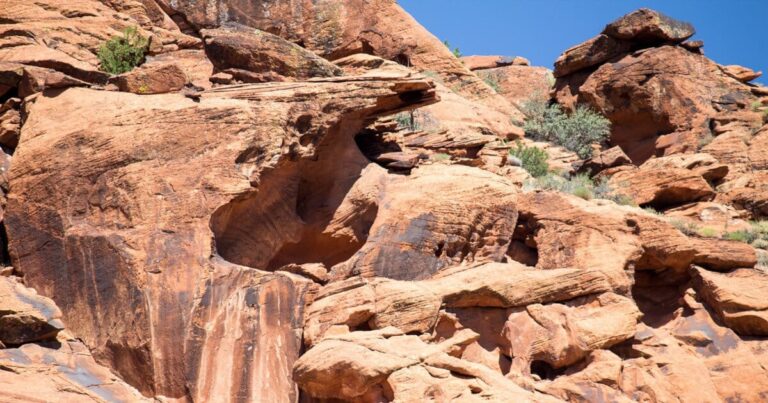](https://interfaithsustain.com/wind-erosion-facts/)
## [Knowing Wind Erosion Facts In Order To Prevent It](https://interfaithsustain.com/wind-erosion-facts/)
- [](https://interfaithsustain.com/water-trading/)
## [Water Trading Is Used to Combat Global Water Scarcity Due To Climate Change](https://interfaithsustain.com/water-trading/)
## Agents of Erosion
### Ice Erosion
**Ice erosion** mainly occurs when [glaciers](https://www.geo.fu-berlin.de/en/v/geolearning/mountain_building/weathering/Erosion2/index.html) slowly move across the landscape. As glaciers move they slowly dislodge and move the rocks beneath them. While glaciers only move about a [foot](https://serc.carleton.edu/eslabs/cryosphere/3b.html#:~:text=Most%20glaciers%20creep%20along%20at,to%20100%2B%20feet%20per%20day!) a day, overtime glacial erosion can have enormous impacts, carving out very distinctive landforms like fjords and valleys in their wake.
### Gravity And Mass Movement
On steep landscapes soil particles can be moved downhill by gravity itself in a process called mass movement. There are several different types of mass movement processes depending on the conditions.
When slopes are less steep, [mass movements](https://www.thephysicalenvironment.com/Book/mass_movement_weathering/mass_movement_1.html) occur in the form of soil creep, whereby soil moves downhill at an imperceptible rate, that can only be seen in tilted infrastructure and a wrinkly texture at the bottom of the hill. A more dramatic form of **mass movement** are landslides and debris flows. Landslides occur when a hill or cliffside suddenly gives way to gravity, causing the side of the slope to rapidly fall away.
### Wind Erosion
Wind is a very powerful erosional agent. [Wind erosion](https://education.nationalgeographic.org/resource/erosion), or aeolian erosion occurs when strong winds knock soil or rock particles loose and blow it somewhere else. This types of erosion is responsible for creating landscape features such as sand dunes, ventifacts, and desert varnish.
[Source](https://unsplash.com/@kydroon)
While most desert environments around the world owe some of their most stunning features to when wind erodes rock, wind erosion can have some harmful effects. When the wind is strong enough and soil particles are loose enough, **wind erosion** can cause massive destructive dust storms. However, these primarily only occur in drought conditions usually caused by agricultural mismanagement.
### Water Erosion
Water is arguably the most powerful agent of erosion. Not just because it is capable of dislodging and carrying so many soil particles, but because it can occur in so many different places in a [variety](https://eos.com/blog/water-erosion/) of ways; rivers, streams, ocean waves and rain can all be agents of water erosion. Whether it occurs on coastlines, rivers, or wherever it rains, water is one of the primary ways that earthen materials get moved from one spot to the other.
#### Splash Erosion
One type of **water erosion** occurs when rain hits the earth called splash erosion. Raindrops create splash erosion by striking the ground hard enough to dislodge soil particles. If these particles are on a hill, they will very likely fall down to the bottom.
[Source](https://unsplash.com/@elliot_c)
#### Sheet Erosion
Sheet erosion is a specific type of water erosion that occurs when rainfall intensity is greater than the soil’s ability to intake water. This causes a sheet of water to form on the soil’s surface that uniformly removes the top layers of soil as it moves.
#### Coastal Erosion
Coastal erosion occurs along [coastlines](https://toolkit.climate.gov/topics/coastal-flood-risk/coastal-erosion) as waves dislodge sand and rock particles to be transported out to sea by an ocean carry. While this is normally a very mild process, during storms and floods waves erode a much higher quantity of sediment which causes serious damage to coastal environments and infrastructure.
## Human Impacts and Erosion
While erosion is a natural process that has been essential in shaping the natural geographic landscape, human activity, primarily from the agricultural sector, has impacted some of the major agents of erosion, causing it to become more extreme in some places. This exacerbation of erosion has had some serious environmental consequences, impacting ecosystems and environmental health across the globe.
## Erosion and Agriculture
One of the biggest impacts on erosion is [agriculture](https://www.worldwildlife.org/threats/soil-erosion-and-degradation#:~:text=The%20agricultural%20plants%20that%20often,the%20cycle%20of%20soil%20loss.). When land gets set aside for commercial farming, it must be altered to suit the needs of whatever crop is being grown. When land is altered in this way it transforms from being a biodiverse natural environment to a uniform plot of land called a monoculture, dedicated to growing only one species.
[Source](https://unsplash.com/@brende)
This alteration causes the environment to lose its ability to regulate erosion. For instance, plant roots help keep soil compact and stable so that if an area has more plant roots [soil erosion](https://interfaithsustain.com/soil-exhaustion/) will be lower. In order to prevent erosion an area needs a large diversity of different kinds of plants. When an area of land with large trees and complex root systems is replaced with fields of cash crops that stay barren for parts of the year, erosion becomes much more likely.
On top of this, most farms [till](https://crops.extension.iastate.edu/encyclopedia/frequent-tillage-and-its-impact-soil-quality) their soils annually. While this is an easy way to plant seeds and control weeds, it loosens the top layers of soil, making it much easier for soil particles to be knocked loose and eroded. When enough land is converted for agricultural use, erosion can cause some serious damage to both the environment and humans.
## Impacts Of Erosion
Erosion has tremendous consequences for both the environmental and human worlds. Ironically, one of the biggest impacts is a decrease in [agricultural productivity](https://crops.extension.iastate.edu/encyclopedia/soil-erosion-effect-soil-productivity#:~:text=Soil%20and%20nutrients&text=Losing%20topsoil%20to%20erosion%20contributes,fertility%20caused%20by%20soil%20erosion.). The top layers of soil are rich in vital nutrients and some of the most important for growing healthy plants and large crop yields. When erosion strips away the top layers of soil, crop yields suffer and farmers are forced to supplement lost nutrients with chemical fertilizers, which cause pollution problems.
Chemical fertilizers used in commercial agriculture have tremendous environmental impacts. While they are only applied to agricultural soil, water erosion carries the fertilized soil into natural water bodies, where it can cause harmful [algal blooms](https://www.epa.gov/nps/nonpoint-source-agriculture) that kill off fish and other aquatic life.
This erosion can also have serious impacts on [air quality](https://www.environment.nsw.gov.au/topics/land-and-soil/soil-degradation/wind-erosion) as well. When wind erosion picks up enough soil particles the air becomes filled with dust which can cause asthma and other respiratory health issues. This type of wind erosion can even become so intense that it creates massive dust storms that destroy infrastructure, disrupt transport, and put human lives at risk. In fact, one of the most damaging wind erosion events was the [dust bowl](https://www.nsta.org/science-teacher/science-teacher-aprilmay-2020/wind-erosion-and-dust-bowl) of the 1930s, in which over farming on the great plains led to a series of massive dust storms that leveled homes and left dust in the air for days.
## Erosion And Religion
*Numbers 13:20 – Is the soil rich or poor? Is it wooded or not? And take pains to bring back some of the fruit of the land – Now it happened to be the season of the first ripe grapes.*
### Rich Soil, As Seen in [Eco Bible Volume 2](https://www.amazon.com/dp/1735338842?psc=1&smid=ATVPDKIKX0DER&ref_=chk_typ_imgToDp)
Moses asks the scouts to report on certain characteristics of the Land of Israel. On the question “is the soil rich or poor?”, [Rabbi Chaim ben Moshe ibn Attar](https://www.sefaria.org/Numbers.13.20?lang=en&with=Or%20HaChaim&lang2=en) (Or HaChaim; 17th–18th century) interprets this question to mean, “Is the soil quality such that one plants one year and then must leave it to rest the second year? Or can you plant year after year without the fruits being diminished?”
Moses’ question about soil quality was deeper than we may think. Only a soil-rich Land of Israel could sustain its inhabitants. In December 2020, the Food and Agriculture Organization of the UN released its first-ever global assessment of biodiversity in the soil. As [Science](https://www.science.org/content/article/there-s-ecosystem-beneath-your-feet-and-it-needs-protection-says-new-report) reported, “Soil is a mix of organic material, minerals, gases, and other components that provide the substrate for plants to grow. About 40% of all animals find food, shelter, or refuge in soil during part of their life cycle. ‘You just can’t have a Mars-like soil and expect to maintain the food supply and forests,’ warns Diana Wall, an ecologist at Colorado State University who contributed to the report.”
Today’s agronomists appreciate the importance of evaluating soil quality and learning the best ways to do it. [In the words of one expert](https://agris.fao.org/agris-search/search.do?recordID=US201300917194), “Soil is the basis of agricultural and of natural plant communities. Thus, the thin layer of soil covering the surface of the Earth represents the difference between survival and extinction for most land-based life.”
[Studies of soil quality](https://edepot.wur.nl/299739) indicate that humans have degraded nearly 40 percent of the world’s agricultural land. This includes human-caused soil erosion, atmospheric pollution, overcultivation, overgrazing, land clearing, salinization, and [desertification](https://interfaithsustain.com/desert-ecosystem/). [A 2021 study](https://www.pnas.org/doi/abs/10.1073/pnas.1922375118) indicates that topsoil has been eroded from roughly one-third of the Midwestern Corn Belt, stretching from Ohio to Nebraska and producing 75 percent of the corn grown in the United States. For more on soil pollution, see this post: <https://interfaithsustain.com/soil-pollution/>.
[Ways to reduce soil degradation](https://agris.fao.org/agris-search/search.do?recordID=US201300917194) include reducing ploughing, recycling plant and animal manures, optimizing fertilizer use, increasing plant diversity, and rotating crops.
Soil quality significantly affects water quality. Modern agriculture has almost doubled the rate of nitrogen input to land-based ecosystems over the past 30 years. This has resulted in large increases in the transfer of nitrogen from land to the atmosphere and to rivers, estuaries, and coastal oceans. This is having “grave impacts on biodiversity, global warming, water quality and [human health](https://pubmed.ncbi.nlm.nih.gov/15238298/).”
*\* Featured image [source](https://unsplash.com/@rafazamoo)*
**Categories:** Blog on Faith and Ecology
**Tags:** Erosion
---
### [Why And How Deforestation Is Affecting Global Water Cycles](https://interfaithsustain.com/how-deforestation-is-affecting-global-water-cycles/)
**Published:** November 8, 2022
**Author:** ICSD
**Excerpt:** Harry Cooper - Forests are some of the most important ecosystems on the planet. They are home to an abundance of biodiversity, with many species that we haven't even discovered yet.
**Content:**
Table of Contents
Table of Contents
- [The Global Impact of Forests](#aioseo-the-global-impact-of-forests-2)
- [The Problem Of Deforestation](#aioseo-the-problem-of-deforestation-8)
- [How Bad is Deforestation?](#aioseo-how-bad-is-deforestation-10)
- [The Importance Of Transpiration](#aioseo-the-importance-of-transpiration-14)
- [Transpiration In The Amazon](#aioseo-transpiration-in-the-amazon-16)
- [Effects On Global Water Cycles](#aioseo-effects-on-global-water-cycles-18)
- [The Impact Of Deforestation](#aioseo-the-impact-of-deforestation-22)
- [Deforestation And Climate Change](#aioseo-deforestation-and-climate-change-27)
- [How Deforestation Contributes to Climate Change](#aioseo-how-deforestation-contributes-to-climate-change-32)
- [Carbon Sequestration](#aioseo-carbon-sequestration-34)
- [Replacing forests with agriculture](#aioseo-replacing-forests-with-agriculture-37)
- [Religion And Deforestation](#aioseo-religion-and-deforestation-46)
- [What is the significance of forests for the global water cycle?](#aioseo-what-is-the-significance-of-forests-for-the-global-water-cycle-55)
- [How does deforestation impact the global water cycle and climate?](#aioseo-how-does-deforestation-impact-the-global-water-cycle-and-climate-57)
- [What is transpiration and why is it important in forests like the Amazon?](#aioseo-what-is-transpiration-and-why-is-it-important-in-forests-like-the-amazon-59)
- [In what ways does deforestation contribute to climate change?](#aioseo-in-what-ways-does-deforestation-contribute-to-climate-change-61)
- [What lessons can religious and indigenous teachings offer regarding forest conservation?](#aioseo-what-lessons-can-religious-and-indigenous-teachings-offer-regarding-forest-conservation-63)
*By Harry Cooper* – Forests are some of the most important ecosystems on the planet. They are home to an abundance of [biodiversity](https://interfaithsustain.com/threats-to-biodiversity/), with many species that we haven’t even discovered yet. These havens of life are stunningly beautiful, and support ecologically healthy environments. But the importance of forests goes beyond the local level as the forests of the world play an important role in many global systems, including the global water cycle.
## The Global Impact of Forests
Trees are incredibly efficient at moving water; their roots suck up water from the ground and release it through a process called transpiration as water vapor into the air. With millions of trees transpiring water every day, the process has considerable global impacts.
This water vapor cools the air around the trees, helping to mitigate climate change, and create cooler temperatures around the globe. This water vapor is also incredibly important for forming rain clouds. Many inland areas especially rely on trees and transpiration for consistent rainfall.
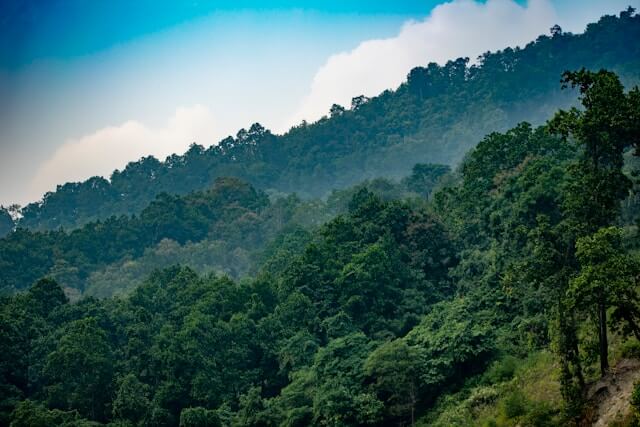[Source](https://unsplash.com/@yan_slg)
However, as more and more trees are cut down every day, the contributions forests make to the **global water cycles** are becoming increasingly disrupted. Deforestation not only has devastating environmental impacts locally, but it is also causing major shifts in global water distribution, creating massive droughts and leaving many without water.
### The Problem Of Deforestation
Many people don’t realize just how extensive **deforestation** is. While [30%](https://www.nationalgeographic.com/environment/article/deforestation) of the Earth’s land area is still covered by forests, the rate at which trees are being cut down is still alarmingly high. It is important to understand just how bad the problem of deforestation is in order to understand the extent to which it is affecting global water cycles.
#### How Bad is Deforestation?
It is estimated that around 80,000 acres of forest are cut down on a daily basis: that’s around 125 sq miles or 324 sq km. Since 1990, this has resulted in 420 million hectares of forest being lost, and 17% of the Amazon Rainforest disappearing. These forests are primarily being cut down by the logging industry, wildfires, and to clear land for agricultural development.
- [](https://interfaithsustain.com/how-deforestation-is-affecting-global-water-cycles/)
## [Why And How Deforestation Is Affecting Global Water Cycles](https://interfaithsustain.com/how-deforestation-is-affecting-global-water-cycles/)
- [](https://interfaithsustain.com/how-does-deforestation-affect-climate-change/)
## [Environmental Destruction and How Does Deforestation Affect Climate Change?](https://interfaithsustain.com/how-does-deforestation-affect-climate-change/)
- [](https://interfaithsustain.com/pine-beetle/)
## [Forest Destruction OR Survival of The Fittest By The Pine Beetle?](https://interfaithsustain.com/pine-beetle/)
## The Importance Of Transpiration
Like all plants, tree roots tap moisture from the ground and release it from their leaves as water vapor through a process called transpiration. The effects of **transpiration** are usually minimal, but when enough trees are concentrated in a large area, transpiration can release enough water vapor to form clouds that have an effect on rainfall which, in turn, affects the water cycle.
### Transpiration In The Amazon
This process of rainfall from local transpiration can especially be seen in the largest rainforest on Earth, the Amazon. It is estimated that around [20%](https://www.researchgate.net/figure/Transpiration-recycling-in-the-Amazon-basin-a-On-average-20-of-all-rainfall-in-the_fig1_325403628#:~:text=Download%20Scientific%20Diagram-,Transpiration%20recycling%20in%20the%20Amazon%20basin%20a%2C%20On%20average%2C%2020,transpiration%20recycling%20ratio%2C%20TRR%29.) of the Amazon rainforest’s rainfall on average has been transpired at least once, and around half of that 20% of rainfall has transpired and rained in the Amazon rainforest multiple times, anywhere from 2-7 times.
### Effects On Global Water Cycles
The effects of transpiration in massive forests and major tropical forest zones such as the Amazon are not just felt locally in the Amazon basin, but across the entire western hemisphere. With the Amazon rainforest producing around [20](https://amazonaid.org/resources/about-the-amazon/the-hydrological-cycle/) billion tons of water in transpiration per day, the Amazon is able to create rainfall hundreds of miles away.
This rainfall is a critical part of the agriculture and ecology of regions across the entire hemisphere. Paraguay, Uruguay, and northern Argentina are considered the breadbasket of South America and are incredibly agriculturally productive. This production is largely dependent or predictable rainfall caused by transpiration in the Amazon basin. Not to mention that it also provides water for urban centers across South America.
Transpiration from the Amazon even reaches as far as North America. The farms of the American Midwest rely on rainfall that originated from tropical forests in the Amazon. It is estimated that nearly 50% of all rainfall in the Midwest originates from inland transpiration.
### The Impact Of Deforestation
With transpiration playing such an important role in the global water cycle, deforestation poses a substantial risk to [water sheds](https://e360.yale.edu/features/how-deforestation-affecting-global-water-cycles-climate-change) everywhere. This is not just limited to the Amazon in the Americas; places all around the world are having their water cycles impacted by deforestation.
Deforestation in West Africa is depleting rain fall over the Ethiopian highlands where the Nile originates, threatening to dry up the famous river. Deforestation in China is not just drying up its own agricultural lands, but is having impacts as far as Eastern Europe and Southeast Asia.
Inland regions are especially reliant on transpiration rainfall, and are therefore more prone to the effects of deforestation on the water cycle. And with deforestation continuing every day, many parts of the world are seeing less and less rainfall.
It is estimated that the Amazon rainforest needs about [80%](https://amazonaid.org/resources/about-the-amazon/the-hydrological-cycle/) of its total forest cover to be able to transpire enough water to continue its critical hydrological function. And with approximately only 81% of the Amazon still intact, the Americas, as well as many other parts of the world, will soon be in big trouble.
## Deforestation And Climate Change
Another impact deforestation has on global water cycles is through its contribution to [climate change](https://scied.ucar.edu/learning-zone/climate-change-impacts/water-cycle-climate-change). The steady rise of global temperatures has numerous impacts on weather patterns, precipitation, and sea levels, leaving the water cycle sufficiently thrown out of balance.
A warmer climate generally means faster rates of evaporation, speeding up the water cycle. But this increase in evaporation is not evenly distributed around the world.
Similar to the effects of deforestation on evapotranspiration rainfall, climate change is expected to decrease rainfall over inland regions. While at the same time it would increase rainfall over oceans and coasts.
This shifting would cause great disruptions to the agricultural industry and ecosystems everywhere that rely on consistent rainfall patterns, and deforestation is in part to blame for this change. It is estimated that up to [10%](https://www.lse.ac.uk/granthaminstitute/explainers/whats-redd-and-will-it-help-tackle-climate-change/) of carbon dioxide emissions are caused by deforestation.
### How Deforestation Contributes to Climate Change
When trees photosynthesize they take in carbon from the air and store it away in their bodies. While most of this carbon gets released back into the atmosphere when the tree dies, some of it gets stored away in the soil.
### Carbon Sequestration
This allows forests to store massive amounts of carbon, helping to mitigate climate change. However, when these forests get cut down they prematurely release their carbon into the atmosphere.
It is estimated that current rates of deforestation have turned the world’s forests into a net [source of carbon](https://www.science.org/doi/10.1126/science.aam5962) being released into the atmosphere, rather than a sink. Deforestation not only contributes carbon to the atmosphere, but impedes our planet’s ability to naturally take it out.
#### Replacing forests with agriculture
Another impact deforestation has on climate change is that forested land is often cleared to be replaced by [agriculture](http://www.environmentreports.com/how-does-agriculture-change/#:~:text=Dominant%20sources%20of%20agricultural%20greenhouse,half%20of%20global%20methane%20emissions.). While forests are an important part of regulating global temperature, agriculture is one of the biggest contributors to [greenhouse gas emissions](https://interfaithsustain.com/geothermal-greenhouse/).
[Source](https://pixabay.com/users/couleur-1195798/)
The global agricultural sector produces around [18%](https://ourworldindata.org/emissions-by-sector) of our total greenhouse gas emissions. These emissions come from a variety of sources such as livestock production and chemical fertilizers.
Livestock production produces around a sixth of the world’s methane, a potent greenhouse gas. On top of that many chemical fertilizers release nitrous oxide, another greenhouse gas, as a byproduct.
By replacing forests with agricultural land we get rid of a natural way of fighting climate change, and replace it with land that produces greenhouse emissions. This process exacerbates climate change, and further alters global water cycles.
## Religion And Deforestation
The Interfaith Rainforest Initiative wrote a [“A PRIMER ON DEFORESTATION FOR RELIGIOUS LEADERS AND FAITH COMMUNITIES”](https://www.interfaithrainforest.org/s/Interfaith_CountryPrimer_Peru.pdf) with a special focus on Peru. In this primer they discuss the values we can learn from indigenous people in how to relate to the forest:
> Some of the most powerful lessons to be taken from forests are not on deforestation rates and numbers of displaced indigenous peoples (important as these are), but lessons of the heart that teach appreciation of forests in their spiritual fullness. Attitudes toward forests and trees could be markedly changed for western audiences if forests were viewed primarily as a gift, rather than resources. Indigenous traditions have much to teach in this regard. Gratitude and sufficiency are familiar concepts to people of many faiths; it is not a stretch to imagine applying these attitudes widely in our consumption of palm oil, paper, wood, and other forest products. Such a shift could be transformational.
Learning from indigenous people to treat the forests as a gift is a powerful lesson. The primer concludes by reminding us that these values are not unique to indigenous people, but are in all religions:
> The ethical case for caring for the planet is deeply rooted in all of the world’s religious traditions. Now is the time to mobilize our spiritual resources, our influence, and our moral authority to collectively make the case that rainforests are a sacred trust and that tropical deforestation is a sanctity of life issue: it is wrong and it must stop.
\**Featured image [source](https://pixabay.com/users/bones64-219712/)*
**Categories:** Blog on Faith and Ecology
**Tags:** Deforestation
---
### [The Importance of Soil: Nature’s Hidden Helpers](https://interfaithsustain.com/importance-of-soil/)
**Published:** November 23, 2022
**Author:** ICSD
**Excerpt:** Harry Cooper - To many people, soil may seem like nothing more than the dirt we walk on. But soil is much more complex than that, and is an important part of the Earth, with critical ecological functions.
**Content:**
Table of Contents
Table of Contents
- [The Earth Beneath Our Feet](#aioseo-the-earth-beneath-our-feet-5)
- [Important Functions of Soil](#aioseo-important-functions-of-soil-8)
- [Nutrient Cycling](#aioseo-nutrient-cycling-11)
- [The Water Table](#aioseo-the-water-table-17)
- [Mitigating harmful contaminants](#aioseo-mitigating-harmful-contaminants-24)
- [Soil Health Risks](#aioseo-soil-health-risks-28)
- [Monocropping](#aioseo-monocropping-33)
- [Chemical Fertilizers](#aioseo-chemical-fertilizers-39)
- [Urbanization and Other Contaminants](#aioseo-urbanization-and-other-contaminants-43)
- [Soil and Religion](#aioseo-soil-and-religion-49)
- [Eco Bible](#aioseo-eco-bible-50)
- [Life Comes From The Soil](#aioseo-life-comes-from-the-soil-53)
*By Harry Cooper* – To many people, soil may seem like nothing more than the dirt we walk on. But soil is much more complex than that, and is an important part of the Earth, with critical ecological functions.
**Soil** is an important factor in a variety of nutrient cycles. It helps to move nutrients from decomposing organic materials back into plants and the rest of the food chain.
Soil also helps absorb and percolate water into ground water stores. This process keeps the water cycle stable and is very important for maintaining a healthy water table.
These kind of functions are critical for ecosystems everywhere to operate properly. They are also important for growing food and agricultural productivity.
## The Earth Beneath Our Feet
Soil is incredibly important for humanity’s wellbeing. But ironically, humans are also one of the biggest threats to **soil quality**.
Unhealthy agricultural techniques and increasing urbanization are decreasing **soil health** across the globe. This kind of **soil degradation** impairs its ability to perform its essential functions, causing harmful impacts to the environment and human life.
## Important Functions of Soil
### Nutrient Cycling
Soil plays an important function in a variety of [nutrient cycles](https://www.sciencedirect.com/topics/earth-and-planetary-sciences/nutrient-cycling). Plants and animals everywhere rely on healthy soil to help keep nutrients in the food web.
The process of nutrient cycling starts when a plant or animal dies, and finds its way to the soil. It then starts to be decomposed by the complex soil food web.
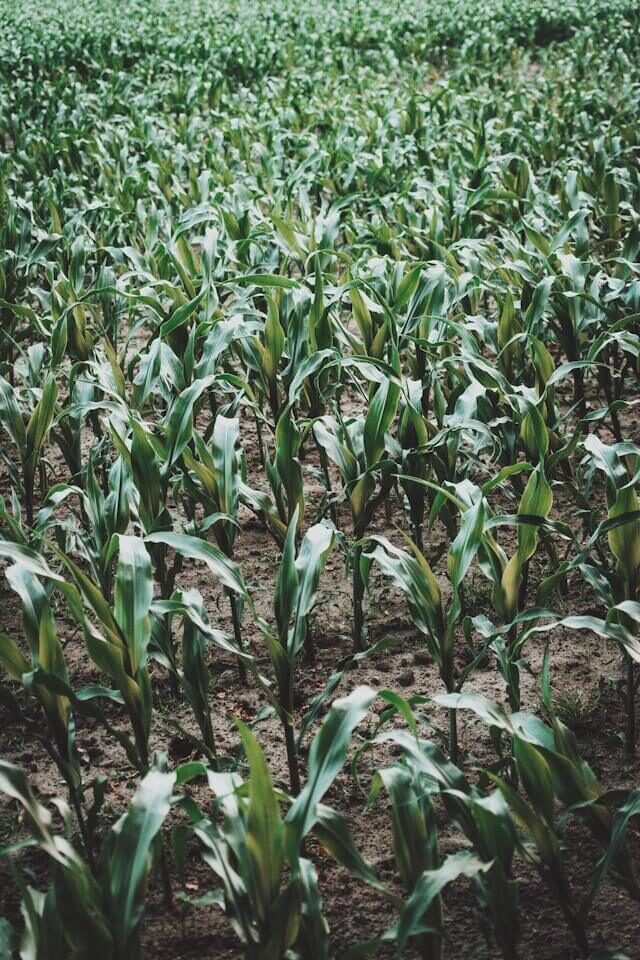[Source](https://unsplash.com/@huefnerdesign)
This food web is home to all kinds of soil microorganisms that feed on dead organic matter. These include different types of fungi and bacteria.
These beneficial soil microbes break down organic materials into simpler components. This helps to spread the nutrients found in the decomposing organic matter throughout the soil.
These nutrients, such as phosphorus, carbon, and nitrogen, can then be utilized by plants growing in the soil. A large amount of organic matter and nutrients is a sign of healthy soils, and the more nutrients soil has, the more plant growth it can support.
### The Water Table
Soil also performs important functions for the water cycle. When soil is healthy its soil particles are spaced apart and porous, allowing for water to pass through.
This kind of soil structure is critical for maintaining [the water table](https://extension.psu.edu/grounded-in-soil-water-quality-benefits-from-healthy-soils). When soil is porous, it allows for water storage to be used by plants.
These pores also allow water to be percolated downward into the groundwater. This process is crucial for replenishing groundwater stores.
- [](https://interfaithsustain.com/importance-of-soil/)
## [The Importance of Soil: Nature’s Hidden Helpers](https://interfaithsustain.com/importance-of-soil/)
- [](https://interfaithsustain.com/soil-exhaustion/)
## [Soil Exhaustion Is Caused By Humanity](https://interfaithsustain.com/soil-exhaustion/)
- [](https://interfaithsustain.com/soil-conservation/)
## [Why Soil Conservation Is So Critical Today](https://interfaithsustain.com/soil-conservation/)
However, unhealthy soil affects the water table and water quality negatively. When soil is compact, water can’t infiltrate it as well so it can cause [harmful erosion](https://content.ces.ncsu.edu/soils-and-water-quality#:~:text=Soil%20has%20the%20capacity%20to,into%20surface%20water%20and%20groundwater.) that strips away the top layers of soil.
#### Mitigating harmful contaminants
Healthy soil that can easily be infiltrated by water is not just important for preventing erosion and restoring groundwater. It also has the capacity to [filter out](https://www.soils.org/files/sssa/iys/april-soils-overview.pdf) pollutants that would otherwise contaminate water supplies.
Soil is capable of acting as a filter. Soil removes harmful contaminants from water as it passes through the soil.
Microorganisms are mainly responsible for this process. They break down pollutants into less harmful chemicals.
## Soil Health Risks
Soil health is incredibly important. But human activity all across the globe is causing massive [soil degradation](https://interfaithsustain.com/soil-exhaustion/).
Without healthy soils, we are losing out on a variety of ecosystem services. By losing these services we are creating dire consequences for both people and planet.
[Source](https://pixabay.com/users/elg21-3764790/)
### Monocropping
One of the most important aspects of soil health is its organic matter content and the presence of microorganisms. These rely on a diversity of different kinds of plants being grown and decomposing in the soil.
However, this process gets interrupted by the practice of [monocropping](https://foodprint.org/issues/how-industrial-agriculture-affects-our-soil/#:~:text=The%20Effect%20of%20Monocropping%20on,and%20can%20cause%20significant%20erosion.). Monocropping is an agricultural technique in which one species of crop is grown over a large area of land.
By removing the diversity of life found in soil, monocropping inhibits the soils ability to cycle nutrients. This decimates once biodiverse ecosystems, and makes it harder for farmers to continue growing their crops.
### Chemical Fertilizers
Inorganic fertilizers used in gardens or on farms are meant to add nutrients to the soil to help plant growth. While this works in the short term, it can have long term consequences.
The chemicals found in [inorganic fertilizers](https://www.hunker.com/13427782/the-effects-of-chemical-fertilizers-on-soil) can be dangerous to natural microorganisms by changing the soil pH levels. This disrupts the soil’s natural ability to produce and cycle nutrients.
By depleting natural **soil nutrients**, chemical fertilizers make the soil reliant on inorganic nutrient supplementation. This makes it so that more and more fertilizer is needed to grow healthy plants overtime.
#### Urbanization and Other Contaminants
There are a variety of [other contaminants](https://www.soils.org/about-soils/contaminants/#:~:text=Common%20contaminants%20in%20urban%20soils,largely%20caused%20by%20human%20activities.) that pollute the soil and degrade its quality. These contaminates come from all kinds of harmful human activity.
One kind of contaminate is pesticides used on farms and lawns. While these pesticides help keep away pests, when they leech into the soil they poison it with harmful chemicals.
Other kinds of harmful chemical contamination are a result of increasing urbanization. This includes processes that release petroleum, radon, asbestos, lead, and other harmful chemicals into the soil.
One of these harmful results of urbanization is an increase in cars. Cars often leak oil onto the road which will eventually run off with rain and contaminate soil.
Another risk to soil health is an increase in industrial manufacturing. These industrial processes often produce toxic chemicals as a byproduct, which are often improperly disposed of in ways that can leech into nearby soils.
## Soil and Religion
## [Eco Bible](https://www.amazon.com/dp/1735338842?psc=1&smid=ATVPDKIKX0DER&ref_=chk_typ_imgToDp)
*Deuteronomy 7:13 – He will favor you and bless you and multiply you; He will bless the issue of your womb and the produce of your soil, your new grain and wine, and oil, the calving of your herd and the lambing of your flock, in the land that He swore to your fathers to assign to you.*
> ### Life Comes From The Soil
>
> Rabbi Moshe Alshich (16th century) explains that this blessing covers the four categories of existence: mineral, plant, animal, and human. The soil is mineral. “Grain, wine, and oil” are plant. “Calves and lambs” are animal, and “the issue of your womb” is human.
>
> With this in mind, note the order: human, mineral, plant, and animal. There is a clear ecological message here. You will be blessed \[with greater offspring\] through the produce of the soil, which will grow more plant matter, and the plant matter will lead to higher fertility in your flocks and herds.
>
> Research on cattle fertility states that fertility rates are “highly influenced by the environment and energy intake is a pivotal factor.”
>
> Everything stems from the soil and the rain. If we do our part in caring for creation, the natural processes put in place by God from the beginning of creation will do their part and ensure that we are blessed.
*\* Featured image [source](https://unsplash.com/@gabrielj_photography)*
**Categories:** Blog on Faith and Ecology
**Tags:** Soil
---
### [The Necessity of Decarbonization to Save our Planet](https://interfaithsustain.com/decarbonization/)
**Published:** May 25, 2022
**Author:** ICSD
**Excerpt:** Harry Cooper - The world has been emitting greenhouse gasses at a steadily growing rate since the industrial revolution. These industrial processes that our world has come to rely on economically, socially, and technologically have been warming our planet and destroying our environment.
**Content:**
Table of Contents
Table of Contents
- [Working Towards a Greener World](#aioseo-working-towards-a-greener-world-3)
- [Decarbonization Planning and Policy](#aioseo-decarbonization-planning-and-policy-6)
- [IPCC](#aioseo-ipcc-8)
- [Climate Change Scenarios](#aioseo-climate-change-scenarios-12)
- [The Paris Agreement](#aioseo-the-paris-agreement-17)
- [Renewable Energy for Decarbonization](#aioseo-renewable-energy-for-decarbonization-20)
- [Solar Power](#aioseo-solar-power-22)
- [Wind Power](#aioseo-wind-power-27)
- [Decarbonization Through Electricity Powered Technology](#aioseo-decarbonization-through-electricity-powered-technology-32)
- [Electric Vehicles](#aioseo-electric-vehicles-34)
- [Fossil Fuel Powered Furnaces](#aioseo-fossil-fuel-powered-furnaces-37)
- [Energy Efficiency](#aioseo-energy-efficiency-40)
- [Green Architecture](#aioseo-green-architecture-42)
- [Green Roofs](#aioseo-green-roofs-44)
- [Solar Shingles](#aioseo-solar-shingles-47)
- [Taking Carbon Out of the Atmosphere](#aioseo-taking-carbon-out-of-the-atmosphere-50)
- [Planting Trees](#aioseo-planting-trees-52)
- [Religion and Decarbonization](#aioseo-religion-and-decarbonization-59)
*By Harry Cooper* – The world has been emitting **greenhouse gases** at a steadily growing rate since the industrial revolution. These industrial processes that our world has come to rely on economically, socially, and technologically have been warming our planet and destroying our environment.
But many people have noticed the devastation caused by [global warming](https://interfaithsustain.com/global-warming-vs-climate-change/ " climate change") and have taken up action to create a world with **net zero emissions**. This action has gained global traction and has called upon the leaders of the world to not just act on behalf of our climate, but make broad systemic changes to our global systems.
## Working Towards a Greener World
The issue with our current global system is that the global economy and society is heavily reliant on the use of fossil fuels. In order to make some serious changes to the way we treat the planet, we need to under go a process of **decarbonization**, or making our world less centered around **carbon emitting technology**.
Decarbonization is going to require a massive overhaul of our current technology, and replacing it with **cleaner, more efficient technology**. Since decarbonization requires lots of large changes to our current system, it will also require a lot of planning and organization to make such changes.
## Decarbonization Planning and Policy
Because greenhouse gas emissions have become such an issue, many international organizations have started working towards creating some kind of standard or plan for dealing with climate change. These organizations are made up of scientists, activists, and political leaders, all hoping to work towards solving climate.
- [](https://interfaithsustain.com/address-climate-crisis/)
## [Summoning the Will to Address the Climate Crisis](https://interfaithsustain.com/address-climate-crisis/)
- [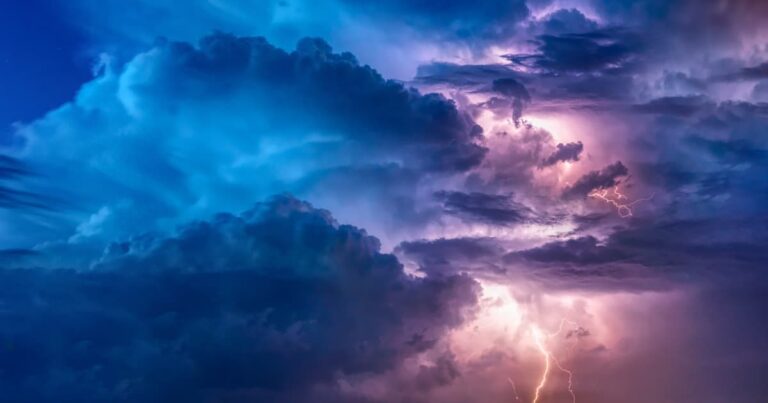](https://interfaithsustain.com/noaa-climate-prediction/)
## [The Value Of The NOAA Climate Prediction Center](https://interfaithsustain.com/noaa-climate-prediction/)
- [](https://interfaithsustain.com/global-warming-vs-climate-change/)
## [Global warming vs climate change: Examining how these terms relate to each other](https://interfaithsustain.com/global-warming-vs-climate-change/)
### IPCC
Intergovernmental Panel on Climate Change, or [IPCC](https://www.ipcc.ch/about/), is an organization affiliated with the United Nations meant to provide information on climate change to the UN and the governments of the world, in order to better inform climate policy. One of the most notable things they do is creating the IPCC emissions scenarios. These scenarios are studies done to try and predict what the Earth’s climate will look like at the end of the century depending on how much our carbon dioxide emissions change.
#### Climate Change Scenarios
These [scenarios](https://www.ipcc.ch/site/assets/uploads/2018/02/SYR_AR5_FINAL_full.pdf) range from being incredibly optimistic about our ability to institute carbon dioxide emissions reductions, to assuming we will go about our business as usual, to playing out what would happen if we increased greenhouse gas emissions. While unfortunately all of the scenarios predict that we will have a warmer climate by the end of the century, there is a big difference in how bad off we will be among the reports.
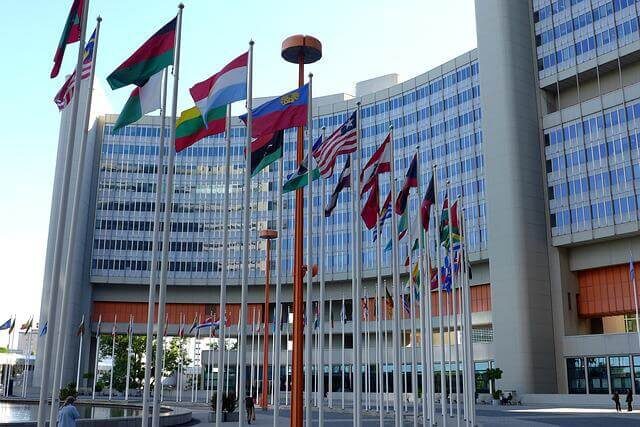[Source](https://pixabay.com/photos/united-nations-u-n-vienna-un-city-3760656/)
The most optimistic projection, RCP 2.6, expects an immediate steady reduction of greenhouse gas emissions with a 0.3-1.7°C increase in global temperatures. On the other hand, the most pessimistic projection we are expected to see is a rapid increase in greenhouse gas emissions, and a warming of 2.6-4.8°C by the end of the century.
#### The Paris Agreement
The United Nations has taken the research the IPCC has done and put it into policy. The most notable policy that they have passed in response to climate change is [the Paris Agreement](https://unfccc.int/process-and-meetings/the-paris-agreement/the-paris-agreement).
The Paris Agreement is an agreement among the countries of the United Nations to curb global warming to be no more than two degrees above their pre industrial revolution levels. This requires countries to slash their greenhouse gas emissions if they want to meet this goal. Reducing global emissions by such a large amount will require a lot of big changes in the way we do things, but with proper development and technological implementation, we can work towards decarbonizing our world.
## Renewable Energy for Decarbonization
One of the most important things we can do for the process of decarbonization is to start moving away from fossil fuels as a source of energy. Scientists have already found and developed many different forms of alternative energies that are not only cleaner but are cheaper and have greater energy efficiency.
### Solar Power
[Solar power](https://www.energy.gov/solar) works by installing solar panels in solar farms or on individual buildings. These panels absorb the energy that come from the suns rays and turn it into usable electricity. This way of electricity generation is incredibly clean, in fact it emits no greenhouse gases whatsoever. Not only that, but since the sun will always be shining until it dies out, we will never run out of solar energy, making it a perfect renewable resource.
Solar energy is also incredibly viable [economically](https://vittana.org/11-prevailing-solar-farms-pros-and-cons). Solar is the fastest growing energy source in the US and also the cheapest. This is because solar panels require a one time installation and little maintenance over their long lifetime.
### Wind Power
Another good example of alternatives to fossil fuels is [wind power](https://www.energy.gov/eere/wind/advantages-and-challenges-wind-energy). Wind power works by using the wind to turn fans that power large turbines to create electricity. Much like solar power, wind power emits no greenhouse gases whatsoever, and since the wind will always be blowing somewhere, it is a perpetual source of energy.
Also like solar power, wind is an economically efficient source of fuel. Not only is wind energy cheaper than fossil fuels, but investments into the US wind sector account for around ten billion dollars annually invested into the economy. Along with this, it is also estimated that the wind power sector has already created over one hundred thousand jobs in the US.
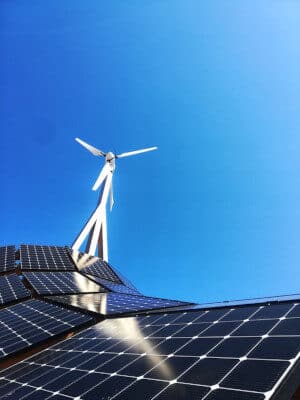[Source](https://unsplash.com/photos/iKjAj_oq-IE)
## Decarbonization Through Electricity Powered Technology
In addition to making more electricity from renewable sources, we also have to make sure that our society is ready to be powered by [electricity](https://nap.nationalacademies.org/resource/25932/interactive/#tech-goals). A lot of our technology and infrastructure is currently powered by directly burning fossil fuels. If we want to start decarbonizing our way of life we will need to implement more electric powered technology.
### Electric Vehicles
It is estimated that [29%](https://www.epa.gov/ghgemissions/sources-greenhouse-gas-emissions#:~:text=Emissions%20and%20Trends,-Related%20Links&text=In%202019%2C%20greenhouse%20gas%20emissions,of%20U.S.%20greenhouse%20gas%20emissions.) of US carbon emissions come from cars and the transportation sector, making it the largest contributor of emissions in the US. Making cars greener is one of the most popular topics in environmentalism today, and electric vehicles are at the forefront of the discussion.
[Electric cars](https://www.energysage.com/electric-vehicles/101/pros-and-cons-electric-cars/) are vehicles capable of running completely on electricity. Technological innovation in the electric vehicle market has made electric cars incredibly energy efficient. Along with this electric cars emit no carbon emissions unlike traditional cars that constantly spew them from their tailpipe. Electric vehicles have the capacity to have little to no carbon footprint, and cut emissions from the transportation sector by massive amounts.
### Fossil Fuel Powered Furnaces
There are many homes that are heated and powered by [furnaces](https://evergreenhomeheatingandenergy.com/blog/146142) that release greenhouse gas emissions. Powering our homes and businesses with unclean fuels has a considerable carbon footprint, but luckily there is another option.
Electric furnaces are capable of heating and cooling homes with only electricity. If a building is running on energy generated from a renewable source then electric heating has the capability to keep buildings hot and cold without creating any carbon emissions.
## Energy Efficiency
Decarbonization will require a drastic shift away from fossil fuels and technology that relies on fossil fuels. While building infrastructure to facilitate a renewable based energy system is incredibly important, it is also important to use technology that uses less energy in general, in order to make a more sustainable world. The aim is to reach net zero emissions.
### Green Architecture
[Green architecture](https://interfaithsustain.com/green-architecture/) is not limited to one thing in particular, it is simply a type of design that takes the environment into consideration. By designing buildings with sustainability in mind, homes and businesses would require a lot less energy to operate efficiently.
#### Green Roofs
There are many different [types](https://science.howstuffworks.com/engineering/structural/5-elements-of-green-architecture.htm) of green architecture techniques, but one of the most notable is the use of green roofs. Green roofs are a types of architecture that uses plants as roofing.
Not only do these [green roofs](https://interfaithsustain.com/living-roof/) take carbon out of the atmosphere, but they naturally cool down the air around them and regulate temperatures. This type of natural temperature regulation reduces the amount of energy needed to heat and cool homes.
#### Solar Shingles
Another type of green architecture is solar shingles. While widespread use of solar energy would come from massive solar farms, putting solar panels on individual houses can also make an impact on how much energy we use.
Solar shingles are a specific kind of residential solar panel that make up the roof itself, rather than just sitting on top of it. When individual buildings are able to make some of their own energy, it takes demand and stress off of larger scale energy production and makes buildings more energy efficient.
## Taking Carbon Out of the Atmosphere
Decarbonization is not just about making a world that produces less carbon, it is also about removing carbon from the atmosphere. There have been advances in carbon capture technologies designed to filter carbon dioxide out of the air to quite literally decarbonize the Earth. However, the best way to remove carbon emissions from the atmosphere may not be a human invention at all.
## Planting Trees
[Reforestation](https://www.nationalgeographic.com/environment/article/how-to-erase-100-years-carbon-emissions-plant-trees?loggedin=true) efforts around the world are planting trees in hopes of restoring biodiversity, recreating natural spaces, and of course decarbonization. When trees photosynthesize, they not only release oxygen but take in carbon dioxide. This means that trees have the capacity to store billions of tons of carbon emissions.
It is estimated that we could increase the world’s forest cover by one third without encroaching on current cities and agriculture. By planting this many trees we could expect the amount of carbon in Earth’s atmosphere to decrease by 25%. This would undo almost a hundred years worth of carbon emissions. Thus while the Earth begins to use modern technology to move towards a decarbonized world, one of the best things we can do to curb climate change is leave it to the trees.
[Source](https://unsplash.com/)
## Religion and Decarbonization
National Catholic Reporter’s “Earth Beat” [recently published an article](https://www.ncronline.org/news/earthbeat/calling-fossil-fuel-investments-sinful-global-interfaith-coalition-outlines-moral) about how Interfaith groups are outlining moral standards for climate finance. A variety of religious groups have come together to press “the financial industry to adopt a set of moral standards to address climate change that would steer assets away from fossil fuels and deforestation and make portfolios excluding both the default option for clients… The standards also call for avoiding new investments in heavy-emitting companies that lack short- and medium-term decarbonization and deforestation plans, and to divest within three years from companies that don’t develop such plans.” Religious groups using their financial capital and moral authority to shift our economy away from fossil fuels and deforestation and towards decarbonization and and reforestation is an exciting development. We can make a difference, and when we come together, we can change the world.
*\* Featured image [source](https://unsplash.com/photos/TUJud0AWAPI)*
**Categories:** Blog on Faith and Ecology
**Tags:** Climate Change
---
### [What To Consider When Building Off The Grid](https://interfaithsustain.com/building-off-the-grid/)
**Published:** April 18, 2022
**Author:** ICSD
**Excerpt:** Harry Cooper - Anyone who has some appreciation of nature has probably had some fantasy about leaving the world of civilization behind and going to live in the wilderness.
**Content:**
Table of Contents
Table of Contents
- [Is OFF the Grid "Roughing It"?](#aioseo-is-off-the-grid-roughing-it-2)
- [Problems With ON Grid Living](#aioseo-problems-with-on-grid-living-6)
- [The Efficiency Of OFF Grid Lifestyles](#aioseo-the-efficiency-of-off-grid-lifestyles-10)
- [How to Live Off The Grid](#aioseo-how-to-live-off-the-grid-14)
- [The Legal Aspect of OFF Grid Living](#aioseo-the-legal-aspect-of-off-grid-living-16)
- [Energy OFF The Grid](#aioseo-energy-off-the-grid-22)
- [Water OFF The Grid](#aioseo-water-off-the-grid-30)
- [Types of OFF Grid Houses](#aioseo-types-of-off-grid-houses-34)
- [Log Cabins](#aioseo-log-cabins-36)
- [Cob Buildings](#aioseo-cob-buildings-39)
- [Building OFF the Grid and Religion](#aioseo-building-off-the-grid-and-religion-43)
*By Harry Cooper* – Anyone who has some appreciation of nature has probably had some fantasy about leaving the world of civilization behind and going to live in the wilderness. While this ultimate expression of independence, self sufficiency, and rejection of society may seem like nothing more than a passing fantasy, as it turns out, **living off the grid** is more viable than most people would think.
## Is OFF the Grid “Roughing It”?
Although living off grid conjures up images of living with no energy and thus no modern conveniences or technology, this is not what it means. There is no reason not to have a good life whilst living off grid as you just need to find alternative energy sources. Furthermore, living with a clear conscience contributes to the quality of your life.
People don’t know where to start when trying to build an off grid home or live an **off grid lifestyle**. But luckily there are many different ways of getting energy, water, and building homes off the grid that can be just as, if not more practical, than traditional on grid living.
Along with **off grid living** being very achievable, it is also often more environmentally sustainable. This is because **building off grid** requires adopting a more sustainable and **minimalist lifestyle**.
## Problems With ON Grid Living
Many houses in the world today contribute to serious environmental problems. This is because many homes are incredibly energy inefficient and come with a large **carbon footprint**.
Building a new home emits a lot of carbon dioxide. It is estimated that building a new two bedroom house produces around [eighty](https://www.theguardian.com/environment/green-living-blog/2010/oct/14/carbon-footprint-house) tons of carbon emissions.
Once houses are built, they also waste a lot of energy due to poor insulation and energy management. This is especially true for older homes.
## The Efficiency Of OFF Grid Lifestyles
Unlike traditional living, living off grid means less access to the materials and resources that come with living closer to organized civilization. As a result, techniques for building off the grid have much less of a carbon foot print than methods for building traditional homes. Along with this, off grid homes usually entail relying on more renewable sources of energy for getting electricity.
## How to Live Off The Grid
Living off the grid is more achievable than most people would think. However there is still a lot to know before leaving organized society behind.
### The Legal Aspect of OFF Grid Living
[Source](https://pixabay.com/users/user32212-763448/)
Detaching from the grid can come with several [legal](https://worldpopulationreview.com/state-rankings/off-grid-living-legal-states) challenges. While living off the grid is not illegal in any US state, there are various local zoning laws and regulation that could make going off the grid a hassle.
Some common restrictions include septic tank regulations, disconnecting from public utilities such as the electrical grid, composting laws, and water collection laws. Violating some of these regulations can result in large fines or jail time.
It is important when building off the grid to know the local regulations of where you’re building. Some places will be legally better than others to build on depending on the local laws and property taxes.
- [](https://interfaithsustain.com/self-sustaining-home/)
## [A Self Sustaining Home is Beneficial To YOU And To The Environment](https://interfaithsustain.com/self-sustaining-home/)
- [](https://interfaithsustain.com/green-architecture/)
## [Green Architecture is Essential for Urban Environments](https://interfaithsustain.com/green-architecture/)
- [](https://interfaithsustain.com/living-roof/)
## [Living In Harmony With Nature in Urban Areas With a Living Roof](https://interfaithsustain.com/living-roof/)
### Energy OFF The Grid
One of the most important things to consider when building an off grid home is how to power your home. Even though by definition off grid houses are disconnected from mainstream power grids, there are many other ways of getting energy off the grid that rely on [renewable](https://www.loghome.com/articles/your-guide-to-off-grid-homes) resources that are stronger and better for the environment.
One of the more popular methods of getting off grid energy is by using [solar power](https://interfaithsustain.com/advantages-of-solar-energy/). If you’re building your off grid house in a particularly sunny location it might be a good idea to invest in solar panels. Solar power is incredibly efficient and considered one of the more cost effective options.
If your **off grid home** isn’t in a place that gets a lot of sun there are still other options for off grid energy, such as wind power. [Wind turbines](https://interfaithsustain.com/how-does-wind-energy-work/) are a little more expensive than solar panels, but if your local winds are strong and consistent, it might be a good idea to invest in a small household wind turbine.
[Source](https://unsplash.com/@spenas88)
### Water OFF The Grid
Water is a resource that we can’t live without, and it is important to make sure that your off grid home has easy access to it. While supplying your own water may sound complicated, there are a couple ways to get [access to **water**](https://www.loghome.com/articles/your-guide-to-off-grid-homes) **off the grid**.
One way to get water is through collecting rain in rain barrels. This method is simple to install and less costly. However, rain water often needs to be purified, and during droughts water may not be available at all.
Another method is by digging a well to access ground water. Wells are more practical and more consistent than rain collection.
### Types of OFF Grid Houses
When building off the grid it is important to know what kind of off grid cabin you want to build. Luckily there are many [different types](https://offgridpermaculture.com/Sustainable_Housing/Best_Ideas_for_Building_Off_Grid___10_Ways_to_Live_Self_Sufficiently.html) of homes you can build off the grid with different pros and cons for each one.
### Log Cabins
Some of the most iconic imagery of people living off the grid involves **log cabins** tucked away in a scenic nook in the woods. While log cabins are not always the standard when it comes to living off the grid, they are certainly a good option to consider when going off grid.
Log cabins may seem like they use more wood to build a less efficient house. But that is often not the case. Building the wood frame of a traditional house uses just as much, if not more wood than building a log cabin. And because the walls of log cabins are so thick, they can often be more insulated than traditional houses.
#### Cob Buildings
**Cob buildings** are not the most well known for of off grid house but they are an incredibly practical one. Cob buildings involve using mud, clay, dirt, and straw to construct huts and cabins.
Cob buildings are very durable and last an incredibly long time. Not only are they very structurally sound, but their mud walls also help regulate humidity and temperature.
Cob is so good at regulating temperatures because of how thick and dense it is. This can help save money on cooling and heating costs, while making your off grid home more energy efficient.
## Building OFF the Grid and Religion
The Mongolian nomads live and build off the grid in a fascinating manner. A [Wired article](https://www.wired.com/story/what-mongolian-nomads-teach-us-about-the-digital-future/) describes how Mongolian nomads live in tents called “yurts” (or *ger* in Mongolian) and herd typically “about 1,000 animals—mostly sheep and goats, but cows, horses, dogs, camels, and yaks as well.” The nomads move their yurts in the spring to get their animals maximum pasture and in the winter they move their yurts into hilly nooks to find protection from the sun.
Building off the grid is hard enough, but imagine having to build off the grid *and* pack up your home and life every few months. But the Mongolian nomads have been doing just that for thousands of years. Along the way, they’ve had many different cultural influences, especially Buddhism and Shamanism, and they’ve brought those influences into their yurts. An article on the website, [Selena Travel](https://www.selenatravel.com/mongolian-culture), describes how every detail of the yurt holds significance:
> The two pillars that hold the toono (roof in a shape of a round opening) symbolize the man and the woman of the household, and walking between them is not approved of… The furniture inside a ger is arranged according to the years of the Lunar calendar in a clockwise direction…The door is located in the year of the Monkey because strangers and guests come through the door (monkey is an uncommon animal to Mongolia). From the religious standpoint, a ger resembles a white seashell, a symbol of intelligence in Buddhism.
Although more and more of the Mongolian nomads are being drawn to city life, there are many others who continue to live sustainably in the way of their ancestors. When building off the grid, it’s important to be aware of how resources and conditions change throughout the year in your area. The Mongolian nomads model a way of living off the grid and in sync with the seasons that we would be wise to learn from. Before we try to reinvent the wheel, when we want to build off the grid, we should first study how indigenous people lived or currently live in our area. Learning from **indigenous wisdom** of how to sustainably live off the land is key to humanity’s transition towards a more sustainable lifestyle.
*\* Featured image [source](https://unsplash.com/@caraventurera)*
**Categories:** Blog on Faith and Ecology
**Tags:** Off-Grid, Sustainable Building
---
### [Green Architecture is Essential for Urban Environments](https://interfaithsustain.com/green-architecture/)
**Published:** May 13, 2022
**Author:** ICSD
**Excerpt:** Harry Cooper - The Earth has been dominated by human activity for decades now. And as human activity and population is expanding so is our affect on the world around us.
**Content:**
Table of Contents
Table of Contents
- [A Better Way of Building Cities](#aioseo-a-better-way-of-building-cities-5)
- [Renewable Energy and Environmental Design](#aioseo-renewable-energy-and-environmental-design-13)
- [Solar Power](#aioseo-solar-power-15)
- [Wind Power](#aioseo-wind-power-18)
- [Green Roofs](#aioseo-green-roofs-21)
- [Types of Green Roofs](#aioseo-types-of-green-roofs-26)
- [Cool Roofs](#aioseo-cool-roofs-32)
- [Efficient Lighting](#aioseo-efficient-lighting-34)
- [LED Bulbs](#aioseo-led-bulbs-38)
- [Natural Light](#aioseo-natural-light-40)
- [Building With Sustainable Materials](#aioseo-building-with-sustainable-materials-45)
- [Repurposed and Recycled Materials](#aioseo-repurposed-and-recycled-materials-53)
- [Green Architecture and Religion](#aioseo-green-architecture-and-religion-56)
*By Harry Cooper* – The Earth has been dominated by human activity for decades now. And as human activity and population is expanding so is our affect on the world around us.
This increase in our influence over the natural environment can primarily be seen through the spread of urbanization. **Urbanization** is the process of turning natural environments and ecosystems into cities, suburbs, and other places built for human activity.
This increase in the span of cities and suburbs has had some devastating impacts on the environment. Not only do cities often entail deforestation and [biodiversity loss](https://interfaithsustain.com/why-is-biodiversity-important/) when building them, but **cities** themselves are often [less healthy](https://www.prb.org/resources/urbanization-an-environmental-force-to-be-reckoned-with/) environments for the people who live there and the environment as a whole.
**Urban environments** put massive amounts of carbon emissions into the atmosphere which contribute to global climate change, as well as local air pollution. Along with that, darker surfaces from buildings and asphalt make cities much hotter.
## A Better Way of Building Cities
All in all cities are very environmentally unfriendly places, but many are starting to challenge this. While cities may cause harm to human health and the environment, they are home to billions of people, and are not going anywhere.
This has started a growing movement to build cities more sustainably, and a big part of that is utilizing **green architecture**. Simply put, green architecture is a way of designing buildings with the environment in mind which could mean anything from designing buildings to be more energy efficient, or making a building with more sustainable building materials.
What ever way someone tries to make the buildings they design greener, the growing **green architecture movement** has sparked the idea that cities can be more than just a place for humans to live but they can also help us address environmental issues such as pollution and climate change. And as the green building movement gets more and more traction, people are discovering and inventing more and more ways to make their buildings more sustainable.
[Source](https://unsplash.com/@kurokami04)
## Renewable Energy and Environmental Design
One of the best green building practices, is to design them to use renewable energy. This means buildings would rely less on fossil fuels to power them, and more on energy sources such as wind and solar. Many buildings can get this renewable energy transported from large wind farms, solar farms, geothermal plants, hydroelectric dams, etc. However, since some renewable energy sources are so readily available, many buildings can harness their own renewable energy and consequently save a lot on energy costs. This tactic is also practical because it can be used also for existing buildings.
### Solar Power
Installing [solar panels](https://www.energy.gov/eere/solar/homeowners-guide-going-solar) on a building can be a great way to make buildings with a green design. Solar panels collect the energy from sunlight and convert it to usable electricity without emitting any greenhouse gases.
As long as a building has enough sunlight on it, and isn’t shaded for too much of the day, solar panels provide a building with cheap, clean, renewable energy. This saves money on heating, cooling, and lighting costs while cutting back on carbon emissions.
### Wind Power
Another great way to use renewable energy in green buildings is by utilizing [wind power](https://www.ctc-n.org/technologies/building-integrated-wind-turbines). This can be done by installing small wind turbines on buildings.
Wind turbines can be used at a larger scale on massive wind farms to collect wind energy, but they can also be used at a smaller scale as integrated wind turbines, that can easily sit on buildings and act as an on-site power source. As long as these integrated wind turbines are placed in a consistently windy spot they can be an excellent source of renewable energy.
- [](https://interfaithsustain.com/sustainable-architecture/)
## [Society Can Only Thrive if we use Sustainable Architecture](https://interfaithsustain.com/sustainable-architecture/)
- [](https://interfaithsustain.com/sustainable-building-materials/)
## [The Benefits of Implementing Sustainable Building Materials](https://interfaithsustain.com/sustainable-building-materials/)
- [](https://interfaithsustain.com/geodesic-dome-home/)
## [The Remarkable Benefits of A Geodesic Dome Home](https://interfaithsustain.com/geodesic-dome-home/)
## Green Roofs
Green roofs are another excellent method of sustainable architecture. [Green roofs](https://www.epa.gov/heatislands/using-green-roofs-reduce-heat-islands) are a type of environmental design that involves planting miniature gardens on roofs. These types of roofs are much more efficient at regulating temperature than traditional roofs. Roofs built with conventional building materials are normally dark and absorb lots of sunlight and heat. On the other hand, green roofs naturally regulate temperatures. This not only saves energy and money for heating and cooling buildings, but it can make cities cooler over all.
Along with this, **green roofs** absorb carbon dioxide and other greenhouse gases. This helps mitigate local air pollution while combating global climate change.
### Types of Green Roofs
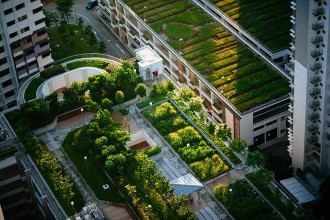[Source](https://unsplash.com/@chuttersnap)
[Green roofs](https://interfaithsustain.com/living-roof/) can come in all different shapes and sizes. Some green roofs contain elaborate gardens that people can freely walk around on, while other green roofs simply involve planting one or two plant species on top of a building. Green roofs can mainly be divided into intensive roofs and extensive roofs.
Intensive green roofs are typically larger and similar to traditional gardens and parks. While these green roofs require more structural support and are more expensive, they can be more complex and provide more services, such as community gardens and walking paths.
Extensive green roofs are smaller and usually contain only one or two types of hardy plants with shallow roots. This type of green roof is much simpler and requires less maintenance and is a lot cheaper.
### Cool Roofs
Similar in concept to green roofs, **cool roofs** provide a way to cool off buildings and the city around them. While they don’t require any plants that can remove carbon from the atmosphere, cool roofs are cheaper, simpler, and easier to install than green roofs. Cool roofs work by creating a white, highly reflective surface on top of buildings. This reflects light outwards, rather than absorbing it like traditional darker roofing. This helps cool off buildings and cool off cities, much like green roofs.
## Efficient Lighting
Another way that buildings can be built to be more environmentally friendly is through the use of **efficient lighting**. Lighting buildings uses a lot of energy, and by designing buildings with more sustainable lighting methods, we can create more sustainable cities.
### LED Bulbs
Light emitting diodes, or [LEDs](https://www.energy.gov/energysaver/lighting-choices-save-you-money#:~:text=Although%20once%20known%20mainly%20for,longer%20than%20traditional%20incandescent%20bulbs.), are a type of light bulb that emits just as much, if not more light than traditional lighting. However these types of bulbs are much more efficient. LEDs are able to to emit light while using up to 90% less energy than traditional light bulbs do. It is also estimated that they can last up to 25 times longer than a regular light bulb. Along with this, LEDs can replace almost any kind of bulb, and are becoming much cheaper to buy.
### Natural Light
[Source](https://unsplash.com/@andreislobtsov)
While LEDs are incredibly efficient bulbs, there are ways of creating lighting inside buildings which require no electricity whatsoever. By designing buildings that utilize [natural lighting](https://www.onegreenplanet.org/lifestyle/natural-lighting/) through strategically placed windows, buildings can spend virtually nothing on lighting costs.
Using sunlight to light buildings directly requires some creativity. It is important to think about where to place windows, so that the inside of a building can be lit comfortably throughout the day. Many architects rely on sky lights and clerestories to help make sure there is enough light everywhere in the building.
## Building With Sustainable Materials
Another way that buildings can be designed more sustainably is by using more [sustainable materials](https://www.conserve-energy-future.com/sustainable-construction-materials.php) to build them. Traditional building materials primarily include bricks, stone, and wood. These materials require large amounts of mining and deforestation which puts a lot of strain on the natural environment. Fortunately, there are a lot of other more **sustainable building materials** that contractors have started to use that make for more environmentally responsible buildings.
Bamboo is one such material. Bamboo grows at an incredibly fast rate, making it easy to grow, cheap, and widely available. Bamboo does not require much deforestation to grow and it is more flexible and stronger than wood, concrete, or brick. This makes it an ideal building material, and many people have made bamboo there go to material for cabinets and flooring.
Rammed earth is another sustainable material that has been reliably utilized for construction practices for centuries. Rammed earth entails compacting chalk, dirt, gravel, and other natural materials to make a solid form. This can be used for foundations, walls, and flooring. Rammed earth is cheaper and easier to make than traditional materials, and it can even be better at insulating buildings than its concrete and brick counterparts.
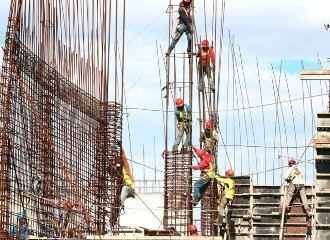[Source](https://unsplash.com/@jramos10)
### Repurposed and Recycled Materials
While using new more sustainable materials can be beneficial to making more sustainable buildings, reusing old materials results in less waste, and makes for greener buildings. Many builders have started to rely on reclaimed wood to help construct buildings. This helps prevent deforestation while making good use of old wood that would otherwise wind up rotting in a landfill.
Other builders have started to use recycled steel for there projects. Steel is very easy to recycle, and reusing it can save a lot of energy and pollution. Mining and smelting new steel uses massive amounts of energy and creates a lot of greenhouse gas emissions and pollution. By using recycled steel, builders can construct sturdy buildings more sustainably.
## Green Architecture and Religion
An article in the Faith and Form journal by Reverend Fletcher Harper raises a call for religious institutions to build with green architecture. Reverend Harper explains how “there remains a disconnect, and a serious one, between what religious groups say about climate change and the architecture, construction, and maintenance of religious buildings.” Reverend Harper is working to ensure that religious organizations live in sync with their values and build in environmentally sustainable ways.
Reverend Harper points out that most religions either see Earth as God’s handiwork or see the Earth itself as Divine. With this awareness we must recognize that our “buildings are embedded within something that is profoundly holy. This means that religious buildings need to be designed, built, and operated to treat nature with the respect due a sacred revelation. In their planning, construction, and operation, religious facilities must nestle themselves beautifully and functionally within their ecosystems in ways that reflect and honor their eco-locale’s own beauty and functionality.” The construction of our religious buildings is an opportunity to physically manifest our care for Creation.
*\* Featured image [source](https://unsplash.com/@jwvaneck)*
**Categories:** Blog on Faith and Ecology
**Tags:** Green Architecture, Sustainable Architecture
---
### [A Self Sustaining Home is Beneficial To YOU And To The Environment](https://interfaithsustain.com/self-sustaining-home/)
**Published:** August 22, 2022
**Author:** ICSD
**Excerpt:** Rachel Cohen - A self sustaining home is able to supply its own energy, water, food, and sewage. It's uncommon to find many homes like this but as more individuals are becoming aware of the impact of global warming we may see a trend towards this model of living.
**Content:**
Table of Contents
Table of Contents
- [Why Live In a Self Sustaining Home?](#aioseo-why-live-in-a-self-sustaining-home-2)
- [Bill Free Lifestyle](#aioseo-bill-free-lifestyle-4)
- [Low carbon Footprint](#aioseo-low-carbon-footprint-7)
- [How Is a Self Sustaining Home Self Sufficient?](#aioseo-how-is-a-self-sustaining-home-self-sufficient-10)
- [Solar Panels](#aioseo-solar-panels-11)
- [Water Management](#aioseo-water-management-17)
- [Energy Production](#aioseo-energy-production-24)
- [Energy efficient homes](#aioseo-energy-efficient-homes-27)
- [Making An Energy Efficient Home](#aioseo-making-an-energy-efficient-home-30)
- [Passive Lighting](#aioseo-passive-lighting-31)
- [Energy Efficient Products](#aioseo-energy-efficient-products-36)
- [Insulated Windows](#aioseo-insulated-windows-40)
- [Insulation](#aioseo-insulation-47)
- [Other Low Impact Living Options](#aioseo-other-low-impact-living-options-49)
- [Tiny Homes](#aioseo-tiny-homes-53)
- [Looking Forward To Self Sustaining Lifestyles](#aioseo-looking-forward-to-self-sustaining-lifestyles-58)
- [Religion and The Self Sustaining Home](#aioseo-religion-and-the-self-sustaining-home-63)
*By Rachel Cohen* – A **self sustaining home** is able to supply its own energy, water, food, and sewage. It’s uncommon to find many homes like this but as more individuals are becoming aware of the impact of global warming we may see a trend towards this model of living.
## Why Live In a Self Sustaining Home?
There must be a reason why people are turning to life in **self sustaining homes**. Let’s take a look at some of the advantages.
### Bill Free Lifestyle
One benefit of living this lifestyle is you will be able to live bill free. As you’re not relying on companies to have access to electricity, heating, gas, or sewage you will automatically save money.
Many think that living sustainably can be costly, yet it can actually save money. The money saved on electricity, heating, gas, or sewage can leave room in a budget for other bill-reducing activities such as solar power.
#### Low carbon Footprint
Another draw to this lifestyle is that it will drastically cut your carbon footprint. [In 2020](https://www.eia.gov/tools/faqs/faq.php?id=97&t=3#:~:text=How%20much%20electricity%20does%20an,about%20893%20kWh%20per%20month.), “the average annual electricity consumption for a U.S. residential utility customer was an average of about 893 kWh per month.”
That is the electricity use of just one household. Multiply that by the 300,000,000 people living in the US and we understand that current lifestyles are completely unsustainable. It’s even more drastic when you include the consumption of the entire world.
## How Is a Self Sustaining Home Self Sufficient?
### Solar Panels
A self sufficient home uses a variety of means to make “**off grid living**” possible. One of the most common practices is using solar panels to create energy for the house.
There are large benefits of solar power which is why many organizations have worked to make it more accessible. Government agencies, local nonprofits, and even state governments work towards solar accessibility.
[Source](https://unsplash.com/photos/a-person-working-on-a-solar-panel-rNn_TU8dvoY)
There are many grants for homeowners in low income or rural areas for solar panels. By making alternative energy options more affordable it can help induce this kind of life style.
### Water Management
Another aspect of self sufficient living is having an independent water supply. In the style of off grid living, a home would not be connected to town water, meaning a homeowner would need to find their own source for water.
One of the easiest ways to do this is through having a rainwater collection system. After collecting rainwater, it would need to go through a filtration system which will make it useable.
Rainwater collection can be as simple as leaving buckets outside your home to catch runoff. There are also more intricate rainwater systems such as a [dry system](https://www.watercache.com/education/rainwater-harvesting-101).
Another option for self sufficiency water is to dig a well. This is not always possible depending where a home is located. By working with a local water company you will be able to discover possible usable water underneath the ground which will allow for a well to be dug.
### Energy Production
Many off grid homes will use a wood burning stove to make their own heat to warm the home and water. Using wood consumes less energy than traditional heating methods.
Wood burning stoves that are certified by the Environmental Protection Agency (EPA) are up to 50% more energy efficient. The energy efficiency and self sufficient practices help make these homes better for the environment.
- [](https://interfaithsustain.com/building-off-the-grid/)
## [What To Consider When Building Off The Grid](https://interfaithsustain.com/building-off-the-grid/)
- [](https://interfaithsustain.com/geodesic-dome-home/)
## [The Remarkable Benefits of A Geodesic Dome Home](https://interfaithsustain.com/geodesic-dome-home/)
- [](https://interfaithsustain.com/living-roof/)
## [Living In Harmony With Nature in Urban Areas With a Living Roof](https://interfaithsustain.com/living-roof/)
#### Energy efficient homes
For many, it’s too daunting or unrealistic to build a self sustaining home. Rather, there are small changes individuals can make in their lives to have a more energy efficient home.
Self sustaining may be the ultimate goal, but any action towards reducing a carbon footprint is important. Each step towards **reduction of green house gases** makes a difference.
## Making An Energy Efficient Home
### Passive Lighting
If your home already has large windows you can use this to your advantage. Large windows act as natural light which eliminates the need for unnecessary overhead lights.
[Source](https://unsplash.com/@ale_s_bianchi)
Overhead lights use energy and can raise the temperature in a room which leads to the use of air conditioning with its own environmental impact.
### Energy Efficient Products
Another change can be switching to more energy efficient products. There are washers and driers that use less energy and water consequently creating less impact on the earth.
If you cannot get newer products, try washing your clothes on a cold setting. By using cold water, you’re reducing the energy consumption of the utilities, thus lowering your carbon footprint.
Lightbulbs are another small change. Using a LED lightbulb is better for the environment than [traditional lightbulbs](https://interfaithsustain.com/how-to-dispose-of-light-bulbs/). This is due to the bulbs not containing mercury which is an extremely harmful element.
### Insulated Windows
Insulated windows can make your home more energy efficient. Insulated windows help to keep cool air in during the summer and keep cold air out during the colder months.
[Source](https://unsplash.com/@introspectivedsgn)
This simple tip can reduce how much energy you use to heat or cool your house down, resulting in a smaller environmental impact. Small actions like this can add up and lead to great impacts.
#### Insulation
Good insulation is another key aspect of making your home more energy efficient. Insulation works similarly to insulated windows. It helps to keep the cold air out or warm air in, again resulting in needing less heating or cooling.
## Other Low Impact Living Options
A self sustainable home is not the only way to live a low carbon foot lifestyle. There are other options as well. For an interesting example, check out another blog post from ICSD that talks about [school bus conversions.](https://interfaithsustain.com/school-bus-conversion/)
### Tiny Homes
There is a movement toward tiny homes. Living in a tiny home reduces one’s carbon footprint, materialistic consumption, and the amount of earth dug up to house the tiny home.
Tiny homes can be made out of a variety materials including [shipping containers](https://youtu.be/k2MO2RDzXXU). Simple living like this can be even more ecofriendly than living in a self sufficient home.
[Source](https://unsplash.com/@jediahowen)
## Looking Forward To Self Sustaining Lifestyles
There is no guarantee that people will move towards the self sustaining lifestyle, but a general trend toward environmentally friendly living can be seen. According to a survey of Australians and Americans, [77%](https://www.forbes.com/sites/jamesellsmoor/2019/07/23/77-of-people-want-to-learn-how-to-live-more-sustainably/?sh=4694951f2b01) want to learn how to live a more sustainable lifestyle.
The world is at a tipping point where each choice we make has a great impact. Working towards making your home a little more sustainable can have a large impact on the environment.
### Religion and The Self Sustaining Home
[A recent article in ArchDaily](https://www.archdaily.com/978260/the-future-of-sustainable-housing-in-japan-paving-the-way-to-net-zero-energy-housing) describes the amazing advances that Japan is making towards creating self-sustaining homes. The impetus is coming from the government, and the designers are rising to the challenge:
> [In April 2014, the Japanese government approved an energy policy to encourage Zero Net Energy Houses (ZEH) to become the standard for new house construction by 2030](https://me.jtbcom.co.jp/newsletters/eco-homes-japan-sustainable-zero-energy-houses.html?utm_medium=website&utm_source=archdaily.com). Zero energy housing is designed to consume as much energy as it can create using renewable energy on-site.
The article explore various new designs that are both beautiful and highly efficient. The fact that these efficient innovations are coming from Japan is no surprise. Japanese Zen Buddhism and Shintoism focus on inner peace through material order and simplicity. As described on [Mukuomo](https://mokuomo.com/japanese-minimalism/#:~:text=This%20concept%20was%20originated%20from,%2C%20mindfulness%2C%20simplicity%20and%20nature.), “Japanese minimalism encourages a serene, simple and uncluttering lifestyle, emphasizing strongly on balance, mindfulness, simplicity and nature.”
Creating simple, self sustaining homes is a great way to find balance between humanity and nature and thereby bring spirituality to life.
\* *Featured image [source](https://unsplash.com/@darya_jumelya)*
**Categories:** Blog on Faith and Ecology
**Tags:** Off-Grid
---
### [Living In Harmony With Nature in Urban Areas With a Living Roof](https://interfaithsustain.com/living-roof/)
**Published:** March 30, 2022
**Author:** ICSD
**Excerpt:** Harry Cooper - As more and more urban spaces develop around the world, environmentalists are becoming concerned about how this is impacting the environment. Urban spaces destroy green spaces that can store carbon and produce lots of greenhouse gases and air pollution.
**Content:**
Table of Contents
Table of Contents
- [The Miracle of Green Roofs](#the-miracle-of-green-roofs)
- [What is a Living Roof?](#what-is-a-living-roof)
- [Extensive Green Roof](#extensive-green-roof)
- [Environmental Benefits of Living Roofs](#environmental-benefits-of-living-roofs)
- [Storm-water Management](#storm-water-management)
- [Climate Change and Urban Heat Islands](#climate-change-and-urban-heat-islands)
- [Economic Benefits of Living Roofs](#economic-benefits-of-living-roofs)
- [Green Roofing is More Structurally Sound](#green-roofing-is-more-structurally-sound)
- [Green Roofing and Religion](#green-roofing-and-religion)
*By Harry Cooper* – As more and more urban spaces develop around the world, environmentalists are becoming concerned about how this is impacting the environment. Urban spaces destroy green spaces that can store carbon and produce lots of greenhouse gases and air pollution.
## The Miracle of Green Roofs
Fortunately, there is a simple modern solution that lets both humans and nature live in urban spaces in harmony. This solution is the advent of **living roofs,** or **green roofs**.
Green roofs involve converting the tops of buildings into miniature gardens and green spaces by planting on top of them. These living roofs have started popping up in cities all over the world and have numerous benefits for the environment and the buildings themselves.
### What is a Living Roof?
Green roofs can come in all shapes and sizes; some entail elaborate gardens filled with multiple different kinds of plants while some contain one or two types of smaller plant species. While there are many different definitions of what a living roof can be, they can be mainly be divided into [two types](https://www.renewableenergyhub.co.uk/main/green-roof-information/types-of-green-roofs) of green roof designs.
### Intensive Green Roof
An intensive living roof is usually larger and contains a wide variety of plant species. Intensive green roofs are sometimes called rooftop gardens.
Intensive roofs are usually found on larger commercial buildings. This is because they normally require more space and deeper soil.
What’s unique about these types of green roofs is that they often have spaces to walk around and fruits and vegetables. This can make intensive living roofs serve as open public green spaces that local communities can benefit from.
### Extensive Green Roof
Extensive green roof systems are used on a much smaller scale than intensive ones, and they are more likely to be found on residential buildings. This is because extensive roofs are cheaper and much easier to maintain.
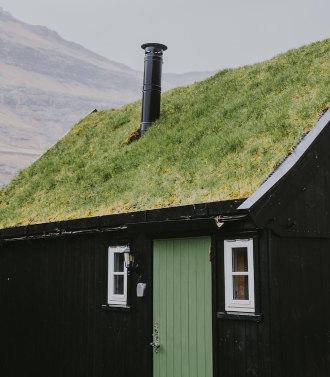[Source](https://unsplash.com/@anniespratt/ "Source")
Extensive green roofs contain only one or two types of plants and usually don’t have a way to walk around on them due to the fact that they require less maintenance. This kind of living roof is simpler and weighs less, and it can often be easily added to existing roofing.
- [](https://interfaithsustain.com/self-sustaining-home/)
## [A Self Sustaining Home is Beneficial To YOU And To The Environment](https://interfaithsustain.com/self-sustaining-home/)
- [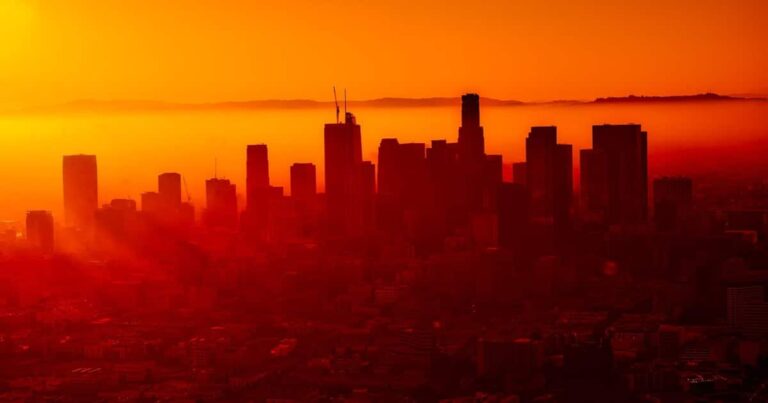](https://interfaithsustain.com/urban-heat-island-effect/)
## [Urban Heat Island Effect & How To Combat It!](https://interfaithsustain.com/urban-heat-island-effect/)
- [](https://interfaithsustain.com/building-off-the-grid/)
## [What To Consider When Building Off The Grid](https://interfaithsustain.com/building-off-the-grid/)
## Environmental Benefits of Living Roofs
Creating and cultivating modern green roofs can be incredibly complicated and costly, especially when it comes to intensive roofs, so what is it about green roof technology that environmentalists are so adamant about? As it turns out, while growing plants on top of buildings may seem insignificant, it has numerous benefits for the environment.
### Storm-water Management
When it rains, especially in cities, rain water flows across surfaces such as roads, buildings, and lawns. These surfaces often contain man made chemicals that are incredibly toxic.
When this [storm water runoff](https://interfaithsustain.com/sewage-water/ "storm water runoff") flows into natural streams, ponds, and lakes the toxic chemicals pollute the water and destroy freshwater ecosystems. [Luckily](https://www.epa.gov/soakuptherain/soak-rain-green-roofs), green roofs can help reduce storm-water runoff.
When rain falls onto a building with a green roof, the soil and plants absorb the water that would have ended up polluting nearby freshwater ecosystems. Thus, instead of creating harmful storm-water, living roofs absorb rain water and release it as transpiration through the natural process of the water cycle.
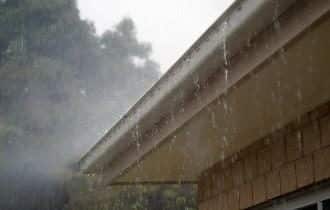[Source](https://pixabay.com/users/sandid-356019/ "Source")
### Climate Change and Urban Heat Islands
[Greenhouse gas emissions](https://interfaithsustain.com/prevention-of-air-pollution/ "Greenhouse gas emissions") and climate change have made many parts of the world a lot hotter. In fact, one of the places feeling this temperature increase the hardest is urban areas.
The reason urban areas are getting so much hotter is due to the [urban heat island effect](https://www.nps.gov/tps/sustainability/new-technology/green-roofs/benefits.htm). Due to massive amounts of dark surfaces and local air pollution, cities tend to be a lot hotter than their surrounding area, and this effect is only made worse by global warming.
Green roofs can help reduce this effect. Since plants use the sun’s energy for photosynthesis, green roofs absorb sunlight that would normally warm a city, and green roofs use that sunlight to instead grow plants.
Plants take in carbon dioxide from the atmosphere which helps reduce the air pollution that causes the urban heat island effect. Along with this, plants release water vapor and oxygen through a process called transpiration, that actually cools the surrounding air.
### Economic Benefits of Living Roofs
Another environmental benefit of green roofs is that they make for much more energy efficient buildings. While this helps reduce the amount of greenhouse gas emissions, it can also be good for the wallet of the building owner.
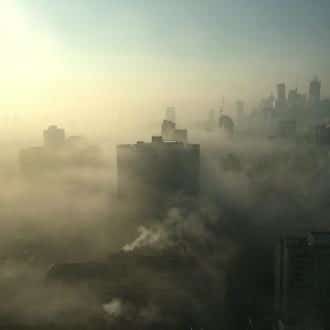[Source](https://unsplash.com/@kristenmorith/ "Source")
Green roofs can have very high initial prices. However these costs are almost always paid back in the amount of energy [savings](https://commons.bcit.ca/greenroof/faq/why-green-roofs-benefits/) that come with green roofs.
Since a traditional roof is typically darker in color it is a lot easier for it to take in heat, and a lot harder for it to regulate temperature. Green roofing on the other hand acts as natural insulation.
In the summer, green roofs shade the tops of houses and cool them off. In the winter, green roofs add extra insulation to buildings making them warmer.
This natural insulation is incredibly effective. [One study](https://science.howstuffworks.com/environmental/green-science/green-rooftop.htm) has shown that even a smaller scale extensive green roof project can reduce a building’s energy demands by up to 75%.
#### Green Roofing is More Structurally Sound
The economic benefits of green roofs go beyond energy savings. Green roofs have been proven to last longer and be more [structurally sound](https://science.howstuffworks.com/environmental/green-science/green-rooftop.htm) than traditional roofs.
The plants on green roofs provide an extra layer of protection for the actual roof itself. This shields it from weather as well as harmful UV rays from the sun that would normally degrade the roof over time.
This allows living roofs to last a lot longer than regular roofing. In addition to being more stable infrastructure, these roofs can also provide extra amenities that don’t come with normal roofs.
Some living roofs, mainly intensive ones, have spaces for people to walk around on them. This not only makes maintenance easier, but can provide extra benefits and services.
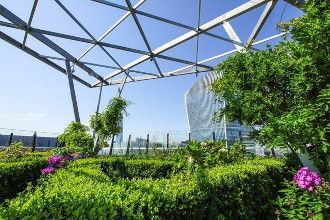[Source](https://pixabay.com/users/franky1st-1203890/ "Source")
Many green roofs double as roof [gardens](https://treescience.com.au/blog/benefits-rooftop-gardens/) where people can walk around, get fruits and vegetables, or just sit and enjoy the greenery doubling as parks in predominantly urban landscapes. The Seven Species rooftop at [The Council for a Beautiful Israel ](https://beautifulisraelusa.org/?page_id=77)offers tourists and residents a place of serenity in the midst of bustling, urban Tel Aviv.
## Green Roofing and Religion
Transforming our religious buildings to have living roofs is a great way to model sustainability. Two examples include the [United Methodist Church](https://www.umc.org/en/content/green-roof-reflects-united-methodist-care-for-earth) (UMC) in Washington, D.C. and [The First Unitarian Society of Madison](https://www.forconstructionpros.com/sustainability/article/10686252/green-roof-harmonizes-historic-church-designed-by-frank-lloyd-wright) (FUS) in Madison, Wisconsin.
John Hill at UMC describes how the green roof helps with heating and cooling costs and adds a spiritual message as well: “The vision that God has for this world is very different than the world we’re living in. And I think our job as Christians is to try to close that gap between what we say and what we believe”.
The FUS building was commissioned by the famous architect, Frank Lloyd Wright, so it is a national treasure. It’s living roof addresses a variety of issues, helping to dramatically reduce storm water runoff (“Even during 5-inch rainstorms, there is no runoff on to the neighboring property”), decreasing energy use and costs (“On an 85-degree day, the copper roof heats up to 115 degrees, but the green roof remains at 85 degrees”) and it adds picturesque beauty to the landscape.
A green roof is an example of a sustainable solution: good for the planet, society and your wallet. So what are you waiting for? Build your own **green roof** today.
*\* Featured image [source](https://unsplash.com/@chuttersnap/ "source")*
**Categories:** Blog on Faith and Ecology
**Tags:** Sustainable Building, Sustainable Cities
---
### [Why Soil Conservation Is So Critical Today](https://interfaithsustain.com/soil-conservation/)
**Published:** September 12, 2022
**Author:** ICSD
**Excerpt:** Harry Cooper - Many people think of soil as nothing more than the dirt beneath our feet. But soil is an integral part of maintaining environmental functions all around the world.
**Content:**
Table of Contents
Table of Contents
- [The Importance of Healthy Soil](#aioseo-the-importance-of-healthy-soil-3)
- [What Makes Soil Healthy?](#aioseo-what-makes-soil-healthy-9)
- [Soil Health Indicators](#aioseo-soil-health-indicators-15)
- [Why We Need Healthy Soils](#aioseo-why-we-need-healthy-soils-19)
- [Agriculture](#aioseo-agriculture-21)
- [Carbon Sequestration](#aioseo-carbon-sequestration-26)
- [Water Quality](#aioseo-water-quality-31)
- [How is Soil Degraded?](#aioseo-how-is-soil-degraded-35)
- [Agricultural Practice](#aioseo-agricultural-practice-38)
- [Wind and Water Erosion](#aioseo-wind-and-water-erosion-50)
- [Soil Conservation Practices](#aioseo-soil-conservation-practices-60)
- [Sustainable Agriculture](#aioseo-sustainable-agriculture-63)
- [Soil Conservation and Religion](#aioseo-soil-conservation-and-religion-70)
*By Harry Cooper* – Many people think of **soil** as nothing more than the dirt beneath our feet. But soil is an integral part of maintaining environmental functions all around the world.
Soil is capable of storing and cycling nutrients, carbon, and water. This allows it to perform all kinds of important functions.
## The Importance of Healthy Soil
A **healthy soil** is filled with microorganisms and nutrients that help plants grow bigger and produce more agricultural crops. In addition, **healthy soils** help to filter out pollution and fight climate change.
Without healthy soil we would be unable to grow the food we need to survive, and countless ecosystems around the world would fail. But, unfortunately, human influence and unsustainable practices have caused the **degradation of soil** around the world.
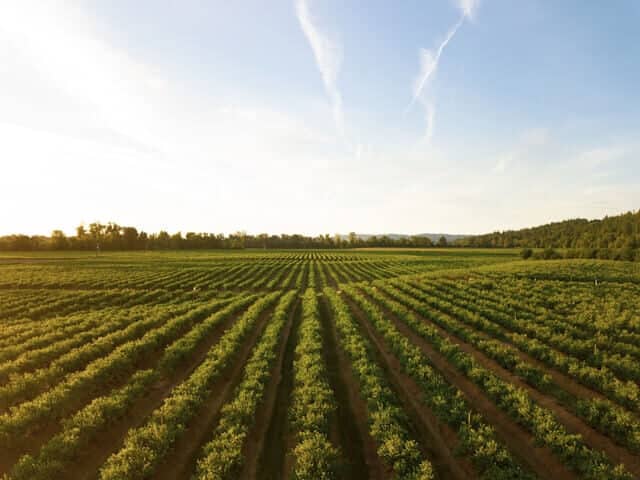[Source](https://unsplash.com/@dmey503)
This has harmed crop yields and **decimated ecosystems**. However, there is still hope since **soil conservation practices** help make sure soil stays healthy and fertile.
### What Makes Soil Healthy?
Before understanding how to conserve soil, it is important to set a standard for what a healthy soil looks like. However, this can be tricky as there are a variety of factors that affect soil, and how well it performs its various functions.
There are many different ways to quantify **soil health**. One could look at the presence of microorganisms, nutrient richness, plant growth or physical soil structure etc.
- [](https://interfaithsustain.com/soil-contamination/)
## [Soil Contamination, Its Remedy & Prevention](https://interfaithsustain.com/soil-contamination/)
- [](https://interfaithsustain.com/soil-exhaustion/)
## [Soil Exhaustion Is Caused By Humanity](https://interfaithsustain.com/soil-exhaustion/)
- [](https://interfaithsustain.com/soil-degradation/)
## [Soil Gives Life But Soil Degradation Poses A Threat To Life On Earth](https://interfaithsustain.com/soil-degradation/)
But while there are many different factors to judge soil health by, they can be divided into three [categories](https://www.truterraag.com/Articles/quantifying-soil-health-with-dr-jennifer-wells#:~:text=Evaluating%20soil%20health%20requires%20utilizing,by%20plants%20and%20microbial%20communities.) of **soil health indicators**: physical, chemical and biological.
#### Soil Health Indicators
**Physical soil health** is determined by how sturdy the soil particles are. This is measured by how well **soil particles** stay together when disturbed by **tilling** and other disruptions. Physical soil health indicators are important for determining how well a soil can retain and drain water as well as resist erosion.
**Chemical indicators of soil health** deal with the presence of different nutrients, as well as the pH balance of the soil. Having enough nutrients in a soil is essential for helping plants grow in it, and maintaining a healthy pH balance helps determine how well plants will be able to uptake **nutrients from the soil**.
**Biological soil health** is determined by the presence of organisms and **soil organic matter** in the soil. An abundance of microorganisms and other decomposers are an essential part of cycling nutrients throughout soil. These microorganisms also play an essential role in helping **soil sequester carbon**.
## Why We Need Healthy Soils
It is incredibly important to maintain **soil quality** no matter where we are in the world. Not only does a healthy soil provide a variety of essential functions to ecosystems in the natural world, but it is beneficial for humans as well.
### Agriculture
One of the most important functions of soil is its role in [agriculture](https://www.clientearth.org/latest/latest-updates/news/why-soil-matters/#:~:text=Soil%20provides%20a%20host%20of,food%20security%20without%20healthy%20soils.). Without a strong nutrient rich soil, farms are less capable of producing crops.
[Source](https://pixabay.com/users/wuzefe-680554/)
This makes it harder for farmers to produce a sufficient amount of food to feed the people that need it. This makes soil an integral part of maintaining the [global food system](https://interfaithsustain.com/sustainable-food/).
### Carbon Sequestration
Soil also has the ability to take carbon dioxide out of the air and store it away in a process called carbon [sequestration](https://climate.mit.edu/explainers/soil-based-carbon-sequestration). This process occurs as plants with stored carbon die and decompose.
As they decompose a lot of this carbon gets released back into the atmosphere. But depending on the conditions of the soil, a lot of this carbon will get stored in the soil where it won’t contribute to **climate change**.
#### Water Quality
Another important function of soil is its ability to regulate [water quality](https://content.ces.ncsu.edu/soils-and-water-quality). When soil is healthy it is capable of storing and releasing water.
Through this process, it is also capable of filtering out any excess nutrients or pollutants found in the water. This is incredibly important for nutrient and water cycling, as well as maintaining general water quality.
However if soils are unhealthy by being too loose or sandy, they lose their capacity to cycle water. This also makes them more likely to fall victim to **water erosion**.
## How is Soil Degraded?
Healthy soils perform many important functions. But there are many things that lessen the quality of soils.
What’s more is that the degradation of soils is primarily caused by human impacts on the environment. These impacts mainly come from the agricultural industry.
### Agricultural Practice
While healthy soils are crucial to a functioning agricultural system, many agricultural practices are actually harmful to soil health. This destruction of soil due to agriculture starts with the [clearing](https://online.maryville.edu/blog/soil-conservation/) of land.
[Source](https://unsplash.com/photos/a-tractor-is-plowing-a-field-with-dust-vb3yrr_HWCQ)
Slash and burn techniques involve cutting and burning plants to make way for farms. This process destroys the ability of root systems to keep soil in place and strips the soil of nutrients.
The land is then quickly used for commercial farming. This leaves very little time for the soil to recover its nutrients and structure.
Farms will also often use [**chemical**](https://www.greenmatters.com/p/what-is-soil-conservation) **fertilizers and pesticides** that are incredibly harmful to soil health. Pesticides are great at killing pests, but once they get into the ground they poison the soil and kill off precious soil organisms.
In addition, chemical fertilizers help add extra nutrients to the soil. However, when used for a long period of time, these fertilizers deplete the natural nutrients in the soil, and force plants to rely on a man-made additive.
As land gets used and overused for farming it puts a continual strain on soil health. By continuing to use unsustainable farming techniques, we are giving soil very little room to recover to a healthy state.
And as we continue to plant our crops on these **degrading soils**, our crop yields will suffer as well. This makes a lose-lose scenario for humans and the environment.
### Wind and Water Erosion
Another threat to soil health is [erosion](https://www.nrdc.org/stories/soil-erosion-101). **Soil erosion** is a natural process, but when it becomes exacerbated by human activity it can become a serious problem.
[Source](https://pixabay.com/users/kernsen-15011618/)
Soil erosion occurs when strong winds or rain strip away valuable layers of topsoil. These contain most of the soil’s nutrients and microorganisms.
Erosion can remove soil at ten times the rate at which it naturally replenishes. This makes it incredibly difficult for an area to retain a healthy layer of soil.
Human activity makes soil erosion much worse. Industrial processes such as tilling, cutting forests, and land clearing in general leave soil loose and exposed to the elements.
This makes it much easier for wind and rain to strip away the layers of soil. Additionally it makes it much harder for an area to maintain plant growth.
## Soil Conservation Practices
It is important to ensure that we have enough healthy soil to support our agricultural system and the ecosystems of the world. Therefore it is crucial that we practice **soil conservation techniques**.
With modern farming being so destructive towards soil, many of these soil conservation methods are centered around reforming our agricultural system. These techniques work to make a more sustainable agricultural [system](https://online.maryville.edu/blog/soil-conservation/).
### Sustainable Agriculture
[Agriculture](https://interfaithsustain.com/regenerative-agriculture/) is incredibly harmful to the health of soils everywhere. But by using the right techniques, farms can preserve soils while improving there annual crop yields.
One such technique is using cover crops. Cover crops are plants planted in the off season of farms so that the ground remains covered by vegetation all year round. This prevents erosion by covering barren soil and also helps to naturally replenish nutrients into the soil such as nitrogen.
Another technique that some farmers use is crop rotation. Different crops require different nutrients, and by planting one crop in the same spot each year it saps up all the nutrients that it needs. When crops are rotated and planted in different spots each year, soils are more capable of naturally replenishing the nutrients that they’ve lost.
Reducing the amount of tilling used in farming also helps to maintain a healthy soil. Tilling disrupts around the top ten inches of soil in order to make seed planting easier.
However, by disturbing soil in this way tilling removes plant cover and kills off organic matter in the soil. This removes massive amounts of nutrients, loosens up the soil making it more susceptible to erosion, and decreases the soils ability to retain water.
However there are certain conservation tillage techniques like [no-till farming](https://sarep.ucdavis.edu/sustainable-ag/conservation-tillage), which allow farmers to plant seeds without disturbing the soil. This helps soil retain its structure, moisture, and nutrients, making it much more resistant to erosion.
## **Soil Conservation and Religion**
**Soil Stewardship Week** is an American invention with deep Christian roots. John Murdock writes for the [First Things blog](https://www.firstthings.com/blogs/firstthoughts/2016/04/the-christian-roots-of-soil-stewardship-week) about it, quoting from a “Soil Stewardship Sunday” brochure:
> THIS IS SOIL STEWARDSHIP WEEK, so designated by the National Association of Soil Conservation Districts with the cooperation also of the [National Catholic Rural Life Conference](https://catholicrurallife.org/). Let us remind ourselves that “the earth is the Lord’s” and we are at most only stewards of the soil as well as all our earthly possessions to use them as entrusted to us by the Creator for our temporal and above all our eternal good. Some of our things we use up, but the soil is one of those things that needs to be managed properly to insure its continued usefulness, in fact to improve it, and to pass it on to future generations for their use. The riches of the soil can be exhausted by greedy, selfish, and unwise use. The good steward, however, not only carries out good conservation practices against erosion, but understands that the fruits of the soil draw out of it something that he needs to replace to avoid its depletion. In this work of keeping up good land or even building up poor land, the farmer is a good steward and partner with the Creator.
This a beautiful description in which we see soil conservation as a religious duty. “The Earth is the Lord’s.” We are just the caretakers.
*\* Featured image [source](https://unsplash.com/@gabrielj_photography)*
**Categories:** Blog on Faith and Ecology
**Tags:** Soil, Soil Pollution
---
### [Knowing Why Are Bees Important To Solve The Bee Crisis](https://interfaithsustain.com/why-are-bees-important/)
**Published:** October 10, 2022
**Author:** ICSD
**Excerpt:** Ethel Mendius - Bees pollinate food crops and fulfill other crucial ecosystem services for humans, plants, and animals. However, the population of bees and other insects is at risk, and we must take measures to protect them.
**Content:**
Table of Contents
Table of Contents
- [What Do Bees Do?](#aioseo-what-do-bees-do-2)
- [Types Of Bees](#aioseo-types-of-bees-7)
- [Honey Bees](#aioseo-honey-bees-11)
- [Wild Bees](#aioseo-wild-bees-16)
- [Why Is Bee Pollination Important?](#aioseo-why-is-bee-pollination-important-20)
- [Bees And Biodiversity](#aioseo-bees-and-biodiversity-24)
- [Bees and Human Health](#aioseo-bees-and-human-health-30)
- [The Beekeeping Industry](#aioseo-the-beekeeping-industry-39)
- [Harm To Bees](#aioseo-harm-to-bees-43)
- [Bees And Religion](#aioseo-bees-and-religion-47)
- [No Bees, No Honey (Or Many Other Foods) From Eco Bible Volume 2](#aioseo-no-bees-no-honey-or-many-other-foods-from-eco-bible-volume-2-49)
*By Ethel Mendius* – Why are bees important? **Bees pollinate** food crops and fulfill other crucial ecosystem services for humans, plants, and animals. However, the population of bees and other insects is at risk, and we must take measures to protect them.
## What Do Bees Do?
[Bees](https://foe.org/blog/why-are-bees-important) are a leading pollinator. **Pollination** is essential because the vast majority of flowering plants “require pollinators to aid in reproduction.”
Pollination [occurs](https://gardens.si.edu/gardens/pollinator-garden/why-what-when-where-who-how-pollination) when an insect travels between flowers looking for pollen or nectar to eat. It picks up pollen from the male part of one flower and plants it on the female part of another, fertilizing it.
Pollination services are essential because “the fertilized flower later yields fruit and seeds.” We have bees and other pollinators to thank for countless fruits, such as apples, avocados and even coffee beans.
Other insects, and even birds and mammals, can pollinate food crops. However, bees are particularly industrious because they “[gather pollen](https://friendsoftheearth.uk/nature/why-do-we-need-bees) to stock their nests” rather than just feeding themselves, visiting more flowers in the process.
- [](https://interfaithsustain.com/why-are-bees-important/)
## [Knowing Why Are Bees Important To Solve The Bee Crisis](https://interfaithsustain.com/why-are-bees-important/)
- [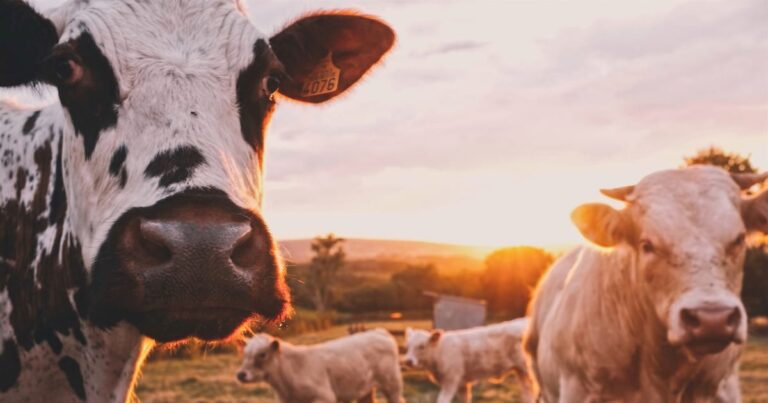](https://interfaithsustain.com/leviticus-11/)
## [Leviticus 11: The Deeper Meaning of “Kosher”](https://interfaithsustain.com/leviticus-11/)
- [](https://interfaithsustain.com/difference-between-vegan-and-vegetarian/)
## [Understanding the Real Difference Between Vegan and Vegetarian Diets](https://interfaithsustain.com/difference-between-vegan-and-vegetarian/)
## Types Of Bees
There are more than [20,000 known species](https://friendsoftheearth.uk/nature/why-do-we-need-bees) and trillions of bees in the world. Some are farmed and some live in the wild.
### Honey Bees
Honey bees, for the most part, “are kept by beekeepers in colonies of managed hives.” Hives are an artificial structure made to hold nests in which bees produce honey and beeswax.
Honey bees are also “the species most commonly used as [commercial pollinators](https://www.planetbee.org/why-we-need-bees) in the US.” In doing so, they “contribute $15 billion to the US economy every year” and account for “[nearly a third](https://foe.org/blog/why-are-bees-important/) of crop pollination.”
[Source](https://unsplash.com/@passthehoney)
### Wild Bees
Wild bees are bees that have not been domesticated. The most [well known wild bee](https://friendsoftheearth.uk/nature/why-do-we-need-bees) is the bumble bee, which can be found in social colonies, “usually in holes in the ground or tree cavities.”
Like honey bees, bumble bees can be used in the [commercial pollination](https://www.buzzaboutbees.net/bee-pollination.html) of many crops. Sometimes this includes “wildlife friendly farming techniques, such as allowing areas of meadow \[and\] maintaining pollinator margins.”
Solitary bees are [wild bees](https://friendsoftheearth.uk/nature/why-do-we-need-bees) that “tend to nest on their own”. [Solitary bees](https://www.buzzaboutbees.net/bee-pollination.html) in the Megachilidae family, such as mason bees and leafcutter bees, are “extremely efficient pollinators,” particularly for orchard crops.
## Why Is Bee Pollination Important?
“[Approximately 80%](https://www.woodlandtrust.org.uk/blog/2018/07/why-are-bees-important-and-how-you-can-help-them/) of all flowering plants are specialized for pollination by animals,” which means that bees and other pollinators are crucial to our food system. Pollination is necessary for both food and livestock crops such as alfalfa.
Without bees, farmers would have to manually pollinate their crops at great expense: “estimates suggest it would cost UK farmers an incredible £1.8 billion a year” to do so.
[Furthermore](https://friendsoftheearth.uk/nature/why-do-we-need-bees), “there is evidence that **natural pollination** by the right type of bee improves the quality of the crop.” Without bees, pollinator dependent crops would be at risk, and so would our global food supply.
### Bees And Biodiversity
Bee pollination supports many forms of life and contributes to the Earth’s [biodiversity](https://www.buzzaboutbees.net/10-Reasons-Why-Bees-Are-Important.html). For instance, “birds and mammals may rely on berries, seeds and also some fruits and nuts” provided by pollinating insects.
[Source](https://unsplash.com/@thinkscotty)
[Pollination](https://friendsoftheearth.uk/nature/why-do-we-need-bees) maintains native plant species, including many trees, wildflowers, and shrubs. [Trees](https://www.buzzaboutbees.net/10-Reasons-Why-Bees-Are-Important.html), in turn, “support much wildlife, help to stabilize soil structure and landscapes, and are the lungs of the earth.”
In addition to being food and shelter for other animals, these plants themselves contribute to the Earth’s beauty and biodiversity, as do bees. There are over 20,000 bee species, which must be protected to maintain our wide array of natural ecosystems.
#### Bees and Human Health
Bees are best known for their honey, but as the [FDA](https://www.fda.gov/animal-veterinary/animal-health-literacy/helping-agricultures-helpful-honey-bees) reports, “these social and hardworking insects produce six hive products – honey, pollen, royal jelly, beeswax, propolis, and venom.” All of these hive products serve medicinal purposes.
Honey is used in [traditional medicine](https://www.medicalnewstoday.com/articles/why-are-bees-important-to-humans) and as a home remedy. Both honey and pollen contain antioxidants, “which can protect the body from inflammation.**“**
Beeswax is relied on by the cosmetic and pharmaceutical industries alike. In many medicines, it acts as “[a binding agent,](https://www.fda.gov/animal-veterinary/animal-health-literacy/helping-agricultures-helpful-honey-bees) time-release mechanism, and drug carrier.”
[Royal jelly](https://www.medicalnewstoday.com/articles/324152#nutrition), “a creamy white substance with a high nutrient content that young bees make to feed queen bee larvae,” can be taken as a supplement. It is noted for its antibacterial properties.
Further **medical uses for bee products** have yet to be revealed. A [2020 study](https://www.nature.com/articles/s41698-020-00129-0) “found evidence that melittin, a component in honeybee venom, could kill cancer cells.”
Bee products play a substantial role in both western and traditional medicine. Considering too the nutritional value of the many crops they pollinate, it is clear that bees are essential to [human health](https://interfaithsustain.com/soil-pollution/).
## The Beekeeping Industry
Bees have been domesticated, and their byproducts harvested, for thousands of years. Today, “[the beekeeping industry](https://www.buzzaboutbees.net/10-Reasons-Why-Bees-Are-Important.html) provides an income for beekeepers and their families… as well as an income for suppliers of beekeeping equipment,” playing a crucial role in the global economy.
This is especially true in developing countries. Throughout the Global South, “bees help people and communities” who rely more heavily on traditional medicine and subsistence farming.
For many, beekeeping provides a path out of poverty: “charities such as Bees For Development help communities to earn a sustainable living and pollinate food crops through beekeeping.”
### Harm To Bees
Unfortunately, bees and other pollinators are in crisis. [Reports](https://theconversation.com/bees-how-important-are-they-and-what-would-happen-if-they-went-extinct-121272) show that “as many as 40% of the world’s insect species are in decline,” with many of the top causes linked to human activity.
[Agricultural practice](https://interfaithsustain.com/industrial-agriculture/) plays a significant role. The widespread use of pesticides has been “a key cause of pollinator decline,” along with herbicides, which “target a huge variety of the wild plants that bees need to forage.”
Climate change and habitat destruction have also led to fewer bees. The consequences will be vast if we do not address the threats faced by this important species.
## Bees And Religion
*Leviticus 11:23 – But all other winged swarming things that have four legs shall be an abomination for you.*
### No Bees, No Honey (Or Many Other Foods) From [Eco Bible Volume 2](https://www.amazon.com/Eco-Bible-Ecological-Commentary-Deuteronomy-ebook/dp/B09MYCLRMV)
> Despite the biblical prohibition against eating most insects, they have long been a significant source of food in most parts of the world, including Central and South America, Africa, Asia, and Australia. The UN Food and Agriculture Organization suggests insects as a potential protein resource for feeding the world’s population as other resources, such as fish, decline. Meanwhile, many insect species are also in dangerous decline or threatened due to habitat loss, pesticide use, disease, and climate change. The biblical prohibition against eating most insects likely had the effect of protecting insects in ancient Israel.
>
> Bees are a striking example of insects critical to human life put at risk by human activity. Bees pollinate 70 of the 100 species of crops that provide 90 percent of food worldwide, but bee populations are being devastated. Nine percent of European wild bee species could become extinct, and 5 percent could be threatened in the near future. Some governments are moving slowly to try to save bee populations by legislating against pesticides that end up harming beneficial insects. Urban beekeepers in a number of major cities are working to convert empty lots into locations for beehives. The Honey Bee Conservancy, which works in cities like New York City, Seattle, and Miami, estimates that it has helped raise 10 million bees in 44 states.
>
> In Israel, the bee population is holding steady, thanks to 80,000 to 100,000 seedlings – especially eucalyptus trees – planted every year to provide bees with a varied, abundant diet across the seasons. The Jewish National Fund (KKL-JNF) nurseries provide these seedlings free, and they are planted on beekeepers’ land. “As open areas are decreasing in the last decade, we find ourselves with less land for afforestation. But with this strategy of planting saplings on beekeepers’ lands everybody benefits: We have trees, the bees have flowers, and the keepers have honey,” explains Aviv Eizenband, head of forestry and professional development at KKL-JNF’s Forest Service.
>
> Israel is known as the “land of milk and honey.” The Midrash says:
>
> The purposes of the Blessed Holy One are carried out in all places, and God has not created a single thing in vain. Sometimes God’s purpose is achieved by means of a frog, sometimes by means of a hornet, sometimes by means of a scorpion. . . . This is indeed the way of the Blessed Holy One – to achieve a purpose by means of small things!
*\* Featured image [source](https://unsplash.com/@borisworkshop)*
**Categories:** Blog on Faith and Ecology
---
### [Hemp Toilet Paper: Good for Health & Not Harmful to the Environment](https://interfaithsustain.com/hemp-toilet-paper/)
**Published:** January 26, 2022
**Author:** ICSD
**Excerpt:** Harry Cooper - Hemp is a fibrous material that comes from a plant of the same name. Hemp products have been around for thousands of years.
**Content:**
Table of Contents
Table of Contents
- [What is Hemp Toilet Paper?](#what-is-hemp-toilet-paper)
- [What's Wrong With Regular Toilet Paper?](#what-s-wrong-with-regular-toilet-paper)
- [The Environmental Impact of Regular Toilet Paper](#the-environmental-impact-of-regular-toilet-paper)
- [Toilet Paper Production Leads to Deforestation](#toilet-paper-production-leads-to-deforestation)
- [The Chemical Additives in Regular Toilet Paper](#the-chemical-additives-in-regular-toilet-paper)
- [The Alternative: Hemp Toilet Paper](#the-alternative-hemp-toilet-paper)
- [No Deforestation for Hemp Toilet Paper Production](#no-deforestation-for-hemp-toilet-paper-production)
- [No Added Chemicals In Hemp Toilet Paper Production](#no-added-chemicals-in-hemp-toilet-paper-production)
- [The Health Benefits of Hemp Toilet Paper](#the-health-benefits-of-hemp-toilet-paper)
- [Hemp Toilet Paper – All Around Better Quality](#hemp-toilet-paper-all-around-better-quality)
- [Other Toilet Paper Alternatives](#other-toilet-paper-alternatives)
- [Bamboo Toilet Paper](#bamboo-toilet-paper)
- [Toilet Paper Produced From Recycled Materials](#toilet-paper-produced-from-recycled-materials)
- [Hemp in Religion](#hemp-in-religion)
## What is Hemp Toilet Paper?
*By Harry Cooper* – **Hemp** is a fibrous material that comes from a plant of the same name. Hemp products have been around for thousands of years. The material has been used to make hemp paper, hemp rope, and hemp clothing, among other things.
Hemp was first used to make toilet paper in [1857](https://reelpaper.com/blogs/reel-talk/toilet-paper-history-uses) by Joseph Gayetty. However few people bought into his idea of hemp toilet paper despite its revolutionary design.
Many people nowadays believe we should have been using hemp to make toilet paper from the start. Not only is it more environmentally friendly than traditional toilet paper, but it is also easier to produce and higher quality.
## What’s Wrong With Regular Toilet Paper?
Most people would say toilet paper is one of the most important inventions that we use in our everyday lives. However many people don’t realize that every step of toilet paper manufacturing is devastating to the environment.
### The Environmental Impact of Regular Toilet Paper
The environmental impact of toilet paper starts with paper production in general. Paper production requires massive amounts of wood that come primarily from old trees.
#### Toilet Paper Production Leads to Deforestation
Almost [80,000 acres](https://rainforests.mongabay.com/08-deforestation.html) of forest are cut down every day for the sake of producing paper and other wood products. Of those 80,000 acres, [270,000 trees](https://greencitizen.com/hemp-toilet-paper/) are used for toilet paper.
[Deforestation](https://interfaithsustain.com/what-causes-deforestation/) is one of the most serious environmental issues in today’s world. Not only are [trees](https://www.savatree.com/whytrees.html) an integral part of ecosystems around the world, but they are also essential in [regulating global climate](https://interfaithsustain.com/evidence-of-climate-change/).
Animals around the world rely on trees for shelter and as a food source. Along with this, deforestation can disrupt ecosystems as tree roots are often one of the only things standing in the way of [soil erosion](https://interfaithsustain.com/soil-contamination/), which can cause harmful runoff into water systems.
Trees are also nature’s own way of combatting climate change. One acre of forest can absorb up to six tons of carbon dioxide and replace it with four tons of oxygen.
Thus, every time we use conventional toilet paper we are in part contributing to deforestation. If we don’t start to use a sustainable alternative to traditional toilet paper, we may find ourselves on a planet without trees due to toilet paper consumption.
#### The Chemical Additives in Regular Toilet Paper
The process of making toilet paper is not only environmentally unfriendly in that it contributes to deforestation. The manufacturing process of toilet paper can also be harmful to the environment.
The virgin pulp that comes from wood to make toilet paper is often not soft enough to be made into actual toilet paper. Because of this, companies almost always need to add a variety of harmful chemicals to soften the pulp and make conventional toilet paper.
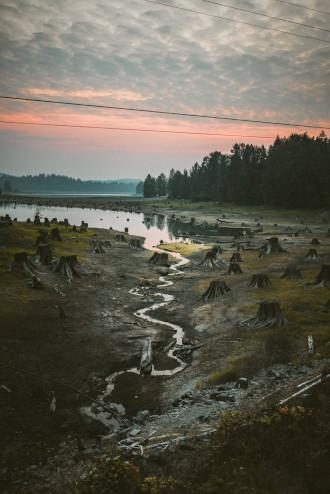[Source](https://unsplash.com/@karsten116?utm_source=unsplash&utm_medium=referral&utm_content=creditCopyText)
- [](https://interfaithsustain.com/single-use-plastic-threats-from-awareness-to-action/)
## [Facing Single-Use Plastic Threats: From Awareness to Action](https://interfaithsustain.com/single-use-plastic-threats-from-awareness-to-action/)
- [](https://interfaithsustain.com/benefits-of-composting-ancient-civilizations-to-todays-technology/)
## [The Benefits of Composting: Ancient Civilizations to Today’s Technology](https://interfaithsustain.com/benefits-of-composting-ancient-civilizations-to-todays-technology/)
- [](https://interfaithsustain.com/sustainable-clothing/)
## [Sustainable Clothing: Industry, Pollution and The Alternatives](https://interfaithsustain.com/sustainable-clothing/)
More often than not, the chemicals added in toilet paper production are incredibly dangerous and volatile. Some of these chemicals can even include [chlorine and bleach](https://www.trvst.world/sustainable-living/environmental-impact-of-toilet-paper/).
These harsh chemicals cause many [adverse health effects](https://www.mamavation.com/brands/toilet-paper.html). These can range anywhere from developmental and reproductive issues, to immune system damage, and can even cause cancer.
The chemicals added in toilet paper manufacturing are not only problematic because of their effects on human health. When we flush, we put the chemicals found in toilet paper into water systems around the world.
## The Alternative: Hemp Toilet Paper
In the extraction of raw materials, production, and disposal of conventional toilet paper we can see some [serious environmental issues](https://interfaithsustain.com/sustainable-competitive-advantage/). Luckily, **hemp toilet paper** can provide a solution to almost all of them.
[Source](https://pixabay.com/users/lehoo88-431844/)
## No Deforestation for Hemp Toilet Paper Production
Making toilet paper requires a lot of wood from a lot of trees. However, as the name suggests, hemp toilet paper is made entirely out of hemp plant, and therefore requires no trees to be cut down.
Trees take an incredibly long time to grow and are a fairly [non renewable resource. Hemp plants on the other hand, a](https://interfaithsustain.com/renewable-and-non-renewable-resources/)re incredibly easy to grow.
Hemp requires very little water, and are much easier to maintain than trees. On top of that it takes anywhere from [20-80 years](https://www.thehempspot.ca/blogs/news/hemp-vs-trees) for trees to grow and reach maturity, whereas hemp plant can be ready to harvest within 120 days.
A hemp plant also produces a lot more useable hemp pulp than trees produce wood pulp. Wood is made up of about [30%](https://greencoast.org/hemp-toilet-paper/#6-hemp-toilet-paper-produces-more-material-per-acre-than-trees) cellulose fibers, whereas hemp cellulose fibers make up about 85% of the hemp plant.
[Source](https://pixabay.com/)
These natural fibers are the primary ingredient in any toilet paper. The fact that hemp fibers give such good bang for their buck supply makes hemp crops and thus hemp toilet paper not only more sustainable than regular toilet paper, but also more practical.
## No Added Chemicals In Hemp Toilet Paper Production
Regular toilet paper requires a lot of chemicals in the initial processing of the wood pulp in order to soften it. However, Hemp fiber is naturally softer than toilet paper, and requires [no chemical additives](https://usacbdexpo.com/hemp-toilet-paper/).
Because of the naturally soft fibers that are used to make hemp toilet paper, no harmful chemicals come into contact with humans or the environment. On top of not being harmful, hemp toilet paper has a lot of properties that can actually make it beneficial to human health.
### The Health Benefits of Hemp Toilet Paper
Hemp toilet paper is free of a lot of the harmful chemicals found in regular toilet paper. Along with this, hemp toilet paper contains a few substances that can actually create a lot of health benefits.
Hemp is one of the most naturally concentrated plants in certain [bioactive components](https://greencitizen.com/hemp-toilet-paper/). These bioactive components can be antibacterial, this can help prevent yeast infections, UTIs, and other infections.
Hemp toilet paper also contains a lot of [omega fatty acids](https://www.ecomasteryproject.com/hemp-toilet-paper/#Hemp_is_a_sustainable_crop). These fatty acids help reduce inflammation and can lead to softer skin.
### Hemp Toilet Paper – All Around Better Quality
Hemp toilet paper is more environmentally friendly and healthy. On top of that, hemp toilet paper is an all around [higher quality](https://www.ecomasteryproject.com/hemp-toilet-paper/#Hemp_is_a_sustainable_crop) product.
Hemp fibers contain properties that make them a lot more durable. Because of this hemp toilet paper naturally lasts longer and is more comfortable.
Some of these properties include hemp toilet paper being able to absorb six times its weight in water. This means that one square of hemp toilet paper will go a lot further than a square of conventional toilet paper.
Hemp also contains oils that act as a natural preservative. As a result, hemp toilet paper won’t degrade over time, giving it a much long shelf-life and making it more durable in general.
## Other Toilet Paper Alternatives
Switching to hemp toilet paper can be a great way to reduce usage of conventional toilet paper. However, there are also many other types of toilet paper on the market that are more environmentally sound, one of which being **bamboo toilet paper**.
### Bamboo Toilet Paper
[Much like hemp](https://blog.bunzlchs.com/bamboo-toilet-tissue-benefits/), bamboo grows incredibly fast and provides lots of pulp that can be used to make toilet paper. The similarities don’t stop there, bamboo also contains some of the extra durability and anti-bacterial properties that can be found in hemp toilet paper.
The [only issue](https://www.nrdc.org/experts/jennifer-skene/hemp-bidets-bamboo-issue-tissue-faqs-answered) with bamboo toilet paper, that is not necessarily a problem with hemp toilet paper, is that trees are often cut down to make space for bamboo farms. However, if you make sure that the bamboo products you’re buying are sustainably sourced, then you won’t be helping contribute to deforestation.
### Toilet Paper Produced From Recycled Materials
**Recycled toilet paper** is made by breaking down old pieces of paper by soaking them in water. The broken down paper is then used like any other plant pulp to be made into usable toilet paper.
[Source](https://unsplash.com/)
This process doesn’t require any trees to be cut down or the extraction of any new materials. However, there are still some [environmental pitfalls](https://www.treehugger.com/eco-friendly-toilet-paper-bamboo-vs-recycled-5114452) when it comes to this kind of toilet paper.
Toilet paper made from recycled materials can contain some of the harmful chemicals much like conventional toilet paper. These chemicals can come from the treating process used on ordinary toilet paper, or it can come from chemicals found in the paper that is used to make recycled toilet paper.
## Hemp in Religion
Hemp (which does not contain the psychoactive THC chemical) and cannabis (which does contain THC) appear in many religions around the world. To give one example, [Paul Benhaim describes](https://www.hempfoods.com.au/hemp-religion) how the Vedas, a sacred Hindu text written over 3,000 years ago says that: “the Hindu gods sent hemp and cannabis to Earth out of compassion for humanity, so we could improve sexual desires, attain delight and lose fear. A more popular story is that when the gods and demons attempted to produce *amrita*, the elixir of immortality, they got cannabis.”
Just as cannabis is a powerful drug, hemp forms powerful, environmentally friendly materials. There are a range of religious opinions surrounding cannabis, some in favor and some against. But something every religion can agree on: buy hemp toilet paper for the sake of our planet.
*\* Featured image [source](https://unsplash.com/@introspectivedsgn?utm_source=unsplash&utm_medium=referral&utm_content=creditCopyText)*
**Categories:** Blog on Faith and Ecology
**Tags:** Hemp
---
### [Seminaries Addressing Ecological Crisis in New York](https://interfaithsustain.com/seminaries-addressing-ecological-crisis/)
**Published:** December 15, 2016
**Author:** ICSD
**Excerpt:** Yesterday's Faith & Ecology Seminary Education Conference engaged seminary deans and faculty to explore ways of integrating faith and ecology into their theology curriculums so that emerging clergy can speak to the ecological crisis . The full - day event took place at Union Theological Seminary in Manhattan, and was co - organized by The Interfaith Center for Sustainable Development, the Center for Earth Ethics of Union Theological Seminary; th e Milstein Center for Interreligious Dialogue at Jewish Theological Seminary; and the Green Seminary Initiative.
**Content:**
## Seminary Deans and Faculty Convene at Union Theological Seminary to Address Growing Demand For Integrating Faith and Ecology Curriculum at Seminaries
New York, NY
Yesterday’s Faith & Ecology Seminary Education Conference engaged seminary deans and faculty to explore ways of integrating faith and ecology into their theology curriculums so that emerging clergy can speak to the ecological crisis . The full – day event took place at Union Theological Seminary in Manhattan, and was co – organized by The Interfaith Center for Sustainable Development, the Center for Earth Ethics of Union Theological Seminary; th e Milstein Center for Interreligious Dialogue at Jewish Theological Seminary; and the Green Seminary Initiative.
According to Union President Rev. Dr. Serene Jones, “Faith leadership is essential to the awareness and protection of Creation, especially in this challenging time. Union is delighted to welcome these educators for this historic gathering to respond to the need to fully integrate ecology into the work of seminaries.”
The conference offered tools to enable administrators and faculty members from theological schools, divinity schools, and seminaries to better educate students on ecology issues from the perspective of different faith traditions.
On why this conference is important now, Rabbi Yonatan Neril, founder and executive director of The Inter faith Center for Sustainable Development, said, “This groundbreaking event promotes the expansion of ecology and stewardship to become an integral component of seminaries’ curricula. It is part of the crucial process of reorienting our global community tow ards the collective protection of Creation , starting with the future religious leaders of America.”
A keynote dialogue was provided by Dr. Timothy Van Meter, a professor at Methodist Theological School in Ohio and co – organizer of the Seminary Environmental Leadership Initiative, and Dr. Laurel Kearns, co – founder of The Green Seminary Initiative and professor at Drew Theological School. Other speakers included; Karenna Gore, director of the Center for Earth Ethics; Rabbi Yonatan Neril , founder and director o f the Interfaith Center for Sustainable Development ; Rabbi Dr. Burt Visotzky, Director, the Milstein Center for Interreligious Dialogue at Jewish Theological Seminary; and Rev. Fletcher Harp er, Executive Director of Green Faith and co – organizer of the Green Seminary Initiative.
Seminary faculty and deans also learned in breakout workshops on the emerging fields of faith – based environmental education. Topics included how seminaries can encourage faculty to include ecology teachings in their existing courses, and how they can integrate faith and ecological teaching into existing courses in theology, Bible, homiletics, ethics, counseling, and others. This significant event to engage seminaries in the New York metro area on issues of faith and ecology had 6 5 par ticipants and speakers. The Christian, Jewish, indigenous, Muslim, Hindu, and Buddhist participants came from over fifteen seminaries and ten other organizations in New York, New Jersey, Connecticut, Pennsylvania, and Ohio.
The conference was undertaken based on support from The Julia Burke Foundation.
*About Union Theological Seminary*
Union Theological Seminary in the City of New York is a seminary and a graduate school of theology established in 1836 by founders “deeply impressed by the claims of the world upon the church.”
*About the Center for Earth Ethics*
The Center for Earth Ethics (CEE) is a forum for education, public discourse and movement building that draws on faith and wisdom traditions to address our ecological crisis and its root causes.
*About the Interfaith Center for Sustainable Development*
The Interfaith Center for Sustainable Development (ICSD) educates and empowers religious leaders and faith communities toward environmental stewardship.
*About the Milstein Center for Interreligious Dialogue at Jewish Theological Seminary*
MCID sponsors d iscussions and activities among diverse leaders , and focuses on fostering Jewish – Christian and Jewish – Muslim understanding .
*About the Green Seminary Initiative*
The Green Seminary Initiative (GSI) fosters efforts by theological schools and seminaries to incorporate care for creation into the identity and mission of the institution.
Download: [Press release post conference to NYC Faith and Ecology Conference 12.16.16](https://interfaithsustain.com/wp-content/uploads/2017/01/Press-release-post-conference-to-NYC-Faith-and-Ecology-Conference-12.16.16.pdf)
*\*Featured image [source](https://unsplash.com/photos/aerial-photography-of-empire-state-building-6NmnrAJPq7M)*
**Categories:** Press Releases
---
### [Amidst Violence and Crushing Heat, Jerusalem Religious Leaders Agree on Urgency of Curbing Climate Change](https://interfaithsustain.com/amidst-violence-and-crushing-heat-jerusalem-religious-leaders-agree-on-urgency-of-curbing-climate-change/)
**Published:** July 26, 2017
**Author:** ICSD
**Excerpt:** As Jerusalem experiences another wave of violent conflict and punishing heat, Jewish, Muslim and Christian leaders came together to urge people of all faiths to help curb climate change.
**Content:**
JERUSALEM – As Jerusalem experiences another wave of violent conflict and punishing heat, Jewish, Muslim and Christian leaders came together to urge people of all faiths to help curb climate change.
Rabbi David Rosen, AJC International Director of Interreligious Affairs; Father Francesco Patton, Custos of the Holy Land; and Kadi Iyad Zahalha, judge of the Muslim Sharia Courts in Israel reached a consensus on the religious basis for environmental sustainability and addressing climate change. At the event, a new letter signed by 36 Israeli Orthodox rabbis was released, calling for action on climate change.
Custos Father Patton said, “We are part of creation, so we have to take care of our common home and take responsibility for creation.”
Rabbi Rosen cited Deuteronomy 30:19: “Choose life in order that you and your children shall live.” He said, “today, climate change is a matter of life and death. Because of this, everything else becomes secondary—it’s like rearranging the deck chairs on the ship Titanic as we head for the iceberg.”
Kadi Zahalka spoke to the importance of “taking care of everything for the coming generation. We need to do our part in saving and preserving nature and all the earth.”
The event was organized by The Interfaith Center for Sustainable Development (ICSD), which works to catalyze a transition to a sustainable, thriving, and spiritually-aware society through the leadership of faith communities. Overlooking the walls of the Old City, the interfaith event served as a counterpoint to the recent violence in Jerusalem’s Old City. The interfaith event focused on the critical role of faith leaders in increasing awareness about the moral obligation for environmental sustainability and curbing climate change.
Rabbi Yonatan Neril, ICSD’s director, moderated the panel and cited studies linking climate change to increased drought and extreme heat in the Middle East, which are exacerbating conflict and threat multipliers. The event was held at the Jerusalem Press Club.
Photos and video content, and the climate change letter by Orthodox rabbis are available upon request by replying to this message.
Download: [Press Release Conf Jerusalem July 2017](https://interfaithsustain.com/wp-content/uploads/2017/07/During-Prolonged-Heat-and-Jerusalem-Violence-Religious-Leaders-Come-Together-to-Address-Climate-Change.pdf)
*\*Featured image [source](https://unsplash.com/photos/aerial-view-of-city-during-daytime-MTj3H5EwiBg)*
**Categories:** Press Releases
**Tags:** Press Releases
---
### [As Pope Visits, Plans Move Forward for Large Solar Field on Church Land in Mozambique](https://interfaithsustain.com/as-pope-visits-plans-move-forward-for-large-solar-field-on-church-land-in-mozambique/)
**Published:** September 5, 2019
**Author:** ICSD
**Excerpt:** An MOU and two land-lease agreements were signed for large-scale solar fields on Anglican church lands in Mozambique and Eswatini, as part of the Faith Inspired Renewable Energy project, a collaboration between the Interfaith Center for Sustainable Development (ICSD), renewable energy company Gigawatt Global, and the Anglican Church in Northern Mozambique and Eswatini.
**Content:**
An MOU and two land-lease agreements were signed for large-scale solar fields on Anglican church lands in Mozambique and Eswatini, as part of the Faith Inspired Renewable Energy project, a collaboration between the Interfaith Center for Sustainable Development (ICSD), renewable energy company Gigawatt Global, and the Anglican Church in Northern Mozambique and Eswatini.
**Categories:** Press Releases
**Tags:** Press Releases
---
### [Nearby fires don't deter LA religious leaders from ecological gathering](https://interfaithsustain.com/nearby-fires-dont-deter-la-religious-leaders-from-ecological-gathering/)
**Published:** November 9, 2019
**Author:** ICSD
**Excerpt:** Within miles of the Easy Fire, religious leaders from Los Angeles met to promote faith-based ecological sustainability. The Los Angeles Symposium on Ecologically Informed Theological Education took place from Sunday to Tuesday, Nov. 3-5, at American Jewish University’s Brandeis Bardin Campus near Simi Valley.
**Content:**
Within miles of the Easy Fire, religious leaders from Los Angeles met to promote faith-based ecological sustainability. The Los Angeles Symposium on Ecologically Informed Theological Education took place from Sunday to Tuesday, Nov. 3-5, at American Jewish University’s Brandeis Bardin Campus near Simi Valley. Speakers were from Fuller Theological Seminary, America’s largest; Deans of Hebrew Union College and the Ziegler School of Rabbinic Studies; priests from the LA Catholic Archdiocese and the Orthodox Christian Church; and the president of Bayan Claremont Islamic Graduate School. Among the speakers were priests, pastors, rabbis, imams, theological school professors and environmental scientists. 75 people participated.
Religious institutions have suffered the impacts of climate change in California, along with residents and businesses. In 2018, wildfires destroyed multiple churches in Paradise and caused the temporary closure of the Pepperdine Christian University campus. In 2017, wildfires destroyed three Jewish summer camps. The Symposium took place in Ventura County 5 miles from the Easy Fire, 20 miles from the Maria Fire and Getty Fire, and 12 miles from the recent Saddleridge Fire. These fires, along with the larger Kincade Fire, have forced evacuations, and the closing of houses of worship and seminaries.
“The Symposium helped empower faculty and deans from California and Western religious seminaries to train emerging religious leaders to reveal the connection between religion and ecology and mobilize congregants to act,” said Rabbi Yonatan Neril, founding director of The Interfaith Center for Sustainable Development.
Professor Tim van Meter of the Methodist School of Theology in Ohio said, “Educational institutions are rethinking their curriculum in response to the needs of their students and the need of our warming world. We’re grateful to have the resources provided to offer this conference as a call toward that change.”
“Now more than ever, religious leaders are being called upon to shift our cultures. We are called to boldly respond to the challenges of our time, especially to this climate emergency. We are proud to be part of a symposium that helps train future leaders to do just that,” said rev. abby mohaupt, director of the Green Seminary Initiative.
A growing number of people, especially youth and young adults, are turning to their pastors, priests, rabbis, imams and others for wisdom and guidance on ecological sustainability. Awareness of the injustice and inequity of pollution and climate change impacts is growing.
The Symposium was held as part of The Seminary Environmental Leadership Initiative, which was funded through a grant from the Luce Fund for Theological Education, an initiative of the Henry Luce Foundation’s Theology Program. Additional support was provided by The Julia Burke Foundation and the Martin Gang Institute and was co-organized by The Interfaith Center for Sustainable Development, Methodist Theological School in Ohio, The Green Seminary Initiative, and AJC.
For more information and the Symposium schedule, [click here](https://interfaithsustain.com/los-angeles-symposium-on-ecologically-informed-theological-education/). Photo and video content is available upon request. For further information, please email yneril@interfaithsustain.com
| [](https://interfaithsustain.com/wp-content/uploads/2019/11/LA_Symposium_6_partners_logos.png) | [](https://interfaithsustain.com/wp-content/uploads/2019/11/AJU_President_Herbst.jpeg) |
|---|---|
| [](https://interfaithsustain.com/wp-content/uploads/2019/11/20191102_LASoEITE_0497.jpeg) | [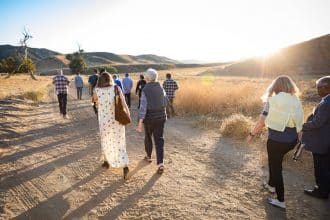](https://interfaithsustain.com/wp-content/uploads/2019/11/20191102_LASoEITE_2250.jpeg) |
*\*Featured image [source](https://unsplash.com/photos/burning-building-at-nighttime-Of-NXuECJbE)*
**Categories:** Press Releases
**Tags:** Press Releases
---
### [Groundbreaking New Eco Bible Connects Both Spiritual and Ecological Wisdom of Hebrew Bible](https://interfaithsustain.com/eco-bible/)
**Published:** July 23, 2020
**Author:** ICSD
**Excerpt:** A groundbreaking new Eco Bible explores the Hebrew Bible’s ecological as well as spiritual wisdom, to address humanity’s greatest challenges in protecting life on Earth. Eco Bible connects the Five Books of Moses/Pentateuch, and Jewish rabbis’ biblical teachings past and present, with contemporary scientific understanding of human health, biodiversity, and environmental protection of air, land and water.
**Content:**
[](https://interfaithsustain.com/ecobible/)
What does the Bible say about ecology? The Bible – the best-selling book on the planet, ever and now – is full of explicit guidelines and implicit teachings regarding the custody of the earth and humanity’s responsibility, previously undiscovered. The groundbreaking *[Eco Bible](https://interfaithsustain.com/ecobible/)* shines new light on how the Old Testament and great religious thinkers have urged human care of nature as a central message of spiritual wisdom. Eco Bible has been a #1 [bestseller on multiple Amazon Kindle categories](https://www.amazon.com/Eco-Bible-Ecological-Commentary-Genesis-ebook/dp/B08LCKLM9G/).
In this first-of-its-kind compilation, *Eco Bible* brings together 450 Bible verses with commentary from over 100 rabbis, whose ecological insights were previously scattered across hundreds of books. The commentary also incorporates scientists’ understanding of human health, biodiversity, and environmental protection of air, land and water.
*“*Applying Hebrew Bible teachings to stewardship of our global environment is not just an idea for today—but essential for a future in which we achieve a balanced, worldwide ecosystem and thrive on a planet viable for all life,” says Rabbi Yonatan Neril, coauthor and founding director of the Interfaith Center for Sustainable Development (ICSD), the Jerusalem-based NGO publishing the book. *“*At a time of both ecological and spiritual crisis, understanding the Hebrew Bible can have profound impact on human behavior toward God’s creation, since billions of people worldwide consider it a holy book.”
[ICSD](https://interfaithsustain.com/) is celebrating its 10th anniversary by publishing *Eco Bible Volume 1—Genesis and Exodus* in hardcover on December 15, 2020 and *Volume 2—Leviticus, Numbers, and Deuteronomy* in 2021. The Julia Burke Foundation is funding 800 free books for pastors, priests, rabbis, and theological school professors.
Publishers Weekly called the book an “insightful analysis,” which “will inspire contemplation on how to live in harmony with nature and the power of conservation. Ecologically minded readers interested in the Hebrew Bible will love this.”
Bill Brown, Professor of Old Testament at Columbia Theological Seminary, calls *Eco Bible* “a rich repository of insights…for people of faith to move forward with wisdom, inspiration, and hope, all for the sake of God’s good creation.”
“Meeting the critical environmental challenges that humans now face will take more than scientific and ecological knowhow. Protecting all life on Earth from devastating threats—like vast forests on fire, plastic pollution in the ocean, and rapid climate change—will also take strong spiritual commitment and actions,” according to Rabbi Neril.
## ABOUT THE AUTHORS
Rabbis Yonatan Neril and Leo Dee are *Eco Bible’s* co-editors and lead contributors. Yonatan Neril founded and directs ICSD and its Jewish Eco Seminars. He speaks internationally on religion and the environment, and co-organized 12 interfaith environmental conferences. Leo Dee served as a community rabbi for six years in the UK, and as ICSD’s director of programs.
## ABOUT THE INTERFAITH CENTER FOR SUSTAINABLE DEVELOPMENT
ICSD connects current and future faith leaders to advance and teach faith-based environmental sustainability. The Center publishes on religion and ecology, including *Eco Bible* and *Report on Faith and Ecology in North American Seminaries*, and organizes interfaith environmental conferences.
Learn more at www.interfaithsustain.com. Contact: Rabbi Yonatan Neril, [yneril@interfaithsustain.com ](mailto:yneril@interfaithsustain.com)
**Categories:** Press Releases
**Tags:** Press Releases
---
### [Christian, Jewish, and Muslim Figures Unite at Interfaith Ecology Summit in Jerusalem](https://interfaithsustain.com/interfaith-ecology-summit-jerusalem/)
**Published:** December 3, 2025
**Author:** ICSD
**Excerpt:** After two years of war, 55 religious figures, clergy, seminary students, and lay leaders came together today at an Interfaith Ecology Summit to explore the essential role that faith communities play in advancing environmental sustainability.
**Content:**
**Jerusalem — December 3, 2025 —** After two years of war, 55 religious figures, clergy, seminary students, and lay leaders came together today at an Interfaith Ecology Summit to explore the essential role that faith communities play in advancing environmental sustainability. Environmental challenges transcend borders and religious affiliations and therefore exist as an arena of joint, urgent concern among people of diverse nationalities and faiths.
The Interfaith Center for Sustainable Development (ICSD) and the FELM Center Jerusalem successfully hosted the Summit at the FELM Center, near the seam line between East and West Jerusalem.

[](https://5uw99phbb.cc.rs6.net/tn.jsp?f=001nq-UAi1C-ib--Mn_l3oB6KFMnlMQxs7CRUg_IKPRIjZjUPX_QvWcNFT_v0lsNBK-5AgP7oinzk1MHPVcrdcmf9RKQrsYvSGqT51OGfk3erD2-TDKJBfJoni78DREB_6ZA1NaQD0ekHkSPaDLmNGfhbr1S6c7Br-TbUllgYKZ5PWGlG8isq1jqg==&c=K9viL3AHQYmQIpU0IAqK0giwyQJFNeKup6-6MKuo0kGP-HFohBv4LQ==&ch=n3Zuh-ff4dnXabb7xYBjHDVWId4u-FaZUn5BT88UHXvBtkqeSGRxew==)
Christian, Jewish, and Muslim figures spoke about the religious foundations for ecological action. Panelists included Rabbi David Rosen KSG CBE, Reverend Fursan Zumot, and Yasmin Barhum. The Summit also included a faith-based ecological walk in Jerusalem, led by Rabbi Yonatan Neril.
The event featured breakout workshops on practical faith-based environmental initiatives, including eco-preaching, integrating ecology into religious seminary education, and promoting green pilgrimage to Jerusalem. Participants also enjoyed a catered kosher vegan lunch, reflecting the gathering’s commitment to sustainability. This was the twentieth interfaith eco conference that ICSD has co-organized since 2010.
## The Summit:
- Served to unleash the power of clergy and faith communities as change agents for climate action;
- Promoted greening of Jerusalem houses of worship, as well as environmentally conscious pilgrimage;
- Conveyed a spiritual message from Jerusalem to global political leaders on the
- urgency of ecological action;
- Empowered clergy and seminarians to become ecological champions and integrate eco-theology into their teaching.
Rabbi David Rosen said, “As religions teach that the whole world of which we are a part is the Divine Creation, religious communities should be leading the way in protecting and sustaining it. Through such activity we honor the Creator, just as the degradation of our environment is nothing less than a desecration of the Divine Presence.”
Rev. Dr. Maria Leppäkari, director of the FELM Center Jerusalem said, “As stakeholders in one global ecosystem, faith leaders play a key role in shaping attitudes and supporting the transition to more sustainable ways of living.”
Yasmin Barhum quoted the Islamic Declaration on Climate Change, which states that “Disruption of the global climate is a consequence of our corruption in the earth. We have no right to abuse the creation or impair it.”
For photos, video content, and interviews with speakers, please reply to this message.
## Media contact:
Rabbi Yonatan Neril: 054-723-4973, yneril@interfaithsustain.com
**Categories:** Press Releases
**Tags:** Press Releases
---
### [Seminary Environmental Leadership Initiative Grant](https://interfaithsustain.com/seminary-environmental-leadership-initiative-grant/)
**Published:** December 12, 2016
**Author:** ICSD
**Excerpt:** The Henry Luce Foundation has awarded a three-year, $425,000 grant to Methodist Theological School in Ohio to support the establishment of the Seminary Environmental Leadership Initiative. The grant will be shared by MTSO, the Interfaith Center for Sustainable Development, and the Green Seminary Initiative, a project of Drew Theological School and GreenFaith.
**Content:**
## Luce grant of $425,000 will fund seminary environmental initiative
The Henry Luce Foundation has awarded a three-year, $425,000 grant to Methodist Theological School in Ohio to support the establishment of the Seminary Environmental Leadership Initiative. The grant will be shared by MTSO, the Interfaith Center for Sustainable Development, and the Green Seminary Initiative, a project of Drew Theological School and GreenFaith.
A growing number of seminary leaders in diverse settings recognize the moral imperative to play a role in the care of God’s creation, but they face signi cant challenges in addressing environmental issues on their own. The Seminary Environmental Leadership Initiative aims to establish best practices and offer resources for seminaries that wish to engage in environmental issues academically and institutionally.
Funds from the grant will be used to advance seminary environmental engagement through two lines of action.
The Green Seminary Initiative, under the leadership of Rev. Fletcher Harper and Dr. Laurel Kearns, will enroll up to 10 seminaries nationwide in the Seminary Environmental Certi cation Program, a three-year process through which the schools will integrate environmental protection and care into the areas of education, worship and spiritual formation, facility and grounds maintenance, community leadership, and governance. GSI will provide extensive support and guidance for participating schools and will create a community of practice among faculty, administrators, facility staff, trustees and students.
In addition, GSI and MTSO will join with Rabbi Yonatan Neril and the Interfaith Center for Sustainable Development to lead six Seminary Faith and Ecology Conferences at locations throughout the United States. Each conference is expected to involve 50-75 seminary faculty and staff, focusing on emerging pedagogical approaches to faith and ecology.
MTSO will administer the grant through the leadership of Dr. Timothy Van Meter, associate professor in the Alford Chair of Christian Education and Youth Ministry, and will coordinate research related to the Seminary Environmental Leadership Initiative, developing evaluative tools and convening writing groups to produce materials arising from the initiative. Van Meter and Dr. Elaine Nogueira-Godsey, MTSO assistant professor of theology, ecology and race, will serve as research coordinators.
In a letter to MTSO President Jay Rundell, Luce Foundation President Michael Gilligan said, “We congratulate you and your colleagues for producing a proposal that rose to the top of a highly competitive pool of applicants for the rst grants from the new Luce Fund for Theological Education.”
The full executive summary of the Seminary Environmental Leadership Initiative is available online at www.mtso.edu/seli.
The Green Seminary Initiative, a joint program of GreenFaith and Drew Theological School, encourages schools of theology to become centers of education for religiously based environmental leadership. By sharing examples of seminary environmental action, providing resources and programs, and building a community of practice, GSI helps infuse care for creation into all aspects of theological education.
The Interfaith Center for Sustainable Development works to catalyze a transition to
a sustainable, thriving and spiritually aware society through the leadership of faith communities. Its work focuses on engaging seminaries on religion and ecology by holding conferences for deans and faculty, publishing reports on faith and ecology courses in graduate theological education, and promoting online resource-sharing of course syllabi.
Methodist Theological School provides theological education and leadership in pursuit of a just and sustainable world. In addition to the Master of Divinity degree, the school offers master’s degrees in counseling, theological studies and practical theology, along with a Doctor of Ministry degree.
CONTACT:
Rabbi Yonatan Neril, Executive Director, Interfaith Center for Sustainable Development, yneril@interfaithsustain.com
Danny Russell, communications director, Methodist Theological School in Ohio, drussell@mtso.edu
740-362-3322
Rev. Fletcher Harper, executive director, GreenFaith, revfharper@greenfaith.org
Dr. Laurel Kearns, co-founder, Green Seminary Initiative, and associate professor, Sociology of Religion and Environmental Studies, Drew Theological School, lkearns@drew.edu
Dr. Timothy Van Meter (grant director), associate professor in the Alford Chair of Christian education and youth ministry, Methodist Theological School in Ohio, tvanmeter@mtso.edu
[Download](https://interfaithsustain.com/wp-content/uploads/2017/01/Seminary-Environmental-Leadership-Initiative-grant-press-release-12.16.pdf)
*\*Featured image [source](https://unsplash.com/photos/man-in-blue-and-white-plaid-button-up-shirt-sitting-on-black-chair-zJYMJIrQYTE)*
**Categories:** Press Releases
**Tags:** Press Releases
---
### [Faith & Ecology Conference](https://interfaithsustain.com/faith-ecology-conference/)
**Published:** June 24, 2015
**Author:** ICSD
**Excerpt:** Faith and Ecology Conference empowered current and emerging faith leaders to be a powerful vehicle for environmental stewardship.
**Content:**
## Despite Jerusalem Violence, Muslim, Christian, and Jewish Clergy and Seminarians Seed Future with Hope
Faith and Ecology Conference empowered current and emerging faith leaders to be a powerful vehicle for environmental stewardship.
Christian, Jewish, and Muslim clergy and seminary students convened around a shared vision of ecological sustainability at the Faith and Ecology Conference in Jerusalem on Wednesday, October 22nd. The conference educated over 100 clergy, seminary students, and others and provided tools and inspiration to expand faith-based environmental teaching and action.
Speakers included Jerusalem-area priests, rabbis, imams, and a scientist, such as Bishop William Shomali (Latin Patriarchate of Jerusalem), Rabbi Yuval Cherlow (Rosh Yeshiva, Yeshivat Hesder Petach Tikva), Dr. Nurit Hashimony Yaffe (Academic College of Tel Aviv-Yafo), and Member of Knesset Rabbi Dov Lipman; interactive workshops, an outdoor session, and a video session featuring pre-recorded addresses from the Dalai Lama, Archbishop Desmond Tutu, and Rabbi Lord Jonathan Sacks. Part of the event was dedicated to generating action plans within each faith community, which resulted in commitments for continued collaboration on the environment.
This event was part of the United Planet Faith & Science Initiative, which brings faith and science leaders together to catalyze shifts in society to address climate change. It is part of a series of events in late 2014 taking place on three continents in New York, Jerusalem, and Lima. The events coincide with UN climate talks and aim to generate tangible environmental action within faith-based communities.
In regards to environmental challenges, Bishop William Shomali said, “We need to collaborate together– Christians, Muslims, Jews, Buddhists, and Hindus. Ecology unites the religions. If we speak together as religious leaders, our impact is really stronger.”
In the Holy Land, members of the three Abrahamic traditions all share the importance of being stewards of Creation. Rabbi Michael Melchior, former Member of Knesset and co-founder of the Knesset environmental caucus, said that “the holy city of Jerusalem sometimes goes astray to points of violence, but really we can make it a gate to Heaven. The world really belongs to God, and all of us are temporary residents in this world, which we have been given to take care of.”
The Conference was held at the Mishkenot Sha’ananim Conference Center in Jerusalem, and was co-organized by the Konrad Adenauer Foundation, the Interfaith Center for Sustainable Development, and the Salesian Pontifical University.
Contact
Yonatan Neril, Executive Director
<yneril@interfaithsustain.com>
**Categories:** Press Releases
**Tags:** Press Releases
---
### [Report on Faith and Ecology in North American Seminaries](https://interfaithsustain.com/report-on-faith-and-ecology-in-north-american-seminaries/)
**Published:** June 22, 2015
**Author:** ICSD
**Excerpt:** The Pope and the Catholic Church has taken a stand on climate change with a forceful position paper that spells out how faith groups must take action to protect the environment. The world’s faithful are now paying attention. After surveying hundreds of seminaries in North America, a new report by the Interfaith Center for Sustainable Development (ICSD) reveals an emerging phenomenon– over 160 faith and ecology courses taught in recent years.
**Content:**
The Pope and the Catholic Church has taken a stand on climate change with a forceful position paper that spells out how faith groups must take action to protect the environment. The world’s faithful are now paying attention. After surveying hundreds of seminaries in North America, a new report by the Interfaith Center for Sustainable Development (ICSD) reveals an emerging phenomenon– over 160 faith and ecology courses taught in recent years.
As Pope Francis wrote in his recently released Encyclical, “It is my hope that our seminaries and houses of formation will provide an education in responsible simplicity of life, in grateful contemplation of God’s world, and in concern for the needs of the poor and the protection of the environment” (Paragraph 214).
ICSD today published a Report on Faith and Ecology in North American Seminaries, which reveals how seminaries are part of the faith-based ecological transformation for which Pope Francis has called. The report highlights how scores of seminary instructors are taking the lead in the emerging field of faith-based environmental education. Here is some online coverage of our Report.
ICSD also unveiled a searchable online faith and ecology syllabi collection, which makes scores of syllabi on faith and ecology easily accessible for instructors and administrators. The Report and syllabi collection were created based on support of the Julia Burke Foundation.
We found over 160 courses on faith and ecology at more than 50 North American seminaries offered in recent years. While only 22% of the seminaries we surveyed offered such courses, I think Pope Francis’ call will help to move others to follow suit.
A 2014 survey by the Public Religion Research Institute and the American Academy of Religion found that “most Americans who attend religious services at least once or twice a month hear little from their clergy leader about the issue of climate change.” Yet that may be changing. With thousands of seminarians enrolled in these courses in recent years, part of the next generation of religious leadership is emerging better equipped to teach on creation care and stewardship.
The Interfaith Center for Sustainable Development works to catalyze a transition to a sustainable human society through the active leadership of faith communities.
Contact
Yonatan Neril, Executive Director
<yneril@interfaithsustain.com>
**Categories:** Press Releases
**Tags:** Press Releases
---
### [Faith & Science Join Forces Against Climate Change](https://interfaithsustain.com/faith-science-join-forces-against-climate-change/)
**Published:** October 8, 2014
**Author:** ICSD
**Excerpt:** Eminent faith leaders and distinguished scientists from around the world are joining forces this coming week in New York City to strategize on shifting global awareness and action on climate change.
**Content:**
## The United Planet Faith & Science Initiative puts science and religion on the same page and stage in combating climate change
Eminent faith leaders and distinguished scientists from around the world are joining forces this coming week in New York City to strategize on shifting global awareness and action on climate change. Select UPFSI members will gather for an inaugural meeting on the eve of NYC ‘Climate Week’, heralding Union Theological Seminary’s Religions for the Earth Conference, the Interfaith Summit on Climate Change, the People’s Climate March, and the UN Secretary General’s Climate Summit.
The UPSFI’s inaugural meeting will take advantage of the gathering of many religious leaders and scientists brought to New York for Climate Week, and will thereafter continue to host low-carbon, video-conferenced meetings of scientists and faith leaders from their homes and offices around the world. Nobel Peace Prize Laureate Archbishop Desmond Tutu, Chair of the Intergovernmental Panel on Climate Change, Dr. Rajendra Pachauri, and former director of NASA’s Goddard Institute, Dr. James Hansen, are among the founding faith and science leaders.
“Our approach entails low-carbon-footprint meetings among highly respected scientists and religious leaders, moving us toward a sustainable, low-carbon society. Science and religion are often assumed to have as divergent points of view. But now there is agreement among religions and between religion and science that climate change is real and will have grave consequences if ignored or inadequately addressed with words rather than action. Faith and Science agree that this is the time to act, and nations must respond to that united call.”
The record of the UPFSI’s low carbon-footprint meetings, both web-based and live, will be available for later viewing online, and spread through social media and news outlets to promote public awareness, political will, and action.
As the prominent Harvard Biologist E.O. Wilson once wrote, “Religion and science are the two most powerful forces in the world today… If there is any moral precept shared by people of all beliefs, it is that we owe ourselves and future generations a beautiful, rich, and healthful environment.” Scientific inquiry provides insight into our environment and can help us to mitigate our ecological challenges. Religion is a channel for humanity to address this crisis from a moral and ethical standpoint. Leaders of Faith and Science working together in this initiative will help converge their perspectives to galvanize a shift in human consciousness that couples practical solutions with a moral imperative.
CONTACTS:
Rabbi Yonatan Neril, Executive Director: +1-973-896-6719 or yonatan.neril@upfsi.org
Stuart Scott, Founder: +1-808-392-5188 or stuart.scott@upfsi.org
Rachel Winner, Outreach Director: rachel.winner@upfsi.org
Friday, September 19, 2014 from 1:00pm – 2:30pm
Location: 568 Lerner Hall at the Columbia University (115th & Broadway), New York City
This meeting will be attended by esteemed climate warriors like International Forum on Globalization leader Vandana Shiva and prominent Evangelical lobbyist Reverend Richard Cizik.
[Download](https://interfaithsustain.com/wp-content/uploads/2018/01/Faith-Science-Join-Forces-Against-Climate-Change-Press-release-09.15.20141.pdf)
**Categories:** Press Releases
**Tags:** Press Releases
---
### [Pope Francis Fires Up Future Faith Leaders for Creation Care](https://interfaithsustain.com/pope-francis-fires-up-future-faith-leaders-for-creation-care/)
**Published:** July 16, 2014
**Author:** ICSD
**Excerpt:** The Pope has taken a stand on climate change with a forceful position paper that spells out how faith groups must take action to protect the environment. The world’s faithful are now paying attention. After surveying hundreds of seminaries in North America, Israel, and Italy, a new report reveals an emerging phenomenon-- over 160 faith and ecology courses taught in recent years.
**Content:**
## New Report by Jerusalem NGO Shows the Rise of Faith and Ecology Education
The Pope has taken a stand on climate change with a forceful position paper that spells out how faith groups must take action to protect the environment. The world’s faithful are now paying attention. After surveying hundreds of seminaries in North America, Israel, and Italy, a new report reveals an emerging phenomenon– over 160 faith and ecology courses taught in recent years.
As Pope Francis wrote in his recently released Encyclical, “It is my hope that our seminaries and houses of formation will provide an education in responsible simplicity of life, in grateful contemplation of God’s world, and in concern for the needs of the poor and the protection of the environment” (Paragraph 214).
The Interfaith Center for Sustainable Development (ICSD) today published a Report on Faith and Ecology in North American Seminaries, which reveals how seminaries in Israel and around the world are part of the faith-based ecological transformation for which Pope Francis has called.
ICSD also unveiled a searchable online faith and ecology syllabi collection, which makes scores of syllabi on faith and ecology easily accessible for instructors and administrators.
The Report and syllabi collection were created based on support of the Julia Burke Foundation.
“We found over 160 courses on faith and ecology at more than 50 seminaries offered in recent years,” says Rabbi Yonatan Neril, ICSD’s Founder and Director. “While only 22% of the seminaries we surveyed offered such courses, I think Pope Francis’call will help to move others to follow suit.”
With thousands of seminarians enrolled globally in these courses in recent years, part of the next generation of religious leadership is emerging better equipped to teach on creation care and stewardship. Scores of Jewish, Christian, and Muslim seminaries exist in the Holy Land, and they can make further efforts to increase their teaching in this area. Among them, the Schechter Rabbinical Seminary in Jerusalem is the only seminary in Israel to offer a semester-long course on faith and ecology.
The Interfaith Center for Sustainable Development works to catalyze a transition to a sustainable human society through the active leadership of faith communities.
Contact:
Yonatan Neril, Executive Director
<yneril@interfaithsustain.com>
**Categories:** Press Releases
**Tags:** Press Releases
---
### [Palestinian Muslims and Israeli Jews Unite to Break their Mutual Fast Day Together](https://interfaithsustain.com/palestinian-muslims-and-israeli-jews-unite-to-break-their-mutual-fast-day-together/)
**Published:** July 6, 2014
**Author:** ICSD
**Excerpt:** On Tuesday, July 15th, hundreds of Palestinian Muslims and Israeli Jews united to break their mutual fast day together at thirteen events throughout Israel and the West Bank.
**Content:**
## Citizens Declare Cease-Fire: Hundreds of Palestinian Muslims and Israeli Jews Come Together to Break Their Fast
On Tuesday, July 15th, hundreds of Palestinian Muslims and Israeli Jews united to break their mutual fast day together at thirteen events throughout Israel and the West Bank.
At one of three events held in Jerusalem, over one hundred people– Jews, Muslims, and Christians— gathered for an evening of socializing, learning, and vegetarian food co-organized by The Interfaith Center for Sustainable Development and [Jerusalem Peacemakers](https://www.jerusalempeacemakers.org/). The event took place on Mt. Zion at the Jerusalem Inter Cultural Center on the seamline between East and West Jerusalem.
The events were part of a global movement of interfaith break-fasts for Ramadan and the Jewish fast day of the 17th of Tammuz. The group ‘Choose Life’ organized efforts around the joint fast day as a “Hunger Strike Against Violence,” and publicized about 32 events located in six countries across three continents, from New York to Paris to Kuwait City.
The evening began with words of blessing from rabbis and sheikhs. Haj Ibrahim Abu El Hawa, Co-founder of Jerusalem Peacemakers, said, “The new generation needs to carry the message of how we can live together, because we are not born with signs over our heads that say we are Jewish, Muslim, Christian, or Buddhist. We are all one.”
Rabbi Yonatan Neril, founder and director of the Interfaith Center for Sustainable Development, stated “This gathering empowers the children of Abraham– Jews, Muslims, and Christians– to come together in the holy city of Jerusalem and see the humanity in the ‘other’. It’s not about us vs. them. It’s about us and them, about how we can live together in one land.”
Eliyahu McLean, co-founder and director of Jerusalem Peacemakers, said, “Let the world know that there are Israelis, Palestinians, Jews, and Muslims in Jerusalem and all over the land that do not buy into the narrative that we are enemies, that we have to hate each other, that we have to be at war with one another. We actually see things differently.”
The 17th of Tammuz is a Jewish fast day commemorating five catastrophes in Jewish history, including the Roman breach of the walls of Jerusalem. The Muslim fast during the month of Ramadan is one of the Five Pillars of Islam and promotes self-purification and spiritual connection.
For more information about the sponsoring organizations, go to [www.jerusalempeacemakers.org](https://www.jerusalempeacemakers.org/).
The Interfaith Center for Sustainable Development (ICSD) unites faith communities, teachers and leaders to promote co-existence, peace, and sustainability through advocacy, education and action-oriented projects.
Inquiries can also be directed to 054-723-4973 or info@interfaithsustain.com
Photos and video footage are available upon request.
**Categories:** Press Releases
**Tags:** Press Releases
---
### [World and Holy Land Religious Leaders Join Forces To Protect the Planet](https://interfaithsustain.com/world-and-holy-land-religious-leaders-join-forces-to-protect-the-planet/)
**Published:** May 19, 2012
**Author:** ICSD
**Excerpt:** Muslim, Jewish and Christian leaders together spoke out on climate change and conveyed a shared vision for practical action by faith communities at the Interfaith Climate and Energy Conference held in Jerusalem on Monday, March 19th, 2012. The Conference was held 90 days in advance of the UN Rio +20 Conference on Sustainable Development.
**Content:**
## Interfaith Climate and Energy Conference in Jerusalem featured addresses from leading religious leaders and interactive workshops
Muslim, Jewish and Christian leaders together spoke out on climate change and conveyed a shared vision for practical action by faith communities at the Interfaith Climate and Energy Conference held in Jerusalem on Monday, March 19th, 2012. The Conference was held 90 days in advance of the UN Rio +20 Conference on Sustainable Development.
Panelists included Greek Orthodox Patriarch of Jerusalem Theophilos III, Archbishop Dr. Elias Chacour, Sheik Muhammed Amara, and Rabbi Ronen Lubitch. Video addresses by world religious leaders followed, from the Dalai Lama, Ecumenical Patriarch Bartholomew of the Orthodox Church; Chief Rabbi of Israel Yona Metzger, Cardinal Peter Turkson, President of the Vatican’s Pontifical Council for Justice and Peace; Archbishop Desmond Tutu, and Archbishop of Canterbury Rowan Williams. Interfaith break-out workshops and a closing session with Deputy Mayor of Jerusalem Naomi Tsur followed the main panel event.
The Conference marked the launch of the Interfaith Seminary Students Sustainability Project, bringing together Muslim, Christian, and Jewish seminary students for a series of seminars on faith and the environment. The Conference also launched the first online video collection of world religious leaders on climate change, available on this site.
Archbishop Chacour said, “This world is not only a beautiful and positive entity, it is also fragile and exposed to problems and deficiencies, which is why human beings bear the responsibility of improving this world.”
Sheik Muhammed Amara said, “Being in charge and control on this earth, it is incumbent upon us to maintain the balance of lifeon it, to guarantee an honest living and a dignified preservation of all elements, and everything living on the face of this earth, including its animals and plants, and non-living objects.”
Rabbi Yonatan Neril, founder director of the Interfaith Center for Sustainable Development stated “Religious leaders and institutions have the potential to mobilize billions of followers in the global struggle to curb climate change and achieve sustainable development. This Conference works to generate tractable environmental change within faith-based communities. “
The Conference, co-organized by The Interfaith Center for Sustainable Development and the Konrad Adenauer Foundation, was held at the Conference Center in Mishkenot Sha’ananim, Jerusalem. Inquiries can also be directed to 054-723-4973 or [info@interfaithsustain.com.](mailto:info@interfaithsustain.com) Photos and video footage are available upon request.
The Interfaith Center for Sustainable Development (ICSD) accesses the collective wisdom of the world’s religions to promote co-existence and sustainability through education and activism.
**Categories:** Press Releases
**Tags:** Press Releases
---
### [Shared Earth, Common Destiny: Muslim, Jewish, and Christian Leaders Speak Out on the Environment](https://interfaithsustain.com/shared-earth-common-destiny-muslim-jewish-and-christian-leaders-speak-out-on-the-environment/)
**Published:** July 25, 2011
**Author:** ICSD
**Excerpt:** Muslim, Jewish and Christian leaders today spoke out on environmental issues on a joint panel at an Interfaith Environmental Forum in Jerusalem. The panelists, members of the Council of Religious Institutions of the Holy Land, were Bishop William Shomali of the Latin Patriarchate of Jerusalem, Deputy Minister of the Palestinian Authority’s Ministry of Religious Affairs Haj Salah Zuheika, and American Jewish Committee International Director of Inter-religious Affairs Rabbi David Rosen. The Forum also saw the launch of the new Interfaith Center for Sustainable Development.
**Content:**
## Interfaith Environmental Forum sees launch of Interfaith Center for Sustainable Development
Muslim, Jewish and Christian leaders today spoke out on environmental issues on a joint panel at an Interfaith Environmental Forum in Jerusalem. The panelists, members of the Council of Religious Institutions of the Holy Land, were Bishop William Shomali of the Latin Patriarchate of Jerusalem, Deputy Minister of the Palestinian Authority’s Ministry of Religious Affairs Haj Salah Zuheika, and American Jewish Committee International Director of Inter-religious Affairs Rabbi David Rosen. The Forum also saw the launch of the new Interfaith Center for Sustainable Development.
Prolonged drought, the recent fires in the north, the drying up of rivers, and significant ecological changes all underscore the Holy Land’s particular vulnerability to environmental changes. The Council of Religious Institutions of the Holy Land (CRIHL) recently endorsed a Holy Land Declaration on Climate Change, which articulates a religious call, based on the respective teachings of the Abrahamic faiths, for action to address climate change. For the Declaration text, go to [http://www.interfaithsustain.com/declaration-on-climate-change/.](https://interfaithsustain.com/declaration-on-climate-change/)
Rabbi Rosen said, “Our responsibility to future generations is a cardinal tenet of our respective religious heritages.”
Bishop Shomali said, “We are accountable for how we use this Earth. The earth is like our home, and those who live in the same home should know how to live together. The main religions should study ecological issues together because we have a common destiny. We need to put all of our energies together to solve the environmental crisis, which is ethical, moral, and spiritual.”
Haj Zuheika spoke about the roots of environmental awareness in the Koran, and contemporary environmental challenges in the Middle East.
The Interfaith Center for Sustainable Development promotes the cooperation and training of religious leaders, teachers, and seminary students on environmental and human sustainability. More information about its projects is available on this website. Its director, Rabbi Yonatan Neril, said, “This event shows how religions can be a force for positive change in the world.” The CRIHL represents the high religious authorities of the Holy Land: the Chief Rabbinate of Israel, the Palestinian Ministry of Religious Affairs (Waqf), the Palestinian Sharia Courts and the assembly of the Heads of Churches of Jerusalem. The event was held at The American Colony Hotel in Jerusalem.
For further details, call Rabbi Yonatan Neril at +972-54-723-4973, or email [info@interfaithsustain.com.](mailto:info@interfaithsustain.com) Photos and video footage are available upon request.
**Categories:** Press Releases
**Tags:** Press Releases
---
### [Engaging in Peace-Building & Environmental Leadership](https://interfaithsustain.com/engaging-in-peace-building-environmental-leadership/)
**Published:** October 23, 2013
**Author:** ICSD
**Excerpt:** On October 20th, 2013, a group of 44 Jordanian, Israeli, Palestinian, and American students from the Arava Institute for Environmental Studies attended an interfaith....
**Content:**
*By Anthony Bartaway for The Interfaith Center for Sustainable Development*
On October 20th, 2013, a group of 44 Jordanian, Israeli, Palestinian, and American students from the Arava Institute for Environmental Studies attended an interfaith panel discussion on faith, ecology, and the Holy Land. The event was part of the Arava Institute’s Peace-Building & Environmental Leadership Seminar, a program dedicated to building bridges between different groups by focusing on environmental issues. The three panelists were Yasmin Barhum, landscape architect and facilitator at ‘Living in the Levant’, which aims to present Islam and the Arab population of Israel to non-Muslims through tours in the village of Ein Rafa and visits at the local mosque; Dr. Håkan Bengtsson, director of the Swedish Theological Institute in Jerusalem; and Rabbi Yonatan Neril, director of the Interfaith Center for Sustainable Development (ICSD). Liel Maghen of ICSD, and an alum of the Arava Institute for Environmental Studies, moderated the panel. The event took place on Mt. Zion at the Jerusalem Inter Cultural Center.
[](https://interfaithsustain.com/wp-content/uploads/2013/10/IMG_20131020_174311.jpg)
The panelists responded to questions about the role faith can play in environmental action and coexistence. Questions posed by the moderator included, “What do you see as the role of interfaith cooperation in promoting environmental solutions?” and “What do you see as the role of environmental issues in promoting interfaith cooperation?” The participants also asked a range of questions, including “What role does politics play in your work?” and “Do you encounter opposition to your work from members of your own faith community who do not share your views about the environment or interfaith outreach?”
According to its website, “The Peace-Building & Environmental Leadership Seminar builds on the conviction that the social and political relationships within and between groups in the region have a significant influence on environmental practices, public policies, and grassroots environmental activism.” Within the seminar, they aim to “create a microcosm of the region, building the tools and understanding necessary to foster justice, peace, and environmental sustainability in the broader society.” Including ICSD staff and guests, about 55 people attended the panel discussion: Jordanians, Israelis, Palestinians, and Americans, Christians, Muslims, and Jews. The event showed the promise and possibility of people of different nationalities, faiths, and ethnicities coming together to discuss and plan for a sustainable and shared future in the region.
#### Testimonial
> *Through the emphasis on inter-religious cooperation, I believe that the environment can also act as a bridge between people of different faiths and cultures, opening a much needed dialogue about our shared future on this planet that we all care for. The Interfaith Center for Sustainable Development not only emphasizes the need for action and local environmental projects, but it also considers this need for an open dialogue between people of different faiths and belief systems. There is a strong focus on where we can all agree on environmental values and goals, but it also creates a space for more controversial issues or fundamental conflicts to be addressed and worked through in a diplomatic way, enriching each person’s understanding of the other’s point of view. It’s a space to learn from one another, but it’s also rooted in a shared desire to create solutions for the environmental problems we all must face together. Taking part in this panel reaffirmed, for me, the fact that there is meaning in this relationship between religion and the environment not only on a larger community scale, but also personally for myself, on an individual level. It reminded me that my passions and interests are relevant to the world today, and that I should continue to learn and grow in my understanding of how religious leaders, environmentalists, scientists, and members of a community can and should find a common ground to discuss these issues and develop pathways to a shared sustainable future.*
>
> Vanessa Gikas
**Categories:** Blog on Faith and Ecology
---
### [Interview with Dr. Mustafa Abu Sway](https://interfaithsustain.com/interview-with-dr-mustafa-abu-sway/)
**Published:** January 3, 2015
**Author:** ICSD
**Excerpt:** Siiri Bigalke - Interview with Dr. Mustafa Abu Sway about his experience with environmentalism and his respective religion's take on sustainability.
**Content:**
*Interviewed by Siiri Bigalke of The Interfaith Center for Sustainable Development and Recorded by Daniel Altman*
*The text below is the full transcription of the interview – a condensed version appears in the video above.*
## Transcription of the Interview with **Dr. Mustafa Abu Sway**
[](https://interfaithsustain.com/wp-content/uploads/2014/11/Professor-Mustafa-Abu-Sway-portrait.jpg)
**Professor Abu Sway:** My name is Mustafa Abu Sway, I hail from East Jerusalem, my family lived for centuries on the slope of the Mount of Olives halfway between the Mount itself and the Silwan Pool. I teach at Al-Quds University I’m the Imam Al-Ghazali’s Chair of Islamic Studies at Al-Aqsa Mosque and Al-Quds University. I’m also the Dean of the Islamic Colleges at the University – the new Dean. I did work on Islam and the Environment, and I published a paper in Arabic and in English. It is called Islamic Jurisprudence of the Environment, in which basically I cover the Qur’an and also the Sunnah of the Prophet, peace be upon Him, on various issues related to environmentalism.
**Siiri:** So in terms of your own religious practice, can you tell us how you incorporate sustainability?
**Professor Abu Sway:** The Qur’an refers to nature, the cosmos, as incorporating signs that point in the direction of God. So practically everything in the Universe points in the direction of God. One has only to be sensitive enough to realize every single thing in the Universe *does* point to the direction of God. And as such, one needs to make sure that we don’t destroy the environment. Theologically, there are signifiers in the Universe and in the environment, and by taking care of these signifiers we are really doing the right thing in terms of our relationship with God. In more simple terms, you know very well for example that in the United States there are environmental problems, that we as humanity created problems for bees for example. There are of course those specialists who are trying to understand what is going on, say things for example that pesticides disorient the bees. Of course the way we deal with the agricultural mass production, and destroy the flowers, what have you, and it takes bees to create basically a pound of honey, they need to visit about two million flowers. And the Prophet Mohammad, peace be upon him, taught us that if you plant a tree, a fruit tree, whoever eats from that tree is a good deed for the person who planted it, so in terms of Theology, thereafter, the tree continues to generate good deeds. So if a bird comes and eats from that fruit then you are harvesting not the fruit itself, but the good deeds – and here we talk about a beautiful concept. Later on, after I became aware of the bees’ needs, when I see the bees in our garden visiting all the flowers that we have, theologically deep in my heart I believe we are reaping the spiritual fruit of planting more and more flowers. Take into consideration that they are helping even in a really small way not just in the United States but even here, trying to create an environment that is hospitable not only for us but also for very small creatures.
**Siiri:** How does sustainability and environmental awareness fit into Islamic values and ethics?
**Professor Abu Sway:** There’s a beautiful tradition with the Prophet, and has really fascinated me for a long time– the Prophet, peace be upon him, said that if the day of judgment unfolds before your eyes, and you have a seedling in your hand – if you think about the scenario, the universe is being disrupted, it’s a moment of shock, people don’t usually attend to anything when you have a disaster, a catastrophe – nevertheless the Prophet said, if that is really the moment, that is the end of life (the day of judgment means the end of life the Prophet said) and you have a seedling that you were about to plant, the Prophet said go ahead and plant it. And this means that you basically do that beautiful act of sustainability. This Hadith \[*term used to describe the words of the prophet Mohammad*\] encourages people to be proactive – if it’s not really *the day of* judgment, it means one could also plants trees, until his or her own end of life. You do it for future generations. So people should try to do their best in planting and I try to do this as much as possible.
**Siiri:** So as an educator, do you feel as if it is your duty to share with your students and community the connection between Islam and the Environment?
**Professor Abu Sway:** I have a structure in my head – a book about the Prophet, peace be upon him. I think, because there are many books about the Prophet, I said to myself, “If I were to write a new book, what would it be?” So I started basically thinking: the prophet and his relationship with the messengers. Talk about the revelation – here we have the Prophet, addressing his relationship with the other Prophets, likening the relationship to the structure of a building, all of them being organically integral to the history of revelation. Then I said, “Look there might be a chapter called ‘the Green Prophet.’ ” The Prophet, he said if you are performing ablution \[*the term used for ritual purification by water*\], and even if you are at the bank, the edge of a river, don’t basically overuse water. He cared about the trees, the tradition that we mentioned about continuing to plant to the very end. He asked some of his companions to give back the chicks of the bird to her – so he even the Prophet cared about the psychology of the mother bird here. Therefore, there *has* to be a chapter about the “Green Prophet”. He really, really cared very much about the environment. We talk about the spiritual value, caring about all members of the environment. And in fact there is a chapter in the Qur’an called “The Bees” – this is very telling – and there is a chapter called “The Ants.” It’s a story about Prophet Solomon, peace be upon him, in which he diverted the army so they would not demolish the house of the ants. So it’s a very nice story of the Qur’an.
**Siiri:** So what do you see as the role of people of faith coming together to promote environmental sustainability? And why do you think that this is important?
**Professor Abu Sway:** I think that people of faith, talking about leaders in general, it’s important to see them together, it’s important that those leaders would care about the environment. But let’s put it this way; we care about the environment because we should all care about the human being. Because ultimately if we don’t care about the bees, the ants, the butterflies then ultimately we don’t care about human beings and we are really losing the battle. There should be a huge statement about the sanctity of the human being, not lip service. It should not end at prayers, prayers are excellent – one’s relationship with God should always include prayers, but they should not translate into avoiding one’s political responsibility. So in terms of action there is a lot to do, and that interfaith leaders should address this particular issue. Unfortunately interfaith gatherings might translate into sometimes “elitist” relations. Sometimes these relations are strained by the political reality on the ground – especially when there is an occupation and then definitely things are not okay. End of the occupation might not only mean freedom for one people, but it could free even the occupier, but also it could mean good news for the environment because activity related to fighting would also destroy the environment.
**Siiri:** So as I understand you’ve written about not only Islam and the Environment, but also Islam and Globalization. So can you verbalize how faith, spirituality, and the principles of ethical behavior can help humanity live more in balance with the natural world than in conflict and dominance of it?
**Professor Abu Sway:** In general if globalization means that we have the same care for each other as in the village, that people know exactly what’s going on in the other side of the fence (if there is a fence at all) then definitely globalization is welcomed. If globalization means that here we have consumerism, is basically the way of life and we live simply to consume more and more, and depleting the resources, then no, this is not welcome, definitely not. And also the narrative that we sometimes use as human beings, for example, “beating” the peak of this mountain, when you climb the mountain. You don’t beat anything. It should not be a competition with nature or worse, adversary. It should be a relationship of companionship with the environment, as I said, there are many creatures that roam all over this universe, our environment, and in fact the Qur’an says that everything in the universe praises the name of God, but we don’t understand how they do it. So we don’t want consumerism to lead to destruction of the environment, of the resources. A modest way of living, consuming things with moderation, in fact the details are there whether it is food, whether it is clothing, everything should be used in moderation. It’s changing one’s way of life to accommodate a way of life that is environmentally friendly, and it’s doable, it’s doable.
**Siiri:** Given your experience and wisdom, how do we combat these systems that globalization and environmental destruction promote? What knowledge and characteristics traits are most critical to give to our children to promote a sustainable future?
**Professor Abu Sway:** I think to start with, is to respect the fact that we belong to the human family. As such we care about the other, we care about ourselves. Of course “think globally, act locally”… that’s fine. We need to break down what we can do. But at the same time it should not be done within the geopolitical framework. That’s not really what environmentalism is about. One should not belittle any act that helps. So if one basically asks “How, how am I going to help by recycling only this bottle?” Of course, it does help. For example, destroying any part of the rainforest, anywhere in the world, in Latin America, or in Malaysia, if you are destroying the rainforest then definitely, you are contributing towards destroying the environment. If any act that destroys does have an impact, then you reverse the picture – any act that preserves *does* help the environment. So it’s creating awareness amongst children, it’s creating awareness amongst citizens, it’s creating awareness amongst future leaders by incorporating this message as an important message, that we really need to care about the environment, and we are part of a larger whole that we call the human family.
**Siiri:** Could you please tell us about the origins of how you first became personally concerned about environmental issues?
**Professor Abu Sway:** I can basically trace, in terms of action, my care about the environment and my awareness to the late 80’s. Framing this intellectually, in terms of academic work in terms of papers and lectures – it was a bit later on, I’d say 1996, there was a conference at An-Najah University in Nablus, West Bank, Palestine. It was really about the environment and I presented this paper, “Towards an Islamic Jurisprudence of the Environment”, for the first time in Arabic. And later on I presented this paper for the first time in English at the Belfast Mosque in Ireland, Northern Ireland in 1998. And then people asked permission to translate it into other languages and it picked up from there.
*This Conversation on Faith and Ecology was produced by the [Interfaith Center for Sustainable Development (ICSD)](https://interfaithsustain.com/). Each conversation involves an interview with a religious figure on their perspective on their religion’s approach to ecological sustainability.*
*The aim of the initiative is twofold: firstly, to record the spiritual insight of religious and community leaders regarding sustainability, and secondly to ignite interfaith discussions regarding the nexus between spirituality and sustainability.*
**To read a short article about Islam and ecology from Professor Abu Sway, [click here](https://interfaithsustain.com/Prof-Abu-Sway-Short-Article).**
**To read a long article about Islam and ecology from Professor Abu Sway, [click here](https://interfaithsustain.com/Prof-Abu-Sway-long-Article).**
**For the brief Islamic statement on ecology [click here](https://interfaithsustain.com/islam-and-ecology/).**
**The original and longer Islamic statement on ecology can be found [here](https://interfaithsustain.com/islamic-faith-statement-on-the-environment/).**
**For other faith’s statements on the environment, please click [here](https://interfaithsustain.com/religion-and-ecology-articles/)**.
*ICSD works on a global basis, with current engagement in Africa, the Middle East, North America, and Europe.*
**Categories:** Blog on Faith and Ecology
---
### [Despite Jerusalem Violence, Emerging Clergy Seed Future with Hope](https://interfaithsustain.com/despite-jerusalem-violence-emerging-clergy-seed-future-with-hope-2/)
**Published:** November 12, 2014
**Author:** ICSD
**Excerpt:** Lucy Atkinson and Rabbi Yonatan Neril - There is light in a Jerusalem enshrouded in increased violence and tension. On October 22nd, 2014, the Interfaith Center for Sustainable Development (ICSD) collaborated with the Konrad Adenauer Foundation and the Salesian Pontifical University to host the Faith and Ecology Conference in Jerusalem.
**Content:**
*By Lucy Atkinson and Rabbi Yonatan Neril for The Interfaith Center for Sustainable Development*
There is light in a Jerusalem enshrouded in increased violence and tension. On October 22nd, 2014, the Interfaith Center for Sustainable Development (ICSD) collaborated with the Konrad Adenauer Foundation and the Salesian Pontifical University to host the Faith and Ecology Conference in Jerusalem. This event brought together over 100 Christian, Jewish, and Muslim clergy, seminary students, and others. It focused on faith teachings on stewardship of the land and planet that can link emerging clergy of several faiths on an issue of joint concern. Rabbi Michael Melchior, who acted as moderator for a panel of faith leaders and scientists underlined how “the holy city of Jerusalem sometimes goes astray to points of violence, but really we can make it a gate to Heaven. The world really belongs to God, and all of us are temporary residents in this world, which we have been given to take care of.”
Speakers on this panel included Bishop William Shomali (Latin Patriarchate of Jerusalem), Rabbi Yuval Cherlow (Rosh Yeshiva, Yeshivat Hesder Petach Tikva), Hashimony Yaffe (Academic College of Tel Aviv-Yafo) some of them can be seen in this [video](https://www.youtube.com/watch?v=N7PoIrQmGX0&list=UUBi68WQjyaHE-MsthsbLF3g) which, was produced by MediaLine who attended the event. Dr. Yaffe highlighted the fact that environmental concerns transcend religious and national differences and can help to overcome them. This was further supported by Bishop William Shomali saying, “We need to collaborate together– Christians, Muslims, Jews, Buddhists, and Hindus. Ecology unites the religions. If we speak together as religious leaders, our impact is really stronger”. Further teaching of scripture, and the importance of creation care from the story of the Great Flood and Noah was brought forward by Imam Wisam Barhum.
Following the panel and a video session that included pre-recorded addresses from the Dalai Lama, Archbishop Desmond Tutu, and Rabbi Lord Jonathan Sacks, participants took part in both interfaith and environmental appreciation activities. In the park near the Mishkenot Sha’ananim Conference Center, participants took part in outdoor, experiential activities including ‘human camera’. This is where one partner in a pair leads the other with their eyes closed to a beautiful ‘picture’. Amidst a grove of olive trees, and with the Old City in the background, participants engaged in small group discussions about personal experiences and faith responses to the environment. Some participants said that this time outside gave them the opportunity to really encounter people from different faiths, whose paths rarely cross in “day-to-day” life.
Member of Knesset (Parliament) Rabbi Dov Lipman gave a short talk on how Jewish environmental teachings can inform legislative decisions that the Knesset is making, and why these actions are so important. During the action planning session, each faith group met and discussed how they could develop their own stewardship of the earth and share this message within their own communities and institutions. A representative of each group shared their plans, building a feeling of accountability and commitment for future actions. These plans included setting up recycling stations in their institutions, workshops with children in their communities and development of an ‘Eco Club.’ ICSD staff is working to follow up on the action plans that were created to promote them being put into place.
One participant said that the conference opened his eyes to realize that we care and all live in the same climate. He commented that it united future faith leaders and community figures in shared understanding and respect for each other and ecology.
Videos of the conference can be viewed [here](https://interfaithsustain.com/event-videos-2/ "Event videos of the Faith & Ecology Conference in Jerusalem").
We are thankful for the significant media presence that covered the event.
[Jerusalem’s on fire, but these “enemies” put faith in ecology (Green Prophet)](https://www.greenprophet.com/2014/11/jerusalems-on-fire-but-these-enemies-put-faith-in-ecology/)
[Jerusalem: Christian, Jewish & Muslim clergy discuss faith & ecology (Independent Catholic News](https://www.indcatholicnews.com/news.php?viewStory=25827))
Jerusalem conference promotes interfaith environmental activism (Jewish New Service, By JNS.org )
Ecology, a ground of common understanding among the three monotheistic religions (Latin Patriarchate News)
[](https://interfaithsustain.com/wp-content/uploads/2014/11/DSC_5772.edited.jpg)
[](https://interfaithsustain.com/wp-content/uploads/2014/11/DSC_5699.-edited.jpg)
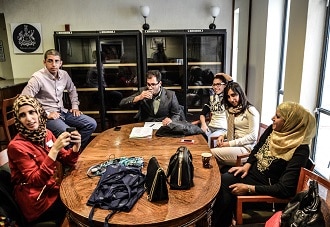
[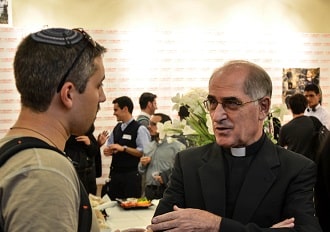](https://interfaithsustain.com/wp-content/uploads/2014/11/DSC_5948-edited.jpg)
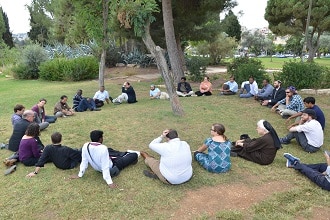
**Categories:** Blog on Faith and Ecology
---
### [Interview with Rabbi Daniel Sperber](https://interfaithsustain.com/interview-with-rabbi-daniel-sperber/)
**Published:** August 17, 2014
**Author:** ICSD
**Excerpt:** Siiri Bigalke - Interview with Rabbi Daniel Sperber about his experience with environmentalism and his respective religion's take on sustainability.
**Content:**
*Interviewed by Siiri Bigalke of The Interfaith Center for Sustainable Development and Recorded by Daniel Altman*
*The text below is the full transcription of the interview – a condensed version appears in the video above.*
## Transcription of the Interview with Rabbi Daniel Sperber
[](https://interfaithsustain.com/wp-content/uploads/2014/08/rabbi-sperber.jpg)
**Siiri:** Could you point to some exact examples of how sustainability and environmental ethics fit into Jewish principles and values?
**Rabbi Sperber:** In Jewish religious terms, when you look at the book of Genesis, you hear first of a place which is a Garden of Eden, where everybody lives in comfort; where you eat from the fruits of the trees, where you don’t eat animals. I’m a vegetarian for over 60 years. \[In the Garden of Eden\] there is basically no tension, where every element of nature is in harmony. And then it is destroyed and we find the “fall” as it is called. And the fall continues and becomes ever more destructive when we reach the story of the flood. And the flood was basically an example of the neck of disaster.
Jewish thought and Jewish law are very clear on the subject that you have to guard the whole of nature as a composite unit. If you see a tree that is sick, according to one of our basic sources, you paint a red line around it so that people should pray for it. You have to be kind to animals, you don’t slaughter an animal mother and its offspring at the same time, you don’t take eggs from a bird’s nest while the mother is there, and so on and so forth. The Sabbatical year is a year when the soil reinvigorates itself every seventh year, and when people are given a certain degree of equality in the sense that there is no personal property – any person has the right to go into a field and pick whatever is available to them. And ultimately it is a way of expressing in practical and pragmatic terms that the land that you live on, the earth, is not yours but God’s. God is the owner; we do not have actual ownership, we only have custodianship and hence of this we are reminded every seventh year when we cease to have ownership over what we thought was our own arable land.
Jewish law afterwards has a very developed series of principles on what is called “bal tashchit,” that you shouldn’t destroy things even when going to war, which is now a contemporary issue. We are not allowed to destroy fruit trees because one has to take into account that after the war people have to live and reap benefits from the fruit of the trees. Obviously you’re allowed to benefit from nature, but you must not destroy nature; you must preserve it.
**Siiri:** What do you see as the role of people of faith coming together to promote sustainability?
**Rabbi Sperber:** I think all of the major monotheistic religions will agree upon the fact that we are not masters and owners of the earth, we are just placed here as custodians. And that our position in the world, the reason that we were put here, is not damage but to remediate things. I think this is something that is very broadly accepted.
One of the most unifying elements – and it doesn’t matter if you’re a Jew, or a Christian, or a Buddhist or a Hindu – is when you see what’s happening to what used to be fresh water and other basic resources, and how they have been completely contaminated and polluted by industries that we are completely irresponsible. And we see how the rainforests in the Amazon have been decimated, and the effect on global warming etc. The peoples of all these different areas, notwithstanding their religious positions, understand that something has to be done about this. Everybody wants access to fresh water. With no fresh water, disease becomes rampant.
And there are religions that understand that trees and forests are places of holiness.
**Siiri:** Can you verbalize for us how you see faith, spirituality, and principles of ethical behavior help humanity live in balance with the natural world?
**Rabbi Sperber:** What I have found is that interfaith dialogue can create very strong personal relationships which can overcome religious differences. And if you find dialogue partners in positions of authority, then your dialogue, whether it be a religious dialogue, an interfaith dialogue, or one which is also coupled with other elements such as the economy and conservation, then you may be able to have some sort of affect. And when we talk about ecology, there is another element to it and that’s what we call socially responsible investment. The major damage and harm that is being done to nature is being done by massive international financial organizations. Whether they’re the oil people, aircraft industry or whatever, they’re just polluting and harming the ecostructure. Religious organizations, have massive investments, and can use those investments to curb the injurious effects of these organisations.
**Siiri:** Given your experience and wisdom as a leader in the Jewish community, what knowledge and character traits are most critical to bestow on our children’s generation to promote a sustainable future?
**Rabbi Sperber:** They need to understand that their personal comfort should not come at the expense of others.
*This Conversation on Faith and Ecology was produced by the [Interfaith Center for Sustainable Development (ICSD)](https://interfaithsustain.com/). Each conversation involves an interview with a religious figure on their perspective on their religion’s approach to ecological sustainability.*
*The aim of the initiative is twofold: firstly, to record the spiritual insight of religious and community leaders regarding sustainability, and secondly to ignite interfaith discussions regarding the nexus between spirituality and sustainability.*
**Categories:** Blog on Faith and Ecology
---
### [Interview with Rabbi David Rosen](https://interfaithsustain.com/interview-with-rabbi-david-rosen/)
**Published:** August 28, 2014
**Author:** ICSD
**Excerpt:** Interview with Rabbi David Rosen about his experience with environmentalism and his respective religion's take on sustainability.
**Content:**
*“I was blessed to grow up in a home that was a deeply Orthodox home, and at the same time very open and embracing of others and of global issues. I suppose already as a young boy the issue of compassion was a central part of the world in which I grew up in. “*
Rabbi David Rosen
Transcription of the Interview with Rabbi David Rosen CBE, International Director of Interreligious Affairs for AJC can de downloaded [here](https://interfaithsustain.com/wp-content/uploads/2014/08/Transcription-of-the-Interview-with-Rabbi-David-Rosen-CBE.pdf).
**About the speaker**
Rabbi David Rosen, AJC’s International Director of Interreligious Affairs, has been advancing understanding and good relations between religious communities for more than forty years – from the time he served as rabbi of the largest Orthodox Jewish congregation in South Africa, during his tenure as Chief Rabbi of Ireland ; and throughout the last more than thirty years based in Jerusalem.
*This Conversation on Faith and Ecology was produced by the [Interfaith Center for Sustainable Development (ICSD)](https://interfaithsustain.com/). Each conversation involves an interview with a religious figure on their perspective on their religion’s approach to ecological sustainability.*
*The aim of the initiative is twofold: firstly, to record the spiritual insight of religious and community leaders regarding sustainability, and secondly to ignite interfaith discussions regarding the nexus between spirituality and sustainability.*
Learn more about Jewish Environmental Teachings with Jewish Eco Seminars
**Categories:** Blog on Faith and Ecology
---
### [Interview with Dr. Håkan Bengtsson](https://interfaithsustain.com/interview-with-dr-hakan-bengtsson/)
**Published:** August 10, 2014
**Author:** ICSD
**Excerpt:** Siiri Bigalke - Interview with Dr. Håkan Bengtsson about his experience with environmentalism and his respective religion's take on sustainability.
**Content:**
## Director of the Swedish Theological Institute
*Interview by Siiri Bigalke of The Interfaith Center for Sustainable Development and Recorded Daniel Altman*
*The text below is the full transcription of the interview – a condensed version appears in the video above.*
## Transcription of the Interview with Dr. Håkan Bengtsson, Director of the Swedish Theological Institute
[](https://interfaithsustain.com/wp-content/uploads/2014/07/Håkan.jpg)
**Siiri:** So we’ll first have you introduce yourself, tell us about your spiritual background, and how you found the connection between sustainability and your theological work.
**Håkan Bengtsson:** So my name is Håkan Bengtsson, I am Swedish. I am Lutheran Christian. I am 52 years old. I have two grown up children. I guess I have to explain first a little why I became the director of the Swedish Theological Institute here. Over thirty years ago I was a student here. I had the benefit of coming to Jerusalem and meeting the plurality here. Basically I got hooked. I thought it was such an interesting and challenging city and this is the first time in my life when I come to the dialogue as to communicate with other religious traditions; it appealed to me that this was, in a way, a very sustainable way of interacting with other interfaith traditions, rather than the tradition of an imperialisticway of telling that we are right. So I learned a lot from that and this is why I returned to Jerusalem to become a director here. I’ve been a director at the institute for many years now.
**Siiri:** You work largely with educating pilgrims, people from Sweden or throughout the world who come here to the Swedish Theological Institute to learn a bit about the Holy land and Christianity in the context of interfaith work with Jews and Muslims. Can you tell me a bit if you work on environmental education within the spiritual context, and if you touch upon environmentalism with people coming here to the Theological Institute?
**Håkan Bengtsson:** We do. But so far we only have that topic in one of our courses, it’s the longest course actually and we combine students from all over the world so we have students from Latin America, Africa, and India. And the course topic is about the land and sustainability so we do everything; theology, politics, sustainability, conflict, peace building. So then we have this kind of education and it’s also to inspire our students to think in these categories because usually the courses here, they are about the Holy Land, the Holy sites, maybe interests in hospital or the origins of Christianity but here we try to look at the land itself, what does the land and its people need in order to live there, not only to share the number but of course water is a major issue. And also both people say that I can die for my land, but sometimes when you look outside it is so polluted. So you wonder whether maybe the pollution will suffocate life here, and this is what we are of course trying to challenge to highlight the different NGOs that are working on environmental issues. And also we try of course to inspire our groups to instead of buying, to carry water like reusable bottles. If you can take the train, take the train.So we can also inspire them to add to this sustainable lifestyle.
**Siiri:** Can you tell us about the origins of your own experience with spirituality or theology?
**Håkan Bengtsson:** I think actually also that started, or the seeds were planted, when I was a student here because one of my discoveries, that half year I was here, was that I discovered that the Jewish tradition was more elaborate when it comes to creation theology. And I thought I knew it all, I was only 22 or 23, so that was a challenge to me to understand that there was a religious tradition, much older than my own, who really thought about God as a creator of the world, of the Universe, and also a sustainer of all things. Mostly with Christians we speak a lot about Jesus or the Holy Spirit, but this was a shift of emphasis for me that you could actually do good theology when it comes to God as the creator, at the start of everything, and that was at least how I remember it as a challenge for me.
**Siiri:** So in your own research as a theologian, or with the educational work you do with pilgrims coming here, do you deal a lot of with stories within the bible or teachings of Jesus about sustainability and environmentalism? Can you point to any stories or anecdotes in the Bible about this?
**Håkan Bengtsson:** Well, there is not so much I would say, not so many obvious stories in the tradition of Christianity interpretation. Well of course we have the creation story, but there we tend to discuss whether God created the world in six days, or if is this a symbol for something else. I would say the kind of challenge which is more inspirational for giving a group a comfortable feeling when it comes to creation or praising God for the beauty of creation is the psalmist. You have all of these beautiful psalms about creation and God sustaining the world and holding back the chaos waters. Which today it is quite apparent that chaos or the water might threaten a large part of the population of the world if this global warming continues. I mean it’s there in the Bible and I wish I could say that Jesus was an environmentalist, but he doesn’t speak explicitly about it. Although I do think you need to look at his lifestyle, his meetings with ordinary people who try to make ends meet each day, he challenged them. Much about Jesus’ teachings about life are to put sustainable values as a human, and he says in the gospels “what does it help a person if he conquers the whole world but eventually loses his own spirit or life”. You got to give priority to what is important so I mean you can say one of the conclusions of Jesus’ teachings is if we pollute the world, if we destroy the world in order to have a luxurious and high technological life style, at the end of the day what does that do to us, you’re only going to be harmed by it. So this will be some of the texts that we can bring forth to study for our students. But I say here that the point of being here in Jerusalem is of course that I meet with people and organizations so I can see their theology and this kind of way of working; it’s perhaps not that dominant as we wish it would be, but it’s on the move the ideas for the Green Pilgrimage movement and municipality, etc.
**Siiri:** So moving on to talk specifically more about the Church of Sweden. I understand they have a pretty progressive stance towards climate change and towards environmental sustainability. Could you elaborate on that process of getting the church to be a proponent for environmental action, and what exactly are the stances of the church regarding climate change now?
**Håkan Bengtsson:** About two weeks ago I got in the mail a small booklet that you might criticize because it’s printed, but the content is very good. In Swedish it says “a letter from the bishops about the climate”. And already in 2008 there was an interfaith climate summit in Uppsala where the former Archbishop of Sweden recited, and they made a very powerful statement about it’s time for faith communities to be policy makers, without politicians and everything, especially when it comes to sign agreements about reducing pollution in the world and etc**.** So when it comes to the Church of Sweden, I think, possibly being a little self-critical**,** is that we have very good policy of action, and I think that this is the strong part that the Church \[of Sweden\] publishes these kinds of texts that are pro-environmentalism and sustainability, but also the church is active when it comes to different kind of decision makings in Sweden. Because I think when it comes to these kinds of context, and I was brought up like this as a small child, it’s nothing strange really to appreciate the scenery or a fresh winter’s day or spring time, the forest or by the bank, it’s so much of the Scandinavian culture is about that and you don’t pollute, if you throw chewing gum you pick it up, this is what kids were taught. And it’s one kind of action, but things have changed since the 1960s, 70s; the awareness and I would say the situation of global warming to destroy and affect more, the already impoverished areas makes the need for action bigger today. And this is why I appreciate such a writing because they are way ahead of many other churches in the world. Of course we are criticized and told “this is politics, you should be more spiritual”. And of course you can criticize that if you look in this booklet there aren’t many quotations from the Bible, it’s okay, there we can learn more about this from the Jewish tradition and the Muslim tradition. Anyhow I think it’s good because we need to call for action, and if you don’t know already that something needs to be done when it comes to the environment, I mean for sure you will know it after reading such a very well elaborated report such as this one.
**Siiri:** Why do you think the Church of Sweden adopted environmentalism and combating climate change is one of their focal points within the church?
**Håkan Bengtsson:** I think because, well of course they see the need to do something, it’s not only this issue but it goes together with also a question of equality between genders, and equal rights for children. But the question of environment and sustainability has become so clear when we live in the world when you can get a letter one day from Christians in the South Pacific who say “well in 5, 6 years we might not have land to live on” because the level of the sea is rising very quickly; and the globalization of the world should make us more conscious that what we do here in the developed part of the world immediately affects other people. When I grew up the big companies of the world could hide some of the dirty production in what they called the Third World countries and sometimes get away with it, and now it’s harder to get away from such things. I think this is also one of the reasons the Church has the urge to raise these issues and stand up.
**Siiri:** Do you believe that religious leaders, community leaders, such as those that are in the Swedish Church or yourself here at the Swedish Theological Institute, have a responsibility to teach your congregants or to teach your pilgrims about sustainability and how it plays into your spiritual values?
**Håkan Bengtsson:** We do. Definitely. I should mention it’s not only, well of course there is the teaching, but I think teaching can make you aware of how things are, and hopefully within the Christian tradition I would say there is a dilemma because the Christian culture of the churches in one way could say conquered the globe culturally with Christianity, and with this also came the idea of consumption, production that the Western society is after all. But I think in one way a misinterpretation of the Bible says that man should be the ruler of the world after the creation, has been misinterpreted in that way, in that okay we can use the resources of the world to that extent but we almost emptied resources. So this is one part about teaching which we must revise and we must work against such interpretations**.** And also in that the Evangelical tradition we have the more extremist theologians who really cherish bringing home the destruction of the world. So never mind the nuclear plants and the arms race towards having more and more weapons and add pollution and because Jesus will come back quicker it’s crazy, it’s a crazy thing, so I think we need to make people aware there are other sides, as I mentioned before, both Islam and Judaism can teach Christians more about stewardship in the world, in the Muslim tradition you have so much about sustainability– when you build houses and you live more in accordance with the nature. And you know how things work, like the caliphate in Bagdad could build beautiful houses without air-conditioning so many years ago, and today we think we require all of this. But they lived closer to the Earth, and so the necessities they hardly used water and used resources in a more sustainable way. But this is to know, and another thing is to make people want to act or to adopt the sustainable lifestyle. And there my children, well they have grown up to see what I can do, because also I was aware of this as child, learned things you can do in order to contribute to make the world more sustainable and you don’t have to use all of these resources of electricity, water, cars, consumerism, etc. but many people I think discover that I am not happier when I have things in abundance and I can consume whatever I want; I discovered I am happy when I have enough, and above all when I can share; this is happiness. To have your stomach full, and maybe too full in the end doesn’t bring the kind of spiritual or inside happiness, I think it’s this other aspect.
**Siiri:** Can you tell us how you see the role of people of interfaith groups, people of diverse faith backgrounds, coming together to promote environmental sustainability? I understand you were part of the Interreligious Coordinating Council of Israel. So how have you in your own experience found that interfaith dialogue and cooperation promotes sustainability, and how can it succeed in the future?
**Håkan Bengtsson:** Well I will say that we share this only earth. And we have no choice, we are here. I was born a Christian, I intend to live the rest of my life as a Christian, but you can say that there is a choice of being religious or not religious. But the choice of living together in the world is a must. So I think that even if we are different when it comes to our religious traditions, and we should be; the good thing with this interreligious bible is to acknowledge these differences and to learn they are not dangerous, we look at things in different ways. We can also see the beauty in this, but you don’t have to turn Jewish, Christian, or Muslim to appreciate this. I see the interfaith work for sustainability as a very important core because this is something which all of the religious traditions in the world share, no religious tradition would say we don’t care about human life, we don’t care about our people, all religious traditions do. And of course the role of the leaders is very important because I think religious leaders can be good role models to show others what you can do in order to contribute to a sustainable way of life. But I think it’s this in a world that is so diversified so today people scatter in many respects. I think interfaith work can play this uniting role to call for not only awareness, but to action.And there are also beautiful pictures from this interfaith climate summit, where you can see like here in Jerusalem from how people dress what kind of religious tradition they are affiliated with; all of these people saying we need to try together in order to preserve our Earth. I think it is a necessity, it is not only beautiful but a necessity.
*The Conversations on Faith and Ecology project is a joint initiative by the [Interfaith Center for Sustainable Development (ICSD)](https://interfaithsustain.com) and the United Planet Faith & Science Initiative (UPFSI). The project will interview religious leaders, community organizers, and environmental justice advocates throughout the world to discuss their own experience with environmentalism and their respective religion’s take on sustainability. The Conversations on Faith and Ecology initiative will catalog these discussions, making them readily available online in video and written format for people of diverse faith backgrounds to access throughout the world.*
*The aim of the initiative is twofold: firstly, to record the spiritual insight of religious and community leaders regarding sustainability, and secondly to ignite interfaith discussions regarding the nexus between spirituality and sustainability.*
**Categories:** Blog on Faith and Ecology
---
### [Interview with the Rev. Dr. Martin Zimmann](https://interfaithsustain.com/interview-with-the-rev-dr-martin-zimmann/)
**Published:** August 4, 2014
**Author:** ICSD
**Excerpt:** Siiri Bigalke - Interview with the Rev. Dr. Martin Zimmann about his experience with environmentalism and his respective religion's take on sustainability.
**Content:**
*Interview by Siiri Bigalke of The Interfaith Center for Sustainable Development*
*The text below is the full transcription of the interview – a condensed version appears in the video above.*
## **Transcription of the Interview with the Rev. Dr. Martin Zimmann**
[](https://interfaithsustain.com/wp-content/uploads/2014/07/Martin-Zimmann-head-shot.jpg)
**Siiri:** Let’s start with your personal background. How did your interest in becoming a spiritual leader form and how were you first exposed to ministry and sustainability?
**Rev. Martin:** I come from a long line of Lutheran pastors. Dating back to my great great-grandfather who was a German Lutheran missionary in Michigan in the mid 19th century. My own personal calling to ministry came about in the usual way I felt myself being drawn toward service toward people and also a theology of stewardship, healthy stewardship. And, it began to occur to me that as I spent years in parish ministry that people were working harder but not necessarily living better, that they were consuming resources at an increasing rate but not making themselves happier as a result. I’m beginning to understand that my role as a pastor was one of helping folks understand that healthy stewardship is not the result of acquisition of goods but understanding our place in God’s creation and the harmony that we are supposed to maintain with parts of God’s creation. So I’m very glad that our own family has adopted many sustainable practices. We’ve been able to dramatically reduce the amount of paper goods we use in our home especially those that are harmful to the \[environment due to production processes\] and, of course, you can’t make more trees out of recycled paper. We’ve been exploring urban farming techniques, raised beds, greenhouses; we’ve had chickens and goats in our yard and have been able to introduce those kind of paradigm shifts to our neighbors in the surrounding communities. This spirit of stewardship is probably somewhat similar to the lifestyle practices of our Amish brothers and sisters. Now I don’t necessarily agree with all of Amish Theology but their appreciation for the resources that the earth provides is much more suitable for keeping with a stewardship of harmony rather than a stewardship or a lack of stewardship where people commodify non-renewable resources.
**Siiri:** Did you have any exposure to Biblical environmental teachings during your spiritual and seminary education?
**Rev. Martin:** Typically what you learn in Sunday school is that God created the heavens and the earth and then placed humanity here to have dominion over the earth and over creation. That \[understanding\] needs a lot of deconstructing because I’m afraid that many Christians especially in America have taken the word dominion to mean, well, do whatever we want with it for the benefit of ourselves. I’ve come to understand that the responsibility we have for creation means that as a species we are at the top of the food chain. If we aren’t here, the earth will be just fine without us. In fact, having dominion over creation isn’t about making creation survive, its about being servants to the creation and learning to live within creation. We’re supposed to be in what I call a lowerarchy. We are at the bottom looking up at all that God has made for this universe. We are supposed to be humble servants not masters and overlords raping and pillaging and taking those things that rightfully aren’t renewable. That they are only here for a little bit of time. I’m very concerned about our use of petrochemicals in industrial agriculture and our Western culture of everybody needs a car that they need to drive whenever they feel like it. These things are going to cause horrible dividends down the road.
**Siiri**: Are there any specific teachings or scriptures in Christian literature that relates to care for the environment?
**Rev. Martin:** There is an interesting parable and because we live in a world that is driven by capitalism for the most part, most people tend to deconstruct this particular parable based on an economic basis. But the story of this master who gives resources to the people who work for him then he goes away on a long journey is very interesting because one of the servants buries the money in the ground and the other servant takes what is given to him and doubles it. The other servant does even better with the resources that he is given. The point of the story is to those, much is given. Those who are also able to produce more are pleasing to God. Rightly understood I think this parable is more about not wasting resources that are entrusted to our care, not so much about commodification and building a profit. At the end of the day I think it’s the Christians duty to say to themselves: how much is enough? What is it that I can live with and be content so that others around me can have things as well? So that natural resources– the ocean, fresh water resources, wood and animal life, flora and fauna– how do these things replenish themselves and how can I live in harmony with them? Without taking more than is needed.
**Siiri:** Can you expand on that a bit and testify to Christians taking care of the land and how is that their responsibility?
**Rev. Martin:** Well I think it’s really incumbent upon the church right now to have a prophetic voice in terms of caring for the land. I think it’s important for the church and the synagogue and the mosque to understand the cultural and the global paradigm shifts that are occurring in our midst as a result of climate change. It’s my understanding having reviewed the latest report that, the train has left the station. Certain radical global paradigm shifts are happening even if we cut our carbon emissions in half or we do so to the point that there is zero methane from industrial agriculture. We are looking at catastrophic ocean rise , the melting of the permafrost which is going to release even more methane. The complete melting of the arctic ice is creating dark water which creates more negative energy. All of these things are occurring which is going to make the world a much different place for even my kids when they reach my age. It’s not going to be life as we know it. The role of the church, synagogue and mosque in particular is to provide a context where people can come together to understand how these changes are occurring and how best to cope with them and realign our priorities. So as to help the earth heal from the ravages of the industrial revolution.
**Siiri:** What do you see peoples faith coming together to promote environmental sustainability?
**Rev. Martin:** Interfaith conversations have to be focused around the wellbeing of individuals regardless of their religious affiliation. Because, in all three Abrahamic faiths we are commanded to care for our neighbor without any regard to their belief system or economic status or their gender. I think it’s made very clear in the Hebrew testament, the Christian testament and the Koran that at the end of the day God is wanting us to love our neighbor as we love ourselves. When we begin to unpack that golden rule, this is where it gets tricky because we have been inculcated through thousands of years of religious differences to a mindset where we ‘other’ people, where we place them in categories that… causes disagreements that cause things like the Palestinian – Israeli conflict. I’m not trying to diminish that conflict or any conflict for that matter but I do think that the larger issues that come to us are commands from God that are being ignored as a result. We have been far too distracted by issues like who controls the resources, who has access to the land and water, who can exploit and make profit from things the quickest. We’re looking at a global population at around 9 billion people and diminishing agricultural resources because of ocean rise and acidification of the ocean waters and less arable land to work with. We are going to see massive population migrations– Bangladesh I think is a prime example. Even the southwestern United States is facing an unprecedented water crisis that will probably cause a migratory shift even within our own country. As a result of this, it is really incumbent upon adherents in all three faiths to put aside those issues that seek to divide us and remain unified under that one command; that is we are not alone we are not isolated we are our brothers and sisters keepers and we are called to live in harmony with our species regardless of our religious differences and also to live in harmony with creation as a result.
*This Conversation on Faith and Ecology was produced by the [Interfaith Center for Sustainable Development (ICSD)](https://interfaithsustain.com/). Each conversation involves an interview with a religious figure on their perspective on their religion’s approach to ecological sustainability.*
*The aim of the initiative is twofold: firstly, to record the spiritual insight of religious and community leaders regarding sustainability, and secondly to ignite interfaith discussions regarding the nexus between spirituality and sustainability.*
**Categories:** Blog on Faith and Ecology
---
### [Eco Tourism Programs in the Holy Land](https://interfaithsustain.com/eco-tourism-programs-in-the-holy-land/)
**Published:** July 17, 2015
**Author:** ICSD
**Excerpt:** Our eco-tourism and educational branches offer hikes, eco-volunteering, site tours, and text study to expose tourists to the natural beauty of the Holy Land and to its expanding culture of environmental innovation.
**Content:**
[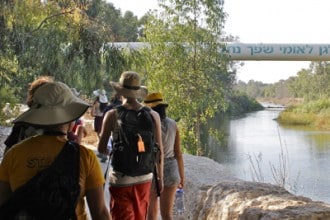](https://interfaithsustain.com/wp-content/uploads/2013/10/Eco-tourism-adjusted-400x267-330x220.jpg)
Our eco-tourism and educational branches offer hikes, eco-volunteering, site tours, and text study to expose tourists to the natural beauty of the Holy Land and to its expanding culture of environmental innovation. Group or families can custom-design their tours, choosing from a variety of themes such as:
- Green Technology and Clean Tech
- Recycling Innovation
- Biblical and Modern Farming
- Biodiversity of the Holy Land
For more information, visit:
- [Eco Israel Tours](https://www.ecoisraeltours.com/ "Eco Israel Tours")
- [Jewish Eco Seminars](https://www.jewishecoseminars.com/ "Jewish Eco Seminars")
**Categories:** Blog on Faith and Ecology
---
### [Spring US Speaking tour](https://interfaithsustain.com/spring-us-speaking-tour/)
**Published:** February 25, 2015
**Author:** ICSD
**Excerpt:** Rachel Winner, ICSD’s Project Manager, will be conducting a tour along the east coast of the United States from April 9 – May 1, 2015.
**Content:**
[](https://interfaithsustain.com/wp-content/uploads/2015/02/Rachel.jpg)
**Rachel Winner, ICSD’s Project Manager, conducted a tour from April 9 – May 1, 2015 along the East Coast of the United States (from North Carolina through Massachusetts) to speak to faith communities and schools about ICSD’s work.
## Presentations
**Interfaith Environmental Collaboration in Israel**
Discussing the projects and methodology of the Interfaith Center for Sustainable Development (ICSD); a look at the successes and weaknesses of interfaith advocacy and environmentalism in Jerusalem through the lens our work at ICSD ([www.interfaithsustain.com](https://interfaithsustain.com/)).
**Uniting Religious Leaders and Scientists to Curb Climate Change\***
Discussion about an emerging international leadership council to work to address climate change from both the international and grassroots levels. The [United Planet Faith and Science Initiative](https://www.uri.org/) (UPFSI) is a project of the ICSD that bridges faith and science as two leading but often conflicting schools of thought to combat the greatest challenge society has faced thus far.
*\* This particular topic will most likely be a shorter discussion and could easily be incorporated into another presentation.*
**Shifting Consciousness in the Age of Climate Change**
As given at the UN Climate Talks in Lima this past December, this presentation addresses climate change as a fundamentally spiritual problem, namely in the context of our relationship with economics; and provides suggestions and solutions with regard to reframing our consciousness for a more sustainable future.
**My Jerusalem Journey – a Crossroads of Faith and Identity**
This presentation is Rachel’s story as a young professional in the field of social justice and sustainable development; coming to Jerusalem to explore the rich complexities of this shared and tense land, and her own multi-faith identity within it. To simultaneously learn and to give back – somewhat of a paradox in a place that takes generations to fully understand.
## Tour Schedule 2015
- **Thursday, April 9**: Unity Center, Mills River, NC – Presentation at 7pm
- **Saturday, April 11**: Beth Israel, Asheville, NC – Saturday Services at 9:30am
- **Friday, April 17:** Temple Isaiah, Fulton, MD – TBD
- **Saturday, April 18**: Adat Shalom, Bethesda, MD – *Tentative:* services at 10:30am and program at 1pm
- **Monday, April 20**: Dickinson College, Carlisle, PA – Presentation at 6pm
- **Wednesday, April 22:** Derech HaLev, Philadelphia, PA – Presentations at 5pm and 7pm
- **Thursday, April 23:** William Penn Charter School, Philadelphia, PA – Classes at 8:15am, 9:40am, 12pm
- **Thursday, April 23**: Mishkan Shalom, Philadelphia, PA – Presentation at 7:30pm
- **Friday, April 24:** Germantown Jewish Centre, Philadelphia, PA – Services at 6pm and program at 8:30pm
- **Tuesday, April 27**: Hunter College Hillel, New York City, NY – Presentation at 1:30pm
- **Wednesday, April 29**: Brandeis University, Waltham, MA – Presentation at 1:30pm
## Biograph**y**
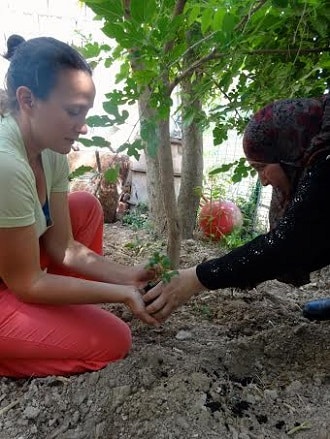
Rachel Winner work includes projects for sustainable development in the Holy Land. She was the Director of Outreach and Events for the [United Planet Faith and Science Initiative](https://www.uri.org/) and Project Manager for the Interfaith Center for Sustainable Development in Jerusalem. This nascent coalition-based initiative, which serves to unite faith and science leaders to address climate change, is a project sponsored by the [Interfaith Center for Sustainable Development](https://interfaithsustain.com/) in Jerusalem.
Prior to her time in Israel, Rachel coordinated sustainable community development projects and service-learning exchange programs in Mexico. She also has a background in philanthropy, building capacity for Latino nonprofits in North Carolina.
Rachel has presented in the United States on agriculture and local food policy and in Jerusalem on behalf of ICSD. She is a published writer, blogger, storyteller, and journalist. In her free time, she studies Hebrew and Arabic and is a frisbee coach for a peace-based sports organization.
*\* Featured image [source](https://unsplash.com/@lawfer51)*
**Categories:** News
**Tags:** "homepost"
---
### [On Coexistence and Faith in the Holy Land](https://interfaithsustain.com/on-coexistence-and-faith-in-the-holy-land/)
**Published:** October 20, 2013
**Author:** ICSD
**Excerpt:** On October 8th, The Interfaith Center for Sustainable Development (ICSD) held a panel at the Jerusalem Intercultural Center of Christian, Jewish, and Muslim religious....
**Content:**
By Rotem Weizman for The Interfaith Center for Sustainable Development
On October 8th, The Interfaith Center for Sustainable Development (ICSD) held a panel at the Jerusalem Intercultural Center of Christian, Jewish, and Muslim religious personalities speaking on coexistence and faith in the Holy Land. This was the second of three panel events that ICSD is organizing for groups from Travcoa/ Diesenhaus Unitours. ICSD held a similar panel in March, 2013, and will hold another in late October. The panel was comprised of Reverend Timothy Lowe, Dr. Ali Khamis, and Rabbi Yonatan Neril.
The Rev. Timothy Lowe is rector of the Tantur Ecumenical Institute in Jerusalem and an Orthodox priest. Father Timothy said that what Jerusalem needs most is a sophisticated vision. He said that “the division in Jerusalem is a fact of life and it is getting bigger. No one is taking a brave step”. In reply to a question Rev. Lowe explained what he feels turns faith into fundamentalism, “it is desperation and fear, it’s a solution to complicated problems, it stems from ignorance and prejudice. Financial instability, vulnerability and unemployment make people turn to the easiness of fundamentalism.” He added, “This makes education important. One has to hear the people from one’s own faith community protest against extremism. We must educate for spirituality and love for the other.” Dr. Ali Khamis is a lecturer at Al Quds University in Educational Science and speaks at his local mosque. Dr. Khamis talked about coexistence and said “Islam does not mean terror and fanaticism it means peace. I’m saddened that people have different ideas about Islam. Muhammad was a messenger of God so he always called for peace.” He also spoke of the unique situation in Jerusalem saying: “The majority wants peace, coexistence and free access to their religion. Also, the religious leaders I know feel this way.This will bring all three religions to live as brothers and as people of faith”. Rabbi Yonatan Neril, founder and executive director of The Interfaith Center for Sustainable Development talked about the unique way that people of different faiths can unite around an issue of shared concern, notably the environment. He noted how “in general in the Holy Land people tend not to have deep, meaningful interactions with people from other faiths. Many participants in our seminars mention that the events provide an opportunity to see the ‘other’ as another human being. By focusing on shared environmental concerns which transcend borders and faiths, these seminars help bring people together who otherwise would likely not engage in such dialogue.”
[](https://interfaithsustain.com/wp-content/uploads/2013/10/IMG_8599.jpg)
[](https://interfaithsustain.com/wp-content/uploads/2013/10/IMG_826.jpg)
[](https://interfaithsustain.com/wp-content/uploads/2013/10/IMG_8598.jpg)
**Categories:** Blog on Faith and Ecology
---
### [In Nature, the ‘Other’ Becomes Personal and Real](https://interfaithsustain.com/in-nature-the-other-becomes-personal-and-real/)
**Published:** July 25, 2013
**Author:** ICSD
**Excerpt:** On March 7th, 2013 I was fortunate to take part in the meeting of two groups that under most other circumstances would not spend three hours together in a nature reserve.
**Content:**
By Jackie Zitelman for The Interfaith Center for Sustainable Development
On March 7th, 2013 I was fortunate to take part in the meeting of two groups that under most other circumstances would not spend three hours together in a nature reserve. The Jewish group consisted of Jerusalem-based rabbis and rabbinical students from Sulam Yaakov, the Nachlaot Beit Midrash for Leadership Development. The Muslim group was comprised of students and staff from Al Qasemi Academy, located in Baka al-Gharbia. The project was implemented and co-sponsored by The Interfaith Center for Sustainable Development (ICSD) and Rabbis for Human Rights, based on support from The Julia Burke Foundation, Anne Frank Fonds, and the British Shalom Salaam Trust. We met at the Yarkon National Park, a nature reserve that extends over 3,250 acres and includes the Tel Afek (Antipatris) fortress overlooking the Yarkon springs.
This magnificent place is the source of the Yarkon River. After everyone got off of his or her respective bus we headed into the nature reserve.
The dichotomy between the two groups was palpable; everyone stayed close to who they knew. We began the morning in a circle performing various types of icebreakers to learn one another’s names and to make the interaction a little more comfortable. It was fun and it seemed to achieve what the leaders had intended: the circle was no longer two semi-circles, rather everyone was mixed. We were then given the instructions to divide ourselves into groups of three. In our groups we followed a path denoted by signs with questions written in Arabic, Hebrew, and English. Each person in the small group shared their answer with the other two. The first questions we were asked were, “What does your name mean?
Where does it come from? Why did your parents choose it for you?” The questions gradually became more and more personal, “How long has your family been in this land? Would you want to live anywhere else (inside or out of the land)? If yes, where and why? If not, why not?” After answering six of these sets of questions along a path within the park, we all gathered together in a circle under a tree next to a large and beautiful pond. We were asked what surprised us the most, what the experience was like, and what questions stood out. The majority admitted that this was the first time in their lives interacting in a meaningful way with “the other.” One young man said, “I thought it would be difficult at first, but we had some great and interesting conversations.” One student from Sulam Yaaakov said that he learned from his fellow group member that the Koran mentions the Jewish people and that he is interested in learning more about that.
Participants mentioned how they want to tour the four quarters of the Old City in Jerusalem with one another and learn about one another’s religion. At the end of the seminar the perception of ‘other’ had changed dramatically. Not only did the seminar take place within a national park, but the seminar facilitators talked about the ecological significance of the site in relation to our coming together. First, the site is the source of the Yarkon River and water issues are a key area for interfaith environmental cooperation. Second, the site is home to endangered species as well as some of the 500 million migrating birds that pass through the Holy Land twice a year. At the very end of the program the ICSD educator explained to us that environmental issues transcend ethnicity and faith and that we can use this commonality to work together in protecting God’s creation.
[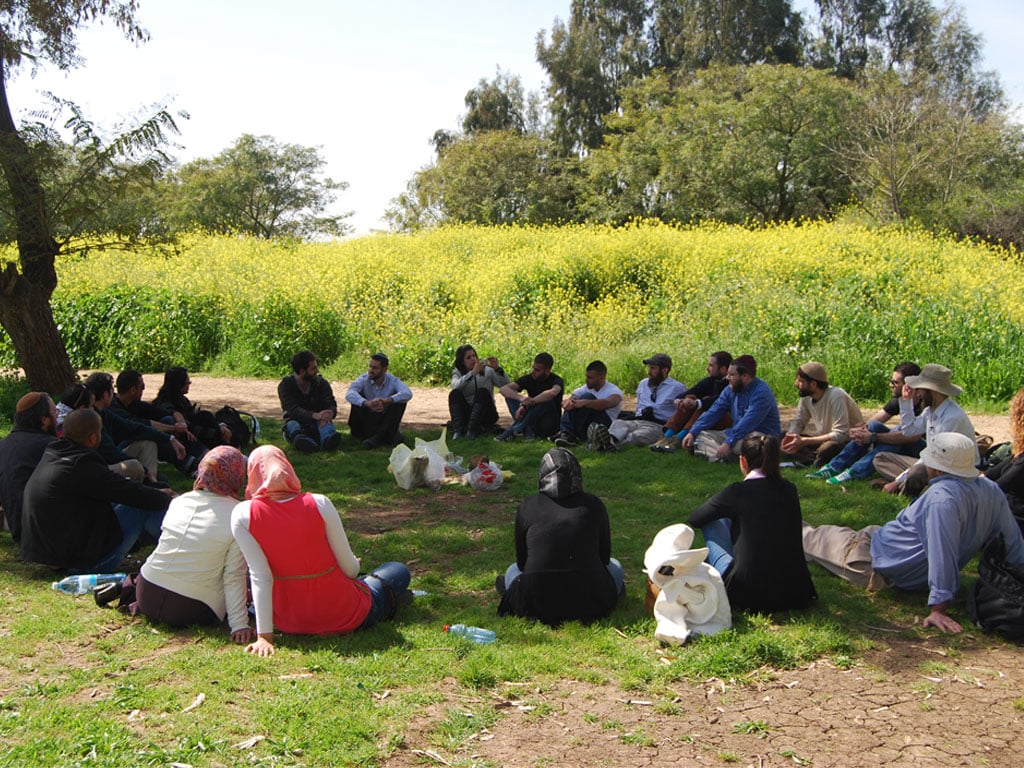](https://interfaithsustain.com/wp-content/uploads/2013/07/Yarkon_Park_Seminar_Group_Photo.jpg)Yarkon Park Seminar Group Photo
[](https://interfaithsustain.com/wp-content/uploads/2013/09/Yarkon_Park_Seminar_Activity.jpg)Yarkon Park Seminar Activity
[](https://interfaithsustain.com/wp-content/uploads/2013/09/Group_Discussion_at_Yarkon_Seminar.jpg)Group Discussion at Yarkon Seminar
[](https://interfaithsustain.com/wp-content/uploads/2013/09/Yarkon_Park_Seminar_Discussion.jpg)Yarkon Park Seminar Discussion
[](https://interfaithsustain.com/wp-content/uploads/2013/09/Guided_Walk_in_National_Park.jpg)Guided Walk in National Park
[](https://interfaithsustain.com/wp-content/uploads/2013/09/Particpants_at_Seminar.jpg)Particpants at Seminar
**Categories:** Blog on Faith and Ecology
---
### [St Louis - Climate & Class](https://interfaithsustain.com/st-louis-climate-class/)
**Published:** July 15, 2019
**Author:** ICSD
**Excerpt:** Leo Dee - May 2018 was the hottest May on record for St Louis - 2 degrees hotter than ever before. Meanwhile, April 2018 was the driest April on record too. In the less affluent neighborhood of East St Louis, residents have been campaigning against air pollution by large corporations.
**Content:**
*By Leo Dee*
May 2018 was the [hottest May on record](https://www.kmov.com/news/st-louis-saw-record-breaking-heat-in-may/article_8ce3d685-8fe4-5a0f-a915-5e5aabea0d16.html) for St Louis – 2 degrees hotter than ever before. Meanwhile, April 2018 was the [driest April on](https://web.archive.org/web/20200806074623/https://www.komu.com/news/2018-the-most-extreme-weather-year-without-extreme-weather)[record](https://web.archive.org/web/20200806074623/https://www.komu.com/news/2018-the-most-extreme-weather-year-without-extreme-weather) too. In the less affluent neighborhood of East St Louis, residents have been campaigning against [air pollution by large corporations](https://news.stlpublicradio.org/post/environmental-groups-demand-stronger-air-quality-controls-metro-east-incinerator#stream/0).
[Human caused climate change](https://climate.nasa.gov/causes/) is behind this strange weather pattern as carbon dioxide released from fossil fuels insulates the earth and prevents natural cooling. The excessive heat also powers a much [stronger water cycle](https://scied.ucar.edu/longcontent/water-cycle-climate-change), with more water evaporating from the oceans and being dropped on land. This means that some parts of the US are experiencing excessive heat, and some are experiencing record storms and rainfall and some are experiencing both!
So, what’s the solution?
Well, part of the solution is making people aware. And that’s just what St Louis’ religious seminaries are doing. [Concordia Seminary](https://interfaithsustain.com/wp-content/uploads/2019/07/Report-on-Faith-and-Ecology-in-N.-Amer-Sems-Oct.-17-final.pdf) is teaching future religious leaders in sustainability, with a course on “Care of Creation” focusing on our role and responsibility, as children of God, towards the rest of Creation.
Training religious leaders who will inspire their communities, in the future, with the importance of living a life that respects the world and climate, is an important step towards solving the climate crisis.
We are grateful for their initiative!
**Categories:** Blog on Faith and Ecology
---
### [Methane to Energy, No Plastic Bags, Green Globes](https://interfaithsustain.com/methane-to-energy-no-plastic-bags-green-globes/)
**Published:** June 25, 2014
**Author:** ICSD
**Excerpt:** Elana Frank - On June 17th, four Interfaith Center for Sustainable Development (ICSD) staff and interns attended the Knesset Environmental Day put on in the Israeli Parliament (Knesset). We were invited by the office of the Minister of Environmental Protection, MK (Member of Knesset) Amir Peretz, and attended a session with the Israeli Union of Environmental NGOs, the Knesset`s Internal Affairs and Environment Committee, and the minister.
**Content:**
**By Elana Frank for The Interfaith Center for Sustainable Development**
On June 17th, four Interfaith Center for Sustainable Development (ICSD) staff and interns attended the Knesset Environmental Day put on in the Israeli Parliament (Knesset). We were invited by the office of the Minister of Environmental Protection, MK (Member of Knesset) Amir Peretz, and attended a session with the Israeli Union of Environmental NGOs, the Knesset`s Internal Affairs and Environment Committee, and the minister. Minister Peretz spoke of wanting to advance social justice and environmental justice with the plan of investing NIS 183 million ($52 million) towards waste management in Arab, Druze, and Bedouin communities. He also presented other plans such as harnessing the methane emitted by garbage to be used for energy, and to ban the free distribution of plastic bags; people will soon have to pay 60 agorot (17 cents) for every plastic bag they use, 50 agorot out of the 60 agorot will go to support environmental organizations.
Later in the day, we went to a Green Globes reception and event put on by the organization Life and Environment, the umbrella group for Israeli environmental organizations. The hosts presented Green Globes awards to environmental organizations or environmental activists. This year eleven awards were given out, including to the Arab-Jewish Civilian Forum in the Bet Kerem valley, Jerusalem City Center Green Not Concrete Program, Haifa Bay’s Metronit bus rapid transit system, the Green building School, Clalit Health Services, Professor Adi Wolfson, The Jerusalem Municipality’s urban nature program, and one to the Knesset for their Green Knesset initiative. Every year they also give out a Black Globe to an organization or person for doing actions that have harmed the environment, and this year it was given to the WZO (World Zionist Organization) for building 20 new communities in the Negev and Galilee regions within the green line of Israel before fixing pre-existing communities that needed help.
Green Knesset is a multi-year project will make the Knesset more sustainable by saving the amount of energy and water used in the building. The Green Knesset project has thirteen initiatives including building solar panels for energy, switching to more efficient air conditioning systems and toilets, installing sensors in rooms so that the lights will turn off, and using the heat from air conditioning systems to warm the water used in the building. The Knesset will invest about NIS 7 million ($2 million) towards this project, and they expect to see a NIS 1.5 million ($430,000) a year return from this project after five years. The Knesset has already started working on this initiative; Knesset Speaker Yuli-Yoel Edelstein mentioned that two weeks ago the Knesset already completed the tender for the installation of a solar array that will be larger than any other parliament in the world.
The ICSD team very grateful for the opportunity to attend this event, and we cannot wait to see these ideas being implemented to create a greener Israel. To read about how the event related to World Environment Day go here: https://www.knesset.gov.il/spokesman/eng/PR\_eng.asp?PRID=11309. To read the Knesset press releases on the event go here: https://www.knesset.gov.il/spokesman/eng/PR\_eng.asp?PRID=11307.

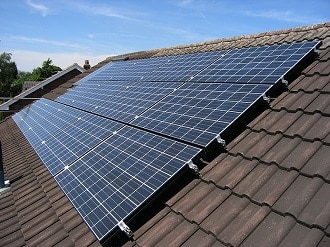
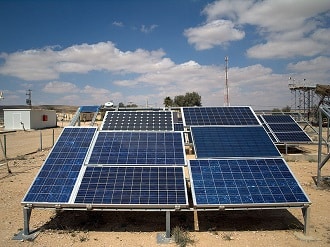
**Categories:** Blog on Faith and Ecology
---
### [Gathering and Gardening over Watermelon and Zatar](https://interfaithsustain.com/gathering-and-gardening-over-watermelon-and-zatar/)
**Published:** May 9, 2014
**Author:** ICSD
**Excerpt:** On Wednesday April 30th, a group of women from Muslim, Jewish, and Christian members of the larger Jerusalem community met for a day of gardening, conversation, [...]
**Content:**
## Event at Ahmad Sameh School kicks-off new phase of Women’s Interfaith Ecology Project
*By Siiri Bigalke for the Interfaith Center for Sustainable Development (ICSD)*
On Wednesday April 30th, a group of women from Muslim, Jewish, and Christian members of the larger Jerusalem community met for a day of gardening, conversation, and brainstorming at the Ahmad Sameh school in Abu Tor, Jerusalem – marking the first of many gatherings to come. This collaboration, the most recent development in the Women’s Interfaith Ecology Project, will draw on the interests and skills of this diverse group of women. The idea behind this project is to facilitate a cross-cultural collaboration and serve the needs of the local communities through grassroots leadership and mutual respect. The project aims to unite local community leaders in exchanging ideas and personal connections, building relationships, and implementing sustainable community projects in and around Jerusalem. The event was largely spent making connections and laying the groundwork for the future projects to unfold. Part of the meeting was spent in Ahmad Sameh’s greenhouse where the women shared their knowledge of planting and methods of gardening in their respective communities.
ICSD is excited to be a partnering force for this initiative – stay tuned for more updates regarding the Women’s Interfaith Ecology Project! If you are interested in getting involved, email [Siiri Bigalke](mailto:sbigalke@interfaithsustain.com).
|  |  |  |
|---|---|---|
|  |  |  |
|  |  |  |
**Categories:** Blog on Faith and Ecology
---
### [Toward Rehabilitating the Kidron Valley of Jerusalem](https://interfaithsustain.com/toward-rehabilitating-the-kidron-valley-of-jerusalem/)
**Published:** March 24, 2014
**Author:** ICSD
**Excerpt:** On March 6th, 2014, about 100 people attended an environmental conference about the Kidron Valley at the Jerusalem International YMCA. ICSD Director [...]
**Content:**
*By Siiri Bigalke for The Interfaith Center for Sustainable Development (ICSD)*
On March 6th, 2014, about 100 people attended an environmental conference about the Kidron Valley at the Jerusalem International YMCA. ICSD Director Rabbi Yonatan Neril spoke on a panel organized by Amin Khalef, formerly of the Yad b’Yad school, and Ezadeen about environmental values and religion as well as ICSD’s involvement in local interfaith efforts. One of the most significant environmental challenges of Jerusalem today is that untreated sewage waste flows into the Kidron Valley and on to the Dead Sea. Rabbi Neril joined participants from East Jerusalem to discuss a range of environmental initiatives taking place within the Arab community, including environmental education in schools; composting; rain-water harvesting; and community gardens – all launched to improve the environmental integrity of these communities along the Kidron Basin. The Dead Sea Drainage Authority works in tandem with these communities, attempting to improve rehabilitation efforts through tourism, education, and trail development initiatives. Among the presenters was the Mini Active environmental initiative of the Jerusalem Intercultural Center, which empowers Arab women in East Jerusalem to promote local environmental improvements. The ultimate goal of these collaborative efforts is to develop, the “Creek as a Bridge – connecting social, cultural, and spatial entities, solving the sewage problem, improving the residents’ quality of life, renewing the connection between Jerusalem, the Creek, and the Desert (kidronbasin.org).”
Thomas Friedman recently took an environmental tour of Israel and the West Bank with ICSD partners Friends of the Earth Middle East (FoEME). He wrote a New York Times column reflecting on his experience and particularly on this phenomenon: *”Who knew that when you flush the toilet in your hotel in the eastern half of Jerusalem the wastewater likely ends up in the Dead Sea — untreated? It flows from Jerusalem’s sewers into the Kidron Stream. If you can stand the stench, you can watch it all rush by about a mile east and downhill from Jerusalem. Germany offered to pay for a treatment plant, but for the past 20 years Israel and the Palestinian Authority have not been able to agree on how to split the treated water — which originates in both Jewish and Arab drains, so nothing has happened. As a result, Mother Nature alone does her best to filter it as it flows down to the Jordan Valley.” (*[*NY Times, February 8, 2014*](https://www.nytimes.com/2014/02/09/opinion/sunday/friedman-whose-garbage-is-this-anyway.html)*).* ICSD staff and interns were pleased to participate in this important conference and applaud its organizers and supporters for bringing the community together to address these important issues.
To continue the conversations from the Kidron Valley Conference, ICSD’s Eco Israel Tours will be including a tour of the Kidron in its open-enrollment tours in and around Jerusalem – a new opportunity we are rolling out in April. Check out [this page](https://interfaithsustain.com/going-into-nature-within-jerusalem/) for more information about these tours!
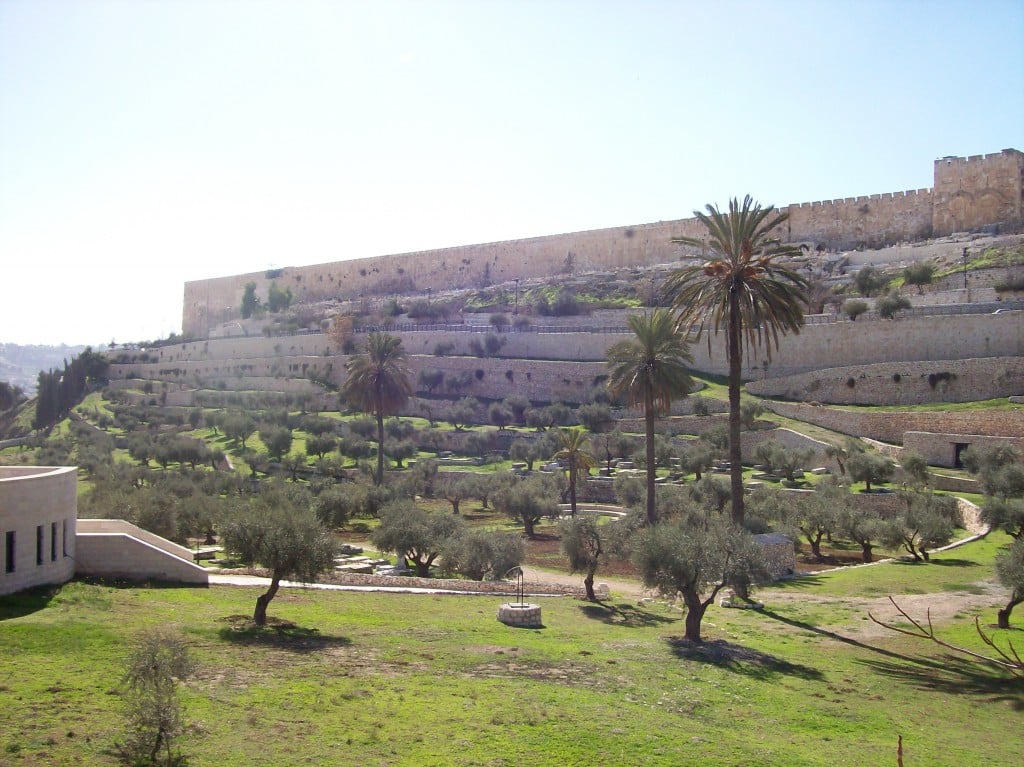
[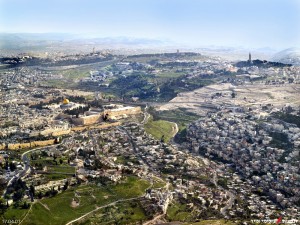](https://interfaithsustain.com/wp-content/uploads/2014/03/Kidron-Basin-photo-300x2251.jpg)
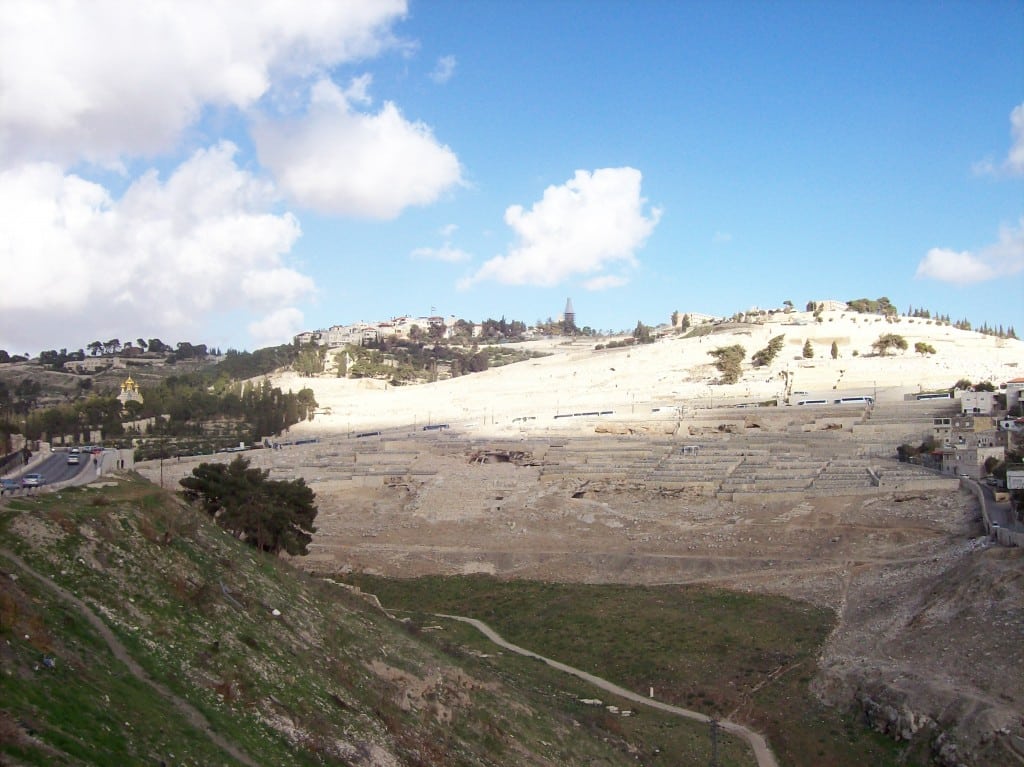
**Categories:** Blog on Faith and Ecology
---
### [Women's Multi-Faith Eco Gathering](https://interfaithsustain.com/womens-multi-faith-eco-gathering-environmental-issues-in-religious-traditions/)
**Published:** July 25, 2013
**Author:** ICSD
**Excerpt:** Over 55 women from Christian, Druze, Jewish, and Muslim backgrounds came together for the Women’s Multi-Faith Eco-Gathering at the Sisters of Sion Convent in Ein Kerem
**Content:**
Over 55 women from Christian, Druze, Jewish, and Muslim backgrounds came together for the Women’s Multi-Faith Eco-Gathering at the Sisters of Sion Convent in Ein Kerem, Jerusalem from June 17-18, 2013. This event was the follow-up to the TRUST WIN [Annual Gathering](https://www.trust-emun.org/events/annual-gathering-and-tree-planting-in-our-trust-win-garden-of-the-mothers/) in the Garden of the Mothers in Daliat HaCarmel held January 15, 2013 in which 60 women began working together for the environment and the future of our children in our land. Many of the same women gathered in Jerusalem to continue the relationships and the commitment to learn about the environment from the point of view of our four religions, and to devise practical activities together. Nestled in the hills of Ein Kerem, just outside of Jerusalem, the serenity and natural beauty of the location promoted an atmosphere conducive to dialogue and understanding.
During January and June 2013, the TRUST WIN (Women’s Interfaith Network) of [TRUST-Emun](https://www.trust-emun.org) (TRUST) and The Interfaith Center for Sustainable Development (ICSD) worked together on a collaboration. TRUST WIN was responsible for creating, facilitating, providing participants and carrying out the events, and ICSD was responsible for fundraising, budgeting, and providing administrative support for the events. This collaboration included one TRUST WIN Annual Gathering in the Garden of the Mothers in Daliat AlCarmel on January 15th, 2013, and one Women’s Multi-Faith Eco-Gathering held in Ein Karem, from June 17-18, 2013. The Gathering was sponsored by the Embassy of the Federal Republic of Germany in Tel Aviv, the Julia Burke Foundation, the Pratt Foundation, the British Shalom-Salaam Trust and individual California women who share our vision of strengthening the voice of women in multi-faith environmental work.
The gathering included a diverse range of activities. Four study sessions focused on the environment in each of the four faiths, and were facilitated by a representative of each faith. Other activities included an Ecological Footprint activity; several walking meditations in the gardens; an art project with the themes of women, religion, and environment; and a talk about “Green Pilgrimage” by Deputy Mayor of Jerusalem, Ms. Naomi Tsur.
**Four Perspectives on Religion and Ecology**
A representative of each faith—Christian, Muslim, Druze, and Jewish—led a study session on the environment in their religion. The Muslim session, led by Iman Chardan, taught that we must not dump any waste into the environment, because that waste will come back to harm us. What we are supposed to do is
“Eat and drink the sustenance God has provided and do not act wrongfully in the land, causing corruption” (Qur’an 2:60). But “Corruption has flourished on land and sea as a result of people’s actions and He will make them taste the consequences of some of their own actions so that they may turn back,” (Qur’an 30:41) and “when the Earth throws out its burdens…on that day it will tell all” (Qur’an 99:2,4). The Druze session, led by Hediya Hassoun, taught that one of the seven principles of the Druze faith is “abstaining from evil activities,” so protecting the air and not damaging the health of other people is deeply related to that principle. This applies to economic activity as well as other areas. The Christian session was led by Sister Anne of the Sisters of Sion Convent, and she taught that Jesus lived his life in reverence to nature and he knew much about the environment – many of his lessons in the New Testament are based on environmental allegories.
She also mentioned how the new pope, Pope Francis, compared the condition of the Earth to the condition of mankind, to encourage environmental stewardship of the Earth. The Jewish session was led by Rabba Judith Edelstein Green. She taught how the Jewish tradition compares the Torah to a Tree of Life, and the human body is compared to a tree in Kaballah. She also taught about how Judaism calls for protecting the environment, because if we do not, no one else will fix it after us. She ended with an emotional and moving healing prayer session, where the women held hands and everyone offered blessings for the healing of family members, friends, our peoples and our land.
## Activities
The gathering began on Monday, June 17, 2013, with all of the women sitting next to someone they did not already know and spending five minutes creating a new relationship. The women then learned in study sessions (described above), walked together in two Walking Meditations, worked together on their art project, and ended the day with an Ecological Footprint activity, led by Avigail Ben Yohanan, the Assistant Event Coordinator. The participants filled out a questionnaire that let them calculate how many Earths it would take to sustain humanity if everyone lived like they did. Then they discussed how to reduce their ecological footprint. To conduct your own carbon footprint calculations, click [here](https://www.earthday.org/footprint-calculator). Tuesday, June 18, 2013 started with a Walking Meditation in the gardens, led by Elayne Cohen Ashby, where the women walked slowly and silently through the gorgeous natural scenery of the Convent.
Once they reached an open area that overlooked an expansive view of the valley, they sang together a collective sharing of their cultural, religious, and spiritual songs. One of the most important and moving aspects was the informal gatherings and spontaneous singing that took place between women of different faiths throughout the two days. In the guest rooms the women lodged overnight with women of other faiths and several commented that this was a unique opportunity to share food brought from home and personal experiences together. One way the women bonded is that some of the Muslim women brought henna paint with them, and many of the women left the gathering with new henna designs on their hands or arms. Naomi Tsur, the Deputy Mayor of Jerusalem, spoke about Green Pilgrimage. You can read more about Green Pilgrimage [here](https://interfaithsustain.com/old/first-international-jerusalem-symposium-on-green-and-accessible-pilgrimage), and you can watch a video of her talking at the Interfaith Climate and Energy Conference, an event ICSD organized in 2012 [here](https://interfaithsustain.com/interfaith-climate-and-energy-conference-2012/). She also has a website you can visit [here](https://www.jgf.org.il/message-from-naomi).
## Participants Speak
Siham Halabi, the TRUST WIN Druze coordinator, said about the gathering, “Just meeting other people is very empowering for women, as is getting ideas from other cultures about things that I can later do myself with my own projects…In the gathering I felt a strength. From the fact that women are together, that gives us strength.It was good to see that everybody actually wants to peacefully live together, in coexistence.” Elayne Cohen Ashby, the TRUST WIN Jewish coordinator, said: “I love to be together with all the types of people that come to this kind of event. It’s not so usual, living here in Israel… It reinforces what we have in common as opposed to what we find often in this society with newspapers and the media, about what causes the separations and divisions.
I think that the more we become familiar with all that makes us actually just women, and that we can be beautiful friends, then it’s easier to take that out into society without even realizing it and just be an example.” Elana Rozenman, the founder and executive director of “TRUST-Emun” and the organizer of the gathering, said, “What women bring to ecology and the environment is really their basic connection to their family. As mothers and wives they have enormous influence in their homes and the education of their children. At our conference all the women talked at different points about the fact that rather than solely teaching our children about environmental protection or sustainability or anything else…what we do in our home is the biggest demonstration and example to them and that is the deepest teaching that we get. So in this sense women have a tremendous power to make a change in their own family.” Iman Chardan, the presenter on Islam and ecology, said:
“This is the first time I have been with all of these ethnic and religious groups together… I love how all these religious women were together like sisters Ibtisam Mahamid, the TRUST WIN Muslim coordinator, stated how “in every conference we do, we are teaching and learning, it goes together. We always learn from one another. What I know, I know, but what you know, I don’t know… I don’t have to agree with every word you say, but I need to respect it.” She shared her most memorable aspect of the conference, saying, “In the moment when we prayed, we were like one entity…the tears of the women…the cry of whatever religion we are—Druze or Muslim or Christian or Jewish—it doesn’t matter, we’re all mothers.” The people to people interactions at events like these promote coexistence and peace in the Holy Land. The environmental focus helps to promote a livable future for our children and grandchildren.
Thank you for the sponsors of the event and to the participants for making the event successful.
[](https://interfaithsustain.com/wp-content/uploads/2013/07/IMG-7352.jpg)A group photo of women at the Eco Gathering
[](https://interfaithsustain.com/wp-content/uploads/2013/07/6881-edited.jpg)A picture drawn by some of the women as a part of the art project
[](https://interfaithsustain.com/wp-content/uploads/2013/07/6761-edited.jpg)Everyone listening to the Muslim study session led by Iman Chardan
[](https://interfaithsustain.com/wp-content/uploads/2013/07/7257-edited.jpg)Hediya Hassoun teaching on the principles of Druze faith
[](https://interfaithsustain.com/wp-content/uploads/2013/07/7067-edited.jpg)Rabba Judith leading everyone in a song
[](https://interfaithsustain.com/wp-content/uploads/2013/07/6828-edited.jpg)Two women in Walking Meditation through the beautiful gardens of the Convent
[](https://interfaithsustain.com/wp-content/uploads/2013/07/7284-edited.jpg)Naomi Tsur, Assistant Mayor of Jerusalem, talking about Green Pilgrimage
[](https://interfaithsustain.com/wp-content/uploads/2013/07/6952-edited.jpg)Elayne leading the Tuesday morning meditation walk
[](https://interfaithsustain.com/wp-content/uploads/2013/07/7375-edited.jpg)Organizers of the event. From left to right: Siham Halabi, Naomi Tsur, Elana Rozenman, and Ibtisam Mahamid
[](https://interfaithsustain.com/wp-content/uploads/2013/07/7178-edited.jpg)A few of the women painting with henna
[](https://interfaithsustain.com/wp-content/uploads/2013/07/7467-edited.jpg)Two coordinators in discussion
**Categories:** Blog on Faith and Ecology
---
### [“Darkness cannot drive out darkness: only light can do that”](https://interfaithsustain.com/darkness-cannot-drive-out-darkness-only-light-can-do-that/)
**Published:** July 21, 2014
**Author:** ICSD
**Excerpt:** Rabbi Yonatan Neril and Elana Frank - “You are with God to the extent that you can recognize God in another person.” – Dr. Alon Goshen-Gottstein.
**Content:**
*By Rabbi Yonatan Neril and Elana Frank of The Interfaith Center for Sustainable Development*
“You are with God to the extent that you can recognize God in another person.” – Dr. Alon Goshen-Gottstein
The winds of war have returned to the Holy Land, and with it the strengthening and amplification of those who support violence. In order to reveal an alternative voice that exists on the ground here, I am pleased to share with you about events and teachings that relate to an ‘us and them’ instead of ‘us versus them’ mentality. On July 2, 2014, five members of the Interfaith Center for Sustainable Development team– three Jews, a Muslim and a Buddhist– participated in the “Rally against Violence and Racism” in Jerusalem. The rally took place because the night before, hundreds of right-wing Jewish extremists marched on the streets of Jerusalem calling for revenge against Arabs. Tag Meir is a coalition of [30 organizations](https://icci.org.il/programs/tag-meir/) to give voice to those who oppose violent and racist acts and support co-existence and tolerance. Tag Meir (meaning ‘Light Tag’) is a Hebrew play on words of the extremist campaign “Tag Mechir”, which means “price tag”. The rally was organized to show that revenge is not the Jewish way and that Palestinian Arabs and Jews can and should live together in peace in the land.
At least a thousand people came to the peaceful rally to show their support, and it received news coverage in the [Israeli media](https://www.haaretz.com/news/national/.premium-1.602715). Many people held signs saying “No to Racism” or “Love the Stranger”. Rabbis led prayers for peace and chanted verses of Psalms. After the rally, around 400 people marched to Prime Minister Netanyahu’s residence. As the [Times of Israel](https://www.haaretz.com/news/national/.premium-1.602715) reported, “Speakers at the event included Knesset (Israeli parliament) opposition leader Isaac Herzog, Member of Parliament Nitzan Horowitz, Jerusalem council member Rachel Azaria, and Rabbi Benny Lau of the city’s Ramban Synagogue.” To read this press release about the event, [click here](https://nif.org/newmediatop/press-releases/1713-we-mourn-we-dont-take-vengeance-jerusalem-tag-meir-rally-is-most-visible-response-to-escalation-of-violence-in-israel%20). It was encouraging to see all of these people come together in the name of peace, and to show that the right-wing extremists are only a minority of the population. With all of the recent violence and riots by both Israeli and Palestinian extremists that we see in the news, it was gratifying to attend an event with people showing just as much passion but about co-existence, and without the use of violence.
Part of the work of The Interfaith Center for Sustainable Development (ICSD) is to reveal that many faith traditions share similar views on issues of common concern. This is the case with environmental sustainability, and it is also the case in regards to violence and hatred. This week, Jewish and Muslim members of the ICSD team will be a co-organizer of a joint ‘hunger strike’ and Muslim-Jewish joint break-fast that takes place on the Jewish fast day of 17th of Tammuz and the Muslim fast day/month of Ramadan. More information about that is available on the ICSD Facebook page.
Here are some examples of teachings from a range of faiths in this regard:
> O you who believe! Enter into peace whole-heartedly; and follow not the footsteps of Satan (the evil one); for he is to you an avowed enemy.”
>
> Koran, 2:208
> The narrow-mindedness that leads one to see whatever is outside the bounds of one’s own people…as ugly and defiled is a terrible darkness that causes general destruction to the entire building of spiritual good, the light of which every refined soul hopes for.”
>
> Rabbi Abraham Isaac Kook\[1\]
> Darkness cannot drive out darkness: only light can do that. Hate cannot drive out hate: only love can do that.”
>
> Rev. Martin Luther King Jr.
> To develop the drop of compassion in our heart is the only effective spiritual response to hatred and violence.”
>
> Thich Nhat Hanh
With blessings for peace from Jerusalem.
\[1\] Musar Avikha, p. 96; English translation in Ish Shalom and Rosenberg, eds, The World of Rav Kook’s Thought, Jerusalem, Avi Chai, 1991, p. 212
[](https://interfaithsustain.com/wp-content/uploads/2014/07/photo-1-edited.jpg)

**Categories:** Blog on Faith and Ecology
---
### [Citizens Declare Cease-Fire at Joint Breaking of Fast](https://interfaithsustain.com/citizens-declare-cease-fire-at-joint-breaking-of-fast/)
**Published:** July 17, 2014
**Author:** ICSD
**Excerpt:** Elana Frank and Rabbi Yonatan Neril - On Tuesday, July 15th, hundreds of Palestinian Muslims and Israeli Jews united to break their mutual fast day together at thirteen events throughout Israel and the West Bank. At one of three events held in Jerusalem, over one hundred people-- Jews, Muslims, and Christians-- gathered for an evening of socializing, learning, and vegetarian food co-organized by The Interfaith Center for Sustainable Development (ICSD) and Jerusalem Peacemakers.
**Content:**
*By Elana Frank and Rabbi Yonatan Neril*
On Tuesday, July 15th, **hundreds of Palestinian Muslims and Israeli Jews united to break their mutual fast day together** at thirteen events throughout Israel and the West Bank. At one of three events held in Jerusalem, over one hundred people– **Jews, Muslims, and Christians**— gathered for an evening of socializing, learning, and vegetarian food co-organized by [The Interfaith Center for Sustainable Development (ICSD)](https://interfaithsustain.com) and [Jerusalem Peacemakers](https://www.jerusalempeacemakers.org). The event took place on Mt. Zion at the Jerusalem Inter Cultural Center on the seamline between East and West Jerusalem. The events were part of a **global movement of interfaith break-fasts** for Ramadan and the Jewish fast day of the 17th of Tammuz. The group ‘Choose Life’ organized efforts around the **joint fast day as a “Hunger Strike Against Violence,”** and publicized about [32 events](https://interfaithsustain.com/wp-content/uploads/2014/07/בוחרים-בחיים.pdf) located in six countries across three continents, from New York to Paris to Kuwait City. The evening began with words of blessing from rabbis and sheikhs. Haj Ibrahim Abu El Hawa, Co-founder of Jerusalem Peacemakers, said, “The new generation needs to carry the message of how we can live together, because we are not born with signs over our heads that say we are Jewish, Muslim, Christian, or Buddhist. We are all one.” Rabbi Yonatan Neril, founder and director of the Interfaith Center for Sustainable Development, stated “This gathering empowers the children of Abraham– Jews, Muslims, and Christians– to come together in the holy city of Jerusalem and see the humanity in the ‘other’. It’s not about us vs. them. It’s about us and them, about how we can live together in one land.”
Eliyahu McLean, co-founder and director of Jerusalem Peacemakers, said, “Let the world know that there are Israelis, Palestinians, Jews, and Muslims in Jerusalem and all over the land that do not buy into the narrative that we are enemies, that we have to hate each other, that we have to be at war with one another. We actually see things differently.” The 17th of Tammuz is a Jewish fast day commemorating five catastrophes in Jewish history, including the Roman breach of the walls of Jerusalem. The Muslim fast during the month of Ramadan is one of the Five Pillars of Islam and promotes self-purification and spiritual connection.
For more information about the sponsoring organizations, go to [interfaithsustain.com](https://interfaithsustain.com) and [jerusalempeacemakers.org](http://www.jerusalempeacemakers.org). The Interfaith Center for Sustainable Development (ICSD) unites faith communities, teachers and leaders to promote co-existence, peace, and sustainability through advocacy, education and action-oriented projects. Inquiries can also be directed to 054-723-4973 or <info@interfaithsustain.com>.
**Photos and video footage are available upon request.**
[](https://interfaithsustain.com/wp-content/uploads/2014/07/Blog2.jpg)
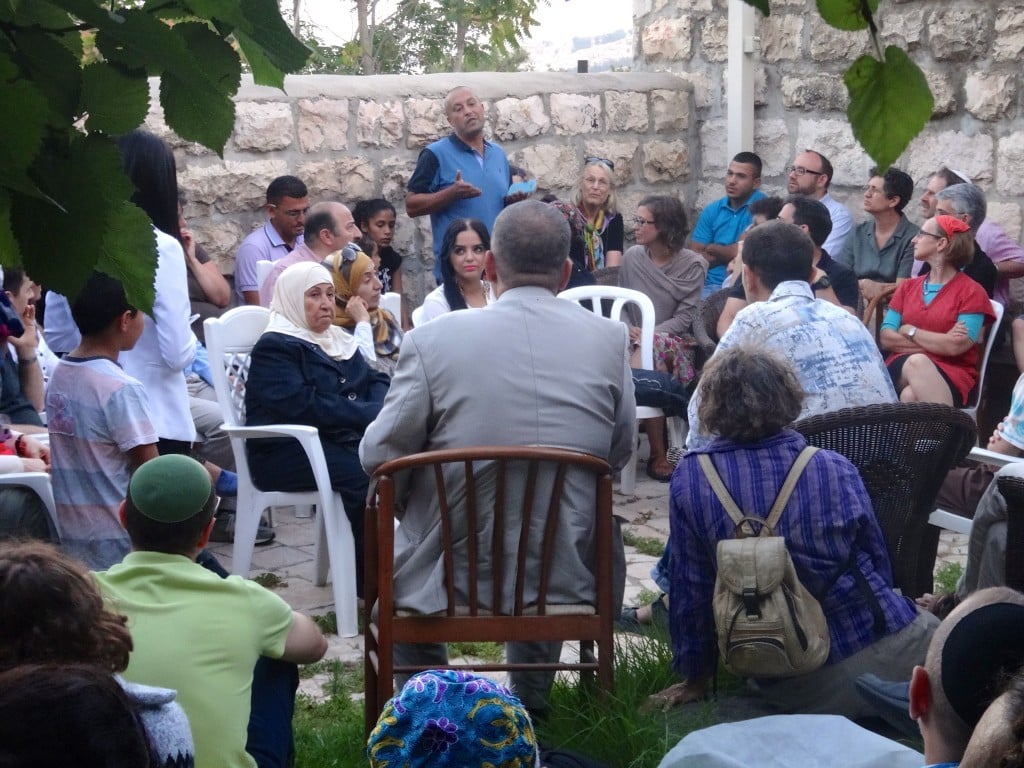

**Categories:** Blog on Faith and Ecology
---
### [Book Now: Eco Tours Israel](https://interfaithsustain.com/eco-tourism-in-the-holy-land/)
**Published:** August 26, 2013
**Author:** ICSD
**Excerpt:** Our tours give visitors to Israel the opportunity to head off the beaten-path and to experience a side of Israel rarely seen.
**Content:**
Our programs give visitors to Israel the opportunity to head off the beaten-path and to experience a side of Israel rarely seen. We expose groups first-hand to Israel’s natural beauty, as well as its living, breathing culture of innovation.
Our experienced tour guides offer hikes, eco-volunteering, site tours, and text study to expose you and/or your group to the natural beauty of the Holy Land and to its expanding culture of environmental innovation.
Individuals, groups or families can custom-design their tours, choosing from a variety of themes.
The tours are offered within two tracks:
- [Eco Israel Tours](https://www.ecoisraeltours.com/ "Eco Israel Tours"): Tours across Israel with education on Ecology
- [Jewish Eco Seminars](https://www.jewishecoseminars.com/ "Jewish Eco Seminars"): Tours across Israel with education on Judaism & Ecology
---
We also offer organizing Interfaith Panels in Jerusalem for small and large groups of visitors. [Learn more](https://interfaithsustain.com/interfaith-panels/)
**Categories:** Home
---
### [First International Jerusalem Symposium On Green and Accessible Pilgrimage](https://interfaithsustain.com/first-international-jerusalem-symposium-on-green-and-accessible-pilgrimage/)
**Published:** July 25, 2013
**Author:** ICSD
**Excerpt:** Why is green pilgrimage important? This year the largest gathering in human history took place.
**Content:**
*By Rabbi Yonatan Neril, Lianne Nibley and Hannah Braunstein of The Interfaith Center for Sustainable Development*.
In the last week of April, 2013, over 150 presenters and hundreds of others participated in The First International Jerusalem Symposium on Green & Accessible Pilgrimage. The event focused on the powerful connection between pilgrimage to holy cities and ecological awareness and action, which enables more meaningful pilgrimage as well as a more sustainable planet. Spanning five days, the Symposium was organized by Green Pilgrim Jerusalem. Co-sponsoring organizations included the Alliance of Religions and Conservation, the Green Pilgrimage Network, The Interfaith Center for Sustainable Development, and more.
Why is green pilgrimage important? This year the largest gathering in human history took place. 80 million Hindu pilgrims went to Allahabad, India and attended the Maha Kumbh Mela, which takes place every 12 years. According to estimates, more than 200 million people become pilgrims each year. So among faith adherents, pilgrimage is a rather common action, and one that has significant environmental implications. The Symposium examined not only green and accessible pilgrimage to Jerusalem, but also to other cities in Israel, the West Bank, and internationally. International representatives attended the Symposium from various pilgrim cities around the world. The Symposium concluded with a framework of principles agreed upon for a vision of Green and Accessible Pilgrimage. Regarding green issues, it envisioned ‘promotion of a clean sustainable environment, comprehensive waste collection, treatment, and recycling, water conservancy, renewable and efficient energy, preservation of indigenous fauna and flora,” and more.
**Opening Gala, Sunday, April 21st, 2013**
The Symposium, hosted at the Jerusalem International YMCA, began with faith leaders, scientists, entrepreneurs, and environmentally conscious citizens mingled outdoors on the patio. In the Auditorium, Jerusalem Mayor Nir Barakat and Deputy Mayor and Green Pilgrimage Ambassador Naomi Tsur welcomed guests to the Symposium and spoke about the innovative combination of pilgrimage to holy cities and ecological concern. Deputy Mayor Tsur pointed out that currently the majority of people in the world live in cities, and that by the end of the 21st century, 90% of the world’s population will likely be living in cities. The greening of pilgrimage to many cities can therefore be a part of the broader worldwide movement to green cities.
His Beautitude Patriarch Theophilos III of the Greek Orthodox Church of Jerusalem spoke of how “Jerusalem stands as a promise to the world as a spiritual meeting place between heaven and earth. It is our duty and mission to ensure that Jerusalem is an example for other places of pilgrimage and a sign of hope.” Count Philippe Piccapietra, the Grand Chancellor of the Order of Saint Lazarus, explained his group’s return to Jerusalem and their commitment to introducing electric vehicles to the Old City of Jerusalem. International musicians and youth choirs performed throughout the night, including the Malkat Shva Ethiopian Youth Choir.
After the introductory comments, participants broke into ten smaller roundtable sessions. Rabbi Alon Goshen Gottstein facilitated a session on ‘Pilgrimage as a Catalyst for Interfaith Dialogue.’ Panelists included H.E. Patriarcal Vicar Bishop William Shomali of the Latin Patriarchate of Jerusalem and Kusum Vyas, founder of the Green Kumbh Movement (for ecological Hindu pilgrimage). Panelists spoke about pilgrimage not just being about prayer, purification, and visiting holy sites, but about learning. Some of this learning could be done in an interfaith context. R’ Goshen Gottstein mentioned a project of the Elijah Institute that he directs to create a Center of Hope in Jerusalem for interfaith dialogue and prayer. As Rabbi Abraham Isaac Kook wrote, “The mission of Jerusalem is to be a place of true knowledge and awe of God and universal peace.” Many religions contain teachings that support interfaith dialogue. Islam in particular stresses an interfaith imperative, as is stated in the Koran (49:13): “O humankind! We have created you all male and female, and made you into nations and tribes, that you may know each other.”
At a roundtable session on ‘Sustainable and Accessible Muslim Pilgrimage,’ Mohammed Nakhal spoke about his experience as an Israeli Arab from Jerusalem on Hajj (pilgrimage) to Mecca. He mentioned environmental commonalities between Mecca and Jerusalem, including significant air pollution and an abundance of plastic bags. They are caused in good part by the influx of millions of pilgrims that visit them each year. He also noted the use of electric vehicles for pilgrims in Mecca, a phenomenon also beginning in Jerusalem.
**Highlights of Day 1: Monday, April 22nd**
During the Opening Plenary Session, Sir Rabbi David Rosen CBE, AJC International Director of Interreligious Affairs and Board member of the King Abdullah Center for Interreligious Studies, said, “in light of the ecological challenges facing humanity, any effort that is not directed at addressing these challenges is like rearranging the deck chairs on the Titanic.” Highlighting the work of the Interfaith Center for Sustainable Development, of which he is on the Board of Advisors, he explained that “from the city which is so central to the spiritual legacy of humanity should come an effort aimed at the survival of humanity.” Dr. Laurence Brahm, founder of the Himalayan Consensus Institute, discussed the need for businesses to develop green innovation that is profitable and “allow the people to evolve the community locally.”
A session about the Ein Kerem village near Jerusalem focused on how the water demands of Jerusalem’s growing population pose a challenge to the preservation of the physical and cultural landscape. Speakers discussed plans to develop the largest water pump station in Israel, which will impact ancient terraces and structures dating back to the first Temple Period. They mentioned how a grassroots movement of local citizens has worked to restore and rebuild terraces to prevent flooding in the valley, and built paths through the area for visitors.
**Highlights of Day 2: April 23**
The opening plenary session focused on ‘Ecosystem Management from a Regional Perspective.’ One among five presenters, Dr. Yoel Siegel, coordinator of URBIS Jerusalem, brought up the paradox that ecosystems sustain human life, yet human activities destroy ecosystems. The result is that our planet is experiencing climate change, desertification, and biodiversity loss. Dr. Siegel asked, “What can we do in Jerusalem to address this paradox?” He suggested that we need to first look at Jerusalem differently:
instead of seeing Jerusalem primarily as a center for religion and religious sites, we must consider its natural environment. Next, we need to establish metro-region biospheres that provide legal protection of natural lands. Lastly, we must uphold critical practices like international environmental standards and new roles for local government that protect and manage natural resources in the city.
**Highlights of Day 3: April 24th**
In a round table discussion on the reciprocity between nature and faith communities, panelists included: Dr. Kusum Vyas, Founder of the Green Kumbh Movement; Ihab Balaha, teacher of Islam; Einat Kramer, the Director of Teva Ivri; Rabbi Yedidya Sinclair, renewable energy entrepreneur; and Wolfgang Schmidt, the provost at the Evangelical Lutheran Church in Jordan and the Holy Land.
The roundtable discussed in part what religion says about sustainability and its importance. Why focus on faith communities? Billions of people are within faith communities and can have meaningful impact on our planet’s sustainable future. Also, religion needs to recognize the power of sustainability, as spirituality and religiosity relate to the environment. Reverend Rutishauser SJ spoke of our lives as a gift that we must show gratitude for and gratitude for the earth that our Creator gave us to live upon. We must teach mindfulness of the earth. Einat Kramer also spoke of our removed connection with our current energy systems. We turn on a light switch and do not understand the process by which the light is powered, involving many industries and people along the way. However, when we use renewable energy, like solar panels for example, we can connect with the sun’s rays that hit the panels and then power our light bulb. We thus remain interconnected with the way we power our lives without promoting dirty industries that harm our planet.
**Highlights of Day 4: April 25th**
Eco Israel Tours, a branch of The Interfaith Center for Sustainable Development, offered two tours on faith, ecology, and the Holy Land as part of the Symposium. The first tour was on “Jerusalem’s Machane Yehuda Market in the Age of Globalized Food.” Led by an Eco Israel Tours educator, participants toured the Machane Yehuda Market in Jerusalem, one of the great markets of the world, through an ecological lens. The market serves as an interesting window into contemporary environmental issues related to the production and consumption of food. The educator described the emergence of globalized food in Israel in the context of broader Israeli society and global environmental issues, and included an exploration of organic produce and health food stores and teachings from the Bible on local and global food. A television crew reporting for an Arab channel and an Israeli channel filmed part of the tour.
Later in the day, Eco Israel Tours conducted a second tour, “Water, Farming, and Trees in Israel.” At the Sataf Spring Nature Reserve, near Jerusalem, participants went on a guided hike in one of the natural gems of Israel and explored issues related to water, sustainable agriculture, and trees. The Israeli Ministry of the Environment stated, “Preservation of the country’s scant water sources may be the greatest challenge facing Israel today.” The educator provided a historical background to Jerusalem’s 3,000 years of water challenges, including how the water supply in the Jerusalem hills is quite limited. Following the guided hike, the group explored Biblical sources on water conservation in relation to this contemporary challenge and discussed possible solutions.
**Photo credits: Aviad Tevel**
[](https://interfaithsustain.com/wp-content/uploads/2013/09/images-1.jpg)
[](https://interfaithsustain.com/wp-content/uploads/2013/07/images-2.jpg)
[](https://interfaithsustain.com/wp-content/uploads/2013/09/images-10.jpg)
[](https://interfaithsustain.com/wp-content/uploads/2013/09/images-3.jpg)
[](https://interfaithsustain.com/wp-content/uploads/2013/09/images-4.jpg)
[](https://interfaithsustain.com/wp-content/uploads/2013/09/images-5.jpg)
[](https://interfaithsustain.com/wp-content/uploads/2013/09/images-7.jpg)
[](https://interfaithsustain.com/wp-content/uploads/2013/09/images-6.jpg)
[](https://interfaithsustain.com/wp-content/uploads/2013/09/images-8.jpg)
[](https://interfaithsustain.com/wp-content/uploads/2013/09/images-9.jpg)
**Categories:** Blog on Faith and Ecology
---
### [Crossing Cultural Divides on Mt. Gilboa](https://interfaithsustain.com/crossing-cultural-divides-on-mt-gilboa/)
**Published:** November 5, 2013
**Author:** ICSD
**Excerpt:** On October 31st, the Interfaith Center for Sustainable Development, together with Rabbis for Human Rights, held an interfaith seminar with Jewish, Muslim, and....
**Content:**
By Anthony Bartaway for the Interfaith Center for Sustainable Development (ICSD)
On October 31st, the Interfaith Center for Sustainable Development (ICSD), together with Rabbis for Human Rights, held an interfaith seminar with Jewish, Muslim, and Christian students. The seminar took place in the pine forest and olive groves of the Gilboa mountains, with views of the the lower Galilee, the northern West Bank, the Jordan River valley, and the mountains of Jordan.
At the seminar, participating students from Al-Qasemi College in Baqa al-Gharbiyye and Yeshivat Ma’ale Gilboa in Kibbutz Ma’ale Gilboa, along with others, split into small groups that included a Christian, Muslim, and Jew for a two-hour long nature walk. They were taken along a nature hike with discussion questions posted along the way to encourage the participants to share their own stories and create common ground.
Participants were asked to share who they are, where they come from, and what connection they have with their faith and environment, among other things. For many, it was their first time coming into direct, personal contact with ‘the other,’ be it a Muslim, Jew, or Christian. While members of either groups see each other’s towns and homes, in Israel there is often little intermingling between members of either community. With a few exceptions, neighborhoods or cities tend to be inhabited by only members of one group or the other with little mixing.
Despite these challenges, however, the students were able to quickly break down barriers and engage each other on very friendly terms. Several people commented that they believed that most Jews and Israeli Arabs could engage each other similarly; that while they rarely have much opportunity to speak, it only takes a few minutes of conversion to realize that there are more similarities than differences. All it takes is someone to start the conversation and “ask the right questions.” Nature fosters an openness and level of comfortability that encourages participants to open up to people whom they might have feared.
One of the methods that participants thought of to promote dialogue was cross-cultural education. In particular, the learning of the language of the other group, be it Hebrew or Arabic, can be an important way of building bridges between the two peoples. Interestingly, in my own group, the Arab and Jewish members were able to speak with each other in Arabic, Hebrew, and English.
The environment itself proved to be reminder of the peculiar separation but cohabitation of the land. The hike took place in between two towns, Kibbutz Ma’ale Gilboa on the Israeli side of the ‘green line’ and Faq’ua in the West Bank. The two towns are only a few kilometers from each other and within clear sight, but are divided by religion and ethnicity and their inhabitants ra100rely, if ever, come into contact with each other.
The trail itself followed the path of the Separation Barrier for a stretch. It also proved to give ample opportunity to discuss how each group connects itself to the land. The Arab students remarked that the lines of cacti showed evidence of Arab ownership, as cacti were used to mark the boundaries of land plots. Meanwhile, Jewish participants remarked how an ancient wine press encountered along the way was a sign of Jewish historical presence and that Gilboa was the site of an important battle between the Israelite army under King Saul and the Philistines that ended with Saul’s suicide and the ascension of King David.
Halfway through the hike, in a pine clearing, everyone came together as one large group for a lunch and discussion. Before the meal, the Arab Muslim students witnessed the Jewish seminary students taking part in their pre-meal prayers, which is not something that they were familiar with. They would go on to ask about what kinds of prayers Jews said throughout the day and about why Jewish men wear a kippa (head covering).
Following the prayer, Rabbi Yonatan Neril, Founder and100 Executive Director of ICSD, gave a short talk on how Judaism asks of its adherents to take care of the environment and how even on military campaign soldiers are commanded to bring a shovel to dig latrines and keep the land clean, similar to the “Leave No Trace” concept in modern outdoorsmanship.
After this, the faculty member from Al-Qasemi said a great deal about the Sufi Islamic perspective of environmental stewardship. Muslims are called upon to take care of trees and that a man, even on his deathbed, should plant a tree to provide for future generations. He made the point that almost all the world’s religions include the concept of stewardship; it is their followers who choose to ignore them.
As the walk went on, the participants became more and more comfortable with each other. Conversations began to branch beyond the structure provided by the pre-designed discussion question and became more organic and freeform. After concluding with another group session in the kibbutz itself, the participants said they looked forward to other opportunities to engage with members of ‘the other side.’ With more encounters like these, tensions within their broader societies can be overcome and a more peaceful society can be built.
At the end of the seminar, participants were asked to fill out an evaluation survey. The responses were overwhelmingly positive and nearly every respondent said that they would like to build upon the experience by interacting with the “other” more often. The Interfaith Center for Sustainable Development would like to thank [The Julia Burke Foundation](https://www.juliaburkefoundation.com/ "Julia Burke Foundation"), the British Shalom/Salaam Trust (http://www.bsst.org.uk/), and [Anne Frank Fonds](https://www.annefrank.ch/), whose support made the event possible. If you or your organization would like to take part in something similar, please [contact us](https://interfaithsustain.com/contact/).
[](https://interfaithsustain.com/wp-content/uploads/2013/11/100_1767.jpg)
[](https://interfaithsustain.com/wp-content/uploads/2013/11/1452049_10151689410721109_317012931_n.jpg)
[](https://interfaithsustain.com/wp-content/uploads/2013/11/100_1841.jpg)
[](https://interfaithsustain.com/wp-content/uploads/2013/11/1453527_10151689415496109_705180132_n.jpg)


**Categories:** Blog on Faith and Ecology
---
### [Going into Nature, Within Jerusalem](https://interfaithsustain.com/going-into-nature-within-jerusalem/)
**Published:** May 5, 2014
**Author:** ICSD
**Excerpt:** In the spring of 2014, The Interfaith Center for Sustainable Development is offering open-enrollment ecological tours in and around Jerusalem. These tours [...]
**Content:**
*By Jenna Basman, intern for The Interfaith Center for Sustainable Development and a tour participant*
*In the spring of 2014, The Interfaith Center for Sustainable Development is offering open-enrollment ecological tours in and around Jerusalem. These tours explore the rich history and culture of the holy land from a natural perspective by visiting sites like the beautiful Cedars Valley forest and the largest outdoor food market in Israel -Machane Yehuda. This post focuses on a tour of the tree-filled Hinnom Valley near the Old City of Jerusalem that was held in April.*
I knew this excursion wasn’t going to take me to the typical site on the tourist map. Climbing near ancient ritual immersion baths, tombs, and ruins near wild fig trees and barley plants left me feeling awestruck. I had no idea that between two big city roads, there is lush, green nature so close. Religious, political, cultural, and ecological history seeps in every crack and crevice of the Hinnom Valley and this tour gave me a peak into the complexities and challenges that inhabit its beauty. The Hinnom Valley is one of the main valleys next to the Old City of Jerusalem, on the Western side below Jaffa Gate and Mt. Zion. The first reference in the Bible of the valley is in the book of Joshua (15:8) describing the valley as the border of the tribe of Judah.
After taking the train and walking down a busy road, we started the trail downhill into the Hinnom Valley and the muffled road sounds started to fade away. I never realized how accessible nature was in Jerusalem! In the middle of a busy and chaotic city, we saw goats roaming, iguanas crawling, birds flying, and a donkey rider out in the fields. This tour exemplified that with little effort, you can leave behind cell phones and traffic lights and enter into serenity and connection with the land. The valley is infamous in the Bible as the site of pagan child sacrifice. It is mentioned five times in the Book of Jeremiah (7:31,32 19:2,6 32:35) as the location where people would “burn their sons and daughters in the fire.”
Fortunately there is no child sacrifice in the valley today; but the valley faces other challenges. The Hinnom Valley connects to the Kidron Basin Creek, which flows into the Judaean Desert and the Dead Sea. Palestinians and Israelis have been debating for decades over how to share treated wastewater for agriculture from a proposed sewage treatment plant in East Jerusalem. Since they have yet to come to any agreement, no such treatment plant exists.(see the article by Thomas Friedman on this by clicking [h](https://www.nytimes.com/2014/02/09/opinion/sunday/friedman-whose-garbage-is-this-anyway.html)[e](http://www.nytimes.com/2014/02/09/opinion/sunday/friedman-whose-garbage-is-this-anyway.html)[re](http://www.nytimes.com/2014/02/09/opinion/sunday/friedman-whose-garbage-is-this-anyway.html) *(*[*NY Times, February 8, 2014*](http://www.nytimes.com/2014/02/09/opinion/sunday/friedman-whose-garbage-is-this-anyway.html)*)*. Each day, 35,000 cubic meters of raw sewage flows through the Kidron Basin Creek to the Dead Sea, turning this beautiful ecosystem into a precarious health and environmental hazard. Although I thoroughly enjoyed the beauty of the Hinnom Valley, this tour helped me realize its fragility as it connects to other ecosystems in the region. This tour taught me about some of the origins and implications of this wastewater issue and possible initiatives to rehabilitate the Kidron Creek Basin.
Hiking up the hill to a beautiful observation point, we looked out into the different neighborhoods and saw where the fertile land ended and the desert began. We then got to explore an excavation site that has remnants from the 1st and 2nd Temple, Hasmonean, and Byzantine periods. We met with an expert archeologist who has worked for the Israel Antiquities Authority for over 20 years and he showed us his personal findings by a 2nd temple mikvah surrounded by weeds and stones while eating local figs (one of the 7 species of Israel), I felt completely connected and engaged with the land. This was so much deeper than traditional sightseeing of historical sites in Jerusalem. Sitting on stones near the ancient walls of the city, we enjoyed our lunch and discussed possible ways to get people involved with environmental efforts taking place here. In order for people to care, they need to value this space as a social, ecological, historical, and beautiful landscape. It starts with us. We need to help people reconnect with this land more and educate about how every action of our community directly affects our environment. \*
*We agree with this tour participant and that’s exactly what we’re trying to do! It really does take a village. If you have ideas for a tour or an educational activity, we want to hear about it! Contact us [here](https://www.ecoisraeltours.com/contact-us/) or call us at Tel: [(054) 723-4973](tel:%28054%29%20723-4973) (Israel).*
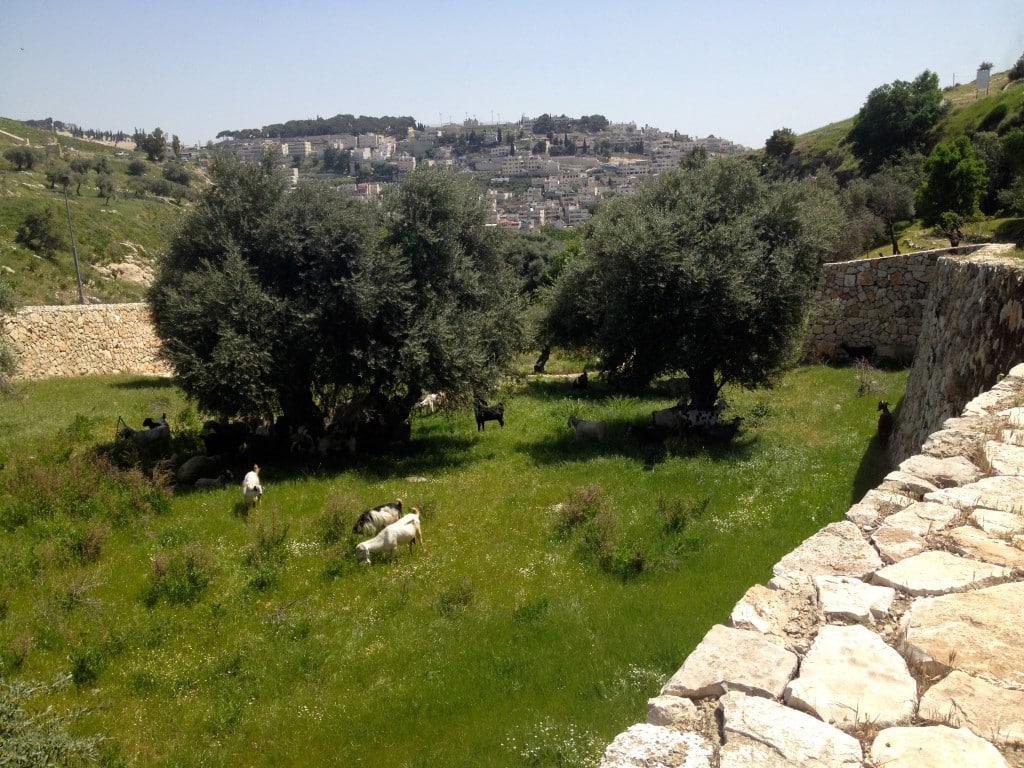
**Categories:** Blog on Faith and Ecology
---
### [Sewing Seeds, Building Trust, Seeking Peace](https://interfaithsustain.com/sewing-seeds-building-trust-seeking-peace/)
**Published:** July 13, 2014
**Author:** ICSD
**Excerpt:** Siiri Bigalke - June marked the third month of a new track in our Women's Faith and Ecology project. This initiative brings together women of Jerusalem to find commonality through shared respect and responsibility for a healthy environment.
**Content:**
*By Siiri Bigalke for The Interfaith Center for Sustainable Development*
June marked the third month of a new track in our Women’s Faith and Ecology project. This initiative brings together women of Jerusalem to find commonality through shared respect and responsibility for a healthy environment. In the past, the Interfaith Center for Sustainable Development (ICSD) oriented the Women’s Project towards intensive seminars with Jewish, Muslim, and Christian women to learn about women’s empowerment and environmental ethics through their respective religions. Following the success of these seminars, ICSD decided to implement monthly gatherings to convert education into action. As of March 2014, women from East and West Jerusalem (areas that are divided by ethnicity and religion) have been gathering to identify their common skills and environmental challenges and explore opportunities to make new relationships and environmental change.
While the previous two meetings focused on [gardening and community agriculture](https://interfaithsustain.com/gathering-and-gardening-over-watermelon-and-zatar/), our June gathering featured an embroidery project led by Aida from Abu Tor in East Jerusalem that highlighted a traditional Palestinian style. The women’s handwork knitted itself into a discussion about recycled artwork, waste in Jerusalem, and how to convert such art projects into ecological tools like reusable bags. Other ideas generated for future meetings included outdoor hikes in the Jerusalem area, learning how to compost, and visiting local environmental businesses. While each meeting serves to expose these women to sustainable initiatives in Jerusalem, we are finding that laying foundations of relationship building, trust, skills sharing, and a welcoming space is just as invaluable as the ecology aspect of the program. While all are eager to dive into broader green projects, these relationships are new and delicate, especially in light of the violent cloud hanging over Jerusalem in recent days.
And despite all this hostility, or perhaps because of it, this small group of committed women is continuing to grow in numbers and dedication. If you are interested in joining the group, please contact Siiri Bigalke at <sbigalke@interfaithsustain.com> or Hiba Dawud at <hdawud@interfaithsustain.com>.
**Categories:** Blog on Faith and Ecology
---
### [Burning Oil to Make Fresh Water](https://interfaithsustain.com/burning_oil_fresh_water/)
**Published:** September 25, 2019
**Author:** ICSD
**Content:**
By Yonatan Neril
Where does our water come from? A reservoir? A stream? A river? I recently visited the building site of the world’s largest desalination plant, at Soreq, in the center of Israel. They have built a huge tunnel to transport seawater from the Mediterranean Sea and turn it into fresh water. People think that desalination is the great solution to the world’s water problems, especially here in the Middle East.
[](https://interfaithsustain.com/wp-content/uploads/2019/09/fire-and-water-2354583_1920.jpg)
In recent years, [hundreds of desalination plants](https://en.wikipedia.org/wiki/Desalination_by_country) have been built around the world. The U.S. has dozens of plants, Algeria has 15, and Israel five. What few people realize is that all of these plants burn fossil fuels in order to produce clean water.
In the Jewish teaching, it is stated, “*Who is wise? The person who sees the long term effect of their action*.”(Tractate Tamid, 32a) Desalination technology solves the short term problem of water scarcity, but exacerbates the [long term problem of climate change](https://learningenglish.voanews.com/a/u-n-water-desalination-plants-harm-environment/4758948.html). That’s because in order to make freshwater from seawater, you need to use energy. A *lot* of it. In the case of powering seawater or brackish water desalination plants, most of the energy used is from burning gas and coal, causing climate change. But why is desalination such an energy-intensive process, consuming at least 75.2 TWh per year, almost 0.4% of [global electricity consumption?](https://learningenglish.voanews.com/a/u-n-water-desalination-plants-harm-environment/4758948.html)
During the process, billions of gallons of water are forced through pressure treatments, [consuming an average of 10-13 kilowatt hours](https://www.energycentral.com/c/ec/desalination-and-energy-consumption) (kwh) per every thousand gallons. There are many variables in calculating specific energy costs for this technique, depending on the geographic region, degree of salinity, and more. A minimum energy consumption for seawater desalination of around [1 kWh/m3](https://www.energycentral.com/c/ec/desalination-and-energy-consumption) has thus been determined. The cost of desalinating sea water – including infrastructure and energy – is also usually higher than fresh water from rivers or water recycling. Desalination costs in 2013 ranged from US$0.45 to $1.00/cubic metre. In 2014, Israeli facilities like Soreq were desalinizing water for less than US$0.40 per cubic meter. However, the cost of untreated fresh water in the developing world can reach US$5/cubic metre. In the US, supplying only desalinated domestic water would increase [domestic energy consumption](https://www.energycentral.com/c/ec/desalination-and-energy-consumption "Energy in the United States") by around 10% – around the energy used by refrigerators!
[](https://interfaithsustain.com/wp-content/uploads/2019/09/fire-and-water-2354583_1920-1.jpg)
So what can we do to use water more wisely and reduce demand for desalinated water? We can conserve water! For example, wash your car less. Turn off the faucet when you are washing dishes or shampooing your hair. Use more efficient dishwashers. Eat less meat, as raising livestock is incredibly water-intensive. Steam your veggies instead of boiling them.
Another way to use water wisely is by capturing rainwater. Many people could learn how to capture rainwater and use it for irrigating home gardens, not for drinking. For example, in Jerusalem, [24 schools participated in a rainwater harvesting project](https://jerusalemfoundation.org/old-project/rain-water-harvesting-program-science-museum/). Projects like these reduce demand for piped and desalinated water. Installing the right equipment can [save up to 5,000 liters of water a year! ](https://www.scottishwater.co.uk/About-Us/News-and-Views/2022/02/240222-Water-efficient-gardening-Blog)And just imagine how green your garden could grow!

And at an even bigger level, consider the 12 million people living west of the Jordan River. They could replace the current system of flush toilets with composting toilets. How do these toilets work? They treat human waste through the decomposition of organic matter into odorless compost or humus. Most [composting toilets](https://en.wikipedia.org/wiki/Composting_toilet) use no water for flushing and are therefore called [dry toilets](https://en.wikipedia.org/wiki/Dry_toilet "Dry toilet") – another great resource for conserving water.
This system might seem a bit radical — but it’s a better solution than building desalination plants that burn fossil fuels in order to make fresh water from seawater… Why pollute our earth with something you will just flush away in your toilets!
**Categories:** Blog on Faith and Ecology
---
### [Caring for Creation in the Church of Sweden: An Interview](https://interfaithsustain.com/changing-the-church-of-sweden-an-interview/)
**Published:** May 30, 2019
**Author:** ICSD
**Excerpt:** The Archbishop of Uppsala of the Church of Sweden, Antje Jackelén, is an inspirational religious and environmental leader - one who preaches in favor of the planet. Long before becoming the first female archbishop, she held strong ethical stances. She long believed and declared that the destruction of the world’s environment is not just, stating that “we must, can and should care for Creation and about Creation.”
**Content:**
The Archbishop of Uppsala of the Church of Sweden, Antje Jackelén, is an inspirational religious and environmental leader – one who preaches in favor of the planet. Long before becoming the first female archbishop, she held strong ethical stances. She long believed and declared that the destruction of the world’s environment is not just, stating that “we must, can and should care for Creation and about Creation.” Archbishop Jackelén is part of a growing number of clergy actively calling for their faith communities to understand how justice for the environment is part of faith, widely quoted as saying “The question of justice is at the heart of the Christian Church” in 2014.
[](https://interfaithsustain.com/wp-content/uploads/2019/05/swedishChurch.jpg)Archbishop Jackelén meets with ICSD Director Rabbi Yonatan Neril and an environmental journalist in Jerusalem.
Archbishop Jackelén was surrounded by aspects of both Christianity and nature as a child, growing into her beliefs and interests as time passed. After a childhood experiencing the move between personal food gardens to industrialized food production and personal flower gardens, she wrote her dissertation on “Time and Eternity: The Question of Time in Church, Natural Science and Theology”, and later served as director for the Zygon Center for Religion and Science. After becoming the Archbishop, she clearly linked both, stating that climate change is “utterly an existential and religious question, and we should address it as people of faith. And we should ask the question: What really is realistic to hope for?”[1](#fn-17203-1) Secured with her strong belief in religion and a respect for the environment, the Archbishop began to get involved with environmental stewardship, recognizing that there is a necessary relationship between science and Christian Creation. She states that “Science helps us to say ‘Well, we are part of this all – we are not humans and there is the rest of Creation. We are *part* of the Creation.’” There have been others to encourage this connection, including the Swedish poet Gunnar Edman who Archbishop Jackelén draws inspiration from; Edman once made a “passionate plea to pastors and theologians to not close their eyes to the development of science.”
Recognition of the importance of finding an intersection between religion and the environment has made its way past the Archbishop and into the whole Church of Sweden. As the Archbishop explains, the Church of Sweden has a variety of endowments and investments in land, business and more. The Church has continued to make more environmentally-friendly decisions in regard to these investments. For instance, about a decade ago, the Church divested from fossil fuel companies, recognizing that “there is no future, really, in fossil fuels…because it’s not good for the environment.” This divestment also served as “a way of framing hope, of making hope practical” because it was followed by an investment in sustainable businesses that were both ethically and economically sound for the Church. Hope is a powerful message for the approximately six million members of the Church of Sweden who make up a majority of Sweden’s population. As “over 95% of \[Swedish citizens surveyed\] said that the use of tax money for addressing climate change was either “Very important” or “Fairly important”” and that “a little over half of the respondents were willing to change the use of hot water, electricity consumption and travel arrangement in order to reduce the impact of climate change”[2](#fn-17203-2), the Church of Sweden is aligning itself with a major concern and opportunity for local faith communities.
One specific investment that the Church of Sweden has undertaken is protecting forests in Sweden. In 2000, the Church pledged a Sacred Gift of “certifying 15 per cent of its forests – more than 100,000 hectares – as sustainably managed under the [Forestry Stewardship Council](https://www.fscoax.org/principal.htm) guidelines. It also permanently designated one twentieth of forests in all 13 of its dioceses as protected areas.”[3](#fn-17203-3) However, by just 2003, they already increased that number to 25%! These projects served as inspiration for other churches, including the Church of Norway.
[](https://interfaithsustain.com/wp-content/uploads/2019/05/bishop.png)Quote from “A Bishops’ letter about the climate”, given to ICSD’s director by Archbishop Jackelén.
Further, four years ago, the Church of Sweden released [A Bishop’s Letter about the Climate](https://www.svenskakyrkan.se/), insisting that working on reversing environmental destruction, disruption and “climate change really requires everything that is an expression of human dignity to work together.” There is no single discipline or aspect of society that can solve the great environmental problems of our time; rather, it is the combination of many, including religion and faith practices. Archbishop Jackelén forcefully said that “There’s both trying to have this change of mind that is necessary to get the… facts and information and to… sensitize ourselves to these questions of justice in this.” She clearly sees how environmental and social justice work with her faith, declaring that “We baptize in water. We can’t celebrate baptism and not care about the water in the rivers and oceans. Or we can’t share bread and wine in Eucharist and not care about what’s happening to the daily bread of people – malnourishment.”
More recently in 2017, the Church of Sweden made headways again. This time, they joined the Swedish government’s climate initiative, called Fossil Free Sweden, to further tackle energy use in churches and mitigate climate change on national and international levels.[4](#fn-17203-4) The Church even has a staff member working as Head of Sustainability for the Church of Sweden – they are working to make ecologically-minded choices a significant part of their religious and planetary duties!
The Archbishop of Uppsala and the greater Church of Sweden have made impressive strides in promoting sustainability as a function of religion and religious practice, and their impact will only continue to expand and grow.
*This post is based on an interview conducted by The Interfaith Center for Sustainable Development during a recent visit of the Archbishop to Jerusalem.*
[1](#fnref-17203-1). [Democracy Now](https://www.democracynow.org/2014/7/2/after_breaking_gender_barrier_swedens_1st)
[2](#fnref-17203-2). [Wikipedia](https://en.wikipedia.org/wiki/Climate_change_in_Sweden#Public_Perception_of_Climate_Change)
[3](#fnref-17203-3). Alliance of Religions and Conservation
[4](#fnref-17203-4). [Via TT News Agency](https://via.tt.se/pressmeddelande/the-church-of-sweden-at-national-level-is-a-new-member-of-the-fossil-free-sweden-initiative?publisherId=1344892&releaseId=1897181)
**Categories:** Blog on Faith and Ecology
---
### [Grieving for Our Planet](https://interfaithsustain.com/grieving-for-our-planet/)
**Published:** February 25, 2019
**Author:** ICSD
**Excerpt:** Amy Lou Martin - Whatever our religious beliefs and practices, we are all united in that one day each of us will face death; and so too will those we love. The grief of those left behind can be equally beautiful and devastating.
**Content:**
*By Amy Lou Martin*
www.awomanswords.com
Whatever our religious beliefs and practices, we are all united in that one day each of us will face death; and so too will those we love. The grief of those left behind can be equally beautiful and devastating. Grieving for our planet and for the people, animals and plants who have suffered as a result of consumerist societies could be seen as an absolute necessity. Grief is a motivator. How many NGOs, charities, grassroots projects, (possibly even the ICSD itself) have been created as a result of someone’s grief for people or other natural beings? When someone or something dies in a way that we view as unnecessary, then our grief contains a desire to seek justice, or to stop the same thing from happening to someone else.
Sufi writer and teacher Llewellyn Vaughan-Lee tells us that grief is a necessary step towards creating real change for our planet. In his ‘Darkening: A Four Point Plan’, Vaughan-Lee suggests: first WITNESSING the situation without judgement; second GRIEVING for those we have lost or are losing; third PRAYING with an open heart for help from the divine; and fourth, and only after the first three have been properly felt: ACTION. In this way, action then comes from a place of true love and understanding, untampered by the thoughts and emotions stemming from that which created the situation in the first place\* (Darkening: A Four-Point Plan by Llewellyn Vaughan-Lee, February 2014 <https://workingwithoneness.org/articles/darkening-a-four-point-plan/>).
During the film ‘Albatross’, a meditative arts film about how ocean plastic affects the beautiful Pacific Albatross birds, the narrator and director Chris Jordan grieves deeply for the pain and loss of these incredibly gentle creatures. He says ‘grief is the same as love’\* (Albatross by Chris Jordan 2017 <https://www.albatrossthefilm.com/>). Unlike deep sadness, or despair, through grief we express love for those we have lost or are losing. Grief may not be a scary emotion to be cast aside or forgotten. Once I had grasped this concept and gone fully into grief through watching the plight of the Albatross, I felt truly liberated: I would do anything I could to save them! The action followed easily: I started up a Plastic Free group in my local community.
I recently had a profound experience with grief, through meeting the climate change action group [Extinction Rebellion](https://rebellion.earth/). XR recently sprung up in the UK and other countries, aiming to remind our governments of the Paris climate change agreement, to hold them accountable to take action and to bring forward the carbon reduction date, in accordance with the recent IPCC report. Already several towns and cities in the UK have declared a ‘climate emergency’ and aim to be completely carbon neutral by 2030. The XR values involve sacred activism, and spiritual connection with our planet as a vital part of taking action.
After my first Extinction Rebellion direct action, in London in October 2018, I went through a deep grieving process, where one thought came to me and has stuck with me. The true meaning of ‘extinction’: the killing of babies before they are conceived. Along with this came the realisation that this could happen to all of us. Last weekend my local Extinction Rebellion group held a funeral procession for the hundreds of species of animals, birds, insects and plants that have become extinct since the 1970s, and will continue to die out throughout our lifetimes. As part of the ceremony, cuddly toys of animals on the endangered species list were placed into a coffin, which was paraded through the streets. Over 300 people attended the funeral. The atmosphere was strange: both celebratory and sombre.
The funeral allowed me to express feelings of grief in a communal setting, different from my previous experience, when I had been alone in my house. The emotion of it brought us all together. I feel that the society I live in has lost something of the knowledge of how to grieve properly, and it takes some practice to bring this into our private and public lives. Movements such as Extinction Rebellion, and films such as Albatross, allow us to face this emotion head-on, and as such I see them as liberating. These movements do this for a reason: they know that by touching this profound emotion, people will be motivated to change themselves and the world around them, and as Vaughan-Lee suggests: they will be able to do so from a much more healthy perspective. If ‘grief is the same as love’ and love is ‘all around’, why not accept grief, and even welcome it with open hearts?
**Categories:** Blog on Faith and Ecology
---
### [Enabling Children to Experience Nature](https://interfaithsustain.com/enabling-children-to-experience-nature/)
**Published:** February 11, 2019
**Author:** ICSD
**Excerpt:** Rabbi Yonatan Neril - I visited The Essex County Environmental Center in New Jersey, which educates tens of thousands of kids every year on environmental sustainability. They take kids on a Native American trail, and they teach them about local plants and animals and about growing their own food.
**Content:**
By Yonatan Neril
I visited [The Essex County Environmental Center](https://www.essexcountyparks.org/facilities/environmental-center) in New Jersey, which educates tens of thousands of kids every year on environmental sustainability. They take kids on a Native American trail, and they teach them about local plants and animals and about growing their own food. An Indigenous Lenape hut is built on the grounds. These are things that local kids here are growing up learning on field trips to the a center for environmental education. Naturalist and philosopher John Muir once observed that the best way to discover is to stay in one place and let the world reveal itself. Step one in that process is to go out into nature. If we stay indoors, behind walls and screens, we have no opportunity to discover the beauty, healing powers, and mysteries of our planet, first-hand.
Many of the children who visit the center come from Newark, a large city near New York City, the largest city in the United States. Why does it matter if these children play outside without touching the earth or being near trees? They might experience “‘nature deficit disorder,” a term coined by Richard Louv in his book, [“](http://www.workman.com/products/9781565126053/)[Last Child in the Woods](https://www.hachettebookgroup.com/titles/richard-louv/last-child-in-the-woods/9781565126053/)[.”](http://www.workman.com/products/9781565126053/)

The [2015 Outdoor Participation Report](https://outdoorindustry.org/wp-content/uploads/2017/05/2015-Outdoor-Recreation-Participation-Report_FINAL.pdf) notes the little amount of time that children in the U.S. are outdoors. As Timothy Egan writes in the New York Times’ article based on Louv’s book, “Kids who do play outside are less likely to get sick, to be stressed or become aggressive, and are more adaptable to life’s unpredictable turns.” In other words, places like the Essex Country Center play an important role in developing healthy skillsets for life.
American author and scientist Aldo Leopold wrote in “A Sand County Almanac” that “There are two spiritual dangers in not owning a farm. One is the danger of supposing that breakfast comes from the grocery, and the other that heat comes from the furnace.” This relates to a major change that has arisen in our modern and especially globalized era: damaging, harming, and oppressing others in very indirect ways, perhaps without even knowing it. The consumer has become distanced and removed from the producer and the environment of production, and as a result often does not realize, or chooses not to care, about how their consumption impacts other people and the natural world.
The more disconnected we become from nature, the more callous we become to it – and the more we conquer it with cruelty and lack of concern, as Rabbi Daniel Kohn taught. He notes that as soon as a person thinks they share nothing with nature, it becomes an object for people to exploit and conquer.

In my 38 years, I have gone from living outside in nature to living inside an urban environment. At some point, perhaps in high school, I began spending more time in the presence of computer screens than in the presence of plants and animals. Now that ratio is about 10 or 20 to 1, and some days 100 to 1. This highlights a major shift in humanity: out of nature and into cities. Most people in the world now live in cities. Out of agriculture and behind computer screens. These shifts have tremendous ramifications for human society. Studies show that the first thing people see in the morning is the LED screen of their I-Phone or Android.
Today, Pope Francis continues the conversation about ecological conversion. He wrote in “Laudato Si’: On Care for Our Common Home”:
Ecological culture cannot be reduced to a series of urgent and partial responses to the immediate problems of pollution, environmental decay and the depletion of natural resources. There needs to be a distinctive way of looking at things, a way of thinking, policies, an educational programme, a lifestyle and a spirituality which together generate resistance to the assault of the technocratic paradigm. Otherwise, even the best ecological initiatives can find themselves caught up in the same globalized logic. To seek only a technical remedy to each environmental problem which comes up is to separate what is in reality interconnected and to mask the true and deepest problems of the global system. (paragraph 111)
All this begs the question: How do we become more sustainable? How do we live in a way that’s more in balance with nature?

Environmental education is a key part of it. And I’m so happy to see it taking place here.
**Categories:** Blog on Faith and Ecology
**Tags:** children, Essex, nature
---
### [A Vegan Church?!](https://interfaithsustain.com/vegan-church/)
**Published:** February 6, 2019
**Author:** ICSD
**Excerpt:** Tanja Mancinelli with Pastor Rob Munro - To link veganism with religion is not necessarily the most obvious association one would make. But on second glance, the connection between the two seems indisputable. Most, if not all, religions have specific rules about food and diet, and many religions view vegetarianism if not as a religious obligation, then at least the best choice for humans and the rest of creation.
**Content:**
*By Tanja Mancinelli with Pastor Rob Munro*
To link veganism with religion is not necessarily the most obvious association one would make. But on second glance, the connection between the two seems indisputable. Most, if not all, religions have specific rules about food and diet, and many religions view vegetarianism if not as a religious obligation, then at least the best choice for humans and the rest of creation.
One of the moral imperatives from the Ten Commandments in the Old Testament or Torah is, “You shall not murder”, or as translated in the King James Bible, “You should not kill”.
Based on this commandment, an American faith leader, Pastor Rob Munro, founded the Saint Francis of Assisi Parish of The Humanitarian Church – a whole-food, plant-based vegan church. The place of worship is a pop-up canopy tent located on Sagamore Beach in Sandwich, Massachusetts, USA. A battery-operated public-address system makes it possible to stream the services online, and parishioners are welcome to use the private beach seven days a week or even spend the night camping. And of course, pets are welcome as well.
In his public letter to religious and spiritual leaders, Pastor Munro addresses different religious communities, asking them to seriously consider a plant-based diet for the sake of all creation:
*Friends, all followers of faith, all spiritual leaders, all deacons, all priests, all preachers, all ministers, all bishops, all cardinals, all vicars, all pastors, all nuns, all monastics, all monks, all evangelists, all televangelists, all altar boys, all altar girls, all parsons, the most reverend, the pope, all rabbis, all lama’s, all high priests, all archbishops, all presidents of religious organizations, all missionaries, all gurus, all ayatollahs, all cantors, all believers of Christ, all followers of Islam, all Jews, all Hindus, all Buddhists, all believers in God, please, please, please, I beg you, I beseech you, I implore you, for the sake of the world, for the sake of your followers, for the sake of your children, for the sake of your parishioners, for the sake of all the generations to come, for the sake of all the animals, both wild and domestic and tragically farmed, hunted and tested upon, for the sake of all people alive and all to be born, for the sake of your soul, for the sake of peace on earth, for the sake of love, for the sake of compassion, for the sake of decency, for the sake of the environment, for the sake of spirituality, for the sake of religion, for the sake of the animals who do not wish to be killed, raped and tortured and for God’s sake… I implore you to become vegan.*

To follow a vegan diet, as many scientists nowadays agree, is one of the most effective ways to preserve the planet and curb climate change. Feeding farmed animals with considerable amount of grains and water, then killing, processing and transporting them, often to far away destinations, is intensely energy consuming. Global deforestation is happening to provide pastureland and fields to grow crops for farmed animals. In addition to all of this, the animals themselves and their manure emit carbon dioxide, methane, and nitrous oxide, all greenhouse gases which significantly contribute to climate change. According to an Oxford University study, published in the Journal “Climate Change”, meat eaters are responsible for twice as many dietary greenhouse-gas emissions as vegetarians and about two and a half times as many as vegan!
There is more than just a physical benefit to our land and body. Veganism is also a spiritual belief – and an important aspect in the practice of nonviolence towards other living beings and towards oneself. This perspective is supported by the Bible. In Genesis 1:30, we read:
*“And to every beast of the earth and to every bird of the air, and to everything that creeps on the earth, everything that has the breath of life, I have given every green plant for food.”*
In Proverbs 12:10 it is stated:
*“The righteous know the needs of their animals, but the mercy of the wicked is cruel.”*
Veganism is not only supported by scriptures. It finds resonance in every walk of life, also amongst the “beautiful and famous” of the movie world. For vegan actress and producer Natalie Portman it is clear:

*“Everyone has to find what is right for them, and it is different for everyone. Eating for me is how you proclaim your beliefs three times a day. That is why all religions have rules about eating. Three times a day, I remind myself that I value life and do not want to cause pain to or kill other living beings. That is why I eat the way I do.”*
If animal welfare and planet protection are so highly regarded by religion, shouldn’t every one of us do the same?
More information on the Humanitarian Church of Pastor Munro can be found [here](https://www.facebook.com/thehumanitarianchurch/).
**Categories:** Blog on Faith and Ecology
**Tags:** America, church, climate, vegan
---
### [200,000 at People’s Climate March Rise to the Challenge](https://interfaithsustain.com/200000-at-peoples-climate-march-rise-to-the-challenge/)
**Published:** June 22, 2017
**Author:** ICSD
**Excerpt:** Around 200,000 people marched in Washington D.C. yesterday in the People’s Climate March, according to organizers. Tens of thousands of people also marched in dozens of other cities around the U.S. and the world. It is heartening to see people take to the streets in 92 degree D.C. heat to stress the urgency of curbing climate change.
**Content:**
*Around 200,000 people marched in Washington D.C. yesterday in the People’s Climate March, according to organizers. Tens of thousands of people also marched in dozens of [other cities](https://www.facebook.com/176964342361114/videos/1418738698183666/) around the U.S. and the world. It is heartening to see people take to the streets in 92 degree D.C. heat to stress the urgency of curbing climate change.*
I noted in my last post how Bill O’Reilly [said:](https://www.inverse.com/article/30536-bill-oreilly-poor-legacy-on-climate-c) “Nobody can control the climate except God.”. This view is held by millions if not tens of millions of faith adherents from many religious traditions, and is one pillar of climate denial. But is this a bedrock theological principle? Not according to the heavy hitters in my religion.
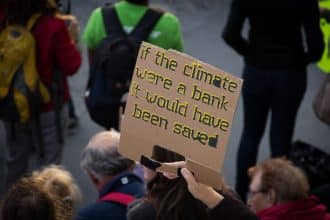
One striking similarity between the U.S., Russia, and Saudi Arabia is how fossil fuel companies wield outsize influence on political leadership in pushing for oil and gas. One of the most poignant signs at the march was therefore, ‘Separate Oil and State.’ Another important message is, ‘Separate Oil and Religion.’
Rabbi Yehuda HaLevi Ashlag, a leading kabbalist (Jewish mystic), wrote that God established the laws of nature in the world, and a person or society that transgresses one of these laws will be punished by means of nature. He likens nature to a judge God established to punish those who violate the laws of nature.
How does this relate to burning fossil fuels into the atmosphere? A law of nature that relates to the climate (according to the vast majority of climate scientists) says that there needs to be less than 350 parts per million of carbon dioxide in the atmosphere for human society and most other species, to be able to live on this planet. Prior to the industrial revolution, in 1800, there were 180 parts per million (ppm) of CO2 in the atmosphere.
We are now past 400 parts per million and rising every year. As NASA scientists write, “levels of carbon dioxide (CO2) in the atmosphere are [higher](https://climate.nasa.gov/climate_resources/24/) than they have been at any time in the past 400,000 years…

This recent relentless [rise](https://scrippsco2.ucsd.edu/history_legacy/keeling_curve_lessons) in Co2 shows a remarkably constant relationship with fossil-fuel burning, and can be well accounted for based on the simple premise that about 60 percent of fossil-fuel emissions stay in the air.” All of us putting carbon in the atmosphere at this point, especially significant amounts, are breaking the law. The law of nature.
One of the leaders of the people’s climate movement, Bill McKibben, [wrote](https://350.org/interesting-transitions-at-350-org/): “Unless the end to coal and oil and gas comes swiftly, the damage from global warming will overwhelm us. Winning too slowly is the same as losing, (…). I’m looking forward to the next 25 years—the quarter century that will decide whether we make progress enough to preserve our civilizations. Together we’ve built a movement; now, together, we’ll deploy it to confront the greatest crisis we’ve ever faced. 2016 was the hottest year in the planet’s history; that means we have to make 2017 the politically hottest season the fossil fuel industry has ever come up against, and 2018 after that. (…) We have found our will to fight, and that gives us a fighting chance to win.”
To turn the tide on climate change, a critical mass of people need to undergo consciousness change and consumption change. At a practical level, it involves bicycles and public transport instead of cars, local vacations instead of jet getaways, and a plant-based diet. May it come soon in our days.
*By Yonatan Neril, Founder, The Interfaith Center of Sustainable Development in Jerusalem*
*ICSD unites faith communities, teachers and leaders to promote co-existence, peace, and sustainability through advocacy, education and action-oriented projects. Learn more [here](https://interfaithsustain.com).*
*This post was also published on our [HuffPost ](https://www.huffingtonpost.com/entry/200000-at-peoples-climate-march-rise-to-the-challenge_us_5905cdb6e4b03b105b44b959)Blog on June 22, 2017.*
**Categories:** Blog on Faith and Ecology
---
### [Bill O’Reilly, Violation, and Mother Earth](https://interfaithsustain.com/bill-oreilly-violation-and-mother-earth/)
**Published:** April 28, 2017
**Author:** ICSD
**Excerpt:** This Earth Day, let us recall the words of Gandhi: “What we are doing to the forests of the world is but a mirror reflection of what we are doing to ourselves and to one another.” Bill O’Reilly, the recently-fired longstanding news anchor of Fox News, has provided a public example of this.
**Content:**
*This Earth Day, let us recall the words of Gandhi: “What we are doing to the forests of the world is but a mirror reflection of what we are doing to ourselves and to one another.” Bill O’Reilly, the recently-fired longstanding news anchor of Fox News, has provided a public example of this.*
Arrogance, the desire for pleasure, the will to dominate and short-term thinking are character traits that lead men to harass and force themselves on women. They are the same character traits that now drive humanity to rape the earth. Both are morally problematic and unjustifiable.
Richard Drew / AP
None of us are perfect and many men struggle with unrestrained sexual desire as well as climate denial. The former denigrates an individual woman, the latter exploits mother earth. Rebbe Nachman of Breslov taught that sexual desire is one of the three central human desires (the others being material desire and food desire). When unrestrained it feeds multi-billion dollar pornography and prostitution industries, and leads to sexual harassment and rape.
I use the term ‘rape of the earth’ deliberately because there is something about the way that much of humanity is “using” nature today that is strikingly similar to the forceful violation of a human being who is vulnerable. Did BP and its consumers ask the Earth or its Creator for permission before drilling 35,000 feet underwater for oil in the deep sea? Did Peabody Coal and its consumers ask creation before exploiting coal by blasting open mountaintops? Did we ask the rain forests and the millions of species in them if we could slash and burn them down in order to grow graze cattle and grow crops? Have we asked the 80 billion chickens in factory farms if they agree to being animals slaves to supply people with eggs and meat?
Most likely, the answer to all these questions is no. And therefore, our taking occurs without the consent of the one from whom we are taking and is a form of rape. Yet the violation of mother Earth is in most cases unconscious, driven by a long consumer supply chain in which the consumer is generally unaware of how their consumption impacts people and the planet. To partake of consumer society is to knowingly or unknowingly violate God’s creation.
The crisis of “outer reality” is actually a crisis of the inner reality. The ecological crisis is not primarily about economics, but about life-perspective orientation and the ways in which we strive to obtain our “desires”. It is less about the physical and more about the spiritual.
One of the [spiritual roots of the ecological crisis](https://www.jewishecoseminars.com/the-spiritual-roots-of-the-environmental-crisis-longer-article-for-deeper-study/) , and of the sexual harassment of women, is arrogance. When men think that they can take from mother Earth or individual women, indiscriminately without asking permission, or mutual consent, rape of the earth, sexual slavery, and harassment of women can ensue. In the case of careless use of resources, arrogance can be a spiritual root. People see themselves as above the object, and choose to throw away something that breaks or that they use instead of investing time and energy to fix or clean it.
As a prominent figure in American media, O’Reilly, with his arrogant speech and behavior, has been responsible for sowing doubt and confusion about the reality of climate change. Bill O’Reilly once said, “no one can control the climate except God.” Pope Francis begs to differ; in his Encyclical letter ‘On Care for Our Common Home,’ he quoted Orthodox Patriarch Bartholomew in saying that for humans to change the climate is to sin against God. How ironic, the that on the day that he was fired O’Reilly had the opportunity to shake the Pope’s hand.
O’Reilly’s climate denial falls in line with FOX News’ environmental position in general. [According to Media Matters](https://mediamatters.org/research/2017/03/23/how-broadcast-networks-covered-climate-change-2016/215718), in 2015 Fox News covered climate change for a wapping total of 39 minutes. In 2016, that miniscule number dropped even lower to seven minutes. Fox News, and Bill O’Reilly, did a lot to amplify the voice of a tiny minority of scientists who are climate deniers, including some paid by the coal industry. The Atlantic points out how O’Reilly’s successor, Turker Carlson, [agrees with statements of climate skeptics](https://www.theatlantic.com/science/archive/2017/02/the-new-rhetoric-of-climate-denial/516198/) where the “rhetoric is out of step with the latest science.” But it’s not just about Fox News. Ignoring of climate change is true of all mainstream U.S. media outlets. During the election season, ABC, CBS, NBC, And Fox did not address the implications of a Clinton or Trump Presidency on climate. CNN aired ads from oil, coal, and gas companies five times more than it covered climate change.
It is easy to see the faults in a public figure like O’Reilly and in mainstream media, but it may be more helpful to consider how we as individuals can become better people and tread more lightly on planet Earth. Reducing our meat consumption and airplane travel are places to start. O’Reilly’s example is instructive and reveals a current state of human living. A new state of consciousness is possible for human society, based on humility, consensual and conscious relationship, long-term thinking, and moderated consumption. This Earth Day, may we birth a sustainable, thriving, and spiritually aware society to realize the prophetic vision of a new earth.
By Yonatan Neril, Founder, The Interfaith Center for Sustainable Development in Jerusalem
ICSD unites faith communities, teachers and leaders to promote co-existence, peace, and sustainability through advocacy, education and action-oriented projects. Learn more [here](https://interfaithsustain.com/).
This post was also published on our [HuffPost](https://www.huffingtonpost.com/entry/bill-oreilly-violation-and-mother-earth_us_58f9ec57e4b086ce58980fc2) Blog on April 28, 2017.
**Categories:** Blog on Faith and Ecology
---
### [This Election Reveals The Collision Course Between Consumer Society And Creation](https://interfaithsustain.com/this-election-reveals-the-collision-course-between-consumer-society-and-creation/)
**Published:** January 28, 2017
**Author:** ICSD
**Excerpt:** Rabbi Yonatan Neril - What this election reveals to me is to the extent to which American society, but more generally the dominant paradigm of consumer society, is on a collision course with Creation.
**Content:**
What this election reveals to me is to the extent to which American society, but more generally the dominant paradigm of consumer society, is on a collision course with Creation. Since being elected, Mr. Trump is prioritizing creating jobs, growing businesses, drilling oil and gas, mining coal, and expanding infrastructure, including highways and oil pipelines. The broader societal goal is to expand material consumption and consumer society. It therefore makes sense for him to say that we should roll back the EPA’s environment protection’s and the UN’s climate change accord, because both of these may limit the unrestrained growth of material and consumer society, especially one fueled by fossil fuels. The election is helpful is clarifying that we are heading full steam ahead for the iceberg. To read more, click [here](https://www.huffingtonpost.com/yonatan-neril/from-marrakesh-to-banglad_b_13145012.html)
**Categories:** Blog on Faith and Ecology
---
### [Creating A “Shared Society”: What Might that Mean for the Holy Land?](https://interfaithsustain.com/creating-a-shared-society-what-might-that-mean-for-the-holy-land/)
**Published:** June 3, 2016
**Author:** ICSD
**Excerpt:** Marilena Bekierz - Last week I attended the Givat Haviva Conference on Shared Society, with fascinating presentations and discussions.
**Content:**
*By Marilena Bekierz*
Last week I attended the [Givat Haviva Conference](https://www.fes.org.il/events/4th-annual-givat-haviva-conference%29) on Shared Society, with fascinating presentations and discussions.
One quote from a speaker really struck me. He said, “we will not build our own identity by excluding others”. Even though he was certainly referring to the critical political situation of two nations living together in one country, this can also be applied to sustainability.
Let me explain: Our work of the Interfaith Center for Sustainable Development focuses on how we, as humanity, all share one earth. And so, I thought, a ‘shared society ‘also means living in a shared space together, which includes *all* human beings living on this planet, regardless of their ethnicity, religion or culture. In order to do that, people of faith who live in this land– Christians, Muslims, and Jews– need to look deeply into their traditions to learn how to share with someone who is “other”.
One crucial, yet often underestimated aspect needed to achieve this ‘shared society’ is: education. Education is closely linked to promoting a more humane and sustainable world, and equality in education– for women and girls, for people of different ethnicities, etc.– is a key value to those who seek an equitable society.
In effect, the conflict that was addressed and discussed at the Givat Haviva conference shows that by promoting interfaith dialogue the idea of sustainability can be nurtured and ultimately realized. Especially if, as an interfaith practice we all turn to our faiths which each define us human beings as a creation of God put here to guard and preserve life.
With no exception, and including all human beings, animals and plants, we must see the “other” as that which our own survival in dependant upon. And that understanding could be a catalyst to establish peace between antagonized parties and promote faith for individuals who regard themselves as not religious.
I recently attended a second conference, *Jerusalem as a Culturally Competant City*, organized by the Jerusalem Intercultural Center and the Jerusalem Foundation. During the conference, different organisations and speakers of various religions of Jerusalem presented their initiatives and projects (youth groups, NGO’s, municipality staff, citizens, international guest speakers), all focused on to strengthening a diverse society within the pluralistic city and country that is Jerusalem and Israel. One presenter reminded us that culture is created by people, not the other way around. A country consists of many people and draws its strength from its diversity. In the words of St. Francis of Assisi, “If you have men who will exclude any of God’s creatures from the shelter of compassion and pity, you will have men who will deal likewise with their fellow men.” As people striving for a thriving, sustainable, and tolerant society, let us extend our compassion and concern to all human beings and all sentient beings on this planet.
*\* Featured image [source](https://unsplash.com/@laurasiegal)*
**Categories:** Blog on Faith and Ecology
---
### [Trees and Humans in the Holy Land](https://interfaithsustain.com/trees-and-humans-in-the-holy-land-2/)
**Published:** January 24, 2016
**Author:** ICSD
**Excerpt:** Chelsea Revell and Rabbi Yonatan Neril - Conflict, climate change, consumer society, and quickness of travel. These are the driving forces that put human society at loggerheads with the trees on which it depends. In the past decade, war, arson, climate change, and expansion of roads, cities and industry have reversed some of the gains of the 20th century tree planting in Israel.
**Content:**
*By Chelsea Revell and Rabbi Yonatan Neril*
Conflict, climate change, consumer society, and quickness of travel. These are the driving forces that put human society at loggerheads with the trees on which it depends. In the past decade, war, arson, climate change, and expansion of roads, cities and industry have reversed some of the gains of the 20th century tree planting in Israel. The human impact on the the trees and forests of the Holy Land is readily apparent to those living on the land. Israel’s trees and forests continue to suffer from human activity, and this should make us think more critically about both connection and commitment to our environment.
**19th Century Deforestation and 20th Century Afforestation**
In the centuries prior to the early 1900s, several periods of deforestation occurred in Israel. Large-scale destruction of forests unfolded as competing powers sought to advance their hand in the region. The Ottoman Turks harvested vast amounts of timber to fuel their railroad system and armed forces. The Egyptian army performed similarly. Smaller-scale operations added to the crisis: as power shifted in the 1800s, fleeing refugee populations such as the Circassians, displaced by Russian oppression, settled in previously less inhabited areas and naturally put the land’s resources to their own use.
Israel’s landscapes were being profoundly affected by political and militaristic ambitions – yet remarkably, as the 21st century began, Israel was unique in comparison to most countries in that it had *more* trees than were present a century before. This is largely due to reforestation efforts, which were begun in the early 1900s by the KKL-JNF (Keren Kayemeth LeIsrael-Jewish National Fund) and took hold especially mid-way through the century and forward. Since 1948, around 240 million trees have been planted in Israel (with consideration given to match species and regional ecosystems) under the guidance of the KKL-JNF.
**The Fate of Trees in the 21st Century**
In 2006, the intense conflict between Israel and Hezbollah of Lebanon, had profound effects on thousands of acreage in northern Israel. That August, rockets launched by Hezbollah ignited hundreds of fires in the Galilee, damaging forests and agricultural plots alike over a six-week course.
Second, Israel experienced its largest fire in modern history when a four-day long blaze in 2010 engulfed around 10,000 acres of land in the Mt. Carmel forest reserve – nearly twice the amount of land affected in the 2006 conflict. Israel had experienced an unusually warm and dry autumn, which followed followed four years of drought. (the same drought in Syria was one of the triggers of the Syrian war.)
The December fire was probably caused when the burning from a nearby garbage dump got out of hand and flames spread. The KKL-JNF estimated that 1.5 million trees were burned. Third, Arson and the tree-cutting by Israelis and Palestinians shows how trees are used as a tool of conflict. During the course of the Carmel fire, waves of arson appeared throughout Israel and West Bank, and investigators concluded that the perpetrators probably took the opportunity to simply “hitch a ride” on the Carmel fire in order to express unrest or perhaps to distract from the Carmel rescue attempts – a tragic testimony to lack of care for the land.
Rabbis for Human Rights, a non-politically-affiliated NGO, frequently engages in olive sapling planting activities to remedy destruction caused by Jewish settlers who attack the olive trees of neighboring Palestinian villages. In October 2013, 400 olive trees were burned in the Palestinian village of Jalud, while more recently in January 2015, 5,000 olive tree saplings were found uprooted or destroyed around the village of Turmus Ayya. Caught between the struggles of human affairs, the land is stripped again and again of its livelihood.
Fourth, in addition to human-caused damage to Israel’s trees in the forest and the agricultural sectors, an increase in the intensity of natural disasters in recent decades may be cause for concern. Even in the last few years it is possible to point out examples: the winter of 2013-2014 brought two powerful storms, one of which – winter storm Alexa – destroyed or damaged tons of thousands of trees. And since an increase of extreme weather events is consistent with the Intergovernmental Panel on Climate Change’s predictions for the present and future, we need to ask ourselves how what kind of effect such a shift might have on the natural world around us – and, to take things a step further, how we as humans might be contributing to that shift.
Fifth, Israel is expanding highway One between Jerusalem and Tel Aviv, and Highway 65 in the Galilee, which has caused the destruction of thousands of trees. With the growth of both population and consumption, the expansion of towns, cities and industrial facilities has had a similar impact.
Deuteronomy 20:19 states ”*the human being is a tree of the field.*” A Jewish Midrash (commentary– Sifrei) understands this to teach that the fate of the human being is bound up with that of the tree. We depend on trees for so much– food, wood, shade, oxygen, soil retention, and more– and must be wise to protect and care for them. To learn more about trees, Jewish teaching, and caring for the earth, [click here](https://www.jewishecoseminars.com/trees-torah-and-caring-for-the-earth/).
**What Can We Do?**
Thus some of the gains the gains made during the 20th century in afforestation efforts in Israel, we are losing as well. What is to be done? Reforesting is an important and admirable activity in many contexts, but it is also worth noting that the natural world has a remarkable ability to rehabilitate itself. Following the Carmel forest fire, many in the public called for plant trees immediately. Yet a consensus among Israeli forest experts agreed to refrain from such plans and rather let nature run its course. Foresters from the University of Haifa Carmel Research Center, the Society for the Protection of Nature in Israel (SPNI), and even the KKL-JNF cautioned against moving too fast, reminding the public that ecologically speaking, natural forest fires function as a mode through which many tree species renew themselves and their populations. Natural seed release from burnt trees yields saplings by the next year, and overplanting can lead to a forest that is too densely planted and even more susceptible to future fires. Alon Rothshild, an expert with the SPNI, stated that “After an event like a fire, there needs to be a natural slow mechanism. The Carmel fire was a tragedy for the environment, but this landscape knows how to rehabilitate itself.” This is not to say that human-caused fires are either permissible or desirable. One lesson to be learned from this is that, as such disasters indeed require a *slow mechanism* in order for the environment to recover properly, we should be intentionally cautious and thoughtful about the ways in which we interact with our environment. Our environment is not expendable. Our forests are important – they contribute to the removal of carbon dioxide from the atmosphere, enable biodiversity to thrive, offer natural resources, beauty, and community building opportunities. We are bound to the natural world around us. To strip a land of forests is to dislodge an element that is needed for our environment to properly function. And if we threaten it – or stand by as it is threatened – then what, by extension, will become of us?
In Dr. Seuss’s illustrative tale *The Lorax*, we hear these words: “I am the Lorax. I speak for the trees. I speak for the trees for the trees have no tongues.” All around the globe, the trees have no tongues. In our corner of the world that is the Holy Land, with the recent loss of about two million trees, we need to speak up for them. They were created by God, our existence depends on theirs. For practical actions you can take to protect trees, [click here](https://www.wikihow.com/Save-Trees).
##### \*\*\*3rd picture from the top: Photo of vine maples against forest by David Patte, USFW, Flickr Creative Commons license; 4th picture from the top: Picture of Common Buckthorn – Image by hspauldi via Flickr used under a Creative Commons Attribution; 5th picture from the top: Photo Credit: Image by 23dingenvoormusea via Flickr Creative Commons;
6th picture from the top: Ruth Henricks Photography – rutheh.com
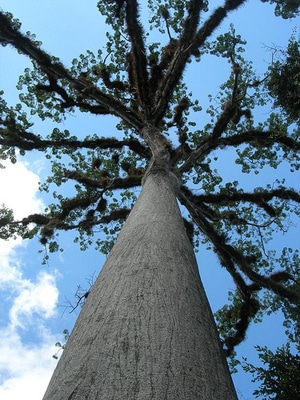

*\* Featured image [source](https://unsplash.com/@laurasiegal)*
**Categories:** Blog on Faith and Ecology
---
### [How Can We Keep the Holy City of Jerusalem Clean?](https://interfaithsustain.com/how-can-we-keep-the-holy-city-of-jerusalem-clean/)
**Published:** January 7, 2016
**Author:** ICSD
**Excerpt:** Rabbi Yonatan Neril - am writing to encourage an expanded religious sensitivity concerning our waste—how much garbage we produce, and where our garbage and sewage go. Why, because in this week’s Torah portion, Shemot, it is written, “They gathered them into many heaps, and the land stank” (Exodus 8:10) While the Bible is referring to the frogs that died in the second plague, this verse also describes the present situation in Jerusalem, where in some neighborhoods garbage has not been removed in eight days.
**Content:**
I am writing to encourage an expanded religious sensitivity concerning our waste—how much garbage we produce, and where our garbage and sewage go. Why, because in this week’s Torah portion, Shemot, it is written, “They gathered them into many heaps, and the land stank” (Exodus 8:10) While the Bible is referring to the frogs that died in the second plague, this verse also describes the present situation in Jerusalem, where in some neighborhoods garbage has not been removed in eight days. The upside of the garbage strike in Jerusalem is that we get a rare glimpse into how much waste our consumer society produces, and hopefully gain some resolve to reduce the amount of waste we produce. If this is what five days worth of garbage looks like, then what is our footprint after 500 or 5,000 days? When we throw it out, it doesn’t just go away but goes somewhere, in this case to sit in the holy city.
By contrast, San Francisco recycles or composts about 78% of its waste stream, and aims to achieve zero waste in the next four years—taking it to a place “Where No City Has Gone Before.” Jerusalem is on the other end of the spectrum—doing a good job recycling large plastic bottles, but rating poorly in most other parts of the waste stream. Three and a half million tourists come to the holy city each year, and many wonder why there is so much a litter lying on the ground.
To read more, [click here](http://blogs.timesofisrael.com/how-can-we-keep-the-holy-city-of-jerusalem-clean/).
*\* Featured image [source](https://unsplash.com/@carlbcampbell)*
**Categories:** Blog on Faith and Ecology
---
### [Will God, Technology, Politicians or Eco-Billionaires Alone Save Us From Our Ecological Crisis?](https://interfaithsustain.com/will-god-technology-politicians-or-eco-billionaires-alone-save-us-from-our-ecological-crisis/)
**Published:** December 30, 2015
**Author:** ICSD
**Excerpt:** Rabbi Yonatan Neril - I want to share with you and debunk a few commonly held views about how others will save us from our ecological crisis, in the hope of empowering us to take action ourselves. One: God will save us, and therefore we don’t have to do anything.
**Content:**
I want to share with you and debunk a few commonly held views about how others will save us from our ecological crisis, in the hope of empowering us to take action ourselves. One: God will save us, and therefore we don’t have to do anything. This is refuted by a Jewish teaching, as well as other faith teachings:
> When God created Adam, God took him and showed him all the trees of the Garden of Eden and said to him, ‘See my works, how beautiful and praiseworthy they are. Everything that I created, I created for you. Be careful not to spoil or destroy my world–for if you do, there will be nobody after you to repair it…’
>
> Midrash Ecclesiastes Raba 7
The Creator is with us in this critical moment of human history, and is calling upon us to change our ways. To read Rabbi Yonatan Neril’s full blog post on the *Huffington Post*, [click here](https://www.huffingtonpost.com/yonatan-neril/will-god-technology-polit_b_8873776.html).
*\* Featured image [source](https://unsplash.com/@boukaih)*
**Categories:** Blog on Faith and Ecology
---
### [Interview with Bishop William Shomali](https://interfaithsustain.com/interview-with-bishop-william-shomali/)
**Published:** October 21, 2014
**Author:** ICSD
**Excerpt:** Siiri Bigalke - Interview with Bishop William Shomali about his experience with environmentalism and his respective religion's take on sustainability.
**Content:**
*Interviewed by Siiri Bigalke of The Interfaith Center for Sustainable Development and Recorded by Daniel Altman*
*The text below is the full transcription of the interview – a condensed version appears in the video above.*
## Transcription of the Interview with Bishop William Shomali
**Bishop William Shomali:** I’m Bishop William Shomali, Auxiliary Bishop for the Latin Patriarchate of Jerusalem. I’ve been living here \[the Holy Land\] for 35 years as Bishop. I’ve served in Jordan and Palestine all of my time.
**Siiri:** Please tell us about the origins of your personal concern for the environment and the ecological damage, including climate change, which society is inflicting upon the Earth.
**Bishop William Shomali:** I was initiated to the term environment, or ecology, slowly slowly, when I was student of the 6th grade, when our teacher of geography told us that the Amazon forest of Brazil are the lungs of the world. So this astonished me, how can a forest be a lung? So he explained that we need oxygen, that we produce everyday through factories, through technology carbon dioxide, which is polluting the air, so we need really to have fresh air, less pollution. So he explained to us the value of a forest. Then I heard about deforestation, when man cuts the trees in order to use them for furniture, etc. Then I also heard about the pollution of rivers, of seas, I heard of the Chernobyl atomic reactor in Russia, exploded, or emitted radioactivity. So all these things together educated me to the importance of protecting the creation, to protect the world in which we live so that we can breathe fresh air, drink clean water – this is important. And to have also healthy food. Our life is related to the creation, through the air, the food, the water, etc. And slowly, slowly, I came to the knowledge of the importance of protecting the creation before it is too late.
**Siiri:** In terms of your own personal religious practice, how does environmental sustainability factor in?
**Bishop William Shomali:** At the same time, I’m a believer and a human being. As a believer, I relate to God. As a human being I relate to the society in which I believe. And there is no contradiction between being believer and human. We know from our faith that God created the world. And he created it perfect, harmonious, beautiful. And he wants us to keep it as stewards, for our own interests. If we keep creation, it’s our salvation. If we don’t keep it, it will be our own destruction as human beings. So to say the truth, according to me, to respect the creation, to fight pollution, is an act of faith. It is an ethical act related to religion. I can’t for example, accept that in Gaza, all the sewage goes to the Mediterranean. Because the Mediterranean is polluted, and the Mediterranean belongs to all the people living around it. So this pollution, according to me, is a crime. We have to fight any form of pollution, not only in our own country, but in other countries because of the interaction in between different places in the world. So really it became a problem for all religions together but also an international problem.
**Siiri:** Can you elaborate on a teaching the Bible that relates to protecting the environment?
**Bishop William Shomali:** We find in the Bible, many teachings related to the creation, to the environment. From the first chapter of Genesis, we know that the Lord created the Earth, created light, created water, created animals, plants, trees, and everything was beautiful says Genesis. And the Lord found that everything was nice. It means that the book of Genesis is optimistic about the creation. It’s a good thing. It came perfectly from the hands of the Lord. And then I observed that in the Psalms, we have many texts that speak about the beauty of the creation. The Lord created the world very beautifully so that we can enjoy it. We can enjoy a sunset, we can enjoy a beautiful scenery of hills, mountains, waters, oceans, etc. Psalm 104 is related to this, the verse 24 reads, “Oh Lord, how wonderful are your works. In wisdom you have made them all. The Earth is full of your riches. The glory of the Lord shall endure forever. The Lord shall rejoice in his works.” It’s a beautiful Psalm. All whole Psalm is like this. So really, when we protect the creation, we give praise to the creator himself. Who has done things very well. We find also other Psalms speaking about the beauty of the world, and how the wise Lord has done things very good for our own advantage. Even to teach to students in the school, because through poetry, people can learn ecology – how to respect the beauty, the harmony of the creation.
**Siiri:** Do you think that people in positions of leadership in religious institutions, like yourself, can influence the way communities address climate change or other environmental issues – energy, greenhouse gases.
**Bishop William Shomali:** Yes, we need to collaborate together between Christians, Muslims, Jews, Buddhists, Hindus – any religions. Because it is a common problem related to all of us. Collaboration is important. Not only between people of faith but also with politicians. We have also to educate politicians, and to tell them that protecting the environment is a duty, is a religious act – or let us say, a human act. What we can do as people of faith, as religious leaders, is to educate, to talk, to ensure the young generation the importance of fighting pollution for example. I give you an example, many times a fire in a forest starts by neglect – because someone has created a fire for a barbeque and they left the dire un-extinguished and they left. What can we call this? It’s a crime. They enjoyed it and they left. What happened after they left? A fire in a forest. Maybe people can die fighting the fire, and the destruction it can’t be repaired quickly. So really, to give a sense of duty to the young people, how they should respect the forest, a tree, a flower – even in simple things: how to respect the water. We as people of faith, we have to teach people to respect water, not to waste water, because in other places people don’t have. So our work can go from simple things, from teach young generations, simple things: how to respect the environment. To more complicated things, for example, how to educate politicians how to find alternatives ways for energy. So our role is to talk, to educate, not only to young generations but to the people who are the decision makers. And slowly, slowly the world makes its way, and it touches the hearts, and there is progress. If we speak together as religious leaders, our impact is really stronger. So it’s our duty to speak even if what we say can be disturbing, but we have to talk, we have to talk.
**Siiri:** What do you see as the role of people of faith coming together to promote environmental sustainability? Why is this important?
**Bishop William Shomali:** I am sure that working together on ecology and the environment unites us. Because here there is no dogmatic difference, no ethical difference, we all agree that we have to respect the environment, the water, the sea, the river, the mountain, the gardens, the forests. I don’t see any exceptions to this rule. So really, I believe that even working together becomes the best way of inter-religious dialogue. Because what is the use and the advantage of inter-religious dialogue if it remains only on a theoretical level? Just to say “my religion says this, your religions says that”. Okay, we know this, we find it in the books. But if we can work for a noble cause, like ecology, really we feel we are more united. So I believe that ecology unites the religions, and the fighting against the pollution, for a better environment, unites religions. I admire the Bahá’í religion, which we find them in Haifa. When you got to visit their shrine, they have the most beautiful gardens in the country. It’s a good example how religions sustains harmony, beauty, aesthetics. I love this. If all religions behaved like them, fights for beauty, harmony, gardens, flowers, etc, it will educate people to a very important meaning in life.
*This Conversation on Faith and Ecology was produced by the [Interfaith Center for Sustainable Development (ICSD)](https://interfaithsustain.com/). Each conversation involves an interview with a religious figure on their perspective on their religion’s approach to ecological sustainability.*
*The aim of the initiative is twofold: firstly, to record the spiritual insight of religious and community leaders regarding sustainability, and secondly to ignite interfaith discussions regarding the nexus between spirituality and sustainability.*
**Categories:** Blog on Faith and Ecology
---
### [Urban Hiking, Recycled Origami and Twenty Two Women from Three Religions.](https://interfaithsustain.com/urban-hiking-recycled-origami-and-twenty-two-women-from-three-religions/)
**Published:** August 25, 2014
**Author:** ICSD
**Excerpt:** Maya Brilliant - Twenty-two women from different cultural backgrounds and religions met, hiked, ate, and shared in a beautiful Jerusalem setting on the seamline between East and West Jerusalem. This was the fifth monthly meeting of ICSD’s Women's Faith and Ecology project.
**Content:**
*By Maya Brilliant for The Interfaith Center for Sustainable Development (ICSD)*
Twenty-two women from different cultural backgrounds and religions met, hiked, ate, and shared in a beautiful Jerusalem setting on the seamline between East and West Jerusalem. This was the fifth monthly meeting of ICSD’s Women’s Faith and Ecology project. We started our meeting at the ICSD workspace on Mount Zion, walked together along the Old City wall and then on a tree-lined trail to the beautiful Hinnom Valley. After getting to know each other a little bit, we started discovering what we have in common. Starting with our common interest in the environment, we soon ended up talking about our bond of sisterhood that can help us through the hardships that we experience – especially now when times are difficult.. After sharing our thoughts and feelings with each other we started an Origami workshop where we learned how to make a peace crane together out of reused paper.
According to the Japanese tradition, the origami crane symbolizes peace. Therefore, after each of us wrote on a used piece of paper a personal peace message, we folded together the paper into twenty-two peace cranes. We then hung all the cranes together on an olive tree (who leaves symbolize peace) and gathered for a group photo. While the recent events left all of us with a lot of pain, confusion and despair, meeting together with women who share who seek peace helped us leave the gathering with a great sense of hope in our heart.
If you are interested in joining us for future meetings of the Women’s Faith and Ecology Project in Jerusalem, please contact Maya Brilliant at <MayaICSD@gmail.com> or Hiba Dawud at <hdawud@interfaithsustain.com>.
To read more about the Project, click [here](http://www.interfaithsustain.com/sewing-seeds-building-trust-seeking-peace/).
**Categories:** Blog on Faith and Ecology
---
### [Where Nurture Meets Nature](https://interfaithsustain.com/where-nurture-meets-nature/)
**Published:** August 20, 2014
**Author:** ICSD
**Excerpt:** Elana Frank - Sometimes our best efforts to tackle environmental issues only focus on the short-term – which often leaves us with bigger holes to dig out of in the long run. That seems to be the case quite often with our region’s immediate need for water.
**Content:**
## Blending Hindu Faith and Ecological Ingenuity to Rejuvenate a Holy River in India
*By Elana Frank for The Interfaith Center for Sustainable Development*
Sometimes our best efforts to tackle environmental issues only focus on the short-term – which often leaves us with bigger holes to dig out of in the long run. That seems to be the case quite often with our region’s immediate need for water. Yet, conventional methods for extraction and purification tend to follow this dirty trend – exchanging clean water for sediment, heavy metals, and ooze. Phytotechnology is a relatively new and increasingly popular method that uses natural, plant-based elements to solve environmental problems like water contamination. *Well sure, people have been doing this for years*, you might say. But phytotechnology specifically addresses emergent issues of contaminant removal and storage – empowering the planet itself to help us clean up our messes. [Ayala Water & Ecology](https://www.ayala-aqua.com/), located in the north of Israel, uses this technology to address water pollution and contaminated run-off. The Ayala team developed a Natural Biological System (NBS) that utilizes a variety of plants, soils, and hydraulics to filter hydrocarbons, pathogens, grey water, agricultural sewage, and oils out of almost any ecosystem.
Eli Cohen founded Ayala Water and Ecology twenty-five years ago. Although he was always interested in water issues, he found that most conventional ways of addressing today’s water challenges use chemicals and machinery that ultimately create more harm than good. He was interested in discovering natural alternatives, which is how he came upon phytotechnology – a method that offers net positive results for water purification AND the environment, and takes less maintenance, less energy, and less money to implement. Ayala has worked on projects of many different sizes and in many different places, from a waste dumpsite in Tel Aviv to an entire valley in Plaine du Var, France.
Ayala’s most recent project is to clean up the Ganges River in India. The Ganges River is a main source of water in India and flows into many other tributaries and reservoirs and is [extremely polluted](https://www.hindustantimes.com/delhi/ganga-receives-2-900-million-ltrs-of-sewage-daily/story-SApumDD2zFUTUtb3AtpC9K.html). Aside from its ecological importance, the Ashram is dedicated to cleaning up the Ganges because of its spiritual significance as a holy site for Hindus.
To implement this NBS technology, Ayala is working with the, one of India’s principal spiritual institutes, located in Rishikesh. Swami Chidanand Saraswati, President and Spiritual Head of the Ashram, and Sadhvi Bhagawati Saraswati, President of Divine [Parmarth Niketan Ashram](https://divineshaktifoundation.org/) Shakti Foundation based at the Ashram, are both members of the [United Planet Faith & Science Initiative](https://www.uri.org/), a faith-science unity project co-organized by [The Interfaith Center for Sustainable Development](https://interfaithsustain.com).
Sadhvi Saraswati is working with Ayala in bringing NBS technology to the Ashram because she was seeking an affordable, natural system to help the river return to its healthy, holy flow. With every project come new discoveries of ways to implement phytoremediation. Eli believes that through an open-minded attitude towards the earth’s vast resources and the technology’s infinite potential, this phytotechnology system could ultimately resolve pollution problems in any body of water. Together, the Ashram and Ayala are setting the trend: blending faith and science to purify our planet and quench the thirst of millions.
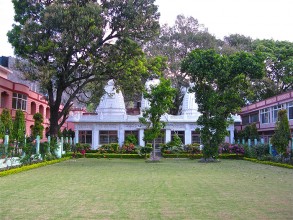
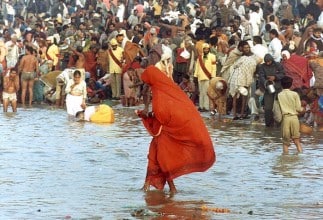
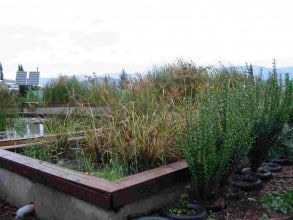
**Categories:** Blog on Faith and Ecology
---
### [Eco Bible](https://interfaithsustain.com/solarinafrica/)
**Published:** January 24, 2016
**Author:** ICSD
**Excerpt:** The groundbreaking Eco Bible draws on 3,500 years of religious ethics to show how the Bible itself and its great scholars embrace care for God's creation.
**Content:**
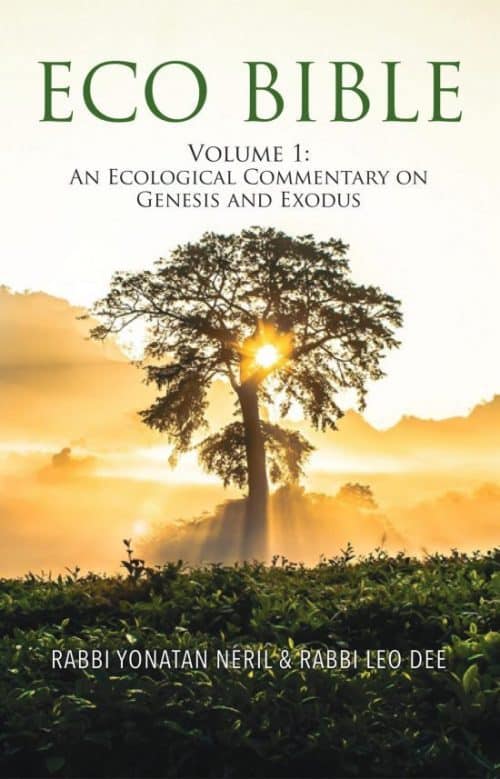
What can the Bible tell us about ecology? As we face huge environmental challenges—including more frequent and intense hurricanes, floods, and forest fires, and widespread plastic pollution—*Eco Bibl*e shows how the Bible itself and its great scholars embrace care for God’s creation as a fundamental and living message. Drawing on 3,500 years of religious ethics, right up to the present, the groundbreaking *Eco Bible* informs readers from every background, inspires faith-based ecological commitment, and motivates action to protect all of God’s creation.
Publishers Weekly calls the book “an insightful analysis… which will inspire contemplation on how to live in harmony with nature and the power of conservation. Ecologically minded readers interested in the Hebrew Bible will love this.”
This ‘earth Bible’ is an illuminating read for anyone interested in Jewish and Christian social issues, and an important contribution to eco theology and the spiritual ecology movement.
To learn more about Eco Bible and buy it on Amazon:
[**Click Here**](https://www.amazon.com/Eco-Bible-Ecological-Commentary-Genesis/dp/173533880X/ref=sr_1_1?dchild=1&keywords=eco+bible&qid=1603029210&s=books&sr=1-1)
Volume 1 explores Genesis and Exodus, and Volume 2 (2021) explores Leviticus, Numbers, and Deuteronomy, altogether covering 450 verses in the Five Books of Moses/Pentateuch/Old Testament. By linking faith and science, the book connects millennia of religious wisdom with contemporary scientific thought regarding human health, biodiversity, and clean air, land, and water. *Eco Bible* reveals what Rabbi Shlomo ben Aderet calls “the ever-increasing number of fresh understandings of the Bible’s verses,” quoting more than 100 rabbis from Biblical times to now. Before this, their ecological insights on the Bible could only be found scattered across hundreds of books.
Professor Bill Brown, Professor of Old Testament at Columbia Theological Seminary in Georgia calls *Eco Bible* “a rich repository of insights…for people of faith to move forward with wisdom, inspiration, and hope, all for the sake of God’s good creation.”
Applying Biblical ethics to stewardship, conservation, and creation care is not just an idea for today, but is essential for a future where we and future generations live in balance, thriving on a planet that remains viable for all life. At a time of both ecological and spiritual crisis, ecological reading of the Bible can have profound impact on human behavior since billions of people worldwide consider it a holy book.
To learn more about Eco Bible and buy it on Amazon:
[**Click Here**](https://www.amazon.com/Eco-Bible-Ecological-Commentary-Genesis/dp/173533880X/ref=sr_1_1?dchild=1&keywords=eco+bible&qid=1603029210&s=books&sr=1-1)
The verses and commentary in *Eco Bible* affirm a spiritually grounded vision for long-term sustainability and immediate environmental mindfulness and action, including many suggested action items. *Eco Bible* uniquely explores the Bible’s deep inspiration for fulfilling the blessing of all life, changing course to preserve God’s creation, and sustaining human life in harmony with nature and all God’s creatures.
Rabbis Yonatan Neril and Leo Dee are co-editors and lead contributors.
To read the press release, [click here](https://interfaithsustain.com/news/press-releases/groundbreaking-new-eco-bible-connects-both-spiritual-and-ecological-wisdom-of-hebrew-bible/).
To read the commentary on Genesis chapter one for free, [click here](https://interfaithsustain.com/wp-content/uploads/2020/10/Genesis-Eco-Bible-chapter-1-excerpts.pdf).
[](https://www.amazon.com/Eco-Bible-Ecological-Commentary-Genesis/dp/173533880X)
**Categories:** Home
---
### [Interview with the Rev. Angela Zimmann](https://interfaithsustain.com/interview-with-the-rev-dr-angela-zimmann/)
**Published:** July 31, 2014
**Author:** ICSD
**Excerpt:** Siiri Bigalke - Interview with the Rev. Angela Zimmann about her experience with environmentalism and her respective religion's take on sustainability.
**Content:**
*Interview by Siiri Bigalke of The Interfaith Center for Sustainable Development*
*The text below is the full transcription of the interview – a condensed version appears in the video above.*
## **Transcription of the Interview with the Rev. Angela Zimmann**
**Siiri**: Will you introduce yourself and how your interest in spirituality and the environment formed?
**Rev. Angela:** I am Rev. Angela Zimmann, and I am from Toledo, Ohio in the United States of America. I am here in Jerusalem serving at the Evangelical Lutheran Church of the Redeemer, the English-speaking congregation. And I’ve been here for about a year and a half, and I’m finishing up my term here. I was educated at Trinity Lutheran Seminary in Columbus, Ohio and then graduated from the Lutheran Theological Seminary in Gettysburg, Pennsylvania
**Siiri:** Did you ever encounter environmental teachings in Christian philosophy during your seminary school? Or during your early years serving as a pastor?
**Rev. Angela:** In seminary I did take a class called ‘Science and Theology’ and so that was a really helpful class that talked about the importance of honoring the scientific tradition at the same time as honoring biblical literacy. So we believed that evolution and creation were not seen as at odds with each other, it was seen that God could create through evolution and we started to talk about how science and religion could be partners instead of enemies and at odds; they were both two sides of the same coin*.* So I was really appreciative of the fact that science and theology were viewed as closely related. At that time in the early to mid 90’s there wasn’t much of an emphasis on the environment as there is now, and I’m glad to see that shift because it’s so important with global climate change and all of what’s going on in the world that we put an emphasis on the environment. And I don’t think that religion is worth anything if it doesn’t talk about caring for the creation that we have here now. So I know in seminaries now there is much more of an environmental component and I know that for instance the seminary I’m going back to work at has an entire Gettysburg Green Initiative where they have solar panels and all kinds of things on campus and they’re serious about recycling and community gardens and these types of things that I think are vital.
**Siiri**: In your own personal religious practice, how does environmental sustainability play in?
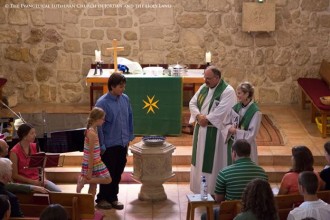
**Rev. Angela**: I try to live out what I’m preaching and advocating, so I do a lot of reducing, reusing, and recycling. I try to make sure that I don’t buy clothes off the rack in the store; I try to buy things that are second hand. I try to watch the amount of water I use. I try to grow my own vegetables in a garden. I raise chickens and goats so that we can have our own fresh eggs and goat’s milk. So I try and live it out on a small scale because I believe that can be an example for other people. People will often say what can I do, I can’t do anything, I can’t make a difference, because I think it’s hard when you’re one person to think that you can make a difference. But if everyone does a little bit, we can accomplish quite a lot. So I try and incorporate daily practices to help.
**Siiri**: Which has really inspired you to or just resonated with the work you are doing… ?
**Rev. Angela:** Well I feel that when we are told in the Hebrew testament that God gives dominion to us over the earth, it says to subdue it, it’s not dominion in that we can take whatever we want and eat animals and do whatever we want, we are joint steward of creation and so its our responsibility to take care of our world that we have been blessed with and I think that most of the faiths agree with that. And I know that the Jewish faith and the Christian faith and I believe the Islamic Faith all subscribe to the belief that the world is a blessing and we need to be good stewards and cherish this blessing that we have. So that’s kind of one of the Bible verses that, Bible passages, that – the fact that we are set in dominion to care for the world and to be lifted up to be good stewards.
**Siiri**: So as a religious leader yourself do you view it as a personal responsibility to also inspire your congregation to do this, have kind of the same type of mindset towards taking care of the creation?
**Rev. Angela:** Sure. I do believe that it’s part of my calling to help educate and lift up the care of the earth to the people who are coming to church and sitting in the pews. I also think that I have a lot to learn from them. I served in a rural parish in Michigan and people there knew a lot more about farming and the land and what it took to have a sustainable, how ever many acres, something that I had never learned. So I think that it’s something that sharing with the community to make things better and I think that people sometimes get discouraged with the idea of environmentalism because they feel like its just another responsibility, that it costs more money, it takes more time, it’s more giving, it’s just one more thing that I have to do, it’s one more responsibility that I have to have, and you have to view it as not a responsibility but a part of your life that can be more freeing and for instance buying clothes that are more gently used, not only are you helping the environment but you are also saving money so suddenly you don’t have this stress of how would you spend this money, rather than becoming a bigger stresser it lessens stress. This year for Christmas one of the things that our family did was, I talked to my congregation about it, was we had a second hand Christmas and we decided that every Christmas gift we bought was created or was purchased second hand, but nothing was from the new store. That was hugely freeing and a huge relief not to have these huge bills around Christmas time and I think that if people can see that environmental activism can be things like that and can create a sense of freedom and less obligation and people are excited to be a part of it.
**Siiri:** So you briefly kind of mentioned trying to promote reducing and reusing, but many people feel now that globalization and certain technologies are colliding with natural systems of the earth. So how do faith and ethics connected to spirituality according to your personal view reconcile this?
**Rev. Angela:** Well I believe that people, I think globalization can be harmful in essence. It just ends up making products very cheaply and using cheap labor, it really effects the world. Where people come from outside are willing to pay for just a little bit for product, where everything is disposable, \[after a\] short amount of time you just throw it away. The next best product, and, I think that the ethic of working hard and doing something well and producing something well is a biblical ethic. It says in the Bible whatever you put your hand to do your best and I think people should put the time and effort into making products what ever that it is, and be willing to pay a fair price to get those products and this type of more local, more community. Buying fruits and vegetables when they are in season rather than buying from a community halfway across the world and I think a big part of what globalization so successful is the fact that people have been weaned off of delayed gratification, people want it right now. I know what I want and I want it now. If I want a tomato and it’s the beginning of January then you better send me \[one\] from Mexico or wherever, and I’m going to have this tomato. As a result, the system doesn’t work as well for people. So I think that we need to honor each other and honor the earth and the seedlings of the Earth and with all of our products.
**Siiri**: You mentioned earlier how a lot of these values and ethics are within Christian traditions and also in Jewish and Islamic faith backgrounds as well. What do you see the role as people of faith in general, from the Abrahamic traditions and polytheistic traditions coming together to promote environmental sustainability? How does interfaith work promote making everyone more environmental minded?
**Rev. Angela**: I think it gives everybody a place to agree and a common ground to stand on. So we all come from our different faith backgrounds but we all have to live on this planet and we all have to co-exist. And I look at the conflict, for instance, right now between Israel and the occupied Palestinian territories; if there is no water here, it doesn’t matter if the land belongs to Israel or Palestine, no one’s going to be able to use it. Rather than fight over resources, we need to find ways to work together and maximize our resources and make them sustainable. And I think that when people realize hey if we want to survive we have to put aside our differences and focus on our commonalities and what we need: and we all need air, we all need water, we all need shelter, we all need food; we all need these things.And it’s a place where people can come together. It’s very exciting because when I talk with people about a certain church, or a synagogue, or a mosque, and we talk about the different faiths, people highlight the differences; but I’ve been able to talk with people of all faiths as well as those who are atheistic and agnostic about environmental concerns and there is a broad spectrum of yes, we need to do this, we need to make sure our children and our grandchildren have a place that they can call home and ground that they can plant in and water that they can drink.
*This Conversation on Faith and Ecology was produced by the [Interfaith Center for Sustainable Development (ICSD)](https://interfaithsustain.com/). Each conversation involves an interview with a religious figure on their perspective on their religion’s approach to ecological sustainability.*
*The aim of the initiative is twofold: firstly, to record the spiritual insight of religious and community leaders regarding sustainability, and secondly to ignite interfaith discussions regarding the nexus between spirituality and sustainability.*
**Categories:** Blog on Faith and Ecology
---
### [The Summit of Conscience for the Climate in Paris](https://interfaithsustain.com/the-summit-of-conscience-for-the-climate-in-paris/)
**Published:** July 29, 2015
**Author:** ICSD
**Excerpt:** Rabbi Yonatan Neril - Last week, ICSD director Yonatan Neril attended The Summit of Conscience for the Climate in Paris. Over 500 people attended the Summit, from a range of sectors– governmental, faith-based, civil society, media, and business.
**Content:**
Last week, ICSD director Yonatan Neril attended *The Summit of Conscience for the Climate in Paris*. Over 500 people attended the Summit, from a range of sectors– governmental, faith-based, civil society, media, and business. He had the privilege of interacting with a lot of very interesting people involved in sustainability work– Dr. Muhammed Yunis, Patriarch Bartholomew, Cardinal Turkson, and Vandana Shiva, among others.
The organizers of the conference– namely Nicholas Hulot, special envoy to the President of France for protection of the planet– asked attendees to organize Summits of Conscience for the climate in their home countries. So ICSD intends to do so in Jerusalem in early November, with faith leaders and scientists from the Holy Land. The Summit focused on the question ‘Why Do I Care,’ asking each participant to reflect on why they care about what is being done to our common home. Rabbi Neril wrote a reflection in response to this question, which can be viewed [here](https://www.whydoicare.org/fr/temoignage_view?temoignage=ea4a9a29ad084ef4ba9ea39900e6eb70 "Rabbi Neril's reflection").
To view eighteen of the best pictures of the conference, [click here](https://www.whydoicare.org/en/news/july-21st-in-pictures "conference photo's").
**Categories:** Blog on Faith and Ecology
---
### [Transforming Jerusalem’s Kidron Valley from Sewage Stream to Thriving Ecosystem](https://interfaithsustain.com/transforming-jerusalems-kidron-valley-from-sewage-stream-to-thriving-ecosystem/)
**Published:** January 23, 2016
**Author:** ICSD
**Excerpt:** Ricki Silber - The Interfaith Center for Sustainable Development co-organized and co-guided a tour of the Kidron Valley, together with the renowned Israeli guide Avner Goren, for 40 Jordanian, Israeli, Palestinian, and international students of the Arava Institute of Environmental Studies.
**Content:**
*By Ricki Silber*
The Interfaith Center for Sustainable Development co-organized and co-guided a tour of the Kidron Valley, together with the renowned Israeli guide Avner Goren, for 40 Jordanian, Israeli, Palestinian, and international students of the Arava Institute of Environmental Studies.
The tour took place on April 30th, 2015, and began at the Haas Promenade, with a stunning view of the Kidron Valley (Wadi el Nar in Arabic)), including the Old City of Jerusalem and golden Dome of the Rock. At the base of the Old City lies the Gihon Spring, which has provided year-round fresh water to inhabitants of this city for millenia. The students then walked in an urban nature area shared by Arabs and Jewish residents of Jerusalem.
Next, the group traveled to the Afak school in the Arab neighborhood of Tsur Baher. Within the Kidron Valley basin, the school is a steller grassroots environmental initiative. The school has a unique educational approach for children with learning disabilities. The school focuses on involving students in ecological projects,- including greenhouse, aquaponics and an herb garden.
The Afak school educates on the symbiotic relationship between the students and their environment. The hands-on projects have improved the students concentration in their work, and decreased behavioral issues, and better atmosphere for them to flourish in. The students have become more mindful of their environment and day to day effect on the planet. The education has spread to increased gardens and compost in the communities and homes of the students.
The last stop of the tour was in the Arab neighborhood of Jabel el Mukaber. Today, the smell has made life difficult for some of the close to 100,000 people who live there. The creek has become a flowing sewage system carrying human waste from Jerusalem until it spills into the Dead Sea.
The Kidron seasonal stream flows from the Old City of Jerusalem from both eastern and western sides. On its way to the Dead Sea, it goes through parts of the Palestinian Authority, passing stunning regions both natural and archeological. The 33 kilometer creek passes heritage and cultural sights from all three monotheistic religions.
Not only is the water being polluted, the entire ecosystem of the area has been disrupted and damaged. The sewage is a contamination risk to all the surrounding plants and animals. Every year one billion birds pass through the Kidron Valley on their migration route– 500 million in the spring, and 500 million in the fall. Storks and cranes can be seen drinking human waste, yet Expecting natural spring water. The people who live along suffer as well, from the horrid smell as well as the mosquitos it attracts, preventing them from opening windows and using the creek in a normal fashion.
Although Israel is at the forefront wastewater reuse, with wastewater treatment plans for Tel Aviv, Western Jerusalem, and elsewhere. Yet the situation with the Kidron represents a wasted opportunity to reuse water that is scarce in the region.
So what can we do to help? For the people of Jerusalem how can we bridge the gap between the mindfulness of God and the mindlessness of our treatment towards the land? How can we keep the holiest city of ours clean, and pure?
These questions are begged to be asked when the land, the same land that is esteemed to be holy, is being degraded. “We can envision this becoming a Garden of Eden” exclaimed Naim, a resident of Jabel Al Mukaber, an Arab village in which the creek runs through, on his optimism.
Inspired by the Afak school, we too would like to create a symbiotic relationship between Jerusalem’s residents and her land. By redirecting our waste, we can restore the creek and its surrounding ecosystem. In return we can have a more enjoyable and beautiful Jerusalem. The residents of Abu Al Mukaber can be relieved from the smell as well as benefiting from water to be used for their agriculture, and a beautiful nature reserve running past our holy sights. The people of The Holy Land and her people will mutually benefit from this.
Several plans have been made to build a waste water treatment plant, but none have materialized. The Kidron Valley Master Plan was created by a committee created from members of the Palestinian Water Authority, the Israel Water Authority, Engineers Without Borders, and representatives from the U.S. State Department and Israel Ministry of Foreign Affairs. There is a joint effort now to clean the Kidron, the first step, they stated in their meeting is to lay a sewage pipe from Jerusalem to Ubadia. May this lead to a cleaner Jerusalem for all of its residents!
Photos by Chelsea Revell
*\* Featured image [source](https://pixabay.com/users/orfeys65-8343102/)*
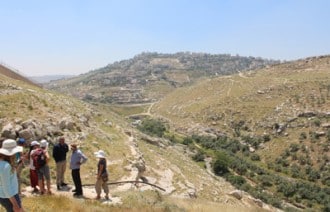
#####
**Categories:** Blog on Faith and Ecology
**Tags:** Kidron Valley
---
### [Jerusalem Opens Up to Faith and Ecology Through Spoken Word and Song](https://interfaithsustain.com/jerusalem-opens-up-to-faith-and-ecology-through-spoken-word-and-song/)
**Published:** July 8, 2016
**Author:** ICSD
**Excerpt:** Caroline Stern - Last week in Jerusalem, men and women from diverse backgrounds came together at the Second Annual Interfaith Eco Poetry Slam to share their hearts and minds on how faith relates to the global ecological crisis.
**Content:**
*By Caroline Stern*
Last week in Jerusalem, men and women from diverse backgrounds came together at the Second Annual Interfaith Eco Poetry Slam to share their hearts and minds on how faith relates to the global ecological crisis. The event was organized by the Interfaith Center for Sustainable Development, and a variety of themes were expressed through the flow and staccato of poem and song. Some topics included the role of faith in saving the planet, achieving peace in the Middle East, honoring gender equality, and actually taking action to improve the environment, not just talking about it. In addition to the spoken-word, musical performances speaking about being one with the earth and acting now to save the environment created a feeling of community to the packed Tmol Shilshom Café. The message was clear: regardless of our individual faiths, we are all on this planet and need to do something about our problem together.
One of the German Christian poets, Leander Löwe posed a number of important questions, challenging the audience to ask themselves: If we only had twenty-four hours left to save the planet would all of our thoughts and ideas suddenly turn to action? Would our lack of worry turn into a collective 180 degree shift? Would the world decide to put down their guns and help one another? Would we change our behavior? Can God help us? Can we help God? Leander ended optimistically stating that we could and we will come together to fix this problem. Yet, only if everyday we act as if it is our last chance to save the earth. And in some ways, that is the case.
As this event showed, an important aspect of interfaith work is physically bringing together those of different religious backgrounds. The Interfaith Eco Poetry Slam was a catalyst––a means of moving toward our goal of creating an open dialogue about our planet’s environmental issues. The event challenged us to tear down the boundaries society has forced us to create.
Robin Levy**,** a Jewish performer, described her desire to break down stereotypes between cultures around the world, and encouraged the audience to do so as well, by passionately telling the crowd to “make me master of my own fate,” and not to let others dictate who we are. She stood tall and projected to the room her belief in not being seen through only one lens or culture.
No matter its beliefs, all religions communicate the importance of fundamental respect for planet Earth, our common home. We are one with the soil and ground beneath our feet; it is a living entity that needs our care and attention if we want it to treat us with respect as well. Yet, each religion saying it alone is not enough. The only way to accomplish a sustainable world is to work together as
one community––regardless of background––and give back to the planet that we say we care so much about. It is our responsibility to realize that all communities must act together to create real change, because not one people, not one religion, and not one culture can do this by itself. This is not a “them” vs. “us” problem. This is everyone’s problem––humanity’s problem.
Perhaps one way of achieving this is to create a larger community which transcends religious or political boundaries. Those who comprehend the idea of a purpose greater than his or her own self, including his or her own religious beliefs, also understands the necessity of working towards a larger community and goal. Changing our definition of community from individualistic priority to a sense of oneness with all humankind will create a society that will see the earth, the environment, and all life as equal.
Perhaps a simple, but powerful way of starting to create this global community is teaching a neighbor about recycling. Or collecting old clothes for donation. Or perhaps holding community meetings instructing people in how to live sustainably. As Eitan Press enthusiastically told the audience, the earth “keeps giving even though all we do is take.” The way to counter this is to start giving. Start giving back to the earth but also, start giving to your neighbors. Give them information. Give them inspiration. Give them knowledge about how to change. Let’s create a holistic view of the world so we can approach our environmental issues through helping not only ourselves but others too. Maybe then we can create a community that everyone can get behind no matter one’s background.
The interconnectedness between God, nature, and ourselves is highlighted in Nadav Slovin’s poem:
We praised God as one together apart
And one day, my dear friend, your song we will sing
Together all beings in peace and loving
But tonight may I request please a bit-different sound
The one which reveals that day without bound
Heard in ears of owls
From calm latent bowels
Of clustered crouched tree-trunks
Perched in deep fear
Whispering forth their prayer
God
Please bring the sun
God
Please
Please God
Won’t you please bring the sun
It is the cry that I seek from the hearts of the wicked
From the blamed and the shamed and the maimed turned insipid
Through our cry, truth overflows
In dependence and need our unity glows
So play me a song that will tear through our heart
Shatter my pain my protective walls apart
Our weakness transformed into shimmering prayer
In union we’ll cry with the bee and the bear
Yes, we need God’s help. But God needs our help to save the creatures and earth that are all connected to us. Will God answer our prayers to help us save the planet? Only if we actively show Him we––as one community––care enough to do something about it.
*\* Featured image [source](https://unsplash.com/@sandercrombach)*
**Categories:** Blog on Faith and Ecology
---
### [Parliament of World Religions Flyer](https://interfaithsustain.com/parliament-of-world-religions-flyer/)
**Published:** October 14, 2018
**Author:** ICSD
**Content:**
Accessing renewable energy with the help of religion
Sunday November 4th 12:15-13:45
At the Parliament of World Religions
[Flyer for accessing renewable energy with the help of religion discussion at the Parliament of World Religions 11/4/18](https://interfaithsustain.com/wp-content/uploads/2018/10/Flyer-for-Parliament-of-World-Religions-1.pdf)[Download](https://interfaithsustain.com/wp-content/uploads/2018/10/Flyer-for-Parliament-of-World-Religions-1.pdf)
**Categories:** Blog on Faith and Ecology
---
### [Houses of Worship Greening Project](https://interfaithsustain.com/houses-of-worship-greening-project/)
**Published:** November 26, 2018
**Author:** ICSD
**Excerpt:** This Project engages three religious institutions in Jerusalem –a church, mosque, and synagogue, or a seminary, in a “greening” process of both the physical building and grounds, as well as the educational content communicated to the congregants.
**Content:**
[Interfaith Greening of Jerusalem Religious Institutions Proposal 2019](https://interfaithsustain.com/wp-content/uploads/2018/11/Interfaith-Greening-of-Jerusalem-Religious-Institutions-Proposal-2019.pdf)[Download](https://interfaithsustain.com/wp-content/uploads/2018/11/Interfaith-Greening-of-Jerusalem-Religious-Institutions-Proposal-2019.pdf)
**Categories:** Blog on Faith and Ecology
---
### [A Light in the Darkness](https://interfaithsustain.com/a-light-in-the-darkness/)
**Published:** December 17, 2018
**Author:** ICSD
**Excerpt:** Alphonse Akouyu - The world in which we live today needs light which can shine in darkness. This light reminds us of our duty to preserve light for future generations. In Matthew 5:14-15, we are told “You are the light of the world. A town built on a hill cannot be hidden. Neither do people light a lamp and put it under a bowl. Instead they put it on its stand, and it gives light to everyone in the house.”
**Content:**
*By Alphonse Akouyu, Former [ICSD Volunteer](https://interfaithsustain.com/intern-with-us/)*
*John 1:5 – And the light shines in the darkness, and the darkness did not comprehend it.*
**What is the Darkness?**
The world in which we live today needs light which can shine in darkness. This light reminds us of our duty to preserve light for future generations. In Matthew 5:14-15, we are told “You are the light of the world. A town built on a hill cannot be hidden. Neither do people light a lamp and put it under a bowl. Instead they put it on its stand, and it gives light to everyone in the house.”
As 2019 begins, humanity is in need of light more than ever. Light forms the backbone of all our endeavors and in a broader sense, it encompasses energy. Our ability to harness different energy options determines the kind the future we hope to see for ourselves and our children. But how can leaders of faith institutions give light to energize everyone?
UN Sustainable Development Goal (SDG) number 7 talks about ensuring access to affordable, reliable, sustainable and modern energy for all. The words of SDG 7 reflect the current energy situation in many communities around the world. These communities are faced with expensive, unreliable, unsustainable and archaic energy facilities which are causing more harm than good. In his apostolic exhortation ‘Laudato Si’, Pope Francis reflects on these challenges: ‘There is an urgent need to develop policies so that, in the next few years, the emission of carbon dioxide and other highly polluting gases can be drastically reduced, for example, substituting for fossil fuels and developing sources of renewable energy’.
**The Numbers**
According to the United Nations Statistics Division in 2016, 1.1 billion people live without essential energy services. Furthermore, about three billion people, the majority in Asia and sub-Saharan Africa, still lack access to clean and safe cooking fuels and technologies. This inaccessibility presents many health hazards and results in millions of deaths each year due to household air pollution. Although 80 million people globally gained access to clean cooking fuels and technologies during 2012-2014, population growth offset this gain. In 2017, 1.06 billion people still lived without this essential service, with 80% of them concentrated in just 20 countries. While some 86 million people a year were able to access electricity for the first time, it’s still a major challenge to provide electrification rapidly enough to outpace growing populations.
**The People Behind the Numbers**
The biggest difficulty with numbers is that they hardly present a reality of a situation; they are faceless statistics. Friends, we *need* to start thinking about the people behind these numbers, many of whom include our dear brothers and sisters. We need to put ourselves in the shoes of these 1.6 billion humans who are made in the image of our God and, for once, think about the daily challenges they encounter as a result of lack of access to basic forms of energy. We need to think about the children whose education is feeling the hit as a result. We need to think about the people suffering from many health hazards because of lack of access. And what about those who have paid the ultimate price – with their lives – because of this issue? We *need* to think about the people behind the numbers!
**What Can You Do?**
Albert Einstein once said, “We cannot solve our problems with the same thinking we used when we created them”. The energy problems we face today require a new kind of thinking – one which is based on innovation, social impact, sustainability, affordability, and efficiency. For those of us engaged in sustainable development, we share the vision of Mother Teresa: doing small things in great ways. What is that small idea of yours which can be done in a great way to change the lives of the people behind the numbers?

In the book of 1 Peter 4:10, we are told “Each of you should use whatever gift you have received to serve others, as faithful stewards of God’s grace in its various forms.” I strongly believe Peter’s words, especially the ability of humanity to provide solutions for humanity-caused problems. I opine to the view that the next generation of faith leaders must be considered partners in development and can contribute by using their gifts to serve others and solve energy problems. Dear friends, we need to start loving not only with words but with deeds, by sharing solutions to current energy issues AND believing it can be done.
**Categories:** Blog on Faith and Ecology
---
### [Amidst LA fires, religious leaders gather for ecological sustainability](https://interfaithsustain.com/amidst-la-fires-religious-leaders-gather-for-ecological-sustainability/)
**Published:** October 31, 2019
**Author:** ICSD
**Content:**
With wildfires blazing in California, the Los Angeles Symposium on Ecologically Informed Theological Education took place from Sunday to Tuesday, Nov. 3-5, at American Jewish University’s Brandeis Bardin Campus near Simi Valley. Participants include faculty from Fuller Theological Seminary, America’s largest; Hebrew Union College; Bayan Claremont Islamic Graduate School; and Seattle School of Theology, among others of the 85 registrants. Speakers include priests, pastors, rabbis, imams, theological school professors and environmental scientists.
Religious institutions have suffered the impacts of climate change in California, along with residents and businesses. In 2018, wildfires destroyed multiple churches in Paradise and caused the temporary closure of the Pepperdine Christian University campus. In 2017, wildfires destroyed three Jewish summer camps. The Symposium will take place 5 miles from the Easy Fire, 20 miles from the Getty Fire, and 12 miles from the recent Saddleridge Fire. These fires, along with the larger Kincade Fire, have forced evacuations, and the closing of houses of worship.
“The timely Symposium offered faculty and deans from California and Western religious seminaries resources to train emerging religious leaders to reveal the connection between religion and ecology and mobilize congregants to act,” said Rabbi Yonatan Neril, founding director of The Interfaith Center for Sustainable Development.
Professor Tim van Meter of the Methodist School of Theology in Ohio said, “Educational institutions are rethinking their curriculum in response to the needs of their students and the need of our warming world. We’re grateful to have the resources provided to offer this conference as a call toward that change.”
“Now more than ever, religious leaders are being called upon to shift our cultures. We are called to boldly respond to the challenges of our time, especially to this climate emergency. We are proud to be part of a symposium that will help train future leaders to do just that.” rev. abby mohaupt, director of the Green Seminary Initiative.
A growing number of people, especially youth and young adults, are turning to their pastors, priests, rabbis, imams and others for wisdom and guidance on ecological sustainability. Awareness of the injustice and inequity of pollution and climate change impacts is growing.

The Symposium was held as part of The Seminary Environmental Leadership Initiative, which was funded through a grant from the Luce Fund for Theological Education, an initiative of the Henry Luce Foundation’s Theology Program. Additional support was provided by The Julia Burke Foundation and the Martin Gang Institute and was co-organized by The Interfaith Center for Sustainable Development, Methodist Theological School in Ohio, The Green Seminary Initiative, and AJC.
**Categories:** Blog on Faith and Ecology
---
### [Animals, Religious Ethics, and What We Eat](https://interfaithsustain.com/animals-religious-ethics-and-what-we-eat/)
**Published:** March 9, 2021
**Author:** ICSD
**Excerpt:** Rainer Hagencord and Tanja Mancinell - In the beginning, God created heaven and earth, light, water, vegetation and - even before humans - all the animals in the sky, on the earth and in the water. And finally Adam and Eve. Animals have been part of creation from the very beginning. They were the first creatures blessed by God. Accordingly, the Bible teaches us to treat animals with kindness and respect.
**Content:**
*By Rainer Hagencord and Tanja Mancinell*
In the beginning, God created heaven and earth, light, water, vegetation and – even before humans – all the animals in the sky, on the earth and in the water. And finally Adam and Eve. Animals have been part of creation from the very beginning. They were the first creatures blessed by God. Accordingly, the Bible teaches us to treat animals with kindness and respect. They were teachers to the Prophets and guides to humans. Christian Saints´ biographies contain an abundance of stories about close relationships between saints and animals, which cared for, protected and accompanied their human friends.
However, the situation of animals in our modern world starkly contrasts with what the Bible tries to teach us regarding the treatment of non-human beings:
Every day, around 180 million land animals are killed for food worldwide. Each animal that ends in the slaughterhouse suffers enormously there, after having been denied an appropriate life. “Modern-day animal agriculture violates core Christian values. It wipes out entire populations and species of wildlife, confines huge numbers of animals in miserable conditions on factory farms, damages the environment, squanders scarce resources, and harms the health of people.”*1*
How come that we are often blind to this suffering? Why does the church not take a stronger stand in this matter? And what can we do from a religious point of view, to avoid animal suffering through industrial farming, which causes so much pollution and contributes to climate change?
These and similar questions motivated the theologian, Catholic priest, biologist, and philosopher Rainer Hagencord to blaze a new trail: In 2009, he founded the Institute for Theological Zoology (ITZ) in Muenster, Germany, together with the Swiss Franciscan Anton Rotzetter.
The institute aims to show that according to the Bible, animals possess souls, too, and are therefore entitled to a dignified life. The institute connects biology with theology, showing that the two fields are not in opposition, but rather complement each other. Biology helps us to better understand the animal realm; it shows that animals possess as much intelligence and sensibility, and as many emotions, as humans do. And religions remind us that human beings and animals are equal creatures of God.
In 2009 Dr. Jane Goodall became the patron of the ITZ, which was awarded for its work by the United Nations in 2020 (UN Decade on Biodiversity).
In cooperation with the local university, the ITZ provides teaching materials for schools and universities and collaborates with Jewish, Muslim, and Christian theologians.
Hagencord`s message is the need for a spiritual ecology: “If we don’t remember the story of Noah’s Ark now, then when? We have to save the animals and become peaceful and caring human beings to prevent the extinction of many species.”2
Only in this way can the prophecy of Isaiah be fulfilled: the creation of a world where the animal kingdom will be included in the blessing of peace, “for the earth shall be full of the knowledge of the Lord.”3
*Rev. Dr. Rainer Hagencord is a Catholic priest and director of the Institute for Theological Zoology. Tanja Mancinelli is working on a PhD at the University of Wales Trinity St. David on Islamic Environmental Ethics. She interned at The Interfaith Center for Sustainable Development.*
*1 https://www.humanesociety.org/sites/default/files/docs/replenish-booklet-in-color.pdf*
*2 Hummel Thomas (2020): Ich verstehe nicht, warum munter weiter Fleisch gekauft wird. In: Süddeutsche Zeitung, https://www.sueddeutsche.de/panorama/fleisch-glaube-ethik-weihnachten-1.5152670*
*3 Isaiah 11:6-9*
*\*Featured image [source](https://unsplash.com/@tyould "Featured image source")*
**Categories:** Blog on Faith and Ecology
---
### [Confronting coronavirus, curbing climate change](https://interfaithsustain.com/confronting-coronavirus-curbing-climate-change/)
**Published:** April 1, 2020
**Author:** ICSD
**Excerpt:** Rabbi Yonatan Neril - How much can the world do when we take a threat seriously! If China and S. Korea can arrest the spread of COVID-19, curbing climate change is surely possible.
**Content:**
*How much can the world do when we take a threat seriously! If China and South Korea can arrest the spread of COVID-19, curbing climate change is surely possible.*
Let’s compare humanity’s response to the coronavirus to its response to climate change. The coronavirus generates fear of a clear and present danger, activates our survival instinct, and mobilizes people to act. Coronavirus is the terrorist equivalent of nature. Why? Because it generates an acute fear that it could happen to me, and it could happen right away. And only two times in living memory have airlines mostly shut down and economies slowed down due to a threat. One was after 9/11, and the other is now. [Read More…](https://blogs.timesofisrael.com/confronting-coronavirus-curbing-climate-change/)
**Categories:** Blog on Faith and Ecology
---
### [Jerusalem, Glasgow, and climate leadership](https://interfaithsustain.com/jerusalem-marathon-climate-leadership/)
**Published:** November 6, 2021
**Author:** ICSD
**Excerpt:** Yonatan Neril - While proudly watching my son run a 5K as part of the recent Jerusalem Marathon, I realized that the arc of human history is a marathon. As we race towards an unseen finish line, we need the spiritual attribute of endurance to manifest a thriving, spiritually aware, and sustainable society.
**Content:**
*By Yonatan Neril*
While proudly watching my son run a 5K as part of the recent Jerusalem Marathon, I realized that the arc of human history is a marathon. As we race towards an unseen finish line, we need the spiritual attribute of endurance to manifest a thriving, spiritually aware, and sustainable society. Yet the way we are running this race for our planet’s survival, I worry we’re running fast towards a cliff.
The marathon in Jerusalem and hundreds of other cities taps into a sweet spot in the human experience: movement, sun, music, competition, fun, fitness, and especially since the pandemic, gathering with huge numbers of other people. This raises the question: what can motivate us just as much to prioritize sustainable living? While the Jerusalem Marathon shut down much of the city, and in past years has numbered 25,000 participants, the People’s Climate March in Tel Aviv on the same day closed only a small part of that city. There’s currently no People’s Climate March in Jerusalem.
[ Read more
](https://blogs.timesofisrael.com/jerusalem-glasgow-and-climate-leadership/)
*\*Featured image by Yonatan Neril*
**Categories:** Blog on Faith and Ecology
**Tags:** COP26, Jerusalem Marathon
---
### [Mobilizing Faith Communities on Climate Change](https://interfaithsustain.com/cop26-mobilizing-faith-communities-on-climate-change/)
**Published:** November 4, 2021
**Author:** ICSD
**Excerpt:** Yonatan Neril - More than 50 years into the modern environmental movement, the primary efforts to limit climate change focus on developing new technology and mustering political will.
**Content:**
*By Yonatan Neril*
More than 50 years into the modern environmental movement, the primary efforts to limit climate change focus on developing new technology and mustering political will. Those topics will lead discussions at the 26th United Nations climate conference (known as COP26) for world leaders in Glasgow.
Technological and political advancements have the potential to achieve some meaningful climate action, but a full transformation of humankind’s treatment of the earth depends on a third factor: moral responsibility driven by faith.
[ Read more
](https://blogs.timesofisrael.com/mobilizing-faith-communities-on-climate-change/)
*\*Featured image by Parmarth Niketan*
**Categories:** Blog on Faith and Ecology
**Tags:** COP26
---
### [Seminary Faith & Ecology](https://interfaithsustain.com/engaging-seminaries/)
**Published:** July 17, 2015
**Author:** ICSD
**Excerpt:** We provide the tools and content to encourage seminary faculty to educate students on the relationship of faith and ecology.
**Categories:** Home
---
### [Spiritual Ecology: A Sufi Perspective](https://interfaithsustain.com/spiritual-ecology-a-sufi-perspective/)
**Published:** January 20, 2019
**Author:** ICSD
**Excerpt:** Tanja Mancinelli - These are the introductory words of Llewellyn Vaughan-Lee, a worldwide known Sufi teacher, in his recently published book “Spiritual Ecology. 10 Practices to Reawaken the Sacred in Everyday Life”.
**Content:**
*By Tanja Mancinelli*
*“Spiritual ecology arises out of the need for a spiritual response to our present ecological crisis.”*

These are the introductory words of Llewellyn Vaughan-Lee, a worldwide known Sufi teacher, in his recently published book “Spiritual Ecology. 10 Practices to Reawaken the Sacred in Everyday Life”.[1](#fn-16434-1) He is one of the many examples of a spiritual mentor within the modern Sufi communities, who actively addresses the ecological problem, suggesting actionable ways to deal with and eventually solve the current environmental crisis. This awareness of the importance of nature goes way back into the past of Sufi tradition. The 9th century Sufi mystic Ali Al-Khawas, who was even quoted by Pope Francis in his environmental-encyclical *Laudato Si*, wrote that, “The initiate will capture what is being said when the wind blows, the trees sway, water flows, flies buzz, doors creek, bird sings, or in the sound of stirring flutes, the sighs of the sick, the groans of the afflicted.” The universe unfolds in God, who permeates it in all its manifestation, including every aspect of nature. “Hence,” said Pope Francis, “there is a mystical meaning to be found in the leaf, in a mountain trail, in a dewdrop, in a poor person’s face.”[2](#fn-16434-2)
A key figure for the development of some Sufi lineages was the Muslim philosopher Shihab al-Din Yahya Suhrawardi. Born in Iran in 1154, Suhrawardi founded his own school of philosophy and was probably executed in 1191 because of his unorthodox teachings.[3](#fn-16434-3) “Suhrawardi´s unification of Neoplatonism and Mazdeism finds expression in the conception of an animate universe”[4](#fn-16434-4) where everything is conceived as being the manifestation of the light of God.
Whirling Dervishes, a prayer practice.
The concept of an animate universe in his illuminationist philosophy plays an important role in the new age world[5](#fn-16434-5) as well as in modern spiritual ecology movements. Through the integration of the neoplatonic concept of the “chain of beings”, in which all creation is a successive effluence from the original Supreme being, or in Suhrawardi´s words the Supreme Light of lights (Nur al-Anwar), Suhrawardi builds a bridge between the transcendental God and Nature by showing that all manifestations on earth have an underpinning, an archetype in the world of pure light.[6](#fn-16434-6) Suhrawardi´s universe is inherently alive and sacred.
Contemporary to Suhrawardi, another important Sufi Teacher appeared in 12th century India: Mu´in al-Din Muhammad Chishti. Born in 1142 in Sistan, Chishti founded one of the most influential tariqas (Sufi school) of India, the Chishtiyya.[7](#fn-16434-7) Although his theology differed widely from Hindu teachings, he shared the common view amongst yogis, that of the “vital livingness of the elements and the status of the human form as a microcosm encapsulating … the whole universe.”[8](#fn-16434-8) The Chishti-Sufis understoode teachings of the Qur’an about elements as alive and worthy of deep respect.[9](#fn-16434-9) At the same time, the human body was considered as the microcosm reflecting and encapsulating the macrocosms.
Pir Zia Inayat Khan, head of the Inayati Order. 2012.
A modern Sufi teacher and actual spiritual leader of the Inayati Order is Pir Zia Inayat Khan. He regards the current ecological crisis as “a unique and compelling factor in contemporary mysticism.”[10](#fn-16434-10) Modern spiritual schools cannot avoid dealing with environmental problems as they are a reflection of a “spiritual crisis”. According to Pir Zia Inayat Khan, the spiritual answer to the ecological crisis lies in the acknowledgment of the sacredness of nature and of the environment. Spiritual practices are essential in this. Rites and prayers can potentially lead the practitioner to a state of communion with nature and help to attune them with the environment in a contemplative way.
Together with other religious leaders, Pir Zia Inayat Khan and Peter Lamborn coined the term “Green Hermeticism”. Green Hermeticism aims to reintegrate alchemical and Hermetic knowledge into modern ecology. According to Wilson, it can be understood as a “specifically green form of spirituality, that provides a much -needed sacred theory of Earth, the body, and Nature.”[11](#fn-16434-11) Its intention is to be a holistic approach to the environmental crisis, where “science transcends and erases all separations such as inner and outer, spirit and matter, divine and human, earthly and heavenly.”[12](#fn-16434-12)
Hazrat Inayat Khan, founder of the Inayati Order.
But the ecological legacy of the Inayati Order is older than the Green Hermeticism and goes back to its founder, Hazrat Inayat Khan. According to his teachings, “there is one Holy Book, the sacred manuscript of nature, the only scripture which can enlighten the reader.”[13](#fn-16434-13) Nature takes a central position, in Khan´s worldview, as the source of true knowledge: “to the eye of the seer every leaf of the tree is a page of the holy book that contains Divine Revelation.”[14](#fn-16434-14) According to Khan, we can gain direct knowledge of life by ‘reading’ nature. Nature for him is the ‘place’ where we can find ‘truth’.[15](#fn-16434-15) This is why Hazrat Inayat Khan – and Sufism today – regards the conservation and protection of the natural environment as a spiritual priority.
Tanja Mancinelli, Interfaith Minister from the Inayati Order, has a background in Biology and Religious Studies. Presently she is doing an internship at the Interfaith Center for Sustainable Development (ICSD). She can be contacted at tanja.mancinelli@gmail.com.
###### **Endnotes:**
[1](#fnref-16434-1). Vaughan-Lee Llewellyn, Hart Hilary (2017): *Spiritual Ecology. 10 Practices to Reawaken the Sacred in Everyday Life.*
[2](#fnref-16434-2). [Encyclical Letter Laudato si´](https://w2.vatican.va/content/francesco/en/encyclicals/documents/papa-francesco_20150524_enciclica-laudato-si.html)of the Holy Father Francis on care of our common home, Paragraph 233,
[3](#fnref-16434-3). Khan, Pir Zia Inayat (2016): *Persian and Indian Visions of the living Earth.* In: Vaughan-Lee, Llewellyn (Ed.): *Spiritual Ecology: The Cry of the Earth.* Point Reyes: Golden Sufi Center
[4](#fnref-16434-4). Ibid, 221
[5](#fnref-16434-5). Niksirat, Abdollah (2016): *Suhrawardi: A Philosopher Who Must Be Re-Known!* In: Journal of History Culture and Art Research. Vol. 5, No. 4, 686-694.
[6](#fnref-16434-6). Bowker, John (Ed.) (1997): *The Oxford Dictionary of World Religions.* Oxford: Oxford University Press.
[7](#fnref-16434-7). “And the earth shall shine with the light of the Lord” (Qur’an 39:69)
[8](#fnref-16434-8). “Of water we fashioned every living being” (Qur´an 21:30)
[9](#fnref-16434-9). “He has made for you, out of a green tree, fire” (Qur´an 36:80)
[10](#fnref-16434-10). Universal Sufism, Scribd, August 22, 2017.
[11](#fnref-16434-11). Bamford, Christopher (2009): 54 [12](#fnref-16434-12). Ibid.
[13](#fnref-16434-13). Witteveen, H.J. (1999, ed.): *The Heart of Sufism: Essential writings of Hazrat Inayat Khan.* Boston: Shambala Publications.
[14](#fnref-16434-14). Fabian, John (Ed.) (2009): *The Way of Illumination. Sufi Teachings.* E-Publisher: Commodius Vias.
[15](#fnref-16434-15). Holterman ten Hove, Firos (2014): *Das heilige Buch der Natur. Spirituelle Ökologie im Universalen Sufismus.* Weinstadt: Verlag Heilbronn, 13.
**Categories:** Blog on Faith and Ecology, Faith & Ecology
**Tags:** Sufi, Sufism
---
## Pages
### [Home](https://interfaithsustain.com/)
**Published:** February 24, 2021
**Author:** ICSD
**Content:**

# The Interfaith Center for Sustainable Development harnesses the transformative power of faith for a sustainable future.
## We work at the intersection of religion and ecology, mobilizing faith communities around the world to protect our common home through dialogue, collaboration, and action.
##### We are focused on…
[###### Championing action](https://interfaithsustain.com/cop28-un-climate-conference/)[## Hosting conferences and raising the voice of the interfaith movement at global events.](https://interfaithsustain.com/cop28-un-climate-conference/)
[](https://interfaithsustain.com/about-all-conferences/)
[###### Faith leaders](https://interfaithsustain.com/about-all-conferences/)[## Training a new generation of leaders through ecologically focused theology.](https://interfaithsustain.com/about-all-conferences/)
[](https://interfaithsustain.com/all-faith-ecology-videos/)
[###### Thought leadership](https://interfaithsustain.com/all-faith-ecology-videos/)[## Our short videos, posts, and blogs share our unique faith-based ecological perspective.](https://interfaithsustain.com/all-faith-ecology-videos/)
## We are the world’s leading creator of short videos on religion and ecology.
We are on the cutting edge of digital storytelling on faith and ecology. We hired Nas Daily Studios’ 1000 Media branch to produce over 70 short videos on religion and ecology, in collaboration with the Episcopal Diocese of California and based on support from the Hewlett Foundation. The videos received over ten million views across five social media platforms.
Check out our new one-minute videos by clicking [here](https://interfaithsustain.com/all-faith-ecology-videos/ "All Faith & Ecology Videos from ICSD").
## Interfaith Ecology Summit in Jerusalem
The Interfaith Center for Sustainable Development and the FELM Center Jerusalem hosted the [Interfaith Ecology Summit](https://interfaithsustain.com/interfaith-ecology-summit/), which took place in Jerusalem on December 3, 2025.
[](https://interfaithsustain.com/interfaith-ecology-summit/)
[](https://interfaithsustain.com/cop29-baku-faith/ "Interfaith Engagement at UN Climate Conferences")


## [Interfaith Engagement at UN Climate Conferences](https://interfaithsustain.com/cop29-baku-faith/)


[## News and Media](https://interfaithsustain.com/news/)[Read more about our work in the global media.](https://interfaithsustain.com/news/)
## Eco Bible
###### The groundbreaking Eco Bible draws on 3,500 years of religious ethics to show how the Bible itself and its great scholars embrace care for God’s creation.
[Learn More About Eco Bible](https://interfaithsustain.com/ecobible/)

#### Resources
###### From blogs to videos, articles to lectures, dive into a world of ideas. Be inspired to act in your community – whether you’re new to ecological action or have a lifetime of experience.
[Find Out More](https://interfaithsustain.com/resources-main-page/)
### Support ICSD
###### Make a donation to support our work
## Support us to mobilize faith-based institutions and their leaders to help forge a path to a sustainable future.
[Make A Donation](https://www.interfaithsustain.com/donate/)
---
### [Boards of Directors and Advisers](https://interfaithsustain.com/board-of-directors-2/)
**Published:** November 24, 2025
**Author:** ICSD
**Content:**
## Board of Directors

**Sally Schuster**
Chair of the board- *Outreach Coordinator, Met Council*
Sally Schuster is a passionate networker and connecter working to find systemic solutions to pressing social problems. Originally from Colombia and currently based in New York, Sally has held positions at the Colombian Department of Social Prosperity (Presidential Office), the Ford Foundation, Latimpacto, and The Grad Network, powered by Columbia/Barnard Hillel. She is currently Outreach Coordinator at Met Council, America’s largest Jewish charity dedicated to serving the needy. Her experience spans poverty alleviation efforts, climate finance, venture philanthropy and fundraising.
She has dual B.A.s in International Relations and Political Science (with a Minor in International Economics, from Universidad del Norte), an MA in State, Public Policy and Development (Universidad de los Andes), and an MPA in Development Practices (from Columbia University’s School of International and Public Affairs).

**Rev. Dr. Maria Leppäkari**
*Director, FELM Center Jerusalem; Secretary General, Religions for Peace Europe*
Motivated by 22 years of professional relationship with Jerusalem, Rev. Leppäkari encourages people not to be afraid to build bridges of understandings through intercultural and religious dialogue: Rev. Dr. Leppäkari holds a Doctoral degree in Theology (2002) from Åbo Akademi University, Finland and is Docent (Adjunct Professor) in Comparative Religion. Her expertise spans from academic research to applied leadership. In September 2019 she was the first woman to be ordained Reverend in Jerusalem in the Arabic speaking congregation of the Evangelical Lutheran Church of Jordan and the Holy Land (ELCJHL). She has published extensively on Jerusalem, and is best known for her book Apocalyptic Representations of Jerusalem. Her most recent book is *Pilgrimage and Tourism to Holy Cities: Ideological and Management Perspectives*, co-edited together with Dr. Kevin Griffin.
Website:
[FELM Center Jerusalem](https://felm.org/peacebuilding/felm-center/)

**Loretta Pele Glanville**
*Founder & Director – Totalai Land & Sea Indigenous Corporation and Chairwomen – Puipikak Malu NGO Torres Strait Islands*
Loretta Pele Glanville is a proud Strong Mulgal, Dauareb, and Kaurareg woman from Moa Island in the Torres Strait, and the founder of the *Totalai Land and Sea Indigenous Corporation*. Raised in Kubin within a family of ten, Loretta’s early life was shaped by her parents’ teachings and the deep cultural knowledge of her ancestral land and sea. Her journey reflects a powerful fusion of spiritual conviction, cultural integrity, and environmental leadership.
Currently working in the conservation sector across Zeneth Kes, Loretta champions Indigenous-led restoration and the integration of Traditional Ecological Knowledge into sustainable development. Her professional path began in the mining and civil industries, where firsthand exposure to environmental degradation inspired her to leave a high-paying role and dedicate her life to community service and ecological healing.
Loretta serves as a board member of *PuipiKak Malu*, an organization committed to revitalizing and rehabilitating culture, sea, and land by merging Indigenous knowledge systems with innovative solutions. Its mission promotes education, climate resilience, and sustainable economic development. Through her personal faith walk and unwavering dedication, Loretta facilitates youth programs, women’s mental health initiatives, and accredited training—always centering measurable impact and cultural authenticity.

Wendy Sinton**
Trustee of the Sinton Family Fund*
Wendy Sinton has been a community volunteer for over 30 years. She has served on the board of the Ecumenical Hunger Program (EHP) in East Palo Alto and has been active in the Palo Alto schools, Association for Senior Day Health, El Camino Youth Symphony and worked at Palo Alto High School as a Career Counselor. Wendy is a Trustee of the Sinton Family Fund. She is a member of Congregation Beth Am. Wendy has a B.A. from the University of California at Berkeley and a Teaching Credential from University of San Francisco. She enjoys spending time with her grandchildren who are scattered far and wide and wants to help preserve the planet.

**James Sternlicht**
*Founder & Chief Strategy Officer, Peace Department*
Growing up with entrepreneurial parents and a passion for the environment, James found himself at the intersection of investing, marketing, and philanthropy from a young age. At Dartmouth College, he honed his systems thinking approach to global challenges through his focus on environmental studies and geography.
Recognizing the need for a comprehensive approach to address climate change and security, he founded The Peace Department, a platform that creates new avenues for cross-sector collaboration towards building a better human and planetary future.
James also serves on the boards of Oceanic Global, which reduces human impact on nature through waste reduction and alternative solutions; Eisenhower Fellowships, which connects innovative leaders committed to creating a more peaceful, prosperous, and just world; and The Interfaith Center for Sustainable Development (ICSD), which mobilizes faith-based communities to act on environmental issues.
**David Miron-Wapner**
*Attorney (Israel/ United States)*
David is a native of Los Angeles and moved to Israel in 1978. Today he is responsible for Sustainable Technology Projects at the Yoyah Group, a company dedicated to effective strategic planning in times of uncertainty.
For twelve years he managed the US-Israel Science and Technology Commission, a unique bi-national initiative to foster high-level collaboration by and between government, academia and industry. He was part of the founding team of BrightSource Energy, a world-leading solar energy company. He served as board chair of the Heschel Center for Sustainability, was president of Jerusalem’s leading Reform synagogue, Kehilat Kol Haneshama, and served on the board of the Jewish National Fund for eight years.

**Shelly Bengiat**
*Chairwoman of the Coralz, Envirotech Australian Group and Perfect Sea NGOs*
Shelly Bengiat is founder and chairwoman of the Coralz, Envirotech Australian Group and Perfect Sea NGOs. Shelly is proudly leading research, development, export, and training of the first global Marine Habitat Conservation and Restoration technical vocational education and training accreditations under the Australian Qualifications Framework, that is a turn-key solution for partners to deliver our IP internationally.
The group builds communities capacity for sustainable blue economy development, by project-oriented training in a range of blue carbon and biodiversity seascapes, across hundreds of micro-credentials, in marine habitats, aquaculture, and sustainability, from schools, to universities and marine industries.
Since developing the first international marine habitats conservation and restoration technical vocational accreditations IP, the Envirotech and Coralz group deliver Government funded contracts, in Australia, especially with Indigenous Islanders and coastal communities, and the group are yearly receivers of excellence awards such as recent Indigenous Student of the Year in Queensland, trainers, innovators of the years in various states, and winners of Australian national export and sustainability awards.

**Dr. Richard Friend**
*Independent Consultant and Scholar*
Dr. Richard Friend is an independent consultant/scholar with expertise in just and equitable approaches to social and environmental change. During his 30-year career he has worked in
academia (University of York, UK), international NGOs, and as a consultant providing technical advice to NGOs, international organisations/UN agencies and donors. With an academic background in social anthropology and development studies, he has spent much of his career living and working in the Mekong region (Thailand, Cambodia, Laos and Vietnam). His areas of expertise include (transboundary) water resource governance; climate change, systemic risk and resilience; fisheries governance; urbanisation; food systems and food security; sustainable livelihoods and poverty reduction; climate change vulnerability and adaptation; decentralisation and community-based approaches; participatory processes and knowledge co-production. His publications include peer review journal articles, book chapters, working papers, Op-Eds and blog articles. He is currently based in East Yorkshire, UK.
## Board of Advisers
**Rabbi David Rosen**
*Special Advisor, Abrahamic Family House, Abu Dhabi*
Rabbi Rosen, former Chief Rabbi of Ireland, is a past chairman of the International Jewish Committee for Interreligious Consultations. He also serves as the Adviser on Interreligious Affairs to the Chief Rabbinate of Israel; is a member of the Chief Rabbinate’s delegation for Interreligious Dialogue. He was the only Jewish member of the Board of Directors of the King Abdullah International Center for Interreligious and Intercultural Dialogue, established by the King of Saudi Arabia together with the governments of Austria and Spain. In 2005, Pope Benedict XVI made Rabbi Rosen a Knight of the Order of St. Gregory the Great for his contribution to promoting Catholic-Jewish reconciliation; and in 2010 H.M. Queen Elizabeth II made him a CBE (Commander of the British Empire) for his contributions to interfaith relations.
For videos of Rabbi Rosen on religion and ecology, see: [On Love of the Divine and God’s Creation](https://youtu.be/JzLSuAHCDdc) (four minutes) [On Judaism, Ecology, and Global Responsibility](https://youtu.be/j7RgWgnejTk) (eight minutes)

**Dr. Mohammed S. Dajani**
Weston Fellow at The Washington Institute*
Dr. Dajani is a Weston Fellow at [The Washington Institute](https://www.washingtoninstitute.org/experts/view/mohammed-dajani-daoudi)[,](http://www.washingtoninstitute.org/experts/view/mohammed-dajani-daoudi) founded the Wasatia movement of moderate Islam and previously worked as a professor of political science at al-Quds University in Jerusalem. A Jerusalem-born scholar and peace activist, Dr. Dajani holds doctorate degrees from the University of Texas and University of South Carolina. He is the founding director of the Jerusalem Studies and Research Institute, chair of the board of directors of the [House of Water and Environment in Ramallah](https://www.hwe.org.ps), and a member of the board of directors of the [Jerusalem International YMCA](https://www.hwe.org.ps). He has written extensively on Arab culture and politics, including an *International Herald Tribune* op-ed.

**Marilyn C. Burke**
President – The Julia Burke Foundation (United States)*
[The Julia Burke Foundation](https://juliaburkefoundation.com/home.php) is based in the United States and has wide-ranging projects on five continents. Marilyn is a long-serving board member of The HALO Trust, an humanitarian organization that removes landmines and other explosive remnants of war throughout the world. Marilyn also served for four years as a member of the Board of Directors of The Interfaith Center for Sustainable Development.
She holds a Bachelor’s degree from the University of San Francisco, and lives in California and Hawaii.

Professor Pankaj Jain**
Head, Humanities and Languages, Chair, The India Centre, Professor, Philosophy & Religious Studies, FLAME University*
Pankaj Jain is an internationally recognized academic leader in Sustainability, Jain Studies, Film Studies, and Diaspora Studies. He is the Head of the Department of Humanities & Languages and the Chair of The India Centre at FLAME University. Earlier, he was the founding co-chair of India Initiatives Group and Associate Professor in the Departments of Philosophy & Religion and Anthropology at the University of North Texas. He is currently co-editing the *Encyclopedia of Hinduism* and a volume on *Indian and Western Philosophical Concepts in Religion*. He is also the author of the award-winning *Dharma and Ecology of Hindu Communities: Sustenance and Sustainability* and *Science and Socio-Religious Revolution in India: Moving the Mountains*.

**Jesse Ilan Kornbluth**
*Visual Journalist*
Jesse Ilan Kornbluth is a New York City-based visual journalist working at the intersection of culture, human rights, international development, and public policy. His work has been published in The New York Times, Wall Street Journal, Washington Post, The Guardian, The New Republic, Brookings Institution, and more. He has worked across Latin America, the Middle East, Sub-Saharan Africa, Southern Asia, and beyond.
**Most Rev. Bishop William Shomali**
*General Vicar and Patriarchal Vicar for Jerusalem and Palestine*
Most Rev. Bishop Shomali was born in Beit Sahour (Palestine) in 1950. He earned a B.A. in philosophy and Theology and was subsequently ordained as a priest in Jerusalem in 1972. He earned a Doctor of Divinity degree, and served as professor of liturgy, vice-rector and dean of studies at the Faculty of Philosophy and Theology of the Major Seminary of Jerusalem. In 2005 he became Rector of the same seminary. In 2009, he became Chancellor of the [Latin Patriarchate of Jerusalem](https://www.lpj.org). In 2010 he was appointed by Pope Benedict XVI as Titular Bishop of Lydda and Patriarchal Vicar for Jerusalem and Palestine on April 7, 2010; and ordained Bishop on May 27, 2010 in Bethlehem. On February 4, 2017 he was nominated as Patriarchal Vicar for Jordan.
In 2021, he was named General Vicar and Patriarchal Vicar for Jerusalem and Palestine.
## Financial Board of Oversight

**David Waimann**
*CEO – Elencon Energy Efficiency (Israel/ United Kingdom)*
David has degrees in economics and engineering science from Cambridge UK and Rochester USA. Before entering the technological world, he was a development economist working on UN and World Bank projects in Africa. He has since built a number of technological enterprises in the industrial field with three successful exits.
For the past twelve years he has been building start-ups in the renewable energy space including PV, lithium battery, wastewater treatment, and tidal energy and now concentrates on energy efficiency. He is presently CEO of [Elencon Energy Efficiency](https://elencon.com), Venture Partner at [OurCrowd Investments](https://www.ourcrowd.com/), Chairman of [Contronics UK](https://www.contronics.co.uk) and Chairman of South West Energy UK.

Dr. **Yannai Kranzler**
*Director, Bella Kaufman Open Clinic for Migrants and Refugees, Physicians for Human Rights-Israel*
Dr. Kranzler is a public servant in public health and an ethnographic fieldworker, committed to health equity through trauma-informed care, compassionate pragmatism, and community power-sharing. He previously worked for the Israeli Ministry of Health and earned a PhD at Ben Gurion University of the Negev in Health Systems Management. He served on the Nachlaot Community Council, and worked for Jewish Climate Initiative.
---
### [Environmental Terms Glossary](https://interfaithsustain.com/environmental-terms-glossary/)
**Published:** February 26, 2024
**Author:** ICSD
**Content:**
## Environmental Terms Glossary & Definitions
Eager to understand the wide variety of environmental terms used in modern society? You’ve come to the right place! Check out our glossary below to stay on top of all things environmental.
---
[A](https://interfaithsustain.com/environmental-terms-glossary/#A)
[B](https://interfaithsustain.com/environmental-terms-glossary/#B)
[C](https://interfaithsustain.com/environmental-terms-glossary/#C)
[D](https://interfaithsustain.com/environmental-terms-glossary/#D)
[E](https://interfaithsustain.com/environmental-terms-glossary/#E)
[F](https://interfaithsustain.com/environmental-terms-glossary/#F)
[G](https://interfaithsustain.com/environmental-terms-glossary/#G)
[H](https://interfaithsustain.com/environmental-terms-glossary/#H)
[I](https://interfaithsustain.com/environmental-terms-glossary/#I)
[J](https://interfaithsustain.com/environmental-terms-glossary/#J)
[K](https://interfaithsustain.com/environmental-terms-glossary/#K)
[L](https://interfaithsustain.com/environmental-terms-glossary/#L)
[M](https://interfaithsustain.com/environmental-terms-glossary/#M)
[N](https://interfaithsustain.com/environmental-terms-glossary/#N)
[O](https://interfaithsustain.com/environmental-terms-glossary/#O)
---
## A
### [Autotrophic](https://interfaithsustain.com/environmental-terms-glossary/autotrophic/)
An autotroph is an organism (life form) that is able to produce nutritional organic substances such as proteins, fats and carbohydrates, from simple inorganic substances such as carbon dioxide. Green plants, certain algae, and bacteria are considered to be autotrophic.
### [Acid deposition](https://interfaithsustain.com/environmental-terms-glossary/acid-deposition/)
Acid deposition occurs when acidic substances from the atmosphere are deposited on the Earth’s surface. These deposits include both wet deposition, where acidic compounds become incorporated into precipitation such as rain or snow, and dry deposition, where particles and gasses settle on surfaces without precipitation.
## B
### [Biodiversity](https://interfaithsustain.com/environmental-terms-glossary/biodiversity/)
The term biodegradable has become a common term for consumers as well as environmental scientists. Scientifically, it refers to materials or substances that can be broken down, and then decomposed by natural processes into simpler, non-harmful compounds. Microorganisms such as bacteria or fungi carry out this decomposition into organic matter. For consumers, it means choosing biodegradable packaging where possible to reduce environmental impact.
### [Biodegradable](https://interfaithsustain.com/environmental-terms-glossary/biodegradable/)
The term biodegradable has become a common term for consumers as well as environmental scientists. Scientifically, it refers to materials or substances that can be broken down, and then decomposed by natural processes into simpler, non-harmful compounds. Microorganisms such as bacteria or fungi carry out this decomposition into organic matter. For consumers, it means choosing biodegradable packaging where possible to reduce environmental impact.
## C
### [Conservation](https://interfaithsustain.com/environmental-terms-glossary/conservation/)
Conservation refers to the intentional and sustainable management of natural resources, ecosystems, and biodiversity to ensure their preservation for present and future generations. The goal of conservation is to strike a balance between human activities and the protection of the environment, promoting responsible use and stewardship of natural resources to prevent degradation and loss.
### [Council on Environmental Quality (CEQ)](https://interfaithsustain.com/environmental-terms-glossary/council-on-environmental-quality-ceq/)
In 1970 the U.S. Congress passed the National Environmental Policy Act (NEPA) which recognized the impact of human activity – urbanization, industrialization, growth in technology and population and industrial processes on the environment. The Council on Environmental Quality (CEQ), a division of the Executive Office of the President, was tasked by NEPA with ensuring all federal environmental efforts in the United States.
## D
### [Distillation](https://interfaithsustain.com/environmental-terms-glossary/distillation/)
Distillation is a process that causes the physical separation of the components of a liquid. It involves the heating of a liquid to create vapor, and then cooling the vapor to obtain a purified liquid or substance. Distillation is commonly used in various industries, including chemistry, petrochemicals, and the production of alcoholic beverages.
## E
### [Effluent](https://interfaithsustain.com/environmental-terms-glossary/effluent/)
Effluent refers to liquid waste from wastewater treatment plants, sewers, industry or agricultural runoff that flows into surface waters such as rivers and seas. This liquid waste may contain various pollutants, chemicals, or contaminants, and its proper management is crucial to prevent environmental harm. It should be noted that even treated effluent may be harmful to the environment depending on the treatment process it has undergone.
### [Environmental remediation](https://interfaithsustain.com/environmental-terms-glossary/environmental-remediation/)
Environmental remediation refers to the process of mitigating or reversing environmental damage to restore ecosystems, soil, water, or air to acceptable and sustainable conditions. This interdisciplinary field employs various techniques and technologies to address pollution, contamination, or other forms of environmental degradation caused by human activities or natural disasters.
## F
### [Fast Fashion](https://interfaithsustain.com/environmental-terms-glossary/fast-fashion/)
The demand for trendy and inexpensive fashion by consumers has led to the concept of “fast fashion.” Fast fashion involves the rapid production and quick turnover of cheap clothing frequently outsourced to factories in countries without legislation preventing the exploitation of workers or prohibiting child labor. The use of low-cost material raises questions over sustainability of the environment. Exploitation of adults and children to produce this clothing brings into question ethical practices in the fashion industry.
### [Fracking](https://interfaithsustain.com/environmental-terms-glossary/fracking/)
The term ‘fracking’ is derived from hydraulic fracturing. It refers to a process to extract gas and oil from deep underground. First, high-pressure fluid is injected into rock formations which fractures the rock, releasing trapped hydrocarbons (e.g oil and gas). While fracking has increased domestic energy production in the U.S., it has raised environmental and health concerns due to water contamination, air pollution, and the large volumes of wastewater generated by the process.
## G
### [Great Pacific Garbage Patch](https://interfaithsustain.com/environmental-terms-glossary/habitat-destruction/)
The Great Pacific Garbage Patch is a vast area in the North Pacific Ocean characterized by a high concentration of marine debris, consisting largely of plastic. It is not a solid mass but rather a collection of microplastics, debris, and larger items brought together by ocean currents. The patch is a striking example of the environmental impact of plastic pollution and highlights the challenges of managing waste in the oceans.
### [Green architecture](https://interfaithsustain.com/environmental-terms-glossary/green-architecture/)
With greater understanding of and concern for environmental sustainability, the idea of green architecture has become a feature of modern society. Also referred to as sustainable or eco-friendly architecture, it is an approach to designing buildings to minimize their environmental impact.
## H
### [Habitat Destruction](https://interfaithsustain.com/environmental-terms-glossary/great-pacific-garbage-patch/)
Any changes to or destruction of a species’ natural habitat is known as habitat destruction. These changes or destruction of natural habitats is usually caused by human activities. Once there are changes to a species’ habitat there is, by extension, a danger to biodiversity. Human activities that drive changes to or destruction of natural habitats include deforestation, growing urbanization, and agricultural practices. Habitat destruction of natural habitats undermines conservation efforts and environmental sustainability.
### [Half-life](https://interfaithsustain.com/environmental-terms-glossary/green-architecture/)
The term *half-life* is usually associated with fields like nuclear physics, chemistry and medicine. However, reducing a quantity by half its initial value is a simple definition of the term.
## I
### [**Invasive Species**](https://interfaithsustain.com/environmental-terms-glossary/invasive-species/)
Invasive species are organisms, usually animal or plant life that are introduced into new environments that are not their natural habitat. These species overpopulate their new habitat and cause ecological and sometimes economic harm to the environment.
### [Irradiated Food](https://interfaithsustain.com/environmental-terms-glossary/irradiated-food/)
Irradiated food refers to food products that have undergone a process called food irradiation. This process involves the application of ionizing radiation to food, in which bacteria, parasites, insects, and other organisms present in the food are destroyed. This process also extends the shelf life of the food. While irradiation is widely used by the food industry, there remains debate around its safety and nutritional impact by consumers and scientists.
## J
### [**Jet Stream**](https://interfaithsustain.com/environmental-terms-glossary/jet-stream/)
The jet stream is a fast flowing narrow air stream that flows from west to east around the globe. Jet streams are caused by temperature and pressure differences. They play an important role in influencing weather systems by moving air masses and storms.
### [Just Transition](https://interfaithsustain.com/environmental-terms-glossary/just-transition/)
The climate crisis currently demands that societies transition away from reliance on energy obtained from fossil fuels such as oil, petroleum and gas to clean energy like solar or wind energy. Different countries are at different stages in their ability to transition. Just transition refers to strategies that will ensure that in the transition from fossil fuels, economic losses to workers in the fossil fuel industry will be compensated or retrained for jobs in other sectors.
## K
### [**Kelp Forests**](https://interfaithsustain.com/environmental-terms-glossary/kelp-forests/)
Kelp is another name for seaweed. This brown colored seaweed grows to enormous sizes and becomes known as “kelp forests”. Kelp forests are found along coasts providing both habitats and food for a variety of marine species. In this way kelp forests support the biodiversity of our planet. While normally found in colder waters, the Charles Darwin Foundation has recently discovered tropical kelp forests just south of the Galapagos Islands.
### [**Keystone Species**](https://interfaithsustain.com/environmental-terms-glossary/keystone-species/)
In an ecosystem, a keystone species has an impact on an ecosystem that is out of proportion to its size or the quantity of that species present in the ecosystem. The presence of this keystone species is critical for maintaining the ecological balance and diversity of the ecosystem. Should this keystone species be removed the ecosystem will suffer changes that may result in the decline of the different species in the ecosystem or the destruction of the ecosystem.
## L
### [**Land Degradation Neutrality**](https://interfaithsustain.com/environmental-terms-glossary/land-degradation-neutrality/)
In the fight against climate change, Land Degradation Neutrality (LDN) is an internationally agreed on target to achieve a balance (neutrality) between the amount of land being degraded and the amount of land being restored. Ultimately, the goal is to reverse the loss of productive land completely and ensure the preservation of those ecosystems dependent on it. These goals and strategies are outlined in theUnited Nations Sustainable Development Goals.
### [**Liquefaction**](https://interfaithsustain.com/environmental-terms-glossary/liquefaction/)
Liquefaction is the term used to describe the change in soil to a liquid-like state. This change can occur during events like earthquakes because the term describes the vibrations and tremors that occur in the Earth. The breaking and cracking of rocks seismic events in turn allows for water to saturate the soil. Liquefaction can lead to ground instability, surface rupture, and damage to buildings and infrastructure.
## M
### [**Marine Pollution**](https://interfaithsustain.com/environmental-terms-glossary/marine-pollution/)
When harmful substances, ranging from industrial waste to oil spills to plastic waste, enter the seas, the result is marine pollution. These substances negatively impact ocean ecosystems which in turn threaten the survival of marine life as well as the health of humans who depend on marine resources.
### [**Microplastics**](https://interfaithsustain.com/environmental-terms-glossary/microplastics/)
Microplastics are tiny plastic particles, often measuring less than five millimeters in size, that result from the breakdown of larger plastic items or are intentionally manufactured at a microscopic scale. These particles can be found in various environments, including oceans, rivers, soil, the bodies of people and animals, and even in the air. Microplastics pose environmental concerns due to their persistence, potential for ingestion by wildlife, and the broader implications for ecosystems and human health.
## N
### [Nuclear Winter](https://interfaithsustain.com/environmental-terms-glossary/nuclear-winter/)
Nuclear winter is a theoretical climatic effect that could occur after a large-scale nuclear war. It is characterized by a significant drop in temperatures and reduced sunlight due to the injection of massive amounts of soot and debris into the upper atmosphere. The resulting atmospheric changes could lead to a global cooling effect, similar to a so-called volcanic winter. This concept has been studied to understand the potential environmental consequences and societal impacts of a large-scale nuclear conflict.
## O
### [**Organophosphates**](https://interfaithsustain.com/environmental-terms-glossary/organophosphates/)
These are a group of chemicals that contain phosphorus, oxygen, and carbon. They are widely used as pesticides in agriculture to control pests and insects. They work by stopping the proper functioning of the nervous system in both insects and humans. While effective in pest control, organophosphates have raised concerns due to their potential impact on human health and the environment.
### [**Ozone Layer Depletion**](https://interfaithsustain.com/environmental-terms-glossary/ozone-layer-depletion/)
Ozone layer depletion refers to the thinning of the stratospheric ozone layer, particularly in the region containing the ozone (O3) molecule. Human-made chemicals, such as chlorofluorocarbons (CFCs), halons, and other ozone-depleting substances, have been identified as primary contributors to the depletion of the ozone layer in recent decades. The ozone layer plays a crucial role in blocking harmful ultraviolet (UV) radiation from the sun, and its depletion poses risks to human health, ecosystems, and climate.
These glossary entries have been produced by ICSD staff, with the assistance of ChatGPT v. 3.5.
### Bibliography
<https://www.merriam-webster.com/>
<https://cooljugator.com>
<https://www.thesaurus.com/>
<https://www.collinsdictionary.com/>
<https://www.sciencedirect.com/>
<https://www.biologyonline.com/>
<https://www.cbd.int/climate>
<https://climate.nasa.gov/>
<https://www.who.int/>
<https://earthjustice.org/>
<https://www.energy.gov>
<https://www.federalregister.gov/agencies/council-on-environmental-quality>
<https://www.copper-alembic.com/en/page/history-of-alcohol-distillation#:~:text=It%20is%20an%20age%2Dold,balms%2C%20essences%2C%20and%20perfumes.>
<https://growensemble.com/history-of-fast-fashion/>
<https://www.explainthatstuff.com/>
<https://www.openaccessgovernment.org/tropical-kelp-forest-discovered-in-the-galapagos-islands/151603#:~:text=Led%20by%20the%20Charles%20Darwin,Park%20Directorate%20and%20National%20Geographic.>
<https://cooljugator.com>
<https://www.explainthatstuff.com/>
<https://en.wikipedia.org/phytoplankton>
<https://www.presbyterianmission.org/food-faith/2014/07/07/compost-resurrection/>
<https://ecosikh.org/guru-nanak-sacred-forest/>
<https://www.undp.org/indonesia/news/launching-church-based-waste-charity-movement>
<https://energy5.com/eco-conscious-worship-thermostats-and-sustainability-initiatives-in-churches>
[https://wedocs.unep.org/bitstream/handle/20.500.11822/30888/WED2019\_FBO.pdf?sequence=1&isAllowed=y#:~:text=Faith%2Dbased%20organizations%20took%20a,were%20some%20of%20the%20activities.](https://wedocs.unep.org/bitstream/handle/20.500.11822/30888/WED2019_FBO.pdf?sequence=1&isAllowed=y#:~:text=Faith%2Dbased%20organizations%20took%20a,were%20some%20of%20the%20activities.)
[https://www.giz.de/en/worldwide/31932.html https://actalliance.org/wp-content/uploads/2018/03/2018-ACT-Alliance-Climate-Advocacy-Toolset.pdf](https://www.giz.de/en/worldwide/31932.html%20https://actalliance.org/wp-content/uploads/2018/03/2018-ACT-Alliance-Climate-Advocacy-Toolset.pdf)
<https://www.weforum.org/agenda/2018/06/indonesia-is-getting-religious-about-reducing-ocean-plastic/>
<https://www.wri.org/insights/faith-organizations-forest-restoration>
<https://www.unep.org/about-un-environment-programme/faith-earth-initiative/religions-and-environmental-protection>
[https://www.ucc.org/what-we-do/justice-local-church-ministries/justice/faithful-action-ministries/economic-justice/justice\_sweatshops/](https://www.ucc.org/what-we-do/justice-local-church-ministries/justice/faithful-action-ministries/economic-justice/justice_sweatshops/)
<https://www.theguardian.com/australia-news/2021/aug/02/beetaloo-basins-traditional-owners-condemn-government-for-fracking-handouts-to-gas-companies>
<https://www.greenpeace.org.uk/challenges/environmental-justice/just-transition/>
---
### [Book a Speaker](https://interfaithsustain.com/book-a-speaker/)
**Published:** January 31, 2019
**Author:** ICSD
**Content:**
# Book a Speaker
###### Book a top international speaker for your group. Described as inspirational and motivational, Rabbi Yonatan Neril will share his insights on the deep connections between religion and ecology.
###### To book a speaker, please use the form to the right and a member of our team will get back to you as soon as possible.
Name\*
Email\*
Subject\*
Message\*
Submit
##### About Rabbi Yonatan Neril
Rabbi Neril speaks internationally on faith and ecology. He has:
- spoken at over 50 institutions on four continents.
- co-organized twelve interfaith ecology conferences in Israel and the U.S.
- co-authored the bestselling book Eco Bible.
- spoken at the Fez Climate Summit and the Parliament of World Religions.
Hundreds of people have written positive reviews, speaking of the “spiritual foundation to the challenges we face with the environment” and of the “Transcendent moments! Bible values grounded us in bringing heaven and earth closer together.” Your group can expect “An inspiring educational experience that created an interactive dialogue for what the Jewish tradition teaches about caring for the environment.”
Communities across the world can benefit from hearing Rabbi Neril, who is available to teach at your institution in person or via a webinar.
Booking Rabbi Neril for a talk or program? Use the form above to get in touch!
#### Talks available include:

## Genesis and human stewardship of the Earth
In Genesis, God speaks of humans ruling over other living beings. God blesses Adam and Eve, saying “Be fruitful and multiply, fill the earth and subdue it, and have dominion” over the fish, birds, and animals. Rabbi Neril will help your group understand the message of the Torah and argues that Jewish tradition teaches us that we may only have the opportunity to rule the earth if we behave righteously and act as stewards of creation.

## Israel, ecology & interreligious cooperation
In Israel, Jews, Christians, and Muslims live on the same land, breathe the same air and drink the same water. Environmental challenges cross borders and religions, and are an area of common, urgent concern among many different people. Rabbi Neril will share a unique perspective on interfaith work on sustainability in Israel and internationally, through the prism of Jewish teachings.

## Climate change & a faith-based response
How can Jews respond appropriately to the challenge posed by climate change? What are the spiritual roots of the climate crisis, and how can we address them in our own lives and communities? Rabbi Neril will explore Jewish teachings that relate to the ecological crisis in general and climate change in particular. The programme will both face the challenges head on and offer hope and practical suggestions.

## Why is collaboration between faiths key to a sustainable future?
The balance of the world has been ruptured, and we owe it to God, to each other, and to all species to fix it. To do that, Rabbi Neril offers Jews the resources needed to take a leadership role in interfaith cooperation on environmental sustainability. Only by uniting around this common challenge will humanity be able to move quickly to a sustainable future. To do so requires collaboration on an unprecedented scale.

## How numerous are your creations, God’ – a Jewish approach to biodiversity
There are likely ten million species on earth, yet humanity is causing their extinction at a rapid rate. How can we protect God’s creation- both species in the wild, as well as the hundreds of billions of factory farmed animals and sea life? Rabbi Neril will explore Jewish teachings that relate to the Creator’s desire for a biodiverse planet, and explore Jewish law which prevents cruelty to animals.
#### Past Speaking Engagements
2025
In July 2025, Rabbi Yonatan Neril spoke in Columubs, Ohio at Congregation Beth Jacob, Congregation Torat Emet, the Milk & Honey Farm, Chabad Torah Center, Congregation Ahavas Shalom, Chabad of New Albany, Barnes & Nobles of Easton, Interfaith Association of Central Ohio at the First Unitarian Universalist Church, the Bexley Public Library, and the Jeffrey Mansion. His speaking tour was organized by Laurie Reitman of the Shalom Alliance of Central Ohio.
In June, 2025, Rabbi Neril spoke on the Upper West Side of Manhattan at Congregation Darkhei Noam, and Congregation Ramat Orah.
Rabbi Neril also spoke in 2025 on multiple occasions at the Veani Tefila Synagogue and Hanasi Synagogue in the Rehavia neighborhood of Jerusalem, and at the Hildesheimer (Ezrat Israel) Synagogue in Jerusalem’s German Colony.
In May 2025, Rabbi Neril spoke on four occasions at the Knesset Eliyahoo Synagogue in Mumbai, India.
2024
Rabbi Yonatan engaged in five speaking engagements at Jewish institutions in the greater Denver area, including two at the JCC of Denver– one co-sponsored by Valley Beit Midrash, and one co-sponsored by the Hebrew Educational Alliance, Colorado Jewish Climate Action, and Congregation Rodef Shalom. He also spoke at Congregation Nevei Kodesh in Boulder and served as the summer scholar-in-residence at Congregation Rodef Shalom in Denver. In addition, he taught at the Walking Mountains Science Center in Avon, which was co-sponsored by Chabad of Vail. Lastly, he spoke and signed copies of [Eco Bible](https://interfaithsustain.com/ecobible/ "Eco Bible: Volume 1: An Ecological Commentary on Genesis and Exodus") at the flagship Barnes and Noble store in Denver.
2023
In 2023, Rabbi Neril spoke in person at the United Lutheran Seminary in Gettysburg, Pennsylvania; the Focal Point Conference of Olam in Washington D.C; the Shaar Hashomayim Congregation in Montreal; the Faith Pavilion and Global Climate Action Hub at the UN climate conference in Dubai; Gothenburg University and two Church of Sweden Diocese in Sweden, and Temple Sholom of West Essex, New Jersey.
He also spoke in person at Yakar Synagogue, the Swedish Theological Institute, the Finnish Evangelical Lutheran Mission Center, the Conservative Yeshiva, and Veani Tefila Synagogue in Jerusalem. In addition, he delivered webinars to a range of institutions.
2022
In 2022, Rabbi Neril spoke at two interfaith events connected to the UN Stockholm +50 sustainable development conference; at three synagogues in Stockholm; at Åbo Akademi University in Turku, Finland. He gave webinars for the National Library of Israel, JNF-Canada, the BTS Center in Maine, and Malmo Synagogue in Sweden.
He also spoke in person at Yakar Synagogue, the Swedish Theological Institute, the Finnish Evangelical Lutheran Mission Center, the Conservative Yeshiva, and Veani Tefila Synagogue in Jerusalem.
2021
In 2021, Rabbi Neril spoke via Zoom with Congregation Kol Ami in West Hollywood; Congregation Beth Jacob in Redwood City, CA; groups of the Jerusalem Botanical Garden; Beth Emeth Bais Yehuda Synagogue in Toronto; and Temple Sholom of West Essex, NJ.
2020
In 2020, Rabbi Neril spoke via Zoom with Project Kesher (five sessions), Neve Yerushalaim, Melton Online, and the Oshman Family JCC in Palo Alto.
2019
In March 2019, Rabbi Yonatan Neril spoke at the Nairobi Hebrew Congregation, the Parklands Baptist Church, and the United Nations Environment Assembly. In August, he spoke at Temple Sholom of West Essex, NJ. In November, he spoke at Ikar Synagogue in Los Angeles, Chabad of Lamorinda, Jewish Learning Exchange London, Stockholm International Water Institute, Limmud Stockholm, and the Los Angeles Symposium on Ecologically Informed Theological Education.
2018
Rabbi Neril presented at seven sessions at Limmud Festival in England in December, 2018, based on support from OLAM Together. To read more about these sessions, click [here](https://www.jewishecoseminars.com/wp-content/uploads/2018/12/Limmud-Festival-12.18-Yonatan-presenter-in-seven-sessions.pdf "Limmud Festival sessions").
He spoke in August 2018 at the Mission Minyan in San Francisco, at Congregation Sha’ar Zahav in San Francisco, and at Congregation Ohr Torah in West Orange, New Jersey.
During the summer he taught at Camp Zeke, Camp Interlaken, and Camp Newman in the U.S, based on support from the Foundation for Jewish Camp and Avi Chai Innovation Fund. [Click here to read his thoughts on ‘Wildfires and Jewish Summer Camps](https://www.jewishecoseminars.com/what-wildfires-are-messaging-to-jewish-summer-camps/).’
He spoke in July 2018 at Congregation Beit Hillel in Rome.
2017
Rabbi Neril spoke in March 2017 at the Shachar Minyan in Riverdale, New York on the topic of *Trees, the Sanctuary, and Holy Resource Use*.
In Jerusalem, he spoke at Congregation Veani Tefila.
2016
Rabbi Neril spoke in the New York City and the San Francisco Bay Area in December 2016.
On Shabbat of December 10th, he spoke at Congregration Bnai Jeshurun and Ramat Orah Synagogue, both in Manhattan.
On Friday, December 16th 2016 at Congregation Shir Hadash in Los Gatos, California on “Environmental Sustainability in Israel.”
He spoke on Saturday, December 17th on “Israel’s Environmental Challenges and the Relevance of Jewish Teachings” at Congregation Beth David in Saratoga.
On Sunday, December 18th he spoke at Congregation Beth Sholom in San Francisco on “Israel, Ecology, and Jewish Values.”
In Jerusalem, he spoke at Congregation Shir Hadash in Katamon, and at Kol Rina in Nachlaot.
2015
Rabbi Neril spoke in Los Angeles in October 2015. He spoke on Friday night, October 23rd at the Leo Baeck Temple, and on Shabbat morning, October 24th at Temple Emanuel of Beverly Hills.
In Jerusalem, he spoke at the Yemin Moshe Synagogue and at Congregation Kol Haneshama.
2014
In September 2014, Rabbi Yonatan Neril engaged in a speaking tour in North America on faith and ecology.
While there was some variation in the topics of the speaking engagements, the general theme of the talks and classes was:
*The People’s Climate March– Bringing Jewish Teachings to Bear on Our Greatest Challenges*
Description: Hurricanes are intensifying, seas are rising, and extreme weather events are becoming more common. How can we access age-old Jewish teachings to enable the next generation to inherit a livable planet?
**Speaking tour schedule:**
Sunday, Sept. 7th from 7:30-8:30 pm at Congregation Beth Israel in Berkeley, CA
Tuesday, Sept. 9th from 3-4 pm at the Reutlinger Center for Jewish Living in Danville, CA
Wednesday, Sept. 10th, 9:30-10:30 pm at Ohr Hada’at Congregation, Mexico City
Thursday, Sept. 11th, 4-5 pm, at Beit Shalom Congregation, Mexico City
Friday, Sept. 12th, 7-7:30 pm at Ramat Shalom Congregation, Mexico City
Saturday, Sept. 13th, 12-12:30 pm, at Ohr Hada’at Congregation, Mexico City
Wednesday, Sept. 17th, 7-8:30 pm, at Smith College, Northhampton, MA, as part of interfaith panel
Thursday, Sept. 18th, 11 am-12, at Five College Consortium, Northhampton, MA
Thursday, Sept. 18th, 6-7:30 pm, at the Jewish Theological Seminary, Manhattan, NY
Friday, Sept. 19th, 1-2 pm, at Columbia University, Manhattan, NY, as part of interfaith panel
Friday, Sept. 19th, 8:30 pm, at Temple Sholom of West Essex, Cedar Grove, NJ
Saturday, Sept. 20th, 9 pm, at Congregation Shomrei Emunah, Montclair, NJ
Rabbi Neril was from Sept. 7-9 in the San Francisco Bay Area; from Sept. 10-14 in Mexico City; from Sept. 15-16 in northern NJ; from Sept. 17-18 in Western Massachusetts; from Sept. 19-22 in NYC and northern NJ.
He was also prepared to discuss his experience in promoting interfaith cooperation on environmental sustainability, and explore why this is crucial for us and our children to inherit a liveable planet. If you are interested in him speaking at your institution (house of worship, school, other), please [contact us](https://interfaithsustain.com/contact-us/).
2013
August 2013: Rabbi Neril spoke on four occassions in Montreal at The Spanish and Portuguese Synagogue as a scholar-in-residence.
2012
Rabbi Neril conducted a speaking tour on faith and the environment in December 2012 in the United States and England. Between Nov. 29th and December 28th, 2012, he spoke at various institutions in New Jersey, New York City, Los Angeles, the San Francisco Bay Area, and England. For information about the speaking tour, see below. For longer descriptions and directions, click on the links.
Shabbat speaker at **Temple Sholom, Cedar Grove, New Jersey**, Friday November 30th at 8 pm: Hurricane Sandy and Hope for the Future: A Jewish Perspective. More information is available [here](https://www.sholom.net/).
Scholar-in-residence at **Temple Ner Tamid, Bloomfield, New Jersey**. More information is available [here](https://www.nertamid.org/). R’ Neril presented three sessions: 1) Friday, December 7th at 7 pm: Jewish Teachings on Environmental Sustainability in Light of Hurricane Sandy 2) Saturday morning, December 8th. before Shabbat services (from 9-9:45 am): How Can the Light of Chanuka Inspire Us Toward Ecological Sustainability? 3) Saturday morning after Shabbat services at 12:30 pm: Israel’s Innovation in Water and Energy Use and its Basis in Jewish Teachings.
Guest Speaker at **Marian Miner Cook Athenaeum at Claremont McKenna College**, California, Monday December 10th, 11:30 am to 1 pm, ” Environmental Sustainability and Interfaith Eco Cooperation in the Holy Land. For more information, click [here](https://www.cmc.edu/athenaeum/history-of-the-marian-miner-cook-athenaeum).
Panel Speaker at **The Commonwealth Club of California**, Wednesday, December 12th at 12 pm in San Francisco, as part of an interfaith panel on “Congregation Power” together with Rev. Sally Bingham, founder and director of Interfaith Power and Light. For more information, click [here](https://www.commonwealthclub.org/events/2012-12-12/congregation-power).
Guest Speaker at **The Reutlinger Community for Jewish Living, Danville, California**, December 18th at 3 pm and December 22nd at 12 pm: Hurricane Sandy and Hope for the Future: A Jewish Persepctive.
Invited Presenter at **Limmud Conference, Warwick University, England**, Monday December 24 to Thursday, December 27th.
R’ Neril taught four sessions, on the following four topics:
1\. A Jewish Approach to Sustainable Resource Use. Explore the contrasting worldviews of Jacob and Pharaoh on reuse of small vessels and how they relate to the future of human civilization on planet earth. This session will also examine the ways in which our ancestors have been reusing objects and elevating the physical for thousands of years, an important lesson to address today’s sustainability challenges.
2\. How can the Light of Chanuka Inspire Us as Stewards of the Planet? Chanuka contains profound ecological teachings , which we will bring to light in order to bring them into our lives. We will explore the path of wise energy consumption advocated by Jewish sages over the millennia, and relate these teachings to practical ways we can use energy in more environmentally sustainable way.
3\. Eco-Revelation for the Post-Industrial Jew: The Torah was given to people who would become subsistence farmers and who knew the difference between sheaves of barley and wheat. Most of us live urban technological lives and can distinguish between Jpeds and MP3s but likely do not farm or shepherd. What does this shift mean for ourselves and our planet, and what can we do about it?
4\. How Interfaith Eco Cooperation Can Help Save the Earth: The presenter founded and directs The Interfaith Center for Sustainable Development, which accesses the collective wisdom of the world’s religions to promote co-existence, peace, and sustainability through education and action. He will discuss his experience in promoting interfaith cooperation on environmental sustainability, and explore why this is crucial for us and our children to inherit a liveable planet.
2010
Rabbi Yonatan Neril traveled to the United States for a Jewish environmental teaching trip in the San Francisco Bay Area, New York City, and New Jersey from September 28, 2010 through October 23, 2010. The teachings reached almost 500 Jews and included talks or classes on ‘What the Jewish Tradition Can Teach About the BP Oil Spill’, ‘Genesis and the Future of the Planet’, ‘The Rainbow and an Ecological Ethic’, and ‘Noah’s Environmental Legacy.’ The speaking tour was dedicated to the memory of Sue Steinman–Sarah Rivka bat Rachel Leah. It was also co-sponsored by Canfei Nesharim, including being a scholar-in-residence at Congregation Beth Israel for Parshat Noach.
**The teaching trip reached the following institutions:**
The Hebrew Institute of Riverdale (HIR) in the Bronx, NY; Temple Sholom of West Essex in Cedar Grove, NJ; Temple Emanu-El in Edison, NJ; Congregation Beth Jacob in Oakland, CA; Temple Emanuel’s Downtown Tauber Lecture Series in San Francisco, CA; Congregation Beth Israel in Berkeley, CA; Congregation Emek Beracha in Palo Alto, CA; Hillel at Stanford’s Taube Center for Jewish Life in Stanford, CA; Beit Midrash Ohr Chaim in Berkeley, CA; and The Reutlinger Center in Danville, CA.
2008
**‘Rabbi Yonatan Neril taught on Judaism and ecology at the following congregations, which reached about 500 Jews:** Congregation AABJD in West Orange, NJ; Temple Sholom of West Essex in Cedar Grove, NJ; Temple Isaiah in Lafayette, CA; Congregation Beth Jacob in Oakland, CA; and Chabad of Contra Costa in Walnut Creek, CA.
Interested in booking Rabbi Yonatan Neril for a talk or program? Please contact the [Jewish Speakers Bureau](https://www.jewishspeakersbureau.com/), of which Rabbi Neril is a member, since they arrange all speaking engagements for him.
---
### [Successful!](https://interfaithsustain.com/successful/)
**Published:** September 16, 2017
**Author:** ICSD
**Content:**
## Thank you for successfully subscribing to receive our blog posts.
---
### [Environment and Ecumene](https://interfaithsustain.com/environment-and-ecumene/)
**Published:** July 8, 2015
**Author:** ICSD
**Content:**
**Course Description:** Much is being written about present and impending environmental crises around the world. But in the 21st Century, the environment will increasingly take a central role not only as a set of *concerns* that human beings throughout the world will have to address, but as a *lens* through which the global society will have to apply all other concerns. How will this lens develop? What priorities will it reveal? How might the Christian faith be seen through the lens? What resources might Christianity contribute to its development? And what might be the implications of this new way of thinking and being for ministry? This course will explore these and similar questions, developing theological resources through which to better understand the environment and environmental crises and examining some of the ways that the church and other programs are attempting to address the problems of a changing environment.
Columbia Theological Seminary and the U.N. office of the P.C. (U.S.A.)
## January Term
**Instructor:** Mark Douglas **Logistics:** January
<DouglasM@ctsnet.edu> Presbyterian U.N. Office
P.O. Box 520 777 United Nations Plaza
Decatur, GA 30031 New York, NY 10017
404-687-4650 212-697-4568
**U.N. Staff:** Mark Koenig (Director of the United Nations Office of the PC(USA))
mark.koenig@pcusa.org
Ryan Smith (Presbyterian Representative to the United Nations)
ryan.smith@pcusa.org
Ricky Velez-Negron (Office Administrator)
<unoffice@presbyun.org>
**Required Texts:**
Richard Bauckham, *The Bible and Ecology* (Baylor, 2010)
Steven Bouma-Prediger, *For the Beauty of the Earth* (Baker, 2010).
Linda Fasulo, *An Insider’s Guide to the UN.* (Yale UP, 2004)
Aldo Leopold, *A Sand County Almanac* (Oxford, 2001)
E.O. Wilson, *Anthill* (Norton, 2010)
Plus various readings from the U.N. and elsewhere posted to CAMS
**Requirements:**
1. Attendance and Participation. This class is driven by daily discussions about
readings, lectures, and site visits. The livelier the conversation, the better the class.
**All required readings completed before Jan. 19**. *\[30% of grade\]*
1. Each student will read and write a brief (<1000 words) review of a contemporary book that addresses environmental issues and present the review to his/her classmates. These should be available in electronic form by putting them in the designated drop box for the class’s “CAMS” learning system site. **Please have this completed before arriving for the first day of class.** See Syllabus, p. 2 for details. *\[30 % of grade\]*
**Requirements (cont.):**
The books we’ll look at include:
*\[This section intentionally left blank until the student assignment list is completed and all students know who is leading conversation on which book\]*
Students should feel free to be as creative in their presentations as they wish, sharing texts or artwork, using powerpoint, etc. I will evaluate these presentations based on their detail, accessibility, usefulness, and creativity.
1. Final Project. Choose one of the following two options (and tell me which option you’ve chosen by Jan 20). **Due March 1**
*\[40% of grade\]*
*a. Teaching Option*: Imagine a parishioner approaching you and saying “What is our church doing to be more environmentally conscious? And what do you think we might do?” Design a five or six (5-6) week adult education course that answers that question. Turn in a three-page overview of each week’s lesson material (15-18 pages in total). Make use of the readings, lectures, discussions, and any other material you feel is pertinent. I will evaluate these overviews based on their accessibility, coherence, and sophistication.
b*. Preaching Option*: Design a four-week sermon series around the theme of “Christian Perspectives on the Environment in the 21st Century.” Write out sermons for two (2) of those four weeks and turn them in along with single-page summaries of the other two (2) weeks’ sermons. (14-16 pages in total) Make use of the readings, lectures, discussions, and any other material you feel is pertinent. I will evaluate these sermons and summaries based on their accessibility, coherence, sophistication, and fidelity to the texts you have chosen for each week.
## Hints, Tips, and Rules for a Good Seminary Class
Columbia Theological Seminary
Because seminary classes regularly deal with matters that are both personal and potentially divisive, we all need to keep several points in mind as we communicate with each other in this class. Among these are:
1. We are unified in Christ, not in opinion. There is no special reason to think that we all must agree on an issue in order to be part of Christ’s church. Christians have been disagreeing with each other at least since Peter and Paul, and there is no reason to think that will change this side of eternity. In fact, as a general rule of thumb we ought to be suspicious about any issue about which we all agree. When all heads nod in the same way, we are either exerting illegitimate control over other persons’ heads or we have stopped using our own.
2. Disagreement can be many things: intellectual, heated, productive, mild, etc. Our burden is to keep it from being destructive or splintering. Toward that end, there are three rules for disagreement within this class:
1. Always remember that the person with whom you disagree is, like you, a finite creature created in the image of God who is no more or less likely to sin than you and no more or less capable of being redeemed than you. Demonizing others based on their positions is disrespectful to persons, contrary to the faith, and in poor taste.
2. You should be able to state your opponent’s position so clearly and fairly that your opponent would say, “Yes, that is what I mean.” Only then can you rightly give a critique of that position.
3. You have the responsibility of following your thought through to its logical conclusions. If you don’t like those conclusions, back up, figure out where you went wrong, and then either clarify or qualify your thought accordingly.
3. Although the Holy Spirit is not necessarily hindered by grammatical error, we who have the privilege of formal theological education bear the responsibility of learning how to communicate clearly and correctly. For that reason, grammar will be graded on all written work. If you are worried about the quality of your writing, I recommend a trip to the writing center and/or the use of Strunk and White’s Elements of Style.
4. The seminary position regarding inclusive language is as follows:
All members of the seminary community are expected to use inclusive language in classroom lectures and discussions, in written work, in seminary publications and official statements, and in seminary worship. While this policy expresses the expectations of the seminary, the use of inclusive language will not be a factor in the grading of students or in any person’s acceptance by the community.
The Basic Degree Student Handbook, 58.
This position will be maintained in class. However, I will grade those instances where
the generic use of gendered nouns and pronouns results in imprecise expression as
grammatical errors (e.g., use of “man” when you mean both men and women). Likewise,
instances of awkwardly employed inclusive language will be marked as grammatical errors
(e.g., improper use of the plural, gender-neutral pronoun “their” to avoid writing “his” or “hers”
when your subject is singular).
1. Please remember that CTS now has an academic honor code that addresses classroom behavior and plagiarism and is available in the handbook. Your job is to know and adhere to it. Mine is to make temptations toward breaking it unlikely.
2. There are few greater joys in life than sharing in theological conversation with colleagues, and few more important conversations than those about the way we ought to live. This class can be filled with both types of conversation. Revel in it.
##### Very Tentative Overview of Course
Each day will begin with a brief (15 minute) devotion and daily overview. This schedule is open to revision based on the availability of our visiting lecturers; students should be aware that it is subject to change. We will do our best to alert students to changes and ameliorate any negative effects of those changes.
**Ethics and Ecumene: Frameworks for Analysis**
8:30 a.m. Meet at Eastgate; Walk to UN Office
9:00 – 9:45 Arrival at Presbyterian UN Office, Welcome, Introductions
9:45 – 10:45 Review of course expectations, themes, and course goals
10:45 – 11:00 Break
11:00 – 12:30 ***Introduction to the United Nations Office of the PC(USA): What***
***does it do, how does it do it, and who else is involved?***
**Mark Koenig and Ryan Smith, The UN Office of the PC(USA)**
12:30 – 1:30 Lunch – Amish Market
1:30 – 2:30 ***Exploring Theology and The Environment: Why this Course?***
**Mark Douglas, Columbia Theological Seminary**
2:30 – 2:45 Break
2:45-4:00 Discussion: Thinking of the Environment as a Lens
4:00 – 4:30 Wrap-up discussions, moving forward into the course
4:30 – 5:00 Closing Worship
## The United Nations and Environmental Concerns
9:00 – 9:30 Arrive, Devotional
9:30 – 10:00 Getting Through UN Security
10:15 – 11:30 UN Tour and return to UN Office
11:30 – 12:30 Q&A on the United Nations; Discussing Fasulo’s book
12:30 – 1:30 Lunch (on own)
1:30 – 2:30 ***Overview of the UN and its place in Environmental Issues:***
**Jim Sniffen, Programme Officer, UN Environment Programme**
2:30 – 2:45 Break
2:45 – 3:45 ***The Ecumenical Church and the Environment:***
**Cassandra Carmichael, Director, NCC Eco-Justice Program**
3:45-4:45 Processing time
## Climate Change
9:00 – 9:30 Arrive, Devotionals by student
9:30 – 10:30 ***Preparing for Rio+20***
**Bill Somplatsky-Jarman**
10:30 – 10:45 Break
10:45-11:45 ***Climate Change and the Small Island States***
*Vanuatu has been invited but not confirmed; we may travel to their office*
11:45 – 12:15 BOOK REVIEW: Katie Preston
Joseph E. Aldy and Robert N. Stavins, eds., *Architectures for Agreement: Addressing Climate Change in the Post-Kyoto World* (Cambridge UP, 2007).
12:15 – 1:15 Debriefing and Processing
AFTERNOON FREE
## Land and Water
8:45 – 9:00 Arrive, prepare for chapel
9:15 – 9:45 Lead Chapel
9:45-10:30 ***The Church Center for the United Nations***
**Kathleen Stone, Chaplain**
10:30-10:45 Break
10:45-11:45 ***The Environment and Water***
**Rebecca Barnes-Davies, associate for Environmental Ministries,**
**Presbyterian Church (U.S.A.)**
11:45 – 12:30 Lunch
12:30 – 1:30 **Book Discussion: Bauckham’s *The Bible and Ecology***
1:30 – 1:45 Break
1:45-2:30 **Book Discussion: Bouma-Prediger’s *For the Glory of the Earth***
2:30 –3:30 ***Land Grabbing, Arable Land, and Urbanization***
**Valery Nodem, associate for International Hunger Concerns, Presbyterian Church (U.S.A.)**
3:45-4:30 Debriefing and Processing
4:30-5:00 BOOK REVIEW: John Weems
David Zetland, *The End of Abundance: Economic Solutions to*
*Water Scarcity* (Aguanomics Press, 2011)
## The Environment and Vulnerable Persons
9:00 – 9:30 Arrive and Devotionals
9:30 – 10:30 ***The Environment and Women***
**Lynne West, researcher/writer, Church World Service**
10:30 – 10:45 Break
10:45 – 11:45 ***The Environment and Indigenous Persons***
**Kevin Dance, Passionists International, NGO Working Group on Indigenous**
11:45 – 12:30 Processing
12:30 – 1:30 Lunch – Chinese Six Happiness
1:30 – 2:00 Group Discussion: Comparing human and non-human vulnerability
2:00-3:00 ***The Environment and Children***
**Dawne Basinski, Director, Office of Strategic Partnerships**
**Lacey Stone
Officer, Office of Strategic Partnerships,**
**U.S. Fund for UNICEF**
3:00-3:15 Break
3:15-3:45 BOOK REVIEW: Peppe Hibbert
Jane McAdam, *Climate Change and Displacement:*
*Multidisciplinary Perspectives* (Hart, 2010)
3:45-4:45 Debriefing and Pulse-taking
## Free Days
Enjoy the City! On Sunday, students are encouraged to join with each other and visit houses of
worship in the New York area.
## Free Day: Martin Luther King Holiday
For those interested, we might arrange a tour of Harlem for this day.
## Environment, Conflict, and Resources
9:00 – 9:30 Arrive and Devotional
9:30 – 10:30 ***Conflict and Its Effects on the Environment***
**Mark Douglas**
10:30 – 10:45 Break
10:45 –12:15 ***Climate Change and Its Effects on Conflict***
**Mark Douglas**
12:15 – 1:30 Maharaja Indian lunch brought in
1:30 – 2:30 ***Consumption: Coal, Oil, and Natural Gas (working title – topic may particularly focus on fracking)***
**Tyler Edgar, NCC Eco-Justice Program**
2:30 – 2:45 Break
2:45 – 3:45 Debriefing and Processing
3:45 –4:15 BOOK REVIEW: Elizabeth Adams
Simon Dalby, *Environmental Security* (Minnesota UP, 2002)
## Food, Hunger, and Waste
9:00 – 9:30 Arrive and Devotional
9:30 – 10:30 ***Environment and Poverty***
**Leslie Woods, Associate for Domestic Issues, Office of Public Witness, Presbyterian Church (U.S.A.)**
10:30 – 12:15 ***Garbage Tours (details to be explained in class)***
12:15 – 12:45 Reporting Back from our Garbage Tours
1:00 – 2:34 Lunch and Conversation with Food and Hunger NGO Working Group:
***Climate Change and Agriculture: Looking toward Rio+20***
2:45 – 3:45 ***Reflections on Environment, Food, Hunger, and the NGOs***
**Joe Donnelly, Caritas Internationalis**
3:30-3:45 Break
3:45 – 4:30 **Book Discussion: Leopold’s *Sand County Almanac***
4:30 – 5:00 BOOK REVIEW: Carol Underwood
Michael Pollan, *The Omnivore’s Dilemma* (Penguin, 2007)
## The Church and Practices for Engagement
9:15 – 9:45 Chapel
9:45 – 10:30 Book Discussion: E.O. Wilson, *Anthill* and “Open Letter”
10:30 –10:45 Break
10:45 – 11:30 Brian Ellison, MRTI
11:30 – 12:15 Presbyterians Earth Care
Conversations: What Are Your Churches Doing?
12:15 – 1:15 Lunch (on own)
1:15 – 2:45 Committee on Sustainable Development
First Secretary, Finland
2:45-3:00 Break
3:00-5:00 Practical Engagement II: Congregational Approaches
Rebecca Barnes-Davies
Invitation to area Presbyterians to join us for a conversation
5:30-8:00 ***GROUP DINNER***
## Concluding discussions: final theological and other reflections
9:00 – 9:30 Arrive, Loose Ends
9:30 – 10:30 Exploring Implications for our Ministries
10:30 – 11:00 PUNO Closing discussions
11:00 – 12:00 Concluding Worship
---
### [Los Angeles Symposium on Ecologically Informed Theological Education](https://interfaithsustain.com/los-angeles-symposium-on-ecologically-informed-theological-education/)
**Published:** August 16, 2019
**Author:** ICSD
**Content:**
The Los Angeles Symposium on Ecologically Informed Theological Education took place November 3 to 5, 2019 at American Jewish University’s Brandeis Bardin Campus in Simi Valley, CA.
WHO ATTENDED? **Faculty, staff and administrators from California and other Western U.S. seminaries, theological schools, and rabbinical schools, and clergy** to explore how theological education can address our ecological reality.
RATIONALE: An increasing number of people around the world, especially youth and young adults, are turning to their pastors, priests, rabbis, imams, and other religious leaders for **wisdom and guidance on ecological sustainability, lifestyles, and spirituality**.
Awareness of the injustice and inequity of pollution and waste and the implications and impacts of climate change is growing.
The Symposium included:
\* Plenary and panel discussions, and breakout sessions on the emerging field of religion and ecology, and sustainability practices, in seminaries and theological schools.
\* Networking and small group discussions on how faculty can integrate ecology into existing and new courses in Bible, theology, homiletics and liturgy, ethics, interfaith, and more, and how staff can facilitate putting ecological care into practice.
The Symposium was co-organized by [The Interfaith Center for Sustainable Development](https://www.google.com/url?q=https%3A%2F%2Fsable.madmimi.com%2Fc%2F8458%3Fid%3D36808.2591.1.7e0f83d4d4fbfef9dfa7a71d6da4843d&sa=D&sntz=1&usg=AFQjCNGHmRA3ie-7V2A6EzeQozJJsdx4BQ), [Methodist Theological School in Ohio](https://www.google.com/url?q=https%3A%2F%2Fsable.madmimi.com%2Fc%2F8458%3Fid%3D36808.2592.1.cf5e3941de905b4cda6277233c7ec58f&sa=D&sntz=1&usg=AFQjCNGjhz-G658IWoun2tx_WVJIP7DirQ) (MTSO), The Green Seminary Initiative, the [Martin Gang Institute for Intergroup Relations](https://crs.lmu.edu/mgi/), and [American Jewish Committee](https://www.google.com/url?q=https%3A%2F%2Fsable.madmimi.com%2Fc%2F8458%3Fid%3D36808.2594.1.9e95a3e6500fd9fc0e43a250c1142df9&sa=D&sntz=1&usg=AFQjCNHTMSAnhIexbQK74NP9Mok8zaYjSg) (AJC). The Steering Committee also included representatives from Fuller Theological Seminary, Hebrew Union College, American Jewish University, Pepperdine University and representatives of the above listed organizations.
[Click here](https://www.google.com/url?q=https%3A%2F%2Fsable.madmimi.com%2Fc%2F8458%3Fid%3D36808.2595.1.7a6749dc05ef428e0ab419b43950a891&sa=D&sntz=1&usg=AFQjCNEF87knpdQOKEI_fJA0piZXvRLCWQ) to view photos from a previous Symposium in Washington D.C., and [click here](https://www.google.com/url?q=https%3A%2F%2Fsable.madmimi.com%2Fc%2F8458%3Fid%3D36808.2596.1.cc76109151aa074db2905db9d2176e16&sa=D&sntz=1&usg=AFQjCNHktpZ_5wqp-tzpD9YZiRh3W1G93A) to view a short recap video.
## **Symposium Schedule**
**Sunday, November 3**
3 pm Shuttles and carpools from Los Angeles
4:00 pm Registration and check-in to rooms
6:00 pm Reception
6:30 pm Dinner – Gunther Dining Hall
- Welcome – [David Miron-Wapner](https://interfaithsustain.com/board-of-directors/), chair, The Interfaith Center for Sustainable Development
- Blessings/Grace – Gratitude and Abundance
7:30 pm **Evening Program** – Wapner Main House
- Official Greetings – [Dr. Jeffrey Herbst](https://www.aju.edu/news-events/aju-announces-jeffrey-herbst-phd-new-president)– president, American Jewish University
- Spiritual / Inspirational Music – Rabbi [Ken Chasen](https://leobaecktemple.org/about#leadership)
- **Keynote Addresses – Climate Science and Public Policy**
- [Dr. Andrew Gunther](https://andrewgunther.com/)– board member, Union of Concerned Scientists
- [Ken Kimmell](https://www.ucsusa.org/about/staff/staff/kenneth-kimmell.html)– president, Union of Concerned Scientists
- Response: [Prof. Laurel Kearns](https://users.drew.edu/lkearns/)– Drew Theological School
- Q&A
**Monday, November 4**
8:00 am Breakfast
9:00 am Morning Plenary
**Hope and Inspiration**
- [Prof. Laurel Kearns](https://users.drew.edu/lkearns/)– Drew Theological School
- [Prof. Tim Van Meter](https://www.mtso.edu/about-mtso/faculty-directory/timothy-l-van-meter/)– Methodist Theological School in Ohio
10:00 am Break and refreshments
10:30 am **Integrating Ecology into Theological Education**
- [Prof. Chris Doran](https://seaver.pepperdine.edu/academics/faculty/christopher-doran/)– Pepperdine University
- [Prof. Tommy Givens](https://www.fuller.edu/faculty/g-tommy-givens/)– Fuller Theological Seminary
- [Dean Prof. Josh Holo](https://huc.edu/directory/joshua-david-holo) – Hebrew Union College
12:00 pm Lunch
12:30 pm Short presentations on **LA Environmental Justice Activism**
- [Estelle Reyes](https://www.sustain.ucla.edu/event/ucla-anderson-net-impact-high-impact-tea-with-estelle-reyes/)– Senior VP, Enhancing Community, LA Community Incubator
- [Veronica Padilla](https://pacoimabeautiful.org/)– Exec. Director, Pacoima Beauiful
- Jamie Powell Stein, AJU
1:15 pm **Breakout sessions on Ecology in Theological Education**
- Greening Seminaries – [rev. abby mohaupt](https://greenfaith.org/abby_mohaupt)– director, Green Seminary Initiative
- Hebrew Bible– [Rabbi Yonatan Neril](https://interfaithsustain.com/team/) – The Interfaith Center for Sustainable Development
- Ecology in Spiritual Counseling – [Dr. Stephanie Neill](https://theseattleschool.edu/faculty-staff/directory/neill-stephanie/) – Seattle School of Theology and Psychology
2:15 pm Break
2:30 pm **Interfaith Panel – Sharing My Faith-based Perspective on the Ecological Crises**
- [Rabbi Yosef Kanefsky](https://www.bnaidavid.com/leadership) – B’nai David-Judea Congregation
- [Nana Firman](https://greenfaith.org/nana_firman) – Green Faith
- [Rev. Earl W. Koteen ](https://medium.com/@earl.koteen)– Green the Church
- Moderator:
3:30 pm Break
[Prof. Laurel Kearns](https://users.drew.edu/lkearns/) – Drew Theological School3:45 pm **Guided Walking Tour: Touching Nature – Experiencing Awe and Wonder**
- Rabbi Yonatan Neril – ICSD
- [Nick Scott-Blakely](https://www.linkedin.com/in/nicholas-scott-blakely-1a43ab93) – Fuller
- Aryeh Goldman, AJU
5:15 pm Break
6:00 pm Dinner
7:00 pm **Open Forum**
Moderators:
- Dr. Tim Van Meter – Action
- Prof. Laurel Kearns – Society
**Tuesday, November 5**
8:00am Breakfast
9:00am **Morning Plenary: Christian Ecology**
- [Prof. J.J. Johnson Leese](https://spu.edu/academics/school-of-theology/undergraduate-programs/undergraduate-faculty-staff/johnson-leese-jj) – Faith and Ecological Justice
- Rt. Rev. Alexei Smith – Archdiocese of Los Angeles– On Laudato Si’
- [Father John Bakas](https://saintsophia.org/clergy-bakas/) – Saint Sophia Greek Orthodox Cathedral– On ‘A Pioneering Patriarch Bartholomew’
10:15 am Break
10:45am **Jewish Ecology: Educating for Eden in the Anthropocene**
- [Dean Rabbi Brad Artson](https://www.aju.edu/faculty/rabbi-bradley-shavit-artson) – Ziegler School of Rabbinic Studies, AJU
- [Prof. Rabbi Elliot Dorff](https://www.aju.edu/faculty/rabbi-elliot-dorff) – AJU
- Rabbi Yonatan Neril – ICSD
- Moderator: David Miron Wapner– ICSD
12:00pm Lunch
12:30pm **Islamic Ecology presentation**:
- [Dr. Jihad Turk](https://www.bayanonline.org/faculty/jihad-turk) – founding President, Bayan Claremont Islamic Graduate School
1:15pm **Breakout sessions– Religion and Environmental Justice**
- Environmental Justice Now and Future Generations – [Rabbi Joel Simonds](https://jewishcenterforjustice.org/about/), founder, Jewish Center for Justice
- Community Meals: Opportunities and Strategies for Faith-Based Sustainable Eating – [Sarah Withrow King](https://christiansforsocialaction.org/about-us/our-team/), CreatureKind, and [Melissa Hoffman](https://www.jewishinitiativeforanimals.org/#!/team), Jewish Initiative for Animals
2:30pm **Concluding Session**
- Envisioning Next Steps – David Miron-Wapner, ICSD
- Blessings
3:30 pm End of Symposium
4:00 pm Departure and carpools to Los Angeles
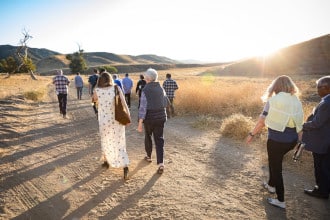
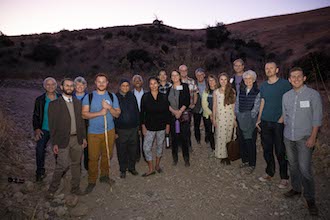
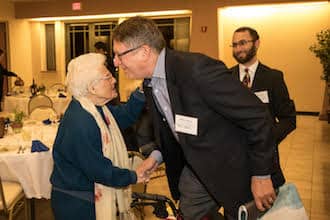
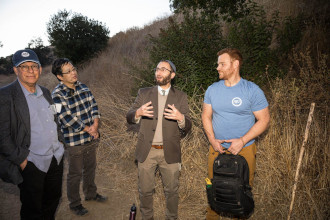
---
### [COP28 UN Climate Conference, and Faith Pavilion](https://interfaithsustain.com/cop28-un-climate-conference/)
**Published:** August 14, 2023
**Author:** ICSD
**Content:**


# The COP28 UN Climate Conference Faith Pavilion


## COP28 Faith Pavilion
### The first-ever Faith Pavilion at a climate COP was a big success, with 70 sessions and 325 speakers, including major religious leaders, government ministers, and Indigenous people.
## Evaluating the Faith Pavilion’s Impact
### Click [here](https://interfaithsustain.com/wp-content/uploads/2024/02/Faith-Pavilion-Media-Evaluation-Report.pdf "here") to read an evaluation report about media reach and impact of the Faith Pavilion, made by the London-based PR firm Greenhouse Agency. Some of the highlights were:**
- Faith was clearly positioned at the heart of COP28 with clear recognition and support for the power of faith in climate.
- Media coverage was significant – as much as 7% of the total media coverage of COP28 referenced faith in some capacity.
- More than 4,000 articles referenced the Faith Pavilion at COP28 with positive key messages aligned to our briefing.
- In the run up to and during COP, Greenhouse issued 10 press releases and media advisories and arranged interviews with 8 media outlets.
- Over 16,000 pieces of content across social channels included the hashtags #FaithAtCOP28 or #FaithClimateAction, and referenced the Faith Pavilion.
### Who organized the Faith Pavilion?
The first-ever Faith Pavilion at a UN Climate Change Conference is hosted by the Muslim Council of Elders in collaboration with the COP28 Presidency, the United Nations Environment Programme (UNEP), and a diverse coalition of global partners including the Interfaith Center for Sustainable Development, the Episcopal Diocese of California, the International Partnership on Religion and Development (PaRD), the Peace Department, and over 50 faith organizations. Pope Francis had planned to come to the Faith Pavilion for an inaugural session, and ended up giving a video address.
### What happened in the Faith Pavilion?
Situated at the heart of COP28, adjacent to the World Climate Action Summit and negotiations zones, the Faith Pavilion hosts more than 65 sessions. It brings together religious and other civil society representatives, Indigenous Peoples, scientists, youth, and political leaders. The Pavilion provides a unique opportunity for faith-based engagement with key stakeholders, including political delegations, decision makers, negotiators, and business leaders to promote swift and effective climate action. A Faith for Climate Call to Action was issued by the Faith Pavilion, and can be [found here](https://interfaithsustain.com/wp-content/uploads/2023/12/041223-Faith-and-the-climate-talks-a-call-to-action.pdf).
### Pre-COP Global Faith Leaders Summit on Climate
High-level faith leaders from around the world convened on November 6-7, 2023 in Abu Dhabi, UAE to sign a statement of support for urgent climate action at the Global Faith Leaders Summit, organized by the Muslim Council of Elders in collaboration with the COP28 Presidency and the United Nations Environmental Programme (UNEP). The interfaith statement can be [viewed here](https://interfaithsustain.com/wp-content/uploads/2023/11/Interfaith-Statement-Global-Faith-Leaders-Summit-for-COP28.pdf).
## The Faith Pavilion’s 6 Goals at COP28
INSPIRE
Inspire and unleash the power of religions, religious leaders, and faith communities as change agents for climate action.
WORK
TOGETHER
Highlight concrete actions by religious institutions and communities to curb climate change with measurable indicators and a monitoring mechanism.
PROMOTE
ACTION
Promote a global coalition of religious leaders working together for climate action.
ENGAGE
Encourage religious leaders to engage in policy dialogue with and inspire climate ambition among political delegations.
HISTORIC
ALIGNMENT
Achieve a historic alignment of religious leaders behind a call for climate action designed to harness contributions at an individual and institutional levels as a response to the Global Stocktake and to build a greater sense of hope around COP 28.
UNIFY
Unify and maximize the collective action of faith actors present at COP 28.
## Religious Leaders Call for Climate Action
Faith leaders are calling for climate action at COP28. We are pleased to share videos of religious leaders speaking to the importance of engaging faith communities in curbing climate change, and calling for world leaders to take action. They also highlight the need to find **deep within ourselves the strength and will to act for a sustainable planet**. [Click here](https://interfaithsustain.com/faith-leaders-cop28/) to see these videos.
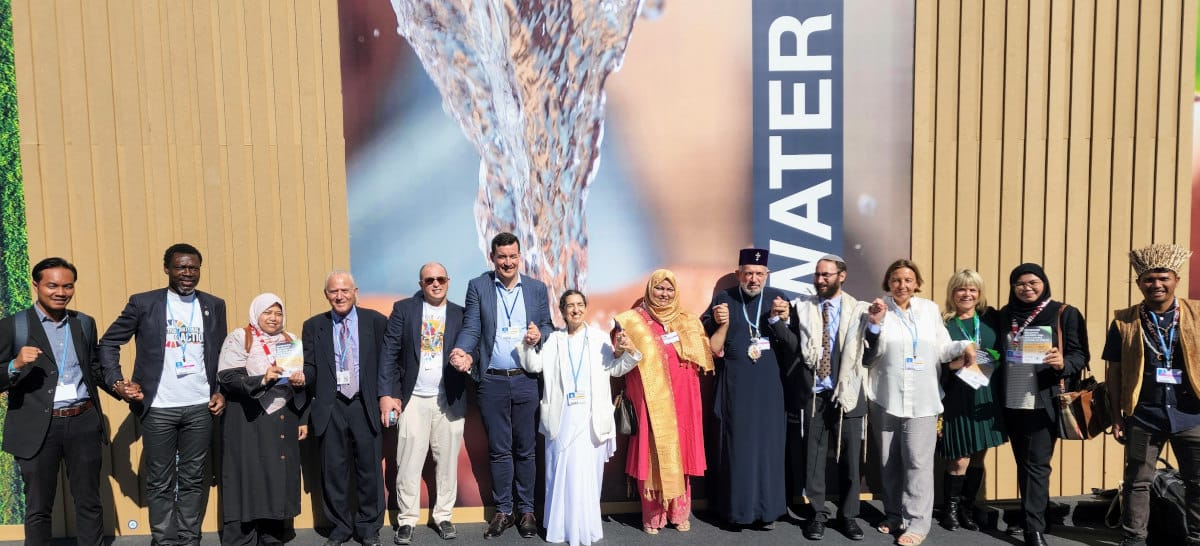## What interfaith activities took place at COP27?
The 27th Conference of the Parties to the United Nations Framework Convention on Climate Change (COP27), took place in the Egyptian coastal city of Sharm el-Sheikh. More than 100 Heads of State and Governments, and over 35,000 participants attended the convention, which ran from November 6-20, 2022. ICSD co-organized four interfaith press conferences at COP27. More information and full video records of those events can be [found here](https://interfaithsustain.com/returning-to-mt-sinai/ "information and a look back at COP27").
## Where can I learn more?
There are a variety of ways to learn more about interfaith engagement at COP28! We will continue to update the ICSD website and our various social media platforms, which can be accessed here:
[**LEARN MORE**](https://linktr.ee/creationcarenow)
If you have any further questions about the ICSD’s role at COP28, or would like to contribute to the faith pavilion, please get in touch.
[**CONTACT US**](https://interfaithsustain.com/contact/)
---
### [Religious Education and Our Ecological Context](https://interfaithsustain.com/religious-education-and-our-ecological-context-2/)
**Published:** June 22, 2017
**Author:** ICSD
**Content:**
**RE636: Religious Education and Our Ecological Context**
Instructor: Jennifer R. Ayres
Candler School of Theology
Spring
404-727-6329
**Class Meeting Information**
Friday 8:00 – 11:00
RARB 549
**Course Description**
In this course, we will develop a theological framework for understanding the ecological dimensions of Christian life and vocation, and examine educational practices and theories that contribute to the formation of an ecological faith. We will test the theological, theoretical, and practical approaches to these questions in living communities, your field sites.
The course is built around a moral commitment that Christian faith, in our time, requires attention to how our way of life is embedded in, accountable to, and given meaning in the context of God’s creation. What does it mean to be a human—and a human community—in relationship to the creating and sustaining God, in light of our ecological context? As Larry Rasmussen has said, taking a cue from James Baldwin, we must “do our first works over,” meaning that those of us in the fields of theological studies must re-imagine the foundational principles that guide our work, taking into account our identity as members of creation. Certainly, the re-examination has deep implications for the theory and practice of religious education.
In recent years, we also have heard a related challenge from the field of environmental education, in that real ecological learning should elicit “not just a comprehension of how the world works, but, in the light of that knowledge, a life lived accordingly” (David Orr, *Ecological Literacy*, 87). This challenge resonates in the field of religious education, where we examine the contours of the “Christian life,” and the kind of formation and education that contributes to its dimensions of moral and religious commitment.
To these ends, the course incorporates literature from environmental education, ecotheology, social ethics, biblical studies, engaged pedagogical theory, and practical theology. The course relies on models of engaged pedagogy, whereby students’ experience in field sites and critical engagement thereof will serve as the starting point, engagement and observation of ecological practices will contextualize the theoretical work, and the formation of ecologically-committed theological knowing will serve as the primary learning goal.
**Course Values**
Our work together in this course is framed by four core values:
- This course has an ambitious and impractical goal: It is meant to trouble and enrich *Christian vocation* so that a Christian life can hardly be imagined without a sense for its “situatedness” in the midst of God’s whole ecology. Many of the readings for this course will make plain the *spiritual and vocational dimensions of the needed ecological transformation*, and you will be challenged to reimagine a model of religious *leadership* that names as a central component the formation of an ecological faith.
- As a religious education course, the content and assignments will broaden and deepen your understandings of theories and processes of *teaching and learning*; identity formation; and the formation of moral/theological imagination. You also should leave the course with at least *introductory expertise for ecological ministry* and leadership.
- The readings for this course engage the *bible*, our core text in the Christian tradition; as well as *contemporary theological perspectives* on divine creativity, providence, and eschatology in light of our ecological context. We will both re-examine traditional *religious practices* (such as meal and pilgrimage) and imagine new practices with regard to their ecological implications.
- In an effort to complicate simplistic interpretations of eco-theology, we will engage the *scholarship and stories of diverse persons and communities from around the world*. In course readings and assignments, you will be expected to attend to issues of social location and context.
**Learning Outcomes**
Guided by these broader course values, upon completion of this course, students will be able to:
- Articulate a vision of ecotheology grounded in Christian tradition, practice, and ecology;
- Theorize the goals, foundations, and methods of ecological religious education;
- Describe the contextual characteristics that shape an ecological faith in relationship to a particular place and community; and
- Design and evaluate educational programs that are contextually, theologically, and practically appropriate responses to the ecological question before people of faith.
**Expectations and Evaluation**
In order to work towards this ambitious goal—to change the very foundations of how we understand Christian life and vocation, in light of our ecological context—we will seek to create a community of learning in which we all are accountable to one another.
**Disabilities Statement**
If a student is registered with Emory office of Access, Disability Services, and Resources (ADSR), accommodations are effective when the student presents (in person) the accommodation letter to the instructor and discusses necessary course accommodations.
**Course Requirements**
Your grade in the course will be determined according to your investment and performance on a number of assignments. The semester’s assignments, along with a brief description, appear below. More detailed instructions for each assignment will be posted to Canvas.
**Pre-Class Discussion (15%):** Each week, we’ll set the stage for our in-class work with a conversation on our Canvas site. We’ll set up the discussions in the first class. Each of you will be responsible for starting the conversation once during the semester, and you will respond to your colleagues on at least eight weeks over the course of the semester. Your posts will be brief (200-400 words) and responses should be 100 words or less. Blog posts must be submitted by 5:00 p.m. on the Wednesday before class meets, and responses by the beginning of class.
**Digital Storytelling Project and Reflection on Place (15%):** Place-based learning begins with the question, “Where am I?” Religious education for ecological faith begins in deep attention to the places in which we become who we are: “Tell me the landscape in which you live and I will tell you who you are.” (José Ortega y Gassett) Many of our readings in this course are built upon this core assumption. Each student will produce a micro-documentary that tells *one* story about a place that tells you who you are. More information will be posted to the course website. We’ll screen these on the last day of class – invite your friends!
**Major Class Project (Total 50%): This project creates a theologically, pedagogically, and practically-informed plan to cultivate ecological faith in your field site.** We’ll work on this project bit by bit, over the course of the semester. At the end of the term, you will resubmit the first four parts (contextual analysis, ecotheology paper, educational theory outline, and educational event design), as one broad ecological educational plan, along with an assessment of the implementation of the plan. You may revise these first four components in response to feedback and to account for any new observations or challenges to your theology and theory that emerged as you designed and implemented your events. The point of submitting these elements together is to invite you to think broadly, deeply, and with specificity about how we might shape educational ministry that contributes to the formation of ecological faith and vocation. Due at the end of the term.
**Reading the Context (10%):** The first step in ecological faith is knowing, precisely, where we are. Please describe your field site, with particular attention to three themes: (1) Practices that the site already engages that you would describe as “ecological” in some way; (2) Issues that you see in the site’s ecological context that demand our attention; and (3) Challenges that make ecological attention difficult in this setting. This paper should be about 750 words. Due January.
**Ecotheology Paper (10%):** In conversation with the readings from the first eight weeks of the semester, you each will write a brief paper that outlines the theological framework that shapes how you understand Christian life in our ecological context. The paper, 1000-1200 words in length, will serve as a framework for the event you will design in the second half of the course. Due February.
**Educational Theory Outline (10%):** In conversation with your ecotheology paper and the readings on engaged pedagogy, environmental education, and ecological literacy, this paper (750 words), outlines the context, foundations, goals and practices of religious ecological education. It will address questions like: What is the relationship between humanity and the rest of creation that religious education should inspire and sustain? What are the primary models of teaching and learning that might do this? And what virtues do you imagine being cultivated in this model of education? Due March.
**Educational Event Design (10%):** In the second half of the semester, you will design and implement an educational event that contributes to the formation of ecological faith in your field site. It might be an explicitly educational event, like a class or retreat. At the same time, Candler professor emeritus Charles Foster argued that everything that the community of faith does, “teaches.” In light of that commitment, and with the assumption that formation in ecological faith happens in less “explicit” learning events, you might also conceptualize, refine, and design an event that contributes more broadly to the formation of ecological faith. Such events might include worship, fellowship, political advocacy, etc. The event should grow out of the work you have already done in reading of the context and developing your ecotheology and educational theory, and will be assessed according to three criteria:
- 50% of your grade will be determined by the design of the event, clearly and substantively expressed in a written plan and accompanying materials;
- 50% of your grade will be determined by your accompanying commentary, a 500 word essay that shows how the event is designed in conversation with your foundational work on analyzing the context, developing an ecotheology, and identifying core educational principles.
***You’ll submit your design via Blackboard by a specified date in March, and implement the design between Easter and the end of the semester. This gives you about a five-week window in which to do this. Please plan accordingly and get this on the calendar early!***
**Assessment (10%):** Once you have implemented your educational event, take some time to write a reflection, no more than 1000 words, on the experience and its reception. Please answer the following four questions, and submit with any revisions of the first three parts of your project when you present your event designs during the exam period:
1. How did participants experience this event? (Use the five-question questionnaire developed by Stephen Brookfield to gather feedback from two participants)
2. Where did you feel most engaged in the process of developing the foundation for, designing, and implementing the event?
3. Was this event appropriate to the context of your field site? How so, or how might it have been more appropriate?
4. How has your theory of ecological religious education been affirmed and/or challenge in the implementation of your plan?
**Attendance and Participation (20%):** Please see the attendance policy above, under course expectations. Although attendance and participation are only 20% of your grade, you cannot pass the course if you miss more than nine hours of class, except in the most unusual of circumstances. Punctuality is also taken into account in the attendance and participation grade.
| **Date** | **Focus** | **Assignment Due** |
|---|---|---|
| **PLACE MATTERS: ECOLOGICAL IDENTITY AND VOCATION** |
| **Week 1** **January** | **Place and Identity** *Humanity as Members of Creation* | **Reading Assignment Due:** Orr, *Hope Is an Imperative*, 213-228 *Laudato Si*, Introductory section |
| **Week 2** **January** | **Humanity and Ecological Vocation***Responsibility and Commitment* | **Reading Assignment Due:** hooks, *Belonging*, 1-5, 34-52 Rasmussen, “The Creatures We Are,” in *Earth Honoring Faith* (E) (1-42) Hiebert, “The Human Vocation,” in *Christianity and Ecology* (E) (135-151) |
| **ECOTHEOLOGICAL PERSPECTIVE** |
| **Week 3** **January** | **Biblical Perspectives***Creation, Land, and Agriculture* | **Reading Assignment Due:** Davis, *Scripture, Culture, and Agriculture* (selections) *Laudato Si*, Chapters 2-3 (45-92) **Writing Assignment Due:** Reading the Context paper |
| **Week 4** **February** | **Human & Ecological Vulnerability**Environmental Justice | **Reading Assignment Due:** *Laudato Si*, Chapter 4 (93-108) Boff, *Cry of the Earth, Cry of the Poor* (104-139) (E) OR Gebara, *Longing for Running Water* (100-135) (E) McDuff, *Natural Saints*, 103-121 hooks, *Belonging*, 106-120 |
| **Week 5** **February** | **Cultivating Ecological Faith I** *Ecological Conversion* | **Reading Assignment Due:** *Laudato Si*, Chapter 6 (133-160) Rasmussen, “The Faith We Seek,” In *Earth-Honoring Faith* (E) (80-110) Berry, *The Art of the Commonplace*, 305-320 **Writing Assignment Due:** Draft of Digital Story |
| **Week 6** **February** | **Cultivating Ecological Faith II** *Wonder, Love, Grief and Hope* | **Reading Assignment Due:** hooks, *Belonging*, 6-24, 53-68, 174-201 Orr, *Hope Is an Imperative*, 324-332 McDuff, *Natural Saints*, 83-102, 197-199 |
| **EDUCATIONAL THEORY** |
| **Week 7** **February** | **Environmental Education** *Surveying the Field* | **Reading Assignment Due:** *Belgrade Charter* (E) *Tbilisi Declaration* (E), Report, Declaration and Recommendations 1-5 (19-29) Judson, *A New Approach*, 1-33 **Writing Assignment Due:** Ecotheology Paper |
| **Week 8** **March** | **Ecological Education** *Purposes and Goals* | **Reading Assignment Due:** Orr, *Hope is An Imperative*, 237-245, 251-261 Carson, “The Sense of Wonder” (E) Parks, “Transformative Learning,” in *Learning Toward an Ecological Consciousness* (E) |
| **Week of** **March** | Spring Break: No Class Meeting |
| **Week 9** **March** | **Ecological Education** *Principles* | **Reading Assignment Due:** Orr, *Hope is An Imperative*, 13-20 Judson, *A New Approach*, 33-108 **Writing Assignment Due:** Educational Theory Outline |
|---|---|---|
| **Week 10** **March** | **Good Friday** No class meeting | **Reading Assignment Due:** No additional reading assignment during Holy Week *Use this time to work on your digital story projects and your educational event designs!* **Writing Assignment Due:** Educational Event Design |
| **Week 11** **April** | **Pedagogical Approaches** | **Reading Assignment Due:** Moore, “Sacred Teaching,” in *Teaching as a Sacramental Act* (E) Shulman, “Making Differences” (E) Patterson, “Performative Pedagogies” (E) |
| **LIVING WELL: ECOLOGICAL PRACTICES FOR A SUSTAINABLE FUTURE** |
| **Week 12** **April** | **Grounded** *Ecology, Practice,* *and Christian Faith* | **Reading Assignment Due:** Dykstra and Bass, “A Theological Understanding of Christian Practices,” in *Practicing Theology* (E) McDuff, *Natural Saints*, 3-10, 123-148 hooks, *Belonging*, 25-33 |
| **Week 13** **April** | **Living Well** *Practices Resisting Alienation and Imagining the Future* | **Reading Assignment Due:** McDuff, *Natural Saints*, 11-102, 149-195 Berry, *The Art of the Commonplace*, 321-328 *Laudato Si*, Chapter 5 (109-132), Review Chapter 6 | |
| **Week 14** **April** | “**Save Me a Place”** | **Reading Assignment Due:** Berry, *The Art of the Commonplace,* 3-31, 144-158 **Assignment Due:** Digital Story Film Festival! | |
| **During Exam Period** | **Submission of Final Projects and Presentation of Educational Event Design** | |
**Books For Purchase**
hooks, bell. *Belonging: A Culture of Place*. New York: Routledge, 2009.
Judson, Gillian. *A New Approach to Ecological Education: Engaging Students’ Imaginations in Their World.* New York: Peter Lang Publishing, Inc., 2010.
McDuff, Mallory. *Natural Saints: How People of Faith Are Working to Save God’s Earth*. New York: Oxford University Press, 2010.
Orr, David W. *Hope Is an Imperative: The Essential David Orr*. Washington: Island Press, 2011.
**Recommended Books (Significant Portions Assigned)**
Berry, Wendell. *The Art of the Commonplace: The Agrarian Essays of Wendell Berry*. Berkeley, CA: Counterpoint, 2002.
Davis, Ellen F. *Scripture, Culture, and Agriculture: An Agrarian Reading of the Bible*. New York: Cambridge University Press, 2009.
Pope Francis. *Laudato Si’: On Care for Our Common Home.* Huntington, IN: Our Sunday Visitor, Inc., 2015.
**Shorter Assignments Posted to eReserves (E)**
Bass, Dorothy C., and Craig R. Dykstra. “A Theological Understanding of Christian Practices.” In *Practicing Theology: Beliefs and Practices in Christian Life*, edited by MIroslav Volf and Dorothy C. Bass, 13-32. Grand Rapids, MI: Wm. B. Eerdmans Publishing Co., 2002.
Boff, Leonardo. “Liberation Theology and Ecology,” in *Cry of the Earth, Cry of the Poor*, 104-114. Maryknoll, NY: Orbis Books, 1997.
Boff, Leonardo. “Reclaiming the Dignity of Earth,” in *Cry of the Earth, Cry of the Poor*, 115-139. Maryknoll, NY: Orbis Books, 1997.
Carson, Rachel. “Help Your Child to Wonder.” *Woman’s Home Companion* (July 1956): 24-27, 46-48.
Daloz, Laurent A. Parks. “Transformative Learning for Bioregional Citizenship.” In *Learning toward an Ecological Consciousness: Selected Transformative Practices*, edited by Edmund V. O’Sullivan and Marilyn M. Taylor, 29-45. New York: Palgrave MacMIllan, 2004.
Gebara, Ivone. *Longing for Running Water: Ecofeminism and Liberation*. Minneapolis: Fortress Press, 1999.
Hiebert, Theodore “The Human Vocation: Origins and Transformations in Christian Traditions ” In *Christianity and Ecology: Seeking the Well-Being of Earth and Humans*, edited by Dieter T. Hessel and Rosemary Radford Ruether, 135-154. Cambridge, MA: Harvard University Press, 2000.
Moore, Mary Elizabeth Mullino. “Sacred Teaching: Education as Sacrament.” In *Teaching as a Sacramental Act*, 15-39. Cleveland, OH: The Pilgrim Press, 2004.
Patterson, Barbara A.B. . “Performative Pedagogies: Religion and Ecology, Wilderness Spirituality.” *Religious Studies News* (2011).
Rasmussen, Larry L. “The Creatures We Are.” In *Earth-Honoring Faith: Religion in a New Key.* Louisville, KY: Westminster John Knox, 2006.
Shulman, Lee S. “Making Differences: A Table of Learning.” *Change* 34, no. 6 (2002): 36-44.
United Nations Economic, Scientific, and Cultural Organization (UNESCO). 1975. *The Belgrade Charter: A Framework for Environmental Education*. Adopted by the UNESCO/United Nations Environment Programme (UNEP) International Workshop on Environmental Education, October 22, 1975. Belgrade, Yugoslavia. <https://unesdoc.unesco.org/images/0001/000177/017772eb.pdf> (accessed January 10, 2015).
United Nations Economic, Scientific, and Cultural Organization (UNESCO). 1977. *Tbilisi Declaration*. Adopted by the UNESCO/United Nations Environment Programme (UNEP) Intergovernmental Conference on Environmental Education, October 26, 1977. Tbilisi, Georgia, USSR. <https://unesdoc.unesco.org/images/0003/000327/032763eo.pdf> (accessed January 10, 2016).
---
### [Climate Justice Climate Ethics](https://interfaithsustain.com/climate-justice-climate-ethics/)
**Published:** December 28, 2016
**Author:** ICSD
**Content:**
**CE5600 Climate Justice Climate Ethics (Fall 2016)**
**Tuesday 10:30 – 12:30 and additional meetings as determined by class**
**PLTS and GTU**
**Location: PLTS Vaulted Classroom in Sawyer Hall**
## Professor
Cynthia Moe-Lobeda Phone: 206 384-8760
<cmoelobeda@plts.edu> Office Hours: TBD and by appt.
Office: PLTS, Gisey Hall B2
## Course Description from Course catalog
This course will use methodologies of Christian ethics to examine: 1) the climate crisis as a moral matter in relationship to various forms of structural injustice including injustice grounded in race/ethnicity, class, and colonialism, and 2) pathways for addressing the climate crisis. Special attention will be given to global – local connections and perspectives from marginalized communities. Methodological resources include liberation ethics, Earth ethics, post-colonial perspectives, eco-feminist perspectives, and eco-hermeneutics. This is a seminar course involving extensive reading, writing, collaborative knowledge building, and discussion grounded in the reading. Assignments include a paper, research into the climate justice movement, peer-teaching, and occasional short written assignments. The informing undercurrent of the course is the quest for hope and moral-spiritual agency in the face of seemingly insurmountable obstacles.
## Student Learning Outcomes
By the end of this course, students who participate fully in it will be able to do the following with some proficiency, and will have set the stage for further developing that proficiency.
Identify & Understand
1. Key ethical issues related to climate change
2. important scientific findings regarding climate change and resources for on-going knowledge regarding climate change
3. ways in which Christian traditions have contributed to the climate crisis, and resources in Christian traditions that can help make the transition to sustainable Earth-human relations marked by social justice
Analyze
4. the relationship between climate change and structural injustice, particularly class, race and gender based injustice.
5. the systemic roots of climate change
6. scholarship and climate change social action movements/organizations with regard to how well structural injustice concerns are addressed in relation to climate change
7. climate change social action movements/organizations in regard to types of outcomes sought, actions promoted, and ideological grounding
Identify and Evaluate
8. different positions in both the scholarly community and the activist community regarding ethical responses to climate change
Identify, Evaluate & Build on
9. Key approaches (methods) that make up the major lines of thinking within climate
ethics, especially Christian ethical approaches
Synthesize
1. from within the Christian tradition and elsewhere both sources of hope and ingredients of moral agency for overcoming barriers to climate justice and social action
2. current scholarly approaches to climate ethics in order to construct a working method to use in their own scholarly work on climate justice
## Course Resources
**Required Readings**
| Jenkins | Willis | The Future of Ethics | Georgetown |
|---|---|---|---|
| Gardiner, et al. (ed) | Stephen | Climate Ethics: Essential Readings | Oxford |
| Rasmussen | Larry | Earth-Honoring Faith: Religious Ethics in a New Key | Oxford |
| Pope Francis | | *Laudato Si* | Available on-line |
| Shiva | Vandana | Soil Not Oil | South End Press |
Many additional shorter readings will be provided on Moodle or will be acquired on-line. The authors of these include: James Cone, Maxine Burkett, Jutta Brunnee, Jennifer Harvey, Sara Wolcott, Naomi Klein, Patrick Bond, Peggy Shephard, Guiellmo Kerber, Lester Brown, and others.
**Films**
Climate Refugees
Merchants of Doubt (depending upon availability)
## Course Format
1. Class sessions will be based upon careful and active reading of assigned readings, and raising questions in relationship to them.
2. Class sessions will consist of a combination of:
- Student-led discussion of readings.
- Professor led discussion of readings.
- Collaborative knowledge-building through delegation of readings and shared notes.
- Brief interactive lectures.
- Peer consultations on papers.
3. Students are invited to bring a 3-5 minute presentation to share in class that expresses or explores — through a medium other than academic discourse — a concept learned in the course. That medium could be poetry, dance, music, visual art, or some other “language” of ethics. This is optional and will NOT be graded; doing it or not will not influence ones’ participation grade.
## Course Requirements
1. Preparation:
- Read and reflect on all readings in their entirely before the designated class session.
- Weekly Critical Reading Notes (to be described in class).
2. General Participation:
- Attend every class session and be ready to begin at 2:10. (Please see Attendance Policy at the end of this syllabus).
- Engage in the class discussion in ways that contribute to the development of a trusting and exciting learning community in the context of this course:
- When we are discussing readings, focus primarily on understanding the readings and interacting with them.
- Participate respectfully–verbally and non-verbally.
- Listen actively to what your colleagues in the class are saying.
3. Lead discussion of the readings related to specific topics on the syllabus. Each student will do this a number of times based on how many people are in the seminar. Each student will select the topics for which that student provides this leadership. You may use your pedagogical creativity if you choose, or you may be more traditional in your pedagogy. You may assign critical reading questions in advance if you so choose.
4. Major paper: Research paper, or constructive proposal paper, or methodological comparison paper. Each student will develop a question and a plan for pursing it through a peer consultation process with other students. It is advisable to develop a question that will serve your dissertation, comps, or research readiness requirement (approx. 15-20 pages).
5. OPTION A: Method synthesis paper: This paper will summarize your developing/working method in relationship to climate ethics / climate justice. It will include analysis of the ethical methods encountered in course readings. 6-8 pages
6. OPTION B: Map the terrain of the scholarly and activist “movement” toward climate justice.
## Assessment
The course grade will consist of:
– Participation and preparation (attendance, discussion contributions, CRNs) 35%
– Leadership of seminar discussion 15%
– Major paper 30%
– Method synthesis paper OR Mapping the terrain paper 20%
Final grading as related to points:
A 93-100 A- 90-92.9
B+ 87-89.9 B 83-86.9 B- 80-82.9
C+ 77-79.9 C 73-76.9 C- 70-72.9
F 0-69.9
**Schedule of Readings**
**Part I: Climate Crisis and Context**
**Note: Films to be watched:**
- By the third class, please watch Climate Refugees
- By the fourth class, please watch Merchants of Doubt (depending upon availability)
**WEEK ONE: Sept. 6**
**Introduction to the course and to each other**
**WEEK TWO: Sept. 13**
**Climate Change – Current state of knowledge**
Readings:
- Pope Francis: Chapter One
- Gardiner, 5-7 and 39-40 (first column)
- World Bank: Turn Down the Heat: Why a 4 Degree C Warmer World Must Be Avoided at <https://documents.worldbank.org/curated/en/865571468149107611/Turn-down-the-heat-why-a-4-C-warmer-world-must-be-avoided>
Read: Foreword, Executive Summary, chap 1.
Skim the rest in order to see what is there and be able to use it.
## “Climate Change Report Warns Of Dramatically Warmer World This Century,” World Bank Press Release, Nov. 18, 2012 At:
[Https://Www.Worldbank.Org/En/News/Feature/2012/11/18/Climate-Change-Report-Warns-Dramatically-Warmer-World-This-Century](https://www.worldbank.org/en/news/feature/2012/11/18/Climate-change-report-warns-dramatically-warmer-world-this-century)
- IPCC: Climate Change 2014 Synthesis Report (otherwise known as Fifth Assessment Report): Summary for Policy Makers (Read the “headlines.” Skim the rest sufficiently to know what it is saying.
- *Climate Change Impacts in the United States: The Third National Climate Assessment.* US Global Change Research Program, <https://nca2014.globalchange.gov/>. Explore the website. Read the 12 key findings in the report
- Rasmussen: Chap 2: 55-71
- Caney in Gardiner, Chap 9. “Climate Change, Human Rights and Moral Thresholds.”
**Geo-politics of Climate Change**
Reading:
- Northcott, in *A Political Theology of Climate Change*: “Geopolitics of a Slow Catastrophe,” pp. 7-21 (Posted on Moodle)
**WEEK THREE: Sept. 20**
**Climate Change as Climate Injustice — Unequal Impacts**
Concepts to engage
Climate refugees
Climate colonialism
Climate debt and ecological debt
Climate racism
Climate apartheid
Readings:
- Review Pope Francis: Chap. One Part V.
- UNHDP, Human Development Report 2007/2008 summary: Overview including Forward
- Moe-Lobeda, **“**Climate Change as Climate Debt: Forging a Just Future.” *Journal of the Society of Christian Ethics*1 (Spring/Summer 2016).
- Karen Mickelson, “Leading Towards a Level Playing Field, Repaying Ecological Debt….” In Osgoode Hall Law Journal 43:1&2: 150-64 and 168-70.
- World Council of Churches, “Statement on eco-justice and ecological debt” Available on-line.
- Oxfam International, “Climate Change vs Food Security” 5 September 2012 (sections TBA)
- Review: World Bank: Turn Down the Heat
- Archbishop Desmond Tutu, blog post: https://hdr.undp.org/en/content/we-do-not-need-climate-change-apartheid-adaptation
- <https://pacinst.org/publication/the-impacts-of-sea-level-rise-on-the-california-coast/>
- Interview with Angelica Navarro by Amy Goodman. At: [https://www.democracynow.org/2009/12/9/we\_are\_not\_begging\_for\_aid](https://www.democracynow.org/2009/12/9/we_are_not_begging_for_aid)
- <https://pacinst.org/wp-content/uploads/sites/21/2014/04/community-based-climate-planning-Oakland.pdf>
- Shue in Gardiner, Chap 5., “Global Environment and International Inequity.”
- Review readings for previous week – noting inequity
ADDITIONAL RESOURCES:
- <https://sites.google.com/site/climatedebtclimatecredit/> for information regarding climate debt. (See also the articles listed on left side of the site.)
OPTIONAL: Additional Reading:
- Sophia Wirsching, Peter Emberson, and Guillermo Kerber, eds., “Climate Refugees: People displaced by Climate Hagne and the Role of the Churches,” World Council of Churches. Available on-line.
- Nidhi Tandon, “Biopolitics, Climate Change and Water Security: Impact, Vulnerability and Adaptation issues for Women,” *“Agenda: Empowering Women for Gender Equity,* 73, *Biopolitics: New Technologies Trilogy,* Volume 1, 1 (2007), 4-17. (Available through Jstor)
**Part II: How We Got Here**
**WEEK FOUR: Sept. 27**
**Roots of the Crisis: Multi-Dimensional Analyses (spiritual, ethical, economic, political)**
Reading:
- Pope Francis: LS Intro para 1-9 and Chap Three
- Rasmussen chap 2 pp. 50-54 and 71-79 and review 55-71.
**Roots of the Crisis: Political-Economy of Fossil-Fuel and Neoliberal Capitalism**
Reading
- Northcott in *Moral Climate* pp 33-39 (Posted on Moodle)
- Naomi Klein: This Changes Everything: pp 8-26, and 64-75 (The rest of chap 2 is optional) (Posted on Moodle)
- Shiva: pages 13-16 and bottom of 31 – 32.
- Northcott in *A Political Theology of Climate Change*: pp 50-60 and 85-92 and 141 last paragraph – 144 (Posted on Moodle)
**WEEK FIVE: Oct. 4**
**Roots of the Crisis: White Supremacy and** **Doctrine of Discovery**
Reading:
- Sara Wolcott: “Inheritance, Howard Thurman and the Doctrine of Discovery: Retelling the Origin Story of Climate” (posted on Moodle)
- Watch “Doctrine of Discover” (on-line film; link will be provided)
- Willie James Jennings: excerpt from Christian Imagination: Theology and the Origins of Race (Posted on Moodle)
- Papers from 2014 AAR session called “Climate Debt, Race Debt, and Climate Colonialism: Forging a Just Future (Posted on Moodle).
- Jennifer Harvey, “Dangerous Goods: Seven Reasons Creation Care Movements Must Advocate Reparations,” in *Buffalo Shout, Salmon Cry.* Herald Press, 2013. (Posted on Moodle)
- James Cone, “*Whose Earth Is It Anyway?”* in *Earth Habitat: Eco-Injustice and the Church’s Response,* Dieter Hessel & Larry Rasmussen eds. (Posted on Moodle)
- Marguerite Spencer, “Environmental Racism and Black Theology: James H. Cone Instructs Us on Whiteness.” (Posted on Moodle)
**Roots of the Crisis: Religion**
Reading:
- Lynn White’s critique if you are not already familiar with it (available on-line)
- Rasmussen: Prelude (being sure to get the main point in the para that spans pp. 6-7; and chap 3.
**Part 3: Theo-Ethical approaches**
**WEEK SIX: Oct. 11**
**Identifying the Ethical Issues**
Reading:
- Gardiner chap 1, 3, 4,
**Catholic Social Teaching through a Franciscan Lens (integral ecology)**
Reading:
- Pope Francis: *Laudato Si* Chap Two and Chap Four
**A glimpse at climate change and systematic theology**
Reading:
- Introduction to *Systematic Theology and Climate Change* edited by Michael Northcott (Posted on Moodle)
**UNFCCC and Contributions from International Environmental Law**
Reading:
- Brief history of UNFCCC up to about 2005 in Gardiner 15 pp 263-4.
- Jutta Brunnee, “climate Change, global Environmental Justice and International Environmental law.”
- A Civil Society perspective from South Africa: Article by Patrick Bond: https://newpol.org/content/who-wins-%E2%80%9Cclimate-apartheid%E2%80%9D.
- OPTIONAL for more depth on UNFCC from persp of international env law: “Jutta Brunnee: “The UNFCCC as a Negotiation Forum” in Climate Policy 13:5 (2013): 589-607.
- I will provide additional optional reading suggestions for any who what more depth in this area.
Additional reading options:
- View table of contents of *Melbourne Journal of International Law* (Australia)
Volume 10, Number 2, October 2009. Select as per your interest.
**WEEK SEVEN: Oct. 18**
**Philosophical ethics’ approaches to climate inequity**
Reading:
- Gardiner 5, 7 (unless don’t have time)
- Gardiner 14 (may skim 254-7)
- Gardiner 12 (could skip 221 bottom – 226 top; more technical than necessary for this course)
Regarding chap 12 and Greenhouse Development Rights Framework (GDR). OPTIONAL: See also <https://gdrights.org/about/>. This link contains more information about the GDR discussed in Chap 12.
**Justice theory complexified by structural injustice/structural evil**
Reading:
- Iris Marion Young: “Responsibility and Historical Injustice,” in *Responsibly for Justice* 171-187
- Moe-Lobeda: *Resisting Structural Evil: Love as Ecological-Economic Vocation,* 3 *(*Posted on Moodle)
**WEEKS EIGHT and NINE Oct 25 and Nov. 1**
**Christian Ethics as critical participation in community adaptation to overwhelming problems**
Reading:
- Jenkins: most of the text (some pages will be optional as per TBA)
**WEEK TEN: Nov. 8**
**Religious Earth Ethics Rooted in Deep Tradition and Reconstructed**
Reading:
- Rasmussen: Chap 1, 2 (pp. 43-50; review the rest of Chap 2), 3 – 5.
**WEEK ELEVEN: Nov. 15**
**Religious Earth Ethics Rooted in Deep Tradition and Reconstructed**
Reading:
- Rasmussen: Chap. 6, 7, Interlude, 8 – 12 (different chaps assigned to different people)
- “Manifesto for an Ecological Reformation of Christianity” (Posted on Moodle)
**Part 4: Action/Hope – Perspectives, Movements, Organizations**, **Lines of Action**
**WEEK TWELVE: Nov. 22**
**Integral Ecology**
Reading:
- Pope Francis: LS: Intro paragraphs 10-12 and Chap Five (review Part I and read the rest)
- Shiva: *Soil Not Oil*: Intro and chap 1.
**Love as an Ecological-Economic vocation**
Reading:
- Pope Francis: LS: Chapter Six Part V
- Moe-Lobeda: *Resisting Structural Evil*, Chaps 8 and 9.
**Interfaith and ecclesial movements toward climate justice**
Reading:
- See the Forum on Religion and Ecology to familiarize yourself with it and its many resources. See for example the list of statements by ecclesial or interfaith bodies.
- Kerber: “International Advocacy for Climate Justice” (posted on Moodle)
- Choose and read one of the interfaith statements such as:
- the Uppsala Interfaith Climate Manifesto from 2008,
- the Interfaith Declaration on Climate Change from 2009,
- the Declaration on Climate Justice and Sustainable Peace in Africa from 2011,
- Statement by the Interfaith Summit on Climate Change (NY 2014)
- World Council of Churches, “Budapest Call for Climate” (Available on-line)
- Explore websites of WCC and Lutheran World Federation for its work on climate justice
**WEEK THIRTEEN: Nov. 29**
**Climate Justice Movement**
Reading:
- Peggy Shepard and Cecil Corbin-Mark, “Climate Justice” Guest Editorial, Environmental Justice 2:4 (2009) (Posted on Moodle)
- Stephenson: chapter Four “Organizing for Survival” (Posted on Moodle)
- Patrick Bond: “Climate Justice: Movement Below,” chap. in *Politics of Climate Justice*
- Brian Tokar: “Toward a Movement for Climate Justice,” chap 3 in *Toward Climate Justice*
NOTE: there is overlap between Tokar and Bond. Notice the differences in how they present information on the same organizations; read a little on-line about who each of these authors is.
- See list of organizations involved in the Climate Justice Now network: https://en.wikipedia.org/wiki/Climate\_Justice\_Now!
**Sustainable agriculture movement**
Reading
- Shiva: *Soil Not Oil*: Chap 3 and chap 4 through page 123.
- Website TBA
**Divestment/Reinvestment movement**
Reading:
- Investigate the divestment/reinvestment portion of GreenFaith website.
**WEEK FOURTEEN: Dec. 6**
**Ecological economy and energy transition (ethics of sufficiency vs greening capitalism)**
Reading:
- Shiva: *Soil Not Oil*: Review Intro and read: chap 2, pp. 123-5, and Conclusion.
- Transition Town Movement: Esther Alloun and Samuel Alexander: “The Transition Movement: Questions of Diversity, Power, and Affluence. Simplicity Institute Report 14. (Google the title. The PDF will come up.)
- Lester Brown, “Rescuing a Planet under Stress,” in *The Futurist* (July-August 2006) and response by Manuel Pastor, “Who Wins and Who Loses in the Sustainable Economy.” (Posted on Moodle)
- Eban Goodstein, “Climate Change: What the World Needs Now is Politics,” in Worldwatch 19:1 (Jan/Feb 2006), 25-7.
**WEEK FIFTEEN: Dec. 13**
**Watershed Discipleship**
Reading:
- Myers: excerpt from *Watershed Discipleship* (forthcoming book). Posted on Moodle
**Anticipatory communities embodying reconstructed religious traditions**
Reading:
- Rasmussen: Review Interlude; read Chap 13 and Postlude.
**Critical participation in community adaptation to overwhelming problems**
Reading:
- Jenkins – Review Jenkins and reread Afterword
**Teaching Climate Change**
- Moe-Lobeda: “Teaching Climate Change for Moral Agency, Eco-justice, and Structural Analysis” (Posted on Moodle)
**Synthesis: Be ready to discuss:**
- Your sources of hope and moral agency
- How the work of this seminar will impact your on-going doctoral studies and
- How the work of this seminar will impact your teaching or future vocational intentions
- What you have learned that is particularly important to you
- What key questions emerge that you intend to pursue or would like to pursue
**POLICIES**
**ATTENDANCE POLICY**
Discussion of readings and related scholarly work and life experience is the centerpiece of this seminar. Much of the course learning will come from engaging in that discussion, and much knowledge will be generated by students during the seminar sessions that is not available in the readings. In papers and other assignments you will make use of the content of the seminar discussions and lectures. Therefore attendance at all seminar sessions is required, as is timeliness. One unexcused absence will lower your participation grade. Timeliness means being ready to begin by the time the seminar begins. Lateness of 30 minutes or more unless excused will be counted as an absence.
Should you have an excused absence, following is the best plan I can devise to help you garner some of what you missed in the missed class. Your responsibilities are to: 1) ahead of time ask two or three colleagues in the class to take notes for you; 2) read these notes and all of the readings; 3) after completing the readings, spend about three hours – the amount of time lost in class — writing a brief paper on how these readings interact with previous materials of the course (about 1½ double-spaced pages). In addition, please ask a colleague in the class to collect handouts for you and to note any changes in the syllabus that are announced.
**Veterans Resources**
If you are a veteran, military member, or a family member of a veteran or military member, please refer to Cal Lutheran’s Veterans Resources webpage for important information: https://www.callutheran.edu/veterans/
Also, if you are a veteran receiving benefits and you are struggling in a class, you most likely qualify for free tutoring. Please contact the Veterans Coordinator, Jenn Zimmerman, <veterans@callutheran.edu> or 805-493-3648, for more information.
## Communication and Academic Discourse
All class communication will be grounded in mutual respect. Both the students and the instructor must be open to academic discourse, which can include challenges to and critiques of ideas. This is different from personal attacks which will not be tolerated.
## Inclusive Language Policy
In keeping with the PLTS and GTU inclusive language policies, you are required to use inclusive language for human beings in all of your coursework.
## Accommodations Policy
Students whose first language is other than English and who need accommodations with regard to completing class assignments should communicate their needs to the instructor.
Pacific Lutheran Theological Seminary of California Lutheran University is committed to providing reasonable accommodations in compliance with ADA of 1990 and Section 504 of the Rehabilitation Act of 1973 to students with documented disabilities. If you are a student requesting accommodations for this course, please register with Christopher Evans in the Office of the Dean (<cevans@plts.edu>). As part of registration, you will be provided with a Letter of Accommodation that outlines your requested accommodations for your instructor.
## Course Evaluations Statement
All course evaluations are conducted online. Your feedback is important to us. You will receive an email message reminding you when the website is open for your feedback. The link is: https://courseval.callutheran.edu
## Disability Statement
California Lutheran University is committed to providing reasonable accommodations in compliance with ADA of 1990 and Section 504 of the Rehabilitation Act of 1973 to students with documented disabilities. If you are a student requesting accommodations for this course, please contact your professor at the beginning of the semester and register with the PLTS Disability Support Services Coordinator, Chris Evans (<cevans@plts.edu>), for the facilitation and verification of need.
## Statement on Academic Honesty
The educational programs of California Lutheran University are designed and dedicated to achieve academic excellence, honesty and integrity at every level of student life. Part of CLU’s dedication to academic excellence is our commitment to academic honesty. Students, faculty, staff and administration share the responsibility for maintaining high levels of scholarship on campus. Any behavior or act which might be defined as “deceitful” or “dishonest” will meet with appropriate disciplinary sanctions, including dismissal from the University, suspension, grade F in a course or various forms of academic probation. Policies and procedures regarding academic honesty are contained in the faculty and student handbooks.
Plagiarism, cheating, unethical computer use and facilitation of academic dishonest are examples of behavior which will result in disciplinary sanctions. Plagiarism includes, but is not limited to:
- Word for word copying without using quotation marks or presenting the work as yours
- Using the ideas or work of others without acknowledgement
- Not citing quoted material. Students must cite sources for any information that is not either the result of original research or common knowledge.
**Sexual Misconduct**
California Lutheran University does not tolerate any degree of sexual misconduct on or off-campus. We encourage you to report if you know of, or have been the victim of, sexual harassment, misconduct, and/or assault. If you report this to a faculty member, she or he must notify Cal Lutheran’s Title IX Coordinator about the basic facts of the incident. More information about your options for reporting can be found at <https://www.callutheran.edu/title-ix/>
**Final Note**
This syllabus is subject to minor modifications based on the needs and responses of class participants. I will inform you of those changes in class. Should you miss class due to an excused absence, please check with a colleague in the class about any changes in syllabus.
***I am so very delighted and honored to be working with you in th***
---
### [EARTH ETHICS AS JUSTICE ETHICS](https://interfaithsustain.com/earth-ethics-as-justice-ethics/)
**Published:** December 28, 2016
**Author:** ICSD
**Content:**
**CE 3080: EARTH ETHICS AS JUSTICE ETHICS**
Spring Thursday 9:40-12:30
**Location: Chapel Classroom**
Prof. Cynthia Moe-Lobeda Office Phone: 206 384-8760
<cmoelobeda@plts.edu> Office Hours: TBA
Office: PLTS, Gisey Hall B2
***Human beings are a part of the whole we call the Universe, a small region in time and space. They regard themselves, their ideas, and their feelings as separate and apart from all the rest. It is something like an optical illusion in their consciousness. This illusion is a sort of prison; it restricts us to our personal aspirations and limits our affective life to a few people very close to us. Our task should be to free ourselves from this prison, opening up our circle of compassion in order to embrace all living creatures and all of nature in its beauty.***
**Albert Einstein**
***Injustice, embedded to the point of invisibility in social structures and assumptions, is the basic problem of society….The basic problem is the reification of such injustice into sacred canopies (or master narratives) so that they seem impervious to, even outside of , human control.***
**Gloria Albrecht**
***We will have to repent…not merely for the vitriolic words and actions of the bad people but for the appalling silence of the good people.***
**Martin Luther King, Jr.**
***“If we do not change direction, we will end up where we are heading.”***
**Ancient Chinese Proverb**
***Until we see what is possible, what is appears necessary.***
**Jean Piaget**
***And this is the meaning of ethics: to express the ways in which love embodies itself and life is maintained and saved..***
**Paul Tillich**
**COURSE DESCRIPTION FROM COURSE CATALOGUE**
This course addresses an unprecedented moral challenge facing humankind in the current context of ways of living that threaten Earth’s life-generating capacities. The challenge is to forge regenerative Earth-human relations while also building social justice between and among societies. The course engages that challenge through the lens of Christian ethics. The complex intertwining of climate change with social injustice – in particular racism and economic injustice – on local and global scales will be a central focus. Methodological resources include liberation ethics, Earth ethics, eco-feminist perspectives, and eco-hermeneutics. The informing undercurrent of the course is the quest for hope and moral-spiritual agency in the face of seemingly insurmountable obstacles.
**FULLER COURSE DESCRIPTION**
The last third of the twentieth century witnessed an unprecedented shift in earth-human relations. Through climate change and associated dynamics, the human species now threatens Earth’s capacity to sustain life as we know it. Climate change is linked with various forms of social injustice based on race/ethnicity, class, gender, nationality, caste, and situation in Global North/Global South. Efforts to mitigate climate change may either exacerbate or reduce existing injustice. Yet, in the United States, much of the burgeoning movement to mitigate climate change has tended to ignore its social justice implications. In this context, something new is asked of humankind — to forge a sustainable relationship with our planetary home, and to do so in ways that build equity within and between societies. The nexus of social justice with ecological sustainability is known, in some discourses, as eco-justice.
Paths toward eco-justice are many. They involve both resistance to destructive and unjust policies and practices, and rebuilding more just alternatives. Students in this course will explore varied paths of resistance and rebuilding including advocacy, community-organizing, campaigns, education and consciousness-raising, infrastructure change, lifestyle changes, civil disobedience and other forms of public witness, and more.
Where something new is asked of humankind, something new is asked of religion. Secular voices, including networks of renowned scientists, have called for religious wisdom to enter the quest for ecological sustainability. Increasingly the Earth crisis is seen as a matter not only requiring political will and techno-fixes but also spirituality and morality. Science has shown that human behavior is threatening Earth’s regenerative capacities. Yet, this knowledge does not appear to be producing the change that it demands. Many societies of the Global North, although they possess the wealth and technology to make the requisite radical changes (for instance, in carbon emissions) are failing to do so. Religion may offer the moral and spiritual power for the fundamental re-orientation of life that is required if humans are to live sustainably within Earth’s ecological systems. At the same time, eco-theology, exercising the crucial self-critical task of theology, is unearthing many ways in which religion – and Christianity in particular – has contributed to the mindsets and life practices that undergird climate change.
This course will explore these two basic movements of eco-theology. One is to uncover and name religious traditions’ contributions to ecological degradation in order to end those contributions and open the door to re-shaping religious traditions such that they serve the wellbeing of Earth and its life systems. The second movement is that very re-formation. It entails retrieving Earth-affirming aspects of the traditions that may have been obscured or suppressed over the centuries, and imaginatively reinterpreting or reconstructing religious beliefs, symbols, and practices.
Both movements require acknowledging the profound but often unrecognized role of religion in shaping how human beings relate to the material world around them. Religion raises the fundamental cosmological and moral questions of human life. According to a given religious tradition, how did the material world come into being and why does it exist? What is its destiny? Where does matter end and spirit begin? How do humans fit in to the story of the earth? What is our destiny and purpose? What ways of being and acting are good, right, and true? Who and what is to be valued, who and what eschewed? Who has the power to establish these norms and values? What social arrangements are to be valued and sought? How are relations of power and privilege to be ordered? Such questions are as ancient as the religious traditions themselves. The given answers – conscious or not—powerfully shape how human individuals and societies understand the nature of the world around them, why it has value or does not, and how humans are to live in relationship to the rest of the natural world.
The methodological and disciplinary lens for this seminar course is the interdisciplinary field of Christian ethics, as influenced by liberationist and eco-feminist theological and social theoretical perspectives. The approach to religion will be one of critique, retrieval, and reconstruction. The informing undercurrent of the course is the quest for hope and moral-spiritual agency in the face of seemingly insurmountable obstacles.
**LEARNING OUTCOMES**
By the end of this course, students who participate fully in all aspects of this course will be able to do the following with some proficiency, and will have set the stage for further developing that proficiency. (Tools for measuring each outcome are noted immediately following it.)
- discuss ways in which Christianity has contributed to the climate crisis and ways in which this knowledge could contribute to moral agency.
- discuss ways in which resources in Christian traditions can help make the radical transition to sustainable Earth-human relations marked by social justice.
- analyze links between climate change on the one hand and economic and racial injustice on the other.
- construct an ethical framework for seeking sustainable Earth-human relations marked by justice.
- articulate an understanding of neighbor-love as a theological norm for the political-economic-ecological dimensions of life, and construct some behavioral implications and some political implications of this norm.
- identify, explain, and illustrate at least four complexities in exploring the call to love as a theological norm.
- theorize various constructions of the relationship of love as a theological norm to justice.
- apply the theological norm of justice-seeking neighbor love to climate change and its social justice implications
- identify barriers to hope and moral agency in the face of climate change and its social and ecological consequences.
- identify sources and ingredients of hope and moral agency in the face of climate change and its social and ecological consequences.
- experience a sense of moral agency and hope for addressing the crisis of climate change and its social and ecological consequences.
- engage in discernment regarding your vocation in relationship to the course materials.
- employ various modes of thinking (systematic and creative, analytical and synthetic, sympathetic and critical), and experience the value of so doing;
- exercise the intellectual virtues of curiosity, concentration, mutually supportive collaboration, and tenacity in the face of intellectual roadblocks (don’t give up things are difficult).
Students will be asked to consider these learning outcomes and revise them to fit their intellectual interests and needs for growth. I will consult with students to ensure that their suggested revisions are possible within the parameters of the course.
**RELATIONSHIP TO THE M.DIV. CURRICULUM**
The Master of Divinity is a professional degree designed to develop biblical, theological, historical, practical and contextual competencies, and to integrate these competencies in the practice of ordained leadership in congregations and related ministry settings. In particular, this course addresses the following Degree Outcomes (Degree Purposes) for PLTS students.
- Demonstrate capacity to develop healthy relationships with colleagues, congregants, community members, and those in authority.
- Provide leadership in response to issues of need and justice in the community
**TEACHING/LEARNING METHODS**
Multiple teaching/learning methods are used in this seminar to respect the varying learning preferences of students. Those teaching and learning methods include:
Active, thorough, and critical reading of texts.
Discussion of readings, some of which will be student-led.
Brief Interactive lectures.
Film
A group project
A final paper (medium length)
Brief community engagement and analysis of it
Contemplative practice / Earth Encounter Journal
Carbon Footprint exercise
The course points us toward fields of knowledge that are vast and beyond the capacity of an individual to cover in one term. Therefore we will depend heavily on collaborative learning and investigation. The group project as well as some of the small assignments noted below aim at enabling that collaborative inquiry. They are NOT designed as busywork; they are designed to enable us to know more than we can know through individual efforts alone.
**COURSE REQUIREMENTS**
1. ATTENDANCE: Attend *all* class sessions, being *ready to begin by 9:40.* This seminar includes crucial material that is not in the texts, but is covered in class! Therefore, you cannot expect to do well in this class if you miss class sessions. Unexcused absence will lower your participation grade, as will excused absence if the written assignment affiliated with excused absence is not completed. (See Attendance Policy below.)
2. PREPARATION:
- Come to class having read all readings in their entirely before the designated class session. Be prepared to question and discuss them in class.
- Attune yourself to the direct and indirect interface between materials of this course and materials of your other courses past and present. Bring to class your observations regarding those connections.
- Come to class having completed and printed any assignments due on that day.
- If possible, shortly before class, review the readings and your notes from them.
- Bring to class for discussion purposes your “Critical Reading Notes” (CRNs). They are brief written notes reflecting your engagement with the readings for the week, their relationship to the coursework of the previous weeks, and their relationship to your life experience. (“Experience” in this case may include your other classes.) The notes are *not* meant to be formal and will *not* be evaluated for quality of writing. The CRNs will be turned in on Week 14 and will not be graded with a letter grade. They will be assessed for the depth of engagement with the texts that they indicate (using just a check, check+, check-). The CRNs should respond to study guide questions if they are assigned. If no study questions are assigned, please respond to the first two questions below, and to 1 of the 4 other questions below. Do the CRN questions **for each chapter or article assigned** unless the syllabus indicates “NoCRNs.” Label your responses by identifying the chapter or article, and each question # to which you are responding. Do not repeat the question itself; that just wastes time. Do not do the CRN’s for websites that you are asked to peruse. Do do them for the IPCC website readings in Weeks 2 and 3.
1. What is the primary question to which this reading responds or what is the primary thesis argued?
1. What main points are made in the pursuit of that question or arguing of that thesis?
2. How do these readings intersect with previous readings from this course?
3. How do these readings intersect with my experience (historical or current) or the life of a community of which I am a part? (The readings might intersect with another class, home life, church life, national or international affairs, ministry, community life, workplace, or elsewhere.)
4. What have I learned from discussing or testing out a concept, theory, or claim developed in these readings?
5. What are one or two key questions for class discussion that I formulate from reading these texts as a self-conscious Christian ethicist?
6. PARTICIPATION: Lectures in this course will be minimal. During class sessions we will work together to think critically about the material already read in preparation for the session, and to build on it. Excellence in participation is characterized as follows:
- Prepares class discussion of one chapter and leads that discussion. You will select your chapter in consultation with me.
- Regularly and fully engages in class discussion.
- Comments indicate careful reading and questioning of the text and putting it in dialogue with other materials from the course, other courses, and your experience.
- Connects one’s own comments to the comments made by other students in class.
- Is always on time.
- Participates fully and respectfully in small group discussions.
- Contributes constructively in peer consultation and review.
- Listens attentively and actively (rather than passively) to peers and professor.
- Is never disruptive or rude, does not dominate the conversation.
- IN SUM: *Be totally present, and c*ontribute to the development of a trusting, exciting learning community!
4. ASSIGNMENTS: Complete all graded and ungraded assignments. See below.
**ASSIGNMENTS** **(Detailed instructions will be handed out)**
Three graded assignments
*Group Project: From Injustice to Justice: Earth Ethics as Justice Ethics in Action* You have three options*:*
- OPTION ONE: Eco-Justice trail of a product or activity used by or done by your institution or by a significant number of people in your institution
- OPTION TWO: Carbon audit of PLTS, analysis of the justice implications, and constructive proposal.
- OPTION THREE: Carbon audit of another GTU school, analysis of the justice implications, and constructive proposal.
We will have four groups, two groups will do Option One or two will do Option Three.
Groups doing Option Two or Three will receive on-line workshop on doing a carbon audit provided by GreenFaith.
*Medium-Length Paper: 8-10 double spaced pages. Due final class. You have four options:*
- Pose and pursue a question raised by the course materials. It must be developed in consultation with peers and approved by me.
- Analyze pros and cons of divestment/reinvestment in fossil fuels as a strategy for faith communities to address climate injustice and to contribute to regenerative Earth-human relations marked by social justice.
- Design an Earth justice guidebook for congregations. Requirements will be provided.
- Write a theo-ethical response to the COP 21 agreement to offer to your ecclesial communion. Include: 1) analysis of it implications for justice based on race, class, gender, or position in global north, 2) recommendations for action by the ecclesial communion, 3) theological grounds for the recommendations and analysis.
Due: Last day of class at beginning of class period.
*Short Paper & Briefing on Activist Event: 2-2.5 dble-spced pages. 12-15 minute in-class briefing.*
You will attend one activist event sponsored by a climate justice organization/network, other environmental justice organization/network, or another organization sponsoring an event related to climate justice or some other aspect of environmental justice. Using a “circle of praxis reflection methodology,” write a 2-2.5 page paper: 1) identifying and describing the event in no more than one paragraph, 2) identifying what you learn about links tween social justice and ecological well-being including the role of white privilege class privilege, or other power dynamics; 3) noting how some aspect of theology or faith practice sheds light on this event, enables action related to it, or relates to it in some other way, 4) identifying examples of change on two levels illustrated by this event.
The briefing may be done individually or in a group if a group attends the event. Papers will be done individually. Grade is for the paper.
Paper due week 8. Briefing due on the date for which you sign up for it.
Small assignments that are ungraded but included in participation and preparation grade
- *Carbon Footprint:* Taken at beginning of term and toward end of term; 1 or more lifestyle changes to lower it.
Due: Week 12.
- *Contemplative Practice*: Earth Encounter Journal. Two options will be provided.
Due: Week 13.
- *Leading the class in a 2-5 minute opening prayer, meditation, liturgy, ritual, or other means of centering and gathering spiritually and ritually.* It will be related to course material *OR express in non-academic discourse a concept studied in the class.* For either option you could use music, art, poetry, a voice of the Earth, etc. for the week or course material from previous weeks.
- C*ollaborative film exploratory.* You will sign up for giving a film briefing and will post on your film briefing by Week 5. Instructions will be handed out.
- *Critical Reading Notes (CRNs)* (described above under “Course Requirements”)
Due: Week 14
**COMMUNICATION WITH ME**
Please check your GTU email account daily for any messages from me regarding the course.
- Email is a better means of reaching me that telephone. I will respond to your emails as quickly as possible during week days. On week-ends, I will respond, but not necessarily as promptly.
- I will not respond to questions about assignments after noon the day before they are due. Questions should be posed long before that time.
- All emails to me from students should be marked with the “high importance” marker.
- I will accept assignments only as hardcopies unless otherwise stated by me.
**CRITERIA AND METHODS OF EVALUATION**
The course grade will consist of:
– Preparation and participation (including “small assignments”) (35%)
– Final Paper (25%)
– Group project (25%)
– Short paper and briefing (15%)
The paper will be assessed for the following:
- Following assigned guidelines
- Content: Depth of understanding and thought; extent of drawing upon relevant reading, lectures, and discussions from the course; coherence and clarity of thought; skill in descriptive, critical, and constructive thinking.
- Quality of writing: Voice, word choice, sentence and paragraph structure, organization and clarity, writing conventions (grammar, punctuation, spelling, correct endnotes or footnotes, etc.).
Late assignments will be reduced in grade.
**TEXTS (REQUIRED)**
- Larry Rasmussen, *Earth-Honoring Faith: Religious Ethics in a New Key.* Oxford University Press, 2013. (462 pages)
- Cynthia Moe-Lobeda, *Resisting Structural Evil: Love as Ecological-Economic Vocation.* Fortress Press, 2013. (309 pages)
- Additional articles, chapters, and websites as assigned.
**READING AND ASSIGNMENT SCHEDULE**
*Readings and assignments may be revised in response to the needs of this class. I will announce any changes ahead of time. You are responsible for being aware of the changes. Should you of necessity be absent from a class, you will take responsibility for knowing what announcements, changes, and handouts you missed.*
**PART ONE: Introduction: Christian Ethics at the Nexus of Ecology and Social Justice**
**Week 1:**
***Who Are We and Where Are We….in this Class and in the Cosmos?***
**PART TWO: The Earth Crisis**
**PART TWO: Seeing What Is (The descriptive task of ethcs)**
**Week 2**
***Crisis and Context***
Read:
- Rasmussen: Chap. 2
- Website of the International Panel on Climate Change (sections to be assigned)
- Moe-Lobeda: Foreword and Opening Words (NoCRNs)
- Two brief articles on line:
- https://www.unhcr.org/pages/49e4a5096.html
- https://www.un.org/en/globalissues/briefingpapers/refugees/nextsteps.html
Websites to Peruse:
- Begin sleuthing for environmental justice and climate justice organizations and networks in the Bay Area
**Week 3**
**The Social – Ecological Link: Where Justice and Sustainability Meet**
Read:
- Moe-Lobeda: chap. 2
- IPCC Report (sections to be assigned)
- Julian Agyeman article (posted on Moodle)
- Principles of Environmental Justice (<https://www.ejnet.org/ej/principles.html>) (NoCRNs)
Websites to peruse and with which to become familiar as resources for insight into env justice and climate justice as a part of it:
- <https://www.ejnet.org/ej/>
- **[www.weact.org](https://www.weact.org)**
- <https://wecaninternational.org/>
**Week 4**
**Moral Crisis and Structural Violence: A Christian Ethical Perspective**
Film in class in prep for next week’s reading: “No Reason” at: [https://www.circleofblue.org/waternews/2009/world/video-no-reason](http://www.circleofblue.org/waternews/2009/world/video-no-reason)
Read:
- Moe-Lobeda: Chaps 1 and 3
Websites to peruse:
- Earth Ministry
- California Interfiath Power and Light
**Week 5**
**Moral Oblivion**
Read:
- Moe-Lobeda: chaps. 4 and 5.
Websites to peruse:
- Begin sleuthing for environmental justice and climate justice organizations and networks in a geographic area that you consider home or otherwise important to you.
Due: Film briefing posted.
**PART THREE: Paths toward Ecological and Social Justice**
**PART THREE: Seeing “What Should and Could Be” (the normative task of ethics)**
**Week 6**
**Justice-seeking, Earth-honoring Neighbor-love as Moral Norm (Day 1)**
Read:
- Moe-Lobeda: Chap 7 and Chap 8 through first two principles (top of p 214)
- Chap 14 from a book on climate change and global poverty
**Week 7**
**Justice-seeking, Earth-honoring Neighbor-love as Moral Norm (Day 2)**
Read:
- Moe-Lobeda: The rest of Chap 8, and all of Chap. 9
**Spring Recess**
**Week 8**
**Theological Seeds of Hope and Moral Agency**
Read:
- Moe-Lobeda: Chap. 6 and closing
- Kerber Article (posted on Moodle)
Due: Short Paper
**Week 9**
**Hope and Moral Agency Embodied**
Read:
- Kearns Article (posted on Moodle)
- Transition Town links (to be provided)
- Moe-Lobeda: Chap 10
- Earth’s Climate Embraces Us All (Posted on Moodle) (NoCRNs)
- Philopott Chap 20 (I have not yet decided whether to assign this text. TBD)
**PART FOUR: Earth-Honoring Justice-Seeking Faith, Earth-Honoring Justice-Seeking Religious Ethics**
Group Projects will be presented in Weeks 10, 12, and 13 with one day having two presentations
**Week 10**
**Who are We? AND**
***Earth-Honoring Faith & Earth Honoring Ethics (Day 1)***
Read:
- Rasmussen: Prelude, Chaps 1, 3, and 4 (NoCRNs for Prelude)
**Week 11**
***Earth-Honoring Ethics (Day 2)***
Read:
- Rasmussen: Chaps 5 and 6
**Week 12**
***Earth-Honoring Ethics (Day 3) AND***
***Ancient Religious Traditions Speaking to Earth-Destructive Forces (Day 1)***
Read:
- Rasmussen: Chap 7, Interlude, Chap 8
Due: Carbon Footprint exercise.
**Week 13**
***Ancient Religious Traditions Speaking to Earth-Destructive Forces (Day 2)***
Read:
- Rasmussen: Chaps 9 and 10
Due: Contemplative Practice / Earth Encounter Journal
**Week 14**
***Ancient Religious Traditions Speaking to Earth-Destructive Forces (Day 3)***
Read***:***
- Rasmussen: chaps. 11 and 12
Due:
- Critical Reading Notes
- Substantive notes or rough draft of paper for use in peer consultation (not to turn in)
**Week 15**
***Ancient Religious Traditions Speaking to Earth-Destructive Forces (Day 4) AND***
***Pulling it All Together***
Read:
- Rasmussen: Chap. 13 and Postlude
- Moe-Lobeda: Opening Words and Closing Words (NoCRNs)
- Additional wrap-up readings TBA
Due:
- Medium Length Paper
**POLICIES**
**ATTENDANCE POLICY**
Discussion of readings and related experience is the centerpiece of this seminar. Much of the course learning will come from engaging in that discussion, and much knowledge will be generated by students in the classroom that is not available in your readings. In papers and other assignments you will be accountable for the content of classroom discussions and lectures. Therefore attendance at all class sessions is required, as is timeliness. One unexcused absence will lower your participation grade. Timeliness means being ready to begin by 9:40. Lateness of 30 minutes or more will be counted as an absence.
Should you have an excused absence, following is the best plan I can devise to help you garner some of what you missed in the missed class. Your responsibilities are to: 1) ahead of time ask two or three colleagues in the class to take notes for you; 2) read these notes and all of the readings; 3) after completing the readings, spend about three hours – the amount of time lost in class — writing a brief paper on how these readings interact with previous materials of the course (about 1½ double-spaced pages). In addition, please ask a colleague in the class to collect handouts for you and to note any changes in the syllabus that are announced.
**Inclusive Language Policy**
In keeping with the PLTS and GTU inclusive language policies, you are required to use inclusive language for human beings in all of your coursework.
**Accommodations Policy**
Students whose first language is other than English and who need accommodations with regard to completing class assignments should communicate their needs to the instructor. Pacific Lutheran Theological Seminary of California Lutheran University is committed to providing reasonable accommodations in compliance with ADA of 1990 and Section 504 of the Rehabilitation Act of 1973 to students with documented disabilities. If you are a student requesting accommodations for this course, please register with Christopher Evans in the Office of the Dean (cevans@plts.edu). As part of registration, you will be provided with a Letter of Accommodation that outlines your requested accommodations for your instructor.
**Sexual Misconduct Policy**
California Lutheran University does not tolerate any degree of sexual misconduct on or off-campus. We encourage you to report if you know of, or have been the victim of, sexual harassment, misconduct, and/or assault. If you report this to a faculty member, she or he must notify Cal Lutheran’s Title IX Coordinator about the basic facts of the incident. More information about your options for reporting can be found at <https://www.callutheran.edu/title-ix/>
## Academic Honesty Policy
The educational programs of California Lutheran University are designed and dedicated to achieve academic excellence, honesty and integrity at every level of student life. Part of CLU’s dedication to academic excellence is our commitment to academic honesty. Students, faculty, staff and administration share the responsibility for maintaining high levels of scholarship on campus. Any behavior or act which might be defined as “deceitful” or “dishonest” will meet with appropriate disciplinary sanctions, including dismissal from the University, suspension, grade F in a course or various forms of academic probation. Policies and procedures regarding academic honesty are contained in the faculty and student handbooks.
Plagiarism, cheating, unethical computer use and facilitation of academic dishonest are examples of behavior which will result in disciplinary sanctions. Plagiarism includes, but is not limited to:
- Word for word copying without using quotation marks or presenting the work as yours
- Using the ideas or work of others without acknowledgement
- Not citing quoted material. Students must cite sources for any information that is not either the result of original research or common knowledge.
See also: [Academic Honesty Statement](https://www.callutheran.edu/ctl/services/academic-honesty.php)
**FINAL NOTE**
This syllabus is subject to minor modifications based on the needs and responses of class participants. I will inform you of those changes in class. Should you miss class due to an excused absence, please check with your colleagues in the class about any changes in syllabus.
**APPENDIX**
**SUGGESTIONS FOR FRUITFUL WORK IN THIS SEMINAR**
What you gain from this course depends on what you put into it. You may choose to emerge from this journey together more competent and confident with valuable tools for faithful, living, learning, and ministry. Or you may choose to learn very little. My expectation and fervent hope is that you choose the former. Assuming that is the case, I offer a few suggestions knowing that people learn differently and are unique—but my hunch is that most students in the class could benefit from the recommendations offered.
1. Never do all of the work for a class session in one sitting. Start the assigned reading, thinking, and writing early. Return to it. Never leave the work until the “last minute.”
2. If possible, give yourself a few minutes before each class to review the assigned readings, your notes on the readings (marginal notes and notes on paper) and any written assignment. By so doing, you enable yourself to participate more fully in the class session.
3. After each class session, review your notes and dialogue with them as soon as possible.
4. Be aware of the emotions that are raised for you by the course work and class sessions. Where difficult emotions appear, honor your response, bring it to class, and work through them.
5. Do not try to “get by” on the least amount of work. Instead, be aware of how much you can learn by engaging fully in the work.
6. Since you are expected to come to class prepared to discuss the materials, the discussion leader for the chapter and I will call on you. If you just did not grasp the material, or are feeling mildly under-the-weather, or for some other reason dread being called upon for a particular class, give me and the discussion leader for the chapter a note to that effect at the beginning of class. This offer is made trusting that you will not abuse it.
7. If you have concerns, problems, burning questions, or expectations that are not being met regarding the course, do discuss them with me. We can adjust things to meet your learning needs.
**“Your vocation is where the world’s deep hunger and your deep joy meet.”**
1. Beuchner, North American Theologian
***I am so very delighted and honored to be working with you in this class and this segment of your journey in theological education!***
---
### [Theology & Science](https://interfaithsustain.com/theology-science/)
**Published:** July 11, 2015
**Author:** ICSD
**Content:**
This online course examines the relation between the disciplines and worldviews of modern science and Christian theology with the aim of providing a scientifically informed, theological understanding and appreciation of nature as God’s work of creation.
## 1. GOALS: The course has two overarching goals that are meant to be achieved simultaneously, one intellectual and academic, the other aesthetic and religious.
- The intellectual goal is to develop a sophisticated way of relating the worldview of modern science with the Christian theological view of creation. This is a matter of understanding science and theology as distinct disciplines that engage the same world of nature in different manners, and then finding the way these two disciplines can be positively related to one another in an integrated and mutually respectful way, with the assistance of philosophy to settle the fundamental questions that underlie both science and theology.
- The religious goal is to develop and deepen one’s aesthetic awareness and admiration for the order and beauty of creation. Although too often the advance of science has been used to dismiss religious faith in God, in reality, once one can see that supposedly “scientific” objections to God rest upon untenable philosophical foundations, the scientific understanding of the complex and intricate details of nature can foster a deeper appreciation of the Creator’s wisdom and goodness.
## 2. APPROACH:
1. In order to achieve both a positive way of relating science and theology and a deeper aesthetic appreciation of creation’s order, beauty and goodness, the course will proceed in three phases or modes, each consisting of four week sessions.
- The first mode investigates the foundations, methodologies, and ways of relating these two disciplines, including the crucial role philosophy (natural, epistemological and metaphysical) has in mediating their relation. It also includes beginning the process of deepening one’s appreciation of the beauty and order of the workings of nature as the glorious work of the Creator.
- The second mode is historical, tracing the development of modern science out of the Christian synthesis of reason and faith (Athens & Jerusalem) in order to dispel common myths about their supposed conflict and opposition, as well as to work through the gradual shifts in cosmology from one framed in terms of a literal reading of the Bible to one built upon the discoveries of science.
- Working through this development toward today’s secular worldview prepares for the third and final mode of the course, the treatment of how the findings of modern science can lend support for Christian theology, such as how evolution and the Christian doctrine of creation can be reconciled or how God can be conceived as working through nature. By discussing these contemporary issues upon the principles and historical understanding learned in course, the student should be well prepared for the pastoral work of showing how a robust and properly theological vision of creation can incorporate the greater understanding of nature’s ways and wonders achieved by contemporary science.
2. Discussion methodology
All students read all required readings. Each week, each student will be assigned one of the readings for analysis and asked to post by Thursday in the following format. One sentence only is necessary for each category below:
**PURPOSE**: What in your view is the author’s burning question in this chapter or article?
**POINT**: How does the author attempt to answer the question?
**PRESUPPOSITIONS**: What does the author presuppose about you, the reader?
**PRAXIS** **VALUE**: What difference might the author’s point make in our individual or communal lives?
After the student writes these four sentences, he or she may expand on his or her responses in the discussion with the group. Auditors are welcome to enter the discussion. Professors will enter the discussion as they are able between Thursday and the following Monday. (See the end of the syllabus for evaluation of online discussion.)
## 3. ENVISIONED LEARNING OUTCOMES
1. Students will demonstrate the following from philosophy:
2. an understanding of the legitimate autonomy, method and limitations of the scientific understanding of nature;
3. an understanding of the role philosophy (philosophy of nature, epistemology, and metaphysics) has in mediating the relation between theology and science;
4. critical thinking skills to evaluate religious and scientific worldviews and the misuses of religious beliefs and scientific understandings (e.g., fundamentalism and reductionism);
5. Students will demonstrate the following from theology:
6. an awareness of the historical developments in the relation between science and religion, including the role the Christian worldview and the Church (officially and by its members) had in the emergence and development of science; and
7. an understanding of the proper and false ways of correlating science and theology;
8. an understanding of a theological cosmology (theology of nature) that agrees with but is not reducible to the scientific understanding of nature as evolving in its physical structure and life forms;
9. an understanding of the importance and meaning of the Christian doctrine of creation along with a deeper aesthetic appreciation of nature as a manifestation of God’s glory;
10. an understanding of God’s active relation with the world that is properly theological (based on revelation and tradition) and supportive of natural causality studied by science;
11. an understanding of the contemporary theology of creation for the purpose of answering objections to the Christian faith based on the misuse of scientific understandings.
## 4. COURSE SCHEDULE
### Week 1: INTRODUCTION TO COURSE; PERSONAL INTRODUCTIONS: Input by Professors: What are the Terms for Comparison: “Religion and Science” or “Theology and Science”?
Readings:
- Lindberg & Numbers, God and Nature, Introduction (Person 1 posts the four sentences)
- John Paul II, “Address at the Vatican Observatory, June 1, 1988” (Person 2 posts the four sentences)
- Denis Edwards, How God Acts (Person 3 Forward, and Person 4 Preface, post the four sentences)
Activities:
- Familiarize yourself with the way the course looks on the Learning Management System, called Populi.
- Post a Picture and Personal Description in your Personal Discussion Forum
- What are your initial impressions coming into the course about the relationship between theology & science?
- Begin keeping a journal in the personal forum on the reflections questions below.
Reflection questions for personal forum: Often we wonder, “What is becoming of Christian Life in this secular, postmodern age?” What is your own answer to this and related questions? What do you think is the contemporary relationship between religion and science? What do you think it should be? State your initial impression regarding both areas of conflict and areas of compatibility between theology and science.
### Week 2: THE RELATION BETWEEN SCIENCE AND THEOLOGY
Input by Professors: Commonalities and Differences between the Disciplines of Science and Theology; Various Models for Relating Science and Theology
Readings:
- Ernst Mayr, “What is Science?” (Person 1)
- Ernst Mayr, “How Does Science Explain the Natural World?” (Person 2)
- Avery Dulles, “Science and Theology” (Person 3)
- Ian Barbour, When Science Meets Religion, Preface and Introduction (Person 4 analyze either one)
Activities:
- Find Examples from the Web that Typify the Different Models of the Science-Theology Relation
Reflection questions for personal forum: Ian Barbour distinguishes 4 ways of characterizing the relationship between science and religion: conflict, independence, dialog, integration. Each of his chapters covers a specific topic from these 4 viewpoints. Do you find this structure to be a useful way of looking at the issues?
### Week 3: THE PROBLEM OF SCIENTIFIC MATERIALISM
Input by Professors: Whether Modern Science Conflicts with Christian Faith
Readings:
- Barbour, When Science Meets Religion, chapter 1. (Person 1)
- Barbour, When Science Meets Religion, chapter 2 (Person 2)
- Stephen M. Barr, Modern Physics and Ancient Faith, Chapters 1 – 2 (Person 3), Chapter 3 (Person 4)
Activities: Enter in your personal discussion forum a response to at least one of the questions below.
Reflection questions for personal forum:
- Scientific Materialism is a philosophy that seems to say that if something isn’t covered by science, it doesn’t exist; nothing other than matter exists, etc. How is this philosophy different from science? Why is scientific materialism a frequent viewpoint among scientists?
- Stephen Barr points out the presence of dogmas in the belief system of scientific materialism. In what ways are such dogmas similar or parallel to the dogmas of religion, and in what ways do they differ?
- What is the difference between Natural Theology and Theology of Nature?
- What does contingency mean? As applied to creation? As applied to present-day life?
### Week 4: THE MEDIATION OF PHILOSOPHY
Input by Professors: The Need for Natural Philosophy, Epistemology, Metaphysics, Greek Philosophy, and Christian Faith
Readings:
- Lindberg & Numbers, God and Nature, Chapter 1 (Person 1)
- Lindberg & Numbers, God and Nature, Chapter 2 (Person 2)
- Michael A. Hoonhout, “Thomas Aquinas and the Need for a Contemporary Theological Cosmology” (Person 3 and 4)
- Recommended: 2002 report of the “[International Theological Commission](https://www.vatican.va/roman_curia/congregations/cfaith/cti_documents/rc_con_cfaith_pro_05072004_diaconate_en.html)“
Activities: Enter in your personal discussion forum a response to at least one of the questions below.
Reflection questions for personal forum:
- The response of the Church fathers to Greek philosophy in general, and to the acquiring of natural knowledge of nature in particular, varied widely, ranging from quite positive to quite hostile. Explain the range of responses, and give the reasons offered for each kind of response. Is only one of these responses (negative or positive) the proper approach to natural knowledge, or is their biblical support for both views regarding nature (‘the world”) and to philosophical endeavors (the ‘wisdom of the world’). Justify your position with theological evidence.
- Which position of the patristic fathers do you most identify with, and why? Which do you find least attractive or tenable, and why?
- Two important developments in the Middle Ages were the reintroduction of Aristotelian philosophy (including his physics and metaphysics), and the condemnation in 1277 by the bishop of Paris of errors drawn from Aristotle’s natural philosophy. How did the introduction of Aristotelian philosophy change the Church’s understanding of nature and the explication of Christian theology? \[Another way of asking the same question is: what are the differences between a neo-Platonic philosophy of nature and a theology using neo-Platonic terms and an Aristotelian philosophy of nature and a theology using Aristotelian terms?\] Since this appropriation led to a condemnation of 1277 of many false errors concerning creation, was it a mistake to adopt such a philosophical system? Why or why not?
- The excerpts from Mayr’s book *This is Biology* gave a contemporary account of how modern science studies and understands the natural world. In his account at times Mayr contrasted modern science with its precursors, natural philosophy and the religious attribution of natural events to the actions of the gods. In light of these two chapters from God and Nature, how would you reassess Mayr’s account? How would you explain the difference between natural philosophy and modern science differently? How does the ‘bigger picture’ of knowing the Christian critical appropriation of natural philosophy help one to better understand the relationship between the Christian religion (teaching and praxis) with modern science (its acquired learning and praxis)?
- What elements of the patristic and medieval approaches to natural knowledge of creation and to their use of it in supporting and defending Christian teaching and praxis are still viable today? In your engagement with your contemporaries concerning theology and science, what would you appropriate from them, and how would you update or modify what you appropriate? What would you insist needs to be discarded, and why?
### Week 5: WONDER FOR THE BEAUTY OF CREATION
Input by Professors: Rational and Religious Appreciation of Natural Order; Beauty;
Readings:
- Edwards, Chapter 1, Characteristics of the Universe Revealed by the Sciences (Person 1)
- Edwards, Chapter 2, Divine Action in the Christ Event (Person 2)
- Barbour, When Science Meets Religion, chapter 3 (Person 3)
- Theodoret of Cyrus, On Divine Providence, Discourses 1-5 (Person 4, choose one discourse)
Activities: Post a reflection in your personal discussion forum on creation as the beautiful work of God by responding to at least one of the questions below.
Reflection questions for personal forum:
- Based on the readings from Edwards and Theodoret, what would you say are the natures and features of beauty (the beautiful)? What are the objective criteria for discerning beauty in the natural world from: a) a scientific viewpoint, and b) a theological viewpoint? What, if any, are the differences between them? Are there features or things in creation that only one discipline might find beautiful? \[Note that the focus of this question is not upon divine glory, about which science could have nothing to say, but upon the beauty found in nature, which both science and theology have something to say, albeit from different perspectives.\]
- The capacity to wonder is crucial to both the scientific and theological endeavors. Yet ‘familiarity breeds contempt.’ Does the investment of time and effort in the scientific or theological disciplines necessarily lead to a lessening in the child-like capacity to wonder, to still marvel at and appreciate the simplest of truths or discoveries? When this happens, how is one’s science or theology effected? How does one counteract this tendency, so that one can acquire the educated mind of the learned and yet retain the wondering eyes of the child?
- This week’s reading represents quite a shift in approach and perspective compared to the earlier readings regarding the philosophical and historical issues in the science-theology relation. How does this work fit in with what we have read previously? Has it added to your understanding of the science-theology relation in a new way, and if so, how exactly?
- It is sometimes said that the spirituality of each person gravitates and responds to one of the transcendentals (being, truth, goodness, beauty) more strongly than to the other three; we each see God primarily through the lens of one transcendental in particular. While contemporary authors are right to show the interconnectedness of the transcendentals, which of the four makes the strongest personal impact upon your spiritual life? How important is the transcendental of beauty in your spiritual life—how much does it impact your conception of and relation to the mystery of God? Or, how does greater reflection upon and aesthetic engagement with the transcendental of beauty affect your prayer life? Where does Christ Jesus fit in?
### Week 6: 16TH – EARLY 17TH CENTURIES: THE BEGINNINGS OF MODERN SCIENCE
Input by Professors: Ockham, Copernicus, Kepler, and Galileo; Cosmology Shift #1: From Terracentric to Heliocentric Cosmology
Readings:
- Blackwell: “Science vs. Religion: Conflict … Clash…”. (person 1)
- Lindberg & Numbers, God and Nature, Chapter 4 (Person 2)
- Lindberg & Numbers, God and Nature, Chapter 8, pp. 212-228 (Person 3)
- John Paul II, Pope. “Lessons of the Galileo Case.” Origins (Washington, D.C.: National Catholic News Service) vol.22, #22 (11/12/92): 370-75. (Person 4)
Activities: Begin (through the www.timetoast.com timeline engine) your group’s “Timeline on the history of the relation and interaction between science and Christian theology.”
Reflection questions for personal forum:
- What advances in science and technology were important factors in the time leading up to the controversy between the Ptolemaic system and the Heliocentric system?
- The Protestant Reformation and the Council of Trent occurred in the 16th century. How did those events alter the playing field during the time of Galileo?
- What big mistake was made by church authorities? What big mistake was made by Galileo?
- In what ways did the rise of science threaten the prevailing orthodoxy of Christianity?
### Week 7: 17TH AND 18TH CENTURIES – ASTRONOMY AND THE MUSIC OF THE SPHERES
Input by Professors: Newton and Laplace; Cosmology Shift #2: From “Heavens and Earth” to “Universe”
Readings:
- Lindberg & Numbers, God and Nature, chapter 8, pages 228-35 (Person 2 and 4)
- Lindberg & Numbers, God and Nature, Chapters 9 (Person 1)
- Lindberg & Numbers, God and Nature, Chapter 10 (Person 3)
Activities: Enter into your personal discussion forum a response to at least one of the questions below.
Reflection questions for personal forum:
- Newton is arguably the greatest figure in early modern science, putting a definitive stamp upon the character of modern physics and the scientific worldview that would last until the 20th century. What is the overall view of nature—the basic constitution of matter and energy—that develops from this time, and how does it differ from the Aristotelian and medieval views? How is that difference in part attributable to physics becoming the exemplary science and mathematical measurement becoming a key investigative tool for understanding nature?
- What divine-like attributes are given to Nature in Newtonian physics? What are the reasons why Nature was understood this way? At the time, this ‘theological’ conception of Nature is readily attributed to God the Creator, yet how does it contain the latent potential to distance nature from God, so that it not only comes to be viewed as entirely secular, but as requiring that God not act in it in order for its integrity to be preserved? Does this scientific understanding of nature begin to change the meaning of the Christian faith, especially the understanding of God as the Creator, or does it rather reflect a change that had already occurred in Christian belief at the time? Is it significant that Newton had departed from orthodox (creedal) Christian faith and was more or less an Arian?
- Laplace represents an early example of science correcting earlier formulations, in this case how he was able to find natural causal explanations for the discrepancies noted by Newton between actual observations of the planets and the motion predicted by his theory. (Kepler correcting Copernicus on planetary orbits being elliptical and not circular is another example). The net result was that a natural phenomenon first attributed to a supernatural cause (God or the angels) came to be understood as fully explicable by natural causes. How does Laplace’s achievement further characterize the Newtonian view of nature? What assumptions about the nature and power of science emerge from the success of Laplace to find a natural explanation for an earlier conundrum? What lasting impact will it have upon the future relationship between science and theology?
- Previously, in Pope John Paul II’s Letter to the Vatican Observatory, we read that: “Only a dynamic relationship between theology and science can reveal those limits which support the integrity of either discipline, so that theology does not profess a pseudo-science and science does not become an unconscious theology.” Explain how Laplace’s success, in purging from the science of astronomy any reference to a “God hypothesis”, can be understood as an historical example of this point of JPII. That is, does Laplace’s achievement represent a scientific dismissal of a “pseudo-theology”, or rather, has it led science to an “unconscious theology”? Or are both true? Has this discrediting of the so-called “God-of-the-gaps” theory been, overall, more of a positive development in the relation between science and theology, or a negative one?
### Week 8: 19TH CENTURY — FROM IMMEDIATE CREATION TO AN EVOLUTIONARY WORLD
Input by Professors: Geology and Darwin; Cosmology Shift #3: From the Biblical Narrative to Secular Time
Readings:
- Lindberg & Numbers, God and Nature, chapters 12 and 13 (geology) (Person 1)
- Barbour, When Science Meets Religion, Chapter 4 (Person 2 and 4)
- Lindberg & Numbers, God and Nature, Chapters 14-15 (Darwin) (Person 3)
- Optional lightweight reading: Flatland by Edwin A. Abbott.
Activities: Select the topic of your major project. Continue the timeline. Respond to at least one question below.
Reflection questions for personal forum:
- What does the theory of evolution as proposed by Darwin do for the science of biology? How does it not just advance the field, but revolutionize it? Upon what scientific advances in understanding our world is the theory dependent—i.e., what has to be learned about nature and the earth before the theory has the framework and support it needs to be conceived and accepted as tenable? How also does it depend upon advances in the practice of science itself—how does the theory’s conception, reception and promulgation indicate how the scientific effort in the 19th century had changed from the 17th and 18th centuries?
- In the period following the publication of The Origin of Species what are the various interpretations developed regarding the overall meaning and significance of the theory of evolution for the Christian religion? What exactly are the reasons—scientific, philosophical, religious—underlying each of these positions? Are there other motivations or concerns at work in the way the theory is accepted or rejected? In the end, which assessment of the significance of Darwin’s theory for Christianity and culture is in your view most tenable, and why?
- Does the theory of evolution truly undercut the design argument of William Paley? Why or why not? Does the theory of evolution fundamentally change the Christian understanding of God as the Creator of living things, or does it simply deprive Christian believers of a certain theological conception of the Creator? What exactly can no longer be said about the ways of the Creator after Darwin? Can you think of theological reasons, based upon the character of God revealed in the Scriptures and encountered in grace and Christian community—that would help a person to understand why God would create the diversity of life through the mechanisms of natural selection and adaptation to the environment?
### Week 9: 20TH CENTURY – FROM ABSOLUTE TO CONDITIONAL
Input by Professors: Einstein and Hubble; Quantum Mechanics and Godel’s Theorem; Cosmology Shift #4: From a Static Universe to a Developing One
Readings:
- Haught, Making Sense of Evolution, Ch. 1 Read only
- Stephen M. Barr, Modern Physics and Ancient Faith, Part II (Chs. 4 – 8) (person 1)
- Barr, Modern Physics and Ancient Faith, Ch. 20, section 1: The Overthrow of Determinism (Person 2)
- Barr, Modern Physics and Ancient Faith, Ch. 22, section 2: What Godel Showed (Person 3)
- Barr, Modern Physics and Ancient Faith, Appendix C, “Godel’s Theorem” (Person 4)
Activities: Continue the timeline. Outline your individual project. Respond to at least one question below in your personal discussion forum.
Reflection questions for personal forum:
- At the end of the 19th century, certain notions about space, time and matter were generally accepted as true. What were those? How did they give an advantage to scientific materialism?
- What changed at the beginning of the 20th century that upset the prevailing beliefs about nature? What role did physics have in promoting a new look at philosophical positions that had prevailed since the enlightenment?
- Why was Einstein derided contemptuously by some prominent scientists? Explain how that led to a very major change in the 20th century world.
- Why was the philosophy of logical positivism accepted widely? How did the contribution of logician Godel change the perception?
### Week 10: CHANCE VS. INTELLIGENT CREATOR
Input by Professors: How to Explain Order in the Universe?; Is there Purpose in the Universe and Does its Presence Point to an Intelligent Creator?
Readings:
- Haught, Making Sense of Evolution, Ch. 2 (Person 1)
- Barr, Modern Physics and Ancient Faith, Part III (chapters 9 – 11) (Person 2)
- Barr, Modern Physics and Ancient Faith, chapters 12 & 13 (person 3)
- Barbour, When Science Meets Religion, Chapter 5 (Person 4)
Activities: Continue to work in your personal forum on the theology of creation responding to at least one question below. Continue with group timeline project.
Reflection questions for personal forum:
- There are several different interpretations of the word “design.” Describe some of those, and point out the differences between them.
- Haught examines design in nature and says “theology . . . must allow that the Bible and other religious teachings cannot add anything to our store of scientific knowledge. However, scientists … must concede that evolutionary theory … cannot provide answers to religious or theological questions….” Explain how this is relevant to integrating Christianity and evolution. Comment on its relevance to contemporary Church teaching, e.g., Pope John Paul II’s letters.
- The controversies over the impact of the theory of evolution for Christian faith which began soon after the publication of The Origin of Species remain with us today. On the one hand, there are ideologically atheistic biologists like Richard Dawkins or Daniel Dennett who base their total rejection of God and religion to a great degree upon the success of Darwin’s theory to attribute to natural means what religion originally attributed to supernatural (i.e., divine) causes. On the other hand, there are those like Michael Denton, William Dembski and others who have recently proposed the theory of “intelligent design,” a contemporary form of Paley’s argument from nature’s evident design to the Creator, based upon weaknesses in contemporary biology to account for the emergence of “irreducible complexity.” Discuss one of the contemporary positions (either of these two or others) regarding the significance of the theory of evolution for Christian faith, drawing from extrinsic sources as needed (web materials, printed articles, etc.). Please summarize the argument, evaluate and critique it, and show how it compares to earlier controversies discussed in the assigned readings.
- Why is an “imperfect” design more likely to be God’s creation than a “perfect” design?
### Week 11: PHYSICS AND THE ANTHROPIC PRINCIPLE
Input by Professors: Is the Universe Ordered for the Emergence of Intelligent Creatures like Human Beings?
Readings:
- Barr, Modern Physics and Ancient Faith, Part IV (chapters 14-17) (Person 1)
- Barbour, When Science Meets Religion, Chapter 6 (Person 2)
- Edwards, Chapter 3 Creation as Divine Self-Bestowal (Person 3)
- Edwards, Chapter 4 Special Divine Acts (Person 4)
Activities: **Move timeline to completion**. Continue final project. Respond to at least one question below in your personal forum.
Reflection questions for personal forum:
- What is an “anthropic coincidence”? Give two examples.
- Distinguish between the “Weak Anthropic Principle” and the “Strong Anthropic Principle.”
- What is a “self-organizing” process?
- What is the role of information in advancing evolution?
- What is “the multiverse” hypothesis? Why is it preferred by some as an explanation? What serious defects in plausibility accompany it?
- What is meant by divine self-bestowal? Is God an interventionist?
### Week 12: INTRODUCTION TO THE ACTIVITY OF GOD
Input by Professors: How to understand a non-interventionist God theologically and scientifically
Readings:
- Edwards, Chapter 5, Miracles and the Laws of Nature (Person 4)
- Edwards, Chapter 6, The Divine Act of Resurrection (Person 3)
- Edwards, Chapter 7, God’s Redeeming Act: Deifying Transformation (Person 2)
- Edwards, Chapter 8, God’s Redeeming Act: Evolution, Original Sin (Person 1)
Activities: Reflection questions for personal forum: (Choose one for your forum. These will also be key to the “point” of your summary discussions!)
- Explain how God can do remarkable things using secondary causes instead of disposing of them and intervening directly.
- Why and how is the resurrection a free act of God from within creation that gives creation its deepest meaning?
- Explain why deifying transformation of the human being does not mean becoming God.
- Explain the scapegoat mechanism and what it might mean in terms of evolution.
### Week 13: HOW DOES GOD RELATE TO AND INTERACT WITH THE WORLD?
Input by Professors: Understanding Divine Causality in the Natural World; Process vs. Traditional Metaphysics; What does “big” mean?
Readings:
- Barr, Modern Physics and Ancient Faith, Chapters 18 – 20 (Person 1)
- Edwards, Chapter 9, Final Fulfillment: The Deifying Transformation (Person 2)
- Haught, Making Sense of Evolution, Chapter 3 (Person 3)
- Haught, Chapter 4 (Person 4)
Activities: Your individual major project should be very near completion by now; the final version is to be posted next week. Respond to at least one question below in your personal forum.
Reflection questions for personal forum:
- Why must the universe be “big” in both time and space?
- What about animals and the final deifying transformation? Are they included?
- Why did the notion of determinism, so dominant in the 19th century, go away?
- Haught draws attention to higher dimensions, such as information. How does the presence of information change reality into more than just arrangements of matter?
### Week 14: THE DIRECTION OF EVOLUTION: EITHER/OR VS. BOTH/AND?
Input by Professors: How taking a higher, multi-level view renders obsolete some faith-science conflicts; perceiving unity in evolution as God draws man toward the future.
Readings:
- Haught, Making Sense of Evolution, Chapter. 5 – 6 (Person 1)
- Haught, Making Sense of Evolution, Chs. 7-8 (Person 2), Chapters 9-10 (Person 3)
- Edwards, Chapter 10 Prayers of Intercession (Person 4)
- Read only: Barr, Modern Physics and Ancient Faith, Chapters 21, 22, 23, 26; and Haught Chapter 11.
Activities: Student presentations due and posted in each student’s personal forum. Respond to at least one question below in your personal forum.
Reflection questions for personal forum:
- Is the computer a useful model for the way humans think? How do humans differ from lower life forms?
- With Haught’s “layered explanations,” what sort of unity does he bring to the treatment of God and evolution? Does intercessory prayer “work?” Why?
- What is the drama of evolution? How can we recognize that it has a direction?
- What does being “whole” mean? What is the role of Christ in establishing wholeness?
### Week 15: STUDENT PRESENTATIONS
Activities: Live Student Presentation(s) via WebEx, week of December 1; date and time to be determined.
Reflection questions for personal forum:
- Haught explains that scientific materialism is incoherent it its attribution of morality and ethics to evolutionary adaptation. Explain why that position is in conflict with itself.
- Where did man’s religious inclination come from?
- How does the concept of resurrection fit into the framework of evolution?
- How is the viewpoint of Teilhard de Chardin both Christian and compatible with Darwinian science?
- What does it mean to say that “God is calling us forward from the future?”
- How can Darwin’s theory of evolution be considered a “gift” to Christian theology?
- Summarize the circularity of the materialists’ position. What cornerstone belief does it require? What is omitted in that belief system?
- What does trans-humanism mean? How is that associated with Christianity?
## 5. REQUIRED READINGS and RESOURCES:
- Stephen M. Barr, *Modern Physics and Ancient Faith* (Notre Dame, IN: University of Notre Dame Press, 2003) ISBN-10: 0268021988 or ISBN-13: 978-0268021986. List price $ 20
- Ian G. Barbour, *When Science Meets Religion: Enemies, Strangers, or Partners?* (New York: HarperOne, 2000) ISBN-10: 006060381X or ISBN-13: 978-0060603816. List price $ 11.43
- Edwards, Denis, *How God Acts: Creation, Redemption, and Special Divine Action.* (Minneapolis: Fortress, 2010) ISBN 978-0-8006-9700-6. List Price $24.81.
- John F. Haught, *Making Sense of Evolution: Darwin, God, and the Drama of Life* (Louisville, KY: Westminster John Knox Press, 2010) ISBN-10: 066423285X or ISBN-13: 978-0664232856 List price $20
- David C. Lindberg and Ronald L. Numbers, eds., *God and Nature: Historical Essays on the Encounter Between Christianity and Science* (Berkeley and Los Angeles: University of California Press, 1986) ISBN-10: 0520056922 or ISBN-13: 978-0520056923. List $30.54
The following excerpted texts will be available in the course template:
- Pope John Paul II, “Address at the Vatican Observatory, June 1, 1988,” in John Paul II on Science and Religion: Reflections on the New View from Rome, ed. by Robert Russell, et al (Vatican Observatory Publications, 1990), pp. M1-M14.
- Ernst Mayr, “What is Science?” & “How Does Science Explain the Natural World?”
- Avery Dulles, “Science and Theology,” in Russell, et al., John Paul II on Science and Religion, 9-18.
- Michael A. Hoonhout, “Thomas Aquinas and the Need for a Contemporary Theological Cosmology”
- Richard J. Blackwell, “Science vs. Religion A Conflict of Ideas or a Clash of Wills?”
**Fun Reading:** *Flatland* by Edwin Abbott, freely available online at [ibiblio.org](https://www.ibiblio.org/eldritch/eaa/FL.HTM).
## 6. FOLLOW-ON (future) READINGS and RESOURCES:
- Barrow, John D. and Tipler, Frank J. *The Anthropic Cosmological Principle.* Oxford/New York: Oxford University Press, 1986.
- Beauregard, Mario, and O’Leary, Denyse. *The Spiritual Brain: A Neuroscientist’s Case for the Existence of the Soul.* New York: HarperOne, 2008.
- Behe, Michael J. *The Edge of Evolution: The Search for the Limits of Darwinism.* New York: Free Press (Simon and Schuster), 2007.
- Birge, Mary Katherine; Henning, Brian G.; Stoicoiu, Rodica M.M.; and Taylor, Ryan. *Genesis Evolution and the Search for a Reasoned Fath.* Winona, MN: Anselm Academic, 2011.
- Boyle, Elizabeth Michael. *Science as Sacred Metaphor: An Evolving Revelation.* Collegeville: Liturgical Press, 2006.
- Brown, Warren S.; Muphy, Nancey; and Malony, H. Newton. *Whatever Happened to the Soul: Scientific and Theological Portraits of Human Nature.* Minneapolis: Fortress, 1998.
- Cannato, Judy. *Radical Amazement: Contemplative Lessons from Black Holes, Supernovas, and Other Wonders of the Universe.* Notre Dame: Sorin Books, 2006.
- Clayton, Philip and Peacocke, Arthur. *In Whom We Live and Move and Have Our Being: Panentheistic Reflections on God’s Presence in a Scientific World.* Grand Rapids: Eerdmans, 2004.
- Dudley, MD, Glenn G. *Infinity and the Brain: A unified Theory of Mind, Matter, And God.* Paul, MN: Paragon House, 2002.
- Garcia-Rivera, Alejandro. *The Garden of God: A Theological Cosmology.* Minneapolis: Fortress, 2009.
- Haught, John F. *Christianity and Science: Toward a Theology of Nature.* Maryknoll: Orbis, 2007.
- Haught, John F. *Is Nature Enough?* London: Cambridge University Press, 2006.
- Haught, John F. *God and the New Atheism.* Louisville, KY: Westminster John Knox Press, 2008.
- Haught, John F. *God After Darwin*. Boulder, CO: Westview Press, 2000.
- Haught, John F. *Deeper Than Darwin*. Boulder, CO: Westview Press, 2003.
- Korsmeyer, Jerry D. *Evolution and Eden: Balancing Original Sin And Contemporary Science.* Mahwah: Paulist, 1998.
- Moltmann, Jürgen. *Science and Wisdom.* Minneapolis: Fortress, 2003 (translation).
- Peacocke, Arthur. *Evolution: The Disguised Friend of Faith?* Philadelphia, PA: Templeton Press, 2004.
- Polkinghorne, John. *The Way the World Is: The Christian Perspective of a Scientist.* Louisville, Westminster John Knox, 2007 (1983).
- —– *Quantum Physics and Theology: An Unexpected Kinship.* New Haven/London: Yale University Press, 2007.
- Schönborn, Christoph Cardinal. *Chance or Purpose: Creation, Evolution, and a Rational Faith.* San Francisco: Ignatius, 2007.
- Schroeder, Gerald L. *The Science of God: The Convergence of Scientific and Biblical Wisdom.* New York: Broadway Books (Bantam Doubleday Dell), 1998.
- —– *The Hidden Face of God: Science Reveals the Ultimate Truth.* New York: Touchstone (Simon and Schuster), 2001.
- Shackleford, John M. *Faith Seeking Understanding: Approaching God Through Science.* New York/Mahwah: Paulist, 2007.
- Spitzer, Robert J., S.J., *New Proofs for the Existence of God*, Grand Rapids: Eerdmans, 2010.
- Tippett, Krista. *Einstein’s God: Conversations About Science and the Human Spirit.* New York: Penguin, 2010.
---
### [Faith Leaders COP28](https://interfaithsustain.com/faith-leaders-cop28/)
**Published:** November 14, 2023
**Author:** ICSD
**Content:**
Please enable marketing cookies to view videos.
[ Manage cookie preferences ](#)
- [ 
### ICSD
](#XfaVK_Ot-K0 "ICSD")
- [ 
### ICSD, Greenfaith - Clergy Tell Stories From the Front Lines of the Climate Crisis
](#sEqwN_ah-vA "ICSD, Greenfaith - Clergy Tell Stories From the Front Lines of the Climate Crisis")
- [ 
### "Don't marginalize us!" Chief Rabbi, Sir Ephraim Mirvis' call to COP28 leaders
](#mztbxM5ifG8 ""Don't marginalize us!" Chief Rabbi, Sir Ephraim Mirvis' call to COP28 leaders")
- [ 
### The Unexpected Way Spirituality Connects to Climate Change \| Gopal D. Patel \| TED
](#neipUPkQZBA "The Unexpected Way Spirituality Connects to Climate Change | Gopal D. Patel | TED")
- [ 
### Bishop Andreas outlines the 3 commitments made by the Church of Sweden to curb climate change.
](#JRnaEZoyULA "Bishop Andreas outlines the 3 commitments made by the Church of Sweden to curb climate change.")
- [ 
### Miyuki Hashigu: Empowering vulnerable groups in society to act against climate change
](#jFCUcTXLdSA "Miyuki Hashigu: Empowering vulnerable groups in society to act against climate change")
[Load more](#)
---
### [Parliament of World Religions](https://interfaithsustain.com/parliament-of-world-religions/)
**Published:** November 15, 2015
**Author:** ICSD
**Content:**
Yonatan Neril, Executive Director of Interfaith Center for Sustainable Development (ICSD), attended the Parliament of World Religions in Salt Lake City, Utah in October 2015. The Parliament of the World’s Religions was created to cultivate harmony among the world’s religious and spiritual communities and foster their engagement with the world and its guiding institutions in order to achieve a just, peaceful and sustainable world.
---
### [Blog & News](https://interfaithsustain.com/blog-news/)
**Published:** May 21, 2024
**Author:** ICSD
---
### [The Moral Vision of César Chavez](https://interfaithsustain.com/the-moral-vision-of-cesar-chavez/)
**Published:** July 19, 2016
**Author:** ICSD
**Content:**
**Seminary:** Santa Clara University
**Location:** 500 El Camino Real, Santa Clara, CA 95053, United States
**Course number:**
**Instructor:** Dr. Keith Douglass Warner OFM
**Website:** <https://www.scu.edu/>
**Course Description**
This course presents the vocation of César Chavez to investigates the dramatic changes have taken place in our modern agrofood system over the past century. Chavez was profoundly influenced by a Catholic vision of society, and this played a key role in inspiring him to organize Mexican farm workers to fight for their dignity. He addressed human rights, racism, labor organizing, farm workers’ conditions, environmental protection, food safety, and food access; through his moral vision and agency he challenged people around the world to do the same. This course will provide an overview of Catholic perspectives on agriculture, food and the environment, but also labor organizing and immigration, to examine how Chavez went about achieving this vision using a spirituality of nonviolence. Class assignments will probe his spiritual and moral vision, and explore how it is — or could be — carried forward today.
---
### [COP29 UN Climate Conference, and Faith Pavilion](https://interfaithsustain.com/interfaith-climate/)
**Published:** February 22, 2024
**Author:** ICSD
**Content:**


# Interfaith Engagement at UN Climate Conferences


Since 2011, The Interfaith Center for Sustainable Development (ICSD) has been engaged with interfaith advocacy in the UN climate process. At the COP30 UN climate conference in Belem, Brazil, partners engaged in faith-based climate work with ICSD badges. During the COP29 in Baku, Azerbaijan in 2024, ICSD co-organized, moderated, or spoke at 16 events in the Faith Pavilion; at press conferences, public advocacy events, and houses of worship; and to journalists and YouTubers.
| Title of Event |
|---|
| [Highlighting concrete actions by religious institutions and communities to curb climate change](https://youtu.be/kl0bu8oyBd0) |
| [Reckoning with Debt: the major barrier to climate action (organized by Anglican Communion)](https://youtu.be/XjHI7NKlVKQ) |
| [Manifesting Faith Climate Action: Sharing 10 Spiritual Principles for Climate Repentance](https://youtu.be/lt01C8r37SQ) |
| Spiritual Centering in the Faith Pavilion |
| [Hope instead of Optimism: How People of Faith can help nurturing the transformative hope and leading to tangible actions in midst of overwhelming climate challenges (co-organized by World Evangelical Alliance, Anglican Communion, A Rocha International, and Interfaith Center for Sustainable Development)](https://youtu.be/7knUhN4Clzg) |
| [Waking Up the Sleeping Giant of Religion for Climate Action](https://youtu.be/U2IAwEto2AA) |
| [Clergy Tell Stories from the Front Lines of the Climate Crisis](https://unfccc.int/event/icsd-clergy-tell-stories-from-the-front-lines-of-the-climate-crisis) |
| [Multi-faith Religious Figures Release Interfaith Statement for Climate Action at COP 29](https://unfccc.int/event/icsd-multi-faith-religious-figures-release-interfaith-statement-for-climate-action-at-cop-29) |
| [Faith for Sustainable Buildings: A Spotlight on Greening Houses of Worship](https://youtu.be/DD6Pi0RE3Kk) |
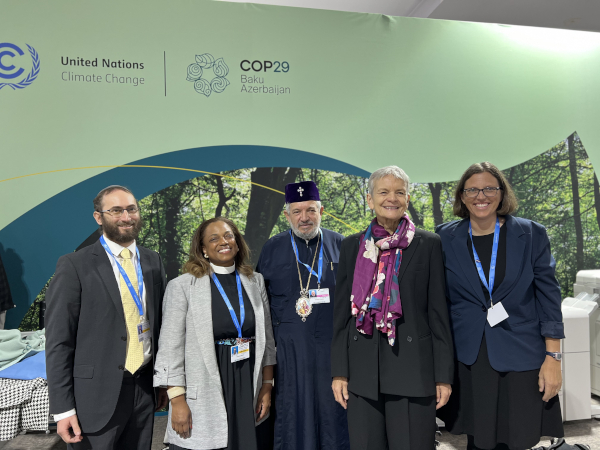
COP28 Faith Pavilion in 2023 in Dubai
## The first-ever Faith Pavilion at a climate COP was a big success, with 70 sessions and 325 speakers, including major religious leaders, government ministers, and Indigenous figures.


## Evaluating the Faith Pavilion’s Impact
## **Click [here](https://interfaithsustain.com/wp-content/uploads/2024/02/Faith-Pavilion-Media-Evaluation-Report.pdf "here") to read an evaluation report about media reach and impact of the Faith Pavilion, made by the London-based PR firm Greenhouse Agency. Some of the highlights were:**
- Faith was clearly positioned at the heart of COP28 with clear recognition and support for the power of faith in climate.
- Media coverage was significant – as much as 7% of the total media coverage of COP28 referenced faith in some capacity.
- More than 4,000 articles referenced the Faith Pavilion at COP28 with positive key messages aligned to our briefing.
- COP28 with positive key messages aligned to our briefing.
- In the run up to and during COP, Greenhouse issued 10 press releases and media advisories and arranged interviews with 8 media outlets.
- Over 16,000 pieces of content across social channels included the hashtags #FaithAtCOP28 or #FaithClimateAction, and referenced the Faith Pavilion.

### Who organized the Faith Pavilion?
The first-ever Faith Pavilion at a UN Climate Change Conference is hosted by the Muslim Council of Elders in collaboration with the COP28 Presidency, the United Nations Environment Programme (UNEP), and a diverse coalition of global partners including the Interfaith Center for Sustainable Development, the Episcopal Diocese of California, the International Partnership on Religion and Development (PaRD), the Peace Department, and over 50 faith organizations. Pope Francis had planned to come to the Faith Pavilion for an inaugural session, and ended up giving a video address.

### What happened in the Faith Pavilion?
Situated at the heart of COP28, adjacent to the World Climate Action Summit and negotiations zones, the Faith Pavilion hosts more than 65 sessions. It brings together religious and other civil society representatives, Indigenous Peoples, scientists, youth, and political leaders. The Pavilion provides a unique opportunity for faith-based engagement with key stakeholders, including political delegations, decision makers, negotiators, and business leaders to promote swift and effective climate action. A Faith for Climate Call to Action was issued by the Faith Pavilion, and can be [found here](https://interfaithsustain.com/wp-content/uploads/2023/12/041223-Faith-and-the-climate-talks-a-call-to-action.pdf).

### Pre-COP Global Faith Leaders Summit on Climate
High-level faith leaders from around the world convened on November 6-7, 2023 in Abu Dhabi, UAE to sign a statement of support for urgent climate action at the Global Faith Leaders Summit, organized by the Muslim Council of Elders in collaboration with the COP28 Presidency and the United Nations Environmental Programme (UNEP). The interfaith statement can be [viewed here](https://interfaithsustain.com/wp-content/uploads/2023/11/Interfaith-Statement-Global-Faith-Leaders-Summit-for-COP28.pdf).
## The Faith Pavilion’s 6 Goals at COP28
INSPIRE
Inspire and unleash the power of religions, religious leaders, and faith communities as change agents for climate action.
WORK
TOGETHER
Highlight concrete actions by religious institutions and communities to curb climate change with measurable indicators and a monitoring mechanism.
PROMOTE
ACTION
Promote a global coalition of religious leaders working together for climate action.
ENGAGE
Encourage religious leaders to engage in policy dialogue with and inspire climate ambition among political delegations.
HISTORIC
ALIGNMENT
Achieve a historic alignment of religious leaders behind a call for climate action designed to harness contributions at an individual and institutional levels as a response to the Global Stocktake and to build a greater sense of hope around COP29.
UNIFY
Unify and maximize the collective action of faith actors present at COP29.
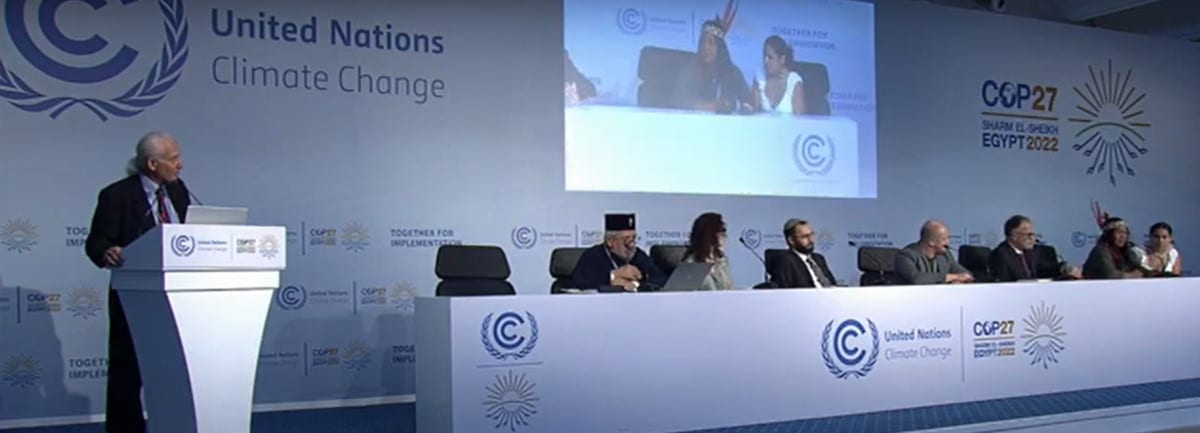## Religious Leaders Call for Climate Action
Faith leaders called for climate action at COP28. We are pleased to share videos of religious leaders speaking to the importance of engaging faith communities in curbing climate change, and calling for world leaders to take action. They also highlight the need to find **deep within ourselves the strength and will to act for a sustainable planet**. [Click here](https://interfaithsustain.com/faith-leaders-cop28/) to see these videos.
## What interfaith activities took place at COP27?
The 27th Conference of the Parties to the United Nations Framework Convention on Climate Change (COP27), took place in the Egyptian coastal city of Sharm el-Sheikh. More than 100 Heads of State and Governments, and over 35,000 participants attended the convention, which ran from November 6-20, 2022. ICSD co-organized four interfaith press conferences at COP27. More information and full video records of those events can be [found here](https://interfaithsustain.com/returning-to-mt-sinai/ "information and a look back at COP27").
## Where can I learn more?
There are a variety of ways to learn more about interfaith engagement at COP29! We will continue to update the ICSD website and our various social media platforms, which can be accessed here:
[**LEARN MORE**](https://linktr.ee/creationcarenow)
If you have any further questions about the ICSD’s role at COP29, or would like to contribute to the faith pavilion, please get in touch.
[**CONTACT US**](https://interfaithsustain.com/contact/)
---
### [Zoroastrian Ecology](https://interfaithsustain.com/zoroastrian-ecology/)
**Published:** July 16, 2018
**Author:** ICSD
**Content:**
## The First Ecologists
Zoroastrianism claims to be the world’s oldest revealed religion and also the world’s first proponent of ecology, through caring for the elements and the earth. The Zoroastrian faith enjoins the caring of the physical world not merely to seek spiritual salvation. Human beings, as the purposeful creation of God, are seen as the natural motivators or overseers of the Seven Creations.
As the only conscious creation, it is humanity’s ultimate task to care for the universe. The faith endorses the caring of Seven Creations (sky, water, earth, plant, animal, human and fire), as part of a symbiotic relationship. Zoroastrianism sees the physical world as a natural matrix of Seven Creations in which life and growth are inter-dependent if harmony and perfection is to be the final goal.
## Purity
The sacredness of the creations demands a greater awareness on the part of Zoroastrians, for at the end of time humanity must give to Ahura Mazda a world in its original perfect state. As an example of their concern, it is a tradition that Zoroastrians never enter a river, to wash in it or pollute it in any way. Purity of nature in their tradition is seen as the greatest good.
## The Crisis
Zoroastrians in India remembered their traditional story of how, once upon a time, Mother Earth was in trouble. She asked God – Ahura Mazda – if He could send her a prince, with warriors, to stop the people from hurting her, using force. But Ahura Mazda said he could not. Instead he would send Her a holy man, to stop the people from hurting her, using words and inspirational ideas. And thus was born the prophet, Zoroaster.
**The original and longer statement can be found [here](https://interfaithsustain.com/zoroastrian-statement-on-the-environment/)**.
For other faith’s statements on the environment, please click [here](https://interfaithsustain.com/religion-and-ecology-articles/ "here").
Copied with permission from the Alliance of Religions and Conservation (ARC).
**ICSD works on a global basis, with current engagement in Africa, the Middle East, North America, and Europe.**
Please enable marketing cookies to view videos.
[ Manage cookie preferences ](#)
- [ 
### "Zoroastrianism and the Environment" - Ervad Yazad C. Unwalla (June 2, 2021)
](#pPy9n2uWuik ""Zoroastrianism and the Environment" - Ervad Yazad C. Unwalla (June 2, 2021)")
- [ 
### Zoroastrianism and the Environment by Prof. Soroosh Sorooshian
](#4hcx7QJj4D0 "Zoroastrianism and the Environment by Prof. Soroosh Sorooshian")
- [ 
### Can Zoroastrianism Solve Climate Change ? (7WZYC)
](#OYNLDaRrXjw "Can Zoroastrianism Solve Climate Change ? (7WZYC)")
- [ 
### Environmental Concerns and Female Empowerment \| 66th Commission on the Status of Women Conference
](#OHqG4na7KIU "Environmental Concerns and Female Empowerment | 66th Commission on the Status of Women Conference")
- [ 
### Ava - Waters of Life: Onward from the AVA project at the Parliament of the World’s Religions
](#nDpAVcfVPCA "Ava - Waters of Life: Onward from the AVA project at the Parliament of the World’s Religions")
- [ 
### Deep Ecology in Zoroastrianism
](#1-7waYHkNTw "Deep Ecology in Zoroastrianism")
[Load more](#)
---
### [Shinto Ecology](https://interfaithsustain.com/shinto-ecology/)
**Published:** July 15, 2018
**Author:** ICSD
**Content:**
## Nature as Divine
Shinto tradition acknowledges a deep debt to the blessing of nature and the spiritual power which brings about life, fertility, and prosperity. This life-giving power was called Musubi (divine power of growth), and perceived in all the workings of nature. Since the Japanese people felt the divine within nature, they came to hold the ideal of a life that was in harmony with and united with nature. Mountains peaks, deep valleys, and the wide ocean were viewed as dwellings for the divine, and other natural objects such as evergreen trees and huge rocks were considered to be symbols of divine spirits.
## Shinto and Agriculture
The Japanese way of life depends heavily on rice cultivation, the form of agriculture best suited to the Japanese climate. Rice is treated as a sacred and indispensable food. Matsuri festivals are traditionally held seasonally in each region to invoke the success of the rice harvest. Over thousands of years, the rituals and festivals associated with rice agriculture gave form to the religion of Shinto. Shinto is therefore both the indigenous folk religion of Japan, and the history of the Japanese people’s way of life.
A torii, the traditional gate marking the threshold of the sacred grove surrounding a Shinto shrine
## Shrines as forest sanctuaries
Along city avenues and in the valleys formed by busy urban streets, wherever the Japanese people make their lives, one will always find a luxuriant green of trees. The grove is a ritual space for the worship of the deities, and as such is a part of nature which has been preserved by the Japanese people since ancient times. And it is within such groves that one finds the kami deities are enshrined.
**The original and longer statement can be found [here](https://interfaithsustain.com/shinto-faith-statement-on-the-environment/)**.
**For other faith’s statements on the environment, please click [here](https://interfaithsustain.com/religion-and-ecology-articles/)**.
Copied with permission from the Alliance of Religions and Conservation (ARC).
**ICSD works on a global basis, with current engagement in Africa, the Middle East, North America, and Europe.**
Please enable marketing cookies to view videos.
[ Manage cookie preferences ](#)
- [ 
### Spotlights Clips, 2.7, Shinto and Buddhist Ecologies, with Mirei Takashima Claremon
](#eTKBqzDL3ZQ "Spotlights Clips, 2.7, Shinto and Buddhist Ecologies, with Mirei Takashima Claremon")
- [ 
### Shinto: Nature, Gods, and Man in Japan (1977)
](#5PsNjG5CTgU "Shinto: Nature, Gods, and Man in Japan (1977)")
[Load more](#)
---
### [Sikh Ecology](https://interfaithsustain.com/sikh-ecology/)
**Published:** July 15, 2018
**Author:** ICSD
**Content:**
## The Sikh Cycle of Creation
Sikhism follows three hundred year cycles, the most recent of which finished in 1999. In 1699 – a time of terrible persecution of the Sikhs – the coming cycle was named the ‘Cycle of the Sword’. The three centuries following this were indeed dominated by long periods of armed struggle.
In 1999 the name of the next cycle, due to end in 2299, was chosen by the Sikh leaders. It is the Cycle of Creation, and the giving of this title has already led to a dramatic increase in environmental practices by Sikh temples.
## **Inner truth**
The Gurdwara is often sited beside water
Sikhs teach that humans create their surroundings as a reflection of their inner state, and hence the increasing barrenness of the earth reflects a spiritual emptiness within humans. The solution according to Sikhism can be found in prayer and the spirit of humility before the divine will of God.
## **Sanctity of nature**
Sikhs cultivate an awareness and respect for the dignity of all life, human or otherwise. Such respect is fostered where one first recognises and nurtures the divine inner spark within oneself, then sees it and cherishes it in others. The history of the Gurus is full of stories of their love for animals, birds, trees, vegetation, rivers, mountains and sky. Many Sikhs, though not all, also have a strong tradition of being vegetarian. A simple life free from conspicuous waste is the Sikh ideal – a life that stresses mastery over the self rather than mastery over nature.
## **Equality and service**
Sikhism places a strong emphasis on equality and service. This encourages a spirit of co-operation and an equal sharing of resources. For example, the langar, or community kitchen, is maintained by the voluntary services of the community and the donation of foodstuffs by the farmers. In the Punjab, where many Sikhs are farmers, water is seen as a source of life, bringing food for humans and animals. The element of water is therefore a primary link in the interdependence of humanity and nature, to be used is in a sustainable and fair way. In particular access to clean water is a focus for the community and the Gurdwara is often sited beside a water tank or a river.
## **Women’s rights**
A strong Sikh tradition is the equality of men and women. Special attention is paid to education in Sikh communities and to making it available to all both men and women.
*Based on the Sikh text of the Windsor Statements, 1995*
**The original and longer statement can be found [here](https://interfaithsustain.com/Sikh-faith-statement-on-the-environment/)**.
**For other faith’s statements on the environment, please click [here](https://interfaithsustain.com/religion-and-ecology-articles/)**.
Copied with permission from the Alliance of Religions and Conservation (ARC).
**ICSD works on a global basis, with current engagement in Africa, the Middle East, North America, and Europe.**
| #### More on Sikh Ecology |
|---|
| [The summit of conscience for the climate, in Paris](https://interfaithsustain.com/the-summit-of-conscience-for-the-climate-in-paris/) |
| [Meeting the Green Patriarch in Jerusalem](https://interfaithsustain.com/meeting-the-green-patriarch-in-jerusalem/) |
Please enable marketing cookies to view videos.
[ Manage cookie preferences ](#)
- [ 
### What does the Sikh tradition have to say about the environment?
](#BnPk4crHttM "What does the Sikh tradition have to say about the environment?")
- [ 
### EcoSikh at the People's Climate March
](#kk-bdWsNuUg "EcoSikh at the People's Climate March")
- [ 
### Sikhs and Environmental Consciousness
](#L8QNYOeCMlI "Sikhs and Environmental Consciousness")
- [ 
### EcoSikh: A Sikh Response to Climate Change - 2015
](#2b00ZSWgx-Q "EcoSikh: A Sikh Response to Climate Change - 2015")
- [ 
### Ecology according to Sikhism / ਗੁਰਮਤਿ ਅਨੁਸਾਰ ਪਰਿਆਵਰਨ ਸਿਧਾਂਤ
](#2Hq9mgLB6Aw "Ecology according to Sikhism / ਗੁਰਮਤਿ ਅਨੁਸਾਰ ਪਰਿਆਵਰਨ ਸਿਧਾਂਤ")
- [ 
### Bhai Sahib Mohinder Singh: Religions are a major player in climate action
](#pOC7BoiEukg "Bhai Sahib Mohinder Singh: Religions are a major player in climate action")
[Load more](#)
---
### [Islam and Ecology](https://interfaithsustain.com/islam-and-ecology/)
**Published:** June 18, 2018
**Author:** ICSD
**Content:**
> The Qur’an teaches us that everything is weighted, and that quality of life requires a proper balance in order to be fulfilling and meaningful. This religious principle can be related to ecological balance as well.
>
> Dr Mohtar from the Qatar Foundation
## Ecology in the Quran
“In the creation of the heavens and the earth, and the alternation of night and day, and the ships that run in the sea with that which benefits mankind, and the water that Allah sends down from the sky, then gives life with it to the earth after its death and spreads in it all (kinds of) animals, and the changing of the winds and the clouds made subservient between heaven and earth, there are surely signs for a people who understand.” Qur’an 21:107
The animals are chosen by Allah (swt) to execute His decrees, such as in the story of the prophet Yunus, who was swollen by the big fish, after he left his people to whom he had to continue to preach. And also, when Allah (swt) sent a She-camel to the people of Thamud, the people of the prophet Salih (pbuh).
And, O my people! This will be (as) Allah’s she-camel for you, a sign; therefore leave her to pasture on Allah’s earth and do not touch her with evil, for then a near chastisement will overtake you. But they slew her, so he said, enjoy yourselves in your abode for three days that is a promise not to be belied. So when Our decree came to pass, We delivered Salih and those who believed with him by mercy from Us, and (We saved them) from the disgrace of that day; surely your Lord is the Strong, the Mighty. And the rumbling overtook those who were unjust, so they became motionless bodies in their abodes, As though they had never dwelt in them; now surely did Thamud disbelieve in their Lord; now surely, away with Thamud. (11:61-68)”
Allah saved the believers: Yunus, Salih and also the Nuh’s ark from the flood (peace be upon them). All the prophets came with the same message: to worship one unique God. Accepting the tahweed help to be included in the unity and to maintain it. Indeed, the declaration of faith, first pillar in Islam, is to declare that there is one unique God, and that the prophet Muhammad is His messenger.
Climate changes are increasing because of what man has done. This subject is mentioned in Quran.
Allah Almighty says: (Corruption doth appear on land and sea because of (the evil) which men’s hands have done, that He may make them taste a part of that which they have done, in order that they may return.) \[Ar-room: 41\].
## The Earth on the Day of Judgment, Yawm Al Qiyamah
The prophet Muhammad said that one of the pillars of faith (Iman) is to believe in the Day of Judgment. The Earth will be actually a witness against our actions on the Day of Judgment, as the surah Zalzalah (The Earthquake) tells:

1. When the earth is shaken with its (final) earthquake.
2. And when the earth throws out its burdens,
3. And man will say: “What is the matter with it?”
4. That Day it will declare its information (about all what happened over it of good or evil).
5. Because your Lord has inspired it.
6. That Day mankind will proceed in scattered groups that they may be shown their deeds.
7. So whosoever does good equal to the weight of an atom (or a small ant), shall see it.
8. And whosoever does evil equal to the weight of an atom (or a small ant), shall see it.
## Ecology in the Hadiths
“Narrated Abu Huraira: Allah’s Apostle said, “While a man was walking he felt thirsty and went down a well and drank water from it. On coming out of it, he saw a dog panting and eating mud because of excessive thirst. The man said, ‘This (dog) is suffering from the same problem as that of mine. So he (went down the well), filled his shoe with water, caught hold of it with his teeth and climbed up and watered the dog. Allah thanked him for his (good) deed and forgave him.” The people asked, “O Allah’s Apostle! Is there a reward for us in serving (the) animals?” He replied, “Yes, there is a reward for serving every living being.” -English Translation of Holy Hadith -sayings of the Prophet Muhammad (pbuh)-(Sahih Bukhari) by M. Muhsin Khan, Volume 3, Book 40, Number 551
“Narrated Abu Huraira: The Prophet said, “There are three types of people whom Allah will neither talk to, nor look at, on the Day of Resurrection. (They are):
1. A man who takes an oath falsely that he has been offered for his goods so much more than what he is given,
2. a man who takes a false oath after the ‘Asr prayer in order to grab a Muslim’s property, and
3. a man who withholds his superfluous water. Allah will say to him, “Today I will withhold My Grace from you as you withheld the superfluity of what you had not created.” – English Translation of Holy Hadith (Sahih Bukhari) by M. Muhsin Khan, Volume 3, Book 40, Number 557
## Other Resources on Islam and Ecology
To read an article about Islam and ecology from Professor Abu Sway, [click here](https://interfaithsustain.com/Prof-Abu-Sway-Short-Article).
To watch an interview with Professor Abu Sway [click here](https://interfaithsustain.com/interview-with-dr-mustafa-abu-sway/).
The original and longer statement with videos about environmental issues and teaching of the Quran and the Sunna can be found [here](https://interfaithsustain.com/islamic-faith-statement-on-the-environment/).
Here is the 13-page [Muslim Green Guide to Reducing Climate change](https://ifees.org.uk/wp-content/uploads/2019/12/muslim_green_guide.pdf) according to the Qur’an and the Sunna, that you can share with family and community. It was co-published by LifeMakers UK & Islamic Foundation for Ecology and Environmental Sciences.For other faith’s statements on the environment, please click [here](https://interfaithsustain.com/religion-and-ecology-articles/).
[Toward an Islamic Jurisprudence of the Environment (Fiqh al-Bi’ah fil-Islam),](https://www.startimes.com/f.aspx?mode=f&print=true&t=6000829&src=http%3A//www.startimes.com/f.aspx%3Ft%3D6000829) By: Prof. Mustafa Abu-Sway. \[This paper in Arabic is based on a lecture given at the Belfast Mosque\]A 21-page document on Islamic contributions to sustainable development is available in the Pegasus Journal, November 2015. It can be downloaded as a zip file at [this link](https://www.cauxroundtable.org/pegasus/). Professor Abdullah Al-Ahsan and colleagues created it, with a list of goals toward a sustainable society.
[5 Examples of Islam and Ecology](https://interfaithsustain.com/islam-and-ecology-arc-resources/)
## Related Videos
Please enable marketing cookies to view videos.
[ Manage cookie preferences ](#)
- [ 
### I stopped using toothbrushes!
](#9T3Ed1ZrAys "I stopped using toothbrushes!")
- [ 
### Islam and Ecology: Dr. Mustafa Abu Sway
](#VOByKmTyPfU "Islam and Ecology: Dr. Mustafa Abu Sway")
- [ 
### Islamic Food Practices and Messaging around Minimizing Meat - Shaykh Mustafa Umar
](#GoCEuaTngy8 "Islamic Food Practices and Messaging around Minimizing Meat - Shaykh Mustafa Umar")
- [ 
### Environmental Poetry: Interfaith Eco Sermon Slam in Jerusalem
](#nIKQWxIjqRk "Environmental Poetry: Interfaith Eco Sermon Slam in Jerusalem")
- [ 
### Faith and Ecology Conference in Jerusalem Inspires Emerging Clergy for Stewardship of the Earth
](#G2dBheg8_jY "Faith and Ecology Conference in Jerusalem Inspires Emerging Clergy for Stewardship of the Earth")
- [ 
### Yasmin Barhum: Islamic Environmentalism
](#cnaXeFOcF-s "Yasmin Barhum: Islamic Environmentalism")
[Load more](#)
| #### More on Islam and Ecology: |
|---|
| [The Ecology of Sufism](https://interfaithsustain.com/sufism-ecology/) |
| [Islamic call on climate appeals to 1.6 billion Muslims](https://interfaithsustain.com/islamic-call-on-climate-appeals-to-1-6-billion-muslims/) |
| [Mosque greening project](https://interfaithsustain.com/houses-of-worship-greening-project/) |
| [Islamic Faith Statement on the Environment](https://interfaithsustain.com/islamic-faith-statement-on-the-environment/) |
---
### [Judaism Ecology](https://interfaithsustain.com/judaism-ecology/)
**Published:** July 15, 2018
**Author:** ICSD
**Content:**
Click [here](https://www.jewishecoseminars.com/learning/) for Jewish Environmental Teachings on 18 Core Topics
## Humanity and Creation
Fruit picking at Kibbutz Lotan in Israel
The Jewish attitude to nature is based on the belief that the universe is the work of the Creator. Love of God includes love of all His creations: the inanimate, plants, animals and humans. Nature in all its beauty is created for us, and our connection to nature restores us to our original state of happiness and joy.
The Bible informs us that the earth is given to man ‘to use and protect’. But the ‘dominion’ mentioned in the Bible is not the dominion of a tyrant. God’s mercy extends to all He has created, as is written, ‘the earth is founded upon mercy’.
## The Sabbatical Year
This is the core conservation principle in the Bible:
> Six years shall you sow your field, and six years shall you prune your vineyard, and gather in the produce thereof. But in the seventh year shall be a Sabbath of solemn rest for the land, a Sabbath unto the Lord; you shall neither sow your field nor prune your vineyard.
>
> Leviticus 25:1-5
According to Maimonides, one of the goals of ceasing all agricultural activity is to improve and strengthen the land. Sabbath is a return to nature. To learn about the Shmita Project and Prizes, click [here](https://shmitaproject.org/about-prizes/).
## Altering Creation
The Bible says we must preserve the natural balance of creation. Every species was created for some purpose and should not be interfered with.
> You shall not let your cattle gender with a diverse kind; you shall not sow your field with two kinds of seed; neither shall there come upon you a garment of two kinds of stuff mingled together.
>
> Leviticus 19:19
## Wasteful Destruction
Jewish teachings prohibit the destruction of anything from which humans may benefit. This applies to animals, plants, and even inanimate objects. Even in time of war, the Bible forbids the destruction of fruit-bearing trees. Sages compared the death of a tree to the departure of man’s soul from his body:
> When people cut down the wood of a tree that yields fruit, its cry goes from one end of the world to the other, and the sound is inaudible… When the soul departs from the body, the cry goes forth from one end of the world to the other, and the sound is inaudible.
>
> Based on the Windsor Statements. The Jewish statement was compiled by Professor Nahum Rakover
Copied with permission from the Alliance of Religions and Conservation (ARC).
**For other faith’s statements on the environment, please click [here](https://interfaithsustain.com/religion-and-ecology-articles/)**.
Please enable marketing cookies to view videos.
[ Manage cookie preferences ](#)
- [ 
### Noga Ben Ami Performs at the Interfaith Eco Poetry Slam
](#IOuDzZmDQu0 "Noga Ben Ami Performs at the Interfaith Eco Poetry Slam")
- [ 
### Religious leaders in Jerusalem united in advocating for peace in Ukraine.
](#mwVaSrgmcYo "Religious leaders in Jerusalem united in advocating for peace in Ukraine.")
- [ 
### Achieving Ecological Balance, Peace, and Coexistence
](#K5Oqs_n5yg4 "Achieving Ecological Balance, Peace, and Coexistence")
- [ 
### Have you ever heard a Pomegranate?
](#EKYzfgJde_U "Have you ever heard a Pomegranate?")
- [ 
### He became vegan because of his religion!
](#Gkvr8A4P414 "He became vegan because of his religion!")
- [ 
### The cost you pay when buying disposables! #disposables #ecofriendly #sustainability #god
](#BVWojDRtr2g "The cost you pay when buying disposables! #disposables #ecofriendly #sustainability #god")
[Load more](#)
**ICSD works on a global basis, with current engagement in Africa, the Middle East, North America, and Europe.**
---
### [Hindu Ecology](https://interfaithsustain.com/hindu-ecology/)
**Published:** July 15, 2018
**Author:** ICSD
**Content:**
Hinduism contains many teachings and practices that relate deeply to ecological living and compassion for animals, trees, and rivers.
## **Life is sacr**ed
All living beings are sacred because they are parts of God, and should be treated with respect and compassion. This is because the soul can be reincarnated into any form of life. Hinduism is full of stories that treat animals as divine, such as how Krishna used to herd cows, or how the monkey Hanuman was a faithful servant of the Rama. About 45% of Hindus in India are vegetarian and do not consume animals because of this belief in the sanctity of life. Even trees, rivers and mountains are believed to have souls, and should be honoured and cared for.
## **Simple living**
The virtue of a simple life has always been prized in Hindu society. Teachers, or brahmanas, are advised to live on the charity of others and not accumulate too much wealth. The most highly respected person in Hindu society is the sadhu, or sage who lives outside normal society, in forests or caves, or travels on foot from one town to another. Sadhus take pride in living simply and consuming as little as possible.
Krishna, who lived in the forest and herded cows, represents the highest expression of love in Hinduism.
## **Inner peace**
Hinduism stresses that true happiness comes from within not from outer possessions. This means that the search for material possessions, and the consumption of materials and energy it brings, should not be allowed to dominate life. Life’s main purpose is to discover the spiritual nature and the peace and fulfilment it brings. The efforts to exploit the things of this world is considered by Hindu teachers to be a distraction from this central purpose of life.
## How do Hindus care for the environment?
Hindus revere sacred rivers, mountains, forests and animals, and love to be close to nature. For example, many Hindu villages have a sacred lake, and around it a grove of trees to catch rainfall and protect the banks from erosion.
The lake and its grove store rainfall to irrigate surrounding fields and supply village wells with drinking water. These lakes and groves are places of tranquillity and sanctuaries for wildlife, but in recent times the neglect of these simple techniques for gathering and protecting clean water has led to serious water shortages and advancing desertification in many parts of India. This is a common story in India: traditional Hindu practices of caring for nature are being forgotten and as a result human survival is becoming more difficult.
## **What do Hindus believe about genetic modification?**
One of the world’s best-known campaigners against genetic modification is Vandana Shiva, an Indian scientist motivated by her native Hindu beliefs to champion the rights of rural women and farmers. She fought against the genetically modified ‘terminator’ seeds: seeds that produce only one crop and force farmers to buy new seeds each year from the suppliers. And she campaigns to stop the patenting of the sacred Neem tree, which Hindu stories say came from a drop of divine nectar carried to earth. Neem provides a natural and harmless alternative to pesticides, but global corporations have tried to patent it for their own use. She has written many books, and her Research Foundation for Science, Technology and Ecology is a useful source of information.
The original and longer statement can be found [here](https://interfaithsustain.com/hindu-faith-statement-on-the-environment/).
For other faith’s statements on the environment, please click [here](https://interfaithsustain.com/religion-and-ecology-articles/).
Copied with permission from the Alliance of Religions and Conservation (ARC).
Please enable marketing cookies to view videos.
[ Manage cookie preferences ](#)
- [ 
### Why This City Banned Meat Forever?
](#kodFwalDhyU "Why This City Banned Meat Forever?")
- [ 
### Colorful flags in Himalayas are turning white #sustainability
](#5p4oYkbtz3c "Colorful flags in Himalayas are turning white #sustainability")
- [ 
### The Sacrifice Of 363 Bishnois.
](#9q7SG0SmTbQ "The Sacrifice Of 363 Bishnois.")
- [ 
### How Flowers Are Saving 400M lives!
](#ZjsrUrPi1Bc "How Flowers Are Saving 400M lives!")
- [ 
### They Turn Trash Into Gifts!
](#_hfkL_SYsuc "They Turn Trash Into Gifts!")
- [ 
### The man who loves all animals! #gurudev #ahimsa #hinduism
](#DNMHpTejSw0 "The man who loves all animals! #gurudev #ahimsa #hinduism")
[Load more](#)
- [ 
### Why This City Banned Meat Forever?
](#kodFwalDhyU "Why This City Banned Meat Forever?")
- [ 
### Colorful flags in Himalayas are turning white #sustainability
](#5p4oYkbtz3c "Colorful flags in Himalayas are turning white #sustainability")
- [ 
### The Sacrifice Of 363 Bishnois.
](#9q7SG0SmTbQ "The Sacrifice Of 363 Bishnois.")
- [ 
### How Flowers Are Saving 400M lives!
](#ZjsrUrPi1Bc "How Flowers Are Saving 400M lives!")
- [ 
### They Turn Trash Into Gifts!
](#_hfkL_SYsuc "They Turn Trash Into Gifts!")
- [ 
### The man who loves all animals! #gurudev #ahimsa #hinduism
](#DNMHpTejSw0 "The man who loves all animals! #gurudev #ahimsa #hinduism")
[Load more](#)
**ICSD works on a global basis, with current engagement in Africa, the Middle East, North America, and Europe.**
---
### [Daoism Ecology](https://interfaithsustain.com/daoism-ecology/)
**Published:** July 15, 2018
**Author:** ICSD
**Content:**
## Four main principles of Daoism guide the relationship between humanity and nature:
### 1. Follow the Earth
The Dao De Jing says: ‘Humanity follows the Earth, the Earth follows Heaven, Heaven follows the Dao, and the Dao follows what is natural.’ Daoists therefore obey the Earth. The Earth respects Heaven, Heaven abides by the Dao, and the Dao follows the natural course of everything. Humans should help everything grow according to its own way. We should cultivate the way of no-action and let nature be itself.
This ancient temple hangs precariously onto the side of Heng Shan, a sacred mountain where Daoist monks meditate close to nature, and pilgrims come to pray.
### 2. Harmony with nature
In Daoism, everything is composed of two opposite forces known as Yin and Yang. The two forces are in constant struggle within everything. When they reach harmony, the energy of life is created. Someone who understands this point will not exploit nature, but will treat it well and learn from it. It is obvious that in the long run, the excessive use of nature will bring about disaster, even the extinction of humanity.
### 3. Too much success
If the pursuit of development runs counter to the harmony and balance of nature, even if it is of great immediate interest and profit, people should restrain themselves from it. Insatiable human desire will lead to the over-exploitation of natural resources. To be too successful is to be on the path to defeat.
### 4. Affluence in bio-diversity
Daoism has a unique sense of value in that it judges affluence by the number of different species. If all things in the universe grow well, then a society is a community of affluence. If not, this kingdom is on the decline. This view encourages both government and people to take good care of nature. This thought is a special contribution by Daoism to the conservation of nature.
The original and longer statement can be found [here](https://interfaithsustain.com/daoist-faith-statement-on-the-environment/).
For other faith’s statements on the environment, please click [here](https://interfaithsustain.com/religion-and-ecology-articles/).
Copied with permission from the Alliance of Religions and Conservation (ARC).
**ICSD works on a global basis, with current engagement in Africa, the Middle East, North America, and Europe.**
Please enable marketing cookies to view videos.
[ Manage cookie preferences ](#)
- [ 
### Daoism at a Glance: Daoism and Nature E01 非常问道 第一集
](#q2nrt59ghks "Daoism at a Glance: Daoism and Nature E01 非常问道 第一集")
- [ 
### Robert P. Weller - Daoism and the environment
](#9MzS7EuwC7U "Robert P. Weller - Daoism and the environment")
- [ 
### Daoism and Ecology
](#6MOmS6e4iOA "Daoism and Ecology")
- [ 
### James Miller on Daoism, Ecology and the Journey of the Universe
](#e586ohxyd08 "James Miller on Daoism, Ecology and the Journey of the Universe")
- [ 
### Daoism and Ecology
](#9uQzayobwfk "Daoism and Ecology")
[Load more](#)
---
### [Confucian Ecology](https://interfaithsustain.com/confucian-ecology/)
**Published:** July 12, 2018
**Author:** ICSD
**Content:**
Confucianism is a system of thought based on the teachings of Kong Zi, Master Kong (better known in English as Confucius) who lived from 551 to 479 BC. He is revered in Chinese history for the moral code he taught, which was based on ethics, humanity and love.
“If the foundations of living are strengthened and are economically used, then Nature cannot bring impoverishment. But if the foundations of living are neglected and used extravagantly, then Nature cannot make the country rich” observed his follower, Xunzi, Master Zi.
## The Golden Rule
One day a disciple asked the Master: “Is there one word that should cover the whole duty of humankind?” And Confucius replied: “Fellow-feeling, perhaps, is that word. Do not do to other people what you do not want them to do to you.” And this golden rule in Confucianism is key to understanding the Confucian understanding of ecology.

Temple of Confucius, Beijing. PHOTO: Creative Commons, Ulrichsson
## **The Notion of Benevolence**
The follower of Confucianism aspires to becoming a junzi (a sage) – a morally noble person who understands what is right and behaves accordingly. Directing this morality is the principle of ren – humanity (literally ‘personâ’) – that should inform the relationship between people and nature, extending our filial love for parents and family to all living things. We should therefore show love and care for nature in all our dealings with it.
The rewards for this moral behavior are great, as Confucius follower Xunzi said: “Respond to it with peace and order, and good fortune will result. Respond to it with disorder, and disaster will follow.”
## The Notion of Action Before Words
“The truly good man first practices what he preaches and then preaches what he practices,” Confucius taught.
This lesson from 2,500 years ago is a good teaching for many in the environment movement today.
Before we ask others to change their actions, we should first change our own actions.
And then, and only then, we can preach what we practice.
| #### More on Confucian Ecology |
|---|
| [What if Trump and Xi were to see eye-to-eye on ecology?](https://interfaithsustain.com/what-if-trump-and-xi-were-to-see-eye-to-eye-on-sustainability/) |
| [The world view of Thomas Berry and the flourishing of the earth community](https://interfaithsustain.com/the-worldview-of-thomas-berry-flourishing-of-the-earth-community/) |
This Confucianist teaching was an important underlying message of the ARC Windsor Event in 2009, in which nine faiths launched long-term plans to protect the environment.
## **Heaven, Earth and Humanity**
Confucius taught that humanity exists in an inter-relationship between heaven and earth. ‘Heaven’ is seen as the guiding force, giving direction to change and progress, while ‘earth’ provides the natural context and seasonal changes.
Humanity has a moral task to work in balance with these other two forces. This was explained by the 2nd century BC Confucian philosopher Dong Zhongshu: “The three act together as hands and feet join together to complete the body and none can be dispensed with.”
## **The Notion of the Life Force in Nature**
Underlying and unifying this triad of heaven, earth and humanity is the notion of *qi* (pronounced chee in English, as in ‘cheetah’). This is understood as the material life force of the universe that runs through all things, integrating human beings with nature and driving the continuous process of change and creativity.
This Confucian understanding of the universe as a holistic unity emphasizes the responsibility of every person to behave respectfully and with care to contribute to the general well-being of creation, acting as an orderly part of a collective effort. In this way the interests of humanity are served by looking after the interests of all of nature. The original and longer statement can be found [here](https://interfaithsustain.com/confucian-statement-on-the-environment/). Other faith’s statements on the environment, please click [here](https://interfaithsustain.com/confucian-statement-on-the-environment/).
Copied with permission from the Alliance of Religions and Conservation (ARC).
**ICSD works on a global basis, with current engagement in Africa, the Middle East, North America, and Europe.**
Please enable marketing cookies to view videos.
[ Manage cookie preferences ](#)
- [ 
### Prof. Daniel Gardner: Ecological Civilization in Modern China
](#V63Lp6Lggnc "Prof. Daniel Gardner: Ecological Civilization in Modern China")
- [ 
### Lu Feng: Reflections on Confucian perspectives on the global environmental crisis
](#RPaMGkoOM08 "Lu Feng: Reflections on Confucian perspectives on the global environmental crisis")
- [ 
### A World of Ideas with Bill Moyers - Tu Wei-ming A Confucian Life in America part 3 of 3 Harvard
](#n6Puceg1P7g "A World of Ideas with Bill Moyers - Tu Wei-ming A Confucian Life in America part 3 of 3 Harvard")
- [ 
### A World of Ideas with Bill Moyers - Tu Wei-ming A Confucian Life in America part 2 of 3 Harvard
](#afkQLslWtkI "A World of Ideas with Bill Moyers - Tu Wei-ming A Confucian Life in America part 2 of 3 Harvard")
- [ 
### A World of Ideas with Bill Moyers - Tu Wei-ming A Confucian Life in America part 1 of 3 Harvard
](#xxBJUc4wVms "A World of Ideas with Bill Moyers - Tu Wei-ming A Confucian Life in America part 1 of 3 Harvard")
[Load more](#)
---
### [Christian Ecology](https://interfaithsustain.com/christian-ecology/)
**Published:** July 15, 2018
**Author:** ICSD
**Content:**
## **Tension with Creation**
Christianity recognizes a tension that exists between humanity’s responsibility to care for God’s creation, and the human tendency to rebel against God. The main Christian churches have in the past decades re-examined their teachings and practice in the light of the environmental crisis.
## **Commitment from the Churches**
Speaking for the Catholic Church in 1990, the Pope said, ‘Christians realise their responsibility within creation and their duty towards nature and the Creator are an essential part of their faith.’
For the Orthodox Church, the Ecumenical Patriarchate taught in 1990 that humanity ought to perceive the natural order as a sign and sacrament of God, and that to respect nature is to recognise that all creatures and objects have a unique place in God’s creation. The Orthodox Church teaches that it is the destiny of humanity to restore the proper relationship between God and the world as it was in Eden.
St Francis of Assisi, the patron saint of ecology.
The Protestant Churches, speaking through the World Council of Churches in 1990, committed themselves to conserve and work for the integrity of creation both for its inherent value to God and in order that justice may be achieved and sustained.
## **The Challenge**
Christians increasingly recognise the need to repent for what harm has been done to creation.
In the words of the Orthodox Patriarchate, ‘This may well mean that just as a shepherd will in times of greatest hazard lay down his life for his flock, so human beings may need to forego part of their wants and needs in order that the survival of the natural world can be assured.
The challenge to all Christians is to discover anew the truth that God’s love and liberation is for all creation, not just humanity, and to seek new ways of living that restore balance and hope of life to the endangered planet.
*based on the 1995 Windsor Statements*
## **Examples of Christian Ecology in Action**
Christian groups in the US have produced [this leaflet](https://web.archive.org/web/20221102155335/http://www.arcworld.org/downloads/NAPPC-Christianity-brochure-reduce.pdf) explaining the theological basis for working to protect endangered pollinating species in urban areas.
For Anglican views on Climate change please click [here](https://interfaithsustain.com/anglican-views-on-climate-change).
For Catholic views on Climate change please click [here](https://interfaithsustain.com/catholic-views-on-climate-change/).
For Pope Benedict XVI on the Environment please click [here](https://interfaithsustain.com/pope-benedict-xvi-on-the-environment/).
For Pope Francis’ speech on UN World Environment Day, please click [here](https://interfaithsustain.com/pope/).
For other faith’s statements on the environment, please click [here](https://interfaithsustain.com/religion-and-ecology-articles/).
Copied with permission from the Alliance of Religions and Conservation (ARC).
Please enable marketing cookies to view videos.
[ Manage cookie preferences ](#)
- [ 
### Sine Grubert Performs at the Interfaith Eco Poetry Slam
](#kBGcKQ8_KOk "Sine Grubert Performs at the Interfaith Eco Poetry Slam")
- [ 
### This Church is Saving the Great Salt Lake @churchofjesuschrist
](#7psFKQpzvmU "This Church is Saving the Great Salt Lake @churchofjesuschrist")
- [ 
### Vatican Ecological Conference: Dr Bill McKibben, 350.org
](#xfYWKJphTGU "Vatican Ecological Conference: Dr Bill McKibben, 350.org")
- [ 
### What if clergy were to preach more often about ecology?
](#fltThGHcA6Q "What if clergy were to preach more often about ecology?")
- [ 
### We Are Stewards Of Creation
](#XOzQyl7Hhzk "We Are Stewards Of Creation")
- [ 
### This Church Is In The Sky!
](#Y_wGaQSbDYk "This Church Is In The Sky!")
[Load more](#)
**ICSD works on a global basis, with current engagement in Africa, the Middle East, North America, and Europe.**
| #### More on Christian Ecology |
|---|
| [Houses of Worship Greening Project](https://interfaithsustain.com/houses-of-worship-greening-project/) |
| [Third Place Winner of the Catholic Seminarian Essay Contest on Renewable Energy](https://interfaithsustain.com/third-place-winner-of-the-catholic-seminarian-essay-contest-on-renewable-energy/) |
| [Oil Mixes Well with Religion, Politics, and Weapons](https://interfaithsustain.com/oil-mixes-well-with-religion-politics-and-weapons/) |
---
### [Buddhist Ecology](https://interfaithsustain.com/buddhist-ecology/)
**Published:** June 25, 2018
**Author:** ICSD
**Content:**
## Dharma
All Buddhist teachings and practice come under the heading of Dharma, which means Truth and the path to Truth. The word Dharma also means “phenomena,” and in this way we can consider everything to be within the sphere of the teachings. All outer and inner phenomena, the mind and its surrounding environment, are understood to be inseparable and interdependent.
## Buddhism as an Ecological Religion or a Religious Ecology
Many Buddhist monks such as His Holiness the Dalai Lama, Venerable Thich Nhat Hanh, Venerable Kim Teng, and Venerable Phra Phrachak emphasize the natural relationship between deep ecology and Buddhism.
According to the Vietnamese monk Venerable Thich Nhat Hanh:
> *Buddhists believe that the reality of the interconnectedness of human beings, society and Nature will reveal itself more and more to us as we gradually recover—as we gradually cease to be possessed by anxiety, fear, and the dispersion of the mind.*
>
> Venerable Thich Nhat Hanh
In order to protect the environment we must protect ourselves. We protect ourselves by opposing selfishness with generosity, ignorance with wisdom, and hatred with loving kindness.
## Nature as a Way of Life
The Buddha commended frugality as a virtue in its own right. Skillful living avoids waste and we should try to recycle as much as we can. Buddhism advocates a simple, gentle, nonaggressive attitude toward nature—reverence for all forms of nature must be cultivated.

| #### More on Buddhist Ecology |
|---|
| [Green Buddhism, faith, ecology and activism](https://interfaithsustain.com/green-buddhism-faith-ecology-and-activism/) |
| [East Asian religions and ecology](https://interfaithsustain.com/east-asian-religions-and-ecology/) |
Buddha used examples from nature to teach. In his stories the plant and animal worlds are treated as part of our inheritance, even as part of ourselves. As Krishnamurti said, “We are the world, the world is us.” By starting to look at ourselves and the lives we are living we may come to appreciate that the real solution to the environmental crisis begins with us.
## The Right Actions
If we are going to save this planet we need to seek a new ecological order, to look at the life we lead and then work together for the benefit of all; unless we work together no solution can be found. By moving away from self-centeredness, sharing wealth more, being more responsible for ourselves, and agreeing to live more simply, we can help decrease much of the suffering in the world. As the Indian philosopher Nagarjuna said, “Things derive their being and nature by mutual dependence and are nothing in themselves.”
*This is an abridged version of the Buddhist statement prepared by Kevin Fossey, Buddhist educator and representative of Engaged Buddhism in Europe; Somdech Preah Maha Ghosananda, Patriarch of Cambodian Buddhism; His Excellency Sri Kushok Bakula, 20th Reincarnation of the Buddha’s Disciple Bakula, head of Ladakhi Buddhism, and initial rebuilder of Mongolian Buddhism; and Venerable Nhem Kim Teng, Patriarch of Vietnamese Buddhism.*
**The original and longer statement can be found [here](https://interfaithsustain.com/buddhist-faith-statement-on-the-environment-full/)**
**For a look at other faith’s statements on the environment, please click [here](https://interfaithsustain.com/religion-and-ecology-articles/)**.
Copied with permission from Alliance for Religions and Conservation.
Please enable marketing cookies to view videos.
[ Manage cookie preferences ](#)
- [ 
### Our Moral Obligation
](#eKaXsg6gp0I "Our Moral Obligation")
- [ 
### These Nuns are Protecting the Himalayas @onthegroundwithsai
](#fbZYfd4d9nE "These Nuns are Protecting the Himalayas @onthegroundwithsai")
- [ 
### The Meat That Buddhists Can Eat?
](#7IDtk6VHi64 "The Meat That Buddhists Can Eat?")
- [ 
### The Monk Who Wears Plastic Bottles #buddhism #sustainability
](#zI22wZGu6_8 "The Monk Who Wears Plastic Bottles #buddhism #sustainability")
- [ 
### The Toughest Monks in Japan #sustainability #japan
](#-DnWxTM3X-g "The Toughest Monks in Japan #sustainability #japan")
- [ 
### Monks Brilliant Way To Save Trees
](#lBiqku2FvE4 "Monks Brilliant Way To Save Trees")
[Load more](#)
**ICSD works on a global basis, with current engagement in Africa, the Middle East, North America, and Europe.**
---
### [Bahai Ecology](https://interfaithsustain.com/bahai-ecology/)
**Published:** July 11, 2018
**Author:** ICSD
**Content:**
## One World
‘The earth is but one country, and mankind its citizens.’ These words of Baha’u’llah summarize the Baha’i sense of world citizenship and commitment to stewardship of the earth. The oneness of humanity is, for Baha’is, the fundamental spiritual and social truth of this age. It implies a major restructuring of the world’s educational, social, agricultural, industrial, economic, legal and political systems. Baha’is believe this restructuring will enable the emergence of a sustainable, just and prosperous world civilization that will exist on this planet for half a million years.
A tree planting project undertaken by students at the Rabbani Baha’i School near Gwalior in India.
## Nature reflects God
The world reflects the qualities and attributes of God, and should therefore be greatly respected and cherished. Baha’i Scriptures describe nature as an emanation of God’s will.
## Interconnectedness
All things are interconnected and flourish according to the law of reciprocity. This principle underlies the Baha’i understanding of the way the universe works and the responsibilities of humanity.
## Science and technology
Science and technology should help humanity to live in harmony with nature. Science should be guided by spiritual principles, to preserve as much as possible the earth’s bio-diversity and natural order, in a way that ensures long-term sustainability. A spiritually based civilisation in which science and religion work in harmony will preserve the ecological balance of the earth, foster stability in human population, and advance the material and the spiritual well-being of all peoples and nations.
**The original and longer statement can be found [here](https://interfaithsustain.com/bahai-faith-statement-on-the-environment/)**.
**For other faith’s statements on the environment, please click [here](https://interfaithsustain.com/religion-and-ecology-articles/)**.
Copied with permission from the Alliance of Religions and Conservation.
**ICSD works on a global basis, with current engagement in Africa, the Middle East, North America, and Europe.**
Please enable marketing cookies to view videos.
[ Manage cookie preferences ](#)
- [ 
### BIC New York: Recasting humanity’s relationship with natural world \| BWNS
](#XuicaC6muRg "BIC New York: Recasting humanity’s relationship with natural world | BWNS")
- [ 
### Baha'i Blogcast with Rainn Wilson - Ep 59: The Spirituality of Climate Change
](#QJwTJr0yorA "Baha'i Blogcast with Rainn Wilson - Ep 59: The Spirituality of Climate Change")
- [ 
### Christine Muller, a Baha'i, shares her views on the Preach-In on Climate Change
](#VHR2ajDmsSU "Christine Muller, a Baha'i, shares her views on the Preach-In on Climate Change")
- [ 
### The Baha'i International Community's Approach to Sustainable Development
](#L3B925rUAZk "The Baha'i International Community's Approach to Sustainable Development")
- [ 
### "Navigating the Storm: The Transition to Sustainability" \| Arthur Lyon Dahl
](#kxULSlF5gSQ ""Navigating the Storm: The Transition to Sustainability" | Arthur Lyon Dahl")
- [ 
### Baha'i Devotional Program \| Nature and Environment based on the Baha'i Writings
](#60jnIgcz108 "Baha'i Devotional Program | Nature and Environment based on the Baha'i Writings")
[Load more](#)
---
### [Bible Eco Infographics](https://interfaithsustain.com/bible-eco-infographics/)
**Published:** October 13, 2019
**Author:** ICSD
**Content:**
Resources
# Bible Eco Infographics
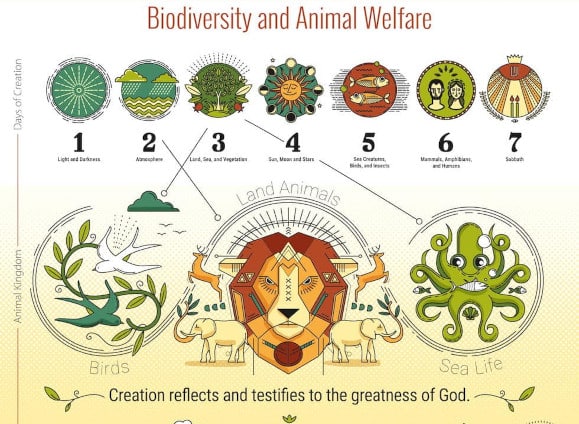### **Biodiversity & Animal Welfare**
## Explore the vibrant tapestry of life through our ‘Biodiversity & Animal Welfare’ infographic, which illustrates the intertwining of diverse species as seen in Biblical teachings. This visual aid unveils the sanctity of life while promoting stewardship and compassion towards all creatures.
[Read More](https://interfaithsustain.com/biodiversity-animal-welfare/)
### **Species Protection and Conservation**
## Delve into the Biblical mandate for preserving the richness of nature with our ‘Species Protection & Conservation’ infographic. It beautifully showcases the crucial roles of various species and the importance of conservation efforts.
[Read More](https://interfaithsustain.com/species-protection-conservation/)
### **Relating to Animals**
## Discover the profound relationship between humans and animals as presented in Biblical narratives with our ‘Relating to Animals’ infographic. It serves as an enlightening tool to foster empathy and responsible coexistence with our fellow living beings. An instrumental piece for educating on the theological foundation of animal ethics.
[Read More](https://interfaithsustain.com/relating-to-animals-eco-infographic/)
### **Plant-based Lifestyle**
## Embrace a compassionate and sustainable mode of living through our ‘A Vegan Lifestyle’ infographic, which is anchored in Biblical texts. This informative piece vividly promotes the health and environmental benefits of a plant-based diet, aligning daily choices with spiritual values for a harmonious existence.
[Read More](https://interfaithsustain.com/plant-based-lifestyle/)
### Trees in Jewish Wisdom
## Root yourself in the ancient knowledge with our ‘Relating to Trees in Jewish Wisdom’ infographic. It sheds light on the sacred significance of trees, reflecting on their role as a metaphor for life and teaching in Jewish thought. An enlightening resource that encourages ecological awareness and reverence for the natural world.
[Read More](https://interfaithsustain.com/trees-in-jewish-wisdom/)
### Trees and Forests
## Combine faith with reason using our ‘A Scientific Perspective on Trees and Forests’ infographic. This visual representation bridges Biblical insights with contemporary scientific understanding, underscoring the critical function of forests in ecological balance and the imperative to preserve these life-sustaining systems.
[Read More](https://interfaithsustain.com/trees-and-forests/)
---
### [ICSD Publishing](https://interfaithsustain.com/publishing/)
**Published:** July 21, 2020
**Author:** ICSD
**Content:**
The Interfaith Center for Sustainable Development (ICSD) publishes and distributes books and reports on the connection between religion and ecology. ICSD celebrates its 10th anniversary by publishing [Eco Bible: Volume 1: An Ecological Commentary on Genesis and Exodus](https://www.amazon.com/Eco-Bible-Ecological-Commentary-Genesis/dp/173533880X/ref=sr_1_1?dchild=1&keywords=eco+bible&qid=1603029210&s=books&sr=1-1) in October 2020. Founded in 2010, ICSD also organizes interfaith environmental conferences, where its publications are also distributed.
ICSD published [Eco Bible Volume 2- Leviticus, Numbers, and Deuteronomy](https://www.amazon.com/gp/product/1735338842) in 2022. A groundbreaking new *Eco Bible* explores the Hebrew Bible’s ecological as well as spiritual wisdom, to address humanity’s greatest challenges in protecting life on Earth. *Eco Bible* connects the Five Books of Moses/Pentateuch, and Jewish rabbis’ biblical teachings past and present, with contemporary scientific understanding of human health, biodiversity, and environmental protection of air, land and water. The Julia Burke Foundation funded the distribution of 600 free copies of Eco Bible volume 1 to cardinals, bishops, pastors, priests, rabbis, and Hebrew Bible professors at theological schools in the United States.
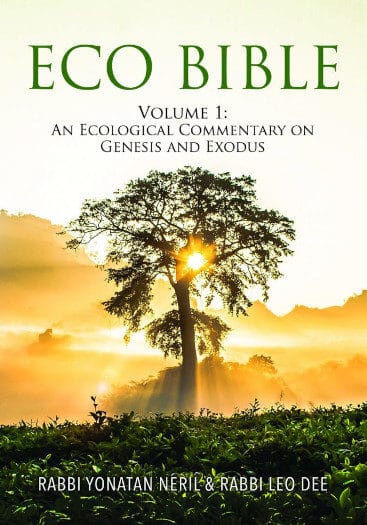
## Reports on Religion and Ecology in Theological Education
### Report on Faith and Ecology Courses in North American Seminaries
[](https://interfaithsustain.com/wp-content/uploads/2015/07/Report_Faith_Ecology2.pdf)
This report highlights ecologically themed courses offered at seminaries in North America, Rome, and the Holy Land. This groundbreaking report includes course descriptions of over 170 courses on ecology offered in over 60 theological schools and seminaries.
### Report on Catholic Ecology Courses For Priestly Formation
Released in October 2016, the Report on Catholic Ecology Courses For Priestly Formation highlights courses on ecological themes offered at a number of Catholic seminaries in North America, Rome, and the Holy Land.
It follows the release of Pope Francis’s Encyclical, Laudato Si’: On Care for our Common Home, which has significantly increased global awareness of the strong link between faith and ecology and called for seminaries and houses of worship to provide creation-care education.
[Click here to view the report](https://interfaithsustain.com/wp-content/uploads/2015/07/Report-on-Catholic-Ecology-Courses-in-Catholic-Seminaries.pdf).
### Report on Faith and Ecology Teaching in Holy Land Seminaries
Released in March 2016, the Report on Faith and Ecology Teaching in the Holy Land Seminaries highlights the faith and ecology courses offered by various seminaries in the Holy Land, with a focus on Christian and Jewish seminaries.
[Click here to view the report](https://interfaithsustain.com/wp-content/uploads/2016/04/Holy-Land-Seminaries-Faith-and-Ecology-Report-Final-version-April-16.pdf).
---
### [Yonatan Neril](https://interfaithsustain.com/yonatan-neril/)
**Published:** September 17, 2020
**Author:** ICSD
**Content:**
The Interfaith Center for Sustainable Development’s founding director Rabbi Yonatan Neril has engaged dozens of congregations, conferences, and institutions on the powerful linkage between ecology and religious values. If you are interested in booking him for a video/Zoom talk or program, [please contact us](https://www.jewishecoseminars.com/contact-us/) to make engagements.
Rabbi Neril speaks internationally on faith and ecology, including at the Fez Climate Summit and the Parliament of World Religions. He has spoken at over 50 institutions on four continents. He co-organized twelve interfaith ecology conferences in Israel and the U.S. and is co-author of the bestselling book Eco Bible. He is a member of the [Jewish Speakers Bureau.](https://www.jewishspeakersbureau.com/speakers/yonatan-neril) Clergy and congregants have written the following about their experience during past speaking tours:
- “Rabbi Neril put a spiritual foundation to the challenges we face with the environment.”
- “Transcendent moments! Bible values grounded us in bringing heaven and earth closer together.”
- “An inspiring educational experience that created an interactive dialogue for what the Jewish tradition teaches about caring for the environment.”
---
## Topics
### GENESIS AND HUMAN STEWARDSHIP OF THE EARTH
In Genesis, God speaks of humans ruling over other living beings. God blesses Adam and Eve, saying “Be fruitful and multiply, fill the earth and subdue it, and have dominion” over the fish, birds, and animals. How do we understand the message of the Torah? Jewish tradition teaches us that we only merit the opportunity to rule the earth if we behave righteously and act as stewards of creation.
### ISRAEL, ECOLOGY & INTERRELIGIOUS COOPERATION
In Israel, Jews, Christians, and Muslims live on the same land, and take in the same air and water. Environmental challenges transcend borders and religions and therefore exist as an arena of joint, urgent concern among diverse groups of people.
Rabbi Neril will share a unique perspective on interfaith work on sustainability in Israel and internationally, through the prism of Jewish teachings.
## CLIMATE CHANGE & A FAITH-BASED RESPONSE
How can Jews respond appropriately to the challenge posed by climate change? What are the spiritual roots of the climate crisis, and how can we address them in our own lives and communities? This program will explore Jewish teachings that relate to the ecological crisis in general and climate change in particular. It will both face the challenge and offer people hope, with practical suggestions.
### WHY IS COLLABORATION BETWEEN CHRISTIANS, MUSLIMS, JEWS, BUDDHISTS & HINDUS KEY TO A SUSTAINABLE FUTURE?
The balance of the world has been ruptured, and we owe it to God, to each other, and to all species to fix it. To do that, Jews need to take a leadership role in interfaith cooperation on environmental sustainability. Only by uniting around this common challenge will humanity be able to transition quickly to sustainable societies. To do so requires collaboration on an unprecedented scale.
There are likely ten million species on earth, yet humanity is causing their extinction at a rapid rate.
How can we protect God’s creation- both species in the wild, as well as the hundreds of billions of factory farmed animals and sea life? We will explore Jewish teachings that relate to the Creator’s desire for a biodiverse planet, and explore Jewish law in regards to preventing cruelty to animals.
## 2021 Webinars
In 2021, Rabbi Neril spoke via Zoom with Congregation Kol Ami in West Hollywood; Congregation Beth Jacob in Redwood City, CA; groups of the Jerusalem Botanical Garden; Beth Emeth Bais Yehuda Synagogue in Toronto; and Temple Sholom of West Essex, NJ.
## 2020 Webinars
In 2020, Rabbi Neril spoke via Zoom with Project Kesher (five sessions), Neve Yerushalaim, Melton Online, and the Oshman Family JCC in Palo Alto.
## 2019 Speaking Tours
In March 2019, Rabbi Yonatan Neril spoke at the Nairobi Hebrew Congregation, the Parklands Baptist Church, and the United Nations Environment Assembly. In August, he spoke at Temple Sholom of West Essex, NJ. In November, he spoke at Ikar Synagogue in Los Angeles, Chabad of Lamorinda, Jewish Learning Exchange London, Stockholm International Water Institute, Limmud Stockholm, and the Los Angeles Symposium on Ecologically Informed Theological Education.
**[2018 Speaking Tour](#2018tour)**
**[2017 Speaking Tour](#2017tour)**
**[2016 Speaking Tour](#2016tour)**
**[2015 Speaking Tour](#2015tour)**
**[2014 Speaking Tour](#2014tour)**
**[2013 Speaking Tour](#2013tour)**
**[2012 Speaking Tour](#2012tour)**
**[2010 Speaking Tour](#2010tour)**
**[2008 Speaking Tour](#2008tour)**
## 2018 Speaking Tours
Rabbi Neril presented at seven sessions at Limmud Festival in England in December, 2018, based on support from OLAM Together. To read more about these sessions, click [here](https://www.jewishecoseminars.com/wp-content/uploads/2018/12/Limmud-Festival-12.18-Yonatan-presenter-in-seven-sessions.pdf).
He spoke in August 2018 at the Mission Minyan in San Francisco, at Congregation Sha’ar Zahav in San Francisco, and at Congregation Ohr Torah in West Orange, New Jersey.
During the summer he taught at Camp Zeke, Camp Interlaken, and Camp Newman in the U.S, based on support from the Foundation for Jewish Camp and Avi Chai Innovation Fund. [Click here to read his thoughts on ‘Wildfires and Jewish Summer Camps](https://www.jewishecoseminars.com/what-wildfires-are-messaging-to-jewish-summer-camps/).’
He spoke in July 2018 at Congregation Beit Hillel in Rome.
## 2017 Speaking Tour
Rabbi Neril spoke in March 2017 at the Shachar Minyan in Riverdale, New York on the topic of *Trees, the Sanctuary, and Holy Resource Use*.
In Jerusalem, he spoke at Congregation Veani Tefila.
## 2016 Speaking Tour
Rabbi Neril spoke in the New York City and the San Francisco Bay Area in December 2016.
On Shabbat of December 10th, he spoke at Congregration Bnai Jeshurun and Ramat Orah Synagogue, both in Manhattan.
On Friday, December 16th 2016 at Congregation Shir Hadash in Los Gatos, California on “Environmental Sustainability in Israel.”
He spoke on Saturday, December 17th on “Israel’s Environmental Challenges and the Relevance of Jewish Teachings” at Congregation Beth David in Saratoga.
On Sunday, December 18th he spoke at Congregation Beth Sholom in San Francisco on “Israel, Ecology, and Jewish Values.”
In Jerusalem, he spoke at Congregation Shir Hadash in Katamon, and at Kol Rina in Nachlaot.
## 2015 Speaking Tour
Rabbi Neril spoke in Los Angeles in October 2015. He spoke on Friday night, October 23rd at the Leo Baeck Temple, and on Shabbat morning, October 24th at Temple Emanuel of Beverly Hills.
In Jerusalem, he spoke at the Yemin Moshe Synagogue and at Congregation Kol Haneshama.
## 2014 Speaking Tour
In September 2014, Rabbi Yonatan Neril engaged in a speaking tour in North America on faith and ecology.
While there was some variation in the topics of the speaking engagements, the general theme of the talks and classes was:
*The People’s Climate March– Bringing Jewish Teachings to Bear on Our Greatest Challenges*
Description: Hurricanes are intensifying, seas are rising, and extreme weather events are becoming more common. How can we access age-old Jewish teachings to enable the next generation to inherit a livable planet?
**Speaking tour schedule:**
Sunday, Sept. 7th from 7:30-8:30 pm at Congregation Beth Israel in Berkeley, CA
Tuesday, Sept. 9th from 3-4 pm at the Reutlinger Center for Jewish Living in Danville, CA
Wednesday, Sept. 10th, 9:30-10:30 pm at Ohr Hada’at Congregation, Mexico City
Thursday, Sept. 11th, 4-5 pm, at Beit Shalom Congregation, Mexico City
Friday, Sept. 12th, 7-7:30 pm at Ramat Shalom Congregation, Mexico City
Saturday, Sept. 13th, 12-12:30 pm, at Ohr Hada’at Congregation, Mexico City
Wednesday, Sept. 17th, 7-8:30 pm, at Smith College, Northhampton, MA, as part of interfaith panel
Thursday, Sept. 18th, 11 am-12, at Five College Consortium, Northhampton, MA
Thursday, Sept. 18th, 6-7:30 pm, at the Jewish Theological Seminary, Manhattan, NY
Friday, Sept. 19th, 1-2 pm, at Columbia University, Manhattan, NY, as part of interfaith panel
Friday, Sept. 19th, 8:30 pm, at Temple Sholom of West Essex, Cedar Grove, NJ
Saturday, Sept. 20th, 9 pm, at Congregation Shomrei Emunah, Montclair, NJ
Rabbi Neril was from Sept. 7-9 in the San Francisco Bay Area; from Sept. 10-14 in Mexico City; from Sept. 15-16 in northern NJ; from Sept. 17-18 in Western Massachusetts; from Sept. 19-22 in NYC and northern NJ.
He was also prepared to discuss his experience in promoting interfaith cooperation on environmental sustainability, and explore why this is crucial for us and our children to inherit a liveable planet. If you are interested in him speaking at your institution (house of worship, school, other), please [contact us](https://interfaithsustain.com/contact-us/).
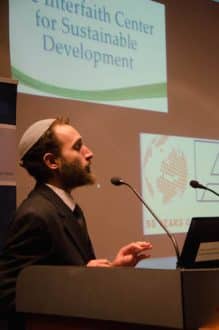
## 2013 Speaking Tour
August 2013: Rabbi Neril spoke on four occassions in Montreal at The Spanish and Portuguese Synagogue as a scholar-in-residence.
## 2012 Speaking Tour
Rabbi Neril conducted a speaking tour on faith and the environment in December 2012 in the United States and England. Between Nov. 29th and December 28th, 2012, he spoke at various institutions in New Jersey, New York City, Los Angeles, the San Francisco Bay Area, and England. For information about the speaking tour, see below. For longer descriptions and directions, click on the links.
Shabbat speaker at **Temple Sholom, Cedar Grove, New Jersey**, Friday November 30th at 8 pm: Hurricane Sandy and Hope for the Future: A Jewish Perspective. More information is available [here](https://www.sholom.net/).
Scholar-in-residence at **Temple Ner Tamid, Bloomfield, New Jersey**. More information is available [here](https://www.nertamid.org/). R’ Neril presented three sessions: 1) Friday, December 7th at 7 pm: Jewish Teachings on Environmental Sustainability in Light of Hurricane Sandy 2) Saturday morning, December 8th. before Shabbat services (from 9-9:45 am): How Can the Light of Chanuka Inspire Us Toward Ecological Sustainability? 3) Saturday morning after Shabbat services at 12:30 pm: Israel’s Innovation in Water and Energy Use and its Basis in Jewish Teachings.
Guest Speaker at **Marian Miner Cook Athenaeum at Claremont McKenna College**, California, Monday December 10th, 11:30 am to 1 pm, ” Environmental Sustainability and Interfaith Eco Cooperation in the Holy Land.
Panel Speaker at **The Commonwealth Club of California**, Wednesday, December 12th at 12 pm in San Francisco, as part of an interfaith panel on “Congregation Power” together with Rev. Sally Bingham, founder and director of Interfaith Power and Light. For more information, click [here](https://www.commonwealthclub.org/events/2012-12-12/congregation-power).
Guest Speaker at **The Reutlinger Community for Jewish Living, Danville, California**, December 18th at 3 pm and December 22nd at 12 pm: Hurricane Sandy and Hope for the Future: A Jewish Persepctive.
Invited Presenter at **Limmud Conference, Warwick University, England**, Monday December 24 to Thursday, December 27th. More information is available [here](https://limmud.org/).
R’ Neril taught four sessions, on the following four topics:
1\. A Jewish Approach to Sustainable Resource Use. Explore the contrasting worldviews of Jacob and Pharaoh on reuse of small vessels and how they relate to the future of human civilization on planet earth. This session will also examine the ways in which our ancestors have been reusing objects and elevating the physical for thousands of years, an important lesson to address today’s sustainability challenges.
2\. How can the Light of Chanuka Inspire Us as Stewards of the Planet? Chanuka contains profound ecological teachings , which we will bring to light in order to bring them into our lives. We will explore the path of wise energy consumption advocated by Jewish sages over the millennia, and relate these teachings to practical ways we can use energy in more environmentally sustainable way.
3\. Eco-Revelation for the Post-Industrial Jew: The Torah was given to people who would become subsistence farmers and who knew the difference between sheaves of barley and wheat. Most of us live urban technological lives and can distinguish between Jpeds and MP3s but likely do not farm or shepherd. What does this shift mean for ourselves and our planet, and what can we do about it?
4\. How Interfaith Eco Cooperation Can Help Save the Earth: The presenter founded and directs The Interfaith Center for Sustainable Development, which accesses the collective wisdom of the world’s religions to promote co-existence, peace, and sustainability through education and action. He will discuss his experience in promoting interfaith cooperation on environmental sustainability, and explore why this is crucial for us and our children to inherit a liveable planet.
## 2010 Speaking Tour
Rabbi Yonatan Neril traveled to the United States for a Jewish environmental teaching trip in the San Francisco Bay Area, New York City, and New Jersey from September 28, 2010 through October 23, 2010. The teachings reached almost 500 Jews and included talks or classes on ‘What the Jewish Tradition Can Teach About the BP Oil Spill’, ‘Genesis and the Future of the Planet’, ‘The Rainbow and an Ecological Ethic’, and ‘Noah’s Environmental Legacy.’ The speaking tour was dedicated to the memory of Sue Steinman–Sarah Rivka bat Rachel Leah. It was also co-sponsored by Canfei Nesharim, including being a scholar-in-residence at Congregation Beth Israel for Parshat Noach.
### The teaching trip reached the following institutions:
The Hebrew Institute of Riverdale (HIR) in the Bronx, NY; Temple Sholom of West Essex in Cedar Grove, NJ; Temple Emanu-El in Edison, NJ; Congregation Beth Jacob in Oakland, CA; Temple Emanuel’s Downtown Tauber Lecture Series in San Francisco, CA; Congregation Beth Israel in Berkeley, CA; Congregation Emek Beracha in Palo Alto, CA; Hillel at Stanford’s Taube Center for Jewish Life in Stanford, CA; Beit Midrash Ohr Chaim in Berkeley, CA; and The Reutlinger Center in Danville, CA.
## 2008 Speaking Tour
**‘Rabbi Yonatan Neril taught on Judaism and ecology at the following congregations, which reached about 500 Jews:** Congregation AABJD in West Orange, NJ; Temple Sholom of West Essex in Cedar Grove, NJ; Temple Isaiah in Lafayette, CA; Congregation Beth Jacob in Oakland, CA; and Chabad of Contra Costa in Walnut Creek, CA.
Interested in booking Rabbi Yonatan Neril for a talk or program? Please contact the [Jewish Speakers Bureau](https://www.jewishspeakersbureau.com/), of which Rabbi Neril is a member, since they arrange all speaking engagements for him.
---
### [EcoPredicador Cristiano 1-2-3](https://interfaithsustain.com/ecopredicador-123/)
**Published:** November 26, 2025
**Author:** ICSD
**Content:**
¡La creación de Dios necesita una buena predicación! ¡La buena predicación necesita la creación de Dios!
- Descubre una nueva perspectiva para conectar con la Biblia que profundiza y expande tu fe.
- Aprende cómo podemos proclamar justicia para la creación de Dios frente al cambio climático y otros problemas ambientales.
- Adquiere el conocimiento y las herramientas que necesitas para que tu predicación sea relevante, valiente y creativa.
- Inspírate para marcar la diferencia en nuestro planeta, tu comunidad y nuestro futuro.
## 10 Principios para la Predicación Medioambiental
**[Leer más →](https://interfaithsustain.com/ecopreacher-resources/10-principios-para-la-predicacion-medioambiental/)**

Con el objetivo de animar al clero a predicar y enseñar sobre ecología cristiana al menos una vez al mes, el Centro Interreligioso para el Desarrollo Sostenible y la Rev. Dra. Leah Schade se han asociado para desarrollar un nuevo recurso gratuito llamado EcoPredicador 1-2-3. Basándose en Eco Bible, un comentario ecológico judío sobre las Escrituras Hebreas, la Dra. Schade, autora de Creation-Crisis Preaching: Ecology, Theology and the Pulpit (Chalice Press, 2015), ofrece una preparación para sermones sobre el cuidado de la Creación de Dios, breve, accesible y con una sólida base bíblica.
EcoPredicador 1-2-3 ofrece una breve ecoexégesis para interpretar un texto hebreo del Leccionario Común Revisado para ese domingo. A continuación, se incluye una ecoidea como base del sermón, dos ecopreguntas para profundizar y tres ecoacciones para ayudar a la congregación a poner su fe en práctica. Con este recurso, los predicadores pueden utilizar las ideas del sermón en su propio contexto y hacerlo relevante para su congregación.
- Adaptable a tu contexto de predicación
- Genera ideas para la preparación de sermones
- Inspirador
- Ecuménico
- Proporciona conocimientos y herramientas para que tu predicación sea valiente y creativa
Suscríbete para recibir futuros recursos de EcoPreacher 1-2-3 haciendo clic en el botón de abajo.
---
### [All Faith & Ecology Videos](https://interfaithsustain.com/all-faith-ecology-videos/)
**Published:** January 27, 2015
**Author:** ICSD
**Content:**
**ICSD works on a global basis, with current engagement in Africa, the Middle East, North America, and Europe.**
*Some features on this page may not work properly unless all cookies are accepted.*
---
### [Christian EcoPreacher 1-2-3](https://interfaithsustain.com/ecopreacher-123/)
**Published:** September 19, 2021
**Author:** ICSD
**Content:**
God’s Creation needs good preaching! Good preaching needs God’s Creation!
- Discover a new perspective for engaging the Bible that deepens and expands your faith.
- Learn how we can proclaim justice for God’s Creation in the face of climate change and other environmental issues.
- Be equipped with the knowledge and tools you need to make your preaching relevant, courageous, and creative.
- Be inspired to make a difference for our planet, your community, and our future.
## 10 Principles for Environmental Preaching
**[Read more →](https://interfaithsustain.com/ecopreacher-resources/10-principles-for-environmental-preaching/)**

In an effort to encourage clergy to preach and teach on Christian ecology at least once a month, the Interfaith Center for Sustainable Development and the Rev. Dr. Leah Schade have partnered to develop a new free resource called EcoPreacher 1-2-3. Drawing from [Eco Bible](https://interfaithsustain.com/ecobible/), a Jewish ecological commentary on the Hebrew Scriptures, Dr. Schade, author of Creation-Crisis Preaching: Ecology, Theology and the Pulpit (Chalice Press, 2015), provides sermon preparation for preaching about caring for God’s Creation that is short, accessible, and based on a solid biblical foundation.
EcoPreacher 1-2-3 offers a brief “eco-exegesis” for interpreting a Hebrew text from the Revised Common Lectionary for that Sunday. This is followed by one “eco idea” for the basis of the sermon, two “eco questions” to go deeper, and three “eco actions” to choose from to help a congregation put their faith into action. With this resource, preachers can use the sermon ideas in their own context and make it relevant for their congregation.
- Adaptable to your preaching context
- Sparks ideas for sermon preparation
- Inspirational
- Ecumenical
- Providing knowledge and tools to make your preaching courageous and creative
Sign up to receive future EcoPreacher 1-2-3 resources by clicking the button below.
---
### [Eco Bible](https://interfaithsustain.com/ecobible/)
**Published:** February 14, 2021
**Author:** ICSD
**Content:**
# Eco Bible
###### This Book Teaches How You Can Achieve a More Sustainable Future in Accordance with God’s Will.
[Buy Now](https://www.amazon.com/Eco-Bible-Ecological-Commentary-Genesis-ebook/dp/B08LCKLM9G/)
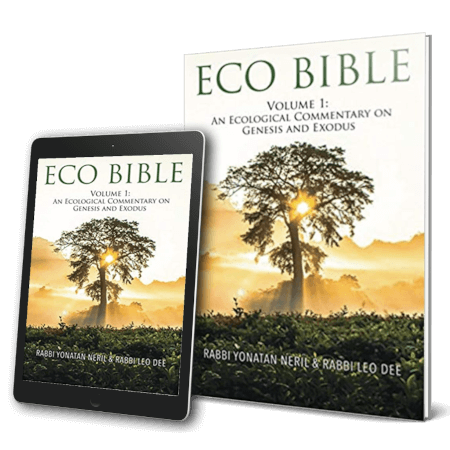
## Teachings for Living a Healthier, More Eco-Friendly Life
Get the book that Publishers Weekly says “will inspire contemplation on how to live in harmony with nature and the power of conservation.”
## Teachings for Living a Healthier, More Eco-Friendly Life
## Ecological Commentary on the Book of Genesis & Exodus
## Specific Action Items for Achieving a Sustainable Future
### What Can the Bible Tell us About Ecology?
As we face huge environmental challenges—including more frequent and intense hurricanes, floods, and forest fires, and widespread plastic pollution—Eco Bible shows how the Bible itself and its great scholars embrace care for God’s creation as a fundamental and living message.
### Spirituality and Science Together for a More Sustainable Future
In Volume 1 of Eco Bible, Rabbi Yonatan Neril & Rabbi Leo Dee have brought together over three millennia of religious wisdom and contemporary scientific thought regarding human health, biodiversity, and clean air, land, and water.
Professor Bill Brown, Professor of Old Testament at Columbia Theological Seminary in Georgia calls Eco Bible “a rich repository of insights… for people of faith to move forward with wisdom, inspiration, and hope, all for the sake of God’s good creation.”
### An Essential Resource for a Sustainable World
Eco Bible is your guide to creating a more sustainable life in pursuit of recreating paradise here on earth.
Volume 1 explores Genesis and Exodus, and Volume 2 explores Leviticus, Numbers, and Deuteronomy, altogether covering 400 verses in the Five Books of Moses/Pentateuch/Old Testament.

#### Perfect for Individual or Group Practice
This book contains the knowledge and tools you need to:
Eat a more sustainable diet
Protect animal and human rights
Locally source your food and clothing
Reduce your carbon footprint
Act with intent to live a healthier lifestyle that uplifts you and your community
#### Structured to Deepen Your Understanding of Bible and Ecology
Through commentaries on the Hebrew Bible, Eco Bible reveals a spiritually grounded vision for both long-term sustainability and immediate environmental mindfulness and action.
Publishers Weekly calls the book “an insightful analysis… which will inspire contemplation on how to live in harmony with nature and the power of conservation. Ecologically minded readers interested in the Hebrew Bible will love this.”
#### Action Items to Live In Accordance with God’s Creation
Each section ends with suggested action items for fulfilling the blessing of all life, for changing course to preserve God’s creation, and for sustaining human life in harmony with nature and all of God’s creatures.
Applying the teachings of the Hebrew Bible to stewardship of God’s creation is not just an idea for today, but essential for a future in which we achieve a balanced, worldwide ecosystem and thrive on a planet viable for all life.
[](https://www.amazon.com/Eco-Bible-Ecological-Commentary-Genesis-ebook/dp/B08LCKLM9G/)
## About the Authors

### Rabbi Yonatan Neril
## Rabbi Yonatan Neril founded and directs The Interfaith Center for Sustainable Development (ICSD). He speaks internationally on religion and ecology, including at the World Economic Forum in Davos, multiple UN climate conferences, and the Parliament of World Religions. In December 2023 he initiated and co-organized the first-ever Faith Pavilion at a UN climate conference (COP28 in Dubai), which included 70 sessions with 325 speakers. Raised in California, Yonatan completed an M.A. and B.A. from Stanford University with a focus on global environmental issues, and received rabbinical ordination in Israel. He lives with his wife and children in Jerusalem.

### Rabbi Leo Dee
## Rabbi Leo Dee served for six years as a community rabbi in the United Kingdom, and then worked in the field of sustainable development in the Israeli financial community, and later as ICSD director of programs. He received a Master’s in Engineering from Cambridge University, a Master’s in Public Health from Hebrew University, and rabbinical ordination in Israel. In April 2023 his wife, Lucy, and two daughters, Maia and Rina, were murdered by Hamas terrorists on the way up to a family holiday in Tiberias. He remarried in 2025, and lives in Efrat with his wife Aliza and remaining three children.
###### Almost as soon as I began reading, I knew that the Eco Bible would be a long term companion for me as I work to care for God’s creation and encourage other people of faith to do the same. Most communities of environmentalists I’ve encountered are heavily burdened by grim predictions of the future, which create an atmosphere of pessimism and disillusionment. What is unique to a Biblical perspective is hope, the “knowledge that we can choose; that we can learn from our mistakes and act differently next time.” The focus of environmentalism in the Eco Bible is completely different from a secular sense of hopelessness: here there is a spiritual conviction that we can and must turn from our destructive actions and live as we were created to: in peaceful, mutually beneficial flourishing with all that is.
[Buy Now](https://www.amazon.com/Eco-Bible-Ecological-Commentary-Genesis-ebook/dp/B08LCKLM9G/)
---
### [Supporters](https://interfaithsustain.com/supporters/)
**Published:** January 16, 2020
**Author:** ICSD
**Content:**
**Redwood Level: Over $900,000 in total giving**
The [Julia Burke Foundation](https://www.juliaburkefoundation.com/) (US) generously provided lead support to ICSD between 2011 and 2022. ICSD founder and director Yonatan Neril wrote a reflection on Julia Burke and the support that the Julia Burke Foundation provided to ICSD. To read it, click [here](https://interfaithsustain.com/wp-content/uploads/2013/07/A-Reflection-on-Julia-by-Yonatan-Neril.pdf).
**Oak Level: Over $640,000 in total giving**
[The William and Flora Hewlett Foundation](https://hewlett.org/) — support for increasing multi-faith engagement in the COP Process and for the [Faith Pavilion at COP28](https://interfaithsustain.com/cop28-un-climate-conference/ "The COP28 UN Climate Conference Faith Pavilion").
**Cedar Level: Over $100,000 in total giving**
Miron Wapner Family Fund, Opaline Fund/Schutz Polis Family Foundation, Sinton Family Fund, Henry Luce Foundation, and Bonnier Foundation.
**Pine Level: $50,000 in total giving**
Barry and Mimi Sternlicht Foundation.
**Olive Level: Over $25,000 in total giving**
Peace Department; Sklare Family Fund; Livelihood Impact Fund; grant made in memory of Mildred, Harry, Robert, and Joan Silberglied.
**Cyprus Level: Over $10,000 in total giving**
Alex Goldberg, Leichtag Foundation, Dorot Foundation Alumni Initiatives, the [British Shalom/Salaam Trust](https://www.bsst.org.uk/), the [German Embassy](https://www.tel-aviv.diplo.de/) – Tel Aviv, [Anne Frank Fonds](https://www.annefrank.ch/), Bob and Barbara Nieder, Marilyn and Morton Neril, Michael and Victoria Neril, Frank Family Fund, Stein Family Fund, Nathan Cummings Foundation, Ray and Wyn Ritchie Evans Foundation, Gewurz Family Foundation, Sonia Simon Cummings and James Cummings, and anonymous.
**Pomegranate Level: Over $5,000**
Martin Gang Institute, Gunther Fund, Alan Sieroty, Pratt Foundation
**Fiscal Sponsorship**: The Interfaith Center for Sustainable Development (ICSD) participates in the FJC Fiscal Sponsorship Program, and [FJC](https://fjc.org/) serves as our US Fiscal Sponsor. All contributions made to FJC for ICSD are tax-deductible in the United States.
To donate to support the work of ICSD, [click here](https://interfaithsustain.com/donate/).






---
---
### [Videos](https://interfaithsustain.com/videos/)
**Published:** February 20, 2026
**Author:** ICSD
---
### [ICSD Resources](https://interfaithsustain.com/resources-main-page/)
**Published:** February 7, 2019
**Author:** ICSD
**Content:**
# Resources
###### Welcome to our hub for greening your life, where the promise of a sustainable future begins with the choices we make today. We invite you to take the first step towards a more conscious lifestyle by exploring our comprehensive collection of eco-friendly resources.

### Eco Bible
Eco Bible, an insightful work by Rabbi Yonatan Neril and Rabbi Leo Dee, delves into the relationship between biblical teachings and environmental stewardship, addressing the urgent challenges we face, such as extreme weather events and pollution.
This innovative text interprets over three millennia of religious knowledge alongside modern scientific research on key ecological issues, promoting care for the planet as a central and actionable tenet of faith.
[Find Out More](https://interfaithsustain.com/ecobible/)

[](https://interfaithsustain.com/ecopreacher-123/)### EcoPreacher 1-2-3
([EcoPredicador 1-2-3](https://interfaithsustain.com/ecopredicador-123/ "EcoPredicador 1-2-3"))
## For Christians, enhance your faith with a fresh biblical approach; champion environmental justice; and gain the insight and resources for impactful, creative preaching that inspires actionable change for the planet and future generations.
[Find Out More](https://interfaithsustain.com/ecopreacher-123/)
[](https://interfaithsustain.com/all-faith-ecology-videos/)### Videos
## Delve into ICSD’s faith and ecology videos, where the intertwining of religion and environmental care is illuminated, encouraging diverse faith communities to drive impactful sustainable change.
[Find Out More](https://interfaithsustain.com/all-faith-ecology-videos/)
[](https://interfaithsustain.com/bible-eco-infographics/)### Infographics
## Access seven visually engaging posters linking biblical wisdom with ecological themes like biodiversity and animal welfare—ideal for fostering environmental consciousness in faith communities.
[Find Out More](https://interfaithsustain.com/bible-eco-infographics/)
[](https://interfaithsustain.com/religion-and-ecology-articles/)### Religion & Ecology
## Explore a rich collection of religion & ecology articles, bridging theological insight with ecological concerns, designed to inform and energize faith-driven environmental advocacy and education.
[Find Out More](https://interfaithsustain.com/religion-and-ecology-articles/)
[](https://interfaithsustain.com/environmental-terms-glossary/)### Glossary of Terms
## Enhance your eco-vocabulary and contribute to meaningful conversations as you navigate the intricate landscape of environmental sustainability and conservation. Discover the terms that define our planet’s present and will most likely determine its future.
[Find Out More](https://interfaithsustain.com/environmental-terms-glossary/)
---
### [Interfaith Ecology Conferences](https://interfaithsustain.com/about-all-conferences/)
**Published:** November 16, 2015
**Author:** ICSD
**Content:**
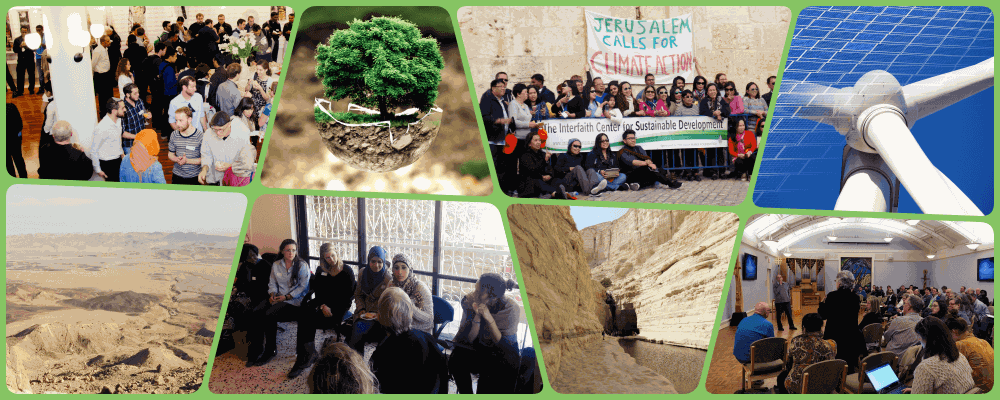The Interfaith Center for Sustainable Development (ICSD), in collaboration with multiple partners, has co-organized twelve interfaith environmental conferences since 2011. The events provided an opportunity for religious leaders and scientists to address issues of environmental sustainability, and created a forum for clergy, seminary deans, faculty, and students, politicians, and faith members to participate in a wide array of interactive sessions on faith and ecology. Over 1,000 people participated in these conferences, which were held in Jerusalem (five); New York City; Washington, D.C.; Atlanta; Dallas; Columbus, Ohio; and Durban, South Africa. The conferences received broad media coverage in over 60 international media outlets.
## Our Most Recent Conferences
---
**The Interfaith Center for Sustainable Development and the FELM Center Jerusalem hosted the [Interfaith Ecology Summit](https://interfaithsustain.com/interfaith-ecology-summit/)**, which took place in Jerusalem on December 3, 2025. Speakers and group facilitators engaged participants in exploring how the leadership and members of religious communities can contribute to faith-based environmental sustainability. Christian, Jewish, and Muslim figures spoke about the religious foundations for ecological action. Panelists included Rabbi David Rosen KSG CBE, Reverend Fursan Zumot, and Yasmin Barhum. The Summit also included a faith-based ecological walk in Jerusalem.
**Our organization was a co-organizer of the inaugural Faith Pavilion at COP28** in December 2023, which was hosted by the Muslim Council of Elders. The Faith Pavilion had 70 sessions and 325 speakers, and emphasized the critical role of faith leaders and communities in climate advocacy. It garnered substantial media attention, and accounted for 7% of COP28’s coverage. It was likely the largest interfaith climate event in history. Over 4,000 articles and 16,000 social media posts highlighted the event’s impact, showcasing the global recognition of faith-based climate action. For more information, [click here](https://interfaithsustain.com/cop28-un-climate-conference/).
**The Jerusalem Interfaith Climate Conference** was held on November 3, 2022 ahead of the UN Climate Conference COP 27. At the event, religious leaders in Israel gathered to support joint action on climate change. The Department of World Religions of the Israeli Ministry of Foreign Affairs, in collaboration with the Interfaith Center for Sustainable Development, held a first-of-its-kind interfaith conference on the role of religious leadership in dealing with climate change. For more information, [click here](https://interfaithsustain.com/jerusalem-interfaith-climate-conference/).
**The Interfaith Seminary Symposium on Sustainable Behavior** took place in Jerusalem on October 28, 2019 at University of Notre Dame at Tantur. Religious figures spoke about religious imperatives for promoting environmentally sustainable practices. The Symposium engaged over 100 seminary deans, faculty, and students in how to integrate environmental sustainability into seminary education. [Click here](https://interfaithsustain.com/the-2019-interfaith-seminary-symposium-on-ecological-behavior-in-jerusalem-concept-note-and-schedule/) for more information.
**The Los Angeles Symposium on Ecologically Informed Theological Education** took place from Sunday evening to Tuesday afternoon, November 3 to 5, 2019 at American Jewish University’s Brandeis Bardin Campus in Simi Valley, CA. Faculty, staff and administrators from California and other Western U.S. seminaries, theological schools, and rabbinical schools, and clergy explored how theological education can address our ecological reality. [Click here](https://interfaithsustain.com/los-angeles-symposium-on-ecologically-informed-theological-education/) for more information.
**The Southwest Symposium on Ecologically Informed Theological Education** took place on March 13 and 14, 2019 at Brite Divinity School on the campus of Texas Christian University in Fort Worth, Texas. To read more, [click here](https://interfaithsustain.com/the-southwest-symposium/).
**The Interfaith Climate Change & Renewable Energy Conference** took place on May 9, 2018 in Jerusalem, Israel. 150 people attended. [Learn more by clicking here.](https://interfaithsustain.com/interfaith-climate-change-renewable-energy-conference/)
---
## Symposia on Ecologically Informed Theological Education
---
ICSD organizes conferences for seminary deans, faculty, and others around faith and ecology. The conferences help equip seminaries with the tools needed to prepare the next generation of religious leaders to effectively engage in Creation care and environmental justice.
ICSD has co-organized seven conferences for seminary faculty and deans on ecologically-informed theological education: in Fort Worth, Texas in March, 2019, in Atlanta in March 2018, in Columbus, Ohio in October 2017, in Washington D.C. in March 2017, in New York City in 2016, and in Jerusalem in 2015 and 2014.
**The Southeast Symposium on Ecologically Informed Theological Education** took place at the Columbia Theological March 21-23, 2018 – Atlanta, GA. [Learn More](https://interfaithsustain.com/engaging-seminaries/southeast2018symposium/)
**Midwest Symposium on Ecologically Informed Theological Education, October 2017, Columbus, OH**
---
We were pleased to partner on The Midwest Symposium on Ecologically Informed Theological Education, which was held on the Methodist Theological School in Ohio’s (MTSO) campus in Delaware, Ohio from October 18th to 19th with 75 people in attendance from seminaries around the Midwest and beyond. The Symposium began with an optional morning tour of the Byrd Polar and Climate Research Center at The Ohio State University. Dr. Lonnie Thompson, Distinguished Professor of Earth Sciences at OSU and one of the leading climate scientists in the U.S., provided a keynote address on climate science. For many faculty it was the first time they heard from a climate scientist in-person. [Read More](https://interfaithsustain.com/midwest-symposium-oct-2017/)
The Symposium was co-organized by MTSO, the Green Seminary Initiative, and our organization, based on support from the Henry Luce Foundation and The Julia Burke Foundation.
-
-
-
-
-
-
-
-
-
-
-
-
-
**Washington, DC, March 2017, Symposium on Ecologically Informed Theological Education**
---
In March 2017, ICSD co-organized a Symposium on Ecologically Informed Theological Education in Washington, DC where seminary deans and faculty explored ways of integrating faith and ecology into their theology curricula. Seminary faculty and deans conducted workshops that explored a number of topics including ways that seminaries can encourage faculty to incorporate ecology teachings into existing courses in theology, the Bible, homiletics, ethics, and counseling, among others. The event drew 70 participants and speakers from more than 10 seminaries and six states in the Mid-Atlantic region. In his keynote address on Pope Francis’s encyclical Laudato Si’ — On Care for Our Common Home, Monsignor Kevin Irwin, research professor, underlined the importance of broadly integrating ecological concerns into theological education, which “would lead to an ecological consciousness across theological specializations and fields.” The Symposium was co-organized by the Interfaith Center for Sustainable Development, the Washington Theological Consortium, the Green Seminary Initiative, and Methodist Theological School in Ohio, and hosted by The Catholic University of America‘s School of Theology and Religious Studies. To read more, and view videos and photos, [click here](https://interfaithsustain.com/faith-and-ecology-conference-in-dc/).
**New York City, 2016, Faith and Ecology in Seminary Education Conference**
---
In December 2016, ICSD co-organized a [Faith and Ecology in Seminary Education Conference](https://interfaithsustain.com/faith-and-ecology-conference-in-nyc) in New York City. 65 participants- mostly seminary faculty and deans- attended the conference, which worked to equip the next generation of religious leaders to more effectively educate about Creation care and stewardship. The conference was co-organized by The Interfaith Center for Sustainable Development; the Center for Earth Ethics of Union Theological Seminary; the Milstein Center for Interreligious Dialogue at the Jewish Theological Seminary; and the Green Seminary Initiative.
**Jerusalem, 2015, Religious Education in the Era of Climate Change**
---
On November 4th, 2015, [Religious Education in the Era of Climate Change: A Summit of Conscience](https://interfaithsustain.com/religious-education-in-the-era-of-climate-change/) took place in Jerusalem. This one-day event promoted ideas and action plans to encourage faith-based environmental education in seminaries and theological schools in the Holy Land. The conference included discussions around the regional impact of climate change and subsequent urgency of this work; best practices from field experts; and a forum for creative dialogue among participants. The event was co-organized by the Interfaith Center for Sustainable Development and the Konrad Adenauer Stiftung.
**Jerusalem, 2014, Faith and Ecology Conference**
---
In October 2014, Christian, Jewish, and Muslim clergy and seminary students convened around a shared vision of ecological sustainability at the [Faith and Ecology Conference](https://interfaithsustain.com/faith-ecology-conference-in-jerusalem/). The conference educated over 100 clergy members, seminary students, and others and provided tools and inspiration to help expand faith-based environmental teaching and action. Moving one step beyond previous ICSD conferences, this one-day event incorporated action planning sessions for each participating institution to return home with plans to “green” their places of study and worship and continue collaborating across religions to create a more sustainable Holy Land. This event was part of the Faith and Science Earth Alliance, which brings faith and science leaders together to catalyze shifts in society to address climate change.
**Jerusalem, 2012, Interfaith Climate and Energy Conference**
---
The *Interfaith Climate and Energy Conference* took place at the Mishkenot Sha’ananim Conference Center in Jerusalem on March 19th, 2012. The Conference featured world and Holy Land-based religious leaders speaking out on the ethical imperative and religious basis for action on climate change and use of renewable energy. The Interfaith Center for Sustainable Development (ICSD*)* and the Konrad Adenauer Stiftung co-organized the conference, and 130 people participated. To read more about the 2012 conference, [click here](https://interfaithsustain.com/interfaith-climate-and-energy-conference-2012/).
**Jerusalem, 2011, Interfaith Eco Forum**
---
In July, 2011, the Interfaith Center for Sustainable Development put on the [Interfaith Eco Forum](https://interfaithsustain.com/interfaith-eco-forum/) in Jerusalem. This Forum was the culmination of **The Holy Land Climate Change Declaration Project,** which successfully brought together religious leaders in the Holy Land to endorse a joint statement on climate change. In April, 2011, the Council of Religious Institutions of the Holy Land (CRIHL), representing the high religious authorities of the Holy Land, [endorsed the Declaration](https://interfaithsustain.com/?page_id=145). The Declaration articulates a religious call for action to address climate change from Christian, Muslim, and Jewish religious leaders in the Holy Land. The Holy Land Climate Change Declaration Project worked to promote a multiplier effect for action on climate change by leveraging the moral authority of religious leaders in the Holy Land. It also advanced coexistence in the Holy Land by creating an example of interfaith cooperation on an area of joint concern.
**United Nations Climate Change Conference of the Parties (COP-17) in Durban, South Africa (2011)**
---
The Interfaith Center for Sustainable Development collaborated with the Interfaith Declaration on Climate Change in organizing interfaith press conferences at the United Nations Climate Change Conference of the Parties (COP-17) in Durban, South Africa in late 2011. The press conference featured respected religious leaders and scientists, who underscored the seriousness of global climate change already underway, and called for immediate action. They highlighted the unprecedented string of climate and weather catastrophes experienced globally in 2011, including over $50 billion in damages in the United States alone.
The Global Campaign for Climate Action (GCCA) and the Abibimman Foundation of Africa also collaborated in putting on the conferences. The Interfaith Center for Sustainable Development received support from the Julia Burke Foundation for its work on this initiative.
---
### [Donate](https://interfaithsustain.com/donate/)
**Published:** July 21, 2013
**Author:** ICSD
**Content:**
# Support ICSD
###### The Interfaith Center for Sustainable Development is a world leader in interfaith environmental advocacy, education, and action. With your generous tax-deductible contribution, you will help us reach more and more individuals and institutions.

## Why should you donate?
### What will your gift fund?
Your contribution will help mobilize religious communities to protect our planet. A donation will provide global thought leadership that bridges religious values with ecological action. Your support can leverage the power of 6 billion people of faith to reverse climate change and protect our planet for future generations. An investment from you in our movement can unite faith and environmental sustainability, a powerful collaboration to overcome climate change.
### Allow us to continue our work
Donors like you have helped to make all of this work a reality, so we ask for your support. Please support us to mobilize faith-based institutions and their leaders to help forge a path to a sustainable future. The Interfaith Center for Sustainable Development (ICSD) participates in the FJC Fiscal Sponsorship Program. FJC serves as our US Fiscal Sponsor, and their US tax ID is 13-3848582. All contributions made to FJC for ICSD are tax-deductible in the United States.
### Empower change
Your generous, tax-deductible donation empowers the Interfaith Center for Sustainable Development to continue leading the charge in cross-faith environmental advocacy, education, and proactive engagement. With your support, we can extend our reach to influence more individuals and institutions.
Photo credit: Albin Hillert/LWF
#### Make a Tax-Deductible Donation Online
Click on the orange ‘Donate’ button below this text to donate via debit card or credit card:
[](https://fjc.givingfuel.com/interfaith-center-for-sustainable-development/)
You’ll be redirected to GivingFuel to complete your donation safely and securely. We don’t store your payment details.
#### Make a Tax-Deductible Donation Via Check
Please make checks out to “FJC” and mail to FJC, 225 West 39th Street, 12th Floor, New York, NY 10018. The memo line must read “The Interfaith Center for Sustainable Development.”
To donate from Israel for a tax-deductible donation in Israel, write a check for “The Interfaith Center for Sustainable Development” and mail it to P.O. Box 1691, Jerusalem, 9101602, or contact us about making a bank transfer.
#### Make a Tax-Deductible Donation Via Wire Transfer, Appreciated Securities, or Cryptocurrency, or Leave a Legacy Gift in Your Will or Living Trust
To do so, please [contact Yonatan Neril](mailto:yneril@interfaithsustain.com), ICSD’s Executive Director. ICSD can be a beneficiary of all or a portion of your estate. You can also name ICSD as the beneficiary of your 401k, IRA, life insurance, or retirement plan.
---
### [Thought Leadership](https://interfaithsustain.com/thought-leadership/)
**Published:** August 16, 2020
**Author:** ICSD
**Content:**
ICSD provides global thought leadership in accessing religious values to inspire ecological action. ICSD has the leading channel on YouTube on religion and ecology. In the past ten years, ICSD has created and posted over 270 religion and ecology videos on YouTube, which have received over 150,000 views.
On Facebook, these videos have received over 400,000 views as well as thousands of shares, likes, and comments. ICSD has also written tens of blog posts on its blog, as well as those of HuffPost and Times of Israel. These blog posts have been read by thousands of people, and received thousands of shares.
The videos and blog posts highlight issues that ICSD engages on, and also report on significant events, like when ICSD director Rabbi Neril met Pope Francis. We have filmed videos in the Vatican’s Synod Hall, at peat bogs of Wisconsin, outside oil refineries in California, near nuclear reactors in New Jersey, and in the forests beyond Jerusalem.
We are encouraged by our strong online viewership and engagement. ICSD’s Facebook and Twitter accounts have thousands of likes. With people devoting more time than ever to screens and social media, these short videos provide an effective vehicle for delivering our unique faith-based ecological perspective. Many of the videos end with suggestions to inspire practical action. The videos are posted on Facebook, ICSD’s website, and YouTube.
---
### [Staff](https://interfaithsustain.com/team/)
**Published:** July 21, 2013
**Author:** ICSD
**Content:**
## Core Team

**Rabbi Yonatan Neril**
*Founder and Executive Director*
Rabbi Yonatan Neril founded and directs The Interfaith Center for Sustainable Development. Raised in California, Yonatan completed an M.A. and B.A. from Stanford University with a focus on global environmental issues, and received rabbinical ordination in Israel.
Yonatan is coauthor of the bestselling book [Eco Bible](https://www.amazon.com/Eco-Bible-Ecological-Commentary-Genesis/dp/173533880X/), published by ICSD, which shines new light on how the Hebrew Bible and great religious thinkers have urged human care and stewardship of nature for thousands of years as a central message of spiritual wisdom.
He has spoken internationally on religion and the environment, including at the UN Environment Assembly in Nairobi, the Fez Climate Conscience Summit and the Parliament of World Religions. He co-organized ten interfaith environmental conferences in Jerusalem, New York City, Washington D.C., and Atlanta. He is the lead author of three books on Jewish environmental ethics and also co-authored three reports on faith and ecology courses in theological education. He lives with his wife, Shana and their two children in Jerusalem.
**Rev. Dr. Leah Schade**
*EcoPreacher Resource Development Consultant*
The Rev. Dr. Leah D. Schade is Associate Professor of Preaching and Worship at Lexington Theological Seminary in Kentucky. An ordained Lutheran minister since 2000, Leah has served congregations in rural, urban, and suburban settings. She earned both her MDiv and PhD degrees from the Lutheran Theological Seminary at Philadelphia (now United Lutheran Seminary).
Her publications include: [*Creation-Crisis Preaching: Ecology, Theology, and the Pulpit*](https://www.chalicepress.com/CreationCrisis) (Chalice Press, 2015); *[Preaching in the Purple Zone: Ministry in the Red-Blue Divide](https://rowman.com/isbn/9781538119891/preaching-in-the-purple-zone-ministry-in-the-red-blue-divide)* (Rowman & Littlefield, 2019); and *[Rooted and Rising: Voices of Courage in a Time of Climate Crisis](https://rowman.com/ISBN/9781538127759/Rooted-and-Rising-Voices-of-Courage-in-a-Time-of-Climate-Crisis),* co-edited with Margaret Bullitt-Jonas with essays from a cross-section of faith leaders and activists offering their spiritual wisdom and energy for facing the difficult days ahead (Rowman & Littlefield, 2019). She has also written a Creation-centered Lenten devotional, [*For the Beauty of the Earth*](https://chalicepress.com/products/for-the-beauty-of-the-earth-lent-devotional-saddle-stitch) (Chalice Press, 2019).
Leah has served as an anti-fracking and climate activist, community organizer, and advocate for environmental justice issues and is the [“EcoPreacher” blogger](https://www.patheos.com/blogs/ecopreacher/) for Patheos.com. She began partnering with the Interfaith Center for Sustainable Development in 2021 as their EcoPreacher Resource Development Consultant to create a monthly resource called [EcoPreacher 1-2-3](https://interfaithsustain.com/ecopreacher-123/) for busy pastors wanting to address environmental issues in their sermons.
**Deborah Lee Rose**
*Volunteer Consulting Editor*
Deborah Lee Rose is an award-winning children’s author, science writer and editor whose books, many with environmental themes, are read around the world. They include *The People Who Hugged the Trees, Into the A, B, Sea, Ocean Babies, Jimmy the Joey, Beauty and the Beak: How Science, Technology, and a 3D-Printed Beak Rescued a Bald Eagle, Scientists Get Dressed* and *Astronauts Zoom*! She was also a senior science writer for UC Berkeley’s Lawrence Hall of Science.
Deborah most recently edited Eco Bible and Plastic Sea: A Bird’s-eye View. She lives with her husband, Ken, an environmental health scientist, in Silver Spring, MD. ([www.](http://www.deborahleerose.com)[deborahleerose.com](https://www.deborahleerose.com))

**Pesach Chananiah**
*Los Angeles Faith and Ecology Network*
Pesach Chananiah is grateful to be involved with ICSD to transform the relationship between faith and ecology in Los Angeles and beyond. In the past, he has worked on a variety of social justice organizing campaigns, from interfaith capacity-building efforts in Las Vegas and Los Angeles to coalescing stakeholders to improve air quality in and around port communities. Pesach has also taught in a wide range of Jewish education contexts, including youth wilderness programs in New York, Beverly Hills, and the Bay Area. Most recently, Pesach completed his PhD in Community, Liberation, and Ecopsychology – and he brings to all of his work his training in tending of soul in and of the world. Additionally, Pesach is a trained yoga teacher and practitioner of mindfulness meditation. He lives in the Miracle Mile area of Los Angeles with his partner Kimeiko Rae and enjoys urban biking and cooking vegetarian meals.
---
### [Religion & Ecology Articles](https://interfaithsustain.com/religion-and-ecology-articles/)
**Published:** January 6, 2014
**Author:** ICSD
**Content:**
## Please click on your religion of interest to see a teaching on the environment and to access more teachings.
| [  ](https://interfaithsustain.com/bahai-ecology/ "Bahai Ecology") | [  ](https://interfaithsustain.com/buddhist-ecology/ "Buddhist Ecology") | [  ](https://interfaithsustain.com/christian-ecology/ "Christian Ecology") | [  ](https://interfaithsustain.com/confucian-ecology/ "Confucian Ecology") |
|---|---|---|---|
| [  ](https://interfaithsustain.com/daoism-ecology/ "Daoism and Ecology") | [  ](https://interfaithsustain.com/druze-theology-of-the-forest "Druze Ecology") | [  ](https://interfaithsustain.com/hindu-ecology "Hindu Ecology") | [  ](https://interfaithsustain.com/jain-ecology/ "Jain Ecology") |
| [  ](https://interfaithsustain.com/judaism-ecology/ "Judaism and Ecology") | [  ](https://interfaithsustain.com/islam-and-ecology/ "Islam and Ecology") | [  ](https://interfaithsustain.com/sikh-ecology/ "Sikh Ecology") | [  ](https://interfaithsustain.com/shinto-ecology/ "Shinto Ecology") |
| [  ](https://interfaithsustain.com/sufism-ecology/ "Sufism and Ecology") | [  ](https://interfaithsustain.com/zoroastrian-ecology/ "Zoroastrian Ecology") |
---
### [Here's what we would do with more funding...](https://interfaithsustain.com/aspirational-projects/)
**Published:** November 26, 2018
**Author:** ICSD
**Content:**
**The Interfaith Center for Sustainable Development (ICSD) seeks to scale its work by engaging in the following channels of action:**
1. **Launch the** [**Interfaith Greening Jerusalem Houses of Worship Project**](https://interfaithsustain.com/houses-of-worship-greening-project/)**, in collaboration with World Resources Institute.** This Project will engage a church, a mosque and a synagogue in Jerusalem on a two-year greening process. With the help of environmental consultants, the Project will assess the ecological footprint of participating houses of worship, and help these institutions create and implement a plan to improve their environmental impact and their teaching and preaching on religion and ecology.
2. **Fund a feasibility study for the Mozambique project of our [Faith Inspired Renewable Energy Project in Africa](https://interfaithsustain.com/faith-inspired-renewable-energy-project-in-africa/)**. This project involves an Anglican diocese of Niassa province, Mozambique, together with the renewable energy company Gigawatt Global, to deploy a commercial solar field on church lands. We would also expand collaboration with Catholic institutions to collaborate on solar fields on their lands.
3. **Launch the [Growing Together Women’s Interfaith Ecology Project](https://interfaithsustain.com/womens-interfaith-eco-project/)**, which will empower women educators from East and West Jerusalem schools to create vertical classroom and school gardens. Joint workshops will build a platform for promoting sustainable nutrition and renewable energy options within and beyond their classrooms. The project will also improve collaboration and partnerships among Muslim, Jewish, and Christian women, both Israeli and Palestinian.
4. **Expand our work in [Thought Leadership and social media engagement.](https://www.facebook.com/pg/interfaithsustain/videos/)** We would expand engagement on our religion and ecology blog, YouTube channel, and Facebook and Twitter posts. Doing so would lead to greater impact in raising awareness and promoting behavioral and policy change.
5. **Engage in resource development for a** [**Faith Earth Center**](https://interfaithsustain.com/wp-content/uploads/2019/02/Faith-Earth-Center-Proposal-11.7.18-2.pdf) in Jerusalem. The Center would be a destination for residents of, and visitors to, Jerusalem, and a venue for Christian, Jewish and Muslim school trips. This Center would also be a leader in sustainable practices such as recycling and vertical garden workshops. It would offer faith-based ecological workshops for seminary students.
6. **Organize an [Interfaith Climate and Renewables Conference in Jerusalem](https://interfaithsustain.com/about-all-conferences/),** in collaboration with the University of Notre Dame’s Tantur Jerusalem campus and the Swedish Theological Institute. Religious leaders would urge faith communities to mitigate climate change and promote renewable energy use. Presentations by scientists will describe the current impacts and imminent dangers of climate change to the region.
---
Rabbi Yonatan Neril, Founder and Executive Director, ICSD.
For more details on any of these projects, [please contact us.](https://interfaithsustain.com/contact/)
---
### [Greening Houses of Worship](https://interfaithsustain.com/greening-houses-of-worship/)
**Published:** February 19, 2025
**Author:** ICSD
**Content:**
# Greening Houses of Worship
###### There are over 8.2 billion people on earth, and 85% of them identify with a religion. There are millions of houses of worship, including churches, mosques, temples, and synagogues. If they were to engage in sustainable practices, it would make a big difference on our shared planet. Here are ten ways a house of worship can adopt environmentally friendly practices:

## 1. **Reducing Food Waste**:
## Make a plan for congregants or staff taking leftover food after events, or reusing it on the days after the event.
## Implement a composting system for food scraps from community events and gatherings.
## Partner with local food rescue organizations to donate surplus food to those in need.
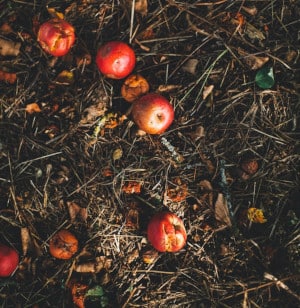[Source](https://unsplash.com/photos/kerson-fruit-on-grass-fDvokTkwEZ8)
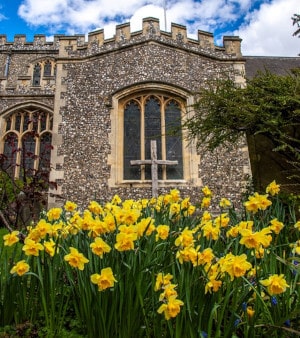[Source](https://unsplash.com/photos/ceramic-plates-on-rack-sUTjF7ckvAM)
## 2. **Planting a [Garden](https://interfaithsustain.com/importance-of-soil/)**:
## Create a community garden on the premises to grow vegetables, fruits, or pollinator-friendly [plants](https://interfaithsustain.com/growing-your-own-food/).
## Use the garden as an educational tool to teach sustainable practices to the [congregation](https://interfaithsustain.com/bokashi-composting/).
## 3. Using Durable Dishes**:
## Switch to reusable dishes, glasses, and utensils for all [events](https://interfaithsustain.com/plastic-free-life/).
## Invest in an energy-efficient dishwasher to clean items [sustainably](https://interfaithsustain.com/reusable-cups/).
## Provide water stations and encourage reusable [bottles](https://interfaithsustain.com/single-use-plastic-threats-from-awareness-to-action/).
[Source](https://unsplash.com/photos/ceramic-plates-on-rack-sUTjF7ckvAM)
[Source](https://unsplash.com/photos/white-spoon-LHE9c_va1f8)
## 4. Eliminating Single-Use Plastics**:
## Make a communal decision to phase out use of single use plastics.
## When disposables are necessary, use compostable or biodegradable materials.
## 5. **Conducting an Energy Audit and [Retrofit](https://interfaithsustain.com/solar-farm/)**:
## Hire a professional to perform an energy audit and identify areas for improvement (or ask Skip to do it).
## Upgrade to LED lighting, install energy-efficient HVAC systems, and insulate the building.
## Do a retrofit using sustainable building [materials](https://interfaithsustain.com/sustainable-building-materials/), and sustainable [furniture](https://interfaithsustain.com/sustainable-furniture/).
[Source](https://unsplash.com/s/photos/LED-lighting?license=free)
[Source](https://unsplash.com/photos/a-group-of-people-sitting-in-a-room-YlPCH249qHE)
## 6. **Encouraging Clergy Eco-[Preaching](https://www.prnewswire.com/news-releases/global-religious-leaders-promote-climate-action-during-un-climate-conference-cop-27-301677245.html)**:
## Incorporate themes of stewardship, sustainability, and care for creation into sermons and teachings.
## Provide resources and host workshops on environmental issues for the congregation.
## 7. **Installing Renewable Energy [Systems](https://interfaithsustain.com/solar-and-wind-energy/)**:
## Install solar panels or wind turbines to generate clean energy.
## Explore community renewable energy programs if on-site systems are not feasible.
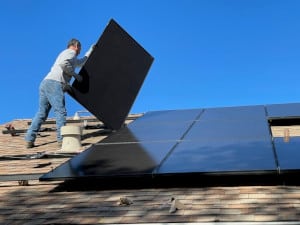[Source](https://unsplash.com/photos/man-in-white-dress-shirt-and-blue-denim-jeans-sitting-on-white-and-black-solar-panel-wmaP3Tl80ww)
[Source](https://unsplash.com/photos/woman-in-brown-coat-riding-on-black-bicycle-on-road-during-daytime-GrdAN0NEIKY)
## 8. **Promoting Green [Transportation](https://interfaithsustain.com/ethical-consumerism/)**:
## Encourage carpooling, biking, or public transportation for congregation [members](https://interfaithsustain.com/sustainable-transport/).
## Install bike racks and electric vehicle (EV) charging stations on the [property](https://interfaithsustain.com/electrical-buses/).
## 9. **Engaging in Recycling and Waste [Reduction](https://interfaithsustain.com/importance-of-sustainable-development/)**:
## Set up clearly labeled recycling bins throughout the [facility](https://interfaithsustain.com/facts-about-plastic-pollution/).
## Partner with local recycling programs and educate members on proper recycling [practices](https://interfaithsustain.com/sustainable-development-examples/).
[Source](https://unsplash.com/photos/text-aI4RJ--Mw4I)
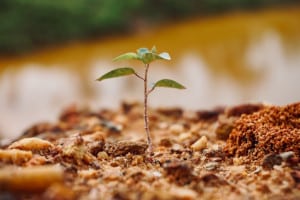[Source](https://unsplash.com/photos/green-plant-on-brown-soil-WhWYV0nQJGc)
## 10. **Advocating for Broader Environmental [Action](https://www.philanthropy.com/article/to-tackle-the-climate-crisis-philanthropy-needs-to-get-religion)**:
## Host eco-themed events like clean-up drives or tree-planting days.
## Collaborate with local environmental organizations to advocate for policies that protect the environment.
Each of these steps can reduce the house of worship’s ecological footprint while fostering a culture of sustainability within the [community](https://interfaithsustain.com/how-religious-communities-are-curbing-climate-change/).
\* *Featured image [source](https://unsplash.com/photos/sun-light-passing-through-green-leafed-tree-EwKXn5CapA4)*
---
### [Interfaith Panels](https://interfaithsustain.com/interfaith-panels/)
**Published:** October 22, 2013
**Author:** ICSD
**Content:**
The Interfaith Center for Sustainable Development organizes interfaith panels involving clergy or religious personalities from multiple faiths. The panels enable groups of students, tourists, or others to hear varied perspectives from distinguished people of faith living in the Jerusalem area.
Most panels are comprised of a Muslim, Christian, and Jew, but panels involving Bahai and/or Druse can be arranged upon request. After the panelists respond to questions from the moderator, participants can ask questions themselves to the panelists or share comments.
The overall theme of the panel and questions for the panels can be set in advance to fit the specific interests of the group. Possible themes include exploring how people of different faiths relate to:
- Coexistence
- Environmental sustainability and faith teachings
- Jerusalem as a holy city
- Stewardship of the Holy Land
The Interfaith Center for Sustainable Development has organized a range of interfaith panels for clients including the Arava Institute of Environmental Studies and Travcoa/Diesenhaus Unitours. Panelists have included priests, imans, rabbis, professors, and others from Jerusalem-based institutions such as the Swedish Theological Institute, Al Quds University, and the Tantur Ecumenical Institute. To read more about past interfaith panel events that our organized has put on focused on peace building and environmental leadership, [click here](https://interfaithsustain.com/engaging-in-peace-building-environmental-leadership/ "Peace building and evnironmental leadership").
**Location:** In Jerusalem. Likely locations at the FELM Center in the Musrara neighborhood; at the [Jerusalem InterCultural Center](https://jicc.org.il/ "Jerusalem InterCultural Center") on Mt. Zion; or at the Weiner Center in Nachlaot.
**Length:** 90 minutes.
**Cost:** 1,900 NIS
**Booking:** [Contact us](https://interfaithsustain.com/contact/ "Contact us") and send us your desired dates, number of people.
*Note: Panel location, length and theme can be customized depending on your requirements. Please send us the details and we will be in touch.*
## Testimonials
> Our group participated in the interfaith panel as part of a larger trip throughout Jerusalem, seeing the city as a divided one in terms of history, religion, and ethnicity. I was skeptical about the panel as someone who doesn’t identify with any religion, but it helped to illuminate the importance of bringing religion into the conversation when discussing how to mend the breakages of this intensely divided city – even (or especially) for non-believers. In particular I was stunned by the eloquence of Yasmin Barhum and Rabbi Yonatan Neril, who were both able to articulate concisely and poignantly how sustainability and a care for the environment is anchored in their respective spiritual beliefs and practices. Yasmin even deftly wove in a political element, explaining to us that her belief in Islam helped to dictate what she felt was an appropriate pathway to political activism and involvement on the ground. I left the panel with a piqued and renewed interest in one’s spiritual practices and beliefs when addressing conflict, and the rest of our group seemed immersed in conversations to the same effect.
>
> Through the emphasis on inter-religious cooperation, I believe that the environment can also act as a bridge between people of different faiths and cultures, opening a much needed dialogue about our shared future on this planet that we all care for. The Interfaith Center for Sustainable Development not only emphasizes the need for action and local environmental projects, but it also considers this need for an open dialogue between people of different faiths and belief systems. There is a strong focus on where we can all agree on environmental values and goals, but it also creates a space for more controversial issues or fundamental conflicts to be addressed and worked through in a diplomatic way, enriching each person’s understanding of the other’s point of view. It’s a space to learn from one another, but it’s also rooted in a shared desire to create solutions for the environmental problems we all must face together. Taking part in this panel reaffirmed, for me, the fact that there is meaning in this relationship between religion and the environment not only on a larger community scale, but also personally for myself, on an individual level. It reminded me that my passions and interests are relevant to the world today, and that I should continue to learn and grow in my understanding of how religious leaders, environmentalists, scientists, and members of a community can and should find a common ground to discuss these issues and develop pathways to a shared sustainable future.
>
> Vanessa Gikas
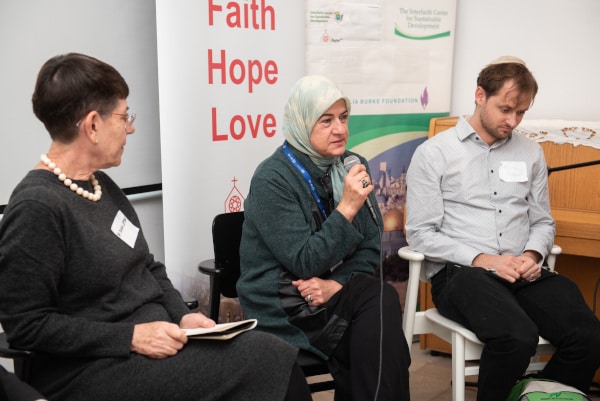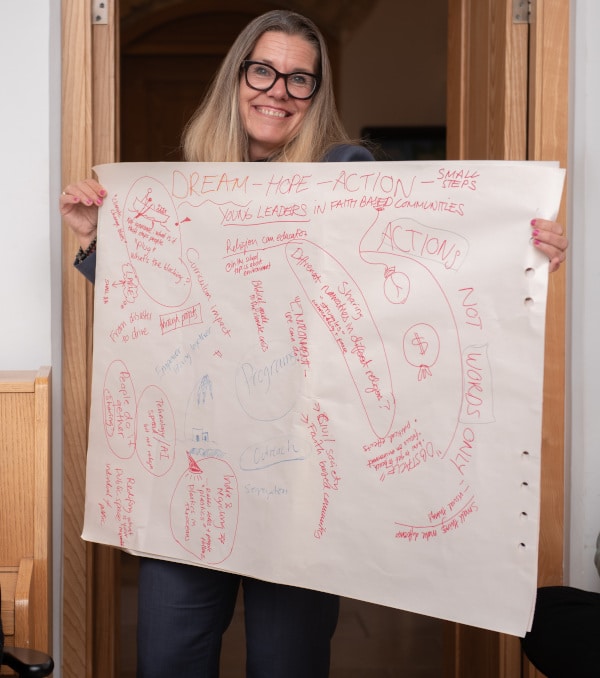
**Are you looking for tours in the Holy Land for you and/ or your group?**
**Learn more about our Eco Tours across Israel from Golan Heights, Carmel Mountains, Jerusalem to Negev and the Dead Sea.**
[**Eco Israel Tours**](https://interfaithsustain.com/ecotourism/)
---
### [Uniting for a Sustainable Future](https://interfaithsustain.com/about-icsd/)
**Published:** January 24, 2018
**Author:** ICSD
**Content:**
# Uniting for a Sustainable Future
###### The Interfaith Center for Sustainable Development (ICSD) reveals the connection between religion and ecology and mobilizes faith communities to act. Founded in 2010, ICSD is a leading organization galvanizing faith communities’ action and teaching on environmental sustainability.
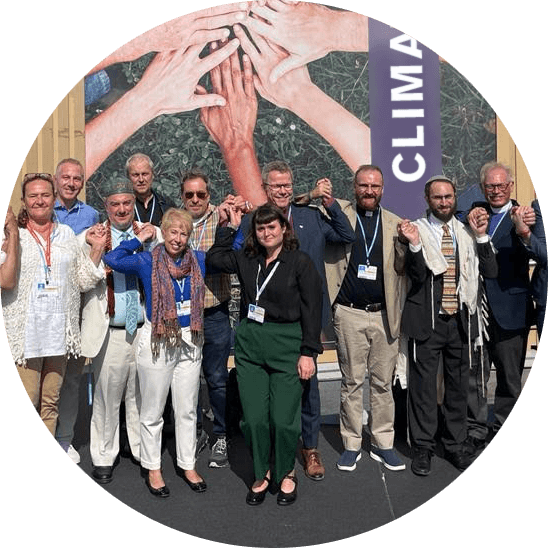
### Our Current Projects
## ICSD manifests its vision with work on several current projects:
Co-organizer of the first-ever Faith Pavilion at the [UN climate conference COP28](https://interfaithsustain.com/cop28-un-climate-conference/) in Dubai.
Publisher of [Eco Bible](https://interfaithsustain.com/ecobible/): An Ecological Commentary on the Hebrew Bible.
Initiator on the [Faith Inspired Renewable Energy Project](https://interfaithsustain.com/fire/).
Co-leader of the [Interfaith Eco Seminary Engagement Project](https://interfaithsustain.com/engaging-seminaries/) and the [Los Angeles Faith and Ecology Network](https://interfaithsustain.com/los-angeles-faith-ecology-network/).
### Meet the Team
ICSD works on a global basis, currently in Africa, the Middle East, North America and Europe.
[View Team](https://interfaithsustain.com/team/)
### Thought Leadership

## Based in Jerusalem, ICSD is registered in Israel as a non-profit organization. ICSD is a partner organization of the International Partnership on Religion & Sustainable Development (PaRD), Olam Together, the Shine Campaign and a Cooperation Circle of United Religions International (URI).
#### Founders Message
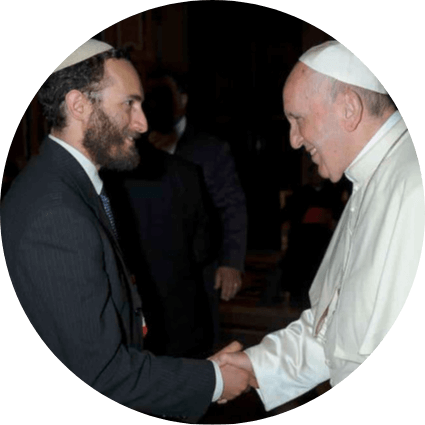From Rabbi Yonatan Neril, ICSD founder and executive director.
We have one home. With 7.7 billion people and 15 million species, the earth is our collective ship. We have to figure out how to live sustainably, together. We have a shared responsibility for each other. What you do and what I do matter, for ourselves and everyone else on board.
About six billion people– 85% of humanity—affiliate with a religion. Religion informs values, which inform environmental behavior. Religion is a fundamental part of many people’s lives and a key motivator. It is one of the greatest forces for changing hearts and minds. A person is able to live at varying levels of soul awareness, and a sustainable planet will require that we cultivate ourselves to live at higher levels of consciousness.
What does it mean to bring religion to bear in addressing the ecological crisis? Faith traditions and institutions can help cultivate humility, conscious relationships, long-term thinking, and moderated consumption. A sustainable, thriving, and spiritually aware society can realize the prophetic vision of a new earth.
The Interfaith Center for Sustainable Development manifests this vision primarily through four projects. First, the [Faith Inspired Renewable Energy Project](https://interfaithsustain.com/faith-inspired-renewable-energy-project-in-africa), in cooperation with faith institutions in Africa and a renewable energy developer, deploys solar and wind fields to bring electricity to Africans, reduce indoor air pollution and deforestation, and curb climate change.
Second, the [Interfaith Eco Seminary Engagement Project](https://interfaithsustain.com/engaging-seminaries/) promotes teaching of ecologicFounder’s Messageally informed theological education, to spur courageous moral leadership for sustainability.
Third, ICSD provides thought leadership on [religion and ecology](https://interfaithsustain.com/category/faith-ecology-blog/). Our short videos, posts, and blog posts provide an effective vehicle for delivering our unique faith-based ecological perspective on Facebook, Twitter, ICSD’s blog, and YouTube. Fourth, ICSD co-organizes [Interfaith Environmental Conferences](https://interfaithsustain.com/about-all-conferences/) that amplify the voices of religious leaders and scientists on spirituality and ecology.
ICSD also provides thought-leadership to faith-based communities and beyond through our writing, speaking, teaching and advocacy. Our collection of reports, articles, course and syllabus collections, blog, and other resources provide a unique access point for leaders and followers of faith-based communities alike to explore the connections between their tradition and contemporary environmental issues.
Based in Jerusalem, ICSD is registered in Israel as a non-profit organization, and fiscally sponsored in the U.S. by FJC and in Canada by Mizrahi Canada. ICSD is a partner organization of the International Partnership on Religion & Sustainable Development (PaRD), Olam Together, Alliance for Middle East Peace, and the World Economic Forum’s Global Collaboration Village and Earth Decides, and a Cooperation Circle of United Religions International (URI).
The [Julia Burke Foundation](https://www.juliaburkefoundation.com/) (US) provided major support to ICSD between 2011 and 2022. Other current or past supporters include the Hewlett Foundation (US), the Miron Wapner Family Fund (Israel), the Sinton Family Fund (US), Opaline Fund (US), the Schutz Polis Family Foundation, the [British Shalom/Salaam Trust](http://www.bsst.org.uk/) (England), the [German Embassy](https://www.tel-aviv.diplo.de/) – Tel Aviv, [Anne Frank Fonds](https://www.annefrank.ch/), the Gewurz Family Fund, and private donors.
## Support ICSD
###### Support us to mobilize faith-based institutions and their leaders to help forge a path to a sustainable future.
[Make A Donation](https://www.interfaithsustain.com/donate/)
---
### [Contact](https://interfaithsustain.com/contact/)
**Published:** September 14, 2015
**Author:** ICSD
**Content:**
# Get in Touch
###### To contact us, please fill out the form and one of The Interfaith Center for Sustainable Development team members will contact you.
Name\*
Email\*
Subject\*
Message\*
Submit
### Book a Speaker
Book an acclaimed global keynote speaker for your event. Rabbi Yonatan Neril, recognized for his compelling and thought-provoking discourses, will explore the intricate interplay between religious principles and ecological issues with your group.
[Find Out More](https://interfaithsustain.com/book-a-speaker/)
#### Media Enquiries

## Please contact us via our contact form above to request a Media Kit, including a PDF about ICSD’s current projects. Our logo and photos are available upon request.
#### Internships

## Interested in [interning with ICSD](https://interfaithsustain.com/intern-with-us/)? Email us your CV or resume in English, along with one paragraph in the body of the email on why you are interested in interning at ICSD: info@interfaithsustain.com.
---
### [Interfaith Ecology Summit in Jerusalem](https://interfaithsustain.com/interfaith-ecology-summit/)
**Published:** November 11, 2025
**Author:** ICSD
**Content:**
[The Interfaith Center for Sustainable Development](https://5uw99phbb.cc.rs6.net/tn.jsp?f=001nq-UAi1C-ib--Mn_l3oB6KFMnlMQxs7CRUg_IKPRIjZjUPX_QvWcNNFPSU4Zy20usOg54x5xt8e3AxYx9H2vHEtjtmen6S1Bf7O3BpecBb1uraBt5YsCJpgAA_ZLwvxrjXpJ5054U-AZvyrIw4ThwXJ3se5aVlZX&c=K9viL3AHQYmQIpU0IAqK0giwyQJFNeKup6-6MKuo0kGP-HFohBv4LQ==&ch=n3Zuh-ff4dnXabb7xYBjHDVWId4u-FaZUn5BT88UHXvBtkqeSGRxew==) and the [FELM Center Jerusalem](https://5uw99phbb.cc.rs6.net/tn.jsp?f=001nq-UAi1C-ib--Mn_l3oB6KFMnlMQxs7CRUg_IKPRIjZjUPX_QvWcNFT_v0lsNBK-5AgP7oinzk1MHPVcrdcmf9RKQrsYvSGqT51OGfk3erD2-TDKJBfJoni78DREB_6ZA1NaQD0ekHkSPaDLmNGfhbr1S6c7Br-TbUllgYKZ5PWGlG8isq1jqg==&c=K9viL3AHQYmQIpU0IAqK0giwyQJFNeKup6-6MKuo0kGP-HFohBv4LQ==&ch=n3Zuh-ff4dnXabb7xYBjHDVWId4u-FaZUn5BT88UHXvBtkqeSGRxew==) hosted an Interfaith Ecology Summit in Jerusalem on Wednesday, December 3, 2025.
The was hosted by the FELM Center Jerusalem. Speakers and group facilitators engaged participants in exploring how the leadership and members of religious communities can contribute to faith-based environmental sustainability. The Summit featured:

[](https://5uw99phbb.cc.rs6.net/tn.jsp?f=001nq-UAi1C-ib--Mn_l3oB6KFMnlMQxs7CRUg_IKPRIjZjUPX_QvWcNFT_v0lsNBK-5AgP7oinzk1MHPVcrdcmf9RKQrsYvSGqT51OGfk3erD2-TDKJBfJoni78DREB_6ZA1NaQD0ekHkSPaDLmNGfhbr1S6c7Br-TbUllgYKZ5PWGlG8isq1jqg==&c=K9viL3AHQYmQIpU0IAqK0giwyQJFNeKup6-6MKuo0kGP-HFohBv4LQ==&ch=n3Zuh-ff4dnXabb7xYBjHDVWId4u-FaZUn5BT88UHXvBtkqeSGRxew==)
- An interfaith panel of Christian, Jewish, and Muslim religious leaders on the religious basis for climate action;
- A breakout workshop on practical faith-based eco action, including green pilgrimage to Jerusalem;
- Catered vegetarian lunch;
- A faith-based ecological walk in Jerusalem will be offered as an optional program following the main event.
The Summit was offered free of charge.
## Goals of the Summit
- Encourage Jerusalem religious institutions to integrate eco theology into their teaching;
- Promote greening and renewable energy use in Jerusalem religious institutions.
- Convey a spiritual message from Jerusalem to world political leaders about the urgency of ecological action.
- Empower clergy and seminarians to be ecological champions
### Schedule
- **10:00 am Registration and refreshments**
- **10:30 Introduction** by representatives of the sponsoring organizations
- **10:40 Plenary Session: Mobilizing Religion Ecological Action**
- Panelists: Rabbi David Rosen KSG CBE; Reverend Fursan Zumot; Yasmin Barhum
- Moderators: Rev. Dr. Maria Leppäkari; David Miron Wapner
- **11:40 Break and refreshments**
- **12:00 Breakout Workshops**
- a. Eco preaching: How to teach and preach on ecology from the pulpit at least once a month
- b. Religious Seminaries—how to increase the emphasis on teaching of faith and ecology?
- c. Green Pilgrimage to Jerusalem
- **12:50 pm Vegan kosher lunch**
- **1:20 pm Closing Session**
- **1:45 pm to 3 pm Optional Faith-based ecological walk in Jerusalem**
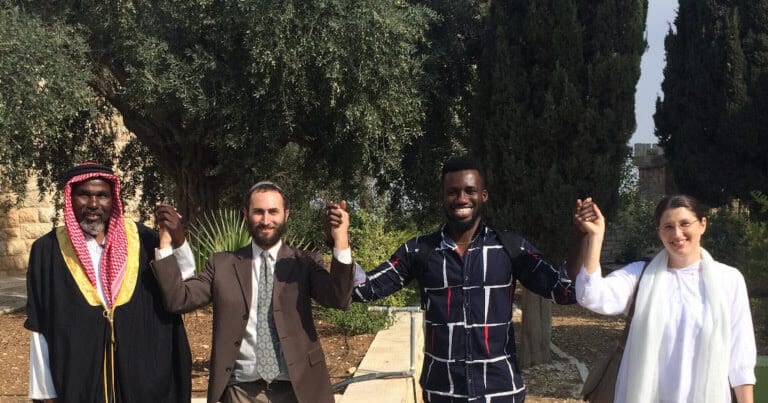
---
### [Theology and Ecology](https://interfaithsustain.com/theology-and-ecology-3/)
**Published:** September 7, 2019
**Author:** ICSD
**Content:**
Theology and Ecology
University of Notre Dame Department of Theology
Instructor: Fr. Terry Ehrman, C.S.C
I. Course Description and Goals
A. Course Description
We live and act in an ecological theater created by God that includes all other living organisms and their ecosystems within the biosphere. Urgent questions abound today about what our relationship is to the rest of the natural world. This course investigates the Christian understanding of God as Creator, creation, and our human relationship to God, one another, and the natural world. We will examine the theology of creation beginning with Scripture and the Creed and progressing through the Early Church, Medieval, and modern time period. We will also address theological anthropology in terms of our identity and mission regarding our ecological home. To this end, we will apply Pope Francis’ notion of integral ecology to the specific case of the Great Lakes watershed in which we live, examining topics such as biodiversity and invasive species, water, agriculture, and energy. As ecological citizens and creatures of God, we will address the connection between liturgy and ecology. This course will have a special appeal to students interested in the intersection of theology and science, especially ecology and environmental studies.
B. Course Goals
Upon successful completion of this course, you will be able to
1\. understand the concept of integral ecology and apply it to contemporary situations.
2\. understand Jesus Christ as the Wisdom of God and apply how this relates to ecology.
3\. understand the identity of Christians as ecological and ecclesiological citizens.
4\. explain the meaning of creation as a philosophical and theological term.
5\. understand humankind’s creaturely identity and response to God the Creator, the human community, and the natural world.
6\. critically analyze and evaluate debates in ecology as they relate to God, Scripture, the Church, and creation.
II. Texts
A. Required Texts (available at the Bookstore)
Dan Egan. The Death and Life of the Great Lakes. New York: W. W. Norton and Co., 2017.
Jame Schaefer. Theological Foundations for Environmental Ethics: Reconstructing Patristic and Medieval Concepts. Washington, D.C. Georgetown University Press, 2009.
Norman Wirzba. Food and Faith: A Theology of Eating. Cambridge: Cambridge University Press, 2011.
B. Book chapters, articles, and other documents
---
***Week 1***
Wed Aug 28: Introduction
Sakai: Donald Worster, “Watershed Democracy: Recovering the Lost Vision of John
Wesley Powell.”
---
Week 2
Mon Sept 2: Christianity and the Ecological Crisis
Genesis 1:1-2:3; 2:4-3:24
Sakai: Lynn White. “The Historical Roots of the Ecological Crisis.” Science 155 (1967), 1203–1207.
Schaefer 1:17-32/42, Valuing the Goodness of Creation
Laudato Si’ §63-75, 78
Wed Sept 4 Creation: Goodness of Creation/Priest of Creation
Psalm 19, 33
Schaefer 1:17-32/42, Valuing the Goodness of Creation
Sakai: Kallistos Ware, “Through Creation to the Creator,” in Toward an Ecology of Transfiguration, ed. John Chryssavgis and Bruce Foltz (New York: Fordham Press, 2013), 86–105.
---
Week 3
Mon Sept 9: Creation and Scripture: Beauty of Creation/Praise of God
Schaefer 2:43-57/63, Appreciating the Beauty of Creation
Psalms 104, 136, 148; Daniel 3:1-68; Sirach 43;
Schaefer 4:103-114/120, Respecting Creation’s Praise for God
Wed Sept 11: Creation and Scripture: Wisdom Christology and Fear of the Lord
1 Kings 4:29-34 (or 5:9-14); Proverbs 8-9; Wisdom 7-9; Job 38-39;
Sirach 6:18-37; 24:1-31; 51:23-30
John 1:1-18; Colossians 1:15-20; Phil 2:6-11; Matthew 11:28-30;
Laudato Si’ §96-100
---
Week 4
Mon Sept 16: Creation and Tradition
Sakai: Janet Soskice, “Creatio ex nihilo: its Jewish and Christian foundations,” 24–39.
Sakai: Denzinger: Council of Constantinople (#150); Lateran IV (800); Council of Florence (1330–31)
Wed Sept 18: Creation and Scripture: Sacramentality
Wisdom 13:1-9; Romans 1:19-23
Schaefer 3:65-93/102, Reverencing the Sacramental Universe
---
Week 5
Mon Sept 23: Ecology and Creaturely Kinship and Companionship
Schaefer 6:149-176/191, Acknowledging Kinship and Practicing Companionship
Laudato Si’ §89-92
Wed Sept 25: Ecosystem Ecology: Integrity of Creation
Schaefer 5:121-138/148, Cooperating within the Integrity of Creation
Laudato Si’ §1-26; 209-221
Sakai: Peter M. Vitousek. “Beyond Global Warming: Ecology and Global Change.” Ecology 75 (7) 1994: 1861-1876
---
Week 6
Mon Sept 30: Integral Ecology
Schaefer 7:193-215/228, Using Creation with Gratitude and Restraint
Laudato Si’ §222-232
Wed Oct 2: Integral Ecology /Great Lakes
Laudato Si’ §93-95, 137-162
Egan 1:3-35
---
Week 7
Mon Oct 7: Great Lakes Biodiversity and Invasive Species
Egan 1:3-35
Egan 2:36-74, Three Fish
Wed Oct 9: Great Lakes Biodiversity/Invasive Species
Egan 4:108-147, Noxious Cargo
Egan 6:187-211, Conquering a Continent
Laudato Si’ §32-42, 76-88
---
Week 8
Mon Oct 14: Great Lakes Biodiversity/Invasive Species
Egan 3:75-107, The World’s Greatest Fishing Hole
Egan 5:151-186, Continental Undivide
Wed Oct 16: Great Lakes Water
Sakai: Maghrebi et al. “Water Quantity as a Driver of Change . . .”, 84-89.
Sakai: Jetoo et al. “Governance and Geopolitics as Drivers of Change. . .”, 108-111.
Sakai: Schulte, “The Great Lakes Water Agreements,” 165-170.
Egan 8:247-276, Plugging the Drain
\_\_\_\_\_\_\_\_\_\_\_\_\_\_\_\_\_\_\_\_\_\_\_\_\_\_\_\_\_\_\_Break
---
Week 9
Mon Oct 28: Great Lakes Water: Toxic Algal Blooms/Sewage
Egan 7:212-246, North America’s “Dead” Sea
Egan 5:161-164, Continental Undivide
Sakai: “Sanitation in Chicago”; “Saving the Chicago River from Sewage”
Sakai: Chicago Deep Tunnel (TARP)
Sakai: The Kalamazoo River in Dave Dempsey, Ruin and Recovery, 1-5, 142-148.
Wed Oct 30: Water: Baptism
Gen 1:1; 2:10-14; 6-9; Exodus 14:1-31; 17:1-7; Ezekiel 36:16-38; 47:1-12
John 4:1-42; 7:37-39; 13:1-38; 19:31-37; Romans 6:1-11; Revelation 22:1-5
Sakai: Rite of Baptism
Sakai: Laudato Si’ §27-31; Compendium CST §484-485;
Sakai: Benedict XVI, World Water Day 2007
---
Week 10
Mon Nov 4: Water: Human and Natural Ecology
Sakai: John Paul II, Centesimus Annus §38-39
Sakai: Benedict XVI, Caritas in Veritate §51
Sakai: Paul VI, Humanae Vitae §7-14
Wed Nov 6: Water: Sacrament of Marriage and Aquatic Ecosystems
Sakai: Susan Jobling and Richard Owen, “Ethinyl Oestradiol in the Aquatic Environment,” 279-289, 294-297, in Emerging Lessons from Ecosystems.
Sakai: Larry Barber et al, “Endocrine Disrupting Alkylphenolic Chemicals and Other Contaminants in Wastewater Treatment Plant Effluents, Urban Streams, and Fish in the Great Lakes and Upper Mississippi River Regions.” Science of the Total Environment 571 (2015), 195-206.
---
Week 11
Mon Nov 11: Food and Agriculture: Hunger/Sabbath
Wirzba 1:1-34, Thinking Theologically about Food
Wirzba 2:35-70, The “Roots” of Eating: Our Life Together in Gardens
Wed Nov 13: Food and Agriculture: Industrial Agriculture
Wirzba 3:71-109, Eating in Exile: Dysfunction in the World of Food
---
Week 12
Mon Nov 18: Food and Agriculture: CAFOs /Eucharist
Wirzba 4:110-143, Life Through Death: Sacrificial Eating
Wirzba 5:144-178, Eucharistic Table Manners: Eating Toward Communion
Wed Nov 20: Food and Agriculture: Priests of Creation
Wirzba 5:144-178, Eucharistic Table Manners: Eating Toward Communion
Wirzba 6:179-210, Saying Grace
---
Week 13
Mon Nov 25: Great Lakes: Energy
Sakai: Brianne Kelly et al. “Energy as a Driver of Change in the Great Lakes-St. Lawrence River Basin.” Journal of Great Lakes Research 41 Supplement 1 (2015), 59-68.
Sakai: Alana M. Bartolai et al. “Climate Change as a Driver of Change in the Great Lakes St. Lawrence River Basin.” Journal of Great Lakes Research 41 Supplement 1 (2015), 45-58.
Egan 9:277-299, A Shaky Balancing Act: Climate Change and the Fall and Rise of the Lakes
Wed Nov 27: Thanksgiving Break
---
Week 14
Mon Dec 2: Great Lakes: Energy Ethics; Renewable Energy
Sakai: Erin Lothes Biviano et al. “Catholic Moral Traditions and Energy Ethics for the Twenty-First Century.” Journal of Moral Theology 5.2 (2016), 1-36.
Sakai: Jacobson and Delucchi, “Providing All Global Energy with Wind, Water, and Solar Power,” Energy Policy 39 (2011): 1154-69
Sakai: www.eia.gov/energyexplained
– (Renewable Sources: Wind; Solar)
Wed Dec 4: Great Lakes: Nuclear
Sakai: Jessica Morrison, Uranium: History of an Element
Sakai: Peter Burns and Ginger Sigmon: Uranium: Cradle to Grave
Sakai: www.eia.gov/energyexplained
– (5 subheadings under “Nonrenewable”/“Nuclear”
---
Week 15
Mon Dec 9 Priests of Creation
Schaefer 8:231-246/253, Living Virtuously within the Earth Community
Schaefer 9:255-263/266, Loving Earth
Wed Dec 11: Liturgy and Ecology
Sakai: Kevin Irwin, “World as God’s Icon,” 149-167.
Laudato Si’ §233-245
\_\_\_\_\_\_\_\_\_\_\_\_\_\_\_\_\_\_\_\_\_\_\_\_\_\_\_\_\_\_\_\_\_\_\_\_\_\_\_\_\_\_\_\_\_\_\_\_\_\_\_\_\_\_\_\_\_\_\_\_\_\_\_\_\_\_\_\_Exam Week
---
### [Introduction to Religion and Ecology](https://interfaithsustain.com/introduction-to-religion-and-ecology/)
**Published:** July 8, 2015
**Author:** ICSD
**Content:**
This course will explore the intersection between religious traditions and ecological activism, with special attention to current conversations about sustainable agriculture and ethical eating. We will consider both the resources that religious traditions provide to ecological activists and the ways these activists have challenged aspects of traditional religion. The course will also function as a general introduction to the multiple ways of knowing that comprise the scholarly study of religion, with attention to scriptural interpretation, history, ethnography, theology, ethics, spirituality, and ritual.
“Religion and ecology” is one of the fastest-growing sub-fields within the study of religion, and our approach to this topic will be broadly “ecological,” which is to say that we will attend to the interconnections linking seemingly disparate phenomena and to the ways in which all phenomena are continually evolving in mutual relationship. During the first part of the course, we consider the scope of the fields designated as “religion” and “ecology”and the ways in which these fields intersect and contribute to one another’s ongoing development. During the second part, we will explore the ecological dimensions of specific sub-fields within the study of religion. In the third part, and in field trips spread throughout the semester, we will explore the ways both religion and ecology shape human practices of agriculture and eating.
## Course Goals
1. Students will reflect critically and constructively on the ways religious traditions shape and are shaped by human interactions with nature.
2. Students will develop a capacity to think ecologically—with close attention to interconnections among diverse phenomena and to the ways all phenomena are continually evolving—about both religion and the environmental movement.
3. Students will demonstrate a broad familiarity with the various subfields that comprise the academic study of religion.
4. Students will gain a detailed understanding of the ways religious traditions shape human practices of eating and agriculture.
## Books to Purchase
John Grim and Mary Evelyn Tucker. *Ecology and Religion*. Washington, DC: Island Press, 2014. ISBN 9781597267083
Bron Taylor. *Dark Green Religion: Nature Spirituality and the Planetary Future*. Berkeley: University of California Press, 2009. ISBN 9780520261006
Michael Schut, ed., *Food and Faith: Justice, Joy, and Daily Bread*. 2d ed. Morehouse Publishing, 2010. ISBN 9780819224118
Laurel Kearns and Catherine Keller, eds. E*cospirit: Religions and Philosophies for the Earth*. New York: Fordham, 2007. ISBN 9780823227464
Sherry Wildfeuer. *Stella Natura 2015 Biodynamic Planting Calendar*. ISBN 978-0-9853658-4-4
## Note on Readings
In addition to readings from the assigned books, I have chosen several articles published in scholarly journals, especially the two main journals in the field of religion and ecology: *Worldviews: Global Religions, Culture, and Ecology and the Journal for Religion, Nature, and Culture (formerly Ecotheology)*. All of these articles should be available online for students using a Harvard computer. There are several pathways one can follow to find full-text articles. One that I find helpful is https://hul.harvard.edu/lib/sfxmini.html . Students are also encouraged to browse additional articles in the two journals.
## Course Calendar
### Part I: Defining the Field of Religion and Ecology
#### Week 1: The “Ecological Turn” in World Religions
Lesson 1: Course Introduction
Lesson 2: Reading: Grim and Tucker, *Ecology of Religion*, pp. 1-84; Discussion Starter: Please come to class prepared to discuss ways the physical environment—the things you see during your daily routine, what you and your neighbors eat and wear, etc.—has been shaped by religious traditions (as conventionally understood, e.g. Christianity, Islam, Judaism, Buddhism, etc.).
Lesson 3: Reading: Grim and Tucker, *Ecology of Religion*, pp. 85-95, 154-70, plus ONE of the skipped chapters; Discussion Starter: Please come to class prepared to describe one example of how a religious tradition has changed in response to current environmental challenges. This might be a ritual, an activist organizaiton, a new interpretation of religious texts, or a work of art.
#### Week 2: Ecology as Religion
Lesson 4: Reading: Bron Taylor, *Dark Green Religion*, pp. 1-41; Discussion Starter: Please come to class prepared to describe a movement or organization that is not conventionally understood as “religious” but that might fruitfully be studied using tools borrowed from the academic study of religion.
Lesson 5: Reading: Bron Taylor, *Dark Green Religion*, pp. 71-126, 180-99; Discussion Starter: Please brainstorm at least one way in which the concept of “dark green religion” contributes to a better understanding of environmental activism, and at least one way in which it obscures our understanding.
#### Week 3: Food and Faith
Lesson 6: Reading: Michael Schut, *Food and Faith*, pp. 10-35, 62-77, 142-47; Discussion Starter: Please come to class prepared to describe some of your own eating practices. Are there certain foods you choose not to eat? How much do you know about the sources of your food? To what extent do religious traditions shape your eating choices?
### Part II: Ecological Dimensions of Subfields in the Study of Religion
#### Week 4: Scripture
Lesson 7: Reading: James Nash, “The Bible vs. Biodiversity,” with responses by Robb, Northcott, Childs, Davis, Farmelli, Deane-Drummond, Zaleha, and McDaniel, *Journal for the Study of Religion, Nature and Culture* 3/2 (June 2009): 213-94
Lesson 8: S. Nomanul Haq, “Islam and Ecology: Toward Retrieval and Reconstruction,” in Daedalus (Fall 2001): 141-78; Vasudha Narayanan, “Water, Wood, and Wisdom: Ecological Perspectives from the Hindu Traditions,” in *Daedalus* (Fall 2001): 179-206; Donald K. Swearer, “Principles and Poetry, Places and Stories: The Resources of Buddhist Ecology,” in *Daedalus* (Fall 2001): 225-42. Link: [https://www.amacad.org/multimedia/pdfs/publications/daedalus/fall2001/01\_fall\_daedalus.pdf](https://www.amacad.org/multimedia/pdfs/publications/daedalus/fall2001/01_fall_daedalus.pdf)
#### Week 5: History
Lesson 9: Reading: Rudolf Steiner, *Agriculture Course*, lectures 1, 2, 4, available at [https://wn.rsarchive.org/Lectures/GA327/English/BDA1958/Ag1958\_index.html](https://wn.rsarchive.org/Lectures/GA327/English/BDA1958/Ag1958_index.html) ; Lynn White, “[The Historical Roots of Our Ecologic Crisis](https://www.academia.edu/1069264/The_historical_roots_of_our_ecologic_crisis),” Science (March 1967): 1203-1207.
Lesson 10: Reading: Selections by Rosemary Radford Ruether, “Mother Earth and the Megamachine,” *Christianity and Crisis* 31/21 (December 13, 1971): 267-72; Thomas Berry,”Spirituality of the Earth,” Anima 6/1 (Fall Equinox 1979): 11-20; Thomas Berry, “The New Story: Comments on the Origin, Identification and Transmission of Values,” *Cross Currents* 37/2-3 (Summer Fall 1987): 187-199; Thomas Berry, “The Dream of the Earth: Our Way into the Future,” Cross Currents 37/2-3 (Summer Fall 1987): 200-215
#### Week 6: Ethnography
Lesson 11: Reading: Sarah McFarland Taylor, “Eating Spirit: Food, Faith, and Spiritual Nourishment in the Lives of the Green Sisters,” *Ecotheology* 11/4 (December 2006): 445-64; Alexander H. Kaufman, “Organic Farmers’ Connectedness with Nature: Exploring Thailand’s Alternative Agriculture Network,” *Worldviews: Global Religions, Culture, and Ecology* 16/2 (2012): 154-78.
Lesson 12: Reading: Eliza F. Kent, “Sacred Groves and Local Gods: Religion and Environmentalism in South India,” in *Worldviews: Global Religions*, Culture & Ecology 13/1 (2009): 1-39; Yaa Ntiamoa-Baidu, “Indigenous Beliefs and Biodiversity Conservation: The Effectiveness of Sacred Groves, Taboos and Totems in Ghana for Habitat and Species Conservation,” *Journal of Nature, Religion, and Culture* 2/3 (2008): 309-326
#### Week 7: Theology
Lesson 13: Reading: Jay McDaniel, “Ecotheology and World Religions,” in Kearns & Keller, Ecospirit, 21-44; Mark Wallace, “Sacred-Land Theology: Green Spirit, Deconstruction, and the Question of Idolatry in Contemporary Earthen Christianity,” in in Kearns & Keller, Ecospirit, 291-314; Lawrence Troster, “Hearing the Outcry of Mute Things: Toward a Jewish Creation Theology,” in Kearns & Keller, *Ecospirit*, 337-52
Lesson 14: Reading: Catherine Keller, “Talking Dirty,” in Kearns & Keller, *Ecospirit*, 63-76; Barbara Muraca, “Getting Over ‘Nature’: Modern Bifurcations, Postmodern Possibilities,” in Kearns & Keller, *Ecospirit*, 156-77; Luke Higgins, “Toward a Deleuze-Guattarian Micropneumatology of Spirit-Dust,” in Kearns & Keller, Ecospirit, 252-63; Whitney A. Bauman, “Creatio ex Nihilo, Terra Nullius, and the Erasure of Presence,” in Kearns & Keller, *Ecospirit*, 353-72
#### Week 8: Spirituality
Lesson 15: Reading: Glen Mazis, “Ecospirituality,” in Kearns & Keller, Ecospirit, 125-55; Anne Daniell, “Divining New Orleans,” in Kearns & Keller, Ecospirit, 454-67; Douglas Christie, “Practicing Paradise: Contemplative Awareness and Ecological Renewal,” *Anglican Theological Review*, 94/2 (Spring 2012): 281-303.
Lesson 16: Reading: Jack D. Forbes, “Indigenous Americans: Spirituality and Ecos,” in *Daedalus* (Fall 2001): 283-300.
#### Week 9: Ethics
Lesson 17: Reading: Anna L. Peterson, “Talking the Walk,” in Kearns & Keller, *Ecospirit*, 45-62; Laurel Kearns, “Cooking the Truth,” in Kearns & Keller, *Ecospirit*, 97-124; Daniel T. Spencer, “Restoring Earth, Restored to Earth: Toward an Ethic for Reinhabiting Place,” in Kearns & Keller, *Ecospirit*, 415-32
Lesson 18: Reading: Willis Jenkins, “After Lynn White: Religious Ethics and Environmental Problems,” *Journal of Religious Ethics* 37/2 (June 2009): 283-309; “Ecological Management, Cultural Reform, and Religious Creativity,” *Union Seminary Quarterly Review* 63/1-2 (2010):1-17.
#### Week 10: Ritual
Lesson 19: Reading: Nickell and Troster, “Cries of Creation,” in Kearns & Keller, Ecospirit, 517-30; Heather Elkins, “The Firm Ground for Hope,” in Kearns & Keller, *Ecospirit*, 531-35; Karen Baker-Fletcher, “Musings,” in Kearns & Keller, *Ecospirit*, 536-42
### Part III: Religion, Ecology, Agriculture & Food
Lesson 20: Reading: Schut, *Food & Faith*, pp. 88-141
Lesson 21: Reading: *Stella Natura Calendar*; A. Whitney Sanford, “Transforming Agricultural Practice: Hindu Narrative and the Moral Imagination,” World views 15 (2011): 88-116
Lesson 22: Reading, Schut, *Food & Faith*, pp. 180-205; R. J. Berry, “Fabricated Nature: Where Are the Boundaries?” *Ecotheology* 11/1 (March 2006): 9-31; Christopher Key Chapple, “Ethics of Synthetic Life: A Jaina Perspective,” *Worldviews* 17 (2013): 77-88
Lesson 23: Reading: Unitarian Universalist Statement of Conscience on “Ethical Eating,” <https://www.uua.org/statements/statements/185320.shtml> ; Schut, *Food & Faith*, pp. 148-80
Lesson 23: Conclusion and Presentation of Final Projects
---
### [Climate Change, Abraham, and COP 27: A Resource for Teaching and Preaching](https://interfaithsustain.com/climate-change-abraham-and-cop-27/)
**Published:** November 8, 2022
**Author:** ICSD
**Content:**
The commentaries below are from Eco Bible: Volume 1: An Ecological Commentary on Genesis and Exodus, by Rabbi Yonatan Neril and Rabbi Leo Dee (Interfaith Center for Sustainable Development, Jerusalem, 2020).
<https://www.jewishecoseminars.com/eco-torah/>
## Palace on Fire
**Genesis 12:1 – The Lord said to Abram, “Go forth from your native land and from your father’s house to the land that I will show you.”**
The Midrash explains how Abram (whose name becomes Abraham) discovered God. It describes Abraham passing by a palace that is on fire. He wonders aloud, “Is it possible that the palace doesn’t have an owner? Who is the owner of this palace?” The owner hears him and says, “It is Me!”1
In the words of Rabbi Yosef Y. Jacobson: “Abraham’s bewilderment is clear. This sensitive human being gazes at a brilliantly structured universe, a splendid piece of art. He is overwhelmed by the grandeur of a sunset and by the miracle of childbirth; he marvels at the roaring ocean waves and at the silent, steady beat of the human heart. The world is indeed a palace. But the palace is in flames. The world is full of … pain.”2
Rabbi Jonathan Sacks explains that the question, “Is it possible that the palace doesn’t have an owner?” speaks to the responsibility of humanity to put out the fire that we have started. The palace is a metaphor for nature.3 Today with global warming, the world’s great rainforests and boreal forests are burning as never before.4 One could look at the planet and legitimately ask, “Who is in charge of this problem?” And God’s response may be to us, just as it was to Abraham, “Go forth,” or “Reach into yourself.” In other words, we all share responsibility for our common home.
## Sustainable Coexistence – by Rabbi Tuvia Aronson
**Genesis 13:6 – So that the land could not support them staying together; for their possessions were so great that they could not remain together.**
Abraham and Lot’s inability to coexist on one piece of land leaps out at us. In our era, when environmental issues such as population, food, and land distribution divide communities and nations, we can look to this text for guidance. Rabbi Samson Raphael Hirsch and Rabbi Naftali Zvi Yehuda Berlin explain this verse to show that divisiveness put an extra burden on the land and the people.6
It was not because they had too many herds or because there was insufficient pasture for both of them. If they had combined their herds into one household, the land would have been sufficient. But if two people cannot agree, separate tents are needed—boxes, crates, everything separate for each of the two parties. Had their personalities been compatible, there would have been no need for separate pastures. Only profits counted in Lot’s enterprise, while Abraham’s household gave attention to higher interests.
Abraham and Lot’s attitudes were incompatible, therefore they could not cooperate. This is why the verse stresses “together”—yachdav. Interestingly, the second-century translator Onkelos translates yachdav using the wording “as one,” connoting the need for a deep interconnection that ultimately enables living in harmony with the Land.7 The Abrahamic tradition demands that we make our personal and societal decisions based on both environmental and social considerations.
Religious environmental education stresses the importance of togetherness. Community gardens are flourishing,8 and consumer assisted farming projects are enhancing life in ways that promote both communal unity and harmony with nature.9 Intentional ecological communities are gaining momentum. Concern for the environment crosses denominational and philosophical divides. Working as one to take care of our precious resources is incredibly powerful.
## Famine in Genesis
**Genesis 12:10 – There was a famine in the land, and Abram went down to Egypt to sojourn there, for the famine was severe in the land.**
The verse emphasizes that Abraham and his family had to migrate due to the famine. In the land of Israel, the crops that depend on rainfall, like wheat, barley, olives, and grapes, produce little or no grain or fruit during a drought. Fig trees, pomegranate trees, and vegetables that depend on more water produce even less. In a sustained drought, even the springs dry up, which prevents irrigation.
According to Rabbeinu Bachaya (Bachaya ben Asher ibn Halawa), citing the rabbis of the Talmud, there were ten famines from Adam to the end of Genesis.10 The Midrash states that the Torah explicitly mentions only three famines, one each during the lifetimes of Abraham, Isaac, and Jacob.11 These three famines occur in a period of about 200 years.12
Ten extreme famines occurred in the twentieth century. They killed over 70 million people, predominantly in China, the Soviet Union, and India, and also drove migration of millions more to new regions.13 This suggests an average of ten years between major world famines. While the immediate and deeper causes of famines are complex, unsustainable agricultural practices contributing to salinity, loss of natural water bodies, or soil erosion can play a role.14
A 2019 United Nations Climate Change report highlights the increased likelihood of future, major global famine due to climate change, stressing the world’s major breadbaskets.15 Abraham and Sarah had no choice but to become famine refugees. Today, the individual and collective actions of people could reduce the frequency and severity of famines in our times and in the future.
## The Dead Sea Is Dying
**Genesis 13:10 – Lot looked about him and saw how well watered was the whole plain of the Jordan, all of it—this was before the Lord had destroyed Sodom and Gomorrah—all the way to Zoar, like the garden of the Lord, like the land of Egypt.**
In Biblical times, the Dead Sea region was lush and fertile, like the Garden of Eden. Ralbag (Rabbi Levi ben Gershon) explains that the Dead Sea valley had many fields, suggesting that there was ample water for irrigation at that time.16 Rashi teaches that it had streams, trees, and crops.17
Over the past sixty years, modern irrigation techniques have significantly expanded agriculture in Israel, Jordan, Syria, and Lebanon. In addition, many millions of people now live in the Dead Sea drainage basin. They use water for domestic and industrial uses, including the extraction of Dead Sea minerals. This has threatened the region’s ecology, with significant lowering of the Dead Sea’s water level and formation of sinkholes around the sea. The diversion of tributary rivers and streams for human use has significantly reduced the annual flow to the Dead Sea, just as climate change has made rainfall in the Dead Sea watershed scarcer.18 Dead Sea water levels continue to decline at a rate of about 3.4 feet (1.1 meter) per year.19 Without significant international action, the Dead Sea may suffer a similar fate as two of the world’s great lakes— Lake Baikal in Russia, and Lake Mali in Africa, which have shriveled in recent decades. That the Torah describes the Dead Sea valley as comparable to the Garden of Eden should motivate us to stop and reverse the damage we have already done.
## Hiking the Land
**Genesis 13:17 – Get up, walk about the land, through its length and its breadth, for I give it to you.**
Abraham connected to God by being alone in nature. Abraham was commanded to walk the width and breadth of Israel. Why is this one of very few commands given to him? Abraham traveled throughout the Middle East by foot and by donkey—from present-day Iraq, crossing through Turkey, Syria, and Egypt, before returning to Israel. His travels and time in nature created a foundation for his spiritual growth and awareness. He also kept himself in good physical shape. At the age of 127, the Bible says, he hiked for three days and climbed Mount Moriah for the binding of Isaac.
Isaac also connected to God through nature when he went out into the fields. So did Jacob when he slept and dreamt of the ladder, alone outdoors. How many city dwellers today have ever slept alone in nature? How can we bridge the ecological gap between our lifestyle and that of our forefathers?
## Stuck in Crude Oil
**Genesis 14:10 – Now the Valley of Siddim was dotted with bitumen pits; and the kings of Sodom and Gomorrah, in their flight, threw themselves into them, while the rest escaped to the hill country.**
The kings of Sodom and Gomorrah fell into pits of “black gold” or bitumen, also known as asphalt (in Hebrew chemar).20 In ancient times as today, surface seepages of this thick, sticky form of crude oil21 occurred and still occur in a limited number of places in the world, including Azerbaijan, Iran, Pennsylvania, Alberta, and the Dead Sea in Israel.22 People used and still usethe natural tar for its waterproofing qualities23 and for roads.
Why does the Torah mention this geological detail in relation to the leaders of these ultimately decimated societies? The Torah continues, “The invaders \[four Middle Eastern kings\] seized all the wealth of Sodom and Gomorrah and all their provisions, and went their way.”24 Once the kings fell into the bitumen pits, they got trapped and lost all of their wickedly gained wealth. The story of the kings stuck in bitumen relates deeply to our world today. Canada is the planet’s 4 oil producer, and 60 percent of its oil comes from the bitumen of oil sands.25
The Canadian province of Alberta has most of the world’s reserves of natural bitumen in the Athabasca oil sands, an area larger than England.26 Bitumen is considered the dirtiest and most polluting fossil fuel, due to the energy required to separate the crude oil from the sand.27 Today, we and our leaders are trapped by economic inertia and political resistance. Oil remains our fuel of choice to make gasoline for cars and trucks, jet fuel for airplanes, tar and asphalt for paving the roads, and even plastic which is filling our oceans with trash that never fully breaks down.
The Midrash teaches that Abraham, the prophet of light, pulled the kings out of the bitumen pits.28 Abraham provides an example of lifting people from being trapped in fossil fuels. In our times, scientists published a 2017 study and environmental roadmap on how most countries in the world could transition to 100 percent wind, water, and solar energy by 2050.29 We do not need to wait until someone rescues us—or until we run out of all fossil fuels—but can now take steps as individuals, communities, and nations to free ourselves from devastating fossil fuel use.
## Abraham and Self-Satisfaction
**Genesis 14:22-23 – But Abram said to the king of Sodom, “I swear to the Lord, God Most High, Creator of heaven and earth: I will not take so much as a thread or a sandal strap of what is yours; you shall not say, ‘It is I who made Abram rich.’”**
Abraham recognizes where wealth and abundance ultimately come from—God. The Maharal of Prague (Judah Loew ben Bezalel) taught that Abraham epitomizes “satisfaction with what one has” and being content with what arrives in one’s hand based on a normal amount of work.30 Rashi points out that Abraham was sure to make his living through honest means, by only grazing his flocks on ownerless land.31 The trait of self-satisfaction flows from an awareness that God provides each person based on their merit. Abraham appreciates the gift of being fully alive through meeting his needs through his own efforts and has no need of gifts from the king of Sodom.
In modern consumer society, we would be wise to learn from Abraham. Being satisfied with what we have, instead of constantly seeking more things, is a root solution for ecological sustainability.
## Finding God Outdoors
**Genesis 15:5 – He took him outside and said, “Look toward heaven and count the stars, if you are able to count them.” And He added, “So shall your offspring be.”**
Why did God take Abraham outside? Ibn Ezra writes poetically of finding God, “Wherever I turn my eyes, around on earth or to the heavens, I see You in the field of stars, I see You in the yield of the land, in every breath and sound, a blade of grass, a simple flower, an echo of Your holy Name.”32
Elie Wiesel relates: When the Holy Seer of Lublin was a little boy, he was known to skip school for hours or even days. Once, his teacher followed the young boy to see what became of these free moments. The Seer walked to the edge of the town, into deep woods, and there, in a small, green circle of trees, he began to pray. The next day the teacher asked the boy what drew him to those woods. The Seer of Lublin replied, “I can find God there.” “But,” said the teacher, “surely God is the same in the town as in the woods.“ “That’s true,” replied the Seer, “but I am not the same!”33
## The Cure Before the Sickness
**Genesis 15:13-14 – Know well that your offspring shall be strangers in a land not theirs, and they shall be enslaved and oppressed four hundred years; but I will execute judgment on the nation they shall serve, and in the end they shall go free with great wealth.**
Rabbi Mordechai Hochman explains that these verses encapsulate the rabbinical dictum that “God gives us the cure before the sickness.” In other words, God tells Abraham that his descendants will suffer but emerge much stronger from it.34
With regard to sustainability, it is easy to think that the world is doomed to destruction. However, God has given us the cure before the sickness. There have never been so many possible solutions available for reducing carbon emissions (solar panels are cheaper than ever), for conserving water, and for replacing single-use plastics. Our challenge as humankind is in deciding to embrace them.
### **Suggested Action Items**
1. Look for an opportunity to share your resources with others. For example, borrow a book from your local library rather than buying a new one, create an opportunity to share gardening tools with a neighbor, or organize a community swap for books, toys, clothing, or other products. You will then become part of the circular economy.
2. Learn about the environmental challenges faced in your local community. Identify one place where you’d like to focus your attention on the health of the land. Do your part to help preserve it through charity, clean-up or solar projects, or sponsoring a wildlife habitat.
3. Create community opportunities to learn faith-based wisdom on sustainability and creation care, like through a book club, learning circle, or after-school program. See [www.interfaithsustain.com](https://interfaithsustain.com/) for further resources.
Torah portion of Vayera
---
## Resilience of Trees
**Genesis 18:4 – Let a little water be brought; bathe your feet and recline under the tree. Rabbeinu Chananel asked why the angels revealed themselves to Abraham under a tree.35**
He answered that in doing so they revealed a message to Abraham: “You, like a tree, will flourish even in your old age,” as it says in the book of Job, “For a tree has hope; if it is cut it will again renew itself, and its trunk will never cease,”36 and in the words of the Psalmist, “He shall be as a tree planted beside streams of water, which brings forth its fruit in its season. Its leaves do not wilt; and whatever it does prospers.”37
Abraham’s resilience and prosperity are compared to a tree. Indeed, trees are one of the most resilient organisms, specifically against drought. This is increasingly important in light of climate change causing unpredictable rainfall, extreme weather events, and stronger pests that threaten forests.38 Contemporary researchers have discovered that diverse “forests with trees that employ a high diversity of traits related to water use suffer less of an impact from drought.”39
They are also more resilient to forest fires.
## Veal Then and Now
**Genesis 18:7 – Then Abraham ran to the herd, took a calf, tender and choice, and gave it to a servant-boy, who hastened to prepare it.**
Radak explains that the calf was “fatty.”40 A Biblical fatty calf would have been naturally well fed by its mother and not overworked, so that it could put on weight. Today, however, calves are raised unnaturally for veal, kept in cramped conditions, and fed artificial fluids.
Regarding the permissibility of this modern way of raising calves, Rabbi Moshe Feinstein, one of the greatest twentieth-century authorities on Jewish law, writes, “Regarding the new method of fattening calves in special, narrow stalls where they don’t even have enough room to take a few steps, and they are not fed any normal animal feed nor are they allowed to suckle at all but instead are fed with fatty liquids from which they derive no pleasure at all and they are also frequently ill because of this and require all kinds of medication: Those who perform this (the fattening) are surely guilty of the prohibition of causing pain to animals. For even though it (pain) is permitted when there is a purpose, for example to slaughter them for food or to use them for plowing or transport, etc. but not for senseless pain, which is forbidden even if someone makes monetary gain from it… In any case, it is forbidden to cause pain to an animal, to feed it food which it doesn’t enjoy, which causes pain, or which causes it to be ill.”41
## Morality and Ecology – by Rabbi Yuval Cherlow42
**Genesis 19:24 – The Lord rained upon Sodom and Gomorrah sulfurous fire from the Lord out of heaven.**
Two cosmic catastrophes unfold in the book of Genesis. In the flood, God brings waters down from the Heavens to destroy almost all life. In the second, the utter devastation of Sodom and Gomorrah, an area previously known as a fertile and lush “Garden of God,”43 becomes a desolate land “that cannot be sown, nor sprout, and no grass shall rise up upon it, like the upheaval of Sodom and Gomorrah… which God overturned in His anger, and His wrath.”44
One of the connections we see between these two events is the word that the Torah employs in both cases—to destroy. When God relates to Noah that He will bring the flood, He says, “I am about to destroy \[mashkheetam\] them from the earth.”45 In the case of Sodom we see the same word applied: “When God destroyed (beshakhet) the cities of the plain…”46The Torah does not elaborate on the sin of Sodom, but the underpinnings are expressed later in the prophecy of Ezekiel: Sodom “…had pride, excess bread, and peaceful serenity, but did not strengthen the hand of the poor and the needy.”47 The prophet’s description, combined with what the Torah reveals to us, gives us the following picture: The people of Sodom insisted on preserving their high quality of living to such an extent that they established a principle not to let the poor and homeless reside in their city.
Consequently, when a destitute person would come seeking help, he or she would revoke their right to any welfare, public or private! In this rule, the Sodomites figured they would preserve an elite upper class community that could monopolize the profits that the bountiful land offered, without having to distribute any revenues to a “lower class” of people. An opinion in the Mishnah further strengthens this picture of moral depravity when it defines the Sodomite as one who says, “What’s mine is mine and what’s yours is yours.”48 The Mishnah decries a man who wishes to remove himself from the social responsibility of
welfare by closing himself and his wealth from others, even if he makes the claim that he is not taking away from anyone else.
But the Torah also uses the verb “to destroy” in relation to the environment, regarding the prohibition of wanton destruction during a military siege: “Do not destroy \[tashkhit\] the trees.”49
What could be the connection between the corruption of the generation of the flood, the people of Sodom, and environmental sins? Humanity itself is part and parcel of its environment and is not separate from it. Having been created in the image of God, we may think that we are detached from creation.
The central point in the connection between moral behavior and environmental behavior comes from the understanding that both behaviors go hand in hand. One without the other corrupts the Divine vision for human action. That is, a society may be passionate about preserving its natural environment while maintaining a complete disregard for the welfare of its citizens. Sodom is a perfect example of this, where they cared so much for their “garden of God” that they refused to aid anyone in need.
In effect, the people of Sodom’s perverted ways were extremely unsustainable—causing God to turn one of the most fertile and lush ecosystems on earth into what today is infamous for its barrenness and desolation. From the mistakes of the people of Sodom, we can learn the essential character traits that allow one to live in balance with the Creator and creation.
The moral human being is devoted to the holiness and purity of life, refrains from harming others, and sacrifices some personal pleasure for an ethical and upright path. When we are capable of fulfilling this ideal, we will naturally be triumphant in attaining the great spiritual task of infusing our religious/moral lifestyle with one that is also environmentally sustainable.
### Suggested Action Items
1\. Look for an opportunity to be generous to another human being this week. For example: give money to the poor, schedule a time to volunteer at a local shelter, or find time to join a local team which is fulfilling a community need.
2\. Learn about the challenges of environmental justice and environmental racism. These topics will show you how our environmental choices can disproportionately impact others.
3\. Focus your attention on living “in balance” with the Creator and creation. One way to do this is by focusing on buying and preparing only as much food as you will eat. Clean out your refrigerator and note which food items have gone to waste so that you will buy less next time.
---
*1 Midrash Genesis Rabbah 39:1.
2 Yosef Y. Jacobson, “The Burning Palace,” Chabad, September 11, 2002,
www.chabad.org/library/article\_cdo/aid/59473/jewish/The-Burning-Palace.htm.
3 Jonathan Sacks, Radical Then, Radical Now (London: Continuum, 2000), 49-53.
4 Alexandria Symonds, “Amazon Rainforest Fires: Here’s What’s Really Happening,” The New York Times, August
28, 2019, https://www.nytimes.com/2019/08/23/world/americas/amazon-fire-brazil-bolsonaro.html.
5 This content was produced by Canfei Nesharim, a branch of Grow Torah. It is available at
http://canfeinesharim.org/lech-lecha-joining-together-for-justice-in-the-land/.
6 Ha’amek Davar on 13:6 and Rabbi Samson Raphael Hirsch on Genesis 13:6 in The Pentateuch, Efraim Oratz ed.,
Gertrude Hirschler trans. (NY: Judaica Press, 1986). This idea has a precedent in Pesikta Rabati 83.
7 Ibn Ezra also translates yachdav as yachid—united, and not yachad—together.
8 Adamah, Alexandra Kuperman, Farmer D, et al.
9 Hazon, Hava VeAdam, Torat Hateva, et al.
10 Commentary to Genesis 26:1.
11 Midrash Genesis Rabbah 64:2. Famine occurs in the time of Isaac in Genesis 26:12 and in the time of Jacob in
Genesis 41:56.
12 See Seder Olam for the dates that Abraham went to Egypt and the date that Jacob left for Egypt.
13 Stephen Devereux, “Famine in the Twentieth Century,” IDS Working Papers 105, January 2000.
14 IPCC, “Climate Change and Land, An IPCC: Special Report on Climate Change, Desertification, Land
Degradation, Sustainable Land Management, Food Security, and Greenhouse Gas Fluxes in Terrestrial
Ecosystems,” Summary for Policymakers, IPCC, 2019, https://www.ipcc.ch/site/assets/uploads/2019/08/4.-
SPM\_Approved\_Microsite\_FINAL.pdf.
15 Seth Borenstein and Jamey Keaten, “UN Climate Report: Change Land Use to Avoid a Hungry Future,” Phys.org,
August 8, 2019, https://phys.org/news/2019-08-climate-hungry-future.html.
16 Ralbag on Genesis 14:3.
17 Rashi on Genesis 13:10.
18 Guy Pe’er and Uriel N. Safriel, Climate Change Israel National Report: Impact, Vulnerability and Adaptation (Israel: Blaustein Institute for Desert Research, Ben-Gurion University of the Negev, October 2000).
19 Israel Water Authority, “Saving the Dead Sea,” http://www.water.gov.il/Hebrew/Water-Environment/Dead-Sea/DocLib1/saving-dead-sea-eng.pdf (accessed June 18, 2020).
20 This is distinct from clay, which is referred to as chomer. Onkelos translates chemar into Aramaic as chemra, which is understood by language scholars to refer to bitumen or asphalt. See Marcus Jastrow, Dictionary of the Targumim, 1926
https://www.sefaria.org.il/Jastrow%2C\_%D7%97%D6%B5%D7%99%D7%9E%D6%B8%D7%A8%D6%B8%D7%90?lang=he. See also Safar Ivrit. “Chimer and Chomer”. https://www.safa-ivrit.or/form/khomer.php (accessed January 3, 2020).
21 “Bitumen,” Energy Education, University of Calgary, last modified June 25, 2018,
https://energyeducation.ca/encyclopedia/Bitumen.
22 Rabbi Aryeh Kaplan writes, “Even now asphalt is found in the Dead Sea region. The Romans referred to it as Mer Aspheltitus, the Asphalt Sea, as it was known to cast up lumps of asphalt. Rabbi Aryeh Kaplan. Living Torah Commentary to Genesis 14:10, 65. Josephus Wars 4:8:4; Tacitus, Histoires 5:6.
23 Asaf Oron et al., “Early Maritime Activity on the Dead Sea: Bitumen Harvesting and the Possible Use of Reed Watercraft,” Journal of Maritime Archaeology 10, no. 1, April 2015, 65-88, https://doi.org/10.1007/s11457-015-9135-2.
24 Genesis 14:11.
25 “What Are the Oil Sands?”, Canadian Association of Petroleum Producers, https://www.capp.ca/oil/what-are-the-oil-sands/ (accessed March 1, 2020).
26 Stephen Leahy, “This is the World’s Most Destructive Oil Operation—and It’s Growing,” National Geographic, April 11, 2019, https://www.nationalgeographic.com/environment/2019/04/alberta-canadas-tar-sands-is-growing-but-indigenous-people-fight-back/.
27 Lisa Song, “Why Tar Sands Oil Is More Polluting and Why It Matters,” Reuters, May 22, 2012,
https://www.reuters.com/article/idUS201043482520120522.
28 Genesis Rabbah 42:7 quoted by Rashi on Genesis 14:10.
29 Jacobson et al., “100% Clean and Renewable Wind, Water, and Sunlight All-Sector Energy Roadmaps for 139 Countries of the World,” Joule 1, 108-121 September 6, 2017, Elsevier Inc. http://dx.doi.org/10.1016/j.joule.2017.07.005.
30 Maharal, Netivot Olam, Netiv HaOsher 1:4.
31 See Rashi on Genesis 13:7.
32 Abraham Ibn Ezra, “God Everywhere” (1089-1164).
33 Jeremy Benstein, The Way into Judaism and the Environment (Vermont: Jewish Lights Publishing, 2006), 142,
citing Elie Wiesel.
34 Rabbi Mordechai Hochman, “Footnote 1 based on the Midrash,” in “The Bird That Brings Life to the Carcasses,” Yeshiva Beit El, published Kislev 5, 5770, https://www.yeshiva.org.il/midrash/12714.
35 Rabbeinu Chananel on Genesis 18:4.
36 Job 14:7-9.
37 Psalms 1:3.
38 Moises Velasquez-Manoff, “Can Humans Help Trees Outrun Climate Change?” The New York Times, April 25,
2019, https://www.nytimes.com/2019/04/25/climate/trees-climate-change.html?searchResultPosition=7.
39 William R. L. Anderegg et al., “Hydraulic Diversity of Forests Regulates Ecosystem Resilience During Drought,” Nature 561, no. 7724, September 2018, https://doi.org/10.1038/s41586-018-0539-7.
40 Radak on Genesis 18:7.*
*41 Responsa Igrot Moshe, Even Haezer, vol iv 92. Quoted in “The environment in Jewish Thought and Law,” Saul Stokar, Sviva Israel (2018), 28.
42 This content was produced by Canfei Nesharim, a branch of Grow Torah. It is available at
http://canfeinesharim.org/wp-content/uploads/2014/05/Parsha-vayera-sin-of-sedom-Rabbi-Cherlow-sourcesheet.pdf.
43 Genesis 13:10.
44 Deuteronomy 29:22.
45 Genesis 6:13.
46 Ibid, 19:29.
47 Ezekiel 16:49.
48 Mishnah Avot 5:10.
49 Deuteronomy 20:19.*
---
### [The Bible and the Earth](https://interfaithsustain.com/the-bible-and-the-earth-2/)
**Published:** April 24, 2017
**Author:** ICSD
**Content:**
***(Hybrid, see 2.2 below)***
CRN 17969 Course Number BSNT 334 01
Howard University School of Divinity (HUSD)
Spring (3 credit hours), Holy Cross Hall 320
This course addresses MDiv2.0.
**Nature of the Course**
**2.1. The Bible and the Earth** (B&E) is an exegetical investigation of those passages in Christian scriptures that are relevant for “creation care.” We will look at a variety of passages from both the Old Testament/Hebrew Bible and from the New Testament, with sensitivity to what they might say to the present “ecological crisis.” Of particular interest will be the creation narratives (Gen 1-2), various Psalms (e.g. 24, 103), the writings of the prophets (Mic 6, Isa 58), and certain passages within the Pauline corpus (Rom 8, Col 1). We will exegete these passages in order to mine the scriptural resources for environmental action within our world today.
**2.2.** The course this particular semester is a “hybrid,” in that it includes some “face-to-face” sessions, but it also has a significant online component.
**2.3.** Prior to taking this course, you should have completed Introduction to **Old Testament/Hebrew Bible I and II,** and **New Testament Critical Introduction** (or its equivalent).
This course, along with “New Testament, A Critical Introduction,” fulfills the 6-hour requirement in New Testament for the M.Div. If you have already completed that requirement and you are concentrating in Biblical Studies, then you can count this course toward that concentration. Also, this course counts toward the Washington Theological Consortium’s certificate in Ecology and Theology in the category of “Religious Heritage in Ecological Perspective.” See https://washtheocon.org/for-students/consortium-certificates/certificate-in-ecology-and-theology/
***3. Course Goals***
*This course will empower you to:*
1. *Exegete the Bible effectively.*
2. *Tell a story from the Bible engagingly.*
3. *Discuss intelligently critical issues involving the Bible and the earth.*
4. *Respond artistically to biblical texts.*
**4. Course Objectives**
In this course you will:
1. Exegete a passage from the Bible that is relevant for creation care.
2. Tell a story in class from that passage.
3. Discuss on Blackboard academic topics related to the Bible and the earth.
4. Create artistic, poetic, dramatic, or musical responses to your story.
**5. Textbooks**
\*Required
*The Green Bible*. San Francisco: HarperOne, 2011.\*
Baker-Fletcher, Karen. *Sisters of Dust, Sisters of Spirit: Womanist Wordings on God and Creation.* Minneapolis: Fortress, 1998.\*
Tull, Patricia K. *Inhabiting Eden: Christians, the Bible, and the Ecological Crisis*. Louisville: Westminster John Knox, 2013.\*
Horrell, David G, et al. *Greening Paul: Rereading the Apostle in a Time of Ecological Crisis*. Waco: Baylor University Press, 2010.
Recommended:
Bauckham, Richard. *The Bible and Ecology: Rediscovering the Community of Creation.* Waco: Baylor University Press, 2010.
Davis, Ellen. *Scripture, Culture, and Agriculture: An Agrarian Reading of the Bible*. Cambridge: Cambridge University Press, 2008.\*
Pope Francis. *Laudato Si: On Care for Our Common Home*. Huntington, IN: Our Sunday Visitor, 2015.
\*These books are available as e-books.
Hard copies of the textbooks are available at Barnes and Noble @ Howard University on West Campus. See https://howard.bncollege.com/.
**6. Course Requirements**
First the requirements are listed with their point value, and then they are discussed in detail:
1. **Blackboard discussion board postings (20 pts. total)**
2. **Storytelling presentation (20 pts.)**
3. **Exegetical paper (50 pts.)**
(4) **Digital portfolio (10 pts.)**
Now the details:
1. I will post a variety of topics on the ***Blackboard Discussion Board*** (BbDB), and you are to make frequent postings during the week.
2. You will **tell a story** that is based on the passage that you are exegeting for this course. (See (3) below.) You will tell the story from the perspective of a non-human (and non-divine) character in the passage. You will be telling different stories (and exegeting different passages) from your colleagues, so you will post your preference on BbDB early in the course.
4. You will submit an ***exegetical paper*** on a passage that appears in green in *The Green Bible.* This is the same passage that you are telling in class. You will submit sections of the paper (passage, introduction, context, structure, exposition, and conclusion) according to the course schedule below.
5. You will submit a **digital portfolio** of your materials for this course. It should include:
1. A brief narrative essay (2-3 pp.) explaining what you have learned in this course based on the course goals and objectives.
2. Various drafts, including the final draft of your exegetical paper.
Students are encouraged–but not required–to use papers or stories in the class to participate in one or both of these activities: (1) Howard University Research Week, April (Abstracts due February, see researchweek.howard.edu), and (2) Washington Theological Consortium Sermon Slam, April 1 (Details will be forthcoming at washtheocon.org).
**Course Schedule**
Below are the relevant dates for the course. The Saturdays for each week are listed along with the topic for that week. It will then be noted whether or not we will hold class that day and if so where. The reading assignments to be completed by that date are then listed, as well as the assignment if any is due that day. Each week you will discuss the reading on an online discussion board on Blackboard. You will also find there further information about each week.
**Module 1. Introduction**
Jan Orientation to the Course
(No class meeting)
Jan Introducing “Ecological Exegesis” (No class meeting)
Exegetical Guide (on the course website), Baker-Fletcher, Prelude and Part 1.
Jan Love the Creator, Love the Creation
Baker-Fletcher, Parts 2 and 3 and Postlude (Class meeting at 300 Holy Cross Hall)
Feb Reading the Bible, Reading the Earth
Meet for a Winter Walk with the Center for Spirituality in Nature, at the Boathouse at Fletcher’s Cove, 4940 Chesapeake and Ohio Canal Towpath, Washington, DC 20007 (More instructions will be given in class.)
The Green Bible, pp. I-3 to I-64 (From “Canticle . . .” through “Knowing . . .”)
Feb Reading the Bible, Reading the Earth (cont.)
The Green Bible, pp. I-65 to I-114 (From ” Jesus: Savior . . .” through “Teachings . . .”), and pp. 1221-1252 (“The . . . Trail Guide” and “Where . . ?”) (No class meeting)
Submit Paper #1 (Passage and Introduction)
**Module 2. The Hebrew Bible/Old Testament and the Earth**
Feb An Ecological Introduction to the Hebrew Bible/Old Testament (Meeting at Holy Cross Hall)
Tull, pp. 1-52 (chaps. 1-3)
Feb The Bible and “Food for Life”
Tull, pp. 53-110 (chaps. 4-6) (No class meeting)
Submit Paper #2 (Context)
Mar The Bible and Environmental Justice
Tull, pp. 111-170 (chaps. 7-9 and appendices) (No class meeting)
**Module 3. The New Testament and the Earth**
Mar An “Ecotheological” Hermeneutic
Horrell, pp. 1-59 (No class meeting)
Submit Paper #3 (Structure)
Mar No Class: Spring Recess
Mar Considering the Key Pauline Texts
Horrell, pp. 63-115 (Meeting at Holy Cross Hall)
Tell your story (again!)
Apr A Pauline Hermeneutical Lens
Horrell, pp. 117-146 (No class meeting)
Submit Paper #4 (Exposition)
Apr Pauline Ecotheology
Horrell, pp. 149-187 (Meeting via Blackboard Collaborate)
Apr Pauline Ecoethics
Horrell, pp. 189-220 (No class meeting)
Submit Paper #5 (Conclusion)
Apr Summing Up: So what do the Bible and the Earth have to do with each other?
Earth Day (No class meeting)
(Apr Prospective May graduates are to submit their digital portfolio by 11:59pm)
Apr Conclusion to the Course (Meeting at Holy Cross Hall)
May Submit Digital Portfolio by 11:59pm (students are not prospective May graduates)
**10. Course website**
In order to access the course website, follow these steps:
Go to [https://blackboard.howard.edu](https://blackboard.howard.edu/).
Click Login.
Enter your HU student ID (without the @) for USER NAME and the password that you use to access Banner (or BisonWeb) for PASSWORD.
Click Login.
Your name should then show up with the courses you’re enrolled in.
Click “The Bible and the Earth.”
*Revised syllabus issued March 31, 2017. (Original issued January 17, 2017.) Subject to Change.*
---
### [Environmental Ethics](https://interfaithsustain.com/environmental-ethics-2/)
**Published:** February 2, 2016
**Author:** ICSD
**Content:**
The environmental challenges facing the world today are urgent and complex. A variety of approaches have been enacted or proposed to address these problems, ranging from practical efforts to organize for justice to conceptual attempts to shift how we view our world. All of these approaches have particular strengths and weaknesses, and all raise important questions. The purpose of this introductory course is to survey ethical to environmental problems and to examine the central moral questions such problems raise. We will cover traditional, “mainstream” environmental ethical responses as well as more recent alternatives to and criticisms of those responses. Discussion will include concrete case studies as well as theoretical foundations, and the final essay will seek to place the theories in the context of concrete environmental problems.
## Learning Goals
On completing this course, students will be able to:
- Articulate the moral questions raised by environmental problems and describe a variety of responses to those questions.
- Characterize the strengths and weaknesses associated with environmental ethical and theological perspectives
- Express confidently their own views on these perspectives, reflecting the complexity of these issues
- Apply environmental ethical and theological theories to a concrete environmental problem
## Required Texts
Light, Andrew and Holmes Rolston III. Environmental Ethics: An Anthology (Malden, MA: Blackwell, 2003).
Haskell, David George. The Forest Unseen: A Year’s Watch in Nature (New York: Penguin Books, 2013).
## Optional Books
Gustafson, James. A Sense of the Divine: The Natural Environment from a Theocentric Perspective (Boston, MA: The Pilgrim Press, 1996). (This title is out of print, but on reserve in the library. You’re welcome to use the library copy, or look for it online – it’s not expensive, and a nice little book to have.)
Kaoma, Kapya John. God’s Family, God’s Earth: Christian Ecological Ethics of Ubuntu (Zomba, Malawi: Kachere Series, 2013). (This one is also on reserve, but if you’d like to purchase this and support a Zambian Anglican ethicist \[and friend of mine and Bishop Tengatenga’s\], copies are available from Bishop Tengatenga.)
## Readings
- Week 1- Intro: Problems and Origins of Environmental Ethics: Leopold, “The Land Ethic,” in Light and Rolston
- Week 2- Value in Environmental Ethics: Anthropocentric/Nonanthropocentric Theories: John O’Neill, “The Varieties of Intrinsic Value,” Holmes Rolston, “Value in Nature and the Nature of Value,” and Bryan Norton, “Environmental Ethics and Weak Anthropocentrism,” in Light and Rolston
- Week 3- Interlude: Local Ecology: David George Haskell, The Forest Unseen, Preface, Jan. 1, Feb. 2, March 13 (Hepatica), April 2 (Chainsaw), May 25, July 27, August 1, August 8, October 5, December 31, Epilogue (Guest instructor: David George Haskell)
- Week 4- Value in Environmental Ethics: Deep Ecology and Religious Valuing : Warwick Fox, “Deep Ecology,” in Light and Rolston; James Gustafson, Sense of the Divine, Ch. 1, “The Sense of the Divine,” Ch. 3, “A Comparative Interlude”
- Week 5- Religion: Part of the Problem/Part of the Solution?: Lynn White “The Historical Roots of Our Ecologic Crisis” & David Loy “Religion of the Market” (Both on Blackboard); Wendell Berry, “Christianity and the Survival of Creation” in The Art of the Commonplace; Kapya John Kaoma, God’s Family, God’s Earth, 1-12.
- Week 6- Agrarianism: Wendell Berry, “The Agrarian Standard”, and Norman Wirzba, “Placing the Soul,” both in The Essential Agrarian Reader; bell hooks, “Reclamation and Reconciliation” in belonging. (Class will meet at the university farm, weather permitting)
- Week 7- Religion: Statements from Religious Traditions: Pope Francis, Laudato Si, Chs. 4, 6; O. P. Dwivedi, “Satyagraha for Conservation” (Both on Blackboard); Kapya John Kaoma, God’s Family, God’s Earth, 91-107 add Jenkins, “After Lynn White,”- or do this for pragmatism?- focus on Laudato Si for whole class?
- Week 8- Sustainability: John B. Cobb, Jr., “Toward a Just and Sustainable Economic Order,” in Light and Rolston; Willis Jenkins, “Sustainability Theory” (On Blackboard) (Guest Instructor: Kevin Hiers, Sewanee Director of Environmental Stewardship)
- Week 9- Pragmatism: Willis Jenkins, The Future of Ethics, Ch. 4; Ben A. Minteer and Robert E. Manning, “Pragmatism in Environmental Ethics,” in Light and Rolston
- Week 10- Case Study: The Tennessee River: Zygmunt Plater, “Endangered Species Act Lessons,” Leroy Poff and David Hart, “How Dams Vary and Why it Matters,” C. J. Vorosmarty et. al., “Global Threats to Human Water Security and River Biodiversity”, all on Blackboard; guest instructor, Dr. Anna George, Director and Chief Research Scientist, Tennessee Aquarium Conservation Institute
- Week 11- Environmental Ethics from the Margins: Greta Gaard and Lori Gruen, “Ecofeminism,” in Light and Rolston; Rosemary Radford Ruether, Gaia and God, Ch. 10; Leonardo Boff, Cry of the Earth, Cry of the Poor, Ch. 5
- Week 12 – Environmental Justice: Willis Jenkins, The Future of Ethics, Ch. 5.; Marie D. Hoff, Sustainable Community Development, pp. 106-116; Yolanda Putman, “Chattanooga: Stop Toxic Pollution leader leaves group”, Chattanooga Times Free Press, June 21, 2009 (On Blackboard)
- Week 13- Political ecology: Paul Robbins, Political Ecology: A Critical Introduction, Chs. 1, 3
---
### [Jerusalem Interfaith Gathering for Peace in Ukraine](https://interfaithsustain.com/jerusalem-interfaith-gathering-for-peace-in-ukraine/)
**Published:** March 24, 2022
**Author:** ICSD
**Content:**
Dozens of religious leaders and clergy gathered at Moscow Square in Jerusalem on March 21, 2022 to publicly call for peace in Ukraine. Speakers included His Beatitude Latin Patriarch of Jerusalem Pierbattista Pizzaballa, Sheik Hassan Abu Galion, and Rabbi Rasson Arousi representing the Chief Rabbinate of Israel, who encouraged Patriarch Kirill to use his position as head of the Russian Orthodox Church for peacemaking. The event took place outside of the Russian Orthodox Cathedral of the Holy Trinity, and was co-organized by The Interfaith Center for Sustainable Development and the Elijah Interfaith Institute.
The event followed a letter signed by over 150 prominent world religious leaders and clergy to Patriarch Kirill, calling on him to speak with Russian President Vladimir Putin about taking immediate steps to de-escalate the conflict in Ukraine, and seek a peaceful resolution. The letter, translated into Russian, was sent to Patriarch Kirill and Metropolitan Hilarion on March 6. Signatories include His Holiness the Dalai Lama, Latin Patriarch of Jerusalem Archbishop Pierbattista Pizzaballa, Cardinal Christoph Schönborn, Swami Rameshwarananda Giri, Venerable Dharmakosajarn, and Rabbi David Rosen. The text and signatories can be [viewed here](https://interfaithsustain.com/interfaith-letter-to-patriarch-kirill/).
## Press Coverage
- Mar 26, 2022, Associated Press, [Jerusalem religious leaders urge end to Ukraine war](https://www.youtube.com/watch?v=HiWSuPC7gz8)
- Mar 21, 2022, The Times of Israel, [Local clergy affix letter calling for end to Ukraine war to Jerusalem Russian church](https://www.timesofisrael.com/local-clergy-affix-letter-calling-for-end-to-ukraine-war-to-jerusalem-russian-church/)
Jewish, Muslim, Christian and Druze leaders gather in Jerusalem to call on Patriarch Kirill to ask Putin to bring end to bloody conflict.
[Read more](https://www.timesofisrael.com/local-clergy-affix-letter-calling-for-end-to-ukraine-war-to-jerusalem-russian-church/)
- Mar 25, 2022, The Jewish Chronicle, [Interfaith leaders in Jerusalem call on Putin to end Ukraine war ](https://www.thejc.com/news/world/interfaith-leaders-in-jerusalem-call-on-putin-to-end-ukraine-war-7sEThry0hvnfowpTUUtmO8)
Dozens of Christian, Jewish and Muslim religious leaders gathered together in Jerusalem to call on Russia to end the war in Ukraine.
- Mar 23, 2022, Independent Catholic News, [Holy Land: Christian, Muslim, Jewish leaders urge Patriarch Kirill to do everything possible to stop war in Ukraine](https://www.indcatholicnews.com/news/44328)
A letter was hung on the wall of a Russian Orthodox church in Jerusalem, signed by 150 Christians, Jews and Muslims from all over the world, and addressed to Patriarch Kirill of Moscow, with the request to do everything possible to stop the war in Ukraine.
[Read more](https://www.indcatholicnews.com/news/44328)
- Mar 22, 2022, Asia News, [Religious leaders stand before Jerusalem’s Russian Orthodox cathedral with plea to Kirill](https://www.asianews.it/news-en/Religious-leaders-stand-before-Jerusalem%E2%80%99s-Russian-Orthodox-cathedral-with-plea-to-Kirill-55413.html)
An interfaith prayer was held in front of the Holy Trinity Cathedral, at the Russian Compound, in order to appeal to Patriarch Kirill of Moscow to work for peace. A letter signed by 150 religious leaders was taped to the building’s walls. For Patriarch Pizzaballa, “the images that we are seeing from the media are terrible and not justifiable.”
[Read more](https://www.asianews.it/news-en/Religious-leaders-stand-before-Jerusalem%E2%80%99s-Russian-Orthodox-cathedral-with-plea-to-Kirill-55413.html)
- Mar 22, 2022, Agenzia Fides, Christian, [Muslim and Jewish exponents of the Holy Land to Russian Patriarch Kirill](https://www.fides.org/en/news/71869-ASIA_HOLY_LAND_Christian_Muslim_and_Jewish_exponents_of_the_Holy_Land_to_Russian_Patriarch_Kirill_do_everything_possible_to_stop_the_war_in_Ukraine)
Christian, Muslim and Jewish exponents of the Holy Land to Russian Patriarch Kirill: do everything possible to stop the war in Ukraine.
[Read more](https://www.fides.org/en/news/71869-ASIA_HOLY_LAND_Christian_Muslim_and_Jewish_exponents_of_the_Holy_Land_to_Russian_Patriarch_Kirill_do_everything_possible_to_stop_the_war_in_Ukraine)
- Mar 21, 2022, The Jerusalem Post, [Religious leaders call for peace at Jerusalem’s Moskva Square](https://www.jpost.com/israel-news/article-701931)
Christian, Jewish, Muslim, and Druze leaders call on Russian patriarch to push Putin towards peace.
[Read more](https://www.jpost.com/israel-news/article-701931)
- Mar 21, 2022, themedialine, [‘No More War’: Religious Leaders in Jerusalem Hold Interfaith Prayer for Ukraine](https://themedialine.org/top-stories/no-more-war-religious-leaders-in-jerusalem-hold-interfaith-prayer-for-ukraine-with-video/)
The gathering on Sunday came following a letter sent to Kirill, in which 150 religious leaders throughout the world called on him to speak to Russian President Vladimir Putin in order to end the war.
[Read more](https://www.jpost.com/israel-news/article-701931)
- Mar 21, 2022, The Jerusalem Post, [Religious leaders call for peace at Jerusalem’s Moskva Square](https://www.jpost.com/israel-news/article-701931)
The gathering on Sunday came following a letter sent to Kirill, in which 150 religious leaders throughout the world called on him to speak to Russian President Vladimir Putin in order to end the war.
[Read more](https://www.jpost.com/israel-news/article-701931)
- Mar 21, 2022, Israel National News, [Jewish, Christian, Muslim and Druze leaders gather to call for peace in Ukraine](https://www.israelnationalnews.com/news/324371)
Dozens of religious leaders from across Israel gathered in Jerusalem Monday to publicly call for peace in Ukraine.
[Read more](https://www.israelnationalnews.com/news/324371)
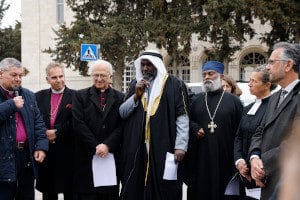
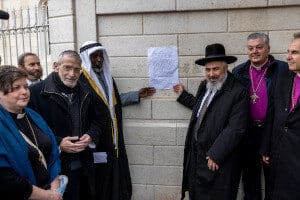
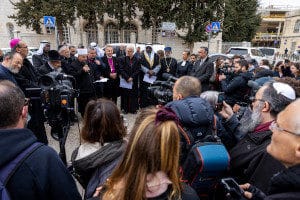
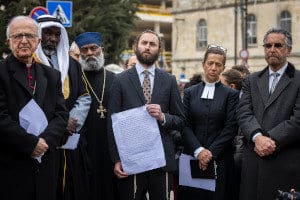
- \[Swedish\] Mar 24, 2022, Dagen, [Religiösa ledare tejpade fast upprop på rysk-ortodox katedral](https://www.dagen.se/nyheter/2022/03/24/religiosa-ledare-tejpade-fast-upprop-pa-rysk-ortodox-katedral/)
Svenska prästen Karin Ekblom deltog i manifestationen i Jerusalem
[Read more](https://www.dagen.se/nyheter/2022/03/24/religiosa-ledare-tejpade-fast-upprop-pa-rysk-ortodox-katedral/)
- \[Hebrew\] Mar 24, 2022, Jerusalem Times, [עשרות מנהיגי דת מדתות שונות קראו השבוע בחצר הכנסייה הרוסית להפסקת הלחימה ולשלום באוקראינה.](https://jerusalemtimes.co.il/%d7%9e%d7%93%d7%99%d7%a0%d7%aa-%d7%99%d7%a8%d7%95%d7%a9%d7%9c%d7%99%d7%9d/%d7%a2%d7%a9%d7%a8%d7%95%d7%aa-%d7%9e%d7%a0%d7%94%d7%99%d7%92%d7%99-%d7%93%d7%aa-%d7%9e%d7%93%d7%aa%d7%95%d7%aa-%d7%a9%d7%95%d7%a0%d7%95%d7%aa-%d7%a7%d7%a8%d7%90%d7%95-%d7%94%d7%a9%d7%91%d7%95%d7%a2/)
בהתכנסות מיוחדת שהתקיימה בירושלים בכיכר מוסקבה מחוץ לקתדרלה האורתודוכסית הרוסית נכחו הפטריארך הלטיני של ירושלים פיירבאטיסטה פיזבאלה, השייח חסן אבו גליון, הרב דוד רוזן ומנהיגי דת מוסלמים ודרוזים, שפנו לפטריארך קיריל להשתמש בתפקידו כראש הכנסייה הרוסית-אורתודוקסית למען שלום.
[Read more](https://jerusalemtimes.co.il/%d7%9e%d7%93%d7%99%d7%a0%d7%aa-%d7%99%d7%a8%d7%95%d7%a9%d7%9c%d7%99%d7%9d/%d7%a2%d7%a9%d7%a8%d7%95%d7%aa-%d7%9e%d7%a0%d7%94%d7%99%d7%92%d7%99-%d7%93%d7%aa-%d7%9e%d7%93%d7%aa%d7%95%d7%aa-%d7%a9%d7%95%d7%a0%d7%95%d7%aa-%d7%a7%d7%a8%d7%90%d7%95-%d7%94%d7%a9%d7%91%d7%95%d7%a2/)
- \[Hebrew\] Mar 24, 2022, Jerusalem News, [שלום בין הדתות: מנהיגי דת התאחדו בירושלים לקריאה נרגשת להפסקת הלחימה וקידום השלום באוקראינה](https://jerusalemnews.co.il/%d7%a9%d7%9c%d7%95%d7%9d-%d7%91%d7%99%d7%9f-%d7%94%d7%93%d7%aa%d7%95%d7%aa-%d7%a2%d7%a9%d7%a8%d7%95%d7%aa-%d7%9e%d7%a0%d7%94%d7%99%d7%92%d7%99%d7%9d-%d7%93%d7%aa%d7%99%d7%99%d7%9d-%d7%94%d7%aa%d7%90/?v=88588bacf0da)
מימין לשמאל: האב דוד מלי מהפטריארכיה הלטינית, האב גברה סילסה נציג הכנסיה האתיופית בירושלים, השייח’ הדרוזי יעקב סלמה, בישופ הפטריארכיה הלטינית בירושלים ויליאם שומלי, שיח’ חסן אבו גליון מרהט, הפטריארך הלטיני הארכיבישוף פיירבטיסטה פיצבלה והרב רצון ערוסי מהרבנות
[Read more](https://jerusalemnews.co.il/%d7%a9%d7%9c%d7%95%d7%9d-%d7%91%d7%99%d7%9f-%d7%94%d7%93%d7%aa%d7%95%d7%aa-%d7%a2%d7%a9%d7%a8%d7%95%d7%aa-%d7%9e%d7%a0%d7%94%d7%99%d7%92%d7%99%d7%9d-%d7%93%d7%aa%d7%99%d7%99%d7%9d-%d7%94%d7%aa%d7%90/?v=88588bacf0da)
- \[Hungarian\] Mar 23, 2022, Magyar Kurír, [Szentföldi keresztények, muszlimok és zsidók kérik Kirill pátriárkát, segítsen megállítani a háborútirill to do everything possible to stop war in Ukraine](https://www.magyarkurir.hu/hirek/szentfoldi-keresztenyek-muszlimok-es-zsidok-kerik-kirill-patriarkat-segitsen-megallitani-haborut)
Levelet függesztettek ki március 21-én egy jeruzsálemi orosz ortodox templom falára, melyet a keresztény, zsidó és muszlim vallás százötven képviselője írt alá a világ minden tájáról. Az üzenet címzettjét, Kirill moszkvai pátriárkát arra kérik, tegyen meg minden tőle telhetőt az ukrajnai háború megállításáért.
[Read more](https://www.magyarkurir.hu/hirek/szentfoldi-keresztenyek-muszlimok-es-zsidok-kerik-kirill-patriarkat-segitsen-megallitani-haborut)
- \[Hebrew\] Mar 22, 2022, Israel National News, [הרב ד”ר רצון ערוסי: לקלוט פליטים – אבל בעיקר את אחינו היהודים](https://www.inn.co.il/news/544476)
רב העיר קריית אונו וחבר מועצת הרבנות הראשית קורא לתת עדיפות לקליטה של יהודי אוקראינה לפני קבלת הפליטים, “מדינת ישראל קמה כדי לקלוט יהודים בגין רדיפתם”.
[Read more](https://www.inn.co.il/news/544476)
- \[Chinese\] Mar 22, 2022, Asia News, [宗教领袖在耶路撒冷俄罗斯东正教主教座堂前向基里尔恳求](https://www.asianews.it/news-zh/%E5%AE%97%E6%95%99%E9%A2%86%E8%A2%96%E5%9C%A8%E8%80%B6%E8%B7%AF%E6%92%92%E5%86%B7%E4%BF%84%E7%BD%97%E6%96%AF%E4%B8%9C%E6%AD%A3%E6%95%99%E4%B8%BB%E6%95%99%E5%BA%A7%E5%A0%82%E5%89%8D%E5%90%91%E5%9F%BA%E9%87%8C%E5%B0%94%E6%81%B3%E6%B1%82-55413.html)
在俄罗斯的天主圣三主教座堂前举行了跨宗派祈祷,以呼吁莫斯科宗主教基里尔为和平而努力。一封由 150 位宗教领袖签名的信被贴在大楼的墙上。对于皮扎巴拉宗主教来说:“我们从媒体上看到的图像很恐怖,而且没有道理。”
[Read more](https://www.asianews.it/news-zh/%E5%AE%97%E6%95%99%E9%A2%86%E8%A2%96%E5%9C%A8%E8%80%B6%E8%B7%AF%E6%92%92%E5%86%B7%E4%BF%84%E7%BD%97%E6%96%AF%E4%B8%9C%E6%AD%A3%E6%95%99%E4%B8%BB%E6%95%99%E5%BA%A7%E5%A0%82%E5%89%8D%E5%90%91%E5%9F%BA%E9%87%8C%E5%B0%94%E6%81%B3%E6%B1%82-55413.html)
- \[Vietnamese\] Mar 21, 2022, Vatican News, [Các lãnh đạo tôn giáo ở Giêrusalem kêu gọi hoà bình cho Ucraina](https://www.vaticannews.va/vi/world/news/2022-03/lanh-dao-ton-giao-gierusalem-hoa-binh-ucraina.html)
Vào ngày 21/3, một số lãnh đạo Kitô giáo, Do Thái và Hồi giáo đã tụ họp tại Nhà thờ Chính thống Nga ở Giêrusalem, để cầu nguyện cho hoà bình ở Ucraina, đồng thời kêu gọi Thượng phụ Kirill dùng ảnh hưởng của mình trong Giáo hội Chính thống Nga để khôi phục hoà bình.
[Read more](https://www.vaticannews.va/vi/world/news/2022-03/lanh-dao-ton-giao-gierusalem-hoa-binh-ucraina.html)
- \[Swedish\] Mar 21, 2022, Vatican News, [Jerusalem. Religiösa ledare enade för Ukraina: Avsluta kriget omedelbart](https://www.vaticannews.va/sv/kyrkan/news/2022-03/jerusalem-religiosa-ledare-enade-for-ukraina-avsluta-kriget.html)
Kristna, muslimer och företrädare för olika religioner samlades för böner framför den ryska katedralen tillägnad den allraheligaste Treenigheten i Jerusalem, i den antika statsdelen där man tar emot rysk-ortodoxa pilgrimer, för att bönfalla om ett slut på kriget. De undertecknade en appell till patriark Kirill, som redan hade undertecknats av 150 religiösa personligheter.
[Read more](https://www.vaticannews.va/sv/kyrkan/news/2022-03/jerusalem-religiosa-ledare-enade-for-ukraina-avsluta-kriget.html)
- \[French\] Mar 21, 2022, Terre Sainte, [Ukraine : rassemblement interreligieux à Jérusalem ce jour](https://www.terresainte.net/2022/03/ukraine-rassemblement-interreligieux-a-jerusalem-ce-jour/)
Des dizaines de chefs religieux juifs, chrétiens, et musulmans se rassembleront sur la place de Moscou à Jérusalem, près de la cathédrale russe, pour appeler à la paix en Ukraine.
[Read more](https://www.terresainte.net/2022/03/ukraine-rassemblement-interreligieux-a-jerusalem-ce-jour/)
- Mar 21, 2022, I24 News French, [Appel Œcuménique Contre La Guerre En Ukraine](https://www.youtube.com/watch?v=e2wGO6RSsnw)
- \[Hebrew\] Mar 21, 2022, [מנהיגי כל הדתות יתכנסו לתפילה לעצירת המלחמה](https://hm-news.co.il/257879/) ,המחדש: מאמר בעברית
היום, יום שני ב13:30 יגיעו עשרות מנהיגי דת נוצרים, יהודים דרוזים ומוסלמים לכיכר מוסקבה בירושלים ויצאו בקריאה להפסקת הלחימה והשכנת שלום באוקראינה. הארוע יתקיים מול כיכר מוסקבה בירושלים שליד הכנסייה הרוסית בירושלים ( אזור מגרש הרוסים).
[Read more](https://hm-news.co.il/257879/)
- \[Hebrew\] Mar 21, 2022, Israel National News, [הרב מלכיאור לערוץ 7: להפסיק את שפיכות הדמי](https://www.inn.co.il/news/544491)
עשרות מנהיגי דת נוצרים, יהודים דרוזים ומוסלמים הגיעו לכיכר מוסקבה בירושלים ויצאו בקריאה להפסקת הלחימה והשכנת שלום באוקראינה.
[Read more](https://www.inn.co.il/news/544491)
- \[Hebrew\] Mar 21, 2022, Israel National News, [עשרות מנהיגי דת קוראים להפסקת הלחימה באוקראינה](https://www.inn.co.il/flashes/859476)
השר לשעבר הרב מיכאל מלכיאור: “מדינת ישראל יכולה לעשות יותר למען אוקראינה ולבחור בטוב”.
[Read more](https://www.inn.co.il/flashes/859476)
- Mar 21, 2022, I24 News English, [“Stop The War In Ukraine” Interfaith Gathering in Jerusalem](https://www.youtube.com/watch?v=1Gr1aYVEMHs)
---
### [Faith Inspired Renewable Energy Project in Africa](https://interfaithsustain.com/faith-inspired-renewable-energy-project-in-africa/)
**Published:** July 25, 2017
**Author:** ICSD
**Content:**

*And God said, “Let there be luminaries in the expanse of the heavens… to shed light upon the earth. And it was so.” -Genesis 1:14-15*
## **NEED**
Over 600 million people in sub-Saharan Africa have no access to electricity. They constitute 13 percent of the global population, contribute the least to greenhouse gas emissions, but most bear the burden of climate change. This reality presents tremendous opportunities for making a positive difference in African people’s lives. Renewable energy production can significantly reduce reliance on diesel and gathered wood, the most polluting fuels. A modest five megawatt (MW) solar field avoids 125,000 metric tons of CO2 emissions over 20 years.
## **GOALS**
- To care for creation and promote sustainable development through the deployment of solar and wind energy;
- To bring renewable electricity to Africans, curb climate change, and enable current and future generations to live sustainably.
## **OBJECTIVES**
- Engage African religious institutions in practicing the ethical imperatives of creation care by facilitating alternative energy development on their lands;
- Establish a practical, scalable mechanism to support a pipeline of investment in, and deployment of, solar photovoltaic and wind projects of 7.5 MW or larger in Africa.
## **PROJECT DESCRIPTION**
The project is a blended for- and not-for-profit commercial co-venture bringing together faith institutions, The Interfaith Center for Sustainable Development, and Gigawatt Global for rapid, massive deployment of renewable energy and scalable rural sustainable development in Africa. In August 2019, an MOU and land-lease agreement was signed for large-scale solar fields on Anglican church lands in Mozambique. In January 2021, a Gigawatt Global vice president visited Niassa province, Mozambique, and met with Anglican Bishop Vicente and others in regards to land for the project. To read a press release about the signing, click [here](https://www.indcatholicnews.com/news/37822). The project was launched in 2017.

[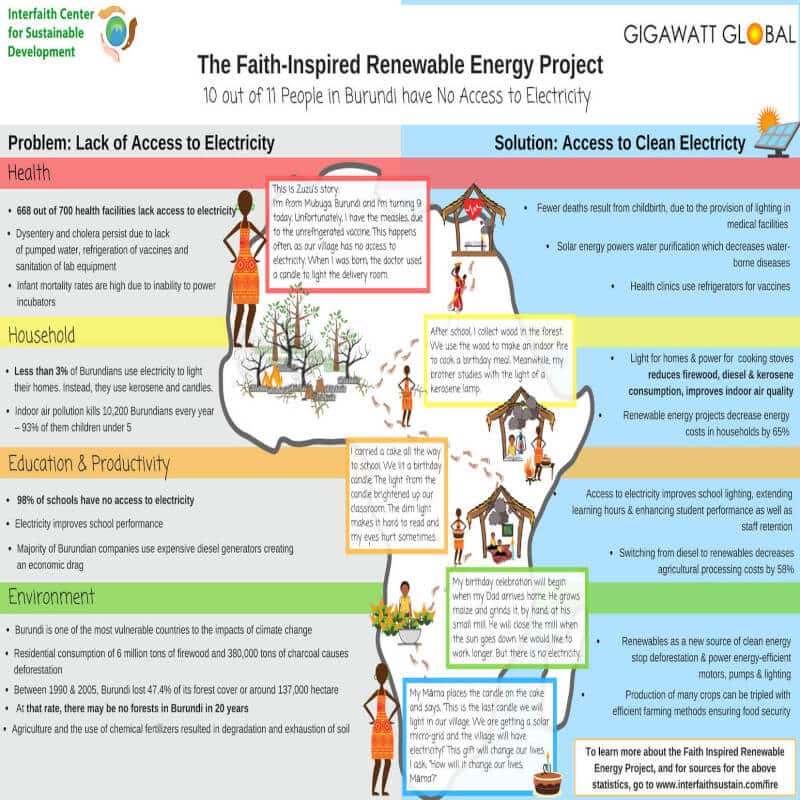](https://interfaithsustain.com/wp-content/uploads/2022/03/Solar-Africa-infographic.jpg)
## **PARTNERS**
[The Interfaith Center for Sustainable Development ](https://interfaithsustain.com/second-place-winner-of-the-catholic-seminarian-essay-contest-on-renewable-energy/)(ICSD) – Founder and project coordinator. Based in Jerusalem, ICSD reveals the connection between religion and ecology and mobilizes faith communities to act.
On this project, ICSD identifies and recruits faith institutions in sub-Saharan Africa interested in collaborating to put ethics into practice by providing land for solar installations. ICSD approaches senior religious leadership, including the Vatican, the Anglican church, the Orthodox church, and Muslim institutions to offer support and collaborate.
[Gigawatt Global Coöperatief U.A. ](https://gigawattglobal.com/) – Founder. Gigawatt Global is a multinational renewable energy platform focused on the development and management of utility-scale solar fields in emerging markets. With over 1,500 MW of solar projects in its pipeline worldwide, Gigawatt brings extensive experience in all aspects of renewable energy project finance and development. On this project, Gigawatt Global is responsible for all necessary project financing, debt and equity. Gigawatt shall execute and manage the projects to provide power, locally and nationally and train and employ local workers.
[Green Anglicans–Anglican Church of Southern African Environmental Network](https://www.greenanglicans.org/) (initial Faith Institution Partner) mobilizes faith communities for green energy, climate resistant agriculture, reforestation and improved water access. On this project, it provides outreach to Anglican bishops in southern and central Africa. To date, numerous Anglican archbishops and bishops– in Burundi, Swaziland, Malawi, Mozambique, and Zambia—have expressed their desire to site a project on land in their diocese. Each Anglican bishop will assist in facilitating project approvals from relevant governmental authorities.
Other Faith Institutions and Communities in Africa – Anglican, Catholic, other Christian, Muslim, and Jewish institutions will partner in obtaining useful lands, local and national permits, and securing pre-development funding.
*Pope Francis wrote in Laudato Si’: On Care for Our Common Home: “Taking advantage of abundant solar energy will require the establishment of mechanisms and subsidies which allow developing countries access to technology transfer, technical assistance and financial resources…”*
We are also grateful for the support of the following initiatives on this project:
[Shine Campaign](https://theshinecampaign.org/) is an independent global campaign dedicated to ending energy poverty and unlocking new opportunities for billions of people. Partners from the faith, development, and philanthropic sectors are mobilizing new forms of capital, scaling resources, and generating momentum to achieve universal access to clean, affordable, and reliable energy by 2030 – a Sustainable Development Goal.
[PaRD](https://www.partner-religion-development.org/) (The International Partnership on Religion and Sustainable Development) brings together members and partners from all over the world in order to harness the positive impact of religion and values in sustainable development and humanitarian assistance. PaRD aims at greater coordination between secular and non-secular actors, focusing on joint activities such as: Capacity Building, Policy Advice, Knowledge Sharing, Dialogue and Monitoring.
To create, develop and refine the model, we seek to engage faith institutions at all levels. Please reach out to us if your institution/ community is interested in joining our initiative.


---
## **..in the News**
---
Sep 9, 2019
The Jerusalem Post
**Israeli NGO Moves Forward with Plans to Build Solar Fields in Mozambique**
ICSD successfully signed an MOU with Mozambique and Eswatini. This is the next step in building solar fields on Mozambican Church land to decrease energy poverty and increase clean energy. [Read More](https://www.jpost.com/Israel-News/Israeli-NGO-moves-forward-with-plans-to-build-solar-fields-in-Mozambique-600824)
---
Sep 5, 2019
Independent Catholic News
**As Pope visits Mozambique, plans for large solar field on Church land launched**
Coverage of recent success on ICSD, Gigawatt Global, and the Anglican Church’s solar energy project in Mozambique and Eswatini. With quotes from ICSD deputy director Phillipa Friedland, Bishop Vicente Msosa of the Anglican Church of Niassa Province, and Gigawatt Global CEO Josef Abramowitz. [Read More](https://www.indcatholicnews.com/news/37822)
---
July 8, 2018
**Winner of the Catholic Seminarian Essay Contest on Renewable Energy** Congratulations to Umeh Benneth Chidiebere from Saints Peter and Paul Major Seminary, Bodija Ibadan, Nigeria! He is the winner of the essay contest, a partnership between the Interfaith Center for Sustainable Development and Salesian Pontifical University – Jerusalem Campus. Here is the first paragraph of the winning essay: “While I was growing up in Kaduna, northern Nigerian, electricity was a luxury. Only a few could afford generators and have their houses powered. I lived in a public compound, and only a few of my neighbours could afford a generator, but my family could not. Aside from our inability to power our house, the experience of having to live in the same little compound with those who could was both ridiculous and unjust. The generator sets produce fumes, known as carbon monoxide, which makes the environment very uncomfortable and the air unbreathable and unhealthy for those who are exposed to them. The sets are also known for the loud grating sound they produce. But, each time my neighbours switched on their generator sets, they locked up their doors and windows. The electric fans or air conditioning in the house were on full blast and the shut doors and windows kept both noise and noxious gases out. Meanwhile, just a few feet ahead was my house. We had to keep our doors and windows open to have our apartment ventilated. Inadvertently, the fumes the generators released found space in our apartment. And due to the noise of the generators, we could not communicate without having to scream. But, I, or any other, dared not complain. Anyone who did this would be labeled ‘jealous and unhappy’.” [Read more](https://interfaithsustain.com/winner-of-the-catholic-seminarian-essay-contest-on-renewable-energy/)
---
Anglican Communion News Service November 1, 2017
**Archbishop Welby’s comment leads to development of African solar project**
He heard about ICSD’s collaborative project with the social enterprise Gigawatt Global (GWG) to deploy solar fields on church lands in Africa. In Rwanda, GWG installed Africa’s first commercial scale solar field on land belonging to the Agahozo Shalom Youth Village for orphans from the genocide. [Read More](https://www.anglicannews.org/news/2017/11/archbishop-welbys-comment-leads-to-development-of-african-solar-project.aspx)
---
pv Magazine January 8, 2018
**Gigawatt Global and Energiya to install 100 MW of PV in Ethiopia**
The Dutch-U.S. solar developer and the Israeli company are teaming up to construct 10 solar power plants with a capacity of 10 MW each at several university campuses in Ethiopia. [Read More](https://www.pv-magazine.com/2018/01/08/gigawatt-global-and-energiya-to-install-100-mw-of-pv-in-ethiopia/)
---
Ethiosports January 5, 2018
**Israeli Company to Invest $500 million in Ethiopia**
GIGAWATT GLOBAL, an Israeli companysaid it will invest 500 million USD in Ethiopia in renewable energy and human resource development. Josef I. Abramowitz, CEO of the company announced the plan following discussions with Prime Minister Hailemariam Desalegn alongside with the Israeli companies. [Read More](https://www.ethiosports.com/2018/01/05/israeli-company-to-invest-500-million-in-ethiopia/)
---
Lexology January 7, 2018
**The electricity sector in Burundi: a place for renewable energy in the great lakes region?**
A PPA of 25 years has been signed between Gigawatt Global and the national utility, Regideso. This will be the first power plant built in Burundi in nearly 30 years and the largest private sector investment in Burundi in 2017. [Read More](https://www.lexology.com/library/detail.aspx?g=8a686f01-c89c-4db6-b973-164b5abda114)
---
Anglican Communion News Service December 13, 2017
**ExxonMobil concede defeat in climate change battle with Church of England**
A project to [install solar power farms on church-owned lands in Africa](https://www.anglicannews.org/news/2017/11/archbishop-welbys-comment-leads-to-development-of-african-solar-project.aspx) is beginning to take off. The initiative, which was sparked by a chance conversation the Archbishop of Canterbury Justin Welby had with an Israeli NGO on his visit to the Holy Land in April, will see spare church lands used to produce electricity from solar panels. [Read More](https://www.anglicannews.org/news/2017/12/exxonmobil-concede-defeat-in-climate-change-battle-with-church-of-england.aspx)
**The Interfaith Center for Sustainable Development is a Coalition Partner of Olam:**
**ICSD works on a global basis, with current engagement in Africa, the Middle East, North America, and Europe.**
---
### [Wilderness Travel Seminar to Holden Village: Liturgy and the Cycles of Creation](https://interfaithsustain.com/wilderness-travel-seminar-to-holden-village-liturgy-and-the-cycles-of-creation/)
**Published:** September 20, 2015
**Author:** ICSD
**Content:**
Held in January in a remote Lutheran retreat center in the Glacier Peak Wilderness of Washington, this course studies how daily prayer and the liturgical year relate to the ecological cycles of the earth. Drawing on the fields of liturgical studies, ecotheology, and education; practicing a cycle of daily prayer; and spending considerable time outdoors, course members develop skills for interpreting liturgy in an ecological and missional era.
Bibliography:
*Last child in the woods: saving our children from nature-deficit disorder*. Louv
*Keeping Time: The Church’s Years*. Ramshaw and Tieg
*Faith Forming Faith: Bringing New Christians to Baptism and Beyond*. Hoffman
*Receiving the Day: Christian Practices for Opening the Gift of Time*. Bass
---
### [Prof Abu Sway Short Article](https://interfaithsustain.com/prof-abu-sway-short-article/)
**Published:** July 17, 2018
**Author:** ICSD
**Content:**
The human being, in the Islamic world-view, is considered a steward (khalifah). In his or her capacity as a steward, the human being is perceived as the trustee of the earth. A person is not supposed to cause corruption in any form on earth (i.e. the environment). Life on earth entails great responsibilities. It is a test with accountability. It is followed by either reward or punishment.
The Islamic worldview indicates that stewardship on earth forms a test which includes how human beings relate to the environment. Is it going to be based upon Divine instructions, or based upon personal desires and conjectures that might lead to the destruction of our environment?
Stewardship is based upon knowledge that enables the human being to be a care taker of the environment in which he or she dwells.
Humanity should behave in such a way that would maintain the balance that exists within the environment. Rather, to retrieve the balance that has existed before we have caused, collectively, many ecological disasters: “And the earth We have spread out; set thereon mountains firm and immovable; and produced therein all kinds of things in due balance.” (Koran 15:19)
The end result of disbelief or immoral acts, when they become prevalent, is the total destruction of the environment.
Such is the story of prophet Nuh (Noah) and the flood which destroyed every thing except the Ark and its load of people and animals.
**To watch an interview with Professor Abu Sway [click here](https://interfaithsustain.com/interview-with-dr-mustafa-abu-sway/).**
**To read the long article by Professor Abu Sway [click here](https://interfaithsustain.com/prof-abu-sway-long-article).**
## **The long Islamic statement on the environment can be found [here](https://interfaithsustain.com/islamic-faith-statement-on-the-environment/)**
**For other faith’s statements on the environment, please click [he](http://www.interfaithsustain.com/religion-and-ecology-articles/)[r](https://interfaithsustain.com/religion-and-ecology-articles/)[e](http://www.interfaithsustain.com/religion-and-ecology-articles/)**
*Professor Mustafa Abu Sway is Professor of Philosophy and Islamic Studies at Al Quds University, Jerusalem.*
*ICSD works on a global basis, with current engagement in Africa, the Middle East, North America, and Europe.*
---
### [Sikh Faith Statement on the Environment](https://interfaithsustain.com/sikh-faith-statement-on-the-environment/)
**Published:** January 12, 2014
**Author:** ICSD
**Content:**
The Sikh scripture, Guru Granth Sahib, declares that the purpose of human beings is to achieve a blissful state and to be in harmony with the earth and all creation. It seems, however, that humans have drifted away from that ideal. For the earth is today saturated with problems. It is agonizing over the fate of its inhabitants and their future! It is in peril as never before. Its lakes and rivers are being choked, killing its marine life. Its forests are being denuded. A smoky haze envelops the cities of the world. Human beings are exploiting human beings.

## The Sense of Crisis
There is a sense of crisis in all parts of the world, in various countries and among various peoples. The demands of national economic growth and individual needs and desires are depleting the natural resources of the earth.
There is serious concern that the earth may no longer be a sustainable biosystem. The major crises facing the earth—the social justice crisis and the environmental crisis—together are heading the earth toward a disastrous situation. The social justice crisis is caused by humanity’s confrontation with itself and the environmental crisis is caused by humanity’s confrontation with nature. The social justice crisis is that poverty, hunger, disease, exploitation, and injustice are widespread. There are economic wars over resources and markets.
The rights of the poor and the marginal are violated. Women, constituting half the world’s population, have their rights abused.
The environmental crisis caused by humanity’s exploitation of nature is leading to the depletion of renewable resources, destruction of forests, and overuse of land for agriculture and habitation. Today pollution is contaminating air, land, and water. Smoke from industries, homes, and vehicles is in the air. Industrial waste and consumer trash is affecting streams and rivers, ponds and lakes. Much of the waste is a product of modern technology; it is not biodegradable and not reusable, and its long-term consequences are unknown. The viability of many animal and plant species, and possibly that of the human species itself, is at stake.
## A Sikh Solution
This crisis cries out for an immediate and urgent solution. The crisis requires going back to the basic question of the purpose of human beings in this universe and an understanding of ourselves and God’s creation.
We are called to the vision of Guru Nanak which is a World Society comprising God- conscious human beings who have realized God. To these spiritual beings the earth and the universe are sacred; all life is unity, and their mission is the spiritualization of all.
Guru Nanak laid the foundation of Sikhism in the late fifteenth century. His writings, along with those of other human Gurus who succeeded him and of other spiritual leaders, are included in the scripture known as Guru Granth Sahib. Guru Granth has been the Guru and Divine Master of the Sikhs since 1708, when Guru Gobind Singh declared that there would be no more human Gurus. Guru Nanak and his successors during their lifetime worked toward creating an ideal society that has as its basis spiritual awareness and ethical integrity. The name “Sikh” means disciple or learner of the Truth.
Guru Nanak in his philosophy states that the reality that humans create around themselves is a reflection of their inner state. The current instability of the natural system of the earth—the external environment of human beings—is only a reflection of the instability and pain within humans. The increasing barrenness of the earth’s terrain is a reflection of the emptiness within humans.
The solution to problems manifest in our world lies in prayer and in accepting God’s hukam. It is difficult to translate certain Sikh concepts accurately. Hukam is one such concept—it may be best described as a combination of God’s will, order, and system. With an attitude of humility, and surrender to the Divine Spirit, conscientious human beings can seek to redress the current crises of the environment and of social justice. In the Sikh Way this is done through the guidance of the Guru, who is the Divine Master and messenger of God.
*Quoted passages below are taken from the Guru Granth Sahib.*
## Unity of Spirit and Matter and the Interconnectedness of All Creation
The Sikh view is that spirit and matter are not antagonistic. Guru Nanak declared that the spirit is the only reality and matter is only a form of spirit.
Spirit takes on many forms and names under various conditions:
*“When I saw truly, I knew that all was primeval.
Nanak, the subtle \[spirit\] and the gross \[material\] are, in fact, identical. (281)*
That which is inside a person, the same is outside; nothing else exists.
*By divine prompting look upon all existence as one and undifferentiated; the same light penetrates all existence. (599)*
The chasm between the material and the spiritual is in the minds of humans only. It is a limitation of the human condition that spirit and matter appear as duality, and their unity is not self-evident.
The material universe is God’s creation. Its origin was in God and its end is in God, and it operates within God’s hukam. Guru Nanak declares that God alone knows the reasons for and the moment of earth’s creation. The origin of the universe is unknowable. The act of creation itself, the creation of the primeval atom, was instantaneous, caused by the Will of God.
Further descriptions of the universe and its creation in Sikh scripture are remarkably similar to recent scientific speculation about the universe and its origin. One of the basic hymns in the Sikh scripture, which may be called the Hymn of the Genesis, describes the indeterminate void before the existence of this universe.
## Limitless Galaxies
Guru Nanak speaks of innumerable galaxies, of a limitless universe, the boundaries of which are beyond human ability to comprehend. God alone knows the extent of creation.
God created the universe and the world, for reasons best known to Him. And being the results of God’s actions all parts of the universe are holy. God is an all-pervasive being manifest through various elements of creation.
Having created this universe and the world, God directs them. All actions take place within God’s hukam. God alone knows how and why. God, however, not only directs this vast and massive theater, but also watches over with care and kindness—the benign, supportive parent!
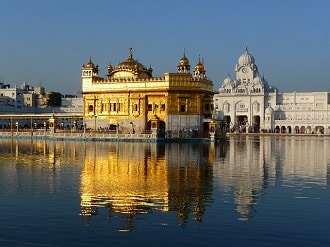
*”Men, trees, pilgrimage places, banks of sacred streams, clouds, fields. Islands, spheres, universes, continents, solar systems. The sources of creation, egg-born, womb-born, earth-born, sweat-born, oceans, mountains and sentient beings. He, the Lord, knows their condition, O Nanak. Nanak, having created beings, the lord takes care of them all. The Creator who created the world, He takes thought of it as well”. (466)*
The world, like all creation, is a manifestation of God. Every creature in this world, every plant, every form is a manifestation of the Creator. Each is part of God and God is within each element of creation. God is the cause of all and He is the primary connection between all existence.
*“The Creator created himself … And created all creation in which He is manifest. You Yourself the bumble-bee, flower, fruit and the tree. You Yourself the water, desert, ocean and the pond. You Yourself are the big fish, tortoise and the Cause of causes. Your form cannot be known.”* (1016)
In the world God has created he has also provided each species and humans with means of support and nurturing.
In Sikh beliefs, a concern for the environment is part of an integrated approach to life and nature. As all creation has the same origin and end, humans must have consciousness of their place in creation and their relationship with the rest of creation. Humans should conduct themselves through life with love, compassion, and justice. Becoming one and being in harmony with God implies that humans endeavor to live in harmony with all of God’s creation.
## Spiritual Discipline
The second postulate is that humans, practicing a highly disciplined life, while remaining active in the world, are capable of further spiritual progression. It is important that Sikhs retain the primacy of spirit over matter, while it is desirable that they do not deny matter or material existence. It is not required that humans renounce the world. They must maintain their life in the world and uphold all responsibilities in the world. Humans should be renouncers of plenty and maintain a simple life. Further spiritual progress fundamentally starts with an individual conquering himself/herself with the guidance of the Guru.
The emphasis is on mastery over the self and the discovery of the self, not mastery over nature, external forms, and beings. Sikhism teaches against a life of conspicuous, wasteful consumption. The Guru recommends a judicious utilization of material and cultural resources available to humans.
*“Then why get attached to what you will leave behind. Having wealth, you indulge in pleasures bout, From that, tell me, who will bail you out? All your houses, horses, elephants and luxurious cars, They are just pomp and show, all totally false.”*.
The Gurus taught humans to be aware of and respect the dignity in all life, whether human or not. Such a respect for life can only be fostered where one can first recognize the Divine spark within oneself, see it in others, cherish it, nurture and fulfil it.
*”This little shrine of the human body! This great opportunity of life! The object is to meet the Beloved, thy Master!”*
Humans have the capability to further their spiritual progression through conscious choice and it is important to identify the method by which they might do so. The method suggested by Guru Nanak is one of spiritual discipline, meditation and prayer, and sharing. Sikhism emphasizes mastering five negative forces: Lust, Anger, Worldly or Materialistic Attachment, Conceit, and Greed. These together constitute what Sikhs term Haumai—“I am-ness.” Mastering Haumai is achieved by developing five positive forces: Compassion, Humility, Contemplation, Contentment, and Service (seva) without expecting any material or spiritual reward.
The guiding principles are Love and Forgiveness. Every decision in life has to be based on Rationality and a personal code of ethics. Guru Nanak’s philosophy of values inspires the individual to transcend his/her existence through this spiritual discipline. Sikh religion preaches strong family involvement. A person pursuing this spiritual discipline must also work to create an atmosphere for other members of the family to progress spiritually.
## The Ideal Sikh Has an Intense Desire to Do Good
The third postulate is that the true end of human beings is in their emergence as God-conscious beings, who remain aware of the earth and operate in the mundane material world, with the object of transforming and spiritualizing it into a higher plane of existence. In this spiritual state individuals are motivated by an intense desire to do good, transforming their surroundings.
Through a life based on the method prescribed by the Gurus humans may achieve a higher spiritual state. Such truly emancipated, valiant, and enlightened spirits (jivan-mukta, brahma-gyani) become the true benefactors of humanity and the world around them. Such an individual would not exploit another human or sentient being, as each is a manifestation of the eternal and the supreme. In this God-conscious state they see God in all and everything.
*“I perceive Thy form in all life and light;
I perceive Thy power in all spheres and sight.” (464)*
Spiritualization is a liberation from material compulsions and attractions. It means an awareness of the Cosmic Order and striving toward the execution of Divine Will. So, the spiritualized human is creative and constructive. Therefore a Sikh life is a life of harmony with other individuals, with other beings, and with other forms. For an enlightened individual the world has only one purpose: to practice spirituality. That is the ultimate objective of all humans.
Such a person is involved in human problems and society and has to prove his or her effectiveness there. Such a person lives with a mission—and works for the emancipation of all. A true Sikh is for individual human rights, the environment, and justice for all.
*“The God-conscious person is animated with an intense desire to do good in this world.” (273)*
## Practicing the Philosophy
**Integrated approach: Care of the environment without social justice is not possible**
Environmental concerns may be viewed as part of the broader issue of human development and social justice. Many environmental problems, particularly the exploitation of environmental resources in developing nations, are due to the poverty of large parts of the population. Therefore an integrated approach is necessary.
Sikhism opposes the idea that the struggle of the human race is against nature and that human supremacy lies in the notion of “harnessing” nature. The objective is harmony with the eternal—God—which implies a life of harmony with all existence. Striving for a life of harmony, therefore, also implies a life of supporting individual rights and environmentalism—a life that works against injustice toward anybody and anything.
The tenth Guru in 1699 founded the Order of the Khalsa, whose members practice the spiritual discipline of Sikhism and are committed to ensure the preservation and prevalence of a World Society. Over the last three centuries the members of the Khalsa order have stood up for the rights of the oppressed and the disenfranchised even at the cost of their own lives. The Khalsa vision of the World Society is:
*“Henceforth such is the Will of God:
No man shall coerce another;
No person shall exploit another.
Each individual has the inalienable birthright
to seek and pursue happiness and self-fulfillment.
Love and persuasion is the only law of social coherence.” (74)*
The Khalsa have opposed any force that has threatened the freedom and dignity of human beings. In the eighteenth century it was the oppressive rulers of northern India, and invaders from Afghanistan; in the nineteenth and twentieth centuries they have struggled against oppression by European colonists and Indian governments. For the Khalsa, justice requires the participation and inclusion of all in obtaining and enjoying the fruits of God’s creation. Justice achieved through cooperative effort is desirable. The ideal for the Khalsa is to strive for justice for all, not merely for themselves.
## The Institutions of Sangat, Pangat, and Langar
The Sikh Gurus, through their lives, provided role models for the Sikhs. They all actively worked to stress the equality of all humans and challenged the rigid social stratification of the caste system in India. The very existence of the Sikh religion is based on challenging:
\* Inequality in society, and
\* The exploitation of the poor and the marginal by the religious and political establishment.
Sikh Gurus provided many examples of standing by their principles and confronting exploitation and oppression. They stood by the “low” and the “poor,” for, as Guru Nanak said:

*”There are the lowest men among the low castes. Nanak, I shall go with them. What have I got to do with the great? God’s eye of mercy falls on those who take care of the lowly.”* (15)
Sikh Gurus challenged the status quo and came into conflict with the entrenched elite—political, social, religious, and economic. The Gurus were most sympathetic to the downtrodden of society, the untouchables and those of lower caste. They vehemently opposed the division of society on the basis of caste, which had been and is still significantly present. They identified themselves with the poor in full measure and were critical of those responsible for their misery. In the course of their travels they preferred to live in the homes of those who made an honest living rather than in the homes of the rich who thrived on exploitation.
Two Sikh Gurus were martyred by the regimes of their period for challenging the contemporary authorities. One of them, Guru Tegh Bahadur, was martyred when he stood up for the religious freedom of the Hindu inhabitants of Kashmir who were being forced to accept Islam by the rulers.
Sikh Gurus also molded traditional lifestyles to exemplify a more equitable society. They created many institutions that form the basis of Sikh society and are based on the equality of all. The Sikh Gurus invited people of all castes and creeds to meditate together. That would be called sangat. Either before or after the meditation, people were asked to sit and eat together irrespective of their social background, to create a sense of equality. That process would be called pangat.
Sikh Gurus started a tradition of free distribution of food to the rich or poor through the Sikh meeting areas. That would be called langar. These three ideas were in contrast to the practices of Indian society, which had separate temples or water wells for social outcasts. These changes by the Sikh Gurus created a lot of opposition from the religious establishment, but they remain much alive in Sikh practices today. Through the creation of the Khalsa, the Gurus established a system that would protect and maintain a free and just order.
## Equality of Women
Women and their rights have been ignored for too long. Any approach to solving problems of social justice and the environment must be sensitive to women’s concerns, and must include women as equals.
Often piecemeal solutions to environmental problems focus on limiting population growth and on family planning programs. Most family planning measures end up abusing women’s rights and should be rejected on those grounds alone. Meanwhile they spread mistrust of family planning among women.
Guru Nanak and other Sikh Gurus during their lives advocated equality and dignity of women and took steps to implement these principles. Guru Nanak denounced the idea that spirituality was only for men, and not for women. The first Sikh Guru in his preaching and writings made direct statements emphasizing that women were no less than men:
*”After the death of one’s wife, one seeks another,
and through her social bonds are cemented.
Why should we condemn women who give birth to leaders and rulers?
Everyone is born of a woman and a woman alone.
Nobody is born otherwise.
God alone is an exception to this rule.”* (473)
Guru Amardas strongly opposed the custom of sati in the sixteenth century and also advocated widow marriages. Sati was the Indian practice whereby a widow burned herself with her husband’s corpse at cremation. Guru Amar Das appointed and ordained a large number of women preachers, and at least one female bishop, Mathura Devi, 400 years ago. The Sikh Gurus also raised their voice against the purdah or veil. Guru Amardas did not even allow the Queen of Haripur to come into the religious assembly wearing a veil.
The immediate effect of these reforms was that women gained an equal status with men. Those who lived as groveling slaves of society became fired with a new hope and courage to lift themselves to be equals of the best in humanity. The spirit of the Sikh woman was raised with the belief that she was not a helpless creature but a responsible being endowed with a will of her own, with which she could do much to mold the destiny of society.
Women came forward as the defenders of their honor and dignity. They also became the rocks that stood against tyrants. Without the burden of unnecessary and unreasonable customs, Sikh women became the temporal and spiritual supporters of men, often acting as the “conscience of men.” Sikh women proved themselves the equals of men in service, devotion, sacrifice, and bravery.
Since the late nineteenth century, Sikh community organizations have made efforts to expand educational opportunities for all. Individual Sikhs, men and women, in various cities and towns took the initiative to start and operate women’s colleges and schools. Women’s education was part of the drive to improve education among the Sikhs, initiated by Sikh organizations in the 1920s. In towns and villages in the Punjab, and in cities with significant Sikh populations, there exist schools and colleges operated by Sikh organizations.
## Community-based Sharing of Resources
Traditional modes of farming and traditional modes of life in northern India have been dependent upon limited resources. As there exist circumstances where large numbers of people depend upon relatively scarce resources, the traditional lifestyle ensures use of the least resources, considerable reuse, and recycling. In a culture based on organic materials, recycling is an intrinsic and natural part of the resource cycle. There are strong traditions of sharing.
There have been traditional practices that maintained lands and forests as community property within proximity of human habitation. For instance, in traditional rural India and Punjab, two of the most important centers of human activity have been the Sikh gurudwara and a source of water—pond, tank, pool, or running water. Both of these sites were surrounded by community land, not owned by anyone and not used for agriculture. This was where there were trees and plants, such as groves or small forests. They provided shade and shelter, and were a source of firewood within easy reach of habitation.

The Gurus established towns and cities, each created around a religious center. The focus was on a lifestyle based on sharing: a lifestyle that promoted equity among people, and optimum utilization of resources. Even today, rural Punjab families share resources with their neighbors. This is particularly evident on large family occasions such as weddings, when the entire village may play host to guests and share living space, beds, and so on.
Most gurudwaras in India were specifically designed to have a water tank, or were near running water (rivers or pools), which were always considered a community resource. For instance, Amritsar grew up around the Harimandir (ordinarily referred to as the Golden Temple) and the Amrit Sarovar (the pool of nectar, that is, the water). The cities and towns that grew around gurudwaras were ideally centered on a spiritual lifestyle based on sharing.
Since the time of the Gurus, Sikh gurudwaras have included institutionalized practices that emphasize sharing of resources. Gurudwaras, in addition to being places where people congregate for prayer and meditation, are a place to stay for travelers and others; a community kitchen (Langar); a place for dispensing medication and medical care; and a place to impart education to the young. Gurudwaras have always been places of shelter for travelers and visitors, and most major gurudwaras have rooms where visitors may stay. In addition Sikh gurudwaras stock extra beds, sheets, pots and pans, etc. At weddings and other family events, the gurudwaras are a source for borrowing these items.
There has always been great emphasis on avoiding waste. Traditionally the community kitchen served food on plates made from leaves and cups made from clay. Today they tend to use steel plates and utensils that are reused. The kitchens have always been stocked by ordinary people—farmers, traders, others in the community—on a voluntary basis.
## Sikhism Against Smoking
It is now a known fact that smoking is both a primary and secondary health hazard. In addition to harming the environment, it has seriously deleterious effects on the person who smokes, on the bystander who breathes the secondhand smoke, and on the unborn fetus of the female smoker. Though this has only been scientifically verified in the last half century, Guru Gobind Singh, the last living Guru of the Sikhs, listed the use of tobacco as one of the four major acts forbidden to initiated adherents of the Sikh religion. Though tobacco was introduced into India only in the mid-1600s, he had the wisdom to specifically interdict it in 1699. From its very beginning, Sikhism had forbidden the use of any intoxicants or mind-altering substances for any purpose, except medicinal.
## Conclusion
The ideal for Sikhism is a society based upon mutual respect and cooperation and providing an optimal atmosphere for individuals to grow spiritually. Sikhism regards a cooperative society as the only truly religious society, as the Sikh view of life and society is grounded in the worth of every individual as a microcosm of God. Therefore, an individual must never be imposed upon, coerced, manipulated, or engineered:
*”If thou wouldst seek God, demolish and distort not the heart of any individual”. (1384)*
All life is interconnected. A human body consists of many parts; every one of them has a distinct name, location, and function, and all of them are dependent upon each other. In the same way, all the constituents of this universe and this earth are dependent upon each other. Decisions in one country or continent cannot be ignored by others. Choices in one place have measurable consequences for the rest of the world. It is part of the same system. Life, for its very existence and nurturing, depends upon a bounteous nature. A human being needs to derive sustenance from the earth and not deplete, exhaust, pollute, burn, or destroy it. Sikhs believe that an awareness of that sacred relationship between humans and the environment is necessary for the health of our planet, and for our survival. A new “environmental ethic” dedicated to conservation and wise use of the resources provided by a bountiful nature can only arise from an honest understanding and dedicated application of our old, tried and true spiritual heritage.
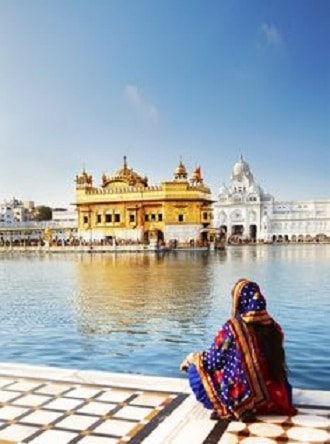
*This statement was compiled under the guidance of Sri Singh Sahib Manjit Singh, the Jathedar of Anandapur, who is one of the five spiritual and temporal heads of Sikhism; and Sri Akhal Takhat Sahib, his deputy. It was printed, along with Statements from ten other faiths, in Faith in Conservation by Martin Palmer with Victoria Finlay, published by the World Bank in 2003.*
**The brief statement can be found [here](https://interfaithsustain.com/Sikh-ecology/)**
**For other faith’s statements on the environment, please click [here](https://interfaithsustain.com/religion-and-ecology-articles/)**
Copied with permission from the Alliance of Religions and Conservation (ARC) www.arcworld.org
ICSD works on a global basis, with current engagement in Africa, the Middle East, North America, and Europe.
---
### [Prof Abu Sway Long Article](https://interfaithsustain.com/prof-abu-sway-long-article/)
**Published:** July 23, 2018
**Author:** ICSD
**Content:**
Towards an Islamic Jurisprudence of the Environment
*(Fiqh al-Bi’ah fil-Islam*)
By: Prof. Mustafa Abu-Sway
\[**This paper is based on a lecture given at the Belfast Mosque**\]
This paper aims at formulating a coherent and systematic jurisprudence of the environment based on the Islamic revealed knowledge and heritage. The latter reflects the practical experience in the field and, therefore, forms the ground for a positive relationship with the environment. Within the Islamic world-view, this positive relationship is perceived as an act of faith which comes in line with the essential role of human beings on earth; to worship the one and only God. Therefore, our relationship with the environment should be regulated in the field of jurisprudence.
In addition, the paper explores how the Islamic world-view takes care of the different components of the environment, each separately. Finally, there is a discussion of the aims \[*maqasid*\] of the Shari’ah, where the aims are reconsidered. The Epistemological Framework: Islam is considered a comprehensive way of life whose teachings cover, directly or indirectly, every possible human relationship including that with the environment. These teachings are primarily available in the revealed knowledge which comprises the Qur’an and the Sunnah. There remains two other sources, namely the Ijma’ and Qiyas; they are dependent on the first two in different ways and degrees. The relationship is so complex that cannot be represented in this paper for brevity. It is discussed, however, in books of *Usul al-Din*.
In what follows, some of the verses that define the epistemological parameters of the Qur’an are considered. One verse, at the beginning of Surat Al-Baqarah, presents the Qur’an as a book of guidance:
> **“This is the Book; In it is guidance sure, without doubt, to those who fear God”** (Qur’an, 2:2)
Moreover, Allah \[S.W.T\] shows that the Qur’an encompasses the foundations for knowledge and ethics, He says:
> **“…Nothing have We omitted from the Book…”** Qur’an, 6:38
In addition, the Qur’an announces that Islam, as a Din, has been perfected by Allah \[S.W.T\]. It is considered a comprehensive way of life which accommodates every aspect of it. The Islamic world-view is established upon the very notion of Islam as a perfect religion:
> **“…This day have I perfected your religion for you, completed My favor upon you, and have chosen for you Islam as your religion”** Qur’an, 5:3
It is no wonder, in the light of what has been discussed above, that a jurisprudence of the environment is founded. This paper presents all aspects of the environment from within the Islamic world-view, an not as something alien to it.
Jurisprudence \[*Fiqh*\] vs. Philosophy of the Environment:
This paper chose jurisprudence (*fiqh*) over philosophy for many reasons. The first reason is that “philosophy” is a term borrowed from the western world-view and therefore remains, until today, not welcomed in Islamic consciousness. Philosophy is still associated with sophistry and metaphysics which hampers its ability to bring about favorable behavior. Fiqh, on the other hand, is a accepted and associated in Islamic consciousness with the lawful and the prohibited in human behavior. Therefore, it is more capable of modifying behavior positively.
Furthermore, once this subject is accepted as part of jurisprudence, it becomes, relatively speaking, easier to include as integral part of the books of Fiqh, and in school curricula. This may facilitate the spread of environmental awareness, which is part and parcel of Islam. The Categories of the Relationship Between Human Beings and the Environment: 1. Vicegerency (*Khilafah*): The human being, in the Islamic world-view is considered a vicegerent (khalifah). This vicegerency is declared before the creation of the first human being:
> **“Behold, your Lord said to the angels: “I will create a vicegerent on earth.” They said: “Will place therein one who will make mischief therein and shed blood? While we do celebrate Your praises and glorify Your holy (name)?” He said: “I know what you know not.””** Qur’an, 2:30
In her/his capacity as a vicegerent, the human being is perceived as the trustee of the earth. She/he is not supposed to cause corruption in any form on earth (i.e. the environment). Life on earth entails great responsibilities. It is a test with accountability. It is followed by either reward or punishment. These meanings are mentioned in the Qur’an and the Sunnah. Vicegerency as a test is found in the following verse:
> **“It is He who has made you (His) vicegerents, inheritors of the earth: He has raised you in ranks, some above others: that He may try you in the gifts He has given you: for your Lord is quick in punishment: yet He is indeed Oft-forgiving, Most Merciful.”** Qur’an, 6:165
On the other hand, this vicegerency is subjected to observation:
> **“Then We made you heirs in the land after them, to see how you would behave!”** Qur’an, 10:14
The same message is implied in the Hadith of the Messenger of Allah, \[S.A.A.S.\]:
> **“Verily, this world is sweet and appealing, and Allah placed you as vicegerents therein; He will see what you will do. So, be careful of \[what you do in\] this world and \[what you do to/with\] women, for the first test of the children of Israel was in women!”**\[1\]
It is rather clear, now, that the Islamic world-view indicates that vicegerency on earth forms a test which includes how human beings relate to the environment. Is it going to be based upon divine instructions, or based upon personal desires and conjectures that might lead to the destruction of our environment. If the latter condition prevails, then vicegerency will be entrusted to a different people or generation. This possibility of this kind of switch is understood from the following two verses:
> **“…Call in remembrance that He made you inheritors after the people of Noah…”** Qur’an, 7:69
>
> **“And remember how He made you inheritors after the ‘Ad people and gave you habitation in the land…”** Qur’an, 7:74
The declaration of the institution of khilafah, which Allah \[S.W.T\] has informed the angels about, was reinforced by the verse that shows that Allah \[S.W.T\] has taught Adam the ‘names’ (*asma’*) of all things:
> **“And He taught Adam the nature of all things…”** Qur’an, 2:31
This discussion leads us to realize that there is an organic connection between proper knowledge and right behavior. Indeed, knowledge becomes a tool that renders humanity morally responsible. Ibn kathir said in his exegesis, regarding the above verse, the following important statement:
> “The right (interpretation) is that He taught him the names of all things: their particulars, attributes and functions”\[2\]
Therefore, vicegerency is based upon knowledge that enables the human being to be a care taker of the environment in which he/she dwells. Humanity should behave in such a way that would maintain the balance that exists within the environment. Rather, I should say to retrieve the balance that has existed before we have caused, collectively, many ecological disasters:
> **“And the earth We have spread out; set thereon mountains firm and immovable; and produced therein all kinds of things in due balance.”** Qur’an, 15:19
2\. Subjection (*Taskhir*): The earth is made available for human use, without abuse or misuse. The circle of things available for the benefit of humanity is much greater than that of the environment. There are numerous verses in the Qur’an that could be cited in this respect, but it suffices to mention three of them:
> **“And He has subjected to you, as from Him, all that is in the heavens and on earth: behold, in that there are Signs indeed for those who reflect.”** Qur’an, 45:13
>
> **“Do you not see that God has subjected to your (use) all things in the heavens and on earth. And has made His bounties flow to you in exceeding measure, (both) seen and unseen?”** Qur’an, 31:20
>
> **“He has made subject to you the Night and the Day; the Sun and the Moon; and the Stars are in subjection by His command: verily in this are Signs for people who are wise.”** Qur’an, 16:12.
There are other verses that point to the temporal nature of the subjected elements. The reason behind highlighting the temporality of things is to remind people of the Hereafter. It is hoped that once people are conscientious of the limitation of life on earth, they will behave in a positive and constructive way. As a result, it is anticipated that the environment itself will benefit from the proper behavior of people. That the cosmic order and natural phenomena ultimately come to an end, is reflected in this verse:
> **“…He has subjected the sun and the moon (to his Law)! Each one runs (its course) for a term appointed. He does regulate all affairs, explaining the Signs in detail, that you may believe with certainty in the meeting with your Lord.”** Qur’an, 13:2
The subjection of the elements that make up the environment is spoken of in many chapters of the Qur’an:
> **“It is He who has made the sea subject, that you may eat thereof flesh that is fresh and tender., and that you may extract therefrom ornaments to wear; and you see the ships therein that plough the waves, that you may seek (thus) of the bounty of God and that you may be grateful.”** Qur’an, 16:14.
>
> **“It is God who has created the heavens and the earth and sends down rain from the skies, and with it brings out fruits wherewith to feed you; it is He who has made the ships subject to you, that they may sail through the sea by His command; and the rivers (also) has He made subject to you.”** Qur’an, 14:32
>
> **“Then We subjected the Wind to his power, to flow gently to his order, whithersoever he willed …”** Qur’an, 38:36
The above list does not exhaust all the relevant verses. There is a unique quotation from the Qur’an that connects the notion of ‘subjection’ with the Hereafter. The following three verses, though specifically mention the subjection of animals and ships for riding, certainly go beyond the literal meaning:
> **“That has created pairs in all things, and has made for you ships and cattle on which you ride,
> In order that you may sit firm and square on their backs, and when so seated, you may celebrate the (kind) favor of your Lord, and say, “Glory to Him Who has subjected these to our (use), for we could never have accomplished this (by ourselves),
> “And to our Lord, surely, must we turn back!”** Qur’an, 43:12-14
It is clear that humanity was not restricted to the use of ships and animals to move from one place to another. There are many other modes of transportation that are subjected to our use. One can see the underlined supplication (*du’a’*) contained within the above verses imprinted on stickers which decorate many Muslim cars, or hanging inside cars. One can also here the *du’a’* recited before takeoff of many airplanes that are owned by Muslim companies. But it seems that this is not the limit!
If we drop for one minute that which is subjected, we will be left with the notion of ‘subjection’ along with that of returning ultimately to our Lord. What I would like to suggest here is the possibility of extending, in an abstract way, the notion of ‘subjection’ to every thing that is of help to human beings, regardless of its degree of sophistication. That end result will be a human psyche that is constantly reminded of the Hereafter. This should not be interpreted as a gloomy approach. On the contrary, I think that people who reach this state appreciate life as the farm which one works out here, yet the harvest is there in the Hereafter.
Therefore, all mentioned verses clearly state that the heavens and the earth, the rivers and the seas, the cattle and animals, and much more are subjected to humanity. In this, we find support and backing for the institution of *Khilafah*. This will strengthen the human being to fulfill his/her basic role on earth, which is to worship God. 3. “Inhabitation” (*I’mar*): The Qur’an, moreover, makes it clear that the earth is our habitat and that we are required to dwell on it, work it out and establish a balanced way of life without excesses or deficiencies. To limit the translation of *I’mar*‘ to inhabitation will not do justice. The meaning includes spreading and settling all over the earth, inhabiting every livable quarters, building …etc. In short, it includes every positive activity that would make life on earth prosperous. If an activity diverts humanity from the right path (i.e. against the *Shari’ah*), then it cannot be considered as *I’mar*. The following verse reflects the relationship between creation and the positive role expected from humanity:
> **“To the Thamud People (We sent) Salih, one of their own brethren. He said: “O my People! Worship God: you have no other God but Him. It is He Who has produced you from the earth and settled you therein: then ask forgiveness of Him, and turn to Him (in repentance): for my Lord is (always) near, ready to answer”** Qur’an, 11:61
This verse reminds us of the bounty that God has bestowed upon humanity. There is a beautiful connection in the verse between demanding pure monotheism from humanity at large, despite the context which uses the people of Thamud as a medium. Believing in the oneness of God and the notion of *I’mar* come hand in hand.
The renowned contemporary Muslim scholar Sayyid Qutub commented on this verse, he said:
> “And Salih reminded them (the people of Thamud) about their origination from earth, the creation of every individual from the nutrition of the earth or from its components that make up their bodies. Despite being (created ) from this earth and its elements, Allah appointed them vicegerents so that they may inhabit it! He wanted them to be vicegerents as a species, and as individuals to replace those who came before they did!”\[3\]
Here, I came to the conclusion that the search for another livable planet, according to my understanding of the verses of the Qur’an,\[4\] will yield nothing. All the scenarios in this respect will remain listed under the heading: “Science Fiction”! We should rather make life on earth possible for generations to come. I hope that my position regarding the said issue will not be interpreted as anti-science, or against research in outer space. Nevertheless, I would like to see that the enormous funds spent on building observatories to receive messages from outer space, will be used to relief the poverty and diseases that infest our planet earth. At least no one can deny the clear message that we are receiving all the time from disenchanted fellow human beings. It is the imbalance between the south and the north, caused at the hands of the latter, which prevents a proper *I’mar*.
I have always been sarcastic about them (aliens!) discovering us on earth doing what we are doing now! Before we invite guests from outer space, our home (i.e. earth) should be tidy. From an Islamic perspective, this is only possible if the Shari’ah is fulfilled, and humanity lives according to divine law. The Qur’an shows that any attempt to achieve *I’mar* and prosperity away from divine revelation and guidance will certainly lead to destruction:
> **“Do they not travel through the earth; and see what was the End of those before them? In strength they tilled the soil and populated it in greater numbers than these have done: there came to them their apostles with Clear (Signs), (which they rejected, to their own destruction): it was not God who wronged them, but they wronged their own souls.”** Qur’an, 30:9
The *I’mar* of the earth should be in areas and projects that could benefit humanity and not harm her. This means that projects and activities that destroy the environment are excluded. The capitalist system encourages destructive industries such as the tobacco industry. It pollutes the air, destroys the health which results in lost time and money in treating the resulting diseases, misuse of the land which could be used to plant a nutritious crop, …etc. One can only cite the statement of Dr. Yusuf Al-Qaradawi regarding this issue, he said:
> “As regarding smoking \[tobacco\], it is physically, psychologically and economically harmful; the ruling appropriate for it is prohibition \[*al-tahrim*\]; similar to the \[following example whereby\] God said in describing His Messenger \[Muhammad\] in the Books \[Torah and Injil\] of the ancient people: (…he allows them as lawful what is good \[and pure\] and prohibits them from what is bad \[and impure\].)
>
> The natural disposition \[*fitrah*\], the intellect and experimentation confirm that ‘tobacco’, or ‘smoking’ is not at all good.”\[5\]
Taking Care of the Environment as an Act of Faith: The basic role of the human being on earth is to worship Allah \[s.w.t.\]:
> **“I have only created Jinns and men, that they may serve Me.”** Qur’an, 51:56
To serve God or to worship Him is a comprehensive way that covers every aspect of life. Fulfilling all that God has demanded from us in terms of praying, fasting, zakah and hajj indicates worshipping. The same could be said regarding any action that the human being performs in accordance with the Islamic world-view, as long as I is done for the sake of God.
Every act, as long as it is good \[e.g. protecting the environment\] and done for the sake of Allah \[s.w.t.\], is considered an act of worshipping that generates reward in this life and the hereafter. This is the via media between two extremes; total disregard for the environment, and worshipping it as the case of nature worshippers.
The total disregard for the environment is detrimental for the human being. The same could be said regarding the extreme position of protecting the environment in an absolute sense. An example is advocating the protection of every single member of the animal kingdom to the level which might endanger the life of the human beings involved in rescue operations.
It should be known that Islam advocates the protection of the environment, though not in name, for the word ‘environment’ \[*bi’ah*\], along with its connotations, evolved in recent times. That Islam has high regard for the environment is something that can be found in the Qur’an and the Sunnah as we shall discuss later in this paper. The fact that to protect the environment is considered an act of worshipping, does not mean that every component of the environment should be saved. In fact, it is sometimes to the contrary. The Prophet \[S.A.A.S.\] stated that a person who uprooted a tree \[which formed an obstacle\] in the path of people, ended up in heavens.
The Islamic position forms a middle path between human behavior that has disregard to the environment and those who practically worship the environment or certain parts of it. While the Islamic world view supports the protection of environment from the greedy behavior of human beings, it allows room for sustainable development. The Environment is the Loci of the Signs Pointing to Allah \[S.W.T.\]: The environment is perceived as the place where the signs (e.g. rivers, plants, and birds), pointing to Allah \[S.W.T.\] exist:
> **“Verily in the heavens and the earth, are Signs for those who believe. And in the creation of yourselves and the fact that animals are scattered (throughout the earth), are Signs for those of assured Faith. And the alteration of Night and Day, and the fact that God sends down Sustenance from the sky, and revives therewith the earth after its death, and in the change of the winds,-are Signs for those that are wise.”** Qur’an, 45:3-5
As a result, any destruction occurring to the environment is tantamount to destroying these signs. If any species becomes extinct, it is considered a loss of a Sign that reflects the greatness of the Creator. It is indeed a very sad thing if we continue to destroy the environment, because we will prevent the generations to come from having a healthy relationship with the environment, where “healthy” means the chance to experience these Signs.
It has been said that there are two books; the one which is read \[i.e. the Qur’an\] and the one which is seen \[i.e. the universe\]. While it is known why the Qur’an is described as a Book, the universe is considered a book in the sense that includes signs pointing to God. A transparent heart is needed, though, in order to unveil the way these signs function. Indeed, once the person is not blocked from “reading” the signs that fill up the universe, beautiful forms of *dhikr* are ensued, and a correlation between many verses of the Qur’an and the corresponding “verses” of the universe are established.
Being blocked from the Signs is best expressed with the example of the large industrial or metropolitan city. The huge structures, including high rise buildings, change the horizon. Sunrise and sunset are not anymore phenomena that form a part of daily experiences; at least not for those who are trapped inside the city. One needs a lot of ingenuity to see a “sign” in concrete slabs!
In the absence of green lungs for the city, its dwellers, who only see steel and concrete growth, might not experience the natural cycles of growth stated in the following verse:
> **“A Sign for them is the earth that is dead: We do give it life, and produce grain therefrom, of which ye eat.”** Qur’an, 36:33.
Though we do not understand how, everything in the universe, including the components of the environment, participates in making remembrance \[dhikr\] of God:
> **The seven heavens and the earth, and all beings therein, declare his Glory: There is not a thing but celebrates His praise; and yet ye understand not how they declare His Glory! Verily He is Oft-Forbearing; Most Forgiving.”** Qur’an, 17:44
There are many verses that mention specific beings that praise God; some of which are the following:
> **“Nay, thunder repeateth His praises, and so do the angels, with awe …”** Qur’an, 13:13**“Seest thou not that it is God Whose praises all beings in the heavens and on earth do celebrate, and the birds (of the air) with wings outspread? Each one knows its own (mode of) prayer and praise. And God knows well all that they do.”** Qur’an, 24:41
>
> **“…It was Our power that made the mountains and the birds celebrate Our praises, with David…”** Qur’an, 21:79
It is rather obvious that both animate and inanimate objects celebrate the praises of God. As such, the destruction of the habitat of any species means the extinction of a Sign that, not only leads people to remember God, but also participates in praising God. With just a little imagination, one can see the universe in a constant circle of *dhikr*. Excluded of course are those whose hearts are not sensitive enough to see the need to join the rest of the universe.
That the creation inherently point in the direction of the Creator is something widely discussed by Muslim scholars and mystics. A very beautiful and illuminating statement by Sa’id Al-Nursi (d. 1960) indicates that every creature, by its own nature, has what I would translate liberally as a Divine stamp that cannot be imitated.
> “An illuminated heart is capable of seeing the stamp which help in transcending this realm to the other!”\[6\]
The Impact of Faith on the Environment: Allah \[S.W.T.\] provided humanity with sustenance; He only asked them not to worship or associate anything or anyone with Him:
> **“ye people! Adore your Guardian-Lord, who created you and those who came before you, that ye may have the chance to learn righteousness; Who has made the earth your couch, and the heavens your canopy; and sent down rain from the heavens; and brought forth therewith fruits for your sustenance; then set not up rivals unto God when you know the (the truth).”** Qur’an, 2:21-22.
The Qur’an shows that there is a correlation between the behavior of people and the conditions of the environment. The right and moral behavior yield positive results:
> **“If the people of the towns had but believed and feared God, We should indeed have opened out to them (all kinds of) blessings from heaven and earth…”** Qur’an, 7:96
>
> **“And o my people! Ask forgiveness of your Lord, and turn to Him (in repentance): He will send you the skies pouring abundant rain, and add strength to your strength: so turn ye not back in sin!”** Qur’an, 11:52
The opposite is also true. Disbelief and swerving from the right path that God has designated for humanity will result in negative impact on the environment:
> **“But whosoever turns away from My Message, verily for him is a life narrowed down …”** Qur’an, 20:124
In addition, there are verses that establish a correlation between natural disasters and disbelief, immoral behavior, or a combination of both:
> **“…He flingeth the loud-voiced thunder-bolts, and therewith He striketh whomsoever He will …”** Qur’an, 13:13
>
> **“Do ye feel secure that He will not cause you to be swallowed up beneath the earth when you are on land, or that He will not send against you a violent tornado (with showers of stones) so that ye shall find no one to carry out your affairs for you? Or …a heavy gale to drawn you because of your ingratitude…”** Qur’an, 17:68-69
The end result of disbelief or immoral acts, when they become prevalent, is the total destruction of the environment. Such is the story of prophet Nuh (Noah) and the flood which destroyed every thing except the Ark and its load of people and animals. The order that came to end the flood show that the water gushed and abated at God’s command:
> **“When the word went forth: “O earth! Swallow thy water, and O sky! Withhold (thy rain)!” and the water abated, and the matter was ended. The ark rested on mount Judi, and the word went forth:” Away with those who do wrong!”** Qur’an, 11:44
The Qur’an is full with stories that reflect the correlation between wrong doing and Divine punishment which lead to a certain measure of destruction. The chapter of the Cave \[*Kahf*\] include a story about two separate owners of two fruit orchards with water flowing in between. One of them faithfully and humbly put his trust in God, but the other did not have the proper relationship with God; he arrogantly alleged that his garden will always be the same without invoking the Will of God \[i.e without saying: “*Insha’Allah*“\]. How did this parable end?
> **“So his fruits (and enjoyment) were encompassed (with ruin), and he remained twisting and turning his hands over what he had spent on his property, which had (now) tumbled to pieces to its very foundations, and he could only say, “Woe is me! Would I had never ascribed partners to my Lord and Cherisher!”** Qur’an, 18:42
The same criterion could be applied to the story of the owners of the garden in the chapter of Pen \[*Qalam*\]. The owners wanted to gather the fruits very early in the morning so that no needy people would have a share. The result was that before they went to the garden, and in the course of the night, there came a visitation from God which swept away all around. When they saw that their garden looked like a dark and desolate spot, they were reminded by one of them that they have transgressed:
> **“They said:” Glory to our Lord! Verily we have been doing wrong!””** Qur’an, 68:29
As a general rule, there is a direct relationship between wrong doing and calamities:
> **“Whatever misfortune happens to you, is because of the things your hands have wrought, and for many he grants forgiveness.”** Qur’an, 42:31
In addition, committing sin generates corruption everywhere:
> **“Mischief has appeared on the land and sea because of (the meed) that the hands of people have earned, that (God) may give them a taste of some of their deeds: in order that they may turn back (from Evil).”** Qur’an, 30:41
Corruption \[*fasad*\] in this context covers all kinds of material and spiritual damage. One should be thankful that God did not hasten punishment whenever humanity erred. Had punishment been simultaneous, life on earth would have been interrupted long time ago:
> **“If God were to punish people according to what they deserve, He would not leave on the back of the(earth) a single living creature: but He gives them respite for a stated Term: when their Term expires, verily God has in His sight all His servants.”** Qur’an. 35:45
In Surat Al-Nahl \[Bee\], the same notion is reinforced again:
> **“God sets forth a Parable: a city enjoying security and quite, abundantly supplied with sustenance from every place: Yet was it ungrateful for the favors of God: so God made it taste of hunger and terror (in extremes) (closing in on it) like a garment (from every side), because of the (evil) which (its people) wrought.”** Qur’an, 16: 112
Its clear that not thanking God for His bounty led to its disappearance. For hunger means that there was a Divine order that led to the interruption of the normal function of the environment which led eventually to less sustenance in a way commensurate with the sin that people have committed. Had they been thankful, the situation could be reversed:
> **“And remember! Your Lord caused to be declared (publicly): “If ye are grateful, I will add more (favors) unto you…”** Qur’an, 14:7
This verse is a proof that positive moral behavior, which is in line with the Islamic world-view, leads to a better physical environment; God willing, of course. The Islamic Protection of The Environment: This section provides detailed accounts from the Qur’an and the Sunnah regarding the protection of the following areas: human beings, animals, plants, land, water, and air. 1. Human Beings: Despite the differences regarding the inclusion of human beings as a part of the environment, this paper consider humans to be part of the ecological system. I have adopted this position though I know that the rest of the ecosystem is subservient to humans.
Islam called for the protection of the human being. The Shari’ah specifically called for the protection of five things pertaining to humans: life, religion, offspring, intellect, and property.
Islam emphasized the sanctity of human life in the strongest possible terms:
> **“On that account: We ordained for the Children of Israel that if any one slew a person-unless it be for murder or for spreading mischief in the land- it would be as if he slew the whole people. And if any one saved a life, it would be as if he saved the life of the whole people…”** Qur’an, 5:35
The rulings of the Shari’ah aim at preserving the life of the human being including murderers. It is a well established fact that punishment for murder is death penalty. Nevertheless, the Qur’an encouraged the family of the murdered person to forfeit their right that the murderer be executed:
> **“Nor take life-which God has made sacred-except for just cause. And if anyone is slain wrongfully, we given his heir authority (to demand Qisas or to forgive): but let him not exceed bounds in the matter of taking life; for he is helped (by the Law).”** Qur’an, 17:33
For the same reason, committing suicide is prohibited:
> **“…Nor kill (or destroy) yourselves: for verily God hath been to you Most Merciful!”** Qur’an, 4:29
Moreover, a fetus has a life which should be preserved. Abortion is prohibited unless for a permitted reason (ex. the life of the mother is endangered). In Islamic jurisprudence, there is blood money to be paid by a person who kills a fetus intentionally or accidentally.
Wars remain a major factor in killing human beings and in the destruction of the environment. The Islamic position, which is quite to the contrary of the picture depicted by the western media, states in clear terms that peace is the norm and war is the exception. The Prophet \[S.A.A.S\] prohibited that a Muslim wishes to confront the enemies in the battlefield.\[7\] I understand that the *raison d’etre* of this hadith is to give priority to peaceful solutions whenever conflicts surface between Muslims and other fellow humans. In fact, the first thirteen years of the history of Islam in Makkah reflect passive resistance. Nevertheless, self-defense is permitted to protect Islam and Muslims. If Muslims have to go to war, then they have to abide by Islamic codes of conduct during warfare:
> **“Fight in the cause of God those who fight you, but do not transgress limits; for God loveth not transgressors.”** Qur’an, 2:190
The essential limits that should not be transgressed are best expressed by Abu Bakr, the first Caliph, in his address to Yazid Ibn Abu Sufian, the commander of the army that went north to Sham \[i.e. Greater Syria\]:
> “…And I instruct you \[to fulfill the following\] ten \[orders\]: Do not kill a woman, nor a child, nor an old man; do not cut down fruitful trees; do not destroy \[land or housing\] in use; do not kill a goat or a camel unless for food; do not flood palm trees \[with water\] nor burn them down …”\[8\]
Such a quotation, which reflects the ethos of the *Shari’ah*, defines the norm that the life of those who do not engage themselves directly in war should be spared. Protection is also extended to animals and plants; they should not be used as part of collective punishment.
Accordingly, all weapons of mass destruction are unacceptable from an Islamic perspective. All chemical, biological and nuclear weapons should be prohibited world wide without any exceptions. It is not enough to have nuclear non-proliferation treaties that exempt certain countries because they did not sign. If the super powers only head to the fact that humanity needs a safer and cleaner earth! No country should be able to stock weapons of mass destruction or non-conventional weapons.
Here I find myself at odds with a statement of Dr. Yusuf Al-Qaradawi. He said, in one of his most recent books, that “regarding the kinds of weapons that are used in fighting, how to make them and how to train \[soldiers\] how to use them, etc., is not an issue to \[be settled by\] religion; it is the business of the ministry of defense and the headquarters of the armed forces.”\[[9](https://www.missionislam.com/science/enviroment.html#9)\]I do believe that Dr. Al-Qaradawi is troubled by what is happening to Muslims around the world, and that he aims at allowing room for decision makers in the Islamic world to consider measures that would deter aggressors from attacking them with weapons of mass destruction. I think that this is a legitimate concern, yet the statement is very broad and it might be misinterpreted by those in office. On the other hand, Muslim scholars should voice their concern about these issues and not to give a free hand to the military apparatus which could waste the resources of the Ummah in compiling weapons, rather than investing them in the re-establishment of a leading Islamic civilization.
We should remember that the American use of atomic bombs against Japan, during World War II, is a much protested and regretted act. The increase in ecological awareness is making it difficult for governments to continue its nuclear programs. There was a global protest against the French nuclear tests that took place in the French Polynesian Islands. Though it is not good enough, it appears that the French government pledged an end to nuclear tests.
Not only weapons on that scale should be prohibited, but also weapons such as anti-personnel mines should be banned. There is nothing that could justify the killing or the maiming of human beings by these mines. Millions of them are spread around the world; only concerted efforts on a global level might bring some relief and hope. While one prays for an end to armed conflicts, one should remember that killing the enemy during war is not an end in itself.
The fact the Muslims are subjected to different forms of attacks that range from ethnic cleansing to discrimination in the work place, should not be used by Muslims as a pretext to behave in the same way as their enemies:
> **“O ye who believe! Stand out firmly for God, as witnesses to fair dealing, and let not the hatred of others to you make you swerve to wrong and depart from Justice. Be just: that is next to piety: and fear God. For God is well-acquainted with all that ye do.”** Qur’an, 5:9
Many of the conflicts around the world were/are fueled by inhuman ideologies that stress the supremacy of one “race” over the other. This form of social Darwinism was translated into a systematic program by the Nazis to annihilate other races. The Serbs performed some of the most heinous crimes against humanity in Bosnia and Kosova, despite the fact that the “race” is the same! It is clear that Muslims in these cases were victimized because of their faith.
The Islamic world view does not permit any ideas of negative value judgment regarding the biological differences in terms of color and shape. They are to be perceived positively as Signs pointing to God:
> **“And among His Signs is the creation of heavens and the earth, and the variations in your languages and your colors: verily in that are Signs for those who know.”** Qur’an, 30:22
The differences in the colors of people function exactly like those between animals, plants and inanimate objects:
> **“Seest thou not that God sends down rain from the sky? With it We then bring out produce of various colors. And in the mountains are tracts white and red, of various shades of color, and black intense in hue. And so amongst men and crawling creatures and cattle, are they of various colors. Those truly fear God, among His Servants, who have knowledge: for God is Exalted in Might, Oft-Forgiving.”** Qur’an, 35:27-28
Those who know will appreciate the differences; those who are ignorant do not. There aren’t many races; there is one human “race” reflecting many prisms. The beautiful different colors and shapes of flowers do not invite us to damage all but one. They are there as gifts and Signs from God to help us remember Him. As such, they should be appreciated and preserved.
The only legitimate differentiation in Islam is based upon moral, not physical character:
> **“O mankind! We created you from a single (pair) of a male and female, and made you into nations and tribes, that ye may know each other (Not that ye may despise each other). Verily the most honored of you in the sight of God is (he who is) the most righteous of you. And God has full knowledge and is well acquainted (with all things).”** Qur’an, 49:13
The compendiums of hadith are full with reports that reflect the spirit of brotherhood regardless of the physical appearances. The companions of the Prophet himself reflect a rainbow of colors: they comprised Muhammad the Arab, Suhayb the Roman, Suleiman the Persian and Bilal the Ethiopian.
In addition, Islam was pluralistic in its relationship with the “other” from the outset. It is already established that if the “otherness” is based upon differences in color, it does not generate a conflict. In addition, if the “otherness” is based upon a different belief, such as the Jews and the Christians, it is also tolerated in the Islamic world-view. Tolerance is emphasized in the Qur’an and in the Sunnah in many contexts:
> **“God forbids you not, with regard to those who fight you not for (your) Faith nor drive you out of your homes, from dealing kindly and justly with them: for God loveth those who are just.”**Qur’an, 60:8
Where other systems of belief and communities failed to deal justly with the “other” who lives amongst them, Islam succeeded. One may compare the history of the “other” in the Islamic state and that of the “other” in Europe. The best case is that of the “other” as a Jew!
There are ways and means to protect the life of the human being in Islam. There is a broadly stated principle in the Qur’an which prohibits all harm:
> **“…And make not your own hands contribute to (your) destruction; but do good; for God loveth those who do good.”** Qur’an, 2:195
This verse highlights the dangers that fall within the responsibility of the individual towards oneself. They include taking drugs, alcohol, or any activity which is contrary to natural disposition such as homosexuality. Islam is amongst the minority (the Catholic church condemns the act but not the homosexual) that condemns homosexuality; some reformed synagogues and some Protestant churches allow marriages between the members of the same sex. Taken to an extreme, homosexuality leads to the annihilation of mankind!
Add to this gloomy picture is adultery and common use of needles in drugs. As such, the number of people contracting AIDS is mushrooming. Against this background, the Islamic way of life provides a safety valve which, if accepted, can save humanity. 2. Animals: Islam has enjoined upon Muslims right relationship with animals. They are asked to treat animals well, and they are not allowed to kill animals except for food. The latter permission has to be carried out in accordance with the Shari’ah. Only in limited cases some animals are allowed to be killed when they endanger the life of the human.
To slaughter an animal, one has to use sharp object that will save the animal the pain associated with the use of a blunted object. Shaddad Ibn Aws reported that the Prophet \[S.A.A.S\] said:
> **“…and excel in slaughtering; sharpen your blade \[so you may\] relief your slaughtered \[animal\].”**\[10\]
In fact, Islam went beyond any expectations when the Shari’ah demanded that the pysche of the animal should be taken into consideration. Imam Ahmad Ibn Hanbal narrated from the report of ‘Umar that the Prophet \[S.A.A.S\] made it imperative to sharpen the blades and to hide them from \[the sight of\] animals. This ethos is reiterated in another context. Ibn ‘Abbas reported that a man \[kept\] a sheep laid down while he was \[still\] sharpening his blade; the Prophet \[S.A.A.S\] said \[to him\]:
> **“Would like to it to die twice? Why didn’t you sharpen your blade before laying it down?”**\[11\]
The protection of animals in Islam includes the notion of hunting. While hunting is permitted in principle, it might become prohibited depending on the conditions the surround it. Ibn Taymiyyah, the Hanbalite medieval scholar, said that “hunting out of necessity is permitted; if it is for fun and playing, it is detested; and if it causes injustice to people, by destroying their fields and property, it is prohibited.”\[12\]People should be behave with great responsibility regarding hunting. Hunting should be out of necessity; where necessity is defined in terms of need for food, where other means are not possible. One should also take into consideration the authorities determination of hunting seasons and the kind and number of animals and birds allowed to be hunted. Also, hunting tools that cause great pain should be prohibited. The latter include traps that lock on the leg of the animal causing pain and bleeding until the hunter returns which could be for days!
The following story shows that the Prophet \[S.A.A.S\] did not tolerate any “hunting” which was not out of necessity. Ibn Mas’ud said: ” We were traveling with the Prophet \[S.A.A.S\] when he left \[us for a while\]; we saw a bird with its two chicks and we took the chicks. \[Their mother\] started spreading its wings \[in protest\]. When the Prophet \[S.A.A.S\] came \[and saw what happened\] he said: **“Who caused her to become bereaved \[by taking away\] her two children ? Return her two children to her!”**\[13\]One can appreciate the position of the Prophet \[S.A.A.S\] much more when one realizes the choice of words used in the hadith. Instead of chicks \[*farkhiyha*\], he used children \[*waladayha*\] which, reflect the a very humane perspective.
Moreover, one should not take lightly the issue of killing, without any justification, even if the victim is a very small animal or bird. ‘Abdullah Ibn ‘Amr reported that the Prophet \[S.A.A.S\] said:
> **“No human being kills a sparrow or \[something\] larger, without right, except that God will ask him about it (hold him responsible!) on the Day of Judgment” It was said: O Prophet of God! What is its right? He said: ” Its right is that you slaughter it and eat it, not that you decapitate it and through it!”**\[14\]
Another hadith to the same effect was narrated by Ahmad, Al-Nisa’i and Ibn Habban from the report of Al-Sharid \[May God be pleased with him\], he said: I heard the Prophet \[S.A.A.S\] saying:
> **” If you kill a sparrow senselessly, it will hasten to God on the Day of Judgment saying : O Lord! So and So killed me for play and not for use!”**
Commenting on the previous two narrations and what could be deduced from them, Dr. Yusuf Al-Qaradawi said:
> “The Jurist \[*faqih*\] deduces from the them the prohibition of the killing of an animal except for food. That is why Imam Al-Mundhiri included both of them in his book *al-Targhib wa al-Tarhib*, in order to warn people against mutilating animals, and killing them except for food.Animal rights groups deduce that it is imperative to respect these living beings, to protect their life, and not to touch them except for a need.The ecologists see in these two narrations the necessity to preserve the components of the environment, and not to allow \[destructive\] playing which will lead to the annihilation and extinction of these components without any reason.As for the economist, he understands that the hadith clearly brings the attention to the imperative need to protect all resources. They should not be wasted in vain without any economic return. Killing an edible animal without eating it means the loss of a part of the national resources, albeit small. The scholar of ethics realizes the comprehensive nature of Islamic ethics. He also sees how broad is the domain of responsibility which includes, in addition to human beings, all living beings including animals and birds. Indeed, in other narrations, it includes inanimate objects.The same applies to the scholar of education, for Islamic education has a broad horizon, and goes beyond religious education, which in the minds of many people is restricted to imbuing the creed, and teaching the rituals. It is education that encompasses every activity of the human which practiced in life: spiritual and material, religious and worldly, individual and social, theoretical and practical.”\[15\]
Another area of prohibition covers the hunting of wild animals for reasons other than food (e.g. for fur). Mu’awiya \[May God be pleased with him\] reported that the Prophet \[S.A.A.S\] said: **“Do not “ride” on silk and tiger fur”**\[16\]The prohibition of the use of silk and tiger fur, for seating, whither on saddles or in homes, is to prevent pompous life styles. One can deduce, by analogy, that the fur of all wild cats can not be used. This might come in handy to help in the protection of the endangered Asian tigers that face the extinction though for a different reason. Many people in South East Asia and the Far East believe in the existence of Aphrodisiac foods that are associated with “strong” animals including parts of tigers…etc.
In addition, Islam prohibits the use of animals as targets for shooting. Ibn ‘Umar passed by a group of youth, from the tribe of Quraysh, who were shooting their arrows at a bird, and whenever they miss the aim, the owner of the bird takes the arrow for himself. But when they saw Ibn ‘Umar they dispersed. He exclaimed: who did this? May he be cursed!\[17\] The Prophet \[S.A.A.S\] cursed those who create a target out of a being with a soul.
Any unjustified killing of an animal, direct or indirect is prohibited. There is a great punishment awaiting those who do so. Ibn ‘Umar reported that the Prophet \[S.A.A.S\] said:
> **“A woman who tied a cat will go to Hellfire; she neither fed it, nor allowed it to find food on its own.”**\[18\]
The prohibition to kill animals for no public or private good has been already mentioned in the speech of Abu Bakr to the Muslim army.
Furthermore, hitting the animals and marking them in the face is prohibited. Jaber reported a hadith to this effect: one should look for alternative ways to mark animals such as non poisonous paint…etc.\[19\]
It is also prohibited to set animals against one another. This practice is associated nowadays with gambling. Ibn ‘Abbas reported a hadith in which the Prophet \[S.A.A.S\] prohibits this practice.\[20\]
The Shari’ah aims to protect animal abuse in the name of having fun or sport. It is clear that “wrestling” bulls cannot be accepted from an Islamic perspective as a sport. I find it obnoxious that sport programs air these “sports”! One should reconsider whither harming oneself or others, be it humans \[e.g. boxing\] or animals, could be included in sports.
To protect the animals, Islam has also looked into the load an animal can carry without harm. The Prophet \[S.A.A.S\] prohibited riding on weak animals.\[21\]The Companions and later on generations acted according to this Hadith: Malik reported that ‘Umar Ibn Al-Kattab, when he was a Caliph, passed by a donkey with mud blocks on it. He \[assessed that the load was excessive and\] unloaded two blocks. The lady who owned the donkey asked ‘Umar: Do you have an authority over my donkey? He answered: What do you think I am doing in this position?\[22\]It is clear that the institution of the Caliphate, the highest executive office in the Islamic state, is responsible for the welfare of all the living beings within its jurisdiction. This clear in the answer of ‘Umar Ibn Al-Khattab. It is also vivid in the decrees of Caliphs who came later. According to Ibn ‘Abd Al-Hakam, ‘Umar Ibn ‘Abd Al-‘Aziz sent a lettre to the governor of Egypt asking him to reduce the load of a camel from one thousand to six hundred pounds.\[23\]Not only physical harm to animals is prohibited, but also insulting or cursing. Al-Nawawi, in his famous compendium of Hadith *Riyad al-Salihin* which has a topical arrangement, established a chapter under the title “The Prohibition of a Cursing a Specific Human being or an Animal”. He narrated a hadith based on the report of ‘Imran Ibn Al-Hasin who said:
> **“The Messenger of God \[S.A.A.S\] was traveling once\[with a group of companions which included\] a woman from amongst the Ansar on a camel. \[It seems that at one point driving her camel became difficult\] she was annoyed, and cursed the camel! The Messenger of God heard her and said: “Now that it is cursed, unload it and allow it \[to roam free\]”**‘Imran said: I can almost see it now going around amongst people and no one pays attention to it.\[24\]
One of the most unique features of the Shari’ah is the way voluntary almsgiving \[sadaqah\] is distributed. It is stated that it could be given “to rescue those in need amongst the servants of God and the creatures that God has enjoined upon us to take care of them.”\[25\]
This position is also stated by Ibn Taymiyyah who said that “being good to animals is one way of Worshipping God \[‘ibadah\]”.\[26\] All this is in line with the Hadith of the Prophet \[S.A.A.S\]: **“There is reward in \[caring for\] every living being.”**\[27\]The books of jurisprudence are full with discourses regarding the care of animals. This should not come as a surprise if we know that one of the prophets of Islam, Suleiman \[Peace be upon him\], has changed the path of his army to avoid hurting ants:
> **“At length, when they came to a (lowly) valley of ants, one of the ants said: “O ye ants, get into your habitations, lest Solomon and his soldiers crush you (under foot) without knowing it.”
> So he smiled, amused at her speech; and he said: “O my Lord! So order me that I may be grateful for thy favors, which Thou hast bestowed on me and my parents, and that I may work the righteousness that will please Thee: and admit me, by Thy Grace, to the ranks of Thy righteous Servants.”** Qur’an, 27:18-19
So the greatness of the kingdom that was granted to prophet Suleimanm, along with all the might associated with it, did not prevent him from heeding to the ants. This position towards the ants is further confirmed in a Hadith narrated by Abu Dawud, with a sound chain of narrators, that Ibn ‘Abbas reported that the Prophet \[S.A.A.S\] prohibited the killing of four creatures: **“The ant, the bee, the hoopoe and the sparrow-hawk.”**
The story of Nuh and the Flood also confirms the utmost care to prevent the extinction of any species. God commanded him to carry a pair of every species in the ark:
> **“…We said: “Embark therein, of each kind two, male and female…”** Qur’an, 11:40
Yet, when an animal is proven to be a source of danger or harm, it is permitted to kill it. Al-Bukhari and Muslim narrated from the report of ‘A’ishah that the Messenger \[S.A.A.S\] said:
> **“Five creatures, all harmful, can be killed in the Haram: the crow, the kite, the scorpion, the mouse and the dog that bites \[people without being provoked\]”.**
If it were not for the harm, actual or anticipated, there would be no permission to kill these animals, rodents, insects and birds. This message is further confirmed in another Hadith of the Prophet \[S.A.A.S\], he said:
> **“Weren’t the dogs a community like all communities, I would have ordered the killing of \[all\] of them. So kill the wild and black amongst them.”**\[28\]
The reference to animals living in communities is clearly stated in the Qur’an:
> **“There is not an animal (that lives) on the earth, nor a being that flies on its wings, but (forms part of) communities like you…”** Qur’an, 6:38
The Hadith that allows killing the said five animals in the Haram, shows that the original position towards the Haram, the Noble Sanctuary in Makkah, is to prohibit any act of killing, including hunting, by pilgrims. Also cutting the trees of the Haram is prohibited. The Haram might be considered the first protected “natural reservation” in the history of humanity. To emphasize the sanctity of the Haram, which is created by Divine order, the transgressors are punished:
> **“ye who believe! Kill not game while in the Sacred precincts or in pilgrim garb. If any of you doth so intentionally, the compensation is an offering, brought to the Ka’bah, of a domestic animal equivalent to the one killed, as adjudged by two just men among you; or by way of atonement, the feeding of the indigent; or its equivalent in fasts: that he may taste the penalty of his deed. God forgives what is past: for repetition God will exact from him the penalty. For God is Exalted, and the Lord of Retribution.”** Qur’an, 5:98
3\. Plants: Islam prohibited the cutting or destruction of trees and plants, and encouraged people to protect and increase plants for the great reward associated with that. The speech of Abu Bakr, that was mentioned earlier, included the prohibition to destroy trees as an act of vengeance or collective punishment. If this is the status of plants in the Islamic world-view during war, it must be that they “enjoy” a better position during the peaceful times.
Millions of trees are cut around the world each year to celebrate Christmas and New Year. I am sure that Jesus Christ would not have condoned that such acts are done in his name. Considering the environment, Alden Hinkely said that Christianity has the worst record. He also stated that Marx’s call to “control” nature “echoes the teachings of the Bible”.\[29\]For the sake of comparison, the following Hadith of the Prophet \[S.A.A.S\] should prove to be useful:
> **“He who cuts a lote-tree \[without justification\], God will send him to Hellfire.”**\[30\]
The lote-tree grows in the desert and it is very much needed in an area which has scarce vegetation. Dr. Al-Qaradawi understands this Hadith in terms of protecting the natural resources and preserving the balance that exists between the creatures in the environment.\[31\] Against this background, where the life of one tree is appreciated, one can see what is the Islamic position towards destroying millions of trees as a result of humans directly acting upon nature (e.g. deforestation) or indirectly (e.g. acid rain).
Islam encourages people to plant trees and all useful plants. In deed, similar to all acts performed in line with the Islamic world-view, and when done intentionally for the sake of God, they are considered and rewarded as acts of worshipping. Jaber reported that the Prophet \[S.A.A.S\] said:
> **“No Muslim, who plants a shoot, except that whatever is eaten or stolen from it, or anyone obtains the least thing from it, is considered \[like paying\] almsgiving on his behalf until the Day of Judgment.”**\[32\]
The Prophet \[S.A.A.S\] encouraged people to work hard under all circumstances; he explained that in terms of planting a palm-tree seedling, even if one realizes that it is the Day of Judgment and that the world is coming to an end. It is for this reason that is prohibited to let the land set idle for a long time without working it out. Reviving a “dead” land could lead to creating a legal right to use it indefinitely, as long as he continues to plant it. 4. Land: Protecting the land from pollution is indicated in the many Hadiths that demand encourage people to keep it clean. One Hadith states, among other things, that God likes goodness, cleanliness, and generosity. The Hadith ends with a request by the Prophet \[S.A.A.S\] asking Muslims to clean their courtyards.\[33\]The message that this Hadith sends is that cleanliness is something desirable, good and reflects an act of generosity towards the environment. Indeed, if cleanliness is something good, then it should be reflected everywhere.
Islam has created a bond between faith and cleanliness, rendering the the latter as a part of creed. The Prophet \[S.A.A.S\] said:
> **“Faith is some seventy branches, the highest of which is “There is no god but God, and the least is removing obstacles from the path of people, and that shyness is a branch of faith.”**\[34\]
It is obvious that clearing the path means, in this context, the removal of material obstacles or solid waste which constitute a kind of pollution. Abu Hurayrah reported that the Prophet \[S.A.A.S\] said: **“Be ware of the two \[acts that bring\] curses: relieving oneself in the path of people, or in the shade \[i.e. where they usually rest\].**\[35\]The same concept is reiterated in another Hadith which, in addition to the above two prohibitions, it mentions the prohibition of relieving oneself in water sources (e.g. ponds, rivers …etc.).\[36\]The prohibition in these two Hadiths is intended to prevent pollution in the language of today. The direct human polluting activity at the time is extended to indirect sources of pollution, such as through sewers. The natural pollutants of the time are extended to include the chemical pollutants.
I would like to translate the language of the Hadith which prohibits the pollution of water into a contemporary context. We know already that chemicals such as pesticides, insecticides, herbicides…etc., are detrimental to the health of humans, and we know that much of these chemicals reach the aquifers. So, by analogy, from the perspective of the *Shrai’ah*, this is prohibited. It is not my intention, nor my field, to address solutions, but the basic requirement is that scientists should come up with environment-friendly solutions.
The *Shari’ah* aims at protecting the environment, and while the individual is asked to help in this respect, the ultimate responsibility is in the hands of the state. When Abu Musa was sent to Al-Basrah as the new governor, he addressed the people saying:
> ” I was sent to you by ‘Umar Ibn Al-Khattab in order to teach you the Book of your Lord \[i.e. the Qur’an\], the Sunnah \[of your prophet\], and to clean your streets.”\[37\]
The function of the governor who represents the authority, in the narration about Abu Musa, includes keeping the environment clean. This position should be highlighted, because it challenges the authority to deliver sound policies regarding the environment and to implement them. 5. Water: It is God’s will that all living beings on earth are dependent for their existence on water:
> **“…We made from water every living thing…”** Qur’an, 21:30
Furthermore, there are tens of verses in the Qur’an that reflect the direct involvement of the Divine Will whenever it rains. Following are three examples:
> **“And God sends down rain from the skies, and gives therewith life to the earth…”** Qur’an, 16:65
>
> **“…and He sends down rain from the sky and with it gives life to earth…”** Qur’an, 30:24
>
> **“And We send down from the sky rain charged with blessing, and We produce therewith gardens and grain for harvests.”** Qur’an, 50:9
While we already know that every thing that takes place in this universe is subject to Divine Will, such verses further highlight this fact. We have already discussed the impact of faith and good conduct on the environment. So, whenever there is a shortage of rain, the “why” is known (without excluding the possibility of human factors such as the greenhouse effect which, if proven right, is left to the cause-effect realm of relationship) and the address of the authority that can send relief, is also known.
In addition to the protection of water from pollution, the Sunnah emphasized the proper use of water without wasting it. One more Hadith regarding the protection of water is related to the use of clean still water. The Prophet \[S.A.A.S\] said: **“No one should bathe in still water, when he is junub \[i.e. either had intercourse or a wet dream\]”**\[38\]The Hadiths that directly focus on the proper use of water include the following:
> The Prophet performed ablution three \[times\] and said **“Whoever increases \[more than three\] he does injustice and wrong.”**\[39\]
In addition to the encouragement to save water, the Prophet himself provided the model which should prove to be useful if followed by Muslims and non-Muslims alike:
> **The Messenger of God \[S.A.A.S\] performed ablution using one mud \[i.e. a measure equal to a handful of water\].**\[40\]
Moreover, the Prophet \[S.A.A.S\] took a shower using one *sa’* \[four handfuls\]. The Muslim scholars understood the message of the Prophet in this respect and they have reiterated it in their writings.\[41\] Imam Al-Ghazzali said that to have a shower one should not keep pouring water, but should restrict oneself to the amount needed.\[42\]In a Hadith that reflects the future scene regarding the said issue, the Prophet \[S.A.A.S\] said: **“There will be a people amongst this Ummah who will transgress in their supplication and ablution.”**\[43\]It is obvious that the transgressing in ablution means the use of excessive amounts of water. This is contrary to the Islamic ethos. 6. Air: Protecting the air from pollutants can be deduced from the many Hadiths that, at the time of the Prophet \[S.A.A.S\], discouraged or prohibited activities that result in offensive smells and odors, from taking place in certain public places. We have already mentioned some of the Hadiths that prohibit the Muslims from relieving themselves near the rest place under a tree or near their paths. It is clear that there are two associated harms with such behavior: offensive scenes and smells. The Prophet himself, when traveling with the companions, used to disappear from sight whenever he had such a need.
Another Hadith aims at protecting the Muslim community from offensive smells that result from eating garlic or onion. The Prophet \[S.A.A.S\] said: **“He who eats from this tree – meaning garlic – should not get close to our mosque.”**\[44\]Jaber reported the following: **“He who eats garlic or onion should stay away from us”**, or he said: **“should stay away from our mosque and stay at his home.”**\[45\]The period which one should stay away from the mosque is limited to the duration of the smell. This is understood from the Hadith of Al-Mughirah Ibn Shu’bah: **“He who eats from this wicked plant, should not get close to our mosque, until its smell goes.”**\[46\]Commenting on eating garlic and onion, and the harm they cause to others because of their smell, Dr. Yusuf Al-Qaradawi stated the following:
> “What should be prohibited in our times, without any doubt, is smoking \[tobacco\] for it harms people. These \[onion and garlic\] plants are originally lawful, yet smoking is harmful to the \[physical\] and mental health, and to the economy. So, the appropriate ruling is to prohibit it…”\[47\]
So Al-Qaradawi based his religious ruling \[*fatwa*\] upon the fact that smoking is detrimental to the health of primary and secondary smokers. It is the harm that results from releasing anything into the air which forms the backbone of al-Qaradawi’s fatwa. By analogy, anything that pollutes the air and is detrimental to the health should be prohibited. This includes indirect harm such as in the case of CFC which depletes the ozone. Harmful fumes that cannot be prohibited all together, should be reduced and alternatives should be made popular. The level of Carbon Monoxide would certainly be reduced if “solar” cars become popular! Protecting the Human being Against Noise Pollution: Islam took care of the human being and made sure that he should not be subjected to loud and annoying noises to prevent harm to him both physically and psychologically. The Hadith states that loud noise is foolish and harmful. In the Qur’anic, Luqman advised his son saying:
> **“…and lower thy voice; for the harshest of sounds without doubt is the braying of the ass.”** Qur’an, 31:19
The Islamic Shari’ah does not allow loud voices in the mosques, even if it is Qur’an that is recited. The right of the others to pray peacefully or to recite the Qur’an quietly on their own, during times other than the obligatory prayer which is performed together, should be respected.
The argument goes that if a loud voice reciting the Qur’an, using loud speakers, is prohibited because it harms and annoys people, then other sources of noise pollution deserve the same judgment; they are prohibited. It is already established that if one is subjected to loud noise over a long period of time, it reduces the person’s hearing ability and possibly psych-somatic illnesses. The Aims of Islamic *Shari’ah*: The agreed upon major aims (*maqasid*) of the Shari’ah, through out of its history and untill recent times, are five: protection of religion, life, mind, offspring, and property. Sheikh Muhammad Al-Tahir Ibn ‘Ashur (d. 1973) went beyond the original five and added another two: equality and freedom.\[[48](https://www.missionislam.com/science/enviroment.html#48)\]This paper firmly believes that protecting the Environment is a major aim of the *Shari’ah*. I am not adding to the aims of the *Shari’ah*; I am only discovering one more. Looking at the original five, we would recognize that to protect the environment is a major aim. For if the situation of the environment keeps deteriorating, there will ultimately be no life, no property and no religion. The environment encompasses the other aims of the Shari’ah.
The destruction of the environment prevents the human being from fulfilling the concept of vicegerency on earth. Indeed, the very existence of humanity is at stake here. Excessive pollution might lead to sterility, deformities, abortion and chronic diseases.
As far as protecting the mind or reason, the highly polluted industrial cities might not see the sun for long days resulting in deep depressions which effects the person’s ability to rationalize properly. Certain radiation might also destroy the brain.
The attempt to protect the property will also be in vain in the context of a highly polluted environment. There are already many rivers and lakes that are considered dead with no marine life. This is a direct result of acid rain which destroys also forests. These forests and water sources form the natural habitat of many species; their death means the possible extinction of some of the Signs pointing in the direction of God.
To consider the protection of the environment as one of the major aims of the Shari’ah will hopefully enable the neo-model of Islamic civilization a chance to be advanced as an alternative to the already existing western model which is the primary source of pollution.
Adopting this position makes it imperative for the Muslim governments to establish laws for the protection of the environment and implement them. Conclusion: This paper is a modest attempt to show that the Islamic world-view is indeed comprehensive and that it could adopt itself and live up to the new challenges that face humanity. Moreover, the Islamic position is considered a via media compared to the extreme positions regarding the environment. Finally, like in every problem that challenges the Muslim Ummah, the Qur’an and the Sunnah have an appealing tone. As such, it is hoped that such a topic will find the right place among the other issues in books of jurisprudence.
We cannot afford to remain indifferent, or to think that environmental issues are alien to the Islamic world-view.
\[Notes below the links\]
**To watch an interview with Professor Abu Sway [click here](https://interfaithsustain.com/interview-with-dr-mustafa-abu-sway/).**
**To read the short article by Professor Abu Sway [click here](https://interfaithsustain.com/prof-abu-sway-short-article).**
## **The long Islamic statement on the environment can be found [here](https://interfaithsustain.com/islamic-faith-statement-on-the-environment/)**
**For other faith’s statements on the environment, please click [here](https://interfaithsustain.com/religion-and-ecology-articles/)**
The original article may be found at www.missionislam.com/science/enviroment.html
*Professor Mustafa Abu Sway is Professor of Philosophy and Islamic Studies at Al Quds University, Jerusalem.*
*ICSD works on a global basis, with current engagement in Africa, the Middle East, North America, and Europe.*
Notes
1\. Muslim, Sahih.
2\. Ibn Kathir, Tafsir; vol. 1, p. 7 (Beirut Edition).
3\. Sayyid Qutub, Fi Zilal al-Qur’an. 12th Edition (Dar al-Shuruq) Vol. 12, p. 1907. Again, the original word in the Qur’an for ‘populated’ is *‘amaruha*, which has the same root as *I’mar*. It is obvious that the meaning goes beyond populating the earth.
4\. Qur’an, 7:157.
5\. Yusuf Al-Qaradwai, al-Sunnah Masdaran lil-Ma’rifati wal-Hadarah (Cairo: 1977, Dar al-Shuruq), p. 286.
6\. Sa’id Al-Nursi, al-Mathnawi al-‘Arabi al-Nuri; Ihsan Qasim Al-Salihi, ed. 1988, p. 53.
7\. Sayyid Sabiq, Fiqh al-Sunnah, vol. 2, pp. 477-79.
8\. Malik Ibn Anas, al-Muwatta’ (Narrated by Malik from the report of Yahya Ibn Sa’id in the chapter on Jihad # 918)
9\. Yusuf Al-Qaradawai, al-Sunnah Masdar Lil-Ma’rifah, p. 15.
10\. Narrated by Muslim.
11\. Narrated by Al-Hakim; he stated that it is a sound hadith according to the methodology of Al-Bukhari.
12\. Ibn Taymiyyah, al-Fatawa; vol. 4, p. 619
13\. Narrated by Abu Dawud in the chapter on Jihad # 2675
14\. Narrated by Al-Nasa’i, 7/ 207; and by Al-Hakim who stated that it has a sound chain of narrators. His statement was approved by Al-Mundhiri and Al-Dhahabi.
15\. Yusuf Al-Qaradawi, al-Sunnah Masdaran Lil-Ma’rifah wal-Hadarah; pp. 145-6
16\. Narrated by Abu Dawud, # 4129.
17\. Narrated by Al-Bukhari and Muslim; Al-Lu’lu’ wal-Marjan, # 1279.
18\. Narrated By Al-Bukhari.
19\. Narrated by Muslim, # 2117.
20\. Narrated by Abu Dawud, # 2556.
21\. Narrated by Abu Dawud, # 2548; Ahmad, 4: 180, 181; and Ibn Hibban, 545.
22\. Al-Qaradwai, op. cit., p. 295
23\. Ibid, p. 296.
24\. Narrated by Muslim, # 2595.
25\. Isma’il al-Hasani, Nazariyyat Al-Maqasid ‘Ind Al-Imam Muhammad Ibn ‘Ashur (IIIT: Herndon, 1995) p. 142.
26\. Ahmad Nawfal et al, al-Thaqafah al-Islamiyyah, p. 85.
27\. Narrated by Muslim, 7:44
28\. Abu Dawud, # 2839; Al-Tirmidhi, # 1489,: Al-Nassa’i, # 4285; and Ibn Majah, # 3204.
29\. Alden D. Hinckley, Applied Eccology (Macmillan: New York, 1976), pp. 317-318.
30\. Narrated by Al-Tirmidhi, # 5239.
31\. Al-Qaradawi, op. cit., pp. 143-144.
32\. Narrated by Muslim.
33\. Narrated by Al-Tirmidhi, # 2799.
34\. Narrated by Al-Bukhari and Muslim.
35\. Narrated by Muslim, Ahmad, and Abu Dawud.
36\. Narrated by Abu Dawud, Ibn Majah, Al-Hakam and Al-Bayhaqi.
37\. Narrated by Al-Darimi, # 560.
38\. Narrated by Muslim.
39\. Narrated by Abu Dawud, Al-Nasa’i, and Ibn Majah.
40\. Narrated by Al-Tirmidhi.
41\. Abu Bakr al-Jaza’iri, Minhaj Al-Muslim (Dar Al-Shuruq: 1991), p. 267.
42\. Al-Ghazzali, The Revival of Islamic Sciences, vol. 1, p. 139.
43\. Narrated by Abu Dawud, Ibn Majah, Ibn Habban and Al-Hakim.
44\. Narrated by Al-Bukhari and Muslim, Al-Lu’lu’ wal-Marjan, # 331, 332.
45\. Ibid, # 333
.46. Narrated by Ahmad, Abu Dawud and Ibn Hibban.
47\. Al-Qaradawi, op. cit., p. 286
48\. Isma’il Al-Hasani, Nazariyyat Al-Maqasid ‘ind Al-Imam Muhammad Al-tahir Ibn ‘Ashur, p. 16.
Prof. Mustafa Abu-Sway – Al-Quds University
Currently, he is in the Department of Philosophy at al-Quds University, Jerusalem. He was formerly a Senior Research Fellow at the International Institute of Islamic Thought and Civilisation (ISTAC) in Kuala Lumpur. He was also the head of the Department of Philosophy at the International Islamic University Malaysia (IIUM). He has written books such as *Al-Ghazzaliyy: A Study in Islamic Epistemology* (1996).\]
---
### [Jewish Climate Initiative](https://interfaithsustain.com/jewish-climate-initiative/)
**Published:** September 22, 2013
**Author:** ICSD
**Content:**
Climate change is both a global crisis and an immense opportunity. It challenges us all to live better and walk more wisely and responsibly on the Earth. Jewish Climate Initiative mobilizes the wisdom of Jewish teaching and the collective passion and ingenuity of the Jewish people to inspire a vision for the future that matches the magnitude of the challenge.
**Jewish Climate Initiative,** is a not-for-profit organization created for the purposes of ***Tikkun Olam*** – literally “Repairing the World” in Hebrew – by providing a Jewish response to the climate change crisis that threatens the ecosystems of our planet during our lifetimes and the lives of our children.
We believe that the Jewish People has an urgent obligation and unique contribution to global action towards averting the threats of climate change in three critical areas:
- Ethics: The ethical and spiritual wellsprings of Jewish tradition must now be plumbed anew for guidance for the planet as a whole.
- Policy and Activism: Our long experience of passionate activism to improve the world needs to be directed at the critical challenge of climate change.
- Science and Technology: We must apply our skills in technology development and commercialization to those fields that need to be advanced in order to reverse the potentially dire effects of climate change.
Jewish Climate Initiative will be a leading catalyst for development of effective responses to the global climate crisis through the promotion of innovative science, technology and ethical leadership.
In so doing, we will stimulate Israel and the Jewish people to play their full role in humanity’s efforts to ensure a stable future climate for our children.
*Jewish Climate Initiative is a branch of The Interfaith Center For Sustainable Development.*
You can help fund our innovative work in interfaith environmental advocacy, education, and action via the options below. Matching gift programs, challenge grants, or corporate sponsorship can also be arranged. The Center is fiscally sponsored by FJC, a registered 501(c)3.
[**DONATE**](https://interfaithsustain.com/donate/)
**All contributions made to The Interfaith Center for Sustainable Development through FJC are tax- deductible in the United States to the extent allowable by the Internal Revenue Service.**
---
### [The Interfaith Center for Sustainable Development (ICSD)](https://interfaithsustain.com/about-the-organization/)
**Published:** November 15, 2015
**Author:** ICSD
**Content:**
## UNITING FOR A SUSTAINABLE FUTURE
Humanity faces unprecedented challenges to sustainable life on the planet. The Interfaith Center for Sustainable Development (ICSD) works to catalyze a transition to a sustainable, thriving, and spiritually-aware society through the leadership of faith communities.
Based in Jerusalem, ICSD unites faith communities, teachers and leaders to promote co-existence, peace, and sustainability through advocacy, education and action-oriented projects. Read more about the Channels of Action [here](https://interfaithsustain.com/channels-of-action/) or see our Theory of Change diagram by clicking [here](https://interfaithsustain.com/channels-of-action/).
Working with numerous foundations, private donors, and clients, ICSD has successfully implemented a [range of projects](https://interfaithsustain.com/channels-of-action/) from hosting interfaith environmental conferences to facilitating ecotourism in the Holy Land to conducting faith and ecology workshops for students of religion.
[**Interfaith Eco Video: One Home**](https://interfaithsustain.com/all-faith-ecology-videos/interfaith-eco-video-one-home/)
---
ICSD provides thought-leadership to faith-based communities and beyond through our writing, speaking, teaching and advocacy. Our collection of reports, articles, course and syllabus collections, blog, and other resources provide a unique access point for leaders and followers of faith-based communities alike to explore the connections between their tradition and contemporary environmental issues.
These resources can be used by anyone: individuals, formal and informal educators, clergy members, and lay members of religious communities. Thought-leadership is central to our work in creating a more conscious, sustainable and spiritually aware human society while building bridges between the religions of the planet, and between the scientific and religious communities.
Click to read about ICSD in [Spanish](https://interfaithsustain.com/wp-content/uploads/2016/08/ICSD_Spanish-Two-Pager.pdf), [Italian](https://interfaithsustain.com/wp-content/uploads/2016/01/ICSD-one-pager-in-Italian.pdf), [French](https://interfaithsustain.com/wp-content/uploads/2015/11/ICSD-Two-Pager-French-Nov15.pdf), [German](https://interfaithsustain.com/german/interreligioses-zentrum-fur-nachhaltige-entwicklung/), [Portuguese](https://interfaithsustain.com/wp-content/uploads/2014/01/Portuguese-Description-of-ICSD.pdf), [Dutch](https://interfaithsustain.com/wp-content/uploads/2016/11/Dutch-About-ICSD-3-pages.pdf) or [Russian](https://interfaithsustain.com/wp-content/uploads/2015/11/The-Interfaith-Center-for-Sustainable-Development-RUS.pdf).
ICSD is registered as a non-profit organization in Israel (amuta), and is fiscally sponsored in the U.S. by FJC, a registered 501(c)3.
## OUR SUPPORTERS
---
The [Julia Burke Foundation](https://www.juliaburkefoundation.com/) (US) has provided significant support to ICSD since 2011. Other current or past supporters include the Opaline Fund (US), the Sinton Family Fund (US), the Schutz Polis Family Foundation, the Miron Wapner Family Fund, the [British Shalom/Salaam Trust](https://www.juliaburkefoundation.com/) (England), the [German Embassy](https://www.tel-aviv.diplo.de/) – Tel Aviv, [Anne Frank Fonds](https://www.annefrank.ch/), and private donors.
ICSD is a partner organization of International Partnership on Religion and Sustainable Development (PaRD), a member of the UNEP Faith-based Advisory Council, and Cooperation Circle of United Religions International (URI).





julia-burke-foundation-600
jubhd4ksjif6ocx
Anne-Frank-Fonds
Ncf-logo
Joan-Robert-Sinton-Fund
Opaline-Fund
Gewurz
orphaflamme-fund
polis-schutz-family-foundation

---
Check out what keeps us busy
[**Our Projects**](https://interfaithsustain.com/channels-of-action/)
---
### [Growing Together - Interfaith Women's Ecology Project in Jerusalem](https://interfaithsustain.com/givingtuesday-interfaith-women-ecology-project/)
**Published:** November 21, 2017
**Author:** ICSD
**Content:**
“*Natural green spaces are only part of a very complex set of solutions to our divisions, but perhaps they can provide some of the conditions for our coming together–to know one another, to see each other, to tell our stories, and to learn to live and thrive together.*”
Margaret Lamar from the Children and Nature Network
The Growing Together– Interfaith Women’s Ecology Project in Jerusalem engages women of all faiths in the Jerusalem area to come together and learn about gardening of all scales – from a private balcony to a community garden.
Since 2013 our [Women & Ecology projects](https://interfaithsustain.com/womens-interfaith-eco-project/) focused on inspiring women to learn and engage on faith and ecology topics in Jerusalem. Participants continue to work together toward the common cause of sustainability, leading by example in peaceful cooperation towards sustainable lifestyles.
We now want to take the project outside the classroom and educate on gardening, composting, recycling, nutrition and health.
However, we cannot do it alone. Support our fundraising campaign for a new roll out of our Women & Ecology project in Jerusalem.
We aim to raise $25,000 for ten workshops. One workshop costs $2,500. Donations will be matched up to $5,000.
[**DONATE**](https://interfaithsustain.com/donate/)
The Interfaith Center for Sustainable Development (ICSD) is fiscally sponsored in the U.S. by FJC, a registered 501(c)3. All contributions made to ICSD through FJC are tax-deductible in the United States.
---
### [Our Work](https://interfaithsustain.com/our-work/)
**Published:** October 2, 2013
**Author:** ICSD
**Content:**
# Our Work
###### The Interfaith Center for Sustainable Development (ICSD) reveals the connection between religion and ecology and mobilizes faith communities to act. ICSD works on a global basis, with current engagement in Africa, the Middle East, North America, and Europe.
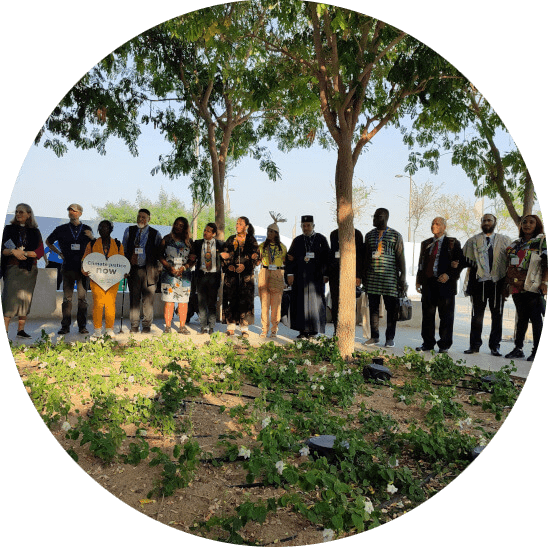

### UN Climate Conference
## The first-ever Faith Pavilion at a climate COP was a big success, with 70 sessions and 325 speakers, including major religious leaders, government ministers, and Indigenous people.
[Read More](https://interfaithsustain.com/cop28-un-climate-conference/)
### Los Angeles Network
## Jerusalem residents have the opportunity to buy eco products and learn about eco initiatives, from both the Jewish and Arab sectors.
[Read More](https://interfaithsustain.com/jerusalem-eco-fair/)

### Conferences
## The Interfaith Center for Sustainable Development (ICSD), in collaboration with multiple partners, has co-organized twelve interfaith environmental conferences since 2011.
[Read More](https://interfaithsustain.com/about-all-conferences/)

### Interfaith Panels
## The Interfaith Center for Sustainable Development organizes interfaith panels involving clergy or religious personalities from multiple faiths. The panels enable groups of students, tourists, or others to hear varied perspectives from distinguished people of faith living in the Jerusalem area.
[Read More](https://interfaithsustain.com/interfaith-panels/)
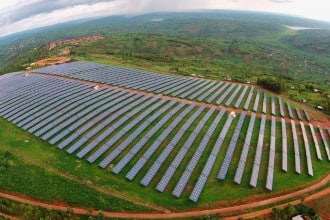
### Renewable Energy
## In cooperation with faith institutions in Africa and a renewable energy developer, ICSD works to deploy solar and wind fields to bring electricity to Africans, reduce indoor air pollution and deforestation, and curb climate change.
[Read More](https://interfaithsustain.com/fire/)
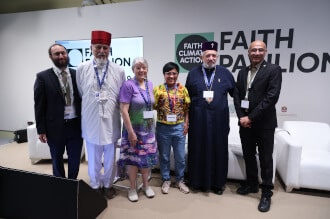
### Aspirational Projects
## The Interfaith Center for Sustainable Development seeks to scale its work by engaging in a variety of projects.
[Read More](https://interfaithsustain.com/aspirational-projects/)
---
### [Species Protection and Conservation](https://interfaithsustain.com/species-protection-conservation/)
**Published:** May 16, 2024
**Author:** ICSD
**Content:**
[INFOGRAPHICS](https://interfaithsustain.com/bible-eco-infographics/)
# Species Protection & Conservation
The Interfaith Center for Sustainable Development (ICSD) has developed seven attractive infographics on the Bible and ecology including the below on Species Protection & Conservation.

Our infographics help viewers visually understand Bible-ecological concepts in relation to biodiversity, animal welfare, food and trees. The infographics are available for purchase as large ecologically-printed posters.
With increasing environmental concern within faith communities around the world, these new Bible eco infographics represent an innovative new channel to convey Bible ecological teachings.
To order the infographics or for any more information about our educational materials or seminars, please [contact us](https://interfaithsustain.com/contact/).
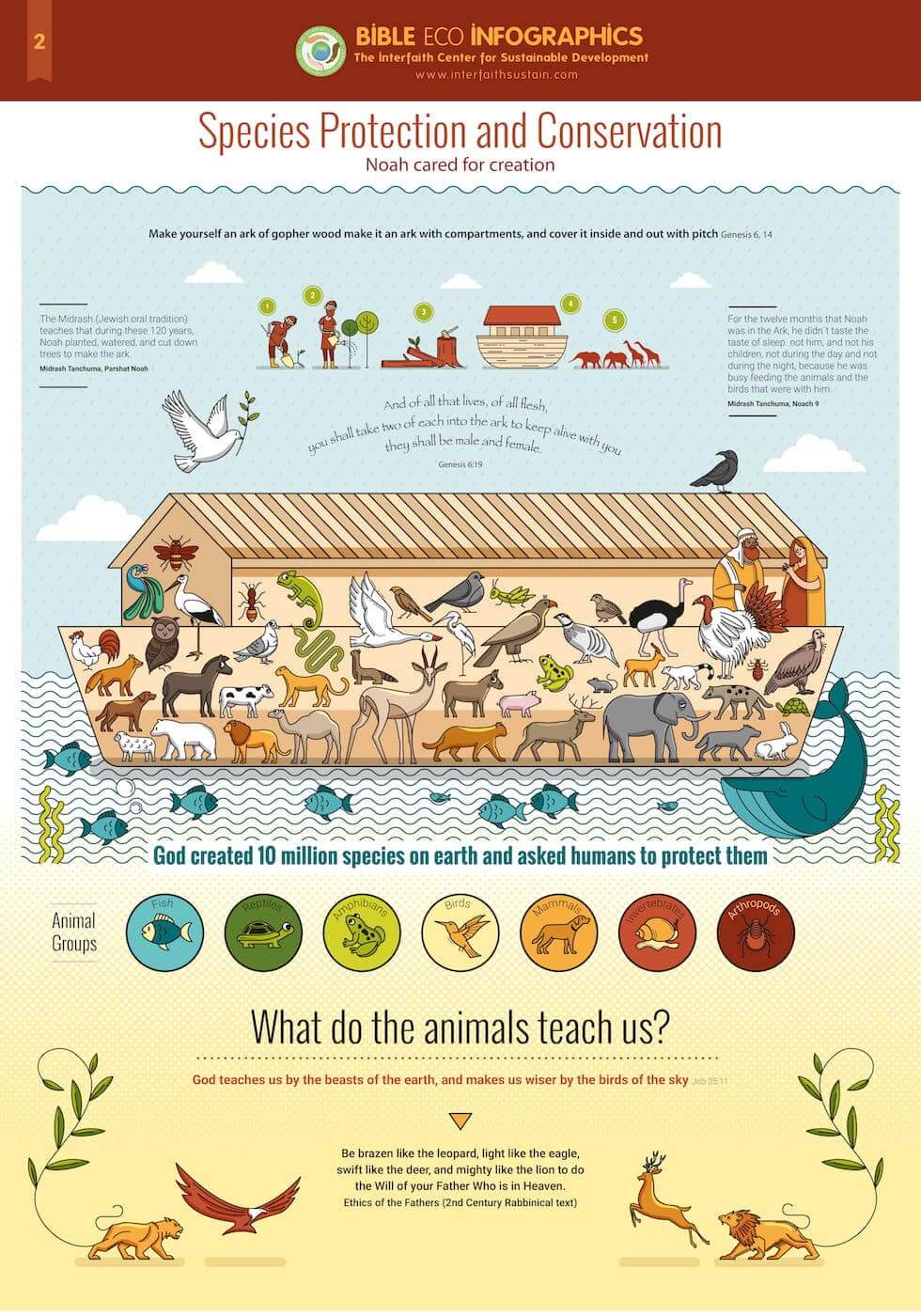
[DOWNLOAD](https://interfaithsustain.com/wp-content/uploads/2024/05/species-protection-and-conservation.jpg)
## Related Infographics
### Biodiversity & Animal Welfare**
## Explore the vibrant tapestry of life through our ‘Biodiversity & Animal Welfare’ infographic, which illustrates the intertwining of diverse species as seen in Biblical teachings. This visual aid unveils the sanctity of life while promoting stewardship and compassion towards all creatures.
[Read More](https://interfaithsustain.com/biodiversity-animal-welfare/)
### **Relating to Animals**
## Discover the profound relationship between humans and animals as presented in Biblical narratives with our ‘Relating to Animals’ infographic. It serves as an enlightening tool to foster empathy and responsible coexistence with our fellow living beings. An instrumental piece for educating on the theological foundation of animal ethics.
[Read More](https://interfaithsustain.com/relating-to-animals-eco-infographic/)
### **Plant-based Lifestyle**
## Embrace a compassionate and sustainable mode of living through our ‘A Vegan Lifestyle’ infographic, which is anchored in Biblical texts. This informative piece vividly promotes the health and environmental benefits of a plant-based diet, aligning daily choices with spiritual values for a harmonious existence.
[Read More](https://interfaithsustain.com/plant-based-lifestyle/)
### Trees in Jewish Wisdom
## Root yourself in the ancient knowledge with our ‘Relating to Trees in Jewish Wisdom’ infographic. It sheds light on the sacred significance of trees, reflecting on their role as a metaphor for life and teaching in Jewish thought. An enlightening resource that encourages ecological awareness and reverence for the natural world.
[Read More](https://interfaithsustain.com/trees-in-jewish-wisdom/)
### Trees and Forests
## Combine faith with reason using our ‘A Scientific Perspective on Trees and Forests’ infographic. This visual representation bridges Biblical insights with contemporary scientific understanding, underscoring the critical function of forests in ecological balance and the imperative to preserve these life-sustaining systems.
[Read More](https://interfaithsustain.com/trees-and-forests/)
---
### [Plant-based Lifestyle](https://interfaithsustain.com/plant-based-lifestyle/)
**Published:** May 17, 2024
**Author:** ICSD
**Content:**
[INFOGRAPHICS](https://interfaithsustain.com/bible-eco-infographics/)
# Plant-based Lifestyle
The Interfaith Center for Sustainable Development (ICSD) has developed seven attractive infographics on the Bible and ecology including the below on a Plant-based Lifestyle.

Our infographics help viewers visually understand Bible-ecological concepts in relation to biodiversity, animal welfare, food and trees. The infographics are available for purchase as large ecologically-printed posters.
With increasing environmental concern within faith communities around the world, these new Bible eco infographics represent an innovative new channel to convey Bible ecological teachings.
To order the infographics or for any more information about our educational materials or seminars, please [contact us](https://interfaithsustain.com/contact/).
[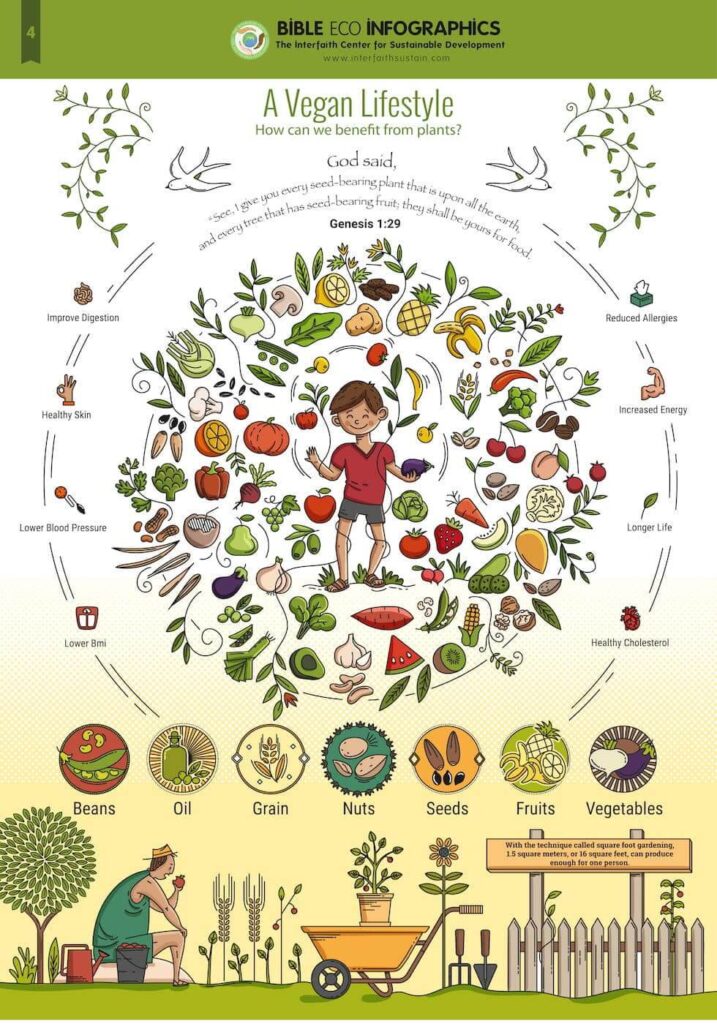](https://interfaithsustain.com/wp-content/uploads/2024/05/plant-based-lifestyle.jpg)
[DOWNLOAD](https://interfaithsustain.com/wp-content/uploads/2024/05/plant-based-lifestyle.jpg)
## Related Infographics
### Biodiversity & Animal Welfare**
## Explore the vibrant tapestry of life through our ‘Biodiversity & Animal Welfare’ infographic, which illustrates the intertwining of diverse species as seen in Biblical teachings. This visual aid unveils the sanctity of life while promoting stewardship and compassion towards all creatures.
[Read More](https://interfaithsustain.com/biodiversity-animal-welfare/)
### **Species Protection and Conservation**
## Delve into the Biblical mandate for preserving the richness of nature with our ‘Species Protection & Conservation’ infographic. It beautifully showcases the crucial roles of various species and the importance of conservation efforts.
[Read More](https://interfaithsustain.com/species-protection-conservation/)
### **Relating to Animals**
## Discover the profound relationship between humans and animals as presented in Biblical narratives with our ‘Relating to Animals’ infographic. It serves as an enlightening tool to foster empathy and responsible coexistence with our fellow living beings. An instrumental piece for educating on the theological foundation of animal ethics.
[Read More](https://interfaithsustain.com/relating-to-animals-eco-infographic/)
### Trees in Jewish Wisdom
## Root yourself in the ancient knowledge with our ‘Relating to Trees in Jewish Wisdom’ infographic. It sheds light on the sacred significance of trees, reflecting on their role as a metaphor for life and teaching in Jewish thought. An enlightening resource that encourages ecological awareness and reverence for the natural world.
[Read More](https://interfaithsustain.com/trees-in-jewish-wisdom/)
### Trees and Forests
## Combine faith with reason using our ‘A Scientific Perspective on Trees and Forests’ infographic. This visual representation bridges Biblical insights with contemporary scientific understanding, underscoring the critical function of forests in ecological balance and the imperative to preserve these life-sustaining systems.
[Read More](https://interfaithsustain.com/trees-and-forests/)
---
### [Relating to Animals](https://interfaithsustain.com/relating-to-animals-eco-infographic/)
**Published:** May 16, 2024
**Author:** ICSD
**Content:**
[INFOGRAPHICS](https://interfaithsustain.com/bible-eco-infographics/)
# Relating to Animals
The Interfaith Center for Sustainable Development (ICSD) has developed seven attractive infographics on the Bible and ecology including the below on Relating to Animals.

Our infographics help viewers visually understand Bible-ecological concepts in relation to biodiversity, animal welfare, food and trees. The infographics are available for purchase as large ecologically-printed posters.
With increasing environmental concern within faith communities around the world, these new Bible eco infographics represent an innovative new channel to convey Bible ecological teachings.
To order the infographics or for any more information about our educational materials or seminars, please [contact us](https://interfaithsustain.com/contact/).
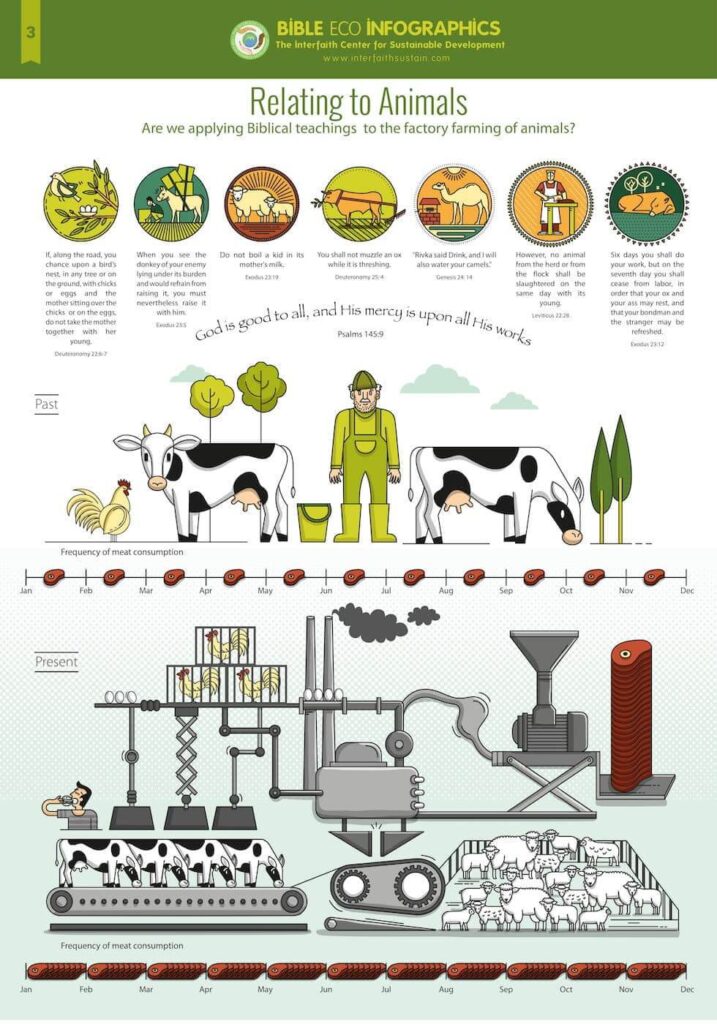
[DOWNLOAD](https://interfaithsustain.com/wp-content/uploads/2024/05/relating-to-animals.jpg)
## Related Infographics
### Biodiversity & Animal Welfare**
## Explore the vibrant tapestry of life through our ‘Biodiversity & Animal Welfare’ infographic, which illustrates the intertwining of diverse species as seen in Biblical teachings. This visual aid unveils the sanctity of life while promoting stewardship and compassion towards all creatures.
[Read More](https://interfaithsustain.com/biodiversity-animal-welfare/)
### **Species Protection and Conservation**
## Delve into the Biblical mandate for preserving the richness of nature with our ‘Species Protection & Conservation’ infographic. It beautifully showcases the crucial roles of various species and the importance of conservation efforts.
[Read More](https://interfaithsustain.com/species-protection-conservation/)
### **Plant-based Lifestyle**
## Embrace a compassionate and sustainable mode of living through our ‘A Vegan Lifestyle’ infographic, which is anchored in Biblical texts. This informative piece vividly promotes the health and environmental benefits of a plant-based diet, aligning daily choices with spiritual values for a harmonious existence.
[Read More](https://interfaithsustain.com/plant-based-lifestyle/)
### Trees in Jewish Wisdom
## Root yourself in the ancient knowledge with our ‘Relating to Trees in Jewish Wisdom’ infographic. It sheds light on the sacred significance of trees, reflecting on their role as a metaphor for life and teaching in Jewish thought. An enlightening resource that encourages ecological awareness and reverence for the natural world.
[Read More](https://interfaithsustain.com/trees-in-jewish-wisdom/)
### Trees and Forests
## Combine faith with reason using our ‘A Scientific Perspective on Trees and Forests’ infographic. This visual representation bridges Biblical insights with contemporary scientific understanding, underscoring the critical function of forests in ecological balance and the imperative to preserve these life-sustaining systems.
[Read More](https://interfaithsustain.com/trees-and-forests/)
---
### [Trees in Jewish Wisdom](https://interfaithsustain.com/trees-in-jewish-wisdom/)
**Published:** May 17, 2024
**Author:** ICSD
**Content:**
[INFOGRAPHICS](https://interfaithsustain.com/bible-eco-infographics/)
# Trees in Jewish Wisdom
The Interfaith Center for Sustainable Development (ICSD) has developed seven attractive infographics on the Bible and ecology including the below on Trees in Jewish Wisdom.

Our infographics help viewers visually understand Bible-ecological concepts in relation to biodiversity, animal welfare, food and trees. The infographics are available for purchase as large ecologically-printed posters.
With increasing environmental concern within faith communities around the world, these new Bible eco infographics represent an innovative new channel to convey Bible ecological teachings.
To order the infographics or for any more information about our educational materials or seminars, please [contact us](https://interfaithsustain.com/contact/).
[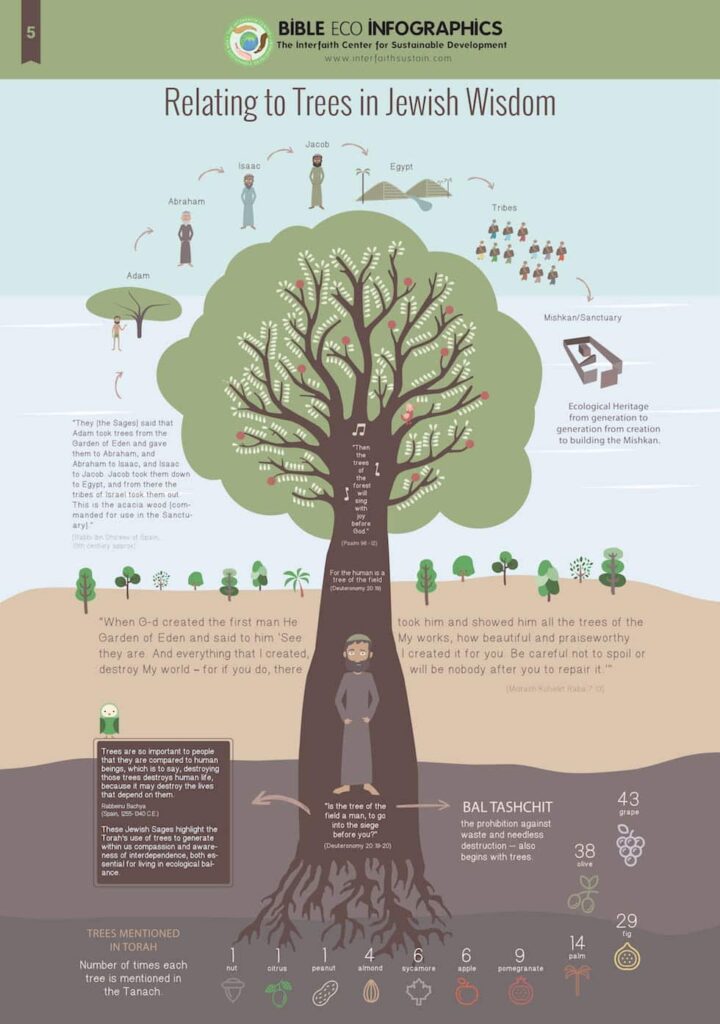](https://interfaithsustain.com/wp-content/uploads/2024/05/trees-in-jewish-wisdom.jpg)
[DOWNLOAD](https://interfaithsustain.com/wp-content/uploads/2024/05/trees-in-jewish-wisdom.jpg)
## Related Infographics
### Biodiversity & Animal Welfare**
## Explore the vibrant tapestry of life through our ‘Biodiversity & Animal Welfare’ infographic, which illustrates the intertwining of diverse species as seen in Biblical teachings. This visual aid unveils the sanctity of life while promoting stewardship and compassion towards all creatures.
[Read More](https://interfaithsustain.com/biodiversity-animal-welfare/)
### **Species Protection and Conservation**
## Delve into the Biblical mandate for preserving the richness of nature with our ‘Species Protection & Conservation’ infographic. It beautifully showcases the crucial roles of various species and the importance of conservation efforts.
[Read More](https://interfaithsustain.com/species-protection-conservation/)
### **Plant-based Lifestyle**
## Embrace a compassionate and sustainable mode of living through our ‘A Vegan Lifestyle’ infographic, which is anchored in Biblical texts. This informative piece vividly promotes the health and environmental benefits of a plant-based diet, aligning daily choices with spiritual values for a harmonious existence.
[Read More](https://interfaithsustain.com/plant-based-lifestyle/)
### **Relating to Animals**
## Discover the profound relationship between humans and animals as presented in Biblical narratives with our ‘Relating to Animals’ infographic. It serves as an enlightening tool to foster empathy and responsible coexistence with our fellow living beings. An instrumental piece for educating on the theological foundation of animal ethics.
[Read More](https://interfaithsustain.com/relating-to-animals-eco-infographic/)
### Trees and Forests
## Combine faith with reason using our ‘A Scientific Perspective on Trees and Forests’ infographic. This visual representation bridges Biblical insights with contemporary scientific understanding, underscoring the critical function of forests in ecological balance and the imperative to preserve these life-sustaining systems.
[Read More](https://interfaithsustain.com/trees-and-forests/)
---
### [Trees and Forests](https://interfaithsustain.com/trees-and-forests/)
**Published:** May 17, 2024
**Author:** ICSD
**Content:**
[INFOGRAPHICS](https://interfaithsustain.com/bible-eco-infographics/)
# A Scientific Perspective on Trees and Forests
The Interfaith Center for Sustainable Development (ICSD) has developed seven attractive infographics on the Bible and ecology including the below on A Scientific Perspective on Trees and Forests.

Our infographics help viewers visually understand Bible-ecological concepts in relation to biodiversity, animal welfare, food and trees. The infographics are available for purchase as large ecologically-printed posters.
With increasing environmental concern within faith communities around the world, these new Bible eco infographics represent an innovative new channel to convey Bible ecological teachings.
To order the infographics or for any more information about our educational materials or seminars, please [contact us](https://interfaithsustain.com/contact/).
[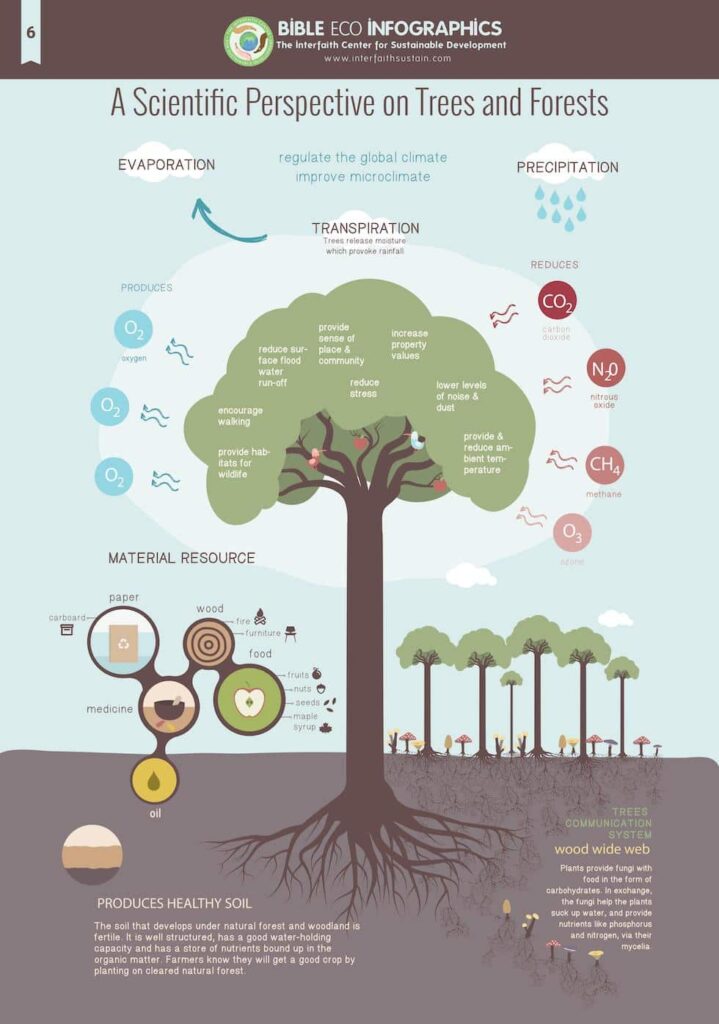](https://interfaithsustain.com/wp-content/uploads/2024/05/trees-and-forests.jpg)
[DOWNLOAD](https://interfaithsustain.com/wp-content/uploads/2024/05/trees-and-forests.jpg)
## Related Infographics
### Biodiversity & Animal Welfare**
## Explore the vibrant tapestry of life through our ‘Biodiversity & Animal Welfare’ infographic, which illustrates the intertwining of diverse species as seen in Biblical teachings. This visual aid unveils the sanctity of life while promoting stewardship and compassion towards all creatures.
[Read More](https://interfaithsustain.com/biodiversity-animal-welfare/)
### **Species Protection and Conservation**
## Delve into the Biblical mandate for preserving the richness of nature with our ‘Species Protection & Conservation’ infographic. It beautifully showcases the crucial roles of various species and the importance of conservation efforts.
[Read More](https://interfaithsustain.com/species-protection-conservation/)
### **Plant-based Lifestyle**
## Embrace a compassionate and sustainable mode of living through our ‘A Vegan Lifestyle’ infographic, which is anchored in Biblical texts. This informative piece vividly promotes the health and environmental benefits of a plant-based diet, aligning daily choices with spiritual values for a harmonious existence.
[Read More](https://interfaithsustain.com/plant-based-lifestyle/)
### **Relating to Animals**
## Discover the profound relationship between humans and animals as presented in Biblical narratives with our ‘Relating to Animals’ infographic. It serves as an enlightening tool to foster empathy and responsible coexistence with our fellow living beings. An instrumental piece for educating on the theological foundation of animal ethics.
[Read More](https://interfaithsustain.com/relating-to-animals-eco-infographic/)
### Trees in Jewish Wisdom
## Root yourself in the ancient knowledge with our ‘Relating to Trees in Jewish Wisdom’ infographic. It sheds light on the sacred significance of trees, reflecting on their role as a metaphor for life and teaching in Jewish thought. An enlightening resource that encourages ecological awareness and reverence for the natural world.
[Read More](https://interfaithsustain.com/trees-in-jewish-wisdom/)
---
### [Sinai Climate Partnership](https://interfaithsustain.com/sinai-climate-partnership/)
**Published:** October 17, 2022
**Author:** ICSD
**Content:**
The Interfaith Center for Sustainable Development (ICSD), together with our partners the Elijah Interfaith Institute and The Peace Department, is launching the Sinai Climate Partnership at the United Nations climate conference COP 27 in Sinai.
The purpose of the Partnership is to
1. Bring religious leadership to UN public policy discussions on climate change
2. Resonate a clarion spiritual call for climate action throughout faith-based communities around the world
3. Provide thought leadership for faith-based communities ready to mobilize on climate change.
## The Launch During COP 27
As we launch the Sinai Climate Partnership during COP 27 in November, 2022, the initiative will unveil Ten Universal Principles for Climate Justice, which will shape how religious congregations address climate change and foster a new vision for humanity and its endangered existence.
In many cities in the world, including London, Jerusalem, and Rishikesh, India, we will lead a historic ceremony of repentance, intention-setting, and call to action for protecting of our shared home, Earth.
The ceremony will be followed by several press conferences at **COP 27** in **Sharm El Sheikh**, to amplify the voice of religious leaders to curb climate change.
## Intended Impact
Our partnership will mobilize tangible actions in the faith community. Our engagement with local actors can catalyze projects that tap into each community’s need for sustainable development.
## Our Goals
Our goals for the Sinai Climate Partnership include:
- Inspire and unleash the power of an interfaith movement as a change agent for climate action at political and social levels
- Promote a coalition of religious leaders to work together for climate action
- Encourage religious leaders and communities to expand education and actions around climate change
- Mobilize local religious actors and civil society to partake in tangible activities that tackle their community’s needs
- Partner with civil society sectors, such as faith NGOs and movements that align with our goals, to amplify the message shared at COP
- Expand already-existing interfaith climate efforts through local partnerships
## Membership for Houses of Worship
We invite houses of worship to become official members of the Sinai Climate Partnership. There are numerous benefits to joining.
### ***Partnership Levels***
| Benefits | Isaiah Partner $1k | Elijah Partner $5k | Aaron Partner $10k | Moses Partner $20K |
|---|---|---|---|---|
| [Presentations](https://interfaithsustain.com/book-a-speaker/) for your congregation from experts on faith-based environmentalism | ✅ | ✅ | ✅ | ✅ |
| Tailored resources for talking about Ten Climate Principles | ✅ | ✅ | ✅ | ✅ |
| Free copies of the Eco Bible | 1 copy | 5 copies | 10 copies | 20 copies |
| Free [Bible Eco Infographic](https://interfaithsustain.com/bible-eco-infographics/) posters that can be displayed in your house of worship and home | 1 copy | 5 copies | 10 copies | 20 copies |
| Access to faith-based climate action resources like the new [Eco Preacher](https://interfaithsustain.com/ecopreacher-123/) | ✅ | ✅ | ✅ | ✅ |
| Exclusive access to live global events where leaders collaborate on climate action and engage with the the audience | | ✅ | ✅ | ✅ |
| Listed below a principle on the official poster of the Ten Climate Principles | | | ✅ | ✅ |
| Listed as an official founding partner on press releases, our website, and all resource materials | | | | ✅ |
## Faith and Environmental Sustainability
Uniting faith and environmental sustainability is one of the best ways to overcome climate change. About 85% of people identify with a religion, but doctrinal beliefs are often a source of strife between religions.
Addressing climate change is a chance to draw upon each religion’s rich environmental traditions and to
create peace between peoples as we fight for a common cause, the future of our planet.
## About The Interfaith Center for Sustainable Development (ICSD)
ICSD reveals the connection between religion and ecology and mobilizes faith communities to act. To learn more, go to www.interfaithsustain.com. To find out more and join the Sinai Climate Partnership, please contact Michael Gribov, ICSD Deputy Director, at michael@interfaithsustain.com.
## United Nations Climate Change Conference
The Conference of the Parties (COP 27) to the United Nations Framework Convention on Climate Change is the world’s largest gathering on climate action. Heads of state, ministers and negotiators, civil society representatives and CEOs meet annually to set the policy agenda to deal with climate change, for people and the planet. This year’s conference in Sharm el Sheik, Egypt has 44,000 registered participants.
---
### [News Coverage](https://interfaithsustain.com/news-coverage/)
**Published:** June 11, 2024
**Author:** ICSD
---
### [Eco Bible Commentary on Genesis Chapter 1](https://interfaithsustain.com/eco-bible-commentary-on-genesis-chapter-1/)
**Published:** October 20, 2020
**Author:** ICSD
**Content:**
Eco Bible Volume One, An Ecological Commentary on Genesis and Exodus
Rabbi Yonatan Neril & Rabbi Leo Dee: editors and lead contributors
Excerpts from commentary on Genesis chapter 1
## Caring for Creation
> In the beginning, God created the heavens and the earth.
>
> Genesis 1:1
Rabbi Samson Raphael Hirsch makes the first verse in Genesis personal and proactive. He writes that the words teach us “to think of the world as God’s world and ourselves as creatures of God . . . We must not destroy the world, but preserve it – every single creature, every insect, every plant is part of God’s world. Woe to those that disturb His world! Hail to those that preserve His world!”37
Rabbis throughout the ages make clear that God tasks humanity with caring for creation. “When God created Adam, He took him and showed him all the trees of the Garden of Eden and said to him . . . Be careful not to spoil or destroy my world – for if you do, there will be nobody after you to repair it,”38 teaches the Midrash, a major rabbinic commentary on the Hebrew Bible.
Rabbi Shlomo Eiger, a distinguished intellectual who became a Hasid (spiritual and pious person), was asked what he learned from his first visit with the hasidic Rabbi Menachem Mendel of Kotzk. Rabbi Eiger answered simply, “In the beginning, God created.” The questioner pressed him: “Did a renowned scholar have to travel to a hasidic rabbi to learn the first verse of the Bible?” Rabbi Eiger responded: “I learned that God created only the beginning; everything else is up to human beings.”39
Rabbi David Rosen explains the ecological impact of the Bible’s opening verse: “If you believe that this world is the creation of a Divine Power, therefore creation itself manifests the Divine Presence, as it says in Psalms, ‘The heavens declare the glory of God and the firmament declares the work of His hands.’40 If you are a Divinely sensitive person, whether you want to define that as religious or spiritual, then the wellbeing, the health of the environment, and of creation, is a religious imperative.”41
## Sustainability and Spiritual Awareness
> God said, “Let there be light”; and there was light.
>
> Genesis 1:3
Since the sun was not created until the fourth day (see Genesis chapter 1, verse 16), the light God created on the first day of creation was not a physical light but a spiritual one. Rabbi Sholom Berezovsky teaches that “without this holy light there is no merit in sustaining creation.”42 Those who seek God perceive this spiritual light. The sustainability of creation therefore depends on the spiritual awareness of humanity.
## Previous and Current Extinction Events
> God called the light Day, and the darkness He called Night. Andthere was evening and there was morning, a first day.
>
> Genesis 1:5
The Midrash asks why this verse reads “And there was evening” rather than just “There was evening” – implying that there was something else before. The Midrash answers, “ . . . time existed before this . . . God created and destroyed worlds until this one . . . when it says, ‘God saw everything He had made and behold it was very good,’43 that teaches us that the previous ones were not.”44
This explanation suggests that cataclysmic extinction events once occurred, and that sustained existence on this planet is not guaranteed. Scientists understand that five extinction events occurred in the last 500 million years, and humans are causing a sixth one at the current time.45 The previous extinction events were caused by “acts of God,” like comets and massive volcanic eruptions. But the current one is caused by people on a creation that God declared “very good.”
## Water and Dry Land
> God said, “Let the water below the sky be gathered into one area,that the dry land may appear.” And it was so.
>
> Genesis 1:9
The Midrash states: “In human experience, a person empties a full vessel into an empty one; does one ever empty a full vessel into a full vessel? Now the world was full of water, yet it says \[that God gathered the water\], ‘into one area’! From this we learn that the little held a lot.”46
Water separated from the earth by draining into the seas and by forming ice on the land. For most people who do not live near a glacier, the amount of earth’s water held as ice may seem small compared to all the water in lakes and oceans. In fact, roughly 68 percent of the world’s freshwater is locked in ice caps, glaciers, and permanent snow.47 Due to human-caused climate change, however, ice melting of Antarctica has increased from 40 gigatons per year in the 1980s to 252 gigatons per year over the 2010s. All that ice melting into the ocean has raised global sea levels.48 In some coastal areas, sea level rise is beginning to regularly flood whole towns and low-lying parts of major cities. God said that dry land should appear from the water, yet by humanity’s actions, more and more water is covering land.
## Edible Trees
> And God said, “Let the earth sprout vegetation: seed-bearingplants, fruit trees of every kind on earth that bear fruit with the seed in it.” And itwas so. The earth brought forth vegetation: seed-bearing plants of every kind, andtrees of every kind bearing fruit with the seed in it. And God saw that this was good.
>
> Genesis 1:11–12
As Rabbi Jacob ben Asher points out, God commanded the earth to produce “fruit trees that bear fruit,” meaning trees whose bark could be eaten as well as their fruit. However, he notes that the earth produced trees (whose bark is not eaten) that produce fruit in order that the trees themselves would not be devoured.49
Long ago, and today, we have come to understand that trees – in addition to the fruit they produce – have broader value including providing homes for animals large and small, and retaining soil to prevent erosion and catastrophic mudslides.
## God Blesses Fish and Birds
> God blessed them \[ fish and birds\], saying, “Be fertile and increase,fill the waters in the seas, and let the birds increase on the earth.”
>
> Genesis 1:22
Radak (Rabbi David Kimchi) explains that God’s blessing to fish to “be fertile” is to have the potential to create new generations, while the blessing to “increase” is to thrive in numbers.50
Worldwide, humans are now depleting the planet’s fish stocks through overfishing and plastic use. A UN report indicates that one-third of marine fish stocks were being harvested at unsustainable levels in 2015.51 Extensive plastic pollution kills fish, marine mammals, seabirds, and other wildlife, and reduces their ability to give birth, rear their young, and sustain their species.52 In regard to birds, a 2019 Cornell University study “finds steep, long-term losses across virtually all groups of birds in the US and Canada. It reveals across-the-board declines that scientists call ‘staggering.’ All told, the North American bird population is down by 2.9 billion breeding adults.”53
God desires abundant sea life to fill the ocean and healthy bird populations. Should we not, therefore, be strong advocates for sustainable fishing, ending ocean pollution, and protecting both land birds and sea birds?
## On Eating Animals
> And God said, “Let Us make man in Our image, after Our likeness. They shall rule the fish of the sea, the birds of the sky, the cattle, the whole earth, and all the creeping things that creep on earth.”
>
> Genesis 1:26
This verse states God intends for people to rule over fish, birds, and animals. Yet in Genesis 1:29, God states that human beings are only permitted a plant-based diet. Rabbi Isaac Karo explains that “ruling” over creatures mentioned in the verse clearly does not involve killing
them for human food.54 Rabbi Gil Marks notes:
. . . historically, meat, when consumed, was usually a flavoring agent and, as a rule, a component in a dish reserved for special occasions. Only in the past century has animal flesh assumed such a prominent role in the diet, with meat frequently being served once, sometimes twice, or even three times, a day. On the contrary, throughout most of history, cattle and sheep were not regarded as sources of food, but rather sheep were prized for their milk and wool, and cows were valued for plowing, turning the wheels that drew water from rivers and canals, hauling heavy materials, trodding grain for winnowing, powering the millstones for grinding grain, and turning the stone wheel for pressing olives. Flocks and herds served as the principal source of clothing, wealth, and security for our ancestors, something that would have been squandered if eaten. Meat was the exception, not the rule.55
## Will Humans Rule, or Animals? 56
> God blessed them and God said to them, “Be fertile and increase, fill the earth and master it; and rule the fish of the sea, the birds of the sky, and all the living things that creep on earth.”
>
> Genesis 1:28
On the surface, the words of this verse appear to give people license to degrade and subdue the earth, but the rabbis over the millennia for the most part do not read them this way. The rabbinic commentaries reveal much about these verses beyond the simple reading and make clear that a wholly different message is being conveyed.
Verse 26 states, God said, “Let Us make man in Our image, after Our likeness. They shall rule \[ve-yir-du\] the fish of the sea, the birds of the sky, the cattle, the whole earth, and all the creeping things that creep on earth.”57 Verse 28 uses a command verb form, with God saying, “Rule \[u-re-du\] the fish of the sea, the birds of the sky, and all the living things that creep on earth.’”58
The Midrash commentary here is based on a play on words in Hebrew, in which the root of the word “to rule” is the same root as the word “to be taken down.” Rabbi Chanina interpreted the Midrash to say: “If humankind is worthy, God says ‘u-re-du’ \[you rule!\]; while if humankind is not worthy, God says, ‘yי-ra-du’ – he will be taken down (or let others \[the animals\] rule over him).”59
Based on the Midrash, Rashi (Rabbi Shlomo ben Yitzchak) agrees that if we are not worthy, we will be ruled by animals.60 In this vein, H. Freedman and Maurice Simon comment, “Man is entitled to pre-eminence only as long as he cultivates his God-like qualities; when he voluntarily abandons them he is even lower than the brute creation.”61
Can humans be ruled by animals today? At first, we may think human beings are so powerful, we are immune to these predictions. Yet, for example, insect infestations around the world have caused tremendous havoc in human life, from grasshoppers in Africa to bed bugs in North America. Insect-borne diseases such as malaria, dengue fever, West Nile virus, and Zika virus have spread to more northern latitudes, as human-induced climate change expands the range of certain mosquito species.62 The most recent case of tiny organisms antagonizing people is the coronavirus pandemic. Some research indicates that the virus likely spread from bats to pangolins (a spiny anteater) to people.63
One key message from the Midrash is that God’s blessing to rule over other creatures depends on our living as righteous people. If humanity becomes worthy by living in a righteous way, then humans shall rule over nature. But if humans do not merit dominion, because they do not act in an upright fashion, then humanity will descend and not be granted rulership over nature. The rabbis learn this from the juxtaposition of God saying that humans will be created in God’s image immediately before saying that humans will rule over other creatures.64
Rabbi David Sears writes that ruling “comprises a form of stewardship for which humanity is answerable to God. Both Talmudic and kabbalistic sources state that it is forbidden to kill any creature unnecessarily, or to engage in wanton destruction of the earth’s resources. All forms of life are precious by virtue of the Divine wisdom that brings them into existence, whatever rung they may occupy in the hierarchy of creation . . .The Divine mandate for man to dominate the natural world is a sacred trust, not a carte blanche for destructiveness.”65
Endnotes
37\. Rabbi Samson Raphael Hirsch, commentary to Genesis 1:1.
38\. Midrash Ecclesiastes Rabbah 7:13.
39\. As cited in Rabbi Norman Lamm, Derashot Ledorot: A Commentary for the Ages – Genesis ( Jerusalem: OU Press and Maggid Books, 2012), and Rabbi Norman Lamm, Faith and Doubt (Brooklyn: KTAV Publishing House, 1986), 175.
40\. Psalms 19:1.
41\. Rabbi David Rosen, “Jewish Ethics, Animal Welfare, and Veganism: A Panel of Rabbis and Experts,” interview, Jewish Eco Seminars Productions, January 2018, https://www.youtube.com/watch?v=UHIyXrN1JAI.
42\. Rabbi Shalom Berezovsky, Netivot Shalom (Jerusalem: Yeshivat Beit Avraham Slonim, 2000), Numbers 41.
43\. Genesis 1:31.
44\. Midrash Genesis Rabbah 3:7.
45\. Michael Greshko, “What Are Mass Extinctions, and What Causes Them?” National Geographic, https://www.nationalgeographic.com/science/prehistoric-world/mass-extinction/.
46\. Midrash Genesis Rabbah 5:7.
47\. “Ice, Snow, and Glaciers and the Water Cycle,” Water Science School, US Geological Survey, accessed February 18, 2020, www.usgs.gov/special-topic /water-science-school/science/ice-snow-and-glaciers-and-water-cycle?qt-science\_center\_objects=0#qt-science\_center\_objects.
48\. Eric Rignot et al., “Four Decades of Antarctic Ice Sheet Mass Balance from 1979–2017,” Proceedings of the National Academy of Sciences 116, no. 4, January 2019, 1095–1103, https://doi.org/10.1073/pnas.1812883116.
49\. Tur Ha’Arokh on Genesis 1:11.
50\. Radak on Genesis 1:22. See also Midrash Genesis Rabbah 97:3 and Babylonian Talmud, Berakhot 20a which relate to Genesis 48:16 on the use of the Hebrew root containing fish, dag, as meaning “to reproduce and proliferate.”
51\. “UN Report: Nature’s Dangerous Decline ‘Unprecedented’”, United Nations, May 6, 2019, https://www.un.org/sustainabledevelopment/blog/2019/05/nature-decline-unprecedented-report/ citing IPBES Global Assessment Report on Biodiversity and Ecosystem Services.
52\. Karina Acevedo-Whitehouse and Amanda L. J. Duffus, “Effects of Environmental
Change on Wildlife Health,” Philosophical Transactions of the Royal Society B, Biological Sciences 364, no. 1534, November 2009, 3429–3438, https://doi.org/10.1098/rstb.2009.0128.
53\. Kenneth Rosenberg et al., “Decline of the North American Avifauna,” Science, 2019, https://www.birds.cornell.edu/home/wp-content/uploads/2019/09/Decline-Of-North-American-Avifauna-Science-2019.pdf.
54\. Rabbi Isaac Karo, Toldot Yitzchak commentary to Genesis 1:28.
55\. Rabbi Gil Marks, Olive Trees and Honey (Hoboken, NJ: Wiley Publishing Co., 2005), viii.
56\. This is adapted from “Genesis and Human Stewardship of the Earth,” Yonatan Neril, February 24, 2014, content produced by Canfei Nesharim, a branch of Grow Torah. It is available at http://canfeinesharim.org/genesis-and -humanstewardship-of-the-earth/.
57\. Genesis 1:26. 58. Ibid., 1:28.
59\. Midrash Genesis Rabbah (Vilna Edition), 8:12. Artscroll Rashi to Genesis 1:26 notes, “The Maharal explains in Gur Aryeh to Genesis 1:26 that ‘the verse uses v’yirdu for “ruling,” from the root resh-dalet-heh, rather than the more common mashal, so that it can be expounded as if it were from the root yud-resh-dalet, “declining, degenerating,” as well.’”
60\. Rashi on Genesis 1:26.
61\. Midrash Rabbah: Genesis, Rabbi Dr. Harry Freedman and Maurice Simon trans. (London: Soncino Press, 1983).
62\. Climate Change 2014: Synthesis Report. Contribution of Working Groups I, II and III to the Fifth Assessment, A Report of the Intergovernmental Panel on Climate Change, Rajendra K. Pachauri and Leo Meyer eds, IPPC, 2014, https://www.ipcc.ch/site/assets/uploads/2018/05/SYR\_AR5\_FINAL\_full\_wcover.pdf.
63\. “Missing Link in Coronavirus Jump from Bats to Humans Could Be Pangolins, Not Snakes,” American Chemical Society, March 26, 2020, https://www.acs.org/content/acs/en/pressroom/newsreleases/2020/march/missing-link-in
-coronavirus-jump-from-bats-to-humans-could-be-pangolins-not-snakes.html.
64\. Rabbi Zev Wolf Einhorn in his commentary (Perush Maharzav) to the Midrash explains that this midrash is explaining the different grammatical uses of the verb “to rule” in verses 26 and 28. In verse 26, before the human being has been created, God says about them, “v’yirdu,” in the future tense, meaning “and they shall rule over.” Verse 27 reads “And God created Man . . . ” Verse 28 contains God’s blessing to people, in the imperative form “urdu,” meaning “rule over.” The Midrash, however, reads the latter verse differently. The lettering can also be read “v’yeiradu,” in the passive form meaning “they \[people\] will be ruled over \[by animals\].”
65\. Rabbi David Sears, “Selections From ‘A Vision of Vegetarianism and Peace’,” in The Vision of Eden: Animal Welfare and Vegetarianism in Jewish Law and Mysticism, Rabbi David Cohen ed., David Sears trans. https://www.jewishveg.org/DSvision.html.
Copyright © 2020 The Interfaith Center for Sustainable Development (www.interfaithsustain.com)
The full book is available as a paperback and ebook on Amazon.com
---
### [Interfaith Letter to Patriarch Kirill of the Russian Orthodox Church](https://interfaithsustain.com/interfaith-letter-to-patriarch-kirill/)
**Published:** March 4, 2022
**Author:** ICSD
**Content:**
The following is a letter signed by global religious leaders to His Beatitude Patriarch Kirill of the Russian Orthodox Church, in regards to the war in Ukraine. If you are ordained clergy and would like to add your signature to this letter, please fill out [this short Google Form](https://forms.gle/yMbhEwWb6nFcp2C67).
Patriarch Kirill,
We, religious leaders representing many faith traditions, write to express our concern with the war taking place in Ukraine. We are mindful of our religious obligation to choose peace through dialogue. Our role is to pray for and support peaceful resolutions of conflict situations.
We are saddened to see the fighting, which pits people of faith against each other. The current conflict has already resulted in a significant loss of life, of both combatants and civilians. The conflict also poses a much wider risk of destruction beyond Ukraine, including the very real threat of a nuclear accident and a larger conflict between nuclear armed powers, which we know God wants us to avoid at all costs. In this moment, religious leaders are called to rise to the occasion on behalf of God, people, and all creatures.
In light of your close connection to President Vladimir Putin, we call on you to request that he take immediate steps to de-escalate the conflict, and seek a peaceful resolution to it.
We thank you for your time and attention in considering this request.
With blessings for peace on God’s good earth,
Signed: Global Religious Leaders
## Signatories
### Members of the Elijah Board of World Religious Leaders:
**Buddhist Leaders:**
His Holiness the Dalai Lama
Jan Chozen Bays
Venerable Zoketsu Norman Fischer
Dharma Master Hsin Tao
Venerable Prof. Jinwol Sunim
Venerable Ashin Nyanissara (Sitagu/Thegon Sayadaw)
Her Eminence Mindrolling Jetsün Khandro Rinpoche
Venerable Bhikkhu Sanghasena
Venerable Karma Lekshe Tsomo
Venerable Dharmakosajarn
**Christian Leaders:**
Cardinal Christoph Schönborn
Prior Isabelle Flye-Saintmarie
Bishop Frank Griswold
Archbishop Boutrous Mouallem
Rev Dr Katharine Henderson
Bishop Lennart Koskinen
Dr. Dimitra Koukoura
Metropolitan Nikitas Lulias
Patriarch Sahag Mashalian
Most Revd Dr Josiah Idowu-Fearon
Abbot Primate Notker Wolf
Bishop Domenico Sorrentino
Rev. Prof. David Ford
**Leaders of the Religions of India:**
Swami Amarananda
Swami Atmapriyananda
Swami Rameshwarananda Giri
Acharya Shri Shrivatsa Goswami
Karshni Swami Sri Gurusharananand
H.H. Pujya Swami Chidanand Saraswati
H. H. Sri Sri Ravi Shankar
Bhai Sahib Bhai Mohinder Singh
His Holiness Sri Sri Sugunendra Theertha Swamiji
Swami Agnivesh
**Jewish Leaders:**
Chief Rabbi René-Samuel Sirat
Rabbi David Bigman
Rabbi Yuval Cherlow
Rabbi Arthur Green
Rabbi Menachem Hacohen
Rabbi Richard Marker
Rabbi Michael Melchior
Rabbi David Rosen
Gilla Rosen
Rabbi Awraham Soetendorp
Rabbi Jonathan Wittenberg
**Muslim Leaders:**
Kyai Haji Yahya Cholil Staquf
Sheikh Muhammad Nur Abdullah
Dr. Y. Mossa Basha
Grand Mufti Dr. Mustafa Ceric
Imam Plemon T. El-Amin
Imam Umer Ahmed Ilyasi
Dr. Muzaffar Iqbal
Sayyed Jawad Al-Khoei
Imam Abduljalil Sajid
Dr. Ahmed Taoufiq
Dr. Muhammad Suheyl Umar
### **Affirmed by Other Religious Leaders and Clergy:**
H.B. Latin Patriarch of Jerusalem Pierbattista Pizzabala
Custos of the Holy Land Fr. Francesco Patton
Chief Rabbi of Jerusalem Emeritus Aryeh Stern
Archbishop Antje Jackelen
Archbishop Aram Artesyan
Archbishop Felix Machado
Rabbi David Wolpe
Rabbi Dov Singer
Rabba Tamar Elad-Applebaum
Imam Abdul Rauf
Dr. Chinmay Pandia
Sadhvi Bhagawati Saraswati
Br. Thomas Josef Goetz
Swamini Adityananda Saraswati
Sukhbir Singh
Ven. Geshe Tashi Tsering
Rabbi Eliyahu Birnbaum
Professor Nasr Seyyed Hossein
Rabbi David Lau
Rabbi Dr. Alon Goshen Gottstein
Rabbi Yonatan Neril
Rabbi Michael Schudrich
Rev. Dr. Maria Leppakari
Rev. Fletcher Harper
Rabbi Donniel Hartman
Dr Khan Rajat Malhotra
Rabbi Asher Lopatin
Rabbi Yitz Greenberg
Rabbi Mel Gottlieb
Rev. Dr. Uwe Graebe
Rev. Dieter Bullard-Werner
Rabbi Avi Rosenfeld
Rev. Johannes Stahl
Rev. Dr. Ibrahim Wushishi Yusuf
Rev. Susan Hendershot
Rabbi Dr. Eugene Korn
Rev. Bruce Thompson
Rev. Dr Frank Lorentzon
Rev. Kayko Driedger Hesslein
Rev. Patricia Simonson
Dr. Jaakko Rusama
Rt. Rev. Jāna Jēruma Grīnberga
Rabbi Shayna Abramson
Rabbi Daniel Silverstein
Rabbi David Jaffe
Rabbi Avidan Freedman
Rabbi Avram Mlotek
Rabbi Ami Silver
Rabbi Shamir Caplan
Rev. Detlev Knoche
Pastor Dietric
Imam Sqazwini
Rabbi David Fain
Rabbi Aaron Leibowitz
Rabbi Dr. Shmuly Yanklowitz
Rabbi Mordechai Zeller
Rabbi Professor Tyson Herberger
Rev. Karin Ekblom
Prof. Dr. Johannes Lähnemann
Pastor Stephan Mühlich
Rev. Johannes Stahl
Rev. Dr. Ibrahim Wushishi Yusuf
Rev. Detlev Knoche
Pastor Dietrich Schneider
Pastor Wolfgang Mayer-Ernst
Rabbi Alana Suskin
Rabbi Dr. Daniel Ross Goodman
Rabbi David Kalb
Pastor Sabine Müller-Langsdorf
Rev. Karen Harrison
Rev. Caleb Crainer
Rabbi Micha Odenheimer
Rabbi Haim Shalom
Rabbi Tsafi Lev
Rt. Rev. Alexei Smith
Rabbi Nancy Kasten
Rabbi Moshe David HaCohen
### Other Signatories:
Mateen Siddiqui
Maureen Goodman
Professor Nader Saiedi
Dr Ahmed Nazeer
Peta Jones Pellach
Sallie B. King
Dr. Piotr Sikora
Prof. Haviva Pedaya
Brian Farr
Christian Rutishauser
---
### [Jain Ecology](https://interfaithsustain.com/jain-ecology/)
**Published:** July 15, 2018
**Author:** ICSD
**Content:**
According to the Tattvartha Sutra there are 8,400,000 species of living things – each of which is part of the cycle of birth, life, death, and rebirth, and is therefore precious.
## **Ahimsa: non-violence**
This central teaching of Jainism was made famous in recent times by Mahatma Gandhi, who was greatly influenced by Jain ideas. He made ahimsa the guiding principle of his struggle for social freedom and equality. Ahimsa means more than not hurting others, it means not intending to cause harm, physical, mental or spiritual, to any part of nature, for, in the words of Mahavira: ‘You are that which you wish to harm.’
## **Compassion**
This is the positive aspect of non-violence: to practice an attitude of compassion towards all life. Jains pray that forgiveness and friendliness may reign throughout the world and that all living beings may cherish each other.
## **Interdependence**
This ancient Jain principle teaches that all of nature is bound together, and says that if one does not care for nature one does not care for oneself.
## **Self-restraint**
An important Jain principle is not to waste the gifts of nature, and even to reduce one’s needs as far as possible. As Gandhi said, ‘There is enough in this world for human needs, but no for human wants.’
## **Jain quotations on the Environment**
“Lord Mahavira preached about the environment in the first book of ‘Acharanga Sutra’, which is accepted, as His direct words. The elements of nature were described as living beings and under the fundamental principle of AHIMSA these were to be protected in all ways – no waste, no overuse, no abuse, no polluting. If we follow these principles, then we would stop destroying our environment as well as preserve the resources that are available for all to share. If there are more resources available for all, then the poor will also get a fair share thereof”. *Quotation from R. P. Chandaria, Chairman of the Institute of Jainology, 15 August 2008.* Link to [*Institute of Jainology*.](https://www.jainology.org/)
The original and longer statement can be found [here](https://interfaithsustain.com/jain-faith-statement-on-the-environment/).
For other faith’s statements on the environment, please click [here](https://interfaithsustain.com/religion-and-ecology-articles/).
Copied with permission from the Alliance of Religions and Conservation (ARC).
**ICSD works on a global basis, with current engagement in Africa, the Middle East, North America, and Europe.**
---
### [Buddhist Faith Statement on the Environment (Full)](https://interfaithsustain.com/buddhist-faith-statement-on-the-environment-full/)
**Published:** January 8, 2014
**Author:** ICSD
**Content:**
*This statement was prepared by Kevin Fossey, Buddhist educator and representative of Engaged Buddhism in Europe; Somdech Preah Maha Ghosananda, Patriarch of Cambodian Buddhism; His Excellency Sri Kushok Bakula, 20th Reincarnation of the Buddha’s Disciple Bakula, head of Ladakhi Buddhism, and initial rebuilder of Mongolian Buddhism; and Venerable Nhem Kim Teng, Patriarch of Vietnamese Buddhism.*
## Dharma
All Buddhist teachings and practice come under the heading of Dharma, which means Truth and the path to Truth. The word Dharma also means “phenomena,” and in this way we can consider everything to be within the sphere of the teachings. All outer and inner phenomena, the mind and its surrounding environment, are understood to be inseparable and interdependent. In his own lifetime the Buddha came to understand that the notion that one exists as an isolated entity is an illusion. All things are interrelated; we are interconnected and do not have autonomous existence. Buddha said, “This is because that is; this is not because that is not; this is born because that is born; this dies because that dies.” The health of the whole is inseparably linked with the health of the parts, and the health of the parts is inseparably linked with the whole. Everything in life arises through causes and conditions.

## Ecology and Buddhism
> Like the Buddha, we too should look around us and be observant, because everything in the world is ready to teach us. With even a little intuitive wisdom we will be able to see clearly through the ways of the world. We will come to understand that everything in the world is a teacher. Trees and vines, for example, can all reveal the true nature of reality. With wisdom there is no need to question anyone, no need to study. We can learn from Nature enough to be enlightened, because everything follows the way of Truth. It does not diverge from Truth.
>
> Ajahn Chah, Forest Sangha Newsletter
Many Buddhist monks such as His Holiness the Dalai Lama, Venerable Thich Nhat Hanh, Venerable Kim Teng, and Venerable Phra Phrachak emphasize the natural relationship between deep ecology and Buddhism. According to the Vietnamese monk Venerable Thich Nhat Hanh:
*“Buddhists believe that the reality of the interconnectedness of human beings, society and Nature will reveal itself more and more to us as we gradually recover—as we gradually cease to be possessed by anxiety, fear, and the dispersion of the mind. Among the three—human beings, society, and Nature—it is us who begin to effect change. But in order to effect change we must recover ourselves, one must be whole. Since this requires the kind of environment favorable to one’s healing, one must seek the kind of lifestyle that is free from the destruction of one’s humanness. Efforts to change the environment and to change oneself are both necessary. But we know how difficult it is to change the environment if individuals themselves are not in a state of equilibrium.”*
In order to protect the environment we must protect ourselves. We protect ourselves by opposing selfishness with generosity, ignorance with wisdom, and hatred with loving kindness. Selflessness, mindfulness, compassion, and wisdom are the essence of Buddhism. We train in Buddhist meditation which enables us to be aware of the effects of our actions, including those destructive to our environment. Mindfulness and clear comprehension are at the heart of Buddhist meditation. Peace is realized when we are mindful of each and every step.
In the words of Maha Ghosananda:
*“When we respect the environment, then nature will be good to us. When our hearts are good, then the sky will be good to us. The trees are like our mother and father, they feed us, nourish us, and provide us with everything; the fruit, leaves, the branches, the trunk. They give us food and satisfy many of our needs. So we spread the Dharma (truth) of protecting ourselves and protecting our environment, which is the Dharma of the Buddha. When we accept that we are part of a great human family—that every being has the nature of Buddha—then we will sit, talk, make peace. I pray that this realization will spread throughout our troubled world and bring humankind and the earth to its fullest flowering. I pray that all of us will realize peace in this lifetime and save all beings from suffering.*
“The suffering of the world has been deep. From this suffering comes great compassion. Great compassion makes a peaceful heart. A peaceful heart makes a peaceful person. A peaceful person makes a peaceful family. A peaceful family makes a peaceful community. A peaceful community makes a peaceful nation. A peaceful nation makes a peaceful world. May all beings live in happiness and peace.”
## Buddhism as an Ecological Religion or a Religious Ecology
The relationship between Buddhist ideals and the natural world can be explored within three contexts:
1. Nature as teacher
2. Nature as a spiritual force
3. Nature as a way of life.
## Nature as Teacher
*“Like the Buddha, we too should look around us and be observant, because everything in the world is ready to teach us. With even a little intuitive wisdom we will be able to see clearly through the ways of the world. We will come to understand that everything in the world is a teacher. Trees and vines, for example, can all reveal the true nature of reality. With wisdom there is no need to question anyone, no need to study. We can learn from Nature enough to be enlightened, because everything follows the way of Truth. It does not diverge from Truth”.* (Ajahn Chah, Forest Sangha Newsletter)
Buddha taught that respect for life and the natural world is essential. By living simply one can be in harmony with other creatures and learn to appreciate the interconnectedness of all that lives. This simplicity of life involves developing openness to our environment and relating to the world with awareness and responsive perception. It enables us to enjoy without possessing, and mutually benefit each other without manipulation.
However, the Buddha was no romantic idealist. He also saw and realized that every living thing is suffering. He saw creatures struggling for survival in a precarious world. He saw death and fear, the strong preying on the weak and the devastation of thousands of beings as one lonely figure plowed the earth to reap the harvest. He also saw impermanence. As Ajahn Chah has written:
*“Take trees for example … first they come into being, then they grow and mature, constantly changing, until they finally die as every tree must. In the same way, people and animals are born, grow and change during their lifetimes until they eventually die. The multitudinous changes which occur during this transition from birth to death show the Way of Dharma. That is to say, all things are impermanent, having decay and dissolution as their natural condition”.* (Buddha-Nature)

Nature is not independent and unchanging and neither are we. Change is the very essence of nature. In the words of Stephen Batchelor:
*“We each believe we are a solid and lasting self rather than a short-term bundle of thoughts, feelings and impulses”. (The Sands of the Ganges)*
We do not exist independently, separate from everything else—all things in the universe come into existence, “arise” as a result of particular conditions. It is surely a mistake to see fulfillment in terms of external or personal development alone.
Buddha taught us to live simply, to cherish tranquility, to appreciate the natural cycle of life. In this universe of energies, everything affects everything else. Nature is an ecosystem in which trees affect climate, the soil, and the animals, just as the climate affects the trees, the soil, the animals and so on. The ocean, the sky, the air are all interrelated, and interdependent—water is life and air is life.
A result of Buddhist practice is that one does not feel that one’s existence is so much more important than anyone else’s. The notions of ego clinging, the importance of the individual and emphasis on self is, in the West, a dominant outlook which is moving to the East as “development” and consumerism spread. Instead of looking at things as a seamless undivided whole we tend to categorize and compartmentalize. Instead of seeing nature as our great teacher we waste and do not replenish and forget that Buddha learned his “wisdom from nature.”
Once we treat nature as our friend, to cherish it, then we can see the need to change from the attitude of dominating nature to an attitude of working with nature—we are an intrinsic part of all existence rather than seeing ourselves as in control of it.

## Nature as a spiritual force
For Shantiveda in eighth-century India, dwelling in nature was obviously preferable to living in a monastery or town:
*“When shall I come to dwell in forests
Amongst the deer, the birds and the trees,
That say nothing unpleasant
And are delightful to associate with.”*
(A Guide to the Bodhisattva’s Way of Life)
Patrul Rinpoche, one of the greatest Tibetan Buddhist teachers of the nineteenth century, writes:
*“Base your mind on the Dharma,
Base your Dharma on a humble life,
Base your humble life on the thought of death,
Base your death on a lonely cave.”*
(The Words of My Perfect Teacher)
The Buddha taught that the balance of nature is achieved by the functions of the forest. Survival of the forest is vital to the survival of natural harmony, balance, morality, and environment.
Buddhist teachers and masters have constantly reminded us of the importance of living in tune with nature, to respect all life, to make time for meditation practice, to live simply and use nature as a spiritual force. Buddha stressed the four boundless qualities: loving-kindness, compassion, sympathetic joy (delight in the well-being of others), and equanimity (impartiality).
## Retreats
Venerable Asabho has spoken of the value of living in retreat in Hammer Woods, Chithurst in England. The forest has its own rhythms and after a few days the metabolism and sleeping patterns adjust and the senses begin to sharpen to this new and unfamiliar setting. Ear and nose play a more important role when not having any comforts of life—gas, electricity, artificial light and the like.
Living in the fast and furious pace of the twentieth century our true nature is often dulled by the massive sensory impact unavoidable in modern urbanized living. Living close to nature is a very healing experience—to have few activities, few distractions. Learning to trust yourself and being more of a friend than a judge one develops a lightness of being, a light confidence. One realizes the truth of the notion of impermanence—the sound of animals, the texture of trees, the subtle changes in the forest and land, the subtle changes in your own mind. A retreat, or simply living in the forest with nature,
*“helps people get back to earth, to calm you down—just living with the unhurried rhythms of nature. With nature, everything—birth, growth, degeneration and decay is just as it is, and in that holistic sense everything is all right. Touching lightly is the right touch, the natural touch in which blame, praise, crises, retreats, progress, delays are just as it is and so all right”*. (Talks given at Chithurst Buddhist Monastery)

Living in this way we can appreciate the fragility of all we love, the fickleness of security. Retreat and solitude complement our religious practice and give the opportunity of deepening, refining, and strengthening the mind. By being mindful about the daily routine one pays attention to the flow of life—to see nature as a positive, joyful, spiritual force.
## Nature as a Way of Life
The Buddha commended frugality as a virtue in its own right. Skillful living avoids waste and we should try to recycle as much as we can. Buddhism advocates a simple, gentle, nonaggressive attitude toward nature—reverence for all forms of nature must be cultivated.
Buddha used examples from nature to teach. In his stories the plant and animal worlds are treated as part of our inheritance, even as part of ourselves. As Krishnamurti said, “We are the world, the world is us.” By starting to look at ourselves and the lives we are living we may come to appreciate that the real solution to the environmental crisis begins with us. Craving and greed only bring unhappiness—simplicity, moderation, and the middle way bring liberation and hence equanimity and happiness. Our demands for material possessions can never be satisfied—we will always need to acquire more, there is not enough in the universe to truly satisfy us and give us complete satisfaction and contentment, and no government can fulfil all our desires for security.
Buddhism, however, takes us away from the ethos of the individual and its bondage to materialism and consumerism. When we try to conquer greed and desire we can start to have inner peace and be at peace with those around us. The teaching of the Buddha, the reflections on Dharma, relate to life as it actually is. Namely to be mindful—receptive, open, sensitive, and not fixed to any one thing, but able to fix on things according to what is needed in that time and at that place.
## The Right Actions
By developing the right actions of not killing, stealing, or committing misconduct in sexual desires perhaps we can begin to live with nature, without breaking it or injuring the rhythm of life. In our livelihoods, by seeking work that does not harm other beings and refraining from trading in weapons, breathing things, meat, alcohol, and poisons, we can feel more at one with nature.
Our minds can be so full, so hyperactive, we never allow ourselves a chance to slow down to be aware of our thoughts, feelings, and emotions, to live fully in the present moment. We need to live as the Buddha taught us to live, in peace and harmony with nature, but this must start with ourselves. If we are going to save this planet we need to seek a new ecological order, to look at the life we lead and then work together for the benefit of all; unless we work together no solution can be found. By moving away from self-centeredness, sharing wealth more, being more responsible for ourselves, and agreeing to live more simply, we can help decrease much of the suffering in the world. As the Indian philosopher Nagarjuna said, “Things derive their being and nature by mutual dependence and are nothing in themselves.”
*Breathing in, I know I’m breathing in.
Breathing out, I know
as the in-breath grows deep,
the out-breath grows slow.
Breathing in makes me calm.
Breathing out makes me ease.
With the in-breath, I smile.
With the out-breath, I release.
Breathing in, there is only the present moment
Breathing out is a wonderful moment.*
(From a poem by the Venerable Thich Nhat Hanh)

*This was printed, along with Statements from ten other faiths, in [Faith in Conservation ](https://documents1.worldbank.org/curated/en/570441468763468377/pdf/269751Faith0in0Conservation010paper.pdf)by Martin Palmer with Victoria Finlay, published by the World Bank in 2003.*
**To read the brief statement on Buddhism on the environment click [here](https://interfaithsustain.com/buddhist-faith-statement-on-the-environment/)**
**For a look at other faith’s statements on the environment, please click [here](https://interfaithsustain.com/religion-and-ecology-articles/)**
Copied with permission from Alliance for Religions and Conservation, www.arcworld.com
ICSD works on a global basis, with current engagement in Africa, the Middle East, North America, and Europe.
---
### [Sufism Ecology](https://interfaithsustain.com/sufism-ecology/)
**Published:** January 23, 2019
**Author:** ICSD
**Content:**
## Ecological Legacy of Sufism
*By Tanja Mancinelli*
> Spiritual ecology arises out of the need for a spiritual response to our present ecological crisis.
>
> Llewellyn Vaughan-Lee
These are the introductory words of Llewellyn Vaughan-Lee, a world renowned Sufi teacher, in his recently published book “Spiritual Ecology. 10 Practices to Reawaken the Sacred in Everyday Life”. He is one of the many examples of a spiritual mentor within the modern Sufi communities, who actively addresses the ecological problem, suggesting actionable ways to deal with and eventually solve the current environmental crisis.
This awareness of the importance of nature goes way back into the past of Sufi tradition.
The 9th century Sufi mystic Ali Al-Khawas, who was even quoted by Pope Francis in his environmental-encyclical *Laudato Si*, wrote that,
> The initiate will capture what is being said when the wind blows, the trees sway, water flows, flies buzz, doors creek, bird sings, or in the sound of stirring flutes, the sighs of the sick, the groans of the afflicted.
>
> Ali Al-Khawas
The universe unfolds in God, who permeates it in all its manifestation, including every aspect of nature. “Hence,” said Pope Francis, “there is a mystical meaning to be found in the leaf, in a mountain trail, in a dewdrop, in a poor person’s face.”
A key figure for the development of some Sufi lineages was the Muslim philosopher Shihab al-Din Yahya Suhrawardi.
Born in Iran in 1154, Suhrawardi founded his own school of philosophy and was probably executed in 1191 because of his unorthodox teachings. “Suhrawardi´s unification of Neoplatonism and Mazdeism finds expression in the conception of an animate universe” where everything is conceived as being the manifestation of the light of God.
The concept of an animate universe in his illuminationist philosophy plays an important role in the new age world as well as in modern spiritual ecology movements. Through the integration of the neoplatonic concept of the “chain of beings”, in which all creation is a successive effluence from the original Supreme being, or in Suhrawardi´s words the Supreme Light of lights (Nur al-Anwar), Suhrawardi builds a bridge between the transcendental God and Nature by showing that all manifestations on earth have an underpinning, an archetype in the world of pure light. Suhrawardi´s universe is inherently alive and sacred.
Contemporary to Suhrawardi, another important Sufi Teacher appeared in 12th century India: Mu´in al-Din Muhammad Chishti. Born in 1142 in Sistan, Chishti founded one of the most influential tariqas (Sufi school) of India, the Chishtiyya. Although his theology differed widely from Hindu teachings, he shared the common view amongst yogis, that of the “vital livingness of the elements and the status of the human form as a microcosm encapsulating … the whole universe.” The Chishti-Sufis understoode teachings of the Qur’an about elements as alive and worthy of deep respect. At the same time, the human body was considered as the microcosm reflecting and encapsulating the macrocosms.
Hazrat Inayat Kahn, founder of the Inayati Order
A modern Sufi teacher and actual spiritual leader of the Inayati Order is Pir Zia Inayat Khan. He regards the current ecological crisis as “a unique and compelling factor in contemporary mysticism.” Modern spiritual schools cannot avoid dealing with environmental problems as they are a reflection of a “spiritual crisis”. According to Pir Zia Inayat Khan, the spiritual answer to the ecological crisis lies in the acknowledgment of the sacredness of nature and of the environment. Spiritual practices are essential in this. Rites and prayers can potentially lead the practitioner to a state of communion with nature and help to attune them with the environment in a contemplative way.
Together with other religious leaders, Pir Zia Inayat Khan and Peter Lamborn coined the term “Green Hermeticism”. Green Hermeticism aims to reintegrate alchemical and Hermetic knowledge into modern ecology. According to Wilson, it can be understood as a “specifically green form of spirituality, that provides a much -needed sacred theory of Earth, the body, and Nature.” Its intention is to be a holistic approach to the environmental crisis, where “science transcends and erases all separations such as inner and outer, spirit and matter, divine and human, earthly and heavenly.”
But the ecological legacy of the Inayati Order is older than the Green Hermeticism and goes back to its founder, Hazrat Inayat Khan. According to his teachings, “there is one Holy Book, the sacred manuscript of nature, the only scripture which can enlighten the reader.”
[](https://interfaithsustain.com/wp-content/uploads/2019/03/sufi5.jpg)

[](https://interfaithsustain.com/wp-content/uploads/2019/03/sufi6.jpg)
Hazrat Inayat Kahn, founder of the Inayati Order
Nature takes a central position, in Khan´s worldview, as the source of true knowledge: “to the eye of the seer every leaf of the tree is a page of the holy book that contains Divine Revelation.” According to Khan, we can gain direct knowledge of life by ‘reading’ nature. Nature for him is the ‘place’ where we can find ‘truth’. This is why Hazrat Inayat Khan – and Sufism today – regards the conservation and protection of the natural environment as a spiritual priority.
Tanja Mancinelli, Interfaith Minister from the Inayati Order, has a background in Biology and Religious Studies. Presently she is doing an internship at the Interfaith Center for Sustainable Development (ICSD).
**For other faith’s statements on the environment, please click [here](https://interfaithsustain.com/religion-and-ecology-articles/)**.
**ICSD works on a global basis, with current engagement in Africa, the Middle East, North America, and Europe.**
---
### [Druze Theology of the Forest](https://interfaithsustain.com/druze-theology-of-the-forest/)
**Published:** January 8, 2014
**Author:** ICSD
**Content:**
## Humans and the Environment
Monotheism is the religious title of the Druze community in Lebanon and its surrounding areas. In the monotheistic creed we decree that God created all creatures perfectly and subjected them to humanity so that we can rise through worship and our intellect, towards the glory of humanity – and since humanity is the topmost honoured reflection of God’s image (Be He Exalted) that means towards the glory of God.
We are God’s successors on earth: the guardians who have to maintain its system. Those who manage it well benefit from its riches and those who mismanage and abuse it incur its harm and wrath.
Humanity is called to be inspired by the wisdom of divine dispensation through our minds and to have the significance of all wisdom reflected through our practical behavior within the external and internal nature of our physical existence. This leads us to delve into the essence of creation and into the need for human existence to be in conformity with this essence. As a result, it is impossible for the monotheist to agree with the idea of dominating nature and utilizing it by destroying the environment and causing damage to the natural balance of things, and consequently producing environmental problems that are not easy to handle, overcome or resolve completely!
On the contrary, the monotheist looks upon existence as a whole unity and considers us to be responsible for preserving it through the harmony of its elements.
Any abuse or toying with these elements leads to disorder and disequilibrium in life’s system and this is a risk of which no one can determine the extent.
## Druze and Conservation
Forests and natural reserves are sites conducive to worship, meditation and going beyond yourself and the purely material. But does this happen through misuse, avarice and destruction of the forests? Of course not. It happens because of an appreciation – through the forests – of the divine grace and wisdom in ordering the universe and placing the mind as an arbitrator that decides what could be beneficial and what is an impermissible violation. This is exactly as in our daily lives both for ourselves and our society where it is possible for us to transform suffering into joy, emotion into blessing and nature into a source of bliss and worship.
**In nature we meet God without obstacles.**
*We thus look with an eye of regard and speculation; we listen without clamour or pretence; we savour the fragrance of the universe and taste its riches without cunning or corruption; we experience the creeping of holy life into our veins without distortion. We should learn to rise in our prayer with every grain of dust, or breath of air, or drop of water, with a green leaflet, or colourful flower or dainty fruit, with an insect moving, or a bird singing or an animal seeking its food and that of its young ones, or a farmer plowing, planting and reaping the earth’s riches.*
Hermits and believers – here as in every place and at every time – have sought to live within the beauty and solitude of nature. The Druze places of worship are all named “heritages” or *khalawat* since they are constructed very simply and are far from places of human habitation and noise.
Here, the monotheist is secluded with The Lord in the heart of the trees, the water, the birds and the rocks. Here the monotheist cultivates food and lives in harmony with all inanimate creatures and fauna and flora. Here he experiences spirituality more than in any other place marked by corruption and unbalanced elements.
## In Conclusion
Consequently, we are responsible individually and collectively. That is, through our personal commitment and through the teamwork of environmental associations, religious authorities and organizations and nations we are responsible to find a unified conception of nature’s rights and considered actions in order to benefit from and maintain nature. All this emphasizes the importance of this meeting with ARC (www.arcworld.org), the Church of Sweden and the Jinja Honcho, which has brought religions and nature’s fans together at one table: here we think together, pray together, and together we are united for the welfare of nature and humanity.
## A Druze Prayer about the Forests
In the name of God the most merciful, the most compassionate,
*My Lord, I raise my prayer to Thee from nature’s bosom, from where Thy greatness manifests itself and Thy wisdom shows.*
*My Lord, my soul reaches towards Thy splendour, as the mountains and oases stretch, and my prayer rises, along with the uprise of lofty trees and the flow of rivers, with the chants of birds and the whispers of the breeze, and with the succession of night and day and the sequence of the seasons.*
*My Lord, love is Thine and to Thee prayer is offered with every new dawn, with every soft murmur of light, every repose of darkness, every gust of warmth and every bite of cold; whenever a crescent moon emerges and a wind whistles, a sea surges, a crop grows and a tongue makes an utterance.*
*My Lord, Thou gavest us the whole of existence: of every kind, race, colour and measure – a splendid creation and an utmost innovation. So make us reverent and inspire us by thy wisdom that is visible in all that thou innovatest. And maintain Thy glory in ourselves, in our societies, in our world and in all Thou created!*
*My Lord, help us to have integrity and agree upon that which is right for the sake of humanity’s wellbeing worldwide. Help us to worship Thee through knowing the secrets of Thy creatures and through the genuine belief that Thou art the real existence and that existence itself is one of the various ways through which Thou bringest us close to Thee by means of Thy Love, compassion and kindness.*
*My Lord, by obeying Thee and by being at one with Thy system of creation we worship Thee truly and we implore Thee every now and then to help us and to bless our alliance. To Thee is Supreme power and to Thee is Praise and Glorification.*
*Authored by Sheikh Sami Abilmona, the Secretary General of the Druze IRFAN schools in Lebanon. He presented this statement at the Visby Faith and Forestry Gathering in August 2007.*
**For a look at other faith’s statements on the environment, please click [here](https://interfaithsustain.com/religion-and-ecology-articles/)**.
Copied with permission from Alliance for Religions and Conservation (www.arcworld.org).
***ICSD works on a global basis, with current engagement in Africa, the Middle East, North America, and Europe.***
---
### [Los Angeles Faith & Ecology Network](https://interfaithsustain.com/los-angeles-faith-ecology-network/)
**Published:** August 21, 2020
**Author:** ICSD
**Content:**
The Los Angeles Faith & Ecology Network engages faith-based leadership in mobilizing grassroots action for stewardship of Creation, such as the [Murphy Drill Site campaign](https://interfaithsustain.com/letter-to-archbishop-gomez-re-the-murphy-drilling-site/). It is one of the only such networks of clergy and green team leaders in North America.
A strong, active network of faith-based ecological justice advocates is a vital means of augmenting the faith voice – and hastening the transition to cleaner, healthier and more sustainable communities. Religious leaders and institutions can prioritize sustainability rooted in genuine creation care, which is at the heart of all religions.
Collectively, all of us bear responsibility for healing our relationship with our only home, Earth. It is imperative for teams of faith-rooted environmental activists to significantly amplify their voices through increased networking and coordination with kindred faith communities’ teams to share learning, teaching and best practices.
The Interfaith Center for Sustainable Development and California Interfaith Power & Light invite you to join the LA Faith and Ecology Network (LAFEN). The Network has met monthly since its launch in August, 2020. For more information and to join the monthly meeting of the Network, please contact us [via the contact form.](https://interfaithsustain.com/contact/)
## Strengthening the Faith Climate Voice in L.A. County!
## Father Alexei Smith, Catholic Archdiocese of Los Angeles
Los Angeles has the largest Catholic community in the United States, with over four million Catholics. LA also has a very religiously diverse community, with many denominations of Christians, and Jews, Muslims, Hindus, Buddhists, and others.
At its heart, the global ecological crisis is one of the spirit, stemming from broken relationships and illusory separations between people and from our blessed created world. Confronting the challenge demands a blossoming of consciousness, leading to paradigm shifts in our economy, society and personal behavior.
Together, let us wield the collective power of all faiths to effect positive change and achieve a sustainable future for generations to come.
## Interfaith Rally for Climate Justice
The LA Faith and Ecology Network co-organized and held the ‘Interfaith Rally for Climate Justice’ in the heart of where the Eaton Fire devastated so much of Altadena, in Los Angeles county. It demonstrates the broad and vocal support for meaningful responses to climate crisis and work for Earth healing, while calling attention to the pending Climate Superfund legislation that will help ensure that extractive industries pay their fair share to address the catastrophic impact of climate-related disasters and the far-reaching expense of climate chaos. We lift the voices of Altadena for an interfaith reflection, while rallying for a Polluters Pay Climate Superfund and enjoying a community dinner.
> One of the most clear signs of the strength of our human community is how we came together after the shock, trauma, and even PTSD from these fires.”
>
> Pastor Mary Ann Harrison
> It will take a long time to heal… But while so many are suffering, the corporate polluters responsible for so much of this go on with their lives.”
>
> Professor Mary Ann
> We have watched as our community has come together, banded together, and that’s what communities of faith are all about.”
>
> Rev. Paula Walker
> The community wraps their arms around you and, with their support, you’re able to keep going. That’s the silver lining of all of this. Seeing everyone come together.”
>
> Jihad Shakoor
## Faith and Climate Action Event
(LAFEN and Temple Isaiah, Los Angeles, organized an event focused on city, county and state sustainability goals, and ways in which the faith voice can be strengthened in crucial climate action.
Speakers included: Former Senator Fran Pavley, Senator Sydney Kamlager, Katy Young Yaroslavsky (Supervisor Sheila Kuehl’s Deputy for the Environment and the Arts), and Andy Shrader (Councilman Koretz’s Director of Environmental Affairs, Water Policy & Sustainability)
Prayers were shared by Rabbi Zoe Klein Milles, Senior Rabbi of Temple Isaiah; The Rev. Louis Chase, Holman United Methodist Church in Los Angleles; and Rev. Dr. Pat Langlois, Pastor of MCC/UCC in the Valley, North Hollywood.
[Watch the inspiring event](https://youtu.be/rEVhnqom_W4) and see faith voices in climate action.
The event took place in November, 2021.
## About The Interfaith Center for Sustainable Development
The Interfaith Center for Sustainable Development reveals the connection between religion and ecology and mobilizes faith communities to act.
## About California Interfaith Power and Light
The mission of [California Interfaith Power and Light](https://interfaithpower.org) is to be faithful stewards of Creation by responding to global warming and promoting energy conservation, energy efficiency and renewable energy.
---
### [Scientists and Seminaries Ecology Engagement Project](https://interfaithsustain.com/scientists-and-seminaries-ecology-engagement-project/)
**Published:** February 26, 2017
**Author:** ICSD
**Content:**
*ICSD brings climate and ecological scientists as guest lecturers to seminaries in North America*. ICSD has a speakers bureau of over 100 climate and environmental scientists across the U.S., as well as in eleven cities in the U.S., which have high concentrations of seminaries. The cities are New York City, Boston, Portland, Los Angeles, San Francisco, St. Louis, Chicago, Austin, Davis/Sacramento, Philadelphia, and New Jersey. Many of these scientists were vetted by Climate Voices as people who are both experts on environmental science and articulate in speaking to groups about it. The scientists work at NASA or other governmental agencies, or are professors at universities.
ICSD is in contact with over 245 seminaries in the vicinity of these eleven cities to try to bring this project to them, in order to upgrade the capacity of emerging clergy to speak to ecological issues. So far, we received positive responses from sixteen seminaries who expressed interest in having a scientist speak at their seminary on environmental science and climate change. ICSD encouraged these seminaries to arrange for a local scientist which ICSD recommended to speak at their seminary.

If you are interested in ICSD assisting your seminary in having a scientist speak on ecological themes, please [contact us](https://interfaithsustain.com/contact/).
In October, 2020, we facilitated soil scientist Dr. Dianna Bagnall, from the Soil Health Institute in North Carolina, giving a virtual teaching to a Hebrew Bible course of Rev. Dr. Kathryn Schifferdecker, Professor and Chair of Old Testament and Chair of the Bible Division at Luther Seminary in Minnesota. We’re doing this to enable emerging clergy to have a better sense of environmental sustainability.
Testimonial from Gregory Heille, O.P., Academic Dean, Aquinas Institute of Theology, St. Louis:
*“The faculty spent two hours with Benjamin deFoy and his time with us was a big success. He is an entertaining teacher who knows how to draw folks in throughout a presentation. His powerpoint slides about climate change demonstrated several patterns over centuries and millennia to show that climate change cannot be explained as a cyclical pattern. Benjamin also demonstrated detailed knowledge of Pope Francis’s encyclical letter on the environment, Luadato Si. He thus juxtaposed the two worlds of science and faith/theology in a manner that felt quite relevant to our teaching—though we did not discuss teaching per se.*
*Benjamin’s department of climate and environmental science is located in O’Neil Hall of Saint Louis University, and O’Neil Hall was Aquinas Institute’s previous home for thirty years. It is a small world, and you introduced us to a wonderful colleague from our own back yard!”*
---
### [Washington D.C. Symposium on Ecologically Informed Theological Education](https://interfaithsustain.com/faith-and-ecology-conference-in-dc/)
**Published:** November 3, 2016
**Author:** ICSD
**Content:**

Seminary deans and faculty explored ways of integrating faith and ecology into their theology curricula at the Symposium on Ecologically Informed Theological Education held March 16, 2017 in Washington D.C. The Symposium was co-organized by the Interfaith Center for Sustainable Development, the Washington Theological Consortium, the Green Seminary Initiative (GSI), and Methodist Theological School in Ohio (MTSO), and hosted by The Catholic University of America’s School of Theology and Religious Studies.
In his keynote address on Pope Francis’s encyclical *Laudato Si’* — On Care for Our Common Home, Monsignor Kevin Irwin, research professor, underlined the importance of broadly integrating ecological concerns into theological education, which “would lead to an ecological consciousness across theological specializations and fields.”
The event promoted the expansion of ecology and stewardship to become an integral component of curricula throughout seminaries of all faiths. The symposium offered tools to enable administrators and faculty members from theological schools, divinity schools, and seminaries to better educate students on religion and ecology.
Seminary faculty and deans conducted workshops that explored a number of topics including ways that seminaries can encourage faculty to incorporate ecology teachings into existing courses in theology, the Bible, homiletics, ethics, and counseling, among others. The event drew 70 participants and speakers from more than 10 seminaries and six states in the Mid-Atlantic region.
The symposium was part of the Seminary Environmental Leadership Initiative, which is funded through a grant from the Luce Fund for Theological Education, an initiative of the Henry Luce Foundation’s Theology Program. The symposium was also supported by the Julia Burke Foundation
*Equipping the next generation of religious leaders to engage effectively in Creation care and environmental justice*.
- Plenary, panel discussion and breakout sessions on the emerging field of faith-based environmental education in seminaries and theological schools.
- Networking and discussion on topics such as how seminaries can encourage faculty to include issues of ecology and creation-care in their existing courses in Bible, theology, homiletics and liturgy, ethics, and more, as well as innovate new courses.
- Ideas for clinical and field education and expanding vocational options.
- Planning project-based learning for the classroom, extra-curricular programs, student-actions, and community engagement with specialists in the field.
An increasing number of Americans are turning to their pastors, priests and rabbis for wisdom and guidance on ecological sustainability. Awareness is growing of the injustice and inequity of pollution and waste. This conference will offer you resources to prepare seminarians to address these ecological concerns from a faith perspective.
*Conference Co-organizers: The Interfaith Center for Sustainable Development, the Washington Theological Consortium, the Green Seminary Initiative, and the Methodist Theological School of Ohio*.
## Conference Schedule
| **8:30 am: Registration, coffee, light refreshments** |
|---|
| **9:00 am: Welcome from the organizers** |
| **The Promise of *Laudato Si* for Theological Education** **Keynote Address** from **Rev. Msgr. Kevin W. Irwin**, Dean Emeritus of the School of Theology and Religious Studies at the Catholic University of America and author of the forthcoming book, *A Commentary on Laudato Si, On Care for Our Common Home.* |
| **10:30 Break** |
| **10:45 am: Breakout Sessions #1: Ecology in Seminary Mission and Common Life** The session will address a range of possible topics from ecological commitments in the school’s mission, worship and spiritual life, campus and public programs, campus gardening and food, eco-friendly buildings, and student community engagement. |
| **12:00 pm Lunch** |
| **1 pm Afternoon Plenary**: **Weaving Ecology Throughout a Theological Curriculum: Impacts upon Program Development, Teaching and Learning** Presentation by **Dr. Tim Van Meter,** professor at the Methodist Theological School of Ohio |
| **2:15 pm Break** |
| **2:30 pm Breakout sessions #2: Integrating Ecology Into Curricula and Course Development** (depending on pre-registration signups): Experienced professors will share ideas and generate conversation around ways to teach ecological themes in a range of disciples, including Theology and Ethics, Biblical Studies; Ritual and Liturgy; Spirituality and Religious Practice; Preaching; Religious Education; Mission/Public Life; Practical-Pastoral Theology, and Field Education. |
| **3:45 pm Break** |
| **4 pm Resources, Discoveries and Going Forward** Sharing Learnings, Ideas, and Strategies to Move Forward in your Teaching and Institution. |
| **5:15 pm Break and guided ecological walk on CUA campus** |
| **6 pm Banquet with Evening Plenary Session Keynote Speaker: Dr. Laurel Kearns**, professor at Drew Theological School and co-founder of the Green Seminary Initiative, followed by discussion. |
| **8:30 pm Conference adjourns** |




DC11
DC20
DC19
Msgr. Irwin and Yonatan Neril
DC18
DC17
DC16
DC15
DC14
DC13
DC12
DC10
DC9
DC8
DC7
DC6
DC5
DC4
DC3
DC2
DC20
DC1

---
### [Ecology and Theology](https://interfaithsustain.com/ecology-and-theology/)
**Published:** July 15, 2016
**Author:** ICSD
**Content:**
**Seminary:** Meadville Lombard Theological School
**Location:** 610 South Michigan Avenue, Chicago, IL, 60605
**Course number:** MLT390INT
**Instructor:**
**Website:** [http://www.meadville.edu/](https://www.meadville.edu/)
**Course Description**
Exploring the interconnections between religious values, theology and a life of practice, this course focuses on congregational and personal practices of faith. Environmental practice is the occasion for learning a discipline and approach of practice of faith in a congregational context and other contexts. Topics include developing an attitude of practice, concrete examples of faith in practice at Faith in Place and other non-profits in Chicago, and practical skills such as organizing in the congregation, and writing grant proposals.
---
### [Subscribe to Our Quarterly Newsletter](https://interfaithsustain.com/subscribe/)
**Published:** October 24, 2013
**Author:** ICSD
---
### [Eco Bible 7 Day Challenge](https://interfaithsustain.com/7dsc-subscribe-form/)
**Published:** January 12, 2021
**Author:** ICSD
**Content:**
## Subscribe to Learn How to Live a More Sustainable Lifestyle In Accordance with God’s Creation
***This 7-Day Challenge Will Set You on the Path to Achieve “Shepherd Consciousness”.***
Each day you will receive:
- A biblical quote or story to add to your daily study.
- A lesson on living a healthier, more sustainable life.
- A suggested action item to get one step closer to “shepherd consciousness.”
After completing the seven-day challenge, you will have a better understanding of how your small individual actions can divert the climate crisis and lead to a new paradise here on earth.
[](https://www.amazon.com/Eco-Bible-Ecological-Commentary-Genesis-ebook/dp/B08LCKLM9G/)
---
### [Resources for Green Living](https://interfaithsustain.com/resources-for-green-living/)
**Published:** November 16, 2015
**Author:** ICSD
**Content:**
## ICSD Green Living Resources
[Facing Single-Use Plastic Threats: From Awareness to Action](https://interfaithsustain.com/single-use-plastic-threats-from-awareness-to-action/ "Facing Single-Use Plastic Threats: From Awareness to Action")
[The Benefits of Composting: Ancient Civilizations to Today’s Technology](https://interfaithsustain.com/benefits-of-composting-ancient-civilizations-to-todays-technology/ "The Benefits of Composting: Ancient Civilizations to Today’s Technology")
[Composting 101: The Composting Process for Beginners](https://interfaithsustain.com/composting-101/ "Composting 101: The Composting Process for Beginners")
[Sustainable Clothing: Industry, Pollution and The Alternatives](https://interfaithsustain.com/sustainable-clothing/ "Sustainable Clothing: Industry, Pollution and The Alternatives")
[Today’s Crucial Development of Sustainable Transport](https://interfaithsustain.com/sustainable-transport/ "Today’s Crucial Development of Sustainable Transport")
[A Sustainable Food System to Address Climate Change](https://interfaithsustain.com/sustainable-food/ "A Sustainable Food System to Address Climate Change")
[How WE Can All Act to Prevent Water Pollution](https://interfaithsustain.com/how-to-prevent-water-pollution/ "How WE Can All Act to Prevent Water Pollution")
[Sustainable Consumption Will Reduce Our Impact On The Environment](https://interfaithsustain.com/sustainable-consumption/ "Sustainable Consumption Will Reduce Our Impact On The Environment")
[Ethical consumerism is Becoming a Movement for Change](https://interfaithsustain.com/ethical-consumerism/ "Ethical consumerism is Becoming a Movement for Change")
[Sustainable Furniture: Good for Both You & The Environment](https://interfaithsustain.com/sustainable-furniture/ "Sustainable Furniture: Good for Both You & The Environment")
[Understanding the Real Difference Between Vegan and Vegetarian Diets](https://interfaithsustain.com/difference-between-vegan-and-vegetarian/ "Understanding the Real Difference Between Vegan and Vegetarian Diets")
[Getting to Grips With The Global Growth of Green Banking](https://interfaithsustain.com/green-banking/ "Getting to Grips With The Global Growth of Green Banking")
[The Environmental, Health and Social Impacts of A Solar Lantern](https://interfaithsustain.com/solar-lantern/ "The Environmental, Health and Social Impacts of A Solar Lantern")
[The Epic Story of Reusable Straws](https://interfaithsustain.com/reusable-straws/ "The Epic Story of Reusable Straws")
[How to Dispose of Cooking Oil Without Harming the Environment](https://interfaithsustain.com/how-to-dispose-of-cooking-oil/ "How to Dispose of Cooking Oil Without Harming the Environment")
[Discover How To Dispose Of Batteries](https://interfaithsustain.com/how-to-dispose-of-batteries/ "Discover How To Dispose Of Batteries")
[Reusable Grocery Bags To Reduce Global Pollution](https://interfaithsustain.com/reusable-grocery-bags/ "Reusable Grocery Bags To Reduce Global Pollution")
[The Environmental and Health Benefits of Reusable Paper Towels](https://interfaithsustain.com/reusable-paper-towels/ "The Environmental and Health Benefits of Reusable Paper Towels")
## Other Resources
[Consumer Affairs](https://www.consumeraffairs.com/solar-energy/#guide-features)
---
### [Seminary Faith & Ecology Project](https://interfaithsustain.com/engaging-seminaries/)
**Published:** July 7, 2016
**Author:** ICSD
**Content:**
The Seminary Faith and Ecology Project engages divinity schools, seminaries, and schools of theology, encouraging them to educate their students on the relationship between religion and ecology. We work to upgrade the capacity of emerging clergy to speak to ecological issues.
In conjunction with this Project, ICSD has published multiple reports about courses for seminarians on faith and ecology being offered by seminaries around the world. The Project promotes and enables the sharing of resources and course syllabi between seminaries, as well as co-organizes Symposia on ecologically informed theological education for seminary deans and faculty.
## Religion and Ecology Conferences
The Interfaith Center for Sustainable Development (ICSD), in collaboration with multiple partners, has co-organized ten interfaith environmental conferences since 2011. The events provided an opportunity for religious leaders and scientists to address issues of environmental sustainability, and created a forum for clergy, seminary deans, faculty, and students, politicians, and faith members to participate in a wide array of interactive sessions on faith and ecology. Over 1,000 people participated in these conferences, which were held in Jerusalem (five); New York City; Washington, D.C.; Atlanta; Dallas; Columbus, Ohio; and Durban, South Africa. The conferences received broad media coverage in over 60 international media outlets.
ICSD co-organizes conferences for seminary deans, faculty, and others on religion and ecology. The conferences help equip seminaries with the tools needed to prepare the next generation of religious leaders to effectively engage in Creation care and environmental justice. *Due to the coronavirus pandemic, ICSD cancelled its plans to hold conferences in 2020.*
ICSD has co-organized ten conferences for seminary faculty and deans on ecologically-informed theological education: the Los Angeles Symposium on Ecologically Informed Theological Education in November 2019, the Southwest Symposium on Ecologically Informed Theological Education in Dallas in March 2019, the Southeast Symposium on Ecologically Informed Theological Education in Atlanta in March 2018, The Midwest Symposium on Ecologically Informed Theological Education in 2017, the Washington D.C. Symposium on Ecologically Informed Theological Education in 2017, a New York City conference in 2016, and Jerusalem conferences in 2018, 2015, and 2014. [Click here to read more about these conferences.](https://interfaithsustain.com/about-all-conferences/)
---
## Our Most Recent Conferences
**The Interfaith Seminary Symposium on Sustainable Behavior** took place in Jerusalem on October 28, 2019 at University of Notre Dame at Tantur. Religious figures spoke about religious imperatives for promoting environmentally sustainable practices. The Symposium engaged over 100 seminary deans, faculty, and students in how to integrate environmental sustainability into seminary education. [Click here](https://interfaithsustain.com/the-2019-interfaith-seminary-symposium-on-ecological-behavior-in-jerusalem-concept-note-and-schedule/) for more information.
**The Los Angeles Symposium on Ecologically Informed Theological Education** took place from Sunday evening to Tuesday afternoon, November 3 to 5, 2019 at American Jewish University’s Brandeis Bardin Campus in Simi Valley, CA. The Symposium was intended for faculty, staff and administrators from California and other Western U.S. seminaries, theological schools, and rabbinical schools, and clergy, who wished to explore how theological education can address our ecological reality. [Click here](https://interfaithsustain.com/los-angeles-symposium-on-ecologically-informed-theological-education/) for more information.
**The Southwest Symposium on Ecologically Informed Theological Education** took place on March 13-14, 2019 at Brite Divinity School on the campus of Texas Christian University in Fort Worth, Texas. To read more, [click here](https://interfaithsustain.com/the-southwest-symposium/)
**The Southeast Symposium on Ecologically Informed Theological Education** took place at the Columbia Theological Seminary near Atlanta, Georgia in March 2018.
**Faith & Eco Symposium Southeast 2018**
**The Midwest Symposium on Ecologically Informed Theological Education took place at the Methodist Theological School in Ohio, near Columbus in October 2017.**
****Faith & Eco Symposium Midwest 2017****
## Reports on Religion and Ecology in Theological Education
---
### Report on Faith and Ecology Courses in North American Seminaries
[](https://interfaithsustain.com/wp-content/uploads/2019/07/Report-on-Faith-and-Ecology-in-N.-Amer-Sems-Oct.-17-final.pdf)
This report highlights ecologically themed courses offered at seminaries in North America, Rome, and the Holy Land.
This groundbreaking report includes course descriptions of over 170 courses on ecology offered in over 60 theological schools and seminaries.
[Click here to view the Report](https://interfaithsustain.com/wp-content/uploads/2019/07/Report-on-Faith-and-Ecology-in-N.-Amer-Sems-Oct.-17-final.pdf)
### Report on Catholic Ecology Courses For Priestly Formation
[](https://interfaithsustain.com/wp-content/uploads/2015/07/Report-on-Catholic-Ecology-Courses-in-Catholic-Seminaries.pdf)
Released in October 2016, the Report on Catholic Ecology Courses For Priestly Formation highlights courses on ecological themes offered at a number of Catholic seminaries in North America, Rome, and the Holy Land. It follows the release of Pope Francis’s Encyclical, Laudato Si’: On Care for our Common Home, which has significantly increased global awareness of the strong link between faith and ecology and called for seminaries and houses of worship to provide creation-care education.
[Click here to view the report](https://interfaithsustain.com/wp-content/uploads/2015/07/Report-on-Catholic-Ecology-Courses-in-Catholic-Seminaries.pdf).
### Report on Faith and Ecology Teaching in Holy Land Seminaries
Released in March 2016, the Report on Faith and Ecology Teaching in the Holy Land Seminaries highlights the faith and ecology courses offered by various seminaries in the Holy Land, with a focus on Christian and Jewish seminaries.
[Click here to view the report.](https://interfaithsustain.com/wp-content/uploads/2015/07/Report_Faith_Ecology3.pdf)
## Religion & Ecology Online Syllabus Collection
---
In collaboration with the Green Seminary Initiative and the Seminary Stewardship Alliance, ICSD provides an online, searchable syllabus collection of courses on faith and ecology. [Click here to view the syllabus collection.](https://interfaithsustain.com/faith-and-ecology-syllabi-collection/)
## Ecology in Bible, Theology, Ethics Online Syllabus Collection
---
In collaboration with the Green Seminary Initiative and the Seminary Stewardship Alliance, ICSD has created an online, searchable syllabus collection of courses on Ecology in Bible, Theology, and Ethics. [Click here to view the syllabus collection.](https://interfaithsustain.com/bible-theology-and-ethics-syllabus-collection/)
## The Scientists and Seminaries Engagement Project
---
This project matches environmental scientists with seminaries and theological schools in the same locality to bring scientists to seminaries to give guest lectures on global environmental issues. [Click here to learn more.](https://interfaithsustain.com/scientists-and-seminaries-ecology-engagement-project)
## The Holy Land Seminarians Faith and Ecology Project
---
Holy Land Seminarians Faith and Ecology Project brings together Muslim, Christian, and Jewish seminary students from the Holy Land for interactive seminars on human coexistence and environmental sustainability. The Project educates emerging clergy about current sustainability challenges and the religious teachings that can address them. [Click here to learn more.](https://interfaithsustain.com/holy-land-faith-leaders)
## 2019 Catholic Seminarian Essay Contest
---
The Interfaith Center for Sustainable Development (ICSD) invited global seminarians to participate in our second annual essay contest – [Catholic Teachings & Ecologically Sustainable Behavior](https://interfaithsustain.com/catholic-seminarian-essay-contest-2019/ "Catholic Teachings & Ecologically Sustainable Behavior") – aimed at revealing the depth of Catholic teachings on ecologically-sustainable behavior.
**ICSD holds affiliate status with The Association of Theological Schools in the United States and Canada, but is not an accredited member of the Association. ICSD works on a global basis, with current engagement in Africa, the Middle East, North America, and Europe.**
---
### [Zoroastrian Statement on the Environment](https://interfaithsustain.com/zoroastrian-statement-on-the-environment/)
**Published:** July 16, 2018
**Author:** ICSD
**Content:**
*This statement was prepared by the Athravan Education Trust and Zoroastrian Studies, the two main academic bodies responsible to the Zoroastrian faith for theological developments and study.*
> Whoever teaches care for all these seven creations, does well and pleases the Bounteous Immortals; then his soul will never arrive at kinship with the Hostile Spirit. When he has cared for the creations, the care of these Bounteous Immortals is for him, and he must teach this to all mankind in the material world.
>
> Shayasht ne Shayast (15:6)
These actions, according to Zoroastrianism, will lead toward “making the world wonderful,” when the world will be restored to a perfect state. In this state the material world will never grow old, never die, never decay, will be ever living and ever increasing and master of its wish. The dead will rise, life and immortality will come, and the world will be restored to a perfect state in accordance with the Will of Ahura Mazda (Lord of Wisdom).\]
## The Seven Bounteous Creations
The role of mankind in the world is to serve and honor not just the Wise Lord but the Seven Bounteous Creations of the sky, water, earth, plants, animals, man, and fire—gifts of God on High to mankind on earth.
The great strength of the Zoroastrian faith is that it enjoins the caring of the physical world not merely to seek spiritual salvation, but because human beings, as the purposeful creation of God, are seen as the natural motivators or overseers of the Seven Creations. As the only conscious creation, mankind has the ultimate task of caring for the universe.
The faith endorses the caring of Seven Creations, as part of a symbiotic relationship. Zoroastrianism sees the physical world as a natural matrix of Seven Creations in which life and growth are interdependent if harmony and perfection is to be the final goal.
This goal is to be achieved by recreating the primeval unity of a perfect world, unpolluted and unsullied, as was first conceived by Ahura Mazda, the Wise Lord.
## An Ethical and Righteous Path
In helping to bring about a state of perfection in this world and in the Seven Creations, Zarathushtra enjoined his followers to tread an ethical and righteous path.
This is to be accomplished by integrating in one’s life the divine attributes imbued by Ahura Mazda in each of the Seven Creations. For Zoroastrians, it is essential to recognize the essence of wisdom (spirit of man) and through it assimilate the right knowledge (the good mind symbolically represented by the cow and in turn the animal kingdom) in order to promote truth, order, and righteousness (the personification of truth as fire). This in turn will help one to exercise proper sovereignty (the all-encompassing sky) over life, the world, and the universe.
The proper exercise of sovereignty (best power) will create a just order, which in turn will result in extending devotion (spirit of the earth) to the Seven Creations, creating perfection (of the blessed waters) and making the world wonderful and immortal (spirit of plants) for all times to come.
This is only possible if one shows responsibility toward the Wise Lord’s creations. Those who perpetrate pollution and cause the defilement of all that is natural and good in the world are antithetical to the creations and to the Wise Lord Himself, as the physical world is made for the benefit of all who exist and live in the world. They must keep the Wise Lord’s world pure (pak) while living life to the fullest and participating in the goodness of the Seven Creations.
## A Fundamental Dualism
Zarathushtra also recognized the existence of a fundamental dualism operating in the relative world, which at present is subject to a cosmic struggle. The Bounteous Spirit, Spenta Mainyu, guardian of the sky, upheld the foremost principles of existence, and is seen as the life-giving force, bringing light and righteousness into the world. In antagonism to the Bounteous Spirit is the transient existence in the relative world of the agency of excess and deficiency, a malevolent, hostile Evil Spirit. This spirit is held to be a life-negating force, bringing disorder and death, for its innate nature is to seek to destroy the Good Creation of Ahura Mazda. The world is seen to be in eternal conflict that will eventually resolve in the triumph of Good over Evil at the end of the limited time, in fulfilment of a firm promise made by Ahura Mazda.
Mankind is commanded to play an active role in this struggle, to assist Ahura Mazda in annihilating evil from the world. This eventual triumph of Good is achieved through the constant use of the ethical principle of good thoughts, good words, and good deeds, the baseline from which all actions of a Zoroastrian must spring.
## Cumulative Actions
A further injunction imposes an even greater responsibility: the cumulative righteous actions of all humanity are vital as they strengthen the power of Ahura Mazda and diminish the power of the Evil Spirit, Ahriman. This power energized through the implementation of good thoughts, good words, and good deeds is necessary in the present world to combat evil. This continuous strengthening of Ahura Mazda is required in order to make God truly omnipotent at the end of limited time, when evil will be vanquished forever.
## Ritual Practice
The Zoroastrian devotion to the creations is not only brought to the fore in the form of litanies of praise dedicated to the creations, but is inextricably woven into the ritual practice of the faith.
The most frequently performed Zoroastrian ritual is the jashan ceremony, which is a thanksgiving ceremony reenacting the perfect moment of creation, when all was harmony. It is interesting to note that in the elaborate layout of the ritual the demarcated area on which the ceremony is performed is seen as representing the sacred earth, and the other six creations of sky, water, plants, animals, man, and fire are symbolically represented on it. The ceremony propitiates the Seven Creations, making a Zoroastrian conscious of the responsibilities toward reestablishing the pristine order of the universe as created by Ahura Mazda.
The Zoroastrian concern for regarding the earth as sacred extends beyond life into the practices relating to death as well. In Zoroastrian tradition, death is not seen as the work of God but as the temporary triumph of the Evil Spirit, and this unparalleled eschatological understanding has given rise to a unique system. The method used for disposal of the dead body reflects this religious view. The corpse, seen as being afflicted by Evil and therefore polluted, is neither interred nor burned, nor cast in the sea, but is exposed to the elements and birds of prey in a roofless stone tower. Thus, there is little despoiling of the elements.
## The Prophet Zarathustra
The Zoroastrian Prophet Spitaman Zarathushtra (Greek Zoroaster) lived and preached in the great Iranian homelands, northeast of the Aral Sea. The Prophet in his divinely inspired hymns, the Gathas, spoke of a perfect world created by One Supreme, Eternal God, whom he recognized as Ahura Mazda, the Lord of Wisdom. He perceived Ahura Mazda in his primordial preeminence to be Wholly Wise, Good, and Just. Zarathushtra saw God to be perfect and ethically excellent.
In Zoroastrianism, Ahura Mazda is seen as the first cause of all things Good in the universe. The universe in turn is set in accord with the concept of Asha, an ordered Truth, governed by Righteousness. In the Gathas, Zarathushtra’s sacred hymns, Ahura Mazda is seen as the Father of Asha, who has established the course of the sun, moon, and stars and upheld the earth and heavens. It is He who sustains the waters, the plants, the winds, and the clouds. He is the Creator of Light, Life, and Righteousness. Aiding Ahura Mazda in ensuring the welfare of the universe is the guardian spirit of man, the Fravashi. It is with the splendor and glory of the Fravashis that Ahura Mazda is said to have set in order the physical world, and it is through them that the world is kept in motion.
As part of the message of revelation, Zarathushtra defines in the Gathas the best existence for all mankind. “This man, the holy one, through righteousness, holds in his spirit the force which heals existence and is beneficent unto all as a sworn friend is” (Y.44.2).
Moreover, there is assurance that fury will be suppressed, violence put down and that righteousness will be ensured by rewarding the Good Mind (Y.48.7). His followers are promised that a future Savior will be sent to redeem the world torn by strife. Ahura Mazda’s world was created with an ordered moral purpose of ultimately engineering the defeat of the Evil Spirit, and mankind functions to ensure the best existence by removing all that is evil.
## The Story of Creation
The Zorastrian Story of Creation recounts the malicious assaults of destruction by the Hostile Spirit. The sky is ravaged and rent apart; the waters and earth are despoiled; the primordial plant withers; the good cow along with man is afflicted by disease and vices of all kinds; and into fire, the seventh creation, is mingled darkness and smoke.
The primeval despoiling of the world created with a good purpose mirrors society’s role today, and this is what Zoroastrianism seeks to reverse. The religion uniquely attributes all that brings misery, hatred, vice, and pollution not to the whimsical acts of a Divine Being but to the unthinking attack of a malicious and hostile spirit whose innate nature is to destroy. As God’s finest creation, mankind must strive toward a perfect world by combating the forces of Evil through a process of restoration and renovation.
*This was printed, along with Statements from ten other faiths, in Faith in Conservation by Martin Palmer with Victoria Finlay, published by the World Bank in 2003.*
**The brief statement can be found [here](https://interfaithsustain.com/zoroastrian-ecology/)**.
**For other faith’s statements on the environment, please click [here](https://interfaithsustain.com/religion-and-ecology-articles/)**.
Copied with permission from the Alliance of Religions and Conservation (ARC) www.arcworld.org.
ICSD works on a global basis, with current engagement in Africa, the Middle East, North America, and Europe.
- [ 
### Ava - Waters of Life: Onward from the AVA project at the Parliament of the World’s Religions
](#nDpAVcfVPCA "Ava - Waters of Life: Onward from the AVA project at the Parliament of the World’s Religions")
- [ 
### Deep Ecology in Zoroastrianism
](#1-7waYHkNTw "Deep Ecology in Zoroastrianism")
- [ 
### Can Zoroastrianism Solve Climate Change ? : The FEZANA Talks #1
](#iZbJsAbwSx4 "Can Zoroastrianism Solve Climate Change ? : The FEZANA Talks #1")
- [ 
### Qissa e Parsi : The Parsi Story
](#U-hT10XKZbA "Qissa e Parsi : The Parsi Story")
- [ 
### Asha: The Law of Harmony
](#uOmBrG7bzdM "Asha: The Law of Harmony")
- [ 
### Tanka: Water Harvesting System of the Parsi Community
](#HEf-v3BmXB8 "Tanka: Water Harvesting System of the Parsi Community")
[Load more](#)
---
### [The Dalai Lama on Protecting the Environment](https://interfaithsustain.com/the-dalai-lama-on-protecting-the-environment/)
**Published:** January 6, 2014
**Author:** ICSD
**Content:**
Peace and the survival of earth as we know it are threatened by human activities which lack a commitment to humanitarian values.
Destruction of nature and natural resources results from ignorance, greed and lack of respect for the earth’s living things.
This lack of respect extends even to earth’s human descendants, the future generations who will inherit a vastly degraded planet if world peace does not become a reality, and destruction of the natural environment continues at the present rate.
Our ancestors viewed the earth as rich and bountiful, which it is. Many people in the past also saw nature as inexhaustibly sustainable, which we now know is the case only if we care for it.
It is not difficult to forgive destruction in the past which resulted from ignorance. Today however we have access to more information, and it is essential that we re-examine ethically what we have inherited, what we are responsible for, and what we will pass on to coming generations.
Clearly this is a pivotal generation. Global Communication is possible, yet confrontations more often than meaningful dialogues for peace take place.

Our marvels of science and technology are matched if not outweighed by many current tragedies, including human starvation in some parts of the world, and extinction of other life forms.
Exploration of outer space takes place at the same time as the earth’s own oceans, seas and fresh water areas grow increasingly polluted, and their life forms are still largely unknown or misunderstood.
Many of the earth’s habitats, animals, plants, insects and even micro-organisms that we know as rare may not be known at all by future generations. We have the capability and the responsibility. We must act before it is too late.
**Copied with permission from Alliance for Religions and Conservation, [www.arcworld.com](http://www.arcworld.com)**
***ICSD works on a global basis, with current engagement in Africa, the Middle East, North America, and Europe.***
---
### [Faith and Ecology Seminary Education Conference in New York City, December 14, 2016](https://interfaithsustain.com/faith-and-ecology-conference-in-nyc/)
**Published:** January 1, 2017
**Author:** ICSD
**Content:**

The New York City Faith & Ecology Seminary Education Conference in December 2016 engaged seminary deans and faculty to explore ways of **integrating faith and ecology into their theology curriculums so that emerging clergy can speak to the ecological crisis**. The full-day event took place at Union Theological Seminary in Manhattan, and was co-organized by The Interfaith Center for Sustainable Development, the Center for Earth Ethics of Union Theological Seminary; the Milstein Center for Interreligious Dialogue at Jewish Theological Seminary; and the Green Seminary Initiative.
The conference offered tools to enable administrators and faculty members from theological schools, divinity schools, and seminaries to better educate students on ecology issues from the perspective of different faith traditions.
A keynote dialogue was provided by Dr. Timothy Van Meter, a professor at Methodist Theological School in Ohio and co-organizer of the Seminary Environmental Leadership Initiative, and Dr. Laurel Kearns, co-founder of The Green Seminary Initiative and professor at Drew Theological School.
Other speakers included; Karenna Gore, director of the Center for Earth Ethics; Rabbi Yonatan Neril, founder and director of the Interfaith Center for Sustainable Development; Rabbi Dr. Burt Visotzky, Director, the Milstein Center for Interreligious Dialogue at Jewish Theological Seminary; and Rev. Fletcher Harper, Executive Director of Green faith and co-organizer of the Green Seminary Initiative. Seminary faculty and deans also learned in breakout workshops on the emerging fields of faith-based environmental education.
Topics included how seminaries can encourage faculty to include ecology teachings in their existing courses, and how they can integrate faith and ecological teaching into existing courses in theology, Bible, homiletics, ethics, counseling, and others. This significant event to engage seminaries in the New York metro area on issues of faith and ecology had **75 participants and speakers. The Christian, Jewish, indigenous, Muslim, Hindu, and Buddhist participants came from over fifteen seminaries** and ten other organizations in New York, New Jersey, Connecticut, Pennsylvania, and Ohio.
The Conference helped faculty and deans of seminaries, theological schools, and divinity schools to:
- Explore innovative ways of integrating ecological concerns into theological curricula and seminary life.
- Engage in plenary, panel discussions and breakout sessions on the emerging field of faith-based environmental education in seminaries and theological schools.
- Network and discuss topics such as how seminaries can encourage faculty to include ecology teachings in their existing courses such as Bible, homiletics, ethics, etc, as well as innovate new courses.
- Examine ideas for clinical and field education and expanding vocational options.
## Rationale for the Conference
In the wake of Hurricanes Sandy and Irene, with rising sea-levels on the East Coast, the impact of ecological imbalance is hitting close to home. There is also increasing awareness of the injustice and inequity of pollution and waste. The conference offered resources to prepare seminaries to address these ecological concerns from a faith perspective.
**Conference Co-organizers:** The Interfaith Center for Sustainable Development; the Center for Earth Ethics of Union Theological Seminary; Milstein Center for Interreligious Dialogue at JTS; and the Green Seminary Initiative.
**December 14, 2016 – 10:30 am to 6:00 pm**
**Union Theological Seminary in the City of New York**
**3041 Broadway at W 121st Street, New York, NY 10027**
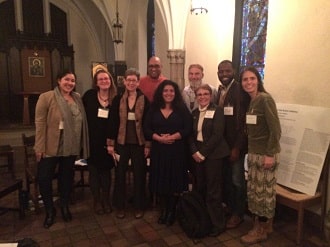
| **Updated Conference Schedule** |
|---|
| **10:30 am** | **Registration, coffee, and tea** |
| **11:00 am** | **Welcome:**Rev. Dr. Serene Jones, President, Union Theological Seminary |
| | **Opening Ritual and Intention Setting:** Led by Marianna Vergara, Center for Earth Ethics |
| **11:15am** | **Opening Remarks from Conference Organizers** |
Karenna Gore, Executive Director, Center for Earth Ethics at Union
Rabbi Yonatan Neril, Founder and Executive Director, The Interfaith Center for Sustainable Development
Rabbi Dr. Burt Visotzky, director, the Milstein Center for Interreligious Dialogue at JTS Rev. Fletcher Harper, Executive Director of Greenfaith and co-organizer of the Green Seminary Initiative
| **11:30am** | **Opening Dialogue and Plenary Session: Integrating Religion and Ecology into Theological Education** |
|---|---|
| | Dr. Timothy Van Meter, Associate Professor, Methodist Theological School in Ohio and co-organizer of the Seminary Environmental Leadership Initiative |
| | Dr. Laurel Kearns, Co-founder, The Green Seminary Initiative and Professor, Drew Theological School |
| | Extending the opening dialogue through panel with conference co-organizers |
| **1:00 pm** | Extending the opening dialogue through panel with conference co-organizers |
| **2:00 pm** | **Breakout Sessions: Integrating Faith and Ecology into Specific Course Areas** |
- Dr. Mary Evelyn Tucker, co-founder and co-director, Yale Forum on Religion and Ecology
- Dr. Rick Clugston, Director, Sustainability and Global Affairs, Center for Earth Ethics
*Room 207*
**2:00 pm** **(Cont’d) Breakout Sessions: Integrating Faith and Ecology into Specific Course Areas**
Engaging Religions and the Earth courses
- Dr. Laurel Kearns (listed above)
- Dr. Timothy Van Meter (listed above)
- Gregory Simpson, Mdiv, bio-chemist, Center for Earth Ethics
*Room 307*
Old Testament/Hebrew Bible courses
- Rabbi Yonatan Neril (listed above)
- Rabbi Dr. Burt Visotzky (listed above)
*Social Hall*
Talmud courses
- Dr. Eliezer Diamond, Rabbi Judah Nadich Associate Professor of Talmud and Rabbinics at The Jewish Theological Seminary.
*Room 305*
New Testament/Christian Bible courses
- Brigitte Kahl, Professor of New Testament, Union Theological Seminary
- Cristianne Loese, Visiting Scholar, Senior Scientific Advisor, German Environment Agency




IMG_4453
IMG_4387
IMG_4380
IMG_4377
IMG_4376
IMG_4375
IMG_4374
Nina and Mirele
Mariana Vergara

*Room 205A*
Ritual and Liturgy, Homiletics and Preaching courses: Reclaiming Revelation and Renewing Ritual
- Dr. Derrick McQueen, Assistant Director, Center on African American Sexual Politics and Social Justice, Columbia University
- Mariana Vergara (listed above)
- Claudio Carvalhaes, Associate Professor of Worship, Union Theological Seminary
*Lampman Chapel*
| **3:15 pm** | **Coffee and tea break** |
|---|---|
| **3:45 pm** | **All-attendee Group Structured Conversation** |
| | Advancing the field of faith and ecology education in seminaries. |
| **5:00 pm** | **Closing Session** |
| **6:00 pm** | **Closing and Charge to Attendees** |
| **2:00 pm** | **End of Event** |
The Conference was generously supported by

---
### [Daoist Faith Statement on the Environment](https://interfaithsustain.com/daoist-faith-statement-on-the-environment/)
**Published:** January 8, 2014
**Author:** ICSD
**Content:**
*The China Daoist Association, based at White Cloud Temple in Beijing, is the leading body representing all Daoists in mainland China. This piece is an authoritative statement by the Association.*
Daoism emerged on the basis of what are known as the One Hundred Schools of Thought during the period 770–221 B.C. Starting with the formal setting up of Daoist organizations in the East Han period (A.D. 25–220), the faith has a history of nearly 2,000 years. Daoism has been one of the main components of Chinese traditional culture, and it has exerted great influence on the Chinese people’s way of thinking, working, and acting. It is no exaggeration to say that in every Chinese person’s consciousness and subconscious, the factors of Daoism exist to a greater or lesser degree.
Because of its deep cultural roots and its great social impact, Daoism is now one of the five recognized religions in China (the others are Buddhism, Catholicism, Islam and Protestantism). Even more, the influence of Daoism has already transcended the Chinese-speaking world and has attracted international attention.
According to our statistics, more than 1,000 Daoist temples have now opened to the public (this number does not include those in Taiwan, Hong Kong, and Macao), and about 10,000 Daoists live in such communities. There are about 100 Daoist associations all over China, affiliated to the China Daoist Association. Several colleges have also been established to train Daoists, and many books and periodicals on the study and teaching of Daoism have been published. All Daoists work hard in order that Daoism should develop and flourish. They take an active part in mobilizing the masses, carrying forward the best in Daoist tradition, and working for the benefit of human society.
Like every major world religion, Daoism has its own outlook on the universe, human life, ideals of virtue, and ultimate purpose. Due to its distinctive cultural and historical background, it has its own striking characteristics. It can be briefly summarized in the following two precepts:
## 1. Give respect to the Dao above everything else.
Dao simply means “the way.” Daoism considers that Dao is the origin of everything, and Dao is the ultimate aim of all Daoists. This is the most fundamental tenet of Daoism. Dao is the way of Heaven, Earth, and Humanity. The Dao took form in the being of the Grandmother Goddess. She came to Earth to enlighten humanity. She taught the people to let everything grow according to its own course without any interference. This is called the way of no action, no selfishness (wu-wei), and this principle is an important rule for Daoists. It teaches them to be very plain and modest, and not to struggle with others for personal gain in their material life. This kind of virtue is the ideal spiritual kingdom for which the followers of Daoism long.
## 2. Give great value to life.
Daoism pursues immortality. It regards life as the most valuable thing. Master Zhang said that life is another expression of Dao, and the study of Dao includes the study of how to extend one’s life. With this principle in mind, many Daoists have undertaken considerable exploration in this regard. They believe that life is not controlled by Heaven, but by human beings themselves. People can prolong life through meditation and exercise. The exercises include both the moral and the physical sides. People should train their will, discard selfishness and the pursuit of fame, do good deeds, and seek to become a model of virtue (De).
Daoism considers that the enhancement of virtue is the precondition and the first aim of practicing the Dao. The achievement of immortality is a reward from the gods for practicing worthy acts. With a high moral sense and with systematic exercise in accordance with the Daoist method and philosophy of life, people can keep sufficient life essence and energy in their bodies all their lives. The Daoist exercise of achieving immortality has proved very effective in practice. It can keep people younger and in good health. But there is one point that cannot be neglected: a peaceful and harmonious natural environment is a very important external condition.
## Daoist ideas about nature
With the deepening world environmental crisis, more and more people have come to realize that the problem of the environment not only is brought about by modern industry and technology, but also has a deep connection with people’s world outlook, with their sense of value, and with the way they structure knowledge. Some people’s ways of thinking have, in certain ways, unbalanced the harmonious relationship between human beings and nature, and overstressed the power and influence of the human will. People think that nature can be rapaciously exploited.
This philosophy is the ideological root of the current serious environmental and ecological crisis. On the one hand, it brings about high productivity; on the other hand, it brings about an exaggerated sense of one’s own importance. Confronted with the destruction of the Earth, we have to conduct a thorough self-examination on this way of thinking.
We believe that Daoism has teachings that can be used to counteract the shortcomings of currently prevailing values. Daoism looks upon humanity as the most intelligent and creative entity in the universe (which is seen as encompassing humanity, Heaven, and Earth within the Dao).
## The Four Main Principles
Woodcut illustration of the practice known as ‘The infant takes form and appears’ from Xingming guizhi (Pointers on Spiritual Nature and Bodily Life) by Yi Zhenren, a Daoist text on internal alchemy, year 1615.
‘The infant takes form and appears’ (yin’er xianxing) is a term from Daoist internal alchemy. The Infant (yin’er) is the essence of the kidney. Zhenji, in Pointers on Spiritual Nature and Bodily Life, states: If the cooking time has already been sufficient, and the Sacred Embryo is already rounded, provided the cooking is thoroughly done, the infant will be born. When the ten-month term is accomplished, it will separate from the placenta. Exegetes call this the practice of the body, or the filling of the mysterious portal; it is called the newborn (chizi) or the infant. When the infant moves the embryo and changes the cauldron, it suddenly emerges to dwells secretly in the Qi Cavern.
There are four main principles that should guide the relationship between humanity and nature:
1\. In the Dao De Jing (Tao Te Ching), the basic classic of Daoism, there is this verse: “Humanity follows the Earth, the Earth follows Heaven, Heaven follows the Dao, and the Dao follows what is natural.” This means that the whole of humanity should attach great importance to the Earth and should obey its rule of movement. The Earth has to respect the changes of Heaven, and Heaven must abide by the Dao. And the Dao follows the natural course of development of everything. So we can see that what human beings can do with nature is to help everything grow according to its own way. We should cultivate in people’s minds the way of no action in relation to nature, and let nature be itself.
2\. In Daoism, everything is composed of two opposite forces known as Yin and Yang. Yin represents the female, the cold, the soft and so forth; Yang represents the male, the hot, the hard and so on. The two forces are in constant struggle within everything. When they reach harmony, the energy of life is created. From this we can see how important harmony is to nature. Someone who understands this point will see and act intelligently. Otherwise, people will probably violate the law of nature and destroy the harmony of nature.
There are generally two kinds of attitude toward the treatment of nature, as is said in another classic of Daoism, Bao Pu Zi (written in the fourth century A.D.). One attitude is to make full use of nature, the other is to observe and follow nature’s way. Those who have only a superficial understanding of the relationship between humanity and nature will recklessly exploit nature. Those who have a deep understanding of the relationship will treat nature well and learn from it. For example, some Daoists have studied the way of the crane and the turtle, and have imitated their methods of exercise to build up their own constitutions. It is obvious that in the long run, the excessive use of nature will bring about disaster, even the extinction of humanity.
3\. People should take into full consideration the limits of nature’s sustaining power, so that when they pursue their own development, they have a correct standard of success. If anything runs counter to the harmony and balance of nature, even if it is of great immediate interest and profit, people should restrain themselves from doing it, so as to prevent nature’s punishment. Furthermore, insatiable human desire will lead to the overexploitation of natural resources. So people should remember that to be too successful is to be on the path to defeat.
4\. Daoism has a unique sense of value in that it judges affluence by the number of different species. If all things in the universe grow well, then a society is a community of affluence. If not, this kingdom is on the decline. This view encourages both government and people to take good care of nature. This thought is a very special contribution by Daoism to the conservation of nature.
## In Conclusion
To sum up, many Daoist ideas still have positive significance for the present world. We sincerely hope that the thoughts of all religions that are conducive to the human being will be promoted, and will be used to help humanity build harmonious relationships between people and nature. In this way eternal peace and development can be maintained in the world.
*This was printed, along with Statements from ten other faiths, in Faith in Conservation (www.arcworld.org) by Martin Palmer with Victoria Finlay, published by the World Bank in 2003.*
**To read the brief statement on Daoism on the environment click [here](https://interfaithsustain.com/daoism-ecology/)**.
**For a look at other faith’s statements on the environment, please click [here](https://interfaithsustain.com/religion-and-ecology-articles/)**.
Copied with permission from Alliance for Religions and Conservation, (www.arcworld.org).
ICSD works on a global basis, with current engagement in Africa, the Middle East, North America, and Europe.
---
### [The Southwest Symposium](https://interfaithsustain.com/the-southwest-symposium/)
**Published:** February 7, 2019
**Author:** ICSD
**Content:**
## The Southwest Symposium on Ecologically Informed Theological Education
### March 13 and 14, 2019 at Brite Divinity School on the campus of Texas Christian University, Ft. Worth, Texas
Seminary administrators and faculty attended the Southwest Symposium on Ecologically Informed Theological Education: Implications for Teaching, Learning and Seminary Life. The symposium brought together key faculty, staff and administrators from seminaries and theological schools from the Southwest to explore how theological education can address our ecological reality.
We offered this opportunity at no cost to invited faculty, staff and administrative participants, thanks to a generous grant from the Luce Fund for Theological Education.
An increasing number of people in the United States are turning to their pastors, priests, rabbis, imams and spiritual leaders for wisdom and guidance regarding ecological sustainability, lifestyle and learning to live faithful lives in relation to our shared world. We all are becoming more aware of the injustice and inequity of climate change, pollution and waste. The Southwest Symposium offered resources to explore how theological institutions can address these concerns from a theological and pedagogical perspective. It further enabled institutions to equip the next generation of religious leaders to effectively respond to and engage with creation care and ecological justice.
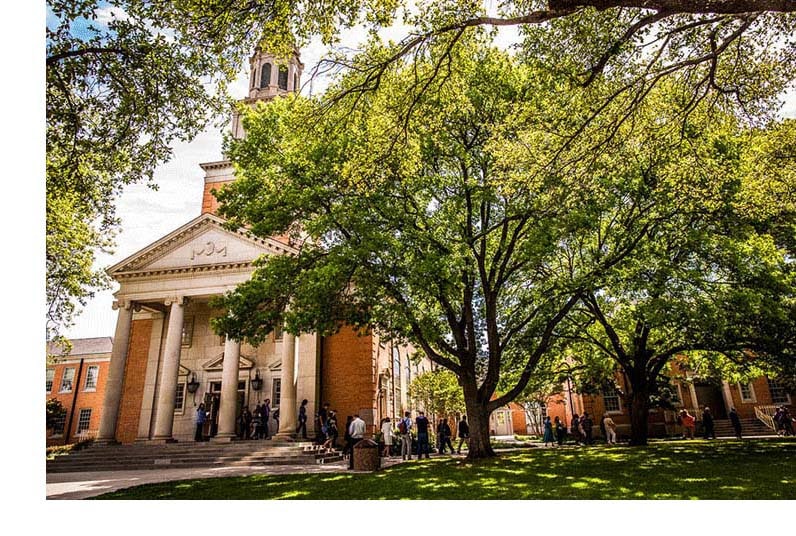
**CONFERENCE PROGRAM**
**Wednesday, March 13**
**1:00 p.m.** Arrival and registration
**1:30 p.m.** Welcome and introductions
**2:45 p.m.** Opening address by Tim Van Meter
**3:45 p.m.** Talking About Climate Change in Church/Seminary: A Conversation Across Ideological Lines by Laurel Kearns and Chris Doran
**5:00 p.m.** Dinner
**6:00 p.m.** Discussion: “Climate Chaos: A Pedagogical Manifesto”
**Thursday, March 14**
**8:00 a.m.** Morning liturgy
**9:00 a.m.** Animals in Comparative Religious Perspectives: Pedagogical Strategies by David Aftandilian
**9:30 a.m.** Pedagogical and Institutional Resources from Creature Kind by Sarah Withrow King
**10:00 a.m.** Integrating Ecology and the Disciplines: Break out sessions
**11:00 a.m.** Ecologically Centered Soul Care and Spiritual Direction by Steven Chase
**12:00 p.m.** Lunch
**1:00 p.m.** Keynote by Melanie Harris
**2:45 p.m.** Interreligious Perspectives Panel
**3:45 p.m.** Facilities
**4:15 p.m.** Final processing and next steps
**5:00 p.m.** Closing
The Southwest Symposium was organized by [Brite Divinity School](https://www.brite.edu), [Methodist Theological School in Ohio](https://www.mtso.edu), the [Green Seminary Initiative](https://www.facebook.com/groups/39421421174/), and the [Interfaith Center for Sustainable Development.](https://interfaithsustain.com)
Our time together at Brite informed and invigorated participants as we strive to better incorporate the care of our planet into our work as educators.
---
### [Islamic Faith Statement on the Environment](https://interfaithsustain.com/islamic-faith-statement-on-the-environment/)
**Published:** January 7, 2014
**Author:** ICSD
**Content:**
## Humans and the Environment
Humanity’s most primordial concepts of religion relate to the environment. Human history on planet Earth is, on a geological scale, very short indeed. Planet Earth itself is a mere 3,800 million years old; human beings only appeared one million or maybe two million years ago. Most of the physical patterns of planet Earth were probably in place, broadly speaking, by the time humans evolved. Apart from what they first saw, they also probably witnessed some spectacular changes themselves. They must, at the very least, have gone through one Ice Age and seen some graphic volcanic eruptions—assuming they were able to avoid the consequences. The environment, therefore, very probably induced the first thoughts of a Super-Being—a God, if you like—whose manifestations lay in human beings’ immediate surroundings.
The environment also provided another dimension in humanity’s relationship with nature. To survive in a given environment, humans have to adjust what they take from that environment to what can give them sustainable yields on (at the very least) an annual basis. In effect this meant that early humans had to learn to conserve at an early age. Being largely dependent on what was available rather than on what they could cultivate, they entered into a partnership with the environment. To take more than the regenerative capacity of the environment could lead to serious subsequent exhaustion—quite rightly seen as harsh retribution from an angry God. The converse situation of exploitation with moderation led to sustained yields, which were (again, quite rightly) taken as having pleased God.
## The Industrial Revolution
This relationship between conservation and religion is thus not only a natural one but also probably as old as the proverbial hills. But when we quickly open most of the pages of human history on planet Earth and come to the past 300 years or so, we find the advent of the Industrial Revolution. It made possible the production of large quantities of goods in a very short time.


That meant that raw materials in ever-increasing quantities had to be found to feed the hungry mills ready to convert them into finished or semi-finished goods. The consequences were many—economic, social, and environmental. The material achievements of the human race in the past 100 or so years have overshadowed the contributions made by all past civilizations.
The Industrial Revolution that took place in Europe in the eighteenth and nineteenth centuries exacted a high social and environmental cost. Now these costs are even higher and more universal, being manifestly so in the great urban centers of the world. The paradox of “progress” today is the easily perceived correlation between complex consumer societies and the degeneration of the human being. Or as John Seymour puts it:
*We see men now wherever we look, so blinded by arrogance and the worship of man as God that they are doing things no one but the insane would do … men maddened by the belief that they are both omniscient and omnipotent, that they are indeed God.*
## The Pursuit of Money
The Industrial Revolution also proclaimed a new revival of another God: Mammon. Mammon regrettably has no respect for environmental integrity—nor do his followers. The last 250 years have seen a growing decimation of ever more pristine areas of nature to feed the insatiable industrial cuckoo and its resultant consumerism. Forests—particularly tropical forests—have been systematically hewn down, the seas ransacked, the lands made totally dependent on a host of inorganic fertilizers and pesticides for food production. Wastes galore have filled the seas, the rivers, and the lakes, not to mention the landfills. We must also take note that the “unmatched material progress” of this century that we are often fond of talking about has only been possible for the few: that is, the population of the northern hemisphere and a small minority among the peoples of the South. This is usually translated as less than 25 percent of the world’s population consuming over 75 percent of the world’s resources.
This rate of consumption by a minority of the human species has caused unparalleled climatic change, ecosystem disintegration, and species extinction. As a report by the World Wide Fund for Nature observes: Loss of biodiversity worldwide, and the combination of global warming with other human pressures will present the greatest challenge in conservation for decades to come.This would lead us to conclude that there is a profound and inherent contradiction in the efforts made by the “North” to keep ahead of the rest as consumers, and the push by the remaining 75 percent of the world’s population to catch up. Given this scenario, if just Eastern Europe or Russia or India or China managed to raise its standard of living by just a few percentage points, then the consequences of putting this extra load on the earth’s ecosystem, which is already under severe strain, would be catastrophic.
This is the background against which the followers of the relatively ancient, environmentally conscious (indeed environmentally concerned) God have gathered to reexamine and to restate their own commitment to environmental integrity from their own individual religion’s standpoint. We for our part will look at the underpinnings of conservation in Islam.
## Islam and Conservation
There are several Islamic principles that, when taken individually, seem to have little bearing on conservation. Together, however, they add up to a clear concept of the Islamic view on conservation.
### Tawheed
The first Islamic principle that relates to conservation is that of the Oneness of Allah, or Tawheed. This principle is absolutely fundamental to Islam. Every Muslim must believe in this Oneness of Allah. It is said by some Ulamaa that some two-thirds of Prophet Muhammad’s (SAW) early preaching—and indeed of the Qur’an itself—were and are dedicated purely to endorsing this very Oneness of Allah. One indivisible God means to a Muslim that there is no separate deity for each of the many attributes that to Muslims belong to the One Universal God who is also God of the Universe. Tawheed is the monotheistic principle of Islam and it begins by declaring that “there is no God but God” (the second half of this declaration asserts that “Muhammad is His Messenger”). We are for the present concerned with the first part, which affirms that there is nothing other than the Absolute, the Eternal, All Powerful Creator. This is the bedrock statement of the Oneness of the Creator from which stems everything else.
It is the primordial testimony of the unity of all creation and the interlocking grid of the natural order of which man is intrinsically a part. God says in the Qur’an:
*Say: He is Allah the One and Only; Allah the Eternal Absolute; He begetteth not nor is He begotten; And there is none like unto Him. (112.001-4)*
God is Real, not an abstract idea or concept; He is One, the Everlasting Refuge for all creation.
### Man’s Relation to God
The emphasis on Tawheed is significant in itself but it is even more relevant to the present discussion by virtue of defining a Muslim’s relationship to Allah.
The Omniscience and Omnipotence of Allah means, by definition, that a Muslim’s relationship to Allah is total.
To Him—and to Him only—should humans refer for all their needs: physical, mental, and spiritual. Indeed, Allah would not have it any other way. As He says in the Qur’an:
*Allah forgiveth not that partners should be set up with him; but He forgiveth anything else to whom He pleaseth; to set up partners with Allah is to devise a sin most heinous in deed. 004.048.*
But Allah is not only the One Indivisible God. He is also the Universal God as well as the Lord of the Universe:
*Praise be to Allah, Lord of the Worlds. 001.002.*
And again:
*Say: “Allah’s guidance is the \[only\] guidance and we have been directed to submit ourselves to the Lord of the worlds.* *To establish regular prayers and to fear Allah; for it is to Him that we shall be gathered together.*
*It is He Who created the heavens and the earth in true \[proportions\]: the day He saith “Be” Behold! it is. His Word is the truth. His will be the dominion the day the trumpet will be blown. He knoweth the Unseen as well as that which is open. For He is the Wise well acquainted \[with all things\]. 006.071-3.*
### To Allah Belongs the Earth and the Heavens
Yet another principle that underpins Islamic commitment to the conservation of nature and natural resources is the principle of divine ownership of all that exists on earth and in the heavens—animate and inanimate. There are countless verses in the Holy Qur’an that state this. A few are given below. In the celebrated Ayatul Kursiyy:
*Allah! There is no Allah but He the living the Self subsisting Eternal. No slumber can seize him nor sleep. His are all things in the heavens and on earth. Who is there can intercede in His presence except as He permitteth? He knoweth what \[appeareth to his creatures as\] before or after or behind them. Nor shall they compass aught of his knowledge except as He willeth. His throne doth extend over the heavens and the earth and He feeleth no fatigue in guarding and preserving them. For He is the Most High the Supreme \[in glory\]. 002.255.*


And again:
*To Him belong all things in the heavens and on earth. And enough is Allah as a Disposer of affairs. 004.171*
*To Him belongeth all that dwelleth \[or lurketh\] in the night and the day. For He is the One Who heareth and knoweth all things. 006.013.*
To Him belongs what is in the heavens and on earth and all between them and all beneath the soil. 020.006.
To Him belong all \[creatures\] in the heavens and on earth: even those who are in His \[very\] Presence are not too proud to serve Him nor are they \[ever\] weary \[of His service)\]. 021.019.
But we are reminded that all things animate and inanimate, in their own ways, submit themselves to the Glory of Allah. There are many verses in the Qur’an about this:
*To Him belongs every being that is in the heavens and on earth: all are devoutly obedient to Him.* 030.026.
And again:
*Whatever is in the heavens and on earth doth declare the Praises and Glory of Allah the Sovereign the Holy One the Exalted in Might the Wise.* 062.001.
Thus Allah, the One Indivisible God, the Universal God and the Lord of the Universe is the Owner also of all that is in the universe, including man. After all, we are reminded to say constantly:
*Be sure We shall test you with something of fear and hunger some loss in goods or lives or the fruits \[of your toil\] but give glad tidings to those who patiently persevere.
Who say when afflicted with calamity: “To Allah we belong and to Him is our return.”* 002.155-6
The above set of principles — all taken from Islam’s ultimate authority, the Holy Qu’ran — define the perspectives of the relationship of humanity to God and of God to the environment in its totality.
A second set of principles that the Holy Qur’an enunciates prescribe man’s relationship to the environment after, of course, humanity has accepted the preceding principles.
### Man and the Khalifa
The most important of this second set of principles is that which defines the human role and responsibilities in the natural order that Allah provided. The appointment of people as Khalifa, or guardians, is the sacred duty God has given to the human race. The appointment of humanity to this elevated position gives rise to the one occasion when the Angels actually questioned Allah’s decision as seen in the following verses:
*Behold thy Lord said to the angels: “I will create a vice-regent on earth.” They said “Wilt thou place therein one who will make mischief therein and shed blood? Whilst we do celebrate Thy praises and glorify Thy holy \[name\]?” He said: “I know what ye know not.”*
And He taught Adam the nature of all things; then He placed them before the angels and said: “Tell Me the nature of these if ye are right.”
They said: “Glory to Thee of knowledge we have none save that Thou hast taught us: in truth it is Thou who art perfect in knowledge and wisdom.”
He said: “O Adam I tell them their natures.” When he had told them Allah said:
“Did I not tell you that I know the secrets of heaven and earth and I know what ye reveal and what ye conceal?”
And behold We said to the angels: “Bow down to Adam”; and they bowed down, not so Iblis he refused and was haughty he was of those who reject Faith. 002.030-34
Clearly Allah preferred unprogrammed free will of humanity to the pre-programmed goodness of Angels!
And again:
*It is He who hath made you \[His\] agents inheritors of the earth: He hath raised you in ranks some above others: that he may try you in the gifts He hath given you: for thy Lord is quick in punishment: yet He is indeed Oft-Forgiving Most Merciful.* 006.165.
The exercise of the vice regency is defined in the Qur’an by another set of principles in which man’s privileges as well as his responsibilities are clearly defined.
### Mizaan
One of the most important attributes conferred on human beings is the faculty of reasoning. This, above all, might well be the deciding fact in their appointment as God’s vice regents on earth. Here are the relevant verses:
*\[Allah\] Most Gracious!
It is He Who has taught the Qur’an.
He has created man:
He has taught him speech \[and Intelligence\]
The sun and the moon follow courses \[exactly\] computed;
And the herbs and the trees—both \[alike\] bow in adoration.
And the firmament has He raised high and He has set up the balance \[of Justice\]*
*In order that ye may not transgress \[due\] balance.
So establish weight with justice and fall not short in the balance.
It is He Who has spread out the earth for \[His\] creatures:
Therein is fruit and date-palms producing spathes \[enclosing dates\]:*
Also corn with \[its\] leaves and stalk for fodder and sweet-smelling plants.
Then which of the favors of your Lord will ye deny? (055.001-013)
Humans were not created to function exclusively on instinct. The “explanation” was taught to us because we had the capacity to reason and understand.
There is order and purpose in the whole pattern of creation. The Sun and Moon following stable orbits make life possible. The whole universe is in submission to
the Creator—the stars that enable us to steer courses and the trees that give us sustenance, shelter and other uses. The world functions only because creation follows a preordained pattern. Man then has a responsibility by virtue of being able to reason, to behave justly, “to transgress not in the balance.” We owe this to ourselves as much as for the rest of creation.
### Justice
The capacity to reason and to balance intellectual judgment would in itself be insufficient without the additional moral commitment to Justice. And this is what the Qur’an prescribes for Muslims:
*O ye who believe! Stand out firmly for justice as witnesses to Allah even as against yourselves or your parents or your kin and whether it be \[against\] rich or poor: for Allah can best protect both. Follow not the lusts \[of your hearts\] lest ye swerve and if ye distort \[justice\] or decline to do justice verily Allah is well acquainted with all that ye do.* 004.135.
And again:
*Whoever recommends and helps a good cause becomes a partner therein: and whoever recommends and helps an evil cause shares in its burden: and Allah hath power over all things. 004.085.*
*Allah doth command you to render back your trusts to those to whom they are due; and when ye judge between man and man that ye judge with justice: verily how excellent is the teaching which He giveth you! for Allah is He who heareth and seeth all things. 004.058*
And again:
*O ye who believe! stand out firmly for Allah as witnesses to fair dealing and let not the hatred of others to you make you swerve to wrong and depart from justice. Be just: that is next to Piety: and fear Allah for Allah is well-acquainted with all that ye do. 005.009.*
*\[They are fond of\] listening to falsehood of devouring anything forbidden. If they do come to thee either judge between them or decline to interfere. If thou decline they cannot hurt thee in the least. If thou judge judge in equity between them; for Allah loveth those who judge in equity.*005.045.
### “Use But Do Not Abuse”
Several times in the Qur’an, man is invited to make use of the nourishing goods that Allah has placed on earth for him, but abuse—particularly through extravagance and excess—is strictly forbidden. Sometimes these principles are stated in one breath, so to speak. Sometimes they are stated separately. But the message is the same, as the following verse indicates:
*O children of Adam! … eat and drink: but waste not by excess for Allah loveth not the wasters.* 007.031.
There are as many invitations to partake of nature as provided for man and for other creatures of the earth as there are for the avoidance of wasteful extravagance. Time and again, Allah reminds us that He loveth not wasters.
*It is He who produceth gardens with trellises and without and dates and tilth with produce of all kinds and olives and pomegranates similar \[in kind\] and different \[in variety\]: eat of their fruit in their season but render the dues that are proper on the day that the harvest is gathered. But waste not by excess: for Allah loveth not the wasters.* 006.141.
### Fitra
Fitra can be taken as perhaps the most direct injunction by Allah to man to conserve the environment and not to change the balance of His creation. This is specifically contained in the verse below:
*So set thou thy face steadily and truly to the Faith: \[Establish\] Allah’s handiwork according to the pattern on which He has made mankind: no change \[let there be\] in the work \[wrought\] by Allah: that is the standard Religion: but most among mankind understand not. 030.030.*
Thus, Islam teaches that humanity is an integral part of the environment; it is part of the creation of Almighty God. We remain deeply locked into the natural domain despite the fact that there is talk of bringing the environment to the people as though we were independent of it.
The power given to man by God is seen in Islam to be limited by the responsibilities he bears, not only toward God and other men and women, but also toward the rest of creation.
Seyyed Hossein Nasr says: *“The Divine Law (al shariah) is explicit in extending the religious duties of man to the natural order and the environment.”*
## Conclusion
As we indicated at the beginning, there are several Qur’anic principles that, taken separately, do not have an obvious connection with conservation. But taken in their totality, they state in clear terms that Allah, the One True God is the Universal God and the Creator of the Universe and indeed, the Owner of the Universe. To Him belong all the animate and inanimate objects, all of whom should or do submit themselves to Him.
Allah, in His Wisdom, appointed humans, the creatures that He has conferred with the faculty of reason and with free will, to be His vice regents on earth. And while Allah has invited people to partake of the fruits of the earth for their rightful nourishment and enjoyment, He has also directed them not to waste that which Allah has provided for him—for He loveth not wasters.
Furthermore, Allah has also ordered humans to administer his responsibilities with Justice. Above all, people should conserve the balance of Allah’s creation on Earth. By virtue of their intelligence, humanity (when it believes in the One Universal Allah, the Creator of the Universe) is the only creation of Allah to be entrusted with the overall responsibility of maintaining planet Earth in the overall balanced ecology that man found. If biologists believe that humans are the greatest agents of ecological change on the surface of the earth, is it not humans who, drawn from the brink, will—for their own good—abandon Mammon and listen to the prescriptions of God on the conservation of their environment and the environment of all the creatures on earth? The Islamic answer to this question is decisively in the affirmative.
*Statement by Hyder Ihsan Mahasneh, a biologist and Islamic scholar and the first African head of the Kenya National Parks Service. He was appointed by the Muslim World League to compile this paper. It was printed, along with Statements from ten other faiths, in Faith in Conservation by Martin Palmer with Victoria Finlay, published by the World Bank in 2003.*
## **To read a short article about Islam and ecology from Professor Abu Sway, [click here](https://interfaithsustain.com/Prof-Abu-Sway-Short-Article).**
## **To read a long article about Islam and ecology from Professor Abu Sway, [click here](https://interfaithsustain.com/Prof-Abu-Sway-long-Article).**
## **For the brief Islamic statement on ecology [click here](https://interfaithsustain.com/islam-and-ecology/).**
## **An interview with Prof Abu Sway can be found [here](https://interfaithsustain.com/interview-with-dr-mustafa-abu-sway/)**
**For other faith’s statements on the environment, please click [here](https://interfaithsustain.com/religion-and-ecology-articles/)**
Copied with permission from the Alliance of Religions and Conservation (ARC) www.arcworld.org
*ICSD works on a global basis, with current engagement in Africa, the Middle East, North America, and Europe.*
---
### [Jain Faith Statement on the Environment](https://interfaithsustain.com/jain-faith-statement-on-the-environment/)
**Published:** January 12, 2014
**Author:** ICSD
**Content:**
*Dr L. M. Singhvi is President of the Jain Institute, the main body bringing together the three distinct traditions of the Jains. He prepared this statement on behalf of the Institute of Jainology.*
## The story of Jainism
Jainism is one of the oldest living religions. The term Jain means “follower of the Jinas.” The Jinas, or spiritual victors, are human teachers who attained omniscience. They are also called Tirthankaras (ford-makers), those who help others escape the cycle of birth and death. The twenty-fourth Tirthankara, called Mahavira, was born in 599 B.C. At the age of 30, he left home on a spiritual quest. After 12 years of trials and austerities, he attained omniscience. Eleven men became his ganadharas, or chief disciples.
At 72 Mahavira died and attained nirvana, that blissful state beyond life and death. Mahavira was not the founder of a new religion. He consolidated the faith by drawing together the teachings of the previous Tirthankaras, particularly those of his immediate predecessor, Parsva, who lived about 250 years earlier at Varnasi.
Initially the followers of Jainism lived throughout the Ganges Valley in India. Around 250 B.C., most Jains migrated to the city of Mathura on the Yamuna River. Later, many traveled west to Rajasthan and Gujarat and south to Maharashtra and Karnataka, where Jainism rapidly grew in popularity. The Jain population throughout the world is less than 10 million, of which about 100,000 have settled overseas in North America, the United Kingdom, Kenya, Belgium, Singapore, Hong Kong, and Japan.
## Jain practices
Jains believe that to attain the higher stages of personal development, lay people must adhere to the three jewels (ratna-traya), namely, enlightened worldview, true knowledge, and conduct based on enlightened worldview and true knowledge. They must endeavor to fulfil the anuvratas (small vows). There are five such vows:


## Ahimsa (nonviolence)
This is the fundamental vow and runs through the Jain tradition like a golden thread. It involves avoidance of violence in any form through word or deed, not only to human beings but also to all nature. It means reverence for life in every form including plants and animals. Jains practice the principle of compassion for all living beings (Jiva-daya) at every step in daily life. Jains are vegetarians.
**Satya (truthfulness)**
“Tirthankara Mahavira” (Truth is God) said Sachham Bhagwam.
**Asteya (not stealing)**
This is the principle of not taking what belongs to another. It means avoidance of greed and exploitation.
**Brahmacharya (chastity)**
This means practicing restraint and avoiding sexual promiscuity.
## Aparigraha (non-materialism)
For lay Jains, this means limiting their acquisition of material goods and contributing one’s wealth and time to humanitarian charities and philanthropic causes.
### **Jain beliefs**
**Anekantavada (non-one-sidedness)**Statue
This philosophy states that no single perspective on any issue contains the whole truth. It emphasizes the concept of universal interdependence and specifically recommends that one should take into account the viewpoints of other species, other communities and nations, and other human beings.
**Loka (the universe)**
Space is infinite but only a finite portion is occupied by what is known as the universe. Everything within the universe, whether sentient (jiva) or insentient (ajiva), is eternal, although the forms that a thing may take are transient. Jains preach and practice the principle of the duty of every human being to promote universal well-being (sarva-mangalya).
## Jiva (soul)
All living beings have an individual soul (jiva) which occupies the body, a conglomerate of atoms. At the time of death, the soul leaves the body and immediately takes birth in another. Attaining nirvana and thereby terminating this cycle of birth and death is the goal of Jain practice.
## Ajiva (non-soul)
Ajiva is everything in the universe that is insentient, including matter, the media of motion and rest, time and space.
## Karma
Karma is understood as a form of subtle matter that adheres to the soul as a result of its actions of body, speech, and mind. This accumulated karma is the cause of the soul’s bondage in the cycle of birth and death.
## Moksha or nirvana (eternal liberation through enlightenment)
The ultimate aim of life is to emancipate the soul from the cycle of birth and death. This is done by exhausting all bound karmas and preventing further accumulation. To achieve moksha, it is necessary to have enlightened worldview, knowledge, and conduct.
### Jainism as a religion of ecology
Jainism is fundamentally a religion of ecology and has turned ecology into a religion. It has enabled Jains to create an environment-friendly value system and code of conduct. Because of the insistence on rationality in the Jain tradition, Jains are always ready and willing to look positively and with enthusiasm upon environmental causes. In India and abroad, they are in the forefront of bringing greater awareness and putting into practice their cardinal principles on ecology. Their programs have been modest and mostly self-funded through volunteers.
*This was printed, along with Statements on Ecology from ten other faiths, in Faith in Conservation by Martin Palmer with Victoria Finlay, published by the World Bank in 2003.*
**The brief statement can be found [here](https://interfaithsustain.com/jain-ecology/)**
**For other faith’s statements on the environment, please click [here](https://interfaithsustain.com/religion-and-ecology-articles/)**
Copied with permission from the Alliance of Religions and Conservation (ARC) www.arcworld.org
ICSD works on a global basis, with current engagement in Africa, the Middle East, North America, and Europe.
---
### [Shinto Faith Statement on the Environment](https://interfaithsustain.com/shinto-faith-statement-on-the-environment/)
**Published:** January 12, 2014
**Author:** ICSD
**Content:**
## The Kami
The ancient Japanese considered that all things of this world have their own spirituality, as they were born from the divine couple. Therefore, the relationship between the natural environment of this world and people is that of blood kin, like the bond between brother and sister.
An agricultural society based on rice cultivation like that of Japan cannot exist without unification and harmony among all things on this earth: mountains, rivers, the sun, rain, animals, and plants, not to mention cooperation among people. So, it was natural that people developed the idea that they could make their society flourish only when they worked together, fully performing their own role, but at the same time, helping and supporting each other. This gave rise to the spirit of revering various Kami, the land, nature, people, and, on top of that, the spirit of appreciation of harmony among all these aspects of Nature.

## The Children of Kami
Shinto regards that the land, its nature, and all creatures including humans are children of Kami.
Accordingly, all things existing on this earth have the possibility of becoming Kami. Nevertheless, revered status as Kami is limited to those that live quite extraordinary lives beyond human wisdom or power and that have a profound influence, for good or ill, on human beings. As to natural elements or phenomena that have such enormous power, there exist Kami of Rain, Kami of River, Kami of Thunder, Kami of Wind, Kami of Mountain, Kami of Ocean. All these Kami are involved in the life of a rice-cultivating agricultural society.
Speaking of the reverence toward Kami of Mountain, it started with people’s awareness of mountains as an important source of water for rice cultivation. Then, people came to regard the mountain itself as a sacred object. This mountain faith prepared the way not only for the preservation of mountain forests but also for conservation of the cycle of the ecosystem, given the fact that mountain forests supply rich nutrition to seas through the rivers, and support good inshore fishing.
In ancient times, reverence toward a holy mountain was expressed by paying respect directly to the mountain itself. Nowadays, Shinto has a building, or a compound of buildings, where Kami spirit dwells permanently, and people worship by performing Matsuri – a festival to offer prayers to Kami – in these buildings.
## Matsuri Festivals for Nature
There are many kinds of Matsuri performed in each locality throughout the year. Large or small, these Matsuri are mostly based on the agricultural cycle. Two of the most important festivals each year are the spring festival called Kinensai, a festival to pray for a rich harvest, and the autumn festival called Niinamesai, a festival to offer thanks for the successful harvest. People of each locality have been carrying out these festivals every year since ancient times.
In this sense, it can be said that Shinto consists of reverence and gratitude to the land, its nature, and the life that these natural elements give to human beings. With the reverence of Kami, Shinto spontaneously developed through the way of life of the ancient Japanese. It has neither written dogma nor a teaching book, but people revere numerous deities who are figuratively described as “8 million different deities.” A deity with a female form, Amaterasu Ohmikami, is revered most highly among them, but the idea of one absolute god or a hierarchy among numerous Kami has never existed, and still does not. Yet, each Kami has an individual character to which people offer their worship, believing in that as the virtue of each Kami.

## Suggestions from Shinto
Shinto regards the land and its environment as children of Kami. In other words, Shinto sees nature as the divinity itself. These days, people often say, “Be gentle to nature” or “Be gentle to the earth.” But these expressions sound somehow like the fault of putting the cart before the horse. We feel it is humanity’s arrogance. It seems that humans can dominate nature as the master and ultimately “repair” nature, using technical-scientific means. But Kami are the origin of all lives, and the life of all things is deeply connected to them. This leads to an awareness of the sacredness of life and an appreciation for life given by Kami.
From ancient times, Japanese people have faced nature and invisible existence with awe and appreciation. And they used to have a principle: *“to return the thing given to the human as a gift of nature to its original place.”* Until the Edo era (1603–1867) this circulation system of Japanese society functioned very well. After that, with the development of modern industry, the level of Japanese life was elevated in material terms, and now people enjoy lives free of want.
But in fact, the Japanese spirituality inherited from the ancient ancestors has been gradually lost or hidden somewhere deep in our consciousness. It might not be an exaggeration if we said that not only environmental problems but also all problems of modern society have been caused by lack of the awe, reverence, and appreciation for nature that ancient people used to have and taught us.
## In Conclusion
Environmental issues, after all, depend on our self-awareness of the problems and our determination to take responsibility. We often say that things look different depending upon one’s viewpoint.
So, Shinto suggests that we should shift our point of view and look at our environment with the spirit of “reverence and gratitude,” that is, with the spirit of parental care for children or with the spirit of brotherhood. And if we can extend this spirit to our neighbors, to our society members, to our country members, to peoples of the world, and to nature, too, transcending differences of thought, ethics, and religion, then this spirit will serve to foster criteria and morals indispensable for keeping our human life healthy.

*This statement was prepared by the Jinja Honcho, the representative body of all Shinto Shrines in Japan. It was printed, along with Statements from ten other faiths, in Faith in Conservation by Martin Palmer with Victoria Finlay, published by the World Bank in 2003.*
**The brief statement can be found [here](https://interfaithsustain.com/shinto-ecology/)**
**For other faith’s statements on the environment, please click [here](https://interfaithsustain.com/religion-and-ecology-articles/)**
Copied with permission from the Alliance of Religions and Conservation (ARC) www.arcworld.org
ICSD works on a global basis, with current engagement in Africa, the Middle East, North America, and Europe.
---
### [Articles and Radio](https://interfaithsustain.com/articles-and-radio/)
**Published:** July 18, 2022
**Author:** ICSD
**Content:**
Over the years, The Interfaith Center for Sustainable Development has received extensive media coverage from dozens of TV, radio, and printed media outlets for its various activities including the multiple interfaith environmental conferences that it has organized in Jerusalem. Featuring Jewish, Christian, and Muslim religious figures of the Holy Land, the events spoke about the religious importance of stewardship of the earth. To learn more about the events and how cooperation around environmental issues can help spur coexistence, click on the links below.
## Interfaith Climate Change Event
[In Jerusalem, An Interfaith Effort At Addressing Climate Change](https://www.jpost.com/Israel-News/In-Jerusalem-an-interfaith-effort-at-addressing-climate-change-500872) (Jerusalem Post)
[All faiths must unite to fight climate change, clergy urge](https://www.israel21c.org/all-faiths-must-unite-to-fight-climate-change-clergy-urge/) (Israel 21C)
[Climate change: It’s not just for liberals anymore](https://www.washingtontimes.com/news/2017/jul/31/climate-change-religious-imperative/?utm_campaign=shareaholic&utm_medium=email_this&utm_source=email) (Washington Times)
[A priest, a rabbi and a sharia judge walk into a climate change conference](https://www.i24news.tv/en/news/israel/society/151423-170726-gg) (124 News)
[Rabbis Should Grow a Spine’: Why Politics Trumps Religion When It Comes to Climate Change](http://www.haaretz.com/israel-news/.premium-1.804207?=&ts=_1501666111099)
## Engaging Seminaries on Faith and Ecology
More seminaries offering courses on faith, environment, study finds (National Catholic Reporter)
[News the Pope will love: Faith and ecology teachings making world more holy](https://www.greenprophet.com/2015/06/news-the-pope-will-love-faith-and-ecology-teachings-making-world-more-holy/) (Green Prophet)
[New Curriculum for seminarians, inspired by Pope Francis](https://www.lastampa.it/2016/05/30/vaticaninsider/eng/news/new-curriculum-for-seminarians-inspired-by-pope-francis-VlqAuTBrGXjE91Qixo3eKM/pagina.html) (Vatican Insider News)
[Laudato Si’ first anniversary: interfaith impact](https://www.vaticannews.va/en/pope/news/2022-11/pope-francis-cop27-laudato-si-action-platform-appeal.html) (Vatican News)
## Theology Seminaries Offer Faith and Ecology Courses
[MTSO Identified as an Exceptional Seminary for Ecology](https://www.mtso.edu/about-mtso/news-publications/mtso-news-archive/mtso-named-exceptional-seminary-for-ecology/)[](https://www.mtso.edu/about-mtso/news-publications/mtso-news-archive/mtso-named-exceptional-seminary-for-ecology/)Faith and Ecology Report Lists Engaging Seminaries Drew Theological School Is Top 25 in Faith and Ecology Courses
[CTS Highlighted for Faith & Ecology Courses by Chicago Theological Seminary](https://www.ctschicago.edu/press/the-interfaith-center-for-sustainable-development-highlights-cts-for-faith-ecology-courses/)
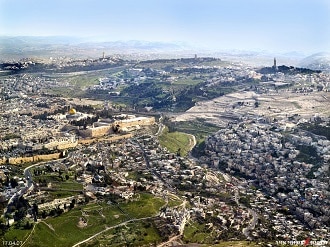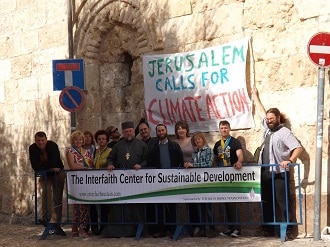
## **Faith and Ecology in Jerusalem**
[Interfaith and Sustainablility Radio Show with Live Sufi Music 12/20/2015](https://shalomcrafter.weebly.com/my-blog/interfaith-and-sustainability-radio-show) by Shalom Crafters [Faith Leaders join hands to protect the planet ](https://www.israel21c.org/headlines/faith-leaders-join-hands-to-protect-the-planet/)(Israel 21c)
[Saving the planet through religious cooperation](https://www.ynetnews.com/articles/0,7340,L-4590203,00.html) (ynetnews)
[Interfaith sustainability in Jerusalem](https://catholicecology.net/blog/interfaith-sustainability-jerusalem) (Catholic Ecology)
[Jerusalem’s on fire, but these “enemies” put faith in ecology](https://www.greenprophet.com/2014/11/jerusalems-on-fire-but-these-enemies-put-faith-in-ecology/) (Green Prophet)
[Words of change in Jerusalem, the 2nd Annual Interfaith Poetry Slam](https://www.jpost.com/In-Jerusalem/Words-of-change-459958) (Jerusalem Post)
## Interfaith Climate Change For**um**
[Holy Land: Christian, Jewish, Muslim clergy join forces to protect the planet](https://www.indcatholicnews.com/news.php?viewStory=25801) (Independent Catholic News)
[Interfaith Climate Change Forum to Take Place Today in Jerusalem](https://www.greenprophet.com/2011/07/interfaith-climate-change-jerusalem/) (Green Prophet)
[Terra Santa: a mudança verde das religiões](https://www.ihu.unisinos.br/noticias/45680-terra-santa-a-mudanca-verde-das-religioes) (IHU Press)
[La ONU y las religiones preocupados por las consecuencias devastadoras del cambio climático](https://forosdelavirgen.org/29613/la-onu-y-la-religiones-preocupados-por-las-consecuencias-devastadoras-del-cambio-climatico-2011-07-22-sdet/) (*Agencias y Vatican Insider)*
[Religie mogą pozytywnie zmieniać świat ](https://www.deon.pl/religia/kosciol-i-swiat/z-zycia-kosciola/art,6499,religie-moga-pozytywnie-zmieniac-swiat.html)(DEON)
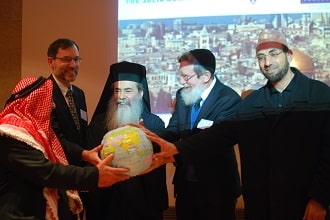
## **Articles Describing the Work of The Interfaith Center for Sustainable Development**
[One Home: Protecting the Earth Through Interfaith Education and Activism](https://www.huffingtonpost.com/yonatan-neril/interfaith-environmental-education-and-activism_b_1721157.html) (Huffington Post)
[Statement Submitted by ICSD and Endorsed by Council of Religious Institutions of the Holy Land](https://www.jpost.com/Sci-Tech/Article.aspx?id=274803) (mentioned in JPost)
##
International Seminar on Science and Religion for Environment Care (in which ICSD director participated)
[Vegetarisch in Israel Grüne Rabbis im Kampf für die Umwelt](https://www.deutschlandfunk.de/vegetarisch-in-israel-gruene-rabbis-im-kampf-fuer-die-umwelt.886.de.html?dram:article_id=290256) (Deutschlandfunk)
[Promoting coexistence through the environment… and vice versa](http://tlv1.fm/?p=31348) (TLV1)
[Crossing the Jordan links faith ecology](https://israel21c.org/news/crossing-the-jordan-links-faith-ecology/) (Israel21c)
[Interfaith eco poetry-slam unites Jerusalem](https://www.israel21c.org/interfaith-eco-poetry-slam-unites-jerusalem/) (Israel21c)
[Científicos y líderes religiosos proponen hablar del cambio climático en sermones semanales y seminarios](https://www.google.com/url?q=http%3A%2F%2Fnoticias.lainformacion.com%2Freligion-y-credos%2FCientificos-religiosos-climatico-semanales-seminarios_0_928408122.html&sa=D&sntz=1&usg=AFQjCNEF_7P2Hfg5Y8lAjSc66YW067qfbw) (La Informacion, from Europa Press)
[Científicos y líderes religiosos se unen para luchar contra el cambio climático](https://www.google.com/url?q=http%3A%2F%2Fwww.europapress.es%2Fepsocial%2Fnoticia-cientificos-lideres-religiosos-unen-luchar-contra-cambio-climatico-20160622140911.html&sa=D&sntz=1&usg=AFQjCNHKSM_gHiMfN883K_RhIPpel10G7g) (Europa Press Social, from Europa Press)
[Líderes religiosos se alían con la ciencia para incluir el cambio climático en sus sermones](https://www.google.com/url?q=http%3A%2F%2Fwww.europapress.es%2Fepsocial%2Fnoticia-cientificos-lideres-religiosos-unen-luchar-contra-cambio-climatico-20160622140911.html&sa=D&sntz=1&usg=AFQjCNHKSM_gHiMfN883K_RhIPpel10G7g) (ABC)
[Científicos y líderes religiosos proponen hablar del cambio climático en sermones semanales y seminarios](https://www.google.com/url?q=http%3A%2F%2Fwww.lavanguardia.com%2Fvida%2F20160622%2F402686421177%2Fcientificos-y-lideres-religiosos-proponen-hablar-del-cambio-climatico-en-sermones-semanales-y-seminarios.html&sa=D&sntz=1&usg=AFQjCNFynlUk5On8r-anb6yaqXJqyDunbw) (La Vanguardia- Vida, from Europa Press)
[Científicos y líderes religiosos se reúnen para colaborar con medio ambiente](https://www.google.com/url?q=http%3A%2F%2Fwww.elperiodicodearagon.com%2Fnoticias%2Fsociedad%2Fcientificos-lideres-religiosos-reunen-colaborar-medio-ambiente_1120332.html&sa=D&sntz=1&usg=AFQjCNEVEGAi1PE5F7jv8y1iuGVD2BF04A) (El Periódico de Aragón, from EFE )
[Ciencia y religiones dialogan para conservar el medioambiente](https://www.google.com/url?q=http%3A%2F%2Fopusdei.org.py%2Fes-py%2Farticle%2Fciencia-fe-medioambiente-torreciudad%2F&sa=D&sntz=1&usg=AFQjCNF60QaeUxUxrabR1FP_6zzMHttenA) (Opus Dei)
## Durban Interfaith Climate Change Events, co-sponsored by The Interfaith Center for Sustainable Development:
[Faith leaders call for urgent action on climate change](https://www.christiantoday.com/article/faith.leaders.call.for.urgent.action.on.climate.change/28982.htm) (Christian Today)
---
### [Rabbi Ronen Lubitch on Judaism and Ecology](https://interfaithsustain.com/rabbi-ronen-lubitch-on-judaism-and-ecology/)
**Published:** July 25, 2013
**Author:** ICSD
**Content:**
*Given at the Interfaith Climate and Energy Conference, March 19th, 2012, Jerusalem*
Rabbi Ronen Lubitch is the spiritual leader of Nir Etzion which is situated in the northern Carmel region of Israel. Rabbi Lubitch lectures at the Academic College for Education, Sha’anan and at Haifa University. He is an alumnus of Lifshitz College having earned his Bachelor in General Philosophy and in Jewish Philosophy and his Master’s Degree in Religious Studies and Jewish Thought. He served as a community Rabbi in Cape Town, South Africa, as a lecturer in the Religious Studies department and as Campus Rabbi at Cape Town University. Rabbi Lubitch is a member of the Tzohar Rabbinic Organization, is a founding member of “Beit Hillel” and is a Member of the Board at the Israel Union for Environmental Defense.
Translated from Hebrew to English by Shammai Fishman
I wish, first of all, to express my appreciation and gratitude to Mr. Michael Mertes and Rabbi Neril. For the past 25 years I have been involved in matters of interfaith dialogue and the environment and this is the first time that I have the privilege of attending a conference which combines these two topics. I believe that this combination is very effective because the topic of our common faith is highly influential and could become a very strong force in the field of protecting the environment, while the topic of environment could be very powerful in forming an interfaith link around a topic that everyone should and could unite around.
Modern ecological thought recognizes two approaches: Anthropocentric ecology and biocentric ecology. Anthropocentric ecology puts man in the center, stating that man is the most chosen of the creations, the crown of creation and above all. As Sheikh Muhammad Amara put it a few minutes ago “all was created for the sake of man.” The biocentric approach is that man is not above all, there is no hierarchy in creation and man is just one of the components of the world. He, therefore, is supposed to integrate into the world and not view himself above any of the creations. I think that biocentric thought can not coincide with religious thought, because all of our three religions perceive man as the master piece of creation. We find within Jewish religious thought approaches which give more power to man and more authority and more rights in the activities of man in the world.
We can find approaches which tell man to be more modest and humble and to be much more careful in his relationship to the entire world. It would be enough if I mentioned for example that since the matter of the creation of man was mentioned, that man was created at the end of the creation process. The Mishnah in the Talmud in tractate Sanhedrin asks ‘why was man created at the end?’, and provides a few answers. One answer, for example, states that man was created at the end because he is the most important and that is, therefore, the reason why the creator created the entire world first. He prepared everything for man and then brought man who is the essence. Another approach states that man was born at the end so that he should not feel pride. Or in the language of the Mishnah: “so he shall not be in a state of euphoria”, and that way he will know that he is evidently at the end.
The world existed before him, or as the Mishnah states: “even the mosquito, the fly, preceded you. So you should not feel that you are more important than the other animals.” We have here two different approaches. The first approach emphasizes the importance of man and his special status. The second approach chooses to emphasize especially that man should not perceive himself as being above the other creations. Therefore, if I had enough time, I could have continued to show you these approaches in the Bible and in the Talmud, in Jewish philosophy, over the generations; these two approaches and nuances through many writings of Jewish sources.
The anthropocentric approach usually is more central in religious thought, and it frequently causes religious people, especially, to be less careful with regard to the environment. This comes from the thought that the topic of the environment belongs to “them”– the Green, the leftists, the non-religious who do not have a G-d so that is why they are involved with the environment. The claim which I wish to present to you today is that the complete opposite is true. The complete opposite.
In addition to the anthropocentric and the biocentric approaches I wish to suggest a third approach. That is the “Theocentric” approach. G-d is at the center.And it is precisely because of my faith in G-d that I believe in the importance of protecting the environment, and the responsibility and obligation of humans and humankind to be concerned with protection of the environment. Because, out of the belief in a Creator, I understand very well how much each and every thing in the world possesses infinite importance – importance that I cannot know or measure, since I can not enter into the mind of The Creator of the world. If he created this insect, this animal, this plant, then it must have some role. And Maimonides, in his great philosophical book, The Guide for the Perplexed, states: “It is an error to think that everything in the world was created for the sake of man. There are things which have other roles and purposes, which we do not understand.” But the fact that I do not understand does not mean that everything was created for my sake. It is possible that things were created for the purpose of other things, in a different way. Nowadays, we are aware of the astonishing ecological diversity that exists in the whole world, a vast part of which exists in places that are not inhabited by humans. For example, there are many hundreds of species of animals and plants in one rainforest in South America, in the forests of the Amazon. There are hardly any people there, but still these species are found there and only there. From this, we can better understand Maimonides’ words. Therefore, it seems to me that precisely from a religious perspective, that believes in a Creator, and puts the Creator at the center, we could be much more obligated and take on much more responsibility for protecting the environment, and to be more concerned with problems stemming from related phenomena, that are relevant to sustainability, our culture, and our lives.
And here I reach what I see as the core of the religious message:
The biggest problem of our time is consumption, consumerism. Already 250 years ago, the economist Malthus , said that there is a problem, and that, over time, humankind will have a problem with population growth; that the population would double, and that there would not be enough resources for everyone. He said that already 250 years ago, although he did not fully know the implications of what he was saying. Because in the past 30 years, just the past 30 years, the world’s population has doubled, while consumption has grown eightfold. And the problem of consumption is a great and severe problem facing the world today.
We speak often about recycling, and of course recycling is very important. But according to research conducted in Britain, the waste generated by private households \[of which some can be recycled\]is only six percent of the 360 million tons of garbage created in Britain annually. The rest is created by industry. Industries are growing and producing more and more. They are causing problems of exploitation of weak groups of society, which should be of concern to us as people and especially as people for whom faith is important. Beyond that, there are very difficult environmental issues, of pollution of ground water, problems of creating a lot of waste, and many more problems that are caused by consumption. And I think that regarding this issue, the religious world has some very important messages to bring to the world.
Religious thought is based on the belief that man should consume what he needs , that he will know when to restrain himself, that he will know how to limit the use of things that he does not need, and that he will know to use \[resources\] properly, to use things for a benefit and not to seek out more and more things for luxury. I think that the correct use of ideas regarding preserving the environment could benefit religious education on moderation, and that religious education on moderation and restraint could serve to benefit, and activate ecological and environmental thought. I will provide an example from within the Jewish tradition.
You know, in many places around the world they sometimes organize a “buy nothing day,” a day without shopping or a day without using cars, for one day in the year. They make a big campaign and try to make it so that there will be one day of the year on which people will not buy things. And the shopping malls are full just like everyday. Sales people at the malls report that there is no decrease in sales. Or a day without riding in acar , one day of the year, but the traffic jams on the way to work and back are the same traffic jams. We in Judaism have a day of the week which is a “buy nothing day” and a day of the week without travel, and it has worked for thousands of years. An entire day and night, — not just the daytime. And it works. Because it puts the Creator as the establisher of this day. In other words, precisely because of our recognition of the Creator we are more able to generate ecological education. To be concerned about and take responsibility for the environment. And this example of the Sabbath is just one out of many.
When I speak, for example, about the Festival of Booths (Sukkot), I always stress that beyond the standard ideas about the Festival of Sukkot, it teaches us a lot about the need to recycle. We take pieces of wood, which are not being used for any purpose, and build aSukkah with them. We take pieces of cloth which are not being used for any purpose, and use them to build. At the Temple \[in Jerusalem\] they would have the “Simchat Beit HaShoeva” (Rejoicing at the Place of the Water-Drawing)on the Festival of Sukkot. They would take all the priests’ clothes which had worn out and make wicks for the Menorah and for all the candles that they would light at that celebration.
These are a few examples that show that within the regular daily religious commandments, we can find, beyond the well known ideas, (of course I am not sayingthat \[the environmental messages I presented\] are the reason for the commandments of Shabbat or Sukkot), but rather, that beyond the deep existing reasons for the commandments of Shabbat and Sukkot, today in the modern world we can find new ideas that directly address the ecological problems in which we live. The Talmud gives a story about Rabbi Yehuda HaNasi, one of the greatest political and religious leaders of the Jewish people of the second century CE. He was very ill, and the medics at the time said that he must drink a special wine, made out of apples which had been preserved for 70 years. So they asked each other “how can we get this wine?” At the end they found a non-Jewish man who had that wine. Rabbi Yehuda HaNasi drank and became healthy. And then he recited a blessing, “Blessed is He who gave his world to guardians.” Rabbi Yehuda HaNasi defined here the role of man.
The role of man is to be a guardian of creation. When man was created and G-d put him in the Garden of Eden, as the Torah says in the book of Genesis chapter 2: That He put the human being in the Garden of Eden “to work it and to guard it”, and indeed, we were supposed to be in the Garden of Eden until today (there was some problem and we were ejected.) But man was supposed to stay in the Garden of Eden had he not sinned. And what was his role? To work it and to guard it. To work and to guard what had been created. This is the religious message about the role of man: as responsible for managing the environment around him.
Nowadays, we find ourselves in a situation of extraordinary resource exploitation. According to a United Nations’ report from three years ago, by the year 2025, two thirds of the world will have water shortages. The definition of a water shortage is that the population consumes 120% of its water, that is, 20% more water than is available. And this situation is constantly growing. We shrink our resources, we cut down forests, and we know how much we depend on the symbiotic relationship between plants and animals. We consume more and therefore we produce more, and therefore we deplete the ozone layer, and cause other significant ecological damage. We know today about real problems in which the human being is cutting off the branch upon which he is sitting. Therefore, it seems to me, we should utilize every religious idea and world view which can support ecological thinking, because this is what our times demand. This is not a thought only for people who are bored and have nothing to do, as people used to think many years ago. When the first book about humans causing damage to the environment was published in the United States in 1962 (on the topic of marine zoology), people did not even understand what it was talking about. Today we understand very well.
I wish to conclude with the Midrash, mentioned in Ecclesiastes Raba, from the third century CE, in which the sages speak about a verse from the Book of Ecclesiastes. There in the Book of Ecclesiastes it says that people should be careful, “to see the deeds of people, and how to fix where they erred”. The Midrash say on this, “At the hour that G-d created man”, exactly when He created him, “He took him and showed him all the trees of the Garden of Eden,” He took him for a stroll around his surroundings, “And He told him: See my works how beautiful and praiseworthy they are”, look around and be sure not to be apathetic. Look at your surroundings, look at the nature, look at the world in which you live, and see its quality and its beauty. “Make it your priority not to ruin and destroy My world,” You must make it your priority, because if you will not make it your priority you will ruin things. “To make it your priority” in our times also means to legislate, to speak about the matter in synagogues, mosques churches, to write about it in the newspaper. “Make it your priority” — make a conference– “so you do not ruin and destroy My world.” “Because if you ruin things, there is nobody who can fix it after you.” Our sages, close to 2,000 years ago, understood what is hard for people nowadays to grasp, that people have the power to ruin the world.
The Creator created the world, but as Rabbi Neril put it so nicely at his opening statement, “It is all in your hands,” everything depends on us. Whether the bird that the boy held in his hand will die \[by being crushed\] or will fly away, that is all in our hands. Man has free choice whether to ruin and destroy the world. If mankind will not understand that there is an existential call which we must mobilize around, that we must act together on, that we must unify people of different religions and ethnicities, then we really are prone to ruin and destroy the world. Real belief in the Creator obligates us to respect anything that the Creator created. Genuine belief in the Creator obligates us to mobilize for the sake of the preservation of our world. Both on a social and an environmental level, of physical preservation of the world in which we live. Of course I agree, with the words of the first speaker Archbishop Elias Chacour, that we must provide also for the spiritual level. But our duty toay is not only in the spiritual level, in which each of us usually speaks to his friends and co-religionists, but our mission is to mobilize as one human unit for the sake of Tikun Olam (repairing the world) in all of its aspects. Thank you very much.
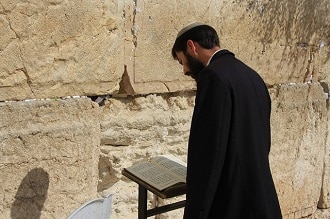
**ICSD works on a global basis, with current engagement in Africa, the Middle East, North America, and Europe.**
---
### [Confucian Statement on the Environment](https://interfaithsustain.com/confucian-statement-on-the-environment/)
**Published:** January 8, 2014
**Author:** ICSD
**Content:**
*This is the full text of the statement prepared by Professor Tu Weiming of the International Confucian Ecological Alliance (ICEA) and announced at the ARC meeting in Trondheim, Norway in July 2013.*
## I. A virtuous, responsible and caring life
Confucian humanism sees its primary role to be the promotion of education designed to enable people to become truly human. Its purpose is the cultivation of a virtuous, responsible and caring person. Learning to be genuinely and fully human is an end in itself. Simultaneously it is also a dynamic and transformative process of self-realization, social engagement and cultural creativity.

As Confucius said:
*“Even though you have only coarse grain for food, water for drink, and your bent arm for a pillow, you may still be happy. Riches and honours without justice are to me as fleeting clouds.”*
This process is set within the greater context of humanity and Heaven. It is well expressed in The Great Learning:
*“Only when personal lives are cultivated are families regulated; only when families are regulated are states governed; only when states are governed is there peace all under Heaven. Therefore from the Son of Heaven to the common people, all, without exception, must take self-cultivation as the root.”*
## II. An ethos of responsibility and care
Confucian humanism is aptly characterized as an ethic or ethos of responsibility and care. As Wing-tsit Chan (陈荣捷) notes in his celebrated Source Book in Chinese Philosophy,
*“If one word could characterize the entire history of Chinese philosophy, that word would be humanism – not the humanism that denies or slights a Supreme Power, but one that professes the unity of man and Heaven. In this sense, humanism has dominated Chinese thought through the dawn of its history.”*
The notions of reciprocity and benevolence are of great importance in Confucian humanism. Such principles can be traced back to Confucius himself who, when questioned by Lord Ji Kang as to how he could make his people respectful, loyal and zealous, replied that he should:
*“Approach them with dignity and they will be respectful. Be \[him\]self a good son and kind father, and they will be loyal. Raise the good and train the incompetent, and they will be zealous.”*
Wang Yangming (1472-1529) wrote in his Inquiry on the Great Learning:
*“The great man regards Heaven and Earth and the myriad things as one body. He regards the world as one family and the country as one person. As to those who make a cleavage between objects and distinguish between self and others, they are small men. That the great man can regard Heaven, Earth and the myriad things as one body is not because he deliberately wants to do so, but because it is natural to the humane nature of his mind that he do so.”*
## III. Working through the structures of the world rather than rising above them
The principle spiritual exercise of Confucianism is self-cultivation whose practice leads to true selfhood. Through following this virtue, we embrace or enable family cohesiveness, social solidarity, national integrity, and world peace. It provides an authentic possibility of transcending selfishness, nepotism, parochialism, ethnocentrism, nationalism, regionalism, and anthropocentrism.
Success in this matter is dictated by an ethic of responsibility informed by a transcendent vision. We do not become “spiritual” by departing from or transcending above our earth, body, family, and community, but by working through them. Indeed, our daily life is not merely secular but a response to an onto-cosmological decree. Since the Mandate of Heaven that enjoins us to take part in the great enterprise of cosmic transformation is implicit in our nature, we are Heaven’s partners, and thus we can embody the creativity and spirituality of heaven through personal self-knowledge.
## IV. Humanity as a partner with both Heaven and Earth

Confucianism sees humankind to have a deep and cosmic significance. This significance manifests itself in partnership with both Heaven and Earth forming the classic Chinese trinity of Heaven Earth and Humankind, together manifesting the true embodiment of nature itself. The Doctrine of the Mean succinctly captures the essence of this cosmological thinking:
“Only those who are the most sincere \[authentic, true and real\] can fully realize their own nature. If they can fully realize their own nature; they can fully realize human nature. If they can fully realize human nature, they can fully realize the nature of things. If they can fully realize the nature of things, they can take part in the transforming and nourishing process of Heaven and Earth. If they can take part in the transforming and nourishing process of Heaven and Earth, they can form a trinity with Heaven and Earth.”*
Zhang Zai in the 11th century wrote a brief essay that is the basis of Neo-Confucian ethics. The Western Inscription (whose name comes from the fact that it was inscribed on the west wall of his study) states that:
*Heaven is my father and Earth is my mother, and even such a small creature as I find an intimate place in their midst.*
Therefore that which fills the universe I regard as my body and that which directs the universe I consider as my nature.
All people are my brothers and sisters, and all things are my companions.
> Even though you have only coarse grain for food, water for drink, and your bent arm for a pillow, you may still be happy. Riches and honours without justice are to me as fleeting clouds.
>
> Confucius
## V. The Earth is alive
Confucians know that the earth is alive. We observe its presence, appreciate its beauty and participate in its creativity. We therefore share its richness and fecundity with all life on the “Blue Planet”. Wang Yangming also states:
*“When we see a child about to fall into the well, we cannot help a feeling of alarm and commiseration. This shows that our humanity (ren) forms one body with the child. It may be objected that the child belongs to the same species. Again, when we observe the pitiful cries and frightened appearances of birds and animals about to be slaughtered, we cannot help feeling an “inability to bear” their suffering. This shows that our humanity forms one body with birds and animal. It may be objected that birds and animals are sentient beings as we are. But when we see plants broken and destroyed, we cannot help a feeling of pity. This shows that our humanity forms one body with plants. It may be said that plants are living things as we are. Yet even when we see tiles and stones shattered and crushed, we cannot help a feeling of regret. This shows our humanity forms one body with tiles and stones.”*
However, humankind has repeatedly abused this beautiful gift by exploiting it recklessly, ignoring the Confucian notion of balance and harmony.
Mencius said:
*“The woods on Ox Mountain were once beautiful On account of its being on the edge of a large country, it had been attacked with axes and hatchets, and then how could it remain beautiful? The refreshing breezes of day and night, and the moisture provided by rain and fog, did not fail to give rise to sprouts of vegetation. But cows and sheep have been repeatedly pastured there, and for that reason it has remained desolate. People observe its denuded state and assume that it never had any good resources. But how could this state be the true nature of this mountain?”*

## VI. The world is a precious inheritance
What Mencius reminds us is a core Confucian value that this world is a precious heritage passed on to us from our ancestors and it is a resource entrusted to us by numerous generations yet to come.
*The sage, namely, a human who has attained the highest stage, is similar to Heaven and Earth and therefore his conduct would not violate Heaven and Earth. His knowledge is comprehensive of all ten thousand things and his way will save all under Heaven. Even in acting in terms of special considerations, he does not deviate from rectitude (cheng).*
## VII. A sustainable harmonious relationship between humans and nature
The idea of the unity of Heaven and Humanity implies four inseparable dimensions of the human condition: self, community, nature and Heaven. The full distinctiveness of each enhances rather than impedes, a harmonious integration of the others. The self, as a centre of relationships, establishes its identity by interacting with community variously understood, from the family to the global village and beyond. A sustainable harmonious relationship between the human species and nature is not merely an abstract ideal, but a concrete guide for practical living.

Confucians believe that our human nature comes from Heaven and that the Way of Heaven is accessible through self-knowledge. They also believe that to understand the Mandate of Heaven we must continuously cultivate ourselves. This completes the triad of Heaven, Earth and humankind. Nature is as an unending process of transformation rather than a static presence, and as such is a source of inspiration by which we understand the dynamism of Heaven. As the first hexagram in the Book of Change symbolizes, Heaven’s vitality and creativity are without end and we humans must emulate its ceaseless vitality and creativity.
The sense of “awe and reverence before the universe” is prompted by our aspiration to respond to the ultimate reality that makes our lives purposeful and meaningful.
Whether we come from a creationist or an evolutionist perspective, we are indebted to “Heaven, Earth and the myriad things” for our existence. To repay this dept we cultivate ourselves so as to attain our full humaneness amidst the wonder of existence.
## VIII. Just do what is right and proper and then all will be well
From these Confucian values, comes not just academic study but considered action. The ethos of Confucius has guided China in the past. Its teachings, translated into action can now do the same for the future. The following are areas we will now explore and around which we will create a programme of action. As the Classic of Documents says in chapter 22:
> Just do what is right and proper and then all will be well.
**The brief statement can be found [here](https://interfaithsustain.com/confucian-ecology/)**
**For other faith’s statements on the environment, please click [here](https://interfaithsustain.com/religion-and-ecology-articles/)**
Copied with permission from the Alliance of Religions and Conservation (ARC) www.arcworld.org
ICSD works on a global basis, with current engagement in Africa, the Middle East, North America, and Europe.
---
### [Baha'i Faith Statement on the Environment](https://interfaithsustain.com/bahai-faith-statement-on-the-environment/)
**Published:** January 12, 2014
**Author:** ICSD
**Content:**
*This statement was issued by the Baha’i Office of the Environment on behalf of the Baha’i International Community.*
In this age of transition toward a world society, protection of the environment and conservation of the earth’s resources represent an enormously complex challenge. The rapid progress in science and technology that has united the world physically has also greatly accelerated destruction of the biological diversity and rich natural heritage with which the planet has been endowed. Material civilization, driven by the dogmas of consumerism and aggressive individualism and disoriented by the weakening of moral standards and spiritual values, has been carried to excess.

Only a comprehensive vision of a global society, supported by universal values and principles, can inspire individuals to take responsibility for the long-term care and protection of the natural environment. Baha’is find such a world-embracing vision and system of values in the teachings of Baha’u’llah, which herald an era of planetary justice, prosperity, and unity.
## Baha’i Teachings on Conservation and Sustainable Development
Baha’u’llah enjoins His followers to develop a sense of world citizenship and a commitment to stewardship of the earth. His writings are imbued with a deep respect for the natural world and for the interconnectedness of all things. They emphasize that the fruits of God’s love and obedience to His commandments are dignity, nobility, and a sense of worth. From these attributes emerge the natural inclination to treat one another with love and compassion, and the willingness to sacrifice for the betterment of society.
Baha’u’llah also teaches moderation, a commitment to justice, and detachment from the things of this world—spiritual disciplines, which enable individuals to contribute to the establishment of a prosperous and united world civilization. The broad pattern for such a civilization and the principles on which it should be based are set forth in Baha’u’llah’s Revelation, a revelation that offers hope to a dispirited humanity and the promise that it is truly possible both to meet the needs of present and future generations and to build a sound foundation for social and economic development. The inspiration and the vision for this civilization are captured in Baha’u’llah’s words: “The earth is but one country, and mankind its citizens.”

## The Principles
Among the principles guiding the Baha’i approach to conservation and sustainable development, the following are of particular importance:
- Nature reflects the qualities and attributes of God and should, therefore, be greatly respected and cherished.
- All things are interconnected and flourish according to the law of reciprocity.
- The oneness of humanity is the fundamental spiritual and social truth shaping our age.
- Nature reflects the qualities and attributes of God.
## Baha’i scriptures describe nature as an emanation of God’s will:
Nature in its essence is the embodiment of My Name, the Maker, the Creator. His manifestations are diversified by varying causes, and in this diversity there are signs for men of discernment. Nature is God’s Will and is its expression in and through the contingent world. It is a dispensation of Providence ordained by the Ordainer, the All-Wise.
Understanding nature as a reflection of the majesty and an expression of the purpose of God inspires a deep respect for the natural world:
*“Whatever I behold I readily discover that it maketh Thee known unto me, and it remindeth me of Thy signs, and of Thy tokens, and of Thy testimonies. By Thy glory! Every time I lift up mine eyes unto Thy heaven, I call to mind Thy highness and Thy loftiness, and Thine incomparable glory and greatness; and every time I turn my gaze to Thine earth, I am made to recognize the evidences of Thy power and the tokens of Thy bounty. And when I behold the sea, I find that it speaketh to me of Thy majesty, and of the potency of Thy might, and of Thy sovereignty and Thy grandeur. And at whatever time I contemplate the mountains, I am led to discover the ensigns of Thy victory and the standards of Thine Omnipotence.*
## Respect
This attitude of respect is further reinforced by copious metaphorical references to the natural world woven throughout the Baha’i scriptures. However, while nature is greatly valued and respected, it is not to be worshipped or adopted.
Rather it is to serve the purpose given by God to the human race: to carry forward an ever-advancing civilization. In this regard, the Baha’i faith promotes a worldview that is neither biocentric nor, strictly speaking, anthropocentric, but rather theocentric, with the Revelations of God at its center. Humankind, as it strives to carry out the Divine Will in this, the physical realm, is thus the trustee or steward of nature.
## Animals
Responsible stewardship of the natural world logically extends to the humane treatment of animals:
It is not only their fellow human beings that the beloved of God must treat with mercy and compassion, rather must they show forth the utmost loving-kindness to every living creature.
Train your children from the earliest days to be infinitely tender and loving to animals. All things are interconnected and flourish according to the law of reciprocity. The principles of interconnectedness and reciprocity underlie the Baha’i understanding of both the operations of the universe and the responsibilities of humankind.
For every part of the universe is connected with every other part by ties that are very powerful and admit of no imbalance, nor any slackening whatever…. Cooperation and reciprocity are essential properties that are inherent in the unified system of the world of existence, and without which the entire creation would be reduced to nothingness.

Were one to observe with an eye that discovereth the realities of all things, it would become clear that the greatest relationship that bindeth the world of being together lieth in the range of created things themselves, and that cooperation, mutual aid, and reciprocity are essential characteristics in the unified body of the world of being, inasmuch as all created things are closely related together and each is influenced by the other or deriveth benefit there from, either directly or indirectly. Evolutionary processes are explicitly affirmed in Baha’i scriptures:
All beings, whether large or small, were created perfect and complete from the first, but their perfections appear in them by degrees. The organization of God is one; the evolution of existence is one; the divine system is one … When you consider this universal system, you see that there is not one of the beings which at its coming into existence has reached the limit of perfection. No, they gradually grow and develop, and then attain the degree of perfection.
## Biodiversity
The blessings of biodiversity are also highlighted:
*Diversity is the essence of perfection and the cause of the appearance of the bestowals of the Most Glorious Lord. This diversity, this difference is like the naturally created dissimilarity and variety of the limbs and organs of the human body, for each one contributed to the beauty, efficiency and perfection of the whole …*
How unpleasing to the eye if all the flowers and plants, the leaves and blossoms, the fruits, the branches, and the trees of that garden were all of the same shape and color! Diversity of hues, form and shape, enriched and adorned the garden, and heightenth the effect thereof …
The spiritual and material planes are interconnected and act upon each other: *We cannot segregate the human heart from the environment outside us and say that once one of these is reformed everything will be improved. Man is organic with the world. His inner life molds the environment and is itself also deeply affected by it. The one acts upon the other and every abiding change in the life of man is the result of these mutual reactions.*
## Science
Given the fundamental unity of science and religion—the interconnectedness of the material and spiritual realms—it is not surprising that scientific pursuits are highly praised:
The faculty of intellectual investigation into the secrets of creation … is the most praiseworthy power of man, for through its employment and exercise the betterment of the human race is accomplished, the development of the virtues of mankind is made possible … However, the exercise of the faculty of investigation must be guided by spiritual principles, especially moderation and humility:
Any agency whatever, though it be the instrument of mankind’s greatest good, is capable of misuse.

## Civilization
If carried to excess, civilization will prove as prolific a source of evil as it had been of goodness when kept within the restraints of moderation.
Every man of discernment, while walking upon the earth, feeleth indeed abashed, inasmuch as he is fully aware that the thing which is the source of his prosperity, his wealth, his might, his exaltation, his advancement and power is, as ordained by God, the very earth which is trodden beneath the feet of all men. There can be no doubt that whoever is cognizant of this truth, is cleansed and sanctified from all pride, arrogance, and vainglory …
In light of the interdependence and reciprocity of all parts of nature, the evolutionary perfection of all beings, and the importance of diversity “to the beauty, efficiency and perfection of the whole,” it is dear to Baha’is that, in the ordering of human affairs, every effort should be made to preserve as much as possible the earth’s biodiversity and natural order.
Nevertheless, in the process of extending social and economic justice to the entire human family, certain difficult and possibly irreversible decisions may have to be taken. Such decisions, Baha’is believe, should be made within a consultative framework, involving those affected and taking into account the impact of any resulting policies, programs, and activities on the quality of life of subsequent generations.
For Baha’is, Baha’u’llah’s promise that civilization will exist on this planet for a minimum of 5,000 centuries makes it unconscionable to ignore the long-term impact of decisions made today. The world community must, therefore, learn to make use of the earth’s natural resources, both renewable and nonrenewable, in a manner that ensures sustainability into the distant reaches of time. This does not, however, mean that Baha’is advocate a “hands-off, back to the woods” policy. On the contrary, the world civilization that Baha’is believe will eventually emerge will be animated by a deep religious faith and will be one in which science and technology will serve humanity and help it to live in harmony with nature.
**The oneness of humanity is, for Baha’is, the fundamental spiritual and social truth shaping our age, and the operating principle and ultimate goal of humankind’s collective life on the planet. It is applicable not only to the individual, but also to the relationships that must bind all the states and nations as members of one human family:**
The oneness of mankind … implies an organic change in the structure of present-day society, a change such as the world has not yet experienced … It calls for no less than the reconstruction and the demilitarization of the whole civilized world—a world organically unified in all the essential aspects of its life, its political machinery, its spiritual aspiration, its trade and finance, its script and language, and yet infinite in the diversity of the national characteristics of its federated units.
It represents the consummation of human evolution … and … carries with it no more and no less than a solemn assertion that attainment to this final stage in this stupendous evolution is not only necessary but inevitable, that its realization is fast approaching, and that nothing short of a power that is born of God can succeed in establishing it.

Baha’i scriptures maintain that adherence to the principle of the oneness of humanity will have a direct and enduring impact on man’s spiritual, social, and physical environments. Universal acceptance of this principle will entail a major restructuring of the world’s educational, social, agricultural, industrial, economic, legal, and political systems. This restructuring will facilitate the emergence of a sustainable, just, and prosperous world civilization. Ultimately only a spiritually based civilization—in which science and religion work in harmony—will be able to preserve the ecological balance of the earth, foster stability in human population, and advance both the material and the spiritual well-being of all peoples and nations.
## In conclusion
Baha’i scriptures teach that, as trustees of the planet’s vast resources and biological diversity, humanity must seek to protect the “heritage \[of\] future generations”; see in nature a reflection of the divine; approach the earth, the source of material bounties, with humility; temper its actions with moderation; and be guided by the fundamental spiritual truth of our age, the oneness of humanity. The speed and facility with which we establish a sustainable pattern of life will depend, in the final analysis, on the extent to which we are willing to be transformed, through the love of God and obedience to His Laws, into constructive forces in the process of creating an ever-advancing civilization.
*This was printed, along with Statements from ten other faiths, in Faith in Conservation by Martin Palmer with Victoria Finlay, published by the World Bank in 2003.*
**For the short Baha’i statement on the environment click [here](https://interfaithsustain.com/bahai-ecology/)**
**For a look at other faith’s statements on the environment, please click [here](https://interfaithsustain.com/religion-and-ecology-articles/)**
Copied with permission from Alliance for Religions and Conservation, www.arcworld.com
***ICSD works on a global basis, with current engagement in Africa, the Middle East, North America, and Europe.***
---
### [Religious Education in the Era of Climate Change](https://interfaithsustain.com/religious-education-in-the-era-of-climate-change/)
**Published:** June 16, 2022
**Author:** ICSD
**Content:**
On Wednesday, November 4th, 2015, Religious Education in the Era of Climate Change: A Summit of Conscience took place in Jerusalem.
This one-day event was aimed at promoting ideas and action plans for faith-based environmental education in seminaries and theological schools in the Holy Land. This included discussions of the regional impact of climate change and subsequent urgency of this work; best practices from field experts; and a forum of creative dialogue among participants. The event was co-organized by the Interfaith Center for Sustainable Development and the Konrad Adenauer Stiftung.
This event was aimed at promoting ideas and action plans for faith-based environmental education in seminaries and theological schools in the Holy Land. This included discussions of the regional impact of climate change and subsequent urgency of this work; best practices from field experts; and a forum of creative dialogue among participants. Over twenty people participated in a workshop to improve faith and ecology education at seminaries and religious institutions. The event was co-organized by the Interfaith Center for Sustainable Development (ICSD) and the Konrad Adenauer Stiftung (KAS) and was held on November 4th, 2015 at the KAS office in Jerusalem.
To read a summary of the event, [click here](https://interfaithsustain.com/wp-content/uploads/2015/12/Summary-of-Faith-and-Ecology-in-Seminaries-Workshop-Nov.-4-2015.pdf).
**Schedule:**
8:45 – Arrival
9:00am – 9:15am – **Greetings**
- Rabbi Yonatan Neril (The Interfaith Center for Sustainable Development)
- Michael Borchard (Konrad Adenauer Stiftung)
- Rabbi Tamir Nir (Jerusalem Municipality and Schechter School)
9:15am – 9:45am – **Climate Change Globally and in the Holy Land**, Dr. Pinhas Alpert (Tel Aviv University)
9:45am – 10:00am **Break (with refreshments)**
10:00am – 10:30am – **Successes in Faith and Ecology Advocacy**
- Mary Evelyn Tucker (Yale University via video presentation)
- Call-in by Father Joshtrom Kureethadam (Salesians of Don Bosco in Rome via call-in)
- Rabbi Yonatan Neril
10:30 – 10:45am – **Break (with refreshments)**
10:45am – 11:45am **Road Mapping and Round Table Discussion**
11:45am – 12:15pm **Closing Remarks**
- Videos
- Next steps
- Acknowledgements
*\* Photos by Gundula Tegtmeyer*
---
### [Women's Interfaith Ecology Project](https://interfaithsustain.com/womens-interfaith-eco-project/)
**Published:** July 21, 2013
**Author:** ICSD
**Content:**
The Women Faith and Ecology Project in Jerusalem engages Christian, Muslim, and Jewish women in the Jerusalem area for inspiring seminars on faith and ecology. Originally launched in 2013, the project continued with [five meetings in 2014](https://interfaithsustain.com/urban-hiking-recycled-origami-and-twenty-two-women-from-three-religions/), [two seminars in 2015](https://interfaithsustain.com/urban-hiking-recycled-origami-and-twenty-two-women-from-three-religions/), and four gatherings in 2016. The participants worked together toward the common cause of sustainability, leading by example in peaceful cooperation towards sustainable lifestyles.
The most recent seminars in late 2015 and early 2016 focused on women’s leadership, ecology and faith and involved various lectures, workshops discussions, and an environmental outing to the Jordan River. They are being followed by a local environmental fair, highlighting ecological work and activism taking place throughout the greater Jerusalem area.
The meetings were attended by women of the three faiths, with six Christian, Jewish and Muslim speakers. The meetings were attended by Jewish and Arab women from Jerusalem, as well as women native to Turkey, the U.S., Europe, and New Zealand.
We had women from the Bedouin sector, East Jerusalem, Arab villages around Jerusalem, Arab Christians, Protestants, Catholics, and Orthodox, reform, and secular Jews. The women came from various professional backgrounds- some working as religious leaders, others in ecologically oriented organizations and other great leaders and wonderful people.
Sessions included textual study based on texts from Bible and the Koran which focused on ours and God’s responsibility towards the earth. We spoke of our own and nature’s vulnerability, and women’s role in this as a mother, teacher, daughter, wife and activist. We spoke of the challenges that the world and Jerusalem faces in terms of environmental challenges and what our role can be in changing it- as women who are an integral part of their community and as religious people and clergy.
[](https://interfaithsustain.com/wp-content/uploads/2020/03/Womens-seminar-121913-9-1024x768-1.jpg)
[](https://interfaithsustain.com/wp-content/uploads/2020/03/Womens-seminar-121913-10b-1024x768-1.jpg)
[](https://interfaithsustain.com/wp-content/uploads/2020/03/Womens-seminar-121913-13.jpg)
[](https://interfaithsustain.com/wp-content/uploads/2014/01/Womens-seminar-121913-15.jpg)
**Project Goals:**
1\. To encourage a better understanding of the “other” and support the creation of cross-cultural and inter-religious friendships and partnerships;
2\. To educate the group about teachings on sustainability within their own faiths and foster a culture of appreciation of similar teachings from different religions and cultures;
3\. To increase the understanding of the human and environmental challenges in Jerusalem and the region among female leaders of multiple faiths;
4\. To facilitate a sustained network of Jerusalem-based female leaders in developing and implementing a plan of environmental action and advocacy for their communities.
To read about a previous seminar, click [here](https://interfaithsustain.com/sisterhood-stewardship-and-sustainability/). Pictures and videos from the December 2013 project are below.
*To watch short videos from speakers at the seminar held in December 2013, click on the videos below.*
- [ 
### Rev. Angela Zimmann Speaks on Faith and Sustainability
](#ivS7QaxtJyY "Rev. Angela Zimmann Speaks on Faith and Sustainability")
- [ 
### Rabbi Naamah Kelman and Jewish Environmentalism
](#AiRzeB6pBtk "Rabbi Naamah Kelman and Jewish Environmentalism")
- [ 
### Yasmin Barhum: Islamic Environmentalism
](#cnaXeFOcF-s "Yasmin Barhum: Islamic Environmentalism")
- [ 
### ICSD Women's Interfaith Environmental Project
](#iLJno-xqK38 "ICSD Women's Interfaith Environmental Project")
- [ 
### Rana Khalef Speaks at the "Between Faith and Ecology" Seminar
](#bdmMQdmKXA4 "Rana Khalef Speaks at the "Between Faith and Ecology" Seminar")
- [ 
### Naomi Tsur on Interfaith Tolerance
](#YmiTBD0rWOM "Naomi Tsur on Interfaith Tolerance")
[Load more](#)
---
### [Holy Land Seminarians Faith & Ecology Project](https://interfaithsustain.com/holy-land-faith-leaders/)
**Published:** July 21, 2013
**Author:** ICSD
**Content:**
*Holy Land Seminarians Faith and Ecology Project* brings together Muslim, Christian, and Jewish seminary and other students from the Holy Land for interactive seminars on human coexistence and environmental sustainability. The Project educates emerging clergy about sustainability challenges and religious teachings that can address them. The seminars also help Christian, Muslim, and Jewish participants find common cause through shared religious teachings on sustainability. The seminars focus on how we live on the land (environmental sustainability) and how we live together (human sustainability). The sessions include experiential, on-the-ground explorations of contemporary ecological and social challenges led by experts from each of the three faiths. Some of the sessions also involve joint learning and presentations about Jewish, Muslim, and Christian teachings on these issues.
The seminars are being implemented in partnership with Rabbis for Human Rights, based on the support of The Julia Burke Foundation, Anne Frank Fonds, and the British Shalom Salaam Trust.
## **2014 Seminar at the Jordan River**
On March 31st, 2014, a group of Jewish and Christian seminary students, clergy, and others spent a day at the Jordan River in a seminar organized and facilitated by the Interfaith Center for Sustainable Development (ICSD) and [Ecopeace Middle East](https://www.annalindhfoundation.org/members/ecopeace-friends-earth-middle-east). To read a news article about the ‘Interfaith Jordan River Seminar’, click [here](https://www.israel21c.org/crossing-the-jordan-links-faith-ecology/) and to read more about this seminar on our blog, click [here](https://interfaithsustain.com/crossing-the-jordan-links-faith-ecology/).
## **Seminars in 2013 at Mount Gilboa and the Yarkon National Park**
On October 31st 2013, the Interfaith Center for Sustainable Development, together with Rabbis for Human Rights, held an interfaith seminar with Jewish, Muslim, and Christian students. To read a blog post about this seminar at Mount Gilboa, click [here](https://interfaithsustain.com/crossing-cultural-divides-on-mt-gilboa/). To read about another seminar which took place at the Yarkon National Park in March 2013 , click [here](https://interfaithsustain.com/in-nature-the-other-becomes-personal-and-real/).
## **Three Seminars in 2012 on Climate Change, Water, and the Jordan River**
The project was successfully piloted in the spring of 2012 through a series of three seminars, based on the support of the Julia Burke Foundation and Anne Frank Fonds. The first seminar took place in conjunction with the Interfaith Conference on Climate and Energy on March 19th, 2012. The seminar focused on climate change and renewable energy from an inter-religious perspective. Participants heard live and pre-recorded addresses from prominent religious leaders, and then discussed the issues in small groups.
The second seminar took place on April 16th, 2012 and was held at the Jerusalem Inter Cultural Center, next to Armenian Quarter of the Old City of Jerusalem. It focused on Christian, Muslim, and Jewish perspectives on water, especially in regards to water in the Holy Land.The third seminar took place on May 30th, 2012, and focused on the Jordan River Valley from a faith perspective and ecological lens. It was implemented in collaboration with Friends of the Earth Middle East (FOEME) and Rabbis for Human Rights.
## **Why We Are Doing This**
The Holy Land is particularly vulnerable to water scarcity and climate change. Environmental challenges transcend borders, creating a basis of joint concern that can act as a foundation upon which to build mutual understanding and cooperation. Interfaith environmental education and action has tremendous potential to spur goodwill and peace-building in this conflict-prone region.
## **Goals**
- Cultivate a strong group of emerging Christian, Muslim, and Jewish clergy who are well informed about the sustainability challenges we confront
- Enable these emerging religious leaders to find common cause through shared religious teachings on environmental sustainability and human coexistence
- Help participants gain a deeper understanding of the religious teachings on sustainability within their own faiths and an appreciation of similar teachings from other faiths
- Promote greater awareness of the depth of wisdom available to address sustainability challenges from a faith perspective, and empower participants to teach their faith’s wisdom






Cultivating a cohort of religious leaders with a shared understanding of the human and environmental challenges facing the region helps bring a voice of moderation and healing to the Israeli-Palestinian conflict. This is an example of how the environment can play a key role in peacemaking. The influence of these clergy within their respective societies magnifies the impact of this program beyond the immediate group of participants.
## **Outcomes**
Participants conclude the seminars having undergone training in cross-cultural dialogue and leadership and having examined environmental issues and religious teachings on them. We receive media coverage for the closing session of the program, which are open to the media and broader community. Upon successful implementation of this Jerusalem pilot, the program could be replicated in the Galilee region of Israel as well as in New York, Boston, and Los Angeles—all locations in which Muslim, Christian, and Jewish seminary students study.
## **Methodology**
Our methodology endeavors to be clear from the outset to participants and presenters concerning the interests, needs and expectations of the participants and the presenters, so as to avoid unnecessary conflict or tension during the seminars. We intend to avoid formal discussions about political issues and to choose seminar topics and speakers that would facilitate this. The seminars will include components on group building, wilderness experience, field trips, inter-textual study sessions, facilitated dialogue, conflict resolution, and non-violent communication. We will provide reading materials from journal articles and other sources that will inform each seminar, and which will be distributed to the participants prior to each seminar.
## **Funding Opportunity**
The continuation of this project is funding dependent. For sponsorship opportunities, please [contact us](https://interfaithsustain.com/contact-us/). In June 2012, the Council of Religious Institutions of the Holy Land endorsed the following statement that the Interfaith Center for Sustainable Development submitted to them:
> In advance of the Rio +20 United Nations Earth Summit, The Council of Religious Institutions of the Holy Land (CRIHL)\*, constituting the high representatives of Israeli and Palestinian religious authorities, recognizes the imperative for action posed by the environmental challenges facing humanity. We also recognize the spiritual roots of this crisis, and the importance of a religious response to promote more environmentally sustainable living. We call on adherents of our faiths in the Holy Land and worldwide to address this crisis by undertaking a deep reassessment of our spiritual and physical relationship to this God-given planet and how we consume, use and dispose of its blessed resources.
>
> In particular, we acknowledge the scientific basis of human-caused climate change and the threat it poses to human societies and the planet, as articulated by the United Nation’s Intergovernmental Panel on Climate Change. We also call all people of faith to reduce their personal emissions of greenhouse-gases and to urge their political leaders to adopt tangible, science-based targets for the reduction of greenhouse gases in order to avert the worst dangers of the climate crisis. We hope that environmental challenges in our common home of the Holy Land and Planet Earth move religious adherents to overcome inter-religious strife and work together for ours and our children’s common well-being.
\* The CRIHL represents the high religious authorities of the Holy Land: the Chief Rabbinate of Israel, the Palestinian Ministry of Religious Affairs (Waqf), the Palestinian Sharia Courts and the assembly of the Heads of Churches of Jerusalem. For more information, please visit the CRIHL website: www.crihl.org.
**ICSD works on a global basis, with current engagement in Africa, the Middle East, North America, and Europe.**
---
### [Hindu Faith Statement on the Environment](https://interfaithsustain.com/hindu-faith-statement-on-the-environment/)
**Published:** January 7, 2014
**Author:** ICSD
**Content:**
## SUSTAINING THE BALANCE
**(as taught by Swami Vibudhesha Teertha)**
These days it looks as if human beings have forgotten that a particular natural condition on Earth enabled life to come into existence and evolve to the human level. Humanity is disturbing this natural condition on which his existence, along with the existence of all other forms of life, depends. This is like the action of a woodcutter cutting a tree at the trunk, on the branch on which he is sitting. According to Hindu religion, “dharanath dharma ucyate”—that which sustains all species of life and helps to maintain harmonious relationship among them is dharma. That which disturbs such ecology is adharma.
Hindu religion wants its followers to live a simple life. It does not allow people to go on increasing their material wants. People are meant to learn to enjoy spiritual happiness, so that to derive a sense of satisfaction and fulfilment, they need not run after material pleasures and disturb nature’s checks and balances. They have to milk a cow and enjoy, not cut at the udder of the cow with greed to enjoy what is not available in the natural course. Do not use anything belonging to nature, such as oil, coal, or forest, at a greater rate than you can replenish it. For example, do not destroy birds, fish, earthworms, and even bacteria which play vital ecological roles; once they are annihilated you cannot recreate them.


Thus only can you avoid becoming bankrupt, and the life cycle can continue for a long, long time.
### “Conserve Ecology or Perish”
This is the message of the Bhagavad Gita, a dialogue between Sri Krishna and Arjuna that is a clear and precise Life Science. It is narrated in the third chapter of this great work that a life without contribution toward the preservation of ecology is a life of sin and a life without specific purpose or use.
Life is sustained by different kinds of food; rainfall produces food; timely movement of clouds brings rains; to get the clouds moving on time yajna, religious sacrifice, helps; yajna is performed through rituals; those actions that produce rituals belong only to God; God is revealed by the Vedas; the Vedas are preserved by the human mind; and the human mind is nourished by food. This is the cycle that helps the existence of all forms of life on this globe. One who does not contribute to the maintenance of this cycle is considered as a destroyer of all life here.When the Lord desired to create life, He created the Sun, Moon, and Earth, and through them a congenial atmosphere for life to come into being. Therefore the Sun, Moon, Earth, Stars and all objects in the universe jointly, not individually, create the atmosphere for the creation, sustenance, or destruction of everything in the universe. The Earth is the only daughter of the Sun to produce children. The Moon is essential for the creation of the right atmosphere for those children to exist and evolve. This we say because of the influence of the Moon on high and low tides in our rivers and oceans.
This is narrated also in the Bhagavad Gita:
*I become the moon and thereby supply the juice of life to all vegetables.*
We cannot refute this influence of the Moon on life. It is proved by the movement of all liquid on this globe depending on the movement of the Moon. Therefore ecology in totality must be preserved: just a part of it would not suffice.
### Hinduism and Nature
Hinduism is a religion that is very near to nature. It asks its followers to see God in every object in the Universe. Worship of God in air, water, fire, Sun, Moon, Stars, and Earth is specially recommended.
Earth is worshipped as the spouse of God, hence very dear and near to God. All lives on Earth are considered as children of God and Earth.
Sri Krishna in the Bhagavad Gita says:
*I pervade the Universe. All objects in the Universe rest on me as pearls on the thread of a garland.*
The Upanishads narrate that after creating the Universe, the Creator entered into each and every object to help them maintain their interrelationship. The Upanishad says “tat sristva ta devanu pravisat”: (“after creating the universe He entered into every object created”). Therefore to contribute toward the maintenance of this interrelationship becomes worship of God. Hindus believe that there is soul in all plants and animals.
One has to do penance even for killing plants and animals for food. This daily penance is called visva deva. Visva deva is nothing but an offering of prepared food to the Creator, asking His pardon. The Hindu religion gives great importance to protecting cattle. At every Hindu house there is a cow and it is worshipped. The cow is a great friend of humans. It nourishes us through its milk and provides manure to grow our food.
This it does without any extra demand—it lives on the fodder got while growing our food. Advanced countries have started to realize the harmful effects of consuming food grown with chemical manure. When we use chemical manure, the topsoil loses its fertility. This generation has no right to use up all the fertility of the soil and leave behind an unproductive land for future generations.
### Humanity’s Contribution
There is no life that is inferior. All lives enjoy the same importance in the Universe and all play their fixed roles. They are to function together and no link in the chain is to be lost. If some link is lost, the whole ecological balance would be disturbed. All kinds of life—insects, birds, and animals—contribute toward the maintenance of ecological balance, but what is humanity’s contribution toward this? Humans are intelligent animals, therefore our contribution should be the biggest. But it is not. We are nullifying the benefits of the contributions made by other species of life. We are disturbing the balance because of our greed for material enjoyment and our craze for power. We do not allow earthworms and bacteria to maintain the fertility of the soil by using chemical manures and insecticides that kill them. We destroy plants and forests indiscriminately and come in the way of plants providing oxygen essential for the very existence of life.
By destroying plants and forests we become agents for increasing the deadly carbon dioxide in the atmosphere. We pollute the air by burning oil for all sorts of machines.
We produce unhealthy sounds through our various machineries and instruments which cause sound pollution. By building towns and cities in the banks of rivers we pollutes the water. The Hindu religion holds all rivers as holy; polluting them is a big sin. Hinduism encourages the planting of trees like Tulasi, Neem, Peepal which are rich in medicinal properties.
Rishis gave the navel to Brahma, the creator, and to the sustainer Vishnu they gave the heart as His abode. The destroyer, Shiva, was given control of the brain. By doing this they wanted us to know that the language of the heart only can sustain us—when we start speaking through the language of the mind our destruction becomes inevitable. Therefore, a thinking animal has to be very careful while it uses its mental abilities: these are to be applied only with spiritual background. Mind is to act as our friend and not as our enemy. It is to function under our control; we should not succumb to its control. *“Mana eva manusyanam karanam bandha moksayoh”*: for human beings, mind is the cause of bondage and mind is the cause of liberation (Amrita Bindhu Upanishad 2).
### Why Was Humanity Created?
There should be a purpose for the creation of humanity. What it might be! We could be the sustainer of interrelationship among numerous life species on Earth.
We are ones who can see God, and all objects, as the controller and sustainer of ecological balance. All other animals play their roles without knowing what they are doing, but humans do everything with full consciousness. God created the human mind to see His own reflection as in a mirror. The human mind can meditate on God and know him more and more.
When humanity develops consciousness of the presence of God and His continuous showering of blessings on the universe, it develops deep love for Him. To enjoy this nectar of love, God created people. Only people have a time-space conception. Therefore, only humanity can see God, pervading time-space, conserving the ecological balance which is the greatest boon bestowed on the universe by God. Though humans cannot contribute toward the conservation in the same way as other animals do,they can help all lives and other objects in the universe to play their roles effectively by persuading God through prayers of love to grant them the required energy and directions. “Yavat bhumandalam datte samrigavana karnanam, tavat tisthati medhinyam santatih putra pautriki”: “so long as the Earth preserves her forests and wildlife, man’s progeny will continue to exist.” This is the Hindu approach toward the conservation of ecology.
## SACRIFICE AND PROTECTION
**(as taught by Dr. Sheshagiri Rao)**
### Sacrifice
The Creator, in the beginning, created humans together with sacrifice, and said, *“By this you shall multiply. Let this be your cow of plenty and give you the milk of your desires. With sacrifice you will nourish the gods, and the gods will nourish you. Thus you will obtain the Highest Good.” (Bhagavad Gita 3:10–11)*
Sacrifice does not just mean ritual worship—it means an act that protects life. Personal health depends on eyes, ears, and other sense organs working together in harmony; human prosperity and happiness depend on a well-ordered society and nature; the universe is sustained by the cosmic powers such as the sun and moon working together in unison. Sacrifice reinvigorates the powers that sustain the world by securing cosmic stability and social order. It activates the positive forces of the universe, and protects the Earth from degeneration.
### Nonviolence
God’s creation is sacred. Humanity does not have the right to destroy what it cannot create. Humans have to realize the interconnectedness of living entities and emphasize the idea of moral responsibility to oneself, one’s society, and the world as a whole. In our cosmic journey, we are involved in countless cycles of births and deaths. Life progresses into higher forms or regresses into lower forms of life based upon our good or bad karma. Kinship exists between all forms of life. Reincarnation warns us against treating lower forms of life with cruelty.
### Cow-protection
Man has evolved from lower forms of life. We are, therefore, related to the whole creation.
The principle of cow protection symbolizes human responsibility to the subhuman world. It also indicates reverence for all forms of life. The cow serves humans throughout its life, and even after death. The milk of the cow runs in our blood. Its contributions to the welfare of the family and the community are countless. Hindus pray daily for the welfare of cows. When the cows are cared for, the world at all levels will find happiness and peace.
### Earth as Mother
Hindus revere the Earth as mother. She feeds, shelters, and clothes us. Without her we cannot survive. If we as children do not take care of her we diminish her ability to take care of us. Unfortunately, the Earth herself is now being undermined by our scientific and industrial achievements.
## BREAKING THE FAMILY
**(as taught by Shrivatsa Goswami)**
Let there be peace in the heavens, the Earth, the atmosphere, the water, the herbs, the vegetation, among the divine beings and in Brahman, the absolute reality. Let everything be at peace and in peace. Only then will we find peace.
### The Goal of Human Life
According to Hindu philosophy, the goal of human life is the realization of the state of peace. Dharma, loosely translated as religion, is the source by which peace can be fully realized. This peace is not the stillness of death; it is a dynamic harmony among all the diverse facets of life. Humanity, as part of the natural world, can contribute through dharma to this natural harmony.The natural harmony that should exist in the play of energies between humanity and the natural world is now disrupted by the weakest player in the game: humanity. Although it is the totality of this game that provides our nourishment, through ignorance of our own natural limits we destroy this source of nourishment.
This awareness of ecological play or playful ecology is inseparable from awareness of the need for friendship and play as the real basis for human relationship. The family within which these relationships are nourished is not limited to its human members. Just as the human child has to be nourished by Mother Nature, and the human spirit has to be embraced and loved by beautiful nature, so the human being who has grown old or sick has to be supported by caring nature. If humans distress the mother, rape the beauty, and beat the caring nurse, what happens? The relationship collapses, and the family is broken.
### The Environment as Our Home
The Sanskrit for family is parivara, and environment is paryavarana. If we think of the environment as our home and all of its members as our family it is clear that the key to conserving nature is devotion, love—giving and serving. Nature, prakriti, as the feminine can give and serve. But the role of humanity, purusha, is then to protect. Nowadays purusha, humanity, is interested not in protecting but in exploiting, so prakriti, nature, has to defend herself. This is why we see nature in her furious manifestation—in drought, [floods](https://interfaithsustain.com/flash-floods-and-our-world/), or hurricanes. If we rape the mother’s womb she has convulsions, and we blame her for devastating earthquakes. If we denude her of her lush hair and beautiful skin, she punishes us by withholding food and water. As it is through ignorance that we destroy our relationships in the family and within the environment, that ignorance becomes the root cause of our suffering.
The best way to get rid of this ignorance is to unlearn what is wrong. This unlearning is shaped not only in the school but in the family and community, and it has to begin with the very young. Traditional Hindu education covers all facets of life—economic, political, cultural, and above all religious. Whether we speak of Krishna, of Chaitanya, or of Gandhi, we see that they drew no clear division between the economic or political and the religious or cultural facets of life. The body and mind are in the service of the heart. In the same way politics and economics are rooted in and guided by religion and culture, and ultimately by spiritual experience.
*This statement consists of three distinct sections reflecting the major strands within Vedic (Hindu) thought and is based on papers and comments by: Dr. Sheshagiri Rao, Chief Editor of The Encyclopaedia of Hinduism; Swami Chidananda Sarasvati, Founder of the India Heritage Research Foundation, Spiritual Head of Parmarth Niketan Ashram; Shrivatsa Goswami, Vaishnava Acharya of Shri Radharaman Temple, Vrindavan Chairman of the Vrindavan Conservation Project; Swami Vibudhesha Teertha, Acharya of Madhvacarya Vaishnavas, Udupi, Central Advisory Committee Member of the Visva Hindu Parishad. This statement, compiled and edited by Ranchor Prime, was printed along with statements from ten other faiths in* Faith in Conservation (www.arcworld.org) *by Martin Palmer with Victoria Finlay, published by the World Bank in 2003.*
**The brief Hindu statement on the environment can be found [here](https://interfaithsustain.com/hindu-ecology/)**.
**For other faith’s statements on the environment, please click [here](https://interfaithsustain.com/religion-and-ecology-articles/)**.
Copied with permission from the Alliance of Religions and Conservation (ARC) (www.arcworld.org).
ICSD works on a global basis, with current engagement in Africa, the Middle East, North America, and Europe.


---
### [2019 Interfaith Seminary Symposium on Ecological Behavior in Jerusalem](https://interfaithsustain.com/the-2019-interfaith-seminary-symposium-on-ecological-behavior-in-jerusalem-concept-note-and-schedule/)
**Published:** May 5, 2019
**Author:** ICSD
**Content:**
The Interfaith Center for Sustainable Development, in collaboration with partners, held an Interfaith Seminary Symposium on Ecological Behavior at the University of Notre Dame at Tantur in Jerusalem on October 28, 2019. Religious figures spoke about religious imperatives for promoting environmentally sustainable practices. The one-day Symposium engaged 100 seminary deans, faculty, and students, and clergy on how to integrate environmental sustainability into seminary education. Religious figures who spoke included Sheik Hasan Abu Galiun of Rahat; Rev. Dr. Maria Leppakari, director of the Swedish Theological Institute, and Rabbi Yuval Cherlow, Dean of Yeshivat Hesder Amit Orot Shaul.
## The Symposium:
- Featured seminary deans and faculty speaking about successes and challenges in regards to integrating religion and ecology into their current course offerings;
- Further empowered seminary faculty and staff to teach on faith and ecology;
- Publicized faith and ecology syllabi and reading lists to seminary deans, students, and teachers, by utilizing the extensive ICSD online syllabus collection;
- Included plenary, panel discussion and breakout sessions on the emerging field of faith-based environmental education in seminaries and theological schools;
- Included networking and discussions on topics such as how seminaries can encourage faculty to include issues of ecology and creation-care in new and existing courses on Bible, theology, homiletics and liturgy, ethics, and more;
- Involved discussions about practical steps that seminaries can take.
[](https://interfaithsustain.com/wp-content/uploads/2019/10/DLC_1070.jpg)
[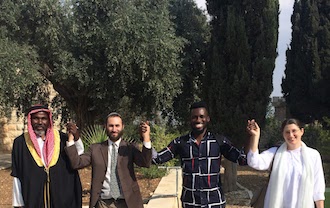](https://interfaithsustain.com/wp-content/uploads/2019/10/IMG-3757.jpg)
[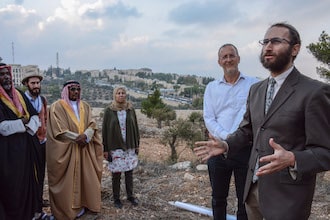](https://interfaithsustain.com/wp-content/uploads/2019/10/DLC_1045.jpg)
In addition, the Symposium announced the award winners of the **Catholic Seminarian Essay Contest on Sustainable Behavior**, which is being organized by ICSD and other partners.
Generous support for the Symposium was provided by The Julia Burke Foundation. The Symposium will be organized by The Interfaith Center for Sustainable Development. Symposium Partners include the University of Notre Dame at Tantur, the Studium Theologicum Salesianum/ Salesian Pontifical University Jerusalem campus, the Swedish Theological Institute, and A New Dawn in the Negev.
To read evaluation results from the Symposium participants, [click here](https://interfaithsustain.com/wp-content/uploads/2020/12/Jerusalem-Symposium-Survey-Responses.pdf).
## Symposium Program and Schedule
TIME DESCRIPTION
---
9:00 AM Registration, refreshments, and meet other participants
9:20 AM Introduction by representatives of the sponsoring organizations
9:30 AM Climate Change and the Middle East: Ambassador Gideon Behar
9:40 A.M Plenary Session One: **Religion and ecological behavior—perspectives from religious figures**
Imam Hasan Abu Galiun, Rahat; Fr. Russ Mcdougall, Rector of Tantur Ecumenical Institute; Rev. Dr. Maria Leppakar, director, Swedish Theological Institute; Rabbi Yuval Cherlow, Dean/Rosh Yeshiva of Yeshivat Hesder Amit Orot Shaul in Raanana. Moderated by R’ Yonatan Neril.
---
10:50 AM Break & Refreshments
---
11:15 AM Interfaith Musical Performance
---
11:30 AM **Big Thoughts….Little Talks on Ecological behavior and Religion**
Eleven speakers talking for five minutes each, using 15 slides each
Confirmed speakers: Dr. Maria Leppakari, [Swedish Theological Instititute](https://www.svenskakyrkan.se/english); Rev. Prof. Piotr Zelazko and Bro. Steven Joseph De Maio, [Studium Theologicum Salesianum;](https://jerusalem.unisal.it/) Jamal Alkirnawi, founding director, [A New Dawn in the Negev](https://anewdawninthenegev.org/); Dr. Jeremy Benstein, [Heschel Center for Sustainability](https://heschel.org.il/); Asi Barhum, [Brahma Kumaris](https://www.brahmakumaris.org/); Dr. Lori Noguchi, Director, Bahá’í International Development Organization; Rabbi Yonatan Neril, Rabbi Leo Dee and Faygle Train from The Interfaith Center for Sustainable Development.
---
12:40 PM Vegan Lunch (Kosher and Halal)
---
1:40 PM Practical Workshop #1: Composting, led by Dvir Ben Aharon of Mahapach Hayarok (Jerusalem Municipality)
2:25 PM Practical Workshop #2: Vertical gardening, led by Amir Elron of Agrocity
3:10 PM Outdoor experiential education session on the grounds and olive groves of Tantur
4:00 PM Refreshments and break
4:30 PM Closing Session: Facilitators of breakout sessions will present a summary of the outcomes, the discussions and share this with the participants.
5:45 PM End of Main Conference Program
6:15 PM Optional Video Screening on faith and ecology activism from the film ‘Renewal’
## Symposium Partners:
**The Interfaith Center for Sustainable Development** (ICSD) works to catalyze a transition to a sustainable human society through the active leadership of faith communities. Its work focuses on several projects. The Interfaith Eco Seminary Engagement Project promotes courses for seminarians on faith and the environment. Second, the Faith Inspired Renewable Energy Project spurs renewable energy projects in faith communities in Africa. Third, ICSD has co-organized ten interfaith environmental conferences in Israel and internationally.
**The University of Notre Dame at Tantur** facilitates the work of both the Tantur Ecumenical Institute and the Jerusalem Global Gatway. Both entities welcome faculty, scholars, students, educators, pastoral ministers, pilgrims from all over the world, along with local and regional partners. Committed to creating an inclusive environment for all, Notre Dame at Tantur’s mission is to facilitate study, scholarship, research, and spiritual enrichment within the fascinating, diverse and complex religious and geopolitical reality of the Middle East.
**The Studium Theologicum Salesianum (STS)** is the Jerusalem Campus of the Faculty of Theology of the Salesian Pontifical University in Rome. The STS offers a four-year Pontifical Bachelor’s Degree in Theology. The STS, by enabling the study of Theology in the Holy Land together with the academic rigor of a Pontifical University, offers its academic community, a very unique opportunity.
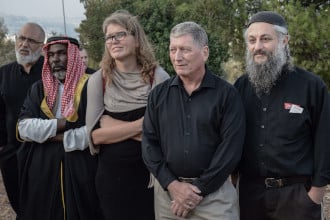
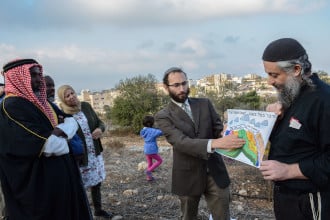
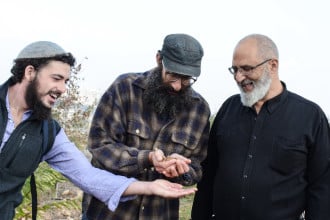
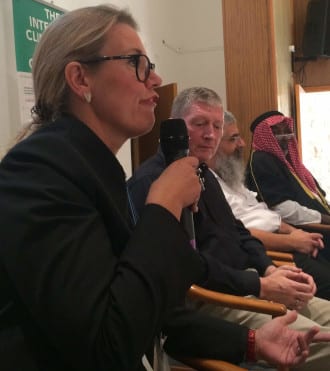
---
[](https://interfaithsustain.com/wp-content/uploads/2019/09/Oct.-28-2019-Symposium-5-logos.png)
**The Swedish Theological Institute** is the Church of Sweden’s study and dialogue institute in Jerusalem. It is a place for studies and meetings for peoples of different faiths and traditions. STI is a meeting place for people in Jerusalem as well as for temporary visitors, from different parts of the world, who are involved in matters concerning religion, culture and dialogue. STI seeks to further a deeper understanding of the religious traditions in Jerusalem: Judaism, Christianity and Islam. STI in Jerusalem was founded in 1951.
**A New Dawn in the Negev** is an Arab-Jewish community development organization based in Rahat, Israel where we promote education, employment, and leadership.Our mission is that one day, the diverse residents of the Negev, young and old, will live celebrating their differences and working together toward a peaceful, and equal future together. We work together with other NGOs to promote unity, peace and understanding.
---
### [Press Coverage](https://interfaithsustain.com/blog-news-2/press-coverage/)
**Published:** December 17, 2017
**Author:** ICSD
**Content:**

- [  ](https://jweekly.com/2026/09/10/celebrate-the-birthday-of-the-world-by-committing-to-climate-action/)
Sep 12, 2026The Jewish News
[Celebrate the Birthday of the World by committing to climate action](https://jweekly.com/2026/09/10/celebrate-the-birthday-of-the-world-by-committing-to-climate-action/)
We celebrate Rosh Hashanah as the Birthday of the World, making it a powerful time for every one of us to commit to repairing and renewing our relationship with the Earth. Traditionally, the shofar is sounded every day during the month of Elul leading up to Rosh Hashanah to help us wake up and seriously consider what needs to be repaired. The blast can easily remind us of the environmental crises all around — from the still-burning Big Sur fire, which has severely degraded the air quality in our local coastal areas, to the horrific flooding in Tibet and Nepal caused by glacial collapse.
[Read More](https://jweekly.com/2026/09/10/celebrate-the-birthday-of-the-world-by-committing-to-climate-action/)
- [ 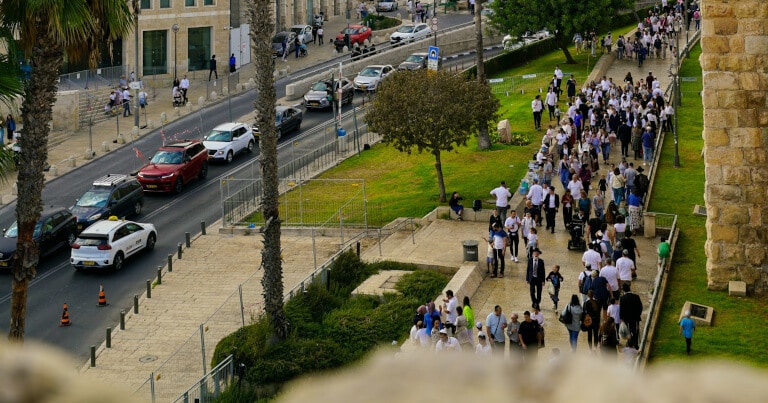 ](https://religionnews.com/2026/05/19/israeli-interfaith-peace-march-offers-alternative-to-divisive-jerusalem-day-events/)
May 24, 2026Religion News Service
[Israeli interfaith peace march offers alternative to ultranationalist Jerusalem Day events](https://religionnews.com/2026/05/19/israeli-interfaith-peace-march-offers-alternative-to-divisive-jerusalem-day-events/)
Religious leaders and peace activists marched through Jerusalem in an interfaith call for human rights, coexistence and peace amid ongoing conflict and growing intolerance. Organized by the Interfaith Forum for Human Rights, the annual event united Jewish, Muslim, Christian and Druze participants seeking to bridge religious and ethnic divides while offering an alternative to the increasingly contentious Jerusalem Day Flag March.
[Read More](https://religionnews.com/2026/05/19/israeli-interfaith-peace-march-offers-alternative-to-divisive-jerusalem-day-events/)
- [  ](https://www.columbusjewishnews.com/news/local_news/rabbi-neril-central-ohio/article_8ec7d1d6-2dc9-4e56-b71e-a0991097705e.html)
Aug 1, 2025Columbud Jewish News
[Israel-based Rabbi Neril explores faith, sustainability during Central Ohio visit](https://www.columbusjewishnews.com/news/local_news/rabbi-neril-central-ohio/article_8ec7d1d6-2dc9-4e56-b71e-a0991097705e.html)
Jerusalem-based Rabbi Yonatan Neril, founder and director of Jewish Eco Seminars and the Interfaith Center for Sustainable Development, spoke at various locations throughout Central Ohio in an exploration of faith and sustainability.
[Read More](https://www.columbusjewishnews.com/news/local_news/rabbi-neril-central-ohio/article_8ec7d1d6-2dc9-4e56-b71e-a0991097705e.html)
- [  ](https://www.jpost.com/aliyah/article-859911)
Jul 8, 2025The Jerusalem Post
[Rabbi Yonatan Neril: Founder of Israel’s interfaith NGO linking religion and ecology](https://www.jpost.com/aliyah/article-859911)
Rabbi Yonatan Neril, a Stanford-educated environmentalist and author, traces his interest in ecology to the organic garden, orchard, and creek behind his childhood home in northern California.
[Read More](https://www.jpost.com/aliyah/article-859911)
[Next](https://interfaithsustain.com/wp-admin/admin-ajax.php?action=as_async_request_queue_runner&nonce=e5aff2b3cc&paged=2)
---
### [Eco Bible Book Sample Confirmation](https://interfaithsustain.com/eco-bible-book-sample-confirmation/)
**Published:** January 15, 2021
**Author:** ICSD
**Content:**
[](https://www.amazon.com/Eco-Bible-Ecological-Commentary-Genesis-ebook/dp/B08LCKLM9G/)Please check your inbox and click on the confirmation link to activate your subscription.
Once you have confirmed your subscription, you will be able to download Chapter 1 of Eco Bible – Commentary on the Book of Genesis.
---
### [Letter to Archbishop Gomez Re: The Murphy Drill Site](https://interfaithsustain.com/letter-to-archbishop-gomez-re-the-murphy-drilling-site/)
**Published:** August 4, 2022
**Author:** ICSD
**Content:**

August 2, 2022
Catholic Archdiocese of Los Angeles
3424 Wilshire Boulevard
Los Angeles, California 90010-2241
Attn: Most Reverend Archbishop José Gomez
Dear Archbishop Gomez,
We, as people of faith, write in the spirit of love and interfaith solidarity. The Murphy Drill Site, located in the heart of the West Adams neighborhood, is in close proximity to several care facilities, educational centers, congregations, and schools, including St. Agnes Catholic Church and Servants of Mary Convent. The Murphy Drill Site land is owned by the Los Angeles Catholic Archdiocese and leased to Freeport McMoRan Incorporated, a global mining company linked to human rights abuses and environmental degradation in several parts of the world.
Multiple studies demonstrate that those working and living near oil and gas drill sites experience disproportionate health effects, including nosebleeds, chronic headaches, increased risks of cancer, respiratory and cardiac illnesses, higher risk of miscarriage and preterm births. Sadly, these effects are being experienced by residents near the Murphy Drill Site. Sixteen thousand people live within a half-mile radius of the drill site. There has been on-going community advocacy calling for the closure of Murphy Drill Site because of damaging health effects from this site.
As you are aware, many toxic energy extraction sites are in communities of color, and are not afforded the same environmental protections as wealthier, white areas that have drilling sites. This unfortunate ongoing legacy of environmental racism is true of the Murphy Drill Site, whose community members are largely Latino and African American.
As faith leaders, protecting the lives of those in our community, especially the most vulnerable, is a sacred trust. Many in the Murphy Drilling Site area are faithful souls, active in Catholic and other denominations’ schools and churches, and are left exposed to toxic pollution. We are also required to stand in solidarity with those who face racism and to dismantle these unjust systems. For the Los Angeles Catholic Archdiocese to profit from its lease with Freeport McMoRan is antithetical to the aims of Catholic Social Teaching of the dignity of every human person, solidarity with those facing injustice, and protection of all Creation, as well as the biblical injunction stated in Deuteronomy 4:15, “and you shall guard yourselves very well.”
We are aware of the Los Angeles City Council’s recent decision to phase out oil and gas drilling in Los Angeles. Yet, this process can take up to ten years, while communities will still suffer from ill effects. We call on you, as the spiritual leader of the Los Angeles Catholic Archdiocese, to immediately terminate Freeport McMoRan’s lease and commit to no further drilling on the Murphy Drill Site. You have an exceptional opportunity and moral obligation to put an end to this lease that has for too long endangered and marginalized the West Adams community. We are standing by to assist you in making this happen.
Thank you.
## Signatories
| Title/Full Name | Congregation or institution | Position at congregation or institution | City |
|---|---|---|---|
| Bishop Emeritus Dean W Nelson | First Lutheran Church of Carson | Interim Pastor | Carson |
| Rev. Dr. Frances W. Rosenau | Culver City Presbyterian Church | Pastor | Culver City |
| Rev. Caleb Crainer | St. Andrew's Lutheran Church | Pastor | Los Angeles, CA |
| Rabbi Mel Gottlieb, Ph.D | Academy for Jewish Religion | President | Los Angeles |
| Fr Bill Zavaski | Archdiocese of Chicago | Retired | Arlington Heights |
| Rabbi Morris Panitz | IKAR | Assistant Rabbi | Los Angeles |
| Rabbi David Kasher | IKAR | Rabbi | Los Angeles |
| Rabbi Ronit Tsadok | IKAR | Rabbi | Los Angeles |
| Sr. Maura Fitzsimons | Union of the Presentation of the Blessed Virgin Mary | Volunteer Teacher | Shaw, MS |
| Rabbi Tsafi Lev | Burbank Temple Emanu El | Rabbi | Burbank |
| Rev. J. Steven Beckham | Gloria Dei Lutheran Church | Pastor | Long Beach, CA |
| The Rev. James E. Boline | St. Paul Lutheran Church | Pastor | Santa Monica |
| Fr. Emmet L Farrell | Catholic Diocese of San Diego | Creation Care Director | San Diego |
| Rabbi Aryeh Cohen | American Jewish University | Professor | Los Angeles |
| Dr. Agnes Dickson | Immaculate Heart Community, LA | Environmental Committee member | LA |
| Rev. Dr. Sunny Kang | United University Church | Senior Pastor | Los Angeles |
| Rev. Heidi Worthen Gamble | Presbytery of the Pacific | Mission Catalyst | Los Angeles |
| Rev. Brittani Alexander | Christ Church Uniting | Interim Minister | Kailua, Hawaii |
| Rev. Dr. Amanda Adams Riley | The Garden Church | Lead Pastor | Los Angeles, CA |
| Rev. Daniel Tamm | All Saints' Episcopal Church | Deacon | Beverly Hills |
| Rabbi Susan Goldberg | Nefesh | Rabbi | Los Angeles |
| Rabbi Yonatan Neril | The Interfaith Center for Sustainable Development | Founder and Executive Director | Jerusalem |
| Sr Kathleen Bryant | Religious sisters | Leadership | Dublin, Ireland |
| Allis Druffel, IHM | Immaculate Heart Community | Chair, Environmental Commission | Los Angeles |
| David Miron Wapner | The Interfaith Center for Sustainable Development | Chair | |
| Vanessa Reyes Smith | American Martyrs Catholic Community | Director of Engagement | Manhattan Beach, CA |
| Barb Born PhD | CA Laudato Si | Coordinator | |
| Agnes Dickson | Immaculate Heart Community | Member of environmental commission | Los Angeles |
| Maggie Freed | Temples Sinai of Glendale | Immediate Past President | Glendale |
| Jan Freed | Temple Sinai of Glendal | Social Action Sustainability Member | Los Angeles |
| Diane smith | Sisters of St. Joseph of Carondelet | JPIC Coordinator | Sherman Oaks |
| Meredith McCarthy | St. Monica | Green Team Lead | Santa Monica |
| Hannah Petersen | Los Angeles Catholic Worker | Community member | Los Angeles |
| Buenaventura Medina | St Monica's Catholic Community | Parishioner | Porter Ranch |
| Elizabeth M. Johnstone | St. Monica Catholic Community | Green Team Logistics | Santa Monica |
| Angela Iadavaia-Cox | St. Monica's, Santa Mniica | Member, Green Team, parishioner | Santa Monica |
| Allan Popelka | | Member | Pacific Palisades |
| Michael Schulte | | | Los Angeles |
| Ted Chang | | | Los Angeles |
| Amanda Brauer | | | Inglewood, CA |
| Ralph Levinson | | | Loos Angeles |
| Kathy Seal | | Group Leader | Santa Monica |
| Daniel Cones | | | Los Angeles |
| Julie Engelman | | | Santa Monica |
| Graham Emonson | | | Los Angeles |
| Evelyn Lansberry | | | SM |
| Barry Engelman | Ccl | | Santa Monica |
| Britta Hirsch | Protestant/Lutheran | | Seal Beach, CA |
| Dr. Anthony Strawa | Queen of Apostles Parish | Member | San Jose |
| Ms. Maggie Wineburgh-Freed | Temple Sinai of Glendale | Member | Los Angeles |
| Ruth Devine | | | Glendale |
| Steve Abrams | Temple Sinai of Glendale | President | Glendale |
| Ms. Caroline Nellis | Tri-State Creation Care / Indiana Catholics for Creation | TSCC founder & board member / IC4C core group member | Evansville, IN |
| Mrs. Nikki VanDerGrinten | | | Chamblee Ga. |
| Wendy C. Sinton | Interfaith Center for Sustainable Development | Board Member | Palo Alto, California |
| Donna Lee | Climate Witness Project | Regional Coordinator | Pasadena, CA |
| John G Pulvino | South Coast Interfaith | Board Member | Long Beach |
| Mr. James DeHarpporte | St. John the Evangelist Catholic Church | Member | San Diego |
| Robert Gilleskie | | | Del Mar |
| Dr. Trudie L Atkinson | Roman Catholic Newman Center | Active parishioner | Eugene |
| Ms. Mary Martin | Sts. Simon & Jude Parish | Lector, Extrordinary Ministers of the Eucharist | Huntington Beach, CA 92647 |
| Patrick Harris Ritter | San Diego Diocese | Creation Care Intern | San Diego |
| Jackie Thiry | St. Matthew Catholic Parish | Member | Green Bay, Wis |
| David Larom, PhD | Corpus Christi, Bonita | Volunteer, creation care ministry, diocese of San Diego | Bonita |
| Mrs. Bonnie Cimo | St. James Earth Shepherds, St. James Catholic Church | Ministry Leader | ARLINGTON HEIGHTS |
| Daniel Cimo | | | San Luis Obispo |
| Tracy Sherva | St. James | Mental Health Ministry | Arlington Heights, IL |
| Valerie Vogt Pape | St. James Catholic Church | Parishioner | Arlington Heights, IL 60047 |
| Mary Anne OToole | N/A | | Arlington Heights, Illinois |
| Mr. Richard Fung | Saint James Catholic Church | Lay leader | Arlington Heights, Illinois |
| Linda Waycie | Self | Chair of social justice team | Mt. Prospect |
| Lynne Luehrs | St. James Arlington heights | Garden Ministry Co Chair, parishioner | Arlington Heights |
| Br. Adolf Mugume, CSC | Holy Cross | Currently in studies but mentor a Laudato si Initiative in East Africa with The Infinite Singers Laudato si response | San Antonio |
| Kathy Ponce | St. James | Member | Arlington Heights |
| Gerda Newbold | | Co-group leader | Santa Monica |
| Frank Chuang | | | Culver City |
| Nina Berson | | | Los Angeles |
| Debra Myers, MD, PsyD | | | Santa Monica, CA |
| Ralph Levinson MD | | | Los Angeles |
| Jordan Levine | Temple Sinai of Glendale | Board Member | Glendale |
| Emil Mertzel | Temple Sinai of Glendale | 2nd Vice President | Los Angeles, CA |
| Sally Davis | Temple Sinai of Glendale | Board Member | Glendale |
| Dr. Jennifer Wilroy Paquette | St. Joseph Parish | Laudato SI Circle | Seattle, WA |
| Anna Jaklitsch | Thomas Merton Center | Member | Palo Alto |
| Barbara Quinby | Holy Name of Jesus Cathedral | Director of Human life, Dignity, and Justice Ministries | Raleigh |
| Jeffrey Eldrige, Founder NJM/P | Holy Name of Jesus | Parishioner | Raleigh, NC |
| Paul Kelly | St. Francis of Assisi | Parishioner, Earth Care Ministry, ICCT Steering Committee | Raleigh |
| Mary Patricia Kelly | St. Francis of Assisi | Parishioner, Franciscan Community Garden Leader | Raleigh |
| Robert Gilleskie | St. James | Member of Faith in Action Committee | Del Mar |
| Margaret McCahill, M.D., MTS, OFS | Catholic Diocese of San Diego Creation Care Team | Volunteer core team member. | San Diego |
| juliet twomey | Immaculate heart community | | Carmel |
| Daniel Heller | Temple Sinai of Glendale | Executive Vice Presidenbt | Glendale |
| Julia Steed Mawson | St. Patrick's Church | Co-leader Laudato Si' Circle - a creation care team for St. Patrick's | Pelham, NH |
| Fran Ludwig | Laudato Si’ Movement | Chapter Chair | Lexington |
| Valois Ann Chamberlin | | | Los Angeles |
| Robert M. McCoy | St. Francis of Assisi Parish, Sacramento, CA | Pathways for Justice committee member | Elk Grove, CA |
| Francine Freitas | St. Francis of Assisi, Sacramento, CA | Member of St. Francis Pathways for Justice and Pastoral Council member | Sacramento |
| Andy Zhu | | | Los Angeles |
| Heather E. Halperin | Temple Sinai of Glendale | Congregant | Glendale |
| Margaret Winfield | St. Raphael the Archangel Catholic Church | Parishioner | Raleigh, North Carolina |
| Debbie Siebers | St. Margaret Mary | Parishioner, Earth Care Committee member | Lisle/Naperville, IL |
| Miranda Steele | | | Los Angeles |
| Karen Shepard | St. Francis of Assisi, Sacramento | | Sacramento |
| Jane Affonso | Southwest California Synod of Evangelical Lutheran Church in America | Chair Green Faith Team | Glendale |
| Sandra Kroll | Unitarian Universalist Church of Long Beach, CA | Active Member (social justice) | Long Beach |
| Roni Love | Temple Israel of Long Beach | Past E-Board Officer | Long Beach |
| Karen A Smallfoot | Hill Avenue Grace Lutheran Church | Lay person | Pasadena |
| Karla Devine | ELCA | Member | Torrance |
| Kathy Barron | Unity of South Bay | Congregant | Torrance |
| Janice Saruwatari | First Lutheran Church | Member of the Creation Care Team | Torrance |
| Meltem A. Narter | Unitarian Universalist Church of Long Beach | Member | Long Beach, CA |
| Dr. Carole Francis-Swayze | St. Stephen's of the Valley Lutheran Church | Congregant | Acton |
| Heather E. Halperin | Temple Sinai of Glendale | Congregant | Glendale |
| Grace Lorentzen | Unitarian Universalist Church of Long Beach | Finance CoChair | Long Beach, CA |
| Ben Silva Jr | Temple Sinai Glendale | Congregant | Glendale |
| Aliyah Shaikh | LA Voice | Community Organizer | Long Beach, CA |
| Ms. Josie Bennett | Unitarian Universalist Church of Long Beach | Chair, Green Team | Long Beach |
| Jenna Hoover | Evergreen Baptist Church of Los Angeles | Congregant | Pomona, CA |
| Beth S Marcus, MD | Burbank Temple Emanu El | Social Action Chair | Burbank, CA |
| Janet sway | Temple sinai | Member | Glendale |
| Tina Lowenthal | Temple Sinai of Glendale | Member | Glendale |
| William Morris | GreenFaith, Young Evangelicals for Climate Action | Faith Organizer, Co-Chair | Torrance, CA |
| Alisa Schulweis Reich | Ikar | Green Action Team Steering Committee Member | Los Angeles |
| Jess Solomon | Ikar | Communications and Content Coordinator | Los Angeles |
| Rachel Mester | Ikar | Congregant | Los Angeles |
| Brooke Wirtschafter | ikar | Director of Community Organizing | Los Angeles |
| Rachel Katz | Ikar | Lay leader | Los Angeles |
| Beth Edelstein | Ikar | Congregant | Santa Monica |
| Cipra Nemeth | Ikar | Congregant | Los Angeles |
| Sylvia Lezak | Temple Judea | Member | Tarzana |
| Dr. Misha Askren | Ikar | Member | Los Angeles |
| Jack Neff | Ikar | Congregant | Los Angeles |
| Rachel Mester | Ikar | Congregant | Los Angeles |
| Beth Edelstein | Ikar | Congregant | Santa Monica |
| Jane Sobo | Ikar | Congregant | Los Angeles |
| Paula Mazur | Ikar | | Santa Monica |
| Noah gottlieb | Ikar | Member | Los Angeles |
| Devorah Brous | Ikar | | Sherman Oaks |
| Rachel Mester | Ikar | Congregant | Los Angeles |
| Gloria Margulies | IKAR, TIOH Los Angeles | Member | Los Angeles |
| Kim Silverstein | Ikar | Member | Los Angeles |
| Jack Neff | Ikar | Congregant | Los Angeles |
| Tamar Henry | Ikar | | Los Angeles |
| Rachel Young | Ikar | | Los Angeles |
| Silvia Grossmann | Ikar | Member | Los Angeles |
| Anthony V. Fadale | American Martyrs Church | Parishioner | Torrance |
| Lenore Navarro Dowling, IHM | Immaculate Heart Community | Member | Los Angeles |
| Paula Grandbois | American Martyrs Catholic Church | | El Segundo, California |
| Rosa G. Manriquez, IHM | Immaculate Heart Community | Member | Los Angeles |
| Catherine Heming | Immaculate Heart Community | Member | San Clemente |
| Sherry L. Purcell, Ph.D., IHM | Immaculate Heart Community | Board of Trustees, Vice Chair | Venice |
| Stacy Wilkins | | | |
| James W. Lamm | St. John's Presbyterian Church | Elder/Outreach & Proclamation Commission Chair | Los Angeles |
| Ellen Caldwell | Westwood Presbyterian Church | Elder | Los Angeles |
---
### [Jerusalem Interfaith Climate Declaration](https://interfaithsustain.com/jerusalem-interfaith-climate-declaration/)
**Published:** November 7, 2022
**Author:** ICSD
**Content:**
**We,** religious clergy and members of faith communities based in Israel, gathered here at the Israel Ministry of Foreign Affairs in Jerusalem on November 3, 2022, hereby make the following declaration to people of faith across the Earth, and to the governments, UN entities, civil society, and all stakeholders of COP 27 now opening at Sharm El Sheikh, Egypt.
**The impacts of climate change** are being increasingly felt in Jerusalem and the Holy Land, with more days of extreme heat than any time in the recorded past. Drought has been seen as a cause of war in our region, while wildfires, storms and flooding have intensified.
**Inspired by the values** and principles of our belief systems, faith, values, and ethics, we recognize that the climate crisis is caused by unrestrained human activity. We have failed to protect Earth’s capacity to support life, impacting especially the poor and marginalized. As people of faith, we must with humility challenge greed, instant self-gratification, and short-term thinking. Abusing and degrading God’s creation for current and future generations is sinful behavior. We must urgently adopt a new development paradigm that integrates our common moral and spiritual values towards a new one of sustainable well-being.
**We affirm the power of religion** to lead an essential transformation in human society, action, and behavior. We call upon our faithful to act in accord with our shared beliefs:
- **The one living God created Earth** as one interdependent life-supporting whole. All of us are called to care for, love, protect and glory in God’s creation. We shall not worship idols of greed, consumption, and consumerism and shall make time for sacred rest, to gratefully embrace in joyous awe all of creation.
- **Humankind shall act with justice and awareness**, using and allocating Earth’s resources wisely and equitably. At this crucial moment, we must responsibly protect the purity of air, soil, and water as sources of human life and flourishing.
- **Respect Earth’s capacity for sustainable growth**, living in ecological harmony and balance. We call upon humanity to safeguard, respect and bless all life, as human and non-human biodiversity are sacred. You shall not steal from others and future generations. Honor, cherish and respect ancestors, the entire human family, all species, and future generations.
**We call upon** all religions, governments, UN entities, civil society, as well as our own constituencies to act urgently to address the root causes of the climate crises, to repair our world based on our common spiritual and cultural values of justice and ethics.
**We commit ourselves to lead by example,** to act and practice what we preach, and to become protectors of this earth, to strive to live in balance, harmony, and sustainability, through our daily lives and actions.
---
### [Pope at audience: Counter a culture of waste with solidarity](https://interfaithsustain.com/pope/)
**Published:** September 8, 2013
**Author:** ICSD
**Content:**
(Vatican Radio) When stock markets drop ten points its ‘a tragedy’ but starving children, homeless people dying on our streets, people disposed of like trash – such as the unborn or the elderly – has become the norm.
This is the result of a culture of waste, of our being unable to ‘read the signs’ of God’s creation, His free gift to us, and of allowing money and not man rule society. A culture of solidarity should prevail over our culture of waste, because when we care for and cultivate creation – including the human person – when we share our resources, we all have enough.
This Wednesday Pope Francis dedicated his general audience with thousands of pilgrims and visitors to St Peter’s square to the UN World Environment Day. Emer McCarthy reports:
Below please find a Vatican Radio translation of the Holy Father’s catechesis:
## Catechesis
Dear brothers and sisters, good morning!
Today I want to focus on the issue of the environment, which I have already spoken of on several occasions. Today we also mark World Environment Day, sponsored by the United Nations, which sends a strong reminder of the need to eliminate the waste and disposal of food.
When we talk about the environment, about creation, my thoughts turn to the first pages of the Bible, the Book of Genesis, which states that God placed man and woman on earth to cultivate and care for it (cf. 2:15). And the question comes to my mind: What does cultivating and caring for the earth mean? Are we truly cultivating and caring for creation? Or are we exploiting and neglecting it? The verb “to cultivate” reminds me of the care that the farmer has for his land so that it bear fruit, and it is shared: how much attention, passion and dedication! Cultivating and caring for creation is God’s indication given to each one of us not only at the beginning of history; it is part of His project; it means nurturing the world with responsibility and transforming it into a garden, a habitable place for everyone. Benedict XVI recalled several times that this task entrusted to us by God the Creator requires us to grasp the rhythm and logic of creation. But we are often driven by pride of domination, of possessions, manipulation, of exploitation; we do not “care” for it, we do not respect it, we do not consider it as a free gift that we must care for. We are losing the attitude of wonder, contemplation, listening to creation; thus we are no longer able to read what Benedict XVI calls “the rhythm of the love story of God and man.” Why does this happen? Why do we think and live in a horizontal manner, we have moved away from God, we no longer read His signs.
But to “cultivate and care” encompasses not only the relationship between us and the environment, between man and creation, it also regards human relationships. The Popes have spoken of human ecology, closely linked to environmental ecology. We are living in a time of crisis: we see this in the environment, but above all we see this in mankind. The human person is in danger: this is certain, the human person is in danger today, here is the urgency of human ecology! And it is a serious danger because the cause of the problem is not superficial but profound: it is not just a matter of economics, but of ethics and anthropology. The Church has stressed this several times, and many say, yes, that’s right, it’s true … but the system continues as before, because it is dominated by the dynamics of an economy and finance that lack ethics. Man is not in charge today, money is in charge, money rules. God our Father did not give the task of caring for the earth to money, but to us, to men and women: we have this task! Instead, men and women are sacrificed to the idols of profit and consumption: it is the “culture of waste.” If you break a computer it is a tragedy, but poverty, the needs, the dramas of so many people end up becoming the norm. If on a winter’s night, here nearby in Via Ottaviano, for example, a person dies, that is not news. If in so many parts of the world there are children who have nothing to eat, that’s not news, it seems normal. It cannot be this way! Yet these things become the norm: that some homeless people die of cold on the streets is not news. In contrast, a ten point drop on the stock markets of some cities, is a tragedy. A person dying is not news, but if the stock markets drop ten points it is a tragedy! Thus people are disposed of, as if they were trash.
[](https://interfaithsustain.com/wp-content/uploads/2013/09/1_0_698604.jpg)
This “culture of waste” tends to become the common mentality that infects everyone. Human life, the person is no longer perceived as a primary value to be respected and protected, especially if poor or disabled, if not yet useful – such as the unborn child – or no longer needed – such as the elderly. This culture of waste has made us insensitive even to the waste and disposal of food, which is even more despicable when all over the world, unfortunately, many individuals and families are suffering from hunger and malnutrition. Once our grandparents were very careful not to throw away any leftover food. Consumerism has led us to become used to an excess and daily waste of food, to which, at times, we are no longer able to give a just value, which goes well beyond mere economic parameters. We should all remember, however, that throwing food away is like stealing from the tables of the the poor, the hungry! I encourage everyone to reflect on the problem of thrown away and wasted food to identify ways and means that, by seriously addressing this issue, are a vehicle of solidarity and sharing with the needy.
A few days ago, on the Feast of Corpus Christi, we read the story of the miracle of the loaves: Jesus feeds the crowd with five loaves and two fishes. And the conclusion of the piece is important: ” They all ate and were satisfied. And when the leftover fragments were picked up, they filled twelve wicker baskets” (Lk 9:17). Jesus asks his disciples not to throw anything away: no waste! There is this fact of twelve baskets: Why twelve? What does this mean? Twelve is the number of the tribes of Israel, which symbolically represent all people. And this tells us that when food is shared in a fair way, with solidarity, when no one is deprived, every community can meet the needs of the poorest. Human ecology and environmental ecology walk together.
So I would like us all to make a serious commitment to respect and protect creation, to be attentive to every person, to counter the culture of waste and disposable, to promote a culture of solidarity and of encounter. Thank you.
## Summary in English
Dear Brothers and Sisters: Our Audience today coincides with World Environment Day, and so it is fitting to reflect on our responsibility to cultivate and care for the earth in accordance with God’s command (cf. Gen 2:15). We are called not only to respect the natural environment, but also to show respect for, and solidarity with, all the members of our human family. These two dimensions are closely related; today we are suffering from a crisis which is not only about the just management of economic resources, but also about concern for human resources, for the needs of our brothers and sisters living in extreme poverty, and especially for the many children in our world lacking adequate education, health care and nutrition. Consumerism and a “culture of waste” have led some of us to tolerate the waste of precious resources, including food, while others are literally wasting away from hunger. I ask all of you to reflect on this grave ethical problem in a spirit of solidarity grounded in our common responsibility for the earth and for all our brothers and sisters in the human family.
## Greeting:
I offer an affectionate greeting to all the English-speaking pilgrims and visitors present at today’s Audience, including those from England, Scotland, the Netherlands, Nigeria, Singapore and the United States. God bless you all!
**The brief statement can be found [here](https://interfaithsustain.com/christian-ecology/)**
**For other faith’s statements on the environment, please click [here](https://interfaithsustain.com/religion-and-ecology-articles/)**
Copied with permission from the Alliance of Religions and Conservation (ARC) www.arcworld.org
ICSD works on a global basis, with current engagement in Africa, the Middle East, North America, and Europe.
---
### [Science and Religion](https://interfaithsustain.com/science-and-religion/)
**Published:** July 19, 2016
**Author:** ICSD
**Content:**
**Seminary:** Ziegler School of Rabbinic Studies**Location:** Los Angeles, California
**Course number:**
**Instructor:**
**Website:** [https://www.aju.edu//](https://www.aju.edu/ziegler-school-rabbinic-studies)
Course Description:
A fourth year course for those concentrating in Philosophy, looks at the intersection of science and religion through a focus on creation and the natural world. Clearly issues of ecology and environmental concerns emerge throughout the semester and we read historians and philosophers of science (Barbour, Jonas) in addition to Jewish thinkers ancient and contemporary.
---
### [Theology, Ecology, Spirituality](https://interfaithsustain.com/theology-ecology-spirituality/)
**Published:** December 10, 2017
**Author:** ICSD
**Content:**
**SYS 6004 Theology, Ecology, Spirituality – Spring**
**Professor:** Jim Perkinson (313) 567-0173 jperkinson@etseminary.edu
**Mission Statement**
Ecumenical Theological Seminary provides a multi-confessional Christian theological education within an urban context, while initiating interfaith engagement. Our approach creates spiritual leadership through personal transformation, social responsibility, critical reflection and academic rigor. ETS graduates are prepared to lead communities of faith while sharing God’s compassion in relationship to various ecumenical, interfaith, political, social, economic, and cultural contexts.
**MDiv Program Objectives Relevant for this Course**
The M. Div. program executes the mission of ETS of developing faithful and effective church leaders predominantly through student engagement with the following curricular components: ethically-based theological curriculum, leadership education grounded in experience, ecumenical openness and respect, a multicultural (sub)urban learning community, critical reflection on tradition and contemporary issues, interreligious dialogue, and biblical/theological/spiritual maturity.
In this particular course we will focus on elements of critical reflection on tradition in relation to contemporary ecological and justice issues and development of a mature spirituality, grounded both in theology and in interreligious dialogue with indigenous cultures.
**Course Description**
This course takes its motive force from the multiple and cascading crises of our time (such as climate change, species extinction, acidification of the oceans, soil degradation and loss, water pollution and salinization, etc.) that point toward a profound alienation between human communities and the rest of the biosphere. The aim is to open up perspective on the role of otherkind (plants, animals, waters, mountains, etc.) within the Christian tradition, and recovery of a more sustainable and just relationship to local and regional watersheds and ecologies, provoked by deep listening to indigenous cultures, re-examination of Christian theological and spiritual traditions, and re-imagination of incarnation.
The course will range across the following topics:
1. Scientific articulations of the ecological crises of our time
2. Historical and anthropological attention to our bioregion, informed by Native American experience and concerns
3. Biblical and theological traditions read through the lens of indigenous and ecological orientations
4. Exploration of the implications for our own spiritualities and ethics
**Course Objectives**
Students successfully completing this course will have:
1.) heightened their awareness and understanding of the seriousness of the ecological and economic crises facing the planet and the questions they raise about modern “civilization”
2.) deepened their appreciation for and knowledge of the local bioregional and the layers of history and meaning it carries
3.) increased their capacity to listen to the wisdom and struggles of older traditions in the area (Ojibwe, Shawnee, Potawatomie, etc.) in their own engagements with the bioregion
4.) re-conceived their understanding of biblical orientations towards land, plants, animals, waters, mountains, storms, etc. in perceiving and responding to “the holy” in the bioregions of the ancient Near East.
5.) gained an overview of the uses and abuses of Christian traditions and theologies over two millennia in negotiating relationship with the ecosphere.
6.) gained an appreciation for scientific insights into the origins of the cosmos and its ever-evolving interdependencies
7.) probed their own personal response to other kind, to bioregional concerns centered in our local watershed, and to the possibility of global apocalypse
8.) worked towards a practical commitment to respond to the above in a manner integrating theology, spirituality, ancient wisdom, and new science on a local scale
9.) increased their skills in communicating, both orally and in writing, about the above.
**Course Requirements**
1.) Class participation (25% of one’s grade).
Class participation will include dyads, group discussion, and presentations. For each of the 4 major authors read (Berry, Corbett, Edwards, and Santmire), write down 3 *quotations* that especially engaged or troubled you, the *word or idea* that most deeply captured your attention (positively or negatively), accompanied by 1 *question* you wish to have discussed in our classroom time together (if time permits). **Due weeks 3, 5, 7, and 9.**
2.) Reflection Paper (2-3 pages; 10% )
Each student will write a short reflection paper identifying the student’s deepest experience to date with a plant, animal, body of water, storm, land feature, etc. and its relationship to a sense of spirituality. **Due week 2.**
3.) Spiritual Discipline (2-3 pages: 10%)
At least once per week spend at least five minutes with a plant or animal to which you offer praise and thanks-giving for its life, asking it to teach you about what it knows, and then listening “beyond your merely verbal awareness” for its response. Write down your response to what happens (feeling amazed, feeling touched, feeling bored, feeling like this is stupid, the “thing” can’t communicate to me, etc.). **Due week 9.**
4.) News Discipline (5 %)
At least 5 times during the course, glean news on the state of the globe (ecologically and/or economically) from an alternative news source (either Democracy Now or from another country—Al Jazeera, RT, etc.) and be prepared to share in class what you discovered.
5.) Site Visit Description (4-5 pages each: 10%)
Each student will visit an organization (church, para-church ministry, or community group) responding in some way to a local ecological issue and write up a summary of the experience, including the participants’ motivation to respond, their vision of change, their “operative” spirituality (if one is in evidence), their emphasis on modern technology or on more indigenous modes of responsibility; your own personal response to the initiative; and a theological assessment of what you saw using ideas from at least two of the major books discussed in class. **Due week 8.**
6.) Reflective Journal (5-8 pages total: 15%).
Keep a journal in which you reflect at least once a week on the readings from Abram (*Becoming Animal*). By the third or fourth class session, one student may be asked to share one of his/her reflections per class. Three of those reflections will be turned in for review (not grading). **Due week 10.**
7.) Book Report (oral 10%)
Students will be divided into two groups to collectively report on Santmire or Edwards.
5.) Final Paper (15 %)
Each student will write a 10-page paper on a subject/book to be cleared with the instructor in advance. **Due week 10.**
**Required Texts**
Abram, David. 2010. *Becoming Animal: An Earthly Cosmology.* New York: Pantheon Books ISBN-10: 0375713697 ISBN-13: 978-0375713699
Berry, Thomas. 1988. *The Dream of the Earth.* San Francisco: Sierra Book Club. ISBN-10: 1578051355 ISBN-13: 9781578051359
Corbett, Jim. 2005. *A Sanctuary for All Life: the Cowbalah of Jim Corbett.* Englewood, CO: Howling Dog Press. ISBN: 1882863739
Perkinson, James W. 2013. *Messianism Against Christology: Resistance Movements, Folk Arts, and Empire*. New York: Palgrave Macmillan, ISBN 978-1-137-33227-1 **(the paperback version is available from Amazon or Palgrave for $39.99)**
Prechtel, Martín. 2012. “Star Arches, the Lurching Earth, and the Seed-Eyed God (Ch. 2),” “The Unlikely Peace at Cuchumaquic (Ch 3),” *The Unlikely Peace at Cuchumaquic: The Parallel Lives of People as Plants: Keeping Seeds Alive.* Berkeley, CA: North Atlantic Books, 12-34, 35-66.
Assigned in class
Edwards, Denis. 2011. *Ecology at the Heart of Faith: the Change of Heart that Leads to a New Way of Life*. Maryknoll: Orbis Books. ISBN-10: 1570756651 ISBN-13: 9781570756658
Santmire, H. Paul. 2000. *Nature Reborn: The Ecological and Cosmic Power of Christian Theology*. Minneapolis: Fortress. ISBN: 0800632346
Northcott, Michael S. 2013. *A Political Theology of Climate Change*. Grand Rapids, MI: Eerdmans. ISBN 9780802870988
Handouts in class.
Daneel, M. L. 1994. “African Independent Churches Face the Challenge of Environmental Ethics,” *Eco-theology: Voices from South and North.* Ed. David G. Hallman. Maryknoll: Orbis, 248-263..
Heinrichs, Steve. 2013. “Introduction: An Indigenous Intrusion Troubles the House: A Call to Decolonization*,” Buffalo Shout, Salmon Cry: Conversations on Creation, Land Justice, and Life Together*. Waterloo, Ontario/Harrisonburg, VA: Herald Press, 13-30.
Jensen, Derrick. 2001. “Saving the Indigenous Soul: An Interview with Martin Prechtel,” https://www.thesunmagazine.org/issues/304/saving\_the\_indigenous\_soul
Jensen, Robert. 2013. “Get Apocalyptic: Why Radical is the New Normal,” *Yes Magazine* (Summer 2013). https://www.yesmagazine.org/issues/love-and-the-apocalypse/radical-is-the-new-normal
Myers, Ched. 2013. “From Garden to Tower: Genesis 1-11 as a Critique of Civilization and an Invitation to Indigenous Re-visioning,” *Buffalo Shout, Salmon Cry: Conversations on Creation, Land Justice, and Life Together*. Waterloo, Ontario/Harrisonburg, VA: Herald Press, 109-121.
Orenstein, Gloria. 1993. “Toward an Ecofeminist Ethic of Shamanism and the Sacred,” in *Ecofeminism and the Sacred,* ed.
Carol J. Adams. New York: Continuum, 172-190.
Perkinson, James W. 2000. “Jubilee in the Biblical Tradition and in Modernity,” *Facilitators’ Manual* for joint American Bible Society/Ecumenical Theological Seminary Jubilee Encounter Series, Detroit, Sept., 2000.\* \[or amplified version: Perkinson, J. W. (2016). “Religion and the Class Status Quo,” In J. Vereecke (Ed.), *Macmillan Interdisciplinary Handbook on Religion: Religion-Just Religion,* Greenhaven Press, Macmillan Reference, USA, Farmington, MI: Gale/Cenage Learning, 199-217\].
Perkinson, James W. 2016. “The Sabbath-Jubilee Correction: What the Bible Says about Economics,” 1.
Perkinson, James W. 2016 “Jubilee Community in the Apocalyptic City,” (forthcoming in Council for World Missions Biblical Studies Book Project), 1-16.
Others as indicated in class (perhaps)
**Tentative Course Outline**
1st Session Introductions, Syllabus, The Crises Today, “Crossing Over and Coming Back”
Reading: Perkinson, Jim. 2000. “Jubilee in the Biblical Tradition and in Modernity,” (review)
Perkinson, *Messianism,* 172-178;
Perkinson, “The Gospel of Water.”
Video\*: “Frank Brown Story” (Haida Restorative Justice)
\* Videos listed in syllabus are possible showings in class (though if you want to view
them on your own, of course, that is fine).
2nd Session Crossing Over: Tracking Indigenous Experience
Reading: Prechtel, “Saving the Indigenous Soul” (Interview with D. Jensen), 1-13.
Prechtel, ix-xix, 3-11, 12-34, 35-66.
Jensen, R, “Get Apocalyptic,” 1-5 (Google on-line; address under Handouts, above)
Video: “The Real Avatar: Mine-Story of a Sacred Mountain.”
Guy McPherson (Bluegrass Bioneers, 2012),
David Roberts (“Climate Change is Simple,” 2012, TED),
Naomi Klein (Naomi Klein & Avi Lewis \| 2013 Lannan Symposium \| America from the
Outside: How the World Sees US: Vimeo.com/65059134)
3rd Session Coming Back: Tracking Sabbath/Jubilee as Indigenous Biblical Experience
Reading: Heinrichs, 13-30.
Perkinson, *Messianism,* 70-84.
Perkinson, “The Sabbath-Jubilee Correction: What the Bible Says about Economics,” 1.
Perkinson, “Jubilee Community in the Apocalyptic City,” 1-16.
Video: Brock Dolman – Watershed City 2.0 Re-thinking and Retrofitting for Resilience –
TEDxMission: City2.0
4th Session What the Earth Dreams: New Story and Native Experience
Reading: Berry, 1-162
Video: *We Shall Remain: Tecumseh’s Vision*
5th Session What the Earth Dreams: Bioregionalism and Native Experience
Reading: Berry, 163-223
Video: *Ojibwe: Waasa Inaabida: We Look All Directions* (40950)
6th Session The Biblical Tradition
Reading: Perkinson, 1-23.
Myers, 109-121
Corbett, 9-82
Video: Robin Kimmerer (*Reclaiming the Honorable Harvest:* Robin Kimmerer, 2012, TED)
7th Session The Biblical Tradition
Reading: Corbett, 83-328 (as much as you can)
Video: Animal Communication : Understanding Between All Living Beings”; “Animal
Communicator: The Incredible Story of How Leopard Diablo Became Spirit”
8th Session Ecology, Faith, and Roman Catholicism
Reading: Corbett, 83-328
Book Report: Edwards
Video: ““From the Heart of the World” (Kogi).
9th Session Ecology, Faith, and Protestantism
Book Report: Santmire
Reading: Northcott (as assigned)
Daneel, “African Independent Churches . . . “
Orenstein, Gloria. 1993. “Toward an Ecofeminist Ethic of Shamanism and the Sacred,”
In *Ecofeminism and the Sacred,* ed. Carol J. Adams. New York: Continuum, 172-190.
(maybe also do Illuminated MSS)
10th Session Ecology, Hip-Hop, and the Powers
Reading: Perkinson, “Tupac Shakur as Ogou Achade.”
Perkinson, *Messianism*, Ch 4 (Principalities and Powers).
Perkinson, “From Megalith to Mack Daddy” (if time).
**Supplemental Bibliography**
Awareness:
Barlow, Maude and Tony Clarke. *Blue Gold: The Fight to Stop the Corporate Theft of the World’s Water.* New York: The New Press, 2002.
Berry, Thomas. *The Dream of the Earth.* San Francisco: Sierra Club Books, 1988.
\_\_\_\_\_\_\_\_. *The Great Work: Our Way into the Future.* New York: Bell Tower, 2000.
Bouma-Prediger, Steven*. For the Beauty of the Earth: A Christian Vision for Creation Care.* Grand Rapids, MI: Baker Academics, 2001.
Brown, Lester R. *Outgrowing the Earth: The Food Security Challenge in an Age of Falling Water Tables and Rising Temperatures.* New York: W. W. Norton, 2004.
Caldicott, Helen. *If You Love this Planet: A Plan to Heal the Earth.* New York: W. W. Norton & Company, 1992.
Cohen-Kiener, Andrea. *Claiming Earth as Common Ground: The Ecological Crisis through the Lens of Faith.* Woodstock, VT: Skylight Paths Publishing, 2009.
Dempsey, Dave. *On the Brink: The Great Lakes in the 21**st* *Century.* East Lansing: Michigan State University Press, 2004.
Hawken, Paul. *Blessed Unrest: How the Largest Movement in the World Came into Being and why No One Saw It Coming.* New York: Viking, 2007.
Pearce, Fred. *With Speed and Violence: Why Scientists Fear Tipping Points in Climate Change.* Boston: Beacon, 2007.
Pollan, Michael. *In Defense of Food: An Eater’s Manifesto.* New York: Penguin Books, 2008.
Sperling, Daniel & Deborah Gordon. *Two Billion Cars: Driving Toward Sustainability.* New York: Oxford University Press, 2009.
Swimme, Brian. *The Hidden Heart of the Cosmos: Humanity and the New Story.* Maryknoll, NY: Orbis Books, 1996.
Tucker, Mary Evelyn & John Grim, eds. *Worldviews and Ecology: Religion, Philosophy, and the Environment.* Maryknoll, NY: Orbis Books, 1994.
**Cross Disciplinary****:**
Capra, Fritjof. *The Hidden Connections: Integrating the Biological, Cognitive, and Social Dimensions of Life into a Science of Sustainability.* New York: Doubleday, 2002.
Keck, L. Robert. *Sacred Quest: the Evolution and Future of the Human Soul.* West Chester, PA: Chrysalis Books, 2000.
Korten, David C. *The Great Turning: From Empire to Earth Community.* Bloomfield, CT: Kumarian Press, 2006.
Stone, Michael K. and Zenobia Barlow. *Ecological Literacy: Educating Our Children for a Sustainable World.* San Francisco: Sierra Club Books, 2005.
Toolan, David. *At Home in the Cosmos.* Maryknoll, NY: Orbis Books, 2001.
**Ethics****:**
Bullard, Robert D., ed. *The Quest for Environmental Justice: Human Rights and the Politics of Pollution.* San Francisco: Sierra Club Books, 2005.
Gudorf, Christine E. and James E. Huchinson. *Boundaries: A Casebook in Environmental Ethics.* Washington, DC: Georgetwon University Press, 2003.
Rasmussen, Larry L. *Earth Community, Earth Ethics.* Maryknoll: Orbis, 1996.
Smith, Pamela. *What Are They Saying About Environmental Ethics?* New York: Paulist, 1997.
McDonagh, Sean. *Passion for the Earth: The Christian Vocation to Promote Justice, Peace and the Integrity of Creation.* Maryknoll: Orbis, 1994.
**Other Voices****:**
Boff, Leonardo. *Cry of the Earth, Cry of the Poor.* Maryknoll, NY: Orbis Books, 1997.
Boff, Leonardo. *Ecology & Liberation: A New Paradigm.* Maryknoll, NY: Orbis Books, 1995.
Boff, Leonardo. *Essential Care: An Ethics of Human Nature.* Waco, TX: Baylor University Press, 2008.
The Dalai Lama. *The Universe in a Single Atom: The Convergence of Science and Spirituality.* New York: Morgan Road Books, 2005.
Gebara, Ivone. *Longing for Running Water: Ecofeminism and Liberation.* Minneapolis: Fortress, 1999.
Hallman, David G. *EcoTheology: Voices from South and North.* Maryknoll, NY: Orbis, 1994.
Maathai, Wangari. *The Green Belt Movement: Sharing the Approach and the Experience.* New York: Lantern Books, 2006.
Ress, Mary Judith. *Ecofeminism in Latin America: Women from the Margins.* Maryknoll, NY: Orbis Books, 2006.
Ruether, Rosemary Radford. *Women Healing Earth: Third World Women on Ecology, Feminism, and Religion.* Maryknoll, NY: Orbis, 1996.
Shiva, Vandana. *Earth Democracy: Justice, Sustainability, and Peace.* Cambridge, MA: South End Press, 2005.
Shiva, Vandana. *Soil Not Oil: Environmental Justice in an Age of climate Crisis. Brooklyn,* NY: South End Press, 2008.
Shiva, Vandana. *Stolen Harvest: The Hijacking of the Global Food Supply.* Cambridge, MA: South End Press, 2000.
Shiva, Vandana. *Water Wars: Privatization, Pollution, and Profit.* Cambridge, MA: South End Press, 2002.
**Spirituality****:**
Camara, Helder. *Sister Earth: Ecology & the Spirit.* London: New City, 1990.
Cohen-Kiener, Andrea. *Claiming Earth as Common Ground: The Ecological Crisis through the Lens of Faith.* Woodstock, VT: Skylight Paths Publishing, 2009.
Cummings, Charles. *Eco-Spirituality: Toward a Reverent Life.* Mahwah, NJ: Paulist Press, 1991.
Fischer, Kathleen. *Loving Creation: Christian Spirituality, Earth-Centered and Just.* New York: Paulist Press, 2009.
Gottlieb, Roger S. *A Spirituality of Resistance: Finding a Peaceful Heart and Protecting the Earth.* New York: Crossroad, 1999.
Hamma, Robert M. *Earth’s Echo: Sacred Encounters With Nature.* Notre Dame: Sorin Books, 2002.
Heffern, Rich. *Adventures in Simple Living: A Creation-Centered Spirituality*. New York: Crossroad, 1994.
Jung, L. Shannon. *Food for Life: The Spirituality and Ethics of Eating.* Minneapolis: Fortress Press, 2004.
Jung, Shannon. *We Are Home: A Spirituality of the Environment.* New York: Paulist Press, 1993.
Leite, Elizabeth. *Simply Beautiful: Living with the Earth in Mind.* Happy Camp, CA: PRISM Editions, Naturegraph Publishers, Inc., 1980.
McDaniel, Jay B. *Earth, Sky, Gods & Mortals: Developing an Ecological Spirituality.* Mystic, CT: Twenty-Third Publications, 1990.
O’Murchu, Diarmuid. *Evolutionary Faith: Rediscovering God in Our Great Story.* Maryknoll, NY: Orbis, 2002.
Prevallet, Elaine M. *A Wisdom for Life: A Series of Presentations on Earth Spirituality.* Nerinx, KY: 1995.
Snyder, Mary Hembrow, Ed. *Spiritual Questions for the Twenty-First Century.* Maryknoll, NY: Orbis Books, 2001.
Swedish, Margaret. *Living Beyond the “End of the World”: A Spirituality of Hope.* Maryknoll, NY: Orbis Books, 2008.
**Theology****:**
Acton Institute. *Environmental Stewardship in the Judeo-Christian Tradition: Jewish, Catholic, and Protestant Wisdom on the Environment.* Grand Rapids, MI: Acton Institute, 2007.
Edwards, Denis. *Jesus the Wisdom of God: An Ecological Theology.* Maryknoll, NY: Orbis Books, 1995.
Harrel, Daniel M. *Nature’s Witness: How Evolution Can Inspire Faith*. Nashville: Abingdon, 2008.
Hessel, Dieter T., ed. *Theology for Earth Community: A Field Guide.* Maryknoll: Orbis, 1996.
Johnson, Elizabeth. *Women, Earth, Creator Spirit.* New York: Paulist Press, 1993.
LaChance, Albert J., and John E. Carroll, eds. *Embracing Earth: Catholic Approaches to Ecology.* Maryknoll: Orbis, 1994.
MacKinnon, Mary Heather & Moni Mclntyre. *Readings in Ecology and Feminist Theology.* Kansas City, MO: Sheed & Ward, 1995.
Mc Daniel, Jay B. *With Roots and Wings: Christianity in an Age of Ecology and Dialogue.* Maryknoll, NY: Orbis Books, 1995.
McFague, Sallie. *A New Climate for Theology: God, the World, and Global Warming.* Minneapolis: Fortress, 2008.
McFague, Sallie. *Life Abundant: Rethinking Theology and Economy for a Planet in Peril.* Minneapolis: Fortress, 2000.
McFague, Sallie. *Super, Natural Christians: How we should love nature.* Minneapolis: Fortress, 1997.
McFague, Sallie. *The Body of God: An Ecological Theology.* Minneapolis: Fortress, 1993.
Peters, Ted and Martinez Hewlett. *Evolution from Creation to New Creation: Conflict, Conversation, and Convergence.* Nashville: Abingdon, 2003.
Ruether, Rosemary Radford. *Gaia & God: An Ecofeminist Theology of Earth Healing.* San Francisco: Harper Collins Publishers, 1992.
Wessels, Cletus. *Jesus and the New Universe Story.* Maryknoll, NY: Orbis, 2003.
**Some Internet Links/Resources**
Union of Concerned Scientists: [www.ucsusa.org](https://www.ucsusa.org/)
Public Citizen – Energy Program: [www.citizen.org](https://www.citizen.org/)
[Worldwatch Institute](https://en.wikipedia.org/wiki/Worldwatch_Institute)
National Religious Partnership for the Environment: [www.nrpe.org](https://www.nrpe.org/)
[Climate Change: An Evangelical Call to Action](https://www.npr.org/2006/02/08/5194527/evangelical-leaders-urge-action-on-climate-change)
Alternatives for Simple Living: [www.simpleliving.org](https://www.simpleliving.org/)
Interfaith center on Corporate Responsibility: [www.iccr.org](https://www.iccr.org/)
The Earth Charter Initiative: [www.earthcharter.org](https://www.earthcharter.org/)
Yes Magazine: [https://www.yesmagazine.org](https://www.yesmagazine.org/)
Center for Ecoliteracy: [https://www.ecoliteracy.org](https://www.ecoliteracy.org/)
The Yale Forum on Religion and Ecology: [https://fore.research.yale.edu](https://fore.research.yale.edu/)
---
### [Second Place Winner of the 2019 Catholic Seminarian Essay Contest on Sustainable Behavior](https://interfaithsustain.com/second_place_winner_essay_contest_2019/)
**Published:** August 29, 2019
**Author:** ICSD
**Content:**
[](https://interfaithsustain.com/wp-content/uploads/2019/04/Collage-Essay-Contest.png)This essay was awarded second place in the 2019 Catholic Seminarian Essay Contest on Sustainable Behavior which was organized by The Interfaith Center for Sustainable Development. To read more about the contest, click [here](https://interfaithsustain.com/catholic-seminarian-essay-contest-2019/).
**DEVELOPING A SUSTAINABLE BEHAVIOUR TOWARDS THE ECOSYSTEM:**
**A REFLECTION ON THE BASIS OF CHURCH’S BEHAVIOURAL ETHICS**
By Okwuelum Barnabas Chukwunweike
St. Albert the Great Major Seminary, Idowu-Offonran, Abeokuta, Nigeria
---
As a young boy growing up in a small village in Delta State, South-South of Nigeria, getting a conducive place to stay with meagre resources was almost a herculean task. My siblings and I grew in one of those shanty houses which a typical Nigerian would call “face-me-I-face-you”. We had a common bathroom and toilet at the back of the building shared by all. The rooms were twenty-eight in number and each family was entitled to a room and a parlour. We had different calibre of individuals that lived with us. We had hunters, lumberjacks, fishermen and farmers; my family happened to be one of the latter. We also had school teachers, traders and so on. Every morning we would queue to use the toilet and bathroom for those who cared to. Those who would have lost patience after waiting for a long time would resort to defecating at the back of the houses or nearby bushes. Directly in front of us was a drainage that was meant to control erosion. However, it served some other purposes for us; we would throw thrash into the drainage after sweeping, children would urinate there when they wake up at night to ease themselves, and all forms of used dirty water were thrown there as well, to mention but a few. Only a few living in the compound however saw something wrong with these behaviours but their voices were never heard.
Now due to the way we treated our environment, we always suffered from insect bites and invasion of harmful reptiles. For this reason, the rate of sicknesses like malaria became rampant. This was not an experience particular to me or my family; it was also the experience of others that lived in similar compounds like mine and many other places in Nigeria and the world at large.
Our attitude towards our environment has a way of getting back at us if not immediately, in the nearest future. This is captured by the Spanish proverb “*Habits are at first cobwebs, then cables*”. The Church’s teachings are in depth when it comes to this care for our environment and the Church does not stand aside in any matter that has the human person as the subject. Everything in nature is related to each other, says Pope Francis.[1](#fn-17499-1) It is for us humans to develop the right attitude towards nature since every act we exhibit either helps us attain our eternal end which is God or else it impedes and confuses by forging a chain which is difficult to break.[2](#fn-17499-2)
Our world is one which has been endowed with natural resources and by ‘natural’ it implies that they are gifts from God and we are meant to take care of them. Thanks to scientific discoveries, humanity has been able to use some of these resources to better the life of man. Our world today, nevertheless, has witnessed degradation in the management of these resources due to some excesses and this pose a threat to the ecosystem. We now experience climate disasters and this is the consequence of industrial growth, massive urban concentrations and vastly increased energy needs, industrial waste, the burning of fossil fuels, unrestricted deforestation, the use of certain types of herbicides, and coolants and propellants in our society.[3](#fn-17499-3) These are not ranting of delusional prophets, but are based on sophisticated computer modelling. This does not mean that industrial growth or urban concentrations are bad because God wants us to subdue the earth; the excesses are what are being contended here.
As humans we have been called to be stewards of God’s creation[4](#fn-17499-4) , and as such we are to take care of our environment and continue the creative act of God in nature. Pope Francis tells us in “The Gospel of Creation,” where he leads readers through the call to care for creation that extends as far back as the Book of Genesis, when humankind was called to “till and keep” the earth.[5](#fn-17499-5) Sadly, we have done too much tilling and not enough keeping. We can actually curb the problems aforementioned when we learn to lead a moderate life and not being carried away by the opulence of some of those around us. The Church teaches the world that it is not possible for all parts of the world to see the kind of ‘development’ which characterized the wealthy countries. Hence, they called on those who are rich to accept a less material way of life, with lesser waste, in order to avoid destruction of the heritage they are obliged by absolute justice to share with the human race.[6](#fn-17499-6)
In our present time, we cook more than we can consume just to show our affluence in our social space and those who have easy access to water use it carelessly because they have it in abundance.
These attitudes need to be revisited. Pope John Paul II noted that our modern society will find no solution to the ecological problems unless we take a serious look at our life style. He encouraged simplicity, moderation and discipline.[7](#fn-17499-7) We must imbibe these in our everyday living lest all of us and future generations will suffer the negative consequences of the careless habits of few today. We should learn to minimize the usage of cars, motor bikes and other means of transportation that emit carbon monoxide to only when necessary and consider bicycling as a means of transportation so as to reduce the emission of carbon monoxide, for bicycling even make us fit and healthier since it is one way of exercising. We should mind how we use electric energy; we can resort to the use of renewable energy like solar power. Farmers like my family who prefer using herbicides instead of manual weeding of our farms should know the damage it can cause to our environment. Also, my experience with those lumberjacks from my community back in the days is they only engage in deforestation with little or no care for aforestation. We should cultivate the habit of not just taking from the earth but also contributing to its growth bearing in mind Pope Francis’ words that “there are other weak and defenceless beings that are frequently at the mercy of economic interests or indiscriminate exploitation. We human beings are not only the beneficiaries but also the stewards of other creatures”.[8](#fn-17499-8)
My personal experience with those hunters back home has taught me that some of us do not actually care about breeding some of these young animals they hunt. The interest most times is in how we can make money or feed from it. Some of these species are meant to be protected because they aid in the balance of the ecosystem. Pope Benedict XVI alluded to this when he said that “if we are to cultivate peace we are to protect creation and creatures”.[9](#fn-17499-9) We live in an age where science and modern technology has made our life easier. As a young boy, before we cooked rice in our house, we would spend an hour separating the stones and shafts from the rice before cooking it. This was locally grown rice, but with the advancement in technology we now have rice that we do not need to sit and pick, hence the local one has been relegated, not minding the harm that the new one can cause to our health due to its processed nature. We need to go back to those good old days of growing one’s own food because it is healthier. Pope Francis noted that we now have “technocratic” mindset, in which technology is seen as the key to human existence. He also critiques an unthinking reliance on market forces, in which advancement in technology is embraced before considering how it will affect our world. Christian spirituality, by contrast, offers a growth marked by “moderation and the capacity to be happy with little”.[10](#fn-17499-10): Moderation should be the watchword in our daily living.
It is required of us that we work in dominating the earth in a positive way because that is the will of God. John Paul II tells us that the earth is God’s first gift, but the earth does not yield its fruits without a particular human response to God’s gift, that is to say, without work. It is through work that man succeeds in dominating the earth,[11](#fn-17499-11) a positive one at that. Just like we treat every other special gift given to us by our loved ones with utmost care, we should treat the earth as such by portraying behaviours that will sustain the society because God has commanded us to do so and courtesy demands such from us. Courtesy here is not condescension of a superior to an inferior, or a patronizing interest in another’s affairs. It is rather the homage of the heart to the sacredness of human worth and nature.[12](#fn-17499-12)
We should remember that the past and the present influence the future, and even though the past solidifies into habits, habits can be modified. We need to reflect more on creation and see how we could give leadership in moving toward a more sane and sustainable world. This would give a great impetus to the tasks of caring for the Earth that cares for every creature. I believe it would also give new life and focus to our universe.
**END NOTES**
[1](#fnref-17499-1). Pope Francis, Laudato Si, 2015 § 92
[2](#fnref-17499-2). Fulton Sheen, Thoughts For Daily Living, India: St Pauls, 2015, p. 45
[3](#fnref-17499-3). Pope John Paul II ‘Message for the World Day of Peace’ 1990, § 6.
[4](#fnref-17499-4). Gen. 2:15
[5](#fnref-17499-5). Op. Cit Laudato Si § 67
[6](#fnref-17499-6). The Synod of Bishops, Document on Justice in the World, 1971. § 70
[7](#fnref-17499-7). Pope John Paul II [Peace with God the Creator, Peace with all of Creation](https://www.catholicculture.org/culture/library/view.cfm?id=5439&repos=1&subrepos=0&searchid=1955019). (Alternately titled, “The Ecological Crisis: A Common Responsibility”.)
[8](#fnref-17499-8). Pope Francis, Evangelii Gaudium 2013, §215.
[9](#fnref-17499-9). Pope Benedict XVI, An Address Given to Vatican Diplomatic Corps in January 2011.
[10](#fnref-17499-10). Op. cit. Laudato Si 222
[11](#fnref-17499-11). John Paul II, Centesimus Annus 1991, §31 (emphasis added).
[12](#fnref-17499-12). Cf. Fulton Sheen, Thoughts For Daily Living, India: St Pauls, 2015, p. 53
---
### [Anglican Views on Climate Change](https://interfaithsustain.com/anglican-views-on-climate-change/)
**Published:** January 6, 2014
**Author:** ICSD
**Content:**
*Canberra’s Bishop GEORGE BROWNING is the Chair of the worldwide Anglican Communion Environmental Network (ACEN). Last year, the ACEN declared that ‘wilful destruction of the environment is a sin’. Some 22% of Australians belong to the Anglican Church of Australia. This report was compiled by the Climate Institute of Australia*.
“As Chair of the international Anglican Communion Environmental Network, it was my privilege last year to host a gathering in Canberra of Anglican bishops from all over the world. My brother bishops and I gathered to reflect on the current impact and threat posed by climate change.
“Our delegates from Polynesia and Melanesia described how low-lying atolls in Tuvalu and Kiribati were experiencing coastal flooding and contamination of fresh water; our delegates from Kenya and the Philippines reported that due (in part) to rising temperatures, there was an increase in the range of mosquitoes, resulting in more widespread malaria; we heard that further melting of the tundra in Canada’s frozen north could release catastrophic amounts of methane — an even more potent greenhouse gas than CO2.
“Delegates from Australia and Africa reported longer and more severe droughts, which, in the case of Kenya, were already affecting local food security, causing increased poverty and suffering. The storm activity in the US, Canada, Oceania and the Philippines severely affected vulnerable coastal populations. In Scotland and Wales (along with much of northwest Europe) widespread and severe flooding has occurred since 2000.
“Holy Scripture reminds us that, the earth is the Lord’s and everything in it (Psalm 24:1). All of creation belongs to God, not to human beings. We are part of the created order, and our first calling by God is to be stewards of the earth and the rest of creation (Genesis 1:28 -29).
“So when we exploit God’s creation to breaking point, we break the most fundamental commandment known to us: out of our greed and selfishness, we knowingly cause the degradation of the world’s ecosystems instead of protecting the design that issues from the Creator’s generosity. Wilfully causing environmental degradation is a sin.
“The Christian faith is certainly about personal salvation. But it is more than that: Christianity is first and foremost a concern for the whole of the created order — biodiversity and business; politics and pollution; rivers, religion and rainforests. The coming of Jesus brought everything of God into the sphere of time and space, and everything of time and space into the sphere of God. All things meet together in Him: Jesus is the point of reconciliation.
“Therefore, if Christians believe in Jesus they must recognise that concern for climate change is not an optional extra but a core matter of faith. The Archbishop of Canterbury, Dr Rowan Williams, has warned that our continued failure to protect the earth and to resolve economic injustices within and between societies will lead not only to environmental collapse but also to social collapse. One of the Millennium Goals was to make poverty history by 2015, but unless we stop climate change, this great aim will be just an empty dream. Indeed without action now, we will assuredly make poverty permanent.
“Therefore, I ask Australians to:
- Take targeted and specific actions to assess and reduce our environmental footprint, particularly greenhouse gas emissions. Such actions could include energy and resource audits, land management, just trading and purchasing, socially and ethically responsible investment.
- Promote and commit ourselves to use renewable energy wherever possible, preferably by purchasing green energy off the grid.
- Turn off unnecessary electrical goods; reduce use of heating and air-conditioning; retrofit energy saving devices, including light globes. Appliances on standby can use approximately 10 per cent of total electricity.
- Be aware of water usage. There are government rebates of up to $500 for purchasing rainwater tanks, grey water systems and other water-saving devices. Appropriately used, grey water can save 20 per cent of a household’s water.
- Press for urgent initiation of discussions leading to a just and effective development beyond the Kyoto Protocol, which includes all nations.
- Bring before governments the imperative to use all means, including legislation and removal of subsidies, to reduce greenhouse gases.
“It has been said that if the total world population enjoyed the same lifestyle as the most affluent in Australia or the United States, we would need seven Planet earths to sustain us.
“We are privileged to live in a wonderful world. We can abuse that privilege, or we can rise to the challenge climate change presents. The potential for success — or failure — is both stark and global. God’s grace has been poured generously into our hearts. It is reflected in the bounty of the natural order. Let us cherish these gifts, and do our part to leave the world in better harmony and justice than we found it.”
Rt. Rev. GEORGE BROWNING is Bishop of Canberra and Goulburn, Chair of the Anglican Communion Environmental Network, and a member of the Climate Institute’s Advisory Committee. The Anglican Church of Australia is part of the Anglican Communion, an international community of Anglicans in over 160 countries.
**The brief statement can be found [here](https://interfaithsustain.com/christian-ecology/)**
**For other faith’s statements on the environment, please click [here](https://interfaithsustain.com/religion-and-ecology-articles/)**
Copied with permission from the Alliance of Religions and Conservation (ARC) www.arcworld.org
ICSD works on a global basis, with current engagement in Africa, the Middle East, North America, and Europe.
---
### [Catholic Views on Climate Change](https://interfaithsustain.com/catholic-views-on-climate-change/)
**Published:** January 6, 2014
**Author:** ICSD
**Content:**
*This statement was made by the Catholic Bishops of Australia, on the invitation of the Climate Institute, Australia. It is one of 16 statements from different faith traditions. Link [here](http://www.arcworld.org/downloads/COMMON%20BELIEF%20-%20Australian%20statements.pdf) for all 16.*
“Rapid climate change as the result of human activity is now recognized by the global scientific community as a reality. As pastors of more than a quarter of the Australian population, we urge Catholics as an essential part of their faith commitment to respond to the reality of climate change – with sound judgements and resolute action.
“For our part, the Catholic Bishops of Australia offer the hand of cooperation to all spiritual and secular leaders in Australia. We do so in an act of solidarity, knowing that the Earth is our common home. Religion knows the natural world has value in itself. It belongs to God and is only on loan to humans, who are called to care for it. Therefore, the world and all in it must be freed from what can be termed ‘a state of suffering’.
“Humans are part of the created world, and inextricably part of a material existence. We are indebted to the scientists, environmental activists, rural people, foresters, fisher people, writers, artists photographers, educators, business people, government officials society leaders and all who have helped humanity become aware of the dangers of climate change, and create human choices for an alternative future. Such people show that humanity elevates itself when it reaches for a heightened consciousness of Life on Earth.
> Our clear call as human beings is to renew the harmony between ourselves, our Creator and our world. We call on Catholics to lead by example. Care for the Earth must become our purpose, and vocation.
“Future generations should not be robbed or left with extra burdens. Those who are to come, have a claim to a just administration of the world’s resources by this generation. We need to keep in mind the Precautionary Principle: where there are threats of serious or irreversible damage, lack of full scientific certainty should not be used as a reason for postponing remedial measures.
“Each sector of the community has a role in imagining and building a future Australia with reduced greenhouse gas emissions.
“Consumers send powerful signals to the market by their greenhouse-friendly choice of goods and services. We dream of a fuller view of humanity, greater than a mere owning of more material goods.
“The three levels of government have duties of leadership to take decisions for the common good and the future of the nation. Internationally, Australia must continue to support structures that help reduce global warming. Strengthening biodiversity compliance and ratifying the Kyoto Protocol seem but minimal.
“Business must appreciate that models of development, social structure and styles of technology must integrate environmental factors if there is to be authentic development. ‘Super-development’, often for the purpose of economic gain, poses an additional threat to the environment.
“Profit is a limited goal and needs to be linked to socially and environmentally responsible ethical investment. Promoters of unsustainable lifestyles harm the environment now and will ultimately make Australia weaker. Infrastructure planners, the building sector, transport, manufacturing, electrical generation and related industries can all promote energy saving and seek alternative energy sources. Farmers and foresters do well when they respect nature’s rhythms. Ultimately profit is secondary to ecologically sustainable living.
“The right to a safe ecological environment is a universal human right. As one of the world’s biggest emitters per capita of greenhouse gases, Australians have a particular duty to recognize the fact that they are directly implicated in the causes of atmospheric pollution. This is harming the many innocent peoples of the Pacific region, whose ecological footprint is radically lighter than our own. Of immediate concern are environmental refugees coming from our Pacific neighbours. More than periodic emergency relief they need long term structural help, debt relief, equitable trade policies and technological change.
“Warfare has multiple negative environmental impacts and eats up much of the world’s financial resources. Therefore, we urge the choice of dialogue and cooperation. Catholics wish to participate in a future where all sectors of the community go beyond sectarian interests, secular and religious differences.
“Our clear call as human beings is to renew the harmony between ourselves, our Creator and our world. We call on Catholics to lead by example.”
“Care for the Earth must become our purpose, and vocation.”
**The brief statement can be found [here](https://interfaithsustain.com/christian-ecology/)**
**For other faith’s statements on the environment, please click [here](https://interfaithsustain.com/religion-and-ecology-articles/)**
Copied with permission from the Alliance of Religions and Conservation (ARC) www.arcworld.org
ICSD works on a global basis, with current engagement in Africa, the Middle East, North America, and Europe.
---
### [Islam and Ecology - 5 Examples](https://interfaithsustain.com/islam-and-ecology-arc-resources/)
**Published:** January 14, 2021
**Author:** ICSD
**Content:**
Islam contains many teachings that relate to ecological sustainability. Here are five examples.
## Khalifa – stewardship
Islam teaches that Allah (God) created humans to be guardians of His creation. In other words, nature does not belong to us to do with as we wish, but is entrusted by Allah to our safe-keeping. ‘The world is green and beautiful, and Allah has appointed you his guardian over it,’ taught the prophet Muhammad.
## Tawheed – unity
The central concept of Islam is tawheed, or unity. Allah is unity, and His unity is reflected in the unity of humanity and nature. We must therefore maintain the integrity of the Earth, its flora and fauna, its wildlife and environment. Our responsibility is to keep balance and harmony in Allah’s creation.
## Akrah – accountability
Islam teaches that we will one day be judged by Allah for how we have discharged our responsibilities following the guidance of Islam. Have we been good trustees, and have we kept nature in harmony? So there will be a day of reckoning.
## Avoid waste
It is said in the Qur’an that Allah invites us to enjoy the fruits of the earth, but to avoid excess leading to waste, ‘for Allah does not love wasters.’
## Shariah
All these principals have been translated into practical directions for how to live, embodied in the Shariah, the laws of Islam. For example, Shariah law protects animals from cruelty, conserves forests, and limits the growth of cities.
| #### More on Islam and Ecology |
|---|
| [The Ecology of Sufism](https://interfaithsustain.com/sufism-ecology/) |
| [Islamic call on climate appeals to 1.6 billion Muslims](https://interfaithsustain.com/islamic-call-on-climate-appeals-to-1-6-billion-muslims/) |
| [Mosque greening project](https://interfaithsustain.com/houses-of-worship-greening-project/) |
| [Islamic Faith Statement on the Environment](https://interfaithsustain.com/islamic-faith-statement-on-the-environment/) |
## Islamic conservation in practice
Here is a [leaflet](http://www.arcworld.org/downloads/NAPPC-Islam-brochure-reduced.pdf) that explores Islamic theology on conservation as well as practical ideas for Islamic communities to protect endangered pollinator species in urban areas.
**To read an article about Islam and ecology from Professor Abu Sway, [click here](https://interfaithsustain.com/Prof-Abu-Sway-Short-Article).**
**To watch an interview with Professor Abu Sway [click here](http://www.interfaithsustain.com/interview-with-dr-mustafa-abu-sway/).**
**For other faith’s statements on the environment, please click [here](https://interfaithsustain.com/religion-and-ecology-articles/)**.
- [ 
### I stopped using toothbrushes!
](#9T3Ed1ZrAys "I stopped using toothbrushes!")
- [ 
### Islam and Ecology: Dr. Mustafa Abu Sway
](#VOByKmTyPfU "Islam and Ecology: Dr. Mustafa Abu Sway")
- [ 
### Islamic Food Practices and Messaging around Minimizing Meat - Shaykh Mustafa Umar
](#GoCEuaTngy8 "Islamic Food Practices and Messaging around Minimizing Meat - Shaykh Mustafa Umar")
- [ 
### Environmental Poetry: Interfaith Eco Sermon Slam in Jerusalem
](#nIKQWxIjqRk "Environmental Poetry: Interfaith Eco Sermon Slam in Jerusalem")
- [ 
### Faith and Ecology Conference in Jerusalem Inspires Emerging Clergy for Stewardship of the Earth
](#G2dBheg8_jY "Faith and Ecology Conference in Jerusalem Inspires Emerging Clergy for Stewardship of the Earth")
[Load more](#)
The text above was copied with permission from the Alliance of Religions and Conservation (ARC).
**ICSD works on a global basis, with current engagement in Africa, the Middle East, North America, and Europe.**
---
### [Symposium on Ecologically Informed Theological Education:](https://interfaithsustain.com/symposium-on-ecologically-informed-theological-education/)
**Published:** May 7, 2017
**Author:** ICSD
**Content:**
The Interfaith Eco Seminaries Project brings years of experience and extensive resources to divinity schools, seminaries, and school of divinity encouraging them to educate their students on the relationship between faith and ecology. In conjunction with this program, ICSD has published multiple reports about courses for seminarians on faith and ecology being offered by schools around the world. ICSD’s Engaging Seminaries Program promotes and enables the sharing of resources and course syllabi between seminaries, as well as conducts virtual and live meetings for seminary deans and faculty.
In June 2015, ICSD released the first-ever *Report on Faith and Ecology Courses in North American Seminaries*.
This groundbreaking report includes the details of over 170 courses on ecology offered in over 60 theological schools and seminaries.
A summary of the [Report in Italian](https://interfaithsustain.com/wp-content/uploads/2015/07/Italian-Executive-Summary-of-Report-on-Faith-and-Ecology-Courses.pdf) is also available.
The Program also provides a comprehensive [Syllabus Collection](http://interfaithsustain.com/green-seminaries/) of the faith and ecology courses offered by the seminaries mentioned in the report, as well as many others.
***[Report on Catholic Ecology Courses in Catholic Seminaries](https://interfaithsustain.com/wp-content/uploads/2015/07/Report-on-Catholic-Ecology-Courses-in-Catholic-Seminaries.pdf)***
This report highlights ecologically themed courses offered at Catholic seminaries in North America, Rome, and the Holy Land.
[**Online Faith and Ecology Syllabus Collection**](https://interfaithsustain.com/faith-and-ecology-syllabi-collection/)
In collaboration with the Green Seminary Initiative and the Seminary Stewardship Alliance, ICSD provides an online searchable syllabi collection of courses on faith and ecology.
*[](https://interfaithsustain.com/wp-content/uploads/2015/07/Report_Faith_Ecology2.pdf)*
*[**Report on Faith and Ecology Teaching in Holy Land Seminaries** ](https://interfaithsustain.com/wp-content/uploads/2016/04/Holy-Land-Seminaries-Faith-and-Ecology-Report-Final-version-April-16.pdf)*
Released in March 2016, the *Report on Faith and Ecology Teaching in the Holy Land Seminaries* highlights the faith and ecology courses offered by various seminaries in the Holy Land, with a focus on Christian and Jewish seminaries.
[**The Holy Land Seminarians Faith and Ecology Project**](https://interfaithsustain.com/holy-land-faith-leaders)
*The Holy Land Seminarians Faith and Ecology Project* brings together Muslim, Christian, and Jewish seminary and religious students from across the Holy Land to engage in interactive workshops about human coexistence and environmental sustainability.
---
### [American Indian Religions and Ecology](https://interfaithsustain.com/american-indian-religions-and-ecology/)
**Published:** July 7, 2015
**Author:** ICSD
**Content:**
This course approaches the histories, thought and religious traditions of American Indian peoples as providing significant insights into human-Earth relations. In that sense, these diverse and changing traditions raise interesting and challenging perspectives on environmental questions of the 21st century. For example, what is the role(s) of local environments in the formation of self and community? Does the relational character of traditional religion among American Indian communities have contemporary force? Religion is not a separate set of practices among Native American peoples; rather, religion is explored in this course as a way of life. That is, life lived in relation to local place in which languages, symbol systems, and rituals give expression to the intimacy and distance of communities with local ecology and biodiversity. We will primarily explore North American Indian religious life with some attention to indigenous Inuit peoples of the Arctic.
Recent archaeological finds throughout the Americas, especially New England, Florida, and Peru, suggest that settlement of this hemisphere, or “Turtle Island” as many Native North Americans term the continents, may have been much more varied than previously thought. The long-accepted view of migrations of peoples exclusively across the Bering Strait and along an ice-free corridor opened in the last Ice Age (ca. 10,000 years ago) is now challenged. Migrations of First Peoples may have come across the North Atlantic Ocean, by canoes or ships along the Northwestern Pacific coast, as well as by transoceanic voyages of Polynesian peoples across the Pacific, and now island-hopping passages are conjectured in the northern Atlantic.
Indigenous peoples inhabited local regions of North America for thousands of years prior to the European migrations and invasions of this “New World.” These First Nations undoubtedly moved extensively over different bioregions of the continent, and interacted in many instances with local regions for millennia. Traditional environmental knowledge (TEK) can be understood as a significant factor in the emergence of the contemporary American landscape. Moreover, Native Peoples have been intimately involved in the political history of the Americas, even though contributions of the Indigenous peoples are often grudgingly acknowledged in local, state, and national histories. While not exclusively a course in the history of American Indian peoples, these events and insights frame many of the socio-religious and environmental questions for this course. Consider, for example, how little we learn of African and American Indian interactions let along the environmental implications of those exchanges.
Finally, reflexive questions frame some of our opening investigations. For example, what is it that we learn about ourselves when we study other religious traditions? Do we undertake this critical project to learn about alternative human-Earth relationships? Can we study the worldviews, rituals and ecological values of Native American peoples with respect if at the same time we as a country know little of the American Indian quest for “voice” in governing their own lives? What insights emerge in an critical examination of such terms as “American,” “Indian,” religions,” and “ecology.”
## **Course Objectives**:
- To introduce students to the plurality and diversity of indigenous peoples, languages, cultures, and relationships with ecosystems in North America.
- To investigate the concept of “lifeways” as an approach in which indigenous religious ideas and practices are not separated from such spheres as economics, politics, and social life.
- To study the connections between religious beliefs and practices of Native American societies with local environments in such diverse expressions as origin myths, cosmologies, sacred sites, symbol systems, archaeoastronomy, and rituals.
- To explore the traditional environmental knowledge (TEK) and broader indigenous knowledge (IK) with which American Indians have shaped and been shaped by bioregions.
## **Course Description:**
This course will focus on the religious expressions of American Indian peoples of the North American continent from the standpoint of their diverse relationships with local lands and biodiversity. The term, lifeway, and the phrase, religious ecology, are used to refer to two different approaches to the ways that native peoples understand their relatedness to reality. A cultural-historical method will be used in conjunction with comparative-thematic and worldview approaches. These approaches emphasize different ways of understanding of native continuities in relationships with bioregions over time. Comparisons will also be drawn between Native American traditions and different world religions. This course also highlights traditional environmental knowledge using such themes as giving, reciprocity, and personhood. A lecture-conversation format will be used in the Monday-Wednesday meetings along with discussion of readings in smaller class groups. The readings listed below in the “Course Calendar” suggest topics and questions for those discussions. Videos are scheduled as an integral part of this course. You will be expected to view and write reaction essays to these videos on Native American religions and contemporary life. Some of these videos are available in the Film Library at Whitney Humanities Center.
## **Required Course Texts**:
- Winona LaDuke, All Our Relations South End Press
- James McNeley, Holy Wind in Navajo Philosophy, U of AZ Press
- Richard Nelson, Make Prayers to the Raven, U of Chicago Press
- Tim McCleary, The Stars We Know, Waveland Press
- John Loftin, Religion and Hopi Life in the 20th Century, Indiana U Press
- Viola F. Cordova, How It Is: the Native American Philosophy of V.F.Cordova, U of AZ Press
## Electronic Articles Available Online:
- Grim, John, “American Indian Religions: Cultural Identity, Authenticity, and Community Survival.” for Special Issue of the ***American Indian Quarterly*** on Native American Spirituality edited by Lee Irwin, Vol. 20, Nos. 3&4, Summer & Fall, 1996: pages 353-376. (published July 1997); also in **Native American Spirituality: A Reader**. Lincoln: The University of Nebraska Press, 2000: pages 37-60.
- John Grim, “Cosmogony and the Winter Dance: Salishan Ethics in Transition,” ***Journal of Religious Ethics***. Volume 20/2, Fall 1992: 389-413.
- Anne-Christine Hornborg, “On the Phenomenological Foundation of Indian Romanticism,” chap. 2 in ***Mi’kmaq landscapes : from animism to sacred ecology***
- N. Scott Momaday, “The Man Made of Words,” in ***Native American Traditions: Sources and Interpretations*** Edited by Sam Gill, Columbia, S.C. : University of South Carolina Press, 1983: 44-53.
- Kieth Basso, “’Stalking with Stories’: Names, Places, and Moral Narratives among the Western Apache,” in ***Text, play and story*** ed Edward M. Bruner, Waveland Press, 1988.
- Lee Irwin, “Culture, Dreams, and Theory,” pages 9-25, and “Greater Plains Cosmography,” pages 26-55 both from ***The Dream Seekers: Native American Visionary Traditions of the Great Plains***, Norman : University of Oklahoma Press, 1994.
- Gregory Cajete, ‘Singing Waters: The Environmental Foundation of Indigenous Education,” in ***Look to the Mountain: An Ecology of Indigenous Education*** Durango, CO: Kivaki Press, 1994: 74-114.
- Jace Weaver, “Notes from a Miner’s Canary,” pages 11-28 and George Tinker, “An American Indian Theological Response to Ecojustice,” pages 153-176 in ***Defending Mother Earth: Native American perspectives on Environmental Justice*** edited by Jace Weaver, Maryknoll, NY: Orbis Books, 1996.
- Al Gedicks, “The Corporate/Government Appeal to Racism,” and Defending Indian Treaties, Defending the Earth,” in ***The New Resource Wars***,” Boston: South End Press, 1993.
- Charlotte Black Elk, “A Song from Sacred Mountain: Lakota-Dakota and Cheyenne Interviews,” pages 105-107 and Robert Williams, Jr., “Large Binocular Telescopes, Red Squirrel Pinatas, and Apache Sacred Mountains: Decolonizing Environmental Law in a Multicultural World,: pages 126-145 in ***Readings in American Indian Law: Recalling the Rhythm of Survival,*** Edited by Jo Carrillo, Philadelphia: Temple University Press, 1998.
## Course Calendar:
**Lesson 1:** Introductory remarks, syllabus – “Dimensions in the Study of Religion”. **Note**: these “dimensions” of religion can be used as approaches to the study of religion in video reports
Lesson 2: Read**: **All Undergraduates and Graduates-**Cordova vii-45 ;and Grim, “Cultural Identity, Authenticity, and Community Survival: The Politics of Recognition in the Study of Native American Religions”. **Read: Graduates Only** Grim, “Cosmogony and the Winter Dance” **both articles are available online.** \[What are the “politics of recognition?” How do you understand “cultural identity,” “authenticity,” and “community survival?” In what ways would these ideas enter in our study of Native American religions? How have elders on reservations already demonstrated concern for these issues? What religious ideas and values are both uniquely expressed by particular Native American peoples as well as shared among different indigenous societies? Think about the Winter Dance, why is it practiced at this time of year? What relationship does it establish between these Salish peoples and their bioregion? How do you understand the “remembering and forgetting” of sacred songs? What cultural purpose could it serve?\]
**Lesson 3: Read:** **All** – N. Scott Momaday, “The Man Made of Words,” and Cordova 48-83; and Winona LaDuke, All Our Relations, pp. 1-70. \[In what way does Momaday link the imaginative act to land? In what way can we call this a “religious ecology?” What insights does Winona LaDuke provide in All Our Relations into the historical and environmental encounters of traditional peoples in North America with Europeans and dominant America? What are the linkages between Momaday’s and LaDuke’s reflections?\]
**Lesson 4: All** read: Charlotte Black Elk, “A Song from Sacred Mountain: Lakota-Dakota and Cheyenne Interviews” **online**, and Winona LaDuke, All Our Relations, pp. 72-111 and 138-162. **Graduates** Irwin, “Culture, Dreams, and Theory,” and “Greater Plains Cosmography”. \[How does Charlotte Black Elk associate Lakota philosophical principles with Bear Butte? In what way might a ritual practice actually give rise to new, creative directions among a traditional people? Relate one of the case studies in All Our Relations to a traditional lifeway.\]
**Lesson 5: All** **read**: and LaDuke, All Our Relations, pp. 187-200; and Cordova 85-129; **Graduates** Al Gedicks, “The Corporate/Government Appeal to Racism,” and Defending Indian Treaties, Defending the Earth.” \[Describe Amiotte’s opening experiences that prompted him to undertake “crying for a vision.” What are the ritual roles of Petaga? What formal structures do you observe in this ritual? How do these structures relate to Lakota religion/lifeway? In All Our Relations LaDuke points towards alternative energy sources available on Native American lands – are they viable?\]
**Lesson 6:** \[Images of Crow Sun Dance\] **All** read McCleary, The Stars We Know, pp. xi – 50. \[Does the Crow/Apsaalooke “Sun Dance” manifest a religious ecology? How do preparations enhance the religious meaning of the Sun Dance for Heywood Big Day and the Crow people? How does the “ritual process” of this ceremonial relate to Crow lifeway?\]
**Lesson 7: All** read: McCleary, The Stars We Know, pp. 52 – 112; **Graduates** Cajete, ‘Singing Waters: The Environmental Foundation of Indigenous Education.” \[What relationship do the Crow have to *ihké aléwahkuua*, “the stars we know?” What types of relationships are established with the star peoples by means of oral narratives? How does Crow star-knowledge relate to the insights presented by Cajete?\]
**Lesson 8: All** read: Religion and Hopi Life in the 20th Century, pp. vii -75; and Simon Ortiz, with a poem by Adrian Louis, “Empowerment.” **Graduates** Wall and Masayesva, “People of the Corn: Teachings in Hopi Traditional Agriculture, Spirituality, and Sustainability.” \[What does Loftin mean by “religious practicality?” What are Hopi social forms that have spiritual meaning and why? What roles do prayer and ritual have in binding the Hopi people together and to their bioregion? Distinguish Hopi worldview values.\]
**Lesson 9: All** read: Religion and Hopi Life in the 20th Century, pp. vii -75-123; and Cordova 131-179. **Graduates** “On the Phenomenological Foundation of Indian Romanticism,” chap. 2 in ***Mi’kmaq landscapes: from animism to sacred ecology***. \[Hopi thought about “prophecy” is dense and the ideas are rich. Develop your own interpretive position on Hopi “prophecy.” How have contemporary issues such as resource mining and self-development entered into Hopi religious life? In what way is Hopi prophecy an ethical teaching for these First Peoples?\]
**Lesson 10: All** read: McNeley, Holy Wind in Navajo Philosophy, pp. ix – 61; and Anderson, “When I close my eyes and think of my home place.” \[What kinds of concerns does McNeley have about “informants,” “language,” and “social linguistics? What does *ní lch’I hwii’sizinii* mean? What does McNeley mean by “concordance method” for bringing together different statements about a religious idea from different individuals he interviewed?\] What is a “Wind Soul” according to McNeley’s construction of Navajo thought? What is the role of the origin myth, and chantways in Navajo thought? What roles does Wind have in the origin time?…in present time?\] \[What is the relationship of Wind to the individual Navajo person? Describe the ethical relationship of Wind with individual Navajo? Clarify for yourself Navajo psychological and cosmological thinking about Wind? \]
**Lesson 11:** **All** read: Nelson, Make Prayers to the Raven xiii – 115 **Graduates** Basso, “’Stalking with Stories’: Names, Places, and Moral Narratives among the Western Apache.” \[Distinguish Dene peoples of the northern SubArtuc and in the southwest. Where are the Koyukon people located? What is Nelson’s personal position on this study in relation to earlier such studies? What is the Koyukon view of the human in the natural world? What is the spiritual power for the Koyukon and where is it located? Explain the ethics embedded in *hutlaanee*? In what way is *hutlaanee* a conservation ethics? Select one realm of the animal or plant realm and be prepared to talk about Koyukon relations with that realm. In what way can narratives function as a moral compass?\]
**Lesson 12:** read: Make Prayers to the Raven 116 – 253; Cordova 181-232
**Final Exam given out**
\[What are some Koyukon subsistence patterns that have implications for the conservation of their local ecology? How do these ideas and practices relate to the Koyukon worldview?\]
## VIDEOS:
*Suggested Sequence for Videos – \** ***You Can Choose Any Video At Any Time*** ***\****
In addition to these videos, a report on a section of these CD’s also qualify: “The American Indian,” “Microsoft’s 500 Nations,” “Indian Question,” “The Native Americans,” “Wiyuta: Assiniboine Storytelling with Signs” and others – check with instructor
**Week 1**–**In Light of Reverence** – the most significant film available on “sacred sites.”
**Week 2**–**“River people: behind the case of David Sohappy”** \[Powerful video discussion of the relentless investigation, persecution, and conviction of a Yakima elder who stood up to the Washington state Fish and Game Dept.\] or **“To protect Mother Earth: broken treaty II”** \[The latter is a powerful discussion of the fight of the Western Shoshone, focused on two sisters, to save their lands from being sold by their guardian, the Sec. of the Interior, to the U.S. Government.\] or **In Light of Reverence**. Also, consider one of the three films by Iroquois filmmaker Danny Beaton, namely, **Mohawk Wisdom Keepers**, **Iroquois Thanksgiving**, **Indigenous Restoration: A Concert**. I also have films of talks by the Haudenosaunee Faithkeeper, Oren Lyons, that make excellent video reports – ask for my personal video copy.
**Week 3-**Either **“In the Spirit of Crazy Horse”** or **“Live and Remember,”** or **“Fulfilling the Vision,”** \[Distinguish the connections made in these videos between rituals, spiritual power and Lakota identity. What event happened at Wounded Knee that is so important to contemporary Lakota identity?\] or “**Incident at Oglala**” or “**Thunderheart”** \[These are feature films that attempt to describe the intense pressures on traditional Lakota peoples during and before the Wounded Knee siege.\]
**Week 4-****“Dakota Conflict”** \[What happened during the 1860s in the area now called Minnesota that is described in this video?\] Or **Lakota Woman: Siege at Wounded Knee** (1994). \[An account of the 1970s American Indian Movement occupation at Wounded Knee.\]
**Week 5-****“Crow/Shoshone Sun Dance”** \[Relate this video to Crummett’s description of the Crow Sun Dance, or to McCleary’s discussion of Crow star knowledge.\]
**Week 6-****“Popol Vuh: The Creation Myth of the Maya,”** \[Relate this beautiful cartoon telling of the Mayan creation myth video to Carrasco’s discussion of death, sacrifice, blood-letting, and heroic personalities in Mesoamerican religions.\] **“Voices from the present”** \[Discussion of the “Mayan Movement” among contemporary Guatemalan Mayan peoples to find political voice after the harsh realities of persecution. Consider Mel Gibson’s **Apacalypto**\]
**Week 7-****“The Five Suns: A Sacred History of Mexico,”** or **” Mexico the rise and fall of the Aztecs”** \[Discussion of the Spanish-Aztec struggle in the 1520s especially Tenochtitlan.\]
**Week 8-****“Hopi, songs of the fourth world”** \[An important video describing the lifeway of Hopi peoples.\]
**Week 9-****“Indian pottery of San Ildefonso”** \[Discussion of the process of pottery in a Southwestern pueblo.\] Or “**The Sunrise dance”** \[Magnificent film describing the Western Apache girl’s puberty ceremony.\]
**Week 10-****“Wisconsin Powwows”**and **“Namakaaged: Dancer for the People”** \[Excellent discussions of powwow dancing circuit focused on Wisconsin Reservations.\]
**Week 11-****“Enduring Ways of the Lac du Flambeau Ojibway”** \[Beautiful discussion of the seasons and lifeway of contemporary Lac du Flambeau Ojibway peoples.\] **Nokomis: Conversations with Anishinabe Grandmothers**
**Week 12**–**” Broken rainbow”** \[Award winning video focused on the removal of 12,000 Navajo from the Joint Use Area in dispute with Hopi peoples.\] “**In Whose Honor? American Indian Mascots in Sports”** \[A graphic examination of racism in sports.\]
**Week 13****-“The Honour of all”** \[A powerful set of films documenting the fight against alcohol among a Shuswhap village group in British Columbia.\] **“The Peyote Road”** \[Discussion of the recent legislative assault against the Native American Peyote Church.\] **“Circle of the Spirit: a saga of Native peoples and the Catholic Church**,**“** view, **“The First Americans,”** or **“The Ancestors early cultures of North America”** or “**Myths and moundbuilders”** \[Distinguish pre-contact civilizations in America: Adena, Hopewell, Anasazi, Hohokam, Mogollon, Mississippian.\] or **“Spirit in the Hole”** \[Why have Native American rituals been disallowed in prisons? What has been the effect of allowing native rituals in the “hole?”\]
This syllabus pertains to when the course was offered in 2010
---
### [2018 Southeast Symposium on Ecologically Informed Theological Education](https://interfaithsustain.com/engaging-seminaries/southeast2018symposium/)
**Published:** May 17, 2017
**Author:** ICSD
**Content:**
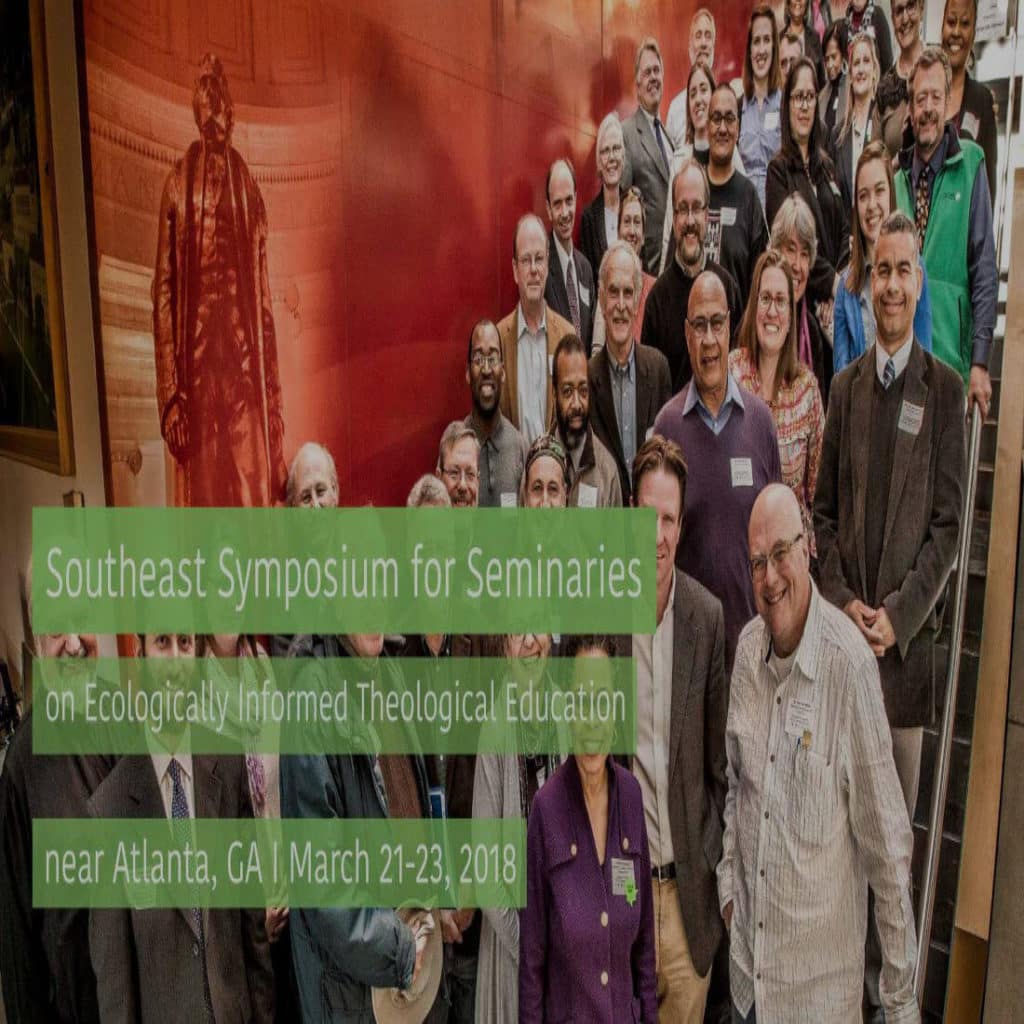The Southeast Symposium on Ecologically Informed Theological Education took place March 21-23, 2018, at Columbia Theological Seminary, Decatur, GA. The Symposium **brought together faculty, staff and administrators from Southern seminaries and theological schools** to explore how theological education can address our ecological reality. We were able to **offer this opportunity at no cost to invited participants**, thanks to a Luce Fund for Theological Education grant. We provided lodging, travel reimbursement and meals. The Symposium was co-organized by The Interfaith Center for Sustainable Development, the Methodist Theological School in Ohio, the Green Seminary Initiative, the Columbia Theological Seminary, and Georgia Interfaith Power and Light.
An increasing number of Americans are turning to their pastors, priests, rabbis, and imams for wisdom and guidance on ecological sustainability, lifestyle and spirituality. Awareness is growing of the injustice and inequity of pollution and waste and the implications of climate change. The Symposium enables institutions to equip the next generation of religious leaders to engage effectively in creation care and ecological justice. **Our time together informed and invigorated all of us as we strive to better incorporate the care of our planet into our work as educators.**
## The Symposium included
---
- Plenary, panel discussion and breakout sessions on the emerging field of religion and ecology in seminaries and theological schools
- Networking and discussion on integrating ecology in courses in theology, Bible, liturgy, ethics, and more, as well as innovate new courses.
- Ideas and proposals for clinical and field education as well as vocational options.
- Addresses from leading environmental scientists.
## Agenda
---
**Wednesday, March 21**
| 4:00 PM | Arrival & Check in |
|---|---|
| 6:30 PM | Dinner |
| 7:30 PM | Worship |
| 8:00 PM | Plenary Presentation. Speaker: J. Marshall Shepherd (UGA professor of atmospheric sciences) |
**Thursday, March 22**
| 7:30 AM | Breakfast |
|---|---|
| 9:00 AM | Plenary: Laurel Kearns and Tim Van Meter: Moving Toward Being a Green School: Obstacles and Strategies |
| 10:30 AM | Workshops on Teaching Ecology within and beyond Our Disciplines |
| 12:30 PM | Lunch |
| 1:30 PM | Interfaith Panel: Cultivating Eco-Consciousness within Various Communities of Faith |
| 2:45 PM | Break |
| 3:00 PM | Campus Sustainability and Environmental Justice 1. Walking Tour to Agnes Scott College to meet with Susan Kidd (Director of Sustainability). 2. Teaching Environmental Justice: Na’taki Osborne Jelks (Assistant Professor in Public Health) |
| 6:30 PM | Eat and Play! Fishbanks Simulation Game with Rob Williamson (Kennesaw State University) |
**Friday, March 23**
| 7:30 AM | Breakfast |
|---|---|
| 8:30 AM | Morning Plenary: Jennifer Ayres (Emory University/Candler School of Theology): Ecology in Religious Education |
| 10:00 AM | Panel on Takeaways and Best Practices |
| 11:30 AM | Concluding Worship with the Rev. William E. Flippin (pastor of Emmanuel Lutheran Church in Atlanta) |
| 12:15 PM | Lunch |
| After Lunch | Departure |
## Past Symposiums
---
To view pictures from the 2017 Mid-Atlantic Symposium on Ecologically Informed Theological Education, held at Catholic University of America’s School of Theology and Religious Studies in Washington D.C., [click here](https://www.facebook.com/176964342361114/photos/ms.c.eJxNk9mtJUEIQzMasYPzT2wE1XDfV0tHtlmKZk3TdGYJIRL~;xw~_UQyqCcwA7NB1pUDkAKJWELjB~_gBekDhD8MiT6e8BqFG4H7CmuSj4QB~;xZ7LMEUbWqfmXxyhJWITQZHKuo14edguRZ6ANs0qEpuQodUJo~;RWcorg~_jUciFerTC6hfKL7RWkTMLy2YIB5QSFQvsAT8wO01cFaVRFFahGl3FVRfkLMjwLSjsPaXtU4ZFdacU25ghOzTJP~_CCUdCO78ESRshTVAzwnTbEO8NzLYHpg3P7iJqM8s0I9wG1CqbuowirSJvxzXf89JmWeadNaGekHeijpbTbemk~;dmq~_TkXIyhFVwgtAUBJm~_SkGfHcqQkES6pZxihiAXyieRRe4TxW~_jHoZfhn~_LHaWlLYk8oCPQg6UjaL8AzznIIQLhU8V~_4ZL1gZkdMC6D9K1tMIRmvp1mqKAIPD96q3As~_RlKARJ37tIctKA78ZawQPiyvbLhSZfaN9paOAU9UL5QvttlXQXlEKvCm0VmSVr8LXOPK3jT9mx2JtWve9UqvZOG4iEML4M9WCMovQU~_iw4kA53MVnQpy28p60evXVhfFtXj3gWOovJhAYd0MnAlXUbhdUpchR1ffTBuDPyPwvhLv8~-.bps.a.1374159355974934.1073741853.176964342361114/1374375112620025/?type=3&theater). To view a video from that Symposium, [click here](https://www.youtube.com/watch?v=ZitJ_alGN0s). To see a video of a similar conference in Manhattan in 2016, [click here](https://youtu.be/gIH4J2uapk8).
## Our Supporters & Partners
---
This Symposium is part of the [Seminary Environmental Leadership Initiative](https://www.hluce.org/grants/grants/seminary-6al-leadership-initiative/), which is funded through a grant from the [Luce Fund for Theological Education](https://www.hluce.org/), with additional support from the [Julia Burke Foundation](https://juliaburkefoundation.com/home.php).
The Symposium was co-organized by [Columbia Theological Seminary](https://www.ctsnet.edu), The Interfaith Center for Sustainable Development, the [Methodist Theological School in Ohio](https://www.mtso.edu), the [Green Seminary Initiative](https://www.facebook.com/groups/39421421174/), and [Georgia Interfaith Power and Light](https://www.gipl.org).





cs-logo

icsd logo

Henry Luce Logo

203997

AboutUsGSILogo

julia-burke-foundation-600


---
### [Intern with ICSD](https://interfaithsustain.com/intern-with-us/)
**Published:** July 21, 2013
**Author:** ICSD
**Content:**
The Interfaith Center for Sustainable Development (ICSD) seeks qualified interns to work closely with our staff in manifesting the organization’s vision. Since the organization’s founding in 2010, we have had the distinct pleasure of working and interacting with 100 interns and volunteers. Their contribution played a significant part in revealing the connection between religion and ecology and mobilizing people to act.
Interns are involved in a diverse range of assignments and responsibilities, which may include video editing, social media work, website development and graphic design; contacting religious institutions from multiple faiths; planning a North American interfaith environmental speaking tour; researching religious sources on environmental issues; engaging in background research on philanthropic foundations; and design, planning, and assessment of interfaith environmental events and seminars in Israel and internationally.
In particular, we seek interns with video editing skills who can help in creating videos for our social media.
Part- or full-time internships are available, based in Jerusalem, ranging from 10 to 40 hours per week, for a minimum of 5 weeks. Internships are unpaid.
*Application Process:* [Email us](mailto:info@interfaithsustain.com) your CV or resume in English, along with one paragraph in the body of the email on why you are interested in interning at ICSD.
Please note: responsibility for securing a visa to enter Israel is that of the intern.
We look forward to being in contact and appreciate your interest in interning with us.
## **Testimonials from ICSD Interns**
---
> Words truly cannot describe how lovely this experience was. Working with ICSD was a truly enlightening experience, teaching me so much more than I ever could have expected. The passion and love that each member of the team brought forth was truly inspiring, and in fact gives me hope that the work we are doing is making a difference in this world. In fact, I think it is safe to say that we are doing holy work. I look forward to being involved with future ICSD happenings whether that be as an Ambassador on my college campus, continuing to make phone calls during my spare time, or simply sharing a post on Facebook.
>
> *Gabi Maimon (USA)*
> From day one of my internship, the staff made clear how important and impactful my work in this internship would be and that created an instant feeling of trust and responsibility, which lasted throughout the two and a half months I was with ICSD. My own big project was the Interfaith Eco Poetry Slam, which was a first time experience to organize and take part in myself.
>
> *Marilena Bekierz (Germany)*
> During my internship with ICSD I had the privilege to learn from highly skilled colleagues about a wide range of topics. I really enjoyed working with- and being part of the motivated team of young professionals who pursue goals that are not only aimed on being beneficial to themselves or the organization, but using their skills to serve and trying to improve the (world’s) community. I was mainly involved in managing the website development process. In addition I had the pleasure to use my graphic design skills to create several graphic works and I also assisted with the founding of the Faith and Science Earth Alliance.
>
> *Hugo van der Poel (Netherlands)*
> I was attracted to ICSD because it brings together two of my passions (interfaith and environmental work) in a city that is dynamic and full of opportunities to reach out to diverse communities of people. In a sense, this has also been the most challenging part of this internship – the fact that we are working to create bridges of understanding to populations of people who have an intense and rich history of conflict and misunderstanding. Since I started my internship in January, I have worked on a host of different projects relating to subjects such as women’s empowerment, conflict resolution, and sustainable development – as well as more skills based projects centered on fundraising, public speaking, tourism, and communications.
>
> *Siiri Bigalke (USA)*
> During my tenure I have been working on a wide variety of assignments, which helped me not only to apply my already existing knowledge, but to acquire new skill sets. One of my first responsibilities at ICSD was the social media management. This contained the administration as well as the outreach improvement of all the social media channels including Facebook, Twitter and Pinterest. I have learned what it means to really commit yourself to such an indispensable cause like the environment. It was a pleasure to work side by side with people who act from the same conviction. I will always be thankful to Yonatan and the ICSD team for granting me this unique and important experience.
>
> *Dominik Döhler (Germany)*
> I set out to find a job or internship that would allow me to be involved with six different areas: environment, Judaism, religion & interfaith, culture, conflict & dialogue and society. This choice was not just a whim, but a decision about my career direction. I chose to lead a career that, in my mind, is at the very core of the problems we face today as human beings. I proceeded to intern with ICSD and gained much useful experience working virtually on every aspect of the organization.
>
> *Neria Greniman (Israel)*
---
**We are grateful for the contributions of the following interns:**
---
| **2023** | **2022** | **2021** | **2020** | **2019** | **2018** | **2016/17** | **2014/15** | **2012/13** | **2010/11** |
|---|---|---|---|---|---|---|---|---|---|
| Alexa Mittleman | Benjamin (Benny) Samuel Klein | Harry Cooper | Julia Engborg | Tanja Mancinelli | Jonathan Tom Segal | Flor Asquinazi | Anthony Bartaway | Amira Mintz-Morgenthau | Abby Kaufman |
| Rachel Weissman | Alana House | Deb Rose | Jessica Sachs | Lilli Stordeur | Gabriella Cohen | Caroline Stern | Neria Greniman | Eliav Levy | Leora Kirtner |
| Alina Sterenfeld | Siyi Qi | Sydney Cohen | Leila Guelmane | Juliana Slurzberg | Alexandra Kohl | Valerie Breslow | Rotem Weizman | Mark Gilbert | Joshua Schaffer |
| | Rachel Cohen | Ethan Keller | Andrei Borokhovich | Yasmine Fischer | Akouyu Alphonse Akohleng Chefor | Marilena Bekierz | Marjorie Amon | Tiana Valdespino | Ruth Kleinman |
| | Ethel Mendius | Abby Rabinowitz | Quinn McVeigh | Eliana Koehler | Daniel Mizrahi Rubens | Dominique Lellek | Michelle Johnston | Oscar Schneitter | |
| | Deb Rose | Jordan Rindler | | Summer Rose Wilson | Claire Messina | Du Qingqing | Rachel Winner | Leah Koller | |
| | Aaron Norton | Elisheva Malomet | | Clara Calabuig Martínez | Samantha Halsall | Mariona Bonsfills | Alicen Roberts | Julie Cohen | |
| | | Nechama Schnieder | | Katherine Ryan-O’Flaherty | | Kendra Thacker | Hugo Van Der Poel | Adin Bonapart | |
| | | | | Aviva Gross | | Dana Samelson | Kajta Derichs | Nico Katz | |
| | | | | | | Brian Dickstein | Sarah Lyons | Lianne Nibley | |
| | | | | | | Ben Perla | Annie Fortnow | Dasi Robbins | |
| | | | | | | | Adina Heistein | Ariana Berlin | |
| | | | | | | | Shirelle Weingarten | | |
| | | | | | | | Dalia Gladstein | | |
| | | | | | | | Ricki Silber | | |
| | | | | | | | Nadav Slovin | | |
| | | | | | | | Chelsea Revell | | |
| | | | | | | | Dominik Döhler | | |
| | | | | | | | Siiri Bigalke | | |
| | | | | | | | Alessandro Magnasco | | |
| | | | | | | | Daniel Altman | | |
| | | | | | | | Elana Frank | | |
| | | | | | | | Gabriella Maimon | | |
| | | | | | | | Maya Brilliant | | |
| | | | | | | | Amna Farouqi | | |
| | | | | | | | Julian Dunaevits | | |
| | | | | | | | Jenna (Basman) Zedaka | | |
**ICSD works on a global basis, with current engagement in Africa, the Middle East, North America, and Europe.**
---
### [Eco Bible – Animal Welfare](https://interfaithsustain.com/ecobible-animalwelfare/)
**Published:** February 9, 2021
**Author:** ICSD
**Content:**
# Eco Bible for Animal Welfare
## This Book Addresses How Humanity Can Successfully Preserve Animal Welfare In Accordance with the Hebrew Bible
[**Buy the Book on Amazon.com**](https://www.amazon.com/Eco-Bible-Ecological-Commentary-Genesis-ebook/dp/B08LCKLM9G/)

---
## Your Guide to Living a Healthier, More Sustainable Lifestyle
Get the book that Publishers Weekly says “will inspire contemplation on how to live in harmony with nature and the power of conservation.”
- 178 Daily Lessons on Living a Healthier, More Eco-Friendly Life
- Ecological Commentary on the Book of Genesis & Exodus
- Specific Action Items for Achieving a Sustainable Future
---
## What Does the Bible Say About Animal Welfare?
### Humans Must Protect All Creation
Ancient Hebrew commentary says that God’s blessing to rule over other creatures depends on our living as righteous people.
If humanity becomes worthy by living in a righteous way, then humans shall rule over nature. Rabbi David Sears writes that ruling “comprises a form of stewardship for which humanity is answerable to God.”
### We Need to Respect Animals
In our times, people’s love of meat causes them to overlook and tolerate inhumane treatment of most of the 80 billion factory-farmed animals.
Too many people ignore that meat production processes and facilities are a leading driver of the climate crisis, and a contributor to the spread of diseases, including those caused by pathogens in the meat, and among the meat plant workers.
[**Purchase on Amazon.com**](https://www.amazon.com/Eco-Bible-Ecological-Commentary-Genesis-ebook/dp/B08LCKLM9G/)
### An Age-Old Problem
The concept of anti-cruelty laws to protect animals dates at least to the 1800s, and animal “rights” in the secular world has been discussed seriously since the second half of the twentieth century.
The Torah has been discussing and defending these rights for 3,500 years.
---
## Eco Bible Addresses These Challenges with Positivity and Hope
“Almost as soon as I began reading, I knew that the Eco Bible would be a long term companion for me as I work to care for God’s creation and encourage other people of faith to do the same. Most communities of environmentalists I’ve encountered are heavily burdened by grim predictions of the future, which create an atmosphere of pessimism and disillusionment. What is unique to a Biblical perspective is hope, the “knowledge that we can choose; that we can learn from our mistakes and act differently next time.” The focus of environmentalism in the Eco Bible is completely different from a secular sense of hopelessness: here there is a spiritual conviction that we can and must turn from our destructive actions and live as we were created to: in peaceful, mutually beneficial flourishing with all that is.”
**Autumn Ayers**
Amazon.com Reviewer
---
## About the Authors

Yonatan Neril is a member of the Faith-Based Advisory Council of the UN Interagency Task Force and the advisory board of the Alliance For The Care Of Our Common Home: A Joint Initiative of the Pontifical Universities in Rome. Raised in California, Yonatan completed an M.A. and B.A. from Stanford University with a focus on global environmental issues, and received rabbinical ordination in Israel. He currently lives with his wife, Shana and their two children in Jerusalem.

Rabbi Leo Dee received a Master’s in Engineering from Cambridge University, a Master’s in Public Health from Hebrew University, and rabbinical ordination in Israel. Following six years as a community Rabbi in the United Kingdom, he moved to Israel where he has worked in the Israeli financial community and within the field of Responsible Investment. He served as director of programs at The Interfaith Center for Sustainable Development. He lives near Jerusalem with his wife, Lucy, and their children.
---
## Now Available on Amazon in Paperback, Hardcover, and Kindle Formats
[Purchase Eco Bible on Amazon](https://www.amazon.com/Eco-Bible-Ecological-Commentary-Genesis/dp/173533880X), or visit [this page](https://interfaithsustain.com/contact/) to contact The Interfaith Center for Sustainable Development to order in bulk for your study groups and book clubs.
[](https://www.amazon.com/Eco-Bible-Ecological-Commentary-Genesis-ebook/dp/B08LCKLM9G/)
---
---
### [Eco Bible 7 Day Challenge](https://interfaithsustain.com/ecobible-7-day-challenge/)
**Published:** February 14, 2021
**Author:** ICSD
**Content:**
# Eco Bible 7 Day Challenge
## How to Achieve “Shepherd Consciousness” and Live a More Sustainable Lifestyle
[**Buy on Amazon**](https://www.amazon.com/Eco-Bible-Ecological-Commentary-Genesis-ebook/dp/B08LCKLM9G/)

---
## A New Way to Embody Foresight, Self-Discipline, and Concern for the Larger Community in the Pursuit of Paradise On Earth
To cultivate greatness, we must develop a deep soul-awareness. When you truly engage in such a practice, you will see the results in both your personal life, as well as your surroundings.
Yet today’s high-tech, hyper-connected world doesn’t leave much space for spirituality.
When we are too caught up in experiencing the world without “shepherd consciousness,” we tend to make decisions from our own narrow, “get-ahead” reality.
When we focus too much on “doing,” without making time for “being” – we are more likely to make decisions that transform the earth in negative ways.
This is the source of many environmental problems today.
---
## Achieving Shepherd Consciousness
### The Greatest Challenge Humanity Has Ever Faced
Air and water pollution. Species loss. Climate change.
These are problems not of the environment, but of a society bent on doing and producing seven days a week.
There is a story of Abraham passing by a palace on fire. He wonders aloud, “Who is the owner of this palace?”
Today with global warming, the world’s great forests are burning as never before. One could look at the planet and legitimately ask, “Who is in charge of this problem?”
God’s response may be to us, just as it was to Abraham, “Go forth,” or “Reach into yourself.”
We all share responsibility for our common home.
### Isn’t It Too Late to Save the Environment?
A distraught father, whose son was beginning to stray from the path of his forefathers, once brought his son to the Alter Rebbe, Shneur Zalman of Liadi.
The Alter Rebbe asked the boy what he enjoyed doing. The boy responded that he liked riding horses.
“And what qualities do you look for in a horse?” Rabbi Shneur Zalman asked him.
“Speed,” the boy replied.
“And what if you are on a fast horse which takes a wrong turn in the road?” the sage continued.
“You can get very lost in a hurry,” was the boy’s response.
“And what if you turn the horse around?” the elderly sage pressed on.
“You can get back just as fast.”
A slight smile crept across Rabbi Shneur Zalman’s face as the boy nodded his head, indicating that he understood the Alter Rebbe’s message.
Many people fear that humans have irrevocably destroyed the ecology of “Eden” on earth.
But there is hope… We can turn around our horses, currently galloping out of control toward oblivion. There is still time to learn from our mistakes and act in ways that reverse environmental degradation.
[**Purchase on Amazon.com**](https://www.amazon.com/Eco-Bible-Ecological-Commentary-Genesis-ebook/dp/B08LCKLM9G/)
### What Does It Mean to Have “Shepherd Consciousness”?
Thousands of years of shepherding flocks of sheep and goats can give us insights into spiritual and ecological living today.
The Egyptians, for example, only knew abundance from the Nile. They could not imagine a world where the Nile did not flood each year to provide water for their crops.
Certainty and stability in the past can mislead us as we try to prepare for an uncertain future. For many people who have enjoyed material stability and abundance in the past half century, it is difficult to imagine that the next half century will be much different.
Joseph, a shepherd who experienced scarcity in Israel, was able to envision a famine in Egypt.
### Preparing for the Future
Joseph used his prophetic insight to instruct Egypt to make provisions during seven years of plenty, for the seven years of famine that would follow.
Anticipating an impending human-ecological disaster, he had Egyptians gather grain in the time of plenty as insurance against hard times to come. Egypt benefited because Joseph forced the Egyptians to show restraint ahead of a crisis.
We may not have the luxury of Joseph’s God-given absolute knowledge and power, but we do have the past to learn from, and dreams for our future to drive us to action.
### The Qualities of a Shepherd
A shepherd bears responsibility for the safety and welfare of the flock. The shepherd herds the flock to graze in areas of good forage, and protects the animals from eating poisonous plants or being attacked by predators.
God is likened to a shepherd who leads His flock to pastures and cares for every animal. The allusions to nature suggest an ideal harmony between humanity and the environment, with God in charge.
The shepherd is devoted to the holiness and purity of life, refrains from harming others, and sacrifices some personal pleasure for an ethical and upright path.
When we are capable of fulfilling this ideal, we will naturally be triumphant in attaining the great spiritual task of infusing our moral lifestyle with one that is also environmentally sustainable.
### What Can Just One Person Do To Reverse Climate Change?
With 8 billion people sharing our planet, the greatest risk comes from seemingly inconsequential actions of individuals, combining in their impact.
For the first time in history, humans can now destroy or radically alter virtually all life on earth – a power so great it could once only be ascribed to God.
Rabbi Abraham Isaac Kook taught about a person singing four songs, representing four levels of concern.
The first level is individual concern. On a higher level, a person is concerned for their nation or people. Beyond that, a person cares for all of humanity. The highest level is to connect to and care for all of creation.
[**Purchase on Amazon.com**](https://www.amazon.com/Eco-Bible-Ecological-Commentary-Genesis-ebook/dp/B08LCKLM9G/)
### Every Shepherd Has a Song
Rebbe Nachman of Breslov emphasizes the significance of the shepherd-flock relationship:
“Know that every shepherd has a special song.”
A lesson we can learn from Noah and his Ark is that the world is a “closed,” integrated system.
Noah and his eight-person crew maintained a sort of proto-Biodome inside the Ark, struggling to preserve a functional level of ecological balance in the most challenging of situations.
Within such a system, every action has a significant impact and ramifications, and individual elements can be aligned to strengthen and assist one another.
In modern times, this ecological balance can be demonstrated by walking, riding bikes, and using public transportation in congested areas. These individual decisions collectively reduce pollution while easing traffic jams.
Individually, these very same choices can reduce personal stress and keep us more fit.
This extends to the food we eat, the products we purchase, and our level of consumption within local economies. Individual action leads to collective results.
### Your Spiritual Purpose
Rabbis throughout the ages make clear that God tasks humanity with caring for creation.
The Midrash teaches that when God created Adam, He took him and showed him all the trees of the Garden of Eden and said to him, “Be careful not to spoil or destroy my world – for if you do, there will be nobody after you to repair it.”
If we see in our role as masters of the earth a unique opportunity to truly serve and care for the planet, its creatures and its resources, then we can reclaim our status as stewards of the world, and raise our new and future generations in an environment much closer to that of Eden.
The final challenge for humankind is to live sustainably with nature, to embody “shepherd consciousness” fully.
Every person — even you — has the power to recreate paradise.
---
## Eco Bible Addresses These Challenges with Positivity and Hope
“Almost as soon as I began reading, I knew that the Eco Bible would be a long term companion for me as I work to care for God’s creation and encourage other people of faith to do the same. Most communities of environmentalists I’ve encountered are heavily burdened by grim predictions of the future, which create an atmosphere of pessimism and disillusionment. What is unique to a Biblical perspective is hope, the “knowledge that we can choose; that we can learn from our mistakes and act differently next time.” The focus of environmentalism in the Eco Bible is completely different from a secular sense of hopelessness: here there is a spiritual conviction that we can and must turn from our destructive actions and live as we were created to: in peaceful, mutually beneficial flourishing with all that is.”
**Autumn Ayers**
Amazon.com Reviewer
---
## About the Authors

Yonatan Neril is a member of the Faith-Based Advisory Council of the UN Interagency Task Force and the advisory board of the Alliance For The Care Of Our Common Home: A Joint Initiative of the Pontifical Universities in Rome. Raised in California, Yonatan completed an M.A. and B.A. from Stanford University with a focus on global environmental issues, and received rabbinical ordination in Israel. He currently lives with his wife, Shana and their two children in Jerusalem.

Rabbi Leo Dee received a Master’s in Engineering from Cambridge University, a Master’s in Public Health from Hebrew University, and rabbinical ordination in Israel. Following six years as a community Rabbi in the United Kingdom, he moved to Israel where he has worked in the Israeli financial community and within the field of Responsible Investment. He served as director of programs at The Interfaith Center for Sustainable Development. He lives near Jerusalem with his wife, Lucy, and their children.
---
## Now Available on Amazon in Paperback, Hardcover, and Kindle Formats
[Purchase Eco Bible on Amazon](https://www.amazon.com/Eco-Bible-Ecological-Commentary-Genesis/dp/173533880X), or visit [this page](https://interfaithsustain.com/contact/) to contact The Interfaith Center for Sustainable Development to order in bulk for your study groups and book clubs.
[](https://www.amazon.com/Eco-Bible-Ecological-Commentary-Genesis-ebook/dp/B08LCKLM9G/)
---
---
### [Eco Bible – Trees](https://interfaithsustain.com/ecobible-trees/)
**Published:** February 9, 2021
**Author:** ICSD
**Content:**
# Eco Bible and Trees
## This Book Teaches How You Can Achieve a More Sustainable Future in Accordance with God’s Will
[**Buy the Book on Amazon.com**](https://www.amazon.com/Eco-Bible-Ecological-Commentary-Genesis-ebook/dp/B08LCKLM9G/)

---
## Your Guide to Living a Healthier, More Sustainable Lifestyle
Get the book that Publishers Weekly says “will inspire contemplation on how to live in harmony with nature and the power of conservation.”
- 178 Daily Lessons on Living a Healthier, More Eco-Friendly Life
- Ecological Commentary on the Book of Genesis & Exodus
- Specific Action Items for Achieving a Sustainable Future
---
## Recognizing the Value of Trees
### Edible Trees
**Genesis 1:11–12 – And God said, “Let the earth sprout vegetation: seed-bearing plants, fruit trees of every kind on earth that bear fruit with the seed in it.”**
And it was so. The earth brought forth vegetation: seed-bearing plants of every kind, and trees of every kind bearing fruit with the seed in it. And God saw that this was good. As Ba’al HaTurim (Rabbi Jacob ben Asher) points out, God commanded the earth to produce “fruit trees that bear fruit,” meaning trees whose bark could be eaten as well as their fruit. However, he notes that the earth produced trees (whose bark is not eaten) that produce fruit in order that the trees themselves would not be devoured.49
Long ago, and today, we have come to understand that trees – in addition to the fruit they produce – have broader value including providing homes for animals large and small, and retaining soil to prevent erosion and catastrophic mudslides.
### Finding God Outdoors
**Genesis 15:5 – He took him outside and said, “Look toward heaven and count the stars, if you are able to count them.” And He added, “So shall your offspring be.”**
Why did God take Abraham outside? Ibn Ezra writes poetically of finding God, “Wherever I turn my eyes, around on earth or to the heavens, I see You in the field of stars, I see You in the yield of the land, in every breath and sound, a blade of grass, a simple flower, an echo of Your holy name.” 178
Elie Wiesel relates: When the Holy Seer of Lublin was a little boy, he was known to skip school for hours or even days. Once, his teacher followed the young boy to see what became of these free moments. The Seer walked to the edge of the town, into deep woods, and there, in a small, green circle of trees, he began to pray. The next day the teacher asked the boy what drew him to those woods. The Seer of Lublin replied, “I can find God there.” “But,” said the teacher, “surely God is the same in the town as in the woods.” “That’s true,” replied the Seer, “but I am not the same!”179
[**Purchase on Amazon.com**](https://www.amazon.com/Eco-Bible-Ecological-Commentary-Genesis-ebook/dp/B08LCKLM9G/)
### Resilience of Trees
**Genesis 18:4 – Let a little water be brought; bathe your feet and recline under the tree.**
Rabbeinu Chananel asked why the angels revealed themselves to Abraham under a tree.181 He answered that in doing so they revealed a message to Abraham: “You, like a tree, will flourish even in your old age,” as it says in the book of Job, “For a tree has hope; if it is cut it will again renew itself, in its season. Its leaves do not wilt; and whatever it does prospers.”183
Abraham’s resilience and prosperity are compared to a tree. Indeed, trees are one of the most resilient organisms, specifically against drought. This is increasingly important in light of climate change causing unpredictable rainfall, extreme weather events, and stronger pests that threaten forests.184 Contemporary researchers have discovered that diverse “forests with trees that employ a high diversity of traits related to water use suffer less of an impact from drought.”185 They are also more resilient to forest fires.
### Sustainable Peace
**Genesis 21:33 – \[Abraham\] planted a tamarisk \[eshel\] at Beersheba, and invoked there the name of the Lord, the Everlasting God.**
Malbim explains that the eshel was an orchard.205 The peace pact made with Abimelech, king of Gerar (today’s Gaza), is concluded with the planting of fruit trees, representing the importance of sustaining long-term and environmental prosperity for all, and demonstrating that true peace is based upon a joint hope for a better future. This is comparable to modern Israel and Jordan basing a 1994 peace pact on sharing water resources.206
*From Eco Bible: Volume 1: An Ecological Commentary on Genesis and Exodus. Copyright: 2020 The Interfaith Center for Sustainable Development.*
### Abraham and the Burning Kiln
**Genesis 19:25 – He annihilated those cities and the entire Plain, and all the inhabitants of the cities and the vegetation of the ground.**
Rabbi Shlomo Yitzhaki (Rashi) comments on the verse, “He \[Abraham\] saw the smoke of the land rising like the smoke of a kiln,”199 saying this was like the smoke rising from a kiln burning limestone to create lime used for bricks.200 Today, burning of tropical rainforests not only devastates the region where the burning occurs, but puts pollution in the air that is carried far beyond a nation’s borders. Burning of the environment is an international ecological threat.
Chizkuni (Rabbi Chizkiyahu ben Rabbi Mano’ach) explains why vegetation is also mentioned in this verse: It teaches that anyone who takes a handful of earth from Sodom, even to this day, and transfers it to a garden, will make the garden infertile.201
Today, scientists teach us, “When acid rain \[from pollution\] falls, it can affect forests as well as lakes and rivers. To grow, trees need healthy soil in which to develop. Acid rain is absorbed into the soil, making it more difficult for trees to survive.
As a result, trees are more susceptible to viruses, fungi and insect pests.”202 The acid rain effect is reversible with the addition of large quantities of alkaline lime to the soil. In Sweden, the cost of such treatment is over $50 million per year.203 This is an example of an “externality,” a cost of operating our cars and factories that is paid by taxpayers instead of by polluters. If such treatment costs were included in the costs of fossil fuels, according to some analysts, fuel prices would rise by up to 50 percent.204
---
## Eco Bible Addresses These Challenges with Positivity and Hope
“Almost as soon as I began reading, I knew that the Eco Bible would be a long term companion for me as I work to care for God’s creation and encourage other people of faith to do the same. Most communities of environmentalists I’ve encountered are heavily burdened by grim predictions of the future, which create an atmosphere of pessimism and disillusionment. What is unique to a Biblical perspective is hope, the “knowledge that we can choose; that we can learn from our mistakes and act differently next time.” The focus of environmentalism in the Eco Bible is completely different from a secular sense of hopelessness: here there is a spiritual conviction that we can and must turn from our destructive actions and live as we were created to: in peaceful, mutually beneficial flourishing with all that is.”
**Autumn Ayers**
Amazon.com Reviewer
---
## About the Authors

Yonatan Neril is a member of the Faith-Based Advisory Council of the UN Interagency Task Force and the advisory board of the Alliance For The Care Of Our Common Home: A Joint Initiative of the Pontifical Universities in Rome. Raised in California, Yonatan completed an M.A. and B.A. from Stanford University with a focus on global environmental issues, and received rabbinical ordination in Israel. He currently lives with his wife, Shana and their two children in Jerusalem.

Rabbi Leo Dee received a Master’s in Engineering from Cambridge University, a Master’s in Public Health from Hebrew University, and rabbinical ordination in Israel. Following six years as a community Rabbi in the United Kingdom, he moved to Israel where he has worked in the Israeli financial community and within the field of Responsible Investment. He served as director of programs at The Interfaith Center for Sustainable Development. He lives near Jerusalem with his wife, Lucy, and their children.
---
## Now Available on Amazon in Paperback, Hardcover, and Kindle Formats
[Purchase Eco Bible on Amazon](https://www.amazon.com/Eco-Bible-Ecological-Commentary-Genesis/dp/173533880X), or visit [this page](https://interfaithsustain.com/contact/) to contact The Interfaith Center for Sustainable Development to order in bulk for your study groups and book clubs.
[](https://www.amazon.com/Eco-Bible-Ecological-Commentary-Genesis-ebook/dp/B08LCKLM9G/)
---
**Endnotes:**
49\. Tur Ha’Arokh on Genesis 1:11.
178\. Abraham ibn Ezra, “God Everywhere” (1089–1164).
179\. Jeremy Benstein, The Way Into Judaism and the Environment (Vermont:
Jewish Lights Publishing, 2006), 142, citing Elie Wiesel.
181\. Rabbeinu Chananel on Genesis 18:4.
182\. Job 14:7–9.
183\. Psalms 1:3.
184\. Moises Velasquez-Manoff, “Can Humans Help Trees Outrun Climate
Change?” The New York Times, April 25, 2019, https://www.nytimes.com/2019
/04/25/climate/trees-climate-change.html?searchResultPosition=7.
185\. William R. L. Anderegg et al., “Hydraulic Diversity of Forests Regulates
Ecosystem Resilience during Drought,” Nature 561, no. 7724, September 2018,
https://doi.org/10.1038/s41586-018-0539-7.
199\. Genesis 19:28.
200\. Rashi on Genesis 19:28.
201\. Chizkuni on Genesis 19:25.
202\. “Impacts of Acid Rain on Soils,” Air Pollution UK, accessed May 16, 2019,
http://www.air-quality.org.uk/16.php.
203\. William K. Stevens, “To Treat the Attack of Acid Rain, Add Limestone to
Water and Wait,” The New York Times, January 31, 1989, https://www.nytimes
.com/1989/01/31/science/to-treat-the-attack-of-acid-rain-add-limestone-to
-water-and-wait.html.
204\. Jean Tirole, “Some Economics of Global Warming,” Rivista di Politica
Economica 98, no. 6, November 2008, 9–42.
205\. Malbim on Genesis 21:33.
206\. “Article 6” in “Treaty of Peace between the State of Israel and the Hashemite
Kingdom of Jordan,” Israel Ministry of Foreign Affairs, October 26, 1994,
https:// mfa.gov.il/mfa/foreignpolicy/peace/guide/pages/israel-jordan%20peace %20treaty.aspx.
---
### [Eco Bible – Plant-Based Diet](https://interfaithsustain.com/ecobible-plantbaseddiet/)
**Published:** February 9, 2021
**Author:** ICSD
**Content:**
# Eco Bible for a Plant-Based Diet
## This Book Teaches How You Can Achieve a More Sustainable Future in Accordance with God’s Will Through Health and Diet
[**Buy the Book on Amazon.com**](https://www.amazon.com/Eco-Bible-Ecological-Commentary-Genesis-ebook/dp/B08LCKLM9G/)

---
## Your Guide to Living a Healthier, More Sustainable Lifestyle
Get the book that Publishers Weekly says “will inspire contemplation on how to live in harmony with nature and the power of conservation.”
- 178 Daily Lessons on Living a Healthier, More Eco-Friendly Life
- Ecological Commentary on the Book of Genesis & Exodus
- Specific Action Items for Achieving a Sustainable Future
---
## What Can The Bible Tell Us About Ecology?
### A More Sustainable Diet
There are over 116,000 fast food chain stores around the world. The majority of people in the world eat these chains’ food each year, with common ingredients being meat, cheese, wheat, corn, oil, and sugar.
The homogeneity in diet worldwide has contributed to a dramatic decline in the biodiversity of food crops, which the UN cites as a threat to global food security.
This has also led to a dramatic decline in individual health.
### Sustainability and Environmental Mindfulness
Applying Biblical ethics to stewardship, conservation, and creation care is not just an idea for today, but is essential for a future where we and future generations live in balance, thriving on a planet that remains viable for all life.
At a time of both ecological and spiritual crisis, ecological reading of the Bible can have profound impact on human behavior since billions of people worldwide consider it a holy book.
[**Purchase on Amazon.com**](https://www.amazon.com/Eco-Bible-Ecological-Commentary-Genesis-ebook/dp/B08LCKLM9G/)
---
## Eco Bible Addresses These Challenges with Positivity and Hope
“Almost as soon as I began reading, I knew that the Eco Bible would be a long term companion for me as I work to care for God’s creation and encourage other people of faith to do the same. Most communities of environmentalists I’ve encountered are heavily burdened by grim predictions of the future, which create an atmosphere of pessimism and disillusionment. What is unique to a Biblical perspective is hope, the “knowledge that we can choose; that we can learn from our mistakes and act differently next time.” The focus of environmentalism in the Eco Bible is completely different from a secular sense of hopelessness: here there is a spiritual conviction that we can and must turn from our destructive actions and live as we were created to: in peaceful, mutually beneficial flourishing with all that is.”
**Autumn Ayers**
Amazon.com Reviewer
---
## About the Authors

Yonatan Neril is a member of the Faith-Based Advisory Council of the UN Interagency Task Force and the advisory board of the Alliance For The Care Of Our Common Home: A Joint Initiative of the Pontifical Universities in Rome. Raised in California, Yonatan completed an M.A. and B.A. from Stanford University with a focus on global environmental issues, and received rabbinical ordination in Israel. He currently lives with his wife, Shana and their two children in Jerusalem.

Rabbi Leo Dee received a Master’s in Engineering from Cambridge University, a Master’s in Public Health from Hebrew University, and rabbinical ordination in Israel. Following six years as a community Rabbi in the United Kingdom, he moved to Israel where he has worked in the Israeli financial community and within the field of Responsible Investment. He served as director of programs at The Interfaith Center for Sustainable Development. He lives near Jerusalem with his wife, Lucy, and their children.
---
## Now Available on Amazon in Paperback, Hardcover, and Kindle Formats
[Purchase Eco Bible on Amazon](https://www.amazon.com/Eco-Bible-Ecological-Commentary-Genesis/dp/173533880X), or visit [this page](https://interfaithsustain.com/contact/) to contact The Interfaith Center for Sustainable Development to order in bulk for your study groups and book clubs.
[](https://www.amazon.com/Eco-Bible-Ecological-Commentary-Genesis-ebook/dp/B08LCKLM9G/)
---
---
### [Eco Bible – Nature](https://interfaithsustain.com/ecobible-nature/)
**Published:** February 9, 2021
**Author:** ICSD
**Content:**
# Eco Bible and Nature
## This Book Explores How a Healthy Human Relationship with Nature Is Essential for a Sustainable Future
[**Buy the Book on Amazon.com**](https://www.amazon.com/Eco-Bible-Ecological-Commentary-Genesis-ebook/dp/B08LCKLM9G/)

---
## Your Guide to Living a Healthier, More Sustainable Lifestyle
Get the book that Publishers Weekly says “will inspire contemplation on how to live in harmony with nature and the power of conservation.”
- 178 Daily Lessons on Living a Healthier, More Eco-Friendly Life
- Ecological Commentary on the Book of Genesis & Exodus
- Specific Action Items for Achieving a Sustainable Future
---
## Eco Bible Is Your Guide to Appreciation of All of God’s Creation
### Nature is Good for the Body
According to scientist Gaétan Chevalier, “Emerging scientific research has revealed a surprisingly positive and overlooked environmental factor on health: direct physical contact with the vast supply of electrons on the surface of the earth.”
Our modern lifestyle has cut us off from this contact and may be a major contribution to increasing physiological dysfunction and unwellness.
### Nature is Good for the Mind
In 2019, 24 scientists published a groundbreaking study on the link between nature and mental health, including “the impacts of nature experience on cognitive functioning, emotional well-being, and other dimensions of mental health.”
They discovered that humans receive tremendous value from nature in balancing and maintaining our mental health.
[**Purchase on Amazon.com**](https://www.amazon.com/Eco-Bible-Ecological-Commentary-Genesis-ebook/dp/B08LCKLM9G/)
---
## Eco Bible Addresses These Challenges with Positivity and Hope
“Almost as soon as I began reading, I knew that the Eco Bible would be a long term companion for me as I work to care for God’s creation and encourage other people of faith to do the same. Most communities of environmentalists I’ve encountered are heavily burdened by grim predictions of the future, which create an atmosphere of pessimism and disillusionment. What is unique to a Biblical perspective is hope, the “knowledge that we can choose; that we can learn from our mistakes and act differently next time.” The focus of environmentalism in the Eco Bible is completely different from a secular sense of hopelessness: here there is a spiritual conviction that we can and must turn from our destructive actions and live as we were created to: in peaceful, mutually beneficial flourishing with all that is.”
**Autumn Ayers**
Amazon.com Reviewer
---
## About the Authors

Yonatan Neril is a member of the Faith-Based Advisory Council of the UN Interagency Task Force and the advisory board of the Alliance For The Care Of Our Common Home: A Joint Initiative of the Pontifical Universities in Rome. Raised in California, Yonatan completed an M.A. and B.A. from Stanford University with a focus on global environmental issues, and received rabbinical ordination in Israel. He currently lives with his wife, Shana and their two children in Jerusalem.

Rabbi Leo Dee received a Master’s in Engineering from Cambridge University, a Master’s in Public Health from Hebrew University, and rabbinical ordination in Israel. Following six years as a community Rabbi in the United Kingdom, he moved to Israel where he has worked in the Israeli financial community and within the field of Responsible Investment. He served as director of programs at The Interfaith Center for Sustainable Development. He lives near Jerusalem with his wife, Lucy, and their children.
---
## Now Available on Amazon in Paperback, Hardcover, and Kindle Formats
[Purchase Eco Bible on Amazon](https://www.amazon.com/Eco-Bible-Ecological-Commentary-Genesis/dp/173533880X), or visit [this page](https://interfaithsustain.com/contact/) to contact The Interfaith Center for Sustainable Development to order in bulk for your study groups and book clubs.
[](https://www.amazon.com/Eco-Bible-Ecological-Commentary-Genesis-ebook/dp/B08LCKLM9G/)
---
---
### [Eco Bible – Gardening & Local Food](https://interfaithsustain.com/ecobible-gardening/)
**Published:** February 9, 2021
**Author:** ICSD
**Content:**
# Eco Bible for Gardening & Local Food
## This Book Explores How Gardening & Local Food Sourcing Help All Humanity Achieve a More Sustainable Future
[**Buy the Book on Amazon.com**](https://www.amazon.com/Eco-Bible-Ecological-Commentary-Genesis-ebook/dp/B08LCKLM9G/)

---
## Your Guide to Living a Healthier, More Sustainable Lifestyle
Get the book that Publishers Weekly says “will inspire contemplation on how to live in harmony with nature and the power of conservation.”
- 178 Daily Lessons on Living a Healthier, More Eco-Friendly Life
- Ecological Commentary on the Book of Genesis & Exodus
- Specific Action Items for Achieving a Sustainable Future
---
## Eco Bible Is Your Guide to More Sustainable Food
### Sustainable Food Is Locally Sourced
Our world produces enough food for every person on earth, and yet nearly 820 million people go hungry and two billion remain malnourished.
Many of today’s large corporations buy agricultural land from indigenous people, then leave the local population without sufficient means to feed themselves.
### Sustainable Food Doesn’t Waste Resources
Modern technology has given us many ways of extending the shelf-life and expanding the transportability of food products.
Yet, according to the UN, about one third of all food in the world is lost or goes to waste.
[**Purchase on Amazon.com**](https://www.amazon.com/Eco-Bible-Ecological-Commentary-Genesis-ebook/dp/B08LCKLM9G/)
### Sustainable Food Is Diverse
We need diversity for sustainability, both in the animal kingdom and in the human world.
Rabbi Benjamin Weiner writes, “Going back to the land – learning to grow a large portion of my family’s food with regenerative techniques, drawing sustenance from the parcel of earth where we make our home while also doing my best to restore it as habitat to birds and bees, bears and butterflies – has felt… like liberation.”
---
## Eco Bible Addresses These Challenges with Positivity and Hope
“Almost as soon as I began reading, I knew that the Eco Bible would be a long term companion for me as I work to care for God’s creation and encourage other people of faith to do the same. Most communities of environmentalists I’ve encountered are heavily burdened by grim predictions of the future, which create an atmosphere of pessimism and disillusionment. What is unique to a Biblical perspective is hope, the “knowledge that we can choose; that we can learn from our mistakes and act differently next time.” The focus of environmentalism in the Eco Bible is completely different from a secular sense of hopelessness: here there is a spiritual conviction that we can and must turn from our destructive actions and live as we were created to: in peaceful, mutually beneficial flourishing with all that is.”
**Autumn Ayers**
Amazon.com Reviewer
---
## About the Authors

Yonatan Neril is a member of the Faith-Based Advisory Council of the UN Interagency Task Force and the advisory board of the Alliance For The Care Of Our Common Home: A Joint Initiative of the Pontifical Universities in Rome. Raised in California, Yonatan completed an M.A. and B.A. from Stanford University with a focus on global environmental issues, and received rabbinical ordination in Israel. He currently lives with his wife, Shana and their two children in Jerusalem.

Rabbi Leo Dee received a Master’s in Engineering from Cambridge University, a Master’s in Public Health from Hebrew University, and rabbinical ordination in Israel. Following six years as a community Rabbi in the United Kingdom, he moved to Israel where he has worked in the Israeli financial community and within the field of Responsible Investment. He served as director of programs at The Interfaith Center for Sustainable Development. He lives near Jerusalem with his wife, Lucy, and their children.
---
## Now Available on Amazon in Paperback, Hardcover, and Kindle Formats
[Purchase Eco Bible on Amazon](https://www.amazon.com/Eco-Bible-Ecological-Commentary-Genesis/dp/173533880X), or visit [this page](https://interfaithsustain.com/contact/) to contact The Interfaith Center for Sustainable Development to order in bulk for your study groups and book clubs.
[](https://www.amazon.com/Eco-Bible-Ecological-Commentary-Genesis-ebook/dp/B08LCKLM9G/)
---
---
### [Eco Bible – Climate Change](https://interfaithsustain.com/ecobible-climatechange/)
**Published:** February 9, 2021
**Author:** ICSD
**Content:**
# Eco Bible and Climate Change
## This Book Addresses How Humanity Can Solve the Climate Crisis Through Individual Action and Spiritual Practice
[**Buy the Book on Amazon.com**](https://www.amazon.com/Eco-Bible-Ecological-Commentary-Genesis-ebook/dp/B08LCKLM9G/)

---
## Your Guide to Living a Healthier, More Sustainable Lifestyle
Get the book that Publishers Weekly says “will inspire contemplation on how to live in harmony with nature and the power of conservation.”
- 178 Daily Lessons on Living a Healthier, More Eco-Friendly Life
- Ecological Commentary on the Book of Genesis & Exodus
- Specific Action Items for Achieving a Sustainable Future
---
## Eco Bible Tackles the 3 Biggest Challenges with Climate Change
### Fossil Fuel Pollution
Our unbounded use of fossil fuels to stoke our energy-intensive lifestyles is causing global climate change.
An international consensus of scientists predicts more intense and destructive storms, floods, and droughts resulting from human-induced changes in the atmosphere.
### Unsustainable Water Supplies
Roughly 68% of the world’s freshwater is locked in ice caps, glaciers, and permanent snow.
In some coastal areas, sea level rise is beginning to regularly flood whole towns and low-lying parts of major cities.
[**Purchase on Amazon.com**](https://www.amazon.com/Eco-Bible-Ecological-Commentary-Genesis-ebook/dp/B08LCKLM9G/)
### Single-Use Plastics
Contemporary researchers find that nonbiodegradable plastics have polluted every corner of our planet’s oceans and have even reached the world’s deepest ocean trench at 10,989 meters.
By 2050, some analysts believe there will be more plastic (by weight) in the oceans than fish.
---
## Eco Bible Addresses These Challenges with Positivity and Hope
“Almost as soon as I began reading, I knew that the Eco Bible would be a long term companion for me as I work to care for God’s creation and encourage other people of faith to do the same. Most communities of environmentalists I’ve encountered are heavily burdened by grim predictions of the future, which create an atmosphere of pessimism and disillusionment. What is unique to a Biblical perspective is hope, the “knowledge that we can choose; that we can learn from our mistakes and act differently next time.” The focus of environmentalism in the Eco Bible is completely different from a secular sense of hopelessness: here there is a spiritual conviction that we can and must turn from our destructive actions and live as we were created to: in peaceful, mutually beneficial flourishing with all that is.”
**Autumn Ayers**
Amazon.com Reviewer
---
## About the Authors

Yonatan Neril is a member of the Faith-Based Advisory Council of the UN Interagency Task Force and the advisory board of the Alliance For The Care Of Our Common Home: A Joint Initiative of the Pontifical Universities in Rome. Raised in California, Yonatan completed an M.A. and B.A. from Stanford University with a focus on global environmental issues, and received rabbinical ordination in Israel. He currently lives with his wife, Shana and their two children in Jerusalem.

Rabbi Leo Dee received a Master’s in Engineering from Cambridge University, a Master’s in Public Health from Hebrew University, and rabbinical ordination in Israel. Following six years as a community Rabbi in the United Kingdom, he moved to Israel where he has worked in the Israeli financial community and within the field of Responsible Investment. He served as director of programs at The Interfaith Center for Sustainable Development. He lives near Jerusalem with his wife, Lucy, and their children.
---
## Now Available on Amazon in Paperback, Hardcover, and Kindle Formats
[Purchase Eco Bible on Amazon](https://www.amazon.com/Eco-Bible-Ecological-Commentary-Genesis/dp/173533880X), or visit [this page](https://interfaithsustain.com/contact/) to contact The Interfaith Center for Sustainable Development to order in bulk for your study groups and book clubs.
[](https://www.amazon.com/Eco-Bible-Ecological-Commentary-Genesis-ebook/dp/B08LCKLM9G/)
---
---
### [Eco Bible – Chapter 1 Download](https://interfaithsustain.com/eco-bible-chapter-1-download/)
**Published:** February 14, 2021
**Author:** ICSD
**Content:**
# Download Chapter 1 of the Eco Bible
## This Book Teaches How You Can Achieve a More Sustainable Future in Accordance with God’s Will
[**Buy on Amazon**](https://www.amazon.com/Eco-Bible-Ecological-Commentary-Genesis-ebook/dp/B08LCKLM9G/)

---
## Your Guide to Living a Healthier, More Sustainable Lifestyle
Get the book that Publishers Weekly says “will inspire contemplation on how to live in harmony with nature and the power of conservation.”
- 178 Daily Lessons on Living a Healthier, More Eco-Friendly Life
- Ecological Commentary on the Book of Genesis & Exodus
- Specific Action Items for Achieving a Sustainable Future
---
---
[**Purchase on Amazon.com**](https://www.amazon.com/Eco-Bible-Ecological-Commentary-Genesis-ebook/dp/B08LCKLM9G/)
---
## Eco Bible Addresses These Challenges with Positivity and Hope
“Almost as soon as I began reading, I knew that the Eco Bible would be a long term companion for me as I work to care for God’s creation and encourage other people of faith to do the same. Most communities of environmentalists I’ve encountered are heavily burdened by grim predictions of the future, which create an atmosphere of pessimism and disillusionment. What is unique to a Biblical perspective is hope, the “knowledge that we can choose; that we can learn from our mistakes and act differently next time.” The focus of environmentalism in the Eco Bible is completely different from a secular sense of hopelessness: here there is a spiritual conviction that we can and must turn from our destructive actions and live as we were created to: in peaceful, mutually beneficial flourishing with all that is.”
**Autumn Ayers**
Amazon.com Reviewer
---
## About the Authors

Yonatan Neril is a member of the Faith-Based Advisory Council of the UN Interagency Task Force and the advisory board of the Alliance For The Care Of Our Common Home: A Joint Initiative of the Pontifical Universities in Rome. Raised in California, Yonatan completed an M.A. and B.A. from Stanford University with a focus on global environmental issues, and received rabbinical ordination in Israel. He currently lives with his wife, Shana and their two children in Jerusalem.

Rabbi Leo Dee received a Master’s in Engineering from Cambridge University, a Master’s in Public Health from Hebrew University, and rabbinical ordination in Israel. Following six years as a community Rabbi in the United Kingdom, he moved to Israel where he has worked in the Israeli financial community and within the field of Responsible Investment. He served as director of programs at The Interfaith Center for Sustainable Development. He lives near Jerusalem with his wife, Lucy, and their children.
---
## Now Available on Amazon in Paperback, Hardcover, and Kindle Formats
[Purchase Eco Bible on Amazon](https://www.amazon.com/Eco-Bible-Ecological-Commentary-Genesis/dp/173533880X), or visit [this page](https://interfaithsustain.com/contact/) to contact The Interfaith Center for Sustainable Development to order in bulk for your study groups and book clubs.
[](https://www.amazon.com/Eco-Bible-Ecological-Commentary-Genesis-ebook/dp/B08LCKLM9G/)
---
---
### [Eco Bible - Health & Wellness](https://interfaithsustain.com/ecobible-healthwellness/)
**Published:** February 8, 2021
**Author:** ICSD
**Content:**
# Eco Bible for Health & Wellness
## This Book Teaches How You Can Achieve a More Sustainable Future in Accordance with God’s Will Through Health and Diet
[**Buy the Book on Amazon.com**](https://www.amazon.com/Eco-Bible-Ecological-Commentary-Genesis-ebook/dp/B08LCKLM9G/)

---
## Your Guide to Living a Healthier, More Sustainable Lifestyle
Get the book that Publishers Weekly says “will inspire contemplation on how to live in harmony with nature and the power of conservation.”
- 178 Daily Lessons on Living a Healthier, More Eco-Friendly Life
- Ecological Commentary on the Book of Genesis & Exodus
- Specific Action Items for Achieving a Sustainable Future
---
## Eco Bible Is Your Guide to Healthier Living In Accordance with God’s Creation
### A More Sustainable Diet
There are over 116,000 fast food chain stores around the world. The majority of people in the world eat these chains’ food each year, with common ingredients being meat, cheese, wheat, corn, oil, and sugar.
The homogeneity in diet worldwide has contributed to a dramatic decline in the biodiversity of food crops, which the UN cites as a threat to global food security.
This has also led to a dramatic decline in individual health.
### Improved Wellness for a Sustainable Future
Partly as a result of the coronavirus pandemic, cities are exploring how to permanently block off more areas for walkers and bikers traveling to work or getting outdoors after work and on weekends.
Less traffic and cleaner air reduce many kinds of human health risk from both accidents, pollution, and communicable disease.
Individually, these very same choices can reduce personal stress and keep us more fit as well.
[**Purchase on Amazon.com**](https://www.amazon.com/Eco-Bible-Ecological-Commentary-Genesis-ebook/dp/B08LCKLM9G/)
---
## Eco Bible Addresses These Challenges with Positivity and Hope
“Almost as soon as I began reading, I knew that the Eco Bible would be a long term companion for me as I work to care for God’s creation and encourage other people of faith to do the same. Most communities of environmentalists I’ve encountered are heavily burdened by grim predictions of the future, which create an atmosphere of pessimism and disillusionment. What is unique to a Biblical perspective is hope, the “knowledge that we can choose; that we can learn from our mistakes and act differently next time.” The focus of environmentalism in the Eco Bible is completely different from a secular sense of hopelessness: here there is a spiritual conviction that we can and must turn from our destructive actions and live as we were created to: in peaceful, mutually beneficial flourishing with all that is.”
**Autumn Ayers**
Amazon.com Reviewer
---
## About the Authors

Yonatan Neril is a member of the Faith-Based Advisory Council of the UN Interagency Task Force and the advisory board of the Alliance For The Care Of Our Common Home: A Joint Initiative of the Pontifical Universities in Rome. Raised in California, Yonatan completed an M.A. and B.A. from Stanford University with a focus on global environmental issues, and received rabbinical ordination in Israel. He currently lives with his wife, Shana and their two children in Jerusalem.

Rabbi Leo Dee received a Master’s in Engineering from Cambridge University, a Master’s in Public Health from Hebrew University, and rabbinical ordination in Israel. Following six years as a community Rabbi in the United Kingdom, he moved to Israel where he has worked in the Israeli financial community and within the field of Responsible Investment. He served as director of programs at The Interfaith Center for Sustainable Development. He lives near Jerusalem with his wife, Lucy, and their children.
---
## Now Available on Amazon in Paperback, Hardcover, and Kindle Formats
[Purchase Eco Bible on Amazon](https://www.amazon.com/Eco-Bible-Ecological-Commentary-Genesis/dp/173533880X), or visit [this page](https://interfaithsustain.com/contact/) to contact The Interfaith Center for Sustainable Development to order in bulk for your study groups and book clubs.
[](https://www.amazon.com/Eco-Bible-Ecological-Commentary-Genesis-ebook/dp/B08LCKLM9G/)
---
---
### [Biodiversity & Animal Welfare](https://interfaithsustain.com/biodiversity-animal-welfare/)
**Published:** May 15, 2024
**Author:** ICSD
**Content:**
[INFOGRAPHICS](https://interfaithsustain.com/bible-eco-infographics/)
# Biodiversity & Animal Welfare
The Interfaith Center for Sustainable Development (ICSD) has developed seven attractive infographics on the Bible and ecology including the below on Biodiversity & Animal Welfare.

Our infographics help viewers visually understand Bible-ecological concepts in relation to biodiversity, animal welfare, food and trees. The infographics are available for purchase as large ecologically-printed posters.
With increasing environmental concern within faith communities around the world, these new Bible eco infographics represent an innovative new channel to convey Bible ecological teachings.
To order the infographics or for any more information about our educational materials or seminars, please [contact us](https://interfaithsustain.com/contact/).
[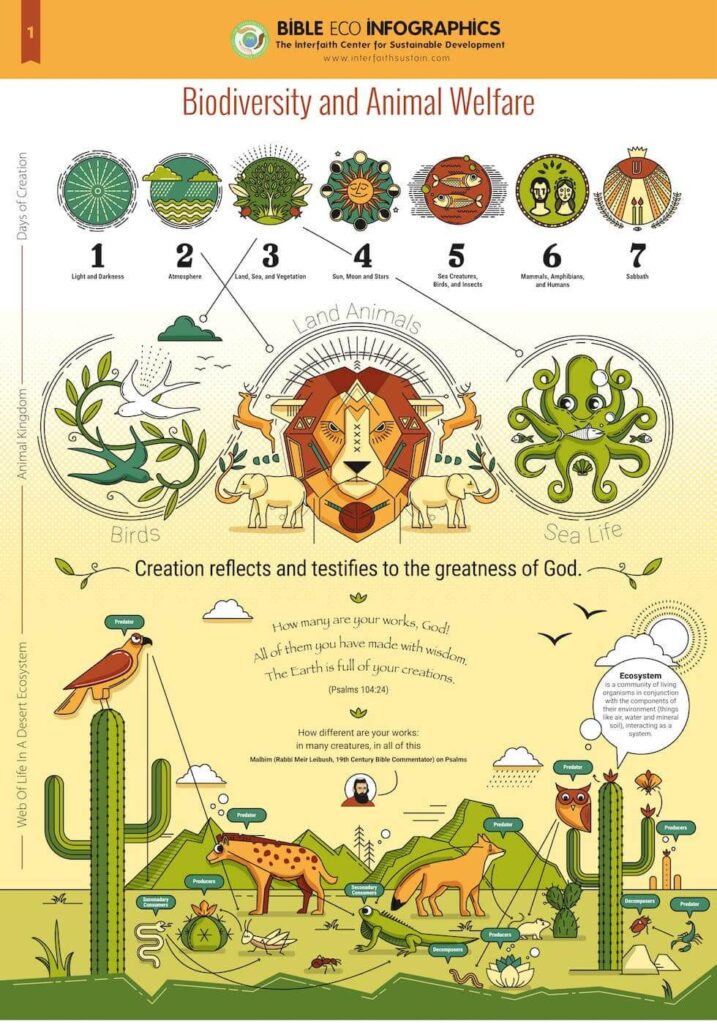](https://interfaithsustain.com/wp-content/uploads/2024/05/bible-eco-infographic-animal-welfare.jpg)
[DOWNLOAD](https://interfaithsustain.com/wp-content/uploads/2024/05/bible-eco-infographic-animal-welfare.jpg)
## Related Infographics
### **Species Protection and Conservation**
## Delve into the Biblical mandate for preserving the richness of nature with our ‘Species Protection & Conservation’ infographic. It beautifully showcases the crucial roles of various species and the importance of conservation efforts.
[Read More](https://interfaithsustain.com/species-protection-conservation/)
### **Relating to Animals**
## Discover the profound relationship between humans and animals as presented in Biblical narratives with our ‘Relating to Animals’ infographic. It serves as an enlightening tool to foster empathy and responsible coexistence with our fellow living beings. An instrumental piece for educating on the theological foundation of animal ethics.
[Read More](https://interfaithsustain.com/relating-to-animals-eco-infographic/)
### **Plant-based Lifestyle**
## Embrace a compassionate and sustainable mode of living through our ‘A Vegan Lifestyle’ infographic, which is anchored in Biblical texts. This informative piece vividly promotes the health and environmental benefits of a plant-based diet, aligning daily choices with spiritual values for a harmonious existence.
[Read More](https://interfaithsustain.com/plant-based-lifestyle/)
### Trees in Jewish Wisdom
## Root yourself in the ancient knowledge with our ‘Relating to Trees in Jewish Wisdom’ infographic. It sheds light on the sacred significance of trees, reflecting on their role as a metaphor for life and teaching in Jewish thought. An enlightening resource that encourages ecological awareness and reverence for the natural world.
[Read More](https://interfaithsustain.com/trees-in-jewish-wisdom/)
### Trees and Forests
## Combine faith with reason using our ‘A Scientific Perspective on Trees and Forests’ infographic. This visual representation bridges Biblical insights with contemporary scientific understanding, underscoring the critical function of forests in ecological balance and the imperative to preserve these life-sustaining systems.
[Read More](https://interfaithsustain.com/trees-and-forests/)
---
### [Global Religious Leaders Call on Russian Orthodox Patriarch Kirill to Promote Peace](https://interfaithsustain.com/religious-leaders-call-on-patriarch-kirill-to-promote-peace/)
**Published:** March 8, 2022
**Author:** ICSD
**Content:**
*For Immediate Release, March 8, 2022*
Over 150 prominent world religious leaders and clergy have signed a letter to Patriarch Kirill of the Russian Orthodox Church, calling on him to speak with Russian President Vladimir Putin about taking immediate steps to de-escalate the conflict taking place in Ukraine, and seek a peaceful resolution.
The letter, translated into Russian, was sent to Patriarch Kirill and Metropolitan Hilarion on March 6. Signatories include His Holiness the Dalai Lama, Latin Patriarch of Jerusalem Archbishop Pierbattista Pizzaballa, Cardinal Christoph Schönborn, Swami Rameshwarananda Giri, Venerable Dharmakosajarn, and Rabbi David Rosen.
The religious leaders, representing many faith traditions worldwide, expressed their deep concern with the war and affirmed the key role religious leaders play in promoting peace between Russia and Ukraine. This letter encourages Patriarch Kirill to use his position as head of the Russian Orthodox Church for peacemaking. “In this moment, religious leaders are called to rise to the occasion on behalf of God, people, and all creatures,” the letter stated.
The signatories noted the current conflict has quickly resulted in significant loss of lives, of soldiers in both nation’s militaries and Ukrainian civilians. The conflict also poses a much wider risk of destruction beyond Ukraine, including the very real threat of a nuclear power plant accident and a larger conflict between nuclear armed powers.
About 59 million people in Russia, or [41% of the population](https://en.wikipedia.org/wiki/Religion_in_Russia#Demographics), affiliate with the Russian Orthodox Church, by far the largest religious denomination in Russia, which has grown significantly since the breakup of the Soviet Union. Another 40% of the Russian population affiliate with a different Christian denomination or religion, or identify as “believers.” The interfaith letter was co-organized by The Interfaith Center for Sustainable Development, The Elijah Interfaith Institute, and the Swedish Theological Institute in Jerusalem.
---
### [Religious leaders in Israel affirmed this morning "Jerusalem Climate Declaration"](https://interfaithsustain.com/jerusalem-climate-declaration/)
**Published:** November 7, 2022
**Author:** ICSD
**Content:**
# Religious leaders in Israel affirm “Jerusalem Climate Declaration”
At an event held this morning in Jerusalem ahead of the UN Climate Conference COP27 that will be held starting next week in Sharm el-Sheikh, religious leaders gathered who called to support joint action on climate change.
This morning, Thursday, November 3, the Department of World Religions of the Ministry of Foreign Affairs, in collaboration with the Interfaith Center for Sustainable Development, held a first-of-its-kind interfaith conference on the role of religious leadership in dealing with climate change.
The purpose of the conference is to encourage and empower religious communities in Israel and around the world to curb human-caused climate change, and to promote the use of renewable energy.
At the event, the religious leaders signed the “Jerusalem Climate Declaration” in which the signatories declared to act urgently in order to mitigate climate change.
The event took place two days before the opening of the COP 27 climate conference of the United Nations, which will take place between November 6 and 18, 2022, in the Sinai Peninsula, in Sharm el-Sheikh, Egypt. In the coming days a series of events are planned for religious leaders from all over the world in different countries, uniting faith communities to act together for the sake of the planet.
Among the signatories of the Declaration: Vatican Ambassador to Israel and Cyprus Archbishop Adolfo Tito Yllana; Rabbi Yuval Cherlow, Head of the Yeshiva Amit Orot Shaul in Tel Aviv; David Freeman, Baha’i Jerusalem representative; Beit Hillel Rabbinic Organization; Druze Imam Jaber Mansour; representative of the Patriarchate Greek Orthodox Archimandrite Matheos Siopsis; representative of the Armenian Patriarchate Reverend Gadasarian, representative of the Custody Alberto Pyle; Father Bishou Zaki of the Coptic Church; and [Rabbi Yonatan Neril](https://interfaithsustain.com/yonatan-neril/), founder and director of the Interfaith Center for Sustainable Development, and more.
The Ambassador of the Vatican in Israel, H.E. Archbishop Adolfo Tito Yllana emphasized the importance of the interfaith gathering and the joint work of all religious leaders in Israel and in the world for climate action. He said, “We need a new culture of oneness, that understands that the earth is part of us and we are part of the earth. We are interconnected.”
Tania Berg-Rafaeli, director of the Department of World Religions at the Ministry of Foreign Affairs, said, “The State of Israel and the government ministries, including our ministry, consider the engagement with the climate issue to be of utmost importance and will work to continue this type of cooperation between civil, social and religious parties for this common and critical goal.”
Rabbi Yonatan Neril, founder and director of the Interfaith Center for Sustainable Development, said, “the climate crisis is a spiritual crisis and therefore we need the world’s religious leaders to address the problem. We will do everything to unite as many religious leaders as possible in the world to act on the climate issue.”
For inquiries, contact Tal Marom Spokesperson for The Interfaith Center for Sustainable Development (ICSD) tal@marompr.co.il +972537769609.

---
### [Health Resources](https://interfaithsustain.com/health-resources/)
**Published:** January 10, 2019
**Author:** ICSD
**Content:**

## January Eco Hero
Meet Gabriela Cohen from Brooklyn, New York. A senior at the University at Albany, she is earning her degree in Sustainability Science and Policy.
Gabriela makes green living part of her daily life. She creates easy, all-natural products that are healthy for both humans *and* the Earth because:
“We are a part of this world and everything that completes it. If we don’t respect where we are from then we have nothing.”
**Gabriela’s Natural Teeth Whitener:**
- 4 Tablespoons organic turmeric powder
- 2 ½ Tablespoons organic coconut oil
- 2 Tablespoons baking soda
Directions: Add turmeric and baking soda into bowl and mix. Add coconut oil and mix until thick paste consistency forms. Recommended to be used once in the morning and once at night.
**Gabriela’s Natural Shampoo & Body Wash:**
- 2/3 cup Castile Soap
- Two Teaspoons almond or olive oil
- 10-15 drops of essential oil (preferred scent)
- ½ cup of coconut milk
Directions: Mix all the ingredients in a bottle. Shake bottle before use each time.
## Better Biking
**What you’re doing now:**
Spending tons of money on gas bills or bus fare, sitting all day long… You might need a change.
**New ideas:**
Use a bike share! Many cities – all over the world! – offer programs to invest in cleaner air and fitter you.
Not a cyclist? Try car sharing.
If you’re a gym rat, head to a gym where bikes are an awesome eco-choice:
- [Eco Gym](https://imaginarium.i-square.us/eco-gym/) in NY has 17 cycles, 2 recumbent bikes, and 2 ellipticals which turn human energy into electricity through micro-inverter technology.
- Ask YOUR local gym to invest in this tech!
Stay tuned for eco-friendly and sustainably produced workout gear – when you’re biking, it’s *Look Good Do Good!*

## **Veg Out!**
**What you’re doing now:**
If french fries are your vegetables, you CAN do better!
**New ideas:**
Eating veggies is better for the environment *and* you. A veggie- and legume-filled diet can combat climate change! [Climate Lab](https://www.youtube.com/watch?time_continue=1&v=nUnJQWO4YJY) videos show how.
Veggies are great for your health. Harvard Medical School explains [HERE](https://www.health.harvard.edu/staying-healthy/becoming-a-vegetarian) about vegan and vegetarian diets – data on cancer, iron, diabetes, vitamin B12 and more.
Need some #[MeatlessMonday](https://www.meatlessmonday.com/favorite-recipes/) recipes? Check these delicious [Bon Appetit](https://www.bonappetit.com/recipes/vegetarian/slideshow/easy-vegetarian-dinner-recipes) ones to start! We love the [Roasted Cauliflower with Harissa Chickpea Curry!](https://www.bonappetit.com/recipe/vadouvan-roasted-cauliflower-harissa-chickpea-curry)
Tune in next month to learn about companies with delicious vegan options!
## Pass on Plastics**
**What you’re doing now:**
[Pla-stistics are terrifying](https://www.earthday.org/2018/03/29/fact-sheet-single-use-plastics/): Yearly, 32% of 78 million tons of plastic flows into oceans – the equivalent of pouring 1 garbage truck of plastic into the ocean per minute.
**New ideas:**
Prevent having more plastic than fish in oceans by 2050:
- Stop using single-use plastics!
- Invest in glass jars and containers. A reusable silicone lid keeps homemade, nutritional food hot OR cold.
- Plastic take-away boxes let chemicals like polycarbonate seep into your food – and into you.
- Swap plastic forks and straws for bamboo or stainless steel varieties.
Watch cool [VOX ](https://www.youtube.com/watch?time_continue=317&v=5qx2WFpNTPs)and [Tech Insider](https://www.youtube.com/watch?v=pdTBG929mgs) videos about single-use plastics. This [graphic video](https://www.youtube.com/watch?v=4wH878t78bw), not for the faint of heart, shows why plastic is painful.
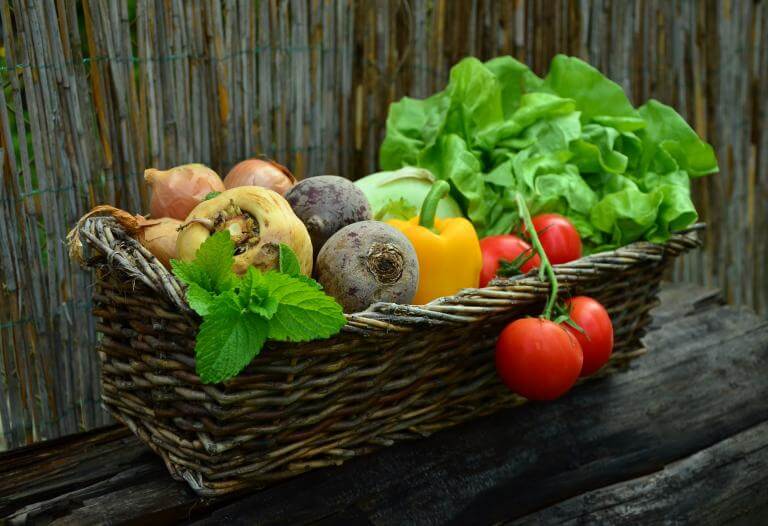

---
### [Global Impact Resources](https://interfaithsustain.com/global-impact-resources/)
**Published:** January 10, 2019
**Author:** ICSD
**Content:**

## Give a Gift
Looking for a birthday, wedding or holiday present which **also** helps the world? Buy a sustainable resource for populations of a developing country!
For example, invest in ICSD’s [Faith Inspired Renewable Energy](https://interfaithsustain.com/faith-inspired-renewable-energy-project-in-africa/) project which facilitates the development of solar and wind farms on faith-based lands. This brings renewable electricity to Africans, curbs climate change, and enables people to live sustainably. Your support decreases energy poverty and initiates economic development!
Want something more personal? Book an eco tour for a loved one! Start with an [eco tour in the Holy Land](https://www.ecoisraeltours.com/) which will feed your faith and mind!
## Volunteer with People
Give back in a hands-on way! Do thorough research before you pay for an experience – make sure that an organization is honest, committed to sustainable development, and will put your skills to best use.
For example, if you have a business background, join [TechnoServe](https://www.technoserve.org/). They work in many developing countries to build sustainable industries. They identify markets, develop capacity, create market connections, and promote better policy. It’s a great way to help locals succeed! There are appropriate ways to share the results of your volunteering. Watch [RADI-AID](https://www.radiaid.com/social-media-guide/)’s video to learn how to publicize your travels with dignity.
## Meet with Micro-Financing
Care about financial sustainability? Invest in micro financing with [Small Enterprise Foundation](https://www.sef.co.za/) (SEF), rated a standout charity by [GiveWell](https://www.givewell.org/), or [Kiva](https://www.kiva.org/).
## How does it work?
With SEF, women are given enterprise micro credit. They join as a group, are assessed, and are then able to apply for loans. The loans support activities which give South African village women entrepreneurial growth. With Kiva, support clean energy, water and sanitation, and more. Borrowers apply for a loan and approval process; people can then lend money to the cause in a crowdfunding process.
## **Buy Fair Trade**
[Fair Trade](https://www.fairtrade.net/) is a partnership based on transparency and respect that seeks greater equity in international trade. It leads to sustainable development through better trading conditions and ensuring the rights of marginalized producers and workers – especially in developing countries.
When a product carries the FAIRTRADE mark, it means the producers and traders have met the [Fairtrade Standards](https://www.fairtrade.net/standards.html) designed to address imbalanced trading powers, unstable markets, and other injustices in trade.
Common items include coffee, cocoa, tea, cotton and fruit. [Food&Wine](https://www.foodandwine.com/slideshows/top-fair-trade-products#2) has a great list, and [HERE](https://www.thegoodtrade.com/features/online-ethical-marketplaces) are 12 stores for sustainable, fair trade items.
---
### [Faith Resources](https://interfaithsustain.com/faith-resources/)
**Published:** January 8, 2019
**Author:** ICSD
**Content:**
## **FAITH IN COMMUNITY**
**Your status now:**
Do you need to renovate your house of faith?
**New ideas:**
You CAN improve the green status of your faith institution. By working with your clergy, an organization like [**Jewish Eco Seminars**](https://www.jewishecoseminars.com/about-the-organization/) (global) or **[Faith in Place ](https://www.faithinplace.org/)**(USA), or your city council, you can design initiatives for clean air, sustainable food or more by:
- Planting a communal garden
- Signing up for an energy audit
- Investing in solar panels
- Reducing your waste.
## **LEARN FROM TEXT**
**Your status now:**
You read scripture but don’t understand its ecology perspectives.
**New ideas:**
Every faith has scripture or stories on environmental awareness and protection. Ask your faith leader to provide texts to help you learn how and why to protect God’s gift.
ICSD has compiled a collection of [articles](https://interfaithsustain.com/religion-and-ecology-articles/#) and [videos](https://interfaithsustain.com/all-faith-ecology-videos/) which explain how different religions sees environmentalism. Read other articles [HERE](https://interfaithpowerandlight.org/resources/).


## **FOOD AND FAITH**
**Your status now:**
Everybody eats, so let’s create sustainable food practices in our houses of faith!
**New ideas:**
Pair food with values of justice and compassion:
- Organize an organic or fair trade bake sale at your faith institution.
- Donate leftovers to a homeless shelter or food kitchen – but check local policy first!
- Beth Tzedec Congregation supported a Syrian refugee family in Toronto and published a [book of their recipes](https://www.beth-tzedec.org/page/beth-tzedec-calendar/a/display/s/1/item/hold-from-newcomers-to-new-canadians-our-syrian-family-one-year-later).
## **ENGAGE IN ACTION**
**Your status now:**
You attend services… but you KNOW your faith institute can do better for earth.
**New ideas:**
Convince your faith leader to introduce an idea from *another* section of our resources! We have many tips to help your house of faith go greener.
We suggest beginning with **Global Impact**. As a congregation, you can donate to a wonderful sustainable cause to help humans, animals, or ecosystems.


Love these ideas? Need MORE resources?
[Make a donation today](https://interfaithsustain.com/donate/) to continue getting great content in the future!
---
### [Travel Resources](https://interfaithsustain.com/travel-resources/)
**Published:** January 8, 2019
**Author:** ICSD
**Content:**
## **More Pleasing Picnics**
**What you’re doing now:**
When you can’t travel far, you throw a garbage-filled picnic instead…
**New ideas:**
Throw a sustainable stay-cation picnic! Bring:
- cutlery from home instead of plastics.
- water – cold or hot – in thermoses.
- food in glass containers that won’t fly away in the wind like plastic plates will.
- cloth napkins.
- a garbage bag to collect any waste you do produce!
Where to go? Check out your city’s guide to conservation spaces and parks. Many city websites have maps of hiking trails, kayak rentals, or nature museums or conservation centers.
## **Book a Better Flight**
**What you’re doing now:**
Planning to fly? Consider how your plane affects the environment.
**New ideas:**
Book with an airline which has a carbon offsetting program. It’s a way to neutralize your portion of carbon emissions. Over 30 [IATA](https://www.iata.org/whatwedo/environment/Pages/carbon-offset.aspx) airlines have an offset program, like:
- Air Canada who donates to environmental conservation.
- British Airways who invests in waste management.
- [HERE ](https://www.conserve-energy-future.com/airlines-that-offer-carbon-offset-programs.php)is a list of 9 other airlines to use!
Book a direct flight – it produces less carbon emissions than frequent take offs and landings.


## **Don’t Throw in the Towel**
**What you’re doing now:**
After each hotel shower, you get a new one from staff. Clean – but not eco-conscious.
**New ideas:**
Hang up your towel on a bathroom rack so staff know you want to reuse it. You don’t wash towels daily at home, so why do it on travels?
You can also bring a water-wicking towel. Instead of hotels washing many towels, you only wash 1 at the end of your travels! Find travel or microfiber options [HERE](https://thewirecutter.com/reviews/best-packable-camp-towels/).
## **Greater-Cause Gifts**
**What you’re doing now:**
How do you buy presents for loved ones? Skip tourist knick-knacks for local craftsmanship.
**New ideas:**
Seek out options for local crafts:
- Buy from indigenous artisans and local producers. This benefits the community and is more meaningful than factory-line items.
- Ask a local what they recommend. It gives you options and the chance to connect with the community.

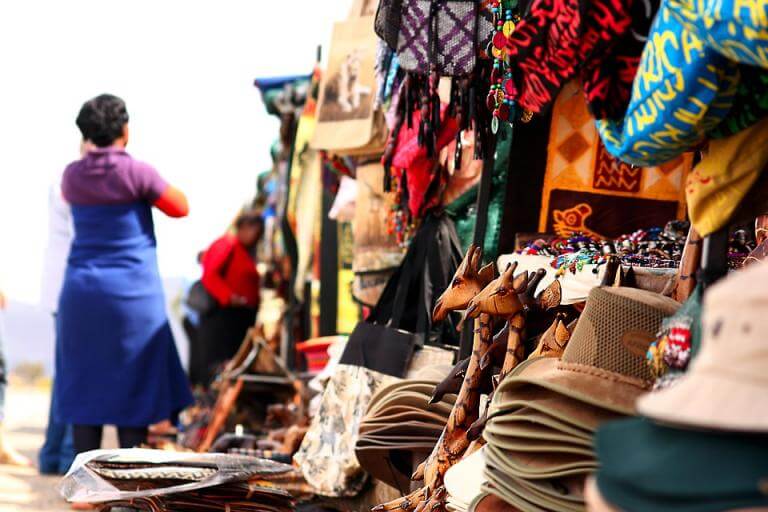
---
### [Home Resources](https://interfaithsustain.com/clean-home-resources/)
**Published:** August 2, 2018
**Author:** ICSD
**Content:**

######
## **Little Laundry Changes**
**What you have now:** Laundry practices that use up a LOT of energy.
**New ideas:** To save money *and* the environment, take these steps:
Put 1 large load of laundry instead of many small loads into the machine.
- Wash your clothes with **cold water!** Three quarters of the emissions from washing machines come from heating.
- Air dry on a **rack or line**.
- **Avoid dryer sheets!** They cannot be recycled *and* they leave chemicals in your clothing.
- Make your own dryer sheets with a natural recipe **[HERE](https://www.naturallivingideas.com/diy-natural-dryer-sheets/)**.
Ready to upgrade your washing machine? Click **[HERE](https://www.expertise.com/)** for lists of green appliances.
## **Create Cleaner Closets**
**What you have now:** Lots of stuff and nowhere to put it.
**New ideas:** Closets can have a healthier impact on our world:
- **Buy second hand!** You can find furniture, clothing, and decor in a consignment store, local flea market, or website like **[craigslist](https://www.craigslist.org/)**.
- Changing a closet’s color? Use zero or **low-VOC paints** and stains on furniture! Volatile organic compounds (VOCS) add chemicals to our indoor air and outdoor landfills. Use **[this guide](https://learn.eartheasy.com/guides/non-toxic-paints/)** for info!
For a special event, try **[Rent the Runway](https://www.renttherunway.com)**. Instead of buying a one-time-wear designer dress, you pay less and then return it! If we can rent cars, why not clothing?


## **Clean Your Kitchen**
**What you have now:** A kitchen filled with plastic cutlery, plastic containers, and plastic cups… Not such a clean practice.
**New ideas:** Each year, Americans throw out enough plastic and paper kitchen-ware to circle the equator 300 times. Change this when you:
- Invest in bamboo cutlery, glass jars, cloth napkins, and ceramic plates. An **initial investment** will save you money in the long run!
- Using plastic baggies for sandwiches? Try these **[beeswax-coated food wraps](https://www.beeswrap.com/)** instead – classy and reusable!
- Stainless **steel or wood** spatulas, whisks and ladles won’t leach toxins into your dinner.
## **Better Bathrooms**
**What you have now:** A leaking shower or stalling toilet.
**New ideas:** Turn your bathroom into a spa-like haven when you purchase:
- **Low-flow showerheads**. They mix air into the water stream to create pressure without water waste. Make sure yours is 2.5 gpm (gallons per minute).
- **Low-flow faucets.** They can reduce your water heating and energy consumption by 50%. They should be 2.75 gpm or lower.
- **Dual-flush toilets.** If you haven’t created a lot of waste, flush with less water.
Watch a video about [**Altered taps**](https://www.youtube.com/watch?v=AWRxhbKWvZk); it’s cool tech!


---
### [Jerusalem Eco Fair](https://interfaithsustain.com/jerusalem-eco-fair/)
**Published:** September 16, 2016
**Author:** ICSD
**Content:**
## About the Eco Fair:
- Local vendors showcase sustainable sourced & produced food, produce, products as well as initiatives in Jerusalem and beyond
- Jerusalem residents have the opportunity to buy eco products and learn about eco initiatives, from both the Jewish and Arab sectors.
- Provides myriad examples of some of the greatest efforts towards creating real, systemic ecological change.
This event was held in partnership with the Earth Day Network.
## For Donors & Supporters:
If you are interested in funding future Eco Fairs, please contact Yonatan Neril [via Email](mailto:yneril@interfaithsustain.com). The work we do would not be possible without our supporters. Thank you!
---
### [Leaves as Religious Ecological Symbols](https://interfaithsustain.com/leaves-religious-ecological-symbols/)
**Published:** February 26, 2024
**Author:** ICSD
**Content:**
Table of Contents
1. [Pomegranate tree in Judaism, Zoroastrianism, Christianity, Sikhism and Islam](#aioseo-pomegranate-tree-in-judaism-zoroastrianism-christianity-sikhism-and-islam)
2. [The Oak tree in Judaism & Christianity](#aioseo-the-oak-tree-in-judaism-christianity)
3. [The Atlantic Pistachio tree in Islam](#aioseo-the-atlantic-pistachio-tree-in-islam)
4. [The Ginkgo tree in Buddhism and China](#aioseo-the-ginkgo-tree-in-buddhism-and-china)
5. [The Baobab tree in African Indigenous traditions](#aioseo-the-baobab-tree-in-african-indigenous-traditions)
6. [The Cedar tree in Judaism, Christianity and Islam](#aioseo-the-cedar-tree-in-judaism-christianity-and-islam)
7. [The Eucalyptus tree indigenous to the First nations of Australia](#aioseo-the-eucalyptus-tree-indigenous-to-the-first-nations-of-australia)
8. [The Bodhi tree in Buddhism, Hinduism and Sikhism](#aioseo-the-bodhi-tree-in-buddhism-hinduism-and-sikhism)
At the [first Faith Pavilion at COP28](https://interfaithsustain.com/cop28-un-climate-conference/) held in Dubai, UAE, the organizers sought an inclusive way to symbolize the faith and indigenous traditions represented in the pavilion.
The concept of trees plays a significant role in all the traditions. Trees are often present in sacred text or stories as a ‘tree of life’ associated with birth, the source of spirituality, redemption or rebirth. (<https://www.ecomatcher.com/>)
Like faith and indigenous traditions, trees, when planted and nurtured in their natural habitat, play a unique role in sustaining the environment and planetary life. They remove carbon dioxide from the atmosphere and return to it oxygen, assist with conserving water, preserving soil, and supporting both human and wildlife.
In the writings of Bahá’u’lláh, the Prophet and founder of the Bahá’í Faith, and in the explanations of his son ‘Abdu’l-Bahá, there are many hundreds of references to trees, mostly in a symbolic or metaphorical context. The founder of the Sikh religion, the great Baba Guru Nanak has described the tree as a savior of creation with the words, “O God, you are an infinite tree and I am a bird under thine protection.” ([https://www.tribuneindia.com](https://www.tribuneindia.com/2006/20060820/spectrum/main3.htm#:~:text=The%20trees%20that%20have%20sanctity,%2C%20Amb%20(Mangifera%20indica)%2C)) The great Gurus and prophets used to preach while traveling to remote corners of the country and used to camp under groves of trees for shelter. These have become sacred and shrines have been created at these important sites.
In faith traditions, trees are not merely symbolic, but many practices and prohibitions are associated with them.
In Islam tree-planting is seen as a form of charity because the tree produces products enjoyed by both people and animals. A saying of Prophet Mohammed that reportedly dates back 14 centuries states that, “If a Muslim plants a tree or sows seeds, and then a bird, or a person or an animal eats from it, it is regarded as a charitable gift for him.” (<https://aboutislam.net/shariah/hadith/hadith-collections/10-green-hadiths/>)
Both Buddhism and Hinduism understand trees to be givers of knowledge and enlightenment. Trees are so revered in Hinduism for the nourishment and protection they give to living beings, that the sacred text, the Rig Veda, prohibits one from cutting them down. (<https://www.ecomatcher.com/>)
Thus, there is no better symbol to express the critical work of the faith and indigenous communities in climate change, than that of trees that are associated with their traditions.
## Pomegranate tree in Judaism, Zoroastrianism, Christianity, Sikhism and Islam

The symbolism of the pomegranate, especially its abundance of seeds, is found in faith traditions across the world.
In Zoroastrianism the pomegranate is symbolic of the soul’s immortality and perfection. The fruit is used in many of the rituals and ceremonies of Zoroastrianism. Due to the abundance of seeds in the fruit, pomegranates are used in marriage ceremonies amongst others.
Interestingly, in some of the Abrahamic traditions, the pomegranate tree that was the ‘Forbidden Fruit’ in the Garden of Eden that made Adam and Eve fall from innocence.
In Judaism the Hebrew Bible frequently refers to pomegranates in reference to fruitfulness, blessing, and prosperity ([Numbers 13:23](https://www.bibleref.com/Numbers/13/Numbers-13-23.html);[ Deuteronomy 8:8](https://www.bibleref.com/Deuteronomy/8/Deuteronomy-8-8.html)).
The Armenian Christian association with the pomegranate is equally strong. Considered the national symbol of Armenia, the Armenian community of the Holy Land is no exception when it comes to cultural connections to the fruit, which is also identified as the symbol of marriage and fertility.
Across the Christian world, the pomegranate is associated with the passion of Christ. The act of opening up the rough peel and harvesting the sweet seeds has been referred to as a metaphor of the Passion of Christ, wherein the act of suffering reveals an abundant treasure from within.
For Muslims, the Koran describes the heavenly paradise as having four gardens with shade, springs, and fruits – including the pomegranate. Legend holds that each pomegranate contains one seed that has come down from paradise. Pomegranates have also had a special role as a fertility symbol in weddings among the Bedouins of the Middle East.
In Sikhism, the pomegranate tree and its fruits are symbolic of spiritual transformation and inner growth. In different contexts in the Sri Guru Granth Sahib, it is often associated with plenitude and prosperity with the numerous seeds being metaphors for fertility and wealth.
Sources:
<https://www.gotquestions.org/pomegranates-in-the-Bible.html>
<https://www.oneforisrael.org/bible-based-teaching-from-israel/bursting-with-fruitfulness/>
<https://bethlehemhandicrafts.com/blogs/news/96-pomegranates-religious-and-cultural-significance-in-the-holy-land-and-more>
[https://kashifsofa.com/journal/the-pomegranate-as-a-symbol/](https://kashifsofa.com/journal/the-pomegranate-as-a-symbol/#:~:text=The%20fruit%20was%20used%20as,perfection%20of%20nature%20for%20Zoroastrians)
[https://thursd.com/articles/flowers-of-the-guru-granth-sahib](https://thursd.com/articles/flowers-of-the-guru-granth-sahib#:~:text=In%20Sikhism%2C%20the%20banyan%20tree,Lodhi%2C%20where%20he%20received%20enlightenment).
## The Oak tree in Judaism & Christianity

The oak is indigenous to the land of Israel. In Hebrew the name for oak is אַלּוֹן (alon), meaning strong. It is able to endure the challenging weather conditions of the land. The oak has deep roots which become a symbol of both God and the people’s loyalty and endurance.
Significantly in Genesis 15, God enters into the covenant with Abraham at Mamre, the place where Abraham had pitched his tent beneath an oak tree (Gen 13:18). This site, believed to be associated with Hebron today, is a place of pilgrimage for both Jews and Christians.
The oak is also able to regenerate. When cut down to a stump, new shoots soon sprout from it. The prophet Isaiah uses the oak to refer to the people of Israel who will be exiled by God, but then return and ‘sprout’ again to flourish in the land. Moreover, it is understood as a reference to the Messiah by both Jews and Christians.
Sources:
<https://www.truthunity.net/mbd/oak-tree>
<https://www.holylandsite.com/>
<https://www.jewishencyclopedia.com/articles/363-abraham-s-oak>
## The Atlantic Pistachio tree in Islam

Pistachio is frequently associated with the ability to both give and receive. Ideally, giving and receiving should be in harmony and balance.
In **Islam,** this tree is also known as the famous **Sahabi Tree**, Tree of Al Buqayawiyya ( شجرالمبارکہ) meaning the Blessed tree. It is a 1500-year-old tree located in [Safa](https://en.wikipedia.org/wiki/Safawi,_Jordan)[w](https://en.wikipedia.org/wiki/Safawi,_Jordan)[i, Jordan](https://en.wikipedia.org/wiki/Safawi,_Jordan). It is located on the old trade route between [Mecca](https://en.wikipedia.org/wiki/Mecca) and [Damascus](https://en.wikipedia.org/wiki/Damascus). Caravans used to travel by this route. It is believed that one such caravan was going to [Syria](https://en.wikipedia.org/wiki/Syria) from Mecca, when [Muhammad](https://en.wikipedia.org/wiki/Muhammad) sat down under its shadow at the age of 12. He was accompanying his uncle [Abu Talib](https://en.wikipedia.org/wiki/Abu_Talib). Under this tree, the monk [Bahira](https://en.wikipedia.org/wiki/Bahira) foretold about the prophethood of Muhammad.
The nut is gifted over Chinese New Year to symbolize prosperity and during the Diwali festival of light in Hinduism they are eaten to symbolize the triumph of light over darkness.
Sources:
[https://en.wikipedia.org/wiki/Sahabi\_Tree](https://en.wikipedia.org/wiki/Sahabi_Tree)
<https://treespiritwisdom.com/>
## The Ginkgo tree in Buddhism and China

The ability of this tree to survive both human and natural disasters makes it a symbol of resilience and strength. Some Ginkgo trees survive for thousands of years.
In Buddhism, Ginkgo leaves are often used as offerings on altars, representing hope and the power to overcome obstacles. As a symbol of permanence and perseverance, Ginkgo trees hold a significant spiritual meaning for those who connect with their timeless beauty and unique characteristics.
In Chinese culture, Ginkgo leaves are also believed to have spiritual cleansing properties and can be used in feng shui practices to clear negative energy and purify the home.
Sources:
<https://libraryexhibits.uvm.edu/omeka/exhibits/show/uvmtrees/ginkgo/introtoartlit>
<https://www.groovingtrees.com/ginkgo-tree-symbolism>
## The Baobab tree in African Indigenous traditions

Frequently referred to as the African ‘Tree of Life.’ It has become a symbol of resilience and endurance in both African art and folklore due to its ability to adapt to its environment.
The peoples of Senegal use the water stored in the giant trunk of the tree and use the medicinal properties of its fruit for healing. In Madagascar, spirits are said to live in the mighty trunk of the Baobab trees and their voices of wisdom echo through the branches. As a result many communal gatherings are centered around the trees in an attempt to harness their unique powers. The trunks of the Baobab are used in Tanzania for shelter for the living and the final resting places of the dead.
Source:
<https://taliaandnasya.com/blogs/roots-rhythms-exploring-african-heritage/the-significance-and-value-of-the-baobab-tree-in-african-culture-exploring-its-importance-across-the-continent>
## The Cedar tree in Judaism, Christianity and Islam

Cedars are named for their location in the mountains of Lebanon. The wealthy often used them in construction due to their beautiful red color, sweet aroma, and strength, which is why cedar trees are usually associated with prestige and power and endurance. For example, King Hiram of Tyre used cedar trees as the primary material in the construction of both King David’s and Solomon’s palaces ([2 Samuel 5:11](https://biblia.com/bible/esv/2%20Sam%205.11); [1 Kings 5:6–18](https://biblia.com/bible/esv/1%20Kings%205.6-18); [7:1–7](https://biblia.com/bible/esv/1%20Kings%207.1-7); [Ezra 3:7](https://biblia.com/bible/esv/Ezra%203.7)).
In Christianity, 2 Corinthians 12:9 teaches that while a cedar tree has great strength, God’s strength is greater, ensuring Christians can experience His strength even in the midst of human weaknesses.
In Islam, the end of the Koran records that the cedar is the tree that grows under the throne of Allah. It connects the Earth to the seventh heaven.
Source:
<https://steppesoffaith-56895.medium.com/the-symbolic-meanings-of-7-trees-in-the-bible-64adcd4b2e5>
## The Eucalyptus tree indigenous to the First nations of Australia

The eucalyptus is a holy tree for some Indigenous Australians. For them it represents the division of the Underworld, Earth and Heaven.
This is because it is ‘reborn’ from the ashes after a fire. The Indigenous people of Australia make good use of the eucalyptus tree, using its wood to craft bark canoes, bowls, musical instruments and weapons. The bark is used as roofing.
The leaves from some species are soaked in water to produce a medicinal tea. The leaves are also used as bedding. Some of the other leaves are very sharp and are used for cutting meat.
There are many different plants used in smoking ceremonies and for medicine. The type of leaf used for smoking varies by region and availability, but can include peppermint, cauliflower bush, eucalyptus and sandalwood. Smoking ceremonies are used for burial, celebration, healing and ‘clearance’ (cleansing), and are also a gesture of goodwill, bringing people together. People perform the ceremony for others as a gift and a blessing. The smoking ceremonies enable communities to connect with ‘country’ by speaking to, and acknowledging the ancestors or ‘Old People’.
Sources:
<https://wwf.org.au/blogs/treetment-5-culturally-significant-trees-used-in-aboriginal-and-torres/>
<https://originsfestival.bordercrossings.org.uk/sites/default/files/2022-05/Eucalyptus.pdf>
## The Bodhi tree in Buddhism, Hinduism and Sikhism

Across the religions of the East, this tree is well known for its connection to a human being’s capacity to attain enlightenment.
In Buddhism, the Bodhi tree, also referred to as the Buddha tree, is a central Buddhist [symbol](https://study.com/learn/lesson/buddhist-symbols-significance.html). According to Buddhist traditions, the first human being achieved enlightenment, or achieved Buddha nature, under these trees. So important are these trees that they should not be cut down. The Buddha taught,
“A tree is a wonderful living organism which gives shelter, food, warmth and protection to all living things. It even gives shade to those who wield an axe to cut it down.” (<https://dharmanet.org/> )
In Hinduism, the Bodhi tree is known as the Banyan tree. One of the physical properties of this tree is that it not only propagates itself through its fig like fruit, but over time sends down aerial roots that become supportive trunks themselves. A Banyan tree can have over a thousand such trucks making it virtually immortal. Thus, it is identified with the Akshaya Vata, the Immortal Banyan, the only individual tree ever designated with a proper noun in Hindu scriptures. Although it is associated with many gods, it is often regarded as a form of the mighty Shiva. In the summer married women wrap the Banyan with string and worship it with food offerings in a ritual called the Vata Savitri Vrat. Through this ceremony they ask for the longevity of their husbands. In this context the tree is identified with the goddess Savitri, the one able to bring the dead back to life.
In Sikhism, the Bodhi tree symbolizes the interconnectedness of all beings and boundless divine wisdom.
The tree is also understood to symbolize detachment from the physical world and attachment to God. According to tradition, Guru Nanak Dev Ji, the founder of Sikhism, meditated under a banyan tree, like the Buddha, and achieved enlightenment.
Sources:
<https://study.com/academy/lesson/buddhist-symbols-meanings.html>
<https://study.com/learn/lesson/buddha-enlightened-one-origin-history.html>
[https://cpreecenvis.nic.in/Database/SacredTreesofPunjab\_3715.aspx](https://cpreecenvis.nic.in/Database/SacredTreesofPunjab_3715.aspx)
<https://www.sikhs.org/guru1.htm>
<https://dharmanet.org/>
---
### [Blog on Faith and Ecology](https://interfaithsustain.com/blog/)
**Published:** March 6, 2021
**Author:** ICSD
**Content:**
---
---
### [Video Collection](https://interfaithsustain.com/video-collection/)
**Published:** July 21, 2013
**Author:** ICSD
**Content:**
## World Religious Leaders Speak Out on Climate Change and Sustainability
- [ 
### Webinar - Faith, Finance and Food Systems
](#qAkD7L5xfQI "Webinar - Faith, Finance and Food Systems")
- [ 
### Rabbi Yonatan Neril: 6 billion religious community are the “sleeping giant of climate action”
](#uEuBRFe-zhI "Rabbi Yonatan Neril: 6 billion religious community are the “sleeping giant of climate action”")
- [ 
### Jerusalem religious leaders urge end to Ukraine war
](#HiWSuPC7gz8 "Jerusalem religious leaders urge end to Ukraine war")
- [ 
### PEACE with Penny SEASON 3: Penny S. Tee Interviews Rabbi Yonatan Neril, Founder & Exec. Dir of ICSD
](#rQBabiejPQs "PEACE with Penny SEASON 3: Penny S. Tee Interviews Rabbi Yonatan Neril, Founder & Exec. Dir of ICSD")
- [ 
### PD DAY with Yifat and JNF
](#-ooqTVOpJgw "PD DAY with Yifat and JNF")
- [ 
### A Jewish Approach to Climate Change – Rabbi Yonatan Neril
](#U7HehvNLTfs "A Jewish Approach to Climate Change – Rabbi Yonatan Neril")
[Load more](#)
---
### [Second Place Winner of the Catholic Seminarian Essay Contest on Renewable Energy](https://interfaithsustain.com/second-place-winner-of-the-catholic-seminarian-essay-contest-on-renewable-energy/)
**Published:** July 11, 2018
**Author:** ICSD
**Content:**
The essay contest was co-organized by The Interfaith Center for Sustainable Development and the Salesian Pontifical University- Jerusalem campus.
THE BASIS IN CATHOLIC TEACHINGS FOR
RENEWABLE ENERGY USE
By: Agoabin Javis Zinkeng
Saint Thomas Aquinas’ Major Seminary, Bambui, Cameroon
## INTRODUCTION
Pope John Paul II asserts that the care for the environment represents a challenge for all of humanity. It is a matter of a common and universal duty, of respecting a common good1 destined for all, by preventing anyone from using “with impunity the different categories of beings, whether living or inanimate simply as one wishes, according to one’s own economic needs.”2 Similarly, Pope Francis laments: the earth is now in crisis because of the harm we have inflicted on her by our irresponsible use and abuse of the goods with which God has endowed us. We have come to see ourselves as the earth’s lords and masters entitled to plunder her at will.3 Renewable energy4 refers to energy that is replaced naturally and can therefore be used without the risk of exhausting its supply. Examples of renewable energy sources include wind and solar power. This article sets out to give the basis in Catholic teaching of renewable energy use.
## 1. THE POLLUTION OF THE ATMOSPHERE
Pope Francis intimates that some forms of pollution are part of people’s daily experience. Exposure to atmospheric pollutants produces a broad spectrum of health hazards. People take ill from breathing high levels of smoke from fuels used in cooking and heating. He also states that pollution is caused by the various means of transport, industrial fumes, substances which contribute to the acidification of soil and water, fertilizers and insecticides.5 Given that energy sources, such as oil and coal, pollute the atmosphere, renewable energy is a better option in that it prevents pollution of the atmosphere.
Three years ago I was in a parish, for a Pastoral Year, called St. Martin de Porres Parish Bekora. This parish is situated in the Diocese of Kumba in Cameroon. There is a company located there called Pamol Plantation PLC, which produces palm oil for local consumption and some of it is exported abroad. Due to the constant heating in this company, this area is greatly polluted. As if this were not enough, there are constant power failures in this area. There are times that this area goes for two weeks without electricity. If renewable energy could be introduced in this area, it will greatly improve the standard of living of people living there.
## 2. CREATION AS A GIF
Pope John Paul II opines that not only has God given the earth to man who must use it with respect for the original good purpose for which it was given to him, but mankind, too, is God’s gift to man. He must therefore respect the natural order and moral structures with which he was endowed.6 Similarly, Pope Benedict XVI intimates that the environment is God’s gift to everyone, and in our use of it, we have a responsibility towards the poor and towards humanity as a whole. Our duties towards the environment are linked to our duties towards the human person, considered in himself and in relation to others.7 It follows that since the earth is God’s gift to man, man ought to take proper care of it and one of the ways to do this is through renewable energy use.
## 3. USE, DO NOT ABUSE
Woodenne Koenic maintains that man is invited to look anew at the book of Genesis, where the instructions for ethical behaviour towards the earth are woven into the very fabric of creation. God put human beings in charge of the earth to have dominion over animals and to cultivate and care for it. He asserts that, almost from the beginning, problems arose.8The underlying problem, Pope Benedict XVI posits, is that God’s original command to have dominion over the earth has been sorely corrupted. He states that as long as the earth was considered as God’s creation, the task of subduing it was never intended as an order to enslave it but rather as a task of being guardians of creation and developing its gifts, of actively collaborating in God’s work ourselves, in the evolution that he had in the world so that the gifts of creation might be appreciated rather than trampled upon and destroyed.9 Thus, with renewable energy use God’s creation is better maintained.
## 4. THE PRINCIPLE OF THE COMMON GOOD
The Pastoral Constitution of the Church in the Modern World, Gaudium et Spes, states that the common good is “the sum total of those conditions of social life which allow social groups and thier individual members relatively thorough and ready access to their own fulfilment.”10In 2007, in a speech in the courtyard of the Papal residence at Castel Gondolfo, Pope Benedict XVI urged that cooperation on everyone’s part be intensified in order to promote the common good, development and safeguarding of creation. At the same time, he said that in the last two decades, thanks to the exemplary collaboration between scientists, politicians and economists within the international community, important results have been obtained with positive repercussions on present and future generations.11 Hence, with the use of renewable energy the common good of society will be safeguarded.
## 5. FUTURE GENERATIONS
Pope Paul VI avers that we have inherited from past generations and we have benefited from the work of our contemporaries: for this reason we have obligations towards all, and we cannot refuse to interest ourselves in those who will come after us, to enlarge the human family.12 Similarly, Pope John Paul II states that programmes of economic development must carefully consider the need to respect the integrity and the cycles of nature because natural resources are limited and some are not renewable.13For Pope Francis, once we start to think about the kind of world we are leaving to future generations, we look at things differently; we realize that the world is a gift which we have freely received and must share with others.14Therefore, renewable energy use will enable man to guard scarce natural resources in order that future generations could also benefit from these precious gifts.
## 6. SOBRIETY AND TEMPERANCE
W. Koenic posits that lifestyle should be oriented according to the principles of sobriety, temperance and self-discipline, both at the personal and social levels. Furthermore, he states that people need to escape from the consumer mentality and promote methods of production that respect the created order, as well as safeguarding basic needs of all.15 In the same vein, Pope Benedict XVI asserts that “the lordship over nature of which the biblical narrative speaks does not mean a violent exploitation of nature but rather an understanding of nature’s inherent possibilities. This serves as a caution in the way in which we serve nature and nature serves us.”16 Again, for Pope Francis, the issue of environmental degradation challenges us to examine our lifestyle.17 It follows that if these principles are practiced, our common home will be well catered for.
## 7. THE ROLE OF COOPERATIVES
According to Pope Francis, in some places, cooperatives are being developed to exploit renewable sources of energy which ensure local self-sufficiency and even the sale of surplus energy. For him, this simple example shows that while the existing world order proves powerless to assume its responsibilities, local individuals and groups can make a real difference. They are able to instill a greater sense of responsibility, a strong sense of community, a readiness to protect others, a spirit of creativity and a deep love for the land.18 Thus for change to be experienced in the world it just needs one person or a few individuals to begin and it would have a multiplier effect. As the metaphysical principle goes, goodness diffuses itself. A few individuals just have to begin the use of renewable energy and it would spread to other areas, similar to the domino effect.
## 8. CREATION AND REDEMPTION ARE INSEPARABLE
Pope John Paul II makes this link clearly, when he states that in the Redeemer of the world, has been revealed in a new and more wonderful way the fundamental truth concerning creation to which the Book of Genesis gives witness when it repeats several times: “God saw that it was good.” The good has its source in Wisdom and Love. In Jesus Christ, the visible world which God created for man recovers again its original link with the divine source of Wisdom and Love. Indeed, “God so loved the world that he gave his only Son” (Jn 3:16). As this link was broken in the man Adam, so in the Man Christ it was reforged.19 For Pope Francis, the solution to all the problems facing our environment cannot be reworked in political and economic ideologies alone but ultimately, it is found in Jesus Christ and our relationship with Him, our neighbour and the created order, which is of the order of love.20 Hence renewable energy use has its basis first in the person of Jesus Christ.
## CONCLUSION
Our aim in this essay has been to present the teaching of the Catholic Church on renewable energy. Eight arguments were posited to defend the teaching of the Catholic Church on renewable energy. These included: the pollution of the atmosphere, examining creation as a gift from God, the appeal to use and not to abuse, the principle of the common good, care for future generations, the principle of sobriety and temperance, the role of cooperatives and the inseparable link that exists between Creation and Redemption. From our investigations, we have realized that our common home is in great danger and that man has the responsibility to act, to prevent it from getting worse than it is today. We observed that the best way to safeguard our common home from pollution and the other ills plaguing it, is by the use of renewable energy, whose cost could easily be paid for by both rich and poor countries. Nevertheless, in order that renewable energy sources be effectively used in the world, there is a great need for collaboration among developed and underdeveloped nations. This collaboration should be through agreements, backed by international law, to protect the environment.
1 Cfr. John PAUL ll, Encyclical Letter “On the Hundrendth Anniversary of Rerum Novarum,” Centesimus Annus (1st May 1991), Libreria Editrice Vaticana Vatican City, Italy 1991, n. 40.
2 John PAUL II, Encyclical Letter “On Social Concerns,” Sollicitudo Rei Socialis (30th December 1987) Libreria Editrice Vaticana Vatican City, Italy 1987, n. 34.
3 Cfr. Francis, Encyclical Letter “On Care for Our Common Home,” Laudato Si (24th May 2015), Libreria Editrice Vaticana Vatican City, Italy 2015, n. 2.
4 “Renewable energy” in Sally WEHMEIER (edit.), Oxford Advanced Learner’s Dictionary of Current English, 6th Edition, Oxford University Press New York, United States of America 2000, 993.
5Cfr. Francis, Encyclical Letter “On Care for Our Common Home,” Laudato Si (24thMay 2015), n. 20.
6 Cfr. John PAUL II, Encyclical Letter “On the Hundrendth Anniversary of Rerum Novarum,” Centesimus Annus (1st May 1991), n. 38.
7 Cfr. BENEDICT XVI, Encyclical Letter Charity in Truth, “Caritas in Veritate” (29th June 2009), Libreria Editrice Vaticana Vatican City, Italy 2009, nn. 48, 51.
8 Woodeene KOENIG, Ten Commandments for the Environment: Pope Benedict Speaks Out for Creation and Justice, Ave Maria Press Notre dame Indiana, United State of America 2009, 28.
9 Cfr. BENEDICT XVI, “Meeting with Priests, Deacons and Seminarians of the Diocese of Bolzano-Bressanone,” August 6th, 2008, http:// www.vatican.va/
holy father/benedict\_xvi/speeches/2008/august/ documents/hf\_ben-xvi\_spe\_20080860\_clero-bressanone\_en.html.
10 Austin FLANNERY (edit.), Second Vatican Ecumenical Council, Pastoral Constitution of the Church in the Modern World, Gaudium et Spes (7thDecember 1965), Rekha Printers Pvt. Ltd. New Delhi, Mumbai 1975, n. 26.
11Cfr. Benedict XVI, “Angelus Address,” Papal Summer Residence, Castel Gondolfo, September 16th ,2007,
http://www.vatican.va/ holy father/benedict\_xvi/angelus/ 2007/documents/hf \_ben-xvi\_ang\_20070916\_en.html.
12 Cfr. PAUL VI, Encyclical Letter “On the Development of Peoples” Populorum Progressio (26th March 1967) Libreria Editrice Vaticana Vatican City, Italy 1967, n. 17.
13Cfr. John PAUL II, Encyclical Letter on Social Concerns, Sollicitudo Rei Socialis (30thDecember 1987) n. 26.
14Cfr. Francis, Encyclical Letter “On Care for Our Common Home,” Laudato Si (24thMay 2015), n. 159.
15 Cfr. Woodeene KOENIG, Ten Commandments for the Environment: Pope Benedict Speaks Out for Creation and Justice, 125.
16BENEDICT XVI, Values in a Time of Upheaval, Ignatius Press, San Francisco 2006, 159.
17Cfr. Francis, Encyclical Letter “On Care for Our Common Home,” Laudato Si (24thMay 2015), n. 206.
18Cfr. Francis, Encyclical Letter “On Care for Our Common Home,” Laudato Si (24thMay 2015), n. 179.
19 Cfr. John PAUL II Encyclical Letter “On the Redeemer of Man,” Redemptor Hominis, (4th March 1979), Libreria Editrice Vaticana Vatican City, Italy 1979, n. 8.
20Cfr. Francis, Encyclical Letter “On Care for Our Common Home,” Laudato Si (24thMay 2015), n. 77.
---
### [Winner of the Catholic Seminarian Essay Contest on Renewable Energy](https://interfaithsustain.com/winner-of-the-catholic-seminarian-essay-contest-on-renewable-energy/)
**Published:** July 8, 2018
**Author:** ICSD
**Content:**

The Potentials Of Renewable Energy For Sustainable Development: A Reflection On The Basis Of Church’s Energy Ethics
This essay was awarded first place in the Catholic Seminarian Essay Contest on Renewable Energy contest in 2018, which was co-organized by The Interfaith Center for Sustainable Development and the Salesian Pontifical University- Jerusalem campus.
By Umeh Benneth Chidiebere
Saints Peter And Paul Major Seminary, Bodija Ibadan, Nigeria
While I was growing up in Kaduna, northern Nigerian, electricity was a luxury. Only a few could afford generators and have their houses powered. I lived in a public compound, and only a few of my neighbours could afford a generator, but my family could not. Aside from our inability to power our house, the experience of having to live in the same little compound with those who could was both ridiculous and unjust. The generator sets produce fumes, known as carbon monoxide, which makes the environment very uncomfortable and the air unbreathable and unhealthy for those who are exposed to them. The sets are also known for the loud grating sound they produce. But, each time my neighbours switched on their generator sets, they locked up their doors and windows. The electric fans or air conditioning in the house were on full blast and the shut doors and windows kept both noise and noxious gases out. Meanwhile, just a few feet ahead was my house. We had to keep our doors and windows open to have our apartment ventilated. Inadvertently, the fumes the generators released found space in our apartment. And due to the noise of the generators, we could not communicate without having to scream. But, I, or any other, dared not complain. Anyone who did this would be labeled ‘jealous and unhappy’.
So, while they ‘enjoyed’ electricity, we suffered the dire consequences of the fossil fuels they burned. This is not an experience particular to me or my family; it was also the experience of others living in the same compound, in other compounds, and indeed the length and breadth of Nigeria.
Any form of environmental degradation or plundering constitutes an act of injustice. The worst sufferers of this injustice are not usually the ones who cause it, but the poor.[i](#sdendnote1sym) In truth, any act of injustice or cruelty towards any creature is injustice to all creatures, because there are no two separate communities – human and natural – but one earth community. The earth is a community of subjects, not a collection of objects. Nothing in the earth is indifferent to man, as Pope Francis taught: everything is connected.[ii](#sdendnote2sym) This is the basis for a Catholic Social Teaching on renewable energy.
The Church does not stand aside in any matter that has the human person as the subject. Considering the limited and unguaranteed supply of oil and gas, and more importantly, the harm fossil fuels cause to the environment, the Church reflects on the energy crisis and consequently develops an energy ethics. For some, the Church has no business with the source of power generation or provision. Energy for these people is exclusively a technological and economic issue. However, the teaching of the Catholic Church on energy is predicated on the immense dignity of the human person created in the image of God, exalted a little less than the angels and crowned with glory and honor.[iii](#sdendnote3sym) A person is made child of God by the redemptive act of Christ by which He intended to liberate an individual from the forces of darkness that seek to alienate, dehumanize and impoverish.[iv](#sdendnote4sym) Every human person possesses a dignity which is inalienable and so deserves the best human and humane conditions (energy included) to realize and fulfill one’s destiny. All social life is an expression of its unmistakable protagonist – the human person – who is not merely the object of social life but rather, its origin, subject, foundation and goal. In other words, the Church’s teaching on renewable energy is predicated on the ideal that the individual human person is the foundation, the cause and the end of every social institution.[v](#sdendnote5sym) Therefore, every expression of society must be directed towards the human person.[vi](#sdendnote6sym) And so, the gamut of the Church’s social teachings, in general and on energy in particular, develops from the principle that affirms the inviolable dignity of the human person. Provision of energy is an important dimension to upholding this dignity. A situation where only a few people have access to energy sources, for example my experience growing up in Kaduna where some suffered the harmful effect of fossil fuels burned by others, is a violation of this supposed inalienable dignity. Furthermore, the Church’s energy ethics is based on the principle of common good by which every person is provided with all circumstances of their social life which allow them both as groups and as individuals to attain more fully and freely their own perfection.[vii](#sdendnote7sym) The church argues that there is a moral imperative to replace highly polluting fossil fuels (which do not constitute the common good) with widely accessible sources of renewable energy and that renewable energy will guarantee sustainable energy provision for all.
In the final analysis, the release of carbon dioxide into the atmosphere through the burning of vast amounts of fossil fuels – principally coal, oil, and gas – leads to global climate change. This results in severe weather events and droughts that endanger millions of people globally. We are already experiencing some of these impacts in Nigeria. Such a situation does not permit for the conditions of social life that will allow men and women to realize fully and freely their own perfection. So, fossil fuels fall short of the criterion of common good.
The Church’s teaching on renewable energy is also based on the universal brotherhood and sisterhood of men and women who by divine imperative must relate in justice, love and freedom, or what is referred to as solidarity by Pope St. John Paul II.[viii](#sdendnote8sym) If all men and women realize their common origin and interdependence, they will be more committed to the common good and justice. If my neighbour in Kaduna had truly understood this principle of solidarity, and had used energy sources such as solar or wind, I would still not have had power in my apartment, but I would not have suffered the inconvenience and toxicity of the noise and fumes of gasoline powered generators. This is the advantage of renewable energy.
At the heart of the Church’s teaching on renewable energy is the idea of justice and consideration for the poor and the vulnerable, including the environment. *Laudato Si* of Pope Francis makes it abundantly clear when it says, “we have to realize that a true ecological approach always becomes a social approach; it must integrate questions of justice in debates on the environment, so as to hear both the cry of the earth and of the poor.”[ix](#sdendnote9sym) The document makes a plethora of references to the suffering of the poor as a result of man’s irresponsible use and exploitation of God’s earth. Overdependence on fossil fuels is a case of irresponsible use of resources. Research shows that fossil fuels cannot guarantee sustainable development. *Laudato Si* points out the intimate relationship between the poor and the fragility of the environment.[x](#sdendnote10sym) The greatest sufferers of health hazards caused by exposure to atmospheric pollutants are the poor,[xi](#sdendnote11sym) just as the greatest sufferers of lack of power supply (electricity) are also the poor. It is apt and expected therefore that the Church, always sensitive and committed to the preferential option for the poor, will not be indifferent to the plight of the poor, hence the Church’s teaching and insistence on renewable energy.
Today in Kaduna, as in many parts of Nigeria, the primary source of energy generation is crude oil. Firstly, research show that in a few years’ time, oil production may not be guaranteed. Also, due to corruption and a dysfunctional refinery system , the cost of gasoline and other crude oil products are on the high side and can only be afforded by the rich. Additionally, the national power system, to say the least, is unreliable. Considering this and the danger posed by the use of fossil fuels, alternative forms of energy will be needed to fuel industrial production and transportation. A number of energy alternatives are available: one reasonable solution combines conservation strategies with the increased use of solar energy. The price of solar energy relative to traditional fuels has steadily dropped, and if environmental concerns are factored into the cost, solar power would already be significantly cheaper. Solar panels are becoming popular but again, only the rich can afford them. But for any energy to guarantee sustainable development, it has to be available, reliable, affordable, economically viable, socially acceptable and environmentally friendly. Obviously, fossil fuels, the chief source of energy in Nigeria for instance, fall short of these requisites. It is high time for sustainable energy sources to be explored.
Solar radiation is the largest energy flow entering the terrestrial ecosystem. Nigeria, like many sub-Saharan African States, lies within a high sunshine belt and possesses enormous potential for solar energy. Apparently, from the available facts and data, it is possible to generate annually over one hundred times the current grid electricity consumption level in Nigeria from solar radiation, without having to jeopardize the ecosystem or deplete the source. In other words, if renewable energy sources such as solar are invested in, the country would achieve affordable and sustainable energy. For this to be realized, the words of Pope Francis holds sway: “taking advantage of abundant solar energy will require the establishment of mechanisms and subsidies which allow developing countries access to technology transfer, technical assistance and financial resources but in a way which respects their concrete situations since the compatibility of infrastructure with the context for which they have been designed is not always adequately assessed.”[xii](#sdendnote12sym)
The church holds that many economic problems have their foundations in political decisions such that, if there is to be any meaningful development and justice, those who are responsible for ensuring a more human life for others must change their attitude of selfishness. It must change to that of a relationship and solidarity with everybody and even nature itself, in view of the common good,[xiii](#sdendnote13sym) or as Pope Paul VI expressed it, for the full development of both the whole individual and all people.[xiv](#sdendnote14sym)
ENDNOTES
[i](#sdendnote1anc) Pope Francis, Encyclical Letter On the Care of Our Common Home, *Laudato Si*, 24 May 2015, nos. 20, 48
[ii](#sdendnote2anc)*Laudato Si,* no.92
[iii](#sdendnote3anc) Gen. 1,26; Ps. 8,3-6; Ws. 2,23, Si. 17,1-4
[iv](#sdendnote4anc) Jn. 3,16; Rm. 5,6-9; 1Cor. 3,1-3, Gal. 3, 3; 2Cor 3,18
[v](#sdendnote5anc) Pope John XXIII Encyclical Letter on Christianity and Social Progress, *Mater et Magister*, 15 May 1961, no. 219
[vi](#sdendnote6anc) Pontifical council for justice and peace, *Compendium Of The Social Doctrine Of The Church*, Nairobi; Paulines Publication in Africa, 2005, 106, p 61
[vii](#sdendnote7anc) Second Vatican Council Pastoral Constitution on the Church in the Modern World *Gaudium Et Spes* no. 26
[viii](#sdendnote8anc) Pope St. John Paul II, in the encyclical *Sollicitudo Rei Socialis,* among other things raises concern about selfishness, individualism, injustice, different forms of imperialism and political shortsightedness that have impeded economic development and subjected the poor at the margins of the society. He calls all men to conversion; a change of behavior or mentality or mode of behavior. He recommended interdependence and solidarity as the panacea for poverty and social injustice. (*Sollicitudo Rei Socialis,* nos. 36, 38-40)
[ix](#sdendnote9anc) *Laudato Si,* no. 49
[x](#sdendnote10anc)*Laudato Si,* no. 16
[xi](#sdendnote11anc)*Laudato Si,* nos. 20, 48
[xii](#sdendnote12anc) *Laudato Si*, no. 172
[xiii](#sdendnote13anc) Pope John Paul II, Encyclical Letter On the 20TH Anniversary of Populorum Progresssio, *Sollicitudo Rei Socialis,* 30 December 1987, no. 38
[xiv](#sdendnote14anc) Pope Paul VI, Encyclical Letter On the Development of the People, *Populorum Progressio,* 26 March 1967, no. 42 cited in *Sollicitudo Rei Socialis* no. 38
---
### [Interfaith Climate Change & Renewable Energy Conference](https://interfaithsustain.com/interfaith-climate-change-renewable-energy-conference/)
**Published:** February 27, 2018
**Author:** ICSD
**Content:**
The Interfaith Center for Sustainable Development (ICSD), the Arava Institute for Environmental Studies (AIES), the Swedish Theological Institute, and the Tantur Ecumenical Institute organized the Interfaith Climate Change and Renewable Energy Conference in Jerusalem in May 2018.
The conference engaged faith communities to mitigate human caused climate change and promote renewable energy use. Religious leaders spoke about religious imperatives for promoting environmentally sustainable practices and the use of renewable energy. Presentations by scientists described the current impacts and imminent dangers of climate change to the region.
## The Conference included
---
- Plenary of climate and environmental scientists focused on the current and potential impact of climate change on the Middle East
- Interfaith panel of religious figures on the religious basis for renewable energy
- Breakout Sessions for discussions in smaller groups
- Outdoor ecological walking tour of the olive orchards of Tantur, overlooking Jerusalem and Bethlehem
## Delegates Feedback from the Conference
---
| | ***“I wanted to write and say how wonderful the conference was: Yonatan did a wonderful job and Jared spoke beautifully. Phillipa, the entire event felt smooth and organized. The speakers were fantastic – and I was grateful for the opportunity to ask a question.”*** |
|---|---|
| | ***“I want to thank you for the brilliant summit that allowed cross-faith – insights and gave interesting suggestion for future projects and processes. “*** |
| | ***“I would like to congratulate both of you for the great conference. It was very nice to see the enthusiasm and support in the participants eyes”*** |
| | ***“The whole day was well organized I found the topic personally enriching as I am also interested in the issue of ecology in general. I was impressed about your interest and the information you have regarding this topic. You are so familiar with what is happening in the Catholic church at large and what is happening in the Muslim world. Great! That is true Inter-Faith spirit! Congrats again for the wonderful day we had at Tantur because of your planning.”*** |
| | ***“Thanks a lot for yesterday’s activities and interactions, enlightenment on our common challenges and the possible ways forwards. “*** |
## Conference Program and Schedule
---
| Time | Description |
|---|---|
| 9:00 AM | **Registration & Refreshments** |
| 9:30 AM | **Introduction** by representatives of the sponsoring organizations |
| 9:45 AM | **Plenary Session One:** Climate change and the Middle East — A Scientific Perspective Leading scientists Dr. Alon Tal (Chair, Department of Public Policy, Tel Aviv University), Dr. Tareq Abu Hamed (Director of the Center for Renewable Energy and Energy Conservation, Arava Institute for Environmental Studies), and Dr. Pinchas Alpert (Professor of Geosciences, Tel Aviv University). Moderated by Robin Twite (Arava Institute). They will present scientific evidence on climate change in a way that is accessible to the general. Have recent conflicts in the Middle East been partially triggered by climate change? |
| 11:00 AM | **Break & Refreshments** |
| 11:20 AM | **Plenary Session Two: The Religious Basis for Renewable Energy Use** A panel featuring Christian, Jewish, and Muslim religious figures. Panelists will be His Excellency Archbishop Pierbattista Pizzaballa (Apostolic Administrator of Jerusalem and senior Catholic religious leader in the Holy Land), Rabbi Yedidya Sinclair (Senior Rabbinic Scholar, Hazon), and Yasmin Barhum (Facilitator at Living in the Levant). Moderated by Rabbi Yonatan Neril (Interfaith Center for Sustainable Development). |
| 12:30 PM | **Vegetarian Lunch (with vegetarian kosher lunch available)** |
| 1:30 PM | **Breakout Workshops 1:** a. How can science and religion work together to combat climate change? b. What avenues do faith communities and individuals have to promote renewable energy use? c. Women and climate change d. Religious seminaries—how to increase the emphasis on teaching of faith and ecology when training emerging clergy? |
| 2:40 PM | **Break & Refreshments** |
| 3:10 PM | **Plenary Session 3:** Presentation by leaders in renewable energy development on regional initiatives. Panelists to include Tahahni Abu Daqqa (Former Minister of Culture, Palestinian Authority, and Founder of Palestinian Solar Energy Association), Josef Abramowitz (CEO of Gigawatt Global), Fadi Bkirat (Founder and President of RackTech) and Dr. Giulia Giordano (International Affairs Manager, EcoPeace Middle East). Moderated by Dr. Gershon Baskin, (Vice President for Special Projects, Gigawatt Global). |
| 4:10 PM | Ecological Walking Tour of Tantur, with views of Jerusalem and Bethlehem |
| 4:45 PM | **Breakout Workshops 2:** Structured discussion focused on taking practical action. |
| 5:30 PM | **Closing Plenary Session** Facilitators of breakout sessions will present a summary of the outcomes, and the discussions, and share this with the participants. |
| 6:00 PM | **End of Conference** |
## Conference Partners
---
**The Interfaith Center for Sustainable Development** works to catalyze a transition to a sustainable human society through the active leadership of faith communities. Its work focuses on several projects. The Interfaith Eco Seminary Engagement Project promotes courses for seminarians on faith and the environment. Second, the Faith Inspired Renewable Energy Project spurs renewable energy projects in faith communities in Africa. Third, the Women’s Faith and Ecology Project engages women of faith in Jerusalem in seminars focused on religion, coexistence, and environmental stewardship. ICSD has also co-organized seven interfaith environmental conferences in Israel and internationally.
**Contact:** Phillipa Friedland, ICSD deputy director: pfriedland@interfaithsustain.com, 058-405-3010

**The Tantur Ecumenical Institute** is a centre of learning, community and hospitality on a hill in Jerusalem, near Bethlehem. Tantur is home to researchers exploring questions of ecumenical and interfaith import, and offers a variety of continuing education and sabbatical programs for those seeking to encounter this complex land we call “holy.” Each program includes a variety of lectures and excursions designed to introduce participants to its geography, history, diverse religious life, and local faith communities.
**Contact**: Raanan Mallek, Events Coordinator: rmallek@nd.edu

**The Arava Institute for Environmental Studies** is a leading environmental studies and research program in the Middle East. Accredited through Ben-Gurion University, AIES houses academic programs, research centers, and international cooperation initiatives focusing on a range of environmental concerns and challenges. With a student body comprised of Jordanians, Palestinians, Israelis, and students from around the world, AIES offers students an exceptional opportunity to learn from leading professionals while forming friendships and developing skills that enable them to lead the region and the world in solving today’s most pressing environmental challenges.
**Contact:** Robin Twite, Arava Institute Environmental Ambassador, <robin.twite@gmail.com>, +972-52-227-2476

**The Swedish Theological Institute** is the Church of Sweden’s study and dialogue institute in Jerusalem. It is a place for studies and meetings for peoples of different faiths and traditions. STI is a meeting place for people in Jerusalem as well as for temporary visitors, from different parts of the world, who are involved in matters concerning religion, culture and dialogue. STI seeks to further a deeper understanding of the religious traditions in Jerusalem: Judaism, Christianity and Islam. STI in Jerusalem was founded in 1951.

---
### [Speaking Tours on Faith and Ecology 2012-2014](https://interfaithsustain.com/speaking-tours-on-faith-and-ecology-2012-2014/)
**Published:** November 8, 2015
**Author:** ICSD
**Content:**
## 2014 Speaking Tour
In September 2014, Rabbi Yonatan Neril, founder and executive director of The Interfaith Center for Sustainable Development, engaged in a speaking tour in North America on faith and ecology.
While there was some variation in the topics of the speaking engagements, the general theme of the talks and classes was:
*The People’s Climate March– Bringing Faith Teachings to Bear on Our Greatest Challenges*
Description: Hurricanes are intensifying, seas are rising, and extreme weather events are becoming more common. How can we access age-old faith teachings to enable the next generation to inherit a livable planet?
Speaking tour schedule:
- Sunday, Sept. 7th from 7:30-8:30 pm at Congregation Beth Israel in Berkeley, CA
- Tuesday, Sept. 9th from 3-4 pm at the Reutlinger Center for Jewish Living in Danville, CA
- Wedsneday, Sept. 10th, 9:30-10:30 pm at Ohr Hada’at Congregation, Mexico City
- Thursday, Sept. 11th, 4-5 pm, at Beit Shalom Congregation, Mexico City
- Friday, Sept. 12th, 7-7:30 pm at Ramat Shalom Congregation, Mexico City
- Saturday, Sept. 13th, 12-12:30 pm, at Ohr Hada’at Congregation, Mexico City
- Wednesday, Sept. 17th, 7-8:30 pm, at Smith College, Northhampton, MA, as part of interfaith panel
- Thursday, Sept. 18th, 11 am-12, at Five College Consortium, Northhampton, MAThursday, Sept. 18th, 6-7:30 pm, at the Jewish Theological Seminary, Manhattan, NY
- Friday, Sept. 19th, 1-2 pm, at Columbia University, Manhattan, NY, as part of interfaith panelFriday, Sept. 19th, 8:30 pm, at Temple Sholom of West Essex, Cedar Grove, NJ
- Saturday, Sept. 20th, 9 pm, at Congregation Shomrei Emunah, Montclair, NJ
Rabbi Neril was from Sept. 7-9 in the San Francisco Bay Area; from Sept. 10-14 in Mexico City; from Sept. 15-16 in northern NJ; from Sept. 17-18 in Western Massachusetts; from Sept. 19-22 in NYC and northern NJ.
He was also prepared to discuss his experience in promoting interfaith cooperation on environmental sustainability, and explore why this is crucial for us and our children to inherit a liveable planet. If you are interested in him speaking at your institution (house of worship, school, other), please [contact us](https://interfaithsustain.com/contact-us/ "Contact us").
## 2013 Speaking Tour
August 2013: Rabbi Neril spoke on four occassions in Montreal at The Spanish and Portuguese Synagogue as a scholar-in-residence.
## **2012 Speaking Tour in the United States and England**
Rabbi Neril conducted a speaking tour on faith and the environment in December 2012 in the United States and England. Between Nov. 29th and December 28th, 2012, he spoke at various institutions in New Jersey, New York City, Los Angeles, the San Francisco Bay Area, and England. For information about the speaking tour, see below. For longer descriptions and directions, click on the links.
Shabbat speaker at **Temple Sholom, Cedar Grove, New Jersey**, Friday November 30th at 8 pm: Hurricane Sandy and Hope for the Future: A Jewish Perspective. More information is available [here](https://www.sholom.net/ "Temple Sholom, Cedar Grove, New Jersey").
Scholar-in-residence at **Temple Ner Tamid, Bloomfield, New Jersey**. More information is available [here](https://www.nertamid.org/ "Temple Ner Tamid, Bloomfield, New Jersey"). R’ Neril presented three sessions: 1) Friday, December 7th at 7 pm: Jewish Teachings on Environmental Sustainability in Light of Hurricane Sandy 2) Saturday morning, December 8th. before Shabbat services (from 9-9:45 am): How Can the Light of Chanuka Inspire Us Toward Ecological Sustainability? 3) Saturday morning after Shabbat services at 12:30 pm: Israel’s Innovation in Water and Energy Use and its Basis in Jewish Teachings.
Guest Speaker at **Marian Miner Cook Athenaeum at Claremont McKenna College**, California, Monday December 10th, 11:30 am to 1 pm, ” Environmental Sustainability and Interfaith Eco Cooperation in the Holy Land.
Panel Speaker at **The Commonwealth Club of California**, Wednesday, December 12th at 12 pm in San Francisco, as part of an interfaith panel on “Congregation Power” together with Rev. Sally Bingham, founder and director of Interfaith Power and Light. For more information, click [here](https://www.commonwealthclub.org/events/2012-12-12/congregation-power).
Guest Speaker at **The Reutlinger Community for Jewish Living, Danville, California**, December 18th at 3 pm and December 22nd at 12 pm: Hurricane Sandy and Hope for the Future: A Jewish Perspective.
Invited Presenter at **Limmud Conference, Warwick University, England**, Monday December 24 to Thursday, December 27th. More information is available [here](https://www.lutherlyn.com/).
R’ Neril taught four sessions, on the following four topics: 1. A Jewish Approach to Sustainable Resource Use. 2. How can the Light of Chanuka Inspire Us as Stewards of the Planet? 3. Eco-Revelation for the Post-Industrial Jew 4. How Interfaith Eco Cooperation Can Help Save the Earth.
---
### [Third Place Winner of the 2019 Catholic Seminarian Essay Contest on Sustainable Behavior](https://interfaithsustain.com/third-place-winner-catholic-essay-contest/)
**Published:** August 29, 2019
**Author:** ICSD
**Content:**
This essay was awarded third place in the 2019 Catholic Seminarian Essay Contest on Sustainable Behavior which was organized by The Interfaith Center for Sustainable Development. To read more about the contest, click [h](https://interfaithsustain.com/catholic-seminarian-essay-contest-2019/)[e](https://interfaithsustain.com/catholic-seminarian-essay-contest-2019/)[re](https://interfaithsustain.com/catholic-seminarian-essay-contest-2019/).
## BUILDING A SUSTAINABLE ECO-BEHAVIOUR IN THE LIGHT OF CATHOLIC SOCIAL TEACHINGS
By Henry Chukwuebuka Ezeala
Seat of Wisdom Seminary, Owerri, Imo State, Nigeria
---
Between the months of July and August 2018, I was sent on six weeks pastoral work to a very remote village in the eastern part of Nigeria called Awba-Ofemmili. This village was experiencing its first anniversary of electric power supply courtesy of the Parish Priest. More than most parts of Nigeria, the village enjoys average of 24 hours per week electricity. The indigenes were predominantly rice farmers and fishermen inhabiting an unimaginably vast land. Amidst the wonderful hospitality and hard work of these people, I could not but appreciate the lush greenery around the village like a forgotten paradise. However, the villagers had recently engaged in a violent dispute with their neighbors which led to the destruction of rice farms worth millions of naira. One could also notice high level of illiteracy, and lack of hygiene among the people. There was no medical center at the time after the last one was vandalized. The violence, lack of education, and poverty that I witnessed in this village are part of the global factors militating against sustainable ecological behaviours. In fact, a good number of the youths as a result of these challenges no longer find pride in either fishing or farming. For many of them life in the urban area is a better option.
There is a growing anthropological irresponsibility which fosters poverty, ignorance, violence and underdevelopment. These vices which militate against the common good have engendered ideologies and lifestyles that are against ‘God, our neighbor and the earth itself.’[1](#fn-17505-1) The promotion of secularism and consumerism have led many people in the world today to live in ways which are highly inimical to their spiritual, mental and physical welfare. The result is a widening global injustice, hostility, squandering and mismanagement of social resources, a sense of emptiness and purposeless in the souls of those who follow these shallow lifestyles. Unfortunately none of these things can provide the true peace and joy which the human soul seeks, only the gospel message of Christ can do this.[2](#fn-17505-2) There is an urgent need for a global ecological conversion flowing from an ecological spirituality.[3](#fn-17505-3) Pope Francis in Laudato Si avers that “a change in lifestyle could bring healthy pressure to bear on those who wield political, economic and social power.”[4](#fn-17505-4) Before Francis, St. Pope John Paul II already argued that every effort to protect and improve our world entails profound changes in “lifestyles, models of production and consumption, and the established structures of power which today govern societies.”[5](#fn-17505-5)
In the Old Testament, we find the divine mandate for an ecological behavior not just in God’s command to Adam to take care of creation (Gen.2:15), but also in the clarion call of the prophets to the people towards social justice and socio-economic virtues. The prophetic ideal city is one in which the rich do not oppress the poor nor grab their lands. It is a city where fairness, equity and social justice are considered paramount. Thus the prophet Isaiah attacks those who grab lands or deprive the poor of their inheritance (Is. 5:8).[6](#fn-17505-6) In the New Testament, Christ commands us to ‘be perfect just as our heavenly Father is perfect.’ (Matt. 5:48). A concrete expression of God’s perfection is found in the orderly arrangement and sustenance of his creation. Thus an ecologically-sustainable behaviour could be a pathway to Christian perfection and holiness. St. Francis of Assisi in his holy splendour provides an example of concrete behaviours that promote ecological sustainability. His generous self -giving, simplicity, open heartedness, and love of nature are important ecological behaviors worthy of emulation.[7](#fn-17505-7) Pope Francis explore the link between the will of God and eco-behaviours by arguing that our identification with Christ and his will involves a commitment to build with him that kingdom of love, justice and universal peace.[8](#fn-17505-8) He equally affirms that concern for the environment ought to be joined with love for our fellow human beings and an unwavering commitment to resolving the problems of society.[9](#fn-17505-9) It is therefore necessary that the Church which is the universal sacrament of salvation, in fidelity to her missionary mandate, must concretely witness to the world a pattern for positive ecological behaviours. Through such attitude believers become witnesses and not merely teachers. Pope Paul VI argues that the “modern man listens more willingly to witnesses than to teachers, and if he does listen to teachers, it is because they are witnesses.[10](#fn-17505-10) A sustainable ecological behavior which witnesses to the Christian faith could begin with such little acts like avoiding wastage of food, cutting down on meat, carbonated drinks and confectionaries, re-using used products, recycling non-degradable waste, and living modestly.
Eco-behaviour generally involves cultivating a green lifestyle.[11](#fn-17505-11) This implies; staying rooted in the community, cultivating mental and physical awareness, practicing mental prayer, observing the Lord’s day of rest, minimizing purchases, resisting consumerism, conserving water and electric energy, listening to understand, tilling the earth, planting trees, keeping and taking care of animals and eating healthily. Those who follow the path of sustaining the eco-system must make decisions that are always beneficial to others, cultivate new relationships and remain committed to old ones, learn to spend less times with electronic gadgets, learn to spend time alone listening to their heart beats, try as much as possible to use locally made goods like oil, cream, soap, and foods, see if they can make the things they need by themselves before going to the supermarket or buy the raw materials. They can begin the day by making intentional decisions to learn names of people around them, to be kind, patient, less abusive, and to listen more attentively to others. They should also critically question the news they read especially via social media. These behaviors are capable of creating the internal renewal which can bring people to the path of ecological sustainability, which invariably is not about a static world out there, but about the world inhabited by living creatures.
A positive eco-behaviour must also fight for the preferential option of the poor.[12](#fn-17505-12) It must seek ways of responding to the humiliating and violent conditions of those oppressed by corrupt and faceless social structures. This is the point where a theology that focuses on the plight of poor people,[13](#fn-17505-13) would be immensely effective especially in Africa. Amidst the squalor and abysmal poverty, there are still many Africans who are taken up in the culture of ‘consumerism and throwaway,’[14](#fn-17505-14) or are involved in the illegal trade of mineral resources.[15](#fn-17505-15) Such attitudes breed violence and corruption. Laws and policies must be set in place to check these evils, especially by politicians, economists and multinational companies.
My pastoral experience at Awba-Ofemmili inspired my thesis for Bachelors in Divinity on the theme The Holy Spirit as the Divine Principle of Integral Ecology. My field analysis revealed that there is still a great lack of awareness on ecotheology and sustainable eco-behaviours in Africa especially among the youths. There is an urgent need to begin ecological discussions and pastoral plans both by the Church and State. This would help in providing both a more holistic analysis and solution to complex ecological challenges in the continent. If we do not imagine ourselves as part of creation, if we globalize the eco-crisis and deny its impact our local communities, and if we do not live in relationships of accountability, we might as well fail to see the mandate of “keeping” Creation as a call to solidarity and action on behalf of the garden.[16](#fn-17505-16) All of us are sons of God imbued with the Holy Spirit when we cooperate with the divine actions in creation, for how best can we explain the divine action in creation on behalf of all creatures than to create, liberate and redeem life.[17](#fn-17505-17) We must always recognize on one hand, the Spirit of God which dwells in our hearts and inspires us to do that which is good,[18](#fn-17505-18) and on the other hand respond to it through manifesting ecologically sustaining behaviors.
**END NOTES:**
[1](#fnref-17505-1). St. Pope John Paul II, Message for the 1990 World Day of Peace, 15: AAS 82 (1990), 156.
[2](#fnref-17505-2). Pope Francis, Evangelii Gaudium: On the Proclamation of the Gospel in Today’s World, no.1, 3.
[3](#fnref-17505-3). Pope Francis. Laudato Si: On the Care of Our Common Home, no. 216, 135.
[4](#fnref-17505-4). Pope Francis. Laudato Si: On the Care of Our Common Home, no. 207, 130.
[5](#fnref-17505-5). John Paul II. Centesimus Annus (1 May 1991), no.38. (Quoted in Laudato Si, no.5, 9).
[6](#fnref-17505-6). John Barton. “Reading the Prophets from an Environmental Perspective.” Ecological Hermeneutics: Biblical,
Historical and Theological Perspectives. Ed. D. Horrell, C. Hunt, C. Southgate, F. Stavrakopoulou. New York: T&T Clark International, 2010, 47.
[7](#fnref-17505-7). Pope Francis, Laudato Si: On the Care of Our Common Home, no. 10, 12.
[8](#fnref-17505-8). Pope Francis, Laudato Si: On the Care of Our Common Home, no. 25. 6.
[9](#fnref-17505-9). Pope Francis, Laudato Si: On the Care of our Common Home, no. 91, 61.
[10](#fnref-17505-10). Pope Paul VI, Address to the members of Consilium de Laicis (2 October 1974): AAS 66 (1974). 58.
[11](#fnref-17505-11). Green is an almost universal symbol or metaphor for ecology and the earth. It speaks to newness and nourishment, verdancy and vivacity, freshness and fecundity. In the twelfth century Hildegard of Bingen coined the term viriditas, meaning ‘greenness.’ Daniel L. Brunner, Jennifer L. Butler, and A.J. Swoboda. Introducing Evangelical Ecotheology: Foundations in Scripture, Theology, History and Praxis. Michigan: Baker Publishing Co., 2014, 218.
[12](#fnref-17505-12). Pontifical Council for Justice and peace (2004), Compendium of the Soccial Doctrine of the Church, 182-184.
[13](#fnref-17505-13). Leonardo Boff. Ecology & Creation: A New Paradigm. New York: Orbis Books, 1995, 8.
[14](#fnref-17505-14). Pope Francis. Laudato Si: On the Care of Our Common Home, no. 204, 129.
[15](#fnref-17505-15). Pope Francis, Laudato Si: On the Care of Our Common Home, no 123, 81.
[16](#fnref-17505-16). Daniel L. Brunner, Jennifer L. Butler, and A. J. Swoboda. Introducing Evangelical Ecotheology: Foundations in Scripture, Theology, History, and Praxis. Michigan: Baker Publishing Co, 2014, 12.
[17](#fnref-17505-17). Sigurd Bergmann. Creation Set Free: The Spirit as Liberator of Nature. Michigan: Wm. B. Eerdmans Publishing Co., 2005, vii.
[18](#fnref-17505-18). Pope Francis. Laudato Si: On the Care of Our Common Home, no. 246, 153.
---
### [Environmental Ethics in Theory and Practice](https://interfaithsustain.com/environmental-ethics-in-theory-and-practice/)
**Published:** July 19, 2016
**Author:** ICSD
**Content:**
**Seminary:** Yale Divinity School
**Location:** 409 Prospect St, New Haven, CT 06511, United States
**Course number:**
**Instructor:**
**Website:** [divinity.yale.edu/](https://divinity.yale.edu/)
---
### [American Environmental History and Values](https://interfaithsustain.com/american-environmental-history-and-values/)
**Published:** July 19, 2016
**Author:** ICSD
**Content:**
**Seminary:** Yale Divinity School
**Location:** 409 Prospect St, New Haven, CT 06511, United States
**Course number:**
**Instructor:**
**Website:** [divinity.yale.edu/](https://divinity.yale.edu/)
---
### [Environmental Theologies](https://interfaithsustain.com/environmental-theologies/)
**Published:** July 19, 2016
**Author:** ICSD
**Content:**
**Seminary:** Yale Divinity School
**Location:** 409 Prospect St, New Haven, CT 06511, United States
**Course number:**
**Instructor:**
**Website:** [divinity.yale.edu/](https://divinity.yale.edu/)
---
### [A Communion of Subjects: Law, Environment, and Religion](https://interfaithsustain.com/a-communion-of-subjects-law-environment-and-religion/)
**Published:** July 19, 2016
**Author:** ICSD
**Content:**
**Seminary:** Yale Divinity School
**Location:** 409 Prospect St, New Haven, CT 06511, United States
**Course number:** REL 926b
**Instructor:** Professors John Grim, Douglas A. Kysar, Mary Evelyn Tucker
**Website:** [divinity.yale.edu/](https://divinity.yale.edu/)
**Course Description:**
Perhaps no subject better illustrates this point than the environment, for to understand and appreciate the environment requires expertise from multiple intellectual traditions, including history, religion, philosophy, anthropology, aesthetics, economics, political science, and legal studies. This course focuses on the scholarship and practice of leading figures working at the intersection of law, environment, and religion, who will be brought to campus to participate in a discussion series that forms the core of the course. In preparation for these visits, teams of students are assigned to study deeply the writing and actions of a designated speaker. Class sessions during this preparatory phase resemble a traditional graduate seminar, with readings and discussion designed to stimulate engagement with the most challenging and vital questions facing the “communion” of law, environment, and religion. During the core phase of the course, speakers interact with students in multiple ways. The central activity is an in-depth interview led by members of the student team. Other students conduct a podcast interview with the speaker at Yale’s audio recording studio; these podcast interviews, which are intended to engage the speaker in a more personal conversation about his or her life history, values, and world views, will be posted on Yale’s iTunes University site. One of the conceits of the academy is often that such subjective elements have little bearing on one’s intellectual work. As a result, too little attention is paid within the university to the role of family, community, religion, and other critical biographical factors in shaping one’s ideas.
---
### [Religion, Ecology, and Cosmology](https://interfaithsustain.com/religion-ecology-and-cosmology/)
**Published:** July 19, 2016
**Author:** ICSD
**Content:**
**Seminary:** Yale Divinity School
**Location:** 409 Prospect St, New Haven, CT 06511, United States
**Course number:**
**Instructor:**
**Website:** [divinity.yale.edu/](https://divinity.yale.edu/)
---
### [Theology and Ecology](https://interfaithsustain.com/theology-and-ecology/)
**Published:** July 19, 2016
**Author:** ICSD
**Content:**
**Seminary:** Yale Divinity School
**Location:** 409 Prospect St, New Haven, CT 06511, United States
**Course number:**
**Instructor:**
**Website:** [divinity.yale.edu/](https://divinity.yale.edu/)
---
### [Environment & Religion in Northern Appalachia (Immersion Seminar)](https://interfaithsustain.com/environment-religion-in-northern-appalachia-immersion-seminar/)
**Published:** July 15, 2016
**Author:** ICSD
**Content:**
**Seminary:** Lutheran Theological Seminary at Gettysburg
**Location:** 61 Seminary Ridge, Gettysburg, PA 17325, United States
**Course number:** 3.875
**Instructor:** Rev. Dr. Gilson Waldkoenig
**Website:** <https://www.unitedlutheranseminary.edu/about/campuses/gettysburg>
**Course Description**
Northern Appalachia is home to deeply-rooted local cultures in a beautiful landscape. Conflicts defined by environmental and economic issues are fierce for both communities and churches. This seminar will give students an inside look and an opportunity to strategize for dealing with conflict in and around ministry. The environmental history of the landscape’s use and abuse, the shape of human cultures expressed by people of different traditions, and the history of tightly held religious patterns, will frame discussions with religious, environmental and industrial leaders from the region. The course meets at Lutherlyn in Butler, PA, and makes day trips in the region. Sponsored by the Appalachian Ministries Educational Resource Center (AMERC) of Berea, Kentucky, which offsets some of the expenses for housing, meals and travel.
---
### [Faith and Ecology Syllabi Collection](https://interfaithsustain.com/faith-and-ecology-syllabi-collection/)
**Published:** July 8, 2015
**Author:** ICSD
**Content:**
This spreadsheet was compiled by the Interfaith Center for Sustainable Development (ICSD) based on online course catalogues and communication with seminary staff. If you have additional information about courses that do not appear on the spreadsheet, please email <info@interfaithsustain.com>. ICSD thanks individual professors, [Green Seminary Initiative](https://web.archive.org/web/20230601153648/https://greenseminaries.org/) and the [Seminary Stewardship Alliance](http://seminaryalliance.org/) for their contributions of syllabi to this collection. For more information on the supporting organizations, see the bottom of this page.
To view the collection alphabetically according to Course Title, Seminary, or Instructor, click on the arrows next to the desired category.
| Course Title | Seminary | Instructor |
|---|---|---|
| [ENV330: Waste Not: Faith-Based Environmentalism](https://interfaithsustain.com/wp-content/uploads/2021/02/ENV330-Waste-Not-Faith-Based-Environmentalism-Winter-2021-Prof-Tanhum-Yoreh.pdf) | University of Toronto, School of the Environment | Prof. Tanhum Yoreh |
| [Contemporary Issues in Mission: Creation Care](https://interfaithsustain.com/wp-content/uploads/2021/02/Contemporary-Issues-in-Mission-course-outline-Andrew-Peh-2021.pdf) | Trinity Theological College | Dr. Andrew Peh |
| [Wilderness Travel Seminar to Holden Village: Liturgy and the Cylces of Creation](https://interfaithsustain.com/wilderness-travel-seminar-to-holden-village-liturgy-and-the-cylces-of-creation/) | Lutheran School of Theology | Dr. Benjamin Stewart |
| [Wilderness and Faith](https://interfaithsustain.com/wilderness-and-faith/) | North Park Theological Seminary | Dr. Jay Bruckner, Dr. Michelle Clifton-Soderstrom, & Dr. Phil Anderson |
| [Western Religions and Ecology](https://interfaithsustain.com/western-religions-and-ecology/) | Yale Divinity School | Dr. Mary Evelyn Tucker and Professor John Grim |
| [Wendell Berry: Creation, Stewardship, and Spiritual Life](https://interfaithsustain.com/wendell-berry-creation-stewardship-and-spiritual-life) | Truett Theological Seminary–Baylor | Dr. R. Robert Creech |
| [Visceral Theology](https://interfaithsustain.com/visceral-theology/) | Lutheran Seminary Program in the Southeast | Dr. Eliseo Pérez-Álvarez |
| [To Care for the Earth: Ethics and the Environment](https://interfaithsustain.com/to-care-for-the-earth-ethics-and-the-environment/) | Catholic Theological Union | Dr. Dawn Nothwehr |
| [Thought of Wendell Berry](https://interfaithsustain.com/thought-of-wendell-berry/) | North Park Theological Seminary | Dr. Jay Phelan, Dr. Brent Laytham |
| [Thinking Ethically](https://interfaithsustain.com/thinking-ethically/) | Anabaptist Mennonite Biblical Seminary | Dr. Justin Heinzekehr |
| [Theology and Science](https://interfaithsustain.com/theology-science/) | Holy Apostles College and Seminary | Dr. Tom Sheahen, Sr. Carla Mae Streeter, OP |
| [Theology of Growing and Eating](https://interfaithsustain.com/theology-of-growing-and-eating/) | Saint Paul School of Theology | Dr.Shannon Jung |
| [Theology in Ecological Context](https://interfaithsustain.com/theology-in-ecological-context/) | Duke Divinity School | Dr. Norman Wirzba |
| [Theology, Ecology, Spirituality](https://interfaithsustain.com/theology-ecology-spirituality/) | Ecumenical Theological Seminary | Professor: Jim Perkinson |
| [Theology and Ethic of the Land](https://interfaithsustain.com/theology-and-ethic-of-the-land/) | George Fox Evangelical Seminary | Dr. Randy Woodley |
| [The Worldview of Thomas Berry: Flourishing of the Earth Community ](https://interfaithsustain.com/the-worldview-of-thomas-berry-flourishing-of-the-earth-community) | Yale Divinity School | Dr. Mary Evelyn Tucker and Professor John Grim |
| [The Theology and Spirituality of Place](https://interfaithsustain.com/the-theology-and-spirituality-of-place/) | Duke Divinity School | Dr. Norman Wirzba |
| [The Theology and Ecology of Common Ground](https://interfaithsustain.com/the-theology-and-ecology-of-common-ground/) | Drew Theological School | Dr. Laurel Kearns, Danna Knowle Fewell |
| [The Oikos of God: Economy and Ecology in the Global Household](https://interfaithsustain.com/the-oikos-of-god-economy-and-ecology-in-the-global-household) | Garrett-Evangelical Theological Seminary | Dr. Timothy Eberhart |
| [Moral Vision of Cesar Chavez](https://interfaithsustain.com/the-moral-vision-of-cesar-chavez-agriculture-food-and-the-environment-in-catholic-social-teaching/) | Santa Clara University | Dr. Keith Douglass Warner |
| [The Future of Creation: Foundations for a Just and Sustainable World](https://interfaithsustain.com/the-future-of-creation-foundations-for-a-just-and-sustainable-world/) | Lutheran School of Theology | Dr. Gayle Woloschak & Rev. Dr. Barbara Rossing |
| [Big Blue Marble Syllabus](https://interfaithsustain.com/the-big-blue-marble-theology-and-globalization/) | Meadville Lombard Theological School | Professor Michael Hogue |
| [The Bible and the Earth](https://interfaithsustain.com/the-bible-and-the-earth/) | Christian Theological Seminary | Dr. Carol Johnston, Rev. Dr. Marti Steussy |
| [The Bible and the Care of the Earth](https://interfaithsustain.com/the-bible-and-the-care-of-the-earth/) | Candler School of Theology | Prof. Carol Newsom |
| [Sustainable Church](https://interfaithsustain.com/sustainable-church/) | Columbia Theological Seminary | Dr. Stanley Saunders |
| [Sustainability as an Ethical Problem](https://interfaithsustain.com/sustainability-as-an-ethical-problem) | University of the South School of Theology | Andrew R. H. Thompson, Ph.D. |
| [Spiritual Practices: Water of Life — Creation, Conservation, and Faith](https://interfaithsustain.com/spiritual-practices-water-of-life-creation-conservation-and-faith/) | Anabaptist Mennonite Biblical Seminary | Pastor Janeen Bertsche Johnson |
| [Science, Religion, and the End of the World](https://interfaithsustain.com/science-religion-and-the-end-of-the-world/) | Columbia Theological Seminary | Dr. Mark Douglas, C. De Pree |
| [Sacred Earth: Indigenous Peoples’ Ecological Traditions](https://interfaithsustain.com/sacred-earth-indigenous-peoples-ecological-traditions/) | Boston University School of Theology | Dr. John Hart |
| [Religious Responses to Environmental Injustice](https://interfaithsustain.com/religious-responses-to-environmental-injustice) | Lutheran School of Theology | Dr. Benjamin Stewart |
| [Religious Environmentalism](https://interfaithsustain.com/religious-environmentalism/) | University of the South School of Theology | Dr. Sid Brown |
| [Religious Education and Our Ecological Context](https://interfaithsustain.com/religious-education-and-our-ecological-context-2/) | Candler School of Theology | Jennifer R. Ayres |
| [Religion, Ethics and Ecology](https://interfaithsustain.com/religion-ethics-and-ecology/) | The Catholic University of America, School of Theology and Religious Studies | William D. Dinges |
| [Religion and the Environment](https://interfaithsustain.com/religion-and-the-environment/) | University of San Francisco Religious Studies Department | Professor Eileen M. Harrington |
| [Rabbi as Environmental Activist](https://interfaithsustain.com/rabbi-as-environmental-activist/) | Reconstructionist Rabbinical College | Rabbi Mordechai Liebling |
| [Opening the Book of Nature: Creation, Ecology, and Economy](https://interfaithsustain.com/opening-the-book-of-nature-creation-ecology-and-economy) | University of the South School of Theology | Dr. Robin Gottfried and Dr. Cynthia Crysdale |
| [New Creation and Ecology: Practicing in the Garden](https://interfaithsustain.com/new-creation-and-ecology-practicing-in-the-garden/) | Columbia Theological Seminary | Dr. Taylor Flory, Dr. Stanley Saunders |
| [Journey of the Universe](https://interfaithsustain.com/journey-of-the-universe) | Yale Divinity School | Dr. Mary Evelyn Tucker and Professor John Grim |
| [Job and his Modern Interpreters](https://interfaithsustain.com/job-and-his-modern-interpreters/) | McCormick Theological Seminary | Dr. Theodore Hiebert |
| [Introduction to Religion and Ecology](https://interfaithsustain.com/introduction-to-religion-and-ecology/) | Harvard Divinity School | Professor Dan McKanan |
| [Introduction to Religion and Ecology](https://interfaithsustain.com/introduction-to-religion-and-ecology-2/) | Yale Divinity School | Dr. Mary Evelyn Tucker and Professor John Grim |
| [Greening Your Congregation](https://interfaithsustain.com/greening-congregations/) | Wesley Theological Seminary | Dr. Beth Norcross |
| [Green Theology](https://interfaithsustain.com/green-theology/) | Senate of Serampore University, India | |
| [Green Preaching: Honoring God’s Creation Through Proclamation](https://interfaithsustain.com/green-preaching-honoring-gods-creation-through-proclamation/) | The Lutheran Theological Seminary | Rev. Angela Zimmann, Ph.D. |
| [Green Buddhism: Faith, Ecology and Activism](https://interfaithsustain.com/green-buddhism-faith-ecology-and-activism/) | Harvard Divinity School | Dr. Lama Willa Miller |
| [Globalization, Religion, Ethics](https://interfaithsustain.com/globalization-religion-ethics/) | Meadville Lombard Theological School | Professor Michael Hogue |
| [Globalization and Food](https://interfaithsustain.com/globalization-and-food/) | McCormick Theological Seminary | Professor Jennifer R. Ayres |
| [Global Ethics](https://interfaithsustain.com/global-ethics/) | Ashland Theological Seminary | |
| [Food Justice: An Interfaith Exploration](https://interfaithsustain.com/food-justice-an-interfaith-exploration) | Reconstructionist Rabbinical College | Rabbi Mordechai Liebling |
| [Food: From Table Grace to the Politics of Food Distribution](https://interfaithsustain.com/food-from-table-grace-to-the-politics-of-food-distribution/) | McCormick Theological Seminary | Professor Deborah J. Kapp |
| [Food, Faith, and Health: Navigating the Intersections in Community](https://interfaithsustain.com/food-faith-and-health-navigating-the-intersections-in-community) | Wake Forest University | Prof. Rev. Mark Jensen |
| [Food, Eating, and the Life of Faith](https://interfaithsustain.com/food-eating-and-the-life-of-faith/) | Duke Divinity School | Dr. Norman Wirzba |
| [Field, Table, Communion: Food and the Work of Ministry](https://interfaithsustain.com/field-table-communion-the-spirituality-of-food) | Wake Forest University | Dr. Fred Bahnson |
| [Faith Ethics and the Biodiversity Crisis](https://interfaithsustain.com/faith-ethics-the-biodiversity-crisis/) | Santa Clara University | Dr. Keith Douglass Warner |
| [Ethics, Spirituality, and Global Climate Change](https://interfaithsustain.com/ethics-spirituality-and-global-climate-change/) | Catholic Theological Union | Dr. Dawn M. Nothwehr, Dr. Mary Frohlich, RSCJ |
| [Ethics, Environment, and Development](https://interfaithsustain.com/ethics-environment-and-development/) | Wartburg Theological Seminary | Rev. Dr. Duane Larson |
| [Eschatology, New Creation, and Communal Ethics](https://interfaithsustain.com/eschatology-new-creation-and-communal-ethics-i/) | George Fox Evangelical Seminary | |
| [Epic of Creation](https://interfaithsustain.com/epic-of-creation-scientificbiblicaland-theological-perspectives-on-our-origins-and-the-future-of-creation/) | Lutheran School of Theology | Dr. Gayle W. Oloschak |
| [Environmental Philosophy and Ethics](https://interfaithsustain.com/environmental-philosophy-and-ethics/) | Duke Divinity School | Dr. Christensen & Dr. Norman Wirzba |
| [ Environmental Justice in the Catholic Imagination](https://interfaithsustain.com/environmental-justice-in-the-catholic-imagination-the-central-valley/) | Santa Clara University | Dr. Keith Douglass Warner |
| [Environmental Issues from Christian Perspectives](https://interfaithsustain.com/environmental-issues-from-christian-perspectives/) | Union Biblical Seminary | Professor Johnson Thomaskutty |
| [Environmental Ethics](https://interfaithsustain.com/environmental-ethics-university-of-san-francisco/) | University of San Francisco Religious Studies Department | Professor Eileen M. Harrington |
| [Environmental Ethics: Bios, Anthropos, Theos](https://interfaithsustain.com/environmental-ethics-bios-anthropos-theos/) | Meadville Lombard Theological School | Professor Michael Hogue |
| [Environmental Ethics and Liberation](https://interfaithsustain.com/environmental-ethics-and-liberation) | Starr King School for the Ministry | Rev. Sofía Betancourt |
| [Environmental Ethics](https://interfaithsustain.com/environmental-ethics-2) | University of the South School of Theology | Andrew R. H. Thompson, Ph.D. |
| [Environment & Religion in Northern Appalachia ](https://interfaithsustain.com/environment-religion-in-northern-appalachia/) | Lutheran Theological Seminary | Rev. Dr. Gilson Waldkoenig |
| [Environment and Ecumene](https://interfaithsustain.com/environment-and-ecumene/) | Columbia Theological Seminary | Dr. Mark Douglas |
| [Ecology, Theology, and the Church’s Witness](https://interfaithsustain.com/ecology-theology-and-the-churchs-witness/) | Columbia Theological Seminary | Rev. Dr. Richard Floyd |
| [Ecology: Science, Philosophy, and Faith in Dialogue in the Context of the Contemporary Ecological Crisis](https://interfaithsustain.com/ecology-science-philosophy-and-faith-in-dialogue-in-the-context-of-the-contemporary-ecological-crisis/) | Salesian Pontifical University, Rome | Prof. Joshtrom Isaac Kureethadam |
| [Ecology and the Bible](https://interfaithsustain.com/ecology-and-the-bible) | Lutheran School of Theology | Rev. Dr. Chilkuri Vasantha Rao |
| [Ecology and Spiritual Practice](https://interfaithsustain.com/ecology-and-spiritual-practice/) | Catholic Theological Union | Dr. Mary Frohlich, RSCJ |
| [Ecology and Seasons of Christian Worship](http://www.interfaithsustain.com/ecology-and-seasons-of-christian-worship/) | Wesley Theological Seminary | Professor Joseph E. Bush |
| [Eco Justice: A vision for Sustainable City](https://interfaithsustain.com/eco-justice-a-vision-for-a-sustainable-city/) | Anabaptist Mennonite Biblical Seminary | Dr. Clinton E. Stockwell |
| [East Asian Religions and Ecology](https://interfaithsustain.com/east-asian-religions-and-ecology/) | Yale Divinity School | Dr. Mary Evelyn Tucker and Professor John Grim |
| [Earth Theology: Environmental Perspectives on Creation, Redemption, and Spirituality](https://interfaithsustain.com/earth-theology-environmental-perspectives-on-creation-redemption-and-spirituality/) | Lutheran Seminary Program in the Southwest | Dr. Faye Schott |
| [Earth Insights: A Nature-Based Christian Spirituality Building on the work of Teilhard de Chardin](https://interfaithsustain.com/earth-insights-a-nature-based-christian-spirituality-building-on-the-work-of-teilhard-de-chardin/) | Oblate School of Theology | |
| [Earth Ethics As Justice Ethics](https://interfaithsustain.com/earth-ethics-as-justice-ethics) | Pacific Lutheran Theological Seminary | Prof. Cynthia Moe-Lobeda |
| [Earth and Its Distress: Ecological Ethics in Christian Perspective](https://interfaithsustain.com/earth-and-its-distress-ecological-ethics-in-christian-perspective/) | Chicago Theological Seminary | Pastor Janet Parker |
| [Dust to Dust: Ritual and Theology of Human Earth Boundedness](https://interfaithsustain.com/dust-to-dust-ritual-and-theology-of-human-earthboundedness) | Lutheran School of Theology | Dr. Benjamin Stewart |
| [Daily Bread: Food, Faith, Mercy, and Justice](https://interfaithsustain.com/daily-bread-food-faith-mercy-and-justice) | Wake Forest University | Prof. Rev. Mark Jensen |
| [Creation, New Creation, and Ecology](https://interfaithsustain.com/creation-new-creation-and-ecology/) | Columbia Theological Seminary | Dr. William Brown & Dr. Stanley Saunders |
| [Theology, Environment and Ethics](https://interfaithsustain.com/creation-ecology-and-christian-ethics/) | Luther Seminary | Rev. Alan G. Padgett |
| [Creation Care: Theology, Ethics, and Spirituality](https://interfaithsustain.com/creation-care-theology-ethics-and-spirituality/) | Anabaptist Mennonite Biblical Seminary | Dr. Malinda Berry, Dr. Ted Koonz, and Dr. Luke Gascho |
| [Creation Care: Theology, Ethics & Spirituality](https://interfaithsustain.com/creation-care-theology-ethics-and-spirituality/) | Anabaptist Mennonite Biblical Seminary | Dr. Ted Koontz, Dr. Luke Gascho |
| [Creation Care in Scripture and Church](https://interfaithsustain.com/creation-care-in-scripture-and-church/) | Eastern Mennonite Seminary | Dr. Dorothy Jean Weaver |
| [Creation Care and the Faith Community: A Grassroots Response TH/NTH Summer Term May 14 – July 16, 2016](https://interfaithsustain.com/creation-care-and-the-faith-community/) | Virginia Union University, Samuel DeWitt Proctor School of Theology | Faith B. Harris |
| [Cosmos and Ethos: Religious Naturalism and the Climate Crisis](https://interfaithsustain.com/cosmos-and-ethos-religious-naturalism-and-the-climate-crisis/) | Meadville Lombard Theological School | Professor Michael Hogue |
| [Connections in Ecology and Religious Education](https://interfaithsustain.com/connections-in-ecology-and-religious-education/) | Methodist Theological School of Ohio | Rev. Dr. Timothy Van Meter |
| [Climate Justice Climate Ethics](https://interfaithsustain.com/climate-justice-climate-ethics/) | Pacific Lutheran Theological Seminary | Prof. Cynthia Moe-Lobeda |
| [Climate Ethics](https://interfaithsustain.com/climate-ethics) | University of the South School of Theology | Andrew R. H. Thompson, Ph.D. & Michael Coffey, Ph.D. |
| [Climate Change and the Christian Faith](https://interfaithsustain.com/climate-change-and-the-christian-faith/) | Vancouver School of Theology | Sallie McFague, Ph.D. |
| [Christianity and Ecology](https://interfaithsustain.com/christianity-and-ecology/) | Drew Theological School | Professor Laurel Kearns |
| [Christianity and Ecology in Community Contexts](https://interfaithsustain.com/christianity-and-ecology-in-community-contexts/) | Boston University School of Theology | Dr. John Hart |
| [Christian Mission and Theology of Creation](https://nterfaithsustain.com/christian-mission-and-theology-of-creation/) | Asbury Theological Seminary | Professor Howard A. Snyder |
| [Christian Ecological Ethics and Political Issues](https://interfaithsustain.com/christian-ecological-ethics-and-political-issues) | Boston University School of Theology | Dr. John Hart |
| [Christian Creation Spirituality](https://interfaithsustain.com/christian-creation-spirituality/) | Austin Theological Seminary | Dr. William Greenway |
| [Catholic Environmental Ethics: Sources, Norms, and Issues](https://interfaithsustain.com/catholic-environmental-ethics-sources-norms-and-issues/) | Catholic Theological Union | Dr. Dawn Nothwehr |
| [Caring for Creation](https://interfaithsustain.com/caring-for-creation/) | Duke Divinity School | Dr. Norman Wirzba |
| [Buddhism and the Environment](https://interfaithsustain.com/buddhism-and-the-environment) | University of the South School of Theology | Dr. Sid Brown |
| [Biomedical Ethics in a Multicultural World](https://interfaithsustain.com/biomedical-ethics-in-a-multicultural-world) | Lutheran School of Theology | Dr. Richard Perry |
| [Biblical Values](https://interfaithsustain.com/biblical-values/) | Yale Divinity School | Dr. John J. Collins |
| [Biblical Perspectives on Nature](https://interfaithsustain.com/biblical-perspectives-on-nature/) | Lutheran School of Theology | Rev. Dr. Barbara Rossing, Dr. Theodore Hiebert |
| [Bible and the Environment](https://interfaithsustain.com/bible-and-the-environment/) | Luther Seminary | Professor Kathryn Schifferdecker |
| [Apocalyptic Ecology](https://interfaithsustain.com/apocalyptic-ecology/) | Columbia Theological Seminary | Dr. Stanley Saunders |
| [American Indian Religions and Ecology](https://interfaithsustain.com/american-indian-religions-and-ecology/) | Yale Divinity School | Professor John Grim |
| [Agrarian Theology for an Urban World](https://interfaithsustain.com/agrarian-theology-for-an-urban-world/) | Duke Divinity School | Dr. Norman Wirzba |
| [Advanced Topics in Ethics: Ecology](https://interfaithsustain.com/advanced-topics-in-ethics-ecology/) | Boston University School of Theology | Dr. John Hart |
| [A Language that can Make us Whole: Reading and Writing Environmental Literature](https://interfaithsustain.com/a-language-that-can-make-us-whole-reading-and-writing-environmental-literature) | Wake Forest University | Dr. Fred Bahnson |
| [Theology and Ecology](https://interfaithsustain.com/theology-and-ecology-3/) | University of Notre Dame Department of Theology | Fr. Terry Ehrman, C.S.C |
| [Reading Laudato’Si from an African Context](https://interfaithsustain.com/reading-laudatosi-from-an-african-context/) | University of Notre Dame Department of Theology | Professor Emmanuel Katongole |
The Green Seminary Initiative (GSI) is dedicated to building a nationwide coalition of theological schools that infuse care of the earth into all aspects of theological education. Specifically, the initiative encourages the education of seminarians and the “greening” of seminaries in five broad areas: Education, Worship, Buildings and Grounds, Community Life, and Public Ministry. GSI offers consulting services for “greening” theological schools; shares educational materials, resources, and pedagogical approaches for eco-justice leadership and creation care; Gathers and houses comprehensive “Seminary Green Profiles,” for theological schools; and connects theological schools, faculty, and seminarians who are interested in greening their institutions. For more information, visit [http://greenseminaries.org](https://web.archive.org/web/20230601153648/https://greenseminaries.org/).
The Seminary Stewardship Alliance (SSA) is a consortium of schools dedicated to reconnecting Christians with the Biblical call to care for God’s creation. The SSA: 1) Catalyzes sustainable practices in seminaries by providing consulting services; 2) Advances scholarship on creation care by sharing academic courses and resources; and 3) Nourishes dialogue within and among seminaries and its leaders. The Seminary Stewardship Alliance is based at the Southeastern Baptist Theological Seminary in Wake Forest, North Carolina and currently hosts 31 Protestant schools in its membership. More information about the Seminary Stewardship Alliance can be found [here](http://seminaryalliance.org/).
**ICSD works on a global basis, with current engagement in Africa, the Middle East, North America, and Europe.**
---
### [Environment & Religion in Northern Appalachia](https://interfaithsustain.com/environment-religion-in-northern-appalachia/)
**Published:** July 8, 2015
**Author:** ICSD
**Content:**
Northern Appalachia is home to deeply-rooted local cultures in a beautiful landscape. Conflicts defined by environmental and economic issues are fierce for both communities and churches. This seminar will give students an inside look and an opportunity to strategize for dealing with conflict in and around ministry. The environmental history of the landscape’s use and abuse, the shape of human cultures expressed by people of different traditions, and the history of tightly held religious patterns, will frame discussions with religious, environmental and industrial leaders from the region.
## Outcomes
1. Interpret ministry in its environmental and social context, using Northern Appalachia as a compelling case to understand one’s own perceptions and to frame one’s own response to issues in context
2. Plan to lead ministry amid conflict over social and environmental change
3. Practice prayer and contemplation for orientation and grounding amid contextual challenges, conflict and change
## Strategies
1. The course meets at Lutherlyn in Butler, PA, and makes day trips in the region for immersion into the ecological and social context of Northern Appalachia, framed by perspectives from ministry, theology, environmental history and religious history
2. Travel as a group to places impacted by industrial activity and selected sites of environmental sensitivity, to appreciate the biotic diversity of northern Appalachia and issues of environmental advocacy and restoration
3. Visits with church leaders in Northern Appalachia for views of ministry in the region
4. Online presentations prior to the week of immersion! Assigned readings and media
5. Discussion, assessment of learning and contemplative worship experiences oriented to grace in conflicted landscapes
## SCHEDULE
| TIME | LOCATION | EVENT |
|---|---|---|
| Pre- immersion | Online | Presentations in environmental history of Northern Appalachia, Religion, Ministry and Introduction to Course |
| SUNDAY 6/7 Gathering, Expectations & Worship |
| PM | L’lyn | Arrivals and move in at Lutherlyn <https://www.lutherlyn.com/> |
| 7:00 | Fireside Rm | Opening Introductions, Expectations & overview of schedule |
| 8:30 PM | Wrship Cntr | Gathering Worship |
| MONDAY 6/8 Stepping Into Northern Appalachian Environment |
|---|
| 8:15 AM | Dining Hall | Breakfast |
| 9:15-10:15 | Fireside Rm | Review and Discussion of pre-course presentations; learning opportunities in the course |
| 10:15 | | BREAK |
| 10:30 | Terra Dei | Terra Dei Tour |
| 12:00 | | BREAK |
| 12:15 | Dining Hall | LUNCH |
| 1:45 | Eberly | Hike: environment & history in N. Appalachia |
| 4:30 | | Finish up hike and rest / free time |
| 5:15 | Dining Hall | Dinner |
| 6:30 | Woodlands Studio | Pottery – ancient art, appropriate technology |
| 8:30 | | Break & walk to worship |
| | Chapel Hill | Theological Debrief & Evening Prayer– GW |
| TUESDAY 6/9 Old Growth, Oil & Ministry |
| 7:15 | Dining Hall | EARLY Breakfast |
| 8:00 | Van | Travel |
| 10:00- 12:00 | NWPA: Synod | Intro to small town and rural ministry in the area, & conversation with Bishop Jones and Rev Jones |
| 12:15 | Picnic area | box lunches |
| 12:45-1:45 | Drake Well | Museum tour |
| 2:00 | TRAVEL | |
| 3:00 | Hearts Content Wilderness |
| | Hickory Creek Wilderness |
| 5:15 | | Travel |
| 6:00 | Travel | Dinner (participants purchase own meals at restaurant) |
| 8:45 | L’lyn | Theological Debrief & Evening Prayer |
| WEDNESDAY 6/10 Allegheny Struggle & Wisdom |
| 8:15 | Dining Hall | Breakfast |
| 9:30-11:00 | Fireside Rm | Intro to Fracking & related issues |
| 11-12:00 | | “The Power of One Voice” film about Rachel Carson [https://powerofonevoicefilm.com/](https://web.archive.org/web/20210615215643/http://powerofonevoicefilm.com/) |
| 12:15 | Dining hall | lunch |
| 2:00 | TRAVEL | |
| 3:00-4:00 | | Rachel Carson Homestead tour |
| | TRAVEL | |
| 5:30 | Dining Hall | Dinner |
| 6:30-8:30 | Fireside | TBD |
| 8:30 | | Theological Debrief & Evening Prayer |
| THURSDAY 6/11 Laurel Highlands |
|---|
| 7:00-9:00 AM | Travel | Breakfast on the go |
| 9:00 | | Bird Banding at Powdermill Nature Preserve |
| 10:00 | | Ligonier area & St. James Church with Pr. Paul Poerschke |
| 12:00-1:30 | | Lunch at church |
| 1:30-2:30 | Travel | |
| 2:30 | F’water | Report to Fallingwater <https://www.fallingwater.org/> |
| 3:00 | | Fallingwater Tour |
| FRIDAY 6/12 Returning: assessment, thanksgiving & homeward |
| 8:15 | Dining Hall | Breakfast |
| 9:00 | Fireside Rm | Presentation: Dark Green & Dark Blue |
| 10-10:45 | | Break |
| 10:45-11:45 | | Assessment focus group |
| 12:15 | Dining Hall | lunch |
| | | Assessment: envisioning next steps |
| | | Closing worship |
| Post-immerse | online | Assessment discussion |
## READING & VIEWING
https://interfaithsustain.com/environment-religion-in-northern-appalachia-2/
Rachel Carson’s Silence by Linda Lear Pittsburgh Post-Gazette, April 13, 2014
https://www.post-gazette.com/opinion/Op-Ed/2014/04/13/THE-NEXT-PAGE-Rachel-Carsons-silence/stories/201404130058
The Fracking of Rachel Carson by Sandra Steingraber Orion Magazine 2012
https://orionmagazine.org/article/the-fracking-of-rachel-carson
View the slide show at the same link (<10:00 minutes>
Preserving Wilderness and Wildness as Enlarging the Boundaries of the Community by Ed Zahniser at Wilderness.net https://www.wilderness.net/nwps/zahniser
The Work of Local Culture by Wendell Berry in What Are People For? N. Point, 1990: 153-169.
https://thecontraryfarmer.wordpress.com/2011/06/10/wendell-berry-the-work-of-local-culture/
Ecological Restoration and Scenes of Grace by G. Waldkoenig in Journal of Lutheran Ethics Feb, 2015
https://elca.org/jle/articles/1073?\_ga=1.268990129.1377211951.1426000553
From Commodity to Community: Churches and the Land They Own by G. Waldkoenig in The Cresset
LXXVII:5 (Trinity 2013), 19-25 https://thecresset.org/2013/Trinity/Waldkoenig\_T13.html
## Assessment:
1. Guided reflection on the immersion experience in focus group at end of immersion time
2. Peer-to-peer and individual assessments throughout the immersion
3. Assessment feedback from instructor on the basis of participation in the immersion
4. Post-immersion online assessment discussion
## Logistics: EcoTheology in Northern Appalachia
### SITE
Lutherlyn is a camp and conference center of the Evangelical Lutheran Church in America. It is in the countryside near Butler, PA, north of Pittsburgh, PA, about an hour from the Pittsburgh International Airport. Participants are responsible to transport themselves to Lutherlyn before the course and back home afterward.
### ARRIVAL & DEPARTURE:
Plan to arrive on Sunday in the early evening to settle into your cabin. The course will begin with an introductory session and worship service on Sunday evening—consult the schedule for exact time. Directions are at <https://www.lutherlyn.com/about/locations.html> The course will end before 4:00 PM on Friday.
### LODGING:
Double-occupancy lodging at Lutherlyn is provided. If you prefer single-occupancy, there is an additional fee due to Lutherlyn from the individual participant. Single-occupancy is not guaranteed but subject to availability.
Lodging is in good cabins with indoor bathrooms and electricity. Students must bring their own bedding, pillows, towels and toiletries. The setting is rustic. There is walking on uneven paths and gravel roads to get into and out of the residence cabins, to meals and to various activities. (See also “Activity,” below.)
### MEALS:
Lutherlyn has an excellent dining hall where participants will receive all their meals, except a few they will have to buy at restaurants while traveling. We will choose modestly-priced places. The Lutherlyn dining hall provides vegetarian and special dietary needs—just alert us ahead of time.
### ACTIVITY & the OUTDOORS:
Hiking in the woods on rough paths is a part of the course. It is athletic exercise. There are rocks, streams to cross, and the normal hazards of hiking including insects and wildlife. Sturdy shoes or boots are a must. Students should bring small backpacks, water bottles, snacks, sun screen and rain gear for hiking. One hike over three miles and another one two miles. It is essential to the content and experience of the course to go on the hikes.
Worship and other gatherings will take place outside during evening as well as daylight. If it rains, students will have to walk in the rain. You will also walk between lodgings and the dining hall—car use is prohibited in camp except during move-in and departure.
On field trip days there will be riding in a van for a few hours. The long hours plus getting in and out of a van/bus at several stops may be prohibitively uncomfortable or strenuous for some people.
### CLOTHING:
Students should come prepared for being outdoors. In June the days might be hot or cool. The evenings may be warm but could be cold. Bring a jacket and rain gear, as well as outdoor clothing for both warm and cool days, as well as a backpack to carry alternative clothing, water bottles, sun screen, etc.
The guidelines on this page are subject to the rules and regulations of the camp. Lutherlyn accreditation is by the American Camp Association. Lutherlyn has a sizeable full-time staff. During the time of the course, summer staff will be in residence for their staff training. It is possible that some other retreat groups and groups of children may be in camp at the same time. However, the main summer program for children and youth will not have started yet.
This syllabus pertains to when the course was offered in 2015
---
### [Introduction to Halakhah](https://interfaithsustain.com/introduction-to-halakhah/)
**Published:** July 19, 2016
**Author:** ICSD
**Content:**
**Seminary:** Ziegler School of Rabbinic Studies
**Location:** Los Angeles, California
**Course number:**
**Instructor:**
**Website:** www.ziegler.aju.edu/
**Course Description:**
A course on Jewish law for all first year students. This course invites students to write a position paper on Jewish law, and students often select topics that seek to raise consciousness on environmental issues (e.g.. use of water for ritual handwashing when there is a drought, or issues of food justice and kashrut, or animal rights and kashrut).
---
### [Religion, Ethics and Ecology](https://interfaithsustain.com/religion-ethics-and-ecology/)
**Published:** June 23, 2017
**Author:** ICSD
**Content:**
| *HSEV 102* | *William D. Dinges* |
|---|---|
| Religion, Ethics and Ecology* | *Caldwell 445* |
| *Spring* | *202.319.6890* |
| *Credit Hours: Three* | *Office Hours:* |
| *Class time: MW 2:10 p.m.* | *By appointment* |
| *3:25 p.m.* | *<Dinges@cua.edu>* |
**WELCOME!**
**Course**
**Description:** This course examines a number of interrelated issues on religion, ethics and the ecology. Topics include religious views of nature; theologies of creation; relations with other kind; religious perspectives on consumerism, bio-technology and environmental justice; the role of religion in promoting frugality and sustainability; and paradigms of ecological spirituality.
1. **Goals of the Course:**
*Knowledge of the . . .*
1. relevant literature/research/data;
2. foundational issues in the discourse;
3. state of the question and scope of opportunity.
**II. Goals for Student Learning:**
At the conclusion of the course, students will be able to identify key elements of the religious engagement with environmental issues. Students will know the relevant literature and be able to articulate the contributions of religious thinking and action to environmental concerns. The course experience will raise the student’s level of awareness so that s/he can intelligently discuss, critically evaluate, and responsibly act in addressing these complex and compelling issues. Through readings, classroom discussions and presentations, and the production of a research paper, students will hone academic skills appropriate to a higher education.
**III. Instructional Methods:**
Lecture, discussion, student presentations, research paper, Internet/AV material
**IV.** **Course Requirements:**
Students will do weekly readings and presentations, contribute to class discussions, and pass a mid-term and final exam. Four short exams will also be given randomly at the beginning of class throughout the semester. Each student will prepare a research paper on a topic germane to the course (detailed instructions to follow). Research papers will be evaluated on the quality of their analytical prowess and on the clarity and effectiveness of the student’s writing style. Written work must be devoid of errors of grammar and syntax. **Research papers are due no later than**
**April**
**V.** **Classroom Operating Norms:**
1. *Attendance*: Students are expected *to come to class on time* and *to* *attend all classes*. If you enter class after roll has been taken, ***you will be counted absent**. **Three unexcused absences will result in a drop in your cumulative letter grade***.
2. *Class Participation*: Passive listening or note-taking are weak and insufficient learning experiences. *All* *students* are expected to contribute to classroom discussions.
3. *Cheating/Plagiarism/Academic Dishonesty*: It is the student’s responsibility to be informed about proper citation and attribution methods and about what constitutes plagiarism. University policy and procedures in this regard can be found at:
https://policies.cua.edu/academicundergrad/integrityprocedures.cfm
https://policies.cua.edu/academicundergrad/integrity.cfm
***Cheating and/or plagiarism will result in a grade of F for the course.***
4. *Grades*: The final grade will be based upon the mid-term (30%), the final exam (30%), the research paper/project (30%), and attendance/participation/short exams (10%). Exams will consist of objective and subjective questions.
The class grading scale is as follows:
**A** = 90% and above; **B** = 80-89%; **C** = 70-79%; **D** = 60-69%; **F** = 0-59%
Within each letter grade +/- distinctions will be made as allowed and as
appropriate.
E. *Learning Experience*: An academically educated person knows how to
think critically and express themselves logically and coherently. They
know how to conceptualize, analyze, and synthesize material, how to discuss
ideas civilly, and how to make informed judgments about them. This course
cultivates these skills.
**VI. Campus Resources:**
The university has a Writing Center and Counseling Center for your
assistance. The Theological Library is on the fourth floor of the library.
**VII. Accommodation for Students with Disabilities:**
Any student who feels s/he may need an accommodation based on the impact of a
disability should contact the instructor privately. Disability Services should also be
contacted to coordinate reasonable accommodations for students with *documented*
disabilities. To read about services and policies, visit the website: https://disabilitysulpport.cua.edu
**VIII.** **Required Reading:**
1\. Roger Gottlieb, 2nd ed. *This Sacred Earth: Religion, Nature, Environment.*
New York: Routledge, 2004. (ISBN 0-4156—94360-4)
2\. Supplemental articles on-line (Blackboard \[BB\]).
**IX.** **Course Topics**:
**January**
. A. *Environmental Issues as Religious Issues:*
1. Roger Gottlieb, “Introduction,” 3-15.
2\. Roger Gottlieb, “No Place to Hide: Spirituality, Avoidance, and Denial,” in Gottlieb,
361-381. (BB #26 \[Study Guide\])
3\. Thomas Berry, “The Ecological Age,” in *The Dream of the Earth* (San Francisco,
Sierra Club Books, 1988), 36-49. (BB #s 1 & 2 \[Study Guide\])
4\. Lynn White, “The Historical Roots of the Ecological Crisis,” in Gottlieb, 192-202.
5\. John Haught, “Christianity and Ecology,” in Gottlieb, 232-248. (BB #3 \[Study
Guide\])
6\. “An Open Letter to the Religious Community,” (January 1990) (BB #4).
**January & February**
B. *Religious Cosmologies, Creation Myths and Views of Nature:*
B.1. Non-Western
7\. Chatsumarn Kabilsingh, “Early Buddhist Views of Nature,” in Gottlieb, 130-134.
(BB #5 \[Study Guide\])
8\. O.P. Dwivedi, “Satyagraha for Conservation: Awakening the Spirit of Hinduism,”
in Gottlieb, 145-158. (BB #5 \[Study Guide\])
9\. Nawal H. Ammar, “An Islamic Response to the Manifest Ecological Crisis: Issues
of Justice,” in Gottlieb, 285-300. (BB #6 \[Study Guide\])
B.2. Indigenous
10\. Vine Deloria, “The Problem of Creation,” *God is Red* (New York: Delta, 1975), 91-
111 (BB #s 7 & 8 \[Study Guide\])
11\. G. Reichel-Dolmatoff, “Cosmology as Ecological Analysis: A View from the Rain
Forest,” *Man* ll, 3 (1976): 307-318. (BB #s 9 & \[Study Guide\] 10)
12\. Stan McKay, “An Aboriginal Perspective on the Integrity of Creation,” in Gottlieb,
175-180.
**February**
B.3. Classical Judeo-Christian Biblical View
13\. Hebrew Bible Selections in Gottlieb, 77-90; Luke 12: 22-34; John 1: 1-5;
Colossians 1:15-20.
14\. Randall Smith, “Creation and the Environment in the Hebrew Scriptures: A
Transvaluation of Values,” in Tobias Wright, ed., *Green Discipleship: Catholic*
*Theological Ethics and the Environment* (Winona, Minn.: Anselm Academic,
2011), 74-92. (BB #28)
15\. Anna Peterson, “In and of the World: Christian Theological Anthropology and
Environmental Ethics,” in Gottlieb, 113-124. (BB \[Study Guide\] #12)
**February & March**
C. *Thinking about “Other Kind” (Animals):*
16\. Andrew Linzey, “The Theological Basis of Animal Rights,” in Gottlieb, 355-361.
(BB #13)
17\. Gary A. Kowalski, “Somebody, Not Something: Do Animals Have Souls?” in
Gottlieb, 351-355. (BB #13\[Study Guide\])
18\. “A Bill of Biotic Rights,” in James Nash, *Loving Nature: Ecological Integrity and*
*Christian Responsibility* (Nashville, TN: Abington Press, 1991), 186-191.
19\. Paul Shepard, “From the Others: How Animals Made Us Human,” in Gottlieb, 505-
509\.
D. *American Nature Religion*:
20\. Part I. “The Moment of Seeing: Selections from Nature Writers Linking Nature and
Spirit,” in Gottlieb, 21-46.
**March**
E. *Contemporary Religious Responses*:
E.1. Religious Leaders
21\. “Statement by Religious Leaders at the Summit on Environment,” in Gottlieb, 731-
735\.
22\. Pope John Paul II, “The Ecological Crisis: A Common Responsibility,” in Gottlieb,
202-210. (BB #22 \[Study Guide\]; BB # 17 \[Principles of Catholic Social
Teachings\])
**March & April**
E.2. Eco-feminism
23\. Rosemary Radford Ruether, “Ecofeminism: Symbolic and Social Connections of
the Oppression of Women and the Domination of Nature,” in Gottlieb, 383-388.
(BB #16 \[Study Guide\])
E.3 Other
24\. Thomas Berry, *The Dream of the Earth*, 169-180 (BB #29).
25\. Sallie McFague, “The Scope of the Body: The Cosmic Christ,” in Gottlieb, 262-
273\. (BB #18 \[Study Guide\])
26\. John Cobb, “Protestant Theology and Deep Ecology,” in Gottlieb, 248-262. (BB
\[Study Guide\] #19)
27\. USCCB, “Catholic Social Teaching and Environmental Ethics,” in Gottlieb, 738-
745\. (BB \[Study Guide\] #23)
28\. Evangelical Environmental Network, “Evangelical Declaration on the
Environment,” in Gottlieb, 223-237.
**April**
F. *Religion, Ecology, and Postmodern Spiritual Visions of Community and Sustainability*:
29\. Pope Francis, *Laudato Si*’ (BB #24) – student presentations
30\. Johnson, “God’s Beloved Creation,” (BB #s 20 & 21 \[Study Guide\])
31\. Thomas Berry, “Into the Future,” in Gottlieb, 492-497.
**Important Dates:**
1\. **February (tentative)** Midterm Exam
2\. **April Research Papers Due
3\. **Friday Final Exam
**Films/DVDs**:
*Anima Mundi* Toxic Racism Living on the Edge
Sun Come Up Keeping the Earth
Eating Mercifully Renewal: Stories for America’s Environmental Movement
---
### [Interfaith Climate and Energy Conference 2012](https://interfaithsustain.com/interfaith-climate-and-energy-conference-2012/)
**Published:** May 7, 2017
**Author:** ICSD
**Content:**
The Interfaith Center for Sustainable Development (ICSD*)* and the Konrad Adenauer Stiftung, held the *Interfaith Climate and Energy Conference* at the Mishkenot Sha’ananim Conference Center in Jerusalem on March 19th, 2012. The Conference featured world and Holy Land-based religious leaders speaking out on the ethical imperative and religious basis for action on climate change and use of renewable energy. The goal of the Conference was to generate tractable change regarding environmental sustainability within faith-based communities in the Holy Land and worldwide. The two main levers for change are religious leaders and emerging religious teachers, who represent under-tapped potential environmental change agents.
## Event Photos
From left to right: Sheik Ibrahim Abu El-Hawa, Rabbi Ronen Lubitch, Orthodox Patriarch of Jerusalem Theophilos III, Rabbi Daniel Sperber, and Sheik Muhammed Amara
From left to right: Heidi Livingston Eisips, director of Green Tech Academy, and Deputy Mayor of Jerusalem and Green Pilgrimage Ambassador Naomi Tsur
From left to right: Orthodox Patriarch of Jerusalem Theophilos III, Rabbi Daniel Sperber, and Sheik Muhammed Amara
Archbishop Dr. Elias Chacour of the Melkite Catholic Church
Participants in the Interfaith Women’s Workshop, facilitated by Elana Rozenmann, director of Trust Emun (fourth from left)
Interactive Break-out Workshop, facilitated by Eliyahu McLean of Jerusalem Peacemakers
Deputy Mayor of Jerusalem and Green Pilgrimage Ambassador Naomi Tsur
## **Conference Program — March 19th, 2012**
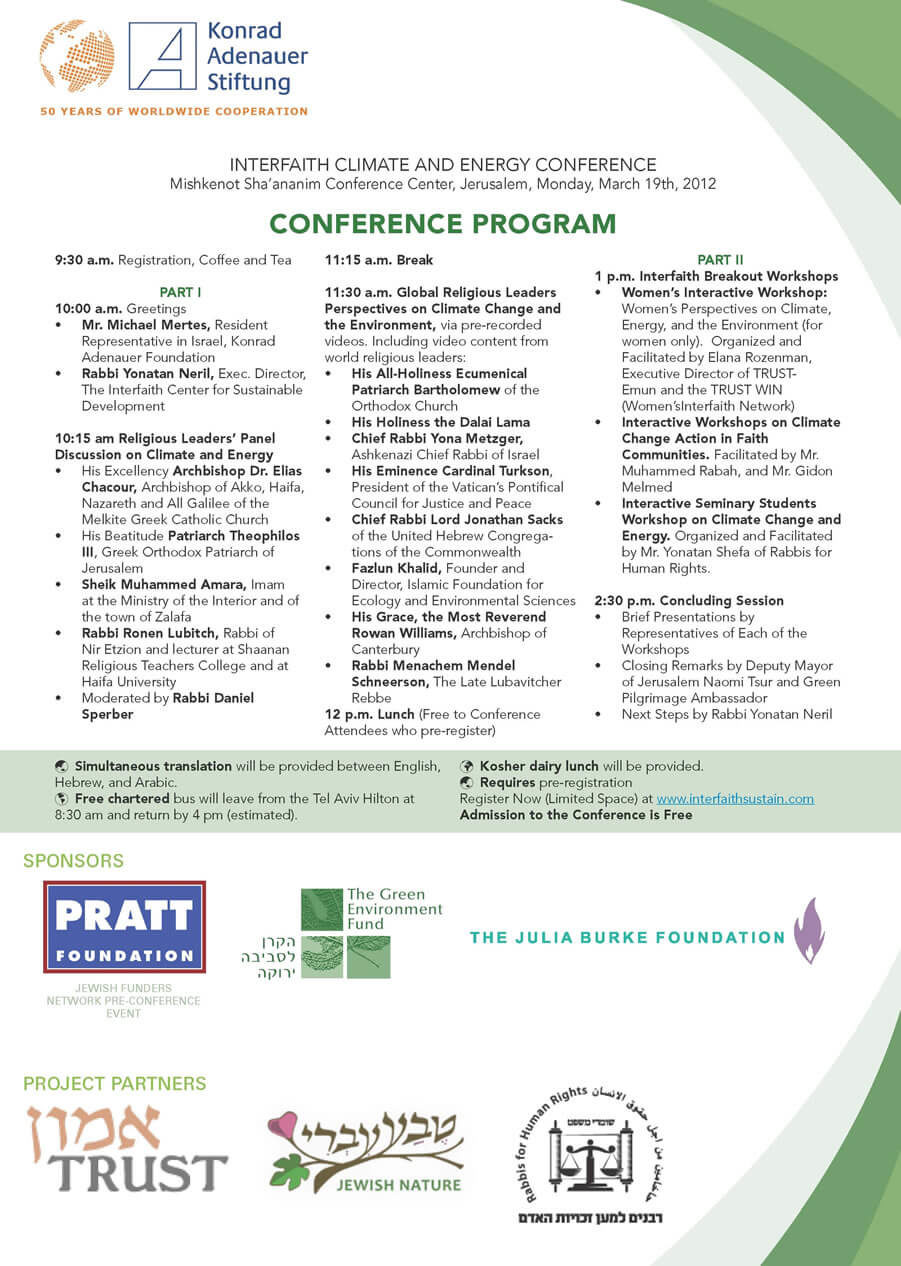
## Speeches
- **[Rabbi Ronen Lubitch on Judaism and Ecology](https://interfaithsustain.com/rabbi-ronen-lubitch-on-judaism-and-ecology/ "Rabbi Ronen Lubitch on Judaism and Ecology")**
For sponsorship opportunities, please [contact us](https://interfaithsustain.com/contact-us/).
Parts of the Conference were organized in collaboration with TRUST-Emun, the TRUST WIN (Women’s Interfaith Network), Al Qasemi Academy, Friends of the Earth– Middle East, Teva Ivri and Rabbis for Human Rights.
---
### [Faith and Ecology Webinars](https://interfaithsustain.com/faith-and-ecology-webinars-2/)
**Published:** January 12, 2021
**Author:** ICSD
**Content:**
The Interfaith Center for Sustainable Development is committed to partnering with ecologically-focused clergy and theologians to augment the faith voice in hastening the transition to cleaner, healthier and more sustainable communities.
In conjunction with the publication of *Eco Bible, Vol. 1: An Ecological Commentary on Genesis and Exodus*, we are sponsoring the following two webinars featuring theologians speaking to religion and ecology.
Upcoming….
**Conversations in Catholic Eco-Theology**
**January 21, 2021 at 10am Pacific Time**
**Dr. Celia Deane-Drummond**
**Director, *Laudato Si* Research Institute, Campion Hall, University of Oxford**
Throughout her career, Dr. Deane-Drummond has focused on the interface between theology and science, particularly systematic and moral theology informed by contemporary and historical Catholic sources. She began an academic career in the natural sciences, focusing on plant physiology and agricultural botany, but the global and ethical challenges of the use of GMOs encouraged her to retrain in theology, education, and environmental ethics. As Director of the Laudato Si Research Institute (LSRI), Dr. Deane-Drummond researches the different elements relevant for Pope Francis’ call for an ‘integral ecology’, including building credible multidisciplinary hubs of research that are relevant for the pressing ecological and environmental issues of our time. Her main interests are in theological and ethical engagement with the natural and social sciences on questions related to ecology, genetics, animal studies and anthropology.
**February 18, 2021 at 10am Pacific Time**
**Fr. Seán McDonagh**
**Irish Columban Missionary Priest**
**Author, *On Care for Our Common Home*, a *Laudato Si* commentary**
Fr. McDonagh was born in Nenagh, Ireland and was ordained a priest in the Columban order in 1969. He was sent to work as a missionary in Mindanao in the Philippines and then amongst the T’boli indigenous people near Lake Sebu where he witnessed at first hand the destruction of the local forests. This experience resulted in him publishing the pioneering book *To Care for the Earth* (1985), which called for a new creation theology which incorporates modern science and a cosmology which ought to become the guiding myth for modern humankind, especially in the way we relate to the earth and other creatures. Fr. McDonagh has continued to publish numerous books and articles and to travel across the world explaining that environmental destruction leads to global poverty. He is a strong advocate for Pope Francis’s Encyclical on the environment, and most recently wrote a commentary on it, entitled *On Care for Our Common Home: Laudato Si*.
---
**Past Webinars**
**“Climate Realities, Climate Change: Envisioning our Future”**
**December 10, 2020 at 10am Pacific Time**
We invite you to join this fascinating webinar featuring scholars working at the intersection of religious ethics and climate change. As we head into the year 2021, we look to our religious traditions for vision and foresight as we confront the challenges facing us as a result of climate change.
The Interfaith Center for Sustainable Development partners with ecologically-focused clergy and theologians to augment the faith voice in hastening the transition to cleaner, healthier and more sustainable communities.
Our panelists are:
- **Dr. Laurie Zoloth**, Professor of Religion and Ethics, University of Chicago
- **Dr. Mark Douglas**, Professor of Christian Ethics, Columbia Theological Seminary
- **Dr. Chris Doran**, Professor of Religion, Pepperdine University
This conversation will be moderated by Rabbi Yonatan Neril, Founder and Executive Director of the Interfaith Center for Sustainable Development.
Please join us to explore climate denial, climate migration, and climate violence – and to discuss how we need to look to the future in order to best respond to these tremendous challenges.
**About the Speakers**
**Dr. Laurie Zoloth**, Margaret E. Burton Professor of Religion and Ethics at the University of Chicago Divinity School and the Senior Advisor to the Provost for Programs on Social Ethics. Zoloth holds a bachelor’s degree in women studies from the University of California, Berkeley and a bachelor’s degree in nursing from the University of the State of New York. She received a master’s degree in Jewish studies and a doctorate in social ethics from the Graduate Theological Union. Zoloth also holds a master’s degree in English from San Francisco State University. A leader in the field of religious studies with particular scholarly interest in bioethics and Jewish studies, Zoloth’s research explores religion and ethics, drawing from sources ranging from Biblical and Talmudic texts to postmodern Jewish philosophy. She also researches the practices of interreligious dialogue, exploring how religion plays a role in public discussion and policy.
**Dr. Mark Douglas**, an ordained minister in the Presbyterian Church (USA) and Professor of Christian Ethics at Columbia Theological Seminary in Decatur, GA, where he directs the Master of Theology degree program. He is the founding editor of @ this point: theological reflections on church and culture, the seminary’s online journal, and the author of Confessing Christ in the 21 st Century (Rowman and Littlefield, 2005), Believing Aloud: Reflections on Being Religious in the Public Sphere (Cascade, 2010), Christian Pacifism for the Environmental Age (Cambridge University Press, 2019), and a forthcoming book, Modernity, the Environment, and the Just War Tradition. His current work explores connections between violence and climate change at the beginning of the Anthropocene.

**Dr. Chris Doran**, Professor of Religion at Pepperdine University. He studied the intersection of theology and science at Berkeley’s Graduate Theological Union after receiving a bachelor’s degree in biology and a Master of Divinity from Pepperdine, and then returned to his alma mater as faculty. After acknowledging that climate change is the most significant issue facing the future of human civilization, he created the Sustainability Minor, the largest multidisciplinary program in the history of Pepperdine’s Seaver College. His most recent book is *Hope in the Age of Climate Change: Creation Care this Side of the Resurrection*, which looks to understand how the resurrection of Jesus should inspire us to be leaders in solutions to climate change and other sustainability challenges. His current research project seeks to articulate a Christian theological response to both human and nonhuman migration and displacement due to the climate crisis.
**“Food, Faith, Ecology: Grounding and Gratitude”**
**November 19, 2020 at 10am Pacific Time**
Just one week before the Thanksgiving holiday, we will be exploring an approach to “Holy Eating” from Jewish, Christian, and Muslim perspectives.
Rabbi Yonatan Neril, ICSD founder and co-author of the *Eco Bible*, will be joined by:
**Shaykh Mustafa Umar**, the president of California Islamic University and the Director of Education and Outreach at the Islamic Institute of Orange County. He has authored several books, served the Muslim community of Southern California as an Imam and activist for over a decade, and currently serves as an executive member of the Fiqh council of North America. He completed a B.S. in Information and Computer Science from UC Irvine, a B.A. in Theology & Islamic Law from the European Institute of Islamic Sciences in France, and an M.A. in Islamic Studies from the University of Gloucestershire in the UK. He also studied the Islamic sciences for a year at Nadwatul ʿUlamā’ in Lucknow, India, spent another year studying in Cairo, Egypt, and completed the traditional iftaa program at Darul Ifta, granting him the traditional title of ‘Mufti’, or specialist in Islamic Law.
**Rev. Dr. Jill Crainshaw**, Vice Dean for Faculty Development and Academic Initiatives at Wake Forest University School of Divinity, where she also serves as the Blackburn Professor of Worship and Liturgical Theology. An ordained Minister of Word and Sacrament in the Presbyterian Church (U.S.A.), Crainshaw is a well-known author in her field of liturgical theology, as well as a poet and preacher. Through her writing and teaching, she celebrates life’s seasons and seasonings. She and her two dogs, Bella and Penny, look for poems each day in their backyard. Sometimes Jill writes them down. Dr. Crainshaw’s most recent book, *When I in Awesome Wonder: Liturgy Distilled from Daily Life*, focuses on the importance of being grounded in God’s wisdom as we discover it in our daily life, work, and play.
**Rabbi Bill Kaplan**, Executive Director of the Shalom Institute in Malibu, a year-round experiential Jewish and environmental education center and the home of Shemesh Farms, a social enterprise that employs adults with developmental disabilities. Shalom Institute strives to model eco-friendly practices that include solar power and water heating, composting, organic farming and gardening, recycling, water use reduction, recycled plastic furniture, energy efficiency, and much more. Bill is in his 31st year at Shalom Institute and has a BA from Wesleyan University in Middletown, CT., an MBA in Non-Profit Management and Jewish Communal Service from American Jewish University, and rabbinical ordination from the Academy For Jewish Religion in Los Angeles. He uses nature, organic gardens, and biblical gardens creatively to teach Torah, Israel, Jewish culture, holidays, and connections between Judaism and ecology in a model he calls “Edible Judaism”.
[](https://interfaithsustain.com/ecobible/)
---
### [Winner of the 2019 Catholic Seminarian Essay Contest on Sustainable Behavior](https://interfaithsustain.com/winner-essay-contest-sustainable-behavior/)
**Published:** August 29, 2019
**Author:** ICSD
**Content:**
This essay was awarded first place in the 2019 Catholic Seminarian Essay Contest on Sustainable Behavior which was organized by The Interfaith Center for Sustainable Development. To read more about the contest, click [here](https://interfaithsustain.com/catholic-seminarian-essay-contest-2019/).
## CATHOLIC PRACTICES ON ECOLOGICALLY SUSTAINABLE BEHAVIOR
By Bernardo Castañeda Fernández
Assumption Seminary, México
---
**INTRODUCTION**
I would like to start by talking about the experience I’ve had, how I have been implementing it, and how I intend to integrate it in the future. As Pope Francis says in Laudato Si: “All of us can cooperate as instruments of God for the care of creation, each according to his or her own culture, experience, involvements and talents.”[1](#fn-17496-1)
I studied Architecture in Mexico and later, before entering the seminary, I worked there in an apostolate called *“Incluye”* in which we built an ecological house for people who had left the street. The walls of the house were made with rammed earth, which are thermal and aesthetic walls. We made several visits to sustainable centers and discovered other very useful techniques to generate electrical energy, for example, with bikes. Another efficient and economic system of natural air conditioning we found is the Canadian or Provençal well. This system uses the outside air and makes it go through buried pipes approximately 2 meters underground, where the temperature is more constant throughout the year, and it is injected into the interior of the house, thus maintaining a constant temperature all year long. These are examples of sustainable measures that we can consider as an alternative to air conditioning, which has recently been used indiscriminately. This is where the root of the environmental problem begins: our lifestyle of consumerism which is focused on pleasure.
**OUR LIFESTYLE, THE MAIN CAUSE OF ENVIRONMENTAL DAMAGE**
Our lifestyle is definitely not very healthy, neither for us nor for the planet, and “many things have to change course, but it is we, human beings above all, who need to change.”[2](#fn-17496-2) This consumerist lifestyle is reflected simply by observing people and their habits, not critically, but objectively. Obesity and chronic degenerative diseases have increased enormously. Our sedentary lifestyle puts us at risk of consuming more. In America, “we are sitting an average of 13 hours a day.”[3](#fn-17496-3) Part of this lifestyle is also reflected in what we eat. Our intake of processed foods has become very common nowadays and “the average amount of meat consumed per person globally has nearly doubled in the past 50 years.”[4](#fn-17496-4) It is also necessary to analyze meat production since it is one of the things that most affects the environment: “Raising livestock, produces more greenhouse gases than the emissions of the entire transportation sector…The UN along with other agencies reported that livestock was responsible for 51% of human-caused climate change and it is also the leading cause of resource consumption and environmental degradation destroying the planet today. Raising animals for food is responsible for 30% of the world´s water consumption, occupies up to 45% of the earth´s land, is responsible for up to 91% of Brazilian Amazon destruction, is a leading cause of ocean dead zones, habitat destruction and species extinction.”[5](#fn-17496-5) While this is only taking into account the environmental aspect, it would still be necessary to take into account the damage to our health. Without going into further detail, it gives us an idea of where we should focus to really achieve a substantial change. It is impossible for everyone to stop eating meat, and this is not what I propose, but it could help at least to consider reducing our meat consumption by using strategies, such as Meatless Mondays. It is a sacrifice that could have beneficial effects on our spiritual, physical and environmental health. Even “[Saint John Paul II](https://w2.vatican.va/content/john-paul-ii/en.html) would call for a global ecological conversion. Every effort to protect and improve our world entails profound changes in “lifestyles, models of production and consumption, and the established structures of power which today govern societies”.[6](#fn-17496-6)
**PROMOTE WITH EXAMPLE**
After seeing this sad panorama, now I would like to focus on the solutions that can be implemented specifically in the Church. I believe that the best way to promote ecologically sustainable behavior is by example. There is no better way than this, for the example attracts. We have a clear example in the Bible when Peter tells us: “not lording it over those entrusted to you, but being examples to the flock.”[7](#fn-17496-7) It is not about imposing, but about proposing. I believe there’s enough to propose as a Church; in this time that I’ve been in the seminary, for example, I started a community garden. These are simple practices that have many benefits for the community. We can go back to the old practices that were held in the monasteries and which “were revered as sacred.”[8](#fn-17496-8) We must go back to the basics, as well as “for the monks and nuns in the past, garden work was acknowledged as part of God’s command to care for the earth. Besides the utilitarian aspect,”[9](#fn-17496-9) the main purpose was “to live in communion with God”[10](#fn-17496-10) through gardening. This must be our main purpose too, and gardening helps in this goal. In addition, having a community garden has many benefits as it creates more community, puts us more in touch with nature and with God, teaches us to care more for the environment, teaches us virtues such as patience and generosity, and teaches us to be more optimistic, apart from the fact that we obtain organic and fresh foods that improve our health and help us to live in a simpler way. In the canticle of Daniel, together with nature, we are called to bless and praise the Lord: “Let all creatures praise the Lord. Let the earth bless the Lord….Everything growing from the earth, bless the Lord.”[11](#fn-17496-11) As well, in Laudato Si, Pope Francis through the words of Saint Francis of Assisi reminds us again “how we can Praise the Lord through our Planet Earth and what it gives to us: Praise be to you, my Lord, through our Sister, Mother Earth, who sustains and governs us, and who produces various fruit with colored flowers and herbs.”[12](#fn-17496-12)
**SUSTAINABLE PRACTICES IN THE PARISHES**
An essential part of our life is lived in the parishes, and the role they play is crucial in the development of our spiritual life. That is why I propose an imaginative exercise in which we can vision all the sustainable practices that could be carried out in the parishes. Just imagine the existence of sustainable parishes, which I have not found to date, in which water could be collected and recycled, energy could be saved for its design, and sustainable materials which could be operated by solar, wind or geothermal energy. The walls of these parishes would be built with sustainable walls, and more people would be involved during some stages of construction. This would create a greater sense of belonging and care. Some parts of the parish could even be acclimatized with techniques such as the Canadian or Provençal wells. The community would be involved in the creation and maintenance of urban gardens that in turn could feed the people of the community and the poor. Compost could be made, and children and people could learn sustainable practices through workshops. The effects will be immense, one of them being the improvement of the economical aspect of the parishes, but the main effect would be that the life of people would be “…grounded in the three fundamental and closely intertwined relationships: with God, with our neighbor and with the earth itself.”[13](#fn-17496-13) In this way, people would be educated, and they would learn and implement these practices and habits more easily, even replicating them in their homes, such as through backyard farming. Besides the fact that the life in parishes would be much more active and inclusive to more people, this would increase, perhaps, the assistance of more people to other activities of the parish.
**CONCLUSION**
In conclusion, I believe that the main issue of protecting the environment is our lifestyle, our habits, and ways of thinking. “We lack an awareness of our common origin, of our mutual belonging, and of a future to be shared with everyone. This basic awareness would enable the development of new convictions, attitudes and forms of life.”[14](#fn-17496-14) We should aspire to lead a different lifestyle, simpler and more connected with nature, as Pope Francis states in Laudato Si: “Christian spirituality proposes…and encourages a prophetic and contemplative lifestyle, one capable of deep enjoyment free of the obsession with consumption. We need to take up an ancient lesson, found in different religious traditions and also in the Bible. It is the conviction that “less is more”. Christian spirituality proposes a growth marked by moderation and the capacity to be happy with little.”[15](#fn-17496-15)
**FOOTNOTES**
[1](#fnref-17496-1). Pope Francis, Encyclical Letter On the Care of Our Common Home, *Laudato Si*, 24 May 2015, no.14
[2](#fnref-17496-2). Pope Francis, Encyclical Letter On the Care of Our Common Home, *Laudato Si*, 24 May 2015, no.202
[3](#fnref-17496-3).[Cision PR Newswire](https://www.prnewswire.com/news-releases/new-survey-to-sit-or-stand-almost-70-of-full-time-american-workers-hate-sitting-but-they-do-it-all-day-every-day-215804771.html). July 17,2013.
[4](#fnref-17496-4). [The Guardian.](https://www.theguardian.com/environment/2018/jul/19/rising-global-meat-consumption-will-devastate-environment)
[5](#fnref-17496-5). Cowspiracy: The Sustainability Secret documentary**.** Directed by [Kip Andersen](https://www.google.com/search?q=Kip+Andersen&stick=H4sIAAAAAAAAAOPgE-LWz9U3MDTMKc4tKVJCcMqMtMSyk6300zJzcsGEVUpmUWpySX7RIlYe78wCBce8lNSi4tQ8AESC-KRDAAAA&sa=X&ved=2ahUKEwj-n6q7me3iAhWjm-AKHTVsBrkQmxMoATAsegQIDhAK) and [Keegan Kuhn](https://www.google.com/search?q=Keegan+Kuhn&stick=H4sIAAAAAAAAAOPgE-LWz9U3MDTMKc4tKVJC4pRriWUnW-mnZebkggmrlMyi1OSS_KJFrNzeqanpiXkK3qUZeQCxOvFwQgAAAA&sa=X&ved=2ahUKEwj-n6q7me3iAhWjm-AKHTVsBrkQmxMoAjAsegQIDhAL), Producer [Kip Andersen](https://www.google.com/search?q=Kip+Andersen&stick=H4sIAAAAAAAAAOPgE-LWz9U3MDTMKc4tKVJCcMqMtMSyk6300zJzcsGEVUFRfkppcmrRIlYe78wCBce8lNSi4tQ8AF96d3lDAAAA&sa=X&ved=2ahUKEwj-n6q7me3iAhWjm-AKHTVsBrkQmxMoATAwegQIDhAP), 2014.
[6](#fnref-17496-6). Pope Francis, Encyclical Letter On the Care of Our Common Home, *Laudato Si*, 24 May 2015, no.5
[7](#fnref-17496-7). 1 Peter 5:3
[8](#fnref-17496-8). [Vegetable gardener](https://www.finegardening.com/article/seasonal-food-from-a-monastery-garden), April 28, 2009.
[9](#fnref-17496-9). Ibid.
[10](#fnref-17496-10). Ibid.
[11](#fnref-17496-11). Canticle of Daniel 3:57-88
[12](#fnref-17496-12). Pope Francis, Encyclical Letter On the Care of Our Common Home, *Laudato Si*, 24 May 2015, no.1
[13](#fnref-17496-13). Pope Francis, Encyclical Letter On the Care of Our Common Home, *Laudato Si*, 24 May 2015, no.66
[14](#fnref-17496-14). Pope Francis, Encyclical Letter On the Care of Our Common Home, *Laudato Si*, 24 May 2015, no.202
[15](#fnref-17496-15). Pope Francis, Encyclical Letter On the Care of Our Common Home, *Laudato Si*, 24 May 2015, no.222
---
### [What Are Biblical Values?](https://interfaithsustain.com/what-are-biblical-values/)
**Published:** July 19, 2016
**Author:** ICSD
**Content:**
**Seminary:** Yale Divinity School
**Location:** 409 Prospect St, New Haven, CT 06511, United States
**Course number:** REL 562b
**Instructor:** Dr. John J. Collins
**Website:** [divinity.yale.edu/](https://divinity.yale.edu/)
**Course Description**
This course examines, first, whether it is possible to speak of biblical values at all. It then proceeds to examine the bases for biblical values in creation, covenant, and eschatology, and to discuss biblical attitudes to family values, ecology, gender and sexuality, social justice, purity, and other issues.
---
### [Ecological Ethics & Faith](https://interfaithsustain.com/ecological-ethics-faith/)
**Published:** July 15, 2016
**Author:** ICSD
**Content:**
**Seminary:** Lutheran Theological Seminary at Gettysburg
**Location:** 61 Seminary Ridge, Gettysburg, PA 17325, United States
**Course number:** 6.316
**Instructor:** Rev. Dr. Gilson Waldkoenig
**Website:** <https://www.unitedlutheranseminary.edu/>
**Course Description**
From chemical spills to atmospheric carbon overload, environmental problems are common concerns in global society. How shall people of faith respond to the theological, pastoral and social justice challenges posed by environmental problems? This course will read and analyze a recent monumental statement of religious environmental ethics by Lutheran ethicist Larry Rasmussen, Earth-Honoring Faith: Religious Ethics in a New Key; study the precedent-setting work of Lutheran theologian Joseph Sittler in ecological theology and ethics; and relate classical Reformation and Christian theological themes to current resources on ecology and religion, so that participants may hone their theological stance for preaching, teaching and pastoral ministry in an environmentally troubled world. The course will be fully online.
---
### [Opening the Book of Nature: Creation, Ecology, and Economy](https://interfaithsustain.com/opening-the-book-of-nature-creation-ecology-and-economy/)
**Published:** March 13, 2016
**Author:** ICSD
**Content:**
**Description:**
Ancient Christian tradition maintained that God authored not one but two books through which God continues to speak to us: the book of Scripture and the book of Nature. The “book of Nature” has been the subject of intense recent interest due to our growing awareness of human dependence on fragile ecosystems and the environmental crises of the past century. This course will begin with an experiential exploration of the spiritual character of Sewanee’s natural setting, then move on to consider social, theological, and Biblical perspectives. We will address the role of human responsibility for/in creation and conclude with the socio-economic implications for the way we live and work in the 21st century.
**Structure:**
First Week: Opening the Book of Nature—experiential and contemplative
Second Week: God and Creation—theoretical
Third Week: Socio-Economic—theoretical and practical
**Assigned Readings:**
Richard Bauckham, *The Bible and Ecology: Rediscovering the Community of*
*Creation* (Baylor University Press, 2010).
Michael Braungart and William McDonough, *Cradle to Cradle: Remaking the Way We Make Things* (New York: North Point Press, 2012).
Cynthia S.W. Crysdale and Neil Ormerod, *Creator God, Evolving World* (Minneapolis: Fortress Press, 2013).
Robert R. Gottfried, *Economics, Ecology and the Roots of Western Faith: Perspectives from the Garden* (Rowman & Littlefield, 1995).
Robert R. Gottfried, “Beauty by Design” (2013).
http://cresewanee.files.wordpress.com/2012/10/beauty-by-design-final3.pdf
McDonald, Barry (ed.) *Seeing God Everywhere: Essays on Nature and the Sacred* (Bloomington, IN: World Wisdom, 2003).
A copy of the Bible (New Revised Standard version is a good one)
**Schedule**
Before the Course
McDonald, Chapters 2-5, 7, 8, 17, 19
Gottfried, “Beauty by Design,”pp. 1-12 (up to The Social Dimensions of Beauty)
First Week
McDonald*, Seeing God Everywhere*, Chapters 2-5, 7, 8, 17, 19. These are background readings for the Opening the Book of Nature experiences. Your journaling for this week (see below) should draw on your experiences and on your reading of these chapters.
Second Week
Lesson 1: Crysdale and Ormerod, Chapters 1-2.
Lesson 2: Crysdale and Omerod, Chapters 3-4.
Lesson 3: Crysdale and Ormerod, Chapters 5-7.
Lesson 4: Bauckham, Chapters 1, 3
Lesson 5: Bauckman, Chapters 4-5.
Third Week
Lesson 6: Gottfried, *Economics,* Chapters 1-4.
Lesson 7: Gottfried, *Economics,* Chapters 5 and 6.
Lesson 8: Gottfried, *Economics,* Chapter 7, and Braungart and McDonough, *Cradle to Cradle.*
Lesson 9: Braungart and McDonough, *Cradle to Cradle.*
Lesson 10: Gottfried, “Beauty by Design.” Be sure to review pp. 1-12 before reading the rest of the paper.
**Grading:**
*Grading* is based upon active participation in course activities and upon the final paper. The course activities include the Opening the Book of Nature experiences of the first week, class discussions, and journaling. While these are not graded *per se*, appropriate participation is required and a lack of commitment to and involvement in these activities will influence the final grade.
*Journaling*: Find a quiet place outdoors where you can be alone and can reflect. Try to go to the same place each time. Take 20 minutes each day to practice the presence of God outdoors. Then reflect on your experience(s), course readings, and class discussions. This is your time for quiet and for reflection on the themes of the course. We will collect your journals once midway through the course and once toward its end. Mark those passages you want us to read. We will not read any unmarked passages. This will be worth 30% of your final grade.
*Final Reflective Integration paper:* Your paper will draw on the course readings, discussions, journaling, and contemplative experiences to address the following question: *What are the major themes that run through the course, how do they relate to one another, and what are their implications for my understanding, and practice, of my ministry?* The paper should integrate the topics addressed in class and should provide a rigorous, thoughtful development of your thesis. We also expect well-written prose – you are welcome to ask others to critique your writing as well as your content. Do give credit in an initial footnote to anyone who has helped you. To the extent possible credit authors, other students, etc. with their ideas. Given that we all are using the same texts and all know one another, a simple use of the person’s name will suffice; e.g., “As Northbourne pointed out, authenticity matters.” Papers should be typewritten, double-spaced, properly researched and referenced, and between 20-25 pages in length. This will be worth 70% or your final grade.
This syllabus pertains to when the course was offered in 2014
---
### [World Religions and Ecology: Asian Religions](https://interfaithsustain.com/world-religions-and-ecology-asian-religions/)
**Published:** July 12, 2015
**Author:** ICSD
**Content:**
**Spring**
**Professors: Mary Evelyn Tucker and John Grim**
**Office**: Kroon Hall, 195 Prospect, Rms 140, 115 – Office hours Tues 1 to 2:30
**Website:** <https://fore.yale.edu/>
**Time**: Tuesday 2:30-5:20 p.m.
**Classroom Location:** ISPS at 77 Prospect St., Room A002
**Course Description:**
Religion and ecology is a new field of study that involves the investigation of humans and communities within the horizon of interdependent life. In particular it investigates the symbolic expressions of this interconnection in diverse religious symbols and practices arising from human-Earth relations.
At present the rapid modernization of Asia- especially India and China- is causing extreme environmental problems. This course will investigate Asian religions in relation to this ecological crisis. Both the problems and promise of religions are acknowledged. Religions are now widely seen as significant social, intellectual, and spiritual forces that both shape and are shaped by cultural worldviews. Moreover, religions are containers of symbolic language that often evoke nature’s processes and reflect nature’s rhythms. The multiform roles of religions, then, provide historical sources for reflection upon human behavior guided by values embedded in individual and social bodies, projected onto ecosystems, and molded into cosmological narratives.
For many years science, engineering, policy, law, and economics alone were considered indispensable for understanding and resolving environmental problems. We now have abundant knowledge from these disciplines about environmental issues, but still not sufficient will to change human behavior. Thus, there is a growing realization that religion, spirituality, ethics, and values can make important contributions to address complex environmental issues. This course will explore those contributions.
This course will examine the various ways in which religious ideas and practices have contributed to cultural attitudes and human interactions with nature. **Examples will be selected from** **Hinduism, Buddhism, Confucianism, and Daoism**. The course will examine such topics as: symbols, images and metaphors of nature in canonical texts, views of the divine as transcendent to the world, the indwelling of the sacred in the Earth, the ethics of using and valuing nature, ritual practices that link humans to the natural world, and cosmology as orienting humans to the world and embedding them in place.
**Required Texts**
Mary Evelyn Tucker and John Grim (eds,), [Religion and Ecology: Can the Climate Change?](https://www.amacad.org/daedalus/religion-and-ecology-can-climate-change) ***Daedalus*** (Fall 2001).
Mary Evelyn Tucker, Worldly Wonder: Religions Enter Their Ecological Phase (Open Court, 2003) **This book is online at classesV2 under “Resources”**
Christopher Chapple and Mary Evelyn Tucker, eds., Hinduism and Ecology: The Intersection of Earth, Sky, and Water (Harvard University Press, 2000)
Mary Evelyn Tucker and Duncan Williams, eds., Buddhism and Ecology: The Intersection of Dharma and Deeds (Harvard University Press, 1998)
Mary Evelyn Tucker and John Berthrong, eds., Confucianism and Ecology: The Interrelation of Heaven, Earth, and Humans (Harvard University Press, 1998)
**Chapters from this book will be online at classesV2**
N.J.Giraradot, James Miller, and Liu Xiaogan, eds., Daoism and Ecology: Ways Within a Cosmic Landscape (Harvard University Press, 2001)
**Suggested Primary Texts**
Ainslie Embree, ed., Sources of Indian Tradition (Columbia, 1988)
Wm. Theodore deBary, ed. The Buddhist Tradition in India, China, and Japan (Random House, 1969)
Wm. Theodore deBary, ed. Sources of Chinese Tradition (Columbia University Press, 2003)
Wing-tsit Chan, trans., Source Book of Chinese Philosophy (Princeton, 1963)
**Suggested Secondary Texts**
\*Mary Pat Fisher, Living Religions (5th edition,) (L.B.Taurus & Co, 1997)
Lance Nelson, ed., Purifying the Earthly Body of God: Religion and Ecology in Hindu India (SUNY, 1998)
Ken Kraft and Stephanie Kaza, eds., Dharma Rain (Shambala, 2000)
Stephanie Kaza, ed., Hooked: Buddhist Writings on Greed, Desire, and the Urge to Consume (Shambala, 2005)
Xinzhong Yao, An Introduction to Confucianism (Cambridge University, 2000)
Tu Weiming and Mary Evelyn Tucker, eds., Confucian Spirituality
2 vols. (Crossroads, 2003-2004)
James Miller, Daoism: A Short Introduction (Oxford, 2003)
**Course Requirements**
1\. regular attendance, readings, and participation in class discussion: 10%
2\. brief (1pg) response to focused questions – 2 or 3 over semester: 10%
3\. mid-term take-home essay exam due February 28th or paper: 40%
4\. final take-home essay, or paper exam due Friday of exam week: 40%
**Course Exams**
There will be a **Mid-term** **exam and a Final** **exam** in this course. Each exam will be a **Take-Home** and a week is given for completion. Undergraduates will have three essay questions; graduates will have four essay questions. There will be a choice of questions.
**Schedule of Classes and Readings – Readings marked PDF are online at classesV2**
**JANUARY The Emerging Field of Religion and Ecology**
**Introduction**: Dimensions of religion; tradition and modernity
Perspectives on valuing the environment
**The problems and promise of religion**
**Readings:**
Yale website: https://www.yale.edu/religionandecology
Read introductory articles on FORE web site for Hinduism, Buddhism, Confucianism, and Daoism. Look at bibliographies and sacred texts.
**JANUARY The Challenge of the Environmental Crisis to the Religions – Overview**
**Readings:**
ME Tucker and John Grim,”Series Forward” from any Harvard volume in world religions and ecology series
ME Tucker and John Grim, “Introduction,” in *Daedalus* Fall 2001
https://www.amacad.org/publications/fall2001/fall2001.aspx
Tu Weiming, “Beyond the Enlightenment Mentality,” PDF
Lynn White, Jr., “The Historic Roots of Our Ecologic Crisis.” PDF
**Questions for consideration:**
1\. Why have religions been late in coming to environmental issues?
2\. In what ways have religions changed in response to modern challenges?
3\. Can religions raise effective moral questions regarding a range of issues such as global warming and species extinction?
4\. According to Tu Weiming what characterizes the “Enlightenment Mentality,” and which traits are less and more helpful for our way forward?
5\. Do you agree with Lynn White’s argument?
**Intersecting disciplines**
**Readings::** in *Daedalus* Fall 2001
https://www.amacad.org/publications/fall2001/fall2001.aspx
Michael McElroy, “Perspectives on Environmental Change,” pp. 31-56;
Donald Brown, “The Ethical Dimensions of Global Environmental issues,” pp. 59-76;
Baird Callicott, “Multicultural Environmental Ethics,” pp. 77-96
Look at dialogue sections on Science, Economics, Education, and Policy
**Questions for consideration:**
6\. What are the challenges to religions being in dialogue with other disciplines?
7\. Can there be an ethics that addresses climate change?
8\. What prevents the human community from formulating a multicultural environmental ethics? Is a global ethics necessary for human flourishing?
**JANUARY The Transformative Context of Religions**
**Readings:**
ME Tucker, Worldly Wonder, pp. 1-54
**Questions for consideration:**
1\. What does “the cosmological context” have to do with religion and ecology?
2\. In what ways can religions reclaim and reconstruct themselves in response to the environmental crisis?
3\. Is the restoration of wonder in the modern world of disenchantment possible?
**Commentary by Judith Berling and Response** – **Readings:**
ME Tucker, Worldly Wonder, pp. 57-147
**Questions for consideration:**
4\. With which points made by Berling and the audience do you agree or disagree?
5\. What would be your question to Tucker?
6\. Which of the appendices had the greatest appeal for you and why?
Note especially the Earth Charter. See also www.earthcharter.org
**Brief** **Introduction to Hinduism –** Look at “Indian Chronology” PDF and “Intro to Hinduism,” PDF \[bring both of these to next class also\]
**JANUARY Hindu Concepts of Nature**
**Early Hinduism** – **Readings:**
Hinduism and Ecology “Introduction” xxxiii- xlviii; “Hinduism an Overview chapter” PDF; Articles by Rao and Patton 23-58; *Vedic* readings PDF; *Brhad* and *Isha* *Upanishads* PDF
**Questions for consideration:**
1\. What particular characteristics do Gadgil and Guha present as necessary for
understanding India’s response to its environmental crisis?
2\. What is one traditional Hindu concept of nature in India and how does it relate to the
environmental concern of a particular group or region?
3\. What is Patton’s critique of nature romanticism and India?
**The debate of Dharma (Duty) and Bhakti (Devotion)** – **Readings:**
Hinduism and Ecology – Articles by Nelson and Agarwal pp. 127-179; “*Gita* ex *Mahabharata* PDF; *Bhagavad* *Gita* PDF*; Gita Govinda* PDF
**Questions for consideration:**
4\. What is the problem of detachment for environmental action?
5\. What are some of Agarwal’s reservations about Hinduism and ecology?
**FEBRUARY Environmental Activism in India**
**Rivers, pilgrimages, and dams – Readings:**
Hinduism and Ecology – Articles by Alley, Deegan, and Fisher pp. 355-421;
*Purana I* & *II* PDF
**Questions for consideration:**
1\. Why are “sacred rivers” in India a barometer for actual environmental concern on the
part of religious adherents?
2\. Describe the ways in which a particular pilgrimage or ritual in Hinduism is related or
adapted to environmental action?
3\. What are the tradeoffs with dams in terms of modernization processes?
N**on-violent activism** – **Readings:**
Hinduism and Ecology – Article by James pp. 499-530
**Questions for consideration:**
4\. What religious ideas and practices motivated the Chipko resistance?
**Brief** **Introduction to Buddhism** – Look at “Intro Buddhism,” PDF
**FEBRUARY Theoretical and Methodological Issues in Buddhism**
**Buddhist perspectives on nature – Readings:**
Buddhism and Ecology “Introduction” xxxv-xlii; Article by Lancaster pp. 3-18;
“Buddhism Overview chapter part 1” PDF; ; *Dhamapada* PDF
**Questions for consideration:**
1\. What does Lancaster mean by the “collective perception of nature” and how does this relate to Chinese Buddhism?
2\. Can we accurately attribute harmonious attitudes to nature in Buddhism?
**A critique** – **Readings:**
Buddhism and Ecology – Articles by Eckel pp. 327-349; Sponberg pp. 351-376
**Questions for consideration:**
3\. How does “Green Buddhism” relate to “basic Buddhism”?
4\. Does hierarchy serve a role in environmental values?
**FEBRUARY Theravada and Mahayana Views of Nature**
**Theravada (Hinayana or Southern) Buddhism – Readings:**
“Buddhism Overview Chapter part 2” PDF; Buddhism and Ecology – Articles by Swearer and Sponsel pp. 21-68;
**Questions for consideration:**
1\. What particular Theravada Buddhist concepts foster environmental action?
2\. What role(s) have the Theravada monks played in creating a Buddhist
environmental ethics?
**Mid-Term Exam given out due end of Feb**
**Mahayana (or Northern) Buddhism** – **Readings:**
Buddhism and Ecology – Articles by Habito and Lori pp. 165-184;
*Mahayana* Buddhism PDF
**Questions for consideration:**
3\. What particular Mahayana Buddhist concepts foster environmental action?
4\. In what ways does Zen mindfulness engage ecological concern?
5\. Can Buddhist precepts be the basis of an environmental ethics?
**FEBRUARY American Buddhism**
**American Zen Buddhism – Readings:**
Buddhism and Ecology – Articles by Barnhill and Kaza pp. 187-248
**Questions for consideration:**
1\. What does Gary Snyder intend by the phrase “Great Earth *Sangha*?”
2\. What kinds of environmental activity are taking place in American
Buddhist Zen centers?
**Applications of Buddhist Worldviews – Readings:**
Buddhism and Ecology – Articles by Gross and Rockefeller pp. 291-324
**Questions for consideration:**
4\. In what ways does engaged Buddhism respond to issues of energy, over-population,
consumption and global ethics?
**Brief Introduction to Confucianism** – Look at “Intro to Confucianism and Daoism” PDF \[bring to next class\]
**Mid-Term Exam due \[Spring Break March\]**
**MARCH Classical Confucian and Neo-Confucian Thought**
**Early Confucianism –** Readings: “Koller on Confucianism” PDF
Confucianism and Ecology – “Introduction” pp. xxxv-xlv;
Articles by Tu Weiming and Wm. Theo. de Bary pp. 3-34; *Analects* I PDF
**Questions for consideration:**
1\. In what ways do Tu Weiming and Wm. Theo. de Bary agree and disagree?
**Context for Response – Readings:**
Confucianism and Ecology – Articles by Taylor and Ivanhoe pp. 37-76
**Questions for consideration:**
2\. How does Taylor answer the question “Can the East help the West to value nature?”
3\. How does Ivanhoe address the problem of anthropocentrism?
**MARCH Conceptual Resources from China, Korea, and Japan**
**China – Readings:**
Confucianism and Ecology – Article by Tu Weiming pp. 105-121; *Analects* II PDF
**Questions for consideration:**
1\. How is the “continuity of being” in Confucianism a resource for environmental ethics?
2\. In what ways does cosmology and self-cultivation in Confucianism relate to
environmental concern?
3\. What does correlation mean in Confucian thought?
**Korea and Japan – Readings:**
Confucianism and Ecology – Articles by Ro and Tucker pp. 169-207
**Questions for consideration:**
4\. Distinguish the ecological implications of the philosophy of *ch’i* in Korea and Japan. 5. Are there any problems with a monism of *ch’i?*
**APRIL Contemporary Confucianism**
**Philosophy – Readings:**
Confucianism and Ecology – Article by Berthrong pp. 237-263; *Mencius* PDF
**Questions for consideration:**
1\. How does cosmology, ecology, and ethics relate to the formation of personhood in
Confucianism?
2\. Of the 8 elements for a new Confucian ecological vision choose one and relate it to your own ecological understanding.
**Practice – Readings:**
Confucianism and Ecology – Article by Weller and Bol pp. 313-341
**Questions for** **consideration:**
3\. In what ways can Confucian perspectives influence policy in Taiwan?
**Brief Introduction to Daoism**
**APRIL Ecological Readings of Daoist Texts**
**Introduction – Readings:**
Daoism and Ecology – “Introduction” pp. xxxvii-lxiv; *Dao De Ching* PDF;
“Daoism Overview chapter” PDF; Article by Kleeman pp. 61-69
**Questions for consideration:**
1\. Has Daoism been over-idealized as promoting harmonious relations between humans and the earth?
2\. What images of nature in Daoism are pertinent to contemporary ecological thought and why?
**Cultural context – Readings:**
Daoism and Ecology – *Chuang tzu* PDF Articles by Anderson and Field pp. 157-200;
“Sectional discussion” pp. 237-241
**Questions for consideration:**
3\. How do folk practices relate to Daoism and ecology?
4\. How does *fengshui* orient human interaction with the environment?
**APRIL Philosophical and Practical Ecological Concerns in Daoism**
**Wu wei debates (non-purposeful action) – Readings:**
Daoism and Ecology – Article by Kirkland pp. 283-304; Article by Liu pp. 315-339;
“Sectional discussion” pp. 341-347
**Questions for consideration:**
1\. Can “non-action” (*wu-wei*) be the basis for an environmental ethic?
**Contemporary Daoism – Readings:**
Daoism and Ecology – Articles by Miller, Zhang, and Kohn pp. 351-390
**Questions for consideration:**
2\. How does inner transformation of the person relate to transformations in nature?
3\. What types of Daoist practices promote environmental awareness?
**Final take home essay exam handed out –**
**Due by Friday of exam week in May**
---
### [Spirituality & Sustainability: Vocational Challenge & The Greening of Religions](https://interfaithsustain.com/spirituality-sustainability-vocational-challenge-the-greening-of-religions/)
**Published:** July 10, 2015
**Author:** ICSD
**Content:**
We will intensively examine the issue of global climate disruption since this is the most ominous threat to sustainability efforts. The course will introduce the concept of climate justice, and student will make an iMovie about a spirituality approach to this topic. This course will tackle the “why” questions, such as: why should we consider future generations in our actions? Why should we re-think and re-design our energy economy?
**Course description**
The term “spirituality” has taken on remarkable prominence in American culture, but its varied use defies consistent definition. Spiritualities are rooted in religion and religious practice, but find specific expression in cultural and personal contexts. Spirituality may carry a deeply individualistic or even narcissistic meaning, or it may indicate the movement of one’s whole being toward a life of religious, social, and personal integrity. In the context of a Jesuit education, spirituality can be understood to responding to call, the needs others have for our gifts and talents, and for living a good life.
The term “sustainability” emerged during the 1980s to project a framework for addressing the scale and complexity of the ecological crises facing our planet. At a fundamental level, the term reminds us that we cannot continue depleting resources and generating hazardous wastes and greenhouse gasses indefinitely without serious consequences for future generations. The UN definition indicates that addressing our environmental crises requires the integration of social, economic, and ecological dimensions of sustainability. Environmental leaders have begun describing sustainability as an ecological and inter-generational definition of justice, and using the concept of “ecological footprint” as a way to make visible human impacts on the earth. This has evolved into the term “carbon footprint” to represent the impact of fossil fuel use on our climate. A few visionary religious leaders propose a spiritual approach to sustainability as well, one based on global ethics and consciousness, a process known as “the greening of religion.” Since this is also a religious studies course, we will look at the role of spirituality and consciousness in cultural transformation. This course will invite you to consider your own consciousness, and to take seriously the spiritual practices we will examine.
**Student learning objectives**
This class has 3 generic learning objectives as a *Religion, Theology and Culture 2 course (expressed in numbers 1-3, below), as well as objectives specific to an inter-disciplinary course addressing spirituality and sustainability issues (in letters a-c).
**As a result of this class, students will be able to:**
**1. Analyze complex and diverse religious phenomena** (Complexity; Critical Thinking)
a. To understand the multiple meanings of spirituality, key elements of spirituality, and recent currents in the study of spirituality
b. To describe how and explain why religious leaders are articulating their traditions with concern for sustainability
c. To think critically about the Christian story and Buddhist practice in light of the challenge posed by the sustainability crises and new approaches to cosmology
**2. Integrate and comp are several different disciplinary approaches to a coherent set of religious phenomena** (Complexity of Content as well as of Method; Critical Thinking)
a. To integrate and compare religious and scientific ways of knowing and valuing nature and the natural world
b. To demonstrate knowledge of the complex, contested and contradictory meanings of sustainability, the global sustainability crisis
c. To articulate spirituality and justice with efforts to advance climate justice
**3. Clarify and express beliefs in light of their critical inquiry into the religious dimensions of human existence** (Reflection; Critical Thinking)
a. To articulate and reflect upon emerging elements of one’s own vocation, and to demonstrate the application of some practical tools for discerning this in light of global environmental disruption.
b. To reflect upon and articulate his or her own spirituality, and to consciously shape its trajectory, specifically as a student at Santa Clara.
c. To articulate the emerging field of climate ethics with their own moral beliefs, and to demonstrate comprehension of the ways in which people are using ethics to urge political action on climate changing gasses
**Student evaluation**
There are two general types of assignments for this course: personal reflection essays (R) and outreach activities (O). Religious studies courses require students to clarify and express their personal beliefs and values. Your instructor will not evaluate your personal reflections for their religious doctrine, but rather the quality of your critical thinking and intellectual rigor. This course integrates religious, scientific and social disciplinary perspectives, and you will be evaluated based on your demonstration of integrating these approaches. **Bold face dates**are confirmed; others are subject to revision.
| **Grade** | **Due** | **Description** |
|---|---|---|
| 10% | **Week 1** | The vocation of Julia Butterfly Hill reflection (R) |
| 10% | **Week 2** | *via positiva reflection (R) |
| 5% | **Week 3** | Show *The Economics of Happiness to 2+friends, calculate their carbon footprint, discuss and report back (O) |
| 10% | Week 4 | *via negativa reflection (R) |
| 10% | Week 5 | A mid-term about the content of selected chapters from the books in this course |
| 5% | Week 6 | Organize and lead an earth meditation activity with 2+ friends in the spirit of *via transformative*, and report back(O) |
| 5% | Week 7 | Plan for and report on solar house tour to middle schoolers (O) |
| 20% | Week 8 | Create an iMovie about spirituality and climate justice (O) |
| 15% | Week 9 | Take home final. You will present the iMovie to 2+friends and ask for their feedback; the take home will ask you to reflect on climate justice and your vocation, in light of what Sandra Schneiders says about spirituality. |
| 10% | | In-class participation (attendance =7; participation= 3) |
**Required Texts**
- Delio, Ilia, Keith Warner and Pam Wood. 2008. *Care for Creation: A Franciscan Spirituality of the Earth*. St. Anthony Messenger.
- Hill, Julia Butterfly. 2000. The *Legacy of Luna*. Harper.
- International Society for Ecology and Culture. 2009. *The Economics of Happiness (DVD).
- McKibben, Bill. 2010. *Eaarth: Making Life on a Tough New Planet. St. Martin’s Griffin. Neafsy, John. 2006. *A Sacred Voice is Calling: Personal Vocation and Social Conscience*. Orbis. Rothberg, Donald. 2006. *The Engaged Spiritual Life: A Buddhist Approach to Transforming*
- *Ourselves and the World*. Beacon.
- Uhl, Christopher. 2003. *Developing Ecological Consciousness: Path to a Sustainable World*.
- Rowman & Littlefield.
**Readings** JBH=Julia Butterfly Hill; ASV=A Sacred Voice; DEC=Developing Ecological Consciousness; ESL=Engaged Spiritual Life; CFC = Care for Creation; W=the web
**The Earth is calling**
1a Lesson 1
1b 1Lesson 2: reading on JBH p 1-62; ASV preface & ch 1; Michael Himes videos. See info on Camino webpage.
2a Lesson 3: JBH p 63-183; ASV ch 2, 3
**Via positive**
3a Lesson 3: JBH p 184-250; DEC preface, 1.
3b Lesson 4: DEC 2; ESL forward & introduction; Vocation of JBH paper due
4a Lesson 5: DEC 3; CFC introduction, 1, 2
4b Lesson 6: DEC 4; CFC 3, 4, 5; ESL 1; Via positiva reflection due
**Via negatiive**
5a Lesson 7: DEC 5; ESL 2; Economics of Happiness report due.
5b Lesson 8: DEC 6; ESL 4; CFC 6, 7; Eaarth 1.
6a Lesson 9: Eaarth 2. W=Schneiders, “Religion vs. Spirituality.” 6b Feb 15 DEC 7; CFC 9; Via negativa paper due.
**Via transformative**
7a Lesson 10: DEC 8; iMovie lab session in the library
8a Lesson 11: DEC 9, 10; Global Climate Change: A Plea For Dialogue <https://www.usccb.org/> issues-and-action/human-life-and-dignity/environment/global-climate-change-a-plea-for-dialogue- prudence-and-the-common-good.cfm
8b Lesson 12: Midterm. St. Francis Pledge; Earth meditation activity report due.
**Climate justice**
9a Lesson 13: Eaarth 3. Pope Benedict XVI, [If You Want to Cultivate Peace, Protect Creation](https://www.vatican.va/content/benedict-xvi/en/messages/peace/documents/hf_ben-xvi_mes_20091208_xliii-world-day-peace.html).
9b Lesson 14: Eaarth. 4; Solar house tour activity report due.
10a Lesson 15: Eaarth afterward
10b Lesson 16: iMovie due. Four showings in Viewing and Taping B. The take home final will be due by email
---
### [Interfaith Eco Poetry Slam](https://interfaithsustain.com/interfaith-eco-poetry-slam/)
**Published:** July 8, 2015
**Author:** ICSD
**Content:**
The Interfaith Center for Sustainable Development has organized three Interfaith Eco Poetry Slams in Jerusalem. Men and women from diverse backgrounds come together to share their hearts and minds on how faith relates to the global ecological crisis.
If you are interested to host one of our slams, please [contact us](https://interfaithsustain.com/contact/).
---
### [Faith, Ethics & the Biodiversity Crisis](https://interfaithsustain.com/faith-ethics-the-biodiversity-crisis/)
**Published:** July 8, 2015
**Author:** ICSD
**Content:**
Biologist E.O. Wilson popularized the neologism “biodiversity” only in 1986. It succinctly conveys the full range of life on Earth, but builds upon ancient human concern for nature. It also provides an entryway to the idea of nature conservation, which can be traced back to the beginnings of human cultures.
The present collapse of Earth’s biodiversity is a major issue facing human society. Members of all religions are responding as part of the “Greening of Religions,” also known as religious environmentalism, based on religious environmental ethics. A quarter- long research project drives our intellectual work in this class. This class investigates the following research question: How have the religions of the world reinterpreted their tradition (or how could they) so as to play a leadership role in conservation of biodiversity?
This question emerges from your instructor’s curiosity, research and teaching over many years. This research question is broken down into discrete tasks, with mileposts throughout the quarter.
This class and its multi-part research assignment are designed to address the two learning objectives in the Religion, Theology & Culture 3 course in the new core curriculum. As a result of this class, students will:
1. Be able to identify diverse perspectives and evaluate ethical positions on contemporary questions. (Critical Thinking; Ethical Reasoning; Perspective)
2. Be able to evaluate and apply insights from the study of religion to open-ended questions facing contemporary society. (Critical Thinking; Religious Reflection)
## Required texts
- Callicott, J. Baird. 1994. Earth’s Insights: A Multicultural Survey of Ecological Ethics from the Mediterranean Basin to the Australian Outback. Berkeley: UC Press.
- Gottlieb, Roger S. A Greener Faith: Religious Environmentalism and Our Planet’s Future.
- Oxford: Oxford University Press, 2006.
- Wilson, Edward O. The Future of Life. New York: Vintage, 2002. A reader from Copycraft with the following:
- The Biodiversity Project, 2002. Ethics for a Small Planet: A Communications Handbook on the Ethical and Theological Reasons for Protecting Biodiversity, Madison, Wisconsin. Selections.
- Pedersen, K.P., 1998. Environmental Ethics in Interreligious Perspective. In: S.B. Twiss and B. Grelle (Editors), Global Ethics: Comparative Religious Ethics and Interreligious Dialogue. Westview Press, Boulder, Colorado.
- The Assisi Documents, in Ethics for a Small Planet.
- Tucker, M.E., 2002. Religion and Ecology: The Interaction of Cosmology and Cultivation. In: S.R. Kellert and T.J. Farnham (Editors), The Good in Nature and Humanity. Island Press, Washington, pp. 65-90.
- Warner, K.D., OFM, 2008. The Moral Significance of Creation in the Franciscan Theological Tradition: Implications for Contemporary Catholics and Public Policy. University of St. Thomas Law Journal, 5(1): 37-52.
- World Wide Fund for Nature, Equilibrium and Alliance of Religions and Conservation, 2005. Beyond Belief: Linking Faiths and Protected Areas to Support Biodiversity Conservation. WWF, London. Selections.
## Student performance
The evaluation of student performance will be based on the following assignments.
| Part | % | Description |
|---|---|---|
| 1 | 5 | Spiritual autobiography of your relationship with the earth |
| 1 | 2 | Homework 1a: trace a religious environmental ethic idea through the course readings |
| 1 | 4 | HW 1b: Identify and analyze two scriptural texts for implicit ethical valuation of nature (alternatively: you can analyze 1 religious ritual). Everyone will read one of these texts at an Earth Day meditation (must be present to get full credit) |
| 1 | 15 | Research project 1c: answer research question 1. Due by email |
| 2 | 2 | HW 2a: profile a scholar, leader, or organization that has reinterpreted a religious teaching to create an intellectual resource for environmental ethics |
| 2 | 2 | HW 2b: describe how that profiled in HW2a has applied this to a real world conservation issue |
| 2 | 15 | Research project 2c: answer research question 2. Due by email |
| 3 | 2 | HW 3a: outline of the digital imovie + pics. Due by email. |
| 3 | 8 | HW 3b: literature review for rp3c. Due by email. |
| 3 | 10 | Imovie due in class—you must bring a completed version to be shown in class |
| 3 | 20 | Research project 3c: answer research question 3. Due by email. |
| 3 | 10 | Final reflection paper. Due by email. |
| | 5 | Attendance and participation |
Four types of assignments compose the course work for this class: six short homework assignments; three 5-7 page research papers; two 2 page religious reflection papers; and an imovie. The homework assignments are generally short – about one page single spaced – and designed to get students started on writing the research papers. Ideally, if well thought through, text from the homework assignments will serve as the basis of the research papers. The research papers require students to gather, analyze and discuss scholarly literature provided on the Angel library (not class texts). The religious reflection papers require students to reflect on the religious implications of nature for their lives and vocations.
Course outline and assigned readings (W=See Keith’s webpage; R=copycraft reader)
| Class | Reading & mileposts (!!!) for this day | Classroom questions |
|---|---|---|
| 1 | | What is religious environmentalism (RE)? Its relationship to BD? |
| 2 | W: Warner, Species Preservation Matters! Wilson: 1 (Prologue optional) Gottlieb: Preface, Introduction Callicott: Preface | What is biodiversity? How does BD differ from other environmental problems? |
| 3 (w2) | R: Assisi Declarations R: Ethics for a Small Planet (1-67) Wilson: 2 | How have/can religions value(d) biodiversity? |
| 4 | !!!–Review of ARC projects R: Pedersen, Points of Religious Agreement on Env Ethics Gottlieb: 1 | How has religious environmentalism (RE) come about? |
| 5 (w3) | !!!– Pick a religion & a dyad partner Callicott: Chapter 2 R: Warner, Moral Significance Wilson: 3 | How does RE use ethical concepts? Genesis creation stories as case study |
| 6 | !!!–How to use library in this course R: Tucker, The Interaction of Cosmology and Cultivation | Cosmovision and primary text |
|---|---|---|
| 7 (w4) | !!!–Report scoping primary sources Wilson: 4 | How are humans creating the BD crisis? |
| 8 | !!!–Present some values; read Primary Source @Earth Day Meditation Gottlieb: 3 | How to brainstorm a title and an outline for 1c What difference do sacred texts make? |
| 9(w5) | !!!—How to answer research question 1 Gottlieb: 4 Wilson: 6 | What difference does religion make in these RE cases? |
| 10 | !!!–How to identify retrieval in the Angel library chapters Gottlieb: 7 | How do religious leaders come to speak out on this? |
| 11 (w6) | !!!— how & why of an annotated analytical bibliography Wilson: 7 Callicott: 9 | Keith’s research projects |
| 12 | !!!–How & why to Bronco Express Gottlieb: 6 | What role could ritual play? |
| 13 (w7) | R: WWF, Beyond Belief 1-16 | Can hotspots translate to protecting places? |
| 14 | !!!—What is a storyboard? R: WWF, Beyond Belief 31-39 | How have religions changed their views? |
| 15 (w8) | Callicott: 10 Wilson: 5 | What are religious conservation initiatives? |
| 16 | !!!–Imovie lab session!! | Bring storyboard and pictures on your jump drive!!! |
| 17 (w9) | !!!–How to do the final research project R: Ethics for a Small Planet (92-108) | Best practices in communicating RE & BD protection? |
| 18 | Callicott: 6, 7 or 8 | How do Indigenous spiritual traditions approach biodiversity? |
| 19 | Presentation of Imovies | Last class session of week 10 |
## RESEARCH PROJECT for the retrieval of religious environmental ethics for biodiversity conservation Part 1 (Faith, Ethics & Biodiversity Crisis)
Here is the research question driving the three-part research project:
- How have the religions of the world reinterpreted their tradition (or how could they) so as to play a leadership role in the conservation of biodiversity?
The entire course is designed to provide you the resources to address this by gathering, evaluating, organizing, analyzing and presenting qualitative data.
The three parts investigate the following research questions:
- Which religious values and ethical principles — found in the primary sources (scriptures & instructional stories & myths & rituals) of one religious tradition — could potentially be retrieved to support contemporary conservation efforts?
- What work have contemporary religious leaders, scholars and groups done to reinterpret these traditional teachings and practices so as provide a rationale for contemporary nature conservation?
- How have contemporary religious leaders and groups drawn from the reinterpretation process to support (through moral discourse and material resources) biodiversity conservation initiatives in the contemporary world?
For each part, students will conduct research in pairs to maximize the efficiency of research activities. Student dyads will work collaboratively to conduct research as a team, and present some of this material orally in class together. Students will submit their own written work.
## Research Project Part 1. Ethical principles
Homework 1a (=HW1a) asks students to describe an ethical idea in one religious tradition, drawing from four course texts (Caldicott; Gottlieb; Pederson; Assisi Declarations). HW1b asks students to identify two Scriptural texts — or one ritual practice — from the religious tradition being studied, and to analyze this for implicit ethical valuation of nature. Research paper 1 will answer research question 1, drawing from the material identified in HW1a and HW1b, plus the scholarly literature on Angel, and supported by citations in footnotes. Students will fulfill RTC3 Learning Objective 1 by identifying diverse perspectives and evaluating ethical positions on the contemporary concern for the environment. Part 1 will require students to critically analyze religious ideas, writings or rituals for environmental values; to demonstrate ethical reasoning in analysis of these sources; and to identify perspectives within a religious tradition.
Before you begin any part your research, check out some of examples of the religious biodiversity conservation projects reported on the Alliance for Religion and Conservation webpage. This will help you choose well. You can be much more efficient with your time if you do some advance “poking around” to find out what kind of principles, reinterpretation processes, and projects are associated with specific faith traditions. Here are some examples organized by specific faith: http://www.arcworld.org/projects\_by\_faith.asp. And here are some other examples:http://www.arcworld.org/projects.asp?projectId=50. You will likely want to study how religious traditions outside of US have engaged conservation (these are more interesting cases). Here are the religious traditions that I want the class to study:
- Hinduism
- Buddhism
- Islam
- Orthodox Christianity
- Roman Catholicism
- Protestant denominations (outside the US)
- Indigenous spiritual traditions: Maori in New Zealand or Aboriginals in Australia (these cases are really interesting, but difficult to study, and will require extra effort on your part)
- Judaism
- Additional Asian traditions ((Daoism, Confucianism, Shintoism, Daoism, Confucianism, Shintoism)
The primary research materials you will use to address these questions are found are on the Angel website for the class, and in books on reserve (72 hour check out) in Orradre. You may use other webpages, but you must ask my permission (by email) before you use them.
HW 1a: Homework 1a asks students to describe an ethical idea in one religious tradition, drawing from four course texts (Caldicott; Gottlieb; Pederson; Assisi Declarations). Write one page single spaced about an ethical principle and how it appears or does not appear in the four texts. You might pick an ethical idea from the “Assisi Principles” or from Pederson’s Eight points of religious agreement in environmental ethics
These are taken from Pedersen 1998 \[ethics keywords by KDW\]
- The natural world has value in itself and does not exist solely to serve human needs. \[not only humans\]
- There is a significant continuity of being between humans and non-human living beings, even though humans have a distinctive role. \[continuity\]
- Non-human beings are morally significant, in the eyes of God or the cosmic order. They have their own unique relations to God, and their own places in the cosmic order. \[morally significant\]
- The dependence of human life on the natural world can and should be acknowledged in ritual and other expressions of appreciation and gratitude. \[dependence and gratitude\]
- Moral norms such as justice, compassion and reciprocity apply both to humans and non- humans. The well-being of humans and the well-being of non-humans are inseparable. \[inter-dependence\]
- There are legitimate and illegitimate uses of nature. \[legitimate uses\]
- Greed and destructiveness are condemned. Restraint and protection are commended. \[restraint\]
- Human beings are obliged to be aware and responsible in living in harmony with the natural world, and should follow the specific practices for this prescribed by their traditions. \[harmony\]
HW 1b: HW1b asks students to identify two Scriptural texts — or one ritual practice — from the religious tradition being studied, and to analyze this for implicit ethical valuation of nature. The best examples of how this is done are in the discussions of Genesis 1-2 in Gottlieb chapter 2 and Callicott chapter 2, and by Mary Evelyn Tucker (“Religion and Ecology: The Interaction of Cosmology and Cultivation”). To find these scriptures, you should look in the following sources. These recent, scholarly sources will refer to ancient sacred texts, which you then have to track down.
- The hot links to the Introductions to books by the Forum On Religion and Ecology: <https://fore.yale.edu/>
- The religion-specific chapter taken from Gottlieb’s Handbook on Religion & Ecology
- The religion-specific entry in the Encyclopedia of Religion and Nature (on reserve in the library)
To orient you to your specific religion, both partners should read:
| Religion & FORE Source | “Handbook” Source on Angel |
|---|---|
| 1. Hinduism | Hinduism-Dwivedi-Hindu Religion & Env |
| 1. Buddhism | Buddhism-Kaza-The Greening of Buddism |
| 1. Islam | Islam-Folz-Islam |
| 1. Orthodox Christianity | Orthodox Christianity-Chryssavgis [www.goarch.org](https://www.goarch.org/) |
| 1. Roman Catholic Christianity | Catholicism-Hart |
| 1. Protestant Christianity | Protestant-Santmire |
| 1. Indigenous spiritual traditions | Indigenous-Grim |
| 1. Judaism | |
| 1. Additional Asian traditions (Daoism, Confucianism, Shintoism, Jainism, Sikhism, Zoroastrianism) | Jainism-Chapple |
On April 21st, one member of your research team will report orally to the class: “The values and ethical principles from tradition that could potentially be retrieved to support contemporary conservation efforts are….” The other member of the dyad will identify one primary source (scripture or instructional story or myth) in the religious tradition you are studying and read it at the Interfaith Earth Day Celebration.
Research paper 1c should answer the following research question:
1. Which religious values and ethical principles — found in the primary sources (scriptures & instructional stories & myths & rituals) of one religious tradition — could potentially be retrieved to support contemporary conservation efforts?
Research paper 1 will answer research question 1, drawing from the material identified in HW1a and HW1b, plus the scholarly literature on Angel, and supported by citations in footnotes. To answer this research question, your paper will have several components, drawn from prior text you have written for homework. You will want to:
1. Describe one or more sacred text from a specific religious tradition’s primary sources (hw1b);
2. Identify the environmental wisdom and ethical principles that could potentially be retrieved (hw1a);
3. Explain what could be reinterpreted for contemporary conservation efforts, and how it could be used.
You might think of this as a “testing” of Pedersen’s 8 points by checking to see if and how they are present in the primary sources of the tradition that you study, and how they could be used. These are potential intellectual and ethical resources for religious environmental ethics. You will demonstrate your learning in two ways: an initial oral presentation on Earth Day by your team, and a written analysis of the 8 points in the religious tradition you are studying
For the primary sources, you will have to skim the Angel book chapters and review the books on reserve in Orradre. To find them, you would want to comb through the readings to find references to ancient writings/texts/teachings are discussed as being relevant to contemporary environmental concerns. Pay special attention to any primary sources referenced by more than one contemporary author.
The kinds of questions to address are below. You and your partner might draw different conclusions, depending on the specific primary texts you use.
1. Which of Pedersen’s 8 points are well supported by these texts in this tradition?
2. Which of the 8 are not supported?
3. What are you able to identify as the “key ideas” in these sources – and the cosmology they suggest — that could potentially be used to support nature conservation? \[Are they more specific than Pederson’s points? Do they differ from her points?\]
4. What kind of “potential proxies” for biodiversity are described as having intrinsic value in this tradition? \[e.g., mountains, rivers, deserts, specimens…\]
Note that you must thoroughly justify any statements you make about these texts with a complete citation in the form of a footnote (use Arabic numbers; do not use Roman numbers or letters to indicate footnotes). This is true for all 4 parts of this research project. The following are the formats you must use. Follow this format exactly. For a primary text itself, identify it and describe it as best you can in a footnote, and then fully cite the printed source where you found it. To create a footnote in Word, click “InsertReferenceFootnote”
A book: Gottlieb, Roger S. A Greener Faith: Religious Environmentalism and Our Planet’s Future. Oxford: Oxford University Press, 2006.
A chapter in an edited book: Pedersen, Kusumita P. “Environmental Ethics in Interreligious Perspective.” In Global Ethics: Comparative Religious Ethics and Interreligious Dialogue, edited by Sumner B Twiss and Bruce Grelle. Boulder, Colorado: Westview Press, 1998.
A journal article: Warner, Keith Douglass, OFM. “The Greening of American Catholicism: Identity, Conversion and Continuity.” Religion and American Culture: A Journal of Interpretation 18, no. 1 (2008): 113-42.
A webpage: Pope John Paul II. Peace With God The Creator, Peace With All Of Creation \[World Day of Peace Message, 1990\]. Retrieved January 13, 2009, from https://conservation.catholic.org/ecologicalcrisis.htm.
Assignments due later: Part 2. Reinterpretation process
HW2a is a brief profile of one religious scholar, leader, or organization that has self-consciously
reinterpreted religious teachings or practices to create intellectual resources for contemporary religious environmental ethics. HW2b is a brief profile of one scholar, leader or organization that has applied this to a real-world biodiversity conservation project. Research paper 2 will answer research question 2, drawing from the material identified in HW2a and HW2b, plus the scholarly literature on Angel, and supported by citations in footnotes.
Part 3. Application to real world projects
HW3a is an initial literature review of scholarly materials that will be used to write research paper 3. It will require an analysis of at least 6 scholarly sources. HW3b is the outline of the imovie plus the digital pictures that will be used in the making of the imovie. Research paper 3 will answer research question 3, drawing from all the materials students have previously written, and supported by citations in footnotes. The imovie will report in a visual and auditory way the implications of student research.
This syllabus pertains to when the course was offered in 2010
---
### [Faith & Ecology Seminars for Women & Students](https://interfaithsustain.com/faith-ecology-seminars-for-women-students/)
**Published:** May 7, 2017
**Author:** ICSD
**Content:**
**The Interfaith Center for Sustainable Development and [TRUST-Emun](https://www.trust-emun.org "TRUST-Emun") held a Women’s Multi-Faith Eco-Gathering– “Environmental Issues in Religious Traditions” from June 17-18, 2013 in Ein Karem, Jerusalem.**
In this collaborative project of TRUST WIN (Women’s Interfaith Network) and The Interfaith Center for Sustainable Development, over 50 Christian, Muslim, Jewish, and Druze women gathered in 2013 for meetings in in Dahliat Hacarmel and at the Sisters of Zion Convent in Jerusalem. Women from the different faiths discussed how to create action plans relating to ‘Women and the Environment’. At the meetings, facilitators led small workshops to generate practical activities in the form of Action Plans on Environmental Sustainability that the women can implement at home, in their schools, and in their communities. The events also included shared meals and music.
To read a blog post about the Gathering, click [here](https://interfaithsustain.com/womens-multi-faith-eco-gathering-environmental-issues-in-religious-traditions/ "Blog post on Women's Multi-faith Eco Gathering").
**Schedule of the June 2013 Women’s Multi-faith Eco Gathering**
**Day One**:
| 11:30- 14:00 | Arrival at the Sisters of Zion Convent, Ein Kerem, Jerusalem. Welcome and introductions |
|---|---|
| 14:00 | Study session about the environment with Christian, Druze, Jewish, and Muslim women |
| 19:00 | Dinner |
| 20:00 | Activity: What is your community’s Ecological Footprint? |
**Day Two:**
| 7:30 | Walking Meditation in the Sisters of Zion Convent gardens |
|---|---|
| 8:00 | Breakfast |
| 9:00 | Study session about the environment with Christian, Druze, Jewish, and Muslim women (continued) |
| 11:00-15:30 | Tour of Ein Kerem religious sites Lunch Meeting with Naomi Tsur–Deputy Mayor of Jerusalem: “Green Pilgrimage in Jerusalem” |
| 15:30 | End of gathering |
**The Gatherings aimed to:**
- Overcome inter-religious strife through uniting women to work together for the well-being of present and future generations;
- Further coexistence and sustainability within diverse communities in the Holy Land;
- Utilize environmental cooperation as a way to build and maintain peace in the Holy Land.
- Strengthens the ties between Christian, Muslim, Jewish, and Druze women and the sisterhood that brings them together.
**Participant Responses**Program participants have been very satisfied with the experience and outcomes. Some responses included:
–“We have so few opportunities to be with women of other areas and religions. I want to continue to meet and work together.” -Muslim woman from Faradis.
— “This is the first time I’m sitting with Jewish and Druze women and understanding that they have same concerns as I do. We can find ways to do projects together.” -Druze woman from Daliat.
— “I enjoyed talking and getting to know women from other religions. It was very significant, special and bonding for all of us, and we would like to take part in more meetings in the future.” -Jewish women from Tzfat
---
### [Word for a Warming World: Bible, Creation, and the Science of Wonder](https://interfaithsustain.com/word-for-a-warming-world-bible-creation-and-the-science-of-wonder/)
**Published:** July 22, 2016
**Author:** ICSD
**Content:**
**Seminary:** Columbia Theological Seminary
**Location:** Columbia Theological Seminary, P.O. Box 520, Decatur, GA 30031
**Course number:** B646B
**Instructor:** Dr. William Brown
**Website:** <https://www.ctsnet.edu/>
**Course Description**
Participants will study the various creation traditions of the Old Testament with a view toward their theological, spiritual, and ecological implications, particularly as the church addresses the crisis of global Page 31 warming with a message that is both prophetic and pastoral. The class will draw on a range of resources, from biblical scholarship to scientific research, in order to develop new ways of reading Scripture in the light of science for the church.
---
### [How Manifold Are Your Works, O LORD!' Creation in the Old Testament](https://interfaithsustain.com/how-manifold-are-your-works-o-lord-creation-in-the-old-testament/)
**Published:** July 22, 2016
**Author:** ICSD
**Content:**
**Seminary:** Columbia Theological Seminary
**Location:** Columbia Theological Seminary, P.O. Box 520, Decatur, GA 30031
**Course number:** B646
**Instructor:** Dr. William Brown
**Website:** <https://www.ctsnet.edu/>
**Course Description**
Participants will study the various creation traditions of the Old Testament with a view toward their theological, spiritual, and ecological implications, particularly as the church addresses the crisis of environmental degradation by offering a message that is both prophetic and pastoral. The class will draw on a range of resources, from biblical scholarship to scientific research, in order to develop new and relevant ways of reading Scripture for our day and age.
---
### [Faith, Ethics, and Ecology](https://interfaithsustain.com/faith-ethics-and-ecology/)
**Published:** July 22, 2016
**Author:** ICSD
**Content:**
Spring
Tuesday-Thursday 11:10-12:25
209 McMahon Hall
Instructor: Dr. William A. Barbieri
Office: 107A Caldwell Hall
Office Hours: M 1:00-3:00
Voice: (202) 319-4767
E-mail: barbieri@cua.edu
## Description:
This course probes the links between religious traditions, ethical inquiry, and the role of humans in the natural world. Our compass will take in various Christian as well as Asian and indigenous traditions. The questions we will explore include: How do religious commitments shape environmental practices, and what is the theological significance of our ecological situation? What sorts of moral features may we attribute to the non-human world? What models is it appropriate to employ in religious and ethical discourse about nature? How is nature related to culture? How do philosophical and religious viewpoints differ in their approaches to environmental ethics? How does the American experience condition moral attitudes toward the environment? Is some sort of fundamental conversion or transformation of our attitudes and practices required if we are to aspire to a responsible ecological ethic, and if so, what sort? A central goal of the course is to aid students in developing the requisite tools for constructing an informed and critical stance in regard to issues of environmental ethics.
## Learning Objectives:
1. To familiarize students with a range of questions and problems surrounding the human relation to the natural world.
2. To acquaint students with the discourse of ethics as a means of understanding and addressing these issues.
3. To introduce students to important perspectives on these issues associated with the world’s major religious traditions.
4. To equip students to think critically about the ethical and religious dimensions of ecology and to formulate and defend their own perspectives on the topic.
5. To enliven students to their own role and responsibilities with respect to ecological processes and problems.
6. To promote concise and incisive writing on complex topics such as those investigated in the course.
## Texts:
- Required text available at the CUA Bookstore:
Roger S. Gottlieb, ed., The Oxford Handbook of Religion and Ecology (New York: Oxford, 2006); cited as OHRE below
- Readings marked with \* will be available on Blackboard or online
- Students are expected to track current events via appropriate media
## Requirements:
1\. Attendance and participation (10%)
This will be an interactive class. Preparation of the materials and active participation in class discussions are required. The readings average roughly thirty pages per class. For each class, students should come to class prepared to identify a passage in the assigned readings that raises salient issues for discussion. Attendance, of course, is essential. Students are allotted two missed classes without penalty. Thereafter, each unexcused absence will reduce the attendance and participation mark by one half of a letter grade. Absences may be excused only according to University guidelines and with full documentation.
2\. Five short (two-page, single-spaced) “critique” papers (50%)
See guidelines below.
3\. Class Project (15%)
See guidelines below.
4A. Mid-Term (10%) and Final (15%) Exams
The mid-term exam will be given on March 2. A study guide will be presented in advance. The final exam will be given on the date specified in the University calendar for our time slot (May 2). The final exam will focus on the second part of the course. A study guide will be distributed in advance.
or 4B. Service Learning Option (25%)
See guidelines below.
## Grading System:
Student exams, papers, and other work will be evaluated using standard letter grades. For purposes of calculating the class grade, letter grades will be converted to numerical grades using the University’s four-point scale (e.g. A = 4.0, A- = 3.7, B+ = 3.3, etc.). See the University policy at: <https://policies.cua.edu/academicundergrad/gradesfull.cfm#iii>
## Academic Honesty:
Academic honesty is required of all CUA students, even in an ethics course. See the University procedures on Student Academic Dishonesty at: [integrity.cua.edu](file:///C:%5CUsers%5CJonathan%5CDownloads%5Cintegrity.cua.edu).
## University Resources:
The university has several resources to help you succeed at CUA. These include (but are not limited to) the following:
- The Center for Academic Success (Mullen Library, Second Floor, <https://success.cua.edu/services>) offers a range of services to help you learn how to learn, manage your time, and generally succeed in college.
- The Writing Center (219 Mullen, <https://english.cua.edu/wc/>) can offer a variety of services to help you with written work. You may find them especially useful for early stages of thinking about an assignment, but they can also help you develop editorial skills useful in the late stages of writing. Their website specifies what they can and cannot do for you.
- The Undergraduate Advising Center (UAC) offers guidance to all undergraduates, especially first-year students, as they move toward their academic goals. The UAC can be found in B 10 McMahon Hall and at <https://success.catholic.edu/>.
- Disability Support Services: Any student with a documented disability should contact the instructor and Disability Support Services (at 202-319-5211, room 207 Pryzbyla Center) to coordinate reasonable accommodations. To read about the services and accommodations, visit the website at <https://dss.catholic.edu/index.html>.
## Schedule of Topics and Readings:
INTRODUCTION
1/10 Denial
Film: An Inconvenient Truth (excerpts shown in class)
\*Susan Opotow and Leah Weiss, “Denial and the Process of Exclusion in Environmental Conflict” (Blackboard)
1/12 Observing Nature
ASSIGNMENT: WRITE A HAIKU POEM
\*Annie Dillard, “Spring” (Blackboard)
David Landis Barnhill, “The Spiritual Dimension of Nature Writing,” (OHRE Chapter 19, 419-445)
1/17 The Case Against Christianity
PAPER #1 DUE ONE HOUR BEFORE CLASS
Genesis, Chapters 1-3
\*Lynn White, “The Historical Roots of Our Ecologic Crisis” (Blackboard)
\*Willis Jenkins, “After Lynn White: Religious Ethics and Environmental Problems” (Blackboard)
### THE BOUNDARIES OF MORAL COMMUNITY
1/19 Community and Society
\*Wendell Berry, “The Ecological Crisis as a Crisis of Character” and “Does Community Have a Value?” (Blackboard)
\*Murray Bookchin, “What Is Social Ecology?” (Blackboard)
1/24 The Bounds of Humanity
\*Barry S. Gower, “What Do We Owe Future Generations?” (Blackboard)
\*David L. Hull, “Are Species Really Individuals?” (Blackboard)
1/26 Animals (DISCUSSION BOARD #1)
\*Desmond Stewart, “The Limits of Trooghaft” (Blackboard)
\*Peter Singer, from Animal Liberation (Blackboard)
\*Tom Regan, “The Case for Animal Rights” (Blackboard)
1/31 Land and Nature (Class concludes early for Mass of St. Thomas Aquinas)
\*Aldo Leopold, from A Sand County Almanac
\*Paul W. Taylor, “The Ethics of Respect for Nature”
2/2 Deep Ecology
PAPER #2 DUE
\*James Lovelock, from The Revenge of Gaia
\*Arne Naess, “The Environmental Crisis and the Deep Ecological Movement”
### ECOLOGICAL FAITH
2/7 Religious Theory and Practice
Roger S. Gottlieb, “Introduction” (OHRE, 3-21)
2/9 Indigenous Religions (DISCUSSION BOARD #2)
Film: Koyaanisqatsi (viewed in class)
John A. Grim, “Indigenous Traditions: Religion and Ecology” (OHRE Chapter 9, 283-309)
2/14 Indian Religions
O. P. Dwivedi, “Hindu Religion and Environmental Well-being” (OHRE Chapter 6, 160-183
Christopher Key Chapple, “Jainism and Ecology: Transformation of Tradition” (OHRE Chapter 5, 147-159)
2/16 Buddhism (DISCUSSION BOARD #3)
Thich Nhat Hanh, “Earth Gathas” (Handout)
Stephanie Kaza, “The Greening of Buddhism: Promise and Perils” (OHRE Chapter 7, 184-206)
2/21 No Class—Administrative Monday
2/23 Chinese Traditions
Lao Tzu, from the Tao Te Ching (Handout)
James Miller, “Daoism and Nature” (OHRE Chapter 9, 220-236)
John Berthrong, “Motifs for a New Confucian Ecological Vision” (OHRE Chapter 10, 236-258)
2/28 Islam
PAPER #3 DUE
Qur’an, selections (Handout)
Richard C. Foltz, “Islam” (OHRE Chapter 8, 207-219)
3/2 MID-TERM EXAM
3/7 No Class—Spring Break
3/9 No Class—Spring Break
3/14 Judaism
Hava Tirosh-Samuelson, “Judaism” (OHRE Chapter 1, 23-64)
3/16 Orthodox Christianity (DISCUSSION BOARD #4)
John Chryssavgis, “The Earth as Sacrament: Insights from Orthodox Christian Theology and Spirituality” (OHRE Chapter 3, 92-114)
3/21 Protestantism
H. Paul Santmire and John B. Cobb Jr., “The World of Nature According to the Protestant Tradition” (OHRE Chapter 4, 115-146)
Calvin B. DeWitt, “The Scientist and the Shepherd: The Emergence of Evangelical Environmentalism” (OHRE Chapter 24, 568-87)
3/23 Catholicism
PAPER #4 DUE
John Hart, “Catholicism” (OHRE Chapter 2, 65-91)
\*Pope Francis, Laudato Si’, selections (Blackboard)
\*Thomas Berry, “The New Story” (Blackboard)
### RELIGIOUS FRONTIERS
3/28 Environmental Racism and Ecojustice
Roger S. Gottlieb, “Religious Environmentalism in Action” (OHRE Chapter 21, 467-511)
3/30 Ecofeminism (DISCUSSION BOARD #5)
Rosemary Radford Ruether, “Religious Ecofeminism: Healing the Ecological Crisis” (OHRE Chapter 16, 362-375)
4/4 New Religious Movements
Bron Taylor, “Religion and Environmentalism in America and Beyond” (OHRE Chapter 25, 588-612)
4/6 Genetic Engineering and Transhumanism
Thomas A. Shannon, “Genetic Engineeering and Nature: Human and Otherwise” (OHRE Chapter 14, 326-347)
4/11 Population and Sustainability (DISCUSSION BOARD #6)
Daniel C. Maguire, “Population, Religion, and Ecology” (OHRE Chapter 13, 313-325)
4/13 Holy Thursday—No Class
4/18 Climate Change
\*Jame Schaefer, “Religious Motivation for Mitigating Human-Forced Climate Change” (Blackboard)
\*Sallie McFague, “[Cities, Climate Change and Christianity](https://bulletin.hds.harvard.edu/cities-climate-change-and-christianity/)”
4/20 University Research Day
Presentations
4/25 Otherkind
PAPER # 5 DUE
Andrew Linzey, “So Near and Yet So Far: Animal Theology and Ecological Theology” (OHRE Chapter 15, 348-361)
\*Annie Dillard, “Teaching a Stone to Talk” (Blackboard)
4/27 Presentations
5/2 Final Exam—8:00-10:00 a.m.
## Instructions for Class Assignments
1. Critiques
The two-page “critique” paper is an exercise in which students have the opportunity to engage in critical reflection on the course readings and topics. One goal of the papers should be to relate specific readings to the broader objectives of the course as an inquiry into religious and ethical perspectives on ecological issues. Another goal should be the development of one’s own views on the topics addressed in the readings through critical assessments of the authors’ views. Papers may emphasize one of these approaches or combine them.
In form, papers should be:
- typed
- single-spaced
- no longer than two pages. You may set margins as you wish.
Papers must be clearly identified with regard to author, date and paper number. All quotes should be referenced with an author name and page number in parentheses.
It virtually goes without saying that papers should be flawlessly written. They will be marked down for errors of grammar or spelling.
With regard to content:
- Each paper should engage at least one of the class texts. The relevant texts for each paper are those assigned for the section of the course in which the paper is due.
- Without simply summarizing the content, the paper should demonstrate the student’s grasp of the reading or readings addressed.
- Finally, the papers should take account of the importance in ethics of posing the proper questions. Each paper should culminate in the formulation of an ethical question or set of questions raised by the readings and the author’s critique of them. This is an essential component of the papers, and those neglecting this element will be marked down accordingly.
N.B.: An additional purpose of the papers is to focus concerns for our inquiry as a class, and selected papers may be distributed in class as the basis for group discussions. To this end, papers are due on Blackboard ONE HOUR BEFORE CLASS on the date assigned. Students must also bring a hard copy to class.
Late paper policy: Extensions may be granted when compelling grounds exist. Otherwise, papers submitted at class time will be docked a third of a grade, and papers submitted after the due date will be marked down a full letter grade for each class day they are late.
2. Service Learning Option
In lieu of taking the course exams, students may opt to carry out a service learning project. This involves arranging a volunteer placement with an environmental organization (e.g. Greenpeace, Compassion Over Killing) or an ecologically engaged religious organization (e.g. Maryknoll, Center of Concern) for two hours a week, periodically reporting briefly to the class on your activities, and writing a 6-8 page final paper critically reflecting on your experiences. Further details are available from the instructor.
3. Student Projects
Students, working in groups of four, are to select a current ecological issue (e.g. climate change, genetic technologies, globalization, biodiversity, nuclear power, vegetarianism) and develop a presentation on its ethical and religious dimensions designed to run 25 minutes. Projects will be presented during the last week of the semester.
The presentations may take any form and adopt any media the students wish (special requirements, e.g. for video or power-point presentations, should be made known to the instructor well in advance). Be creative. However, each project should address the following:
- What are the crucial dimensions of the theme or problem you are addressing? Educate us!
- What are the ethical and/or religious issues involved? Challenge us!
- What concrete recommendations can you provide? Inspire us!
Moreover, in form, each presentation should include:
- A (preferably one-page) handout as a visual aid
- A one-page bibliography of written and electronic sources on the subject
- Clear contributions from each member of the group
- Interactive opportunities for the audience
A one-page proposal describing your planned project is due on 3/21.
---
### [Bioethics, Environmental Issues and Human Ecology](https://interfaithsustain.com/bioethics-environmental-issues-and-human-ecology/)
**Published:** July 19, 2016
**Author:** ICSD
**Content:**
**Seminary:** Pontificial Athenaeum of Saint Anselm
**Location:** Via degli Aldobrandeschi, 190 – 00163 Roma
**Course number:** FILO2021
**Course Director:** Fr. Gonzalo Miranda, LC
**Academic Coordinator:** Prof. Massimo Losito
**Website:** <https://www.anselmianum.com/en/18-university>
**Course Description:**
Although bioethics since the 1970s has addressed issues tending toward the biomedical, it had in its origins, in the thinking of some of the pioneers, a strong interest in environmental issues. The deepening ecological crisis necessitates, again and decisively, that this modern science examines this question. The course is therefore intended to deal with an interdisciplinary methodology on such issues of great public interest as pollution, resource management, the energy issue, climate change, biodiversity, environmental biotechnology, and animals. It is evident, however, that if these issues are the responsibility of bioethics, solutions cannot and should not be completely of a technical nature. To go to the roots of the environmental crisis and then to find the guidelines for effective solutions, we must broaden our vision to include ethics, anthropology, theology: what is the place and role of man in the environment; how to discern the ethical nature of human behavior towards animals; and ultimately, where is the foundation of respect we owe to the non-human world. The course will show finally the Christian vision of the environment, which provides valuable guidance to the balance between conservation and development within the pastoral care of creation in respect of that original mandate to Man to “till and maintain.” Where in fact human ecology is respected, the environment is the prime beneficiary.
---
### [JOINT DEGREE: Religion and Ecology](https://interfaithsustain.com/joint-degree-religion-and-ecology/)
**Published:** July 19, 2016
**Author:** ICSD
**Content:**
**Seminary:** Yale Divinity School
**Location:** 409 Prospect St, New Haven, CT 06511, United States
**Course number:**
**Instructor:**
**Website:** <https://divinity.yale.edu/>
**Course Description**
The Yale School of Forestry & Environmental Studies (FES) and Yale Divinity School offer a joint Masters degree program in Religion and Ecology. It is aimed at students who wish to integrate the study of environmental issues and religious communities in their professional careers and for those who wish to study the cultural and ethical dimensions of environmental problems. The joint degree is strongly supported by co-appointed faculty and by the Forum on Religion and Ecology at Yale
---
### [Environmental Ethics: Focus on Biodiversity](https://interfaithsustain.com/environmental-ethics-focus-on-biodiversity/)
**Published:** July 17, 2016
**Author:** ICSD
**Content:**
**Seminary:** San Francisco Theological Seminary
**Location:** 105 Seminary Road, San Anselmo, CA 94960, United States
**Course number:**
**Instructor:** Dr. Carol Robb
**Website:** [www.sfts.edu/](https://www.redlands.edu/gst/)
**Course Description**
---
### [Environmental Ethics](https://interfaithsustain.com/environmental-ethics-3/)
**Published:** July 17, 2016
**Author:** ICSD
**Content:**
**Seminary:** San Francisco Theological Seminary
**Location:** 105 Seminary Road, San Anselmo, CA 94960, United States
**Course number:** CE 2505
**Instructor:** Dr. Carol Robb
**Website:** [www.sfts.edu/](https://www.redlands.edu/gst/)
**Course Description**
An introduction to the discipline of Christian ethics, and to the literature of environmental ethics. We will approach the question of how to act responsibly and ecologically using public policy, philosophical, and theological perspectives. The focus issue this semester is this: FOOD.
---
### [Eco-Justice and the Christian Faith](https://interfaithsustain.com/eco-justice-and-the-christian-faith/)
**Published:** July 17, 2016
**Author:** ICSD
**Content:**
**Seminary:** Payne Theological Seminary
**Location:** 1230 Wilberforce-Clifton Road PO Box 474 Wilberforce, 45384-0474
**Course number:** CM-250
**Instructor:** Rev. Dr. Janet Parker
**Website:** <https://payneseminary.edu/>
**Course Description**
This course explores contemporary work in eco-justice theology, eco-feminism, Native American and third world scholarship, and the sustainability movement. Questions concerning the place and role of human beings within creation, understandings of God and Christ, economic globalization, conflicting uses of public lands, environmental racism, classism and sexism, and the struggle for nurturing sustainable and just communities are considered. The emphasis is upon constructive theological and ethical reflection upon the global problematic of environmental degradation and injustice.
---
### [Ecology & Stewardship](https://interfaithsustain.com/ecology-stewardship/)
**Published:** July 15, 2016
**Author:** ICSD
**Content:**
**Seminary:** Lutheran Theological Seminary at Gettysburg
**Location:** 61 Seminary Ridge, Gettysburg, PA 17325, United States
**Course number:** 3.103
**Instructor:** Rev. Dr. Gilson Waldkoenig
**Website:** <https://www.unitedlutheranseminary.edu/>
**Course Description**
Participation in God’s creation offers renewal in Christian practice. Congregations and other ministries are discovering cost-saving energy reduction and new ways to foster community through sustainability measures and ecological restoration. This course begins with practical responses to environmental challenges and extends to spirituality and public theology related to environment.
---
### [Green Theology](https://interfaithsustain.com/green-theology/)
**Published:** April 7, 2016
**Author:** ICSD
**Content:**
## Course Objectives
To enable the students to understand critically the distress of earth from the vantage points of the subsistence communities who are disproportionately affected by the crisis and to become involved in the civil society interventions to resist the abuse of nature. To invite the students to critically look at our traditions of theology and biblical interpretations which have legitimized the plunder of earth, and to engage in deconstructing the doctrines and scriptures and traditions, using the hermeneutical key of the lived experiences of the dalits, tribals, adivasis, women, poor and other marginalized communities. To inspire the students to form concerned groups in their respective theological colleges, faith communities and civil society, and to engage in vocations of eco-justice ministries both in church and society in solidarity with the social movements of our times. To equip the students to transform the churches—local congregations—into intentional communities of creation-care and healing through their informed, committed, and creative involvement and leadership.
## Course Outline
### Week 1: Problematizing the Problem
Even though we are familiar with different ecological problems that we face today, we lack a deeper analytical and political engagement with the problems. So this section attempts to problematize the ecological problem, deconstructing our received knowledges. It also involves an attempt to critically look at our own faith traditions which theologically and scripturally legitimized the destruction of earth. Ecological problem will be problematized as a justice issue.
**Suggested Readings:**
Bastiaan Wielenga, *Towards an Eco-just Society* (Bangalore: CSA, 1999), 9-46.
Larry Rasmussen, *Earth Community Earth Ethics* (New York: Orbis Books, 1997), 1-180.
*The Hindu Survey of the Environment*
### Week 2: Analytical Mediation
This section attempts to introduce and critically evaluate different philosophies and social theories that are used in contemporary environmental discourses to problematize and to engage in environmental issues such as deep ecology, social ecology, Gandhian philosophy and praxis, land ethic etc.
**Suggested Readings:**
Garrett Hardin, “The Tragedy of the Commons,” in *Debating the Earth: The Environmental Politics Reader*, edited by John S. Dryzek and David Schlosberg (Oxford: Oxford University Press, 1999), 23-34.
Rajaratnam, *Development and Environmental Economics: The Relevance of Gandhi* (Madras: CReNIO, 1993).
Ramachandra Guha, *Environmentalism: A Global History* (New Delhi: Oxford University Press, 2000)
### Week 3: Poverty, Globalization, Development, and Ecology
This section attempts to look at the distress of earth in the context of the colonization of the lifeworld with special focus on poverty, globalization and development. The focus is to approach the ecological crisis at the interface of the cry of the poor and the cry of the earth. Efforts will be made to learn from the social movements that are involved in proposing viable alternatives to the dominant model of development.
**Suggested Readings:**
Baastian Wielegna, *Towards an Eco-just Society* (Bangalore: CSA, 1999).
Cynthia Moe- Lobeda, *Healing a Broken World: Globalization and God* (Minneapolis: Fortress Press, 2002).
Daniel Chetty, ed., *Ecology and Development: Theological Perspectives*, George Zachariah, *Alternatives Unincorporated: Earth Ethics from the Grassroots* (London: Equinox, 2010)
John Mohan Razu, *Global Capitalism as Hydra: A New Look at Market, Money and MNCs Ethical Dilemmas between the Idols of Death and God of Life* (Delhi: ISPCK/BUILD, 2006).
K.C. Abraham, “Development: Some Theological and Ethical Reflections,” in *Transforming Vision: Theological-Methodological Paradigm Shift*, K. C. Abraham (Tiruvalla: CSS Books, 2006).
Rajula Annie Watson, *Development and Justice: A Christian Understanding of Land Ethics* (New Delhi: ISPCK, 2004).
Smitu Kothari, “Damming the Narmada and the Politics of Development,” in *Toward Sustainable Development: Struggling Over India’s Narmada River*, edited by William F. Fisher (Armonk: M.E Sharpe, 1995), 421-44.
Wofgang Sachs, ed., *Development Dictionary: A Guide to Knowledge as Power* (London: Zed Books, 1992).
### Week 4: Modern Science and Technology and the Distress of Earth
How does modern science and technology contribute to the distress of earth? Modern science and technology acts hand in glove with nation states and the corporate world to continue their hegemony and control over communities and nature. Special attention will be given to feminist and postcolonial critiques of modern science and technology. New interventions in the field of agriculture through bio-technology will be critically evaluated.
**Suggested Readings:**
Ashis Nandy, ed., Science, *Hegemony and Violence: A Requiem for Modernity* (New York: Oxford University Press, 1988).
Claude Alvares, Science, *Development and Violence: The Revolt against Modernity* (Delhi: Oxford University Press, 1994).
Thomas, *“Technology, Culture and Religion” in The Church’s Mission and Post-Modern Humanism*, M. Thomas (Tiruvalla: CSS, 1996).
Meera Nanda, *Prophets Facing Backward: Postmodern Critiques of Science and Hindu Nationalism in India* (New Brunswick, NJ: Rutgers University Press, 2003).
Sandra Harding, *Is Science Multicultural? Postcolonialisms, Feminisms, and Epistemologies*, (Bloomington: Indiana University Press, 1998).
Sarojini Henry, *The Encounter of Faith and Science in Inter-Religious Dialogue* (Delhi: ISPCK, 2005).
Shiv Visvanathan, *“Knowledge, Justice and Democracy,” in Science and Citizens: Globalization and the Challenge of Engagement*, edited by Melissa Leach et al. (New Delhi: Orient Longman, 2007), 87.
### Week 5: Climate Change
This section attempts to do an in depth study of Climate Change as a model to analyze and to engage with contemporary environmental problems with special reference to Climate injustice and Climate apartheid.
**Suggested Readings:**
Andrew Hoerner and Nia Robinson, *A Climate of Change: African Americans, Global Warming, and a Just Climate Policy in the US* (California: Economic Justice and Climate Change Initiative, June 2008).
George Zachariah, *“Musings on Climate Justice: Subaltern Perspectives,”* Journal of Lutheran Ethics (April, 2009).
Michael Northcott, *A Moral Climate: The Ethics of Global Warming* (Maryknoll: Orbis Books, 2007).
Sallie McFague, *A New Climate for Theology: God, the World, and Global Warming* (Minneapolis: Fortress Press, 2008).
### Week 6: Multi-Religious Perspectives on Creation Care
This section attempts to develop a multi-religious perspective by drawing from different religious traditions to understand their cosmogonies and their attitudes towards the non-human beings. It will also explore the possibility of inter faith dialogue in the context of the distress of the earth. Indigenous and primal religious traditions including dalit religious traditions will be studied in depth.
Suggested Readings:
Christopher Key and Mary Evelyn Tucker, eds., *Hinduism and Ecology: The Intersection of Earth, Sky, and Water* (Cambridge: Harvard University Press, 2000)
Christopher Key, ed., *Jainism and Ecology: Nonviolence in the Web of Life* (Cambridge: Harvard University Press, 2002).
Hava Tirosh-Samuelson, *Judaism and Ecology: Created World and Reveled Word* (Cambridge: Harvard University Press, 2002).
John A. Grim, *Indigenous Traditions and Ecology: The Interbeing of Cosmology and Community* (Cambridge: Harvard University Press, 2001).
Mary Evelyn Tucker and John Berthrong, eds., *Confucianism and Ecology: The Interrelation of Heaven, Earth, and Humans* (Cambridge: Harvard University Press, 1998).
Mary Evelyn Tucker, ed., *Buddhism and Ecology: The Interconnection of Dharma and Deeds*. (Cambridge: Harvard University Press, 1997).
N.J. Girardot, et al., eds., *Daoism and Ecology: Ways within a Cosmic Landscape* (Cambridge: Harvard University Press, 2001).
Paul F. Knitter, “*A Common Creation Story? Inerreligious Dialogue and Ecology*,” Journal of Ecumenical Studies (2000).
Paul F. Knitter, One Earth, Many Religions: *Mutlifaith Dialogue and Global Responsibility* (Maryknoll: Orbis Books, 1995).
Richard C. Foltz, et al., eds., *Islam and Ecology: A Bestowed Trust* (Cambridge: Harvard University Press, 2003).
### Week 7: Women, Patriarchy, and Nature: Insights from Eco-womanist Theology
This section attempts to approach the issue at the interface of patriarchy and environmental crisis. The interconnectedness between violence against women and violence against nature will be explored and analyzed drawing from eco-feminist and womanist theologies. Special attention will be given to go beyond the essentialist category of eco-feminism to eco-womanism drawing from the struggles of subaltern social movements in India.
**Suggested Readings:**
Aruna Gnanadason, *Listen to Women, Listen to the Earth* (Geneva, WCC Publications, 2005). Gabriele Dietrich, *A New Thing on Earth* (Delhi/Madurai, ISPCK/TTS, 2001).
Heather Eaton and Lois Ann Lorentzen, eds., *Ecofeminism and Globalization: Exploring Culture, Context and Religion* (Lanham: Rowman & Littlefield Publishers, Inc., 2003).
Ivone Gebara, *Longing for Running Waters: Ecofeminism and Liberation* (Minneapolis: Fortress Press, 1999).
Maria Mies and Vandana Shiva, *Ecofeminism* (New Delhi: Kali for Women, 1993).
Rosemary Radford Ruether, ed., *Women Healing Earth: Third World Women on Ecology, Feminism, and Religio*n (New York, Orbis Press, 1996).
Sallie McFague, *Models of God: Theology for an Ecological Nuclear Age* (Philadelphia: Fortress Press, 1987).
Vandana Shiva, *Staying Alive: Women, Ecology and Survival in India* (New Delhi: Kali for Women, 1988).
### Week 8: Dalit Perspectives on Green Theology
The ecological crisis has disproportionately affected the dalits. So this section attempts to explore the connection between environmental problems and caste system. It will also critically look at the saffronization process and the casteist nature of ecological movements and ecological interventions. Special attention will be given in drawing from dalit theological and cultural resources to construct alternate green theologies.
**Suggested Readings**
George Mathew Nalunnakkal, *Green Liberation* (Delhi: ISPCK, 1999).
Gopal Guru, *“Dalits in Pursuit of Modernity,” in India another Millennium?*, edited by Romila Thapar (New Delhi: Penguin Books, 2000).
James H. Cone, “Whose Earth Is It, Anyway?” in *Earth Habitat: Eco-injustice and the Church’s Response*, edited by Dieter Hessel and Larry Rasmussen (Minneapolis: Fortress Press, 2001), 23-32.
### Week 9: Adivasi/Tribal Perspectives on Green Theology
This section attempts to look at the way ecological ethnicities such as adivasis and tribals have been disproportionately affected by the ecological crisis. Ethnic cleansing through displacement and the crisis of the environmental refugees will also be discussed. Attempts will be made to explore the creation-rich traditions of indigenous communities in constructing alternative theological and ethical reflections on earth.
**Suggested Readings:**
John A. Grim, *Indigenous Traditions and Ecology: The Interbeing of Cosmology and Community* (Cambridge: Harvard University Press, 2001).
Smithu Kothari, “*Sovereignty and Swaraj: Adivasi Encounters with Modernity and Majority*,” in I*ndigenous Traditions and Ecology: The Interbeing of Cosmology and Community*, edited by John A Grim, Cambridge (MA: Harvard University Press, 2001).
Wati Longchar, *An Emerging Asian Theology: Tribal Theology: Issues, Method and Perspective* (Jorhat: Eastern Theological College, 2000).
### Week 10: Hermeneutical Mediation
This section explores biblical resources to respond to the distress of earth. It further looks at relevant hermeneutical methods to deconstruct biblical texts to inspire communities to engage in the praxis of earth healing.
**Suggested Readings:**
Barbara Rossing, *The Choice between Two Cities: Whore, Bride, and Empire in the Apocalypse*
(Harrisburg: Trinity Press, 1999).
Norman Habel, *Readings from the Perspective of Earth* (Cleveland: The Pilgrim Press, 2000).
\_\_\_\_\_, *The Earth Story in Genesis* (Cleveland: The Pilgrim Press, 2000).
\_\_\_\_\_, *The Earth Story in Wisdom Traditions* (Cleveland: The Pilgrim Press, 2000).
\_\_\_\_\_, *The Earth Story in the Psalms and the Prophets* (Cleveland: The Pilgrim Press, 2000).
\_\_\_\_\_, *The Earth Story in the New Testament* (Cleveland: The Pilgrim Press, 2000).
Theodore Hiebert, *The Yahwist Landscape: Nature and Religion in Early Israel* (Oxford: Oxford University Press, 1996).
V.J. John, *The Ecological Vision of Jesus: Nature in the Parables of Mark* (Tiruvalla and Bangalore: CSS/BTTBPSA, 2002).
### Week 11: Towards Alternative Green Theologies
In the light of the above discussions the attempt is to construct contextual alternative green theologies. Theological deconstructions are required in re-imagining the concept of God, developing a non-anthropocentric theological anthropology, subaltern earth bound Christology and re-interpreting redemption. While the deconstruction will use the hermeneutical key of the subaltern communities in India, other perspectives and traditions such as ecumenical, Orthodox, Roman Catholic, and evangelical will also be considered.
**Suggested Readings**
Aruna Gnanadason, *Listen to Women, Listen to the Earth* (Geneva, WCC Publications, 2005). Dieter Hessel and Rosemary Ruether, *Christianity and Ecology: Seeking the Wellbeing of Earth and Humans* (Massachusetts: Harvard University Press, 2000). *Gabriele Dietrich, A Thing on Earth* (Delhi: ISPCK, 2001).
George Mathew Nalunnakkal, *Green Liberation* (Delhi: ISPCK, 1999).
K.C. Abraham, *Eco-Justice: A New Agenda for Church’s Mission* (Bombay: BUILD Publishers, 1992).
Poulose Mar Gregorios, *The Human Presence: An Orthodox View of Nature* (Geneva: WCC Publications, 1978).
Sebastian Kappen, *Divine Challenge and Human Response* (Thiruvalla: CSS Books, 2001).
### Week 12: Towards Alternative Earth Ethics
The attempt in this section is to develop contextual and alternative earth ethics drawing from the discussions in the previous sections.
**Suggested Readings:**
Baastian Wielegna, *Towards an Eco-just Society* (Bangalore: CSA, 1999).
George Zachariah, *Alternatives Unincorporated: Earth Ethics from the Grassroots* (London: Equinox, 2010).
Ivone Gebara, *Longing for Running Waters: Ecofeminism and Liberation* (Minneapolis: Fortress Press, 1999).
K.C. Abraham, “Environmental Ethics: Some Challenges,” in *Transforming Vision: Theological-Methodological Paradigm Shif*t, K. C. Abraham (Tiruvalla: CSS Books, 2006).
Larry Ramussen, *Earth Community, Earth Ethics* (New York: Orbis Books, 1996). Leonardo Boff, Cry of the Earth; Cry of the Poor (New York: Orbis Books, 1997).
Michael Northcott, *The Environment and Christian Ethics* (Cambridge: Cambridge University Press, 1996).
Rajula Annie Watson, *Development and Justice: A Christian Understanding of Land Ethics* (New Delhi: ISPCK, 2004).
Sallie McFague, *Life Abundant: Rethinking Theology and Economy for a Planet in Peril* (Minneapolis: Fortress Press, 2001).
### Week 13: Eco-Spirituality: Ecological Re-imaginations of Worship and Proclamation
Green theology is an affirmation of eco-spirituality. It is the celebration of our connectedness with the Divine and the cosmos. How do we bring this eco-spirituality and ecological awareness into our proclamation and worship life? This section is an attempt to re-imagine proclamation and liturgy to make them channels of eco-justice ministry.
**Suggested Readings**
David Rhoads, *Earth and the Word: Classic Sermons on Saving the Planet* (New York: Continuum Press, 2007).
Michael S. Northcott, “Farmed Salmon and the Sacramental feast: How Christian Worship resists Global Capitalism,” in Public Theology for the 21st Century, edited by William F. Storrar and Andrew R. Morton (London: T & T Clark, 2004).
[www.seasonofcreation.org](https://www.seasonofcreation.org)
### Week 14: Towards Green Congregations
Where do we go from here? How do we create congregations that are sensitive to ecological justice ministries? How do we help the church to do an ecological audit and observe ecological Sabbath? How do we help the church to develop social statements on ecological issues and government policies?
**Selected Resources**
www.webofcreation.org
---
### [Environmental Ethics and Liberation](https://interfaithsustain.com/environmental-ethics-and-liberation/)
**Published:** November 27, 2015
**Author:** ICSD
**Content:**
This online course grounds its exploration in the fundamentals of environmental ethics, starting with the work of Aldo Leopold’s Land Ethic and the following generations of ethical systems based in notions of an earth community, and progressing to debate over whether nonhuman nature has natural rights. From these fundamentals the class will expand its scope to specific liberation traditions within environmental ethics, covering moral questions posed by ecofeminism, indigenous human rights debates, liberation theology, and issues of environmental racism and oppression.
The class will be broken into four main areas of work, with each week containing a lecture and readings that center around one or two main scholars, listed below. The listed texts will be excerpted, and supplemented with both writings and alternate types of materials from other thinkers. Students will be expected to complete the reading (approximately 150 pages per week), write a brief reading response that includes sharing one outside resource with the class, and participate in dialogue about personal and spiritual responses to the topics of the week. Students may choose to skip submitting reading responses for two of the weeks during the semester. Students taking the course for a letter grade will negotiate a final project with the instructor, due in the last week of the class.
## Required Texts:
The required texts for this course are large books, which makes them expensive. They are sizable collections of important articles and thinkers. Most are frequently used as textbooks and can usually be easily found used online. I would highly encourage students to seek copies at venues like abebooks.com
Please note abbreviations of these texts for weekly readings below.
IT&E: Grim, John, ed. Indigenous Traditions and Ecology: The Interbeing of Cosmology and Community. Boston: Harvard University Press, 2001. ISBN: 0945454287
EcoS: Kearns, Laurel, and Catherine Keller. Ecospirit: Religions and Philosophies for the Earth. New York: Fordham University Press, 2007. ISBN: 0823227464
TSE: Gottlieb, Roger S., ed. This Sacred Earth: Religion, Nature, Environment, 2nd Edition. New York: Routledge, 2004. ISBN: 0415943604
## Course Objectives:
Students are expected to:
- Gain a working vocabulary for the academic study of religious ethics in general, and environmental ethics specifically;
- Acquire a basic understanding of the foundations of environmental ethics in the West;
- Explore the intersections of liberation theoethics and the environment;
- Diversify their engagement with the dominant canon of environmental ethics by studying scholars, religious traditions, and counter-oppressive perspectives that are often relegated to the margins of the field; and
- Develop a working understanding of the role of religion and ministerial leadership in undermining the effects of environmental
Unit One – Foundations: This unit will focus on the foundations of Western, primarily Christian, environmental ethics giving us a common language and sense of the history of moral thought on environmental issues. It will ground us in the basic frameworks used in religious understandings of environmental responsibility, begin our dialog on the inherent rights of nonhuman nature, and also provide a basis for approaching more libratory environmental ethics.
### Week 1 – Origins: Aldo Leopold and Rachel Carson
Aldo Leopold, A Sand County Almanac
Rachel Carson, Silent Spring
Video: Aldo Leopold bio
Video: Rachel Carson’s Silent Spring at 50 Years
Weekly Readings:
- “Thoreau, Leopold, and Carson: Toward an Environmental Virtue Ethics,” by Philip Cafaro
- IT&E: Nature and Culture: Problematic Concepts for Native Americans, by Jack Forbes
- IT&E: Contextualizing the Environmental Struggle, by Tom Greaves
- EcoS: Getting Over “Nature”: Modern Bifurcations, Postmodern Possibilities, by Barbara Muraca
- TSE: from “Walking,” by Henry David Thoreau
- TSE: from “Nature”, by Ralph Waldo Emerson
- TSE: The Historical Roots of Our Ecological Crisis, by Lynn White
### Week 2 – Deane Curtin, Postcolonial Environmental Ethics
Deane Curtin, Environmental Ethics for a Postcolonial World
Video: Nation Building and Nature in the Mekong Delta
Weekly Readings:
- IT&E: Intellectual Property Rights and the Sacred Balance: Some Spiritual Consequences from the Commercialization of Traditional Resources, by Darrel Addison Posey
- IT&E: The Sacred Egg: Worldview, Ecology, and Development in West Africa, by Ogbu Kalu
- EcoS: Creatio Ex Nihilo, Terra Nullius, and the Erasure of Presence, by Whitney Bauman
- EcoS: Caribou and Carbon Colonialism: Toward a Theology of Arctic Place, by Marion Grau
- EcoS: Felling Sacred Groves: Appropriation of a Christian Tradition for Antienvironmentalism, by Nicole Roskos
- TSE: On Sustainability, by D. Sharma
### Week 3 – History of Environmental Ethics and Questions of Value: Roderick Frazier Nash and Holmes Rolston III
Roderick Frazier Nash, The Rights of Nature
Holmes Rolston III, Conserving Natural Value
Weekly Reading: IT&E: Contemporary Native American Responses to Environmental Threats in Indian Country, by Gonzales and Nelson
### Week 4 – Earth Spirit: Thomas Berry and Larry Rasmussen
Thomas Berry, The Christian Future and the Fate of the Earth
Larry Rasmussen, Earth Community, Earth Ethics
Video: Religion and a New Environmental Ethic Weekly Readings:
- IT&E: The Life and Bounty of the Mesoamerican Sacred Mountain, by María Elena Bernal-García
- IT&E: Melanesian Religion, Ecology, and Modernization in Papua New Guinea, by Simeon Namunu
- IT&E: Interface between Traditional Religion and Ecology in the Igorots, by Victoria Tauli-Corpuz
### Week 5 – Reimagining Tradition: Willis Jenkins
Willis Jenkins, Ecologies of Grace
Video: Faith and the Environment
Weekly Readings:
- EcoS: Hearing the Outcry of Mute Things: Toward a Jewish Creation Theology, by Lawrence Troster
- TSE: An Islamic Response to the Manifest Ecological Crisis: Issues of Justice, by Nawal Ammar
- TSE: Hinduism and Deep Ecology, by Christopher Key Chapple
- TSE: To Save All Beings: Buddhist Environmental Activism, by Stephanie Kaza
Unit Two – Ecofeminism: This unit will begin to consider more diverse approaches to environmental ethics, studying the moral wisdom of feminist thinkers who seek to challenge patriarchal assumptions and diversify the traditional, western philosophic and theological approaches to debates over how best to engage problems of environmental devastation in our religious communities.
### Week 6 – Introducing Ecofeminism: Heather Eaton and Grace Kao
Heather Eaton, Introducing Ecofeminist Theologies
Grace Kao, “The Universal Versus the Particular in Ecofeminist Ethics” Video: Dr. Vandana Shiva on Ecofeminism and Biodiversity
Weekly Readings:
- “Trees as Ancestors: Ecofeminism in the Poetry of Forugh Farrokhzad,” by Farzaneh Milani
- TSE: Ecofeminism: Symbolic and Social Connections of the Oppression of Women and the Domination of Nature, by Rosemary Radford Reuther
- EcoS: Ecofeminist Philosophy, Theology, and Ethics: A Comparative View, by Rosemary Radford Reuther
- TSE: Messages from the Past: the World of the Goddess, by Riane Eisler
- TSE: Ecology is a Sistah’s Issue Too: The Politics of Emergent Afrocentric Ecowomanism, by Shamara Shantu Riley
### Week 7 – Ecofeminist Philosophy: Val Plumwood
Val Plumwood, Feminism and the Mastery of Nature
Val Plumwood, Environmental Culture
Weekly Reading: EcoS: Grounding the Spirit: An Ecofeminist Pneumatology, by Sharon Betcher
### Week 8 – Ecofeminism and Liberation: Ivone Gebara
Ivone Gebara, Longing for Running Water: Ecofeminism and Liberation
Weekly Readings:
- TSE: Sensuous Minds and the Possibilities of a Jewish Ecofeminist Practice, by Irene Diamond and David Seidenburg
- TSE: Gaia Meditations, by John Seed and Joanna Macy
Unit Three – Liberation Theology and Environmental Ethics: This unit will bridge liberation theology and environmental ethics to consider the impact of additional forms of injustice – such as poverty, racism, and the domination of the Global North – in seeking the good from an environmental perspective. We will consider issues of indigeneity and human rights as they complicate the desire to minimize human domination over the earth.
### Week 9 – A Preferential Option for the Earth: Leonardo Boff
Leonardo Boff, Cry of the Earth, Cry of the Poor
Video: Landfill Harmonic Film Teaser Weekly Readings:
- “The Liberation of Humanity and Nature,” by Eric Katz
- TSE: Saving the World: Religion and Politics in the Environmental Movement, by Roger Gottlieb
- IT&E: Learning from Ecological Ethnicities: Toward a Plural Political Ecology of Knowledge, by Pramod Parajuli
- IT&E: Indigenous Education and Ecology: Perspectives of an American Indian Educator, by Gregory Cajete
- TSE: Sacred Rivers, Sacred Dams: Competing Visions of Social Justice and Sustainable Development Along the Narmada, by William Fisher
### Week 10 – Environmentalism vs. Animal Liberation: J. Baird Callicott and Andrew Linzey
Baird Callicott, “Animal Liberation: A Triangular Affair”
Andrew Linzey, “Liberation Theology and the Oppression of Animals”
Andrew Linzey, “So Close and Yet So Far: Animal Theology and Ecological Theology” Video: F[ranz de Waal: Do Animals have Morals?](https://www.ted.com/talks/frans_de_waal_moral_behavior_in_animals?language=en)
Weekly Readings:
- Dale Jamieson, “Animal Liberation is an Environmental Ethic”
- (Optional) Roger Crisp, “Animal Liberation is not an Environmental Ethic”
- (Optional) Baird Callicot, “‘Back Together Again’ Again”
Unit Four – Countering Environmental Racism and Oppression: This unit will focus on the often unrecognized or ignored worldviews and oppressive ideologies that maintain systems of oppression in connection with the legacy of human impact on the environment. We will engage realities of violence, environmental racism, and crisis while focusing on liberatory measures to dismantling environmental injustice.
### Week 11 – Race and Environmental Liberation: George Tinker, Delores Williams, and James Cone
James Cone, “Whose Earth is it Anyway?”
George Tinker, “An American Indian Response to EcoJustice” Delores Williams, “Sin, Nature, and Black Women’s Bodies”
Video: Ron Finley: A Guerilla Gardener in South Central L.A. Weekly Readings:
- “Environmental Racism and Environmental Justice: Moral Theory in the Making,” by Larry Rasmussen
- “Between Dishwater and the River: Creation and the Black Woman’s Body,” by Sofía Betancourt
- “Black Environmental Liberation Theology,” by Diana Glave
- TSE: African American Resources for a More Inclusive Liberation Theology, by Theodore Walker,
### Week 12 – Environmental Justice: Rob Nixon, Dorceta Taylor, and Robert Bullard
Rob Nixon, Slow Violence and the Environmentalism of the Poor
Dorceta Taylor, The Environment and the People in American Cities: Disorder, Inequality, and Social Change
Robert Bullard, The Quest for Environmental Justice: Human Rights and the Politics of Polution
Video: Stewart Brand: 4 Environmental ‘Heresies’ Weekly Readings:
- TSE: The Cochambaba Declaration on Water: Globalization, Privatization, and the Search for Alternatives
- TSE: Statements by the United Church of Christ on Environmental Racism in St Louis
- TSE: Principles of Environmental Justice
### Week 13 – Reclaiming Place: bell hooks and David Smith
Bell hooks, Belonging
David Smith, Moral Geographies: Ethics in a World of Difference
Video: Wangari Maathai and the Green Belt Movement
Weekly Readings:
- “Belonging to the Land,” by David Mas Masumoto
- “Sharing Breath: Some Links Between Land, Plants, and People,” by Enrique Salmon
- “Learning the Grammar of Animacy,” by Robin Kimmerer
- EcoS: Restoring Earth, Restored to Earth: Toward an Ethic for Reinhabiting Place, by Daniel Spencer
### Week 14 – Seeds of Hope: Roger Gottlieb and Claire Butterfield
Roger Gottlieb, A Greener Faith
Video: Rev. Dr. Claire Butterfield, Parliament of World Religions Webinar on Greening Your Religious Community
Weekly Readings:
- EcoS: Talking the Walk: A Practice-Based Environmental Ethics as Grounds for Hope, by Anna Peterson
- EcoS: Constructing Nature at a Chapel in the Woods, by Richard Bohannon II
- EcoS: Cries of Creation, Ground for Hope: Faith, Justice, and the Earth Interfaith Worship Service, by Jane Nickell and Lawrence Troster
- TSE: Into the Future, by Thomas Berry
---
### [Earth Theology: Environmental Perspectives on Creation, Redemption, and Spirituality](https://interfaithsustain.com/earth-theology-environmental-perspectives-on-creation-redemption-and-spirituality/)
**Published:** September 9, 2015
**Author:** ICSD
**Content:**
## Course Goals:
- To investigate the recent history of theological attention to the earth and its ecological systems, human impact on the environment, and biblical and spiritual resources for addressing the present crisis of global development and sustainability.
- To become acquainted with some prominent Christian theologians who are addressing environmental concerns
- To explore connections between theological reflection and ethical action
- To become better equipped to address environmental issues in a pastoral setting
## Textbooks:
Hessel, Dieter T and Rosemary Radford Ruether, eds. Christianity and Ecology: Seeking the Well-Being of Earth and Humans. Harvard University Center for the Study of World Religions, 2000.
Articles on reserve in the library
## Some Helpful Resources:
### BOOKS
- The Austin Environmental Directory: A Guide to Environmental Products, Services and Organization. Austin, TX, 1995.
- Ball, Ian, Margaret Goodall, Clare Palmer and John Reader, eds. The Earth Beneath: A Critical Guide to Green Theology . London: SPCK, 1992.
- The Earth Bible . Sheffield Academic Press, 2001-
- Barkey, Michael B. Environmental Stewardship in the Judeo-Christian Tradition: Jewish, Catholic and Protestant Wisdom on the Environment . Washington, DC: Interfaith Council for Environmental Stewardship, 2000.
- Brueggemann, Walter. The Land: Place as Gift, Promise, and Challenge in Biblical Faith. 2d ed. Overtures to Biblical Theology. Minneapolis: Fortress Press, 2002.
- Fowler, Robert Booth. The Greening of Protestant Thought. Chapel Hill: University of North Carolina Press, 1995.
- Gebara, Ivone. Longing for Running Water: Ecofeminism and liberation. Minneapolis: Fortress Press, 1999.
- Granberg-Michaelson, Wesley. Redeeming the Creation: the Rio Earth Summit – Challenges for the Churches. Geneva: World Coucil of Churches, 1992.
- Hallman, David G., ed. Ecotheology: Voices from South and North. Maryknoll, N.Y: Orbis, 1994.
- Jung, Shannon. We Are Home: A Spirituality of the Environment. New York: Paulist Press, 1993.
- Mortensen, Viggo, ed. Concern for Creation: Voices on the Theology of Creation. Tro & Tanke 1995:5. Uppsala: Svenska kyrkans forskningsrad, 1995.
- Rasmussen, Larry L. Earth Community, Earth Ethics. Geneva: WCC Publications, 1996.
- Robbins, Paul, comp. and ed. The Austin Environmental Directory: A Guide to Environmental Products, Services and Organization.
- Santmire, H. Paul. Nature Reborn: The Ecological and Cosmic Promise of Christian Theology. Theology and Science Series. Minneapolis: Fortress Press, 2000.
### PERIODICALS
- The Journal for the Study of Religion, Nature and Culture (until 2007, Ecotheology)
- WEBSITES \[links to all these are available on course web site\]
- National/international/ecumenical:
- ALTERNATIVES for Simple Living – began as offering alternatives to commercial Christmas https://www.simpleliving.org
- Eco-Justice Ministries – has useful list of links https://www.eco-justice.org
- Forum on Religion and Ecology – site for conference related to course textbook https://environment.harvard.edu/religion/religion/index.html
- Greenfaith: Interfaith Partners in Action for the Earth https://www.greenfaith.org
- National Religious Partnership for the Environment – ecumenical organization https://www.nrpe.org
- “Nature and Thou” – articles from the journal Cross Currents on ecotheology https://www.crosscurrents.org./nature.htm
- Network Alliance of Congregations Caring for the Earth – ecumenical organization <https://nacce.org/>
- Religious Thought about Animals – compiled by Dr. Ron Epstein https://online.sfsu.edu/~rone/Religion/religionanimals.html
- United Nations Environment Program – sponsoring the “Billion Tree Campaign” [https://www.unep.org](https://www.unep.org/)
- Web of Creation – a Lutheran-oriented site on faith and the environment https://www.webofcreation.org
### LOCAL
- City of Austin Water Utility Center for Environmental Research at Hornsby Bend – home of “Dillo Dirt” https://www.ci.austin.tx.us/water/cer2.htm
- Ecology-Action – central Texas recycling effort https://www.ecology-action.org
- The Environmental Directory – information for Austin and Houston https://environmentaldirectory.info
- Environmental Science Institute, University of Texas at Austin – has some interesting “educational mini sites” https://www.esi.utexas.edu
## Schedule:
Week 1: Introduction: History of theological concern for the earth
Week 2: Creation; Read: Christianity and Ecology, xxxiii-xlvii, 3-27; Mortensen, “From a Liberated to a Reconstructed Creation” and Bettenhausen, “Creation,” in Concern for Creation, 25-37, 97-101: Sittler, “Called to Unity”; White, “The Historical Roots of Our Ecologic Crisis”; Due: journal entry
Week 3: Hebrew perspectives – importance of land, commandments, Sabbath, jubilee; Read: Bruggeman, The Land, ch. 1; Due: journal entry and research proposal
Week 4: Christological perspectives – Incarnation and Redemption (salvation out of the world or salvation of the world, salvation of humans and other creatures); Read: Christianity and Ecology, 29-50; Westhelle, “Cross, Creation and Ecology,” in Concern for Creation, 159-167; Santmire, “Toward a Christology of Nature”; Due: journal entry
Week 5: Pneumatological perspectives – Spirit and Life; Read: Christianity and Ecology, 51-96; Due: journal entry
Week 6: Ecclesiological perspectives – earth as space for relationship; Read: Christianity and Ecology, 97-124, 127-154; Due: journal entry
Week 7: Ecumenical perspectives – justification and justice for the earth; Read: Christianity and Ecology, 155-182; Cardoso, “Empire and Religion”; Due: journal entry
Week 8: Human and other creatures – ecological systems and balance;Read: Christianity and Ecology, 227-361; Due: journal entry
Week 9: Eschatology – end of earth; Read: Christianity and Ecology, 183-224; Due: research paper (no journal entry due this week)
Week 10: Practical aspects – witness: ethics of global economy and sustainability; Read: Christianity and Ecology, 365-511; Due: journal entry
Week 11: Practical aspects – stewardship: use and conservation of resources; Read: Christianity and Ecology, 515-613; Due: journal entry
Week 12: Practical aspects – worship; Due: ministry project (no journal entry due this week)
## RESERVE READINGS: EARTH THEOLOGY
- Brueggemann, Walter. The Land: Place as Gift, Promise, and Challenge in Biblical Faith. 2d ed. Minneapolis: Fortress Press, 2002. Pp. 1-13
- Cardoso, Nancy. “Empire and Religion: Gospel, Ecumenism and Prophecy for the 21 st Century.” Presentation at 9 th Assembly of World Council of Churches, Porto Alegre, Brazil, 14-23 February, 2006.
- Mortensen, Viggo, ed. Concern for Creation: Voices on the Theology of Creation. Uppsala: Svenska kyrkans forskningsråd, 1995. Pp. 25-37, 97-101, 159-167.
- Santmire, H. Paul. “Toward a Christology of Nature: Claiming the Legacty of Joseph Sittler and Karl Barth.” Dialog 34, no. 4 (Fall 1995): 270-280.
- Sittler, Joseph A. Sittler. “Called to Unity.” The Ecumenical Review 14 (January 1962): 177-87.
- White, Lynn Jr., “The Historical Roots of Our Ecologic Crisis.” Journal of the American Scientific Affiliation 21, no. 2 (1969): 42-46.
This syllabus pertains to when the course was offered in 2007
---
### [The Future of Creation: Foundations for a Just and Sustainable World](https://interfaithsustain.com/the-future-of-creation-foundations-for-a-just-and-sustainable-world/)
**Published:** September 9, 2015
**Author:** ICSD
**Content:**
This course is offered jointly by the Lutheran School of Theology and the Zygon Center for Religion and Science. It stands fully on its own in its design. Yet it can also be considered a companion course for those who have taken or wish to take the well-established course, “The Epic of Creation.” While the Epic of Creation class focuses on the past development of creation, this course will focus on the prognosis for the future of our planet in light of the ecological state of the world and the human choices available on behalf of earth-community.
**Course Information:**
The course will be offered on Tuesday evenings from 6:30 to 9:30 in the spring semester (February to May). Credit may be obtained through any of the ACTS schools. The public is invited to audit the class, for a modest fee. For auditing, please sign up with Chris Heisser at the Zygon Center (773-256-0670; zcrs@lstc.edu. This e-mail address is being protected from spambots. You need JavaScript enabled to view it ).
The class will be led by Gayle Woloschak, Director of the Zygon Center and Professor of Molecular Biology at Northwestern University, and David Rhoads, Professor of New Testament at LSTC and director of the Web of Creation (www.webofcreation.org) and the Green Congregation Program. The course will feature guest speakers from local universities and seminaries on a variety of scientific and theological topics.
**Course Explorations:**
To live faith in today’s world, we need to face today’s problems. This course will address the challenges that environmental degradation poses for the near future. We face numerous ecological crises: climate change, ozone loss, overuse of natural resources, loss of species/ecosystems, proliferation of waste, over-population, among others. What are the basic scientific understandings of these problems? How much of this ecological state of the world is due to human activity? And how can this scientific information serve as a basis for humans to make wise decisions about our future?
Furthermore, we know that there have been great human costs and consequences to the human degradation of creation, especially upon the most vulnerable people in society and on the poorest nations. How can we find an earth ethic that takes account of the interrelationship between human injustice and the deterioration of the environment? How can we address specific instances of ecological injustice and environmental racism? What transformations in our systems—political, economic, social, and religious—do we need to make in order to turn away from our destructive patterns?
In addition, we know that our thinking about life informs the way we treat earth community. In what ways have our biblical interpretations, our theological formulations, and our patterns of spirituality either disregarded or contributed to the human exploitation of people and earth? What new biblical studies and theological constructions are leading us to think in an earth-friendly ways that can lead to environmental restoration?
The course includes a strong scientific component, with guest lecturers from the science faculties of Chicago-area universities and research centers. It also integrates theological responses to science, presented by theology professors from local seminaries, in order to help participants make connections between the knowledge of science and their faith traditions. Class discussions will prepare participants to be conversant about the problems of theodicy and ethics related to environmental issues. The course will offer practical suggestions for personal and congregational actions and transformations. Consultation with community organizations will orient participants to the collaborative network that will facilitate congregational action.
Topics to be addressed:
- The relationship between ecology and ongoing evolution
- The concept of ecological sustainability; organisms and their habitats
- The importance of species diversity; population and extinctions
- Pollution of air and water; radioactive contamination
- An ethic for earth community; ecological justice/environmental racism
- Theology of Nature
- Biblical resources for the future of creation
- Interfaith resources for human/ societal transformations
- Spirituality of place; practical applications at home, in congregations, and with local communities
---
### [Bible and the Environment](https://interfaithsustain.com/bible-and-the-environment/)
**Published:** July 7, 2015
**Author:** ICSD
**Content:**
An examination of biblical texts that speak of creation and humanity’s place in it. Special attention is paid to the topic of human vocation vis-à-vis creation, especially in light of contemporary environmental issues.
The gifts he gave were that some would be apostles, some prophets, some evangelists, some pastors and teachers, to equip the saints for the work of ministry, for building up the body of Christ. (Eph. 4:11-12)
## REQUIRED BOOKS
- A study Bible (Oxford Annotated; HarperCollins; etc.)
- Ellen F. Davis, Scripture, Culture, and Agriculture: An Agrarian Reading of the Bible (Cambridge University Press, 2009)
- William P. Brown, The Seven Pillars of Creation: The Bible, Science, and the Ecology of Wonder (Oxford University Press, 2010)
- In addition, there are articles on e-reserve to be read, specified in the following schedule.
## Class Schedule
### Week #1: Introductions; assignment of recorder/respondent duties; discussion of articles
Required reading:
- Lynn White, Jr., “The Historical Roots of Our Ecological Crisis,” Science 155 (1967). Find it online at: <https://www.uvm.edu/~gflomenh/courses/ENV-NGO-PA395/articles/Lynn-White.pdf>
- Wendell Berry, “Christianity and the Survival of Creation” (on e-reserve)
### Week #2: The Genesis creation accounts
Required reading:
- 1-3
- Charles C. Mann, “Our Good Earth,” National Geographic 214:3 (Sept., 2008):88-106; online at <https://ngm.nationalgeographic.com/2008/09/soil/mann-text>
- Davis, 21-65
- Brown, 33-114
### Week #3: Sabbath and a theology of the land.
Required reading:
- Exodus 16-23; 35; Leviticus 11; 17; 19; 25
- Barbara Brown Taylor, “Rest for the Land: Rogation Day” from Earth and Word: Classic Sermons on Saving the Planet, ed. David Rhoads (on e-reserve)
- Davis, 66-119
### Week #4: Job’s creation theology.
Required reading:
- Job 1-3, 29-31, 38-42
- Kathryn Schifferdecker, “Conclusion” and “Postscript” from Out of the Whirlwind: Creation Theology in the Book of Job (on e-reserve)
- Calvin DeWitt, “Seven Degradations of Creation” (on e-reserve)
- Brown, 115-140
### Week #5: Psalms and Prophets
Required reading:
- Psalms 96, 98, 104, 148
- Isaiah 40-55
- Amos
- Brown, 141-159, 197-220
- Davis, 120-138
- James Cone, “Whose Earth is it Anyway?” from Earth and Word: Classic Sermons on Saving the Planet, ed. David Rhoads (on e-reserve)
### Week #6: The New Testament and eschatology; Student presentations on final projects.
Required reading:
- Luke 12:15-31; Romans 8; 1 Cor. 15; Rev. 21
- T. Wright, “Jesus is Coming – Plant a Tree!” (on e-reserve)
- Davis, 155-178
- Wirzba, 47-59, 191-201
- George Tinker, “Spirituality, Native American Personhood, Sovereignty, and Solidarity” in Native and Christian, ed. James Treat (Routledge, 1996) (e-reserve)
- Bill McKibben, “Playing Offense,” The Christian Century (Jan. 2, 2013), online at http://www.christiancentury.org/article/2012-12/playing-offense
### Week #7: Final paper/project due.
**Additional Bibliography (for further study):**
DeWitt, Calvin B. Earth-Wise: A Biblical Response to Environmental Issues. Faith Alive, 2007.
Fretheim, Terence E. God and World in the Old Testament: A Relational Theology of Creation.
Nashville: Abingdon, 2005.
Habel, Norman C. The Land is Mine: Six Biblical Land Ideologies. Fortress Press, 1995.
McKibben, Bill. The Comforting Whirlwind: God, Job and the Scale of Creation. Cowley, 2005.
Rhoads, David. Earth and Word: Classic Sermons on Saving the Planet. Continuum, 2007.
Schifferdecker, Kathryn. Out of the Whirlwind: Creation Theology in the Book of Job. Harvard University Press, 2008.
Walker-Jones, Arthur. The Green Psalter: Resources for an Ecological Spirituality. Fortress Press, 2009.
Wirzba, Norman. The Paradise of God: Renewing Religion in an Ecological Age. Oxford University Press, 2003.
This syllabus pertains to when the course was offered in 2013
---
### [Women's Multifaith Eco Gathering](https://interfaithsustain.com/womens-multifaith-eco-gathering/)
**Published:** November 18, 2013
**Author:** ICSD
**Content:**
During January and June 2013, The Interfaith Center for Sustainable Development (ICSD) and TRUST WIN (Women’s Interfaith Network) of [TRUST-Emun](https://www.trust-emun.org/ "TRUST-Emun") worked together on a collaboration. TRUST WIN was responsible for creating, facilitating, providing participants and carrying out the events, and ICSD was responsible for fundraising, budgeting, and providing administrative support for the events. This collaboration included one TRUST WIN Annual Gathering in the Garden of the Mothers in Daliat AlCarmel on January 15th, 2013, and one Women’s Multi-Faith Eco-Gathering held in Ein Karem, from June 17-18, 2013, which focused on “Environmental Issues in Religious Traditions.”
Over 55 Christian, Muslim, Jewish, and Druze women participated in each event. Women from the different faiths discussed how to create action plans relating to ‘Women and the Environment’. At the meetings, facilitators led small workshops to generate practical activities in the form of Action Plans on Environmental Sustainability that the women can implement at home, in their schools, and in their communities. The events also included shared meals and music. To read a blog post about the Women’s Multi-Faith Eco-Gathering, click [here](https://interfaithsustain.com/womens-multi-faith-eco-gathering-environmental-issues-in-religious-traditions/ "Blog post on Women's Multi-faith Eco Gathering").
**The Gatherings aimed to:**
- Overcome inter-religious strife through uniting women to work together for the well-being of present and future generations;
- Further coexistence and sustainability within diverse communities in the Holy Land;
- Utilize environmental cooperation as a way to build and maintain peace in the Holy Land;
- Strengthens the ties between Christian, Muslim, Jewish, and Druze women and the sisterhood that brings them together.
**Schedule of the June 2013 Women’s Multi-faith Eco Gathering**
**Day One**:
| 11:30 | Arrival at the Sisters of Zion Convent, Ein Kerem, Jerusalem. Welcome and introductions |
|---|---|
| 14:00 | Study session about the environment with Christian, Druze, Jewish, and Muslim women |
| 19:00 | Dinner |
| 20:00 | Activity: What is your community’s Ecological Footprint? |
**Day Two:**
| 07:30 | Walking Meditation in the Sisters of Zion Convent gardens |
|---|---|
| 08:00 | Breakfast |
| 09:00 | Study session about the environment with Christian, Druze, Jewish, and Muslim women (continued) |
| 11:00 | Tour of Ein Kerem religious sites Lunch Meeting with Naomi Tsur–Deputy Mayor of Jerusalem: “Green Pilgrimage in Jerusalem” |
| 15:30 | End of gathering |
---
### [Interfaith Environmental Forum Connects Jews, Christians, Muslims](https://interfaithsustain.com/interfaith-environmental-forum-connects-jews-christians-muslims/)
**Published:** July 28, 2013
**Author:** ICSD
**Content:**
*By Nathan Jeffay*
There was a rare show of unity between Jews, Muslims and Christians in Jerusalem this week, as leaders of the three faiths came together to promote a cause that affects them all — the environment.
They spoke at the Interfaith Environmental Forum in Jerusalem, asserting the imperative in their religions to halt environmental damage and advance sustainable living.
The panelists were Bishop William Shomali of the Latin Patriarchate of Jerusalem, Deputy Minister of the Palestinian Authority’s Ministry of Religious Affairs Haj Salah Zuheika, and American Jewish Committee International Director of Inter-religious Affairs Rabbi David Rosen.
“The main religions should study ecological issues together because we have a common destiny,” said Shomali. “We need to put all of our energies together to solve the environmental crisis, which is ethical, moral, and spiritual.”
Rosen said that “responsibility to future generations” is “a cardinal tenet of our respective religious heritages.” Haj Zuheika echoed his opinion, and gave examples of passages in the Koran that promote environmental awareness.
But it wasn’t just an event of statements — the leaders also launched the new Interfaith Center for Sustainable Development, which they hope will give practical expression to their beliefs.
[Read more](https://forward.com/schmooze/140624/interfaith-environmental-forum-connects-jews-chris/)
---
### [Pope Benedict XVI on the Environment](https://interfaithsustain.com/pope-benedict-xvi-on-the-environment/)
**Published:** July 25, 2013
**Author:** ICSD
**Content:**
These quotes are taken from a book published in 2012 by Our Sunday Visitor called: The Environment by Pope Benedict XVI. The quotes were published with permission from Libreria Editrice Vaticana.
> **The order of creation demands that a priority be given to those human activities that do not cause irreversible damage to nature, but which instead are woven into the social, cultural, and religious fabric of the different communities. In this way, a sober balance is achieved between consumption and the sustainability of resources.**
>
> Pope Benedict XVI, Message to the Director General of the Food and Agriculture Organization for the Celebration of World Food Day, October 16, 2006.
> **Preservation of the environment, promotion of sustainable development and particular attention to climate change are matters of grave concern for the entire human family.**
>
> Pope Benedict XVI, Letter to the Ecumenical Patriarch of Constantinople on the Occasion of the Seventh Symposium of the Religion, Science and the Environment Movement, September 1, 2007
> **The relationship between individuals or communities and the environment ultimately stems from their relationship with God. When ‘man turns his back on the Creator’s plan, he provokes a disorder which has inevitable repercussions on the rest of the created order.**
>
> Pope Benedict XVI, Letter to the Ecumenical Patriarch of Constantinople on the Occasion of the Seventh Symposium of the Religion, Science and the Environment Movement, September 1, 2007
> **My dear friends, God’s creation is one and it is good. The concerns for nonviolence, sustainable development, justice and peace, and care for our environment are of vital importance for humanity. They cannot, however, be understood apart from a profound reflection on the innate dignity of every human life from conception to natural death: a dignity conferred by God himself and thus inviolable.**
>
> Pope Benedict XVI, Address, Welcoming Celebration by Young People for World Youth Day in Sydney, Australia, July 17, 2008
> **The deterioration of nature is… closely connected to the culture that shapes human coexistence: when ‘human ecology’ is respected within society, environmental ecology also benefits.” “The Earth is indeed a precious gift of the Creator who, in designing its intrinsic order, has given us bearings that guide us as stewards of his creation. Precisely from within this framework, the Church considers matters concerning the environment and its protection intimately linked to the theme of integral human development.**
>
> Pope Benedict XVI, General Audience, August 26, 2009
> **When making use of natural resources, we should be concerned for their protection and consider the cost entailed – environmentally and socially – as an essential part of the overall expenses incurred.**
>
> Pope Benedict XVI, Message for the Celebration of the World Day of Peace, January 1, 2010
> **The ecological crisis offers a historic opportunity to develop a common plan of action aimed at orienting the model of global development toward greater respect for creation and for an integral human development inspired by the values proper to charity in truth.**
>
> Pope Benedict XVI, Message for the Celebration of the World Day of Peace, January 1, 2010
> **I would advocate the adoption of a model of development based on the centrality of the human person, on the promotion and sharing of the common good, on responsibility, on a realization of our need for a changed lifestyle, and on prudence, the virtue which tells us what needs to be don today in view of what might happen tomorrow (cf. Saint Thomas Aquinas, Summa Theologiae, II-II, q. 49, 5).**
>
> Pope Benedict XVI, Message for the Celebration of the World Day of Peace, January 1, 2010
> **We are all responsible for the protection and care of the environment. This responsibility knows no boundaries. In accordance with the principle of subsidiarity it is important for everyone to be committed at his or her proper level, working to overcome the prevalence of particular interests.**
>
> Pope Benedict XVI, Message for the Celebration of the World Day of Peace, January 1, 2010
> **Too often, attention is diverted from the needs of populations, insufficient emphasis is placed on work in the fields, and the goods of the earth are not given adequate protection. As a result, economic imbalance is produced, and the inalienable rights and dignity of every human person are ignored.**
>
> Pope Benedict XVI, Message to Mr. Jacques Diouf, Director General of FAO on the Occasion of World Food Day, October 15, 2010
**The brief statement can be found [here](https://interfaithsustain.com/christian-ecology/)**
**For other faith’s statements on the environment, please click [here](https://interfaithsustain.com/religion-and-ecology-articles/)**
Copied with permission from the Alliance of Religions and Conservation (ARC) www.arcworld.org
ICSD works on a global basis, with current engagement in Africa, the Middle East, North America, and Europe.
---
### [Other News](https://interfaithsustain.com/other-news/)
**Published:** July 25, 2013
**Author:** ICSD
**Content:**
### Articles
Protecting the Earth Through Interfaith Education and Activism (Parliament Of Religions)
Interfaith organization addresses how spiritual teachings should drive treatment of earth’s environment (Deseret News)
[One Home: Protecting the Earth Through Interfaith Education and Activism](https://www.huffingtonpost.com/yonatan-neril/interfaith-environmental-education-and-activism_b_1721157.html "One Home: Protecting the Earth Through Interfaith Education and Activism") (Huffington Post)
[Statement Submitted by ICSD and Endorsed by Council of Religious Institutions of the Holy Land](https://www.jpost.com/Sci-Tech/Article.aspx?id=274803 "Statement Submitted by ICSD and Endorsed by Council of Religious Institutions of the Holy Land Mentioned in Jerusalem Post Article") (mentioned in JPost)
From the 2011 Durban Interfaith Climate Change Events, co-sponsored by The Interfaith Center for Sustainable Development:
Historic Interfaith Declaration on Climate Change Signed at COP17 (Global Environmental Governance Project)
[Faith leaders call for urgent action on climate change](https://www.christiantoday.com/article/faith.leaders.call.for.urgent.action.on.climate.change/28982.htm "Faith leaders call for urgent action on climate change") (Christian Today)
### Radio
[From the Commonwealth Club of California panel on ‘Congregation Power’ that included the director of The Interfaith Center for Sustainable Development.](https://www.commonwealthclub.org/events/archive/podcast/congregation-power-121212 "From the Commonwealth Club of California panel on 'Congregation Power' that included the director of The Interfaith Center for Sustainable Development")
Radio segment on the work of The Interfaith Center for Sustainable Development (Greenfront Radio Program, US)
---
### [Speaking Tours on Faith and Ecology](https://interfaithsustain.com/speaking-tour-on-faith-and-ecology/)
**Published:** July 21, 2013
**Author:** ICSD
**Content:**
## **Fall 2015 Speaking Tour**
Rabbi Yonatan Neril, founder and executive director of The Interfaith Center for Sustainable Development, engaged in a [speaking tour of North America](https://interfaithsustain.com/amidst-hottest-year-on-earth-faith-leaders-unite-and-call-for-climate-action/) on faith and ecology which included 7 cities during the Fall of 2015. In light of new evidence that 2015 will likely be the [hottest year ever recorded](https://www.nytimes.com/2015/10/22/science/2015-likely-to-be-hottest-year-ever-recorded.html?hp&action=click&pgtype=Homepage&module=second-column-region®ion=top-news&WT.nav=top-news&_r=0), Muslim, Hindu, Christian, Jewish, Buddhist and other religious leaders joined together at the [Parliament of World Religions](https://interfaithsustain.com/parliament-of-world-religions) pledging faith-based action to combat climate change. The event took place in [Salt Lake City](https://interfaithsustain.com/climate-change-and-you-panel-october-19-2015), and brought together over 8,000 people from scores of faiths and nations. In addition, he attended the [Summit of Conscience](https://interfaithsustain.com/the-summit-of-conscience-for-the-climate-in-paris/)[ for the Climate in Paris](https://interfaithsustain.com/the-summit-of-conscience-for-the-climate-in-paris/) with over 500 people. He also had the honor of participating in the [Symposium on Climate in ](https://www.huffingtonpost.com/yonatan-neril/islamic-climate-change-de_b_8014460.html)[Istanbul](https://www.huffingtonpost.com/yonatan-neril/islamic-climate-change-de_b_8014460.html) and speaking as the Jewish representative in the interfaith session of the event.
## **Spring 2015 Speaking Tour**
Rachel Winner, ICSD’s Project Manager, conducted a tour from April 9 – May 1, 2015 along the East Coast of the United States (from North Carolina to New York City) to speak to faith communities and schools about ICSD’s work. Tour discussions included:
**Interfaith Environmental Collaboration in Israel**
Discussing the projects and methodology of the Interfaith Center for Sustainable Development (ICSD); a look at the successes and weaknesses of interfaith advocacy and environmentalism in Jerusalem through the lens our work at ICSD ([www.interfaithsustain.com](https://interfaithsustain.com/)).
**Uniting Religious Leaders and Scientists to Curb Climate Change**
Discussion about an emerging international leadership council to work to address climate change from both the international and grassroots levels. The United Planet Faith and Science Initiative (UPFSI – [www.uri.org](https://www.uri.org)) is a project of the ICSD that bridges faith and science as two leading but often conflicting schools of thought to combat the greatest challenge society has faced thus far.
**Shifting Consciousness in the Age of Climate Change**
As given at the UN Climate Talks in Lima this past December, this presentation addresses climate change as a fundamentally spiritual problem, namely in the context of our relationship with economics; and provides suggestions and solutions with regard to reframing our consciousness for a more sustainable future.
**My Jerusalem Journey – a Crossroads of Faith and Identity**
This presentation is Rachel’s story as a young professional in the field of social justice and sustainable development; coming to Jerusalem to explore the rich complexities of this shared and tense land, and her own multi-faith identity within it. To simultaneously learn and to give back – somewhat of a paradox in a place that takes generations to fully understand.
**Spring Tour Schedule 2015**
- **Thursday, April 9**: Unity Center, Mills River, NC – Presentation at 7pm
- **Saturday, April 11**: Beth Israel, Asheville, NC – Saturday Services at 9:30am
- **Friday, April 17:** Temple Isaiah, Fulton, MD – TBD
- **Saturday, April 18**: Adat Shalom, Bethesda, MD – *Tentative:* services at 10:30am and program at 1pm
- **Monday, April 20**: Dickinson College, Carlisle, PA – Presentation at 6pm
- **Wednesday, April 22:** Derech HaLev, Philadelphia, PA – Presentations at 5pm and 7pm
- **Thursday, April 23:** William Penn Charter School, Philadelphia, PA – Classes at 8:15am, 9:40am, 12pm
- **Thursday, April 23**: Mishkan Shalom, Philadelphia, PA – Presentation at 7:30pm
- **Friday, April 24:** Germantown Jewish Centre, Philadelphia, PA – Services at 6pm and program at 8:30pm
- **Tuesday, April 27**: Hunter College Hillel, New York City, NY – Presentation at 1:30pm
For Speaking Tours that took place between 2012-2014, please [click here](https://interfaithsustain.com/speaking-tours-on-faith-and-ecology-2012-2014).
---
### [United Planet Faith & Science Initiative](https://interfaithsustain.com/united-planet-faith-science-initiative/)
**Published:** July 21, 2013
**Author:** ICSD
**Content:**
The United Planet Faith & Science Initiative brings together world religious and science leaders with the goal of mobilizing communities worldwide towards collaborative action promoting environmental sustainability. This initiative is a joint project of the **Interfaith Center for Sustainable Development** (ICSD) and the **Interfaith Declaration on Climate Change** (IDCC).
The UPFSI is a project that holds low-impact, web-based meetings of eminent scientists and faith leaders from across the globe. These meetings are edited into short, powerful videos and disseminated through social media and news outlets to promote public awareness, political will, policy, and action. The UPFSI also holds public events featuring presentations by these leaders. Nobel Laureate
Archbishop Desmond Tutu and prominent climatologist Dr. James Hansen are among the founding members of this Initiative.
For more information about the United Planet Faith & Science Initiative, please visit the [website](https://www.uri.org).
---
### [Declaration on Climate Change](https://interfaithsustain.com/declaration-on-climate-change/)
**Published:** July 21, 2013
**Author:** ICSD
**Content:**
In the spring of 2011, the Council of Religious Institutions of the Holy Land Declaration endorsed the following statement that the Interfaith Center for Sustainable Development submitted to them:
The Council of the Religious Institutions of the Holy Land (CRIHL), representing the high representatives of Israeli and Palestinian religious authorities, recognizes the challenge [global climate change](https://interfaithsustain.com/global-warming-vs-climate-change/) poses and the imperative for action. We acknowledge the scientific basis of human-caused climate change and the threat it poses to human societies and the planet, as articulated by the United Nation’s Intergovernmental Panel on Climate Change. We also recognize the spiritual roots of this crisis, and the importance of a religious response to it.
We call on adherents of our faiths in the Holy Land and all over the world to address this crisis by undertaking a deep reassessment of our spiritual and physical relationship to this God-given planet and how we consume, use and dispose of its blessed resources. We also call for all people of faith to reduce their personal emissions of greenhouse-gases and to urge their political leaders to adopt strong, binding, science-based targets for the reduction of greenhouse gases in order to avert the worst dangers of climate crisis.
We hope that this threat to our common home of the Holy Land and of Planet Earth will move religious adherents to overcome inter-religious strife and work together for ours and our children’s common well-being.
\* The CRIHL represents the high religious authorities of the Holy Land: the Chief Rabbinate of Israel, the Palestinian Ministry of Religious Affairs (Waqf), the Palestinian Sharia Courts and the assembly of the Heads of Churches of Jerusalem. For more information, please visit the CRIHL website: www.crlhl.org
#### [إعلان باللغة العربية
בעברית](https://interfaithsustain.com/wp-content/uploads/2015/07/Holy-Land-Declaration-3.2.11-Arabic.pdf)
---
### [Spiritual Foundations for Sustainable and Ecological Initiatives](https://interfaithsustain.com/spiritual-foundations-for-sustainable-and-ecological-initiatives/)
**Published:** July 14, 2016
**Author:** ICSD
**Content:**
**Seminary:** Drew Theological School
**Location:** 36 Madison Avenue, Madison, NJ 07940, United States
**Course number:** GRC 912
**Instructor:**
**Website:** [www.drew.edu/theological](https://www.drew.edu/theological/)
**Course Description**
An intensive study of selected problems and themes in contemporary sociology of religion having special significance for the church and its ministry.
---
### [Creation, New Creation, and Ecology](https://interfaithsustain.com/creation-new-creation-and-ecology/)
**Published:** September 20, 2015
**Author:** ICSD
**Content:**
What are the ecological crises facing the present generation?
What are the cultural, historical, and theological roots of the environmental and social issues we face?
What are the most important biblical resources (and obstacles) for shaping faithful approaches to these issues?
What shape might faithful ecological hermeneutics take?
What is the human calling with regard to the creation? (Are we necessary? For what?)
In what ways are the foundational practices of the church ecological? (or is the Creation incidental to Christian practices?)
Is the church sustainable? (Is “eco-“ an essential part of ecclesiology?) What are the practices of sustainable Christian community?
What resources might we develop for working with congregations and young people on environmental issues?
## Required Texts:
- Lester Brown, Plan B 3.0: Mobilizing to Save Civilization. WW Norton, 2008.
- Carol J. Dempsey & Mary Margaret Pazdan, eds., Earth, Wind, and Fire: Biblical and Theological Perspectives on the Creation. Liturgical Press/Michael Glazier, 2004.
- Michael Northcott, A Moral Climate: The Ethics of Global Warming. Orbis, 2007.
- Edward O. Wilson, The Creation: An Appeal to Save Life on Earth. Norton, 2006.
- Michael Schut, Ed., Simpler Living, Compassionate Life: A Christian Perspective. Living the Good News, 1999.
## Recommended:
Frederic L. Bender, A Culture of Extinction: Toward a Philosophy of Deep Ecology. Humanity/Prometheus Books, 2003.
Wendell Berry, Life Is a Miracle. Counterpoint, 2001
Wendell Berry, The Unsettling of America: Culture and Agriculture. Avon, 1977.
Carol J. Dempsey & Russell A. Butkus, All Creation is Growning: An Interdisciplinary Vision for Life in a Sacred Universe. Liturgical Press/Michael Glazier, 1989.
Andres Edwards, The Sustainability Revolution. New Society Publishers, 2005.
Denis Edwards, Ecology at the Heart of Faith. Orbis, 2006.
Tim Flannery, The Weather Makers: How Man is Changing the Climate and What it Means for Life on Earth. Atlantic Monthly Press, 2005.
Robert R. Gottfried, Economics, Ecology, and the Roots of Christian Faith. Rowman & Littlefield, 1995.
Roger S. Gottlieb, A Greener Faith: Religious Environmentalism and Our Planet’s Future. Oxford, 2006.
Roger S. Gottlieb, A Spirituality of Resistance. Crossroad, 1999.
Mary C. Grey, Sacred Longings: The Ecological Spirit and Global Culture. Fortress, 2004.
Norman C. Habel, ed., The Earth Bible, Volume 1: Readings from the Perspective of Earth. Pilgrim Press, 2000.
Norman C. Habel & Vicky Balabanski, eds., The Earth Bible, Volume 5: The Earth Story in the New Testament. Pilgrim Press, 2002.
Paul Hawken, The Ecology of Commerce: A Declaration of Sustainability. HarperBusiness, 1993.
Dieter Hessel & Rosemary Radford Reuther, eds., Christianity and Ecology. Harvard, 2000.
John Houghton, Global Warming: the Complete Briefing, 3rd ed. Cambridge, 2004.
Intergovernmental Panel on Climate Change synthesis reports: AR4 (2007): “Summary for Policymakers” Willis Jenkins, Ecologies of Grace: Environmental Ethics and Christian Theology. Oxford, 2008.
Elizabth Kolbert, Field Notes from a Catastrophe: Man, Nature, and Change. Bloomsbury, 2006.
Sallie McFague, A New Climate for Theology: God, the World, and Global Warming. Fortress, 2008.
Sallie McFague, The Body of God: An Ecological Theology. Fortress, 1993.
Sallie McFague, Life Abundant: Rethinking Theology and Economy for a Planet in Peril. Fortress, 2000.
Sallie McFague, Super, Natural Christians. Fortress, 2000.
Bill McKibben, Deep Economy: The Wealth of Communities and the Durable Future. Holt, 2007.
Bill McKibben, The End of Nature. Random House, 1994.
James Martin-Schramm and Robert L. Stivers, Christian Environmental Ethics: A Case Method Approach. Orbis, 2003.
Millenium Ecosystem Assessment 2005: “Ecosystems and Human Well-Being: Synthesis” and “Living Beyond Our Means” (World Resources Institute).
Emilio Moran, People and Nature: An Introduction to Human Ecological Relations. Blackwell, 2006.
Michael Pollan, The Omnivore’s Dilemma. Penguin Press, 2006.
Larry L. Rasmussen, Earth Community, Earth Ethics. Orbis Press, 1996.
Michael Schut, ed., Food and Faith: Justice, Joy, and Daily Bread. Living the Good News, 2002.
Christopher Southgate, The Groaning of Creation: God, Evolution, and the Problem of Evil. WJK, 2008.
James Gustav Speth, The Bridge at the Edge of the World: Capitalism, The Environment, and Crossing from Crisis to Sustainability. Yale, 2008.
Margaret Swedish, Living Beyond the ”End of the World”: A Spirituality of Hope. Orbis, 2008.
Barbara Brown Taylor, The Luminous Web: Essays on Science and Religion. Cambridge/Cowley, 2000.
David Toolan, At Home in the Cosmos. Orbis, 2003.
Laura Ruth Yordy, Green Witness: Ecology, Ethics, and the Kingdom of God. Cascade Books, 2008.
## Proposed Schedule:
**Lesson 1** Course overview; community building (who and where are we?); premises
**Lesson 2** State of the Earth I (“Everything’s Cool” video); Readings: Northcott, A Moral Climate, 1-44. IPCC Climate Change 2007: Synthesis Report, see the IPCC website, “Reports” [https://www.ipcc.ch/pdf/assessment-report/ar4/syr/ar4\_syr\_spm.pdf](https://www.ipcc.ch/pdf/assessment-report/ar4/syr/ar4_syr_spm.pdf) or “AR4\_syr\_spm.pdf” on Class Angel site.; Suggested Readings: Millenium Ecosystem Assessment reports: “document.429.aspx.pdf” on the Class Angel site. <https://www.milleniumassessment.org/documents/document.429.aspx.pdf> or <https://www.milleniumassessment.org/documents/document.356.aspx.pdf>
**Lesson 3** State of the Earth II: Dabney Dixon; Readings: Northcott, A Moral Climate, 44-80.
**Lesson 4** Why are we in trouble? Habits of thinking, economic practices, materialism, individualism, etc.; Readings: Northcott, A Moral Climate, 81-119. “Elizabeth A. Johnson, “Losing and Finding Creation in the Christian Tradition,” in Hessel and Radford Reuther, Christianity and Ecology, 3-21; Suggested Readings: “New Ways of Knowing and Being Known,” pp. 21-45, “Christian Values, Technology, and the Environmental Crisis,” pp. 58-76, and “Mental Cartography in a Time of Environmental Crisis, pp. 99-125 in Carol J. Dempsey and Russell Butkus, eds., All Creation is Groaning.
**Lesson 5** Why are we in trouble? The Perspectives of Deep Ecology; Reading: Northcott, A Moral Climate, 120-156; Lynn White, Jr., “The Historical Roots of Our Ecological Crisis”; Suggested Reading: McKibben, Deep Economy; McFague, The Body of God, 99-129 or McFague, Super, Natural Christians, 45-117.
**Lesson 6** The Creation: Genesis 1:1-2:4a; Readings: Dempsey, “Creation, Evolution . . .”; Laffey, “Priestly Creation Narrative . . .”; Bowe, “Soundings in the NT . . .”; and Reid, “Sabbath, the Crown of Creation,” in Dempsey & Pazdan, Earth, Wind, and Fire, 1-24, 57-76.
**Lesson 7** The Creation: Genesis 2:4b-3:24; Readings: Brown
**Lesson 8** Job 38-41 and Psalm 104; Readings: O’Connor, “Wild, Raging Creativity: Job . . .” in Dempsey & Pazdan, Earth, Wind, and Fire, 48-56; Brown, “Joy and the Art of Cosmic Maintenance . . .” in And God Saw That It Was Good: Essays on Creation and God in Honor of Terence E. Fretheim. Word and World Supplement Series 5. April 2006: 23-32.
**Lesson 9** The Earth in Eschatological Imagination: Revelation and Apocalyptic Scenarios of the End; Readings: Barbara K. Rossing, “River of Life in God’s New Jerusalem: An Eschatological Vision for Earth’s Future,” in Hessel and Radford Reuther, eds., Christianity and Ecology, pp. 205-224; Suggested Reading: Yordy, Green Witness.
**Lesson 10** The (Ecological) Sermon on the Mount; Readings: Wiley, “Creation Restored . . .” in Dempsey & Pazdan, Earth, Wind, and Fire, 77-102. Vicky Balabanski, “An Earth Bible Reading of the Lord’s Prayer,” in Habel, ed., Readings from the Perspective of Earth, 151-161; Suggested Reading: Adrian Leske, “Matthew 6:25-34: Human Anxiety and the Natural World,” in Habel and Balabanski, eds., The Earth Story in the New Testament, 15-27.
**Lesson 11** Paul and the New Creation; Readings: McGinn, “All Creation Groans,” in Dempsey & Pazdan, Earth, Wind, and Fire, 114-123. Brendan Byrne, “Creation Groaning: An Earth Bible Reading of Romans 8:18-22,” in Habel, ed., Readings From the Perspective of Earth, 193-203.
**Lesson 12** The Bible as Problem and Resource: Toward an Ecological Hermeneutic; Reading: Norman Habel, et.al., Readings from the Perspective of Earth, 24-71
**Lesson 13** Assessment
**Lesson 14** The Bible and Plan B; Reading: Lester Brown, Plan B 3.0. Written response to Brown’s book due.
**Lesson 15** E. O. Wilson and Wendell Berry; Reading: Wilson, The Creation: An Appeal to Save Life on Earth; Suggested Reading: Wendell Berry, Life is a Miracle.
**Lesson 16** Sustainable Church? Simplicity, Hospitality, Community, and Witness; Reading: Northcott, A Moral Climate, 157-187. Schut, Simpler Living, Compassionate Life; Suggested Reading: McFague, Super, Natural Christians, 118-175
**Lesson 17** Sustaining Light; Reading: Northcott, A Moral Climate, 188-212. (East Lake Commons? Southface?)
**Lesson 18** The Pace of Life; Reading: Northcott, A Moral Climate, 213-231.
**Lesson 19** Food and Faith; Reading: Northcott, A Moral Climate, 232-285.
**Lesson 20** Open Session
**Lesson 21** Evaluating the Resources: Book Reviews due
**Lesson 22** Project Presentations
**Lesson 23** Project Presentations, Course Evaluation
---
### [Greening the Church: Christianity and Ecology](https://interfaithsustain.com/greening-the-church-christianity-and-ecology/)
**Published:** July 14, 2016
**Author:** ICSD
**Content:**
**Seminary:** Drew Theological School
**Location:** 36 Madison Avenue, Madison, NJ 07940, United States
**Course number:** GRC 920
**Instructor:**
**Website:** [www.drew.edu/theological](https://www.drew.edu/theological/)
**Course Description**
An overview of the earth crisis and a critique of Christianity’s historical relationship to the earth. Surveys biblical and theological resources for constructive responses to this crisis.
---
### [Interfaith Climate Change Forum to Take Place Today in Jerusalem](https://interfaithsustain.com/interfaith-climate-change-forum-to-take-place-today-in-jerusalem/)
**Published:** July 28, 2013
**Author:** ICSD
**Content:**
Source: Green Prophet
[Karen Chernick](https://www.greenprophet.com/author/karen-chernick/ "Posts by Karen Chernick") \| July 25th, 2011
[](https://interfaithsustain.com/?attachment_id=)**Muslim, Jewish, and Christian leaders are meeting today in Jerusalem to discuss climate change and launch the new Interfaith Center for Sustainable Development.**
Leaders of the [Muslim, Jewish, and Christian faiths will be convening this morning in Jerusalem to speak out about climate change](https://www.greenprophet.com/2010/06/green-prophet-at-interfaith-gathering-in-amman-and-a-green-oasis/) at an Interfaith Climate Change Forum. Current environmental conditions in the Holy Land – including drought, the [recent fires in northern Israel](https://www.greenprophet.com/2010/12/israel-fire-carmel/), dried up rivers, and environmental changes – have spurred the Council of Religious Institutions of the Holy Land (CRIHL) to recently endorse a Holy Land Declaration on Climate Change, which articulates a [religious call to action against climate change](https://www.greenprophet.com/2009/11/faith-climate-change/). Now religious leaders from the three Abrahamic faiths will be meeting to discuss the correlations between their religious and environmental values.
The panelists are all members of the CRIHL and include: His Beatitude Latin Patriarch of Jerusalem Fouad Twal, Deputy Minister of the Palestinian Authority’s Ministry of Religious Affairs Haj Salah Zuheika, and American Jewish Committee International Director of Interreligious Affairs Rabbi David Rosen.
During the hour-long forum, panelists will discuss the following questions:
- What inspiration do you take from your religious tradition in relation to climate change?
- What is the value of religious leaders in the Holy Land working together on environmental issues?
- What specific practices within your religious tradition do you think are relevant for adherents of your religion to more effectively address climate change?
The event also marks the launch of the new Interfaith Center for Sustainable Development, which will promote the cooperation and training of various religious leaders, teachers, and seminary students on environmental matters.
---
### [Religion, Ecology and Human Rights](https://interfaithsustain.com/religion-ecology-and-human-rights/)
**Published:** July 15, 2016
**Author:** ICSD
**Content:**
**Seminary:** Harvard Divinity School
**Location:** 45 Francis Avenue, Cambridge, Massachusetts 02138
**Course number:** HDS 2802
**Instructor:** Dr. Diane Moore
**Website:** <https://hds.harvard.edu>
**Course Description**
---
### [Resisting Biocide: Environmental Ethics for Discipleship](https://interfaithsustain.com/resisting-biocide-environmental-ethics-for-discipleship/)
**Published:** July 15, 2016
**Author:** ICSD
**Content:**
**Seminary:** Garrett- Evangelical Theological Seminary
**Location:** 2121 Sheridan Road, Evanston, IL 60201
**Course number:**
**Instructor:** Dr. Timothy Eberhart
**Website:** [www.garrett.edu](https://www.garrett.edu)
**Course Description**
The environmental crises facing human communities worldwide present a host of difficult moral questions for the Christian life. The overlapping problems of ecological degradation, resource depletion, climate disruption, and more – especially in relation to those already victimized by poverty and other forms of oppression – require critical, systemic reflection as well as transformative changes within each sphere of our personal, economic, ecclesial, and public lives today. This course will survey key thinkers and themes within the field of environmental ethics, examine proposals for faithful Christian action, and challenge students to articulate a hopeful vision for discipleship today that accounts not only for the breadth of sin and evil but also the depth of God’s love for the world.
---
### [SPECIALIZATION: Ecology and Justice Specialization](https://interfaithsustain.com/specialization-ecology-and-justice-specialization/)
**Published:** July 15, 2016
**Author:** ICSD
**Content:**
**Seminary:** Methodist Theological School in Ohio
**Location:** 3081 Columbus Pike, Delaware, OH 43015
**Course number:** E/TS 453
**Instructor:**
**Website:** <https://www.mtso.edu/>
**Course Description**
Out of love and respect for future generations, religious leaders need to provide those they serve with a theological framework for resisting greed, gluttony and the destruction of resources. This specialization equips students to lead others in developing economic, political, social and technological lifestyles for a more ecologically equitable and sustainable world, leading to a higher quality of life for all of God’s creation.
---
### [The Theory and Practice of Environmental Justice](https://interfaithsustain.com/the-theory-and-practice-of-environmental-justice/)
**Published:** July 14, 2016
**Author:** ICSD
**Content:**
**Seminary:** Drew Theological School
**Location:** 36 Madison Avenue, Madison, NJ 07940, United States
**Course number:** RLSC 713
**Instructor:**
**Website:** [www.drew.edu/theological](https://www.drew.edu/theological/)
**Course Description**
Readings in spiritual, philosophical, feminist, scientific, and socio-political responses around the globe to the ecological crisis. Course has a flexible field-based component designed to involve students in some way in local eco-justice issues.
---
### [Theology, Environment & Ethics](https://interfaithsustain.com/theology-environment-ethics/)
**Published:** July 15, 2016
**Author:** ICSD
**Content:**
**Seminary:** Luther Seminary
**Location:** 2481 Como Ave, St. Paul, MN 55108
**Course number:** ST1466
**Instructor:** Rev. Alan G. Padgett
**Website:** <https://www.luthersem.edu/>
**Course Description**
This course investigates our current ecological crisis in the light of a biblically informed Christian ethic. It is equally a study in a Christian ethical interpretation of Scripture in the light of our current ecological crisis. A case study approach helps to ground a short introduction to ecology as well as a study of various models for a Christian ethic of creation care. The focus is on a critical theological reflection on praxis in a pluralistic world of many faiths and none at all, but in which we share a common, growing crisis.
---
### [Thriving Nourishment: Christian Spiritual Practices and Food](https://interfaithsustain.com/thriving-nourishment-christian-spiritual-practices-and-food/)
**Published:** July 19, 2016
**Author:** ICSD
**Content:**
**Seminary:** Wake Forest University
**Location:** Winston-Salem, NC 27106
**Course number:**
**Instructor:**
**Website:** [http://divinity.wfu.edu/](https://divinity.wfu.edu/)
**Course Description**
An exploration of personal and corporate Christian spiritual practices, as daily ways to contribute to thriving social and ecological systems, specifically related to food.
---
### [Topics in Church and Society](https://interfaithsustain.com/topics-in-church-and-society/)
**Published:** July 14, 2016
**Author:** ICSD
**Content:**
**Seminary:** Drew Theological School
**Location:** 36 Madison Avenue, Madison, NJ 07940, United States
**Course number:** GRC 901
**Instructor:**
**Website:** [www.drew.edu/theological](https://www.drew.edu/theological/)
**Course Description**
An intensive study of selected problems and themes in contemporary sociology of religion having special significance for the church and its ministry. For this course, the themes are sustainability / the ethics of sustainability.
---
### [Wilderness Travel Seminar to Holden Village: Liturgy and the Cylces of Creation](https://interfaithsustain.com/wilderness-travel-seminar-to-holden-village-liturgy-and-the-cylces-of-creation/)
**Published:** July 15, 2016
**Author:** ICSD
**Content:**
**Seminary:** Lutheran School of Theology
**Location:** 1100 East 55th Street, Chicago, IL 60615, United States
**Course number:** ML/SF 403
**Instructor:** Dr. Benjamin Stewart
**Website:** [www.lstc.edu/](https://www.lstc.edu/)
**Course Description**
Held in January in a remote Lutheran retreat center in the Glacier Peak Wilderness of Washington, this course studies how daily prayer and the liturgical year relate to the ecological cycles of the earth. Drawing on the fields of liturgical studies, ecotheology, and education; practicing a cycle of daily prayer; and spending considerable time outdoors, course members develop skills for interpreting liturgy in an ecological and missional era.
---
### [ICSD in the OCCURSO Newsletter](https://interfaithsustain.com/icsd-in-the-occurso-newsletter/)
**Published:** February 28, 2019
**Author:** ICSD
**Content:**
[**OCCURSO Institut für interreligiöse und**](https://www.occurso.org/)
**interkulturelle Begegnung e.V.**
**Newsletter**
Sehr geehrte Damen und Herren,
liebe Freunde und Freundinnen von OCCURSO,
anbei erhalten Sie den Februar-Newsletter von OCCURSO – Institut für
interreligiöse und interkulturelle Begegnung.
————————————————————
Inhaltsverzeichnis
————————————————————
1\. Interreligiöser Kalender 2019
2\. Bucherscheinung: Navigation. Spirituelle Identität in einer interreligiösen Welt.
Fallstudien aus München, Vilnius, Seoul und New York
3\. Seminarwochenende „Friedenspotentiale“
4\. ICSD Marathon: We run for the Planet
5\. World Interfaith Harmony Week
6\. Jüdisch-christlich-muslimische Reise nach Israel und Palästina
7\. Praktikant\*innen
Haben Sie noch Fragen?
Impressum
———————————————————–
1\. Interreligiöser Kalender 2019
———————————————————–
Der interreligiöse Kalender für das Jahr 2019 informiert über die wichtigsten Feste
und Feiertage von Katholiken und Protestanten, Juden und Muslimen, Aleviten,
Buddhisten und Hindus. Der vierfarbige Terminplaner kann unter folgendem Link
kostenlos als PDF heruntergeladen werden:
https://www.sonntagsblatt.de/sites/default/files/media/dokument/2019-01/2019\_K
alender\_Weltreligionen\_1.pdf
———————————————————–
2\. Bucherscheinung: Navigation. Spirituelle Identität in einer interreligiösen Welt.
Fallstudien aus München, Vilnius, Seoul und New York
———————————————————–
Im Januar 2019 ist das neue Buch von Martin Rötting unter dem Titel „: Navigation.
Spirituelle Identität in einer interreligiösen Welt. Fallstudien aus München, Vilnius,
Seoul und New York“ im eos-Verlag erschienen:
Wie entsteht spirituelle Identität in einer globalisierten und damit interreligiösen
Welt? Was bedeuten die Veränderungen für Individuen wie für religiöse
Organisationen? Diese Frage verfolgt die empirische Studie durch Feldforschung in
vier kulturell und religiös unterschiedlichen Metropolen: München, Seoul, Vilnius
und New York. Ein Ergebnis ist dabei: Spirituelle Identität ist
Lebens-Weg-Navigation.
Die Informationen des eos-Verlags zum Buch und zur Bestellung finden Sie
unter:https://eos-verlag.de/de\_DE/navigation/
———————————————————–
3\. Seminarwochenende „Friedenspotentiale“
———————————————————–
Vom 1.-3. Februar fand in St. Ottilien der dritte Seminarteil des
Dialog-Begleitungs-Kurses zu den „Friedenspotentialen“ der Religionen statt. Die
Teilnehmer\*innen aus ganz Deutschland konnten sich nach einführenden Impulsen
zur Friedensarbeit am Freitag mit drei konkreten Beispielen am Samstag
auseinandersetzen. Frau Dr. Haslbeck stellte zuerst das Projekt “Emmaus” vor, ein
Senior\*innenpflegeheim und eine Krankenpfleger\*innenschule in Palästina.
Anschließend führte Joachim Schnittke in die Praxis der „Vier Unermesslichen“ ein,
einer buddhistischen Meditation. Abschließend berichtete Steffi Kolarov von einem
interreligiösen Pilgerprojekt auf dem Israel-Trail. Nachmittags wurden alle Beispiele
anhand der „Pyramide der Partizipation“ (Peter Lederacher) analysiert.
Am Sonntag stand dann das Thema „Projekte im urbanen Raum – Häuser der
Religionen“ auf dem Programm. Die Teilnehmer\*innen gestalteten mögliche
interreligiöse Innenräume für das zukünftige „Haus der Kulturen und Religionen“.
Was zunächst nach Kinderspiel um Leogsteine wirkte hatte durchaus
ernsteGedanken: es ging um das gestalterische Erforschen solch interreligiöser
Räume als soziale Kommunikationsräume (Henry Levebre). Die Vorstellung der
Ideen und eine Abschlussrunde rundeten das letzte Seminar des
Dialog-Begleitungs-Kurses 2018/2020 ab. Der nächste Kurs startet mit neuem
Format im Herbst 2020 in Kooperation mit anderen Partnern im Josefstal.
(https://www.josefstal.de/kurse-buchen/oekumene/interreligioes/)
———————————————————–
4\. ICSD Marathon: We run for the Planet
———————————————————–
On the 15th of March 2019 Faygle Train from the Interfaith Center for Sustainable
Development (ICSD) and Tanja Mancinelli from OCCURSO will participate in the
Jerusalem Marathon. They will run for interfaith dialogue and environment. You can
support us by making a small donation to the ICSD.
By donating to ICSD’s marathon runners, you’ll be supporting many faith-inspired
environmental programs. For example, ICSD has successfully run The Women’s
Interfaith Ecology Project which brings together young Christian, Muslim, and
Jewish women in the Holy Land. The workshops and events promoted
environmental sustainability, strengthen community relations, and overcome
religious differences. The newest project is one aimed at women educators from
East and West Jerusalem who will learn vertical gardening for their classrooms. This
project will inspire multi-faith and -ethnicity dialogue, address food security,
enhance economic opportunities for women, and benefit entire schools and
communities.
ICSD’s global reach extends to development projects in Africa. With their renewable
energy partners at [Gigawatt Global](https://gigawattglobal.com/), ICSD runs the Faith Inspired Renewable
Energy Project in Africa! This project combines religious teachings on creation care
with deployment of solar energy in order to combat climate change and support
sustainable development in Africa. The project provides green energy and rental
income to faith communities. Already in 2019, the FIRE Project has succeeded in
Mozambique and Malawi. Gigawatt Global is the perfect partner since they’ve
already established the first solar field in East Africa, providing 6% of electricity to
Rwanda.
For more information see: [www.interfaithsustain.com](https://interfaithsustain.com)
When?
15th March 2019
Where?
Jerusalem
———————————————————–
5\. World Interfaith Harmony Week
———————————————————–
The Parliament of the World’s Religions wishes all interfaith colleagues around the
world a happy 2019 World Interfaith Harmony Week!
May this global celebration continue to cultivate harmony and provide a platform
where interfaith groups and other groups of goodwill can show the world what a
powerful movement we are.
Join the Celebration! Share your WIHW celebration and wish friends and interfaith
colleagues a Happy First Day of WIHW on Facebook. Don’t forget to use the
\#InterfaithPoWR and #WorldInterfaithHarmony Week.
For more information see: https://worldinterfaithharmonyweek.com/
———————————————————–
6\. Jüdisch-christlich-muslimische Reise nach Israel und Palästina
———————————————————–
Israel und Palästina bieten eine faszinierende Geschichte und Gegenwart an
Kulturen, Religionen und Gesellschaften. Zugleich ist das Zusammenleben
spannungsreich, oft konfliktbeladen, sind Orte wie Jerusalem religionspolitisch
umstritten und umkämpft.
In dieser Situation wollen der islamische Verein IDIZEM, die jüdische Europäische
Janusz-Korczak-Akademie und der Fachbereich Dialog der Religionen im
Erzbischöflichen Ordinariat München eine gemeinsame Reise von Menschen
jüdischen, christlichen und muslimischen Glaubens ins „Gelobte Land“ wagen
(jeweils ein Drittel der Plätze ist zunächst für Angehörige der drei Religionen
reserviert).
Die Teilnehmenden werden eingeladen, so miteinander und mit Menschen vor Ort
ins Gespräch zu kommen, aufeinander zu hören, voneinander und miteinander zu
lernen, gemeinsam die heiligen Orte unserer Religionen zu erkunden.
Die Reise findet im Zeitraum 11.-19. Juni 2019 statt und führt nach Galiläa, zum
See Gennesaret, in verschiedene orientalische Städte und zu religiösen Orten in
Jerusalem, nach Bethlehem sowie ans Tote Meer.
Für weitere Informationen wenden Sie sich an Dr. Andreas Renz (arenz@eomuc.de)
vom Erzbischöflichen Ordinariat München, der die Pilgerreise gemeinsam mit Eva
Haller von der Janusz Korczak Akademie leitet. Anmeldung bis zum 1. April 2019.
———————————————————–
7\. Praktikant\*innen
———————————————————–
OCCURSO ermöglicht Studierenden ein Praktikum. Wir bieten viele Möglichkeiten,
den Dialog der Religionen hautnah zu erleben und zu reflektieren. Mitarbeit ist
möglich in der Organisation von Bildungsveranstaltungen sowie in der Forschung.
Der Zeitraum ist flexibel und individuell vereinbar.
Bewerbungen mit Lebenslauf und kurzem Motivationsschreiben, die das Interesse
am Dialog der Religionen deutlich machen, richten Sie bitte an: info@occurso.de
————————————————————–
Haben Sie noch Fragen?
————————————————————–
Schreiben Sie uns eine E-Mail:
Mitglieder und Förderer: Aykan İnan (aykan.inan@ditib.de)
Bildungsprogramm (Dialogbegleiterkurs und Sommerakademie): Dr. Martin Rötting
(roettingm@occurso.de), Joachim Schnittke (schnittkej@occurso.de)
Drittmittel, Förderung, internationale Projekte: Aykan İnan (aykan.inan@ditib.de)
Finanzen und Buchhaltung: Dr. Martin Rötting (roettingm@occurso.de)
Medienarbeit, Video, Grafik: Orinta Z. Rötting (roettingo@occurso.de)
Forschung: Dr. Martin Rötting (roettingm@occurso.de) und Prof. Dr. Ulrich Winkler
(winkleru@occurso.de)
Intermonastischer und christlich-buddhistischer Dialog: Br. Josef Götz
(brjosef@occurso.de)
Öffentlichkeitsarbeit: Evelyn Reuter (evelynreuter@web.de)
Bildungsreihe „Zu Gast bei …“: Joachim Schnittke (schnittkej@occurso.de)
Interreligiöser Online-Kalender: Aykan İnan (aykan.inan@ditib.de)
————————————————————–
Impressum
————————————————————–
Dieser Newsletter ist ein kostenloser Service von:
OCCURSO Institut für interreligiöse und interkulturelle Begegnung e.V.
Sitz: 86941 St. Ottilien
www.occurso.de
Redaktion: Evelyn Reuter
Kontakt: evelynreuter@web.de
Haftungsausschluss: OCCURSO ist nicht für Inhalte verantwortlich, die über einen
Link erreicht werden. Diese Erklärung gilt für alle in diesem Newsletter
angebrachten Links, die nicht auf Webseiten von OCCURSO zeigen.
© Evelyn Reuter. Alle Rechte vorbehalten. Mit freundlichen Grüßen
Ihr OCCURSO Team
---
### [Environmental Ethics](https://interfaithsustain.com/environmental-ethics-4/)
**Published:** July 22, 2016
**Author:** ICSD
**Content:**
**Seminary:** Austin Theological Seminary
**Location:** 100 E. 27th Street Austin, Texas 78705
**Course number:** TH.208
**Instructor:** Dr. William Greenway
**Website:** <https://www.austinseminary.edu/>
**Course Description**
This course focuses on issues in environmental ethics from a Christian perspective. Issues that may be considered include climate change, distribution and accessibility of potable water, preservation of habitat, valuing and treatment of non-human animals, endangered species, genetic engineering, environmental racism, population, conservation, wilderness, as well as the use, preservation, and distribution of limited resources. The course attends both to major contemporary secular ethical and legal approaches to issues and to major Christian ethical approaches.
---
### [Worship, Ecology and Social Justice](https://interfaithsustain.com/worship-ecology-and-social-justice/)
**Published:** July 15, 2016
**Author:** ICSD
**Content:**
**Seminary:** Methodist Theological School in Ohio
**Location:** 3081 Columbus Pike, Delaware, OH 43015
**Course number:** PT/WO-620
**Instructor:** Randy Litchfield and Tim Van Meter
**Website:** <https://www.mtso.edu/>
**Course Description**
---
### [Toward a Theology of Creation and Environmental Responsibility Creation and Ecology](https://interfaithsustain.com/toward-a-theology-of-creation-and-environmental-responsibility-creation-and-ecology/)
**Published:** July 17, 2016
**Author:** ICSD
**Content:**
**Seminary:** Princeton Theological Seminary
**Location:** 64 Mercer St, Princeton, NJ 08540
**Course number:** TH3462cr
**Instructor:** Rev. William Stacy Johnson
**Website:** [www.ptsem.edu/](https://www.ptsem.edu/)
**Course Description**
This course develops a theology of creation in response to the urgency of the ecological crisis. Seeking to properly understand the relationship of God, humanity, and the world, it considers such issues as: stewardship of the earth; debates over climate change and sustainability; the interplay of environmental and social justice. It seeks to understand these issues through the lens of major themes in Christian theology (e.g. the water crisis and baptismal life; the food crisis in the light of the Lord’s Supper, etc.). The goal is to cultivate a sense of environmental responsibility and to explore how to live more fully into the conviction that “the earth is the LORD’s and all that is in it.” (Psalm 24:1)
---
### [To Work and Watch: Toward a Biblical Ecology/Theology of Land](https://interfaithsustain.com/to-work-and-watch-toward-a-biblical-ecologytheology-of-land/)
**Published:** July 14, 2016
**Author:** ICSD
**Content:**
**Seminary:** Duke Divinity School
**Location:** 407 Chapel Dr, Durham, NC 27708
**Course number:** OLDTEST 762
**Instructor:**
**Website:** [www.divinity.duke.edu](https://divinity.duke.edu)
**Course Description**
The aims of this course are to: 1. Explore ancient Israel’s theological understandings of land tenure and use, and further, to explore how land is a crucial element in the relations between humanity and the other creatures, on the one hand, humanity and God, on the other. 2. To engage in a serious rereading of the Biblical text in light of the contemporary ecological crisis. 3. To identify ideologies of land tenure and usage that are operative in contemporary societies, including our own, and to examine them critically in light of the biblical text and the present crisis.
---
### [Third Place Winner of the Catholic Seminarian Essay Contest on Renewable Energy](https://interfaithsustain.com/third-place-winner-of-the-catholic-seminarian-essay-contest-on-renewable-energy/)
**Published:** July 11, 2018
**Author:** ICSD
**Content:**

The essay contest was co-organized by The Interfaith Center for Sustainable Development and the Salesian Pontifical University- Jerusalem campus.
CATHOLIC TEACHINGS AND RENEWABLE ENERGY
By: Dilip Gnanaprakash
Kristu Jyoti College, India
INTRODUCTION
*The Catholic Church has a responsibility towards creation, and she considers it her duty to exercise this responsibility in public life, in order to protect the earth, and with it the water and air, as gifts of God the Creator meant for every one, and above all to save humankind from the danger of self-destruction.*–Pope Benedict XVI, Caritas in Veritate, 50.
The call to care for creation extends as far back as the Book of Genesis, when humankind was charged to ‘till and keep’ the earth. But we have done far too much tilling and not enough keeping. Today the phenomenon of global warming and associated climate change is the most evident manifestation of the ecological crisis with a wide range of impacts like droughts and floods, melting glaciers and rising sea level, ocean acidification, instability in global climate, air pollution, and a host of other threats to the future of humanity. It is a direct result of the rapid extraction and combustion of fossil fuels and the resultant emission of greenhouse gases. 1
It is in this context that the teachings of the Catholic Church invite us to move away from fossil fuels to renewable forms of energy to counteract the dangerous impacts of global climate change. Pope Francis affirms clearly: “We know that technology based on the use of highly polluting fossil fuels – especially coal, but also oil and, to a lesser degree, gas – needs to be progressively replaced without delay.”2 In this essay, we shall briefly explore the basis of Catholic teachings on renewable energy use.
CATHOLIC TEACHINGS ON RENEWABLE ENERGY USE
Catholic moral tradition and social doctrine, based on the revelation of God’s love for all creation in the scriptures, and on the inherent dignity of every person, offer a number of core principles that can guide our response to the challenge of climate change. These core principles point to the use of renewable energy.
1\. Upholding Right to Life
The Church is deeply committed to the defense of human life, and this commitment is uppermost in its approach to energy. The protection of life and health requires affordable, accessible energy and clean, safe water. The right to a safe ecological environment is a universal human right.3 But when we continue to opt for the traditional non-renewable energy sources that are environmentally toxic and have long standing negative impacts on public health and cause irreversible damage to our climate and our earth, it contradicts the principles of protection of life. From this standpoint, renewable energy use is an ethical direction to cherish and protect life and nature as gifts from God. “Respect for life and for the dignity of the human person extends also to the rest of creation, which is called to join man in praising God.” 4
2\. Responsible Stewardship
All humans share the earth with other creatures. But we are made in the image and likeness of God and are called in a special way to “cultivate and care for it” (Gen 2:15). We are unique and special in God’s view; we share a relationship with the rest of creation and must exercise a mandate of stewardship of care and responsibility towards it.5 Allowing nature to perish is not just bad stewardship; it is flinging God’s gifts in his face, as of no worth beyond that assigned to them by our callous use and destruction of them. The Church accepts that human activity is indeed one of the factors that explains climate change and exhorts us to accept a serious moral responsibility for the welfare of creation by way of doing everything in our power to avoid the negative effects on the environment and on the poor.7 Global climate change challenges the fundamental Catholic concepts regarding our stewardship of creation, our membership in the one human family and our responsibility to future generations to protect nature and the environment. 8 Renewable energy use is an explicit expression of our responsible stewardship.
3\. Intergenerational Solidarity for a Common Good
Solidarity, in the famous words of Pope John Paul II, “is a firm and persevering determination to commit oneself to the common good; that is to say to the good of all and of each individual, because we are all really responsible for all”.9 The Church teaches that actions which undermine the well-being of our common home, such as the unnecessary and excessive burning of fossil fuel, have to be evaluated in the light of our responsibility for the common good. We need to understand the common good as not just the horizontal (the good of everyone now) but also as the vertical (the good of future generations).10 As Pope Benedict XVI has indicated we need a greater sense of intergenerational solidarity. Future generations cannot be saddled with the consequences of our indiscriminate use of common environmental resources.11 The U.S. Catholic bishops have also affirmed that “preserving the common good calls us to recognize that energy systems are changing, and must be changed. We must immediately take every possible action to shape energy systems that support flourishing communities.”12
4\. Promoting Distributive Justice
The Catholic Church teaches that in striving for a more just society, we should make sure that the energy policies we choose are both fair and sustainable, reflecting justice for all. Through the words of Pope John XXIII, the Church continues to insist that we should not assess the economic prosperity of anybody not merely from the quantity of wealth possessed, but from the distribution of goods according to the norms of justice, so that everyone in the community can develop and perfect him/herself.13 This standard of distributive justice suggests that our current measures of economic prosperity be adjusted. Rather than promoting individual maximizing of excess luxury, everyone should be enabled to live a decent life. We have enough energy to go around, but it is unevenly distributed. Gaudium et Spes says, “It devolves on humanity to establish a political, social and economic order which will increasingly serve people and help individuals as well as groups to affirm and develop the dignity proper to them”(GS 9).
5\. Preferential option for the Poor
Pope Benedict XVI in his encyclical, Deus Caritas Est, insists that care for the least and the poorest is a defining religious duty.14 It is also a “moral and public responsibility”. While all humans will be affected by climate change, the lack of access to energy will make the poorest the most vulnerable to extreme weather events with devastating consequences. The poorest members of society are the most vulnerable to the costs and damages of climate change.15 This is problematic since the poor in the developing countries have contributed the least towards the increase in the heat-trapping greenhouse gases in the atmosphere. Pope John Paul II has reminded us that “the goods of the earth, which in the divine plan should be a common patrimony, often risk becoming the monopoly of a few who often spoil it and, sometimes, destroy it, thereby creating a loss for all humanity.”16 The Church teaches that we should give special attention to the poor as well as the members of minority groups in dealing with the energy crisis by ensuring an adequate supply of energy to people whom poverty or discrimination place at a disadvantage. The painful adjustments we have to undertake in our economies for the sake of the environment must not at the same time diminish our sensitivity to the needs of the poor.
6\. Permanent Energy Security
The U.S Catholic Bishops’ 1981 document noted the global energy situation. The threat of diminishing fossil fuels emphasized the need to preserve this finite source for the future, while developing alternative sources to assure energy availability for all people. Renewable power is hope. (The term “renewable power” includes energy from the sun; from wind, waves and waterfalls; and from biomass). The sun is an inexhaustible fount of energy for a variety of purposes. Most importantly, solar power can help open the way to permanent energy security, pointing beyond the end of fossil fuels.17
CONCLUSION
In light of the impacts of non-renewable energy sources on the environment, and the differential distribution of economic and environmental benefits and burdens, the Catholic Church believes that a wise and appropriate use of energy sources is necessary to generate a sustainable and just energy future. The Church focuses on the vast environmental and societal benefits of renewable energy. From an economic perspective, clean and sustainable energy technologies like solar and wind power are already cost-competitive with fossil fuels, and are morally preferable. They are consistent with the Pope’s message of solidarity and concern for others, especially the poorest among us.18
As has already been noted, the Catholic teaching “insists” on the use of renewable energy as a means for the dedicated pursuit of the common good to protect our common home and its most vulnerable inhabitants. The Catholic Church through a number of documents has expressed its strong support for the choice of alternative energy sources, to protect both us humans and the environment. I believe that promoting renewable energy sources is the only option we have, and it is the only responsible path to follow for the good of future generations. Failure to act now could cause immense suffering for future generations. The Church shares this concern for the future of the planet. Let us, too, reaffirm our personal vocation to be stewards of the creation, which is entrusted to our care.
Thank you.
Sources:
Erin Lothes Biviano, et al, “Catholic Moral Traditions and Energy Ethics for the Twenty-First Century,”
Journal of Moral Theology, (e-publications), Vol. 5, no. 1 (2016), 1.
Pope Francis, Laudato Si’ (Encyclical on Care for our Common Home), no.165, [https://w2.vatican.va/content/francesco/en/encyclicals/documents/papa-francesco\_20150524\_enciclica-laudato-](https://w2.vatican.va/content/francesco/en/encyclicals/documents/papa-francesco_20150524_enciclica-laudato-si.pdf)[si.pdf, ](https://w2.vatican.va/content/francesco/en/encyclicals/documents/papa-francesco_20150524_enciclica-laudato-si.pdf)accessed on April 15, 2018.
Pope John Paul II, “Peace with God the Creator, Peace with all of Creation,” World Day of Peace Message, January 1, 1990, no. 9, [https://w2.vatican.va/content/john-paul-ii/en/messages/peace/documents/hf\_jp-ii\_mes\_19891208\_xxiii-world-](https://w2.vatican.va/content/john-paul-ii/en/messages/peace/documents/hf_jp-ii_mes_19891208_xxiii-world-day-for-peace.html)[day-for-peace.html, ](https://w2.vatican.va/content/john-paul-ii/en/messages/peace/documents/hf_jp-ii_mes_19891208_xxiii-world-day-for-peace.html)accessed on April 10, 2018.
Ibid, no. 16.
Joshua M. Pearce et al, “Solar Photovoltaic Energy for Mitigation of Climate Change: A Catalytic Application of Catholic Social Thought,” Worldviews: Global Religions, Culture and Ecology, (e-publications), Vol.13, no.1 (2009),100.
Ibid, 103.
Cardinal Peter K.A. Turkson,” Laudato Si’: Presentation in the ECOSOC Chamber,” Pontifical Council for Justice and Peace, New York, 30 June, 2015, [https://www.vatican.va/roman\_curia/pontifical\_councils/justpeace/documents/rc\_pc\_justpeace\_doc\_20150630\_](https://www.vatican.va/roman_curia/pontifical_councils/justpeace/documents/rc_pc_justpeace_doc_20150630_laudato-si-ecosoc_en.html) [laudato-si-ecosoc\_en.html, ](https://www.vatican.va/roman_curia/pontifical_councils/justpeace/documents/rc_pc_justpeace_doc_20150630_laudato-si-ecosoc_en.html)accessed on 10 April, 2018.
United States Conference of Catholic Bishops, “Global Climate Change: A Plea for Dialogue, Prudence and the Common Good,” June 15, 2001, [https://www.usccb.org/issues-and-action/human-life-and-](https://www.usccb.org/issues-and-action/human-life-and-dignity/environment/global-climate-change-a-plea-for-dialogue-prudence-and-the-common-good.cfm)[dignity/environment/global-climate-change-a-plea-for-dialogue-prudence-and-the-common-good.cfm, ](https://www.usccb.org/issues-and-action/human-life-and-dignity/environment/global-climate-change-a-plea-for-dialogue-prudence-and-the-common-good.cfm)accessed on 10 April, 2018.
Pope John Paul II, Sollicitudo Rei Socialis (Encyclical on the Social Concern) no. 38, [https://w2.vatican.va/content/john-paul-ii/en/encyclicals/documents/hf\_jp-ii\_enc\_30121987\_sollicitudo-rei-](https://w2.vatican.va/content/john-paul-ii/en/encyclicals/documents/hf_jp-ii_enc_30121987_sollicitudo-rei-socialis.html)[socialis.html, ](https://w2.vatican.va/content/john-paul-ii/en/encyclicals/documents/hf_jp-ii_enc_30121987_sollicitudo-rei-socialis.html)accessed on 10 April, 2018.
Cardinal Peter K.A. Turkson , “Remarks on Laudato Si’ to Child-Focused Agencies,” Pontifical Council for Justice and Peace, 30 June, 2015, [https://w2.vatican.va/content/john-paul-ii/en/messages/peace/documents/hf\_jp-ii\_mes\_19891208\_xxiii-world-](https://w2.vatican.va/content/john-paul-ii/en/messages/peace/documents/hf_jp-ii_mes_19891208_xxiii-world-day-for-peace.html)[day-for-peace.html, ](https://w2.vatican.va/content/john-paul-ii/en/messages/peace/documents/hf_jp-ii_mes_19891208_xxiii-world-day-for-peace.html)accessed on 10 April, 2018.
cf. Benedict XVI, “If you want to Cultivate Peace, Protect Creation,” Message for the Celebration of the World Day of Peace , January 1, 2010, art. 8, [https://w2.vatican.va/content/benedict-xvi/en/messages/peace/documents/hf\_ben-xvi\_mes\_20091208\_xliii-](https://w2.vatican.va/content/benedict-xvi/en/messages/peace/documents/hf_ben-xvi_mes_20091208_xliii-world-day-peace.html)[world-day-peace.html, ](https://w2.vatican.va/content/benedict-xvi/en/messages/peace/documents/hf_ben-xvi_mes_20091208_xliii-world-day-peace.html)accessed on 10 April, 2018.
Biviano, et al, “Catholic Moral Traditions and Energy Ethics for the Twenty-First Century,” 9.
John XXIII, Mater et Magistra, (Encyclical on Christianity and Social Progress) no.74,
[https://w2.vatican.va/content/john-xxiii/en/encyclicals/documents/hf\_j-xxiii\_enc\_15051961\_mater.html,](https://w2.vatican.va/content/john-xxiii/en/encyclicals/documents/hf_j-xxiii_enc_15051961_mater.html) accessed on 10 April, 2018.
Benedict XVI, Deus Caritas Est, (Encyclical of God is Love), no. 20, [http://w2.vatican.va/content/benedict-xvi/en/encyclicals/documents/hf\_ben-xvi\_enc\_20051225\_deus-caritas-](https://w2.vatican.va/content/benedict-xvi/en/encyclicals/documents/hf_ben-xvi_enc_20051225_deus-caritas-est.html)[est.html, ](https://w2.vatican.va/content/benedict-xvi/en/encyclicals/documents/hf_ben-xvi_enc_20051225_deus-caritas-est.html)accessed on 11 April, 2018.
John Paul II, “Peace with God the Creator, Peace with all of Creation,” World Day of Peace Message, January 1, 1990, no. 11.
October 25, 1991 address at conference marking the presentation of the Second Edition of the St. Francis “Canticle of the Creatures” International Award for the Environment.
Reflections on the Energy Crisis: A Statement by the Committee on Social Development and World Peace, 17.
Biviano, et al, “Catholic Moral Traditions and Energy Ethics for the Twenty-First Century,” 24
---
### [Theology, Economy, and Sustainability](https://interfaithsustain.com/theology-economy-and-sustainability/)
**Published:** July 15, 2016
**Author:** ICSD
**Content:**
**Seminary:** The Graduate Theological Union
**Location:** 2451 Ridge Road, Berkeley, CA 94709, United States
**Course number:**STCE-2776-01
**Instructor:** Marion Grau
**Website:** [www.cdsp.edu/](https://www.cdsp.edu/)
**Course Description**
In this course, we will examine the intersections between theology, economy, and sustainability. Creation can be conceptualized as a divine economy with complex interactions where ‘oikos’ refers to relations both in economy and ecology. In fact, we will be unable to live more sustainably on this planet without finding ways to bring the ‘households’ of economy and ecology into greater cohesion. We will explore biblical and historical resources, theological and interreligious resources for the construction and implementation of sustainable theologies and practices.
---
### [Theology in Ecological Context](https://interfaithsustain.com/theology-in-ecological-context/)
**Published:** September 20, 2015
**Author:** ICSD
**Content:**
Ecological teaching poses radical challenges for modern, industrial cultures. In particular, the insight that humans dwell in terms of geo-physical and bio-chemical relationships means that cultures cannot make human ambition and want the measure of “success.” The task of all cultural institutions, ranging from economics and education to religion and politics, is to bring human desire and understanding into alignment with the potential of ecological realities. Put theologically, our task is to learn what it means to be *creatures*, and then become one.
This course will begin with an examination of what ecological science means and how it has been incorporated in various philosophical schools (like Deep Ecology and Eco-feminism). We will then move to an exploration of what ecology means for theological reflection and for the life of the church. Next we will consider a more systematic treatment of several key Christian teachings to reveal their potential to aid in the work of ecological healing and creaturely life. We will see, for instance, how the doctrine of creation, when deeply understood, reframes the way we think about the human place in the world but also God’s abiding relation with us. We will consider what it means to speak, as the early church did, of the cosmic Christ. We will also determine how the church, as Christ’s continuing presence on earth, must rethink its mission in terms of the healing and reconciliation of creation. Far from being an imposition of an ecological agenda, this course will tap theological resources that have gone unnoticed owing to our own ecological ignorance.
The aim of this course is to equip students with an ecologically informed theological consciousness so that contemporary debates about environmental matters can be understood and addressed from a distinctly Christian point of view.
**Required Texts:**
Willis Jenkins. *Ecologies of Grace* (Oxford)
Norman Wirzba. *The Paradise of God* (Oxford)
Stan Rowe. *Home Place: Essays on Ecology* (NeWest Press)
Dieter Hessel & Rosemary Ruether. *Christianity & Ecology* (Harvard)
Michael Northcott. *The Environment and Christian* *Ethics* (Cambridge)
Peter Scott. *A Political Theology of Nature* (Cambridge)
**Recommended Texts:**
Paul Santmire. *The Travail of Nature* (Fortress)
Laurel Kearns & Catherine Keller. *Ecospirit* (Fordham)
**Course Schedule:** (Tentative)
Week 1– Introducing the Class/Introducing Ecology: Aldo Leopold’s “Land Ethic” (https://home.btconnect.com/tipiglen/landethic.html), Wirzba (93-122)
Week 2– Ecology Continued: Rowe (1-233), Donald Worster’s *Nature’s Economy* (as background material)
Week 3– (Louisville Institute)
Week 4– Challenging Modern Culture: Wirzba (61-92), Northcott (1-85)
Week 5– Philosophical Ecology: Scott (63-165), Northcott (86-123)
Week 6– Challenging the Church: White’s “The Historical Roots of Our Ecological Crisis” (<https://www.zbi.ee/~kalevi/lwhite.htm>), Scott (3-60), Santmire (1-218)
Week 7– Doctrines of God & Creation: Wirzba (vii-59), Jenkins (115-51), Northcott (124-98), Moltmann’s *God in Creation* (as background material)
Week 8– Doctrines of God and Creation Continued: *Christianity & Ecology* (3-27, 337-363), *Ecospirit* (353-72), Rowan Williams’s “On Being Creatures”,
Week 9– Christology: Scott (169-200), Jenkins (153-225), *Christianity & Ecology* (29-50)
Week 10– Holy Spirit: Scott (201-32), *Christianity & Ecology* (51-96). *Ecospirit* (315-336, 291-314), Moltmann’s *Spirit of Life* (as background material)
Week 11– Theological Anthropology: Wirzba (123-148), *Christianity & Ecology* (135-154, 97-124, 291-316), *Ecospirit* (125-155)
Week 12– Theological Ethics: Northcott (199-327), Jenkins (31-111), *Christianity & Ecology* (227-290), *Ecospirit* (495-503)
Week 13– The Church’s Mission: Scott (233-58), Wirzba (149-201), *Christianity & Ecology* (515-614)
Week 14– Last Things: *Christianity & Ecology* (183-224, *Ecospirit* (392-411)
Week 15– (Final Exams)
---
### [Theology and Stewardship of Creation I](https://interfaithsustain.com/theology-and-stewardship-of-creation-i/)
**Published:** July 15, 2016
**Author:** ICSD
**Content:**
**Seminary:** George Fox Evangelical Seminary
**Location:** Portland Center, Portland, OR 97223
**Course number:** CHTH 541
**Instructor:**
**Website:** [www.georgefox.edu/seminary](https://www.georgefox.edu/seminary)
**Course Description**
This course seeks to wrestle with Old Testament theologies of creation, stewardship and the role of humanity in the created order. Students will engage the history and development of these ideas within the Church and consider how this legacy relates to the current state of the world. They will write their own ecotheology and create a spiritual practice that reflects it. This is a two-course series.
---
### [Theology and Science](https://interfaithsustain.com/theology-and-science/)
**Published:** July 15, 2016
**Author:** ICSD
**Content:**
**Seminary:** Holy Apostles College
**Location:** 33 Prospect Hill Rd. Cromwell, CT 06416
**Course number:** APO 555
**Instructor:** Dr. Tom Sheahen and Dr. Carla Mae Streeter
**Website:** <https://www.holyapostles.edu/>
**Course Description**
This online course examines the relation between the disciplines and worldviews of modern science and Christian theology with the aim of providing a scientifically informed, theological understanding and appreciation of nature as God’s work of creation.
---
### [Theology and Ethic of the Land](https://interfaithsustain.com/theology-and-ethic-of-the-land/)
**Published:** September 20, 2015
**Author:** ICSD
**Content:**
This course immerses student in the natural world during a four-day retreat. Students will abide in Creation and experience the beauty and hope of our immanent God. They will consider an Indigenous understanding of the land and the relationship between science and faith. They will engage current issues such as climate change, agriculture, conservation, land use and consumption of natural resources.
**Course Objectives**
1. Assess experientially the place of humanity in Creation through time alone in nature, reading assignments, and directed large-group conversation. \[A.2.2, A.2.3, B.2.2\]1
2. Evaluate thoughtfully cosmology, the relationship of science and faith, and Indigenous and other under-represented worldviews through reading assessments, small-group discussions, and directed large-group conversation. \[A.2.2, A.2.3, B.2.2, B.2.3\]
3. Identify key aspects of climate change through online research, reading assessments, and directed small-group discussion. \[A.2.3\]
4. Experiment with a regular discipline of simplicity or a sustainable lifestyle through classroom modeling, small-group check-ins, and a written report. \[A.2.3, A.2.4\]
5. Investigate the pain and/or degradation of a part of your particular bioregion through reading, research, and a written nature narrative. \[A.2.3, A.2.4\]
6. Create an ethic of hospitality in the classroom and in our small-group discussions by sharing our stories and practicing verbal affirmations. \[A.2.5\]
**Required Texts**
- Berry, Wendell. *The Art of the Commonplace: The Agrarian Essays of Wendell Berry*. Berkeley, CA: Counterpoint, 2001. (ISBN: 1593760078)
- Guroian, Vigen. *Inheriting Paradise: Meditations on Gardening. Grand Rapids*, MI: Eerdmans, 1999. (ISBN: 0802845887)
- Kingsolver, Barbara. *Flight Behavior: A Novel*. New York: HarperCollins, 2012. (ISBN: 0062124269)
- McFague, Sallie. *Super, Natural Christians: How We Should Love Nature*. Minneapolis, MN: Fortress Press, 2000. (ISBN: 0800630769)
- Northwest Earth Institute*. Discovering a Sense of Place*. Portland, OR: NWEI, 2007. (Available through: <https://www.nwei.org/order-form>)
**Recommended Texts**
- Duncan, David James*. My Story As Told By Water*. San Francisco, CA: Sierra Club Books, 2001.
- *The Green Bible*, reprint ed. New York: HarperOne, 2010.
- McDuff, Mallory. *Sacred Acts: How Churches Are Working to Protect Earth’s Climate*. Gabriola Island, BC: New Society Publishers, 2012.
- McFague, Sallie. *A New Climate for Theology: God, the World, and Global Warming*. Minneapolis, MN: Fortress, 2008.
- Woodley, Randy. *Shalom and the Community of Creation: An Indigenous Vision*. Grand Rapids, MI: Eerdmans, 2012.
---
### [Theology and Ecology](https://interfaithsustain.com/theology-and-ecology-2/)
**Published:** July 22, 2016
**Author:** ICSD
**Content:**
**Seminary:** Catholic University of America: School of Theology and Religious Studies
**Location:** 620 Michigan Ave., N.E. Washington, DC 20064
**Course number:** TRS 864D:
**Instructor:** Rev. Msgr. Paul McPartlan, S.T.L.
**Website:** <https://trs.cua.edu/>
**Course Description**
In these times of ecological crisis, what resources does the Christian tradition have to offer to current debate? This seminar considers a range of material from the last half-century, with particular attention to contributions from Christian East and West, and to the ecological discussion that has taken place under the auspices of the World Council of Churches.
---
### [The Theology and Ecology of Common Ground](https://interfaithsustain.com/the-theology-and-ecology-of-common-ground-2/)
**Published:** July 14, 2016
**Author:** ICSD
**Content:**
**Seminary:** Drew Theological School
**Location:** 36 Madison Avenue, Madison, NJ 07940, United States
**Course number:**
**Instructor:** Dr. Laurel Kearns and Dr. Danna Nolan Fewell
**Website:** [www.drew.edu/theological](https://www.drew.edu/theological/)
**Course Description**
Focuses on the role of camp/retreat ministry in inspiring leaders who shape society by engaging communities and congregations in ministries of earth care and social justice as expressions of holy common ground. Students will study biblical and theological perspectives on the link between faith in God and loving interdependence among people and all of creation.
---
### [The Theology and Spirituality of Place](https://interfaithsustain.com/the-theology-and-spirituality-of-place/)
**Published:** July 11, 2015
**Author:** ICSD
**Content:**
In this course we will examine theological, philosophical, and literary resources that take up place as a primary concern. In particular, we will consider how specific places express and give shape to personal and communal life. For example, contemporary suburbia expresses a highly mobile, individualistic ethos (no front porches, reliance on automobiles). As a form of emplacement, suburbia also helps shape its inhabitants so that they understand their own living in individualized and mobile ways. Suburbia didn’t just happen. It was designed by some (because they felt it to realize what they thought valuable) and subscribed to by many others (because they accepted the values and priorities represented by the designers). How should suburbia be evaluated? What theological resources can be brought to bear on this important matter? As this one example suggests, places (often unknowingly) already shape the way we think and live. Given this reality, how can Christians and churches become more attuned to this fact, and then work for theologically informed changes in our world? How does God’s ways with the world shape our place-making in the world?
**Description & Purpose:**
Though clearly a caricature, the perception persists that Christian faith is primarily about one’s beliefs, while Christian spirituality is about ordering one’s disembodied soul toward an other-worldly heaven. The material contexts of faith, as well as the embodied dimensions of spiritual life, are thus passed over as being of merely “worldly” concern. This Gnostic presupposition about persons and reality is theologically problematic and practically destructive. From a theological point of view, this position does a great injustice to the doctrines of creation and the centrality of the incarnation. From a practical point of view, this position enables, perhaps even encourages, the destruction of habitats and the construction of ugly and degrading built environments. If “place” played a more central role in the church’s thinking and practice, would we see a more beautiful world and more just economies?
A central question of this course is, what does it mean, and what does it look like, for Christians to express their faith *through* the places—the homes, churches, neighborhoods, fields, economies, architecture, public spaces—they live? If Christian faith, love, and hope are not simply ideas or abstractions but also ways of life, then these ways must find expression in the physical places we design and inhabit. Why? Because God’s own love and delight in creating the world are continually made manifest in the physical gifts of food, shelter, energy and beauty. But above all, because God’s *perichoretic* and redemptive way of being became embodied in a particular person and place, Jesus in Palestine. Christian life, understood as a participation (however imperfect) in these Godly ways of being in the world, is therefore an opportunity to bear witness in our bodies and places to this God who creates, sustains, and redeems creation.
By the end of the semester students will be able to evaluate particular places from a theological point of view. They will understand how particular faith communities (monastic communities, for instance) made their faith visible in the places they lived and constructed. They will appreciate that the material expressions of faith, as reflected in design, architecture, art, and spatial configuration (zoning laws, city planning, land protection) matter because places embody the ethos and the culture of the people who live in them. Above all, students will be able to articulate key theological sources for a Christian understanding of place.
**Required Texts:**
Timothy Gorringe. *A Theology of the Built Environment* (Cambridge)
Craig Bartholomew. *Where Mortals Dwell* (Baker)
Eric O. Jacobsen. *The Space Between* (Baker)
bell hooks. *Belonging: A Culture of Place* (Routledge)
Wendell Berry. *That Distant Land: The Collected Stories* (Counterpoint)
May Sarton. *As We Are Now* (Norton)
Additional essays on Sakai
**Recommended Text:**
Douglas E Christie. *The Blue Sapphire of the Mind: Notes for a Contemplative Ecology* (Oxford) NB. An excellent reference for articles on the wide sweep of the study of place is *The International Encyclopedia of Human Geography (IEHG)* (<https://www.sciencedirect.com/science/referenceworks/9780080449104>).
**Course Schedule:**
Week 1– Introducing Place – how to talk about it and why it matters. (T. Cresswell’s “Place” \[from *IEHG*\]; W. Berry’s “A Native Hill”; E. Zencey’s “The Rootless Professors”)
Week 2– Philosophical Questions. (Bartholomew, 167-188; McDowell’s “Spatializing Feminism”; Ingold’s “Against Space”; Christie, 1-69)
Week 3– Scripture on Place. (Bartholomew, 9-163; Genesis 1-2, Deuteronomy 11, John 1, Revelation 21-22)
Week 4– The Significance of the Doctrine of Creation. (Maximus the Confessor’s Difficulty 41 & Meaning of Creation; Gunton’s “The Doctrine of Creation”)
Week 5– Theological Reflection on Place. (Bartholomew, 189-248; Gorringe, 1-49; Wirzba’s “The Dark Night of the Soil”; Christie, 179-224)
Week 6– The Politics of Place (bell hooks, 1-105, 174-214; Christie, 141-178)
Week 7– The Meaning of Dwelling (bell hooks, 116-120; M. Heidegger’s “Building, Dwelling, Thinking”; Harrison’s “Dwelling”)
Week 8– The Making of Home (Gorringe, 79-113; bell hooks, 143-152, 215-230; Jacobsen, 135-156; Bartholomew, 268-284; Christie, 102-140)
Week 9– Wilderness/Country/City (Gorringe, 50-78, 114-137; Cronon’s “The Trouble with Wilderness”; Berry’s “The Agrarian Standard” \[https://www.orionmagazine.org/index.php/articles/article/115/\] )
Week 10– Rethinking Cities (Jacobsen, 29-130, 157-181; Gorringe, 138-162; Bartholomew, 249-267)
Week 11– The Nature of Design and Creativity. (Jacobsen, 239-269; Bess’s “Till We Have Built Jerusalem”; Benyus’s “Biophilic Design”; Christie, 269-312)
Week 12– Building Churches (Jacobsen, 183-238; Gorringe, 163-192; Christie, 225-268)
Week 13– Placemaking for Shalom. (bell hooks, 121-134, 162-168; Gorringe, 241-261; Jacobsen, 271-277; Christie, 313-353)
This syllabus pertains to when the course was offered in 2014
---
### [The Church and the Ecological Crisis](https://interfaithsustain.com/the-church-and-the-ecological-crisis/)
**Published:** July 19, 2016
**Author:** ICSD
**Content:**
**Seminary:** Wesley Theological Seminary
**Location:** 4500 Massachusetts Avenue Northwest, Washington, DC 20016, United States
**Course number:**
**Instructor:** Dr. Greg Hitzhusen and Beth Norcross
**Website:** [https://www.wesleyseminary.edu](https://www.wesleyseminary.edu/)
**Course Description**
Church leaders around the world are calling upon the faithful to address the moral dimensions of ecological degradation, and a growing community of theologians claims that the destruction of the earth is the “central moral imperative of our times.” Accordingly, this course seeks to explore the role of the church in addressing ecological concerns, and to equip pastors and other Christian leaders with the theological, spiritual, and practical tools they will need to lead their congregations in faithfully responding to this moral imperative.
---
### [The Care of God’s Creation](https://interfaithsustain.com/the-care-of-gods-creation/)
**Published:** July 22, 2016
**Author:** ICSD
**Content:**
**Seminary:** Concordia Seminary
**Location:** 801 Seminary Pl, St. Louis, MO 63105
**Course number:** DM915
**Instructor:**
**Website:** [www.csl.edu/](https://www.csl.edu/)
**Course Description**
This course will explore neglected aspects of the doctrine of creation in the context of contemporary ecological issues and its implications for Christian discipleship. Attention will be given to the importance of creation within the Christian narrative, what it means to be a part of creation as human creatures, and our role as children of God who have been restored to God, to each other, and to His creation.
---
### [Systems Thinking and Decision-Making](https://interfaithsustain.com/systems-thinking-and-decision-making/)
**Published:** July 14, 2016
**Author:** ICSD
**Content:**
**Seminary:** Denver
**Location:** 6399 S. Santa Fe Drive, Littleton, CO 80120
**Course number:** LD 671
**Website:** [www.denverseminary.edu ](https://www.denverseminary.edu)
**Course Description**
Provides an introduction to systems theory and helps leaders to develop a holistic approach to gathering and organizing information, solving problems, making decisions, and implementing plans. Two hours.
---
### [Stewardship in Creation: Theology and Outdoor Practice](https://interfaithsustain.com/stewardship-in-creation-theology-and-outdoor-practice/)
**Published:** July 14, 2016
**Author:** ICSD
**Content:**
**Seminary:** Denver
**Location:** 6399 S. Santa Fe Drive, Littleton, CO 80120
**Course number:** OL 601
**Website:** [www.denverseminary.edu](https://www.denverseminary.edu)
**Course Description**
This course introduces students to a biblically informed theology of creation and its stewardship, discovering the rich Christian tradition of caring for creation, understanding how impacts to creation can disproportionately affect the poor, and developing a better informed apologetic concerning contemporary environmental issues.
---
### [Spirituality, Religion and Social Transformation](https://interfaithsustain.com/spirituality-religion-and-social-transformation/)
**Published:** July 22, 2016
**Author:** ICSD
**Content:**
**Seminary:** Catholic University of America: School of Theology and Religious Studies
**Location:** 620 Michigan Ave., N.E. Washington, DC 20064
**Course number:** TRS 752B:
**Instructor:**
**Website:** <https://trs.cua.edu/>
**Course Description**
An examination of ways in which some major spiritual and religious authors have addressed issues of slavery, global poverty, environmental degradation, and ethnic violence. Readings will be drawn from books and articles by such authors as John Woolman, Hans Kung, Stephanie Kaza, Patricia Mische, Marc Gopin, John Paul Lederach, and Pope John Paul II.
---
### [Spirituality in Nature](https://interfaithsustain.com/spirituality-in-nature/)
**Published:** July 19, 2016
**Author:** ICSD
**Content:**
**Seminary:** Wesley Theological Seminary
**Location:** 4500 Massachusetts Avenue Northwest, Washington, DC 20016, United States
**Course number:**
**Instructor:** Dr. Beth Norcross
**Website:** [https://www.wesleyseminary.edu](https://www.wesleyseminary.edu/)
**Course Description**
Through the study of spiritual practice and ecology, students will grow in their understanding of how Christians can relate more intimately and harmoniously with the creation and with the Creator. On-the-ground study and experience of our local Chesapeake Bay watershed will provide opportunities to get to know, delight in, and have compassion for, all of our neighbors, from the black bears who live in the headwaters, to the oyster farmers who call the estuary home. Opportunities for spiritual awakening and healing for humans as well as the local natural systems will be explored.
---
### [Spirituality and the Earth](https://interfaithsustain.com/spirituality-and-the-earth/)
**Published:** July 15, 2016
**Author:** ICSD
**Content:**
**Seminary:** George Fox Evangelical Seminary
**Location:** Portland Center, Portland, OR 97223
**Course number:** SFAD 546
**Instructor:**
**Website:** [www.georgefox.edu/seminary](https://www.georgefox.edu/seminary)
**Course Description**
Offered in a retreat format every other summer, this course explores the relationship of the student’s spiritual life to the spiritual discipline of stewardship. Attention will be given to stewardship of self and of resources, but a particular focus will be made on the stewardship of creation. The seminar (in an outdoor setting) involves lecture, discussion, silent and written reflection, and small group interaction.
---
### [Spiritual Practices: Water of Life — Creation, Conservation, and Faith](https://interfaithsustain.com/spiritual-practices-water-of-life-creation-conservation-and-faith/)
**Published:** December 14, 2015
**Author:** ICSD
**Content:**
This seminar weaves together care for creation—specifically the resource of water—with study of biblical texts about water, reflection on the role of water in Christian faith, practice of spiritual and conservation disciplines, and field trips. Participants will also consider how to lead the faith community in its response to water issues. Themes include the water cycle, uses and misuses of water, impact of climate change and pollution, conservation, and restoration.
Pastor Janeen Bertsche Johnson
Anabaptist Mennonite Biblical Seminary
Elkhart, Indiana, USA
<https://www.ambs.edu>
---
### [SPECIALIZATION: Social Justice Organizing Program](https://interfaithsustain.com/specialization-social-justice-organizing-program/)
**Published:** July 17, 2016
**Author:** ICSD
**Content:**
**Seminary:** Reconstructionist Rabbinical College
**Location:** 1299 Church Rd, Wyncote, PA 19095
**Course number:**
**Instructor:**
**Website:** [www.rrc.edu/](https://www.rrc.edu/)
**Course Description**
The Social Justice Organizing Program trains rabbis to lead in creating a socially just, environmentally sustainable and spiritually fulfilling society. It is the first specialized academic track at a Jewish seminary to focus on justice organizing. And the values and goals of the program inform academic and community life throughout RRC. Rabbi Mordechai Liebling, ’85, a longtime leader in Jewish social justice, directs the program.
---
### [Religious Education in Relation to Creation](https://interfaithsustain.com/religious-education-in-relation-to-creation/)
**Published:** July 15, 2016
**Author:** ICSD
**Content:**
**Seminary:** Luther Seminary
**Location:** 2481 Como Ave, St. Paul, MN 55108
**Course number:** EL3530
**Instructor:**
**Website:** <https://www.luthersem.edu/>
**Course Description**
A study of the educational issues raised by emerging environmental awareness, particularly in relation to questions of stewardship and justice. This course focuses on two primary contexts, the rural and the urban, considering specific examples of ways in which Christian educators can support congregational learning and ministry that embraces ecological literacy.
---
### [Religious Education and Our Ecological Context](https://interfaithsustain.com/religious-education-and-our-ecological-context/)
**Published:** July 22, 2016
**Author:** ICSD
**Content:**
**Seminary:** Candler School of Theology
**Location:** Rita Anne Rollins Building, 1531 Dickey Drive, Atlanta, Georgia 30322 USA
**Course number:** RE636
**Instructor:** Dr. Jennifer Ayres
**Website:** <https://candler.emory.edu/>
**Course Description**
In this course, students develop a theological framework for understanding the ecological dimensions of Christian life and vocation, and examine educational practices and theories that contribute to the formation of an ecological faith.
---
### [Religion and the Earth](https://interfaithsustain.com/religion-and-the-earth/)
**Published:** July 14, 2016
**Author:** ICSD
**Content:**
**Seminary:** Drew Theological School
**Location:** 36 Madison Avenue, Madison, NJ 07940, United States
**Course number:** CSOC 550
**Instructor:**
**Website:** [www.drew.edu/theological](https://www.drew.edu/theological/)
**Course Description**
Readings in spiritual, philosophical, feminist, scientific, and sociopolitical responses around the globe to the ecological crisis.
---
### [Rabbis as Activist Leaders for Environmental Sustainability and Justice](https://interfaithsustain.com/rabbis-as-activist-leaders-for-environmental-sustainability-and-justice/)
**Published:** July 17, 2016
**Author:** ICSD
**Content:**
**Seminary:** Reconstructionist Rabbinical College
**Location:** 1299 Church Rd, Wyncote, PA 19095
**Course number:**
**Instructor:** Rabbi Mordechai Liebling
**Website:** [www.rrc.edu/](https://www.rrc.edu/)
**Course Description**
The course will combine text, experiential exercises and activist involvement. It will cover fundamental teachings on Judaism and the environment, a deepening of our personal connection to the earth and the basics of nonviolent direct action. A unique and influential component will be activism. During the course of the semester, all matriculated students will be required to devote at least eight hours to an environmental campaign.
---
### [PROGRAM CONCENTRATION: Food and Faith:](https://interfaithsustain.com/program-concentration-food-and-faith/)
**Published:** July 19, 2016
**Author:** ICSD
**Content:**
**Seminary:** Wake Forest University
**Location:** Winston-Salem, NC 27106
**Course number:**
**Instructor:**
**Website:** <https://divinity.wfu.edu/>
**Course Description**
The Wake Forest University School of Divinity offers a concentration within the MDiv degree designed to equip religious leaders with the knowledge, skills, and pastoral habits necessary to guide congregations and other faith-based organizations into creating more redemptive food systems where God’s shalom becomes visible for a hungry world.
---
### [Practical Theology and Ecology](https://interfaithsustain.com/practical-theology-and-ecology/)
**Published:** July 15, 2016
**Author:** ICSD
**Content:**
**Seminary:** Methodist Theological School in Ohio
**Location:** 3081 Columbus Pike, Delaware, OH 43015
**Course number:** PT-605
**Instructor:** Randy Litchfield and Tim Van Meter
**Website:** <https://www.mtso.edu/>
**Course Description**
---
### [Poverty and Restorative Earthkeeping](https://interfaithsustain.com/poverty-and-restorative-earthkeeping/)
**Published:** July 15, 2016
**Author:** ICSD
**Content:**
**Seminary:** George Fox Evangelical Seminary
**Location:** Portland Center, Portland, OR 97223
**Course number:** CHTH 558
**Instructor:**
**Website:** [www.georgefox.edu/seminary](https://www.georgefox.edu/seminary)
**Course Description**
This course immerses students during a five-day retreat in a setting that illustrates the integral relationships between earthkeeping, global systems, and issues such racism, sexism, and poverty. Students will encounter the tension between the devastating nature of these relationships and the potential and hope for restoration of the created order.
---
### [Philosophies of Nature](https://interfaithsustain.com/philosophies-of-nature/)
**Published:** July 14, 2016
**Author:** ICSD
**Content:**
**Seminary:** Drew Theological School
**Location:** 36 Madison Avenue, Madison, NJ 07940, United States
**Course number:** TPHL 693
**Instructor:**
**Website:** [www.drew.edu/theological](https://www.drew.edu/theological/)
**Course Description**
In this course we will examine several important philosophies of nature as well as develop our own working conception of nature. Theologically we will compare and contrast theism, pantheism, and panentheism as they articulate the relationship between God and nature. Both Western and Asian philosophies will be explored with special attention paid to: ancient Greek metaphysics (Plato and Aristotle), German Idealist philosophy (Schelling and Schopenhauer), American naturalism and pragmatism (Emerson, Peirce, Dewey, and Buchler), and classical Hinduism (Upanishads). The current perspective of ecstatic naturalism, as developed by Professor Corrington and others, will shape and direct our historical explorations. It affirms that nature is all that there is and that the sacred is in and of nature. There will also be a stress on art as a medium by and through which we can gain special access to nature and participate in nature’s unconscious dimension. The goal of the course is to bring us into deeper relationship with the powers and potencies of infinite nature and its spiritual dimensions. By exploring the human unconscious, in a new kind of spiritual psychoanalysis, we will also explore the full depths of nature and its spiritual heart.
---
### [Nature, Theology, and Ethics: Christian Spirituality and Creation Care](https://interfaithsustain.com/nature-theology-and-ethics-christian-spirituality-and-creation-care/)
**Published:** July 22, 2016
**Author:** ICSD
**Content:**
**Seminary:** Austin Theological Seminary
**Location:** 100 E. 27th Street Austin, Texas 78705
**Course number:** CS./T.803
**Instructor:** Dr. William Greenway
**Website:** <https://www.austinseminary.edu/>
**Course Description**
This course explores the theological and ethical aspects of our relationship to creation. Major Christian theological approaches to creation are contrasted both to one another and to other approaches influential in the West (e.g., scientific, Native American). Correlative spiritualities are considered and key biblical texts investigated. Additionally, we delve into ethical questions regarding the status and treatment of animals, bio-diversity, the idea and significance of “wilderness,” and issues of sustainable development and conservation.
---
### [Nature, God, and the New Cosmology](https://interfaithsustain.com/nature-god-and-the-new-cosmology/)
**Published:** July 14, 2016
**Author:** ICSD
**Content:**
**Seminary:** Drew Theological School
**Location:** 36 Madison Avenue, Madison, NJ 07940, United States
**Course number:** TPHL 692
**Instructor:**
**Website:** [www.drew.edu/theological](https://www.drew.edu/theological/)
**Course Description**
An examination of some of the implications of the new cosmology for traditional ideas. The first part of this course looks at several conceptions of nature as they illuminate science and theology. The second part of the course probes into the new sciences of complexity and chaos theory insofar as they, too, illuminate the relationship between God and nature. The final part of the course examines current cosmological theories, with particular attention to those of Hawking. Topics include creation and the Big Bang, the origin of time, the no-boundary proposal, the Anthropic principle, the status of eschatology, and the problem of teleology.
---
### [Moral Theology Topics: Oikos of God: Economy and Ecology in the Global Household](https://interfaithsustain.com/moral-theology-topics-oikos-of-god-economy-and-ecology-in-the-global-household/)
**Published:** July 15, 2016
**Author:** ICSD
**Content:**
**Seminary:** Garrett- Evangelical Theological Seminary
**Location:** 2121 Sheridan Road, Evanston, IL 60201
**Course number:**
**Instructor:** Dr. Timothy Eberhart
**Website:** [www.garrett.edu](https://www.garrett.edu)
**Course Description**
This course is an introduction to theological reflection on economy and ecology in a globalized world. The Greek word for household is oikos, which means the words ecology (oikos-logos, the studied knowledge of our planetary household), economy (oikos-nomos, the management of the household), and ecumenicity (oikou-menikos, an openness to the worldwide household) all share a basic orientation to “home.” There is growing awareness that the interconnected households we inhabit are increasingly marked, not by the kind of sustaining relations on which home life depends, but by various forms of injustice and degradation. There is also a growing recognition that the ecological and economic crises facing people worldwide are mutually constitutive and that singular, disconnected responses are therefore inadequate. The goal of this course is to draw upon diverse theological and ethical resources in thinking critically about the economic and ecological crises facing our common global household and constructively toward a more charitable, just, and sustainable future.
---
### [Living in Creation: Theory and Practice](https://interfaithsustain.com/living-in-creation-theory-and-practice/)
**Published:** July 17, 2016
**Author:** ICSD
**Content:**
**Seminary:** Regent College
**Location:** 5800 University Blvd, Vancouver, BC V6T 2E4, Canada
**Course number:** INDS 600
**Instructor:**
**Website:** [www.regent-college.edu/](https://www.regent-college.edu/)
**Course Description**
The purpose of this course is 1) to explore the Biblical, theological and philosophical foundations for our actions in and towards the created world (that’s the “theory” part) and 2) to consider some of the ways one might build more deliberately on those foundations in a variety of areas: science, art, technology, “earthkeeping”, etc. (that’s the “practice” part).
---
### [Liturgics: Ecology and Worship](https://interfaithsustain.com/liturgics-ecology-and-worship/)
**Published:** July 19, 2016
**Author:** ICSD
**Content:**
**Seminary:** Wesley Theological Seminary
**Location:** 4500 Massachusetts Avenue Northwest, Washington, DC 20016, United States
**Course number:**
**Instructor:** Dr. Joseph Bush
**Website:** <https://www.wesleyseminary.edu>
**Course Description**
This course brings an ecological hermeneutic to bear on texts and practices used in worship. These are examined for ways in which nature is pictured as present or absent, participating or passive. Particular attention is given to the seasons surrounding Christmas and Easter and implications of ecologically informed worship for Christology.
---
### [Jewish Living Core 2: Mo’ed Talmud C](https://interfaithsustain.com/jewish-living-core-2-moed-talmud-c/)
**Published:** July 15, 2016
**Author:** ICSD
**Content:**
**Seminary:** Hebrew College
**Location:** Andover Newton Theological School, 160 Herrick Rd, Newton Centre, MA 02459
**Course number:** RB RAB 201C
**Instructor:**
**Website:** [www.hebrewcollege.edu/rabbinical](https://www.hebrewcollege.edu/rabbinical)
**Course Description**
This course will focus on selected sections from Tractate Ta’anit of the Babylonian Talmud. We will focus on issues of Jewish calendar, Nature and Theology, communal responsibility and mourning. We will study classic rabbinic texts and later responses to this text—both traditional and contemporary academic. This course is appropriate for students with advanced rabbinic text skills.
---
### [Jewish Ecology](https://interfaithsustain.com/jewish-ecology/)
**Published:** July 19, 2016
**Author:** ICSD
**Content:**
**Seminary:** Schechter Rabbinical Seminary
**Location:** Jerusalem
**Course number:**
**Instructor:** Rabbi Tamir Nir
**Website:** <https://www.schechter.ac.il/>
**Course Description:**
---
### [Jesus, the Church, and Violence](https://interfaithsustain.com/jesus-the-church-and-violence/)
**Published:** July 15, 2016
**Author:** ICSD
**Content:**
**Seminary:** Fuller Theological Seminary
**Location:** 135 N. Oakland Ave. Pasadena, CA 91182
**Course number:**
**Instructor:**
**Website:** <https://fuller.edu>
**Course Description**
The course relates ecology to racial violence and oppression, biblical hermeneutics, and other topics. About one quarter of the course’s material concerns “environmental topics” broadly conceived.
---
### [Indigenous History and Mission (North America)](https://interfaithsustain.com/indigenous-history-and-mission-north-america/)
**Published:** July 15, 2016
**Author:** ICSD
**Content:**
**Seminary:** George Fox Evangelical Seminary
**Location:** Portland Center, Portland, OR 97223
**Course number:** CHTH 514
**Instructor:**
**Website:** [www.georgefox.edu/seminary](https://www.georgefox.edu/seminary)
**Course Description**
This course provides an examination of the history of Christian mission among Indigenous peoples, current Indigenous life and Indigenous spiritualities in geographic regionally specific studies that connect to both global issues and local context. Students will explore issues such as the harmony ethic, building a theology of the land, indigenous religious practices and how these all relate to the Christian faith will be explored.
---
### [Greening the Church: Christianity and Ecology](https://interfaithsustain.com/greening-the-church-christianity-and-ecology-2/)
**Published:** July 14, 2016
**Author:** ICSD
**Content:**
**Seminary:** Drew Theological School
**Location:** 36 Madison Avenue, Madison, NJ 07940, United States
**Course number:** GRC 920
**Instructor:**
**Website:** [www.drew.edu/theological](https://www.drew.edu/theological/)
**Course Description**
An overview of the earth crisis and a critique of Christianity’s historical relationship to the earth. Surveys biblical and theological resources for constructive responses to this crisis.
---
### [Global Ethics](https://interfaithsustain.com/global-ethics/)
**Published:** December 14, 2015
**Author:** ICSD
**Content:**
We live in a world of compressed interdependence and interaction between local and global contexts so that ethical issues impact all who share this planet. This course provides biblical, theological and missional frameworks for fostering global moral concern by the Church for the world. We will analyze macro-ethical issues, such as care for creation, economics, poverty, disease, religious violence and terrorism, and develop practical strategies of response for local congregations.
Ashland Theological Seminary
Ashland, Ohio, USA
<https://seminary.ashland.edu/>
---
### [Francis of Assisi: Prophet of Peace and of Creation](https://interfaithsustain.com/francis-of-assisi-prophet-of-peace-and-of-creation/)
**Published:** July 22, 2016
**Author:** ICSD
**Content:**
**Seminary:** Catholic University of America: School of Theology and Religious Studies
**Location:** 620 Michigan Ave., N.E. Washington, DC 20064
**Course number:** TRS 356:
**Instructor:** Rev. Dr. Regis Armstrong, O.F.M. Cap.
**Website:** <https://trs.cua.edu/>
**Course Description**
In the pursuit of peace and the preservation of the environment, Francis of Assisi is universally proposed as a patron, intercessor, and model. In addition to examining the life of Francis and the struggles of his times, this course will examine in depth the portrait of Francis written by St. Bonaventure, who understood Francis to be a model of every Christian called to be a1n instrument of peace and a catalyst in respecting creation.
---
### [Food: Communion, Community, and Creation](https://interfaithsustain.com/food-communion-community-and-creation/)
**Published:** July 17, 2016
**Author:** ICSD
**Content:**
**Seminary:** Regent College
**Location:** 5800 University Blvd, Vancouver, BC V6T 2E4, Canada
**Course number:** INDS 535
**Instructor:**
**Website:** [www.regent-college.edu/](https://www.regent-college.edu/)
**Course Description**
Eating is one of the most profound ways we are related to each other, to the created world, and to God. Within the framework of Christian theology, consider some of the biological, ecological, psychological, aesthetic, spiritual, agricultural, and economic aspects of what, why, and how we eat. This course takes place on Galiano Island, and is offered in partnership with A Rocha Canada, with contributions from Matthew Humphrey and Shauna and David Anderson. Also contributing is Janet Greenman.
---
### [Food, Land and Faith Formation](https://interfaithsustain.com/food-land-and-faith-formation/)
**Published:** July 15, 2016
**Author:** ICSD
**Content:**
**Seminary:** Methodist Theological School in Ohio
**Location:** 3081 Columbus Pike, Delaware, OH 43015
**Course number:** PT-600
**Instructor:** Randy Litchfield and Tim Van Meter
**Website:** <https://www.mtso.edu/>
**Course Description**
Through urban gardening, community supported agriculture, farmer’s markets or intentional agrarian communities, young people are constructing new relationships with food, land, and community. In doing so, they are exploring understandings of faith and spirituality through ideas and metaphors reflecting their commitments to community and agrarian values.
---
### [Food, Faith, and Justice: Holy Communion for the Whole Creation](https://interfaithsustain.com/food-faith-and-justice-holy-communion-for-the-whole-creation-3/)
**Published:** July 15, 2016
**Author:** ICSD
**Content:**
**Seminary:** Garrett- Evangelical Theological Seminary
**Location:** 2121 Sheridan Road, Evanston, IL 60201
**Course number:**
**Instructor:** Dr. Timothy Eberhart
**Website:** [www.garrett.edu](https://www.garrett.edu)
**Course Description**
God’s call to participate in the abundant life of loving communion is given to us in the form of a meal invitation: “Take, eat (Matt. 26:26). “Taste and see that the Lord is good” (Ps. 34:8). But how are we to gather together in holy meals when the food we consume is bound up in the earth’s degradation and the exploitation of neighbors near and far? This course will integrate a critical theology of food and agriculture with practical encounters with the emerging holistic food economy (e.g. urban organic agriculture, community food cooperatives, ecological garden design) in the Chicago area.
---
### [Food Justice: An Interfaith Exploration](https://interfaithsustain.com/food-justice-an-interfaith-exploration/)
**Published:** September 20, 2015
**Author:** ICSD
**Content:**
This course seeks to create an overall understanding of the whole food system, including production, distribution, advertisement, regulation of agriculture, as well as the impact of the food system on food workers, the environment and human health. Further, we will look through the lens of Jewish and Christian ethical values of justice and explore the spiritual connection to food. Finally, we will consider programmatic approaches to food justice and the role of religious leaders in working through faith communities to pursue food justice.
## Readings:
(Note: Readings will be posted on the course website. Students are not required to buy texts, although the following four books will be used more extensively and students might want to purchase them for reference.)
Food Justice, Robert Gottlieb and Anupama Joshi, MIT Press, 2010
Fair Food, Oran Hesterman, Public Affairs, 2011
Stuffed & Starved, Raj Patel, Melville House, 2012
Food Politics: How The Food Industry Influences Nutrition and Health, Marion Nestle, University of California Press, 2007.
Food and Faith: A Theology of Eating, [Norman Wirzba](https://www.christianbook.com/Christian/Books/search?author=Norman%20Wirzba&detailed_search=1&action=Search), Cambridge University Press, 2011.
---
### [Food Justice](https://interfaithsustain.com/food-justice/)
**Published:** July 17, 2016
**Author:** ICSD
**Content:**
**Seminary:** Reconstructionist Rabbinical College
**Location:** 1299 Church Rd, Wyncote, PA 19095
**Course number:**
**Instructor:** Rabbi Mordechai Liebling and Rev. Katie Day, Ph.D
**Website:** [www.rrc.edu/](https://www.rrc.edu/)
**Course Description**
This course will examine the production, consumption and distribution of food and food’s connection to our physical, emotional and spiritual lives. The course will explore raditional Jewish and Christian teachings about food in relationship to eco-kashrutand current food justice and sustainability issues.
---
### [Field, Table, Communion: Food and the Work of Ministry](https://interfaithsustain.com/field-table-communion-food-and-the-work-of-ministry/)
**Published:** July 19, 2016
**Author:** ICSD
**Content:**
**Seminary:** Wake Forest University
**Location:** Winston-Salem, NC 27106
**Course number:** MIN 560
**Instructor:**
**Website:** <https://divinity.wfu.edu/>
**Course Description**
An exploration of food through scriptural and theological lenses. Students will learn to recognize the difference between healthy and destructive farming practices. Students examine the rise of faith-based food projects in America and around the world. The course looks at why hunger and obesity are flip sides of the same coin and considers how the church should respond to them.
---
### [Faith, Food Justice, and Local Communities](https://interfaithsustain.com/faith-food-justice-and-local-communities/)
**Published:** July 19, 2016
**Author:** ICSD
**Content:**
**Seminary:** Wake Forest University
**Location:** Winston-Salem, NC 27106
**Course number:** MIN 790 (ED)
**Instructor:** Rev. Mark Jensen
**Website:** <https://divinity.wfu.edu/>
**Course Description**
Questions of food access have become prevalent in many dimensions of public and communal life. Researchers have discovered ways to “track” food access in communities and neighborhoods. Congregations and not-‐for-‐profits are developing varied programmatic responses to issues of food access in their communities. This course explores issues of food access, food justice, and faith using insights and tools both from research sciences and theology. One course goal is to increase student awareness of the questions being posed by research scientists, theological educators, and faith communities. A second course goal is to equip students with practical and reflective tools for effectively leading faith communities to think theologically about and respond effectively to this pressing public issue.
---
### [Faith Inspired Renewable Energy Project in Africa](https://interfaithsustain.com/fire/)
**Published:** March 13, 2018
**Author:** ICSD
**Content:**

*And God said, “Let there be luminaries in the expanse of the heavens… to shed light upon the earth**.** And it was so.**”** Genesis 1:14-15*
*“Taking advantage of abundant solar energy will require the establishment of mechanisms and subsidies which allow developing countries access to technology transfer, technical assistance and financial resources…”*
*Pope Francis, Laudato Si’: On Care for Our Common Home*
## NEED
Over 600 million people in sub-Saharan Africa have no access to electricity. They constitute 13 percent of the global population, contribute the least to greenhouse gas emissions, but most bear the burden of climate change. This reality presents tremendous opportunities for making a positive difference in African people’s lives. Renewable energy production can significantly reduce reliance on diesel and gathered wood, the most polluting fuels. A modest five megawatt (MW) solar field avoids 125,000 metric tons of CO2 emissions over 20 years.
## GOALS
- To care for creation and promote sustainable development through the deployment of solar and wind energy;
- To bring renewable electricity to Africans, curb climate change, and enable current and future
generations to live sustainably.
## OBJECTIVES
- Engage African religious institutions in practicing the ethical imperatives of creation care by facilitating alternative energy development on their lands;
- Establish a practical, scalable mechanism to support a pipeline of investment in, and deployment of, solar photovoltaic and wind projects of 7.5 MW or larger in Africa;
- Implement off-grid renewable energy projects in Africa based on Gigawatt Global’s (GWG) Rural Village Development Model for commercially sustainable off-grid development.
## PROJECT DESCRIPTION
The project is a blended for- and not-for-profit commercial co-venture bringing together faith institutions, The Interfaith Center for Sustainable Development, and GWG for rapid, massive deployment of renewable energy and scalable rural sustainable development in Africa. In February 2019, Gigawatt Global will sign a Memorandum of Understanding (MOU) with the Mozambican Department of Energy and Mineral Resources for a 15 MW Photovoltaic Solar Energy field on lands leased from the Anglican Diocese of Niassa. The Malawian Ministry of Energy and Natural Resources will sign a MOU with Gigawatt Global for a 7-10 MW field on lands leased from the Diocese of Upper Shire. Numerous archbishops and bishops in Africa have expressed desire to site a project on land in their diocese, including in Swaziland and Ugunda. Each bishop will assist in facilitating project approvals. The project was launched in 2017.
## Mission
---
To care for people and creation through rapid deployment of solar and wind energy in order to bring renewable electricity to Africans, curb climate change, and enable current and future generations to live sustainably.
## Objectives
---
- Facilitate the deployment of solar photovoltaic and wind projects of 10 MW or larger in Africa in collaboration with a broad range of faith institutions Catholic, Orthodox, Anglican, and Protestant Christian, Muslim and Jewish.
- Implement off-grid renewable energy projects in Africa based on Gigawatt Global’s Rural Village Development Model, which provides a pragmatic approach to commercially sustainable off-grid development.
## Partners and Roles
---
The project is a blended for and not-for-profit social venture bringing together faith institutions, NGOs, and Gigawatt Global for rapid, massive deployment of solar energy and scalable rural sustainable development in Africa.
The Interfaith Center for Sustainable Development, Gigawatt Global, and Green Anglicans are collaborating on this project.
[The Interfaith Center for Sustainable Development ](https://interfaithsustain.com/second-place-winner-of-the-catholic-seminarian-essay-contest-on-renewable-energy/)(ICSD) serves as project coordinator. It identifies and recruits faith institutions in sub-Saharan Africa interested in collaborating to put ethics into practice by providing land for solar installations. ICSD approaches senior religious leadership, including the Vatican, the Anglican church, the Orthodox church, and Muslim institutions to offer support and blessing to adopt the model at their discretion.
[Gigawatt Global Coöperatief U.A.](https://gigawattglobal.com/) is a multinational renewable energy company focused on the development and management of utility-scale solar fields in emerging markets. With over 1000 MW of solar projects in its pipeline worldwide, Gigawatt Global brings extensive experience in all aspects of renewable energy project finance and development. On this project, Gigawatt Global is responsible for all necessary project financing, debt and equity. Gigawatt will execute and manage the projects to provide power, locally and nationally and train and employ local workers.
[Green Anglicans–Anglican Church of Southern African Environmental Network](https://www.greenanglicans.org/) provides outreach to Anglican bishops in southern and central Africa. To date, numerous Anglican archbishops and bishops– in Burundi, Swaziland, Malawi, Mozambique, and Zambia—have expressed their desire to site a project on land in their diocese. Each Anglican bishop will assist in facilitating project approvals from relevant governmental authorities.
Shine Campaign is an independent global campaign dedicated to ending energy poverty and unlocking new opportunities for billions of people. Partners from the faith, development, and philanthropic sectors are mobilizing new forms of capital, scaling resources, and generating momentum to achieve universal access to clean, affordable, and reliable energy by 2030 – a Sustainable Development Goal.
PaRD (The International Partnership on Religion and Sustainable Development) brings together members and partners from all over the world in order to harness the positive impact of religion and values in sustainable development and humanitarian assistance. PaRD aims at greater coordination between secular and non-secular actors, focusing on joint activities such as: Capacity Building, Policy Advice, Knowledge Sharing, Dialogue and Monitoring.
## Contact

Phillipa Friedland
Deputy Director, ICSD
<pfriedland@interfaithsustain.com>
---
## ..in the News
---
Anglican Communion News Service
November 1, 2017
**Archbishop Welby’s comment leads to development of African solar project**
He heard about ICSD’s collaborative project with the social enterprise Gigawatt Global (GWG) to deploy solar fields on church lands in Africa. In Rwanda, GWG installed Africa’s first commercial scale solar field on land belonging to the Agahozo Shalom Youth Village for orphans from the genocide. [Read More](https://www.anglicannews.org/news/2017/11/archbishop-welbys-comment-leads-to-development-of-african-solar-project.aspx)
---
pv Magazine
January 8, 2018
**Gigawatt Global and Energiya to install 100 MW of PV in Ethiopia**
The Dutch-U.S. solar developer and the Israeli company are teaming up to construct 10 solar power plants with a capacity of 10 MW each at several university campuses in Ethiopia. [Read More](https://www.pv-magazine.com/2018/01/08/gigawatt-global-and-energiya-to-install-100-mw-of-pv-in-ethiopia/)
---
Ethiosports
January 5, 2018
**Israeli Company to Invest $500 million in Ethiopia**
GIGAWATT GLOBAL, an Israeli companysaid it will invest 500 million USD in Ethiopia in renewable energy and human resource development. Josef I. Abramowitz, CEO of the company announced the plan following discussions with Prime Minister Hailemariam Desalegn alongside with the Israeli companies. [Read More](https://www.ethiosports.com/2018/01/05/israeli-company-to-invest-500-million-in-ethiopia/)
---
Lexology
January 7, 2018
**The electricity sector in Burundi: a place for renewable energy in the great lakes region?**
A PPA of 25 years has been signed between Gigawatt Global and the national utility, Regideso. This will be the first power plant built in Burundi in nearly 30 years and the largest private sector investment in Burundi in 2017. [Read More](https://www.lexology.com/library/detail.aspx?g=8a686f01-c89c-4db6-b973-164b5abda114)
---
Anglican Communion News Service
December 13, 2017
**ExxonMobil concede defeat in climate change battle with Church of England**
A project to [install solar power farms on church-owned lands in Africa](https://www.anglicannews.org/news/2017/11/archbishop-welbys-comment-leads-to-development-of-african-solar-project.aspx "Archbishop Welby’s comment leads to development of African solar project") is beginning to take off. The initiative, which was sparked by a chance conversation the Archbishop of Canterbury Justin Welby had with an Israeli NGO on his visit to the Holy Land in April, will see spare church lands used to produce electricity from solar panels. [Read More](https://www.anglicannews.org/news/2017/12/exxonmobil-concede-defeat-in-climate-change-battle-with-church-of-england.aspx)
---
### [Ethics of Hope in An Age of Crisis](https://interfaithsustain.com/ethics-of-hope-in-an-age-of-crisis/)
**Published:** July 15, 2016
**Author:** ICSD
**Content:**
**Seminary:** Garrett- Evangelical Theological Seminary
**Location:** 2121 Sheridan Road, Evanston, IL 60201
**Course number:**
**Instructor:** Dr. Timothy Eberhart
**Website:** [www.garrett.edu](https://www.garrett.edu)
**Course Description**
The context in which the Good News of Jesus Christ is to be lived and proclaimed today is marked by an increasing number of distinct but interrelated crises. Environmental devastation. Economic inequality. Political corruption. Financial indebtedness. Climatic disruption. Cultural disorientation. It is clear that serious Christian responses can be defined neither by naïve optimism, despairing cynicism, nor willful ignorance.
But what is the lived witness of hope that Christians might offer the world, as individuals and congregations, amidst the crisis of this present age? This course draws upon a range of theological and critical perspectives in seeking to affirm an ethics of hope that is grounded in the promise of the resurrection, the history of faithful struggle, and the inbreaking energies of God’s new creation.
---
### [Ethics and The Environment](https://interfaithsustain.com/ethics-and-the-environment/)
**Published:** July 22, 2016
**Author:** ICSD
**Content:**
**Seminary:** Catholic University of America: School of Theology and Religious Studies
**Location:** 620 Michigan Ave., N.E. Washington, DC 20064
**Course number:** TRS 738:
**Instructor:**
**Website:** <https://trs.cua.edu/>
**Course Description**
To be human is to be `placed’ in the world, both in a `natural’ and `built’ environment. Our vision of what it means to be human shapes what we build, especially in relation to the natural environment. Our buildings, from the humblest shack to the grandest Cathedral, make moral statements. This course surveys historical and contemporary theories of how humans are to build, whether it be, e.g. homes, cities, monuments, or churches.
---
### [Ethics and Environmental Responsibility](https://interfaithsustain.com/ethics-and-environmental-responsibility/)
**Published:** July 19, 2016
**Author:** ICSD
**Content:**
**Seminary:** Southeastern Baptist Theological Seminary
**Location:** 120 S. Wingate Street, Wake Forest, NC 27587
**Course number:** ETH 4640
**Instructor:**
**Website:** [www.sbts.edu](https://www.sbts.edu)
**Course Description**
A biblical and theological analysis of the relationship between mankind and the created order with emphasis upon the moral implications and issues that accompany the divine call to participate in Christ’s redemption of all creation.
---
### [Eschatology, New Creation, and Communal Ethics I](https://interfaithsustain.com/eschatology-new-creation-and-communal-ethics-i/)
**Published:** July 15, 2016
**Author:** ICSD
**Content:**
**Seminary:** George Fox Evangelical Seminary
**Location:** Portland Center, Portland, OR 97223
**Course number:** CHTH 543
**Instructor:**
**Website:** [www.georgefox.edu/seminary](https://www.georgefox.edu/seminary)
**Course Description**
This course addresses New Testament theologies of eschatology, Trinitarian community, soteriology, and Jesus’ new kingdom. By considering the historical currents of these theologies, students will identify how this legacy relates to the current state of the world. Students will engage communal ethics and the role of the local Christian church in addressing ecological issues. This is a two-course series.
---
### [Environmental Philosophy and Ethics](https://interfaithsustain.com/environmental-philosophy-and-ethics/)
**Published:** September 20, 2015
**Author:** ICSD
**Content:**
## Course Description
This course will examine the major themes and figures in environmental philosophy and ethics. Topics to be considered include: the nature of the world, the nature of ethical reasoning, environmental virtue, deep ecology, ecofeminism, environmental justice, criteria for decision-making, and the ethics of professional life in environmental fields.
## Description & Rationale
In the last 30-40 years environmental ethics has developed into a major field of learning and research. Clearly inspired by a growing environmental consciousness, this branch of moral philosophy elucidates the conditions for humanity’s good and appropriate life within ecosystems.
As the field has grown a variety of approaches have been developed. This course will survey some of the leading contenders: utilitarian/consequentialist, deontological, virtue, ecofeminist, biocentric, bioregional, and deep ecology approaches. Beyond providing a survey, however, this course will engage students to assess the value of these approaches by considering their application in diverse area of environmental action (for example, in areas like climate change, habitat restoration, species and land preservation, urban sprawl, etc.).
This course will also have as a focus a description of the practical and socio-political conditions necessary for the health of humans and ecosystems together. In other words, we will explore together the making of good philosophy but also a good culture. While much of human development has presupposed the exploitation of other people and ecosystems, this course will ask students to examine the requirements of mutual health and mutual flourishing. As an aid to this work we will also examine questions of environmental racism, environmental justice, the ethics of decision-making (especially in contexts of uncertainty and human ignorance), and the ethics of action (eco-terrorism) and environmental professions.
## Course Texts
Wendell Berry’s The Art of the Commonplace (Counterpoint) AC
Val Plumwood’s Environmental Culture: The Ecological Crisis of Reason (Routledge) EC
Andrew Light & Holmes Rolston’s Environmental Ethics: An Anthology (Blackwell) EE
## Course Schedule
Week 1– Introductions: Ethics in an Ecological Age (AC, 35-46; EC, 1-37; John O’Neill’s “Meta-Ethics” in A Companion to Environmental Philosophy; Roderick Nash’s “Ethical Extension and Radical Environmentalism” in The Rights of Nature, 3-12; EE, 15-37)
Week 2– Rethinking Culture (AC, 93-134, 182-204; EC, 62-122; Stan Rowe’s “Changing the Global Vision,” “Technology and Ecology,” and “Nature, Self, and Art” in Home Place, 50-73; Carolyn Merchant’s “Reinventing Eden: Western Culture as a Recovery Narrative”)
Week 3– Rethinking Science (AC, 279-292; EC, 38-61; Carolyn Merchant’s “Dominion over Nature” in The Death of Nature, 164-190; Nancy Tuana’s “Revaluing Science: Starting from the Practices of Women”; Charles Darwin’s Origin of Species \[excerpt\])
Week 4– Anthropocentric approaches? (EC, 123-142, 167-195; EE, 55-64; Richard Watson’s “A Critique of Anti-Anthropocentric Ethics” in P’s Environmental Ethics, 205-212; Val Plumwood’s “Paths beyond Human-Centeredness”; Brian Barry’s “Sustainability and Intergenerational Justice” \[EE, 487-499\]; Brundtland Report–Executive Summary)
Week 5– Biocentric approaches (Leopold’s “The Land Ethic” \[EE, 38-46\] & “Thinking Like a Mountain”; J. Baird Callicott’s “The Conceptual Foundations of the Land Ethic”; Holmes Rolston’s “Value in Nature and the Nature of Value” \[EE, 143-153\]; Harley Cahen’s “Against the Moral Considerability of Ecosystems” \[EE, 114-128\]; John O’Neill’s “The Varieties of Intrinsic Value” \[EE, 131-142\])
Week 6– Deep Ecology (EC, 196-217; Warwick Fox’s “Deep Ecology: A New Philosophy of our Time?”; Arne Naess’s “The Deep Ecological Movement: Some Philosophical Aspects” EE, 252-274)
Week 7– Ecofeminism (Greta Gaard & Lori Gruen’s “Ecofeminism: Toward Global Justice and Planetary Health”; Karen Warren & Jim Cheney’s “Ecological Feminism and Ecosystem Ecology” EE, 276-305; Huey-li Li’s “A Cross-Cultural Critique of Ecofeminism”; Greta Gaard’s “Ecofeminism and Native American Cultures: Pushing the Limits of Cultural Imperialism”)
Week 8– Virtue approaches (Louke van Wensveen’s “The Emergence of Ecological Virtue Language”; Holmes Rolston’s “Environmental Virtue Ethics”; Philip Cafaro’s “Gluttony, Arrogance, Greed, and Apathy: An Exploration of Environmental Vice”; Henry David Thoreau’s “Walking”)
Week 9– Environmental Pragmatism (Anthony Weston’s “Beyond Intrinsic Value: Pragmatism in Environmental Ethics”; Ben Minteer and Robert Manning’s “Pragmatism in Environmental Ethics: Democracy, Pluralism, and the Management of Nature” EE, 307-330; Andrew Light’s “The Case for Practical Pluralism” EE, 229-247; “Ecological Restoration and the Culture of Nature: A Pragmatic Perspective” EE, 398-411)
Week 10– Sacred or secular? (AC, 293-320; EC, 218-235; Steven Weinberg’s “Without God” at <https://www.nybooks.com/articles/archives/2008/sep/25/without-god/?pagination=false>; Lynn White’s “The Historical Roots of Our Ecological Crisis”; Bron Taylor’s “Dark Green Religion”)
Week 11– Environmental Justice: Rethinking Economy (AC, 207-275; EC, 143-166; Murray Bookchin’s “Social Ecology Versus Deep Ecology” in P’s Environmental Ethics, 212-222; Figueroa & Mills’ “Environmental Justice” in A Companion to Environmental Philosophy; John Cobb’s “Toward a Just and Sustainable Economic Order” EE, 359-370; Nickel & Viola’s “Integrating Environmentalism and Human Rights” EE, 472-477)
Week 12– Decision and action in the contexts of uncertainty and ignorance (Henrick Ibsen’s “An Enemy of the People”; Wes Jackson’s “Toward an Ignorance-Based Worldview” and Wendell Berry’s “The Way of Ignorance” both in The Virtues of Ignorance, 21-50; Holmes Rolston’s “Feeding People versus Saving Nature?” EE, 451-462)
Week 13– Eco-terrorism? Acting professionally (Dave Foreman’s “Strategic Monkeywrenching”)
---
### [Environmental Justice in the Catholic Imagination: The Central Valley](https://interfaithsustain.com/environmental-justice-in-the-catholic-imagination-the-central-valley/)
**Published:** July 8, 2015
**Author:** ICSD
**Content:**
This class investigates the religious, ethical and social meanings of environmental justice. It fulfills the Religion, Theology & Culture -2 requirement or the Diversity requirement in the new undergraduate core curriculum. Engineering students can count this toward both core curriculum requirements, but all other students must select which requirement they will fulfill. The course can partially fulfill one the following pathway requirements: Law & Social Justice; Politics & Religion; Public Policy, Race, Place & Social Inequalities; Values in Science & Technology; and Sustainability.
The Catholic Church began in earnest to address our environmental problems in 1990 with Pope John Paul II’s World Day of Peace message. Catholic environmental concern builds upon the Catholic vision for society and its relationship with creation. Another set of conceptual resources can be found in the Catholic imagination, the Catholic worldview that perceives creation and humanity to be enchanted with God’s presence and activity, and filled with God’s grace by the celebration of sacraments. This is a vision of all creation charged with the potential of grace, and therefore being religiously and morally significant. Concurrently, the term “environmental justice” was created by citizen activists who recognized the disproportionate burden of pollution imposed upon poor communities of color. The EJ movement arose to redress the broader social paradigm which imposes resource degradation and pollution on these politically marginalized communities.
This course will use California’s Great Central Valley as a geographic case study, including the on-going environmental justice initiative by the Catholic Diocese of Stockton. This region is the most fertile piece of land on earth, yielding an unparalleled abundance of food, but it is undergoing profound environmental change. Projections indicate its population will double in the next thirty years. More people mean more homes, more cars, more highways, but also more paved-over farmland, more air pollution, and more competition for limited resources such as water. The Central Valley is now the most ethnically diverse, fastest growing, poorest and most polluted region of California. We will use source materials about this region for our class case studies.
As a result of this class, students will be able to address the following RTC-2 learning objectives:
1. Analyze complex and diverse religious phenomena. The complex phenomena are the religious responses to environmental crises. This is complex because a range of different approaches have developed within Christianity generally and within Catholicism specifically.
2. Integrate and compare several different disciplinary approaches to a coherent set of religious phenomena. The different disciplinary approaches are Catholic social teaching, theology of Catholic sacramental imagination, and the social movement literature (drawing from sociology and political science). Thus, this course integrates and compares theology, social ethics, and social movement disciplines. The coherent religious phenomena are Catholic social engagement with environmental justice issues.
3. Clarify and express beliefs in light of their critical inquiry into the religious dimensions of human existence. The initial reflection, alternative autobiography, and final take home reflection essays prompt students to articulate their own beliefs about nature, but also about a world of injustice and privilege.
As a result of this class, students will be able to address the following diversity learning objectives:
1. Describe examples of diverse human experiences, identities, and cultures in the United States. Student work will describe one or two communities that are profoundly different than Santa Clara.
2. Identify and discuss paradigms that lead to inequity and injustice. The portfolio requires students to describe a situation of injustice, but also to analyze the off-site institutions of power that foster and perpetuate injustice.
3. Examine diversity as constituted through intersections of social categories such as race, gender, ethnicity, nationality, age, language, citizenship, religion, class, sexual orientation, physical ability, and so on. Social movement activists created the concept of environmental justice to address structural patterns of injustice across social groups. This class will explore the role of difference in all these categories, and ask students to reflect on the differences between their own privileges (such as they are) and those of the communities we study.
4. Analyze differences in power and privilege related to race, gender, ethnicity, nationality, age, language, citizenship, religion, class, sexual orientation, or physical ability. Assignments ask students to consider how their life’s journey might have been different if their social circumstances had been different, and to imagine what they might do were they in the social circumstances of others. The purpose of these assignments is to cultivate empathy, and to ask students to rehearse for the possibility of life-long engagement with justice issues.
## Student Assessment and Grading
This class investigates the religious, ethical and social meanings of environmental justice. It will fulfill the Religion, Theology & Culture -2 requirement and the Diversity requirement in the new undergraduate core curriculum. Most assignments have been designed to simultaneously address both sets of learning objectives, as the following table indicates. Below the table, find a basic explanation of assignments – more information on the Camino Webpage!
| Week due | % age | Assignment name | RTC LOs | Diversity LOs |
|---|---|---|---|---|
| 2c | 5 | Quiz on course keywords and concepts | 1 | 1 |
| 4a | 10 | Portfolio I: community profile | 2 | 1,3 |
| 5b | 10 | Portfolio II: using a Catholic social teaching principle | 2 | 2 |
| 6b | 10 | Portfolio III: fictional alternative autobiography | 3 | 4 |
| 7b | 10 | Portfolio IV: imagining environmental justice | 2 | 1,4 |
| 8b | 10 | Portfolio V: Catholic oped on environmental justice | 2 | 1,2,3 |
| 10b | 5 | Imovie script (drawn from oped) | 1,2 | 1,2,3 |
| 10b | 20 | Imovie about EJ in the Catholic imagination | 1,2 | 3 |
| finals | 15 | Final take home reflective essay | 3 | 3,4 |
| | 5 | Class participation (which depends upon attendance) | | |
## Student performance
The evaluation of student performance will be based on the following assignments.
1. Quiz on foundational course keywords and concepts. This will require you to define keywords and concepts, drawing from the specified course readings and the instructions on the Camino webpage.
2. Create a portfolio, using case study materials about a community affected by environmental injustice in the Central Valley, such as those described by the Invisible-5 (<https://www.invisible5.org/>). Note that this community MUST be in the Central Valley, but cannot be one of those profiled by the Invisible-5. This portfolio is a five part assignment. You are welcome to look up more information about this community on the world wide web, especially the links provided by your instructor. Beware that there is a lot of contested information about environmental justice on the web, and some of it is biased. You will be given instructions for reporting your assessment of the reliability and validity of the information that you obtain from sources beyond this syllabus.
- Part I. Write up a short community profile of a place in the Central Valley; explain how it suffers from “environmental injustice”; and describe how social institutions outside that community exercise power that results in a situation of injustice. Be sure you use LexisNexus! Three pages.
- Part II. Write a second short essay that explains how you or someone could use a Catholic social teaching principle for moral reasoning to critique the specific instance of environmental injustice, as well as the patterns of thought and behavior (paradigms) that give rise to inequity and injustice in the community profiled above. Two pages.
- Part III. Write a short fictional alternative autobiography that describes how your life might have unfolded had you been born into one of the case study communities in the Central Valley. You might think of this as conducting a comparison of several snapshots, from your imaginary and actual life. Use this essay to explore and interpret a similarity and difference between your own story and that of a marginalized Central Valley community. Three pages.
- Part IV. Write a short fictional narrative that conveys how you imagine environmental justice might be promoted, informed by a Catholic imagination, if you were a member of such a Central Valley community. This should demonstrate and apply the analysis begun in parts I and II to answer the following: how might you work with others to use the conceptual resources from the Catholic imagination to foster environmental justice? This extends the consideration of your imaginary life, had your life circumstances been different. This essay should help your audience capture the flavor of how the Catholic imagination is performed, per Greeley and Groome. Two pages.
- Part V. Write an opinion – editorial essay about the meaning of environmental justice in the Central Valley that draws on principles from the Catholic social justice tradition to appeal to a Catholic audience. An oped is a particular kind of succinct, persuasive essay. You should explain what environmental in/justice means, define a specific EJ issue as a moral problem, and argue for one element of a solution. Imagine this were to be published in a Catholic newspaper or on a Catholic webpage. You will have an opportunity to submit a revised version. 750 words
3. Create an imovie that conveys a dimension of the Catholic imagination to foster environmental justice in the Central Valley. Use one of the three perspectives: the elements (earth, air, fire or water), the sacraments, virtue, or Catholic social teaching principle. This will draw from the portfolio, but should use visual resources (rather than merely describing sacramentality, show your audience what it looks like!). You will adapt the oped and turn it in an imovie script . This should have the flavor of a poetic essay, using your imagination to present moral possibilities, a better future for the people and place of this region. Due week 10b.
4. A take home, integrative final essay. This essay should answer the following question: “how could you best use the conceptual resources from the Catholic imagination to foster environmental justice, in the Central Valley or elsewhere, through your own vocation?” Be sure to address the issue of your privileged position, however you understand this at this time. Due by email during finals week; 4 pages.
## Required course texts
- Cole, Luke W. and Foster, Sheila R., 2001. From the Ground Up: Environmental Racism and the Rise of the Environmental Justice Movement. NYU Press, New York.
- Koenig-Bricker, Woodeene, 2009. Ten Commandments for the Environment: Pope Benedict XVI Speaks For Creation and Justice. Ave Maria Press, Notre Dame.
- A very large course reader from Copycraft, which you must bring EVERY DAY
Course schedule TESP 64 Fall 2011. Bulleted readings are from Copycraft reader
1a. Introduction. Cesar Chavez as an example of EJ in the CI 1b. September 21. What is EJ in the CI? Warner, K.D. 2010. Justice, Education & the Catholic Imagination. Santa Clara Magazine.
- Warner, K. D., OFM, Clause, L. and Maurano, S., 2007. Poverty and Environmental Justice in California’s Great Central Valley. In: M. Mutzner and A. Aula (Editors), World Poverty: Franciscan Reflections. Geneva, Franciscans International.
1b. The Catholic imagination Cole & Foster: preface, introduction
- Groome. 2002. What Makes Us Catholic. 3-Taking A Sacramental View. HarperOne. Introduction: pages 1-20.
2a. Where did EJ come from? Cole & Foster: 1 Koenig-Bricker: pages 1-25.
2b. What is sacramental about imagination? Koenig-Bricker: pages 28-39
- Greeley, A., 2000. The Catholic Imagination. University of California Press. Chapter 1
2c. Quiz; Invisible-5 <https://www.invisible5.org/>
3a. What happens in the Other California?
- Haslam, G. 1993. The Other California: The Great Central Valley In Life And Letters. University of California Press. Pages 13-28.
- Hanson, V.D. 2010. Two Californias. National Review. Pages 1-4.
3b. The common good in the Catholic imagination Cole & Foster: 4 Koenig-Bricker: pages 52-62.
3c. Why justice?
- Groome. 2002. What Makes Us Catholic. 7-Working for Justice For All. HarperOne. Pages 211-233.
4a. Why should Catholics care about the environment?
- Pope John Paul II, 1990. The Ecological Crisis: A Common Responsibility (The World Day of Peace Message)
4b. What is religious environmentalism?
- Miller-Travis, V., 2000. Social Transformation through Environmental Justice. In: D. Hessel and R.R. Reuther (Editors), Christianity and Ecology: Seeking the Well- being of Earth and Humans. Harvard University Press, Cambridge.
4c. What is a sacramental worldview?
- National Conference of Catholic Bishops. Renewing the Earth: An Invitation to Reflection and Action on Environment in Light of Catholic Social Teaching. Washington DC: USCC, 1992.
5a. What is environmental racism? Cole & Foster: 3
5b. Why is water an EJ issue?
- Gibler, John. 2010. The Billionaire Couple Who Took Over California’s Water Supply. Earth Island Journal.
- Gibler, J., 2005. Not a drop to drink. Terrain, winter: 18-22.
5c. Reading:
- Skylstad, W.S., 2003. Waters of Life. America. November 24. 13-15.
- The Columbia River Watershed: Caring for Creation and the Common Good. An International Pastoral Letter by the Catholic Bishops of the Watershed Region. 2001.Washington Catholic Conference, Seattle.
6a. Why is the delta important?
- Dealing with the Delta: Envisioning Futures, Finding Solutions. 2007. Research Brief, Public Policy Institute of California, Issue #114. 8 pp.
6b. How do Catholic communities imagine EJ? Koenig-Bricker pages 102-112.
- Burton-Christie, D., 2003. The Spirit of Place: The Columbia River Watershed Letter and the Meaning of Community. Horizons: The Journal of the College Theology Society, 30(1): 7-24.
6c. Agency: how humans promote justice Cole & Foster, 7
- Warner, K.D., OFM, 2008. The Greening of American Catholicism: Identity, Conversion and Continuity. Religion and American Culture, 18(1): 113-142.
7a. Why do people use pesticides?
- Martin, P.L. and Taylor, J.E., 2000. For California farmworkers, future holds little prospect for change. California Agriculture, 54(1): 19-26.
7b. Why is pesticide drift an EJ issue?
- Harrison, J., 2004. Invisible People, Invisible Places: Connecting Air Pollution and Pesticide Drift in California. In: M. Dupuis (Editor), Smoke and Mirrors: The Politics and Culture of Air Pollution. NYU Press, New York.
7c. How can we exercise our moral imagination? 8a. November 7. WE MEET IMOVIE LAB!
8b. Can science be used to foster justice? Koenig-Bricker, pages 66-74 and 90-98
8c. Why is St Francis the patron saint of environmental education?
- Warner, Keith Douglass, OFM. 2011. “Retrieving St. Francis: Tradition and Innovation for Our Ecological Vocation.” In Green Discipleship, edited by Tobias Winright. Winona, Minnesota: Anselm Academic. 114-128.
9a. Catholic climate justice
- Pope Benedict XVI. 2010. If You Want To Cultivate Peace, Protect Creation
9b. What is environmental virtue? Koenig-Bricker, pages 126-132
9c. Putting Catholic social teaching to work through the St. Francis Pledge
10a. Reading: Koenig-Bricker, pages 136-140
10b. Imovie Sessions
10c. Take home final due by email.
This syllabus pertains to when the course was offered in 2011
---
### [Environmental Issues from Christian Perspective](https://interfaithsustain.com/environmental-issues-from-christian-perspective/)
**Published:** July 19, 2016
**Author:** ICSD
**Content:**
**Seminary:** Union Biblical Seminary
**Location:** 1425, Bibwewadi, Pune, Maharashtra 411037, India
**Course number:**
**Instructor:** Johnson Thomaskutty
**Website:** [www.ubs.ac.in](https://www.ubs.ac.in)
**Course Description:**
Objectives of the Course:
(01) To gain a detailed understanding of environment in relation to God;
(02) To analyze the inter-dependence of God, environment and human responsibility;
(03) To be critically aware of the dimension of environmental issues facing our nation and world at large; and
(04) To analyze the environmental issues from diverse Christian perspectives (Bible, Theology, Church History, Religions, Social Analysis, Missions and Ministry).
---
### [Ecstatic Naturalism](https://interfaithsustain.com/ecstatic-naturalism/)
**Published:** July 14, 2016
**Author:** ICSD
**Content:**
**Seminary:** Drew Theological School
**Location:** 36 Madison Avenue, Madison, NJ 07940, United States
**Course number:** TPHL 674
**Instructor:**
**Website:** [www.drew.edu/theological](https://www.drew.edu/theological/)
**Course Description**
This class will involve an in-depth study of the various ways nature has been presented in world thinking with particular focus on South Asian and Euro-American traditions. Specific topics: the sacred, the spirit, naturalism (especially in its ecstatic form), grace, art via-a-vis religion, and a new theory of nature’s self.
---
### [Ecotheological Ethics: Bios, Anthropos, Theos](https://interfaithsustain.com/ecotheological-ethics-bios-anthropos-theos/)
**Published:** July 15, 2016
**Author:** ICSD
**Content:**
**Seminary:** Meadville Lombard Theological School
**Location:** 610 South Michigan Avenue, Chicago, IL, 60605
**Course number:** MLTS E455
**Instructor:** Dr. Michael Hogue
**Website:** <https://www.meadville.edu/>
**Course Description**
For various reasons, this time in the history of life is one of unparalleled promise and peril. Our increasing human capacity to intervene within and to alter the larger world of life presents us with grave practical challenges. Where in previous historical times the natural world was interpreted as a relatively stable backdrop to human behavior, contemporary human efficacy is now capable not only of radically altering but of possibly destroying the conditions necessary to sustain life.
Further, new possibilities in genetic science and technology mean that human life has crossed a moral threshold from being not only an agent but also an object of technological change. Life, human and other-than-human, is more vulnerable than ever before. A multitude of theological and ethical implications attend these radical shifts in the scope and power of human action. The primary aim of this course is to bring the gravity of these implications to visibility in order better to respond to them.
---
### [Ecology, God and Community](https://interfaithsustain.com/ecology-god-and-community/)
**Published:** July 19, 2016
**Author:** ICSD
**Content:**
**Seminary:** Laidlaw College, Waitakere City, New Zealand
**Location:** 80 Central Park Drive, Henderson 0610, New Zealand
**Course number:** 212.615/715
**Instructor:**
**Website:** [https://www.laidlaw.ac.nz](https://www.laidlaw.ac.nz/en/campuses/auckland-campus)
**Course Description:**
This course examines the biblical and scientific narratives with regard to the interconnectedness within nature, and reflects upon the current ecological state of the planet. Engaging with biblical, historical and contemporary theologies of nature, the course then explores the Christian rationale for sustainability offering a framework for ecological ethics and practices consistent with caring for creation.
---
### [Ecology and Hope](https://interfaithsustain.com/ecology-and-hope/)
**Published:** July 19, 2016
**Author:** ICSD
**Content:**
**Seminary:** Union Seminary and Presbyterian School of Christian Education (Richmond Campus)
**Location:** 3401 Brook Road, Richmond, VA 23227, United States
**Course number:**
**Instructor:** Dr. Henry Simmons
**Website:** [www.upsem.edu/](https://www.upsem.edu/)
**Course Description**
---
### [Ecological Theology: God and Creation in Travail](https://interfaithsustain.com/ecological-theology-god-and-creation-in-travail/)
**Published:** July 15, 2016
**Author:** ICSD
**Content:**
**Seminary:** Garrett- Evangelical Theological Seminary
**Location:** 2121 Sheridan Road, Evanston, IL 60201
**Course number:**
**Instructor:** Dr. Timothy Eberhart
**Website:** [www.garrett.edu](https://www.garrett.edu)
**Course Description**
This course is a survey of major figures in the field of ecological theology over the past half century. Students will examine the development of contemporary theological reflection on the promises, dynamics, and sufferings of God and the creation by reading primary texts from a diversity of perspectives, including from Lutheran/Reformed, Trinitarian, Feminist, Catholic, Liberation, Evangelical, Womanist, and Process theologies.
---
### [Ecological Spirituality](https://interfaithsustain.com/ecological-spirituality/)
**Published:** July 19, 2016
**Author:** ICSD
**Content:**
**Seminary:** Seattle University School of Theology and Ministry
**Location:** 901 12th Avenue, Seattle, WA 98122
**Course number:** STMA 5690
**Instructor:** Dr. Alexandra Kovats
**Website:** <https://www.seattleu.edu/stm/>
**Course Description**
Humankind in our day faces a moral challenge never before encountered by our species. It is to forge ways of living that Earth can sustain while also building social justice between and among societies. Thomas Berry refers to building sustainable Earth-human relations as the Great Work of our era. When something new is required of humankind something new is required of religion. It is to discover how religious traditions can contribute to this great work and then bring the spiritual and moral wisdom and other resources of religious traditions to this pan-human great work of our day. Students and professor in this course will explore collaboratively these resources within Christian traditions. Said differently, we will explore pathways for shaping Earth-honoring faiths and ways of living in the context of the socio-ecological crisis facing humankind today.
Participants will probe the connections between moral anthropology, theological cosmology, faith, science, and central theological concepts. The complex intertwining of ecological degradation and social injustice in its many forms will be a central focus. The methodological lens will be Christian ethics, and the primary religious lens will be Christianities (plural). The course will approach religious traditions with a hermeneutic of critique, retrieval, and reconstruction. Participants will be encouraged to formulate or refine their working understanding of normative Earth-human relations, and their understanding of human vocation in relationship to the rest of creation. The informing undercurrent of this course will be hope and moral-spiritual power in the face of the profound moral challenge posed by unsustainable Earth-human relations.
---
### [Ecological Religious Education](https://interfaithsustain.com/ecological-religious-education/)
**Published:** July 15, 2016
**Author:** ICSD
**Content:**
**Seminary:** Methodist Theological School in Ohio
**Location:** 3081 Columbus Pike, Delaware, OH 43015
**Course number:** ED-640
**Instructor:** Randy Litchfield and Tim Van Meter
**Website:** [http://www.mtso.edu/](https://www.mtso.edu/)
**Course Description**
This course explores harmonies and dissonance between models of religious and ecological education. It is designed for individuals who are seeking ways to integrate ecological issues as an aspect of the educational life of a vibrant community.
---
### [Earth Insights: A Nature-Based Christian Spirituality Building on the work of Teilhard de Chardin](https://interfaithsustain.com/earth-insights-a-nature-based-christian-spirituality-building-on-the-work-of-teilhard-de-chardin/)
**Published:** July 17, 2016
**Author:** ICSD
**Content:**
**Seminary:** Oblate School of Theology
**Location:** 285 Oblate Drive, San Antonio, TX 78216
**Course number:** TS-7261
**Instructor:**
**Website:** <https://www.ost.edu/>
**Course Description**
This course draws from Christian Tradition and contemporary science to explore the Christian journey. In this course students will reflect on the relevance of dynamics that occur at all levels of creation (Cosmic, Earth, and Human) and apply them to the Christian spiritual path. The work of Brian Swimme, Steven Chase, and Brennan Hills form the backbone of the course.
---
### [Dialogues in Faith and Science](https://interfaithsustain.com/dialogues-in-faith-and-science/)
**Published:** July 15, 2016
**Author:** ICSD
**Content:**
**Seminary:** Methodist Theological School in Ohio
**Location:** 3081 Columbus Pike, Delaware, OH 43015
**Course number:** PT/WO-700
**Instructor:**
**Website:** <https://www.mtso.edu/>
**Course Description**
The purpose of this course is to engage in meaningful discourse between science and theology for the purpose of developing a thoughtful, relevant faith conversant with scientific discovery and progress. Contemporary discoveries in neuroscience, cosmology, anthropology, evolutionary theory, genetics and ecological sciences all offer opportunities for engaging understanding of faith. Two or three scientific areas will be chosen for dialogue with the Christian faith traditions.
---
### [Developing Environmental Education and Resources](https://interfaithsustain.com/developing-environmental-education-and-resources/)
**Published:** July 14, 2016
**Author:** ICSD
**Content:**
**Seminary:** Drew Theological School
**Location:** 36 Madison Avenue, Madison, NJ 07940, United States
**Course number:** CERT 313
**Instructor:**
**Website:** [www.drew.edu/theological](https://www.drew.edu/theological/)
---
### [Creation Care and the Sabbath Economics](https://interfaithsustain.com/creation-care-and-the-sabbath-economics/)
**Published:** July 14, 2016
**Author:** ICSD
**Content:**
**Seminary:** Fuller Theological Seminary
**Location:** 135 N. Oakland Ave. Pasadena, CA 91182
**Course number:** Environment 298 / Ethical Topics 220
**Instructor:** Dr. Hak Joon Lee
**Website:** <https://fuller.edu>
**Course Description**
This course studies the theological and ethical grounds and directives of creation care and Sabbath economics that inform our personal and corporate responsibility as the stewards of God’s creation. The study includes 1) an analysis of the detrimental impact of global capitalism on the ecology and 2) an exploration of appropriate spiritual formation, communal practices, and public policy proposals of creation care and the Sabbath economics in local, national, and global contexts.
---
### [Contemporary Ethical Issues](https://interfaithsustain.com/contemporary-ethical-issues/)
**Published:** July 19, 2016
**Author:** ICSD
**Content:**
**Seminary:** Wake Forest University
**Location:** Winston-Salem, NC 27106
**Course number:** THS 626
**Instructor:**
**Website:** [http://divinity.wfu.edu/](https://divinity.wfu.edu/)
**Course Description**
An exploration of contemporary ethical issues that have wide social, political, and religious significance. The issues include health care, environment, immigration, dying, and criminal justice.
---
### [CONCENTRATION: Christian Earthkeeping](https://interfaithsustain.com/concentration-christian-earthkeeping/)
**Published:** July 15, 2016
**Author:** ICSD
**Content:**
**Seminary:** George Fox Evangelical Seminary
**Location:** Portland Center, Portland, OR 97223
**Course number:**
**Instructor:**
**Website:** [www.georgefox.edu/seminary](https://www.georgefox.edu/seminary)
**Course Description**
Mission Statement:To form evangelical leaders who cultivate the care of creation in their communities. What is Christian Earthkeeping (CEK)?: Christian Earthkeeping is the Church’s response to the ecological crisis and to God’s command to “keep” the Earth (Genesis 2:15). Why are we doing this?: -The Earth is endangered. -The evangelical Church has been silent.-The Bible speaks to our relationship with the Created Order.-The Church must respond to God’s command to “keep” the earth (Gen 2:15).-Christian leaders need a theological and biblical basis for Earthkeeping.
---
### [Climate Change and the Christian Faith](https://interfaithsustain.com/climate-change-and-the-christian-faith/)
**Published:** September 10, 2015
**Author:** ICSD
**Content:**
Scientists now say “unequivocally” that global warming is here and they have “very high confidence” that human activity is forcing up the earth’s average temperature (Intergovernmental Panel on Climate Change, 2007). Climate change is the quintessential issue of our time, since it affects all aspects of planetary life. The twin issues of the deterioration of our environment and the impoverishment of its creatures—the issues of sustainability and distributive justice—join in climate change. It is an economic, social, biological, medical, legal, educational, moral—and theological issue. It sets the context within which Christian theology needs to be deconstructed and reconstructed for our time. More specifically, the issue of climate change should serve as a major focus for reconsidering the doctrines of Christian faith: revelation and creation, human nature, God, Jesus Christ, sin and salvation, the holy Spirit, discipleship, sacraments and church, and hope.
## GOALS:
1\) To gain knowledge concerning the current state of the planet, with particular focus on the state of climate change and its implications;
2\) To use climate change as a case study in how to engage in theological reflection;
3\) To analyze the central topics in Christian faith in light of this knowledge, in terms of both Christian contributions and Christian reconstructions;
4\) To offer students the opportunity to do in-depth research in a particular aspect of the climate change/theological connection.
## ASSIGNED READINGS:
Tim Flannery, The Weather Makers: How We are Changing the Climate and What It Means for Life on Earth ( Toronto: HarperCollins, 2006).
- George Monbiot, Heat: How to Stop the Planet from Burning ( Toronto: Doubleday, 2006).
- Denis Edwards, ed. Earth Revealing, Earth Healing: Ecology and Christian Theology ( Collegeville, MN: Liturgical Press, 2001).
- Anne Primavesi, Gaia’s Gift: Earth, Ourselves and God After Copernicus ( London: Routledge, 2003).
- Gary T. Gardner, Inspiring Progress: Religions’ Contributions to Sustainable Development ( New York: Norton, 2006).
## WEBSITES:
- Forum on Religion and Ecology: www.environment.harvard.edu/religion
- Canadian Forum on Religion and Ecology: www.cfore.ca
- Kairos: Canadian Ecumenical Justice Initiatives: [www.kairoscanada.org](https://www.kairoscanada.org/)
- Yale Forestry and Environmental Studies Project on Climate Change: www.environment.yale.edu/climate
- International Society for Religion, Nature, and Culture: www.religionandnature.com
- Worldwatch Institute: www.worldwatch.org
- Earth Charter and Climate Change: www.earthcharterinaction.org/climate
- Climate Action Network Canada www.climateactionnetwork.ca
## SYLLABUS OF TOPICS AND READINGS:
### Week 1: Introduction
- Lecture: “Global Warming: A Theological Problem”
### Week 2: Setting the Problem
- Gardner, Pts. 1 & 2
- Lecture: “Where We Live: Urban Ecotheology”
- Reading discussion\_\_\_\_\_\_\_\_\_\_\_\_\_\_\_\_\_\_\_\_\_\_\_\_\_\_\_\_\_\_\_\_\_\_\_\_\_\_\_\_\_\_\_\_\_\_\_
### Week 3: Setting the Problem
- Gardner, Pts. 3 & 4
- Lecture: “How Shall We Live? Christianity and Planetary Economics”
- Reading discussion\_\_\_\_\_\_\_\_\_\_\_\_\_\_\_\_\_\_\_\_\_\_\_\_\_\_\_\_\_\_\_\_\_\_\_\_\_\_\_\_\_\_\_\_\_\_\_\_
### Week 4: Climate Change Science
- Flannery, “The Slow Awakening,” Chs. 1, 2, 8, 10, 13, 15, 17, 18, 22, 25, 29, 32, 34.
- Lecture: “Climate Change: The Evidence and Consequences”
- Reading discussion\_\_\_\_\_\_\_\_\_\_\_\_\_\_\_\_\_\_\_\_\_\_\_\_\_\_\_\_\_\_\_\_\_\_\_\_\_\_\_\_\_\_\_\_\_\_\_\_
### Week 5: Climate Change Science
- Fourth Assessment, Intergovernmental Panel on Climate Change. “Climate Change 2007: The Physical Science Basis” (Summary for Policymakers), Working Group I (website: [www.ipcc.ch](https://www.ipcc.ch/)).
- Monbiot, Foreward, Introduction, Chs. 1, 3, 9, 11.
- Reading discussion\_\_\_\_\_\_\_\_\_\_\_\_\_\_\_\_\_\_\_\_\_\_\_\_\_\_\_\_\_\_\_\_\_\_\_\_\_\_\_\_\_\_\_\_\_\_\_\_\_
- Paper proposal\_\_\_\_\_\_\_\_\_\_\_\_\_\_\_\_\_\_\_\_\_\_\_\_\_\_\_\_\_\_\_\_\_\_\_\_\_\_\_\_\_\_\_\_\_\_\_\_\_\_\_\_\_
### Week 6: Anthropology
- Primavesi, Introduction, Chs. 1, 4, 5, 6.
- Lecture: “Who Are We? Ecological Anthropology”
- Reading discussion\_\_\_\_\_\_\_\_\_\_\_\_\_\_\_\_\_\_\_\_\_\_\_\_\_\_\_\_\_\_\_\_\_\_\_\_\_\_\_\_\_\_\_\_\_\_\_\_\_\_\_
- Paper proposal\_\_\_\_\_\_\_\_\_\_\_\_\_\_\_\_\_\_\_\_\_\_\_\_\_\_\_\_\_\_\_\_\_\_\_\_\_\_\_\_\_\_\_\_\_\_\_\_\_\_\_\_\_\_
### Week 7: Anthropology
- Primavesi, Chs. 8, 9.
- Catherine Keller, “Talking Dirty: Ground is Not Foundation” (Library reserve)
- Lecture: “Is a Different World Possible? Human Dignity and the Integrity of Creation in a Time of Global Warming”
- Reading discussion\_\_\_\_\_\_\_\_\_\_\_\_\_\_\_\_\_\_\_\_\_\_\_\_\_\_\_\_\_\_\_\_\_\_\_\_\_\_\_\_\_\_\_\_\_\_\_\_\_\_
- Paper proposal\_\_\_\_\_\_\_\_\_\_\_\_\_\_\_\_\_\_\_\_\_\_\_\_\_\_\_\_\_\_\_\_\_\_\_\_\_\_\_\_\_\_\_\_\_\_\_\_\_\_\_\_\_\_
### Week 8: God
- Langdon Gilkey, “God” (Library reserve)
- S. McFague, “God and the World,” Ch. 6 of Life Abundant (Library reserve).
- Michael Brierley, “Naming a Quiet Revolution” (Library reserve)
- Lecture: “Who Is God? Creation and Providence”
- Reading discussion\_\_\_\_\_\_\_\_\_\_\_\_\_\_\_\_\_\_\_\_\_\_\_\_\_\_\_\_\_\_\_\_\_\_\_\_\_\_\_\_\_\_\_\_\_\_\_\_\_
- Paper proposal\_\_\_\_\_\_\_\_\_\_\_\_\_\_\_\_\_\_\_\_\_\_\_\_\_\_\_\_\_\_\_\_\_\_\_\_\_\_\_\_\_\_\_\_\_\_\_\_\_\_\_\_
### Week 9: God
- Edwards, ed., Ch. 5: Patricia Fox, “God’s Shattering Otherness”
- Mark I. Wallace, “Sacred Land Theology” (Library reserve)
- Lecture: “Why We Worship: Praise and Compassion as Intimations of Transcendence”
- Reading discussion\_\_\_\_\_\_\_\_\_\_\_\_\_\_\_\_\_\_\_\_\_\_\_\_\_\_\_\_\_\_\_\_\_\_\_\_\_\_\_\_\_\_\_\_\_\_\_\_\_
- Paper proposal\_\_\_\_\_\_\_\_\_\_\_\_\_\_\_\_\_\_\_\_\_\_\_\_\_\_\_\_\_\_\_\_\_\_\_\_\_\_\_\_\_\_\_\_\_\_\_\_\_\_\_\_
### Week 10: Jesus Christ
- Edwards, ed., Ch.4: Duncan Reid, “Enfleshing the Human”
- S. McFague, “Christ and Salvation,” Ch. 7 of Life Abundant (Library reserve)
- Reading discussion\_\_\_\_\_\_\_\_\_\_\_\_\_\_\_\_\_\_\_\_\_\_\_\_\_\_\_\_\_\_\_\_\_\_\_\_\_\_\_\_\_\_\_\_\_\_\_
- Paper proposal\_\_\_\_\_\_\_\_\_\_\_\_\_\_\_\_\_\_\_\_\_\_\_\_\_\_\_\_\_\_\_\_\_\_\_\_\_\_\_\_\_\_\_\_\_\_\_\_\_\_\_
### Week 11: Spirit
- Edwards, ed., Ch. 3: Denis Edwards, “For Your Immortal Spirit Is in All Things.”
- Lecture: “The Holy Spirit and Climate Change”
- Reading discussion\_\_\_\_\_\_\_\_\_\_\_\_\_\_\_\_\_\_\_\_\_\_\_\_\_\_\_\_\_\_\_\_\_\_\_\_\_\_\_\_\_\_\_\_\_\_\_\_
This syllabus pertains to when the course was offered in 2007
---
### [Climate Change and Christian Faith](https://interfaithsustain.com/climate-change-and-christian-faith/)
**Published:** July 19, 2016
**Author:** ICSD
**Content:**
**Seminary:** Vancouver School of Theology
**Location:** 6040 IONA DRIVE, VANCOUVER, BC V6T 2E8
**Course number:** EC 336
**Instructor:** Dr. Sallie McFague
**Website:** [www.vst.edu](https://www.vst.edu)
**Course Description**
Scientists now say “unequivocally” that global warming is here and they have “very high confidence” that human activity is forcing up the earth’s average temperature (Intergovernmental Panel on Climate Change, 2007). Climate change is the quintessential issue of our time, since it affects all aspects of planetary life. The twin issues of the deterioration of our environment and the impoverishment of its creatures—the issues of sustainability and distributive justice—join in climate change. It is an economic, social, biological, medical, legal, educational, moral—and theological issue. It sets the context within which Christian theology needs to be deconstructed and reconstructed for our time. More specifically, the issue of climate change should serve as a major focus for reconsidering the doctrines of Christian faith: revelation and creation, human nature, God, Jesus Christ, sin and salvation, the holy Spirit, discipleship, sacraments and church, and hope.
---
### [Christianity and Ecology](https://interfaithsustain.com/christianity-and-ecology/)
**Published:** July 14, 2016
**Author:** ICSD
**Content:**
**Seminary:** Drew Theological School
**Location:** 36 Madison Avenue, Madison, NJ 07940, United States
**Course number:** CSOC 551
**Instructor:** Dr. Laurel Kearns
**Website:** [www.drew.edu/theological](https://www.drew.edu/theological/)
**Course Description**
Examines a range of Christian responses to ecological concerns. Surveys some of the historical, philosophical, socio-political, theological, and environmental issues influences that shape the current planetary context and looks at an array of contemporary global religious eco-justice voices and emerging eco-theologies. What resources for an earth-friendly ethic are offered in the Christian religious tradition? Is environmentalism just about animals and wilderness? Where do justice issues come in? What are the major aspects of our societies, of our worldview that needs to be changed? How do we grapple with the environmental implications of our economic system? Where and how do ecological thinking, spirituality and religious thought come together? What can we do, what are others doing, to respond to ecological concerns?
---
### [Christian Social Ethics](https://interfaithsustain.com/christian-social-ethics/)
**Published:** July 22, 2016
**Author:** ICSD
**Content:**
**Seminary:** Boston University School of Theology
**Location:** Boston, MA 02215, United States
**Course number:** STH TS 845
**Instructor:**
**Website:** <https://www.bu.edu/sth/>
**Course Description**
Comparative study of historical and contemporary Christian approaches to the nature, sources, methods, and concepts of ethics in diverse contexts. The course is in two parts: an historical overview of the development of Christian social ethics from biblical times to the twenty-first century; an in-depth exploration of approaches to specific contemporary social issues including war and peace, ecology, economic justice, and equality.
---
### [Christian Ethological Ethics and Political Issues](https://interfaithsustain.com/christian-ecological-ethics-and-political-issues/)
**Published:** August 26, 2015
**Author:** ICSD
**Content:**
The purpose of this course is to introduce students to aspects and dimensions of the socioecological crisis; to help them reflect theologically and ethically on socioecological problems; to develop or enhance their particular faith tradition’s theoretical and practical engagement with socioecological issues; to provide knowledge of the intersection of ecology and economics, and political and public policy implications of this relationship; and to formulate public policy possibilities and practical projects to address and propose solutions for socioecological problems.
John Hart
Boston University School of Theology
**Course Objectives**
The course will provide the setting for students to consider:
- multiple forms of socioecological problems and ethical issues in each;
- implications of the central affirmations of the Christian faith for the formation of socioecological ethics;
- the nature of Christian love and justice in socioecological contexts;
- current national and international policy debates on socioecological concerns;
- potential directions for public policy that are theologically, ethically, socially, ecologically, economically, and strategically coherent;
- the present and possible future role of the churches in responding to socioecological concerns.
The class format will include opening lectures by the instructor on the reading(s) of the day and related topics; and student written and oral presentation of responses to the readings.
**Reaction Papers** (TS 829: 3 pages each; TS 929: 5 pages each):
Prior written preparation of points for discussion—questions, or critiques or affirmations of the readings–submitted for class sessions 2, 3, 4, 5, 6, 8, 9, 10, on the day of each session.
**Reflection Paper** (TS 829: 7 pages; TS 929: 11 pages):
Student analysis of and interaction with two of the scholars studied, focused on one theme common to the two authors. The paper should reveal the participants’ positions on the issue, their complementary perspectives, their expressed or implied critique of the other’s position, and a proposed resolution of points of disagreement and integration of points of agreement.
**Research Paper** (TS 829: 18-20 pages; TS 929: 23-25 pages):
A constructive/creative statement and analysis of ecological teachings from a student’s faith tradition: an examination of the tradition’s biblical, theological, and/or ethical basis for ecological responsibility, an exploration of its potential for catalyzing ecological responsibility among its members and for impacting public policy, and student suggestions for needed supplementary material in the faith tradition’s teachings, with supporting justification. The paper should engage at least four of the authors of the required texts as “conversation partners” with their faith tradition’s ecological teachings.
**Course Structure Overview**
The course is divided into three basic parts: first, consideration of the perspectives of three ethicists (Hart, Rasmussen, Nash) from different Christian denominations, and of the internationally developed, socioecologically visionary *Earth Charter*; second, relation of those perspectives to ecological, political, economic, and pastoral issues in diverse social settings, via stimulating case studies; and third, development of student perspectives on ecological ethics that represent their individual reflections and commitments, their considered reflection on course readings, and their engagement with Christian socioecological ethics as a whole, and with a particular faith tradition within the field. Students should be formulating the third part as they interact in the first and second parts with the texts, the course professor, and each other.
**Course Texts**
*Earth Charter* (2000). Pdf. \[[www.earthcharter.org](https://www.earthcharter.org)\]
Gudorf, Christine E., and James E. Huchingson (2010). *Boundaries. A Casebook in Environmental Ethics, Second Edition*. Washington, DC: Georgetown University Press
Hart, John (2004). *What Are They Saying About Environmental Theology?* Mahwah, NJ: Paulist Press
(2008). “The Poor of the Planet and the Planet of the Poor,” *University of St. Thomas Law Journal* (Environmental Law issue), Vol. 5, No. 1, 144-182
Stivers, Laura A., Christine E. Gudorf, and James B. Martin-Schramm (2012). *Christian Environmental Ethics. A Case Method Approach*, Fourth Edition. Maryknoll, NY: Orbis Books
Nash, James A. (1991). *Loving Nature: Ecological Integrity and Christian Responsibility*. Nashville: Abingdon Press
Rasmussen, Larry L. (1996). *Earth Community Earth Ethics*. Maryknoll, NY: Orbis Books
Rockefeller, Steven C. (2015). *Democratic Equality, Economic Inequality, and the Earth Charter*. \[pdf\] \[[www.earthcharter.org](https://www.earthcharter.org)\]
**Course Schedule**
1\. Introduction to the course and ecological issues. Discussion of ‘Christian guilt’ for the ecological crisis (Lynn White, Jr.). Selected biblical insights on Earth as creation and commons: Genesis 1, Wisdom 13:5, Matthew 25:31-46, Acts 2:42-47. Sacramental (revelatory) universe and sacramental (revelatory) commons. Pantheism and pan*en*theism. Pope Francis I.
2\. The development of environmental and ecological thought in the Catholic Christian tradition, 1: International and regional “official” perspectives
Reading: Hart, Intro., Chapters 1-3
Discussion: Why Church Earth documents? What might be developed further?
**Reaction Paper 1 is due.**
3\. The development of environmental and ecological thought in the Catholic Christian tradition, 2: Individual insights; additional considerations for theology and ethics; community projects
Reading: Hart, Chapters 4-7
Discussion: Which insights were particularly helpful, and why? Which projects?
**Reaction Paper 2 is due.**
4\. Earth issues in context. Analysis of pressing problems and initial proposals for resolving them
Reading: Rasmussen, Part I
Discussion: Which problems were particularly striking, and why? How overwhelming do the problems appear? How might you and your faith tradition respond to them?
**Reaction Paper 3 is due.**
5. Respect for Earth as creation and as the context of biotic existence; hope for Earth’s future
Reading: Rasmussen, Part II
Discussion: Which of Rasmussen’s themes seem most appropriate to your faith tradition, based on your experience and study to this point? Why?
**Reaction Paper 4 is due.**
6\. Recognizing Earth community; renewing Earth ethics; realizing Earth visions
Reading: Rasmussen, Part III
Discussion: Which projects/practices described by Rasmussen seem applicable for Christians in the social contexts with which you are familiar?
**Reaction Paper 5 is due.**
7\. Ethical Concerns in the Ecological Crisis: (1) Pollution, Climate Change, Ozone Depletion; (2) Resource Exhaustion, Overpopulation, and Resource Maldistribution; (3) Dangers to Biodiversity, “Ecological Virtues”; (4) Theoretical and contextual engagement of Christian theology and ecology; ecological love
Readings: (1) Nash, pp.11-39; (2) Nash, 40-54; (3) Nash, 54-67; (4) Nash, 68-161
Discussion: How would the ideas and insights of Hart, Rasmussen, and Nash intersect on selected ecological issues? How do or might Christian churches address these issues?
8\. Christian ecological ethics and public policy
Reading: Nash, pp. 162-217
Discussion: How would the ideas and insights of Hart, Rasmussen, and Nash intersect on these and other political issues and public policies?
**Reaction Paper 6 is due.**
9\. Human Rights, Economic Systems, and Ecology: Theory and Practice
Reading: *Earth Charter*
Discussion: Are the *EC*’s analysis, considerations, and proposals too idealistic for, or a reasonable challenge to “business as usual” in reflections on ecological and economic wellbeing?
**Reaction Paper 7 is due.**
10\. Renewing the Earth: Common Good on Common Ground
Reading: Rockefeller
Discussion: How might Nash and Rasmussen react/respond to Rockefeller’s insights?
**Reaction Paper 8 is due.**
**Reflection Paper is due:
American Academy of Religion Annual Meeting. Research Day
Prepare a two-page outline focused on one of the three areas to be discussed.
Select one of the following:
A. Environmental ethics case studies 1: (1) Setting the theological ethical foundation; (2) Issues: water, forests, habitat.
Readings: (1) Gudorf & Huchingson, chapter 1, Appendix; Martin-Schramm & Stivers, Intro., chapters 1-3; (2) G&H, chapters 2, 8, 5; M-S &S, chapters 7,8, 5, 6
Discussion: How would the ideas and insights of Hart, Rasmussen, Nash, and Rockefeller/*EC* intersect on these issues? How do or might Christian churches address these issues?
B. Environmental ethics case studies 2: Issues: stewardship, energy
Readings: G&H, chapters 4, 7, 10, 12, 6; M-S & S, chapters 4, 9, 10
Discussion: How would the ideas and insights of Hart, Rasmussen, Nash, and Rockefeller/*EC* intersect on these issues? How do or might Christian churches address these issues?
C. Environmental ethics case studies 3: Issues: pollution, bio-alteration, desertification.
Readings: G&H, chapters 3, 11, 13, 9; M-S & S, chapters 11, 12
Discussion: How would the ideas and insights of Hart, Rasmussen, Nash, and Rockefeller/*EC* intersect on these issues? How do or might Christian churches address these issues?
**Presentation of Research Papers**
Collaborative Research Paper
The research paper should demonstrate the extent to which the researchers have met course objectives. At least five of those objectives should be cited in the paper’s elaboration of a particular problem and proposed Christian churches’ efforts to resolve it. The paper should explore and engage a contemporary ethical-ecological-social issue from a Christian base and in relation to civic community and political process. The paper should include consideration and resolution of harms to humankind, other species, and Earth, while incorporating socioecological ethics which integrates social justice for human communities with biotic and abiotic well-being.
**Method:**
**1. Socioecological Analysis**
Description of the ecological issue utilizing, as appropriate, data from natural sciences; social sciences; historical traditions; past and present community insights; existing laws; and potential resistance to data: by whom, and for what reasons.
**2. Socioecological Ethical Reflection**
Consideration of socioecological impacts of the issue in context. Discussion of relevant ethical insights from Christian traditions and sources, and reflection on applicable socioecological praxis ethics principles. Discussion of generally applicable core, nonnegotiable ethical principles that would be retained, and negotiable principles (perhaps previously thought nonnegotiable) that could be adapted to context. *Collaborative development of proposed socioecological praxis ethics for this issue and place, which might be appropriate for contextual consideration for other issues and places*: reflection on generally applicable ethical principles, prioritization of principles, and selection of appropriate prioritized principles for this issue in this situation, providing rationale for selection and prioritization.
**3. Socioecological Vision**
Projection of desired future outcomes if selected socioecological ethical principles were engaged in this context to rectify the present socio-ecological situation of injustice toward biota (including human communities) and Earth. Vision of characteristics, consciousness, and conduct of humankind in a future context in which the current issue and conflicts have been resolved.
**4. Socioecological Project**
Propose concrete efforts, “on the ground,” to effect social change through resolution of the particular issue explored. Elaboration of anticipated actions that would engage people of faith and members of the broader community in selected places to realize the projected vision through concrete contextualization of ethical principles in historical projects, in a local place or bioregion, for religious entities and the broader human community.
**Process:**
- Develop a group of 2-3 students who will work individually and collaboratively on a selected issue.
- Determine necessary research areas and divide them among members of the group.
- Discuss each of the four sections together; determine your ethical position(s) and the content of each section.
- Decide on particular writing responsibilities: for each section; for final editing.
- Designate students’ respective responsibilities for class presentation.
- Submit jointly developed four-page outline by November 8.
Technical Requirements:
- Submission of four-page research paper outline (topic; individual or team paper; initial proposed title and four-part content) via email to the course professor.
**Outline Due:**
- Length: MS Word, Times New Roman 12 pt. font (individual paper: TS 829: 17-20 pages; TS 929: 20-25 pages; collaborative paper: TS 829: 18-22 pages; TS 929: 26-30 pages). \[Minimum requirement.: 2p Intro; 3p per section; 2p concluding comments; 1p bibliography.\]
- Grading is based on breadth and depth of understanding of the issue; integration of course objectives and course materials, and 5-7 supplementary sources; coherence and consistency of presentation; equitable balance of competing perspectives; creativity of responses to issue; spelling and grammatical accuracy.
- All materials used verbatim must have quotation marks and/or other proper attribution; plagiarism is a serious offense meriting a serious response in accord with STH policies.
- **Research Paper Due for in-class presentation and discussion.**
**Course Professor: Summary Bio for this Course**
**John Hart, Ph.D.** is Professor of Christian Ethics at Boston University School of Theology. His published books include: *Encountering ETI: Aliens in* Avatar *and the Americas* (Cascade Books, 2014); *Cosmic Commons: Spirit, Science, and Space* (Cascade Books, 2013); *Sacramental Commons: Christian Ecological Ethics* (Rowman & Littlefield, 2006); *What Are They Saying About…Environmental Theology?* (Paulist Press, 2004); *Ethics and Technology: Innovation and Transformation in Community Contexts* (Pilgrim Press, 1997); and *The Spirit of the Earth — A Theology of the Land* (Paulist Press, 1984). He is Editor of *The Wiley-Blackwell Companion to Religion and Ecology* (Wiley-Blackwell, Oxford, UK, 2016). He has written chapters for five edited books, and has more than one hundred published articles and essays. He was Director of the Midwestern Catholic bishops’ 12-state Heartland Project, and editor and principal writer of their land statement, *Strangers and Guests: Toward Community in the Heartland* (1980). He wrote the draft of Pope John Paul II’s homily on land stewardship presented at Living History Farms near Des Moines, Iowa (1979). He has worked with native peoples’ spiritual leaders and human rights activists; been a Member of the Delegation of the International Indian Treaty Council (a Non-Governmental Organization accredited to the United Nations) to the U.N. International Human Rights Commission, Geneva, Switzerland (1987, 1990); been an invited Observer at the World Conference of Indigenous Peoples, Rio de Janeiro, Brazil while participating in the United Nations Earth Summit (1992); and invited to testify at the Rosebud Reservation (South Dakota) Consultation (2012) of the UN Special Rapporteur on fulfillment of the UN *Declaration on the Rights of Indigenous Peoples* (2007). He was the Project Writer and a member of the Steering Committee for the Western U.S. and Canada Catholic bishops’ bioregional pastoral letter, *The Columbia River Watershed: Caring for Creation and the Common Good* (2001), on the ethics, economics, and ecology of the region; on behalf of this project he received a “Sacred Gift for a Living Planet Award” (2000) in Bhaktapur, Nepal from the Alliance of Religions and Conservation (ARC) and the World Wide Fund for Nature (WWF), presented by Prince Philip, Duke of Edinburgh.
His involvement with the *Earth Charter* includes as a participant in the World Council of Churches Ecumenical Center meeting on Benchmark II (Geneva, Switzerland, 1999); the “*Earth Charter* Ethics Seminar,” as one of 25 invited scholars from four continents (Pocantico Conference Center, New York, 2002); the delegation to Urbino, Italy for planning meetings (2002); and the *Earth Charter* *+5* conference in Amsterdam (2005). Internationally known for his work in social ethics and environmental ethics, he has given more than two hundred presentations on five continents: in eight nations and thirty-five U.S. states. In 2009, he went “from Patriarch to Parliament”: he was an invited speaker for Orthodox Patriarch Bartholomew I’s Mississippi River Symposium in New Orleans, and for the Parliament of the World’s Religions in Melbourne, Australia.
**SUPPLEMENTARY TEXTS 1: Church Documents**
Students will research Church ecology-related documents from within their particular faith tradition and/or geographic area. A bibliography-in-progress will be developed from these documents as a faith-based ecological foundation for students in the current and future classes.
**SUPPLEMENTARY TEXTS 2: Works in the Field**
Adams, Carol J., ed. *Ecofeminism and the Sacred*. New York: Continuum, 1994.
Attfield, Robin. *The Ethics of Environmental Concern*. 2nd ed. Athens GA: U. of Georgia Press, 1991.
Barbour, Ian G. *Ethics in an Age of Technology*. *The Gifford Lectures*, Vol. 2. San Francisco: Harper SanFrancisco, 1993.
Benyus, Janine M. *Biomimicry: Innovation Inspired by Nature*. New York: Willliam Morrow, 1997.
Bernstein, Ellen, ed. *Ecology and the Jewish Spirit: Where Nature and the Sacred Meet.* Woodstock VT: Jewish Lights, 1997.
Berry, Thomas. *The Dream of the Earth.* San Francisco: Sierra Club Books, 1988.
*The Great Work: Our Way into the Future*. New York: Bell Tower, 1999.
Boff, Leonardo. Cry of the Earth, Cry of the Poor. Maryknoll, NY: Orbis Books, 1997
Bormann, F. Herbert and Stephen R. Kellert, ed. *Ecology, Economics, Ethics*. New Haven: Yale University Press, 1991.
Bouma-Prediger, Steven. *The Greening of Theology: The Ecological Models of Rosemary Radford Ruether, Joseph Sittler, and Jurgen Moltmann*. Atlanta: Scholars Press, 1995.
*For the Beauty of the Earth: A Christian Vision for Creation Care*. Grand Rapids: Baker, 2001.
Bratton, Susan Power. *Six Billion and More: Human Population Regulation and Christian Ethics.* Louisville KY: Westminster/John Knox, 1992.
Brueggeman, Walter. *The Land: Place as Gift, Promise, and Challenge in Biblical Faith*. Revised Edition. Series: Overtures for Biblical Theology. Augsburg, 2002.
Bullard, Robert D. Dumping in Dixie–Race, Class, and Environmental Quality. 3rd Edition. Boulder, CO: Westview Press, 2000
Carroll, John E., Paul Brockelman, and Mary Westfall. *The Greening of Faith: God, the Environment, and the Good Life*. Hanover: University Press of New England, 1997.
Chapman, Audrey R., Rodney L. Petersen, and Barbara Smith-Moran, ed. *Consumption, Population, and Sustainability: Perspectives from Science and Religion*. Washington, DC: Island Press, 2000.
Chapple, Christopher Key and Mary Evelyn Tucker, eds. *Hinduism and Ecology: The Intersection of Earth, Sky, and Water*. Series: Religions of the World and Ecology, Harvard Center for the Study of World Religions. Cambridge, MA: Harvard University Press, 2000.
Christiansen, Drew and Walter Grazer, ed. *“And God Saw That It Was Good:” Catholic Theology and the Environment.* Washington: U.S. Catholic Conference, 1996.
Cobb, Jr., John B. *Is It Too Late? A Theology of Ecology*. Denton TX: Environmental Ethics Books, 1995**.** *Sustainability: Economics, Ecology, and Justice*. Maryknoll NY: Orbis Books, 1992.
Colburn, Theo, Dianne Dumanoski, and John Peterson Myers. *Our Stolen Future.* NY: Plume/Penguin, 1997.
Crocker, David A. and Toby Linden, ed. *Ethics of Consumption: The Good Life, Justice, and Global Stewardship.* Lanham, MD: Rowman and Littlefield, 1998.
Crosby, Alfred W. *Ecological Imperialism: The Biological Expansion of Europe*, 900-1900. Cambridge: Cambridge U. Press, 1986.
Daly, Herman E. and John B. Cobb, Jr. *For the Common Good*, 2nd ed. Boston: Beacon Press, 1994.
Daly, Herman E. and Kenneth N. Townsend, ed. *Valuing the Earth: Economics, Ecology, Ethics*. Cambridge: MIT Press, 1993.
Derr, Thomas S. with James A. Nash and Richard John Neuhaus. *Environmental Ethics and Christian Humanism*. Nashville: Abingdon Press, 1996.
Gustafson, James M. *A Sense of the Divine: The Natural Environment from a Theocentric Perspective*. Cleveland: Pilgrim Press, 1994.
DeWitt, Calvin, ed. *The Environment and the Christian: What Can We Learn from the New Testament?* Grand Rapids MI: Baker Book House, 1991.
Des Jardins, Joseph R. *Environmental Ethics: An Introduction to Environmental Philosophy*, 3rd ed. Belmont, CA: Wadsworth/Thomson Learning, 2001.
Edwards, Denis. *Jesus the Wisdom of God: An Ecological Theology*. Maryknoll, NY: Orbis, 1995.
Ehrlich, Paul R. and Anne H. *Betrayal of Science and Reason: New Environmental Rhetoric Threatens Our Future*. Washington: Island Press/Shearwater Books, 1996.
Eisenberg, Evan. *The Ecology of Eden.* NY: Vintage Books, 1999.
Engel, J. Ronald, and Joan Gibb Engel, ed. *Ethics of Environment and Development: Global Challenge, International Response.* Tucson: University of Arizona Press, 1990.
Fern, Richard L. *Nature, God and Humanity: Envisioning an Ethics of Nature.* Cambridge: University Press, 2002.
Foltz, Richard C. Frederick M. Denny, and Azizan Baharuddin, eds. *Islam and Ecology: A Bestowed Trust*.
Fowler, Robert Booth. *The Greening of Protestant Thought*. Chapel Hill: University of North Carolina, 1995. Series: Religions of the World and Ecology, Harvard Center for the Study of World Religions. Cambridge, MA: Harvard University Press, 2003.
Gore, Albert. *Earth in the Balance: Ecology and the Human Spirit*. Boston: Houghton Mifflin, 1992.
Gottlieb, Roger S., ed. *This Sacred Earth: Religion, Nature, Environment.* New York: Routledge, 1996.
*A Greener Faith: Religious Environmentalism and Our Planet’s Future*. NY: Oxford University Press, 2009.
*The Oxford Handbook of Religion and Ecology*. NY: Oxford University Press, 2006.
Grim, John A., ed. *Indigenous Traditions and Ecology: The Interbeing of Cosmology and Community*. Series: Religions of the World and Ecology, Harvard Center for the Study of World Religions. Cambridge, MA: Harvard University Press, 2001.
Hallman, David G., ed. *Ecotheology: Voices from North and South*. Geneva: WCC; Maryknoll, NY: Orbis, 1994
Hargrove, Eugene C*. Foundations of Environmental Ethics*. Englewood Cliffs NJ: Prentice Hall, 1989.
*The Animal Rights/Environmental Ethics Debate: The Environmental Perspective.* Albany: SUNY Press, 1992.
Hart, John. *The Spirit of the Earth–A Theology of the Land*. Mahwah, NJ: Paulist Press, 1984.
*What Are They Saying About…Environmental Theology?* Mahwah, NJ: Paulist Press, 2004.
*Sacramental Commons: Christian Ecological Ethics*. Lanham, MD: Rowman & Littlefield, 2006.
“Cosmic Commons: Contact and Community,” *Theology and Science*, Nov 2010, 8: 4, 371-392.
“The Poor of the Planet and the Planet of the Poor,” *University of St. Thomas Law Journal* (Environmental Law issue), Winter, 2008, Vol. 5, No. 1.
Haught, John F. *The Promise of Nature: Ecology and Cosmic Purpose.* New York, Paulist Press, 1993.
Hessel, Dieter and Larry Rasmussen, ed. *Earth Habitat: Eco-Justice and the Church’s Response*. Minneapolis: Fortress, 2002.
Hessel, Dieter T. and Rosemary Radford Ruether, ed. *Christianity and Ecology: Seeking the Well-Being of Earth and Humans*. Series: Religions of the World and Ecology, Harvard Center for the Study of World Religions. Cambridge, MA: Harvard University Press, 2000.
Hessel, Dieter T., ed. *Theology for Earth Community: A Field Guide.* Maryknoll NY: Orbis Books, 1996.
*After Nature’s Revolt: Eco-Justice and Theology*. Minneapolis: Fortress Press, 1992.
Hiebert, Theodore. *The Yahwist’s Landscape: Nature and Religion in Early Israel.* Oxford: Oxford University Press, 1996.
Hill, Brennan R. *Christian Faith and the Environment: Making Vital Connections*. Maryknoll, NY: Orbis, 1998.
Johnson, Elizabeth A. *Women, Earth, and Creator Spirit*. New York: Paulist Press, 1993.
Johnson, Lawrence. *A Morally Deep World: An Essay on Moral Significance and Environmental Ethics.* New York: Cambridge U. Press, 1991.
Johnston, Carol. *The Wealth or Health of Nations: Transforming Capitalism from Within*. Cleveland: Pilgrim Press, 1998.
Katz, Eric. *Nature as Subject: Human Obligation and Natural Community*. Lanham, MD: Rowman and Littlefield, 1997.
Kellert, Stephen R. *The Value of Life: Biological Diversity and Human Society.* Washington: Island Press/Shearwater Books, 1996.
Louv, Richard. *Last Child in the Woods: Saving Our Children from Nature-Deficit Disorder*. Chapel Hill, NC: Algonquin Books of Chapel Hill, 2008.
Maguire, Daniel C. and Larry Rasmussen, *Ethics for a Small Planet: New Horizons on Population, Consumption and Ecology.* Albany: SUNY Press, 1998.
Martin-Schramm, James*. Population Perils and the Churches’ Response*. Geneva: World Council of Churches, 1997.
Maguire, Daniel C. *Sacred Energies*. Minneapolis: Fortress Press, 2000.
Maguire, Daniel C. and Howard Coward, ed. *Visions of a New Earth: Religious Perspectives on Population, Consumption, and Ecology*. Albany: SUNY Press, 2000.
McCagney, Nancy. *Religion and Ecology*. Blackwell, 2001.
McDaniel, Jay B. *Of God and Pelicans: A Theology of Reverence for Life.* Philadelphia: Westminster/John Knox Press, 1989.
*With Roots and Wings: Christianity in an Age of Ecology and Dialogue.* Maryknoll NY: Orbis Books, 1995.
McFague, Sallie. *The Body of God: An Ecological Theology.* Minneapolis: Fortress Press, 1993.
*Life Abundant: Rethinking Theology for a Planet in Peril*. Minneapolis: Fortress, 2001.
*A New Climate for Theology: God, the World, and Global Warming*. Fortress Press, 2008
*Super, Natural Christians: How We Should Love Nature*. Minneapolis: Fortress Press, 1997.
McGrath, Alister. *The Reenchantment of Nature: The Denial by Religion and the Ecological Crisis*. NY: Doubleday, 2002.
Merchant, Carolyn. *Ecological Revolutions: Nature, Gender, and Science in New England.* Chapel Hill: U. of North Carolina Press, 1989.
Moltmann, Jurgen. *God in Creation: A New Theology of Creation and the Spirit of God*. San Francisco: Harper and Row, 1985.
Nash, Roderick. *The Rights of Nature: A History of Environmental Ethics*. Madison: U. of Wisconsin Press, 1989.
Newton, Lisa H. *Ethics and Sustainability: Sustainable Development and the Moral Life.* Upper Saddle River, NJ: Prentice Hall, 2003.
Newton, Lisa H. and Catherine K. Dillingham. *Watersheds: Classic Cases in Environmental Ethics.* Belmont CA: Wadsworth Publishing Co., 1994.
Northcott, Michael. *The Environment and Christian Ethics*. Cambridge: Cambridge U. Press, 1996.
*A Moral Climate: The Ethics of Global Warming*. Maryknoll, NY: Orbis Books, 2007
Oelschlager, Max. *Caring for Creation: An Ecumenical Approach to the Environmental Crisis.* New Haven: Yale University Press, 1994.
*The Wilderness Condition: Essays on Environment and Civilization.* Washington: Island Press,1993.
Ophuls, William and A. Stephen Boyan, Jr. *Ecology and the Politics of Scarcity Revisited: Unraveling of the American Dream.* New York: W.H. Freeman , 1992.
Pinches, Charles and Jay B. McDaniel. *Good News for Animals: Christian Approaches to Animal Well-Being.* Maryknoll NY: Orbis Books, 1993.
Robb, Carol S. and Carl J. Casebolt. *Covenant for a New Creation: Ethics, Religion, and Public Policy.* Maryknoll NY: Orbis Books, 1991.
Rockefeller, Steven C. and John C. Elder, ed. *Spirit and Nature: Why the Environment Is A Religious Issue: An Interfaith Dialogue.* Boston: Beacon Press, 1992.
Rolston, Holmes, III. *Environmental Ethics: Duties to and Values in the Natural World.* Philadelphia: Temple U. Press, 1988.
Rosenbaum, Walter A. *Environmental Politics and Policy,* 2nd ed. Washington: CQ Press, 1991.
Roszak, Theodore. *The Voice of the Earth*. New York: Simon and Schuster, 1992.
Roszak, Theodore, Mary E. Gomes, and Allen D. Kanner. *Ecopsychology: Restoring the Earth, Healing the Mind.* San Francisco: Sierra Club Books, 1995.
Ruether, Rosemary Radford. *Gaia and God.* San Francisco: Harper, 1992.
*Women Healing Earth: Third World Women on Ecology, Feminism, and Religion*. Maryknoll, NY: Orbis, Books, 1996.
Santmire, H. Paul. *Nature Reborn: The Ecological and Cosmic Promise of Christian Theology*. Minneapolis: Fortress, 2000.
*The Travail of Nature: The Ambiguous Ecological Promise of Christian Theology.* Philadelphia: Fortress Press, 1985.
Sittler, Joseph. *Essays in Nature and Grace*. Philadelphia: Fortress Press, 1972.
Spencer, Daniel T. *Gay and Gaia*. Cleveland: Pilgrim Press, 1997.
Taylor, Paul W. *Respect for Nature: A Theory of Environmental Ethics*. Princeton: Princeton U. Press, 1986.
Thomashow, Mitchell. *Ecological Identity: Becoming a Reflective Environmentalist.* Cambridge: MIT Press, 1995.
Tirosh-Samuelson, Hava, ed. *Judaism and Ecology: Created World and Revealed Word*. Series: Religions of the World and Ecology, Harvard Center for the Study of World Religions. Cambridge, MA: Harvard University Press, 2002.
Tucker, Mary Evelyn and Duncan Ryuken Williams. *Buddhism and Ecology: The Interconnection of Dharma and Deeds*. Series: Religions of the World and Ecology, Harvard Center for the Study of World Religions. Cambridge, MA: Harvard University Press, 1998.
Tucker, Mary Evelyn and John Berthrong. *Confucianism and Ecology: The Interrelation of Heaven, Earth, and Humans*. Series: Religions of the World and Ecology, Harvard Center for the Study of World Religions. Cambridge, MA: Harvard University Press, 1998.
Van Dyke, Fred et al. *Redeeming Creation: The Biblical Basis for Environmental Stewardship.* Downers Grove IL: Intervarsity Press, 1996.
Wensveen, Louke van. *Dirty Virtues: The Emergence of Ecological Virtue Ethics.* Amherst NY: Humanity Books, 2000.
Wenz, Peter. *Environmental Justice*. Albany: SUNY Press, 1988.
Wilson, Edward O. *The Creation: An Appeal to Save Life on Earth*. W.W. Norton, 2006.
*The Social Conquest of Earth*. W.W. Norton, 2012.
---
### [Christian Ethics in Spanish](https://interfaithsustain.com/christian-ethics-in-spanish/)
**Published:** July 14, 2016
**Author:** ICSD
**Content:**
**Seminary:** Fuller Theological Seminary
**Location:** 135 N. Oakland Ave. Pasadena, CA 91182
**Course number:** ET 501
**Instructor:** Dr. Tommy Givens
**Website:** <https://fuller.edu>
**Course Description**
This basic introduction to ethics aims to develop a systematic way of thinking about Christian morality, bringing biblically based convictions to bear on important moral problems.
---
### [Christian Ethics & Social Issues](https://interfaithsustain.com/christian-ethics-social-issues/)
**Published:** July 15, 2016
**Author:** ICSD
**Content:**
**Seminary:** Gordon-Conwell Theological Seminary
**Location:** 130 Essex St, South Hamilton, MA 01982
**Course number:** SE 571
**Instructor:**
**Website:** [www.gordonconwell.edu/](https://www.gordonconwell.edu/)
**Course Description**
Seeks to develop the student’s theological-ethical reflections, social analysis, and types of action for ministering to crucial social issues. Our three-step approach will be: 1) clarification, 2) conceptualization, and 3) confrontation. Issues include: urbanization, economic justice, and environmental ethics.
---
### [Christian Ethics](https://interfaithsustain.com/christian-ethics/)
**Published:** July 15, 2016
**Author:** ICSD
**Content:**
**Seminary:** Fuller Theological Seminary
**Location:** 135 N. Oakland Ave. Pasadena, CA 91182
**Course number:** ET 501
**Instructor:** Dr. Tommy Givens
**Website:** [https://fuller.edu](http://fuller.edu)
**Course Description**
This basic introduction to ethics aims to develop a systematic way of thinking about Christian morality, bringing biblically based convictions to bear on important moral problems. The course works to integrate ecological matters throughout the course, with “environmental topics” accounting for about one third of the course.
---
### [Christian Creation Spirituality](https://interfaithsustain.com/christian-creation-spirituality/)
**Published:** December 14, 2015
**Author:** ICSD
**Content:**
This course explores the theological, spiritual, and ethical aspects of the relationship of human beings to nature. Major Christian theological approaches to nature are contrasted both to one another and to other approaches influential in the West (e.g., scientific, Native American). Correlative spiritualities are considered and key biblical texts investigated. Additionally, the class delves into ethical questions regarding the status and treatment of animals, biodiversity, the idea and significance of “wilderness,” and issues of sustainable development and conservation.
## Austin Theological Seminary
Austin, Texas, USA
<https://www.austinseminary.edu/>
Dr. William Greenway
---
### [Catholic Seminarian Essay Contest: Catholic Teachings & Ecologically Sustainable Behavior](https://interfaithsustain.com/catholic-seminarian-essay-contest-2019/)
**Published:** April 1, 2019
**Author:** ICSD
**Content:**

## 2019 Essay Topic: How can Catholic teachings help promote ecologically sustainable behavior?
The submitted essays all combined personal experience and reflections with citation of sources in Catholic teaching in relation to sustainable development.
Congratulations to our winners!
In first place, **Bernardo Castañeda Fernández** from Assumption Seminary, Mexico! His essay is a strong combination of personal ecological conversion and Catholic scripture. We are proud to share his winning essay [here](https://interfaithsustain.com/winner-essay-contest-sustainable-behavior/).
In second place, **Okwuelum Barnabas Chukwunweike** from St. Albert the Great Major Seminary, Nigeria! We are proud to share his winning essay [here](https://interfaithsustain.com/second_place_winner_essay_contest_2019/).
In third place, **Henry Chukwuebuka Ezeala** from Seat of Wisdom Seminary, Owerri, Nigeria! We are proud to share his winning essay [here](https://interfaithsustain.com/third-place-winner-catholic-essay-contest/).
We offer our congratulations and thanks to all of the contestants for their hard work and inspiring essays.
---
DEADLINE FOR SUBMISSION: June 15, 2019. We are now closed to submissions, having received 66 essays from seminarians around the world.
PARTICIPATING SEMINARIES: The following schools were represented in the contest:
1. Assumption Seminary, Mexico – 1 student
2. Bigard Memorial Seminary, Nigeria – 12 students
3. Blessed Iwene Tansi Major Seminary, Nigeria – 1 student
4. Christ the King Seminary, United States of America – 1 student
5. Claretian Institute of Philosophy, Nigeria – 6 students
6. Morning Star College Claret Nivas, India – 1 student
7. Mt. St. Mary’s Seminary of the West, Nigeria – 1 student
8. Mundelein Seminary, United States of America – 1 student
9. Pontifical College Josephinum, United States of America – 1 student
10. Saint Albert the Great Major Seminary, Nigeria – 7 students
11. Saint Joseph’s Seminary Washington, D.C., United States of America – 1 student
12. Saint Pio Capuchin Franciscan Friary, Nigeria – 1 student
13. Saint Thomas Aquinas’ Major Seminary, Cameroon – 6 students
14. Saints Peter and Paul Catholic Major Seminary, Nigeria – 8 students
15. Seat of Wisdom Seminary Owerri, Nigeria – 3 students
16. Seminary of All Saints, Edo State, Nigeria – 4 students
17. Seton Hall University’s Immaculate Conception School of Theology, U.S.A – 1 student
18. St. Paul’s National Major Seminary, Kinyamasika, Uganda – 2 students
19. St. Mary’s College, Oscott, United Kingdom – 3 students
20. St. Mary’s Seminary and University, U.S.A. – 1 student
21. St. Mbaaga’s Major Seminary, Ggaba, Uganda – 2 students
22. St. Thomas the Apostle Catholic Church and School, U.S.A – 1 student
23. The National Missionary Seminary of Saint Paul, Nigeria – 1 student
JUDGES: The essay contest was judged by an international panel of Catholic professors and religion-ecology experts, including:
- Fr. Matthew Coutinho, SDB, Professor of Moral Theology, Studium Theologicum Salesianum– the Salesian Pontifical University Jerusalem Campus
- Fr. Russ Mcdougall, CSC, Rector of Tantur Ecumenical Institute, Jerusalem
- Fr. Prem Xalxo, SJ, Associate Professor, Faculty of Theology, Pontifical Gregorian University, Rome
---
The Interfaith Center for Sustainable Development (ICSD) invited global seminarians to participate in our second annual essay contest aimed at revealing the depth of Catholic teachings on ecologically-sustainable behavior.
We asked seminarians to write a short, two-page essay that related to the question: **How can Catholic teachings help promote ecologically sustainable behavior?** Essays were intended to combine personal experience or reflections and citation of sources in Catholic teaching.
Pope Francis wrote, *“All **Christian communities have an important role to play in ecological education.** It is my hope that our seminaries and houses of formation will provide an education in responsible simplicity of life, in grateful contemplation of God’s world, and in concern for the needs of the poor and the protection of the environment.”* -Laudato Si’, paragraph 214
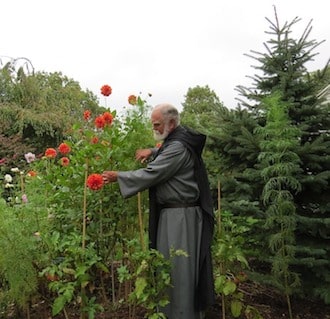
By ‘sustainable behavior,’ our intention was that the essay would focus on types of behavior that promote environmentally sustainable living. Examples of such behaviors are growing one’s own food, being mindful with how one uses energy or water, seeking to minimize food waste, or bicycling as one’s main form of transportation. To read the winning essays from 2018’s essay contest, [click here](https://interfaithsustain.com/essay-contest-catholic-teachings-ecology/).
**ELIGIBILITY:** Participants must be Catholic seminarians.
**LANGUAGE:** All essays must be submitted in English.
**LENGTH:** The essay can up be to two (2) pages long, excluding references.
**DEADLINE FOR SUBMISSION:** June 15, 2019.
**AWARDS:** The winner received US $1,000, the 2nd place received US
$300 and 3rd place received US $200.
**CONTACT**: For questions, please contact Ms. Faygle Train at <essay@interfaithsustain.com>
[](https://interfaithsustain.com/wp-content/uploads/2019/04/madmimi2.jpg)
[](https://interfaithsustain.com/wp-content/uploads/2019/04/madmimi3.jpeg)
## **Why Catholic Teaching & Sustainable Behavior?**
Religious support is key to promoting sustainable behavior. When clergy speak publicly about ecological issues, including pollution, effects of environmental degradation on human health, and animal welfare, it signifies to their entire community that sustainability is an ethical and religious issue.
## **How To Submit An Essay**
The deadline for the 2019 contest has passed. Please stay tuned for information on the 2020 contest topic and instructions.
## **Why Did We Hold This Essay Contest?**
Genesis 2:15 calls on us to be **stewards of God’s creation**, and for this reason, Catholics can take an active role in protecting the planet. When trusted religious sources – including Biblical passages and Pope Francis’ encyclical *Laudato Si’* – endorse positive stewardship teachings consistent with spiritual values, it promotes sustainability as an inherently moral issue. [Recent research](https://psmag.com/environment/how-to-convince-christians-to-take-action-on-climate-change) by two universities confirms that these Christian stewardship sources can increase concern about the environment and climate change. At this pivotal moment in human history, we hope that Catholic seminarians will explore how Catholic social teaching can promote an ecological conversion and sustainable lifestyle transformations.
[](https://interfaithsustain.com/wp-content/uploads/2019/04/madmimi5.jpg)
## **About The Interfaith Center for Sustainable Development (ICSD):**
Based in Jerusalem, ICSD works to catalyze a transition to a sustainable society through the leadership of faith communities. ICSD co-organizes [Symposia on Ecologically Informed Theological Education](https://interfaithsustain.com/about-all-conferences/), including one hosted by Catholic University of America’s School of Theology and Religious Studies. ICSD’s [Faith-Inspired Renewable Energy Project in Africa](https://interfaithsustain.com/faith-inspired-renewable-energy-project-in-africa/) works to create a renewable energy platform based on strategic partnerships between faith institutions and communities in Africa. ICSD’s [Report on Catholic Ecology Courses For Priestly Formation ](https://interfaithsustain.com/wp-content/uploads/2015/07/Report-on-Catholic-Ecology-Courses-in-Catholic-Seminaries.pdf)highlights courses on ecological themes offered at a number of Catholic seminaries in North America, Rome, and the Holy Land.
---
### [Care of Creation](https://interfaithsustain.com/care-of-creation/)
**Published:** July 22, 2016
**Author:** ICSD
**Content:**
**Seminary:** Concordia Seminary
**Location:** 801 Seminary Pl, St. Louis, MO 63105
**Course number:** S847
**Instructor:**
**Website:** [www.csl.edu/](https://www.csl.edu/)
**Course Description**
Recent ecological narratives of our place and purpose within the world have been urged as alternatives to the Christian ‘anthropocentric’ story which in-corporates both dominion over creation and alienation from creation. While these recent narratives make useful contributions to the discussion of the care of creation, they often have misread the Christian story. This course will examine the recent narratives, their reading (or misreading) the Christian story, and identify their positive contributions. It also will reiterate an accurate biblical theology of creation, and explore how a truly Christian theology of creation can enrich the creedal Gospel narrative and, in turn, provide an organic and holistic framework for the Christian life and a sustainable environmental ethic.
---
### [As Pope Visits, Plans Move Forward for Large Solar Field on Church Land in Mozambique](https://interfaithsustain.com/mozambique-press-release-9-2019/)
**Published:** September 4, 2019
**Author:** ICSD
**Content:**
For Immediate Release, September 5, 2019
An MOU and two land-lease agreements were signed for large-scale solar fields on Anglican church lands in Mozambique and Eswatini, as part of the Faith Inspired Renewable Energy project, a collaboration between the Interfaith Center for Sustainable Development (ICSD), renewable energy company Gigawatt Global, and the Anglican Church in Northern Mozambique and Eswatini.
Phillipa Friedland, deputy director of ICSD, signed an MOU in Lichinga, Mozambique with Her Excellency Francisca Domingos Tomas, Governor of Niassa Province. Friedland said, “The overwhelming majority of rural households, schools, and health clinics in Niassa Province lack electricity. Our goal is to significantly increase clean energy generation and help reduce energy poverty in one of the poorest places in the world. Renewable energy production can significantly reduce reliance on diesel and gathered wood, the most polluting fuels, thereby helping to address air pollution and climate change.”
“Electrifying Africa is one of the largest development challenges on earth,” said Josef Abramowitz, CEO and founder of Gigawatt Global.
“There are less than 10 completed utility-scale Photovoltaic (PV) solar fields in all of sub-Saharan Africa, where over 600 million people have no access to electricity. These projects will make an incredible difference in people’s lives, providing green energy as well as rental income to faith communities in these two southern African countries, promoting health and economic development as well.”

Bishop Vicente Msosa of the Anglican Church of Niassa Province said, “The Gigawatt Global/ICSD solar energy project will be most welcomed as the current energy supply is sporadic and insufficient. This clean energy project will spur much needed sustainable development.”
With less than 15% of Mozambicans connected to the electrical grid, most people face chronic poverty. The majority of the population lives on less than $2 a day and many experiencing food insecurity and malnutrition. Mozambique, with a population of 29 million, is greatly impacted by climate change and recently took the brunt of the most powerful storm ever to reach Africa, Cyclone Kenneth.
[](https://interfaithsustain.com/wp-content/uploads/2019/09/Rwanda-Field.jpg)Solar field in Rwanda built by Gigawatt Global in 2013
To learn more about the Faith Inspired Renewable Energy Project, [click here](https://interfaithsustain.com/faith-inspired-renewable-energy-project-in-africa/).
About The Interfaith Center for Sustainable Development
The Interfaith Center for Sustainable Development (ICSD) reveals the connection between religion and ecology and mobilizes faith communities to act. ICSD works on a global basis, with current engagement in Africa, the Middle East, North America, and Europe. ICSD’s work in [The Faith Inspired Renewable Energy Project](https://interfaithsustain.com/faith-inspired-renewable-energy-project-in-africa/) promotes sustainable development through the deployment of solar and wind energy. It brings renewable electricity to Africans, curb climate change, and enable current and future generations to live sustainably. ICSD engages African religious institutions in practicing the ethical imperatives of creation care by facilitating alternative energy development on their lands.
About Gigawatt Global
Gigawatt Global is a multinational renewable energy platform bringing new sources of green power and social development to Africa and other emerging markets. Led by a team of seasoned project developers, financiers, impact investors and solar energy experts, the American-owned Dutch company develops renewable energy installations (solar, wind and hydro) across the African continent. [www.gigawattglobal.com](https://www.gigawattglobal.com/)
---
### [Archive](https://interfaithsustain.com/archive/)
**Published:** December 27, 2017
**Author:** ICSD
**Content:**
Read more about our past events and initiatives. Past initiatives are mostly past due to funding. If you are excited by a program, please do not hesitate to [reach out](mailto:info@interfaithsustain.com) to us.
| Project/ Event & Link | Where | When | Description |
|---|---|---|---|
| [Women’s Interfaith Ecology Project](https://interfaithsustain.com/womens-interfaith-eco-project/) | Israel | 2013-2016 | Engages Christian, Muslim, and Jewish women in the Jerusalem area for inspiring seminars on faith and ecology. We are currently working on a new rollout in 2018. |
| [Holy Land Seminarians Faith & Ecology Project](https://interfaithsustain.com/holy-land-faith-leaders/) | Israel | 2012-2014 | Brings together Muslim, Christian, and Jewish seminary and other students from the Holy Land for interactive seminars on human coexistence and environmental sustainability. |
| [Jerusalem Eco Fair @ First Station](https://interfaithsustain.com/jerusalem-eco-fair/) | Jerusalem, Israel | 2013 - 2014 | Six Jerusalem Eco Fairs at the Jerusalem First Station where Local vendors showcase sustainable sourced & produced food, produce, products as well as initiatives in Jerusalem and beyond. |
| [Faith & Ecology Conference empowered environmental](https://interfaithsustain.com/jerusalem-eco-fair/) | Jerusalem, Israel | 2013 - 2014 | |
| [Rio +20 Earth Summit Statement](https://interfaithsustain.com/faithandscience/) | International/ Israel | 2014 | |
| [Declaration on Climate Change](https://interfaithsustain.com/declaration-on-climate-change/) | Israel | 2011 | |
| [Interfaith Eco Forum](https://interfaithsustain.com/interfaith-eco-forum/) | Jerusalem, Israel | 2011 | Muslim, Jewish and Christian leaders spoke out on environmental issues as a joint panel. The panelists were Bishop William Shomali of the Latin Patriarchate of Jerusalem, Deputy Minister of the Palestinian Authority’s Ministry of Religious Affairs Haj Salah Zuheika, and American Jewish Committee International Director of Inter-religious Affairs Rabbi David Rosen. |
---
### [Essay Contest: Catholic Teachings & Ecology](https://interfaithsustain.com/essay-contest-catholic-teachings-ecology/)
**Published:** March 5, 2018
**Author:** ICSD
**Content:**
The Interfaith Center for Sustainable Development (ICSD) and Studium Theologicum Salesianum– the Salesian Pontifical University Jerusalem Campus conducted the first-ever essay contest for Catholic seminarians to reveal the depth of Catholic teachings on renewable energy.
---
The essay prompt was: What is the basis in Catholic teachings for renewable energy use?
The essays combined personal experience or reflections and citation of sources in Catholic teaching in relation to renewable energy.
**Congratulations to our winners!**
In first place, **Umeh Benneth Chidiebere** from Saints Peter And Paul Major Seminary, Bodija, Ibadan, Nigeria! His essay is a strong combination of personal narrative and insights into Catholic teachings. We are proud to share his winning essay [here](https://interfaithsustain.com/winner-of-the-catholic-seminarian-essay-contest-on-renewable-energy/).
In second place, **Agoabin Javis Zinkeng** from St. Thomas Aquinas Major Seminary, Cameroon! We are proud to share his winning essay [here](https://interfaithsustain.com/second-place-winner-of-the-catholic-seminarian-essay-contest-on-renewable-energy/).
In third place, **Dilip Gnanaprakash** from Kristu Jyoti College, India! We are proud to share his winning essay [here](https://interfaithsustain.com/third-place-winner-of-the-catholic-seminarian-essay-contest-on-renewable-energy/).
We offer our congratulations and thanks to all of the contestants for their hard work and inspiring essays.
---
## **Why Faith & Renewable Energy?**
Globally, over one billion people live without electricity. 80% of them are concentrated in just 20 countries and about 650 million people in Africa lack access to electricity. In paragraph 172 of Laudato Si, Pope Francis talks about taking advantage of abundant solar energy which will require the establishment of mechanisms and subsidies which allow developing countries access to technology transfer, technical assistance and financial resources. Goal 7 of the Sustainable Development Goals calls for ensuring access to affordable, reliable, sustainable and modern energy for all.
Renewable energy production can significantly reduce reliance on the most polluting fuels and gathered wood. Catholic institutions have the potential to educate on and actively help deploy solar and wind fields to bring electricity to their members, reduce indoor air pollution and deforestation, and curb climate change. This contest serves as a platform and vehicle for sharing Catholic perspectives on renewable energy.
The following schools were represented in the contest:
1\) St. Mbaaga’s Major Seminary, Ggaba, Uganda – 18 students
2\) St. Thomas Aquinas’ Major Seminary, Bambui, Cameroon – 14 students
3\) Bigard Memorial Seminary, Enugu, Nigeria – 13 students
4\) Seminary Of All Saints, Uhiele Ekpoma Edo State, Nigeria – 10 students
5\) Seat Of Wisdom Seminary, Owerri, Nigeria – 9 students
6\) Claretian Institute Of Philosophy, Maryland Nekede, Imo State, Nigeria – 7 students
7\) The National Missionary Seminary Of St Paul, Gwagwalada, Abuja, Nigeria – 6 students
8\) Holy Spirit Seminary, Papua New Guinea – 3 students
9\) Salesian Pontifical University, Jerusalem – 3 students
10\) Saints Peter and Paul Major Seminary, Bodija, Ibadan, Nigeria – 2 students
11\) Saint Albert The Great Major Seminary, Idowu-Offoran, Abeokuta, Nigeria – 2 students
12\) St Peters Major Seminary, Malawi – 2 students
13\) Catholic Theological Institute, Papua New Guinea – 2 students
14\) Morning Star College Claret Nivas, India – 1 student
15\) Kristu Jyoti College, India – 1 student
16\) Inter-Congregational Institute Of Philosophy, Human Sciences And Religious Studies, Malawi – 1 student
17\) St. Francis Xavier Major Seminary, Singapore – 1 student
18\) Ss. John Fisher & Thomas More National Seminary, Zimbabwe – 1 student
19\) Chishawasha National Seminary, Zimbabawe – 1 student
20\) Catholic Theological Union, Chicago, USA – 1 student
21\) Moreau Seminary, Congregation Of Holy Cross, USA – 1 student
22\) Boston College School Of Theology And Ministry, USA – 1 student
SUBMISSION: The submission deadline of May 31, 2018 has now passed. By submitting the essay, authors give their consent to ICSD to publish sections of both winning and non-winning essays on the ICSD website and partner sites.
ELIGIBILITY: All participants must be Catholic seminarians.
LANGUAGE: All essays must be submitted in English.
LENGTH: The essay can up be to three pages long excluding references.
DEADLINE FOR SUBMISSION: May 31st, 2018. We are now closed to submissions, having received over 100 essays from seminarians around the world.
AWARDS: The top three winners received monetary awards.
JUDGES: The essay contest was judged by an international panel of Catholic professors, and was comprised of:
- Fr. Matt Coutinou, SDB, Professor of Moral Theology, Studium Theologicum Salesianum– the Salesian Pontifical University Jerusalem Campus
- Fr. Russ Mcdougall, CSC, Rector of Tantur Ecumenical Institute, Jerusalem
- Dr. Celia Deane-Drummond, Director of the Center for Theology, Science, and Human Flourishing and Professor of Theology, University of Notre Dame, Indiana
- Fr. Prem Xalxo, SJ, Associate Professor, Faculty of Theology, Pontifical Gregorian University, Rome
- Br. Paul Colemon, Librarian, Capuchin Friary, Jerusalem
---
Learn more about our engagements with renewable energy in Africa & the education of faith leaders on environment & ecology.
[**Our Projects**](https://interfaithsustain.com/channels-of-action/)
---
### [Interfaith Eco Video: One Home](https://interfaithsustain.com/all-faith-ecology-videos/interfaith-eco-video-one-home/)
**Published:** February 26, 2018
**Author:** ICSD
**Content:**
“One Home ” is a unique interfaith eco video featuring world religious leaders speaking out on environmental sustainability. Faith leaders including the Dalai Lama, Patriarch Bartholomew, and Chief Rabbi Sacks deliver a message of hope and inspiration on the importance of protecting the earth, our common home.
In addition to this video, the Interfaith Center for Sustainable Development has created a video collection of religious figures speaking and teaching on ecology. Containing hours of content from religious leaders and teachers of the world’s major faiths, the collection can be found [here](https://interfaithsustain.com/all-faith-ecology-videos/).
Please share this video with your family, your friends, and your community and help promote a sustainable future!
The video has been produced based on the support of the Konrad Adenauer Stiftung and the Julia Burke Foundation.
---
Check out what keeps us busy
[**Our Projects**](https://interfaithsustain.com/channels-of-action/)
---
### [Midwest Symposium on Ecologically Informed Theological Education 10/2017](https://interfaithsustain.com/midwest-symposium-oct-2017/)
**Published:** November 26, 2017
**Author:** ICSD
**Content:**
**When: October 17-19, 2017**
**Where: Methodist Theological School in Ohio, Delaware, OH**
We were pleased to partner on The Midwest Symposium on Ecologically Informed Theological Education, which was held on the Methodist Theological School in Ohio’s (MTSO) campus in Delaware, Ohio from October 18th to 19th with 75 people in attendance from seminaries around the Midwest and beyond.
The Symposium began with an optional morning tour of the Byrd Polar and Climate Research Center at The Ohio State University. Participants walked through freezers and saw first-hand the climate record of the past million years contained in glacial ice core records. Dr. Lonnie Thompson, Distinguished Professor of Earth Sciences at OSU and one of the leading climate scientists in the U.S., provided a keynote address on climate science. For many faculty it was the first time they heard from a climate scientist in-person.
The symposium continued with a five-person panel of scientists on other ecological issues like algal blooms in Lake Erie and food security in Ohio.
The second day began with an interfaith panel with representatives from Islam, Judaism, Shinto, Unitarian Universalism and indigenous traditions. The third panel explored strategies for integrating ecological themes into theological education. It involved Christian professors of eco-theology and others.
The symposium also included two series of breakout workshops on place-based education, mountain top removal, the Earth Charter, urban farming, and other topics. The symposium concluded with a keynote by MTSO Dean Valerie Bridgeman, focusing on theological education in the context of ecological challenges.
The Symposium was co-organized by MTSO, the Green Seminary Initiative, and our organization, based on support from the Henry Luce Foundation and The Julia Burke Foundation.
---
The Southeast Symposium on Ecologically Informed Theological Education was held in March 2018 at the Columbia Theological Seminary, Decatur, Georgia (near Atlanta, GA). Click on the button below for more information.
[**Faith & Eco Symposium Southeast 2018**](https://interfaithsustain.com/engaging-seminaries/southeast2018symposium/)
---
Impressions




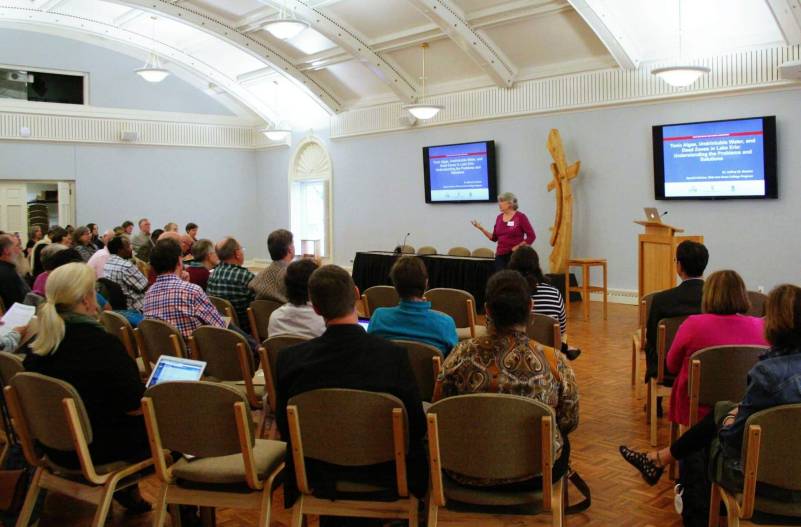
IMG_3020
IMG_1165

---
- [ 
### Alternate Food Systems as a Social Movement: Thelma Velez
](#md-FHS7bc2Q "Alternate Food Systems as a Social Movement: Thelma Velez")
- [ 
### Minister Susan Ritchie Discusses Value of Nature: Do Birds Enjoy Singing?
](#HNmvDW3ItRM "Minister Susan Ritchie Discusses Value of Nature: Do Birds Enjoy Singing?")
- [ 
### The Earth and Consumerism in Islam
](#DKqVZ3WA5iQ "The Earth and Consumerism in Islam")
- [ 
### Climate Change & Our Future with Dr. Lonnie Thompson
](#UgMtEwRdjqE "Climate Change & Our Future with Dr. Lonnie Thompson")
- [ 
### Food as a Sacred Gift: Dr. Laurel Kearns
](#nnrckfgjt_4 "Food as a Sacred Gift: Dr. Laurel Kearns")
- [ 
### Importance of Harmony in Fighting Climate Change: Rev. Ken Kitatani
](#hfrQO8lFMQg "Importance of Harmony in Fighting Climate Change: Rev. Ken Kitatani")
[Load more](#)
---
### [Eco Tours in Israel](https://interfaithsustain.com/ecotourism/)
**Published:** July 21, 2013
**Author:** ICSD
**Content:**
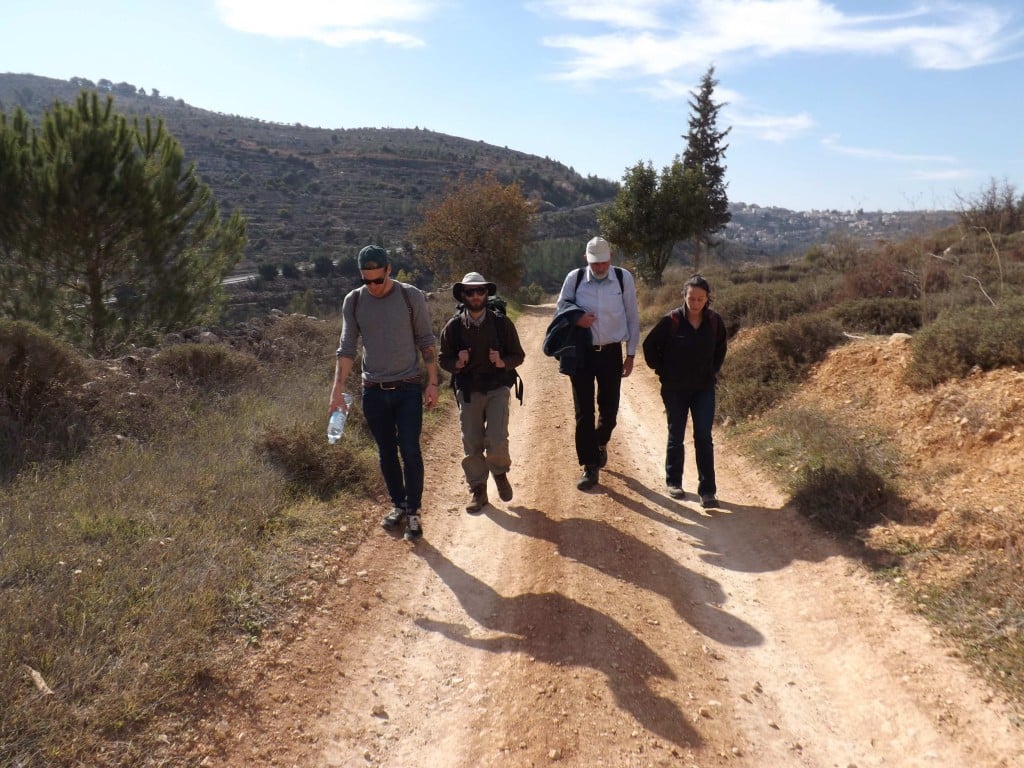
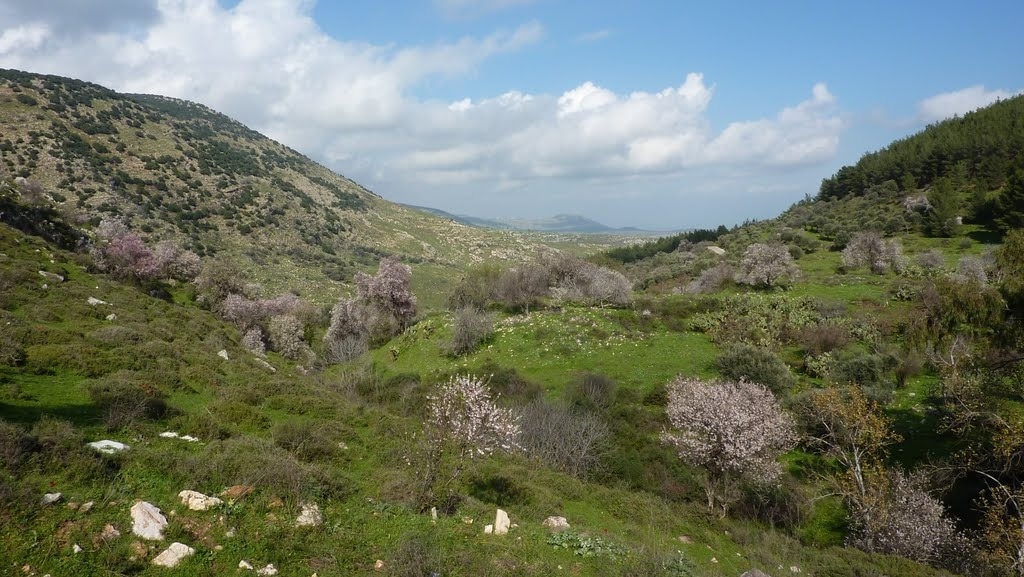
Ecotours small banner1
Ecotours Banner sm2
Ecotours banner sm3
Ecotours banner sm4
Ecotours banner sm6

Our programs give visitors to Israel the opportunity to head off the beaten-path and to experience a side of Israel rarely seen by visitors and students.
We expose groups first-hand to Israel’s natural beauty, as well as its living, breathing culture of innovation.
Our experienced tour guides offer hikes, eco-volunteering, site tours, and text study to expose you and/or your group to the natural beauty of the Holy Land and to its expanding culture of environmental innovation.
Individuals, groups or families can custom-design their tours, choosing from a variety of themes.
The tours are offered within two tracks:
- [Eco Israel Tours](https://www.ecoisraeltours.com/ "Eco Israel Tours"): Tours across Israel with education on Ecology
- [Jewish Eco Seminars](https://www.jewishecoseminars.com/ "Jewish Eco Seminars"): Tours across Israel with education on Judaism & Ecology
---
We also offer organizing Interfaith Panels in Jerusalem for small and large groups of visitors
[**Learn More**](https://interfaithsustain.com/interfaith-panels/)
---
### [“Returning to Sinai” — A Prophetic Call for Climate Justice and Ceremony of Repentance](https://interfaithsustain.com/returning-to-mt-sinai/)
**Published:** August 24, 2022
**Author:** ICSD
**Content:**

# Multifaith Events at the COP 27 UN Climate Conference in Egypt
**Between November 6th and 18th, 2022, the UN climate conference COP 27 took place place on the Sinai Peninsula, in Sharm El Sheikh, Egypt. Religious communities and religious leaders have a key role to play in addressing climate change and climate justice, which requires deep transformation within society. The knowledge of what changes are critically needed to diminish long-term harm to the planet is readily available. However, bringing about change in action demands deeper changes in attitude, a change of heart. This has been the domain of religions for millennia. Religions are sources of inspiration for the transformation of heart and the ensuing changes of attitude.**
[**Learn about our COP28 Faith Pavilion**](https://interfaithsustain.com/cop28-un-climate-conference/)
To support, challenge and inspire discussions during COP 27 at Sharm El Sheikh, ten interfaith climate events took place in Sharm El Sheik, Jerusalem, London, Rishikesh (India) and elsewhere that were heart-stirring, transformative and a moment of inspiration for religious communities and for humanity. Religious leaders called for a reexamination of deep-seated attitudes and for identifying ways to transform these attitudes for the wellbeing of Earth, our common home.
Mount Sinai is a mountain whose memory and meaning loom large as a place of revelation in the collective consciousness of Christianity, Judaism, Islam and others. As an ancient sacred space, it was the site of prophetic experience, and receiving God’s message, for the prophets Moses and Elijah in all three Abrahamic traditions, and the prophet Muhammed in the Muslim tradition. COP 27 taking place in Sinai reminded humanity of our sacred responsibility to care for God’s creation (Find out about [COP28 here](https://interfaithsustain.com/cop28-un-climate-conference/)).
[**Donate to Support this Project**](https://interfaithsustain.com/donate/)
- [ 
### Bringing Religion to Bear on the Climate Emergency: Insights from the UN Climate Conference COP 27
](#LarAtlFnjtA "Bringing Religion to Bear on the Climate Emergency: Insights from the UN Climate Conference COP 27")
- [ 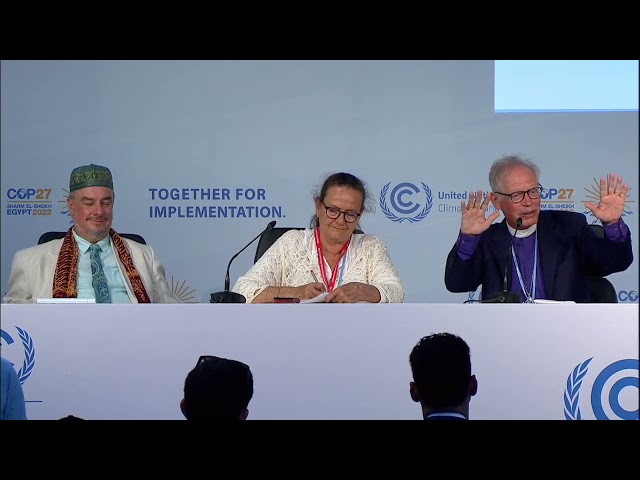
### Religious Figures Share Concrete Steps for Climate Action Within Faith Communities at COP 27, Egypt
](#-inliO5csEw "Religious Figures Share Concrete Steps for Climate Action Within Faith Communities at COP 27, Egypt")
- [ 
### Ten Universal Principles for Climate Justice: Faith Leaders Share at UN Climate Conference COP 27
](#2upGxN5QBZ4 "Ten Universal Principles for Climate Justice: Faith Leaders Share at UN Climate Conference COP 27")
[Load more](#)
We come to Sinai in a movement of repentance and quest. We seek a new vision for humanity and its endangered existence, and we seek to receive and amplify a message of life-sustaining living and habits that humanity needs to hear today. In this spirit, the project partners brought together premier religious leaders from the world’s major religions to put forth a prophetic interreligious call to action: “[Ten Universal Principles for Climate Justice.](https://interfaithsustain.com/ten-principles-for-climate-repentance/)”
We are not seeking to create one religion, but rather to bring religious institutions from many different faiths together in joint action for protecting God’s creation.
[**Learn more about the Sinai Climate Partnership for Houses of Worship**](https://interfaithsustain.com/sinai-climate-partnership/)
**Preaching and Teaching on Climate Change**
As world leaders and climate activists meet in November for the U.N.’s COP27, preachers and congregations can add their voices to the calls for climate justice.
In an effort to encourage clergy to teach and preach on climate change, we have made available the following free resources:
- [Abraham and Torah teachings on Climate Change](https://interfaithsustain.com/climate-change-abraham-and-cop-27/)
- [COP27 – Solidarity And Endurance For Climate Justice: Malachi 4 And Luke 21](https://interfaithsustain.com/ecopreacher-resources/cop27-solidarity-and-endurance-for-climate-justice/)
- For materials on Islam and climate change, click [here](https://ifees.org.uk/wp-content/uploads/2019/12/muslim_green_guide.pdf).
- For materials on Hinduism and climate change, click [here](https://www.hinduclimateaction.org/?page_id=1861).
**Interfaith Climate Events at COP 27**
The Interfaith Center for Sustainable Development (ICSD), together with partners, organized four multifaith climate events at COP 27, including in the press conference space in the Blue Zone. The events incorporated concrete examples of how religious communities are actively meeting the climate challenge, and featured concrete initiatives that translate the broader spiritual practices into action.
[**Learn about our COP28 Faith Pavilion**](https://interfaithsustain.com/cop28-un-climate-conference/)
The Sinai Climate Call received [media coverage](https://interfaithsustain.com/news/) in hundreds of media outlets, reaching millions of people.


Mount Sinai
COP 27
Press conference
Sinai view
The titles of the four sessions were:
- Interfaith Religious Figures Call for Climate Action
- Religious Figures Share Concrete Steps for Climate Action Within Faith Communities
- Faith Leaders Share [Ten Universal Principles for Climate Justice](https://climaterepentance.com/the-spiritual-principles/).
- Bringing Religion to Bear on the Climate Emergency.
Speakers were His Excellency Metropolitan Serafim Kykotis, vice president of the Pan Africa Council of Churches; Bishop Andreas Holmberg of the Stockholm Diocese of the Church of Sweden; James Sternlicht, founder and CEO of Peace Department; Gloria Ushigua, director of the Association of Sapara Women; Rev. Susan Hendershot, president of Interfaith Power and Light; Rabbi Yonatan Neril, founding director of the Interfaith Center for Sustainable Development; Fr. Eduardo Agosto of the Laudato Si’ Movement; Nigel Savage, founder and global ambassador of Hazon; ; Dr. Fachruddin Majeri Mangunjaya, Chairman, Centre for Islamic Studies, Universitas Nasional, Jakarta; Imam Saffet Catovic of Islamic society of North America; Matthias Boehning of the World Evangelical Alliance; Sr. Maureen Goodman and Valeriane Bernard of Brahma Kumaris; climate scientist Paul Beckwith; and Regina Valdez of the Center for Sustainable Development at Columbia University. David Miron Wapner, chair of the Interfaith Center for Sustainable Development, moderated the sessions.
**Follow Up and Outreach:**
[Learn more about the Sinai Climate Partnership for Houses of Worship](https://interfaithsustain.com/sinai-climate-partnership/)
**Founding Partners**: The event will be coordinated by a coalition of organizations:
- The [Elijah Interfaith Institute](https://elijah-interfaith.org/) and its *Board of World Religious Leaders* brings together some of the world’s most prominent religious figures from Judaism, Islam, Christianity, Buddhism and the Religions of India. The London climate repentance ceremony involved world religious leaders, primarily from the Elijah Board of World Religious Leaders.
- [The Interfaith Center for Sustainable Development](https://interfaithsustain.com/) reveals the connection between religion and ecology and mobilizes people to act.
- The [Peace Department](https://peacedepartment.global/) is a US non-profit designed to solve global coordination failures by making philanthropy and impact investing effective and scalable.
- Climate activist Yosef Abramowitz serves as special advisor to the initiative.
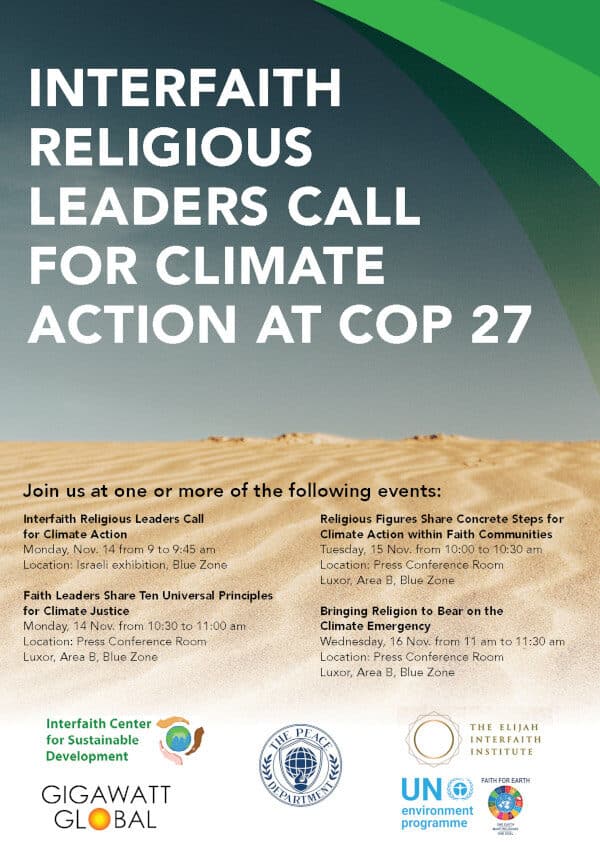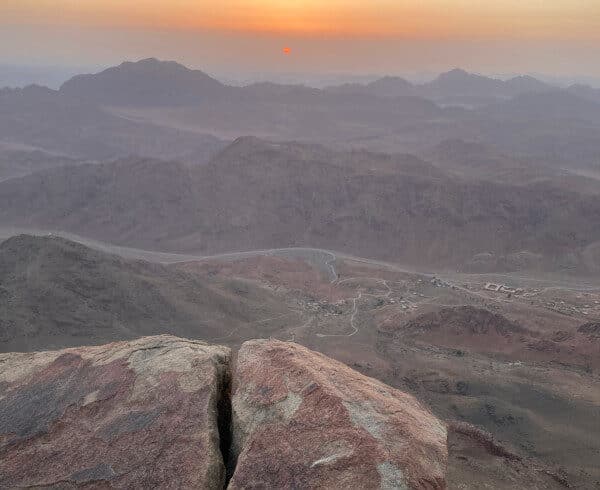
**Other Partners**: The [UN Environment Program’s Faith for Earth Initiative](https://www.unep.org/about-un-environment-programme/faith-earth-initiative/why-faith-and-environment-matters) works to strategically engage with faith-based organizations and partner with them to collectively achieve the Sustainable Development Goals (SDG) and fulfill the objectives of the 2030 Agenda.
***Goals of the Interfaith Climate Events***
- Inspire and unleash the power of religions, religious leaders and faith communities as change agents for climate action and as sources for inspiring and motivating discussions among politicians and civil bodies.
- Motivate action among religious communities and the wider public to curb climate change.
- Invite media to cover religious leaders’ advocacy in combating climate change.
- Promote a coalition of religious leaders to work together for climate action.
- Generate new faith-inspired climate education materials for broad use.
[**Jerusalem Interfaith Climate Declaration**](https://interfaithsustain.com/jerusalem-interfaith-climate-declaration/)




---
### [Site Map](https://interfaithsustain.com/site-map/)
**Published:** July 3, 2015
**Author:** ICSD
**Content:**
- **[2026](https://interfaithsustain.com/2026/):** Jan Feb Mar [Apr](https://interfaithsustain.com/2026/04/ "April 2009") May Jun Jul Aug Sep Oct Nov Dec
- **[2025](https://interfaithsustain.com/2025/):** Jan Feb Mar Apr May Jun Jul Aug Sep Oct Nov [Dec](https://interfaithsustain.com/2025/12/ "December 2009")
- **[2024](https://interfaithsustain.com/2024/):** Jan Feb Mar Apr [May](https://interfaithsustain.com/2024/05/ "May 2009") Jun Jul Aug Sep Oct Nov Dec
- **[2023](https://interfaithsustain.com/2023/):** Jan Feb [Mar](https://interfaithsustain.com/2023/03/ "March 2009") Apr May Jun [Jul](https://interfaithsustain.com/2023/07/ "July 2009") Aug [Sep](https://interfaithsustain.com/2023/09/ "September 2009") Oct Nov Dec
- **[2022](https://interfaithsustain.com/2022/):** [Jan](https://interfaithsustain.com/2022/01/ "January 2009") [Feb](https://interfaithsustain.com/2022/02/ "February 2009") [Mar](https://interfaithsustain.com/2022/03/ "March 2009") [Apr](https://interfaithsustain.com/2022/04/ "April 2009") [May](https://interfaithsustain.com/2022/05/ "May 2009") [Jun](https://interfaithsustain.com/2022/06/ "June 2009") [Jul](https://interfaithsustain.com/2022/07/ "July 2009") [Aug](https://interfaithsustain.com/2022/08/ "August 2009") [Sep](https://interfaithsustain.com/2022/09/ "September 2009") [Oct](https://interfaithsustain.com/2022/10/ "October 2009") [Nov](https://interfaithsustain.com/2022/11/ "November 2009") [Dec](https://interfaithsustain.com/2022/12/ "December 2009")
- **[2021](https://interfaithsustain.com/2021/):** Jan [Feb](https://interfaithsustain.com/2021/02/ "February 2009") [Mar](https://interfaithsustain.com/2021/03/ "March 2009") [Apr](https://interfaithsustain.com/2021/04/ "April 2009") [May](https://interfaithsustain.com/2021/05/ "May 2009") [Jun](https://interfaithsustain.com/2021/06/ "June 2009") [Jul](https://interfaithsustain.com/2021/07/ "July 2009") [Aug](https://interfaithsustain.com/2021/08/ "August 2009") [Sep](https://interfaithsustain.com/2021/09/ "September 2009") [Oct](https://interfaithsustain.com/2021/10/ "October 2009") [Nov](https://interfaithsustain.com/2021/11/ "November 2009") [Dec](https://interfaithsustain.com/2021/12/ "December 2009")
- **[2020](https://interfaithsustain.com/2020/):** Jan [Feb](https://interfaithsustain.com/2020/02/ "February 2009") Mar [Apr](https://interfaithsustain.com/2020/04/ "April 2009") May Jun [Jul](https://interfaithsustain.com/2020/07/ "July 2009") Aug Sep Oct Nov Dec
- **[2019](https://interfaithsustain.com/2019/):** [Jan](https://interfaithsustain.com/2019/01/ "January 2009") [Feb](https://interfaithsustain.com/2019/02/ "February 2009") Mar Apr [May](https://interfaithsustain.com/2019/05/ "May 2009") Jun [Jul](https://interfaithsustain.com/2019/07/ "July 2009") [Aug](https://interfaithsustain.com/2019/08/ "August 2009") [Sep](https://interfaithsustain.com/2019/09/ "September 2009") [Oct](https://interfaithsustain.com/2019/10/ "October 2009") [Nov](https://interfaithsustain.com/2019/11/ "November 2009") Dec
- **[2018](https://interfaithsustain.com/2018/):** [Jan](https://interfaithsustain.com/2018/01/ "January 2009") Feb Mar Apr May [Jun](https://interfaithsustain.com/2018/06/ "June 2009") [Jul](https://interfaithsustain.com/2018/07/ "July 2009") [Aug](https://interfaithsustain.com/2018/08/ "August 2009") Sep [Oct](https://interfaithsustain.com/2018/10/ "October 2009") [Nov](https://interfaithsustain.com/2018/11/ "November 2009") [Dec](https://interfaithsustain.com/2018/12/ "December 2009")
- **[2017](https://interfaithsustain.com/2017/):** [Jan](https://interfaithsustain.com/2017/01/ "January 2009") Feb Mar [Apr](https://interfaithsustain.com/2017/04/ "April 2009") [May](https://interfaithsustain.com/2017/05/ "May 2009") [Jun](https://interfaithsustain.com/2017/06/ "June 2009") [Jul](https://interfaithsustain.com/2017/07/ "July 2009") Aug [Sep](https://interfaithsustain.com/2017/09/ "September 2009") Oct Nov [Dec](https://interfaithsustain.com/2017/12/ "December 2009")
- **[2016](https://interfaithsustain.com/2016/):** [Jan](https://interfaithsustain.com/2016/01/ "January 2009") [Feb](https://interfaithsustain.com/2016/02/ "February 2009") [Mar](https://interfaithsustain.com/2016/03/ "March 2009") Apr [May](https://interfaithsustain.com/2016/05/ "May 2009") [Jun](https://interfaithsustain.com/2016/06/ "June 2009") [Jul](https://interfaithsustain.com/2016/07/ "July 2009") Aug [Sep](https://interfaithsustain.com/2016/09/ "September 2009") [Oct](https://interfaithsustain.com/2016/10/ "October 2009") Nov [Dec](https://interfaithsustain.com/2016/12/ "December 2009")
- **[2015](https://interfaithsustain.com/2015/):** [Jan](https://interfaithsustain.com/2015/01/ "January 2009") [Feb](https://interfaithsustain.com/2015/02/ "February 2009") [Mar](https://interfaithsustain.com/2015/03/ "March 2009") Apr May [Jun](https://interfaithsustain.com/2015/06/ "June 2009") [Jul](https://interfaithsustain.com/2015/07/ "July 2009") Aug [Sep](https://interfaithsustain.com/2015/09/ "September 2009") [Oct](https://interfaithsustain.com/2015/10/ "October 2009") Nov [Dec](https://interfaithsustain.com/2015/12/ "December 2009")
- **[2014](https://interfaithsustain.com/2014/):** [Jan](https://interfaithsustain.com/2014/01/ "January 2009") Feb [Mar](https://interfaithsustain.com/2014/03/ "March 2009") [Apr](https://interfaithsustain.com/2014/04/ "April 2009") [May](https://interfaithsustain.com/2014/05/ "May 2009") [Jun](https://interfaithsustain.com/2014/06/ "June 2009") [Jul](https://interfaithsustain.com/2014/07/ "July 2009") [Aug](https://interfaithsustain.com/2014/08/ "August 2009") [Sep](https://interfaithsustain.com/2014/09/ "September 2009") [Oct](https://interfaithsustain.com/2014/10/ "October 2009") [Nov](https://interfaithsustain.com/2014/11/ "November 2009") [Dec](https://interfaithsustain.com/2014/12/ "December 2009")
- **[2013](https://interfaithsustain.com/2013/):** Jan Feb Mar Apr May Jun [Jul](https://interfaithsustain.com/2013/07/ "July 2009") [Aug](https://interfaithsustain.com/2013/08/ "August 2009") Sep [Oct](https://interfaithsustain.com/2013/10/ "October 2009") [Nov](https://interfaithsustain.com/2013/11/ "November 2009") [Dec](https://interfaithsustain.com/2013/12/ "December 2009")
- **[2012](https://interfaithsustain.com/2012/):** Jan Feb Mar Apr [May](https://interfaithsustain.com/2012/05/ "May 2009") Jun Jul Aug Sep Oct Nov Dec
- **[2011](https://interfaithsustain.com/2011/):** Jan Feb Mar Apr May Jun [Jul](https://interfaithsustain.com/2011/07/ "July 2009") Aug Sep Oct Nov Dec
---
### [Reflecting on The World Economic Forum](https://interfaithsustain.com/world-economic-forum/)
**Published:** July 23, 2023
**Author:** ICSD
**Content:**
The Interfaith Center for Sustainable Development has engaged in multiple World Economic Forum (WEF) events through the participation of its executive director, [Rabbi Yonatan Neril](https://interfaithsustain.com/yonatan-neril/ "Rabbi Yonatan Neril"). He attended the WEF Annual Meeting in Davos, Switzerland, in January 2023, and the WEF Regional Forum in Jordan in 2019.
Here are some ICSD highlights from the 2023 WEF Annual Meeting:
The meeting opened with a moving musical performance focused on saving the coral reefs of the Red Sea. Musicians and speakers from Saudi Arabia, Jordan, Israel, and many countries performed and spoke in the “I Sea You” event. Nouf Alosaimi, a Saudi female scuba diving enthusiast and head of Red Sea Citizen, opened the performance, which was conceived by the Israeli singer Noa Barak.
Rabbi Neril was one of the speakers at “The Custodians of the Earth” dinner in Davos, which represented an effort by the WEF to put indigenous and religious voices front and center.
This session included presentations on how indigenous and faith communities are an important part of ecological solutions. The session followed the release of a new WEF report, “[Embedding Indigenous Knowledge in the Conservation and Restoration of Landscapes](https://www.weforum.org/reports/embedding-indigenous-knowledge-in-the-conservation-and-restoration-of-landscapes/ "Embedding Indigenous Knowledge in the Conservation and Restoration of Landscapes").”
At “The Custodians of the Earth” dinner, cellist Yo-Yo Ma performed as Helena Gualinga told a story. Gualinga is an Ecuadorian environmental and human rights activist from the Kichwa Sarayuku community in Pastaza, Ecuador.
She has become a spokesperson for the Sarayuku indigenous community, raising awareness by exposing the conflict between oil companies and her community, through her work in local schools as well as with the international community.
There were also participants from the religion and ecology movement whose ongoing work engages with people in philanthropy, business, and government.
Rabbi Neril also spoke at an interfaith Vigil for Justice and Peace at the conference, organized by Karen Tse, founder and director of International Bridges to Justice (IBJ). The event, held just outside the WEF, included speakers from many faith traditions.
Over 50 heads of state and government attended the full Annual Meeting, as well as more than 1,500 leaders from the private sector, 500 media leaders, and hundreds of representatives from NGOs, academia, labor organizations, Indigenous communities, and religious institutions.
Of the 263 sessions that took place, dozens focused on ecological sustainability, and were hosted by the WEF’s Center for Nature and Climate and the WEF’s Global Plastic Action Partnership, which focused on an emerging global plastics treaty.
The WEF was founded in 1971 by Klaus Schwab, and has been a place where political leaders have met and occasionally promoted peace initiatives, including between Greeks and Turks in 1988, between white and black South Africans in 1992, and between Israelis and Palestinians in 1994. The annual conference has been going on for 52 years.
Davos is located in the Swiss Alps, two hours east of Zurich near the border with Austria. Davos itself is experiencing the impact of human-caused climate change. Temperatures in the Alps are rising around twice as fast as the global average.
If [greenhouse gas emissions](https://interfaithsustain.com/decarbonization/ "greenhouse gas emissions") continue to rise, the Alps glaciers are expected to lose more than 80% of their current mass by 2100. Such a glacial retreat will have a major impact on Switzerland and Europe.
While some participants arrived via private jets, helicopters, or limousines, many participants (including Rabbi Neril) took trains from Zurich to Davos. The trains are powered by renewable hydroelectric energy, which makes this a unique zero carbon emissions transportation option.
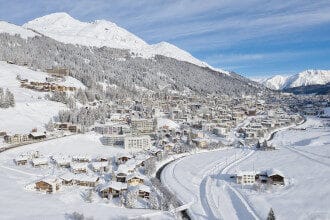
---
### [Houses of Worship Greening Project](https://interfaithsustain.com/houses-of-worship-greening-project/)
**Published:** November 26, 2018
**Author:** ICSD
**Content:**
This Project engages three religious institutions in Jerusalem –a church, mosque, and synagogue, or a seminary, in a “greening” process of both the physical building and grounds, as well as the educational content communicated to the congregants. One Muslim, Jewish, and Christian religious institution will be involved. ICSD will bring together clergy from each of the institutions involved in the process.
The project will create models for the greening of Jerusalem religious institutions and will undertake to educate their leaders and members on practical environmental actions based on religious teachings. It seeks to empower religious leaders and faith communities in Jerusalem to promote sustainable development at the community level. It will also create common ground and lead to positive change among Muslims, Jews, and Christians, Palestinian and Israelis.
## **Why is it needed?**
Jerusalem is one of the oldest cities in the world and is a holy city for all three major Abrahamic religions;Islam, Christianity, and Judaism. The city hosts myriad historical, archaeological, and religious sites. Since billions of people hold the city close to their hearts, and millions visit it each year Jerusalem should serve as a global model for faith-based initiatives promoting environmental sustainability.
In addition, religious institutions in Jerusalem are unintentional contributing to local and global environmental problems. For example, the wastewater of Jerusalem’s holiest sites— the Al Aksa mosque, the Western Wall, and the Church of the Holy Sepulcher, flows as raw sewage from the outskirts of Jerusalem to the Dead Sea. With great irony, the sewage of people who pray pollutes the pathways of the Promised Land. Most religious institutions and people of faith are unaware or unconcerned about what happens when they flush the toilet, take a shower, or wash their hands in one third of the city.
Finally, a significant need exists to break down religious, ethnic, and cultural barriers and support a shared and collective approach. Bringing the two sides to a place of respect and understanding by finding common areas for collaboration may prove effective in promoting peace. In the Holy Land, Christians, Jews, and Muslims live on the same land, breathe the same air, and drink the same water. Environmental challenges transcend borders and religious affiliations and therefore exist as an arena of joint, urgent concern among people of diverse nationalities and faiths. Yet cultural and social separation poses a challenge when tackling issues jointly. ICSD seeks to address some of the root issues underlying violence in the Holy Land, including ignorance of the other and lack of concern for one’s surroundings. Acknowledging that much of Jerusalem’s population identifies with a faith tradition, ICSD utilizes the influence of religion to promote coexistence and environmental sustainability. ICSD has identified effective approaches in bringing students and community activists together to transcend their differences in the name of environmental and social justice.
Faith communities represent a key yet under-tapped avenue for climate action globally, with great potential transform people’s behavior and influence their societies and governments. Prior to Pope Francis’ Encyclical and the launch of the Islamic Declaration on Climate Change, faith communities had yet to take a major role in inspiring a response to climate change. It is critical to build on these gains to promote further work in the area.
## **Our aims**
- Mobilize and advance collaboration amongst religious communities in Jerusalem to enable them to become leaders of a faith-based shift to sustainable living and to cultivate a sense of identification with and concern for sustainability issues.
- Work to overcome inter-religious strife by promoting interfaith cooperation, dialogue, and mutual respect through shared ownership of goals that further ecological sustainability and a climate of coexistence in Jerusalem
- Showcase Jerusalem religious institutions as pioneers of environmental sustainability and create an international multiplier effect – utilizing online and international media.
- Leverage the moral authority of Jerusalem religious figures to promote sustainable living and co-existence.
- Transform Jerusalem from a symbol of conflict and strife into a model for co-existence and responsible, sustainable living by creating an avenue for coexistence that brings together religious leaders from three religions and multiple ethnicities to co-operate and share the process.
[Interfaith Greening of Jerusalem Religious Institutions Proposal 2019](https://interfaithsustain.com/wp-content/uploads/2018/11/Interfaith-Greening-of-Jerusalem-Religious-Institutions-Proposal-2019.pdf)
---
### [Subscribe to our Blog](https://interfaithsustain.com/subscribe-to-our-blog/)
**Published:** March 14, 2016
**Author:** ICSD
**Content:**
---
### [Religion and Sustainable Choices](https://interfaithsustain.com/religion-and-sustainable-choices/)
**Published:** June 18, 2020
**Author:** ICSD
**Content:**
- [ 
### Flushing Candy vs Faith
](#yPko5HbcHAw "Flushing Candy vs Faith")
- [ 
### The Garden of Eatin': Sustainable Eating and Religion
](#45FAJzCZYPM "The Garden of Eatin': Sustainable Eating and Religion")
- [ 
### Spirituality vs Our Consumer Society
](#U-4lbXEJCfQ "Spirituality vs Our Consumer Society")
- [ 
### Tractors and Sustainable Land Use in the Holy Land
](#GLuDjFnPEww "Tractors and Sustainable Land Use in the Holy Land")
- [ 
### The Water Crisis of Megacities
](#j2cQ6zYVARc "The Water Crisis of Megacities")
- [ 
### Dharma and Sustainability: Insights Into Hindu Ecology
](#KgyNJS8vrzg "Dharma and Sustainability: Insights Into Hindu Ecology")
[Load more](#)
---
### [Faith, Sustainability, and Innovation](https://interfaithsustain.com/faith-sustainability-and-innovation/)
**Published:** June 18, 2020
**Author:** ICSD
**Content:**
- [ 
### This Ship is Made Completely from Ocean Plastic Pollution
](#gXqJwxZbUlE "This Ship is Made Completely from Ocean Plastic Pollution")
- [ 
### This Young Woman Cares for God's Creation
](#vkya_E2bgk0 "This Young Woman Cares for God's Creation")
- [ 
### Religion and Desalination: Burning Oil to Make Fresh Water?
](#YM3UCyUO9bE "Religion and Desalination: Burning Oil to Make Fresh Water?")
- [ 
### Recycled Water in Israel!
](#pwVzwe3GKnI "Recycled Water in Israel!")
- [ 
### Water and Sustainability: Conservation, Innovation, and Israeli Policy
](#P68h8n35jBI "Water and Sustainability: Conservation, Innovation, and Israeli Policy")
- [ 
### High Speed Trains and Green Transportation in Israel
](#cLKwemI92wg "High Speed Trains and Green Transportation in Israel")
[Load more](#)
---
### [Climate Videos](https://interfaithsustain.com/climate-videos/)
**Published:** July 30, 2016
**Author:** ICSD
**Content:**
- [ 
### Hope For Our Future
](#KIYd6dLK_XQ "Hope For Our Future")
- [ 
### Creation Care 2: Living in Balance with Nature
](#mHwwhM7Nexo "Creation Care 2: Living in Balance with Nature")
- [ 
### Rabbi Yonatan Neril: 6 billion religious community are the “sleeping giant of climate action”
](#uEuBRFe-zhI "Rabbi Yonatan Neril: 6 billion religious community are the “sleeping giant of climate action”")
- [ 
### A Jewish Approach to Climate Change – Rabbi Yonatan Neril
](#U7HehvNLTfs "A Jewish Approach to Climate Change – Rabbi Yonatan Neril")
- [ 
### Sitting In An Idle Car While Texting
](#Ru3avKpS4fU "Sitting In An Idle Car While Texting")
- [ 
### Greenland Is Melting
](#uCdS6mXu-WE "Greenland Is Melting")
[Load more](#)
**ICSD works on a global basis, with current engagement in Africa, the Middle East, North America, and Europe.**
---
### [Zoroastrian Ecology Videos](https://interfaithsustain.com/zoroastrian-ecology-videos/)
**Published:** February 1, 2023
**Author:** ICSD
**Content:**
- [ 
### "Zoroastrianism and the Environment" - Ervad Yazad C. Unwalla (June 2, 2021)
](#pPy9n2uWuik ""Zoroastrianism and the Environment" - Ervad Yazad C. Unwalla (June 2, 2021)")
- [ 
### Zoroastrianism and the Environment by Prof. Soroosh Sorooshian
](#4hcx7QJj4D0 "Zoroastrianism and the Environment by Prof. Soroosh Sorooshian")
- [ 
### Can Zoroastrianism Solve Climate Change ? (7WZYC)
](#OYNLDaRrXjw "Can Zoroastrianism Solve Climate Change ? (7WZYC)")
- [ 
### Environmental Concerns and Female Empowerment \| 66th Commission on the Status of Women Conference
](#OHqG4na7KIU "Environmental Concerns and Female Empowerment | 66th Commission on the Status of Women Conference")
- [ 
### Ava - Waters of Life: Onward from the AVA project at the Parliament of the World’s Religions
](#nDpAVcfVPCA "Ava - Waters of Life: Onward from the AVA project at the Parliament of the World’s Religions")
- [ 
### Deep Ecology in Zoroastrianism
](#1-7waYHkNTw "Deep Ecology in Zoroastrianism")
[Load more](#)
**ICSD works on a global basis, with current engagement in Africa, the Middle East, North America, and Europe.**
---
### [Hindu on Ecology](https://interfaithsustain.com/hindu-on-ecology/)
**Published:** January 4, 2015
**Author:** ICSD
**Content:**
- [ 
### Why This City Banned Meat Forever?
](#kodFwalDhyU "Why This City Banned Meat Forever?")
- [ 
### Colorful flags in Himalayas are turning white #sustainability
](#5p4oYkbtz3c "Colorful flags in Himalayas are turning white #sustainability")
- [ 
### The Sacrifice Of 363 Bishnois.
](#9q7SG0SmTbQ "The Sacrifice Of 363 Bishnois.")
- [ 
### How Flowers Are Saving 400M lives!
](#ZjsrUrPi1Bc "How Flowers Are Saving 400M lives!")
[Load more](#)
**ICSD works on a global basis, with current engagement in Africa, the Middle East, North America, and Europe.**
---
### [Jewish Ecology Videos](https://interfaithsustain.com/jewish-clergy-on-ecology/)
**Published:** January 4, 2015
**Author:** ICSD
**Content:**
- [ 
### Noga Ben Ami Performs at the Interfaith Eco Poetry Slam
](#IOuDzZmDQu0 "Noga Ben Ami Performs at the Interfaith Eco Poetry Slam")
- [ 
### Religious leaders in Jerusalem united in advocating for peace in Ukraine.
](#mwVaSrgmcYo "Religious leaders in Jerusalem united in advocating for peace in Ukraine.")
- [ 
### Achieving Ecological Balance, Peace, and Coexistence
](#K5Oqs_n5yg4 "Achieving Ecological Balance, Peace, and Coexistence")
- [ 
### Have you ever heard a Pomegranate?
](#EKYzfgJde_U "Have you ever heard a Pomegranate?")
- [ 
### He became vegan because of his religion!
](#Gkvr8A4P414 "He became vegan because of his religion!")
[Load more](#)
**ICSD works on a global basis, with current engagement in Africa, the Middle East, North America, and Europe.**
---
### [Muslim Ecology Videos](https://interfaithsustain.com/muslims-on-ecology/)
**Published:** January 4, 2015
**Author:** ICSD
**Content:**
- [ 
### I stopped using toothbrushes!
](#9T3Ed1ZrAys "I stopped using toothbrushes!")
- [ 
### Islam and Ecology: Dr. Mustafa Abu Sway
](#VOByKmTyPfU "Islam and Ecology: Dr. Mustafa Abu Sway")
- [ 
### Islamic Food Practices and Messaging around Minimizing Meat - Shaykh Mustafa Umar
](#GoCEuaTngy8 "Islamic Food Practices and Messaging around Minimizing Meat - Shaykh Mustafa Umar")
- [ 
### Environmental Poetry: Interfaith Eco Sermon Slam in Jerusalem
](#nIKQWxIjqRk "Environmental Poetry: Interfaith Eco Sermon Slam in Jerusalem")
- [ 
### Faith and Ecology Conference in Jerusalem Inspires Emerging Clergy for Stewardship of the Earth
](#G2dBheg8_jY "Faith and Ecology Conference in Jerusalem Inspires Emerging Clergy for Stewardship of the Earth")
[Load more](#)
**ICSD works on a global basis, with current engagement in Africa, the Middle East, North America, and Europe.**
---
### [Founder's Message](https://interfaithsustain.com/founders-message/)
**Published:** June 10, 2019
**Author:** ICSD
**Content:**
From Rabbi Yonatan Neril, ICSD founder and executive director.
We have one home. With 7.7 billion people and 15 million species, the earth is our collective ship. We have to figure out how to live sustainably, together. We have a shared responsibility for each other. What you do and what I do matter, for ourselves and everyone else on board.
About six billion people– 85% of humanity—affiliate with a religion. Religion informs values, which inform environmental behavior. Religion is a fundamental part of many people’s lives and a key motivator. It is one of the greatest forces for changing hearts and minds. A person is able to live at varying levels of soul awareness, and a sustainable planet will require that we cultivate ourselves to live at higher levels of consciousness.
What does it mean to bring religion to bear in addressing the ecological crisis? Faith traditions and institutions can help cultivate humility, conscious relationships, long-term thinking, and moderated consumption. A sustainable, thriving, and spiritually aware society can realize the prophetic vision of a new earth.
The Interfaith Center for Sustainable Development manifests this vision primarily through four projects. First, the [Faith Inspired Renewable Energy Project](https://interfaithsustain.com/faith-inspired-renewable-energy-project-in-africa), in cooperation with faith institutions in Africa and a renewable energy developer, deploys solar and wind fields to bring electricity to Africans, reduce indoor air pollution and deforestation, and curb climate change.
Second, the [Interfaith Eco Seminary Engagement Project](https://interfaithsustain.com/engaging-seminaries/) promotes teaching of ecologically informed theological education, to spur courageous moral leadership for sustainability.
Third, ICSD provides thought leadership on [religion and ecology](https://interfaithsustain.com/category/faith-ecology-blog/). Our short videos, posts, and blog posts provide an effective vehicle for delivering our unique faith-based ecological perspective on Facebook, Twitter, ICSD’s blog, and YouTube. Fourth, ICSD co-organizes [Interfaith Environmental Conferences](https://interfaithsustain.com/about-all-conferences/) that amplify the voices of religious leaders and scientists on spirituality and ecology.
[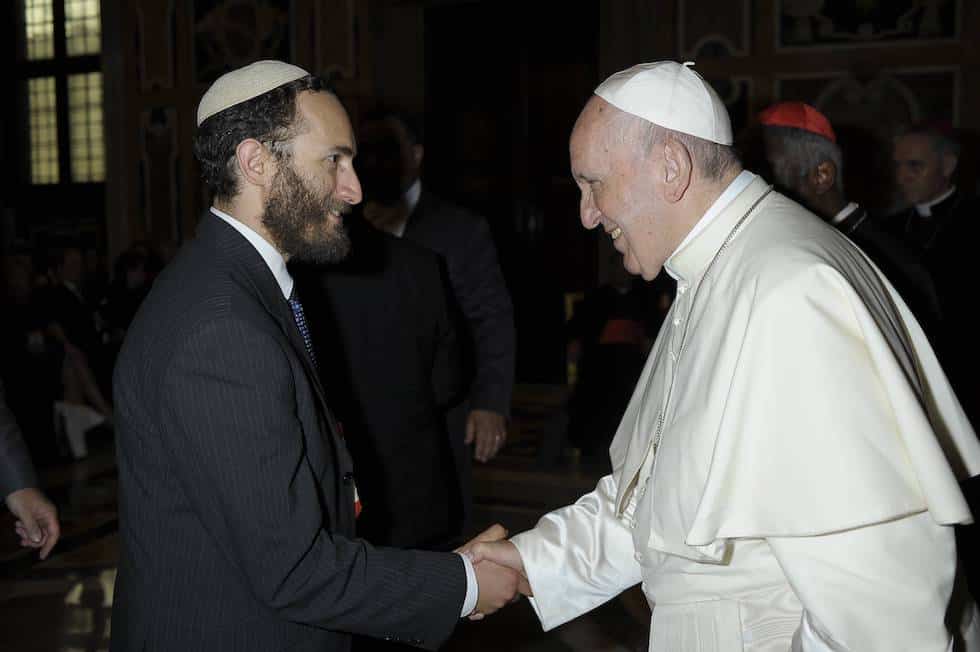](https://interfaithsustain.com/wp-content/uploads/2019/06/Yonatan-Neril-meets-Pope-Francis.jpg)
---
### [Christian Ecology Videos](https://interfaithsustain.com/christian-clergy-on-ecology/)
**Published:** January 4, 2015
**Author:** ICSD
**Content:**
- [ 
### Sine Grubert Performs at the Interfaith Eco Poetry Slam
](#kBGcKQ8_KOk "Sine Grubert Performs at the Interfaith Eco Poetry Slam")
- [ 
### This Church is Saving the Great Salt Lake @churchofjesuschrist
](#7psFKQpzvmU "This Church is Saving the Great Salt Lake @churchofjesuschrist")
- [ 
### Vatican Ecological Conference: Dr Bill McKibben, 350.org
](#xfYWKJphTGU "Vatican Ecological Conference: Dr Bill McKibben, 350.org")
- [ 
### What if clergy were to preach more often about ecology?
](#fltThGHcA6Q "What if clergy were to preach more often about ecology?")
- [ 
### We Are Stewards Of Creation
](#XOzQyl7Hhzk "We Are Stewards Of Creation")
[Load more](#)
**ICSD works on a global basis, with current engagement in Africa, the Middle East, North America, and Europe.**
---
### [Faith and Ecology Webinars](https://interfaithsustain.com/webinars/)
**Published:** November 5, 2020
**Author:** ICSD
**Content:**
The Interfaith Center for Sustainable Development is committed to partnering with ecologically-focused clergy and theologians to augment the faith voice in hastening the transition to cleaner, healthier and more sustainable communities.
In conjunction with the publication of *Eco Bible, Vol. 1: An Ecological Commentary on Genesis and Exodus*, we sponsored the following webinars featuring theologians speaking to religion and ecology.
## Past Webinars
### Conversations in Catholic Eco-Theology
**February 18, 2021 at 10am Pacific Time**
**Fr. Seán McDonagh**
**Irish Columban Missionary Priest**
**Author, *On Care for Our Common Home*, a *Laudato Si* commentary
Fr. McDonagh was born in Nenagh, Ireland and was ordained a priest in the Columban order in 1969. He was sent to work as a missionary in Mindanao in the Philippines and then amongst the T’boli indigenous people near Lake Sebu where he witnessed at first hand the destruction of the local forests. This experience resulted in him publishing the pioneering book *To Care for the Earth* (1985), which called for a new creation theology which incorporates modern science and a cosmology which ought to become the guiding myth for modern humankind, especially in the way we relate to the earth and other creatures. Fr. McDonagh has continued to publish numerous books and articles and to travel across the world explaining that environmental destruction leads to global poverty. He is a strong advocate for Pope Francis’s Encyclical on the environment, and most recently wrote a commentary on it, entitled *On Care for Our Common Home: Laudato Si*.
### Conversations in Catholic Eco-Theology
**January 21, 2021 at 10am Pacific Time**
**Dr. Celia Deane-Drummond**
**Director, *Laudato Si* Research Institute, Campion Hall, University of Oxford**
Throughout her career, Dr. Deane-Drummond has focused on the interface between theology and science, particularly systematic and moral theology informed by contemporary and historical Catholic sources. She began an academic career in the natural sciences, focusing on plant physiology and agricultural botany, but the global and ethical challenges of the use of GMOs encouraged her to retrain in theology, education, and environmental ethics. As Director of the Laudato Si Research Institute (LSRI), Dr. Deane-Drummond researches the different elements relevant for Pope Francis’ call for an ‘integral ecology’, including building credible multidisciplinary hubs of research that are relevant for the pressing ecological and environmental issues of our time. Her main interests are in theological and ethical engagement with the natural and social sciences on questions related to ecology, genetics, animal studies and anthropology.
### “Climate Realities, Climate Change: Envisioning our Future”
**December 10, 2020 at 10am Pacific Time**
We invite you to join this fascinating webinar featuring scholars working at the intersection of religious ethics and climate change. As we head into the year 2021, we look to our religious traditions for vision and foresight as we confront the challenges facing us as a result of climate change.
The Interfaith Center for Sustainable Development partners with ecologically-focused clergy and theologians to augment the faith voice in hastening the transition to cleaner, healthier and more sustainable communities.
Our panelists are:
- **Dr. Laurie Zoloth**, Professor of Religion and Ethics, University of Chicago
- **Dr. Mark Douglas**, Professor of Christian Ethics, Columbia Theological Seminary
- **Dr. Chris Doran**, Professor of Religion, Pepperdine University
This conversation will be moderated by Rabbi Yonatan Neril, Founder and Executive Director of the Interfaith Center for Sustainable Development.
Please join us to explore climate denial, climate migration, and climate violence – and to discuss how we need to look to the future in order to best respond to these tremendous challenges.
**About the speakers**
**Dr. Laurie Zoloth**, Margaret E. Burton Professor of Religion and Ethics at the University of Chicago Divinity School and the Senior Advisor to the Provost for Programs on Social Ethics. Zoloth holds a bachelor’s degree in women studies from the University of California, Berkeley and a bachelor’s degree in nursing from the University of the State of New York. She received a master’s degree in Jewish studies and a doctorate in social ethics from the Graduate Theological Union. Zoloth also holds a master’s degree in English from San Francisco State University. A leader in the field of religious studies with particular scholarly interest in bioethics and Jewish studies, Zoloth’s research explores religion and ethics, drawing from sources ranging from Biblical and Talmudic texts to postmodern Jewish philosophy. She also researches the practices of interreligious dialogue, exploring how religion plays a role in public discussion and policy.
**Dr. Mark Douglas**, an ordained minister in the Presbyterian Church (USA) and Professor of Christian Ethics at Columbia Theological Seminary in Decatur, GA, where he directs the Master of Theology degree program. He is the founding editor of @ this point: theological reflections on church and culture, the seminary’s online journal, and the author of Confessing Christ in the 21 st Century (Rowman and Littlefield, 2005), Believing Aloud: Reflections on Being Religious in the Public Sphere (Cascade, 2010), Christian Pacifism for the Environmental Age (Cambridge University Press, 2019), and a forthcoming book, Modernity, the Environment, and the Just War Tradition. His current work explores connections between violence and climate change at the beginning of the Anthropocene.
**Dr. Chris Doran**, Professor of Religion at Pepperdine University. He studied the intersection of theology and science at Berkeley’s Graduate Theological Union after receiving a bachelor’s degree in biology and a Master of Divinity from Pepperdine, and then returned to his alma mater as faculty. After acknowledging that climate change is the most significant issue facing the future of human civilization, he created the Sustainability Minor, the largest multidisciplinary program in the history of Pepperdine’s Seaver College. His most recent book is *Hope in the Age of Climate Change: Creation Care this Side of the Resurrection*, which looks to understand how the resurrection of Jesus should inspire us to be leaders in solutions to climate change and other sustainability challenges. His current research project seeks to articulate a Christian theological response to both human and nonhuman migration and displacement due to the climate crisis.
### “Food, Faith, Ecology: Grounding and Gratitude”
**November 19, 2020 at 10am Pacific Time**
Just one week before the Thanksgiving holiday, we explored an approach to “Holy Eating” from Jewish, Christian, and Muslim perspectives.
Rabbi Yonatan Neril, ICSD founder and co-author of the *Eco Bible*, was joined by:
**Shaykh Mustafa Umar**, the president of California Islamic University and the Director of Education and Outreach at the Islamic Institute of Orange County. He has authored several books, served the Muslim community of Southern California as an Imam and activist for over a decade, and currently serves as an executive member of the Fiqh council of North America. He completed a B.S. in Information and Computer Science from UC Irvine, a B.A. in Theology & Islamic Law from the European Institute of Islamic Sciences in France, and an M.A. in Islamic Studies from the University of Gloucestershire in the UK. He also studied the Islamic sciences for a year at Nadwatul ʿUlamā’ in Lucknow, India, spent another year studying in Cairo, Egypt, and completed the traditional iftaa program at Darul Ifta, granting him the traditional title of ‘Mufti’, or specialist in Islamic Law.
**Rev. Dr. Jill Crainshaw**, Vice Dean for Faculty Development and Academic Initiatives at Wake Forest University School of Divinity, where she also serves as the Blackburn Professor of Worship and Liturgical Theology. An ordained Minister of Word and Sacrament in the Presbyterian Church (U.S.A.), Crainshaw is a well-known author in her field of liturgical theology, as well as a poet and preacher. Through her writing and teaching, she celebrates life’s seasons and seasonings. She and her two dogs, Bella and Penny, look for poems each day in their backyard. Sometimes Jill writes them down. Dr. Crainshaw’s most recent book, *When I in Awesome Wonder: Liturgy Distilled from Daily Life*, focuses on the importance of being grounded in God’s wisdom as we discover it in our daily life, work, and play.
**Rabbi Bill Kaplan**, Executive Director of the Shalom Institute in Malibu, a year-round experiential Jewish and environmental education center and the home of Shemesh Farms, a social enterprise that employs adults with developmental disabilities. Shalom Institute strives to model eco-friendly practices that include solar power and water heating, composting, organic farming and gardening, recycling, water use reduction, recycled plastic furniture, energy efficiency, and much more. Bill is in his 31st year at Shalom Institute and has a BA from Wesleyan University in Middletown, CT., an MBA in Non-Profit Management and Jewish Communal Service from American Jewish University, and rabbinical ordination from the Academy For Jewish Religion in Los Angeles. He uses nature, organic gardens, and biblical gardens creatively to teach Torah, Israel, Jewish culture, holidays, and connections between Judaism and ecology in a model he calls “Edible Judaism”.
---
### [Jerusalem Interfaith Climate Conference](https://interfaithsustain.com/jerusalem-interfaith-climate-conference/)
**Published:** March 29, 2023
**Author:** ICSD
**Content:**
The [Jerusalem Interfaith Climate Conference](https://www.facebook.com/watch/?v=889413912049640 "Jerusalem Interfaith Climate Conference Video") was held on November 3, 2022 ahead of the UN Climate Conference COP 27. At the event, religious leaders in Israel gathered to support joint action on climate change.
The Department of World Religions of the Israeli Ministry of Foreign Affairs, in collaboration with the Interfaith Center for Sustainable Development, held a first-of-its-kind interfaith conference on the role of religious leadership in dealing with climate change.
The conference encouraged and empowered religious communities in Israel and around the world to curb human-caused climate change, and to promote the use of renewable energy.
At the event, the religious leaders signed the “[Jerusalem Climate Declaration](https://interfaithsustain.com/jerusalem-interfaith-climate-declaration/)” in which the signatories declared to act urgently in order to mitigate climate change.
The event took place two days before the opening of the COP 27 climate conference of the United Nations, which will take place between November 6 and 18, 2022, in the Sinai Peninsula, in Sharm el-Sheikh, Egypt. In the coming days a series of events are planned for religious leaders from all over the world in different countries, uniting faith communities to act together for the sake of the planet.
Among the signatories of the Declaration: Vatican Ambassador to Israel and Cyprus Archbishop Adolfo Tito Yllana; Rabbi Yuval Cherlow, Head of the Yeshiva Amit Orot Shaul in Tel Aviv; David Freeman, Baha’i Jerusalem representative; Beit Hillel Rabbinic Organization; Druze Imam Jaber Mansour; representative of the Patriarchate Greek Orthodox Archimandrite Matheos Siopsis; representative of the Armenian Patriarchate Reverend Gadasarian, representative of the Custody Alberto Pyle; Father Bishou Zaki of the Coptic Church; and Rabbi Yonatan Neril, founder and director of the Interfaith Center for Sustainable Development, and more.
The Ambassador of the Vatican in Israel, H.E. Archbishop Adolfo Tito Yllana emphasized the importance of the interfaith gathering and the joint work of all religious leaders in Israel and in the world for climate action. He said, “We need a new culture of oneness, that understands that the earth is part of us and we are part of the earth. We are interconnected.”
Tania Berg-Rafaeli, director of the Department of World Religions at the Ministry of Foreign Affairs, said, “The State of Israel and the government ministries, including our ministry, consider the engagement with the climate issue to be of utmost importance and will work to continue this type of cooperation between civil, social and religious parties for this common and critical goal.”
Rabbi Yonatan Neril, founder and director of the Interfaith Center for Sustainable Development, said, “the climate crisis is a spiritual crisis and therefore we need the world’s religious leaders to address the problem. We will do everything to unite as many religious leaders as possible in the world to act on the climate issue.”
---
### [Event videos of the Faith & Ecology Conference in Jerusalem](https://interfaithsustain.com/event-videos-2/)
**Published:** July 18, 2022
**Author:** ICSD
**Content:**
- [ 
### Faith and Ecology Conference in Jerusalem Inspires Emerging Clergy for Stewardship of the Earth
](#G2dBheg8_jY "Faith and Ecology Conference in Jerusalem Inspires Emerging Clergy for Stewardship of the Earth")
- [ 
### Dr. Michael Borchard Speaking at Faith and Ecology Conference in Jerusalem
](#xai_3ILgbdw "Dr. Michael Borchard Speaking at Faith and Ecology Conference in Jerusalem")
- [ 
### Bishop Shomali Speaking at Faith and Ecology Conference Jerusalem
](#u6iyA8QxJp4 "Bishop Shomali Speaking at Faith and Ecology Conference Jerusalem")
- [ 
### Father Biju Michael Speaking at Faith and Ecology Conference Jerusalem
](#ZjD1wBKBc9Y "Father Biju Michael Speaking at Faith and Ecology Conference Jerusalem")
- [ 
### Rabbi Michael Melchior on Environmental Stewardship – "Earth is a Gift From God"
](#lF2QKTMmVyg "Rabbi Michael Melchior on Environmental Stewardship – "Earth is a Gift From God"")
- [ 
### MK Rabbi Dov Lipman Speaking at Faith and Ecology Conference Jerusalem
](#5Puvq4pzhHo "MK Rabbi Dov Lipman Speaking at Faith and Ecology Conference Jerusalem")
[Load more](#)
---
### [A Language That Can Make Us Whole- Reading and Writing Environmental Literature](https://interfaithsustain.com/a-language-that-can-make-us-whole-reading-and-writing-environmental-literature/)
**Published:** September 20, 2015
**Author:** ICSD
**Content:**
Words matter. The words we will read before and during our brief time together are words concerned with the natural world. In different times and places, these words have given shape to the care and brutality, the love and avarice that have characterized our troubled relationship to “the environment” or, as Christians name it, Creation. Our task is to read this body of environmental literature with breadth, surveying its vast terrain, and with depth, interpreting it in light of God’s new creation already breaking into the old.
If we wish to resist our culture’s dominant paradigm of earthly destruction, of “running Genesis backward, decreating” as McKibben puts it, if we want to “serve and preserve” the fertile soil that Genesis tells us is worthy of our care, then we will be attentive to this language for the wisdom it offers. Our time to act, both in this class and in this era of species extinction, topsoil loss, and climate disruption, is short. It is clear that our leaders have no answers. The words we read (and the words you may someday write?) just might. Or if not answers then at least patterns and stories we can live by. We will therefore approach these words—essays, poems, and stories—with reverence for what they might teach.
We will read with charity, which is to say, we will first try to understand what a writer is saying before we offer our own interpretation. We will also critique their words and argue with them. We will take joy and laughter where we find them, for our situation is far too dire for pessimism. We will be looking for a language that limns the shape of God’s kingdom come, on earth as it is in heaven. We will be looking for a language that can make us whole.
Texts:
1\. American Earth: Environmental Writing Since Thoreau, ed. Bill McKibben, Library of America, New York. 2008.
2\. Course pack with selected readings
---
### [Advanced Topics in Ethics: Ecology](https://interfaithsustain.com/advanced-topics-in-ethics-ecology/)
**Published:** August 25, 2015
**Author:** ICSD
**Content:**
An in-depth study of cross-disciplinary, cross-religious and cross-cultural approaches to ecological issues, oriented toward understanding diverse issues in breadth and depth; and a collaborative development of ecological ethical concepts and principles to be integrated into human consciousness and communities, and implemented in community projects.
John Hart
Boston University
## Course Objectives:
- Learn the ideas and proposals of significant scholars writing on ecological issues
- Develop an understanding of how major ecological problems and injustices globally and bioregionally impact abiotic nature and biotic communities
- Creatively formulate innovative individual and group theoretical and practical proposals for ecological ethics, in conversation with the scholars studied and with colleagues in the seminar
- Learn to adapt and implement their proposals in future academic or pastoral settings.
## Course Expectations:
- Preparation for and insightful participation in all class sessions.
- Two class presentations to stimulate engagement with the author(s) of the day.
## Course Texts:
- Thomas Berry. The Great Work: Our Way into the Future. New York: Bell Tower, 1999
- Leonardo Boff. Cry of the Earth, Cry of the Poor. Maryknoll, NY: Orbis Books, 1997
- Robert D. Bullard. Dumping in Dixie–Race, Class, and Environmental Quality. 3rd Edition. Boulder, CO: Westview Press, 2000
- Roger S. Gottlieb and David Landis Barnhill, eds. Deep Ecology and World Religions. New York: State University of New York Press, 2001
- John Hart. Sacramental Commons: Christian Ecological Ethics. Lanham, MD: Rowman & Littlefield, 2006
- Kirk-Duggan, Cheryl A., ed. The Sky Is Crying: Race, Class, and Natural Disaster (Nashville:Abingdon Press, 2006)
- Daniel C. Maguire and Larry L. Rasmussen. Ethics for a Small Planet: New Horizons on Population, Consumption and Ecology. Albany, NY: State University of New York Press, 1998
- Roderick Frazier Nash. The Rights of Nature: A History of Environmental Ethics. Madison: University of Wisconsin Press, 1989
- Seyyed Hossein Nasr. Religion and the Order of Nature. New York: Oxford University Press, 1996
- Holmes Rolston, III. Environmental Ethics: Duties to and Values in the Natural World. Philadelphia: Temple University Press, 1988
- E.F. Schumacher. Small Is Beautiful: Economics as if People Mattered. Vancouver, B.C.: Hartley & Marks, 1999
- Edward O. Wilson. The Creation: A Plea to Save Life on Earth. New York: W.W. Norton, 2006
## Course Schedule:
Week 1: Introduction to the course
Week 2: Historical Development of Environmental Consciousness; Reading: Nash
Week 3: Valuing Nature and Responsibility for Nature; Reading: Rolston
Week 4: Islam, the West, and Nature; Reading: Nasr
Week 5: Research Day
Week 6: Ecology, Economics, and Human Community; Reading: Schumacher
Week 7: Natural Disasters and Political Responses; Reading: Kirk-Duggan
\* Analytical Paper 1 is due \*
Week 8: Earth Impacts of Population and Consumption; Reading: Maguire and Rasmussen
Week 9: Eco-racism and Liberation of the Oppressed; Reading: Bullard; Boff
Week 10: Deep Ecology and Comparative Religious Worldviews; Reading: Gottlieb and Barnhill
\*Research Paper outline is due\*
Week 11: Cosmic Community Consciousness; Reading: Berry
\* Analytical Paper 2 is due \*
Week 12: Spirit and Community; Reading: Hart
Week 13: Science, Religion, and Ecology; Reading: Wilson
Week 14: Grand finale; Presentation of Collaborative Research Paper
## Class Presentations
Description: A brief analytical summary of 2-3 issues discussed by the author(s) in the section under consideration; discussion of ethical principles expressed by, implied in or to be developed from text and context; and a presentation of ideas, principles and questions for further discussion.
Process: Divide responsibilities for the class session readings among students; determine order of presentation.
Technical Requirements: Provide the course instructor with a written copy (minimum length: 4 typed pages) of each individual presentation prior to its discussion in class.
## Collaborative Research Paper
Description: A group exploration of and engagement with a contemporary ecological issue, selected in consultation with the course instructor, from such topics as: Christian, Jewish, Islamic or humanist ecological consciousness and ethics; valuing nature as a whole and in part; natural rights in nature; ethical implications of humans’ consciousness of divine transcendence and immanence in nature; economic liberation and ecological well-being; conserving the common good and the commons good; ecology, economics and appropriate technologies. The paper should include consideration and resolution of harms to humankind, other species and Earth.
Method:
1. Socio-ecological Analysis: Description of the ecological issue utilizing, as appropriate, data from natural sciences, social sciences, historical traditions, past and present community insights, existing laws.
2. Socio-ecological Ethics: Discussion of relevant ethical insights from humanist and/or faith traditions; collaborative development of an ecological ethic; reflection on applicable ethical principles; prioritization of principles; selection of appropriate principles for this issue in this situation; rationale for selection.
3. Socio-ecological Vision: Projection of desired future outcomes if ethical principles were applied to rectify the harm to nature under discussion.
4. Socio-ecological Project: Anticipated actions to engage people in selected places to realize the vision through concrete application of ethical principles in an historical project in a local or regional community.
Process:
- Develop a group of 2-3 students who will work individually and collaboratively on a selected issue.
- Determine necessary research areas and divide them among members of the group.
- Discuss each of the four sections together; determine your position(s) and the content of each section.
- Decide on particular writing responsibilities: for each section; for final editing.
- Designate responsibilities for class presentation.
Technical Requirements:
- Submission of 2p paper outline (topic, team, initial proposed content) to instructor by Nov 6.
- Length: 25-30 pages \[Min.: 2p Intro; 5p per section; 2p concluding comments; 1p bibl.\]
- Typed, double spaced; 12 pt. font
- Grading based on breadth and depth of understanding the issue; integration of course materials and supplementary sources; coherence and consistency of presentation; equitable balance of competing perspectives; creativity of responses to issue; spelling and grammatical accuracy.
- All materials used verbatim must have quotation marks and proper attribution; plagiarism is a serious offense meriting a serious response in accord with STH policies.
- Due date: for class presentation
---
### [Animals, Ecology, and Biblical Interpretation](https://interfaithsustain.com/animals-ecology-and-biblical-interpretation/)
**Published:** July 22, 2016
**Author:** ICSD
**Content:**
**Seminary:** Chicago Theological Seminary
**Location:** 1407 E. 60th Street, Chicago, IL 6063
**Course number:** RH 499O
**Instructor:** Dr. Ken Stone
**Website:** <https://www.ctschicago.edu/>
**Course Description**
---
### [Bible, Creation, and the Science of Wonder](https://interfaithsustain.com/bible-creation-and-the-science-of-wonder/)
**Published:** July 7, 2015
**Author:** ICSD
**Content:**
## Word for a Warming World:
Bible, Creation, and the Science of Wonder
B646B
D. Min. Course
January 12-23, 2008
A Preliminary Syllabus (subject to revision)
Instructor: William P. Brown
Office: RC 309
<BrownB@ctsnet.edu>
404-687-4584
## Course Description:
Participants will study the various creation traditions of the Old Testament with a view toward their theological, spiritual, and ecological implications, particularly as the church addresses the crisis of global warming with a message that is both prophetic and pastoral. The class will draw on a range of resources, from biblical scholarship to scientific research, in order to develop new ways of reading Scripture in the light of science for the church.
## Required Texts:
Lester Brown, Plan B 3.0: Mobilizing to Save Civilization. W. W. Norton, 2008.
Carol J. Dempsey and Mary Margaret Pazdan (eds.), Earth, Wind, and Fire: Biblical and Theological Perspectives on Creation. Liturgical Press, 2004.
Terence E. Fretheim, God and World in the Old Testament: A Relational Theology of Creation. Abingdon, 2005.
Sallie McFague, A New Climate for Theology: God, the World, and Global Warming. Fortress, 2008.
Michael S. Northcott, A Moral Climate: The Ethics of Global Warming. Orbis, 2007.
Barbara Brown Taylor, The Luminous Web: Essays on Science and Religion. Cowley, 2001.
E. O. Wilson, The Creation: An Appeal to Save Life on Earth. W. W. Norton, 2006.
## Class Requirements:
1. Preparation and participation in discussion (50%).
2. A final project building on the work done in class (50%). Details forthcoming.
## Schedule:
### Jan 12: Science, Faith, and Wonder
Taylor, The Luminous Web
Wilson, The Creation
### Jan 13: Faith, Creation, and Crisis
McFague, A New Climate for Theology
Northcott, A Moral Climate
### Jan 14: In the Beginning: The Cosmic Temple
Genesis 1:1-2:4a
Fretheim, God and World, 1-67.
Laffey, “The Priestly Creation Narrative,” in Earth, Wind, and Fire, 24-34.
Reid, “Sabbath, the Crown of Creation,” in Earth, Wind, and Fire, 67-76.
### Jan 15: In the Garden: Focus on the Family
Genesis 2:4b-3:21
Dempsey, “Creation, Evolution, Revelation, and Redemption,” in Earth, Wind, and Fire, 1-23.
TBA from W. P. Brown
### Jan 16: Into the Wild: Creation à la Job
Job 38-41
O’Connor, “Wild, Raging Creativity,” in Earth, Wind, and Fire, 48-56.
Fretheim, God and World, 219-47.
TBA from W. P. Brown
### Jan 20: The Passion of the Creator / The Playfulness of Creation
Psalm 104 and Proverbs 8:22-31
Fretheim, God and World, 199-217, 249-68.
TBA from W. P. Brown
### Jan 21: The Dying Creation
Ecclesiastes 1, 3, 12
TBA from W. P. Brown
### Jan 22: The Emergent Creation
Isaiah 40-55
Cook, “Everyone Called by My Name,” in Earth, Wind, and Fire, 35-47.
TBA from W. P. Brown
### Jan 23: Creation Good and Groaning: Where Do We Go from Here?
McGinn, “All Creation Groans in Labor,” in Earth, Wind, and Fire, 114-23.
Fretheim, God and World, 269-84.
Lester Brown, Plan B 3.0
---
### [Biblical Perspectives on Nature](https://interfaithsustain.com/biblical-perspectives-on-nature/)
**Published:** September 9, 2015
**Author:** ICSD
**Content:**
The ultimate goal of this course is to consider a new way of thinking about religion, a way which takes the natural world seriously. More specifically, the goal is to consider this new way of thinking in relation to the Bible, and to examine what role nature plays in biblical thought. At the end of the course, we hope all of us will know better how to take creation seriously in our biblical interpretation, in our linking of the Bible and ministry, and in our practice of ministry itself.
To achieve these ends, this course will examine the understanding of nature in the Bible and evaluate of the implications of biblical values for contemporary thought. The perspective of the course is thus both historical and theological. On the one hand, the attitudes and values in the Bible will be examined through a close study of selected biblical texts in the light of the ancient physical, political, and religious environment in which they arose. On the other hand, the relationship between these biblical viewpoints and contemporary concepts of nature will be examined in order to asses the significance of biblical attitudes for modern environmental theology, ethics, and ministry.
We think this is such an important concern that we want to get the word out to the church more broadly, so we are considering writing a book about the issues in this course for a broader audience. And we would like you to help us think about what such a book would look like and what kind of book would be most helpful. We’ll be asking you, as leaders of the church, for your advice.
## BOOKS AND RESOURCES:
Hiebert, Theodore. The Yahwist’s Landscape: Nature and Religion in Early Israel. New York: Oxford, 1996. (Purchase from Instructors, $22)
McKibben, Bill. The Comforting Whirlwind: God, Job, and the Scale of Creation. Cambridge, MA: Cowley, 2005.
Rossing, Barbara. The Rapture Exposed: The Message of Hope in the Book of Revelation. Boulder, CO: Westview Press, 2004.
Selected articles to be copied cooperatively by the class.
## WRITTEN ASSIGNMENTS:
Exegetical Paper: A five page study of a biblical text, due April 29. The primary aim of this study is to describe the way in which the text reflects the ancient author’s attitudes toward nature, and a secondary aim is to evaluate the significance of these attitudes for contemporary thought and ministry.
Group Class Presentation: A class presentation and handout on a contemporary environmental issue, on a date to be negotiated. The handout will contain 1) biblical resources, 2) liturgical resources, and 3) practical and ethical resources, each three pages. The aim of the presentation and handout is to provide one another with resources for ministry.
Final Paper: A ten page paper which you may design and which may be research or ministry oriented, according to the instructions below. A proposal will be due April 5 and the final paper will be due May 5.
Instructions for Exegetical Work in All Written Assignments
## Aim:
The primary aim of exegetical work is to describe the way in which a text reflects its author’s attitude toward nature. The primary focus will be the ancient world: What was the original environmental setting of the text and how does its point of view reflect this setting? What attitudes toward nature were held by the author and how are they expressed in the context of this ancient setting?
In addition to this major historical aim of your exegesis, you are encouraged to comment also on the significance of the biblical attitudes you have identified in the text for our thought and behavior today. Does the Bible present us with an obstacle or a resource for constructing a healthy perspective on the environment?
In the exegetical paper, you might consider devoting about three fourths of your study and presentation to your primary aim, the historical sense of the text, and one fourth to your secondary aim, its relationship with the contemporary world. In your final paper, devote at least half of your work (five pages) to exegetical analysis.
## Procedure:
### The Biblical Text
1. For the Exegetical Paper, select a text from the assignments on the course syllabus related to the topic of your study. A chapter or less, e.g. ten to twenty verses, is plenty for a short study such as this. Do not type out the text itself as part of your essay. You can assume your readers have the Bible in front of them. The selection of biblical texts for the other two assignments will depend on the topic selected.
2. Spend some time doing your own careful analysis of the text, looking primarily for answers in the concrete details of the text to two questions: What actual physical environment is reflected in these details? What attitudes toward nature are represented in the text? Trust yourself. Do not rely on “experts” alone to tell you what the text says.
3. As you write up your findings, always use concrete data—specific words and phrases—from the biblical text to illustrate your comments and to support your conclusions. Always give references, chapter and verse, to the part of the text you are describing.
4. If you have taken biblical Hebrew or Greek, please use it in your analysis as much as you can. There is no substitute for the real thing. Every translation is a new and different text from the original.
## Secondary Sources:
In addition to your own analysis of the biblical text, you should broaden your own perspective by considering the analysis and conclusions of other scholars, from the following sources in particular:
1. Take into consideration the analysis of the scholars assigned for reading on the topic related to the text you have selected. You may enlist these scholars in support of your interpretation, or you may wish to argue against them.
2. Use if possible the readings on the Bible’s ancient environment to assist you in describing the text’s natural setting. Also consider the relevance for your conclusions of the points of view represented in the essays on nature in the Bible assigned on February 8.
3. Incorporate the analysis of your text in scholarly commentaries on the biblical book from which your text is taken.
You may of course include any other secondary material you wish, in addition to these sources, to illustrate or support your analysis. Remember, these scholars may hold old ideas of nature in the Bible, but it is important to engage their arguments, build on their insights, and critique their weaknesses.
Your written work must follow proper rules for research paper form as these are described in the McCormick Student Handbook on pp. 33-36. These rules are based on the sixth edition of Kate L Turabian’s A Manual for Writers of Term Papers, Theses, and Dissertations, available in the bookstore. It must be accompanied by a bibliography of the secondary sources you have consulted.
## The Historical Research Option:
You may wish to do additional work on biblical attitudes toward nature by doing an extended study of a biblical text in which you are particularly interested and which we did not have the opportunity to deal with in class. Or you may want to pursue a theme on nature in the Bible (e.g. sacred space, the redemption of nature, agriculture, etc.) in greater detail. In such a study, you would devote your primary energies to uncovering the historical setting and attitudes of the Bible itself, but you could also reflect on the contemporary implications of these attitudes.
## The Contemporary Ministry Option:
You may wish to design a project in which you can explore the contemporary use of the Bible in environmental theology and ethics. For this kind of project you might wish to consider some of the following ideas.
\* A sermon using biblical text, from the lectionary or of you own choice, to develop environmental themes.
\* An evaluation of the use of the Bible in an existing religious education curriculum on the environment, or the writing of a new curriculum or Bible study series.
\* An evaluation of the use of the Bible in public statements made by your denomination on environmental responsibility.
\* An evaluation of the use of the Bible by a contemporary environmental theologican, ethicist, or popular writer.
\* An evaluation of the use of the Bible by an influential pro- or anti-environmental group or movement and its importance for the church.
\* A biblical and ethical rationale for supporting a particular political and social policy, such as the clean air act.
## COURSE SCHEDULE AND READINGS:
### Week 1: Introduction—What Do the Bible and Christian Ministry Have to Do with Nature?
### Week 2: Did the Bible Get Us into This Fix?
- Kolbert, Elizabeth. “The Climate of Man—II, III,” The New Yorker (May 2, 9, 2005).
- White, Lynn, Jr. “The Historical Roots of Our Ecologic Crisis.” Science 155 (1967): 1203-7. Reprinted in Ecology and Religion in History, ed. David and Eileen Spring, 15-31. New York: Harper & Row, 1974.
- Hiebert, Theodore. “The ‘Problem’ of Nature in the Bible.” In The Yahwist’s Landscape: Nature and Religion in Early Israel, 3-29. New York: Oxford University Press, 1996.
- Habel, Norman C. “Six Ecojustice Principles” and “Introducing the Earth Bible.” In Readings from the Perspective of the Earth, ed. Norman C. Habel, 24-42. Sheffield: Sheffield Academic Press, 2002.
Recommended:
- Habel, Norman C. “Guiding Ecojustice Principles.” In Readings from the Perspective of the Earth, ed. Norman C. Habel, 38-47. Sheffield: Sheffield Academic Press, 2002.
- Hendry George. “The Problem of Nature in Theology.” In Theology of Nature, 11-30. Philadelphia: Westminster, 1981.
- Hiebert, Theodore. “Rethinking Traditional Approaches to Nature in the Bible.” In Theology for Earth Community: A Field Guide, ed. Dieter T. Hessel, 23-30. Maryknoll, N.Y.: Orbis, 1996.
- “Re-imaging Nature: Shifts in Biblical Interpretation.” Interpretation 50 (1996): 36-46.
- Kaufman, Gordon. “A Problem for Theology: The Concept of Nature.” Harvard Theological Review 65 (1972): 337-366. Reprinted as “Theology and the Concept of Nature.” In The Theological Imagination, 209-237. Philadelphia: Westminster, 1981.
- Rad, Gerhard von. “The Theological Problem of the Old Testament Doctrine of Creation.” In The Problem of the Hexateuch and Other Essays, trans. E. W. Trueman Dicken, 131-143. London: SCM Press, 1984. Reprinted in Creation in the Old Testament, ed. Bernhard W. Anderson, 53-64. Philadelphia: Fortress, 1984.
- Robinson, H. Wheeler. “The Hebrew Conception of Nature.” In Inspiration and Revelation in the Old Testament, 1-15. Oxford: Clarendon Press, 1946.
- Ruether, Rosemary Radford. “Woman, Body, and Nature: Sexism and the Theology of Creation.” In Sexism and God-Talk, 72-92. Boston: Beacon, 1983.
- Santmire, H. Paul. The Travail of Nature: The Ambiguous Ecological Promise of Christian Theology, 7-12, 175-88. Philadelphia: Fortress, 1985.
- Wright, G. Ernest. “Theology as Recital.” In God Who Acts, 33-58. London: SCM, 1951.
- The Old Testament Against Its Environment. Chicago: Henry Regnery Company, 1950.
### Week 3: Field Trip— The Environment We’re Living In
- A toxic tour of south Chicago sponsored by the Southeast Environmental Task Force guided by Aaron Rosinski. The bus will arrive in the McCormick parking lot north of the McCormick building at 12:50 and will leave promptly at 1:00.
- Read the information on the website of the Southeast Environmental Task Force: www.southeastenvironmental.org.
- Mendelsohn, Betsy. “Rustbelt Hell or Redevelopment Heaven? Lake Calumet: Land of Contrasts.”
- Locate and read your own denomination’s statement on the environment.
Recommended: Pellow, David Naguib. Garbage Wars: The Struggle for Environmental Justice in Chicago. Cambridge, MA: MIT Press, 2004.
### Week 4: Eco-justice and Environmental Racism
- Bible: Genesis 1; 1 Kings 21:1-16; Revelation 22
- Declaration and Action Plan of the National Black Church Environmental and Economic Justice Summit . Washington, D.C., 1993
- Cone, James H. “Whose Earth Is It, Anyway?” In Earth Habitat: Eco-Justice and the Church’s Response, ed. Dieter Hessel and Larry Rasmussen, 23-32. Minneapolis: Fortress, 2001.
- Rasmussen, Larry. “Environmental Racism and Environmental Justice: Moral Theory in the Making.” Journal of the Society of Christian Ethics 24.1 (2004): 3-28.
- “Epiphany: It’s Time to See What Is, as it is—from Bethlehem to New Orleans.” The Lutheran Magazine (January, 2006). www.thelutheran.org/article/article.cfm?article\_id=5655&key=31979023
- Rieger, Joerg. “Re-envisioning Ecotheology and the Divine from the Margins.” Ecoltheology 9.1 (2004): 65-85.
- George Zechariah. “Towards a Subaltern Earth Ethics: the Narmada Bachao Andolan as Texts.” Dissertation Proposal, 1-16.
- Boff, Leonardo. “Liberation Theology and Ecology: Alternative, Confrontation or Complementarity?” In Ecology and Poverty, ed. Leonardo Boff and Virgil Elizondo, 67-77. London: SCM Press, 1995.
- Tinker, George E. “Creation as Kin.” In After Nature’s Revolt: Eco-Justice and Theology, ed. Dieter T. Hessel, 144-153. Minneapolis: Fortress, 1992.
Recommended:
- Shiva, Vandana. “Development, Ecology, and Women.” In Staying Alive: Women, Ecology, and Survival in India, 1-13. New Delhi: Kali for Women, 1988.
- Gnanadason, Aruna. “Traditions of Prudence Lost: a Tragic World of Broken Relationships.” In Ecofeminism and Globalization: Exploring Culture, Context, and Religion, ed. Heather Eaton and Lois Ann Lorentzen, 73-87. Lanham, Md.: Rowman & Littlefield Publishers, 2003.
### Week 5: The Environment of the Bible: Family Farming
Primary Texts:
- Bible: Genesis 1-4, 12-18; Exodus 21-23; Deuteronomy 14-15, 26; Leviticus 25; Luke 4, 8, 13, 15, 16.
- Josephus. The Jewish War. Book I: 218-21, 303-16, 403; Book II: 402-407, 424-27; Book III: 35-58.
- Hopkins, David C. “Life on the Land: The Subsistence Struggles of Early Israel.” Biblical Archaeologist 50 (1987): 178-91.
- Hiebert, Theodore. “The Primeval Age” and “The Ancestors in Canaan.” In The Yahwist’s Landscape: Nature and Religion in Early Israel, 30-116. New York: Oxford University Press, 1996.
- Horsley, Richard A. “Village and Family” and “ Galilean Village Economy and the Political- Economic Structure of Roman Palestine.” In Galilee: History, Politics, People, 189-221. Valley Forge, PA: Trinity Press International, 1995.
Recommended:
- Frankfort , H. and H. A. “The Emancipation of Thought from Myth.” In Before Philosophy: The Intellectual Adventure of Ancient Man, 363-88. Chicago: University of Chicago Press, 1946.
- Brueggemann, Walter. The Land: Place as Gift, Promise, and Challenge in Biblical Faith, 2d ed. Minneapolis: Fortress, 2002.
- Berry, Wendell. The Unsettling of America: Culture and Agriculture, 3-14. San Francisco: Sierra Club Books, 1986.
### Week 6: Creation & Dominion: The Natural World and the Human Place within It
- Bible: Genesis 1-3; Psalms 8, 74, 89, 104, 115, 148; Proverbs 8; 1 Corinthians 8-10.
- Barr, James. “Man and Nature: The Ecological Controversy and the Old Testament.” Bulletin of the John Rylands Library 55 (1972): 9-32. Reprinted in Ecology and Religion in History, ed. David and Eileen Spring, 48-75. New York: Harper & Row, 1974.
- Callicott, J. Baird. “Genesis and John Muir.” In Covenant for a New Creation, ed. Carol S. Robb and Carl J. Casebolt, 107-40. Maryknoll, NY: Orbis, 1991.
- Hiebert, Theodore. “The Human Vocation: Origins and Transformations in Christian Traditions.” In Christianity and Ecology, ed. Dieter T. Hessel and Rosemary Radford Ruether, 135-154. Cambridge: Harvard University Press, 2000.
- “Imago Dei or Imago Dirt: Who in the World Are We?” Inaugural Address, February 26, 2003.
- Beisner, E. Calvin. “Evangelical Environmental Worldview and Theology: Strengths and Weaknesses.” In Where Garden Meets Wilderness, 9-26. Grand Rapids, MI: Acton Institute and Eerdmans, 1997.
- Read about “Dominionism” at www.theocracywatch.org.
- Reumann, John. “An Early Christian Credo about Christ and Creation.” In Creation and New Creation: The Past, Present, and Future of God’s Creative Activity, 24-31. Minneapolis: Augsburg, 1973.
Recommended:
- Anderson, Bernhard W. “Creation and Ecology.” American Journal of Theology and Philosophy 1 (1983): 14-30. Reprinted in Creation in the Old Testament, ed. Bernhard W. Anderson, 152-171. Philadelphia: Fortress Press, 1984.
- “Human Dominion over Nature.” In Biblical Studies in Contemporary Thought, ed. Miriam Ward, 27-45. Winchendon, Mass.: Greeno, Hadden & Company, 1975. Reprinted in From Creation to New Creation, 111-131. Minneapolis: Augsburg Fortress, 1994.
- ed. Creation in the Old Testament. Philadelphia: Fortress, 1984.
- From Creation to New Creation. Minneapolis: Augsburg Fortress, 1994.
- Hall, Douglas John. “Biblical Sources of the Symbol” and “Stewardship as Key to a Theology of Nature.” In The Steward: A Biblical Symbol Come of Age, 14-29, 101-113. New York: Friendship Press for Commission on Stewardship, National Council of Churches of Christ in the U.S.A., 1982.
- Imaging God: Dominion as Stewardship. Grand Rapids, Mich.: Eerdmans, 1986.
- Hiebert, Theodore. “Rethinking Dominion Theology.” Direction 25 (1996): 16-25.
- Reumann, John. “Excursus: ‘The Christ Hymn’ in Colossians 1 in Recent Discussion.” In Creation and New Creation: The Past, Present, and Future of God’s Creative Activity, 42-56. Minneapolis: Augsburg, 1973.
- Simkins, Ronald A. Creator and Creation: Nature in the World View of Ancient Israel. Peabody, Mass.: Hendrickson, 1994.
- Trebilco, Paul. “The Goodness and Holiness of the Earth and the Whole Creation (1 Timothy 4.1-5).” In Readings from the Perspective of the Earth, ed. Norman C. Habel, 204-220. Sheffield: Sheffield Academic Press, 2002.
### Week 7: The Environment of the Bible: Urbanization and Empire
- Bible: Genesis 12-14; 1 Samuel 8; 2 Samuel 5-7; 1 Kings 12, 16, 21; Psalms 46, 48, 87; Amos; Isaiah 1-5; Ezekiel 26-27; Habakkuk 1-2; Acts 2, 4, 17-19; Romans 15, 16; Revelation 13, 18.
- Chaney, Marvin. “Bitter Bounty: The Dynamics of Political Economy Critiqued by the Eighth- Century Prophets.” In Reformed Faith and Economics, ed. Robert Stivers, 15-30. Lanham, MD: University Press of America, 1989.
- Meeks, Wayne. “The Urban Environment of Pauline Christianity.” In The First Urban Christians: The Social World of the Apostle Paul, 9-50. New Haven: Yale University Press, 1983.
- Bauckham, Richard. “The Economic Critique of Rome in Revelation 18.” In Images of Empire, ed. Loveday Alexander, 47-86. Sheffield: JSOT Press, 1991.
Recommended:
- Frick, Frank S. “The Path to Statehood: A Synthesis.” In The Formation of the State in Ancient Israel, 191-204. Sheffield: JSOT Press, 1985.
- March 29: Apocalyptic Perspectives on Nature: Escapist or Engaged?
Primary Texts:
- Bible: Isaiah 24-27, 65-66; Zechariah 12-14; Daniel 7-12; Revelation 6, 12, 16, 21-22.
- Apocrypha: 2 Esdras 6:1-7:44; 9-11.
- Hanson, Paul D. “Defining Old Testament Apocalyptic.” In Old Testament Apocalyptic, 25-43. Nashville: Abingdon, 1987.
- Ruether, Rosemary Radford. Gaia and God: An Ecofeminist Theology of Earth Healing, 61- 84. San Francisco: HarperSanFrancisco, 1992.
- Rossing, Barbara. The Rapture Exposed: The Message of Hope in the Book of Revelation. Chapters 1-2. Boulder, CO: Westview Press, 2004.
- “ River of Life in God’s New Jerusalem: An Ecological Vision for Earth’s Future.” Currents in Theology and Mission 25 (1998): 487-499.
- “Alas for Earth! Lament and Resistance in Revelation 12.” In The Earth Story in the New Testament, ed. Norman C. Habel and Vicky Balabonski, 180-192. Sheffield: Sheffield Academic Press, 2002.
Recommended:
- Russell, David M. “Surveying the Terrain: Creation and Apocalyptic.” In The “New Heavens and New Earth”: Hope for the Creation in Jewish Apocalyptic and the New Testament, 18- 36. Philadelphia: Visionary Press, 1996.
### Week 8: Apocalyptic Perspectives on Nature: Does Nature Need to Be Redeemed?
- Bible: Isaiah 11, 24-27, 65-66; Zechariah 12-14; Daniel 7-12; Romans 8.
- Cross, Frank Moore. “The Redemption of Nature.” The Princeton Seminary Bulletin (1989): 94-104.
- Rolston, Holmes, III. “Does Nature Need to Be Redeemed?” Horizons in Biblical Theology 14 (1992): 143-72.
- Hiebert, Theodore. “Creation, the Fall, and Humanity’s Role in the Ecosystem.” In Creation and the Environment: An Anabaptist Perspective on a Sustainable World, ed. Calvin Redekop, 111-121. Baltimore: Johns Hopkins University Press, 2000.
- Jewett, Robert. “The Corruption and Redemption of Creation.” In Paul and the Roman Imperial Order, ed. Richard A. Horsley, ed., 25-45. Harrisburg, PA: Trinity, 2004.
- Byrne, Brendan. “Creation Groaning: An Earth Bible Reading of Romans 8:18-22.” In Readings from the Perspective of the Earth, ed. Norman C. Habel, 193-203. Sheffield: Sheffield Academic Press, 2002.
- Rossing, Barbara. “Bible Study on Romans 8.” In For the Healing of the World: Study Book for the Lutheran World Federation Tenth Assembly, 85-89. Geneva , 2002.
Recommended:
- Russell, David M. “Creation and Redemption in the New Testament.” In The “New Heavens and New Earth”: Hope for the Creation in Jewish Apocalyptic and the New Testament, 134- 209. Philadelphia: Visionary Press, 1996.
- Week 9: The World of Nature in Wisdom Literature
- Bible: Proverbs 8, 10-15: Job 1-14, 38-42.
- Murphy, Roland. “Wisdom and Creation.” Journal of Biblical Literature 104 (1985): 3-11.
- McKibben, Bill. The Comforting Whirlwind: God, Job, and the Scale of Creation. Cambridge, MA: Cowley, 2005.
- Sittler, Joseph. “Called to Unity.” In Evocations of Grace: the Writings of Joseph Sittler on Ecology, Theology, and Ethics, 38-50. Grand Rapids, Mich.: Eerdmans, 2000.
- Flor, Elmer. “The Cosmic Christ and Ecojustice in the New Cosmos (Ephesians 1).” In The Earth Story in the New Testament, ed. Norman Habel and Vicky Balabanski, 137-147.
### Week 10: Sacred Geography, Worship, and the Liturgical Year
- Bible: Genesis 12-13; Exodus 3, 12, 19-24, 34; Leviticus 23; Numbers 28-29; Deuteronomy 16; 1 Kings 5-8; Ezekiel 36, 47; Psalms 46, 48, 76, 84, 87, 122; Prov 3:13-18; Mark 4, John 15:1-11; Revelation 22.
- Eliade, Mircea. “Symbolism of the ‘Centre.’” In Images and Symbols, 27-56. New York: Sheed and Ward, 1969.
- Hiebert, Theodore. “Theophany in the Old Testament.” In The Anchor Bible Dictionary, ed. David Noel Freedman, 6:505-511. New York: Doubleday, 1992.
- “Ritual and Law” and “Religious Ritual and Worship.” In The Yahwist’s Landscape: Nature and Religion in Early Israel, 126-129, 136-139. New York: Oxford University Press, 1996.
- Rasmussen, Larry. Earth Community Earth Ethics, 195-219. Maryknoll, NY: Orbis, 1994.
- Angelou, Maya. “On the Pulse of Morning.”
- Rossing, Barbara. The Rapture Exposed: The Message of Hope in the Book of Revelation. Chapters 10-11. Boulder, CO: Westview Press, 2004.
- “Lectionary Notes for Easter C.” In New Proclamation, ed. Marshall D. Johnson, 15-22. Minneapolis: Fortress, 2000.
- Recommended:
- Levenson, Jon D. “ Zion as the Cosmic Mountain,” “The Temple as Sacred Space,” “Sacred Space and Sacred Time,” and “The Meaning of the Cosmic Mountain in Israel.” In Sinai and Zion: An Entry into the Jewish Bible, 111-176. San Francisco: Harper & Row, 1985.
- Cohn, Robert L. The Shape of Sacred Space: Four Biblical Studies. Chico, Calif.: Scholars Press, 1981.
- Hiebert, Theodore. “Altars of Stone and Bronze: Two Biblical Views of Technology.” Mission Studies 15 (1998): 75-84.
- Vaux, Roland de. “The Ancient Feasts of Israel.” In Ancient Israel: Its Life and Institutions, 484-506. New York: McGraw Hill, 1961.
- Lane, Belden C. Landscapes of the Sacred: Geography and Narrative in American Spirituality. New York: Paulist Press, 1988.
- Daneel, M. L. “African Independent Churches Face the Challenge of Environmental Ethics.” In Ecotheology: Voices from South and North, ed. David G. Hallman, 248-263. Maryknoll, NY: Orbis, 1994.
- Ingram, Beryl. “Eco-Justice Liturgics.” In Theology for Earth Community: A Field Guide, ed. Dieter T. Hessel, 250-264.Maryknoll, NY: Orbis, 1996.
### Week 11: Jesus: Environmental Issues in the Gospels
- Rhoads, David. “Who Will Speak for the Sparrow? Eco-Justice Criticism of the New Testament.” In Literary Encounters with the Reign of God, 64-86. New York: T & T Clark, 2004.
- Other readings to be announced.
---
### [Biblical Values](https://interfaithsustain.com/biblical-values/)
**Published:** July 7, 2015
**Author:** ICSD
**Content:**
Many people in the modern world claim to espouse biblical values. This course will examine what the Bible has to say about several issues that are controversial in the modern world. It will also reflect on the difficulty of identifying a single, or even a dominant, biblical position on some issues, and on the relevance of the biblical texts for the modern debates. We will consider the bases for biblical values in creation, covenant and eschatology, and discuss biblical attitudes to family values, gender and sexuality, social justice, war and peace, ecology, purity and other issues. The course will focus primarily on the Old Testament with some incursions into the New.
## Schedule
**Week 1:** Are there biblical values? The diversity of Scripture. The postmodern critique. The authority of Scripture. Rights and commandments. Reading: John J. Collins, The Bible after Babel, Historical Criticism in a Postmodern Age (Eerdmans, 2005) 1-25; James Barr, “Ancient Biblical Laws and Modern Human Rights,” in D. A. Knight and P. J. Paris, ed., Justice and the Holy. Essays in Honor of Walter Harrelson (Scholars Press, 1989) 21-33; James M. Gustafson, “The Place of Scripture in Christian Ethics,” Interpretation 24(1970) 430-55.
**Week 2:** Creation, Creationism, and Evolution. Genesis 1-3; Psalm 104; Job 38-41; Proverbs 8; R. J. Clifford, Creation Accounts in the Ancient Near East and in the Bible (CBQMS 26; Washington, 1994) 137-203; Claudia Setzer and David A. Shefferman, The Bible and American Culture (Routledge, 2011) 158-74; Daniel C. Harlow, “After Adam: Reading Genesis in an Age of Evolutionary Science,” Perspectives on Science and Christian Faith 62(September 2010) 179-95.
**Week 3:** A Right to Life? Abortion and Capital Punishment. Gen 9:6; Exod 20-22. Reading: R. E. Friedman and S. Dolansky, The Bible Now (Oxford, 2011) 41-63; 126-148; Patrick Miller, The Ten Commandments (Louisville: Westminster John Knox Press, 2009), 221-269; Michael Coogan, The Ten Commandments (Yale, 2014) 80-83; Richard Hays, The Moral Vision of the New Testament (San Francisco: Harper Collins, 1996), 444-460.
**Week 4:** Gender and creation. Male and Female. Homosexuality. Gen 1:27; Leviticus 18:19-23; 20:10-26; Romans 1:18-27; Galatians 3:23-29; Phyllis Bird, Missing Persons and Mistaken Identities (Fortress, 1997) 123-54; Friedman and Dolansky, The Bible Now, 1-40; Michael Coogan, God and Sex. What the Bible Really Says (Twelve, 2010) 117-40; Bernadette Brooten, Love Between Women (Chicago, 1996).
**Week 5:** Marriage and family values. Status of women. Gen 2-3; Genesis 38; Deut 22: 13-30; 24:1-4: Ruth; Proverbs 5; 31; Mal 3:10-16; Tobit; Mark 10:1-12; Matt 19:3-12; 1 Tim 2:8-12. Reading: Collins, The Bible after Babel, 75-98; Collins, “Marriage, Divorce and Family in Second Temple Judaism,” in L. Perdue et al. Families in Ancient Israel (Westminster, 1997) 104-62; Friedman and Dolansky, 64-125; John P. Meier, A Marginal Jew. Vol. IV. Law and Love (Yale, 2009) 74-181; D. Balch, Let Wives Be Submissive. The Domestic Code in 1 Peter (Scholars Press, 1981) 63-116.
**Week 6:** Covenantal Ethics. Legalism and covenantal nomism. Exodus 19-22; Matt 5-7; J. D. Levenson, Sinai and Zion (Harper, 1987) part 1; E. P. Sanders, “Covenantal Nomism Revisited,” Jewish Studies Quarterly 16(2009) 23-55; John P. Meier, A Marginal Jew. Vol. IV. Law and Love (Yale, 2009) 1-73.
**Week 7:** Exodus, Liberation, Slavery. Exodus 3; 21; Deut 15:12-18; Lev 25:39-55; Philemon. 1 Tim 6:1; Titus 2:9-10; Collins, The Bible after Babel, 53-74; J. D. Levenson, “Liberation Theology and the Exodus,” in Alice Ogden Bellis and Joel Kaminsky, ed.,, Jews, Christians, and the Theology of the Hebrew Scriptures (SBL, 2000) 215-30; David P. Wright, “She Shall Not Go Free as Male Slaves Do”: Developing Views About Slavery and Gender in the Laws of the Hebrew Bible,” in B. Brooten, ed., Beyond slavery : overcoming its religious and sexual legacies (Palgrave, 2010) 125-42; Jennifer A. Glancy, “Early Christianity, Slavery, and Women’s Bodies,” ibid., 125-42; Claudia Setzer and David A. Shefferman, The Bible and American Culture (Routledge, 2011) 95-120.
**Week 8:** The Bible and the Legitimation of Violence. Deut 7:1-6; Joshua 6-7; Revelation 19:11-21; John J. Collins, Does the Bible Justify Violence? (Fortress, 2004); Regina Schwartz, The Curse of Cain. The Violent Legacy of Monotheism (Chicago, 1997).
**Week 9:** The imperative of social justice. Exodus 20: 1-17; Deut 5:1-21; Amos 5:18-27; 8:4-8; Matt 25: 31-46; Wolterstorff, Justice. Rights and Wrongs, 65-132; Walter Houston, Contending for Justice (T&T Clark, 2006) 160-202; idem, Justice – The Biblical Challenge (Equinox, 2010) 74-103; Moshe Weinfeld, Social Justice in Israel and in the Ancient Near East (Fortress, 1995); Meier, A Marginal Jew, vol. IV, 478-646 (“The Love Commandments”)
**Week 10:** Purity. Leviticus 11-15; Mary Douglas, Purity and Danger (New York: Routledge, 2002); J. Klawans, Impurity and Sin in Ancient Judaism (Oxford 2000) 21-42 and 136-57; Jacob Milgrom, “Ethics and Ritual: The Foundations of the Biblical Dietary Laws,” in E. B. Firmage, B. G. Weiss and J. W. Welch, Religion and Law: Biblical-Judaic and Islamic Perspectives (Winona Lake:Eisenbrauns, 1990) 159-92; David P. Wright, “Observations on the Ethical Foundations of the Biblical Dietary Laws,” ibid., 193-98; Meier, A Marginal Jew, 342-477.
**Week 11:** The Bible and Ecology. Friedman and Dolansky, The Bible Now, 49-76; Lynn White, Jr. “The Historical Roots of Our Ecological Crisis,” Science 155(1967); G. M. Tucker, “Rain on a Land Where No One Lives: The Hebrew Bible on the Environment,” JBL 116(1997) 3-17; Richard Bauckham, The Bible and Ecology. Rediscovering the Community of Creation (Darton, Longman and Todd, 2010); David Horrell, The Bible and the Environment (Acumen, 2010)
**Week 12:** Eschatology and Ethics. Daniel 11:20-12:4; 1 Cor 7:17-40; Rev 13:1 – 14:5; J. J. Collins, “Apocalyptic Eschatology as the Transcendence of Death,” in idem, Seers, Sibyls, and Sages (Brill, 1997) 75-97; J. J. Collins, “Radical Religion, and the Ethical Dilemmas of Apocalyptic Millenarianism,” (FS Christopher Rowland, 2011); Dale Allison, “The Eschatology of Jesus,” in J. J. Collins, ed., The Encyclopedia of Apocalypticism, Vol. 1(Continuum, 1998) 267-302.
## Bibliography
- Dale Allison, “The Eschatology of Jesus,” in J. J. Collins, ed., The Encyclopedia of Apocalypticism, Vol. 1(Continuum, 1998) 267-302.
- Cheryl B. Anderson, Ancient Laws and Contemporary Controversies. The Need for Inclusive Biblical Interpretation (Oxford, 2009).
- D. Balch, Let Wives Be Submissive. The Domestic Code in 1 Peter (Scholars Press, 1981).
- James Barr, “Ancient Biblical Laws and Modern Human Rights,” in D. A. Knight and P. J. Paris, ed., Justice and the Holy. Essays in Honor of Walter Harrelson (Scholars Press, 1989) 21-33.
- Stephen C. Barton and David Wilkinson, Reading Genesis after Darwin (Oxford, 2009).
- Richard Bauckham, The Bible and Ecology. Rediscovering the Community of Creation (Darton, Longman and Todd, 2010).
- Phyllis Bird, Missing Persons and Mistaken Identities (Fortress, 1997).
- Bernadette Brooten, Love Between Women (Chicago, 1996).
- Yiu Sing Lucas Chan, The Ten Commandments and the Beatitudes (Rowman and Littlefield, 2012)
- R. J. Clifford, Creation Accounts in the Ancient Near East and in the Bible (CBQMS 26; Washington, 1994).
- J. J. Collins, “Apocalyptic Eschatology as the Transcendence of Death,” in idem, Seers, Sibyls, and Sages (Brill, 1997) 75-97.
- John J. Collins, Does the Bible Justify Violence? (Fortress, 2004).
- John J. Collins, The Bible after Babel, Historical Criticism in a Postmodern Age (Eerdmans, 2005).
- J. J. Collins, “Radical Religion, and the Ethical Dilemmas of Apocalyptic Millenarianism,” in Zoe Bennett and David B. Gowler, ed., Radical Christian Voices and Practice. Essays in Honour of Christopher Rowland (Oxford, 2012) 87-102.
- Michael Coogan, God and Sex. What the Bible Really Says (Twelve, 2010).
- Ellen Davis, Scripture, Culture, and Agriculture. An Agrarian Reading of the Bible (Cambridge, 2009).
- Mary Douglas, Purity and Danger (New York: Routledge, 2002).
- R. E. Friedman and S. Dolansky, The Bible Now (Oxford, 2011).
- Jennifer A. Glancy, “Early Christianity, Slavery, and Women’s Bodies,” in B. Brooten, ed., Beyond slavery : overcoming its religious and sexual legacies (Palgrave, 2010) 125-42.
- James M. Gustafson, “The Place of Scripture in Christian Ethics,” Interpretation 24(1970) 430-55.
- Daniel C. Harlow, “After Adam: Reading Genesis in an Age of Evolutionary Science,” Perspectives on Science and Christian Faith 62(September 2010) 179-95.
- Walter Harrelson, The Ten Commandments and Human Rights (Fortress, 1980).
- J. D. Levenson, Sinai and Zion (Harper, 1987).
- J. D. Levenson, “Liberation Theology and the Exodus,” in Alice Ogden Bellis and Joel Kaminsky, ed.,, Jews, Christians, and the Theology of the Hebrew Scriptures (SBL, 2000) 215-30
- John P. Meier, A Marginal Jew. Vol. IV. Law and Love (Yale, 2009)
- Jacob Milgrom, “Ethics and Ritual: The Foundations of the Biblical Dietary Laws,” in E. B. Firmage, B. G. Weiss and J. W. Welch, Religion and Law: Biblical-Judaic and Islamic Perspectives (Winona Lake:Eisenbrauns, 1990) 159-92.
- E. P. Sanders, “Covenantal Nomism Revisited,” Jewish Studies Quarterly 16(2009) 23-55.
- Regina Schwartz, The Curse of Cain. The Violent Legacy of Monotheism (Chicago, 1997).
- Claudia Setzer and David A. Shefferman, The Bible and American Culture (Routledge, 2011).
- G. M. Tucker, “Rain on a Land Where No One Lives: The Hebrew Bible on the Environment,” JBL 116(1997) 3-17.
- Moshe Weinfeld, Social Justice in Israel and in the Ancient Near East (Fortress, 1995).
- Lynn White, Jr. “The Historical Roots of Our Ecological Crisis,” Science 155(1967)
- David P. Wright, “She Shall Not Go Free as Male Slaves Do”: Developing Views About Slavery and Gender in the Laws of the Hebrew Bible,” in B. Brooten, ed., Beyond slavery : overcoming its religious and sexual legacies (Palgrave, 2010) 125-42.
- David P. Wright, “Observations on the Ethical Foundations of the Biblical Dietary Laws,” in E. B. Firmage, B. G. Weiss and J. W. Welch, Religion and Law: Biblical-Judaic and Islamic Perspectives (Winona Lake:Eisenbrauns, 1990) 193-98.
This syllabus pertains to when the course was offered in 2015
---
### [Biomedical Ethics in a Multicultural World](https://interfaithsustain.com/biomedical-ethics-in-a-multicultural-world/)
**Published:** September 20, 2015
**Author:** ICSD
**Content:**
This course will critically examine contemporary bioethical issues from a multicultural perspective. Using case studies attention will be given to the application of various bioethical principles to a variety of issues in biomedical ethics including but not limited to justice in health care, genetic counseling and screening, environmental influence on public health, human experimentation, genetics, euthanasia, end of life and other contemporary health care problems. A unique feature of this course is its availability to students attending Valparaiso University and participating in its Health Administration Program. The mixture of theological students and health care practitioners will provide an exciting opportunity for mutual learning.
## Bibliography:
M. Therese Lysaught, Joseph Kotvas, Steven E. Lammers, Allen Verhey. On Moral Medicine
Rosamond Rhodes, Margaret Battin, Anita Silvers. Medicine and Social Justice
---
### [Buddhism and the Environment](https://interfaithsustain.com/buddhism-and-the-environment/)
**Published:** February 14, 2016
**Author:** ICSD
**Content:**
This class is an investigation of Buddhist images, symbols, stories, doctrines, ethics, and practices as they relate to understanding the environment and humanity’s role in relation to it. We will examine classical texts as well as modern commentaries. We will consider classic principles evoked by Buddhist teachers, writers, and activists as they address environmental issues, and we will examine how those principles take new forms. Further, this class will invite you to reflect deeply on your own experience of the world and its environmental challenges and your own relationship with the environment. “Know ye the grasses and the trees . . . Then know ye the worms, and the moths, and the different sorts of ants . . . Know ye also the four-footed animals small and great, the serpents, the fish which range in the water, the birds that are borne along on wings and move through the air . . . Know ye the marks that constitute species are theirs, and their species are manifold.” –Sutta-Nipata (early Buddhist text). Advent 2015 (in Buddhist terms: the end of a Lent-like period–which begins at the full moon usually in July and ends at the full moon usually in October—of the year 2555, according to the Thai Buddhist calendar. Not only do the calendars of different religious traditions differ, but the calendars of different traditions within traditions differ–a Japanese Buddhist celebrates overlapping but not exactly similar holidays as a Thai Buddhist, for example. It’s the same for different kinds of Christians, right?)
## Texts:
- M.T. Anderson, Feed
- Stephanie Kaza and Kenneth Kraft, Dharma Rain: Sources of Buddhist Environmentalism
- Joanna Macy, World As Lover, World As Self.
- John Stanley David R. Loy, and Gyurme Dorje, A Buddhist Response to the Climate Emergency
- Anne Lamott, Bird By Bird: Some Instructions on Writing and Life
- Bill McKibben, Hundred Dollar Holiday
- A course pack with a variety of readings in it.
## Recommended but not required text:
- Phillip Lopate, To Show and To Tell: The Craft of Literary Nonfiction
**Journal:** Your journal is an essential aspect of your experience of this course. It will help you make this course a vital part of your learning time at Sewanee. Writing intensive; reflection and thinking intensive; informal writing. A large part of your grade will depend on journal entries, and a large part of that grade will be determined simply by length of the journal. In short–it is understood in this class that a good journal is a long journal. Why? Because journal-writing is thinking, and just as a photographer takes thirty pictures for each one that is excellent, you will write many many pages of your thoughts for each thought that is excellent. Pay close attention to handouts on journal-writing; reread them every week or so. Spend a lot of time on your journal. Begin tonight with an informal reflection on what we did in class today and you’ll see guiding questions for your reading on Thursday that can form the base of another journal entry. Begin your PCE (see below). Do a lot of things in your journal. Write, sketch, cartoon… All your journal work will contribute to your writing of the papers for the class. Write the date at the top of each journal entry. (Absolutely required!) You may also want to note where you are when you write it–especially if you’re with your plant companion (see below). Two important aspects of the journal: your Plant Companionship Experiment (PCE) and the Course Experiments (CE’s).
**Plant Companionship Experiment (PCE):** Over the course of the semester you will spend time (at least one hour each week) with a plant. Sit with (or in or on, but please only if the plant is large enough) your selected plant companion and then reflect on this experience in your journal. So something you will want to do as soon as possible is choose your plant and commit to it. Include in your journal this week a reflection on why you chose that particular plant. Work then to name the species of the plant, describe the general characteristics of the species, and indicate if the plant is a native species to the Cumberland Plateau (where we are here). (Having difficulties? We have a lot of forestry and biology majors who can help. The University also has a forester and an assistant forester and at least one botanist. Who can you call to help you? Call him/her/them! Don’t hesitate–this is a learning place and we all must depend on each other to learn.) If you can, include a history (brief) of the species and the particular plant that would be an interesting entrance into the project. For example, suppose you select a large tree and learn that it is one of our white oaks. You might determine the age of the tree — which may indicate if the tree was on the land before the campus grew around it or if the tree was planted by people on the campus. You will probably want to explore (if it’s possible) the history of that particular plant. We will discuss the project at various points throughout the semester. Possible journal entries for your PCE: drawing the plant, writing a letter to the plant, introducing your plant to a friend of yours and writing reflections on what that was like…The purposes of this experiment are many. Let’s start with this one: The purpose of this experiment is to give you the framework you need to self-consciously cultivate a relationship with an aspect of your natural surroundings and reflect on that relationship in the context of your past relationship with your surroundings and your future relationship with your surroundings. The purpose of this experiment is to call to your attention, repeatedly, your relationship with the natural world. Your PCE (and the journal entries it inspires) is very likely to form the backbone of your final paper for the class.
**Course Experiments (CE’s):** You will choose to engage in at least FOUR of the six possible experiments designed to help you imagine how Buddhists are inclined to experience and consider the world. (These experiments are described in the syllabus below.) To get the most from these experiments, you will reflect upon them at length in your journal. Indeed, these experiments should receive considerable attention in your journal. You will be able to relate the experiments to the readings we are doing at the time and the readings before then. Reflecting on these experiments and how they change your view of the world will help you understand Buddhism and the environment better.
## Introduction to the class: OUR WORLD?
**Getting started:** a dystopian view and beginning to write…. Lamott’s Bird by Bird, introduction (pp. xi-xxxi), and Anderson’s Feed 1-72 (parts 1 and 2) (Because this book is fun to read and interesting and compelling, some of you will want to read ahead, to finish the book early. DON’T READ AHEAD!!!! You will neither enjoy nor benefit as much from the class discussion and from the book if you read ahead.) Please take notes as you read and read always with these questions in mind: the author is describing a DYSTOPIA, an unpleasant world of the future that he imagines is one that naturally comes about due to how we live in the world today.
\* What exactly is happening in the novel? What’s the plot? Who are the important characters?
\* What are the unpleasantnesses of this world of the future? (What’s the dys of this dystopia?)
\* What are the features/problems of today’s world that the author seems to think will bring about this world of the future?
\* What other things interest you about the book so far?
## Please come to class with these things:
1\) a list of page numbers of parts of the reading you found most interesting or that you think might help you as you consider this book and brief topic descriptions for each. (This is a journal entry.) Examples:
“p. 4 first mention of “feeds”, these seem to be….” or “p. 39 history of feeds, as far as the narrator knows” or “p. X, I really like it when this narrator talks about….”
2\) at least one reflection pondering the above italicized questions (This is a journal entry.)
3\) your first journal entry related to the PCE. (This is another journal entry.)
(So, just by doing these specific assignments, you will have three journal entries by class time on Thursday.)
4\) your orientation survey if you did not turn it in on Tuesday
Feed 73-203 (part 3) \[Please continue the assignments above for the rest of the book–write as many journal entries as you like and don’t forget your PCE, at least one hour a week with your plant and reflect on that in your journal.\]; Feed 205-300 (part 4); Lamott, “Getting Started” and “Short Assignments” (pp. 3-20); \[Don’t forget to write in your journal and keep up with your PCE.\]
## SOME BUDDHISM BASICS
The Buddha’s life; Mitchell chapter 1 (Handout from professor); \[What notes can you take to ensure you understand the material? what writing will help you enliven the material? what questions do you have? –all of these are good journal possibilities.\] \[Remember: three journal entries a week is a minimum–what will you write your journal entries on for these readings? and keep up with your PCE and journal entries on that. Also: I will give you a handout to help you write journal entries related to your own eco-autobiography.\]
**Course Experiment #1:** Refraining from false speech. One of the Buddhist precepts is to refrain from false speech. It is interpreted in many ways. For this experiment, determine how you will interpret it (and write down, specifically, how you interpret it!) and try on this precept for a week beginning in class today. You may choose to avoid telling any lies, avoid engaging in harmful speech, avoid useless chatter and gossip. A modern Buddhist monk interprets this precept in this way: “Aware of the suffering caused by unmindful speech and the inability to listen to others, I vow to cultivate loving speech and deep listening in order to bring joy and happiness to others and relieve others of their suffering. Knowing that words can create happiness or suffering, I vow to learn to speak truthfully, with words that inspire self-confidence, joy and hope. I am determined not to spread news that I do not know to be certain and not to criticize or condemn things of which I am not sure. I will refrain from uttering words that can cause division or discord, or that can cause the family or community to break. I will make all efforts to reconcile and resolve all conflicts, however small.” Be sure to write a journal entry about your experiment.
**FILM VIEWING:** The Life of the Buddha 51 minutes
“Called a religion, a philosophy, and a science of mind, Buddhism is the way for hundreds of millions throughout the world. Who was the historical Prince Siddhartha, and where did he undergo the events that shaped his perceptions of the human condition? This remarkably accessible program dramatizes the life of the one who, beneath a tree at Bodh Gaya, transcended life’s misfortunes and sufferings and became known, forevermore, as Buddha. Scholars, researchers, and monastics provide illuminating insights into Siddhartha/Buddha’s experiences, his teachings, and the rapid spread of Buddhism after his death. A BBCW Production.”
Basic Buddhist Concepts: the three characteristics, the five aggregates, rebirth…
Mitchell chapter 2, first half (pp. 33 – 45)
\[Wondering what to write in your journal? if you’d like to, respond to this quotation: “Shopping is a core activity in sustaining a culture of denial” –Judith Simmer-Brown, Buddhist and professor of Buddhist Studies.\]
More Basic Buddhism: the Four Noble Truths and the Eightfold Noble Path
Mitchell chapter 2, second half (pp. 45 – 64)
Don’t forget to write a journal entry….what do you think of meditation?
In class we will view The Story of Stuff (with Annie Leonard). NOTE: Leonard’s film is strident and not at all aiming at some kind of “neutral” (if such a thing exists) view. Please be aware of that and watch the film with an aware, open and critical mind.
**Course Experiment #1:** Refraining from false speech ends at this time. Be sure to write a journal entry about your experiment.
**Course Experiment #2:** Refraining from buying. For one week beginning after class today, refrain from buying anything (besides medicine and supplies that are absolutely necessary to you as a student). Not in stores, not from catalogs, nor from the internet. Is someone having a birthday or other special day? What can you do or give to recognize and celebrate that without buying something? You want to buy a song or an album? Instead of buying it, reflect on how you feel NOT buying it. If you fail and end up buying things, make sure you write down exactly what you bought, how much it cost and why you bought it. Since you have already paid to eat at McClurg every day, can you eat there for the entire week, not buying food at restaurants and such? BEGIN your experiment with a reflection on what you think will be challenging about this experiment (write this reflection TODAY). Reflect on what this experiment has to do with your study of Buddhism and the environment and the readings we’ve done so far. (Note: taking a candy bar from a friend and saying “I’ll pay you back next week” is buying something!) Be sure to write at least two journal entries about your experiment (one will be at the beginning, one at the end).
Extra Credit FILM VIEWING: 5:50 p.m. Blind Spot: Peak Oil and the Coming Global Crisis 54 minutes
A documentary from Blind Spot about the current oil and energy crisis. It explores the subject of Peak Oil and its implications for the future of civilization. Includes interviews with sociologist William R. Catton, evolutionary biologist Jason Bradford, environmental analyst Lester Brown, NASA’s James Hansen, author Bill McKibben, and others.
Tanha, cubed: Looking back on Feed, with new understandings informed by Buddhism….
Blackboard: Pema Chodron’s “How We Get Hooked”
Blackboard: Pracha Hutanuwatr and Jane Rasbash’s “No River Bigger than Tanha”
Lamott, “School Lunches”
How’s your journal going? Be sure to write in it frequently, enjoy the kind of concentration writing in it can give you.
## THINKING WITH BUDDHISM ABOUT ENVIRONMENTAL CHALLENGES
Course pack: David Loy’s “The Religion of the Market” and Course pack: Loy and Goodhew, “Consuming Time”
These are challenging readings—give yourself the time you need to do them well and take notes on them in your journal!
\[How’s your PCE going? Have you made an entry in your journal about it lately? Do!\]
**Course Experiment #2:** Refraining from buying ends on this day. Be sure to write a journal entry about your experiment.
**Course Experiment #3:** Meditation. For the next three weeks, meditate for at least 20 minutes, three times a week. Keep a log in your journal that indicates the date and time that you meditated. Further, do what you can to write reflections on how that affects you and how that relates to Buddhism and the environment in your journal. You will be instructed in a variety of meditation techniques–some of which are standard for relaxation classes and the like. While with the other experiments some failure is presumed, failure is not acceptable in this experiment! Three times a week, twenty minutes each time. (Do you already regularly meditate? Perhaps you can switch to a particular kind of meditation for these three weeks–) Some local support for Christian and Buddhist meditation practices exist, and I strongly urge you to go to one of these at least twice so you can get some help with this challenging discipline: There are two Christian centering prayer groups— one meets on Mondays, 7 pm, at Otey Parish (in downtown Sewanee right across the street from the elementary school), and one meets Tuesdays at 3:30 p.m., at St. Mary’s Sewanee (about 3 miles away from campus). Depending on your interest, I strongly recommend attending such supportive group sessions during your experiment.
Guest speaker to class
Complete draft of first paper is due for draft workshop and discussion Note: If you have no completed draft on that date it means the best grade your final paper can make is a “C.”
First Essay due
## THERAVADA RESOURCES AND REFLECTIONS
Dharma Rain 21 – 30
Lamott’s “Polaroids,” “Character,” “Plot,” “Dialogue,” “Set Design” (pp.39-19) NOTE: four of these five chapters (excepting “Polaroids” and not pages 49-52, about narrator) are specifically about writing fiction, which is not what you are writing in this class. But the techniques of writing fiction are indeed used in writing person essays and literary nonfiction, so just read these chapters keeping that in mind.
Blackboard: “What is a Personal Essay” and “Writing a Beginning or Lead”
## MAHAYANA PHILOSOPHY, HOLY BEINGS, and DEBATE
Course pack: Harvey chapters 5 (“Mahayana Philosophy”) and 6 (“Mahayana Holy Beings”)
Course pack: Heisig et al., “Original Enlightenment Debates” and “Dogen”
(Total readings in course pack for this day are pp. 79 – 112)
## MAHAYANA SOURCES AND REFLECTIONS
Dharma Rain pp. 14 – 20, 30 – 76, 78 (“Rain”), 441, 445 – 47, and 471 – 74
Blackboard: “Adding Humor”
Course experiment #3: Meditation ends at class time. Be sure to write a journal entry about your experiment.
## CONTEMPORARY BUDDHIST INTERPRETATIONS AND RESPONSES, cont’d.
Dharma Rain 79- 91 and 105 -124
Blackboard: “How to Write an Ending”
Joanna Macy’s World As Lover, World As Self, part 1 (chapters 1 – 5)
Lamott “False Starts” and “Plot Treatment” (pp. 80-92)
Be sure to write at least one journal reflection on the Macy readings, as always!
Climate Change
A Buddhist Response to the Climate Emergency Introduction, Parts 1 and 2 (pp. 3-73)
EVENING Extra Credit FILM VIEWING: film on global warming
Climate Change
A Buddhist Response to the Climate Emergency parts 3 and 4
Be sure to take time in your journal to reflect not only on the readings but also on the idea of aspirational prayers in general and in these particular cases as responses to climate change.
Course Experiment #4: Sentient Beings. For one week, avoid eating sentient beings and make note whenever you use goods that are made of sentient beings. (While not all Buddhists are vegetarians by any means, there is certainly textual support for not eating sentient beings and there is great respect for those who don’t.) Your experiment starts after class today and lasting one week: avoid eating dead sentient beings, go vegetarian. Reflect on this experiment (as always) in your journal. You may fail sometimes–reflect on that! (Already vegetarian? Consider going vegan for the week or doing some other experiment that will introduce questions about your relationships with sentient beings.) You might want to take this time to learn where soy milk is available in McClurg and trying it a few times if you don’t know what it’s like already!
Be sure to write two journal entries about your experiment—one at the beginning about exactly what you will be doing and how you will be doing it and what challenges you expect to face. One at the end about what actually happened and what you learned.
Climate change
A Buddhist Response to the Climate Emergency part 5, 6, and Afterward (finish book)
As we conclude our attention to climate change this week, what do you want to write in your journal about it, about your feelings and thoughts about it?
RECOMMENDED FILMS. If you are less informed or uninformed about the challenges of depending on the industrial food system, please take the time to educate yourself! If enough people want a group viewing of a film, I can set that up.
King Corn (92 minutes) “In King Corn, Ian Cheney and Curt Ellis, best friends from college on the east coast, move to the heartland to learn where their food comes from. With the help of friendly neighbors, genetically modified seeds, nitrogen fertilizers, and powerful herbicides, they plant and grow a bumper crop of America’s most productive, most subsidized grain on one acre of Iowa soil. But when they try to follow their pile of corn into the food system, what they find raises troubling questions about how we eat– and how we farm.”
Food, Inc. (92 minutes) “Explores the U.S. commercial food industry, examining corporate control of supply and market. The film seeks to demonstrate how the incentive for corporate profit can overwhelm consumer health needs, as well as the livelihood of the American farmer, the safety of workers and the environment. Reveals various details of food ingredients and additives, and how contemporary mass production methods of food affects U.S. culture.”
American Meat (85 minutes) This documentary chronicles the grassroots revolution in sustainable farming. “Directed by New York City filmmaker Graham Meriwether, the movie explains how America arrived at its current industrial meat system, and shows you the feedlots and confinement houses, not through hidden cameras but through the eyes of the farmers who live and work there. The film examines the debate over whether small-scale sustainable farming can ever produce enough food to feed America. The film also features both farmers who run confinement operations and raise their animals outside without the use of antibiotics. Meriwether and his team spent four years traveling across the country interviewing farmers, taking care to provide a balanced look at the economic and environmental issues facing them today.”
Food and eating
Dharma Rain 340-52, 446-453, 465-7
Be sure to reflect in your journal about these readings—you eat every day. Do these readings make you think differently about this practice that literally makes/recreates you every day?
**Course Experiment #4:** Revering Sentient Beings ends at class time. Be sure to write a journal entry about your experiment.
**Course Experiment #5:** Refraining from ingesting intoxicants, the fifth precept. This precept, as all of them, is interpreted in a wide variety of ways. Determine how you will interpret it and keep it for a week. One Buddhist monk, Thich Nhat Hanh, interprets the precept thus: “Aware of the suffering caused by unmindful consumption, I vow to cultivate good health, both physical and mental, for myself, for family, and my society by practicing mindful eating, drinking, and consuming. I vow to ingest only items that preserve peace, well-being and joy in my body, in my consciousness, and in the collective body and consciousness of my family and society. I am determined not to use alcohol or any other intoxicant or to ingest foods or other items that contain toxins, such as certain TV programs, magazines, books, films and conversations. I am aware that to damage my body or my consciousness with these poisons is to betray my ancestors, my parents, my society and future by practicing a diet for myself and for society. I understand that a proper diet is crucial for self-transformation and for the transformation of society.” Be sure to write two journal entries about your experiment—the first outlines exactly how you interpret this experiment (what you are really going to try to do) and what challenges you expect to face, and the last reflects on what happened and what you experienced and learned.
Complete draft of second paper is due for workshop and discussion
Second paper due. This paper will be used to assess the meeting of the general education requirement Learning Objective #3.
Globalization, Population, and Development
Dharma Rain 161 – 90
Blackboard: Rita Gross’s article on population
**Course Experiment #5:** Refraining from ingesting intoxicants ends at classtime.
Macy Part 2, chapters 6-12
Remember to reflect in your journal on these readings. What do you think of Macy’s ideas? How are they important? What if some of her ideas were enacted?
No class as professor is at the American Academy of Religion annual conference
No class: Thanksgiving
Macy, part 3
Course Pack: Darlington’s “The Good Buddha and the Fierce Spirits: Protecting the Northern Thai Forest” (course pack pp. 113 -129)
Even though this is heavy reading, still take the time to write in your journal…what were the most interesting parts of the reading for you and what did they make you think of? Allow your journal to be a peaceful time of contemplation for you.
Course Experiment #6: Calming the fires, reflecting on nature. For one week, avoid watching television, movies, and reading anything for mere titillation/pleasure. Avoid spending time on Facebook and surfing the internet. Avoid exposing yourself to advertisements. (Shun billboards!) Set aside Twitter and other electronic social media. Can you set down your cell phone for the week? (Just set an outgoing message on your e-mail and voice-mail and take a little e-vacation?) Instead, do things you think the Buddhist thinkers you’re reading would have you do. BEGIN the experiment with a journal entry that describes exactly what you are going to avoid and what you are going to do instead. Also write about how doing this experiment will challenge you—what will be difficult about it? At the end of the experiment, reflect on all the many different aspects of this experiment and how it relates to Buddhism and the environment in your journal. (If you fail at times and indulge in watching a TV show or something, reflect on those failures!)
Dharma Rain 307-12, 312-18, 332-34, 335-39
Also, from Part Seven of Dharma Rain: “Bodhisattva vows” (p. 443), “Invocation for Earth Relief” (p. 444, and a dharani is like a mantra, a pneumonic device that captures the meaning of a particular passage), “Ecological Precepts” (p. 445) and “Verses for Environmental Practice” (pp. 471-73)
Recommended film viewing: Exporting Harm: The High Tech Trashing of Asia (23 minutes) “Unbeknownst to many, ‘recycling’ electronic waste often means that the material is shipped to Asia, where it causes major environmental, health, and occupational hazards.”
Hundred Dollar Holiday—it’s a long essay in book form–
Course pack: David Bubna-Litic’s “Buddhism Returns to the Market-place” (course pack pp. 131-160)
**Course Experiment #6:** Calming the fires, reflecting on nature ends at classtime. Be sure to write a journal entry on your experiment.
NOTE: both papers and journals are to be submitted in certain ways. The journals especially will require time and attention to prepare them for submission—a particular cover page is required, and entries must be counted and recorded according to when they were written. Make sure to allow time at this busy time for this process.
---
### [Caring for Creation](https://interfaithsustain.com/caring-for-creation/)
**Published:** September 9, 2015
**Author:** ICSD
**Content:**
The overall goal of the course is for students to see that creation care is not an “issue” the church has the option to take up or not. Caring for creation goes to the heart of our human vocation announced in Genesis 2 – namely, to till and keep the garden of creation. We are created in the image of God who planted a garden. Creation is God’s garden. How we care for it speaks clearly about whether or not we understand ourselves to be creatures made in the image of God the Gardener, and whether we see our world and our life as gifts from God to be protected, shared, and celebrated. The church, understood as the practical site for the formation of the people of God, simply must incorporate the care of creation in its life and mission.
## Description & Purpose:
It is now virtually impossible to deny that creation is being degraded and destroyed by humans. The scope and speed of the destruction are unprecedented in human history. As a modern environmental consciousness developed in America, however, it was (and continues to be) customary to blame churches for the destruction. Indeed, the scriptural command “to subdue and dominate the earth” has been understood by many inside and outside the church to legitimate exploitation.
Various theologians, biblical scholars, and church leaders have worked hard over the past several decades to show that scripture (and church traditions) have a positive and compelling vision for creation’s care. This is a vision that has been slow in the making, but even slower in the implementation: the sad reality is that many congregations in their proclamation and practices are still wedded to economic patterns and priorities that degrade creation. Fortunately, there are bright spots here and there that show how creation care can be a vital and integral part of the church’s overall mission.
This course will develop a multi-faceted approach to developing and implementing a vision for the church’s care of creation. It will include an analysis of history, scriptural traditions, theological reflection, denominational statements and resolutions, and cultural critique, all with the overall aim of crafting practices for creation’s and humanity’s healing. By semester’s end, students will be able to articulate several models of creation care – stewardship, virtue, ecclesial, priesthood, agrarian, monastic, indigenous, and liberation – and be able to show how these models might be put to work in diverse church settings like education, preaching, liturgy, mission and outreach.
## Required Texts:
1. Steven Bouma-Prediger. For the Beauty of the Earth (Baker, 2nd Edition) – SBP
2. Gordon W. Lathrop. Holy Ground: A Liturgical Cosmology (Fortress) – GWL
3. Elizabeth Theokritoff. Living in God’s Creation: Orthodox Perspectives on Ecology (St. Vladimir’s Seminary Press) – ET
4. Sarah McFarland Taylor. Green Sisters (Harvard) – SMT
5. Randy Woodley. Shalom and the Community of Creation (Eerdmans) – RW
6. Norman Wirzba. The Paradise of God: Renewing Religion in an Ecological Age (Oxford) – NW
## Recommended Texts:
Bill McKibben. Eaarth: Making a Life on a Tough New Planet (Times Books) – BM
## Course Schedule:
Week 1– Introductions; The State of Creation (SBP 1-2; NW Introduction)
Week 2– Thinking about Nature and/or Creation (ET 1, NW 1-2)
Week 3– The Stewardship Approach (RJB 1-2, 11-12, 26; NW 4)
Week 4– The Virtue Approach (SBP 5-6)
Week 5– The Priesthood Approach (RJB 24; ET, 2-3, 5-6)
Week 6– An Agrarian Approach (NW 3, 5; Berry essays)
Week 7– Learning from Women Monastics (SMT)
Week 8– A Liberation Approach (Boff 104-139)
Week 9– An Indigenous Approach (RW 1, 4-8)
Week 10– A Liturgical Context (GWL 1-6, ET 4)
Week 11– Preaching and Teaching (GWL 7-9)
Week 12– The Church’s Mission (SBP 8, ET Conclusion)
---
### [Catholic Environmental Ethics: Sources, Norms, and Issues](https://interfaithsustain.com/catholic-environmental-ethics-sources-norms-and-issues/)
**Published:** September 9, 2015
**Author:** ICSD
**Content:**
Care for the Earth is more than an Earth Day slogan. Catholic doctrine and Catholic moral theology provide a rich grounding for dealing with the complex and often perplexing issues that constitute today’s environmental crisis. This course examines key theological and ethical sources and norms that can assist us in achieving conversion from our abusive relationships with the Earth, to moral, sustainable and reverential ways of living.
## Required Texts:
Available from http://www.ctu.edu/e-bookstore
John Hart. What Are They Saying About Environmental Theology? ISBN # 0 – 8091 – 4230 – 9 Paperback Mahwah, NJ: Paulist Press, 2004.
Jame Schaefer. Theological Foundations for Environmental Ethics: Reconstructing Patristic and Medieval Concepts. ISBN # 978 – 1 – 58901 – 268 – 4, Washington, DC: Georgetown University Press, 2009.
Christine E. Gudorf and James E. Hutchingson, Boundaries: A Casebook in Environmental Ethics. Note to Students: (Do not buy the older edition. The 2010 edition is substantially different.) Due to a special arrangement with the authors and with Georgetown University Press, we have been given the privilege of using the “final galley proof” version of the forthcoming SECOND EDITION (May 2010) of this text. You will be given a password that will allow you READ ONLY access to this material via MOODLE.
## Recommended Texts:
Robert Traer. Doing Environmental Ethics. Boulder, CO: Westview Press, 2009.
Leonardo Boff. Cry of the Earth, Cry of the Poor. Maryknoll: Orbis Books, 1997
Drew Christiansen and Walter Glazer, eds. And God Saw That It Was Good: Catholic Theology and the Environment. Washington, DC: United States Catholic Conference, 1996.
Carol J. Dempsey & Mary Margaret Pazdan, Eds. Earth, Wind, and Fire: Biblical and Theological Perspectives on Creation. Collegeville, MN: The Liturgical Press, 2004.
Michael S. Northcott, A Moral Climate: the Ethics of Global Warming. Maryknoll: Orbis Books, 2007.
Dawn M. Nothwehr, ed. Franciscan Theology of the Environment: An Introductory Reader. Quincy, IL: Franciscan Press, 2003. \[Now available through St. Anthony Messenger Press, Cincinnati, OH\]
David Toolan, At Home in the Cosmos. Maryknoll: Orbis Books, 2001.
## Books on Reserve:
Due to copyright restrictions several readings may be placed on reserve. These items will be indicated in the Schedule of Assignments with \*\*
## Learning Outcomes and Assessment:
MDiv –2. Knows and articulates the Roman Catholic tradition and applies it accurately, proficiently, sensitively, and faithfully ; 2.1 Interprets the Roman Catholic tradition in a faithful, historically critical and culturally sensitive manner; 2.2 Analyzes and interprets the Bible for believing communities; 2.3 Analyzes various kinds of texts, themes issues, and methods in a judicious and reflective manner; 2.4 Communicates the Roman Catholic tradition in written and oral forms; 2.5 Engages the moral and social implications of the Roman Catholic tradition; 2.6 Probes the Roman Catholic tradition as a living faith ever relevant to new situations
MAPS – 2. In the area of articulating the Roman Catholic tradition; 2.1 Interprets the Roman Catholic tradition in a faithful, historically critical and culturally sensitive manner; 2.2 Analyzes and interprets the Bible for believing communities;
MA – 1.The graduate of the Master of Arts program:1.4 Demonstrates proficiency on engaging in academic study and research;1.5 Knows the content of particular areas of the Catholic tradition appropriate to the Master’s level;1.6 Demonstrates familiarity with contemporary issues in Christian living today;1.7 Recognizes and critiques the strengths and weaknesses in diverse schools of theology;1.9 Profits from and utilizes a variety of theological and cultural perspectives;2.2 (Research) Demonstrates knowledge of a variety of theological methods used in intentional ways
EDM 1.1 Minister out of a well articulated theology of ministry, 2.2.3 Reflect systematically upon Religious tradition, 2.3 Correlate critically these sources
## Schedule of Readings and Assignments:
### WEEK – I: Introduction to the Seminar Topics and Procedures
- Schaefer, Theological Foundations for Environmental Ethics:
- “Introduction: Reading the Catholic Theological Tradition through an Ecological Lens,” 1-16.
- Gudorf & Hutchingson, Boundaries, “Theory in Environmental Ethics,” 3-27.
- Holmes Rolston, III, “Ecology: A Primer for Christian Ethics,” Journal of Catholic Social Thought 4/2 (Summer 2007): 293-312.
- Sources I – Creation, Redemption, Incarnation
### WEEK – II: The First Testament: Genesis and Beyond
- Dempsey & Pazdan, eds. Earth, Wind, and Fire
- Dempsey, “Creation, Evolution, Revelation, Redemption,” 1-20.
- Laffey, “The Priestly Creation Narrative: Goodness and Interdependence,” 24-34.
- Clifford, “Foundations for a Catholic Ecological Theology of God,” in D. Christiansen & W. Glazier, eds., And God Saw It Was Good, 19-42.
- James B. Martin-Schramm, Christian Environmental Ethics: A Case Study Method, “Christian Resources & the Ethics of Ecological Justice,” 33-46.
- Gudorf & Hutchingson, Boundaries
- “We’re All in This . . . Alone,” 29-44.
### WEEK – III: The Second Testament – Jesus Christ in the Gospels and More
- Dempsey & Pazdan, eds. Earth, Wind, and Fire
- Bowe, “Soundings in the New Testament Understanding of Creation,” 52-66
- Reid, “Sabbath the Crown of Creation,” 67-76.
- McGinn, “All Creation Groans in Labor,” 114-123.
- Duncan Reid, “Enfleshing the Human,” in Earth Revealing-Earth Healing ,69-84.
- Denis Edwards, “For Your Immortal Spirit is in All Things,” in Earth Revealing-Earth Healing, 45-68.
- Gudorf & Hutchingson, Boundaries
- “For Ecological Health or Profit,” 49-66.
- Earth Revealing-Earth Healing
### WEEK – IV: Uniquely Human – Mediators Between God and Creatures
- \[Sign-up today to lead a discussion of one of the readings for class sessions\]
- Denis Edwards, “Human Beings within the Community of Life,” in Ecology at the Heart of Faith, 7-26.
- Dawn M. Nothwehr, The Franciscan View of the Human Person: Some Central Elements.
- Gudorf & Hutchingson, Boundaries: “Heart Thieves,” 68-81.
- Sources II – Reconstructing Patristic & Medieval Concepts
### WEEK – V: Values & Virtues Foundational for Environmental Ethics class discussion
- NOTE: Please time your presentation carefully so as to allow equal time for all presentations & discussion.
- Schaefer, Theological Foundations for Environmental Ethics:
- “Valuing the Goodness of Creation,” 17-42.
- “Appreciating the Beauty of Creation,” 43-64.
- “Reverencing the Sacramental Universe,” 65-102.
- “Respecting Creation’s Praise for God,” 103-120.
- “Cooperating with the Integrity of Creation,” 121-148.
### WEEK – VI: Values & Virtues Foundational for Environmental Ethics class discussion
- NOTE: Please time your presentation carefully so as to allow equal time for all presentations & discussion.
- Schaefer, Theological Foundations for Environmental Ethics:
- “Acknowledging Kinship and Practicing Companionship,” 149-192.
- “Using Creation with Gratitude,” 193-231.
- “Living Virtuously within the Earth Community,” 231-254.
- “Loving the Earth,” 255-266.
- “Modeling the Human in an Age of Ecological Degradation,” 267-286.
### WEEK – VII: NO CLASS SESSION
### WEEK – VIII: Scientific Materialism Final Paper/Project Proposals Due Today
- David Toolan, At Home in the Cosmos-Chapt. 3 Imperial Ecology and the Death of Nature, 41-58; Chapt 4 The Competitive Ethos Triumphant, 59-74; Appendix A: The Relationship between Science and Religion, 241-243.
- Gudorf & Hutchingson, Boundaries
- “Must Java Have No Forests, 83-99
### WEEK – IX: NO CLASS SESSION
- Norms & Issues – Catholic Social Teaching
### WEEK – X:
- John Hart, What are They Saying about Environmental Theology? Chapt 1 – Creation, Creatures, and Community Consideration, 7-22.
- Christiansen, “Ecology and the Common Good,” in D. Christiansen & W. Glazier, eds., And God Saw It Was Good, 183-193.
- Firer Hinze, “Catholic Social Teaching and Catholic Ecological Ethics, And God Saw It Was Good,165-177.
- Gudorf & Hutchingson, Boundaries, “Guardian Angels of Angel Oaks,” 142-158.
### WEEK – X: CONTINUED
- CST Documents Discussed:
- Vatican Council II – Gaudium et Spes and Lumen Gentium,
- John Paul II – Address – Puebla Mexico (Jan. 1979)
- Address – Des Moines, IA (Oct 1979)
- Address – The Ecological Crisis (Jan 1, 1990)
- Apostolic Constitution – Ex Corde Ecclesiae (1990)
- Encyclical – Centesimus Annus (1991)
- Address – Respect Human Rights (Jan 1, 1999)
- Holy See – Earth Summit 1992 – Archbishop Renato Martino
- Holy See – World Summit on Sustainable Development 2001 – Archbishop Renato Martino
- Catechism of the Catholic Church – select sections
- Compendium of Social Doctrine – Chapter 10
### WEEK – XI:
- John Hart, What are They Saying about Environmental Theology? Chapt 2 – Common Ground and Common Good, 23-37.
- Pontifical Council for Justice and Peace, Water, An Essential Element for Life (2003)
- Pontifical Council for Justice and Peace, Water, An Essential Element for Life-An Update (2006)
- Stephen M. Gardiner, “Survey Article: Ethics and & Global Climate Change,” Ethics (April 2004):555-600.
- Gudorf & Hutchingson, Boundaries
- “Water: Economic Commodity or Divine Gift,” 121-140.
- CST Documents Discussed: Dominican Republic Bishops – Pastoral Letter on the Relationship of Human Beings to Nature (1987)
- Guatemalan Bishops – The Cry for Land (1988)
- U.S. Bishops – Renewing the Earth (1991)
- U.S. Bishops – Quincentenary Statement (1991)
- U.S. Bishops – Global Climate Change: A Plea for Dialogue (2001)
### WEEK – XII: EARTH DAY
- John Hart, What are They Saying about Environmental Theology? Chapt 3 – Sacramental and Common Creation, 38-58
- Bishops of the Columbia Watershed, The Columbia River Watershed: Caring for Creation and the Common Good (2001)
- Gudorf & Hutchingson, Boundaries
- “River Run or River Ruined,” 163-179.
- CST Documents Discussed:
- Appalachian Bishops – This Land is Home to Me (1975)
- Heartland Bishops – Strangers and Guests (1980)
- Northwest U.S. Bishops – A Public Declaration (1987)
- Appalachian Bishops – At Home in the Web of Life (1995)
- New Mexico Bishops – Reclaiming the Vocation to Care for the Land (1998)
- Alberta, Canadian Bishops- Celebrate Life, Care for Creation (1998)
- Boston Province Bishops – And God Saw It Was Good (2000)
### WEEK – XIII:
- Lucia A. Silecchia, “Discerning the Environmental Perspective of Pope Benedict XVI,” Journal of Catholic Social Thought 4/2 (Summer 2007): 271-292.
- Timothy E. O’Connell. The Making of Disciples,“The Values People Live, 57-64; “The Place of Feeling,” 65-74; “The Dynamics of Group Experience,” 75 -85 Note: p. 86 of this reading is included in: “The Chemistry of Relationships,” 86-101.
- Gudorf & Hutchingson, Boundaries- “Planning for Climate Change,” 211-223.
- CST Documents Discussed:
- Benedict XVI – Address – World Day of Peace (2010)
- Social Encyclical – Caritas in Veritate (2009)
- Address – World Day of Peace (2009)
- Address – World Youth Day Australia (July 2008)
- Address – World Day of Peace (2008)
- Address – Italy Green Youth Rally (Fall 2007)
### WEEK – XIV: Discussion of Student Projects / Papers; Summaries and Conclusions.
- Each student presents a 15 minute summary of their paper, indicating the thesis, method utilized, and the key conclusions / discoveries resulting from their efforts.
## WEEK – XV: Papers due
---
### [Christian Ecological Ethics and Political Issues](https://interfaithsustain.com/christian-ecological-ethics-and-political-issues-2/)
**Published:** December 14, 2015
**Author:** ICSD
**Content:**
The purpose of this course is to introduce students to aspects and dimensions of the socioecological crisis; to help them reflect theologically and ethically on socioecological problems; to develop or enhance their particular faith tradition’s theoretical and practical engagement with socioecological issues; to provide knowledge of the intersection of ecology and economics, and political and public policy implications of this relationship; and to formulate public policy possibilities and practical projects to address and propose solutions for socioecological problems.
Dr. John Hart
Boston University School of Theology
## Course Objectives
The course will provide the setting for students to consider:
- multiple forms of socioecological problems and ethical issues in each;
- implications of the central affirmations of the Christian faith for the formation of socioecological ethics;
- the nature of Christian love and justice in socioecological contexts;
- current national and international policy debates on socioecological concerns;
- potential directions for public policy that are theologically, ethically, socially, ecologically, economically, and strategically coherent;
and
- the present and possible future role of the churches in responding to socioecological concerns.
The class format will include opening lectures by the instructor on the reading(s) of the day and related topics; and student written and oral presentation of responses to the readings.
## Course Policies
### Students with Disabilities
Any students in this course who have a disability that might prevent them from fully demonstrating their abilities should meet with the instructor as soon as possible: to initiate disability verification, and to discuss accommodations that may be necessary to ensure your full participation in the successful completion of course requirements.
### Doctoral-level Participation
Any students taking this course for doctoral credit are required to do all work at a doctoral level. Supplemental responsibilities for doctoral students are indicated in the syllabus, in the descriptions of the requirements for the diverse types of course papers.
### STH Academic Code of Conduct
The STH Academic Code of Conduct may be found on the STH website at www.bu.edu/sth/academic/academic-conduct . All students are required to familiarize themselves with this Code, its definitions of misconduct, and its sanctions, and to abide by it. Students should especially familiarize themselves with the section on plagiarism.
### Course Expectations
- Consistent attendance.
- Careful and critical reading of assigned texts in preparation for discussion in class.
- Full and fair participation in discussions.
- Submission of papers on class and course topics at the times designated in the schedule.
- The papers should demonstrate the students’ understanding of issues, and the student’s critical/creative capabilities.
- Documentation or attribution should be full and accurate.
- Papers should demonstrate familiarity with and attentiveness to relevant matters in assigned readings and seminar discussions, and be supplemented by additional research.
- The main criteria for evaluation will be: understanding of the issue (reflective of careful and critical reading of texts and absorption of seminar discussions); faithful and fair presentation of an ethicist’s or a faith tradition’s perspective; soundness and depth of analysis of the issue and of others’ responses to it; consistency and coherence; and appropriate attribution and documentation.
- Plagiarism—intentionally using another person’s or party’s words, ideas, or other intellectual property as one’s own without proper acknowledgment—is, in essence, intellectual theft. It will be treated in accord with university rules.
- Deadlines: each reaction paper must be submitted at the class session to which it is related, and the reflection and research papers must be submitted on the date stipulated. All papers are subject to a loss of two points for each day they are late. All papers should be submitted in MS Word, Times New Roman 12 pt. font, via email attachment to drjhart@bu.edu.
a) Reaction Papers (TS 829: 3 pages each; TS 929: 5 pages each):
Prior written preparation of points for discussion—questions, or critiques or affirmations of the readings–submitted for class sessions 2, 3, 4, 5, 6, 8, 9, 10, on the day of each session.
b) Reflection Paper (TS 829: 7 pages; TS 929: 11 pages):
Student analysis of and interaction with two of the scholars studied, focused on one theme common to the two authors. The paper should reveal the participants’ positions on the issue, their complementary perspectives, their expressed or implied critique of the other’s position, and a proposed resolution of points of disagreement and integration of points of agreement.
Reflection Paper, Date Due: November 20 – drjhart@bu.edu
c) Research Paper (TS 829: 18-20 pages; TS 929: 23-25 pages):
A constructive/creative statement and analysis of ecological teachings from a student’s faith tradition: an examination of the tradition’s biblical, theological, and/or ethical basis for ecological responsibility, an exploration of its potential for catalyzing ecological responsibility among its members and for impacting public policy, and student suggestions for needed supplementary material in the faith tradition’s teachings, with supporting justification. The paper should engage at least four of the authors of the required texts as “conversation partners” with their faith tradition’s ecological teachings.
Research Paper Four-Page Outline, Date Due: November 10
Research Paper, Date Due: December 8 (in-class presentation and discussion)
### Course Grading
The grade for the course will be determined as follows: 10% on the quality of class participation and evidence of serious preparation, including reflections on the texts and responses to other students’ perspectives; 40% for Reaction Papers (5 pts./paper); 20% for the Reflection Paper; and 30% for the Research Paper. Each paper will lose 2 points for each day it is late.
A = 96-100; A- = 90-95; B+ = 86-89; B = 81-85; B- = 76-80;
C+ = 73-75; C = 70-72; C- = 65-69; D = 60-64; F = 0-59
### Course Structure Overview
The course is divided into three basic parts: first, consideration of the perspectives of three ethicists (Hart, Rasmussen, Nash) from different Christian denominations, and of the internationally developed, socioecologically visionary Earth Charter; second, relation of those perspectives to ecological, political, economic, and pastoral issues in diverse social settings, via stimulating case studies; and third, development of student perspectives on ecological ethics that represent their individual reflections and commitments, their considered reflection on course readings, and their engagement with Christian socioecological ethics as a whole, and with a particular faith tradition within the field. Students should be formulating the third part as they interact in the first and second parts with the texts, the course professor, and each other.
### Course Texts
Earth Charter (2000). Pdf. \[www.earthcharter.org\]
Gudorf, Christine E., and James E. Huchingson (2010). Boundaries. A Casebook in
Environmental Ethics, Second Edition. Washington, DC: Georgetown University Press
Hart, John (2004). What Are They Saying About Environmental Theology? Mahwah, NJ:
Paulist Press (2008). “The Poor of the Planet and the Planet of the Poor,” University of St. Thomas
Law Journal (Environmental Law issue), Vol. 5, No. 1, 144-182
Stivers, Laura A., Christine E. Gudorf, and James B. Martin-Schramm (2012). Christian
Environmental Ethics. A Case Method Approach, Fourth Edition. Maryknoll, NY:
Orbis Books
Nash, James A. (1991). Loving Nature: Ecological Integrity and Christian Responsibility.
Nashville: Abingdon Press
Rasmussen, Larry L. (1996). Earth Community Earth Ethics. Maryknoll, NY: Orbis Books
Rockefeller, Steven C. (2015). Democratic Equality, Economic Inequality, and the Earth
Charter. Pdf. \[www.earthcharter.org\]
### Course Schedule
Sept. 8 1. Introduction to the course and ecological issues. Discussion of ‘Christian guilt’ for the ecological crisis (Lynn White, Jr.). Selected biblical insights on Earth as creation and commons: Genesis 1, Wisdom 13:5, Matthew 25:31-46, Acts 2:42-47. Sacramental (revelatory) universe and sacramental (revelatory) commons. Pantheism and panentheism. Pope Francis I.
Sept. 15 2. The development of environmental and ecological thought in the Catholic Christian tradition, 1: International and regional “official” perspectives
Reading: Hart, Intro., Chapters 1-3
Discussion: Why Church Earth documents? What might be developed further?
Reaction Paper 1 is due.
Sept. 22 3. The development of environmental and ecological thought in the Catholic Christian tradition, 2: Individual insights; additional considerations for theology and ethics; community projects
Reading: Hart, Chapters 4-7
Discussion: Which insights were particularly helpful, and why? Which projects?
Reaction Paper 2 is due.
Sept. 29 4. Earth issues in context. Analysis of pressing problems and initial proposals for resolving them
Reading: Rasmussen, Part I
Discussion: Which problems were particularly striking, and why? How overwhelming do the problems appear? How might you and your faith tradition respond to them?
Reaction Paper 3 is due.
Oct. 6 5. Respect for Earth as creation and as the context of biotic existence; hope for Earth’s future
Reading: Rasmussen, Part II
Discussion: Which of Rasmussen’s themes seem most appropriate to your faith tradition, based on your experience and study to this point? Why?
Reaction Paper 4 is due.
Oct. 13 \*\*BU Monday; no classes\*\*
Oct. 20 6. Recognizing Earth community; renewing Earth ethics; realizing Earth visions
Reading: Rasmussen, Part III
Discussion: Which projects/practices described by Rasmussen seem applicable for Christians in the social contexts with which you are familiar?
Reaction Paper 5 is due.
Oct. 27 7. Ethical Concerns in the Ecological Crisis: (1) Pollution, Climate Change, Ozone Depletion; (2) Resource Exhaustion, Overpopulation, and Resource Maldistribution; (3) Dangers to Biodiversity, “Ecological Virtues”; (4) Theoretical and contextual engagement of Christian theology and ecology; ecological love
Readings: (1) Nash, pp.11-39; (2) Nash, 40-54; (3) Nash, 54-67; (4) Nash, 68-161
Discussion: How would the ideas and insights of Hart, Rasmussen, and Nash intersect on selected ecological issues? How do or might Christian churches address these issues?
Nov. 3 8. Christian ecological ethics and public policy
Reading: Nash, pp. 162-217
Discussion: How would the ideas and insights of Hart, Rasmussen, and Nash intersect on these and other political issues and public policies?
Reaction Paper 6 is due.
Nov. 10 9. Human Rights, Economic Systems, and Ecology: Theory and Practice
Reading: Earth Charter
Discussion: Are the EC’s analysis, considerations, and proposals too idealistic for, or a reasonable challenge to “business as usual” in reflections on ecological and economic wellbeing?
Reaction Paper 7 is due.
\*\*\*\*Nov. 10: Research Paper 4-Page Outline is due via email attachment\*\*\*\*
Nov. 17 10. Renewing the Earth: Common Good on Common Ground
Reading: Rockefeller
Discussion: How might Nash and Rasmussen react/respond to Rockefeller’s insights?
Reaction Paper 8 is due.
\*\*\*\* Nov. 20: Reflection Paper is due: via email attachment \*\*\*\*
Nov. 24 American Academy of Religion Annual Meeting. Research Day
Prepare a two-page outline focused on one of the three areas to be discussed on December 1.
Dec. 1 Select one of the following:
A. Environmental ethics case studies, 1: (1) Setting the theological ethical foundation; (2) Issues: water, forests, habitat.
Readings: (1) Gudorf & Huchingson, chapter 1, Appendix; Martin-Schramm & Stivers, Intro., chapters 1-3; (2) G&H, chapters 2, 8, 5; M-S &S, chapters 7,8, 5, 6
Discussion: How would the ideas and insights of Hart, Rasmussen, Nash, and Rockefeller/EC intersect on these issues? How do or might Christian churches address these issues?
B. Environmental ethics case studies, 2: Issues: stewardship, energy
Readings: G&H, chapters 4, 7, 10, 12, 6; M-S & S, chapters 4, 9, 10
Discussion: How would the ideas and insights of Hart, Rasmussen, Nash, and Rockefeller/EC intersect on these issues? How do or might Christian churches address these issues?
C. Environmental ethics case studies, 3: Issues: pollution, bio-alteration, desertification.
Readings: G&H, chapters 3, 11, 13, 9; M-S & S, chapters 11, 12
Discussion: How would the ideas and insights of Hart, Rasmussen, Nash, and Rockefeller/EC intersect on these issues? How do or might Christian churches address these issues?
Dec. 8 Presentation of Research Papers
Collaborative Research Paper
The research paper should demonstrate the extent to which the researchers have met course objectives. At least five of those objectives should be cited in the paper’s elaboration of a particular problem and proposed Christian churches’ efforts to resolve it. The paper should explore and engage a contemporary ethical-ecological-social issue from a Christian base and in relation to civic community and political process. The paper should include consideration and resolution of harms to humankind, other species, and Earth, while incorporating socioecological ethics which integrates social justice for human communities with biotic and abiotic well-being.
Method:
1\. Socioecological Analysis
Description of the ecological issue utilizing, as appropriate, data from natural sciences; social sciences; historical traditions; past and present community insights; existing laws; and potential resistance to data: by whom, and for what reasons.
2\. Socioecological Ethical Reflection
Consideration of socioecological impacts of the issue in context. Discussion of relevant ethical insights from Christian traditions and sources, and reflection on applicable socioecological praxis ethics principles. Discussion of generally applicable core, nonnegotiable ethical principles that would be retained, and negotiable principles (perhaps previously thought nonnegotiable) that could be adapted to context. Collaborative development of proposed socioecological praxis ethics for this issue and place, which might be appropriate for contextual consideration for other issues and places: reflection on generally applicable ethical principles, prioritization of principles, and selection of appropriate prioritized principles for this issue in this situation, providing rationale for selection and prioritization.
3\. Socioecological Vision
Projection of desired future outcomes if selected socioecological ethical principles were engaged in this context to rectify the present socio-ecological situation of injustice toward biota (including human communities) and Earth. Vision of characteristics, consciousness, and conduct of humankind in a future context in which the current issue and conflicts have been resolved.
4\. Socioecological Project
Propose concrete efforts, “on the ground,” to effect social change through resolution of the particular issue explored. Elaboration of anticipated actions that would engage people of faith and members of the broader community in selected places to realize the projected vision through concrete contextualization of ethical principles in historical projects, in a local place or bioregion, for religious entities and the broader human community.
Process:
- Develop a group of 2-3 students who will work individually and collaboratively on a selected issue.
- Determine necessary research areas and divide them among members of the group.
- Discuss each of the four sections together; determine your ethical position(s) and the content of each section.
- Decide on particular writing responsibilities: for each section; for final editing.
- Designate students’ respective responsibilities for class presentation.
- Submit jointly developed four-page outline by November 8.
- Technical Requirements:
- Submission of four-page research paper outline (topic; individual or team paper; initial proposed title and four-part content) via email to the course professor.
- Length: MS Word, Times New Roman 12 pt. font (individual paper: TS 829: 17-20 pages; TS 929: 20-25 pages; collaborative paper: TS 829: 18-22 pages; TS 929: 26-30 pages). \[Minimum requirement.: 2p Intro; 3p per section; 2p concluding comments; 1p bibliography.\]
- Grading is based on breadth and depth of understanding of the issue; integration of course objectives and course materials, and 5-7 supplementary sources; coherence and consistency of presentation; equitable balance of competing perspectives; creativity of responses to issue; spelling and grammatical accuracy.
- All materials used verbatim must have quotation marks and/or other proper attribution; plagiarism is a serious offense meriting a serious response in accord with STH policies.
- Research Paper, Due date: December 8, for in-class presentation and discussion.
Course Professor: Summary Bio for this Course
John Hart, Ph.D. is Professor of Christian Ethics at Boston University School of Theology. His published books include: Encountering ETI: Aliens in Avatar and the Americas (Cascade Books, 2014); Cosmic Commons: Spirit, Science, and Space (Cascade Books, 2013); Sacramental Commons: Christian Ecological Ethics (Rowman & Littlefield, 2006); What Are They Saying About…Environmental Theology? (Paulist Press, 2004); Ethics and Technology: Innovation and Transformation in Community Contexts (Pilgrim Press, 1997); and The Spirit of the Earth — A Theology of the Land (Paulist Press, 1984). He is Editor of The Wiley-Blackwell Companion to Religion and Ecology (Wiley-Blackwell, Oxford, UK, 2016). He has written chapters for five edited books, and has more than one hundred published articles and essays. He was Director of the Midwestern Catholic bishops’ 12-state Heartland Project, and editor and principal writer of their land statement, Strangers and Guests: Toward Community in the Heartland (1980). He wrote the draft of Pope John Paul II’s homily on land stewardship presented at Living History Farms near Des Moines, Iowa (1979). He has worked with native peoples’ spiritual leaders and human rights activists; been a Member of the Delegation of the International Indian Treaty Council (a Non-Governmental Organization accredited to the United Nations) to the U.N. International Human Rights Commission, Geneva, Switzerland (1987, 1990); been an invited Observer at the World Conference of Indigenous Peoples, Rio de Janeiro, Brazil while participating in the United Nations Earth Summit (1992); and invited to testify at the Rosebud Reservation (South Dakota) Consultation (2012) of the UN Special Rapporteur on fulfillment of the UN Declaration on the Rights of Indigenous Peoples (2007). He was the Project Writer and a member of the Steering Committee for the Western U.S. and Canada Catholic bishops’ bioregional pastoral letter, The Columbia River Watershed: Caring for Creation and the Common Good (2001), on the ethics, economics, and ecology of the region; on behalf of this project he received a “Sacred Gift for a Living Planet Award” (2000) in Bhaktapur, Nepal from the Alliance of Religions and Conservation (ARC) and the World Wide Fund for Nature (WWF), presented by Prince Philip, Duke of Edinburgh. His involvement with the Earth Charter includes as a participant in the World Council of Churches Ecumenical Center meeting on Benchmark II (Geneva, Switzerland, 1999); the “Earth Charter Ethics Seminar,” as one of 25 invited scholars from four continents (Pocantico Conference Center, New York, 2002); the delegation to Urbino, Italy for planning meetings (2002); and the Earth Charter +5 conference in Amsterdam (2005). Internationally known for his work in social ethics and environmental ethics, he has given more than two hundred presentations on five continents: in eight nations and thirty-five U.S. states. In 2009, he went “from Patriarch to Parliament”: he was an invited speaker for Orthodox Patriarch Bartholomew I’s Mississippi River Symposium in New Orleans, and for the Parliament of the World’s Religions in Melbourne, Australia.
SUPPLEMENTARY TEXTS 1: Church Documents
Students will research Church ecology-related documents from within their particular faith tradition and/or geographic area. A bibliography-in-progress will be developed from these documents as a faith-based ecological foundation for students in the current and future classes.
SUPPLEMENTARY TEXTS 2: Works in the Field
Adams, Carol J., ed. Ecofeminism and the Sacred. New York: Continuum, 1994.
Attfield, Robin. The Ethics of Environmental Concern. 2nd ed. Athens GA: U. of Georgia Press, 1991.
Barbour, Ian G. Ethics in an Age of Technology. The Gifford Lectures, Vol. 2. San Francisco: HarperSanFrancisco, 1993.
Benyus, Janine M. Biomimicry: Innovation Inspired by Nature. New York: Willliam Morrow, 1997.
Bernstein, Ellen, ed. Ecology and the Jewish Spirit: Where Nature and the Sacred Meet. Woodstock VT: Jewish Lights, 1997.
Berry, Thomas. The Dream of the Earth. San Francisco: Sierra Club Books, 1988.
The Great Work: Our Way into the Future. New York: Bell Tower, 1999.
Boff, Leonardo. Cry of the Earth, Cry of the Poor. Maryknoll, NY: Orbis Books, 1997
Bormann, F. Herbert and Stephen R. Kellert, ed. Ecology, Economics, Ethics. New Haven: Yale University Press, 1991.
Bouma-Prediger, Steven. The Greening of Theology: The Ecological Models of Rosemary Radford Ruether, Joseph Sittler, and Jurgen Moltmann. Atlanta: Scholars Press, 1995.
For the Beauty of the Earth: A Christian Vision for Creation Care. Grand Rapids: Baker, 2001.
Bratton, Susan Power. Six Billion and More: Human Population Regulation and Christian Ethics. Louisville KY: Westminster/John Knox, 1992.
Brueggeman, Walter. The Land: Place as Gift, Promise, and Challenge in Biblical Faith. Revised Edition. Series: Overtures for Biblical Theology. Augsburg, 2002.
Bullard, Robert D. Dumping in Dixie–Race, Class, and Environmental Quality. 3rd Edition. Boulder, CO: Westview Press, 2000
Carroll, John E., Paul Brockelman, and Mary Westfall. The Greening of Faith: God, the Environment, and the Good Life. Hanover: University Press of New England, 1997.
Chapman, Audrey R., Rodney L. Petersen, and Barbara Smith-Moran, ed. Consumption, Population, and Sustainability: Perspectives from Science and Religion. Washington, DC: Island Press, 2000.
Chapple, Christopher Key and Mary Evelyn Tucker, eds. Hinduism and Ecology: The Intersection of Earth, Sky, and Water. Series: Religions of the World and Ecology, Harvard Center for the Study of World Religions. Cambridge, MA: Harvard University Press, 2000.
Christiansen, Drew and Walter Grazer, ed. “And God Saw That It Was Good:” Catholic Theology and the Environment. Washington: U.S. Catholic Conference, 1996.
Cobb, Jr., John B. Is It Too Late? A Theology of Ecology. Denton TX: Environmental Ethics Books, 1995. Sustainability: Economics, Ecology, and Justice. Maryknoll NY: Orbis Books, 1992.
Colburn, Theo, Dianne Dumanoski, and John Peterson Myers. Our Stolen Future. NY: Plume/Penguin, 1997.
Crocker, David A. and Toby Linden, ed. Ethics of Consumption: The Good Life, Justice, and Global Stewardship. Lanham, MD: Rowman and Littlefield, 1998.
Crosby, Alfred W. Ecological Imperialism: The Biological Expansion of Europe, 900-
1900\. Cambridge: Cambridge U. Press, 1986.
Daly, Herman E. and John B. Cobb, Jr. For the Common Good, 2nd ed. Boston: Beacon Press, 1994.
Daly, Herman E. and Kenneth N. Townsend, ed. Valuing the Earth: Economics, Ecology, Ethics. Cambridge: MIT Press, 1993.
Derr, Thomas S. with James A. Nash and Richard John Neuhaus. Environmental Ethics and Christian Humanism. Nashville: Abingdon Press, 1996.
Gustafson, James M. A Sense of the Divine: The Natural Environment from a Theocentric Perspective. Cleveland: Pilgrim Press, 1994.
DeWitt, Calvin, ed. The Environment and the Christian: What Can We Learn from the New Testament? Grand Rapids MI: Baker Book House, 1991.
Des Jardins, Joseph R. Environmental Ethics: An Introduction to Environmental Philosophy, 3rd ed. Belmont, CA: Wadsworth/Thomson Learning, 2001.
Edwards, Denis. Jesus the Wisdom of God: An Ecological Theology. Maryknoll, NY: Orbis, 1995.
Ehrlich, Paul R. and Anne H. Betrayal of Science and Reason: New Environmental Rhetoric Threatens Our Future. Washington: Island Press/Shearwater Books, 1996.
Eisenberg, Evan. The Ecology of Eden. NY: Vintage Books, 1999.
Engel, J. Ronald, and Joan Gibb Engel, ed. Ethics of Environment and Development: Global Challenge, International Response. Tucson: University of Arizona Press, 1990.
Fern, Richard L. Nature, God and Humanity: Envisioning an Ethics of Nature. Cambridge: University Press, 2002.
Foltz, Richard C. Frederick M. Denny, and Azizan Baharuddin, eds. Islam and Ecology: A Bestowed Trust.
Fowler, Robert Booth. The Greening of Protestant Thought. Chapel Hill: University of North Carolina, 1995. Series: Religions of the World and Ecology, Harvard Center for the Study of World Religions. Cambridge, MA: Harvard University Press, 2003.
Gore, Albert. Earth in the Balance: Ecology and the Human Spirit. Boston: Houghton Mifflin, 1992.
Gottlieb, Roger S., ed. This Sacred Earth: Religion, Nature, Environment. New York: Routledge, 1996.
A Greener Faith: Religious Environmentalism and Our Planet’s Future. NY: Oxford University Press, 2009.
The Oxford Handbook of Religion and Ecology. NY: Oxford University Press, 2006.
Grim, John A., ed. Indigenous Traditions and Ecology: The Interbeing of Cosmology and Community. Series: Religions of the World and Ecology, Harvard Center for the Study of World Religions. Cambridge, MA: Harvard University Press, 2001.
Hallman, David G., ed. Ecotheology: Voices from North and South. Geneva: WCC; Maryknoll, NY: Orbis, 1994
Hargrove, Eugene C. Foundations of Environmental Ethics. Englewood Cliffs NJ: Prentice Hall, 1989.
The Animal Rights/Environmental Ethics Debate: The Environmental Perspective. Albany: SUNY Press, 1992.
Hart, John. The Spirit of the Earth–A Theology of the Land. Mahwah, NJ: Paulist Press, 1984.
What Are They Saying About…Environmental Theology? Mahwah, NJ: Paulist Press, 2004.
Sacramental Commons: Christian Ecological Ethics. Lanham, MD: Rowman & Littlefield, 2006.
“Cosmic Commons: Contact and Community,” Theology and Science, Nov 2010, 8: 4, 371-392.
“The Poor of the Planet and the Planet of the Poor,” University of St. Thomas Law Journal (Environmental Law issue), Winter, 2008, Vol. 5, No. 1.
Haught, John F. The Promise of Nature: Ecology and Cosmic Purpose. New York, Paulist Press, 1993.
Hessel, Dieter and Larry Rasmussen, ed. Earth Habitat: Eco-Justice and the Church’s Response. Minneapolis: Fortress, 2002.
Hessel, Dieter T. and Rosemary Radford Ruether, ed. Christianity and Ecology: Seeking the Well-Being of Earth and Humans. Series: Religions of the World and Ecology, Harvard Center for the Study of World Religions. Cambridge, MA: Harvard University Press, 2000.
Hessel, Dieter T., ed. Theology for Earth Community: A Field Guide. Maryknoll NY: Orbis Books, 1996.
After Nature’s Revolt: Eco-Justice and Theology. Minneapolis: Fortress Press, 1992.
Hiebert, Theodore. The Yahwist’s Landscape: Nature and Religion in Early Israel. Oxford: Oxford University Press, 1996.
Hill, Brennan R. Christian Faith and the Environment: Making Vital Connections. Maryknoll, NY: Orbis, 1998.
Johnson, Elizabeth A. Women, Earth, and Creator Spirit. New York: Paulist Press, 1993.
Johnson, Lawrence. A Morally Deep World: An Essay on Moral Significance and Environmental Ethics. New York: Cambridge U. Press, 1991.
Johnston, Carol. The Wealth or Health of Nations: Transforming Capitalism from Within. Cleveland: Pilgrim Press, 1998.
Katz, Eric. Nature as Subject: Human Obligation and Natural Community. Lanham, MD: Rowman and Littlefield, 1997.
Kellert, Stephen R. The Value of Life: Biological Diversity and Human Society. Washington: Island Press/Shearwater Books, 1996.
Louv, Richard. Last Child in the Woods: Saving Our Children from Nature-Deficit Disorder. Chapel Hill, NC: Algonquin Books of Chapel Hill, 2008.
Maguire, Daniel C. and Larry Rasmussen, Ethics for a Small Planet: New Horizons on Population, Consumption and Ecology. Albany: SUNY Press, 1998.
Martin-Schramm, James. Population Perils and the Churches’ Response. Geneva: World Council of Churches, 1997.
Maguire, Daniel C. Sacred Energies. Minneapolis: Fortress Press, 2000.
Maguire, Daniel C. and Howard Coward, ed. Visions of a New Earth: Religious Perspectives on Population, Consumption, and Ecology. Albany: SUNY Press, 2000.
McCagney, Nancy. Religion and Ecology. Blackwell, 2001.
McDaniel, Jay B. Of God and Pelicans: A Theology of Reverence for Life. Philadelphia: Westminster/John Knox Press, 1989.
With Roots and Wings: Christianity in an Age of Ecology and Dialogue. Maryknoll NY: Orbis Books, 1995.
McFague, Sallie. The Body of God: An Ecological Theology. Minneapolis: Fortress Press, 1993.
Life Abundant: Rethinking Theology for a Planet in Peril. Minneapolis: Fortress, 2001.
A New Climate for Theology: God, the World, and Global Warming. Fortress Press, 2008
Super, Natural Christians: How We Should Love Nature. Minneapolis: Fortress Press, 1997.
McGrath, Alister. The Reenchantment of Nature: The Denial by Religion and the Ecological Crisis. NY: Doubleday, 2002.
Merchant, Carolyn. Ecological Revolutions: Nature, Gender, and Science in New England. Chapel Hill: U. of North Carolina Press, 1989.
Moltmann, Jurgen. God in Creation: A New Theology of Creation and the Spirit of God. San Francisco: Harper and Row, 1985.
Nash, Roderick. The Rights of Nature: A History of Environmental Ethics. Madison: U. of Wisconsin Press, 1989.
Newton, Lisa H. Ethics and Sustainability: Sustainable Development and the Moral Life. Upper Saddle River, NJ: Prentice Hall, 2003.
Newton, Lisa H. and Catherine K. Dillingham. Watersheds: Classic Cases in Environmental Ethics. Belmont CA: Wadsworth Publishing Co., 1994.
Northcott, Michael. The Environment and Christian Ethics. Cambridge: Cambridge U. Press, 1996.
A Moral Climate: The Ethics of Global Warming. Maryknoll, NY: Orbis Books, 2007
Oelschlager, Max. Caring for Creation: An Ecumenical Approach to the Environmental Crisis. New Haven: Yale University Press, 1994.
The Wilderness Condition: Essays on Environment and Civilization. Washington: Island Press,1993.
Ophuls, William and A. Stephen Boyan, Jr. Ecology and the Politics of Scarcity Revisited: Unraveling of the American Dream. New York: W.H. Freeman , 1992.
Pinches, Charles and Jay B. McDaniel. Good News for Animals: Christian Approaches to Animal Well-Being. Maryknoll NY: Orbis Books, 1993.
Robb, Carol S. and Carl J. Casebolt. Covenant for a New Creation: Ethics, Religion, and Public Policy. Maryknoll NY: Orbis Books, 1991.
Rockefeller, Steven C. and John C. Elder, ed. Spirit and Nature: Why the Environment Is A Religious Issue: An Interfaith Dialogue. Boston: Beacon Press, 1992.
Rolston, Holmes, III. Environmental Ethics: Duties to and Values in the Natural World. Philadelphia: Temple U. Press, 1988.
Rosenbaum, Walter A. Environmental Politics and Policy, 2nd ed. Washington: CQ Press, 1991.
Roszak, Theodore. The Voice of the Earth. New York: Simon and Schuster, 1992.
Roszak, Theodore, Mary E. Gomes, and Allen D. Kanner. Ecopsychology: Restoring the Earth, Healing the Mind. San Francisco: Sierra Club Books, 1995.
Ruether, Rosemary Radford. Gaia and God. San Francisco: Harper, 1992.
Women Healing Earth: Third World Women on Ecology, Feminism, and Religion. Maryknoll, NY: Orbis, Books, 1996.
Santmire, H. Paul. Nature Reborn: The Ecological and Cosmic Promise of Christian Theology. Minneapolis: Fortress, 2000.
The Travail of Nature: The Ambiguous Ecological Promise of Christian Theology. Philadelphia: Fortress Press, 1985.
Sittler, Joseph. Essays in Nature and Grace. Philadelphia: Fortress Press, 1972.
Spencer, Daniel T. Gay and Gaia. Cleveland: Pilgrim Press, 1997.
Taylor, Paul W. Respect for Nature: A Theory of Environmental Ethics. Princeton: Princeton U. Press, 1986.
Thomashow, Mitchell. Ecological Identity: Becoming a Reflective Environmentalist. Cambridge: MIT Press, 1995.
Tirosh-Samuelson, Hava, ed. Judaism and Ecology: Created World and Revealed Word. Series: Religions of the World and Ecology, Harvard Center for the Study of World Religions. Cambridge, MA: Harvard University Press, 2002.
Tucker, Mary Evelyn and Duncan Ryuken Williams. Buddhism and Ecology: The Interconnection of Dharma and Deeds. Series: Religions of the World and Ecology, Harvard Center for the Study of World Religions. Cambridge, MA: Harvard University Press, 1998.
Tucker, Mary Evelyn and John Berthrong. Confucianism and Ecology: The Interrelation of Heaven, Earth, and Humans. Series: Religions of the World and Ecology, Harvard Center for the Study of World Religions. Cambridge, MA: Harvard University Press, 1998.
Van Dyke, Fred et al. Redeeming Creation: The Biblical Basis for Environmental Stewardship. Downers Grove IL: Intervarsity Press, 1996.
Wensveen, Louke van. Dirty Virtues: The Emergence of Ecological Virtue Ethics. Amherst NY: Humanity Books, 2000.
Wenz, Peter. Environmental Justice. Albany: SUNY Press, 1988.
Wilson, Edward O. The Creation: An Appeal to Save Life on Earth. W.W. Norton, 2006.
The Social Conquest of Earth. W.W. Norton, 2012.
---
### [Christian Mission and Theology of Creation](https://interfaithsustain.com/christian-mission-and-theology-of-creation/)
**Published:** August 25, 2015
**Author:** ICSD
**Content:**
This course studies the biblical theology of creation, particularly as it relates to the mission of God and thus the role of the church. We focus on the place of the created order in God’s redemptive plan, on earth stewardship, and on the meaning of “the restoration of all things” in the New Creation by the Spirit through the saving and healing work of Jesus Christ. The course draws on biblical, historical, and systematic theology, cross-referencing to contemporary missiological, ecological, and environmental issues.
OBJECTIVE: The primary objective is to understand, biblically and operationally, the close biblical relationship between creation and mission.
LEARNING OUTCOMES:
At the end of the course, students should be able to:
1. Demonstrate an informed understanding of a biblical theology of creation.
2. Demonstrate understanding of biblical teachings about the land/earth.
3. Articulate a theology of mission that coherently incorporates a theology of creation.
4. Article a sound biblical theological basis for creation care in relation to other priorities.
TEXTS:
Bouma-Prediger, Steven. For the Beauty of the Earth: A Christian Vision for Creation Care, Second Edition. Grand Rapids: Baker Academic, 2010.
Brown, Edward R. Our Father’s World: Mobilizing the Church to Care for Creation. Downers Grove, Ill.: InterVarsity, 2008.
Louv, Richard. Last Child in the Woods: Saving Our Children From Nature-Deficit Disorder. Chapel Hill, N.C.: Algonquin Books, 2008.
Rice, Delbert. Basic Upland Ecology. Quezon City, Philippines: New Day Publishers, 2007. 166 pp.
Snyder, Howard A., with Joel Scandrett. Salvation Means Creation Healed: The Ecology of Sin and Grace. Eugene, OR: Cascade, 2011.
ALTERNATE TEXT:
Note: The following text was not available in time to be included in the original textbook selection, but is now available. Students may substitute this text for either the Bouma-Prediger book or the Brown book, if they wish:
Middleton, J. Richard. A New Heaven and a New Earth: Reclaiming Biblical Eschatology. Grand Rapids: Baker, 2014.
RECOMMENDED RESOURCES:
Note: The following resources are useful, but not required (or not currently available) for purchase. Some are now available online.
Farley, Joshua, and Herman E. Daly. Ecological Economics: Principles and Applications. Island Press, 2003. 488 pp.
Van Dyke, Fred, David C. Mahan, Joseph K. Sheldon, and Raymond H. Brand. Redeeming Creation: The Biblical Basis for Environmental Stewardship. InterVarsity, 1996. 214 pp.
Swartley, Willard M. Health, Healing and the Church’s Mission: Biblical Perspective and Moral Priorities.
InterVarsity, 2012. 268 pp.
Bauckham, Richard. Living with Other Creatures: Green Exegesis and Theology. Baylor University Press, 2011. 256 pp.
Wright, N. T. Surprised by Hope: Rethinking Heaven, the Resurrection, and the Mission of the Church.
HarperOne, 2008. 352 pp.
SCHEDULE AND ASSIGNED READING
Classes will be a combination of lecture and discussion.
Week 1- INTRODUCTION: CREATION, TRINITY, & MISSION
- Genesis 1-2; Job 38:1 – 42:6; Revelation 21:1 – 22:5
- Snyder & Scandrett, Intro. & Chaps. 1-2
- Bouma-Prediger, Intro. & Chap. 1
- Recommended: Zahniser, “Trinity”; Farley & Daly, Chaps. 1-3
Week 2– AN ECOLOGICAL / MISSIONAL WORLDVIEW
- Genesis 3-9; Romans 1:18 – 2:16
- Snyder & Scandrett, Chaps. 3-4
- Bouma-Prediger, Chap. 2
- Louv, Intro. & Chap. 1
- Recommended: Farley & Daly, Chaps. 5, 6, 10-12
Week 3– CREATION, FALL, & GOD’S EARTH COVENANT
- Gen. 13:14-18, 28:10-22; Lev. 25-26; Deut. 8; Isa. 61:1-11; Luke 4:14-29 Snyder & Scandrett, Chaps. 5-6
- Bouma-Prediger, Chap. 3 Louv, Chaps. 2-3
- Recommended: Farley & Daly, Chaps. 15-16
Week 4– THE KEY ROLE OF ESCHATOLOGY
- Isaiah 11, 42-43, 66
- Snyder & Scandrett, Chap. 7
- Bouma-Prediger, Chap. 4
- Louv, Chaps. 4-6
- Recommended: Van Dyke et al.
Week 5– THE PROMISE OF NEW COVENANT / NEW CREATION
- Jeremiah 31; Isaiah 53; Luke 22:7-45; Hebrews 8
- Snyder & Scandrett, Chap. 8
- Brown, Chaps. 1-2
- Bouma-Prediger, Chap. 5
- Louv, Chaps. 7-8
- Recommended: Swartley
Week 6– THE “ECONOMY” AND “ECOLOGY” OF GOD
- Ephesians 1-3; Philippians 2:1-18
- Rice, Foreword, Preface, & Chaps. 1-4
- Snyder & Scandrett, Chaps. 9-10
- Brown, Chaps. 3-5
- Bouma-Prediger, Chap. 6
- Louv, Chaps. 9-12
Week 7– 8:30-11:30 AM – THE CENTRAL ROLE OF JESUS CHRIST
- Lev. 16; Matt. 20:20-28; Luke 24; John 1, 3-4, 17, 20; Heb. 10; Rev. 1
- Snyder & Scandrett, Chap. 11
- Rice, Chaps. 5-12
- Bouma-Prediger, Chap. 7
- Brown, Chaps. 6-8
- Louv, Chaps. 13-15
- Recommended: Bauckham
Week 8– BODY OF CHRIST, NEW CREATION, & THE HOLY SPIRIT Acts 1-2; Rom. 8 and 12; 1 Cor. 12 and 15; Eph. 4-6; Phil. 3-4; Heb. 12-13 Snyder & Scandrett, Chap. 12
- Rice, Chaps. 5-12
- Bouma-Prediger, Chap. 8
- Brown, Chap. 9-13
- Louv, Chaps. 16-19
Week 9– CREATION, NEW CREATION, & THE KINGDOM OF GOD 2 Peter 3, Revelation 4-5, 11, 20, 22
- Snyder & Scandrett, Chap. 13
- Rice, Chaps. 21-32
- Louv, Chaps. 20-23 Recommended: Wright
BIBLIOGRAPHY – Christian Mission and Theology of Creation
Note: Sections on creation and new creation in standard works of biblical, historical, and systematic theology should also be consulted, as appropriate. For additional resources, see also this bibliography: http://seminaryalliance.org/creation-care-bibliography/
Ball, James Gregory. “Evangelical Protestants, the Ecological Crisis and Public Theology.” Ph.D. Diss., Drew University, 1997.
Ball, Jim \[James Gregory\]. Global Warming and the Risen Lord: Christian Discipleship and Climate Change. Washington, DC: Evangelical Environmental Network, 2010.
Basney, Lionel. An Earth-Careful Way of Life: Christian Stewardship and the Environmental Crisis. Downers Grove, Ill.: InterVarsity, 1994.
Bauckham, Richard. Living with Other Creatures: Green Exegesis and Theology. Waco, Tex.: Baylor University Press, 2011.
Bauckham, Richard. The Bible and Ecology: Rediscovering the Community of Creation. Waco, Tex.: Baylor University Press, 2010.
Bergman, Sigurd. Creation Set Free: The Spirit as Liberator of Nature. Trans. Douglas Scott. Grand Rapids: Eerdmans, 2005.
Berry, Wendell. The Gift of Good Land. New York: North Point Press, 1981.
Boff, Leonardo. Ecology and Liberation: A New Paradigm. Trans. John Cumming. Maryknoll, N.Y.: Orbis, 1995.
Boff, Leonardo. Trinity and Society. Trans. Paul Burns. Maryknoll, N.Y.: Orbis, 1988.
Bookless, Dave. Planetwise: Dare to Care for God’s World. Nottingham, England: Inter-Varsity, 2008.
Brown, Edward R. Our Father’s World: Mobilizing the Church to Care for Creation. Downers Grove, Ill.: InterVarsity, 2008.
Brueggemann, Walter. The Land. Philadelphia: Fortress, 1977.
Coleson, Joseph, ed. Care of Creation: Christian Voices on God, Humanity, and the Environment. Indianapolis, Ind.: Wesleyan Publishing House, 2010.
Daly, Herman E., ed. Economics, Ecology, Ethics. San Francisco: Freeman, 1980.
DeWitt, Calvin B. “Ecology and Ethics: Relation of Religious Belief to Ecological Practice in the Biblical Tradition.” Biodiversity and Conservation 1995 4:838-48.
DeWitt, Calvin B., and Ghillean T. Prance, eds. Missionary Earthkeeping. Mercer University Press, 1993.
Edwards, Denis, ed. Earth Revealing—Earth Healing: Ecology and Christian Theology. Collegeville, Minn.: Liturgical Press, 2001.
Edwards, Denis. Ecology at the Heart of Faith: The Change of Heart that Leads to a New Way of Living on Earth. Maryknoll, N.Y.: Orbis, 2006, 2011.
Farley, Joshua, and Herman E. Daly. Ecological Economics: Principles and Applications. Washington, DC: Island Press, 2003.
Gener, Timoteo D. and Adonis Abelard Gorospe, eds. The Earth is the Lord’s: Reflections on Stewardship in the Asian Context. Manila, Philippines: OMF Literature and Asian Theological Seminary, 2011.
Gnanakan, Ken. God’s World, A Theology of the Environment. Edinburgh: T. & T. Clark, 1988.
Gunton, Colin E. Christ and Creation: The Didsbury Lectures, 1990. Eugene, Ore.: Wipf & Stock, 2005.
Gunton, Colin E. The Promise of Trinitarian Theology, 2nd ed. Edinburgh: T&T Clark, 1997.
Gunton, Colin E. The Triune Creator: A Historical and Systematic Study. Grand Rapids, MI: Eerdmans, 1998.
Hayhoe, Katharine, and Andrew Farley. A Climate for Change: Global Warming Facts for Faith-Based Decisions. New York: Faith Words, 2009.
Houghton, John. Global Warming: The Complete Briefing. Oxford, UK: Lion Publishing, 1994.
Howard, Albert. An Agricultural Testament. New York: Oxford University Press, 1943.
Jegen, Mary Evelyn, and Bruno V. Manno. The Earth is the Lord’s: Essays on Stewardship. New York: Paulist Press, 1978.
John, V. J. The Ecological Vision of Jesus: Nature in the Parables of Mark. Bangalore, India: Christava Sahitya Samithy, 2002.
Jones, James. Jesus and the Earth. London: SPCK, 2003.
Joranson, Philip N., and Ken Butigan, eds. Cry of the Environment: Rebuilding the Christian Creation Tradition. Santa Fe, NM: Bear and Company, 1984.
Juzek, Charles, and Susan Mehrtens, eds. Earthkeeping: Readings in Human Ecology. Pacific Grove, Calif.: Boxwood Press, 1974.
Kirk, Janice E., and Donald R. Kirk. Cherish the Earth: The Environment and Scripture. Scottdale, Pa.: Herald Press, 2993.
Klein, Naomi. This Changes Everything: Capitalism vs. the Climate. New York: Simon & Schuster, 2014.
Lappé, Frances Moore. EcoMind: Changing the Way We Think, to Create the World We Want. New York: Nation Books, 2011.
Le Fanu, James. Why Us? How Science Rediscovered the Mystery of Ourselves. New York: Vintage Books, 2009.
Louv, Richard. Last Child in the Woods: Saving Our Children from Nature Deficit Disorder. Chapel Hill, N.C.: Algonquin Books of Chapel Hill, 2006.
Maathai,Wangari. The Green Belt Movement: Sharing the Approach and the Experience. New Expanded Ed. New York: Lantern Books, 2004.
Macchia, Frank D. “Justification Through New Creation: The Holy Spirit and the Doctrine by which the Church Stands or Falls.” Theology Today 58 (July 2001):202–17.
McGrath, Alister. The Re-enchantment of Nature: Science, Religion and the Human Sense of Wonder. London: Hodder & Stoughton, 2002.
McKibben, Bill. Eaarth: Making a Life on a Tough New Planet. New York: Henry Holt, 2010.
Merritt, Jonathan. Green Like God: Unlocking the Diving Plan for Our Planet. New York: Faith Words, 2010. Includes resources (websites, bibliography, creation care organizations.)
Middleton, J. Richard. A New Heaven and a New Earth: Reclaiming Biblical Eschatology. Grand Rapids: Baker, 2014.
Mustol, John. Dusty Earthlings: Living as Eco-Physical Beings in God’s Eco-Physical World. Eugene, Ore.: Cascade, 2012.
Moltmann, Jürgen. Sun of Righteousness, Arise! God’s Future for Humanity and the Earth. Trans. Margaret Kohl. London, England: SCM Press, 2011.
Northcott, Michael S. A Moral Climate: The Ethics of Global Warming. Maryknoll, N.Y.: Orbis, 2007.
Nürnberger, Klaus. Prosperity, Poverty and Pollution: Managing the Approaching Crisis. Pietermaritzburg, South Africa: Cluster Publications, 1999.
Prestige, G. L. God in Patristic Thought. London, UK: SPCK, 1952.
Reumann, John. Stewardship and the Economy of God. Grand Rapids, MI: Eerdmans, 1992.
Rice, Delbert. Basic Upland Ecology. Quezon City, Philippines: New Day Publishers, 2007.
Richter, Sandra. “Stewardship of the Environment: A Christian Value,” unpublished paper, 2004. Asbury Theological Seminary, Wilmore, KY.
Robinson, Tri. Saving God’s Green Earth. Norcross, Ga.: Ampelon Publishing, 2006.
Rodin, Scott. Stewards in the Kingdom. Downers Grove, Ill.: InterVarsity, 2000.
Schaeffer, Francis A. Pollution and the Death of Man: The Christian View of Ecology. Wheaton, Ill.: Tyndale House, 1970.
Schumacher, E. F. Small is Beautiful: Economics As If People Mattered. New York: Harper, 1973.
Scott, Lindy, eds. Christians, the Care of Creation, and Global Climate Change. Eugene, OR: Pickwick, 2008.
Sleeth, J. Matthew, MD. Serve God, Save the Planet: A Christian Call to Action. White River Junction, Vt.: Chelsea Green Publishing, 2006.
Sleeth, Nancy. Go Green, Save Green: A Simple Guide to Saving Time, Money, and God’s Green Earth. Carol Stream, Ill.: Tyndale House, 2009.
Snyder, Howard A. Coherence in Christ: The Larger Meaning of Ecology. Mission Evangelism Series, No. 4. General Board of Global Ministries, United Methodist Church, 1989.
Snyder, Howard A. “Creation Care and the Mission of God.” Creation Care 26 (Fall 2004), 6–7, 18.
Snyder, Howard A. EarthCurrents: The Struggle for the World’s Soul. Nashville: Abingdon, 1995.
Snyder, Howard A. Jesus and Pocahontas: Gospel, Mission, and National Myth. Eugene, Ore.: Cascade, 2015. \[Available mid-2015.\]
Snyder, Howard A. Kingdom, Church, and World: Biblical Themes for Today. Eugene, OR: Wipf & Stock, 2002. (Originally published as A Kingdom Manifesto.)
Snyder, Howard A. Liberating the Church: The Ecology of Church and Kingdom. Downers Grove, Ill.: InterVarsity, 1983. Reprint, Eugene, OR: Wipf & Stock, 1996. (especially chapters 2 and 3.)
Snyder, Howard A. Models of the Kingdom. Nashville: Abingdon, 1991.
Snyder, Howard A. Radical Renewal: The Problem of Wineskins Today. Eugene, OR: Wipf & Stock, 2005. Rev. ed. (1996) of The Problem of Wineskins (1975).
Snyder, Howard A., with Daniel V. Runyon. Decoding the Church: Mapping the DNA of Christ’s Body. Grand Rapids: Baker, 2002.
Squiers, Edwin R., ed. The Best Sermons on Earth. Evangelical Environmental Network/Judson Press1996.
Squiers, Edwin R., ed. The Environmental Crisis: The Ethical Dilemma. Mancelona, Mich.: AuSable Institute of Environmental Studies, 1982.
Stassen, Glen H., and David P. Gushee. Kingdom Ethics: Following Jesus in Contemporary Context. Downers Grove, Ill.: InterVarsity, 2003.
Stott, John. The Birds Our Teachers: Essays in Orni-Theology. Carlisle, Cumbria, UK: Candle Books, 1999.
Swartley, Willard M. Health, Healing and the Church’s Mission: Biblical Perspective and Moral Priorities. Downers Grove, Ill.: InterVarsity, 2012.
Van Dyke, Fred, David C. Mahan, Joseph K. Sheldon, and Raymond H. Brand. Redeeming Creation: The Biblical Basis for Environmental Stewardship. Downers Grove, Ill.: InterVarsity, 1996.
Weisman, Alan. The World Without Us. New York: St. Martin’s Press, 2007.
Wilkinson, Loren, ed. Earth Keeping: Christian Stewardship of Natural Resources. Grand Rapids: Eerdmans1980.
Wilson, Edward O. The Creation: An Appeal to Save Life on Earth. W. W. Norton, 2007.
Woodley, Randy S. Shalom and the Community of Creation: An Indigenous Vision. Grand Rapids: Eerdmans, 2012.
Wright, N. T. Surprised by Hope: Rethinking Heaven, the Resurrection, and the Mission of the Church. HarperOne, 2008.
Zahniser, A. H. Mathias. “The Trinity: Paradigm of Mission in the Spirit.” Missiology 17:1 (Jan. 1989), 69–82.
Zahniser, A. H. Mathias. “We Have Found Water: Patriarchal Paradigms for Cross-Cultural Mission.” The Asbury Theological Journal 42:2 (Fall, 1987), 21–43.
---
### [Christianity and Ecology in Community Contexts](https://interfaithsustain.com/christianity-and-ecology-in-community-contexts/)
**Published:** August 26, 2015
**Author:** ICSD
**Content:**
A study of Christian and Native American spiritual insights related to ecological perspectives, principles, and practices. Student classroom sessions, research, and analysis will be complemented by field work: engagement with members of faith traditions and environmental organizations in the Boston area. Writings of theologians and ecologists, statements from individual denominations and ecumenical associations, teachings of native elders, and the relationship of the proposed Earth Charter to religious teachings and current ecological issues will be discussed. Economics, ethics, and ecology will be integrated with the evolving School of Theology Green Vision statement, its implementation on campus, and its engagement in projects with community organizations and faith communities off-campus.
## Course Objectives
The course will provide students with opportunities to:
- analyze distinct ecological issues in classroom and community contexts
- relate Christian, Jewish, and Native American Indian insights
- reflect on biological, theological, and ethical perspectives on ecological issues
- develop their own and (if applicable) their faith tradition’s ecological principles
- relate these principles to environment-related field work in community settings.
## Course Texts
Diane D. Glave and Mark Stoll. “To Love the Wind and the Rain” – African Americans and
Environmental History. University of Pittsburgh Press, 2006
John Hart. Sacramental Commons: Christian Ecological Ethics. Rowman & Littlefield, 2006
Sallie McFague. Super, Natural Christians: How we should love nature. Fortress Press, 1997
Arthur Waskow, ed. Torah of the Earth. Vol. 1: Biblical Israel /Rabbinic Judaism. Jewish Lights Publishing, 2000
Jace Weaver, ed. Defending Mother Earth: Native American Perspectives on Environmental Justice. Orbis Books, 1997
Edward O. Wilson. The Creation: An Appeal to Save Life on Earth. W.W. Norton, 2006
Coalition on Environment and Jewish Life statements.
Earth Charter \[ www.earthcharter.com \]
Northwest U.S./Southwest Canada Catholic Bishops. The Columbia River Watershed: Caring for Creation and the Common Good, 2001
Massachusetts Council of Churches statements, action proposals, and projects
National Association of Evangelicals. Climate Change: An Evangelical Call to Action. 2006
National Council of Churches. Faith Principles on Global Warming
Sierra Club: Faith in Action: Communities of Faith Bring Hope for the Planet, 2008
U.S. Conference of Catholic Bishops, Renewing the Earth
Global Climate Change: A Plea for Dialogue, Prudence and the Common Good
## Course expectations
- Careful and critical reading of assigned texts in preparation for discussion in class.
- Full and fair participation in discussions.
- Papers on class and course topics should be submitted at the times designated in the schedule.
The papers should demonstrate familiarity with and attentiveness to relevant matters in assigned readings and class discussions, and be supplemented by additional research.
- The main criteria for evaluation will be: understanding of the issue (reflective of careful and critical reading of texts and absorption of class discussions); accurate presentation of authors’ and faith traditions’ perspectives; soundness and depth of analysis of the issue and of others’ responses to it; consistency and coherence; and appropriate attribution and documentation.
- Plagiarism—intentionally using another person’s or party’s words, ideas, or other intellectual property as one’s own without proper acknowledgment—is, in essence, intellectual theft. It will be treated in accord with university rules.
- Deadlines: each reaction paper must be submitted at the class session to which it is related, and the reflection and research papers must be submitted on the date stipulated. All papers are subject to a loss of two points for each day they are late.
1. Reaction Papers (TS 867: 2 pages each; TS 967: 3 pages each): Prior written preparation of points for discussion—questions, or critiques or affirmations of the readings–for class sessions 2, 3, 4, 5, 6, 7, 8, 9.
2. Reflection Paper (TS 867: 10-12 pages; TS 967: 15-17 pages): Construction of a conversation with three participants: two of the authors studied, and the student writer. The conversation will focus on one theme present in the writings studied. It should reveal the participants’ positions on the issue; their critiques of the others’ positions; suggested resolution of points of disagreement and integration of points of agreement; and an exploration of the resolution’s potential for catalyzing ecological responsibility in a congregation or in the public at large, and for impacting public policy.
3. Research in Context (TS 867: 3-5 pages report; TS 967: 5-7 pages report): Analysis, in conjunction with a Boston area theological school and/or community organization and/or local church, of a local or regional ecological issue; proposals for addressing that issue: by the school or organization and its members, state government, and area religious institutions. Fieldwork (to include at least four research sessions per semester, 3 hours per session) in order to Develop further the School of Theology “Green Vision” statement, and continue work to implement its principles, proposals, and projects through collaboration among students, congregations, community/environmental organizations, and Boston University personnel.
4. Research Paper:in-class presentation and discussion.
## Course sessions
**Week 1:** Introduction
**Week 2:** Foundations: Judaism and Ecology; Reading: Waskow
**Week 3:** Environmental Theology/Ecological Ethics: Creation and Commons; Reading: Hart: Foreword, Introduction, Part I, Part II
**Week 4:** Environmental Theology/Ecological Ethics: Community and Common Ground; Reading: Hart: Part III, Part IV, Afterword
**Week 5:** Feminism, Theology, and Ecology-1; Reading: McFague, Introduction, chapters 1-4
**Week 6:** Feminism, Theology, and Ecology-2; Reading: McFague, Chapters 5-7
**Week 7:** African American Environmental Engagements-1; Reading: Glave and Stoll, Foreword; chapters 1-8
**Week 8:** African American Environmental Engagements-2; Reading: Glave and Stoll, Chapters 9-14
**Week 9:** Native American Considerations-1; Reading: Weaver, Foreword, Preface, chapters 1-5
**Week 10:** Native American Considerations-2; Reading: Weaver, 6-10, Afterword
**Week 11:** Scientific Perspectives; Reading: Edward O. Wilson; Summary Report of IPCC
**Week 12:** Religious and Humanist Responses to Ecological Issues; Readings: Columbia River Watershed Catholic Bishops; National Association of Evangelicals; Montana Association of Churches; National Council of Churches; other statements issued by Christian denominations; Earth Charter; Sierra Club: Faith in Action; Coalition on Environment and Jewish Life.
**Week 13:** Presentation of Research Paper
## Course in Congregation Contexts
This fieldwork is intended to develop workshops/educational sessions with the THecology club, one or two local congregations, community organizations, and environmental organizations, and a cohesive community. The latter will surface local community concerns linked to economics and ecology (e.g., healthy food, energy needs and costs, public health concerns such as air and water pollution). Ideally, initially an organizational meeting/social will be announced by the local pastor(s) to their faith community. The participants will develop an informative, interactive educational process (students, faith community, community organization members, environmentalists) that will include use of DVDs and a conversational style. Church and other community members will suggest local needs that correspond to issues presented. The newly formed project community (congregation, community members, environmentalists, STH students and faculty) will work on one or two local projects, on at least two weekends and/or during class times, and lay the foundation for ongoing work on these and future projects.
This syllabus pertains to when the course was offered in 2010
---
### [Climate Ethics](https://interfaithsustain.com/climate-ethics/)
**Published:** February 2, 2016
**Author:** ICSD
**Content:**
With its international complexity and inter-generational span, global climate change challenges received ethical norms. Concepts such as justice, responsibility, and obligation seem ill equipped to deal with the scope of climate change. This course will examine these challenges and present ethical proposals that seek to respond to them. The course will begin with an overview of the scientific consensus surrounding climate change in order then to approach the ethical discussion with a relatively thorough understanding of the processes and consequences involved. Thus students will be required to synthesize a variety of scientific and ethical perspectives. The course is not normatively Christian, and most of the readings approach climate change from a non-theistic perspective. One of the main texts (Jenkins’s *The Future of Ethics*) adopts a Christian perspective, albeit one that is pluralist and particularist (don’t worry if these terms are unfamiliar at this point). Thus Christian theology will be a significant, though not exclusive, interlocutor for our ethical discussion.
**Learning Goals**
On completing this course, students will be able to:
- Describe accurately the scientific data regarding climate change.
- Articulate the unique moral challenges raised by climate change and describe a variety of responses to those questions.
- Characterize the strengths and weaknesses associated with various ethical approaches to climate change.
- Express confidently their own views on these perspectives, reflecting the complexity of these issues.
**Evaluation**
- Essays: The objective of the essay(s) is to synthesize material from throughout the course into a coherent ethical analysis. Essays will be evaluated on mastery of the texts and ideas addressed (including the scientific data presented in the first portion of the course), originality and persuasiveness of the argument, and clarity and style of the writing. Students will have two options for essays: (1) because the course deals with ethical approaches to one urgent problem (climate change), the preferred option is a single paper, 20-30 pages. This paper will describe one or more of the unique moral challenges raised by climate change and articulate an ethical approach that addresses those challenges. The first essay will describe in some depth one or more of the unique challenges raised by climate change; the second essay will describe an ethical approach to climate change. The essays may focus on the same challenge(s), but they need not.
- Participation: In keeping with the learning goals above, participation is considered in terms of constructive contribution to our ongoing conversation. Such contribution involves listening to and engaging the ideas of others as well as speaking. Participation will also include responses to in-class comprehension questions. Participation accounts for 15% of the final grade.
- Reading Responses: Beginning on 3/4, students will be expected to submit weekly reading responses online. The responses should be no more than 250 words, and can discuss thoughts on the reading, criticisms of it, or questions it raises. Grades will be based on thoughtful engagement with the text and with other students’ ideas (not on how long or how polished the response is).
**Required Texts**
Gardiner, Stephen M., Simon Caney, Dale Jamieson, and Henry Shue, eds. *Climate Ethics: Essential Readings.* New York: Oxford University Press, 2010.
Henson, Robert. *The Rough Guide to Climate Change (3rd Edition).* London: Rough Guides, 2011.
Jenkins, Willis. *The Future of Ethics: Sustainability, Social Justice, and Religious Creativity.* Washington, D.C.: Georgetown University Press, 2013.
**Readings**
- Week 1- Overview, expectations, and systems: Jenkins, Preface and Introduction
- Week 2 – Sun, energy, albedo: Henson, 3-22
- Week 3 – Greenhouse Effect: Henson, 23-48
- Week 4 – Circulation and climate: Henson, 116-140
- Week 5 – Chemical cycles: Henson, 65-81
- Week 6 – Observations, models, and projections: 249-265
- Week 7 – Is Climate Change a Moral Issue? Reread Jenkins, Preface and Introduction; Gardiner, “Ethics and Global Climate Change” in CE; “Climate Change Divide is About Group Identity, Not Politics,” in *Conservation* (link on Blackboard)
- Week 8 – What challenges does climate change raise for ethics? Jenkins, Ch. 1 (can skip pp. 46-54); Gardiner, “A Perfect Moral Storm,” in CE.
- Week 9 – What does justice demand? Jenkins, Ch. 5; Caney, “Cosmopolitan Justice, Responsibility, and Global Climate Change,” in CE.
- Week 10 – Who is responsible? Does it matter? World People’s Conference on Climate Change and the Rights of Mother Earth, “Peoples Agreement” and “Declaration of the Rights of Mother Earth” (links on Blackboard); Peter Rudiak-Gould, “Climate Change and Accusation: Global Warming and Local Blame in a Small Island State,” in *Current Anthropology*, Vol. 55, No. 4 (August 2014), pp. 365-386 (on Blackboard).
- Week 11 – Can economics respond to climate change? Jenkins, Ch. 6; Stern, “The Economics of Climate Change” (§ I, III), in CE.
- Week 12 – Can societies adapt to climate change? Jamieson, “Adaptation, Mitigation, and Justice,” in CE; Jouni Paavola, “Justice in Adaptation to Climate Change in Tanzania,” in Adger et al., *Fairness in Adaptation to Climate Change* (ebook). *Note: Class will visit a site on the Domain with Kevin Hiers, Director of Environmental Stewardship.*
- Week 13 – What do we owe the future? Jenkins, Ch. 7; Shue, “Deadly Delays, Saving Opportunities,” in CE.
- Week 14 – Assessing moral and political options: Henson, 306-322; Jenkins, “Afterword”; Goodin, “Selling Environmental Indulgences,” and Stern, “The Economics of Climate Change” (§IV) in CE.
---
### [Connections in Ecology and Religious Education](https://interfaithsustain.com/connections-in-ecology-and-religious-education/)
**Published:** September 9, 2015
**Author:** ICSD
**Content:**
A course exploring harmonies and dissonance between models of religious and ecological education. It is designed for individuals who are seeking ways to integrate ecological issues as an aspect of the educational life of a vibrant community.
“We will discover that, for these reasons, our destruction of nature is not just bad stewardship, or stupid economics, or a betrayal of family responsibility; it is the most horrid blasphemy. It is flinging God’s gifts into his face, as of no worth beyond that assigned to them by our destruction of them.”- Wendell Berry
“The highest education is that which does not merely give us information but makes our life in harmony with all existence.”- Rabindranath Tagore
## Course Goals:
In this course you will:
1. Become acquainted with ecological religious models for education.
2. Frame a biophilic understanding of religious education.
3. Reflect critically on your place in the world and develop practices for reshaping your use of the world’s resources.
4. Develop skills for planning and conducting an environmental audit.
## BOOKS:
### Required:
Berry, Thomas. The Great Work: Our Way Into the Future. New York: Three Rivers Press, 2000.
Berry, Wendell and Norma Wirzba. The Art of the Commonplace: The Agrarian Essays of Wendell Berry. Berkeley: Counterpoint Press, 2002.
Hall, Douglas John. The Steward: A Biblical Symbol Come of Age. Grand Rapids, MI: Eerdmans Publishing Company, 1990.
Moseley, Lyndsay, ed. Holy Ground: A Gathering of Voices on Caring for Creation. San Francisco: Sierra Club Books, 2008.
Orr, David. Earth in Mind: On Education, Environment and the Human Prospect. Washington.DC: Island Press, 2004.
Speth, James Gustave. The Bridge at the End of the World: Capitalism, the Environment, and Crossing from Crisis to Sustainability. New Haven, CT: Yale University Press, 2008.
Wilson, E. O. The Creation: An Appeal to Save Life on Earth. New York: W. W. Norton Publishing, 2007.
### Supplemental:
The Green Bible. New York: Harper Collins Publishing, 2008.
Brown, Lester. Plan B 3.0: Mobilizing to Save Civilization. New York: W. W. Norton Publishing, 2008.
Defenbaugh, Daniel G. Learning the Language of the Fields: Tilling & Keeping as Christian Vocation. Cambridge, MA: Cowley Publications, 2006.
Macy, Joanna. Coming Back to Life: Practices to Reconnect Our Lives, Our World. Gabriola Island, BC: New Society Publishers, 1998.
Smith, April. Campus Ecology: A Guide to Assessing Environmental Quality & Creating Strategies for Change. Venice, CA: Living Planet Press, 1993. (out of print, but available at used book sites)
Swimme, Brian and Thomas Berry. The Universe Story: From the Primordial Flaring Forth to the Ecozoic Era: A Celebration of the Unfolding of the Cosmos. New York: Harper Collins Publishing, 1994.
## COURSE OUTLINE
Week 1– Intro and Syllabus review
Week 2- Read The Creation by Wilson
Begin to read 2 essays per week from Holy Ground for reflection journal
Week 3– Read Art of the Commonplace Intro, Part 1 and Part 2.
Week 4– Read Speth to Chapter 6
Week 5– Read Speth Chapter 7 to end of book
Week 6– Read Art of the Commonplace Part 3 to end of booke; Spiritual AutoGeography due
Week 7- Read The Great Work
Week 8- Read The Steward through Section V
Week 9- Read The Steward Section VI to end of book
Week 10– Read Orr through Part Two
Week 11– Read Orr Part Three to end of book
Week 12– Completed draft of campus audit for submission to administration of MTSO
Assignments
Discussion and Class Participation (25%)
Discussion will be a central part of this seminar and students are expected to attend each class having completed all of the assigned reading and ready to interact in an informed and helpful manner.
Spiritual Auto-Geography – (25%)
Write a 7-10 page reflection on particular places that have been significant contexts for spiritual or theological reflection. Writing exercise in February 24 class will offer further directions.
Reflection Journal – (25%)
Two entries per week on readings from the course. This may be done on a blog, in a computer document, or on paper. Journals entries will be turned in at 3 times in the course. You may write on any reading, but Holy Ground is provided as a primary reading source.
Class Final Project (25%)
The primary project for this class will be an environmental audit for the campus. This project will involve a significant part of the work of this course after the March break. A group grade will be assigned based on participation, research, writing and peer evaluation.
An alternative individual final project can be negotiated with the instructor, if desired.
This syllabus pertains to when the course was offered in 2009
---
### [Cosmos and Ethos: Religious Naturalism and the Climate Crisis](https://interfaithsustain.com/cosmos-and-ethos-religious-naturalism-and-the-climate-crisis/)
**Published:** July 7, 2015
**Author:** ICSD
**Content:**
This course explores religious naturalism (RN) in relation to the climate crisis and climate justice. We will engage the climate crisis as a geophysical and planetary reality, a moral phenomenon, a religious concern, a social justice tragedy, and a problem of political economy. A primary purpose of the course is thus to help students develop an understanding of RN by considering it not only in philosophical, theological, and scientific contexts but also as a resource for creative response to contemporary social, moral and political challenges.
## DESCRIPTION:
Three interrelated lines of inquiry shape the course:
First, what’s going on, geophysically, culturally, morally, and politically? What time is it—a time of transition, collapse, or emergence? Is there a relation between the discourse of the Anthropocene and religious-cultural “axiality”/turning?
Second, what is RN? Why might some people think of RN as an oxymoron? Is RN something new or old, ancient, modern, postmodern, altermodern? Is it emerging out of a new axial moment or perhaps even the harbinger of a new axial age? Is it culturally specific or transcultural? What is the common ground that holds together the varieties of RN? What is the relation of RN to other religious traditions? Is RN merely a form of religious consciousness? What is religious about RN and what is naturalistic? What might a politically and morally activated RN look like? How does RN help us to understand and negotiate difference (cultural, racial, religious, species) in new ways? How might RN be able to deepen our theological imagination, expand our moral empathy, and facilitate new forms of community and solidarity?
Third, what is the climate crisis? What are its causes/drivers and what are its effects? What makes it such a difficult moral challenge—conceptually, theoretically, practically? Why has it been politicized in the US? How and why should the climate crisis be construed as a justice issue? Who is most vulnerable to the effects of climate change and why? What do the climate crisis and climate justice have to do with debates about the Anthropocene? How do the climate crisis and climate justice trouble/complicate/disrupt some of the modern west’s most fundamental concepts and categories—nature, culture, human being, species? Does the climate crisis, paradoxically and not without great loss, also provide opportunities for positive social, political, and cultural change?
The course will use field work (through the optional service trip or in students’ home communities), readings, films and other media, lectures, student presentations, and group discussion to explore these and other questions.
## Rationale
The climate crisis is rightly considered by many to be the greatest challenge our species has ever faced, and climate justice is on the front end of this challenge. The populations most vulnerable to the risks of climate change tend to be least responsible for causing it while those who are most responsible for causing it tend to be the most insulated from its impacts. Poor people, people of color, and the elderly are disproportionately affected by climate change, in addition to other environmental hazards. To the extent that progressive religious leaders are committed to justice and compassion, then we should be actively committed to the struggle for climate justice. We need not only to understand its causes and dynamics, but also to learn with and from the most vulnerable, and to work in solidarity across lines of class and race to resist climate injustice and build more ecologically and socially resilient communities. As a religious option with an ancient, transcultural history and newly emergent possibilities, religious naturalism may provide helpful philosophical, theological, and moral resources for activating the new kinds of solidarities our world requires. In combination, the readings, lectures, discussions and field work in this course will provide students with a formation experience that will help them learn how to do theology and provide religious leadership in a time of climate crisis.
FIELD WORK This course requires ALL students to engage in field work of some kind. There are two tracks/options for this work.
OPTION ONE: UUCSJ JOURNEY: THEOLOGY AND CLIMATE JUSTICE—HURRICANE SANDY RECOVERY
Though it is not required, students are encouraged to register for and participate in the “Theology and Climate Justice” Service Journey (Brooklyn, NY; February 21-28). Professor Hogue will participate in the Journey but it will be facilitated by the Unitarian Universalist College of Social Justice (UUCSJ)—current Meadville Lombard student Kimberly Johnson will be one of the facilitators!! There is an additional cost for the Journey ($650) that includes housing, meals, and basic equipment. UUCSJ has funds available for scholarships based on financial need. Grants are awarded on a first come/first service basis as long as funds last. See here for further details about the Journey.
Students who register for the Journey through the UUCSJ can also register for an additional half-credit “Rotation” through Meadville Lombard. Contact Lynn Penn-Hargrove, our registrar, if you have questions about this: vpennhargrove@meadville.edu. NOTE: STUDENTS WHO REGISTER FOR THIS TRIP, WHETHER OR NOT THEY ALSO REGISTER FOR ROTATION CREDIT, MUST COMPLETE THE PREPARATORY READINGS ASSOCIATED WITH THE JOURNEY ITSELF (in addition to the readings for this course).
Students who elect to participate in the UUCSJ Journey will need to prepare a 20-minute class presentation that integrates and reflects on your Journey experience. Your presentation should address questions such as (but not limited to) the following: 1) How did the Journey experience affect you emotionally, spiritually, and morally, and what is its theological significance to you? 2) In what ways, if any, has the experience changed the way you think and feel about the climate crisis? 3) How will the Journey experience inform the way you communicate to others about the climate crisis? 4) What did you learn through the Journey experience about climate injustice—about its various impacts and causes, about its human toll? 5) What did you learn about the challenges and joys of serving in solidarity with those who are most vulnerable to climate change? 6) How will this experience influence your emerging practice of religious leadership? 7) How will this experience influence your citizenship? Note: this presentation assignment is FOR THIS CLASS and needs to be completed along with the reading FOR THIS CLASS, and on top of the work required as preparation for and during the Journey itself.
OPTION TWO: LOCAL COMMUNITY RESEARCH Research your local area’s (e.g. town, city, metro-region, bioregion, etc.) awareness of, response to, and preparation for climate change. This research may entail a combination of internet research and inperson informational interviews. Further below you will find a small sampling of internet resources that may be helpful. Use your research to prepare a 20 minute class presentation that profiles your local community. Your presentation should answer questions such as the following:
\*What are the existing and projected impacts of climate change in your local community, both direct (e.g. sea-level rise, more frequent extreme weather) and indirect (e.g. increasing food prices)? How are these local impacts related to regional impacts (e.g. West Coast, Pacific Northwest, Midwest, North Atlantic, Mid-Atlantic, Southwest, etc…)?
\*Are there adaptive and/or mitigative systems in place in your community, whether governmental or nongovernmental? If there aren’t systems in place in your local community, are there regional systems? If not, have there been efforts to establish systems that were thwarted for some reason? If so, explain.
\*What is the demographic make-up of your local community (e.g. race, socio-economic status, age) and which population groups are most likely to be most negatively affected by the existing and projected (direct and indirect) climate impacts in your area?
\*Do the response systems in your community, if they exist, address the potential racial and economic or other disparities in your community/region?
\*Are the more and less vulnerable populations working together? Are there cross-cultural, multiracial, interfaith climate justice coalitions at work in your area or region?
\*How, if at all, are the religious communities in your local area dealing with the climate crisis and climate justice (e.g. education, protest, advocacy, organizing)? Are the religious communities working across denominational / traditional lines? Are they working across religious / secular lines? Which religious communities, if any, are engaged? Which aren’t?
\*Is there a local or nearby Transition community? (See: http://www.transitionus.org/). Are there alternate economies and/or forms of cooperative, intentional community that are organized around ecological values? If so, how are they engaging climate change and climate justice?
\*Given your reading and research, what more do you believe your local community can do to address the climate crisis and climate injustice?
\*How might you communicate the moral, spiritual, economic, and social justice significance of responding to climate justice across faith and cultural lines?
Websites for local environmental/climate justice research:
http://scorecard.goodguide.com/index.tcl: This website provides lots of local and regional data on various pollutants and presents the data comparatively by income and race—but from what I can tell it doesn’t specifically address climate issues, the data may not be up to date, and the data may not be as thorough in all parts of the county as it is in others. It still may be useful. If it doesn’t provide data specific to your local zip code, you might try looking up other nearby zip codes.
http://cses.washington.edu/cig/fpt/guidebook.shtml: This links to the Climate Impacts Group which has put together a climate change preparedness handbook scaled to local communities. http://epa.gov/statelocalclimate/local/topics/impacts-adaptation.html: This EPA website on climate impacts and adaptation is excellent.
http://www.epa.gov/environmentaljustice/: This is the EPA’s website on environmental justice. http://epamap14.epa.gov/ejmap/entry.html: An EPA EJ mapping tool may be useful. http://www.resilientus.org/: Local and regional resilience organization. http://www.ukcip.org.uk/wizard/current-climate-vulnerability/lclip/: This is a UK-based organization that has created a handy tool called the “Local Climate Impact Profile”.
## BIBLIOGRAPHY AND RESOURCES
### Required Reading
Bauman, Whitney A. Religion and Ecology: Developing a Planetary Ethic. 172 +pp. \[Purchase or borrow\].
Bellah, Robert. “What is Axial about the Axial Age?”20 pp. \[Will be posted on Livetext\].
Bullard, Robert D., et al. “Toxic Wastes and Race at Twenty: 1987-2007: A Report Prepared for the United Church of Christ Justice and Witness Ministries”. 150+pp. \[Will be posted on Livetext\].
Crutzen, Paul, et al. “The New World of the Anthropocene”. Environmental Science and Technology. 44 (2010): 2228-2831. \[Will be posted on Livetext\].
Delegates of the First National People of Color Environmental Leadership Summit. “Principles of Environmental Justice”. \[Will be posted on Livext\].
Environmental Justice Leadership Forum on Climate Change. “Principles of Climate Justice”. \[Will be posted on Livetext\].
Foster, John Bellamy. “Four Laws of Ecology and the Four Anti-ecological Laws of Capitalism”. Excerpt from Foster’s The Vulnerable Planet. \[Will be posted on Livetext\].
Gardiner, Stephen. “A Perfect Moral Storm: Climate Change, Intergenerational Ethics, and the Problem of Moral Corruption”. Environmental Values 15 (2006): 397-413. \[Will be posted on Livetext\].
Hogue, Michael S. “Religion without God: An Essay on Religious Naturalism”. The Fourth R 27:3 (2014). \[Will be posted on Livetext\].
Hogue, Michael S. “Towards a Pragmatic Political Theology”. American Journal of Theology and Philosophy. 34: 3: 264-283 (2013). \[Will be posted on Livetext\].
Liu, Eric and Hanauer, Nick. The Gardens of Democracy: A New American Story of Citizenship, the Economy, and the Role of Government. 165 pp. + notes. \[Purchase or borrow\].
Macy, Joanna and Johnstone, Chris. Active Hope: How to Face the Mess We’re in without Going Crazy. 238 pp. + notes. \[Purchase or borrow\].
Oreskes, Naomi and Conway, Erik M. The Collapse of Western Civilization: A View from the Future (speculative-realist fiction). 79 pp. + notes. \[Purchase or borrow\].
Tokar, Brian. “Movements for Climate Justice”. From Handbook of the Climate Movement, ed. M. Dietz. 13 pp. \[PDF will be on Livetext\].
Wildman, Wesley. “Religious Naturalism: What it Can Be, and What it Need Not Be”. Philosophy, Theology and the Sciences. 1:1 (2014): 36-58. \[Will be posted on Livetext\].
Wolff, Richard D. “Capitalism’s Deeper Problem,” http://billmoyers.com/2014/07/15/capitalism%E2%80%99s-deeper-problem/
### Choose One or the Other
Shiva, Vandana. Earth Democracy. 200+pp. \[Purchase or borrow\]. -OR- Menzies, Heather. Reclaiming the Commons for the Common Good. 240pp. \[Purchase or Borrow\].
### Supplemental – Elective Reading
Chakrabarty, Dipesh. “Climate of History: Four Theses”. Critical Inquiry. 35 (Winter 2009): 197- 222. \[Will be posted on Livetext\].
Clayton, Philip and Heinzekehr, Justin. Organic Marxism: An Alternative to Capitalism and Ecological Catastrophe.
Greer, John Michael. The Archdruid Report Blog: http://thearchdruidreport.blogspot.com/
Greer, John Michael. Decline and Fall: The End of Empire and the Future of Democracy in 21st Century America.
Klein, Naomi. This Changes Everything: Capitalism vs. The Climate.
Klein, Naomi. “Interview”, The American Prospect, September 17, 2014: http://prospect.org/article/naomi-klein-pitting-environment-against-economy-risks-failure-both
Lambert, Yves. “Religion in Modernity as a New Axial Age: Secularization or New Religious Forms?” Sociology of Religion 60:3 (1999): 303-333. \[Will be posted on Livetext\].
Maslin, Mark. Climate Change: A Very Short Introduction.
Steffen, W., et al. “The Anthropocene: Conceptual and Historical Perspectives”. Philosophical Transactions of the Royal Society A. 369 (2011): 842-867. \[Will be posted on Livetext\].
Swimme, Brian Thomas and Tucker, Mary Evelyn. Journey of the Universe.
Additional Resources: General Climate Crisis and Climate Justice Websites
Global Warming Primer, Jeffrey Bennett: http://www.jeffreybennett.com/a-global-warmingprimer/
Post-Carbon Institute: http://www.postcarbon.org/
Climate and Capitalism: http://climateandcapitalism.com/
Daily Climate News: http://www.dailyclimate.org/frontpage/
Environmental Justice Resources: http://www.ejnet.org/ej/
United Nations Environment Program: http://www.unep.org/
Climate Central: http://www.climatecentral.org/
Stockholm Resilience Center: http://www.stockholmresilience.org/
Transition USA: http://www.transitionus.org/
Intergovernmental Panel on Climate Change: http://www.ipcc.ch
Resilience website: http://www.resilience.org/
## CLASS SCHEDULE, TENTATIVE:
(NOTE: THE PROFESSOR RESERVES THE RIGHT TO MAKE CHANGES TO THE SEQUENCE AND STRUCTURE OF THESE SESSIONS. STUDENTS ARE RESPONSIBLE FOR HAVING THE READING AND IN-CLASS PRESENTATIONS COMPLETED BEFORE THE BEGINNING OF THE CLASS.)
Lesson 1: On the Anthropocene: Collapse and/or Emergence: \[Required Reading: Crutzen, et al; Oreskes and Conway\] \[Supplemental: Chakrabarty; Greer; Steffen, et al.\].
Lesson 2: Axiality and Religious Naturalism: \[Read Bauman; Bellah; Hogue—“Religion without God”; Wildman\]. \[Supplemental: Hogue—“Towards a Pragmatic Political Theology”; Swimme and Tucker; Lambert\].
Lesson 3 Climate Crisis and Climate Justice I: \[Read Bullard, et al; Gardiner; “Principles of Environmental Justice”; and “Principles of Climate Justice”; Foster; Wolff\]. \[Supplemental: Clayton; Chakrabarty; Greer; Klein\].
Lesson 4: Climate Crisis and Climate Justice II: \[Read Shiva or Menzies; Tokar\]. \[Supplemental: same as Wednesday\].
Lesson 5: Getting Engaged: \[Read Liu and Hanauer; Macy and Johnstone\]. \[Supplemental: Resilience and Transition websites\].
---
### [Courses on Faith and Ecology at Seminaries in North America](https://interfaithsustain.com/green-seminaries/)
**Published:** March 6, 2015
**Author:** ICSD
**Content:**
This spreadsheet was compiled by the Interfaith Center for Sustainable Development (ICSD) based on online course catalogs and communication with seminary staff. If you have additional information about courses that does not appear on the spreadsheet, please email <info@interfaithsustain.com>. This information will form the basis of a report on Courses on Faith and Ecology at Seminaries in North America, to be released later in 2015.
**Green Seminaries Project : Seminaries with Green Courses**
| Course Title | Seminary | Instructor |
|---|---|---|
| [ENV330: Waste Not: Faith-Based Environmentalism](https://interfaithsustain.com/wp-content/uploads/2021/02/ENV330-Waste-Not-Faith-Based-Environmentalism-Winter-2021-Prof-Tanhum-Yoreh.pdf) | University of Toronto, School of the Environment | Prof. Tanhum Yoreh |
| [Contemporary Issues in Mission: Creation Care](https://interfaithsustain.com/wp-content/uploads/2021/02/Contemporary-Issues-in-Mission-course-outline-Andrew-Peh-2021.pdf) | Trinity Theological College | Dr. Andrew Peh |
| [Wilderness Travel Seminar to Holden Village: Liturgy and the Cylces of Creation](https://interfaithsustain.com/wilderness-travel-seminar-to-holden-village-liturgy-and-the-cylces-of-creation/) | Lutheran School of Theology | Dr. Benjamin Stewart |
| [Wilderness and Faith](https://interfaithsustain.com/wilderness-and-faith/) | North Park Theological Seminary | Dr. Jay Bruckner, Dr. Michelle Clifton-Soderstrom, & Dr. Phil Anderson |
| [Western Religions and Ecology](https://interfaithsustain.com/western-religions-and-ecology/) | Yale Divinity School | Dr. Mary Evelyn Tucker and Professor John Grim |
| [Wendell Berry: Creation, Stewardship, and Spiritual Life](https://interfaithsustain.com/wendell-berry-creation-stewardship-and-spiritual-life) | Truett Theological Seminary–Baylor | Dr. R. Robert Creech |
| [Visceral Theology](https://interfaithsustain.com/visceral-theology/) | Lutheran Seminary Program in the Southeast | Dr. Eliseo Pérez-Álvarez |
| [To Care for the Earth: Ethics and the Environment](https://interfaithsustain.com/to-care-for-the-earth-ethics-and-the-environment/) | Catholic Theological Union | Dr. Dawn Nothwehr |
| [Thought of Wendell Berry](https://interfaithsustain.com/thought-of-wendell-berry/) | North Park Theological Seminary | Dr. Jay Phelan, Dr. Brent Laytham |
| [Thinking Ethically](https://interfaithsustain.com/thinking-ethically/) | Anabaptist Mennonite Biblical Seminary | Dr. Justin Heinzekehr |
| [Theology and Science](https://interfaithsustain.com/theology-science/) | Holy Apostles College and Seminary | Dr. Tom Sheahen, Sr. Carla Mae Streeter, OP |
| [Theology of Growing and Eating](https://interfaithsustain.com/theology-of-growing-and-eating/) | Saint Paul School of Theology | Dr.Shannon Jung |
| [Theology in Ecological Context](https://interfaithsustain.com/theology-in-ecological-context/) | Duke Divinity School | Dr. Norman Wirzba |
| [Theology, Ecology, Spirituality](https://interfaithsustain.com/theology-ecology-spirituality/) | Ecumenical Theological Seminary | Professor: Jim Perkinson |
| [Theology and Ethic of the Land](https://interfaithsustain.com/theology-and-ethic-of-the-land/) | George Fox Evangelical Seminary | Dr. Randy Woodley |
| [The Worldview of Thomas Berry: Flourishing of the Earth Community ](https://interfaithsustain.com/the-worldview-of-thomas-berry-flourishing-of-the-earth-community) | Yale Divinity School | Dr. Mary Evelyn Tucker and Professor John Grim |
| [The Theology and Spirituality of Place](https://interfaithsustain.com/the-theology-and-spirituality-of-place/) | Duke Divinity School | Dr. Norman Wirzba |
| [The Theology and Ecology of Common Ground](https://interfaithsustain.com/the-theology-and-ecology-of-common-ground/) | Drew Theological School | Dr. Laurel Kearns, Danna Knowle Fewell |
| [The Oikos of God: Economy and Ecology in the Global Household](https://interfaithsustain.com/the-oikos-of-god-economy-and-ecology-in-the-global-household) | Garrett-Evangelical Theological Seminary | Dr. Timothy Eberhart |
| [Moral Vision of Cesar Chavez](https://interfaithsustain.com/the-moral-vision-of-cesar-chavez-agriculture-food-and-the-environment-in-catholic-social-teaching/) | Santa Clara University | Dr. Keith Douglass Warner |
| [The Future of Creation: Foundations for a Just and Sustainable World](https://interfaithsustain.com/the-future-of-creation-foundations-for-a-just-and-sustainable-world/) | Lutheran School of Theology | Dr. Gayle Woloschak & Rev. Dr. Barbara Rossing |
| [Big Blue Marble Syllabus](https://interfaithsustain.com/the-big-blue-marble-theology-and-globalization/) | Meadville Lombard Theological School | Professor Michael Hogue |
| [The Bible and the Earth](https://interfaithsustain.com/the-bible-and-the-earth/) | Christian Theological Seminary | Dr. Carol Johnston, Rev. Dr. Marti Steussy |
| [The Bible and the Care of the Earth](https://interfaithsustain.com/the-bible-and-the-care-of-the-earth/) | Candler School of Theology | Prof. Carol Newsom |
| [Sustainable Church](https://interfaithsustain.com/sustainable-church/) | Columbia Theological Seminary | Dr. Stanley Saunders |
| [Sustainability as an Ethical Problem](https://interfaithsustain.com/sustainability-as-an-ethical-problem) | University of the South School of Theology | Andrew R. H. Thompson, Ph.D. |
| [Spiritual Practices: Water of Life — Creation, Conservation, and Faith](https://interfaithsustain.com/spiritual-practices-water-of-life-creation-conservation-and-faith/) | Anabaptist Mennonite Biblical Seminary | Pastor Janeen Bertsche Johnson |
| [Science, Religion, and the End of the World](https://interfaithsustain.com/science-religion-and-the-end-of-the-world/) | Columbia Theological Seminary | Dr. Mark Douglas, C. De Pree |
| [Sacred Earth: Indigenous Peoples’ Ecological Traditions](https://interfaithsustain.com/sacred-earth-indigenous-peoples-ecological-traditions/) | Boston University School of Theology | Dr. John Hart |
| [Religious Responses to Environmental Injustice](https://interfaithsustain.com/religious-responses-to-environmental-injustice) | Lutheran School of Theology | Dr. Benjamin Stewart |
| [Religious Environmentalism](https://interfaithsustain.com/religious-environmentalism/) | University of the South School of Theology | Dr. Sid Brown |
| [Religious Education and Our Ecological Context](https://interfaithsustain.com/religious-education-and-our-ecological-context-2/) | Candler School of Theology | Jennifer R. Ayres |
| [Religion, Ethics and Ecology](https://interfaithsustain.com/religion-ethics-and-ecology/) | The Catholic University of America, School of Theology and Religious Studies | William D. Dinges |
| [Religion and the Environment](https://interfaithsustain.com/religion-and-the-environment/) | University of San Francisco Religious Studies Department | Professor Eileen M. Harrington |
| [Rabbi as Environmental Activist](https://interfaithsustain.com/rabbi-as-environmental-activist/) | Reconstructionist Rabbinical College | Rabbi Mordechai Liebling |
| [Opening the Book of Nature: Creation, Ecology, and Economy](https://interfaithsustain.com/opening-the-book-of-nature-creation-ecology-and-economy) | University of the South School of Theology | Dr. Robin Gottfried and Dr. Cynthia Crysdale |
| [New Creation and Ecology: Practicing in the Garden](https://interfaithsustain.com/new-creation-and-ecology-practicing-in-the-garden/) | Columbia Theological Seminary | Dr. Taylor Flory, Dr. Stanley Saunders |
| [Journey of the Universe](https://interfaithsustain.com/journey-of-the-universe) | Yale Divinity School | Dr. Mary Evelyn Tucker and Professor John Grim |
| [Job and his Modern Interpreters](https://interfaithsustain.com/job-and-his-modern-interpreters/) | McCormick Theological Seminary | Dr. Theodore Hiebert |
| [Introduction to Religion and Ecology](https://interfaithsustain.com/introduction-to-religion-and-ecology/) | Harvard Divinity School | Professor Dan McKanan |
| [Introduction to Religion and Ecology](https://interfaithsustain.com/introduction-to-religion-and-ecology-2/) | Yale Divinity School | Dr. Mary Evelyn Tucker and Professor John Grim |
| [Greening Your Congregation](https://interfaithsustain.com/greening-congregations/) | Wesley Theological Seminary | Dr. Beth Norcross |
| [Green Theology](https://interfaithsustain.com/green-theology/) | Senate of Serampore University, India | |
| [Green Preaching: Honoring God’s Creation Through Proclamation](https://interfaithsustain.com/green-preaching-honoring-gods-creation-through-proclamation/) | The Lutheran Theological Seminary | Rev. Angela Zimmann, Ph.D. |
| [Green Buddhism: Faith, Ecology and Activism](https://interfaithsustain.com/green-buddhism-faith-ecology-and-activism/) | Harvard Divinity School | Dr. Lama Willa Miller |
| [Globalization, Religion, Ethics](https://interfaithsustain.com/globalization-religion-ethics/) | Meadville Lombard Theological School | Professor Michael Hogue |
| [Globalization and Food](https://interfaithsustain.com/globalization-and-food/) | McCormick Theological Seminary | Professor Jennifer R. Ayres |
| [Global Ethics](https://interfaithsustain.com/global-ethics/) | Ashland Theological Seminary | |
| [Food Justice: An Interfaith Exploration](https://interfaithsustain.com/food-justice-an-interfaith-exploration) | Reconstructionist Rabbinical College | Rabbi Mordechai Liebling |
| [Food: From Table Grace to the Politics of Food Distribution](https://interfaithsustain.com/food-from-table-grace-to-the-politics-of-food-distribution/) | McCormick Theological Seminary | Professor Deborah J. Kapp |
| [Food, Faith, and Health: Navigating the Intersections in Community](https://interfaithsustain.com/food-faith-and-health-navigating-the-intersections-in-community) | Wake Forest University | Prof. Rev. Mark Jensen |
| [Food, Eating, and the Life of Faith](https://interfaithsustain.com/food-eating-and-the-life-of-faith/) | Duke Divinity School | Dr. Norman Wirzba |
| [Field, Table, Communion: Food and the Work of Ministry](https://interfaithsustain.com/field-table-communion-the-spirituality-of-food) | Wake Forest University | Dr. Fred Bahnson |
| [Faith Ethics and the Biodiversity Crisis](https://interfaithsustain.com/faith-ethics-the-biodiversity-crisis/) | Santa Clara University | Dr. Keith Douglass Warner |
| [Ethics, Spirituality, and Global Climate Change](https://interfaithsustain.com/ethics-spirituality-and-global-climate-change/) | Catholic Theological Union | Dr. Dawn M. Nothwehr, Dr. Mary Frohlich, RSCJ |
| [Ethics, Environment, and Development](https://interfaithsustain.com/ethics-environment-and-development/) | Wartburg Theological Seminary | Rev. Dr. Duane Larson |
| [Eschatology, New Creation, and Communal Ethics](https://interfaithsustain.com/eschatology-new-creation-and-communal-ethics-i/) | George Fox Evangelical Seminary | |
| [Epic of Creation](https://interfaithsustain.com/epic-of-creation-scientificbiblicaland-theological-perspectives-on-our-origins-and-the-future-of-creation/) | Lutheran School of Theology | Dr. Gayle W. Oloschak |
| [Environmental Philosophy and Ethics](https://interfaithsustain.com/environmental-philosophy-and-ethics/) | Duke Divinity School | Dr. Christensen & Dr. Norman Wirzba |
| [ Environmental Justice in the Catholic Imagination](https://interfaithsustain.com/environmental-justice-in-the-catholic-imagination-the-central-valley/) | Santa Clara University | Dr. Keith Douglass Warner |
| [Environmental Issues from Christian Perspectives](https://interfaithsustain.com/environmental-issues-from-christian-perspectives/) | Union Biblical Seminary | Professor Johnson Thomaskutty |
| [Environmental Ethics](https://interfaithsustain.com/environmental-ethics-university-of-san-francisco/) | University of San Francisco Religious Studies Department | Professor Eileen M. Harrington |
| [Environmental Ethics: Bios, Anthropos, Theos](https://interfaithsustain.com/environmental-ethics-bios-anthropos-theos/) | Meadville Lombard Theological School | Professor Michael Hogue |
| [Environmental Ethics and Liberation](https://interfaithsustain.com/environmental-ethics-and-liberation) | Starr King School for the Ministry | Rev. Sofía Betancourt |
| [Environmental Ethics](https://interfaithsustain.com/environmental-ethics-2) | University of the South School of Theology | Andrew R. H. Thompson, Ph.D. |
| [Environment & Religion in Northern Appalachia ](https://interfaithsustain.com/environment-religion-in-northern-appalachia/) | Lutheran Theological Seminary | Rev. Dr. Gilson Waldkoenig |
| [Environment and Ecumene](https://interfaithsustain.com/environment-and-ecumene/) | Columbia Theological Seminary | Dr. Mark Douglas |
| [Ecology, Theology, and the Church’s Witness](https://interfaithsustain.com/ecology-theology-and-the-churchs-witness/) | Columbia Theological Seminary | Rev. Dr. Richard Floyd |
| [Ecology: Science, Philosophy, and Faith in Dialogue in the Context of the Contemporary Ecological Crisis](https://interfaithsustain.com/ecology-science-philosophy-and-faith-in-dialogue-in-the-context-of-the-contemporary-ecological-crisis/) | Salesian Pontifical University, Rome | Prof. Joshtrom Isaac Kureethadam |
| [Ecology and the Bible](https://interfaithsustain.com/ecology-and-the-bible) | Lutheran School of Theology | Rev. Dr. Chilkuri Vasantha Rao |
| [Ecology and Spiritual Practice](https://interfaithsustain.com/ecology-and-spiritual-practice/) | Catholic Theological Union | Dr. Mary Frohlich, RSCJ |
| [Ecology and Seasons of Christian Worship](http://www.interfaithsustain.com/ecology-and-seasons-of-christian-worship/) | Wesley Theological Seminary | Professor Joseph E. Bush |
| [Eco Justice: A vision for Sustainable City](https://interfaithsustain.com/eco-justice-a-vision-for-a-sustainable-city/) | Anabaptist Mennonite Biblical Seminary | Dr. Clinton E. Stockwell |
| [East Asian Religions and Ecology](https://interfaithsustain.com/east-asian-religions-and-ecology/) | Yale Divinity School | Dr. Mary Evelyn Tucker and Professor John Grim |
| [Earth Theology: Environmental Perspectives on Creation, Redemption, and Spirituality](https://interfaithsustain.com/earth-theology-environmental-perspectives-on-creation-redemption-and-spirituality/) | Lutheran Seminary Program in the Southwest | Dr. Faye Schott |
| [Earth Insights: A Nature-Based Christian Spirituality Building on the work of Teilhard de Chardin](https://interfaithsustain.com/earth-insights-a-nature-based-christian-spirituality-building-on-the-work-of-teilhard-de-chardin/) | Oblate School of Theology | |
| [Earth Ethics As Justice Ethics](https://interfaithsustain.com/earth-ethics-as-justice-ethics) | Pacific Lutheran Theological Seminary | Prof. Cynthia Moe-Lobeda |
| [Earth and Its Distress: Ecological Ethics in Christian Perspective](https://interfaithsustain.com/earth-and-its-distress-ecological-ethics-in-christian-perspective/) | Chicago Theological Seminary | Pastor Janet Parker |
| [Dust to Dust: Ritual and Theology of Human Earth Boundedness](https://interfaithsustain.com/dust-to-dust-ritual-and-theology-of-human-earthboundedness) | Lutheran School of Theology | Dr. Benjamin Stewart |
| [Daily Bread: Food, Faith, Mercy, and Justice](https://interfaithsustain.com/daily-bread-food-faith-mercy-and-justice) | Wake Forest University | Prof. Rev. Mark Jensen |
| [Creation, New Creation, and Ecology](https://interfaithsustain.com/creation-new-creation-and-ecology/) | Columbia Theological Seminary | Dr. William Brown & Dr. Stanley Saunders |
| [Theology, Environment and Ethics](https://interfaithsustain.com/creation-ecology-and-christian-ethics/) | Luther Seminary | Rev. Alan G. Padgett |
| [Creation Care: Theology, Ethics, and Spirituality](https://interfaithsustain.com/creation-care-theology-ethics-and-spirituality/) | Anabaptist Mennonite Biblical Seminary | Dr. Malinda Berry, Dr. Ted Koonz, and Dr. Luke Gascho |
| [Creation Care: Theology, Ethics & Spirituality](https://interfaithsustain.com/creation-care-theology-ethics-and-spirituality/) | Anabaptist Mennonite Biblical Seminary | Dr. Ted Koontz, Dr. Luke Gascho |
| [Creation Care in Scripture and Church](https://interfaithsustain.com/creation-care-in-scripture-and-church/) | Eastern Mennonite Seminary | Dr. Dorothy Jean Weaver |
| [Creation Care and the Faith Community: A Grassroots Response TH/NTH Summer Term May 14 – July 16, 2016](https://interfaithsustain.com/creation-care-and-the-faith-community/) | Virginia Union University, Samuel DeWitt Proctor School of Theology | Faith B. Harris |
| [Cosmos and Ethos: Religious Naturalism and the Climate Crisis](https://interfaithsustain.com/cosmos-and-ethos-religious-naturalism-and-the-climate-crisis/) | Meadville Lombard Theological School | Professor Michael Hogue |
| [Connections in Ecology and Religious Education](https://interfaithsustain.com/connections-in-ecology-and-religious-education/) | Methodist Theological School of Ohio | Rev. Dr. Timothy Van Meter |
| [Climate Justice Climate Ethics](https://interfaithsustain.com/climate-justice-climate-ethics/) | Pacific Lutheran Theological Seminary | Prof. Cynthia Moe-Lobeda |
| [Climate Ethics](https://interfaithsustain.com/climate-ethics) | University of the South School of Theology | Andrew R. H. Thompson, Ph.D. & Michael Coffey, Ph.D. |
| [Climate Change and the Christian Faith](https://interfaithsustain.com/climate-change-and-the-christian-faith/) | Vancouver School of Theology | Sallie McFague, Ph.D. |
| [Christianity and Ecology](https://interfaithsustain.com/christianity-and-ecology/) | Drew Theological School | Professor Laurel Kearns |
| [Christianity and Ecology in Community Contexts](https://interfaithsustain.com/christianity-and-ecology-in-community-contexts/) | Boston University School of Theology | Dr. John Hart |
| [Christian Mission and Theology of Creation](https://nterfaithsustain.com/christian-mission-and-theology-of-creation/) | Asbury Theological Seminary | Professor Howard A. Snyder |
| [Christian Ecological Ethics and Political Issues](https://interfaithsustain.com/christian-ecological-ethics-and-political-issues) | Boston University School of Theology | Dr. John Hart |
| [Christian Creation Spirituality](https://interfaithsustain.com/christian-creation-spirituality/) | Austin Theological Seminary | Dr. William Greenway |
| [Catholic Environmental Ethics: Sources, Norms, and Issues](https://interfaithsustain.com/catholic-environmental-ethics-sources-norms-and-issues/) | Catholic Theological Union | Dr. Dawn Nothwehr |
| [Caring for Creation](https://interfaithsustain.com/caring-for-creation/) | Duke Divinity School | Dr. Norman Wirzba |
| [Buddhism and the Environment](https://interfaithsustain.com/buddhism-and-the-environment) | University of the South School of Theology | Dr. Sid Brown |
| [Biomedical Ethics in a Multicultural World](https://interfaithsustain.com/biomedical-ethics-in-a-multicultural-world) | Lutheran School of Theology | Dr. Richard Perry |
| [Biblical Values](https://interfaithsustain.com/biblical-values/) | Yale Divinity School | Dr. John J. Collins |
| [Biblical Perspectives on Nature](https://interfaithsustain.com/biblical-perspectives-on-nature/) | Lutheran School of Theology | Rev. Dr. Barbara Rossing, Dr. Theodore Hiebert |
| [Bible and the Environment](https://interfaithsustain.com/bible-and-the-environment/) | Luther Seminary | Professor Kathryn Schifferdecker |
| [Apocalyptic Ecology](https://interfaithsustain.com/apocalyptic-ecology/) | Columbia Theological Seminary | Dr. Stanley Saunders |
| [American Indian Religions and Ecology](https://interfaithsustain.com/american-indian-religions-and-ecology/) | Yale Divinity School | Professor John Grim |
| [Agrarian Theology for an Urban World](https://interfaithsustain.com/agrarian-theology-for-an-urban-world/) | Duke Divinity School | Dr. Norman Wirzba |
| [Advanced Topics in Ethics: Ecology](https://interfaithsustain.com/advanced-topics-in-ethics-ecology/) | Boston University School of Theology | Dr. John Hart |
| [A Language that can Make us Whole: Reading and Writing Environmental Literature](https://interfaithsustain.com/a-language-that-can-make-us-whole-reading-and-writing-environmental-literature) | Wake Forest University | Dr. Fred Bahnson |
| [Theology and Ecology](https://interfaithsustain.com/theology-and-ecology-3/) | University of Notre Dame Department of Theology | Fr. Terry Ehrman, C.S.C |
| [Reading Laudato’Si from an African Context](https://interfaithsustain.com/reading-laudatosi-from-an-african-context/) | University of Notre Dame Department of Theology | Professor Emmanuel Katongole |
---
### [Creation Care and the Faith Community: A Grassroots Response TH/NTH Summer Term May 14 – July 16, 2016](https://interfaithsustain.com/creation-care-and-the-faith-community/)
**Published:** June 22, 2017
**Author:** ICSD
**Content:**
**Virginia Union University**
**Samuel DeWitt Proctor School of Theology**
**Course Syllabus**
Instructor: Faith B. Harris
Office Hours: By Appointment
Email: <fthybharris@gmail.com>
Phone: (804)-795-5406
Credit Hours: Five (5) quarter hours
Days/Time: Saturday’s 8:30 am – 12:30 pm
**Course Description:**
This course introduces a practical theological methodology to address the broad concerns of creation care and environmental justice. Special attention will be given to the biblical, theological, and ethical foundations for social action. In addition, students will be introduced to the basics of grassroots organizing to include: issue advocating, recruiting volunteers, and outreach among faith communities.
**Course Objectives:**
- Introduce biblical, theological, and ethical foundations for creation care
- Introduce basics of the contemporary climate crisis as a critical concern with particular attention to the Greater Virginia Metro Region
- Introduce students to grassroots organizations working on the mitigating and/or advocating for the environment
- Introduce skills and strategies to build social action ministry teams
**Learning Outcomes:**
1. Students will understand the basics of the climate crisis
2. Students will understand the biblical and theo-ethical arguments for caring for creation
3. Students will understand the basics of grassroots organizing for social action
4. Students will develop a strategic plan/ministry outline for implementation in a context
**Course Assignments:**
Students will work in groups to develop a strategic action plan/project suitable for implementation as a grassroots organizing initiative in their current ministry context in order to respond to the challenges of creation care. Strategic plans will include:
- Develop a group training/workshop outline or bible study for creation care
- Develop a group sermon outline and worship material (s)
- Develop strategy/action plan/project in a ministry context to address creation care
**Teaching/Learning Methods:**
Primary learning methods used are:
- Lectures
- Assigned readings
- Videos
- Group exercises
- Guest lectures
- Discussions
- Field Labs
**Grading/Evaluation:**
- Attendance 15%
- Readings 15%
- Group Workshop/Bible Study 35%
- Strategic Action Plan 35%
**Required Text:**
Brueggemann, Walter Sabbath as Resistance to the Culture of Now
Harper, Fletcher Green Faith: Mobilizing God’s People to Save the Earth
Grisham, John Gray Mountain
Nash, Stephen Virginia Climate Fever: How Global Warming Will Transform our Cities,
Shorelines and Forests
Marcovna Barnett, Tanya Ed., Greening Congregations Handbook: Stories, Ideas, and
Resources for Cultivating Creation Awareness and Care in Your congregation
Rassmusan, Larry L. Earth-Honoring Faith: Religious Ethics in a New Key
The Green Bible, (NRSV) (Amazon)
**Readings:**
Students will read assigned readings for each class session including selected chapters, essays, and articles in preparation for class discussions, lectures, and group exercises. Additional readings may be found on the course portal.\*
**Readings May Be Found and Downloaded From the Course Portal**
Aaron Douglas Weaver: Not in My Backyard to Not in Anyone’s Backyard…
Andrew Warmack: Bread and Butter Issues
Calvin B. DeWitt, Reading the Bible through a Green Lens
David Walls, What’s Next in Community Organizing
EPA Clean Power Plan
James Jones, Jesus: Savior of the Earth
J. Matthew Sleeth, M.D., The Power of a Green God
Lee A. Vierling, CO2 and The Extinction of the Species: The Great Exhale
Nussbaum, Martha, Creating Capabilities: The Human Development Approach.
Pam McVety, The Science of Climate Change Made Understandably
Pope Francis, The Care of our Common Home
Scott M..Kershner, Speed-hump Victory
**Class Schedule\*\***
**May 14** **Defining the Problem**
**Lecture:** Sabbath: More than a Day of Observance or a Religious Practice
Sabbath as Resistance to the Culture of Now, Walter Brueggemann
**Reading**: Calvin B. DeWitt, Reading the Bible through a Green Lens
James Jones, Jesus: Savior of the Earth
Pope Francis, “The Care of Our Common Home” (course portal)
**May 21** **Defining the Problem**
**Lecture:** Defining the Theological and Ethical Features of the Problem
Earth Honoring Faith…. Larry Rasmussen
**Reading:** Virginia Climate Fever…Chapters 1-4,8-9,
Pam McVety, The Science of Climate Change Made Understandably
**May 28** **Defining the Climate Crisis**
Defining the Problem/Climate Crisis/Science Basics
**Video Presentation:** [Dear Matafele Peinem](https://www.youtube.com/watch?v=DJuRjy9k7GA),
[Dear Future Generations?](https://www.youtube.com/watch?v=eRLJscAlk1M)
**Guest Lecturer:** Stephen Nash, Author
Virginia Climate Fever:
How Global Warming Will Transform our Cities
**Reading:** Virginia Climate Fever… Chapters 11, 12, & 14
Lee A. Vierling, CO2 and The Extinction of the Species: The Great Exhale
**June 4 Advocacy Organizing**
**Video Presentation:** Hip Hop Caucus
Fenceline: A Company Town Divided
**Guest Lecturer:** Ms. Kendyl Crawford
VA Sierra Club Conservation Program Coordinator
**Reading:** Greening Congregations Handbook: Section One
Clean Power Plan for Virginia
David Walls, What’s Next in Community Organizing
Nussbaum, Martha,
Creating Capabilities: The Human Development Approach.
**June 11** **Water; the Source for all Life**
**Video Presentation:** TBA
**Guest Lecturer:** Rev. Dele – Founder, Nature’s Friends-Regional Initiatives
VA IPL Board Member
**Reading:** Greening Congregations Handbook: Section Two
Aaron Douglas Weaver,
Not in My Backyard to Not in Anyone’s Backyard…
**June 18** **Biological Solutions to Reverse Climate Impacts**
**Video Presentation:** The Man Who Stopped the Desert
**Guest Lecturer:** SKYPE Adam Sacks, Bio4Climate, Director
**Reading:** Greening Congregations Handbook: Section Three
Scott M..Kershner, Speed-hump Victory
**June 25** R**ecruitment & Leadership Building Grassroots Organizing**
**Video Presentations**: Green the Church
**Field Lab/**
**Guest Lecturer:** Rev. Ralph Hodges, 2nd Baptist Church South Richmond
**Reading:** Grey Mountain, John Grisham
Andrew Warmack: Bread and Butter Issues
**July 2 Developing Bible Study/Workshop & Sermon Outline**
**Guest Lecturer:** Environmental Protection Agency
**Reading:** Grey Mountain (Continued)
**July 9** **Ecosystems – The Chesapeake Bay/Watershed**
**Guest Lecturers:** Blair Blanchett, Grassroots Coordinator
Chesapeake Bay Foundation
Kim Bobo, Director
Virginia Interfaith Center for Public Policy
**Reading:** **TBA**
**July 16** **Group Presentations**
**Field Lab** Brock Center
\*Article and Journal Readings are subject to change as resources becomes available
\*\*The professor reserves the right to make changes to the schedule as necessary.
---
### [Creation Care in Scripture and Church](https://interfaithsustain.com/creation-care-in-scripture-and-church/)
**Published:** July 7, 2015
**Author:** ICSD
**Content:**
This course will be a study (1) of biblical perspectives on the physical world (i.e., God’s creation) that humans inhabit and on the divine mandate for humans to care for this world that God has created. It will be a study (2) of the practical implications of this biblical call to creation care for the present day life of the church. The course will include both study of the biblical evidence—both Old and New Testament—which addresses the issues of creation care and consideration of the theme of creation care as focused through the lenses, each in turn, of the various theological disciplines that make up the Eastern Mennonite Seminary curriculum. This course is open to persons with or without previous courses in Hebrew or Greek.
## Course Objectives:
This course seeks to assist students in becoming:
**Wise interpreters:** who are competent in the basic skills of inductive Bible study vis-à-vis the questions of creation and creation care and who can place the relevant biblical texts, their authors, and their original readers within their social/historical/theological contexts.
**Mature practitioners:** whose perspectives are shaped by the creation care message of the Scriptures and whose day-to-day praxis reflects care for the natural world in tangible ways.
**Discerning communicators:** who are prepared to reflect on the significance of the “creation care” message spoken into the ancient Mediterranean world and who are prepared to translate/communicate these messages into/in the language, the thought patterns, and the social/historical/theological context of the 21st century global church and the world beyond the church.
**Transformational leaders:** who are equipped to use their skills in inductive Bible study, exegesis, and cross-cultural communication vis-à-vis creation care to “engage God’s saving mission in the world, embodied in Jesus Christ” and who are equipped to call the church to an ongoing lifestyle and collective life practices which reflect care for God’s creation.
## Required Course Texts:
The Green Bible (NRSV). HarperOne: San Francisco, CA, 2008.
## Recommended Course Texts:
There are no specific course texts for this course apart from The Green Bible (NRSV). Instead, all of the sources listed in the Bibliography will serve as “recommended reading” for this course. Students are urged to read broadly as they fulfill the stated reading requirements for this course.
## Course Procedures:
The “first hour” of each class session will consist of an (in-class and corporate) inductive Bible study led by the course instructor and focused on a text or texts dealing with the theme of the evening. The “second hour” of each class session will consist of a “guest presentation” by an EMS/EMU faculty member on the theme of “Creation Care and \[Their Academic Discipline\] in the Life of the Church.” Course requirements for the students are listed below.
## Semester Schedule:
Week 1: 1st Hour-Course Introduction; 2nd Hour-Where Are We Coming From? Where Are We Headed? Issues and Questions for the Coming Semester
### UNIT ONE: ORIGINS: CREATOR AND CREATION IN BIBLICAL PERSPECTIVE
Week 2: School for Leadership Training
Week 3: 1st Hour-God the Creator: “In the beginning God created . . . .”; 2nd Hour-Jim Engle: Creation Care and Bible Study in the Church
Week 4: 1st Hour-Christ and Creation: “And the Word became flesh.”; 2nd Hour-Dan Garrett: Creation Care and Theology in the Church
Week 5: 1st Hour-Spirit, Creation, and Recreation: “The Spirit of the Lord is upon me.”; 2nd Hour-Matt Hunsberger: Creation Care and the Songs of the Church
### UNIT TWO: ISSUES: CREATION CARE THEMES IN BIBLICAL PERSPECTIVE
Week 6: 1st Hour-Land/Seas: “God called the dry land Earth and the waters . . . seas.”; 2nd Hour-Wendy Miller: Creation Care and the Prayers of the Church
Week 7: 1st Hour-Vegetation: “Let the earth put forth vegetation.”; 2nd Hour-Heidi Miller Yoder: Creation Care and the Church at Worship
Week 8: 1st Hour-Sun/Rain (Weather): “God made the two great lights”; 2nd Hour-Lonnie Yoder: Creation Care and Pastoral Care in the Church
Week 9: 1st Hour-Living Creatures: “Let the waters . . . and the earth bring forth.”; 2nd Hour-Lawrence M. Yoder: Creation Care and the Mission of the Church
Week 10: 1st Hour-Humankind: “Be fruitful and multiply, and fill the earth and subdue it.”; 2nd Hour-Jennifer Davis Sensenig: Creation Care and the Church’s Proclamation
Week 11: 1st Hour-Sabbath: “And God rested on the seventh day.”; 2nd Hour-Kenton Derstine: Creation Care and the Church’s Work of Chaplaincy
Week 12: 1st Hour-Consumption of Resources: “He will take one-tenth of your grain.”; 2nd Hour-Sara W/S: Creation Care and Formative Practices of the Church
Week 13: 1st Hour-Violence and Nonviolence: “Put your sword back into its place.”; 2nd Hour-Gerald Shenk: Creation Care and Ethics in the Church
### UNIT THREE: DESTINATION: CREATION AND CULMINATION IN BIBLICAL PERSPECTIVE
Week 14: 1st Hour: Creation/Culmination: “See, I am making all things new”; 2nd Hour-Nate Yoder: Creation Care and the Direction of History
Week 15: EXAM; What have we learned? Where do we go from here? Presentation of Reflection Papers, Hours 1 and 2
This syllabus pertains to when the course was offered in 2010
---
### [Creation Care: Theology, Ethics, and Spirituality](https://interfaithsustain.com/creation-care-theology-ethics-and-spirituality/)
**Published:** July 7, 2015
**Author:** ICSD
**Content:**
## ANABAPTIST MENNONITE BIBLICAL SEMINARY
Students will engage in understanding their connection to God and creation through four major themes: (1) the intersection of place and spirituality, (2) the theological context of creation care, (3) the ethical and economic frameworks of eco-justice, and (4) creation care practices in the church.
## COURSE GOALS/EDUCATIONAL OUTCOMES
Students will:
1. Reflect on the wonder of nature and the glory that God reveals through creation.
2. Learn the value of place in natural history and biblical contexts.
3. Gain appreciation for God’s relationship to and love for all of creation.
4. Interact with the writings of theologians and ethicists who have grappled with the interconnectedness of God, humans and the rest of the created order.
5. Grow in understanding of the human impact on earth systems and the environmental stewardship responses.
6. Engage the correlation between human injustices and environmental degradation –– including ways to respond to local and global inequities.
7. Design and experience worship practices that incorporate the spiritual and ecological fullness of God in personal and congregational settings.
8. Explore ways the good news can be proclaimed through church-wide creation care activities and commitments.
## TEXTBOOKS AND OTHER RESOURCES
Required Texts (These and recommended texts will also be available on reserve)
- Brown, Lester R. Plan B 4.0: Mobilizing to Save Civilization. Substantially Revised. W. W. Norton & Company, 2009 (We recommend purchasing this book, Bookstore)
- Gascho, Luke. Creation Care: Keepers of the Earth. Goshen, IN; MMA Stewardship Solutions, 2008 (We recommend purchasing this book. Copies are available on Amazon)
- Bouma-Prediger, Steven. For the Beauty of the Earth: A Christian Vision for Creation Care. 2nd ed. Baker Academic, 2010 (We recommend purchasing this book, Bookstore)
- Redekop, Calvin, ed. Creation and the Environment: An Anabaptist Perspective on a Sustainable World. Baltimore: John Hopkins University Press, 2000 (We will provide students with a copy of this book).Books on Reserve (These are the books from which readings have been selected)
- Berry, Wendell. The Art of the Commonplace: The Agrarian Essays of Wendell Berry. 1st ed. Counterpoint, 2003.
- Berry, Wendell. Sex, Economy, Freedom & Community: Eight Essays. New York: Pantheon Books, 1993.
- Berry, Wendell. The Unsettling of America: Culture & Agriculture. San Francisco: Sierra Club Books, 1996.
- Brueggemann, Walter, The Land (revised edition). Fortress Press, 2002.
- Cohen-Kiener, Andrea. Claiming Earth As Common Ground: The Ecological Crisis Through the Lens of Faith. Skylight Paths Publishing, 2009.
- Davis, Ellen F. Scripture, Culture, and Agriculture: An Agrarian Reading of the Bible. 1st ed. Cambridge University Press, 2008.
- Gorringe, T. J. A Theology of the Built Environment: Justice, Empowerment, Redemption. Cambridge University Press, 2002.
- Heinrichs, Steve. Buffalo Shout, Salmon Cry: Conversations on Creation, Land Justice, and Life Together. Waterloo, Ontario: Herald Press, 2013.
- McFague, Sallie. Blessed Are the Consumers: Climate Change and the Practice of Restraint. Minneapolis: Fortress Press, 2013.
- McFague, Sallie. A New Climate for Theology: God, the World, and Global Warming. Fortress Press, 2008.
- Martin-Schramm, James B., and Robert L. Stivers. Christian Environmental Ethics: A Case Method Approach. Orbis Books, 2003.
- Moules, Noel. Fingerprints of Fire, Footprints of Peace: a Spiritual Manifesto from a Jesus Perspective. Winchester, UK: Circle Books, 2012.
- Spencer, Nick, Robert White, and Virginia Vroblesky. Christianity, Climate Change, and Sustainable Living. Hendrickson Publishers, 2009.
- York, Tripp. A Faith Embracing All Creatures: Addressing Commonly Asked Questions About Christian Care for Animals, 2012.
## Creation Care Course Schedule
### Week 1
1\. Course introduction. 2. Overview of core areas: Theology, Ethics and Spirituality. 3.Talk about the “why” of this course
### Week 2
1\. Paradigms: dominion, stewardship, companionship. 2. Jesus-centered creation care: theological perspectives
### Week 3
1\. Native Place: Disruption and Healing. 2. The world before 7 billion people
### Week 4
1\. Ethical Framework. 2. Hope perspectives and responsibilities
### Week 5
1\. Creation care in the church
### Week 6
1\. Climate Change
### Week 7
1\. Economics and well-being. 2. Ecojustice
### Week 8
1\. Water: local. 2. International conflicts around resource shortages issues
### Week 9
1\. Food: agricultural systems and options. 2. Food ethics: how we eat
### Week 10
1\. Population. 2. Ecojustice in the urban context
### Week 11
1\. Energy: Conservation, Production. 2. Buildings and housing
### Week 12
1\. Project presentations. 2. Wrap up. 3. Hope
This syllabus pertains to when the course was offered in 2013
---
### [Creation Themes in the Hebrew Bible](https://interfaithsustain.com/creation-themes-in-the-hebrew-bible/)
**Published:** July 22, 2016
**Author:** ICSD
**Content:**
**Seminary:** Chicago Theological Seminary
**Location:** 1407 E. 60th Street, Chicago, IL 6063
**Course number:** CH419
**Instructor:** Dr. Ken Stone
**Website:** <https://www.ctschicago.edu/>
**Course Description**
This course examines a number of biblical texts that shed light on Israelís understanding of creation. Attention will be given to the ancient socio-cultural background of the biblical creation texts; the relations among God, humanity, and nature that are presupposed by the creation texts; the role of gender in the biblical views on creation; and the impact of ecojustice hermeneutics on biblical interpretation.
---
### [Despite Jerusalem Violence, Muslim, Christian, and Jewish Clergy and Seminarians Seed Future with Hope](https://interfaithsustain.com/despite-jerusalem-violence-muslim-christian-and-jewish-clergy-and-seminarians-seed-future-with-hope/)
**Published:** February 11, 2016
**Author:** ICSD
**Content:**
## PRESS RELEASE
***Faith and Ecology Conference*** empowered current and emerging faith leaders to be a **powerful vehicle for environmental stewardship**.
Christian, Jewish, and Muslim clergy and seminary students convened around a shared vision of ecological sustainability at the **Faith and Ecology Conference** in Jerusalem on **Wednesday, October 22nd**. The conference educated over 100 clergy, seminary students, and others and provided tools and inspiration to expand faith-based environmental teaching and action.
Speakers included Jerusalem-area priests, rabbis, imams, and a scientist, such as Bishop William Shomali (Latin Patriarchate of Jerusalem), Rabbi Yuval Cherlow (Rosh Yeshiva, Yeshivat Hesder Petach Tikva), Dr. Nurit Hashimony Yaffe (Academic College of Tel Aviv-Yafo), and Member of Knesset Rabbi Dov Lipman; interactive workshops, an outdoor session, and a video session featuring pre-recorded addresses from **the Dalai Lama, Archbishop Desmond Tutu, and Rabbi Lord Jonathan Sacks**. Part of the event was dedicated to generating action plans within each faith community, which resulted in commitments for continued collaboration on the environment.
This event was part of the United Planet Faith & Science Initiative, which brings faith and science leaders together to catalyze shifts in society to address climate change. It is part of a series of events in late 2014 taking place on three continents in New York, Jerusalem, and Lima. The events coincide with UN climate talks and aim to **generate tangible environmental action within faith-based communities.**
In regards to environmental challenges, **Bishop William Shomali said**, “We need to collaborate together– Christians, Muslims, Jews, Buddhists, and Hindus. **Ecology unites the religions.** If we speak together as religious leaders, our impact is really stronger.”
In the Holy Land, members of the three Abrahamic traditions all share the importance of being stewards of Creation. **Rabbi Michael Melchior, former Member of Knesset** and co-founder of the Knesset environmental caucus, said that “the holy city of Jerusalem sometimes goes astray to points of violence, but really we can make it a gate to Heaven. The world really belongs to God, and all of us are temporary residents in this world, which we have been given to take care of.”
The Conference was held at the Mishkenot Sha’ananim Conference Center in Jerusalem, and was co-organized by the Konrad Adenauer Foundation, the Interfaith Center for Sustainable Development, and the Salesian Pontifical University. Please direct inquiries to [054-723-4973](tel:054-723-4973) or <info@interfaithsustain.com> **Photos and video footage**
---
### [Dust to Dust: Ritual and Theology of Human Earthboundedness](https://interfaithsustain.com/dust-to-dust-ritual-and-theology-of-human-earthboundedness/)
**Published:** September 20, 2015
**Author:** ICSD
**Content:**
Some Christian funeral practices embody unity with the earth (“earth to earth, ashes to ashes, dust to dust”), while others suggest a trajectory away from earth (“set your minds on things that are above, not on things that are on earth,” toward “a heavenly home”). This course studies ritual practices at death as centrally embodying convictions about human relationship with the earth and with God. The course traces a number of themes toward their intersection at funeral rituals: theology of the cross, incarnation and embodiment, ecological theology, and liturgical theology. The course especially focuses on the emerging natural burial movement: placing it in historical context, analyzing it theologically, and equipping course members to be leaders in articulating and introducing its practices for the church and the wider community. This course contributes to a number of LSTC’s identified learning outcomes at the master’s level, including 1 (inspiring others to grow in faith); 2 (scriptural religious heritage); 3 (traditions of religious heritage); 4 (cultural contexts); 5 (ministry leadership).
## Bibliography:
Grave Matters: a journey through the modern funeral industry to a natural way of burial. Mark Harris
The Mystery of Death. Dorothee Sölle
The Crucified God: The Cross of Christ as the Foundation and Criticism of Christian Theology. Jurgen Moltmann
Accompany Them With Singing: The Christian Funeral. Thomas Long
---
### [Earth and Its Distress: Ecological Ethics in Christian Perspective](https://interfaithsustain.com/earth-and-its-distress-ecological-ethics-in-christian-perspective-2/)
**Published:** September 9, 2015
**Author:** ICSD
**Content:**
## Course Goals
\* To attain familiarity with the breadth and depth of Christian theological reflection upon the ecological crisis, and to understand the resources of the Christian faith for responding creatively to this crisis.
\* To develop an understanding of environmental issues as justice issues and as theological and ethical issues of deep concern to Christians.
\* To learn about the environmental challenges of the Chicago region and some of the resources and groups working to address these challenges.
\* To listen to unfamiliar voices from within and without the Christian tradition and to be educated by these voices from the margins about our responsibilities toward the creation and the other beings with whom we share the planet.
## Required Texts
Adams, Carol J. (ed.). Ecofeminism and the Sacred (Continuum, 1993)
Greenberg, Joel. A Natural History of the Chicago Region (U. of Chicago, 2002). (Available more cheaply on Amazon.com than in the Seminary bookstore.)
Hessel, Dieter and Larry Rasmussen (eds.). Earth Habitat: Eco-Injustice and the Church’s Response (Fortress, 2001)
Hessel, Dieter and Rosemary Radford Ruether (eds.). Christianity and Ecology (Harvard, 2000)
Krueger, Frederick W. A Cloud of Witnesses: The Deep Ecological Legacy of Christianity (The Religious Campaign for Forest Conservation, 2002)
Rasmussen, Larry. Earth Community, Earth Ethics (Orbis, 1996)
Shiva, Vandana. Biopiracy: The Plunder of Nature and Knowledge (South End, 1997)
The Worldwatch Institute. State of the World 2002 (W.W. Norton, 2002)
Weaver, Jace (ed.). Defending Mother Earth: Native American Perspectives on Environmental Justice (Orbis, 1996)
## Recommended Texts
Haudenosaunee Environmental Task Force. Words That Come Before All Else: Environmental Philosophies of the Haudenosaunee (Native North American Travelling College, n.d.)
Roberts, Elizabeth and Elias Amidon (eds.). Earth Prayers From Around the World (HarperSanFrancisco, 1991)
Spencer, Daniel T. Gay and Gaia: Ethics, Ecology, and the Erotic (Pilgrim, 1996)
## Schedule of Classes and Assignments
**Lesson 1:** Introductions; Video: “Keeping the Earth”
**Lesson 2:** Earth and Its Distress
- Greenberg, A Natural History of Chicago, ch. 1, “The Great Forces,” 1-15.
- Rasmussen, Earth Community, Earth Ethics, Preface, Introduction, Part I, “A Slow Womb,” “Sweet Betsy and Her Avalanche,” “Three Revolutions or Four?”, 23-74
- The Worldwatch Institute, State of the World 2002, Preface, xix-xxii; ch. 1, “The Challenge for Johannesburg: Creating a More Secure World,” 1-23.
- United Nations Environment Programme, “North America’s Environment: A Thirty-Year State of the Environment and Policy Retrospective,” Foreword, Preface, Key Conclusions, Executive Summary. On reserve.
- Handouts on Johannesburg Summit 2002/World Summit on Sustainable Development
**Lesson 3:** Points of Christian Moral Reference
- Environmental Autobiography paper due
- Sign-up sheet distributed to indicate interest for group projects.
- Adams, Carol J., ed., Ecofeminism and the Sacred, Adams, Introduction, Ruether, “Ecofeminism: Symbolic and Social Connections of the Oppression of Women and the Domination of Nature,” and Williams, “Sin, Nature, and Black Women’s Bodies,” 1-29.
- Hessel and Rasmussen, eds., Earth Habitat, Preface, xi-xii; Rasmussen, Introduction “Eco-Justice: Church and Community Together,” 1-19; Part I, Chapters 1-2: Cone, “Whose Earth Is It Anyway?” and Pedersen, “Inclusion and Exclusion: Reflections on Moral Community and Salvation,” 23-52.
- Rasmussen, Earth Community, Earth Ethics, Part II, “The Vine Languishes, the Merry-Hearted Sigh,” 188-194.
- Women’s Environment and Development Organization (WEDO), A Small World After All: Women Assess the State of the Environment in the U.S. and Beyond, Foreword, 5; Introduction, 6-7; “Women Shaping the Future,” 8-9; “Sustainable Development and Peace,” 12-13.Recommended Reading:
- Spencer, Gay and Gaia, “Starting the Journey: Initial Reflections,” 3-18, and “Humanity: Rethinking Human Nature and the Natural,” 56-75.
**Lesson 4:** Earth
- Video: In the Light of Reverence
- \*Time allotted for research groups to meet the last hour of class.
- Adams, Carol J., ed., Ecofeminism and the Sacred, McFague, “An Earthly Theological Agenda,” 84-98.
- Hessel and Ruether, Christianity and Ecology, Hiebert, “The Human Vocation: Origins and Transformations in Christian Traditions,” 135-154.
- The Worldwatch Institute, State of the World 2002, Halweil, ch. 3, “Farming in the Public Interest,” 51-74.
- Weaver, Jace, ed., Defending Mother Earth: Native American Perspectives on Environmental Justice, Weaver, Introduction “Notes from a Miner’s Canary,” 1-28. Fixico, ch. 1 “The Struggle for Our Homes: Indian and White Values and Tribal Lands,” 29-46.
- Krueger, A Cloud of Witnesses, “St. Anthony the Great,” 54-57; “St. Athanasius,” 63-70; “St. Gregory of Nazianzus,” 94-99.
- Recommended Reading: Spencer, Gay and Gaia, “Earth: Rethinking Nature and the Nature/Culture Split,” 76-104; Haudenosaunee Environmental Task Force, Words That Come Before All Else, Williams, “Creation,” 1-7; and Benedict, “Mother Earth,” 15-24.
**Lesson 5:** Earth II
- Time allotted for research groups to meet the last hour of class.
- Adams, Carol J., ed., Ecofeminism and the Sacred, Johnson, “New Moon over Roxbury,” 251-260.
- Choose one of the following two chapters of Greenberg, A Natural History of Chicago: Ch. 3, “In Quality Diminished: Prairie Settlement and Conservation”, 37-63, or Ch. 10, “Lake Michigan’s Rim: Beaches, Dunes and Bluffs,” 242-271.
- Hessel and Ruether, eds., Christianity and Ecology, Berry, “Christianity’s Role in the Earth Project,” 127-134; Chryssavgis, “The World of the Icon and Creation: An Orthodox Perspective on Ecology and Pneumatology,” 83-96.
- Rasmussen, Earth Community, Earth Ethics, Part I , “Environmental Apartheid,” “Ecumenical Earth,” and “Creation’s Integrity,” 75-110.
- Recommended Reading: Spencer, Gay and Gaia, “Shifting Our Grounding: From Social Location to Ecological Location,” 293-320.
**Lesson 6:** Water
- A 1-2 page draft proposal for the group research projects should be submitted to the professor.
- Greenberg, A Natural History of Chicago, ch. 7, “The Last Wilderness: Lake Michigan,” 140-176.
- Hessel and Ruether, eds., Christianity and Ecology, Keller, “No More Sea: The Lost Chaos of the Eschaton,” 183-198; Miller-Travis, “Social Transformation through Environmental Justice,” 559-572; and Rossing, “River of Life in God’s New Jerusalem: An Eschatological Vision for Earth’s Future,” 205-224.
- Krueger, A Cloud of Witnesses, “St. Ambrose of Milan,” 107-109; “St. Columba,” 155-156.
- Women’s Environment and Development Organization (WEDO), A Small World After All: Women Assess theState of the Environment in the U.S. and Beyond, “Environmental Health,” 16-17. On reserve.
- Recommended Reading: Spencer, Gay and Gaia, “God: Sensing the Divine in Right Relation,” 105-127.
**Lesson 7:** Water II
- Adams, Carol J., ed., Ecofeminism and the Sacred, Gupta, “Ganga: Purity, Pollution, and Hinduism,” 99-116.
- Patchett and Wilhelm, “The Ecology and Culture of Water,” 1-13. On reserve.
- Rasmussen, Earth Community, Earth Ethics, Part I, “The Big Economy and the Great Economy,” “Message from Chiapas,” “Message from Geneva,” and “Fish Stories,” 111-173.
- Weaver, Jace, ed., Defending Mother Earth: Native American Perspectives on Environmental Justice, Young, ch. 5, “”Beyond the Water Line,” and Sam-Cromarty, ch. 6, “Family Closeness,” 85-106.
- Recommended Reading: Haudenosaunee Environmental Task Force, Words That Come Before All Else, Ransom, “The Waters,” 25-43; and Patterson, “The Fish,” 44-50.
**Lesson 8:** Air and Fire
- Adams, Carol J., ed., Ecofeminism and the Sacred, Keller, “Talk about the Weather,” 30-49.
- Hessel and Ruether, eds., Christianity and Ecology, Hallman, “Climate Change: Ethics, Justice, and Sustainable Community,” 453-471; and French, “Ecological Security and Policies of Restraint,” 473-491.
- Krueger, “St. Catherine of Siena,” 262-265; “Patriarch Bartholomew,” 454-460.
- The Worldwatch Institute, State of the World 2002, Dunn and Flavin, ch. 2, “Moving the Climate Change Agenda Forward,” 24-50.
- United Nations Environmental Programme News Release, “Regional and Global Impacts of Vast Pollution Cloud Detailed in New Scientific Study,” handout.
- Recommended Reading: Haudenosaunee Environmental Task Force, Words That Come Before All Else, Benedict, “The Four Winds,” 117-134.
**Lesson 9:** Animals
- Adams, Carol J., ed., Ecofeminism and the Sacred, Sanchez, “Animal, Vegetable, and Mineral,” 207-228; Adams and Procter-Smith, “Taking Life or ‘Taking On Life’? Table Talk and Animals,” 295-310.
- Greenberg, A Natural History of Chicago, ch. 13, “Of Extinction and Resurrection,” 347-370.
- Hessel and Ruether, eds., Christianity and Ecology, Cowdin, “The Moral Status of Otherkind in Christian Ethics,” and DeWitt, “Behemoth and Batrachians in the Eye of God,” 261-316.
- Pollan, “This Steer’s Life: The Highly Unnatural Journey of No. 534, from Calf to Steak,” The New York Times Magazine, 31 March 2002. Handout.
- Recommended Reading: Haudenosaunee Environmental Task Force, Words That Come Before All Else, Arquette, “The Animals,” 82-101.
**Lesson 10:** Biodiversity
- Krueger, A Cloud of Witnesses, “St. Augustine,” 129-138; and “St. Francis of Assisi,” 219-224.
- Shiva, Biopiracy: The Plunder of Nature and Knowledge, Introduction, chs. 1-3.
- Weaver, Jace, ed., Defending Mother Earth: Native American Perspectives on Environmental Justice, Tinker, ch. 10, “An American Indian Theological Response to Ecojustice,” 153-176.
- Recommended Reading: Haudenosaunee Environmental Task Force, Words That Come Before All Else, Arquette, “The Small Plants and Grasses,” 51-63; Cook, “Berry Plants,” 64-68.
**Lesson 11:** Group Presentations/Biodiversity II
- Krueger, A Cloud of Witnesses, “St. Hildegard of Bingen,” 212-217; “St. Thomas of Aquinas,” 236-242.
- Shiva, Biopiracy: The Plunder of Nature and Knowledge, chs. 4-7.
- Recommended Reading: Haudenosaunee Environmental Task Force, Words That Come Before All Else, LaFrance, “The Three Sisters,” 69-75; and Brant, “The Medicine Plants,” 76-81.
**Lesson 12:** Group Presentations/Population-Consumption Debates
- Hessel and Ruether, eds., Christianity and Ecology, Maguire, “Population, Consumption, Ecology: The Triple Problematic,” 403-427.
- The Worldwatch Institute, State of the World 2002, Engelman, Halweil, and Nierenberg, “Rethinking Popluation, Improving Lives,” 127-148.
- Women’s Environment and Development Organization (WEDO), A Small World After All: Women Assess the State of the Environment in the U.S. and Beyond, “Population and Consumption,” 18-19. On reserve.
**Lesson 13:** Reading Week
**Lesson 14:** Conversion to Earth: The Constructive Tasks
- Group Reports due
- Hessel and Ruether, eds., Christianity and Ecology, Mische, “The Integrity of Creation: Challenges and Opportunities for Praxis,” and Ruether, “Conclusion: Eco-Justice at the Center of the Church’s Mission,” 591-614.
- Rasmussen, Earth Community, Earth Ethics, “Midges and Cosmologies,” 181-187; “Adam, Where Are You?” 227-247; “Returning to Our Senses,” and “The Cross of Reality,” 270-294.
- Weaver, Defending Mother Earth, Fassett, “Afterword: Where Do We Go From Here?” 177-191.
- Recommended Reading: Rasmussen, Earth Community, Earth Ethics, “Song of Songs,” 295-316; Spencer, Gay and Gaia, “Erotic Ecology: Interconnection and Right Relation at All Levels,” and “Gay and Gaia: Features of an Erotic Ethic of Ecojustice,” 321-361.
**Lesson 15:** Conversion to Earth: The Constructive Tasks II
- Greenberg, A Natural History of Chicago, Conclusion, “Entering the New Century: Prospects for the Future,” 460-471.
- Hessel and Rasmussen, eds., Earth Habitat, Hessel, “Conclusion: The Church Ecologically Reformed,” 185-206.
- Rasmussen, Earth Community, Earth Ethics, Part III, “Earth Action,” 319-354.
- Recommended Reading: Hessel and Rasmussen, eds., Earth Habitat, Shepard, “Issues of Community Empowerment,” and Messenger, “These Stones Shall Be God’s House: Tools for Earth Liturgy,” 159-183; The Worldwatch Institute, State of the World 2002, French, “Reshaping Global Governance,” 174-198. Strongly recommended.
**Lesson 16:** Final Papers due
This syllabus pertains to when the course was offered in 2002
---
### [East Asian Religions and Ecology](https://interfaithsustain.com/east-asian-religions-and-ecology/)
**Published:** September 20, 2015
**Author:** ICSD
**Content:**
This course introduces the East Asian religious traditions of Confucianism, Daoism and East Asian Buddhism in relation to the emerging field of religion and ecology. This overview course identifies developments in the traditions that highlight their ecological implications into the contemporary period. In particular, it relates religious concepts, textual analysis, ritual activities, and institutional formations within the traditions to engaged, on-the-ground environmental projects. It investigates the symbolic and lived expressions in religious ethics, and practices that can be defined as religious ecologies. Similarly, it identifies narratives in Confucianism, Daoism, and East Asian Buddhism that orient humans to the cosmos, namely, religious cosmologies. This interrelationship of narratives and religious environmentalism provides pathways into the study of religion and ecology. At present the rapid modernization of East Asia is causing extreme environmental problems.
This course will investigate Asian religions in relation to this ecological crisis. Both the problems and promise of religions are acknowledged. Religions are now widely seen as significant social, intellectual, and spiritual forces that both shape and are shaped by cultural worldviews. Moreover, religions are containers of symbolic language that often evoke nature’s processes and reflect nature’s rhythms. The multiform roles of religions, then, provide historical sources for reflection upon human behavior guided by values embedded in individual and social bodies, projected onto ecosystems, and molded into cosmological narratives.
## Required Texts:
### Online Journal / Daedalus
Mary Evelyn Tucker and John Grim, eds., “Religion and Ecology: Can the Climate Change?” Daedalus, Fall 2001.
(https://www.amacad.org/content/publications/publication.aspx?d=845).
### Encyclopedia of Religion online articles:
1\) on Confucianism, Daoism and Buddhism;
2\) on Confucianism and Ecology, Daoism and Ecology, Buddhism and Ecology
### Selected articles from:
Confucianism and Ecology: The Interrelation of Heaven, Earth, and Humans. Mary Evelyn Tucker and John Berthrong, eds., Harvard Center for the Study of World Religions, 1998.
Daoism and Ecology: Ways Within a Cosmic Landscape. N.J.Giraradot, James Miller, and Liu Xiaogan, eds., Harvard Center for the Study of World Religions, 2001.
Buddhism and Ecology: The Intersection of Dharma and Deeds. Mary Evelyn Tucker and Duncan Williams, eds., Harvard Center for the Study of World Religions, 1998.
Thich Nhat Hanh, Heart of Understanding: Commentaries on the Prajnaparamita Heart Sutra. Parallax Press, 2009.
### Background Readings for East Asian Religions:
John Esposito, Darrell Fasching, Todd Lewis, eds, World Religions Today. Oxford, 2013.
Tu Weiming and Mary Evelyn Tucker, eds., Confucian Spirituality 2 vols. (Crossroads, 2003-2004)
Xinzhong Yao, An Introduction to Confucianism (Cambridge University, 2000)
James Miller, Daoism: A Short Introduction (Oxford, 2003)
Livia Kohn, Daoism and Chinese Culture (Cambridge: Three Pines Press, 2001).
Kristofer Schipper, The Taoist Body (Berkeley: University of California Press, 1993).
Ken Kraft and Stephanie Kaza, eds., Dharma Rain (Shambala, 2000)
Stephanie Kaza, ed., Hooked: Buddhist Writings on Greed, Desire, and the Urge to Consume (Shambala, 2005)
### Suggested Primary Texts:
Wm. Theodore deBary, ed. Sources of Chinese Tradition (Columbia University Press, 2003)
Wing-tsit Chan, trans., Source Book of Chinese Philosophy (Princeton, 1963)
Wm. Theodore deBary, ed. The Buddhist Tradition in India, China, and Japan (Random House, 1969)
---
### [Eco-Feminism and Earth Spirituality Around the World](https://interfaithsustain.com/eco-feminism-and-earth-spirituality-around-the-world/)
**Published:** July 19, 2016
**Author:** ICSD
**Content:**
**Seminary:** Union Theological Seminary
**Location:**
**Course number:** EC 336
**Instructor:** Dr. Chung Hyun Kyung
**Website:** <https://utsnyc.edu/>
**Course Description**
This course examines the origins, development, content, and critical issues of various forms of eco-feminism and earth spiritualities around the world. Engagement with important oral, written, and visual texts. Visitation and discussion with local and international activists will be arranged. We will also rediscover and practice the rituals of earth spirituality.
---
### [Eco-Justice: A Vision for a Sustainable City ](https://interfaithsustain.com/eco-justice-a-vision-for-a-sustainable-city/)
**Published:** July 7, 2015
**Author:** ICSD
**Content:**
The course will develop a holistic vision for a sustainable city as an outworking of the concept of shalom, a just peace. The course will evaluate the three components of sustainable community development: the three E’s of economics, environment and equity (or social justice). Participants will explore the course topic via readings, panel discussions and site visits. Students will have the option of exploring key issues such as energy policy, food production, environmental justice and pollution and how these challenges relate to the central course themes. Central to the course is the question, “What does it mean to be a sustainable urban community?”
## Course Goals:
1\. To explore workable solutions to today’s environmental challenges.
2\. To consider alternative visions for cities as sustainable habitats.
3\. To empower participants with skills, understanding and strategies that they can implement in their own communities.
## Methodology:
1\. Theoretical Underpinnings: The course will develop an urban perspective on ecological issues, including what the church can do in its community or neighborhood.
2\. Pedagogical Process: It will utilize a combination of readings, discussions, guest speakers and site visits.
3\. Reading Assignments\*: The required text, Wendell Berry, What Matters, Economics for a Renewed Commonwealth (Counterpoint, 2010) is a required text to be read by all, and will be discussed the first weekend. In addition to the required book by Wendell Berry, you will required to choose one reading from the Biblical and theological; AND and one book from the Socio-Ethical Interpretations below– a total of three books. (Note, due to the time structure of this course, we recommend that you read the first two books PRIOR to the beginning of the course, before October 4th. Perhaps read one book in September the other in early October.)
4\. Reading Schedule. Read Berry first, then the others. (Please make copies for each member of the class, including the three instructors. This must be emailed three days ahead of the class, Wednesday at the latest, or hard copies brought on day of class. We will let you know of the total number of persons in the class one week before).
- Week One: Read Wendell Berry, What Matters: Economics for a Renewed, Commonwealth by October 14, 2011. Prepare a 3-5 page paper on the significance of this text for the course themes.
- Week Two: Select ONE book from the second list on Biblical Theological, Interpretations on eco justice. List below! Prepare a 3-5 page paper on the significance of this text in relationship to the course themes.
- Week Three: Select ONE book from the Socioeconomic Interpretations List below. Prepare a three to five page paper on the significance of the reading in relationship to course themes.
- \*(Note, for weeks two and three, it is possible that you may choose a different book than the ones on this list, there are many choices. If so, you must petition one of the instructors for approval).
5\. Final Paper Assignment: The final written assignment that could be a proposal, plan or strategy that a church or community group can do in its own setting to advance the cause of environmental justice. The final assignment will include the following elements:
1. An articulation of a vision for a community based on your theological perspective on ecology, justice, etc.
2. An analysis of an issue or set of issues.
3. A proposal that offers set of practical or strategic actions suited to what a church or community group can effectively accomplish in its own unique context. Note, the ideal project will have theoretical foundations linked with practical and achievable goals and strategies suitable to a context you are familiar with.
1. An Abstract of this will be do the third week of the course
2. A Full paper or written proposal will be due three weeks after the course is completed.
3. While there is no set lengthy, our recommendation would be something between 12- 15 pages, double spaced, with appropriate references, and with an appropriate use of the reading assignments in connection with the experiential elements of the course (site visits, guest conversationalists, and via class discussion with course instructors and fellow class participants).
Eco-Justice: A Vision for a Sustainable City: Experiential and Interactive Aspects of the Course
Each weekend in this series will begin with a Friday session of education and awareness raising, using interactive presentations, videos, book discussions and a guest speaker geared to enrich participants’ understanding of current sustainability issues facing our cities and to open dialogue about the role of the church in a changing world. On Saturdays we will hit the streets of Chicago, visiting real-world organizations and programs that are working to create livable and sustainable communities.
## SCHEDULE Details
Week 1 (Friday): Introductions- Class Introductions, Overview of the Course; Environmental Systems: Susan Rans; The Challenges Ahead, Our Ecological Impact; Dinner; Wendell Berry, “What (really) matters!”
Week 1 (Saturday): Climate Change, Environmental Stress, Pam and Lan Richart; Field Trip: Southeast Environmental Task Force, Tom Shepherd “Environmental Stress and Regeneration on the Southeast side.”
Week 2 (Friday): Field Trip-Little Village Environmental Justice Organization, LIVJO. Kim Wasserman; Dinner and Reflection; Discussion – students’ chosen text from Biblical and Theological Interpretations (list one)
Week 2 (Saturday): Course Project Assignment- Discuss requirements of course project; Field Trips; Trip to “The Plant”, John Edel/Blake Davis
Week 3 (Friday): Guest Speaker Amy Coffman Phillips, The B-Collaborative Community Resilience Inspired by Nature- What would it mean to embed resilience into your community? What changes would you need to make so that you are able to collectively survive and thrive through disturbances, both large and small? Using bio-mimicry methodology, this seminar will provide an opportunity for you to learn from Nature’s deep principles of resilience, draw parallels between Nature’s systems and human designs, and begin to translate them to the context of restorative, resilient communities; Book Discussion students’ chosen text from Socio-Ethical Interpretations; Dinner; Guest Speaker Naomi Davis, Blacks in Green
Week 3 (Saturday): Trip to Growing Power; Lunch; Student Project Proposals and Class Discussion; Conclusion and Course Evaluation
Eco Justice: Sustainable City Bibliography (Note, please choose one book from each of the two lists below. Other selections are possible but must be approved by a member of the teaching faculty).
By Clinton E. Stockwell, M.U.P.P; Ph.D. GTUS, SCUPE
Pam and Lan Richart, Eco Justice Collaborative
1\. Biblical and Theological Interpretations (Week Two Reading)
Abdul-Mateen, Ibrahim and Keith Ellison. 2010: Green Deen: What Islam Teaches about Protecting the Planet. Barrett Koehler Publications.
Altman, Donald. 1999. The Art of the Inner Meal. The Power of Mindful Pracices to Heal our Food Cravings. Moon Lake Media.
Baucham, Richard. The Bible and Ecology: Rediscovering the Community of Creation. Baylor University Press, 2010.
Berry, Robert James (ed.). 2000. The Care of Creation: Focusing Concern and Action. Leicester, UK: Inter-Varsity Press.
Berry, Thomas. 2006. Dream of the Earth. Sierra Club Books, 2006.
Evening Thoughts: Reflecting on Earth as Sacred Community San Francisco, CA: Sierra Club Books, 2006.
The Great Work: Our Way to the Future. Broadway Books, 2000.
Mary Evelyn Tucker. The Sacred Universe: Earth, Spirituality, and Religion in the Twenty-first Century. Columbia University Press, 2009.
Berry, Wendell. 1992. “Christianity and the Survival of Creation,” in Sex, Economy, Freedom and Community. Eight Essays. New York: Pantheon, 93-116.
2002\. “The Gift of the Good Land,” in The Art of the Commonplace, ed. By Norman Wirzba. Emeryhville, Ca.: Shoemaker and Hoard, pp. 293-304.
1986\. The Unsettling of America: Culture and Agriculture. San Francisco: Sierra Club Books.
Bouma-Prediger, Steven. 2001 For the Beauty of the Earth: A Christian Vision for Creation Care. Grand Rapids, MI: Baker Academic.
Brown, Edward R. 2006. Our Father’s World: Mobilizing the Church to Care for Creation. South Hadley, MA: Doorlight Publications.
Clawson,l Julie. 2009. Everyday Justice: The Global Impact of Our Daily Choices. Inter Varsity Press.
Carroll R., Daniel. “A Biblical Theology of the City and the Environment,” In Toly and Block, Keeping God’s Earth (2010): 69-89.
Davis, Ellen F. 2009. Scripture, Culture and Agriculture: An Agrarian Reading of the Bible.
De Haan, Roger L. 2007. Restoring the Creation Mandate: Healing for People, Pets, Plants and the Planet. Milestones International Publishers.
DeWitt, Calvin B. 1994. Earth-wise: A Biblical Response to Environmental Issues. Grand Rapids: CRC Publications.
1998\. Caring for Creation: Responsible Stewardship of God’s Handiwork. Grand Rapids: Baker Books.
Edwards, Denis. 2006. Ecology at the Heart of Faith. Maryknoll, NY: Orbis Books.
Fitzgerald, Joan. Emerald Cities: Urban Sustainability and Economic Development. Oxford.
Foltz, Richard C. 2002. Worldviews, Religion, and the Environment: A Global Anthology. Belmont, CA: Wadsworth Publishing.
Fretheim, Terence E. 2010. Creation Untamed: The Bible, God and Natural Disasters. Baker Book House.
Gebara, Ivone. 1999. Longing for Running Water: Ecofeminism and Liberation. Minneapolis: Fortress.
Gilkey, Langdon Brown. 1965. Maker of Heaven and Earth: A study of the Christian doctrine of creation. Doubleday-Anchor.
2000\. Nature, Reality, and the Sacred (Theology and the Sciences). Fortress.
Gottlieb, Roger S. 2003. A Spirituality of Resistance: Finding a Peaceful Heart and Protecting the Earth. Lanham, MD: Rowman & Littlefield.
2006\. A Greener Faith: Religious Environmentalism and Our Planet’s Future. New York: Oxford University Press.
Gottlieb, Roger S. (ed.). 1995. This Sacred Earth: Religion, Nature, Environment. New York & London: Routledge.
2006\. The Oxford Handbook of Religion and Ecology. New York: Oxford University Press, USA.
Goudzwaard, Bob, Mark Vander Vennen, and David Van Heemst. 2007. Hope in Troubled Times: A New Vision for Confronting Global Crises. Grand Rapids, MI: Baker Academic.
Granberg-Michaelson, Wesley, ed. 1987. Tending the Garden: Essays on the Gospel and the Earth. Grand Rapids, MI: Eerdmans.
Grey, Mary C. 2004. Sacred Longings: The Ecological Spirit and Global Culture. Minneapolis: Fortress.
Hallman, David G. 1994. Ecotheology: Voices from South and North. Geneva: WWC Publications.
Hart, John. 2004. What Are They Saying About Environmental Theology? Mahwah, NJ: Paulist Press.
2006\. Sacramental Commons: Christian Ecological Ethics. Lanham, MD: Rowman & Littlefield.
Hauerwas, Stanley. 2001. With the Grain of the Universe: The Church’s Witness and Natural Theology. Brazos Press.
Hessel, Dieter T. & Rosemary Radford Ruether. 2000. Christianity and Ecology: Seeking the Well-Being of Earth and Humans. Cambridge, MA: Harvard Center for the Study of World Religions.
Jung, L. Shannon. 2006. Sharing Food: Christian Practices for Enjoyment. Fortress Press.
Kinsley, David. 1995. Ecology and Religion: Ecological Spirituality in Cross-Cultural Perspective. New Jersey: Prentice-Hall.
MacKinnon, Mary Heather, and Moni McIntyre, eds. Readings in Ecology and Feminist Theology. Kansas City: Sheed and Ward.
Mahan, David C. Sheldon, Joseph K. & Brand, Raymond H. 1996. Redeeming Creation: The Biblical Basis for Environmental Stewardship. Downers Grove, IL: Inter Varsity Press.
Maitland, Sara. 2002. A Joyful Theology: Creation, Commitment, and an Awesome God. Minneapolis, MN: Augsburg Fortress Publishers.
Martin-Schramm, James B. & Stivers, Robert L. 2003. Christian Environmental Ethics: A Case Method Approach. Maryknoll, NY: Orbis Books.
McFague, Sallie. 2001. Life Abundant: Rethinking Theology and Economy for a Planet in Peril. Minneapolis: Fortress Press.
2008\. A New Climate for Theology: God, the World, and Global Warming; Fortress.
1993\. The Body of God: An Ecological Theology. Minneapolis: Fortress Press.
McKibben, Bill. 2007. Deep Economy: The Wealth of Communities and the Durable Future. New York: Henry Holt and Company.
Miller, Richard W. 2010. God, Creation and Climate Change: A Catholic Response to the Environmental Crisis. Orbis Books.
Earth: Making a Life on a Tough New Planet. Times Books, 2010.
Nash, James A. 1991. Loving Nature: Ecological Integrity and Christian Responsibility. Nashville, TN: Abington Press.
Nelson, Robert H. 2009. The New Holy Wars: Economic Religion versus Environmental Religion in Contemporary America. Penn State University Press.
Oelschlaeger, Max. 1996. Caring for Creation: An Ecumenical Approach to the Environmental Crisis. Princeton, NJ: Yale University Press.
Palmer, Martin & Victoria Finlay. 2003. Faith in Conservation: New Approaches to Religions and the Environment. Washington, DC: World Bank Publications.
Primavesi, Anne. 2004. Making God Laugh: Human Arrogance and Ecological Humility. Santa Rosa, CA: Polebridge Press.
Rasmussen, Larry L. Earth Community, Earth Ethics. Orbis, 2003.
Register, Richard. Eco Cities: Rebuilding Cities in Balance with Nature. New Society, 2006.
Robinson, Tri. 2006. Saving God’s Green Earth: Rediscovering the Church’s Responsibility to Environmental Stewardship. Norcross, GA: Ampelon Publishing.
Ruether, Rosemary Radford. 1994. Gaia and God: An Ecofeminist Theology of Earth Healing. San Francisco: Harper.
1996\. Women Healing Earth: Third World Women on Ecology, Feminism, and Religion. Maryknoll, NY: Orbis Books.
2005\. Integrating Ecofeminism, Globalization, and World Religions. Lanham, MD: Rowman and Littlefield.
Scharper, Steven B., and Hillary Cunningham. 2002. The Green Bible. New York: Lantern
Schut, Michael. 2010. Food & Faith: Justice, Joy, and Daily Bread. Morehouse Books.
Sider, Ronald J. 2005. Rich Christians in an Age of Hunger. 2nd Edition. Thomas Nelson.
Sleeth, J.Matthew. 2006. Serve God, Save the Planet: A Christian Call to Action. White River Jct., VT: Chelsea Green.
Spencer, Nick, Robert White and Virginia Vroblesky. 2009. Christianity, Climate Change and Sustainable Living.
Sponheim, Paul R. 1999. The Pulse of Creation: God and the Transformation of the World. Minneapolis: Fortress Press.
Story, Dan. 2012. Should Christians Be Environmentalists? Kregel Publications.
Swimme, Brian. The Universe Story : From the Primordial Flaring Forth to the Ecozoic Era–A Celebration of the Unfolding of the Cosmos. Bear and Company, 1994.
The Universe is a Green Dragon. Harper One, 1984.
Taylor, Sarah McFarland. 2007. Green Sisters: A Spiritual Ecology. Harvard University Press.
Toly, Noah and Daniel I. Block. Keeping God’s Earth: The Global Environment in Biblical Perspective. IVP Academic, 2010.
Young, Davis A. John Calvin and the Natural World. University Press of America, 2007.
Van Dyke, Fred, David C. Mahan, Joseph K. Sheldon, & Raymond H. Brand. 1996. Redeeming Creation: The Biblical Basis for Environmental Stewardship. Downers Grove, IL: InterVarsity Press.
Wilkinson, Loren, ed. 1991. Earthkeeping in the Nineties: Stewardship of Creation. Grand Rapids: Eerdman’s.
Wirzba, Norman. 2003. The Paradise of God: Renewing Religion in an Ecological Age. Oxford: Oxford University Press.
Yordy, Laura Ruth, Green Witness: Ecology, Ethics and the Kingdom of God. Lutterworth Press, 2010.
Zachariah, George. 2011. Alternatives Unincorporated: Earth Ethics from the Grassroots. Equinox.
2\. Socio-Ethical Interpretations (Week three Reading)
Anderson, Ray C. 2009. Confessions of a Radical Industrialist. Profits, People, Purpose, Doing Business by Respecting the Earth. St. Martin’s Press.
Anglin, Roland V. 2010. Promoting Sustainable Local and Community Economic Development (ASPA Series in Public Administration and Public Policy). CRC Press.
Birch, Eugenie L. and Susan M. Wachter. Growing Greener Cities: Urban Sustainability in the Twenty-First Century. University of Pennsylvania, 2008.
Barnett, Cynthia. 2011. Blue Revolution: Unmaking America’s Water Crisis. Beacon Press.
Bower, Tim. 2009. Oil: Money, Politics and Power in the 21st Century. Grand Central Publishing.
Brandon, Peter S.; Patrizia Lombardi, and A Basden. 2011. Evaluating Sustainable Development in the Built Environment.
Blewitt, John. 2008. Understanding Sustainable Development. Routlege.
Brecher, Jeremy and Tim Costello. 1998. Global Village or Global Village? Economic Restructuring from the Bottom Up. South End Press.
Brown, Leser R. 2001. Eco Economy: Building an Economy for the Earth. WW Norton.
Clawson, Julie. 2009. Everyday Justice: The Global Impact of our Daily Choices.
De la Salle, Janine and Mark Holland. Agricultural Urbanism: Handbook for Building Sustainable Food Systems in 21st Century Cities. Green Frigate Books, 2010.
Deffeyes, Kenneth S. 2003. Hubbert’s Peak: The Impending World Oil Shortage. Princeton.
Diamond, Jared. 2011. Collapse. How Societies Choose to Fail or Succeed. Revised Edition. Penguin Books.
Dresner, Simon. 2008. The Principles of Sustainability. Routlege.
Erickson, Donna. 2006. MetroGreen: Connecting Open Space in North American Cities. Island Press.
Friedman, Thomas L. 2008. Hot, Flat and Crowded. Why we need a Green Revolution and How it can Renew America. Ferrar, Strauss and Giroux.
Gilding, Paul. 2011. The Great Disruption: Why the Climate Crisis Will Bring On the End of Shopping and the Birth of a New World. Bloomsbury.
Glaeser, Edward. 2011. The Triumph of the City: How our Greatest Invention Makes Us Richer, Smarter, Greener, Healthier, and Happier. Penguin.
Goleman, Daniel. 2010. Ecological Intelligence: The Hidden Impacts of What we Buy.
Gore, Al. 2009. Our Choice: How We Can Solve the Climate Crisis. Viking.
Gottlieb, Robert and Anupama Joshi. 2010. Food Justice (Food, Health, and the Environment). MIT Press.
Greer, John Michael. 2009. The EcoTechnic Future: Envisioning the Post Peak World. New Society Publishers.
2011\. The Wealth of Nature: Economics as If Survival Mattered. New Society.
Hallsmith, Gwendolyn. The Key to Sustainable Cities: Meeting Human Needs Transforming Community System. New Society Publishers. 2003.
Hallsmith, Gwendolyn and Bernard Lietaer. Creating Wealth: Local Economies with Local Currencies.
Hawken, Paul. 2010. The Ecology of Commerce Revised Edition: A Declaration of Sustainability. Harper.
Hawken, Paul; Amory Lovins and A. Hunter Lovins, Natural Capitalism: Creating the Next Industrial Revolution. Back Bay Books, 2008.
Henderson, Hazel. 2006. Ethical Markets: Growing the Green Economy. Chelsea Green.
Hewitt, Ben. 2010. The Town that Food Saved: How One Community Found Vitality in Local Food. Rodale.
Heinberg, Richard 2009. Blackout. New Society Publishers (NCP).
2011\. The End of Growth: Adapting to our New Economic Reality. NSP.
2005\. The Party’s Over: Oil, War, and the Fate of Industrial Societies. NCP
2010\. Peak Everything: Waking Up to the Century of Declines. NCP
2004\. Powerdown: Options and Actions for a Post Carbon World. NCP
Heinberg, Richard and Daniel Lerch. 2010. Post Carbon Reader: Managing the 21st Century’s Sustainability Crisis. NCP.
Hopkins Rob and Richard Heinberg. 2008. The Transition Handbook: From Oil Dependency to Local Resilience. Chelsea Green.
Jones, Ellis, etal. 2007.The Better World Handbook: Small Changes that Make a Big Difference. New Society Publishers.
Jones, Van. Green Collar Economy. HarperOne, 2008.
Kline, Benjamin. 2000. First Along the River: A Brief History of the Environmental Movement. Acada Books.
Korten, David C. The Great Turning: From Empire to Earth Community (2007).
Agenda for a New Economy: From Phantom Wealth to Real Wealth (2009).
Kriken, John Lund. 2010. City Building: Nine Planning Principles for the Twenty First Century. Princeton: Architectural Press.
Kunstler, John Howard. 1996. Home From Nowhere: Remaking Our Everyday World. Simon and Schuster.
2005\. The Long Emergency: Surviving the Converging Catastrophes of the 21st Century. Atlantic Monthly Press.
Ladner, Peter. 2011The Urban Food Revolution: Changing the Way We Feed Cities. New Society Publishers.
Lerch, Daniel. Post Carbon Cities: Planning for Energy and Climate Uncertainty. 2007.
Martenson, Chris. The Crash Course. 2010.
Meadows, Donella H.; Jorsen Randers and Dennis L. Meadows. 2004. Limits to Growth: The 30-Year Update. Chelsea Green.
McKibben, Bill. 2007. Deep Economy: The Wealth of Communities and the Durable Future.
McKibbon, Bill. 2003. Enough.
McKibbon, Bill. 2010. Eaarth: Making a Life on a Tough New Planet. Henry Holt & Co. NY.
Newman, Peter; Timothy Beatley and Heather Boyer. 2009. Resilient Cities: Responding to Peak Oil and Climate Change. Island Press.
Newman, Peter and Isaella Jennings. Cities as Sustainable EcoSystems: Principles and Practices. Island Press, 2008.
Nordahl, Darrin. Public Produce: The New Urban Agriculture. Island Press, 2009.
Peacock, Kent A., ed. 1996. Living with the Earth: An Introduction to Environmental Philosophy. Toronto: Harcourt.
Owen, David. Green Metropolis. Riverhead Books, 2009.
Perez, Lorena Farras. 2012. Eco Design Outside: Green Outside the House. Firefly Books.
Peters, Rebecca Todd. 2004. In Search of the Good Life: The Ethics of Globalization. New York: Continuum.
Pollen, Michael. 2008. In Defense of Food. An Eater’s Manifesto. Penguin Books.
Omnivore’s Dilemma
Ponting, Clive. 1991. A Green History of the World: The Environment and the Collapse of Great
Civilizations. New York: Penguin.
Portney, Kent E. 2003. Taking Sustainable Cities Seriously: Economic Development, the Environment, and Quality of Life in American Cities (American and Comparative Environmental Policy) MIT Press.
Pringle, Peter. 2003. Food Inc. Mendel to Monsanto. The Promises and Perils of the Biotech Harvest. Simon and Schuster.
Restakis, John. 2010. Humanizing the Economy: Cooperatives in the Age of Capital. NSP.
Roseland, Mark. 2005. Toward Sustainable Communities. Resource for Citizens and Their Governments. New Society Publishers.
Sanguin, Bruce. Darwin, Divinity and the Dance of the Cosmos: An Ecological Christianity. CopperHouse, 2007.
Savitz, Andrew W. with Karl Weber. 2006. The Triple Bottom Line: How Best Run Companies are Achieving Environmental Success. Jossey Bass.
Schlosser, Eric. 2001. Fast Food Nation: The Dark Side of the All American Meal. Houghton Miflin and Company.
Sessions, George. Deep Ecology for the 21st Century. (1995).
Sessions, George and Bill Deval. Deep Ecology: Living as if Nature Mattered (2001).
Singer, Peter and Jim Mason. 2006. The Way We Eat: Why Our Food Choices Matter. Rodale.
Weber, Karl, editor. 2009. Food Inc. How Industrial Food is Making us Sicker, Fatter and Poorer. New York. BBS.
Wheeler, Stephen M. and Timothy Beatley. The Sustainable Development Reader. Second Edition. Routledge, 2009.
Yudelson, Jerry. 2008. The Green Building Revolution. Island Press.
White, Lynn. 1967. “The Historical Roots of our Ecological Crisis.” In Science 155 (1967).
This syllabus pertains to when the course was offered in 2013
---
### [Ecojustice: Human Wellbeing on a Thriving Earth](https://interfaithsustain.com/ecojustice-human-wellbeing-on-a-thriving-earth/)
**Published:** July 7, 2015
**Author:** ICSD
**Content:**
Ecojustice is the understanding that justice is a matter of both economic and ecological concern and that both are an integral part of the Gospel. This seminar will enable students to make the connections and see how they are being lived out in both congregations and communities that are addressing the global environmental/ economic crisis and trying to do their part to restore creation and enable all life to flourish together on the Earth. Biblical and theological foundations for Creation Care and Ecojustice will be explored, along with the scientific, economic, and ethical dimensions of the crisis and movements toward solutions. We will hear from community and congregational leaders who are doing wonderfully creative and faithful work in Indiana and beyond and visit green projects.
This is an advanced seminar and an experiment in new pedagogies and new ways of learning that will include immersive experience and some choices in what is explored in the course. Accordingly, this syllabus has only a sketch of the first few weeks and time will be allotted in class to discuss how to frame the rest of the course.
**Carol Johnston, johnston@cts.edu
317.931.2344, cell 317.255.3562**
**Christian Theological Seminary
Spring 2014
Updated February 12, 2015**
*Requirements:*
1\. Reading and participation: This is an upper level seminar, so it is especially important that each student participate fully. That means consistent attendance, completion of weekly assignments, and being prepared to engage the class discussion and bring any reading or assignments to bear in the class. Full participation will count for one third of the final grade.
2\. Other Assignments will be Discussed and Agreed Upon as a Class, keeping in mind:
Legal Requirements for a 3 hour course include:
42 hours of “contact time” with the instructor
2 hours of “study” or outside class time for each hour of contact time or 6 hours per
*Credit Requirements: *
Full Participation in class: consistent attendance and being prepared to discuss the reason.
Writing assignments: One of the best ways to practice engaging an issue and week or 84 hours for the course. reading assignments or present results of investigations. If a student misses more than 9 hours of class time there will be no credit granted for the course, regardless of understanding it is to write about it. Writing assignments also help in learning critical thinking and how to separate personal opinion from explication of another point of MTS thesis or Ph.D. program.
Project Presentation and WriteUp: In order to gain the most from immersive view. Students can choose between writing 5 short weekly papers or doing a final term paper due two weeks before the end of the semester. This latter option is best suited to someone who wants to go deeply into one topic and/or gain practice for a experience, students will choose a project and report on it in class toward the end of the semester, as well as write it up by the end of the semester as part of the final grade. Projects will be discussed in class, discussed with the instructor before Reading Week (make an appointment), and finalized in a class discussion right after Reading Week.
*Areas for Class Exploration:*
*Required: *
Bible and Ecology: We will definitely read my booklet and Ellen Davis, plus the section in Introducing Evangelical Ecotheology on Scripture.
Science and Ecology: Early on we’ll hear from Jim Poyser, director of Earth Charter climate change and how he is organizing youth to address it.
Environmental Racism: It has been proved that toxic dumping and other forms of this, and dig up some resources on it.
Indiana Earth Anthem Song Contest: We are going to help “vet” entries for a contest
*Possibilities: *
-Immersion trip to E. Kentucky to see Mountaintop Removal and meet the “St. Francis would be low, but we’ll figure it all out together if everyone agrees on it.
-Spirituality and Ecology: This could involve exploring the many Christian and Native American.
-Eco Theology: There are many now classic texts in ecotheology, including notably almost every theological viewpoint.
-EcoEthics: Broadly, this area would include personal lifestyle issues at one end of Indiana and Youth Power Indiana. He’ll introduce us both to some of the facts of environmental degradation disproportionately affects people of color and low income people. We’ll invite Denise AbdulRahman from the NAACP to visit us to talk about to take place on Weds. April 22 (Earth Day). of the Mountains,” Fr. John Rausch and Sister Robbie Pentecost. Would require two full days, maybe two and a half, and could be counted for three class sessions. Cost possibly other resources that connect these topics, including e.g. Celtic, Orthodox, Franciscan, plus sources from Buddhism, Judaism, Islam, Sikhism, Hinduism, and John Cobb’s Is It Too Late, Rosemary Ruether’s Gaia and God, and examples from the spectrum and government and corporate policy issue at the other. This could be best explored with the help of Jodi Perras of Green Congregations Indy, the Sierra Club, and Epworth U. Methodist Church. Others would help are Hoosier Interfaith Jesse Kharbanda, director of the Hoosier Environmental Council.
-Food, Hunger, Food Deserts, and Sustainable Agriculture:
Abundant print and web Power and Light (office of Larry Kleiman located here at CTS in The Hive), and resources for this, including the new Berry Center (Wendell Berry and family), the Sustainable Ag Trust in England, and the Land Institute in Kansas (Wes Jackson).
*Opportunities for visits include:*
-KI Ecocenter: Imhotep Adisa, nearby at Mt. Zion Baptist, active in one of highest crime areas and deeply engaged with ecojustice as such.
-Growing Places Indy: Laura and Tyler Henderson, near east side (poorest)
-Felege Hiywot Center: Aster Bekele, Martindale
*Project Possibilities: *
Hands On volunteer help to one of the organizations above. Check with Prof. Carleton Waterhouse’s Law School course students about projects from last semester they did that could be picked up, including possibly:
Project in MartindaleBrightwood re trash removal
Web site that ID’s pollution sources in Fountain Sq. area (ecoracism project)
Research on legislation and air pollution (also connect with Jodi Perras)
EcoJustice curriculum has been developed and needs to be introduced in more schools. Find out how it is going, where it is used, and follow up. Meet with KI Ecocenter staff and join in one of their many projects. Develop a conference/program for a faith community. Develop a Sunday school curriculum for a faith community. Establish or develop a “Green Team” or “Creation Care” ministry. Establish a “Green Team” at CTS with Sarah Lund. Develop an Earth Day worship for Sweeney Chapel with Worship Team
Volunteer with Indy Hunger Network (David Miner) or Interfaith Hunger Initiative
Volunteer with Keep Indianapolis Beautiful (David Forsell)
Research an area of interest and present it and write a term paper on it.
*Provisional Schedule*
January 22 First Class: Introduction
January 29 Class 2: Discuss “And the Leaves of the Tree” and visit by Jim Poyser
Feb. 5 Class 3: Discuss Power Point Ideas, Ellen Davis through Chapter 5
Feb. 12 Class 4: Discuss Ellen Davis – the whole book
Feb. 19 Class 5: Discuss Introducing Evangelical Ecotheology: Part II
Feb. 26 Reading Week: No Class
Mar. 5 Class 6: Finish discussing Evangelical Ecotheology: Part III
Mar. 12 Class 7: Forum on Climate Change and Environmental Racism at
Discuss areas of choice above and start to shape semester schedule.
Finalize areas of choice and map out schedule.
KI Ecocenter (Kheprw Institute) just north of Mt. Zion Baptist at
3549 Boulevard Place.
Bridge at the Edge of the World: Part II
Mar. 19 Class 8: Discuss Johnston Essay on Global Economics and
Mar. 2728 Class 9: Immersion Trip to E. KY. No class Mar. 26
Apr. 2 Holy Week: No Class
Apr. 9 Class 10: Visit Felege Hiywot Center, 1648 Sheldon St.
Discuss Will Allen’s The Good Food Revolution: Forward – p. 39 and
Part 3
Project presentation: Chase Tibbs
Apr. 16 No class meeting
Apr. 23 Class 12: Visit from Dr. Mary Ann Fadae
Apr. 30 Class 13: Discuss Claiming Earth As Common Ground: pp. 59145
May 7 No class meeting, final projects due Friday, May 8.
Discuss Spiritual Ecology: \[ reading TBD \]
One or two presentations
Final report/s
---
### [Ecologia Umana-- Human Ecology](https://interfaithsustain.com/ecologia-umana-human-ecology/)
**Published:** July 19, 2016
**Author:** ICSD
**Content:**
**Seminary:** Pontificial Gregorian University
**Location:** Piazza della Pilotta, 4 – 00187 Rome (Italy)
**Course number:** SP1038
**Instructor:** Paolo Conversi
**Website:**
**Course Description:**
Obiettivo: approfondire a livello interdisciplinare l’ecologia umana – che chiama in causa la responsabilità dell’essere umano verso se stesso, il prossimo, il creato ed il Creatore – attraverso lo studio delle interazioni tra ambiente naturale, popolazione, tecnologia e organizzazione sociale. Contenuto: 1) Distinzione tra ecologia ed ecologia umana. 2) Dottrina Sociale della Chiesa ed ecologia umana: principi etici. 3) Evoluzione del concetto di sviluppo e sua connessione con l’ecologia umana. 4) L’ambiente naturale, le risorse agricole, energetiche e naturali, il clima e la risorsa acqua. 5) La popolazione umana, il processo di urbanizzazione, le grandi migrazioni. 6) Tecnologia ed economia, le tecnologie della comunicazione e le biotecnologie. 7) L’organizzazione sociale e l’ambiente. 8) Educazione ambientale nei suoi diversi aspetti.
---
### [Ecology and Seasons of Christian Worship](https://interfaithsustain.com/ecology-and-seasons-of-christian-worship/)
**Published:** September 20, 2015
**Author:** ICSD
**Content:**
**PW-316-0 Liturgics Practicum: Ecology and Seasons of Christian Worship**
2 credits
Instructor: Joseph E. Bush, Professor of Practice in Ministry and Mission
Mondays, 5:30PM – 7:30PM
**Description**
This course brings an ecological hermeneutic to bear on texts and practices used in worship. These texts and practices are examined for ways in which nature is pictured as present or absent, participating or passive. Particular attention is given to the seasons surrounding Christmas and Easter and the implications of ecologically informed worship for Christology.
This course is really about Jesus. An ecological hermeneutic is brought into play to inform our understanding of Jesus Christ and to enrich our appreciation of the Christological dramas performed during worship through the Christian year.
| (See Outline of Wesley’s Curricular Goals and Objectives for the M.Div. on Blackboard) \| **Course Objectives** \| **Wesley’s Relevant Goals and Objectives** \| \|---\|---\| \| Students will be able to articulate a theology of Christ and of Christian worship that is ecologically informed. \| I.A,B,C; II.B; III.B,C; IV.B \| \| Students will demonstrate skill in leading ecologically informed Christian worship. \| I.B,C; II.B;C III.A,C; \| \| Students will show ability to engage corporate worship corporately—as participating with classmates in creation and in the body of Christ \| I.B,C II.C; III.A,B,C; IV.A,B,C \| | **Course Objectives** | **Wesley’s Relevant Goals and Objectives** | Students will be able to articulate a theology of Christ and of Christian worship that is ecologically informed. | I.A,B,C; II.B; III.B,C; IV.B | Students will demonstrate skill in leading ecologically informed Christian worship. | I.B,C; II.B;C III.A,C; | Students will show ability to engage corporate worship corporately—as participating with classmates in creation and in the body of Christ | I.B,C II.C; III.A,B,C; IV.A,B,C |
|---|---|---|---|---|---|---|---|---|
| **Course Objectives** | **Wesley’s Relevant Goals and Objectives** |
| Students will be able to articulate a theology of Christ and of Christian worship that is ecologically informed. | I.A,B,C; II.B; III.B,C; IV.B |
| Students will demonstrate skill in leading ecologically informed Christian worship. | I.B,C; II.B;C III.A,C; |
| Students will show ability to engage corporate worship corporately—as participating with classmates in creation and in the body of Christ | I.B,C II.C; III.A,B,C; IV.A,B,C |
**Requirements and Evaluation**
- Attendance and informed participation in class sessions **(28% of final grade)**
- All reading as assigned in this syllabus. Students should also read the biblical texts and references discussed in these readings—especially the lectionary passages. (Bring your Bible to class!)
– Students will compile a collection of ecologically informed resources for Christian worship suitable for each student’s denominational tradition or preferred style of worship. One prayer, hymn, or other act of worship is due from each student each week to be shared with classmates. These should be appropriate for the liturgical season or the occasion of worship being discussed in class for the week in question. **(12% for weekly assignments; 20% for final compilation)**
– Each student will design and write an entire order of worship suitable for worship on one of the important days of the liturgical year. We will worship together using these materials and discuss them on the day of class in which this liturgical day is being addressed. **(20% of final grade)**
– A final paper, five pages long double-spaced, on the subject of Christological dimensions of green worship or on the ecological ramifications of remembering and invoking Christ in Christian worship. **(20% of final grade)**
**Required Reading:**
Phillips, Jennifer M. *Preaching Creation Throughout the Church Year*. Boston: Cowley, 2000.
Santmire, H. Paul. *Ritualizing Nature: Renewing Christian Liturgy in a Time of Crisis.* Minneapolis:
Fortress, 2008.
Stewart, Benjamin M. *A Watered Garden: Christian Worship and Earth’s Ecology.* Minneapolis:
Augsburg Fortress, 2011.
**Recommended:**
Bergant, Dianne. *The Earth is the Lord’s: The Bible, Ecology, and Worship.* American Essays in
Liturgy. Collegeville: Liturgical Press, 1998.
Habel, Norman C. , David Rhoads, and H. Paul Santmire, eds. *The Season of Creation: A*
*Preaching Commentary.* Minneapolis: Fortress, 2011.
Lathrop, Gordon W*. Holy Ground: A Liturgical Cosmology*. Minneapolis: Augsburg Fortress, 2009.
Mick, Lawrence R. *Liturgy and Ecology in Dialogue.* Collegeville: Liturgical Press, 1997.
**Students with Disabilities**
If you have a physical, psychological, medical or learning disability and might require accommodations in this course, please contact the Associate Dean for Community Life, Dr. Asa Lee (202-885-8614; <alee@wesleyseminary.edu>) *before* the class begins regarding Wesley’s policies and procedures for documenting and accommodating disabilities. Wesley allows accommodations only through this policy.
**Academic Misconduct**
All students have signed the Covenant of Professional Ethics and Behavior. This must be adhered to, particularly in regards to academic honesty and plagiarism. Plagiarism is regarded as a serious offense and will result in substantial penalties, including the possibility of academic dismissal. The faculty of Wesley Theological Seminary regards the following as forms of plagiarism or dishonesty:
– copying from another student’s paper
– giving or receiving unauthorized assistance to or from another student during an examination
– using unauthorized material during an examination
– borrowing and presenting as one’s own (i.e., without proper attribution) the composition or ideas of another
The mutilation, defacement or stealing of library materials are examples of academic dishonesty and/or professional misconduct and are also subject to disciplinary action.
**Weather Policy**
If the seminary is open, we will have class. If the seminary is closed, class is cancelled. If there are any closings, there will be a recorded message at the main switchboard in addition to mass notifications from *WesleyAlerts* (in which you will need to register by sending an email to <wesleyalerts@wesleyseminary.edu> providing your name, student status, and phone number).
**Inclusive Language Policy**
Bearing in mind that language reflects, reinforces, and creates social realities, the Seminary expects class conversations and written work to employ language that respects the equal dignity and worth of all human beings. In particular, linguistic sexism and racism are to be avoided.
**Schedule**
Session 1, Aug.: Introductions
Ecological hermeneutics and Christian worship
“Season of Creation” and the Liturgical Year.
Epistle reading for Sunday
liturgical occasion: Trinity Sunday
Session 2, Sept. **Christ the Sovereign**
**Reading:**
Stewart, pp. 5-21, 39-57
Phillips, pp. ix-x, 79, 151, 233-4 \[Introduction and Proper 29 for Years A, B and C\]
Session 3, Sept. **Advent**
**Reading:**
Phillips, pp. 3-7, 87-90, 157-161 \[Readings for Advent\]
Santmire, xi-xvi, 3-33
Session 4, Sept. **Christmas**
**Reading:**
Phillips, pp. 8-11, 91-94, 162-165 \[Readings for Christmas\]
Santmire, pp. 34-56
Session 5, Oct. **Epiphany and Baptism**
**Reading:**
Phillips, 12-14, 95-96, 166-168 \[readings for Epiphany and the Sunday after Epiphany\]
Stewart, pp. 23-38
Santmire, pp. 132-153
**Reading Week, Oct.**
Session 6, Oct. Early Lent: **Ash Wednesday and First Sunday in Lent**
**Reading:**
Phillips, pp. 24-25, 105-106, 176-177
Stewart, pp. 71-86
Santmire, pp. 57-76
Student order of worship \_\_\_\_\_\_\_\_\_\_\_\_\_\_\_\_\_\_\_\_\_\_\_\_\_\_\_\_\_\_\_\_\_
Session 7, Oct. **Palm Sunday** (and Transfiguration—just catching up)
**Reading:** For transfiguration: Phillips, pp. 22-23, 103-104, 175
For Palm Sunday: Phillips, pp. 30-31, 110-111, 183
Santmire, pp. 79-91
Additional Reading to be Assigned
Student order of worship \_\_\_\_\_\_\_\_\_\_\_\_\_\_\_\_\_\_\_\_\_\_\_\_\_\_\_\_\_\_\_\_\_
Session 8, Nov. **Maundy Thursday and Holy Communion**
**Reading:**
Phillips, pp. 31-32, 111, 183-184
Stewart, pp. 59-69
Santmire, pp. 154-181
Student order of worship \_\_\_\_\_\_\_\_\_\_\_\_\_\_\_\_\_\_\_\_\_\_\_\_\_\_\_\_\_\_\_\_\_
Session 9, Nov. **Good Friday & Holy Saturday**
**Reading:**
Phillips, pp. 32-33, 112, 185-186
Santmire, pp. 92-105
Student order of worship \_\_\_\_\_\_\_\_\_\_\_\_\_\_\_\_\_\_\_\_\_\_\_\_\_\_\_\_\_\_\_\_\_
Session 10, Nov. **Easter**
**Reading:**
Phillips, pp. 34-38, 113-116, 187-191
Santmire, pp. 106-131
Student order of worship \_\_\_\_\_\_\_\_\_\_\_\_\_\_\_\_\_\_\_\_\_\_\_\_\_\_\_\_\_\_\_\_\_
**Thanksgiving Break, Nov.**
Session 11, Nov. **Ascension**
**Reading:**
Phillips, pp. 42-45
Santmire, pp. 182-215
Student order of worship \_\_\_\_\_\_\_\_\_\_\_\_\_\_\_\_\_\_\_\_\_\_\_\_\_\_\_\_\_\_\_\_\_
Session 12, Dec. **Pentecost Sunday**
**Reading:**
Phillips, pp. 44, 120-121, 195-196
Santmire, pp. 216-244
Student order of worship \_\_\_\_\_\_\_\_\_\_\_\_\_\_\_\_\_\_\_\_\_\_\_\_\_\_\_\_\_\_\_\_\_
Session 13, Dec. **Final Class**
Santmire, pp. 345-250
**Papers due** on Christological Dimensions of Green Worship
**Collection of Worship Resources due**
---
### [Ecology and the Bible](https://interfaithsustain.com/ecology-and-the-bible/)
**Published:** September 20, 2015
**Author:** ICSD
**Content:**
The present global ecological crisis is often alleged to be the outcome of the Judeo-Christian understanding of the Holy Scriptures. This calls students of the Bible to undertake a serious exegetical study, especially of the Pentateuch with its rich “Law Codes,” as well as a general investigation of the Bible as a whole, in order to be able to understand God’s concern for every living being and preservation of the whole created order. In this course we shall be doing close study of biblical texts – but doing so in a conversation that embraces perspectives of Christians from North America, South Asia with particular reference to India and other parts of the world. Hence it aims to advance students’ competency in both the areas of “Religious Heritage – Scripture” and “Cultural Context.”
## Course Learning Outcomes
1\. Identify ways in which the Bible (whole periscopes, particular words) have been interpreted and used in such a way that leads to (or justifies) ecological degradation.
2\. Analyze theological concepts so as to be able to discern – and question – the anthropocentric assumptions and constructs that have been predominant in the Christian tradition.
3\. Articulate contributions to a Christian understanding of ecology that come from Christian communities in South Asia with special reference to India and other parts of the world.
4\. Interpret (and teach and preach) relevant Biblical passages and Law Codes so as to discern and articulate a firm conviction of God’s concern for every creature and the theological centrality of ecological preservation.
## Bibliography
Andrew Linzey. Animal Gospel: Christian Faith as Though Animals Mattered.
Chilkuri Vasantha Rao. Let the Mother Bird Go: Preservation Motif in Pentateuch.
Chilkuri Vasantha Rao. Animal Rights and Animal Laws in the Bible: The Daily Practice of Reverence for Life.
---
### [Ecology and Spiritual Practice](https://interfaithsustain.com/ecology-and-spiritual-practice/)
**Published:** September 9, 2015
**Author:** ICSD
**Content:**
## Required Books:
- Connie Barlow, Green Space, Green Time: The Way of Science (Springer-Verlag, 1997).
- Ernest Callenbach, Ecology: A Pocket Guide (University of California, 1998).
- Dieter T. Hessel and Rosemary Radford Ruether, eds. Christianity and Ecology (Harvard University, 2000).
- Ursula King, ed. Pierre Teilhard de Chardin (Orbis,1999).
- Alice Laffey, Appreciating God’s Creation through Scripture (Paulist, 1997).
- Joanna Macy and Molly Brown, Coming Back to Life: Practices to Reconnect Our Lives, Our World (New Society, 1998).
## COURSE OUTLINE
### Week 1: INTRODUCTION TO THE COURSE
- Reading: Callenbach and Laffey, whole books- What is Ecology? Ecological Crisis as Spiritual Crisis
- Preliminary Survey of Ecospiritual Ideas
- Video: “The Unfolding Story”
- Barlow’s “Five Ways”
- Getting Started on “Practices”
- Introduction to “Spirituality of Place” re: Chicago/Hyde Park
### Week 2: THE WAY OF SCIENCE
- Be sure to work regularly with your “Place Journals!”
- Plan consultation (in person or by telephone) re: your course project.
- Read in preparation: Barlow (whole book)
- Recommended in Hessel & Ruether: Maguire & Bratton; French
- Historical Perspective: The Dialogue of Science and Religion
- Video: “The Cosmic Voyage”
- The Present Earth Crisis
- Scientists’ Contributions to Ecospirituality:
- The Ecological Vision
- The Evolutionary Epic
- Gaia Theory and Its Implications
- “Old Story” and “New Story”: Challenges for Biblical Religion
### Week 3: THE WAY OF REFORMING OUR OWN TRADITION
- Turn in practice journal for comments.
- Read: In Hessel & Ruether: Johnson; Cowdin; Keller; Knitter
- King anthology: whole book
- Basic Issues for Christian theology
- New Hermeneutical Principles for Christian Theology:
- “Recycling” Classical Traditions
- “Deep Ecumenicity”
- The Vision of Teilhard de Chardin
- Contemporary Theologians and Spiritual Writers
### Week 4: PRACTICES FOR RECONCILIATION WITH THE EARTH
- Read: Macy (whole book)
- Other essays to be assigned
- Effects of Denial, Alienation, Trauma, and Grief
- Educating Ourselves and Others for the “Ecological Self”
- The Way of the Ancients: Indigenous Religions
- The Way of Transcendence: Eastern Religions
### Week 5: CONVERSION TO THE EARTH
- Read: In Hessel & Ruether: Hiebert, Berry,Burton-Christie, Cobb, Rasmussen, Mische; Conclusion
- Where do we go from here?
- “Growing your own” Spirituality and Theology of Relationship with Nature.
- Prophetic Action and Civic Participation
- The Way of Immersion: Spirituality of Place Revisited
- Bioregional Spirituality
- Student Presentations
---
### [Ecology, Theology, and the Church’s Witness](https://interfaithsustain.com/ecology-theology-and-the-churchs-witness/)
**Published:** July 7, 2015
**Author:** ICSD
**Content:**
## Course Description:
Lynn White’s 1967 essay, “The Historical Roots of Our Ecologic Crisis,” indicted the Christian tradition for fostering an exploitative attitude toward nature. White contended that the dominion tradition of Genesis 1 in conjunction with the medieval monastic emphasis on holy work laid the “psychic foundations” for industry run amuck. In the years following, others have deepened White’s critique, claiming that the Christian doctrine of creation was deeply anthropocentric, rendering humanity the measure of all things; or that a transcendent summum bonum drained intrinsic value from nature; or else that Christian apocalypticism rendered the earth expendable in the divine drama of human redemption. A host of Christian ecological theologians such as Jürgen Moltmann and Sallie McFague have responded creatively and decisively to these charges.
This course will explore the “ecological complaint” against Christianity (represented by White and others) and how various Christian theologians have responded to that complaint. After reviewing some of the key issues defining ecological theology as a distinct theological perspective, we will trace four major threads that are woven together in various ways in contemporary ecological theology: creation spirituality (Thomas Berry); process theology (Jay McDaniel); ecofeminist theology (Sallie McFague); and what I call “ecclesial” eco-theology (Jürgen Moltmann).
In addition to reviewing these major thinkers, we will take on various “working issues” in ecological theology. I have suggested evolution and theodicy, and the ecological witness of the church, as two possible “working issues.” However, if other pressing issues emerge in our work together, we can turn our attention to those.
This is a theology course, so our primary focus will be on the theological challenges posed by an ecological perspective. However, lurking beneath and behind our theological reflections are several other strands. This is not a science course (and I am certainly not a scientist), but the basic sciences of ecology and climate change will be relevant to our work. This is not a biblical studies course, but we will certainly brush up against biblical texts and their eco-theological implications. This is not a spirituality course, but there is a necessary spiritual, not to mention affective and practical, dimension to our engagement with ecological questions and with nature itself. This is not an ethics course, but there are crucial ethical implications to the theological questions we are discussing. And while this is not a course in ecclesial practice, the question of how the church should respond to the ecological challenges we face will hang over everything we do.
All of this is to say, while the course is focused on theology, it is (like its subject) ecological.
## Texts:
Berry, Thomas. The Christian Future and the Fate of the Earth, ed. Mary Evelyn Tucker and John Grim. Maryknoll: Orbis Books, 2009.
McDaniel, Jay B. Of God and Pelicans: A Theology of Reverence for Life. Louisville: Westminster/John Knox Press, 1989.
McFague, Sallie. A New Climate for Theology: God, the World, and Global Warming. Minneapolis: Fortress Press, 2008
Moltmann, Jürgen. God in Creation: A New Theology of Creation and the Spirit of God. Minneapolis: Fortress Press, 1993.
## Course Schedule:
### Part One: Introduction to Ecotheology
Lesson 1: Introduction to class; the ecological complaint; Read: Lynn White, “The Historic Roots of our Ecologic Crisis”
Lesson 2: Ecotheology as response; climate change as context; Read: Laurel Kearns, “The Context of Eco-theology”
### Part Two: Creation Spirituality
Lesson 3: Introduction to creation spirituality; Read: Nelson D. Kloosterman, “Environment as Religion: Matthew Fox’s Creation Spirituality as a Paradigm for Environmental Ethics”
Lesson 4: Berry (1); Read: Thomas Berry, The Christian Future, chapters 1-5
Lesson 5: Berry (2); Read: Thomas Berry, The Christian Future, chapters 6-10
### Part Three: Process Theology
Lesson 6: Introduction to process theology; Read: Philip Clayton, “God Beyond Orthodoxy: Process Theology for the 21st Century”
Lesson 7: McDaniel (1); Read: Jay B. McDaniel, Of Gods and Pelicans, chapter 1
Lesson 8: McDaniel (2); Read: Jay B. McDaniel, Of Gods and Pelicans, chapter 2
Lesson 9: McDaniel (3); Read: Jay B. McDaniel, Of Gods and Pelicans, chapters 3-4
### Part Four: Ecofeminism
Lesson 10: Introduction to ecofeminism; Read: Catherine Keller, “Dark Vibrations: ecofeminism and the democracy of creation”
Lesson 11: McFague (1); Read: Sallie McFague, A New Climate for Theology, part 1
Lesson 12: McFague (2); Read: Sallie McFague, A New Climate for Theology, part 2
Lesson 13: Journals or 1st essay due
Lesson 14: McFague (3); Read: Sallie McFague, A New Climate for Theology, part 3
Lesson 15: McFague (4); Read: Sallie McFague, A New Climate for Theology, part 4
### Part Five: Ecclesial Eco-theology
Lesson 16: Moltmann (1); Read: Jürgen Moltmann, God in Creation, parts I, II
Lesson 17: Moltmann (2); Read: Jürgen Moltmann, God in Creation, parts III, IV
Lesson 18: Moltmann (3); Read: Jürgen Moltmann, God in Creation, parts V, VI
Lesson 19: Moltmann (4); Read: Jürgen Moltmann, God in Creation, parts VII, VIII
Lesson 20: Moltmann (5); Read: Jürgen Moltmann, God in Creation, parts IX, X, XI
### Part Six: Working Issues
Lesson 21: Evolution and theodicy (1): Read: Wesley Wildman, “Incongruous Goodness, Perilous Beauty Disconcerting Truth: Ultimate Reality and Suffering in Nature
Lesson 22: Evolution and theodicy (2); Read: Christopher Southgate, “Re-reading Genesis, Darwin, and Job: A Christian Response to Darwinism”
Lesson 23: Green church (1); Read: Mark I. Wallace, “The New Green Christianity: Why the Christian Church Is Vital to Saving the Planet”
Lesson 24: Green church (2); wrapping up course
Lesson 25: Journals or 2nd essay due
This syllabus pertains to when the course was offered in 2012
---
### [Ecology: Science, Philosophy, and Faith in Dialogue in the Context of the Contemporary Ecological Crisis](https://interfaithsustain.com/ecology-science-philosophy-and-faith-in-dialogue-in-the-context-of-the-contemporary-ecological-crisis/)
**Published:** September 20, 2015
**Author:** ICSD
**Content:**
## Introduction: The Crisis of Our Very ‘Home’
## PART I: ARE WE TEARING DOWN OUR HOME?
### Chapter 1: The Making of a Home
- In the Beginning … A Cosmic Meditation on the Origin of the Universe
- Earth-The “Goldilocks” Planet
- Earth, the Womb of Life
- Our Arrival at Home – The Peopling of the Planet
- The Transformation of Our Common Home: From Agriculture to Industry
- Earth Is Our Only Home
### Chapter 2: Our Common Home in Peril
- The Gravity of the Contemporary Ecological Crisis: Warnings from the Scientific Community
- The Alarming State of Our Common Home
- The Danger of Crossing the Thresholds
- Humanity Fouling Its Own Nest: The Anthropogenic Character of the Contemporary Ecological Crisis
- The Dawning of the Anthropocene Era
- The Moral and Religious Implications of Our “Oikos-cide”
## PART II: THE ECOLOGICAL CRISIS: THE TRIPLE CRY OF THE EARTH, OF THE POOR AND OF THE GODS
### Chapter 3: Climate Change and Its Impacts
- The Greenhouse Effect as Rendering the Earth a Home of Life
- A Walk through Earth’s Climate History
- Anthropogenic Global Warming and Associated Climate Change
- The Greenhouse Gases Driving Anthropogenic Climate Change
- Projections of Future Climate Change and the Danger of Tipping Points
- Impacts of Climate Change: Extreme Weather Events, Droughts and Desertification, Melting of Glaciers, Sea-Level Rise, Ocean Acidification and Threats to Marin Life, Biodiversity Loss
- A Reckless Gamble with Our Planetary Home
### Chapter 4: Species Extinction and Biodiversity Loss, Pollution, Waste, and Depletion of Natural Resources
- Biodiversity and Its Importance
- Earth on the Brink of a Massive Loss of Biodiversity
- Current Spasm of Biodiversity Loss as Driven by Human Activities
- Implications of the Loss of Biodiversity
- Pollution of the Air, Land, and Water
- Waste and Depletion of Natural Resources
- The Problem of Water Scarcity
- Humanity’s Distorted Relationship with the Natural World
### Chapter 5: The Impacts of the Ecological Crisis on Human Well-Being and the Challenge of Eco-Justice
- The Impacts of the Ecological Crisis on Food Security
- Health Impacts of the Contemporary Ecological Crisis
- Ecological Crisis and the Spectre of Forced Migration
- The Ecological Crisis in Terms of Injustice and Inequality
- The Ecological “Apartheid”
- Historical Responsibility and Personal Responsibility
- The Triple Pillars of Equity, Justice, and Solidarity
- A Common Yet Differentiated Responsibility for Our Planetary Home
### Chapter 6: Creation as God’s Home and the Ecological Sin of Irresponsible Stewardship
- Our Incapacity to See the World as Creation and Our Disregard for the Sacredness of God’s Home
- Creation as a Symbol and Sacrament of God
- The Ecological Crisis and the Disrespect for the Telos of God’s Creation
- The Human Vocation for the Stewardship of Creation
- Irresponsible Stewardship as Sin
- Repercussions of Sin on Creation
- Ecological Conversion in Response to Ecological Sin
## PART III: THE PHILOSOPHICAL ROOTS OF THE ECOLOGICAL CRISIS
### Chapter 7: Diagnosing the Root Causes of the Ecological Crisis
- The Roots of the Ecological Crisis as ‘Philosophical’
- Modernity as the Humus for the Philosophical Roots of the Ecological Crisis
- Bacon as a Possible Accoucheur of Modernity
- The Singular Contribution of Descartes in the Creation of the Modern Weltbild
- The Metamorphosis of Natural Philosophy into Modern Mechanistic Science
- ### The Cartesian Modern Weltbild as the Humus for the Philosophical Roots of the Ecological Crisis
### Chapter 8: The Philosophical Roots of the Ecological Crisis in Modern Antrhopocentrism, Mechanism, and Metaphysical Dualism
- The Cogito and the Birth of the Modern Subject
- Modern Anthropocentrism and the Roots of the Ecological Crisis
- The Ontological Reduction of the Physical World to Sole Extension
- Cartesian Mechanistic Physiology and the Elimination of Teleology
- Ecological Implications of Cartesian Mechanistic Physiology: Animals as Bête-Machines
- The Metaphysical Dualism between the res cogitans and the res extensa
- Cartesian Dualism and the Bifurcation of Nature
- The Enduring Cartesian Modern Weltbild and the Ecological Crisis
## PART IV: RESPONDING TO THE CONTEMPAORY ECOLOGICAL CRISIS
### Chapter 9: Theoretical and Practical Responses to the Ecological Crisis
- Systematic’ Responses to the Ecological Crisis: Deep Ecology, Eco-feminism, Social Ecology, and Environmental Ethics
- Popular Responses to the Ecological Crisis: Environmental Movements
- Grass-Root Ecological Initiatives around the World
- Global Responses to the Ecological Crisis: United Nations and Other Organizations, International Treaties
- Church and the Stewardship of Creation: The World Council of Churches, the Orthodox Church, the Catholic Church, Catholic Bishops’ Conferences, Local Church Initiatives
- Religions and the Stewardship of God’s Creation
### Chapter 10: Towards a Comprehensive Response to the Ecological Crisis
- Weaving a New Philosophical Weltanschauung: the Journey from Fragmentation to Totality
- The Ecological Crisis as the Kairos for an Alternative and Unitary Vision of Reality
- Rediscovery of the Cosmic Dimension and Our Rootedness in the Natural World
- The Re-Integration of the Poor: The Challenge of Eco-Justice
- Ecological Renewal through an Authentic Spirituality of Creation
- Return to the Mother Earth and a New Ethics of ‘Care’
- From Affluence to Sobriety: the Ascetic Path to Ecological Renewal
- Education towards New Lifestyles to Save the Earth and the Poor
## Conclusion: Ecological Conversion: From the Krisis of Ecological Disharmony to the Kairos of a New Vision and Lifestyle
---
### [Environmental and Ecological Ethics](https://interfaithsustain.com/environmental-and-ecological-ethics/)
**Published:** July 17, 2016
**Author:** ICSD
**Content:**
**Seminary:** Saint Louis University
**Location:**
**Course number:** Phil 342
**Instructor:**
**Website:**
**Course Description**
This course will survey a number of environmental problems, looking at philosophical and ecological approaches to the issues. Topics may include: the moral status of animals, plants, ecosystems and species: poverty vs. the environment; global justice; consumerism; motivating people to care for the environment; mass extinctions; global climate change.
---
### [Environmental Ethics San Francisco Theological Seminary](https://interfaithsustain.com/environmental-ethics-san-francisco-theological-seminary/)
**Published:** September 9, 2015
**Author:** ICSD
**Content:**
An introduction to the discipline of Christian ethics, and to the literature of environmental ethics. We will approach the question of how to act responsibly and ecologically using public policy, philosophical, and theological perspectives. The focus issue this semester is this: FOOD.
## COURSE OBJECTIVES:
The following objectives will guide our work through the semester, and should serve as the basis for evaluation of the usefulness of the course requirements and the whole course experience.
1. To use the tools of discourse in the discipline of ethics: articulate the strengths and weaknesses of the major modes of moral discourse, exercise critical judgment of the grounds for moral claims, practice engaging in speech for the public square.
2. To show a facility in the use of the language and concepts of ethics in the context of a particular issue of relevance to the ecology today.
3. To become conversant with theological language that helps the church reflect on ecological matters.
4. To develop the skills of argument: the ability to state one’s own stance, give reasons, acknowledge different points of view, and give reasons why those points of view are not compelling—all skills that members of worshipping communities could contribute to social debate on matters in conflict.
5. To give evidence that you can develop an independent position on a particular issue relevant to the course, and argue it.
6. Develop at least an early stage praxis of ecological living, and document new skills you have acquired to enrich that praxis of living more lightly on the earth.
## REQUIRED READING:
- William Baxter, People or Penguins, the case for optimal pollution (New York: Columbia, 1974).
- Lester Brown, Who Will Feed China? World watch Institute.
- Andrew Linzey, Animal Gospel, Westminster/John Knox Press
- Lisa H. Newton, Ethics and Sustainability: Sustainable Development and the Moral Life ( Upper Saddle River: Prentice-Hall, 2003)
- Paul W. Taylor, Respect for Nature: A Theory of Environmental Ethics (Princeton: Princeton University, 1986)
- Lynn White Jr., “The Historical Root of the Environmental Crisis”
- What is not prepared as a hand-out for you has been requested for the Reserve shelf (2 hour reserve) at the SFTS branch library.
## COURSE OUTLINE:
Lesson 1: Introduction to the course and to each other. In what ways is food a moral issue? Also address the question: What makes something right?
THE MODES OF MORAL DISCOURSE
Lesson 2: William F. Baxter, People or Penguins, Ch 1 and 2
Lesson 3: Baxter, Ch 3 and 4
Lesson 4: Baxter, Ch 5
Lesson 5: Paul W. Taylor, Respect for Nature, Ch 1
Lesson 6: Taylor, Ch 2
Lesson 7: Taylor, Ch 3
Lesson 8: Taylor, Ch 4
Lesson 9: Taylor, Ch 5
Lesson 10: Taylor, Ch 6
Lesson 11: Lisa H. Newton, Ethics and Sustainability, Ch 1
Lesson 12: Newton, Ch 2
Lesson 13: Newton, Ch 3
Lesson 14: Review. I pass out Study Questions.
Lesson 15: Study Questions Due. In class writing exercise.
FOOD AS AN ETHICAL, ECOLOGICAL, THEOLOGICAL TOPIC
Lesson 16: Lynn White Jr., “The Historical Roots of the Environmental Crisis”
Lesson 17: Lester Brown, Who Will Feed China? Forward, Ch. 1-4
Lesson 18: Brown, Ch 6, 9, 10
Lesson 19: Shannon Jung, Food for Life, Preface, Ch 1 – 3
Lesson 20: Jung, Ch 4-5
Lesson 21: Jung, Ch 6-7
Lesson 22: Andrew Linzey, Animal Gospel, Intro, Ch 15, 1,2,3,4
Lesson 23: Linzey, Ch 5,6,8,9,10
Lesson 24: Linzey, Ch 11,12,13,16
Lesson 25: Construction of Food Ethics Continuium
Lesson 26: Writing Day, No Class
Lesson 27: Students present Precis of Papers (15 minutes)
Lesson 28: Students Present Précis of Papers (15 minutes). Papers Due.
This syllabus pertains to when the course was offered in 2005
---
### [Environmental Ethics University of San Francisco](https://interfaithsustain.com/environmental-ethics-university-of-san-francisco/)
**Published:** September 10, 2015
**Author:** ICSD
**Content:**
This course explores ethical underpinnings of contemporary attitudes and practices concerning the environment and the human/nature relationship. The course is introductory and is designed to give students an overview of major players in current debates concerning the environment. This course will focus on using case examples as a key way to understand the philosophy undergirding the practice of contemporary environmental attitudes and practices.
## Course Goals:
By the end of the course students should:
(1) be conversant with major ethical perspectives, both historical and contemporary, on the human relationship with the natural world,
(2) be able to identify religious or ethical perspectives on the environment and underpinnings of factions within the contemporary environmental movement,
(3) be able to think and write critically about current environmental issues.
## Required Texts
Environmental Ethics: Readings in Theory and Application by Louis P. Pojman and Paul Pojman
Additional Readings will be distributed on Blackboard, OR be put on reserve online at the library, OR be distributed in class. Additional Readings will be primarily taken from the books listed at the end of this syllabus.
## Course Schedule
Week 1 COURSE INTRODUCTION: Class Processes; Syllabus outline; the big picture; student assessment; THE FIELD OF ENVIRONMENTAL ETHICS: Philosophy and Religion
Week 2 THE HISTORICAL ROOTS OF OUR ECOLOGICAL CRISIS
Readings:
- Preface, Introduction and Chapter 1, page xi until p. 33 in Pojman
- “The Environmental Problem” in Christian Environmental Ethics: A Case Method Approach by James B. Martin-Schramm and Robert L. Stivers
Tasks: Discussion Groups Formed; Field Projects discussed with guidelines.
Short Film: Section from Renewal, “Sacred Celebration” Catholics and Native Americans embrace religious ritual in their struggle to protect land and water. (9:30 minutes)
Week 3 INDIGENOUS TRADITIONS, Part I.
Readings:
- “The Pueblo World in the Sixteenth Century” by Ramon Gutierrez
- “Indigenous Activism and Environmentalism in Latin America” and “Indigenous Environmental Network”
- “Ecojustice and Justice: An American Indian Perspective” by George Tinker (TEC)
- “Race, Sacrifice and Native Lands” by Jonna Higgins-Clark and Jeff Tomhave (TSE)
Task: Discussion Group Leaders present questions to Professor by e-mail/Blackboard; present environmental ethic article to Prof. in class or by e-mail.
Movie: Smoke Signals, Director-Chris Eyre; Screenplay-Sherman Alexie. (1.5 hours)
Week 4 ENVIRONMENTAL ETHICS IN THE CHRISTIAN TRADITION, Part I.
Readings:
- “The Judeo-Christian Stewardship Attitude Toward Nature” by Patrick Dobel in Pojman, pp. 28-33 (Re-read/review)
- Chapter Seven: Population and Consumption, in Pojman, pp. 376-441
- “Paradise Paved” by Lois Ann Lorentzen
- “Christianity as Ecologically Harmful” and “Christianity as Ecologically Responsible” by David Kinsley
- “The Ecological Crisis: A Common Responsibility” by Pope John II (TSE)
- “Radical Catholicism, Popular Resistance and Material Culture in El Salvador” by Lois Ann Lorentzen
- “Population and Consumption: What we Know, What We Need to Know” by Robert W. Kates
- National Council of Churches on Ecojustice = www.nccecojustice.org
- Evangelical Environmental Network = www.creationcare.org
- United States Catholic Conference of Bishops = www.usccb.org
- National Partnership on Religion and the Environment www.nrpe.org
Task: Discussion Group Leaders present questions to Professor by e-mail/Blackboard; present environmental ethic article to Prof. in class or by e-mail.
NOTE: Research topics, group and fieldwork proposals are due February 19.
Week 5 ENVIRONMENTAL ETHICS IN THE CHRISTIAN TRADITION, PART II with INTERFAITH WORK
Speaker: The Rev. Canon Sally Bingham, President, The Regeneration Project, Interfaith Power and Light
Readings:
- www.theregenerationproject.com
Task: Discussion Group Leaders present questions to Professor by e-mail/Blackboard; present environmental ethic article to Prof. in class or by e-mail.
Short Films: Section from Renewal, “Interfaith Power and Light” Across America people of all faiths mount a religious response to global warming. (9:30 minutes); “Preaching for the Planet: Interfaith Messages on Global Warming.”
Week 6 ENVIRONMENTAL ETHICS IN THE JEWISH & ISLAMIC TRADITIONS JEWISH TRADITION
Readings:
- “The Nature of the Environmental Crisis” by Mary Evelyn Tucker and John Grim, Series Forward found in Religions of the World and Ecology Series
- “Introduction: Judaism and the Natural World” by Havu Tirosh-Samuelson (J&E)
- “Jews, Jewish Texts, and Nature: A Brief history” by Daniel Swartz (TSE)
- “What is Eco-Kosher?” by Arthur Waskow (TSE)
- “And the Earth is Filled with the Breath of Life” by Arthur Waskow (WRE)
- “Faith, God and Nature: Judaism and Deep Ecology” by Eric Katz (DEWR)
- “Jewish Theology and the Environmental Crisis” by Eilon Schwartz (TEC)
- Coalition on the Environment and Jewish Life = www.coejl.org
- National Partnership on Religion and the Environment = www.npre.org
- Forum on Religion and Ecology = www.religionandecology.org
Task: Discussion Group Leaders present questions to Professor by e-mail/Blackboard; present environmental ethic article to Prof. in class or by e-mail.
Short Film: Section from Renewal, “Ancient Roots” The Teva Learning Center and Adamah bring environmental education together with Jewish tradition. (17:30 minutes)
ISLAMIC TRADITION
Readings:
- “Islamic Environmental Ethics, Law and Society” by Mawil Y. Izzi Deen in Pojman, pp. 323 – 330.
- “Islam” and “Islamic Environmentalism in Theory and Practice” by Richard C. Foltz (WRE)
- “Toward an Islamic Ecotheology” by K. L. Afrasiabi (WRE)
- “An Islamic Response to the Manifest Ecological Crisis” by Nawal H. Ammar (WRE)
- “The Disconnected People” by Fazlun M. Khalid (WRE)
- Islamic Foundation for Ecology and Environmental Science = www.ifees.org.uk
- Forum on Religion and Ecology = www.religionandecology.org
Task: Discussion Group Leaders present questions to Professor by e-mail/Blackboard; present environmental ethic article to Prof. in class or by e-mail.
Short Film: Section from Renewal, “Food for Faith” Muslim tradition and charity forge bonds between urban communities and sustainable farms. (15 minutes)
Week 7 INDIGENOUS TRADITIONS, Part II.
Meet at Class and then attend Movie as a Group (on campus)
Readings:
- www.ChildrenoftheAmazon.com
Movie Presentation: The Children of the Amazon
Guest Speaker: Denise Zmekhol, Director
No Discussion Groups
Week 8 PESTICIDES & POLLUTION
PESTICIDES
Speaker: Elizabeth Martin Craig, Pesticide Watch.
Readings:
- Section 10, “Pesticides” in Pojman, pp. 524-567
- www.pesticidewatch.org
Short Film by Pesticide Watch
Task: Discussion Group Leaders present questions to Professor by e-mail/Blackboard; present environmental ethic article to Prof. in class or by e-mail.
POLLUTION
Readings:
- Section 9, “Pollution: General Considerations” in Pojman, pp. 505-523
Task: Discussion Group Leaders present questions to Professor by e-mail/Blackboard; present environmental ethic article to Prof. in class or by e-mail.
Week 9 BREAK
Week 10 ECOFEMINISM and ECOWOMANISM
Readings:
- “The Power and Promise of Ecological Feminism” by Karen Warren in Pojman, pp. 33-48
- “Ecofeminist Thea/ologies and Ethics” by Rosemary Radford Ruether (IEG&WR)
- “Indigenous Feet: Ecofeminism, Globalization, and the Case of Chiapas” by Lois Lorentzen (EG)
- “Toward a Feminist Eco-Theology for India” by Aruna Gnanadason (WHE)
- “Something or Nothing: An Eco-Womanist Essay on God, Creation and Indispensability” by Karen Baker-Fletcher (TSE)
Movies: Erin Brockovich/Whale Rider
Task: Discussion Group Leaders present questions to Professor by e-mail/Blackboard; present environmental ethic article to Prof. in class or by e-mail.
ENVIRONMENTAL RACISM and ENVIRONMENTAL JUSTICE
Readings:
- Chapter Thirteen: “Environmental Justice” in Pojman pp. 643-683
- “Principles of Environmental Justice” by The First National People of Color Environmental Leadership Summit (TSE)
- “Whose Earth is it Anyway?” by James H. Cone (EH)
- “Black Trash” by Charles Mills
- “Social Ecology: Poverty and Misery” by Leonardo Boff
- “Toxic Waste Dumping in Third World Countries”
Task: Discussion Group Leaders present questions to Professor by e-mail/Blackboard; present environmental ethic article to Prof. in class or by e-mail.
Short Film: Section from Renewal, “Eco-Justice” The Holy Spirit inspires a battle against industrial contamination in small town Mississippi. (11:30)
Week 11: HINDU, BUDDHIST AND JAINIST ENVIRONMENTAL ETHICS
BUDDHISM & ENVIRONMENTAL ETHICS
Readings:
- “The Buddhist Attitude Towards Nature” by Lily de Silva in Pojman, pp. 319-323
- “Introduction” by Duncan Ryuken Williams in Buddhism and Ecology (B&E)
- “Toward a Buddhist Environmental Ethic” by Rita M. Gross (WRE)
- “To Save All Beings: Buddhist Environmental Activism” by Stephanie Kaza (WRE)
- “The Greening of Buddhist Practice” by Kenneth Kraft (WRE)
- Engaged Buddhist Organization called Sarvodaya = www.Sarvodayausa.org
Forum on Religion and Ecology = www.religionandecology.org
Short Film: Section from Renewal, “Compassion in Action” Green Sangha, a Buddhist Community, leads a campaign to save trees. (11 minutes)
Task: Discussion Group Leaders present questions to Professor by e-mail/Blackboard; present environmental ethic article to Prof. in class or by e-mail.
JAINISM & ENVIRONMENTAL ETHICS
Readings:
- “Introduction” by Christopher Key Chapple in Jainism and Ecology (Ja&E)
- “Green Jainism? Notes and Queries toward a Possible Jain Environmental Ethic” by John E. Cort (J&E)
- “Ecology, Economics and Development in Jainism” by Padmanabh S. Jaini (Ja&E)
HINDUISM & ENVIRONMENTAL ETHICS
Readings:
- “Satyagraha for Conservation: Awakening the Spirit of Hinduism,” by O.P. Dwivedi, in Pojman, pp. 310-318
- “South Asian Traditions” by Richard Foltz (WRE)
- Hinduism and Deep Ecology” by Christopher Chapple (DEWR)
- “Let Us Survive: Women, Ecology and Development” by Vandana Shiva (WHE)
Week 13: ANIMALS “R” US and FACTORY FARMING
Readings:
- Chapter Two: “Animal Rights” in Pojman, pp. 61-103.
- “Vegetarianism and Treading Lightly upon the Earth” by Michael Allen Fox in Pojman, pp. 496-50
- “The Damage Done by Cattle-Raising” by Tristram Coffin in Pojman pp. 493-496
- “Descartes, Christianity, and Contemporary Speciesism” by Gary Steiner (COS)
- “The War on Compassion” by Carol J. Adams (FCTiAE)
- “The Liberation of Nature: A Circular Affair” by Marti Kheel (FCTiAE)
Films: Peaceable Kingdom/The Emotional Life of Farm Animals
“The Emotional World of Farm Animals: A Study Guide” by Animal Place (handout)
www.animalplace.org
www.hsus.org/religion
www.humanecalifornia.org
Task: Discussion Group Leaders present questions to Professor by e-mail/Blackboard; present environmental ethic article to Prof. in class or by e-mail.
Guest Speaker: Christine Gutleben, Director of Animals and Religion Program, HSUS
Field Trip to Animal Place, Vacaville
Week 14 ECOCENTRIC ETHICS AND DEEP ECOLOGY
Readings:
- All of “Ecocentric Ethics” section in Pojman, pp. 104-215
- All of “Deep Ecology” section in Pojman, pp. 215–264
Assignment: Finish fieldwork this week
Task: Discussion Group Leaders present questions to Professor by e-mail/Blackboard.
GREEN ECONOMY, GREEN WORLD?
Readings:
- “A Vision of a Sustainable World” by Lester Brown, Christopher Flavin and Sandra Postel, pp. 760-768.
- “Introduction” in The Green Collar Economy: How One Solution Can Fix Out Two Biggest Problems by Van Jones
- “Introduction” in Building the Green Economy: Success Stories from the Grass Roots, by Kevin Danaher, Shannon Bigg and Jason Mark
Task: : Discussion Group Leaders present questions to Professor by e-mail/Blackboard; present environmental ethic article to Prof. in class or by e-mail.
Guest Speaker
Week 15 STUDENT RESEARCH PRESENTATIONS
Week 16 STUDENT RESEARCH PRESENTATIONS
FINAL EXAM PREP
RESEARCH PAPER DUE
\_\_\_\_\_\_\_\_\_\_\_\_\_\_\_\_\_\_\_\_\_\_\_\_\_\_\_\_\_\_\_\_\_\_\_\_\_
## Online Resources:
Grist Magazine = www.grist.com
The Green Guide To Go = www.Thegreenguide.com
Alternet News = www.alternet.org
Common Dreams = www.commondreams.org
MSNBC = www.msnbc.msn.com
BBC America News = www.bbcamerica.com
## Other Texts:
B&E = Buddhism and Ecology by Mary Evelyn Tucker and Duncan Ryuken Williams
TEC = Theology for Earth Community: Field Guide, Dieter Hessel, ed.
TSE = This Sacred Earth: Religion, Nature and the Environment, Roger Gottlieb, ed.
CEE = Christian Environmental Ethics: A Case Method Approach, James B. Martin Schramm and Robert L. Stivers
DEWR = Deep Ecology and World Religions, David Landis Barnhill and Roger S. Gottlieb, eds.
EG = Ecofeminism and Globalization: Exploring Culture and Context, Heather Eaton and Lois Lorentzen, eds.
Ja&E = Jainism and Ecology: Nonviolence in the Web of Life by Christopher Key Chapple, ed.
WRE = Worldviews, Religion and the Environment, Richard C. Foltz, ed.
WHE = Women Healing Earth: Third World Women on Ecology, Feminism and Religion, Rosemary Radford Ruether, ed.
COS = A Community of Subjects: Animals in Religion, Science and Ethics, Paul Waldau and Kimberly Patton, eds.
FCTiAE = The Feminist Care Tradition in Animal Ethics, Josephine Donovan and Carol J. Adams, eds.
This syllabus pertains to when the course was offered in 2009
---
### [Environmental Ethics: Bios, Anthropos, Theos](https://interfaithsustain.com/environmental-ethics-bios-anthropos-theos/)
**Published:** July 8, 2015
**Author:** ICSD
**Content:**
Treating the subject of life’s endangerment as a pressing theoretical and practical moral concern, a concern that obligates our attention, this course is an invitation to life’s most pressing work. Under the colossal challenges to life in our time, the densely interwoven meanings and values of natural, human, and divine life are highly contested. Deep religious, ethical, and political convictions condition both the public framing of the issues we face and our individual and social responses to them. This situation demands a rigorous application of thought in both our public and private lives.
**I. Overview:** **Object and Method**
**Gravity:**
For various reasons, this time in the history of life is one of unparalleled promise and peril. Our increasing human capacity to intervene within and to alter nature presents us with grave practical challenges. Where in previous historical times the natural world was interpreted as a relatively stable backdrop to human behavior, contemporary human efficacy is now capable not only of radically altering but of possibly destroying the conditions necessary to sustain life. Further, new possibilities in genetic science and technology mean that human life has crossed a moral threshold from being not only an agent but also an object of technological change. Life, human and other-than-human, is more vulnerable than ever before. A multitude of ethical and theological implications attend this radical shift in the scope and power of human action. The primary aim of this course is to bring the gravity of these implications to visibility in order better to respond to them.
**Depth:**
In addition, this course seeks to engage the challenges to life in our time through a deep hermeneutical dialectic. Hermeneutical depth is demanded by the degree of interpenetration among our ideas about animal, human and divine life. For example, how one considers the issue of biological diversity in any concrete situation is shaped by one’s construal of the human relation to other forms of life. For religious thinkers and practitioners, this construal is in turn shaped by understandings of the character and action of the holy within the ordering of life. Once the gravity of life’s vulnerability in our time is registered, adequate moral response needs to flow from an engagement with the deep connections binding descriptive and normative theories of the interrelation of life’s forms.
**Breadth:**
The moral gravity of life’s vulnerability and the deep hermeneutical structure of this course also require us to be concerned with broad theoretical issues. Living responsibly in a time of life’s endangerment requires that we engage the methodological problem of how critically to think through the divergent ways that life itself is theorized, explored, explained, and understood. As our descriptive and normative accounts of the different forms of life are not hermetically isolated from one another, and thus demand deep critical interpretation, so our response to the various challenges to life cannot be filtered through a single disciplinary framework, and therefore require theoretical breadth. For too long the divisions between “the two-cultures” of scientific and humanistic inquiry, as C.P. Snow put it, have inhibited the development of complex theories that can trace the contact points, intersections, or multidimensional interactions among forms of thought and inquiry. Given the pressing nature of endangerments to life and the fact that this concern cuts across virtually every form of inquiry, one of the pervasive themes of this course concerns how we conceive of knowledge and critical inquiry itself.
**II. Evaluation**
This course will be conducted as a seminar. I will lead the first half of each of our sessions with a lecture providing context for our discussion and raising important issues. The second half of each session will be dialogical. These dialogues will only be as rich as our individual and collective preparations. Thus each student is responsible for coming to class having read and reflected on the assigned texts as carefully as possible. In place of reflection papers, I expect each student to post one reading-related question to the discussion board on our course Chalk Site, AND to respond to two questions posted by your classmates. This will extend our classroom discussion as well as provide us with some points of entry in class. Student evaluation will be based on participation and two short papers. 15 percent of the grade is based on attendance, 15 percent on the question / response discussion on Chalk, 30 percent on a midterm paper (4-5pp) and 40 on final (5-8pp).
**III. Bibliography** **(all available at the Seminary Coop).**
\*HG Wells, The Island of Dr. Moreau
\*Hans Jonas, The Phenomenon of Life (selections), The Imperative of Responsibility (selections)
\*Rosemary Radford Ruether, Integrating Ecofeminism, Globalization, and World Religions
\*James Gustafson, A Sense of the Divine
\*Albert Borgmann, Power Failure: Christianity in the Culture of Technology
**V. Course Calendar**
Week One: Introduction, “What is ethics?” “What is the environment?” “What is life?”
Week Two: Wells and The Forms of Life
Week Three: Jonas I: Problem and Method; Read: Jonas, *The Imperative of Responsibility,* Ch. 1 (pp. 1-24); *The Phenomenon of Life*, Foreword (pp. xi-xxiv), Introduction (pp. 1-6), Second Essay (pp. 38-58), Third Essay (pp. 64-92), Fourth Essay (pp. 99-107).
Week Four: Jonas II: Constructive Proposal; Read: Jonas, *The Phenomenon of Life*, Ninth Essay (pp. 211-234), Eleventh Essay (pp. 262- 281), Epilogue (pp. 282-284); *The Imperative of Responsibility*, Chs. 4 and 5 (pp. 79-135). 3
Week Five: Ruether I: Problem and Method
Week Six: Ruether II: Constructive Proposal
Week Seven: Gustafson I: Problem and Method
Week Eight: Gustafson II: Constructive Proposal
Week Nine: Borgmann I: Problem, Method and Concepts Read: Borgmann, *Power Failure*, Introduction (pp. 7-10), Part I (pp. 11-62).
Week Ten: Borgmann II: Constructive Proposal: Focal Concerns and Practices Read: Borgmann, PF, Part II (pp. 65-12
---
### [Environmental Issues from Christian Perspectives](https://interfaithsustain.com/environmental-issues-from-christian-perspectives/)
**Published:** September 10, 2015
**Author:** ICSD
**Content:**
Objectives of the Course:
(01) To gain a detailed understanding of environment in relation to God;
(02) To analyze the inter-dependence of God, environment and human responsibility;
(03) To be critically aware of the dimension of environmental issues facing our nation and world at large; and
(04) To analyze the environmental issues from diverse Christian perspectives (Bible, Theology, Church History, Religions, Social Analysis, Missions and Ministry).
## Union Biblical Seminary
### Integrated Course (Master of Theology II)
#### Foundational Lectures:
(01) Biblical Perspectives on Creation, Ecology and Human Responsibility (Johnson Thomaskutty, “Creation, Ecology and Human Responsibility”, Mission Today VI, October-December 2004: 338-358)
(02) Theology of ‘The Land’: Biblical Perspectives in the Indian Context (Johnson Thomaskutty, “Theology of ‘The Land’: Biblical Perspectives in the Indian Context”, Bible Bhashyam, Vol. XXX, No. 1, March 2004: 61-78)
#### Paper Presentation Schedule:
(01) Environmental Theology of the Genesis Creation Narratives
(02) Jesus as the ‘Son of the Soil’: Environmental Perspectives of the Canonical Gospels
(03) Role of the Environment in the Worship of Israel
(04) Pauline Understanding of the Environment in Relation to God and the Humans
(05) Environmental Concerns in the Writings of Indian Christian Theologians
(06) “Ecological Mission”: Towards Redemption of All Creation
(07) Historical Developments of Environmental Thinking in the Mission and Ministry of the Church
(08) Environmental Concerns from the Pastoral Care and Counseling Approach
(09) Integrity of Creation in Contemporary Mission Movements
(10) Impact of the Environment in the Daily Life in Ancient Israel
(11) Environmental Theology of the Catholic Epistles
(12) The Role of Environment in the Exilic and Post-Exilic Conception of the Restoration of Israel
(13) Environmental Aspects of the Book of Revelation
(14) Environmental Reflections from the Tribal Perspectives
(15) Environmental Reflections from the Dalit Perspectives
(16) A Feminist Approach to the Environmental Issues
(17) Environmental Concerns of the World Council of Churches
(18) Missional Concern for the Right Relationship among God, Human & Nature
#### Final Lecture: Recapitulation of the Course
Evaluation:
(01) Methodology (Including Notes and Bibliography)
(02) Use of materials including the contemporary
(03) Individual contribution in composition
(04) The way of presentation of the paper
(05) Argumentation
(06) Analysis of the current issues pertinent to the topic
(07) Comprehensive treatment of the topic
(08) Implication
---
### [Epic of Creation: Scientific, Biblical, and Theological Perspectives on Our Origins](https://interfaithsustain.com/epic-of-creation-scientific-biblical-and-theological-perspectives-on-our-origins/)
**Published:** September 20, 2015
**Author:** ICSD
**Content:**
The Epic of Creation invites scientists and scholars of religion to present their professional perspectives on the scientific, biblical, and theological stories of the origins of the universe, life, and human beings. We invite you to join us as we explore the meanings of these stories for our existence in the universe today. Offered by the Zygon Center for Religion and Science (ZCRS), the Epic of Creation is a graduate- level seminary course and public lecture series. All lectures are free and open to the public.
## Outcomes
The course will present the scientific story of the origins and evolution of the universe, life, and humans; the biblical creation story; and theological reflections on the stories. Students will be encouraged to develop an understanding of the relation between contemporary scientific perspectives and traditional Christian perspectives, and to interpret the scientific and religious materials in ways that take the former seriously and are fruitful for communicating the faith of the latter.
## Course Readings
“The Epic of Creation: Scientific, Biblical, and Theological Perspectives on Our Origins.” Gayle Woloschak and David Glover, eds.
The textbook for the Epic of Creation consists of 36 chapters by present and past Epic of Creation lecturers. It covers most of the material presented in this year’s lectures, and it will be made available to student via the course website.
Also included on the website is a list of suggested readings. It is expected that students will read additional materials to support his/her learning. Instructors welcome questions about additional readings.
---
### [Epic of Creation: Scientific,Biblical,and Theological Perspectives on our Origins and the Future of Creation](https://interfaithsustain.com/epic-of-creation-scientificbiblicaland-theological-perspectives-on-our-origins-and-the-future-of-creation/)
**Published:** July 8, 2015
**Author:** ICSD
**Content:**
The topic of biological evolution and how it relates to the theology-science discussion is probably one of the most important dialogues as it impacts the broad culture and society through political, educational, and conceptual contexts. The major goal of this course is to provide an educational framework that will promote accurate and informed discussion in the theology-science arena.
## Class Schedule:
Week 1: Introduction to Course; Introduction of Evolution; Chemistry of Life
Week 2: Humility: The quest by humans of knowledge, where does our knowledge actually come from?; Christology and Creation from Teilhard de Chardin to Elizabeth Johnson
Week 3: Evolution on a Cosmic Scale; A Visit with Neanderthals
Week 4: Theology and Biological Evolution
Week 5: The Evolution of Culture and the Capacity for Culture in the Human Descent Line; What are Primates Teaching Us?
Week 6: Implications of Evolution I; lab experience
Week 7: Implications of Evolution II
Week 8: Field Trip to Advanced Photon Source, Argonne National Lab
Week 9: Evolution and the Human Person
Week 10: Pastoral Perspectives and Open Discussion
Week 11: Student presentations and Panel Discussion
## Course Objectives:
The following specific areas of learning will be the focus of the course:
1. To acquire a background on the scientific models for biological evolution and specifically to discuss some examples of these models
2. To examine theological reflections on the evolution-theology issues
3. To examine arguments that are used to counter evolutionary models of the origin of humanity
4. To experience scientific experiments examining relatedness among species for particular genes and proteins
5. To reflect upon questions in biology, most especially evolutionary biology, that impact our understanding of the human person
## Required readings:
Darwin Charles, On the Origin of Species by Means of Natural Selection, or the Preservation of Favoured Races in the Struggle for Life (1st ed.) (London: John Murray, 1859) (or more recent edition of the book)
Science, Evolution, and Creationism by Committee on Revising Science and Creationism, (2008) AVAILABLE AS A FREE DOWNLOAD: http://www.nap.edu/catalog/11876.html
Woloschak, Gayle E. The Compatibility of the Principles of Biological Evolution and the Eastern Orthodox Church. St. Vladimir’s Theological Seminary (2011) 55: 209-231
Woloschak, Gayle E. God of Life: Contemplating Evolution, Ecology, Extinction. God of Life series, Ecumenical Review (2013) 65: 145-159
Dobzhansky Theodosius “Nothing in Biology Makes Sense Except in the Light of Evolution”, American Biology Teacher vol. 35 (March 1973), reprinted in Evolution versus Creationism, J. Peter Zetterberg ed., ORYX Press, Phoenix AZ 1983.
Other PDFs as provided during the course.
---
### [Eschatology, New Creation, and Communal Ethics II](https://interfaithsustain.com/eschatology-new-creation-and-communal-ethics-ii/)
**Published:** July 15, 2016
**Author:** ICSD
**Content:**
**Seminary:** George Fox Evangelical Seminary
**Location:** Portland Center, Portland, OR 97223
**Course number:** CHTH 544
**Instructor:**
**Website:** [www.georgefox.edu/seminary](http://www.georgefox.edu/seminary)
**Course Description**
This course addresses New Testament theologies of eschatology, Trinitarian community, soteriology, and Jesus’ new kingdom. By considering the historical currents of these theologies, students will identify how this legacy relates to the current state of the world. Students will engage communal ethics and the role of the local Christian church in addressing ecological issues. This is a two-course series.
---
### [Ethics, Environment, and Development](https://interfaithsustain.com/ethics-environment-and-development/)
**Published:** September 10, 2015
**Author:** ICSD
**Content:**
This course will direct systematic theological and practical reflection toward environmental issues and sustainable technologies for development. Further, the course will explore and suggest solutions for ethical problems related to economic globalization, southern hemisphere development and the health of the environment from global and local perspectives. Readings, presentations and brief papers will first acquaint us with the theological, ethical, economic and developmental issues regarding the preservation of “the creation.”
## PROCEDURE:
A seminar format will be used. After initial lectures by the instructor, students will be responsible to lead in conversation and reflection on assigned texts. Individual environmental issues, as well as global diplomacy working toward resolution of such issues, will be studied. The course will eventually turn toward the learning of practical methods possible for the correction of environmental degradation. Students will also participate in leading the course with individual or team presentations of special projects that would address environmental ethical issues in their local cultures.
## EVALUATION:
Evaluation will be based upon attendance and conversational participation (20%); leadership of seminar discussions (20%); two examinations (20%) and quality of the special project (whether team or individual) (40%).
## BIBLIOGRAPHY:
Required (Other articles will be assigned)
Barbour, Ian, Ethics In An Age of Technology ( New York: Harper and Row).
Cobb, John B., Jr., Is It Too Late? A Theology of Ecology, Revised Edition (Denton: Environmental Ethics Books, 1995).
Hall, Douglas John, Confessing the Faith ( Minneapolis: Fortress) pp.405-449. On library reserve.
Nebel, Bernard J. and Wright, Richard T., Environmental Science, 7 th ed. (Prentice Hall, 2000). This text will be on library reserve, with selected portions required for reading.
The Kyoto Agreement (available on line and in library)
This syllabus pertains to when the course was offered in 2007
---
### [Ethics, Spirituality, and Global Climate Change](https://interfaithsustain.com/ethics-spirituality-and-global-climate-change/)
**Published:** September 9, 2015
**Author:** ICSD
**Content:**
The 2006 Academy Award-winning film, “An Inconvenient Truth” brought the fact of [global warming](https://interfaithsustain.com/global-warming-vs-climate-change/) and it catastrophic effects to the consciousness of thousands. Global climate change is a reality that Christians cannot ignore. While engaging the scientific, economic, and political realities that show the urgency of climate change issues, we will look beyond that dilemma to explore the deeper spiritual and moral resources available in the Christian and Roman Catholic traditions. Students will be assisted in finding ways to integrate their spirituality and ethical practice and to engage in concrete actions that seek resolutions to the many issues global climate change presents to our world. One such opportunity will be to participate in the activities that will be available in the Hyde Park area on January 31, 2008 through the national project “Focus the Nation.”
## Course Outcomes:
- Understand at a basic level the scientific and political aspects of global warming and its potential effects in various regions of the world.\[M. Div. 2.1, 2.5, 2.6; MAPS 2.1; MA 1.5, 1.6\]
- Recognize how some aspects of past Christian theologies, theological ethics, and spiritualities have contributed to the present ecological crisis. \[M. Div. 2.1, 2.5, 2.6; MAPS 2.1; MA 1.5, 1.6, 1.7\]
- Become familiar with several contemporary approaches to revisioning Christian theologies, theological ethics and spirituality with an ecocentric focus. \[M. Div. 2.6; MAPS 2.1; MA 1.7, 2.2\]
- Know the content of key resources from the Catholic moral tradition and Catholic Social
- Teaching that shape Christian virtue related to climate change \[M. Div. 2.1; MAPS 2.1; MA 2.2\]
- Explore spiritual and pastoral practices that may be able to nurture the conversion demanded by crises resulting from climate change. \[M. Div. 3.5, 3.6; MAPS 3.1; 3.2; MA 1.2\]
- Gain an integrated understanding of the theological disciplines of ethics and spirituality relevant to pastoral practice \[M. Div. 3.5, 3.6; MAPS 3.1; 3.2; MA 1.3, 1.9\]
## Required Texts:
- John Hart, What Are They Saying About Environmental Theology?
- Michael S. Northcott, A Moral Climate: The Ethics of Global Warming
## Required Final Paper:
Each student will prepare a paper of about 15-20 pages. For M.A. students this will be a research paper. For M.Div. and MAPS students it may be oriented toward the development of a pastoral plan. (See below for more details.)
The purpose of the paper is to demonstrate how an integrated theological/pastoral approach to one specific dimension of the problem of climate change can contribute to the resolution of the problem. The paper should show how ethical, spiritual, and pastoral dimensions of both problem and response are interwoven. For the paper:
- (a) Select a specific dimension of the climate change problem that faces the people in your country (or in a country where you expect to be in ministry). Be as concrete and focused as possible. For example: Focus on “decline of wheat production in the Pampas region of Argentina” rather than simply on “decline of food supply in Argentina.”
- (b) Explore some of the historical, social, political, economic, ecological factors contributing to the problem.
- (c) Be sure to include some basic scientific information in your presentation of the problem and the proposed resolution you offer.
- (d) Ground your thesis and analysis of the issue using resources explored in this course, and show how this theological, spiritual and moral wisdom brings a critical consciousness to bear on the problem.
- (e) Draw conclusions and make a recommendation for a theological/pastoral response that contributes to the resolution of the problem.
MA Students must locate and use at least 8 additional scholarly resources beyond those assigned for the course, including at least 4 articles from scholarly journals. Those with a major or minor in Ethics must be explicit about and focus on the advantages/disadvantages, strengths and weaknesses of the ethical method used to arrive at a potential resolution to the problem posed in the paper. Those with a major or minor in Spirituality must explicitly name their method as they show how specific spiritual traditions and/or practices can be reappropriated for a new situation. \[MA 1.1, 1.3, 1.4, 1.7, 3.1, 3.2, 3.3\]
Div. and MAPS Students should orient their paper toward the development of a pastoral plan that moves its conclusions toward teaching and action in a pastoral setting. For example, they might create a sketch of an adult education series; outline a one-day retreat experience; or prepare a presentation to be given as testimony before a government body or authority. \[M.Div. 2.1-2.6; MAPS 2.1, 2.2\]
## TIME LINE FOR PREPARING THE PAPER:
FIRST WEEK: Select the specific problem that will be the focus of your paper. Research its historical, social, political, economic, and ecological factors. \[a,b,c above\] Write a first draft of this section of your paper in preparation for giving a short oral report.
SECOND WEEK: Select the theological, ethical, and spiritual resources that will contribute to your proposed resolution. \[MA students: choose your method, and locate additional scholarly resources.\] Study and reflect on these resources. Write a first draft of the section of your paper that shows how this theological, spiritual and moral wisdom brings a critical consciousness to bear on the problem. \[d above\]
THIRD WEEK: Focus on your conclusions and pastoral response \[e above; also take note of c\]. Prepare a first draft of this section of your paper in preparation for a short oral report. Revise the drafts of the three sections into a coherent paper.
## SCHEDULE OF ASSIGNMENTS:
Note: Each assignment is due on the date under which it is listed. For example: Students should be prepared to discuss Required Readings: Northcott 1, “Message from the Planet” and
Dempsey & Butkus ch. 6, “Mental Cartography in a Time of Environmental Crisis,” 99-125
### Week One: Fathoming the Problem of Global Climate Change
- Introduction to the Course
- Call to Holiness; Foundational Moral Experience; Moral Vision; Moral Sensitivity
- Stephen M. Gardiner, “Ethics & Global Climate Change: Survey Article,” Ethics 114 (Apr 2004): 555-600. (E-mail to Students)
- Holmes Rolston III, “Ecology: A Primer for Christian Ethics,” Journal of Catholic Social Thought 4/2 (Summer 2007): 293-312.
- Contrast Between “Classical” Spiritualities and What is Emerging Now
- Leonardo Boff, “The Return to Earth as Our Homeland,” in Cry of the Earth, Cry of the Poor 1-34. (E-mail to Students)
- In Class Activity: New York Times “Climate Change Quiz”
Lesson 2: Inconvenient Truth + Discussion
- Required Readings: Northcott 1, “Message from the Planet”
- Dempsey & Butkus ch. 6, “Mental Cartography in a Time of Environmental Crisis,” 99- 125.
- John E. Carroll, ch. 2, “Sustainability, Religion, and Ecology,” in Sustainability and Spirituality, 6-20.
- First Spirituality Reflection due
Lesson 3: The Spiritual Challenge
- The Call to Conversion
- Required Readings: Northcott 2, “When Prophecy Fails”
- Joanna Macy, “The Greatest Danger: Apatheia, the Deadening of Mind and Heart.” In Coming Back to Life: Practices to Reconnect Our Lives, Our World (New Society, 1998), 25-38.
- Kenneth R. Himes, “The Formation of Conscience: The Sin of Sloth and the Significance of Spirituality.”
- In Spirituality and Moral Theology: Essays from a Pastoral Perspective, ed. James Keating (Paulist, 2000), 59-80.
Lesson 4: Ethical Vision
- Biblical Vision – Common Good; Biblical Justice; “eco nomos”
- Required Readings:
- Northcott 3, “Energy and Empire”
- Northcott 4, “Climate Economics”
- Butkus & S. Kolmes, “Ecology & the Common Good: Sustainability & Catholic Social Teaching,” Journal of Catholic Social Thought 4/2 (Summer 2007):403- 436.
- Required Activity – Prepare and bring to class:
- Calculate your carbon footprint – See link on Moodle
- Calculate your ecological footprint – See link on Moodle
- In Class Video: “Earth Keeping” \[27 min.\]
- In Class Video: “The Earth is the Lord’s” \[ 15 min.\]
Lesson 5: Climate Change Effects in Student’s Country of Origin
- Required Readings: John Hart, What Are They Saying About Environmental Theology? Chapts. 3, 4 & 5, 38-99.
- Antonio La Vina et al, “Hope and Despair in Johannesburg: The World Summit on Sustainable Development – A Story of Many Summits,” East Asian Pastoral
- Review 40 (2003): 287-300.
- Required Activity – Prepare and bring to class: Select the specific problem that will be the focus of your paper. Research its historical, social, political, economic, and ecological factors. \[See a,b,c above, p.2\]
- Write a first draft of this section of your paper in preparation for giving a short oral report.
- Each student will have 5 minutes to report their findings to the class. Post your report on the forum provided on Moodle
### Week Two: Reclaiming Resources From Our Traditions
Lesson 6: Eco-centric Norms and Virtues
- Specification of Normativity – Love, Justice, Mutuality
- In Class DVD: “Cosmic Mutuality” by Stephen McAllistar, D. Min.
- In Class DVD: “Who Killed the Electric Car?” \[95 min.\]
- Ecocentric Virtues: Humility, Solidarity, Contemplation
- Required Readings: Northcott 5, “Ethical Emissions”
- David Toolan, At Home in the Cosmos ch. 11, “The Fallout for Spirituality,” 195-219.
- Dempsey & Butkus ch. 4, “Christian Values, Technology, and the Environmental Crisis,” 58-76.
Lesson 7: “From the Heart of the World”
- Required Readings: Northcott 6, “Dwelling in the Light”
- Nothwehr, “The Kogi Mamás Ecological Lessons for Christians,” In Cyriac K. Pullapilly, et. al. eds., Christianity and Native Cultures: Perspectives from
- Different Regions of the World, 481-518.
- Mary John Manzanan, “Globalization and the Perennial Question of Justice,” in Spiritual Questions for the 21st Century, 153-161.
- In Class Video “From the ‘Heart of the World:’ The Elder Brother’s Warning” \[88 min.\]
- Second Spirituality Reflection due
Lesson 8: Sources from the Roman Catholic Tradition
- Source of Moral Knowledge
- Required Readings: John Hart, What Are They Saying About Environmental Theology? Chapt. 1 & Chapt. 6, 7-22 and 100-128.
- Licia A. Silecchia, “Discerning the Environmental Perspective of Pope Benedict XVI,” Journal of Catholic Social Thought 4/2 (Summer 2007): 227-269.
- See Moodle for Vatican documents on Climate Change
- Asceticism and Works of Mercy in Ecocentric Perspective
- Required Reading: Kyle T. Kramer, “Eco-Asceticism: Preparing for the Future through Discipline Today,” America 11-5-2007, 21-24.
Lesson 9: Place and Pilgrimage as Ecocentric Practices
- Rituals of Lamentation and Hope
- Required Readings: Northcott 7, “Mobility and Pilgrimage”
- Dempsey & Butkus ch. 13, “A Sense of Place,” 240-269.
- Richard McCarron, “Why Have You Abandoned Us? Liturgy in Time of Natural Disaster,” All Your Waves Swept Over Me 54-74.
- In Class DVD: “The End of Suburbia: Oil Depletion & the Collapse of the American Dream” \[78 min.\]
Lesson 10: Key Concepts in a Catholic Sacramental Vision
- First Draft Due: the section of your paper showing how theological, moral, and spiritual wisdom brings a critical consciousness to your selected issue.
- Required Readings: Northcott 8, “Faithful Feasting”
- Gudorf, “Theory in Environmental Ethics,” In C. Gudorf and J. Hutchingson, Boundaries: A Casebook in Environmental Ethics, 1-24.
- James B. Martin-Schram, “Christian Resources & the Ethics of Ecological Justice,” In
- Martin-Schramm & Stivers, Christian Environmental Ethics: A Case Study Method, 33-46.
- Denis Edwards, “Celebrating Eucharist in a Time of Global Climate Change,” Pacifica 19 (2006): 1-1
### Week Three: Where Do We Go From Here?
Lesson 11: Bearing with the “Cloud of Unknowing” – scientific, moral, spiritual
- The Virtues – The Virtue of Prudence
- Required Readings: Stephen H. Schneider, “Accepting Uncertainty”
- Stephen Gardiner, “A Perfect Moral Storm: Climate Change, Intergenerational Ethics & the Problem of Corruption,” Environmental Values 15 (2006):397-413.
- Constance FitzGerald, “Impasse and Dark Night,” in J.W. Conn, Womens’ Spirituality: Resources for Christian Development, 287-311.
- Third Spirituality Reflection due
Lesson 12: Forming Communities for Response to Environmental Crisis
- Values and Valuing
- Required Readings: O’Connell, “The Values People Live,” In Making Disciples, 57-64.
- John Broome, “Valuing Policies in Response to Climate Change: Some Ethical Issues http://www.hmtreasury.gov.uk./media/5/0/stern\_review\_supporting\_technical\_material\_john\_broome\_261006.pdf
- Marthinus Daneel, African Earthkeepers, 1-3, 106-132.
- In Class: Webcast of European Union Press Conference – Bali, Indonesia – 12.15.07
Lesson 13: Values: How We Get Them, How We Change Them, The Difference They Make
- Components of Moral Deciding: Social Sciences& the Art of Moral Formation
- Required Readings: O’Connell, “The Place of Feeling,” “The Dynamics of Group Experience,” “The Chemistry of Relationship,” In Making Disciples, 65 -101.
- John Vidmar, “Plague, Famine, Yellow Fever: Religious Repercussions of Three Natural Disasters.” In All Your Waves Swept Over Me: Looking for God in Natural
- Disasters, ed. Nancy de Flon and James A. Wallace.
- Kirby et al, “Irrationality Wants to be Your Friend,” in Ignition: What You Can Do to Fight Global Warming.
Lesson 14: Looking to the Future
- Required Readings: Hart – What Are They Saying About Environmental Theology?, “Care for Creation and Community,” 129-142.
- Baum, M. Hellwig, & W.M. Byrnes, “Global Climate Change & Catholic Responsibility: Facts & Faith Response,” Journal of Catholic Social Thought 4/2 (Summer 2007): 373- 401.
- McDonagh, Climate Change, “How the Churches are Responding,” 152-196.
- In Class DVD: “Killowatt Ours” \[55 min.\]
Lesson 15: FINAL PAPERS DUE
This syllabus pertains to when the course was offered in 2008
---
### [Etica dell'ambiente- Ethics of the Environment](https://interfaithsustain.com/etica-dellambiente-ethics-of-the-environment/)
**Published:** July 19, 2016
**Author:** ICSD
**Content:**
**Seminary:** Pontificial Athenaeum of Saint Anselm
**Location:** Via degli Aldobrandeschi, 190 – 00163 Roma
**Course number:** FILO2021
**Instructor:** Massimo Losito
**Website:**
**Course Description:**
Since ancient times human beings, with their activities, have changed the world’s environment. But in recent centuries, beginning with the industrial revolution, thanks to an amazing but problematic technological progress, the impact of these advances has become increasingly widespread. Over the last fifty years man has been asked to reflect on ethical human action. This has serious questions about the future of man and his home; earth: does there exists for man a right way to behave towards a natural habitat? Which position and role does the human being have in the environment? Because, in the final analysis, it should be compared to nature.
The answers to these questions are often very different, reflecting opposing views. The course aims to analyze the so-called “environmental issue”, especially in its (bio) ethical implications. After identifying man’s place in nature, will the definition and critical analysis of the major ethical issues address the relationship between man and environment? Then we will describe the proposal and the Christian vision of the environment and environmental movements. The second part of the course will discuss issues such as GMOS, ecological question about energy, climate change, etc.
---
### [Event Photos](https://interfaithsustain.com/event-photos/)
**Published:** July 21, 2013
**Author:** ICSD
**Content:**

From left to right: Sheik Ibrahim Abu El-Hawa, Rabbi Ronen Lubitch, Orthodox Patriarch of Jerusalem Theophilos III, Rabbi Daniel Sperber, and Sheik Muhammed Amara

From left to right: Heidi Livingston Eisips, director of Green Tech Academy, and Deputy Mayor of Jerusalem and Green Pilgrimage Ambassador Naomi Tsur

From left to right: Orthodox Patriarch of Jerusalem Theophilos III, Rabbi Daniel Sperber, and Sheik Muhammed Amara

Archbishop Dr. Elias Chacour of the Melkite Catholic Church

Participants in the Interfaith Women’s Workshop, facilitated by Elana Rozenmann, director of Trust Emun (fourth from left)

Interactive Break-out Workshop, facilitated by Eliyahu McLean of Jerusalem Peacemakers
Deputy Mayor of Jerusalem and Green Pilgrimage Ambassador Naomi Tsur
---
### [Faith Earth Center Jerusalem](https://interfaithsustain.com/faith-earth-center-jerusalem/)
**Published:** February 26, 2019
**Author:** ICSD
**Content:**
[Faith Earth Center Proposal 11.7.18](https://interfaithsustain.com/wp-content/uploads/2019/02/Faith-Earth-Center-Proposal-11.7.18.pdf)
---
### [Field, Table, Communion: The Spirituality of Food](https://interfaithsustain.com/field-table-communion-the-spirituality-of-food/)
**Published:** September 20, 2015
**Author:** ICSD
**Content:**
Food is life. Whether as physical nourishment that sustains our bodies or the unseen force binding us to other bodies in table fellowship, food is part of what priest and chef Robert Farrar Capon calls “the gorgeous mystery of our being.” Food is also a sacramental vehicle, through the bread and wine (or grape juice if you’re Baptist), that brings God’s boundless grace into our bodies and nourishes us to be God’s grace for a hungry world.
Whether it’s the Lord’s Supper or the Last Supper, the grand Messianic feast or a simple breakfast of fish on the lakeshore, food has long been a central metaphor of the Christian faith, and for centuries the festal meal we celebrate in the Eucharist hasn’t much changed. Within the past five years in American Christianity, however, people are finding a renewed interest in ferial meals, those everyday affairs that are part of life’s routine. Suddenly Christians are rethinking not only what we eat, but how our food is grown, who we eat with (or don’t), who harvested our food, and how agriculture contributes to climate change. Food is now a problem. Can it also be a solution, a blessing, a gift? We will consider these seemingly mundane questions as a set of practical and spiritual challenges to our current way of life, questions that go straight to the heart of our identity as the people of God.
In this class we will think about food through scriptural and theological lenses. We will learn to recognize the difference between healthy and destructive farming practices. We will look at the rise of faith-based food ministries in America and around the world. We will look at why hunger and obesity are flip sides of the same coin, and how the church might respond to them. In addition to discussing readings together, we will visit farms and community gardens. And naturally, we will eat together.
## Required Reading
1. Food & Faith, Norman Wirzba, Cambridge, 2011.
2. Scripture, Culture, Agriculture: An Agrarian Reading of the Bible, Ellen F. Davis, Cambridge, 2009.
3. In Defense of Food, Michael Pollan, Penguin 2008
4. Take This Bread, Sara Miles, Ballantine Books, 2008
5. The Supper of the Lamb, Robert Farrar Capon, Modern Library, 2002
6. Selected articles and book chapters on reserve in the library.
## Recommended Reading
1. The Sabbath, Abraham Joshua Heschel.
2. For the Life of the World, Alexander Schmemann
3. The Art of the Commonplace, Wendell Berry
4. The Comforting Whirlwind, Bill McKibben
---
### [Food, Eating, and the Life of Faith](https://interfaithsustain.com/food-eating-and-the-life-of-faith/)
**Published:** July 8, 2015
**Author:** ICSD
**Content:**
This course examines food systems and eating practices in light of Christian faith traditions. Our aim will be to develop a theological framework and set of practices that honor God and contribute to a peaceable creation and a just society through our eating. To accomplish this goal we will consider and critique current food economies in terms of how well they promote the health of bodies and creation’s memberships. We will examine the Eucharist as an important Christian site for the evaluation of eating practices. We will also consider how eating is a powerful lens into a deeper understanding of life and death and the character of God and creation. A number of topics will be covered in this class, ranging from food distribution and eating disorders to vegetarianism and fasting. Scripture often situates important encounters and learning around table fellowship. This class will encourage us to develop forms of fellowship that participate in and witness to God’s kingdom.
## Required Texts:
Robert Farrar Capon. The Supper of the Lamb (Random)
Michael Pollan. The Omnivore’s Dilemma (Penguin)
Norman Wirzba. Food and Faith: A Theology of Eating (Cambridge)
Sara Miles. Take This Bread (Ballantine)
Leslie Leyland Fields. The Spirit of Food (Cascade)
Selected Essays will be put on Sakai.
## Course Schedule:
Week 1– Introductions & Thinking theologically about food (Wirzba, 1-34; Capon, 1-52, 83-97, 109-131, 167-191)
Week 2 – What is food? (Wirzba, 35-70; Fields, 39-45, 70-82, 111-143; Hughes, “Soul, Black Women, and Food”)
Week 3– Understanding today’s agriculture & industrial food system (Pollan, 1-273)
Week 4– Understanding today’s agriculture & industrial food system (cont.) (Wirzba, 71-102)
Week 5– Eating Disorders (Wirzba, 102-109, Susan Bordo, “Anorexia Nervosa”; Fields, 180-18)
Week 6– “Fresh”
Week 7– Food Justice (Boucher, “Food Democracy”; “Manifesto on the Future of Food”; “Manifesto on the Future of Seed”; “Structural Food Racism”)
Week 8– CEFS Maya Wiley Lecture on “Building a Just Food System”
Week 9– Eating Together (Wirzba, 144-178; Miles, 1-280; Yoder, “Eating Together” in Body Politics; Fields, 200-207, 219-222, 228-234)
Week 10– READING WEEK
Week 11– Eating Together (cont.) (Northcott, “Faithful Feasting”)
Week 12– Eating Meat? (Wirzba, 110137; Adams, “Sexual Politics of Meat”; Rudy, “Meat and Feminism”)
Week 13– Fasting & Feasting (Wirzba, 137143; Caroline Walker Bynum, “Fast, Feast, and Flesh”; Fields, 160-179, 190-199)
Week 14– What is eating for? (Wirzba, 179-234; Berry, “The Idea of a Local Economy”; Fields, 144-148)
---
### [Food, Faith, and Health: Navigating the Intersections in Community](https://interfaithsustain.com/food-faith-and-health-navigating-the-intersections-in-community/)
**Published:** November 29, 2015
**Author:** ICSD
**Content:**
This course is required for students pursuing either concentration in Well-Being and Religious Leadership (Food and Faith or Faith and Health). It seeks to develop leadership skills applicable to either congregational or not-for-profit ministries. It utilizes interdisciplinary conceptual lenses and methods to introduce participants to food systems and health systems as overlapping “loci” for understanding brokenness and cultivating shalom in community. Students will interact with community leaders, local data, and faith-based initiatives working at these intersections.
## Participants will:
- Explore and describe health as a community phenomenon.
- Locate, analyze, and interpret data on community food security and public health for their (this) community
- Identify key elements of health systems and food systems as elements of complex adaptive systems.
- Explore and analyze the “moral gaps” of food and health disparities in communities.
- Explore various social determinants of health status and food security.
- Utilize conceptual frameworks from several theological frameworks (such as integral ecology) to think critically about food, faith, and health.
- Imagine ways local faith communities or NFPs can engage communities to improve health and community food security consistent with their mission/vision (through creating a proposal, curriculum, or project for an actual or imagined faith community or NFP)
- Explore how leaders in faith communities can facilitate engagement, reflection, practice, and collaboration around issues of food and health in their communities.
## Texts
### Required:
Wirzba, Norman, Food and Faith: A Theology of Eating (Cambridge Univ. Press, 2011).
Hotz, Kendra, and Matthew T. Mathews, Dust and Breath: Faith, Health and Why the
Church Should Care About Both.(Eerdmans, 2012).
Bruckner, James. Healthy Human Life (Cascade, 2012).
Gunderson, Gary, and James Cochrane, Religion and the Health of the Public (McMillan, 2012), and Mobilizing Religious Health Assets for Transformation: The Barefoot Guide
Schut, Michael(editor), Food and Faith: Justice, Joy, and Daily Bread (Earth Ministry, 2006).
“Encyclical Letter Laudato Si’ of the Holy Father Francis: On Care for Our Common Home (official English language text of encyclical).”
Articles, both printed and online, as assigned (see course schedule)
### Recommended:
Alkon, Alison Hope and Julian Agyeman (editors), Cultivating Food Justice: Race, Class, and Sustainability (MIT Press, 2011).
Chase-Ziolek, Mary, Health, Healing, and Wholeness (Pilgrim, 2005).
Holman, Susan R. Beholden: Religion, Global Health, and Human Rights (Oxford, 2015).
Farmer, Paul. Pathologies of Power: Health, Human Rights, and the New War on the Poor. (Univ. of Calif. Press, 2005).
This syllabus pertains to when the course was offered in 2015
---
### [Food, Faith, and Justice: Holy Communion for the Whole Creation](https://interfaithsustain.com/food-faith-and-justice-holy-communion-for-the-whole-creation-2/)
**Published:** September 20, 2015
**Author:** ICSD
**Content:**
God’s call to participate in the abundant life of loving communion is given to us in the form of a meal invitation: “Take, eat (Matt. 26:26). “Taste and see that the Lord is good” (Ps. 34:8). But how are we to gather together in holy meals when the food we consume is bound up in the earth’s degradation and the exploitation of neighbors near and far? This course will integrate a critical theology of food and agriculture with practical encounters with the emerging holistic food economy (e.g. urban organic agriculture, community food cooperatives, ecological garden design) in the Delaware/Columbus area.
Timothy R. Eberhart
Garrett- Evangelical Theological Seminary
## Required Course Texts
Ackerman-Leist, Philip. Rebuilding The Foodshed: How to Create Local, Sustainable, and Secure Food Systems. Chelsea Green Publishing, 2013 (ISBN: 9781603584234, Price $12.89 at www.barnesandnoble.com).
Berry, Wendell. The Art of the Commonplace: The Agrarian Essays of Wendell Berry, Norman Wirzba, ed. Counterpoint, 2003 (ISBN: 9781593760076, Price $12.16 at www.barnesandnoble.com).
Davis, Ellen. Scripture, Culture, Agriculture: An Agrarian Reading of the Bible. Cambridge University Press, 2008 (ISBN: 9780521732239, Price $23.90 at www.barnesandnoble.com).
Shiva, Vandana. Making Peace With The Earth. Pluto Press, 2013 (ISBN: 9780745333762, Price $19.42 at www.barnesandnoble.com).
Wirzba, Norman. Food and Faith: A Theology of Eating. Cambridge University Press, 2011 (ISBN: 9780521146241, Price $22.52 at www.barnesandnoble.com).
## Recommended Course Text
Hemenway, Toby. Gaia’s Garden: A Guide to Home-Scale Permaculture, 2nd Edition. Chelsea Green Publishing, 2009 (ISBN: 9781603580298, Price $20.75 at www.barnesandnoble.com).
---
### [Food, Faith, and Justice: Holy Communion for the Whole Creation](https://interfaithsustain.com/food-faith-and-justice-holy-communion-for-the-whole-creation/)
**Published:** September 20, 2015
**Author:** ICSD
**Content:**
God’s call to participate in the abundant life of loving communion is given to us in the form of a meal invitation: “Take, eat (Matt. 26:26). “Taste and see that the Lord is good” (Ps. 34:8). But how are we to gather together in holy meals when the food we consume is bound up in the earth’s degradation and the exploitation of neighbors near and far? This course will integrate a critical theology of food and agriculture with practical encounters with the emerging holistic food economy (e.g. urban organic agriculture, community food cooperatives, ecological garden design) in the Chicago area.
## Required Course Texts
Berry, Wendell. The Art of the Commonplace: The Agrarian Essays of Wendell Berry, Norman Wirzba, ed. Counterpoint, 2003 (ISBN: 9781593760076).
Davis, Ellen. Scripture, Culture, Agriculture: An Agrarian Reading of the Bible. Cambridge University Press, 2008 (ISBN: 9780521732239).
Kirschenmann, Frederick. Cultivating an Ecological Conscience: Essays from a Farmer Philosopher. University of Kentucky Press, 2011 (ISBN: 9781582437521).
Shiva, Vandana. Earth Democracy: Justice, Sustainability, and Peace. South End Press, 2005 (ISBN: 9780896087453).
Wirzba, Norman. Food and Faith: A Theology of Eating. Cambridge University Press, (ISBN: 9780521146241).
## Recommended Course Text
Hemenway, Toby. Gaia’s Garden: A Guide to Home -Scale Permaculture, 2nd Edition. Chelsea Green Publishing, 2009 (ISBN: 9781603580298).
---
### [Food: From Table Grace to the Politics of Food Distribution](https://interfaithsustain.com/food-from-table-grace-to-the-politics-of-food-distribution/)
**Published:** July 8, 2015
**Author:** ICSD
**Content:**
Through a focus on urban religious organizations, this course will help students to identify the multiple challenges ministers face (and the approaches they might employ) as they respond to Jesus’ command, “You give them something to eat” (Mk. 6:37).
Jesus said this to his disciples when they became anxious about the hunger of the 5000 people who had gathered to hear Jesus. The disciples are not the first or last folks to be concerned about how to feed large groups who are without access to the food they need. Generals have worried about how to feed armies. People of compassion have agonized about how to provide food for victims of famine or natural disaster. Leaders in urban communities have struggled with the challenges of providing adequate food for the people who have crowded into cities.
“You give them something to eat.” Over the last two centuries, entrepreneurial farmers and merchandisers have taken on the challenge of feeding large populations. Many of the food products we enjoy today are solutions that earlier generations developed, as they wrestled with how to feed urban populations or communities decimated by war or famine. And, many of the food problems we experience today also stem from some of those solutions.
Food, then, provides an interesting and provocative lens through which to examine many of the issues that urban churches engage in everyday life—how can and should churches embody the love of Christ in a world in which food is inequitably accessible, and in which some people starve or are undernourished while others grow unhealthy from excess or poor food supplies? What is the role of the church when a hungry person comes to its door, as one inevitably will? What is the role of the church in engaging systems of food production and distribution? What is the role of the church in responding to more remote situations of injustice, such as world hunger? How can and should churches demonstrate the promises or give people a taste of the commonwealth of God?
“You give them something to eat.” How are we going to do that?
## Course Goals:
As participants in this course, students will:
- Use various analytical lenses to reflect on hunger and practices of food production, distribution, sharing, and consumption.
- Experience and evaluate several church-related food ministries in Chicago.
- Examine and analyze educational approaches for sensitizing or involving congregations in food ministries (nutrition, service, and/or advocacy).
- Design a liturgy for World Food Day.
- Identify several specific steps a pastor could take in order to assist hungry individuals or families in Chicago (as appropriate to the churches and neighborhoods with which the student is most familiar).
## Required Reading:
Books
Counihan, Carole and Penny Van Esterik, eds. 2012. *Food and culture: A reader.* Third Edition. New York, NY: Routledge Press. ISBN 0415521041
Note: there are earlier editions of this book, but we will be working with the significantly changed third edition, so be sure to get this one. It is somewhat expensive, but I trust that you can economize on other books.
Fernandoz-Armesto, Felipe. 2002. *Near a thousand tables: A history of food*. New York: Free Press. ISBN 0743226445
Jung, Shannon D. 2009. *Hunger and happiness: Feeding the hungry, nourishing our souls.* Minneapolis: Augsburg Press. ISBN 0806670607
Articles or Chapters (These will be available electronically.)
Cronon, William. 1991. *Pricing the future: Grain, in Nature’s Metropolis: Chicago and the Great West*, pp. 97-147. New York: WW Norton and Co.
Harris, Maria. 1989. Diakonia: The curriculum of service, in *Fashion me a people: Curriculum in the church*, pp. 144-166 Louisville: Westminster John Knox Press.
Hefling, Charles. 2012. *Who is communion for? The Christian Century.* November 19, 2012. http://www.christiancentury.org/article/2012-11/who-communion
Kapp, Deborah. 2012. I’ll think of something: Improvisation in small church service programs. *Review of Religious Research* 54(2).
Kennedy, William Bean, ed. 1987. Conversations with Paulo Freire on pedagogies for the non-poor, in *Pedagogies for the non-poor*, A.F. Evans, R.A. Evans, and W.B. Kennedy, eds., pp. 219-231. Maryknoll, NY: Orbis Books.
Montanari, Massimo. 2004. *Eating together, in Food is Culture*, translated by Albert Sonnenfeld, pp. 93-98. New York: Columbia University Press.
Sack, Daniel. 2001. Moral food: Eating as a Christian should, in *Whitebread Protestants: Food and religion in American culture,* pp. 138-184. New York: Palgrave Books.
Nestle, Marion. 2002. From “eat more” to “eat less,” 1900-1990, and Politics vs. science: Opposing the food pyramid, in *Food politics: How the food industry influences nutrition and health*, pp. 31-66. Berkeley: University of California Press.
This syllabus pertains to when the course was offered in 2013
---
### [Globalization and Food](https://interfaithsustain.com/globalization-and-food/)
**Published:** July 8, 2015
**Author:** ICSD
**Content:**
Perhaps more than other contemporary issues, globalization presents challenges to Christian life, raising questions about everything from what we buy to how we make financial investments, from our treatment of creation to our political involvement. And, to be sure, it raises questions about what we eat. “You are what you eat,” it is sometimes said. If that’s true, then we are citizens of a globalized world in which we reap what we do not sow, eat from one another’s tables, and shape each other’s lives in ways both hidden and apparent. Through field trips, class readings and discussions, and direct engagement with rural and urban partners, this course uses food as a case study to understand some of the key dynamics of globalization and to develop faithful Christian responses to this complex context.
## Learning Outcomes:
Upon completion of this course, students will be able to:
- define globalization and its theoretical, theological, sociological, and ethical dimensions;
- identify and explain key connections between the context of globalization and the particular issues of food production, security, and distribution;
- imagine and plan strategies for engaging local and congregational contexts in practices that respond to the realities of globalization;
- compare and contrast the experiences of globalization in the urban and rural contexts.
## Schedule of Readings and Assignments
| Date | Focus and Assignment Due | Reading Assignment Due |
|---|---|---|
| Day 1 | On Food On Globalization | Chapters 5, 6 and 7 in Fernández-Armesto Stackhouse, “Introduction: Faith and Globalization,” from Globalization and Grace, pp. 1-34 \[On Blackboard, hereafter noted as (bb) Peters, “The Ethics of Globalization,” from In Search of the Good Life, pp. 16-33 (bb) Moe-Lobeda, “Introduction to Globalization,” from Healing a Broken World, pp. 19-29 (bb) |
| Day 2 | Travel to Alma, MI Departure time: 9:00 a.m. Arrival time: 3:30 p.m. Check into guest housing. Dinner with Local Hosts 5:00 p.m. | Chapter 8 in Fernández-Armesto Beardsworth, Alan and Teresa Keil, “The Making of the Modern Food System” from Sociology on the Menu: An Invitation to the Study of Food and Society, pp. 32-46 (bb) |
| Day 3 | Breakfast Morning Visits: Hooks Dairy Farm McKenzie’s Soybean/Corn Farm Lunch Afternoon Visit: Amish Farm Dinner 5:00 p.m. Evening Debriefing Session | Faith and the Farm Bill materials (TBA) |
| Day 4 | Breakfast Class Meeting: 9:00 a.m. Return to Chicago Departure time: 11:00 a.m. Arrival time: 3:30 p.m. | We Are What We Eat (bb) |
| Day 5 | Global Food, Global Workers | Ahn, “Migrant Farmworkers: America’s New Plantation Workers,” from Food First (bb) Holt-Gimenez, “Movimiento Campesino a Campesino: Linking Sustainable Agriculture and Social Change,” from Food First (bb) Machado, “Promoting Solidarity with Migrants,” in Brubaker, Peters and Stivers, pp. 115-126 Zukin, Sharon et. al. “Artists and Immigrants in New York City Restaurants.” In The Culture of Cities, 153-185 (bb) |
| Day 6 | Food Production, Security, and Distribution | Peters, “Supporting Community Farming,” in Brubaker, Peters and Stivers, pp. 17-28 Sack, Daniel. “Global Food: Hunger Politics.” In Whitebread Protestants: Food and Religion in American Culture,137-183 (bb) |
| Day 7 | Implications for Ministry | Hobgood, “Challenging Our Assumptions,” in Brubaker, Peters and Stivers, pp. 150-160 Jung, “Eating Justly,” in Brubaker, Peters, and Stivers, pp. 50-61 Rasmussen, “Creating the Commons,” in Brubaker, Peters and Stivers, pp. 101-112 One more reading TBA Supplementary (optional) reading: Dassie, “Revitalizing Local Communities,” in Brubaker, Peters and Stivers, pp. 91-100 |
| Day 8 | Final Projects Due! | |
## Course Bibliography
### Books for purchase, significant portions to be read:
Brubaker, Pamela K., Laura A. Stivers, and Rebecca Todd Peters, eds. Justice in a Global Economy: Strategies for Home, Community, and World. Louisville, KY: Westminster John Knox, 2006.
### Fernández-Armesto, Felipe. Near a Thousand Tables: A History of Food. New York: Free Press, 2002.
### The following shorter selections will be posted to Blackboard:
Ahn, Christine. Migrant Farmworkers: America’s New Plantation Workers. Food First/Institute for Food and Development Policy, 2004.
Beardsworth, Alan and Teresa Keil. “The Making of the Modern Food System.” In Sociology on the Menu: An Invitation to the Study of Food and Society, 32-46. New York. Routledge, 1997.
Holt-Gimenez, Eric. Movimiento Campesino a Campesino: Linking Sustainable Agriculture and Social Change. Food First/Institute for Food and Development Policy, 2006.
Moe-Lobeda, Cynthia D. “Introduction to Globalization.” In Healing a Broken World: Globalization and God, 19-29. Minneapolis: Fortress Press, 2002.
Peters, Rebecca Todd. “The Ethics of Globalization.” In In Search of the Good Life: The Ethics of Globalization, 16-34. New York: Continuum International Publishing Group, 2004.
Sack, Daniel. “Global Food: Hunger Politics.” In Whitebread Protestants: Food and Religion in American Culture,137-183. New York: Palgrave Press, 2000.
Stackhouse, Max L. “Introduction: Faith and Globalization.” In Globalization and Grace: A Christian Public Theology for a Global Future, 1-34. New York: Continuum Books, 2007.
We Are What We Eat: A Report Approved by the 214th General Assembly, Presbyterian Church (U.S.A.). Louisville, KY: The Advisory Committee on Social Witness Policy and the Rural Ministry Office, 2002.
Zukin, Sharon et. al. “Artists and Immigrants in New York City Restaurants.” In The Culture of Cities, 153-185. Cambridge, MA: Blackwell Publishers, 1995.
This syllabus pertains to when the course was offered in 2009
---
### [Globalization, Religion, Ethics](https://interfaithsustain.com/globalization-religion-ethics/)
**Published:** July 8, 2015
**Author:** ICSD
**Content:**
This course interrogates the relations among globalization, religion, and ethics in two steps, analytic and constructive. The sessions will be devoted to analysis. Our purposes during these sessions include the attempt to understand whether “globalization” is something “new under the sun,” perhaps a late-, hyper-, or post-modern phenomenon. Understanding this will require that some attention be given to the question of how “globalization” and modernity interrelate. So also it will be important to consider the constitutive economic or material and cultural dynamics of “globalization,” some of its ecological impacts, and the ways in which it generates different forms of social life and modes of thinking.
## I. Overview
The underlying analytic question through this part of the course will be that of how the concepts and forms of “religion” and “globalization” implicate and/or (re-)constitute one another. These analytic questions, among others, are critical to engage if we hope to understand the contemporary world. But they are not sufficient to the constructive cultural, moral, and religious work to which many of us are called. For example, one of the reasons we need to pursue the question of how “religion” and “globalization” may implicate one another is because the answer to this question is likely to reconfigure the shape and the tasks of “religious ethics” (and all forms of applied religious work) in a global time. In other words, examination of the interlinked meanings and phenomena of “globalization” and “religion” is a concrete-practical task nearly as much as a theoretic one. Our analytic work is designed to prepare the way for constructive work with religious thinkers and practitioners who are creatively engaged with religion and morals in the midst of global dynamics.
Thus, after the analytic sessions, we will turn toward **study of the insights of a Muslim anthropologist, and the constructive insights of a North American Protestant ecofeminist theologian, a Thai Engaged Buddhist monk, and a British Orthodox Jewish Rabbi**. Each of these figures simultaneously draws from and to some extent revises their home religious traditions as they attempt to understand what globalization means and requires of contemporary religious and moral life. We will look to these religious thinkers in order to learn from as well as to challenge the theoretic, practical, and applied questions they take up. Among our other critical tasks during these weeks will be that of isolating the common methodological strategies deployed by these creative religious workers. In other words, though these thinkers are diversely situated and affiliated, are there some methodological “family resemblances” between and among them?
## II. Course Objectives
Students participating in this course will:
- Achieve greater understanding of how “globalization” and “religion” mutually inform one another in the contemporary world;
- Expand knowledge of the cultural, economic, political, and social complexity of global dynamics;
- Appreciate the ways in which global complexity interactively shapes contemporary religious reflection and practice;
- Become familiar with the works of exemplary religious ethicists and select practices and forms of “religious ethics”;
- Advance in their ability to think and to speak theologically; and
- Understand more about “what’s going on” in the world.
### III. Bibliography
(NOTE: if you have already read one of the required texts below, then you may substitute one of the suggested texts…but make sure your substitutions fit into the pattern of the course…in other words, do not substitute an analytic text with a constructive one, or vice versa).
A. Required Texts (in chronological reading order)
- Manfred Steger, Globalization: A Very Short Introduction (READ entire prior to first session; at Seminary Coop or available online)
- Jan Nederveen Pieterse, “Globalization: Consensus and Controversies,” “Globalization and Human Integration: We are All Migrants,” and “Globalization and Culture: Three Paradigms” from Globalization and Culture (on Moodle).
- Roland Robertson, “Globalization, Modernization, and Postmodernization: The Ambiguous Position of Religion,” from Religion and Global Order
- Dwight Hopkins, “The Religion of Globalization,” in Religions/Globalizations (on Moodle)
- Edwardo Mendieta, “Society’s Religion: The Rise of Social Theory, Globalization, and the Invention of Religion,” in Religions/Globalizations (on Moodle)
- Sally McFague, Life Abundant: Rethinking Theology and Economy for a Planet in Peril
- Jonathan Sacks, The Dignity of Difference: How to Avoid the Clash of Civilizations
- Sulak Sivaraksa, Culture, Conflict, Change
- Akbar S. Ahmed, Islam under Siege: Living Dangerously in a Post-Honor World
B. Further Readings (not required, but suggested for consideration…in no particular order)
- Dwight Hopkins, ed., Religions/Globalizations
- Jan Nederveen Pieterse, Globalization and Culture
- Akbar S. Ahmed, Journey into Islam: The Crisis of Globalization
- Akbar S. Ahmed and Brian Frost, After Terror: Promoting Dialogue among Civilizations
- Fareed Zakaria, The Post-American World
- Jaqdish Bhaqwati, In Defense of Globalization
- Rebecca Todd Peters, In Search of the Good Life: The Ethics of Globalization
## IV. Schedule
**A. Session I: What is Globalization?** Manfred Steger, Globalization: A Very Short Introduction (READ ENTIRE BEFORE MEETING)
**B. Session II: Globalization and Culture:** Jan Nederveen Pieterse, “Globalization: Consensus and Controversies,” “Globalization and Human Integration: We are All Migrants,” and “Globalization and Culture: Three Paradigms” from Globalization and Culture (Chs. 1-3; approx. 50pp).
**C. Session III: Globalization and Religion**
a. Roland Robertson, “Globalization, Modernization, and Postmodernization: The Ambiguous Position of Religion”
b. John L. Esposito, et al, “Introduction,” from Religion and Globalization
c. Dwight Hopkins, “The Religion of Globalization,” in Religions/Globalizations;
d. Edwardo Mendieta, “Society’s Religion: The Rise of Social Theory, Globalization, and the Invention of Religion,” in Religions/Globalizations
**D. Session IV: Working Session:** Synthesizing / Challenging / Illustrating: In light of the previous three sessions, present a commentary or a position on one of the issues or themes discussed…relate this to your sense of the contemporary tasks of liberal religious ministry and liberal theology. **\*\*OR: UC Divinity School, Border Crossings Conference: Religion, Mission and Globalization (10am-4pm)**
**E. Session V:** A North American Protestant Perspective: Sally McFague, Life Abundant, **(NOTE: You should be reading this book through the week, in order to be prepared for this session!!)**
**F. Session VI: A British Orthodox Jewish Perspective:** Jonathan Sacks, (The Dignity of Difference: How to Avoid the Clash of Civilizations **(NOTE: Read over the weekend!!)**
**G. Session VII: Working Session: Synthesizing / Challenging / Illustrating:** Share some kind of cultural document (a news clipping, a music video, an image, a song, a poem) that illustrates one of the constructive theological or moral or political themes from the previous two readings..
**H. Session VIII: A Thai Engaged Buddhist Perspective:** Sulak Sivaraksa, Culture, Conflict, Change
**I. Session IX: A Muslim Perspective:** Akbar S. Ahmed, *Islam under Siege: Living Dangerously in a Post-Honor World*
**J. Session X: Closing Integration/Application:** Please bring to this closing session your plan for moving forward from this course: what are your next steps (be explicit), how will you work to integrate learnings from this course into your other work (be concrete), what new lines of inquiry has this course opened for you and how will you pursue these (be realistic), and how will you hold yourself accountable to these tasks (be honest and bold).
---
### [Green Buddhism: Faith, Ecology and Activism](https://interfaithsustain.com/green-buddhism-faith-ecology-and-activism/)
**Published:** July 8, 2015
**Author:** ICSD
**Content:**
This course examines the growing movement within the Buddhist community to address the issue of environmental degradation and climate change through the avenues of Buddhist ethics, theological discourse, and community activism. We will begin by considering how the natural world is framed in early Buddhist sources, in the nature poetry of Japanese zen priests and in the songs of Tibetan mountain yogis. The course will then consider the work of early pioneers of the Green Buddhism movement, such as Gary Snyder and Joanna Macy, who broach the idea that Buddhist ethics should include a sacred covenant with the wild, which plays out as moral action. The course will devote one week to climate science and considering the moral implications of living in the Anthropocene, the age when human actions are drastically changing ecosystems, and even altering the integrity of the planet’s atmosphere. We will then proceed to look at the impact of our planet’s peril on the human psyche and spiritual well-being, as well as how these facts have inspired Buddhist communities into action and new ways of articulating the dharma. The course will wrap up with an experiment with “no-impact” living in which students will be assigned the project—with plenty of guidance—of living one week with no negative impact on the earth.
In addition to class engagement with the readings, students will have live discussions with some of the authors, including Zen teacher David Loy, environmental ethicist Kathleen Dean Moore, activist Colin Beaven and others. Students will develop a mindfulness practice inspired by the natural world over the course of the semester, with guidance from the instructor as well as Mark Coleman’s book Awake in the Wild. The class will also include a reflection blog online that students will contribute to on a weekly basis, and will host several prominent guest authors and speakers (see below).
## Books to be Purchased
These books are available at the Harvard Coop, but a more eco-friendly (and sometimes cheaper) way is to purchase used books on Amazon.
*Awake in the Wild*, by Mark Coleman
*The Practice of the Wild*, by Gary Snyder
*World as Lover, World as Self*, by Joanna Macy
*Buddhism and Ecology*, Edited by Mary Evelyn Tucker and Duncan Ryuken Williams
*Minding the Earth, Mending the World*, by Susan Murphy
*No Impact Man*, by Colin Beavan
*Mindfully Green*, by Stephanie Kaza
*A Buddhist Response to the Climate Emergency*, Edited by John Stanley and David Loy
The following book must be purchased up at Gnomon Copy:
*The Green Buddhism Reader* for HDS 3016
## Semester Topics and Readings
Lesson 1: Introduction to the Course-Overview of the course and syllabus, introduction to mindfulness meditation; Bring to class Awake in the Wild and Green Buddhism Reader
Lesson 2: Attitudes Towards Nature in Buddhist Textual Sources-Early Buddhism, Zen Poetry and Tibetan Mountain Songs; Meditation Practice: Mindfulness of Breath
Lesson 3: Early Pioneers of Green Dharma: Gary Snyder and Joanna Macy; *World as Lover, World as Self,* Part I and Part II; *The Practice of the Wild*, p. 3-103; *Buddhism and Ecology*, 187-217, **\*\*\*327-376\*\*\***; *Awake in the Wild*, xiii-8; Meditation Practice: Mindfulness of Breath; Begin Reflection Journal: Reflections on meditation practice and experiences in the natural world (kept one month, until March 10); Class Guest (via Skype): Joanna Macy
Lesson 4: Early Pioneers of Green Dharma: Joanna Macy and Gary Snyder; *World as Lover, World as Self, Part III and IV; The Practice of the Wild,* p. 104-198; ***Green Reader*, piece by Lily de Silva;** *Awake in the Wild*, 9-14; Meditation Practice: Loving Kindness
Lesson 5: The Truth We Face: The Age of the Anthropocene; *Green Reader*: pieces by **Tissa Kumara**, AAAS Climate Science Panel, Mark Lynas, Bill McKibben, Gretel Erhlich; *Awake in the Wild*, 21-24; Meditation: Dissolving into the Sky; Class Guest (live): Daniel Schrag, Director of the Harvard University Center for the Environment
Lesson 6: Coping with Grief and Denial; Green Reader: piece by Shabkar, selections from Moral Ground, Carolyn Baker, Kingsnorth and Hine, Daniel Smith, Kathleen Dean Moore; *Awake in the Wild*, 30-33; Meditation: Space Itself; Class Guest (via Skype): Kathleen Dean Moore, Writer and Environmental Ethicist
Lesson 7: The Growth of Ecological Consciousness: Asia; *Buddhism and Ecology,* 21-68; *A Buddhist Response to the Climate Emergency*, 77-153; *Awake in the Wild*, 46-50; Meditation: Nature Meditation Indoors; ***Green Reader***, piece by Milarepa
Lesson 8: Recent Ecological Trends in Buddhist America; Buddhism and Ecology, 219-265; *A Buddhist Response to the Climate Emergency*, 156-171; *Awake in the Wild*, 74-78; Meditation: Remembering our Place; Green Reader, piece by Saigyo; Class Guest (via Skype): Bhikkhu Bodhi, author of “The Voice of the Golden Goose”
Lesson 9: Buddhadharma as Inspiration for Activism; Minding the Earth, Mending the World; *Awake in the Wild*, 83-86; Meditation: Right Action; Attend lecture by David Loy, Zen Teacher and Editor of A Buddhist Response to the Climate Emergency; *Green Reader*, piece by Basho
Lesson 10: The Power and Perils of the Interior Realm; *Mindfully Green; Buddhism and Ecology*,165-175; *Awake in the Wild*, 34-39; Meditation: Favorite Place
Lesson 11: The Path of Individual Action; *No Impact Man; Awake in the Wild*, 128-133; Paying Bare Attention; Guest speaker (via Skype): Colin Beavan, Environmental Activist and Author of *No Impact Man*; Begin No-Impact Week
Lesson 12: Theoretical Issues and Problems in Green Buddhism; *Buddhism and Ecology*, 375-402; Green Reader: Ian Angus; *Awake in the Wild*, 119-127; Meditation: Understanding the Self; Class guest (via Skype): Mark Coleman, Buddhist Teacher and Author of *Awake in the Wild*
Lesson 13: Leadership and Collective Empowerment; Green Reader: Susanne Moser, Joanna Macy; *A Buddhist Response to the Climate Emergency*, 225-268; *Awake in the Wild*, 229-235; Meditation: Contemplating Mystery
Lesson 14: Final Paper Due
For the Final Paper, choose one of the following topics:
1\. Discuss your experience with living “no impact” for one week. What was difficult and why? What did you learn about your spiritual practice? About sustainability in our world? Can living sustainably be a spiritual practice? How? Does this inspire you to live differently? Why or why not?
2\. Pick one environmental writer that we have read this semester (such as Gretel Erlich), or one who is referred to in the resource links (such as Naomi Klein). Do an overview of this writer’s work (listing all their works), and discuss their theoretical approach to ecology, dharma and/or spirituality. What are the main points of this person’s work, and how do you find this approach useful or inspiring?
3\. Given what you know now, what obligation (if any) do you think religious leaders have to address climate change and related issues? How can religious leaders uplift or inspire their communities to engage with our contemporary environmental challenges?
4\. Pick an ancient Buddhist text, and do an in-depth scriptural analysis of its attitudes towards nature. How does nature serve as a support for meditation? For an ethical life? If this author were alive today, what would he think of the current situation of the planet?
This syllabus pertains to when the course was offered in 2015
---
### [Green Preaching: Honoring God’s Creation Through Proclamation](https://interfaithsustain.com/green-preaching-honoring-gods-creation-through-proclamation/)
**Published:** February 23, 2017
**Author:** ICSD
**Content:**
3.708 Green Preaching: Honoring God’s Creation Through Proclamation (1.5 credits)
Syllabus, Spring Term, 2017
The Lutheran Theological Seminary at Gettysburg
Course Instructor:
Rev. Angela Zimmann, Ph.D.
## Course Rationale:
Preaching plays a unique role in the life of a congregation, and this course introduces future preachers to “green” homiletical theory and practice in order that they might be better prepared to proclaim the wonder of God’s creation. Through readings, sermon analysis, discussion and in-class preaching exercises, as well as time spent immersed in creation, students will grow in an awareness of and appreciation for the importance of ecologically-grounded, Christocentric preaching and living.
## Course Outcomes:
By the end of the course, a student is expected to successfully accomplish the following:
1\. Articulate how ecological concerns are theologically integrated with their understanding of homiletics;
2\. Demonstrate the ability to engage ecological concerns in a Christocentric proclamation of the gospel;
3\. Explain the importance of embodying and modeling “green preaching” through concrete life-style choices, and begin discerning how such choices might appear in their own lives;
4\. Demonstrate the ability to spend intentional time relaxing and celebrating God’s creation, and integrate this experience into the homiletical process;
5\. Identify a variety of new (for you) resources and methods that aid preachers in the task of “green sermon” development
6\. Demonstrate the ability to receive and share helpful feedback in partnership with others.
## Course Strategies:
The class will meet on Friday mornings from 8:30-10 AM as scheduled.
Read the three texts as assigned:
Creation-Crisis Preaching: Ecology, Theology and the Pulpit by Leah Schade
ISBN #978-0-8272-05414
Eco-Reformation: Grace and Hope for a Planet in Peril by Lisa Dahill/James Martin-Schramm
ISBN #978-1-4982-2546-5
## The Green Bible
ISBN # 978-0-06-162799-6
2\. Participate in classroom and online writing and speaking activities as assigned.
3\. Preach one (10-12 minute) sermon on a lectionary text selected from the church year, complete with manuscript.
4\. Lead one children’s sermon on the same lectionary text, with outline to share with class.
5\. Participate actively and pastorally in classroom discussion and sermon workshops.
6\. Attend a mini-retreat at Camp Nawakwa in place of two class sessions.
7\. Attend sessions during Academy Week as assigned.
8\. Use language which is Gospel-based in nature: compassionate, thoughtful, inclusive, challenging.
9\. Participate in video recording of sermon for review and self-evaluation.
## Grading:
The grade for this course will be determined using the following criteria: The total possible is 100 points.
1\) Green Lectionary Project: 15 points
2\) Green Theory Discussion: 15 points
3\) Children’s Sermon: 15 points
4\) Congregational Setting Profile: 15 points
5\) Sermon: 20 points (10 points from instructor, 10 from self-evaluation)
6\) Participation and attendance, 10 points
Course Schedule:
Friday, February 3rd
Devotion
Introductions
Course overview and review of syllabus and textbooks
Assigning of Groups & Green Lectionary Assignment
## Assignments due next class:
You have the following assignments due on the 24th, which will require you to work with your group/partner during this time:
Green Lectionary Project
Read in Creation-Crisis Preaching: Forward, Introduction, Chapter 3
Read in Eco-Reformation: Preface, Chapter 1, Chapter 7
Select the chapter for the class to read for individual theory presentation
Friday, February 10th: No class, reading and work period
Friday, February 17th: No class, reading and work period
Friday, February 24th:
Devotion
Theory: Review of readings & sign up for discussion leadership
Workshop: Presentation by Dr. Gil Waldkoenig on Congregational Ethnography
## Assignments due next class:
Read in Eco-Reformation: \_\_\_\_\_\_\_\_\_\_\_\_\_\_\_\_\_\_\_\_
Select congregational setting/context for preaching
Friday, March 3rd:
Devotion
Theory Discussion led by\_\_\_\_\_\_\_\_\_\_\_\_\_\_
Workshop: Investigation of congregational context
## Assignments due next class:
Read in Eco-Reformation: \_\_\_\_\_\_\_\_\_\_\_\_\_\_\_\_\_\_\_\_
Congregational Setting Profile Assignment Due
Select lectionary text to be preached upon
Friday, March 10th:
Devotion
Theory Discussion led by\_\_\_\_\_\_\_\_\_\_\_\_\_\_
Workshop: Sharing Setting Profiles
## Assignments due next class:
Read in Eco-Reformation: \_\_\_\_\_\_\_\_\_\_\_\_\_\_\_\_\_\_\_\_
Friday, March 17th:
Devotion
Theory Discussion led by\_\_\_\_\_\_\_\_\_\_\_\_\_\_
Workshop: Children’s Sermons/Object Lesson by Sheila Ireland
## Assignments due next class:
Children’s Sermons
Friday, March 24th:
Devotion
Children’s Sermons
## Assignments due next class:
Read in Eco-Reformation: \_\_\_\_\_\_\_\_\_\_\_\_\_\_\_\_\_\_\_\_
Friday, March 31st:
Devotion
Theory Discussion led by\_\_\_\_\_\_\_\_\_\_\_\_\_\_
Workshop: TBA
## Assignments due next class:
Read in Eco-Reformation: \_\_\_\_\_\_\_\_\_\_\_\_\_\_\_\_\_\_\_\_
Friday, April 7th :
Devotion
Theory Discussion led by\_\_\_\_\_\_\_\_\_\_\_\_\_\_
Workshop: TBA
## Assignments due next class:
Read in Eco-Reformation: \_\_\_\_\_\_\_\_\_\_\_\_\_\_\_\_\_\_\_\_
Friday, April 14th:
No Classes; Spring Break
Friday, April 21st:
Theory Discussion led by\_\_\_\_\_\_\_\_\_\_\_\_\_\_
Sermons Group I
## Assignments due next class:
Read in Eco-Reformation: \_\_\_\_\_\_\_\_\_\_\_\_\_\_\_\_\_\_\_\_
Friday, April 28th :
No Classes; Academy Week; attend activities as assigned
April 30th-May 1: Retreat
Friday, May 5th:
Theory Discussion led by\_\_\_\_\_\_\_\_\_\_\_\_\_\_
Sermons, Group II
## Assignments due next class:
Read in Eco-Reformation: \_\_\_\_\_\_\_\_\_\_\_\_\_\_\_\_\_\_\_\_
Friday, May 12th:
Theory Discussion led by\_\_\_\_\_\_\_\_\_\_\_\_\_\_
Sermons, Group III
---
### [Holy Land Declaration](https://interfaithsustain.com/holy-land-declaration/)
**Published:** May 27, 2019
**Author:** ICSD
**Content:**
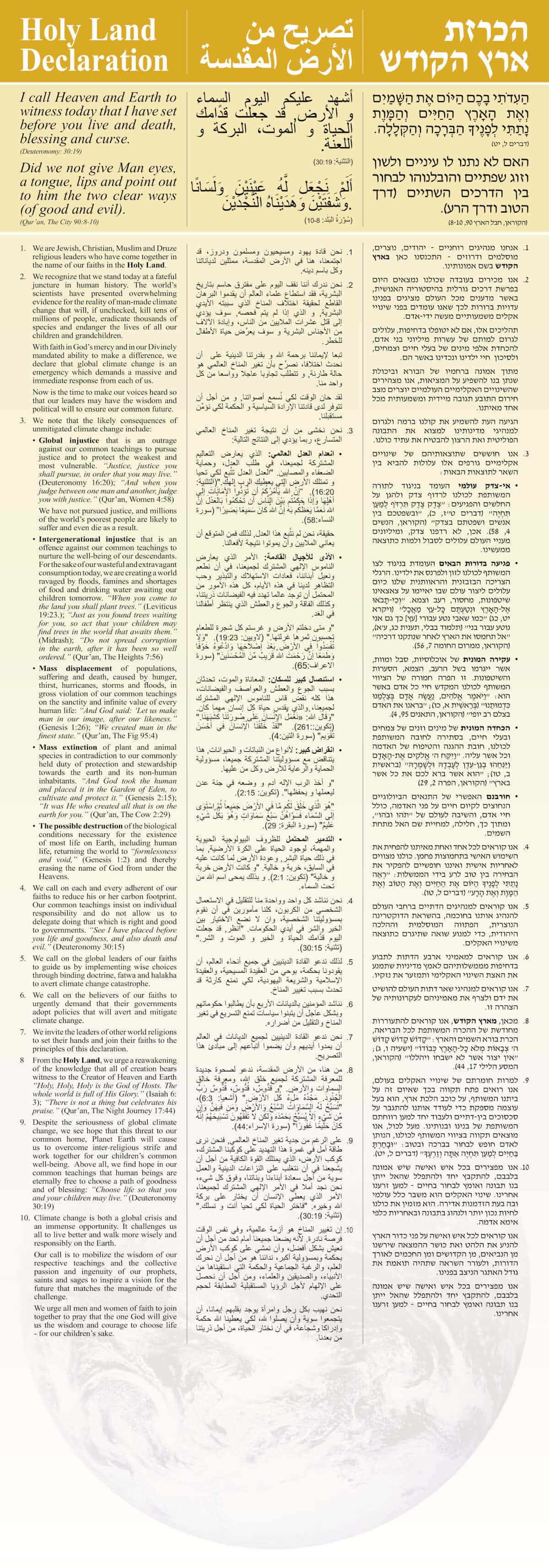
---
### [ICSD Applicant Questionnaire](https://interfaithsustain.com/icsd-applicant-questionnaire/)
**Published:** July 10, 2019
**Author:** ICSD
**Content:**
Loading…
---
### [Interfaith Eco Forum](https://interfaithsustain.com/interfaith-eco-forum/)
**Published:** July 21, 2013
**Author:** ICSD
**Content:**
On July 25th, 2011, the Interfaith Center for Sustainable Development organized an Interfaith Eco Forum in Jerusalem. At the event, Muslim, Jewish and Christian leaders spoke out on environmental issues as a joint panel. The panelists were Bishop William Shomali of the Latin Patriarchate of Jerusalem, Deputy Minister of the Palestinian Authority’s Ministry of Religious Affairs Haj Salah Zuheika, and American Jewish Committee International Director of Inter-religious Affairs Rabbi David Rosen. They are members of the Council of Religious Institutions of the Holy Land, which represents the high religious authorities of the Holy Land: the Chief Rabbinate of Israel, the Palestinian Ministry of Religious Affairs (Waqf), the Palestinian Sharia Courts and the assembly of the Heads of Churches of Jerusalem.
In April of 2011, this Council endorsed the Holy Land Climate Change Declaration, which the Interfaith Center for Sustainable Development submitted. The event was held at The American Colony Hotel in Jerusalem. Prolonged drought, the recent fires in the north, the drying up of rivers, and significant ecological changes all underscore the Holy Land’s particular vulnerability to environmental changes. The Council of Religious Institutions of the Holy Land (CRIHL) recently endorsed a Holy Land Declaration on Climate Change, which articulates a religious call, based on the respective teachings of the Abrahamic faiths, for action to address climate change. For the Declaration text, go [here](https://interfaithsustain.com/declaration-on-climate-change/).
Rabbi Rosen said, “Our responsibility to future generations is a cardinal tenet of our respective religious heritages. ”Bishop Shomali said, “We are accountable for how we use this Earth. The earth is like our home, and those who live in the same home should know how to live together. The main religions should study ecological issues together because we have a common destiny. We need to put all of our energies together to solve the environmental crisis, which is ethical, moral, and spiritual.” Haj Zuheika spoke about the roots of environmental awareness in the Koran, and contemporary environmental challenges in the Middle East.
---
### [Interfaith meet on environment](https://interfaithsustain.com/interfaith-environmental-forum-connects-jews-christians-muslims-2/)
**Published:** July 28, 2013
**Author:** ICSD
**Content:**
---
### [Introduction to Religion and Ecology](https://interfaithsustain.com/introduction-to-religion-and-ecology-2/)
**Published:** September 20, 2015
**Author:** ICSD
**Content:**
This course introduces the newly emerging field of religion and ecology and traces its development over the last several decades. It explores human relations to the natural world as differentiated in religious and cultural traditions. In particular, it investigates the symbolic and lived expressions of these interconnections in diverse religious texts, ethics, and practices. In addition, the course draws on the scientific field of ecology for an understanding of the dynamic processes of Earth’s ecosystems. The course explores parallel developments in human-Earth relations defined as religious ecologies.
Similarly, it identifies narratives that orient humans to the cosmos, namely, religious cosmologies. For many years science, engineering, policy, law, and economics were considered indispensable for understanding and resolving environmental problems. We now have abundant knowledge from these disciplines about environmental issues, but still not sufficient will to engage in long- term change for the flourishing of the Earth community. Thus, there is a growing realization that religion, spirituality, ethics, and values can make important contributions, in collaboration with science and policy, to address complex ecological issues. We will examine those contributions, acknowledging both the problems and promise of religions. In addition, we view religion and ecology amid the broader emergence of environmental humanities, namely, the examination of the roles of humans in nature through the lens of history, literature, philosophy, music, and art.
## Required Text:
John Grim and Mary Evelyn Tucker, Ecology and Religion, Washington, DC: Island Press, 2014.
## Additional Resources:
### Websites:
The Forum on Religion and Ecology at Yale. http://fore.research.yale.edu/
Spiritual Ecology. http://spiritualecology.info/
### Annotated Bibliography of World Religions and Ecology:
Grim, John, Russell Powell, Matthew T. Riley, Tara C. Trapani, and Mary Evelyn Tucker.
“Religion and Ecology.” *Oxford Bibliographies Online: Ecology*. New York: Oxford University Press, August 27, 2013. http://www.oxfordbibliographies.com/view/document/obo-9780199830060/obo-9780199830060-0103.xml
### Overviews of the Field of Religion and Ecology:
Barnhill, David Landis, and Roger S. Gottlieb, eds. *Deep Ecology and World Religions: New Essays on Sacred Ground*. Albany: State University of New York Press, 2001.
Bauman, Whitney A., Richard R. Bohannon II, and Kevin J. O’Brien, eds. *Grounding Religion: A Field Guide to the Study of Religion and Ecology*. New York: Routledge, 2011.
Callicott, J. Baird. *Earth’s Insights: A Survey of Ecological Insights from the Mediterranean Basin to the Australian Outback*. Berkeley: University of California Press, 1994.
Devall, Bill, and George Sessions. *Deep Ecology: Living as if Nature Mattered*. Salt Lake City, UT: Peregrine Smith, 1985.
Foltz, Richard, ed. *Worldviews, Religion and the Environment: A Global Anthology*. Belmont, CA: Wadsworth/Thomson, 2003.
Grim, John and Mary Evelyn Tucker. *Ecology and Religion*. Washington, DC: Island Press, 2014.
Gottlieb, Roger, ed. *This Sacred Earth: Religion, Nature, Environment*. New York: Routledge, 2004.
Kearns, Laurel, and Catherine Keller, eds*. Ecospirit: Religions and Philosophies for the Earth*. New York: Fordham University Press, 2007.
Nasr, Seyyed Hossein. *Man and Nature: The Spiritual Crisis in Modern Man*. Chicago: Kazi, 1997.
Rockefeller, Stephen C., and John C. Elder, eds. *Spirit and Nature: Why the Environment Is a Religious Issue: An Interfaith Dialogue*. Boston: Beacon, 1992.
Sponsel, Leslie. *Spiritual Ecology: A Quiet Revolution.* Santa Barbara, CA: Praeger, 2012.
Spretnak, Charlene. *States of Grace: The Recovery of Meaning in the Postmodern Age*. New York: HarperCollins, 1991.
Tucker, Mary Evelyn. *Worldly Wonder: Religions Enter Their Ecological Phase*. Chicago: Open Court, 2003.
Tucker, Mary Evelyn and John Grim. Series Editors. *Religions of the World and Ecology, Book Series, Harvard Center for the Study of World Religions*, Harvard University Press, 1997-2004 (10 Volumes).
Mary Evelyn Tucker and John Grim (eds,), “Religion and Ecology: Can the Climate Change?” *Daedalus*, (Fall 2001). (http://www.amacad.org/publications/fall2001/fall2001.aspx).
Tucker, Mary Evelyn and John Grim. Editors. *Worldviews and Ecology: Religion, Philosophy and the Environment*. Maryknoll, NY: Orbis, 1994.
Waldau, Paul, and Kimberley Patton, eds. *A Communion of Subjects: Animals in Religion, Science, and Ethics*. New York: Columbia University Press, 2006.
### **Literature Review:**
Jenkins, Willis, and Christopher Key Chapple. “Religion and Environment.” *Annual Reviews of Environment and Resources* 36 (2011): 441–63.
### **Peer-Reviewed Journals:**
*Worldviews: Global Religions, Culture, and Ecology.*
*Journal for the Study of Religion, Nature, and Culture.*
### **Encyclopedias:**
Jenkins, Willis, ed. *The Spirit of Sustainability: Religion, Ethics and Philosophy*. Vol. 3. The Encyclopedia of Sustainability. Great Barrington, MA: Berkshire, 2009.
Jones, Lindsay, ed. *Encyclopedia of Religion*. 2d ed. New York: Macmillan, 2005.
Taylor, Bron, and Jeffrey Kaplan, eds. *The Encyclopedia of Religion and Nature*. 2 vols. New York: Continuum, 2008.
### **Films:**
Moyers, Bill. *Spirit and Nature*. 1991.
Ostrow, Marty and Terry Kay Rockefeller. *Renewal: Stories from America’s Religious- Environmental Movement*. Fine Cut Productions, 2008. http://www.renewalproject.net/
Swimme, Brian and Mary Evelyn Tucker. *Journey of the Universe*. Northcutt Productions, 2011. http://www.journeyoftheuniverse.org/especially vol. 4: 2604-2668.
---
### [Job and His Modern Interpreters](https://interfaithsustain.com/job-and-his-modern-interpreters/)
**Published:** September 9, 2015
**Author:** ICSD
**Content:**
The aim of this course is to understand the book of Job and its lasting significance. In order to accomplish this aim, the course will include two parts: a study of the book of Job in the context of the biblical world, and an examination of responses to Job by contemporary writers.
“the most controversial, irreverent, and daringly subversive pages of the Bible”–William Safire
“There is only one question which really matters: why do bad things happen to good people? All other theological conversation is intellectually diverting; . . . Virtually every meaningful conversation I have ever had with people on the subject of God and religion has either started with this question, or gotten around to it before long.”–Harold Kushner
**TEXTBOOKS**
A commentary on the book of Job selected from the following:
Habel, Norman C. The Book of Job. Old Testament Library. Philadelphia: Westminster, 1985.
Janzen, J. Gerald. Job. Interpretation. Atlanta: John Knox, 1985.?Newsom, Carol A. “The Book of Job.” In The New Interpreter’s Bible, 4:317-637. Nashville: Abingdon, 1996.
Pope, Marvin H. Job. The Anchor Bible. New York: Doubleday, 1965.
Contemporary Responses to Job:
MacLeish, Archibald. J.B.: A Play in Verse. Boston: Houghton Mifflin, 1958.
Safire, William. The First Dissident: The Book of Job in Today’s Politics. New York: Random House, 1992.
Gutierrez, Gustavo. On Job: God-Talk and the Suffering of the Innocent. Translated by Matthew J. O’Connell. Maryknoll, N.Y.: Orbis, 1987.
McKibben, Bill. The Comforting Whirlwind: God, Job, and the Scale of Creation. Grand Rapids, Mich.: Eerdmans, 1994.
Kushner, Harold S. When Bad Things Happen to Good People. New York: Avon Books, 1983.
This syllabus pertains to when the course was offered in 2003
---
### [Journey of the Universe](https://interfaithsustain.com/journey-of-the-universe/)
**Published:** September 20, 2015
**Author:** ICSD
**Content:**
This course will draw on the resources created in the Journey of the Universe project. This consists of a film, a book, and a series of 20 interviews with scientists and environmentalists. Journey of the Universe weaves together the discoveries of evolutionary science together with cosmological understandings found in the religious traditions of the world. The authors explore cosmic evolution as a creative process based on connection, interdependence, and emergence. The Journey project also presents an opportunity to investigate the daunting ecological and social challenges of our times.
**Required Texts:**
- Brian Thomas Swimme and Mary Evelyn Tucker, *Journey of the Universe*. New Haven: Yale University Press, 2011.
- Thomas Berry, “The New Story,” *Teilhard Studies* #1, American Teilhard Association, Winter 1978. Reprinted in *The Dream of the Earth* (1988); online at http://www.journeyoftheuniverse.org/storage/Berry–The\_New\_Story.pdf
- Brian Swimme, *Hidden Heart of the Cosmos: Humanity and the New Story.* Maryknoll, NY: Orbis Books, 1996.
**Website:** Journey of the Universe website www.journeyoftheuniverse.org
**Recommended Readings:**
- Brian Swimme and Thomas Berry. *The Universe Story*. San Francisco: HarperSanFrancisco, 1994.
- *Thomas Berry: Selected Writings on the Earth Community*. Selected by Mary Evelyn Tucker and John Grim, Maryknoll, NY: Orbis Books, 2014.
- *Teilhard in the 21st Century*. Edited by Arthur Fabel and Donald St John, Maryknoll, NY: Orbis Books, 2003.
- Eric Chaisson, *The Epic of Evolution*. New York: Columbia University Press, 2007.
- Cynthia Brown, *Big History: From the Big Bang to the Present*. Fort Meyers, FL: New Press, 2012.
- William McNeil, *The Human Condition: An Ecological and Historical View*. Princeton: Princeton University Press, 1980.
---
### [New Creation and Ecology: Practicing in the Garden](https://interfaithsustain.com/new-creation-and-ecology-practicing-in-the-garden/)
**Published:** September 9, 2015
**Author:** ICSD
**Content:**
This course a) explores dimensions of the ecological crises facing the present generation, b) presents theological, scriptural, and anthropological resources for shaping ecological behavior, c) examines traditional Christian practices pertaining to community, the Body, and the world, and d) offers resources and models for working with congregations and young people on environmental issues.
Required Texts
Larry L. Rasmussen, Earth Community, Earth Ethics. Orbis Press, 1996.
Robert R. Gottfried, Economics, Ecology, and the Roots of Christian Faith. Rowman?& Littlefield, 1995.
Recommended: Emilio Moran, People and Nature: An Introduction to Human Ecological Relations. ?Blackwell, 2006.
Other Resources to Consider (a growing list):
Dorothy C. Bass, ed., Practicing our Faith.
Wendell Berry, A Timbered Choir: The Sabbath Poems 1979-1997.
Paul Ehrlich and Anne Ehrlich, One with Nineveh: Politics, Consumption, and the Human Future.
Tim Flannery, The Weather Makers: How Man is Changing the Climate and What it Means for Life on Earth.
Mary C. Grey, Sacred Longings: The Ecological Spirit and Global Culture.
Norman C. Habel, ed., The Earth Bible, Vol. 1: Readings from the Perspective of Earth
Norman C. Habel & Vicky Balabanski, eds., The Earth Bible, Vo. 5: The Earth Story in the New Testament.
Paul Hawken, The Ecology of Commerce: A Declaration of Sustainability.
Dieter Hessel & Rosemary Radford Reuther, eds., Christianity and Ecology.
John Houghton, Global Warming: the Complete Briefing, 3 rd ed.
Barbara Kingsolver, Small Wonder.
Elizabth Kolbert, Field Notes from a Catastrophe: Man, Nature, and Change.
Millenium Ecosystem Assessment 2005: Ecosystems and Human Well-Being; Synthesis
Michael Pollan, The Omnivore’s Dilemma.
Michael Schut, ed., Food and Faith: Justice, Joy, and Daily Bread.
Michale Schut, ed., Simpler Living: Compassionate Life: A Christian Perspective.
James Gustav Speth, Red Sky at Morning: America and the Crisis of the Global Environment.
David Toolan, At Home in the Cosmos.
Worldwatch Institute, Vital Signs 2006-2007.
Schedule
Lesson 1: Course overview; community building; premises; assessment
Lesson 2: State of the Earth I; Suggested Readings-Moran, People and Nature, chapter 1; Millenium Ecosystem Assessment; Worldwatch Institute, Vital Signs
Lesson 3: State of the Earth II, continued. Why we are in trouble: Habits of thinking, economic practices, materialism, ritual dislocations; Readings-Rasmussen, Earth Community, Earth Ethics, pp. 1-173; Gottfried, Economics, Ecology, and Roots, pp. 1-28; Rasmussen, “Shaping Communities,” in Bass, Practicing our Faith, pp. 119-132; Suggested Readings-Moran, People and Nature, chapters 2-4, pp. 25-92
Lesson 4: Biblical Resources I: Old Testament; Readings-Psalm 104, Genesis 1:1-2:3, 2:4-3:24; Rasmussen, Earth Community, Earth Ethics, pp. 177-226, 248-269; Gottfried, Economics, Ecology, and Roots, pp. 29-65; Sharon Daloz Parks, “Household Economics,” in Bass, Practicing Our Faith, 43-58.
Lesson 5: Biblical Resources II: New Testament; Readings-Rasmussen, Earth Community, Earth Ethics, pp. 270-294; Suggested Readings-Revelation 15-22; Romans 8; Habel, Readings from the Perspective of Earth, pp. 24-53; Barbara K. Rossing, “ River of Life in God’s New Jerusalem,” in Hessel and Radford Reuther, eds., Christianity and Ecology, pp. 205-224.
Lesson 6: The Garden vs. the Brickyard I: The Church’s Calling: Why should the church care? Sacramentality of Place, Spirituality of the Body; Readings-Rasmussen, Earth Community, Earth Ethics, pp. 295-354; Gottfried, Economics, Ecology, and Roots, pp. 67-117; Michael Lerner, in Dov Peretz Elkins, A Shabbat Reader, pp. 172-185; Suggested Readings-Moran, People and Nature, chapters 5, pp. 93-115
Lesson 7: The Garden vs. the Brickyard II: Responses to the crises; What models are available and how do we sort through them?; Readings-Rasmussen, Earth Community, Earth Ethics, pp. 227-247; Gottfried, Economics, Ecology, and Roots, pp. 119-149; DeWitt in Schut, Simpler Living, Compassionate Life, pp. 175-180; Berry in Schut, Food and Faith, pp. 125-136; Suggested Readings-Moran, People and Nature, chapters 6-8, pp. 116-177
Lesson 8: Practices: Food; Readings-Schut, Food and Faith, pp. 123-125, 136-147; Barbara Kingsolver, “A Fist In the Eye of God,” in Small Wonder, 93-108; Suggested Reading-Michael Pollan, The Omnivore’s Dilemma
Lesson 9: Practices: Water
Lesson 10: Practicing in the Garden
Lesson 11: Site Visit
Lesson 12: Final Projects
---
### [Priests, rabbis, muftis meet to promote green behavior](https://interfaithsustain.com/priests-rabbis-muftis-meet-to-promote-green-behavior/)
**Published:** July 28, 2013
**Author:** ICSD
**Content:**
By SHARON UDASIN AND JONAH MANDEL Jerusalem Post
07/26/2011 03:50
## Christian, Jewish, Muslim clerics talk about environmental awareness; “We are tourists on this land, and will leave it one day.”
Representatives from Israel’s Jewish, Muslim and Christian communities met on Monday to talk about instilling their congregants with environmental awareness.
“When a priest or rabbi or mufti speaks, he speaks to the conscience of people, to the inner side of it, not only to the mind but to the heart,” Auxiliary Bishop to the Latin Patriarch Msgr. William Shomali, who presides over Jerusalem and the Palestinian territories, told The Jerusalem Post after the panel, which was held by the Interfaith Center for Sustainable Development at the capital’s American Colony Hotel.
“He speaks to all generations. It can be very emotional,” Shomali said.
A respect for nature, equivalent to a respect for God, he explained, can “enter the heart and conscience of the people” through canticles and music, sometimes more so than through legislation, he added.
Monday’s event was also the launch of the Interfaith Center itself, a new religious-environmental group headed by Rabbi Yonatan Neril. Earlier this month, the Council of Religious Institutions of the Holy Land (CRIHL) endorsed the “Holy Land Declaration on Climate Change,” which was submitted by the Interfaith Center for Sustainable Development, calling on observers throughout the world to address the environmental crisis, including increased consumption.
“We also call for all people of faith to reduce their personal emissions of greenhouse gases and to urge their political leaders to adopt strong, binding, science-based targets for the reduction of greenhouse gases in order to avert the worst dangers of climate crisis,” the declaration said.
Speaking at the Monday event, in addition to Neril and Shomali, were Deputy Minister of the Palestinian Authority’s Ministry of Religious Affairs Haj Salah Zuheika, AJC International Director of Interreligious Affairs Rabbi David Rosen and Michael Kagan, author of The Holistic Haggadah and a PhD chemist.
The rabbi, bishop and deputy minister are all members of CRIHL, which represents the Chief Rabbinate, the Palestinian Ministry of Religious Affairs (Waqf) and the assembly of the Heads of Churches of Jerusalem. Also in attendance was Armenian Archbishop Torkom Manoogian, as well as Rabbi Daniel Sperber and Nazareth Bishop Rev. Giacinto- Boulos Marcuzzo, the latter two are also members of the Bilateral Commission of the delegations of the Chief Rabbinate of Israel and the Holy See’s Commission for Religious Relations.
Shomali opened by saying that respect and love for God entailed similar respect for his creations – including nature – and noted the joint fate that all inhabitants of the planet and region share.
“We are tourists on this land, and will leave it one day,” he said. “But we must leave it clean for the next generations, we must be accountable for how we use this common home.
“If the Earth is polluted, if the Mediterranean Sea is polluted – it’s polluted for Christians, Muslims and Jews,” he said. “We must study the environmental crisis that is part of an ethical, moral and spiritual crisis.”
Shomali also stressed the danger to the environment posed by weapons of mass destruction, and called for a fair distribution of natural resources, especially water.
Rosen echoed Shomali’s sentiments about the fleeting nature of man’s time on Earth.
“We do not own anything in the end and we are purely temporary tenants in this world, and whatever we think we own is temporary,” Rosen said. “And surely death itself and the natural decay of the physical world should be a continuous reminder of that.”
While both Shomali and Rosen emphasized how the Bible encourages constant protection of nature, Zuheika pinpointed sections of the Koran that do the same.
“In the Koran, God speaks about everything – about nature, about air, about human beings, about animals,” Zuheika said. “And of course this description is made in a very beautiful way and urges human beings not only to use nature but also to protect it.”
Zuheika particularly stressed the need to be careful with the globe’s limited water resources, keep the atmosphere clean and reduce deforestation.
But the leaders agreed that it is not enough to simply hold discussions on these topics, and that clerics of the country’s three main religions must help translate the ideas into action.
“There is a risk that what we say in gatherings like this doesn’t reach the street,” Shomali said. “We should speak about this topic in synagogues and churches.”
The fact that the average Israeli religious leader doesn’t take a very dominant role in educating their communities on environmental matters is to Rosen’s mind part of a distorted situation in which rabbis have been pushed out of their traditionally dominant positions of societal guidance.
“Religion is not about looking for the formula by which you get to heaven, but how to live your daily life according to God’s will,” he said. “This is the mindset of religions, every rabbi wants to have a say,” which might be the situation in the Diaspora, “but here they only deal with religious questions.”
To Rosen, a very concrete way that religious leaders could provide the environment with some direly needed alleviation is by encouraging congregants to cut down on meat consumption.
“There is no one issue causing greater pollution than livestock for meat,” he said. “The meat industry is a major polluter in gas, a huge source of water waste – it takes 100 times the amount of water to produce a pound of flesh than grain.”
In order to actively recruit the religious to environmental causes, the new Interfaith Center will soon be launching three projects, the first of which will be a series of 10 lectures on sustainability for Muslim, Jewish and Christian seminary students, conducted in partnership with Friends of the Earth Middle East, Neril said.
In coming months, the center will recruit religious leaders from all three faiths to join Hindu and Buddhist clerics on speaking tours around the US to spread green awareness.
Finally, in around a year’s time, and in advance of the 67th session of the UN General Assembly, the organization will work with American group Interfaith Declaration on Climate Change to host an interfaith Earth forum in New York, according to Neril.
---
### [Principles of Stewardship and Sustainability](https://interfaithsustain.com/principles-of-stewardship-and-sustainability/)
**Published:** July 17, 2016
**Author:** ICSD
**Content:**
**Seminary:** Saint Paul Seminary School of Divinity at St. Thomas University
**Location:** 2115 Summit Avenue Saint Paul, Minnesota 55105
**Course number:** DVMT 706
**Instructor:**
**Website:**
**Course Description**
This course will provide the occasion to consider the complex issue of “environmental stewardship” from the perspectives of traditional Catholic theses concerning the meaning of creation and the status of the human person within it. Special emphasis is given to the Thomistic categories of natural philosophy and theology. The seminar course will include common readings to be discussed at each class in light of fundamental themes developed throughout the whole.
---
### [PROGRAM CONCENTRATION: Sustainability](https://interfaithsustain.com/program-concentration-sustainability/)
**Published:** July 19, 2016
**Author:** ICSD
**Content:**
**Seminary:** Wake Forest University
**Location:** Winston-Salem, NC 27106
**Course number:**
**Instructor:**
**Website:** <http://divinity.wfu.edu/>
**Course Description**
The Wake Forest Center for Energy, Environment, and Sustainability (CEES) and the School of Divinity provide students with exposure to sustainability issues through the Graduate Certificate in Sustainability. The certificate requires the completion of 12 credit hours in coursework related to natural science, social sciences and humanities, business management, and law and policy.
---
### [Rabbi as Environmental Activist](https://interfaithsustain.com/rabbi-as-environmental-activist/)
**Published:** September 9, 2015
**Author:** ICSD
**Content:**
At the end of the course, students will be able to know underlying Jewish principles and values regarding the earth, be able to compare the tensions in Jewish thought on the human relationship to nature to those within Ecofeminism, know basic theory and practices of non-violent direct action, be able to apply the above to the crisis of global climate change, contemplate how Judaism needs to evolve to address it, and feel more deeply connected to place.
**Week One**
- Arthur Green, *Radican Judaism: Rethinking God and Tradition,* pp. 16-33
- Arthur Waskow, ed., *Torah of the Earth:Exploring 4,000 years of Ecology in Jewish*
- *Though*t vol 2, “And the Earth is Filled with the Breath of Life” Waskow, 261-86 David Korten, “A Sacred Story for Our Time” Yes Magazine http://www.yesmagazine.org/happiness/religion-science-and-spirit-a-sacred-story-forour-time
- Mary Evelyn Tucker and John Grim, *Thomas Berry: Selected Writings on the Earth* *Community, pp.* 11-24.
Optional
- Brian Thomas Swimme and Mary Evelyn Tucker, *Journey of the Universe.*
**Week Two**
- Arthur Waskow, ed., *Torah of the Earth:Exploring 4,000 years of Ecology in Jewish*
- *Though*t vol 1 , “The Mountain and he Tower: Wilderness and City in Symbols of Babylon and Israel” Evan Eisenberg, pp. 18-54.
- “Nature in the Sources of Judaism” Hava Tirosh-Samuelson https://www.amacad.org/content/publications/pubContent.aspx?d=1294
- Waskow Vol 2, “Judaism and nature:Theological and Moral Issues” Eilon Schwartz pp. 159-73
- Waskow Vol 2, “On The Judaism of Nature” Everett Gendler pp. 174-84
Optional
- Waskow Vol 1, “Ecology in Jewish Law and Theology” Norman Lamm pp. 103-126 and “Nature v. Torah” Jeremy Benstein pp. 180-207
**Week Three**
- Waskow Vol 1, “ The Earth: is the Lord’s: Judaism and Environmental Ethics”, Jonathan Helfand, pp. 127-140
- Waskow Vol. 1 “ Judaism and the Practice of Stewardship” David Ehrenfeld and Philip J. Bentley, pp. 141-156
- Waskow Vol. 1, “The Rabbis and Expanding Environmental Consciousness”, Fred Dobb pp 157-179.
**Week Four**
- Roger S. Gottlieb, *Political and Spiritual, ‘* Spiritual Deep Ecology and the Left’, pp.23-44
- Chaone Mallory, “What Is Ecofeminist Political Philosophy?Gender, Nature, and the Political” in Environmental Ethics Vol 32, pp. 305-322
- http://www38.homepage.villanova.edu/chaone.mallory/publications/EnvEthF10.pdf Irene Diamond and Gloria Feman Orenstein ed., *Reweaving The World: The*
- *Emergence of Ecofeminism,*, “Deep Ecology and Ecofeminism: The Emerging Dialogue”
- Michael E. Zimmerman pp 138-54
- Llewellyn Vaughan-Lee, ed. *Spiritual Ecology: The Cry of the Earth* “Listening to
- Natural Law” Chief Oren Lyons pp.5-11
- Vaughan-Lee, “Revelation at Laikipia, Kenya” Chief Tamale Bwoya, “, p 29-33.
Optional
- Gottlieb, ‘Ethics and Trauma: Levinas, Feminism and Deep Ecology’ pp 45-66.
- Diamond and Orenstein ed., “Searching for Common Ground” Judith Plant pp 155- 61.
**Week Five**
- Vaughn Lee, “Greening of the Self”, Joanna Macy, pp. 143-156.
- Joanna Macy and Molly Brown, *Coming Back to Life,* pp. 37-62
- Charlene Spretnak, *Relational Reality: New Discoveries of Interrelatedness That are* *Transforming the Modern World.*pp. 196-203.
Optional
- Joanna Macy, *World as lover world as self: Courage for Global Justice and Ecological* *Renewal*
**Week Six**
- Naomi Klein, *This Changes Everything,* pp. 64-95, 128-38, 161-87
- Bill McKibben, “Global Warmings Terrifying New Math” in Rolling Stone, July 19, 2012 http://www.rollingstone.com/politics/news/global-warmings-terrifying-new-math-20120719
- *Philadelphia Magazine,* September 29, 2014, “Philadelphia + a Pipeline (or Two) = America’s Next Energy Hub” Patrick Kerkstra http://www.phillymag.com/articles/philadelphia-pipeline-americas-next-energy-hub/
**Week Seven**
- Klein, pp. 291-296, 303-16, 337-46,
- Eric Utne, “Which Side Are You On” Utne Reader, Winter 2014
- Charles Eisenstein, “Climate Change: The Bigger Picture” Utne Reader Winter 2014 Browse the website www.darkmountain.net
**Week Eight**
- Selected Writings of MAHATMA GANDHI , The Practice of Satyagraha, pp. 67-78 http://www.mkgandhi.org/ebks/SWMGandhi.pdf
- Lynn Gottlieb, *Trail Guide to the Torah of Nonviolence,* pp. 89-98, 102-106, 108-119, 122-27, 237-50, 252-61
- Milton R. Konvitz, “”Conscience and Civil Disobedience in the Jewish Tradition”, in *The Challenge of Shalom: The Jewish Tradition of Peace and Justice,* edited by Murray Polner and Naomi Goodman, pp. 172-85.
- James M Washington, editor, *A testament of Hope:The Essential Writings and* *speeches of Martin Luther King Jr.,* pp. 5-9, 16-20, 43-53, 293-95 (excerpt from Letter from a Birmingham Jail),
**Week Nine**
- Peter Ackerman and Jack Duval, *A Force More Powerful: A Century of Nonviolent* *Conflict,* pp. 1-9, 305-33.
- Gene Sharp, *Waging Nonviolent Struggle: 20th century Practice and 21st Century* Potential,* 13-23, 361-72, 415-21
- Washington (Writings of MLK), pp. 64-72, 647-53 The Chipko Women’s Movement in India http://en.wikipedia.org/wiki/Chipko\_movement
Optional
- Ghandi, http://www.mkgandhi.org/ebks/SWMGandhi.pdf “Passive Reistance and Anti-Semitism” pp.85-90
- Martin Buber, Ghandi, the Jews and Zionism: Open Letter to Ghandi Regarding Palestine http://www.jewishvirtuallibrary.org/jsource/History/BuberGandhi.html
**Week Ten**
- Michael Nagler, *The Nonviolence Handbook: A Guide for Practical Action,* whole book, 1-84.
**Week Eleven**
- Macy and Brown, pp. 1-18
- Charles Eisenstein, *The More Beautiful World Our hearts Know is Possible,* pp.172-79, 219-72
This syllabus pertains to when the course was offered in 2015
---
### [Reading Laudato'Si from an African Context](https://interfaithsustain.com/reading-laudatosi-from-an-african-context/)
**Published:** September 16, 2019
**Author:** ICSD
**Content:**
**Attributes:**
ENST – Energy Studies, SUS4 – Indiv Behavior & Values, ZTST – Final exam
Recent Professors
[Emmanuel Katongole](https://www.coursicle.com/nd/professors/Emmanuel+Katongole/)
Open Seat Checker
[Get notified when THEO 40714 has an open seat](https://www.coursicle.com/app/)
Schedule Planner
[Add THEO 40714 to your schedule](https://www.coursicle.com/nd/#subj=THEO&num=40714)
Recent Semesters
Spring 2019, Fall 2017, Spring 2017
Offered: MW
Avg. Class Size: 6
Avg. Sections: 1
Credits: 3
**Description**
The course introduces students to the historical, political and economic dimensions of the ecological crisis in Africa. It will also introduce students to hopeful signs and innovative models of sustainable land use, food production and economic entrepreneurship underway in some poor communities in Africa. The course is designed around Pope Francis’ two central convictions in Laudato Si namely: (1) the close connection between the cry of the earth and the cry of the poor, and (2) the spiritual “wound” that lies at the heart of the ecological crisis – our inability to live as creatures made from the dust of the earth. The overall objective of the course is to help students to see the connections between the spiritual wound, the ecological crisis and poverty in Africa. It will also help students appreciate how Christian faith and theology can contribute to the healing of the wound, and in so doing inspire fresh experiments of an integrated approach, which fights poverty, protects nature and restores human dignity.
---
### [Religion and the Environment](https://interfaithsustain.com/religion-and-the-environment/)
**Published:** September 10, 2015
**Author:** ICSD
**Content:**
This course welcomes students to current conversations about the relationships between religions and the environment, and about the responses of religious traditions the ecological challenges humanity faces. Topics include: challenges to the Christian tradition; Judaism, Islam, South Asian Traditions (Hinduism, Jainism), Chinese Traditions (Taoism, Confucianism), Japanese Traditions, Buddhism and Emerging Religions, Buddhism as crucial voices in developing a global perspective; and personal, religious, and social responses to such concerns as biodiversity and global warming.
**Course Goals:**
By the end of the course students should:
(1) be conversant with major religious perspectives, both historical and contemporary, on the human relationship with the environment;
(2) be able to identify religious or ethical underpinnings of factions within the contemporary environmental movement;
(3) be able to think and write critically about religion and environmental issues.
**Required Text**
WorldViews, Religion and The Environment: A Global Anthology by Richard A. Foltz.
Additional Readings will be distributed on Blackboard, on Reserve in the Library ?(online) or in class—these readings will be announced 1 week or more prior to the class.
Fieldwork Papers: Attend two different religious rituals during the course of the semester. Include description, comments and documentation in your interview report(s).
Two 5-7 page papers on each fieldwork experience that engages the course themes in relation to your fieldwork is due on Tuesday April 24th.
Fieldtrip Paper: All students are required to attend the fieldtrip to Animal Place, a Farm Animal Sanctuary, tentatively scheduled to be held on April 19th. A 5-7 page paper engaging the course themes in relation to the Animal Place is due on Tuesday, April 24th. If you cannot make the date of the fieldtrip, please speak to the Professor immediately and an alternative field experience will be discussed.
In-Class Fieldwork Presentations to your Group: Each student will present their field research to their group. Presentations will be made to your assigned groups. Presentations should run 35-40 minutes. Guidelines for your fieldwork Presentations projects will be distributed in class.
**Course Schedule**
**Week 1**:
COURSE INTRODUCTION: Assessment/Quiz; Class Processes.
Assignment: One page paper on your religious experience – what you were born into and what you are currently involved in/practicing now, and/or why you are not practicing your birth religion.
**Week 2** : COURSE INTRODUCTION: Syllabus; Group Assignments; Group Processes.
LECTURE: Background of the Contemporary Religious and Environment Movement
**Week 3:** Worldviews and the Ecological Crisis; INDIGENOUS TRADITIONS
Readings: All readings in Worldviews, Religion and the Environment by Foltz (W, R and E by Foltz): Worldviews and the Ecological Crisis
- Preface, Introduction, pp. xiii-xvii, pp. 1-7; Part One: Environmental Crisis, Spiritual Crisis; pp. 9–76, Indigenous Traditions
- Part Two: Interpreting Tradition, pp. 77-78; Chapter 3: First Peoples Traditions, pp. 79-111; “An Aboriginal Perspective on the Integrity of Creation” by Stan McKay (TSE)
- “Biodiversity and Tradition in Malaysia” by Patrick Segundad (TSE)
- “Learning to Connect Spirit, Mind, Body, and Heart to the Environment: A Healer’s Perspective” by Lea Bill-Rippling Water Woman (TSE)
- www.ienearth.org, www.culturalsurvival.org
- Task: Discussion Group Leaders present questions to Professor by e-mail/Blackboard.
**Week 4:** JEWISH TRADITION
Readings: W, R and E by Foltz: Chapter 8; pp.279-317
Online on Reserve at Library:
- “Jews, Jewish Texts and Nature: A Brief History” by Daniel Swartz (TSE)
- “Jewish Theology and the Environmental Crisis” by Eilon Schwartz (TEC)
- Coalition on the Environment and Jewish Life = www.coejl.org
- National Partnership on Religion and the Environment = www.npre.org
- Forum on Religion and Ecology = www.religionandecology.org
- Task: Discussion Group Leaders present questions to Professor by e-mail/Blackboard.
**Week 5:** CHRISTIAN TRADITION
Readings: W, R and E by Foltz: Chapter 9; Christianity, pp. 318 – 349.
Online on Reserve at Library:
- “Christianity as Ecologically Harmful” and “Christianity as Ecologically Responsible” by David Kinsley
- “The Ecological Crisis: A Common Responsibility” by Pope John II (TSE)
- “Radical Catholicism, Popular Resistance and Material Culture in El Salvador” by Lois Ann Lorentzen
- “Catholic Social Teaching and Environmental Ethics” by United States Catholic Conference (TSE)
- National Council of Churches on Ecojustice = www.nccecojustice.org
- Evangelical Environmental Network = www.creationcare.org
- United States Catholic Conference of Bishops = www.usccb.org
- National Partnership on Religion and the Environment = www.npre.org
- Task: Discussion Group Leaders present questions to Professor by e-mail/Blackboard.
- NOTE: Research Topics, Fieldwork Proposals Finalized.
**Week 6:** ISLAMIC TRADITION
Readings: W, R and E by Foltz: Chapter 10, pp. 358 – 391
Online on Reserve at Library:
- “An Islamic Response to the Manifest Ecological Crisis: Issues of Justice” by Nawal H. Ammar (TSE)
- “Islamic Environmental Ethics, Law and Society” by Mawil Y. Izzi Deen (EE)
- Islamic Foundation for Ecology and Environmental Science = www.ifees.org.uk
- Task: Discussion Group Leaders present questions to Professor by e-mail/Blackboard.
**Week 7:** BUDDHIST TRADITION
Readings: W, R and E by Foltz: Chapter 5, pp. 161 – 207
Online on Reserve at Library:
- “The Buddhist Attitude Towards Nature” by Lily de Silva (EE)
- “Early Buddhist Views on Nature” by Chatsumaru Kabilsingh (TSE)
- “The Greening of Buddhist Practice” by Kenneth Kraft on www.crosscurrents.org/greening
- Engaged Buddhist Organization called Sarvodaya = www.Sarvodayausa.org
- Forum on Religion and Ecology = www.religionandecology.org
- Task: Discussion Group Leaders present questions to Professor by e-mail/Blackboard
**Week 8:** ECOFEMINISM and ECOWOMANISM
Readings: W, R and E by Foltz: Chapter 11, pp. 456 – 492
Online on Reserve at Library:
- “The Power and Promise of Ecological Feminism” by Karen Warren (EE)
- “Something or Nothing: An Eco-Womanist Essay on God, Creation and Indispensability” by Karen Baker-Fletcher (TSE)
- “Indigenous Feet: Ecofeminism, Globalization, and the Case of Chiapas” by Lois Lorentzen (EG).
- “The Chipko Women’s Concept of Freedom” by Vandana Shiva .(TSE)
- Task: Discussion Group Leaders present questions to Professor by e-mail/Blackboard
Guest Speaker
**Week 9:** MIDTERM EXAMINATION
**Week 11:** HINDUISM, JAINISM, TAOISM, CONFUCIANISM
Readings: W, R and E by Foltz: Chapter 4: “South Asian Traditions,” pp. 112-160
Online on Reserve at Library:
- “Satyagraha for Conservation: Awakening the Spirit of Hinduism,” by O.P. Dwivedi (TSE)
- “Hinduism and Deep Ecology” by Christopher Chapple (DEWR)
- “Ecological Themes in Taoism and Confucianism” by Mary Evelyn Tucker in Foltz, pp. 217-223
- Forum on Religion and Ecology: www.religionandecology.org
- Task: Discussion Group Leaders present questions to Professor by e-mail/Blackboard
**Week 12:** TWO-THIRDS WORLD RELIGIOUS RESPONSES and ENVIRONMENTAL RACISM
Readings: W, R and E by Foltz: Chapter 14: “Voices from the Global South;” pp. 493 – 523
Online on Reserve at Library:
- “African-American Resources for a More Inclusive Liberation Theology” by Theodore Walker, Jr. (TSE)
- “Central African Resources on the Human-Environment Relationship” by Richard B. Peterson (TSE)
- “Seeking Eco-justice in the South African Context” by Ernst Conradie, Charity Majiza, Jim Cochrane, Welile T. Sigabi, Victor Molobi and David Field (TSE)
- “Principles of Environmental Justice” by The First National People of Color Environmental Leadership Summit (TSE)
- “Whose Earth is it Anyway?” by James H. Cone (EH)
- “Race, Sacrifice and Native Lands” by Jonna Higgins-Freese and Jeff Tomhave (TSE)
- Task: Discussion Group Leaders present questions to Professor by e-mail/Blackboard.
Guest Speaker
**Week 13:** PART I: RELIGIOUS RESPONSES TO ANIMALS
Online on Reserve at Library:
- “Caught with ourselves in the Net of Life and Time: Traditional Views of Animal in Religion” by Kimberly Patton (COS)
- “Seeing the Terrain We Walk: Features of the Contemporary Landscape of ‘Religion and Animals’ by Paul Waldau (COS)
- “Animal Protection and the Problem of Religion: An Interview with Peter Singer” by Paul Waldau (COS)
- “The Dance of Awe” by Jane Goodall (COS)
- “A Communion of Subjects and a Multiplicity of Intelligences” by Mary Evelyn Tucker (COS)
- “The Emotional World of Farm Animals: A Study Guide” by Animal Place (handout)
- www.animalplace.org
- www.hsus.org/religion
- www.crle.org
- www.humanecalifornia.org
- Films: Peaceable Kingdom/The Emotional Life of Farm Animals
- Task: Discussion Group Leaders present questions to Professor by e-mail/Blackboard.
Guest Speaker
**Week 14** (April 22) EMERGING RELIGIOUS GROUPS and COSMOLOGIES (EARTH DAY)
Readings: W, R and E by Foltz: Chapter 11: “Emerging Religions” pp. 392- 428; W, R and E. by Foltz: Chapter 15: “New Cosmologies and Visions” pp. 524-560
“Toward the Isle of Birds” in The Earth Path by Starhawk
Task: Discussion Group Leaders present questions to Professor by e-mail/Blackboard.
Assignment: Finish fieldwork this week
**Week 15:** STUDENT RESEARCH PRESENTATIONS
**Week 16:** STUDENT RESEARCH PRESENTATIONS
FINAL EXAM REVIEW
RESEARCH PAPER DUE
\_\_\_\_\_\_\_\_\_\_\_\_\_\_\_\_\_\_\_\_\_\_\_\_\_\_\_\_\_\_\_\_\_\_\_\_\_
Other Texts:
TEC = Theology for Earth Community: Field Guide, Dieter Hessel, ed.
TSE = This Sacred Earth: Religion, Nature and the Environment, Roger Gottlieb, ed.
EE = Environmental Ethics: Readings in Theory and Application, Louis P. Pojman & Paul Pojman, eds.
CEE = Christian Environmental Ethics: A Case Method Approach, James B. Martin Schramm and Robert L. Stivers
DEWR = Deep Ecology and World Religions, David Landis Barnhill and Roger S. Gottlieb, eds.
EG = Ecofeminism and Globalization: Exploring Culture, Context and Religion, Lois Ann Lorentzen and Heather Eaton, eds.
COS = A Community of Subjects: Animals in Religion, Science and Ethics, Paul Waldau and Kimberly Patton, eds.
EH = Earth Habitat: Ecojustice and The Church’s Response, Dieter Hessel and Larry Rasmussen, eds.
This Syllabus pertains to when the course was offered in Spring Semester 2008
---
### [Religious Responses to Environmental Injustice](https://interfaithsustain.com/religious-responses-to-environmental-injustice/)
**Published:** September 20, 2015
**Author:** ICSD
**Content:**
This course explores how various religious communities are responding to environmental injustice. The course begins by studying specific local religious communities engaged in creation care and environmental justice. These faith communities then serve as reference points from which the course takes up larger questions of ecotheology and ethics, public religious leadership, and interfaith work for justice. Some central questions of the course include: *What strategies do religious communities use to address environmental degradation? What can we learn about other religions through the entry point of environmental engagement? What are specific Lutheran theological/ecclesial resources for engaging ecological concerns? What do religious ways of knowing contribute to questions of ecological/environmental well being?*
The course addresses a number of degree program outcomes:
- MDiv, MAM, MATS 3: *Demonstrates a knowledge of and ability to communicate the diversity of the Christian heritage, especially in its Lutheran expressions, that is faithful to Scripture, ecumenically sensitive, and intellectually defensible; with an ability to evaluate, interpret, and integrate that heritage in light of contemporary knowledge and experience*.
- MDiv, MAM, MATS 4: *Demonstrates ability to think contextually, is culturally sensitive, and creatively engages a pluralistic world in interpreting the message of the gospel.*
- MDiv, MAM 5: *Demonstrates leadership skills for service in the ministries of worship, preaching, outreach, pastoral care, and education (or in the ministry practice for which student is preparing).*
- MDiv 6: *Demonstrates the ability to empower the ministry of the people of God and serve collegially within a local congregation or other ministry setting.*
**Course Learning Outcomes**
- …describe the various emphases spiritual and theological emphasis of different religious traditions in responding to environmental injustice
- …articulate the contributions of religion (in its practices and ways of knowing) in efforts toward environmental justice
- …identify the strategies by which religious groups contest environmental injustice
- …formulate a publically compelling case for action in the cause of environmental justice—a case that is both grounded in one’s own theological tradition and informed by the wisdom of other traditions
**Bibliography:**
Gottlieb, Roger. *The Oxford Handbook of Religion and Ecology*
*LaDuke, Winona. Recovering the Sacred: The Power of Naming and Claiming*
McDuff, Mallory*. Natural Saints: How People of Faith Are Working to Save God’s Earth*
Moe-Lobeda, Cynthia. *Resisting Structural Evil: Love as Ecological-Economic Vocation*
Moore, Kathleen Dean, and Michael P. Nelson. *Moral Ground: Ethical Action for a Planet in Peril*
---
### [Sustainability as an Ethical Problem](https://interfaithsustain.com/sustainability-as-an-ethical-problem/)
**Published:** February 3, 2016
**Author:** ICSD
**Content:**
The concept of sustainability necessarily entails the question, “What ought to be sustained?” In other words, sustainability is the site of a debate over the proper relationship of humankind to the nonhuman world. This course will examine sustainability from this perspective. It will begin by surveying the various and sometimes conflicting ways the term is used in political, ethical, environmental, and institutional contexts. Criticisms of and alternatives to dominant views of sustainability will be considered, including agrarian, environmental justice, and political ecological perspectives.
**Learning Goals:** On completing this course, students will be able to:
- Reflect critically on the concept of sustainability and its implications.
- Describe major models of sustainability, the problems they seek to address, and the ethical questions they raise.
- Read ethical arguments and analyze their strengths and weaknesses.
- Articulate their own ethical positions and defend them.
**Texts Recommended for Purchase:**
- Berry, Wendell. *Our Only World: Ten Essays.* Berkeley: Counterpoint, 2015.
- Peppard, Christiana Z., and Andrea Vicini. *Just Sustainability: Technology, Ecology, and Resource*
- *Extraction.* Maryknoll, NY: Orbis, 2015.
**Readings:**
Introduction: “Chairman’s Forward” (pp.5-9) and “Chapter 2: Towards Sustainable Development” (pp. 41-59) in *Our Common Future: Report of the World Commission on Environment and Development*; Willis Jenkins, “Sustainability Theory”, from the *Berkshire Encyclopedia of Sustainability: Vol. 1: The Spirit of Sustainability.*
Ecological Models: Edward O. Wilson, from “Biodiversity Reaches the Peak,” in Glen Adelson, James Engell, Brent Ranalli, and K. P. Van Anglen, eds., *Environment: An Interdisciplinary Anthology;*; Stuart L. Pimm et al., “Can We Defy Nature’s End”; Tim O’Riordan, “Protecting Beyond the Protected,” in Tim O’Riordan and Susanne Stoll-Kleemann, eds., *Biodiversity, Sustainability and Human Communities: Protecting Beyond the Protected.*
<span”>Issues in Sustainability: Food Richard Manning, from “The Oil We Eat,” in *Environment: An Interdisciplinary Anthology;* Robert Stock, from “Agrarian Development and Change,” in *Environment: An Interdisciplinary Anthology;* Wendell Berry, “For the 50-Year Farm Bill”</span”>
Economic Models: Robert Solow, “Sustainability: An Economist’s Perspective,” in Robert Dorfman and Nancy S. Dorfman, eds., *Economics of the Environment;* Wendell Berry, “Local Economies to Save the Land and People,” in *Our Only World.*
Issues in Sustainability: Energy “14. Energy” (Introduction), in *Environment: An Interdisciplinary Anthology*; National Commission on Energy Policy, “Ending the Energy Stalemate,” in *Environment: An Interdisciplinary Anthology*; Wendell Berry, “Less Energy, More Life,” in *Our Only* World.
Political Models: Ken Saro-Wiwa, from *Genocide in Nigeria: The Ogoni Tragedy,* in *Environment: An Interdisciplinary Anthology*; Richard N. L. Andrews, from *Managing the Environment, Managing Ourselves,* in *Environment: An Interdisciplinary Anthology*; Zygmunt B. Plater, et al., from “The Three Economies,” in *Environment: An Interdisciplinary Anthology;* Wendell Berry, “The Commerce of Violence” and “On Receiving One of the Dayton Literary Peace Prizes,” in *Our Only World.*
Challenges to Sustainability: Sharachchandra Lélé, from “Sustainable Development: A Critical Review,” in *Environment: An Interdisciplinary Anthology*; Wendell Berry, “On Being Asked for A Narrative of the Future,” in *Our Only World.*
Case Study 1: University Sustainability Decisions: University Sustainability Master Plan, other readings TBD.
Communicating Sustainability: Framing, Pragmatism, and Art TBD
Sustainable Communities/Environmental Justice Michael Northcott, *Place, Ecology, and the Sacred,* Ch. 7. “The Moral Ecology of Sustainable Communities,” other readings TBD.
Religious Views of Sustainability David Loy, “The Religion of the Market”; Celia Deane-Drummond, “Technology, Ecology, and the Divine: A Critical Look at New Technologies Through a Theology of Gratuitousness,” in Christiana Z. Peppard and Andrea Vicini, eds., *Just Sustainability*; Ann Marie Mealey, “Feminism and Ecology,” in *Just Sustainability*
Sustainability and Justice Selections from *Just Sustainability* TBD
---
### [Sustainable Church](https://interfaithsustain.com/sustainable-church/)
**Published:** July 10, 2015
**Author:** ICSD
**Content:**
## Description
Is the Church sustainable? What might the Church have to contribute to social and ecological sustainability? What might the Church learn from contemporary discussions of sustainability and resilience? This course explores the variety of images of the church found within the New Testament, as well as the diverse values, convictions, perspectives, and practices that distinguished the early Christian communities from other social groups and institutions around them and that helped the churches endure and be resilient. Particular attention will be given to the practices—e.g., hospitality, forgiveness, sharing possessions, self-limitation, healing, exorcism, and love—that made the church sustainable and resilient in its cultural “ecosystem” and that might provide resources for sustainable Christian practice today.
## Key Questions
Why has the Christian tradition had relatively little to say in response to current ecological concerns? What is sustainability? What is resilience? Is the church today a sustainable community (or institution or movement)? What factors make it sustainable or not? What can congregations and their leaders learn from current discussions of ecological and social sustainability? In what ways might the church have something to contribute to discussions of sustainability and resilience? What is the church, especially as it first emerged in the first century? What social models from its cultural setting did it engage? What were the foundational narratives, social scripts, and practices that the early Christians pursued? How were these institutionalized and modified over time? Which Christian practices lend themselves most clearly to the values and interests of sustainability and resilience? Do churches have a necessary place and function in their social and ecological systems? Is the church viral? Important note: I fully realize that I will not succeed in answering all of your questions. Indeed, I will not answer any of them completely. The answers we will find will only serve to raise a whole new set of questions, which only lead to more problems, some of which we weren’t even aware were problems. To sum it all up, in some ways we will be as confused as ever, but I hope that we will be confused at a higher level and about more important things.–adapted from Humor Consultants, Inc. and my dentist’s wall
## Required Texts
- Gerhard Lohfink, *Does God Need the Church?* Michael Glazier/Liturgical Press, 1998.
- Letty Russell, *Just Hospitality.* Westminster/John Knox Press, 2009.
- Brian Walker & David Salt, *Resilience Thinking.* Island Press, 2006.
- Andrew Zolli & Ann Marie Healy, *Resilience: Why Things Bounce Back.* The Free Press, 2012.
## Other Important Titles
- Stephen Harding, ed., *Grow Small, Think Beautiful: Ideas for a Sustainable World from Schumacher College.* Floris Books, 2011.
- Richard Heinberg and Daniel Lerch, eds., *The Post Carbon Reader: Managing the 1st Century Sustainability Crisis*. Watershed Media, 2010.
- Rob Hopkins, *The Transition Handbook: From Oil Dependency to Local Resilience.* Chelsea Green, 2008-2009. Other books in this series, too.
- Sallie McFague, *The Body of God: an Ecological Theology*. Fortress Press, 1993.
- Donella Meadows, *Thinking in Systems: A Primer.* Chelsea Green, 2008.
- Wayne Meeks, *The First Urban Christians.* Yale, 1983.
- Paul Minear, *Images of the Church in the New Testament.* Westminster, 1960, 2004.
- Michael S. Northcott, *A Moral Climate: the Ethics of Global Warming.* Orbis Books, 2007.
- Peter Senge, et.al., *The Necessary Revolution: How Individuals and Organizations are Working Together to Create a Sustainable World.* Doubleday, 2008. Senge’s group is doing a lot of work on “learning organizations” and sustainability.
- John Howard Yoder, *Body Politics: Five Practices of the Christian Community Before the Watching World.* Discipleship Resources, 1992.
## Proposed Schedule
*\[Please note: this schedule is very much open to revision; regard it as a draft proposal.\]*
Lesson 1: Introduction and Organization; Where in the world are we? Ecosystems and Human Well-Being: the UN’s Millennium Ecosystem Assessment
Lesson 2: Where we are and how we got here: cultural and theological roots of the present crises. Read for discussion: Lynn White, Jr., “The Historical Roots of Our Ecological Crisis.” Richard Heinberg, “What is Sustainability?” and William Rees, “Thinking ‘Resilience’,” in Heinberg and Lerch, eds., *The Post Carbon Reader.*
Lesson 3: Sustainability and Resilience I: Discussion of Walker and Salt, *Resilience Thinking.*
Lesson 4: Sustainability and Resilience II: Discussion of Zolli and Healy, *Resilience.*
Lesson 5: Sustainability and Resilience III: Continued Discussion of the two *Resilience* books
Lesson 6: What is the Church? Key Questions about its Nature and Origins (Eschatology)
Lesson 7: The Nature and Mission of the Church I: Discussion of Lohfink, *Does God Need the Church,* 1-120.
Lesson 8: The Nature and Mission of the Church II: Discussion of Lohfink, *Does God Need the Church,* 121-201.
Lesson 9: The Nature and Mission of the Church III: Discussion of Lohfink, *Does God Need the Church,* 203-324*.*
Lesson 10: New Testament Texts and Themes: the Ecology of the Empire of Heaven—Sustainability and Resilience in the Sermon on the Mount
Lesson 11: New Testament Texts and Themes: the Ecology of the Household of God—discussion of the nature of the church, sustainability, and resilience in Ephesians and Colossians
Lesson 12: New Testament Texts and Themes: Unity and Diversity—discussion of 1 Corinthians 11-14 (building adaptive capacity)
Lesson 13: New Testament Texts and Themes: Making Space for the Other—discussion of Romans 12-15 (cooperation; simple at core/diverse at edges)
Lesson 14: New Testament Texts and Themes: Hospitality–discussion of Letty M Russell, *Just Hospitality.*
Lesson 15: New Testament Texts and Themes: Baptism, Death, and the Principle of Self-Limitation, focusing on Philippians 2, 1 Corinthians 8-9, Romans 5
Lesson 16: New Testament Texts and Themes: Healing and Exorcism—discussion of Matthew 8-9, Mark 1:21-3:19
Lesson 17: New Testament Texts and Themes: Practicing Eschatological Economics—discussion of Acts 2, 2 Corinthians 8:1-7, James 5
Lesson 18: New Testament Texts and Themes: Sabbath practice and the ecology of the Church
Lesson 19: Presentation and Discussion of Final Projects?
Lesson 20: Presentation and Discussion of Final Projects?
Lesson 21: Presentation and discussion of Final Projects?
Lesson 22: Presentation and discussion of Final Projects? Course Evaluation
---
### [The Bible and the Care of the Earth](https://interfaithsustain.com/the-bible-and-the-care-of-the-earth/)
**Published:** July 10, 2015
**Author:** ICSD
**Content:**
The many threats to the health of the environment pose an acute crisis for the twenty-first century. Global warming is the most urgent, but it is also symptomatic of many other distorted relationships between humans and the earth. Religious communities have a particular responsibility for using the resources of their traditions to shape values consonant with care for the earth and for acting upon those values. In Jewish and Christian traditions, and especially within Protestant denominations, the Bible is a primary, though certainly not the only, resource for the formation of values, ethos, and commitments. But to ask “what the Bible says” about ecology or even about nature is to encounter complex hermeneutical issues.
The world views, symbolic systems, and urgent questions of ancient Israel and early Christianity are vastly different from those of the modern world. Nor do the biblical texts represent a single, consistent perspective. Thus great care must be taken if one wishes to engage these texts in a conversation that can illumine the environmental concerns we might wish to raise. There will undoubtedly be surprises. Some of the texts will take one into very different ways of seeing and conceptualizing. One should not expect to find “answers.” But one will find important perspectives for forming an ethic of care for the earth and for challenging the assumptions of purely secular, technologized views of the earth and its creatures.
**Instructor:** Prof. Carol Newsom
**Description:** To understand the biblical mandate for care of the earth is only the beginning, however. Incorporating this transformed understanding into our personal lives and practices and into the communal life and witness of congregations is the next step. This course will draw upon and contribute to your contexts and experiences in the church and community with a particular focus on the practices and theology of food.
In the course of this class we will attempt to do several things:
(1) Study, exegetically and hermeneutically, key biblical texts and theological concepts
(2) Inform ourselves about the science, social, and political contexts of certain environmental issues
(3) Engage in and reflect upon personal practices that are both spiritually and environmentally transformative
(4) Participate in and, as appropriate, provide leadership for congregational or community based collective activities that bring together biblical and theological resources in the service of supporting “green” values.
**Books and Articles**
Jennifer Ayres, *Good Food* (Waco, TX: Baylor, 2014)
David G. Horrell et al., Greening Paul (Waco, TX: Baylor, 2010)
Norman Wirzba, *Food & Faith* (New York: Cambridge University Press, 2010)
Dianne D. Glave, *Rooted in the Earth* (Chicago: Lawrence Hill Books, 2010)
Articles are on e-reserves (reserves direct) and can be accessed through the Blackboard site.
**Assignments:** Detailed instructions for each assignment will be provided.
(1) An exegetical/hermeneutical analysis of a key biblical text (10-12 pages). (35%)
(2) A critical book review (5-7 pages). (20%)
(3) An engaged learning experience and write-up (approximately 10-15 pages, including supporting materials).(25%)
(4) Participation and Leadership: Since this class will involve significant discussion components, regular attendance and active participation are essential (more than 4 absences, excused or unexcused, will result in a grade penalty). Each student (or in some cases pairs of students) will present a short (5 minute) report on a site (preferably with images) or a “food for thought” presentation, or a “between the classroom and the church” discussion starter (5%).
Management reserves the right to make changes in the syllabus during the course of the term. These changes will not significantly affect the work load.
**Week 1.1:** First Session
- (a) General Introduction; Read: Wirzba, “Thinking Theologically About Food,” F&F,1-34
- Recommended: Ayres, Good Food, 1-35
- (b) In-class viewing of Ted Talk “How We Can Eat Our Landscapes”
- (c) Brainstorming Engaged Learning Options
**Week 1.2:** Is biblically based environmentalism an oxymoron?
- (a) The Challenge of Lynn White; Read: Lynn White, “The Historical Roots of Our Ecological Crisis,” pp. 31-42 in R. J. Berry, ed., The Care of Creation (e-reserves).
- (b) Brainstorming Engaged Learning Options
**Week 2.1:** “Dominion”–Good or Bad News for the Earth?
- (a) Hermeneutical issues; Read: Horrell et al., *Greening Paul*, 11-59
- Recommended: Conradie, “What on Earth is an Ecological Hermeneutics? in Horrell et al., Ecological Hermeneutics, 295-313 (e-reserves)
**Week 2.2:** “Dominion”–Good or Bad News for the Earth?
- (b) Exegetical and Hermeneutical Study of Genesis 1
- Work from study guide. Consult commentaries on Genesis 1 (Fretheim, NIB recommended, vol. I, 340-47 (e-reserves)
- Read: Horrell, “Human Dominion Over Creation?” *The Bible & the Environment*, 23-36 (e-reserves)
- Read: Rogerson, in Horrell et al., *Ecological Hermeneutics*, 21-31 (e-reserves)
**Week 3.1:** “Dominion”–Good or Bad News for the Earth
- (c) Exegetical and Hermeneutical Study of Psalm 8
- Read: Keith Carley, “Psalm 8: An Apology for Domination,” in Habel, ed., Readings from the Perspective of the Earth, 111-24 (e-reserves)
- Read: James Limburg, *“Who Cares for the Earth? Psalm Eight and the Environment,”* in A. L. Hultgren, et al., eds. All Things New, 333-41 (e-reserves)
**Week 3.2:** To Serve the Earth? Or, to be a curse upon the earth?
- Exegetical and Hermeneutical Study of Genesis 2-3
- (a) Genesis 2-3 and the “Fall” into Agriculture; Work from study guide
- Read: Newsom: “Common Ground: An Ecological Reading of Genesis 2-3,” in Habel and Wurst, *The Earth Story in Genesis*, 60-72 (e-reserves)
- Read: Smaje, “Genesis and J. Baird Callicott,” *Journal for the Study of Religion, Nature, and Culture 2.2 (2008): 183-98* (e-journals)
**Week 4.1:** To Serve the Earth? Or, to Be a Curse upon the Earth?
- (b) Genesis 2-3, Agrarianism, and Permaculture
- Read: Hiebert, The Yahwist’s Landscape, 30-82
- (c) In-class viewing of Geoff Lawton video, Greening the Desert
- Rec: Essence of Permaculture, 2-9 (e-reserves); you may wish to browse permacultureprinciples.com
- Report: Permaculture Principles
**Week 4.2:** A Deeper View: Resilience Thinking
- Read: Walker and Salt, *Resilience Thinking*, 1-31 (e-reserves)
- Spend time at *stockholmresilience.org*
**Week 5.1:** Agriculture’s Fall; Agriculture’s Redemption
- Read: Wirzba, *F&F*, 35-70
- Read: Ayres, 13-52
- Reports: Rashid Nuri and Truly Living Well; Oakleaf Mennonite Farm
**Week 5.2:** Agriculture’s Fall; Agriculture’s Redemption
- Read: Wirzba, *F&F*, 71-109
- Read: Ayres, 75-116
- Reports: Love is Love Farm
- Global Growers
**Week 6.1:** Eating as Sin, Eating as Sacrament
- A biblical “menu” of meals: Gen 18:1-8; Exod 24:9-11; Deut 26:1-15; 2 Kings 4:7; Isa 24:4-12; 25:6-10; Job 42:11; Dan 1:5, 12-17; Matt 14:13-21 (//Mark 6:31-44; Luke 9:10-17; John 6:5-15); Mt 26:17-30 (//Mk 14:12-26; Lk 22:7-39); Luke 14:14-20; John 21:1-14; 1 Cor 11:17-34; Rev 19:6-9
- Read: Wirzba, *F&F*, 144-178
- Read: Ayres, 53-73
- Reports: Select a biblical text and explain why it is important for this course.
**Week 6.2:** Eating as Sin, Eating as Sacrament: Meat
- Gen 1:29-30; 9:1-4; Lev 17; Deut 12:15-16
- Read: Grumett and Muers,
- *Theology on the Menu*,17-36, 53-71 (e-reserves)
- Read: Wirzba, *F&F*, 110-43
- Rec: Fast Food Nation, 149-90 (e-reserves)
- Rec: The Meatrix, selections from Food, Inc.
- Report: Will Harris
- February 25 Eating as Sin, Eating as Sacrament: Christian Vegetarianism
- Read: Lanagen, “A Christian Rationale for Vegetarianism,” *Dialog* 48 (2009): 147-57 (e-journal)
- Read: Grummet and Muers, *Eating and Believing \[selection; e-reserves\]*
**Week 7.1:** Agriculture, Ecojustice, and Community: Deuteronomy
- Texts: Deut 14:22-29; 15; 20:19-20; 23:20-26; 24: 6, 10-15, 17-22; 26
- Read: *\[what is best comm on Deut for this?–Weinfeld?\]*
- March 4 Agriculture, Ecojustice, and Community: “Product of Mexico” series
- Read: LA Times series \[e-reserves and online\]
**Week 7.2:** Field and Forest: (Re)claiming Agriculture and Nature in the African-American Experience
- Read: Glave, *Rooted in the Earth*, 71-141 (1-70 recommended)
- EXEGESIS PAPER DUE
**Week 8.1:** Spirituality of Sustainability: Taking Sabbath Seriously
- Read: Norman Wirzba, *Living the Sabbath*, 19-41, 142-53 (e-reserves) (?)
**Week 8.2:** Centennial Celebration
**Week 9.1:** Discussion with visiting Professor Angel Mendez
**Week 9.2:** Spirituality of Sustainability
- “Let everything that breathes praise the Lord”: Celebrating with Nature as Care of the Earth
- Biblical Texts for Special Focus: Psalms 19; 104; 148; Song of the three Jews (Additions to Daniel); Sirach 43
- Read: Horrell, *B&E*, 49-61 (e-reserves)
- Read: Fretheim, “Nature’s Praise of God,” *God and World in the Old Testament*, 249-68 (e-reserves)
**Week 10.1:** Wisdom theology and the vision of a sustainable world
- Biblical Texts: Proverbs 8; Job 38:1-42:6; Wisdom of Solomon 7
- Read: Dempsey and Butkus, “Sustainability: An Eco-Theological Analysis,” *All Creation Is Groaning*, 144-67 (e-reserves)
- Read: McKibben, *The Comforting Whirlwind*, 33-68 (e-reserves)
**Week 10.2:** Is Paul Green? Key texts
- Biblical Texts: Romans 8:19-23; Colossians 1:15-20
- Read: Horrell et al., *Greening Paul*, 63-115
- BOOK REVIEW DUE
**Week 11.1:** Is Paul Green? Hermeneutical Considerations
- Read: Horrell et al., *Greening Paul*, 117-87
**Week 11.2:** Is Paul Green? Ethical Extensions
- Read: Horrell et al., *Greening Paul*, 189-220
**Week 12.1:** The Eschatological Banquet
- Biblical Texts: Exod 24:9-11; Isa 11: 6-9; 24:4-12; 25:6-10; Rev. 19:6-9
- Read: Wirzba, *F&F*, 211-34
- Read: Capon, *The Supper of the Lamb*, 10-21, 45-52
**Week 12.2:** Spiritual Practices: Mindful Eating and Saying Grace
- Read: Wirzba, *F&F*, 179-210
**Week 13.1:** Reports from Engaged Learning and a Practice of Sharing Food as an End of Term Celebration
**Week 13.2:** ENGAGED LEARNING PAPER DUE
This syllabus pertains to when the course was offered in 2015
---
### [The Bible and the Earth](https://interfaithsustain.com/the-bible-and-the-earth/)
**Published:** September 9, 2015
**Author:** ICSD
**Content:**
## Common Texts
- The Bible
- Diane Bergant, The Earth is the Lord’s
- Denis Edwards, Jesus the Wisdom of God
- Terence Fretheim, God and World in the Old Testament: a Relational Theology of Creation
- Norman Habel, Seven Songs of Creation (spread across first seven class sessions)
- Norman Habel, ed. The Earth Bible, Vol 1.
- The other four volumes of The Earth Bible will be split among students.
- Carol Johnston, The Leaves of the Tree are for the Healing of the Nations
## Schedule
Week 1: Introduction to class, discuss Lynn White’s “Historical Roots of the Ecological Crisis”
Week 2: Discuss Johnston and Edwards.
Week 3: Discuss The Earth Bible, vol. 1.
Week 4: Proposals due for Bible and Earth projects: 1-2 pages describing what you plan to do, the target audience, and a starter bibliography.
Week 5: Discuss Fretheim.
Week 6: Presentations on The Earth Bible, vols. 2 & 3.
Week 7: Presentations on The Earth Bible, vols. 4 & 5.
Week 8: Discuss Bergant.
Week 9:Final versions of projects due, reflections on class.
---
### [The Future of Creation](https://interfaithsustain.com/the-future-of-creation/)
**Published:** September 20, 2015
**Author:** ICSD
**Content:**
This interdisciplinary course, taught in collaboration with LSTC’s Zygon Center for Religion and Science, will prepare seminary students to offer informed and engaged leadership in response to environmental challenges for the future. The course includes a strong scientific component, with guest lecturers from the science faculties of Chicago-area universities and research centers. It also integrates theological responses to science—particularly climate change science– presented by theology and biblical professors from local seminaries, in order to help students make connections between the knowledge of science and faith traditions. Class discussions will prepare students to preach and teach on theology, ethics and ministry related to environmental issues, and to counsel parishioners. Community organizations will orient students to the collaborative network that will facilitate congregational action for environmental ministry.
Gayle Woloschak and Barbara Rossing
Lutheran School of Theology at Chicago
**Bibliography:**
**Required Reading:**
Ellen Davis, *Scripture, Culture and Agriculture: An Agrarian Reading of the Bible* (Cambridge)
David Rhoads, ed., *Earth and Word: Classic Sermons on Saving the Planet* (Continuum)
One book on climate change: either: *A Climate for Change* by Katherine Hayhoe or *Storms of My Grandchildren* by James Hansen; or others TBA
Lester Brown, *World on the Edge: How to Prevent Environmental and Economic Collapse*. Earth Policy Institute, downloadable pdf: http://www.earth-policy.org/images/uploads/book\_files/wotebook.pdf
Other articles and readings to be assigned by speakers
**Highly Recommended Reading:**
Maathai, Wangari, *Replenishing the Earth: Spiritual Values for Healing Ourselves and the World*. Doubleday, N.Y. 2010
Wirzba, Norman, *Food and Faith: A Theology of Eating*. Cambridge University Press, 2011.
*The Green Bible*. New York: HarperCollins. 2008 (includes introductory essays by Ellen Davis, N.T. Wright, and many others)
---
### [The Jewish Roots of Sustainable Living](https://interfaithsustain.com/the-jewish-roots-of-sustainable-living/)
**Published:** July 10, 2015
**Author:** ICSD
**Content:**
**Course Description: Sustainable living is characterized by a concern for the environment, striving to have as small an impact as possible on nature, and using the minimal number of natural resources necessary. A sustainable approach to living is based upon certain beliefs about the importance of preserving the environment and minimizing the human impact on it. This course will examine the Jewish roots that support a sustainable living lifestyle. We will look at the theological and textual sources of Jewish sustainable living, beginning with Biblical literature and continuing through to modern sources, exploring how different types of Jewish literature can provide guidance for the construction of a sustainable lifestyle.**
**Further Reading:** There is a very large amount of material written about Judaism and environmental issues. A convenient place to explore more reading is the following bibliography: http://fore.research.yale.edu/files/judaism.pdf
**Schedule:**
**Lesson 1:** Introduction: What is “sustainability”? Readings: What is your carbon footprint? See http://footprintnetwork.org/en/index.php/GFN/page/calculators/; Further reading: “What is Sustainability” from *The Post Carbon Reader Series: Foundation Concepts*
**Lesson 2:** The Jewish Ethic of Responsibility; Readings: Garrett Hardin. “The Tragedy of the Commons.” *Science* 162 (1968): 1243–48; Elinor Ostrom et al. “Revisiting the Commons: Local Lessons, Global Challenges.” *Science* 284, (1999): 278-282.
Sources:
1. Midrash Vayikra Rabbah, Parashah 4:6
2. Deuteronomy 9:29 with Midrash Yalkut Shimoni, Parashat Nitzavim, Remez 940
3. Mishnah Bava Kamma 3:6
4. Babylonian Talmud, Bava Kamma 32a
5. Babylonian Talmud, Taanit 23a
6. Midrash Tanhuma, Parashat Kedoshim
**Lesson 3:** Is Judaism Anti-Ecological?
Readings:
1. Lynn White Jr. “The Historical Roots of Our Ecologic Crisis.” *Science* 155, no. 3767 (1967): 1203-1207.
2. Arnold Toynbee. “The Religious Background of the Present Environmental Crisis.” *International Journal of Environmental Studies* 3, 1 (1972): 141-146.
3. Steven S. Schwarzschild. “The Unnatural Jew.” *Environmental Ethics* 6, 4 (1984): 347– 62.
4. Tikva Frymer-Kensky. “Ecology in a Biblical Perspective,” In *Torah of the Earth*, edited by Arthur Waskow, 55–69. Woodstock, VT: Jewish Lights Publishing, 2000.
5. Neal Joseph Loevinger. “(Mis)reading Genesis: A Response to Environementalist Critique of Judaism,” In *Ecology and the Jewish Spirit*, edited by Ellen Bernstein, 32–40. Woodstock, VT: Jewish Lights Publishing, 1998.
**Lesson 4:** Towards a Jewish Approach to land and nature; Readings: Hava Tirosh-Samuelson. “Judaism,” In *The Oxford Handbook of Religion and Ecology*, edited by Roger S. Gottlieb, 25–64. New York: Oxford University Press, 2006 idem. “Nature in the Sources of Judaism.” *Daedalus* 130, 4 (2001): 99–124.
**Lesson 5:** Bal Tashchit: Unnecessary Destruction and Waste; Readings: Eilon Schwartz. “Bal Taschit.” *Environmental Ethics* 19, no. 4 (1997): 355–74.
Optional Reading: David Nir. “A Critical Examination of the Jewish Environmental Law of Bal Tashchit ‘Do Not Destroy’.” *Georgetown International Environmental Law Review* 18 335–53.
Sources:
1. Deuteronomy 20:19-20
2. Rashi and Ibn Ezra on Deuteronomy 20:19
3. Mishnah Bava Batra 2:12
4. Babylonian Talmud, Bava Batra 26a
5. Babylonian Talmud, Shabbat 129a
6. Babylonian Talmud, Shabbat 140b
7. Maimonides, Mishneh Torah, Laws of Mourning 14:24
8. ibid., Laws of Kings 6:8-10
9. Sefer ha-Hinnukh, Mitzvah 529
**Lesson 6:** Bal Tashchit: Limiting Consumption; Readings: Eliezer Diamond. “Jewish Perspectives on Limiting Consumption,” In *Ecology and the Jewish Spirit*, edited by Ellen Bernstein, 80–87. Woodstock, VT: Jewish Lights Publishing, 1998.
Sources:
1. Rabbi Hayyim David Halevi, *Responsa Aseih Lekha Rav*, 1:20.
2. Examples of Jewish sumptuary laws
**Lesson 7:** Air pollution and Protecting water resources
Sources:
1. Mishnah Bava Batra 2:8
2. Maimonides, Mishneh Torah, Laws of Neighbors 11:1
3. Tosefta Bava Batra 1:10
4. Shulhan Arukh, Hoshen Mishpat 155:23
5. Tosefta Bava Kama 6:15
6. Tosefta Bava Metzia 11:31
7. Geonic Responsa Sha’arei Tzedek, part 4, gate 1, section 15
**Lesson 8:** Garbage, Sewerage and Recycling; Readings: CCAR Responsa (5762.1) “Proper Disposal of Religious Texts” at http://ccarnet.org/responsa/rr21-no-5762-1/ Lynn Bry. “Recycling Sacred Books and the Genizah,” In *The Environment in Jewish Law: Essays and Responsa*, edited by Walter Jacob and Moshe Zemer, 90–96. New York: Berghahn Books, 2003.
Sources: Deuteronomy 23:13-14; Maimonides, Mishneh Torah, Laws of Neighbors 6:14-15; Mishnah Yoma 5:6; Mishnah Sukkah 5:3; Maimonides, Mishneh Torah, Laws of Beit Ha-Behirah 7:14
**Lesson 9:** Keep the Noise Down and Be a Good Neighbor; Reading: Philip J. Bentley. “Urban Planning in Jewish Environmental Law,” In *The Environment in Jewish Law*, edited by Walter Jacob and Moshe Zemer, 45–55. New York: Berghahn Books, 2003.
Sources:
1. Mishneh Bava Batra 2:1, 3; 3:7
2. Tosefta Bava Batra 1:4
3. Babylonian Talmud, Bava Batra 22b-23a
4. Maimonides, Mishneh Torah, Laws of Neighbors 6:12, 7:1, 9:3, 11:5
5. Shulhan Arukh, Hoshen Mishpat 156:4
**Lesson 10:** Sustainable Farming and Tza’ar Ba’alei Hayyim; Readings: John D. Rayner. “Judaism and Animal Welfare,” In *The Environment in Jewish Law: Essays and Responses*, edited by Walter Jacob and Moshe Zemer, 56–72. New York: Berghan Books, 2003.
1. “Jewish Involvement in Genetic Engineering,” In New American Reform Responsa, no. 154, at http://www.ccarnet.org/responsa/narr-247-252/
2. Pamela Barmash, “Veal Calves” (Decision of the Committee on Jewish Law and Standards at http://www.rabbinicalassembly.org/sites/default/files/public/halakhah/ teshuvot/20052010/barmash\_veal.pdf)
Optional Readings: Josh Cahan. “Tzaar Baalei Hayim in the Marketplace of Values.” *Conservative Judaism* 65, 4 (2014): 30–48.
**Lesson 11:** The Jewish Mystical Tradition and Nature; Readings: Arthur Green. “A Kabbalah for the Environmental Age,” In *Judaism and Ecology: Created World and Revealed World*, edited by Hava Tirosh-Samuelson, Cambridge: Harvard University Press, 2003.
Sources: Selections from Jewish mystical literature.
**Lesson 12:** Shemitah-the year of sustainability; Readings and Sources: Selections from the *Hazon Shmita Sourcebook*.
**Lesson 13:** Where do we go from here? John Ehrenfeld. “Beyond Sustainability.” *Change This*. 25.03; Roger S. Gottlieb. “Introduction,” In *The Oxford Handbook of Religion and Ecology*, edited by Roger S. Gottlieb, 3–21. New York: Oxford University Press, 2006; David Orr. “Four Challenges of Sustainability.” Conservation Biology 16, 6 (2002): 1457–60.
This syllabus pertains to when the course was offered in 2015
---
### [The Moral Vision of César Chavez: Agriculture, Food and the Environment in Catholic Social Teaching](https://interfaithsustain.com/the-moral-vision-of-cesar-chavez-agriculture-food-and-the-environment-in-catholic-social-teaching/)
**Published:** July 11, 2015
**Author:** ICSD
**Content:**
This course presents the vocation of César Chavez to investigates the dramatic changes have taken place in our modern agrofood system over the past century. Chavez was profoundly influenced by a Catholic vision of society, and this played a key role in inspiring him to organize Mexican farm workers to fight for their dignity. He addressed human rights, racism, labor organizing, farm workers’ conditions, environmental protection, food safety, and food access; through his moral vision and agency he challenged people around the world to do the same. This course will provide an overview of Catholic perspectives on agriculture, food and the environment, but also labor organizing and immigration, to examine how Chavez went about achieving this vision using a spirituality of nonviolence. Class assignments will probe his spiritual and moral vision, and explore how it is — or could be — carried forward today.
**Course description**
This course has two sections. The first half of the course presents Chavez’s biography, background, vocation, spirituality, and farm labor organizing activities. This section will include an introduction to the industrialization of agriculture and ag labor, as well as the origin of Catholic social teaching about human dignity and justice in society. It will ask: what was Chavez’s moral vision? How did it develop over time, and why? The second half examines the status of farm workers, farm labor unions, and immigrant farm workers today. This half will ask: what would it mean to carry his vision forward today? Were he still alive, what would César do? Course assignments will address these questions in the context of this, the 15th anniversary of his death.
**Student learning goals**
1. To understand the origins, vocation, moral vision, and impact of César Chavez’s life.
2. To learn about the relationship between a “moral vision” and ethical engagement with social injustice.
3. To understand the development of Catholic social teaching as a coherent body of ethical thought, and how Chavez advanced it through his vocation.
4. To learn about the field of “agrofood studies” and to survey the dramatic changes that have taken place in the relationships between the environment, agriculture, food, and culture over the past century.
5. To be able to trace the development of Catholic social teaching about human dignity, labor organizing, immigration and agriculture through time.
6. To carry forward Chavez’s moral vision to the challenges we face today with race, agriculture, social justice, immigration and sustainability.
7. To reflect on the meaning of our vocations in light of Chavez’s moral vision.
**Course evaluation Worth Due**
Tracing your family history to farming (or alternative assignment) 10% Ap 10 Describe and explain an aspect of Cesar Chavez’s moral vision 15% Ap 29 Compare one of Chavez’s discourses with a contemporary one 15% May 8 Popular education poster: immigrant roots 10% My 13
Character based learning plans 20% My 29 Final: a position paper addressing an agro-environmental dilemma 20% Jun 10 Class participation 10%
**Total 100**%
**Required Texts**
Dalton, Frederick John. 2003. *The Moral Vision of Cesar Chávez. Maryknoll: Orbis Press.
Ferriss, Susan, and Ricardo Sandoval. 1997. The Fight in the Fields: Cesar *Cesar Chávez and the Farmworkers Movement. Harcourt.
Garcia, Mario. 2007. *The Gospel of Cesar Chávez. Sheed & Ward.
National Conference of Catholic Bishops. 2004*. For I Was Hungry and You Gave me to Eat: Catholic Reflections on Food, Farmers and Farmworkers.* Washington, DC: USCC.
Martin, Philip L. 2003. *Promise Unfulfilled: Unions, Immigration, & the Farm Workers.* Cornell.
Wright, Angus. 2005. *The Death of Ramon González. Austin: University of Texas Press.
NOTE: YOU MUST PURCHASE THE REVISED 2005 EDITION
\*\*\*\*Jesse. 1994. Gary Soto. Scholastic. To be provided by Keith & the Ethics Center.\*\*\*\* Reader for Envs 161: The Moral Vision of Cesar Chavez
1. Andrews, David, CSC. 2004. Eating is a Moral Act. Blueprint, LVIII 3, 1-7.
2. Warner, Keith Douglass, OFM. In preparation. The Farm workers and the Franciscans.
3. Wolfteich, Clare. 2005. Devotion and the Struggle for Justice in the Farm Worker Movement. Spiritus 5 (2005): 158–175
4. Allen, Patricia, Margaret FitzSimmons, Michael Goodman, Keith Warner. 2003. “Alternative food initiatives in California.” CASFS Research Brief.
5. Warner, Keith Douglass. 2007. *Agroecology in Action: Extending Alternative Agriculture Through Social Networks. Cambridge, Massachusetts: The MIT Press. Introduction & ch 1.
6. Wirth, Strohlic and Getz. 2007. Hunger in the fields
7. Mexican Farmers Protest US Trade Pact. 2008.
**Schedule:**
**Lesson 1:** Spanish language mass, Concelebrants: Jesuit Fathers Paul Locatelli, Luis Calero and Paul Fitzgerald, Noon, Mission Church
**Lesson 2:** Ethics at Noon: “‘Amnesty, Ethics, and Immigration: Catholic Perspectives From Both Sides of the Border,” Kevin Appleby, Director, Office of Migration and Refugee Policy, US Conference of Catholic Bishops Conference; Erica Dahl-Bredine, Catholic Relief Services-Mexico Country Representative. Co-sponsored by the Ignatian Center for Jesuit Education. 12 p.m., Wiegand Room; *Professor Mario T. Garcia, History Department, UC Santa Barbara, “The Spiritual Journey of Cesar Chavez” ;* Lecture: “On Ethics and Immigration,” Arizona Governor Janet Napolitano
**Lesson 3:** Mariachi Music, Noon, Mission Gardens
**Lesson 4:** CSTS Symposium on pesticide alternatives by Keith at noon. Details TBA
**Course outline and reading assignments** (FIF=Fight in the Fields; GCC=Gospel of Cesar Chavez; MVCC=Moral Vision of Cesar Chavez; FIWH=For I Was Hungry; PU=Promise Unfulfilled; DRG=Death of Ramon Gonzales; R: Copycraft reader)
| Reading for subsequent class meeting | Week | Topics |
|---|---|---|
| Introductions: the course and each other: | 1A | Moral visions of agriculture, food, labor and the environment Introduction to the modern agricultural dilemma: production vs. protection; the reality of farmworkers |
| FIF Forward, I, 1 GCC Forward, I MVCC I, 1 | 1B | Defining the modern agrofood system, and agrofood studies Farmers vs. growers vs. farmworkers vs. peasants Losing the farm: the Chavez case and more generally in Mexico |
| FIF 2, 3; GCC 1, 2, 13; MVCC 2 | 2A | Introduction to Catholic social teaching: practical wisdom Popular religiosity A brief and visual history of farm labor in California |
| FIF 4; GCC 8; MVCC 3 | 2B | Community organizing, labor organizing and unions The Delano Strike The Great Pilgrimage |
| FIF 5, 6; GCC 3, 10; MVCC 5 | 3A | Human dignity; Nonviolence as spirituality and social change strategy |
| FIF 7; GCC 5, 9, 11 | 3B | Economic concentration in the agrofood system Boycott as a strategy for nonviolent social change |
| FIF 8; GCC 3, 4 | 4A | Pesticides and farm workers Farm Labor Contractors |
| MVCC 4 | 4B | **Mario Garcia** |
| FIF 9, Epilogue; MVCC 6 | 5A | Economic justice and farm worker wages |
| R: Andrews, Eating is a Moral Act NCCB, For I Was Hungry | 5B | The farm worker movement and its impacts on the Catholic church and food ethics |
| R: Warner, Farm workers and the Franciscans PU Prologue, 1; DRG Intro, 1 | 6A | The ongoing challenges of organizing poor immigrant farm workers |
This syllabus pertains to when the course was offered in 2008
---
### [The Oikos of God: Economy and Ecology in the Global Household](https://interfaithsustain.com/the-oikos-of-god-economy-and-ecology-in-the-global-household/)
**Published:** September 20, 2015
**Author:** ICSD
**Content:**
This course is an introduction to theological reflection on economy and ecology in a globalized world. The Greek word for household is oikos, which means the words ecology (oikos-logos, the studied knowledge of our planetary household), economy (oikos-nomos, the management of the household), and ecumenicity (oikou-menikos, an openness to the worldwide household) all share a basic orientation to “home.” There is growing awareness that the interconnected households we inhabit are increasingly marked, not by the kind of sustaining relations on which home life depends, but by various forms of injustice and degradation. There is also a growing recognition that the ecological and economic crises facing people worldwide are mutually constitutive and that singular, disconnected responses are therefore inadequate. The goal of this course is to draw upon diverse theological and ethical resources in thinking critically about the economic and ecological crises facing our common global household and constructively toward a more charitable, just, and sustainable future.
**Course Texts**
Chang, Ha-Joon, *Economics: The User’s Guide*. Bloomsbury Press, 2014 (ISBN: 9781620408124).
Gorringe, Timothy and Beckham, Rosie*, Transition Movement for Churches*. Canterbury Press Norwich, 2013 (ISBN: 978-1848255074).
Keller, Catherine. *Cloud of the Impossible: Negative Theology and Planetary Entanglement*. Columbia University Press, 2014 (ISBN: 978-0231171151).
Meeks, M. Douglas, *God the Economist: The Doctrine of God and Political Economy*. Fortress Publishers, 2000 (ISBN: 978-0800623296).
Shiva, Vandana. *Earth Democracy: Justice, Sustainability, and Peace*. South End Press, 2005 (ISBN: 978-0896087453).
Wirzba, Norman. *The Paradise of God: Renewing Religion in an Ecological Age*. Oxford University Press, 2007 (ISBN: 978-0195333503).
Wolff, Richard. *Democracy At Work: A Cure for Capitalism*. Haymarket Books, 2012 (ISBN: 978-1608462476).
---
### [The Theology and Ecology of Common Ground](https://interfaithsustain.com/the-theology-and-ecology-of-common-ground/)
**Published:** September 9, 2015
**Author:** ICSD
**Content:**
Drew Theological Common Ground Camp & Conference Retreat Certification Program
January, Epworth-by-the-sea, St. Simons Island
GA Instructors: Laurel Kearns and David Fewell.
Focuses on the role of camp/retreat ministry in inspiring leaders who shape society by engaging communities and congregations in ministries of earth care and social justice as expressions of holy common ground. Students will study biblical and theological perspectives on the link between faith in God and loving interdependence among people and all of creation.”\]”>Focuses on the role of camp/retreat ministry in inspiring leaders who shape society by engaging communities and congregations in ministries of earth care and social justice as expressions of holy common ground. Students will study biblical and theological perspectives on the link between faith in God and loving interdependence among people and all of creation.
**Required Texts:**
Ministering with the Earth, Mary Elizabeth Moore; Food and Faith, ed. Mike Schut; Super Natural Christians Sally McFague; Gaia and God, Rosemary Ruether; The Environment and the Christian, Cal DeWitt
**Articles:**
- “Race, Sacrifice and Native Lands,” Joanna Higgins- Freese and Jeff Tomhave. Earthlight Mag #46, Summer 2002 ,: www.earthlight.org/2002/essay46\_sacrifice.html
- Elizabeth Johnson, “Losing and Finding Creation in the Christian Tradition,” and in Christianity and Ecology, Hessel and Ruether, eds
- David Kinsely “Christianity as Ecologically Harmful”, “Christianity as Ecologically Responsible” and Shamara Shantu-Riley, “Ecology is a Sistah’s Issue Too “ inThis Sacred Earth, Roger Gottlieb, ed.
- Sally McFague, “An Ecological Christology: Does Christianity have It?” Worldviews, Religion and the Environment, ed. Richard Foltz
- Elizabeth Roberts “Place and spirit in public land management” in Nature and the Human Spirit: Toward An Expanded Land Management Ethic. Edited by B.L.Driver, Daniel Dustin, Tony Baltic, Gary Elsner, and George Peterson.
**Recommended:**
- Loving Nature, James Nash
- The Great Work or Dream of the Earth, Thomas Berry
- Earth Ethics, Earth Community, Larry Rasmussen
- Models of God or The Body of God, Sally McFague
- EarthWise and Caring for Creation Cal DeWitt
- Women Healing Earth or Intergrating Ecofeminism, Globalization and World Religions, Rosemary Ruether
- Christianity and Ecology, Eds. Dieter Hessel and Rosemary Ruether
- Theology for Earth Community and After Nature’s Revolt, Dieter Hessel
- The Geography of Childhood: Why Children Need Wild Places, G. Nabhan, S. Trimble
- Cherish the Earth, The Environment and Scripture, James Kirk and D. Kirk
- Invoking the Spirit: Religion and Spirituality in the quest for a Sustainable World. G Gardner. Free PDF of this at http://www.worldwatch.org/pubs/paper/164
- Ecology of a Cracker Childhood, Janisse Ray. This novel is set in the south Georgia Pinelands
**Assignments:**
NOTES: Please read all the texts in advance for the class, as I will not cover anyone text in a particular session, but will draw from all of them. In order to prepare for our class time together, I suggest that you get a spiral notebook (with recycled paper content) with dividers (or put tabs on whatever notebook you use) and take notes under the categories listed below whenever you come across something noteworthy. Make sure to designate to which book your insight, question or statement in your notes refers. Our class discussions will parallel these categories to a great extent.
1. History
2. Scriptures
3. Theology (God, Jesus, Salvation, meaning of being a Christian, etc)
4. Nature/Creation
5. Right Relations (between people, with God, with the Creation; this will also cover justice and economic issues)
6. Ministry
7. Good Ideas, Great Quotes, Significant Insights, etc
8. Misc Questions
Environmental Autobiography (see appendix) Due by the beginning of the class, preferably e-mailed to me before we get there.
Class presentation on some aspect of Methodism (or your own denomination) and the environment. This can include specific agency or conference program initiatives, church statements on a particular issue (including why they took that stance, and perhaps some note if the church position differed greatly from others denominations), a profile of the work of a “green” church, relevant concepts/theology of Wesley or a particular Methodist theologian. In other words, these presentations will help the class members become more versed with the work and heritage of their denomination in relation to “caring for creation.” Please clear your topic with me before hand so that I can help avoid duplication. Plan to do a brief 10-15 presentation for the class, and to hand in a 4-6 page paper on the topic you have chosen.
Bible verse, prayer, hymn or exercise. Each student should come prepared to start off a class session or meal with one of the above as well as to discuss why they chose their selection. Also, please come prepared to share with us any relevant programs or initiatives at your camps.
Compare the following and be prepared to discuss them:
1. Evangelical Declaration on the Care of Creation www.creationcare.org/resources/declaration.php
2. Earth Charter www.earthcharter.org (click on “view the earth charter” on the page bottom)
3. Cornwall Declaration http://www.stewards.net/CornwallDeclaration.htm
Practical Application: Use the course materials to design a specific project, program, or curriculum for use in your own camp or conference/retreat setting. There will be time during the week to work on this with others in the class. This paper should be a minimum of 12 pages, include significant discussion that ties it with the required texts and class discussions, and can be handed in (by mail or e-mail) within 30 days of the end of class, or by March 1. I will expect you to have carefully proofread the paper and to use correct citation and bibliography styles.
This syllabus pertains to when the course was offered in 2005.
---
### [Theology and Stewardship of Creation II](https://interfaithsustain.com/theology-and-stewardship-of-creation-ii/)
**Published:** September 20, 2015
**Author:** ICSD
**Content:**
This course seeks to wrestle with Old Testament theologies of Creation, earthkeeping, and the role of humanity in the created order. Students will engage the history and development of these ideas within the Church, and consider how this legacy relates to the current state of the world. Students will explore Sabbath economics and the spiritual discipline of Sabbath keeping.
**Required Texts**
- Bouma-Prediger, Steven. *For the Beauty of the Earth: A Christian Vision for Creation Care,* 2nd edition. Grand Rapids, MI: Baker, 2010. (ISBN: 080103695X)
- Brueggemann, Walter. *Sabbath as Resistance: Saying No to the Culture of Now*. Louisville, KY: Westminster John Knox, 2014. (ISBN: 0664239285)
- Davis, Ellen F. *Scripture, Culture, and Agriculture: An Agrarian Reading of the Bible*. New York: Cambridge University Press, 2008. (ISBN: 0521732239)
- Erlander, Daniel. Manna and Mercy: *A Brief History of God’s Unfolding Promise to Mend the Entire Universe*. Mercer Island, WA: The Order of Saints Martin and Teresa, 1992. (http://www.danielerlander.com/)
- Schut, Michael, ed. *Simpler Living, Compassionate Life: A Christian Perspective.* Harrisburg, PA: Morehouse Publishing, 2009. (ISBN: 0819223697)
**Recommended Texts**
- Brunner, Daniel L., Jennifer L. Butler, and A.J. Swoboda. *Introducing Evangelical Ecotheology: Foundations in Scripture, Theology, History, and Praxis*. Ada, MI: Baker Academic, 2014. (ISBN: 0801049652)
- *The Green Bible*, reprint ed. New York: HarperOne, 2010. (ISBN: 0061951129)
---
### [Theology, Environment and Ethics](https://interfaithsustain.com/creation-ecology-and-christian-ethics/)
**Published:** September 20, 2015
**Author:** ICSD
**Content:**
This course investigates our current ecological crisis in the light of a biblically informed Christian ethic. It is equally a study in a Christian ethical interpretation of Scripture in the light of our current ecological crisis. A case study approach helps to ground a short introduction to ecology as well as a study of various models for a Christian ethics of creation care. The focus is on a critical theological reflection on praxis in a pluralistic world of many faiths and none at all, but in which we share a common, growing crisis. Prerequisite: Signature (core) ST course.
**Required**
-Daniel Bruner, et al., *An Introduction to Evangelical Ecotheology* (Baker)
-David Fergusson, *Creation* (Eerdmans)
-J. B. Martin-Schramm & R. L. Stivers, *Christian Environmental Ethics: A Case Method Approach*. (Orbis).
-William Spohn, *What are they Saying about Scripture and Ethics?* (Paulist).
-Richard Bauckham, *The Bible and Ecology*. (Baylor).
**Essays on e-reserve. Access these full text through MyLutherNet:**
1. Holmes Rolston, “Environmental Ethics: Challenges for Christians,” from *Annual of the Society of Christian Ethics* (no volume number; 1993), 163-186.
2. Rolston, “Rights and Responsibilities on the Home Planet,” *Zygon* 28 (1993), 425-439.
3. H. Paul Santmire and John Cobb, “The World of Nature according to the Protestant Tradition,” ch. 4 of of the *Oxford Handbook of Religion and Ecology*, ed. R. Gottleib. Oxford: Oxford Univ. Pr., 2006.
4. Rosemary Radford Ruether, “Ecofeminism and Religion, ” ch. 16 of *the Oxford Handbook of Religion and Ecology* (op. cit.).
5. Celia Deane-Drummond, “Theology, Ecology and Values,” ch. 52 of *the Oxford Handbook of Science and Religion*, ed. P. Clayton and Z. Simpson. Oxford: Oxford Univ. Pr., 2006.
6. “A Historical Survey. Ken Gnanakan, *God’s World: A Theology of the Environment*. London: SPCK, 1999. Chapter 8.
7. David Fergusson. “Creation,” *Oxford Handbook of Systematic Theology*. Oxford: Oxford Univ. Pr. Chapter
8. “Creation” and “Humanity.” Hans Schwarz. *The Christian Faith*. Grand Rapids: Baker, 2014. Chapters 5 & 6.
**Recommended**
These books are also on reserve in the library:
S. Grenz & J. T. Smith, Pocket Dictionary of Ethics (IVP, 2003).
R. Gottlieb, ed., The Oxford Handbook of Religion and Ecology (OUP, 2006).
**Recommended Resources**
**BOOKS**
**Reference**
R. Gottlieb, ed. *The Oxford Handbook of Religion and Ecology*. Oxford UP, 2006.
**Scientific**
John Houghton. *Global Warming: The Complete Briefing*. 4th ed. Cambridge Univ. Pr., 2009.
Paul Mitchell. *Teach Yourself 101 Key Ideas: Ecology*. New York: McGraw Hill, 2001.
Richard T. Wright and Bernard J. Nebel. *Environmental Science: Toward a Sustainable Future.* 10th ed. Englewood Cliffs, NJ: Prentice Hall, 2007.
**Biblical-Theological**
Richard Bauckham. *The Bible and Ecology*. Waco: Baylor Univ. Pr., 2009.
Sigurd Bergmann. *Creation Set Free: The Holy Spirit as Liberator of Nature.* Grand Rapids: Eerdmans, 2005
J. Berry, ed. *The Care of Creation: Focusing Concern and Action*. Downers Grove: InterVarsity Pr., 2000.
Steve Bouma-Prediger. *For the Beauty of the Earth: A Christian Vision for Creation Care.* Grand Rapids: Baker, 2001.
Ken Gnanakan. *God’s World: A Theology of the Environment*. London: SPCK, 1999.
Willis Jenkins. *Ecologies of Grace: Christian Theology and Environmental Ethics*. Oxford Univ. Pr., 2008.
P. Santmire*. The Travail of Nature: The Ambiguous Ecological Promise of Christian Theology*. Minneapolis: Fortress, 1985.
Fred Van Dyke, et al. *Redeeming Creation: The Biblical Basis for Environmental Stewardship.* Downers Grove: InterVarsity Pr., 1996.
Lukas Vischer. *Caring for God’s Creation: A Challenge for the Church’s Mission. Geneva:* John Knox Series, 2007.
**Literary**
Aldo Leopold. *A Sand County Almanac*. 1949; ill. ed. New York: Oxford Univ. Pr., 2001, including “A Land Ethic”
Rachel Carson*. Silent Spring*. Boston: Houghton Mifflin, 1962.
Henry David Thoreau*. Walden and Other Writings*. New York: Bantam, 1962. A better collection of his works is The Portable Thoreau (New York: Viking-Penguin, 1947), which includes “Walking” and “Walden.” Complete works online at Internet Archive www.archive.org.
John Muir, *Nature Writings*. New York: Library of America, 1997. His complete works are also available online at Internet Archive www.archive.org.
**Christian Leadership**
Edwin R. Brown. *Our Father’s World: Mobilizing the Church to Care for Creation*. Downers Grove: InterVarsity Pr., 2008.
Tri Robinson. *Saving God’s Green Earth: Rediscovering the Church’s Responsibility to Environmental Stewardship*. Ampelon Pub., 2008.
Matthew Sleeth. *Serve God, Save the Planet: A Christian Call to Action*. Grand Rapids: Zondervan, 2007.
**WWW:**
The *John Ray Initiative* (UK) <www.jri.org.uk> and the AuSable Institute (USA)
<www.ausable.org> both keep listing of links to related web pages and organizations involved in Christian environmental efforts. There are numerous other helpful materials as well at both sites.
On the ecology side, see *Ecology Global Network* (ecology.com) among many others.
---
### [Theory of Change](https://interfaithsustain.com/theory-of-change/)
**Published:** November 24, 2013
**Author:** ICSD
**Content:**
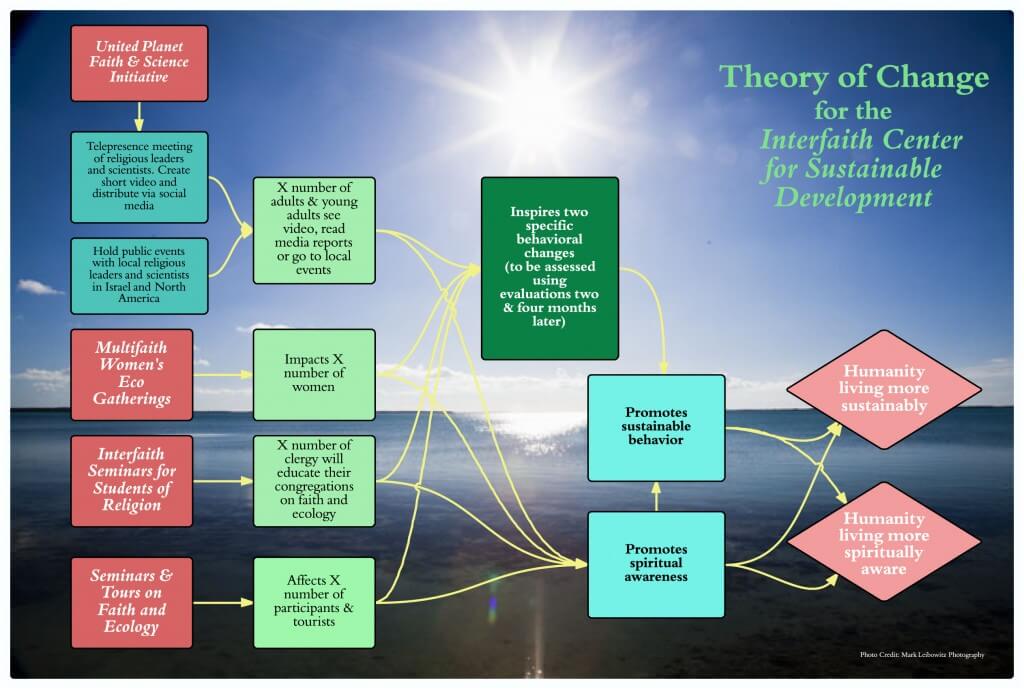
---
### [Thinking Ethically](https://interfaithsustain.com/thinking-ethically/)
**Published:** December 14, 2015
**Author:** ICSD
**Content:**
How should Christians respond to violence, health care, and creation care issues? What choices face us regarding sexuality and systemic racism? To deepen ability to think ethically, students will examine major approaches to the moral life and decision making that draw upon the resources of Christian faith and theology, especially the role of Scripture, Jesus, and the church in ethics.
**Thinking Ethically:** Anabaptist Mennonite Biblical Seminary
**Learning Outcomes:**
By the end of the course, students should be able to affirm:
1. I have thought critically about what it means to be ethically responsible, especially through a Christian lens.
2. I have gained a broader and deeper understanding of the methods and sources of Christian ethics.
3. I have applied these ethical concepts to practical situations in order to make more thoughtful and informed judgments.
**Required Text(s):**
De La Torre, Miguel. *Ethics: A Liberative Approach*. Minneapolis: Fortress Press, 2013. ISBN 0800697871.
Driver, Julia. *Ethics: The Fundamentals*. Malden, MA: Wiley-Blackwell, 2007. ISBN 1405111542.
Wells, Samuel. *Christian Ethics: An Introductory Reader*. Malden, MA: Blackwell, 2010. ISBN 1405168870.
Electronic articles and other digital resources required for the course will be posted online.
Augustine. *Confessions*. Translated by R.S. Pine-Coffin. New York: Penguin, 1961.
Birch, Charles and John Cobb. *The Liberation of Life: From the Cell to the Community*. Denton, TX: Environmental Ethics Books, 1990.
Blum, Peter. *For a Church to Come: Experiments in Postmodern Theory and Anabaptist Thought*. Harrisonburg, VA: Herald Press, 2013.
Elliott, Carl. *Better than Well: American Medicine Meets the American Dream*. New York: Norton, 2003.
Grotius, Hugo. “Natural Laws and the Laws of War.” In *War and Christian Ethics: Classic and Contemporary Readings on the Morality of War*. Edited by Arthur Holmes. Grand Rapids, MI: Baker, 2005.
Habermas, Jürgen. *Moral Consciousness and Communicative Action*. Translated by Christian Lenhardt and Shierry Weber Nicholsen. Cambridge, MA: MIT Press, 1990.
Kahn, Paul. *Sacred Violence: Torture, Terror, and Sovereignty*. Ann Arbor, MI: University of Michigan Press, 2008.
Lyotard, Jean-François. *The Differend: Phrases in Dispute*. Translated by Georges Van Den Abbeele. Minneapolis: University of Minnesota Press, 1988.
MacIntyre, Alasdair. *Whose Justice? Which Rationality?* Notre Dame, IN: Notre Dame University Press, 1988.
Niebuhr, H. Richard. “The Grace of Doing Nothing.” *Christian Century* 49 (23 Mar. 1932): 379.
Niebuhr, Reinhold. “Must We Do Nothing?” *Christian Century* 49 (30 Mar. 1932): 416-7.
Plato. *Dialogues*. Translated by Benjamin Jowett. New York: Simon and Schuster, 1951.
Rand, Ayn. *The Virtue of Selfishness: A New Concept of Egoism*. New York: New American Library, 1964.
Schüssler Fiorenza, Elisabeth. *Jesus: Miriam’s Child, Sophia’s Prophet*. New York: Continuum, 1995.
Taylor, Mark C. *After God*. Chicago: University of Chicago Press, 2007.
Winslade, John and Gerald Monk. *Narrative Mediation: A New Approach to Conflict Resolution*. San Francisco: John Wiley & Sons, 2000.
*Winter’s Bone*. Directed by Debra Granik. 2010. Los Angeles, CA: Roadside Attractions. DVD.
Yoder, John Howard. *The Politics of Jesus*, 2nd ed. Grand Rapids, MI: Eerdmans, 1994.
**Course Schedule: (subject to change, as needed)**
**Introduction**
Driver, Introduction
De La Torre, Introduction
**Biblical Sources for Christian Ethics**
Driver, ch. 1-2
Isaiah 25-26, Jeremiah 7-8, Matthew 5-7, Luke 16
Yoder, ch. 1
Schüssler Fiorenza, pp. 109-128
**Greek Sources for Christian Ethics**
Wells, pp. 52-58 (Plato, Aristotle)
Plato, *Crito* and *Apology*
**The Early Church and Augustine**
Wells, pp. 4-6, 30-36, 42-44, 75-77 (Tertullian, Diognetus, Perpetua, Clement, Yoder, Augustine)
Augustine, *Confessions*, Book I-II
**Thomas Aquinas and Virtue Ethics (watch video)**
Driver, ch. 8
Wells, pp. 78-80, 103-104, 163-165 (Aquinas)
MacIntyre, *Whose Justice? Which Rationality?* ch. 20
Video: *Winter’s Bone*
**Ethical Debates of the Reformation**
***Focus Issue: Christian relationship to society***
Wells, pp. 42-44, 48-51, 81-85, 186-188 (Yoder, Niebuhr, Luther, Simons, Barmen)
Taylor, *After God*, ch. 2
**Deontology and Utilitarianism**
***Focus Issue: Bioethics***
Driver, ch. 3-5
Wells, pp. 68-69, 107-112 (Beauchamp, Kant, Mills)
Elliott, ch. 1
**Human Rights and International Law**
***Focus Issue: State violence and torture***
Wells, pp. 125-127 (UN)
Grotius
Kahn, ch. 5 and Conclusion
**Discourse and Contract Ethics**
***Focus Issue: Economic justice and globalization***
Driver, ch. 6
Wells, pp. 119-121, 128-130, 209-210 (Leo XIII, Rawls, Smith)
Habermas, TBD
De La Torre, ch. 1, 4
**Christian Realism**
***Focus Issue: Christian participation in war***
Wells, pp. 89-91, 200-207 (Niebuhr, Ramsey, Torres, Day)
Richard Niebuhr, “The Grace of Doing Nothing,” and “Must We Do Nothing?”
Blum, ch. 7
**Ethical Egoism and Cultural Relativism**
***Focus Issue: Sexuality***
Driver, ch. 10
Wells, pp. 258-267 (Pope, Boswell, Rogers)
Rand, ch. 1
De La Torre, ch. 11
**Narrative Ethics**
***Focus Issue: Conflict resolution and criminal punishment***
Wells, pp. 163-165, 189-198 (Hauerwas, O’Donovan, Berrigan, Gorringe)
Winslade and Monk, ch. 1-2
Lyotard, TBD
**Liberation Ethics**
***Focus Issue: Ecology***
Driver, ch. 9
Wells, pp. 122-124, 132-134, 315-321 (de las Casas, Gutierrez, Moltmann, McFague)
De La Torre, ch. 5-6, 10
Birch and Cobb, ch. 5
---
### [To Care for the Earth: Ethics and the Environment](https://interfaithsustain.com/to-care-for-the-earth-ethics-and-the-environment/)
**Published:** September 9, 2015
**Author:** ICSD
**Content:**
“The foundational moral experience is reverence for the human person, and her/his environment.” For centuries, Christian moralists have focused almost exclusively on the first part of this statement—“the person”. The current environmental crisis extending from the later 20th Century to the present raises numerous challenges to that focus and other traditional approaches to Christian Ethics.
This course will focus on the appropriate kind of reverence that Christians, who would be moral, need to give to the environment and the sort of behaviors that need to follow from that reverence. Since profound wonder is at the heart of reverence, the course begins by reviewing what various disciplines–ecology, astrophysics, quantum physics, geology, etc.–tell us about the Earth in all of its magnificent complexity. This wonder is jarred by the stark reality of the “state of the Earth.”
Later in the course, we explore various approaches to environmental ethics and begin to see the cause and effect relationship the proponents of these various methods hold as the trigger for the current environmental crisis. From an ecumenical perspective, Christian and Jewish sources will be reviewed for the moral wisdom they offer to Christians today. Special attention will be given to the various statements on the environment published by Roman Catholic magisterial bodies from around the globe and the Franciscan tradition.
Finally, several lectures will be devoted to providing the student with a basic “environmental science literacy.” We will place these sources of moral wisdom in dialogue with wisdom drawn from other disciplines and draw some conclusions: What kind of perceptual and attitudinal changes must we make regarding the environment? What changes must we make in our consumption patterns and lifestyle? How can we reconcile those elements of the Christian tradition that have seemingly contributed to the assault upon the earth? What forms of Christian spirituality assist in the formation of a moral life fitting for reverence of the environment? How must we rethink our relation to the Earth the human community, and future generations if we are not to destroy ourselves and our planet?
**REQUIRED TEXTS:**
- Leonardo Boff. Cry of the Earth, Cry of the Poor. Maryknoll: Orbis Books, 1997
- John Hart. What Are They Saying About Environmental Theology? Paulist Press, 2004.
- Dawn M. Nothwehr, ed. Franciscan Theology of the Environment: An Introductory Reader. Quincy, IL: Franciscan Press, 2003.
- David Toolan, At Home in the Cosmos. Maryknoll: Orbis Books, 2001.
- Required assignments found on MOODLE.
- Required readings found on CTU Library Reserves.
**RECOMMENDED TEXTS:**
- Drew Christiansen and Walter Glazer, eds. And God Saw That It Was Good: Catholic Theology and the Environment. Washington, DC: United States Catholic Conference, 1996.
- Carol J. Dempsey & Mary Margaret Pazdan, Eds. Earth, Wind, and Fire: Biblical and Theological Perspectives on Creation. Collegeville, MN: The Liturgical Press, 2004.
- Christine E. Gudorf, James Edward Huchingson. Boundaries: A Casebook in Environmental Ethics. Washington, DC: Georgetown University Press, 2003.
- Michael S. Northcott, A Moral Climate: the Ethics of Global Warming Maryknoll: Orbis Books, 2007.
- John J.W. Rogers and Trileigh Tucker. Earth Science and Human History 101 (Science 101) Westport, CT Greenwood Press, 2008
**COURSE REQUIREMENTS:** For each assignment, write several questions and/or ideas and insights from the readings that strike you as interesting ideas to be discussed further in class. \[M. Div. 2.1, 2.4, 2.5, 2.6; MAPS 2.1, 2.2; MA 1.4, 1.5, 1.6, 1.7, 1.8, 1.9\]
**Environmental Ethics Method Presentation:** Toward the end of the course we will explore 6 different approaches to doing environmental ethics. Students will be asked to sign up to do a 20 – 30 minute presentation of one of the methods. This will be followed by the discussion of a case study using the methods presented in a given session. The professor will provide more specific guidelines prior.
**Reflections on “Planet Earth”:** The Discovery Channel has produced a set of 5 DVDs that contain some of the most phenomenal film footage of the various ecosystems, plant, and animal life on Earth. Students are to view the entirety of two (2) of the DVDs “Planet Earth.” \[Example: Pole to Pole, Mountains, Deep Oceans\]. After viewing each of the DVDs, prepare a prayerful reflection in response to what you saw. The set of DVDs are on Reserve at CTU’s Bechtold Library. You need to view the DVD in the room provided at the Library.
**Final Paper/Project:** A research paper or eco-theological issue project of about 15-20 pages. Please create a plan for your paper or project and then schedule a meeting with the professor before you begin this exercise. The purpose of the paper is to explore how Catholic Social Teaching concerning the environment provides direction for the resolution of a concrete environmental problem.
- (a) Select a specific environmental problem that faces the people in your country.
- (b) Explore the historical, social, political, economic, ecological dimensions of the problem. Use the knowledge gained from the environmental literacy segments of this course to bring concrete scientific understanding to bear on your analysis.
- (c) Ground your analysis of the issue using Christian doctrinal sources, the Catholic magisterial teachings from your local Church, statements from the Roman Magisterium and other resources explored in this course, and show the critique this moral wisdom brings to bear on the problem.
- (d) Draw conclusions and make a recommendation for the resolution of the problem.
MA Students need to be explicit about and focus on the advantages/disadvantages, strengths & weaknesses of the ethical method used to arrive at a potential resolution to the problem posed in the paper. \[MA 1.1, 1.3, 1.4, 1.7, 3.1, 3.2, 3.3\]
2. Div. and MAPS Students need to focus on a pastoral project that brings the conclusions of the paper to bear concretely on preaching, catechesis, and social action in a parish setting. \[M. Div. 2.1-2.6; MAPS 2.1, 2.2\]
**SCHEDULE OF ASSIGNMENTS:**
**Week 1:** Introduction
- Johnson, “Turn to the Heavens,” in Judith Dryer, Visions & Values, 53-69.
- Holmes Rolston, III, “Ecology: A Primer for Christian Ethics,” Journal of Catholic Social Thought 4/2 (Summer 2007): 293-312.
- In Class: B. Swimme, The Hidden Heart of the Cosmos, Part I, “The Generosity of the Sun.” \[27 min.\]
**Week 2:** Biblical Vision of Creation: Write and bring to class today: Using your experiences of relationship with the Earth, along with insights from other sources of learning, write a 3-page reflection in which you trace your attitudes, values, perceptions, behavior, and lifestyle – starting with your earliest awareness of the environment to the present. Response to these two fundamental questions: How ought a Christian to be in relationship to the Earth? What ought a Christian to do in relationship to the Earth? How consistent is your “doing” with what you know you “ought” to do? Why?
- Toolan, At Home in the Cosmos: Chapt. 1 Does God Care About Whales? 9-21; Chapt. 2 Nature Symbolic of Promise, 22-40.
- Nothwehr, ed., Franciscan Theology of the Environment
- Hayes, A New Reading of the Sources, 9-21.
- Kay, Concepts of Nature in the Hebrew Bible, 23-42.
- Bratton, Christian Ecotheology and the Hebrew Scriptures, 47-62.
- Karris, Colossians 1:15-20 – Christ Jesus as Cosmic Lord and Peacemaker, 67-91.
- Dempsey & Pazdan, eds. Earth, Wind, and Fire
1. Bowe, “Soundings in the New Testament Understanding of Creation,” 52-66
2. Laffey, “The Priestly Creation Narrative: Goodness and Interdependence,” 24-24.
- In Class: B. Swimme, The Hidden Heart of the Cosmos, Part II, “Birthplace of the Universe.” \[28 min.\]
**Week 3:** Development of Scientific Materialism DVD Reflections are due.
- Toolan, At Home in the Cosmos-Chapt. 3 Imperial Ecology and the Death of Nature; Chapt 4 The Competitive Ethos Triumphant
- Nothwehr, ed., Franciscan Theology of the Environment –
- Short, “The Franciscan Spirit,” 111-127.
- Dreyer, ’\[God\] Whose Beauty the Sun and Moon Admire’:Clare & Ecology, 129-139.
- Doyle, The Canticle of Brother Sun & the Value of Creation, 155-72.
- Nairn, Francis of Assisi’s Canticle of the Creatures as an Exercise of the Moral Imagination, 175-84.
- Dempsey & Pazdan, Eds. Earth, Wind, and Fire
- McGinn, “All Creation Groans in Labor: Paul’s Theology of Creation in Rom 8: 18-23,” 114-123.
- In Class: B. Swimme, The Hidden Heart of the Cosmos, Part III, “The All-Nourishing Abyss” \[26 min.\]
**Week 4:** State of the Earth- Research the endangered species of your homeland. Write a one page reflection providing a theological argument for why this matter should be of concern for Christians. Bring your reflection to class.
- Boff, Cry of the Earth, Cry of the Poor-Ch. 1 The Ecological Era. 1-34; Ch 3 Ecological Crisis, 63-85; Ch 4 All Capital Sins Against Ecology, 86-103.
- Toolan, At Home in the Cosmos-Ch. 5 Is There an Environmental Crisis? 75-91; Ch. 6 Pushing the Limits, 92-103; Ch. 7 The Dynamics of Unsustainability, 104-125.
- Dempsey & Pazdan, Eds. Earth, Wind, and Fire
- Dempsey, “Creation, Evolution, Revelation, & Redemption: Connections & Intersections, 1-23.
- Reid, “Sabbath, the Crown of Creation, 67-76.
- Stephen M. Gardiner, “Ethics and Global Climate Change: A Survey Article,” Ethics (April 2004): 555-600.
- Nothwehr, “The Kogi Mamas and Environmental Ethics,”481-518.
- In Class: “From the Heart of the World: The Elder Brother’s Warning”
**Week 5:** The New Cosmology & Christology
- Boff, Cry of the Earth, Cry of the Poor-Ch 2 An Ecological View of the Cosmos, 35-62
- Toolan, At Home in the Cosmos-Ch. 8 Evolution and Theological Repair, 132-155; Ch. 9 A Physics of Promise, 156-177; Ch.10 The Voice of the Hurricane, 178-191
- Nothwehr, ed., Franciscan Theology of the Environment
- Hayes, An Excerpt from Bonaventure: Mystery of the Triune God, 201-246.
- Hayes, The Cosmos: A Symbol of the Divine, 249-266.
- Hoebing, St. Bonaventure & Ecology, 269-280.
- 34 Scientists, “Open Letter to the Religious Community,” {and response}, ii-xv.
- Rayan, “The Earth is the Lord’s,” 130-148.
- Nothwehr, “Tree of Life.”
- In Class: “The Earth is the Lord’s”
**Week 6:** Earth Ethics – Cosmic Mutuality & Doing Justice To Creation
- Boff, Cry of the Earth, Cry of the Poor-Ch 6 Reclaiming the Dignity of the Earth, 115-139.
- Nothwehr, ed., Franciscan Theology of the Environment
- Osborne, Incarnation, Individuality, and Diversity, 295-303.
- Mulhulland, Christ: The Haecceitas of God, 305-312.
- Short, ‘Pied Beauty’: Gerard Manley Hopkins and the Scotistic View of Nature, 313-322.
- Ingham, “A Certain Affection for Justice, 325-332.
- Toolan, At Home in the Cosmos-Ch. 11 The Fallout for Spirituality, 195-219; Ch. 12 Citizens of the Earth, 220- 240.
- Dempsey & Pazdan, Eds. Earth, Wind, and Fire
- Hilkert, “Creation in the Image of God and Wisdom Christology,” 147-163.
- Wiley, “Creation Restored, God’s Basileia, the Social Economy and Human Good,” 77-102.
- Nothwehr, “”The Ecological Spirit and Cosmic Mutuality: Engaging the Work of Denis
- Edwards,” 167-88.
**Week 7:** Environmental Ethics Method 1
- Prepare & Bring to Class: – Case study found on CTU Library Reserves – Gudorf & Huchingson, “Nature Creates Deserts Too: Addressing Desertification in China,” 146-152.
- Gudorf & Huchingson, “Theory in Environmental Ethics,” 1-24.
- Smith – Chapt 1 – Deep Ecology and its Radical Vision
- Chapt 2 – The Ethics of Ecofeminism
- Warner, “Was St. Francis a Deep Ecologist?” 225-240.
- Richards, “The Nature-Culture Dilemma,” 8-13.
- Sessions, “The Deep Ecology Movement: A Review,” 105-125.
- Curtin, “D?gen, Deep Ecology, and the Ecological Self,” 195-213.
- Gebara, “Ecofeminism: A Latin American Perspective,” Cross Currents 53 no 1 Spr 2003, p 93-103.
- Fraser, “Where The Divine Meets The Created: The Feminist And Ecofeminist Trinitarian Theologies Of Elizabeth A Johnson And Ivone Gebara,” Religious Studies and Theology 23 no 2 2004, p 53-77.
- Van Schalkwyk, “Women, Ecofeminist Theology and Sustainability in a Post-apartheid South Africa,” Journal of Theology for Southern Africa no 130 Mr 2008, p 6-23.
- Warren, “Feminism and Ecology,” 3-20.
- Spretnak, “Ecofeminism,” 3-14.
- Spretnak, “Toward an Ecofeminist Spirituality,” 127-132.
**Week 8:** Environmental Ethics Method 2
- Prepare & Bring to Class: – Case study found on CTU Library Reserves – Gudorf & Huchingson, “Nature Red in Tooth, Claw, and Bullet: Hunting and Human Presence in Nature,” 191-199.
- Smith – Chapt 3 -Animal “Rights” and the Questions of Human Behavior
- Chapt 4 -The “Naturalists” and Leopoldian Ethics
- Gaffney, “Animals and Ethics,” 297-299.
- Lofton, “The Morality of Hunting,” 241-250.
- Rolston III, “Duties to Endangered Species,” 718-726.
- Gunn, “Why Should We Care About Rare Species?” 17-37.
- Marietta, “Environmental Holism,” 251-258.
- Moline, “Aldo Leopold and the Moral Community,” 99-120.
**Week 9:** Environmental Ethics Method 3
- Prepare & Bring to Class: Case study found on CTU Library Reserves – Gudorf & Huchingson, “Heart Thieves: Preserving Endangered Ecosystems or Endangered Cultures in Madagascar,” 58-66.
- Smith – Chapt 5 – Liberation Ecotheology
- Chapt 7 – Eco-ethics of the Catholic Magisterium
- Boff, Cry of the Earth, Cry of the Poor
- Ch. 5 – Liberation Theology and Ecology, 104-114.
- Boff, “St. Francis – A Model for Human Liberation,” 38-47.
- Pontifical Council for Justice and Peace, Compendium of the Social Doctrine of the Church, Chapter 10.
- Catechism of the Catholic Church
- Firer Hinze, “Catholic Social Teaching and Ecological Ethics,” 165-182.
- Christiansen, “Ecology and the Common Good,” 183-195.
**Week 10:** Catholic Environmental Tradition 1 DVD Reflections are due today.
- Hart – Chapt 1 – Creation, Creatures, and Community Consideration
- Chapt 2 Common Ground and Common Good
- Boff, Cry of the Earth, Cry of the Poor, Ch. 7 – All in God, God in All, 140-157.
- Lucia A. Silecchia, “Discerning the Environmental Perspective of Pope Benedict XVI,” Journal of Catholic Social Thought 4/2 (Summer 2007): 271-292.
**Week 11:** EARTH WEEK Catholic Environmental Tradition 2
- Bring to class today: a Pastoral Letter on the environment or/and ecological issues from the local church of your country of origin. Be prepared to highlight contents of that document and discuss the effectiveness of its implementation. Also, as part of the discussion you will take turns listening to one another tell about local environmental pastorals. As you listen to your classmates present their pastorals, notice the similarities & differences from your own document and any ways in which their pastoral presents additional challenges to your local church.
- Hart – Chapt 3 – Sacramental and Common Creation
- Chapt 4 – Transforming Tradition and Conserving Creation: Northern Visions
- Boff, Cry of the Earth, Cry of the Poor, Ch. 8 – The Spirit is Sleeping in the Rock,” 158-173.
- Baum, M. Hellwig, W. Malcolm Byres, “Global Climate Change and Catholic Responsibility: Facts and Faith,” Journal of Catholic Social Thought 4/2 (Summer 2007): 373-401.
**Week 12:** Catholic Environmental Tradition – 3
- Bring to class today: a Pastoral Letter on the environment (See above)
- Hart – Chapt 4 – Transforming Tradition and Conserving Creation: Southern Visions
- Chapt 6 – Creation Consciousness and Concern
- Boff, Cry of the Earth, Cry of the Poor, Ch. 9 – “Split a Piece of Wood and I am There,” 174-186.
**Week 13:** Catholic Environmental Tradition – 4 LAST CLASS ALL PAPERS DUE
- Hart – Chapt 7 – Care for Creation and Community
- Nothwehr, ed., Franciscan Theology of the Environment
- Nothwehr, Benedictine Responsibility & Franciscan Mutuality, 403-431.
- Boff, Cry of the Earth, Cry of the Poor
- Ch. 10 – “Eco-Spirituality,” 187-202.
- Ch. 11 – “All the Cardinal Ecological Virtues,” 203-220.
- Summation & Evaluation
---
### [Visceral Theology](https://interfaithsustain.com/visceral-theology/)
**Published:** September 9, 2015
**Author:** ICSD
**Content:**
Biblical-historical approach to eatables and drinkables and the role they have played in the theological task. The menu includes: Deus edens or the God who eats and feeds; Theology of the cross and bread; Covenant vs. food terrorism; Taste conquest through the Eucharist; Hospitality over gastro-anomy and gastro-mania; Vegetarianism-femininity heresy; transubstantiation or trangenicization; The liturgical-agricultural calendar; Gastronomical spirituality; Culinary predestination; Spicy heavenography; The most exquisite utopia: an open table.
**Objectives:**
By the end of the course, the participants will be able to:
Develop a critical appraisal of the weekly readings, in order to cook new ways of doing theology and pastoral work.
Acquire methodological tools to continue exploring the material implications of a committed pastoral ministry.
Articulate the centrality of food in the Bible with the theological and parish work dimensions.
**Chronogram:**
Week 1: Diagnostic evaluation. Syllabus negotiation/semester assignments.
Week 2: Food and hunger in the Hebrew Bible Breaking Bread (15–35), Juengst.
Week 3: Food and hunger in the New Testament Book review # 1: Dussel, Enrique. “The Bread of the Eucharistic Celebration as a Sign of Justice in the Community,” in Concilium. 152 (2/1982), 56-65 and Carter, Warren. “Power, Poverty, Food Shortages and Disease: Toward a People’s History of Matthew”. Manuscript.
Week 4: Early and Pre-Constantinian Church And You Welcomed Me, (13-57) Oden
Week 5: Christendom 4th. – 15th. And You Welcomed Me, 215-279) Oden
Week 6: The dis-encounter of the three kitchens: Africa, America and Europe; Book review # 2: “Nessan, Craig L. Give Us This Day: A Lutheran Proposal for Ending World Hunger. Minneapolis: Augsburg Fortress, 2003.
Week 7: The Reformations 16th.; The Four Horsemen of the Apocalypse (200-246), Cunningham-Grell.
Week 8: The Enlightment 18th.; ¡Vivan los tamales! (231-251), Pilcher.
Week 9: The Industrial Era 19th.; Book review # 3: Pérez-Álvarez, Eliseo. We Be Jammin” (First Part).
Week 10: The Green Revolution – The transgenics 20th.; Farmageddon (1-8, 169-196), Kneen.
Week 11: NAFTA, 20th. – 21rst. “ALCA and pedagogy for oppression” Petras
Week 12: Feedback, Delivering of grades. “Banquet!”
**Required readings:**
Carter, Warren. “Power, Poverty, Food Shortages and Disease: Toward a People’s History of Matthew” Manuscript.
Cunningham, Andrew – Ole Peter Grell. The Four Horsemen of the Apocalypse: Religion, War, Famine and Death in Reformation Europe. Cambridge: Cambridge University Press, 2000.
Dussel, Enrique. “The Bread of the Eucharistic Celebration as a Sign of Justice in the Community,” in Concilium. 152 (2/1982), 56-65.
Juengst, Sara Covin. Breaking Bread: The Spiritual Significance of Food. Louisville, KY: Westminster/ John Knox Press, 1992.
Kneen, Brewster. Farmageddon: Food and the Culture of Biotechnology. Brithish Columbia, Canada: New Society Publishers, 1999.
Nessan, Craig L. Give Us This Day: A Lutheran Proposal for Ending World Hunger. Minneapolis: Augsburg Fortress, 2003.
Oden, Amy G. And You Welcomed Me: A Sourcebook on Hospitality in Early Christianity. Nashville: Abingdon, 2001.
Pérez-Álvarez, Eliseo. We Be Jammin: Liberating Discourses from the Land of the Seven Flags. Mexico/Chicago: El Faro/LSTC, 2002.
Petras, James. “ALCA and pedagogy for oppression” http://www.rebelion 26-10-04
Piclcher, Jeffrey M. Qué vivan los tamales!: Food and the Making of Mexican Identity. Premier Book Marketing, 1998.
**Web Sites**
- http://www.caritasofaustin.org/
- http://www.elca.org/hunger
- http://www.bread.org
- http://www.cloc
- http://www.fian
- http://www.foodfirst.org
- http://www.grain
- http://www.rebelion
- http://www.worldhunger.org
- http://www.sosalliance.org
**Movies**
- The Princess Diaries ( England: Walt Disney, 2003)
- Sugar Cane Alley (Martinique: Euzhan Palcy, 107 min. 1985)
- Beyond Borders ( USA: Paramount Study, 2003)
- Huelepega; la ley de la calle (Venezuela)
- La última cena (Cuba: Tom ás Gutiérrez Alea )
- Fiddler on the Roof (Russia: CBS Fox, Norman Jewison, 169 min. 1971)
- Soul Food ( USA: 20th. Century Fox, 114 min. 1997)
- Women on Top ( USA: 20th. Century Fox, Fina Tórres, 108 min. 2000)
- Like Water for Chocolate (México: Alfonso Arau, 1987)
- Buffalo 66 (USA: Gallo-Vincent, 1997)
- Tortilla Soup (USA: Héctor Elizondo)
- Mostly Martha ( Germany: Sandra Nettlebeck, 106 min. 2002)
- Fools Rush In ( USA: Columbia Trisatar Studios)
- What’s Cooking? ( USA: Galaxi Angel, 2001)
- Babette’s Feast (Denmark: The Danish Film Institute, Gabriel Axel, 120 min. 1988)
- Rodrigo D. No Future (Colombia)
- Pixote (Brasil)
- Eating (USA)
- Super Zise Me (USA)
- Los Olvidados (The Young and the Damned) , (México: Luis Buñuel, 80 min. 1950).
- The Natural History of the Chiken (USA)
- El Norte (México)
**Bibliography:**
Food and hunger in the Hebrew Bible
- Appler, Deborah A. “From Queen to Cuisine: Food Imagery in the Jezebel Narrative,” In Semeia: Food and Drink in the Biblical Worlds. 86 (1999): 55-71.
- Borowski, Oded. Daily Life in Biblical Times. Atlanta: Society of Biblical Literature, 2003.
- ———, Agriculture in Iron Age Israel. Boston MA: American School of Oriental Research, 2002.
- Brothwell, D. R. – P. Brothwell. Food in Antiquity: A Survey of the Diet of Early People. Baltimore: Johns Hopkins University Press, 1998.
- Feeley-Harnik, Gillian. The Lord’s Table: the Meaning of Food in Early Judaism and Christianity, Washington and London: Smithsonian Institute Press, 1981.
- McKinlay, Judith E. Gendering Wisdom The Host: Biblical Invitation to Eat and Drink. Sheffield, UK: Academic Press, 1996.
Food and hunger in the New Testament
- Carter, Warren. New Proclamation, Year A 2000. Marshall D. Johnson (ed). Minneapolis: Fortress, 2002.
- Matthew and Empire: Initial Explorations. Harrisburg, PA: Trinity Press International, 2001.
- Matthew and the Margins: A Socio-Political and Religious Reading. Maryknoll, NY: Orbis, 2000.
- Corley, Kathleen. Private Women Public Meals: Social Conflict in the Synoptic Tradition. Massachusetts: Hendrickson Publishers, 1993.
- Gowers, Emily. The Loaded Table: Representations of Food in Roman Literature, Oxford: Oxford University Press, 1993.
- Heil, John Paul. The Meal Scenes in Luke-Acts: An Audience-Oriented Approach. Atlanta: SBL, 1999.
- Hollar, Larry (ed). Hunger for the World: Lectionary Reflections on Food and Justice Year A. Collegville, MN: Liturgical Press, 2004.
- Pérez Álvarez, Eliseo. We Be Jammin: Liberating Discourses from the Land of the Seven Flags. México, D.F. – Chicago: El Faro/Basilea/CCGM/LSTC, 2002.
- “Deus edens; Jesús, las parábolas y la mesa,” en Enseñaba por parábolas… Estudio del género «parábola» en la Biblia. Homenaje a Plutarco Bonilla Acosta. Edesio Sánchez Cetina, (ed). Miami: Sociedades Bíblicas Unidas, 2004.
- “¿Quién dice la gente que soy yo?; identidad y comida” en Alternarivas para un mundo justo, Globalización y pobreza; Perspectivas bíblicas. Rene Kruger – Horacio Mesones (eds). Ginebra/Buenos Aires: ISEDET – FUMEC (Universal Federation of Christian Students), MEC (Movimiento Estudiantil Cristiano), 2004.
- “The Gastronomical Conquest: Morsels of Christian Thought and History from the Perspective of Hunger” en Talita Cum! The Grace of Solidarity in a Globalized World. Mario Degiglio-Bellemare – Gabriela Miranda Gacia (eds). Ginebra: WSCF Publications, 2004.
- Willis, Wendell Lee. Idol Meat in Corinth: The Pauline Argument in 1 Corinthians 8 and 10. Eugene, OR: Wipf & Stock Publishers, 2004
**Early and Pre-Constantinian Church**
- Garnsey, Peter. Famine and Food Supply in the Graeco-Roman World: Responses to Risk and Crisis. Cambridge: Cambridge University Press, 1999.
- Oden, Amy G. And You Welcomed Me: A Sourcebook on Hospitality in Early Christianity. Nashville: Abingdon, 2001.
- Sonnenfeld, Albert (ed.). Food: A Culinary History from Antiquity to the Present. New York: Penguin Books, 2000.
- Walker, Harian (ed.) Food on the Move: Proceedings of the Oxford Symposium on Food and Cookery 1996. Devon, UK: Prospect Books, 1997.
- Webb, Stephen H. Good Eating: The Christian Practice of Everyday Life. Grand Rapids, MI: Brazos Press, 2001.
**Christendom IV – XV**
- Bode, Willi. European Gastronomy: The History of Man’s Food and Eating Customs. Londond: Grub Street, 2000.
- Newman, Lucile F. (ed.) Hunger in History: Food Shortage, Poverty and Deprivation. Oxford, UK/ Cambridge: Blackwell, 1995.
- Soonenfeld, Albert (ed). Food: A Culinary History from Antiquity to the Present. New York: Penguin Books, 1999.
- Toussaint-Samat, Maguelonne. History of Food. Cambridge, MA: Blackwell, 1992.
- Walker Bynum, Caroline. Holy Feast and Holy Fast: The Religious Significance of Food to Medieval Women. Berkeley: University of California Press, 1988.
**The des-encounter of the three kitchens: Africa, America and Europe**
- Bolívar Aróstegui, Natalia. Mitos y leyendas de la comida afrocubana. San Juan, PR: Plaza Mayor, 2000.
- Coe, Sophie D. Las primeras cocinas de América. México, DF: FCE, 2004.
- Fujigaki, Esperanza. La agricultura, siglos XVI al XX. Mexico, DF: UNAM/ Oceano, 2004.
- Mintz, Sidney W. Tasting Food, Tasting Freedom: Excursions into Eating, Culture, and the Past. Boston: Beacon Press, 1996.
- Villapoll, Nitza, “Hábitos alimentarios africanos en América Latina” en África en América Latina. Manuel Moreno Fraginals (ed). México, D.F.: Siglo XXI, 1996.
**The Reformations XVI**
- Bonanno, Alessandro et. al. From Columbus to ConAgra: The Globalization of Agriculture and Food. Lawrence, KS: University Press of Kansas, 1994.
- Cunningham, Andrew – Ole Peter Grell. The Four Horsemen of the Apocalypse: Religion, War, Famine and Death in Reformation Europe. Cambridge: Cambridge University Press, 2000.
- Díaz, Lorenzo. La cocina del barroco; la gastronomía del Siglo de Oro en Lope, Cervantes y Quevedo. Madrid: Alianza Editorial, 2003.
- Prentice, E. Parmalee. Hunger and History: The Influence of Hunger on Human History. Caldwell, Idaho: 1951.
- Wallerstein, Immanuel. The Modern World-System: Capitalist Agriculture and the Origins of the European World-Economy in the Sixteenth Century. New York/ San Francisco/ London: Academic Press, 1974.
**The Enlightment XVIII**
- Jones, Evan. American Food: The Gastronomical Story. New York: Vintage Books, 1981.
- Onfray, Michel. El vientre de los filósofos; crítica de la razón dietética. Gipuzkoa: R&B, 1996.
- Pilcher, Jeffrey M. ¡Vivan los tamales! La comida y la construcción de la identidad mexicana. México, DF: Conaculta, 2001.
- Rigotti, Francesca. Filosofía en la cocina; pequeña crítica de la razón culinaria. Barcelona: Herder, 2001.
**The Industrial Era XIX**
- Fernández-Armesto, Felipe. Near A Thousand Tables: A History of Food. New York: The Free Press, 2002.
- Melotti, Umberto. Sociología del hambre; de la toma de conciencia del problema a una nueva estrategia para el desarrollo económico. México, D.F.: FCE, 1984.
- Ritchie, Carson I.A. Food in Civilization: How History has benn affected by Human Tastes. New York/ Toronto: Beaufort Books, 1981.
**The Green Revolution**
- Bennett, Jon and Susan George. The Hunger Machine: The Politics of Food. Oxford: Polity Press, 1987.
- Benjamin, Medea/ Joseph Collins and Michael Scott (eds.). No Free Lunch: Food & Revolution in Cuba Today. San Francisco, CA: Food First, 1984.
- Edwin, Ed. Feast or Famine: Food, Farming, and Farm Politics in America. New York: Charterhouse, 1974.
- Lang, Tim – Michael Heasman. Food Wars: The Global Battle for Mouths, Minds and Markets. London: Earthscan, 2004.
- Nestle, Marion. Food Politics: How Food Industry Influences Nutrition and Health. Berkeley: University of California Press, 2002.
- Street, Richard Steven. Photographying Farmworkers in California. Stanford CA: Stanford University Press, 2004.\\
- Warnock, John W. The Politics of Hunger: The Global Food System. Toronto: Methuen, 1987.
- Ziegler, Jean. El hambre en el mundo explicada a mi hijo. Muchnik.
**The transgenics XX**
- Bell, David/ Gill Valentine. Consuming Geographies: We Are Where We Eat. London/ New York:Routledge, 1997.
- Dreze, Jean/ Amartya Sen, and Athar Hussain. The Political Economy of Hunger: Selected Essays. Oxford: Clarendon Press, 1997.
- Riches, Graham (ed.) First World Hunger: Food Security and Welfare Politics. New York: Sn. Martin’s Press, 1997.
- Torres Torres, Felipe and Yolanda Trápaga Delfín. La alimentación de los mexicanos en la alborada del tercer milenio. México, DF: Porrúa/ UNAM, 2001.
- Deus edens or the God who eats and feeds
- Cakenaka, Masao. God is Rice: Asian Culture and Christian Faith. Geneva: World Council of Churches, 1986.
- Claassens, L. Juliana M. The God Who Provides: Biblical Images of Divine Nourishment. Nashville: Abingdom, 2004.
- Hellwig, Monika K. The Eucharist and the Hunger of the World. Franklin, WI: Sheed & Ward, 1999.
- Laverdiere, Eugene. Dining in the Kingdom of God: The Origins of the Eucharist According to Luke. Chicago: Liturgy Training Publications, 1994.
- Pikaza, Xabier. Para celebrar: Fiesta del pan, fiesta del vino; mesa común y eucaristía. Navarra: Estella, 2000.
- Pan, casa, Palabra; la iglesia en Marcos, Salamanca, España: Sígueme, 1998.
- Webster, Jane S. Ingesting Jesus: Eating and Drinking in the Gospel of John. Atlanta: SBL, 2003.
**Theology of the cross and bread**
- Aguirre, Rafael. La mesa compartida; estudios del NT desde las ciencias sociales. Santander: Sal Terrae, 1994.
- Allen, Atewart Lee. In the Devil’s Garden: A Sinful History of Forbiden Food. New York: Ballantine Books, 2002.
- Balasuriya, Tissa. The Eucharist and Human Liberation. Maryknoll, Nueva York, NY: Orbis Books, 1979.
- Grassi, Joseph A. Broken Bread and Broken Bodies: The Lord’s Supper and World Hunger. Maryknoll, NY: Orbis, 1985.
- McCuen, Marnie J. (ed.). Famine & Fat: Readings on Poverty, Wealth, and Food Security. Hudson, WI: Gary & McCuen Publications, 2000.
**Covenant vs. food terrorism**
- Eisinger, Peter K. Toward an End to Hunger in America. Washington, DC: Brookings Institution Press, 1998.
- Juengst, Sara Covin. Breaking Bread: The Spiritual Significance of Food. Louisville, KY: Westminster/ John Knox Press, 1992.
- Levenstein, Harvey. Paradox of Plenty: A Social History of Eating in Modern America. New York/ Oxford: Oxford University Press, 1993.
- Motta Ribeiro, Ana María and Jorge Atílio S. Iulianelli. Narcotráfico e violencia no campo. Rio de Janeiro: DP& A Editora, 2000.
- Semprún, Jorge – Olivier Longué. Geopolítica del hambre; cuando el hambre es un arma… Informe 2000. Barcelona: Icaria, 1900.
- Watson, James L. (ed.) Golden Arches East: McDonalds in East Asia. Standford: Standford University Press, 1998.
- Young, E.M. World Hunger. London/ New York: Routledge. 1997.
**Taste conquest through the Eucharist**
- Aguilar Sánchez, Carlo G. (ed.) Los (mal) tratados de libre comercio. San José, Costa Rica: DEI, 2003.
- Belasco, Warren and Philip Scranton. Food Nations: Selling Taste in Comsumer Societies. New York/ London: Routledge, 2002.
- Kass, Leon R. The Hungry Soul: Eating and the Perfecting of Our Nature. Chicago: University of Chicago Press, 1999.
- Long, Janet (ed). Conquista y comida; consecuencias del encuentro de dos mundos. México, D.F.: UNAM, 1996.
- Moreno, Raúl. The Free Trade Agreement Between the United States and Central America: Economic and Social Impact. Managua: Ediciones Educativas, n.d.
- Weatherford, Jack. Native Roots: How the Indians Enrich America. New York: Fawcett Columbine, 1991.
**Hospitality over gastro-anomy and gastro-mania**
- Aiken, William and Hugh La Follette. World Hunger and Moral Obligation. New Jersey: Prentice-Hall, 1977.
- Critser, Greg. Fat Land: How Americans Became the Fattest People in the World. Boston/ New York: Houghton Mifflin Company, 2003.
- Schlosser, Eric. Fast Food Nation: the Dark Side of the All-American Meal. Boston – New York: Houghton Mifflin Company, 2000.
- Wood, Roy C. The Sociology of Meal, Edinburgh: Edinburgh University Press, 1995.
**Vegetarianism-femininity heresy**
- Adams, Carol J. The Sexual Politics of Meat: A Feminist-Vegetarian Critical Theory. New York: Continuum, 2000.
- Beard, James. Delights and Prejudices: Philadelphia: Running Press, 2001.
- Coetzee, J.M. Las vidas de los animales. Barcelona: Mondadori, 2001.
- Counihan, Carole M. The Anthropology of Food and Body: Gender, Meaning and Power. New York/ London: Routledge, 1999.
- Le Bras-Chopard, Armelle. El zoo de los filósofos; de la bestialización a la exclusión. Madrid: Taurus, 2003.
- Schwartz, Richard H. Judaism and Vegetarianism. Marblehead, MA: Micah, 1988.
- Spencer, Colin. The Heretic’s Feast: A History of Vegetarianism. Hanover, H.H.: University Press of New England, 1995.
- Spiegel, Marjorie. The Dreaded Comparison: Human and Animal Slavery. London/ Philadelphia, Heretic Books/ New Society Publishers, 1988.
- Williams, Howard. The Ethics of Diet: A Catena of Authorities Deprecatory of the Practice of Flesh-Eating. Chicago: Chicago University Press, 2003.
**Transubstantiation or trangenicization**
- Kneen, Brewster. Farmageddon: Food and the Culture of Biotechnology. Brithish Columbia, Canada: New Society Publishers, 1999.
- Manning, Richard. Food’s Frontiers: The Next Green Revolution. New York: North Point Press, 2000.
- Shiva, Vandana. Stolen Harvest: The Hijacking of the Global Food Supply. Cambridge: South End Press, 2000.
- Biopiracy: The Plunder of Nature and Knowledge. Boston, MA: South End Press, 1997.
**The liturgical-agricultural calendar**
- Arbelos, Carlos. Gastronomía de las tres culturas; recetas y relatos de los siglos XIII y XVI. Granada: Caja Granada, 2004.
- Jones, Ita. The Grubbag: An Underground Cookbook. New York: Vintage Books, 1971.
- Levy, Paul (ed.) The Penguin Book of Food and Drink. London: Pinguin, 1997.
- Nelson, Jack A. Hunger for Justice: The Politics of Food and Faith. Maryknoll, NY: Orbis, 1980.
**Gastronomical spirituality**
- Schut, Michael (ed.) Food and Faith: Justice, Joy and Daily Bread. Denver: Living the Good News, 2002.
- Toton, Suzanne C. World Hunger: The Responsibility of Christian Education. Maryknoll, NY: Orbis, 1982.
- Whitcomb, Holly W. Feasting with God: Adventures in Table Spirituality. Cleveland: United Church Press, 1996.
**Culinary predestination**
- Bentley, Amy. Eating for Victory: Food Rationing and the Politics of Domesticity. Chicago: University of Chicago Press, 1998.
- Berry, Wendell. The Art of the Commonplace: Agrarian Essays of Wendel Berry. Washington DC: Shoemaker & Hoard, 2002.
- Davies, Belinda J. Home Fires Burning: Food, Politics, and Everyday Life in World War I Berlin. North Carolina: North Carolina Press, 2000.
- Goody, Jack. Cooking, Cuisine and Class: A Study in Comparative Sociology. Cambridge: Cambridge University Press, 1996.
- Sack, Daniel. Whitebread Protestants: Food and Religion in American Culture. New York: St. Martin’s Press, 2000.
**Spicy heavenography**
- Bonder, Nilton. The Kabbalah of Food: Conscious Eating, for Physical, Emotional, and Spiritual Health. Boston/ London: Shambhala, 1998.
- Campbell, Cathy C. Stations of the Banquet: Faith Foundations for Food Justice. Collegeville, MN: Liturgical Press, 2003.
- Salinas Campos, Maximiliano. Gracias a Dios que comí; el cristianismo en Iberoamérica y el Caribe. Siglos XV-XX. México, DF: Dabar, 2,000.
The most exquisite utopia: an open table.
- Ávila, Rafael. Worship and Politics. Maryknoll, NY: Orbis, 1981.
- Crossan, John Dominic. The Historical Jesus: The Life of a Mediterranean Jewish Peasant. San Francisco, CA: Harper San Francisco, 1992.
- Jung, L. Shannon. Food for Life: The Spirituality and Ethics of Eating. Minneapolis: Fortress Press, 2004.
- McCormick, Patrick T. A Banqueter’s Guide to the All-Night Soutp Kitchen of the Kingdom of God. Collegeville, MN: Liturgical Press, 2004.
Eat, Drink and be merry, that tomorrow we will diet!
- Abel, Bob. The Beer Book. London: Quick Fox, 1981.
- Ayeb, Habib. Agua y poder; geopolítica de los recursos hidráulicos en Oriente Próximo. Barcelona: Bellaterra, 2001.
- Fuller, Robert C. Religion and Wine: A Cultural History of Wine Drinking in the United States. Knoxville: The University of Tennessee Press, 1999.
- Illich, Ivan. El H 2O y las aguas del olvido; reflexiones sobre la historicidad de la “materia”, aquello de lo que las cosas están hechas. México, DF: Joaquín Mórtiz, 1993.
- Shiva, Vandana. Water Wars: Privatization, Pollution and Profit. Cambridge, MA: South End Press, 2002.
**“The More the Merrier”Anorexy and Obesity**
- Campillo Álvarez, José Enrique. El mono obeso; la evolución humana y las enfermedades de la opulencia: diabetes, hipertensión, arteriosclerosis. Barcelona: Crítica, 2004.
- Couninhan, Carole – Penny Van Esterik (eds.). Food and Culture: A Reader, New York: Routledge, 1997.
- Griffith, R. Marie. Born Again Bodies: Flesh and Spirit in American Christianity. Berkeley: University of California Press, 2004.
- Grimm, Veronika. From Feasting to Fasting, The Evolution of a Sin: Attitudes to Food in Late Antiquity. New York: Routheledge, 1996.
- Mennell, Stephen, Anne Murcott, and Anneke H. Van Otterloo. The Sociology of Food. Eating, Diet, and Culture. London: Sage, 1992.
**Ecce Panis: Ontology and Food**
- Beckmann, David – Arthur Simon. Grace at the Table: Ending Hunger in God’s World. New York: Paulist Press, 1999.
- Counihan, Carole and Penny van Esterik (eds.) Food and Culture: A Reader. New York/ Londond: Routledge, 1997.
- Thompson, Becky W. A Hunger so Wide and so Deep: American Women Speak Out on Eating Problems. Minneapolis/ London: University of Minnesota Press, 1994.
- Visser, Margaret. Much Depends on Dinner: The Extraordinary History adn Mythology, Allure and Obsessions, Perils and Taboos of an Ordinary Meal. New York: Macmillan, 1988.
- Witt, Doris. Black Hunger: Food and the Politics of US Identity. New York/ Oxford: Oxford University Press, 1999.
**Ethiquete**
- Amat, Jean-Marie and Jean-Didier Vincent. Una nueva fisiología del gusto. Barcelona: RBA Libros, 2003.
- Carreño, Manuel Antonio. Manual de Urbanidad y Buenas Maneras. México, D.F.: Época, 2003.
- Curiel Monteagudo, José Luis I. Virreyes y virreinas golosos de la Nueva España. México, DF: Porrúa, 2004.
- Lévi-Strauss, Claude. The Origin of Table Manners, Chicago: Chicago University Press, 1978.
- Vanderbilt, Amy. Etiquette. Garden City, NY: Doubleday and Company Inc. 1972.
- Vázquez, Lydia. Abecedario gastronómico; paseo por la literatura y el arte del buen comer. Bilbao: Universidad del País Vasco, 2002.
- Visser, Margaret. The Rituals of Dinner: The Origins, Evolution, Eccentricities and Meanning of Table Manners. Toronto: Harper Collins, 1991.
- Watson, James L. Golden Arches East: McDonald’s in East Asia. Standford, CA: Standford University Press, 1997.
**Food and hunger in the Hebrew Bible**
- Amos 8. 4-7
- Isaiah 65.21-22
- Micah 2.1-2
- Joel 1. 4-13, 18
- 2 Kings 6. 26-30
- Lamentations 2. 4, 10, 20.
- Bible imperative: Deuteronomy 15.4 “Not one of your people will be poor”
- Berith: Psalm 111.5
- Essence of wine: Psalm 104. 13-15
- Re-distribution of wealth: The Sabbath Ex. 31.17
- The Sabbatical Year Lv. 25. 2-7
- The Jubilee Lv. 25. 23-24
To Eat and to Be: We know that hunger is mortal. And if we know that, does it make any sense to waste time arguing whether the soul is immortal?
- Camilo Torres (1929-1966)
- Lecture 05/22/1965
- A philosophical dictum states: Primum vivere, deinde philosophari (first we live, and then we philosophize). Kierkegaard underscored: Livet kan kun forståes baglæns, men det må leves forlæns (life has to be understood backwards but it must be lived forwards). From the perspective of the table, what matters is: Primum est edere, deinde philosophari (first we eat, and then we philosophize). Berthold Brecht (1898-1956) put it this way: Erst kommt das Fressen, dann die Moral (Grub first, then ethics).
- Heiddeger raised the ontological question: “why are there things instead of nothing?” But Brazilian theologian Vitor Westhelle links ontology with food: “why there are things instead of food on my table?” Last century still a polite salutation among Chinese peasants was: “Have you eaten?”
- Feurbach was right in asserting: Der Mensch ist was er iβt, we are what we eat, nonetheless, he took for granted everybody had access to food. Jesus is telling us: “We are not, unless we eat.” He articulated the table with the ontological horizon. There’s a continuity between our being and our eating. Francis of Assisi rightly said: “my sister hen, my brother wheat.”
- To Christ the fulfilling of His Father’s will was food; and to us infants, who milk the Word of the heavens, Christ Himself is food. Hence seeking is called sucking; for those infants who seek the Word, the Father’s nipples of the love of humankind supply milk. – Clement of Alexandria, Paedagogos 1.6. 46.1
- Without food, there is no life. When starving people eat food, they experience God “in every grain.” They “know” and “taste” God when they chew each grain. Food makes them alive. The greatest love of God for the starving people is food. When the grain from the earth sustains their life, they discover the meaning of the phrase, “For God so loves this world that He gives His beloved Son.” When God gives them food through other concerned human beings, God gives them God’s “beloved Son,” Jesus Christ. – Cheng Jun Kyung
- “One cannot think well, love well, sleep well, if one has not dine well.”?- Virginia Wolf A Room of One’s Own
- Only one thing matters on earth: the revolution which well provide food for the entire world.” – Simone Weil (1909-43)
**The Reformations 16th, 17th Centuries**
- Thomas Muntzer (1489-1525)- As Thomas Muntzer has said, “If you do not want the bitter Christ you will eat yourself to death on honey.” Or, to put it another way, there comes a time in all our lives when “Smile, God loves you” just doesn’t hack it anymore”
- Albert Durer (1471-1528)- “while they stand ready to take the fateful bite of that forbiden fruit, a cat waits at their feet, poised to pounce upon the unsuspecting mouse. Her capacity for murderous violence –and that of all living creatures- is about to unleashed by human sin” (Pagels, Elaine. Adam, Eve and the Serpent, 148).
- Ignatius Loyola (1491-1556)- Spiritual Exercises (SE 210-217) “reach a level of moderation” he pursued “what is most appropriate for his physical sustenance” (SE 213)
- “that one’s whole mind should not be intent on what is being consumed; and nor should the consumer be put under pressure by his appetite but instead should be his own master”. (SE 214-216)
- “afeter eating or having dinner or at other times when you are not hungry, choose what you will eat at your next meal. . . a quantity that is fitting to eat” (SE 217). (Cortina, 29-30).
- Benedict of Palermo, “The Little Black Saint” (1526-1589)
- Illiterate laybrother, cook, son of African slaves, a Franciscan. Patron of African-Americans in USA. He was represented carrying Jesus and with a small cauldron.
- Martin de Porres (1579-1639)
- Peruvian mulatoe. Nurse, cook and laybrother of the Dominican order.
- Represented as feeding a dog, cat and mouse while telling them: “eat my brothers and don’t fight”
- Cromwell, Oliver (1559-1658)- Seized the very rare fertile land of Ireland for the English landowers. Cereals grew poorly. Potato was the solution to solve hunger. British didn’t care because potato was not listed in the Bible, it was food of conquered people, they were not familiar with eating tubers, potato was associated with leprosy and promiscuity, it belong to an inferior race, it was a threat to civilization. (Pollan, 2002, 198 ff)
- Cortina-Ignasi Carreras, Adela. I Buy. . . Therefore I am. Barcelona: Cristianisme i Justicia Booklets, 2004.
- Pollan, Michael. The Botany of Desire: A Pant-Eye view of the world, New York: Random House, 2002.
**Enlightenment**
- Malthus, Thomas Robert (1766-1834). His logic consisted in asserting two main people’s impulses: food and sex. Therefore, famine prevent demographic exploition. Potato then is immoral because by alleviating hunger breaks the balance of human population: “the indolent and turbulent habits of the lower Irish can never be corrected while the potato system enables them to increse so much beyond the regular demand for labour” (Pollan, 2002, 204)
**Gastro-anomie**
- “The family that eats together… might prefer not to”
- “A full time house wife who lives with her family at Minneapolis says that each one of the members of her family is in charge of their own nutritional needs since she stopped planning and preparing their meals three years ago. David, a 13–year-old, survives based on a diet of cereal, milk, peanut butter, raisins, frozen pizza, orange juice, McDonald’s hamburgers, french fries, and milk shakes. Some times I’m sure he will be converted into a pizza, but his height is 6 feet. And he is a vigorous athlete”. Delzell says that her family could’ve organized to eat together “with a long term planning, sacrifycing individual interests, a complex juggling of schedules, or if needed, by force. But everything we got when we made an attempt was a strong resentment on the children’s part, a major pressure for my husband and frustration for me. The change in our life style means that we get more time to share together –even though it is not at meal time- and we are more relaxed.” (Linda E. Delzell, “The family that eats together… might prefer not to”, Ms, 8:56-57, 1980)
- Emile Durkheim The Division of Labour in Society (1893). Anomie: a condition of deregulation that was accuming society. A state where norms are confused. The break down of norms.
- Claude Fischler “Gastronomie et gastro-anomie” 1979.
**Anti-cooking**
Feminist
- Charlotte Anna Perkins Gilman (1860-1935) Hartford Connecticut.
Socialist
- Edward Bellamy (1850-97) Looking Backward 1887.
- Camilo Torres, Cristianismo y revolución, Mexico City: Era, 1970.
- I thank René Krüger for this quotation.
- Josué de Castro, The Geography of Hunger, Boston: Little, Brown and Co. 1952, 141.
- Cheng Jun Kyung, quoted by Elisabeth Schussler Fiorenza, Jesus’ Miriam’s Child, Sophia’s Prophet: Critical Issues in Feminist Theology, New York: Continuum, 1995, 127.
---
### [Wilderness and Faith](https://interfaithsustain.com/wilderness-and-faith/)
**Published:** September 20, 2015
**Author:** ICSD
**Content:**
This offsite, experiential course, based on substantial reading and reflection, explores the theme of wilderness in relation to the Bible, Christian history, theology, and spirituality, as well as the American context of stewardship and a land ethic. Set in the Iron Range of the upper peninsula of Michigan, this May course includes a wilderness experience on the Flambeau River and local trails. The course is open to twelve students per year and is graded on a pass/fail basis. Acceptance into the course by the instructors is based on an application essay and demographic considerations.
**Bibliography:**
1. Cronon, “The Trouble with Wilderness,” 69-90.
2. Waller, “Getting Back to the Right Nature: A Reply to Cronon,” 540-67.
3. Fretheim, “Nature’s Praise of God in the Psalms,” 16-30.
4. Bouma-Prediger, “What’s Wrong With the World?” 39-66.
5. White, “The Historical Roots of Our Ecologic Crisis,” 15-31.
6. Barr, “Man and Nature,” 48-75.
7. Macquarrie, “Creation and Environment,” 32-47.
8. *Wendell Berry, The Art of the Commonplace: the Agrarian Essays of Wendell Berry*. Edited by Norman Wirzba, 219-35; 305-20.
9. Anderson, *Creation versus Chaos*, 11-47, 171-77.
10. Habel, *The Land is Mine*, 134-158.
11. “Guiding Principles for an Ecojustice Hermeneutic,” (a letter from N. Habel).
12. McFague, “The Scope of the Body: the Cosmic Christ,” 286-96.
13. Sittler, *Evocations of Grace*, “Nature as a Theater of Grace,”1-19; (by P. Bakken); “Evangelism and the Care of the Earth,” 202-206; “Nature and Grace in Romans 8,” 207-222.
14. Hendry, *Theology of Nature*, 11-30.
15. Achtemeier, *Nature, God*, and Pulpit, 40-49.
16. Santmire, *Brother Earth*, 192-200.
17. Nash, *Loving Nature: Ecological Integrity and Christian Responsibility*. Churches’ Center for Theology and Public Policy. Nashville, Tenn.: Abingdon Press, 1991.
18. Cobb, “Christian Existence in a World of Limits,” 172-87.
19. Gustafson, “The Sense of the Divine: A Moral Stance,” 1-54.
20. Leopold, *A Sand County Almanac*, 165-226.
21. Muir, *The Wilderness World of John Muir*, 231, 181-90, 311-23.
22. Olson, *Reflections from the North Country*, 21-36.
23. Paul Gruchow, *Boundary Waters: The Grace of the Wild. Minneapolis: Milkweed* Editions, 1997.
24. Jey Kanagaraj, “Ecological Concern in Paul’s Theology” Evangelical Quarterly 70/4 (1998), 291-309.
---
### [Environmental Ethics](https://interfaithsustain.com/environmental-ethics-5/)
**Published:** July 22, 2016
**Author:** ICSD
**Content:**
**Seminary:** Claremont School of Theology
**Location:** 1325 North College AvenueClaremont, California 91711
**Course number:** TES3033
**Instructor:** Dr. Grace Yia-Hei Kao
**Website:** <http://www.cst.edu/>
**Course Description**
This course examines various religious perspectives on the meaning and value of the natural world and the normative relationships that are posited between humans and nature. We will study these questions comparatively within and across major religious traditions, while also engaging contemporary movements such as ecofeminism, deep ecology, and animal rights. Our goals will be to gain an overview of conceptual resources for thinking about environmental problems, describe what religion has to offer to thinking through these problems, and to articulate responses to environmental problems that draw on our own religious traditions.
---
### [Buddhist Ecology Videos](https://interfaithsustain.com/buddhist-on-ecology/)
**Published:** January 4, 2015
**Author:** ICSD
**Content:**
- [ 
### Our Moral Obligation
](#eKaXsg6gp0I "Our Moral Obligation")
- [ 
### These Nuns are Protecting the Himalayas @onthegroundwithsai
](#fbZYfd4d9nE "These Nuns are Protecting the Himalayas @onthegroundwithsai")
- [ 
### The Meat That Buddhists Can Eat?
](#7IDtk6VHi64 "The Meat That Buddhists Can Eat?")
- [ 
### The Monk Who Wears Plastic Bottles #buddhism #sustainability
](#zI22wZGu6_8 "The Monk Who Wears Plastic Bottles #buddhism #sustainability")
- [ 
### The Toughest Monks in Japan #sustainability #japan
](#-DnWxTM3X-g "The Toughest Monks in Japan #sustainability #japan")
- [ 
### Monks Brilliant Way To Save Trees
](#lBiqku2FvE4 "Monks Brilliant Way To Save Trees")
[Load more](#)
**ICSD works on a global basis, with current engagement in Africa, the Middle East, North America, and Europe.**
---
### [Rio +20 Earth Summit Statement](https://interfaithsustain.com/rio-20-earth-summit-statement/)
**Published:** July 21, 2013
**Author:** ICSD
**Content:**
In June 2012, the Council of Religious Institutions of the Holy Land Declaration endorsed the following statement that the Interfaith Center for Sustainable Development submitted to them:
In advance of the Rio +20 United Nations Earth Summit, The Council of Religious Institutions of the Holy Land (CRIHL), constituting the high representatives of Israeli and Palestinian religious authorities, recognizes the imperative for action posed by the environmental challenges facing humanity. We also recognize the spiritual roots of this crisis, and the importance of a religious response to promote more environmentally sustainable living.
We call on adherents of our faiths in the Holy Land and worldwide to address this crisis by undertaking a deep reassessment of our spiritual and physical relationship to this God-given planet and how we consume, use and dispose of its blessed resources.
In particular, we acknowledge the scientific basis of human-caused climate change and the threat it poses to human societies and the planet, as articulated by the United Nation’s Intergovernmental Panel on Climate Change. We also call all people of faith to reduce their personal emissions of greenhouse-gases and to urge their political leaders to adopt tangible, science-based targets for the reduction of greenhouse gases in order to avert the worst dangers of the climate crisis.
We hope that environmental challenges in our common home of the Holy Land and Planet Earth move religious adherents to overcome inter-religious strife and work together for ours and our children’s common well-being.
\* The CRIHL represents the high religious authorities of the Holy Land: the Chief Rabbinate of Israel, the Palestinian Ministry of Religious Affairs (Waqf), the Palestinian Sharia Courts and the assembly of the Heads of Churches of Jerusalem. For more information, please visit the CRIHL website: www.crlhl.org
---
### [Press Releases](https://interfaithsustain.com/blog-news-2/press-releases/)
**Published:** December 17, 2017
**Author:** ICSD
**Content:**

- May 20, 2024 [Religious leaders in Israel affirm “Jerusalem Climate Declaration”](https://interfaithsustain.com/?post_type=nooz_release&p=37740)
At an event held this morning in Jerusalem ahead of the UN Climate Conference COP27 that will be held starting next week in Sharm el-Sheikh, religious leaders gathered who called to support joint action on climate change. This morning, Thursday, November 3, the Department of World Religions of the Ministry of Foreign Affairs, in collaboration with the Interfaith Center for Sustainable Development, held a first-of-its-kind interfaith conference on the role of religious leadership in dealing with climate change. The purpose of the conference is to encourage and empower religious communities in Israel and around the world to curb human-caused climate change, \[…\]
[Read More](https://interfaithsustain.com/?post_type=nooz_release&p=37740)
- Jul 22, 2022 [The Heat Is On: It’s Time to Declare a Climate Emergency](https://interfaithsustain.com/?post_type=nooz_release&p=30113)
[Read More](https://interfaithsustain.com/?post_type=nooz_release&p=30113)
---
### [Science, Religion, and the End of the World](https://interfaithsustain.com/science-religion-and-the-end-of-the-world/)
**Published:** July 10, 2015
**Author:** ICSD
**Content:**
**Science, Religion, and the End of the World**
***Course Description****:* The sciences and the Christian tradition provide narratives about the end of the world. But how do these narratives relate? How do we evaluate them independently, and in comparison? What are the implications of the narratives for the way we live and think today, a time before the end of the world? This course, taught by a professor of astrophysics from Agnes Scott College and a professor of religious ethics from Columbia Theological Seminary, takes up those critical questions and provides students with opportunities to study widely, think critically, and learn respectfully in a cross-disciplinary setting. To encourage imaginative thinking, sources of study for the course will be a combination of speculative fiction novels*,* movies, and selections from other books and articles (to be made available in a course packet).
***Lectures****:* Mon., Wed. 2:00-3:15 G-09 Bullock Science Center
***Professors***: Dr. Chris De Pree Dr. Mark Douglas
Agnes Scott College Columbia Theological Seminary (404) 471-6266 (404) 687-4650
<cdepree@agnesscott.edu> <DouglasM@ctsnet.edu>
***Office Hours****:* MW 9-10M or by appointment By appointment
***Required Texts****:*
Bill Bryson, *A Short History of Nearly Everything*
Philip K. Dick, *Do Androids Dream of Electric Sheep?*
Doris Lessing, *The Memoirs of a Survivor*
Cormack McCarthy, *The Road*
Walter Miller*, A Canticle for Leibowitz*
Mary Doria Russell*, The Sparrow*
Various Authors, *Reader Packet* (see below)
**Additional required texts for CTS Students: Additional Recommended Text for CTS Students:**
Paul S. Fiddes, *The Promised End* Kelton Cobb, *Theology and Popular Culture*
Hans W. Frei, *Types of Christian Theology*
***Recommended Texts (for further reading):***
Jared Diamond, *Collapse: How Societies Choose to Fail or Succeed*
David Grinspoon, *Lonely Planet*
Doris Lessing, *The Making of the Representative for Planet 8*
Nevil Shute, *On the Beach*
Alan Weisman, *The World Without Us*
***Movies (All movies are on reserve at ASC and CTS):***
*12 Monkeys*
*A.I.*
*Sunshine*
*The Matrix*
*The Seventh Seal*
**Science, Religion, and the End of the World**
AST 150 and HD 675a
Spring 2011
***Requirements****:*
1. Attendance and participation. This class is driven by daily discussions about readings, lectures, and movies. The livelier the discussion, the better the class. *(10% of grade)*
2. Reflection papers. Over the course of the semester, Agnes Scott students will turn in four of six brief (2-3 page) reflection papers on topics described in the syllabus below, including the first and last papers. Columbia Students will turn in all six papers. *(40% of grade)*
3. Journal on speculative fiction readings and movies. These journals will be used to generate questions and ideas throughout the semester. You will write in your journal daily and select some passages to share at the end of the term. *(10% of grade)*
4. Final project. Students will work in groups of 3-4 to prepare a final project with an associated oral presentation to the class. Details will be forthcoming in a detailed project assignment. Projects should show evidence of critical and appreciative engagement with the required texts and/or additional works. Creativity is encouraged for both the project and the presentation. *(40% of grade)*
***Course Packet Contents*** *(in order of their appearance in the syllabus)*
Gregory Benford*, Deep Time* (Harper Perennial, 2000), 1-29.
Robert John Russell and Kirk Wegter-McNelly, “Science,” *The Blackwell Companion to Modern*
*Theology* (Blackwell, 2004), 512-556.
*The Bible* (NRSV), various passages
Richard Mouw and Ted Peters, “Where Are We Going? Eschatology” in *Essentials of Christian*
*Theology*, ed. by William C. Placher (Westminster-John Knox Press, 2003), 329-365.
Paul Boyer, “The Foreordained Future: Apocalyptic Thought in the Abrahamic Religions,” *The*
*Hedgehog Review: Critical Reflections on Contemporary Society* 10.1 (Spring, 2008), 60-75.
Krishan Kumar, “Utopia on the Map of the World,” *The Hedgehog Review: Critical Reflections on*
*Contemporary Society* 10.1 (Spring, 2008), 7-18.
Peter Ward and Donald Brownlee*, The Life and Death of Planet Earth* (Holt, 2004), 11-24.
Albert Borgmann, “On the Blessings of Calamity and the Burdens of Good Fortune,” *The*
*Hedgehog Review: Critical Reflections on Contemporary Society* 4.3 (Fall, 2002), 7-24.
Langdon Winner, “Are Humans Obsolete?” *The Hedgehog Review: Critical Reflections on*
*Contemporary Society* 4.3 (Fall, 2002), 25-44.
**Science, Religion, and the End of the World**
**AST 150 and HD 675a**
**Spring**
Date Topic \_ Readings/Movies
**Part I Introductions**
Jan.: Introduction to class N/A
What is Theology? And why study it? (MD)
Jan.: What make science scientific? (CD) Benford (packet)
Time, Distance, & Size in Astronomy (CD) Bryson, 9-78
Jan. & Feb. : Time and Culture (MD) *12 Monkeys*
Theological Interpretations of Culture (MD) Miller, *A Canticle for Leibowitz*
*Feb. Movie (2 PM)*
*Reflection Paper #1, due Feb. 2: Complete (and then expand on) the following sentence:* *“I chose to take this course because . . .”*
**Part II The End of the World**
Feb.: Narratives of the End (MD) Scripture (packet)
End of the World Scenarios (CD) McCarthy, *The Road*
Feb.: Theologies of Science (MD) Russell and Wegter (packet)
The Life and Death of Planet Earth I (CD) Bryson, 189-235
*Feb. Movie (2 PM) Sunshine*
*Reflection Paper #2, due Feb. 16: You are sitting around with a group of friends in a coffee house one day and get into a conversation about belief. One of them, whom you don’t know especially well, says, “The Bible is an archaic book written by people who didn’t understand the way the world really works. Science has taught us better. Instead of reading old books, we should be reading the latest editions of Science magazine.” How might you respond to that friend?*
Feb.: Utopias, Dystopias, and their Purposes (MD) Kumar (packet)
The Life and Death of Planet Earth II (CD) Ward and Brownlee (packet)
Feb. & Mar.: Apocalypse and Eschaton I (MD) Boyer (packet)
Probabilities and the End of the World (CD) Mouw and Peters (packet)
*Mar. Movie (2 PM)* *The Matrix*
*Reflection Paper #3, due March 2: We’ve all seen cartoons of a wild-haired man carrying a sign that reads, “The End of the World is Coming! If you were to carry such a sign, what would it say?*
*And why would it say that?*
Mar.: Apocalypse and Eschaton II (MD) Russell, *The Sparrow*
Sources of Nuclear Winter (CD)
*Mar.: ASC Spring Break (no class for ASC students).*
*Midterm Week for CTS Students, who meet with Mark in March*
*to discuss Hans Frei’s* Types of Christian Theology
Mar.: Theological Anthropologies I (MD) Dick, *Do Androids Dream . . .*
The World Without Us (CD)
Part III: **The End of Humanity**
Mar.: Theological Anthropologies II (MD) Bryson, 335-349; 469-478
A.I. and the End of Humanity (CD) Winner (packet) Apr. 1 Movie (2 PM) Borgmann (packet)
*A.I.*
*Reflection Paper #4, due March 30: Answer the following question: What are people like?*
Apr. *No class – group work (Groups work on presentation outline)*
Apr. Providence and Fate (MD)
The Anthropic Principle (CD)
*Special Session (time and place to be determined) for CTS students to discuss*
*Paul Fiddes,* The Promised End
*Reflection Paper #5, due April: Answer the following question: Is the universe essentially friendly or hostile to human beings?*
Apr. Theodicy, Tragedy, and Hope (MD) *The Seventh Seal*
Does the Universe Need Humans? (CD)
Apr. Movie (2 PM)
Apr. Presentations (optional SpARC presentation on Apr. 28)
*Reflection Paper #6, due Apr.: Complete (and expand on) the following two sentences:*
*Before I started this semester, these were my questions:*
*As we approach the semester’s end, these are my new questions:*
May What Happens After We Die? (MD)
Summing Up
**Hints, Tips, and Rules for a Good Class**
Classes in religion can provoke controversy and disagreement—particularly when they take up matters which are already perceived as controversial in society. This can be one of those classes; as such, we need to keep several points in mind as we communicate with each other in this class. Among these are:
1. There is no reason to think that we all must agree on an issue in order to be part of this class or share common bonds to the same society. The willingness to charitably argue and express thoughtful disagreement is among the most important ways cultures move forward and they are intrinsic to transformational education. In fact, as a general rule of thumb in the classroom, we ought to be suspicious about any issue about which we all agree. When all heads nod in the same way, we are either exerting illegitimate control over other persons’ heads or we have stopped using our own.
2. Disagreement can be many things: intellectual, heated, productive, mild, etc. Our burden is to keep it from being destructive or splintering. Toward that end, there are three rules for disagreement within this class:
1. Always remember that the person with whom you disagree is, like you, a finite creature who does not have all the answers but who is, nevertheless, a full person capable of independent thought who retains rights, including the right to disagree with you, no matter what you say or do. Demonizing others based on their positions is disrespectful to persons, contrary to the purposes of education, and simply in poor taste.
2. You should be able to state your opponent’s position so clearly and fairly that your opponent would say, “Yes, that is what I mean.” Only then can you rightly give a critique of that position.
3. You have the responsibility of following your thought through to its logical conclusions. If you don’t like those conclusions, back up, figure out where you went wrong, and then either clarify or qualify your thought accordingly.
3. We who have the privilege of formal post-secondary education bear the responsibility of learning how to communicate clearly and correctly. For that reason, grammar will be graded on all written work. If you are worried about the quality of your writing, we recommend a trip to a writing center and/or the use of Strunk and White’s Elements of Style. In written work, we will be looking for:
1. Concision: Good papers get to the point promptly, summarize concisely, and move quickly.
2. Clarity: Good papers develop a clear argument, have an obvious structure and avoid verbal wandering.
3. Consequence: Good papers are able to describe the significance and/or implications of the ideas presented therein.
4. Creativity: Good papers reveal original thought—or at very least, the summaries of others’ thoughts presented in original ways.
5. Citation: Good papers will (where appropriate) cite books, movies or other sources assigned as part of the course.
4. There are few greater joys in life than sharing in thoughtful conversations with colleagues, and few more important conversations than those about the way we ought to live. This class can be filled with both types of conversation. Revel in it.
---
### [Privacy Policy](https://interfaithsustain.com/privacy-policy/)
**Published:** January 3, 2022
**Author:** ICSD
**Content:**
This privacy policy will explain how The Interfaith Center for Sustainable Development (hereafter ICSD) uses the personal data we collect from you when you use our website.
Topics:
- What data do we collect?
- How do we collect your data?
- How will we use your data?
- Marketing
- What are your data protection rights?
- What are cookies?
- How do we use cookies?
- What types of cookies do we use?
- How to manage your cookies
- Privacy policies of other websites
- Changes to our privacy policy
- How to contact us
- How to contact the appropriate authorities
## What data do we collect?
ICSD collects the following data:
- Personal identification information (Name, email address, IP address, etc.)
## How do we collect your data?
You directly provide ICSD with most of the data we collect. We collect data and process data when you:
- Register online or subscribe.
- Voluntarily complete a subscription form, customer survey or provide feedback on any of our message boards or via email.
- Use or view our website via your browser’s cookies.
## How will we use your data?
ICSD collects your data so that we can:
- Email you our newsletter, blog posts, or occasional other messages.
## How do we store your data?
ICSD stores your data on secure servers.
## Marketing
ICSD would like to send you information about products and services that we think you might like, based on your opting in and providing us with your email address.
If you have agreed to receive marketing, you may always opt out a later date.
You have the right at any time to stop ICSD from contacting you for marketing purposes or giving your data to our partner companies.
If you no longer wish to be contacted for marketing purposes, please click here.
## What are your data protection rights?
ICSD would like to make sure you are fully aware of all your data protection rights. Every user is entitled to the following:
**The right to access –** You have the right to request ICSD for copies of your personal data. We may charge you a small fee for this service.
**The right to rectification –** You have the right to request that ICSD correct any information you believe inaccurate. You also have the right to request ICSD to complete information you believe is incomplete.
**The right to erasure –** You have the the right to request that ICSD erase your personal data, under certain conditions.
**The right to restrict processing –** You have the right to request that ICSD restrict the processing of your personal data, under certain conditions.
**The right to object to processing –** You have the right to object to ICSD processing of your personal data, under certain conditions.
**The right to data portability –** You have the right to request that ICSD transfer the data that we have collected to another organization, or directly to you, under certain conditions.
If you make a request, we have one month to respond to you. If you would like to exercise any of these rights, please contact us at our email: <info@interfaithsustain.com>.
## What are cookies?
Cookies are text files placed on you computer to collect standard Internet log information and visitor behavior information. When you visit our websites, we may collect information from you automatically through cookies or similar technology.
For further information, visit [allaboutcookies.org](https://www.allaboutcookies.org/).
## How do we use cookies?
ICSD uses cookies in a range of ways to improve your experience on our website, including:
- Keeping you signed in
- Understanding how you use our websites
## What types of cookies do we use?
There are a number of difference types of cookies, however, our website uses:
- Functionality – ICSD uses these cookies so that we recognize you on our website and remember your previously selected preferences. These could include what language you prefer and location you are in. A mix of first-party and third-party cookies are used.
- Advertising – ICSD uses these cookies to collect information about your visit to our website, the content you viewed, the links you followed and information about your browser, device, and your IP address. ICSD sometimes shares some limited aspects of this data with third parties for advertising purposes. We may also share online data collected through cookies with our advertising partners. This means that when you visit another website, you may be shown advertising based on your browsing patterns on our website.
## How to manage cookies
You can set your browser not to accept cookies, and and the above website tells you how to remove cookies from your browser. However, in a few cases, some of our website features may no function as a result.
## Privacy policies of other websites
The InterfaithSustain.com website contains links to other websites. Our privacy policy applies only to our website, so if you click on a link to another website, you should read their privacy policy.
## Changes to our privacy policy
ICSD keeps its privacy policy under regular review and places any update on this web page. This privacy policy was last updated on 3 January 2022.
## How to contact us
If you have any questions about ICSD’s privacy policy, the data we hold on you, or you would like to exercise one of your data protection rights, please do not hesitate to contact us.
Email us at: info@interfaithsustain.com
## How to contact the appropriate authority
Should you wish to report a complaint or if you feel that ICSD has not addressed your concern in a satisfactory manner, you may contact your national data protection authority. If your nation has a national data protection authority, you can find the appropriate contact details [here](https://www.dlapiperdataprotection.com/index.html?t=authority&c=AO&c2=).
---
### [Eco Bible](https://interfaithsustain.com/ecobiblevegan/)
**Published:** December 7, 2020
**Author:** ICSD
**Content:**

What can the Bible tell us about ecology? As we face huge environmental challenges—including more frequent and intense hurricanes, floods, and forest fires, and widespread plastic pollution—*Eco Bibl*e shows how the Bible itself and its great scholars embrace care for God’s creation as a fundamental and living message. Drawing on 3,500 years of religious ethics, right up to the present, the groundbreaking *Eco Bible* informs readers from every background, inspires faith-based ecological commitment, and motivates action to protect all of God’s creation.
*To download a PDF with seven pages of excerpts from Eco Bible
**\[maxbutton id=”25″\]***
Publishers Weekly calls the book “an insightful analysis… which will inspire contemplation on how to live in harmony with nature and the power of conservation. Ecologically minded readers interested in the Hebrew Bible will love this.”
This ‘earth Bible’ is an illuminating read for anyone interested in Jewish and Christian social issues, and an important contribution to eco theology and the spiritual ecology movement.
*To learn more about Eco Bible and buy it on Amazon* **\[maxbutton id=”22″\]**
Volume 1 explores Genesis and Exodus, and Volume 2 explores Leviticus, Numbers, and Deuteronomy, altogether providing commentary on 400 verses in the Five Books of Moses/Pentateuch/Old Testament. By linking faith and science, the book connects millennia of religious wisdom with contemporary scientific thought regarding human health, biodiversity, and clean air, land, and water. *Eco Bible* reveals what Rabbi Shlomo ben Aderet calls “the ever-increasing number of fresh understandings of the Bible’s verses,” quoting more than 200 rabbis from Biblical times to now. Before this, their ecological insights on the Bible could only be found scattered across hundreds of books.
Professor Bill Brown, Professor of Old Testament at Columbia Theological Seminary in Georgia calls *Eco Bible* “a rich repository of insights…for people of faith to move forward with wisdom, inspiration, and hope, all for the sake of God’s good creation.”
Applying Biblical ethics to stewardship, conservation, and creation care is not just an idea for today, but is essential for a future where we and future generations live in balance, thriving on a planet that remains viable for all life. At a time of both ecological and spiritual crisis, ecological reading of the Bible can have profound impact on human behavior since billions of people worldwide consider it a holy book.
*To learn more about Eco Bible and buy it on Amazon* **\[maxbutton id=”22″\]**
The verses and commentary in *Eco Bible* affirm a spiritually grounded vision for long-term sustainability and immediate environmental mindfulness and action, including many suggested action items. *Eco Bible* uniquely explores the Bible’s deep inspiration for fulfilling the blessing of all life, changing course to preserve God’s creation, and sustaining human life in harmony with nature and all God’s creatures.
Rabbis Yonatan Neril and Leo Dee are co-editors and lead contributors.
To read the press release, [click here](https://interfaithsustain.com/news/press-releases/groundbreaking-new-eco-bible-connects-both-spiritual-and-ecological-wisdom-of-hebrew-bible/).
To read the commentary on Genesis chapter one for free, [click here](https://interfaithsustain.com/wp-content/uploads/2020/10/Genesis-Eco-Bible-chapter-1-excerpts.pdf).
[](https://www.amazon.com/Eco-Bible-Ecological-Commentary-Genesis/dp/173533880X)
---
### [Declaration Text in Arabic](https://interfaithsustain.com/declaration-text-in-arabic-2/)
**Published:** July 7, 2015
**Author:** ICSD
**Content:**
[Holy Land Declaration](https://interfaithsustain.com/wp-content/uploads/2021/08/Holy-Land-Declaration-Arabic-Final.pdf)
---
### [Declaration Text in Hebrew](https://interfaithsustain.com/declaration-text-in-hebrew-2/)
**Published:** July 7, 2015
**Author:** ICSD
**Content:**
[Holy Land Declaration](https://interfaithsustain.com/wp-content/uploads/2021/08/Holy-Land-Declaration-Hebrew-Final-.pdf)
---
### [Thank You](https://interfaithsustain.com/thank-you/)
**Published:** August 12, 2016
**Author:** ICSD
**Content:**
## Thank you for contacting us!
### We have received your message and aim to respond to you.
---
### [Eco Bible Subscription Activated](https://interfaithsustain.com/eco-bible-activation/)
**Published:** January 15, 2021
**Author:** ICSD
**Content:**
[](https://www.amazon.com/Eco-Bible-Ecological-Commentary-Genesis-ebook/dp/B08LCKLM9G/)
## Thank you for signing up.
Please check your email for the Eco Bible excerpts.
---
### ["Climate Change and You" Panel 2015](https://interfaithsustain.com/climate-change-and-you-panel-october-19-2015/)
**Published:** October 13, 2015
**Author:** ICSD
**Content:**
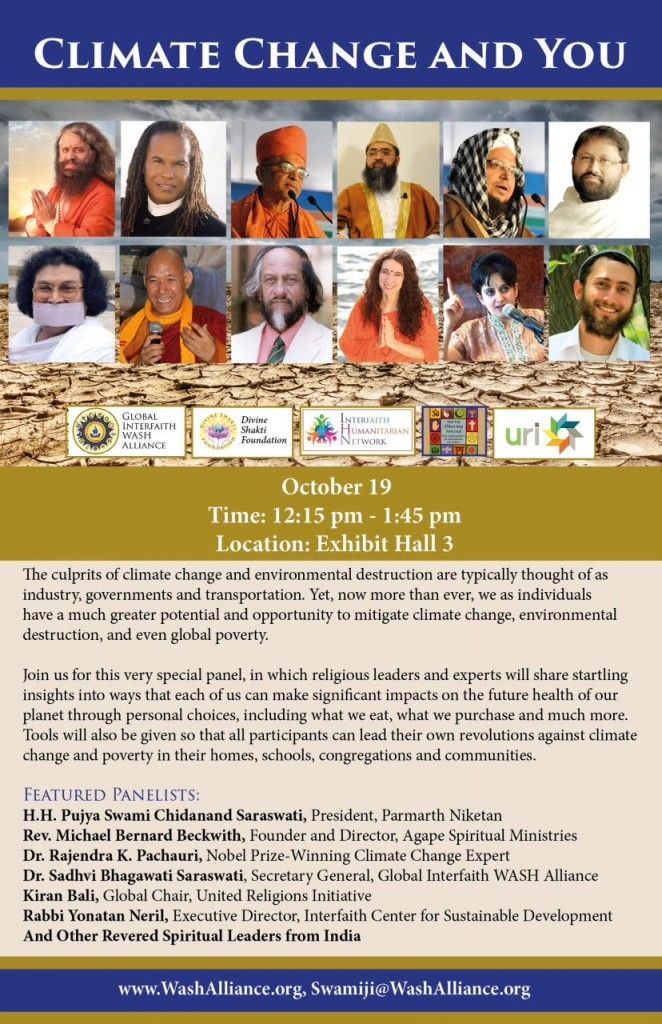
---
### [7DSC Confirmation](https://interfaithsustain.com/7dsc-confirm/)
**Published:** January 13, 2021
**Author:** ICSD
---
### [Western Religions and Ecology](https://interfaithsustain.com/western-religions-and-ecology/)
**Published:** September 20, 2015
**Author:** ICSD
**Content:**
This course introduces the Western religious traditions of Judaism, Christianity and Islam in relation to the emerging field of religion and ecology. This overview course identifies developments in the traditions that highlight their ecological implications into the contemporary period. In particular, it relates theological and religious concepts within the traditions to engaged, on-the-ground environmental projects. It investigates the symbolic and lived expressions in religious texts, ethics, and practices that can be defined as religious ecologies. Similarly, it identifies narratives in Judaism, Christianity, and Islam that orient humans to the cosmos, namely, religious cosmologies. This interrelationship of narratives and religious environmentalism provides pathways into the study of religion and ecology.
**Required Texts:**
**Online Journal/*Daedalus:***
Mary Evelyn Tucker and John Grim, eds., “Religion and Ecology: Can the Climate Change?” *Daedalus*, Fall 2001. (https://www.amacad.org/content/publications/publication.aspx?d=845).
*Encyclopedia of Religion* online articles:
1\) on Judaism, Christianity and Islam;
2\) on Judaism and Ecology, Christianity and Ecology, Islam and Ecology
**Recommended Texts:**
*Judaism and Ecology: Created World and Revealed Word*. Edited by Hava Tirosch-Samuelson, Harvard Center for the Study of World Religions, 2002, selected articles, online.
*Christianity and Ecology: Seeking the Well-Being of Earth and Humans*. Edited by Dieter Hessel and Rosemary Radford Reuther, Harvard Center for the Study of World Religions, 2000, selected articles, online.
*Islam and Ecology: A Bestowed Trust*. Edited by Richard Foltz, Frederick Denny, and Azizan Baharuddin, Harvard Center for the Study of World Religions, 2003, articles, online.
**Background Texts for Western Religions:**
John Esposito, Darrell Fasching, Todd Lewis, eds., *World Religions Today*. Oxford, 2013.
Chapters on Judaism, Christianity, and Islam. F.E. Peters, *The Children of Abraham*. Princeton University Press, 2005.
Mary Evelyn Tucker and John Grim, eds., *Worldviews & Ecology: Religion, Philosophy and the Environment*. Orbis Books, 2000.
---
### [Wendell Berry: Creation, Stewardship, and Spiritual Life](https://interfaithsustain.com/wendell-berry-creation-stewardship-and-spiritual-life/)
**Published:** September 20, 2015
**Author:** ICSD
**Content:**
In this course a special topic related to Christian spirituality will be explored in a focused and intensive way. The topics vary from semester to semester and students may take this course more than once as topics change. This semester’s seminar will involve a careful, charitable, and critical reading of selections of Wendell Berry’s essays, poetry, and fiction, seeking to understand the perspective of his new agrarian thought and its implications for creation care, community, spiritual life, and ministry.
**Course Textbooks**
Berry, Wendell*. The Memory of Old Jack*. Berkley, CA: Counterpoint, 2003, 1999. ISBN-13: 978-1582430430
\_\_\_\_\_\_\_\_. *The Art of the Commonplace: The Agrarian Essays of Wendell Berry*. Berkley, CA: Counterpoint, 2003. ISBN-13: 978-1593760076
\_\_\_\_\_\_\_\_. *Citizenship Papers*. Berkley, CA: Counterpoint, 2003, 2014. ISBN-13:978-1 61902-437-3
\_\_\_\_\_\_\_\_\_. *That Distant Land: The Collected Stories* (Port William). Berkley, CA: Counterpoint, 2003, 2005. ISBN-13: 978-1593760540
\_\_\_\_\_\_\_\_\_, *New Collected Poems Berkley*, CA: Counterpoint, 2003, 2013. ISBN-13: 978 1619021525
**Wendell Berry**
**A Selected Bibliography**
**Stories**
*-Nathan Coulter*. Boston: Houghton Mifflin, 1960 (revised North Point, 1985).
*-A Place on Earth*. Boston: Harcourt, Brace, 1967 (revised North Point,1983; Counterpoint, 2001).
*-The Memory of Old Jack*. New York: Harcourt, Brace, Jovanovich 1974. (revised Counterpoint
*-The Wild Birds: Six Stories of the Port William Membership*. San Francisco: North Point, 1996.
*-Remembering*. San Francisco: North Point, 1988.
*-Fidelity: Five Stories*. New York: Pantheon, 1992.
*-Watch With Me and Six Other Stories of the Yet-Remembered Ptolemy Proudfoot and His Wife, Miss Minnie, Née Quinch*. New York: Pantheon, 1994.
*-A World Lost.* Washington, D.C.: Counterpoint, 1996.
*-Jayber Crow*. Washington, D.C.: Counterpoint, 2000.
*-Three Short Novels (Nathan Coulter, Remembering, A World Lost).* Washington, D.C.:
*-Hannah Coulter*. Washington, D.C.: Shoemaker & Hoard. 2004.
*-That Distant Land: The Collected Stories*. Washington, D. C.: Shoemaker & Hoard, 2004.
*-Andy Catlett: Early Travels*. Washington, D. C.: Shoemaker & Hoard, 2006.
*-Whitefoot: A Story from the Center of the World*. Berkeley: Counterpoint. 2009. Available online as “Whitefoot”, Orion Magazine. January/February 2007.
*– A Place in Time: Twenty Stories of the Port William Membership*. Berkeley: Counterpoint, 2012.
**Uncollected stories**
“Nothing Living Lives Alone”. *The Threepenny Review*. Spring 2011.
**Nonfiction**
*-The Long-Legged House*. New York: Harcourt, Brace, Jovanovich, 1969 (Shoemaker & Hoard, 2004)
*-The Hidden Wound*. Boston: Houghton Mifflin, 1970.
*-The Unforeseen Wilderness: Kentucky’s Red River Gorge*. Photographs by Ralph Eugene Meatyard. U P Kentucky, 1971. Revised North Point, 1991. Reissued and revised Shoemaker & Hoard, 2006.
*-A Continuous Harmony: Essays Cultural & Agricultural*. New York: Harcourt, Brace, 1972. (Shoemaker & Hoard, 2004).
*-The Unsettling of America: Culture and Agriculture*. San Francisco: Sierra Club, 1977; Avon Books, 1978; Sierra Club, 1986. (Counterpoint, 2009).
*-The Gift of Good Land: Further Essays Cultural and Agricultural*. San Francisco: North Point, 1981
*-Recollected Essays: 1965–1980*. San Francisco: North Point, 1981.
*-Standing by Words*. San Francisco: North Point, 1983 (Shoemaker & Hoard, 2005).
*-Meeting the Expectations of the Land: Essays in Sustainable Agriculture and Stewardship*, 1984 editor with Wes Jackson and Bruce Colman
*-Home Economics: Fourteen Essays*. San Francisco: North Point, 1987 (Counterpoint, 2009).
*-Descendants and Ancestors of Captain James W. Berry, with Laura Berry*. Bowling Green, KY: Hub, 1990.
*-Harlan Hubbard: Life and Work*. Lexington, Kentucky: U P of Kentucky, 1990.
*-What Are People For?* New York: North Point, 1990.
*-Standing on Earth*, (Selected Essays). Golgonooza Press, (UK), 1991.
*-Sex, Economy, Freedom & Community*. New York: Pantheon, 1992.
*-Another Turn of the Crank*. Washington, D. C.: Counterpoint, 1996.
*-Grace: Photographs of Rural America with Gregory Spaid and Gene Logsdon*. New London, New Hampshire: Safe Harbor Books, 2000.
*-Life Is a Miracle.Washington*, D.C.: Counterpoint, 2000.
*-In the Presence of Fear: Three Essays for a Changed World*. Great Barrington, MA: Orion, 2001.
*-The Art of the Commonplace: The Agrarian Essays of Wendell Berry*. Ed. Norman Wirzba. Washington, D. C.: Counterpoint, 2002.
*-Citizens Dissent: Security, Morality, and Leadership in an Age of Terror*. (With David James Duncan. Foreword by Laurie Lane-Zucker) Great Barrington, MA: Orion, 2003.
*-Citizenship Papers.* Washington, D. C.: Shoemaker & Hoard, 2003.
*-Tobacco Harvest: An Elegy*. Photographs by James Baker Hall. Lexington, Kentucky: U P of Kentucky, 2004.
*-Blessed Are the Peacemakers: Christ’s Teachings about Love, Compassion & Forgiveness*. Washington, D. C.: Shoemaker & Hoard, 2005.
*-The Way of Ignorance and Other Essays*. Washington, D. C.: Shoemaker & Hoard, 2005.
*-Bringing It to the Table: On Farming and Food*. Berkeley: Counterpoint, 2009.
*-Imagination in Place*. Berkeley: Counterpoint, 2010.
*-What Matters? Economics for a Renewed Commonwealth Berkeley: Counterpoint*, 2010.
*-The Poetry of William Carlos Williams of Rutherford*. Berkeley: Counterpoint, 2011
*-It All Turns on Affection: The Jefferson Lecture and Other Essays*. Berkeley: Counterpoint, 2012.
*-Distant Neighbors: The Selected Letters of Wendell Berry and Gary Snyder*. Ed. Chad Wriglesworth. Berkeley: Counterpoint, 2014.
**Uncollected essays**
“Against the Death Penalty” on YouTube “KCADP’s YouTube Channel.” April 24, 2009.
“The Cost of Displacement” *The Progressive* December 2009/January 2010.
“Caught in the Middle on Abortion and Homosexuality” *The Christian Century*, 20 March 2013.
“To Break The Silence” *Appalachian Heritage* Vol 41 (3), Summer 2013, pp 78-84.
**Poetry**
*-The Broken Ground*. New York: Harcourt, Brace, 1964.
*-November twenty six nineteen hundred sixty three*. New York: Braziller, 1964.
*-Openings*. New York: Harcourt, Brace, 1968.
*-Farming: A Hand Book*. New York: Harcourt, Brace, Jovanovich, 1970 (Berkeley: Counterpoint, 2011).
*-The Country of Marriage*. New York: Harcourt, Brace, Jovanovich, 1973.
*-An Eastward Look*. Berkeley, California: Sand Dollar, 1974.
*-Sayings and Doings*. Lexington, Kentucky: Gnomon, 1975.
*-Clearing*. New York: Harcourt, Brace, 1977.
*-A Part*. San Francisco: North Point, 1980.
*-The Wheel*. San Francisco, North Point, 1982.
*-The Collected Poems, 1957–1982*. San Francisco: North Point, 1985.
*-Sabbaths: Poems*. San Francisco: North Point, 1987.
*-Traveling at Home*. Press Alley, 1988; North Point 1989.
*-Entries*. New York: Pantheon, 1994 (Washington, D.C.: Counterpoint, 1997).
*-The Farm*. Monterey, Kentucky: Larkspur, 1995.
*-A Timbered Choir: The Sabbath Poems 1979–1997*. Washington, D.C.: Counterpoint, 1998.
*-The Selected Poems of Wendell* Berry. Washington, D.C.: Counterpoint, 1999.
*-The Gift of Gravity, Selected Poems,* 1968–2000, Golgonooza Press (UK), 2002.
*-Sabbaths 2002*. Monterey, Kentucky: Larkspur, 2004.
*-Given: New Poems*. Washington D. C.: Shoemaker & Hoard. 2005.
*-Window Poems*. Washington, D. C.: Shoemaker & Hoard, 2007.
*-The Mad Farmer Poems.* Berkeley: Counterpoint, 2008.
*-Sabbaths 2006.* Monterey, Kentucky: Larkspur, 2008.
*-Leavings*. Berkeley: Counterpoint, 2010.
*-Sabbaths 2009.* Sewanee Review, Spring 2011, Volume 119, Number 2, pages 198–205
*-New Collected Poems.* Berkeley: Counterpoint, 2012.
*-This Day: Sabbath Poems Collected and New 1979-2013*. Berkeley: Counterpoint, 2013.
*-Terrapin and Other Poems*. Illustrated by Tom Pohrt. Berkeley: Counterpoint, 2014
**Interviews**
-Beattie, L. Elisabeth (Editor). *“Wendell Berry” in Conversations With Kentucky Writers*, U P of Kentucky, 1996.
-Berger, Rose Marie. “Wendell Berry interview complete text,” *Sojourner’s Magazine*, July 2004
-Fisher-Smith, Jordan. “Field Observations: An Interview with Wendell Berry'”
-Grubbs, Morris Allen (Editor). *Conversations with Wendell Berry*, U P of Mississippi, 2007.
-Lehrer, Brian. *The Brian Lehrer Show WYNC*, October 17, 2013
-Leonard, Sarah. “Nature as an Ally” *Dissent*, Vol. 59, No. 2, Spring, 2012
-Minick, Jim. “A Citizen and a Native: An Interview with Wendell Berry” *Appalachian Journal*, Vol. 31, Nos 3–4, (Spring-Summer, 2004)
-Weinreb, Mindy. “A Question a Day: A Written Conversation with Wendell Berry” *in Merchant*
-Brockman, Holly. “How can a family ‘live at the center of its own attention?’ Wendell Berry’s thoughts on the good life”, January/February 2006
-Smith, Peter. “Wendell Berry’s still unsettled in his ways.” *The Courier-Journal*, Sep 30, 2007, A1.
-“Wendell Berry: A conversation,” *The Diane Rehm Show*. WAMU 88.5 American University Radio, November 30, 2009.
-“Wendell Berry: Poet & Prophet,” *Moyers & Company*. PBS. October 4, 2013.
**Forewords, Introductions, Prefaces, and Afterwords**
***–****Aldo Leopold: His Life and Work by Curt D*. Meine. U of Wisconsin P, 2010.
*-The Caudills of the Cumberlands: Anne’s Story of Life with Harry by Terry Cummins*. Louisville: Butler Books, 2013.
*–Driftwood Valley: A Woman Naturalist in the Northern Wilderness* by Theodora C. Stanwell-Fletcher. Oregon State U P, 1999.
*-Enduring Seeds: Native American Agriculture and Wild Plant Conservation* by Gary Paul Nabhan. U of Arizona P, 2002.
*-God and Work: Aspects of Art and Tradition* by Brian Keeble. World Wisdom Books, 2009.
*-Great Possessions: An Amish Farmer’s Journal* by David Kline. The Wooster Book Company, 2001.
*-Hope Beneath Our Feet: Restoring Our Place in the Natural World* edited by Martin Keogh. North Atlantic Books, 2010.
*-James Archambeault’s Historic Kentucky* by James Archambeault. U P of Kentucky, 2006.
*–Kentucky’s Natural Heritage: An Illustrated Guide to Biodiversity* edited by Greg Abernathy and others. U P of Kentucky, 2010.
*-Living the Sabbath: Discovering the Rhythms of Rest and Delight* by Norman Wirzba. Brazos P, 2006.
*-Lost Mountain: A Year in the Vanishing Wilderness* by Erik Reece. Riverhead, 2006.
*-The Man Who Created Paradise* by Gene Logsdon. Ohio U P, 2001.
*-The Meat You Eat: How Corporate Farming Has Endangered America’s Food Supply* by Ken Midkiff. St. Martin’s Griffin, 2005.
*-Missing Mountains* edited by Kristin Johannsen and others. Wind Publications, 2005.
*-My Mercy Encompasses All: The Koran’s Teachings on Compassion, Peace and Love* by Reza Shah-Kazemi. Counterpoint, 2007.
*–Nature as Measure: The Selected Essays of Wes Jackson*. Counterpoint, 2011.
*-The One-Straw Revolution* by Masanobu Fukuoka. NYRB Classics, 2009 \[1978\].
*-The Pattern of a Man & Other Stories* by James Still. Gnomon P, 2001.
*-Pedestrian Photographs* by Larry Merrill. U of Rochester P, 2008.
*-The Prince’s Speech: On the Future of Food by HRH The Prince of Wales*. Rodale Press, 2012.
*-Ralph Eugene Meatyard* by Arnold Gassan. Gnomon P, 1970.
*-Scripture, Culture, and Agriculture: An Agrarian Reading of the Bible* by Ellen F. Davis. Cambridge U P, 2008.
*-Soil And Health: A Study of Organic Agriculture* by Albert Howard. U P of Kentucky, 2007.
*-Stone Walls: Personal Boundaries Photographs by Mariana Cook with a letter from Wendell Berry*. Bologna, Italy. Damiani, 2011.
*–The Embattled Wilderness: The Natural and Human History of the Robinson Forest and the Fight for Its Future* by Erik Reece and James J. Krupa. Athens: University of Georgia Press, 2013.
*–The Toilet Papers: Recycling Waste and Conserving Water* by Sim Van der Ryn. Ecological Design Press, 1978.
*-To a Young Writer* by Wallace Stegner. Red Butte P, 2009.
*-Tree Crops: A Permanent Agriculture* by J. Russell Smith. Island P, 1987.
*-Waste Land: Meditations on a Ravaged Landscape* by David T. Hanson. Aperture, 1997.
*-We All Live Downstream: Writings About Mountaintop Removal* edited by Jason Howard. MotesBooks, 2009.
*-The Woodcuts of Harlan Hubbard*. U P of Kentucky, 1994.
---
### [Thought of Wendell Berry](https://interfaithsustain.com/thought-of-wendell-berry/)
**Published:** September 9, 2015
**Author:** ICSD
**Content:**
An exploration of Berry’s wisdom through representative reading in his fiction, poetry and essays. The course engages key Berrian themes and explores the compatibility and contribution of Berry’s vision to contemporary Christian life and thought. Three hours credit.
**Textbooks:**
- Wendell Berry, The Art of the Commonplace: The Agrarian Essays of Wendell Berry, ed. Norman Wirzba (Shoemaker and Hoard, 2003). Read all.
- Wendell Berry, The Way of Ignorance and Other Essays (Shoemaker and Hoard, 2005). Read preface through page 150.
- Wendell Berry, That Distant Land: The Collected Stories (Shoemaker and Hoard, 2004). Omit 124-44, 164-95, 210-49. Read all the rest.
- Wendell Berry, A Timbered Choir: The Sabbath Poems 1979-97 (Counterpoint, 1998). Read all.
This syllabus pertains to when the course was offered in 2008
---
### [Theology of Growing and Eating](https://interfaithsustain.com/theology-of-growing-and-eating/)
**Published:** September 9, 2015
**Author:** ICSD
**Content:**
The Theology of Growing and Eating is an experiential and experimental course which will use traditional materials such as lectures and small group discussions; electronic or visual media; and actual manual labor and reflection on these experiences to discover what (all) it means that human beings eat and grow. There are elements of ecology, of attempting to communicate with our neighborhood, and also of ministry practice in the course.
**Objectives:**
- To encourage students to learn how to reflect biblically and theologically on daily and ordinary events in their and their parishioners’ lives.
- To explore the world that surrounds us and our fellow Christians to break through the barrier of differentiating between the sacred (or religious) and secular (or irreligious). To integrate the various perspectives by which we see the world.
- To explore the social context in which we eat and grow.
- To actually grow some food and to think about what that growing means, also to become more mindful of our eating.
**Relation to Saint Paul School of Theology objectives:**
1. To study rigorously to know and interpret the biblical, theological, and practices of the Christian heritage.
2. To understand the nature of the economy and the natural environment in ways that parishioners experience them.
3. To explore what it might mean to eat and grow justly.
4. To think about the spirituality of growing and eating which rural parishioners (but increasingly urban and suburban ones as well) have developed, and to encourage such development in the parish.
5. To think faithfully about one’s own growth and eating practices.
6. To pursue leadership in integrating the practical and the academic; to think about how to encourage joyful reflection on the Christian life and to witness that joy.
(N.B. These five objectives are tied to and use the language of the Objectives of the M.Div. – and to some extent the M.A.S.M., M.A.T.S., and D.Min.—at Saint Paul School of Theology. )
**Tentative organization:**
Week 1: Introduction. Why teach this class in a program geared to rural ministry and leadership in local congregations. What might we mean by speaking of eating as a spiritual practice and a moral discipline? What might we mean by speaking of growing as a spiritual practice and a moral discipline? Gifts of the Rural Congregation and Community: knowledge of food production and the processes of growing – its theological relevance and its relevance for living the embodied, ecological life in the web. Thinking about how to welcome the community around Saint Paul to join us in our gardening so that we can become part of their neighborhood. (Dangerous: Not only might we learn how to grow strange vegetable, we might learn to speak to our neighbors!)
Week 2: The Theology, Ethics, and Spirituality of Eating. Assignment: Animal Vegetable Miracle, by Barbara Kingsolver. Chapters 1-4; Food for Life, by Shannon Jung, Chapters 1-3.
Week 3: Eating the Way God Intended; Food for Life, Chapters 4-7; Maybe we’ll take a field trip to the grocery store.
Week 4: Eating Locally; Food for Life, finish; Kingsolver, Animal, Vegetable, Miracle, finish; Selections from John Wesley, on reserve.
Week 5: The Theology of Growing; Terry Hershey, The Art of Gardening, first half; John Koenig, Soul Banquet, Chapters 1 & 2; One page – Idea for project or research paper – Please be sure that whatever your project or paper is described as fully as possible. Give sources or ideas or websites or whatever. This will count for 10% of the final paper or project.
Weel 6: Gardening; Mr. Lala Kumar, from the Master Gardeners of Kansas City; Read: C.E. Voigt and J.S. Vandemark, Vegetable Gardening in the Midwest, first half. Also explore http://extension.missouri.edu/explore/agguides/hort/#Vegetables and Mr. Kumar writes “all the publications found there on vegetable gardening); If the weather is nice, we will probably go see our site.
Week 7: Gardening; Mr. Lala Kumar, Horticulture Specialist, University of Missouri Extension; Assignment: Finish the materials assigned on March 10.
Week 8: Planting (either indoors or outside, depending on the weather); Finish Hershey and Koenig
Week 9: Integrating the Growing and the Eating; Read Vigen Guroian, Inheriting Paradise: Meditations on Gardening; Read selections from Wesley on growing.
Week 10: Bringing It Home to Our Congregations.
Week 11: Present your projects or papers to the class for their edification and reaction; Gardening.
Week 12: Projects.
Week 13: Projects or papers due.
---
### [The Worldview of Thomas Berry: Flourishing of the Earth Community](https://interfaithsustain.com/the-worldview-of-thomas-berry-flourishing-of-the-earth-community/)
**Published:** September 20, 2015
**Author:** ICSD
**Content:**
Thomas Berry (1914-2009) was an historian of religions and an early and significant voice awakening religious sensibilities to the environmental crisis. He is particularly well-known for articulating a New Story of the universe that explores the world-changing implication of evolutionary sciences. This course investigates the life and thought of Thomas Berry in relation to the field of religion and ecology as well as the Journey of the Universe project. As an overview course it draws on his books, articles, and recorded lectures to examine such ideas as: the New Story, the Great Work, and the Ecozoic era. In addition, the course explores his studies in world religions including Buddhism, Confucianism, and Indigenous Traditions. Finally the course will highlight his challenge to Christianity to articulate theologies of not only divine- human relations, but also human-Earth relations.
**Required Texts:**
- *The Dream of the Earth*. San Francisco: Sierra Club Books, 1988. Reprint Berkeley: Counterpoint Press, 2015.
- *The Great Work: Our Way Into the Future*. New York: Harmony/Bell Tower, 2000.
- *Thomas Berry: Selected Writings on the Earth Community*. Edited by Mary Evelyn Tucker and John Grim, Maryknoll, NY: Orbis Books, 2014.
**Website: Thomas Berry website:** www.thomasberry.org
**Selections from:**
- Thomas Berry, *Evening Thoughts: Reflecting on Earth as Sacred Community*. Edited by Mary Evelyn Tucker, San Francisco and Berkeley: Sierra Club and University of California Press, 2006. Reprint Counterpoint Press, 2015.
- Thomas Berry*, The Sacred Universe: Earth, Spirituality, and Religion in the 21st Century*. Edited by Mary Evelyn Tucker, New York: Columbia University Press, 2009.
- Thomas Berry, *The Christian Future and the Fate of Earth*. Edited by Mary Evelyn Tucker and John Grim, Maryknoll, NY: Orbis Books, 2009.
- *Teilhard in the 21st Century*. Edited by Arthur Fabel and Donald St John, Maryknoll, NY: Orbis Books, 2003.
- *Living Cosmology: Christian Responses to Journey of the Universe*. Edited by Mary Evelyn Tucker and John Grim, Maryknoll, NY: Orbis Books, 2016, online.
**Recommended Readings:**
- Thomas Berry, *Buddhism*. New York: Columbia University Press, 1989.
- Thomas Berry, *Religions of India*. New York: Columbia University Press, 1992.
- Thomas Berry, *Befriending the Earth: A Theology of Reconciliation Between Humans and the Earth* (with Thomas Clark), Mystic, CT: Twenty-third Publications, 1991.
- Brian Swimme and Thomas Berry, *The Universe Story*. San Francisco: HarperSanFrancisco, 1992.
- *The Intellectual Journey of Thomas Berry: Imaging the Earth Community*. Edited by Heather Eaton, Lexington, KY: Lexington Books, 2014.
- *Worldviews: Environment, Culture, and Religion* (Issue on *The Great Work*) http://www.thomasberry.org/Essays/
---
### [The Big Blue Marble: Theology and Globalization](https://interfaithsustain.com/the-big-blue-marble-theology-and-globalization/)
**Published:** July 10, 2015
**Author:** ICSD
**Content:**
To some it looks like a giant spaceship, to others a living creature. Many used to think of it as flat. Some believe it is only several thousand years old. For others, and they are right, it is millions of millions of years old. Some think it will go down in ice, others in fire—who knows? The history and space that we know as the planet earth, though the common abode of all human life, is described, interpreted, explained, and valued in spite the various analyses of our planetary home, the discourse of globalization brings to view, as sociologist Roland Robertson suggests, the image of the earth as a “single space,” or as described by the title of the television show my parents and I watched when I was much younger, a “big blue marble.”
**I. Overview**
Though there is, has been, and will continue to be variety in our understandings of the world and our accounts of globalization, not every perspective is equally accurate or morally adequate. There is a great deal at stake in the way we describe and value the Earth, this giant blue-green marbled globe. And there is a great deal at stake in the way we describe and appreciate the human social interactions that take place within it. The way the world and human life are envisioned, described, and talked about impacts the manner in which we as individuals and communities take up with it and one another, concerns that are fundamentally moral and ultimately theological.
Thus *analysis* and *evaluation* of globalization, a multidimensional set of interconnected and interpenetrating processes that are rapidly changing the conditions of life on planet earth, are central tasks of contemporary theological inquiry and of spiritually, morally, and politically responsible religious leadership. This is so for many reasons. Globalization is simultaneously an unfolding of new material-objective conditions for social life (i.e. ecological, economic, technological) as well as a network of subjective-cultural processes transforming human consciousness (political, moral, religious). These material-objective and subjective-cultural aspects of globalization dialectically impact one another and cannot be adequately analyzed or evaluated in isolation. Insofar as liberal religion aims to exert a prophetic influence on the world, and the contexts in which we undertake this prophetic endeavor have been shaped and are continuing to be reshaped by the multiple interpenetrating material and cultural flows that characterize globalization, then a prominent theological task of liberal religion includes the effort to analyze and evaluate the processes and theories of globalization.
While a prominent task, however, and despite the saturation of public discourse with this concept, the nature and character of “globalization” remains highly contested. Is it a new phenomenon, a distinctly late- or post-modern process, or is it as ancient as human history? Is it materially driven and culturally effective, the reverse, or a material-cultural dialectic? Does it enrich cultures or degrade them? Will it materially benefit many or merely a few? Is it a unifying or a divisive phenomenon? The theoretical and descriptive ambiguity surrounding “globalization,” reflected in these and other questions, reinforces the importance of being clear about the methodological framework from which we will engage our subject.
**II. Methodology**
Several methodological positions drive the design of this class:
\*First, as indicated above, globalization includes not only material but also cultural dimensions. Not every interpreter of globalization acknowledges this, and even for those who do, the role of religions in culture is often downplayed. For many scholars, and even more so for the broader public, globalization is usually described as a principally economic-material process. This course constitutes an effort to understand globalization as more than the global interconnection and interdependence of markets and finance and to understand the material dimensions of globalization as part of a much broader set of patterns.
\*Second, globalization is an uneven process, and thus a social justice concern. Though impacting the material and cultural conditions of the whole world, the infrastructure of globalization is concentrated in the global North. There are numerous power differentials within the phenomenon of globalization and these require critical examination. This methodological position is reflected, in part, by the variety of analyses and the pairing of distinct evaluative perspectives that we will consider in our course.
\*Third, while many characteristics of globalization have historical roots, such as cultural hybridization, in recent times these characteristics have become magnified. This is partly due to what one of our authors, Manfred Steger, discusses as the creation, expansion, and intensification of the interconnectedness and interdependency of social interaction. Thus globalization designates a historically recent and yet unfolding set of processes.
\*Fourth, analysis and evaluation of globalization are impoverished if they neglect theological perspectives. This is so for at least two reasons.
\*Both the appreciative and critical theories of globalization implicitly contain theological underpinnings or commitments that are theological analogues. They imply, but rarely explicitly theorize, normative accounts of the way things ultimately are and ought to be, about the nature, value, and purpose of earth, of life, and of human beings. One of the tasks of this course will be to raise these implicit normative commitments to visibility, in order better to make judgments among the theories in which they are embedded.
\*Theological traditions—historical and emerging—bring their own analytic and evaluative resources to the discourse of globalization. It is not only that theological perspectives exist within theories of globalization, but also that theological perspectives can provide interpretive leverage for critical understanding of the phenomenon. And thus another task of this course will be to examine and assess select paradigmatic theological-ethical interpretations of our topic, inquiring into their possibilities as resources for liberal theology and liberal religious leadership in an era of globalization.
**III. Structure**
In light of these methodological commitments, shaped by an appreciation for both the contested nature of “globalization” and its moral significance, our course will be structured in two parts— analytical and constructive.
\*Our first sessions will be analytical. The aim here will be to make the opacity of “globalization” a little more transparent, attempting to gain a clearer picture of the reality to which the term applies. Toward this aim we will study some of the principal spheres of globalization (economic, ecological, political, and cultural) as well as some of the dominant theories of globalization (neoliberalism, social equity liberalism, eco-localism and neocolonialism).
\*With the leverage gained through our analyses, the second part of our course will attempt to carve some constructive conceptual space for evaluating “globalization.” With this in mind, we will engage four distinct theological and ethical assessments of globalization. We will give our attention first to the perspectives of two ecofeminist theologians, one from the global North and one from the South, and then we will move to an interpretation of two expressions of theological humanism, a Reformed Jewish and a Christian perspective.
**IV. Bibliography**
\*Manfred Steger, *Globalization: A Very Short Introduction*
\*Rebecca Todd Peters, *In Search of the Good Life: The Ethics of Globalization*
\*Rosemary Radford Ruether, *Integrating Ecofeminism, Globalization and World Religions*
\*Jonathan Sacks, *The Dignity of Difference: How to Avoid the Clash of Civilizations*
\*Ivone Gebara, *Longing for Running Water: Ecofeminism and Liberation*
\*William Schweiker, *Theological Ethics and Global Dynamics: In a Time of Many Worlds* (selections)
**V. Calendar**
\*Week 1: Getting Oriented: Spheres of Globalization, (prior to class!! Read Manfred Steger’s book, Globalization)
\*Week 2 I. The Need for a Normative Approach to Globalization; II. Dominant Theories of Globalization, (Read Rebecca Todd Peters’ book, In Search of the Good Life, 1-100)
\*Week 3: Resistance Theories and a Normative Proposal, (Peters, 101-208)
\*Week 4: Corporate Globalization and World Religions, (Rosemary Radford Ruether, Integrating Ecofeminism, Globalization, and World Religions, 1-89), Mid-term paper due!!
\*Week 5: Varieties of Ecofeminist Theology, (Ruether, 91-125 and Ivone Gebara, Longing for Running Water, 1-100)
\*Week 6: A Latin-American Ecofeminist Theology, (Gebara, 101-217) \*May 12: A Jewish Humanism, (Jonathan Sacks, The Dignity of Difference, entire)
\*Week 7: Jewish and Christian Theological Humanisms (William Schweiker, Theological Ethics and Global Dynamics, 1-128) \*Week 8: A Christian Theological Humanism, (Schweiker, 129-220)
\*Week 9: Wrapping Up, Final paper due!!
This syllabus pertains to when the course was offered in 2006
---
### [Subscription Successful](https://interfaithsustain.com/subscription-successful/)
**Published:** June 2, 2016
**Author:** ICSD
**Content:**
Thank you! Your subscription was successful.
---
### [Sacred Earth: Indigenous Peoples’ Ecological Traditions](https://interfaithsustain.com/sacred-earth-indigenous-peoples-ecological-traditions/)
**Published:** August 26, 2015
**Author:** ICSD
**Content:**
A study of indigenous peoples’ traditional teachings about the relationship of spirituality, ecology, and community well-being. A particular focus will be the words and works of representative twentieth century writers and spiritual leaders, and include the life and teachings of Lakota elder Black Elk; Muskogee elder Phillip Deere; Wanapum elder David Sohappy; and Dakota scholar and activist Vine Deloria, Jr.
## Course Objectives
Five centuries after the arrival of Europeans on the shores of what is known now as the Americas, indigenous peoples retain worldviews with an ancient history. While some perspectives have been influenced by or abandoned to ideas and social structures from newer cultures, such inculturation has not meant complete theoretical or practical assimilation. In particular, the reverence of native peoples for Mother Earth, and their efforts to live in harmony with her, have continued through time. Adherents of diverse religious traditions have reflected on the relationship between their faith and their Earth home over millennia. In the United States during the latter decades of the twentieth century, indigenous peoples in particular have offered to a broader audience their perspectives on the link between their spiritual beliefs and their ecological context.
## Course objectives include:
- understanding indigenous peoples’ principal Earth-related spiritual teachings;
- knowledge of recurring ecological themes that permeate spiritual concepts, and their relationship to current ecological concerns;
- awareness of the diversity of indigenous peoples in the U.S., the distinctiveness of their respective beliefs, and their expressions of complementary and congruent beliefs;
- formulation of ways to benefit from indigenous peoples’ ecological and spiritual traditions–which emerge from their social and ecological contexts and relate to complementary concepts in dominant U.S. religions–to address contemporary ecological problems and human rights issues, and promote the commons good and the common good;
- knowledge of the relationship between Christianity and native U.S. cultures, including of how some native scholars have sought to reshape the Christian tradition, while other scholars and elders have rather affirmed more ancient understandings and practices; and
- understanding of the relationship between native belief and practices, as in other traditions, so that native peoples and cultures are neither vilified nor romanticized, but understood in the complexity of their places and times, from the time of first contact with Europeans through the 21st century.
## Course Texts
Black Elk. Black Elk Speaks: Being the Life Story of a Holy Man of the Oglala Sioux. Recorded and edited by John G. Neihardt.. (New York: Pocket Books, 1972)
The Sacred Pipe: Black Elk’s Account of the Seven Rites of the Oglala Sioux
Recorded and edited by Joseph Epes Brown. (New York: Penguin Books, 1976)
Vine Deloria, Jr., Spirit and Reason: The Vine Deloria, Jr., Reader (Golden, Colorado: Fulcrum Publishing, 1999)
John Hart, Sacramental Commons: Christian Ecological Ethics (Lanham, Maryland: Rowman & Littlefield, 2006)
Oren Lyons and John Mohawk, eds., Exiled in the Land of the Free: Democracy, Indian Nations and the U.S. Constitution (Santa Fe, New Mexico: Clear Light Books, 1998)
Charles C. Mann. 1491: New Revelations of the Americas Before Columbus. Vintage, 2006.
George E. Tinker, Spirit and Resistance: Political Theology and American Indian Liberation (Augsburg Fortress Publishers, 2004)
Jace Weaver, ed., Defending Mother Earth: Native American Perspectives on Environmental Justice (Maryknoll, New York: Orbis Books, 1996)
Steve Wall and Leon Shenandoah, To Become A Human Being: The Message of Tadodaho Chief
Leon Shenandoah (Charlottesville, VA: Hamilton Roads Publishing, 2001)
## Course Resources
### Interviews
Phillip Deere, Muskogee: Montana and Oklahoma interviews, 1984-85.
David Sohappy, Sr., Wanapum: Spokane, Washington prison letters and interviews, 1987-1988.
### Videos
“The Faithkeeper: An Interview with Oren Lyons” (Bill Moyers; PBS documentary)
“In the Spirit of Crazy Horse” (PBS)
“Incident at Oglala”
“The Good Mind”
“River People: In the Case of David Sohappy.” (1990)
“Pow Wow Highway”
### Music
John Trudell, excerpts from the CDs “Bone Man” (Daemon Records, 2002); “Johnny Damas and Me” (Rykodisc, 1994); and “AKA Grafitti Man” (Rykodisc, 1992).
Floyd Red Crow Westerman, excerpts from the CD “Custer Died for Your Sins/The Earth Is Your Mother” (Trikont, 1993)
### Course Outline: Topic Reading
\*\[Add: 1491 text at beginning.\]
Week 1: Introduction: Mother Earth in Native Traditions
Week 2: Commons Good and Common Good Hart, SC, ch. 1; ch. 4
Week 3: Historical Contexts for Native Spirituality, 1 Lyons & Mohawk, Parts I-III; DVD: In the Spirit of Crazy Horse
Week 4: Historical Contexts for Native Spirituality, 1 Lyons & Mohawk, Parts IV-V; DVD: The Faithkeeper
Week 5: The Plains 1: Black Elk, traditional elder Black Elk, BES; SROS
Week 6: The Plains, 2: Vine Deloria and cultural renewal Deloria, S&R, Parts I-III; DVD: Incident at Oglala: The Leonard Peltier Story
Week 7: The Plains, 3: Vine Deloria and Lakota spirituality Deloria, S&R, Parts IV-V
Week 8: The Southwest: Phillip Deere and the Muskogee Hart, SC, ch. 3; DVD: The Good Mind
Week 9: The Northeast: Leon Shenandoah/the Haudenosaunee Wall and Shenandoah
Week 10: The Northwest: David Sohappy and the Wanapum Hart, SC, ch. 6; DVD: River People: In the Case of David Sohappy
Week 11: Theology, Politics and Liberation Tinker
Week 12: Environmental Justice Weaver
Week 13: Poetic voices and Course reflections; Music: John Trudell, Floyd Westerman
### Course Supplemental Texts
Angie Debo, The Road to Disappearance: A History of the Creek Indians (Norman, Oklahoma: University of Oklahoma Press, 1984)
Vine Deloria, The World We Used To Live In: Remembering the Powers of the Medicine Men (Golden, Colorado: Fulcrum Publishing, 2006)
God Is Red: A Native View of Religion, 30th anniversary edition (Golden, Colorado: Fulcrum Publishing, 2003)
Singing for a Spirit: A Portrait of the Dakota Sioux (Santa Fe, New Mexico: Clear Light Books, 2000)
Red Earth, White Lies (Fulcrum, 1997)
Custer Died for Your Sins: An Indian Manifesto (University of Oklahoma Press, 1988)
Winona LaDuke, Recovering the Sacred: The Power of Naming and Claiming (Cambridge, Massachusetts: South End Press, 2005)
All Our Relations: Native Struggles for Land and Life (Cambridge, MA: South End Press, 1999)
Click Relander, Drummers and Dreamers (Seattle, WA: Northwest Interpretive Association, 1986)
Robert H. Ruby and John A. Brown, Dreamer-Prophets of the Columbia Plateau: Smohalla and Skolaskin (Norman: University of Oklahoma Press, 1989.)
Roberta Ulrich, Empty Nets: Indians, Dams, and the Columbia River (Corvallis: Oregon State University Press, 1999)
Frank Waters, The Book of the Hopi (Penguin, 1977)
### Course Instructor
John Hart, Professor of Christian Ethics, Boston University School of Theology, has worked with traditional indigenous elders and human rights proponents for almost three decades. He has been a Member of the Delegation of the International Indian Treaty Council (IITC), a Non-Governmental Organization accredited to the United Nations, to U.N. International Human Rights Commission (UNIHRC) sessions in Geneva, Switzerland (the IITC Board of Directors includes Rigoberta Menchú Tum, Maya-Quiché from Guatemala and 1992 Nobel Peace Laureate); helped to document human rights issues for indigenous peoples at meetings of the IITC, for presentation to the UNIHRC; and recorded interviews, for publication, with traditional spiritual leaders/healers/human rights activists Phillip Deere (1926-1985) and David Sohappy, Sr. (1925-1991). He discusses the relationship between spirituality, ecology and human rights in the teachings of indigenous peoples of the U.S. in his books and articles, including Sacramental Commons (Rowman & Littlefield, 2006), for which the Lakota leader William Means, a founding member of the American Indian Movement and a member of the Board of Directors of the IITC, has written a book cover endorsement:
*Sacramental Commons* reminds people that Indigenous Peoples’ struggles for sovereignty and human rights continue today. John Hart honors the life and teachings of Phillip Deere and David Sohappy, spiritual leaders and healers who promoted justice for Indigenous Peoples and respect for Mother Earth. In their spirit, all people should walk with the Creator and care for our sacred Mother Earth. Mitakuye Oyasin. We are all related.
This syllabus pertains to when the course was offered in 2008
---
### [Religious Environmentalism](https://interfaithsustain.com/religious-environmentalism/)
**Published:** February 14, 2016
**Author:** ICSD
**Content:**
Earth Day prayers, blessings of natural resources and bicycles, national campaigns such as “What Would Jesus Drive?” all signal the latest wave of environmentalism, one in which religion is playing a key role. What can religion offer? Sustained prayer and attention, a language, ethical exploration of the implications of scientific discoveries, and more. Whenever a society has had to make a radical shift in fundamental values and perspectives, religious practices, vocabulary, and thought have offered direction. This course introduces religious environmentalism while simultaneously inviting students to engage in activism and reflect on the roots of their own ethical commitments and those of the University. Thus key components of the class are student projects that encourage sustainability and writing and discussions that allow students opportunities to reflect on their own values, practices, commitments, and ethics. “A many-faceted alliance of religion and ecology along with a new global ethics is awakening around the planet…This is a new moment in the world’s religions, and they have a vital role to play in the emergence of a more comprehensive environmental ethics. The urgency cannot be underestimated. Indeed, the flourishing of the Earth community may depend on it. “-Mary Evelyn Tucker and John Grim
In this class the student will
- Learn more about the intersection of religion and the environment
- Develop and practice skills related to project management
- Help this University reach some of her sustainability goals
- Explore his/her own commitment to the environment and its roots and come to articulate them clearly
**Books**
**(**All books are or will be available for purchase at the bookstore except the SEAC organizing guide.)
selections from Roger Gottlieb’s *Engaging Voices*
Sallie McFague. *Blessed Are the Consumers: Climate Change and the Practice of Restraint*.
Stephanie Kaza. *Mindfully Green: A Personal and Spiritual Guide to Whole Earth Thinking*.
Julia Butterfly Hill. *The Legacy of Luna.*
Bill McKibben, *Hundred Dollar Holiday*
SEAC Organizing Guide (please download from: http://www.campusactivism.org/displayresource-33.htm)
**Discussion leader role:**
At the beginning of the semester, students will sign up to be the discussion leader for particular class sessions. The discussion leader reads the postings from students on Blackboard and brings questions based on her/his own reading of the text as well as based on these postings. It is important that the discussion leader be aware of and have notes pertaining to which student wrote about what, so the discussion leader can call on that student to summarize his/her view and to share more related to that view. The discussion leader will *listen* and follow the class conversation closely, seeing where the group is stuck/confused, what interesting things have been said but not really heard, how the group might proceed to learn to listen to each other. The discussion leader brings these issues to light during the conversation to allow the strongest conversation possible.
**Blackboard Postings**: Often during the semester (as per this syllabus), students will post to blackboard 1-page responses to the reading for that day. While the main purpose of these postings is to help you involve yourself as deeply as possible in the material of the course and to allow you a mechanism to integrate different aspects of the course, the discussion leader will study these postings before class in order to lead the discussion well, too. These postings will also likely form the foundation of one’s essays, so they are very important to many different aspects of the class. Each posting should note what the reading was (ex. Kaza chs 1-6) and include your name.
**Sustainability Project**: During the initial sessions of the class, we investigate the sustainability commitments Sewanee has made, the work of the Association for the Advancement of Sustainability in Higher Education, and work with Marvin Pate, Director of the Office of Sustainability, to discern what projects teams of students in this class will undertake. You will turn in a project proposal, discuss it with the instructor, and proceed to engage in the project. Thereafter progress reports are due every two weeks—in writing in class. By the end of class you will have successfully completed your project and you will submit a final report.
**Essays**: Twice during the semester and then again at the end, you will write essays. Your reading, Blackboard postings, class discussions, and projects form the foundation of your essay. More instructions on how to write an excellent personal essay will be given as the semester progresses. For now simply remember to read carefully, think thoroughly, listen well, and write, write, write.
**Introduction to the class, topic, and possible projects:** Read Gottlieb’s short story “Whose Woods Are These?” and please write a few notes on these topics:
- Which character do you most relate to and why?
- What parts of the story do you find most intriguing and why?
- What aspects of the complexity of the relationship between religion and the environment do you see demonstrated in this story?
NOTE: your professor is aware that this story is not great literature. Please consider it a way to begin our conversation.
Big picture of Sewanee’s sustainability work and some context with Director of Sustainability, Marvin Pate. Read and acquaint yourself with various documents as per the Blackboard site (where the links and pdfs are for all of this) for this class. Pay particular attention to the documents and parts of documents that the Blackboard site tells you to. Take some notes in your journal!
**Read carefully:** The Earth Charter
**Become familiar with:** the University’s Sustainability Master Plan pay particular attention to the part under Human Resources entitled, “Employee Orientation, Professional Development, and Policies.”
**Also become familiar with** the Talloires Declaration, the Presidential Climate Commitment, the Association for the Advancement of Sustainability in Higher Education and its STARS program, and the view of the Episcopal Church on policy and sustainability. Use the longer, older version of the University Sustainability Master Plan to get a more detailed view of any part of the (shorter, newer) master plan as you like…
**One-page reflection on the following reading posted on Blackboard**
Reflection on project possibilities
Religious environmentalism: One Christian theologian’s (Sallie McFague’s) view
McFague Preface, chs 1 and 2
**One-page reflection on the following reading posted on Blackboard**
McFague chs 3 & 4
Project work—by now you know what project you want to engage in and with whom you will be working. So for class, read over and bring to class the Prioritized Plan from Blackboard and work on filling it out.
Begin keeping your project log (find that sheet on Blackboard). Each student keeps his/her own log and enters time spent on the project every time s/he works on the project—whether the student is reading for the project, making phone calls related to the project, or whatever….
**Each team POSTS to Blackboard its prioritized plan.**
**One-page reflection on the following reading posted on Blackboard**
McFague chs 5 & 6
**One-page reflection on the following reading posted on Blackboard**
McFague chs 7 & 8
EXTRA CREDIT OPPORTUNITY: *God’s Earth: Call for Environmental Stewardship* (57 mins.) “This program, narrated by Catholic priest, ecologist, and author, Paul Collins, presents a well-rounded, intellectual discussion of the Judeo-Christian elevation of humankind at the expense of nature and the environment. Beginning with Plato and his emphasis on the spiritual, theologians and ecologists trace the philosophy as it veers toward increasingly anthropocentric ideas. The Bible’s mandates for humans to ‘Be fruitful, and multiply, and replenish the earth, and subdue it’ are discussed within the context of overpopulation and pollution. The entire discussion is presented as a philosophical, ethical, and practical challenge to modern western religions to accept their role as stewards of the environment.”
**Essay #1, Draft workshop:** Bring a complete draft of your paper to class for peer review; failure to have a paper for review will have strong, negative consequences on your grade.
**Project Work:** Bring your team’s prioritized plan and each student bring his/her log with hours worked totaled clearly on the form.
**Essay #1 due.**
**One-page reflection on the following reading posted on Blackboard.**
Religious Environmentalism: One Buddhist thinker’s view: Stephanie Kaza
Kaza, introduction and chs 1, 2, & 3
**One-page reflection on the following reading posted on Blackboard**
Kaza chs 4 & 5
Project work
Bring your team’s prioritized plan and each student bring his/her log with hours worked totaled clearly on the form.
**One-page reflection on the following reading posted on Blackboard**
Kaza chs 6, 7, 8, & 9
**One-page reflection on the following reading posted on Blackboard**
Blackboard reading TBA, probably Swearer’s “An Assessment of Buddhist Eco-Philosophy”
EXTRA CREDIT OPPORTUNITY: Either *Ecopsychology: Restoring the Earth, Healing the Self* (26 mins.) Ecopsychology represents an attempt to find ecology within the context of human psychology and, in turn, to find human psychology in the context of ecology. The feelings of isolation and dysfunction that are so pervasive today have at their root a denial of our essential connection to nature and the non-human world. To heal, we must find our way back home. OR *Pad Yatra: A Green Odyssey* (72 mins.) “A Green Odyssey is the adventure of 700 people trekking across the Himalayas with a call to save the planet’s “3rd pole,” a glacial region now devastated by the climate chaos associated with global warming. Battling the most treacherous terrain on the planet, the trekkers spread their message of ecological compassion through human’s most basic means -by walking on foot, village to village, and showing by example. Surviving harrowing injuries, illness, and starvation, they emerge with nearly half a ton of plastic litter strapped to their backs, triggering an historic green revolution across the rooftop of the world.”
**Essay #2, Draft workshop:** Bring a complete draft of your paper to class for peer review; failure to have a paper for review will have strong, negative consequences on your grade.
**Project work:** Bring your team’s prioritized plan and each student bring his/her log with hours worked totaled clearly on the form.
**Essay #2 due.**
**One-page reflection on the following reading posted on Blackboard**
Environmentalism as religion
Blackboard readings on nature spirituality
**One-page reflection on the following reading posted on Blackboard**
Environmentalism as religion: Julia Butterfly Hill’s view
Hill prologue and chs 1-4
EXTRA CREDIT OPPORTUNITY: I*f a Tree Falls: A Story of the Earth Liberation Front* (85 mins.) “The remarkable story of the rise and fall of the Earth Liberation Front, a radical environmental group that the FBI calls America’s ‘number one domestic terrorist threat,’ told through the transformation and radicalization of one of its members, Daniel McGowan. Academy Award-nominated filmmaker Marshall Curry weaves a chronicle of McGowan facing life in prison with a dramatic investigation of the events that led to his involvement with the ELF.”
**One-page reflection on the following reading posted on Blackboard**
Hill chs 5, 6, & 7
Project work
Bring your team’s prioritized plan and each student bring his/her log with hours worked totaled clearly on the form.
**One-page reflection on the following reading posted on Blackboard**
Hill chs 8 – 11
Gottlieb’s “Pass the Turkey” (short story on Blackboard)
**One-page reflection on the following reading posted on Blackboard**
Hill, finish book
Project discussion
Due: Project report and log sheets with hours worked totale
**One-page reflection on the following reading posted on Blackboard.**
McKibben’s *Hundred Dollar Holiday* (entire book—it’s short)
**Final project report due (including all project reports and logs and peer assessments)**
**Final essay due (with draft workshop completed outside class and attached)**
---
### [Press Releases](https://interfaithsustain.com/newsletters/press-releases/)
**Published:** December 17, 2017
**Author:** ICSD
**Content:**
- May 20, 2024 [Religious leaders in Israel affirm “Jerusalem Climate Declaration”](https://interfaithsustain.com/?post_type=nooz_release&p=37740)
At an event held this morning in Jerusalem ahead of the UN Climate Conference COP27 that will be held starting next week in Sharm el-Sheikh, religious leaders gathered who called to support joint action on climate change. This morning, Thursday, November 3, the Department of World Religions of the Ministry of Foreign Affairs, in collaboration with the Interfaith Center for Sustainable Development, held a first-of-its-kind interfaith conference on the role of religious leadership in dealing with climate change. The purpose of the conference is to encourage and empower religious communities in Israel and around the world to curb human-caused climate change, \[…\]
[Read More](https://interfaithsustain.com/?post_type=nooz_release&p=37740)
- Jul 22, 2022 [The Heat Is On: It’s Time to Declare a Climate Emergency](https://interfaithsustain.com/?post_type=nooz_release&p=30113)
[Read More](https://interfaithsustain.com/?post_type=nooz_release&p=30113)
---
### [Press Coverage](https://interfaithsustain.com/newsletters/press-coverage/)
**Published:** December 17, 2017
**Author:** ICSD
**Content:**
- [  ](https://jweekly.com/2026/09/10/celebrate-the-birthday-of-the-world-by-committing-to-climate-action/)
Sep 12, 2026The Jewish News
[Celebrate the Birthday of the World by committing to climate action](https://jweekly.com/2026/09/10/celebrate-the-birthday-of-the-world-by-committing-to-climate-action/)
We celebrate Rosh Hashanah as the Birthday of the World, making it a powerful time for every one of us to commit to repairing and renewing our relationship with the Earth. Traditionally, the shofar is sounded every day during the month of Elul leading up to Rosh Hashanah to help us wake up and seriously consider what needs to be repaired. The blast can easily remind us of the environmental crises all around — from the still-burning Big Sur fire, which has severely degraded the air quality in our local coastal areas, to the horrific flooding in Tibet and Nepal caused by glacial collapse.
[Read More](https://jweekly.com/2026/09/10/celebrate-the-birthday-of-the-world-by-committing-to-climate-action/)
- [  ](https://religionnews.com/2026/05/19/israeli-interfaith-peace-march-offers-alternative-to-divisive-jerusalem-day-events/)
May 24, 2026Religion News Service
[Israeli interfaith peace march offers alternative to ultranationalist Jerusalem Day events](https://religionnews.com/2026/05/19/israeli-interfaith-peace-march-offers-alternative-to-divisive-jerusalem-day-events/)
Religious leaders and peace activists marched through Jerusalem in an interfaith call for human rights, coexistence and peace amid ongoing conflict and growing intolerance. Organized by the Interfaith Forum for Human Rights, the annual event united Jewish, Muslim, Christian and Druze participants seeking to bridge religious and ethnic divides while offering an alternative to the increasingly contentious Jerusalem Day Flag March.
[Read More](https://religionnews.com/2026/05/19/israeli-interfaith-peace-march-offers-alternative-to-divisive-jerusalem-day-events/)
- [  ](https://www.columbusjewishnews.com/news/local_news/rabbi-neril-central-ohio/article_8ec7d1d6-2dc9-4e56-b71e-a0991097705e.html)
Aug 1, 2025Columbud Jewish News
[Israel-based Rabbi Neril explores faith, sustainability during Central Ohio visit](https://www.columbusjewishnews.com/news/local_news/rabbi-neril-central-ohio/article_8ec7d1d6-2dc9-4e56-b71e-a0991097705e.html)
Jerusalem-based Rabbi Yonatan Neril, founder and director of Jewish Eco Seminars and the Interfaith Center for Sustainable Development, spoke at various locations throughout Central Ohio in an exploration of faith and sustainability.
[Read More](https://www.columbusjewishnews.com/news/local_news/rabbi-neril-central-ohio/article_8ec7d1d6-2dc9-4e56-b71e-a0991097705e.html)
- [  ](https://www.jpost.com/aliyah/article-859911)
Jul 8, 2025The Jerusalem Post
[Rabbi Yonatan Neril: Founder of Israel’s interfaith NGO linking religion and ecology](https://www.jpost.com/aliyah/article-859911)
Rabbi Yonatan Neril, a Stanford-educated environmentalist and author, traces his interest in ecology to the organic garden, orchard, and creek behind his childhood home in northern California.
[Read More](https://www.jpost.com/aliyah/article-859911)
[Next](https://interfaithsustain.com/wp-admin/admin-ajax.php?action=as_async_request_queue_runner&nonce=e5aff2b3cc&paged=2)
---
### [Greening Your Congregation](https://interfaithsustain.com/greening-congregations/)
**Published:** September 10, 2015
**Author:** ICSD
**Content:**
In a time of increasing uncertainty regarding the health of our planet, pastors and church leaders need the theological and practical skills to lead their congregations in responding to the ecological challenge. This course offers an overview of the theological and spiritual background regarding our personal and corporate responsibility to be stewards of creation, then emphasizes the very practical ways that our stewardship commitment can be carried out in the local church setting.
## Readings:
Students are expected to complete all of the required readings listed below. Please read Ecology at the Heart of Faith (Edwards), Eco-Faith (Hosenfeld), Genesis 1-2, and scan Earth’s Echo (Hamma).
Ecological Autobiography: Each student will prepare a three-to-five-page (double-spaced) autobiography describing your formative experiences in the outdoors, reflecting on your experience of God’s presence in the outdoors, and detailing how these experiences have shaped your understanding of the relationship between God, humanity, and non-human creation. No independent research please, just your own reflections on your experiences with the natural world.
Journaling at a Sacred Place: Each student is encouraged, but not required, to find and adopt a convenient outdoor place conducive to reflection, and visit it regularly, each day of the week of the class. (Given that the class is taught in the middle of winter, you might want to find an indoor place, looking out instead.) Get to know your sacred place. What does it look like, sound like, smell like? What lives there? Is God present in this sacred place? How does it change throughout the semester? How do you change in relationship to the place throughout the semester? Write down your thoughts and feelings about this place. Make sketches if you feel so inclined. This assignment will not be graded nor collected but will add significantly to your understanding of the course material. We will be discussing these experiences of sacred place during the class.
## Field Trip:
Students are expected to participate in one class field trip during the week to an area church that has made progress in greening its congregation. Details will be added as they become available.
## Final Project:
Students will be asked to choose one of the following for a final project:
A 20-30 minute sermon, (2,000 to 3,000 words), describing some aspect of the Scriptural and Ecological Imperatives to care for the Earth. Please okay your topic and Scripture with the professor in advance.
A detailed overview, (5 to 8 double-spaced pages or equivalent), of how you would organize, (or expand, if you have an existing effort), a creation care program at your church. Include a discussion of the following:
- Overall strategy
- Elements (education, worship, buildings and grounds, etc.)
- Existing opportunities
- Anticipated obstacles
Each paper will be graded on the extent to which it meets the assigned criteria, engages the student’s congregation, and has the potential for changing the way the church relates to the Earth. More details on this project will be given during class. It is strongly suggested that you begin this project prior to class since you will have only a couple of weeks to complete it.
## Class Schedule
Lesson 1: a.m. Meditation; Course Introduction; Ecological Imperative/Living Within Creation; p.m. Meditation; Developing a Creation Care Program-Overview and Strategy; Assignment-Read Genesis 1-2
Lesson 2: a.m. Meditation; Theological Imperative-Hebrew Bible; p.m. Meditation; Developing a Creation Care Program-Elements; Assignment- Review www.earthministry.org/programs/greeningcongregation, www.nccecojustice.org, www.webofcreation.org, Fretheim and Trible
Lesson 3: a.m. Meditation; Theological Imperative-New Testament, Ecojustice and Environmental Racism; p.m. Developing a Creation Care Program – Energy; Guest Speaker (tentative) – Greater Washington Interfaith Power and Light; Assignment-Review www.gwipl.org, www.energystar.gov/congregations; Cone, Macy
Lesson 4: a.m. Meditation; Theological Imperative-Christian Tradition and Role of Church; p.m. Developing a Creation Care Program-Putting it all Together; FIELD TRIP (tentative date); Assignment-Review Denominational Statements on Creation Care at http://fore.research.yale.edu/publications/statements/index.html, www.seasonofcreation.com, Oelschlaeger, Berry, White
Lesson 5: a.m. Meditation; Theological Imperative-Spirituality in Nature; p.m. Developing a Creation Care Program-WRAPUP; Assignment-Review website www.greenseminaries.org, Louv, Read one chapter of your choosing in Hamma
## Reading List
CM-138 Greening Your Congregations
Major Texts
- Edwards, Denis. Ecology at the Heart of Faith; The Change of Heart That Leads to a New Way of Living on Earth. Maryknoll, NY: Orbis Books, 2007.
- Hamma, Robert M. earth’s echo: Sacred Encounters With Nature. Notre Dame, IN: Sorin Books, 2002.
- Hosenfeld, Charlene. EcoFaith: Creating & Sustaining Green Congregations. Cleveland: Pilgrim Press, 2009.
- Berry, Thomas. The Great Work. New York: Bell Tower, 1999.
- Cone, James. Whose Earth is it Anyway? Cross Currents, Spring/Summer 2000, Vol. 50, Issue 1-2.
- Fretheim, Terrence E. God and World in the Old Testament: A Relational Theology of Creation. Nashville: Abingdon Press, 2005.
- Louv, Richard. The Nature-Child Reunion. National Wildlife Federation Magazine. June/July: 22-30, 2000.
- Macy, Joanna. WorkingThrough Environmental Despair. In Ecopsychology: Restoring the Earth, Healing the Mind, eds. Theodore Roszak, Mary E. Gomes, Allen D. Kanner. San Francisco: Sierra Club Books, 1995.
- Oelschlaeger, Max. Caring for Creation: An Ecumenical Approach to the Environmental Crisis. New Haven: Yale University Press, 1994.
- Trible, Phyllis. Ancient Priests and Modern Polluters. Andover Newton Quarterly 12, No. 2:74-79, 1967.
- White, Lynn, Jr. The Historical Roots of the Ecologic Crisis. In The Care of Creation, ed. R.J. Berry. Downers Grove, Illinois: Inter-Varsity Press, 2000.
This syllabus pertains to when the course was offered in 2011
---
### [Holy Land clerics launch interfaith Earth forum](https://interfaithsustain.com/holy-land-clerics-launch-interfaith-earth-forum/)
**Published:** July 28, 2013
**Author:** ICSD
**Content:**
Source: Agence France Presse (AFP)
JERUSALEM — Christian, Jewish and Muslim leaders in the Holy Land joined forces Monday to launch a multi-faith environmental campaign, citing religious injunctions to protect the Earth across their three faiths.
Among their plans are the convening of an international conference of religious leaders in New York ahead of the 2012 UN General Assembly, a North America public relations campaign and training future clerics on the importance of environmental issues, one of the organisers said.
At the Jerusalem launch of the Interfaith Centre for Sustainable Development, rabbi David Rosen noted that the obligation upon humans to care for their surroundings comes near the very beginning of the Bible.
“That is the original charge in the first chapters of Genesis, given to the first man and woman, not purely to develop, to till the land, but also to protect it… to conserve it,” he said, to nods of agreement from a Roman Catholic bishop and the Palestinian deputy minister of religious affairs.
“The main religions should really study the ecological crisis together, because our destiny is common,” bishop William Shomali said. “If Earth is polluted it is polluted for Muslims, Christian and Jews.”
Laying out the centre’s plan of action, rabbi Yonatan Neril said that the campaign was not limited to monotheistic faiths.
“(One) project is to have a speaking tour of North America of Muslim, Christian, and Jewish religious teachers, as well as Hindu and Buddhist teachers, to raise awareness about environmental sustainability from a faith perspective, he said.
Another, he said, “is to convene in a little over a year from now an interfaith Earth forum in advance of the United Nations General Assembly in which world religious leaders will be invited to speak in New York on the subject of environmental sustainability.”
The new centre also endorsed a statement calling on “all people of faith to reduce their personal emissions of greenhouse gases and to urge their political leaders to adopt strong, binding, science-based targets for the reduction of greenhouse gases in order to avert the worst dangers of climate crisis.”
---
### [Ecology in Bible, Theology, Ethics Online Syllabus Collection](https://interfaithsustain.com/bible-theology-and-ethics-syllabus-collection/)
**Published:** August 23, 2016
**Author:** ICSD
**Content:**
| Course Title | Seminary | Instructor |
|---|---|---|
| [ENV330: Waste Not: Faith-Based Environmentalism](https://interfaithsustain.com/wp-content/uploads/2021/02/ENV330-Waste-Not-Faith-Based-Environmentalism-Winter-2021-Prof-Tanhum-Yoreh.pdf) | University of Toronto, School of the Environment | Prof. Tanhum Yoreh |
| [Contemporary Issues in Mission: Creation Care](https://interfaithsustain.com/wp-content/uploads/2021/02/Contemporary-Issues-in-Mission-course-outline-Andrew-Peh-2021.pdf) | Trinity Theological College | Dr. Andrew Peh |
| [Thinking Ethically](https://interfaithsustain.com/thinking-ethically/) | Anabaptist Mennonite Biblical Seminary | Dr. Justin Heinzekehr |
| [Christian Mission and Theology of Creation](https://interfaithsustain.com/christian-mission-and-theology-of-creation/) | Asbury Theological Seminary | Professor Howard A. Snyder |
| [To Care for the Earth: Ethics and the Environment](https://interfaithsustain.com/to-care-for-the-earth-ethics-and-the-environment/) | Catholic Theological Union | Dr. Dawn Nothwehr |
| [Food, Faith, and Justice: Holy Communion for the Whole Creation](https://interfaithsustain.com/food-faith-and-justice-holy-communion-for-the-whole-creation/) | Garrett-Evangelical Theological Seminary | Dr. Timothy Eberhart |
| [Theology and Stewardship of Creation I & II](https://interfaithsustain.com/theology-and-stewardship-of-creation-ii) | George Fox Evangelical Seminary | Prof. Dan Brunner & Prof. Jennifer Butler |
| [Jewish Roots Sustainable Living](https://interfaithsustain.com/the-jewish-roots-of-sustainable-living/) | Hebrew Union College | Dr. Michael Pitkowsky |
| [Theology, Environment and Ethics](https://interfaithsustain.com/creation-ecology-and-christian-ethics/) | Luther Seminary | Rev. Alan G. Padgett |
| [Biomedical Ethics in a Multicultural World](https://interfaithsustain.com/biomedical-ethics-in-a-multicultural-world) | Lutheran School of Theology | Dr. Richard Perry |
| [Ecology and the Bible](https://interfaithsustain.com/ecology-and-the-bible) | Lutheran School of Theology | Rev. Dr. Chilkuri Vasantha Rao |
| [Religious Responses to Environmental Injustice](https://interfaithsustain.com/religious-responses-to-environmental-injustice) | Lutheran School of Theology | Dr. Benjamin Stewart |
| [Dust to Dust: Ritual and Theology of Human Earth Boundedness](https://interfaithsustain.com/dust-to-dust-ritual-and-theology-of-human-earthboundedness) | Lutheran School of Theology | Dr. Benjamin Stewart |
| [Wilderness Travel Seminar to Holden Village: Liturgy and the Cycles of Creation](https://interfaithsustain.com/wilderness-travel-seminar-to-holden-village-liturgy-and-the-cycles-of-creation) | Lutheran School of Theology | Dr. Benjamin Stewart |
| [The Future of Creation: Foundations for a Just and Sustainable World](https://interfaithsustain.com/the-future-of-creation-foundations-for-a-just-and-sustainable-world/) | Lutheran School of Theology | Dr. Gayle Woloschak & Rev. Dr. Barbara Rossing |
| [Epic of Creation](https://interfaithsustain.com/epic-of-creation-scientificbiblicaland-theological-perspectives-on-our-origins-and-the-future-of-creation/) | Lutheran School of Theology | Dr. Gayle W. Oloschak |
| [Biblical Perspectives on Nature](https://interfaithsustain.com/biblical-perspectives-on-nature/) | Lutheran School of Theology | Rev. Dr. Barbara Rossing, Dr. Theodore Hiebert |
| [Environmental Ethics](https://interfaithsustain.com/environmental-ethics-san-francisco-theological-seminary/) | San Francisco Theological Seminary | Dr. Carol Robb |
| [Spirituality and Sustainability](https://interfaithsustain.com/spirituality-sustainability-vocational-challenge-the-greening-of-religions/) | Santa Clara University | Dr. Keith Douglass Warner |
| [Systems Thinking and Decision-Making](https://interfaithsustain.com/systems-thinking-and-decision-making/) | Denver | |
| [Creation Care and the Sabbath Economics](https://interfaithsustain.com/creation-care-and-the-sabbath-economics/) | Fuller Theological Seminary | Dr. Hak Joon Lee |
| [Christian Ethics in Spanish](https://interfaithsustain.com/christian-ethics-in-spanish/) | Fuller Theological Seminary | Dr. Tommy Givens |
| [Christian Ethics](https://interfaithsustain.com/christian-ethics/) | Fuller Theological Seminary | Dr. Tommy Givens |
| | Fuller Theological Seminary | |
| [Ecological Theology: God and Creation in Travail](https://interfaithsustain.com/ecological-theology-god-and-creation-in-travail/) | Garrett- Evangelical Theological Seminary | Dr. Timothy Eberhart |
| [Ethics of Hope in An Age of Crisis](https://interfaithsustain.com/%e2%80%8bethics-of-hope-in-an-age-of-crisis/) | Garrett- Evangelical Theological Seminary | Dr. Timothy Eberhart |
| [Resisting Biocide: Environmental Ethics for Discipleship ](https://interfaithsustain.com/resisting-biocide-environmental-ethics-for-discipleship/) | Garrett- Evangelical Theological Seminary | Dr. Timothy Eberhart |
| | George Fox Evangelical Seminary | |
| [Theology and Stewardship of Creation I](https://interfaithsustain.com/theology-and-stewardship-of-creation-i) | George Fox Evangelical Seminary | |
| [Poverty and Restorative Earthkeeping](https://interfaithsustain.com/poverty-and-restorative-earthkeeping/) | George Fox Evangelical Seminary | |
| [Indigenous History and Mission (North America)](https://interfaithsustain.com/poverty-and-restorative-earthkeeping) | George Fox Evangelical Seminary | |
| [Spirituality and the Earth](https://interfaithsustain.com/spirituality-and-the-earth/) | George Fox Evangelical Seminary | |
| [Christian Ethics & Social Issues](https://interfaithsustain.com/christian-ethics-social-issues/) | Gordon-Conwell Theological Seminary | |
| | The Graduate Theological Union | Marion Grau |
| [Religion, Ecology and Human Rights](https://interfaithsustain.com/religion-ecology-and-human-rights/) | Harvard Divinity School | Dr. Diane Moore |
| [Jewish Living Core 2: Mo’ed Talmud C](https://interfaithsustain.com/jewish-living-core-2-moed-talmud-c/) | Hebrew College | |
| [Religious Education in Relation to Creation](https://interfaithsustain.com/religious-education-in-relation-to-creation/) | Luther Seminary | |
| [Ecology & Stewardship](https://interfaithsustain.com/ecology-stewardship/) | Lutheran Theological Seminary at Gettysburg | Rev. Dr. Gilson Waldkoenig |
| [Ecological Ethics & Faith](https://interfaithsustain.com/ecological-ethics-faith/) | Lutheran Theological Seminary at Gettysburg | Rev. Dr. Gilson Waldkoenig |
| [Environment & Religion in Northern Appalachia (Immersion Seminar)](https://interfaithsustain.com/environment-religion-in-northern-appalachia-immersion-seminar/) | Lutheran Theological Seminary at Gettysburg | Rev. Dr. Gilson Waldkoenig |
| [Ecology and Theology](https://interfaithsustain.com/ecology-and-theology/) | Meadville Lombard Theological School | |
| [Ecotheological Ethics: Bios, Anthropos, Theos](https://interfaithsustain.com/ecotheological-ethics-bios-anthropos-theos/) | Meadville Lombard Theological School | Dr. Michael Hogue |
| [Worship, Ecology and Social Justice](https://interfaithsustain.com/worship-ecology-and-social-justice/) | Methodist Theological School in Ohio | Dr. Randy Litchfield and Dr. Timothy Van Meter |
| [Practical Theology and Ecology](https://interfaithsustain.com/practical-theology-and-ecology/) | Methodist Theological School in Ohio | Dr. Randy Litchfield and Dr. Timothy Van Meter |
| [Dialogues in Faith and Science](https://interfaithsustain.com/dialogues-in-faith-and-science/) | Methodist Theological School in Ohio | |
| [Food, Land and Faith Formation](https://interfaithsustain.com/food-land-and-faith-formation/) | Methodist Theological School in Ohio | Dr. Randy Litchfield and Dr. Timothy Van Meter |
| [Ecological Religious Education](https://interfaithsustain.com/ecological-religious-education/) | Methodist Theological School in Ohio | Dr. Randy Litchfield and Dr. Timothy Van Meter |
| [SPECIALIZATION: Ecology and Justice Specialization](https://interfaithsustain.com/specialization-ecology-and-justice-specialization/) | Methodist Theological School in Ohio | |
| [Eco-Justice and the Christian Faith](https://interfaithsustain.com/eco-justice-and-the-christian-faith/) | Payne Theological Seminary | Rev. Dr. Janet Parker |
| [Toward a Theology of Creation and Environmental Responsibility Creation and Ecology](https://interfaithsustain.com/toward-a-theology-of-creation-and-environmental-responsibility-creation-and-ecology/) | Princeton Theological Seminary | Rev. William Stacy Johnson |
| [SPECIALIZATION: Social Justice Organizing Program](https://interfaithsustain.com/specialization-social-justice-organizing-program/) | Reconstructionist Rabbinical College | |
| [Food: Communion, Community, and Creation](https://interfaithsustain.com/food-communion-community-and-creation/) | Regent College | |
| [Living in Creation: Theory and Practice](https://interfaithsustain.com/living-in-creation-theory-and-practice/) | Regent College | |
| [Environmental and Ecological Ethics](https://interfaithsustain.com/environmental-and-ecological-ethics/) | Saint Louis University | |
| [Principles of Stewardship and Sustainability ](https://interfaithsustain.com/principles-of-stewardship-and-sustainability/) | Saint Paul Seminary School of Divinity at St. Thomas University | |
| [Environmental Ethics: Focus on Biodiversity](https://interfaithsustain.com/environmental-ethics-focus-on-biodiversity/) | San Francisco Theological Seminary | Dr. Carol Robb |
| [Spirituality & Sustainability: Vocational Challenge & The Greening of Religions](https://interfaithsustain.com/spirituality-sustainability-vocational-challenge-the-greening-of-religions/) | Santa Clara University | Dr. Keith Douglass Warner OFM |
| [Ecological Spirituality](https://interfaithsustain.com/ecological-spirituality/) | Seattle University School of Theology and Ministry | Dr. Alexandra Kovats |
| [Ethics and Environmental Responsibility](https://interfaithsustain.com/ethics-and-environmental-responsibility/) | Southeastern Baptist Theological Seminary | |
| [Ecology and Hope](https://interfaithsustain.com/ecology-and-hope/) | Union Seminary and Presbyterian School of Christian Education (Richmond Campus) | Dr. Henry Simmons |
| [Eco-Feminism and Earth Spirituality Around the World](https://interfaithsustain.com/eco-feminism-and-earth-spirituality-around-the-world/) | Union Theological Seminary | Dr. Chung Hyun Kyung |
| [PROGRAM CONCENTRATION: Sustainability](https://interfaithsustain.com/program-concentration-sustainability/) | Wake Forest University | |
| [PROGRAM CONCENTRATION: Food and Faith](https://interfaithsustain.com/program-concentration-food-and-faith/) | Wake Forest University | |
| [Faith, Food Justice, and Local Communities](https://interfaithsustain.com/faith-food-justice-and-local-communities/) | Wake Forest University | Rev. Mark Jensen |
| [Contemporary Ethical Issues](https://interfaithsustain.com/contemporary-ethical-issues/) | Wake Forest University | |
| [Thriving Nourishment: Christian Spiritual Practices and Food](https://interfaithsustain.com/thriving-nourishment-christian-spiritual-practices-and-food/) | Wake Forest University | |
| [Liturgics: Ecology and Worship](https://interfaithsustain.com/liturgics-ecology-and-worship/) | Wesley Theological Seminary | Dr. Joseph Bush |
| [Spirituality in Nature](https://interfaithsustain.com/spirituality-in-nature/) | Wesley Theological Seminary | Dr. Beth Norcross |
| [JOINT DEGREE: Religion and Ecology](https://interfaithsustain.com/joint-degree-religion-and-ecology/) | Yale Divinity School | |
| [What Are Biblical Values? ](https://interfaithsustain.com/what-are-biblical-values/) | Yale Divinity School | Dr. John J. Collins |
| [Theology and Ecology](https://interfaithsustain.com/theology-and-ecology/) | Yale Divinity School | |
| [Religion, Ecology, and Cosmology](https://interfaithsustain.com/religion-ecology-and-cosmology/) | Yale Divinity School | |
| [World Religions and Ecology: Asian Religions](http://www.interfaithsustain.com/world-religions-and-ecology-asian-religions/) | Yale Divinity School | |
| [A Communion of Subjects: Law, Environment, and Religion](https://interfaithsustain.com/a-communion-of-subjects-law-environment-and-religion/) | Yale Divinity School | Professors John Grim, Douglas A. Kysar, Mary Evelyn Tucker |
| [Environmental Theologies](https://interfaithsustain.com/environmental-theologies/) | Yale Divinity School | |
| [American Environmental History and Values](https://interfaithsustain.com/american-environmental-history-and-values/) | Yale Divinity School | |
| [Environmental Ethics in Theory and Practice](https://interfaithsustain.com/environmental-ethics-in-theory-and-practice/) | Yale Divinity School | |
| [Science and Religion](https://interfaithsustain.com/science-and-religion/) | Ziegler School of Rabbinic Studies | |
| [Introduction to Halakhah ](https://interfaithsustain.com/introduction-to-halakhah/) | Ziegler School of Rabbinic Studies | |
| [Ecology, God and Community](https://interfaithsustain.com/ecology-god-and-community/) | Laidlaw College, Waitakere City, New Zealand | |
| [Etica dell'ambiente- Ethics of the Enviroment](https://interfaithsustain.com/etica-dellambiente-ethics-of-the-environment/) | Pontificial Athenaeum of Saint Anselm | Massimo Losito |
| [Bioethics, Environmental Issues and Human Ecology](https://interfaithsustain.com/bioethics-environmental-issues-and-human-ecology/) | Pontificial Athenaeum of Saint Anselm | Course Director: Fr. Gonzalo Miranda, LC Academic Coordinator: Prof. Massimo Losito |
| [Ecologia Umana-- Human Ecology ](https://interfaithsustain.com/ecologia-umana-human-ecology/) | Pontificial Gregorian University | Paolo Conversi |
| [Jewish Ecology](https://interfaithsustain.com/jewish-ecology/) | Schechter Rabbinical Seminary | Rabbi Tamir Nir |
| | Austin Theological Seminary | Dr. William Greenway |
| [Nature, Theology, and Ethics: Christian Spirituality and Creation Care](http://www.interfaithsustain.com/nature-theology-and-ethics-christian-spirituality-and-creation-care/) | Austin Theological Seminary | Dr. William Greenway |
| [Christian Social Ethics](https://interfaithsustain.com/christian-social-ethics/) | Boston University School of Theology | |
| [Religious Education and Our Ecological Context](https://interfaithsustain.com/religious-education-and-our-ecological-context/) | Candler School of Theology | Dr. Jennifer Ayres |
| [Faith, Ethics, and Ecology](https://interfaithsustain.com/faith-ethics-and-ecology/) | Catholic University of America: School of Theology and Religious Studies | Dr. William A. Barbieri |
| [Ethics and The Environment](https://interfaithsustain.com/ethics-and-the-environment/) | Catholic University of America: School of Theology and Religious Studies | |
| [Francis of Assisi: Prophet of Peace and of Creation](https://interfaithsustain.com/francis-of-assisi-prophet-of-peace-and-of-creation/) | Catholic University of America: School of Theology and Religious Studies | Rev. Dr. Regis Armstrong, O.F.M. Cap. |
| [Theology and Ecology](https://interfaithsustain.com/theology-and-ecology-2/) | Catholic University of America: School of Theology and Religious Studies | Rev. Msgr. Paul McPartlan, S.T.L. |
| [Spirituality, Religion and Social Transformation](https://interfaithsustain.com/spirituality-religion-and-social-transformation/) | Catholic University of America: School of Theology and Religious Studies | |
| [Animals, Ecology, and Biblical Interpretation](https://interfaithsustain.com/animals-ecology-and-biblical-interpretation/) | Chicago Theological Seminary | Dr. Ken Stone |
| [Creation Themes in the Hebrew Bible](https://interfaithsustain.com/creation-themes-in-the-hebrew-bible/) | Chicago Theological Seminary | Dr. Ken Stone |
| [ECOJUSTICE: FosterIng Human Wellbeing On A Thriving Earth](https://interfaithsustain.com/ecojustice-human-wellbeing-on-a-thriving-earth/) | Christian Theological Seminary | Carol F. Johnston |
| | Claremont School of Theology | Dr. Grace Yia-Hei Kao |
| [How Manifold Are Your Works, O LORD!' Creation in the Old Testament](https://interfaithsustain.com/how-manifold-are-your-works-o-lord-creation-in-the-old-testament/) | Columbia Theological Seminary | Dr. William Brown |
| [Word for a Warming World: Bible, Creation, and the Science of Wonder](https://interfaithsustain.com/word-for-a-warming-world-bible-creation-and-the-science-of-wonder/) | Columbia Theological Seminary | Dr. William Brown |
| [Care of Creation](https://interfaithsustain.com/care-of-creation/) | Concordia Seminary | |
| | Concordia Seminary | |
| [Earth Ethics As Justice Ethics](https://interfaithsustain.com/earth-ethics-as-justice-ethics) | Pacific Lutheran Theological Seminary | Prof. Cynthia Moe-Lobeda |
| [Climate Justice Climate Ethics](https://interfaithsustain.com/climate-justice-climate-ethics/) | Pacific Lutheran Theological Seminary | Prof. Cynthia Moe-Lobeda |
| [The Bible and the Earth](https://interfaithsustain.com/the-bible-and-the-earth-2/) | Howard University School of Divinity (HUSD) | |
| [Creation Care and the Faith Community: A Grassroots Response TH/NTH Summer Term May 14 – July 16, 2016](https://interfaithsustain.com/creation-care-and-the-faith-community/) | Virginia Union University, Samuel DeWitt Proctor School of Theology | Faith B. Harris |
| [Religion, Ethics and Ecology](https://interfaithsustain.com/religion-ethics-and-ecology/) | The Catholic University of America, School of Theology and Religious Studies | William D. Dinges |
| | University of Notre Dame Department of Theology | Fr. Terry Ehrman, C.S.C |
| [Reading Laudato’Si from an African Context](https://interfaithsustain.com/reading-laudatosi-from-an-african-context/) | University of Notre Dame Department of Theology | Professor Emmanuel Katongole |
---
### [Daily Bread: Food, Faith, Mercy, and Justice](https://interfaithsustain.com/daily-bread-food-faith-mercy-and-justice/)
**Published:** October 27, 2015
**Author:** ICSD
**Content:**
This course serves as an introduction and foundation for WFUSD’s concentration in Food, Faith, and Religious Leadership. It utilizes an interdisciplinary approach to explore (primarily Christian) theological perspectives on food and how individuals and congregations engage issues in local and global communities related to food. Faculty and other guests will offer perspectives and resources from a variety of theological disciplines, and community members involved in the intersections of food and faith will embody models of action and engagement.
Participants will:
- Understand elements of local/global food systems.
- Explore theological perspectives on food production and consumption.
- Explore traditional theological themes as they relate to issues of food (creation, anthropology, sin/exile/alienation, redemption, incarnation).
- Explore various ways that “eating is a moral act.”
- Explore strategies for enacting mercy, justice, and health/shalom in community.
- Explore how poverty, race, and global economic arrangements interact with food systems.
- Explore issues of hunger and food insecurity.
- Explore how leaders in faith communities can facilitate engagement, reflection, practice, and engagement/ministry around issues of food in their communities.
## Texts
**Required:**
Norman Wirzba, Food and Faith: A Theology of Eating (Cambridge Univ. Press, 2011)
Michael Schut (editor), Food and Faith: Justice, Joy, and Daily Bread (Earth Ministry, 2006)
Articles, both printed and online, as assigned
**Recommended:**
Alison Hope Alkon and Julian Agyeman (editors), Cultivating Food Justice: Race, Class, and Sustainability (MIT Press, 2011).
Cathy C. Campbell, Stations of the Banquet: Faith Foundations for Food Justice (Liturgical Press, 2003).
Note: The course site on Sakai lists contains other resources: websites, PDF and other documents, some of which will be required for certain class periods.
## Assignments
We will engage the topics and texts through a variety of methods.
**Reading Reflections:** At regular intervals you will be asked to write a 2-page reflection on assigned readings. Read the rubric for the assignment (in Sakai, assignments section) carefully. The rubric will ask you to demonstrate a textured understanding of the central threads of the author’s argument, and then ask you to critically engage that argument. It is important to demonstrate that you understand a perspective (even if you disagree with it) before you criticize it. When you engage it critically (interrogating it, analyzing it, applying it, arguing with it) it is important that you are specific and clear, not careless and sweeping, either in endorsing or dismissing the argument. Reading reflections are to be submitted through the assignments section of Sakai. There will be penalties for late submissions.
**Integrative Reflections:** These assignments invite you to observe something in your world related to food and faith. They will invite you to do careful observation, give voice to elements of your own experience, analyze, compare, and put some things together, of only tentatively. They may ask you to take a position, imagine a response, or analyze a relatively local phenomenon. They are intended to invite you to compose a coherent essay. They are not tweets or lists or stream of consciousness writings. Integrative reflections are to be submitted through the assignments section of Sakai. There will be penalties for late submissions.
**Reading Quizzes:** On a few occasions we will have very brief, multiple choice reading quizzes. These quizzes aim to test your understanding of the main concepts and arguments of assigned readings.
**Project:** The project is a 12-15 page paper that explores a topic related to food and faith in some depth (and thus, uses scholarly sources, analyzes evidence and arguments, constructs a thesis, and supports it). The paper should relate elements in the “conversation circles” with which we began the class: issues, disciplines, theological themes. Alternate proposals (to the paper described above) could include constructing a curriculum or other resource material for use in a congregation or community group; constructing a background “white paper” for a group considering a program or ministry initiative; doing a critical survey/review of local efforts working in the space where food and faith meet. Alternative proposals will still need to interact with assigned and other scholarly sources. The project (whether an academic paper or an alternative) will need to produce a product and a presentation (to the class). The Project Proposal will describe the paper or other product you plan, with a description of the topic, method, and major sources.
## Changes
Your professor may make adjustments in the syllabus and the schedule as the semester unfolds. If changes are made, you will be informed immediately. The syllabus posted on Sakai will be updated if/when changes occur.
---
### [Creation in the Old Testament](https://interfaithsustain.com/creation-in-the-old-testament/)
**Published:** July 7, 2015
**Author:** ICSD
**Content:**
“How Manifold Are Your Works, O LORD!”
Creation in the Old Testament
B646
Spring Term, 2010
Mondays and Wednesdays 4:00-5:30 pm
202RC
Instructor: William P. Brown
Office: 309 RC
<BrownB@ctsnet.edu>
404-687-4584
## Course Description:
Participants will study the various creation traditions of the Old Testament with a view toward their theological, spiritual, and ecological implications, particularly as the church addresses the crisis of environmental degradation by offering a message that is both prophetic and pastoral. The class will draw on a range of resources, from biblical scholarship to scientific research, in order to develop new and relevant ways of reading Scripture for our day and age.
## Required Texts:
Ellen F. Davis, Scripture, Culture, and Agriculture: An Agrarian Reading of the Bible.
Cambridge: Cambridge University Press, 2009.
Carol J. Dempsey and Mary Margaret Pazdan (eds.), Earth, Wind, and Fire: Biblical and
Theological Perspectives on Creation. Liturgical Press, 2004
Terence E. Fretheim, God and World in the Old Testament: A Relational Theology of Creation.
Abingdon, 2005.
Ursula Goodenough, The Sacred Depths of Nature. Oxford: Oxford University Press, 1998.
Aldo Leopold, A Sand County Almanac and Sketches Here and There. Oxford: Oxford
University Press, 1949.
Michael S. Northcott, A Moral Climate: The Ethics of Global Warming. Maryknoll, NY: Orbis,
2007\.
Barbara Brown Taylor, The Luminous Web: Essays on Science and Religion. Cambridge, MA:
Cowley, 2000.
## Recommended Texts:
William P. Brown, The Seven Pillars of Creation: The Bible, Science, and the Ecology of
Wonder. New York: Oxford University Press, 2010.
Stephanie Dalley, Myths from Mesopotamia: Creation, the Flood, Gilgamesh, and Others.
Oxford University Classics, 1989.
## Class Requirements:
1. Preparation and participation in discussion during class time (50%).
2. Oral presentations during the final two weeks of class on assigned topics (20%).
3. A final project drawing from work done in class and extra readings (30%). Details forthcoming.
## Schedule:
Feb 1: Orientation
Feb 3: A Theology of Biblical Creation?
READ: Psalms 33, 95, 100;
READ: Fretheim, God and World, ix-28
Feb 8 Widening the Interpretive Lens I: science and faith
READ: Brown Taylor, Luminous Web
Feb 10 Widening the Interpretive Lens II: biology
READ: Goodenough, Sacred Depths of Nature
Feb 15 Widening the Interpretive Lens III: ecology
READ: Leopold, Sand County Almanac
Feb 17 Widening the Interpretive Lens IV: global warming
READ: Northcott, A Moral Climate
Feb 22 Widening the Interpretive Lens V: food
READ: Davis, Scripture, Culture, and Agriculture
Feb 24 The Ancient Context of Creation: war of the gods
READ: “Atrahasis” and “The Babylonian Epic of Creation” (Enūma elish) in Dalley, Myths from Mesopotamia (or from another source).
March 1 “In the Beginning”: the cosmic temple
READ: Genesis 1:1-2:4a
READ: Fretheim, God and World, 29-67.
March 3 Genesis 1 and its Discontents
READ: Lynn White, Jr., “The Historical Roots of Our Ecological Crisis”
(see link under Lessons on Angel)
READ: Laffey, “The Priestly Creation Narrative,”
in Earth, Wind, and Fire, 24-34.
READ: Reid, “Sabbath, the Crown of Creation,”
in Earth, Wind, and Fire, 67-76.
March 8 In the Garden:
the family plot
READ:
Genesis 2:4b-3:21
READ: Michael Welker “What is Creation? Rereading Genesis 1 and 2,”
in Theology Today 48/1 (April 1991): 56-71.
March 10 Outside the Garden
READ: Dempsey, “Creation, Evolution, Revelation, and Redemption,” in Earth, Wind, and Fire, 1-23.
READ: Julie Galambush, “‘adam from ‘adama, ‘issa from ‘is: Derivation and Subordination in Genesis 2.4b-3.24,” in History and Interpretation: Essays in Honour of John H. Hayes, ed. M.
Patrick Graham et al (JSOTSup 173; Sheffield: JSOT
Press, 1993), pp. 33-46.
READ: Kristin M. Swenson, “Earth Tells the Lessons of Cain,” in
Exploring Ecological Hermeneutics, ed. Norman C. Habel and
Peter Trudinger (SBLSS 46; Atlanta: Society of Biblical
Literature, 2008), 31-39.
March 15, 17 NO CLASS
March 22 Into the Wild:
Creation à la Job
READ:
Job 38-41
READ: Fretheim, God and World, 219-47
March 24 A Stranger in a Strange Land
READ: Kathleen O’Connor, “Wild, Raging Creativity: Job in the
Whirlwind,” in Earth, Wind, and Fire, 48-56.
READ: Carol A. Newsom, “The Moral Sense of Nature: Ethics in the
Light of God’s Speech to Job,” in Princeton Seminary Bulletin
15/1 New Series (1994): 9-27.
March 29 “How Manifold Are Your Works, O LORD!”
READ: Psalm 104
READ: Fretheim, God and World, 249-68
March 31 The Passion of the Creator
READ: Patrick D. Miller, “The Poetry of Creation: Psalm 104,” in God
Who Creates: Essays in Honor of W. Sibley Towner, ed W.
P. Brown and S. Dean McBride Jr. (Grand Rapids:
Eerdmans, 2000), 87-104.
READ: William P. Brown, “Joy and the Art of Cosmic Maintenance: An
Ecology of Play in Psalm 104,” in “And God Saw That It Was
Good,” Essays on Creation and God in Honor of Terence E.
Fretheim. Word & World Supplement Series 5, pp. 23-32.
April 12 The Playfulness of the Creator
READ: Proverbs 8:22-31
READ: Fretheim, God and World, 199-217
April 14 Wisdom and Creation
READ: Ellen F. Davis, “Surprised by Wisdom: Preaching Proverbs,”
Interpretation 63/3 (July 2009): 264-77.
READ: William P. Brown, “Proverbs 8:22-31,” Interpretation 63/3
(July 2009): 286-88.
April 5, 7 NO CLASS
April 19 “All Things Are Wearisome”: The World According to Qoheleth
READ: Ecclesiastes 1, 3, 12
READ: Choon-Leong Seow, “Theology When Everything is Out of
Control,” in Interpretation 55/3 (July 2001): 237-49.
READ: Elsa Tamez, “Ecclesiastes: A Reading from the Periphery,” in
Interpretation 55/3 (July 2001): 250-59.
April 21 Living in a Dying Creation
READ: William R. Stoeger, “Scientific Accounts of Ultimate
Catastrophes in our Life-Bearing Universe,” in The End of the
World and the Ends of God, ed. John Polkinghorne and Michael
Welker. Harrisburg, PA: Trinity Press International, 2000, 19-28.
READ: William P. Brown, “‘Whatever Your Hand Finds To Do’:
Qoheleth’s Work Ethic,” in Interpretation 55/3 (July 2001):
271-84.
April 26 “I Am About To Do A New Thing”: Creation in Second Isaiah
READ: Isaiah 40-55
April 28 Emergent Creation
READ: Cook, “Everyone Called by My Name,” in Earth, Wind, and Fire,
35-47.
May 3 Student Presentations
May 5 Student Presentations
## FINAL PROJECT DUE May 10
Bible and Creation
Wendell Berry, Life Is a Miracle: An Essay Against Modern Superstition. Counterpoint, 2001.
Lester Brown, Plan B 3.0: Mobilizing to Save Civilization. W. W. Norton, 2008.
William P. Brown, The Ethos of the Cosmos: The Genesis of Moral Imagination in the Bible. Eerdmans, 1999.
“The Moral Cosmologies of Creation,” in Character Ethics and the Old
Testament: Moral Dimensions of Scripture, eds. M. Danny Carroll R. and Jacqueline Lapsley. Louisville: Westminster John Knox, 2007, 11-26.
“Joy and the Art of Cosmic Maintenance: An Ecology of Play in Psalm 104,” in “And God Saw That It Was Good”: Essays on Creation and God in Honor of Terence E. Fretheim, eds. F. J. Gaiser, M. A. Throntveit. World & World Supplement 5; Saint Paul, Minn.: Luther Seminary, 2006, 23-32.
“The Lion, the Wicked, and the Wonder of it All: Psalm 104 and the Playful God,” Journal for Preachers 29/3 (2006): 15-20.
Walter Brueggemann, The Land: Place as Gift, Promise, and Challenge in Biblical Faith. Overtures to Biblical Theology; Fortress, 1977.
Richard J. Clifford and John J. Collins (eds), Creation in the Biblical Traditions.
Catholic Biblical Quarterly Monograph Series 24; Catholic Biblical Association of America, 1992.
Carol J. Dempsey and Mary Margaret Pazdan (eds.), Earth, Wind, and Fire: Biblical and Theological Perspectives on Creation. Liturgical Press, 2004.
Carol J. Dempsey and Russell A. Butkus, All Creation is Groaning: An Interdisciplinary Vision for Life in a Sacred Universe. Liturgical Press/Michael Glazier, 1989.
Denis Edwards, Ecology at the Heart of Faith: The Change of Heart That Leads to a New Way of Living on Earth. Orbis, 2006.
Tim Flannery, The Weather Makers: How Man is Changing the Climate and What it Means for Life on Earth. Atlantic Monthly Press, 2005.
Edward Foley and Robert Schreiter (eds.), The Wisdom of Creation. Liturgical Press, 2004.
Terence E. Fretheim, God and World in the Old Testament: A Relational Theology of Creation. Abingdon Press, 2005.
Roger S. Gottlieb, A Greener Faith: Religious Environmentalism and Our Planet’s Future. Oxford, 2006.
Ursula Goodenough, The Sacred Depths of Nature. Oxford: Oxford University Press, 1998
Norman C. Habel (ed.), The Earth Bible Volume 1— (originally published by Sheffield Academic Press / Pilgrim Press (2000—). There are at least four volumes out now and more forthcoming.
Paul Hawken, The Ecology of Commerce: A Declaration of Sustainability. HarperBusiness, 1993.
Dieter Hessel and Rosemary Radford Reuther (eds), Christianity and Ecology. Harvard University Press, 2000.
Theodore Hiebert, The Yahwist’s Landscape: Nature and Religion in Early Israel. Oxford University Press, 1996. Reprinted by Fortress.
Daniel Hillel, The Natural History of the Bible: An Environmental Exploration of the Hebrew Scriptures. Columbia University Press, 2006.
Willis Jenkins, Ecologies of Grace: Environmental Ethics and Christian Theology. Oxford University Press, 2008.
Aldo Leopold, A Sand County Almanac and Sketches Here and There. Oxford: Oxford University Press, 1949.
Jon D. Levenson, Creation and the Persistence of Evil: The Jewish Drama of Divine Omnipotence. Princeton University Press, 1994 (1988).
James Martin-Schramm and Robert L. Stivers, Christian Environmental Ethics: A Case Method Approach. Orbis, 2003.
Sallie McFague, A New Climate for Theology: God, the World, and Global Warming. Fortress, 2008.
The Body of God: An Ecological Theology. Fortress, 1993., Life Abundant: Rethinking Theology and Economy for a Planet in Peril. Fortress, 2000. , Super, Natural Christians. Fortress, 2000.
Bill McKibben, Deep Economy: The Wealth of Communities and the Durable Future. Henry Holt, 2007.
J. Richard Middleton, The Liberating Image: The Imago Dei in Genesis 1. Brazos, 2005.
Jürgen Moltmann, “The Destruction and Healing of the Earth: Ecology and Theology,” in The Spirit and the Modern Authorities (God and Globalization: Theological Ethics and
the Spheres of Life, Vol. 2), ed. Max. L. Stackhouse with Don S. Browning. Trinity Press International, 2001, 166-90.
Carol A. Newsom, “The Moral Sense of Nature: Ethics in the Light of God’s Speech to Job,” in Princeton Seminary Bulletin 15/1 New Series (1994): 9-27.
Michael S. Northcott, A Moral Climate: The Ethics of Global Warming. Orbis, 2007.
Michael Pollan, The Omnivore’s Dilemma: A Natural History of Four Meals. Penguin Press, 2006.
Larry L. Rasmussen. Earth Community, Earth Ethics. Maryknoll, NY: Orbis, 1996.
Barbara Rossing, The Rapture Exposed: The Message of Hope in the Book of Revelation. Basic Books, 2004.
Christopher Southgate, The Groaning of Creation: God, Evolution, and the Problem of Evil. Westminster John Knox, 2008.
Margaret Swedish, Living Beyond the “End of the World”: A Spirituality of Hope. Orbis, 2008.
Barbara Brown Taylor, The Luminous Web: Essays on Science and Religion. Cowley, 2001.
Michael Welker, Creation and Reality, translated by John F. Hoffmeyer. Fortress, 1999.
E. O. Wilson, The Creation: An Appeal to Save Life on Earth. W. W. Norton, 2006.
Norman Wirzba, The Paradise of God: Renewing Religion in an Ecological Age Oxford University Press, 2003.
Laura Ruth Yordy, Green Witness: Ecology, Ethics, and the Kingdom of God. Cascade Books, 2008.
Various essays on the “Image of God,” in Interpretation: A Journal of Bible and Theology 59/4 (October 2005).
Various essays in God Who Creates: Essays in Honor of W. Sibley Towner, ed.
William P. Brown and S. Dean McBride Jr. Eerdmans, 2000.
Various essays in Interpretation: A Journal of Bible and Theology 50/1 (January
1996). See particularly the essays by Rolston, Towner, and Hiebert
---
### [Agrarian Theology for an Urban World](https://interfaithsustain.com/agrarian-theology-for-an-urban-world/)
**Published:** July 7, 2015
**Author:** ICSD
**Content:**
For millennia of human history societies have been agrarian in their economies and cultural outlook. Though cities existed too, agrarian realities and responsibilities were ever-present. That has changed in the wake of industrial and global urbanization. Today’s urban economies and cultural priorities increasingly show little interest in agrarian concerns. How does this unprecedented cultural shift affect the way we think about Christian faith? That is the central question for this course.
## Description & Purpose:
A farmer or pastoralist is likely to think differently about theological matters than today’s urbanite. Location and occupation are important because *where* one is and *what* one is doing there open up lines of vision, sympathy, and questioning, as well as parameters for reflection. Farmers think differently about the world and its life because their practical experiences, particularly their interaction with land, plants, and animals, as well as the specific character of their work patterns, compel questions and responses that may not arise for a person living in an urban, industrial world.
This class will consider how the character of modern industrial, technological, consumer cultures has given shape to and directed particular kinds of theological reflection. We will then examine how an agrarian position differs and what this difference means for our thinking about creation, God, salvation, and the nature and mission of the church. This course will encourage students to read scripture, and thus reinterpret theological motifs, with an agrarian point of view in mind because this was the dominant view in the time of the Bible’s history. We will spend considerable time first exploring agrarian sympathies and responsibilities (both ancient and contemporary) so that we can then draw a contrast with current urban perspectives. Our aim is not to vilify urbanism but to see how an agrarian critique can transform urbanism into something that more closely resembles God’s heavenly Jerusalem, a city that embodies key agrarian elements. We will also explore critiques of agrarianism and challenges to its future vitality.
## Texts:
Ellen F. Davis. *Scripture, Culture, and Agriculture* (Cambridge University Press) *SCA*
Wendell Berry. *The Art of the Commonplace* (Counterpoint) *AC*
Wendell Berry. *Jayber Crow* (Counterpoint) *JC*
Norman Wirzba, ed. *The Essential Agrarian Reader* (Counterpoint) *EAR*
Liberty Hyde Bailey. *The Holy Earth* (Dover) *HE*
Wes Jackson. *Nature as Measure* (Counterpoint) *NAM*
Hagenstein, Gregg, and Donahue, eds. *American Georgics* (Yale) *AG*
## Course Schedule:
Week 1– Introductions – What is Agrarianism? (*AC* – Intro; *EAR* – Intro)
Week 2– From Agrarianism to Agribusiness (*AG* – 81-86, 165-171, 322-326; *AC* – Part II, *EAR* – 6, 7; *NAM* – 147-154)
Week 3– Agrarian Principles (*AC* – Part III, “A Statement of Principles” \[Twelve Southerners\] in *AG*, 257-263)
Week 4– Agrarian Principles (*EAR* – 1, 2, 8; *AG* – 15-27, 64-72; *NAM* – 3-108, 139-145, 179-226)
Week 5– Reading Scripture (*SCA* – Intro, Ch. 1 & 2, “The Land” \[Walter Brueggemann\])
Week 6– Creation (*SCA* – Ch. 3 & 4, “The Drama of Soil” \[Norman Wirzba\]; *HE*)
Week 7– Economy (*SCA* – Ch. 5 & 6; *AC* – Part IV; *EAR* – 4; *AG* – 96-103, 112-118, 140-147)
Week 8– READING WEEK (Read *Jayber Crow*)
Week 9– Community (Jackson, “The Common Life” \[Scott Russell Sanders\], “Dwelling” \[Deborah Tall\], “The Rootless Professors” \[Eric Zencey\], “Pseudo-Communities” \[David Ehrenfeld\], “The Line of Approach” \[H. Robbins\], “The Community” \[R. Jebb\])
Week 10– Church (“Proper Work” \[Childress\]; “The Membership Includes the Dead” \[Laytham\]; “Landscapes of Flesh” \[Shuman\])
Week 11– Prophetic Mission (*SCA* – Ch. 7; *EAR* – 10, 13, 14, “Standing by Words” \[Wendell Berry\])
Week 12– A New City (*SCA* – Ch. 9; *EAR* – 11, 12; “The Salvation of the City” \[F. Bahnson\]; “River of Life in God’s New Jerusalem” \[Barbara Rossing\])
Week 13– Incarnating Faith (*SCA* – Ch. 8, *AC* – Part V; *EAR* – 5, 15; “Dark Night of the Soil” \[Wirzba\]; “Let the Place Judge” \[Roger Owens\])
This syllabus pertains to when the course was offered in 2012
---
### [7DSC Activation](https://interfaithsustain.com/7dsc-activation/)
**Published:** January 13, 2021
**Author:** ICSD
---
### [Faith and Ecology Webinars](https://interfaithsustain.com/faith-and-ecology-webinars/)
**Published:** November 2, 2020
**Author:** ICSD
**Content:**
The Interfaith Center for Sustainable Development is committed to partnering with ecologically-focused clergy and theologians to augment the faith voice in hastening the transition to cleaner, healthier and more sustainable communities.
In conjunction with the publication of *Eco Bible, Vol. 1: An Ecological Commentary on Genesis and Exodus*, we are sponsoring the following two webinars featuring theologians working at the edges of religion and ecology.
**“Food, Faith, Ecology: Grounding and Gratitude”**
**November 19, 2020 at 10am Pacific Time**
Just one week before the Thanksgiving holiday, we will be exploring an approach to “Holy Eating” from Jewish, Christian, and Muslim perspectives.
**\[maxbutton id=”23″\]**
Rabbi Yonatan Neril, ICSD founder and co-author of the *Eco Bible*, will be joined by:
**Shaykh Mustafa Umar**, the president of California Islamic University and the Director of Education and Outreach at the Islamic Institute of Orange County. He has authored several books, served the Muslim community of Southern California as an Imam and activist for over a decade, and currently serves as an executive member of the Fiqh council of North America. He completed a B.S. in Information and Computer Science from UC Irvine, a B.A. in Theology & Islamic Law from the European Institute of Islamic Sciences in France, and an M.A. in Islamic Studies from the University of Gloucestershire in the UK. He also studied the Islamic sciences for a year at Nadwatul ʿUlamā’ in Lucknow, India, spent another year studying in Cairo, Egypt, and completed the traditional iftaa program at Darul Ifta, granting him the traditional title of ‘Mufti’, or specialist in Islamic Law.
**Rev. Dr. Jill Crainshaw**, Vice Dean for Faculty Development and Academic Initiatives at Wake Forest University School of Divinity, where she also serves as the Blackburn Professor of Worship and Liturgical Theology. An ordained Minister of Word and Sacrament in the Presbyterian Church (U.S.A.), Crainshaw is a well-known author in her field of liturgical theology, as well as a poet and preacher. Through her writing and teaching, she celebrates life’s seasons and seasonings. She and her two dogs, Bella and Penny, look for poems each day in their backyard. Sometimes Jill writes them down. Dr. Crainshaw’s most recent book, *When I in Awesome Wonder: Liturgy Distilled from Daily Life*, focuses on the importance of being grounded in God’s wisdom as we discover it in our daily life, work, and play.
**Rabbi Bill Kaplan**, Executive Director of the Shalom Institute in Malibu, a year-round experiential Jewish and environmental education center and the home of Shemesh Farms, a social enterprise that employs adults with developmental disabilities. Shalom Institute strives to model eco-friendly practices that include solar power and water heating, composting, organic farming and gardening, recycling, water use reduction, recycled plastic furniture, energy efficiency, and much more. Bill is in his 31st year at Shalom Institute and has a BA from Wesleyan University in Middletown, CT., an MBA in Non-Profit Management and Jewish Communal Service from American Jewish University, and rabbinical ordination from the Academy For Jewish Religion in Los Angeles. He uses nature, organic gardens, and biblical gardens creatively to teach Torah, Israel, Jewish culture, holidays, and connections between Judaism and ecology in a model he calls “Edible Judaism”.
---
**“Climate Realities, Climate Change: Envisioning our Future”**
**December 10, 2020 at 10am Pacific Time**
As we head into the year 2021, we look to our religious traditions for vision and foresight as we confront the challenges facing us as a result of climate change.
**\[maxbutton id=”24″\]**
Rabbi Yonatan Neril, ICSD founder and co-author of the *Eco Bible*, will be joined by:
**Dr. Laurie Zoloth**, Margaret E. Burton Professor of Religion and Ethics at the University of Chicago Divinity School and the Senior Advisor to the Provost for Programs on Social Ethics. Zoloth holds a bachelor’s degree in women studies from the University of California, Berkeley and a bachelor’s degree in nursing from the University of the State of New York. She received a master’s degree in Jewish studies and a doctorate in social ethics from the Graduate Theological Union. Zoloth also holds a master’s degree in English from San Francisco State University. A leader in the field of religious studies with particular scholarly interest in bioethics and Jewish studies, Zoloth’s research explores religion and ethics, drawing from sources ranging from Biblical and Talmudic texts to postmodern Jewish philosophy. She also researches the practices of interreligious dialogue, exploring how religion plays a role in public discussion and policy.
****Dr. Chris Doran****, Professor of Religion at Pepperdine University. He studied the intersection of theology and science at Berkeley’s Graduate Theological Union after receiving a bachelor’s degree in biology and a Master of Divinity from Pepperdine, and then returned to his alma mater as faculty. After acknowledging that climate change is the most significant issue facing the future of human civilization, he created the Sustainability Minor, the largest multidisciplinary program in the history of Pepperdine’s Seaver College. His most recent book is *Hope in the Age of Climate Change: Creation Care this Side of the Resurrection*, which looks to understand how the resurrection of Jesus should inspire us to be leaders in solutions to climate change and other sustainability challenges. His current research project seeks to articulate a Christian theological response to both human and nonhuman migration and displacement due to the climate crisis.
**Dr. Mark Douglas**, an ordained minister in the Presbyterian Church (USA) and Professor of Christian Ethics at Columbia Theological Seminary in Decatur, GA, where he directs the Master of Theology degree program. He is the founding editor of *@ this point: theological reflections on church and culture*, the seminary’s online journal, and the author of *Confessing Christ in the 21 st Century* (Rowman and Littlefield, 2005), *Believing Aloud: Reflections on Being Religious in the Public Sphere* (Cascade, 2010), *Christian Pacifism for the Environmental Age* (Cambridge University Press, 2019), and a forthcoming book, *Modernity, the Environment, and the Just War Traditio*n. His current work explores connections between violence and climate change at the beginning of the Anthropocene.
---
### [faith ecology articles](https://interfaithsustain.com/faith-ecology-articles/)
**Published:** November 27, 2019
**Author:** ICSD
---
### [googlea8e01abbd5ddef17.html](https://interfaithsustain.com/googlea8e01abbd5ddef17-html/)
**Published:** July 18, 2018
**Author:** ICSD
**Content:**
google-site-verification: googlea8e01abbd5ddef17.html
---
### [News](https://interfaithsustain.com/news-2/)
**Published:** July 21, 2013
**Author:** ICSD
---
### [Ten Spiritual Principles for Climate Repentance](https://interfaithsustain.com/ten-principles-for-climate-repentance/)
**Published:** June 19, 2023
**Author:** ICSD
**Content:**
**The Ten Principles for Climate Repentance are:**
*(mini versions)*
1. We are stewards of this world
2. Creation manifests divinity
3. Everything in life is interconnected
4. Do no harm
5. Look after tomorrow
6. Rise above ego for our world
7. Change our inner climate
8. Repent and return
9. Every action matters
10. Use mind, open heart
## 10 Spiritual Principles for Climate Repentance
**From Principles to Application**
**The Elijah Board of World Religious Leaders**
The 10 principles are followed by bullet points that offer suggestions for practical consequences and applications.
### God and the World – the Nature of Being
Creation is not our possession. The human person must recognize this and find his/her rightful place in relation to this fundamental fact. For some of us, this leads to a sense of gratitude for God’s gifts and for the gift of life itself, wherein humanity takes its rightful place as partner and co-creator, in advancing the life of all creation. For others, creation itself is sacred.
**Therefore: We recognize human responsibility to love and protect nature.**
- Open your eyes to suffering around you and ensure you are not its cause.
- Assist those who are suffering the consequences of climate change and do not have the resources to respond.
- Cultivate wisdom as a foundation for compassion.
- Put yourself in the place of the other as you consider life. It is a gift that you were placed where you are, and not a value you are entitled to.
- Be attentive to young people suffering climate anxiety and insecurity relating to their future.
- Consider the suffering of the poor and the suffering as signals of alarm for what might befall all of us.
- Be the voice of the species that otherwise have no voice.
- Be brave and denounce injustices.
- Support courageous voices for the common good when they are under attack.
---
Creation is not simply external to God. It is, in significant ways, permeated by God’s presence and being, manifesting the divine agency and reality. Such understandings are found in all traditions, whether as the universal view or as one voice among others. Alternatively, nature is permeated by the spiritual, manifesting ultimate reality in every particle.
**Therefore: We must treat all of life with reverence.**
- Open your eyes to suffering around you and ensure you are not its cause.
- Assist those who are suffering the consequences of climate change and do not have the resources to respond.
- Cultivate wisdom as a foundation for compassion.
- Put yourself in the place of the other as you consider life. It is a gift that you were placed where you are, and not a value you are entitled to.
- Be attentive to young people suffering climate anxiety and insecurity relating to their future.
- Consider the suffering of the poor and the suffering as signals of alarm for what might befall all of us.
- Be the voice of the species that otherwise have no voice.
- Be brave and denounce injustices.
- Support courageous voices for the common good when they are under attack.
---
Within creation, and between humans and other parts of creation, as well as among religious communities, there is interdependence. All are part of a greater whole wherein each element both receives and gives influence, impact, love, and growth.
**Therefore: We must care for each other and the planet.**
- Open your eyes to suffering around you and ensure you are not its cause.
- Assist those who are suffering the consequences of climate change and do not have the resources to respond.
- Cultivate wisdom as a foundation for compassion.
- Put yourself in the place of the other as you consider life. It is a gift that you were placed where you are, and not a value you are entitled to.
- Be attentive to young people suffering climate anxiety and insecurity relating to their future.
- Consider the suffering of the poor and the suffering as signals of alarm for what might befall all of us.
- Be the voice of the species that otherwise have no voice.
- Be brave and denounce injustices.
- Support courageous voices for the common good when they are under attack.
### Humanity and Its Responsibilities
The distinctive task of humanity is to nurture and serve this interdependent life-giving, and so to resist the temptation to exploitation, waste, and harm. Acting in the interest of human well-being cannot be something pursued in separation from working for the well-being of the whole created order. This finds two prominent expressions:
a. Commitment to not harm creation, and the responsibility to protect it.
b. Commitment to serve, advance, and aid in the growth and evolution of all parts of creation.
**Therefore: We recognize that we are responsible for the wellbeing of all life today, as well as for future generations.**
- Open your eyes to suffering around you and ensure you are not its cause.
- Assist those who are suffering the consequences of climate change and do not have the resources to respond.
- Cultivate wisdom as a foundation for compassion.
- Put yourself in the place of the other as you consider life. It is a gift that you were placed where you are, and not a value you are entitled to.
- Be attentive to young people suffering climate anxiety and insecurity relating to their future.
- Consider the suffering of the poor and the suffering as signals of alarm for what might befall all of us.
- Be the voice of the species that otherwise have no voice.
- Be brave and denounce injustices.
- Support courageous voices for the common good when they are under attack.
---
The human person has capacities that are conducive to the realization of this vision, as well as forces that are destructive. Ego, self-centeredness, greed, arrogance, and more are negative traits stemming from a limited sense of the human person. These have the potential to destroy humanity and creation. The soul, or the higher aspects of the human person, have the capacity to realize the fuller vision of humanity’s role in the broader scheme of the meaning of life and creation.
**Therefore: A disciplined spiritual life is helpful in overcoming the challenges of climate change.**
- Open your eyes to suffering around you and ensure you are not its cause.
- Assist those who are suffering the consequences of climate change and do not have the resources to respond.
- Cultivate wisdom as a foundation for compassion.
- Put yourself in the place of the other as you consider life. It is a gift that you were placed where you are, and not a value you are entitled to.
- Be attentive to young people suffering climate anxiety and insecurity relating to their future.
- Consider the suffering of the poor and the suffering as signals of alarm for what might befall all of us.
- Be the voice of the species that otherwise have no voice.
- Be brave and denounce injustices.
- Support courageous voices for the common good when they are under attack.
---
There is an inherent relationship between the human person (within) and nature and objective reality (without). Thoughts, speech and action have the capacity to bring harm or to heal.
**Therefore: Use thought, speech and action only for the good.**
- Open your eyes to suffering around you and ensure you are not its cause.
- Assist those who are suffering the consequences of climate change and do not have the resources to respond.
- Cultivate wisdom as a foundation for compassion.
- Put yourself in the place of the other as you consider life. It is a gift that you were placed where you are, and not a value you are entitled to.
- Be attentive to young people suffering climate anxiety and insecurity relating to their future.
- Consider the suffering of the poor and the suffering as signals of alarm for what might befall all of us.
- Be the voice of the species that otherwise have no voice.
- Be brave and denounce injustices.
- Support courageous voices for the common good when they are under attack.
---
Based on this understanding of the human person and his/her role in creation, the processes of growth, transformation, return and repentance are fundamental to human existence.
**Therefore: The human person is benefited by the ongoing effort to purify, raise, and transform himself, in view of a higher vision.**
- Open your eyes to suffering around you and ensure you are not its cause.
- Assist those who are suffering the consequences of climate change and do not have the resources to respond.
- Cultivate wisdom as a foundation for compassion.
- Put yourself in the place of the other as you consider life. It is a gift that you were placed where you are, and not a value you are entitled to.
- Be attentive to young people suffering climate anxiety and insecurity relating to their future.
- Consider the suffering of the poor and the suffering as signals of alarm for what might befall all of us.
- Be the voice of the species that otherwise have no voice.
- Be brave and denounce injustices.
- Support courageous voices for the common good when they are under attack.
### Living in Spirituality and Responsibility
There are reactions when we harm the earth and others. Actions have consequences and no action can be ignored. The weight of our actions and their short and long term consequences lead us to find ways of mitigating harmful actions and to work for the good.
**Therefore: Act knowing that every action counts.**
- Open your eyes to suffering around you and ensure you are not its cause.
- Assist those who are suffering the consequences of climate change and do not have the resources to respond.
- Cultivate wisdom as a foundation for compassion.
- Put yourself in the place of the other as you consider life. It is a gift that you were placed where you are, and not a value you are entitled to.
- Be attentive to young people suffering climate anxiety and insecurity relating to their future.
- Consider the suffering of the poor and the suffering as signals of alarm for what might befall all of us.
- Be the voice of the species that otherwise have no voice.
- Be brave and denounce injustices.
- Support courageous voices for the common good when they are under attack.
---
Empowered by mind, reason and spiritual understanding, we adopt a mindful and attentive view of the natural world.
**Therefore: Take seriously the lessons and observations that humanity has reached by application of its mind in scientific study and through common reason.**
- Open your eyes to suffering around you and ensure you are not its cause.
- Assist those who are suffering the consequences of climate change and do not have the resources to respond.
- Cultivate wisdom as a foundation for compassion.
- Put yourself in the place of the other as you consider life. It is a gift that you were placed where you are, and not a value you are entitled to.
- Be attentive to young people suffering climate anxiety and insecurity relating to their future.
- Consider the suffering of the poor and the suffering as signals of alarm for what might befall all of us.
- Be the voice of the species that otherwise have no voice.
- Be brave and denounce injustices.
- Support courageous voices for the common good when they are under attack.
---
The life of attentive, intelligent love is embodied in compassion: in openness to the pain and vulnerability of the world. Care for the other is expressed in love and compassion as fundamental spiritual principles. These are to be applied to other humans, human communities, and other parts of creation. Compassion means suffering with others – to feel the pain of the earth, of the poor, and of those who suffer the consequences of climate change. Opening our hearts to their pain will lead us to change.
**Therefore: Be sensitive to the intolerable insecurities and injustices in which so many of our fellow-humans live.**
- Open your eyes to suffering around you and ensure you are not its cause.
- Assist those who are suffering the consequences of climate change and do not have the resources to respond.
- Cultivate wisdom as a foundation for compassion.
- Put yourself in the place of the other as you consider life. It is a gift that you were placed where you are, and not a value you are entitled to.
- Be attentive to young people suffering climate anxiety and insecurity relating to their future.
- Consider the suffering of the poor and the suffering as signals of alarm for what might befall all of us.
- Be the voice of the species that otherwise have no voice.
- Be brave and denounce injustices.
- Support courageous voices for the common good when they are under attack.
To read other versions of the Ten Spiritual Principles for Climate Repentance, go to [https://climaterepentance.com/the-spiritual-principles/](https://climaterepentance.com/the-spiritual-principles/ "Climate Repentance")
---
### [Shinto Ecology Videos](https://interfaithsustain.com/shinto-ecology-videos/)
**Published:** June 20, 2023
**Author:** ICSD
**Content:**
- [ 
### Spotlights Clips, 2.7, Shinto and Buddhist Ecologies, with Mirei Takashima Claremon
](#eTKBqzDL3ZQ "Spotlights Clips, 2.7, Shinto and Buddhist Ecologies, with Mirei Takashima Claremon")
- [ 
### Shinto: Nature, Gods, and Man in Japan (1977)
](#5PsNjG5CTgU "Shinto: Nature, Gods, and Man in Japan (1977)")
[Load more](#)
---
### [Baha'i Ecology Videos](https://interfaithsustain.com/bahai-ecology-videos/)
**Published:** June 19, 2023
**Author:** ICSD
**Content:**
- [ 
### BIC New York: Recasting humanity’s relationship with natural world \| BWNS
](#XuicaC6muRg "BIC New York: Recasting humanity’s relationship with natural world | BWNS")
- [ 
### Baha'i Blogcast with Rainn Wilson - Ep 59: The Spirituality of Climate Change
](#QJwTJr0yorA "Baha'i Blogcast with Rainn Wilson - Ep 59: The Spirituality of Climate Change")
- [ 
### Christine Muller, a Baha'i, shares her views on the Preach-In on Climate Change
](#VHR2ajDmsSU "Christine Muller, a Baha'i, shares her views on the Preach-In on Climate Change")
- [ 
### The Baha'i International Community's Approach to Sustainable Development
](#L3B925rUAZk "The Baha'i International Community's Approach to Sustainable Development")
- [ 
### "Navigating the Storm: The Transition to Sustainability" \| Arthur Lyon Dahl
](#kxULSlF5gSQ ""Navigating the Storm: The Transition to Sustainability" | Arthur Lyon Dahl")
- [ 
### Baha'i Devotional Program \| Nature and Environment based on the Baha'i Writings
](#60jnIgcz108 "Baha'i Devotional Program | Nature and Environment based on the Baha'i Writings")
[Load more](#)
---
### [Confucianism Ecology Videos](https://interfaithsustain.com/confucianism-ecology-videos/)
**Published:** June 20, 2023
**Author:** ICSD
**Content:**
- [ 
### Prof. Daniel Gardner: Ecological Civilization in Modern China
](#V63Lp6Lggnc "Prof. Daniel Gardner: Ecological Civilization in Modern China")
- [ 
### Lu Feng: Reflections on Confucian perspectives on the global environmental crisis
](#RPaMGkoOM08 "Lu Feng: Reflections on Confucian perspectives on the global environmental crisis")
- [ 
### A World of Ideas with Bill Moyers - Tu Wei-ming A Confucian Life in America part 3 of 3 Harvard
](#n6Puceg1P7g "A World of Ideas with Bill Moyers - Tu Wei-ming A Confucian Life in America part 3 of 3 Harvard")
- [ 
### A World of Ideas with Bill Moyers - Tu Wei-ming A Confucian Life in America part 2 of 3 Harvard
](#afkQLslWtkI "A World of Ideas with Bill Moyers - Tu Wei-ming A Confucian Life in America part 2 of 3 Harvard")
- [ 
### A World of Ideas with Bill Moyers - Tu Wei-ming A Confucian Life in America part 1 of 3 Harvard
](#xxBJUc4wVms "A World of Ideas with Bill Moyers - Tu Wei-ming A Confucian Life in America part 1 of 3 Harvard")
[Load more](#)
---
### [Daoism Ecology Videos](https://interfaithsustain.com/daoism-ecology-videos/)
**Published:** June 20, 2023
**Author:** ICSD
**Content:**
- [ 
### Daoism at a Glance: Daoism and Nature E01 非常问道 第一集
](#q2nrt59ghks "Daoism at a Glance: Daoism and Nature E01 非常问道 第一集")
- [ 
### Robert P. Weller - Daoism and the environment
](#9MzS7EuwC7U "Robert P. Weller - Daoism and the environment")
- [ 
### Daoism and Ecology
](#6MOmS6e4iOA "Daoism and Ecology")
- [ 
### James Miller on Daoism, Ecology and the Journey of the Universe
](#e586ohxyd08 "James Miller on Daoism, Ecology and the Journey of the Universe")
- [ 
### Daoism and Ecology
](#9uQzayobwfk "Daoism and Ecology")
[Load more](#)
---
### [Sikh Ecology Videos](https://interfaithsustain.com/sikh-ecology-videos/)
**Published:** June 20, 2023
**Author:** ICSD
**Content:**
- [ 
### What does the Sikh tradition have to say about the environment?
](#BnPk4crHttM "What does the Sikh tradition have to say about the environment?")
- [ 
### EcoSikh at the People's Climate March
](#kk-bdWsNuUg "EcoSikh at the People's Climate March")
- [ 
### Sikhs and Environmental Consciousness
](#L8QNYOeCMlI "Sikhs and Environmental Consciousness")
- [ 
### EcoSikh: A Sikh Response to Climate Change - 2015
](#2b00ZSWgx-Q "EcoSikh: A Sikh Response to Climate Change - 2015")
- [ 
### Ecology according to Sikhism / ਗੁਰਮਤਿ ਅਨੁਸਾਰ ਪਰਿਆਵਰਨ ਸਿਧਾਂਤ
](#2Hq9mgLB6Aw "Ecology according to Sikhism / ਗੁਰਮਤਿ ਅਨੁਸਾਰ ਪਰਿਆਵਰਨ ਸਿਧਾਂਤ")
- [ 
### Bhai Sahib Mohinder Singh: Religions are a major player in climate action
](#pOC7BoiEukg "Bhai Sahib Mohinder Singh: Religions are a major player in climate action")
[Load more](#)
---
### [Indigenous Spirituality Videos](https://interfaithsustain.com/indigenous-spirituality-videos/)
**Published:** June 19, 2023
**Author:** ICSD
**Content:**
- [ 
### We are all connected with nature: Nixiwaka Yawanawa at TEDxHackney
](#xk0-yebNA_o "We are all connected with nature: Nixiwaka Yawanawa at TEDxHackney")
- [ 
### Indigenous Land Stewardship \| Tending Nature \| KCET
](#uBlTYChnFiE "Indigenous Land Stewardship | Tending Nature | KCET")
- [ 
### An Indigenous Perspective on Humanity’s Survival on Earth \| Jupta Itoewaki \| TED
](#w19lJjCASJg "An Indigenous Perspective on Humanity’s Survival on Earth | Jupta Itoewaki | TED")
- [ 
### The Rights of Nature: A Global Movement - Feature Documentary
](#kuFNmH7lVTA "The Rights of Nature: A Global Movement - Feature Documentary")
- [ 
### "Since Time Immemorial": How Indigenous People Are Reviving Traditional Stewardship
](#ffV9dVw95uw ""Since Time Immemorial": How Indigenous People Are Reviving Traditional Stewardship")
- [ 
### Why Indigenous Forest Guardianship is Crucial to Climate Action \| Nonette Royo \| TED
](#YKK7KNiAD2k "Why Indigenous Forest Guardianship is Crucial to Climate Action | Nonette Royo | TED")
[Load more](#)
---
## Podcasts
### [The Faith in Action Podcast Episode 2- Climate & Nature](https://interfaithsustain.com/podcast/the-faith-in-action-podcast-episode-2/)
**Published:** October 5, 2026
**Author:** ICSD
**Content:**
EPISODE 2 – Climate & Nature
Can faith save the planet? Let’s find out.
Over the past twenty-five years, faith communities around the world have shown remarkable leadership on climate and nature – from the Assisi Declarations to Laudato Si’, from local congregations to global coalitions. But at a time of polarization, misinformation, and mounting geopolitical tension, can that momentum be sustained?
Joining us: Rabbi Yonatan Neril, founder and executive director of the Interfaith Center for Sustainable Development, and co-author of four books including Eco Bible: An Ecological Commentary on the Hebrew Bible. And Meryne Warah, Director of GreenFaith Africa – a globally recognised advocate for climate justice, bridging grassroots activism and international policy.
Hosts: Soulaima Gourani & Gopal Patel
The views expressed here do not necessarily reflect the views of the World Economic Forum.
---
### [We’ve Got the Whole World in Our Hands](https://interfaithsustain.com/podcast/weve-got-the-whole-world-in-our-hands/)
**Published:** June 23, 2024
**Author:** ICSD
**Content:**
Rabbi Yonatan Neril frames the ecological crisis in spiritual terms.
---
### [Promoting coexistence through the environment… and vice versa](https://interfaithsustain.com/podcast/promoting-coexistence-through-the-environment-and-vice-versa/)
**Published:** January 5, 2015
**Author:** ICSD
**Content:**
[🎧 Promoting coexistence through the environment… and vice versa](https://tlv1.fm/journeys/2015/01/05/promoting-coexistence-through-the-environment-and-vice-versa-journeys/ "Listen Now!")
In this episode of the *Journeys Podcast*, host Allison Kaplan Sommer speaks with Rabbi Yonatan Neril, founder and director of the Interfaith Center for Sustainable Development in Jerusalem, about the powerful relationship between environmental sustainability and interfaith cooperation. Drawing on his experiences in Israel, Rabbi Neril explains how environmental challenges can serve as a bridge for dialogue and collaboration among people of different faiths, cultures, and national identities.
The conversation explores the mission of the Interfaith Center for Sustainable Development, which works to strengthen both environmental action and peaceful coexistence by bringing together religious communities around shared concerns for the planet. Rabbi Neril discusses how ecological issues such as water, climate change, and conservation transcend political and religious divisions, creating opportunities for cooperation where other approaches may struggle.
Rabbi Neril also reflects on his personal journey from California to Israel and the experiences that led him to combine his interests in environmental sustainability, Jewish learning, and interfaith engagement. He argues that the world’s religious traditions share core values of stewardship, compassion, and responsibility for creation, making faith communities uniquely positioned to inspire environmental leadership and collective action.
Throughout the episode, the discussion emphasizes that environmentalism should not be viewed as a partisan issue, but as a universal human responsibility. By connecting people through shared ecological concerns, Rabbi Neril demonstrates how sustainability can become a catalyst for building trust, fostering coexistence, and strengthening relationships across religious and cultural boundaries while working toward a more sustainable future.
---
### [The Connection Between Sustainability and the Bible: with Rabbi Yonatan Neril](https://interfaithsustain.com/podcast/the-connection-between-sustainability-and-the-bible-with-rabbi-yonatan-neril/)
**Published:** February 21, 2020
**Author:** ICSD
**Content:**
[🎧 The Connection Between Sustainability and the Bible: with Rabbi Yonatan Neril](https://www.youtube.com/watch?v=7wUbR2aGgXw "Listen Now!")
In this episode of *15 Minutes To Go*, host Anna Bakhash speaks with Rabbi Yonatan Neril, founder and executive director of the Interfaith Center for Sustainable Development, about the environmental wisdom of the Hebrew Bible and the inspiration behind *Eco Bible*. The conversation explores how ancient biblical teachings can help shape modern responses to climate change and environmental degradation.
Rabbi Neril explains that *Eco Bible* brings together hundreds of biblical verses and centuries of Jewish commentary to demonstrate that ecological responsibility has always been an integral part of Jewish thought. Rather than viewing environmental stewardship as a contemporary concern imposed on religion, he argues that the Hebrew Bible consistently presents care for creation as a fundamental spiritual and ethical obligation.
The discussion examines how religious values can inform sustainable living by encouraging moderation, responsibility, and respect for the natural world. Rabbi Neril highlights the connection between environmental ethics and broader Jewish principles, showing how scriptural teachings provide practical guidance for protecting ecosystems, reducing waste, and preserving resources for future generations.
Throughout the interview, Rabbi Neril emphasizes that the climate crisis is not only an environmental challenge but also a moral and spiritual one. By rediscovering the ecological dimensions of the Hebrew Bible, he suggests that faith communities can play a significant role in fostering environmental awareness, inspiring collective action, and promoting a more sustainable relationship between humanity and the Earth.
---
### [Episode 80: 8 essential Jewish lessons on the environment](https://interfaithsustain.com/podcast/episode-80-8-essential-jewish-lessons-on-the-environment/)
**Published:** October 21, 2020
**Author:** ICSD
**Content:**
[🎧 Episode 80: 8 essential Jewish lessons on the environment](https://www.jnf.org/menu-3/news-media/israelcast/rabbi-yonatan-neril "Listen Now!")
In this episode of *IsraelCast*, host Steven Shalowitz speaks with Rabbi Yonatan Neril, founder and executive director of the Interfaith Center for Sustainable Development, about the rich environmental teachings found within the Torah and their relevance to today’s ecological challenges. The conversation explores how Jewish tradition offers enduring guidance on humanity’s relationship with the natural world and why these teachings remain increasingly important in an era of climate change.
Drawing on insights from his work and the [*Eco Bible*](https://interfaithsustain.com/ecobible/), Rabbi Neril examines 18 key Jewish lessons on environmental stewardship, highlighting how biblical texts and the wisdom of prominent rabbis have long emphasized caring for creation, using natural resources responsibly, and living in harmony with the Earth. He explains that many principles championed by modern environmental movements—such as reducing waste, protecting biodiversity, and practicing moderation—have deep roots in Jewish ethics and religious thought.
The discussion also considers how these ancient teachings can inspire practical action today, encouraging individuals, families, and communities to adopt more sustainable lifestyles. Rabbi Neril reflects on the importance of integrating environmental responsibility into religious practice and demonstrates how faith can serve as a powerful motivation for addressing global ecological challenges.
Throughout the episode, Rabbi Neril connects traditional Jewish wisdom with contemporary environmental concerns, showing that stewardship of the Earth is not a modern innovation but a longstanding spiritual obligation. The conversation offers listeners a thoughtful perspective on how faith, ethics, and ecological awareness can work together to promote a healthier, more sustainable future.
---
### [Episode 72: Rabbi Yonatan Neril – Spiritual Beings In A Physical World](https://interfaithsustain.com/podcast/episode-72-rabbi-yonatan-neril-spiritual-beings-in-a-physical-world/)
**Published:** October 29, 2020
**Author:** ICSD
**Content:**
[🎧 Episode 72: Rabbi Yonatan Neril – Spiritual Beings In A Physical World](https://climateseries.com/climate-change-podcast/72-ecobible-yonatan-neril "Listen Now!")
In this episode of *Shaping The Future*, Rabbi Yonatan Neril joins the conversation from Jerusalem to discuss [*Eco Bible*](https://interfaithsustain.com/ecobible/), the book he co-authored to explore the environmental teachings embedded within the Hebrew Bible and centuries of Jewish interpretation. The discussion examines how ancient religious wisdom can offer meaningful guidance for responding to the modern climate crisis and reframes environmental stewardship as a core element of spiritual life.
Rabbi Neril explains that *Eco Bible* draws on hundreds of biblical passages and more than two millennia of religious commentary to demonstrate that caring for the Earth has long been an essential part of Jewish thought. Challenging interpretations that portray humanity as having unrestricted dominion over nature, he argues that scripture consistently emphasizes stewardship, responsibility, and the ethical use of natural resources.
The conversation also explores the broader role of religion in addressing climate change, highlighting how environmental values are shared across many faith traditions, including Judaism, Christianity, Islam, and others. With billions of people worldwide identifying with a religion, Rabbi Neril suggests that faith communities represent one of the world’s most influential yet underutilized forces for promoting ecological awareness and inspiring meaningful climate action.
A recurring theme throughout the episode is the idea that human beings are “spiritual beings in a physical world.” Rabbi Neril reflects on how the climate crisis is ultimately a moral and spiritual challenge that calls for a transformation in values as much as advances in science and policy. By reconnecting with religious teachings on compassion, stewardship, and care for creation, he argues that individuals and communities can help build a more sustainable and resilient future for generations to come.
---
### [Episode 221: The Green Old Deal (Rabbi Yonatan Neril)](https://interfaithsustain.com/podcast/episode-221-the-green-old-deal-rabbi-yonatan-neril/)
**Published:** November 25, 2020
**Author:** ICSD
**Content:**
[🎧 Episode 221: The Green Old Deal (Rabbi Yonatan Neril)](https://2njb.com/podcast/episode-221/ "Listen Now!")
In this episode of *Two Nice Jewish Boys*, Rabbi Yonatan Neril, co-author of [*Eco Bible*](https://interfaithsustain.com/ecobible/) and founder of the Interfaith Center for Sustainable Development, explores the environmental teachings of Judaism and their relevance to today’s climate crisis. Using the biblical commandment of **Bal Tashchit**—the prohibition against unnecessary waste—as a starting point, the conversation examines how ancient Jewish values can inform modern approaches to sustainability and environmental stewardship.
Rabbi Neril explains that concern for the environment is deeply rooted in Jewish tradition, extending far beyond avoiding food waste. Drawing on insights from the *Eco Bible*, he discusses how the Hebrew Bible presents humanity as caretakers of creation, with a responsibility to protect natural resources and live in balance with the Earth. He argues that these teachings offer a compelling ethical framework for addressing contemporary environmental challenges.
The discussion also covers the broader issues of climate change, resource consumption, and the role individuals and communities can play in building a more sustainable future. Rabbi Neril reflects on how everyday choices—from reducing waste to making more mindful lifestyle decisions—can become expressions of spiritual and moral responsibility.
Throughout the episode, the hosts and Rabbi Neril consider how Jewish values can inspire practical climate action while encouraging greater environmental awareness within families, communities, and society at large. The conversation highlights the enduring relevance of biblical principles, showing how timeless teachings on stewardship and moderation can help guide responses to one of the defining global challenges of our time.
---
### [Episode 63: Eco Bible with Rabbi Yonatan Neril](https://interfaithsustain.com/podcast/episode-63-eco-bible-with-rabbi-yonatan-neril/)
**Published:** January 5, 2021
**Author:** ICSD
**Content:**
[🎧 Episode 63: Eco Bible with Rabbi Yonatan Neril](https://www.podbean.com/media/share/dir-8d4a8-cde9f2a "Listen Now!")
In this episode of *Starting Sustainability*, Rabbi Yonatan Neril, founder and director of the Interfaith Center for Sustainable Development, discusses how faith traditions can become powerful drivers of environmental stewardship and climate action. Drawing on his work at the intersection of religion and ecology, he explains how spiritual teachings can inspire individuals and communities to respond more effectively to today’s environmental challenges.
A central focus of the conversation is the [*Eco Bible*](https://interfaithsustain.com/ecobible/), an initiative that uncovers ecological themes throughout the Hebrew Bible and demonstrates how care for creation has long been embedded within Jewish religious thought. Rabbi Neril explores how these teachings encourage stewardship, responsibility, and a deeper appreciation for humanity’s relationship with the natural world, offering a spiritual foundation for sustainable living.
The discussion also highlights the importance of interfaith collaboration in addressing climate change. Rabbi Neril shares examples of Jewish, Christian, Muslim, and other faith communities working together to promote environmental awareness, advocate for climate solutions, and build stronger partnerships across religious traditions. He reflects on his experiences organizing international interfaith initiatives and participating in global forums, including United Nations and climate-related events, where faith leaders have joined scientists and policymakers in advancing environmental action.
Another key topic is the connection between food systems and sustainability. Rabbi Neril explains how everyday choices surrounding food production, consumption, and community practices can have a significant impact on the environment while also reflecting core spiritual values. Throughout the episode, he emphasizes that addressing the climate crisis requires not only scientific innovation and public policy, but also a transformation in values—one that reconnects people with creation and empowers faith communities to lead by example.
---
### [Can Religions End Climate Change? ft. R’Yonatan Neril](https://interfaithsustain.com/podcast/can-religions-end-climate-change-ft-ryonatan-neril/)
**Published:** January 27, 2021
**Author:** ICSD
**Content:**
[🎧 Can Religions End Climate Change? ft. R’Yonatan Neril](https://podcasts.apple.com/us/podcast/contact-chai/id1502287634?i=1000506794998 "Listen Now!")
In this special Tu Bishvat episode of *Contact Chai*, Rabbi Lizzi speaks with Rabbi Yonatan Neril, founder and executive director of the Interfaith Center for Sustainable Development in Jerusalem, about the relationship between religion, environmental stewardship, and the global climate crisis. Together, they explore whether faith traditions can play a meaningful role in inspiring climate action and fostering a more sustainable future.
Rabbi Neril explains that caring for the Earth is not a peripheral concern, but a core spiritual responsibility rooted in Jewish teachings and shared across many of the world’s religions. Drawing on insights from his book, [*Eco Bible*](https://interfaithsustain.com/ecobible/), he discusses how the stories and commandments in Genesis and Exodus reveal enduring principles of stewardship, moderation, and respect for creation that remain deeply relevant in the face of today’s ecological challenges.
The conversation also reflects on the significance of Tu Bishvat, the Jewish “New Year of the Trees,” as an opportunity to reconnect with nature and renew a commitment to environmental responsibility. Rabbi Neril argues that addressing climate change requires more than technological innovation and public policy—it also calls for a transformation in values, encouraging individuals and communities to cultivate greater compassion, gratitude, and responsibility toward the natural world.
Throughout the episode, Rabbi Lizzi and Rabbi Neril examine how faith communities can become powerful catalysts for climate action by integrating ecological awareness into religious life, education, and communal practice. The discussion highlights the unique ability of religious traditions to inspire hope, ethical leadership, and collective action in the pursuit of a healthier, more sustainable planet.
---
### [Episode 430: Rabbi Yonatan Neril, part 1: The Eco Bible](https://interfaithsustain.com/podcast/episode-430-rabbi-yonatan-neril-part-1-the-eco-bible/)
**Published:** March 13, 2021
**Author:** ICSD
**Content:**
[🎧 Episode 430: Rabbi Yonatan Neril, part 1: The Eco Bible](https://open.spotify.com/episode/1GN5L1Ls1EXXXqNNgb90re "Listen Now!")
In this episode of the *This Sustainable Life*, host Joshua Spodek speaks with Rabbi Yonatan Neril, founder and executive director of the Interfaith Center for Sustainable Development, about the environmental teachings of the Bible and the inspiration behind his book, *Eco Bible: An Ecological Commentary on Genesis and Exodus*. The conversation explores how ancient Jewish wisdom can provide practical and ethical guidance for addressing today’s ecological challenges.
Rabbi Neril shares his personal journey, from growing up in Northern California with an organic garden and attending a Jewish summer camp that introduced him to the relationship between Judaism and nature, to studying environmental issues at Stanford University and spending years immersed in Jewish learning in Israel. These experiences led him to recognize that the Torah contains profound ecological teachings that have often been overlooked in modern religious discourse.
A central theme of the discussion is that environmental stewardship is not a new concept being added to scripture, but one that has always been present. Rabbi Neril explains that [*Eco Bible*](https://interfaithsustain.com/ecobible/) highlights hundreds of biblical passages related to ecological sustainability, drawing on centuries of rabbinic interpretation to show that caring for creation is a core spiritual responsibility. He argues that many clergy and faith communities simply need to rediscover these longstanding teachings in light of today’s environmental crisis.
The conversation also examines the biblical concept of human “dominion” over nature, challenging common interpretations that justify exploitation of the natural world. Rabbi Neril explains that Jewish tradition understands dominion as responsible stewardship, where humanity’s authority is inseparable from its obligation to protect and preserve creation. Using the COVID-19 pandemic as an example, he reflects on the consequences of humanity’s broken relationship with the natural world and emphasizes that a sustainable future depends on restoring balance between people, animals, and the environment.
---
### [Ecological Conversion and Solidarity](https://interfaithsustain.com/podcast/ecological-conversion-and-solidarity/)
**Published:** April 23, 2021
**Author:** ICSD
**Content:**
[🎧 Ecological Conversion and Solidarity](https://loe.org/shows/segments.html?programID=21-P13-00017&segmentID=3 "Listen Now!")
In this episode of *Living on Earth*, host Steve Curwood explores the theme of “Ecological Conversion and Solidarity,” examining how spiritual traditions across cultures offer ethical frameworks for responding to the climate crisis. While science and policy remain essential tools for sustainability, the program emphasizes that religious and spiritual worldviews can provide the deeper values needed to inspire collective action and a renewed relationship with the natural world.
Through a series of voices from diverse traditions, the episode highlights a shared understanding that humanity is not separate from nature but fundamentally embedded within it. Lakota elder Tiokasin Ghosthorse reflects on the sacredness of water and the interconnectedness of all life, while writer Joe Bruchac emphasizes the Indigenous “Seven Generations” principle, urging long-term thinking that prioritizes the wellbeing of future generations over short-term gain.
Rabbi Yonatan Neril, founder of the Interfaith Center for Sustainable Development, adds a Jewish and interfaith perspective, framing the ecological crisis as a spiritual crisis about how humans live within physical reality. He points to sacred texts across religions—including the Bible, Qur’an, and Bhagavad Gita—as containing enduring teachings on care for creation and ecological responsibility.
The episode also features reflections from Christian, Islamic, and Catholic perspectives, including Pope Francis’s call for an “ecological conversion” in *Laudato Si’*, which links environmental degradation to economic systems that ignore planetary limits and human suffering. Additional voices, such as theologian Fazlun Khalid and scholar Mary Evelyn Tucker, highlight Islamic and East Asian traditions that emphasize balance, interdependence, and harmony between humans and the cosmos.
Together, these perspectives frame environmental stewardship as a shared moral and spiritual duty. The episode ultimately argues that addressing climate change requires not only technological and political solutions, but also a profound shift in values—one that reconnects humanity to the Earth and fosters solidarity across cultures, faiths, and generations.
---
### [The Connection Between Religion and Ecology](https://interfaithsustain.com/podcast/the-connection-between-religion-and-ecology/)
**Published:** April 27, 2021
**Author:** ICSD
**Content:**
[🎧 The Connection Between Religion and Ecology](https://open.spotify.com/episode/30zcqV21xbfZng1ityD49r "Listen Now!")
In this episode of *The Signs of the Times Podcast*, Rabbi Yonatan Neril, Founder and Executive Director of the Interfaith Center for Sustainable Development, discusses the deep connection between religion and ecology and the role faith communities can play in addressing the climate crisis.
The conversation explores the idea that the ecological crisis is not only a scientific or political issue, but also a spiritual one rooted in how humanity understands its place within the natural world. Rabbi Neril emphasizes that with billions of people around the globe identifying with religious traditions, faith communities represent a powerful but underutilized force for collective environmental action.
He explains that the world’s religions have a critical role to play in responding to climate change, arguing that meaningful progress requires a shift in spiritual awareness—one that expands human concern beyond the self to include other people, future generations, and the broader web of life. This includes fostering values of compassion, responsibility, and stewardship toward both humanity and the natural world.
Ultimately, the episode highlights the potential of interfaith collaboration to mobilize large-scale cultural change, framing the ecological crisis as an opportunity to deepen spiritual consciousness and align religious teachings with urgent environmental action.
---
### [Yonatan Neril and Leo Dee, Eco Bible: An Ecological Commentary on Genesis and Exodus](https://interfaithsustain.com/podcast/yonatan-neril-and-leo-dee-eco-bible-an-ecological-commentary-on-genesis-and-exodus/)
**Published:** July 29, 2022
**Author:** ICSD
**Content:**
[🎧 Yonatan Neril and Leo Dee, Eco Bible: An Ecological Commentary on Genesis and Exodus](https://newbooksnetwork.com/eco-bible "Listen Now!")
In this episode from the *New Books Network*, host Ari Barbalat discusses [*Eco Bible: An Ecological Commentary on Genesis and Exodus*](https://interfaithsustain.com/ecobible/) by Yonatan Neril and Leo Dee, a work published by the Interfaith Center for Sustainable Development. The conversation explores how biblical texts can be read through an ecological lens at a time of escalating environmental crises, including hurricanes, floods, wildfires, and plastic pollution.
The authors present the Bible as a foundational source of environmental ethics, drawing on 3,500 years of Jewish and Christian interpretive traditions to highlight themes of stewardship, care for creation, and spiritual responsibility toward the natural world. Rather than treating ecology as a modern add-on to scripture, the book argues that concern for the Earth is embedded within the core messages of Genesis and Exodus and reinforced by generations of religious scholarship.
The discussion emphasizes how these interpretations can inform both personal spiritual practice and broader ethical engagement with today’s environmental challenges. By linking ancient texts with contemporary ecological crises, *Eco Bible* positions itself within the fields of eco-theology and spiritual ecology, offering readers both scholarly insight and a call to action.
Overall, the episode frames the book as a contribution to ongoing conversations about how faith traditions can inspire environmental awareness, deepen moral responsibility, and motivate action to protect the natural world.
---
### [Episode 230: Rabbi Yonatan Neril’s One Way Ticket is to This Sustainable Future](https://interfaithsustain.com/podcast/episode-230-rabbi-yonatan-nerils-one-way-ticket-is-to-this-sustainable-future/)
**Published:** April 27, 2021
**Author:** ICSD
**Content:**
[🎧 Episode 230: Rabbi Yonatan Neril’s One Way Ticket is to This Sustainable Future](https://theonewayticketshow.com/podcast/ep-230-rabbi-yonatan-nerils-one-way-ticket-is-to-this-sustainable-future/ "Listen Now!")
In this episode of *The One Way Ticket Show*, Rabbi Yonatan Neril, founder and director of the Interfaith Center for Sustainable Development, joins the discussion to explore his vision of a “one-way ticket” to a sustainable future—an ecologically balanced and spiritually grounded human society living in harmony with creation.
Drawing on his background in environmental studies at Stanford University and rabbinical training in Israel, Rabbi Neril reflects on how Jewish teachings and broader biblical traditions emphasize stewardship of the Earth as a central spiritual responsibility. He highlights how environmentalism, sustainability, and even contemporary shifts such as plant-based diets can be understood as rooted in ancient religious wisdom.
The conversation also draws on his extensive global experience, including speaking at the UN Environment Assembly, the Fez Climate Conscience Summit, and the Parliament of World Religions, as well as organizing interfaith environmental conferences across cities such as Jerusalem, New York, Washington D.C., and Atlanta. Through this work, he has helped build international collaboration between faith leaders and environmental advocates.
In the episode, Rabbi Neril outlines practical and ethical pathways toward ecological sustainability, emphasizing interfaith cooperation, spiritual awareness, and behavioral change. Ultimately, he frames the climate crisis as not only a technical or political challenge, but a moral and spiritual opportunity to realign human society with the principles of care, responsibility, and balance within the natural world.
---
### [Episode 120: Cultivating Eco-Faith with Yonatan Neril and Leah Schade](https://interfaithsustain.com/podcast/episode-120-cultivating-eco-faith-with-yonatan-neril-and-leah-schade/)
**Published:** March 2, 2023
**Author:** ICSD
**Content:**
[🎧 Episode 120: Cultivating Eco-Faith with Yonatan Neril and Leah Schade](https://amatteroffaith.buzzsprout.com/1648090/12358176-cultivating-eco-faith-w-yonatan-neril-and-leah-schade "Listen Now!")
This podcast explores how faith communities can better engage with climate justice by drawing inspiration from modern social media storytelling trends, such as viral personal videos on platforms like TikTok. The episode asks what it would look like if similar storytelling energy were used to encourage conversation about church life, preaching, and environmental responsibility.
The discussion features Rabbi Yonatan Neril, founder and executive director of the Interfaith Center for Sustainable Development, alongside [Rev. Dr. Leah Schade](https://interfaithsustain.com/ecopreacher-123/), Associate Professor of Preaching and Worship at Lexington Theological Seminary. Together, they examine how religious leaders can be supported and encouraged to address climate change from the pulpit in more consistent and meaningful ways.
A central theme of the conversation is the gap between widespread awareness of climate justice and its limited integration into sermons and faith teachings. The guests discuss practical approaches for helping clergy engage more deeply with environmental issues, including educational resources, theological frameworks, and sermon preparation tools that connect scripture and tradition with ecological responsibility.
Ultimately, the episode highlights the role of storytelling, education, and institutional support in empowering faith leaders to speak confidently about climate change. It frames climate justice not only as a scientific or political concern, but as a spiritual and moral issue that faith communities are uniquely positioned to address.
---
### [Interfaith Climate Action: A Conversation with Rabbi Yonatan Neril](https://interfaithsustain.com/podcast/interfaith-climate-action-a-conversation-with-rabbi-yonatan-neril/)
**Published:** March 10, 2023
**Author:** ICSD
**Content:**
[🎧 Interfaith Climate Action: A Conversation with Rabbi Yonatan Neril](https://foodandfaithpodcast.podbean.com/e/interfaith-climate-action-a-conversation-with-rabbi-yonatan-neril/ "Listen Now!")
In this episode, Derrick Weston speaks with Rabbi Yonatan Neril, founder and director of the Interfaith Center for Sustainable Development, about the intersections of faith, environmental ethics, and climate action. The conversation centers on the *Eco-Bible* project and broader efforts to draw on religious wisdom to inspire ecological responsibility, including how sacred texts and Jewish thought frame humanity’s duty as stewards of the natural world.
Rabbi Neril shares insights from his background in environmental studies at Stanford University and his rabbinical training in Israel, reflecting on how these experiences shaped his approach to integrating spirituality with sustainability. He discusses the importance of interfaith collaboration in addressing the climate crisis, highlighting initiatives that bring together religious leaders and communities to promote environmental awareness and action.
A key theme of the discussion is the connection between food systems and climate change, exploring how everyday choices around consumption can reflect deeper ethical and spiritual values. Rabbi Neril emphasizes that environmental stewardship is not only a scientific or political issue but also a moral one rooted in long-standing religious teachings.
The episode also touches on his international work, including speaking engagements at the UN Environment Assembly and global interfaith climate summits, as well as his role in organizing conferences and publishing research on faith-based environmental education. Through this lens, the conversation frames climate action as a shared responsibility across traditions, grounded in both ancient wisdom and contemporary urgency.
---
### [The Sleeping Giant: The Role of Religion in Climate Advocacy](https://interfaithsustain.com/podcast/the-sleeping-giant-the-role-of-religion-in-climate-advocacy/)
**Published:** July 28, 2024
**Author:** ICSD
**Content:**
[🎧 The Sleeping Giant: The Role of Religion in Climate Advocacy](https://www.climateconfidentpodcast.com/1329991/15348812-the-sleeping-giant-the-role-of-religion-in-climate-advocacy "Listen Now!")
This episode features a conversation with Yonatan Neril, founder and director of the Interfaith Center for Sustainable Development (ICSD), exploring the growing role of faith communities in addressing climate change and advancing environmental sustainability.
The discussion examines how religious teachings and spiritual values can help inspire ecological responsibility, encourage sustainable lifestyles, and support collective action on environmental issues. Drawing on his experience working with faith leaders around the world, Neril explains why religious communities represent an influential yet often underutilized force in the global sustainability movement.
Key topics include the relationship between spirituality and environmental stewardship, the integration of ethical values with modern climate solutions, and the potential for faith-based organizations to drive meaningful behaviour change. The conversation also highlights the Faith Pavilion at COP28, a landmark initiative that brought together leaders from diverse religious traditions to promote climate action and environmental cooperation.
Through practical examples and real-world initiatives, the episode explores how faith communities are contributing to sustainability efforts, encouraging responsible consumption, and helping build a more environmentally conscious society.
---
### [Smoke and Mirrors](https://interfaithsustain.com/podcast/bonjour-chai-smoke-and-mirrors/)
**Published:** June 29, 2023
**Author:** ICSD
**Content:**
[🎧 Smoke and Mirrors](https://podcasts.apple.com/us/podcast/smoke-and-mirrors/id1555600279?i=1000618727672 "Listen Now!")
In this episode of *Bonjour Chai*, the focus turns to an in-depth conversation with Rabbi Yonatan Neril, founder of the Interfaith Center for Sustainable Development in Jerusalem and co-author of the *Eco Bible*, a work that explores ecological themes within the Torah.
Against the backdrop of intensifying Canadian wildfires affecting communities across Ontario, Quebec, and beyond, Rabbi Neril reflects on how climate change is not only an environmental emergency but also a moral and spiritual challenge. He discusses how Jewish teachings can shape a more responsibility-centered approach to the natural world, emphasizing stewardship, restraint, and a deeper awareness of humanity’s dependence on ecological systems.
Rabbi Neril highlights the importance of translating religious values into action, particularly through Jewish environmental engagement and broader interfaith collaboration. He argues that sacred texts can offer ethical frameworks for responding to ecological crises, helping communities move from concern to meaningful participation in climate solutions.
The conversation situates climate activism within a spiritual and cultural context, suggesting that addressing environmental degradation requires not only policy and science, but also a renewed sense of ethical responsibility grounded in faith traditions.
---
### [How spirituality can help us solve the climate crisis, according to Rabbi Yonatan Neril](https://interfaithsustain.com/podcast/how-spirituality-can-help-us-solve-the-climate-crisis-according-to-rabbi-yonatan-neril/)
**Published:** January 24, 2024
**Author:** ICSD
**Content:**
[🎧 How spirituality can help us solve the climate crisis, according to Rabbi Yonatan Neril](https://thecjn.ca/podcasts/how-spirituality-can-help-us-solve-the-climate-crisis-according-to-rabbi-yonatan-neril/ "Listen Now!")
In this episode of *Not That Kind of Rabbi*, host Ralph Benmergui speaks with Rabbi Yonatan Neril, founder and director of the Interfaith Center for Sustainable Development in Jerusalem and author of the *Eco Bible* series, which explores ecological teachings within the Torah. The conversation situates the climate crisis not as the result of any single nation or individual, but as a deeper cultural and ideological challenge rooted in materialism and a diminished sense of responsibility toward the natural world.
Rabbi Neril argues that the accelerating climate crisis reflects a broader spiritual disconnection from nature, one that cannot be addressed through technical solutions alone. Instead, he calls for a profound spiritual transformation—one that reorients human values toward compassion, stewardship, and a renewed relationship with creation.
Timed ahead of Tu B’Shevat and following the [UN COP28 climate conference](https://interfaithsustain.com/cop28-un-climate-conference/), the discussion explores how religious tradition, particularly Judaism, can offer ethical and spiritual frameworks for environmental action. The episode also reflects on how climate change can be understood as a spiritual crisis, inviting listeners to reconsider humanity’s role within the natural world and to move from awareness to meaningful engagement and responsibility.
---
### [Rabbi Yonatan Neril - Faith and Sustainability](https://interfaithsustain.com/podcast/rabbi-yonatan-neril-faith-and-sustainability/)
**Published:** July 22, 2025
**Author:** ICSD
**Content:**
[🎧 Faith and Sustainability Podcast – Archdiocese of Atlanta](https://feeds.captivate.fm/archatl-faith-and-sustainability/ "Listen Now!")
In this episode, we speak with Rabbi Yonatan Neril, founder and executive director of the Interfaith Center for Sustainable Development (ICSD) in Jerusalem, about the vital connection between faith and environmental responsibility.
Drawing on his experience participating in international forums such as the UN Climate Conferences, the World Economic Forum, and the Parliament of the World’s Religions, Rabbi Neril explores how religious communities can work together to address today’s environmental challenges. The conversation highlights the role of spiritual values in inspiring climate action, fostering interfaith cooperation, and creating a more sustainable future.
Join us for an engaging discussion on how ancient traditions can offer fresh perspectives on some of the most pressing ecological issues of our time—and why faith may be one of the most powerful catalysts for hope and change.
---
### [Inter faith basics - Rabbi Yonatan Neril](https://interfaithsustain.com/podcast/inter-faith-basics-rabbi-yonatan-neril/)
**Published:** November 3, 2025
**Author:** ICSD
**Content:**
[🎧 Bath, England Interfaith Group](https://soundcloud.com/wmheath/inter-faith-basics-rabbi "Listen Now!") – Inter faith basics with Rabbi Yonatan Neril
In this episode, Rabbi Yonatan Neril introduces key concepts within Judaism and explores how faith traditions can contribute to building understanding across religious communities. Drawing on his experience as founder of the Interfaith Center for Sustainable Development, Rabbi Neril discusses shared moral values, environmental responsibility, and the role of religion in addressing global challenges such as climate change. The conversation highlights the power of interfaith cooperation to promote a more compassionate, sustainable, and spiritually conscious world.
---
### [Why is Collaboration Between Faiths Key to a Sustainable Future?](https://interfaithsustain.com/podcast/why-is-collaboration-between-faiths-key-to-a-sustainable-future/)
**Published:** May 20, 2026
**Author:** ICSD
**Content:**
[🎧 Uri L’Tzedek: Orthodox Social Justice Podcast](https://utzedek.transistor.fm/episodes/why-is-collaboration-between-faiths-key-to-a-sustainable-future "Listen Now!") – Why is Collaboration Between Faiths Key to a Sustainable Future?
Rabbi Yonatan Neril is the founder and executive director of the Interfaith Center for Sustainable Development (ICSD), an organization dedicated to highlighting the relationship between faith and environmental stewardship while inspiring religious communities to take meaningful action. Through ICSD’s Jewish Eco Seminars initiative, he works to educate and engage the Jewish community by exploring the connections between Jewish values, the land of Israel, and ecological responsibility.
Yonatan serves on the World Economic Forum’s Faith in Action working group and is the author of the bestselling book [*Eco Bible: An Ecological Commentary on the Hebrew Bible*](https://interfaithsustain.com/ecobible/). He is a sought-after international speaker on the intersection of religion and sustainability, having presented at the World Economic Forum in Davos, United Nations climate conferences, and the Parliament of the World’s Religions.
At ICSD, he has helped pioneer innovative digital storytelling efforts focused on faith and the environment in partnership with Nas Daily’s 1000 Media, a leading video production company. Since 2024, this collaboration has produced more than 80 videos that have collectively generated over 10 million views.
In 2023, Yonatan played a key role in launching and co-organizing the first Faith Pavilion at a United Nations climate summit, held during COP28 in Dubai. The pavilion featured 70 sessions and brought together 325 speakers from diverse backgrounds. He has also co-led the organization of twelve interfaith environmental conferences across the United States and Israel.
Originally from California, Yonatan earned both his B.A. and M.A. from Stanford University. His academic work included research on renewable energy development in India and genetically modified corn in Mexico. After moving to Israel, he received rabbinical ordination and now lives in Jerusalem with his wife, Shana, and their two children. Outside his professional work, he enjoys hiking and spending time in nature.
---
### [Advent 3, "Resist with Joy" (Isaiah 35:1-10)](https://interfaithsustain.com/podcast/advent-3-resist-with-joy-isaiah-351-10/)
**Published:** December 7, 2025
**Author:** ICSD
**Content:**
Podcast interview with Rabbi Yonatan Neril – [🎧 The Green Lectionary Podcast](https://greenlectionary.podbean.com/e/advent-3-resist-with-joy-isaiah-351-10/)
Rabbi Yonatan Neril is the founder and executive director of the Interfaith Center for Sustainable Development (ICSD), an organization that promotes the vital connection between faith traditions and environmental responsibility while encouraging religious communities to take meaningful action on climate issues. In 2024, he helped lead a major faith-and-ecology video initiative in partnership with Nas Daily, reaching an audience of more than nine million viewers.
Yonatan is the author of the bestselling book *Eco Bible: An Ecological Commentary on the Hebrew Bible* and is widely recognized as a leading voice on the intersection of religion and sustainability. He has spoken at prominent international gatherings, including the World Economic Forum in Davos, several United Nations climate summits, and the Parliament of the World’s Religions.
A member of the World Economic Forum’s Faith in Action working group, Yonatan played a central role in launching and co-organizing the first Faith Pavilion at a UN climate conference during COP28 in Dubai in 2023. The pavilion hosted 70 sessions and featured 325 speakers from around the world. He has also helped organize twelve interfaith environmental conferences across Israel and the United States.
Originally from California, Yonatan earned both bachelor’s and master’s degrees from Stanford University, where his research focused on renewable energy development in India and genetically modified corn in Mexico. After moving to Israel, he received rabbinical ordination and now resides in Jerusalem with his wife, Shana, and their two children. In his free time, he enjoys hiking and spending time outdoors.
---
## EcoPreacher Resources
### [Ama a tu prójimo, incluidos nuestros hermanos de la Tierra: Lev. 19, Mt. 22](https://interfaithsustain.com/ecopreacher-resources/ama-a-tu-projimo-incluidos-nuestros-hermanos-de-la-tierra-lev-19-mt-22/)
**Published:** October 1, 2026
**Author:** ICSD
**Content:**
**La reverenda Dra. Leah D. Schade**
«Ama a tu prójimo» es el mandamiento principal de Dios. ¿Qué pasaría si extendiéramos ese amor a nuestros prójimos de la Creación, incluyendo la tierra, las aguas, los árboles, los animales y nuestros hermanos humanos?
*A continuación, se ofrecen ideas para la lectura y la predicación* [de Levítico 19:1-2, 15-18](https://www.biblegateway.com/passage/?search=Leviticus%2019%3A1-2%2C%2015-18&version=NRSVUE) y [Mateo 22:34-46](https://www.biblegateway.com/passage/?search=Matthew%2022%3A34-46&version=NRSVUE)*. Esto forma parte de la serie* [«EcoPreacher 1-2-3»,](https://interfaithsustain.com/ecopreacher-123/) *destinada a capacitar a los predicadores y a las congregaciones para abordar la Biblia desde una perspectiva ecológica. Estos textos se incluyen en el Leccionario Común Revisado para el vigésimo segundo domingo después de Pentecostés.*
## **Ecoexégesis**
La ecoexégesis es un método de [interpretación del texto bíblico desde una perspectiva ecológica,](https://www.patheos.com/blogs/ecopreacher/2023/02/10-principles-for-environmental-preaching-eco-sermons/) utilizando los principios de la teología ecológica.
*Levítico 19:18 — No te vengarás ni guardarás rencor a ninguno de tu pueblo, sino que amarás a tu prójimo como a ti mismo: Yo soy el Señor.*
*Mateo 22:36-40*
*36 «Maestro, ¿cuál es el mandamiento más importante de la ley?» 37 \[Jesús\] le respondió: «“Amarás al Señor tu Dios con todo tu corazón, con toda tu alma y con toda tu mente”. 38Este es el mandamiento más importante y el primero. 39Y hay otro igual a éste: “Amarás a tu prójimo como a ti mismo”. 40De estos dos mandamientos dependen toda la Ley y los Profetas».
Lo conocemos como la Regla de Oro: ama a tu prójimo como te amarías a ti mismo. Es el principio ético que sustenta la acción correcta y que promueve la justicia y la equidad. Otra forma de expresarlo es: «Trata a los demás como te gustaría que te trataran a ti». Cuando tratamos a los demás como nos gustaría que nos trataran, refrenamos nuestros peores impulsos y aumentamos nuestra capacidad para hacer el bien.
«Ama a tu prójimo» no es sólo una cuestión de altruismo. En el fondo, este principio reconoce que estamos integral e íntimamente conectados con todos los seres; lo que les sucede a los demás, en última instancia, también nos afecta a nosotros. Por lo tanto, el daño que causo a los demás acabará volviéndose contra mí de una forma u otra. Dicho de manera positiva, el bien que hago a los demás se verá correspondido de alguna manera en el futuro. Como han observado muchos místicos, la separación entre «yo» y «tú» es, en el mejor de los casos, ilusoria.
El significado de la palabra «amor» en este caso no implica un sentimiento romántico. Es una elección seguida de una acción. Es decidir tratar a una persona como si fuera un ser querido de la familia, un cónyuge o un amigo. Al reflexionar sobre nuestras acciones, deberíamos preguntarnos: «Si amara a esta persona, ¿qué sería lo más amoroso que podría hacer en esta situación?». Cuando los demás siguen esta misma línea de pensamiento, el resultado es una reciprocidad de generosidad, cuidado y prosperidad comunitaria.
La dinámica de la reciprocidad se hace aún más evidente cuando pensamos en el planeta que todos compartimos. Lo que le hacemos al agua, la tierra, el aire, los árboles, los animales y los peces acaba volviendo a nosotros. Por ejemplo, cuando utilizamos plásticos petroquímicos, estos acaban finalmente en nuestros propios cuerpos a través de los océanos y los vertederos. Los microplásticos son consumidos por peces y animales, se introducen en la cadena alimentaria y, finalmente, llegan a nuestros propios cuerpos. [Los investigadores](https://www.frontiersin.org/journals/environmental-science/articles/10.3389/fenvs.2025.1606332/full) estiman que los seres humanos podrían estar ingiriendo hasta 200 000 partículas de microplásticos al año.
En su comentario sobre Levítico 19:18 en [*Eco Bible*](https://interfaithsustain.com/ecobible/),[ *vol. 2*](https://interfaithsustain.com/ecobible/), los rabinos Yonatan Neril y Leo Dee señalan que el concepto de ampliar la Regla de Oro para incluir a nuestros vecinos no humanos tiene sus raíces en la tradición judía. «El rabino Samson Raphael Hirsch (sigloXIX) amplía la obligación de amar al prójimo para tener en cuenta el bienestar de otros seres vivos del planeta. Por lo tanto, esta obligación puede considerarse como una base para toda protección ambiental. Ser un buen vecino significa cuidar adecuadamente de nuestro medio ambiente y de nuestro sistema de soporte vital para garantizar que otros también puedan beneficiarse de él de forma sostenible» (*Eco Bible, vol. 2,* p. 35).
En la Mishná (el primer comentario judío sobre las Escrituras hebreas), los sabios aplicaron el principio del «buen vecino» de forma práctica. Por ejemplo, afirmaron que «quien excave una obra hidráulica cerca de la propiedad de su vecino debe proporcionar una zona de protección adecuada, mediante impermeabilización y una distancia suficiente, para proteger la propiedad del vecino» (*Eco Bible, vol. 2,* 35). En otras palabras, nuestras acciones deben ir más allá de satisfacer nuestras propias necesidades y deseos. Debemos tener en cuenta cómo nuestras acciones afectarán a los demás. «Prevenir esta injusticia medioambiental es una responsabilidad individual, comunitaria y gubernamental», escriben Neril y Lee. «Estamos obligados a minimizar nuestro impacto perjudicial sobre nuestros vecinos» (*Eco Bible, vol. 2,* 35).
Jesús reafirmó en sus enseñanzas el principio ético de «ama a tu prójimo como a ti mismo». En Mateo 22:36-40 nos recuerda que amar a nuestro prójimo tiene en su esencia un fundamento teológico. Cuando seguimos la regla de la reciprocidad positiva, demostramos que amamos a Dios, ya que es Él quien creó al prójimo. Cuando nos preocupamos por el bienestar de nuestros semejantes y de los seres vivos de la Tierra, honramos a Dios porque mostramos respeto por lo que Él ha creado.
En el capítulo 3 de mi libro, [*\*Creation-Crisis Preaching: Ecology, Theology, and the Pulpit\**](https://chalicepress.com/products/creation-crisis-preaching) (*Predic*[*ación sobre la crisis de la Creación: ecología, teología y el púlpito*](https://chalicepress.com/products/creation-crisis-preaching)), describo un ejercicio para predicadores y congregaciones llamado «[Mapa](https://www.mdpi.com/2077-1444/13/4/322) ¿[quién](https://www.patheos.com/blogs/ecopreacher/2023/10/who-is-my-neighbor-in-creation-mapping-exercise-clergy-congregations/) es mi prójimo?». A través de actividades como dar un paseo por los terrenos de la iglesia prestando atención a nuestros vecinos de la Creación, hablar con quienes trabajan en estrecho contacto con la naturaleza y escuchar a los activistas medioambientales locales, podemos hacernos una idea más clara de cómo poner en práctica de la mejor manera posible el principio de «ama a tu prójimo como a ti mismo».
## Idea ecológica
*La «Idea ecológica» es una afirmación concisa que nos dice quién es Dios y/o qué hace Dios en relación con la Creación, y cómo debemos responder como personas de fe.*
El mandamiento de Dios de amar al prójimo significa actuar de forma ética y amorosa hacia nuestros prójimos en la Creación, incluyendo la tierra, las aguas, los árboles, los animales y nuestros semejantes.
## **Preguntas ecológicas**
*Planteamos preguntas ecológicas para ayudar a la congregación a extraer las implicaciones de la exégesis y la idea ecológicas.*
1. ¿Quiénes son tus «prójimos» en la Creación de Dios, más allá de los muros de tu iglesia? ¿Cómo se llaman los árboles, las plantas, los insectos, las aves y los animales que habitan en tu propiedad o que pasan por ella? ¿Cómo puede tu congregación practicar el amor hacia estos prójimos?
2. ¿De qué maneras puede vuestra iglesia practicar la reciprocidad amorosa dentro de vuestro barrio? ¿Podéis crear una «biblioteca de alimentos» donde la gente pueda intercambiar y compartir alimentos no perecederos? ¿O un intercambio de ropa? Habla con la gente de vuestra comunidad para averiguar qué sería más útil y provechoso.
## Acciones ecológicas**
*Las acciones ecológicas son formas en que una congregación puede responder a la idea ecológica y a las preguntas ecológicas. Una de estas posibilidades puede resultar relevante para el contexto de vuestro ministerio.*
1. Ve [*«The Story of Stuff*](https://www.storyofstuff.org/)», un breve vídeo de Internet sobre de dónde proceden nuestros recursos y adónde van a parar. Debatid cómo vuestra congregación puede romper el ciclo de la contaminación mediante prácticas como el compostaje, la eliminación del uso de pesticidas y herbicidas, y abstenerse de compras innecesarias de «cosas».
2. Piensa en formas en que tu iglesia pueda proporcionar refugio y alimento a tus vecinos de la Tierra, como las aves y los polinizadores. Instala casitas para pájaros, planta jardines para polinizadores y deja comida para las aves migratorias.
3. Reúne a jóvenes y adultos para una serie de actividades tituladas «¿Quién es mi prójimo?». Realiza el ejercicio y toma fotografías de tus vecinos en la Creación. Crea una presentación de diapositivas para compartirla en un foro educativo y un collage que se pueda exponer en la zona de reunión, de modo que todos puedan ver que la «congregación» que rinde culto aquí se extiende más allá de los muros de la iglesia.
Regístrate para obtener recursos de EcoPreacher
*\* Crédito de la imagen destacada: [Unsplash](https://unsplash.com/photos/a-group-of-people-sitting-under-a-tree-ublBd_x_YBE).*
**Bible References:** Lev. 19, Matt. 22
**Languages:** es
---
### [Love Your Neighbor – Including Our Earth-kin: Lev. 19, Matt. 22](https://interfaithsustain.com/ecopreacher-resources/love-your-neighbor-including-our-earth-kin-lev-19-matt-22/)
**Published:** October 1, 2026
**Author:** ICSD
**Content:**
**The Rev. Dr. Leah D. Schade** (To view this resource in Spanish, [click here](https://interfaithsustain.com/ecopreacher-resources/ama-a-tu-projimo-incluidos-nuestros-hermanos-de-la-tierra-lev-19-mt-22/).)
Love your neighbor is God’s primary command. What if we extended that love to our neighbors in Creation, including the land, waters, trees, animals, and human kin?
*Here are ideas for reading and preaching* [Leviticus 19:1-2, 15-18](https://www.biblegateway.com/passage/?search=Leviticus%2019%3A1-2%2C%2015-18&version=NRSVUE) and [Matthew 22:34-46](https://www.biblegateway.com/passage/?search=Matthew%2022%3A34-46&version=NRSVUE)*. This is part of the* [EcoPreacher 1-2-3](https://interfaithsustain.com/ecopreacher-123/) *series to equip preachers and congregations for engaging the Bible through an ecological lens. These texts are assigned as part of the Revised Common Lectionary for the Twenty-second Sunday after Pentecost.*
## **Eco-Exegesis**
Eco-exegesis is a method of [interpreting the biblical text through a green lens](https://www.patheos.com/blogs/ecopreacher/2023/02/10-principles-for-environmental-preaching-eco-sermons/) using the principles of ecological theology.
*Leviticus 19:18 — You shall not take vengeance or bear a grudge against any of your people, but you shall love your neighbor as yourself: I am the Lord.*
*Matthew 22:36-40*
*36“Teacher, which commandment in the law is the greatest?” 37\[Jesus\] said to him, “’You shall love the Lord your God with all your heart, and with all your soul, and with all your mind.’ 38This is the greatest and first commandment. 39And a second is like it: ‘You shall love your neighbor as yourself.’ 40On these two commandments hang all the law and the prophets.”
We know it as the Golden Rule—love your neighbor as you would love yourself. It’s the ethical principle that undergirds right action and community and ensures fairness and equity. Another way to say it is: “Do unto others as you would have done to you.” When we treat others the way we would want them to treat us, we restrain our worst impulses and increase our capacity for doing good.
“Love your neighbor” is not just a matter of altruism. At its heart, this principle recognizes that we are integrally and intimately connected to all beings; what happens to others ultimately affects us as well. Thus, the harm I do to others will eventually come back to me in some form or another. Stated in a positive way, the good that I do toward others will be reciprocated in some fashion in the future. As many mystics have observed, the separation between “me” and “thee” is illusory at best.
The meaning of the word “love” in this case does not involve a romantic feeling. It is a choice followed by an action. It’s deciding to treat a person as one who is a beloved family member, spouse, or friend. When thinking about our actions, we should ask, “If I loved this person, what would be the most loving thing I could do in this situation?” When others follow this same line of thought, the result is a reciprocity of generosity, care, and communal flourishing.
The dynamics of reciprocity are become even clearer when we consider the planet we all share. The things we do to the water, land, air, trees, animals, and fish find their way back to us. For example, when we use petrochemical plastics, they eventually end up in our own bodies by way of the oceans and landfills. Microplastics are consumed by fish and animals and make their way into the food chain and eventually to our own bodies. [Researchers ](https://www.frontiersin.org/journals/environmental-science/articles/10.3389/fenvs.2025.1606332/full)estimate that human beings could be ingesting up to 200,000 particles of microplastics per year.
In their commentary of Leviticus 19:18 in [*Eco Bible Vol. 2*](https://interfaithsustain.com/ecobible/), Rabbis Yonatan Neril and Leo Dee note that the concept of expanding the Golden Rule to include our other-than-human neighbors has roots in Jewish scholarship. “Rabbi Samson Raphael Hirsch (19th century) expands the obligation of loving one’s neighbor to considering the welfare of other living beings on the planet. Thus, the obligation can be seen as a basis for all environmental protection. Being a good neighbor means taking good care of our environment/life support system to ensure that others can also benefit in a sustainable way” (*Eco Bible, Vol. 2,* 35).
In the Mishnah (the first Jewish commentary on the Hebrew Scriptures), the sages applied the “good neighbor” principle in practical ways. For example, they stated that “someone who digs a water structure near his neighbor’s property must provide a suitable buffer zone in the form of waterproofing and adequate distance to protect the neighbor’s property,” (*Eco Bible, Vol. 2,* 35). In other words, our actions must go beyond satisfying our own needs and wants. We must take into consideration how our actions will affect others. “Preventing this environmental injustice is an individual, community, and governmental responsibility,” Neril and Lee write. “We are obligated to minimize our harmful impact on our neighbors” (*Eco Bible, Vol. 2,* 35).
Jesus reiterated the ethical principle of “love your neighbor as yourself” in his teachings. In Matthew 22:36-40 he reminds us that loving our neighbors has a theological basis at its core. When we follow the rule of positive reciprocity, we demonstrate that we love God, since God is the one who created the neighbor. Giving forethought to the wellbeing of our fellow humans and Earth-kin honors God because it shows respect for that which God has created.
In chapter 3 of my book, [*Creation-Crisis Preaching: Ecology, Theology, and the Pulpit*](https://chalicepress.com/products/creation-crisis-preaching), I describe an exercise for preachers and congregations called the “[Who Is My Neighbor Map](https://www.mdpi.com/2077-1444/13/4/322).” Through activities such as walking around the church property with an eye toward our neighbors in Creation, talking with those who work closely with nature, and listening to local environmental activists, we can get a better sense of how to best practice the principle of “love your neighbor as yourself.”
## Eco-Idea
*The Eco-Idea is one succinct statement that tells us who God is and/or what God does in relation to Creation and how we should respond as people of faith.*
God’s command to love your neighbor means acting in an ethical and loving way toward our neighbors in Creation, including the land, waters, trees, animals, and human kin.
## Eco-Questions
*We ask Eco-Questions to help a congregation draw out the implications of the Eco-Exegesis and Eco-Idea.*
1. Who are your “neighbors” in God’s Creation just beyond the walls of your church? What are the names of the trees, plants, insects, birds, and animals that reside on your property or pass through? How can your congregation practice love toward these neighbors?
2. In what ways can your church practice loving reciprocity within your neighborhood? Can you set up a “food library” where people can exchange and share nonperishable food items? Or a clothing exchange? Listen to people in your community to find out what would be most useful and helpful.
## Eco-Actions
*Eco-Actions are ways that a congregation might respond to the Eco-Idea and Eco-Questions. One of these possibilities may have salience for your ministry context.*
1. Watch [*The Story of Stuff*](https://www.storyofstuff.org/), a short internet video about where our resources come from and where they go. Discuss how your congregation can interrupt the cycle of pollution through practices such as composting, eliminating the use of pesticides and herbicides, and refraining from unnecessary purchases of “stuff.”
2. Consider ways your church can provide shelter and food for your Earth-kin neighbors such as the birds and pollinators. Erect birdhouses, plant pollinator gardens, and put out food for migrating birds.
3. Gather youth and adults for a series of “Who Is My Neighbor” activities. Work through the exercise and take pictures of your neighbors in Creation. Create a slideshow to share in an educational forum. Or make a collage that can be put on display in the gathering area so that everyone can see that the “congregation” worshiping here extends beyond the walls of the church.
Sign Up For EcoPreacher Resources
*\*Credit for featured image: [Unsplash](https://unsplash.com/photos/a-group-of-people-sitting-under-a-tree-ublBd_x_YBE).*
**Bible References:** Lev. 19, Matt. 22
**Languages:** en
---
### [Los trabajadores de la viña: Ideas para sermones sobre Mateo 20:1-16](https://interfaithsustain.com/ecopreacher-resources/los-trabajadores-de-la-vina-ideas-para-sermones-sobre-mateo-201-16/)
**Published:** September 1, 2026
**Author:** ICSD
**Content:**
**La reverenda Dra. Leah D. Schade**
La parábola de Jesús sobre los trabajadores de la viña refleja las duras realidades de los sistemas económicos y agrícolas explotadores, e invita a imaginar un mundo que cuide tanto de la tierra como de las personas.
*A continuación, se presentan ideas para leer y predicar* [Mateo 20:1-16](https://www.biblegateway.com/passage/?search=mateo%2020%3A1-16&version=RVC)*, la parábola de los trabajadores de la viña. Esto forma parte de la serie* [EcoPreacher 1-2-3,](https://interfaithsustain.com/ecopredicador-123/) *cuyo objetivo es equipar a los predicadores y a las congregaciones para abordar la Biblia desde una perspectiva ecológica. Este texto está asignado en el Leccionario Común Revisado para el decimoséptimo domingo después de Pentecostés, Año A.*
## **Ecoexégesis**
La ecoexégesis es un método para [*interpretar el texto bíblico desde una perspectiva ecológica,*](https://www.patheos.com/blogs/ecopreacher/2025/11/10-principios-para-la-predicacion-ecologica/) *utilizando los principios de la teología ecológica.*
*Mateo 20:11-12*
*\[Los trabajadores\] se quejaron contra el dueño de la viña, diciendo: «Estos últimos trabajaron sólo una hora, y tú los has tratado igual que a nosotros, que hemos soportado la carga del día y el calor abrasador».*
Es tentador espiritualizar la parábola comúnmente conocida como «los trabajadores de la viña» en Mateo 20:1-16. Algunos utilizan el dicho de que los últimos serán los primeros y los primeros serán los últimos para decirles a quienes están «en último lugar» que esperen su recompensa en la vida eterna, en lugar de exigir justicia ahora. Las personas en posiciones de privilegio también pueden usar este dicho para desestimar los llamados a la equidad, argumentando que los grupos marginados deben «esperar su turno» para recibir justicia.
Sin embargo, cuando colocamos em primer plano tanto a los trabajadores como a la tierra, descubrimos otra perspectiva. La parábola contiene una importante crítica social y económica. Es una crítica con la que Jesús quiere que nos enfrentemos.
Mateo 20:1-16 no es el único pasaje que analiza con mirada aguda la economía despiadada de la época de Jesús. Las historias sobre el siervo implacable (Mateo 18:23-35) y los labradores (Mateo 21:33-45) también presentan a un hombre rico con el poder de hacer o deshacer las vidas de sus siervos y trabajadores. La parábola de los trabajadores de la viña se centra en los jornaleros. Se trataba de personas que pertenecían a «una clase extremadamente vulnerable que, en cierto modo, era considerada inferior incluso a los esclavos» (T. Wilson Dickinson, *The Green Good News, Cascade, 2019, 100).*
Los jornaleros, que representaban entre el 5 % y el 15 % de la población en la época de Jesús, solían vivir en un espacio liminal, al margen de las estructuras familiares y las comunidades estables. William Herzog destaca este punto en *Parables as Subversive Speech: Jesus as Pedagogue of the Oppressed* (Louisville: Westminster John Knox, 1994). Los propietarios contrataban a jornaleros para los trabajos más difíciles a fin de evitar que sus propios esclavos dañaran sus propiedades.
Lo que debemos reconocer es que, hoy en día, muchos trabajadores migrantes también viven en esa condición liminal y continúan siendo víctimas de explotación. Al igual que los jornaleros en la época de Jesús, se les trata como personas desechables y se les excluye de la riqueza que producen para los propietarios de las tierras. No tienen propiedad, ni derechos, ni un sistema de apoyo. Quedan a merced de quienes los contratan.
¿Pero acaso el dueño de la viña no muestra misericordia? Se autodenomina «generoso» (v. 15) porque les da a los trabajadores contratados al final del día el mismo salario que a los que trabajaron más horas. Por eso, las interpretaciones tradicionales suelen equiparar al dueño de la viña con Dios. *Pero ¿es realmente así?*
De ser así, las consecuencias son preocupantes. Si Dios es el dueño de la viña, entonces Dios no hace nada para abordar el sistema que hunde a estos jornaleros cada vez más en la pobreza. Dios también enfrenta a los jornaleros entre sí, tal como lo hace el dueño de la viña en la historia. Y Dios es, francamente, injusto con los más necesitados. En otras palabras, este comportamiento no es característico del Dios que Jesús proclamó*.*
Entonces, ¿en qué se parece el «reino de los cielos» a este dueño de la viña? Jesús nos presenta esta parábola como un espejo que refleja un sistema económico explotador. Lo que vemos debería hacernos cuestionar nuestro papel en ese sistema.
Wilson Dickinson sugiere que la parábola de Jesús insta a los oyentes a «cuestionar el orden y el imperio que crean una situación en la que las personas se ven obligadas a abandonar sus tierras». A medida que las comunidades pierden recursos, las personas caen en desesperación. «La gente se ve obligada a trabajar para la élite, que se cree dueña de la creación de Dios para hacer con ella lo que le plazca» (Dickinson, 102). Quizás esta parábola revela la cruda verdad sobre un sistema económico que parece funcionar perfectamente para quienes disfrutan de uvas dulces en sus platos.
Desde esta perspectiva, la frase final de la parábola podría no ser una moraleja proverbial. Más bien, podríamos interpretarla como una observación melancólica de Jesús. «Revela la generosidad vacía que pone a las personas en fila para mantener el poder asimétrico de los ricos que dan sobras de su abundancia a los pobres, y que fomenta antagonismos entre quienes deberían encontrar solidaridad» (Dickinson, 102).
Los predicadores pueden invitar a la congregación a escuchar esta parábola desde la perspectiva de los jornaleros mal pagados, a menudo indocumentados, de nuestra época. Estos trabajadores son quienes, de manera invisible, nos proveen los alimentos que comemos todos los días. Las iglesias que celebran la Santa Comunión podrían informarse sobre las condiciones laborales de quienes cosechan las uvas para el vino sacramental.
Los predicadores también podrían imaginar esta parábola desde la perspectiva de la propia Creación. ¿Cómo cambiarían las cosas para el viñedo si los trabajadores fueran copropietarios de la tierra? ¿Cómo podrían prosperar la tierra y las personas si todos compartieran por igual su abundancia?
## Idea ecológica
*La «Idea ecológica» es una declaración concisa que nos dice quién es Dios y/o qué hace Dios en relación con la Creación, y cómo debemos responder como personas de fe.*
La parábola de Jesús sobre los trabajadores de la viña pone al descubierto las duras realidades de nuestros sistemas económicos y agrícolas explotadores, y nos llama a imaginar una sociedad que cuide tanto de la tierra como de las personas.
## **Preguntas ecológicas**
*Las preguntas ecológicas son aquellas que podemos plantear para ayudar a una congregación a extraer las implicaciones de la exégesis y la idea ecológicas.*
1. ¿Sabes quién cosechó los productos que has comido hoy? ¿De dónde vinieron y cuánto se les pagó a los trabajadores por su labor? ¿Has pensado en los trabajadores indocumentados y en lo que tienen que soportar?
2. ¿De qué maneras apoya tu denominación a los trabajadores agrícolas? ¿Cómo puedes apoyar estos esfuerzos?
## **Eco-acciones**
*Las acciones ecológicas son formas en que una congregación puede responder a la idea ecológica y a las preguntas ecológicas. Una de estas posibilidades podría encajar en el contexto de tu ministerio.*
1. Visita el [sitio web](https://ufw.org/) de United Farm Workers para conocer cómo se organizan para proteger a los trabajadores agrícolas.
2. Organiza un foro para conocer los esfuerzos que se realizan para luchar por los derechos y la legalización de los trabajadores agrícolas. Invita a representantes de los sindicatos de trabajadores a hablar en tu iglesia. Organiza a los feligreses para que se sumen a la campaña [que pide al Congreso que actúe](https://act.seiu.org/a/fwmapledge?ms=web).
3. En sus oraciones, recuerden a los trabajadores agrícolas que soportan un calor mortal debido al agravamiento de la crisis climática. Recauden una ofrenda especial para apoyar a los trabajadores agrícolas y donen [aquí](https://act.seiu.org/a/ufwsparechange).
## **EcoPreacher 1-2-3**
EcoPreacher 1-2-3 es una asociación entre la Rev. Dra. Leah Schade y el Centro Interreligioso para el Desarrollo Sostenible, editores de Eco Bible, un comentario ecológico judío sobre las Escrituras hebreas. EcoPreacher 1-2-3 ofrece una preparación de sermones breve, accesible y centrada en la creación, basado en un sólido fundamento bíblico. Para ver otras ideas de EcoPreacher y para registrarse para recibir futuras entregas de EcoPreacher 1-2-3, haga clic en aqui: https://interfaithsustain.com/ecopredicador-123/.
**Reverenda Dra. Leah D. Schade** es profesora asociada de predicación y culto en el Lexington Theological Seminary de Lexington, Kentucky, EE. UU. Leah es ministra ordenada de la Iglesia Luterana (ELCA) y ha prestado servicio en tres congregaciones diferentes en entornos rurales, suburbanos y urbanos. Es autora de siete libros, así como de un folleto devocional de Cuaresma centrado en la Creación, y es la bloguera EcoPreacher de Patheos.com.
**La traducción de este artículo es de Yezimer Aleman**. Ella nació en San Juan, Puerto Rico y en el 2015 se mudó para la ciudad de Miami. Está casada y es madre de dos varones y dos perros. Posee una licenciatura en Consejería Clínica Cristiana y está certificada en Ministerios Hispanos por Lexington Seminary. Actualmente, es la presidenta del Ministerio de Mujeres Hispanas en la Convención del Sureste y participa activamente en diferentes roles dentro de la Iglesia Central Cristiana, Discípulos de Cristo (CCC Gables). Además, Yezimer dedica su tiempo a realizar trabajos de traducción, principalmente para proyectos relacionados con la iglesia. Leer es su pasatiempo favorito.
Regístrate para obtener recursos de EcoPreacher
*\* Crédito de la imagen destacada: [Unsplash](https://unsplash.com/photos/a-bunch-of-grapes-that-are-growing-in-a-vineyard-EebQpPr_fU4).*
**Bible References:** Ideas para sermones sobre Mateo 20:1-16
**Languages:** es
---
### [Workers in the Vineyard: Sermon Ideas for Matt. 20:1-16](https://interfaithsustain.com/ecopreacher-resources/workers-in-the-vineyard-sermon-ideas-for-matt-201-16/)
**Published:** September 1, 2026
**Author:** ICSD
**Content:**
**The Rev. Dr. Leah D. Schade** (To view this resource in Spanish, [click here](https://interfaithsustain.com/ecopreacher-resources/los-trabajadores-de-la-vina-ideas-para-sermones-sobre-mateo-201-16/).)
Jesus’s parable of the workers in the vineyard mirrors the harsh realities of exploitative economic and agricultural systems, urging us to imagine a world that nurtures both land and people.
*Here are ideas for reading and preaching* [Matthew 20:1-16](https://www.biblegateway.com/passage/?search=Matthew%2020%3A1-16&version=NRSVUE)*, the parable of the workers in the vineyard. This is part of the* [EcoPreacher 1-2-3](https://interfaithsustain.com/ecopreacher-123/) *series to equip preachers and congregations for engaging the Bible through an ecological lens. This text is assigned in the Revised Common Lectionary for the Seventeenth Sunday after Pentecost, Year A.*
## **Eco-Exegesis**
Eco-exegesis is a method of [interpreting the biblical text through a green lens](https://www.patheos.com/blogs/ecopreacher/2023/02/10-principles-for-environmental-preaching-eco-sermons/) using the principles of ecological theology.
*Matthew 20:11-12*
*\[The workers\] grumbled against the landowner, saying, ‘These last worked only one hour, and you have made them equal to us who have borne the burden of the day and the scorching heat.’*
It’s tempting to spiritualize the parable commonly known as “the workers in the vineyard” in Matt. 20:1-16. Some use the adage about the last being first and the first being last to tell those who are ‘last’ to wait for their reward in the afterlife rather than push for justice now. People in positions of privilege may also use this adage to dismiss calls for equity, arguing that marginalized groups should ‘wait their turn’ for justice.
But if we bring the workers and the land to the foreground, we see a different perspective. The parable has an important social and economic critique. It’s a critique that Jesus wants us to wrestle with.
Matthew 20:1-16 is not the only passage with a sharp eye on the ruthless economy of Jesus’s day. The stories about the unforgiving servant (Matt. 18:23-35) and the tenant farmers (Matt. 21:33-45) also feature a wealthy man with the power to make or break the lives of his servants and workers. The parable of the workers in the vineyard focuses on day laborers. These were people in “an extremely vulnerable class that were regarded, in some ways, as lower than slaves” (T. Wilson Dickinson, The Green Good News, *Cascade, 2019, 100).*
Day laborers, who made up about 5–15% of the population in Jesus’s day, often existed in a liminal space outside family structures and stable communities. William Herzog makes this point in *Parables as Subversive Speech: Jesus as Pedagogue of the Oppressed* (Louisville: Westminster John Knox, 1994). Landowners hired day laborers for the most difficult work to avoid damaging their own property—their slaves.
What we must notice is that today’s migrant workers also occupy a liminal space and suffer from exploitation. Like the day laborers in Jesus’s time, they are treated as expendable and excluded from the wealth they produce for landowners. They have no property, no rights, and no support system. They remain at the mercy of those who hire them.
But the landowner grants this mercy, doesn’t he? He calls himself “generous” (v. 15) because he gives the workers hired at the end of the day the same pay as those who worked more hours. Because of this, traditional interpretations often equate the landowner with God. But is this really the case?
If so, then the ramifications are troubling. If God is the vineyard owner, then God does nothing to address the system that drives these day laborers deeper into poverty. God also pits the laborers against one another, just as the landowner does in the story. And God is, frankly, unfair to those who are most in need. In other words, this behavior is not characteristic of the God Jesus proclaimed*.*
So, how is the “kingdom of heaven” like this vineyard owner? Jesus holds this parable up like mirror, reflecting an exploitative economic system. What we see should make us question our role in that system.
Wilson Dickinson suggests that Jesus’s parable urges listeners to “call into question the order and empire that creates a situation where people are forced off their land.” As communities lose resources, people become desperate. “People are forced to work for the elite, who imagine themselves to be the owners of God’s creation to do with as they please” (Dickinson, 102). Perhaps this parable reveals the jagged truth about an economic system that seems to run so smoothly for those who enjoy sweet grapes on their plates.
In this light, the parable’s final line may not function as an aphoristic moral of the story. Rather, we might hear it as Jesus making a rueful observation. “It reveals the hollow generosity that lines people up so as to maintain the asymmetrical power of the rich giving scraps from their abundance to the poor, and which fosters antagonisms between those who should find solidarity” (Dickinson, 102).
Preachers can invite listeners to encounter this parable from the perspective of the underpaid, often undocumented day laborers of our own time. These workers are the unseen providers of the food we eat every day. Churches that partake of Holy Communion might inquire about the labor conditions of those who pick the grapes for the sacramental wine.
Preachers might also imagine this parable from the perspective of Creation itself. How would things change for the vineyard if the workers co-owned the land? How might land and people flourish if everyone shared equally in its abundance?
## Eco-Idea
*The Eco-Idea is one succinct statement that tells us who God is and/or what God does in relation to Creation and how we should respond as people of faith.*
Jesus’s parable of the workers in the vineyard exposes the harsh realities of our exploitative economic and agricultural systems, calling us to imagine a society that nurtures both land and people.
## Eco-Questions
*Eco-Questions are what we can ask to help a congregation draw out the implications of the Eco-Exegesis and Eco-Idea.*
1. Do you know who picked the produce that you have eaten today? Where did it come from, and what were the workers paid for their labor? Have you thought about undocumented workers and what they endure?
2. In what ways does your denomination support farmworkers? How can you support these efforts?
## Eco-Actions
*Eco-Actions are ways that a congregation might respond to the Eco-Idea and Eco-Questions. One of these possibilities may fit your ministry context.*
1. Visit the United Farm Workers [website ](https://ufw.org/)to learn about how they organize to protect agricultural workers.
2. Host a forum to learn about the efforts to fight for the rights and legalization of farm workers. Invite representatives from workers’ unions to speak to your church. Organize congregants to join the campaign [asking for Congress to act](https://act.seiu.org/a/fwmapledge?ms=web).
3. In your prayers, lift up agricultural workers who endure deadly heat because of the worsening climate crisis. Take up a special offering to support farm workers, and donate it [here](https://act.seiu.org/a/ufwsparechange).
***EcoPreacher 1-2-3*** *is a partnership between the Rev. Dr. Leah Schade and the [Interfaith Center for Sustainable Development](https://www.interfaithsustain.com/), publishers of* [Eco Bible](https://www.patheos.com/blogs/ecopreacher/2021/04/eco-bible-must-have-jewish-ecological-commentary-genesis-exodus/)*, a Jewish ecological commentary on the Hebrew Scriptures. We provide Creation-centered sermon preparation that is short, accessible, and based on a solid biblical foundation. To see other EcoPreacher ideas and to sign up to receive future EcoPreacher 1-2-3 installments, click* [*here*](https://www.interfaithsustain.com/ecopreacher-123/)*.*
---
***The Rev. Dr. Leah D. Schade*** *is a seminary professor, ordained minister, and grant director of* [*Compelling Preaching in a Climate-Changed World*](https://lextheo.edu/lts-receives-grant-for-compelling-preaching-for-a-climate-changed-world/)*, a partnership of* [*Lexington Theological Seminary*](https://lextheo.edu/)*,* [*Creation Justice Ministries*](https://www.creationjustice.org/)*, and* [*The BTS Center*](https://thebtscenter.org/)*. Her opinions are her own.*
*Leah is the author of* [Preaching and Social Issues: Tools and Tactics for Empowering Your Prophetic Voice](https://www.bloomsbury.com/us/preaching-and-social-issues-9781538187616/) *(Rowman & Littlefield, 2024),* [Preaching in the Purple Zone: Ministry in the Red-Blue Divide](https://www.bloomsbury.com/us/preaching-in-the-purple-zone-9781538119884/) (*Rowman & Littlefield, 2019) and* [Creation-Crisis Preaching: Ecology, Theology, and the Pulpit](https://chalicepress.com/products/creation-crisis-preaching) *(Chalice Press, 2015). She is the co-editor of* [Rooted and Rising: Voices of Courage in a Time of Climate Crisis](https://www.bloomsbury.com/us/rooted-and-rising-9781538127766/) *(Rowman & Littlefield, 2019). Her book,* [Introduction to Preaching: Scripture, Theology, and Sermon Preparation](https://www.bloomsbury.com/us/introduction-to-preaching-9781538138601/)*, was co-authored with Jerry L. Sumney and Emily Askew (Rowman & Littlefield, 2023).*
Sign Up For EcoPreacher Resources
*\*Credit for featured image: [Unsplash](https://unsplash.com/photos/a-bunch-of-grapes-that-are-growing-in-a-vineyard-EebQpPr_fU4).*
**Bible References:** Sermon Ideas for Matt. 20:1-16
**Languages:** en
---
### [Recogiendo la abundancia sagrada: Isaías 55, Mateo 14](https://interfaithsustain.com/ecopreacher-resources/recogiendo-la-abundancia/)
**Published:** July 27, 2026
**Author:** ICSD
**Content:**
***La reverenda Dra. Leah D. Schade***
La práctica bíblica de la recolección revela la abundancia divina de la Tierra, de modo que todos sean alimentados con equidad y en alegre comunión.
*A continuación, se ofrecen ideas para leer y predicar* [Isaías 55:1-5](https://bible.oremus.org/?ql=557223637)*, la invitación de Dios a una vida abundante, y* [Mateo 14:13-21](https://bible.oremus.org/?ql=557223691)*, la historia de Jesús alimentando a miles de personas. Esto forma parte de la serie* [«EcoPreacher 1-2-3»,](https://interfaithsustain.com/ecopreacher-123/) *destinada a capacitar a los predicadores y a las congregaciones para abordar la Biblia desde una perspectiva ecológica. El Leccionario Común Revisado asigna estos textos para el décimo domingo después de Pentecostés, año A.*
## **Ecoexégesis**
La ecoexégesis es un método de [interpretación del texto bíblico desde una perspectiva ecológica,](https://www.patheos.com/blogs/ecopreacher/2023/02/10-principles-for-environmental-preaching-eco-sermons/) utilizando los principios de la teología ecológica.
***Isaías 55:1***
*¡Oh, todos los que tenéis sed, venid a las aguas; y vosotros que no tenéis dinero, venid, ¡comprad y comed! Venid, comprad vino y leche sin dinero y sin precio.*
La visión de Isaías sobre la abundancia divina se opone a la narrativa de la escasez y a los sistemas económicos de mercantilización. En la economía de Dios, nadie tiene que pagar por el agua limpia. Los alimentos y las necesidades básicas de la vida no tienen coste alguno. Vivir en alianza con Dios y entre nosotros garantiza que todos tengan lo que necesitan, no sólo para sobrevivir, sino para prosperar.
Es más, esta bendición de la abundancia divina no se limita a una sola tribu o nación. Dios quiere que Israel invite a todos los pueblos a participar en esta economía de cuidado mutuo y generosidad. En esta sociedad ordenada por Dios no hay temor al forastero ni al extraño. Tampoco hay necesidad de acaparar ni de montar guardia. Isaías muestra lo que es posible cuando todos aportan lo que tienen, lo comparten y se deleitan en la «comida abundante» que resulta de ello.
***Mateo 14:20***
*Y todos comieron y se saciaron; y recogieron lo que sobró de los trozos, doce cestas llenas.*
Haciéndose eco de Isaías 55:1-5, la historia de Jesús alimentando a miles de personas (Mateo 14:13-21) invita a la gente a disfrutar de la abundancia divina sin coste alguno. Podríamos ver esto como un «experimento sagrado». La enseñanza de Jesús, la organización comunitaria y la alimentación equitativa tienen lugar más allá del control colonizador de Roma.
Al hacerlo, Jesús empodera a los discípulos para que tomen la iniciativa a la hora de buscar alimento. De este modo, recrean una historia arquetípica que ha moldeado al pueblo judío durante generaciones. Esa historia es la de Dios dando el maná en el desierto (Éxodo 16). Los autores de [Eco Bible](https://interfaithsustain.com/ecobible/) nos recuerdan que «la Torá subraya la importancia de que cada familia recogiera sólo lo necesario, lo que les habría protegido de los riesgos de comer en exceso, al tiempo que garantizaba un momento diario de gratitud hacia Dios» (131). Como resultado, todos comen gratis y disfrutan de los dones de Dios con gratitud.
Cabe destacar que, al igual que en la historia del Éxodo, Mateo nos muestra que nada se desperdicia cuando Jesús alimenta al pueblo. Recogen las sobras y obtienen doce cestas llenas de pan. Esto implica que algunas de las personas que se habían reunido para recibir enseñanza y sanación se llevaron la comida a casa. Este detalle puede animar a las iglesias a reflexionar sobre su papel a la hora de eliminar el desperdicio de alimentos, al tiempo que se garantiza que las personas en situación de pobreza reciban suficiente comida.
Una de las formas en que las congregaciones pueden llevar a cabo el banquete de bendiciones de Jesús es encontrar maneras de llevar productos frescos y nutritivos a las zonas con acceso limitado a alimentos frescos. ¡La reverenda Dra. Stephanie Moon y su congregación de North Middletown, Kentucky, hicieron precisamente eso! [La Iglesia Cristiana de North Middletown](https://www.northmiddletownchristianchurch.org/) *comenzó a recoger productos frescos de los mercados de agricultores locales al final del día y a llevarlos a barrios de bajos ingresos.*
Recibió orientación del director de [Glean Kentucky](https://gleanky.org/), una organización que recoge y redistribuye el excedente de frutas y verduras frescas para alimentar a niños y adultos que pasan hambre en el estado. La reverenda Dra. Moon visitó primero a los agricultores locales y habló con los productores. Juntos, organizaron que los voluntarios de la iglesia entregaran los alimentos directamente a los residentes locales. Esto eliminó la necesidad de almacenamiento o refrigeración.
La reverenda Dra. Moon y su congregación entablaron relaciones con los residentes de los barrios a los que entregaban la comida. Rápidamente se corrió la voz de que cada semana habría disponibles productos frescos recogidos de forma gratuita. «En pocas semanas, los miembros de la iglesia ya estaban haciendo entregas a veinticinco personas. Y, al final del verano, la cifra era de casi cuarenta. El número de beneficiarios y la cantidad de comida recibida crecieron en correlación directa», afirma la reverenda Dra. Moon.
Un proyecto como este puede ampliar la zona de confort de una congregación al ayudarla a interactuar con la comunidad de formas que no había explorado anteriormente. Colaborar con programas como Glean Kentucky puede crear vínculos entre la iglesia, los huertos locales, las granjas y los residentes necesitados.
Cuando todos comen y se alimentan sin que ello suponga ningún precio ni coste —y sin beneficios abusivos ni derroche desmesurado—, ¡eso es algo que todo el mundo puede celebrar!
## Idea ecológica
*La «Idea ecológica» es una afirmación concisa que nos dice quién es Dios y/o qué hace Dios en relación con la Creación, y cómo debemos responder como personas de fe.*
Dios nos invita a recoger la abundancia divina de la Tierra para que todos se alimenten de forma nutritiva, con equidad y en alegre comunión.
## **Preguntas ecológicas**
*Las preguntas ecológicas son aquellas que podemos plantear para ayudar a una congregación a extraer las implicaciones de la exégesis y la idea ecológicas.*
1. ¿Qué organizaciones dedicadas a la recolección de sobras hay cerca de tu congregación? Visita el [National Gleaning Project](https://nationalgleaningproject.org/gleaning-map/) y debate con tu congregación cómo podrían participar en los esfuerzos para reducir el desperdicio de alimentos y garantizar que las personas que pasan hambre en tu comunidad reciban comida.
2. ¿Qué hace tu iglesia con los residuos alimentarios después de una comida comunitaria? ¿Se convierten en abono o se tiran a un vertedero? ¿Cómo puedes reducir la cantidad de comida que tiras? Visita [FoodRecovery.org](https://foodrecovery.org/) para obtener más información.
## **Eco-acciones**
*Las «Acciones ecológicas» son formas en que una congregación puede responder a la «Idea ecológica» y a las «Preguntas ecológicas». Es posible que alguna de estas posibilidades resulte relevante para el contexto de su ministerio.*
1. Anima a los jardineros de tu congregación a cultivar una hilera extra de hortalizas y a donar la cosecha a un banco de alimentos cercano o a una congregación que reparta comida gratis.
2. Si tu iglesia aún no dispone de un contenedor de compostaje, plantéate adquirir uno. A continuación, enseña a todo el mundo cómo utilizarlo. Colabora con los jardineros de la comunidad para distribuir el compost, de modo que los restos de comida nutran futuros cultivos y plantas. La Iglesia Unida de Cristo cuenta con una página web muy útil sobre el compostaje en las iglesias [aquí](https://www.ucc.org/composting-for-churches/).
3. Este domingo, recauda una ofrenda especial para donarla a [la organización de recolección de sobras más cercana a tu congregación](https://nationalgleaningproject.org/gleaning-map/). Si vives en Kentucky, puedes hacer una donación a Glean Kentucky [aquí](https://gleanky.org/donations/donate-to-glean-kentucky).
Regístrate para obtener recursos de EcoPreacher
*\* Crédito de la imagen destacada: [Unsplash](https://unsplash.com/photos/a-couple-of-people-that-are-standing-in-the-grass-TlxmwN7alTM "unsplash").*
**Bible References:** Isaías 55, Mateo 14 La reverenda Dra. Leah D. Schade
**Languages:** es
---
### [Gleaning Sacred Abundance: Isaiah 55, Matthew 14](https://interfaithsustain.com/ecopreacher-resources/gleaning-sacred-abundance/)
**Published:** July 27, 2026
**Author:** ICSD
**Content:**
**The Rev. Dr. Leah D. Schade** (To view this resource in Spanish, [click here](https://interfaithsustain.com/ecopreacher-resources/recogiendo-la-abundancia/ "click here").)
The biblical practice of gleaning reveals divine abundance from the Earth so that all are fed with equity and joyous fellowship.
*Here are ideas for reading and preaching* [Isaiah 55:1-5](https://bible.oremus.org/?ql=557223637)*, God’s invitation to abundant life, and* [Matthew 14:13-21](https://bible.oremus.org/?ql=557223691)*, the story of Jesus feeding thousands of people. This is part of the* [EcoPreacher 1-2-3](https://interfaithsustain.com/ecopreacher-123/) *series to equip preachers and congregations for engaging the Bible through an ecological lens. The Revised Common Lectionary assigns these texts for the Tenth Sunday after Pentecost, Year A.*
## **Eco-Exegesis**
Eco-exegesis is a method of [interpreting the biblical text through a green lens](https://www.patheos.com/blogs/ecopreacher/2023/02/10-principles-for-environmental-preaching-eco-sermons/) using the principles of ecological theology.
***Isaiah 55:1***
*Ho, everyone who thirsts, come to the waters; and you that have no money, come, buy and eat! Come, buy wine and milk without money and without price.*
Isaiah’s vision of divine abundance counters the narrative of scarcity and economic systems of commodification. In God’s economy, no one needs to pay for clean water. Food and the necessities of life have no cost. Living in covenant with God and each other ensures that everyone has what they need — not just to survive, but to flourish.
What’s more, this blessing of divine abundance is not limited to one tribe or nation. God intends for Israel to invite all peoples to participate in this economy of mutual care and generosity. There is no fear of the stranger or outsider in this God-ordained society. Neither is there a need to hoard or stand guard. Isaiah shows what is possible when everyone brings what they have, shares it, and delights in the “rich food” that results.
***Matthew 14:20***
*And all ate and were filled; and they took up what was left over of the broken pieces, twelve baskets full.*
Echoing Isaiah 55:1-5, the story of Jesus feeding thousands of people (Matt. 14:13-21) invites people to enjoy divine abundance without cost. We might see this as a “holy experiment.” Jesus’s teaching, community organizing, and equitable feeding all happen beyond Rome’s colonizing grasp.
In doing so, Jesus empowers the disciples to take the initiative in finding food. In this way, they reenact an archetypal story that has shaped the Jewish people for generations. That story is God giving manna in the wilderness (Exodus 16). The authors of [Eco Bible](https://interfaithsustain.com/ecobible/) remind us that “the Torah stresses the importance of each family gathering only as much as they needed, which would have protected them from the risks of overeating while still ensuring a daily moment of gratitude to God” (131). As a result, everyone eats for free and enjoys the God’s gifts with gratitude.
It’s worth noting that just as in the Exodus story, Matthew shows us that nothing goes to waste when Jesus feeds the people. They collect the leftovers and have twelve baskets full of bread. This implies that some who had gathered for teaching and healing took the food home. This detail can direct churches to consider their role in eliminating food waste while ensuring that people in poverty receive enough to eat.
One of the ways congregations can carry out Jesus’s feast of blessings is to find ways to bring fresh, nutritious produce to the areas with limited access to fresh food. Rev. Dr. Stephanie Moon and her congregation in North Middletown, Kentucky, did just that! [North Middletown Christian Church](https://www.northmiddletownchristianchurch.org/) began gleaning fresh produce from local farmers’ markets at the close of the day and taking it to low-income neighborhoods.
She received guidance from the director of [Glean Kentucky](https://gleanky.org/), an organization that gathers and redistributes excess fresh fruits and vegetables to nourish hungry children and adults in the state. Rev. Dr. Moon first visited local farmers and talked with growers. Together, they arranged for church volunteers to deliver food directly to local residents. This eliminated the need for storage or refrigeration.
Rev. Dr. Moon and her congregation built relationships with residents in neighborhoods where they delivered the food. Word quickly spread that free, freshly gleaned produce would be available every week. “Within a few weeks, church members were delivering to twenty-five people. And by the end of the summer, the number was nearly forty. The number of recipients and the amount of food received grew in direct correlation,” says Rev. Dr. Moon.
A project like this can expand a congregation’s comfort zone by helping them interact with the community in ways they hadn’t previously explored. Partnering with programs like Glean Kentucky can build connections between the church, local orchards, farms, and residents in need.
When all eat and are fed without price or cost – and without predatory profit or profligate waste – this is something everyone can celebrate!
## Eco-Idea
*The Eco-Idea is one succinct statement that tells us who God is and/or what God does in relation to Creation and how we should respond as people of faith.*
God invites us to glean divine abundance from the Earth so that all are nutritiously fed with equity and joyous fellowship.
## Eco-Questions
*Eco-Questions are what we can ask to help a congregation draw out the implications of the Eco-Exegesis and Eco-Idea.*
1. What are the gleaning organizations near your congregation? Visit the [National Gleaning Project](https://nationalgleaningproject.org/gleaning-map/) and discuss with your congregation how they might participate in efforts to reduce food waste and ensure hungry people are fed in your community.
2. What does your church do with food waste after a community meal? Is it composted or thrown in a landfill? How you can reduce the amount of food you throw away? See [FoodRecovery.org](https://foodrecovery.org/) to learn more.
## Eco-Actions
*Eco-Actions are ways that a congregation might respond to the Eco-Idea and Eco-Questions. One of these possibilities may have salience for your ministry context.*
1. Encourage the gardeners in your congregation to grow an extra row of vegetables and donate the produce to a nearby food bank or a congregation that gives out free food.
2. If your church doesn’t already have a compost bin, consider getting one. Then educate everyone about how to use it. Work with gardeners in the community to distribute the compost so leftover food nourishes future crops and plants. The United Church of Christ has a helpful webpage about church composting [here](https://www.ucc.org/composting-for-churches/).
3. Collect a special offering this Sunday to donate to [the gleaning organization closest to your congregation](https://nationalgleaningproject.org/gleaning-map/). If you live in Kentucky, you can donate to Glean Kentucky [here](https://gleanky.org/donations/donate-to-glean-kentucky).
Sign Up For EcoPreacher Resources
*\*Credit for featured image: [Unsplash](https://unsplash.com/photos/a-couple-of-people-that-are-standing-in-the-grass-TlxmwN7alTM "Unsplash").*
**Bible References:** Isaiah 55, Matthew 14 The Rev. Dr. Leah D. Schade
**Languages:** en
---
### [Hechos 17 y Juan 14: La naturaleza apunta al «Dios desconocido»](https://interfaithsustain.com/ecopreacher-resources/hechos-17-y-juan-14-la-naturaleza-apunta-al-dios-desconocido/)
**Published:** April 28, 2026
**Author:** Rev. Dr. Leah D. Schade
**Excerpt:** En Hechos 17, Pablo dice que el «dios desconocido» lo creó todo. Una de las mejores formas de conocer a Dios es seguir sus mandamientos, lo que incluye cuidar de la Creación.
**Content:**
**La reverenda Dra. Leah D. Schade**
En Hechos 17, Pablo dice que el «dios desconocido» lo creó todo. Una de las mejores formas de conocer a Dios es seguir sus mandamientos, lo que incluye cuidar de la Creación.
*A continuación se ofrecen ideas para leer y predicar sobre* [Hechos 17:22-31](https://www.biblegateway.com/passage/?search=Hechos%2017%3A22-31&version=NVI)*, el relato de la predicación de Pablo en el Areópago, y* [Juan 14:15-21](https://www.biblegateway.com/passage/?search=John%2014%3A15-21&version=NVI)*, la exhortación de Jesús a amar y seguir sus mandamientos. Esto forma parte de la serie* [EcoPreacher 1-2-3,](https://interfaithsustain.com/ecopredicador-123/) *destinada a equipar a los predicadores y a las congregaciones para abordar la Biblia desde una perspectiva ecológica. Estos textos se asignan como parte del Leccionario Común Revisado para el sexto domingo de Pascua, año A.*
## Ecoexégesis
La ecoexégesis es un método de [*interpretación del texto bíblico desde una perspectiva ecológica*](https://interfaithsustain.com/ecopreacher-resources/10-principios-para-la-predicacion-medioambiental/), utilizando los principios de la teología ecológica.
*Hechos 17:24-25*
*24 El Dios que hizo el mundo y todo lo que hay en él, el Señor del cielo y de la tierra, no habita en templos construidos por manos humanas, 25 ni es servido por manos humanas, como si Dios necesitara algo, ya que Dios da a todos los mortales la vida, el aliento y todas las cosas».*
Pablo se dirigió a los eruditos, poetas, políticos y filósofos griegos en el lugar de reunión pública del Areópago para proclamar una importante verdad sobre Dios. Allí, en Atenas, rodeado de santuarios, altares y esculturas de deidades, Pablo desafió la idolatría humana. Casi todos los aspectos de la vida tenían su propio dios o diosa que exigía homenaje. Este homenaje incluía dinero, que en última instancia beneficiaba a los creadores y guardianes de esos ídolos. Curiosamente, había un altar dedicado a un «dios desconocido», en reconocimiento del misterio de cualquier deidad desconocida que pudiera existir. Pero Pablo señaló que el dios al que llamaban «desconocido» era, de hecho, plenamente conocible a través de los cielos y la tierra que Dios creó. A Dios se le conoce a través del mismo aliento de vida.
Una de las formas en que este pasaje de los Hechos puede conectar nuestra fe con la Creación de Dios es mediante su advertencia de no dejarnos engañar por aquellos que construyen sistemas que desvían nuestra adoración lejos de Dios. Aunque los lugares donde nos reunimos para adorar son importantes y necesarios, no sustituyen el encuentro con nuestro Creador a través del cielo y la tierra misma. Solo tenemos que salir de nuestros edificios para ser testigos de la grandeza de la Creación de Dios. Pero cuando lo hagamos, también veremos las formas en que hemos profanado la Creación. Esta destrucción es el resultado de la idolatría de la riqueza, la adquisición implacable y el individualismo egoísta. Volver a Dios redirige nuestra atención hacia honrar a Dios al honrar «el mundo y todo lo que hay en él».
*Juan 14:15-16*
*15«Si me amáis, guardaréis mis mandamientos. 16Y yo rogaré al Padre, y él os dará otro Defensor, para que esté con vosotros para siempre».*
Cuando Jesús utilizó la palabra «amor» en este discurso de despedida dirigido a sus discípulos, no se refería al amor romántico ni al amor entre amigos o familiares. En griego, la palabra *ágape* significa amar en un sentido moral y ético. El amor ágape es incondicional, abnegado y desinteresado. Jesús deja claro que seguir los mandamientos de amar a Dios y amar al prójimo es la forma de amarlo a él. Significa buscar el bien de la comunidad y el florecimiento de todos, en lugar de centrarse únicamente en los propios deseos.
A medida que nuestro planeta y las comunidades humanas siguen sufriendo la contaminación, el cambio climático y la violencia hacia la Tierra y entre nosotros, resulta cada vez más evidente que la única forma de mitigar las catástrofes es practicar el amor *ágape*. Este amor nos impulsa a proteger los frágiles ecosistemas que garantizan que la vida en este planeta pueda continuar. Este amor sacrifica el beneficio a corto plazo para garantizar la supervivencia a largo plazo de nuestra especie. Y este amor busca el bien tanto de la humanidad como de nuestros hermanos de la Tierra, al darse cuenta de que nuestras vidas están indisolublemente unidas.
Afortunadamente, Jesús prometió que este requisito aparentemente imposible del amor desinteresado viene acompañado del *Paráclito.* A veces traducido como «consolador» o «defensor», el Paráclito es otra forma de entender al Espíritu mencionado en el siguiente versículo. Como cristianos, podemos confiar en que el Espíritu nos acompaña mientras nos unimos a otros en nuestra defensa de la justicia climática y medioambiental. Junto con el Espíritu, trabajamos por la restauración, la sanación y la reparación.
## Eco-Idea
*La Eco-Idea es una declaración concisa que nos dice quién es Dios y/o qué hace Dios en relación con la Creación y cómo debemos responder como personas de fe.*
Conocer y amar a Dios significa conocer y amar la Creación de Dios a través de la defensa de este frágil pero magnífico planeta.
## **Eco-Preguntas**
*Las preguntas ecológicas son aquellas que podemos plantear para ayudar a la congregación a extraer las implicaciones de la exégesis ecológica y la idea ecológica.*
1. ¿Dónde experimentas la presencia de Dios en la Creación? Invita a la congregación a pensar en un lugar donde hayan sentido una conexión entre la naturaleza y lo Divino y luego a compartirlo entre ellos. ¿Qué tenía ese lugar que transmitía una sensación de asombro, reverencia, majestuosidad, simplicidad y complejidad? ¿Cómo te ayuda este lugar a sentirte como en casa en el mundo?
2. ¿Cómo se manifiesta *el amor* en nuestras relaciones con nuestros parientes de la Tierra? ¿Significa prestar mucha atención con nuestros ojos, oídos, papilas gustativas, piel y corazones? ¿O proteger los frágiles ecosistemas que sustentan la vida en este planeta? ¿Se manifiesta al introducir a un niño en el mundo natural y cultivar el amor y el respeto por los procesos de la vida?
## **Eco-Acciones**
*Las eco-acciones son formas en que una congregación puede responder a la eco-idea y a las eco-preguntas. Una de estas posibilidades puede ser relevante para el contexto de tu ministerio.*
1. Predica y comparte historias de líderes religiosos que se comprometen en la esfera pública para defender la protección de la Tierra, las comunidades y la salud humana. El libro [*Rooted and Rising: Voices of Courage in a Time of Climate Crisis*](https://www.bloomsbury.com/us/rooted-and-rising-9781538127766/)*,* editado por Leah D. Schade y Margaret Bullitt-Jonas, contiene 21 capítulos escritos por líderes espirituales que realizan esta labor. Echa un vistazo a los capítulos del rabino Mordechai Leibling, la fundadora de Green Muslims, Huda Alkaff, el activista cuáquero Jay O’Hara, la defensora de la salud pública Natasha DeJarnett y la joven activista climática Kiran Oommen para ver ejemplos de la fe en acción.
2. Organiza un estudio ecuménico o interreligioso del libro [*All We Can Save: Truth, Courage, and Solutions for the Climate Crisis*](https://www.amazon.com/All-We-Can-Save-Solutions/dp/0593237080/)*,* editado por Ayana Elizabeth Johnson y Katharine K. Wilkinson. Los 58 ensayos breves se dividen en ocho secciones con temas como «defender», «persistir», «sentir», «nutrir» y «levantarse». Al final del estudio, planifica una acción que vuestro grupo pueda llevar a cabo conjuntamente para vivir vuestra fe en medio de la Creación de Dios.
3. Pide [las infografías «Bible Eco»](https://interfaithsustain.com/bible-eco-infographics/) para exponerlas en tu iglesia. El Centro Interreligioso para el Desarrollo Sostenible (ICSD) ha elaborado siete atractivas infografías sobre la Biblia y la ecología. Las infografías ayudan a los espectadores a comprender visualmente conceptos bíblicos y ecológicos relacionados con la biodiversidad, el bienestar animal, la alimentación y los árboles. Las infografías están disponibles para su compra en forma de pósteres de gran tamaño impresos de forma ecológica. Ante la creciente preocupación medioambiental en las comunidades religiosas de todo el mundo, estas infografías ecológicas sobre la Biblia representan un canal innovador para transmitir las enseñanzas ecológicas bíblicas. Para pedir las infografías, haz clic [aquí](https://interfaithsustain.com/contact/).
*\* [Fuente](https://unsplash.com/@claudiotesta) de imagen destacada*
Regístrate para obtener recursos de EcoPreacher
**Bible References:** Hechos 17, Juan 14
**Languages:** es
---
### [La parábola del sembrador: el ciclo divino de la reciprocidad](https://interfaithsustain.com/ecopreacher-resources/la-parabola-del-sembrador/)
**Published:** July 8, 2026
**Author:** ICSD
**Content:**
***La reverenda Dra. Leah D. Schade***
La parábola del sembrador (Mateo 13:1-9) es una invitación a entrar en el ciclo divino de reciprocidad de Dios, que permite que la Creación, las comunidades y la Iglesia prosperen.
*A continuación, se ofrecen ideas para la lectura y la predicación de Isaías 55:10-13, la promesa de Dios de reciprocidad divina, y de Mateo 13:1-9, 18-23, la parábola del sembrador. Esto forma parte de la serie* [EcoPreacher 1-2-3,](https://interfaithsustain.com/ecopreacher-123/) *destinada a capacitar a los predicadores y a las congregaciones para abordar la Biblia desde una perspectiva ecológica. El Leccionario Común Revisado asigna estos textos como parte del Leccionario Común Revisado para el séptimo domingo después de Pentecostés, año A.*
## **Ecoexégesis**
*La ecoexégesis es un método de* [*interpretación del texto bíblico desde una perspectiva ecológica,*](https://www.patheos.com/blogs/ecopreacher/2023/02/10-principles-for-environmental-preaching-eco-sermons/) *utilizando los principios de la teología ecológica.*
***Isaías 55:10-11***
*10 Porque, así como la lluvia y la nieve descienden del cielo y no vuelven allá hasta que han regado la tierra, haciéndola producir y brotar, dando semilla al sembrador y pan al que come, 11 así será mi palabra que sale de mi boca; no volverá a mí vacía, sino que cumplirá lo que yo propongo y prosperará en aquello para lo que la envié.*
En su libro poético y exquisitamente documentado, [\*Braiding Sweetgrass](https://www.amazon.com/Braiding-Sweetgrass-Indigenous-Scientific-Knowledge-ebook/dp/B00D0V44LC/)\* (Milkweed Editions, 2013), la botánica indígena Robin Wall Kimmerer explica el concepto de reciprocidad. Este proceso permite que el ciclo de la vida distribuya lo necesario a todos los seres vivos de un ecosistema. Un precepto indígena relacionado es el de la «Cosecha Honorable». Los seres humanos siguen el ejemplo de sus parientes no humanos. «Sólo toman lo que se les da, para utilizarlo bien, para estar agradecidos por el regalo y para corresponder a ese regalo» («The Council of Pecans», loc. 366).
Isaías 55:10-13 ilustra este tipo de reciprocidad tal y como la entendían los antiguos israelitas. En estos cuatro versículos, vemos cómo los ciclos del agua, el alimento y el propósito divino se entrelazan en una interdependencia mutua. Isaías pinta una vívida imagen de montañas y colinas que cantan gracias al compromiso de la humanidad con la alegría y la paz. Los árboles aplauden cuando los israelitas recuperan su papel de guardianes de la Tierra. Cuando eso ocurre, majestuosos cipreses y mirtos sustituyen a las espinas y zarzas punzantes que se han apoderado de la tierra debido al abandono.
El predicador tal vez desee ampliar la lectura hasta el 56:1, que incluye la explicación de Dios sobre cómo se llevará a cabo esta restauración: «Practicad la justicia y haced lo que es recto, pues pronto vendrá mi salvación y se revelará mi liberación». En otras palabras, la liberación divina llegará tal y como Dios ha prometido. La clave para participar plenamente en esta restauración es tratar tanto a los seres vivos de la Tierra como a los seres humanos de acuerdo con la ética divina del cuidado y la reciprocidad.
***Mateo 13:8***
*Otras semillas cayeron en buena tierra y dieron fruto: unas cien veces más, otras sesenta y otras treinta.*
La parábola del sembrador de Jesús es otro ejemplo de cómo se manifiesta la reciprocidad entre los seres humanos y la Creación. Cuando los sembradores plantan semillas en un suelo fértil con cuidado, intención y sentido común, saben exactamente qué hacer. No necesitan que se les anime ni que se les dé instrucciones; ¡simplemente crecen! Pero no se puede esperar que las semillas en condiciones menos que ideales den fruto. Cuando la sembradora aprenda la lección de las semillas y la buena tierra, no sólo encontrará abundancia de alimento, sino también abundancia de recompensas espirituales. Esta parábola ilustra lo que significa vivir en reciprocidad divina con la Tierra y la comunidad humana.
Para las congregaciones de hoy, esta parábola plantea un reto práctico. Las iglesias que se enfrentan a una disminución de la asistencia, edificios vacíos y una pérdida de sentido harían bien en prestar atención a la parábola del sembrador. Como explica Wilson Dickinson en [\*The Green Good News](https://www.amazon.com/Green-Good-News-Christs-Sustainable/dp/1532681836/)\*: «Muchas iglesias están encontrando formas de dar un nuevo uso a sus edificios para colaborar con la comunidad que las rodea y aportar sanación y salud a las personas y a la sociedad». Lo hacen «ofreciendo espacio de oficinas a organizaciones sin fines de lucro, espacios de reunión para las comunidades, centros para artistas, así como instalaciones y voluntarios para programas extraescolares» (p. 83).
Un ejemplo instructivo e inspirador de cómo vincular la Tierra con la fe es la [Red de Seguridad Alimentaria de las Iglesias Negras](https://blackchurchfoodsecurity.net/) (BCFSN). Con sede en Baltimore, Maryland, este grupo trabaja para empoderar a las comunidades y economías negras al considerar las propiedades de las iglesias negras como un fideicomiso de tierras ya existente. Ponen en contacto a agricultores e iglesias a lo largo de toda la costa este.
Creada en 2016, la red surgió de un proyecto de huerto comunitario en la Iglesia Bautista Pleasant Hope de Baltimore. Según la página web de la BCFSN, «el reverendo Heber Brown III comenzó a soñar con lo que podría suceder si más iglesias negras empezaran a cultivar alimentos en sus terrenos y trabajaran en coordinación con otras congregaciones y agricultores para crear conjuntamente sistemas alimentarios locales de propiedad negra». La red ofrece formación, visitas a granjas de propiedad de personas negras y los mercados de agricultores «Soil to Sanctuary».
En conjunto, la BCFSN demuestra que la iglesia puede ayudarnos a alejarnos de la agricultura industrial destructiva y deshumanizadora. En su lugar, podemos cultivar redes de reciprocidad a través de estructuras de justicia alimentaria. Los agricultores obtienen cosechas abundantes gracias a su gestión holística de la tierra y los cultivos. Las comunidades urbanas disfrutan de alimentos deliciosos y saludables, al tiempo que sostienen el bienestar económico de los agricultores. Esta es la reciprocidad en acción que marca la diferencia en la vida de las personas, la salud de la tierra y la fortaleza de la iglesia.
## Eco-Idea
*La «Idea ecológica» es una declaración concisa que nos dice quién es Dios y/o qué hace Dios en relación con la Creación, y cómo debemos responder como personas de fe.*
Dios nos invita a formar parte de un ciclo divino de reciprocidad para que la Creación, las comunidades y la Iglesia puedan prosperar.
## **Preguntas ecológicas**
*Las preguntas ecológicas son aquellas que podemos plantear para ayudar a una congregación a extraer las implicaciones de la exégesis y la idea ecológicas.*
1. ¿De qué maneras participa tu iglesia en el ciclo divino de reciprocidad? ¿Qué ejemplos de interdependencia mutua entre tu congregación, la comunidad local y la Creación de Dios puedes afirmar y celebrar?
2. ¿Cómo puede tu iglesia convertirse en «buena tierra» que fomente la reciprocidad y la comunidad? ¿Hay espacio en tu edificio para un grupo u organización sin ánimo de lucro? ¿Hay momentos en los que la iglesia no se utiliza y podría abrirse a programas extraescolares o a grupos de artistas?
## **Eco-acciones**
*Las ecoacciones son formas en que una congregación puede responder a la eco-idea y a las eco-preguntas. Estas acciones pueden ayudar a las congregaciones a poner en práctica la reciprocidad de manera concreta.*
1. Explora qué redes de reciprocidad existen ya en tu comunidad y analiza dónde podría encajar tu iglesia en ese «ecosistema». ¿Existe alguna red de huertos comunitarios a la que tu iglesia pudiera unirse o que pudiera acoger? ¿Podrías acoger un mercado de agricultores en los terrenos de tu iglesia para ofrecer productos locales y frescos? [Echa un vistazo a este enlace](https://www.communitygarden.org/ "Echa un vistazo a este enlace") para encontrar un huerto comunitario cerca de ti.
2. Invita a un botánico, un maestro jardinero o un arbolista a impartir una charla sobre los árboles, las flores y otras plantas que hay en los terrenos de tu iglesia. Contrata a esa persona para que forme a los miembros de la congregación para que sean buenos guardianes del suelo, las plantas y los animales en ese pequeño rincón de la Creación que es tu congregación.
3. Recauda una ofrenda especial este domingo para apoyar a la Red de Seguridad Alimentaria de la Iglesia Negra (BCFSN). Haz tu donación [aquí](https://blackchurchfoodsecurity.net/donate/). Y si te encuentras dentro del área geográfica de la BCFSN, descubre cómo puedes participar o aprender de su modelo haciendo clic [aquí](https://blackchurchfoodsecurity.net/get-involved/).
Regístrate para obtener recursos de EcoPreacher
*\* Crédito de la imagen destacada: Binyamin Mellish.*
**Bible References:** el ciclo divino de la reciprocidad La reverenda Dra. Leah D. Schade
**Languages:** es
---
### [The Parable of the Sower: Divine Cycle of Reciprocity](https://interfaithsustain.com/ecopreacher-resources/the-parable-of-the-sower/)
**Published:** July 8, 2026
**Author:** ICSD
**Content:**
**The Rev. Dr. Leah D. Schade** (To view this resource in Spanish, [click here](https://interfaithsustain.com/ecopreacher-resources/la-parabola-del-sembrador/).)
The Parable of the Sower (Matthew 13:1-9) is an invitation into God’s divine cycle of reciprocity enabling Creation, communities, and the church to flourish.
*Here are ideas for reading and preaching Isaiah 55:10-13, God’s promise of divine reciprocity, and Matthew 13:1-9, 18-23, the Parable of the Sower. This is part of the* [EcoPreacher 1-2-3](https://interfaithsustain.com/ecopreacher-123/) *series to equip preachers and congregations for engaging the Bible through an ecological lens. The Revised Common Lectionary assigns these texts as part of the Revised Common Lectionary for the Seventh Sunday after Pentecost, Year A.*
## **Eco-Exegesis**
*Eco-exegesis is a method of* [*interpreting the biblical text through a green lens*](https://www.patheos.com/blogs/ecopreacher/2023/02/10-principles-for-environmental-preaching-eco-sermons/) *using the principles of ecological theology.*
***Isaiah 55:10-11***
*10For as the rain and the snow come down from heaven, and do not return there until they have watered the earth, making it bring forth and sprout, giving seed to the sower and bread to the eater, 11so shall my word be that goes out from my mouth; it shall not return to me empty, but it shall accomplish that which I purpose, and succeed in the thing for which I sent it.*
In her poetic and exquisitely researched book, [Braiding Sweetgrass](https://www.amazon.com/Braiding-Sweetgrass-Indigenous-Scientific-Knowledge-ebook/dp/B00D0V44LC/) (Milkweed Editions, 2013), Indigenous botanist Robin Wall Kimmerer explains the concept of reciprocity. This process allows the circle of life to distribute what is needed to every living thing in an ecosystem. A related Indigenous precept is that of the Honorable Harvest. Humans follow the example of their other-than-human kin. They “take only what is given, to use it well, to be grateful for the gift, and to reciprocate the gift” (“The Council of Pecans,” loc. 366).
Isaiah 55:10-13 demonstrates this kind of reciprocity as understood by the ancient Israelites. In just these four verses, we see the cycles of water, food, and divine purpose intertwined in mutual interdependence. Isaiah paints a vivid picture of mountains and hills singing because of humanity’s commitment to joy and peace. The trees applaud when the Israelites are restored to their role as stewards of the Earth. When that happens, majestic trees of cypress and myrtle replace the cutting thorns and briers that have overtaken the land due to neglect.
The preacher may want to extend the reading to 56:1 which includes God’s explanation of how this restoration will come about. “Maintain justice, and do what is right, for soon my salvation will come, and my deliverance be revealed.” In other words, divine deliverance will come as God has promised. The key to full participation in this restoration is treating both Earth kin and human kin according to the divine ethic of care and reciprocity.
***Matthew 13:8***
*Other seeds fell on good soil and brought forth grain, some a hundredfold, some sixty, some thirty.*
Jesus’s Parable of the Sower is another example of what reciprocity looks like between humans and Creation. When sowers plant seeds in healthy soil with care, intentionality, and common sense, they know just what to do. They don’t need coaxing or instruction; they just grow! But seeds in less-than-ideal conditions can’t be expected to produce. When the sower learns the lesson of the seeds and good soil, she will not only find an abundance of food, but also an abundance of spiritual rewards. This parable is an illustration of what it means to live in divine reciprocity with the Earth and human community.
For congregations today, this parable offers a practical challenge. Churches struggling with dwindling attendance, empty buildings, and a loss of purpose would do well to heed the Parable of the Sower. As Wilson Dickinson explains in [The Green Good News](https://www.amazon.com/Green-Good-News-Christs-Sustainable/dp/1532681836/), “Many churches are finding ways to repurpose their buildings to partner with their surrounding community to bring about healing and health to individual and social bodies.” They do this by “providing office space for nonprofits, meeting spaces for communities, hubs for artists, and facilities and volunteers for after-school programs,” (p. 83).
An instructive and inspiring example of linking Earth with faith is the [Black Church Food Security Network](https://blackchurchfoodsecurity.net/) (BCFSN). Based in Baltimore, Maryland, this group works to empower Black communities and economies by viewing the land holdings of Black churches as an already existing land trust. They connect growers and churches up and down the Eastern seaboard.
Launched in 2016, the network grew out of a community garden project at Pleasant Hope Baptist Church in Baltimore. According to the BCFSN website, “Rev. Heber Brown, III began dreaming of what could happen if more Black churches started growing food on their land and worked in coordination with other congregations and farmers to co-create local Black-owned food systems.” The network offers training, tours of Black-owned farms, and Soil to Sanctuary farmers markets.
Taken together, BCFSN demonstrates that the church can help us turn away from destructive, dehumanizing industrial agriculture. Instead, we can cultivate networks of reciprocity through structures of food justice. Farmers reap abundant harvests because of their holistic stewarding of the land and crops. Urban communities enjoy delicious, healthy food while sustaining the financial wellbeing of the farmers. This is reciprocity in action that makes a difference for the lives of the people, the health of the land, and the strength of the church.
## Eco-Idea
*The Eco-Idea is one succinct statement that tells us who God is and/or what God does in relation to Creation and how we should respond as people of faith.*
God invites us into a divine cycle of reciprocity so that Creation, communities, and the church can flourish.
## Eco-Questions
*Eco-Questions are what we can ask to help a congregation draw out the implications of the Eco-Exegesis and Eco-Idea.*
1. In what ways does your church participate in the divine cycle of reciprocity? What are examples of mutual interdependence between your congregation, the local community, and God’s Creation that you can affirm and celebrate?
2. How can your church become “good soil” that fosters reciprocity and community? Is there space in your building for a nonprofit group or organization? Are there times when the church is not being used that could be opened to afterschool programs or artists’ groups?
## Eco-Actions
*Eco-Actions are ways that a congregation might respond to the Eco-Idea and Eco-Questions. These actions can help congregations embody reciprocity in concrete ways.*
Explore what networks of reciprocity already exist in your community and see where your church might fit into that “ecosystem.” Is there a community garden network your church could join or host? Could you welcome a farmer’s market on your church property to offer local, fresh produce? [Check out this link](https://www.communitygarden.org/ "Check out this link") to find a community garden near you.
Invite a botanist, master gardener, or arborist to present a program about the trees, flowers, and other plants on your church’s property. Contract with that person to train people in the congregation to be good stewards of the soil, plants, and animals in your congregation’s little piece of Creation.
Take up a special offering this Sunday to support the Black Church Food Security Network. Donate [here](https://blackchurchfoodsecurity.net/donate/). And if you are within the geographic area of the BCFSN, learn how you can get involved with or learn from their model by clicking [here](https://blackchurchfoodsecurity.net/get-involved/).
Sign Up For EcoPreacher Resources
*\*Credit for featured image: Binyamin Mellish.*
**Bible References:** Divine Cycle of Reciprocity The Rev. Dr. Leah D. Schade
**Languages:** en
---
### [Giving Thanks for God’s Creation: Deuteronomy 8; Luke 17](https://interfaithsustain.com/ecopreacher-resources/giving-thanks-for-gods-creation/)
**Published:** November 13, 2023
**Author:** Rev. Dr. Leah D. Schade
**Excerpt:** Giving thanks for God’s Creation is one way to live out our gratitude and reorient our hearts toward service and sustainability.
**Content:**
**The Rev. Dr. Leah D. Schade**
Giving thanks for God’s Creation is one way to live out our gratitude and reorient our hearts toward service and sustainability.
*Here are ideas for reading and preaching [Deuteronomy 8:7-18](https://bible.oremus.org/?ql=565535751) and [Luke 17:11-19](https://bible.oremus.org/?ql=565535800). This is part of the [EcoPreacher 1-2-3](https://interfaithsustain.com/ecopreacher-123/) series to equip preachers and congregations for engaging the Bible through an ecological lens. These texts are assigned as part of the Revised Common Lectionary for Thanksgiving Eve in Year A.*
## Eco-Exegesis
Eco-exegesis is a method of [*interpreting the biblical text through a green lens*](https://www.patheos.com/blogs/ecopreacher/2023/02/10-principles-for-environmental-preaching-eco-sermons/) using the principles of ecological theology.
*Deuteronomy 8:10-11:* You shall eat your fill and bless the Lord your God for the good land that he has given you. Take care that you do not forget the Lord your God, by failing to keep his commandments, his ordinances, and his statutes, which I am commanding you today.
*Luke 17:18-19*: \[Jesus said to the man who was healed of leprosy\]: “Was none of them found to return and give praise to God except this foreigner?” Then he said to him, “Get up and go on your way; your faith has made you well.”
In many communities across the United States, houses of worship will join together for a combined Thanksgiving Eve worship service. Giving thanks is a spiritual practice that nearly all religions have in common. So, the holiday of Thanksgiving is an ideal time to bridge theological and religious divides in order to stand on the common ground of gratitude.
For churches that follow the liturgical readings assigned in the Revised Common Lectionary this year, there are two passages that emphasize not just the need for giving thanks but also the humbleness of heart that is a precursor to gratitude. And this humbleness of heart requires a reorientation of priorities, especially for those who enjoy wealth and comfort. Key among those priorities is giving thanks for the Earth which God has entrusted to human care as well as acting on that gratitude in ways that ensure the health of this planet for all living beings.
Deuteronomy 8:7-18 is part of one of Moses’s speeches to the Israelites as they are preparing to enter the Promised Land. According to Rabbis Yonatan Neril and Leo Dee, in this section of the text, “God is warning the Israelites not to forget the lessons that they learned when they were desperate and dependent in the desert. They, too, must remember it once they…become wealthier and feel independent,” (*Eco Bible* Vol. 2, 147.)
The rabbis further reflect, “When the people were tangibly dependent on God in the desert for their food (the manna) and shelter (clouds of glory), they had no problem seeing the role of God in their lives.” But that changed once they came into the land promised to them and amassed enough flocks and herds to generate income beyond a subsistence level. “Once they built houses that could be passed down to future generations, and had excess income to spend on luxuries, it became easy to forget their connection to God’s gift of rain and soil and His protection and continued, yet invisible, influence in their lives,” (147-8).
There is a parallel story of forgetting to be grateful in the Gospel of Luke, 17:11-19. After Jesus heals a group of men afflicted with leprosy, they quickly forget the source of their blessing and go on their merry way. Only one of them – an outsider – returns. We might imagine that giving thanks was already a spiritual discipline for this man, so much so that he returned with sincere appreciation for the gift of healing Jesus gave him.
As the world focuses on the United Nations Climate Change Conference ([COP28](https://unfccc.int/cop28)) in Dubai, UAE, from Nov. 30—Dec. 12, 2023, it is crucial that we expect our national delegates and policy-makers – especially in wealthy countries – to reorient themselves toward gratitude, humbleness of heart, and giving thanks for the Earth. And it is imperative that they act on this gratitude in ways that ensure the health of this planet for all living beings. As the Rabbis remind us, “Material blessing should not be an end in itself. Using abundance for the common good is key to a sustainable society. Spirituality in the service of sustainability will help the next generation inherit a livable and thriving planet” (148).
One way that congregations can enact their gratitude and care for the Earth is through taking action on climate with the [COP28 UN Climate Conference Faith Pavilion](https://interfaithsustain.com/cop28-un-climate-conference/). The first-ever Faith Pavilion at a World Climate Conference is hosted by the Muslim Council of Elders in collaboration with the COP28 Presidency, the United Nations Environment Programme (UNEP), and a diverse coalition of global partners including the [Interfaith Center for Sustainable Development](https://interfaithsustain.com/), the Episcopal Diocese of California, the International Partnership on Religion and Development (PaRD), the Peace Department, and over 50 faith organizations. Pope Francis will come to the Faith Pavilion for an inaugural session on December 3, 2023. As a hub for sessions, advocacy and media, the Faith Pavilion will further the role of religion and spirituality in the climate movement. With the deepening climate crisis, we need to hear the voice of the faith community now more than ever.
## Eco-Idea
*The Eco-Idea is one succinct statement that tells us who God is and/or what God does in relation to Creation and how we should respond as people of faith.*
Giving thanks for God’s Creation is one way to live out our gratitude and reorient our hearts toward service and sustainability.
## Eco-Questions
*Eco-Questions are what we can ask to help a congregation draw out the implications of the Eco-Exegesis and Eco-Idea.*
1. What would our Thanksgiving meals be like if we paused not just in giving thanks but also during the meal itself to eat consciously and focus on the blessings of the Earth? How might our meals be different if we reflected on the taste, smell, texture, and feel of each bite? In what ways might our physical and spiritual health improve with this kind of mindful eating?
2. Instead of rushing to shop for deals after the Thanksgiving meal or the day after, what would happen if you and your loved ones took a walk in a local park, or a botanical garden, or a nature preserve? What would the holiday be like if could you extend your gratitude, humbleness of heart, and sustainability practices just one more day?
## Eco-Actions
*Eco-Actions are ways that a congregation might respond to the Eco-Idea and Eco-Questions. One of these possibilities may have salience for your ministry context.*
1. Contact Interfaith Center for Sustainable Development to find out how your church can support the COP 28 UN Climate Conference Faith Pavilion: [Contact The Interfaith Center for Sustainable Development (interfaithsustain.com)](https://interfaithsustain.com/contact/).
2. During the prayers of the people in your community Thanksgiving worship service or the Sunday following Thanksgiving, pray for God’s Creation and ask for people to be united in caring for our common home.
3. Call your denominational head office and ask if they have divested from fossil fuels. If the answer is yes, thank them. If the answer is no, ask why. Tell them why this is important to you as a member of the church.
Sign Up For EcoPreacher Resources
*\* Featured image [source](https://unsplash.com/photos/landscape-photography-of-body-of-water-overlooking-mountain-range-ZqLeQDjY6fY)*
**Bible References:** Deuteronomy, Deuteronomy 8:10, Deuteronomy 8:11, Luke, Luke 17:18, Luke 17:19
**Languages:** en
---
### [How to Preach a Sermon about Climate Change and Your Congregation](https://interfaithsustain.com/ecopreacher-resources/how-to-preach-a-sermon-about-climate-change-and-your-congregation/)
**Published:** December 7, 2022
**Author:** Rev. Dr. Leah D. Schade
**Excerpt:** Since the early days of my ministry back in the early 2000s, I’ve been experimenting with how to preach a sermon about climate change and environmental issues. In my book, Creation-Crisis Preaching, I emphasize that it’s important to ground such a sermon in strong biblical and theological foundations as well as connect with your congregation’s context.
**Content:**
**Rev. Dr. Leah D. Schade**
[**lschade@lextheo.edu**](mailto:lschade@lextheo.edu)
*Here is a basic form to preach a sermon about climate change that connects with Scripture and your congregation. Sample sermon included.*
Since the early days of my ministry back in the early 2000s, I’ve been experimenting with how to preach a sermon about climate change and environmental issues. In my book, [*Creation-Crisis Preaching*](https://www.chalicepress.com/CreationCrisis), I emphasize that it’s important to ground such a sermon in strong biblical and theological foundations as well as connect with your congregation’s context.
**Below is a basic outline for how to preach a sermon about climate change and your congregation.**
Of course, this is not the only form you can use, and I’ll share other sequences in future posts. But this is an outline that you can adapt to your context and use with any number of Scripture passages. After explaining the outline in more detail, I’ll include excerpts from a sermon I recently preached to illustrate how this sequence can work.
## How to Preach a Sermon about Climate Change and Your Congregation: A Basic Sequence
This sequence for a sermon about climate change has three basic components: climate, congregation, and Scripture. You’ll see in the outline below one possible way to order these components.
1. CLIMATE
2. CONGREGATION
3. SCRIPTURE
4. CLIMATE
5. SCRIPTURE
6. CONGREGATION
**Let’s took at this outline in more detail.**
### 1 – CLIMATE
Set the scene with a dramatic climate moment (use descriptive language invoking the senses).
### 2 – CONGREGATION
Transition: What does this have to do with our congregation?
### 3 – SCRIPTURE
Connect with biblical text, including principles that inform our response to the climate crisis.
### 4 – CLIMATE
Connect with nature.
Invite listeners to think of a special place in nature.
Share your own story of a sacred encounter with the Divine in nature, the beauty/joy as well as the devastation/heartbreak (use descriptive language invoking the senses).
### 5 – SCRIPTURE
Connect with biblical example of telling difficult truths.
Give assurance of God’s presence, power, purpose.
### 6 – CONGREGATION
Connect to congregation’s mission statement, previous or existing ministries, care for children, advocacy for the vulnerable to show how acting on climate is an extension of what the church already does and who the congregation understands themselves to be.
Invitation to take concrete steps to address the climate crisis.
Conclusion tying together climate, Scripture, congregation.
#### **Try experimenting with the sequence**
You can reorder the sequence of these components. For example, you could begin with the biblical text and establish important principles. Then you can explain how your congregation already embodies and aspires to those principles in their ministry. After that, you can explain how these principles and the congregation’s ministry can extend to responding to the climate crisis.
#### **The key is telling compelling stories**
In his book, [*Last Child in the Woods: Saving Our Children from Nature Deficit Disorder*](https://www.amazon.com/Last-Child-Woods-Children-Nature-Deficit/dp/156512605X/), Richard Louv asserts that “children will not save what they do not love.” In other words, if we want the younger generation to care about this Earth, we need to cultivate a love for nature. But this is not just true for children; it applies to adults as well. *People* will not save what they do not love.
So, when thinking about how to preach a sermon about climate change and environmental issues, we can use narrative and descriptive language to create a relationship between the listener and the natural world.
Stories make abstract concepts real. And they create an emotional response that gives people a reason to care. So when you preach a sermon about climate change, tell stories and use illustrations that make God’s Creation come to life for the listeners. These stories can contain difficult truths, but we also need to show how people are working to protect this precious planet we call home. Inspiring people to join efforts already in motion can motivate a congregation to put their faith into action.
#### **Preparing for a sermon on climate change**
Below is one example of how to preach a sermon about climate change. On Nov. 20, 2022, I was the guest preacher at [First Christian](http://www.fccgeorgetown.org/) Church in Georgetown, Kentucky. The pastor, Rev. Chris Cash, had told me that the congregation was planning to re-engage in the [Green Chalice](https://www.discipleshomemissions.org/missions-advocacy/green-chalice/) ministry (the environmental arm of the Disciples of Christ denomination) in the coming months. This grew out of their visioning work for what faithful actions steps they wanted to take in response to their mission statement and congregational values.
So, in consultation with Rev. Cash, I decided to preach a sermon to help the congregation connect Scripture, the climate crisis, and their own congregation in order to build on their core value of “stewardship of the earth.” For this sermon, I drew on ecological exegesis work I had done on the texts of Malachi 4:1-2 and Luke 21:5-19, which you can see in this installment of EcoPreacher 1-2-3: [“COP27 – Solidarity, Endurance for Climate Justice: Malachi 4, Luke 21.”](https://www.patheos.com/blogs/ecopreacher/2022/10/cop27-solidarity-endurance-climate-justice-malachi-luke/)
In the sermon excerpts below, I’ll include the outline headings and a few explanatory notes along the way.
## **Sermon Excerpts from “God’s Creation Needs the Church; God’s Church Needs Creation”**
### 1. CLIMATE
*(Notice the use of descriptive words and vibrant action verbs to describe the climate moment here at the beginning of the sermon.)*
The man stood with his hands raised above his head, holding a stone tablet against the vast blue dome of the sky. From this height on Jebel Musa in Egypt, the crowd could see the craggy mountains sprawled out in every direction dappled with morning sunlight and shadow, rising through the mist and low-drifting clouds. This mountain is believed to be the site where Moses stood with the original Ten Commandments.
In that ancient story, Moses comes down from Mt. Sinai and sees the people abandoning God in an orgy of idolatry around the statue of the golden calf. In anger and disgust, Moses smashes the tablet to protest their betrayal of God’s trust and everything that is holy.
On Nov. 13, just last week, Yosef Abramowitz held a different stone tablet made by youth from [Strike 4 Future](https://strike4future.org.il/en/homepage/), the Israeli branch of the global youth protest for stopping the climate crisis. On the tablet they had painted the words “Broken Promises” in Hebrew. With representatives from The Sinai Climate Partnership standing as witnesses, Abramowitz called out, “We look down to Sharm el-Sheikh and we’re not satisfied.”
Sharm el-Sheikh is the city in Egypt that hosted COP27. Have any of you heard of [COP27](https://www.un.org/en/climatechange/cop27)? It’s the 27th Conference of the Parties to the United Nations Framework Convention on Climate Change, and it took place over a span of two weeks, ending just two days ago. For the last twenty-seven years, representatives from all over the world have gathered to try to stop global warming, and protect vulnerable communities from the effects of the climate crisis, as well as hold polluters responsible for what they have done. This time they gathered at Sharm el-Sheikh to issue an urgent call to the world’s leaders to get this existential crisis under control before it’s too late.
While faith leaders have always been a presence at the COP gatherings, this year a [coalition of many different interfaith groups came together](https://interfaithsustain.com/returning-to-mt-sinai/) to launch an effort encouraging all houses of worship to raise their voices against the destruction of our planet. Their message is that religious communities and religious leaders have a key role to play in bringing about climate justice. And that this work requires deep transformation within society.
### 2. CONGREGATION
*(This section is a short transition to make a link to the congregation and ask questions that will bridge listeners to the next section on Scripture)*
So, what does Sharm el-Sheikh and Mt. Sinai have to do with a Disciples of Christ congregation 6,000 miles away in Georgetown, Kentucky? Why should First Christian Church care about faith leaders they’ve never met protesting about climate change halfway across the globe? In fact, why should Christians care about the climate crisis at all?
### 3. SCRIPTURE
*(This section ties into one of the Scripture passages they heard earlier in the worship service. Note the way in which the principles of the text \[reverence, integrity, leading with justice and righteousness\] are applied to the climate crisis.)*
Their message echoes what we heard today in fourth chapter of Malachi. The prophet issues a scathing indictment against religious leaders who forsake their sacred duty to uphold God’s covenant and protect the people in their care. Writing around 420 B.C.E., the prophet condemns the priests who collude with polluting, cheating, and disrespectful leaders. But he commends those who practice reverence, act with integrity, and lead with justice and righteousness. The former will be held accountable for their failure to stand up for what is right, while the latter will experience healing and joy.
This ancient text has implications for faith leaders and congregations today in the context of the global climate crisis.
Will we raise our voices in solidarity with those who are suffering from climate-fueled catastrophic storms, droughts, wildfires, sea-level rise, and agricultural collapse? Or will we remain silent, implicitly condoning the ecocide happening all around us? In Chapter 2, verse 10, the prophet pleads for his community to join together in faith, despite their differences: “Have we not all one father? Has not one God created us? Why then are we faithless to one another, profaning the covenant of our ancestors?”
*(In this section, I also talk about the importance of* covenant *and how it creates ethical obligations – as well as tensions – for humans in their relationship with God and nature. This leads to this bridging section:)*
And isn’t this the tension we experience today? Our relationship with God and nature is even more ruptured than it was in ancient times. Yet, there is also tremendous beauty and profound spiritual connections that we feel in nature.
I’ll bet there is a place in God’s Creation where you have experienced beauty and joy, a place where you feel the presence of God in a special way. Maybe it’s far away from here on a beach or a snowy mountain. Or perhaps it’s in our own state, a place like the Red River Gorge with its stunning views and hiking trails. Maybe it’s one of the beautiful parks here in Georgetown. Or simply your own backyard.
*(Notice the attention to* place *in the previous paragraph. Talking about nearby places that listeners know helps to create recognition and emotional investment.)*
What’s the name of this place? Where is it? What would we see, smell, hear, taste, or touch if we went there? And why do you love this place so much?
As you thought of this place, your mind told you a story about part of God’s Creation. It’s a place that nurtures your faith. I’ll tell you about a place in nature where I have experienced the presence of God right here in Kentucky.
### 4. CLIMATE
*(In this section I describe taking my students from Lexington Theological Seminary on an immersion trip to Eastern Kentucky where we hiked the* [*Blanton Forest Preserve*](https://knlt.org/blanton/) *on Pine Mountain, near Harlan, Kentucky. In the following paragraph, notice the descriptive language used to create an experience for the listener of being in this worshipful place in nature.)*
As my students and I walked up the trail, it was as if we were making a pilgrimage into a place of worship. 350-year-old trees arched over us like the vaulted ceiling of a sanctuary. A stream with darting minnows (including some endangered species) flowed down the mountain as we hiked up. The congregants were rocks and boulders robed in lichen. Spiders wove their altar linens. Rhododendrons knelt in prayer. All of them were hushed and reverent. We knew we were walking on holy ground.
Our guide was telling us about the importance of preserving this forest to create a corridor for migrating animals and birds. And how protecting old growth forests help slow climate change. Then suddenly, thunder clouds began shouldering their way across the sky. In a burst from the grey, billowing clouds, the rain poured down like a drenching baptism right there in the middle of the forest! Back on the bus, we toweled off, laughing and marveling at the timing of it all.
Yet when we looked at the map of coal mining sites lining the ridge on both sides, it was a grim reminder that the sanctity of this place is hemmed in by relentless human pressure all around. The next day we traveled to places where the mining industry has decimated entire mountains from the topside down and inside out. We saw a documentary about a toxic sludge spill that engulfed 30 miles of the Tug Fork River. And we heard stories of proud coal miners suffering with black lung disease, abandoned by the coal companies just as the mines themselves were abandoned. And we know that the greenhouse gasses from all that coal burned over the last 200 years has caused air pollution and served as a kind of atmospheric net trapping heat and disrupting the fragile climate.
*(Did you notice the juxtaposition between the beauty of the forest and the reality of coal mining? This illustrates the tension between humans, God, and Creation, mentioned earlier in the sermon. This tension will be addressed in the next section by drawing on the second biblical passage read earlier in the service, Luke 21:5-19.)*
### 5. SCRIPTURE
*(This section begins with another transition to draw the listener back into the sermon with their own observations of climate or environmental devastation. The paragraph after that names the anxiety the listeners are likely feeling by this point and pivots to the Gospel of Luke.)*
Maybe you have a story like this, too. Perhaps you have seen a place in nature that you love be destroyed or poisoned. Or you’ve seen pictures of trees ravaged by deforestation, coral reefs bleached by acidic waters.
These are not easy stories to tell. They are not comfortable to hear. But they are the truth. And our reading from Luke today reminds us that it’s important for us to hear and face difficult truths.
Luke was writing to a church who has already experienced the fall of the temple in Jerusalem after the siege of Rome. The destruction of the Jewish temple was devastating for them because it called into question the goodness and power of God. We might have similar theological angst in the face of planetary ecological collapse. As we deal with unprecedented environmental and social upheavals, we, too, might question whether God cares and what God is doing, if anything.
However, as my colleague, Dr. Jerry Sumney says, “believers are to look up in hope and expectation; their salvation is arriving. The announcement of coming judgment is a threat to some because justice will be meted out. But it is a blessing to others, and for the same reason” ([*Apocalypse When?: A Guide to Interpreting and Preaching Apocalyptic Texts*](https://wipfandstock.com/apocalypse-when.html)*,* 79).
This is not to say that the path of faith is easy. Jesus is clear that those who stand up for justice and righteousness are often persecuted and abused. Faith leaders who have stood against the fossil fuel industry and the U.S. government at Standing Rock Reservation and other public protests, for example, can attest to the travail of being arrested, gassed, tazed, bludgeoned, water-hosed, and assaulted with rubber bullets. Not to mention the vitriol from online trolls, bots, and even relatives and former friends.
Ultimately, however, Jesus’s apocalyptic discourse assures us that there is a power that is greater, longer-lasting, and more effective than the violence we are experiencing and perpetrating against Creation and humanity. It is the power of truth, honesty, discernment, advocating for and protecting the vulnerable. It’s the power of resisting authoritarian oppression and casting a vision for the Realm of God.
This difficult but necessary truth compels us to understand that “God’s Creation Needs the Church; and God’s Church Needs Creation.”
*(Notice how these paragraphs mirror the movement of the earlier section of the sermon where principles of the biblical text are applied to the climate crisis. This section ends with the central claim of the sermon: “God’s Creation Needs the Church; and God’s Church Needs Creation.”)*
### 6. CONGREGATION
*(This is where the central purpose of the sermon comes to the fore, which is to inspire the congregation to put their faith into action by addressing the climate crisis in concrete ways. Notice the appeal to the church’s mission statement and how their own values link to the climate activists in Egypt. This begins to bring the sermon full circle.)*
So, I want to invite you, siblings in Christ, who worship in one of the most generous, self-giving congregations in Georgetown, to envision what it means to engage in a ministry of advocating for climate justice so that our human species can survive, and the Earth can flourish.
In fact, I know you’re already starting to do this. I’ve read your mission statement:
*We are an inclusive congregation of diverse thinkers pursuing the transformative love of Christ.* There is that word that the faith leaders talked about at COP27: transformative.
Your faith statement goes on: *We seek to deepen our faith through worship and discipleship with a commitment to spiritual growth. We strive for righteousness, wholeness, and justice in a fragmented world as we journey together in hope.*
And there are these words: righteousness, wholeness, and justice. This is exactly what connects you to a group of climate activists standing atop Jebel Musa in Egypt. This is what connects you to young people around the world who are desperate for churches and mosques and temples and synagogues to amplify their voices calling for change.
*(This section of the sermon goes on to show listeners how their core value of “stewardship of the earth” connects with other core values such as wellness \[because environmental and climate issues are also public health issues\]. I challenge the congregation to take concrete steps to join with the local chapter of* [*Interfaith Power & Light in Kentucky*](https://www.kentuckyipl.org/)*, or invite someone from* [*Kentucky Natural Lands Trust*](https://knlt.org/) *to come talk to their congregation about protecting the sacred forests of the state. In your own sermon, you’ll want to think of similar local efforts with which the congregation can join. The sermon concludes by tying together climate, Scripture, and the congregation.)*
The words of Scripture are just as powerful today as they were thousands of years ago. God’s Creation – the fish and flowers, the frogs and finches, the children in Egypt and Israel, and the children in Kentucky — are waiting for you, First Christian Church.
“God’s Church Needs Creation. God’s Creation Needs the Church.” Creation needs First Christian Church.
I look forward to hearing about the ministry that will be sparked by this story of mountains and covenants, of promises made and promises kept. I look forward to the story that you will tell. Amen.
———————————–
**This is just one example of how to preach a sermon on climate change and environmental issues that connect to your congregation.**
There are many other examples, and I’ve included links to other sermons below. You can also check out [*Earth and Word*](https://www.amazon.com/Earth-Word-Classic-Sermons-Saving/dp/0826428282/)*,* a collection of sermons about environmental issues, for more ideas. And my book, [*Creation-Crisis Preaching*](https://www.chalicepress.com/CreationCrisis), also contains many sermons as well as the basic principles for how to preach a sermon on climate change as well as protecting water, protesting fracking, and cherishing Creation and those who care for it.
#### More sermons on climate change:
[Resurrection Sermon for an Earth-kin Congregation](https://www.patheos.com/blogs/ecopreacher/2018/03/resurrection-sermon-earth-kin-congregation/)
[Noah’s Ark and Climate Change: What Kind of Church Will We Be?](https://www.patheos.com/blogs/ecopreacher/2017/07/noah-ark-climate-change/)
[Jonah, Ninevites, and Climate Change: EcoPreacher Guest Sermon](https://www.patheos.com/blogs/ecopreacher/2017/05/jonah-ninevites-climate-change/)
Sign Up For EcoPreacher Resources
*\* Featured image [source](https://unsplash.com/photos/sgdyBq6kheQ "Featured image source")*
**Languages:** en
---
### [Cancer Alley Prophets: Jeremiah 20, Matthew 10](https://interfaithsustain.com/ecopreacher-resources/prophets-fighting-for-environmental-justice/)
**Published:** June 15, 2026
**Author:** Rev. Dr. Leah D. Schade
**Excerpt:** Faith leaders in Louisiana’s “Cancer Alley” show what it takes to stand against polluting industries by fighting for environmental justice.
**Content:**
**The Rev. Dr. Leah D. Schade** (To view this resource in Spanish, [click here](https://interfaithsustain.com/ecopreacher-resources/profetas-de-cancer-alley-jeremias-20-mateo-10/).)
Modern day environmental prophets are fighting for justice in Louisiana’s “Cancer Alley” to protect their communities against polluting industries.
*Here are ideas for reading and preaching Jeremiah 20:7-13, a prophet’s lament in the face of derision, and Matthew 10:24-39, Jesus’s teaching about facing persecution. This is part of the* [EcoPreacher 1-2-3](https://interfaithsustain.com/ecopreacher-123/) *series to equip preachers and congregations for engaging the Bible through an ecological lens. These texts are assigned as part of the Revised Common Lectionary for the Fourth Sunday after Pentecost, Year A.*
## Eco-Exegesis
Eco-exegesis is a method of [*interpreting the biblical text through a green lens*](https://www.patheos.com/blogs/ecopreacher/2023/02/10-principles-for-environmental-preaching-eco-sermons/) using the principles of ecological theology.
*Jeremiah 20:8*
*For whenever I speak, I must cry out, I must shout, ‘Violence and destruction!’*
*For the word of the Lord has become for me a reproach and derision all day long.*
When God calls a prophet to bring attention to corruption and destruction, people rarely welcome the message. More often, they are targeted with ridicule, accusations, shunning, and even violence. This was the case with Jeremiah. From a young age, he answered God’s call to announce the consequences of unfaithfulness to the covenant by Israel’s leaders. But no one wanted to listen to him. Even his friends wished for his failure. So, Jeremiah did not mince words about his anger and frustration.
Yet, he could not turn away from his mission. Even if he tried to stay silent, God’s warning would become “like a burning fire” within him (v. 9). Surprisingly, however, his lament concludes with unexpected faith and praise: “Sing to the Lord; praise the Lord! For he has delivered the life of the needy from the hands of evildoers” (v. 13).
Today, there are environmental prophets fighting for justice against corporations and governments causing suffering to both Earth kin and human communities. For example, two faith leaders in Louisiana, Deacon Joseph M. Clavijo and Rev. Gregory Manning, have been sounding the alarm about toxic pollution of their communities. They pastor in the area known as “Cancer Alley,” an 85-mile industrial corridor along the Mississippi River. They publicly oppose plans for plastics and chemical plants and have been arrested for their protests. They initially won a major 2022 state-court decision canceling air permits for a massive petrochemical complex. But the victory did not last. In January 2024, a Louisiana appellate court vacated the decision on procedural grounds. Yet, like Jeremiah, these environmental prophets have not given up. In fact, they have created an interfaith coalition that connects with Indigenous groups to protect fragile ecosystems and vulnerable human communities. They help residents and advocates [resist the plant on multiple legal and regulatory fronts](https://www.nrdc.org/stories/advocates-are-sparking-revolution-louisianas-cancer-alley).
*Matthew 10:26-27 ‘So have no fear of them; for nothing is covered up that will not be uncovered, and nothing secret that will not become known. 27What I say to you in the dark, tell in the light; and what you hear whispered, proclaim from the rooftops.*
The church can amplify voices that have only whispered their pain. This includes those who live in the shadow of industrial pollution and environmental racism. Some churches in Louisiana’s Cancer Alley are sounding the alarm about polluting industries that manipulate zoning policies and harm their communities. Black residents of St. James Parish, including members of St. Michael Catholic Church and Mt. Triumph Baptist Church, filed a lawsuit in U.S. District Court in New Orleans. Their suit calls for a moratorium on chemical plants. They allege that companies intentionally site these plants in Black neighborhoods – a clear example of environmental racism.
According to an [article](https://insideclimatenews.org/news/21032023/louisiana-cancer-alley-lawsuit-zoning/) by James Bruggers in *Inside Climate News,* parishioners from the churches, along with members of community organizing groups, have been ignored and dismissed by their local leaders. However, Shamyra Laigne with RISE St. James responds, “We will not be ignored. We will not sacrifice our lives.”
Added Barbara Washington, co-founder and co-director of the faith-based group Inclusive Louisiana, “This is the day that the Lord has made, and we shall rejoice and be glad therein because we smell victory. Every one of us has been touched by the \[leaders’\] decisions to expose us to toxic plants. We all have stories about our own health and the health of our friends. It’s time to stop packing our neighborhoods with plants that produce toxic chemicals.” In January 2026, the Center for Constitutional Rights reported that [the case is moving forward](https://ccrjustice.org/home/press-center/press-releases/environmental-racism-case-court-cancer-alley-residents-continue) in federal court, with plaintiffs arguing that the siting pattern violates the Thirteenth and Fourteenth Amendments.
Jesus’s words in Matthew 10:24-39 speak to the struggle that often accompanies the work of justice. Like Jeremiah, and like Jesus himself, environmental prophets may find themselves at odds with family members, friends, co-workers, and government leaders. Yet those who lock arms to advocate and non-violently resist racist environmental oppression find solidarity and even kinship.Jesus assured his followers that toxic secrets will eventually become known and the work of justice will be vindicated. As environmental prophets know, this work often requires sacrifice and always demands the highest commitment to ethics and integrity. For churches and synagogues that provide space, leadership, and moral framing for resistance, this is [holy work](https://www.yesmagazine.org/environment/2020/11/19/louisiana-faith-leaders-environmental-victories).
## Eco-Idea
*The Eco-Idea is one succinct statement that tells us who God is and/or what God does in relation to Creation and how we should respond as people of faith.*
God’s power accompanies environmental prophets who face ignorance, mockery, arrest, and persecution as they fight for justice.
## Eco-Questions
*Eco-Questions are what we can ask to help a congregation draw out the implications of the Eco-Exegesis and Eco-Idea.*
1. What stories about environmental suffering are only being told in whispers in your community? How might your congregation listen and then “proclaim them from the rooftops”?
2. What environmental advocates and activists in your area need support? In what ways can your congregation show up for them as they are doing the essential work of facing down powerful entities?
## Eco-Actions
*Eco-Actions are ways that a congregation might respond to the Eco-Idea and Eco-Questions. One of these possibilities may have salience for your ministry context.*
1. Invite individuals or families who have suffered from environmental racism, water pollution, poor air quality, or climate-driven natural disasters to speak at your church. Listen, then ask what support they need. Do they need resources for legal challenges? Clean water? People to write letters on their behalf?
2. Invite environmental activists who are on the front lines of advocating for justice to speak at your church. Do they need volunteers to call legislators? People to show up at peaceful demonstrations? Donations for protecting a threatened habitat or community?
3. Look for stories from news sources that are covering climate and environmental issues and share them with fellow church members, friends, and family. Visit [Inside Climate News](https://insideclimatenews.org/) and sign up to receive their informative and inspiring stories.
Sign Up For EcoPreacher Resources
*\*Featured image [source](https://unsplash.com/@jlwilkens)*
**Bible References:** Jeremiah, Jeremiah 20:8, Matthew, Matthew 10:26, Matthew 10:27
**Languages:** en
---
### [Profetas de Cancer Alley: Jeremías 20, Mateo 10](https://interfaithsustain.com/ecopreacher-resources/profetas-de-cancer-alley-jeremias-20-mateo-10/)
**Published:** June 15, 2026
**Author:** ICSD
**Excerpt:** Los profetas medioambientales de hoy en día luchan por la justicia en el «Callejón del Cáncer» de Luisiana para proteger a sus comunidades frente a las industrias contaminantes.
**Content:**
***La reverenda Dra. Leah D. Schade***
Los profetas medioambientales de hoy en día luchan por la justicia en el «Callejón del Cáncer» de Luisiana para proteger a sus comunidades frente a las industrias contaminantes.
*A continuación, se ofrecen ideas para leer y predicar Jeremías 20:7-13, el lamento de un profeta ante el escarnio, y Mateo 10:24-39, la enseñanza de Jesús sobre cómo afrontar la persecución. Esto forma parte de la serie* [EcoPreacher 1-2-3,](https://interfaithsustain.com/ecopreacher-123/) *destinada a equipar a los predicadores y a las congregaciones para abordar la Biblia desde una perspectiva ecológica. Estos textos se asignan como parte del Leccionario Común Revisado para el cuarto domingo después de Pentecostés, año A.*
## Ecoexégesis
La ecoexégesis es un método de [*interpretación del texto bíblico a través de una perspectiva ecológica,*](https://www.patheos.com/blogs/ecopreacher/2023/02/10-principles-for-environmental-preaching-eco-sermons/) utilizando los principios de la teología ecológica.
*Jeremías 20:8*
*Porque cada vez que hablo, debo clamar, debo gritar: «¡Violencia y destrucción!».*
*Porque la palabra del Señor se ha convertido para mí en reproche y burla todo el día.*
Cuando Dios llama a un profeta para llamar la atención sobre la corrupción y la destrucción, rara vez encuentra una audiencia receptiva. Más a menudo, es objeto de burlas, acusaciones, rechazo e incluso violencia. Este fue el caso de Jeremías. Desde muy joven, respondió al llamado de Dios para anunciar las consecuencias de la infidelidad al pacto por parte de los líderes de Israel. Pero nadie quería escucharlo. Incluso sus amigos deseaban su fracaso. Así que Jeremías no se anduvo con rodeos al expresar su ira y frustración.
Sin embargo, no podía apartarse de su misión. Aunque intentara guardar silencio, la advertencia de Dios se convertiría en «un fuego ardiente» dentro de él (v. 9). Sorprendentemente, sin embargo, su lamento concluye con una fe y una alabanza inesperada: «¡Cantad al Señor, alabad al Señor! Porque él ha librado la vida del necesitado de las manos de los malhechores» (v. 13).
Hoy en día, hay profetas medioambientales que luchan por la justicia contra las empresas y los gobiernos que causan sufrimiento tanto a los seres vivos de la Tierra como a las comunidades humanas. Por ejemplo, dos líderes religiosos de Luisiana, el diácono Joseph M. Clavijo y el reverendo Gregory Manning, han estado dando la voz de alarma sobre el envenenamiento y la toxicidad de sus comunidades. Ejercen su ministerio en la zona conocida como “Callejón del Cáncer” (Cancer Alley), un corredor industrial de 85 millas a lo largo del río Misisipi. Se oponen públicamente a los planes de construir plantas de plásticos y productos químicos y han sido detenidos por sus protestas. Inicialmente ganaron una importante sentencia de un tribunal estatal en 2022 que anulaba los permisos de emisión atmosférica de un enorme complejo petroquímico. Pero en enero de 2024, un tribunal de apelación de Luisiana anuló la sentencia por motivos de procedimiento.
Sin embargo, al igual que Jeremías, estos profetas medioambientales no se han rendido. De hecho, han creado una coalición interreligiosa que colabora con grupos indígenas para proteger ecosistemas frágiles y comunidades humanas vulnerables. Ayudan a guiar a los residentes y defensores para que [se opongan a la planta en múltiples frentes legales y normativos](https://www.nrdc.org/stories/advocates-are-sparking-revolution-louisianas-cancer-alley).
*Mateo 10:26-27 «No les temáis, pues nada hay oculto que no haya de ser descubierto, ni secreto que no haya de ser conocido. 27Lo que os digo en la oscuridad, decidlo a la luz; y lo que oigáis al oído, proclamadlo desde los tejados.*
Una tarea clave de la iglesia es amplificar las voces de quienes sólo han podido susurrar su dolor. Esto incluye a quienes viven a la sombra de la contaminación industrial y el racismo ambiental. Algunas iglesias del “Callejón del Cáncer” (Cancer Alley) de Luisiana están dando la voz de alarma sobre las industrias contaminantes que manipulan las políticas de zonificación y perjudican a sus comunidades. Los residentes negros de la parroquia de St. James, incluidos miembros de la iglesia católica de St. Michael y de la iglesia bautista de Mt. Triumph, presentaron una demanda ante el Tribunal de Distrito de los Estados Unidos en Nueva Orleans. Su demanda exige una moratoria sobre las plantas químicas. Alegan que las empresas ubican intencionadamente estas plantas en barrios negros, lo que constituye un claro ejemplo de racismo medioambiental.
Según un [artículo](https://insideclimatenews.org/news/21032023/louisiana-cancer-alley-lawsuit-zoning/) de James Bruggers en *Inside Climate News,* los feligreses de las iglesias, junto con miembros de grupos de organización comunitaria, han sido ignorados y desestimados por sus líderes locales. Pero, afirma Shamyra Laigne, de RISE St. James: «No nos ignorarán. No sacrificaremos nuestras vidas».
Añadió Barbara Washington, cofundadora y codirectora del grupo religioso Inclusive Louisiana: «Este es el día que ha hecho el Señor, y nos regocijaremos y nos alegraremos en él porque olemos la victoria. A todos y cada uno de nosotros nos han afectado las decisiones \[de los líderes\] de exponernos a plantas tóxicas. Todos tenemos historias sobre nuestra propia salud y la de nuestros amigos. Es hora de dejar de llenar nuestros barrios de plantas que producen sustancias químicas tóxicas». En enero de 2026, el Centro para los Derechos Constitucionales informó de que [el caso sigue adelante](https://ccrjustice.org/home/press-center/press-releases/environmental-racism-case-court-cancer-alley-residents-continue) en los tribunales federales, y los demandantes alegan que el patrón de ubicación de las plantas viola las Enmiendas XIII y XIV.
Las palabras de Jesús en Mateo 10:24-39 hablan de la lucha que a menudo acompaña a la labor por la justicia. Al igual que Jeremías, y como el propio Jesús, los profetas medioambientales pueden encontrarse en desacuerdo con familiares, amigos, compañeros de trabajo y líderes gubernamentales. Sin embargo, también existe solidaridad e incluso una especie de afinidad con aquellos que se unen para defender y resistir de forma no violenta la opresión medioambiental racista.
Jesús aseguró a sus seguidores que los secretos tóxicos acabarían saliendo a la luz y que la labor de justicia sería reivindicada. Como saben los profetas medioambientales, esta labor a menudo requiere sacrificio y siempre exige el máximo compromiso con la ética y la integridad. Para las iglesias y sinagogas que proporcionan espacio, liderazgo y un marco moral para la resistencia, esta es [una labor sagrada](https://www.yesmagazine.org/environment/2020/11/19/louisiana-faith-leaders-environmental-victories).
## Eco-Idea
*La Eco-Idea es una declaración sucinta que nos dice quién es Dios y/o qué hace Dios en relación con la Creación y cómo debemos responder como personas de fe.*
El poder de Dios acompaña a los profetas medioambientales que se enfrentan a la ignorancia, las burlas, la detención y la persecución mientras luchan por la justicia.
## **Eco-Preguntas**
Las preguntas ecológicas son aquellas que podemos plantear para ayudar a una congregación a extraer las implicaciones de la exégesis y la idea ecológicas.
1. ¿Qué historias sobre el sufrimiento medioambiental solo se cuentan en voz baja en tu comunidad? ¿Cómo podría tu congregación escucharlas y luego «proclamarlas a los cuatro vientos»?
2. ¿Qué defensores y activistas medioambientales de tu zona necesitan apoyo? ¿De qué manera puede tu congregación apoyarles mientras realizan la labor esencial de plantar cara a entidades poderosas?
## **Eco-Acciones**
*Las acciones ecológicas son formas en que una congregación puede responder a la idea ecológica y a las preguntas ecológicas. Una de estas posibilidades puede ser relevante para el contexto de su ministerio.*
1. Invita a personas o familias que hayan sufrido racismo ambiental, contaminación del agua, mala calidad del aire o desastres naturales provocados por el clima a hablar en tu iglesia. Escucha sus historias y pregúntales cómo tu congregación puede ser útil y ofrecer apoyo. ¿Necesitan recursos para acciones legales? ¿Agua limpia? ¿Gente que escriba cartas en su nombre?
2. Invita a activistas medioambientales que estén en primera línea de la defensa de la justicia a dar una charla en tu iglesia. Escucha sus historias y pregúntales cómo tu congregación puede ayudarles y apoyarles. ¿Necesitan voluntarios para llamar a los legisladores? ¿Gente que acuda a manifestaciones pacíficas? ¿Donaciones para proteger un hábitat o una comunidad amenazados?
3. Busca noticias en medios que cubran temas climáticos y medioambientales y compártelas con otros miembros de la iglesia, amigos y familiares. Visita [Inside Climate News](https://insideclimatenews.org/) y regístrate para recibir sus informativas e inspiradoras historias.
Regístrate para obtener recursos de EcoPreacher
*\* [Fuente](https://unsplash.com/@claudiotesta) de imagen destacada*
**Bible References:** Jeremías 20, Mateo 10
**Languages:** es
---
### [Liturgia de boda ecológica - Ideas para una ceremonia nupcial centrada en la creación](https://interfaithsustain.com/ecopreacher-resources/liturgia-de-boda-ecologica/)
**Published:** May 19, 2026
**Author:** Rev. Dr. Leah D. Schade
**Excerpt:** Para las parejas que desean celebrar una «boda ecológica», existen muchos sitios web que ofrecen ideas sobre cómo reducir su huella de carbono y disminuir su impacto en los recursos de la Tierra. Sin embargo, es difícil encontrar recursos para una liturgia centrada en la Creación. Por eso, con la ayuda de la reverenda Melissa Frantz, hemos elaborado esta liturgia para bodas ecológicas.
**Content:**
**La reverenda Dra. Leah D. Schade (**[**lschade@lextheo.edu**](mailto:lschade@lextheo.edu) **) con la colaboración de la reverenda Melissa Frantz, pastora adjunta de la Iglesia Cristiana Daytona Beach Drive-in**
Para las parejas que desean celebrar una «boda ecológica», existen muchos sitios web que ofrecen ideas sobre cómo reducir su huella de carbono y disminuir su impacto en los recursos de la Tierra. Sin embargo, es difícil encontrar recursos para una liturgia centrada en la Creación. Por eso, con la ayuda de la reverenda Melissa Frantz, hemos elaborado esta liturgia para bodas ecológicas. La reverenda Frantz es antigua alumna del Seminario Teológico de Lexington, donde enseñó clases de culto y predicación. Ella se puso en contacto conmigo por primera vez porque necesitaba una ceremonia centrada en la Tierra para una pareja a la que iba a casar.
Ofrecemos varias opciones para las palabras de bienvenida, la oración inicial, los pasajes de las Escrituras, la declaración de intenciones, los votos matrimoniales, el intercambio de anillos y la bendición final. Eres libre de adaptarlas como mejor te parezca. También encontrarás una ceremonia de bendición del árbol para las parejas que quieran conmemorar su boda plantando un árbol. Al final de este documento hay una breve lista de otras ideas para una boda respetuosa con el planeta.
## PALABRAS DE BIENVENIDA
*(Estas opciones están pensadas para una boda al aire libre, pero pueden adaptarse a otros lugares).*
### Opción 1
Nos hemos reunido aquí, en medio de la belleza de la Creación y en presencia de Dios, para dar gracias por la Tierra, celebrar el don del matrimonio y ser testigos de la unión de \[Nombre\] y \[Nombre\]. Al igual que nuestros primeros antepasados encontraron el amor en un jardín, esta pareja ha recibido el don de una relación amorosa dentro de la Creación de Dios. Los rodeamos con nuestras oraciones y pedimos la bendición de Dios sobre ellos. Oramos para que se fortalezcan en su vida juntos y se nutran en su amor mutuo y por la Creación de Dios.
### Opción 2
Hermanos y hermanas en Cristo, hoy nos reunimos en la belleza de la Creación de Dios para celebrar con \[Nombre\] y \[Nombre\] su compromiso mutuo, su vocación como guardianes de esta Tierra y su fe en Dios. Así como Jesús tomó el sencillo don del agua y creó el vino más dulce para las bodas de Caná, nos regocijamos de que el amor de dos personas pueda transformarse en una alianza de gracia, misericordia y servicio que bendice a su familia, a sus amigos y a la Creación de Dios.
## RECONOCIMIENTO DE LA TIERRA
*(Considera ofrecer un reconocimiento de las tierras ancestrales de los pueblos indígenas donde se celebrará la boda. Un reconocimiento de la tierra reconoce, respeta y afirma la relación continua entre los pueblos indígenas y la tierra. Los reconocimientos de la tierra también crean conciencia sobre las historias, perspectivas y experiencias indígenas que a menudo son suprimidas u olvidadas. Sin embargo, esto no debe ser solo un gesto simbólico. Debe ser un reconocimiento significativo de la voluntad de la pareja de reparar los agravios del pasado. Para obtener orientación sobre cómo redactar un reconocimiento de la tierra, visite:*[ *https://www.randstad.ca/employers/workplace-insights/corporate-culture/how-to-create-a-land-acknowledgement/*](https://www.randstad.ca/employers/workplace-insights/corporate-culture/how-to-create-a-land-acknowledgement/)*.)*
### BENDICIÓN DE LAS CUATRO DIRECCIONES
*(Por Jay Rochelle, 1990, Web of Creation:*[ *http://www.webofcreation.org/Worship/liturgy/litany.htm*](http://www.webofcreation.org/Worship/liturgy/litany.htm)*)*
Demos gracias por el Este: por las antiguas colinas, valles y arroyos sin fin; por el verde Atlántico, desde las playas de Maine hasta los Cayos de Florida; por los alerces y las cicutas; por los osos negros y las truchas de montaña; por los cardenales y los azulejos del este; por el calor en los campos de heno a finales de agosto.
Respuesta: **Te bendecimos, oh, Dios, por el Este.**
Demos gracias por el Oeste: por las montañas altísimas y los desiertos abrasadores, por las aguas que rugen en el océano Pacífico, por el salmón del río Columbia, los escribanos nivales y las alondras de pradera occidentales, por los pinos ponderosa y Jeffrey, por las nieblas de la costa de Oregón y por la península Olímpica.
Respuesta: **Te bendecimos, oh, Dios, por el Oeste.**
Demos gracias por el Norte, por la brillante franja de praderas y campos de trigo que se extiende por la tierra, por el arrendajo y el colimbo, por las tierras baldías de las Dakotas y los lagos de Minnesota, por el lucio del norte y el pez de ojo de acero, por las sinuosas carreteras de dos carriles en el corazón de Wyoming.
Respuesta: **Te bendecimos, oh, Dios, por el Norte.**
Demos gracias por el Sur, por el amplio delta del Misisipi y las grandes Montañas Humeantes, por los pantanos de Luisiana, por los magnolios, por el bienteveo y la garza, por el bagre y el pez loro, y por el algodón y los colores de las arenas y las playas del sur.
Respuesta: **Te bendecimos, oh, Dios, por el Sur.**
## ORACIÓN DE APERTURA
### Opción 1:
Dios Creador, hoy te reconocemos como la Fuente de todo lo bueno y celebramos el amor de dos personas que han encontrado alegría y sentido juntos en esta Tierra que tú has creado. Mientras \[Nombre\] y \[Nombre\] se comprometen ante ti, ante su familia y amigos, y ante toda la Creación, te pedimos que los bendigas con una fe que refleje tu amor. En el nombre de Jesús, el Jardinero, amén.
### Opción 2:
Dios creador, tu amor inquebrantable perdura para siempre. En este día en que nos regocijamos por el don del amor, recordamos la forma en que nos has amado a través de los dones de esta Tierra. Junto con \[Nombre\] y \[Nombre\], te damos gracias a ti, que nos nutres y sostienes con tales maravillas: el cielo que nos cobija, la tierra generosa, el sol cálido que alimenta a las plantas, las plantas que exhalan oxígeno para nosotros, el agua que nos limpia nutre y refresca. Dios santo, te alabamos; tu amor inquebrantable perdura para siempre. Mira con benevolencia a \[Nombre\] y \[Nombre\], que han venido en busca de tus bendiciones. Que tu Espíritu Santo los guíe para que, con amor inquebrantable, puedan honrar las promesas que hacen hoy. Amén.
## PASOS DE LAS ESCRITURAS SUGERIDOS PARA SITUAR LA BODA DENTRO DE LA CREACIÓN DE DIOS
Génesis 1:26-31 (Dios creó a la humanidad a su imagen.)
Génesis 2:15-24 (Dios puso al ser humano en el jardín para que lo cultivara y lo cuidara, y creó a los seres humanos para que tuvieran relación entre sí).
Salmo 8 («Oh Señor, ¡cuán majestuoso es tu nombre en toda la tierra!»).
Salmo 65 (Dios bendice a la humanidad y a toda la tierra.)
Salmo 121 («Mi ayuda viene del Señor, que hizo el cielo y la tierra.»)
Romanos 8:18-2 (La creación espera con ansias la revelación de los hijos de Dios.)
Colosenses 1:15-20 (En Cristo fueron creadas todas las cosas en el cielo y en la tierra).
Mateo 6:25-34 (Jesús señaló a las aves del cielo y a las flores del campo para enseñarnos la fe y la confianza en la abundancia de Dios.)
Mateo 13:1-9 (La semilla que cae en buena tierra da fruto en abundancia.)
## DECLARACIÓN DE INTENCIONES QUE INCORPORA LA CREACIÓN DE DIOS
### Opción 1
\[Nombre\] y \[Nombre\], habéis escuchado la palabra de Dios que dio origen a la Creación y os concedió a cada uno el aliento de vida. Vuestra fe ha sido alimentada por vuestras familias y por la iglesia que os ha acompañado a lo largo de vuestro camino. Y habéis sentido la guía del Espíritu Santo conduciéndoos hacia vuestra vocación individual de cuidar de la Tierra y apoyar a vuestra comunidad. Ahora os habéis encontrado el uno al otro y estáis uniendo vuestros dos caminos en uno solo. Os pido ahora, ante Dios, en presencia de esta querida comunidad y de toda la Creación que da testimonio, que declaréis vuestra intención de contraer matrimonio el uno con el otro.
\[Nombre\], ¿tienes la intención de contraer este matrimonio sagrado con \[Nombre\]? ¿Prometes ser un compañero fiel, un colaborador en el Jardín de esta Tierra, un apoyo en la salud y en la enfermedad, y un cónyuge devoto en todas las circunstancias de vuestra vida juntos mientras ambos viváis? **Sí, lo prometo.**
### Opción 2
Fuimos creados para estar en relación unos con otros, con toda la Creación y con Dios. El don del matrimonio es el fundamento de la comunidad humana, en una alegría que comienza ahora y alcanza su plenitud en la vida venidera. Hay momentos en que el pecado y el egoísmo pueden poner a prueba esas relaciones y amenazar los lazos que nos unen. Pero Dios hace un pacto con nosotros y con toda la Tierra para proteger y preservar la vida, por lo que somos invitados a participar de esas promesas para que nos sostengan en los momentos difíciles y restauren nuestra alegría. \[Nombre\] y \[Nombre\], si es vuestra intención compartir entre vosotros vuestras alegrías y vuestras penas, vuestro amor compartido por la Creación y todo lo que los años traigan, con vuestras promesas uníos el uno al otro en este pacto sagrado.
\[Nombre\], ¿prometes tomar a \[Nombre\] como tu esposa/esposo/cónyuge, confiando en nuestro Dios para sostener vuestra relación, en la buena Tierra para nutrir vuestros cuerpos y espíritus, y en el Espíritu de Cristo para guiar vuestras vidas juntos? ¿Y prometes ser fiel, devoto, indulgente y amoroso en vuestro matrimonio, sin importar lo que traigan los años, hasta que vuestra vida llegue a su fin? **Lo prometo.**
## VOTOS MATRIMONIALES «ECOLÓGICOS»
### **Opción 1**:
\[Nombre\], te acepto como mi marido/mujer/cónyuge desde este momento en adelante. Prometo unirme a ti en nuestra labor de cuidar la Creación y compartir todo lo que está por venir. Prometo dar y recibir, hablar y escuchar, inspirar y responder. En todas las circunstancias de nuestra vida juntos, en la salud y en la enfermedad, prometo serte fiel a ti y al pacto que Dios ha hecho con nosotros y con toda la Tierra con toda mi vida y todo mi ser hasta que la muerte nos separe.
### **Opción 2**:
Te acepto, \[Nombre\], como mi esposa/esposo/cónyuge, y te prometo lo siguiente: Te seré fiel y sincero. Te respetaré, confiaré en ti, te ayudaré y te cuidaré. Compartiré mi vida contigo. Te perdonaré como hemos sido perdonados. Y trabajaré a tu lado para cuidar de la Creación de Dios. Todo esto te prometo, en lo mejor y en lo peor de lo que está por venir, hasta que la muerte nos separe.
### **Opción 3**:
Yo, \[Nombre\], te acepto a ti, \[Nombre\], como mi \[esposa/esposo/cónyuge\]. En lo bueno y en lo malo, en la riqueza y en la pobreza, en la salud y en la enfermedad, en la alegría y en la tristeza, prometo amarte y apreciarte, y serte fiel. Me comprometo contigo a cuidar, proteger, nutrir y defender la Creación de Dios tal y como nos ha sido confiada. Esta es mi promesa, un compromiso hecho con amor, mantenido con fe y vivido con esperanza, hasta que la muerte nos separe.
### **Opción 4**:
Te acepto, \[Nombre\], como mi \[esposa/esposo/cónyuge\]. Ante Dios y estos testigos, prometo serte fiel, honesto y leal. Me comprometo contigo a cuidar, nutrir, proteger y defender la Creación de Dios. Prometo compartir toda la alegría y el dolor, todo lo bueno y lo malo, en la salud y en la enfermedad, y a perdonarte y animarte hasta que mi último aliento se apague y regrese a la Tierra y a nuestro Dios Creador.
## BENDICIÓN E INTERCAMBIO DE ANILLOS
### Opción 1:
Dios santo, el círculo de estos anillos nos recuerda el ciclo infinito de cuidado y reciprocidad entre ti, la Tierra que has creado y toda la familia humana. Por tus bendiciones, oh, Dios, que estos anillos sean para \[Nombre\] y \[Nombre\] símbolos de amor y fidelidad sin fin, recordándoles el pacto que han hecho hoy, por Jesucristo nuestro Señor, Amén.
*\[Nombre\], con este anillo me comprometo contigo como símbolo de mi amor, mi compromiso y mi fe en Dios y en todo lo que Dios ha creado, en el nombre del Padre, del Hijo y del Espíritu Santo. Amén.*
### Opción 2:
Dios de la Creación, así como tu amor rodeó la Tierra al principio de la Creación y continúa sosteniéndonos con tu cuidado, bendice estos anillos que simbolizan el amor de \[Nombre\] y \[Nombre\]. Que estos anillos les recuerden sus votos de unirse en el ciclo infinito de la vida, el amor y la fe en ti. Amén.
*\[Nombre\], te entrego este anillo como señal de mi amor, de mi compromiso contigo y con toda la Creación de Dios, y de mi fe sostenida por el cuidado eterno de Dios, en el nombre del Padre, del Hijo y del Espíritu Santo. Amén.*
## ANUNCIO DE MATRIMONIO Y BENDICIÓN
### Opción 1:
Hoy os habéis intercambiado vuestros votos solemnes ante Dios, estos testigos y toda la Creación. Habéis sellado vuestras promesas al uniros las manos y al intercambiar los anillos. ¡Es para mí un gran gozo declarar que \[Nombre\] y \[Nombre\] quedan unidos en matrimonio! Que nuestro Dios Creador os bendiga y os proteja. Que Jesucristo os guíe y os colme de su gracia. Que el Espíritu os mire con benevolencia y os conceda la paz. ¡Amén!
### Opción 2:
\[Nombre\] y \[Nombre\], en presencia de vuestros amigos y familiares, con toda la Creación como testigo y con las bendiciones de nuestro Dios amoroso, hoy os habéis unido en matrimonio. Con vuestras promesas y con estos anillos habéis contraído este compromiso en amor, confianza y alegría. Y ahora tengo el privilegio de declararos casados en el nombre de nuestro Dios Creador, nuestro amoroso Salvador y nuestro Espíritu Guía. ¡Amén!
## BENDICIÓN PARA LA PLANTACIÓN DE UN ÁRBOL CON MOTIVO DE LA CELEBRACIÓN DEL MATRIMONIO
*(Una forma de simbolizar el matrimonio de la pareja es plantar un árbol autóctono que crecerá al igual que crece su relación).*
**Introducción**: Dado que cuidar de la Tierra es importante para \[Nombre\] y \[Nombre\], uno de los primeros actos que realizarán como pareja casada será plantar un árbol de \[nombre de la especie\] después de la ceremonia.
**Oración**: Dios del cielo y de la tierra, la obra de tus manos se manifiesta en tu generosa Creación y en las vidas de quienes viven fielmente en tu gracia. Hoy, al celebrar el matrimonio de \[Nombre y Nombre\], confiamos en tu promesa de vida eterna y amor para sostenerlos, así como la tierra, el agua, el sol y el aire sostendrán este árbol. Acompáñanos en este día mientras conmemoramos su matrimonio con la plantación de este árbol. Que este hermano de nuestra familia terrenal sea testigo del poder de tu amor entre nosotros, profundamente arraigado y en constante crecimiento en tu buena Creación, por Jesucristo. Amén.
**Lectura**: Salmo 1
**Bendición del árbol**: Creador de la vida y Sustentador de la semilla y la tierra, del árbol y la flor, tú has creado este mundo y todo lo que vive en él. Mientras \[Nombre y Nombre\] plantan este árbol como símbolo de su compromiso mutuo, contigo y con tu Creación, te pedimos que bendigas este árbol, ya que recibe y da vida. Que las raíces de este árbol de «» se hundan profundamente en la tierra y que sus ramas se fortalezcan cada año como señal del fortalecimiento de su vínculo matrimonial. En el nombre de nuestro Señor Jesucristo, el Jardinero que oró entre los olivos. Amén.
## OTRAS IDEAS PARA UNA BODA RESPETUOSA CON EL MEDIO AMBIENTE
**Reutiliza un vestido de novia.** Usar el vestido de un familiar o uno que ya se haya usado no solo ahorra costes, sino que también reduce tu impacto sobre los recursos de la Tierra.
**Evita los vestidos de dama de honor de un solo uso.** En lugar de insistir en que todas las damas de honor lleven el mismo vestido caro (que probablemente solo se pondrán para esta ocasión), pueden llevar un vestido que ya tengan. Pueden elegir diferentes estilos dentro de una gama de colores, o cada una puede llevar un color diferente que refleje el arcoíris de la diversidad.
**Elige anillos de boda fabricados con materiales reciclados**. Según [*Eco Bible*](https://interfaithsustain.com/ecobible/), «Detrás de muchos anillos de oro hay montañas de residuos tóxicos y rastros de destrucción», lo que incluye sustancias químicas venenosas, la liberación de elementos nocivos y el consumo de enormes cantidades de agua (155). Para evitar dañar a los peces, la vegetación, el suelo y a los miles de personas afectadas por la minería del oro, elige anillos que hayan sido heredados de familiares o cómpralos en una de las muchas empresas emergentes de reciclaje de joyería. Véase «25 Eco que crean piezas impresionantes a partir de metales reciclados y extraídos de forma justa», Conscious Collective, Green Dreamer, <https://consciousfashion.co/guides/eco-jewelry-brands>.
**Utiliza productos reciclados o ecológicos para la decoración, los anuncios, los marcadores de mesa, etc.** Con una simple búsqueda en Google encontrarás numerosas páginas web donde comprar y vender artículos de segunda mano y reciclados para bodas. Algunos de ellos son <https://www.theknot.com/content/used-wedding-decor>,[ https://ecopartytime.com/eco-wedding/](https://ecopartytime.com/eco-wedding/) y <https://savvyswarey.com/wedding-resale-websites-guide/>.
**Utiliza flores locales.** El envío de flores exóticas a través de EE. UU. es costoso tanto para la pareja como para el planeta. Busca una floristería local que ofrezca arreglos sencillos con plantas autóctonas. Para el cortejo nupcial, considera llevar una sola rosa y paniculata (*baby’s breath*).
**Sirve una comida con alimentos orgánicos y locales, opciones vegetarianas y vajilla de alquiler.** Recurrir a un servicio de catering local especializado en alimentos orgánicos y locales apoya a las empresas locales y a la comunidad agrícola. Ofrecer abundantes opciones vegetarianas sustanciosas da a los invitados alternativas para la comida que consumen menos recursos que las opciones cárnicas. Alquilar vajilla y cubertería en lugar de usar plásticos de un solo uso reduce el impacto en los vertederos y disminuye los residuos plásticos.
**Considera una luna de miel local.** Para reducir tu huella de carbono, opta por una luna de miel local en lugar de volar o conducir largas distancias. Busca un bed & breakfast y haz excursiones de un día a lugares históricos, pasa tiempo en la naturaleza y visita restaurantes locales.
**Más sitios web para celebrar una boda ecológica:**
<https://www.brides.com/story/earth-day-eco-friendly-wedding-ideas>
[https://weddings.thefuntimesguide.com/used\_wedding\_stuff/](https://weddings.thefuntimesguide.com/used_wedding_stuff/)
<https://www.brides.com/story/plastic-free-wedding>
<https://thebudgetsavvybride.com/eco-friendly-wedding-ideas/>
Regístrate para obtener recursos de EcoPreacher
**Bible References:** Salmo 1
**Languages:** es
---
### [10 Principios para la Predicación Medioambiental: Cómo Elaborar Sermones Ecológicos](https://interfaithsustain.com/ecopreacher-resources/10-principios-para-la-predicacion-medioambiental/)
**Published:** November 26, 2025
**Author:** Rev. Dr. Leah D. Schade
**Content:**
***Reverenda Dra. Leah D. Schade***
Comencé mi labor como «ecopredicadora» hace veinticinco años, cuando creé un comité de ministerio ecológico en la iglesia luterana en la que prestaba servicio, a las afueras de Filadelfia, Pensilvania. Creía que era importante que las personas conectaran su fe con los problemas climáticos y de justicia medioambiental que afectan a nuestro mundo y a nuestras comunidades locales.
Un domingo de abril, prediqué un sermón con motivo del Día de la Tierra y me centré en la necesidad de preservar los espacios naturales. Destacé una hermosa reserva natural local como ejemplo de los seres humanos que obedecen el mandato de Dios en el Jardín del Edén: hasta aquí y no más allá. Al final del sermón, dije lo siguiente:
A veces, establecer límites y protegerlos supone una gran bendición. A veces, los beneficios de cambiar tu estilo de vida o tus prácticas empresariales para reducir tu huella de carbono superan el sacrificio inicial. Y a veces, renunciar a los beneficios para preservar un legado natural reporta recompensas que van mucho más allá de la riqueza monetaria. Reconocer que la Tierra está muriendo es la única forma de salvarla. Porque después de atravesar la tierra quemada de la eco-crucifixión, Dios nos llevará a la eco-resurrección en el nuevo Edén, el jardín de la mañana de Pascua.
Muchos feligreses expresaron su curiosidad por la reserva natural e indicaron su intención de explorarla. Pero el comentario más conmovedor vino de un caballero que compartió que él y su familia tenían una propiedad heredada de sus padres y estaban debatiendo qué hacer con ella. Dijo que después de escuchar el sermón, sugeriría a su familia que la convirtieran en un fideicomiso para preservarla para la posteridad. Me agradeció por haber plantado la semilla en su mente.
**Esa experiencia me enseñó algo que se ha quedado conmigo durante veinte años:**
Esa experiencia me enseñó que la Creación de Dios necesita una buena predicación, y que una buena predicación necesita la Creación de Dios.
Creo que cuando los predicadores conectan habitualmente las Escrituras con las cuestiones medioambientales, podemos proclamar la justicia para la Creación de Dios frente al cambio climático y la devastación medioambiental. Los estudios han demostrado que los feligreses que escuchan sermones sobre el cambio climático son más propensos a querer tomar medidas para preparar y proteger a las comunidades que aquellos que no escuchan nada desde el púlpito sobre este tema. 1
## ¿Quieres ser un «EcoPreacher»?
Si eres predicador y quieres encontrar formas de elaborar sermones que defiendan desde la Biblia y la teología la protección de la Creación de Dios, puedo compartir contigo 10 principios para la predicación medioambiental. Estos te ayudarán a leer e interpretar las Escrituras para predicar un «sermón ecológico».
### Diez principios para la predicación medioambiental
#### Principios rectores de la eco justicia
Los seis primeros principios se han extraído de la obra de Norman Habel en la serie The Earth Bible. 2
Comprométete con la actualización creativa. Cuenta historias desde la perspectiva de la Tierra y de las mujeres. Reformula las narrativas exaltando el discipulado entre iguales en las comunidades humanas y con nuestros parientes de la Tierra.
1. **El principio del valor intrínseco**. El universo, la Tierra y todos sus componentes tienen un valor intrínseco.
2. **El principio de interconexión**. La Tierra es una comunidad de seres vivos interconectados que dependen mutuamente unos de otros para vivir y sobrevivir.
3. **El principio de la voz**. La Tierra es un sujeto capaz de alzar su voz para celebrar y contra la injusticia.
4. **El principio del propósito**. El universo, la Tierra y todos sus componentes forman parte de un diseño cósmico dinámico en el que cada pieza tiene un lugar en el objetivo general de ese diseño.
5. **El principio de custodia mutua**. La Tierra es un dominio equilibrado y diverso en el que los custodios responsables pueden actuar como socios, en lugar de gobernantes, para mantener su equilibrio y la diversidad de la comunidad terrestre.
6. **El principio de resistencia**. La Tierra y sus componentes no solo sufren las injusticias humanas, sino que se resisten activamente a ellas en la lucha por la justicia.
## Principios de una perspectiva ecofeminista para la predicación
Los últimos cuatro principios son los que he desarrollado utilizando una perspectiva ecofeminista en mi libro Creation-Crisis Preaching: Ecology, Theology, and the Pulpit (Predicación sobre la crisis de la creación: ecología, teología y el púlpito). 3
7. **Centrarse en la orientación hacia la Tierra en lugar de centrarse estrictamente en los seres humanos, y en particular en los hombres**. Leer las Escrituras a través de un «lente verde» para determinar cómo los textos pueden ser opresivos o liberadores para las mujeres, los niños, los más vulnerables y la comunidad terrestre.
8. **Proclamar la buena nueva tanto a la comunidad humana como a la comunidad no humana de la Tierra**. Analizar el impacto y el poder que tendrán ciertos textos cuando se prediquen en una comunidad de fe dentro de su contexto ecológico.
9. **Practica una hermenéutica del recuerdo**. Recupera las tradiciones bíblicas para que podamos ver la historia bíblica desde una perspectiva ecofeminista, alejándonos del antropocentrismo y el macho centrismo inherentes a los textos que asumen la subordinación de la Tierra y las mujeres.
10. **Comprométete con la actualización creativa. Cuenta historias desde la perspectiva de la Tierra y de las mujeres**. Reformula las narrativas exaltando el discipulado entre iguales en las comunidades humanas y con nuestros parientes de la Tierra.
## Poner en Práctica los 10 Principios para la Predicación Ambiental: EcoPreacher 1-2-3
En un esfuerzo por animar al clero a predicar y enseñar sobre ecología cristiana al menos una vez al mes, el Centro Interreligioso para el Desarrollo Sostenible y yo nos hemos asociado para desarrollar un recurso gratuito llamado EcoPreacher 1-2-3. Ofrecemos preparación de sermones para predicar sobre el cuidado de la Creación de Dios y la justicia ambiental que son breves, accesibles y basados en una sólida base bíblica.
Cada entrega de EcoPreacher 1-2-3 ofrece una breve «ecoexégesis» para interpretar un texto bíblico del Leccionario Común Revisado para ese domingo. A continuación, se presenta una «idea ecológica» como base para el sermón, dos «preguntas ecológicas» para profundizar y tres «acciones ecológicas» para ayudar a la congregación a poner en práctica su fe. Con este recurso, los predicadores pueden utilizar las ideas para sermones en su propio contexto y hacerlas relevantes para su congregación.
EcoPreacher 1-2-3 es ecuménico, adaptable a su contexto de predicación y puede dar ideas para la preparación de sermones y la enseñanza. Regístrese para recibir los recursos mensuales de EcoPreacher 1-2-3 en https://interfaithsustain.com/ecopreacher-123/.
## Ante la eco-crucifixión, predica la eco-resurrección
Recuerde que cuando predique sobre la creación de Dios, muchos se sentirán consternados porque nos encontramos en medio de lo que yo llamo una «ecocrucifixión». Por lo tanto, una de las estrategias más eficaces para la predicación ecológica es compartir historias de personas de fe y comunidades de culto que trabajan para proteger, sanar y restaurar la Tierra y las comunidades dañadas por la injusticia medioambiental. Muestre a las personas cómo pueden participar en la redención de la Creación por parte de Dios, no con ilusiones, sino con una esperanza auténtica en la «eco-resurrección» de Dios. Este es el poder de la buena predicación, y es el poder de Dios en y a través de la Creación.
Regístrate para obtener recursos de EcoPreacher
*Leah D. Schade es profesora asociada de predicación y culto en el Lexington Theological Seminary de Lexington, Kentucky, EE. UU. Leah es ministra ordenada de la Iglesia Luterana (ELCA) y ha prestado servicio en tres congregaciones diferentes en entornos rurales, suburbanos y urbanos. Es autora de siete libros, así como de un folleto devocional de Cuaresma centrado en la Creación, y es la bloguera EcoPreacher de Patheos.com.*
*La traducción de este artículo es de Yezimer Aleman. Ella nació en San Juan, Puerto Rico y en el 2015 se mudó para la ciudad de Miami. Está casada y es madre de dos varones y dos perros. Posee una licenciatura en Consejería Clínica Cristiana y está certificada en Ministerios Hispanos por Lexington Seminary. Actualmente, es la presidenta del Ministerio de Mujeres Hispanas en la Convención del Sureste y participa activamente en diferentes roles dentro de la Iglesia Central Cristiana, Discípulos de Cristo (CCC Gables). Además, Yezimer dedica su tiempo a realizar trabajos de traducción, principalmente para proyectos relacionados con la iglesia. Leer es su pasatiempo favorito.*
1 *Robert P. Jones, Daniel Cox, Juhem Navarro-Rivera, Creyentes, simpatizantes y escépticos: Por qué los estadounidenses están en conflicto sobre el cambio climático, la política medioambiental y la ciencia: Conclusiones de la encuesta sobre religión, valores y cambio climático realizada por el PRRI/AAR (Washington, D.C.: Instituto de Investigación sobre Religión Pública y Academia Americana de Religión, 2014).*
2 *Norman C. Habel, «Principios rectores de la ecojusticia», en «Lecturas desde la perspectiva de la Tierra», ed. Norman C. Habel, La Biblia de la Tierra (Cleveland: Pilgrim Press, 2000), 2.*
3 *Leah D. Schade, Predicación sobre la crisis de la creación: ecología, teología y el púlpito, St. Louis, MO: Chalice.*
**Languages:** es
---
### [Adviento y arrepentimiento ambiental: Salmo 72 y Mateo 3:1-12](https://interfaithsustain.com/ecopreacher-resources/adviento-y-arrepentimiento-ambiental/)
**Published:** November 26, 2025
**Author:** Rev. Dr. Leah D. Schade
**Excerpt:** ¿Qué es el "arrepentimiento medioambiental" y cómo pueden los predicadores animar a las congregaciones a prever el tipo de transformación que trae salud y restauración para las personas y el planeta?
**Content:**
***Reverenda Dra. Leah D. Schade***
¿Qué es el “arrepentimiento medioambiental” y cómo pueden los predicadores animar a las congregaciones a prever el tipo de transformación que trae salud y restauración para las personas y el planeta?
*Aquí ideas para leer y predicar el Salmo 72:1-7, 18-19 y Mateo 3:1-12, la historia de Juan el Bautista llamando a la gente a la metanoia, el arrepentimiento. Esto forma parte de la serie [EcoPreacher 1-2-3](https://interfaithsustain.com/ecopreacher-123/), destinada a preparar a predicadores y congregaciones para abordar la Biblia desde una perspectiva ecológica. Estos textos forman parte del Leccionario Común Revisado para el segundo domingo de Adviento del Año A.*
## Eco-Exégesis
*La eco-exégesis es un método de interpretación del texto bíblico a través de una lente ecológica que utiliza los principios de la teología ecológica.*
*Salmo 72:1-2*
*1Da al rey, oh, Dios, tu justicia
y tu justicia al hijo del rey.
2Que juzgue a tu pueblo con justicia
y a tus pobres con justicia.*
En su comentario sobre el Salmo 72, William P. Brown, profesor de Antiguo Testamento en el Seminario Teológico de Columbia, explica que esta oración por el reinado del rey no se refiere sólo a la longevidad, la prosperidad y la aclamación internacional. Pretende que el rey “preste especial atención a los empobrecidos, concediéndoles justicia y salvación” ([Deep Calls to Deep: The Psalms in Dialogue Amid Disruption](https://www.abingdonpress.com/product/9781501858956/), William P. Brown (Nashville, TN: Abingdon Press, 2021, 269*).* El mensaje del Salmo 72 tiene profundas implicaciones para quienes ejercen el poder en nuestro tiempo: “el poder debe ejercerse en favor de los más vulnerables, cuyo bienestar es la verdadera medida de la justicia real” (270).
Un sermón de Adviento que predique el Salmo 72 desde la perspectiva de la justicia para la Tierra y los pobres puede invitar a los oyentes a imaginar cómo sería de distinta nuestra sociedad si el bienestar de los vulnerables fuera la forma en que midiéramos el éxito del gobierno, las empresas, la educación, la agricultura y la gestión de los recursos. En particular, como señala Brown, el salmista insiste en que “el rey no es el último recurso, sino el primero, para quienes carecen de ‘ayudante.’ La tarea del rey es ‘liberar’ y ‘salvar,’ mirando primero a los indigentes con ‘compasión'” (270-21). No se trata sólo de sentir lástima, sino de salvar a los pobres de las fuerzas que los han llevado a la indigencia.
*Mateo 3:7b-8*
*“‘¡Cría de víboras! ¿Quién os advirtió que huyerais de la ira venidera? Dad frutos dignos de arrepentimiento'”.*
Juan llama a la *metanoia,* palabra griega que significa arrepentimiento. Como profeta crítico tanto con la élite religiosa como con los corruptos líderes seculares, Juan vio que todo el modo de vida bajo el dominio romano requería arrepentimiento y transformación. Todos los aspectos de la sociedad, desde la producción de alimentos hasta el transporte y los sistemas económicos, se basaban en la explotación, tanto social como militar. El imperio se enroscaba incluso en torno a la estructura de poder religioso del pueblo judío, algo que Juan señaló con una crítica mordaz. Llamó a los maestros y escribas “cría de víboras,” advirtiéndoles que su pedigrí no les protegería de las consecuencias de su capitulación ante Roma.
Existen paralelismos con nuestra propia era de imperio en la que el capitalismo neoliberal ha devorado rapazmente a los pobres, a la Tierra y a cualquiera que se atreviera a interponerse en su camino. En la actualidad, el nacionalismo cristiano blanco ha introducido sus tentáculos en iglesias y líderes religiosos que justifican la destrucción de la Tierra con una retorcida teología de la dominación. Al igual que la gente reunida en torno a Juan en el río Jordán, nosotros también *necesitamos metanoia*. Necesitamos especialmente un arrepentimiento medioambiental que exija una transformación completa de nuestra forma de vivir, producir nuestros alimentos, viajar y distribuir bienes y servicios. Como exhorta Carter Heyward en [The 7 Deadly Sins of White Christian Nationalism: A Call to Action ](https://rowman.com/ISBN/9781538167908/The-Seven-Deadly-Sins-of-White-Christian-Nationalism-A-Call-to-Action)(Lanham, MD: Rowman & Littlefield), “Debemos confesar nuestro pecado y buscar el perdón de la Tierra comprometiéndonos a vivir lo más conscientemente posible en colaboración con la Tierra y sus criaturas en lugar de como dominadores” (126).
Organizaciones como la Campaña de los Pobres disponen de recursos para ayudar a las congregaciones a comprender los vínculos entre la devastación ecológica y el racismo sistémico, la pobreza y la desigualdad, y la economía de guerra y el militarismo (véase: <https://www.poorpeoplescampaign.org/about/our-demands/>). Cuando las personas de fe y las congregaciones se unen para exigir justicia y el fin de la explotación, existe la posibilidad de que movimientos poderosos realicen cambios importantes con efectos duraderos. El Adviento puede ser un momento ideal para que una congregación se prepare para este tipo de movimiento, multiplicando su impacto en favor de un cambio positivo para las personas y el planeta.
## Eco-Idea
*La Eco-Idea es una declaración concisa que nos dice quién es Dios y/o qué hace Dios en relación con la Creación y cómo debemos responder como personas de fe.*
La llamada de Dios a la transformación obliga a gobernantes, congregaciones y comunidades a comprometerse con el arrepentimiento medioambiental como parte de la atención a los pobres y vulnerables.
## **Eco-Preguntas**
*Las Eco-Preguntas son lo que podemos preguntar para ayudar a una congregación a extraer las implicaciones de la Eco-Exégesis y la Eco-Idea.*
1. ¿De qué manera puede nuestra congregación realizar los cambios morales y éticos necesarios para el arrepentimiento medioambiental? ¿Qué debe cambiar en nosotros individualmente y como comunidad durante este tiempo de Adviento y después?
2. ¿Quiénes son los líderes a nivel local y nacional que ejemplifican el tipo de cualidades que el salmista imagina para el liderazgo moral y ético: ¿justicia, compasión por los vulnerables y voluntad de luchar en nombre de los oprimidos? ¿Qué podemos aprender de ellos para cultivar líderes para el futuro?
## **Eco-Acciones**
*Las Eco-Acciones son formas en que una congregación puede responder a la Eco-Idea y a las Eco-Preguntas. Una de estas posibilidades puede ser relevante para el contexto de su ministerio.*
1. Con un grupo de personas curiosas o comprometidas con la justicia social, lee las “[14 prioridades políticas para sanar la nación](https://www.poorpeoplescampaign.org/resource/policy-and-legislative-priorities/)” de Poor People’s Campaign. Céntrate especialmente en la #6, que pide un programa federal de empleo para “aumentar las inversiones, las infraestructuras, las instituciones públicas, la resiliencia climática, la eficiencia energética y las industrias y empleos socialmente beneficiosos en las comunidades pobres y de bajos ingresos.” Hable sobre los progresos que se han hecho hacia estos objetivos y cómo su congregación puede ayudar a promover este movimiento por la justicia y la equidad.
2. Reúne a un grupo de estudiantes de secundaria o bachillerato y pregúntales qué cambios les gustaría ver para que se les garantice agua, aire, tierra y salud pública limpios. Discute con los líderes de la iglesia en qué áreas de arrepentimiento medioambiental puede trabajar la congregación para abogar por el futuro de nuestros hijos.
3. Mientras su congregación se prepara en Adviento para la celebración del Niño Jesús, dedique tiempo a reflexionar sobre lo que significa tener un sentido de pertenencia a la Creación de Dios. Invita a la gente a compartir sobre los lugares de la naturaleza que cultivan un sentido de estar en casa en el mundo. Hable sobre cómo su iglesia puede profundizar su pertenencia y conexión con el mundo natural.
Regístrate para obtener recursos de EcoPreacher
**Bible References:** Mateo, Mateo 3:7, Mateo 3:8, Salmo 72:1, Salmo 72:2, Salmos
**Languages:** es
---
### [Paz en la Tierra y CON la Tierra: Navidad, Salmos 96 y 97](https://interfaithsustain.com/ecopreacher-resources/paz-en-la-tierra-y-con-la-tierra/)
**Published:** November 27, 2025
**Author:** Rev. Dr. Leah D. Schade
**Excerpt:** Aquí hay algunas ideas para leer y predicar los salmos 96 y 97, que están asignados en el Leccionario Común Revisado para la Nochebuena y el día de Navidad. Esto forma parte de la serie Eco-Preacher 1-2-3, cuyo objetivo es equipar a los pastores y las congregaciones para abordar la Biblia desde una perspectiva ecológica.
**Content:**
***Rev. Dra. Leah D. Schade***
*Aquí hay algunas ideas para leer y predicar los salmos 96 y 97, que están asignados en el Leccionario Común Revisado para la Nochebuena y el día de Navidad. Esto forma parte de la serie [Eco-Preacher 1-2-3](https://interfaithsustain.com/ecopredicador-123/), cuyo objetivo es equipar a los pastores y las congregaciones para abordar la Biblia desde una perspectiva ecológica.*
Los salmos 96 y 97 describen la Tierra como un ser con agencia, voz y.… danza. ¿Danza? Sí. La palabra hebrea para «temblar» en los salmos 96:9 y 97:4 también puede significar bailar, cantar y regocijarse. ¡Es una imagen maravillosa de la Tierra levantándose en celebración cuando los ángeles anuncian el nacimiento de Jesús!
*Centrémonos en el Salmo 96:11-13:*
11 Alégrense los cielos, y gócese la tierra; brame el mar y su plenitud; 12 Regocíjese el campo, y todo lo que en él está. Entonces todos los árboles del bosque rebosaran de contento, 13 Delante de Jehová, que vino porque vino a juzgar la tierra. Juzgará al mundo con justicia y a los pueblos con su verdad.
## Eco-Exégesis
*La Eco-Exégesis es un método de interpretación del texto bíblico a través de un lente ecológico utilizando los principios de la teología ecológica. Para este pasaje, recurrimos* [a Deep Calls to Deep: The Psalms in Dialogue Amid Disruption,](https://www.abingdonpress.com/product/9781501858956/) *de William P. Brown (Nashville, TN: Abingdon Press, 2021).*
Es impresionante ver cómo el salmista se dirige directamente a la Tierra en los Salmos 96 y 97 como una entidad capaz de cantar (96:1-2), bendecir a Dios (v. 2) e incluso predicar (v. 2-3). No es de extrañar que estos salmos estén destinados a la Nochebuena y al día de Navidad, cuando los cristianos celebran el nacimiento del niño Jesús. En el Evangelio de Mateo, la Tierra proclama el nacimiento de Jesús mediante la aparición de una estrella. En Lucas, los animales están presentes en los campos cuando los ángeles se aparecen a los pastores, así como en el establo donde se coloca al niño en un pesebre. ¡Toda la creación celebra el nacimiento de Jesús!
Los ángeles proclaman: «¡Gloria a Dios en las alturas, y en la tierra paz a los hombres en quienes Dios se complace!» (Lucas 2:14). ¿Qué significa que haya paz en la tierra? Es difícil de imaginar, ya que vemos a nuestro alrededor pruebas de que los seres humanos, de hecho, han hecho todo *menos* comprometerse con la paz.
En su libro *Deep Calls to Deep,* el Rev. Dr. William P. Brown, profesor del Antiguo Testamento en el Seminario Teológico de Columbia, explica: «Así como la tierra está poblada por los pueblos, también lo está por sus elementos naturales: el mar (y todo lo que hay en él), las tierras y los árboles, todos los cuales responden con el estruendoso «rugido» de alabanza (96:11-12)…Sin embargo, junto con el rugido de alabanza, también llega el llamado a la justicia y la rectitud en el Salmo 97 (vv. 2, 6, 8, 11 y 12)». En otras palabras, «como se expresa vívidamente en \[estos\] salmos de entronización, el alcance de la justicia divina incluye toda la creación… Con el mundo firmemente establecido, también se establece la justicia. El resultado es una erupción de alabanza de la creación» (319).
¿Qué significaría que haya paz no sólo *en* la Tierra, como si fuera sólo un escenario para el drama de la salvación humana, sino realmente *con* la Tierra? ¿Qué significaría para nosotros ser socios *de* la Tierra en la consecución de esta paz? ¿Podemos imaginar que los cielos se alegran porque ha cesado la contaminación atmosférica? ¿Podemos imaginar que los mares rugen con vida porque se han eliminado los plásticos y la basura? ¿Y los campos regocijándose porque están protegidos del «desarrollo» en forma de centros comerciales o plataformas petrolíferas? ¿Cómo sería que los árboles que quedan en la selva amazónica cantaran de alegría al saber que están siendo preservados?
Para los cristianos, el nacimiento de Jesús es la revelación de la divinidad dentro del cuerpo terrenal y vulnerable de un niño. Este nacimiento es una señal para nosotros de que la Tierra misma se está levantando y respondiendo al llamado de Dios por la justicia y la rectitud. Curiosamente, el versículo 11 del Salmo 97, en el idioma hebreo original, pinta una imagen no solo del amanecer, sino de *la luz como una semilla plantada*. Esto nos dice que, aunque hemos pecado y hemos roto el pacto de Dios una y otra vez, Dios también está trabajando dentro de esta humanidad imperfecta para que la rectitud y la justicia sean plantadas como semillas de luz dentro de nosotros, brillando en un mundo ensombrecido por la corrupción y la destrucción.
## Eco-Idea
*La Eco-Idea es una declaración concisa que nos dice quién es Dios y/o qué hace Dios en relación con la Creación y cómo debemos responder como personas de fe. La Eco-Idea para este pasaje es:*
Dado que Dios ha creado la Tierra para cantar, predicar, adorar, bailar y regocijarse, nuestros esfuerzos por proteger y restaurar este planeta dañado cumplen la declaración del ángel de Navidad de «paz en la Tierra».
## **Eco-Preguntas**
*Las preguntas ecológicas son aquellas que podemos plantear para ayudar a una congregación a extraer las implicaciones de la Eco-Exégesis y la Eco-Idea.*
1. ¿Con qué comunidades indígenas locales, grupos ecologistas y organizaciones comunitarias puede colaborar su congregación para proteger los terrenos naturales existentes y replantar los bosques talados? ¿Cómo puede su congregación apoyar estos esfuerzos de «plantar la luz»? ¿Puede designar una ofrenda especial en días festivos para apoyar sus esfuerzos? ¿Animar a los voluntarios a colaborar con ellos?
2. Dado que los Salmos 96 y 97 nos recuerdan que la justicia para las personas y la justicia para la Creación están integralmente relacionadas, ¿qué medidas puede tomar su congregación para apoyar la justicia ecológica? ¿Qué problemas medioambientales son los más amenazantes para los niños de su comunidad? ¿De qué forma podemos abogar por aire, agua y una tierra limpios para proteger a los bebés y a los niños, que son tan preciosos como el niño santo en el pesebre?
## **Eco-Acciones**
*Las Eco-Acciones son formas en que una congregación puede responder a la Eco-Idea y a las Eco-Preguntas. Una de estas posibilidades puede ser relevante para el contexto de su ministerio.*
1. Siguiendo el espíritu del salmista, que invita a la Tierra a regocijarse en Dios, el Creador, organice una excursión local a un área natural cercana durante las vacaciones. Esta puede ser una actividad multigeneracional y proporcionar a las familias un fuerte compromiso con la naturaleza mientras los niños no están en la escuela.
2. Visite [Blessed Tomorrow](https://www.onehomeonefuture.org/es) de Eco-América para conocer las formas en que su congregación puede promover soluciones climáticas que eleven la visión del salmista de una Tierra sana y sostenible que prospere con abundancia y equidad. Tambien, visite [Capacitación para Facilitadores/as Sobre el Cambio Climático](https://community.ecoamerica.org/external/courses/bcde0205-aee8-4072-b4c1-7caec55e6989) y [Salud mental de la juventud en nuestro clima cambiante Unaguía para líderes de fe](https://blessedtomorrow.org/wp-content/uploads/2024/04/Childrens-Mental-Health-In-Our-Changing-Climate-2-Pager-for-Faith-Leaders-Spanish-Version-1.pdf).
3. Cree una hoja para los boletines de Nochebuena y Navidad que incluya una lista de ideas para «Una Tierra sana, una Iglesia sana» para el próximo año. Designe un tema de cuidado de la Creación para cada mes, como proteger las aguas del bautismo en enero, comprar chocolate de comercio justo en febrero y probar un mes sin carne en marzo, por ejemplo.
Regístrate para obtener recursos de EcoPreacher
**Bible References:** Salmo 96:11, Salmo 96:12, Salmo 96:13, Salmo 97:11, Salmo 97:12, Salmo 97:2, Salmo 97:6, Salmo 97:8, Salmos
**Languages:** es
---
### [El Bautismo de Jesús: Una teología del agua](https://interfaithsustain.com/ecopreacher-resources/el-bautismo-de-jesus-una-teologia-del-agua/)
**Published:** February 1, 2026
**Author:** Rev. Dr. Leah D. Schade
**Excerpt:** El domingo en que se celebra el Bautismo de Jesús es un momento ideal para articular una teología del agua y hacer un llamado a la protección de las aguas de la Creación.
**Content:**
***Reverenda Dra. Leah D. Schade*** – El domingo en que se celebra el Bautismo de Jesús es un momento ideal para articular una teología del agua y hacer un llamado a la protección de las aguas de la Creación.
*A continuación, se ofrecen algunas ideas para leer y predicar el Salmo 29 y Mateo 3:13-17 el domingo en que se celebra el Bautismo de Jesús. Esto forma parte de la serie [EcoPreacher 1-2-3](https://interfaithsustain.com/ecopreacher-123/), cuyo objetivo es preparar a los predicadores y a las congregaciones para abordar la Biblia desde una perspectiva ecológica. Estos textos forman parte del Leccionario Común Revisado para el primer domingo de Epifanía del año A.*
## Eco-exégesis
*La eco-exégesis es un método de interpretación del texto bíblico a través de una lente ecológica usando los principios de la teología ecológica.*
*Salmo 29:3La voz del Señor está sobre las aguas;
el Dios de la gloria truena, el Señor, sobre las aguas poderosas.*
En su comentario sobre el Salmo 29, William P. Brown, profesor de Antiguo Testamento en el Seminario Teológico de Columbia, señala que las tormentas y las aguas de la Creación proporcionan un «contraste para el poder sin igual de Dios \[y\] su gloria salvaje y temeraria» ([*Deep Calls to Deep: The Psalms in Dialogue Amid Disruption*](https://www.abingdonpress.com/product/9781501858956/), de William P. Brown (Nashville, TN: Abingdon Press, 2021, 161\])*.* Aunque sin duda es destructivo, este poder también rebosa nueva vida. La soberanía de Dios en el agua refresca y renueva, aunque también tiene el potencial de causar daños. Por lo tanto, debemos respetar el agua como una creación de Dios.
Lo que es notable es que el salmista enmarca estos fenómenos naturales *teológicamente*. Los fieles deben ver todas estas demostraciones del poder de Dios en la naturaleza desde el templo. Sin embargo, el templo no es donde el salmista ubica la presencia de Dios. En cambio, Dios está entronizado sobre el diluvio, fuera, en el mundo más allá de la arquitectura religiosa construida por los humanos. Por lo tanto, aunque el poder de Dios en el agua no puede ser contenido, los israelitas rezan para que este poder les dé fuerza y bendiciones. Podríamos decir que esta es una «teología del agua» para la comunidad.
*Mateo 3:16-17*
*16 Y cuando Jesús fue bautizado, al salir del agua, de repente se le abrieron los cielos y vio al Espíritu de Dios descender como una paloma y posarse sobre él. 17 Y una voz del cielo dijo: «Este es mi Hijo, el Amado, en quien tengo complacencia».*
Con la teología del agua del Salmo 29 plenamente presente, encontramos la historia de Mateo sobre el bautismo de Jesús a través de una lente que nos reorienta hacia la Creación de Dios. Una vez más, la voz del Señor se oye sobre las aguas, esta vez retumbando sobre el río Jordán, donde Jesús ha acudido a Juan para cumplir el llamado a la justicia a través del bautismo. Como describe Mark Wallace la escena: «En este pasaje, todos los elementos básicos y primitivos \[de la Creación\] se entrelazan para crear un convincente tapiz ambiental de profecía y juicio… el fuego del juicio, el agua de la renovación y el viento vivificante del Espíritu terrenal se presentan plenamente y se integran entre sí» ([Finding God in the Singing River: Christianity, Spirit, Nature,](https://www.amazon.com/Finding-Singing-River-Mark-Wallace/dp/0800637267/) Fortress Press, 54).
Además, Wallace insiste en que «todas las personas que se someten al bautismo con agua son ahora quemadas por el fuego de Dios y vigorizadas por el aliento de Dios para compartir el evangelio con un mundo que necesita urgentemente reafirmar la integridad de la buena tierra que Dios ha creado» (54). Esta teología del agua en el bautismo tiene profundas ramificaciones para la vocación cristiana del cuidado de la Tierra. Significa que cuando nos bautizamos, debemos asumir la responsabilidad de abogar por el agua saludable, ya sea en los municipios locales, en las cuencas hidrográficas devastadas por el fracturación hidráulica («fracking») o en las bahías oceánicas ahogadas por plásticos y otros tipos de basura.
El domingo en que se celebra el Bautismo de Jesús es un momento ideal para hablar con la congregación sobre la necesidad de proteger la santidad del agua. Pregunte si conocen el nombre de su cuenca hidrográfica local, la masa de agua más cercana a la iglesia y la mayor fuente de contaminación del agua en su zona. ¿Cuál es el papel de la iglesia en la protección de las aguas de la Creación en las que bautizamos? Como dice el salmista: «La voz del Señor está sobre las aguas». ¡La voz de Dios nos llama a mantener limpias esas aguas!
## Eco-Idea
*La Eco-Idea es una declaración concisa que nos dice quién es Dios y/o qué hace Dios en relación con la Creación y cómo debemos responder como personas de fe.*
Al igual que Jesús escuchó la voz de Dios cuando fue bautizado, la voz de Dios nos llama tanto desde la Biblia como desde la Creación a honrar, proteger, cuidar y restaurar las aguas de la Tierra.
## Eco-Questions
*Las preguntas ecológicas son aquellas que podemos formular para ayudar a una congregación a extraer las implicaciones de la exégesis y la idea ecológicas.*
1. Si Jesús fuera a uno de los cuerpos de agua contaminados cerca de su iglesia, ¿querría ser bautizado en esas aguas hoy? ¿De qué manera nuestra vocación bautismal nos impulsa a vivir una teología del agua que defienda las aguas amenazadas de la Creación?
2. ¿Cómo podrían la iglesia y su congregación vivir su teología del agua amplificando la voz de Dios que aún resuena en los arroyos y océanos, los glaciares y las montañas nevadas? ¿Cómo podríamos instruir a los niños, jóvenes y adultos sobre el cuidado de la Creación e incluso declarar que el agua misma es «amada»?
## Eco-Actions
*Las acciones ecológicas son formas en que una congregación puede responder a la idea ecológica y a las preguntas ecológicas. Una de estas posibilidades puede ser relevante para el contexto de su ministerio.*
1. En las oraciones y predicaciones, ensalce la masa de agua más cercana a su congregación. Destaque las formas en que Dios utiliza los arroyos, pantanos, lagos, ríos u océanos locales para sustentar la vida. Mencione los pecados de la contaminación, el uso excesivo y el mal uso que dañan las aguas de la Creación. Sugiera formas en que su congregación puede vivir su vocación bautismal cuidando y defendiendo la cuenca hidrográfica local.
2. Invite a la congregación a un ritual de bendición del agua en un lugar natural cercano a su iglesia. Invite a las personas a ofrecer sus oraciones por la sanación de las aguas de la Creación. Concluya el evento ofreciendo formas de poner la fe en acción, como participar en esfuerzos de limpieza y escribir a los líderes locales para apoyar la legislación de protección ambiental.
3. Organice un taller sobre cómo realizar una «auditoría del agua» personal para hacer un seguimiento del consumo de agua de cada hogar de su congregación. A continuación, organice un «reto del agua» para animar a las personas a utilizar menos agua y ofrezca premios al hogar que consiga el mayor porcentaje de reducción en el consumo de agua. Descargue este documento en español para utilizarlo en el taller: <https://www.watercalculator.org/wfc2/esp/>
El domingo en que se celebra el Bautismo de Jesús es el 11 de enero. Aquí les presentamos algunas ideas para la lectura y la predicación del Salmo 29 y Mateo 3:13-17, centrándonos en una teología del agua que respalde nuestra vocación bautismal de cuidar la Creación. <https://www.patheos.com/blogs/ecopreacher/2026/01/el-bautismo-de-jesus-una-teologia-del-agua/>
*\*Featured image [source](https://unsplash.com/photos/79mNMAvSORg)*
Regístrate para obtener recursos de EcoPreacher
**Bible References:** Mateo, Mateo 3:16, Mateo 3:17, Salmos, Salmos 29:3
**Languages:** es
---
### [Miércoles de Ceniza: Ayuno por la Tierra, la Resistencia y la Liberación](https://interfaithsustain.com/ecopreacher-resources/miercoles-de-ceniza-ayuno-por-la-tierra-la-resistencia-y-la-liberacion/)
**Published:** February 19, 2026
**Author:** Rev. Dr. Leah D. Schade
**Excerpt:** El Miércoles de Ceniza y la Cuaresma pueden ser un tiempo de ayuno colectivo por la Tierra como disciplina espiritual, resistencia a la opresión y llamado a la liberación.
**Content:**
***Reverenda Dra. Leah D. Schade*** – El Miércoles de Ceniza y la Cuaresma pueden ser un tiempo de ayuno colectivo por la Tierra como disciplina espiritual, resistencia a la opresión y llamado a la liberación.
*El Miércoles de Ceniza marca el comienzo de la temporada de Cuaresma. Para los cristianos, es un tiempo de introspección, penitencia y ayuno con el fin de volver a alinearse más estrechamente con los propósitos de Dios. En medio de las continuas crisis climáticas y medioambientales, podemos escuchar Joel 2:1-2, 12-17 y Mateo 6:1-6, 16-21 como un llamado al ayuno por la Tierra. Estos textos se asignan como parte del Leccionario Común Revisado para el Miércoles de Ceniza del Año A. Esto forma parte de la serie [EcoPreacher 1-2-3](https://interfaithsustain.com/ecopreacher-123/), cuyo objetivo es equipar a los predicadores y a las congregaciones para que aborden la Biblia desde una perspectiva ecológica.*
## Ecoexégesis
*La ecoexégesis es un método de interpretación del texto bíblico a través de una lente verde utilizando los principios de la teología ecológica.*
*Joel 2:12-13*
*12Pero aún ahora, dice el Señor, volved a mí con todo vuestro corazón, con ayuno, con llanto y con lamento;
13desgarrad vuestros corazones y no vuestras vestiduras. Volved al Señor, vuestro Dios, porque él es clemente y misericordioso, lento para la ira y abundante en amor constante, y se arrepiente del castigo.*
Los estudiosos de la Biblia creen que el profeta hebreo Joel escribió durante una época difícil en la historia de Israel, cuando luchaban por reconstruir el templo y su comunidad tras décadas de exilio. Joel utiliza imágenes impactantes, como langostas devoradoras, «sangre, fuego y columnas de humo» (2:30), y el sol convirtiéndose en oscuridad, lo que recuerda las plagas que Dios infligió a Egipto. El mensaje es claro: habrá consecuencias para aquellos que han cometido actos violentos contra el pueblo y la tierra si no prestan atención a la advertencia de Joel (y de Dios).
Las langostas que devoran toda la vegetación y dejan la tierra desnuda eran un fenómeno real en los tiempos bíblicos y continúan siéndolo hoy en día. Provocadas por lluvias inusualmente intensas (que, en la actualidad, se ven agravadas por el cambio climático), las langostas invaden vastas extensiones de terreno devastando paisajes y comunidades. [La hambruna y la inanición pueden seguir a la estela de la plaga](https://phys.org/news/2020-05-famine-millions-locust.html).
Pero para los escritores bíblicos, las langostas enjambradoras eran también una metáfora de las tribus conquistadoras y los ejércitos invasores que arrasaban una región. Consumen alimentos y recursos, violan a mujeres y niñas y destruyen hogares e infraestructuras. Hoy en día, la insaciable demanda de recursos naturales, mano de obra humana y riqueza financiera por parte de las empresas capitalistas puede compararse con los enjambres de langostas. Consumen sin sentido todo lo que ven, sin pensar lo suficiente en la devastación y el sufrimiento que dejan a su paso.
Pero Joel afirma que no es demasiado tarde para que la comunidad se aleje de sus pecados. El capítulo 2 llama a tocar la trompeta para advertir a la gente de la llegada del «día del Señor», un tiempo de juicio divino acompañado de «nubes y oscuridad espesa» (2:2). Sin embargo, esta advertencia no pretende anunciar una conclusión inevitable. Más bien, tiene por objeto obligar a la gente a volver a Dios «con todo su corazón, con ayuno, con llanto y con lamento» (v. 12).
¿Cómo sería ayunar por la Tierra como forma de arrepentimiento e incluso de resistencia a los poderes que consumen sin sentido?
*Mateo 6:16-18*
*\[Jesús les enseñó en el Sermón de la Montaña, diciendo:\] «Y cuando ayunéis, no pongáis cara triste, como los hipócritas, que desfiguran su rostro para que los hombres vean que ayunan. En verdad os digo, que ya han recibido su recompensa. (17) Pero cuando ayunéis, ungeos la cabeza y lavaos la cara, (18) para que vuestro ayuno no sea visto por los demás, sino por vuestro Padre que está en secreto; y vuestro Padre, que ve en lo secreto, os recompensará.*
¿Alguna vez has practicado el ayuno? Al principio, el cuerpo siente punzadas de hambre. Pero luego aprende a autorregularse y a quemar las calorías almacenadas. El ayuno puede cultivar la gratitud por cada bocado, cada sorbo, como un regalo de Dios. Además, el ayuno también puede ser una práctica de liberación y resistencia a la opresión.
Durante el ayuno, el cuerpo consume menos calorías, por lo que se ralentiza. Así que, en cierto sentido, el ayuno conduce a una forma de Sabbat, un descanso de la presión implacable de buscar y devorar. En su libro *Rest is Resistance: A Manifesto,* Tricia Hersey explica cómo el descanso es esencial para la liberación de los negros debido a la forma en que los cuerpos negros han sido empujados al agotamiento y al colapso por la supremacía blanca y la «cultura del trabajo» del capitalismo. Ella insta a las personas a descansar para romper estos sistemas explotadores y recuperar sus cuerpos, mentes y comunidades.
Teniendo esto en cuenta, podemos ver que el llamamiento al ayuno de Joel y Jesús no tiene que ver con castigar o privar al cuerpo. Más bien, el ayuno es una práctica espiritual que rompe con la narrativa de que debemos consumir o producir para tener valor en este mundo y ser amados por Dios. Podemos ver el ayuno como una forma de resistencia al consumo irracional, la codicia colonialista y la glotonería capitalista.
Es cierto que algunas personas no pueden ayunar por motivos de salud o nutricionales. Pero hay otras formas de practicar el ayuno de aquellas cosas que consumimos sin pensar, como una plaga de langostas. Durante la Cuaresma, podemos practicar el ayuno de las redes sociales. O ayunar de comprar cualquier cosa que no sea esencial para ti o para las necesidades básicas de tu familia. La Cuaresma es también una época ideal para un «ayuno de carbono», para utilizar menos combustibles fósiles.
Cuando el ayuno y el descanso se conviertan en un movimiento de muchos, no solo experimentaremos a Dios como «clemente y misericordioso, lento para la ira y abundante en amor constante» (Joel 2:13), sino que también experimentaremos esa gracia, misericordia y amor entre nosotros.
## Eco-Idea
*La idea ecológica es una declaración sucinta que nos dice quién es Dios y/o qué hace Dios en relación con la Creación y cómo debemos responder como personas de fe.*
El llamado de Dios a ayunar del consumo implacable e irracional es una práctica liberadora tanto para la Tierra como para las personas, que nos permite resistir la opresión y reenfocar nuestra fe.
## **Eco-Preguntas**
*Las preguntas ecológicas son aquellas que podemos formular para ayudar a una congregación a extraer las implicaciones de la exégesis y la idea ecológicas.*
1. ¿Cuáles son las prácticas espirituales de ayuno y descanso que nuestra iglesia puede hacer espacio durante la Cuaresma?
2. ¿Qué tipo de ayuno nos llama Dios a practicar en esta temporada de Cuaresma? ¿Podemos ofrecer diferentes opciones de ayuno que enfaticen la liberación comunitaria en lugar de la mera abnegación?
## **Eco-Acciones**
*Las acciones ecológicas son formas en que una congregación puede responder a la idea ecológica y a las preguntas ecológicas. Una de estas posibilidades puede ser relevante para el contexto de su ministerio.*
1. **Ayuno de carbono.** Visite el sitio web Climate Stewards para obtener ideas sobre cómo participar en un ayuno de carbono con su congregación. <https://www.climatestewards.org/resources/carbon-fast/>
2. **Crear espacio y apoyo para el ayuno.** Crear un tiempo y un espacio de meditación para todos, incluido el pastor. Organizar un grupo de apoyo para quienes ayunan durante la Cuaresma para que compartan sus experiencias y reflexiones.
3. **Crea un club de lectura para leer *Rest is Resistance.*** Invita a la gente a leer el libro de Tricia Hersey y a practicar el ayuno de la «cultura del trabajo sin descanso» durante la Cuaresma. Lee la introducción y un capítulo cada semana durante las cinco semanas de Cuaresma. (Considera la posibilidad de pedir el libro de Hersey en una de estas librerías propiedad de personas negras: [https://www.elitedaily.com/p/22-black-owned-bookstores-you-can-order-from-online-22952386)](https://www.elitedaily.com/p/22-black-owned-bookstores-you-can-order-from-online-22952386).
¡El Miércoles de Ceniza y la Cuaresma están a la vuelta de la esquina! Basándose en las lecturas de Joel y Mateo, este texto replantea el ayuno como una práctica espiritual colectiva para resistir la opresión y liberar a la Tierra. Rompe con la narrativa de que debemos consumir o producir para tener valor y ser amados por Dios. El artículo ofrece diferentes maneras de practicar el ayuno que son buenas para nuestra mente, cuerpo y el planeta. <https://www.patheos.com/blogs/ecopreacher/2026/02/miercoles-de-ceniza-ayuno-por-la-tierra-la-resistencia/>
*\*Featured image [source](https://unsplash.com/photos/JoCCv4jcoYo)*
Regístrate para obtener recursos de EcoPreacher
**Bible References:** Joel, Joel 2:1, Joel 2:12, Joel 2:13, Joel 2:14, Joel 2:15, Joel 2:16, Joel 2:17, Joel 2:2, Mateo, Mateo 6:1, Mateo 6:16, Mateo 6:17, Mateo 6:18, Mateo 6:19, Mateo 6:2, Mateo 6:20, Mateo 6:21, Mateo 6:3, Mateo 6:4, Mateo 6:5, Mateo 6:6
**Languages:** es
---
### [Porque Dios amó tanto al mundo: lo que significa Juan 3:16 para la creación](https://interfaithsustain.com/ecopreacher-resources/porque-dios-amo-tanto-al-mundo-lo-que-significa-juan-3-16-para-la-creacion/)
**Published:** February 19, 2026
**Author:** Rev. Dr. Leah D. Schade
**Excerpt:** Juan 3:16, «Porque tanto amó Dios al mundo», es uno de los pasajes más queridos de las Escrituras cristianas. Pero a menudo pasamos por alto su importancia para la Creación.
**Content:**
***La reverenda Dra. Leah D. Schade*** – Juan 3:16, «Porque tanto amó Dios al mundo», es uno de los pasajes más queridos de las Escrituras cristianas. Pero a menudo pasamos por alto su importancia para la Creación.
*A continuación, se presentan algunas ideas para leer y predicar Juan 3:1-17, la historia de Nicodemo que acude a Jesús. Esto forma parte de la serie [EcoPreacher 1-2-3,](https://interfaithsustain.com/ecopreacher-123/) cuyo objetivo es preparar a los predicadores y a las congregaciones para abordar la Biblia desde una perspectiva ecológica. Estos textos se asignan como parte del Leccionario Común Revisado para el segundo domingo de Cuaresma, año A.*
## Ecoexégesis
La ecoexégesis es un método de [*interpretación del texto bíblico a través de una lente ecológica*](https://www.patheos.com/blogs/ecopreacher/2023/02/10-principles-for-environmental-preaching-eco-sermons/) utilizando los principios de la teología ecológica.
*Juan 3:16*
*«Porque tanto amó Dios al mundo, que dio a su Hijo único, para que todo el que cree en él no perezca, sino que tenga vida eterna».*
Juan 3:16 es el versículo más conocido y citado de las escrituras cristianas. Jesús establece el amor de Dios como la razón de su existencia y extrae las implicaciones de ese amor para el mundo. Pero a menudo pasamos por alto el significado de este versículo para la teología de la Creación. Juan 3:16 proporciona una importante clave eco-hermenéutica para apoyar el cuidado de la Creación. Obsérvese que Jesús *no* dijo: «Porque Dios amó tanto *a los seres humanos*». No, dijo que Dios amó tanto *al mundo*. En griego, la palabra es *cosmos*. Esto significa que el significado salvífico de Jesús no se limita a los seres humanos. La redención de Jesús está destinada a toda la Creación.
Juan 3:16 refuta el argumento de que la Creación no está incluida en la obra salvadora de Jesús. El mundo creado no es un mero escenario en el que se desarrolla el drama de la salvación humana, ni un decorado que Dios desechará cuando Jesús regrese. Tal interpretación es muy problemática y se ha utilizado para racionalizar todo tipo de profanación humana del planeta. Por el contrario, esta escena en la que Jesús enseña a Nicodemo el misterio de la fe está impregnada del poder vivificante de la Creación.
La Creación es la compañera de Jesús en la enseñanza a Nicodemo de las maravillas del amor de Dios. El versículo 3:2 indica que Nicodemo acudió a Jesús al amparo de la noche. Esto evoca otros momentos en los que la revelación de Dios llegó a las personas de fe en las Escrituras hebreas después de la puesta del sol. Durante un sueño nocturno, Jacob vio la escalera que conectaba el cielo y la tierra (Génesis 28:10-17). Bajo el cielo de medianoche, se le dijo a Abram que contara las estrellas (Génesis 15:5).
En otras palabras, el momento en que la mayoría de los seres humanos duermen es cuando un mundo completamente diferente despierta. Las criaturas nocturnas emergen. Las hermosas estrellas y la luna, invisibles durante el día, brillan y centellean en el cielo aterciopelado. Como un útero protector que envuelve la tierra, la noche es cuando los sueños, los secretos y el inconsciente cobran vida.
Nicodemo invoca la imagen del útero cuando trata de comprender lo que significa «nacer de lo alto» (vv. 3-4). Jesús responde con más imágenes de la Creación: el agua y el Espíritu, los elementos de los que surgió la Creación en Génesis 1:1-2. El viento de Dios (*ruah* en hebreo) soplaba sobre las aguas como el aliento de una madre que fluye y refluye sobre la vida que se forma en su vientre. Jesús utiliza la palabra griega *pneuma* tanto para el Espíritu como para el viento en el v. 8. Es el aliento de vida el que proporciona aire a todos los seres vivos de este planeta.
Cuando Nicodemo sigue expresando su confusión ante esta enseñanza, Jesús recurre a otra imagen basada en la naturaleza, la serpiente. La serpiente, una criatura bíblicamente complicada, simboliza una serie de significados. La serpiente es tanto un tentador como un guía hacia el conocimiento en el Jardín del Edén (Génesis, capítulo 3). La serpiente es tanto causa de muerte como fuente de curación para los israelitas en el desierto (Números, capítulo 21).
Cuando Jesús dice que será levantado como una serpiente, evoca las paradojas de este potente símbolo. La serpiente muda regularmente su piel, renovándose a sí misma. Además, el veneno de serpiente puede matar y curar, dependiendo de su uso y dosis. No es de extrañar que la serpiente sea un símbolo de sabiduría, conocimiento, curación y renacimiento. Por muy amenazante y misteriosa que pueda ser la serpiente, también puede ser precisamente lo que nos cura.
Jesús utiliza todos estos aspectos de la naturaleza —la noche, el agua, el viento/Espíritu, la serpiente— para crear un caleidoscopio de revelación divina para Nicodemo y para nosotros. Consideremos el significado del amor tan profundo de Dios por el cosmos que se encarnó en él. Se hizo carne en el vientre de una mujer. Cobró vida a través de las aguas del parto, el aire que entró en sus pequeños pulmones respirando el *pneuma*, el *ruah.* Ese mismo aire y agua fueron expulsados de su cuerpo cuando el imperio lo ejecutó más tarde como un hombre que desafió sus sistemas mortíferos.
Pero en la oscuridad de la tumba del Viernes Santo, la revelación emergería una vez más. Bajo el velo aterciopelado de la noche, el aliento de la vida lo resucitaría milagrosamente. Como la piel mudada de una serpiente, el sudario de la muerte quedaría atrás. En una montaña, llamaría a sus discípulos para bautizar a todas las naciones en el agua de la nueva vida.
Para los cristianos, vivir nuestra vocación bautismal significa hacer todo lo que esté en nuestra mano para amar el cosmos tal y como lo hace Dios. Significa hacer cosas como eliminar las toxinas, la basura y la contaminación de los arroyos, los ríos y los océanos. Significa proteger los hábitats de las criaturas de la Tierra. Y nos llama a minimizar la contaminación lumínica para que las criaturas nocturnas puedan orientarse por la luna y las estrellas. Así como Dios amó *al mundo*, también nosotros debemos hacerlo.
## Eco-Idea
*La idea ecológica es una declaración sucinta que nos dice quién es Dios y/o qué hace Dios en relación con la Creación y cómo debemos responder como personas de fe.*
Debido a que Dios ama todo el cosmos, la vida, el ministerio, la muerte y la resurrección de Jesús están destinados a toda la Creación, incluyendo, pero sin limitarse a, los seres humanos.
## **Eco-Preguntas**
*Las preguntas ecológicas son aquellas que podemos formular para ayudar a una congregación a extraer las implicaciones de la exégesis y la idea ecológicas.*
1. ¿Dónde experimentas el amor de Dios dentro de la Creación? ¿Hay algún lugar, como una playa, un bosque, una montaña o un jardín, que tenga un significado sagrado para ti porque allí experimentas la presencia de Dios? ¿Hay algún momento del día, como la noche o el mediodía, el amanecer o el atardecer, en el que te sientes más «despierto» a la revelación de Dios?
2. ¿Cómo podría tu congregación amar tanto al mundo en su lugar particular de la Creación? ¿Qué cursos de agua locales podrían limpiar? ¿A qué reservas naturales locales podrían donar u ofrecer su tiempo como voluntarios? ¿Qué cartas podrían escribir a los legisladores locales para apoyar medidas que reduzcan la contaminación del aire?
## **Eco-Acciones**
*Las acciones ecológicas son formas en que una congregación puede responder a la idea ecológica y a las preguntas ecológicas. Una de estas posibilidades puede ser relevante para el contexto de su ministerio.*
1. Planifique una «Vigilia por las criaturas nocturnas de Dios» que coincida con [la Hora del Planeta](https://starwalk.space/en/news/earth-hour-explained), un momento en marzo en el que se insta al mundo a apagar las luces durante 60 minutos. Lea pasajes de las Escrituras que relatan las revelaciones nocturnas de Dios. Comparta imágenes de animales que se despiertan durante la noche. Anime a las personas a reevaluar sus hábitos de consumo y a convertirse en firmes defensores de la minimización de la contaminación lumínica.
2. Invite a un herpetólogo, un experto en serpientes, a dar una charla en su iglesia sobre los tipos de serpientes locales de su zona. Pídale que incluya información sobre la importancia de proteger los hábitats de las serpientes, así como sobre cómo respetar tanto a las serpientes venenosas como a las no venenosas.
3. Organice un evento por el Día de la Tierra con el tema «Dios amó tanto al mundo». Diseñe un servicio de adoración con el tema de la Creación, invite a representantes de las reservas naturales locales e incluya actividades para que los niños, los jóvenes y los adultos aprendan sobre el mundo natural que los rodea, creado y amado por Dios.
*\* Featured image [source](https://unsplash.com/photos/selective-photography-of-green-leaf-plant-Rfflri94rs8)*
Regístrate para obtener recursos de EcoPreacher
**Bible References:** Genesis, Genesis 1:1, Genesis 1:2, Juan, Juan 3:1, Juan 3:16, Juan 3:17, Juan 3:2, Juan 3:3, Juan 3:4, Números 21
**Languages:** es
---
### [Estaciones Ecológicas del Vía Crucis](https://interfaithsustain.com/ecopreacher-resources/estaciones-ecologicas-del-via-crucis/)
**Published:** March 23, 2026
**Author:** Rev. Dr. Leah D. Schade
**Excerpt:** Mientras los cristianos recuerdan la crucifixión de Jesús el Viernes Santo, muchos participarán en una práctica llamada El Vía Crucis. También conocido como el Camino de la Cruz o el Camino de los Dolores, el Vía Crucis es una serie de imágenes que representan escenas de la crucifixión de Jesucristo.
**Content:**
**Leah D. Schade**
**Traducido por Yezimer Aleman**
**(lschade@lextheo.edu)**
**Copyright 2026**
(Permiso para uso único con atribución).
*Este recurso ha sido posible gracias al apoyo del Centro Interreligioso para el Desarrollo Sostenible, con la ayuda editorial del [rabino Yonatan Neril](https://interfaithsustain.com/yonatan-neril/).*
Tabla de contenido
Tabla de contenido
- [Introducción](#aioseo-introduccion-7)
- [¿Eco-crucifixión?](#aioseo-eco-crucifixion-11)
- [Las estaciones ecológicas del Vía Crucis como forma de procesar la ansiedad y el dolor ecológicos](#aioseo-las-estaciones-ecologicas-del-via-crucis-como-forma-de-procesar-la-ansiedad-y-el-dolor-ecologicos-16)
- [Cómo utilizar las Estaciones Ecológicas del Vía Crucis](#aioseo-como-utilizar-las-estaciones-ecologicas-del-via-crucis-20)
- [Lamento que conduce a la acción](#aioseo-lamento-que-conduce-a-la-accion-25)
- [Estación 1: Jesús es condenado a muerte. Las emisiones de combustibles fósiles conducen a puntos de inflexión climáticos.](#aioseo-estacion-1-jesus-es-condenado-a-muerte-las-emisiones-de-combustibles-fosiles-conducen-a-puntos-de-inflexion-climaticos-33)
- [Oración por la misericordia](#aioseo-oracion-por-la-misericordia-38)
- [Estación 2: Jesús carga con su cruz. La deforestación conduce a la asfixia de la Tierra.](#aioseo-estacion-2-jesus-carga-con-su-cruz-la-deforestacion-conduce-a-la-asfixia-de-la-tierra-42)
- [Oración por la reforestación](#aioseo-oracion-por-la-reforestacion-47)
- [Estación 3: Simón de Cirene lleva la cruz de Jesús. Las comunidades de color soportan el peso de la eco-crucifixión.](#aioseo-estacion-3-simon-de-cirene-lleva-la-cruz-de-jesus-las-comunidades-de-color-soportan-el-peso-de-la-eco-crucifixion-51)
- [Oración por la justicia](#aioseo-oracion-por-la-justicia-56)
- [Estación 4: Jesús se encuentra con las mujeres de Jerusalén. Las mujeres lloran por sus hijos en la era de la eco-crucifixión.](#aioseo-estacion-4-jesus-se-encuentra-con-las-mujeres-de-jerusalen-las-mujeres-lloran-por-sus-hijos-en-la-era-de-la-eco-crucifixion-60)
- [Oración por la visión](#aioseo-oracion-por-la-vision-65)
- [Estación 5: Despojan a Jesús de sus vestiduras. La contaminación global por plásticos despoja a la Tierra de su salud y belleza.](#aioseo-estacion-5-despojan-a-jesus-de-sus-vestiduras-la-contaminacion-global-por-plasticos-despoja-a-la-tierra-de-su-salud-y-belleza-69)
- [Oración por la purificación](#aioseo-oracion-por-la-purificacion-74)
- [Estación 6: Jesús muere en la cruz. 43 000 animales mueren por el descarrilamiento de un tren tóxico.](#aioseo-estacion-6-jesus-muere-en-la-cruz-43-000-animales-mueren-por-el-descarrilamiento-de-un-tren-toxico-78)
- [Oración de lamentación](#aioseo-oracion-de-lamentacion-85)
- [Estación 7: Jesús es depositado en el sepulcro. La extinción de especies está provocando el colapso del ecosistema.](#aioseo-estacion-7-jesus-es-depositado-en-el-sepulcro-la-extincion-de-especies-esta-provocando-el-colapso-del-ecosistema-89)
- [Oración de duelo](#aioseo-oracion-de-duelo-94)
## **Introducción**
Mientras los cristianos recuerdan la crucifixión de Jesús el Viernes Santo, muchos participarán en una práctica llamada El Vía Crucis. También conocido como el Camino de la Cruz o el Camino de los Dolores, el Vía Crucis es una serie de imágenes que representan escenas de la crucifixión de Jesucristo. Estas imágenes, que suelen encontrarse en iglesias católicas romanas o en espacios al aire libre, están diseñadas como una especie de peregrinación espiritual para ayudar a los fieles a contemplar la Pasión de Cristo. *\[Leer: [«El Vía Crucis, un parque urbano y la justicia»](https://www.patheos.com/blogs/ecopreacher/2018/03/stations-of-the-cross-city-park-justice/)\].*
Este año, sugiero que los cristianos practiquen un Vía Crucis *ecológico* para llorar la eco-crucifixión de nuestro planeta.
*\[Este recurso forma parte de la [serie EcoPreacher 1-2-3](https://interfaithsustain.com/ecopredicador-123/), que ayuda a los predicadores y a las congregaciones a abordar cuestiones medioambientales en sus sermones y en su ministerio\].*
### **¿Eco-crucifixión?**
¿Qué quiero decir con «eco-crucifixión»? Acuñé este término en mi libro *[Creation-Crisis Preaching: Ecology, Theology, and the Pulpit](https://chalicepress.com/products/creation-crisis-preaching)* (Chalice Press, 2015) para describir la tortura, el sufrimiento y la muerte del mundo natural y las comunidades humanas debido a la violencia medioambiental.
Esta idea de la eco-crucifixión se basa en la obra del ecoteólogo Mark Wallace. En su libro *[Finding God in the Singing River: Christianity, Spirit, Nature](https://www.amazon.com/Finding-Singing-River-Mark-Wallace/dp/0800637267/)* (Philadelphia: Fortress, 2005), Wallace sostiene que el «Espíritu cruciforme» encarnado en y a través de la Tierra sufre igual que Jesús en la cruz, esta vez bajo el asedio continuo del «pecado ecológico».
Foto de Emily Crawford en [Unsplash](https://unsplash.com/photos/brown-wooden-cross-with-red-and-white-ribbon-rsfJ8DspwoA).
Wallace advierte de un «trauma permanente para la vida divina misma» a través del ecocidio similar a la crucifixión que los seres humanos infligen continuamente a la Tierra y a sus habitantes (129). Equipara el sufrimiento de Dios a través de Jesús en la cruz con el sufrimiento de Dios a través del Espíritu encarnado en la Tierra. Comprender esto impulsará «una conversión del corazón hacia una visión de una Tierra verde, donde todas las personas vivan en armonía con su entorno natural… \[y\] trabajen por una ética socioambiental sin fisuras de justicia y amor hacia todas las criaturas de Dios» (136).
### Las estaciones ecológicas del Vía Crucis como forma de procesar la ansiedad y el dolor ecológicos
He estado trabajando con el [BTS Center](https://thebtscenter.org/) y [Creation Justice Ministries](https://www.creationjustice.org/) para organizar un [grupo de EcoPreacher Cohort](https://thebtscenter.org/ecopreacher-cohort-2025/) que reúne mensualmente a predicadores en línea para educarlos, animarlos y apoyarlos en la predicación sobre temas medioambientales. En nuestra encuesta inicial a los casi 100 participantes, el 90 % dijo que explorar su propia ansiedad y duelo ecológicos era una prioridad «alta» o «media». A medida que la extinción de especies, la pérdida de hábitats, la deforestación y los fenómenos meteorológicos catastróficos aumentan cada año, los sentimientos de pérdida y duelo se agudizan.
Una forma en que la iglesia puede ayudar a procesar estos sentimientos es creando rituales de eco-lamento, como funerales por los árboles, [recordar a las especies extintas en el Día de Todos los Santos](https://www.patheos.com/blogs/ecopreacher/2021/11/grieving-extinct-species-on-all-saints-day/) y ofrecer oraciones por aquellos que protestan contra la devastación medioambiental. El Vía Crucis Ecológico es uno de estos rituales.
Eco-crucifixión. Foto de Leah D. Schade.
### Cómo utilizar las Estaciones Ecológicas del Vía Crucis
Este Vía Crucis Ecológico puede realizarse en el santuario de una iglesia, en el exterior de la iglesia, en un parque local o en un laberinto. Se pueden erigir pequeñas cruces con imágenes que simbolicen la forma de eco crucifixión conmemorada en esa estación. Alternativamente, en un espacio al aire libre, las imágenes pueden fijarse temporalmente a los árboles (sin dañar los troncos, por supuesto).
Este ritual podría realizarse en grupo, invitando a diferentes personas a leer la meditación de cada estación. Además, los músicos locales podrían ofrecer himnos o canciones apropiadas para ayudar a cantar el lamento del pueblo.
O bien, el ritual podría realizarse individualmente con un folleto que se repartiría durante el tiempo que las estaciones estén abiertas. El folleto podría contener las meditaciones que figuran a continuación (que pueden utilizarse libremente con la debida atribución) para que los participantes puedan contemplar y reflexionar sobre la Vía Dolorosa (Camino del Sufrimiento) de la Tierra.
Las Estaciones Ecológicas del Vía Crucis también pueden utilizarse para la devoción personal. Hay siete entradas que pueden leerse como parte de sus meditaciones durante los siete días de la Semana Santa, que comienza el Domingo de Ramos y concluye el Sábado Santo.
### Lamento que conduce a la acción
Cuando los participantes en las Estaciones Ecológicas del Vía Crucis concluyan su tiempo con este ritual, es conveniente disponer de materiales que les indiquen formas de actuar y responder a la eco-crucifixión. He aquí algunas ideas:
- Comience un estudio bíblico centrado en la Creación utilizando *[la Eco Biblia](https://interfaithsustain.com/ecobible/)* para aprender sobre la profunda sabiduría de la Tierra que se entreteje a lo largo de las Escrituras hebreas.
- Proporcione una lista de organizaciones medioambientales locales a las que las personas puedan unirse para maximizar su impacto en el cambio.
- Iniciar (o renovar el compromiso con) un «ministerio ecológico» en la congregación para educar y promover el cuidado de la Creación.
- Educar al clero y a los feligreses sobre la crisis climática para que puedan tomar medidas efectivas a nivel personal, profesional y político. Entre las organizaciones religiosas con excelentes recursos se encuentran: [Blessed Tomorrow](https://blessedtomorrow.org/), [Creation Justice Ministries](https://www.creationjustice.org/), [The BTS Center](https://thebtscenter.org/), [Interfaith Center for Sustainable Development](https://interfaithsustain.com/), e [GreenFaith](https://greenfaith.org/).
Eco-crucifixión, primer plano. Foto de Leah D. Schade.
## Estación 1: Jesús es condenado a muerte. Las emisiones de combustibles fósiles conducen a puntos de inflexión climáticos.
Escritura: Mateo 27:1-2
*Al llegar la mañana, todos los sumos sacerdotes y los ancianos del pueblo se reunieron contra Jesús para condenarlo a muerte. 2Lo ataron, se lo llevaron y lo entregaron al gobernador Pilato.*
Los Evangelios cuentan la historia de hombres poderosos en la religión y la política que condenan a Jesús a muerte por crucifixión. Impulsados por la lujuria por la dominación, la riqueza y el control, estos líderes decidieron acabar con la vida de Jesús para silenciar su mensaje de justicia, desobediencia civil no violenta y rechazo a la opresión. El juicio por parte de los líderes religiosos, seguido del juicio en la corte imperial romana, desencadenó la serie de acontecimientos que culminarían en el sufrimiento y la muerte de Jesús.
Impulsada por la codicia de poder, riqueza y control, la industria de los combustibles fósiles ha decidido que sus beneficios valen más que el dolor y el sufrimiento causados por el colapso medioambiental. Las mediciones recientes muestran que [las concentraciones atmosféricas de CO₂ han superado las 429 partes por millón (ppm) en febrero de 2026](https://edition.cnn.com/2026/03/19/climate/carbon-dioxide-blood-chemistry-public-health-climate-change), un nivel más alto que en cualquier otro momento de la historia humana. La temperatura media global del período invernal de diciembre de 2025 a febrero de 2026 se ubicó entre las más altas jamás registradas. Estos niveles están desencadenando puntos de inflexión climáticos que se están volviendo rápidamente imparables. Desde incendios forestales que consumen vastas extensiones de tierra, hasta fenómenos meteorológicos extremos que devastan comunidades, pasando por la muerte de los arrecifes de coral y la pérdida de tierras naturales, el sufrimiento y la muerte se han generalizado.
### Oración por la misericordia
*Dios de la Creación, ten misericordia de aquellos que sufren la devastación climática, especialmente de aquellos que menos han contribuido pero que soportan las cargas más pesadas. Oramos por las comunidades empobrecidas, los pueblos indígenas, los animales y aves amenazados y los ecosistemas que luchan por sobrevivir. Cambia los corazones y las mentes de las fuerzas imperiales de los combustibles fósiles. Impulsa a las personas de fe a reclamar justicia mediante la desobediencia civil no violenta y el incumplimiento de la opresión.*
*Dios, en tu misericordia, escucha nuestra oración.*
Eco-crucifixión, primer plano. Foto de Leah D. Schade.
## Estación 2: Jesús carga con su cruz. La deforestación conduce a la asfixia de la Tierra.
Escritura: Juan 19:16-17
*16Entonces se lo entregó para que lo crucificaran. Ellos se llevaron a Jesús; 17y él, cargando su propia cruz, salió al lugar llamado «La Calavera», que en hebreo se llama Gólgota.*
La cruz utilizada para la crucifixión está formada por dos pesadas piezas de madera: el travesaño, llamado *patibulum*, y el poste, llamado *stipes*. Pensemos que estos árboles fueron en su día enormes, majestuosos y dadores de vida. Una vez talados, se convirtieron en instrumentos de tortura y muerte. En los Evangelios, Jesús fue obligado a llevar su propia cruz hasta el lugar donde fue azotado y clavado a los árboles. Colgado de la cruz, sus pulmones se asfixiaron bajo su propio peso hasta que murió.
Según [Earth.org](https://earth.org/the-biggest-environmental-problems-of-our-lifetime/), «cada hora se talan bosques del tamaño de [300 campos de fútbol](https://earth.org/deforestation-facts/). Para el año 2030, el planeta podría tener solo el 10 % de sus bosques; si no se detiene la deforestación, podrían desaparecer en menos de 100 años». Los bosques son como los pulmones de la Tierra, inhalan y capturan dióxido de carbono mientras exhalan oxígeno que da vida. Al talar los bosques, nos estamos asfixiando lentamente a nosotros mismos y al planeta. Cuando los árboles mueran, todos los que dependen de ellos también morirán.
### Oración por la reforestación
*Espíritu del aliento y la vida, renueva la faz de la Tierra con un resurgimiento de los árboles. Sopla a través de las comunidades con nuevos esfuerzos para proteger los bosques existentes y plantar árboles donde más se necesitan.*
*Espíritu en tu misericordia, escucha nuestra oración.*
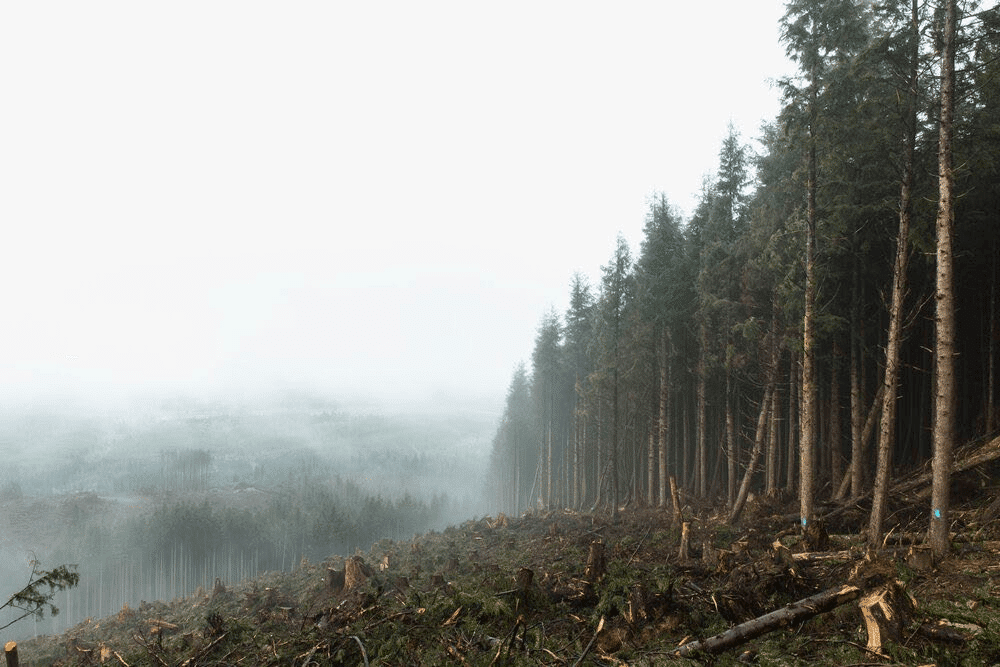La frontera entre las operaciones de tala y la reserva Ellsworth Creek, en Washington. Foto: [Chris Crisman](https://www.washingtonnature.org/fieldnotes/setting-path-natural-climate-solutions-in-washington).
## Estación 3: Simón de Cirene lleva la cruz de Jesús. Las comunidades de color soportan el peso de la eco-crucifixión.
Escritura: Mateo 27:32:
*Al salir, encontraron a un hombre de Cirene llamado Simón, y le obligaron a llevar la cruz.*
Los Evangelios de Mateo, Marcos y Lucas cuentan que los romanos obligaron a un hombre de la ciudad norteafricana de Cirene a llevar la cruz de Jesús en su camino al Gólgota. Es probable que Simón de Cirene no tuviera otra opción. Las fuerzas romanas lo reclutaron para que cargara con el peso de un condenado.
[El racismo medioambiental](https://www.climaterealityproject.org/blog/environmental-racism-what-it-and-how-you-can-fight-it) es la opresión sistémica de las personas de color a través de políticas y prácticas que sitúan la carga de los residuos y la contaminación muy cerca de las comunidades de color. Las industrias contaminantes tienen un historial de ubicar instalaciones como plantas de plásticos, refinerías de combustibles fósiles, incineradoras de basura y gasoductos de metano en lugares donde viven personas de color. Esto las expone a numerosos contaminantes nocivos que les causan problemas de salud y reducen su esperanza de vida. Las comunidades blancas y más ricas no se enfrentan a estos mismos problemas. Nuestros sistemas racistas han reclutado a los barrios negros, morenos, indígenas y empobrecidos para que carguen con el peso de nuestra sociedad basada en los combustibles fósiles.
### Oración por la justicia
*Jesús, nuestro hermano, bendice a quienes se están organizando para luchar contra las industrias tóxicas y los residuos que están dañando y matando a las personas de color. Dota a los activistas de educación, herramientas, valor y financiación para proteger a las comunidades vulnerables y desmantelar los sistemas racistas.*
*Jesús, en tu misericordia, escucha nuestra oración.*
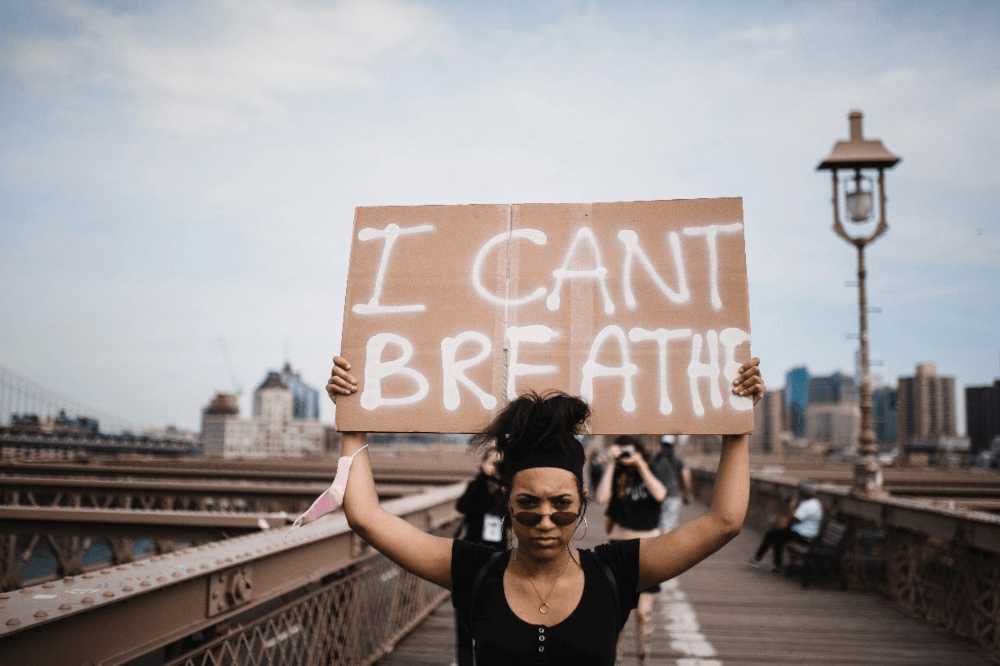No puedo respirar. Foto de Life Matters en [Pexels](https://www.pexels.com/photo/photo-of-woman%20carrying-a-cardboard-4613880/).
## Estación 4: Jesús se encuentra con las mujeres de Jerusalén. Las mujeres lloran por sus hijos en la era de la eco-crucifixión.
Escritura: Lucas 23:27-28
*27 Le seguía una gran multitud de gente, entre la cual había mujeres que se golpeaban el pecho y lloraban por él. 28 Pero Jesús se volvió hacia ellas y les dijo: «Hijas de Jerusalén, no lloréis por mí, sino llorad por vosotras mismas y por vuestros hijos».*
Al ver a su amado rabino caminando en la procesión hacia su muerte, las mujeres lloran por el dolor que saben que sufrirá. Lloran por la muerte que saben que se avecina. Sin embargo, Jesús señala que *las mujeres y los niños* son los que realmente sufrirán. Él sabe que cuando las fuerzas imperiales atacan a las comunidades vulnerables con violencia militar, las mujeres y los niños serán objeto de violencia, hambre, violaciones y asesinatos.
[Los niños, los adolescentes y los jóvenes adultos sienten profundamente el dolor de la ecoansiedad](https://www.bbc.com/future/article/20220315-how-eco-anxiety-affects-childrens-minds) y el ecoduelo. Aprenden sobre los efectos del cambio climático en la escuela, en artículos de Internet y en las conversaciones que escuchan entre los adultos. Y algunos de ellos experimentan directamente los efectos de la crisis climática. Pensemos en los niños del este de Kentucky que perdieron sus hogares, escuelas y familiares a causa de [las inundaciones](https://abcnews.com/US/26-dead-devastating-kentucky-flooding-expected-governor/story?id=87705278). Pensemos en los niños de los países devastados por la sequía en todo el mundo que abandonan sus hogares en busca de supervivencia y a menudo sufren violencia en el camino. Madres y padres, abuelas y abuelos, maestros, ministros y muchos otros adultos sufren dolor y culpa por el mundo dañado y deteriorado que están dejando a sus hijos.
### Oración por la visión
*Dios de la visión renovada, consuela a los jóvenes que sienten el estrés y el miedo por el cambio climático que se desarrolla a su alrededor. Rodéalos de adultos que les ayuden a procesar estos sentimientos y a organizarse en movimientos para un cambio positivo. Inspira tanto a los jóvenes como a los adultos a trabajar juntos para abogar por la desinversión en combustibles fósiles, los sistemas energéticos localizados y la protección de los niños que sufren la devastación climática y la migración.*
*Dios, en tu misericordia, escucha nuestra oración.*
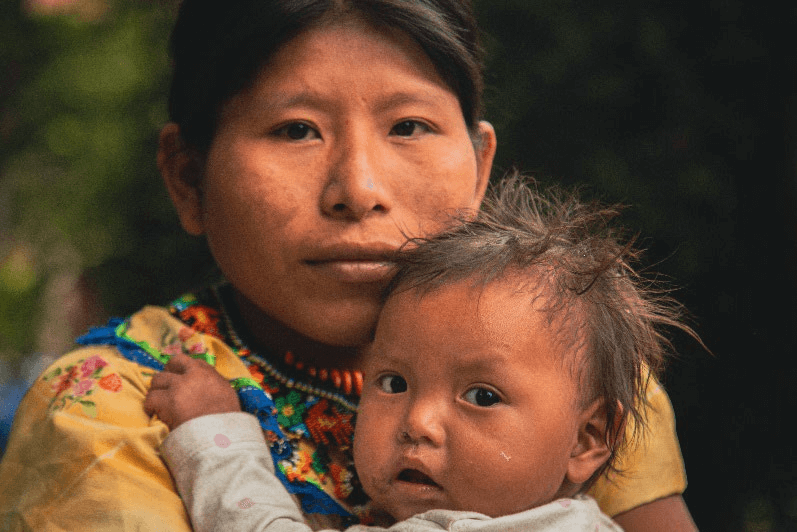Madre e hijo en Bogotá, Colombia. Foto de Luna Andrade Arango en [Pexels](https://www.pexels.com/photo/woman-with-little-baby-in-nature-13788603/).
## Estación 5: Despojan a Jesús de sus vestiduras. La contaminación global por plásticos despoja a la Tierra de su salud y belleza.
Escritura: Mateo 27:28-30
*28 Le despojaron de sus vestiduras y le pusieron un manto escarlata, 29 y después de trenzar una corona de espinas, se la pusieron en la cabeza. Le pusieron una caña en la mano derecha y, arrodillándose ante él, se burlaban de él diciendo: «¡Salve, rey de los judíos!». 30 Le escupían, le quitaban la caña y le golpeaban en la cabeza.*
Despojar a Jesús de sus ropas fue un acto de humillación. Los soldados le arrancaron las vestiduras para avergonzarlo, quitarle su dignidad y exponerlo a los elementos. Escupirle fue una forma de insulto. Lo contaminaron con su saliva y lo golpearon con la caña que habían usado para burlarse de él.
Según [Our World in Data](https://ourworldindata.org/faq-on-plastics#how-much-plastic-and-waste-do-we-produce), los seres humanos produjeron 2 millones de toneladas de plástico en 1950. Hoy, las Naciones Unidas estiman que, a nivel mundial, [se producen más de 400 millones de toneladas de plástico cada año](https://www.un.org/it/node/71013). La mitad es de un solo uso. Solo el 10 % se recicla. Los plásticos ensucian todas las partes de la Tierra, desde bolsas atrapadas en los árboles hasta enormes [acumulaciones de basura](https://theoceancleanup.com/great-pacific-garbage-patch/) en los océanos. Los cadáveres de animales marinos revelan el plástico que han consumido por error como alimento en sus estómagos. Y [los microplásticos](https://www.theguardian.com/environment/2022/mar/24/microplastics-found-in-human-blood-for-first-time) ahora contaminan la sangre de los peces, los animales y los seres humanos, causando cánceres y otras enfermedades. Nuestros residuos han despojado a la Tierra de su belleza, han insultado a Dios y a su creación, y han contaminado nuestros propios cuerpos.
### Oración por la purificación
Dios santo, te avergüenzas de lo que hemos hecho a tu creación y a nosotros mismos al ensuciar y contaminar este planeta de forma intencionada y sin pensar. Oblíganos a detener la producción de plásticos y a encontrar otras formas de fabricar productos que puedan producirse, utilizarse y reutilizarse de forma segura. Bendice los esfuerzos de todos aquellos que están limpiando la tierra y las vías fluviales de este pecado ecológico.
Dios, en tu misericordia, escucha nuestra oración.
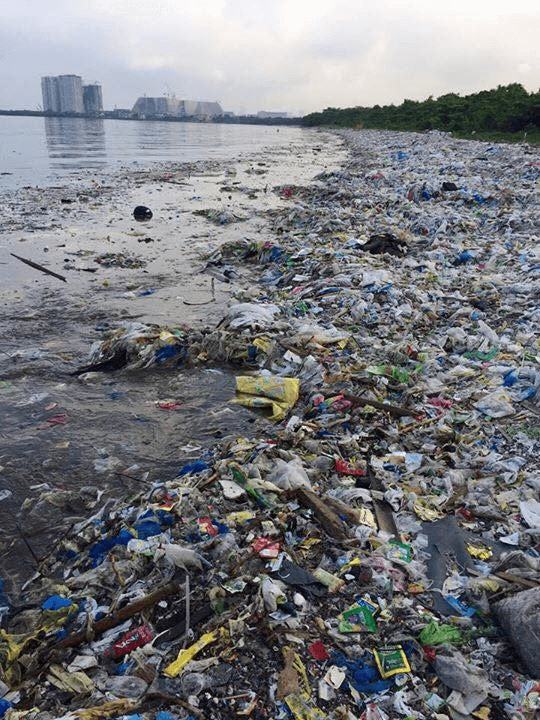Basura plástica en el océano. Foto de [Dianna Cohen](https://www.facebook.com/oceandefender/photos/a.330811539652/10154462558344653/) en Manila, Filipinas.
## Estación 6: Jesús muere en la cruz. 43 000 animales mueren por el descarrilamiento de un tren tóxico.
*Escritura: Mateo 27:35-36, 45-46*
*35 Y cuando lo crucificaron, se repartieron sus vestidos echando suertes; 36 y se sentaron allí y lo vigilaban. . . 45Desde el mediodía hasta las tres de la tarde, la oscuridad cubrió toda la tierra. 46Y alrededor de las tres, Jesús gritó con voz fuerte: «Eli, Eli, ¿lema sabactani?», es decir: «Dios mío, Dios mío, ¿por qué me has abandonado?».*
La muerte de Jesús fue el resultado de las decisiones tomadas por hombres poderosos que no toleraban ninguna perturbación de su economía de explotación. Los líderes religiosos y seculares construyeron un sistema en el que el trabajo, la tierra y los medios de vida de la gente común se utilizaban para enriquecer a la élite. Por el contrario, Jesús predicaba el «reino de Dios», una economía de reparto equitativo, justicia y compasión que privilegiaba a los más vulnerables. Su mensaje daba esperanza a un pueblo que vivía con miedo y amenazaba con socavar las estructuras de poder que disfrutaban de un control total. La crucifixión fue un acto político llevado a cabo con conveniencia y crueldad despiadada para aplastar un movimiento divino de transformación.
Hoy, mientras las guerras globales destruyen innumerables vidas, la Tierra parece clamar con Jesús: “Dios, ¿por qué me has abandonado?” Los ataques con misiles en zonas industriales, reservas de petróleo y refinerías liberan sustancias altamente tóxicas. Las minas, explosiones, derrames tóxicos y municiones destruyen tierras agrícolas, refugios de vida silvestre, vías fluviales y otras áreas naturales.
Carroll Muffett, del Centro para el [Derecho Ambiental Internacional](https://www.ciel.org/) (CEIL), explica: “Una de las cosas importantes para entender sobre las consecuencias ambientales de la guerra es que son consecuencias humanas en otra forma. A menudo son difíciles de discernir y pueden ser muy duraderas.” Así como los seres humanos sufren, también lo hace la Creación. Y el sufrimiento de la Creación eventualmente conduce a más sufrimiento humano que perdura por generaciones.
Para responder a las consecuencias ambientales de la guerra, consulte con la oficina de su denominación sobre los esfuerzos para contrarrestar el desastre humanitario y ambiental. Como las mujeres en la tumba, estamos llamados a atender a los muertos y a responder a los impactos de la guerra mucho después de que los misiles hayan cesado y las armas estén en silencio.
### Oración de lamentación
*Santo Jesús, tu vida importaba. Las vidas de aquellos a quienes ministraste importaban. Las vidas de nuestros hermanos terrestres importan. Escucha nuestras oraciones de lamento mientras observamos el continuo desarrollo de la crucifixión ecológica a nuestro alrededor. Recoge nuestras preocupaciones, miedos, lágrimas y enfado en ti mismo. Transfórmalos con tu poder vivificante en un movimiento de resistencia contra los poderes de la guerra y la explotación.*
*Jesús, en tu misericordia, escucha nuestra oración.*
La guerra devasta tanto a las comunidades humanas como al entorno que las sostiene. Foto de [Mohamed Mahmoud Hassan](https://www.publicdomainpictures.net/en/view%20%20image.php?image=240453&picture=war), dominio público CCO.
## Estación 7: Jesús es depositado en el sepulcro. La extinción de especies está provocando el colapso del ecosistema.
Escritura: Mateo 27:59-61
*59José tomó el cuerpo, lo envolvió en una sábana limpia 60y lo depositó en su propio sepulcro nuevo, que había excavado en la roca. Luego hizo rodar una gran piedra hasta la entrada del sepulcro y se marchó. 61María Magdalena y la otra María estaban allí, sentadas frente al sepulcro.*
Una vez que Jesús exhaló su último aliento, fue el fin de su vida terrenal. No había vuelta atrás tras el colapso de sus sistemas corporales privados de oxígeno una vez crucificado. La tumba albergaba su cuerpo sin vida mientras las mujeres observaban, lamentando la muerte de su rabino, su amigo.
Nuestro planeta se encuentra actualmente en medio de un [evento de extinción masiva](https://earth.org/sixth-mass-extinction-of-wildlife-accelerating/). Las especies se están extinguiendo más rápido que en cualquiera de las cinco extinciones masivas anteriores. A medida que los seres humanos arrasan los hábitats naturales para la minería, la agricultura y la vivienda, las especies vulnerables se ven amenazadas simultáneamente por el calentamiento global, que está ocurriendo demasiado rápido para que puedan adaptarse. A todo esto, se suman la contaminación, la caza y la pesca excesivas, que están diezmando las aves, los animales y la vida acuática hasta un punto crítico para este planeta. [Los científicos nos advierten](https://www.theguardian.com/environment/2023/feb/24/ecosystem-collapse-wildlife-losses-permian-triassic-mass-extinction-study): «Una crisis de biodiversidad puede ser el presagio de un colapso aún más devastador del ecosistema». Por lo tanto, los esfuerzos de conservación actuales deben centrarse no solo en [las especies en peligro de extinción](https://earth.org/endangered-species-day/), sino también en la preservación de sus hábitats, la reducción de las emisiones de combustibles fósiles, el cese del uso y la contaminación de los plásticos y la restauración de los terrenos naturales. Debemos evitar que este planeta se convierta en nada más que una tumba.
### Oración de duelo
*Dios, nuestro consolador, ven a nosotros en nuestro momento de dolor. Mientras lloramos la extinción de especies como el pájaro carpintero pico de marfil, el ojiblanco bridado, el murciélago frugívoro de las Marianas y el rinoceronte blanco del norte, muévenos a proteger aquellas especies que están amenazadas, como el leopardo del Amur, los orangutanes, los gorilas, los tigres, las marsopas, las tortugas y los elefantes. Llena nuestros corazones de compasión que abarca a nuestros semejantes y se extiende a nuestros parientes terrestres. Bendice a los científicos y activistas que trabajan para proteger la vida en esta preciosa y frágil Tierra.*
*Dios, en tu misericordia, escucha nuestra oración.*
Especies en peligro de extinción.
Regístrate para obtener recursos de EcoPreacher
**Bible References:** Deuteronomio, Deuteronomio 4:1, Deuteronomio 4:2, Deuteronomio 4:6, Deuteronomio 4:7, Deuteronomio 4:8, Deuteronomio 4:9, Juan, Juan 19:16, Juan 19:17, Lucas, Lucas 23:27, Mateo
**Languages:** es
---
### [Tomás Tocando las heridas de Cristo: Lecciones ecoespirituales](https://interfaithsustain.com/ecopreacher-resources/tomas-tocando-las-heridas-de-cristo-lecciones-ecoespirituales/)
**Published:** April 8, 2026
**Author:** Rev. Dr. Leah D. Schade
**Excerpt:** Tomás tocó las heridas del Cristo resucitado en medio de su crisis espiritual. Hoy, mientras soportamos una crisis ecoespiritual, tocar las heridas de nuestro planeta puede fomentar la compasión y la sanación.
**Content:**
**La reverenda Dra. Leah D. Schade**
Tomás tocó las heridas del Cristo resucitado en medio de su crisis espiritual. Hoy, mientras soportamos una crisis ecoespiritual, tocar las heridas de nuestro planeta puede fomentar la compasión y la sanación.
*Aquí hay algunas ideas para leer y predicar Juan 20:19-31 en el segundo domingo de Pascua, año A. Esta lectura se da durante el Mes de la Tierra, cuando muchas iglesias conectan la fe con la creación de Dios. Esto es parte de la serie [EcoPreacher 1-2-3](https://interfaithsustain.com/ecopreacher-123/) para equipar a los predicadores y congregaciones para abordar la Biblia a través de una lente ecológica.*
## Ecoexégesis
[*La ecoexégesis*](https://www.patheos.com/blogs/ecopreacher/2023/02/10-principles-for-environmental-preaching-eco-sermons/) *es un método de interpretación del texto bíblico a través de una lente ecológica utilizando los principios de la teología ecológica.*
*Juan 20:25 — Tomás dijo: «Si no veo la marca de los clavos en sus manos, y no meto mi dedo en la marca de los clavos y mi mano en su costado, no creeré».*
Tomás no había sido testigo de la resurrección de Jesús como sus compañeros. Por alguna razón, no estaba presente para ver al Cristo resucitado. Se encontraba sumido en una crisis espiritual provocada por el trauma y el dolor. Lo que *sí* presenció fue el asesinato de su maestro, sancionado por el Estado, a manos de líderes políticos impulsados por la arrogancia, el miedo y una sed insaciable de poder. Era natural que expresara sus dudas y su incredulidad. Tomás estaba devastado por el trauma y el dolor.
Cuando Jesús se le aparece a Tomás, lo invita a tocar sus heridas. Jesús lo anima a creer que el final de la historia aún no está escrito. La resurrección, con sus cicatrices y todo, engendra la esperanza de que es posible un futuro mejor. Promete que la vida puede surgir incluso de la muerte más horrible. Para Tomás, este es un momento de profunda compasión, conexión y sanación.
Cuando tocamos las heridas de nuestro planeta, es posible que nos encontremos experimentando una crisis ecoespiritual. Estas heridas son los cuerpos de aves asfixiadas con plásticos. Las montañas diezmadas por la minería exhiben cicatrices abiertas. Las bombas de guerra destrozan cuerpos y paisajes, y provocan que caiga lluvia negra del cielo.
Nos sentimos impotentes ante el reinado destructivo, aparentemente imparable, de líderes y sistemas impulsados por la arrogancia, el miedo y una sed insaciable de poder y riqueza. No es de extrañar que caigamos en la desesperación que nos impide ver la esperanza.
Por eso los predicadores deben dar a conocer historias de heridas medioambientales que se transforman gracias a una visión de integridad, sanación y esperanza. Necesitamos escuchar ejemplos inspiradores de justicia ecológica que nos recuerden que el final de la historia aún no está escrito. Un futuro mejor es posible. Y la vida puede surgir incluso de la muerte más horrible.
Los EcoAmerica Climate Leadership Awards son precisamente una recopilación de estas historias. Destacan ejemplos de organizaciones que están transformando el daño medioambiental en restauración y justicia.
Especialmente inspiradora es la lista de finalistas para los Premios Juveniles, como [**Black Girl Environmentalist**](https://blackgirlenvironmentalist.org/), que promueve la equidad en el liderazgo climático para que mujeres negras, niñas y personas de género expansivo puedan ingresar y prosperar en carreras ambientales.
Aquí está el enlace para obtener más información sobre los Premios CLA: <https://ecoamerica.org/american-climate-leadership-awards/>
Un sermón que relacione la crisis espiritual de Tomás con la crisis ecoespiritual de nuestro tiempo puede hacerse eco de la compasión, la conexión y la sanación que se reflejan en las palabras de Jesús. «La paz sea con vosotros. Pon aquí tu dedo y mira mis manos. Extiende tu mano y ponla en mi costado. No dudes, sino cree» (Juan 20:26b-27).
## Eco-Idea
*La idea ecológica es una declaración sucinta que nos dice quién es Dios y/o qué hace Dios en relación con la Creación y cómo debemos responder como personas de fe.*
Así como Jesús invitó a Tomás a tocar sus heridas y confiar en la promesa de una nueva vida, así también el Cristo resucitado viene a nosotros mientras tocamos las heridas de nuestro planeta para traer integridad, sanación y esperanza.
## **Eco-Preguntas**
*Las eco-preguntas son aquellas que podemos formular para ayudar a una congregación a extraer las implicaciones de la eco-exégesis y la eco-idea.*
1. ¿Qué dolor medioambiental te hace experimentar una crisis o un duelo ecoespiritual? ¿Es la pérdida de los espacios naturales que una vez amaste? ¿La extinción de especies? ¿Las catástrofes climáticas que están destruyendo comunidades? ¿Cómo procesan tu mente y tu cuerpo este duelo?
2. Durante este Mes de la Tierra, ¿de qué maneras puedes apoyar a las personas que están tocando las heridas de nuestro planeta para traer sanación y restauración? ¿Puedes tú o tu iglesia apoyar a organizaciones que protegen las tierras naturales? ¿Puedes unirte a un grupo ambientalista local que lucha contra las industrias destructivas? ¿Cuáles son las heridas que requieren tu atención?
## **Eco-Acciones**
*Las acciones ecológicas son formas en que una congregación puede responder a las ideas y preguntas ecológicas. Una de estas posibilidades puede ser relevante para el contexto de tu ministerio.*
1. Reúna a un grupo de jóvenes y adultos para ver el vídeo de los Premios Americanos al Liderazgo Climático. Regístrese aquí:[ https://us06web.zoom.us/meeting/register/RkoWDnUAQ0yDtnh9jGswZA#/registration.](https://us06web.zoom.us/meeting/register/RkoWDnUAQ0yDtnh9jGswZA#/registration) Tenga en cuenta que uno de los finalistas es un grupo religioso: [Lutherans Restoring Creation](https://lutheransrestoringcreation.org/). Discuta cómo sus esfuerzos pueden inspirar a su propia congregación.
2. Planifique un día de limpieza ambiental en su comunidad. Identifique un lugar que sufra de basura y desechos, como una playa, la ribera de un río, un terreno urbano o un parque de la ciudad. Invite a otras congregaciones a unirse a usted para tocar las heridas de este lugar y transformarlo en una visión de esperanza de lo que es posible.
3. Planifique un servicio conmemorativo del Día de la Tierra para recordar las formas en que nuestro planeta ha sido herido. Recuerde las especies que se han extinguido en el último año, las comunidades que han sido devastadas por catástrofes climáticas y las áreas naturales que han sufrido conflictos militares, sequías, incendios forestales o inundaciones. Haga espacio para el duelo ambiental a través de un ritual de lamento litúrgico.
\**Featured image [source](https://unsplash.com/@wimvanteinde)*
Regístrate para obtener recursos de EcoPreacher
**Bible References:** Juan 20:25, Juan 20:26, Juan 20:27
**Languages:** es
---
### [Thomas Touching Christ’s Wounds: Eco-Spiritual Lessons](https://interfaithsustain.com/ecopreacher-resources/thomas-touching-christs-wounds-eco-spiritual-lessons/)
**Published:** April 8, 2026
**Author:** Rev. Dr. Leah D. Schade
**Excerpt:** Thomas touched the wounds of the resurrected Christ amid his spiritual crisis. Today as we endure an eco-spiritual crisis, touching the wounds of our planet can foster compassion and healing.
**Content:**
**The Rev. Dr. Leah D. Schade** (To view this resource in Spanish, [click here](https://interfaithsustain.com/ecopreacher-resources/tomas-tocando-las-heridas-de-cristo-lecciones-ecoespirituales/).)
Thomas touched the wounds of the resurrected Christ amid his spiritual crisis. Today as we endure an eco-spiritual crisis, touching the wounds of our planet can foster compassion and healing.
*Here are ideas for reading and preaching John 20:19-31 on the Second Sunday of Easter, Year A. This reading comes during Earth Month when many churches connect faith with God’s Creation. This is part of the [EcoPreacher 1-2-3](https://interfaithsustain.com/ecopreacher-123/) series to equip preachers and congregations for engaging the Bible through an ecological lens.*
## Eco-Exegesis
[*Eco-exegesis*](https://www.patheos.com/blogs/ecopreacher/2023/02/10-principles-for-environmental-preaching-eco-sermons/) *is a method of interpreting the biblical text through a green lens using the principles of ecological theology.*
*John 20:25 — Thomas said: “Unless I see the mark of the nails in his hands, and put my finger in the mark of the nails and my hand in his side, I will not believe.”*
Thomas had not witnessed Jesus’s resurrection appearance as his colleagues had. For whatever reason, he was not present to see the risen Christ. He was caught in a spiritual crisis borne of trauma and grief. What he *did* witness was the state-sanctioned murder of his teacher by political leaders driven by arrogance, fear, and an unquenchable thirst for power. It was natural for him to express doubt and disbelief. Thomas was reeling from trauma and grief.
When Jesus does appear to Thomas, he invites him to touch his wounds. Jesus encourages him to believe that the end of the story is not yet written. The resurrection – scars and all – engenders hope that a better future is possible. It promises that life can arise even out of the most horrific death. For Thomas, this is a moment of deep compassion, connection, and healing.
When we touch the wounds of our planet, we might find ourselves experiencing an *eco*-spiritual crisis. These wounds are the bodies of birds choked with plastics. Mountains decimated by mining exhibit gaping scars. War bombs rip apart bodies, landscapes, and cause black rain to fall from the sky.
We feel powerless against the seemingly unstoppable destructive reign of leaders and systems driven by arrogance, fear, and an unquenchable thirst for power and wealth. It is no wonder when we fall into despair that blocks the sight of hope.
This is why preachers need to lift up stories of environmental woundedness being transformed by a vision for wholeness, healing, and hope. We need to hear about inspiring examples of ecological justice that remind us: the end of the story is not yet written. A better future is possible. And life can arise even out of the most horrific death.
The ecoAmerica Climate Leadership Awards is just such a collection of these stories. They highlight examples of organizations that are transforming environmental woundedness into restoration and justice. Especially inspiring is the list of finalists for the Youth Awards, such as [**Black Girl Environmentalist**](https://blackgirlenvironmentalist.org/) which advances climate leadership equity for Black women, girls, and gender-expansive people to enter and thrive in environmental careers. Here is the link to learn more about the CLA Awards: <https://ecoamerica.org/american-climate-leadership-awards/>
A sermon connecting Thomas’s spiritual crisis with the eco-spiritual crisis of our time can echo the compassion, connection, and healing in Jesus’s words. “Peace be with you. Put your finger here and see my hands. Reach out your hand and put it in my side. Do not doubt but believe” (John 20:26b-27).
## Eco-Idea
*The Eco-Idea is one succinct statement that tells us who God is and/or what God does in relation to Creation and how we should respond as people of faith.*
Just as Jesus invited Thomas to touch his wounds and trust in the promise of new life, so does the risen Christ come to us as we are touching the wounds of our planet to bring wholeness, healing, and hope.
## Eco-Questions
*Eco-Questions are what we can ask to help a congregation draw out the implications of the Eco-Exegesis and Eco-Idea.*
1. What environmental pain causes you to experience an eco-spiritual crisis or grief? Is it the loss of natural areas you once loved? The extinction of species? The climate-charged weather catastrophes that are destroying communities? How does your mind and body process this grief?
2. During this Earth Month, what are ways that you can support the people who are touching the wounds of our planet in order to bring healing and restoration? Can you or your church support organizations that are protecting natural lands? Can you join a local environmental group that is fighting against destructive industries? What are the wounds that are calling for your attention?
## Eco-Actions
*Eco-Actions are ways that a congregation might respond to the Eco-Idea and Eco-Questions. One of these possibilities may have salience for your ministry context.*
1. Gather a group of youth and adults to watch the video of the American Climate Leadership Awards. Register here: <https://us06web.zoom.us/meeting/register/RkoWDnUAQ0yDtnh9jGswZA#/registration> Note that one of the finalists is a faith group – [Lutherans Restoring Creation](https://lutheransrestoringcreation.org/). Discuss how their efforts can inspire your own congregation.
2. Plan an environmental clean-up day in your community. Identify a place that suffers from litter and trash, such as a beach, riverbank, urban lot, or city park. Invite other congregations to join you in touching the wounds of this place and transforming it into a vision of hope for what is possible.
3. Plan an Earth Day Memorial Service to remember the ways our planet has been wounded. Remember species that have gone extinct in the last year, the communities that have been ravaged by climate catastrophes, and the natural areas that have suffered from military conflict, drought, wildfires, or flooding. Make space for environmental grief through a ritual of liturgical lament.
Just as Jesus invited Thomas to touch his wounds and trust in the promise of new life, so does the risen Christ come to us as we are touching the wounds of our planet to bring wholeness, healing, and hope. Ideas for teaching and preaching on John 20:19-31. <https://www.patheos.com/blogs/ecopreacher/2026/04/thomas-touching-christs-wounds-eco-spiritual-lessons/>
Sign Up For EcoPreacher Resources
*\*Featured image [source](https://unsplash.com/@wimvanteinde)*
Sign Up For EcoPreacher Resources
**Bible References:** John 20:25, John 20:26, John 20:27
**Languages:** en
---
### [Acts 17 and John 14 - Nature Reveals the “Unknown God”](https://interfaithsustain.com/ecopreacher-resources/acts-17-john-14-nature-reveals-unknown-god/)
**Published:** April 28, 2026
**Author:** Rev. Dr. Leah D. Schade
**Excerpt:** In Acts 17:22-31, Paul says the "unknown god" created everything. When we immerse ourselves in God’s Creation, we can know God in astounding ways.
**Content:**
**The Rev. Dr. Leah D. Schade** (To view this resource in Spanish, [click here](https://interfaithsustain.com/ecopreacher-resources/hechos-17-y-juan-14-la-naturaleza-apunta-al-dios-desconocido/).)
In Acts 17:22-31, Paul says the “unknown god” created everything. When we immerse ourselves in God’s Creation, we can know God in astounding ways.
*Here are ideas for reading and preaching* [Acts 17:22-31](https://www.biblegateway.com/passage/?search=Acts%2017%3A22-31&version=NRSVUE)*, the story of Paul preaching at the Areopagus, and* [John 14:15-21](https://www.biblegateway.com/passage/?search=John%2014%3A15-21&version=NRSVUE)*, Jesus’s instruction to love and follow his commandments. This is part of the* [EcoPreacher 1-2-3](https://interfaithsustain.com/ecopreacher-123/) *series to equip preachers and congregations for engaging the Bible through an ecological lens. These texts are assigned as part of the Revised Common Lectionary for the Sixth Sunday of Easter, Year A.*
## Eco-Exegesis
Eco-exegesis is a method of [*interpreting the biblical text through a green lens*](https://www.patheos.com/blogs/ecopreacher/2023/02/10-principles-for-environmental-preaching-eco-sermons/) using the principles of ecological theology.
*Acts 17:24-25*
*24The God who made the world and everything in it, he who is Lord of heaven and earth, does not live in shrines made by human hands, 25nor is he served by human hands, as though he needed anything, since he himself gives to all mortals life and breath and all things.”*
Acts 17:22-31 shows Paul engaging with Greek scholars, poets, politicians, and philosophers in the public gathering place of the Areopagus to proclaim an important truth about God. There in Athens, surrounded by shrines, altars, and hand-crafted sculptures of deities, Paul challenged the idolatry he witnessed. It seemed that every aspect of life had its own god or goddess that required homage. And payment! The money given in homage to these gods benefited the makers and keepers of those idols as well as the leadership of the Roman Empire.
Interestingly, they had an altar to a nameless god. To their credit, they recognized the mystery of whatever unknown deity might be out there. But Paul pointed out that the god whom they called “unknown” was, in fact, fully knowable. The way to know God is through the heavens and earth that God has created. God reveals Godself through the very breath of life.
This passage in Acts can connect our faith with God’s Creation. One way is by heeding its warning not to be fooled by those who construct systems that misdirect our worship away from God. Granted, the places where we gather to worship are important and necessary. However, they are not a substitute for encountering the Creator through nature and the cosmos. We need only step outside to witness the grandeur of God’s Creation. But when we do that, we will also need to confront the ways we have desecrated it through our idolatry of wealth, relentless acquisition, and self-serving individualism. By respecting “the world and everything in it,” we are returning our focus to our Creator God.
*John 14:15-16*
*15“If you love me, you will keep my commandments. 16And I will ask the Father, and he will give you another Advocate, to be with you forever.”*
When Jesus used the word “love” in this farewell speech to his disciples, he was talking about a specific kind of love. It wasn’t romantic or the type of love between friends or family. In Greek, the word is *agape*; it means to love in a moral or ethical sense. Agape love is unconditional, sacrificial, and selfless. Jesus emphasizes that following the commandments to love God and love neighbor are the way to love him. This kind of love requires us to seek the good of the community and the flourishing of everyone instead of focusing only on our selfish desires.
Today, our planet and human communities continue to suffer from pollution, climate change, and violence toward Earth and each other. When we practice *agape* love, however, we can redirect our energy toward cleaning up, restoring, and healing Earth and our communities. Agape love compels us to protect fragile ecosystems to ensure life on this planet can continue. This love will sacrifice short-term profit in order to ensure long-term survival of our species. And this love reveals that our lives are inextricably bound together with our Earth kin.
Fortunately, Jesus promised that this seemingly impossible call to selfless love comes with the divine presence that makes flourishing possible. In Greek, the word for this presence is *paraclete*, meaning “comforter” or “advocate.” The Paraclete is another way to understand the Spirit named in verse 17. We can trust that the Spirit accompanies us as we come alongside others in our climate and environmental advocacy. The Paraclete abides with us as we seek healing, restoration, and reparations.
## Eco-Idea
*The Eco-Idea is one succinct statement that tells us who God is and/or what God does in relation to Creation and how we should respond as people of faith.*
Knowing and loving God includes caring for God’s Creation and inspires us to protect this fragile yet magnificent planet.
## Eco-Questions
*Eco-Questions are what we can ask to help a congregation draw out the implications of the Eco-Exegesis and Eco-Idea.*
1. Where do you experience the presence of God in Creation? Invite the congregation to think about a place where they felt a connection between nature and the Divine. How did that place convey a sense of wonder, awe, majesty, simplicity, complexity? In what way does that place help them feel at home in the world? What would they do to protect the sacredness of that place?
2. What does *agape* love look like in our relationships with our Earth kin? Can we pay closer attention with our eyes, ears, taste buds, hands, and hearts? Can we protect fragile ecosystems as they are supporting life on this planet? Does it look like introducing a child to the natural world and cultivating respect for the processes of life?
## Eco-Actions
*Eco-Actions are ways that a congregation might respond to the Eco-Idea and Eco-Questions. One of these possibilities may have salience for your ministry context.*
1. Preach and share stories of faith leaders who engage in the public square to advocate for protecting Earth, communities, and human health. The book [*Rooted and Rising: Voices of Courage in a Time of Climate Crisis*](https://www.bloomsbury.com/us/rooted-and-rising-9781538127766/)*,* edited by Leah D. Schade and Margaret Bullitt-Jonas, has 21 chapters by spiritual leaders doing this work. Check out the chapters by Rabbi Mordechai Leibling, Green Muslims founder Huda Alkaff, Quaker activist Jay O’Hara, public health advocate Natasha DeJarnett, and youth climate activist Kiran Oommen for examples of faith in action.
2. Plan an ecumenical or interfaith book study with the edited volume, [*All We Can Save: Truth, Courage, and Solutions for the Climate Crisis*](https://www.amazon.com/All-We-Can-Save-Solutions/dp/0593237080/)*,* edited by Ayana Elizabeth Johnson and Katharine K. Wilkinson. The 58 short essays are divided into eight sections with themes such as “advocate,” “persist,” “feel,” “nourish,” and “rise.” At the end of the study, plan one action your group can do together to live out your faith in the midst of God’s Creation.
3. Order [Bible Eco Infographics](https://interfaithsustain.com/bible-eco-infographics/) to display in your church. The Interfaith Center for Sustainable Development (ICSD) has developed seven attractive infographics on the Bible and ecology. The infographics help viewers visually understand Bible-ecological concepts in relation to biodiversity, animal welfare, food, and trees. The infographics are available for purchase as large ecologically-printed posters. As environmental concern increases within faith communities around the world, these Bible eco-infographics offer an innovative channel to convey biblical ecological teachings. To order the infographics click [here](https://interfaithsustain.com/contact/).
*\* Featured image [source](https://unsplash.com/@claudiotesta)*
Sign Up For EcoPreacher Resources
**Bible References:** Acts 17, John 14
**Languages:** en
---
### [Eco-Wedding Liturgy: Ideas for a Creation-Centered Wedding Ceremony](https://interfaithsustain.com/ecopreacher-resources/eco-wedding-liturgy/)
**Published:** May 19, 2026
**Author:** Rev. Dr. Leah D. Schade
**Excerpt:** For couples wanting to have a “green wedding,” there are many websites that provide ideas about how to reduce their carbon footprint and lessen their impact on Earth’s resources. (See the end of this article for links.) But resources specifically for a Creation-centered liturgy are difficult to find. So, my former student, Rev. Melissa Frantz, and I have put together this eco-wedding liturgy.
**Content:**
**The Rev. Dr. Leah D. Schade (<lschade@lextheo.edu>) with the assistance of The Rev. Melissa Frantz, Associate Pastor of Daytona Beach Drive-in Christian Church.** (To view this resource in Spanish, [click here](https://interfaithsustain.com/ecopreacher-resources/liturgia-de-boda-ecologica/).)
For couples wanting to have a “green wedding,” there are many websites that provide ideas about how to reduce their carbon footprint and lessen their impact on Earth’s resources. But resources for a Creation-centered liturgy are difficult to find. So, with the help of Rev. Melissa Frantz, we have put together this eco-wedding liturgy. Rev. Frantz is an alumna of Lexington Theological Seminary where I teach worship and preaching. She first approached me with the need for an Earth-centered ceremony for a couple she was marrying.
We offer several options for the Words of Welcome, Opening Prayer, Scripture Passages, Declaration of Intent, Wedding Vows, Exchange of Rings, and Final Blessing. You are free to adapt these as you see fit. You’ll also find a tree-blessing ceremony for couples who want to commemorate their wedding by planting a tree. At the end of this piece is a brief list of other ideas for Earth-friendly wedding.
## WORDS OF WELCOME
*(These options are written with an outdoor wedding in mind, but they can be adapted for a different location.)*
### Option 1:
We have gathered here in the beauty of Creation and in the presence of God to give thanks for the Earth, to celebrate the gift of marriage, and to witness the joining together of \[Name\] & \[Name\]. Just as our first ancestors found love in a garden, so this couple has received the gift of a loving relationship within God’s Creation. We surround them with our prayers and ask God’s blessing upon them. We pray that they may be strengthened in their life together and nurtured in their love for one another and for God’s Creation.
### Option 2:
Siblings in Christ, today we gather in the beauty of God’s Creation to celebrate with \[Name\] & \[Name\] as they commit themselves to each other, to their vocation as caretakers of this Earth, and to their faith in God. As Jesus took the simple gift of water and created the sweetest wine for the wedding at Cana, we rejoice that the love of two people can be transformed into a covenant of grace, mercy, and service that blesses their family, friends, and God’s Creation.
## LAND ACKNOWLEDGEMENT
*(Consider offering a land acknowledgement of the ancestral lands of Indigenous peoples where the wedding will be held. A land acknowledgement recognizes, respects, and affirms the ongoing relationship between Indigenous people and the land. Land acknowledgements also raise awareness about the Indigenous histories, perspectives, and experiences that are often suppressed or forgotten. However, this should not be just a token gesture. It should be a meaningful acknowledgement of the couple’s willingness to repair the wrongdoings of the past. For guidance on how to create a land acknowledgement, visit: [https://www.randstad.ca/employers/workplace-insights/corporate-culture/how-to-create-a-land-acknowledgement/](https://www.randstad.ca/employers/workplace-insights/corporate-culture/how-to-create-a-land-acknowledgement/.).)*
## BLESSING OF THE FOUR DIRECTIONS
(*By Jay Rochelle, 1990, Web of Creation:* [*http://www.webofcreation.org/Worship/liturgy/litany.htm*](http://www.webofcreation.org/Worship/liturgy/litany.htm))
Let us give thanks for the East: for the ancient hills and valleys and streams without end, for the green Atlantic from the beaches of Maine to the Florida Keys, for larch and hemlock, for black bear and mountain trout, for cardinals and eastern bluebirds, for heat in the hayfields of late August.
Response: **We bless you, O God, for the East**.
Let us give thanks for the West: for soaring mountains and searing deserts, for waters roaring into the Pacific Ocean, for Columbia River salmon, snow buntings and western meadowlarks, for ponderosa and Jeffrey pine, for the mists of the Oregon coast and for the Olympic peninsula.
Response: **We bless you, O God, for the West**.
Let us give thanks for the North, for the bright band of prairie and wheatfields stretching across the land, for the jayhawk and the loon, for the badlands of the Dakotas and the lakes of Minnesota, for northern pike and steeleye, for winding two-lane blacktops in the heart of Wyoming.
Response: **We bless you, O God, for the North**.
Let us give thanks for the South, for the broad Mississippi delta and the great Smokey Mountains, for the bayous of Louisiana, for magnolia trees, for the kiskadee and egret, for catfish and parrotfish, and for the cotton and the colors on the sands and strands of the southland.
Response: **We bless you, O God, for the South**.
## OPENING PRAYER
### Option 1:
Creator God, today we acknowledge you as the Source of all good things and to celebrate the love of two people who have found joy and meaning together on this Earth you have created. As \[Name\] and \[Name\] covenant together before you, their family and friends, and all Creation, we ask that you bless them with faith that reflects your love. In the name of Jesus, the Gardener, amen.
### Option 2:
Creating God, your steadfast love endures forever. On this day when we rejoice in the gift of love, we are reminded of the way you have loved us through the gifts of this Earth. With \[Name\] & \[Name\], we give thanks to you who nurtures and sustains us with such wonders: the sheltering sky, the generous land, the warming sun that feeds the plants, the plants that exhale oxygen for us, the water that cleanses, nourishes, and refreshes us. Holy God, we praise you; your steadfast love endures forever. Look with favor upon \[Name\] & \[Name\] who have come seeking your blessings. Let your Holy Spirit guide them so that with steadfast love they may honor the promises they make this day. Amen.
## SUGGESTED SCRIPTURE PASSAGES FOR SITUATING THE WEDDING WITHIN GOD’S CREATION
Genesis 1:26-31 (God created humankind in God’s image.)
Genesis 2:15-24 (God placed humankind in the garden to till and keep and created humans to be in relationship with each other.)
Psalm 8 (“O Lord, how majestic is your name in all the earth.”)
Psalm 65 (God blesses humankind and all the earth.)
Psalm 121 (“My help comes from the Lord who made heaven and earth.”)
Romans 8:18-2 (Creation waits with eager longing for the revealing of the Children of God.)
Colossians 1:15 – 20 (In Christ, all things in heaven and earth were created.)
Matthew 6:25-34 (Jesus pointed to the birds of the air and the flowers of the field to teach us faith and trust in God’s abundance.)
Matthew 13:1-9 (The seed that falls on good soil yields an abundance.)
## DECLARATION OF INTENT THAT INCORPORATES GOD’S CREATION
### Option 1:
\[Name\] & \[Name\], you have heard the word of God that spoke Creation into existence and gave each of you the breath of life. Your faith has been nurtured by your families and the church that has accompanied you along your journey. And you have felt the guidance of the Holy Spirit leading you into your individual callings to care for the Earth and support your community. Now you have found each other and are joining your two paths into one. I ask you now, before God, in the presence of this beloved community and all of Creation that bears witness, to declare your intention to enter the union of marriage with one another.
\[Name\], do you intend to enter into this sacred marriage with \[Name\]? Do you promise to be a faithful companion, a co-laborer in the Garden of this Earth, a support in times of sickness and in health, and a devoted spouse in all circumstances of your life together for as long as you both shall live? **I do.**
### Option 2:
We were created to be in relationship with each other, with the whole Creation, and with God. The gift of marriage is the foundation of human community in a joy that begins now and is brought to perfection in the life to come. There are times when sin and selfishness can test those relationships and threaten the bonds between us. But God covenants with us and all the Earth to protect and preserve life, so we are invited into those promises to sustain us in difficult times and restore our joy. \[Name\] & \[Name\], if it is your intention to share with each other your joys and sorrows, your shared love of Creation, and all that the years will bring, with your promises bind yourselves to each other in this sacred covenant.
\[Name\], do you promise to take \[Name\] as your wife/husband/spouse, trusting in our God to sustain your relationship, the good Earth to nurture your bodies and spirits, and the Spirit of Christ to guide your lives together? And do you promise to be faithful, devoted, forgiving, and loving in your marriage no matter what the years will bring until your life comes to an end? **I do.**
## “GREEN” WEDDING VOWS
### Option 1:
\[Name\], I take you to be my husband/wife/spouse from this time onward. I promise to join with you in our work of caring for Creation, and to share all that is to come. I promise to give and to receive, to speak and to listen, to inspire and respond. In all circumstances of our life together, in sickness and in health, I promise to be faithful to you and to the covenant God has made with us and all the Earth with my whole life and all my being until death parts us.
### Option 2:
I take you, \[Name\], to be my wife/husband/spouse, and these things I promise you: I will be faithful to you and honest with you. I will respect, trust, help, and care for you. I will share my life with you. I will forgive you as we have been forgiven. And I will work alongside you to care for God’s Creation. All of this I promise, through the best and worst of what is to come, until death parts us.
### Option 3:
I \[Name\] take you \[Name\], to be my \[wife/husband/spouse\]. For better or worse, richer or poorer, in sickness and in health, joy and in sorrow, I promise to love and cherish you and to be faithful to you. I covenant with you to tend, protect, nurture, and defend God’s Creation as it has been entrusted to us. This is my promise, a commitment made in love, kept in faith, and lived in hope, until death parts us.
### Option 4:
I take you, \[Name\], to be my \[wife/husband/spouse\]. Before God and these witnesses, I promise to be faithful, honest, and loyal to you. I covenant with you to tend, nurture, protect, and defend God’s Creation. I promise to share all the joy and sorrow, all the good and bad, in sickness and health, and to forgive you and lift you up until my last breath is gone and I return to the Earth and our Creator God.
## BLESSING AND EXCHANGE OF RINGS
### Option 1:
Holy God, the circle of these rings reminds us of the never-ending cycle of care and reciprocity between you, the Earth you have created, and the whole human family. By your blessings, O God, may these rings be to \[Name\] & \[Name\] symbols of unending love and faithfulness, reminding them of the covenant they have made this day, through Jesus Christ our Lord, Amen.
*\[Name\], with this ring I pledge myself to you as a symbol of my love, my commitment, and my faith in God and all that God has made, in the name of the Father, and of the Son, and of the Holy Spirit. Amen.*
### Option 2:
God of Creation, as your love encircled the Earth at the beginning of Creation and continues to sustain us with your care, bless these rings that symbolize the love of \[Name\] & \[Name\]. May these rings remind them of their vows to join together in the unending cycle of life, love, and faith in you. Amen.
*\[Name\], I give you this ring as a sign of my love, my commitment to you and all God’s Creation, and my faith sustained by God’s eternal care, in the name of the Father, and of the Son, and of the Holy Spirit. Amen.*
## MARRIAGE ANNOUNCEMENT AND BLESSING
### Option 1:
You have made your solemn vows to each other before God, these witnesses, and all of Creation today. You have confirmed your promises by the joining of hands and by the giving and receiving of rings. It is my joy to declare that \[Name\] & \[Name\] are joined in marriage! May our Creator God bless you and keep you. May Jesus Christ guide you and be gracious with you. May the Spirit look upon you with favor and give you peace. Amen!
### Option 2:
\[Name\] & \[Name\], in the presence of your friends and family, with all of Creation bearing witness, and with the blessings of our loving God, you have covenanted with each other in marriage today. With your promises and with these rings you have made this commitment in love, trust, and joy. And now it is my privilege to pronounce you married in the name of our Creator God, our Loving Savior, and our Guiding Spirit. Amen!
## BLESSING FOR TREE PLANTING TO CELEBRATE THE MARRIAGE
*(One way to symbolize the couple’s marriage is to plant a native tree that will grow just as their relationship grows.)*
**Introduction**: Because caring for the Earth is important to \[Name\] and \[Name\], one of the first acts that they will do as a married couple will be to plant a \[name of species\] tree after the ceremony.
**Prayer**: God of heaven and earth, the work of your hands is made known in your bountiful Creation and in the lives of those who faithfully live their lives in your grace. Today as we celebrate the marriage of \[Name and Name\], we trust your promise of everlasting life and love to sustain them the way the soil, water, sun, and air will sustain this tree. Be present with us this day as we commemorate their marriage through the planting of this tree. May this sibling of our Earth-kin witness to the power of your love in our midst, deeply rooted and ever growing in your good Creation, through Jesus Christ. Amen.
**Reading:** Psalm 1
**Blessing of the Tree**: Creator of life and Sustainer of seed and soil, of tree and flower, you have created this world and all that lives in it. As \[Name and Name\] plant this tree as a symbol of their commitment to each other, to you, and to your Creation, we ask you to bless this tree as it both receives and gives life. May this tree’s roots reach deep into the earth and its limbs grow stronger each year as a sign of your strengthening bond in their marriage together. In the name of our Lord Jesus Christ, the Gardener who prayed among the olive trees. Amen.
## OTHER IDEAS FOR AN EARTH-FRIENDLY WEDDING
**Re-use a wedding dress.** Using a family member’s dress or one that has been previously used not only saves costs but also reduces your impact on Earth’s resources.
**Avoid single-use bridesmaids dresses.** Instead of insisting that all the bridesmaids wear the same expensive dress (that they will probably only wear for this one occasion), they can wear a dress they already own. They can choose different styles within a color scheme, or each person can wear a different color reflecting a rainbow of diversity.
**Choose wedding rings made of recycled materials.** According to [*Eco Bible*](https://interfaithsustain.com/ecobible/), **“**Behind many gold rings are mountains of toxic waste and trails of destruction,” that includes poisonous chemicals, releases harmful elements, and consumes massive amounts of water (155). To avoid harming fish, vegetation, soil, and the thousands of people harmed by mining for gold, choose rings that are passed down from family members, or purchase rings from one of the many emerging jewelry recycling companies. See “25 EcoJewelry Brands Making Stunning Pieces out of Up-Cycled and Fair-Mined Metals,” Conscious Collective, Green Dreamer, <https://consciousfashion.co/guides/eco-jewelry-brands>.
**Use recycled or eco-friendly products for decorations, bulletins, place settings, etc.** A simple Google search will turn up numerous websites for buying and selling used and recycled items for weddings. Some include <https://www.theknot.com/content/used-wedding-decor>, <https://ecopartytime.com/eco-wedding/>, and <https://savvyswarey.com/wedding-resale-websites-guide/>.
**Use local flowers.** Shipping exotic flowers across the U.S. is costly both for the couple and for the Earth. Seek out a local florist to provide simple arrangements using native plants. For the wedding party, consider carrying a single rose and baby’s breath.
**Serve a meal with organic and local foods, vegetarian options, and rented serving-ware.** Utilizing a local caterer who specializes in serving organic and local foods supports local businesses and the farming community. Offering plenty of hearty vegetarian options gives people choices for the meal that use less resources than meat options. Renting serving-ware and silverware instead of using single-use plastics lessens impacts on landfills and reduces plastic waste.
**Consider a local honeymoon.** To reduce your carbon footprint, choose to honeymoon locally instead of flying or driving long distances. Find a bed & breakfast and take day trips to historic sites, spend time in nature, and visit local restaurants.
More websites for having an Eco-friendly wedding:**
- <https://www.brides.com/story/earth-day-eco-friendly-wedding-ideas>
- [https://weddings.thefuntimesguide.com/used\_wedding\_stuff/](https://weddings.thefuntimesguide.com/used_wedding_stuff/)
- <https://www.brides.com/story/plastic-free-wedding>
- <https://thebudgetsavvybride.com/eco-friendly-wedding-ideas/>
Sign Up For EcoPreacher Resources
*\* Featured image* [*source*](https://unsplash.com/photos/M2T1j-6Fn8w)
**Bible References:** Psalm 1
**Languages:** en
---
### [Pentecost and The Divine Purpose of Diversity: Genesis 11:1-9 and Acts 2:2-21](https://interfaithsustain.com/ecopreacher-resources/pentecost-and-the-divine-purpose-of-diversity/)
**Published:** June 3, 2022
**Author:** Rev. Dr. Leah D. Schade
**Excerpt:** Make Babel great again? Hardly. There’s a reason why that monocultural empire failed. It’s because God desires diversity for both the human and Earth community!
**Content:**
**The Rev. Dr. Leah D. Schade; leahschade@gmail.com**
*Here are ideas for reading and preaching Genesis 11:1-9 and Acts 2:1-21 through a “green” lens on Pentecost Sunday. This is part of the [EcoPreacher 1-2-3](https://interfaithsustain.com/ecopreacher-123/) series to equip pastors and congregations for engaging the Bible and God’s Creation.*
Make Babel great again? Hardly. There’s a reason why that monocultural empire failed. It’s because God desires diversity for both the human and Earth community!
## **Eco-Exegesis**
*Eco-exegesis is a method of interpreting the biblical text through a green lens using the principles of ecological theology. For this passage, we turn to the* [Eco Bible,](https://www.patheos.com/blogs/ecopreacher/2021/04/eco-bible-must-have-jewish-ecological-commentary-genesis-exodus/) *a Jewish ecological commentary on the Hebrew texts.*
*Genesis 11:9 — “The Lord confused the language of all the earth; and from there the Lord scattered them abroad over the face of all the earth.”*
According to *Eco Bible: An Ecological Commentary,* Evan Eisenberg writes that “the Tower of Babel, in the Mesopotamian kingdom of Sumeria, represents the arrogance of the world’s early farmers who thought their own work cultivated their prosperity,” (26). Their desire for dominance was exercised through a single language, mastery of technology (artificial building materials, v. 3), and an imposition of cultic towers to rival the mountains of God.
Dr. Jeremy Benstein sees a correlation with today’s “recent trends of corporate globalization, pointing to a world monoculture – unity through uniformity” (27). This results in “alienation from the earth, each other, and the divine” and threatens the “delicate fabric of diversity, of cultures and their habitats” (ibid). When God confuses the language of empire and scatters the people “over the face of all the earth,” this serves as a warning to humankind. When we worship our own technology and hegemony, the consequences of violence, pollution, and environmental degradation are soon to follow.
*Acts 2:11 – “(I)n our own languages we hear them speaking about God’s deeds of power.”*
In contrast to those who built the Tower of Babel, the story of Pentecost in Acts 2:1-21 lifts up the divine purpose of diversity. God does not make all those gathered around the disciples speak the same language. Rather, each disciple is equipped to speak the gospel in a different language. Thus, the sustainable diversity initiated at Babel is carried through the founding of the first Christian community.
From this we can conclude that God loves diversity! God created a stunning diversity of habitats, plant life, animals, birds, and fish. This diversity is intended to be mirrored in human society through the multiplicity of languages, foods, skin colors, cultures, and religions. The more diverse we are, the more we are able to build resilience as a human community, just as ecosystems maintain resilience with a variety of plant and animal species.
### 1. Eco-Idea
*The Eco-Idea is one succinct statement that tells us who God is and/or what God does in relation to Creation and how we should respond as people of faith. The Eco-Idea for this sermon is:*
Just as God created diversity in the origin stories of Genesis, God desires diversity for the human and Earth community today. So, people of faith should celebrate and encourage diversity within their communities and local ecosystems.
### 2. Eco-Questions
*Eco-Questions are what we can ask to help a congregation draw out the implications of the Eco-Exegesis and Eco-Idea.*
1. How diverse are the foods you eat? Do you mostly consume the homogenous ingredients of the fast food industry – meat, cheese, wheat, corn, oil and sugar? Or do you vary your diet with a plethora of plant-based foods? Could your church host a vegetarian cook-off to allow people to sample (and show off) their favorite recipes?
2. How diverse are the neighbors with whom your church interacts? Do you have space to host a cultural food festival? Or an immigrant congregation that speaks a language other than English? Could your congregation support a refugee family seeking a new life in your community?
### 3. Eco-Actions
*Eco-Actions are ways that a congregation might respond to the Eco-Idea and Eco-Questions. One of these possibilities may have salience for your preaching context.*
1. Diversify your diet. Try a new fruit or vegetable, especially varieties that are locally grown and from organic farms. Or plant heirloom seeds of your favorite vegetables that will provide different tastes and textures for your pallet to enjoy.
2. Diversify your cultural competence through community gardening. This blog post for Baylor University by Zane Peng describes the efforts of a garden planning committee to nurture a culture of inclusion and diversity: <https://blogs.baylor.edu/thi/2021/02/04/south-texas-juvenile-diabetes-associations-garden-finding-success-through-inclusion-and-diversity/>.
3. Protect diversity within the animal kingdom. Organize a day for members of your congregation to call your member(s) of Congress (202-224-3121) and encourage them to defend the Endangered Species Act.
Sign Up For EcoPreacher Resources
1*Eco Bible: Volume One: An Ecological Commentary on Genesis and Exodus,* citing *Torah of the Earth,* vol. 1, Arthur Waskow, ed., Evan Eisenberg, “The Mountain & the Tower,” 30-33.
2Jeremy Benstein, The Way Into Judaism and the Environment (Vermont: Jewish Lights Publishing, 2008), 64-66.
*\* Featured image* [*source*](https://unsplash.com/@claybanks)
**Bible References:** Acts, Acts 2:11, Genesis, Genesis 11:9
**Languages:** en
---
### [God’s Creation Preaches! Psalm 19 Links Nature and Torah](https://interfaithsustain.com/ecopreacher-resources/psalm-19-links-nature-and-torah/)
**Published:** January 18, 2022
**Author:** Rev. Dr. Leah D. Schade
**Excerpt:** God’s Creation preaches? How can this be? We have to tune our eyes, ears, hearts, and minds to the language of Creation.
**Content:**
**The Rev. Dr. Leah D. Schade;** [**leahschade@gmail.com**](mailto:leahschade@gmail.com)
*Here are ideas for reading and preaching Psalm 19, assigned for Jan. 23rd, 2022, the third Sunday after Epiphany in the Revised Common Lectionary. This is part of the EcoPreacher 1-2-3 series to equip pastors and congregations for engaging the Bible through an ecological lens.*
God’s Creation preaches? How can this be? We have to tune our eyes, ears, hearts, and minds to the language of Creation.
*Psalm 19:1-4:*
1 The heavens are telling the glory of God; and the firmament proclaims God’s handiwork.
2 Day to day pours forth speech, and night to night declares knowledge.
3 There is no speech, nor are there words; their voice is not heard;
4 yet their voice goes out through all the earth, and their words to the end of the world.
## Eco-Exegesis
*Eco-exegesis is a method of interpreting the biblical text through a green lens using the principles of ecological theology. For this passage, we turn to [Deep Calls to Deep: The Psalms in Dialogue Amid Disruption](https://www.abingdonpress.com/product/9781501858956/) by William P. Brown (Nashville, TN: Abingdon Press, 2021).*
The creative genius of Psalm 19, according to William Brown, Professor of Old Testament at Columbia Theological Seminary, is the way in which Torah (meaning the Hebrew Scriptures) and Creation are juxtaposed to give God glory and to call people into ethical living. The first half of Psalm 19 describes Creation giving glory to God in its own way. When v. 1 says that the heavens are “telling the glory of God” and that the firmament “proclaims” God’s handiwork, the Hebrew words are worth noting. Both the word for “tell” (s*apar,* pronounced *saw-far*) and the word for “proclaim” (nagad, pronounced *naw-gad*) can mean to recount, declare, announce, make known, or inform. In a sense, we might say the Psalmist is imagining the sky and earth *as preachers!*
Further, the Psalmist says that the days “pour forth speech.” In Hebrew, the word is *naba* which means to flow or bubble up. And the night is said to “declare knowledge,” literally to breathe forth wisdom. What lovely poetic imagery! We can think of each day as a gurgling spring or mighty river, and each night as exhaling wisdom through hushed breezes beneath the stars. In other words, time itself, as measured out in days and nights, preaches about God its Creator. As Brown explains, “By way of illustration, the psalm showcases the sun, whose daily ‘path’ is taken with vigor and joy, from east to west, the most visible display of creation’s discourse of God’s glory” (193).
But here’s the thing. Creation’s language is all its own. Verses 3 and 4 tell us that nature does not use human speech or words or voice for its declarations about God. Even still, their voice “goes out through all the earth and their words to the end of the world” (v. 4). This means that if we want to understand this language, we will have to learn Creation’s vocabulary *on its own terms.*
How do we do this? How do we study the language of God’s Creation in order to grasp its preaching, its wisdom, and, as v. 11 says, its warnings? This is where Torah comes to the fore. Torah *sustains* the human will for ethical and moral uprightness. In other words, Torah is not merely “the law” to uphold; Torah *upholds us* through wisdom. It’s a symbiotic relationship!
Thus, Torah and Creation reinforce each other. Just as the heavens and earth communicate God’s glory, so does Torah give wisdom and life. Humans are intended to have a robust, embodied relationship with both Torah and Creation. Like the sun running its path with joy, sustaining all life, Torah enlightens and restores the human heart and mind for ethical living.
But the Psalm also imparts a warning (*zahar* in Hebrew) about the danger of succumbing to those who are arrogant and insolent, who have no regard for Torah or Creation. So the psalmist implores God to restrain him and to not allow the arrogant ones to take control of his will. Only in this way will he be kept from sin and “innocent of great transgression” (v. 13).
The psalm ends with the words often prayed by preachers just as they are beginning their sermon. “Let the words of my mouth and the meditation of my heart be acceptable to you, O Lord, my rock and my redeemer” (v. 14). Thus, for the preacher intent on speaking of both Creation and Torah, Psalm 19 comes full circle. In Psalm 19, Creation, Torah, the community, and the individual are all connected and mutually interdependent as they are sustained by God’s love and justice.
### 1. Eco-Idea
*The Eco-Idea is one succinct statement that tells us who God is and/or what God does in relation to Creation and how we should respond as people of faith. The Eco-Idea for this passage is:*
Psalm 19 shows us that both Creation and Torah proclaim God’s glory and give us wisdom for living in relationships guided by moral and ethical righteousness.
### 2. Eco-Questions
*Eco-Questions are what we can ask to help a congregation draw out the implications of the Eco-Exegesis and Eco-Idea.*
1. How can our church help people listen to the “preaching” of Creation? Are there people in our congregations or communities who work closely with the land, waters, natural places, farms, or forests? How might we engage them as we are tuning our eyes, ears, hearts, and minds to understand what nature is trying to tell us?
2. What are ways that people of faith can address the climate crisis as a matter of fulfilling God’s requirements for ethical living? If Psalm 19 warns against arrogance and ignoring God’s commands, what changes will we need to make individually and systemically to restrain our consumerism and exploitation of people and planet?
### 3. Eco-Actions
*Eco-Actions are ways that a congregation might respond to the Eco-Idea and Eco-Questions. One of these possibilities may have salience for your ministry context.*
1. Begin planning now for your congregation’s Creation-centered worship service and educational events for Earth Day in April. Identify biologists, naturalists, climate scientists, farmers, those who fish, beekeepers, master gardeners, or others who can be part of a panel or forum. Ask them to speak about what they have learned from God’s Creation that can guide our faith and living in community.
2. The season of Epiphany began with the Magi following the star to find Jesus. Plan a “night walk” with youth and other members of the congregation to discern how the night “declares knowledge” (v. 2). How are the levels of light pollution in your area? Visit the International Dark-Sky Association for “Light Pollution Solutions”: <https://www.darksky.org/light-pollution/light-pollution-solutions/>
3. Call together a group of people who can look into putting solar panels on the church building or property. As Psalm 19 reminds us, the sun “runs its course with joy” without fail. Congregations can draw on the sun’s power for their electricity, hot water, heat, and outdoor lighting. If your congregation has already gone solar, offer to advise and mentor a neighboring congregation as they undertake the process. Visit <https://news.energysage.com/solar-panels-for-churches/> to learn more.
Sign Up For EcoPreacher Resources
**Bible References:** Psalm 19, Psalms
**Languages:** en
---
### [A Blessed Ecosystem of Faith: Psalm 1, Jeremiah 17:5-10, Luke 6:17-26](https://interfaithsustain.com/ecopreacher-resources/psalm-1-jeremiah-17-luke-6/)
**Published:** February 7, 2022
**Author:** Rev. Dr. Leah D. Schade
**Excerpt:** Create an ecosystem of faith! Both the psalmist and Jeremiah urge us to root ourselves near the flowing waters of God’s word.
**Content:**
**The Rev. Dr. Leah D. Schade; <leahschade@gmail.com>**
*Here are ideas for reading and preaching Psalm 1, Jeremiah 17:5-10, and Luke 6:17-26, assigned for Feb. 13th, 2022, the sixth Sunday after Epiphany in the Revised Common Lectionary. This is part of the EcoPreacher 1-2-3 series to equip pastors and congregations for engaging the Bible through an ecological lens.*
Create an ecosystem of faith! Both the psalmist and Jeremiah urge us to root ourselves near the flowing waters of God’s word.
*Psalm 1:3*
They are like trees planted by streams of water,
which yield their fruit in its season, and their leaves do not wither.
In all that they do, they prosper.
*Jeremiah 17:8*
They shall be like a tree planted by water, sending out its roots by the stream.
It shall not fear when heat comes, and its leaves shall stay green;
in the year of drought it is not anxious, and it does not cease to bear fruit.
## **Eco-Exegesis**
*Eco-exegesis is a method of interpreting the biblical text through a green lens using the principles of ecological theology. For this passage, we turn to [Deep Calls to Deep: The Psalms in Dialogue Amid Disruption](https://www.abingdonpress.com/product/9781501858956/) by William P. Brown (Nashville, TN: Abingdon Press, 2021).*
William Brown, Professor of Old Testament at Columbia Theological Seminary, notes that a relationship with Torah (Scripture) is not just a matter of obedience and learning, but also “delight” and “deliberation” – descriptors unique to this psalm. We are drawn to God’s word just as we are drawn to beautiful trees by a flowing stream. But more than that, Psalm 1 imagines those who deliberate on God’s word as trees themselves! The psalmist implies that God is the gardener, planting the trees by flowing waters, conveying a sense of “flourishing, rootedness, and productivity” (186). “To ‘delight’ in Torah is to drink from its waters. To ‘deliberate’ on Torah is to sink one’s roots beside its nourishing streams,” Brown explains (187).
Both Psalm 1 and Jeremiah 17:7-8 (the other reading from the Hebrew Scriptures for this Sunday) draw contrasts between the living things in nature that are sustained over time and those that are short-lived or not as substantive. Psalm 1 advises the faithful to be like the tree, not the “chaff” that the wind scatters. In Jeremiah, those who “trust in mere mortals and make mere flesh their strength, whose hearts turn away from the Lord” are compared to a “shrub in the desert” deprived of water and healthy soil. For Jeremiah, “The one who trusts in \[God\] is given elevated botanical status,” just like in Psalm 1 where the righteous person is compared to a tree (183). In this way, engaging Scripture itself creates what we might call an “ecosystem of faith” – a place that is well-watered with loamy, lively soil sustaining a tree that can live for decades and beyond.
Just as both the psalmist and Jeremiah contrast those who are blessed and cursed, so does Jesus in Luke 6:13-26. But he does something very interesting – he pulls the teaching inside-out. He states that it’s the poor and the hungry and the hated who are blessed, while the rich, sated, and puffed up are not. This teaching does not negate Psalm 1 or Jeremiah. Rather, it corrects a misunderstanding and misapplication of the idea of blessedness, that those who have been made poor and hungry by the rich are deserving of their fate. No, says Jesus, this is not the case. As Psalm 1 shows us, God takes the shriveled shrub and transplants it so that it has access to the same water as the trees. In other words, the state of inequality is not divinely ordered. Rather, ensuring equity for all is what God desires.
We can draw implications for our current environmental inequities, especially when it comes to those who are relegated to live in concrete wildernesses devoid of trees, flowing water, and the healing aspects of nature. Studies have shown that when local governments plant trees and create parks – especially in neighborhoods that had previously been neglected by urban infrastructure – property values go up, pollution goes down, heating and air conditioning costs are lowered, and the quality of life for the residents improves.
This being the case, congregations can think about how to advocate for urban forests, protect natural lands, and plant trees as part of their faith practices. As we do this work, we are enabling more people to root themselves in God’s Creation and draw sustenance for their spirits as well as their communities. Together, we can create an “ecosystem of faith” that nurtures, sustains, and beautifies.
### **1. Eco-Idea**
*The Eco-Idea is one succinct statement that tells us who God is and/or what God does in relation to Creation and how we should respond as people of faith.*
Just as God desires humanity to be nourished and sustained by both Scripture and Creation, faith communities can help to ensure that more people are “planted” in healthy, verdant, and tree-filled places.
### **2. Eco-Questions**
*Eco-Questions are what we can ask to help a congregation draw out the implications of the Eco-Exegesis and Eco-Idea.*
1. Where are the “tree deserts” in your community? Could your congregation start a “tree ministry” or “tree task force” to research how to be advocates for urban forests (if your congregation is located in a city) or to protect and preserve existing woodlands?
2. Some wooded areas become dumping grounds for people’s unwanted trash and household items. Could your congregation organize a forest clean-up day to pick up and haul out the waste, restoring its beauty as God intended?
### **3. Eco-Actions**
*Eco-Actions are ways that a congregation might respond to the Eco-Idea and Eco-Questions. One of these possibilities may have salience for your ministry context.*
1. Invite an arborist to teach your congregation how to plant and care for trees, then choose native trees to plant on the church property and in the community. Learn the proper way to mulch a tree. For example, avoid “mulch volcanoes” – piling up mulch around the bark transmits pathogens to the tree. Instead, spread it evenly around the base of the tree. Also, put a “name tag” on the tree so that people passing by can learn its name.
2. Organize youth and adult volunteers to visit residents at a local retirement home and take them outside to enjoy nature. Ask the resident how their family related to the land. Where in nature did they play as a child? What are their memories of the trees, gardens, animals, and people growing up? Consider video-documenting their stories to create a “living garden” of memories to share with the congregation.
3. Make a plan for your garden, either at your home or church. Even if it’s just some pots on the porch or windowsill, think about what vegetables and flower you would like to grow this season and determine when you’ll plant them. If your church has enough land, consider starting a community garden and offering plots to people who live in apartments or don’t have yards big enough for their own. Ask people to donate their extra produce to the local food bank.
Sign Up For EcoPreacher Resources
*\* Featured image* [*source*](https://pixabay.com/users/themanicpsycho-15151509/)
**Bible References:** Jeremiah, Jeremiah 17:8, Luke, Luke 6:17, Psalm 1:3, Psalms
**Languages:** en
---
### [Stars and Baby Chicks: Genesis 15 and Luke 13](https://interfaithsustain.com/ecopreacher-resources/genesis-15-and-luke-13/)
**Published:** March 7, 2022
**Author:** Rev. Dr. Leah D. Schade
**Excerpt:** From the vastness of the cosmos to the tiny, vulnerable chicks, God’s promises both assure and challenge us.
**Content:**
**The Rev. Dr. Leah D. Schade; <leahschade@gmail.com>**
From the vastness of the cosmos to the tiny, vulnerable chicks, God’s promises both assure and challenge us.
*Here are ideas for reading and preaching Genesis 15:1-18 and Luke 13:31-35, assigned for March 13th, 2022, the Second Sunday of Lent in the Revised Common Lectionary. This is part of the [EcoPreacher 1-2-3](https://interfaithsustain.com/ecopreacher-123/) series to equip pastors and congregations for engaging the Bible through an ecological lens.*
## **Eco-Exegesis**
*Eco-exegesis is a method of interpreting the biblical text through a green lens using the principles of ecological theology. For this passage, we turn to the [Eco Bible,](https://www.patheos.com/blogs/ecopreacher/2021/04/eco-bible-must-have-jewish-ecological-commentary-genesis-exodus/) a Jewish ecological commentary on the Hebrew texts.*
Elie Wiesel tells a story of a young boy who would skip school to go into the woods. His teacher followed him one day and found him praying in a small, green, circle of trees. When asked what drew him to the woods, he replied, “I can find God there.” “But surely, God is the same in the town as in the woods,” the teacher countered. “That’s true,” the boy replied. “But *I* am not the same!” The boy grew up to be known as the “Holy Seer of Lublin,” a leading figure in the early Hasidic movement of Poland.
Indeed, being in God’s Creation changes us. It is notable that God in Genesis 15 and Jesus in Luke 13 point to aspects of nature to convey deep truths. In the former, those truths offer reassurance. In the latter, those truths challenge the powerful who threaten the vulnerable. Both texts seek to call out and gather in God’s people together with all Creation.
*Genesis 15:5*
*\[God\] took \[Abram\] outside and said, “Look up at the sky and count the stars—if indeed you can count them.” Then God said to him, “So shall your offspring be.” (NIV)*
In Genesis, God takes Abram outside. Pause here. God didn’t just show up for Abram randomly. God made it a point to take Abram outside to see the stars. Why? Rabbi Abraham ibn Ezra, a 12th century sage in Spain, wrote poetically of finding God. “Wherever I turn my eyes around on earth or to the heavens, I see You in the field of stars,” Ibn Ezra wrote. “I see You in the yield of land, in every breath and sound, a blade of grass, a simple flower, an echo of Your holy name.”
This story of God promising Abram land and children works on two levels. It assured the original readers of this text who lived through the Babylonian Exile that God’s promises were sure and there was a better future ahead for them. Today, this story assures us that as we live through environmental degradation, God’s promises are still with us and that there is the possibility of a better future ahead. Especially as we live into the covenant of God to protect and preserve both land and the health and wellbeing of children, we will see those promises fulfilled.
*Luke 13:34b-35*
*Jesus said: “How often I have longed to gather your \[Jerusalem’s\] children together, as a hen gathers her chicks under her wings, and you were not willing. Look, your house is left to you desolate. I tell you, you will not see me again until you say, ‘Blessed is he who comes in the name of the Lord.’” (NIV)*
Just as God desired that children thrive in the time of ancient Israel, so did Jesus desire to see the children of his time living without fear from the forces that sought to exploit and harm them. Living within the militaristic Roman empire, Jesus described himself as a fiercely protective “mother hen” wanting to shelter the vulnerable chicks. He was critiquing the leaders who had failed to uphold God’s covenant, resulting in an extractive economy that kept families in crushing poverty.
“See, your house is left to you desolate.” Jesus’s warning carries a foreboding tone as we survey what our own extractive economy has done to children and our planet. The Greek word for house is *oikos*, which is the basis of the prefix “eco.” We lament that the *oikos* – our ecology – is polluted and threatened in heartbreaking ways. Our “house’s” species are dwindling, majestic icebergs are melting, airways and lungs are choked, and waters have turned to a cesspool of human waste. Even our view of those stars under which Abram received his promise is compromised by light pollution and air pollution.
Yet, Jesus assures us that we will see him again when we proclaim, “Blessed is the one who comes in the name of the Lord” (v. 35). In other words, those who come in the name of the Lord to heal Creation will be blessed. When we care for and educate children, clean up their playgrounds, heal the ecosystems that support their lives, and advocate for policies that restore our climate, will enjoy boundless blessings. As many as the stars in the sky!
### **1. Eco-Idea**
*The Eco-Idea is one succinct statement that tells us who God is and/or what God does in relation to Creation and how we should respond as people of faith.*
We are called to live into the promises made by God to Abram and by Jesus to the children of Jerusalem so that our planet and all those who are vulnerable may thrive and enjoy an abundance of blessings.
### **2. Eco-Questions**
*Eco-Questions are what we can ask to help a congregation draw out the implications of the Eco-Exegesis and Eco-Idea.*
1. How has God’s Creation changed *you*? What is different for you in your encounters with the Divine out in nature compared with being in an indoor space such as a house of worship, a chapel, or a prayer room?
2. What is breaking your heart most acutely right now regarding the health of our planet and the plight of vulnerable children? If you could do one thing to bring blessing to God’s Creation that would also bless children, what would that be?
### **3. Eco-Actions**
*Eco-Actions are ways that a congregation might respond to the Eco-Idea and Eco-Questions. One of these possibilities may have salience for your ministry context.*
1. Brainstorm with your worship and education teams about ways you can take your congregation, including the children, outside. Plan an outdoor worship service on the church lawn, a local park, or at a campground. Consider using education time to take walks and learn the names of the many species that share the land with your congregation.
2. Look for opportunities to share resources with others that contribute to a circular economy which builds community rather than wealth for the privileged. For example, borrow books from your local library rather than buying new ones. Share gardening tools with a neighbor. Swap games, toys, clothing, or other children’s products with other families in your community.
3. Learn about environmental challenges in your local community. Identify one place where you’d like to focus your attention on the health of the land. Do your part and bring others along to roadside clean-ups, tree plantings, and natural lands preservation events.
Sign Up For EcoPreacher Resources
1Jeremy Benstein, *The Way into Judaism and the Environment* \[Vermont: Jewish Lights Publishing, 2006\], 142, citing Elie Wiesel.
*\* Featured image [source](https://pixabay.com/photos/astronomy-bright-constellation-dark-1867616/ "Featured image source")*
**Bible References:** Genesis, Genesis 15:5, Luke, Luke 13:34, Luke 13:35
**Languages:** en
---
### [Honoring and Protecting the Oaks of Mamre: Genesis 18:1-10a](https://interfaithsustain.com/ecopreacher-resources/honoring-and-protecting-the-oaks-of-mamre/)
**Published:** July 11, 2022
**Author:** Rev. Dr. Leah D. Schade
**Excerpt:** The Oaks of Mamre play an important role in the story of Abraham’s hospitality toward God’s messengers. How can our congregations honor and protect trees today as a sign of our hospitality toward God’s Creation?
**Content:**
**The Rev. Dr. Leah D. Schade;** [**leahschade@gmail.com**](mailto:leahschade@gmail.com)
*Here are ideas for reading and preaching Genesis 18:1-10a, the story of Abraham’s hospitality under the Oaks of Mamre. This text is assigned for July 20th, 2025, the sixth Sunday after Pentecost in the Revised Common Lectionary. This is part of the [EcoPreacher 1-2-3](https://interfaithsustain.com/ecopreacher-123/) series to equip preachers and congregations for engaging the Bible through an ecological lens.*
The Oaks of Mamre play an important role in the story of Abraham’s hospitality toward God’s messengers. How can our congregations honor and protect trees today as a sign of *our* hospitality toward God’s Creation?
**Genesis 18:1**
“The Lord appeared to Abraham by the oaks of Mamre, as he sat at the entrance of his tent in the heat of the day.”
## **Eco-Exegesis**
*Eco-exegesis is a method of interpreting the biblical text through a green lens using the principles of ecological theology. For this passage, we turn to [Eco Bible,](https://www.patheos.com/blogs/ecopreacher/2021/04/eco-bible-must-have-jewish-ecological-commentary-genesis-exodus/) a Jewish ecological commentary on the Hebrew texts.*
Nearly every important character or event in Scripture is marked with a tree. From the first chapter of Genesis to the last chapter of Revelation, trees play a significant role in the faith of God’s people. The story of Abraham and the three divine visitors at the Oaks of Mamre is one of those pivotal moments in the history of the Jewish people. And it takes place in the shade of trees.
According to *Eco Bible,* “Rabbeinu Chananel \[an 11th century Tunisian scholar and author\] asked why the angels revealed themselves to Abraham under a tree. He answered that in doing so they revealed a message to Abraham: ‘You, like a tree, will flourish even in your old age . . .’” (37).
We might imagine the scene of a hot summer day, the grasses brown and crisp from the unrelenting sun. But in a cool, green, oak grove, the elderly couple pitch their tent and find respite from the heat. Their cattle and sheep, like Sarah and Abraham, are dozing beneath a canopy of leaves and branches that protect them from the sun.
The roots of these trees reach beneath the dried surface of the land to find the water hidden deep in the soil. Today, science teaches us that the roots of trees interconnect in a fungal network that ensures the health of these giant wooded plants. They communicate with each other in mysterious ways of reciprocity so that water, nutrients, and protection against pests is shared among them.
The mysterious strangers who appear at Abraham’s tent also bring gifts of reciprocity, which the old man’s generosity unleashes. He bows deeply as a sign of honor and respect. He gives them water for washing and drinking, as well as bread and meat to eat. In turn, they give him the message that he and his wife will miraculously conceive a child. Thus, they assure him that his lineage will continue for generations upon generations.
As *Eco Bible* observes, “Abraham’s resilience and prosperity are compared to a tree. Indeed, trees are one of the most resilient organisms, specifically against drought. This is increasingly important in light of climate change causing unpredictable rainfall, extreme weather events, and stronger pests that threaten forests.” What’s more, researchers have discovered that “‘forests with trees that employ a high diversity of traits related to water use suffer less of an impact from drought.’ They are also more resilient to forest fires” (37).
Congregations today must also tap into the resilience exemplified by Abraham and the Oaks of Mamre. Even if your congregation is made up of mostly older members, you can connect with other congregations to sustain each other in relationships of reciprocity. The wisdom of the elders can root the faith of younger generations. At the same time, the energy and able-bodied enthusiasm of the youth can sprout like young saplings within a forest of faith.
These networks of congregations are especially important as communities will be hit with climate impacts and other environmental threats. Interfaith hospitality, reciprocity, and mutual respect are the keys to resilience which can ensure survival and longevity. Now is the time to initiate or strengthen those relationships under the Oaks of Mamre.
### **1. Eco-Idea**
*The Eco-Idea is one succinct statement that tells us who God is and/or what God does in relation to Creation and how we should respond as people of faith.*
Just as God sustained Abraham and Sarah’s faith under the Oaks of Mamre in a moment of gracious reciprocity, we can help sustain God’s Creation – and each other – with hospitality, generosity, and resilience.
### **2. Eco-Questions**
*Eco-Questions are what we can ask to help a congregation draw out the implications of the Eco-Exegesis and Eco-Idea.*
1. What old growth forest is closest to your congregation? How do the ancient trees in that area act as pillars of the ecosystem? In what ways do they hold together the soil, supply food and shelter to insects and animals, and provide resilience for the forest? What can we learn from these trees about sustaining our own faith through steadfastness, resilience, and hospitality?
2. What are the scientific names of the trees on or near your church property? What does your property committee do to care for them? How do these trees contribute to the beauty, cooling, and run-off absorption of the church?
### **3. Eco-Actions**
*Eco-Actions are ways that a congregation might respond to the Eco-Idea and Eco-Questions. One of these possibilities may have salience for your ministry context.*
1. Invite someone from your local natural lands trust to give a presentation to your congregation about the importance of protecting the trees in those places. Also, plan a church field trip to visit the site and see it first-hand. Consider taking up a special collection to support the work of the natural lands trust as an extension of the congregation’s ministry to protect today’s “Oaks of Mamre.”
2. Challenge the youth group or an adult educational group to research native trees in your region. They can then choose one or two to plant on the church property. Frame this project as a sign of the congregation’s hospitality to the people, animals, and insects of God’s Creation who pass by, just as Abraham did with the angels at the Oaks of Mamre.
3. Invite a local certified arborist to offer a presentation on protecting tree health. Visit <https://www.treesaregood.org/> to find a professional tree care provider near you. Invite the community to the presentation as an educational event and a form of hospitality to your neighbors.
Sign Up For EcoPreacher Resources
*1*Moises Velasquez-Manoff, “Can Humans Help Trees Outrun Climate Change?” *The New York Times*, April 25, 2019, [https://www.nytimes.com/2019/04/25/climate/trees-climate-change.html.](https://www.nytimes.com/2019/04/25/climate/trees-climate-change.html)
*2*William R.L. Anderegg et al., “Hydraulic Diversity of Forests Regulates Ecosystem Resilience during Drought,” *Nature* 561, no. 7724, September 2018, <https://doi.org/10.1038/s41586-018-0539-7>.
*\* Featured image [source](https://unsplash.com/@quadratmedia)*
**Bible References:** Genesis, Genesis 18:1
**Languages:** en
---
### [Touching the Wounds of Our Planet: Thomas and Our Eco-Spiritual Crisis](https://interfaithsustain.com/ecopreacher-resources/touching-the-wounds-of-our-planet-thomas-and-our-eco-spiritual-crisis/)
**Published:** April 18, 2023
**Author:** Rev. Dr. Leah D. Schade
**Excerpt:** Thomas’s spiritual crisis of doubt and disbelief came from an honest place of trauma and grief. Today, suffering grief in our climate-changed world can lead to an eco-spiritual crisis. Touching the wounds of our planet is necessary for compassion and healing.
**Content:**
**The Rev. Dr. Leah D. Schade**
Thomas’s spiritual crisis of doubt and disbelief came from an honest place of trauma and grief. Today, suffering grief in our climate-changed world can lead to an eco-spiritual crisis. Touching the wounds of our planet is necessary for compassion and healing.
*Here are ideas for reading and preaching John 20:19-31 on the Second Sunday of Easter. This year, the story of Thomas disbelieving the news that Jesus had risen occurs on April 16th, the Sunday preceding Earth Day. It is an ideal Sunday to connect our faith with God’s Creation. This is part of the [EcoPreacher 1-2-3](https://interfaithsustain.com/ecopreacher-123/) series to equip preachers and congregations for engaging the Bible through an ecological lens.*
## Eco-Exegesis
[*Eco-exegesis*](https://www.patheos.com/blogs/ecopreacher/2023/02/10-principles-for-environmental-preaching-eco-sermons/) *is a method of interpreting the biblical text through a green lens using the principles of ecological theology.*
*John 20:25 — Thomas said: “Unless I see the mark of the nails in his hands, and put my finger in the mark of the nails and my hand in his side, I will not believe.”*
Thomas had not witnessed Jesus’s resurrection appearance as his colleagues had. For whatever reason, he was not present to see the risen Christ. So, he was still stuck in a spiritual crisis borne of trauma and grief. What he *did* witness was the state-sanctioned murder of his teacher by political leaders driven by arrogance, fear, and an unquenchable thirst for power. It’s no wonder he expressed doubt and disbelief; he was reeling from trauma and grief.
When Jesus does finally appear to Thomas, he invites him to touch his wounds and encourages him to believe. Believe that the end of the story is not yet written. Believe that a better future is possible. And believe that life can arise even out of the most horrific death. It is a moment of deep compassion, connection, and healing for Thomas.
When we touch the wounds of our planet, we might find ourselves experiencing an *eco*-spiritual crisis. We witness the undeniable degradation, pollution, systemic unravelling, and death that is happening to plant and animal species, entire ecosystems, and our human communities. We feel powerless against the seemingly unstoppable destructive reign of leaders and systems driven by arrogance, fear, and an unquenchable thirst for power and wealth. It is no wonder that we fall into despair that blinds us to hope.
This is why preachers need to lift up stories of environmental woundedness being transformed by a vision for wholeness, healing, and hope. We need to hear about inspiring examples of ecological justice that remind us that the end of the story is not yet written. That a better future is possible. That life can arise even out of the most horrific death.
The ecoAmerica Climate Leadership Awards is just such a collection of these stories. They highlight ten different examples of organizations that are transforming environmental woundedness into restoration and justice. The organizations doing this amazing work are:
- Amazon Employees for Climate Justice
- Chesapeake Climate Action Network: Electrify MoCo Campaign
- Climate Generation: Improving Nationwide Climate Change Education, Our Teach Climate Network
- Cooperation Jackson: Jackson Just Transition Plan
- Hawaii Green Growth UN Local 2030 Hub
- Migrant Clinicians Network: Meeting the Needs of Vulnerable Populations Impacted by Climate Change
- Mothers Out Front: Organizing For a Livable Climate for All
- The Wild Center: Youth Climate Program
- Unitarian Universalist Association: Climate Justice programming
- Zumwalt Acres: A Regenerative Agriculture Community
Here is the link to learn more: <https://ecoamerica.org/american-climate-leadership-awards-2023/>.
A sermon connecting Thomas’s spiritual crisis with the eco-spiritual crisis of our time can echo the compassion, connection, and healing in Jesus’s words. “Peace be with you. Put your finger here and see my hands. Reach out your hand and put it in my side. Do not doubt but believe” (John 20:26b-27).
### 1. Eco-Idea
*The Eco-Idea is one succinct statement that tells us who God is and/or what God does in relation to Creation and how we should respond as people of faith.*
Just as Jesus invited Thomas to touch his wounds and believe in new life, so does the risen Christ come to us as we are touching the wounds of our planet in order to bring wholeness, healing, and hope.
### 2. Eco-Questions
*Eco-Questions are what we can ask to help a congregation draw out the implications of the Eco-Exegesis and Eco-Idea.*
1. What environmental pain causes you to experience an eco-spiritual crisis or grief? Is it the loss of natural areas you once loved? The extinction of species? The climate-charged weather catastrophes that are destroying communities? How does your mind and body process this grief?
2. During this Earth Week, what are ways that you can support the people who are on the front lines of “touching the wounds” of our planet? Can you support organizations that are protecting natural lands? Can you join a local environmental group that is fighting against destructive industries? What are the wounds that are calling for your attention?
### 3. Eco-Actions
*Eco-Actions are ways that a congregation might respond to the Eco-Idea and Eco-Questions. One of these possibilities may have salience for your ministry context.*
1. Gather a group of youth and adults to watch the video of the American Climate Leadership Awards: [https://www.youtube.com/watch?v=fenns4Pfq\_A](https://www.youtube.com/watch?v=fenns4Pfq_A). Note that one of the finalists is a faith group – the Unitarian Universalist Church. Discuss how their efforts can inspire your own congregation.
2. Plan an environmental clean-up day in your community. Identify a place that suffers from litter and trash, such as a beach, riverbank, urban lot, or city park. Invite other congregations to join you in “touching the wounds” of this place and transforming it into a vision of hope for what is possible.
3. Plan an Earth Day Memorial Service to remember the species that have gone extinct in the last year, the communities that have been ravaged by climate catastrophes, and the natural areas that have suffered from military conflict, drought, wildfires, or flooding. Make space for environmental grief through a ritual of liturgical lament.
Sign Up For EcoPreacher Resources
*\* Featured image [source](https://unsplash.com/@pisitheng)*
**Bible References:** John, John 20:25, John 20:26, John 20:27
**Languages:** en
---
### [Nature Reveals the “Unknown God”: Acts 17:22-31; John 14:15-21](https://interfaithsustain.com/ecopreacher-resources/nature-reveals-the-unknown-god/)
**Published:** May 11, 2023
**Author:** Rev. Dr. Leah D. Schade
**Excerpt:** In Acts 17, Paul says the "unknown god" created everything. One of the best ways to know God is to immerse yourself in God’s Creation.
**Content:**
**The Rev. Dr. Leah D. Schade**
In Acts 17, Paul says the “unknown god” created everything. One of the best ways to know God is to immerse yourself in God’s Creation.
*Here are ideas for reading and preaching Acts 17:22-31, the story of Paul preaching at the Areopagus, and John 14:15-21, Jesus’s instruction to love and follow his commandments. This is part of the [EcoPreacher 1-2-3](https://interfaithsustain.com/ecopreacher-123/ "EcoPreacher 1-2-3") series to equip preachers and congregations for engaging the Bible through an ecological lens. These texts are assigned as part of the Revised Common Lectionary for the Sixth Sunday of Easter, Year A.*
## Eco-Exegesis
Eco-exegesis is a method of [*interpreting the biblical text through a green lens*](https://www.patheos.com/blogs/ecopreacher/2023/02/10-principles-for-environmental-preaching-eco-sermons/ "Patheos.com") using the principles of ecological theology.
*Acts 17:24-25*
*24The God who made the world and everything in it, he who is Lord of heaven and earth, does not live in shrines made by human hands, 25nor is he served by human hands, as though he needed anything, since he himself gives to all mortals life and breath and all things.”*
Paul engaged the Greek scholars, poets, politicians, and philosophers in the public gathering place of the Areopagus in order to proclaim an important truth about God. There in Athens, surrounded by shrines, altars, and hand-crafted sculptures of deities, Paul challenged the idolatry that he witnessed. It seemed that every aspect of life had its own god or goddess that required homage – and payment, which ultimately benefited the makers and keepers of those idols. They even had an altar to a nameless god, in essence, recognizing the mystery of whatever unknown deity might be out there. But Paul pointed out that the god whom they called “unknown” was, in fact, fully knowable through the heavens and earth that God created, and through the very breath of life.
One of the ways this passage in Acts can connect our faith with God’s Creation is by heeding its warning not to be fooled by those who construct systems that misdirect our worship away from God. While the places where we gather to worship are important and necessary, they are not a substitute for encountering the Lord of heaven and earth through heaven and earth itself. We need only step outside of our buildings to witness the grandeur of God’s Creation – and the ways in which we have desecrated it through our idolatry of wealth, relentless acquisition, and self-serving individualism. Turning back to God redirects our attention toward honoring God through honoring “the world and everything in it.”
*John 14:15-16*
*15“If you love me, you will keep my commandments. 16And I will ask the Father, and he will give you another Advocate, to be with you forever.”*
When Jesus used the word “love” in this farewell speech to his disciples, he was not talking about a romantic kind of love, or the type of love between friends or family. In Greek, the word is *agape*, and it means to love in a moral or ethical sense. Agape love is unconditional, sacrificial, and selfless. Jesus is clear that following the commandments to love God and love neighbor are the way to love him. It means seeking the good of the community and the flourishing of everyone instead of focusing only on one’s desires.
As our planet and human communities continue to suffer from pollution, climate change, and violence toward Earth and each other, it becomes more and more obvious that the only way to avoid catastrophe is to practice *agape* love. This love will compel us to protect fragile ecosystems that ensure life on this planet can continue. This love will sacrifice short-term profit in order to ensure long-term survival of our species. And this love will seek the good of both humanity and our Earth kin, realizing that our lives are inextricably bound together.
Fortunately, Jesus promised that this seemingly impossible requirement of selfless love comes with a promise of divine presence to create this flourishing. In Greek, the word for this presence is *paraclete.* Sometimes translated as “comforter,” or “advocate,” the Paraclete is another way to understand the Spirit named in the next verse. As Christians, we can trust that the Spirit comes alongside us as we come alongside others in our advocacy for climate and environmental justice, restoration, healing, and reparations.
### 1. Eco-Idea
*The Eco-Idea is one succinct statement that tells us who God is and/or what God does in relation to Creation and how we should respond as people of faith.*
Knowing and loving God means knowing and loving God’s Creation and leads to advocacy to protect this fragile yet magnificent planet.
### **2. Eco-Questions**
*Eco-Questions are what we can ask to help a congregation draw out the implications of the Eco-Exegesis and Eco-Idea.*
1. Where do you experience the presence of God in Creation? Invite the congregation to think about a place where they felt a connection between nature and the Divine and then to share that with each other. What was it about that place that conveyed a sense of wonder, awe, majesty, simplicity, complexity, or just being at home in the world?
2. What does *love* look like in our relationships with our Earth kin? Does it mean to pay close attention with our eyes, ears, taste buds, skin, and hearts? Or to protect fragile ecosystems as they are supporting life on this planet? Does it look like introducing a child to the natural world and cultivating love and respect for the processes of life?
### **3. Eco-Actions**
*Eco-Actions are ways that a congregation might respond to the Eco-Idea and Eco-Questions. One of these possibilities may have salience for your ministry context.*
1. Preach and share stories of faith leaders who engage in the public square to advocate for protecting Earth, communities, and human health. The book *[Rooted and Rising: Voices of Courage in a Time of Climate Crisis](https://rowman.com/ISBN/9781538127773/Rooted-and-Rising-Voices-of-Courage-in-a-Time-of-Climate-Crisis "Rooted and Rising: Voices of Courage in a Time of Climate Crisis"),* edited by Leah D. Schade and Margaret Bullitt-Jonas, has 21 chapters by spiritual leaders doing this work. Check out the chapters by Rabbi Mordechai Leibling, Green Muslims founder Huda Alkaff, Quaker activist Jay O’Hara, public health advocate Natasha DeJarnett, and youth climate activist Kiran Oommen for examples of faith in action.
2. Plan an ecumenical or interfaith book study with the edited volume, [*All We Can Save: Truth, Courage, and Solutions for the Climate Crisis*](https://www.amazon.com/All-We-Can-Save-Solutions/dp/0593237080/ "All We Can Save: Truth, Courage, and Solutions for the Climate Crisis")*,* edited by Ayana Elizabeth Johnson and Katharine K. Wilkinson. The 58 short essays are divided into eight sections with themes such as “advocate,” “persist,” “feel,” “nourish,” and “rise.” At the end of the study, plan one action your group can do together to live out your faith in the midst of God’s Creation.
3. Order [Bible Eco Infographics](https://interfaithsustain.com/bible-eco-infographics/ "Bible Eco Infographics") to display in your church. The Interfaith Center for Sustainable Development (ICSD) has developed seven attractive infographics on the Bible and ecology. The infographics help viewers visually understand Bible-ecological concepts in relation to biodiversity, animal welfare, food, and trees. The infographics are available for purchase as large ecologically-printed posters. With increasing environmental concern within faith communities around the world, these Bible eco-infographics represent an innovative channel to convey biblical ecological teachings. To order the infographics click [here](https://interfaithsustain.com/contact/ "Order Bible Eco Infographics").
Sign Up For EcoPreacher Resources
**Bible References:** Acts, Acts 17:24, Acts 17:25, John, John 14:15, John 14:16
**Languages:** en
---
### [A Divine Cycle of Reciprocity: Preaching the Parable of the Sower](https://interfaithsustain.com/ecopreacher-resources/a-divine-cycle-of-reciprocity-preaching-the-parable-of-the-sower/)
**Published:** July 10, 2023
**Author:** Rev. Dr. Leah D. Schade
**Excerpt:** God invites us into a divine cycle of reciprocity so that Creation, communities, and the church can flourish.
**Content:**
**The Rev. Dr. Leah D. Schade**
God invites us into a divine cycle of reciprocity so that Creation, communities, and the church can flourish.
*Here are ideas for reading and preaching Isaiah 55:10-13, God’s promise of divine reciprocity, and Matthew 13:1-9, 18-23, the parable of the sower. This is part of the [EcoPreacher 1-2-3](https://interfaithsustain.com/ecopreacher-123/ "EcoPreacher 1-2-3") series to equip preachers and congregations for engaging the Bible through an ecological lens. These texts are assigned as part of the Revised Common Lectionary for the Seventh Sunday after Pentecost, Year A.*
## Eco-Exegesis
Eco-exegesis is a method of *[interpreting the biblical text through a green lens](https://www.patheos.com/blogs/ecopreacher/2023/02/10-principles-for-environmental-preaching-eco-sermons/ "interpreting the biblical text through a green lens")* using the principles of ecological theology.
*Isaiah 55:10-11*
*10For as the rain and the snow come down from heaven, and do not return there until they have watered the earth, making it bring forth and sprout, giving seed to the sower and bread to the eater, 11so shall my word be that goes out from my mouth; it shall not return to me empty, but it shall accomplish that which I purpose, and succeed in the thing for which I sent it.*
In her poetic and exquisitely researched book, [Braiding Sweetgrass](https://www.amazon.com/Braiding-Sweetgrass-Indigenous-Scientific-Knowledge-ebook/dp/B00D0V44LC/ "Braiding Sweetgrass") (Milkweed Editions, 2013)*,* Indigenous botanist Robin Wall Kimmerer explains that *reciprocity* is what allows the circle of life to distribute what is needed to every living thing in an ecosystem. The Indigenous precept of the Honorable Harvest means that humans, following the example of their other-than-human kin, are to “take only what is given, to use it well, to be grateful for the gift, and to reciprocate the gift” (“The Council of Pecans,” loc. 366).
Isaiah 55:10-13 is a beautiful example of this kind of reciprocity as understood by the ancient Israelites. In just these four verses, we see the water cycle, the food cycle, and the cycle of divine purpose all intertwined in mutual interdependence. Isaiah paints a stunning picture of the mountains and hills singing because of humanity’s commitment to joy and peace. The trees applaud when the Israelites are restored to their role as stewards of the Earth. When that happens, the cutting thorns and briers that have overtaken the land due to neglect will be replaced by majestic trees of cypress and myrtle.
The preacher may want to extend the reading to 56:1 which includes God’s explanation of how this restoration will come about. “Maintain justice, and do what is right, for soon my salvation will come, and my deliverance be revealed.” In other words, divine deliverance will come as God has promised. And we will participate in that restoration most fully when we treat both our Earth kin and human kin according to the ethic of care and reciprocity with which God has entrusted us.
*Matthew 13:8*
*Other seeds fell on good soil and brought forth grain, some a hundredfold, some sixty, some thirty.*
Jesus’s parable of the sower is another example of what reciprocity looks like between humans and God’s Creation. When handled with care, intentionality, and good common sense, seeds planted in healthy soil know just what to do. They don’t need coaxing or instruction. But seeds that are forced to grow in less-than-ideal conditions can’t be expected to produce. So, when the sower learns the lesson of the seeds and good soil, she will not only find an abundance of food, but also an abundance of spiritual rewards. This parable is an illustration of what it means to live in reciprocity with the Earth community and human community.
This is a lesson that churches can learn as many are struggling with dwindling attendance, empty buildings, and a loss of purpose. As Wilson Dickinson explains, “Many churches are finding ways to repurpose their buildings to partner with their surrounding community to bring about healing and health to individual and social bodies by providing office space for nonprofits, meeting spaces for communities, hubs for artists, and facilities and volunteers for after-school programs,” [(The Green Good News: Christ’s Path to Sustainable and Joyful Life](https://www.amazon.com/Green-Good-News-Christs-Sustainable/dp/1532681836/ "The Green Good News"), T. Wilson Dickinson, Eugene, OR: Cascade Books, 2019, 83).
An instructive and inspiring example of linking Earth with faith is the [Black Church Food Security Network](https://blackchurchfoodsecurity.net/ "Black Church Food Security Network") (BCFSN). Based out of Baltimore, Md., this group works to empower black communities and economies by viewing the land holdings of black churches as an already existing land trust. They connect growers and churches up and down the Eastern seaboard. Launched in 2016, the network grew out of a community garden project at Pleasant Hope Baptist Church in Baltimore. According to the BCFSN website, “Rev. Heber Brown, III began dreaming of what could happen if more Black churches started growing food on their land and worked in coordination with other congregations and farmers to co-create local Black-owned food systems.” The network offers training, tours of black-owned farms, and Soil to Sanctuary farmers markets.
BCFSN shows us that the church can be one of the central places where we turn away from destructive, dehumanizing industrial agriculture and toward networks of reciprocity through structures of food justice. The farmers reap abundant harvests because of their holistic stewarding of the land and crops. Urban communities enjoy delicious, healthy food while sustaining the financial wellbeing of the farmers. This is reciprocity in action that makes a difference for the lives of the people, the health of the land, and the strength of the church.
## Eco-Idea
*The Eco-Idea is one succinct statement that tells us who God is and/or what God does in relation to Creation and how we should respond as people of faith.*
God invites us into a divine cycle of reciprocity so that Creation, communities, and the church can flourish.
## Eco-Questions
*Eco-Questions are what we can ask to help a congregation draw out the implications of the Eco-Exegesis and Eco-Idea.*
1. In what ways does your church already participate in the divine cycle of reciprocity? What are examples of mutual interdependence you see happening between your congregation, the local community, and God’s Creation that you can affirm and celebrate?
2. How can your church become “good soil” that fosters reciprocity and community? Is there space in your building that you could offer a nonprofit group or organization? Are there times when the church is not being used that could be opened to afterschool programs or artist’s groups?
## Eco-Actions
*Eco-Actions are ways that a congregation might respond to the Eco-Idea and Eco-Questions. One of these possibilities may have salience for your ministry context.*
1. Explore what networks of reciprocity already exist in your community and see where your church might fit into that “ecosystem.” Is there a community garden network your church could join or host? Could you welcome a farmer’s market on your church property so that the community can access local, fresh produce? Check out this link to find a community garden near you: [https://www.communitygarden.org/](https://www.communitygarden.org/ "Community Garden")
2. Invite a botanist, master gardener, or arborist to present a program about the trees, flowers, and other plants on your church’s property. Contract with that person to train people in the congregation to be good stewards of the soil, plants, and animals in your congregation’s little piece of Creation.
Take up a special offering this Sunday to support the Black Church Food Security Network, which you can donate [here](https://blackchurchfoodsecurity.net/donate/ "donate"). And if you are within the geographic area of the BCFSN, see how you can get involved with or learn from their model. For more information, click [here](https://blackchurchfoodsecurity.net/get-involved/ "more information").
Sign Up For EcoPreacher Resources
**Bible References:** Isaiah, Isaiah 55:10, Isaiah 55:11, Matthew, Matthew 13:8
**Languages:** en
---
### [Gleaning Divine Abundance: Isaiah 55:1-5; Matthew 14:13-21](https://interfaithsustain.com/ecopreacher-resources/gleaning-divine-abundance/)
**Published:** July 31, 2023
**Author:** Rev. Dr. Leah D. Schade
**Excerpt:** God invites us to participate in gleaning divine abundance from the Earth so that all are nutritiously fed with equity and joyous fellowship.
**Content:**
God invites us to participate in gleaning divine abundance from the Earth so that all are nutritiously fed with equity and joyous fellowship.
*Here are ideas for reading and preaching [Isaiah 55:1-5](https://bible.oremus.org/?ql=557223637 "Isaiah 55:1-5"), God’s invitation to abundant life, and [Matthew 14:13-21](https://bible.oremus.org/?ql=557223691 "Matthew 14:13-21"), the story of Jesus feeding thousands of people. This is part of the [EcoPreacher 1-2-3](https://interfaithsustain.com/ecopreacher-123/ "EcoPreacher 1-2-3") series to equip preachers and congregations for engaging the Bible through an ecological lens. These texts are assigned as part of the Revised Common Lectionary for the Tenth Sunday after Pentecost, Year A.*
## **Eco-Exegesis**
Eco-exegesis is a method of *[interpreting the biblical text through a green lens](https://www.patheos.com/blogs/ecopreacher/2023/02/10-principles-for-environmental-preaching-eco-sermons/ "interpreting the biblical text through a green lens")* using the principles of ecological theology.
*Isaiah 55:1*
*Ho, everyone who thirsts, come to the waters; and you that have no money, come, but and eat! Come, by wine and milk without money and without price.*
Isaiah’s vision of divine abundance counters the narrative of scarcity and the systems of commodification that often characterize human economies. In God’s economy, no one has to pay for clean water. No one is charged money for food and the necessities of life. Living in covenant with God and each other means that the community ensures that everyone has what they need, not just to survive, but to flourish.
What’s more, this blessing of divine abundance is not limited to one particular tribe or nation. God intends for Israel to invite all peoples to participate in this economy of mutual care and generosity. There is no fear of the stranger or outsider in this God-ordained society. There is no need to hoard or stand guard. Isaiah shows us what is possible when everyone brings what they have, shares what they bring, and delights in the “rich food” (v.2) that results.
*Matthew 14:20*
*And all ate and were filled; and they took up what was left over of the broken pieces, twelve baskets full.*
The story in Matthew 14:13-21 of Jesus feeding thousands of people echoes Isaiah 55:1-5 where God calls people to enjoy divine abundance without cost. We might see this as a “holy experiment” where Jesus’s teaching, community organizing, and equitable feeding all happen in a wilderness place outside of the reach of Rome’s colonizing grasp.
By charging the disciples to take the initiative in finding food, Jesus empowered them to reenact an archetypal story that has shaped the Jewish people for generations: God giving manna in the wilderness (Exodus 16). The authors of [Eco Bible](https://interfaithsustain.com/ecobible/ "Eco Bible") remind us that “the Torah stresses the importance of each family gathering only as much as they needed, which would have protected them from the risks of overeating while still ensuring a daily moment of gratitude to God” (131). As a result, everyone has enough to eat and pays nothing for this vital sustenance. It is a gift from God.
It’s worth noting that just as in the Exodus story, the Gospel of Matthew shows us that nothing goes to waste when Jesus feeds the people in the wilderness. They collect the leftovers and have twelve baskets full of bread. This implies that the food was taken home by some who had gathered there for the teaching and healing. This is an important detail that can direct churches to think about their role in eliminating food waste while helping to ensure that those in poverty still receive enough food to eat.
One of the ways congregations can continue Jesus’s feast of blessings is to find ways to bring fresh, nutritious food to the food deserts of their community. This was what Rev. Dr. Stephanie Moon did with her congregation, [North Middletown Christian Church](https://www.northmiddletownchristianchurch.org/ "North Middletown Christian Church"), in North Middletown, Kentucky. They began a project of gleaning fresh produce from local farmers’ markets at the close of the day and took it to low-income neighborhoods.
She received guidance from the director of [Glean Kentucky](https://gleanky.org/ "Glean Kentucky"), an organization that gathers and redistributes excess fresh fruits and vegetables to nourish hungry children and adults in Kentucky. Stephanie visited local farmers and talked with growers to make arrangements for having church volunteers deliver food directly to local residents. This eliminated the need for storage or refrigeration.
Stephanie and her congregation began building relationships with residents in neighborhoods where they delivered the food. And so, word quickly spread that free fresh produce from the gleaning would be available every week. “Within a few weeks, church members were delivering to twenty-five people. And by the end of the summer, it was approximately forty. The number of recipients and the amount of food received grew in direct correlation,” Stephanie told me.
A project like this can expand a congregation’s comfort zones and interact with people in ways they hadn’t previously explored. Partnering with programs like Glean Kentucky can make connections between the church, local orchards, farms, and residents in need.
When all eat and are fed without price or cost – and without predatory profit or profligate waste – this is something everyone can celebrate!
## Eco-Idea
*The Eco-Idea is one succinct statement that tells us who God is and/or what God does in relation to Creation and how we should respond as people of faith.*
God invites us to participate in gleaning divine abundance from the Earth so that all are nutritiously fed with equity and joyous fellowship.
## Eco-Questions
*Eco-Questions are what we can ask to help a congregation draw out the implications of the Eco-Exegesis and Eco-Idea.*
1. What are the gleaning organizations near your congregation? Check out the [National Gleaning Project](https://nationalgleaningproject.org/gleaning-map/ "National Gleaning Project") and discuss with your congregation how they might participate in efforts to reduce food waste and ensure the hungry are fed in your community.
2. What does your church do with food waste after a community meal? Is it composted or thrown in a landfill? What are ways you can reduce the amount of food you throw away?
## Eco-Actions
*Eco-Actions are ways that a congregation might respond to the Eco-Idea and Eco-Questions. One of these possibilities may have salience for your ministry context.*
1. Encourage the gardeners in your congregation to grow an extra row of vegetables in their gardens and donate the produce to a local food bank or a congregation that gives out free food.
2. If your church doesn’t already have a compost bin, consider getting one and educating everyone on how to use it. Work with gardeners in the community to distribute the compost so that leftover food will be passed down the food chain and fertilize future crops and plants. The United Church of Christ has a helpful webpage about church composting which you can check out [here](https://www.ucc.org/composting-for-churches/ "church composting").
3. Take up a special offering this Sunday to donate to [the gleaning organization closest to your congregation](https://nationalgleaningproject.org/gleaning-map/ "the gleaning organization closest to your congregation"). If you live in Kentucky, you can donate to Glean Kentucky [here](https://gleanky.org/donations/donate-to-glean-kentucky "donate here").
Sign Up For EcoPreacher Resources
\**Featured image [source](https://unsplash.com/photos/li9JfUHQfOY "Featured image source")*
**Bible References:** Isaiah, Isaiah 55:1, Matthew, Matthew 14:20
**Languages:** en
---
### [Workers in the Vineyard and the Economy of Exploitation: Matthew 20:1-16](https://interfaithsustain.com/ecopreacher-resources/parable-workers-in-vineyard/)
**Published:** September 20, 2023
**Author:** Rev. Dr. Leah D. Schade
**Excerpt:** Jesus’s parable of the workers in the vineyard holds a mirror up to the harsh realities of exploitative economic and agricultural systems so that we might imagine a world that nurtures both land and people.
**Content:**
**The Rev. Dr. Leah D. Schade**
Jesus’s parable of the workers in the vineyard holds a mirror up to the harsh realities of exploitative economic and agricultural systems so that we might imagine a world that nurtures both land and people.
*Here are ideas for reading and preaching [Matthew 20:1-16](https://bible.oremus.org/?ql=559461548 "oremus Bible Browser"), the parable of the workers in the vineyard. This is part of the [EcoPreacher 1-2-3](https://interfaithsustain.com/ecopreacher-123/ "discover a new perspective for engaging the Bible") series to equip preachers and congregations for engaging the Bible through an ecological lens. These texts are assigned as part of the Revised Common Lectionary for the Seventeenth Sunday after Pentecost, Year A.*
## **Eco-Exegesis**
Eco-exegesis is a method of [*interpreting the biblical text through a green lens*](https://www.patheos.com/blogs/ecopreacher/2023/02/10-principles-for-environmental-preaching-eco-sermons/ "10 Principles for Environmental Preaching: How to Craft Eco-Sermons") using the principles of ecological theology.
*Matthew 20:11-12*
*\[The workers\] grumbled against the landowner, saying, ‘These last worked only one hour, and you have made them equal to us who have borne the burden of the day and the scorching heat.’*
It’s tempting to spiritualize the parable commonly known as “the workers in the vineyard” in Matthew 20:1-16. The reality of oppressed workers as well as land that is gobbled up by the wealthy for extractive profit is usually overlooked in favor of repeating the adage about the last being first and the first being last.
But if we bring those workers and that land to the foreground, we can see that the parable has an important social and economic critique. And it’s a critique that Jesus wants us to wrestle with.
Matthew 20:1-16 is not the only passage with a sharp eye on the ruthless economy of Jesus’s day. The stories about the unforgiving servant (Matt. 18:23-35) and the tenant farmers (Matt. 21:33-45) also feature a wealthy man with power to make or break the lives of his servants and workers. The parable of the workers in the vineyard focuses on day laborers who were “an extremely vulnerable class that were regarded, in some ways, as lower than slaves.” (T. Wilson Dickinson, *The Green Good News: Christ’s Path to Sustainable and Joyful Life,* Cascade, 2019, 100).
Often existing in a liminal space outside of family structures and stable communities, day laborers made up about 5-15% of the population in Jesus’s day, according to William Herzog, author of *Parables as Subversive Speech: Jesus as Pedagogue of the Oppressed* (Louisville: Westminster John Knox, 1994). Using a day laborer for the most difficult work meant that the landowners could avoid damaging their own property – their slaves.
What we must notice in this parable is the seemingly endless supply of these day laborers. Like today’s migrant workers who also occupy a liminal space and are taken advantage of, the day laborers in Jesus’s time were expendable, exploited, and excluded from the wealth they produced for the landowners. They have no property, no rights, no support system, and are at the mercy of those who hire them.
Such mercy seems to be on display in Matthew’s parable. The rich landowner calls himself “generous” (v. 15) for giving the workers at the end of the day the same pay as those who worked more hours. Because of this, the traditional interpretation of this parable equates the landowner with God. Because of this, the traditional interpretation of this parable equates the landowner with God. But is this really the case?
If so, then the ramifications are troubling. Because God as the vineyard owner does nothing to address the underlying system that leads to the downward spiral of poverty for these day laborers. It also means that God intentionally pits these day laborers against each other, as the landowner did in this story. And it means that God is, frankly, unfair to those who are most in need. In other words, this behavior is not characteristic of the God that Jesus proclaimed.
So, then, how is the “kingdom of heaven” like this vineyard owner? Jesus uses this parable to hold a mirror up to an exploitative economic system and makes us question our role in that system. Wilson Dickinson suggests that Jesus’s parable urges listeners to “call into question the order and empire that creates a situation where people are forced off their land, where communities have their resources extracted, where subsistence is replaced with desperation and people are forced to work for the elite, who imagine themselves to be the owners of God’s creation to do with as they please” (Dickinson, 102). Perhaps this parable is meant to reveal the jagged truth about an economic system that seems to run so smoothly for those who enjoy sweet grapes on their plates.
Subsequently, it may be that the parable’s final line, “The last shall be first and the first shall be last,” is not intended as an aphoristic moral of the story that conveys an abstract principle. Rather, it may be interpreted as more of a rueful observation that Jesus is making. “It reveals the hollow generosity that lines people up so as to maintain the asymmetrical power of the rich giving scraps from their abundance to the poor, and which fosters antagonisms between those who should find solidarity” (Dickinson, 102).
Preachers can invite their listeners to imagine encountering this parable from the perspective of the under-paid, often undocumented day laborers of our own time who are the unseen providers of the food we eat every day. For those churches who partake of Holy Communion, they might inquire about the labor conditions of those who pick the grapes for the wine of the sacrament. Preachers might also imagine this parable from the perspective of Creation itself. What would it look like for the vineyard and the land if the workers co-owned the land, shared in its abundance, and equally shared the burden and profits from the harvest?
## Eco-Idea
*The Eco-Idea is one succinct statement that tells us who God is and/or what God does in relation to Creation and how we should respond as people of faith.*
Jesus’s parable of the workers in the vineyard holds a mirror up to the harsh realities of our exploitative economic and agricultural systems so that we might imagine a world that nurtures both land and people.
## Eco-Questions
*Eco-Questions are what we can ask to help a congregation draw out the implications of the Eco-Exegesis and Eco-Idea.*
1. Do you know who picked the produce that you have eaten today, where it came from, and what the workers were paid for their labor? Have you thought about undocumented workers and what they endure?
2. In what ways does your denomination support farm workers? How can you support these efforts?
## Eco-Actions
*Eco-Actions are ways that a congregation might respond to the Eco-Idea and Eco-Questions. One of these possibilities may have salience for your ministry context.*
1. Visit the United Farm Workers website to learn about the ways in which they are organizing to protect agricultural workers. [https://ufw.org/](https://ufw.org/ "United Farm Workers")
2. Host a forum to learn about the efforts to fight for the rights and legalization of farm workers. Invite representatives from workers’ unions to speak to your church. Organize congregants to join the campaign asking for Congress to act: [https://act.seiu.org/a/fwmapledge?ms=web](https://act.seiu.org/a/fwmapledge?ms=web "farm workers legal status campaign")
3. In your worship prayers, lift up the agricultural workers who endure deadly heat due to the worsening climate crisis. Take up a special offering to support farm workers, which can be donated here: [https://act.seiu.org/a/dec2022?ms=w](https://act.seiu.org/a/dec2022?ms=w "make a gift to help farm workers").
Sign Up For EcoPreacher Resources
*\*Featured image [source](https://unsplash.com/photos/1u5pF1qzKn4)*
**Bible References:** Matthew, Matthew 20:11, Matthew 20:12
**Languages:** en
---
### [Love Your Neighbor – Including Our Earth-kin: Lev. 19, Matt. 22](https://interfaithsustain.com/ecopreacher-resources/love-your-neighbor/)
**Published:** October 23, 2023
**Author:** Rev. Dr. Leah D. Schade
**Excerpt:** God’s command to love your neighbor extends to our neighbors in Creation, including the land, waters, trees, animals, and human kin.
**Content:**
**The Rev. Dr. Leah D. Schade**
God’s command to love your neighbor extends to our neighbors in Creation, including the land, waters, trees, animals, and human kin.
*Here are ideas for reading and preaching [Leviticus 19:1-2](https://bible.oremus.org/?ql=564446397)[,](https://bible.oremus.org/?ql=564446397)[ 15-18](https://bible.oremus.org/?ql=564446397); [Matthew 22:34-46](https://bible.oremus.org/?ql=564446449). This is part of the [EcoPreacher 1-2-3](https://interfaithsustain.com/ecopreacher-123/) series to equip preachers and congregations for engaging the Bible through an ecological lens. These texts are assigned as part of the Revised Common Lectionary for the Twenty-second Sunday after Pentecost, Oct. 29, 2023.*
## Eco-Exegesis
Eco-exegesis is a method of [*interpreting the biblical text through a green lens*](https://www.patheos.com/blogs/ecopreacher/2023/02/10-principles-for-environmental-preaching-eco-sermons/) using the principles of ecological theology.
*Leviticus 19:18 — You shall not take vengeance or bear a grudge against any of your people, but you shall love your neighbor as yourself: I am the Lord.*
*Matthew 22:36-40*
*36“Teacher, which commandment in the law is the greatest?” 37\[Jesus\] said to him, “’You shall love the Lord your God with all your heart, and with all your soul, and with all your mind.’ 38This is the greatest and first commandment. 39And a second is like it: ‘You shall love your neighbor as yourself.’ 40On these two commandments hang all the law and the prophets.”*
“Love your neighbor as yourself” is commonly known as the Golden Rule because it is the ethical principle that undergirds right action in a community. “Do unto others as you would have done to you” is another way of expressing this principle of treating others the way you would want others to treat you.
This foundational principle not just a matter of altruism. “Love your neighbor,” at its heart, is a recognition that we are integrally and intimately connected to all beings to the point that what happens to others ultimately affects us as well. It stands to reason that the harm I do to others will eventually come back to me in some form or another. Stated in a positive way, the good that I do toward others will be reciprocated in some fashion in the future. As many mystics have observed, the separation between “me” and “thee” is illusory at best.
The meaning of the word “love” in this case does not involve a romantic feeling. It is making the choice to treat a person as one who is a beloved family member, spouse, or friend. When thinking about our actions, we should ask, “If I loved this person, what would be the most loving thing I could do in this situation?” When others follow this same line of thought, the result is a reciprocity of generosity, care, and communal flourishing.
The dynamics of reciprocity are especially obvious as we come to understand that the planet we share is a “closed system” in which the things we do to the water, land, air, trees, animals, and fish find their way back to us. For example, when we use petrochemical plastics, they eventually end up in our own bodies by way of the oceans and landfills. There they breakdown into microplastics, which are consumed by fish and animals and make their way into the food chain and eventually to our own bodies.
In their commentary of Leviticus 19:18 in [*Eco Bible Vol. 2*](https://interfaithsustain.com/ecobible/), Rabbis Yonatan Neril and Leo Dee note that “Rabbi Samson Raphael Hirsch (19th century) expands the obligation of loving one’s neighbor to considering the welfare of other living beings on the planet. Thus, the obligation can be seen as a basis for all environmental protection. Being a good neighbor means taking good care of our environment/life support system to ensure that others can also benefit in a sustainable way.” (*Eco Bible, Vol. 2,* 35).
In the Mishnah (the first Jewish commentary on the Hebrew Scriptures), the sages applied the “good neighbor” principle in practical ways. For example, they stated that “someone who digs a water structure near his neighbor’s property must provide a suitable buffer zone in the form of waterproofing and adequate distance to the protect the neighbor’s property,” (*Eco Bible, Vol. 2,* 35). In other words, our actions must go beyond satisfying our own needs and wants. We must take into consideration how the things we do will affect others. “Preventing this environmental injustice is an individual, community, and governmental responsibility,” Neril and Lee write. “We are obligated to minimize our harmful impact on our neighbors” (*Eco Bible, Vol. 2,* 35).
Jesus reiterated the ethical principle of “love your neighbor as yourself” in his teachings. In Matthew 22:36-40 he reminds us that loving one’s neighbor has a theological basis at its core. When we follow the rule of positive reciprocity, we demonstrate that we love God, since God is the one who created the neighbor. When we give forethought to the wellbeing of our fellow humans and Earth-kin, this honors God because it shows respect for that which God has created.
In chapter 3 of my book, [*Creation-Crisis Preaching: Ecology, Theology, and the Pulpit*](https://chalicepress.com/products/creation-crisis-preaching), I describe an exercise for preachers and congregations called the [“Who Is My Neighbor in Creation Map.”](https://drive.google.com/file/d/15-rud7hULqS-07GqzsGk7Hm2PQGSI0dB/view?usp=share_link) Through activities such as walking around the church property with an eye toward our neighbors in Creation, talking with those who work closely with nature, and listening to local environmental activists, we can get a better sense of how to best practice the principle of “love your neighbor as yourself.”
## Eco-Idea
*The Eco-Idea is one succinct statement that tells us who God is and/or what God does in relation to Creation and how we should respond as people of faith.*
God’s command to love your neighbor means acting in an ethical and loving way toward our neighbors in Creation, including the land, waters, trees, animals, and human kin.
## Eco-Questions
*Eco-Questions are what we can ask to help a congregation draw out the implications of the Eco-Exegesis and Eco-Idea.*
1. Who are your “neighbors” in God’s Creation just beyond the walls of your church? What are the names of the trees, plants, insects, birds, and animals that reside on your property or pass through? How can your congregation practice love toward these neighbors?
2. In what ways can your church practice loving reciprocity within your neighborhood? Can you set up a “food library” where people can exchange and share nonperishable food items? Or a clothing exchange so that items can be reused instead of sent to a landfill? Listen to people in your community to find out what would be most useful and helpful.
## Eco-Actions
*Eco-Actions are ways that a congregation might respond to the Eco-Idea and Eco-Questions. One of these possibilities may have salience for your ministry context.*
1. Watch *The Story of Stuff*, a short internet video about where our resources come from and where they go. Discuss how your congregation can interrupt the cycle of pollution through practices such as composting, eliminating the use of pesticides and herbicides, and refraining from unnecessary purchases of “stuff.”
2. Consider ways your church can provide shelter and food for your Earthkin neighbors who stop by, such as the birds and pollinators. Erect birdhouses, plant pollinator gardens, and put out food for migrating birds.
Gather youth and adults for a series of [“Who Is My Neighbor in Creation”](https://drive.google.com/file/d/15-rud7hULqS-07GqzsGk7Hm2PQGSI0dB/view?usp=share_link) activities. Work through the exercise and take pictures of your neighbors in Creation. Create a slideshow to share in an educational forum and a collage that can be put on display in the gathering area so that everyone can see that the “congregation” worshiping here extends beyond the walls of the church.
Sign Up For EcoPreacher Resources
*\* Featured image [source](https://unsplash.com/photos/silhouette-photography-of-persons-raising-hands-while-standing-on-island-7JWXbeBB4gY)*
**Bible References:** Leviticus, Leviticus 19:18, Matthew, Matthew 22:36, Matthew 22:37, Matthew 22:38, Matthew 22:39, Matthew 22:40
**Languages:** en
---
### [Repairing and Restoring Earth in Advent: Isaiah 61 and John 1](https://interfaithsustain.com/ecopreacher-resources/repairing-restoring-earth-advent/)
**Published:** December 14, 2023
**Author:** Rev. Dr. Leah D. Schade
**Excerpt:** God gives us a vision of Jubilee-restoration so that we can repair and rebuild both human communities and Earth’s ecosystems that have suffered from oppression and captivity.
**Content:**
**The Rev. Dr. Leah D. Schade**
God gives us a vision of Jubilee-restoration so that we can repair and rebuild both human communities and Earth’s ecosystems that have suffered from oppression and captivity.
*Here are ideas for reading and preaching [Isaiah 61:1-4, 8-11](https://bible.oremus.org/?ql=563701303) and [John 1:6-8, 19-28](https://bible.oremus.org/?ql=563701342). This is part of the [EcoPreacher 1-2-3](https://interfaithsustain.com/ecopreacher-123/) series to equip preachers and congregations for engaging the Bible through an ecological lens. These texts are assigned as part of the Revised Common Lectionary for the Third Sunday of Advent, Year B.*
## Eco-Exegesis
Eco-exegesis is a method of [*interpreting the biblical text through a green lens*](https://www.patheos.com/blogs/ecopreacher/2023/02/10-principles-for-environmental-preaching-eco-sermons/) using the principles of ecological theology.
*Isaiah 61:1-2*
*The spirit of the Lord God is upon me, because the Lord has anointed me; he has sent me to bring good news to the oppressed, to bind up the brokenhearted, to proclaim liberty to the captives, and release to the prisoners; to proclaim the year of the Lord’s favor, and the day of vengeance of our God; to comfort all who mourn.*
“The year of the Lord’s favor” is a concept drawn from Leviticus. It is the Jubilee year when, once every fifty years, all debts were released, property restored, and economic imbalances righted. It’s the Sabbatical of all Sabbaticals. “The commandment of the Sabbatical year enables a return to the ideal relationship between humankind and creation,” write Rabbis Yonatan Neril and Leo Dee in *[Eco Bible, Vol. 2](https://www.amazon.com/Eco-Bible-Ecological-Commentary-Deuteronomy/dp/1735338842/ref=sr_1_1?crid=1G1PVB86IWAKA&keywords=eco+bible+vol+2&qid=1702569789&sprefix=eco+bible+vol+2%2Caps%2C177&sr=8-1)* (47).
The year of the Lord’s favor meant that the land was to be given rest by refraining from planting, pruning, plowing, or harvesting. As well, anything that the land produced was to be regarded as ownerless and thus free for all to gather and enjoy. And people, too, were to be freed from cycles of poverty in order to restore balance among the community.
Put differently, God wanted the land to get a break from human activity and simply rest in its Creator’s care. And God wanted rest for those who were relentlessly pushed to produce, especially those who were exploited in order to create wealth for the landowners. “The mandated abstinence from attempting to control the land and own its produce frees us from the enslavement of the constant pursuit of material goods and wealth and the idolatrous illusion that they make up our existence,” write Neril and Dee (47).
We can see, then, that this passage from Isaiah is about restoration. Ruins are rebuilt, cities are repaired. Those who have robbed and engaged in economic predation will face consequences. At the same time, those who have suffered from that predatory behavior will not only experience relief, but also rejoice in abundance. Meanwhile, the Earth itself celebrates the restoration with new growth.
*John 1:23*
*John said, “I am the voice of one crying out in the wilderness, ‘Make straight the way of the Lord,’” as the prophet Isaiah said.*
The Gospel of John echoes the prophetic words of Isaiah and attests that the vision of restoration will find fulfillment in the person of Jesus. From a postcolonial perspective, we can imagine the tension between light and darkness in the Prologue (John 1:1-18) manifesting as a struggle between the death-dealing forces of empire and the life-affirming forces of God’s reign.
It follows, then, that the wilderness in this passage is not meant to evoke grand vistas of majestic trees and wild, natural places. No, this is the devastation that results from land that has been subjected to extraction, relentless production, and even war. Making a straight pathway in this place means clearing space for something new to happen, something that cleanses and restores the Earth so that it can live into its potential as God’s Creation. In the same way, making straight the way of the Lord means clearing away the rubble of human brokenness so that dignity, freedom, and nurturing can find space to take root.
In this Advent season, a church can ask itself (through the words of the preacher): in what ways are we clearing away the rubble so that life can thrive? How are we actively working for the life-affirming forces of God’s reign? How do our ministries reflect this? And what might God be calling us to release in the coming year in order to cultivate more time and space for a relationship between ourselves and the beautiful, hurting Creation all around us?
## Eco-Idea
*The Eco-Idea is one succinct statement that tells us who God is and/or what God does in relation to Creation and how we should respond as people of faith.*
God gives us a vision of Jubilee-restoration so that we can repair and rebuild both human communities and Earth’s ecosystems that have suffered from oppression and captivity.
## Eco-Questions
*Eco-Questions are what we can ask to help a congregation draw out the implications of the Eco-Exegesis and Eco-Idea.*
1. During this season of frenetic acquisition and consumerism in the lead-up to the commercialized holiday of Christmas, how can we make space for quietness, contemplation, and reconnection with God’s Creation?
2. Where are the places in our community that are in need of rubble-clearing for God’s “straight path”? Has a climate disaster turned a habitable place to ruin? Has gun violence shattered the peace of families, schools, and neighborhoods? What are ways that people from our congregation can help to clear the debris, provide some breathing space, and offer respite and restoration?
## Eco-Actions
*Eco-Actions are ways that a congregation might respond to the Eco-Idea and Eco-Questions. One of these possibilities may have salience for your ministry context.*
1. From *Eco Bible, Vol 2:* “Ask your congregation to give back 10 percent of its land to the commons devoted to viable water-harvesting measures and scalable land-management practices to restore balance in our landscapes” (51).
2. Encourage your community leaders to plant fruit trees and gardens in public places so that everyone can enjoy the produce for free. Visit <https://www.changex.org/us/openorchard>, <https://www.smithsonianmag.com/innovation/are-edible-landscapes-future-public-parks-180976291/>, and <https://thegardenmagazine.com/5-reasons-cities-should-plant-urban-fruit-trees/> to learn more.
One way to rebalance the economic scales is by paying off the school lunch debts of students’ families in your local school district. Learn how your church can raise money for this here: <https://angelink.com/blog/school-lunch-debt/>, and here: <https://www.schoollunchfairy.org/>. At the same time, join lobbying efforts to make all school lunches free for students. Learn about a bill proposed by Congressional leaders to cancel student lunch debt here: [https://www.govtrack.us/congress/bills/118/s2876/.](https://www.govtrack.us/congress/bills/118/s2876) Also, consider advocating for school lunches to include more plant-based food and less meat, fish, dairy, and eggs.
Sign Up For EcoPreacher Resources
*\* Featured image [source](https://unsplash.com/@maxvonbeck)*
**Bible References:** Isaiah, Isaiah 61:1, Isaiah 61:2, John, John 1:23
**Languages:** en
---
### [Baptismal Water, Light, and Spirit: Sources of Our Ecological Vocation](https://interfaithsustain.com/ecopreacher-resources/baptismal-water-light-and-spirit/)
**Published:** December 28, 2023
**Author:** Rev. Dr. Leah D. Schade
**Excerpt:** Baptismal water, light, and Spirit call us into our vocation as Christians to protect God’s Creation.
**Content:**
Baptismal water, light, and Spirit call us into our vocation as Christians to protect God’s Creation.
*Here are ideas for reading and preaching [Genesis 1:1-5](https://bible.oremus.org/?ql=570116787) and [Mark 1:4-11](https://bible.oremus.org/?ql=570116846). These texts are assigned as part of the Revised Common Lectionary for the First Sunday after Epiphany, the Baptism of Jesus. This is part of the [EcoPreacher 1-2-3](https://interfaithsustain.com/ecopreacher-123/) series to equip preachers and congregations for engaging the Bible through an ecological lens.*
## Eco-Exegesis
*Eco-exegesis is a method of [interpreting the biblical text through a green lens](https://www.patheos.com/blogs/ecopreacher/2023/02/10-principles-for-environmental-preaching-eco-sermons/) using the principles of ecological theology.*
*Genesis 1:1-3*
*In the beginning when God created the heavens and the earth, 2the earth was a formless void and darkness covered the face of the deep, while a wind from God swept over the face of the waters. 3Then God said, ‘Let there be light’; and there was light.*
According to Jewish tradition, “since the sun was not created until the fourth day (see Genesis 1:16), the light God created on the first day of creation was not a physical light but a spiritual one. Rabbi Sholom Berezovsky teaches that ‘without this holy light there is no merit in sustaining creation.’ Those who seek God perceive this spiritual light. The sustainability of creation therefore depends on the spiritual awareness of humanity.” ([*Eco Bible*](https://interfaithsustain.com/ecobible/), 4, quoting Rabbi Shalom Berezovsky, *Netivot Shalom* (Jerusalem: Yeshivat Beit Avraham Slonim, 2000), Numbers 41.)
As the new year begins, this is an ideal time to reorient our spiritual compass toward the divine wisdom and love that illuminates the entire universe. During the season of Epiphany, a preacher can point to the heavens revealing God’s glory, infusing a sense of awe and wonder in the vast complexity of the cosmos.
At the same time, this light is juxtaposed against the dark waters of the deep covering the Earth. Then, with a great sighing breath, God’s Spirit moves over the surface of the watery planet, setting life into motion. Water, light, and air (Spirit) are the elemental elements in the opening verses of Genesis.
Later, dry land will appear, but at this stage of creation, the Earth is a formless void. “God said that dry land should appear from the water,” Rabbis Yonatan Neril and Leo Dee remind us. “Yet by humanity’s actions, more and more water is covering land” (*Eco Bible*, 5). According to NASA, global warming due to humans burning fossil fuels has led to melting ice caps and glaciers at a loss of 270 billion tons per year over the past two decades (“Ice Sheets,” Global Climate Change: Vital Signs of the Planet, <https://climate.nasa.gov/vital-signs/ice-sheets/>). In turn, sea level rise is regularly flooding coastal towns and low-lying parts of major cities.
This is an undoing of God’s good creation and God’s intention for life on this planet to flourish. This undoing is directly tied to humanity losing sight of the holy light and the sanctity of this planet that God called “good” seven times in Genesis Ch. 1. On this Sunday celebrating the baptism of Jesus, it is imperative to understand that these ancient Jewish texts establish the priority of caring for God’s Creation as part of our baptismal vocation.
*Mark 4:9-10*
*In those days Jesus came from Nazareth of Galilee and was baptized by John in the Jordan. 10And just as he was coming up out of the water, he saw the heavens torn apart and the Spirit descending like a dove on him.*
It’s not a coincidence that the inauguration of Jesus’s mission takes place surrounded by water, light, and Spirit (air) the same elements present at the beginning of Creation. Just as spiritual, holy light illuminates the universe at the beginning, so the heavens “tear apart” and the Spirit (*ruah* in Hebrew) descends on Jesus. The Spirit appears as a dove at the Jordan River just as she flew over the waters of the deep in Genesis 1:2.
As poignant as this baptismal story is, the reality is that the climate crisis is tearing apart these elements of Creation, and not in a way that is revealing of heavenly illumination. As Korean theologian Seoyoung Kim writes, “Climate anxiety—fear for survival—is spreading to all life on earth: water unites all living beings and all places, and the threat of death due to lack of water exposes how dependent we are” (“Water of Life in South Korea,” Seoyoung Kim, [*Words for a Dying World*: *Stories of Grief and Courage from the Global Church*](https://a.co/d/dVINWsT), Hannah Malcolm, editor \[London, UK: SCM Press, 2020\], 110).
Yet, faith communities are responding to this planetary crisis. In a historic moment on October 4, 2023, twenty-nine U.S. denominations and faith organizations joined together to launch [**One Home One Future**](https://www.onehomeonefuture.org/)**.** Convened by ecoAmerica’s Blessed Tomorrow, this is a multi-faith campaign to strengthen vitality, relevance, and community connection across generations to care for Creation in local congregations nationwide. The website has lists of actions your church can take within any number of the seven pathways to educate, activate, and empower clergy, congregants, youth, and all people in meaningful and just climate solutions at the local, regional, and national level. Explore the congregational toolkit which has a breadth of [**resources**](https://www.onehomeonefuture.org/resource-hub) and tools relevant for your faith tradition. It also gives participants the opportunity to connect and collaborate with other faith leaders and congregations within and across faiths nationwide.
## Eco-Idea
*The Eco-Idea is one succinct statement that tells us who God is and/or what God does in relation to Creation and how we should respond as people of faith.*
Baptismal water, light, and Spirit call us into our vocation as Christians to protect God’s Creation.
## Eco-Questions
*Eco-Questions are what we can ask to help a congregation draw out the implications of the Eco-Exegesis and Eco-Idea.*
1. What aspects of God’s Creation fill you with awe and wonder? How do you feel when you see the expanse of stars in the night sky? Or the expanse of water stretching from the shoreline? How does this expand your faith in God?
2. What aspects of the climate crisis are most acute for you right now? What are your “new year’s resolutions” for joining with other people of faith to address these crises?
## Eco-Actions
*Eco-Actions are ways that a congregation might respond to the Eco-Idea and Eco-Questions. One of these possibilities may have salience for your ministry context.*
1. Visit the [**One Home One Future**](https://www.onehomeonefuture.org/) website organized by Blessed Tomorrow, order your banner, and display it in front of your house of worship.
2. Visit the EPA’s [How’s My Waterway](https://mywaterway.epa.gov/) to find out the name of your local watershed and learn about the condition of your local waters based on data that states, federal, tribal, local agencies and others have provided to the agency.
3. Commit to including some aspect of Creation in every worship service of the coming year. This can be through hymns, prayers, Scripture readings, sermons, and testimonials about ways in which the congregation is living out their baptismal vocation to care for God’s Creation.
Sign Up For EcoPreacher Resources
**Bible References:** Genesis, Genesis 1:1, Genesis 1:2, Genesis 1:3, Mark, Mark 4:10, Mark 4:9
**Languages:** en
---
### [God’s Rainbow is a Symbol for Peace with Creation](https://interfaithsustain.com/ecopreacher-resources/gods-rainbow-symbol-peace-creation/)
**Published:** February 12, 2024
**Author:** Rev. Dr. Leah D. Schade
**Excerpt:** A rainbow is more than just prism-droplets of light and color. It’s an eternal symbol of God’s desire for peace with Creation and humanity.
**Content:**
## **Lent 1, Year A: Genesis 9:8-17; Mark 1:9-15**
**The Rev. Dr. Leah D. Schade**
A rainbow is more than just prism-droplets of light and color. It’s an eternal symbol of God’s desire for peace with Creation and humanity.
*Here are ideas for reading and preaching [Genesis 9:8-17](https://bible.oremus.org/?ql=574265859), the story of God’s rainbow covenant with Creation, and [Mark 1:9-15](https://bible.oremus.org/?ql=574265832), about Jesus’s baptism, wilderness temptation, and inaugurated ministry. This is part of the [EcoPreacher 1-2-3](https://interfaithsustain.com/ecopreacher-123/) series to equip preachers and congregations for engaging the Bible through an ecological lens. These texts are assigned as part of the Revised Common Lectionary for the First Sunday of Lent in Year A.*
## **Eco-Exegesis**
Eco-exegesis is a method of [*interpreting the biblical text through a green lens*](https://www.patheos.com/blogs/ecopreacher/2023/02/10-principles-for-environmental-preaching-eco-sermons/) using the principles of ecological theology.
*“God said, ‘This is the sign of the covenant that I make between me and you and every living creature that is with you, for all future generations: I have set my bow in the clouds, and it shall be a sign of the covenant between me and the earth.’”*
*Genesis 9:12-13*
Drawing on the tradition of rabbinic scholarship, Rabbis Yonatan Neril and Leo Dee explain the connection between rainbows and responsibility. They note that “the symbolism of the rainbow is its multiple colors in one cohesive structure.” Thus, God’s covenant for peace is “represented by this eternal symbol of diversity” (*Eco Bible,* 24). What a fitting symbol, given the diversity of life on this planet which is interlinked into complex ecosystems that science is only beginning to understand!
Another aspect of the [rainbow](https://interfaithsustain.com/what-does-the-rainbow-mean-in-the-bible/) is revealed by Nachmanides, a rabbi who lived in 13th century Spain. He noted that for ancient cultures that used bows and arrows for war, holding an upside-down bow aloft indicated the desire for peace. So, when humanity sees this colorful bow inverted in the sky, it “testifies to the Creator’s intention for life on our planet to continue to exist. It is a sign that God desires the existence of the world and not its destruction” (*Eco Bible,* 25).
Interestingly, however, the rainbow is only half the picture. It needs humanity’s bow to complete the circle of peace, reconciliation, healing, and wholeness. “God can pledge not to destroy humanity, but since God created humanity with freedom of choice, God cannot guarantee that humanity will not destroy itself’” (*Eco Bible,* 25, quoting Rabbi Shlomo Riskin).
But not destroying ourselves seems to be a challenge that we are facing. Whether it’s polluting the water we drink, churning out plastic that turns into waste which finds its way into our bloodstreams, or using chemicals that kill entire colonies of bees which pollinate our food, we appear to be in a constant battle against the Earth. And when it comes to the climate crisis, “through our consumption, it is as if we are shooting carbon arrows into the atmosphere, inadvertently waging war on God’s Creation” (25).
> And just as Jesus was coming up out of the water, he saw the heavens torn apart and the Spirit descending like a dove on him. And a voice came from heaven, ‘You are my Son, the Beloved; with you I am well pleased.’
>
> Mark 1:10-11
Mark I. Wallace notes that “In the story of Jesus’ baptism in the four gospels, the Spirit Bird, an earthen life-form, came down from heaven as a dove” (*Green Spirituality,* 43). Such an image hearkens back to the story of Noah sending a dove across the water to find a sign that the water had receded and new life had begun (Gen. 8:6-12). Even further back, God’s Spirit moved over the face of the waters at the beginning of Creation (Gen. 1:2).
Thus, the incarnation of Jesus as a being of *human flesh* is met with God’s Spirit which takes on *animal flesh* right there beneath the sky breaking open with heavenly light. Just as it happened with Noah. Just as it happened at the beginning of Creation. This means that Christian baptism connects us with the Divine, with each other, and with the rest of the created world.
Yet, Wallace also points out that because the Spirit was incarnated in Creation and Jesus was incarnated in human flesh, they both suffer and die at the hands of humanity. “The Spirit, the God of flesh and feathers who is one with the natural world, suffers loss and deprivation just like Jesus” (Wallace, 45). Today, however, it’s not the physical cross but a kind of crucifixion of the Earth community that the Spirit suffers. In other words, just as Jesus suffered and died on the cross for the sins of the world, the Spirit is continually crucified for the degradation of the world.
Our Lenten journey to the cross, then, must be one that communes with nature, cultivates empathy for its suffering and the suffering of humanity, and commits to being part of God’s eco-resurrection.
## Eco-Idea
*The Eco-Idea is one succinct statement that tells us who God is and/or what God does in relation to Creation and how we should respond as people of faith.*
Our baptismal vocation leads us through a Lenten journey that encounters Creation, empathizes with the suffering of nature and humanity, and lives into God’s covenant for peace.
## Eco-Questions
*Eco-Questions are what we can ask to help a congregation draw out the implications of the Eco-Exegesis and Eco-Idea.*
1. How do you see the “arrows” of humanity’s war against God’s Creation in your local area? In what ways do you see water, land, wildlife, and air quality embattled because of humanity’s actions?
2. What would it look like to live out our baptismal vocation by intervening in the cycles of commodification and consumption on behalf of the ecosystems that need protection? What are local environmental groups your church can partner with to “lift the bow” for peace with Creation?
## Eco-Actions
*Eco-Actions are ways that a congregation might respond to the Eco-Idea and Eco-Questions. One of these possibilities may have salience for your ministry context.*
1. Just as Noah’s work of preserving humans and animals paid off for future generations, discuss with your congregation what your church could do to make a difference for today’s children and tomorrow’s grandchildren. Identify short-term (one month), midterm (one year), and long term (five years) goals.
2. Next time you see a rainbow, tell someone what you learned about its symbolism for peace with nature and what it means to you and your covenant to care for Creation.
3. Prepare for Earth Month (April) and Earth Day (April 22) by planning a worship service with hymns, readings, prayers, and preaching that honor God’s Creation and call for a renewed commitment to faith-based environmental advocacy.
Sign Up For EcoPreacher Resources
\* *Featured image [source](https://unsplash.com/@dbmartin00)*
**Bible References:** Genesis, Genesis 9:12, Genesis 9:13, Mark, Mark 1:10, Mark 1:11
**Languages:** en
---
### [A Seed of Grief and Hope: John 12:20-33](https://interfaithsustain.com/ecopreacher-resources/seed-of-grief-and-hope/)
**Published:** March 12, 2024
**Author:** Rev. Dr. Leah D. Schade
**Excerpt:** Jesus’s teaching about a seed dying in order to bear fruit can find deep resonance with Indigenous wisdom.
**Content:**
**The Rev. Dr. Leah D. Schade**
Jesus’s teaching about a seed dying in order to bear fruit can find deep resonance with Indigenous wisdom.
*Here are ideas for reading and preaching [John 12:20-33](https://bible.oremus.org/?ql=576079907). This is part of the [EcoPreacher 1-2-3](https://interfaithsustain.com/ecopreacher-123/) series to equip preachers and congregations for engaging the Bible through an ecological lens. This text is assigned as part of the Revised Common Lectionary for the 5th Sunday of Lent, Year B.*
## Eco-Exegesis
*Eco-exegesis is a method of* [interpreting the biblical text through a green lens](https://www.patheos.com/blogs/ecopreacher/2023/02/10-principles-for-environmental-preaching-eco-sermons/) *using the principles of ecological theology.*
24Very truly, I tell you, unless a grain of wheat falls into the earth and dies, it remains just a single grain; but if it dies, it bears much fruit. 25Those who love their life lose it, and those who hate their life in this world will keep it for eternal life. (John 12:24-25)
María Alejandra Andrade Vinueza wrote about Creation, spirituality, and environment grief from a Latin American perspective in a chapter for the book [*Words for a Dying World*](https://a.co/d/79pYLHo) (Hannah Malcom, ed., SCM Press, 2020). She describes a ritual around birth among the Guna Indigenous people of Colombia and Panama that affirms each person’s connection with God, their community, and with nature. “The first ceremony of every individual is called ‘My first tree’ and is performed at birth” (42). The midwife gives the umbilical cord and placenta to the father or companion after the baby is born. They plant the cord and placenta alongside a seed that symbolizes life, such as a banana or cocoa seed.
“From that day on, every time that a member of the community passes by the tree, he/she has the responsibility to take care of it: with good words, gestures, pouring water on it. In this way, the connection of the individual with others, with nature, and with the Giver of life is expressed in very concrete ways, from the beginning of life” (42).
Vinueza laments that these kinds of Indigenous rituals are often demeaned as “barbaric,” when, in fact, they serve to cultivate a spiritual connection between humans, the environment, and the Creator. She suggests six steps for moving towards healing the damage that has been done to the Earth and people by colonial powers: 1) recognizing and naming the damage that human creatures have done; 2) giving space to address pain properly; 3) giving space for grief and lament; 4) true repentance; 5) radical change and restitution; 6) restoring forgiveness (44-45).
Guna Indigenous wisdom and rituals resonate with Jesus’s teaching in John 12:20-33. Jesus used the metaphor of a seed “dying” to bear fruit, thus giving life through its death. His teaching at first seems paradoxical – why would anyone not “love” their life? We can think of this in terms of an unhealthy attachment to selfishness that refuses to take part in the reciprocity of the natural world, the give and take of community. A seed that is kept out of the processes of life cannot germinate, grow, and provide life to others. Similarly, when humans focus only on their own wants and needs instead of how they may give of themselves in community, they bear no fruit for others.
One of the ways we can give of ourselves is to ensure that the soil, water, and air in which we all live and grow is as healthy as possible. A Creation-shaped Holy Week discipline could include Vinueza’s steps toward healing. In our worship rituals of Maundy Thursday and Good Friday, we can recognize and name the damage that we have done to God’s Creation. We can give space to address the pain experienced by people, animals, communities, and Earth itself, allowing them to voice their grief and lament. This could lead to a litany of repentance, turning away from our current destructive practices toward those that are life-giving. The Saturday Vigil service could include a commitment to actions that would spark radical change and restitution within the church’s practices and individual lives. Then, on Easter Sunday celebrating the Resurrection of Jesus, the sermon could remind the congregation of the promise of forgiveness and new life that comes from this process of dying and rebirth.
As Indian ecofeminist and activist Vandana Shiva has said, “Living seed and living soils are the foundations of living and lasting societies of sustainability, justice and peace,” (*Earth Democracy: Justice, Sustainability, and Peace*, London: Zed Books, 2009). Thus, serving God means serving the seeds and soil, the ecosystems and bioregions, the people, birds, animals, fish, insects, plants, and trees that bear fruit on this wondrous and fragile planet.
## Eco-Idea
*The Eco-Idea is one succinct statement that tells us who God is and/or what God does in relation to Creation and how we should respond as people of faith.*
As Jesus calls his followers to give of themselves like a seed giving itself over to the community of life, we follow this call to give of ourselves, heal the wounds of our planet, and ensure its flourishing.
## Eco-Questions
*Eco-Questions are what we can ask to help a congregation draw out the implications of the Eco-Exegesis and Eco-Idea.*
1. In what ways does your congregation give space for lament, grief, and expressions of pain about the loss and damage in God’s Creation? Can you create more intentional opportunities for naming our structural and social sin, either through silence, prayers, confessions, art, or music?
2. What are examples of deep conversion of behaviors, attitudes, and lifestyles that you can point to in your sermon? What are sustainable changes you’ve seen happen in communities over time that can provide a model or blueprint for your congregation?
## Eco-Actions
*Eco-Actions are ways that a congregation might respond to the Eco-Idea and Eco-Questions. One of these possibilities may have salience for your ministry context.*
1. Plan to integrate Earth laments and themes into your Holy Week services. Consider how Creation suffers alongside Jesus during the crucifixion and continues to suffer today.
2. Design an Ecological Stations of the Cross for Holy Week. Download this free EcoPreacher resource [here](https://drive.google.com/file/d/1m02y3ydgu489C6zxCC-4zX0f-9MCVsd0/view?usp=share_link).
For Easter Sunday, go beyond lilies and butterflies as symbols of new life and resurrection. Draw on Indigenous examples and stories such as Vinueza’s description above of the Guna people’s new birth and seed ritual. See especially the chapters in Part 3 of *Words for a Dying World,* “As It Will Be,” for profound essays about reconciliation and faithfulness in times of grief and despair.
Sign Up For EcoPreacher Resources
**Bible References:** John, John 12:20, John 12:21, John 12:24, John 12:25
**Languages:** en
---
### [Plastic Jesus Earth Day 2024: Churches Calling for a Plastic-Free Future](https://interfaithsustain.com/ecopreacher-resources/plastic-jesus-earth-day/)
**Published:** April 4, 2024
**Author:** Rev. Dr. Leah D. Schade
**Excerpt:** Plastic Jesus is everywhere, just like plastic itself. For Earth Day, churches can call for a plastic-free future.
**Content:**
**The Rev. Dr. Leah D. Schade**
Plastic Jesus is everywhere, just like plastic itself. For Earth Day, churches can call for a plastic-free future.
*Here are ideas for preaching about the theme of Planet vs. Plastics for Earth Day, 2024. This is based on [John 10:11-18](https://bible.oremus.org/?ql=578985280), the assigned Gospel reading for April 21, Good Shepherd Sunday. This is part of the [EcoPreacher 1-2-3](https://interfaithsustain.com/ecopreacher-123/) series to equip preachers and congregations for engaging the Bible through an ecological lens.*
## Eco-Exegesis
*Eco-exegesis is a method of* [interpreting the biblical text through a green lens](https://www.patheos.com/blogs/ecopreacher/2023/02/10-principles-for-environmental-preaching-eco-sermons/) *using the principles of ecological theology.*
The theme for Earth Day 2024 is “Planet vs. Plastic.” According to a [press release](https://www.earthday.org/press-release/planet-vs-plasticsglobal-theme-for-earth-day-2024/) from EarthDay.org, the campaign “unites students, parents, businesses, governments, churches, unions, individuals, and NGOs in an unwavering commitment to call for the end of plastics for the sake of human and planetary health, demanding a 60% reduction in the production of plastics by 2040 and an ultimate goal of building a plastic-free future for generations to come.”
Did you know that [plastic was invented in 1909](https://www.thoughtco.com/history-of-plastics-1992322)? Despite the marvel of human ingenuity that has found helpful uses for plastic in construction, medical instruments, and safety, the fact is that the world produces more than [450 million tons of plastic each year](https://ourworldindata.org/plastic-pollution). We are, in fact, flooded with plastic that is threatening life on this planet.
Plastic production results in [chemical pollution in communities of color](https://www.hrw.org/news/2022/11/23/plastics-and-human-rights-questions-and-answers) as well as poor White communities. Plastic waste remains for hundreds of years and can be found in the most remote forests as well as the [deepest ocean trenches](https://education.nationalgeographic.org/resource/plastic-bag-found-bottom-worlds-deepest-ocean-trench/). And [microplastics are now found in our very bodies](https://www.sciencenews.org/article/microplastics-human-bodies-health-risks). Plastics have become the Pandora’s Box of environmental problems.
Because of their toxicity and ubiquity, plastics result in the opposite of what God intended for Creation. Consider Genesis 1:20-23:
*And God said, ‘Let the waters bring forth swarms of living creatures, and let birds fly above the earth across the dome of the sky.’ So God created the great sea monsters and every living creature that moves, of every kind, with which the waters swarm, and every winged bird of every kind. And God saw that it was good. God blessed them, saying, ‘Be fruitful and multiply and fill the waters in the seas, and let birds multiply on the earth.’*
Today, none of the creatures of the land or sea are safe from plastic pollution. As [Eco Bible: An Ecological Commentary](https://interfaithsustain.com/ecobible/) notes: “Much of this plastic breaks down into tinier pieces, which are then eaten by fish and make their way into both the wild and human food chain. So in a sense, we are experiencing a flood of plastics that threatens to blot out sea life \[just as the flood did in Genesis 7\] . . . We must transform our planet into an Ark to preserve God’s creation,” (23-24).
*Jesus said: ‘I am the good shepherd. The good shepherd lays down his life for the sheep.’ John 10:11*
What is the church’s role in helping the world meet the goal of reducing plastics and building a plastic-free future? The passage from [John 10:11-18](https://bible.oremus.org/?ql=578985280) offers helpful biblical and theological framing for this work. Jesus describes himself as a “the good shepherd” who will do anything to protect those in his care. He contrasts his devotion to the sheep with those who are only hired hands. Earlier in the passage, he calls out “thieves and bandits.” In either case, they have no relationship with the sheep and see only them only as a commodity for their own enrichment. In the same way, the fossil fuel and plastics industry have enriched themselves while sacrificing the health and well-being of people, animals, fish, birds, and ecosystems.
Creation Justice Ministries has developed a comprehensive resource called [Plastic Jesus: Real Faith in a Synthetic World](https://www.creationjustice.org/plasticjesus.html). This free, downloadable resource offers theological framing, sermon starters, prayer and worship resources, stories of people of faith taking action, and actions congregations can take to address the plastics crisis.
At the very least, we must follow and reiterate the command not to make graven images of God (Exodus 20:4). This is exactly what we see in Plastic Jesus.
Recall that in Exodus 32:1-6, it was the image of the golden calf made with human hands that brought on the consequences of idolatry. The people were made to drink the ground-up gold and endure a plague. In much the same way, we are ingesting the idolatrous works of our hands – microplastics that are in our food, air, and water. Now we are enduring the plague of [health and environmental problems](https://news.un.org/en/story/2021/10/1103692). We’re seeing the toxification, starvation, and suffocation of wildlife. And plastic pollution for humans results in hormonal changes, developmental disorders, reproductive abnormalities, and cancer.
Fortunately, there are individuals, communities, and congregations who are [leading the fight against plastic pollution](https://www.unep.org/news-and-stories/story/saving-our-seas-5-ocean-heroes-battling-turn-toxic-tide). A sermon could highlight these [stories](https://www.globalcitizen.org/en/content/people-cleaning-up-oceans/) and inspire the congregation to contribute to the movement of a plastic-free future as part of their vocation of caring for God’s Creation.
## Eco-Idea
*The Eco-Idea is one succinct statement that tells us who God is and/or what God does in relation to Creation and how we should respond as people of faith.*
Just as Jesus the Good Shepherd laid down his life for those most vulnerable, the church must engage in education, advocacy, and actions against the plastics crisis that is harming people and the planet.
## Eco-Questions
*Eco-Questions are what we can ask to help a congregation draw out the implications of the Eco-Exegesis and Eco-Idea.*
1. How much plastic does your church produce in a month? Form a team to pull out all plastic items that are thrown away in your building for 30 days. Then bring those bags of plastic trash into the sanctuary to illustrate just how much congregations unwittingly contribute to the plastics crisis.
2. Where do you see the most plastic pollution in your community? Challenge your congregation to do a “plastic scavenger hunt” and collect photos of where they see things like plastic bags in trees, plastic trash in waterways, and plastics in their workplaces.
## Eco-Actions
*Eco-Actions are ways that a congregation might respond to the Eco-Idea and Eco-Questions. One of these possibilities may have salience for your ministry context.*
1. Join the [Plastic Jesus campaign](https://www.creationjustice.org/plasticjesus.html)! Invite your congregation to bring all of their plastic religious figurines as a symbol of their pledge to refrain from purchasing graven images.
2. Urge Congress to Pass the REDUCE Act. This legislation would put a fee on the sale of new, virgin plastic resin used to make single-use products. Beginning a wave of positive change, the passage of the REDUCE act would bring less pollution to God’s Creation. To send a message to your elected representatives, click [here](https://secure.everyaction.com/7LjJIa3jFk2HG0fpRe6ppA2).
Plan a clean-up event. Put a team together in your congregation to help remove plastic trash in your community. Visit this [website](https://www.dumpsters.com/blog/community-cleanup-guide) to plan a successful clean-up event.
Sign Up For EcoPreacher Resources
*\* Featured image [source](https://unsplash.com/@jondick91)*
**Bible References:** Genesis, Genesis 1:20, Genesis 1:21, Genesis 1:22, Genesis 1:23, John, John 10:11
**Languages:** en
---
### [An Eco-Pentecost: Churches United in Restoring God’s Creation](https://interfaithsustain.com/ecopreacher-resources/eco-pentecost-sunday-restoring-gods-creation/)
**Published:** May 14, 2024
**Author:** Rev. Dr. Leah D. Schade
**Excerpt:** An Eco-Pentecost celebrates churches united in their efforts to help restore and protect God’s Creation.
**Content:**
**The Rev. Dr. Leah D. Schade**
An Eco-Pentecost celebrates churches united in their efforts to help restore and protect God’s Creation.
*Here are ideas for reading and preaching [Acts 2:1-21](https://bible.oremus.org/?ql=580904675) and [Romans 8:22-27](https://bible.oremus.org/?ql=580904881) for Pentecost Sunday. These texts are assigned as part of the Revised Common Lectionary. This is part of the [EcoPreacher 1-2-3](https://interfaithsustain.com/ecopreacher-123/) series to equip preachers and congregations for engaging the Bible through an ecological lens.*
## **Eco-Exegesis**
*Eco-exegesis is a method of* interpreting the biblical text through a green lens *using the principles of ecological theology. Learn more* [here](https://www.patheos.com/blogs/ecopreacher/2023/02/10-principles-for-environmental-preaching-eco-sermons/)*.*
*“I will show portents in the heaven above and signs on the earth below.” Acts 2:19a*
Peter’s speech to the crowd on the day of Pentecost quotes the Hebrew prophet Joel, interpreting the apocalyptic prophecy in light of the outpouring of the Holy Spirit on the disciples. Joel 2:28-32 has apocalyptic imagery of a darkened sun and the moon appearing as blood. The “portents” also include “blood and fire and columns of smoke” (v. 30). These strange phenomena are traditionally associated with what was known as the coming of the “day of the Lord” (2:30-31). It was a time of tribulation and the revealing of those who would “call upon the name of the Lord” – the faithful believers.
For Peter, an important part of the prophecy was the pouring out of God’s divine Spirit on the people. This Spirit would enable them to dream powerful dreams and see important visions. The fact that a holy fire appeared over the disciples and enabled them to speak to foreigners in their native languages was a sign to Peter that the Day of the Lord had come.
From 1990-2020, hotter, dryer weather in some parts of North America caused the [frequency of massive wildfires](https://www.visualcapitalist.com/30-years-of-wildfires-in-america/) to grow steadily. With the 2023 Canadian fires, we saw eerie pictures of the sky shrouded in orange haze as columns of smoke compromised air quality across the U.S. and [reached as far as Norway](https://www.cnn.com/2023/06/09/europe/canada-wildfires-norway-smoke-climate-intl/index.html). But these were not portents of “the day of the Lord.” They were portents of the climate crisis.
Fortunately, many religious leaders are urging the faithful to unite in speaking the language of Creation-care. For example, at the 2023 UN Climate Conference in Dubai, the [first-ever Faith Pavilion](https://interfaithsustain.com/cop28-un-climate-conference/) gathered a diverse, multifaith coalition of global partners from more than 50 faith organizations. Their goal was to catalyze change and inspire cooperation for shaping the moral values and ethical conduct around climate and environmental policy.
Your sermon could tell this story of the COP28 Faith Pavilion as an example of an Eco-Pentecost moment focused on advocating for justice and protecting Earth’s most vulnerable ecosystems and communities.
*We know that the whole creation has been groaning in labor pains until now; and not only the creation, but we ourselves, who have the first fruits of the Spirit, groan inwardly while we wait for adoption, the redemption of our bodies. Romans 8:22-23*
Continuing our theme of an Eco-Pentecost, we turn to Paul’s Letter to the Romans. In the eighth chapter, he talks about the suffering of Creation together with humanity. Paul assures the church in Rome that amidst the persecution of their cruel, extractive empire, something new is being birthed. Yet the travail is so intense, it’s difficult to see past the pain to what is possible. So, he encourages believers to see themselves as bearing the “first fruits of the Spirit,” even while they suffer as they await the fulfillment of God’s redemption.
How can the church bear the “first fruits” of an Eco-Pentecost amidst so much groaning from environmental and climate disasters? Surprisingly, we can find “first fruits” right in the belly of the beast of coal production – the state of Kentucky. The Roman Catholic Diocese of Lexington, Kentucky, has “pledged to reach net-zero emissions across its 59 parishes as well as schools and other institutions in the next six years,” according to an [article](https://www.ncronline.org/earthbeat/faith/lexington-diocese-heart-coal-country-commits-net-zero-emissions) by Brian Roewe for *National Catholic Review.*
On April 22, Earth Day 2024, Bishop John Stowe announced the ambitious goal of eliminating carbon emissions across the diocese. “We’re grateful to say we’re going to do this and reduce our carbon consumption, our carbon footprint, and bring ourselves to net zero in a pretty short amount of time, because we only have a pretty short amount of time to make an impact in a lasting way on this world,” Stowe said.
The fact that this comes from a religious leader in a state with one of the largest coal deposits in the U.S. could be seen as evidence that an Eco-Pentecost is arising. We could say that Bishop Stowe, along with other [faith leaders fighting for the climate](https://www.theguardian.com/environment/2023/dec/23/the-faith-leaders-fighting-for-the-climate-we-have-a-moral-obligation), are among the “first fruits” of this Spirit-led movement to restore our planet and protect vulnerable communities.
Preachers can draw on the words Rabbi David Rosen, international president of Religions for Peace, to inspire their own congregations. He said, as [quoted in The Guardian](https://www.theguardian.com/environment/2023/dec/23/the-faith-leaders-fighting-for-the-climate-we-have-a-moral-obligation), “As leaders and representatives of world religions, our role gives us a platform and a position to encourage, influence and motivate people, and thereby a responsibility to help guide our communities in how to restore, protect, and live in harmony with the natural world.”
This is a powerful dream and important vision for people of faith and for our planet.
## Eco-Idea
*The Eco-Idea is one succinct statement that tells us who God is and/or what God does in relation to Creation and how we should respond as people of faith.*
God is uniting and rebirthing the church in an Eco-Pentecost movement for the healing of Creation.
## Eco-Questions
*Eco-Questions are what we can ask to help a congregation draw out the implications of the Eco-Exegesis and Eco-Idea.*
1. What is a local or national environmental issue that is a concern to the houses of worship in your area? In what ways can your congregation network with other faith leaders to advocate for just and equitable climate and environmental policies?
2. What pledges has your church, judicatory, or denomination made to eliminate carbon emissions from its energy use? How can your congregation be part of the “first fruits” of the Eco-Pentecost?
## Eco-Actions
*Eco-Actions are ways that a congregation might respond to the Eco-Idea and Eco-Questions. One of these possibilities may have salience for your ministry context.*
1. If your congregation does not yet have a Creation care team, it’s time to start one! Many denominations have guides for how to create an Earth care ministry, including the [Christian Church – Disciples of Christ](https://www.discipleshomemissions.org/missions-advocacy/green-chalice/green-chalice-program/), [Episcopal Church](https://www.episcopalchurch.org/ministries/creation-care/love-god-love-gods-world-curriculum/), the [Lutheran Church (ELCA)](https://lutheransrestoringcreation.org/wp-content/uploads/2020/10/2020VersionCongregationalCreationCareSelf_Organizing.pdf), the [United Methodist Church](https://www.umcdiscipleship.org/resources/resources-for-creation-care), and the [Presbyterian Church (USA)](https://pma.pcusa.org/site_media/media/uploads/environment/pdf/eccguidetogreeningchurches2013.pdf). It’s time to initiate your own Eco-Pentecost!
2. Talk with local naturalists, master gardeners, fishermen, hunters, farmers, beekeepers, or others whose work involves the natural elements. Ask what changes they have observed in animal, plant, insect, fish, or other biotic communities in the last few decades. Invite them to speak at a forum at your church. Ask how your church can advocate for them in their vocations and professions.
3. Join the [One Home, One Future](https://www.onehomeonefuture.org/join) campaign to receive free access to support, community, resources, action guides, training, events, and more to help you and your congregation in preparing for disaster, strengthening your community, and protecting your loved ones. También disponible: [recursos en español](https://www.onehomeonefuture.org/es) para apoyar a las comunidades de fé en cuidando de la creación.
Looking for ongoing support, resources, and colleagues as you preach about environmental issues?
The new EcoPreacher Cohort begins in September 2024! This is a monthly online gathering of preachers for learning and companionship to preach effectively in a climate-changed world. This is a Lilly Foundation-funded joint project of The BTS Center, Creation Justice Ministries, and Lexington Theological Seminary. To learn more click [here](https://thebtscenter.org/ecopreacher-cohort-2024-2025/).
Sign Up For EcoPreacher Resources
\**Featured image [source](https://unsplash.com/photos/two-white-doves-flying-6XcziMmkNgQ)*
**Bible References:** Acts, Acts 2:19, Romans, Romans 8:22, Romans 8:23
**Languages:** en
---
### [Honoring Sabbath Rest for God’s Creation and Our Health](https://interfaithsustain.com/ecopreacher-resources/honoring-sabbath-rest-for-gods-creation-and-our-health/)
**Published:** May 27, 2024
**Author:** Rev. Dr. Leah D. Schade
**Excerpt:** Honoring the Sabbath for both people and Creation is an act of faith. It shows that we trust God by releasing our need for productivity and delighting in God’s world.
**Content:**
**The Rev. Dr. Leah D. Schade**
Honoring the Sabbath for both people and Creation is an act of faith. It shows that we trust God by releasing our need for productivity and delighting in God’s world.
*Here are ideas for reading and preaching [Deuteronomy 5:12-15](https://bible.oremus.org/?ql=583228628) and [Mark 2:23-3:6](https://bible.oremus.org/?ql=583228735). These are readings assigned for the Second Sunday after Pentecost, Year B, in the Revised Common Lectionary, June 2, 2024. This is part of the [EcoPreacher 1-2-3](https://interfaithsustain.com/ecopreacher-123/) series to equip preachers and congregations for engaging the Bible through an ecological lens.*
## **Eco-Exegesis**
Eco-exegesis is a method of [*interpreting the biblical text through a green lens*](https://www.patheos.com/blogs/ecopreacher/2023/02/10-principles-for-environmental-preaching-eco-sermons/) using the principles of ecological theology.
*Deut. 5:14: But the seventh day is a sabbath to the Lord your God; you shall not do any work—you, or your son or your daughter, or your male or female slave, or your ox or your donkey, or any of your livestock, or the resident alien in your towns, so that your male and female slave may rest as well as you.*
Sabbath is a day of religious observation and abstinence from work kept by Jews from Friday evening to Saturday evening and by Christians on Sunday. The commandment to rest and worship finds its roots in Genesis 2:2 where God rested from the act of creating the universe. Every seventh day was blessed and made sacred. In Exodus 20:8 and Deut. 5:14, the Sabbath is commanded by God to be kept as a holy day of rest.
Walter Brueggemann points out that Deuteronomy’s invocation of the community’s memory of slavery in Egypt “introduces a new motivation for Sabbath keeping, namely, exodus emancipation.” He explains, “In Sabbath rest, the community publicly asserts that its life is not defined by production, consumption, and possession, but by the economic emancipation made possible by the lord of the exodus.”
In *Eco Bible* we learn that we learn that an ecotheological reading of expand the commandment’s relationship between humans and God to include humans, God, and the *land*. As Rabbi Dr. David Seidenberg explains, “For the Torah, our relationship to the land is the primary medium through which we enact our relationship to God.” Thus, with the Sabbath commandment, the land is given rest when humans refrain from work.
Further, the commandments extend to other creatures as well. One’s ox, donkey, and livestock are also released from work on the Sabbath. This shows that not only does God respect the needs of animals, but humans must do so as well. “How we relate to animals is part and parcel of how we relate to God. Animals are God’s creation, too, so we need to treat them respectfully.”
*Mark 3:4: Then Jesus said to them, ‘Is it lawful to do good or to do harm on the sabbath, to save life or to kill?’ But they were silent.*
The Sabbath is about freeing people from the relentless demand for work imposed on them by an extractive and exploitative empire. But when the commandment is used by those in power as a means of control it can result in
hunger or physical suffering. The religious leaders in Jesus’s time were weaponizing the Sabbath commandment so that it became the exact opposite of what God intended it to be. Jesus’s confrontation of the leaders revealed that while the wealthy have no need to secure food for themselves on the Sabbath, those who live hand-to-mouth have no such luxury.
When practices of unfairness are codified, a system of inequity becomes entrenched. This was what Jesus was challenging – not the idea of the Sabbath, but the way the wealthy leaders had warped its interpretation in order to oppress the poor and sick. The description of the religious leaders as having “hardness of heart” is a deliberate reference to another passage in Deuteronomy. In 15:7, God tells the Israelites, “Do not be hard-hearted or tight-fisted toward your needy neighbor.” Instead, they are to “give liberally and be ungrudging when you do so” (v. 10). By allowing his disciples to glean on the Sabbath, and by healing the disfigured hand of the man in the synagogue, Jesus demonstrates the true fulfillment of the Sabbath. This is about relief from suffering and hunger, as well as restoration of community to those who have been ostracized.
Today, the challenge is not so much the correct interpretation of the commandment but an economy whose relentless demands make collective rest nearly impossible. Author Jenny Odell makes the case for “doing nothing” in radical resistance to our economy’s “arms race of urgency.” Convenanting together as a congregation to create space for Sabbath is key to cultivating rest, restoration, and resistance to an oppressive economy.
## Eco-Idea
*The Eco-Idea is one succinct statement that tells us who God is and/or what God does in relation to Creation and how we should respond as people of faith.*
Honoring the Sabbath for both people and Creation is an act of faith: it shows that we trust God by releasing our need for productivity and delighting in God’s world.
## Eco-Questions
*Eco-Questions are what we can ask to help a congregation draw out the implications of the Eco-Exegesis and Eco-Idea.*
1. What person do you know who best embodies a Sabbath-honoring life? How do they make you feel when you’re around them? What places in nature allow you to breathe and experience Sabbath moments? What can you learn from those places about healthy rhythms of activity and rest?
2. In what ways does the church contribute to the busy-ness of our society? What could be shifted so that it becomes a haven of rest for people?
## Eco-Actions
*Eco-Actions are ways that a congregation might respond to the Eco-Idea and Eco-Questions. One of these possibilities may have salience for your ministry context.*
1. Set aside times of dormancy, like the farmer allowing an overworked field to lie fallow for a season. Make space and time for sleep, daydreaming, doodling, walking, or listening to music. Think of this like an agricultural practice that allows nutrients to return to the soil, permits new growth to spring up, and shows respect for the land.
2. Start a summer book study about the Sabbath. Some suggestions: *How to Do Nothing: Resisting the Attention Economy* by Jenny Odell (Melville House, 2019); *Sabbath as Resistance: Saying No to the Culture of Now* by Walter Brueggemann (Westminster John Knox, 2014); *Rest is Resistance: A Manifesto* by Tricia Hersey (Little, Brown Spark, 2022).
3. Practice a “screen-free sabbath” for an hour or more a week (or day!) to give your brain a break from social media and the “arms race of urgency.”
1Walter Brueggeman, *Money and Possessions*, *Interpretation* series (Louisville, KY: Westminster John Knox Press, 2016), 51.
2Brueggeman, 51-52.
3David Seidenberg, *Kabbala and Ecology* (Cambridge: Cambridge University Press, 2015), 166, citing Aldo Leopold, “The Land Ethic,” *A Sand Country Almanac,* ed. Aldo Leopold (Oxford: Oxford University Press, 1968), 237-261.
4Rabbi Yonatan Neril and Rabbi Leo Dee, *Eco Bible, Vol. 2: An Ecological Commentary on Leviticus, Numbers, and Deuteronomy*, (The Interfaith Center for Sustainable Development, 2021), 137.
5Jenny Odell, *How to Do Nothing: Resisting the Attention Economy* (Melville House, 2019), 54.
Sign Up For EcoPreacher Resources
\**Featured image [source](https://unsplash.com/photos/book-page-on-brown-wooden-table-oW4OeXS5U1c)*
**Bible References:** Deuteronomy, Deuteronomy 5:12, Deuteronomy 5:13, Deuteronomy 5:14, Deuteronomy 5:15, Mark, Mark 3:4
**Languages:** en
---
### [Purity & Pesticides: Protecting God's Creation, Human Health](https://interfaithsustain.com/ecopreacher-resources/protecting-gods-creation-human-health/)
**Published:** August 26, 2024
**Author:** Rev. Dr. Leah D. Schade
**Excerpt:** Protecting nature and human health from the dangers of pesticides is one way that churches can live into their vocation of caring for God’s Creation.
**Content:**
## **The Rev. Dr. Leah D. Schade**
Protecting nature and human health from the dangers of pesticides is one way that churches can live into their vocation of caring for God’s Creation.
*Here are ideas for reading and preaching [Deuteronomy 4:1-2](https://bible.oremus.org/?ql=590908451) and [Mark 7:1-8, 14-23](https://bible.oremus.org/?ql=590909385). This is part of the [EcoPreacher 1-2-3](https://interfaithsustain.com/ecopreacher-123/) series to equip preachers and congregations for engaging the Bible through an ecological lens. These texts are assigned as part of the Revised Common Lectionary for the fifteenth Sunday after Pentecost.*
## Eco-Exegesis
*Eco-exegesis is a method of* [*interpreting the biblical text through a green lens*](https://www.patheos.com/blogs/ecopreacher/2023/02/10-principles-for-environmental-preaching-eco-sermons/) *using the principles of ecological theology.*
*Deut. 4:1: So now, Israel, give heed to the statutes and ordinances that I am teaching you to observe, so that you may live to enter and occupy the land that the Lord, the God of your ancestors, is giving you.*
These verses are part of Moses’s final speech to the people of Israel recalling their history from the time they departed Mount Horeb (Sinai) to when they arrived east of the Jordan poised to enter the promised land. Just prior to these verses in chapter 4, God shows Moses the view of the land that his people will enter – “that good hill country” (Deut. 3:25). Moses himself will not be able to enter the land, but God tells him to encourage Joshua who will assume leadership after he has died.
God is giving the Israelites a heavy responsibility as they “enter and occupy the land” (Deut. 4:1). They must keep God’s commandments and live in ethical relationship with each other and with the land itself. A few verses later, God tells them to “take care and watch yourselves closely” (Deut. 4:9). Rabbis across the ages have said that this admonition applies to caring for one’s own body, the health of the community, and the flourishing of the land. Rabbis Yonatan Neril and Leo Dee explain that “this relates closely to the precautionary principle, which involves taking preventive action in the face of uncertainty” ([*Eco Bible*](https://interfaithsustain.com/ecobible/) Vol. 2, 133).
Neril and Dee encourage us to apply this ancient teaching to the way we grow our food and the use of pesticides. They point out that pesticides are linked to acute and chronic illnesses, including cancer. They also have negative impacts on biodiversity, notably pollinators such as bees. And when used without appropriate safety protocols, pesticides can be toxic to farmers or the workers applying them ([*Eco Bible*](https://interfaithsustain.com/ecobible/) Vol. 2, 133—34).
According to [Statista Research Department](https://www.statista.com/statistics/1263077/global-pesticide-agricultural-use/), “From 1990 to 2021, the worldwide agricultural use of pesticides steadily increased, reaching 3.54 million metric tons in 2021.” We must wonder how this squares with God’s command to take care of the land, our bodies, and communities.
*Mark 7:20-23: “Jesus said, ‘It is what comes out of a person that defiles. For it is from within, from the human heart, that evil intentions come: fornication, theft, murder, adultery, avarice, wickedness, deceit, licentiousness, envy, slander, pride, folly. All these evil things come from within, and they defile a person.’”*
It may at first seem shocking that Jesus defended his disciples for eating with unwashed hands. But Jesus’s dispute with the religious leaders had less to do with sanitation practices than with their hypocrisy of insisting that others follow purity laws while they themselves flout the ethics of God’s commands. This leads Jesus to conclude that the evil intentions within a person do more damage than any external factors.
Returning to the use of pesticides, we can make the case that the indiscriminate overuse of these poisons has a direct link to one of the evil intentions Jesus names: *avarice*. While increased food production is needed for a growing population, the greed for increased crop yields and profits, combined with cost-cutting measures of using cheaper, more dangerous pesticides does more harm than good.
The overuse of pesticides and other chemicals [harms helpful insects and leads to soil degradation](https://www.biologicaldiversity.org/campaigns/pesticides-and-soil-health/). Pesticides also [contaminate water](https://www.usgs.gov/mission-areas/water-resources/science/pesticides-and-water-quality) and [poison ecosystems](https://www.sydney.edu.au/news-opinion/news/2023/07/13/global-analysis-shows-how-pesticides-leach-into-the-environment.html). [Pregnant mothers and young children](https://www.ncbi.nlm.nih.gov/pmc/articles/PMC4626367/) are especially susceptible to the toxicity of pesticides.
So, what can churches and other houses of worship do to address the problem of pesticides? Education, advocacy, and community engagement are ways to leverage influence. For example, your congregation could promote organic and sustainable farming such as organizing sign-ups for [community-supported agriculture](https://www.localharvest.org/csa/) (CSA).
Congregations can also support policy changes regarding pesticide use by advocating for local, state, or national regulations that reduce the use of harmful pesticides. Petition drives, letter-writing campaigns, or meetings with policymakers are all ways to get involved.
Also, if your church has enough land, consider starting a community garden that uses organic and sustainable practices. This can serve as a model for the community of what is possible for healthier farming. Or if you don’t have the land, you can partner with another congregation and offer volunteers to help plant, weed, and harvest fresh produce for local food banks or church events.
By working with local leaders and other houses of worship, churches can not only address the problem of pesticides but also promote broader environmental health and community well-being. In this way we can protect the good land that God created.
## Eco-Idea
*The Eco-Idea is one succinct statement that tells us who God is and/or what God does in relation to Creation and how we should respond as people of faith.*
Protecting nature and human health from the dangers of pesticides is one way that churches can live into their vocation of caring for God’s Creation.
## Eco-Questions
*Eco-Questions are what we can ask to help a congregation draw out the implications of the Eco-Exegesis and Eco-Idea.*
1. Did you know there are healthy alternatives to pesticides? Check out these sites with information about [integrated pest management](https://www.pesticideinfo.org/resources/integrated-pest-management) and [agroecology](https://www.soilassociation.org/causes-campaigns/a-ten-year-transition-to-agroecology/what-is-agroecology/).
2. Can you guess which organizations spend the most money to stop the regulation of pesticides? Tyson Foods and Monsanto are just two of the fifteen powerful pro-agrichemical lobbyists profiled [here](https://www.desmog.com/agribusiness-database-/).
## Eco-Actions
*Eco-Actions are ways that a congregation might respond to the Eco-Idea and Eco-Questions. One of these possibilities may have salience for your ministry context.*
1. **Educate.** Organize a series of educational events that inform congregants and the community about the environmental and health risks associated with pesticide use, as well as alternative, sustainable practices.
2. **Buy organic.** Try switching some items in your shopping cart to organic. Consult the Environmental Working Group website, <https://www.ewg.org/>, to find the “dirty dozen” and “clean fifteen” fruits and vegetables.
3. **Support local organic farmers.** When possible, purchase local, organic foods at farmers markets. Discuss the possibility of your church hosting or tabling at a local farmers market.
Sign Up For EcoPreacher Resources
*\*Featured image [source](https://unsplash.com/@jannisbrandt "featured image source")*
**Bible References:** Deuteronomy, Deuteronomy 4:1, Deuteronomy 4:2, Mark, Mark 7:20, Mark 7:21, Mark 7:22, Mark 7:23
**Languages:** en
---
### [Being Good Shepherds During the Eco-Crisis](https://interfaithsustain.com/ecopreacher-resources/being-good-shepherds-during-the-eco-crisis/)
**Published:** July 18, 2024
**Author:** Rev. Dr. Leah D. Schade
**Excerpt:** God is raising up good shepherds, leaders who Christians can support as they work to protect and preserve people and the planet.
**Content:**
**The Rev. Dr. Leah D. Schade**
God is raising up good shepherds, leaders who Christians can support as they work to protect and preserve people and the planet.
*Here are ideas for preaching and teaching* [Jeremiah 23:1-6](https://bible.oremus.org/?ql=587525856) *and* [Psalm 23](https://bible.oremus.org/?ql=587525915)*. This is part of the* [EcoPreacher 1-2-3](https://interfaithsustain.com/ecopreacher-123/) *series to equip preachers and congregations for engaging the Bible through an ecological lens. These texts are assigned as part of the Revised Common Lectionary for July 21, 2024, the Ninth Sunday after Pentecost, Year B.*
## Eco-Exegesis
Eco-exegesis is a method of [*interpreting the biblical text through a green lens*](https://www.patheos.com/blogs/ecopreacher/2023/02/10-principles-for-environmental-preaching-eco-sermons/) using the principles of ecological theology.
*Jeremiah 23:1-2*
*Woe to the shepherds who destroy and scatter the sheep of my pasture! says the Lord. . . So I will attend to you for your evil doings, says the Lord.*
The Hebrew prophet Jeremiah watched his nation succumb to military invasion, desecration of their holy places, idol worship, and sacrificing children. His prophetic oracle laid the blame for this devastation squarely at the feet of the temple leaders and royal court whose members were unfaithful to God’s covenant. Jeremiah called out these corrupt leaders as “shepherds who destroy and scatter the sheep” (23:1).
As the U.S. faces an election in 2024, it’s important to look at the platforms of candidates to see which ones would “destroy and scatter the sheep.” Are their stances and policies aimed to protect and preserve people and the planet, or to exploit and pollute them?
For instance, the architects of [Project 2025](https://www.project2025.org/), the right-wing conservative action plan for implementing policy for a second Trump term, would [decimate American climate and environmental policy](https://www.sierraclub.org/sierra/inside-trump-s-plan-bulldoze-american-climate-policy). The Project 2025 plan is to [rollback regulations on the oil and gas industry and strip away climate and environmental protections](https://www.thenation.com/article/environment/project-2025-trump-climate-change/). Shockingly, this includes eliminating the Office of Children’s Health Protection at the EPA. Woe to these shepherds who would open the door for more children to suffer from things like asthma and lead poisoning.
Jeremiah says that God will “attend” to these corrupt leaders. What’s interesting is the intentional play on the Hebrew word, *paqad.* God is basically saying, “You have not paid attention to my people, so now I’m going to pay attention to you for what you’ve done (or failed to do).” It emphasizes the evilness of neglect and negligence of duty.
In contrast, the text says God will “raise up shepherds over them who will shepherd them, and they shall not fear any longer, or be dismayed, nor shall any be missing” (Jer. 23:4). In light of the U.S. 2024 election, this contrast should inform how Christians vote. There is only one presidential candidate, Joe Biden, who has enacted [policies that provide strong protections against carbon pollution and who spurred a clean energy renaissance](https://www.americanprogress.org/article/the-biden-administration-has-taken-more-climate-action-than-any-other-in-history/). The choice for future leadership is clear.
*Psalm 23:1-3*
1 The Lord is my shepherd, I shall not want.
2 He makes me lie down in green pastures; he leads me beside still waters;
3 he restores my soul. He leads me in right paths for his name’s sake.
In the Bible, the image of the good shepherd is a metaphor for the tender benevolence and fierce protectiveness of God. We can’t miss the fact that in Psalm 23, God’s restoration, instruction, and generosity are situated within a healthy, clean, and flourishing environment. By extension, then, those who serve as “shepherds” (leaders) in our own time must also ensure that the natural world can foster a healthy, clean, and flourishing community.
One example of leaders who exemplify “good shepherds” is [Third Act](https://thirdact.org/), a national organization of elders in the U.S. who work to stabilize the climate and protect democracy. This intrepid group of Americans aged 60+ has organized the “[Summer of Heat](https://www.summerofheat.org/)” campaign to shut down fossil-fuel-funding banks and stop their climate-destroying activities. Over 12 weeks, local groups working with other climate organizations are engaging in creative, nonviolent civil disobedience.
Third Act can provide resources and support for older members in congregations who want to use their life experiences, skills, and resources to ensure a safe and stable planet for future generations. They work with young people, local communities, and other national climate movements to elect leaders “who prioritize climate action and uphold democratic values at the federal, state, and local levels” (Third Act website). These are “good shepherds” who are using their wisdom, energy, and chutzpah to make positive change.
Churches can encourage their own elders to embrace the role of wise, experienced shepherds who share their expertise, guidance, and bold ideas for pushing back against climate chaos. Rather than seeing their age as a liability or hindrance, our age 60-and-up folks can draw on their skills, experience, and community connections to protect our climate and ensure a livable future.
## Eco-Idea
*The Eco-Idea is one succinct statement that tells us who God is and/or what God does in relation to Creation and how we should respond as people of faith.*
God is raising up good shepherds, leaders who Christians can support as they work to protect and preserve people and the planet.
## Eco-Questions
*Eco-Questions are what we can ask to help a congregation draw out the implications of the Eco-Exegesis and Eco-Idea.*
1. Who are your local and state candidates for office and what is their stance and record on keeping communities healthy and protecting against climate and environmental pollution? Who exemplifies being “good shepherds” that are worthy of our votes as Christians concerned about God’s Creation?
2. Who are the vibrant, active elders in your church and community that can provide leadership in the climate movement? What are ways that your congregation can equip, connect, and empower them to be “good shepherds” for the current and future generations of climate activists?
## Eco-Actions
*Eco-Actions are ways that a congregation might respond to the Eco-Idea and Eco-Questions. One of these possibilities may have salience for your ministry context.*
1. Educate your congregation by hosting a forum on climate, faith, and elections in your church. Invite local candidates to explain their stances and policies on climate and environmental issues. (This is allowed for churches as long as all candidates are invited to speak, even if they do not all accept the invitation.)
2. Encourage people to volunteer with organizations such as [Environmental Voter Project](https://www.environmentalvoter.org/) and to learn about the environmental records of candidates through Interfaith Power & Light’s project, [Faith Votes](https://interfaithpowerandlight.org/faithvotes/).
Host a gathering of elders in your congregation and community who are interested in finding out more about [Third Act](https://thirdact.org/) and how they can put their expertise and skills to work to protect democracy and preserve our precious planet.
*\*Featured image [source](https://unsplash.com/@jakaskrlep)*
**Bible References:** Jeremiah, Jeremiah 23:1, Jeremiah 23:2, Psalm 23:1, Psalm 23:2, Psalm 23:3, Psalms
**Languages:** en
---
### [Blessing the Animals, Blessing the Children: Sermon Ideas for Feast of St. Francis](https://interfaithsustain.com/ecopreacher-resources/sermon-ideas-for-feast-of-st-francis/)
**Published:** October 13, 2024
**Author:** Rev. Dr. Leah D. Schade
**Excerpt:** As churches celebrate the Feast of St. Francis with a blessing of the animals, Jesus’s blessing of children urges us to prioritize the wellbeing of those most vulnerable.
**Content:**
## **The Rev. Dr. Leah D. Schade**
As churches celebrate the Feast of St. Francis with a blessing of the animals, Jesus’s blessing of children urges us to prioritize the wellbeing of those most vulnerable.
*Here are ideas for reading and preaching* [*Genesis 2:18-24*](https://bible.oremus.org/?ql=593976234) *and* [*Mark 10:2-16*](https://bible.oremus.org/?ql=593980470) *for Oct. 6, when congregations celebrate the Feast of St. Francis and Blessing the Animals Sunday*. *This is part of the* [*EcoPreacher 1-2-3*](https://interfaithsustain.com/ecopreacher-123/) *series to equip preachers and congregations for engaging the Bible through an ecological lens. These texts are assigned as part of the Revised Common Lectionary for the twentieth Sunday after Pentecost, Year A.*
## Eco-Exegesis
Eco-exegesis is a method of [*interpreting the biblical text through a green lens*](https://www.patheos.com/blogs/ecopreacher/2023/02/10-principles-for-environmental-preaching-eco-sermons/) using the principles of ecological theology.
*Genesis 2:20a*
*The man gave names to all cattle, and to the birds of the air, and to every animal of the field.*
Jewish sages note that Adam’s act of naming the animals initiated a “relationship of recognition and non-violent interaction” ([*Eco Bible, Vol. 1*](https://interfaithsustain.com/ecobible/), Rabbi Yonatan Neril and Rabbi Leo Dee, Interfaith Center for Sustainable Development, 13). In Hebrew, the words used for insects, animals, and people are *nefesh chaya,* literally, “a soul of life.” From this we can see that God originally intended no hierarchy of worth between humans and the rest of the animals.
In fact, according to one midrash, “God paraded the various animals before Adam to name them after he studied their respective characteristics” (*Eco Bible,* 14). In other words, the relationship was one of respect and learning, not domination and exploitation.
Rabbi David Seidenberg writes that according to the stories in the midrashim, “the animals come to us as teachers, providing moral examples for us; they are not just presented as vassals or objects to be taken care of. We can learn from them only by humbly standing in relation to them, i.e., by ‘under-standing,’ in the truest and deepest sense of the word” (*Eco Bible,* 14, quoting Rabbi David Seidenberg, “Crossing the Threshold: God’s Image in the More-Than-Human-World,” PhD thesis, Jewish Theological Seminary, 2004, 164.)
Today, animals are primarily viewed in one of several categories: food and labor, pets, nuisance, or danger. We either commodify them, coddle them, tolerate them, or seek to eradicate them. Rarely do we view them with the same reverence that Adam had for the first of his Earth-kin. Perhaps even worse is when we don’t even consider them at all as we decimate their habitats and disrupt their migration patterns and adaptation capacities with climate change.
A sermon celebrating the Feast of St. Francis could call for a repentance of our ruptured relationship with animals as a sign of our reverence for the One who created them in the first place.
*Mark 10:14*
*But when Jesus saw this, he was indignant and said to them, “Let the little children come to me; do not stop them; for it is to such as these that the kingdom of God belongs.”*
When the disciples rebuked people for bringing their children to Jesus for a blessing, he turned the rebuke right back around on them. For some, children were viewed in similar categories as those of animals – either commodified or coddled, or seen as a nuisance, or even as a danger when they are children of one’s enemies. But Jesus saw them differently – as fully human beings who were worthy of his blessing.
Clearly, Mark intended this story to teach his church what it meant to receive the Beloved Community. They are to have an attitude that is like that of children who know instinctively that they depend on those who care about them. There is simultaneously an act of agency on the part of the children (they go to Jesus of their own accord) and an act of receptivity (they receive Jesus’s touch and embrace). We can’t miss the warmth and humanness of Jesus in this moment with the children. He obviously cares about kids and wants them to flourish with his blessing.
But as with animals, those who make decisions today often do not consider children at all. When we destroy natural places, pump toxins and greenhouse gases into the atmosphere, and fail to stop the extinction of species that enrich life on this planet, we are essentially rebuking children, whether we admit it or not.
Yet young people themselves are fighting back against the destruction of ecosystems, the climate, and their future. Organizations such as Greta Thunberg’s [Fridays for Future](https://fridaysforfutureusa.org/), the [Sunrise Movement](https://www.sunrisemovement.org/), and religious-based youth climate groups are leading the way on environmental and climate justice.
So, on the Sunday celebrating the Feast of St. Francis and Blessing the Animals, churches can celebrate and support their own young people or youth in their community by offering scholarships, prizes for activism, and prayers for their flourishing. Because blessing the animals and blessing the children are both holy acts of faith inspired by the divine embrace of love, healing, respect, and generosity.
## Eco-Idea
*The Eco-Idea is one succinct statement that tells us who God is and/or what God does in relation to Creation and how we should respond as people of faith.*
As churches celebrate the Feast of St. Francis with a blessing of the animals, Jesus’s blessing of children urges us to prioritize the wellbeing of those most vulnerable.
## Eco-Questions
*Eco-Questions are what we can ask to help a congregation draw out the implications of the Eco-Exegesis and Eco-Idea.*
1. As we bless our own pets, what are the species in our area that are threatened with extinction? How can we help ensure that all animals have sufficient habitat, food, migration corridors, and breeding grounds to sustain them for generations to come?
2. What organizations in your community are supporting children who are working to protect local ecosystems and draw attention to the effects of the climate crisis? How can your congregation join with these groups, amplify the message of the children, and celebrate the blessings they are teaching us to receive?
## Eco-Actions
*Eco-Actions are ways that a congregation might respond to the Eco-Idea and Eco-Questions. One of these possibilities may work well in your ministry context.*
1. In the week leading up to the Sunday celebrating the Feast of St. Francis, invite the congregation to take pictures of all the animals and insects they see in the vicinity around the church building. Put together a digital or print collage of the animals with both their scientific and common names and bless them during the service.
2. Since blessing the animals is not just for our pets but for wild animals as well, schedule a forum to learn about how your congregation can support nature preserves in your area.
3. Organize a committee to offer scholarships and prizes to young people in your church and community who are active in climate and environmental advocacy. Invite them to a worship service to pray for them, celebrate their work, and bless their endeavors.
Sign Up For EcoPreacher Resources
*\* Featured image [source](https://unsplash.com/photos/girl-petting-dog-1wAGVmYBxwQ)*
**Bible References:** Genesis, Genesis 2:20, Mark, Mark 10:14
**Languages:** en
---
### [“Love Your Neighbor” Includes God’s Creation](https://interfaithsustain.com/ecopreacher-resources/love-your-neighbor-includes-gods-creation/)
**Published:** October 27, 2024
**Author:** Rev. Dr. Leah D. Schade
**Excerpt:** When we honor Creation, we show love for our neighbors with clean air, water, and land, and demonstrate our love for God who created us all.
**Content:**
## **The Rev. Dr. Leah D. Schade**
“Love your neighbor” includes God’s Creation. When we honor Creation, we show love for our neighbors with clean air, water, and land, and demonstrate our love for God who created us all.
*Here are ideas for preaching and teaching [Deuteronomy 6:1-9](https://bible.oremus.org/?ql=595554855) and [Mark 12:28-34](https://bible.oremus.org/?ql=595555424) for Nov. 3, 2024. This is part of the [EcoPreacher 1-2-3](https://interfaithsustain.com/ecopreacher-123/) series to equip preachers and congregations for engaging the Bible through an ecological lens. These texts are assigned as part of the Revised Common Lectionary for the twenty-fourth Sunday after Pentecost (if All Saints Day is no observed).*
## Eco-Exegesis
Eco-exegesis is a method of [interpreting the biblical text through a green lens](https://www.patheos.com/blogs/ecopreacher/2023/02/10-principles-for-environmental-preaching-eco-sermons/) using the principles of ecological theology.
*Deut. 6:3*
*Hear therefore, O Israel, and observe \[the commandments\] diligently, so that it may go well with you, and so that you may multiply greatly in a land flowing with milk and honey, as the Lord, the God of your ancestors, has promised you.*
In Deuteronomy Chapter 6, Moses is addressing the Israelites and reminding them of their covenant with God as they prepare to enter the Promised Land. Notice the connection between God’s commandments, the people, and *the land* in this passage. The Israelites are charged with adhering to ethical behavior toward each other not just for themselves, but for the sake of the generations who follow and for the land itself.
In *Eco Bible,* Rabbis Yonatan Neril and Leo Deo explain that while the Torah obviously does not address contemporary ecological concerns such as climate change, ocean acidification, or microplastics, the ethics of doing what is right in the eyes of God “requires that we bring religion to bear on the current specific issues and over ecological crises” ([*Eco Bible* Vol. 2](https://interfaithsustain.com/ecobible/), 140). Simply put, the land cannot provide the means by which we enjoy “milk and honey” if the ecosystem is poisoned, and if the habitat for bees is destroyed and pesticides are used that kill off their colonies.
Moses is clear in this passage that loving God entails being in right relationship with each other and with the Earth that God has entrusted to us. Loving your neighbor also requires teaching children to cherish and protect habitats, plants and animals, waterways, and the air we breathe. As Richard Louv asserts in his book, [*Last Child in the Woods: Saving Our Children from Nature-Deficit Disorder*](https://richardlouv.com/books/last-child/)*,* children will not save what they do not love. When we foster children’s love and appreciation of nature, they will be inspired to support or even take part in conservation efforts as adults.
Cultivating a faith-centered environmental ethic also necessitates being in conversation with other people within our house of worship. In a research project my team and I are conducting with our [EcoPreacher Cohort](https://thebtscenter.org/ecopreacher-cohort-2024-2025/), we surveyed more than 100 parishioners in thirty congregations from various denominations across the U.S. Even though 68% said they were “very concerned” about the climate crisis, they estimated that only about 22% of their fellow parishioners shared their concern. Also, only half of them heard climate or environmental issues being discussed in their church on a regular basis. It follows, then, that more discussion about these issues is needed in congregations. We must “talk about them when we are at home and when we are away, when we lie down and when we rise” (Deut. 6:7).
Mark 12:29-31
*Jesus answered, “The first is, ‘Hear, O Israel: the Lord our God, the Lord is one; 30you shall love the Lord your God with all your heart, and with all your soul, and with all your mind, and with all your strength.’ 31The second is this, ‘You shall love your neighbor as yourself.’ There is no other commandment greater than these.”*
In this passage in the Gospel of Mark, a scribe comes upon Jesus and the religious leaders engaged in a heated argument. They tried to trap Jesus (12:13-17) and engage him in nonsensical disputes (12:18-27). So the scribe cuts to the chase with a question about the greatest commandment. Jesus directly quotes Deut. 6:4 as well as Leviticus 19:18: love God and love your neighbor. The scribe affirms Jesus’s answer and adds that following those commandments are “much more important than all whole burnt offerings and sacrifices” (12:33). In response, Jesus says that the man is “not far from the kingdom of God” (12:34).
Why did Jesus consider the scribe’s answer to be wise? And what does this imply for an ecological ethic?
One of the primary purposes of burnt offerings and sacrifices was to atone for sin. But if one’s intention is to be in right relationship with God and neighbor from the start, there would be little need for offerings and sacrifices. As the saying goes, an ounce of prevention is worth a pound of cure. This is why the scribe says that following the commands to love God and love your neighbor is “more important” than the performing the sacrifices for breaking those commands.
There is a natural application of this passage to contemporary environmental issues. If our decisions about how we produce energy, food, homes, and transportation were guided by an ethic of being in right relationship with God and neighbor from the start, there would be much less need to clean up the mess of our ecological sins afterward. For example, the effort put into mitigating climate change is much less than the cost and effort to recover from climate-fueled weather events. And the effort expended for ensuring clean water, land, and air is much less than the effort of dealing with the public health costs and the suffering of countless people.
Thus, loving your neighbor and loving God requires loving Creation.
## Eco-Idea
*The Eco-Idea is one succinct statement that tells us who God is and/or what God does in relation to Creation and how we should respond as people of faith.*
When we honor Creation, we honor our neighbors with clean air, water, and land, and demonstrate our love for God who created us all.
## Eco-Questions
*Eco-Questions are what we can ask to help a congregation draw out the implications of the Eco-Exegesis and Eco-Idea.*
1. In what ways does your congregation demonstrate love for both God and neighbor through care of Creation? What ministries of environmental advocacy and action help you love your neighbor?
2. If “milk and honey” are symbols of health and flourishing, how can your congregation support organic farms and apiaries to ensure the health of pastures and bee colonies?
## Eco-Actions
*Eco-Actions are ways that a congregation might respond to the Eco-Idea and Eco-Questions. One of these possibilities may have salience for your ministry context.*
1. Invite a local beekeeper to a forum to talk about how they work for the health and sustainability of bee colonies as well as protect bees from disease and environmental threats. Also, organize a field trip to a local organic farm where cows are allowed to roam in green pastures instead of being locked in stalls. Ask the farmer to explain the challenges and benefits of organic farming.
2. Learn what the Environmental Protection Agency is doing to protect pollinators here: <https://www.epa.gov/pollinator-protection/epa-actions-protect-pollinators>. Also, click [here](https://www.epa.gov/pollinator-protection/what-you-can-do-protect-honey-bees-and-other-pollinators) to learn what you and your church can do to protect honey bees and other pollinators.
3. Vote for elected officials who demonstrate a commitment to caring for both people and planet. Learn about the environmental policies of the presidential candidates [here](https://www.reckon.news/climate/2024/09/your-planet-your-choice-the-essential-climate-justice-voter-guide-for-2024.html).
Sign Up For EcoPreacher Resources
*\* Featured image [source](https://unsplash.com/@amk56)*
**Bible References:** Deuteronomy, Deuteronomy 6:3, Deuteronomy 6:7, Mark, Mark 12:29, Mark 12:30, Mark 12:31
**Languages:** en
---
### [Maundy Thursday: Exodus 12:1-14](https://interfaithsustain.com/ecopreacher-resources/maundy-thursday-exodus-121-14/)
**Published:** April 3, 2025
**Author:** Rev. Dr. Leah D. Schade
**Excerpt:** Maundy Thursday and Passover have deep environmental connections. The eco-wisdom of the Hebrew Scriptures can expand our experience of this holy day and the journey to Easter.
**Content:**
**The Rev. Dr. Leah D. Schade; <leahschade@gmail.com>**
*Here are ideas for reading and preaching Exodus 12:1-14 connecting Maundy Thursday and Passover. This is part of the EcoPreacher 1-2-3 series to equip pastors and congregations for engaging the Bible through an ecological lens.*
Maundy Thursday and Passover have deep environmental connections. The eco-wisdom of the Hebrew Scriptures can expand our experience of this holy day and the journey to Easter. God’s command to mark the month of the first Passover is about the sacredness of time and the cycles of nature.
Exodus 12:2: This month shall mark for you the beginning of the months; it shall be the first of the months of the year for you.
## **Eco-Exegesis**
*Eco-exegesis is a method of interpreting the biblical text through a green lens using the principles of ecological theology. For this passage, we turn to the [Eco Bible](https://www.patheos.com/blogs/ecopreacher/2021/04/eco-bible-must-have-jewish-ecological-commentary-genesis-exodus/), a Jewish ecological commentary on the Hebrew texts.*
The Christian liturgy of Maundy Thursday includes rituals of foot washing (based on John 13:1-17) and Holy Communion (based on 1 Corinthians 11:23-26). Jesus’s last meal with his disciples took place during the Jewish festival of Passover. But are we aware of the ecological significance of the first Passover and what it meant for the Jewish people? What is the deeper environmental meaning of God’s command to mark the “first month” in the season of the Exodus?
From *Eco Bible* we learn, “The commandment to mark the Hebrew month of Nisan is the very first commandment given to the Israelites as a people. While still in Egypt, the people are commanded to note the month so that they may prepare to observe the first Passover in springtime, the season of the Exodus” (119-120). What is the significance of this commandment to be aware of time in such a ritualistic way?
In contrast with a linear concept of time, the Torah calendar “reflects the cyclical nature of the year with a precise system of holidays and observances connected to each moment and season. The beginning of the year, the month of Nisan, is the linchpin of that connection” (120). Why was this commandment vital for the Israelites? Because it is in direct resistance to the demand of extractive and oppressive economies (like Egypt’s in ancient history and our own capitalistic systems today) that disallow rest and honoring the God of Creation. The spring holy days – Passover for Jews, Holy Week and Easter for Christians – are a temporal reminder that we are more than our work.
God gives us seasonal festivals that allow us to get in touch with the created order and reorient ourselves to the natural rhythms of life. “This demonstrates the Torah’s deep awareness of the Divine character of nature’s cycle,” (120). In his 1942 book, *The Screwtape Letters*, C. S. Lewis imagines a letter from a senior demon to his nephew describing how the seasons are part of God’s grand design:
Since \[humans\] need change, \[God\] (being a hedonist at heart) has made change pleasurable to them, just as He has made eating pleasurable. But since He does not wish them to make change, any more than eating, an end in itself, He has balanced the love of change in them by a love of permanence. He has contrived to gratify both tastes together in the very world He has made, by that union of change and permanence which we call Rhythm. He gives them the seasons, each season different yet every year the same, so that spring is always felt as a novelty yet always as the recurrence of an immemorial theme. He gives them in His Church a spiritual year; they change from a fast to a feast, but it is the same feast as before. (*The Screwtape Letters*, C. S. Lewis (New York: HarperOne, Reprint, 2015), 136.)
It is no coincidence, then, that the holy days marking our deliverance occur in springtime. As the editors of Eco Bible observe, “Everyone is aware of the tremendous energy of renewal that occurs in the springtime. The rebirth of flowers and greenery, the new life in the fields – these are symbols of our redemption,” (120).
## **1. Eco-Idea**
*The Eco-Idea is one succinct statement that tells us who God is and/or what God does in relation to Creation and how we should respond as people of faith.*
The holy days of Maundy Thursday and Passover, grounded in the springtime cycle, are God’s assurance that oppression can end, our liberation is at hand, and hope rises from Earth itself.
## **2. Eco-Questions**
*Eco-Questions are what we can ask to help a congregation draw out the implications of the Eco-Exegesis and Eco-Idea.*
1. Where else do you see aspects of Creation in Exodus 12:1-14? How does the food of Passover connect God’s people with the cycles of life, such as the young lamb, the bitter herbs, and the unleavened bread?
2. How does our consumerist economy disrupt and commodify the natural cycles of days, weeks, months, and seasons? And how can our liturgy make revolutionary space for cultivating a deeper connection with God’s time manifest in nature?
## **3. Eco-Actions**
*Eco-Actions are ways that a congregation might respond to the Eco-Idea and Eco-Questions. One of these possibilities may have salience for your ministry context.*
1. *Eco Bible* recommends that we “Pray with the sunrise. The sunrise is a constant source of inspiration to the day it brings. The tradition of praying at sunrise is a tried and tested way of increasing our awareness and connection to each day” (123). More than just the Easter sunrise service, try praying at sunrise for every day of the Easter season. What do you notice about your prayer life and the gradual change of the dawn being a bit earlier each day? How does this recalibrate you to the rhythms of time on this planet?
2. Plan a series of weekly nature walks for your congregation at a local park or nature preserve. This can be an intergenerational spiritual discipline that cultivates a prayerful orientation to the world God has made. Begin with a gathering of prayer, then set off together to walk and observe. Note what differences you see each time in the trees, flowers, and animals in the area.
3. Invite someone from a local farm co-op to visit your church and offer “shares” in the harvest for the coming season. By supporting local farmers, not only can your congregation help build community, everyone can be more attuned to the seasonal gifts of nature. Also, people will enjoy the added health benefits of eating local foods that retain more of their nutritional value and taste better when consumed at the peak of freshness.
Sign Up For EcoPreacher Resources
*\*Featured image [source](https://pixabay.com/photos/passover-maundy-thursday-last-supper-5067642/)*
**Bible References:** Exodus, Exodus 12:2
**Languages:** en
---
### [A New Heaven and a New Earth? Revelation 21:1-6](https://interfaithsustain.com/ecopreacher-resources/a-new-heaven-and-a-new-earth/)
**Published:** April 26, 2025
**Author:** Rev. Dr. Leah D. Schade
**Excerpt:** Some interpret the apocalyptic vision of “a new heaven and a new earth” in Revelation to mean that we are free to exploit and degrade the Earth today. Nothing could be further from the truth.
**Content:**
**The Rev. Dr. Leah D. Schade; <leahschade@gmail.com>**
*Here are ideas for reading and preaching about “a new heaven and earth” in Revelation 21:1-6. This is part of the EcoPreacher 1-2-3 series to equip pastors and congregations for engaging the Bible through an ecological lens.*
Some interpret the apocalyptic vision of “a new heaven and a new earth” in Revelation to mean that we are free to exploit and degrade the Earth today. Nothing could be further from the truth. In fact, the prophecy compels us to embrace an ethic of environmental justice.
*Revelation 21:1: Then I saw a new heaven and a new earth; for the first heaven and the first earth had passed away, and the sea was no more.*
## Eco-Exegesis
*Eco-exegesis is a method of interpreting the biblical text through a green lens using the principles of ecological theology. For this passage, we turn to Chapter 11 of the book, [Apocalypse When: A Guide to Interpreting and Preaching Apocalyptic Texts](https://wipfandstock.com/9781725262478/apocalypse-when/), that I co-wrote with my colleague Jerry Sumney, Professor of Biblical Studies at Lexington Theological Seminary.*
“A new heaven and a new earth” may sound to some like an advertisement about a product that is “new and improved” in our consumerist economy. This kind of thinking contributes to frantic accumulation and reckless disposal. It’s a cycle that alternatingly strips and chokes our planet and vulnerable communities with overconsumption and pollution. But, as Eugene Boring notes, “God does not make ‘all new things,’ but ‘all things new.’”1 In other words, John’s apocalyptic vision is about renewal rather than replacement. John’s is a new vision for Creation, but intimately related to the previous one.
The image of a new heaven and a new earth is also found in Isaiah 65:17, a text that describes the final glorious restoration of Jerusalem and the people of God. This suggests that God is concerned about Creation, as the new is constructed out of the old. As we contemplate the reality that humans have the capacity to destroy Creation on a scale unforeseen by John, it seems clear that his vision for the eschaton was for humans to be God’s partners on this planet, respecting and caring for Earth. If God’s plan involves the reclamation of God’s good creation (see also Romans 8:19–23), then believers, as those who seek God’s will, should be involved in this task as well. Revelation’s description of this wonderful salvation is an exhortation to faithfulness in doing God’s will.
Further, as Sumney notes, God is not abandoning the original creation; the New Jerusalem is coming down to where the people are. This coming down of the New Jerusalem also means that the saved are not taken up from this world. While other imagery in the New Testament has imagery of going up, here God brings the salvation to the people and Creation.
In v. 3, an unidentified voice from God’s throne says God’s “tent” (*skēnos*) will be among the people. This is the terminology that the Septuagint (the Greek translation of the Hebrew Bible) used for the tabernacle the Israelites had in their wilderness wandering. It is also the language the Gospel of John uses to describe the incarnation in 1:14. The image intends to convey the closest proximity possible. God will live directly with the people. They are fully God’s people and fully in God’s presence. In that presence, God fully claims them as God’s own.
But what about the sea being “no more”? The sea was a symbol of chaos and rebellion against God. But in the fullness of time, such powers no longer threaten God’s people, or even exist. In contrast, we have the vision of the spring of water that gives life (v. 6). “Living water” is the expression in Greek for what we call “running water.” In this passage, it also means water that gives eternal life, as it did in Jesus’s conversation with the Samaritan woman in John 4:10–15. Thus, this passage about “a new heaven and a new earth,” is hopeful, confident, and enthusiastic about the future in light of God’s promises.
### 1. Eco-Idea
*The Eco-Idea is one succinct statement that tells us who God is and/or what God does in relation to Creation and how we should respond as people of faith.*
As we trust God’s promise of a “new heaven and a new earth,” the church’s work in Creation care is consistent with what God wants for the world now and what God will bring about for all Creation in the fulfillment of time.
### 2. Eco-Questions
*Eco-Questions are what we can ask to help a congregation draw out the implications of the Eco-Exegesis and Eco-Idea.*
1. What are ways that our congregation can be involved in the task of reclaiming and renewing God’s good Creation? What might this renewal look like in our time and place, in our particular ecosystem, given the environmental problems in our community?
2. What are the ramifications for seeing Earth itself as God’s temple? How might Creation be a site of sacredness as God’s dwelling place—even if this sacred temple has been defiled and needs our attention in cleaning it up?
### 3. Eco-Actions
*Eco-Actions are ways that a congregation might respond to the Eco-Idea and Eco-Questions. One of these possibilities may have salience for your ministry context.*
1. Identify a local waterway that is in need of cleaning up from pollution and trash. Create a service project for older children, youth, and adults to join with local efforts to remove garbage and restore the beauty of a creek, river, lake, or ocean.
2. Invite your congregation to contribute to efforts for creating potable water sources in drought-prone places. Many denominations have faith-based water ministries, and there are organizations such as <https://www.charitywater.org/>, <https://www.bloodwater.org/>, and <https://water.org/> that focus on sanitation and clean water around the world.
3. Celebrate the precious gift of water with an affirmation of baptism that reminds the congregation of our baptismal vocation to protect the cleansing, renewing waters of this Earth.
Sign Up For EcoPreacher Resources
*1 Eugene Boring, Revelation, 220. Cited by Brian K. Blount, Revelation: A Commentary, 376.*
*\* Featured image* [*source*](https://pixabay.com/illustrations/natural-leaf-grass-blue-sky-cloud-471949/)
**Bible References:** Isaiah, Isaiah 65:17, Revelation, Revelation 21:1
**Languages:** en
---
### [Justice for Creation is Justice for People: Psalm 97](https://interfaithsustain.com/ecopreacher-resources/justice-for-creation-is-justice-for-people/)
**Published:** May 18, 2025
**Author:** Rev. Dr. Leah D. Schade
**Excerpt:** Here are ideas for reading and preaching Psalm 97 with an eye toward environmental justice and human rights, especially in a time of war.
**Content:**
**The Rev. Dr. Leah D. Schade; <leahschade@gmail.com>**
*Here are ideas for reading and preaching Psalm 97 with an eye toward environmental justice and human rights, especially in a time of war. This is part of the [EcoPreacher 1-2-3](https://interfaithsustain.com/ecopreacher-123/) series to equip pastors and congregations for engaging the Bible through an ecological lens.*
Justice for Creation is justice for vulnerable peoples. When we join with Creation to proclaim God’s justice, all the Earth can celebrate! As Psalm 97 states:
*1 The Lord is king! Let the earth rejoice;
let the many coastlands be glad!
2 Clouds and thick darkness are all around him;
righteousness and justice are the foundation of his throne.*
## Eco-Exegesis
*Eco-exegesis is a method of interpreting the biblical text through a green lens using the principles of ecological theology. For this passage, we turn to [Deep Calls to Deep: The Psalms in Dialogue Amid Disruption](https://www.abingdonpress.com/product/9781501858956/) by Prof. William P. Brown of Columbia Theological Seminary (Nashville, TN: Abingdon Press, 2021).*
Some interpreters throughout the ages and to this day have insisted that nature is merely a backdrop for God’s display of power. To them, Earth is nothing more than a stage upon which the salvific drama for humanity plays out. But the Psalms counter this notion. Psalm 97 (continuing from its predecessor, Psalm 96) insists that Creation actively participates in God’s enthronement. Even more, Psalm 97 describes the response of Creation to theophany, the appearance of God. The earth rejoices, and the coastlands are glad. In other words, Creation celebrates the awe-inspiring power of its Creator, even as it trembles in God’s presence.
What’s more, humanity and the rest of Creation together proclaim God’s righteousness and behold the divine glory. This is a joint effort between people and nature; the heavens preach about the justice of God, and we are able to witness the preaching by Creation itself. (See also, “[God’s Creation PREACHES! Psalm 19.](https://www.patheos.com/blogs/ecopreacher/2022/01/gods-creation-preaches-psalm-19-links-nature-torah/)”)
William Brown explains, “the creator God does not limit justice to individuals or the oppressed or a people, or even all the nations. God’s justice ultimately includes the world” (319). So what does God’s justice in and for the world look like? Even more basic is the question of why Earth needs justice at all?
To answer this question, we can think about how the war in Ukraine affects the environment. NPR’s Ayesha Rascoe interviewed Carroll Muffett of the [Center for International Environmental Law](https://www.ciel.org/) (CEIL) in April 2022 about the effort to bring attention to the environmental devastation of Russia’s invasion. Mr. Muffett explained, “One of the important things to understand about the environmental consequences of war is that they are human consequences in another form. And they are often difficult to discern, and they can be very long-lasting” (“[How the war in Ukraine affects the environment](https://www.npr.org/2022/04/24/1094538498/how-the-war-in-ukraine-affects-the-environment),” April 24, 2022). In addition to the release of highly toxic substances from missile strikes on industrial areas, agricultural lands, wildlife refuges, and protected areas are impacted by mines, explosions, toxic spills, and munitions accumulations.
Just as humans suffer, so does Creation. And Creation’s suffering ultimately leads to human suffering. As Muffett explains, “when we talk about the environmental consequences of war, what we’re really talking about is simply the impacts of war on humans and on the places where they live in another more protracted and often more insidious form.”
Psalm 97 proclaims that the idolatries that prop up warring leaders will face God’s judgement. For those who are fighting to protect the vulnerable, restore the ravaged Earth, and heal the wounds of war, v. 11 assures us that “light dawns for the righteous and joy for the upright in heart.”
### 1. Eco-Idea
*The Eco-Idea is one succinct statement that tells us who God is and/or what God does in relation to Creation and how we should respond as people of faith.*
Because justice for Creation is justice for vulnerable peoples, the psalmist calls us to join with all the Earth to establish righteousness so that all may thrive in praise of God’s divine presence.
### 2. Eco-Questions
*Eco-Questions are what we can ask to help a congregation draw out the implications of the Eco-Exegesis and Eco-Idea.*
1\. When was a time you experienced a theophany in nature? What was it like to feel the presence of God filling you with awe and perhaps even fear at the power you witnessed? Where were you when it happened? How did it affect your relationship with nature and with God?
2\. In addition to the ways in which war devastates both the human and Earth community, what are other connections you see between environmental and human safety and health? What are ways in which your congregation can advocate for laws to – in the words of CIEL – “protect the environment, promote human rights, and ensure a just and sustainable society”?
### 3. Eco-Actions
*Eco-Actions are ways that a congregation might respond to the Eco-Idea and Eco-Questions. One of these possibilities may have salience for your ministry context.*
1\. Visit CIEL’s “[Get Involved](https://www.ciel.org/get-involved/)” web page to join others speaking out for human rights and the environment. At the bottom of their page are a list of actions and ways to stay informed about the issues that matter to you and your congregation.
2\. The Ukrainian Nature Conservation Group is working to save wildlife, forests, and rivers in the midst of war. Learn about and support their efforts at <https://uncg.org.ua/en/>.
3\. Work with your congregational leadership to make a plan to help the environmental restoration efforts in Ukraine after the war has ceased. Infrastructure for clean water will be one of the immediate needs. Check with your denominational office about efforts to respond to the humanitarian and environmental disaster that will linger long after the missiles have stopped and the guns are silent.
Sign Up For EcoPreacher Resources
*\* Featured image [source](https://pixabay.com/photos/forest-hiking-trees-path-nature-5431374/)*
**Bible References:** Psalm 97:1, Psalm 97:2, Psalms
**Languages:** en
---
### [EcoPreacher 1-2-3: Deuteronomy 4:1-2, 6-9](https://interfaithsustain.com/ecopreacher-resources/deuteronomy-4-1-2-6-9/)
**Published:** August 12, 2025
**Author:** Rev. Dr. Leah D. Schade
**Excerpt:** Because God commands us to “watch ourselves closely” and make our witness known to the rising generation, our congregation’s support of organic local farms will emphasize God’s care for our bodies, our community, and the whole Creation.
**Content:**
**The Rev. Dr. Leah D. Schade;** [**leahschade@gmail.com**](mailto:leahschade@gmail.com)
So now, Israel, give heed to the statutes and ordinances that I am teaching you to observe, so that you may live to enter and occupy the land that the LORD, the God of your ancestors, is giving you. 2You must neither add anything to what I command you nor take away anything from it, but keep the commandments of the LORD your God with which I am charging you. . . .6You must observe them diligently, for this will show your wisdom and discernment to the peoples, who, when they hear all these statutes, will say, “Surely this great nation is a wise and discerning people!” 7For what other great nation has a god so near to it as the LORD our God is whenever we call to him? 8And what other great nation has statutes and ordinances as just as this entire law that I am setting before you today? 9But take care and watch yourselves closely, so as neither to forget the things that your eyes have seen nor to let them slip from your mind all the days of your life; make them known to your children and your children’s children—
*Focus on v. 9: “But take care and watch yourselves closely, so as neither to forget the things that your eyes have seen nor to let them slip from your mind all the days of your life; make them known to your children and your children’s children.”*
## Eco-Exegesis
*Eco-exegesis is a method of interpreting the biblical text through a green lens using the principles of ecological theology. For this passage, we turn to the [Eco Bible](https://www.patheos.com/blogs/ecopreacher/2021/04/eco-bible-must-have-jewish-ecological-commentary-genesis-exodus/), a Jewish ecological commentary on the Hebrew texts.*
In the Eco-Bible, Rabbi Akiva Gersh explains that “watch yourself closely” means to protect one’s life from dangers as well as from those things that damage one’s body but are not lethal. Today we understand this as the “precautionary principle” which means taking preventative action in the face of uncertainty.
Applied to our current eco-crisis, we can say that the as the Bible calls us to turn from those things that harm our bodies and the environment, we can apply that to include turning away from poisonous chemical pesticides. As Rabbi Gersh explains, “God cares a great deal about how we treat our bodies, about how we grow our food, and about the kind of food we choose to eat. Through our modern-day application of this ancient wisdom, we have the ability to transform ourselves and the world into greater and stronger vessels *to help further the process of universal redemption.”1*
## 1. Eco-Idea
*The Eco-Idea is one succinct statement that tells us who God is and/or what God does in relation to Creation and how we should respond as people of faith.*
Because God commands us to “watch ourselves closely” and make our witness known to the rising generation, our congregation’s support of organic local farms will emphasize
God’s care for our bodies, our community, and the whole Creation.
## 2. Eco-Questions
*Eco-Questions are what we can ask to help a congregation draw out the implications of the Eco-Exegesis and Eco-Idea.*
1. The agriculture industry now pumps over 1.1 billion pounds of pesticides into American farms, soils, and waters every year. (Source: U.S. Department of Agriculture, Economic Research Service, Agricultural Resources and Environmental Indicators, 2019, Daniel Hellerstein, Dennis Vilorio, and Marc Ribaudo eds., EIB-208, Washington D.C.: GSDA, 2019, (<https://www.ers.usda.gov/webdocs/publications/93026/eib-208.pdf>). We know that pesticides have had some benefits, from reducing insect damage of crops to increasing food production. But there are trade-offs, including adverse effects on water quality and human health, including increased incidences of cancer. How do we decide what is truly “taking care” and “watching ourselves closely”? What is the church’s role in mediating that conversation?
2. What are the names of the organic farms closest to the church? What is their philosophy about their agricultural practices? How does their vocation as farmers exemplify “taking care” and “watching ourselves closely”?
## 3. Eco-Actions
*Eco-Actions are ways that a congregation might respond to the Eco-Idea and Eco-Questions. One of these possibilities may have salience for your ministry context.*
1. **Invite local organic farmers to sell their produce on the church property.**
Ask them to offer educational workshops in exchange for free use of the church’s space to sell their products.
2. **Take a field trip to a local organic farm with adults, youth, and children.**
Go on a “taking care” scavenger hunt to identify the ways they see the farm protecting the health of human bodies, animal bodies, and Earth itself.
3. **If your congregation celebrates communion, preach about the importance of using organic wheat for the bread and organic grapes for the wine/juice.**
When we take in these elements of communion, we are ingesting what Creation (and thus God) is giving us. How can we protect the purity of the sacrament through our advocacy and activism?
Sign Up For EcoPreacher Resources
---
1 [Eco Bible](https://interfaithsustain.com/ecobible/): Volume Two: An Ecological Commentary on Leviticus, Numbers, and Deuteronomy, by Rabbi Yonatan Neril and Rabbi Leo Dee, The Interfaith Center for Sustainable Development, 2021.
**Bible References:** Deuteronomy, Deuteronomy 4:1, Deuteronomy 4:2, Deuteronomy 4:6, Deuteronomy 4:7, Deuteronomy 4:8, Deuteronomy 4:9
**Languages:** en
---
### [Choose Life for Earth, Choose Earth for Life](https://interfaithsustain.com/ecopreacher-resources/choose-life-for-earth/)
**Published:** August 30, 2025
**Author:** Rev. Dr. Leah D. Schade
**Excerpt:** Here are ideas for reading and preaching Deut. 30:15-20. This text is assigned for Sept. 4th, 2022, the Thirteenth Sunday after Pentecost in the Revised Common Lectionary. This is part of the EcoPreacher 1-2-3 series to equip preachers and congregations for engaging the Bible through an ecological lens.
**Content:**
## Deuteronomy 30:15-20
**The Rev. Dr. Leah D. Schade;** [**leahschade@gmail.com**](mailto:leahschade@gmail.com)
*Here are ideas for reading and preaching Deut. 30:15-20. This text is assigned for Sept. 7th, 2025, the Thirteenth Sunday after Pentecost in the Revised Common Lectionary. This is part of the [EcoPreacher 1-2-3](https://interfaithsustain.com/ecopreacher-123/) series to equip preachers and congregations for engaging the Bible through an ecological lens.*
What does it mean to “choose life” in an age of eco-cide? In Deut. 30:15-20, Moses lays out a stark decision while calling on heaven and earth bear to witness to our choices.
**Deut. 30:15, 19**
“See, I set before you this day life and honor, death and evil . . . choose life.”
## **Eco-Exegesis**
*Eco-exegesis is a method of interpreting the biblical text through a green lens using the principles of ecological theology. For this passage, we turn to [Eco Bible,](https://www.patheos.com/blogs/ecopreacher/2021/04/eco-bible-must-have-jewish-ecological-commentary-genesis-exodus/) a Jewish ecological commentary on the Hebrew texts.*
Jewish sages once told Alexander the Great that a wise man is “the person who sees the consequences of an action.”i (192). In Deut. 30:15-20, Moses is trying to help his people understand the consequences of their actions as they prepare to enter into the promised land of Canaan. In no uncertain terms, he shows them two paths – one of life and health versus one of death and destruction. According to *Eco Bible,* “Rabbi Abraham ben Meir ibn Ezra \[11th-12th century, Spain\] explains that ‘life’ here refers to ‘a long life’ and ‘good’ refers to ‘prosperity, good health, and honor,’ while death and evil are the opposite” (191).
Looking at the deteriorating conditions of this planet, it is difficult to avoid the conclusion that the majority of humanity has chosen the wrong path. Fossil fuel executives chose short term profit over long-term preservation of land, water, and the climate. They did this even after learning the consequences of extracting coal, oil, and gas would bring environmental and climate disaster. Industries and manufacturers choose to protect their bottom line instead of the people who are poisoned and communities that are polluted. Capitalist economies propagate a spirituality of consumption that promises “the good life” while creating an endless cycle of debt and poverty for its workers.
In contrast, Moses’s words compel us to choose a different path, one that adheres to God’s laws of reciprocity in nature and seeks to preserve the web of life for all, not just the privileged few. He even invokes nature itself – heaven and earth – to bear witness to the choices that humanity will make. Moses implores his people to “choose life” so that not just the current generation, but future generations can thrive.
But this is one of the most difficult, and oft-failed, choices humanity must make. As *Eco Bible* observes, “Decisions we make every day – such as the food we eat, the waste we produce, or the fossil fuels we burn – may give us physical and even emotional comfort and pleasure in the short term. This makes it more difficult to let go of immediate gratification, even when it threatens our own future and the future of our children and grandchildren.” (191).
This is why “choosing Earth for life” is key when making decisions about human activities. Prioritizing the health, wellbeing, and stability of Earth’s ecosystems means that *all* species will be able to thrive. In the age of eco-cide, we need to focus on Earth’s ability to sustain life through its atmosphere, oceans, rivers and streams, lakes, farmlands, meadows, mountains, forests, wetlands, tundra, and artic areas. Choosing Earth for life involves de-centering a human-only ethic of care in favor of an Earth-ethic that reconstructs our worldview to include all that God has created on this planet.
Here’s where churches and other houses of worship can help turn people back to the life-giving path. They can create communities of intentionality, holding each other accountable, educating each other, and supporting actions that choose life. Faith communities can see the task of equipping people to grapple with complex environmental challenges as part of their “choose life” mission. And when those faith communities network and link with each other, they can stand strong against the temptations of the death-path. They can encourage individuals and congregations to choose life for Earth, and choose Earth for life.
### **1. Eco-Idea**
*The Eco-Idea is one succinct statement that tells us who God is and/or what God does in relation to Creation and how we should respond as people of faith.*
When we choose life for Earth, we choose Earth for life, thus responding to Moses’s command to honor and obey the God of Creation.
### **2. Eco-Questions**
*Eco-Questions are what we can ask to help a congregation draw out the implications of the Eco-Exegesis and Eco-Idea.*
1. What are the Creation-care practices we do in this congregation that demonstrate we are on the “choose life” path? What more could we do to choose life for Earth and choose Earth for life?
2. Who is the wisest, most ecologically-minded person you know? What things do they do that model the “choose life” path? In what ways do they inspire you to follow in their footsteps?
### **3. Eco-Actions**
*Eco-Actions are ways that a congregation might respond to the Eco-Idea and Eco-Questions. One of these possibilities may have salience for your ministry context.*
1. Create or join a “green committee” or “eco ministry” in the house of worship you attend. Learn what they are doing to help the congregation choose life through Creation-centered worship, education, building and grounds, and financial decisions that honor God’s commands. (Note, I will be co-teaching a month-long online course on “Developing Green Congregations” through Lexington Theological Seminary, Feb. 27-March 25, 2023, with the Rev. Carol Devine, director of ecoAmerica’s Blessed Tomorrow. Auditors are welcome! Click here for more information: <https://lextheo.edu/prospective-students/request-information/>.)
2. Challenge your congregation to get its energy from sustainable sources, such as solar or wind co-ops. Also, take actions to weatherize and insulate the church building so that it uses less energy.
3. Read the United Nations World Charter for Nature with members of your congregation. Petition your local politician to read, publicize, and ideally implement its aims. <https://digitallibrary.un.org/record/3929?ln=en>.
Sign Up For EcoPreacher Resources
*\* Featured image [source](https://unsplash.com/photos/PdJjT-zYg_E "Featured image source")*
**Bible References:** Deuteronomy, Deuteronomy 30:15, Deuteronomy 30:16, Deuteronomy 30:17, Deuteronomy 30:18, Deuteronomy 30:19, Deuteronomy 30:20
**Languages:** en
---
### [Thanksgiving, Manna, and the Lesson of “Just Enough”](https://interfaithsustain.com/ecopreacher-resources/thanksgiving-sermon-exodus-16/)
**Published:** September 4, 2025
**Author:** Rev. Dr. Leah D. Schade
**Excerpt:** Ideas for reading and preaching Exodus 16:31-21 for a Thanksgiving sermon or reflection. This is part of the EcoPreacher 1-2-3 series to equip pastors and church members to engage the Bible through an ecological lens.
**Content:**
## Exodus 16:13-21 Through a Green Lens
**The Rev. Dr. Leah D. Schade;** [**leahschade@gmail.com**](mailto:leahschade@gmail.com)
*Ideas for reading and preaching Exodus 16:31-21 for a Thanksgiving sermon or reflection. This is part of the EcoPreacher 1-2-3 series to equip pastors and church members to engage the Bible through an ecological lens.*
Many congregations mark the Thanksgiving holiday in the U.S. with an ecumenical or multifaith service in the days leading up to the holiday. The story of the Israelites receiving the miracle of manna in the wilderness is a powerful text for this occasion. For one, the story offers an alternative to the problematic “Pilgrim-and-Indians” mythology that perpetuates harmful stereotypes and presents a distorted narrative about colonialism. For another, it provides a counterpoint to the culturally sanctioned practices of gluttony, overconsumption, exploitative shopping, and greed that surround Thanksgiving.
*Focus on Exodus 16:18-21:*
But when \[the Israelites\] measured \[the manna\] with an omer, those who gathered much had nothing over, and those who gathered little had no shortage; they gathered as much as each of them needed. 19And Moses said to them, ‘Let no one leave any of it over until morning.’ 20But they did not listen to Moses; some left part of it until morning, and it bred worms and became foul. And Moses was angry with them. 21Morning by morning they gathered it, as much as each needed; but when the sun grew hot, it melted.
### Eco-Exegesis
*Eco-exegesis is a method of interpreting the biblical text through a green lens using the principles of ecological theology. For this passage, we turn to [Eco Bible,](https://www.patheos.com/blogs/ecopreacher/2021/04/eco-bible-must-have-jewish-ecological-commentary-genesis-exodus/) a Jewish ecological commentary on the Hebrew texts.*
At many Thanksgiving tables, plates will be heaped high with meats, vegetables, and an array of desserts. Given that the size of the typical American dessert has increased by 70 percent and the calorie content by 79 percent in the last thirty years, the concept of the *omer* in the story of the manna is important. An omer was *just enough* – no less than what was needed to satisfy hunger and no more than what could be consumed without gluttony. Rabbi Shimon bar Yochai taught that the daily appearance of manna showed the Israelites that they could trust God. This helped to cultivate hearts of gratitude.
But if they wasted the food, it “became infested with maggots and stank” (v. 20). In other words, the story of manna in the wilderness is directly related to our contemporary issues of food waste. On average, Americans waste a pound (450 grams) of food per person per day. Meanwhile an estimated 35 million people across America suffered from food insecurity in 2018. At the same time, the UN’s Food and Agriculture Organization estimates that one-third of all food produced around the world is wasted due to spoilage. This happens during storage, transport, in grocery stores, restaurants, and food service companies, and in homes. All of this wasted food has environmental consequences, from burgeoning landfills to greenhouse gasses that contribute to global warming.
Ironically, high food variety is one of the main causes of spoilage in the supply chain, while less variety leads to simpler stock management. Thus, on a holiday like Thanksgiving when society revels in the quantity and variety of foods available, a way to truly honor the spirit of the day is to learn the lesson of simplicity from the manna. People who are satisfied with a smaller dietary range do not need so much food transported from far and wide. As well, the *omer* of “just enough” can cultivate hearts of gratitude, justice, and compassion.
### 1. Eco-Idea
*The Eco-Idea is one succinct statement that tells us who God is and/or what God does in relation to Creation and how we should respond as people of faith. The Eco-Idea for this passage is:*
Through the story of the manna in the wilderness, God calls us to focus on gratitude, justice, and compassion for our neighbors and the Earth so that all may be fed and satisfied with the *omer*, “just enough.”
### 2. Eco-Questions
*Eco-Questions are what we can ask to help a congregation draw out the implications of the Eco-Exegesis and Eco-Idea.*
1. If the average American wastes a pound of food per person per day, how many pounds of food do the members of your congregation waste in a year? Can we set a goal of cutting our food waste in half over the next year as a spiritual discipline?
2. Given that a diet consisting of local food results in a smaller carbon footprint and lessens the burden of waste in the system, how can our congregation support local farms and food producers? In addition, how can we advocate for policies that eliminate food insecurity, hunger, and malnutrition?
### 3. Eco-Actions
*Eco-Actions are ways that a congregation might respond to the Eco-Idea and Eco-Questions. One of these possibilities may have salience for your ministry context.*
1. Experts estimate that American households can save up to $1,600 each year by reducing the amount of food they waste. Host an educational event to help the congregation and community learn about food labels, what they mean, and how households can cut reduce their food waste through meal planning, freezing, canning, and composting food scraps.
2. If your community has a farmer’s market, ask the vendors if they would be willing to donate their leftover food to be distributed to food-insecure households. Often vendors are happy to have their food go to good use rather than having to transport it to landfills and see it go to waste. Work with local congregations to set up distribution days so that the food goes directly to households.
3. Have your congregation host a conversation between local restaurant owners and food bank managers and feeding programs. Find out how much food is thrown away in dining establishments. Then strategize for ways to divert leftover food to food banks and soup kitchens.
1Megan A. McCrory et al., “Fast-Food Offerings in the United States in 1986, 1991, and 2016 Show Large Increases in Food Variety, Portion Size, Dietary Energy, and Selected Micronutrients,” *Journal of the Academy of Nutrition and Dietetics* 119, no. 6, February 27, 2019, 923-933, <https://doi.org/10.1016/j.jand.2018.12.004>.
2*Eco Bible Volume 1: An Ecological Commentary on Genesis and Exodus*. Rabbi Yonatan Neril & Rabbi Leo Dee, editors. (Interfaith Center for Sustainable Development, 2020), 130-131. <https://interfaithsustain.com/ecobible/>
3Oliver Milman, “Amercians Waste 150,000 Tons of Food Each Day – Equal to a Pound per Person,” *The Guardian*, April 18, 2018, <https://www.theguardian.com/environment/2018/apr/18/americans-waste-food-fruit-vegetables-study>.
4*Food Waste in America in 2021,* <https://www.rts.com/resources/guides/food-waste-america/>.
5Shuai Yang, Yujie Xiao, and Yong-Hong Kuo, “The Supply Chain Design for Perishable Food with Stochastic Demand,” *Sustainability* 9, no. 7, July 2017, 1195, <https://doi.org/10.3390/su9071195>.
Sign Up For EcoPreacher Resources
*\* Featured image [source](https://unsplash.com/@prochurchmedia?utm_source=unsplash&utm_medium=referral&utm_content=creditCopyText)*
**Bible References:** Exodus, Exodus 16:18, Exodus 16:19, Exodus 16:20, Exodus 16:21
**Languages:** en
---
### [Learning from the Animals: Preaching Genesis 2:18-24 Through a Green Lens](https://interfaithsustain.com/ecopreacher-resources/preaching-genesis-2-18-24-through-a-green-lens/)
**Published:** September 8, 2025
**Author:** Rev. Dr. Leah D. Schade
**Excerpt:** EcoPreacher 1-2-3 sermon helps for preaching Genesis 2:18-24 using a green lens.
**Content:**
***The Rev. Dr. Leah D. Schade; leahschade@gmail.com***
EcoPreacher 1-2-3 sermon helps for preaching Genesis 2:18-24 using a green lens.
Genesis 2:18-24 is one of the readings for the Nineteenth Sunday after Pentecost in Year A of Revised Common Lectionary, October 5, 2025. This is a Sunday closest to the feast day of St. Francis of Assisi (Oct. 4) and is often celebrated in churches with a “Blessing of the Animals.” This Sunday also marks the end of the Season of Creation which began on Sept. 1.
## **Focus on Genesis 2:19**
*So out of the ground the Lord God formed every animal of the field and every bird of the air, and brought them to the man to see what he would call them; and whatever the man called every living creature, that was its name.*
## **Eco-Exegesis**
*Eco-exegesis is a method of interpreting the biblical text through a green lens using the principles of ecological theology. For this passage, we turn to the [Eco Bible,](https://www.patheos.com/blogs/ecopreacher/2021/04/eco-bible-must-have-jewish-ecological-commentary-genesis-exodus/) a Jewish ecological commentary on the Hebrew texts.*
According to the *Eco Bible*, “God created animals *after* people in the second creation story, with the purpose of Adam naming the animals. Adam was engaged in a relationship of recognition and non-violent interaction.”i The story implies that Adam studied each animal not as a commodity to be bought, sold, consumed, or used for himself. Rather, he regarded each of God’s creatures as a sacred *nefesh chaya*, “soul of life.”
As we envision God leading this procession of animals to Adam, we might see this as the first worship service in Eden! We can imagine Adam gathered with the rest of his Earth-kin in a chorus of whinnies, chortles, buzzes, chitters, and bellows of praise to their Creator.
The *Eco Bible* goes on to explain that “the original human was granted dominion because of his ability to respect and learn about the animal kingdom in this manner.”ii Rabbi David Seidenberg writes that in the midrashim (interpretive writings) about the relationship between humans and animals in Genesis, rabbis consistently asserted that “the animals come to us as teachers.” In contrast to a hierarchical, utilitarian view of animals, Scripture shows us that “they are not just presented as vassals or objects to be taken care of. We can learn from them only by humbly standing in relation to them, i.e., by ‘under-standing,’ in the truest and deepest sense of the word.”iii
### **1. Eco-Idea**
*The Eco-Idea is one succinct statement that tells us who God is and/or what God does in relation to Creation and how we should respond as people of faith. The Eco-Idea for this sermon is:*
God created all living creatures as kin to humans and fellow worshipers within the sanctuary of Earth. As such, humans must reorient their attitudes and economies so that animals are treated with respect and honor instead of as products, servants, and entertainment.
### **2. Eco-Questions**
*Eco-Questions are what we can ask to help a congregation draw out the implications of the Eco-Exegesis and Eco-Idea.*
1. On this Sunday when many churches celebrate “Blessing of the Animals,” can we take a hard look at the way we overvalue some animals (such as our pets) and commodify, consume, ignore, or sacrifice others? What are ways that we can shift our attitudes toward animals so that we protect their dwindling and endangered habitats, refrain from abusing them, and, if we must eat them, ensure their humane treatment during their brief lives?
2. In a 2017 survey I conducted about U.S. preachers and topics they address in sermons, “species extinction” ranked dead last among subjects clergy talked about in their preaching in the previous year.iv If we envision animals as our fellow worshipers in this Earthly realm, what are ways we can speak for them in our pulpits, congregations, denominations, and interfaith organizations?
### **3. Eco-Actions**
*Eco-Actions are ways that a congregation might respond to the Eco-Idea and Eco-Questions. One of these possibilities may have salience for your preaching context.*
1. Do an Internet search to find out what species of animals are endangered in your area. Invite a local naturalist to talk with your congregation about what your church can do to help protect them. Take up a special collection and make a donation to a local organization committed to preserving this species.
2. In its article, “Secrets of the Whales,” *National Geographic* features the work of marine biologists who have studied whales over the last few decades.v They have learned that different groups of whales have their own dialects and diets and that they share their songs with each other across oceans. In short, whales may have developed *culture* – once thought to be unique to humans. Talk with your adult and youth learners about how we might better understand ourselves and other species God has made by “standing-under” and learning from them through education and science.
3. Start a project called “Our Fellow Worshipers in God’s Creation” to photo-document the creatures that live around the church. Create posters to display in the church and a page on the church’s website that features members’ photos and list the common name as well as scientific name of the animals as well as interesting facts about them.
Sign Up For EcoPreacher Resources
---
*i. Eco Bible Volume 1: An Ecological Commentary on Genesis and Exodus. Rabbi Yonatan Neril & Rabbi Leo Dee, editors. (Interfaith Center for Sustainable Development, 2020), 13. <https://interfaithsustain.com/ecobible/>*
*ii. Ibid, 14.*
*iii. Rabbi David Seidenberg, “Crossing the Threshold: God’s Image in the More-Than-Human World,” PhD thesis, Jewish Theological Seminary, 2004, 164. Quoted in Eco Bible Volume 1, p. 14.*
*iv. “Preaching About Controversial Issues.” Unpublished research conducted by Leah D. Schade, 2017. Of the 838 respondents, only 3.5% said they had intentionally or specifically addressed or incorporated the topic of “species extinction” into their preaching in the previous year.*
*v. Craig Welch, “Secrets of the Whales,” National Geographic. May 2021, 40-79.* [*https://www.amazon.com/National-Geographic-Magazine-Secrets-Whales/dp/B0935L2XGJ*](https://www.amazon.com/National-Geographic-Magazine-Secrets-Whales/dp/B0935L2XGJ)
*\*Featured image* [*source*](https://unsplash.com/@sparrow24)
**Bible References:** Genesis, Genesis 2:19
**Languages:** en
---
### [Beware the Mob of Insatiable Appetites: Preaching Numbers 11 Through a Green Lens](https://interfaithsustain.com/ecopreacher-resources/preaching-numbers-11-through-a-green-lens/)
**Published:** September 9, 2025
**Author:** Rev. Dr. Leah D. Schade
**Excerpt:** EcoPreacher 1-2-3 sermon helps for preaching Numbers 11:4-35 using a green lens.
**Content:**
***The Rev. Dr. Leah D. Schade; leahschade@gmail.com***
EcoPreacher 1-2-3 sermon helps for preaching Numbers 11:4-35 using a green lens.
Numbers 11:4-35 is one of the readings for the Eighteenth Sunday after Pentecost in Year A of Revised Common Lectionary, Sept. 28, 2025. The reading is abridged in the RCL to Numbers 11:4-6, 10-16, 24-29. However, I recommend that the missing verses and the rest of the chapter be read both in sermon preparation and in the worship service to hear the full story.
**Focus on Numbers 11:4**
*“The rabble among them had a strong craving; and the Israelites also wept again, and said, ‘If only we had meat to eat!’”*
## Eco-Exegesis
*Eco-exegesis is a method of interpreting the biblical text through a green lens using the principles of ecological theology. For this passage, we turn to [Eco Bible](https://www.patheos.com/blogs/ecopreacher/2021/04/eco-bible-must-have-jewish-ecological-commentary-genesis-exodus/), a Jewish ecological commentary on the Hebrew texts.*
This story of insatiable appetites occurs after the Israelites have been liberated from Egypt and during the time they wandered in the wilderness. The word “rabble” in Hebrew indicates that this was a collection of people up to no good. They were instigators. This was a ravenous mob who super-charged and amplified the sin of gluttony – desire without limits. They convinced the people that God’s miraculous manna in the desert was not enough. They wanted more, to the point that they would rather go back to living as slaves just to get a few morsels from their Egyptian slaveowners. Egypt’s culture of sinful overconsumption followed them into the wilderness.
God responds by sending them more quail than they could ever eat, yet still they are not satisfied (v. 18, 31-32). According to authors of [Eco Bible](https://interfaithsustain.com/ecobible/), “Today, we would call it insatiable consumerism. The Bible tells us that the Israelites collected enormous quantities of quail—more than they could ever consume, decimating the birds. A desire that can never be satisfied consumes resources to the point of destruction.”i A good question to ask here is “How do we as Christians steward the non-renewable resources that God gives us?”
At the end of the chapter (vv. 33-34), just as they are biting into the quail meat, those who succumbed to the “craving” died instantly of a plague. The place where they were buried was called Kivrot Ha-ta’avah, Hebrew for “the Graves of Appetite.” Dr. Jon Greenberg explains that to indulge gluttonously without acknowledging the Creator or the limits of creation was an expression of contempt for all that God had done for them. Such behavior leads to disaster.ii
Interestingly, the story indicates there are other voices who prophesied on behalf of God – Eldad and Medad. They are what we might call the “minority report.” Eldad and Medad are the dissenting voices who are neither part of the seething mob nor part of the seventy elders gathered around Moses at the tent of meeting. They stayed in the camp with the people trying to quell the ravenous appetites of their people. But some of the leaders tried to silence their voices because they were not “officially authorized.”
Yet Moses reprimands the snitches and those who jealously guard their power to speak on behalf of God. “‘Would that all the Lord’s people were prophets, and that the Lord would put his spirit on them!’” he says (v. 29).
## **1. Eco-Idea**
*The Eco-Idea is one succinct statement that tells us who God is and/or what God does in relation to Creation and how we should respond as people of faith. The Eco-Idea for this sermon is:*
God generously provides for our needs, but there are disastrous consequences for indulging our ravenous appetites. Therefore, we must listen to those who call us to humbly and prudently steward our limited resources to ensure a sustainable future for ourselves and our descendants.
## **2. Eco-Questions**
*Eco-Questions are what we can ask to help a congregation draw out the implications of the Eco-Exegesis and Eco-Idea.*
1. The daily consumption of meat was shown to have dire consequences in this story from Numbers. Today, the meat industry requires vast amounts of water and land compared to what is needed to grow grain, beans, fruits, and vegetables. In addition, meat production emits more than 15 times the quantity of carbon dioxide to the atmosphere compared to vegetable production. Eco Bible asks: “How does God view Western meat-eating practices that consume tremendous resources while hundreds of millions of people worldwide face acute hunger?” What are ways we can cut back on meat and eat plant-based proteins instead? Can we try Meatless Mondays? How about a “Meat Tithe” – cutting back our meat consumption by 10%? Can we experiment with refraining from eating meat for a week as a holy discipline?
2. If the advertising industry is like the ravenous instigators in Numbers who super-charged the appetites of the people, who are the Eldads and Medads among us today? Who is prophesying among our “camps” urging us to live sustainably in accordance with God’s provisions? Black-led, Indigenous, and food worker justice organizations can help reshape our relationship between food and faith. How can we connect with them?
## **3. Eco-Actions**
*Eco-Actions are ways that a congregation might respond to the Eco-Idea and Eco-Questions. One of these possibilities may have salience for your preaching context.*
1. With your youth group or adult forum, visit [FoodPrint.org](https://foodprint.org/) to connect with resources and organizations who advocate for [Black, Indigenous, and food worker justice](https://foodprint.org/issues/food-justice/). Take their fun “[FoodPrint Quiz](https://foodprint.org/what-is-foodprint/)” to get a baseline on the impact of your food choices and get tips for reducing the harm that goes into your food.
2. Covenant together as a congregation or small group to choose one food justice action a month over the course of a year. Engage in ongoing reflection about how these choices impact your faith.
3. Have a Meatless Potluck! Invite people to bring their favorite meat-free dishes. Set up a table with samples of meatless products like chickenless nuggets, plant-based burgers, and fishless filets. Have a meat-free cook-out and let people taste-test different kinds of meatless burgers to vote on their favorites.
***EcoPreacher 1-2-3 is a Creation-centered preaching resource for busy pastors****. Drawing from* [Eco Bible](https://www.patheos.com/blogs/ecopreacher/2021/04/eco-bible-must-have-jewish-ecological-commentary-genesis-exodus/)*, a Jewish ecological commentary on the Hebrew Scriptures, the Rev. Dr. Leah Schade, author of* [Creation-Crisis Preaching: Ecology, Theology and the Pulpit](https://chalicepress.com/products/creation-crisis-preaching) *(Chalice Press, 2015), provides sermon preparation for preaching about caring for God’s Creation that is short, accessible, and based on a solid biblical foundation. Thanks to the* [*Interfaith Center for Sustainable Development*](https://interfaithsustain.com/) *for supporting this work.*
Sign Up For EcoPreacher Resources
---
i *Eco Bible: Volume Two*: *An Ecological Commentary on Leviticus, Numbers, and Deuteronomy*, by Rabbi Yonatan Neril and Rabbi Leo Dee, The Interfaith Center for Sustainable Development, 2021. Forthcoming.
ii *Eco Bible: Volume Two.* Adapted from content produced by Canfei Nesharim, a branch of Grow Torah. Original article available at <https://www.growtorah.org/bamidbar/2022/06/17-behaalotcha-balancing-natural-forces>.
iii “Food’s Carbon Footprint,” Green Eatz, accessed February 18, 2019, <http://www.greeneatz.com/foods-carbon-footprint.html>.
iv *Eco Bible,* ibid.
*\* Featured image [source](https://unsplash.com/photos/-gOUx23DNks)*
**Bible References:** Numbers, Numbers 11, Numbers 11:4
**Languages:** en
---
### [How to Love God in the Land Flowing with Milk and Honey: Preaching Deuteronomy 6:1-9](https://interfaithsustain.com/ecopreacher-resources/preaching-deuteronomy-6-1-9-through-a-green-lens/)
**Published:** October 6, 2025
**Author:** Rev. Dr. Leah D. Schade
**Excerpt:** EcoPreacher 1-2-3 ideas for reading and preaching Deuteronomy 6:1-9 from a perspective of Earth care.
**Content:**
***The Rev. Dr. Leah D. Schade;*** [***leahschade@gmail.com***](mailto:leahschade@gmail.com)
*EcoPreacher 1-2-3 ideas for reading and preaching Deuteronomy 6:1-9 from a perspective of Earth care.*
Deuteronomy 6:1-9 is one of the readings for the twenty-third Sunday after Pentecost if neither All Saints Day nor Reformation Sunday are observed.
*Focus on vv. Deut. 6:3—5:* 3Hear therefore, O Israel, and observe them diligently, so that it may go well with you, and so that you may multiply greatly in a land flowing with milk and honey, as the Lord, the God of your ancestors, has promised you. 4Hear, O Israel: The Lord is our God, the Lord alone. 5You shall love the Lord your God with all your heart, and with all your soul, and with all your might.
## **Eco-Exegesis**
*Eco-exegesis is a method of interpreting the biblical text through a green lens using the principles of ecological theology. For this passage, we turn to [Eco Bible,](https://www.patheos.com/blogs/ecopreacher/2021/04/eco-bible-must-have-jewish-ecological-commentary-genesis-exodus/) a Jewish ecological commentary on the Hebrew texts.*
Loving God means loving and protecting God’s Creation, including our fellow humans as well as animals, plants, and the very Earth itself. According to *Eco Bible*, “Rabbi Samson Raphael Hirsch (19th century) expands the obligation of loving one’s neighbor to considering the welfare of other living beings on the planet. Thus, the obligation can be seen as a basis for all environmental protection. Being a good neighbor means taking good care of our environment/life support system to ensure that others can also benefit in a sustainable way.”
One of the ways the Israelites honored this command in the “land flowing with milk and honey” was to follow a path of what today might be called the “sustainable path.” For example, the rabbinic sages instituted a ban on raising small livestock (goats and sheep) in the settled areas of Israel because they destroyed fields, gardens, and other green areas. So, even though these animals provided both milk and meat (which meant wealth for their owners), the people recognized the necessity to rule against inappropriate development. That which yields a profit for some damages others and causes extensive, long-term ecological harm. As Dr. Akiva Wolff writes, “From this verse, we also clearly see how the same material abundance that is considered a blessing can lead to forgetting the Creator who provided it. If we allow ourselves to be corrupted materially and spiritually by the wealth and excess we accumulate, the land will no longer tolerate us.”
## **1. Eco-Idea**
*The Eco-Idea is one succinct statement that tells us who God is and/or what God does in relation to Creation and how we should respond as people of faith. The Eco-Idea for this sermon is:*
Honoring and loving God means honoring, protecting, and loving God’s Creation so that the land and livelihoods are sustained for the long term instead of being sacrificed for short-term gain.
## **2. Eco-Questions**
*Eco-Questions are what we can ask to help a congregation draw out the implications of the Eco-Exegesis and Eco-Idea.*
1. What are examples of sustainable growth happening in our community? For example, where do we see environmental “buffer zones” that prevent damage from pollution, bad odors, dust, smoke, and loud noises? How do they parallel the kind of biblical restraint that the ancient Jewish sages instituted for their community?
2. Where do we see restoration of local wetlands that help to filter toxins and produce fresh water for ecosystems? What can they teach us about long-term sustainability as an act of loving God and loving neighbor?
## **3. Eco-Actions**
*Eco-Actions are ways that a congregation might respond to the Eco-Idea and Eco-Questions. One of these possibilities may have salience for your preaching context.*
1. **Plan an environmental advocacy day.** Have a team research what environmental protection legislation is being considered at the local, state, or national letter. Print out letters telling your elected officials that protecting God’s Creation is important to your faith and ask them to support the legislation and invite congregants to sign the letters. Then send them to these leaders on behalf of your congregation.
2. **Install rain barrels and/or plant a rain garden.** Water run-off is a serious problem in many communities because it leads to increased flooding and pollution. Churches can help mitigate water run-off by installing rain barrels and/or planting a rain garden. Rain barrels minimize run-off from the building and the water can be used for plantings around the building. Rain gardens take planning and physical labor, but can significantly reduce water run-off, help to filter water, and are sources of beauty for the community.
3. **Invite a financial expert to help the church consider investing in sustainable businesses.** Churches often invest in funds to sustain the long-term ministry of the church. But if those investments are based in industries that do harm to people and planet, the church is unwittingly profiting from suffering. A financial expert specializing in sustainable and do-no-harm investments can help the leadership explore options for long-term financial stability that supports the health and well-being of the Earth and communities.
Sign Up For EcoPreacher Resources
1*Hirsch, commentary on Leviticus 19:18.*
2*[Eco Bible: Volume Two: An Ecological Commentary on Leviticus, Numbers, and Deuteronomy](https://www.amazon.com/Eco-Bible-Ecological-Commentary-Deuteronomy/dp/1735338842?crid=19TTLFKBT1RTM&dib=eyJ2IjoiMSJ9.62cgc9OBKF922Y1pMmzGayR9_X3A_B4n6k9TcUa5hpozSontm4pxGXLuO4rSYXRqI4qWdcAeXC2dbVwq-yV3xbH8FoST5g2Lhy47jxJ5cFeUVSQRB1eeDnbEKR14Vqh6VyGZmrknDf-ijxLPHHJ8r3_69MPGNGttKBXIvEbvAo9oslBvbisQKWFJ0BGACP-Du2VH9uYaqrf4QuiB2XIEiL2P_aje1LkXKUEKxacAGIo.qtaa3smaMlhLRqrmO5yYvmO4NBmcOR_9mxWG1vuYWGc&dib_tag=se&keywords=eco+bible+vol+2&qid=1744111433&sprefix=eco+bible+vol+2%2Caps%2C154&sr=8-1), edited by Rabbi Yonatan Neril and Rabbi Leo Dee, The Interfaith Center for Sustainable Development, 2021.*
*\* Featured image [source](https://pixabay.com/users/geralt-9301/)*
**Bible References:** Deuteronomy, Deuteronomy 6:1, Deuteronomy 6:2, Deuteronomy 6:3, Deuteronomy 6:4, Deuteronomy 6:5, Deuteronomy 6:6, Deuteronomy 6:7, Deuteronomy 6:8, Deuteronomy 6:9
**Languages:** en
---
### [Be Persistent! Wrestling a Blessing for Eco-Justice: Genesis 32 and Luke 18](https://interfaithsustain.com/ecopreacher-resources/eco-justice-genesis-32-and-luke-18/)
**Published:** October 11, 2025
**Author:** Rev. Dr. Leah D. Schade
**Excerpt:** Can we wrestle a blessing from our struggles for environmental justice? Two stories from Scripture encourage us to be persistent.
**Content:**
**The Rev. Dr. Leah D. Schade**
Can we wrestle a blessing from our struggles for environmental justice? Two stories from Scripture encourage us to be persistent.
*Here are ideas for reading and preaching Genesis 32:22-31, the story of Jacob’s wrestling match with the mysterious stranger, and Luke 18:1-8, the parable of the persistent widow. This is part of the [EcoPreacher 1-2-3](https://interfaithsustain.com/ecopreacher-123/) series to equip preachers and congregations for engaging the Bible through an ecological lens. These texts are assigned as part of the Revised Common Lectionary for Nineteenth Sunday after Pentecost.*
## **Eco-Exegesis**
*Eco-exegesis is a method of interpreting the biblical text through a green lens using the principles of ecological theology.*
*Luke 18:4-5*
*“Though I have no fear of God and no respect for anyone, \[the unjust judge thought to himself\], yet because this widow keeps bothering me, I will grant her justice, so that she may not wear me out by continually coming.”*
Several years ago, I worked with anti-fracking activists attempting to protect residents in a mobile home park from being evicted to make way for a water withdrawal plant along the Susquehanna River near Williamsport, Pa. The plant was to supply millions of gallons of water for the fracking industry which was destroying land, water, and air quality in the region. One of the activists bemoaned the fact our efforts for justice were not changing the hearts of the company executives. “But we don’t have to change their hearts,” I explained. “We just have to be like the persistent widow.” “The who?” she asked.
I told her about Jesus’s parable of an impoverished widow who repeatedly hounds an unjust judge until she gets the justice she deserves. Even though the judge remains heartless, he eventually gives in just to be rid of her. “Oh!” the activist replied, “so we don’t have to change their hearts. We just have to keep pushing to get them to do the right thing.” Exactly.
While we were not able to stop the plant, we were able to push the company to provide more substantial financial compensation to the families for having to relocate to other places to live. It wasn’t enough, of course. And the plant should never have been permitted to begin with. But like the persistent widow, we kept hounding those in power until they did at least one right thing.
There are lessons we can learn about persistence for environmental justice from this parable when paired with the story of Jacob wrestling’s match at the river.
*Genesis 32:25-26*
*When the man saw that he did not prevail against Jacob, he struck him on the hip socket; and Jacob’s hip was put out of joint as he wrestled with him. 26Then he said, “Let me go, for the day is breaking.” But Jacob said, “I will not let you go, unless you bless me.”*
Jacob’s wrestling match with the mysterious stranger on the night before meeting his estranged brother can offer wisdom and encouragement for those engaged in environmental advocacy. The work of eco-justice is frustrating, exhausting, and depleting. We face off against economic, political, and militarized forces that will use every means available to protect their wealth and power at the expense of vulnerable people and the Earth itself. It can feel like an endless wrestling match with an opponent who doesn’t fight fairly and resorts to dirty tricks to get the upper hand.
Yet, we can be strengthened by the story of Jacob who does not give up. Even when he has been wounded in the place where he is most vulnerable, Jacob refuses to let go of his opponent until he wrestles a blessing from him. Like the widow in Jesus’ parable, he, too, is persistent. Likewise, we must be persistent in our work for environmental justice, even when we are wounded, even when there seems to be no hope of a resolution.
There is also an ambiguity to the story of Jacob wrestling the stranger that has spiritual implications. Scholars have debated about the identity of the man. Is he Jacob’s twin brother, Esau? Is he Jacob’s alter ego, a manifestation of his earlier years of deceptiveness and underhanded tricks? Is he an angel of God? Jacob himself implies that the stranger actually is God when he names the place Peniel, saying, “For I have seen God face to face, and yet my life is preserved,” (v. 30).
So, too, there is a spiritual component to environmental justice. Are humans wrestling with themselves, their greed, and their desire for domination? Is this a wrestling match against God who is holding humanity accountable for our actions that have been hurtful and destructive? In any case, this story assures us that there are blessings in this difficult work.
The essays by religious environmental activists in the book, [*Rooted and Rising: Voices of Courage in a Time of Climate Crisis*](https://www.bloomsbury.com/uk/rooted-and-rising-9781538127759/), give many examples of the ways in which each of the authors have found blessings even as they’ve experienced heartbreak, anger, despair, and hopelessness. For some it is friendship with other activists that sustain them. Others develop a deeper appreciation for God’s Creation. For still others, it is a more profound relationship with God. For each of them, persistence eventually yields a blessing.
### **1. Eco-Idea**
*The Eco-Idea is one succinct statement that tells us who God is and/or what God does in relation to Creation and how we should respond as people of faith.*
God can reward persistence in the face of ecological injustice with blessings in unexpected ways, even in the midst of struggle, exhaustion, and pain.
### **2. Eco-Questions**
*Eco-Questions are what we can ask to help a congregation draw out the implications of the Eco-Exegesis and Eco-Idea.*
1. Is there a time when you engaged in a justice issue where you felt frustrated or wounded by the struggle? What was it like for you? Were you able to be persistent and, in a sense, wrestle a blessing out of it?
2. What eco-justice issue is feeling most urgent for your congregation to engage right now? Is it a local environmental issue? A systemic problem such as plastics in the ocean? The climate crisis? Where can we find allies in this struggle?
### **3. Eco-Actions**
*Eco-Actions are ways that a congregation might respond to the Eco-Idea and Eco-Questions. One of these possibilities may have salience for your ministry context.*
1. Seek out local environmental groups that are engaging community issues such as pollution, water quality, or factory farming. Invite a speaker to your house of worship to talk about their efforts and how your congregation can help.
2. Engage in prayerful meditation about the ways in which you, your congregation, and your community can challenge yourselves and seek transformation for the work of environmental justice.
3. Plan an interfaith book discussion using [*Rooted*](https://rowman.com/ISBN/9781538127759/Rooted-and-Rising-Voices-of-Courage-in-a-Time-of-Climate-Crisis) [*and Rising*](https://rowman.com/ISBN/9781538127759/Rooted-and-Rising-Voices-of-Courage-in-a-Time-of-Climate-Crisis) in order to create common bonds of understanding, friendship, and possibilities for environmental activism.
Sign Up For EcoPreacher Resources
*\*Featured image [source](https://unsplash.com/photos/JE01L3hB0GQ "Featured image source")*
**Bible References:** Genesis, Genesis 32:25, Genesis 32:26, Luke, Luke 18:4, Luke 18:5
**Languages:** en
---
### [COP30 – Solidarity and Endurance for Climate Justice: Malachi 4 and Luke 21](https://interfaithsustain.com/ecopreacher-resources/cop27-solidarity-and-endurance-for-climate-justice/)
**Published:** November 4, 2025
**Author:** Rev. Dr. Leah D. Schade
**Excerpt:** As world leaders and climate activists meet in November for the U.N.’s COP30 climate conference in Belem, Brazil between November 10th and 21st, 2025, preachers and congregations can add their voices to the calls for climate justice.
**Content:**
**The Rev. Dr. Leah D. Schade**
As world leaders and climate activists meet in November for the U.N.’s COP30 climate conference in Belem, Brazil between November 10th and 21st, 2025, preachers and congregations can add their voices to the calls for climate justice.
*Here are ideas for reading Scripture and preaching during COP30. Malachi 4:1-2 is a prophetic warning and promise, while Luke 21:5-19 recounts an apocalyptic discourse between Jesus and his disciples. These texts are assigned as part of the Revised Common Lectionary for Twenty-third Sunday after Pentecost. This is part of the* [*EcoPreacher 1-2-3*](https://interfaithsustain.com/ecopreacher-123/) *series to equip preachers and congregations for engaging the Bible through an ecological lens.*
## Eco-Exegesis
*Eco-exegesis is a method of interpreting the biblical text through a green lens using the principles of ecological theology.*
*Malachi 4:1-2 – See, the day is coming, burning like an oven, when all the arrogant and all evildoers will be stubble; the day that comes shall burn them up, says the LORD of hosts, so that it will leave them neither root nor branch. 2But for you who revere my name the sun of righteousness shall rise, with healing in its wings. You shall go out leaping like calves from the stall.*
The Book of Malachi is a scathing indictment against religious leaders who forsake their sacred duty to uphold God’s covenant and protect the people in their care. Writing around 420 B.C.E., the prophet condemns the priests who collude with polluting, cheating, and disrespectful leaders. But he commends those who practice reverence, display integrity, and lead with justice and righteousness. The former will be held accountable for their failure to stand up for what is right, while the latter will experience healing and joy.
This ancient text has implications for faith leaders and congregations today in the context of the global climate crisis. Will we raise our voices in solidarity with those who are suffering from climate-fueled catastrophic storms, droughts, wildfires, sea-level rise, and agricultural collapse? Or will we remain silent, implicitly condoning the ecocide happening all around us? In Chapter 2, verse 10, the prophet pleads for his community to join together in faith, despite their differences: “Have we not all one father? Has not one God created us? Why then are we faithless to one another, profaning the covenant of our ancestors?”
Faith leaders have an opportunity to stand together in calling for the deep changes in attitude and heart that are required for climate justice. [The Faith Pavilion](https://interfaithsustain.com/cop29-baku-faith/) was established at COP28 in Dubai, United Arab Emirates and at COP29 in Baku, Azerbaijan. The Faith Pavilion supported, challenged, and inspired discussions between interreligious climate activists and country negotiators. Motivation for action emerge, calling for reexamination of deep-seated attitudes and for identifying ways to transform these attitudes for the wellbeing of Earth, our common home.
*Luke 21:19—“By your endurance you will gain your souls.”*
In [*Apocalypse When? A Guide to Interpreting and Preaching Apocalyptic Texts*](https://wipfandstock.com/apocalypse-when.html) that I cowrote with Jerry L. Sumney, he explains that Luke is writing to a church who has already experienced the fall of the temple in Jerusalem after the siege of Rome. Though they were a primarily Gentile congregation, the destruction of the Jewish temple was devastating for them as well, because it called into question the goodness and power of God. We might have similar theological angst in the face of planetary ecological collapse. As we deal with unprecedented environmental and social upheavals, we, too, might question whether God cares and what God is doing, if anything.
However, Sumney say, “believers are to look up in hope and expectation; their salvation is arriving. The announcement of coming judgment is a threat to some because justice will be meted out. But it is a blessing to others, and for the same reason” (79).
This is not to say that the path of faith is easy. Jesus is clear that those who stand up for justice and righteousness are often persecuted and abused. Faith leaders who have stood against the fossil fuel industry and the U.S. government at Standing Rock Reservation and other public protests, for example, can attest to the travail of being arrested, gassed, tazed, bludgeoned, water-hosed, and assaulted with rubber bullets. Not to mention the vitriol from online trolls, bots, and even relatives and former friends. ([Click here](https://www.clergyclimateaction.org/) to learn more about clergy coming together to take climate action.)
Ultimately, however, Jesus’s apocalyptic discourse assures us that there is a power that is greater, longer-lasting, and more effective than violence against Creation and people. It is the power of truth, honesty, discernment, advocating for and protecting the vulnerable, resisting authoritarian oppression, and casting a vision for the Realm of God. This is what Jesus tells us standing beneath the towering temple. This is what Jesus’s ministry, life, death, and resurrection were about. This is what God wants the church to be about. “By your endurance you will gain your souls” (Luke 21:19).
### 1. Eco-Idea
*The Eco-Idea is one succinct statement that tells us who God is and/or what God does in relation to Creation and how we should respond as people of faith.*
As we face unprecedented upheavals from the climate crisis, God calls us to join in solidarity with our siblings of other faiths to raise our voices for protecting Creation, communities, and those most vulnerable.
### 2. Eco-Questions
*Eco-Questions are what we can ask to help a congregation draw out the implications of the Eco-Exegesis and Eco-Idea.*
1. Recall a brave step that you took toward fullness of life, or a time when you made a decision to do the right thing, even though it was personally difficult or costly. What led to your willingness to take that step? What changed for you in doing so?
2. If your congregation could do just one thing for transforming hearts and minds to take action on the climate, where would you want to focus your energies? Do you feel more strongly called to the level of personal, community, institutional, or political transformation at this time?
### 3. Eco-Actions
*Eco-Actions are ways that a congregation might respond to the Eco-Idea and Eco-Questions. One of these possibilities may have salience for your ministry context.*
1. **Educate**. The Interfaith Center for Sustainable Development (ICSD) has developed seven [infographics on the Bible and ecology](https://interfaithsustain.com/bible-eco-infographics/). The infographics help viewers visually understand Bible-ecological concepts in relation to biodiversity, animal welfare, food, and trees. Use them in a study or forum for your congregation.
2. **Advocate**. Write a letter to the editor or opinion editorial for your local newspaper. Or post on your social media network about why climate justice is important to you as a person of faith. Explain why Scripture’s call to care for God’s Creation and the most vulnerable peoples compels you to raise your voice in support of greenhouse gas mitigation, climate preparedness, and accountability for fossil fuel companies. Visit [Creation Justice Ministries](https://www.creationjustice.org/action.html) for more advocacy ideas.
3. **Activate**. EcoAmerica’s Blessed Tomorrow offers a [Climate Ambassador training](https://blessedtomorrow.org/blessed-tomorrow-ambassadors-training/). The free, four-hour, on-demand, online training and resources will empower and equip you to inspire clergy, congregants, your workplace, community, and policymakers to action on climate change that makes a difference.
Sign Up For EcoPreacher Resources
*\* Featured image [source](https://unsplash.com/photos/r1BS0pzlr1M)*
**Bible References:** Luke, Luke 21:19, Malachi, Malachi 4:1, Malachi 4:2
**Languages:** en
---
### [Advent and Environmental Repentance: Psalm 72 and Matthew 3:1-12](https://interfaithsustain.com/ecopreacher-resources/advent-and-environmental-repentance/)
**Published:** November 17, 2025
**Author:** Rev. Dr. Leah D. Schade
**Excerpt:** What is “environmental repentance,” and how can preachers encourage congregations to envision the kind of transformation that brings about health and restoration for people and the planet?
**Content:**
***The Rev. Dr. Leah D. Schade** (To view this resource in Spanish, [click here](https://interfaithsustain.com/ecopreacher-resources/adviento-y-arrepentimiento-ambiental/).)*
What is “environmental repentance,” and how can preachers encourage congregations to envision the kind of transformation that brings about health and restoration for people and the planet?
*Here are ideas for reading and preaching Psalm 72:1-7, 18-19 and Matthew 3:1-12, the story of John the Baptist calling people into metanoia, repentance. This is part of the [EcoPreacher 1-2-3](https://interfaithsustain.com/ecopreacher-123/) series to equip preachers and congregations for engaging the Bible through an ecological lens. These texts are assigned as part of the Revised Common Lectionary for the Second Sunday of Advent in Year A.*
## **Eco-Exegesis**
*Eco-exegesis is a method of interpreting the biblical text through a green lens using the principles of ecological theology.*
*Psalm 72:1-2*
*1 Give the king your justice, O God,
and your righteousness to a king’s son.
2 May he judge your people with righteousness,
and your poor with justice.*
In his commentary on Psalm 72, William P. Brown, Professor of Old Testament at Columbia Theological Seminary explains that this prayer for the king’s reign is not just about longevity, prosperity, and international acclaim, but for him to “pay particular attention to the impoverished, granting them justice and salvation” ([*Deep Calls to Deep: The Psalms in Dialogue Amid Disruption*](https://www.abingdonpress.com/product/9781501858956/) *by William P. Brown (Nashville, TN: Abingdon Press, 2021,* 269*).* The message of Psalm 72 has profound implications for those who wield power in our own time: “power is to be exercised on behalf of the most vulnerable, whose welfare is the true measure of royal justice” (270).
An Advent sermon that preaches Psalm 72 from the perspective of justice for Earth and the poor can invite listeners to imagine how our society might be different if the welfare of the vulnerable was the way in which we measured the success of government, business, education, agriculture, and resource management. Notably, as Brown points out, the psalmist insists that “the king is not the last but the first resort for those who lack a ‘helper.’ The king’s job is to ‘deliver’ and ‘save,’ by first regarding the destitute with ‘compassion’” (270-21). This is not about merely feeling pity; rather, it is the ruler’s job to save them from those forces that have led to their destitution in the first place.
*Matthew 3:7b-8*
*“‘You brood of vipers! Who warned you to flee from the wrath to come? Bear fruit worthy of repentance.’”*
John calls for *metanoia,* the Greek word for repentance. As a prophet critical of both the religious elite and the corrupt secular leaders, John saw that the entire way of life under Roman rule required repentance and transformation. All aspects of society, from food production to transportation to the economic systems, were built on exploitation that relied on both social compliance and military violence. The Empire had even gotten its tentacles into the religious power structure of the Jewish people, something John noted with scathing critique. He called the teachers and scribes a “brood of vipers,” warning that their pedigree would not shield them from the consequence of their capitulation to Rome.
There are parallels to our own age of empire in which neoliberal capitalism has rapaciously devoured the poor, the Earth, and any who dare stand in its way. Today, White Christian Nationalism has gotten its tentacles into churches and religious leaders that justify destruction of the Earth with a twisted theology of domination. Like the people gathered around John at the Jordan River, we too, are in need of *metanoia*. We especially need environmental repentance that will require a complete transformation for the way we live, produce our food, travel, and distribute goods and services. As Carter Heyward exhorts in [The 7 Deadly Sins of White Christian Nationalism: A Call to Action](https://www.goodreads.com/book/show/62355819) (Lanham, MD: Rowman & Littlefield), “We must confess our sin and seek the earth’s forgiveness by committing ourselves to live as mindfully as possible in partnership with the earth and its creatures rather than as dominators” (126).
Organizations like the Poor People’s Campaign have resources for helping congregations understand the entanglements between ecological devastation and systemic racism, poverty and inequality, and the war economy/militarism (see: <https://www.poorpeoplescampaign.org/about/our-demands/>). When people of faith and congregations come together to demand justice and an end to exploitation, there is the potential for powerful movements to make important shifts with long-lasting effects. Advent can be a time for the congregation to prepare for entering into this kind of movement in order to multiply their impact for positive change for people and the planet.
## **1. Eco-Idea**
*The Eco-Idea is one succinct statement that tells us who God is and/or what God does in relation to Creation and how we should respond as people of faith.*
God’s call for transformation compels rulers, congregations, and communities to engage in environmental repentance as part of caring for the poor and vulnerable.
## **2. Eco-Questions**
*Eco-Questions are what we can ask to help a congregation draw out the implications of the Eco-Exegesis and Eco-Idea.*
1. What are ways in which our congregation can make the moral and ethical shifts necessary for environmental repentance? What needs to be changed within us individually and as a community during this Advent season and beyond?
2. Who are leaders at both local and national levels that exemplify the kind of qualities the psalmist envisions for moral and ethical leadership – justice, compassion for the vulnerable, and willingness to fight on behalf of the oppressed? What can we learn from them as we cultivate leaders for the future?
## **3. Eco-Actions**
*Eco-Actions are ways that a congregation might respond to the Eco-Idea and Eco-Questions. One of these possibilities may have salience for your ministry context.*
1. With a group of those curious about or committed to social justice, read the Poor People’s Campaign “[14 Policy Priorities to Heal the Nation](https://www.poorpeoplescampaign.org/resource/policy-and-legislative-priorities/).” Focus especially on #6 which calls for a federal jobs program to “build up investments, infrastructure, public institutions, climate resilience, energy efficiency and socially beneficial industries and jobs in poor and low-income communities.” Talk about what progress has been made toward these goals and how your congregation can help further this movement for justice and equity.
2. Gather a group of middle school or high school students and ask what changes they would like to see so that they can be assured of clean water, air, land, and public health. Discuss with church leadership what areas of environmental repentance the congregation can work toward in order to advocate for our children’s future.
3. As your congregation is making preparations in Advent for the celebration of the Christ Child, take time to reflect on what it means to have a sense of belonging within God’s Creation. Invite people to share about the places in nature that cultivate a sense of being at home in the world. Talk about how your church can deepen our sense of belonging and connection with the natural world.
Sign Up For EcoPreacher Resources
*\* Featured image [source](https://unsplash.com/photos/4NcRnBQyXgU "Featured image source")*
**Bible References:** Matthew, Matthew 3:7, Matthew 3:8, Psalm 72:1, Psalm 72:2, Psalms
**Languages:** en
---
### [Peace On Earth and WITH Earth: Christmas, Psalm 96 and 97](https://interfaithsustain.com/ecopreacher-resources/christmas-psalm-96-and-97/)
**Published:** December 19, 2025
**Author:** Rev. Dr. Leah D. Schade
**Excerpt:** Psalms 96 and 97 depict Earth has having agency, voice, and . . . dance. Dance? Yes! The Hebrew word for “tremble” in Psalm 96:9 and 97:4 can also mean dance, sing, and rejoice. This is a wonderful image of Earth rising up in celebration as the angels announce Jesus’s birth!
**Content:**
***The Rev. Dr. Leah D. Schade*** *(To view this resource in Spanish, [click here](https://interfaithsustain.com/ecopreacher-resources/paz-en-la-tierra-y-con-la-tierra/).)*
*Here are ideas for reading and preaching Psalm 96 and 97 which are assigned in the Revised Common Lectionary for Christmas Eve and Christmas Day. This is part of the EcoPreacher 1-2-3 series to equip pastors and congregations to engage the Bible through an ecological lens.*
Psalms 96 and 97 depict Earth has having agency, voice, and . . . dance. Dance? Yes! The Hebrew word for “tremble” in Psalm 96:9 and 97:4 can also mean dance, sing, and rejoice. This is a wonderful image of Earth rising up in celebration as the angels announce Jesus’s birth!
*Focus on Psalm 96:11-13:*
11Let the heavens be glad, and let the earth rejoice; let the sea roar, and all that fills it; 12let the field exult, and everything in it. Then shall all the trees of the forest sing for joy 13before the Lord; for he is coming, for he is coming to judge the earth. He will judge the world with righteousness, and the peoples with his truth.
## Eco-Exegesis
*Eco-exegesis is a method of interpreting the biblical text through a green lens using the principles of ecological theology. For this passage, we turn [to Deep Calls to Deep: The Psalms in Dialogue Amid Disruption](https://www.abingdonpress.com/product/9781501858956/) by William P. Brown (Nashville, TN: Abingdon Press, 2021).*
It is stunning to see the Psalmist address Earth directly in Psalms 96 and 97 as an entity that is capable of singing (96:1-2), blessing God (v. 2), and even preaching (v. 2-3). No wonder these Psalms are designated for Christmas Eve and Christmas Day when Christians celebrate the birth of the Christ child. In the Gospel of Matthew, Earth proclaims Jesus’s birth through the rising of a star. In Luke, animals are present in the fields when the angels appear to the shepherds, as well as in the stable where the child is placed in a feed trough. All Creation celebrates Jesus’ birth!
The angels declare, “Glory to God in the highest heaven, and on earth peace among those whom God favors!” (Luke 2:14). What does it mean for there to be peace on earth? This is hard to imagine as we see evidence all around us that humans have, in fact, done everything *but* engage in peace.
In his book, *Deep Calls to Deep,* Rev. Dr. William P. Brown, Professor of Old Testament at Columbia Theological Seminary, explains, “As the earth is populated by the peoples, it is also populated by its natural elements: the sea (and all therein), the lands, and the trees, all of which respond with the raucous ‘roar’ of praise (96:11-12)…With the roar of praise, however, also comes the call for justice and righteousness in Psalm 97 (vv. 2, 6, 8, 11, and 12).” In other words, “As vividly conveyed in \[these\] enthronement psalms, the scope of divine justice includes all of creation…With the world firmly established, so justice is established. The result is an eruption of creation’s praise” (319).
What would it mean for peace to be not just *on* Earth, as if it were just a stage for the human salvation drama, but actually *with* Earth? What would it mean for us to be partners *with* Earth in bringing about this peace? Can we imagine the heavens being glad because air pollution has ceased? Can we imagine the seas roaring with life because the plastics and garbage have been removed? How about fields exulting because they are protected from “development” in the form of shopping malls or oil and gas rigs? What would it look like for the remaining trees of the Amazon rainforests to sing for joy, knowing that they are being preserved?
For Christians, the birth of Jesus is the revelation of divinity within the earthy, fleshy body of a vulnerable child. This birth is a sign unto us that the Earth itself is rising up and responding to God’s call for justice and righteousness. Curiously, v. 11 in Psalm 97 the original Hebrew language paints an image not just of light dawning, but of *light as a* *seed* *planted*. This tells us that though we have sinned and broken God’s covenant again and again, God is also working within this flawed humanity for righteousness and justice to be planted like seeds of light within us, shining within a world shadowed by corruption and destruction.
### 1. Eco-Idea
*The Eco-Idea is one succinct statement that tells us who God is and/or what God does in relation to Creation and how we should respond as people of faith. The Eco-Idea for this passage is:*
Because God has created the Earth to sing, preach, worship, dance, and rejoice, our efforts to protect and restore this damaged planet fulfill the Christmas angel’s declaration of “peace on Earth.”
### **2. Eco-Questions**
*Eco-Questions are what we can ask to help a congregation draw out the implications of the Eco-Exegesis and Eco-Idea.*
1. What local indigenous communities, environmental groups, and community organizations can your congregation work with to protect existing natural lands and replant clear-cut forests? How can your congregation support these efforts of “planting the light”? Can you designate a special holiday offering to support their efforts? Encourage volunteers to work with them?
2. Since Psalms 96 and 97 remind us that justice for people and justice for Creation are integrally related, what are actions that your congregation can take to support ecological justice? What environmental problems are most threatening to the children in your community? In what ways can we advocate for clean air, water, and land to protect infants and children who are as precious as the holy child in the manger?
### 3. Eco-Actions
*Eco-Actions are ways that a congregation might respond to the Eco-Idea and Eco-Questions. One of these possibilities may have salience for your ministry context.*
1. In the Psalmist’s spirit of calling on Earth to rejoice in God the Creator, organize a local outing to a nearby natural area during the holiday break. This can be a multi-generational activity and provide families with a robust engagement with nature while children are out of school.
2. Visit ecoAmerica’s [Blessed Tomorrow](https://ecoamerica.org/faith/) and [Climate for Health](https://climateforhealth.org/) to learn about ways your congregation can advocate for climate solutions that lift up the Psalmist’s vision of a healthy and sustainable Earth thriving with abundance and equity.
3. Create an insert for Christmas Eve and Christmas Day bulletins that includes a list of ideas for “Healthy Earth, Healthy Church” for the coming year. Designate a Creation-care theme for each month, such as protecting the waters of baptism for January, purchasing fair-trade chocolate for February, and trying a meat-free March, for example.
Sign Up For EcoPreacher Resources
*\* Featured image [source](https://pixabay.com/users/blenderfan-9527930/)*
**Bible References:** Psalm 96:11, Psalm 96:12, Psalm 96:13, Psalm 97:11, Psalm 97:12, Psalm 97:2, Psalm 97:6, Psalm 97:8, Psalms
**Languages:** en
---
### [A theology of water: Responding to Our Baptismal Vocation](https://interfaithsustain.com/ecopreacher-resources/a-theology-of-water-responding-to-our-baptismal-vocation/)
**Published:** January 8, 2026
**Author:** Rev. Dr. Leah D. Schade
**Excerpt:** The Sunday celebrating the Baptism of Jesus is an ideal time to articulate a theology of water and call for protecting the waters of Creation.
**Content:**
**The Rev. Dr. Leah D. Schade** – *(To view this resource in Spanish, [click here](https://interfaithsustain.com/ecopreacher-resources/el-bautismo-de-jesus-una-teologia-del-agua/).)*
The Sunday celebrating the Baptism of Jesus is an ideal time to articulate a theology of water and call for protecting the waters of Creation.
*Here are ideas for reading and preaching Psalm 29 and Matthew 3:13-17 on the Sunday celebrating the Baptism of Jesus. This is part of the [EcoPreacher 1-2-3](https://interfaithsustain.com/ecopreacher-123/) series to equip preachers and congregations for engaging the Bible through an ecological lens. These texts are assigned as part of the Revised Common Lectionary for the First Sunday of Epiphany in Year A.*
## Eco-Exegesis
*Eco-exegesis is a method of interpreting the biblical text through a green lens using the principles of ecological theology.*
*Psalm 29:3*
*The voice of the Lord is over the waters;
the God of glory thunders, the Lord, over mighty waters.*
In his commentary on Psalm 29, William P. Brown, Professor of Old Testament at Columbia Theological Seminary, notes that the storms and waters of Creation provide a “foil for God’s unrivaled power \[and\] wild and reckless glory” ([*Deep Calls to Deep: The Psalms in Dialogue Amid Disruption*](https://www.abingdonpress.com/product/9781501858956/ "Deep Calls to Deep: The Psalms in Dialogue Amid Disruption"), Nashville, TN: Abingdon Press, 2021, 161)*.* While certainly destructive, this power is also bursting forth with new life. God’s sovereignty in water refreshes and renews, even as it has the potential to do damage. Thus, we must respect water.
What’s notable is that the psalmist frames these natural phenomena *theologically*. The faithful are to view all of these demonstrations of God’s power in nature from the temple. Yet, the temple is not where the psalmist locates God’s presence. Instead, God is enthroned over the flood, outside in the world beyond human-built religious architecture. Thus, while God’s power in the water cannot be contained, the Israelites pray for this power to give strength and blessing to them. We might say this is a “theology of water” for the community.
*Matthew 3:16-17*
*16**And when Jesus had been baptized, just as he came up from the water, suddenly the heavens were opened to him and he saw the Spirit of God descending like a dove and alighting on him.* *17**And a voice from heaven said, ‘This is my Son, the Beloved, with whom I am well pleased.’*
With Psalm 29’s theology of water fully in view, we encounter Matthew’s story of Jesus’s baptism through a lens that reorients us to God’s Creation. Once again, the voice of the Lord is over the waters, this time thundering over the Jordan River where Jesus has come to John to fulfill the call to righteousness through baptism. As Mark Wallace describes the scene, “In this passage all of the basic, primitive elements \[of Creation\] are woven together to create a compelling environmental tapestry of prophecy and judgment . . . the fire of judgment, the water of renewal, and the life-giving wind of the earthen Spirit are fully set forth and integrated with one another,” ([Finding God in the Singing River: Christianity, Spirit, Nature](https://www.amazon.com/Finding-Singing-River-Mark-Wallace/dp/0800637267/ "Finding God in the Singing River: Christianity, Spirit, Nature")*,* Fortress Press, 2007, 54).
Further, Wallace insists that “all persons who undergo baptism by water are now singed by God’s fire and invigorated by God’s breath to share the gospel to a world in dire need of reaffirming the integrity of the good earth God has made” (54). This theology of water in baptism has profound ramifications for the Christian vocation of Earth-care. It means that when we are baptized, we are to take up the responsibility of advocating for healthy water, whether in local municipalities, or in fracking-ravaged watersheds, or in ocean bays choked with plastics and other types of garbage.
The Sunday celebrating the Baptism of Jesus is an ideal time to talk with the congregation about the necessity of protecting the sanctity of water. Ask if they know the name of their local watershed, the closest body of water to the church, and the biggest source of water pollution in their area. What is the role of the church in protecting the waters of Creation in which we baptize? As the Psalmist says, “The voice of the Lord is upon the waters.” God’s voice is calling us to keep those waters clean!
## Eco-Idea
*The Eco-Idea is one succinct statement that tells us who God is and/or what God does in relation to Creation and how we should respond as people of faith.*
Just as Jesus heard God’s voice as he was baptized, God’s voice calls to us from both the Bible and Creation to honor, protect, steward, and restore the waters of the Earth.
## Eco-Questions
*Eco-Questions are what we can ask to help a congregation draw out the implications of the Eco-Exegesis and Eco-Idea.*
1. If Jesus were to go to one of one of the polluted bodies of water near your church, would he want to be baptized in those waters today? In what ways does our baptismal vocation compel us to live out a theology of water that advocates for the threatened waters of Creation?
2. How might the church and your congregation live out their theology of water by amplifying God’s voice that still sounds across the brooks and oceans, the glaciers and snowy mountains? How might we instruct children, youth, and adults on Creation care and even declare the water itself “beloved”?
###
## Eco-Actions
*Eco-Actions are ways that a congregation might respond to the Eco-Idea and Eco-Questions. One of these possibilities may have salience for your ministry context.*
1. In prayers and preaching, lift up the body of water nearest to your worshiping congregation. Highlight the ways in which God uses the local stream, swamp, lake, river, or ocean to sustain life. Name the sins of pollution, overuse, and misuse that damage the waters of Creation. Suggest ways that your congregation can live out its baptismal vocation by caring and advocating for the local watershed.
2. Invite the congregation to a water blessing ritual at a place in nature near your church. Invite people to offer their prayers for healing the waters of Creation. Conclude the event by offering ways to put faith into action, such as participating in clean-up efforts and writing local leaders to support environmental protection legislation.
3. Hold a workshop on how to conduct a personal “water audit” to track how much water each household uses in your congregation. Then do a “water challenge!” Encourage people to use less water and offer prizes to the household has the greatest percentage reduction in water usage. Download this document to use in the workshop: https://ecorise.org/wp-content/uploads/2020/03/7\_8\_Wtr\_M1\_L1\_Personal-Water-EcoAudit.pdf
Sign Up For EcoPreacher Resources
*\* Featured image [source](https://unsplash.com/photos/79mNMAvSORg "Featured image source")*
**Bible References:** Matthew, Matthew 3:16, Matthew 3:17, Psalm 29:3, Psalms
**Languages:** en
---
### [Ash Wednesday and Lent: Fasting for Earth as Resistance to Oppression](https://interfaithsustain.com/ecopreacher-resources/ash-wednesday-and-lent/)
**Published:** February 14, 2026
**Author:** Rev. Dr. Leah D. Schade
**Excerpt:** Ash Wednesday marks the beginning of the season of Lent. For Christians, it’s a time of introspection, penitence, and fasting in order to return to a closer alignment with God’s purposes.
**Content:**
**The Rev. Dr. Leah D. Schade** – *(To view this resource in Spanish, [click here](https://interfaithsustain.com/ecopreacher-resources/miercoles-de-ceniza-ayuno-por-la-tierra-la-resistencia-y-la-liberacion/).)*
Fasting for Earth is a form of resistance to oppression that we can practice as a spiritual discipline during Lent.
*Ash Wednesday marks the beginning of the season of Lent. For Christians, it’s a time of introspection, penitence, and fasting in order to return to a closer alignment with God’s purposes. In the midst of continuing climate and environmental crises, we can hear Joel 2:1-2, 12-17 and Matthew 6:1-6, 16-21 as a call for fasting for Earth. These texts are assigned as part of the Revised Common Lectionary for Ash Wednesday in Year A. This is part of the [EcoPreacher 1-2-3](https://interfaithsustain.com/ecopreacher-123/) series to equip preachers and congregations to engage the Bible through an ecological lens.
## Eco-Exegesis
*Eco-exegesis is a method of interpreting the biblical text through a green lens using the principles of ecological theology.*
*Joel 2:12-13*
*12 Yet even now, says the Lord, return to me with all your heart,
with fasting, with weeping, and with mourning;
13 rend your hearts and not your clothing.
Return to the Lord, your God, for he is gracious and merciful,
slow to anger, and abounding in steadfast love, and relents from punishing.*
Biblical scholars believe that the Hebrew prophet Joel wrote during a difficult time in Israel’s history when they were struggling to reconstruct the temple and their community after decades in exile. Joel uses strong imagery such as devouring locusts, “blood and fire and columns of smoke” (2:30), and the sun turning to darkness which hearkens back to the plagues God inflicted on Egypt. The message is clear: there will be consequences for those who have done violence to the people and the land if they do not heed Joel’s (and God’s) warning.
Swarming locusts eating all vegetation and stripping the land bare was a real phenomenon in biblical times and continues to this day. Triggered by unusually high rainfall (which, these days, is exacerbated by climate change), the insects swarm over vast spans of acreage ravaging landscapes and communities. [Famine and starvation can follow in the swarm’s wake](https://phys.org/news/2020-05-famine-millions-locust.html)[.](https://phys.org/news/2020-05-famine-millions-locust.html)
But for biblical writers, swarming locusts were also a metaphor for conquering tribes and invading armies that overrun a region. They consume food and resources, rape women and girls, and destroy homes and infrastructure. Today, the insatiable demand for natural resources, human labor, and financial wealth by capitalist enterprises can be compared to locust swarms. They mindlessly consume everything they see, giving insufficient thought to the devastation and suffering they leave behind.
But Joel asserts that it’s not too late for the community to turn away from their sins. Chapter 2 calls for blowing the trumpet to warn people about the coming of “the day of the Lord,” a time of divine judgment accompanied by “clouds and thick darkness” (2:2). Yet this warning is not intended to announce a foregone conclusion. Instead, it’s meant to compel people to return to God “with all your heart, with fasting, with weeping, and with mourning” (v. 12).
What might it look like to engage in fasting for Earth as a form of repentance and even resistance to the powers that mindlessly consume?
*Matthew 6:16-18*
*\[Jesus taught them in the Sermon on the Mount, saying:\] ‘And whenever you fast, do not look dismal, like the hypocrites, for they disfigure their faces so as to show others that they are fasting. Truly I tell you, they have received their reward.* *17**But when you fast, put oil on your head and wash your face,* *18**so that your fasting may be seen not by others but by your Father who is in secret; and your Father who sees in secret will reward you.*
Have you ever practiced fasting? At first, the body feels pangs of hunger. But then it learns to self-regulate and burn stored calories. Fasting can cultivate gratitude for every morsel, every sip, as a gift from God. In addition, fasting can also be a practice of liberation and resistance to oppression.
During a fast, the body consumes less calories, so it slows down. So, in a sense, fasting leads to a form of sabbath—resting from the relentless pressure to seek out and devour. In her book, *Rest is Resistance: A Manifesto*, Tricia Hersey explains how resting is essential for Black liberation because of the way Black bodies have been pushed to exhaustion and collapse by white supremacy and the “grind culture” of capitalism. She urges people to rest in order to disrupt these exploitative systems and reclaim their bodies, minds, and communities.
With this in mind, we can see that Joel’s and Jesus’s call for fasting is not about punishing or depriving the body. Rather, fasting is a spiritual practice that disrupts the narrative that we must either consume or produce in order to be of value in this world and loved by God. We can see fasting as a form of resistance to mindless consumption, colonialist greed, and capitalist engorgement.
Granted, some people are prevented from fasting from food because of health or nutritional reasons. But there are other ways to practice fasting from those things we thoughtlessly consume like a swarm of locusts. During Lent, we can practice fasting from social media. Or take a fast from buying anything that is not essential to you or your family’s basic needs. Lent is also an ideal season for a “carbon fast” to use less fossil fuels.
When fasting and rest become a movement of the many, we will not only experience God as “gracious and merciful, slow to anger, and abounding in steadfast love” (Joel 2:13), we will experience that grace, mercy, and love with each other as well.
### 1. Eco-Idea
*The Eco-Idea is one succinct statement that tells us who God is and/or what God does in relation to Creation and how we should respond as people of faith.*
God’s call to fast from relentless and mindless consumption is a liberative practice for both Earth and people that enables us to resist oppression and refocus our faith.
### 2. Eco-Questions
*Eco-Questions are what we can ask to help a congregation draw out the implications of the Eco-Exegesis and Eco-Idea.*
1. What are spiritual practices of fasting and resting that our church can make space for during Lent?
2. What kind of fasting is God calling us to practice this Lenten season? Can we offer different options for fasting that emphasize communal liberation rather than mere self-denial?
### 3. Eco-Actions
*Eco-Actions are ways that a congregation might respond to the Eco-Idea and Eco-Questions. One of these possibilities may have salience for your ministry context.*
1. **Carbon fast.** Visit the Climate Stewards website for ideas to engage a carbon fast with your congregation. [https://www.climatestewards.org/resources/carbon-fast/ ](https://www.climatestewards.org/resources/carbon-fast/)
2. **Create space and support for fasting.** Create a meditation time and space for everyone – including the pastor. Organize a support group for those who fast during Lent to share their experiences and reflections.
3. **Start a book group to read *Rest is Resistance.*** Invite people to read Tricia Hersey’s book and practice fasting from “grind culture” during Lent. Read the Introduction and one chapter each week during the five weeks of Lent. (Consider ordering Hersey’s book from one of these Black-owned bookstores: <https://www.elitedaily.com/p/22-black-owned-bookstores-you-can-order-from-online-22952386>).
Sign Up For EcoPreacher Resources
*\* Featured image [source](https://unsplash.com/photos/JoCCv4jcoYo "Featured image source")*
**Bible References:** Joel, Joel 2:1, Joel 2:12, Joel 2:13, Joel 2:14, Joel 2:15, Joel 2:16, Joel 2:17, Joel 2:2, Matthew, Matthew 6:1, Matthew 6:16, Matthew 6:17, Matthew 6:18, Matthew 6:19, Matthew 6:2, Matthew 6:20, Matthew 6:21, Matthew 6:3, Matthew 6:4, Matthew 6:5, Matthew 6:6
**Languages:** en
---
### [An Ecological Stations of the Cross](https://interfaithsustain.com/ecopreacher-resources/ecological-stations-of-the-cross/)
**Published:** March 2, 2026
**Author:** Rev. Dr. Leah D. Schade
**Excerpt:** As Christians remember the crucifixion of Jesus on Good Friday, many will engage in a practice called The Stations of the Cross. Also known as the Way of the Cross, or the Way of Sorrows, the Stations of the Cross is a series of images depicting scenes from the crucifixion of Jesus Christ.
**Content:**
Leah D. Schade
(lschade@lextheo.edu)
Copyright 2026
(Permission for one-time use with attribution.)
(To view this resource in Spanish, [click here](https://interfaithsustain.com/ecopreacher-resources/estaciones-ecologicas-del-via-crucis/).)
*This resource is made possible through support from the Interfaith Center of Sustainable Development with editing assistance from [Rabbi Yonatan Neril](https://interfaithsustain.com/yonatan-neril/).*
Table of Contents
Table of Contents
- [Introduction](#aioseo-introduction-4)
- [What is Eco-Crucifixion?](#aioseo-what-is-eco-crucifixion-8)
- [Ecological Stations of the Cross as a way to process eco-anxiety and eco-grief](#aioseo-ecological-stations-of-the-cross-as-a-way-to-process-eco-anxiety-and-eco-grief-12)
- [Uses for Ecological Stations of the Cross](#aioseo-uses-for-ecological-stations-of-the-cross-16)
- [Action Emerges from Lament](#aioseo-action-emerges-from-lament-21)
- [Station 1 – Jesus is condemned to death. Fossil fuel emissions lead to climate tipping points.](#aioseo-station-1-jesus-is-condemned-to-death-fossil-fuel-emissions-lead-to-climate-tipping-points-29)
- [Station 2 – Jesus takes up his cross. Deforestation leads to Earth’s suffocation.](#aioseo-station-2-jesus-takes-up-his-cross-deforestation-leads-to-earths-suffocation-38)
- [Station 3 – Simon of Cyrene carries Jesus’s cross. Communities of color bear the brunt of the eco-crucifixion.](#aioseo-station-3-simon-of-cyrene-carries-jesuss-cross-47)
- [Station 4 – Jesus meets the women of Jerusalem. Women weep for their children in the age of eco-crucifixion.](#aioseo-station-4-jesus-meets-the-women-of-jerusalem-57)
- [Station 5 – Jesus is stripped of his garments. Global plastics pollution strips Earth of its health and beauty.](#aioseo-station-5-jesus-is-stripped-of-his-garments-67)
- [Station 6 – Jesus dies on the cross. Global wars crucify human and Earth communities.](#aioseo-station-6-jesus-dies-on-the-cross-global-wars-crucify-human-and-earth-communities-78)
- [Station 7 – Jesus is laid in the tomb. Species extinction is leading to ecosystem collapse.](#aioseo-station-7-jesus-is-laid-in-the-tomb-species-extinction-is-leading-to-ecosystem-collapse-89)
- [What is the purpose of the Ecological Stations of the Cross?](#aioseo-what-is-the-purpose-of-the-ecological-stations-of-the-cross-101)
- [How can the Ecological Stations of the Cross be practiced?](#aioseo-how-can-the-ecological-stations-of-the-cross-be-practiced-103)
- [What does 'eco-crucifixion' mean?](#aioseo-what-does-eco-crucifixion-mean-105)
- [In what ways does environmental racism relate to the concept of eco-crucifixion?](#aioseo-in-what-ways-does-environmental-racism-relate-to-the-concept-of-eco-crucifixion-107)
- [What actions are suggested after the Ecological Stations of the Cross to address environmental issues?](#aioseo-what-actions-are-suggested-after-the-ecological-stations-of-the-cross-to-address-environmental-issues-109)
## Introduction
As Christians remember the crucifixion of Jesus on Good Friday, many will engage in a practice called The Stations of the Cross. Also known as the Way of the Cross, or the Way of Sorrows, the Stations of the Cross is a series of images depicting scenes from the crucifixion of Jesus Christ. Often found in Roman Catholic churches or outdoor spaces, these images are designed as a kind of spiritual pilgrimage to help the faithful contemplate the Passion of Christ. *\[Read: “[The Stations of the Cross, a City Park, and Justice.](https://www.patheos.com/blogs/ecopreacher/2018/03/stations-of-the-cross-city-park-justice/)”\]*
Amid the eco-crucifixion of our planet, I suggest that Christians practice an *Ecological* Stations of the Cross.
*\[This resource is part of the [EcoPreacher 1-2-3](https://interfaithsustain.com/ecopreacher-123/) series that helps preachers and congregations address environmental issues in their sermons and ministry. The Ecological Stations of the Cross is made possible through support from the Interfaith Center of Sustainable Development with editing assistance from Rabbi Yonatan Neril.\]*
### **What is Eco-Crucifixion?**
I coined the word eco-crucifixion in my book, *[Creation-Crisis Preaching: Ecology, Theology, and the Pulpit](https://chalicepress.com/products/creation-crisis-preaching)* (Chalice Press, 2015). This term describes the torture, suffering, and death of the natural world and human communities due to environmental violence.
In his book, *[Finding God in the Singing River: Christianity, Spirit](https://www.amazon.com/Finding-Singing-River-Mark-Wallace/dp/0800637267/), Nature* Mark Wallace makes the case that the “cruciform Spirit” embodied in and through Earth suffers just as Jesus did on the cross. Today, the continual siege of ecological sin is leading to eco-crucifixion.
Photo by Emily Crawford on [Unsplash](https://unsplash.com/photos/brown-wooden-cross-with-red-and-white-ribbon-rsfJ8DspwoA).
### **Ecological Stations of the Cross as a way to process eco-anxiety and eco-grief**
I’ve been working with the [BTS Center](https://thebtscenter.org/) and [Creation Justice Ministries](https://www.creationjustice.org/) to host the [EcoPreacher Cohort](https://thebtscenter.org/ecopreacher-cohort-2025/). This is a monthly online gathering of preachers for education, encouragement, and to address environmental issues in sermons. Nine in ten participants say that exploring their own eco-anxiety and eco-grief is either a “high” or “medium” priority. As species extinction, habitat loss, deforestation, and catastrophic weather events increase every year, feelings of loss and grief become more acute.
One way that the church can help process these feelings is by creating rituals for eco-lament, such as funerals for trees and [remembering extinct species on All Saints Day](https://www.patheos.com/blogs/ecopreacher/2021/11/grieving-extinct-species-on-all-saints-day/). We can also offer blessings for those who protest environmental devastation. The Ecological Stations of the Cross is one of these rituals.
Eco-crucifixion. Photo by Leah D. Schade.
### **Uses for Ecological Stations of the Cross**
This Ecological Stations of the Cross can be done in a church sanctuary or outside on the church grounds. It can also be used in a local park or in a labyrinth. Place a cross affixed with images that symbolize the form of eco crucifixion commemorated at each station. Alternatively, in an outdoor space, the images could be temporarily fastened to trees (without damaging the trunks, of course). Or as in the photo below, invite participants to choose from images of environmental devastation to affix to one large cross.
This ritual could be done as a group with different individuals invited to read the meditation for each station. Also, local musicians could offer appropriate hymns or songs to help sing the lament of the people.
Or the ritual could be done individually with a booklet handed out during the time that the stations are open. The booklet could contain the meditations from the Ecological Stations of the Cross (which are free for use with proper attribution) to enable participants to contemplate and reflect on Earth’s Via Dolorosa (Way of Suffering). \[Click [here](https://interfaithsustain.com/wp-content/uploads/2026/03/An-Ecological-Stations-of-the-Cross-2026.pdf) for the PDF version.\]
The Ecological Stations of the Cross can also be used for personal devotions. There are seven entries which can be read as part of your meditations for the seven days of Holy Week. Begin on Palm Sunday and conclude on Holy Saturday.
### **Action Emerges from Lament**
Offer materials with ideas to take action as participants in the Ecological Stations of the Cross conclude their time with this ritual. Here are just a few ideas:
- Begin a Creation-centered Bible study using *[Eco Bible](https://interfaithsustain.com/ecobible/)* to learn about the deep Earth-wisdom woven throughout the Hebrew Scriptures.
- Provide a list of local environmental organizations with whom people can join to maximize their impact for change.
- Start (or recommit) an eco ministry in the congregation to educate and advocate for Creation care.
- Educate clergy and parishioners about the climate crisis to take effective action on a personal, professional, and political level. Faith-based organizations with excellent resources include: [Blessed Tomorrow](https://blessedtomorrow.org/), [Creation Justice Ministries](https://www.creationjustice.org/), [The BTS Center](https://thebtscenter.org/), [Interfaith Center for Sustainable Development](https://interfaithsustain.com/), and [GreenFaith](https://greenfaith.org/).
Eco-crucifixion, close-up. Photo by Leah D. Schade.
## **Station 1 – Jesus is condemned to death. Fossil fuel emissions lead to climate tipping** points.
Scripture: Matthew 27:1-2
*When morning came, all the chief priests and the elders of the people conferred together against Jesus in order to bring about his death. 2 They bound him, led him away, and handed him over to Pilate the governor.*
The Gospels tell the story of powerful men in religion and politics condemning Jesus to death by crucifixion. Driven by the lust for domination, wealth, and control, these leaders decided to end Jesus’s life in order to silence his message of justice, non-violent civil disobedience, and non-compliance with oppression. The trial by the religious leaders followed by the trial in the imperial Roman court set off the series of events that would culminate in Jesus’s suffering and death.
Driven by the lust for power, wealth, and control, the fossil fuel industry has decided that their profits are worth more than the pain and suffering from environmental collapse. Recent measurements show [atmospheric CO₂ concentrations have surpassed 429 parts per million (ppm) as of February 2026](https://edition.cnn.com/2026/03/19/climate/carbon-dioxide-blood-chemistry-public-health-climate-change), a level higher than at any point in human history. The global average temperature for the winter period from [December 2025 to February 2026 ranked among the highest ever recorded](https://yaleclimateconnections.org/2026/03/february-2026-was-earths-fifth-warmest-february-on-record/). These levels are setting off climate tipping points that are rapidly becoming unstoppable. From wildfires consuming vast swaths of land, to super-charged weather events devastating communities, to coral reef die-offs and loss of natural lands, suffering and death is widespread.
***Prayer for mercy***
*God of Creation, have mercy on those who are suffering from climate devastation, especially those who have contributed the least but bear the heaviest burdens. We pray for impoverished communities, Indigenous peoples, threatened animals and birds, and ecosystems struggling to survive. Change the hearts and minds of the fossil-fuel imperial forces. Compel people of faith to call for justice through non-violent civil disobedience and non-compliance with oppression.*
*God in your mercy, hear our prayer.*
Eco-crucifixion, close-up. Photo by Leah D. Schade.
## **Station 2 – Jesus takes up his cross.** Deforestation leads to Earth’s suffocation.
Scripture: John 19:16-17
16*Then he handed him over to them to be crucified. So they took Jesus; 17 and carrying the cross by himself, he went out to what is called The Place of the Skull, which in Hebrew is called Golgotha.*
The cross used for crucifixion is made up of two heavy pieces of wood – the crossbar, called the patibulum, and the pole, called a stipes. Consider that these were once huge, majestic, life-giving trees. Once cut down, these trees become an instrument of torture and death. In the Gospels, Jesus was made to carry his own cross to the place where he was lashed and nailed to the trees. Hanging from the cross, his lungs suffocated under his own weight until he died.
According to [Earth.org](https://earth.org/the-biggest-environmental-problems-of-our-lifetime/), “Every hour, forests the size of [300 football fields](https://earth.org/deforestation-facts/) are cut down. By the year 2030, the planet might have only 10% of its forests; if deforestation isn’t stopped, they could all be gone in less than 100 years.” The forests are like the lungs of the Earth, inhaling and sequestering carbon dioxide while exhaling life giving oxygen. As we strip away the forests, we are slowly suffocating ourselves and the planet. When the trees die, all those who depend on them will also die.
***Prayer for reforestation***
*Spirit of breath and life, renew the face of the Earth with a resurgence of trees. Breathe through communities with fresh efforts to protect existing forests while planting trees where they are most needed.*
*Spirit in your mercy, hear our prayer.*
The border between clear cut operations and the Ellsworth Creek Preserve, Washington. Photo: [Chris Crisman](https://www.washingtonnature.org/fieldnotes/setting-path-natural-climate-solutions-in-washington).
## **Station 3 – Simon of Cyrene carries Jesus’s cross.** Communities of color bear the brunt of the eco-crucifixion.
Scripture: Matthew 27:32:
*As they went out, they came upon a man from Cyrene named Simon; they compelled this man to carry his cross.*
The Gospels of Matthew, Mark, and Luke tell of the Romans compelling a man from the northern African city of Cyrene to carry Jesus’s cross for him on the way to Golgotha. It is likely that Simon of Cyrene had no choice in the matter. The Roman forces conscripted him to shoulder the burden of a condemned man.
[Environmental racism](https://www.climaterealityproject.org/blog/environmental-racism-what-it-and-how-you-can-fight-it) is the systemic oppression of people of color through policies and practices that put the burden of waste and pollution in close proximity to communities of color. Polluting industries have a history of siting things like plastics plants, fossil-fuel refineries, trash incinerators, and methane gas pipelines in places where people of color live. This exposes them to numerous harmful pollutants that afflict them with health problems and decreased lifespans. White and higher-wealth communities do not face these same problems. Our racist systems have conscripted black, brown, Indigenous, and impoverished neighborhoods to shoulder the burden of our fossil-fueled society.
***P**rayer for justice*
*Jesus our brother, bless those who are organizing to fight toxic industries and waste that is hurting and killing people of color. Empower activists with education, tools, courage, and funding to protect vulnerable communities and dismantle racist systems.*
*Jesus in your mercy, hear our prayer.
Can’t Breathe. Photo by Life Matters on [Pexels](https://www.pexels.com/photo/photo-of-woman%20carrying-a-cardboard-4613880/).
## **Station 4 – Jesus meets the women of Jerusalem.** Women weep for their children in the age of eco-crucifixion.
Scripture: Luke 23:27-28
*27A great number of the people followed him, and among them were women who were beating their breasts and wailing for him. 28 But Jesus turned to them and said, ‘Daughters of Jerusalem, do not weep for me, but weep for yourselves and for your children.”*
Seeing their beloved rabbi walking the procession to his death, the women cry for the pain they know he will suffer. They mourn for the death they know is coming. Yet Jesus points out that *the women and the children* are the ones who will truly suffer. He knows that when the imperial forces target vulnerable communities with military violence, women and children will be subjected to violence, starvation, rape, and murder.
[Children, teens, and young adults acutely feel the pain of eco-anxiety](https://www.bbc.com/future/article/20220315-how-eco-anxiety-affects-childrens-minds) and eco-grief. They learn about the effects of climate change in school, from articles on the Internet, and from the discussions they hear among adults. And some of them experience the effects of the climate crisis directly. Consider the children in eastern Kentucky who lost homes, schools, and family members to [flooding](https://abcnews.com/US/26-dead-devastating-kentucky-flooding-expected-governor/story?id=87705278). Think of the children of drought-ravaged countries around the world who leave their homes in search of survival and often suffer violence along the way. Mothers and fathers, grandmothers and grandfathers, teachers, ministers, and many other adults suffer grief and guilt for the damaged and diminished world they are leaving for their children.
***Prayer for vision***
**God of renewed vision, comfort the young ones who feel the stress and fear of climate change unfolding around them. Surround them with adults who will help them process these feelings and to organize into movements for positive change. Inspire both youth and adults to work together to advocate for fossil fuel divestment, localized energy systems, and protecting children who suffer from climate devastation and migration.**
*God in your mercy, hear our prayer.*
Mother and child in Bogata, Colombia. Photo by Luna Andrade Arango on [Pexels](https://www.pexels.com/photo/woman-with-little-baby-in-nature-13788603/).
## **Station 5 – Jesus is stripped of his garments.** **Global plastics pollution strips Earth of its health and beauty.**
Scripture: Matthew 27:28-30
*28They stripped him and put a scarlet robe on him, 29and after twisting some thorns into a crown, they put it on his head. They put a reed in his right hand and knelt before him and mocked him, saying, ‘Hail, King of the Jews!’ 30They spat on him, and took the reed and struck him on the head.*
Stripping Jesus of his clothes was an act of humiliation. The soldiers tore off his garments in order to shame him, remove his dignity, and expose him to the elements. Spitting on him was a form of insult. They polluted him with their spittle and beat him with the reed they had used to mock him.
According to [Our World in Data](https://ourworldindata.org/faq-on-plastics#how-much-plastic-and-waste-do-we-produce), humans produced 2 million tons of plastic in 1950. Today, the United Nations estimates that, globally, more than [400 million tonnes of plastic is produced each year](https://www.un.org/it/node/71013). Half is for single use. Only 10% is recycled.
Plastics litter every part of the Earth, from bags caught in trees, to massive [garbage patches](https://theoceancleanup.com/great-pacific-garbage-patch/) in the oceans. Corpses of marine animals reveal the plastic in their stomachs mistakenly consumed as food. And [microplastics](https://www.theguardian.com/environment/2022/mar/24/microplastics-found-in-human-blood-for-first-time) now litter the blood of fish, animals, and humans, causing cancers and other health maladies. Our waste has stripped Earth of its beauty, insulted God and God’s Creation, and polluted our own bodies.
***Prayer for cleansing***
**Holy God, you are ashamed by what we have done to your Creation and to ourselves by the intentional, as well as thoughtless, ways we have littered and polluted this planet. Compel us to halt the production of plastics and find other ways to make products that can be safely produced, used, and reused. Bless the efforts of all those who are cleaning up the land and waterways of this ecological sin.**
*God in your mercy, hear our prayer.*
Plastic trash in the ocean. Photo by [Dianna Cohen](https://www.facebook.com/oceandefender/photos/a.330811539652/10154462558344653/) in Manila, Philippines.
## **Station 6 – Jesus dies on the cross.** Global wars crucify human and Earth communities.
*Scripture: Matthew 27:35-36, 45-46*
*35And when they had crucified him, they divided his clothes among themselves by casting lots; 36 then they sat down there and kept watch over him. . . 45From noon on, darkness came over the whole land until three in the afternoon. 46And about three o’clock Jesus cried with a loud voice, ‘Eli, Eli, lemasabachthani?’ that is, ‘My God, my God, why have you forsaken me?’*
Jesus’s death was a result of decisions made by powerful men who would brook no disruption of their economy of extraction. Religious and secular leaders built a system in which the labor, land, and livelihood of the common people were used to enrich the elite. In contrast, Jesus preached the “kingdom of God,” an economy of equitable sharing, justness, and compassion that privileged the most vulnerable. His message gave hope to people who lived in fear. But it also threatened to undermine the power structures that enjoyed total control. The crucifixion was a political act carried out with expedience and ruthless cruelty to quash a divine movement for transformation.
Today, as global wars destroy countless lives, the Earth seems to cry out with Jesus, “God, why have you forsaken me?” Missile strikes in industrial areas, oil reserves, and refineries release highly toxic substances. Mines, explosions, toxic spills, and munitions destroy agricultural lands, wildlife refuges, waterways and other natural areas.
Carroll Muffett of the **[Center for International Environmental Law](https://www.ciel.org/)** (CEIL) [explains](https://www.npr.org/2022/04/24/1094538498/how-the-war-in-ukraine-affects-the-environment), “One of the important things to understand about the environmental consequences of war is that they are human consequences in another form. They are often difficult to discern, and they can be very long-lasting.” Just as humans suffer, so does Creation. And Creation’s suffering eventually leads to more human suffering lasting for generations.
To respond to the environmental consequences of war, check with your denominational office about efforts to counter the humanitarian and environmental disaster. Like the women at the tomb, we are called to attend to the dead and respond to the impacts of war long after the missiles have stopped and the guns are silent.
***P**rayer of lament*
**Holy Jesus, your life mattered. The lives of those to whom you ministered mattered. The lives of our Earth kin matter. Hear our prayers of lament as we watch the continuous unfolding of the eco-crucifixion all around us. Gather our worries, fears, tears, and anger into yourself. Transform them by your life-giving power into a movement of resistance to the powers of war and extraction.**
*Jesus in your mercy, hear our prayer.*
War devastates both human communities and the environment that sustains them. Photo by [Mohamed Mahmoud Hassan](https://www.publicdomainpictures.net/en/view-image.php?image=240453&picture=war), CCO Public Domain.
## **Station 7 – Jesus is laid in the tomb.** Species extinction is leading to ecosystem collapse.
Scripture: Matthew 27:59-61
*59So Joseph took the body and wrapped it in a clean linen cloth 60 and laid it in his own new tomb, which he had hewn in the rock. He then rolled a great stone to the door of the tomb and went away. 61Mary Magdalene and the other Mary were there, sitting opposite the tomb.*
Once Jesus breathed his last, that was the end of his earthly life. There was no return from the collapse of his bodily systems deprived of oxygen once he was crucified. The tomb held his lifeless body as the women looked on, mourning the death of their rabbi, their friend.
Our planet is currently in the midst of a [mass extinction event](https://earth.org/sixth-mass-extinction-of-wildlife-accelerating/). Species are going extinct faster than in any of the previous five mass extinctions. As humans raze natural habitats for mining, farming, and habitation, vulnerable species are simultaneously threatened by global warming that is happening too fast for them to adapt. Added to all of this is the pollution, overhunting, and overfishing that are decimating birds, animals, and aquatic life to a tipping point for this planet. [Scientists are warning us](https://www.theguardian.com/environment/2023/feb/24/ecosystem-collapse-wildlife-losses-permian-triassic-mass-extinction-study): “A biodiversity crash may be the harbinger of a more devastating ecosystem collapse.” Thus, conservation efforts today must focus not only on [endangered species](https://earth.org/endangered-species-day/) but also on preserving their habitats, curbing fossil fuel emissions, halting the use and pollution of plastics, and restoring natural lands. We must stop this planet from turning into nothing more than a tomb.
***P**rayer of grief*
**God, our comforter, come to us in our time of grief. As we mourn extinct species like the ivory-billed woodpecker, bridled white-eye, Mariana fruit bat, and northern white rhinoceros, move us to protect those species that are threatened, such as the amur leopard, orangutans, gorillas, tigers, porpoises, turtles, and elephants. Fill our hearts with compassion that embraces our fellow humanity and extends to our Earth kin. Bless the scientists and activists working to protect life on this precious, fragile Earth.**
*God in your mercy, hear our prayer.*
Endangered species.
Sign Up For EcoPreacher Resources
*\* Featured image [source](https://unsplash.com/photos/kBybHJ3CEWI "Featured image source")*
**Bible References:** Deuteronomy, Deuteronomy 4:1, Deuteronomy 4:2, Deuteronomy 4:6, Deuteronomy 4:7, Deuteronomy 4:8, Deuteronomy 4:9, John, John 19:16, John 19:17, Luke, Luke 23:27, Luke 23:28, Matthew, Matthew 27:1, Matthew 27:2, Matthew 27:28, Matthew 27:29, Matthew 27:30, Matthew 27:32, Matthew 27:35, Matthew 27:36, Matthew 27:45, Matthew 27:46, Matthew 27:59, Matthew 27:60, Matthew 27:61
**Languages:** en
---
### [For God So Loved the World: Creation and John 3:16](https://interfaithsustain.com/ecopreacher-resources/for-god-so-loved-the-world-john-3-16/)
**Published:** February 19, 2026
**Author:** Rev. Dr. Leah D. Schade
**Excerpt:** John 3:16, “For God so loved the world,” is the most beloved passage of Christian Scripture. But we often miss its significance for Creation.
**Content:**
***The Rev. Dr. Leah D. Schade*** – *(To view this resource in Spanish, [click here](https://interfaithsustain.com/ecopreacher-resources/porque-dios-amo-tanto-al-mundo-lo-que-significa-juan-3-16-para-la-creacion/).)*
John 3:16, “For God so loved the world,” is the most beloved passage of Christian Scripture. But we often miss its significance for Creation.
*Here are ideas for reading and preaching John 3:1-17, the story of Nicodemus coming to Jesus. This is part of the [EcoPreacher 1-2-3](https://interfaithsustain.com/ecopreacher-123/) series to equip preachers and congregations for engaging the Bible through an ecological lens. This text is assigned as part of the Revised Common Lectionary for the second Sunday of Lent, Year A.*
## Eco-Exegesis
Eco-exegesis is a method of [*interpreting the biblical text through a green lens*](https://www.patheos.com/blogs/ecopreacher/2023/02/10-principles-for-environmental-preaching-eco-sermons/) using the principles of ecological theology.
*John 3:16*
*“For God so loved the world that he gave his only Son, so that everyone who believes in him may not perish but may have eternal life.”*
John 3:16 is the most well-known and oft-quoted verse of the Christian scriptures. Jesus establishes God’s love as the reason for his existence and draws out implications of that love for the world. But we often overlook the significance of what this verse means for a theology of Creation. John 3:16 provides an important eco-hermeneutical key for supporting Creation-care. Notice that Jesus did *not* say, “For God so loved *human beings*.” No, he said that God so loved *the world*. In Greek, the word is *cosmos*. This means that the salvific significance of Jesus is not limited to human beings. Jesus’ redemption is meant for all of Creation.
John 3:16 counters the argument that Creation is not included in Jesus’s saving work. The created world is no mere stage upon which the drama of human salvation plays out or a set-piece that God will throw away when Jesus returns. Such an interpretation is highly problematic and has been used to rationalize all types of human desecration of the planet. In contrast, this scene of Jesus teaching Nicodemus about the mystery of faith is suffused with Creation’s life-giving power.
Creation is Jesus’s teaching partner in explaining to Nicodemus the wonders of God’s love. Verse 3:2 indicates that Nicodemus came to Jesus under the cover of night. It evokes other times when God’s revelation came to people of faith in the Hebrew Scriptures after the sun went down. During a night dream, Jacob saw the ladder connecting heaven and earth (Gen. 28:10-17). Under a midnight sky, God told Abram to count the stars to experience the scope of God’s promise of descendants (Gen. 15:5).
In other words, the time when most humans are asleep is when a completely different world awakens. Night creatures emerge. The beautiful stars and moon, not visible in the day, shine and twinkle in the velvety sky. Like a sheltering womb that envelopes the earth, nighttime is when dreams, secrets, and the unconscious come to life.
Nicodemus invokes the image of the womb when he tries to understand what it means to be “born from above” (vv. 3-4). Jesus responds with yet more Creation imagery – water and Spirit – the elements out of which Creation emerged in Genesis 1:1-2. The wind from God (*ruah* in Hebrew) swept over the waters like a mother’s breath ebbing and flowing over a life forming in her womb. Jesus uses the Greek word *pneuma* both for the Spirit and the wind in v. 8. It is the breath of life which provides air for every living thing on this planet.
When Nicodemus continues to express his confoundment at this teaching, Jesus turns to yet another nature-based image, the serpent. A biblically complicated creature, the serpent symbolizes a range of meanings. The serpent is a both a tempter and an usher toward knowledge in the Garden of Eden (Gen. Ch. 3). The serpent is both a cause of death and a source of healing for the Israelites in the wilderness (Num. Ch. 21). Jesus saying that he will be lifted up like a serpent evokes the paradoxes of this potent symbol. The serpent regularly sheds its skin, renewing itself. Also, snake venom can both kill and heal, depending upon its use and dosage. It’s no wonder the serpent is a symbol of wisdom, knowledge, healing, and rebirth. As threatening and mysterious as the serpent might be, it can also be the very creature that heals us.
Jesus uses all these aspects of nature – the night, water, wind/Spirit, the serpent – to create a kaleidoscope of divine revelation for Nicodemus, and for us. Consider the significance of God loving the cosmos so deeply that God would embody God’s self within that very cosmos. Made flesh within a woman’s womb. Brought into life through the birth waters, air rushing into his tiny lungs breathing the *pneuma*, the *ruah.* That same air and water forced from his body when the empire later executed him as a man who challenged their death-dealing systems.
But in the darkness of Good Friday’s tomb, revelation would emerge once again. Under the velvety cover of night, the breath of life would miraculously resurrect him. Like the shed skin of a snake, the death shroud would be left behind. On a mountain, he would call his disciples to baptize all nations in the water of new life.
For Christians, living into our baptismal vocation means doing everything within our power to love the cosmos just as God does. It means doing things like removing toxins, trash, and pollution from streams, rivers, and oceans. It means protecting the habitats of Earth’s creatures. And it calls us to minimize light pollution so that night creatures can orient themselves to the moon and stars. As God so loved *the world*, so must we.
## Eco-Idea
*The Eco-Idea is one succinct statement that tells us who God is and/or what God does in relation to Creation and how we should respond as people of faith.*
Because God loves the entire cosmos, Jesus’s life, ministry, death, and resurrection is meant for all of Creation, including – but not limited to – human beings.
## Eco-Questions
*Eco-Questions are what we can ask to help a congregation draw out the implications of the Eco-Exegesis and Eco-Idea.*
1. Where do you experience God’s love within Creation? Is there a place such as a beach, forest, mountain, or garden that holds holy significance for you because you experience God’s presence there? Is there a time of day such as night or noon, dawn or dusk when you feel most “awake” to God’s revelation?
2. How might your congregation love the world in their particular place of Creation? What local waterways might they clean up? What local nature preserves might they donate to or volunteer their time? What letters might they write to local legislators to support measures that reduce air pollution?
## Eco-Actions
*Eco-Actions are ways that a congregation might respond to the Eco-Idea and Eco-Questions. One of these possibilities may have salience for your ministry context.*
1. Plan a “Vigil for God’s Night Creatures” to coincide with [Earth Hour](https://starwalk.space/en/news/earth-hour-explained), a time in March when the world is urged to turn off the lights for 60 minutes. Read scripture passages that recount God’s night-time revelations. Share images of animals that come awake during the night. Encourage people to reevaluate their consumption habits and become strong advocates for minimizing light pollution.
2. Invite a herpetologist, an expert in snakes, to speak at your church about the types of local snakes in your area. Ask them to include information about the importance of protecting habitats for snakes as well as how to respect both poisonous and non-poisonous snakes.
3. Plan an Earth Day event with the theme of “God So Loved the World.” Design a Creation-themed worship service, invite representatives from local nature preserves, and include activities for children, youth, and adults to learn about the natural world around them that God created and loves.
Sign Up For EcoPreacher Resources
*\* Featured image [source](https://unsplash.com/photos/selective-photography-of-green-leaf-plant-Rfflri94rs8)*
**Bible References:** Genesis, Genesis 1:1, Genesis 1:2, John, John 3:1, John 3:16, John 3:17, John 3:2, John 3:3, John 3:4, Numbers, Numbers 21
**Languages:** en
---
### [10 Principles for Environmental Preaching: How to Craft Eco-Sermons](https://interfaithsustain.com/ecopreacher-resources/10-principles-for-environmental-preaching/)
**Published:** April 18, 2023
**Author:** Rev. Dr. Leah D. Schade
**Excerpt:** If you’re a preacher wanting to find ways to craft sermons that make the biblical and theological case for protecting God’s Creation, here are 10 principles for environmental preaching. These principles will help you read and interpret Scripture in order to preach an “eco sermon.”
**Content:**
[Español](https://interfaithsustain.com/ecopreacher-resources/10-principios-para-la-predicacion-medioambiental/)
**The Rev. Dr. Leah D. Schade**
I first began my work as an “ecopreacher” nearly twenty years ago when I started an eco-ministry committee in the Lutheran church I served just outside of Philadelphia, Pennsylvania. I believed it was important for people to connect their faith with the climate and environmental justice issues that are affecting our world and local communities.
One Sunday I was invited to preach an Earth Day sermon for a neighboring church and focused on the need to preserve natural lands. I highlighted a beautiful local land trust as an example of human beings obeying the command of God in the Garden of Eden: this far and no farther. At the end of the sermon, I said this:
*Sometimes there is great blessing in establishing boundaries and protecting them. Sometimes the benefits of changing your lifestyle or business practices to reduce your carbon footprint outweigh the initial sacrifice. And sometimes foregoing profit in order to preserve a natural legacy reaps rewards far beyond monetary wealth. Acknowledging a dying Earth is the only way to save it. Because after coming through the scorched land of eco-crucifixion, God will bring us to the eco-resurrection in the new Eden – the garden of Easter morning.*
Many congregants expressed curiosity the nature preserve and indicated their intention to explore it. But the most moving comment came from a gentleman who shared that he and his family had a piece of property inherited from his parents, and they were debating what to do with it. He said that after hearing the sermon, he would suggest to his family that they turn it into a land trust to preserve it for posterity. He thanked me for planting the seed in his mind.
That experience taught me something that has stayed with me for twenty years:
**That experience taught me that God’s Creation needs good preaching, and good preaching needs God’s Creation.**
I believe that when preachers make a regular practice of connecting Scripture and environmental issues, we can proclaim justice for God’s Creation in the face of climate change and environmental devastation. Studies have shown that parishioners who hear sermons about climate change are more likely to want to take steps to prepare and protect communities than those who hear nothing from the pulpit about this issue.
**Yet, my own research has shown that many clergy are hesitant to address climate and other environmental issues.**
In a 2017 survey of over 1,000 U.S. mainline Protestant clergy, I gave respondents a list of social issues and asked which ones they had addressed in the previous year. Environmental issues registered among the lowest priorities to address. Mostly, this is due to fear of getting pushback from parishioners who think these issues are “too political.”
Fortunately, the 2021 survey saw environmental issues rise to be in the top ten. However, the survey still showed that less than half (47%) of the respondents had addressed things like pollution, extinction, climate change, or environmental justice in their sermons.
**Concern about climate change**
Yet, according to research by ecoAmerica in 2021, 78% of Americans are concerned about climate change. In a similar finding, I recently conducted a study through the BTS Center surveying 172 congregational lay leaders representing more than ten different denominations from thirty congregations across sixteen states in the U.S. 75% of those congregational leaders indicated they were “very concerned” about the environment and climate change.
Unfortunately, a 2022 report by the Pew Research Center indicated that 70% of Americans say they’re not hearing about climate change in sermons. Without the biblical, theological, and ethical framing of climate and environmental issues for parishioners, how can churches be expected to take action to help protect God’s Creation?
**Do you want to be an “EcoPreacher”?**
If you’re a preacher wanting to find ways to craft sermons that make the biblical and theological case for protecting God’s Creation, I can share with you 10 principles for environmental preaching. These will help you read and interpret Scripture in order to preach an “eco sermon.”
## 10 Principles for Environmental Preaching
### Guiding Ecojustice Principles
These first six principles are drawn from Norman Habel’s work in *The Earth Bible* series.
1. **The principle of intrinsic worth.** The universe, Earth and all its components have intrinsic worth/value.
2. **The principle of interconnectedness.** Earth is a community of interconnected living things that are mutually dependent on each other for life and survival.
3. **The principle of voice.** Earth is a subject capable of raising its voice in celebration and against injustice.
4. **The principle of purpose.** The universe, Earth, and all its components are part of a dynamic cosmic design within which each piece has a place in the overall goal of that design.
5. **The principle of mutual custodianship.** Earth is a balanced and diverse domain where responsible custodians can function as partners with, rather than rulers over, Earth to sustain its balance and a diverse Earth community.
6. **The principle of resistance.** Earth and its components not only suffer from human injustices but actively resist them in the struggle for justice.
### Principles of an Ecofeminist Lens for Preaching
The last four principles are ones I have developed using an ecofeminist lens in my book *Creation-Crisis Preaching: Ecology, Theology, and the Pulpit.
7. **Focus on Earth-orientation rather than focusing strictly on humans, and particularly male humans.** Read Scripture through a “green lens” to ascertain how texts may be oppressive or liberating to women, children, those most vulnerable, and the Earth community.
8. **Proclaim the good news for both the human and other-than-human community of Earth.** Analyze the impact and power that certain texts will have when preached in a community of faith within its ecological context.
9. **Practice a hermeneutic of remembrance.** Recover biblical traditions so that we can view the biblical story from an ecofeminist perspective, moving away from the inherent human-centeredness and male-centeredness of texts that assume subordination of Earth and women.
10. **Engage creative actualization.** Tell stories from Earth’s and women’s perspectives. Reformulate narratives lifting up the discipleship of equals among human communities and with our Earth kin.
To see examples of how these principles can be used in actual sermons, here are links to sermons on my blog, EcoPreacher on Patheos:
- [Resurrection Sermon for an Earth-kin Congregation](https://www.patheos.com/blogs/ecopreacher/2018/03/resurrection-sermon-earth-kin-congregation/)
- [Noah’s Ark and Climate Change: What Kind of Church Will We Be?](https://www.patheos.com/blogs/ecopreacher/2017/07/noah-ark-climate-change/)
Also, see the sermons in my book, *Creation-Crisis Preaching.*
## Putting the 10 Principles for Environmental Preaching to work: EcoPreacher 1-2-3
In an effort to encourage clergy to preach and teach on Christian ecology at least once a month, the Interfaith Center for Sustainable Development and I have partnered to develop a free resource called EcoPreacher 1-2-3. We provide sermon preparation for preaching about caring for God’s Creation and environmental justice that is short, accessible, and based on a solid biblical foundation.
Each installment of EcoPreacher 1-2-3 offers a brief “eco-exegesis” for interpreting a biblical text from the Revised Common Lectionary for that Sunday. This is followed by one “eco idea” for the basis of a sermon, two “eco questions” to go deeper, and three “eco actions” to help a
congregation put their faith into action. With this resource, preachers can use the sermon ideas in their own context and make it relevant for their congregation.
EcoPreacher 1-2-3 is ecumenical, adaptable to your preaching context, and can spark ideas for sermon preparation and teaching. Sign up to receive the monthly EcoPreacher 1-2-3 resources at <https://interfaithsustain.com/ecopreacher-123/>.
I also publish each edition of EcoPreacher 1-2-3 on my blog. Here are a few examples:
- [Ash Wednesday and Lent: Fasting for Earth as Resistance to Oppression](https://www.patheos.com/blogs/ecopreacher/2023/02/ash-wednesday-and-lent-fasting-for-earth-as-resistance-to-oppression/)
- [Be Persistent! Wrestling a Blessing for Eco-Justice: Genesis 32, Luke 18](https://www.patheos.com/blogs/ecopreacher/2022/10/be-persistent-wrestling-blessing-for-eco-justice-genesis-32-luke-18/)
- [God’s Creation PREACHES! Psalm 19 Links Nature and Torah](https://www.patheos.com/blogs/ecopreacher/2022/01/gods-creation-preaches-psalm-19-links-nature-torah/)
## **In the face of eco-crucifixion, preach eco-resurrection**
Remember that when preaching about God’s Creation, many will feel dismay because we are in the midst of what I call an “eco-crucifixion.” So one of the most effective strategies for eco-preaching is to share stories of people of faith and worshiping communities working to protect, heal, and restore Earth and communities damaged by environmental injustice. Show people how they can participate in God’s redemption of Creation not with wishful thinking, but with authentic hope in God’s “eco-resurrection.” This is the power of good preaching, and it is the power of God in and through Creation.
*Leah D. Schade is the associate professor of preaching and worship at Lexington Theological Seminary in Lexington, Kentucky, U.S.A. Leah is an ordained minister in the Lutheran church (ELCA) and has served three different congregations in rural, suburban, and urban settings. She has authored five books as well as a Creation-centered Lenten devotional booklet and is the EcoPreacher blogger for Patheos.com. She will serve as the President of the Academy of Homiletics in 2024.*
Sign Up For EcoPreacher Resources
*1 Robert P. Jones, Daniel Cox, Juhem Navarro-Rivera, Believers, Sympathizers, and Skeptics: Why Americans are Conflicted About Climate Change, Environmental Policy, and Science: Findings from the PRRI/AAR Religion, Values, and Climate Change Survey, (Washington, D.C.: Public Religion Research Institute and American Academy of Religion, 2014).*
*2 American Climate Perspectives Survey 2021, Vol. IV. ecoAmerica. https://ecoamerica.org/american-climate-perspectives-survey-2021-vol-iv/*
*3 Schade, Leah D., “EcoPreacher Congregational Leader Survey,” 2022, BTS Center, unpublished survey results.*
*4 Alper, Becka A., “How Religion Intersects with Americans’ Views on the Environment,” Pew Research Center, Nov. 17, 2022. https://www.pewresearch.org/religion/2022/11/17/how-religion-intersects-with-americans-views-on-the-environment/*
*5 Norman C. Habel, “Guiding Ecojustice Principles,” in “Readings from the Perspective of Earth, “ed. Norman C. Habel, The Earth Bible (Cleveland: Pilgrim Press, 2000), 2.*
*6 Ecofeminists see a connection between the oppression of Earth and the oppression of women and those most vulnerable. They believe that the ecological crises cannot be addressed without simultaneously addressing patriarchal, hierarchical domination systems. Ecofeminists make a concerted effort to show how ecological issues are directly tied to issues of justice for women, the poor, people of color, Indigenous communities, and all marginalized and vulnerable individuals and groups.*
*7 Leah D. Schade, Creation-Crisis Preaching: Ecology, Theology, and the Pulpit, St. Louis, MO: Chalice.*
**Languages:** en
---
## Glossary
### [Autotrophic](https://interfaithsustain.com/environmental-terms-glossary/autotrophic/)
**Published:** February 26, 2024
**Author:** ICSD
**Content:**
**An autotroph is an organism (life form) that is able to produce nutritional organic substances such as proteins, fats and carbohydrates, from simple inorganic substances such as carbon dioxide. Green plants, certain algae, and bacteria are considered to be autotrophic.**
## **Origin of the term and application**
The term autotrophic derives from Greek words “auto” meaning self and “trophe” meaning nourishment. References to autotrophy are found in scientific and biological discussions, particularly when exploring the diverse ways organisms obtain energy. Autotrophs form the foundation of [ecosystems](https://interfaithsustain.com/types-of-ecosystems/) as they convert inorganic substances to energy rich substances to support the ecosystem.
When applied to ecological studies, autotrophy explains the interconnectedness of all living organisms and their dependence on energy flow within the ecosystem. The work of researchers in exploring ways to utilize the efficiency of autotrophic organisms for human benefit may provide solutions for sustainable agriculture and energy production in the face of climate change.
## FAQ
### What is an autotroph and what role does it play in an ecosystem?
An autotroph is an organism capable of producing its own nutritional organic substances from simple inorganic substances such as carbon dioxide, forming the foundation of ecosystems by converting inorganic compounds into energy-rich substances.
### What is the origin of the term ‘autotroph’ and what does it signify?
The term ‘autotroph’ originates from Greek words meaning ‘self’ and ‘nourishment,’ signifying an organism’s ability to produce its own food without reliance on other organisms.
### Which types of organisms are considered autotrophs?
Green plants, certain algae, and bacteria are considered autotrophs because they can synthesize their own organic food from inorganic substances.
### Why is autotrophy important in ecological studies and sustainability efforts?
Autotrophy is important because it explains how organisms produce energy and sustain ecosystems, and understanding this process can lead to advancements in sustainable agriculture and renewable energy sources.
### How do autotrophs contribute to energy flow within an ecosystem?
Autotrophs contribute to energy flow by converting inorganic substances into organic compounds, which serve as energy sources for other living organisms within the ecosystem.
---
### [Acid Deposition](https://interfaithsustain.com/environmental-terms-glossary/acid-deposition/)
**Published:** February 26, 2024
**Author:** ICSD
**Content:**
**Acid deposition occurs when acidic substances from the atmosphere are deposited on the Earth’s surface. These deposits include both wet deposition, where acidic compounds become incorporated into precipitation such as rain or snow, and dry deposition, where particles and gasses settle on surfaces without precipitation. Human activities, industrial processes and the combustion of fossil fuels are the primary sources of emissions of the gasses [sulfur dioxide (SO2)](https://www.epa.gov/so2-pollution/sulfur-dioxide-basics) and [nitrogen oxides (NOx)](https://www.eea.europa.eu/help/glossary/eper-chemicals-glossary/nitrogen-oxides-nox) which then form the acid substances deposited on the Earth’s surface. Acid deposition can cause acid rain, snow, or dust, which adversely impacts aquatic environments, air quality, soil quality, and vegetation.**
## **Origin of the term and application**
When scientists began to research the consequences of increased emissions of sulfur dioxide and nitrogen oxides, the term “acid deposition” was coined. As scientists identified the environmental impacts of these acidic pollutants in the later part of the 20th century, the term gained increasing significance in discussions around [air pollution](https://interfaithsustain.com/air-pollution-solutions/). For those involved in ecology and climate change, acid deposition became a focal point in developing international policies to regulate emissions and mitigate its effects.
## FAQ
### What is acid deposition and how does it occur?
Acid deposition occurs when acidic substances from the atmosphere are deposited on the Earth’s surface, either as wet deposition through precipitation like rain or snow, or as dry deposition where particles and gases settle without precipitation.
### What are the primary sources of emissions that lead to acid deposition?
The primary sources of emissions that lead to acid deposition are human activities, industrial processes, and the combustion of fossil fuels, which release sulfur dioxide (SO2) and nitrogen oxides (NOx) into the atmosphere.
### How does acid deposition affect the environment?
Acid deposition adversely impacts aquatic environments, air quality, soil quality, and vegetation by depositing acid substances that can cause damage and imbalance in these ecosystems.
### What is the origin of the term ‘acid deposition,’ and why is it significant?
The term ‘acid deposition’ was coined when scientists began investigating the environmental impacts of increased sulfur dioxide and nitrogen oxides emissions in the late 20th century, and it became significant in discussions on air pollution and environmental policy development.
### Why is acid deposition considered an important issue in environmental and climate change discussions?
Acid deposition is considered an important issue because it impacts ecosystems and air quality, prompting international efforts to regulate emissions and develop policies aimed at mitigating its harmful effects.
---
### [Environmental Remediation](https://interfaithsustain.com/environmental-terms-glossary/environmental-remediation/)
**Published:** February 28, 2024
**Author:** ICSD
**Content:**
**Environmental remediation refers to the process of mitigating or reversing environmental damage to restore ecosystems, soil, water, or air to acceptable and sustainable conditions. This interdisciplinary field employs various techniques and technologies to address pollution, contamination, or other forms of [environmental degradation](https://interfaithsustain.com/environmental-degradation-and-the-future-of-our-planet-earth/) caused by human activities or natural disasters.**
## Origin of the term and application
The word remediation is from the Latin, “remediatio” meaning “a process of healing.” It is used in a broad range of contexts, but when paired with environmental it refers to the efforts to restore and rehabilitate ecosystems impacted by pollution or contamination which can be caused by oil spills, industrial waste and other forms of improper waste disposal. After assessment of the site to determine the nature and quantity of pollutants, various strategies are then utilized in environmental remediation to ensure safe removal of the toxins. Today, some countries have legislation around environmental remediation. Remediation efforts contribute to the protection of human health, [biodiversity](https://interfaithsustain.com/importance-of-biodiversity/), and ecosystem services, fostering a cleaner and more resilient environment for current and future generations.
## FAQ
### What is environmental remediation?
Environmental remediation is the process of mitigating or reversing environmental damage to restore ecosystems, soil, water, or air to acceptable and sustainable conditions using various techniques and technologies.
### What is the origin of the term ‘remediation’ and how is it applied in an environmental context?
The term ‘remediation’ originates from the Latin word ‘remediatio,’ meaning ‘a process of healing,’ and in an environmental context, it refers to efforts to restore and rehabilitate ecosystems affected by pollution or contamination.
### What are some common causes of environmental contamination that require remediation?
Common causes of environmental contamination include oil spills, industrial waste, and improper waste disposal.
### Are there legal or legislative requirements related to environmental remediation?
Yes, some countries have enacted legislation that governs environmental remediation efforts, ensuring proper procedures are followed to safeguard the environment.
### Why are environmental remediation efforts important?
Environmental remediation efforts are important because they protect human health, biodiversity, and ecosystem services, and they help create a cleaner and more resilient environment for present and future generations.
---
### [Biodegradable](https://interfaithsustain.com/environmental-terms-glossary/biodegradable/)
**Published:** February 26, 2024
**Author:** ICSD
**Content:**
**The term biodegradable has become a common term for consumers as well as environmental scientists. Scientifically, it refers to materials or substances that can be broken down, and then decomposed by natural processes into simpler, non-harmful compounds. Microorganisms such as bacteria or fungi carry out this decomposition into organic matter. For consumers, it means choosing biodegradable packaging where possible to reduce environmental impact.**
## **Origin of the term biodegradable and application**
The term “biodegradable” was first used in 1959 and is comprised of “bio” meaning life/organic life, with its root “grad” meaning to step or move. Its prefix “de,” meaning downward, produces an adjective describing things that can be broken down into basic substances through normal environmental processes.
The term is frequently found in environmental discussions around waste management and reducing the environmental footprint of products, unlike non-biodegradable materials that persist in the environment for extended periods. However, as awareness has grown around the environmental consequences of non-biodegradable waste, biodegradability has become a key consideration in product design and consumption, and waste management strategies to reduce solid waste and pollution of land and water.
Promoting the use of biodegradable materials aligns with efforts to create a more sustainable and environmentally friendly society. Innovations in [biodegradable products](https://interfaithsustain.com/biodegradable-golf-balls/), such as [bioplastics](https://interfaithsustain.com/plant-based-plastic/) and compostable packaging, contribute to minimizing the impact of human activities on the environment and fostering a more circular and sustainable approach to resource use.
## FAQ
### What does the term ‘biodegradable’ mean?
The term ‘biodegradable’ refers to materials or substances that can be broken down and decomposed by natural processes into simpler, non-harmful compounds through the activity of microorganisms such as bacteria or fungi.
### When was the term ‘biodegradable’ first used and what does its etymology signify?
The term ‘biodegradable’ was first used in 1959, originating from ‘bio,’ meaning life or organic life, and ‘grad,’ meaning to step or move, combined with the prefix ‘de,’ meaning downward, describing things that can be broken down into basic substances through natural environmental processes.
### How is biodegradability relevant to environmental efforts?
Biodegradability is relevant to environmental efforts because it helps reduce waste persistence in the environment, thereby minimizing pollution and supporting sustainable waste management and resource use.
### What are some examples of biodegradable products?
Examples of biodegradable products include biodegradable packaging, bioplastics, and compostable materials designed to minimize human environmental impact.
### Why is promoting biodegradable materials important for sustainability?
Promoting biodegradable materials is important for sustainability because it aids in creating a more environmentally friendly society by reducing pollution, decreasing waste accumulation, and fostering a circular use of resources.
---
### [Biodiversity](https://interfaithsustain.com/environmental-terms-glossary/biodiversity/)
**Published:** February 26, 2024
**Author:** ICSD
**Content:**
**Biological diversity, shortened to biodiversity, is a term expressing the richness, complexity and variety of life on Earth at every level, including genes, species, and ecosystems. Without biodiversity ecosystems cannot maintain services that support life, such as pollination, water purification, and climate regulation. Thus, biodiversity has become one of the key indicators of the health and resilience of ecosystems.**
## **Origin of the term and application**
The term “biodiversity” was coined in the late 1980s as both scientists and policy makers began to grasp the importance of protecting and preserving life on Earth in the face of industrial society. Protection of [biodiversity](https://interfaithsustain.com/threats-to-biodiversity/) necessitates acting to ensure the conservation of all natural habitats and ecosystems. With the worsening of the climate crisis, loss of natural habitats through deforestation amongst other causes, and increasing species loss, conservation of biodiversity has become critical to the survival of life on Earth.
## FAQ
### What is biodiversity and why is it important for ecosystem health?
Biodiversity refers to the richness, complexity, and variety of life on Earth at all levels, including genes, species, and ecosystems. It is essential for maintaining ecosystem services such as pollination, water purification, and climate regulation, which support life.
### When was the term ‘biodiversity’ first introduced and why?
The term ‘biodiversity’ was coined in the late 1980s as scientists and policymakers recognized the importance of protecting and preserving Earth’s natural life amidst increasing environmental threats.
### What are the main threats to biodiversity today?
Main threats include climate change, habitat destruction due to deforestation, pollution, overexploitation of species, and invasive species, all of which endanger natural habitats and species continuity.
### Why has conservation of biodiversity become more critical in recent times?
Conservation has become more critical due to worsening climate crises, loss of natural habitats, and accelerating species depletion, all of which threaten the survival of life on Earth.
### How does preserving biodiversity help maintain ecosystem services?
Preserving biodiversity helps maintain ecosystem services by ensuring the stability and resilience of ecosystems, which perform vital functions like pollination, water purification, and climate regulation.
---
### [Conservation](https://interfaithsustain.com/environmental-terms-glossary/conservation/)
**Published:** February 26, 2024
**Author:** ICSD
**Content:**
**Conservation refers to the intentional and sustainable management of natural resources, ecosystems, and biodiversity to ensure their preservation for present and future generations. The goal of conservation is to strike a balance between human activities and the protection of the environment, promoting responsible use and stewardship of natural resources to prevent degradation and loss.**
## **Origin of the term and application**
The word conservation originates from the Latin “conservationem” meaning preserving, guarding or keeping intact. Conservation, as it has been used since the early 20th century, refers to the preservation of natural habitats and species by reducing resource depletion and environmental degradation. Conservation is frequently used when discussing land use, wildlife preservation, or sustainable forestry.
To date, conservation efforts have encompassed a plethora of practices, including habitat restoration,[ sustainable agriculture](https://interfaithsustain.com/regenerative-agriculture/), and the establishment of protected areas. Environmentalists use the term conservation to explain the critical importance of finding a balance between human needs and the use of natural resources, and the health of the planet. The practice of conservation ensures the thriving of ecosystems, protection of all species and the sustainability of life on Earth. *Brahma Kumaris inspired 1000 farmers to practice sustainable agriculture. Named “sustainable yogic agriculture,” this lifestyle requires a vegetarian lifestyle, traditional organic farming practices, ethical animal husbandry, and other sustainable practices, alongside meditation.*
## FAQ
### What is the primary purpose of conservation?
The primary purpose of conservation is to ensure the sustainable management and preservation of natural resources, ecosystems, and biodiversity for current and future generations.
### What is the origin of the term ‘conservation’?
The term ‘conservation’ originates from the Latin word ‘conservationem,’ meaning preserving, guarding, or keeping intact.
### What are some common practices used in conservation efforts?
Common practices in conservation efforts include habitat restoration, sustainable agriculture, and the establishment of protected areas.
### How does conservation balance human needs and environmental protection?
Conservation aims to find a balance by promoting responsible use and stewardship of natural resources, reducing resource depletion, and preventing environmental degradation while meeting human needs.
### What is sustainable yogic agriculture and its principles?
Sustainable yogic agriculture involves a vegetarian lifestyle, traditional organic farming, ethical animal husbandry, and sustainability practices, combined with meditation, to promote environmental health and responsible resource use.
---
### [Council on Environmental Quality (CEQ)](https://interfaithsustain.com/environmental-terms-glossary/council-on-environmental-quality-ceq/)
**Published:** February 26, 2024
**Author:** ICSD
**Content:**
**In 1970 the U.S. Congress passed the National Environmental Policy Act (NEPA) which recognized the impact of human activity – urbanization, industrialization, growth in technology and population and industrial processes on the environment. The Council on Environmental Quality (CEQ), a division of the Executive Office of the President, was tasked by NEPA with ensuring all federal environmental efforts in the United States.**
The CEQ’s core responsibilities include producing the President’s annual environmental quality report to Congress, reviewing the [environmental impact](https://interfaithsustain.com/industrial-agriculture/) statements of major federal actions, advising the President on environmental matters, and collaborating with agencies to develop and implement environmental policies to address emerging environmental challenges. The Council plays a key role in promoting sustainability, resilience, and environmental stewardship within the framework of federal governance.
## FAQ
### What is the purpose of the National Environmental Policy Act (NEPA)?
The purpose of NEPA, enacted in 1970, is to recognize and address the impact of human activities such as urbanization, industrialization, and technological growth on the environment.
### What is the role of the Council on Environmental Quality (CEQ)?
The CEQ is responsible for ensuring all federal environmental efforts in the United States, including producing annual reports, reviewing environmental impact statements, advising the President, and collaborating with agencies on environmental policies.
### How does the CEQ contribute to federal environmental policy?
The CEQ contributes by developing and implementing environmental policies, advising the President, and coordinating efforts among federal agencies to promote sustainability, resilience, and environmental stewardship.
### Why is NEPA considered significant in environmental governance?
NEPA is significant because it established a framework for federal responsibility in addressing environmental impacts of human activities and promoted sustainability and environmental stewardship at the national level.
### What are some of the core responsibilities of the CEQ?
Core responsibilities include producing the President’s annual environmental quality report, reviewing major federal environmental impact statements, advising the President on environmental issues, and collaborating with agencies on environmental policies.
---
### [Distillation](https://interfaithsustain.com/environmental-terms-glossary/distillation/)
**Published:** February 28, 2024
**Author:** ICSD
**Content:**
**Distillation is a process that causes the physical separation of the components of a liquid. It involves the heating of a liquid to create vapor, and then cooling the vapor to obtain a purified liquid or substance. Distillation is commonly used in various industries, including chemistry, petrochemicals, and the production of alcoholic beverages.**
## **Origin of the term and application**
The term distillation originates from the Latin word “distillaire” meaning “to drip down” or “trickle down”. “Distillaire” is thus referring to the process of condensation which occurs when the vapor is cooled and produces a purified liquid. In antiquity, distillation was used to produce essential oils, perfumes and medications. Its use has been traced to Egypt, China and Mesopotamia as early as 2000 B.C.E. Today the process is well-known in the production of alcoholic beverages like gin. It is also used in refining crude oil into gasoline, diesel fuel, and jet fuel.
## FAQ
### What is distillation and how does it work?
Distillation is a process that separates the components of a liquid based on differences in their boiling points by heating the liquid to create vapor, then cooling the vapor to collect a purified liquid.
### In which industries is distillation commonly used?
Distillation is widely used in industries such as chemistry, petrochemicals, and the production of alcoholic beverages, including the making of gin.
### What is the origin of the term ‘distillation’?
The term ‘distillation’ originates from the Latin word ‘distillaire,’ meaning ‘to drip down’ or ‘trickle down,’ referring to the condensation process when vapor cools to form a purified liquid.
### What were some historical uses of distillation?
Historically, distillation was used to produce essential oils, perfumes, and medications in ancient Egypt, China, and Mesopotamia around 2000 B.C.E.
### How is distillation applied in modern industries today?
Today, distillation is fundamental in refining crude oil into products like gasoline, diesel fuel, and jet fuel, as well as in the manufacture of spirits and other chemical products.
---
### [Effluent](https://interfaithsustain.com/environmental-terms-glossary/effluent/)
**Published:** February 28, 2024
**Author:** ICSD
**Content:**
**Effluent refers to liquid waste from [wastewater treatment plants](https://interfaithsustain.com/water-treatment-plant/), sewers, industry or agricultural runoff that flows into surface waters such as rivers and seas. This liquid waste may contain various pollutants, chemicals, or contaminants, and its proper management is crucial to prevent environmental harm. It should be noted that even treated effluent may be harmful to the environment depending on the treatment process it has undergone.**
## Origin of the term and application
The term “effluent” originates from the Latin word “effluere,” meaning “to flow out.” With the increase of industrialization, the impact of effluents on the environment was better understood and research into the treatment options of effluents grew. In some countries, responsible governance has put in place regulations to control levels of pollutants in effluents. *In the United States an interfaith organization, Interfaith Power and Light, has advocated for responsible waste management. During the process of wastewater treatment, methane, a destructive greenhouse gas, is emitted into the atmosphere and contributes to climate change.*
Effluents lie at the heart of discussions and policy around sustainable management of liquid waste which aims to protect both water quality for human consumption and recreation, marine and [aquatic ecosystems](https://interfaithsustain.com/nutrient-pollution/).
## FAQ
### What is effluent and why is its management important?
Effluent refers to liquid waste from wastewater treatment plants, sewers, industries, or agricultural runoff that enters surface waters like rivers and seas. Proper management is crucial to prevent environmental harm, as effluents may contain pollutants, chemicals, or contaminants which can harm ecosystems and water quality.
### Where does the term ‘effluent’ originate from and what does it signify?
The term ‘effluent’ originates from the Latin word ‘effluere,’ meaning ‘to flow out.’ It signifies liquid waste that flows out from various sources into surface waters, highlighting its nature as liquid discharge associated with waste management.
### How does industrialization affect effluents and their treatment?
Industrialization has increased the volume and complexity of effluents, demanding better treatment processes to remove pollutants, chemicals, and contaminants, and to mitigate environmental impacts such as water pollution and greenhouse gas emissions like methane.
### What environmental policies are in place regarding effluent management?
Many countries have regulations to control pollutant levels in effluents, aiming to protect water quality and aquatic ecosystems, with efforts driven by responsible governance and organizations advocating for sustainable waste management.
### Why is it important to treat effluent properly before releasing it into surface waters?
Proper treatment of effluent is vital to remove harmful pollutants and chemicals to prevent contamination of water bodies, protect aquatic ecosystems, ensure safe water for human consumption and recreation, and reduce greenhouse gas emissions contributing to climate change.
---
### [Fast Fashion](https://interfaithsustain.com/environmental-terms-glossary/fast-fashion/)
**Published:** February 28, 2024
**Author:** ICSD
**Content:**
**The demand for trendy and inexpensive fashion by consumers has led to the concept of “fast fashion.” Fast fashion involves the rapid production and quick turnover of cheap clothing frequently outsourced to factories in countries without legislation preventing the exploitation of workers or prohibiting child labor. The use of low-cost material raises questions over sustainability of the environment. Exploitation of adults and children to produce this clothing brings into question ethical practices in the fashion industry.**
The term “[fast fashion](https://interfaithsustain.com/sustainable-clothing/)” is central to discussions about the fashion industry’s environmental and social impacts. Fast fashion’s emphasis on rapid production and low-cost materials raises concerns about environmental sustainability, worker conditions, and the disposal of clothing.
## Origin of the term and application
From an environmental perspective, fast fashion brings up serious concerns about the material used, run off of toxic dyes which seep into the soil and waterways as well as disposal of clothing into garbage dumps.
[Grow Ensemble](https://growensemble.com/history-of-fast-fashion/) argues that while the term “fast fashion” was coined in the final decade of the 20th century to describe global retail giant Zara’s goal to ensure that garments went from design to the store in two weeks, the history of fast fashion can be traced back to the 18th century. With industrialization and the advent of the sewing machine, clothing production became more rapid and increased in volume. Today globalized fashion chains and social media have contributed to the increase in demand for “throw-away” fashion.
Efforts to address issues of ethical and sustainable practices in the fashion industry are beginning to make some impact, but without regulation of the industry progress will be slow.
## FAQ
### What is fast fashion and what are its main concerns?
Fast fashion refers to the rapid production and quick turnover of inexpensive clothing, often produced in countries with lax labor laws, raising concerns about environmental sustainability, exploitation of workers including children, and the disposal of clothing.
### Where does the term ‘fast fashion’ come from and what is its historical background?
The term ‘fast fashion’ was coined in the late 20th century to describe brands like Zara that quickly move garments from design to store, but the concept dates back to the 18th century with industrialization and the invention of the sewing machine, which sped up clothing production.
### What environmental issues are associated with fast fashion?
Fast fashion contributes to environmental damage through the use of low-cost materials, runoff of toxic dyes into soil and waterways, and the disposal of vast amounts of clothing into landfills.
### How do social and ethical issues manifest in the fast fashion industry?
Ethical issues in fast fashion involve the exploitation of adult workers and children due to lack of regulation, leading to poor working conditions and child labor.
### Are there any efforts to improve sustainability and ethics in the fashion industry?
Yes, some efforts are emerging to promote sustainable and ethical practices; however, progress remains slow due to the lack of industry regulation.
---
### [Fracking](https://interfaithsustain.com/environmental-terms-glossary/fracking/)
**Published:** February 28, 2024
**Author:** ICSD
**Content:**
**The term ‘fracking’ is derived from hydraulic fracturing. It refers to a process to extract gas and oil from deep underground. First, high-pressure fluid is injected into rock formations which fractures the rock, releasing trapped hydrocarbons (e.g oil and gas). While fracking has increased domestic energy production in the U.S., it has raised environmental and health concerns due to water contamination, air pollution, and the large volumes of wastewater generated by the process.**
## Origin of the term and application
The Greek word “hudraulikos” from a combination of hydro meaning “water” + “aulos” meaning a “pipe” clearly articulates the process known as [fracking](https://interfaithsustain.com/fracking-ban/).
While fracking has certainly revolutionized the energy industry in its attempts to squeeze the remaining oil and gas reserves from the Earth, environmentalists increasingly highlight the risks to the environment and human health. Fracking raises concerns about the release of greenhouse gasses such as methane into the environment and necessitates close monitoring and regulation.
## FAQ
### What is fracking, and how does the process work?
Fracking, derived from hydraulic fracturing, involves injecting high-pressure fluid into deep underground rock formations to fracture the rocks, thereby releasing trapped hydrocarbons such as oil and gas.
### Why has fracking become a significant method in the energy industry?
Fracking has become significant as it has increased domestic energy production, enabling access to previously inaccessible oil and gas reserves, thus helping to meet energy demands.
### What are the environmental and health concerns associated with fracking?
Concerns include water contamination, air pollution, the release of greenhouse gases such as methane, and the large volumes of wastewater generated, all of which pose risks to the environment and human health.
### What is the origin of the term ‘fracking’ and what does it mean?
The term ‘fracking’ is derived from hydraulic fracturing, which in turn comes from the Greek word ‘hudraulikos’, meaning related to water and pipes, referring to the process of fracturing rock formations using fluid.
### What regulations or monitoring are necessary for safe fracking practices?
Due to the environmental risks, close monitoring and regulation are essential to control pollution, ensure safety, and mitigate the release of greenhouse gases like methane during the fracking process.
---
### [Great Pacific Garbage Patch](https://interfaithsustain.com/environmental-terms-glossary/great-pacific-garbage-patch/)
**Published:** March 1, 2024
**Author:** ICSD
**Content:**
**The Great Pacific Garbage Patch is a vast area in the North Pacific Ocean characterized by a high concentration of marine debris, consisting largely of plastic. It is not a solid mass but rather a collection of microplastics, debris, and larger items brought together by ocean currents. The patch is a striking example of the environmental impact of [plastic pollution](https://interfaithsustain.com/facts-about-plastic-pollution/) and highlights the challenges of managing waste in the oceans.**
## Origin of the term and application
Plastic debris has been collecting in the oceans long before yachtsman Charles Moore happened upon the area now known as the Great pacific Garbage patch in 1997. However, this 1.6 million square kilometers has become a visible symbol of modern throw-away plastic society. To address plastic pollution there are efforts to limit or ban the use of single-use plastics in society, increase both recycling efforts and programs to protect marine ecosystems. However, these efforts have yet to stem the flow of plastic into the ocean.
While the majority of the plastic pollution in the Great Pacific Garbage Patch originates from a few countries, the impact of this pollution affects the entire planet. Some religious institutions, including houses of worship in the Philippines, are working to collect plastic waste from beaches, and to sell it to plastic manufacturers. This is an example of a circular economy, where the waste is reused into a new product.
## FAQ
### What is the Great Pacific Garbage Patch and what are its main components?
The Great Pacific Garbage Patch is a large area in the North Pacific Ocean characterized by a high concentration of marine debris, mainly consisting of microplastics, larger plastic items, and other waste accumulated by ocean currents. It is not a solid mass but a dispersed collection of debris.
### How did the term ‘Great Pacific Garbage Patch’ originate and what does it signify?
The term originated after yachtsman Charles Moore encountered the debris in 1997. It has since become a symbol of the environmental challenges posed by unmanaged plastic waste in our oceans, reflecting the extent of global plastic pollution.
### What efforts are being made to address plastic pollution in the oceans, especially regarding the Great Pacific Garbage Patch?
Efforts to combat plastic pollution include banning or reducing single-use plastics, increasing recycling initiatives, and protecting marine ecosystems. Some communities, such as certain religious groups in the Philippines, are also engaging in waste collection and promoting circular economies by repurposing waste into new products.
### Which countries are primarily responsible for the plastic debris in the Great Pacific Garbage Patch, and how does this pollution impact the planet?
Most of the plastic debris originates from a few countries, but the impacts are global, affecting marine life and ecosystems worldwide. The pollution contributes to environmental degradation and threatens the health of oceans and species.
### What role can individuals and communities play in reducing plastic waste and preventing further accumulation in the oceans?
Individuals and communities can help by reducing the use of single-use plastics, participating in beach clean-ups, supporting recycling programs, and promoting awareness about plastic pollution to foster more sustainable consumption habits.
---
### [Green Architecture](https://interfaithsustain.com/environmental-terms-glossary/green-architecture/)
**Published:** March 1, 2024
**Author:** ICSD
**Content:**
**With greater understanding of and concern for environmental sustainability, the idea of green architecture has become a feature of modern society. Also referred to as sustainable or eco-friendly architecture, it is an approach to designing buildings to minimize their environmental impact. Green architects design buildings considering energy efficiency such as the use of solar panels and [rainwater harvesting systems](https://interfaithsustain.com/rain-water-barrel/), resource conservation, use of renewable materials, and the overall ecological footprint of the structure. [Green architecture](https://interfaithsustain.com/green-architecture/) seeks to create buildings that contribute positively to the environment and promote long-term sustainability. Green architects incorporate green spaces as much as possible in the design. Thus, green architecture strives for harmony between sustainability and the physical, emotional and mental well-being of the inhabitants of the space.**
## Origin of the term and application
While green architecture is used more commonly in modern society, the practice of sustainable building which took into consideration energy efficiency, natural resources for building materials and the well-being of the occupants predates our century. Some religious institutions, including houses of worship, have made a commitment to build new buildings and retrofit existing ones based on green architecture principles. Some religious institutions, including houses of worship, have made a commitment to build new buildings and retrofit existing ones based on green architecture principles.
The use of natural stone to construct thick walls, window design, roof ventilation and underground air-cooling chambers to regulate indoor air temperature and ventilation were already used in the 19th century. The invention of air conditioners paved the way for the use of cheap synthetic building materials, and increased use of glass and steel. Green architecture is raising awareness about broader environmental implications of building projects and the necessity to adopt practices that mitigate the ecological impact of the built environment.
## FAQ
### What is green architecture and what are its main goals?
Green architecture, also known as sustainable or eco-friendly architecture, is an approach to designing buildings that minimize environmental impact by focusing on energy efficiency, resource conservation, and ecological footprint reduction. Its main goal is to create buildings that contribute positively to the environment while promoting the well-being of their inhabitants.
### How do green architects incorporate sustainability in their designs?
Green architects incorporate sustainability by using energy-efficient features like solar panels and rainwater harvesting systems, selecting renewable materials, integrating green spaces, and designing for resource conservation and ecological impact reduction.
### What is the historical background of green architecture?
The principles of sustainable building practices, such as using natural stone for walls, optimizing window design, and natural cooling methods, date back to the 19th century. The modern concept of green architecture has evolved to include awareness of broader environmental implications and the promotion of eco-friendly building practices.
### How has technology influenced the development of green architecture?
Technological advancements, such as the invention of air conditioning, allowed the use of synthetic materials and increased the use of glass and steel, which led away from traditional sustainable practices. Today, technology again supports green architecture by enabling energy-efficient solutions like solar power and rainwater harvesting.
### Why is green architecture important for society today?
Green architecture is important because it addresses environmental sustainability by reducing ecological footprints, conserving resources, and promoting healthier living environments, thus contributing to the long-term well-being of both the planet and its inhabitants.
---
### [Dioxin](https://interfaithsustain.com/environmental-terms-glossary/dioxin/)
**Published:** March 13, 2024
**Author:** ICSD
**Content:**
**Dioxins belong to a group of highly toxic and dangerous chemicals known as persistent organic pollutants (POPs). Dioxins exist as a by-product of industrial processes, like producing fertilizer, but can also be present in the environment as a result of volcanic activity or forest fires which occur naturally.**
Dioxins pose a particular threat to human health as they have entered the food chain, largely in the fatty tissue of animals, fish and dairy products. Although dioxins can enter the soil, they are found in plants and water at lower levels than elsewhere. Once in the body, dioxins can be present for long periods of time due to their stable chemical composition and pose risks to [human health and ecosystems](https://interfaithsustain.com/soil-pollution/).
## Origin of the term and application
Dioxin was first created in laboratory conditions in 1872 by German chemists, but its toxic nature was not understood at this point. Dioxins produced as a by-product in the manufacture of pesticides was spotlighted after the Vietnam War during which Americans sprayed vast areas of land with the pesticide dubbed “Agent Orange.” They did this to clear areas of jungles that were harboring Viet Cong fighters and providing shelter and food. Unwittingly they released huge quantities of dioxin into the atmosphere, soil and water. Dioxin has since become synonymous with environmental and health concerns related to exposure to these toxic compounds.
## FAQ
### What are dioxins and why are they considered dangerous?
Dioxins are a group of highly toxic and dangerous chemicals classified as persistent organic pollutants, which remain in the environment for long periods. They pose significant health risks to humans and ecosystems, particularly because they can accumulate in the fatty tissues of animals, fish, and dairy products.
### How do dioxins enter the environment and the food chain?
Dioxins enter the environment mainly as by-products of industrial processes like fertilizer manufacturing, or through natural events such as volcanic activity and forest fires. They can accumulate in the food chain, especially in the fatty tissues of animals, fish, and dairy products, thus entering human consumption.
### What is the historical origin of the term ‘dioxin’ and how has its perception changed over time?
The term ‘dioxin’ was first used after its accidental creation in laboratory conditions in 1872. Its toxic nature was not recognized initially. The perception changed after the Vietnam War, when the use of Agent Orange, which contained dioxins, led to widespread environmental contamination and health concerns, making dioxins a symbol of environmental and health hazards.
### In what forms can dioxins be found in the environment, and which areas are most affected?
Dioxins can be found in soil, water, plants, and animals. They are most concentrated in the fatty tissues of animals, fish, and dairy products. The areas most affected are those near industrial sites, regions affected by forest fires, volcanic activity, or where pesticide manufacturing has occurred.
### What are the health implications of long-term exposure to dioxins for humans?
Long-term exposure to dioxins can lead to serious health problems, including immune system suppression, reproductive and developmental issues, hormonal disruptions, and increased risk of certain cancers, due to their stability and ability to accumulate in the body.
---
### [Habitat Destruction](https://interfaithsustain.com/environmental-terms-glossary/habitat-destruction/)
**Published:** April 10, 2024
**Author:** ICSD
**Content:**
**Any changes to or destruction of a species’ natural habitat is known as habitat destruction. These changes or destruction of natural habitats is usually caused by human activities. Once there are changes to a species’ habitat there is, by extension, a danger to [biodiversity](https://interfaithsustain.com/threats-to-biodiversity/). Human activities that drive changes to or destruction of natural habitats include [deforestation](https://interfaithsustain.com/how-does-deforestation-affect-climate-change/), growing urbanization, and agricultural practices. Habitat destruction of natural habitats undermines conservation efforts and environmental sustainability.**
## **Origin of the term and application**
The term “habitat destruction” has been used for decades in the field of ecology and conservation biology. As human activities expanded and intensified, causing widespread changes to landscapes, the concept gained prominence in discussions about the consequences of altering or eliminating natural habitats. The term reflects the understanding that habitat loss is a primary driver of biodiversity decline worldwide.
Efforts to address habitat destruction involve strategies such as habitat restoration, protected area designation, and sustainable land-use planning. The term emphasizes the importance of recognizing the value of intact ecosystems and working to mitigate the impact of human development on natural habitats. *Some faith traditions, such as the Sikhs in the Punjab region in India, are planting forests of native trees which restore ecosystems and attract birds and other wildlife to them.*
Understanding the concept of habitat destruction is essential for conservationists, policymakers, and individuals involved in land-use planning. Mitigating habitat destruction requires a balance between human development and the preservation of critical ecosystems, recognizing the interconnectedness between healthy habitats, and the overall well-being of the planet.
## FAQ
### What is habitat destruction and what causes it?
Habitat destruction refers to the changes or destruction of a species’ natural habitat, primarily caused by human activities such as deforestation, urbanization, and agricultural practices.
### Why is habitat destruction a concern for biodiversity?
Habitat destruction is a concern for biodiversity because it threatens the survival of various species, leading to a decline in biodiversity and impacting ecosystems’ health and stability.
### What is the origin of the term ‘habitat destruction’?
The term ‘habitat destruction’ has been used in ecology and conservation biology for decades, focusing on the impact of human activities that alter or eliminate natural habitats, leading to biodiversity loss.
### How do human activities contribute to habitat destruction?
Human activities such as deforestation, urbanization, and agricultural practices contribute to habitat destruction by altering landscapes and disrupting ecosystems.
### What are some strategies to mitigate habitat destruction?
Strategies to mitigate habitat destruction include habitat restoration, designation of protected areas, and sustainable land-use planning to balance development with ecosystem preservation.
---
### [Half-life](https://interfaithsustain.com/environmental-terms-glossary/half-life/)
**Published:** April 10, 2024
**Author:** ICSD
**Content:**
**The term *half-life* is usually associated with fields like nuclear physics, chemistry and medicine. However, reducing a quantity by half its initial value is a simple definition of the term.**
## **Origin of the term and application**
The term *half-life* originated in the early 20th century in the context of [radioactive decay](https://interfaithsustain.com/nuclear-pollution/). Being able to accurately measure the half-life of toxic substances is important in environmental fields e.g., waste management. The term *half-life* may be used when determining the length of time pesticides may remain in the atmosphere or soil.
## FAQ
### What is the general definition of half-life?
The term half-life generally refers to the time required for a quantity to be reduced to half its initial value, which is a simple and straightforward concept often used in various scientific fields.
### Where did the term ‘half-life’ originate, and in what context is it primarily used?
The term ‘half-life’ originated in the early 20th century within the context of radioactive decay and is primarily used to describe the time it takes for a radioactive substance or toxic material to decay to half of its original amount.
### Why is measuring half-life important in environmental sciences?
Measuring half-life is crucial in environmental sciences for accurately determining how long toxic substances, such as pesticides, remain in the atmosphere or soil, which is vital for waste management and pollution control.
### In which scientific fields is the concept of half-life most commonly applied?
The concept of half-life is most commonly applied in nuclear physics, chemistry, and medicine, particularly in relation to radioactive decay and the breakdown of various substances.
### How can understanding half-life assist in environmental waste management?
Understanding half-life helps in environmental waste management by providing essential information on the duration toxins stay active or hazardous in the environment, aiding in planning and mitigation efforts.
---
### [Invasive Species](https://interfaithsustain.com/environmental-terms-glossary/invasive-species/)
**Published:** April 10, 2024
**Author:** ICSD
**Content:**
**Invasive species are organisms, usually animal or plant life that are introduced into new environments that are not their natural habitat. These species overpopulate their new habitat and cause ecological and sometimes economic harm to the environment.**
*To combat invasive species, many faith organizations are planting native trees to restore habitats for species that depend on these native ecosystems. Laudato Trees Planting Program is one such a Catholic initiative.*
## **Origin of the term and application**
The term “invasive species” has long been used by ecologists and conservationists. Invasive species are usually the unintended result of human activities such as transport, global trade and travel. To heal or mitigate the harm caused by invasive species, [habitat restoration](https://interfaithsustain.com/ecological-restoration/) is needed. Efforts to address invasive species involve strategies such as eradication, control measures, and restoration of affected ecosystems. Effectively addressing the challenges posed by invasive species requires a combination of scientific research, international cooperation, and strategic management practices to protect and restore the ecological balance of native ecosystems.
## FAQ
### What are invasive species and why are they a concern?
Invasive species are organisms, either plants or animals, that are introduced into environments outside their natural range and tend to overpopulate, causing ecological and economic harm.
### How do invasive species typically enter new environments?
Invasive species usually enter new environments unintentionally through human activities such as transportation, global trade, and travel.
### What measures are taken to combat invasive species?
Efforts to combat invasive species include eradication, control measures, and habitat restoration to mitigate harm and restore affected ecosystems.
### What role do faith organizations play in addressing invasive species?
Many faith organizations promote planting native trees to restore habitats and protect ecosystems, exemplified by initiatives like the Laudato Trees Planting Program.
### Why is habitat restoration important in managing invasive species?
Habitat restoration is crucial because it helps recover ecosystems damaged by invasive species and supports native species that depend on these habitats.
---
### [Irradiated Food](https://interfaithsustain.com/environmental-terms-glossary/irradiated-food/)
**Published:** April 10, 2024
**Author:** ICSD
**Content:**
**Irradiated food refers to food products that have undergone a process called food irradiation. This process involves the application of ionizing radiation to food, in which bacteria, parasites, insects, and other organisms present in the food are destroyed. This process also extends the shelf life of the food. While irradiation is widely used by the food industry, there remains debate around its safety and nutritional impact by consumers and scientists.**
## Origin of the term and application
The term “irradiated food” has been in use since the development and implementation of food irradiation technologies in the mid-20th century. Irradiated food is subject to international regulations and international standards to ensure its safety for consumption. The term emphasizes the need for clear communication, education, and transparency in addressing consumer concerns and promoting understanding of the benefits and safety of irradiated food.Understanding the concept of irradiated food is crucial for consumers, food producers, and policymakers involved in [food safety and security](https://interfaithsustain.com/food-production/). The term stresses the importance of employing multiple approaches, including technological innovations, to address challenges in the food supply chain and safeguard public health.
## FAQ
### What is irradiated food and how is it produced?
Irradiated food is food that has been treated with ionizing radiation to destroy bacteria, parasites, insects, and other organisms, while also extending its shelf life.
### Why is food irradiation used and what are its perceived benefits?
Food irradiation is used to improve food safety by eliminating harmful organisms and to enhance shelf life, thereby reducing food waste and preventing foodborne illnesses.
### Are irradiated foods safe for consumers, and what are the concerns?
When properly regulated, irradiated foods are considered safe for consumption; however, there is ongoing debate regarding potential impacts on nutrition and safety among consumers and scientists.
### How is the term ‘irradiated food’ significant in food regulation and public awareness?
The term emphasizes transparency and helps educate consumers about the process, safety standards, and benefits of irradiated foods, fostering informed choices and trust.
### What international standards govern the use of food irradiation?
International regulations and standards, such as those set by the Codex Alimentarius, oversee the safe application of food irradiation to ensure consumer safety worldwide.
---
### [Jet Stream](https://interfaithsustain.com/environmental-terms-glossary/jet-stream/)
**Published:** April 10, 2024
**Author:** ICSD
**Content:**
**The jet stream is a fast flowing narrow air stream that flows from west to east around the globe. Jet streams are caused by temperature and pressure differences. They play an important role in influencing [weather](https://interfaithsustain.com/what-is-the-difference-between-weather-and-climate/) systems by moving air masses and storms.**
## Origin of the term and application
Japanese meteorologist Wasaburo Oishi discovered the jet stream in the 1920s but it was not until 1939 that a German meteorologist Heinrich Seilkopf coined the name “jet stream” for this air stream.
The discovery and understanding of jet streams have aided meteorological forecasting, particularly weather forecasts. However, scientists are increasingly interested in how to harness the wind energy of the jet streams to provide energy for human use. Those scientists investigating the use of jet streams claim that only 1% of the wind energy of jet streams would be sufficient to provide all of the world’s energy needs. Other scientists caution that harnessing the wind energy of jet streams would have a severely negative impact on the climate.
## FAQ
### What is a jet stream and what role does it play in weather systems?
A jet stream is a fast flowing narrow air stream that flows from west to east around the globe, influencing weather systems by moving air masses and storms.
### Who discovered the jet stream and when was it named?
The jet stream was discovered by Japanese meteorologist Wasaburo Oishi in the 1920s, and the term ‘jet stream’ was coined by German meteorologist Heinrich Seilkopf in 1939.
### How has the understanding of jet streams benefited meteorology?
The understanding of jet streams has improved weather forecasting by allowing meteorologists to predict weather patterns and storm movements more accurately.
### Is there potential to harness jet stream wind energy for human use?
Yes, some scientists believe that only about 1% of the wind energy from jet streams could meet the world’s energy needs, though there are concerns about the environmental impact of such energy extraction.
### What are the concerns associated with harnessing jet stream energy?
Scientists caution that harnessing the wind energy of jet streams could have severely negative effects on the climate.
---
### [Just Transition](https://interfaithsustain.com/environmental-terms-glossary/just-transition/)
**Published:** April 10, 2024
**Author:** ICSD
**Content:**
**The climate crisis currently demands that societies transition away from reliance on energy obtained from fossil fuels such as oil, petroleum and gas to clean energy like solar or wind energy. Different countries are at different stages in their ability to transition. Just transition refers to strategies that will ensure that in the transition from fossil fuels, economic losses to workers in the fossil fuel industry will be compensated or retrained for jobs in other sectors.**
## Origin of the term and application
The term “just transition” began to be used by both the labor movements and those advocating for transition from fossil fuels in the late 20th century. In the world of environment and ecology, the term just transition has been a focal point of negotiations and discussion around regulation and policy to reduce and eventually eradicate human dependence on fossil fuels as an energy source. Balancing [environmental sustainability](https://interfaithsustain.com/what-is-environmental-sustainability/) with social justice and economic fairness underpins these discussions.
*Faith Based Organizations (FBOs) are becoming increasingly active in the area of just transition by training leaders and communities to advocate for intergenerational rights and concessions. At the COP28 UN climate conference in Dubai, faith and spiritual leaders representing Anglicans, Buddhists, Jains, Jews, Sikhs, Sunni and Shia Muslims urged politicians, businesses and financiers to adopt a rapid, just transition away from fossil fuels.*
## FAQ
### What is meant by ‘just transition’ in the context of the climate crisis?
The term ‘just transition’ refers to strategies aimed at ensuring that as societies move away from fossil fuels to clean energy sources, such as solar and wind, workers in fossil fuel industries are either compensated for their losses or are retrained for jobs in other sectors, thereby addressing economic fairness and social justice.
### How has the concept of ‘just transition’ evolved historically?
The concept of ‘just transition’ originated in the late 20th century from labor movements and environmental advocates, focusing on balancing environmental sustainability with social justice and economic fairness during the shift away from fossil fuels.
### In what ways are Faith Based Organizations (FBOs) contributing to the ‘just transition’?
Faith Based Organizations are actively involved in training leaders and communities to advocate for intergenerational rights and concessions, emphasizing the moral and spiritual importance of a rapid and equitable shift from fossil fuels, as seen during the COP28 UN climate conference.
### What role did faith and spiritual leaders play at the COP28 UN climate conference in Dubai?
Faith and spiritual leaders from various religious backgrounds urged politicians, businesses, and financiers to adopt a rapid and just transition away from fossil fuels, highlighting the importance of moral leadership in climate action.
### Why is the concept of a ‘just transition’ important for achieving environmental sustainability?
A ‘just transition’ is crucial because it ensures that efforts to reduce human dependence on fossil fuels are equitable, protecting vulnerable workers and communities while promoting sustainable environmental practices.
---
### [Kelp Forests](https://interfaithsustain.com/environmental-terms-glossary/kelp-forests/)
**Published:** April 10, 2024
**Author:** ICSD
**Content:**
**Kelp is another name for seaweed. This brown colored seaweed grows to enormous sizes and becomes known as “[kelp forests](https://interfaithsustain.com/kelp-forest/)”. Kelp forests are found along coasts providing both habitats and food for a variety of marine species. In this way kelp forests support the biodiversity of our planet. While normally found in colder waters, the Charles Darwin Foundation has recently discovered tropical kelp forests just south of the Galapagos Islands.**
## Origin of the term and application
The term kelp forests has been in use for centuries. Kelp forests are vital for supporting a variety of marine life, thereby maintaining marine [biodiversity](https://interfaithsustain.com/why-is-biodiversity-important/). They are integral to the ecological balance of coastal ecosystems.
## FAQ
### What is kelp and how does it form forests in the ocean?
Kelp is a type of large brown seaweed that grows extensively in the ocean, forming dense underwater forests known as kelp forests, which serve as important habitats and food sources for marine life.
### Where are kelp forests typically found and what is their significance?
Kelp forests are usually found along colder coastal waters and are essential for supporting marine biodiversity by providing habitats and sustenance for numerous marine species.
### Has the habitat of kelp forests changed recently?
Yes, contrary to their usual presence in colder waters, recent discoveries by the Charles Darwin Foundation have identified tropical kelp forests just south of the Galapagos Islands, indicating a shift in their typical habitat.
### What is the origin of the term ‘kelp forests’ and why are they important?
The term ‘kelp forests’ has been used for centuries to describe these large seaweed ecosystems, which are vital for maintaining marine biodiversity and ecological balance in coastal ecosystems.
### Why are kelp forests considered important for environmental health?
Kelp forests support diverse marine life, contribute to ecological balance, and help sustain the health of coastal environments, making them crucial for the overall well-being of marine biodiversity.
---
### [Land Degradation Neutrality](https://interfaithsustain.com/environmental-terms-glossary/land-degradation-neutrality/)
**Published:** April 15, 2024
**Author:** ICSD
**Content:**
**In the fight against climate change, Land Degradation Neutrality (LDN) is an internationally agreed on target to achieve a balance (neutrality) between the amount of land being degraded and the amount of land being restored. Ultimately, the goal is to reverse the loss of productive land completely and ensure the preservation of those ecosystems dependent on it. These goals and strategies are outlined in theUnited Nations Sustainable Development Goals.**
## Origin of the term and application
The term “Land Degradation Neutrality” gained prominence through international initiatives and agreements focused on sustainable land management. The term reflects a commitment to addressing the global challenge of land degradation and desertification through a goal-oriented and measurable approach.
## FAQ
### What is Land Degradation Neutrality (LDN)?
Land Degradation Neutrality (LDN) is an internationally agreed target to achieve a balance between the amount of land being degraded and the land being restored, with the goal of reversing land loss and preserving ecosystems dependent on healthy land.
### What is the primary goal of Land Degradation Neutrality?
The primary goal of LDN is to reverse the loss of productive land and ensure the preservation of ecosystems dependent on land, ultimately promoting sustainable land management.
### Where does the concept of Land Degradation Neutrality originate from?
The concept of Land Degradation Neutrality originated from international initiatives and agreements aimed at sustainable land management, gaining prominence through global efforts to combat land degradation and desertification.
### How does LDN relate to the United Nations Sustainable Development Goals?
LDN aligns with the United Nations Sustainable Development Goals by promoting sustainable land management practices that help preserve ecosystems and support environmental health.
### Why is achieving Land Degradation Neutrality important for the environment?
Achieving LDN is vital for the environment because it helps prevent further land degradation, supports biodiversity, and ensures the continued productivity of land for future generations.
---
### [Keystone Species](https://interfaithsustain.com/environmental-terms-glossary/keystone-species/)
**Published:** April 15, 2024
**Author:** ICSD
**Content:**
**In an ecosystem, a keystone species has an impact on an ecosystem that is out of proportion to its size or the quantity of that species present in the ecosystem. The presence of this keystone species is critical for maintaining the [ecological balance](https://interfaithsustain.com/ecological-balance/) and diversity of the ecosystem. Should this keystone species be removed the ecosystem will suffer changes that may result in the decline of the different species in the ecosystem or the destruction of the ecosystem.**
## Origin of the term and application
The term “keystone species” was introduced in the field of ecology in the mid-20th century and made popular by ecologist Robert T. Paine. Given the importance of keystone species in maintaining the health of ecosystems, conservation efforts to ensure the health and vitality of these keystones is crucial to environmental work in the face of climate change.
## FAQ
### What is a keystone species and why is it important for an ecosystem?
A keystone species is one that has a disproportionate impact on its ecosystem relative to its size or number, and its presence is vital for maintaining ecological balance and biodiversity. Removing such a species can lead to significant changes, often resulting in the decline of other species or ecosystem destruction.
### Where does the term ‘keystone species’ originate from and who popularized it?
The term ‘keystone species’ was introduced in ecology during the mid-20th century and was made popular by ecologist Robert T. Paine.
### Why is the conservation of keystone species crucial in the context of climate change?
Conservation of keystone species is crucial because their presence sustains the ecological balance and biodiversity of ecosystems, which is increasingly threatened by climate change, making their protection central to environmental efforts.
### How does the removal of a keystone species affect an ecosystem?
Removing a keystone species can cause significant ecosystem changes, such as the decline of various species or even the destruction of the ecosystem itself, due to its critical role in maintaining ecological stability.
### Can you give an example of a keystone species and its role in an ecosystem?
An example of a keystone species is the sea otter in kelp forest ecosystems, where it preys on sea urchins that would otherwise overgraze the kelp, thus helping to maintain the forest’s health and biodiversity.
---
### [Marine Pollution](https://interfaithsustain.com/environmental-terms-glossary/marine-pollution/)
**Published:** April 15, 2024
**Author:** ICSD
**Content:**
**When harmful substances, ranging from industrial waste to oil spills to plastic waste, enter the seas, the result is [marine pollution](https://interfaithsustain.com/what-causes-coral-bleaching/). These substances negatively impact ocean ecosystems which in turn threaten the survival of marine life as well as the health of humans who depend on marine resources.**
## Origin of the term and application
The term “[marine pollution](https://interfaithsustain.com/what-causes-coral-bleaching/)” is central to environmental discussions, underscoring the critical need to address and mitigate the impact of human activities on the health and integrity of the world’s oceans. In conversations about conservation, [sustainable fisheries](https://interfaithsustain.com/maximum-sustainable-yield/), or climate change, marine pollution is recognized as a significant challenge that requires international cooperation and effective regulatory measures to protect marine ecosystems.
The term “marine pollution” has been in use for decades as scientists, policymakers, and environmentalists have sought to address the increasing threats posed by human activities to ocean health. The term reflects the recognition of the diverse sources and types of pollutants that find their way into marine environments, highlighting the complexity of the issue. The term underscores the interconnectedness of human activities with the health of marine ecosystems and emphasizes the responsibility to adopt sustainable practices that preserve the integrity of oceans for current and future generations.Efforts to combat marine pollution include regulations, technological innovations, and public awareness campaigns aimed at reducing the discharge of pollutants into the oceans. The term emphasizes the urgent need for global strategies to prevent further degradation of marine ecosystems and protect the oceans as vital components of the Earth’s biosphere. *In the Pacific Rim, many of the churches that form part of the Pacific Council of Churches are actively engaged in projects to address marine pollution.*
## FAQ
### What is marine pollution and how does it affect ocean ecosystems?
Marine pollution refers to harmful substances entering the seas, such as industrial waste, oil spills, and plastic waste, which negatively impact ocean ecosystems, threaten marine life, and compromise the health of humans relying on marine resources.
### What is the origin and significance of the term ‘marine pollution’?
The term ‘marine pollution’ has been used for decades to describe various pollutants entering the oceans due to human activities, emphasizing the need for global efforts to protect marine ecosystems and highlighting our responsibility to adopt sustainable practices.
### Why is marine pollution considered a significant challenge for environmental conservation?
Marine pollution is a significant challenge because it results from diverse sources of pollutants that threaten ocean health, requiring international cooperation, effective regulation, and technological innovations to mitigate its impact.
### What measures are being taken to combat marine pollution?
Efforts to combat marine pollution include implementing regulations, promoting technological innovations, and raising public awareness to reduce pollutant discharge into the oceans and preserve marine ecosystems.
### What role do religious organizations play in addressing marine pollution?
Religious organizations, such as the churches involved in the Pacific Council of Churches, actively participate in projects aimed at addressing marine pollution, emphasizing the importance of community engagement and moral responsibility in protecting ocean health.
---
### [Liquefaction](https://interfaithsustain.com/environmental-terms-glossary/liquefaction/)
**Published:** April 15, 2024
**Author:** ICSD
**Content:**
**Liquefaction is the term used to describe the change in soil to a liquid-like state. This change can occur during events like earthquakes because the term describes the vibrations and tremors that occur in the Earth. The breaking and cracking of rocks seismic events in turn allows for water to saturate the soil. Liquefaction can lead to ground instability, surface rupture, and damage to buildings and infrastructure.**
## Origin of the term and application
The term liquefaction comes from French “liquéfaction” meaning the “act or process of becoming liquid.” This term is used by geologists, earthquake engineers, and urban planners working in regions prone to seismic activity such as earthquakes. These professionals need to consider the impact on soil before building infrastructure for communities is permitted.
## FAQ
### What exactly is liquefaction in geology?
Liquefaction in geology refers to the process where saturated soil temporarily loses its strength and stiffness and behaves like a liquid due to seismic vibrations.
### Why does liquefaction occur during earthquakes?
Liquefaction occurs during earthquakes because the tremors cause the soil particles to lose their stability, especially when the soil is saturated with water, leading it to behave like a liquid.
### What are the potential effects of soil liquefaction on infrastructure?
Soil liquefaction can cause ground instability, surface rupture, and damage to buildings and infrastructure, posing serious risks to structures and communities.
### Where does the term ‘liquefaction’ originate from and who uses it?
The term ‘liquefaction’ originates from the French word ‘liquéfaction,’ meaning ‘the act or process of becoming liquid,’ and it is used by geologists, earthquake engineers, and urban planners.
### How do professionals assess the risk of liquefaction before construction?
Professionals assess the risk of liquefaction by studying soil composition, saturation levels, and seismic activity in a region to determine suitability for construction and to implement necessary precautions.
---
### [Microplastics](https://interfaithsustain.com/environmental-terms-glossary/microplastics/)
**Published:** April 15, 2024
**Author:** ICSD
**Content:**
**Microplastics are tiny plastic particles, often measuring less than five millimeters in size, that result from the breakdown of larger plastic items or are intentionally manufactured at a microscopic scale. These particles can be found in various environments, including oceans, rivers, soil, the bodies of people and animals, and even in the air. Microplastics pose environmental concerns due to their persistence, potential for ingestion by wildlife, and the broader implications for ecosystems and human health.**
## Origin of the term and application
The term “microplastics” is central to environmental discussions, highlighting the pervasive and concerning presence of tiny plastic particles in diverse ecosystems. In conversations about pollution, ocean health, or waste management, microplastics are recognized as a pressing environmental issue that requires mitigation strategies, research, and public awareness to address the broader implications of[ plastic pollution](https://interfaithsustain.com/facts-about-plastic-pollution/).
The term gained prominence as scientists began to study and quantify the presence of small plastic particles in various environmental compartments. It is important to differentiate these tiny particles from larger plastic items and to draw attention to their potential environmental and ecological impacts.Efforts to address microplastics involve research on their sources, pathways, and impacts, as well as measures to reduce plastic use, improvement of waste management, and the development of innovative solutions for plastic pollution. There is an urgency to tackle plastic pollution at its smallest scale and to recognize that even tiny particles can have significant consequences for ecosystems and human well-being. *Since 2018, imams in Indonesia have been actively encouraging their communities to switch from plastic bags to reusable ones.*
## FAQ
### What are microplastics and why are they environmentally concerning?
Microplastics are tiny plastic particles, often less than five millimeters in size, which originate from the breakdown of larger plastic items or are manufactured at a microscopic scale. They are found in various environments and pose risks due to their persistence, potential for ingestion by wildlife, and broader implications for ecosystem and human health.
### Where can microplastics be found and what are their sources?
Microplastics can be found in oceans, rivers, soil, within the bodies of humans and animals, and even in the air. They mainly originate from the degradation of larger plastic waste and from products that are intentionally manufactured at a microscopic scale.
### What does the term ‘microplastics’ signify in environmental discussions?
The term ‘microplastics’ highlights the widespread presence of tiny plastic particles in different ecosystems, emphasizing their importance as a pressing environmental issue that needs mitigation, research, and increased public awareness to combat plastic pollution.
### When did the term ‘microplastics’ become prominent and what recent efforts are there to mitigate their impact?
The term became prominent as scientists began studying small plastic particles in the environment. Recent efforts include research on their sources and impacts, improved waste management, reduction of plastic use, and community initiatives such as encouraging the switch from plastic bags to reusable ones, notably promoted by imams in Indonesia since 2018.
### What measures can be taken to reduce the impact of microplastics on the environment?
Measures to reduce microplastic impact include improving waste management practices, reducing plastic consumption, developing innovative solutions to plastic pollution, and raising public awareness about the importance of using reusable products and proper waste disposal.
---
### [Nuclear Winter](https://interfaithsustain.com/environmental-terms-glossary/nuclear-winter/)
**Published:** April 15, 2024
**Author:** ICSD
**Content:**
**Nuclear winter is a theoretical climatic effect that could occur after a large-scale nuclear war. It is characterized by a significant drop in temperatures and reduced sunlight due to the injection of massive amounts of soot and debris into the upper atmosphere. The resulting atmospheric changes could lead to a global cooling effect, similar to a so-called volcanic winter. This concept has been studied to understand the potential environmental consequences and societal impacts of a large-scale nuclear conflict.**
## Origin of the term and application
A widespread nuclear conflict would result in dramatic consequences for the environment. In conversations about nuclear policy, arms control, or climate modeling, nuclear winter is acknowledged as a significant factor that could influence the global environment and pose long-term threats to human survival.
The term “nuclear winter” emerged in the 1980s when scientists like Carl Sagan and Richard Turco conducted studies on the potential climatic effects of nuclear war. It is important to note the far-reaching consequences and immediate destruction, from a large-scale nuclear action, which would have a critical impact on global climate and ecosystems.
“Nuclear Disarmament” and the need for international cooperation to limit or prevent the use of nuclear weapons has been discussed and studied, so as to underscore the interconnectedness of geopolitical decisions and environmental consequences, emphasizing the critical need to avoid scenarios that could lead to widespread and catastrophic disruption.
*Religious adherents are involved in disagreements over conflicting beliefs or land rights. However, they can also be a source for promoting peace through their teachings of the dignity of all people, and the importance for mutual respect and cooperation.*
## FAQ
### What is nuclear winter and why is it considered a serious threat?
Nuclear winter is a theoretical climatic effect that could occur after a large-scale nuclear war, characterized by a significant drop in temperatures and reduced sunlight due to soot and debris blocking the atmosphere. It is considered a serious threat because it could cause global cooling, disrupt ecosystems, and threaten human survival.
### How did the term ‘nuclear winter’ originate and what is its significance?
The term ‘nuclear winter’ emerged in the 1980s through studies by scientists like Carl Sagan and Richard Turco who examined the potential climatic effects of nuclear war. Its significance lies in highlighting the long-term environmental consequences of nuclear conflict and the importance of nuclear disarmament.
### What are the environmental and societal impacts of a nuclear winter?
A nuclear winter could lead to drastic environmental impacts such as widespread cooling, reduced sunlight, crop failures, and ecosystem disruption. Societally, it could cause food shortages, long-term climate change, and pose existential threats to human civilization.
### Why is international cooperation essential in preventing nuclear winter?
International cooperation is essential because preventing nuclear conflict—and consequently a nuclear winter—requires collective efforts in arms control and disarmament, reducing the risk of large-scale nuclear war that could have catastrophic environmental and societal consequences.
### Can religious teachings contribute to preventing nuclear conflict and nuclear winter?
Yes, religious teachings that promote the dignity of all people, mutual respect, and peace can play a vital role in fostering international cooperation and reducing conflicts, thereby helping to prevent nuclear war and its devastating environmental impacts like nuclear winter.
---
### [Organophosphates](https://interfaithsustain.com/environmental-terms-glossary/organophosphates/)
**Published:** April 15, 2024
**Author:** ICSD
**Content:**
**These are a group of chemicals that contain phosphorus, oxygen, and carbon. They are widely used as pesticides in agriculture to control pests and insects. They work by stopping the proper functioning of the nervous system in both insects and humans. While effective in pest control, organophosphates have raised concerns due to their potential impact on human health and the environment.**
## Origin of the term and application
The term “organophosphates” has been in use since the mid-20th century and is central to agricultural and health discussions, highlighting the use of these chemicals in pest management and the associated concerns regarding human health and the environment. They need to be managed carefully to balance effective pest control while minimizing potential risks.
Efforts to address concerns related to organophosphates include regulatory measures, research on alternative pest control methods, and public education on the safe use of pesticides. Informed decision-making and the consideration of the potential risks and benefits associated with these chemicals will help promote [sustainable agriculture](https://interfaithsustain.com/regenerative-agriculture/) and protect human and environmental well-being.
## FAQ
### What are organophosphates and what are they commonly used for?
Organophosphates are a group of chemicals containing phosphorus, oxygen, and carbon, primarily used as pesticides in agriculture to control pests and insects.
### How do organophosphates affect human and insect nervous systems?
Organophosphates work by disrupting the proper functioning of the nervous system in both insects and humans, leading to pest control but potentially impacting human health.
### What are the origins and significance of the term ‘organophosphates’?
The term ‘organophosphates’ has been in use since the mid-20th century and highlights the use of these chemicals in pest management, with ongoing concerns about their health and environmental effects.
### What measures are being taken to address the concerns related to organophosphates?
Efforts include regulatory measures, research into alternative pest control methods, and public education on the safe use of pesticides to minimize potential risks.
### Why is it important to manage organophosphates carefully?
Careful management is essential to achieve effective pest control while minimizing potential health and environmental risks associated with their use.
---
### [Ozone Layer Depletion](https://interfaithsustain.com/environmental-terms-glossary/ozone-layer-depletion/)
**Published:** April 15, 2024
**Author:** ICSD
**Content:**
**Ozone layer depletion refers to the thinning of the stratospheric ozone layer, particularly in the region containing the ozone (O3) molecule. Human-made chemicals, such as chlorofluorocarbons (CFCs), halons, and other ozone-depleting substances, have been identified as primary contributors to the depletion of the ozone layer in recent decades. The ozone layer plays a crucial role in blocking harmful ultraviolet (UV) radiation from the sun, and its depletion poses risks to human health, ecosystems, and climate.**
## Origin of the term and application
The term “ozone layer depletion” gained prominence in the late 20th century as scientists discovered the role of human-made chemicals in the thinning of the [ozone layer](https://interfaithsustain.com/environmental-degradation-and-the-future-of-our-planet-earth/). Certain industrial activities have been known to lead to the breakdown of ozone molecules in the stratosphere, with potential consequences for global climate and human health.
International agreements, such as the Montreal Protocol, have aimed to phase out the production and consumption of ozone-depleting substances, contributing to the recovery of the ozone layer. The impact on the ozone layer underscores the interconnectedness between human activities and atmospheric processes and emphasizes the importance of global efforts to address environmental challenges and to safeguard the ozone layer for current and future generations.
## FAQ
### What is ozone layer depletion and why is it important?
Ozone layer depletion refers to the thinning of the stratospheric ozone layer, which is crucial in blocking harmful ultraviolet (UV) radiation from the sun. Its depletion poses risks to human health, ecosystems, and the climate.
### Why is safeguarding the ozone layer significant for the future?
Protecting the ozone layer is vital because its depletion affects climate, human health, and ecosystems, and efforts to preserve it demonstrate the importance of global cooperation in environmental conservation.
### What causes the depletion of the ozone layer?
Human-made chemicals such as chlorofluorocarbons (CFCs), halons, and other ozone-depleting substances are the primary contributors to the thinning of the ozone layer.
### How did the term ‘ozone layer depletion’ come about and what does it entail?
The term gained prominence in the late 20th century as scientists discovered that human-made chemicals were responsible for the thinning of the ozone layer, leading to concerns about environmental and health impacts.
### What international efforts have been made to address ozone layer depletion?
The Montreal Protocol is a key international agreement that aims to phase out the production and use of ozone-depleting substances, helping in the recovery of the ozone layer.
---
## Videos
### [Chief Rabbi of Israel Yona Metzger on Jewish Ecological Teachings (in Hebrew)](https://interfaithsustain.com/videos/chief-rabbi-of-israel-yona-metzger-on-jewish-ecological-teachings-in-hebrew/)
**Published:** March 13, 2012
**Author:** ICSD
**Content:**
What do Jewish religious teachings, delivered from the highest level of rabbinic authority in Israel, say about ecology? Chief Rabbi of Israel Yona Metzger addresses this question in a special address (delivered in Hebrew) to the Interfaith Climate and Energy Conference in Jerusalem. In this talk, Rabbi Metzger, serving as Ashkenazi Chief Rabbi, explores Jewish teachings that relate directly to environmental responsibility, bringing significant religious authority and scholarly depth to the conference’s exploration of ecology across faith traditions.
His address underscores the official Israeli rabbinate’s engagement with environmental issues, reinforcing that ecological stewardship carries weight within mainstream, institutional Jewish religious leadership — not merely within grassroots or independent Jewish environmental movements. This talk adds a formal and authoritative Jewish theological perspective to the broader interfaith conversation on climate and ecology taking place at the conference.
Check out our website : <https://www.interfaithsustain.com>
---
### [Michael Kagan - Interfaith Eco Forum - Jerusalem](https://interfaithsustain.com/videos/michael-kagan-interfaith-eco-forum-jerusalem/)
**Published:** March 14, 2012
**Author:** ICSD
**Content:**
What was the guiding purpose behind bringing diverse faith leaders together for an environmental forum in Jerusalem? Dr. Michael Kagan, advisor to the Interfaith Center for Sustainable Development and moderator of the panel, addresses this question directly, discussing the goals behind the Interfaith Environmental Forum held in Jerusalem in July 2011. In this talk, Dr. Kagan explains the vision and intentions driving the Forum, offering insight into how the Interfaith Center for Sustainable Development approached the challenge of uniting different religious traditions around shared environmental concerns.
His remarks provide valuable context for understanding the strategic and organizational thinking behind interfaith environmental initiatives, illustrating how thoughtful forum design can facilitate meaningful cross-religious dialogue on ecological issues. This talk offers a behind-the-scenes perspective on interfaith environmental organizing. Viewers interested in exploring related themes can check out a companion video on religious education in the era of climate change, check out our video on [religious education in the era of climate change](https://interfaithsustain.com/videos/religious-education-in-the-era-of-climate-change/)!
---
### [RAISE YOUR VOICE - Desmond Tutu](https://interfaithsustain.com/videos/raise-your-voice-desmond-tutu/)
**Published:** March 18, 2012
**Author:** ICSD
**Content:**
What does it take to move people from concern to action on climate change? In “Raise Your Voice,” Archbishop Desmond Tutu delivers a direct and powerful call to action, urging viewers to actively speak out and engage in the fight against climate change. Rather than framing the crisis as something to be addressed passively or left to policymakers alone, Archbishop Tutu challenges individuals to raise their voices — to advocate, demand change, and hold leaders accountable for meaningful climate action.
Drawing on his lifelong legacy as a moral voice for justice, Tutu frames climate advocacy as an extension of the same courage and conviction required to confront other forms of injustice. This short but impactful message reinforces his consistent belief that real change requires collective voice and public pressure, not silence or resignation.
---
### [Sister Jayanti Kirpalani of Brahma Kumaris World Spiritual University](https://interfaithsustain.com/videos/sister-jayanti-kirpalani-of-brahma-kumaris-world-spiritual-university/)
**Published:** March 18, 2012
**Author:** ICSD
**Content:**
What spiritual insights does the Brahma Kumaris tradition bring to international climate negotiations? Sister Jayanti Kirpalani of the Brahma Kumaris World Spiritual University addresses this question in a conversation with Climate Change TV, recorded in Cancun, Mexico, during a significant moment of global climate discussions. In this interview, Sister Jayanti shares her perspective as a spiritual leader engaging with the climate crisis, drawing on Brahma Kumaris teachings to explore how inner transformation and spiritual consciousness relate to humanity’s environmental responsibility.
Her presence at the Cancun climate talks reflects the Brahma Kumaris organization’s ongoing engagement with international climate policy discussions, offering a spiritually grounded voice within a space often dominated by political and scientific discourse. This conversation adds an important contemplative perspective to the broader coverage of climate negotiations happening in Cancun.
---
### [Environmental Awareness](https://interfaithsustain.com/videos/environmental-awareness/)
**Published:** March 18, 2012
**Author:** ICSD
**Content:**
What foundational role does environmental awareness play in addressing the ecological crisis? In this short clip from the first session of the Mind and Life XXIII conference, “Ecology, Ethics and Interdependence,” His Holiness the Dalai Lama explores this question, emphasizing the critical importance of environmental awareness as a starting point for meaningful action. Recorded on October 17, 2011, at His Holiness’s office in Dharamsala, India, this excerpt captures a moment from a broader, significant dialogue exploring the intersection of ecology, ethics, and the Buddhist principle of interdependence. The Dalai Lama’s remarks underscore that genuine environmental awareness goes beyond surface-level knowledge, requiring a deeper understanding of humanity’s interconnectedness with the natural world. Produced by the Office of His Holiness the Dalai Lama and the Mind and Life Institute, this clip offers a glimpse into a rich, extended conference exploring the ethical foundations of ecological consciousness, with the full session and conference available for further viewing.
The entire first session can be seen at <http://youtu.be/OjMWC1Bz2xA>. The entire conference is available at <http://dalaila.ma/nmeRpk>.
Produced by the Office of His Holiness the Dalai Lama ([www.dalailama.com](http://www.dalailama.com)) and the Mind and Life Institute ([www.mindandlife.org](http://www.mindandlife.org))
---
### [Environment: The Dalai Lama on the Tibetan Environment](https://interfaithsustain.com/videos/environment-the-dalai-lama-on-the-tibetan-environment/)
**Published:** March 18, 2012
**Author:** ICSD
**Content:**
Why does the environmental health of Tibet carry significance far beyond its own borders? At an event hosted by ATC in June 2007, the Dalai Lama addresses this question, speaking on the critical importance of Tibet’s environment.
He explores the unique ecological role Tibet plays — often referred to as the “roof of the world” and a vital source of freshwater for much of Asia — underscoring how the region’s environmental health directly impacts water security and climate stability across a vast portion of the continent. The Dalai Lama’s remarks reflect his longstanding advocacy for Tibetan environmental protection, framing it not merely as a regional or cultural concern, but as a matter of broader global ecological significance. This talk reinforces his consistent message linking environmental stewardship, compassion, and the specific plight of Tibet’s natural landscape.
---
### [Taking Spiritual Responsibility for the Planet with Llewellyn Vaughan-Lee](https://interfaithsustain.com/videos/taking-spiritual-responsibility-for-the-planet-with-llewellyn-vaughan-lee/)
**Published:** March 18, 2012
**Author:** ICSD
**Content:**
What does it mean to take spiritual, not just physical, responsibility for the planet? Llewellyn Vaughan-Lee explores this profound question at the “Spiritual Ecology” event held in December 2011 at Mercy Center in Burlingame, California. In this talk, Vaughan-Lee presents a mystical framework for environmental responsibility, teaching that when humanity takes spiritual responsibility for what is happening to the world, it incarnates the Divine into both the self and the world at large.
He distinguishes this approach from purely practical or physical environmentalism, emphasizing instead a deeper spiritual dimension — one in which human beings, as carriers of divine consciousness, are called to bring that light directly into creation itself. Vaughan-Lee’s teaching offers a contemplative, mystical lens on ecological responsibility, framing environmental action as an expression of spiritual embodiment rather than mere obligation. Those interested in exploring this concept further can find more information at workingwithoneness.org/spiritual-ecology.
---
### [Sally Bingham, "A Religious Response to Global Warming"](https://interfaithsustain.com/videos/sally-bingham-a-religious-response-to-global-warming-pg-5409/)
**Published:** March 18, 2012
**Author:** ICSD
**Content:**
Is global warming fundamentally a moral issue, and if so, what role should the religious community play in addressing it? Sally Bingham, President of The Regeneration Project in San Francisco, California, argues that global warming stands as a preeminent moral issue of our time, and that the multi-faith religious community holds a critical role in confronting it.
In this talk, Bingham explores how faith communities across traditions are uniquely positioned to educate, inspire, and motivate positive change on a global scale, leveraging their moral authority and community networks to move beyond individual awareness toward collective action. She frames religious engagement with climate change not as a peripheral concern, but as central to the moral mission of faith institutions, calling on religious leaders and communities to actively lead in the fight against global warming. Bingham’s remarks reinforce The Regeneration Project’s ongoing mission to mobilize faith-based environmental action.
---
### [Desmond Tutu on climate change](https://interfaithsustain.com/videos/desmond-tutu-on-climate-change/)
**Published:** March 18, 2012
**Author:** ICSD
**Content:**
What urgency does Archbishop Desmond Tutu bring to the call for climate action? In this talk delivered to the World Development Movement, Archbishop Tutu addresses the climate crisis with his characteristic moral clarity, framing environmental action as inseparable from his broader lifelong commitment to justice and human dignity. He calls on individuals and communities to take meaningful action now, emphasizing the urgency of the moment and the ethical imperative to respond to climate change before its impacts deepen further.
Speaking to an organization focused on global development, Archbishop Tutu connects environmental degradation to broader concerns about equity and human welfare, particularly for the world’s most vulnerable populations. His remarks reinforce a consistent theme throughout his public life: that true justice requires confronting the climate crisis with the same passion and resolve applied to other fundamental human rights struggles. <http://www.wdm.org.uk/climate>
---
### [Lighten Up!, says the Rev. Sally Bingham](https://interfaithsustain.com/videos/lighten-up-says-the-rev-sally-bingham/)
**Published:** March 18, 2012
**Author:** ICSD
**Content:**
How can faith groups be energized and mobilized to take real environmental action? This excerpt from the film “Lighten Up!” explores that question through the work of the Reverend Sally Bingham and The Regeneration Project, an organization dedicated to inspiring faith communities to embrace environmental stewardship. The film captures Reverend Bingham’s approach to engaging religious congregations, demonstrating practical strategies for translating spiritual conviction into tangible environmental action — from energy efficiency to broader sustainability initiatives within faith institutions.
This excerpt offers a glimpse into how grassroots religious organizing can drive meaningful environmental change, highlighting The Regeneration Project’s role in building a movement of environmentally engaged faith communities. The film’s title itself, “Lighten Up!,” playfully underscores its dual message: both the literal call to reduce environmental impact and a lighter, more hopeful approach to climate engagement within religious spaces.
**Video Type:** short
---
### [Evangelical leader Richard Cizik on global warming](https://interfaithsustain.com/videos/evangelical-leader-richard-cizik-on-global-warming/)
**Published:** March 18, 2012
**Author:** ICSD
**Content:**
Can two groups often perceived as being on opposite sides of the climate debate actually find common ground? Evangelical leader Richard Cizik makes the case that they can. In this talk, Cizik explores the growing convergence between Evangelicals and scientists on the issue of global warming, challenging the assumption that religious conviction and scientific consensus on climate change are inherently at odds. He examines how a segment of the Evangelical community has increasingly embraced climate science, framing environmental stewardship as consistent with, rather than opposed to, biblical teaching on caring for God’s creation.
Cizik’s perspective represents an important voice within the broader movement of Evangelical environmentalism, illustrating how bridging religious and scientific communities can strengthen, rather than dilute, the case for urgent climate action. His remarks offer a hopeful model for uniting traditionally divided communities around a shared commitment to protecting the planet.
---
### [Religion and a new environmental ethic](https://interfaithsustain.com/videos/religion-and-a-new-environmental-ethic/)
**Published:** March 19, 2012
**Author:** ICSD
**Content:**
Is a fundamentally new relationship emerging between religion and the environment? John Grim and Mary Evelyn Tucker, Co-Directors of the Yale University Forum on Religion and Ecology, argue that it is. In this discussion, they explore the concept of a new religious consciousness taking shape across faith traditions — one that considers the natural world inherently sacred, rather than merely a resource to be managed or a backdrop to spiritual life.
Drawing on their extensive scholarship at the intersection of religious studies and environmental ethics, Grim and Tucker examine how this shifting consciousness represents a meaningful evolution in how religious communities understand their relationship to the Earth, moving toward a worldview where ecological care is inseparable from spiritual reverence. Their insights, grounded in years of academic research through the Yale Forum on Religion and Ecology, offer a scholarly and forward-looking perspective on the deepening intersection of faith and environmental ethics.
---
### [Orthodox Patriarch of Jerusalem Theophilos III - Ecology](https://interfaithsustain.com/videos/orthodox-patriarch-of-jerusalem-theophilos-iii-ecology/)
**Published:** March 21, 2012
**Author:** ICSD
**Content:**
As one of the most senior Orthodox Christian leaders in the Holy Land, what does the Patriarch of Jerusalem have to say about ecological responsibility? Orthodox Patriarch of Jerusalem Theophilos III addresses this question at the Interfaith Climate and Energy Conference in Jerusalem, co-organized by the Interfaith Center for Sustainable Development. In this talk, Patriarch Theophilos III shares his perspective on ecology, drawing on his significant position within Orthodox Christianity and his deep connection to Jerusalem — a city central to multiple faith traditions — to explore the theological and moral dimensions of environmental stewardship.
His remarks add an authoritative Orthodox Christian voice from within the Holy Land itself to the conference’s broader interfaith dialogue on ecology, reinforcing the significance of Jerusalem as a meeting point for diverse religious perspectives on environmental responsibility. Viewers interested in further faith leader commentary can check out a related video featuring Archbishop Elias Chacour speaking on ecology.
Please see our video on Archbishop Elias Chacour speaking on ecology: [https://www.youtube.com/watch?v=Fv65kOTk\_sc&t=88s](https://www.youtube.com/watch?v=Fv65kOTk_sc&t=88s)
Check out our website : <https://www.interfaithsustain.com>
---
### [Archbishop Elias Chacour Speaks on Ecology](https://interfaithsustain.com/videos/archbishop-elias-chacour-speaks-on-ecology/)
**Published:** March 21, 2012
**Author:** ICSD
**Content:**
What perspective does a leading voice within the Melkite Catholic Church bring to the conversation on ecology? His Excellency Archbishop Dr. Elias Chacour addresses this question at the Interfaith Climate and Energy Conference in Jerusalem, co-organized by the Interfaith Center for Sustainable Development. In this talk, Archbishop Chacour shares his reflections on environmental responsibility, drawing on his role as a prominent religious leader within the Melkite Catholic tradition to explore how faith informs a commitment to ecological care. His remarks contribute an important Eastern Catholic perspective to the conference’s broader interfaith dialogue, adding to the diverse array of religious voices addressing the climate crisis from within their own theological frameworks. This talk reinforces the conference’s mission of bringing together leaders across faith traditions to collectively address environmental challenges. Viewers interested in further faith leader commentary can check out a related video featuring world faith leaders sharing their thoughts on the ecological crisis.
Please see our video on world faith leaders sharing their thoughts on the ecological crisis: [https://www.youtube.com/watch?v=mrkQd8b45lI&t=64s](https://www.youtube.com/watch?v=mrkQd8b45lI&t=64s)
Check out our website : <https://www.interfaithsustain.com>
---
### [Ecumenical Patriarch Bartholomew on Ecology](https://interfaithsustain.com/videos/ecumenical-patriarch-bartholomew-on-ecology/)
**Published:** March 28, 2012
**Author:** ICSD
**Content:**
Known as the “Green Patriarch” for his decades of environmental advocacy, what message does Ecumenical Patriarch Bartholomew bring to the global interfaith conversation on ecology? In this special pre-recorded address for the Interfaith Climate and Energy Conference in Jerusalem, His All-Holiness Ecumenical Patriarch Bartholomew of the Orthodox Church shares his perspective on environmental responsibility, drawing on his position as one of the most prominent and longstanding religious voices on ecological issues. Co-organized by the Interfaith Center for Sustainable Development, this conference address reflects the Patriarch’s sustained commitment to positioning environmental stewardship as a central concern of Orthodox Christian theology and practice.
His remarks add significant weight and authority to the interfaith conversation on ecology, reinforcing decades of Orthodox environmental leadership on the global stage. Viewers interested in further religious leadership perspectives can check out a related video featuring Cardinal Turkson on ecology. <https://www.youtube.com/watch?v=Vq2dQfzrQZE>
Check out our website : <https://www.interfaithsustain.com>
---
### [Islam and Ecology: Sheikh Muhammed Amara](https://interfaithsustain.com/videos/islam-and-ecology-sheikh-muhammed-amara/)
**Published:** March 28, 2012
**Author:** ICSD
**Content:**
What Islamic teachings speak most directly to environmental responsibility? Sheikh Muhammed Amara addresses this question at the Interfaith Climate and Energy Conference, co-organized by the Interfaith Center for Sustainable Development in Jerusalem, sharing teachings on Islam and ecology. In his talk, Sheikh Amara explores how Islamic religious principles inform a framework for environmental stewardship, drawing on his religious expertise to connect traditional Islamic teaching with contemporary ecological concerns. His remarks contribute to a growing body of Islamic environmental scholarship presented at the conference, illustrating how Muslim religious leaders are increasingly engaging with climate and sustainability issues from within their own theological tradition. This talk adds an important Islamic perspective to the broader interfaith conversation on ecology. Viewers interested in further Islamic environmental teaching can check out a related video featuring Dr. Mustafa Abu Sway discussing environmental hadiths.
See this related video from [Dr. Mustafa Abu Sway on environmental hadiths](https://interfaithsustain.com/videos/islam-and-ecology-dr-mustafa-abu-sway/)
---
### [Cardinal Turkson on Ecology](https://interfaithsustain.com/videos/cardinal-turkson-on-ecology/)
**Published:** March 28, 2012
**Author:** ICSD
**Content:**
What guidance does one of the Vatican’s most senior officials offer on protecting the Earth? His Eminence Cardinal Turkson, President of the Vatican’s Pontifical Council for Justice and Peace, addresses this question by speaking on ecology and environmental protection through the lens of his Catholic faith tradition. In this talk, Cardinal Turkson explores how Catholic teaching informs a moral imperative to care for creation, drawing on his significant institutional role within the Vatican to underscore the Church’s commitment to environmental justice at the highest levels of Catholic leadership.
His remarks reflect the growing prioritization of ecological concerns within Vatican policy and teaching, reinforcing the connection between environmental stewardship and broader themes of justice and peace central to his council’s mission. This talk adds an authoritative Catholic voice to the interfaith conversation on ecological responsibility. Viewers interested in further ecological leadership perspectives can check out a related video featuring Orthodox Patriarch of Jerusalem Theophilos III. [https://www.youtube.com/watch?v=-\_ZdAeu3RoM&t=1s](https://www.youtube.com/watch?v=-_ZdAeu3RoM&t=1s)
Check out our website : <https://www.interfaithsustain.com>
---
### [Heidi Livingston Eisips Speaks at the Interfaith Climate and Energy Conference](https://interfaithsustain.com/videos/heidi-livingston-eisips-speaks-at-the-interfaith-climate-and-energy-conference/)
**Published:** March 28, 2012
**Author:** ICSD
**Content:**
What role do women play in advancing environmental proactivity within faith-based sustainability movements? At the Interfaith Climate and Energy Conference, co-organized by the Interfaith Center for Sustainable Development in Jerusalem, Heidi Livingston Eisips addresses this question directly, exploring the intersection of women’s leadership and environmental action. In her talk, Eisips examines the unique contributions women bring to sustainability efforts, emphasizing the importance of proactive environmental engagement and the specific role women play in driving this work forward within interfaith and community contexts. Her remarks contribute to the conference’s broader exploration of climate and energy issues, adding an important gendered perspective to conversations often dominated by other voices.
This talk highlights the growing recognition of women’s leadership within the interfaith environmental movement. Viewers interested in further environmental commentary can check out a related video on Chief Rabbi Jonathan Sacks and the roots of Eco Judaism. <https://www.youtube.com/watch?v=VhSu9il1kmo>
Check out our website : <https://www.interfaithsustain.com>
---
### [Chief Rabbi Jonathan Sacks - Eco Judaism Roots](https://interfaithsustain.com/videos/chief-rabbi-jonathan-sacks-eco-judaism-roots/)
**Published:** April 11, 2012
**Author:** ICSD
**Content:**
Where do environmentalist ideas within Judaism actually begin? Chief Rabbi Jonathan Sacks traces this question back to its earliest roots, exploring the biblical account of Adam being instructed to preserve the environment as one of humanity’s foundational responsibilities. In this talk, Rabbi Sacks examines how this early instruction establishes a theological basis for environmental stewardship that predates modern environmentalism by millennia, demonstrating that care for the Earth has been embedded within Jewish thought since the very beginning of scripture.
His reflection offers a compelling historical and textual foundation for understanding Judaism’s relationship to ecological responsibility, framing environmentalism not as a contemporary addition to Jewish practice, but as a core value present from the tradition’s origins. Viewers interested in further exploring Jewish environmental leadership can check out a related video featuring Rabbi Ronen Lubitch on Judaism and ecology. [https://www.youtube.com/watch?v=LGgrCyKSy5E&t=10s](https://www.youtube.com/watch?v=LGgrCyKSy5E&t=10s)
Check out our website : <https://www.interfaithsustain.com>
---
### [World Faith Leaders Speak About the Ecological Crisis](https://interfaithsustain.com/videos/world-faith-leaders-speak-about-the-ecological-crisis/)
**Published:** July 4, 2012
**Author:** ICSD
**Content:**
When religious leaders from across the world’s major faith traditions speak with a unified voice, what message do they send about the ecological crisis? This piece brings together perspectives from world faith leaders as they collectively address the environmental challenges facing human society today. Rather than presenting a single religious viewpoint, this compilation showcases the breadth of interfaith concern surrounding ecological degradation, illustrating how diverse spiritual traditions — despite their theological differences — increasingly converge on the shared urgency of environmental stewardship.
This collective statement underscores the growing recognition among religious leadership worldwide that the ecological crisis transcends any single faith tradition, requiring a genuinely global, interfaith response. Viewers interested in exploring the underlying drivers of this crisis can check out a related video on the root causes of climate change, and learn more about the Interfaith Center for Sustainable Development’s ongoing work at [interfaithsustain.com](https://interfaithsustain.com/).
---
### [Spiritual Ecology](https://interfaithsustain.com/videos/spiritual-ecology/)
**Published:** August 7, 2012
**Author:** ICSD
**Content:**
What does Sufi mysticism have to say about humanity’s spiritual relationship with the natural world? This four-minute video clip, excerpted from “Interview on the Naqshbandi Path and the Awliyâ,” recorded at the 2008 Sufi Conference, explores the concept of spiritual ecology through the lens of the Naqshbandi Sufi tradition. Drawing on the teachings and wisdom of the Awliyâ — recognized spiritual saints within Sufi tradition — this excerpt offers a mystical perspective on humanity’s connection to the Earth, framing environmental awareness as inseparable from deeper spiritual development. This clip provides just a glimpse into a broader conversation available in full on the DVD “The Naqshbandi Path,” offering viewers an introduction to Sufi mystical thought as it relates to ecological consciousness. This piece contributes a distinctly mystical and contemplative dimension to the broader interfaith conversation on spirituality and environmental stewardship.
[http://www.goldensufi.org/dvd.html#naqshbandi\_path\_dvd](http://www.goldensufi.org/dvd.html#naqshbandi_path_dvd)
---
### [Reaching Out to Evangelicals on Sustainability](https://interfaithsustain.com/videos/reaching-out-to-evangelicals-on-sustainability/)
**Published:** January 16, 2013
**Author:** ICSD
**Content:**
How can interfaith environmental efforts effectively engage Evangelical communities, a group not always associated with mainstream climate advocacy? Rabbi Yonatan Neril addresses this question in his talk, exploring the broader landscape of world religious leaders and their engagement with environmental issues, with particular attention to reaching Evangelical audiences on sustainability. He examines the unique considerations and approaches needed to build bridges with Evangelical communities, recognizing that effective interfaith environmental advocacy requires tailored strategies that resonate with each tradition’s specific values and concerns. Rabbi Neril’s reflections highlight the importance of inclusive, cross-denominational outreach in building a truly global movement for environmental stewardship, demonstrating the Interfaith Center for Sustainable Development’s commitment to engaging religious leaders across the full spectrum of faith traditions. Viewers interested in exploring more about religious leadership and environmental advocacy can check out a related video. <https://www.youtube.com/watch?v=t0v2W7XIoDc>
If you want to know more about the work of The Interfaith Center for Sustainable Development,
check out our website : <https://www.interfaithsustain.com>
**Video Type:** short
---
### [Desmond Tutu at the 'We Have Faith' rally before COP17 in Durban, South Africa](https://interfaithsustain.com/videos/desmond-tutu-at-the-we-have-faith-rally-before-cop17-in-durban-south-africa/)
**Published:** May 22, 2013
**Author:** ICSD
**Content:**
On the eve of major international climate negotiations, what message did one of the world’s most respected moral voices deliver to a crowd of faith-driven activists? Nobel Peace laureate Archbishop Desmond Tutu addresses this moment directly at the “We Have Faith” rally, held the day before the UN COP17 Climate Talks began in Durban, South Africa. Speaking to a gathering unified by shared spiritual conviction, Archbishop Tutu brings his characteristic moral clarity and passion for justice to the climate crisis, framing environmental action as inseparable from his lifelong commitment to human dignity and equity.
His remarks set a powerful, faith-driven tone ahead of the formal COP17 negotiations, reinforcing the rally’s core message that people of faith have a critical role to play in demanding urgent climate action from world leaders. This address stands as a significant moment of interfaith mobilization on the international climate stage.
Nobel Peace laureate Desmond Tutu addressing the ‘We Have Faith’ rally that took place the day before the UN COP17 Climate Talks began in Durban, South Africa.
<http://oneworldgroup.org/durban>
---
### [Faith at the Summit - Christianity and Climate](https://interfaithsustain.com/videos/faith-at-the-summit-christianity-and-climate/)
**Published:** May 22, 2013
**Author:** ICSD
**Content:**
What role can Christianity — and specifically the Franciscan tradition — play in the global fight against climate change? In this conversation recorded on December 14, 2009, Mark Dowd speaks with a Franciscan brother to explore this question in depth. Drawing on the Franciscan order’s deep-rooted reverence for creation, exemplified by St. Francis of Assisi’s own legacy of environmental stewardship, the discussion examines how Christian theology and monastic tradition can inform meaningful climate action.
The Franciscan brother offers insight into how faith communities, particularly those with a historical emphasis on simplicity and care for nature, are uniquely positioned to contribute moral leadership to the climate conversation. Recorded during a pivotal period of international climate negotiations, this conversation captures an important moment of interfaith and theological reflection on humanity’s responsibility toward the environment.
---
### [Dalai Lama Supports Green Party](https://interfaithsustain.com/videos/dalai-lama-supports-green-party/)
**Published:** May 22, 2013
**Author:** ICSD
**Content:**
Would the Dalai Lama align himself with a specific political party if given the chance? In this notable moment from a 2008 lecture at the University of Michigan, His Holiness the Dalai Lama makes a striking statement, declaring, in essence, that he would want to join a Green Party if one were available to him. This candid remark underscores the depth of his commitment to environmental values, suggesting that ecological responsibility resonates with him on a level significant enough to consider political affiliation — a notable statement from a religious leader typically associated with transcending political divisions. This moment offers insight into how seriously the Dalai Lama regards environmental protection, framing it not just as a spiritual or ethical concern, but as an issue substantial enough to warrant genuine political engagement and identification.
Dalai Lama states: “If you have a Green Party, I want to join.” Video from a University of Michigan lecture in 2008.
For more info see: [http://media-newswire.com/release\_1064197.html](http://media-newswire.com/release_1064197.html)
---
### [Winona LaDuke • 2011 Commencement • Hampshire College](https://interfaithsustain.com/videos/winona-laduke-2011-commencement-hampshire-college/)
**Published:** May 22, 2013
**Author:** ICSD
**Content:**
What wisdom does one of the world’s leading environmental activists offer to a graduating class stepping into an uncertain future? At Hampshire College’s 2011 Commencement, internationally recognized environmental activist Winona LaDuke delivers the keynote address, sharing insights drawn from her decades of work at the intersection of environmental justice, Indigenous rights, and sustainability advocacy. As a prominent Anishinaabe activist known for her work on land rights, renewable energy, and environmental protection, LaDuke brings a distinctive voice to this milestone moment for graduates, likely challenging them to consider their role in addressing the environmental and social justice issues of their generation.
Her address adds to Hampshire College’s tradition of featuring speakers who push graduates toward engaged, purposeful action, offering a commencement message rooted in environmental consciousness and Indigenous perspective rather than conventional career-focused advice.
---
### [Chief Oren Lyons speaks about Climate Change](https://interfaithsustain.com/videos/chief-oren-lyons-speaks-about-climate-change/)
**Published:** May 22, 2013
**Author:** ICSD
**Content:**
What perspective can Indigenous leadership offer on the global climate crisis? At the United Nations Permanent Forum on Indigenous Issues, held at UN Headquarters in 2007, Chief Oren Lyons addresses this question directly, sharing insights on climate change rooted in Indigenous knowledge and tradition. As a respected Indigenous leader, Chief Lyons brings a perspective grounded in generations of relationship with the land, offering an important counterpoint to more conventional scientific and policy-driven approaches to the climate crisis. His remarks at this significant UN forum highlight the growing recognition of Indigenous voices and traditional ecological knowledge as essential contributors to global climate discourse, emphasizing values of long-term stewardship, interconnectedness, and respect for the natural world. This talk adds an important Indigenous perspective to the broader international conversation on climate change, delivered at one of the earliest UN platforms dedicated specifically to Indigenous issues.
---
### ['Islam and Sustainability': Interview with Fazlun Khalid](https://interfaithsustain.com/videos/islam-and-sustainability-interview-with-fazlun-khalid/)
**Published:** May 22, 2013
**Author:** ICSD
**Content:**
What insights can a pioneer of Islamic environmentalism offer at a conference addressing the global sustainability crisis? This interview features Fazlun Khalid, Founder-Director of the Islamic Foundation for Ecology and Environmental Sciences (IFEES), recorded at the “Sustainability in Crisis” conference held in Cambridge from September 26-28, 2011. In this conversation, Khalid explores the relationship between Islamic teaching and sustainability, drawing on his extensive experience founding one of the earliest organizations dedicated to Islamic environmentalism.
He examines how Islamic principles of balance, stewardship, and moderation directly inform a framework for addressing the environmental crisis, offering a theological perspective grounded in decades of advocacy work. Speaking at a conference explicitly framed around the urgency of the sustainability crisis, Khalid’s remarks underscore the timeliness and relevance of faith-based environmental thinking within broader academic and policy conversations on global sustainability.
---
### [The Dalai Lama on climate change in India](https://interfaithsustain.com/videos/the-dalai-lama-on-climate-change-in-india/)
**Published:** May 22, 2013
**Author:** ICSD
**Content:**
What environmental message does the Dalai Lama bring specifically to an Indian audience? Addressing a crowd in New Delhi, India, His Holiness the Dalai Lama calls on Indians to show genuine concern for their environment, focusing particular attention on two pressing regional issues: water scarcity and the warming of the Tibetan Plateau. He connects these localized environmental concerns to the broader stakes of climate change, emphasizing that the health of the Tibetan Plateau — often referred to as the “Third Pole” for its vast ice reserves — carries significant consequences for water security across South Asia. By grounding his message in issues directly relevant to his Indian audience, the Dalai Lama makes the case for environmental awareness that is both spiritually motivated and regionally specific, reinforcing his broader teachings on compassion and universal responsibility with concrete, local stakes.
More at: <http://lessonsfromavagabond.tumblr.com/>
---
### [Yasmin Barhum: Islamic Environmentalism](https://interfaithsustain.com/videos/yasmin-barhum-islamic-environmentalism/)
**Published:** February 25, 2014
**Author:** ICSD
**Content:**
How do Islamic beliefs, environmentalism, and traditional lifestyles intersect in everyday practice? Yasmin Barhum, a landscape architect and facilitator at “Living in the Levant,” explores this question at the Interfaith Center for Sustainable Development’s women’s seminar, “Between Faith and Ecology.” Drawing on her professional background in landscape architecture alongside her personal faith, Barhum examines how Islamic teachings shape her environmental values and connect to traditional ways of living that have long emphasized sustainability and harmony with the land. Her unique combination of professional expertise and lived religious experience offers a grounded, practical perspective on Islamic environmentalism, illustrating how faith, design, and traditional knowledge can work together to inform more sustainable lifestyles. Barhum’s talk contributes an important Islamic and professional perspective to the seminar’s broader exploration of faith, ecology, and women’s leadership in sustainability.
Yasmin Barhum, landscape architect and facilitator at “Living in the Levant,” discusses the connection between her beliefs in Islam, environmentalism, and traditional lifestyles at the ICSD’s women’s seminar “Between Faith and Ecology.” For more from Barhum: [https://www.youtube.com/watch?v=XHTYfel6qcE&t=14s](https://www.youtube.com/watch?v=XHTYfel6qcE&t=14s)
Check out our website : <https://www.interfaithsustain.com>
---
### [Naomi Tsur on Interfaith Tolerance](https://interfaithsustain.com/videos/naomi-tsur-on-interfaith-tolerance/)
**Published:** March 4, 2014
**Author:** ICSD
**Content:**
In a city as religiously significant and diverse as Jerusalem, what does genuine interfaith respect look like in practice? Naomi Tsur, former deputy mayor of Jerusalem and head of the Jerusalem branch of the Green Pilgrimage Network, addresses this question at the Interfaith Center for Sustainable Development’s women’s seminar, “Between Faith and Ecology.” In her talk, Tsur explores the importance of respecting the holy sites of every religion, drawing on her extensive experience in municipal leadership and interfaith environmental initiatives to examine how tolerance and mutual respect form the foundation for meaningful interfaith cooperation. Her perspective bridges civic governance and religious sensitivity, illustrating how sacred spaces themselves can serve as points of connection rather than division when approached with genuine respect. Tsur’s insights contribute a valuable civic and interfaith leadership perspective to the seminar’s broader exploration of faith, ecology, and women’s roles in sustainability.
Naomi Tsur, former deputy mayor of Jerusalem and head of the Jerusalem branch of the Green Pilgrimage Network, discusses respecting the Holy Sites of every religion at the ICSD’s women’s seminar, “Between Faith and Ecology.” For more from the seminar, see: [https://www.youtube.com/watch?v=TOpYEaydX0I&t=116s](https://www.youtube.com/watch?v=TOpYEaydX0I&t=116s)
Check out our website : <https://www.interfaithsustain.com>
**Video Type:** short
---
### [Rabbi Naamah Kelman and Jewish Environmentalism](https://interfaithsustain.com/videos/rabbi-naamah-kelman-and-jewish-environmentalism/)
**Published:** March 4, 2014
**Author:** ICSD
**Content:**
What can the ancient practice of Shabbat teach us about modern environmentalism? Rabbi Naamah Kelman, Dean of Hebrew Union College in Jerusalem, explores this question at the Interfaith Center for Sustainable Development’s women’s seminar, “Between Faith and Ecology.” In her talk, Rabbi Kelman examines how Shabbat traditions — centered on rest, restraint, and stepping back from productivity and consumption — align naturally with contemporary environmental values. She draws out the deeper ecological wisdom embedded within this weekly practice, suggesting that Shabbat’s emphasis on pause and mindful living offers a model for more sustainable, less consumption-driven ways of life. Rabbi Kelman’s insights contribute an important Jewish theological perspective to the seminar’s broader exploration of faith, gender, and environmental stewardship, highlighting how ancient religious rhythms can inform modern ecological consciousness. Her talk adds meaningful depth to the growing conversation on Jewish environmentalism.
Rabbi Naamah Kelman, Dean of Hebrew Union College in Jerusalem, discusses how Shabbat traditions relate to the environment at the ICSD’s women’s seminar “Between Faith and Ecology.” For more from Kelman, please see: [https://www.youtube.com/watch?v=TOpYEaydX0I&t=114s](https://www.youtube.com/watch?v=TOpYEaydX0I&t=114s)
Check out our website : <https://www.interfaithsustain.com>
---
### [Rana Khalef Speaks at the "Between Faith and Ecology" Seminar](https://interfaithsustain.com/videos/rana-khalef-speaks-at-the-between-faith-and-ecology-seminar/)
**Published:** March 4, 2014
**Author:** ICSD
**Content:**
Where does meaningful environmental change actually begin? Rana Khalef, principal of the Afack School for the Learning Disabled, offers a grounded answer at the Interfaith Center for Sustainable Development’s women’s seminar, “Between Faith and Ecology”: it starts at home, with the people we can immediately influence. In her talk, Khalef explores how ecologically friendly living isn’t primarily about grand policy shifts, but about the everyday choices and habits modeled within families and close communities — particularly the influence parents, educators, and caregivers have on the next generation. Drawing on her experience as an educator working with learning-disabled students, Khalef brings a unique perspective on accessible, practical approaches to instilling environmental values close to home. Her talk contributes a grounded, community-level perspective to the seminar’s broader exploration of faith, ecology, and women’s leadership. Viewers interested in further seminar commentary can check out Naomi Tsur’s related talk.
Rana Khalef, principal of the Afack School for the Learning Disabled, talks about how an ecologically friendly way of living starts at home and who you can immediately influence at the ICSD’s women’s seminar, “Between Faith and Ecology.” For more from the seminar, see Naomi Tsur’s commentary: <https://www.youtube.com/watch?v=YmiTBD0rWOM>
Check out our website : <https://www.interfaithsustain.com>
---
### [Rev. Angela Zimmann Speaks on Faith and Sustainability](https://interfaithsustain.com/videos/rev-angela-zimmann-speaks-on-faith-and-sustainability/)
**Published:** March 4, 2014
**Author:** ICSD
**Content:**
What unique perspective can Lutheran theology bring to the conversation around faith and sustainability? Reverend Angela Zimmann of the Lutheran Church of the Redeemer in Jerusalem addresses this question at the Interfaith Center for Sustainable Development’s women’s seminar, “Between Faith and Ecology.” In her talk, Reverend Zimmann explores the intersection of Lutheran teaching and environmental responsibility, contributing a distinctly Protestant Christian voice to a seminar centered on women’s roles and perspectives within the broader interfaith sustainability movement. Her participation highlights the seminar’s commitment to amplifying diverse religious and gendered perspectives on ecological care, demonstrating how women faith leaders across denominations are actively shaping the conversation on environmental stewardship. This talk adds an important Lutheran theological perspective to the growing body of interfaith dialogue on faith, gender, and sustainability.
Reverend Angela Zimmann from the Lutheran Church of the Redeemer in Jerusalem at the ICSD’s women’s seminar “Between Faith and Ecology”. For more from Zimmann, please see this video: [https://www.youtube.com/watch?v=jneVZoPwj-4&t=1s](https://www.youtube.com/watch?v=jneVZoPwj-4&t=1s)
Check out our website : <https://www.interfaithsustain.com>
---
### [Bishop Shomali Speaking at Faith and Ecology Conference Jerusalem](https://interfaithsustain.com/videos/bishop-shomali-speaking-at-faith-and-ecology-conference-jerusalem/)
**Published:** November 5, 2014
**Author:** ICSD
**Content:**
What environmental challenges are specific to Jerusalem, Israel, and Gaza, and how should people of faith respond? At the Faith and Ecology Conference in Jerusalem, Bishop Shomali opens by addressing this question directly, outlining many of the pressing environmental concerns facing the region. He argues that the scale and complexity of these issues demand collaborative action — not only among people of faith across different traditions, but also in partnership with politicians and policymakers who hold the power to enact meaningful change. Moving from regional analysis to theological grounding, Bishop Shomali then turns to biblical teachings on creation and human stewardship, reinforcing the idea that environmental responsibility is deeply rooted in scripture. His talk bridges the practical realities of environmental degradation in a politically complex region with the spiritual mandate to care for creation, offering a grounded, regionally specific perspective within the broader interfaith conversation on ecology.
For more from Bishop Shomali, please see: [https://www.youtube.com/watch?v=0M\_kTu27Qko](https://www.youtube.com/watch?v=0M_kTu27Qko)
Bishop Shomali begins by highlighting many of the concerns and issues of the environment in Jerusalem and other part of Israel and Gaza. Bishop Shomali suggests that these issues mean that we need to work together as people of faith but also need to work with politicians. After this Bishop Shomali shared biblical teachings of creation and human stewardship.
---
### [Father Biju Michael Speaking at Faith and Ecology Conference Jerusalem](https://interfaithsustain.com/videos/father-biju-michael-speaking-at-faith-and-ecology-conference-jerusalem/)
**Published:** November 5, 2014
**Author:** ICSD
**Content:**
How can belief in a Creator translate into genuine environmental commitment? At the Faith and Ecology Conference in Jerusalem, Father Biju Michael explores this question by drawing on the words of Pope John Paul II, who taught that those who believe in a creator God carry an inherent responsibility to commit to caring for creation. Father Biju also highlights Pope John Paul II’s broader insight that the environment serves as a natural point of connection for interfaith dialogue, a theme central to the conference itself. Beyond theological reflection, Father Biju expresses a hope for moving beyond theory into practical, tangible action, emphasizing that environmental commitment must extend past belief and into concrete behavior. He closes his remarks with a prayer, reinforcing the deeply spiritual dimension underlying the call to environmental stewardship. His talk adds an important Catholic voice to the interfaith conversation on faith-driven ecological responsibility at the Jerusalem conference.
For more on Christian ecology, please see this video: https://www.youtube.com/watch?v=0LKxA87s1Ak.
Fr Biju shared the words of Pope John Paul II, that people who believe in a creator God need to understand commitment to creation. Pope John Paul II also highlighted that the environment poses a point for interfaith dialogue, a key aspect to this conference. Fr Biju hoped that we can move theory into practical action and ended with a prayer.
---
### [Caring for the Environment Above Political Differences](https://interfaithsustain.com/videos/caring-for-the-environment-above-political-differences/)
**Published:** January 4, 2015
**Author:** ICSD
**Content:**
In an era of deep political polarization, can environmental care serve as a unifying goal that transcends partisan divides? His Holiness the Dalai Lama makes the case that it must. In this reflection, he emphasizes the importance of setting aside political differences to focus on the shared, collective responsibility of caring for the environment. Rather than allowing climate change to become another battleground for ideological conflict, the Dalai Lama frames environmental stewardship as a common cause capable of uniting people across political, cultural, and national lines.
His message underscores a central theme found throughout his broader teachings on compassion and universal responsibility: that some challenges are simply too great, and too universally shared, to be held hostage by division. This brief but powerful reflection offers a call for unity in addressing one of humanity’s most pressing collective challenges.
---
### [The Dalai Lama: The Global Impact of Climate Change](https://interfaithsustain.com/videos/the-dalai-lama-the-global-impact-of-climate-change-2/)
**Published:** January 4, 2015
**Author:** ICSD
**Content:**
What can a spiritual leader teach us about the scientific method itself? In this excerpt, His Holiness the 14th Dalai Lama offers his perspective on the value of scientific skepticism, praising the work and methods of skeptical scientists and encouraging open-mindedness and collaboration in the pursuit of knowledge. Rather than positioning faith and science as opposing forces, the Dalai Lama highlights the intellectual humility inherent in rigorous scientific inquiry — a quality he sees as complementary to spiritual practice. This excerpt is drawn from “The Global Impact of Climate Change,” a broader discussion he led at the University of California, San Diego in April 2012, as part of the Compassion Without Borders series. Featured as part of UCTV’s “Prime Cuts” series, this short segment distills a compelling message about the shared values of curiosity, humility, and openness that unite scientific and spiritual approaches to understanding the world.
His Holiness the Dalai Lama joins esteemed scientists Richard Somerville and Veerabhadran Ramanathan at UC San Diego to discuss the need for humanitarian values and universal responsibility in responding to the impacts of climate change on communities and ecosystems. This lecture is part of the Dalai Lama’s “Compassion without Borders” symposium in San Diego. Series: “Dalai Lama” \[5/2012\] \[Public Affairs\] \[Science\] \[Show ID: 20669\]
---
### [The Dalai Lama: The Global Impact of Climate Change](https://interfaithsustain.com/videos/the-dalai-lama-the-global-impact-of-climate-change/)
**Published:** January 4, 2015
**Author:** ICSD
**Content:**
Can compassion and universal responsibility serve as a foundation for addressing the global climate crisis? At UC San Diego, His Holiness the Dalai Lama joins esteemed scientists Richard Somerville and Veerabhadran Ramanathan to explore this question, examining the need for humanitarian values in responding to climate change’s impact on communities and ecosystems worldwide. This lecture, part of the Dalai Lama’s “Compassion Without Borders” symposium, brings together Buddhist spiritual leadership and rigorous climate science, illustrating how ethical and compassionate frameworks can complement scientific understanding in addressing environmental challenges. The discussion emphasizes that responding effectively to climate change requires more than technical solutions — it demands a shared sense of universal responsibility that transcends borders, cultures, and disciplines. As part of the broader “Compassion Without Borders: Science, Peace, Ethics with the Dalai Lama” series, this lecture exemplifies the growing dialogue between Buddhist philosophy and contemporary climate science, offering a compelling model for interdisciplinary engagement with the crisis.
(Visit: <http://www.uctv.tv/dalai-lama> for more video) His Holiness the Dalai Lama joins esteemed scientists Richard Somerville and Veerabhadran Ramanathan at UC San Diego to discuss the need for humanitarian values and universal responsibility in responding to the impacts of climate change on communities and ecosystems. This lecture is part of the Dalai Lama’s “Compassion without Borders” symposium in San Diego. Series: “Compassion Without Borders: Science, Peace, Ethics with the Dalai Lama” \[Public Affairs\] \[Humanities\] \[Show ID: 23963\]
---
### [Climate Change: Faith and Fact](https://interfaithsustain.com/videos/climate-change-faith-and-fact/)
**Published:** February 9, 2015
**Author:** ICSD
**Content:**
Can faith and science coexist in the fight against climate change, rather than pulling in opposite directions? Katharine Hayhoe, a climate scientist and Christian, addresses this question directly in conversation with Bill, exploring how to break the persistent gridlock between politics, science, and religious belief on climate issues. As someone who bridges both worlds professionally and personally, Hayhoe offers a uniquely credible perspective on why these three spheres — often perceived as being at odds — can actually work together toward common environmental goals. She examines the roots of political and religious skepticism toward climate science, while making the case that scientific facts and religious faith are not inherently incompatible, but can instead reinforce shared values of stewardship and responsibility. This conversation offers a hopeful, bridge-building approach to one of the most polarized aspects of the climate change debate. See more: <http://bit.ly/XQxxzy>
---
### [Dr. Abdulkadir Balonde - Chairman, Uganda Supreme Muslim Council](https://interfaithsustain.com/videos/dr-abdulkadir-balonde-chairman-uganda-supreme-muslim-council/)
**Published:** September 1, 2015
**Author:** ICSD
**Content:**
What does Islamic leadership in Uganda have to say about the intersection of faith and environmental responsibility? This video features Dr. Abdulkadir Balonde, Chairman of the Uganda Supreme Muslim Council, offering a perspective from East African Islamic leadership on matters relevant to the broader interfaith environmental movement.
As a senior figure within Uganda’s Muslim community, Dr. Balonde brings a regional and cultural dimension to the global conversation on faith and sustainability, representing how Islamic institutions in different parts of the world are engaging with environmental and ecological concerns. His involvement highlights the geographic diversity within Islamic environmental advocacy, extending the movement’s reach beyond more frequently featured voices to include African Muslim leadership.
---
### [Fazlun Khalid Interview - IFEES](https://interfaithsustain.com/videos/fazlun-khalid-interview-ifees/)
**Published:** September 1, 2015
**Author:** ICSD
**Content:**
What inspired the founding of one of the world’s pioneering Islamic environmental organizations? In this interview, Fazlun Khalid, founder of the Islamic Foundation for Ecology and Environmental Sciences (IFEES), shares his perspective on the intersection of Islamic teaching and environmental responsibility. Khalid discusses the theological foundations behind IFEES’s work, exploring how Islamic principles of stewardship, balance, and care for creation directly inform practical environmental action. As a leading voice in Islamic environmentalism, his insights shed light on how faith-based organizations like IFEES have worked to mobilize Muslim communities around ecological issues, long before climate change became a mainstream global concern. This interview offers valuable context on the roots and mission of Islamic environmental advocacy, highlighting Khalid’s role in shaping how Islamic teaching engages with contemporary ecological challenges.
<http://envisionation.co.uk/index.php/islamic-declaration/142-fazlun-khalid-islamic-foundation-for-ecology-environmental-sciences-ifees>
---
### [Dr Saleemul Huq Discussing Islamic Climate Change Declaration](https://interfaithsustain.com/videos/dr-saleemul-huq-discussing-islamic-climate-change-declaration/)
**Published:** September 1, 2015
**Author:** ICSD
**Content:**
What role can Islamic teaching play in shaping a formal global response to climate change? In this talk, Dr. Saleemul Huq discusses the Islamic Climate Change Declaration, exploring how this landmark document draws on Islamic principles to call for urgent, faith-driven climate action. He examines the significance of the declaration as both a theological statement and a practical mobilization tool, uniting Muslim communities worldwide around a shared moral responsibility to address environmental degradation.
Dr. Huq’s insights highlight how the declaration positions Islamic teaching as directly relevant to contemporary climate policy, offering a framework rooted in justice, stewardship, and care for creation. This discussion underscores the growing influence of major world religions in shaping global climate discourse, with the Islamic Climate Change Declaration standing as a significant milestone in faith-based environmental advocacy. Those interested in learning more can visit envisionation.co.uk for further details on the declaration.
Please visit: <http://envisionation.co.uk/index.php/islamic-declaration>
---
### [Interview with Rabbi Tamir Nir at the Religious Education in the Era of Climate Change Summit](https://interfaithsustain.com/videos/interview-with-rabbi-tamir-nir-at-the-religious-education-in-the-era-of-climate-change-summit/)
**Published:** December 5, 2015
**Author:** ICSD
**Content:**
What role can local government play in bridging religious education and environmental policy? In this interview from the Religious Education in the Era of Climate Change Summit, Rabbi Tamir Nir, Deputy Mayor with an Environmental Portfolio in the Jerusalem Municipality, offers a unique perspective shaped by his dual role as both a religious figure and a civic leader. His position provides valuable insight into how faith-based values can directly inform municipal environmental policy, illustrating a practical intersection between religious leadership and local government action on climate issues.
This interview highlights how someone with theological grounding can bring spiritual and ethical considerations into the more concrete, policy-driven world of city governance, offering a model for how religious education might evolve to prepare future leaders for this kind of dual engagement. His remarks contribute a distinctive municipal governance perspective to the broader conversation on religious education’s role in addressing the climate crisis.
---
### [Paul Beckwith on the Realities of Climate Change at the UNFCCC](https://interfaithsustain.com/videos/paul-beckwith-on-the-realities-of-climate-change-at-the-unfccc/)
**Published:** January 19, 2016
**Author:** ICSD
**Content:**
For more on climate change, please see “The Root Causes of Climate Change” <https://www.youtube.com/watch?v=fKZ-V98PF-w>
Are we dangerously underestimating how quickly the climate could change? At the UNFCCC conference in Paris in December 2015, Paul Beckwith addresses this urgent concern, arguing that most people — including many policymakers — are significantly underestimating the likelihood of abrupt, non-linear shifts in the global climate system. He focuses particular attention on the Arctic region, where rapid changes are already underway and could trigger cascading effects that outpace current climate models and projections.
Beckwith’s remarks challenge the assumption that climate change will unfold gradually and predictably, warning instead that sudden, dramatic shifts are a real and underappreciated risk. Delivered at one of the most significant international climate gatherings in recent history, his talk adds a sobering, science-based perspective on the urgency of the crisis. Viewers interested in exploring the underlying drivers of climate change can check out a related video on the root causes of climate change.
---
### [The Titanic vs Noah's Ark: We Are All on the Same Boat](https://interfaithsustain.com/videos/the-titanic-vs-noahs-ark-we-are-all-on-the-same-boat-2/)
**Published:** May 16, 2016
**Author:** ICSD
**Content:**
Much like the passengers aboard the Titanic, humankind today faces a shared, urgent challenge — yet for the most part, that challenge continues to go ignored. This piece draws a pointed parallel between the Titanic’s fate and humanity’s current relationship with the climate crisis, examining two distinct forms of denial that keep us on a collision course. Some remain unwilling to accept that we face a crisis at all, dismissing warning signs much as those aboard the Titanic dismissed early signals of danger.
Others acknowledge the problem intellectually but lack the motivation or resolve to actually change course, mirroring a kind of passive resignation in the face of looming disaster. This reflection uses the contrast between the Titanic’s tragic outcome and the foresight of Noah’s Ark to underscore a central message: real change begins with honest acknowledgment. We are, ultimately, all on the same boat — bound together by a shared fate that depends on our collective willingness to recognize the crisis and act before it’s too late.
---
### [The Jerusalem Eco Fair: Model for Interfaith Sustainability Work](https://interfaithsustain.com/videos/the-jerusalem-eco-fair-model-for-interfaith-sustainability-work/)
**Published:** May 16, 2016
**Author:** ICSD
**Content:**
What does interfaith sustainability look like when it moves beyond dialogue and into lived community experience? The Jerusalem Eco Fair, held at the First Station in Jerusalem, offers a compelling answer. This piece explores how the fair brings together people of different faiths and religions to build a new, sustainable community within the fabric of an already diverse city — demonstrating that environmental cooperation can transcend religious and cultural differences. Attendees experience sustainability firsthand through hands-on gardening workshops, organic food tasting, ecological product-making, live music, and panel discussions, creating an immersive environment where sustainable living becomes tangible rather than theoretical.
The Jerusalem Eco Fair serves as a practical model for interfaith environmental collaboration, reminding participants of the collective impact possible when communities set aside their differences and unite around shared environmental values. This event highlights how grassroots, community-level engagement can complement broader interfaith sustainability initiatives.
---
### [The Importance of Faith-based Action: Faith, Paris Climate Accords, and Sustainability](https://interfaithsustain.com/videos/the-importance-of-faith-based-action-faith-paris-climate-accords-and-sustainability/)
**Published:** May 30, 2016
**Author:** ICSD
**Content:**
For more on transnational agreements and faith, please see this video from UN COP22: [https://www.youtube.com/watch?v=9kWmUylFCb0&t=27s](https://www.youtube.com/watch?v=9kWmUylFCb0&t=27s)
Why did the Copenhagen Climate Conference fail to deliver meaningful results, and what can faith-based action offer that international diplomacy alone could not? In this talk, David Miron Wapner, board chair of the Interfaith Center for Sustainable Development, examines Copenhagen’s shortcomings through a distinctive lens — framing the conference’s failure not merely as a political or diplomatic breakdown, but as a symptom of a deeper crisis of human detachment from nature. Wapner argues that closing this gap requires more than policy agreements; it demands a renewed spiritual connection to the natural world, one that faith communities are uniquely positioned to cultivate.
He points to programs like Green Pilgrimage Jerusalem and the broader work of the Interfaith Center for Sustainable Development as evidence of the motivation, will, and determination needed to shift the status quo through faith-based engagement. Ultimately, Wapner makes the case that people of faith must combine spiritual conviction with trust in scientific research, working together to tip the scale toward a truly sustainable human society. Viewers interested in exploring transnational climate agreements and faith can check out a related video from UN COP22.
---
### [Jewish Blessing of the Sun, Solar Energy and the Rebbe](https://interfaithsustain.com/videos/jewish-blessing-of-the-sun-solar-energy-and-the-rebbe/)
**Published:** May 30, 2016
**Author:** ICSD
**Content:**
Long before solar energy became a mainstream climate solution, one prominent Jewish leader was already calling for its adoption. In this talk, Rabbi Yonatan Neril explores the teachings of the Lubavitcher Rebbe, who stressed the obligation to shift toward solar energy in the United States due to the detrimental environmental effects caused by gas and oil dependency. Drawing on the Jewish tradition of the Blessing of the Sun — a rare ritual performed once every 28 years — Rabbi Neril connects this ancient practice to a strikingly modern environmental message, highlighting the Rebbe’s insight that “the real gift of God is the possibility to harness solar energy.”
This reflection reframes renewable energy not as a purely technological or political issue, but as a spiritual imperative rooted in Jewish teaching, demonstrating how religious tradition can anticipate and reinforce contemporary environmental solutions. This talk adds a compelling historical and theological dimension to the case for clean energy adoption.
---
### [What Hurricane Matthew Can Teach Us?](https://interfaithsustain.com/videos/what-hurricane-matthew-can-teach-us/)
**Published:** November 2, 2016
**Author:** ICSD
**Content:**
Natural disasters often force us to confront uncomfortable truths, and Hurricane Matthew is no exception. This piece explores what lessons can be drawn from the storm’s devastation, examining what it reveals about humanity’s relationship with nature and the roles individuals and societies play in either mitigating or exacerbating environmental risk. Rather than viewing Hurricane Matthew as an isolated natural event, this reflection situates it within a broader conversation about climate change, vulnerability, and moral responsibility — asking what such disasters teach us about the urgency of environmental stewardship and preparedness.
Prepared as part of a longer presentation for a Catholic conference in Rome in 2016, this piece brings a faith-informed lens to disaster reflection, framing the aftermath of extreme weather events as an opportunity for spiritual and ethical reckoning rather than simply a matter of policy or infrastructure. Viewers interested in further commentary on hurricanes and their broader implications can check out a related video. [https://www.youtube.com/watch?v=dBtqNqqGlFc&t=2s](https://www.youtube.com/watch?v=dBtqNqqGlFc&t=2s)
**Video Type:** short
---
### [Ecological Conversion with Rabbi Yonatan Neril](https://interfaithsustain.com/videos/ecological-conversion-with-rabbi-yonatan-neril/)
**Published:** November 2, 2016
**Author:** ICSD
**Content:**
What does it mean to undergo an “ecological conversion” — and how can this concept, rooted in Catholic teaching, resonate across faith traditions? In this talk, Rabbi Yonatan Neril explores this powerful idea, examining what it truly means to shift one’s inner orientation toward genuine care and responsibility for the natural world. Recorded as part of a longer presentation for a Catholic conference in Rome in 2016, Rabbi Neril’s remarks offer a distinctly interfaith perspective on a term popularized within Catholic environmental theology, demonstrating how the concept of spiritual transformation toward ecological consciousness can bridge different religious traditions.
He frames ecological conversion not as a one-time realization, but as an ongoing spiritual process — one that reshapes how individuals relate to creation, consumption, and their responsibility toward future generations. This talk adds a valuable interfaith dimension to a concept central to contemporary Catholic environmental thought. Viewers interested in exploring related themes in environmental ethics can check out a related video on whether faith can lead to a sustainable world. [https://www.youtube.com/watch?v=W-oVt2YOQd4&t=102s](https://www.youtube.com/watch?v=W-oVt2YOQd4&t=102s)
**Video Type:** short
---
### [Green Visions of Development with Dr. Sadhvi B. Saraswati](https://interfaithsustain.com/videos/green-visions-of-development-with-dr-sadhvi-b-saraswati/)
**Published:** November 21, 2016
**Author:** ICSD
**Content:**
What does truly sustainable development look like, and how can it be shaped by spiritual vision? At a conference in New York City, Dr. Sadhvi Bhagawati Saraswati and Fred Krueger share their ideas, projects, and goals for advancing green development, offering a compelling vision for how environmental sustainability and human progress can move forward hand in hand. Presented at a Faith and Science Earth Alliance event organized by the Interfaith Center for Sustainable Development and held at Columbia University, this discussion explores concrete projects and forward-thinking strategies for building a more sustainable future, grounded in both practical innovation and spiritual purpose. Dr. Saraswati and Krueger bring complementary perspectives — spiritual leadership and interfaith environmental coordination — to the conversation, illustrating how green development initiatives can be strengthened when rooted in shared values and collaborative vision. Viewers interested in exploring related themes in sustainable development can check out a related video on the modern power plant. <https://www.youtube.com/watch?v=I4lVOWjtLVM>
---
### [Importance of Lobbying for Sustainability](https://interfaithsustain.com/videos/importance-of-lobbying-for-sustainability/)
**Published:** November 23, 2016
**Author:** ICSD
**Content:**
Beyond prayer and personal action, should faith communities be actively lobbying policymakers on environmental issues? Fazlun Khalid, founder of the Islamic Foundation for Ecology and Environmental Sciences, makes the case that they should. In this talk, delivered at a Faith and Science Earth Alliance event organized by the Interfaith Center for Sustainable Development at Columbia University in New York City, Khalid explores why political advocacy is a crucial and often underutilized tool for faith communities seeking to drive real environmental change. He argues that religious institutions carry significant moral authority and collective influence that can be strategically directed toward political engagement, pushing for policy changes that individual or congregational action alone cannot achieve. Drawing on his experience founding one of the pioneering Islamic environmental organizations, Khalid offers a compelling case for faith communities to move beyond internal reflection and actively engage with the political process to advance sustainability. Viewers interested in further exploring community mobilization for environmental action can check out a related video. <https://www.youtube.com/watch?v=O87FhEA5b2c>
---
### [Can Faith Communities promote a Sustainable Future?](https://interfaithsustain.com/videos/can-faith-communities-promote-a-sustainable-future/)
**Published:** November 23, 2016
**Author:** ICSD
**Content:**
How can faith communities become active drivers of a sustainable future, rather than passive observers of the climate crisis? This piece captures a panel discussion featuring Allen Johnson, Dr. Mark Axelrod, Professor of International Relations, and Fred Krueger, Executive Coordinator for the National Religious Coalition for Creation Care, as they explore this critical question at a Faith and Science Earth Alliance event. Organized by the Interfaith Center for Sustainable Development and held at Columbia University in New York City, the discussion brings together diverse expertise — spanning grassroots religious activism, international policy analysis, and interfaith environmental coalition-building — to examine practical pathways for faith communities to lead on sustainability. The panelists consider how religious institutions can leverage their moral authority, community networks, and institutional resources to drive meaningful environmental change, offering a multidisciplinary perspective on the intersection of faith, policy, and ecological action. Viewers interested in further exploring this theme can check out a related video on faith communities and sustainability. [https://www.youtube.com/watch?v=2X3rdgpoFUQ&t=49s](https://www.youtube.com/watch?v=2X3rdgpoFUQ&t=49s)
---
### [Commitments to Faith and Ecology](https://interfaithsustain.com/videos/commitments-to-faith-and-ecology/)
**Published:** November 23, 2016
**Author:** ICSD
**Content:**
What tangible commitments can faith communities make to advance environmental protection? This piece captures a panel discussion from a Faith and Science Earth Alliance event, where panelists explored concrete actions religious communities can take toward genuine environmental stewardship. Organized by the Interfaith Center for Sustainable Development and held at Columbia University in New York City, the discussion moved beyond broad statements of concern to focus on actionable commitments — examining what faith institutions can realistically pledge and implement to address the ecological crisis. Panelists drew on diverse religious perspectives to consider how commitment translates into practice, from institutional policy to community-level action, reinforcing the idea that meaningful environmental change requires faith communities to move from dialogue to concrete accountability. Viewers interested in further exploring the role of faith leaders in sustainability can check out a related video on women’s faith and ecology. <https://www.youtube.com/watch?v=ZL9R4TXKe6A>
---
### [Can Faith Lead to a Sustainable World?](https://interfaithsustain.com/videos/can-faith-lead-to-a-sustainable-world/)
**Published:** November 23, 2016
**Author:** ICSD
**Content:**
Can faith genuinely lead the way toward a more sustainable world? This piece captures a rich discussion from a Faith and Science Earth Alliance event, where participants representing various faith traditions came together to explore this question. Organized by the Interfaith Center for Sustainable Development and held at Columbia University in New York City, the event brought together diverse religious perspectives to examine how different spiritual traditions can uniquely contribute to global sustainability efforts. Rather than treating faith and science as separate or competing forces, this gathering emphasized their potential collaboration, with participants exploring how religious teachings — spanning multiple traditions — can inform practical, ethical approaches to environmental stewardship. The conversation highlights the growing recognition that lasting sustainability solutions require not just scientific innovation, but also the moral and spiritual conviction that faith communities can offer. Viewers interested in exploring this intersection further can check out a related video on faith and ecology. [https://www.youtube.com/watch?v=9kWmUylFCb0&t=25s](https://www.youtube.com/watch?v=9kWmUylFCb0&t=25s)
---
### [Pope Francis: Climate change is a problem](https://interfaithsustain.com/videos/pope-francis-climate-change-is-a-problem/)
**Published:** November 30, 2016
**Author:** ICSD
**Content:**
During a historic visit to the White House, Pope Francis used his remarks to address one of the defining challenges of our time: climate change. This piece explores how the Pope framed the environmental crisis directly to U.S. leadership, emphasizing the urgency and moral weight of the issue on American soil. Rather than treating climate change as a distant or abstract concern, Pope Francis brought the conversation to the center of the political stage, reinforcing the message that environmental responsibility is a pressing global problem requiring immediate attention and action. His remarks at the White House added significant weight to the growing intersection of religious moral authority and international climate policy, underscoring the Vatican’s continued advocacy for environmental stewardship on the world’s most prominent political platforms.
---
### [Pope Francis talks climate change, income inequality](https://interfaithsustain.com/videos/pope-francis-talks-climate-change-income-inequality/)
**Published:** November 30, 2016
**Author:** ICSD
**Content:**
In a historic address to a joint meeting of Congress, Pope Francis brought two of the world’s most pressing issues to the floor of the U.S. legislature: climate change and income inequality. This piece explores how the Pope connected these two challenges, framing environmental degradation and economic disparity not as separate concerns, but as deeply intertwined crises rooted in the same patterns of excess, exploitation, and disregard for the most vulnerable. Speaking to one of the most powerful political bodies in the world, Pope Francis called on lawmakers to consider the moral dimensions of policy decisions affecting both the planet and the poor, urging a more just and sustainable approach to economic and environmental stewardship. His address marked a significant moment in the intersection of faith, politics, and climate advocacy, bringing Catholic social teaching directly into the heart of American governance.
---
### [Divestment/Investment Conference 2015‐Concluding Plenary: What’s Next? The Case for Action by Catho](https://interfaithsustain.com/videos/divestment-investment-conference-2015‐concluding-plenary-whats-next-the-case-for-action-by-catho/)
**Published:** November 30, 2016
**Author:** ICSD
**Content:**
What comes next in the movement for faith-based fossil fuel divestment, and what is the specific case for Catholic action? This concluding plenary session from the Divestment/Investment Conference 2015 brings together a distinguished panel to explore these questions in depth. Rev. Fletcher Harper of GreenFaith, Dr. Ellen Dorsey of the Wallace Global Fund, and Dr. Anthony Annett of Religions for Peace and the Earth Institute at Columbia University each offer their perspectives on the path forward for divestment as a climate strategy, with particular attention to the moral and theological case for Catholic institutions to take action. Moderated by Amanda Hanley of the Hanley Foundation, the discussion examines how the broader divestment movement can build momentum, and what unique responsibility the Catholic Church holds given its global reach and theological emphasis on stewardship and social justice. This plenary offers a substantive, multi-perspective look at the strategic and ethical dimensions of faith-based climate finance.
---
### [Bill McKibben on Faith & Fossil Fuel Divestment](https://interfaithsustain.com/videos/bill-mckibben-on-faith-fossil-fuel-divestment/)
**Published:** November 30, 2016
**Author:** ICSD
**Content:**
Should religious institutions have a financial stake in the fossil fuel industry? Bill McKibben, founder of 350.org and renowned author, makes a compelling case that they shouldn’t. In this talk, McKibben calls on churches, synagogues, mosques, and other religious institutions to divest their financial holdings from fossil fuel companies, arguing that continued investment in an industry driving climate change stands in direct contradiction to the moral and spiritual values these institutions represent. He frames divestment not merely as a financial decision, but as a powerful ethical statement — one that aligns religious institutions’ resources with their teachings on stewardship, justice, and care for creation. McKibben’s message challenges faith communities to move beyond symbolic environmental gestures toward substantive, systemic action that leverages their collective financial influence for climate impact. Those inspired to act can learn more and join the fossil fuel divestment campaign at gofossilfree.org. <http://gofossilfree.org>
---
### [Faith-Inspired Eco Action: Valeriane Bernard, Brahma Kumaris World Spiritual University (COP22)](https://interfaithsustain.com/videos/faith-inspired-eco-action-valeriane-bernard-brahma-kumaris-world-spiritual-university-cop22/)
**Published:** November 30, 2016
**Author:** ICSD
**Content:**
What does faith-inspired environmental action actually look like in practice? At COP22 in Marrakech, Morocco, Valériane Bernard, UN Representative of the Brahma Kumaris World Spiritual University, explores this question, sharing insights into how spiritually grounded action can create meaningful, tangible change in the fight against climate change. She examines the ways in which faith communities can move beyond dialogue and awareness to implement concrete environmental initiatives, drawing on spiritual principles as a driving force for sustained action rather than fleeting concern. Bernard’s perspective highlights the practical power of combining spiritual conviction with environmental activism, offering a model for how faith-based organizations can contribute meaningfully to global climate solutions. Her talk adds a valuable voice to the broader interfaith conversation on turning belief into action at the UN summit. Viewers interested in related themes can also check out a companion video on restoring the spiritual jihad for the environment. [https://www.youtube.com/watch?v=pY6Nv\_U2ceA&t=9s](https://www.youtube.com/watch?v=pY6Nv_U2ceA&t=9s)
---
### [To Restore the Spiritual Jihad for the Environment (UN Climate Change Conference)](https://interfaithsustain.com/videos/to-restore-the-spiritual-jihad-for-the-environment-un-climate-change-conference/)
**Published:** November 30, 2016
**Author:** ICSD
**Content:**
What does “jihad” truly mean in the context of environmental responsibility? At COP22 in Marrakech, Imam Ibrahim Saidy of the Islamic Council of Norway and the Daru Salaam Centre explores the concept of spiritual jihad — the inner struggle for moral and spiritual discipline — and its restoration as a framework for environmental action. Rather than the commonly misunderstood connotations often associated with the term, Imam Saidy reclaims “jihad” in its authentic sense: a personal, spiritual striving toward righteousness, which he applies directly to humanity’s responsibility toward the Earth. He argues that restoring this spiritual struggle within Islamic practice can serve as a powerful motivator for genuine environmental stewardship, reframing ecological care as a core expression of faith and inner discipline rather than an external obligation. His remarks offer an important Islamic theological perspective on environmental responsibility at the UN summit. Viewers interested in related themes can also check out a companion video on the spiritual root of climate change. [https://www.youtube.com/watch?v=wFYf4pwj0JU&t=14s](https://www.youtube.com/watch?v=wFYf4pwj0JU&t=14s)
---
### [Faith Leaders and Addressing the Ecological Crisis (UN Climate Conference)](https://interfaithsustain.com/videos/faith-leaders-and-addressing-the-ecological-crisis-un-climate-conference/)
**Published:** November 30, 2016
**Author:** ICSD
**Content:**
How should faith leaders speak to their communities about the ecological crisis? At COP22 in Marrakech, His Eminence Archbishop Seraphim Kykkotis, Orthodox Metropolitan of Zimbabwe and Angola, addresses this question directly, offering guidance on how religious leaders can effectively engage their congregations on environmental issues. Drawing on his position within the Orthodox Christian tradition, Archbishop Kykkotis explores the responsibility faith leaders carry in shaping how their communities understand and respond to the climate crisis, emphasizing the pastoral and moral duty to address ecological concerns from a place of spiritual authority. His remarks contribute an important Orthodox Christian perspective on religious leadership and environmental communication to the broader interfaith dialogue at the UN summit. Viewers interested in related themes can also check out a companion video on Rabbi Yonatan Neril’s views on the US elections, faith, and the environment. [https://www.youtube.com/watch?v=LElivRFJOw4&t=1s](https://www.youtube.com/watch?v=LElivRFJOw4&t=1s)
---
### [Rabbi on the US Elections, Faith and Environment (UN Climate Change Conference)](https://interfaithsustain.com/videos/rabbi-on-the-us-elections-faith-and-environment-un-climate-change-conference/)
**Published:** November 30, 2016
**Author:** ICSD
**Content:**
Does what’s preached from the pulpit shape how people vote? At COP22 in Marrakech, Rabbi Yonatan Neril, Founder and Executive Director of the Interfaith Center for Sustainable Development, explores this compelling question, examining the link between environmental messaging within faith communities and the political choices of their members. Speaking in the context of the US elections, Rabbi Neril considers how religious leaders and institutions can influence public attitudes toward environmental policy simply by addressing ecological responsibility as part of their spiritual teaching. His remarks highlight the often-overlooked political dimension of faith-based environmental advocacy, suggesting that when religious communities engage seriously with environmental stewardship, it can ripple outward into broader civic and electoral behavior. This talk adds an important perspective on the intersection of religion, politics, and climate action at the UN summit. Viewers interested in related themes can also check out a companion video on spiritual empowerment to fight the climate crisis. <https://www.youtube.com/watch?v=0q1oI25bfiA>
**Video Type:** short
---
### [How can Faith Communities be Inspired to take Environmental Action? (UN Climate Change Conference)](https://interfaithsustain.com/videos/how-can-faith-communities-be-inspired-to-take-environmental-action-un-climate-change-conference/)
**Published:** November 30, 2016
**Author:** ICSD
**Content:**
How can faith communities move from awareness to genuine environmental action? At COP22 in Marrakech, Valériane Bernard of the Brahma Kumaris World Spiritual University, speaking as a UN Representative, addresses this practical question directly. She explores concrete means and strategies for inspiring religious communities to translate spiritual values into tangible environmental engagement, examining what motivates faith-based groups to move beyond passive concern toward active participation in climate solutions. Bernard’s insights draw on her experience at the intersection of spirituality and international policy, offering a roadmap for religious leaders and institutions seeking to mobilize their congregations around environmental issues. Her talk contributes a practical, action-oriented perspective to the broader interfaith conversation on climate change happening at the UN summit. Viewers interested in related themes can also check out a companion video on the spiritual root of climate change. [https://www.youtube.com/watch?v=wFYf4pwj0JU&t=10s](https://www.youtube.com/watch?v=wFYf4pwj0JU&t=10s)
---
### [The Spiritual Root of Climate Change (UN Climate Change Conference)](https://interfaithsustain.com/videos/the-spiritual-root-of-climate-change-un-climate-change-conference/)
**Published:** November 30, 2016
**Author:** ICSD
**Content:**
What is the deeper spiritual cause behind the climate crisis? At a press conference held by Rabbi Yonatan Neril during the Marrakesh Climate Conference, His Eminence Archbishop Seraphim Kykkotis offers his perspective on this question, exploring the spiritual roots underlying humanity’s environmental destruction. Speaking from an Orthodox Christian standpoint, Archbishop Kykkotis examines how a departure from spiritual values — humility, restraint, and reverence for creation — has contributed to the ecological crisis the world now faces. His remarks add an important Orthodox Christian voice to the broader interfaith dialogue on the spiritual dimensions of climate change, reinforcing a recurring theme across faith traditions at the UN summit: that lasting environmental solutions must address not just external behavior, but the inner spiritual condition driving it. Viewers interested in related themes can also check out a companion video on responsibility towards the planet. [https://www.youtube.com/watch?v=4OKG8b6dnQM&t=1s](https://www.youtube.com/watch?v=4OKG8b6dnQM&t=1s)
---
### [Dr. Sailesh Rao on Responsibility towards the Planet (UN Climate Change Conference)](https://interfaithsustain.com/videos/dr-sailesh-rao-on-responsibility-towards-the-planet-un-climate-change-conference/)
**Published:** November 30, 2016
**Author:** ICSD
**Content:**
Is the climate crisis, at its core, a failure of spiritual living? In this talk delivered at the UN Climate Change Conference in Marrakesh, Morocco, in November 2016, Dr. Sailesh Rao examines climate change through the lens of a spiritual crisis, exploring how individuals have increasingly disregarded the fundamental principles of spiritual living in favor of convenience, consumption, and disconnection from nature. He argues that humanity’s environmental responsibility cannot be separated from personal spiritual discipline — suggesting that the erosion of mindful, values-driven living has directly contributed to the ecological damage now facing the planet. Dr. Rao’s reflection calls for a return to spiritual principles as a foundation for genuine environmental responsibility, framing individual accountability as inseparable from collective climate action. His talk adds an important voice to the broader conversation on the spiritual roots of the climate crisis at the UN summit. Viewers interested in related themes can also check out a companion video on the spiritual transformation needed to address climate change. <https://www.youtube.com/watch?v=C-FB3aMvLA4>
---
### [Spiritual Transformation Needed to Address Climate Change (UN Climate Change Conference)](https://interfaithsustain.com/videos/spiritual-transformation-needed-to-address-climate-change-un-climate-change-conference/)
**Published:** November 30, 2016
**Author:** ICSD
**Content:**
What kind of change is truly needed to address the climate crisis — technological, political, or something deeper? In this talk delivered at the UN Climate Change Conference in Marrakesh, Morocco, in November 2016, Imam Ibrahim Saidy makes the case for spiritual transformation as an essential foundation for meaningful climate action. He explores how addressing the environmental crisis requires more than external policy shifts or technical solutions — it demands an inner shift in values, consciousness, and relationship to the natural world. Drawing on Islamic teaching, Imam Saidy frames this spiritual transformation as a necessary complement to practical climate efforts, suggesting that lasting change begins with a renewed sense of humility, responsibility, and connection to creation. His remarks add an important Islamic voice to the broader interfaith conversation on the spiritual dimensions of the climate crisis at the UN summit. Viewers interested in related themes can also check out a companion video on the spiritual root of climate change. <https://www.youtube.com/watch?v=wFYf4pwj0JU>
---
### [Spiritual Empowerment to fight the Climate Crisis (UN Climate Conference)](https://interfaithsustain.com/videos/spiritual-empowerment-to-fight-the-climate-crisis-un-climate-conference/)
**Published:** November 30, 2016
**Author:** ICSD
**Content:**
Can spiritual practice offer practical tools for confronting the climate crisis? In this talk delivered at the UN Climate Change Conference in Marrakesh, Morocco, in November 2016, Valériane Bernard explores the concept of spiritual empowerment as a genuine resource in the fight against environmental destruction. Rather than viewing spirituality as separate from climate activism, Bernard makes the case that inner strength, clarity, and purpose — cultivated through spiritual practice — can equip individuals and communities with the resilience and motivation needed to sustain long-term environmental action. She examines how this sense of empowerment moves people beyond despair or inaction, offering a grounded, values-based approach to engaging with one of humanity’s greatest challenges. Her talk adds an important perspective to the broader conversation on the intersection of spirituality and climate activism at the UN summit. Viewers interested in related discussions from the conference can also check out a companion video. [https://www.youtube.com/watch?v=4OKG8b6dnQM&t=1s](https://www.youtube.com/watch?v=4OKG8b6dnQM&t=1s)
---
### [Egoism: the Spiritual Root of the Climate Crisis (UN Climate Change Conference)](https://interfaithsustain.com/videos/egoism-the-spiritual-root-of-the-climate-crisis-un-climate-change-conference/)
**Published:** November 30, 2016
**Author:** ICSD
**Content:**
What lies at the spiritual root of the climate crisis? In this talk delivered at the UN Climate Change Conference in Marrakesh, Morocco, in November 2016, Rabbi Yonatan Neril points to a single, deeply human cause: egoism. He explores how self-centeredness — the prioritization of individual desire, comfort, and gain over collective wellbeing — underlies much of the environmental destruction humanity has caused. Rather than framing climate change as solely a technical or policy failure, Rabbi Neril reframes it as a spiritual crisis, rooted in humanity’s disconnection from humility, interdependence, and care for others. By naming egoism as the underlying driver, he suggests that meaningful climate solutions must go beyond external fixes and address this deeper inner transformation — cultivating values of selflessness, gratitude, and shared responsibility. Viewers interested in related themes from the 2016 UN Climate Summit can also check out a companion video on consumerism as a pseudo-religion. [https://www.youtube.com/watch?v=ASL8S27jbbw&t=117s](https://www.youtube.com/watch?v=ASL8S27jbbw&t=117s)
**Video Type:** short
---
### [Consumerism: A Pseudo-Religion (UN Climate Change Conference)](https://interfaithsustain.com/videos/consumerism-a-pseudo-religion-un-climate-change-conference/)
**Published:** February 5, 2017
**Author:** ICSD
**Content:**
Is consumerism more than just an economic pattern — could it actually function as a kind of pseudo-religion in modern society? At the 2017 Climate Summit in Marrakesh, Stewart Scott, founder and director of the United Planet Faith and Science Initiative, explores this provocative idea, examining how consumer culture has come to mimic many of the psychological and social functions traditionally fulfilled by religion — offering identity, meaning, and a sense of belonging through acquisition and material status. Scott argues that this pseudo-religious devotion to consumerism carries real harm, both environmentally and spiritually, as it displaces genuine values of community, purpose, and stewardship with an endless pursuit of material accumulation. Delivered at a UN Climate Summit, his remarks add a thought-provoking psychological and philosophical dimension to the broader conversation about consumerism’s role in driving environmental damage. Viewers interested in additional perspectives from the summit can also check out a related video on population growth and climate change. <https://www.youtube.com/watch?v=2gDF9WP1oIo>
---
### [Can Religion Counteract the Damage Caused by Consumerism? (UN Climate Change Conference)](https://interfaithsustain.com/videos/can-religion-counteract-the-damage-caused-by-consumerism-un-climate-change-conference/)
**Published:** February 5, 2017
**Author:** ICSD
**Content:**
Consumerism has long been identified as a major driver of environmental damage, but can religion offer a genuine counterbalance to its destructive patterns? At the 2017 Climate Summit in Marrakesh, Rabbi Yonatan Neril, founder and director of the Interfaith Center for Sustainable Development, tackles this question directly, exploring how faith traditions can serve as a powerful antidote to the excess and waste driven by consumer culture. He examines how religious values — rooted in restraint, gratitude, and stewardship — stand in direct contrast to the endless acquisition promoted by consumerism, offering a spiritual framework capable of reshaping how individuals and communities relate to consumption. Delivered on the global stage of a UN Climate Summit, Rabbi Neril’s remarks underscore the growing recognition of religion’s role in addressing not just the symptoms of climate change, but its underlying cultural and economic drivers. Viewers interested in additional insights from the 2017 UN Climate Summit can also check out a related video on population growth.
[ https://www.youtube.com/watch?v=2gDF9WP1oIo](https://www.youtube.com/watch?v=2gDF9WP1oIo)
---
### [Solar Panels for South Sudan](https://interfaithsustain.com/videos/solar-panels-for-south-sudan/)
**Published:** December 18, 2017
**Author:** ICSD
**Content:**
In Yei, South Sudan, a hospital serving women and children faces significant challenges without reliable access to electricity — a gap that directly impacts the quality and consistency of care that vulnerable patients receive. This crowdfunding campaign aims to change that by bringing solar panels to the hospital, providing a sustainable, renewable energy source that can power essential medical equipment, lighting, and services. Beyond addressing an immediate humanitarian need, this initiative highlights the broader potential of clean energy solutions to transform healthcare access in underserved regions, particularly for mothers and children who depend on consistent medical care. Supporters are invited to contribute to the campaign, directly helping to fund a project that combines environmental sustainability with tangible, life-saving impact. <http://www.crowdmii.com/en/browse/cleantech/solar-panels-for-south-sudan>
**Video Type:** short
---
### [Population Growth, Climate Change, and Judaism](https://interfaithsustain.com/videos/population-growth-climate-change-and-judaism/)
**Published:** May 22, 2018
**Author:** ICSD
**Content:**
How does population growth factor into the climate crisis, and what does Jewish teaching have to say about it? At the Interfaith Climate Change & Renewable Energy Conference in Jerusalem, Dr. Alon Tal, Chair of the Department of Public Policy at Tel Aviv University, tackles this often-sensitive intersection head-on. He explores the relationship between rising global population and its impact on climate change, while examining how Jewish teachings and values inform this complex conversation. Rather than treating population growth as a purely demographic or economic issue, Dr. Tal brings a thoughtful religious and ethical lens to the discussion, considering what Jewish tradition offers in terms of responsibility, resource stewardship, and long-term thinking about the planet’s capacity to sustain future generations. This talk adds an important and often underexplored dimension to the broader interfaith conversation on climate change. Viewers interested in exploring the deeper link between faith and climate action can also check out a related video on why spirituality is key to addressing the ecological crisis. <https://www.youtube.com/watch?v=tBm6z5-KK0w>
---
### [Cardinal Rodriguez: My Faith, My Responsibility to Care](https://interfaithsustain.com/videos/cardinal-rodriguez-my-faith-my-responsibility-to-care/)
**Published:** June 28, 2018
**Author:** ICSD
**Content:**
Why do Catholics care about climate change? In this reflection, Cardinal Rodríguez explores the deep theological roots behind the Church’s environmental commitment, tracing the connection back to Pope Francis’s landmark encyclical, “Laudato Si’.” Rather than framing environmental concern as a new or secondary issue for Catholics, Cardinal Rodríguez explains how care for creation is deeply embedded within longstanding Catholic teaching and tradition, making ecological responsibility a natural extension of the faith rather than a departure from it. His reflection offers clarity on why the Church has increasingly positioned itself as a moral voice in the climate conversation, framing environmental stewardship as both a spiritual calling and a personal responsibility for believers. This piece adds an important Catholic leadership perspective to the broader interfaith dialogue on faith and climate change.
**Video Type:** short
---
### [Vatican Releases Video on Pope's Encyclical](https://interfaithsustain.com/videos/vatican-releases-video-on-popes-encyclical/)
**Published:** June 28, 2018
**Author:** ICSD
**Content:**
The Vatican has released a compelling video that brings Pope Francis’s landmark encyclical, “Laudato Si’,” to life through striking scenes of the natural world paired with the Pope’s own words. Rather than presenting the encyclical as a dense theological document, this video translates its core message into a visually powerful, accessible reflection on humanity’s responsibility to care for the Earth — our common home. Designed to inspire individuals, congregations, and entire communities, the video invites viewers to sit with the encyclical’s central themes: the interconnectedness of all creation, the moral urgency of environmental stewardship, and the call for a shared, global response to ecological crisis. By pairing visual beauty with Pope Francis’s own voice, this piece offers a meditative entry point for Catholic communities and beyond to engage more deeply with the Church’s environmental teaching.
---
### [Keep Hope Alive: Our Climate Future](https://interfaithsustain.com/videos/keep-hope-alive-our-climate-future/)
**Published:** October 16, 2018
**Author:** ICSD
**Content:**
As climate anxiety grows and some commentators argue it’s already too late to reverse course, Rabbi Yonatan Neril offers a different perspective — one rooted in hope rather than despair. In this reflection, he makes the case that it’s never too late to keep working toward a better climate future, drawing strength from three key sources: advocacy, spirituality, and a growing global ecological ethic. Rather than dismissing the severity of the crisis, Rabbi Neril reframes hope not as naive optimism, but as an active spiritual practice — one that fuels continued action rather than resignation. His message offers a counterbalance to climate fatalism, encouraging individuals and communities to stay engaged and motivated even in the face of daunting odds. Viewers interested in exploring related themes can check out a companion video on coronavirus and climate change. [https://www.youtube.com/watch?v=Yzo7l1qFtac&t=8s](https://www.youtube.com/watch?v=Yzo7l1qFtac&t=8s)
**Video Type:** short
---
### [Jewish Food Ethics - Talk by Rabbi Yonatan Neril](https://interfaithsustain.com/videos/jewish-food-ethics-talk-by-rabbi-yonatan-neril/)
**Published:** March 24, 2019
**Author:** ICSD
**Content:**
Food is far more than sustenance in Jewish tradition — it carries deep ethical and spiritual significance. In this talk, Rabbi Yonatan Neril explores the principles of Jewish food ethics, examining how religious teaching shapes the way food should be grown, chosen, prepared, and consumed. He delves into how these ancient ethical frameworks speak to distinctly modern concerns, including sustainability, mindful consumption, and our responsibility toward both people and the planet when it comes to food systems. Rather than treating dietary practice as a set of isolated rules, Rabbi Neril frames Jewish food ethics as a holistic worldview — one that connects everyday eating choices to broader questions of justice, stewardship, and spiritual mindfulness. This talk adds a valuable Jewish perspective to the growing conversation on faith, food, and environmental responsibility.
---
### [Caring for Creation](https://interfaithsustain.com/videos/caring-for-creation/)
**Published:** April 29, 2019
**Author:** ICSD
**Content:**
What does it mean to truly care for creation? In this reflection, Archbishop Antje Jackelen of the Church of Sweden explores both the theological foundation and practical urgency behind caring for God’s creation — our planet. She examines why environmental stewardship isn’t a peripheral concern for people of faith, but a core spiritual responsibility rooted in humanity’s relationship with the divine and the natural world. Archbishop Jackelen’s perspective offers a compelling call to action, framing care for the Earth as inseparable from faithful living. Her reflections add an important voice from Swedish Christian leadership to the broader interfaith conversation on ecological responsibility. For those interested in hearing additional perspectives on faith and environmental justice, a related video features Kesem Bengiat of Kids Ecotheology, who shares her passion for environmental justice and her thoughts on the gas rigs off the Israeli coast. [https://www.youtube.com/watch?v=vkya\_E2bgk0](https://www.youtube.com/watch?v=vkya_E2bgk0)
---
### [Environmental Issues and Theology in San Francisco](https://interfaithsustain.com/videos/environmental-issues-and-theology-in-san-francisco/)
**Published:** August 8, 2019
**Author:** ICSD
**Content:**
San Francisco is facing the growing consequences of climate change, but the city may have an unexpected ally in the fight: local Catholic seminaries. This piece explores how these theological institutions are stepping into a heroic role, educating communities and future religious leaders on practical, faith-informed responses to San Francisco’s environmental challenges. By grounding climate action in Catholic teaching and pastoral formation, these seminaries are helping build a more sustainability-minded faith community equipped to engage meaningfully with the ecological risks facing the city. This piece is part of an ongoing series examining how major U.S. cities are confronting climate change through interfaith and religious engagement. Viewers interested in comparing regional responses can also check out a related video on climate change solutions in New York. <https://www.youtube.com/watch?v=wiOxejW2xxg>
**Video Type:** short
---
### [Climate Change Solutions in New York](https://interfaithsustain.com/videos/climate-change-solutions-in-new-york/)
**Published:** August 8, 2019
**Author:** ICSD
**Content:**
Climate change is taking a real toll on New York, but the city isn’t without allies in the fight — religious seminaries across the area are stepping up as part of the solution. This piece explores how theological institutions in New York are actively engaging with the climate crisis, educating communities and future religious leaders on practical, faith-informed approaches to environmental responsibility. Rather than leaving climate solutions solely to policymakers and scientists, these seminaries are positioning faith communities as meaningful partners in New York’s broader sustainability efforts, extending the conversation beyond science and policy into moral and spiritual leadership. This piece is part of an ongoing series examining how major cities across North America are confronting climate change through interfaith education and action. Viewers interested in comparing regional responses can also check out a related video on faith and the environment in Toronto.
[ https://www.youtube.com/watch?v=zX7fLgqEMxU&t=1s](https://www.youtube.com/watch?v=zX7fLgqEMxU&t=1s)
**Video Type:** short
---
### [Environmental Issues and Faith in Toronto](https://interfaithsustain.com/videos/environmental-issues-and-faith-in-toronto/)
**Published:** August 8, 2019
**Author:** ICSD
**Content:**
Toronto is facing many of climate change’s most severe effects, but the city’s local faith leaders aren’t standing by — they’re actively working to combat these consequences. This piece explores how religious communities across Toronto are mobilizing to address environmental challenges, translating spiritual conviction into practical climate action and advocacy within their neighborhoods. By framing environmental protection as a moral and spiritual responsibility rather than a purely political or scientific issue, these faith leaders are helping build broader, community-driven support for sustainability efforts throughout the city. This piece is part of an ongoing series examining how major cities across North America are confronting the climate crisis through interfaith engagement and religious leadership. Viewers interested in comparing regional responses can also check out a related video on San Francisco’s eco heroes.
[ https://www.youtube.com/watch?v=ghIkUxPpBqg](https://www.youtube.com/watch?v=ghIkUxPpBqg)
**Video Type:** short
---
### [Climate Change and Faith in Virginia](https://interfaithsustain.com/videos/climate-change-and-faith-in-virginia/)
**Published:** August 8, 2019
**Author:** ICSD
**Content:**
Virginia is being hit hard by the effects of climate change, but the state’s faith schools aren’t staying silent — they’re actively preaching for the planet. This piece explores how religious educational institutions across Virginia are responding to the climate crisis, using their platforms and pastoral influence to raise awareness and inspire environmental action within their communities. Rather than treating climate change as a purely secular or political issue, these faith schools are framing environmental stewardship as a spiritual calling, encouraging congregations and future religious leaders alike to see care for the planet as an extension of their faith. This piece is part of an ongoing series examining how U.S. states are confronting the climate crisis through faith-based education and action. Viewers interested in comparing regional approaches can also check out a related video on climate change and faith efforts in North Carolina. <https://www.youtube.com/watch?v=VNWOWRZ6ksg>
**Video Type:** short
---
### [Chicago, Theology, and the Climate Crisis](https://interfaithsustain.com/videos/chicago-theology-and-the-climate-crisis/)
**Published:** August 8, 2019
**Author:** ICSD
**Content:**
Like many major U.S. cities, Chicago stands to face significant consequences from climate change, from extreme weather to strain on infrastructure and resources. But the city isn’t confronting this crisis without support — organizations like The Catholic Theological Union are stepping up to make a meaningful difference. This piece explores how the institution is combating the climate crisis by educating communities and future religious leaders on faith-informed environmental solutions, demonstrating how theological education can serve as a catalyst for local climate resilience. By grounding environmental responsibility in Catholic teaching and pastoral formation, The Catholic Theological Union is helping build a more sustainability-minded faith community equipped to respond to Chicago’s ecological challenges. This piece is part of an ongoing series examining how major U.S. cities are confronting the climate crisis through interfaith and religious engagement. Viewers interested in comparing urban responses can also check out a related video on faith and environmental issues in Philadelphia.
[ https://www.youtube.com/watch?v=2UtlH0G30ZI](https://www.youtube.com/watch?v=2UtlH0G30ZI)
**Video Type:** short
---
### [New Jersey & Climate Change](https://interfaithsustain.com/videos/new-jersey-climate-change/)
**Published:** August 8, 2019
**Author:** ICSD
**Content:**
New Jersey faces growing environmental risks, including worsening air pollution and increased flooding — but can faith leaders play a meaningful role in addressing these threats? This piece explores that question through the lens of Drew Theological University, which is actively inspiring a new generation of religious leadership to become agents of environmental change. Rather than treating climate risk as solely a matter for scientists and policymakers, Drew Theological University is equipping faith leaders with the tools and moral framework to advocate for their communities and drive meaningful environmental action. This piece highlights how theological education can serve as a catalyst for climate leadership, positioning faith institutions as important partners in New Jersey’s response to its growing ecological challenges. It’s part of an ongoing series examining how U.S. states are confronting climate change through faith-based education and initiatives. Viewers interested in comparing regional approaches can also check out a related video on major environmental challenges in Tennessee. <https://www.youtube.com/watch?v=qnlxbTxsDw4>
**Video Type:** short
---
### [Climate Change and Faith in Washington DC](https://interfaithsustain.com/videos/climate-change-and-faith-in-washington-dc/)
**Published:** August 8, 2019
**Author:** ICSD
**Content:**
Washington DC, the nation’s capital, faces its own set of pressing environmental challenges, and this piece offers a brief but focused look at the key issues affecting the city. Alongside identifying these challenges, it highlights how local religious seminaries are responding — actively educating future clergy on the environmental issues confronting DC and the practical solutions available to address them. By embedding ecological awareness into theological training, these seminaries are helping ensure that tomorrow’s religious leaders are equipped to engage meaningfully with sustainability, extending the conversation beyond policy and science into moral and pastoral responsibility. This piece is part of an ongoing series examining how major U.S. cities are confronting climate change through faith-based education and interfaith action. Viewers interested in comparing regional responses can also check out a related video on climate change and faith in Seattle. <https://www.youtube.com/watch?v=hArEhUoutvY>
**Video Type:** short
---
### [Major Environmental Challenges in Tennessee](https://interfaithsustain.com/videos/major-environmental-challenges-in-tennessee/)
**Published:** August 8, 2019
**Author:** ICSD
**Content:**
Tennessee faces its own set of significant environmental challenges, and this piece highlights both the key issues affecting the state and a notable response emerging from the faith community. Central to this response is the Center for Religion and Environment at Sewanee, a religious seminary actively working to educate future clergy on environmental solutions. By embedding ecological education into the formation of tomorrow’s religious leaders, the Center is helping ensure that faith communities across Tennessee are prepared to engage meaningfully with sustainability, extending environmental stewardship beyond policy and science into the realm of pastoral and spiritual responsibility. This piece is part of an ongoing series examining how U.S. states are confronting environmental challenges through faith-based education and initiatives. Viewers interested in comparing regional approaches can also check out a related video on environmental challenges in Kentucky.
**Video Type:** short
---
### [Major Environmental Challenges in San Antonio](https://interfaithsustain.com/videos/major-environmental-challenges-in-san-antonio/)
**Published:** August 8, 2019
**Author:** ICSD
**Content:**
San Antonio is among the many U.S. cities feeling the significant impact of climate change, from shifting weather patterns to strain on local resources. But the city isn’t facing these challenges alone — organizations like San Antonio’s Catholic Seminary are stepping up to make a meaningful difference. This piece explores how the seminary is combating environmental issues by educating communities and future religious leaders on practical, faith-informed solutions, demonstrating how theological institutions can serve as active partners in local climate resilience efforts. By connecting environmental responsibility to Catholic teaching and pastoral formation, San Antonio’s Catholic Seminary is helping build a more sustainability-minded faith community equipped to respond to the city’s ecological challenges. This piece is part of an ongoing series examining how major U.S. cities are confronting climate change through interfaith and religious engagement. Viewers interested in comparing urban responses can also check out a related video on Chicago and the climate crisis. <https://www.youtube.com/watch?v=KEScmFOUqNo>
**Video Type:** short
---
### [Major Ecological Challenges in Portland Ohio](https://interfaithsustain.com/videos/major-ecological-challenges-in-portland-ohio/)
**Published:** August 8, 2019
**Author:** ICSD
**Content:**
Portland, Oregon faces its own set of pressing ecological challenges, and this piece offers a brief but focused assessment of the key environmental issues affecting the city. Alongside identifying these challenges, it highlights the role local religious seminaries are playing in the response — educating communities and future religious leaders about practical solutions to Portland’s environmental problems. By integrating environmental awareness into theological education, these seminaries are helping ensure that faith institutions across the city are equipped to engage meaningfully with sustainability, extending the conversation beyond science and policy into moral and spiritual responsibility. This piece is part of an ongoing series examining how U.S. cities are confronting environmental challenges through faith-based education and initiatives. Viewers interested in comparing regional approaches can also check out a related video on major environmental issues in St. Louis. <https://www.youtube.com/watch?v=gZCiDNROE8Q>
**Video Type:** short
---
### [Major Environmental Challenges in North Carolina](https://interfaithsustain.com/videos/major-environmental-challenges-in-north-carolina/)
**Published:** August 8, 2019
**Author:** ICSD
**Content:**
North Carolina faces its own set of pressing ecological challenges, and this piece offers a brief but focused assessment of the key environmental issues affecting the state. Alongside identifying these challenges, it highlights the role local religious seminaries are playing in the response — educating communities and future religious leaders about practical solutions to North Carolina’s environmental problems. By weaving environmental awareness into theological education, these seminaries are helping ensure that faith institutions across the state are equipped to engage meaningfully with sustainability, extending the conversation beyond science and policy into moral and spiritual responsibility. This piece is part of an ongoing series examining how U.S. states are confronting environmental challenges through faith-based education and initiatives. Viewers interested in comparing regional approaches can also check out a related video on environmental challenges in Indiana. <https://www.youtube.com/watch?v=SBwPR4dJkJE>
**Video Type:** short
---
### [Major Environmental Challenges in Los Angeles](https://interfaithsustain.com/videos/major-environmental-challenges-in-los-angeles/)
**Published:** August 8, 2019
**Author:** ICSD
**Content:**
Los Angeles, one of the largest and most influential cities in the U.S., faces its own set of pressing ecological challenges. This piece offers a brief but focused assessment of the environmental issues confronting LA, while highlighting the role local religious seminaries are playing in the response. Rather than leaving climate solutions solely to policymakers and scientists, these seminaries are actively teaching communities and future religious leaders about practical approaches to addressing the city’s environmental problems, positioning faith institutions as meaningful partners in LA’s sustainability efforts. This piece is part of an ongoing series examining how major U.S. cities are grappling with climate change through interfaith education and action. Viewers interested in comparing urban responses can also check out a related video on major environmental challenges in [San Antonio](https://www.youtube.com/watch?v=npGquxZsw6I).
**Video Type:** short
---
### [Major Environmental Challenges in Kentucky](https://interfaithsustain.com/videos/major-environmental-challenges-in-kentucky/)
**Published:** August 8, 2019
**Author:** ICSD
**Content:**
Kentucky faces its own distinct set of environmental challenges, and this piece offers a brief but focused assessment of the key issues affecting the state. Alongside outlining these challenges, it highlights the role local religious seminaries are playing in the response — educating communities and future religious leaders about practical solutions to the environmental problems facing Kentucky. By bringing environmental education into theological training, these seminaries are helping ensure that faith institutions across the state are equipped to engage meaningfully with sustainability efforts, extending the conversation beyond policy and science into the realm of moral and spiritual responsibility. This piece is part of an ongoing series examining how U.S. states are confronting environmental challenges through faith-based education and initiatives. Viewers interested in comparing regional approaches can also check out a related video on environmental challenges in Indiana <https://www.youtube.com/watch?v=SBwPR4dJkJE>
**Video Type:** short
---
### [Ecology and Faith in Philly?!](https://interfaithsustain.com/videos/ecology-and-faith-in-philly/)
**Published:** August 8, 2019
**Author:** ICSD
**Content:**
Philadelphia is among the many U.S. cities feeling the growing impact of climate change, but local faith institutions across the city aren’t standing on the sidelines — they’re actively fighting for the future of what many describe as our “common home.” This piece explores how Philadelphia’s religious communities are mobilizing to address environmental challenges, translating spiritual conviction into tangible climate action and advocacy. By framing environmental protection as a shared moral responsibility rather than a purely political or scientific issue, these faith institutions are helping to build broader, more resilient support for sustainability efforts within the city. This piece adds to an ongoing series exploring how U.S. cities are responding to climate change through interfaith engagement. Viewers interested in comparing regional efforts can also check out a related video on major environmental challenges in Atlanta. <https://www.youtube.com/watch?v=0KIWGP8kL0w>
**Video Type:** short
---
### [Major Environmental Challenges in Atlanta, Georgia](https://interfaithsustain.com/videos/major-environmental-challenges-in-atlanta-georgia/)
**Published:** August 8, 2019
**Author:** ICSD
**Content:**
Atlanta and the state of Georgia face a distinct set of environmental challenges, and this piece offers a brief but focused look at the issues shaping the region’s ecological future. Beyond outlining the problems, it turns attention to a meaningful response: local religious seminaries that are actively working to address these challenges by educating future clergy on environmental issues.
By integrating ecological awareness into the training of tomorrow’s religious leaders, these seminaries are helping ensure that faith communities across Atlanta and Georgia are equipped to engage thoughtfully with sustainability from the pulpit and beyond. This piece is part of an ongoing series examining how U.S. cities are responding to [climate change](https://interfaithsustain.com/videos/coronavirus-and-climate-change/) through interfaith action and education. Viewers interested in similar regional efforts can also check out a related video exploring ecology and faith in Philadelphia.
**Video Type:** short
---
### [Major Environmental Challenges in Denver](https://interfaithsustain.com/videos/major-environmental-challenges-in-denver/)
**Published:** August 8, 2019
**Author:** ICSD
**Content:**
Denver stands to face significant consequences from climate change, from shifting weather patterns to strain on natural resources — but the city isn’t facing these challenges without support. This piece highlights how organizations like Denver Seminary are stepping up to educate the public on climate solutions, bridging the gap between faith communities and environmental awareness. Rather than treating climate education as separate from spiritual life, Denver Seminary’s efforts demonstrate how religious institutions can serve as trusted, accessible resources for helping communities understand and respond to the environmental risks facing their city. This piece is part of a broader series examining how major U.S. cities are confronting climate change through local, faith-informed initiatives. Viewers interested in comparing urban responses can also check out a related video exploring Chicago and the climate crisis.
For more information on major U.S. cities and climate change, check out this video on Chicago and the climate crisis: <https://www.youtube.com/watch?v=KEScmFOUqNo>
**Video Type:** short
---
### [Major Environmental Challenges in Indiana](https://interfaithsustain.com/videos/major-environmental-challenges-in-indiana/)
**Published:** August 8, 2019
**Author:** ICSD
**Content:**
Indiana faces a set of pressing environmental challenges, but a growing response is emerging from an unexpected source: local religious seminaries. This piece explores how theological institutions across the state are stepping beyond their traditional role to actively educate communities about the environmental issues affecting the region and the practical solutions available to address them. Rather than leaving environmental advocacy solely to scientists and policymakers, these seminaries are positioning faith communities as important partners in raising awareness and driving local action, demonstrating how religious education can adapt to meet the ecological needs of the present moment.
This piece contributes to a broader series examining how U.S. states are grappling with environmental challenges through community and faith-based initiatives. Viewers interested in comparing regional approaches can also check out a related video exploring climate change efforts in Virginia.
**Video Type:** short
---
### [Climate Change and Faith in Seattle](https://interfaithsustain.com/videos/climate-change-and-faith-in-seattle/)
**Published:** August 8, 2019
**Author:** ICSD
**Content:**
Seattle is feeling the tangible effects of climate change firsthand — but rather than standing by, local religious institutions across the city are stepping up to be part of the solution. This piece highlights how faith communities in Seattle are actively engaging in environmental healing efforts, translating spiritual values into concrete climate action within their neighborhoods and congregations. From sustainability initiatives to community organizing, these institutions demonstrate how religious leadership can play a meaningful role in addressing local climate impacts, offering a model for how faith and environmental activism can work hand in hand.
This piece adds to a growing body of city-specific case studies on climate resilience, showing how communities across the Pacific Northwest are responding to shared environmental challenges. Viewers interested in comparing regional approaches can also check out a related video exploring how San Francisco is coping with climate change.
**Video Type:** short
---
### [Ecology is Theology - Swedish Church](https://interfaithsustain.com/videos/ecology-is-theology-swedish-church/)
**Published:** February 10, 2020
**Author:** ICSD
**Content:**
Is caring for the environment a secular concern, or is it fundamentally a theological one? In this talk, Rev. Dr. Maria Leppäkari, Director of the Swedish Theological Institute in Jerusalem, argues for the latter, exploring the intrinsic and inseparable links between ecology and theology. Rather than treating environmental care as an add-on to religious practice, she makes the case that ecological responsibility is woven into the very foundations of theological thought — meaning that to take faith seriously is to take the health of the planet seriously as well.
Her reflections offer a compelling Swedish Christian perspective on why churches and religious institutions have a central role to play in addressing environmental challenges, not as a matter of activism alone, but as a direct expression of faith itself. This talk was recorded at the 2019 Interfaith Seminary Symposium on Ecological Behavior in Jerusalem. Viewers interested in complementary Christian perspectives can also check out a related talk by Brother Steve DeMaio on Catholicism vs. Consumerism.
---
### [Kosher Food for Thought](https://interfaithsustain.com/videos/kosher-food-for-thought/)
**Published:** February 10, 2020
**Author:** ICSD
**Content:**
What does keeping kosher have to do with living a meaningful, sustainable life? In this talk, Dr. Josh Holo, Dean of Hebrew Union College, explores the deep connection between Jewish dietary law and a life of purpose, arguing that sustainable living and sacred living are ultimately one and the same. He examines how the principles embedded in kosher food practices — mindfulness, discipline, and reverence for what we consume — offer a spiritual framework that naturally aligns with sustainable habits, reframing everyday food choices as sacred acts rather than mundane routine.
This talk was recorded at the Los Angeles Symposium on Ecologically Informed Theological Education, part of The Seminary Environmental Leadership Initiative, funded through a grant from the Luce Fund for Theological Education, an initiative of the Henry Luce Foundation’s Theology Program, with additional support from The Julia Burke Foundation. Dr. Holo’s reflection adds an important Jewish theological perspective to the growing conversation about faith, food, and environmental responsibility.
**Video Type:** short
---
### [Ecology on the Curriculum](https://interfaithsustain.com/videos/ecology-on-the-curriculum/)
**Published:** February 10, 2020
**Author:** ICSD
**Content:**
As environmental awareness grows across religious institutions, an important question emerges: how should theological education itself evolve to reflect ecological consciousness? In this talk, Dr. Laurel Kearns addresses this question directly at the Los Angeles Symposium on Ecologically Informed Theological Education, exploring the implications of integrating ecological awareness into teaching, learning, and seminary life. Rather than treating environmental education as a supplementary topic, Dr. Kearns examines what it would mean to embed ecological thinking into the core curriculum and culture of theological training — shaping how future religious leaders are formed to engage with sustainability as an essential part of their spiritual and pastoral vocation.
This symposium was held as part of The Seminary Environmental Leadership Initiative, made possible through a grant from the Luce Fund for Theological Education, an initiative of the Henry Luce Foundation’s Theology Program, with additional support from The Julia Burke Foundation. Together, these efforts reflect a broader movement toward reshaping religious education to meet the ecological challenges of our time.
**Video Type:** short
---
### [We Are on Noah's Ark](https://interfaithsustain.com/videos/we-are-on-noahs-ark/)
**Published:** February 10, 2020
**Author:** ICSD
**Content:**
The story of Noah’s Ark has long served as a powerful metaphor for survival, foresight, and collective responsibility — and in this reflection, Rabbi Yonatan Neril of the Interfaith Center for Sustainable Development applies its timeless lessons to humanity’s present moment. He explores how the choices and actions of past generations have shaped the world we now inhabit, and what that inheritance means for our own responsibility to those who will come after us. Framing humanity as passengers on a modern-day ark, Rabbi Neril reflects on the shared fate that binds all people together, regardless of nationality, background, or belief — suggesting that just as those aboard the ark depended on one another for survival, so too does humanity’s future depend on collective care, wisdom, and stewardship of the planet we all share.
**Video Type:** short
---
### [Nairobi Rail Line Blazing the Path of the Lion](https://interfaithsustain.com/videos/nairobi-rail-line-blazing-the-path-of-the-lion/)
**Published:** February 10, 2020
**Author:** ICSD
**Content:**
In Kenya, a new railway line now cuts directly through Nairobi National Park — a decision that has sparked important questions about how societies balance development with conservation. In this short reflection, Rabbi Yonatan Neril examines what this infrastructure project teaches us about humanity’s relationship with the natural world, using the rail line’s path through lion territory as a powerful symbol of the tension between progress and preservation. Rather than framing the issue as a simple choice between economic growth and environmental protection, this piece invites deeper reflection on what genuine balance looks like — one that allows for human advancement without sacrificing the wild spaces and species that depend on protected land to survive. As urbanization and infrastructure projects increasingly encroach on natural habitats worldwide, Nairobi’s rail line serves as a timely case study in the broader challenge of sustainable development. Viewers interested in learning more about the wildlife found in such habitats can also check out a related video exploring giraffes and their connection to God.
[Short video with Rabbi Yonatan Neril](https://www.youtube.com/watch?v=rO9LkdAudh8).
If you are interested in learning more about the beautiful animals found in the common safari, check out our video on giraffes and God!
**Video Type:** short
---
### [The Water Crisis of Megacities](https://interfaithsustain.com/videos/the-water-crisis-of-megacities/)
**Published:** February 10, 2020
**Author:** ICSD
**Content:**
Water scarcity is one of the most urgent challenges facing rapidly growing megacities, and Nairobi, Kenya stands as a striking example of a crisis affecting billions of people worldwide. In this reflection, Rabbi Yonatan Neril explores what faith and biblical teaching have to say about a problem often framed purely in terms of infrastructure and policy. Drawing parallels between the struggles of billions today and lessons found in the Bible, he reframes the global water crisis as not just an engineering challenge, but a moral and spiritual one — calling for a renewed sense of responsibility toward this essential resource.
Beyond diagnosing the scale of the problem, Rabbi Neril offers practical, individual actions that everyday people can take to help alleviate water scarcity, empowering viewers to see their personal choices as part of a larger solution. This piece adds a spiritual dimension to the urban water crisis, connecting ancient wisdom to a distinctly modern problem. Viewers interested in related urban sustainability issues can also check out a companion video on coronavirus and megacities.
**Video Type:** short
---
### [The Titanic vs. Noah's Ark](https://interfaithsustain.com/videos/the-titanic-vs-noahs-ark/)
**Published:** February 10, 2020
**Author:** ICSD
**Content:**
Two ships, two very different outcomes — and a powerful metaphor for humanity’s relationship with the planet. This piece draws a striking parallel between the Titanic, a symbol of hubris and denial that led to catastrophe, and Noah’s Ark, a story of foresight, preparation, and collective survival in the face of an undeniable crisis. Speaking from Jerusalem, Rabbi Yonatan Neril, founding director of The Interfaith Center for Sustainable Development, reflects on what determines which path humanity takes: acknowledgment. He argues that only by honestly accepting the reality and scale of the environmental crisis we face can we find the motivation to change course and act collectively — much like those who heeded the warning and boarded the Ark, rather than those who dismissed the danger until it was too late. Ultimately, this reflection is a call to recognize that we are all in the same boat, bound together in shared responsibility for the planet’s health. A related video builds on this theme, exploring the deeper connection between coronavirus and climate change.
---
### [Flushing Candy vs Faith](https://interfaithsustain.com/videos/flushing-candy-vs-faith/)
**Published:** February 10, 2020
**Author:** ICSD
**Content:**
What could flushing candy down the toilet possibly have to do with the Bible? This piece uses that unexpected, attention-grabbing scenario to dive into one of today’s most pressing sustainability issues: food waste. Rather than treating food waste as merely a logistical or environmental problem, this reflection explores how faith organizations are actively engaging with the issue, drawing on biblical teaching and religious values to address wasteful consumption habits. Featuring perspectives connected to Union Theological Seminary, Reconstructionist Rabbinical College, and Lexington Theological Seminary Library in the US, this piece highlights the tangible ways theological institutions are working to combat food waste and promote more mindful, responsible consumption within their communities. By linking an everyday act — throwing away food — to deeper questions of faith and stewardship, this reflection reinforces the idea that sustainability is as much a spiritual practice as a practical one. For a deeper look at the connection between sustainable eating and religion, check out the related video, “[The Garden of Eatin](https://interfaithsustain.com/videos/the-garden-of-eatin-sustainable-eating-and-religion/)“.
**Video Type:** short
---
### [Oil: the World's Achilles Heel](https://interfaithsustain.com/videos/oil-the-worlds-achilles-heel/)
**Published:** February 10, 2020
**Author:** ICSD
**Content:**
When drones recently struck the world’s largest oil refinery, they exposed a vulnerability that extends far beyond the immediate energy market — revealing just how fragile the global economy remains due to its deep dependence on oil. This piece examines why oil functions as the world’s “Achilles heel,” a single point of failure capable of triggering economic shockwaves across industries and nations with a single attack, natural disaster, or geopolitical disruption. Beyond analyzing the risks of oil dependency, this reflection turns to solutions, asking what role individuals, communities, and particularly religious schools and institutions can play in shifting society away from fossil fuel reliance and toward more resilient, sustainable energy practices. By framing the conversation around both economic vulnerability and moral responsibility, this piece connects everyday awareness of energy dependence to the broader interfaith sustainability movement. Viewers interested in the economic dimensions of environmental issues can also explore a related video on how climate change impacts the global economy.
**Video Type:** short
---
### [The Garden of Eatin': Sustainable Eating and Religion](https://interfaithsustain.com/videos/the-garden-of-eatin-sustainable-eating-and-religion/)
**Published:** February 10, 2020
**Author:** ICSD
**Content:**
Do you really know where your food comes from — and what your choices mean for the planet? This piece explores the surprising and often overlooked connections between sustainable eating and religious teaching, using everyday examples like packaged bubblegum versus a simply peeled banana to illustrate how far removed modern food consumption has become from its natural origins. Across faith traditions, eating is rarely treated as a purely physical act — it carries spiritual weight, calling for mindfulness, gratitude, and awareness of the resources and labor behind every meal. This reflection invites readers to reconsider everyday food choices through a spiritual lens, framing sustainable eating not just as an environmental responsibility but as an act of faith and conscious living. For those interested in exploring similar everyday dilemmas, a related video examines the surprising link between flushing candy down the toilet and questions of faith.
Check out our video on [flushing candy down the toilet vs faith](https://interfaithsustain.com/videos/flushing-candy-vs-faith/)!
---
### [Dharma and Sustainability: Insights Into Hindu Ecology](https://interfaithsustain.com/videos/dharma-and-sustainability-insights-into-hindu-ecology/)
**Published:** February 10, 2020
**Author:** ICSD
**Content:**
In Hindu tradition, the concept of dharma — one’s righteous duty and way of life — extends far beyond personal conduct to encompass a deep responsibility toward the natural world. In this talk, Gopal Patel, Director of the Bhumi Project, explores how Hindu teachings frame ecological care as an integral part of living a dharmic life. He explains that protecting and preserving the planet isn’t separate from spiritual practice, but rather a natural expression of it, rooted in the interconnectedness of all living beings and the sacredness of nature within Hindu philosophy. Patel’s insights highlight how ancient wisdom traditions can offer meaningful guidance for addressing today’s environmental challenges, adding an important Hindu perspective to the growing interfaith dialogue on sustainability. Viewers interested in comparing perspectives across traditions can also explore a related video on Christian ecology.
If you are interested in learning more about various religious practices and beliefs, and their relationship to ecology and sustainability, check out our video on Christian ecology! https://www.youtube.com/watch?v=0LKxA87s1Ak
Gopal Patel, director of the Bhumi Project, discusses Hindu ecology and how living a dharmic lifestyle means protecting and preserving the planet.
**Video Type:** short
---
### [Christianity and Sustainability: Bishop Speaks on Christian Ecology](https://interfaithsustain.com/videos/christianity-and-sustainability-bishop-speaks-on-christian-ecology/)
**Published:** February 10, 2020
**Author:** ICSD
**Content:**
Christian teachings have long emphasized humanity’s role as stewards of God’s creation — a theme Bishop Arnold Temple, President of the All Africa Conference of Churches, brings to life in this reflection on Christian ecology. He explores how biblical principles call believers to care for the Earth not as passive observers, but as active custodians entrusted with protecting the natural world for future generations. Bishop Temple connects theological teaching with practical environmental responsibility, framing ecological stewardship as a core expression of Christian faith rather than a secondary concern. His perspective adds an important voice from the African Christian community to the broader interfaith conversation on sustainability, highlighting how churches across the continent are increasingly engaging with environmental issues. Viewers interested in further Christian perspectives on ecology and theology can explore an additional related video from another Christian pastor.
**Video Type:** short
---
### [Sustainability, Spirituality, and Simple Living](https://interfaithsustain.com/videos/sustainability-spirituality-and-simple-living/)
**Published:** February 10, 2020
**Author:** ICSD
**Content:**
In a world driven by overconsumption, Sonja Ohlsson, International Director of the Brahma Kumaris Environment Initiative, makes the case for a radically different way of living — one rooted in simplicity and spiritual mindfulness. She explores how reducing consumption isn’t merely an environmental necessity but a path to greater inner peace, clarity, and purpose. Drawing on spiritual principles, Ohlsson argues that true fulfillment doesn’t come from accumulating more, but from letting go of excess and reconnecting with what truly matters — a message that bridges personal wellbeing with planetary health. Her reflections offer a compelling framework for anyone looking to align their daily choices with both sustainability and spiritual growth. For those interested in extending this exploration to everyday habits, a related video examines sustainable food choices through the lens of faith and religious tradition.
Sonja Ohlsson, the International Director of the Brahma Kumaris Environment Initiative, speaks about the value of reducing our consumption and living a more simple life. If you are interested in learning more about living a sustainable lifestyle, check out our video on [sustainable food choices and faith](https://interfaithsustain.com/videos/the-garden-of-eatin-sustainable-eating-and-religion/)!
**Video Type:** short
---
### [Sheik Muhammed Amara: Islam and Ecology (Hebrew)](https://interfaithsustain.com/videos/sheik-muhammed-amara-islam-and-ecology-hebrew/)
**Published:** February 10, 2020
**Author:** ICSD
**Content:**
This resource highlights Islamic perspectives on environmental stewardship, spotlighting two key voices in the interfaith ecology space. The first is a talk by Imam Barhum on “Islam and the Environment,” delivered at the Faith and Ecology Conference, which explores how Islamic teachings and values inform care for the natural world and guide believers toward more sustainable, responsible living. The second is an interview with Sheikh Muhammed Amara on ecology, conducted in Hebrew, offering further insight into how Islamic scholars and leaders are engaging with environmental issues within their communities. Together, these resources underscore the growing role of Islamic thought in the broader interfaith sustainability movement, showing how faith traditions across the world are mobilizing spiritual teachings to address ecological challenges. Viewers can explore more interfaith environmental content on the Interfaith Center for Sustainable Development’s website.
For more on Islam and ecology, please see this video of Imam Barhum on Islam and the Environment at the Faith and Ecology Conference: www.youtube.com/watch?v=XHTYfel6qcE&t=16s
Sheik Muhammed Amara Interview on Ecology. (Hebrew)
Check out our website : https://www.interfaithsustain.com
**Video Type:** short
---
### [Peat Bogs, People, and the Planet](https://interfaithsustain.com/videos/peat-bogs-people-and-the-planet/)
**Published:** February 10, 2020
**Author:** ICSD
**Content:**
Peat bogs may not get the same attention as rainforests or oceans, but they play a critical role in the health of our planet. These unique wetland ecosystems store vast amounts of carbon — often more per acre than forests — making their conservation essential in the fight against climate change. Yet when drained, damaged, or destroyed, peat bogs release that stored carbon back into the atmosphere, turning a powerful climate ally into a significant contributor to global warming. This piece explores the delicate balance peat bogs represent between benefit and harm, and draws a thoughtful connection between “bog” and “God” — framing the protection of these overlooked ecosystems as a matter of spiritual responsibility as much as environmental urgency. Caring for peat bogs, like caring for all of creation, becomes an act of stewardship with consequences that ripple far beyond their boundaries. Those interested in exploring similar themes in the natural world can check out a related video on frogs and their role in ecological balance.
**Video Type:** short
---
### [What Does God Have To Do With Disposables?](https://interfaithsustain.com/videos/what-does-god-have-to-do-with-disposables/)
**Published:** February 19, 2020
**Author:** ICSD
**Content:**
Disposable plates, cups, and cutlery have become symbols of modern convenience — but at what cost to the planet, and what does faith have to say about it? This piece explores the often-overlooked connection between disposable culture and spiritual values, questioning why single-use consumption has become so normalized despite its environmental toll. Drawing on faith-based perspectives, it examines how a mindset of throwaway convenience runs counter to religious teachings on stewardship, mindfulness, and respect for creation. Rather than treating sustainability as purely a secular or scientific concern, this reflection frames the choice to reduce disposables as a spiritual practice — one rooted in gratitude, intentionality, and care for the world God created. For those looking to explore related themes, Sonja Ohlsson offers a complementary perspective on sustainability, spirituality, and simple living, further connecting everyday choices to a deeper sense of purpose.
Disposables and sustainability: a rocky relationship. What’s the connection between disposable plates and God? Find out now! If you are interested in learning more about practices that lead to a more sustainable lifestyle, check out [Sonja Ohlsson’s description of sustainability, spirituality, and simple living](https://interfaithsustain.com/videos/sustainability-spirituality-and-simple-living/)!
---
### [Catholic vs. Consumerism](https://interfaithsustain.com/videos/catholic-vs-consumerism/)
**Published:** February 24, 2020
**Author:** ICSD
**Content:**
Consumerism promotes endless acquisition and consumption, but Catholic teaching offers a counter-vision rooted in restraint, community, and care for creation. In this talk, Brother Steve DeMaio of Studium Theologicum Salesianum outlines five key Catholic principles — the “Five S’s” — that offer a framework for living a more sustainable, less consumption-driven life: **Simplicity** (embracing a modest, uncluttered way of life), **Synodality** (walking together in shared discernment and community decision-making), **Solidarity** (standing with the poor and vulnerable, including future generations affected by environmental harm), **Subsidiarity** (empowering local communities to make decisions close to where their impact is felt), and **Sacrifice** (willingly giving up comfort or convenience for the greater good of others and the planet).
Together, these principles challenge the consumerist mindset by grounding sustainability in spiritual discipline and communal responsibility rather than individual accumulation. This talk was recorded at the 2019 Interfaith Seminary Symposium on Ecological Behavior in Jerusalem, a gathering dedicated to exploring how diverse faith traditions can inform environmental action. Viewers interested in this theme may also enjoy Rev. Dr. Maria Leppäkari’s related talk, “Ecology is Theology,” which explores similar ideas from a Swedish Church perspective.
Brother Steve DeMaio of Studium Theologicum Salesianum discusses 5 key Catholic traits for living a more sustainable life: Simplicity, Synodality, Solidarity, Subsidiarity, and Sacrifice. Like this video? Check out Rev. Dr. Maria Leppäkari speaking about how [Ecology is Theology](https://interfaithsustain.com/videos/ecology-is-theology-swedish-church/)!
This video was recorded at the 2019 Interfaith Seminary Symposium on Ecological Behavior in Jerusalem. For more information, [click here.](https://www.interfaithsustain.com/about-all-conferences/)
**Video Type:** short
---
### [Coronavirus: What We Can Learn](https://interfaithsustain.com/videos/coronavirus-what-we-can-learn/)
**Published:** April 5, 2020
**Author:** ICSD
**Content:**
The coronavirus pandemic, beyond its immediate health and economic toll, carries deeper spiritual and ecological lessons worth reflecting on. Speaking from Jerusalem, Rabbi Yonatan Neril outlines four key takeaways that the crisis has revealed about how we live and relate to the world around us.
**First**, the pandemic has made vividly clear that we are all connected and interdependent — not just with one another across the globe, but with the animal world as well, including species like bats and pangolins, believed to be linked to the virus’s origin. Our individual choices ripple outward, affecting people and ecosystems far beyond our immediate surroundings.
**Second**, the crisis proved that constant travel isn’t as necessary as we once assumed. Video conferencing has shown that meaningful work and connection can happen without extensive physical travel, opening the door to more sustainable ways of conducting business and relationships.
**Third**, coronavirus has encouraged a slower, simpler way of living. Many have discovered that happiness and productivity don’t require constant movement, long commutes, or a packed schedule — a lesson with real implications for both personal wellbeing and environmental impact.
**Fourth**, the pandemic demonstrated humanity’s remarkable capacity to mobilize swiftly and decisively when faced with an urgent, visible threat — raising the question of what it would take to bring that same resolve to slower-moving crises like climate change.
A related video builds on this final theme, exploring the deeper connection between [coronavirus](https://interfaithsustain.com/videos/coronavirus-and-megacities/) and climate change.
**Video Type:** short
---
### [Coronavirus and Megacities](https://interfaithsustain.com/videos/coronavirus-and-megacities/)
**Published:** April 12, 2020
**Author:** ICSD
**Content:**
Why did the coronavirus spread so ferociously through dense urban centers like New York City, Wuhan, and Tehran? This piece explores the unique connection between megacities and pandemic spread, examining how high population density, crowded public transit, close living quarters, and constant global travel create ideal conditions for a virus to move rapidly through a population. Rabbi Yonatan Neril, founding director of The Interfaith Center for Sustainable Development, shares his reflections from Jerusalem, considering not just the public health dimensions of this pattern but its deeper implications for how humanity organizes itself and interacts with the natural world. As urbanization accelerates globally, this reflection raises important questions about sustainable city planning and resilience in the face of future outbreaks. A related video expands on this theme, exploring the broader connection between the [coronavirus pandemic and climate change](https://interfaithsustain.com/videos/coronavirus-and-climate-change/).
---
### [Coronavirus vs. Humans: Is Nature Out of Balance?](https://interfaithsustain.com/videos/coronavirus-vs-humans-is-nature-out-of-balance/)
**Published:** April 12, 2020
**Author:** ICSD
**Content:**
The emergence of the coronavirus raises a pressing question: has humanity’s expansion into wild spaces pushed nature dangerously out of balance? This piece examines the deeper roots of the pandemic, exploring how deforestation, wildlife trade, and encroachment on natural habitats have blurred the boundaries between human society and the animal kingdom — creating conditions ripe for zoonotic diseases like [COVID-19](https://interfaithsustain.com/videos/coronavirus-and-climate-change/) to jump from animals to humans. Rather than treating the virus as an isolated event, this perspective frames it as a symptom of a larger ecological imbalance caused by unchecked human growth and disregard for natural ecosystems. A companion video extends this exploration to Nairobi, Kenya, examining how rapid urban expansion is reshaping the relationship between people and animals in real time, and what that means for the future of both public health and environmental sustainability.
---
### [What Does God Have To Do With Giraffes?](https://interfaithsustain.com/videos/what-does-god-have-to-do-with-giraffes/)
**Published:** May 13, 2020
**Author:** ICSD
**Content:**
Giraffes, with their towering height and gentle, graceful presence, stand as one of nature’s most striking testaments to the wonder of creation. In this reflection, Rabbi Yonatan Neril explores what these remarkable animals reveal about God’s design and the deeper spiritual meaning behind biodiversity. Rather than viewing wildlife simply through a scientific or conservationist lens, Rabbi Neril invites viewers to see giraffes — and the natural world more broadly — as expressions of divine creativity and beauty worth protecting. This piece connects faith, wonder, and environmental responsibility, encouraging a spiritual appreciation for the animal kingdom. Viewers interested in exploring this theme further can also check out a related video on [elephants](https://interfaithsustain.com/videos/what-does-god-have-to-do-with-elephants-whales-and-polar-bears/), whales, and polar bears, which examines what faith has to do with sustainability and protecting the natural world.
**Video Type:** short
---
### [What Does God Have To Do With Elephants, Whales, and Polar Bears?](https://interfaithsustain.com/videos/what-does-god-have-to-do-with-elephants-whales-and-polar-bears/)
**Published:** May 13, 2020
**Author:** ICSD
**Content:**
What does faith have to do with the survival of elephants, whales, and polar bears? In this talk delivered at the United Nations Environment Assembly, Rabbi Yonatan Neril explores the deep connections between religious teachings and the urgent challenges facing the world’s wildlife. He examines how sacred texts and faith traditions frame humanity’s responsibility toward animals and the natural world, and argues that spiritual values — not just policy and science — have a critical role to play in conservation efforts. From vanishing habitats to species under threat from climate change and human activity, Rabbi Neril makes the case that protecting God’s creation is as much a moral and spiritual obligation as it is an environmental one. For those curious to explore this theme further, a companion video looks at giraffes and their own unique relationship to faith-based conservation.
**Video Type:** short
---
### [Coronavirus and Climate Change](https://interfaithsustain.com/videos/coronavirus-and-climate-change/)
**Published:** April 12, 2020
**Author:** ICSD
**Content:**
The COVID-19 pandemic pushed governments, businesses, and individuals worldwide into rapid, decisive action — lockdowns, mask mandates, vaccine development at record speed. Yet climate change, a slower-moving but arguably more far-reaching crisis, has struggled to inspire the same level of urgency and sacrifice. This piece explores that puzzling gap: why humanity can mobilize so swiftly against an immediate, visible threat like a virus, but drags its feet on a long-term, diffuse threat like a warming planet.
It also examines an often-overlooked lever for climate action: religion and faith-based leadership. Rabbi Yonatan Neril, founding director of The Interfaith Center for Sustainable Development, speaks from the historic Jaffa Gate in Jerusalem’s Old City about how spiritual traditions can motivate environmental stewardship — tapping into values like moral responsibility, stewardship of creation, and community accountability that secular messaging often fails to reach.
A companion video dives into a related angle: how the coronavirus pandemic itself may be linked to humanity’s fractured relationship with the natural world and animals, suggesting that pandemics and climate change share common root causes in how we treat ecosystems and wildlife.
---
### [A Call for the Protection of All Species](https://interfaithsustain.com/videos/a-call-for-the-protection-of-all-species/)
**Published:** May 13, 2020
**Author:** ICSD
**Excerpt:** In this powerful message, Fr. Sean McDonagh SSC discusses one of the most urgent environmental challenges facing humanity: the global biodiversity crisis. While climate change remains a critical concern, he explains why the rapid loss of species—often described as Earth's sixth mass extinction—is an equally pressing ethical, ecological, and spiritual issue.
**Content:**
In this powerful message, **Fr. Sean McDonagh SSC** discusses one of the most urgent environmental challenges facing humanity: the global [biodiversity crisis](https://interfaithsustain.com/threats-to-biodiversity/). While climate change remains a critical concern, he explains why the rapid loss of species—often described as Earth’s sixth mass extinction—is an equally pressing ethical, ecological, and spiritual issue.
The video explores how human activity is driving unprecedented species loss, unlike previous mass extinctions caused by natural events. Fr. McDonagh highlights the vital role of pollinators in global food production, demonstrating how the decline of bees and other pollinating species threatens ecosystems, food security, and the well-being of future generations.
Drawing on both science and Christian faith, Fr. McDonagh encourages viewers to become more familiar with the plants, birds, and wildlife in their own communities. By understanding which species are under pressure and taking local action to protect them, individuals can help preserve the extraordinary diversity of God’s creation.
This inspiring talk challenges Christians and people of all backgrounds to view biodiversity conservation as both a moral responsibility and an expression of stewardship for the natural world.
---
### [Faith and Amphibians: What Are Frogs Telling Us?](https://interfaithsustain.com/videos/faith-and-amphibians-what-are-frogs-telling-us/)
**Published:** May 13, 2020
**Author:** ICSD
**Excerpt:** Frog populations are declining around the world—but what does that have to do with consumerism and our everyday choices?
**Content:**
Frog populations are declining around the world—but what does that have to do with consumerism and our everyday choices?
In this video, we explore the surprising connection between modern consumption, environmental impact, and the future of amphibians. Discover why frogs are considered vital indicators of ecosystem health and what their decline can teach us about our relationship with the natural world.
Want to explore more about our responsibility toward Earth’s incredible creatures? Watch our video on [what God has to do with elephants, whales, and polar bears](https://interfaithsustain.com/videos/what-does-god-have-to-do-with-elephants-whales-and-polar-bears/).
**Video Type:** short
---
### [What does God have to do with eggs?](https://interfaithsustain.com/videos/what-does-god-have-to-do-with-eggs/)
**Published:** May 13, 2020
**Author:** ICSD
**Excerpt:** In this eye-opening video, the Rabbi Yonatan Neril explores the stark contrast between the idyllic images found on egg cartons and the realities of modern egg production. Reflecting on a lifelong love of eggs—from scrambled eggs and omelets to pancakes and French toast—the discussion reveals how many egg-laying hens are raised in crowded industrial facilities far removed from the natural environments often depicted in marketing.
**Content:**
In this eye-opening video, the Rabbi Yonatan Neril explores the stark contrast between the idyllic images found on egg cartons and the realities of modern egg production. Reflecting on a lifelong love of eggs—from scrambled eggs and omelets to pancakes and French toast—the discussion reveals how many egg-laying hens are raised in crowded industrial facilities far removed from the natural environments often depicted in marketing.
The video examines the living conditions of factory-farmed chickens, raising important questions about animal welfare, consumer awareness, and the ethics of food production. It also considers who benefits from the current system and encourages viewers to think critically about the hidden costs behind everyday food choices.
Drawing on Jewish teachings from the Book of Psalms, the speaker highlights the value of compassion toward all living creatures and suggests that caring for animals is a meaningful expression of faith and moral responsibility. Rather than demanding perfection, the video offers practical steps such as learning more about factory farming and reducing egg consumption as ways to support more humane and sustainable food systems.
This thoughtful discussion invites viewers to reflect on how their dietary choices can align with values of compassion, ethical living, and environmental responsibility.
If you are interested in learning more about the link between faith and food, check out our video on [flushing candy vs faith](https://interfaithsustain.com/videos/flushing-candy-vs-faith/)!
---
### [Tractors and Sustainable Land Use in the Holy Land](https://interfaithsustain.com/videos/tractors-and-sustainable-land-use-in-the-holy-land/)
**Published:** May 14, 2020
**Author:** ICSD
**Excerpt:** In this thought-provoking video, filmed in northern Israel with views toward Syria and Jordan, the speaker reflects on a large-scale housing development of 2,000 new homes and explores what it truly means to build sustainably. As construction reshapes the landscape, the discussion moves beyond engineering and infrastructure to consider humanity's relationship with the land itself.
**Content:**
In this thought-provoking video, filmed in northern Israel with views toward Syria and Jordan, the speaker reflects on a large-scale housing development of 2,000 new homes and explores what it truly means to build sustainably. As construction reshapes the landscape, the discussion moves beyond engineering and infrastructure to consider humanity’s relationship with the land itself.
Acknowledging the practical realities of earthquakes and the need for strong building foundations, the video asks deeper questions about [sustainable construction](https://interfaithsustain.com/sustainable-construction/), environmental stewardship, and whether development can be approached with greater care and respect for the natural world. Can modern building practices work in harmony with the land rather than simply altering it? What would it mean to create communities that honor both people and place?
This video offers a reflective perspective on sustainable development, eco-conscious building, and our responsibility to build in ways that support a healthier relationship with the Earth.
If you would like to hear more insight on development and land-use taking place in our world, check out our video on [a rail line blazing through the path of the lion in Nairobi](https://interfaithsustain.com/videos/nairobi-rail-line-blazing-the-path-of-the-lion/)!
**Video Type:** short
---
### [This Ship is Made Completely from Ocean Plastic Pollution](https://interfaithsustain.com/videos/this-ship-is-made-completely-from-ocean-plastic-pollution/)
**Published:** May 15, 2020
**Author:** ICSD
**Excerpt:** Meet Ali Skanda, the creator of the groundbreaking Flipflopi Project, a boat built almost entirely from recycled plastic waste collected from the ocean. The conversation explores how this innovative project is raising global awareness about plastic pollution and inspiring communities to take action to protect marine ecosystems.
**Content:**
Meet Ali Skanda, the creator of the groundbreaking Flipflopi Project, a boat built almost entirely from recycled plastic waste collected from the ocean. The conversation explores how this innovative project is raising global awareness about plastic pollution and inspiring communities to take action to protect marine ecosystems.
Ali explains how the Flipflopi Project began and has since expanded its educational outreach across Kenya and Tanzania. By engaging thousands of schoolchildren, community groups, and local leaders, the initiative demonstrates how discarded plastic can be transformed into a powerful symbol of environmental responsibility while encouraging practical solutions to reduce ocean pollution.
The video highlights humanity’s shared responsibility to care for the planet and protect wildlife on land and at sea. It concludes with a call for global action, emphasizing that tackling [plastic pollution](https://interfaithsustain.com/facts-about-plastic-pollution/) requires education, innovation, and collective effort from communities around the world.
If you are interested in learning more about sustainability and innovation, check out our video on [solar energy parking lots in California](https://interfaithsustain.com/videos/parking-lots-go-solar/)!
**Video Type:** short
---
### [This Young Woman Cares for God's Creation](https://interfaithsustain.com/videos/this-young-woman-cares-for-gods-creation/)
**Published:** May 15, 2020
**Author:** ICSD
**Excerpt:** In this video, Rabbi Yonatan Neril interviews Kesem Bengiat from Kids Ecotheology, a leading young faith-based environmental advocate, for a discussion about energy, climate responsibility, and Jewish teachings on caring for the Earth. Filmed near Israel's Leviathan natural gas field and a nearby power plant, they explore the role of fossil fuels in powering modern economies while reflecting on the environmental challenges they create.
**Content:**
In this video, Rabbi Yonatan Neril interviews Kesem Bengiat from Kids Ecotheology, a leading young faith-based environmental advocate, for a discussion about energy, climate responsibility, and Jewish teachings on caring for the Earth. Filmed near Israel’s Leviathan natural gas field and a nearby power plant, they explore the role of fossil fuels in powering modern economies while reflecting on the environmental challenges they create.
The conversation examines how Jewish values encourage responsible stewardship of creation and the importance of balancing humanity’s energy needs with the obligation to protect the natural world. Kesem shares why he is passionate about environmental advocacy and discusses the need for greater awareness and action in response to the climate crisis.
The video concludes with a call to move beyond complacency and choose a more sustainable future by taking responsibility for our impact on the planet and embracing solutions that safeguard the environment for future generations.
If you are interested in hearing more testimonials from people aiming to spread environmental awareness, check out our video on Ali Skanda, a man who created a ship completely out of [plastic pollution from the ocean](https://interfaithsustain.com/videos/this-ship-is-made-completely-from-ocean-plastic-pollution/)!
---
### [Let Flowers Open Your Soul](https://interfaithsustain.com/videos/let-flowers-open-your-soul/)
**Published:** May 15, 2020
**Author:** ICSD
**Excerpt:** In this video, the speaker reflects on the spiritual power of scent, focusing on the fragrant myrtle plant and its special place in Jewish tradition. Sharing a personal appreciation for the aroma of myrtle—known in Hebrew as Hadassah—the speaker explains how natural fragrances from flowers and trees can uplift the soul and deepen our connection to creation.
**Content:**
In this video, the speaker reflects on the spiritual power of scent, focusing on the fragrant myrtle plant and its special place in Jewish tradition. Sharing a personal appreciation for the aroma of myrtle—known in Hebrew as *Hadassah*—the speaker explains how natural fragrances from flowers and trees can uplift the soul and deepen our connection to creation.
Drawing from the Book of Genesis and Jewish mystical teachings (Kabbalah), the video explores the idea that the sense of smell was uniquely untouched by the sin of Adam and Eve, making it a pathway back to the purity of the Garden of Eden. It also highlights the Jewish Havdalah tradition, where myrtle leaves or aromatic herbs are smelled at the close of the Sabbath to bring comfort and spiritual renewal as the new week begins.
The video concludes by encouraging viewers to slow down, appreciate the beauty of nature’s fragrances, and experience how the simple act of smelling flowers, herbs, and trees can inspire gratitude, mindfulness, and a deeper awareness of the wonders of creation.
Check out our video on [sustainable food choices and faith](https://interfaithsustain.com/videos/the-garden-of-eatin-sustainable-eating-and-religion/)!
---
### [How Do We Get our Daily Bread?](https://interfaithsustain.com/videos/how-do-we-get-our-daily-bread/)
**Published:** May 16, 2020
**Author:** ICSD
**Excerpt:** This video explores how modern food production has shifted from local agriculture to a global supply chain. Standing outside a bakery in Jerusalem, the speaker uses a flour delivery as an example, explaining how wheat grown in Kazakhstan is transported across long distances before being baked into bread.
**Content:**
This video explores how modern food production has shifted from local agriculture to a global supply chain. Standing outside a bakery in Jerusalem, the speaker uses a flour delivery as an example, explaining how wheat grown in Kazakhstan is transported across long distances before being baked into bread. The comparison highlights the contrast between today’s globalized food system and the localized trade networks that existed in biblical times, when communities primarily exchanged goods with nearby regions.
The video also discusses the environmental impact of transporting food over thousands of miles, including the increased carbon footprint associated with global logistics. It concludes with practical tips for reducing food miles by shopping at farmers’ markets, choosing locally grown produce, and aiming to eat food produced within 100 miles of home whenever possible.
If you are interested in learning more about the connection between sustainable choices and religion, check out our video on [food choices/systems and faith](https://interfaithsustain.com/videos/the-garden-of-eatin-sustainable-eating-and-religion/)!
---
### [I stopped using toothbrushes!](https://interfaithsustain.com/videos/i-stopped-using-toothbrushes/)
**Published:** September 12, 2024
**Author:** ICSD
**Content:**
What if one small daily habit could make a big difference for the planet? Every year, billions of plastic toothbrushes are thrown away, many of which end up polluting the environment. With plastic taking hundreds of years to break down, the impact adds up quickly.
But long before modern toothbrushes existed, ancient civilizations had already found a natural solution. The Miswak is a traditional oral hygiene tool made from the twigs of the Salvadora persica. Used for thousands of years, it remains a powerful example of how nature can provide sustainable alternatives.
The use of Miswak is especially encouraged in Islam, following the teachings of Prophet Muhammad, who emphasized cleanliness as an important part of spiritual well-being. This connection between physical care and inner purity continues to inspire many people today.
Beyond its spiritual significance, Miswak is also practical. It naturally helps clean teeth, reduce bacteria, and freshen breath—often without the need for toothpaste. It’s affordable, biodegradable, and easy to use, making it a compelling alternative to plastic toothbrushes.
Sometimes, the solutions to modern challenges aren’t new inventions, but ancient practices. By turning to nature and tradition, we can rediscover simple, effective ways to care for ourselves and the environment at the same time.
**Video Type:** short
---
### [Religion and Desalination: Burning Oil to Make Fresh Water?](https://interfaithsustain.com/videos/religion-and-desalination-burning-oil-to-make-fresh-water/)
**Published:** May 16, 2020
**Author:** ICSD
**Excerpt:** Rabbi Yonatan Neril examines the benefits and environmental trade-offs of desalination, exploring whether it is a sustainable solution to growing global water scarcity. Filmed at one of Israel’s major desalination plants, the video explains how seawater is converted into drinking water and why this technology has become increasingly important in the Middle East and other water-stressed regions.
**Content:**
Rabbi Yonatan Neril examines the benefits and environmental trade-offs of desalination, exploring whether it is a sustainable solution to growing global water scarcity. Filmed at one of Israel’s major desalination plants, the video explains how seawater is converted into drinking water and why this technology has become increasingly important in the Middle East and other water-stressed regions.
While desalination helps address immediate water shortages, Rabbi Neril highlights its hidden environmental cost. Most desalination facilities rely on energy generated from fossil fuels, meaning that producing freshwater can contribute to greenhouse gas emissions and accelerate climate change. Drawing on Jewish wisdom about considering the long-term consequences of our actions, he encourages viewers to think beyond short-term solutions and consider their broader environmental impact.
This video explores the relationship between water security, desalination technology, energy use, and climate change, offering a faith-based perspective on sustainable resource management and responsible environmental decision-making.
If you are interested in learning more about energy use and sustainability, check out our [video on nuclear energy](https://interfaithsustain.com/videos/nuclear-energy-and-sustainability-the-lesser-of-two-evils/)!
**Video Type:** short
---
### [Recycled Water in Israel!](https://interfaithsustain.com/videos/recycled-water-in-israel/)
**Published:** May 16, 2020
**Author:** ICSD
**Excerpt:** Rabbi Yonatan Neril explores how Israel has become a global leader in water recycling by transforming treated wastewater into a valuable resource for agriculture. Visiting a sewage treatment facility, he explains the journey of wastewater from homes to treatment plants, where it is cleaned and reused to irrigate farms and public green spaces instead of being discarded.
**Content:**
Rabbi Yonatan Neril explores how Israel has become a global leader in water recycling by transforming treated wastewater into a valuable resource for agriculture. Visiting a sewage treatment facility, he explains the journey of wastewater from homes to treatment plants, where it is cleaned and reused to irrigate farms and public green spaces instead of being discarded.
The video highlights Israel’s innovative approach to water conservation, with the majority of [treated wastewater](https://interfaithsustain.com/water-treatment-plant/) being recycled for agricultural use. Rabbi Neril also explains how methane generated during the treatment process can be captured to produce renewable energy, creating additional environmental benefits.
Drawing on religious teachings about using creation wisely, Rabbi Neril connects modern water recycling technologies with the timeless values of stewardship, resource conservation, and environmental responsibility. This video demonstrates how sustainable water management can protect natural resources while helping communities adapt to growing water challenges.
If you are interested in learning more about water conservation in Israel, check out our video on [Israel’s desalination plants](https://interfaithsustain.com/videos/water-and-sustainability-conservation-innovation-and-israeli-policy/)!
**Video Type:** short
---
### [Water and Sustainability: Conservation, Innovation, and Israeli Policy](https://interfaithsustain.com/videos/water-and-sustainability-conservation-innovation-and-israeli-policy/)
**Published:** May 16, 2020
**Author:** ICSD
**Excerpt:** Rabbi Yonatan Neril explores the environmental challenges of desalination and the importance of reducing water consumption through sustainable solutions. Filmed near one of Israel’s major desalination plants, the video examines how producing freshwater from seawater often requires large amounts of energy, contributing to greenhouse gas emissions when powered by fossil fuels.
**Content:**
Rabbi Yonatan Neril explores the environmental challenges of desalination and the importance of reducing water consumption through sustainable solutions. Filmed near one of Israel’s major desalination plants, the video examines how producing freshwater from seawater often requires large amounts of energy, contributing to greenhouse gas emissions when powered by fossil fuels.
Rather than relying solely on expanding desalination, Rabbi Neril highlights practical water conservation strategies that can reduce demand. He discusses simple everyday actions such as using water-efficient appliances, turning off taps when not in use, and washing vehicles more responsibly. The video also explores larger-scale solutions, including [rainwater harvesting](https://interfaithsustain.com/rain-water-barrel/) and alternative sanitation systems that reduce freshwater use.
By encouraging smarter water management and sustainable living, Rabbi Neril emphasizes that conserving water is one of the most effective ways to protect both natural resources and the climate. This video offers valuable insights into water conservation, climate change, environmental sustainability, and innovative approaches to securing freshwater for future generations.
If you are interested in learning more about water conservation practice in Israel, check out our video on [recycled water](https://interfaithsustain.com/videos/recycled-water-in-israel/)!
**Video Type:** short
---
### [High Speed Trains and Green Transportation in Israel](https://interfaithsustain.com/videos/high-speed-trains-and-green-transportation-in-israel/)
**Published:** May 16, 2020
**Author:** ICSD
**Excerpt:** Rabbi Yonatan Neril explores how high-speed rail can help create a more sustainable transportation future by reducing travel time, fuel consumption, and carbon emissions. Highlighting the new high-speed railway connecting Jerusalem, Tel Aviv Airport, and Tel Aviv, he explains how public transportation solutions can provide an environmentally friendly alternative to private vehicles.
**Content:**
Rabbi Yonatan Neril explores how high-speed rail can help create a more sustainable transportation future by reducing travel time, fuel consumption, and carbon emissions. Highlighting the new high-speed railway connecting Jerusalem, Tel Aviv Airport, and Tel Aviv, he explains how public transportation solutions can provide an environmentally friendly alternative to private vehicles.
The video examines the environmental benefits of high-speed trains, including their ability to transport hundreds of passengers while using significantly less energy than individual cars. Rabbi Neril compares Israel’s rail development with high-speed rail systems around the world and discusses [the role of sustainable transportation](https://interfaithsustain.com/sustainable-transport/) in reducing reliance on fossil fuels.
This video offers insight into climate-friendly infrastructure, renewable-minded urban planning, and the importance of transitioning toward lower-carbon transportation systems for a more sustainable future.
If you are interested in learning more about innovation and sustainability, check out our video on [Ali Skanda](https://interfaithsustain.com/videos/this-ship-is-made-completely-from-ocean-plastic-pollution/), a man who made a dhow out of plastic found in the ocean to spread awareness about pollution in our oceans!
**Video Type:** short
---
### [Sustainability and Sprawl: Buildings Arise, Trees Demise](https://interfaithsustain.com/videos/sustainability-and-sprawl-buildings-arise-trees-demise/)
**Published:** May 16, 2020
**Author:** ICSD
**Excerpt:** Rabbi Yonatan Neril explores the challenge of balancing urban development with the preservation of green spaces in rapidly growing cities like Jerusalem and Tel Aviv. Reflecting on the loss of parkland to new construction, he discusses the importance of protecting trees, parks, and natural areas for the health and well-being of communities.
**Content:**
Rabbi Yonatan Neril explores the challenge of balancing urban development with the preservation of green spaces in rapidly growing cities like Jerusalem and Tel Aviv. Reflecting on the loss of parkland to new construction, he discusses the importance of protecting trees, parks, and natural areas for the health and well-being of communities.
Drawing from Jewish teachings in the Bible and Talmud, Rabbi Neril explains the concept of green belts around cities and the spiritual and practical importance of maintaining access to nature. He examines how urban planning can create harmony between buildings and the environment, ensuring that future generations can benefit from clean air, open spaces, and connections to the natural world.
This video offers a faith-based perspective on [sustainable cities](https://interfaithsustain.com/sustainable-cities/), environmental stewardship, urban development, and the role of nature in creating healthier communities.
If you are interested in learning more about our world’s cities and sustainability, check out our video on [the water crisis of megacities](https://interfaithsustain.com/videos/the-water-crisis-of-megacities/)!
**Video Type:** short
---
### [Composting and the Creator: The Sustainable Practice of Composting](https://interfaithsustain.com/videos/composting-and-the-creator-the-sustainable-practice-of-composting/)
**Published:** May 16, 2020
**Author:** ICSD
**Excerpt:** Rabbi Yonatan Neril explores the environmental impact of food waste and explains how composting can help create a more sustainable future. Using an apple core as an example, he compares different waste management options — from landfills and waste-to-energy facilities to industrial composting and local composting — highlighting the benefits of returning organic matter back to the Earth.
**Content:**
Rabbi Yonatan Neril explores the [environmental impact of food waste](https://interfaithsustain.com/food-waste-facts/) and explains how composting can help create a more sustainable future. Using an apple core as an example, he compares different waste management options — from landfills and waste-to-energy facilities to industrial composting and local composting — highlighting the benefits of returning organic matter back to the Earth.
Filmed at a community garden, Rabbi Neril explains how composting reduces methane emissions, limits the need for waste transportation, and reconnects people with the food cycle by creating nutrient-rich soil for growing new food. He also draws on the biblical story of Noah’s Ark to explore the importance of caring for resources and preserving a healthy planet for future generations.
This video offers a faith-based perspective on sustainability, climate action, food waste reduction, and environmental stewardship, showing how everyday choices like composting can contribute to a thriving and sustainable world.
If you are interested in learning more about choices that you can make to live a more sustainable lifestyle, check out our video on [what God has to do with disposables](https://interfaithsustain.com/videos/what-does-god-have-to-do-with-disposables/)!
---
### [Natural Disasters, Sustainability, and Religion](https://interfaithsustain.com/videos/natural-disasters-sustainability-and-religion/)
**Published:** May 16, 2020
**Author:** ICSD
**Excerpt:** Rabbi Yonatan Neril explores the growing danger of floods and the importance of reconnecting with the natural world. Reflecting on devastating flash floods near the Dead Sea, as well as extreme weather events around the globe, he discusses how modern society often views humanity as separate from or above nature — and why this mindset must change.
**Content:**
Rabbi Yonatan Neril explores the growing danger of floods and the importance of reconnecting with the natural world. Reflecting on devastating flash floods near the Dead Sea, as well as [extreme weather events around the globe](https://interfaithsustain.com/record-heat-extreme-snow-israel-in-the-era-of-climate-change/), he discusses how modern society often views humanity as separate from or above nature — and why this mindset must change.
Drawing from the biblical teaching of Genesis 2:15, Rabbi Neril explains that humans are called not only to use the Earth’s resources but also to “serve and conserve” creation. The video examines the relationship between climate change, natural disasters, and environmental responsibility, emphasizing the need to reduce greenhouse gas emissions while rebuilding a deeper awareness of nature’s rhythms and limits.
Through a faith-based perspective on ecology and sustainability, Rabbi Neril highlights the importance of climate action, environmental stewardship, and restoring harmony between humanity and the planet. This video offers insight into how spiritual teachings can inspire a more sustainable relationship with the Earth.
How does this relate to Genesis 2:15? For a brighter look at the power of nature, check out our video on [flowers, and their spiritual benefits](https://interfaithsustain.com/videos/let-flowers-open-your-soul/).
**Video Type:** short
---
### [What Does God Have To Do With Donuts?](https://interfaithsustain.com/videos/what-does-god-have-to-do-with-donuts/)
**Published:** May 16, 2020
**Author:** ICSD
**Excerpt:** How many doughnuts should we eat during Hanukkah? In this thought-provoking video, Rabbi Yonatan Neril explores the deeper meaning behind the Jewish tradition of eating fried foods during the festival of Hanukkah and examines the relationship between religious celebrations, consumer culture, and sustainability.
**Content:**
How many doughnuts should we eat during Hanukkah? In this thought-provoking video, Rabbi Yonatan Neril explores the deeper meaning behind the Jewish tradition of eating fried foods during the festival of Hanukkah and examines the relationship between religious celebrations, consumer culture, and sustainability.
Beyond the question of how many sufganiyot (Hanukkah doughnuts) to enjoy, this discussion asks broader questions about self-control, mindful eating, and the environmental impact of our choices. Where do our foods come from? How much do we consume? And how can religious traditions help us reflect on our relationship with material goods and [modern consumer society](https://interfaithsustain.com/ethical-consumerism/)?
Rabbi Neril connects Hanukkah customs with Jewish values of moderation, gratitude, and awareness, exploring how ancient traditions can inspire more conscious choices today. Through the example of the humble doughnut, the video examines the intersection of faith, sustainability, consumption, and the meaning behind holiday practices.
Discover how Jewish environmental teachings can encourage a more thoughtful approach to food, celebrations, and everyday consumption.
If you are interested in learning more about sustainability and consumerism, check out our video on [spirituality and our consumer society](https://interfaithsustain.com/videos/spirituality-vs-our-consumer-society/)!
**Video Type:** short
---
### [Pharaoh and Fossil Fuels: Climate Discussion with Yonatan Neril](https://interfaithsustain.com/videos/pharaoh-and-fossil-fuels-climate-discussion-with-yonatan-neril/)
**Published:** May 18, 2020
**Author:** ICSD
**Excerpt:** In this thought-provoking discussion, Rabbi Yonatan Neril explores the connection between the biblical story of Pharaoh, the Exodus, and today’s global climate crisis. Drawing parallels between Pharaoh’s dependence on an exploitative economic system and modern society’s reliance on fossil fuels, Rabbi Neril examines the challenges of letting go of systems that provide short-term benefits but create long-term harm.
**Content:**
In this thought-provoking discussion, Rabbi Yonatan Neril explores the connection between the biblical story of Pharaoh, the Exodus, and today’s global climate crisis. Drawing parallels between Pharaoh’s dependence on an exploitative economic system and modern society’s reliance on fossil fuels, Rabbi Neril examines the challenges of letting go of systems that provide short-term benefits but create long-term harm.
The discussion explores how Pharaoh’s refusal to free the Israelites represents a deeper struggle with humility, responsibility, and the willingness to transform. Just as Egypt’s economy depended on forced labor, modern economies face the challenge of transitioning away from fossil fuels while creating a more sustainable future.
Rabbi Neril also reflects on the role of science, leadership, and societal awareness in responding to environmental challenges. He compares the gradual recognition of climate change by scientists and societies to the biblical narrative of Pharaoh’s advisors eventually recognizing the reality of the plagues, while leaders remained resistant to change.
Through the lens of Jewish teachings, the Exodus story becomes a powerful framework for understanding climate action, sustainability, and the need for collective transformation. The video explores themes of environmental responsibility, fossil fuel dependence, ecological awareness, and the spiritual challenges of creating a healthier relationship with the planet.
If you are interested in hearing more commentaries from Rabbi Yonatan Neril on sustainability and theology, check out our video on [what God has to do with disposables](https://interfaithsustain.com/videos/what-does-god-have-to-do-with-disposables/)!
---
### [Innovation and Sustainability: Renewing Buildings Instead of Disposing!](https://interfaithsustain.com/videos/innovation-and-sustainability-renewing-buildings-instead-of-disposing/)
**Published:** May 18, 2020
**Author:** ICSD
**Excerpt:** Rabbi Yonatan Neril explores how creativity, sustainability, and urban design can transform aging buildings into vibrant community spaces. In this video, he visits an industrial area in Jerusalem to highlight an inspiring example of ecological architecture: an old concrete building that was preserved, decorated with colorful artwork, and revitalized with rooftop and balcony gardens instead of being demolished.
**Content:**
Rabbi Yonatan Neril explores how creativity, sustainability, and urban design can transform aging buildings into vibrant community spaces. In this video, he visits an industrial area in Jerusalem to highlight an inspiring example of ecological architecture: an old concrete building that was preserved, decorated with colorful artwork, and revitalized with rooftop and balcony gardens instead of being demolished.
Rather than treating buildings as disposable structures, this project demonstrates how existing spaces can be renewed through art, nature, and thoughtful design. The transformation combines environmental awareness with urban beautification, reducing construction waste while creating a more inspiring and sustainable city landscape.
Rabbi Neril discusses the importance of extending the lifespan of buildings and rethinking the way we approach architecture and development. Drawing on spiritual and ecological perspectives, he shares how murals, plants, and creative reuse can help restore life to old structures and encourage a more sustainable relationship with our built environment.
Discover how sustainable architecture, [green urban design](https://interfaithsustain.com/green-architecture/), and ecological thinking can help cities preserve the past while creating a more beautiful and environmentally responsible future.
If you are interested in learning more about sustainability and innovation, check out our video on [high speed trains and green transportation in Israel](https://interfaithsustain.com/videos/high-speed-trains-and-green-transportation-in-israel/)!
---
### [Nuclear Energy and Sustainability: the Lesser of Two Evils?](https://interfaithsustain.com/videos/nuclear-energy-and-sustainability-the-lesser-of-two-evils/)
**Published:** May 18, 2020
**Author:** ICSD
**Excerpt:** Rabbi Yonatan Neril explores the debate surrounding nuclear energy at Barnegat Bay, New Jersey, home to the Oyster Creek Nuclear Generating Station, one of the oldest nuclear reactors in the United States. In this video, he examines the potential benefits and challenges of nuclear power, including its role in reducing greenhouse gas emissions and its concerns surrounding radioactive waste, safety, and climate change impacts.
**Content:**
Rabbi Yonatan Neril explores the debate surrounding nuclear energy at Barnegat Bay, New Jersey, home to the Oyster Creek Nuclear Generating Station, one of the oldest nuclear reactors in the United States. In this video, he examines the potential benefits and challenges of nuclear power, including its role in reducing greenhouse gas emissions and its concerns surrounding radioactive waste, safety, and climate change impacts.
The video discusses how nuclear reactors rely on water for cooling and how rising risks from extreme weather events, such as stronger hurricanes, raise important questions about the future of [nuclear energy](https://interfaithsustain.com/is-nuclear-energy-renewable/) infrastructure. Rabbi Neril considers whether nuclear power represents a necessary transition solution or whether renewable energy offers a more sustainable path forward.
By highlighting the importance of energy choices, responsible consumption, and clean technology, this video explores the relationship between climate change, energy production, and the search for long-term environmental solutions. Discover why renewable energy and mindful energy use may provide a better foundation for a sustainable future.
If you are interested in learning more about environmental solutions and their potentially harmful impacts, check out our video on [desalination in Israel](https://interfaithsustain.com/videos/religion-and-desalination-burning-oil-to-make-fresh-water/)!
---
### [Sustainability vs Oil Addiction in the Bay Area](https://interfaithsustain.com/videos/sustainability-vs-oil-addiction-in-the-bay-area/)
**Published:** May 18, 2020
**Author:** ICSD
**Excerpt:** California, and especially the San Francisco Bay Area, has long been recognized as a leader in renewable energy innovation, environmental policy, and sustainability initiatives. This video explores the progress being made in California’s transition toward a cleaner future and examines how communities are responding to today’s environmental challenges.
**Content:**
California, and especially the San Francisco Bay Area, has long been recognized as a leader in renewable energy innovation, environmental policy, and sustainability initiatives. This video explores the progress being made in California’s transition toward a cleaner future and examines how communities are responding to today’s environmental challenges.
From solar power development to clean energy solutions and sustainable practices, the Bay Area continues to serve as a testing ground for new approaches to reducing carbon emissions and protecting the environment. As the impacts of climate change become increasingly visible, the question remains: how can California continue leading the way in renewable energy and environmental protection?
Learn more about the role of clean technology, climate action, and sustainable living in shaping the future of our planet.
If you are interested in learning more about the Bay Area and sustainability, check out this video on major [environmental issues in San Francisco](https://interfaithsustain.com/videos/environmental-issues-and-theology-in-san-francisco/)!
---
### [Parking Lots Go Solar](https://interfaithsustain.com/videos/parking-lots-go-solar/)
**Published:** May 18, 2020
**Author:** ICSD
**Excerpt:** Rabbi Yonatan Neril explores an innovative renewable energy solution in California: solar parking lot covers. At a Bay Area Rapid Transit (BART) station in Lafayette, California, solar panels have been installed above parking spaces, creating clean energy while providing shade and protection for vehicles. This practical approach demonstrates how existing infrastructure can be transformed into a source of sustainable power.
**Content:**
Rabbi Yonatan Neril explores an innovative renewable energy solution in California: solar parking lot covers. At a Bay Area Rapid Transit (BART) station in Lafayette, California, solar panels have been installed above parking spaces, creating clean energy while providing shade and protection for vehicles. This practical approach demonstrates how existing infrastructure can be transformed into a source of sustainable power.
In this video, Rabbi Neril discusses the growing solar energy revolution and how renewable energy technologies are helping communities transition away from fossil fuels. Solar parking structures offer a “win-win” solution by generating electricity while making efficient use of already-developed spaces.
Rabbi Neril also highlights practical steps individuals can take to support clean energy, including exploring rooftop solar installations for homes and businesses. By adopting renewable energy solutions, communities can reduce carbon emissions and contribute to a more sustainable future.
If you are interested in learning more about innovation in environmental issues, see our video on Ali Skanda, a man who [made a boat out of plastic found](https://interfaithsustain.com/videos/this-ship-is-made-completely-from-ocean-plastic-pollution/) in the ocean to spread awareness about pollution in our oceans!
**Video Type:** short
---
### [Educating Kids on Sustainability and Renewable Energy](https://interfaithsustain.com/videos/educating-kids-on-sustainability-and-renewable-energy/)
**Published:** May 18, 2020
**Author:** ICSD
**Excerpt:** How can we prepare future generations to create a more sustainable world? In this inspiring environmental education video, Rabbi Yonatan Neril, Founder and Executive Director of the Interfaith Center for Sustainable Development, visits the Essex County Environmental Center in New Jersey to explore how young people are learning about renewable energy, sustainability, and ecological responsibility.
**Content:**
How can we prepare future generations to create a more sustainable world? In this inspiring environmental education video, **Rabbi Yonatan Neril**, Founder and Executive Director of the **Interfaith Center for Sustainable Development**, visits the **Essex County Environmental Center in New Jersey** to explore how young people are learning about **renewable energy, sustainability, and ecological responsibility**.
The Essex County Environmental Center educates thousands of children each year through hands-on programs focused on environmental awareness and conservation. Rabbi Neril highlights how students are introduced to topics such as **solar energy, wind power, fossil fuels, nuclear energy, native plants, local ecosystems, [sustainable agriculture](https://interfaithsustain.com/regenerative-agriculture/), and wildlife conservation**.
Connecting environmental education with the concept of **ecological conversion** discussed by **Pope Francis**, Rabbi Neril reflects on the importance of helping people develop a deeper relationship with nature. By teaching children how ecosystems work and how human choices affect the planet, environmental education can inspire more sustainable lifestyles and a greater sense of responsibility toward the Earth.
If you are interested in learning more about the involvement on young people in sustainability, check out our video on Kesem Bengiat, a young environmental advocate with a passion for [environmental justice and protecting our home](https://interfaithsustain.com/videos/this-young-woman-cares-for-gods-creation/)!
**Video Type:** short
---
### [Water Crisis In Rome](https://interfaithsustain.com/videos/water-crisis-in-rome/)
**Published:** May 19, 2020
**Author:** ICSD
**Excerpt:** The water crisis in Rome reveals a growing global challenge: as climate change intensifies droughts and water shortages, even historic cities built around abundant water sources are being forced to rethink how they use and protect this vital resource. In this powerful environmental reflection, Rabbi Yonatan Neril, Founder and Executive Director of the Interfaith Center for Sustainable Development, explores the connection between water scarcity, climate change, sustainability, and spiritual responsibility from the banks of the Tiber River in Rome.
**Content:**
The **water crisis in Rome** reveals a growing global challenge: as climate change intensifies droughts and water shortages, even historic cities built around abundant water sources are being forced to rethink how they use and protect this vital resource. In this powerful environmental reflection, **Rabbi Yonatan Neril**, Founder and Executive Director of the **Interfaith Center for Sustainable Development**, explores the connection between **water scarcity, climate change, sustainability, and spiritual responsibility** from the banks of the **Tiber River in Rome**.
Rabbi Neril explains how the rise of Rome was closely connected to its ancient **aqueduct system**, which brought fresh water from the mountains of Italy and helped the city flourish. For centuries, water was viewed as an abundant resource—but recent droughts and changing climate patterns are challenging that assumption.
During a period of severe dryness in Rome, even the **Vatican** turned off some of its famous fountains as a reminder of the growing pressure on water resources. Rabbi Neril highlights that this symbolic action reflects a much larger global challenge, as major cities such as **São Paulo, Cape Town, Cairo, and Tehran** struggle to provide reliable water supplies for millions of residents.
Drawing on [Jewish spiritual teachings](https://interfaithsustain.com/trees-in-jewish-wisdom/), Rabbi Neril reflects on water as a sacred gift and emphasizes the responsibility humanity has to protect and conserve this essential resource. Sustainable living, responsible water use, and environmental awareness are necessary to ensure future generations can continue to benefit from the blessing of water.
If you are interested in learning more about water issues around the world, check out our video on [the water crisis of our world’s megacities](https://interfaithsustain.com/videos/the-water-crisis-of-megacities/)!
---
### [Parking Spaces vs Our World's Green Space](https://interfaithsustain.com/videos/parking-spaces-vs-our-worlds-green-space/)
**Published:** May 19, 2020
**Author:** ICSD
**Excerpt:** Are cars and parking spaces putting our forests at risk? In this thought-provoking environmental message, Rabbi Yonatan Neril, Founder and Executive Director of the Interfaith Center for Sustainable Development, explores the connection between automobile culture, urban development, deforestation, and Jewish environmental ethics.
**Content:**
Are cars and parking spaces putting our forests at risk? In this thought-provoking environmental message, **Rabbi Yonatan Neril**, Founder and Executive Director of the **Interfaith Center for Sustainable Development**, explores the connection between **automobile culture, urban development, deforestation, and Jewish environmental ethics**.
Filmed in the **Jerusalem Forest**, Rabbi Neril examines how the growing demand for parking infrastructure leads to increased concrete construction and the loss of natural spaces. As the number of personal vehicles worldwide continues to rise, he asks an important question: should humanity continue expanding car-dependent cities at the expense of trees, ecosystems, and the health of the planet?
Drawing from Jewish teachings and the story of the [**Garden of Eden**](https://interfaithsustain.com/videos/traveling-back-to-the-garden-of-eden/), Rabbi Neril explains that planting and protecting trees is a fundamental spiritual responsibility. He highlights the biblical teaching that “the human being is like a tree of the field,” emphasizing the deep connection between human survival and the natural world.
Trees provide clean air, protect soil, reduce flooding, support biodiversity, and sustain ecosystems that are essential for life. This video encourages viewers to rethink transportation choices, urban planning, and the balance between human needs and environmental protection.
If you are interested in finding out more about sprawl and deforestation, check out our video on building takeover: [Sustainability and Sprawl: Buildings Arise, Trees Demise](https://interfaithsustain.com/videos/sustainability-and-sprawl-buildings-arise-trees-demise/).
---
### [Religion and Renewable Energy](https://interfaithsustain.com/videos/religion-and-renewable-energy/)
**Published:** May 19, 2020
**Author:** ICSD
**Excerpt:** How can religious traditions inspire action on renewable energy and environmental sustainability? In this plenary session from the Interfaith Climate Change & Renewable Energy Conference, faith leaders and environmental thinkers explore how spiritual values can guide the transition toward a cleaner and more sustainable energy future.
**Content:**
How can **religious traditions inspire action on renewable energy and environmental sustainability**? In this plenary session from the **Interfaith Climate Change & Renewable Energy Conference**, faith leaders and environmental thinkers explore how spiritual values can guide the transition toward a cleaner and more sustainable energy future.
The panel brings together diverse religious perspectives on renewable energy, climate responsibility, and the role of faith communities in addressing the global ecological crisis. Speakers discuss how principles such as stewardship, compassion, responsibility, and care for creation can motivate individuals and communities to support sustainable solutions.
The session features **His Excellency Archbishop Pierbattista Pizzaballa**, Apostolic Administrator of Jerusalem and a senior Catholic religious leader in the Holy Land; **Yasmin Barhum**, Facilitator at **Living in the Levant**; and **Rabbi Yedidya Sinclair**, Senior Rabbinic Scholar at **Hazon**. The discussion is moderated by **Rabbi Yonatan Neril**, Founder and Executive Director of the **Interfaith Center for Sustainable Development**.
If you are interested in seeing more from the conference, check out our video on [Catholic teachings and renewable energy](https://interfaithsustain.com/videos/catholic-teaching-and-renewable-energy/)!
---
### [Climate Change in the Middle East: Leading Scientists Share Insights](https://interfaithsustain.com/videos/climate-change-in-the-middle-east-leading-scientists-share-insights/)
**Published:** May 19, 2020
**Author:** ICSD
**Excerpt:** How is climate change affecting the Middle East, and could environmental pressures contribute to regional instability? In this insightful plenary session from the Interfaith Climate Change & Renewable Energy Conference, leading scientists examine the latest research on climate change and its environmental, social, and geopolitical impacts across the region.
**Content:**
How is **climate change** affecting the **Middle East**, and could environmental pressures contribute to regional instability? In this insightful plenary session from the **Interfaith Climate Change & Renewable Energy Conference**, leading scientists examine the latest research on climate change and its environmental, social, and geopolitical impacts across the region.
The discussion explores the scientific evidence behind rising temperatures, changing rainfall patterns, water scarcity, and other climate-related challenges facing the Middle East. Panelists also consider the growing body of research on whether prolonged drought, resource stress, and environmental degradation may have contributed to recent conflicts and humanitarian crises.
Featuring presentations from renowned experts **Dr. Alon Tal** (Chair, Department of Public Policy, Tel Aviv University), **Dr. Tareq Abu Hamed** (Director of the Center for Renewable Energy and Energy Conservation, Arava Institute for Environmental Studies), and **Dr. Pinchas Alpert** (Professor of Geosciences, Tel Aviv University), this session provides an accessible overview of the science behind one of the world’s most urgent environmental issues. The discussion is moderated by **Robin Twite** of the Arava Institute.
If you are interested in learning more about environmental issues around the world, check out our video on the [water crisis in Rome](https://interfaithsustain.com/videos/water-crisis-in-rome/)!
---
### [The Earth and Consumerism in Islam](https://interfaithsustain.com/videos/the-earth-and-consumerism-in-islam/)
**Published:** May 21, 2020
**Author:** ICSD
**Excerpt:** How can Islamic teachings help address today's environmental challenges? In this thought-provoking presentation, Nazek Hapasha of the Noor Islamic Cultural Center explores the relationship between environmental ethics, consumerism, and sustainability from an Islamic perspective.
**Content:**
How can **Islamic teachings** help address today’s environmental challenges? In this thought-provoking presentation, **Nazek Hapasha** of the **Noor Islamic Cultural Center** explores the relationship between **environmental ethics, consumerism, and sustainability** from an Islamic perspective.
Drawing on her years of experience in youth education and community leadership, Hapasha discusses how excessive consumption and materialism contribute to environmental degradation. She highlights the importance of moderation, stewardship, and personal responsibility—values deeply rooted in Islamic tradition that can inspire more sustainable lifestyles and stronger environmental awareness.
For more than a decade, Nazek Hapasha has led youth initiatives at the Noor Islamic Cultural Center and introduced the **Faith & Environmentalism Summer Program**, helping young people connect their faith with practical environmental action and responsible living.
This presentation was delivered at the **Midwest Symposium on Ecologically Informed Theological Education: Implications for Teaching, Learning and Seminary Life**, where educators, faith leaders, and scholars gathered to explore how ecological responsibility can be integrated into theological education and religious leadership.
The symposium was part of the **Seminary Environmental Leadership Initiative**, funded through the **Luce Fund for Theological Education**, an initiative of the **Henry Luce Foundation’s Theology Program**, with additional support from the **Julia Burke Foundation**.
If you are interested in learning more about the intersection between sustainability and Islam, check out our video on [Islam and ecology with Dr. Mustafa Abu Sway](https://interfaithsustain.com/videos/islam-and-ecology-dr-mustafa-abu-sway/).
**Video Type:** short
---
### [Climate Change & Our Future with Dr. Lonnie Thompson](https://interfaithsustain.com/videos/climate-change-our-future-with-dr-lonnie-thompson/)
**Published:** May 21, 2020
**Author:** ICSD
**Excerpt:** What does decades of climate research tell us about the future of our planet? In this compelling presentation, Dr. Lonnie Thompson, Distinguished University Professor in the School of Earth Sciences and Research Scientist at The Ohio State University's Byrd Polar and Climate Research Center, explains the growing urgency of climate change and why immediate action is essential for a sustainable future.
**Content:**
What does decades of climate research tell us about the future of our planet? In this compelling presentation, **Dr. Lonnie Thompson**, Distinguished University Professor in the **School of Earth Sciences** and Research Scientist at **The Ohio State University’s Byrd Polar and Climate Research Center**, explains the growing urgency of **climate change** and why immediate action is essential for a sustainable future.
Drawing on his pioneering work in **ice core paleoclimatology**, Dr. Thompson shares scientific evidence showing how Earth’s climate has changed over thousands of years and how human activity is accelerating global warming today. His groundbreaking research on tropical and subtropical glaciers has helped scientists better understand past climate patterns while providing critical insights into the challenges facing future generations.
Throughout the presentation, Dr. Thompson discusses the environmental, social, and economic impacts of climate change and outlines the practical steps needed to reduce greenhouse gas emissions, promote sustainability, and protect the planet for generations to come.
This presentation was recorded at the **Midwest Symposium on Ecologically Informed Theological Education: Implications for Teaching, Learning and Seminary Life**, where scientists, educators, and faith leaders explored how ecological awareness and environmental responsibility can be integrated into education and leadership.
The symposium was part of the **Seminary Environmental Leadership Initiative**, funded through the **Luce Fund for Theological Education**, an initiative of the **Henry Luce Foundation’s Theology Program**, with additional support from the **Julia Burke Foundation**.
If you are interested in watching more educational environmental videos, check out our video on [climate change in the Middle East](https://interfaithsustain.com/videos/climate-change-in-the-middle-east-leading-scientists-share-insights/).
**Video Type:** short
---
### [Nature, Sustainability, and Sukkot: Rabbi Jessica Shimberg](https://interfaithsustain.com/videos/nature-sustainability-and-sukkot-rabbi-jessica-shimberg/)
**Published:** May 21, 2020
**Author:** ICSD
**Excerpt:** How do Jewish holidays inspire a deeper connection with nature and environmental responsibility? In this engaging presentation, Rabbi Jessica K. Shimberg explores the ecological wisdom embedded in Jewish tradition, focusing on the holiday of Sukkot and its timeless lessons about gratitude, sustainability, and our relationship with the natural world.
**Content:**
How do **Jewish holidays** inspire a deeper connection with **nature** and environmental responsibility? In this engaging presentation, **Rabbi Jessica K. Shimberg** explores the ecological wisdom embedded in Jewish tradition, focusing on the holiday of **Sukkot** and its timeless lessons about gratitude, sustainability, and our relationship with the natural world.
Using the **lulav** and **etrog**, two of Sukkot’s central ritual symbols, Rabbi Shimberg explains how Jewish practices encourage mindfulness, appreciation for creation, and responsible stewardship of the Earth. Her reflections highlight the enduring connection between **Judaism, ecology, and environmental ethics**, offering practical inspiration for living more sustainably.
Rabbi Shimberg serves as the grassroots organizer and spiritual leader of **Little Minyan Kehilah**, an eco-conscious Jewish Reconstructionist and Renewal community in central Ohio dedicated to integrating environmental values into Jewish life and practice.
This presentation was delivered at the **Midwest Symposium on Ecologically Informed Theological Education: Implications for Teaching, Learning and Seminary Life**, where faith leaders and educators gathered to explore how ecological awareness can be integrated into theological education and religious leadership.
The symposium was part of the **Seminary Environmental Leadership Initiative**, funded through the **Luce Fund for Theological Education**, an initiative of the **Henry Luce Foundation’s Theology Program**, with additional support from the **Julia Burke Foundation**.
If you are interested in learning more about links between Judaism and protection our Earth and its environment, check out our video on the [roots of Jewish ecology](https://interfaithsustain.com/videos/chief-rabbi-jonathan-sacks-eco-judaism-roots/)!
**Video Type:** short
---
### [Sustainability and the Economy with Dr. Jeff Reutter](https://interfaithsustain.com/videos/sustainability-and-the-economy-with-dr-jeff-reutter/)
**Published:** May 21, 2020
**Author:** ICSD
**Excerpt:** How are climate change, environmental stewardship, and economic well-being connected? In this insightful presentation, Dr. Jeff Reutter, former Director of Ohio Sea Grant and Stone Laboratory, explores how the timeless principle of the Golden Rule can guide our response to today's environmental challenges.
**Content:**
How are **climate change, environmental stewardship, and economic well-being** connected? In this insightful presentation, **Dr. Jeff Reutter**, former Director of **Ohio Sea Grant** and **Stone Laboratory**, explores how the timeless principle of the **Golden Rule** can guide our response to today’s environmental challenges.
Drawing on decades of experience in environmental science and freshwater conservation, Dr. Reutter explains how climate change affects not only [ecosystems](https://interfaithsustain.com/types-of-ecosystems/) but also local economies, public health, agriculture, and communities. He argues that protecting the environment is both a scientific necessity and a moral responsibility that benefits present and future generations.
Dr. Reutter also discusses the importance of sustainable decision-making, highlighting how responsible stewardship of natural resources can strengthen economic resilience while safeguarding the health of our planet.
The presentation was delivered at the **Midwest Symposium on Ecologically Informed Theological Education: Implications for Teaching, Learning and Seminary Life**, where educators and faith leaders explored how ecological awareness can be integrated into theological education and religious leadership.
The symposium was part of the **Seminary Environmental Leadership Initiative**, funded through the **Luce Fund for Theological Education**, an initiative of the **Henry Luce Foundation’s Theology Program**, with additional support from the **Julia Burke Foundation**.
If you are interested in learning more about the environment, sustainability, and the economy, check out this video on [oil: the world’s achilles heel](https://interfaithsustain.com/videos/oil-the-worlds-achilles-heel/).
**Video Type:** short
---
### [Climate Change Series: Four Hurricanes in Two Weeks in 2017](https://interfaithsustain.com/videos/climate-change-series-four-hurricanes-in-two-weeks-in-2017/)
**Published:** May 21, 2020
**Author:** ICSD
**Excerpt:** What is driving the increasing intensity of hurricanes around the world? In this compelling message, Rabbi Yonatan Neril, Founder and Executive Director of the Interfaith Center for Sustainable Development, discusses the connection between climate change, rising global temperatures, and the growing frequency of extreme weather events.
**Content:**
What is driving the increasing intensity of hurricanes around the world? In this compelling message, **Rabbi Yonatan Neril**, Founder and Executive Director of the **Interfaith Center for Sustainable Development**, discusses the connection between **climate change**, rising global temperatures, and the growing frequency of extreme weather events.
Reflecting on the devastating impacts of **Hurricanes Harvey, Irma, Jose, and Katia**, Rabbi Neril explains how the burning of fossil fuels increases carbon dioxide in the atmosphere, contributing to global warming and warmer ocean temperatures that can fuel more powerful storms.
The message emphasizes that climate change is more than an environmental issue—it is a moral, spiritual, and global challenge that requires urgent action. Rabbi Neril calls for a fundamental shift in how humanity lives, consumes resources, and relates to the natural world.
Rather than relying on small individual actions alone, he argues that meaningful progress requires a broader transformation toward **sustainable living**, environmental responsibility, and long-term stewardship of the Earth.
If you are interested in learning more about natural disasters and climate change, check out our video on [natural disasters, sustainability, and religion.](https://interfaithsustain.com/videos/natural-disasters-sustainability-and-religion/)
**Video Type:** short
---
### [Yonatan Neril on 2017 Flooding in Houston and South Asia](https://interfaithsustain.com/videos/yonatan-neril-on-2017-flooding-in-houston-and-south-asia/)
**Published:** May 21, 2020
**Author:** ICSD
**Excerpt:** How should humanity respond to the growing impact of climate change? In this timely message, Rabbi Yonatan Neril, Founder and Executive Director of the Interfaith Center for Sustainable Development, reflects on the devastating effects of Hurricane Harvey and the catastrophic flooding across Bangladesh, India, and Nepal.
**Content:**
How should humanity respond to the growing impact of **climate change**? In this timely message, **Rabbi Yonatan Neril**, Founder and Executive Director of the **Interfaith Center for Sustainable Development**, reflects on the devastating effects of **Hurricane Harvey** and the catastrophic flooding across **Bangladesh, India, and Nepal**.
Rabbi Neril examines how extreme weather events are affecting millions of people around the world and highlights the scientific consensus that climate change is increasing the intensity and frequency of many natural disasters. He argues that these events should serve as a wake-up call, urging individuals, communities, businesses, governments, and faith leaders to take meaningful action.
The message focuses on the urgent need to reduce our **carbon footprint**, embrace **sustainable living**, and rethink the way society interacts with the natural world. Rather than continuing with “business as usual,” Rabbi Neril calls for a collective transformation rooted in responsibility, compassion, and environmental stewardship.
If you are interested in learning more about natural disasters and climate change, check out our video on [what it is that Hurricane Matthew can teach us](https://interfaithsustain.com/videos/what-hurricane-matthew-can-teach-us/).
**Video Type:** short
---
### [Spirituality, Environmental Issues, and ICSD's Mission](https://interfaithsustain.com/videos/spirituality-environmental-issues-and-icsds-mission/)
**Published:** May 21, 2020
**Author:** ICSD
**Excerpt:** Can spirituality help solve the world's environmental challenges? In this inspiring presentation, Rabbi Yonatan Neril, Founder and Executive Director of the Interfaith Center for Sustainable Development (ICSD), explores the vital role that faith, spirituality, and religious communities can play in addressing climate change, environmental degradation, and the global ecological crisis.
**Content:**
Can spirituality help solve the world’s environmental challenges? In this inspiring presentation, **Rabbi Yonatan Neril**, Founder and Executive Director of the **Interfaith Center for Sustainable Development (ICSD)**, explores the vital role that **faith, spirituality, and religious communities** can play in addressing climate change, environmental degradation, and the global ecological crisis.
Rabbi Neril explains how caring for the natural world is deeply rooted in spiritual values shared across many religious traditions. He presents a compelling vision for how faith communities can become powerful agents of environmental stewardship by reconnecting people with nature, promoting sustainable living, and inspiring meaningful action to protect creation.
The presentation also highlights the mission of the **Interfaith Center for Sustainable Development**, which works to bring together religious leaders and communities from diverse faith traditions to advance sustainability, environmental education, and interfaith cooperation. Through dialogue, education, and practical initiatives, ICSD encourages faith-based solutions to some of the world’s most pressing environmental challenges.
This video was recorded at the **Symposium on Ecologically Informed Theological Education** in **Washington, D.C.**, held in March 2017. The symposium brought together more than 70 seminary presidents, deans, and faculty members to explore how **faith, ecology, and sustainability** can be integrated into theological education and the preparation of future religious leaders.
The event was co-organized by the **Interfaith Center for Sustainable Development**, the **Washington Theological Consortium**, the **Green Seminary Initiative (GSI)**, and the **Methodist Theological School in Ohio (MTSO)**, and hosted by **The Catholic University of America’s School of Theology and Religious Studies**. The symposium formed part of the **Seminary Environmental Leadership Initiative**, supported by the **Luce Fund for Theological Education** through the **Henry Luce Foundation’s Theology Program**, with additional support from the **Julia Burke Foundation**.
If you are interested in hearing more commentary from Yonatan Neril on global ecological circumstances, check out our video on his speech at [the Interfaith Climate and Energy Conference](https://interfaithsustain.com/videos/rabbi-yonatan-neril-introduces-the-interfaith-climate-and-energy-conference/)!
---
### [Ecology and Religion at the Methodist Theological School in Ohio](https://interfaithsustain.com/videos/ecology-and-religion-at-the-methodist-theological-school-in-ohio/)
**Published:** May 23, 2020
**Author:** ICSD
**Excerpt:** How can seminaries prepare future faith leaders to address today's environmental challenges? In this engaging presentation, Dr. Tim Van Meter, Associate Professor of Practical Theology and the Alford Chair of Christian Education and Youth at the Methodist Theological School in Ohio (MTSO), shares how he developed a groundbreaking Religion and Ecology course and helped embed sustainability into seminary life.
**Content:**
How can seminaries prepare future faith leaders to address today’s environmental challenges? In this engaging presentation, **Dr. Tim Van Meter**, Associate Professor of Practical Theology and the **Alford Chair of Christian Education and Youth** at the **Methodist Theological School in Ohio (MTSO)**, shares how he developed a groundbreaking **Religion and Ecology** course and helped embed sustainability into seminary life.
Dr. Van Meter explains how introducing ecology into theological education has inspired new initiatives across the campus, encouraging students, faculty, and future clergy to connect faith with environmental stewardship. His presentation demonstrates how seminaries can become living examples of sustainability while preparing religious leaders to address climate change, creation care, and ecological responsibility in their ministries.
This video was recorded at the **Symposium on Ecologically Informed Theological Education** in **Washington, D.C.**, held in March 2017. The symposium brought together more than 70 seminary presidents, deans, and faculty members to explore innovative ways of integrating **faith, ecology, and sustainability** into theological curricula.
The event was co-organized by the **Interfaith Center for Sustainable Development**, the **Washington Theological Consortium**, the **Green Seminary Initiative (GSI)**, and the **Methodist Theological School in Ohio (MTSO)**, and hosted by **The Catholic University of America’s School of Theology and Religious Studies**. It formed part of the **Seminary Environmental Leadership Initiative**, which equips theological institutions to prepare future religious leaders for the environmental challenges of the 21st century.
If you are interested in hearing more commentary on the intersection between religion and ecology, check out our video on [the Interfaith Climate Change Press Conference in Jerusalem](https://interfaithsustain.com/videos/interfaith-climate-change-press-conference-in-jerusalem/)!
---
### [Bringing Ecology into Theological Education with Dr. Tim Van Meter](https://interfaithsustain.com/videos/bringing-ecology-into-theological-education-with-dr-tim-van-meter/)
**Published:** May 23, 2020
**Author:** ICSD
**Excerpt:** How can education better prepare future faith leaders to respond to today's environmental challenges? In this insightful presentation, Dr. Tim Van Meter, Associate Professor of Practical Theology and the Alford Chair of Christian Education and Youth at the Methodist Theological School in Ohio, explores the gaps in ecological education and how theological institutions can equip students to become effective environmental leaders.
**Content:**
How can education better prepare future faith leaders to respond to today’s environmental challenges? In this insightful presentation, **Dr. Tim Van Meter**, Associate Professor of Practical Theology and the **Alford Chair of Christian Education and Youth** at the **Methodist Theological School in Ohio**, explores the gaps in ecological education and how theological institutions can equip students to become effective environmental leaders.
Drawing on his experience in theological education, Dr. Van Meter discusses why ecology has often been overlooked in religious training and offers practical approaches for integrating **faith, sustainability, and environmental stewardship** into seminary life and ministry. His presentation highlights the importance of preparing future clergy to address climate change, creation care, and ecological responsibility from a faith perspective.
This video was recorded at the **Symposium on Ecologically Informed Theological Education** in **Washington, D.C.**, held in March 2017. The symposium brought together more than 70 seminary presidents, deans, and faculty members to explore how **faith and ecology** can become an integral part of theological education.
The event was co-organized by the Interfaith Center for Sustainable Development, the Washington Theological Consortium, the Green Seminary Initiative (GSI), and the Methodist Theological School in Ohio (MTSO), and hosted by The Catholic University of America’s School of Theology and Religious Studies. The symposium formed part of the Seminary Environmental Leadership Initiative, helping prepare future religious leaders to engage with the global ecological crisis through education and ministry.
If you are interested in watching more videos on effective environmental education, check out our video on [ecologically informed theological education with Dr. Laurel Kearns](https://interfaithsustain.com/videos/dr-laurel-kearns-ecologically-informed-theology-education/)!
**Video Type:** short
---
### [Environmental Justice, Passover, and the Pharaoh](https://interfaithsustain.com/videos/environmental-justice-passover-and-the-pharaoh/)
**Published:** May 23, 2020
**Author:** ICSD
**Excerpt:** What can the Passover story teach us about today's environmental and social challenges? In this thought-provoking presentation, Rabbi Fred Scherlinder Dobb explores the connection between the Ten Plagues, environmental justice, racism, and our shared responsibility to care for both people and the planet.
**Content:**
What can the **Passover story** teach us about today’s environmental and social challenges? In this thought-provoking presentation, **Rabbi Fred Scherlinder Dobb** explores the connection between the **Ten Plagues**, **environmental justice**, **racism**, and our shared responsibility to care for both people and the planet.
Drawing on Jewish tradition, Rabbi Dobb reflects on how the themes of Passover remain deeply relevant in the modern world. He examines how environmental degradation, inequality, and social injustice are interconnected, and how faith communities can respond with compassion, responsibility, and action.
Rabbi Dobb serves as the spiritual leader of **Adat Shalom Reconstructionist Congregation** in Bethesda, Maryland, and is the former Chair of **Greater Washington Interfaith Power & Light**, where he has long advocated for climate action and environmental stewardship rooted in Jewish values.
This presentation was recorded at the **Symposium on Ecologically Informed Theological Education** in **Washington, D.C.**, held in March 2017. The symposium brought together more than 70 seminary presidents, deans, and faculty members to explore how **faith, ecology, and sustainability** can be integrated into theological education and the preparation of future religious leaders.
The event was co-organized by the Interfaith Center for Sustainable Development, the Washington Theological Consortium, the Green Seminary Initiative (GSI), and the Methodist Theological School in Ohio (MTSO), and hosted by The Catholic University of America’s School of Theology and Religious Studies as part of the Seminary Environmental Leadership Initiative.
If you are interested in learning more about the relationships between Jewish holidays and sustainability, check out our video on [nature, sustainability, and Sukkot](https://interfaithsustain.com/videos/nature-sustainability-and-sukkot-rabbi-jessica-shimberg/)!
**Video Type:** short
---
### [Sustainability and the Jewish Blessing Over the Food with Yonatan Neril](https://interfaithsustain.com/videos/sustainability-and-the-jewish-blessing-over-the-food-with-yonatan-neril/)
**Published:** May 23, 2020
**Author:** ICSD
**Excerpt:** Discover a thoughtful Jewish blessing over food with Rabbi Yonatan Neril, Founder and Executive Director of the Interfaith Center for Sustainable Development. In this inspiring reflection, Rabbi Neril offers an ecologically conscious perspective on gratitude, mindful eating, and humanity's responsibility to care for creation.
**Content:**
Discover a thoughtful **Jewish blessing over food** with **Rabbi Yonatan Neril**, Founder and Executive Director of the **Interfaith Center for Sustainable Development**. In this inspiring reflection, Rabbi Neril offers an ecologically conscious perspective on gratitude, mindful eating, and humanity’s responsibility to care for creation.
Rooted in Jewish tradition, this blessing highlights the connection between faith, food, and environmental stewardship. It encourages us to recognize the Earth’s resources as sacred gifts and to approach our meals with appreciation, responsibility, and a commitment to sustainable living.
This video was recorded at the **Symposium on Ecologically Informed Theological Education** held in **Washington, D.C.** in March 2017. The symposium brought together more than 70 seminary deans and faculty members to explore how **faith, ecology, and environmental stewardship** can be integrated into theological education and seminary life.
Co-organized by the **Interfaith Center for Sustainable Development**, the **Washington Theological Consortium**, the **Green Seminary Initiative (GSI)**, and the **Methodist Theological School in Ohio (MTSO)**, the event was hosted by **The Catholic University of America’s School of Theology and Religious Studies**. The symposium formed part of the **Seminary Environmental Leadership Initiative**, supporting the development of future faith leaders equipped to address today’s environmental challenges.
If you are interested in hearing more commentary from leaders in Jewish sustainable awareness, check out our video on [nature, sustainability, and Sukkot with Rabbi Jessica K. Shimberg](https://interfaithsustain.com/videos/nature-sustainability-and-sukkot-rabbi-jessica-shimberg/)!
---
### [People's Climate March in Israel 2017](https://interfaithsustain.com/videos/peoples-climate-march-in-israel-2017/)
**Published:** May 24, 2020
**Author:** ICSD
**Excerpt:** Celebrate Earth Day with this inspiring look at the Climate March in Tel Aviv, where Israelis joined thousands of people around the world in calling for stronger action on climate change, environmental protection, and a more sustainable future.
**Content:**
Celebrate **Earth Day** with this inspiring look at the **Climate March in Tel Aviv**, where Israelis joined thousands of people around the world in calling for stronger action on **climate change**, environmental protection, and a more sustainable future.
Filmed on **April 28, 2017**, along the **Tel Aviv beach promenade (Tayelet)**, this event brought together people from diverse backgrounds who share a common commitment to protecting the planet. The march highlights the growing public movement for climate action in Israel and demonstrates how local communities can contribute to global environmental solutions.
As climate change continues to impact ecosystems, communities, and future generations, events like the Earth Day Climate March encourage greater awareness, civic engagement, and collective responsibility for the environment.
If you are interested in watching more videos on environmentalism in Israel, check out our video on the [Interfaith Climate Change Press Conference in Israel](https://interfaithsustain.com/videos/interfaith-climate-change-press-conference-in-jerusalem/)!
**Video Type:** short
---
### [Dr. Tim Van Meter: Bringing Ecology Into Seminary Living](https://interfaithsustain.com/videos/dr-tim-van-meter-bringing-ecology-into-seminary-living/)
**Published:** May 24, 2020
**Author:** ICSD
**Excerpt:** How can theological schools inspire environmental stewardship and create lasting change in their communities? In this insightful presentation, Dr. Tim Van Meter, Associate Professor at the Methodist Theological School in Ohio, shares how practical ecological initiatives within seminary life can transform both students and the wider community.
**Content:**
How can theological schools inspire environmental stewardship and create lasting change in their communities? In this insightful presentation, **Dr. Tim Van Meter**, Associate Professor at the **Methodist Theological School in Ohio**, shares how practical ecological initiatives within seminary life can transform both students and the wider community.
Drawing on real-world experience, Dr. Van Meter explores how integrating **faith, sustainability, and environmental stewardship** into everyday seminary life equips future clergy to lead on today’s ecological challenges. His keynote highlights practical approaches to creation care, sustainable living, and the vital role theological education can play in addressing climate change and environmental responsibility.
This video features highlights from Dr. Van Meter’s keynote address at the **New York City Faith & Ecology Seminary Education Conference**, held at **Union Theological Seminary** in Manhattan in December 2016.
The conference brought together seminary presidents, deans, faculty, and religious educators to explore how **faith and ecology** can be integrated into theological education. Co-organized by the **Interfaith Center for Sustainable Development**, the **Center for Earth Ethics at Union Theological Seminary**, the **Milstein Center for Interreligious Dialogue at Jewish Theological Seminary**, and the **Green Seminary Initiative**, the event provided practical resources for preparing future faith leaders to respond to the global ecological crisis.
If you are interested in seeing more presentations from Dr. Tim Van Meter, check out our video about [bringing ecology into theological education](https://interfaithsustain.com/videos/dr-tim-van-meter-bringing-ecology-into-seminary-living/)!
**Video Type:** short
---
### [The Interfaith Climate and Energy Conference](https://interfaithsustain.com/videos/the-interfaith-climate-and-energy-conference/)
**Published:** May 25, 2020
**Author:** ICSD
**Excerpt:** The Interfaith Center for Sustainable Development presents the upcoming Interfaith Climate and Energy Conference, Jerusalem, March 19, 2012.
**Content:**
The Interfaith Center for Sustainable Development presents the upcoming Interfaith Climate and Energy Conference, Jerusalem, March 19, 2012.
The environmental crisis is one of the greatest challenges facing humanity today. As such, **climate change and environmental protection are not just political or scientific issues—they are moral and spiritual responsibilities shared by all people**.
The health of our planet is directly connected to the future of nearly **seven billion people** and the generations that will follow. Protecting the environment is essential for human survival and requires a united global response.
If you are interested in watching more commentary on interfaith sustainability work, check out our video on [Michael Kagan speaking at the Interfaith Eco Forum](https://interfaithsustain.com/videos/channel-one-news-coverage-of-interfaith-climate-and-energy-conference/)!
**Video Type:** short
---
### [Michael Mertes Speaks at the Interfaith Climate and Energy Conference](https://interfaithsustain.com/videos/michael-mertes-speaks-at-the-interfaith-climate-and-energy-conference/)
**Published:** May 25, 2020
**Author:** ICSD
**Excerpt:** In this introductory address at the Interfaith Climate and Energy Conference in Jerusalem, Michael Mertes, Director of the Konrad Adenauer Stiftung Israel Office, explores the connection between human rights, faith, environmental protection, and climate action.
**Content:**
In this introductory address at the **Interfaith Climate and Energy Conference in Jerusalem**, Michael Mertes, Director of the **Konrad Adenauer Stiftung Israel Office**, explores the connection between **human rights, faith, environmental protection, and climate action**.
Speaking at a conference co-organized by the **Interfaith Center for Sustainable Development**, Mertes emphasizes that caring for creation is closely linked to protecting human dignity and safeguarding the future of humanity. The natural world is not simply a resource to be consumed, but a gift that carries responsibility for present and future generations.
The address highlights how climate change creates far-reaching challenges, affecting not only ecosystems but also social stability, economic security, and communities around the world. Environmental degradation can contribute to increased inequality, conflict, and hardship, making climate action a moral and humanitarian responsibility.
Drawing on faith-based principles, the discussion reflects on the idea of stewardship — the responsibility of humanity to care for the Earth and preserve it for those who come after us. The speaker connects modern environmental challenges with timeless ethical values, emphasizing the need for cooperation, responsibility, and thoughtful action.
If you are interested in hearing more commentary from environmental and faith leaders, please see our video on [world faith leaders speaking on the ecological crisis](https://interfaithsustain.com/videos/world-faith-leaders-speak-about-the-ecological-crisis/).
---
### [Rabbi Yonatan Neril Introduces the Interfaith Climate and Energy Conference](https://interfaithsustain.com/videos/rabbi-yonatan-neril-introduces-the-interfaith-climate-and-energy-conference/)
**Published:** May 25, 2020
**Author:** ICSD
**Excerpt:** In this powerful opening address from the Interfaith Climate and Energy Conference in Jerusalem, Rabbi Yonatan Neril, Founder and Director of the Interfaith Center for Sustainable Development, explores the connection between faith, spirituality, and the global environmental crisis.
**Content:**
In this powerful opening address from the **Interfaith Climate and Energy Conference in Jerusalem**, Rabbi Yonatan Neril, Founder and Director of the **Interfaith Center for Sustainable Development**, explores the connection between **faith, spirituality, and the global environmental crisis**.
Rabbi Neril shares a profound story about a child holding a bird and asking whether it is alive or dead. The wise person responds that the fate of the bird is in the child’s hands. This story becomes a powerful metaphor for humanity’s responsibility today: the future of all living beings on Earth depends on the choices we make.
As scientists warn about climate change, [biodiversity loss](https://interfaithsustain.com/threats-to-biodiversity/), shrinking forests, rising temperatures, and growing environmental challenges, Rabbi Neril explains that the ecological crisis is not only a scientific or political issue — it is also a spiritual challenge.
The environmental crisis reflects an imbalance in the way humanity relates to nature, consumption, and our own deeper values. It is a crisis of human consciousness and a reminder that sustainable change requires not only new technologies and policies, but also a transformation of how we live.
Rabbi Neril highlights the unique role of religious communities in addressing these challenges. Faith traditions around the world offer teachings on compassion, responsibility, moderation, and respect for creation. Together, religious communities have the ability to inspire millions of people and create meaningful environmental action.
Please see our video of the [Orthodox Patriarch of Jerusalem Theophilos III speaking on ecology](https://interfaithsustain.com/videos/orthodox-patriarch-of-jerusalem-theophilos-iii-ecology/) at the Interfaith Climate and Energy Conference in Jerusalem for more.
---
### [Rabbi Ronen Lubitch on Judaism and Ecology](https://interfaithsustain.com/videos/rabbi-ronen-lubitch-on-judaism-and-ecology/)
**Published:** May 25, 2020
**Author:** ICSD
**Excerpt:** In this powerful lecture, Rabbi Ronen Lubitch explores the deep connection between religion, ecology, and environmental responsibility, sharing how spiritual traditions can inspire humanity to protect the planet and address today’s ecological crisis.
**Content:**
In this powerful lecture, [Rabbi Ronen Lubitch](https://interfaithsustain.com/rabbi-ronen-lubitch-on-judaism-and-ecology/) explores the deep connection between **religion, ecology, and environmental responsibility**, sharing how spiritual traditions can inspire humanity to protect the planet and address today’s ecological crisis.
Speaking at an interfaith gathering focused on sustainability, Rabbi Lubitch explains how cooperation between different faith communities can become a powerful force for environmental protection. While religions have diverse traditions and perspectives, the shared belief in responsibility, stewardship, and respect for creation can unite people around the urgent need to care for the Earth.
The discussion examines different approaches to ecology, including **anthropocentric views that place humanity at the center** and perspectives that emphasize humanity’s place within the larger web of creation. Drawing from Jewish thought, the speaker presents a third approach: placing the Creator at the center and recognizing that every part of creation has value and purpose.
Through examples from Jewish texts, including teachings from the **Torah, Talmud, and Jewish philosophy**, the speaker highlights the responsibility of human beings to “work and protect” the Earth. Humanity is not simply a consumer of natural resources, but a guardian entrusted with preserving the beauty and balance of creation.
A major theme of the talk is the challenge of **consumerism and overconsumption**. The speaker explains that environmental problems are not caused only by waste or pollution, but by a culture of constantly seeking more. Religious teachings on moderation, restraint, and mindful living can provide important lessons for building a more sustainable future.
If you are interested in seeing more commentary on the many links between Judaism and ecology, please see our video on [the roots of Eco Judaism](https://interfaithsustain.com/videos/chief-rabbi-jonathan-sacks-eco-judaism-roots/)!
---
### [Faith Leaders on the Ecological Crisis](https://interfaithsustain.com/videos/faith-leaders-on-the-ecological-crisis/)
**Published:** May 26, 2020
**Author:** ICSD
**Excerpt:** The ecological challenges facing our planet require awareness, responsibility, and collective action. In this powerful discussion, faith leaders reflect on climate change, environmental stewardship, and the spiritual responsibility to protect the Earth for current and future generations.
**Content:**
The ecological challenges facing our planet require awareness, responsibility, and collective action. In this powerful discussion, faith leaders reflect on **climate change, environmental stewardship, and the spiritual responsibility to protect the Earth for current and future generations**.
As the world faces growing threats including climate disruption and biodiversity loss, this conversation explores how faith traditions can inspire meaningful change. The speakers highlight the importance of recognizing humanity’s role as caretakers of the planet and taking action before it is too late.
Drawing from Islamic teachings, the discussion explores the concept of **Khalifa (stewardship)** — the responsibility given to humanity to care for creation and act with wisdom, compassion, and accountability. The message is clear: awareness creates responsibility, and responsibility requires action.
The conversation also examines how environmental challenges are connected globally. While energy consumption is often concentrated in certain regions, the consequences of pollution, climate change, and ecological damage affect communities around the world.
Beyond policy and technology, the speakers emphasize that lasting environmental transformation begins with a shift in human consciousness. By moving away from excessive consumerism and reconnecting with inner values such as peace, gratitude, truth, and compassion, individuals can make choices that positively impact the planet.
If you are interested in learning more about the world’s ecological crisis, please see our video on [the root causes of climate change](https://interfaithsustain.com/videos/the-root-causes-of-climate-change/).
---
### [Why Emerging Clergy Must Address the Ecological Crisis](https://interfaithsustain.com/videos/why-emerging-clergy-must-address-the-ecological-crisis/)
**Published:** June 1, 2020
**Author:** ICSD
**Excerpt:** Explore how faith communities and theological institutions are responding to the environmental crisis through the New York City Faith & Ecology Seminary Education Conference, held in December 2016 at Union Theological Seminary in Manhattan.
**Content:**
Explore how faith communities and theological institutions are responding to the ecological crisis through the **New York City Faith & Ecology Seminary Education Conference**, held in December 2016 at **Union Theological Seminary in Manhattan**.
This landmark gathering brought together seminary deans, faculty members, and religious educators to discuss how **faith and ecology** can be integrated into theology and ministry education. The conference focused on preparing future clergy and faith leaders to address pressing environmental challenges through the wisdom and teachings of diverse religious traditions.
Organized by the **Interfaith Center for Sustainable Development**, the **Center for Earth Ethics at Union Theological Seminary**, the **Milstein Center for Interreligious Dialogue at Jewish Theological Seminary**, and the **Green Seminary Initiative**, the event provided practical tools and resources for theological schools, divinity schools, and seminaries seeking to expand their environmental education programs.
Throughout the conference, participants explored the connection between spirituality, ecological responsibility, and religious leadership. Discussions highlighted how faith traditions can inspire environmental awareness, climate action, and a deeper commitment to protecting the Earth.
Here’s more from the [conference](https://interfaithsustain.com/videos/why-spirituality-is-key-to-addressing-the-ecological-crisis/).
---
### [Sustainability Strategies for Faith Leaders](https://interfaithsustain.com/videos/sustainability-strategies-for-faith-leaders/)
**Published:** June 1, 2020
**Author:** ICSD
**Excerpt:** Can faith and science work together to address the climate crisis? In this powerful discussion from the Faith and Science Earth Alliance event at Columbia University in New York City, religious leaders, scientists, and environmental advocates explore how spiritual values can inspire meaningful action for a sustainable future.
**Content:**
Can faith and science work together to address the climate crisis? In this powerful discussion from the **Faith and Science Earth Alliance event at Columbia University in New York City**, religious leaders, scientists, and environmental advocates explore how spiritual values can inspire meaningful action for a sustainable future.
Organized by the **Interfaith Center for Sustainable Development**, this conversation brings together diverse perspectives on climate change, sustainability, and the role of faith communities in creating positive transformation.
**Dr. Lise Van Susteren**, psychiatrist and Executive Coordinator for the **National Religious Coalition for Creation Care**, discusses the importance of creating practical strategies for climate action. She highlights how faith leaders can reach communities in ways that scientific messages alone sometimes cannot, helping people connect emotionally and spiritually with environmental responsibility.
**Allen Johnson** shares examples of how transformative experiences can change people’s perspectives on environmental issues. Through work with students visiting communities affected by coal mining and environmental health challenges, he explains how direct human connection and personal experiences can inspire deeper awareness and long-term change.
**Fazlun Khalid**, Founder of the **Islamic Foundation of Ecology and the Environment**, discusses the need for a broader shift in social, political, and economic thinking. He explores how faith traditions can encourage conscious living, responsible consumption, and a willingness to make personal sacrifices for future generations.
If you are interested in learning more about the intersection between faith and environmentalism, please see this video on [faith inspired eco action](https://interfaithsustain.com/videos/faith-inspired-eco-action-valeriane-bernard-brahma-kumaris-world-spiritual-university-cop22/).
---
### [Hindu Leaders Share Thoughts on Peace in Israel](https://interfaithsustain.com/videos/hindu-leaders-share-thoughts-on-peace-in-israel/)
**Published:** June 6, 2020
**Author:** ICSD
**Excerpt:** In this inspiring conversation from Jerusalem, Swami Avdheshanand Giri and Swami Parmatmananda Saraswati share heartfelt messages of peace, hope, and spiritual strength for the people of Israel and the world.
**Content:**
In this inspiring conversation from Jerusalem, **Swami Avdheshanand Giri** and **Swami Parmatmananda Saraswati** share heartfelt messages of peace, hope, and spiritual strength for the people of Israel and the world.
The spiritual leaders reflect on the deep significance of this sacred land, honoring its long history as a birthplace of great thinkers, scientists, philosophers, writers, and visionaries. They express their respect for Jerusalem and highlight the importance of unity, mutual understanding, and shared values among different faith traditions.
The discussion explores a powerful message from **Vedanta philosophy and Jewish spiritual heritage**: true strength does not come only from external success, comfort, or material achievements, but from developing inner resilience, wisdom, and spiritual awareness.
Swami Parmatmananda Saraswati emphasizes the importance of preserving one’s traditions, cultural values, and spiritual foundations. He shares that ancient wisdom traditions have helped generations cultivate inner strength, courage, and compassion — qualities needed to create a more peaceful and harmonious world.
The conversation offers a reminder that communities built on faith, values, and hope have the power to inspire positive change. The message is one of encouragement: protect your heritage, embrace your spiritual path, and become a source of hope for the future.
If you are interested in learning more about Israel, please see this video on the [People’s Climate March](https://interfaithsustain.com/videos/peoples-climate-march-in-israel-2017/).
---
### [The Golden Lie of Junk Food](https://interfaithsustain.com/videos/the-golden-lie-of-junk-food/)
**Published:** June 7, 2020
**Author:** ICSD
**Excerpt:** Discover the transformative power of positive thinking, Hindu wisdom, and Vedanta philosophy in this inspiring conversation from Jerusalem with Swami Avdheshanand Giri and Swami Parmatmananda Saraswati.
**Content:**
Discover the transformative power of **positive thinking, Hindu wisdom, and Vedanta philosophy** in this inspiring conversation around junk food from Jerusalem with **Swami Avdheshanand Giri** and **Swami Parmatmananda Saraswati**.
During their visit to Jerusalem, the two spiritual teachers were interviewed by Rabbi Yonatan Neril, Founder and Director of the Interfaith Center for Sustainable Development. In this meaningful discussion, they share insights from Hindu philosophy on how positive thoughts, spiritual awareness, and inner transformation can influence our lives and create greater harmony in the world.
This conversation explores timeless teachings about the mind, consciousness, gratitude, compassion, and the importance of cultivating positive attitudes for personal growth and collective well-being.
If you are interested in learning more, please see: “[Flushing Candy vs Faith](https://interfaithsustain.com/videos/flushing-candy-vs-faith/)“.
---
### [The Interfaith Center for Sustainable Development](https://interfaithsustain.com/videos/the-interfaith-center-for-sustainable-development/)
**Published:** June 19, 2020
**Author:** ICSD
**Excerpt:** This video highlights several initiatives that unite religious leaders, scientists, and communities around the shared goal of environmental sustainability.
**Content:**
This video highlights several initiatives that unite religious leaders, scientists, and communities around the shared goal of environmental sustainability.
The speaker describes an annual interfaith environmental event in Jerusalem that brings together Jewish, Christian, and Muslim leaders, along with global faith representatives, to show a collective commitment to protecting the Earth.
The video also introduces educational seminars for future rabbis, priests, and imams, where students explore the relationship between faith and ecology, including climate change and water issues in the Holy Land.
Another project, the United Planet Faith and Science Initiative, connects scientists with religious leaders to demonstrate how faith and science can work together in addressing environmental challenges.
The speaker also highlights resources featuring environmental teachings from many faith traditions and emphasizes the importance of turning spiritual values into practical action for the planet.
For more information see [Spirituality, Environmental Issues, and ICSD’s Mission](https://interfaithsustain.com/videos/spirituality-environmental-issues-and-icsds-mission/).
---
### [Why Do Religious Leaders Need to Come Together on Ecology?](https://interfaithsustain.com/videos/why-do-religious-leaders-need-to-come-together-on-ecology/)
**Published:** June 21, 2020
**Author:** ICSD
**Excerpt:** This short video highlights the importance of interfaith collaboration in addressing sustainability and environmental challenges. The speaker argues that the current moment requires people to set aside their differences and work together for the well-being of our shared planet.
**Content:**
This short video highlights the importance of **interfaith collaboration** in addressing **sustainability and environmental challenges**. The speaker argues that the current moment requires people to set aside their differences and work together for the well-being of our shared planet.
A key message is that when leaders from different faiths—such as a **priest, a rabbi, and an imam**—speak with one voice, they demonstrate that caring for the environment is not exclusive to any single religion. Instead, it is a shared value that unites many faith traditions and reflects a common moral responsibility to protect our “common home.”
Here’s another video of [religious leaders coming together on ecology](https://interfaithsustain.com/videos/world-faith-leaders-speak-about-the-ecological-crisis/).
**Video Type:** short
---
### [The Strength of the Jewish People: Please Don't Give Up](https://interfaithsustain.com/videos/the-strength-of-the-jewish-people-please-dont-give-up/)
**Published:** June 21, 2020
**Author:** ICSD
**Excerpt:** During a visit to Jerusalem, Swami Avdheshanand Giri and Swami Parmatmananda Saraswati were interviewed by Rabbi Yonatan Neril, Founder and Director of the Interfaith Center for Sustainable Development.
**Content:**
Discover an inspiring conversation on **peace in Israel**, **interfaith dialogue**, and **Vedanta philosophy** as **Swami Avdheshanand Giri** and **Swami Parmatmananda Saraswati** share their spiritual insights during a visit to Jerusalem.
Interviewed by Rabbi Yonatan Neril, Founder and Director of the Interfaith Center for Sustainable Development, the discussion explores how compassion, understanding, and shared spiritual values can help build a more peaceful and sustainable future for Israel and the world.
Whether you’re interested in **Hindu spirituality**, **Vedanta teachings**, **interfaith cooperation**, or the search for lasting peace, this conversation offers timeless wisdom and practical inspiration.
### About Swami Avdheshanand Giri
Swami Avdheshanand Giri is one of India’s most respected spiritual teachers and an internationally recognized master of Vedanta. As a revered Acharya, he has dedicated his life to inspiring spiritual growth, ethical leadership, and self-realization. He has initiated thousands of monks and guided millions of followers through his teachings on meditation, self-discipline, compassion, and universal values.
Beyond spiritual instruction, Swami Avdheshanand Giri actively promotes human rights, moral education, social harmony, and community service. His teachings encourage individuals to cultivate inner peace while contributing positively to society.
### About Swami Parmatmananda Saraswati
For nearly two decades, Swami Parmatmananda Saraswati has devoted himself to studying, practicing, and sharing the timeless wisdom of Vedanta. Known for his clear, practical, and engaging teaching style, he presents profound spiritual concepts in a way that is accessible to modern audiences.
Guided by his teacher, Swami Anubhavananda, a disciple of Gurudev Swami Chinmayananda, Swami Parmatmananda combines traditional Vedantic knowledge with relatable examples and gentle humor. His mission is to inspire seekers to discover truth, cultivate self-awareness, and live a meaningful, balanced life through the timeless principles of Vedanta.
For more, please see this video on [recycled water in Israel](https://interfaithsustain.com/videos/recycled-water-in-israel/)!
---
### [Religious Education in the Era of Climate Change](https://interfaithsustain.com/videos/religious-education-in-the-era-of-climate-change/)
**Published:** June 21, 2020
**Author:** ICSD
**Excerpt:** In this video several renowned environmental speakers reflect upon the deep connection between ecology, sustainable development, and religion, emphasizing the importance of understanding human responsibility within the wider context of creation. They highlights the idea that awareness of consequences—recognizing how present actions shape the future—is essential for building a more sustainable world.
**Content:**
In this video several renowned environmental speakers reflect upon the deep connection between ecology, sustainable development, and religion, emphasizing the importance of understanding human responsibility within the wider context of creation. They highlights the idea that awareness of consequences—recognizing how present actions shape the future—is essential for building a more sustainable world.
A central theme is that humanity is part of a shared planet and a shared system of life, and therefore cannot treat environmental issues as isolated or regional problems. The relationship between humans, nature, and the divine is presented as one of stewardship rather than domination, with an emphasis on care, responsibility, and service to creation.
The speakers draw on religious language and scripture to reinforce the ethical duty to “watch over the Earth” and protect it, connecting this responsibility to lived spiritual practice. Contemporary religious leadership is also referenced, including Pope Francis and his encyclical *Laudato Si’*, as an example of how faith traditions are actively engaging with environmental concerns and promoting care for “our common home.”
The talk also highlights the importance of education, advocacy, and interfaith collaboration in building partnerships for environmental action. It suggests that integrating ecology into curricula and institutional priorities may require shifts in focus and resources, but that such trade-offs are necessary to expand awareness and engagement. Ultimately, the message emphasizes dialogue, cooperation, and shared learning across religious and cultural traditions as essential tools for turning environmental concern into real-world action and sustainable change.
For more, watch [Dr. Laurel Kearns on Ecologically Informed Theology Education](https://interfaithsustain.com/videos/dr-laurel-kearns-ecologically-informed-theology-education/).
---
### [Yonatan Neril Lorax Poem at the ICSD Eco Poetry Slam](https://interfaithsustain.com/videos/yonatan-neril-lorax-poem-at-the-icsd-eco-poetry-slam/)
**Published:** June 21, 2020
**Author:** ICSD
**Excerpt:** This interfaith poetry slam piece by Rabbi Yonatan Neril and inspired by The Lorax, delivers a creative and urgent environmental message centered on ecological responsibility and transformation. The speaker adopts a prophetic voice, “speaking for the Earth,” emphasizing that nature itself has no voice and relies on humanity to advocate for its protection.
**Content:**
This interfaith poetry slam piece by Rabbi Yonatan Neril and inspired by *The Lorax*, delivers a creative and urgent environmental message centered on ecological responsibility and transformation. The speaker adopts a prophetic voice, “speaking for the Earth,” emphasizing that nature itself has no voice and relies on humanity to advocate for its protection.
Through rhythmic wordplay and humor, the poem draws connections between past and present crises—referencing historical disasters like the Titanic alongside today’s environmental challenges affecting oceans, wildlife, and ecosystems. It highlights the scale of the current ecological crisis and calls for a shift away from consumerism and pollution toward more sustainable, “organic” ways of living.
A central theme is the need for a deep transformation of human consciousness—from “net takers” to “net givers.” The poem critiques excessive consumption, technology-driven distraction, and self-centered behavior, symbolized through references like “iPhone, iPad, iTunes,” contrasting them with values of altruism, care, and collective responsibility.
Ultimately, the piece advocates for an ethical and spiritual shift in how humanity relates to the Earth, urging a move from egoism to empathy and from exploitation to stewardship. In the interfaith context of Jerusalem, it reinforces a shared moral call across traditions to protect creation and prioritize the well-being of future generations.
**Video Type:** short
---
### [Hindu Views on Sustainability: An Interview with Two of India's Leading Swamis (Full Video)](https://interfaithsustain.com/videos/hindu-views-on-sustainability-an-interview-with-two-of-indias-leading-swamis-full-video/)
**Published:** June 21, 2020
**Author:** ICSD
**Excerpt:** Two of India's Leading Swamis, Swami Avdeshananad Giri and Swami Parmatmananda Saraswati, are interviewed by Rabbi Yonatan Neril, Founder and Director of the Interfaith Center for Sustainable Development, about their Hindu teachings on Environmental Sustainability.
**Content:**
Two of India’s Leading Swamis, Swami Avdeshananad Giri and Swami Parmatmananda Saraswati, are interviewed by Rabbi Yonatan Neril, Founder and Director of the Interfaith Center for Sustainable Development, about their Hindu teachings on Environmental Sustainability.
Swami Avdheshanand Giri, an enlightened Acharya and master of Vedanta, aims at making a spiritually awakened human being. Swamiji is the head of millions of saints. More than a hundred thousand of saints have been initiated by the Acharya. Swamiji has attracted a large number of intellectuals, teachers and social workers and has motivated them to work for the promotion of human rights, moral values, social harmony and social discipline.
Over the last 19 years Swamiji has dedicated himself to the pursuit and sharing of the vast bounty of Vedanta. His take on spirituality is put across simply and clearly. His wisdom is beyond the texts and his one goal is to inspire the pursuit of truth. Swamiji’s sense of humour and joyful disposition makes the treasure trove of vendanta easier & fun to navigate. Inspired by various Masters and under the guidance of Swami Anubhavananda, who himself is a disciple of Gurudev Swami Chinmayananda.
For more commentary from these two Swamis, watch “[Hindu Leaders Share Thoughts on Peace in Israel](https://interfaithsustain.com/videos/hindu-leaders-share-thoughts-on-peace-in-israel/)“.
---
### [ICSD United Planet Faith & Science Initiative](https://interfaithsustain.com/videos/icsd-united-planet-faith-science-initiative/)
**Published:** June 24, 2020
**Author:** ICSD
**Excerpt:** The United Planet Faith & Science Initiative (UPFSI) makes urgent call for global climate action through an interfaith and science-based initiative addressing the planetary environmental crisis. It highlights growing climate impacts such as melting glaciers, intensifying hurricanes, and worsening droughts, emphasizing the need for immediate and large-scale collective action to protect a livable planet for future generations.
**Content:**
The United Planet Faith & Science Initiative (UPFSI) makes an urgent call for global climate action through an interfaith and science-based initiative addressing the planetary environmental crisis. It highlights growing climate impacts such as melting glaciers, intensifying hurricanes, and worsening droughts, emphasizing the need for immediate and large-scale collective action to protect a livable planet for future generations.
The speaker introduces the “United Planet Faith and Science Initiative,” a collaborative effort between faith leaders and scientists designed to unify influential voices in addressing climate change. The initiative aims to bring together prominent religious figures and leading scientists in a web-based global meeting, producing a powerful video message to be shared widely through social media and news platforms to raise public awareness and inspire political and societal action.
The project also includes plans for public events featuring high-profile figures such as Archbishop Desmond Tutu and climate scientist [Dr. James Hansen](https://interfaithsustain.com/dr-james-hansen-the-climate-problem-will-not-go-away-until-we-put-a-price-on-carbon/), underscoring the importance of cross-sector leadership in mobilizing change. Supporters are invited to contribute to expanding the initiative’s reach and impact.
The message is grounded in the ethical idea of stewardship of creation, referencing religious teachings that emphasize humanity’s responsibility to serve, protect, and conserve the Earth. It frames environmental responsibility as a shared moral duty across faiths and cultures, calling for a transformation in mindset and behavior. Ultimately, it stresses that every individual—among billions worldwide—has a role to play in safeguarding the planet and shaping a sustainable future.
---
### [Dr. Håkan Bengstonn on Christianity and Sustainability](https://interfaithsustain.com/videos/dr-hakan-bengstonn-on-christianity-and-sustainability/)
**Published:** June 26, 2020
**Author:** ICSD
**Excerpt:** This reflection by Dr. Håkan Bengstonn explores the intersection of faith, environmental responsibility, and interfaith cooperation in the context of the Holy Land.
**Content:**
This reflection by Dr. Håkan Bengstonn explores the intersection of faith, environmental responsibility, and interfaith cooperation in the context of the Holy Land. Rather than focusing solely on sacred sites or theological origins, he emphasizes the importance of understanding the land itself and the practical conditions required for people to live sustainably, particularly issues such as water scarcity and environmental pollution.
He expresses concern that increasing pollution may threaten the region’s livability, undermining both nature and human life. Drawing on his experience with church communications and interfaith climate initiatives—including earlier summits and statements from religious leaders in Sweden—he highlights the growing role of faith communities in shaping environmental policy and advocating for climate action alongside political leaders.
The speaker critiques interpretations of religious texts that justify unchecked exploitation of natural resources, arguing instead for a responsible reading that emphasizes stewardship rather than domination. He encourages simpler, more mindful living—reducing unnecessary consumption of energy, water, and material goods—and suggests that true well-being is found not in abundance, but in sufficiency and the ability to share with others.
He concludes by underscoring the importance of interfaith collaboration on sustainability, noting that all major religious traditions share a commitment to human dignity and ethical living. Religious leaders, he argues, should serve as role models in promoting sustainable lifestyles and guiding communities toward greater environmental responsibility and shared care for creation.
For more commentary on sustainability, here is [Naomi Tsur on Interfaith Tolerance](https://interfaithsustain.com/videos/naomi-tsur-on-interfaith-tolerance/).
---
### [Rabbi Daniel Sperber on Environmental Stewardship](https://interfaithsustain.com/videos/rabbi-daniel-sperber-on-environmental-stewardship/)
**Published:** June 26, 2020
**Author:** ICSD
**Excerpt:** Rabbi Daniel Sperber reflects on a personal journey linking early experiences in Jerusalem, time spent in Nepal, and a later awakening to environmental change and conservation ethics.
**Content:**
Rabbi Daniel Sperber reflects on a personal journey linking early experiences in Jerusalem, time spent in Nepal, and a later awakening to environmental change and conservation ethics. The speaker recalls intense study years in the late 1950s and early 1960s that led to burnout, followed by restorative travel to places such as India and Kathmandu, Nepal, which he describes as once-feeling like “paradise” due to its clean air, natural beauty, and vibrant landscape.
Returning about a decade later through his involvement with the Alliance of Religions for Conservation, he witnessed dramatic environmental degradation in Kathmandu, including severe air pollution, loss of visibility in the Himalayas, and the contamination of the Bagmati River. This stark contrast becomes a defining moment in his understanding of environmental responsibility and the consequences of pollution.
He reflects on the principle that while humanity is permitted to benefit from nature, it has a responsibility not to destroy it, but to preserve and protect it. He connects these ideas to modern conservation and ecological thinking, as well as to biblical teachings and Jewish tradition, including a story about planting trees for future generations. The core message emphasizes intergenerational responsibility: living not only for present comfort, but ensuring that future generations inherit a healthy, livable environment.
For more from Jewish figures in ecological matters, please see “[Nature, Sustainability, and Sukkot: Rabbi Jessica Shimberg](https://interfaithsustain.com/videos/nature-sustainability-and-sukkot-rabbi-jessica-shimberg/)“.
---
### [Dr. Reverend Martin Otto Zimmann on Christianity and Ecology](https://interfaithsustain.com/videos/dr-reverend-martin-otto-zimmann-on-christianity-and-ecology/)
**Published:** June 26, 2020
**Author:** ICSD
**Excerpt:** This reflection highlights Reverend Martin Otto Zimmann perspective on faith, stewardship, and environmental responsibility rooted in a long family tradition of ministry. Drawing on generations of Lutheran pastoral heritage, he describes his personal calling to ministry as a commitment to service and a theology of stewardship centered on care for both people and creation.
**Content:**
This reflection highlights Reverend Martin Otto Zimmann perspective on faith, stewardship, and environmental responsibility rooted in a long family tradition of ministry. Drawing on generations of Lutheran pastoral heritage, he describes his personal calling to ministry as a commitment to service and a theology of stewardship centered on care for both people and creation.
He observes that modern life often emphasizes increased consumption without corresponding increases in well-being, leading him to question what it truly means to live well. From a Christian ethical standpoint, he encourages asking “how much is enough,” advocating for contentment and moderation so that resources can be shared more equitably with others.
The speaker frames stewardship as living in harmony with God’s creation rather than pursuing constant acquisition of goods. He emphasizes responsible use of natural resources such as water, forests, oceans, and wildlife, with attention to sustainability and renewal. Ultimately, he calls on people of all faiths to move beyond division and embrace shared responsibility as “neighbors” and caretakers of the Earth, recognizing that humanity is interconnected and called to live in harmony with both one another and creation.
For more from Christian figures in environmental stewardship, please see: “[Dr. Håkan Bengstonn on Christianity and Sustainability](https://interfaithsustain.com/videos/dr-hakan-bengstonn-on-christianity-and-sustainability/)“.
---
### [Faith & Science Compatibility with Rev. Angela Zimmann](https://interfaithsustain.com/videos/faith-science-compatibility-with-rev-angela-zimmann/)
**Published:** June 26, 2020
**Author:** ICSD
**Excerpt:** Reverend Angela Zimmann, originally from Toledo, Ohio and currently serving at the Evangelical Lutheran Church of the Redeemer in Jerusalem, reflects on the intersection of faith, science, and environmental stewardship.
**Content:**
Reverend Angela Zimmann, originally from Toledo, Ohio and currently serving at the Evangelical Lutheran Church of the Redeemer in Jerusalem, reflects on the intersection of faith, science, and environmental stewardship. Drawing on her seminary studies in science and theology, she emphasizes that science and religion need not be in conflict, but can work together to deepen understanding of creation and responsibility for the Earth.
She shares how her experiences in both urban ministry and rural parish life have shaped her view of sustainability as a shared learning process between communities—where both teaching and learning are essential. Angela also addresses common discouragement around environmentalism, suggesting that it should be seen not as an added burden but as an integrated part of everyday life that can bring people together.
Highlighting the urgency of global environmental challenges, including water scarcity and resource conflict, she calls for cooperation across faiths and worldviews. She stresses that regardless of religious or political differences, all people share a dependence on basic resources like air, water, food, and shelter. By focusing on these shared needs, she believes communities can find common ground, foster interfaith collaboration, and work toward a more sustainable future for present and future generations.
For more on science and faith, see: “[How does Faith relate to Science and Ecology?](https://interfaithsustain.com/videos/how-does-faith-relate-to-science-and-ecology/)“
---
### [Local Environments, Global Markets with Mark Axlerod](https://interfaithsustain.com/videos/local-environments-global-markets-with-mark-axlerod/)
**Published:** June 28, 2020
**Author:** ICSD
**Excerpt:** Dr. Mark Axlerod explores how his interdisciplinary background in both law and science has shaped his understanding of the complex relationship between human societies and the natural environment.
**Content:**
Dr. Mark Axlerod explores how his interdisciplinary background in both law and science has shaped his understanding of the complex relationship between human societies and the natural environment.
He discusses the continuous feedback between human actions and ecological systems, explaining why effective environmental governance requires balancing scientific knowledge with sound policy and legal frameworks. His insights highlight the importance of understanding these connections to build a more sustainable future.
For a deeper discussion on sustainability in a global context, watch [Climate Change and a Call for Unity](https://interfaithsustain.com/videos/climate-change-and-a-call-for-unity-interfaith-center-for-sustainable-development/).
---
### [Rabbi David Rosen – Vegetarianism, Creation Care, and Compassionate Sustainability](https://interfaithsustain.com/videos/rabbi-david-rosen-vegetarianism-creation-care-and-compassionate-sustainability/)
**Published:** June 28, 2020
**Author:** ICSD
**Excerpt:** The video also emphasizes the importance of collaboration between faith communities in addressing today's environmental crisis. Through organizations like the Interfaith Center for Sustainable Development, religious leaders can work together to promote sustainable development, inspire collective action, and help ensure a healthy planet for future generations.
**Content:**
This thought-provoking video explores the powerful connection between faith, compassion, and environmental sustainability. Reflecting on his personal spiritual journey, the speaker shares how growing up in a deeply religious yet open-minded home inspired a lifelong commitment to caring for both people and the natural world.
He explains how a love of animals and nature, combined with a growing awareness of environmental challenges, led him and his wife to embrace vegetarianism and become more engaged in sustainability. The discussion highlights how religious traditions across the world recognize the value of creation and the responsibility to protect the Earth as a sacred trust.
The video also emphasizes the importance of collaboration between faith communities in addressing today’s environmental crisis. Through organizations like the **Interfaith Center for Sustainable Development**, religious leaders can work together to promote sustainable development, inspire collective action, and help ensure a healthy planet for future generations.
Whether you are interested in environmental ethics, interfaith cooperation, climate action, or the spiritual foundations of sustainability, this inspiring talk offers a compelling perspective on why caring for our planet is both a moral and spiritual responsibility.
Rabbi David Rosen discusses being raised in a house where compassion and appreciating the environment were main values. See the following for more on [sustainable food choices](https://interfaithsustain.com/videos/alternate-food-systems-as-a-social-movement-thelma-velez/).
---
### [Bishop William Shomali – Respecting Creation](https://interfaithsustain.com/videos/bishop-william-shomali-respecting-creation/)
**Published:** June 28, 2020
**Author:** ICSD
**Content:**
Bishop William Shomali shares how his growing awareness of environmental challenges—including pollution, deforestation, nuclear energy, and climate-related concerns—inspired his commitment to caring for the Earth. Reflecting on the importance of protecting creation, he explains why safeguarding our shared planet is both a moral and spiritual responsibility.
Watch the full interview with [Bishop William Shomali for more insights](https://interfaithsustain.com/videos/bishop-shomali-speaking-at-faith-and-ecology-conference-jerusalem/).
---
### [United Planet Faith and Science Initiative: Genesis Generational Challenge Grant Proposal](https://interfaithsustain.com/videos/united-planet-faith-and-science-initiative-genesis-generational-challenge-grant-proposal/)
**Published:** June 29, 2020
**Author:** ICSD
**Excerpt:** This inspiring video highlights the urgent need to address the global climate crisis through collaboration between faith and science. As glaciers melt, hurricanes intensify, and droughts become more frequent, the message emphasizes that immediate action is essential to protect the Earth for future generations.
**Content:**
This inspiring video highlights the urgent need to address the global climate crisis through collaboration between faith and science. As glaciers melt, hurricanes intensify, and droughts become more frequent, the message emphasizes that immediate action is essential to protect the Earth for future generations.
The video introduces the **United Planet Faith and Science Initiative**, a collaborative effort bringing together respected religious leaders and renowned climate scientists to raise awareness and encourage meaningful action on climate change. By combining scientific expertise with moral and spiritual leadership, the initiative aims to inspire individuals, communities, and policymakers worldwide.
Featuring founding members such as Archbishop **Desmond Tutu** and climate scientist **Dr. James Hansen**, the initiative plans to produce and distribute impactful videos, organize public events, and use social media and news platforms to mobilize global support. Rooted in the shared belief that humanity has a responsibility to be good stewards of the Earth, this video calls on viewers to join the movement and help create a more sustainable future.
For more on ICSD initiatives, please see [Solar Energy in Africa with Rabbi Yonatan Neril](https://interfaithsustain.com/videos/solar-energy-in-africa-with-rabbi-yonatan-neril/).
---
### [Rabbi Yonatan Neril Introduction at Faith and Ecology Conference in Jerusalem](https://interfaithsustain.com/videos/rabbi-yonatan-neril-introduction-at-faith-and-ecology-conference-in-jerusalem/)
**Published:** June 29, 2020
**Author:** ICSD
**Excerpt:** In this opening session of the Faith and Ecology Conference, representatives of the Interfaith Center for Sustainable Development welcome participants and outline the goals of the gathering, which brings together Jewish and Muslim faith leaders, educators, students, and community members to explore environmental stewardship through an interfaith lens.
**Content:**
In this opening session of the **Faith and Ecology Conference**, representatives of the **Interfaith Center for Sustainable Development** welcome participants and outline the goals of the gathering, which brings together Jewish and Muslim faith leaders, educators, students, and community members to explore environmental stewardship through an interfaith lens.
Rabbi Yonatan Neril provides an overview of the conference structure, explaining that discussions will move from broad interfaith perspectives on environmental challenges to practical action planning within individual faith communities. The event is designed to examine how religious values, teachings, and institutions can inspire meaningful responses to climate change, sustainability, and ecological responsibility.
A central theme of the introduction is the importance of dialogue and relationship-building across religious and cultural boundaries. Participants are encouraged to engage with one another throughout the conference, using the opportunity to connect with people they may not normally encounter and to foster greater understanding, cooperation, and shared commitment to environmental action.
The session concludes with the introduction of Rabbi Michael Melchior, a prominent advocate for social justice, environmental protection, education, and Jewish-Arab coexistence. His leadership and experience in promoting reconciliation and sustainable development set the stage for the conference’s broader discussions on faith-based environmental leadership and community engagement.
Check out this video for [more commentary from Rabbi Neril](https://interfaithsustain.com/videos/yonatan-neril-at-the-religious-education-in-the-era-of-climate-change-summit/).
---
### [Environmental Poetry: Interfaith Eco Sermon Slam in Jerusalem](https://interfaithsustain.com/videos/environmental-poetry-interfaith-eco-sermon-slam-in-jerusalem/)
**Published:** July 4, 2020
**Author:** ICSD
**Excerpt:** This powerful interfaith environmental gathering brings together poets, musicians, activists, and community leaders from diverse religious and cultural backgrounds to explore the connections between ecology, spirituality, peace, and social responsibility.
**Content:**
This powerful interfaith environmental gathering brings together poets, musicians, activists, and community leaders from diverse religious and cultural backgrounds to explore the connections between ecology, spirituality, peace, and social responsibility.
Through spoken word performances, personal testimonies, poetry, music, and reflections, participants examine the environmental challenges facing humanity and the deeper spiritual causes behind them. Themes of sustainability, climate change, overconsumption, conservation, and humanity’s relationship with nature are woven together with discussions of faith, compassion, identity, and coexistence.
Several speakers emphasize that environmental degradation is not merely a scientific or political issue but also a moral and spiritual crisis rooted in disconnection—from one another, from the natural world, and from the Creator. Performers highlight the need for humility, gratitude, stewardship, and responsible consumption while calling for greater respect for the Earth and all living beings.
The event also serves as a platform for dialogue and healing between Jewish, Muslim, and Christian communities. Personal stories of loss, resilience, peacebuilding, and cross-cultural friendship illustrate how environmental action can become a bridge between people living amid conflict and division. Through art and storytelling, participants advocate for nonviolence, mutual understanding, and a shared commitment to creating a more sustainable and peaceful future.
Poetry exploring water conservation, climate justice, biodiversity, faith, human dignity, and the sacredness of nature reinforces the message that caring for the planet is inseparable from caring for one another. The gathering concludes with a call for collective action, environmental responsibility, and interfaith cooperation to ensure a livable planet for future generations.
For more from ICSD poetry events, please see this video: “[Seven Billion Dreams. One Planet. Consume with care](https://interfaithsustain.com/videos/performer-chaya-bekermus-at-the-eco-interfaith-poetry-event-30-06-16-in-jerusalem/)“.
---
### [Yonatan Neril at the Religious Education in the Era of Climate Change Summit](https://interfaithsustain.com/videos/yonatan-neril-at-the-religious-education-in-the-era-of-climate-change-summit/)
**Published:** July 4, 2020
**Author:** ICSD
**Excerpt:** In this keynote address at the Religious Education in the Era of Climate Change Summit, Jonathan Wittenberg of the Interfaith Center for Sustainable Development explores the critical role of faith leaders and religious institutions in addressing the climate crisis and guiding society toward a more sustainable future.
**Content:**
In this keynote address at the **Religious Education in the Era of Climate Change Summit**, Jonathan Wittenberg of the **Interfaith Center for Sustainable Development** explores the critical role of faith leaders and religious institutions in addressing the climate crisis and guiding society toward a more sustainable future.
Referencing the leadership of Pope Francis and his landmark encyclical *Laudato Si’*, the speaker highlights how spiritual traditions can provide the moral framework needed to confront environmental challenges. He emphasizes the urgency of climate action by discussing extreme weather events, including a rare cyclone in Yemen, as examples of the growing risks associated with climate change.
The presentation argues that the climate crisis is not solely an environmental issue but a deeper spiritual and moral challenge. According to the speaker, environmental degradation stems from an imbalance in human values, including excessive consumption, lack of humility, and short-term thinking. Addressing these root causes requires spiritual leadership capable of inspiring long-term responsibility and ethical action.
The talk outlines the mission of the Interfaith Center for Sustainable Development: to catalyze a transition toward a sustainable human society through the active leadership of faith communities. Religious leaders, faith institutions, and seminaries are presented as essential agents of change, with the ability to educate future generations of rabbis, priests, imams, and other spiritual leaders on environmental stewardship.
The speaker also introduces a pioneering report on faith and ecology education in North American seminaries, an initiative designed to expand climate and sustainability training within religious education programs. By integrating ecological responsibility into theological studies, faith communities can play a transformative role in addressing the environmental challenges facing humanity.
Here’s more from the [Religious Education in the Era of Climate Change Summit](https://interfaithsustain.com/videos/religious-education-in-the-era-of-climate-change/).
---
### [Michael Borchard on Renegotiating Nature: Religious Education in the Era of Climate Change Summit](https://interfaithsustain.com/videos/michael-borchard-on-renegotiating-nature-religious-education-in-the-era-of-climate-change-summit/)
**Published:** July 4, 2020
**Author:** ICSD
**Excerpt:** In this opening address at the Religious Education in the Era of Climate Change Summit, Dr. Michael, Director of the Konrad Adenauer Stiftung (KAS) Jerusalem, welcomes participants and highlights the importance of interfaith cooperation in addressing the global climate crisis.
**Content:**
In this opening address at the **Religious Education in the Era of Climate Change Summit**, Dr. Michael Borchard, Director of the **Konrad Adenauer Stiftung (KAS) Jerusalem**, welcomes participants and highlights the importance of interfaith cooperation in addressing the global climate crisis.
Speaking on behalf of KAS and its partnership with the **Interfaith Center for Sustainable Development**, Dr. Michael emphasizes that environmental challenges transcend national, political, ethnic, and religious boundaries. He argues that climate change, environmental degradation, and sustainable development are shared concerns that require collaboration across faith communities and international borders.
Drawing on the success of the previous summit, which brought together Christian, Jewish, and Muslim clergy, seminarians, and community leaders, Dr. Michael explains how environmental stewardship can serve as common ground for dialogue, mutual understanding, and peacebuilding. He stresses that religious leaders have a unique role in raising awareness and providing moral guidance on ecological issues.
The address explores how environmental action can help bridge divides, reduce intolerance, and foster empathy between communities. Referencing insights from faith leaders and environmental thinkers, Dr. Michael underscores the idea that ecology is a unifying force capable of connecting people despite religious and national differences.
Concluding with a message of optimism and determination, he encourages participants to continue building interfaith partnerships and advancing sustainable solutions through education, dialogue, and collective action.
For more from the Religious Education in the Era of Climate Change Summit, please see this video of [Dr. Mary Evelyn Tucker’s inspiring commentary](https://interfaithsustain.com/videos/dr-mary-tucker-on-faith-and-ecology-religious-education-in-the-era-of-climate-change-summit/).
---
### [Fr. Russ McDougall on Catholic Ecology: Religious Education in the Era of Climate Change Summit](https://interfaithsustain.com/videos/fr-russ-mcdougall-on-catholic-ecology-religious-education-in-the-era-of-climate-change-summit/)
**Published:** July 4, 2020
**Author:** ICSD
**Excerpt:** In this engaging interview, a Roman Catholic priest and director of the Tantur Ecumenical Institute in Jerusalem, Fr. Russ McDougall, reflects on the role of faith, education, and interreligious dialogue in addressing contemporary global challenges, including sustainability and environmental responsibility.
**Content:**
In this engaging interview, a Roman Catholic priest and director of the Tantur Ecumenical Institute in Jerusalem, Fr. Russ McDougall, reflects on the role of faith, education, and interreligious dialogue in addressing contemporary global challenges, including sustainability and environmental responsibility.
Drawing on his experience as a pastor, seminary educator, and theological leader in Kenya, Uganda, and Jerusalem, he discusses the mission of the Tantur Ecumenical Institute, which was established in the wake of the Second Vatican Council to promote Christian unity through scholarship, prayer, shared learning, and dialogue. Over time, the Institute has expanded its engagement to include meaningful relationships with Jewish and Muslim communities, making interfaith cooperation a central part of its work.
The conversation explores the challenges of integrating sustainability and ecological awareness into theological education and seminary curricula. While environmental topics are often addressed through social ethics and related disciplines, the speaker reflects on the need for deeper institutional commitment and highlights the difficulties educational institutions face when adapting traditional curricula to emerging global concerns.
A key theme of the discussion is the importance of leadership by example. The speaker points to Pope Francis’s emphasis on simplicity, humility, and environmental stewardship as a powerful influence on both church institutions and individual believers. By demonstrating a lifestyle consistent with the values he promotes, Pope Francis has helped bring ecological responsibility and care for creation into the mainstream of Christian thought and practice.
The interview also highlights the value of collaboration among theological schools, religious leaders, and educational institutions in Jerusalem and beyond. Through dialogue, networking, and shared initiatives, faith communities can play an important role in advancing sustainability, peacebuilding, interfaith understanding, and social transformation.
This inspiring discussion offers valuable insights into Christian leadership, theological education, ecumenical relations, interfaith dialogue, environmental ethics, and the growing role of faith communities in promoting a more sustainable and compassionate world.
For more from the Religious Education in the Era of Climate Change Summit, please see this video of [Dr. Michael Borchard’s commentary on renegotiating nature](https://interfaithsustain.com/videos/michael-borchard-on-renegotiating-nature-religious-education-in-the-era-of-climate-change-summit/).
---
### [Dr. Maria Leppakari at the Religious Education in the Era of Climate Change Summit](https://interfaithsustain.com/videos/dr-maria-leppakari-at-the-religious-education-in-the-era-of-climate-change-summit/)
**Published:** July 5, 2020
**Author:** ICSD
**Excerpt:** In this insightful interview, the Director of the Swedish Theological Institute in Jerusalem, Dr. Maria Leppakari, discusses the important connections between faith, sustainability, interreligious dialogue, and social responsibility.
**Content:**
In this insightful interview, the Director of the Swedish Theological Institute in Jerusalem, Dr. Maria Leppakari, discusses the important connections between faith, sustainability, interreligious dialogue, and social responsibility. Drawing on the Institute’s work as an international center for academic study and dialogue, he explores how religious communities can contribute to addressing some of today’s most pressing global challenges, including environmental sustainability, peacebuilding, gender equality, and coexistence.
The conversation highlights how theological education and interfaith engagement can foster a deeper understanding of humanity’s relationship with creation, emphasizing the shared responsibility to care for the Earth and for one another. Through seminars, leadership programs, and educational initiatives, the Institute encourages participants from around the world to reflect on ecological stewardship and the role of faith in promoting sustainable development.
Featuring examples of international church leaders and students engaging with environmental and social issues in Jerusalem, Israel, and Palestine, the interview examines how dialogue and personal encounters can build bridges across cultures, religions, and communities. It also explores the role of religious institutions in cultivating ethical leadership and inspiring practical action for a more just and sustainable future.
This thought-provoking discussion offers valuable perspectives on theology, environmental responsibility, interfaith cooperation, peacebuilding, and the ways faith-based organizations can contribute to positive social and ecological change in a complex and interconnected world.
Please see this video for more from the [Religious Education in the Era of Climate Change Summit](https://interfaithsustain.com/videos/dr-mary-tucker-on-faith-and-ecology-religious-education-in-the-era-of-climate-change-summit/).
---
### [Dr. James Hansen at the UNFCCC: Why we need a price on carbon](https://interfaithsustain.com/videos/dr-james-hansen-at-the-unfccc-why-we-need-a-price-on-carbon/)
**Published:** July 5, 2020
**Author:** ICSD
**Excerpt:** In this compelling climate policy discussion, renowned climate scientist Dr. James Hansen examines the science behind global warming, the urgency of reducing atmospheric carbon dioxide levels, and the need for bold international action to address the climate crisis.
**Content:**
In this compelling climate policy discussion, renowned climate scientist Dr. James Hansen examines the science behind global warming, the urgency of reducing atmospheric carbon dioxide levels, and the need for bold international action to address the climate crisis.
Hansen explains why stabilizing Earth’s climate requires lowering atmospheric CO₂ concentrations to approximately 350 parts per million and outlines the growing risks associated with rising global temperatures, including sea level rise, melting ice sheets in Greenland and Antarctica, and increasingly severe impacts on future generations. He highlights the concept of climate justice, exploring the unequal burden of climate change between wealthy and developing nations, current and future generations, and humanity’s impact on biodiversity worldwide.
The discussion focuses on the shortcomings of existing international climate agreements and argues for a transparent, economy-wide carbon pricing system that reflects the true environmental and social costs of fossil fuels. Hansen presents the case for a rising carbon fee and dividend model, which he argues could reduce emissions, stimulate economic growth, create jobs, and accelerate the transition to clean energy technologies.
Addressing issues such as income inequality, fossil fuel subsidies, global emissions responsibility, and international climate cooperation, Hansen offers a practical roadmap for achieving meaningful emissions reductions while supporting economic development and energy access. He also discusses climate tipping points, the risks of delaying action, and why rapid decarbonization is essential to avoid dangerous levels of global warming.
This insightful presentation provides a powerful perspective on climate science, carbon pricing, environmental policy, climate justice, renewable energy, and the urgent actions needed to secure a stable climate for future generations.
Watch the following video for more commentary from the [UNFCCC CCOP21](https://interfaithsustain.com/videos/paul-beckwith-on-the-realities-of-climate-change-at-the-unfccc/).
---
### [Climate Change Science of the Middle East](https://interfaithsustain.com/videos/climate-change-science-of-the-middle-east/)
**Published:** July 5, 2020
**Author:** ICSD
**Excerpt:** In this thought-provoking lecture, climate scientist and environmental scholar Professor Pinhas Alpert explores the science of global warming, the role of greenhouse gases, and the growing impact of human activity on Earth's climate system.
**Content:**
In this thought-provoking lecture, climate scientist and environmental scholar Professor Pinhas Alpert explores the science of global warming, the role of greenhouse gases, and the growing impact of human activity on Earth’s climate system. Drawing on decades of climate research, he explains the historical development of climate science, the rise in atmospheric carbon dioxide levels since the Industrial Revolution, and the evidence linking human actions to environmental change.
The presentation goes beyond science to examine the relationship between faith, ethics, and environmental responsibility. Through Jewish teachings, biblical texts, and traditional wisdom, Professor Alpert highlights humanity’s obligation to care for the natural world and discusses how religious values can support sustainable living and climate action.
Focusing on Israel and the Eastern Mediterranean region, the lecture also examines regional climate trends, including changing rainfall patterns, increasing temperatures, drought risks, dust storms, and their implications for future generations. Professor Alpert addresses climate skepticism, international environmental agreements, and the importance of collective action in responding to global environmental challenges.
This insightful talk offers a unique blend of climate science, sustainability, Jewish environmental ethics, and practical perspectives on protecting our planet in an era of rapid ecological change.
Check out this video for more on [climate change in the Middle East](https://interfaithsustain.com/videos/climate-change-in-the-middle-east-leading-scientists-share-insights/).
---
### [Women's Faith and Ecology Seminars in Jerusalem](https://interfaithsustain.com/videos/womens-faith-and-ecology-seminars-in-jerusalem/)
**Published:** July 5, 2020
**Author:** ICSD
**Excerpt:** The Women, Faith, and Ecology Project in Jerusalem brings together Christian, Muslim, and Jewish women from across the region to participate in educational and inspiring programs exploring the connections between faith, environmental stewardship, and community leadership.
**Content:**
The Women, Faith, and Ecology Project in Jerusalem brings together Christian, Muslim, and Jewish women from across the region to participate in educational and inspiring programs exploring the connections between faith, environmental stewardship, and community leadership.
Seminars held during late 2015 and early 2016 focused on the themes of women’s leadership, ecology, and spirituality. The program featured lectures, workshops, group discussions, and a field visit to the Jordan River, providing participants with opportunities for both learning and practical engagement. These events were followed by a local environmental fair that showcased ecological initiatives, community gardening projects, and environmental activism taking place throughout the greater Jerusalem area.
The gatherings welcomed a diverse group of women representing the three Abrahamic faiths, with presentations delivered by Christian, Muslim, and Jewish speakers. Participants included Jewish and Arab women from Jerusalem, as well as women originally from Turkey, the United States, Europe, and New Zealand. The group reflected a wide range of communities and backgrounds, including Bedouin women, residents of East Jerusalem, women from nearby Arab villages, Arab Christians, Protestants, Catholics, Orthodox Christians, Reform Jews, and secular Jews.
Attendees also brought diverse professional experiences, ranging from religious leadership and environmental organizations to education, community development, and social activism. Program sessions incorporated study and discussion of passages from both the Bible and the Quran, emphasizing humanity’s shared responsibility to care for the Earth as part of a sacred trust.
Participants explored themes of environmental and human vulnerability, reflecting on the unique roles women play as mothers, daughters, teachers, spouses, leaders, and advocates. Discussions also addressed the environmental challenges facing Jerusalem and the wider world, highlighting how women, as influential members of their communities and faith traditions, can contribute to meaningful environmental and social change.
For additional insights from ICSD conferences, watch the [Faith and Ecology Conference held in Jerusalem](https://interfaithsustain.com/videos/faith-and-ecology-conference-in-jerusalem-inspires-emerging-clergy-for-stewardship-of-the-earth/).
---
### [Dr. Mary Tucker on Faith and Ecology: Religious Education in the Era of Climate Change Summit](https://interfaithsustain.com/videos/dr-mary-tucker-on-faith-and-ecology-religious-education-in-the-era-of-climate-change-summit/)
**Published:** July 6, 2020
**Author:** ICSD
**Excerpt:** This keynote address from Dr. Mary Tucker explores the vital role that theological education and religious institutions can play in addressing the environmental challenges of the 21st century.
**Content:**
This keynote address from Dr. Mary Tucker explores the vital role that theological education and religious institutions can play in addressing the environmental challenges of the 21st century. Drawing on decades of work in religion and ecology, the speaker argues that seminaries and faith communities must actively engage with climate change, biodiversity loss, environmental justice, and sustainability as central concerns rather than peripheral topics.
The presentation emphasizes the need for religious traditions to retrieve, reevaluate, and reconstruct their teachings in light of contemporary ecological realities. By drawing on scriptures, theological traditions, ethics, and spiritual wisdom, faith communities can cultivate a deeper ecological consciousness while inspiring action to care for both people and the planet. The speaker highlights the importance of integrating environmental themes into seminary curricula, faculty development, institutional mission statements, and leadership training.
A key theme is the growing partnership between science and religion. While scientific research helps explain environmental challenges, religious traditions offer ethical frameworks, moral motivation, and a sense of responsibility toward future generations. The talk encourages seminaries to equip future religious leaders with the knowledge and tools needed to address climate change, environmental degradation, and social inequality from both spiritual and practical perspectives.
The video concludes with a hopeful call for collaboration across generations, disciplines, and faith traditions. By empowering students, educators, and religious leaders to engage in ecological stewardship, seminaries can help shape a more just, sustainable, and compassionate future for humanity and the wider Earth community.
For more from the informative speakers please see this video of Michael Borchard at the [Religious Education in the Era of Climate Change Summit](https://interfaithsustain.com/videos/michael-borchard-on-renegotiating-nature-religious-education-in-the-era-of-climate-change-summit/).
---
### [Responsibility: An Interfaith Response to Climate Change](https://interfaithsustain.com/videos/responsibility-an-interfaith-response-to-climate-change/)
**Published:** July 6, 2020
**Author:** ICSD
**Excerpt:** This video examines climate change as one of the most pressing global challenges facing humanity and explores the actions needed to address it. Experts and community leaders discuss the growing impacts of rising global temperatures, including floods, wildfires, droughts, heat waves, coral bleaching, and increasingly severe storms.
**Content:**
This video examines climate change as one of the most pressing global challenges facing humanity and explores the actions needed to address it. Experts and community leaders discuss the growing impacts of rising global temperatures, including floods, wildfires, droughts, heat waves, coral bleaching, and increasingly severe storms. These environmental changes are presented not only as ecological concerns but also as threats to water supplies, food production, public health, and overall quality of life.
The speakers emphasize that meaningful progress is still possible through a combination of government action, international cooperation, improved agricultural practices, and individual efforts to reduce carbon emissions. They highlight the importance of supporting policies and initiatives that protect the environment while encouraging personal responsibility in everyday choices.
A central message of the video is the need for unity in the face of a shared global challenge. Viewers are encouraged to look beyond religious, political, national, and ethnic differences and work together to create sustainable solutions. The video concludes with a call for collective action, stressing that climate change affects everyone and that cooperation at every level is essential to securing a healthy future for generations to come.
For more on environmental ethics and responding to climate change, please see this video of [Dr. Sailesh Rao speaking on our responsibility toward the planet](https://interfaithsustain.com/videos/dr-sailesh-rao-on-responsibility-towards-the-planet-un-climate-change-conference/).
---
### [Three Types of Personal Consumption with Major Ecological Impacts?](https://interfaithsustain.com/videos/three-types-of-personal-consumption-with-major-ecological-impacts/)
**Published:** July 6, 2020
**Author:** ICSD
**Excerpt:** This video explores how everyday consumer choices can have a significant impact on the environment, focusing on three major contributors to an individual's ecological footprint: beef consumption, air travel, and gold production. Rabbi Yonatan Neril explains the environmental costs associated with beef, including high water usage, greenhouse gas emissions, and deforestation linked to livestock farming.
**Content:**
This video explores how everyday consumer choices can have a significant impact on the environment, focusing on three major contributors to an individual’s ecological footprint: beef consumption, air travel, and gold production. Rabbi Yonatan Neril explains the environmental costs associated with beef, including high water usage, greenhouse gas emissions, and deforestation linked to livestock farming.
The discussion also examines the climate impact of air travel, noting that emissions from flights remain in the atmosphere for long periods and can contribute substantially to an individual’s carbon footprint. The speaker encourages viewers to consider how travel habits affect future generations and the long-term health of the planet.
Finally, the video highlights the environmental and social consequences of modern gold mining, including habitat destruction and water pollution caused by chemical extraction processes. Using the example of wedding rings, the speaker suggests that consumers consider ethically sourced or recycled alternatives that align with values of responsibility and sustainability.
Overall, the video encourages thoughtful decision-making and greater awareness of how personal choices—from diet and travel to purchasing decisions—can support environmental stewardship and social well-being.
For more on sustainable and unsustainable consumption, please see this video on [the practice of composting](https://interfaithsustain.com/videos/composting-and-the-creator-the-sustainable-practice-of-composting/).
---
### [Rabbi David Rosen on Judaism, ecology, and global responsibility](https://interfaithsustain.com/videos/rabbi-david-rosen-on-judaism-ecology-and-global-responsibility-2/)
**Published:** July 6, 2020
**Author:** ICSD
**Excerpt:** In this discussion, religious leaders - including Rabbi David Rosen - and scholars examine how Jewish law and ethics can contribute to modern sustainability and environmental responsibility. The conversation explores whether religious teachings have successfully influenced behavior in response to contemporary challenges, drawing comparisons to past shifts in attitudes toward public health issues such as smoking.
**Content:**
In this discussion, religious leaders – including Rabbi David Rosen – and scholars examine how Jewish law and ethics can contribute to modern sustainability and environmental responsibility. The conversation explores whether religious teachings have successfully influenced behavior in response to contemporary challenges, drawing comparisons to past shifts in attitudes toward public health issues such as smoking.
The speakers argue that many Jewish texts contain principles that support environmental stewardship, animal welfare, and a broader sense of responsibility toward future generations. However, they acknowledge that applying ancient legal and ethical frameworks to modern global issues—such as climate change, industrial agriculture, and environmental degradation—remains an ongoing challenge, particularly within conservative religious communities.
A central theme is the need to develop a stronger sense of global responsibility rooted in faith traditions. The discussion highlights concepts such as caring for creation, protecting human welfare, and promoting sustainable societies. Special attention is given to the biblical model of the Sabbatical Year, which integrates environmental renewal, debt forgiveness, and social justice as interconnected elements of a sustainable and equitable society.
Ultimately, the conversation presents sustainability not only as an environmental concern but as a moral and spiritual obligation, calling for religious communities to draw upon their traditions to address some of the most pressing global challenges of our time.
For more informative commentary from Rabbi David Rosen, please see this video on l[ove of the divine and God’s Creation.](https://interfaithsustain.com/videos/rabbi-david-rosen-love-of-the-divine-is-a-love-of-our-environment/)
---
### [Rabbi David Rosen: Love of the Divine is a Love of Our Environment](https://interfaithsustain.com/videos/rabbi-david-rosen-love-of-the-divine-is-a-love-of-our-environment/)
**Published:** July 6, 2020
**Author:** ICSD
**Content:**
This talk explores the connection between faith, environmental stewardship, and sustainable development through Jewish teachings and interfaith collaboration. Drawing on insights from Maimonides and the Maharal of Prague, the speaker explains that love of God is expressed both through appreciation of creation and through care for fellow human beings. Environmental responsibility is presented as a spiritual and moral obligation that unites concern for nature with concern for society.
The speaker argues that environmental challenges represent one of the most urgent issues facing humanity, comparing other public concerns to rearranging deck chairs on a ship while the vessel itself is at risk. Highlighting the example of Abraham as a model of devotion and moral leadership, the talk emphasizes the importance of raising awareness, inspiring action, and sanctifying God’s presence through responsible stewardship of the world.
The video also celebrates the growing role of religious leaders and interfaith organizations in advancing sustainability efforts, citing global initiatives and climate discussions surrounding COP21. It concludes with a hopeful call for faith communities and individuals to transform good intentions into meaningful action that benefits both people and the planet.
For more inspiring commentary from Rabbi David Rosen, please see this video on [Judaism, ecology, and global responsibility](https://interfaithsustain.com/videos/rabbi-david-rosen-on-judaism-ecology-and-global-responsibility/).
---
### [Solar Energy as God's Blessing to Earth](https://interfaithsustain.com/videos/solar-energy-as-gods-blessing-to-earth/)
**Published:** July 7, 2020
**Author:** ICSD
**Excerpt:** This video reflects on energy policy, environmental responsibility, and faith-based perspectives on sustainability. Referencing comments by Israel's prime minister about offshore natural gas resources as a "gift of God," the speaker contrasts fossil fuels with renewable energy, drawing on teachings from Rabbi Menachem Mendel Schneerson.
**Content:**
This video reflects on energy policy, environmental responsibility, and faith-based perspectives on sustainability. Referencing comments by Israel’s prime minister about offshore natural gas resources as a “gift of God,” the speaker contrasts fossil fuels with renewable energy, drawing on teachings from Rabbi Menachem Mendel Schneerson.
Recalling guidance given in the aftermath of the 1970s oil crisis, the speaker highlights a vision of large-scale solar energy development as a more responsible and enduring use of natural resources. The video argues that solar power represents a true divine gift—one that can help address climate change, strengthen societies, and support a healthier, more sustainable future.
For more on solar energy, see [Parking Lots Go Solar](https://interfaithsustain.com/videos/parking-lots-go-solar/).
---
### [Rabbi Yonatan Neril Poem on Environmental Responsibility](https://interfaithsustain.com/videos/rabbi-yonatan-neril-poem-on-environmental-responsibility/)
**Published:** July 7, 2020
**Author:** ICSD
**Excerpt:** This short, reflective video delivers a powerful environmental and spiritual message about humanity's responsibility to care for the Earth. Drawing on themes from Dr. Seuss's The Lorax and Michael Kagan's God's Prayer, it emphasizes that positive change begins when individuals take responsibility for protecting nature.
**Content:**
This short, reflective video delivers a powerful environmental and spiritual message about humanity’s responsibility to care for the Earth. Drawing on themes from Dr. Seuss’s *The Lorax* and Michael Kagan’s *God’s Prayer*, it emphasizes that positive change begins when individuals take responsibility for protecting nature.
The video explores humanity’s partnership with both the Earth and the divine, warning of the consequences of environmental neglect while offering hope through action, stewardship, and compassion. Ultimately, it is a call to “choose life,” recognize that there is enough for everyone, and take meaningful steps toward healing and preserving the planet for future generations
For more from Rabbi Yonatan Neril, please see this video from the [Interfaith Eco Poetry Slam](https://interfaithsustain.com/videos/yonatan-neril-performs-at-the-interfaith-eco-poetry-slam/)!
---
### [Eitan Press performs at ICSD Interfaith Eco Poetry Slam in Jerusalem](https://interfaithsustain.com/videos/eitan-press-performs-at-icsd-interfaith-eco-poetry-slam-in-jerusalem/)
**Published:** July 7, 2020
**Author:** ICSD
**Excerpt:** This energetic spoken-word presentation, delivered at an interfaith poetry gathering, blends personal reflection, humor, and spiritual insight with a passionate call for environmental responsibility.
**Content:**
This energetic spoken-word presentation, delivered at an interfaith poetry gathering, blends personal reflection, humor, and spiritual insight with a passionate call for environmental responsibility. The speaker opens by expressing gratitude for the interfaith setting and encourages the audience to engage with one another through simple acts of acknowledgment and welcome, setting a tone of connection and shared presence.
The poem then shifts into a deeper meditation on humanity’s relationship with the natural world. The speaker raises urgent concerns about environmental destruction, asking pointed questions about the treatment of forests, rivers, oceans, and ecosystems. Referencing issues such as deforestation, pollution, and climate change, the performance emphasizes the scale of the ecological crisis facing the planet.
A central theme of the piece is the concept of “spiritual activism.” Rather than separating environmental action from inner life, the speaker argues that ecological harm is rooted in spiritual disconnection. From this perspective, prayer and inner awareness are not passive responses, but part of a deeper process of transformation that can lead to meaningful change in the world.
The performance also reflects on modern consumer culture, suggesting that even everyday products and lifestyles reflect a deeper human longing for meaning and unity. This desire, the speaker argues, points toward a shared spiritual source that underlies all existence.
Ultimately, the piece concludes that environmental crisis cannot be fully understood or solved through external action alone. Instead, it calls for a renewed focus on inner transformation, suggesting that healing the planet requires healing the spiritual disconnect between humanity, nature, and the divine.
For more from this event, please see [Michael Dekel’s poem on the human relationship with God](https://interfaithsustain.com/videos/michael-dekel-performs-at-the-interfaith-eco-poetry-slam/)!
---
### [Michael Dekel Performs at the Interfaith Eco Poetry Slam](https://interfaithsustain.com/videos/michael-dekel-performs-at-the-interfaith-eco-poetry-slam/)
**Published:** July 9, 2020
**Author:** ICSD
**Excerpt:** This evocative spoken-word performance weaves together imagery from the natural world, biblical history, and the harsh beauty of the desert landscape.
**Content:**
This evocative spoken-word performance weaves together imagery from the natural world, biblical history, and the harsh beauty of the desert landscape. Through vivid descriptions of wildlife, rugged terrain, and scarce water sources, the poem explores themes of refuge, resilience, and humanity’s enduring connection to nature.
Drawing inspiration from the wilderness of Ein Gedi, the speaker reflects on how animals and people alike seek shelter from the relentless desert heat. References to Tristram’s grackles, ravens, acacia trees, waterfalls, and hidden pools create a rich portrait of life sustained in one of the region’s most challenging environments.
The poem also recalls the biblical story of King David finding refuge in the strongholds of the desert while fleeing from Saul. By connecting ancient narratives with contemporary observations of the natural world, the performance highlights the timeless human search for safety, renewal, and hope amid adversity.
Through its powerful imagery and contemplative tone, this piece invites viewers to appreciate the fragile ecosystems of desert environments and reflect on the ways nature provides moments of shelter, beauty, and restoration even in the harshest conditions.
For more from this event, please see [Sine Grubert’s performance](https://interfaithsustain.com/videos/sine-grubert-performs-at-the-interfaith-eco-poetry-slam/)!
**From his original poem “Somewhere, a whirring fan”:**
And I never existed because I
don’t stop dreaming. Poetry, like
a god, provides code for an image,
keying it to suggest a revelation-lode
from your past. You want it to be
my past. The parrots’ screech.
A crow calls. A beautiful Other
by the window waits. This all
happens to you while I write,
these scenes tangled in dreams,
whirring fans—the poem unable
to light any form, your reading,
this page; unable to discover more
than bare wisps of meaning in the
vibrations of words—your song longing
for someone in the infinite void. Wanting
a mortal to read you into this, to see you
alive, you seek a new beginning—genesis.
**Video Type:** short
---
### [Nadav Slovin Performs at the Interfaith Eco Poetry Slam](https://interfaithsustain.com/videos/nadav-slovin-performs-at-the-interfaith-eco-poetry-slam/)
**Published:** July 9, 2020
**Author:** ICSD
**Content:**
At the [Eco Interfaith Poetry Slam](https://interfaithsustain.com/videos/icsd-interfaith-eco-poetry-slam-at-tmol-shilshom/) in Jerusalem, Nadav Slovin delivers a thought-provoking spoken-word performance exploring the deep relationship between humanity, animals, and the natural world. Through powerful reflections on environmental responsibility, he challenges audiences to reconsider humanity’s place within the broader ecosystem.
The performance highlights the idea that humans are not separate from nature but are intrinsically connected to all living beings. Nadav argues that creating a more sustainable future requires a shift in perspective—one that recognizes the inherent value of animals, ecosystems, and the planet itself. By fostering greater respect, compassion, and equality toward the natural world, he suggests that society can take meaningful steps toward addressing today’s environmental challenges.
Combining poetry, activism, and spiritual reflection, this inspiring presentation invites viewers to rethink their relationship with the Earth and embrace a more harmonious vision of coexistence.
**From his original poem:**
But tonight may I request please a bit-different sound.
The one which reveals that day without bound
Heard in ears of owls
from calm latent bowels
of clustered crouched tree-trunks
perched in deep fear
whispering forth their prayer
Gd
Please bring the sun
Gd
Please
Please Gd
Won’t you please bring the sun
It is the cry that I seek from the hearts of the wicked From the blamed and the shamed and the mamed turned insipid
Through our cry, truth overflows
In dependence and need our unity glows
So play me a song that will tear through our heart
Shatter my pain my protective walls apart
Our weakness transformed into shimmering prayer
In union we’ll cry with the bee and the bear
For more from this event, please see this video of [Eitan Press’ spoken poetry](https://interfaithsustain.com/videos/spoken-word-poet-eitan-press-at-the-interfaith-eco-poetry-slam/).
---
### [Performer Chaya Bekermus at the Eco Interfaith Poetry Event](https://interfaithsustain.com/videos/performer-chaya-bekermus-at-the-eco-interfaith-poetry-event-30-06-16-in-jerusalem/)
**Published:** July 9, 2020
**Author:** ICSD
**Excerpt:** In this moving spoken-word performance, poet Chaya Bekermus delivers a deeply personal reflection on faith, identity, resilience, and the search for meaning.
**Content:**
In this moving spoken-word performance, poet Chaya Bekermus delivers a deeply personal reflection on faith, identity, resilience, and the search for meaning. Presented at the second annual Eco Interfaith Poetry Slam in Jerusalem, the poem draws listeners into an intimate journey through memory, spirituality, and self-discovery.
Having written poetry since the age of seven, Chaya shares a piece that explores the complexities of growing up Jewish while grappling with questions of belonging, freedom, and purpose. Through vivid imagery and emotional honesty, she reflects on the tension between pain and hope, examining how childhood experiences can shape a person’s understanding of themselves, their faith, and their place in the world.
The performance touches on themes of trauma, healing, and spiritual growth, while also celebrating the enduring strength that can be found in religious tradition and community. References to [Shabbat](https://interfaithsustain.com/shabbat-shalom-meaning/), Jewish identity, and the pursuit of a deeper connection with God weave throughout the poem, creating a powerful meditation on what it means to carry both wounds and blessings.
As part of the [Eco Interfaith Poetry Slam](https://interfaithsustain.com/videos/icsd-interfaith-eco-poetry-slam-at-tmol-shilshom/), the piece also reflects the event’s broader mission of exploring the connections between faith, humanity, and our relationship with the world around us. Chaya’s heartfelt words invite viewers to consider how personal stories, spiritual reflection, and creative expression can inspire understanding, compassion, and transformation.
This unforgettable performance showcases the power of poetry to confront difficult truths, celebrate identity, and illuminate the path toward healing and self-acceptance.
---
### [A Jewish Approach to Animal Welfare (in Hebrew) -- יהודות וצער בעלי חיים](https://interfaithsustain.com/videos/a-jewish-approach-to-animal-welfare-in-hebrew-יהודות-וצער-בעלי-חיים/)
**Published:** July 24, 2020
**Author:** ICSD
**Content:**
In this insightful Hebrew-language lecture, Rabbi Yonatan Neril, Founder and Director of the Interfaith Center for Sustainable Development, explores the rich Jewish tradition of compassion toward animals and the ethical responsibilities humans have toward all living creatures.
Drawing on teachings from the Torah, Talmud, and later Jewish sources, Rabbi Neril examines the concept of *Tza’ar Ba’alei Chayim* (preventing the suffering of animals), a foundational principle in Jewish ethics. He discusses how Judaism views humanity’s role as caretakers of creation and highlights the moral obligations that accompany this responsibility.
Filmed in the historic Nachlaot neighborhood of Jerusalem, the talk addresses practical and contemporary questions related to animal welfare, food production, environmental stewardship, and the treatment of animals in modern society. Rabbi Neril demonstrates how ancient Jewish wisdom remains highly relevant to current discussions about ethics, sustainability, and compassionate living.
This lecture offers a thoughtful exploration of the intersection between faith, responsibility, and respect for all forms of life, providing valuable insights for anyone interested in Judaism, animal welfare, and environmental ethics.
Please see this video for more on the [well being of Earth’s creatures.](https://interfaithsustain.com/videos/minister-susan-ritchie-discusses-value-of-nature-do-birds-enjoy-singing/)
---
### [Rabbi Yonatan Neril's Poem on Human Being, Not Doing](https://interfaithsustain.com/videos/rabbi-yonatan-nerils-poem-on-human-being-not-doing/)
**Published:** July 9, 2020
**Author:** ICSD
**Excerpt:** In this inspiring reflection, the speaker explores the deeper purpose of human existence and the role of faith in fostering unity, peace, and spiritual connection.
**Content:**
In this inspiring reflection, the speaker explores the deeper purpose of human existence and the role of faith in fostering unity, peace, and spiritual connection. Speaking from Jerusalem, a city revered by multiple faith traditions and viewed by some spiritual teachings as a center of divine energy, the message calls on individuals to remember their shared purpose and responsibility toward one another.
The speaker emphasizes the importance of seeing the divine image in every person, regardless of their background, religion, or culture. Rather than viewing humanity through the lens of division and conflict, the talk encourages a mindset of inclusion, mutual respect, and shared humanity. The message reminds viewers that people are connected as members of one human family and that true spiritual growth comes from recognizing the dignity and worth of others.
A central theme of the video is interfaith cooperation. The speaker suggests that while people may follow different spiritual paths, they can still work together in service of higher values such as compassion, understanding, peace, and justice. By embracing diversity while honoring common human aspirations, communities can build stronger relationships and contribute to a more harmonious world.
The poem also reflects on the distinction between simply being busy and truly living with purpose. Viewers are encouraged to move beyond the demands of daily life and reconnect with their spiritual nature, recognizing themselves not only as physical beings but also as individuals with a deeper spiritual calling.
Ultimately, the video presents a hopeful vision of humanity’s role in bridging the spiritual and physical dimensions of life. Through compassion, cooperation, and a commitment to seeing the divine in one another, people can help create a world that reflects greater peace, unity, and spiritual fulfillment.
For more from Rabbi Neril check out this video from [ICSD’s eco poetry event](https://interfaithsustain.com/videos/yonatan-neril-performs-at-the-interfaith-eco-poetry-slam/).
**Video Type:** short
---
### [Rabbi David Rosen on Judaism, Ecology, and Global Responsibility](https://interfaithsustain.com/videos/rabbi-david-rosen-on-judaism-ecology-and-global-responsibility/)
**Published:** July 24, 2020
**Author:** ICSD
**Excerpt:** In this reflective discussion, the speaker examines how religious communities respond to new scientific knowledge and the challenges involved in adapting long-standing traditions to emerging realities.
**Content:**
In this reflective discussion, Rabbi David Rosen examines how religious communities respond to new scientific knowledge and the challenges involved in adapting long-standing traditions to emerging realities. Using the historical example of growing awareness about the health risks of smoking, he illustrates how ideas that are initially resisted can gradually become accepted and influence religious guidance and community practices.
The conversation explores the tension that can sometimes exist between conservative religious structures and modern scientific discoveries. While faith communities often value continuity and tradition, the speaker argues that religious leaders play a crucial role in helping their communities engage with credible scientific evidence and incorporate it into ethical decision-making.
The discussion then broadens to consider environmental issues and the need for a greater sense of global responsibility. After centuries of living with limited awareness of humanity’s collective impact on the planet, societies are now confronting challenges such as climate change, pollution, and resource depletion that require a new way of thinking. Developing a sense of responsibility not only for local communities but also for the wider world is presented as an ongoing process of learning and growth.
Drawing on Jewish teachings and values, the speaker highlights the importance of cultivating an ethical framework that encourages care for creation and concern for future generations. He emphasizes that religious traditions can provide powerful moral guidance in addressing global environmental challenges and fostering a broader sense of shared responsibility.
Ultimately, the video encourages viewers to consider how faith, leadership, and scientific understanding can work together to inspire meaningful action and help build a more responsible and sustainable future.
For more commentary from Rabbi David Rosen, please see this video on [vegetarianism, creation care, and compassionate sustainability](https://interfaithsustain.com/videos/rabbi-david-rosen-vegetarianism-creation-care-and-compassionate-sustainability/).
---
### [Faith and Science Earth Alliance Speaks Out on Global Sustainability](https://interfaithsustain.com/videos/faith-and-science-earth-alliance-speaks-out-on-global-sustainability/)
**Published:** July 24, 2020
**Author:** ICSD
**Excerpt:** This thought-provoking video explores the vital role that faith communities can play in addressing some of the world's most pressing environmental and social challenges.
**Content:**
This thought-provoking video explores the vital role that faith communities can play in addressing some of the world’s most pressing environmental and social challenges. Featuring perspectives from religious leaders, environmental advocates, and sustainability experts, the discussion highlights the unique influence of religion in shaping values, inspiring action, and mobilizing communities around issues such as climate change, economic justice, and sustainable development.
The speakers emphasize that while science provides the knowledge needed to understand environmental problems, religion offers the ethical framework and moral guidance necessary to respond to them. Together, science and faith can help societies make informed and responsible decisions about the future of the planet.
The video also challenges conventional ideas of progress and development, questioning whether economic growth should come at the expense of forests, natural landscapes, and local communities. Participants discuss alternative models of development that promote prosperity while preserving the environment and protecting natural resources for future generations.
Another key theme is the relationship between environmental sustainability and social justice. The speakers argue that ecological issues cannot be separated from questions of fairness, inequality, and human wellbeing, and that faith communities have an important role in advocating for both people and the planet.
Finally, the discussion highlights the growing disconnect between modern urban life and the natural world. By encouraging a deeper appreciation of nature and fostering environmental awareness among younger generations, the speakers call for a renewed sense of connection with the ecosystems that sustain all life.
Check out this video for more on the [connection between religion and environmental science](https://interfaithsustain.com/videos/the-connection-between-faith-and-science/).
---
### [Training Clergy in an Era of Climate Change: An Interfaith Conference](https://interfaithsustain.com/videos/training-clergy-in-an-era-of-climate-change-an-interfaith-conference-2/)
**Published:** July 24, 2020
**Author:** ICSD
**Excerpt:** This video explores the deep connection between religion, ecology, and sustainable development, emphasizing that environmental responsibility begins with how people understand themselves, their relationship with one another, the natural world, and God.
**Content:**
This video explores the deep connection between religion, ecology, and sustainable development, emphasizing that environmental responsibility begins with how people understand themselves, their relationship with one another, the natural world, and God. Speakers from diverse faith traditions discuss the importance of recognizing the long-term consequences of human actions and adopting a broader perspective that considers the wellbeing of future generations.
A central theme is that environmental challenges such as climate change, pollution, and ecosystem degradation are global issues that cannot be solved by any single country, community, or religion alone. The discussion highlights observable environmental changes, including increasing dust and pollution, as examples of the growing pressures facing the planet.
Religious teachings are presented as a powerful source of motivation for environmental stewardship. Participants reference faith-based concepts of caring for the Earth, protecting creation, and acting as responsible guardians of the environment. The video also highlights the influence of religious leaders, particularly Pope Francis and his encyclical *Laudato Si’*, which has helped bring environmental concerns to the forefront of faith communities worldwide.
Please see this related video on why emerging clergy must work together to [address the ecological crisis](https://interfaithsustain.com/videos/why-emerging-clergy-must-address-the-ecological-crisis/).
---
### [Water: The Ancient Aqueduct to the Modern Desalination Plant](https://interfaithsustain.com/videos/water-the-ancient-aqueduct-to-the-modern-desalination-plant/)
**Published:** July 24, 2020
**Author:** ICSD
**Excerpt:** Rabbi Yonatan Nerill of the Interfaith Center for Sustainable Development highlights the connection between water, energy, and sustainability.
**Content:**
In this video, Yonatan Neril of the Interfaith Center for Sustainable Development highlights the connection between water, energy, and sustainability. Filming near Caesarea, Israel, he points to the striking contrast between the ancient Roman aqueduct and the modern Hadera power plant, illustrating how societies have long relied on infrastructure to secure water resources.
The speaker explains that while the Romans used aqueducts to transport water over long distances through gravity, modern societies increasingly rely on desalination technology to convert seawater into fresh water. In places such as Israel and San Diego, desalination helps address water scarcity, but it often depends on energy generated from fossil fuels like oil and gas.
He notes that this approach solves an immediate need for fresh water while potentially worsening the long-term challenge of climate change due to greenhouse gas emissions. The video emphasizes the importance of responsible water and energy use and calls for a transition toward more sustainable solutions. The speaker concludes with an optimistic message, urging society to accelerate the inevitable shift toward a more sustainable future.
For more on water and desalinization, please see this video on [conservation, innovation, and Israeli water policy](https://interfaithsustain.com/videos/water-and-sustainability-conservation-innovation-and-israeli-policy/).
**Video Type:** short
---
### [Fred Krueger on Religion and Science at the Faith and Science Earth Alliance Conference](https://interfaithsustain.com/videos/fred-krueger-on-religion-and-science-at-the-faith-and-science-earth-alliance-conference/)
**Published:** July 25, 2020
**Author:** ICSD
**Excerpt:** In this short talk, Fred Krueger, the Executive Coordinator for the National Religious Coalition for Creation Care, explains the complementary roles of science and religion in society.
**Content:**
In this short talk, Fred Krueger, the Executive Coordinator for the National Religious Coalition for Creation Care, explains the complementary roles of science and religion in society. Science is described as providing the “eyes” of humanity by helping us observe, understand, and analyze the world, while religion provides the “heart” by offering conscience, moral guidance, and a framework for interpreting scientific knowledge.
The speaker argues that both are essential and should work together. Without moral and ethical principles, scientific understanding alone may lack direction, while religion helps society determine what is right and wrong and how to respond to the challenges revealed by science.
Using climate change as an example, the speaker emphasizes that scientific evidence highlights urgent global issues, and religion can help guide society’s response by encouraging ethical action, responsibility, and care for the world. The message is that meaningful progress requires a balance between knowledge and values—a partnership between the “eyes” and the “heart” of humanity.
Check out this video for more on the [intersection between faith and science](https://interfaithsustain.com/videos/how-does-faith-relate-to-science-and-ecology/).
**Video Type:** short
---
### [Reverend Dr. Owen Owens on Religious Ethics and the Marketplace](https://interfaithsustain.com/videos/reverend-dr-owen-owens-on-religious-ethics-and-the-marketplace/)
**Published:** July 25, 2020
**Author:** ICSD
**Excerpt:** Reverend Dr. Owen Owens, co-founder of the Religious Campaign for Creation Care, speaks at the Faith and Science Earth Alliance Conference in New York.
**Content:**
For on economic perspectives on environmentalism, please see this related video on [Sustainability and the Economy](https://interfaithsustain.com/videos/sustainability-and-the-economy-with-dr-jeff-reutter/).
Reverend Dr. Owen Owens, co-founder of the Religious Campaign for Creation Care, speaks at the Faith and Science Earth Alliance Conference in New York. The Reverend shares about the “myth of the market place” and how no culture or people ever before made the market place and commerce the center of their society.
**Video Type:** short
---
### [Dr. Sadhvi on Green Visions of Development Faith and Science Earth Alliance Conference](https://interfaithsustain.com/videos/dr-sadhvi-on-green-visions-of-development-faith-and-science-earth-alliance-conference/)
**Published:** July 25, 2020
**Author:** ICSD
**Content:**
This talk challenges the modern idea of “development” that equates progress with concrete, shopping malls, and the loss of natural landscapes. The speaker highlights a troubling mindset in which countries are considered more advanced as forests disappear, small local shops are replaced by large commercial centers, and natural ground is increasingly paved over.
Using examples from communities where shopping malls are seen as symbols of pride and progress, the speaker questions whether this model of growth is truly desirable or sustainable. Instead, they advocate for a different approach—what they call “green visions of development.”
This alternative vision promotes economic growth that does not come at the cost of the environment. The goal is to achieve prosperity while preserving natural spaces, ensuring that development supports both people and the planet rather than replacing nature with concrete.
**Video Type:** short
---
### [The Titanic vs Noah's Ark: We Are All on the Same Boat](https://interfaithsustain.com/videos/the-titanic-vs-noahs-ark-we-are-all-on-the-same-boat/)
**Published:** July 26, 2020
**Author:** ICSD
**Content:**
In this thought-provoking talk, the speaker uses powerful stories from Jewish tradition, history, and literature to explore humanity’s responsibility toward the planet. Beginning with the parable of a passenger drilling a hole beneath their own seat on a boat, the message illustrates how individual actions can endanger everyone, even when they seem rational or self-serving.
Drawing parallels with the Titanic’s ignored iceberg warnings and Noah’s Ark as a model of sustainability, the speaker argues that today’s environmental crisis is fundamentally a human crisis—one rooted in the choices we make and the way we live. Rather than focusing solely on nature, the talk emphasizes our collective responsibility as spiritual beings living in a physical world.
The presentation concludes with a moving story inspired by Toni Morrison, reminding us that the future of all life on Earth is ultimately in our hands. It is a compelling call to embrace sustainability, heed the wisdom of past traditions, and act before the window for meaningful change closes.
See a related video on the [coronavirus & climate change](https://interfaithsustain.com/videos/coronavirus-and-climate-change/).
---
### [Rabbi Yonatan Neril talks about the modern power plant.](https://interfaithsustain.com/videos/rabbi-yonatan-neril-talks-about-the-modern-power-plant/)
**Published:** July 26, 2020
**Author:** ICSD
**Content:**
Standing near the Hadera power plant, Rabbi Yonatan Neril of the Interfaith Center for Sustainable Development explores the hidden systems that power modern life and the importance of becoming more aware of where our electricity comes from.
The video highlights how large power plants, fueled by natural gas and other fossil fuels, provide the energy that sustains industrial society while also contributing to carbon emissions and climate change. Despite their central role in everyday life, most people rarely see these facilities or consider the environmental impact of the electricity they use.
Reflecting on a childhood visit to a power plant, Neril argues that greater public understanding of energy production is essential for building a more sustainable future. By reconnecting with the sources of our power, individuals and communities can make more informed choices about energy consumption and environmental responsibility.
The discussion concludes by pointing to renewable energy—particularly rooftop solar panels—as a practical way to reduce dependence on centralized fossil fuel-powered plants and move toward a cleaner, more resilient energy system.
**Video Type:** short
---
### [Why the Media Covers the Stories That It Does](https://interfaithsustain.com/videos/why-the-media-covers-the-stories-that-it-does/)
**Published:** July 26, 2020
**Author:** ICSD
**Content:**
In this reflective message, Yonatan Neril of the Interfaith Center for Sustainable Development discusses the challenges of bringing attention to stories of cooperation and environmental action in a media landscape often dominated by conflict and crisis.
Recalling a conversation with a major news outlet that declined to cover an interfaith environmental conference because it prioritized stories of violence, Rabbi Neril questions the common belief that only shocking events deserve headlines. Instead, he argues that acts of compassion, collaboration, and shared purpose are happening every day and deserve equal recognition.
Filmed outside the studios of I24 News in Jaffa, the video celebrates the importance of media organizations that choose to highlight positive initiatives, including interfaith efforts to address environmental challenges. It serves as a reminder that stories of hope, unity, and collective action can inspire meaningful change and encourage communities to work together for a more sustainable future.
By shifting the focus toward cooperation rather than conflict, this message invites viewers to recognize the powerful impact of kindness and shared responsibility in shaping a better world.
**Video Type:** short
---
### [ICSD Interfaith Eco Poetry Slam at Tmol Shilshom](https://interfaithsustain.com/videos/icsd-interfaith-eco-poetry-slam-at-tmol-shilshom/)
**Published:** July 26, 2020
**Author:** ICSD
**Content:**
Experience a unique celebration of creativity and environmental awareness through the Interfaith Eco Poetry Slam, where poets from diverse religious traditions, cultures, and backgrounds come together to explore the connection between faith and ecology.
This inspiring mash-up features original performances from participants representing different countries, ethnicities, and spiritual perspectives, each using poetry to reflect on humanity’s relationship with the natural world and our shared responsibility to care for it.
The event highlights how art and faith can unite people across differences, fostering dialogue, understanding, and collective action for a more sustainable future. Through powerful spoken word and personal expression, the Interfaith Eco Poetry Slam demonstrates that environmental stewardship is a value shared across many traditions.
For viewers interested in exploring more, the collection also includes a featured performance by ICSD founder and executive director Yonatan Neril, offering additional insight into the intersection of spirituality, creativity, and ecological responsibility.
---
### [Kids, Cars, and Climate](https://interfaithsustain.com/videos/kids-cars-and-climate/)
**Published:** July 26, 2020
**Author:** ICSD
**Content:**
In this thought-provoking talk, the speaker reflects on a simple question from his four-year-old son—“When am I going to get a car?”—and explores what it reveals about society’s deep-rooted assumptions about automobiles. Despite growing up in a household without a car, the child has already absorbed the idea that owning one is an expected part of life.
The video examines how consumer culture shapes our values from an early age, from toy vehicles designed for children to the status and convenience associated with car ownership. It questions whether these messages align with the principles of sustainability, moderation, and care for others that many parents hope to instill.
With more than a billion cars already on the road and another billion expected in the coming decades, the speaker highlights the environmental consequences of widespread dependence on fossil fuel-powered vehicles and their contribution to climate change and air pollution.
Rather than offering simple solutions, the discussion encourages viewers to reconsider the assumption that personal automobiles are essential and to reflect on how everyday choices—from the toys we buy to the habits we model—can influence future generations and the health of our planet.
---
### [Thoughts on the Environmental Stewardship of Pope Francis](https://interfaithsustain.com/videos/thoughts-on-the-environmental-stewardship-of-pope-francis/)
**Published:** July 26, 2020
**Author:** ICSD
**Content:**
Speaking from a Vatican conference marking the third anniversary of *Laudato Si’*, this video highlights the growing collaboration between faith communities and environmental stewardship. The gathering brought together people from around the world, including indigenous leaders from the Amazon and Peru, as well as representatives from Hindu, Buddhist, and other religious traditions, united by a common purpose: protecting our shared home.
The message emphasizes that caring for the planet is not about division or conflict, but about working together across cultures and beliefs. By exploring the connection between religion and ecology, faith communities can inspire meaningful action and encourage responsible stewardship of creation.
Ultimately, the video reflects on humanity’s role in caring for the Earth, reminding viewers that while the planet will endure, the responsibility lies with us to protect and preserve it for future generations.
**Video Type:** short
---
### [Wind Energy in Red States](https://interfaithsustain.com/videos/wind-energy-in-red-states/)
**Published:** July 28, 2020
**Author:** ICSD
**Excerpt:** An exploration of wind energy infrastructure in Indiana and its role in the broader expansion of renewable energy across the United States. Featuring large-scale wind turbines set in agricultural landscapes, it highlights how modern energy production is increasingly integrated into rural and regional environments.
**Content:**
An exploration of [wind energy](https://interfaithsustain.com/videos/wind-energy-in-red-states/) infrastructure in Indiana and its role in the broader expansion of renewable energy across the United States. Featuring large-scale wind turbines set in agricultural landscapes, it highlights how modern energy production is increasingly integrated into rural and regional environments.
The discussion touches on the development of wind farms capable of generating significant megawatt capacity, contributing to the growing shift away from fossil fuels toward cleaner energy sources. It also reflects on how wind power fits into the evolving energy “taxonomy” of the modern grid, alongside other renewable technologies.
As states like Indiana and Texas expand their renewable energy portfolios, wind power is becoming a key component of efforts to reduce carbon emissions and increase energy independence. The video considers both the technical and societal dimensions of this transition, including infrastructure, distribution, and regional adoption.
Ultimately, it presents wind energy as part of a larger global movement toward sustainable energy systems and the rethinking of how power is generated, distributed, and consumed.
**Video Type:** short
---
### [Yonatan Neril Performs at the Interfaith Eco Poetry Slam](https://interfaithsustain.com/videos/yonatan-neril-performs-at-the-interfaith-eco-poetry-slam/)
**Published:** July 31, 2020
**Author:** ICSD
**Content:**
In this recording from Tmol Shilshom, Rabbi Yonatan Neril—founder and executive director of the Interfaith Center for Sustainable Development—shares a spoken-word piece on the importance of interfaith cooperation in caring for humanity, all living beings, and our shared planet.
Drawing on inspiration from Dr. Seuss’ *The Lorax* and Michael Kagan’s *God’s Prayer*, the poem highlights the power of diverse religious traditions coming together to address ecological challenges and protect our common home.
To hear more of Yonatan Neril’s environmental talks, watch this video on [wind energy in conservative U.S. states](https://interfaithsustain.com/videos/wind-energy-in-red-states/).
---
### [Spoken Word Poet Eitan Press at the Interfaith Eco Poetry Slam](https://interfaithsustain.com/videos/spoken-word-poet-eitan-press-at-the-interfaith-eco-poetry-slam/)
**Published:** August 1, 2020
**Author:** ICSD
**Content:**
A powerful moment from an interfaith poetry gathering, where themes of spirituality, ecology, and human connection come together through spoken word and reflection.
The speaker opens by inviting the audience into a shared space of presence and welcome, encouraging even strangers in the room to acknowledge one another with simple eye contact and a gesture of acceptance. This sets the tone for a deeply communal and reflective experience.
From there, the poetry turns toward urgent ecological and spiritual questions: the state of the natural world, humanity’s relationship with it, and the deeper emotional and spiritual disconnection that underlies environmental destruction.
Blending prayer, activism, and philosophical reflection, the speaker challenges the idea that environmental crisis is only a physical or political problem. Instead, the root is framed as spiritual separation—a loss of connection between people, nature, and the divine.
The performance explores how consumer culture, technology, and modern lifestyles can intensify this sense of separation, while also pointing toward the possibility of reconnection through awareness, spiritual practice, and collective awakening.
Ultimately, the video invites viewers to consider a different kind of response to environmental crisis—one grounded not only in action, but also in inner transformation, interconnection, and spiritual responsibility.
---
### [Family Time with ICSD](https://interfaithsustain.com/videos/family-time-with-icsd/)
**Published:** August 1, 2020
**Author:** ICSD
**Content:**
For more from ICSD, please see our video: [Spirituality, Environmental Issues, and ICSD’s Mission.](https://interfaithsustain.com/videos/spirituality-environmental-issues-and-icsds-mission/)
**Video Type:** short
---
### [An Environmental Message to Seminaries Around the World](https://interfaithsustain.com/videos/an-environmental-message-to-seminaries-around-the-world/)
**Published:** August 1, 2020
**Author:** ICSD
**Excerpt:** In this video, we explore Pope Francis’ message from Laudato Si’, where he emphasizes that all Christian communities have a vital role to play in ecological education. He calls for seminaries and houses of formation to cultivate “responsible simplicity of life,” gratitude for creation, care for the poor, and protection of the environment.
**Content:**
In this video, we explore Pope Francis’ message from *Laudato Si’*, where he emphasizes that all Christian communities have a vital role to play in ecological education. He calls for seminaries and houses of formation to cultivate “responsible simplicity of life,” gratitude for creation, care for the poor, and protection of the environment.
Building on this foundation, the discussion turns to ongoing efforts to integrate faith and ecology into religious education across traditions. This includes Christian, Jewish, Muslim, and other seminaries working to address environmental challenges through theological training and institutional change.
The work described involves multiple initiatives:
- Organizing conferences for seminary leaders and educators on faith and ecology
- Publishing research reports on ecological education in religious institutions
- Documenting courses and curricula across Catholic, Jewish, Muslim, and other seminaries
- Maintaining an online collection of over 100 syllabi related to faith and ecology
- Engaging directly with seminary deans to encourage curriculum development and integration
A recurring challenge emerges in these conversations: seminary programs are already intensive, spanning years of study in theology, scripture, pastoral care, and related disciplines. Many educators ask how new material on ecology can be added without overloading the curriculum.
The response offered is simple but urgent: ecological education is not optional. In a time of escalating environmental crises, clergy must be prepared to address issues like climate change, disaster response, and environmental justice within their spiritual teaching and leadership.
The video also reflects on real-world events, including Hurricane Matthew, which caused widespread devastation in Haiti and the southeastern United States. Such disasters underscore the urgency of connecting religious teaching with ecological awareness and action.
Ultimately, the message is clear: faith traditions have a crucial role to play in responding to the environmental crisis, and religious education must evolve to meet the challenges of our time.
---
### [Do I Really Need a Big Truck?](https://interfaithsustain.com/videos/do-i-really-need-a-big-truck/)
**Published:** August 1, 2020
**Author:** ICSD
**Excerpt:** In this video, we reflect on a well-known idea attributed to Mahatma Gandhi: that the world has enough for everyone’s needs, but not for everyone’s greed. This principle is used as a starting point to examine modern consumer culture and how it shapes our choices.
**Content:**
In this video, we reflect on a well-known idea attributed to Mahatma Gandhi: that the world has enough for everyone’s needs, but not for everyone’s greed. This principle is used as a starting point to examine modern consumer culture and how it shapes our choices.
Standing near a large pickup truck, the discussion turns to the steady increase in vehicle size over recent decades—particularly SUVs and oversized trucks—and what that says about shifting expectations, marketing influence, and personal desire.
The video raises an important question: do we actually need the largest vehicles available, or have our preferences been shaped by advertising and cultural norms?
From there, the conversation expands into a broader reflection on sustainability and everyday decision-making. It explores the difference between needs and wants, and how clarifying that distinction can become a kind of personal practice—one with both ethical and environmental implications.
Ultimately, the video encourages viewers to reflect more consciously on consumption habits, the influence of advertising, and how small personal choices connect to larger questions about sustainability and resource use.
**Video Type:** short
---
### [Native Americans & the Future of US Rivers](https://interfaithsustain.com/videos/native-americans-the-future-of-us-rivers/)
**Published:** August 10, 2020
**Author:** ICSD
**Content:**
Native American communities have long held deep cultural, spiritual, and practical connections to the rivers of the United States. This video explores the future of these waterways, focusing especially on the American Southwest, and highlights the role Indigenous groups have played—and continue to play—in river protection and restoration efforts.
For more informative environmental videos, please check out our recent [wind energy video](https://interfaithsustain.com/videos/wind-energy-in-red-states/)!
---
### [What the Bible Can Teach Us About Environmentalism](https://interfaithsustain.com/videos/what-the-bible-can-teach-us-about-environmentalism/)
**Published:** November 25, 2020
**Author:** ICSD
**Content:**
If you were raised in a traditional Jewish household, this scene might feel familiar: it’s a weekday dinner, you’ve served yourself a little too generously, and your plate comes back half-finished. A parent looks at you and says, “Bal Tashchit!”
“Bal Tashchit,” one of the 613 commandments in the Hebrew Bible, means “do not destroy” or “do not waste.” Over time, it has become a key principle in Jewish thought around responsible consumption, resource use, and environmental care.
In this episode, we’re joined by Rabbi Yonatan Neril, co-author of *Eco Bible*, a work exploring what biblical texts and Jewish tradition say about ecology and care for creation. We discuss how ancient teachings intersect with modern environmental challenges like climate change, and what it means to live responsibly in a time of ecological strain.
Together, we explore how these ideas can inform everyday choices—and what it might look like for people of faith (and anyone interested in ethics and sustainability) to take better care of the planet.
---
### [Leadership and the Environment Interview](https://interfaithsustain.com/videos/leadership-and-the-environment-interview/)
**Published:** December 9, 2020
**Author:** ICSD
**Content:**
In this episode of the *Leadership in the Environment Podcast*, host Joshua Spodek speaks with Jonathan Neril about the intersection of religion, environmental ethics, and ecological sustainability. The conversation explores how ancient biblical teachings can inform modern responses to today’s environmental crises.
Neril shares the origins of his work, including his early experiences with nature, Jewish education, and environmental studies, which eventually led to the founding of the Interfaith Center for Sustainable Development. His work focuses on revealing the deep ecological wisdom found within religious traditions and mobilizing faith communities to take meaningful environmental action.
A central theme of the discussion is the *Eco Bible*, an ecological commentary on Genesis and Exodus. The book highlights how scriptural texts and centuries of rabbinic interpretation contain powerful teachings on stewardship, responsibility, and care for the natural world. Rather than introducing new ideas, the Eco Bible emphasizes re-discovering and applying long-standing wisdom to today’s ecological challenges.
The conversation also examines key concepts such as:
- Stewardship and responsibility in religious teaching
- The relationship between human behavior and environmental impact
- The role of joy, meaning, and spiritual fulfillment in sustainable living
- How faith communities can lead environmental change
- The importance of hope in the face of climate and biodiversity crises
Neril and Spodek discuss how environmental action is often framed as a burden, and contrast that with a faith-based perspective that emphasizes purpose, joy, and connection. From reducing consumption to reconnecting with nature, the dialogue highlights practical ways individuals can align daily life with ecological values.
The episode also touches on broader societal systems, including consumption, advertising, and technology, and how these influence human behavior and environmental outcomes. Faith traditions, Neril argues, offer an alternative framework rooted in ethics, moderation, and long-term thinking.
Finally, the conversation returns to the personal level—encouraging simple practices like spending time in nature, slowing down, and cultivating awareness of our connection to the living world.
This episode is part of a broader effort to bridge environmental leadership with spiritual and ethical traditions, offering a hopeful and grounded vision for ecological responsibility.
---
### [“Food, Faith, Ecology: Grounding and Gratitude”](https://interfaithsustain.com/videos/food-faith-ecology-grounding-and-gratitude/)
**Published:** December 10, 2020
**Author:** ICSD
**Excerpt:** This video examines the connections between food ethics, sustainability, and spiritual eating through Jewish, Christian, and Muslim perspectives. Hosted by The Interfaith Center for Sustainable Development, the discussion brings together faith leaders and environmental thinkers to explore how religious traditions can contribute to healthier, more sustainable communities.
**Content:**
This video examines the connections between food ethics, sustainability, and spiritual eating through Jewish, Christian, and Muslim perspectives. Hosted by The Interfaith Center for Sustainable Development, the discussion brings together faith leaders and environmental thinkers to explore how religious traditions can contribute to healthier, more sustainable communities.
The conversation highlights how spiritual values influence the way people grow, consume, and think about food, while also addressing broader ecological and ethical concerns connected to modern food systems. By amplifying faith-based voices on sustainability, the panel encourages deeper reflection on environmental responsibility, compassion, and mindful living.
Featured speakers include Rabbi Yonatan Neril, founder and executive director of The Interfaith Center for Sustainable Development; Shaykh Mustafa Umar, president of California Islamic University and Director of Education and Outreach at the Islamic Institute of Orange County; Rev. Dr. Jill Crainshaw of Wake Forest University School of Divinity, where she serves as Vice Dean for Faculty Development and Academic Initiatives and Blackburn Professor of Worship and Liturgical Theology; and Rabbi Bill Kaplan, Executive Director of the Shalom Institute in Malibu, an experiential Jewish and environmental education center that includes Shemesh Farms, a social enterprise supporting adults with developmental disabilities.
Together, the panelists discuss the role of faith communities in promoting ethical eating, environmental stewardship, [sustainable agriculture](https://interfaithsustain.com/regenerative-agriculture/), and stronger connections between spirituality and everyday choices.
---
### [Biodiversity and Eco Bible](https://interfaithsustain.com/videos/biodiversity-and-eco-bible/)
**Published:** January 5, 2021
**Author:** ICSD
**Content:**
What does the Bible teach about biodiversity, environmental stewardship, and humanity’s relationship with the natural world? In this video, the co-authors of *Eco Bible* explore how ancient Biblical teachings can offer guidance for today’s ecological challenges.
As the world confronts accelerating environmental crises — from rainforest destruction to coral reef bleaching and biodiversity loss — *Eco Bible* presents a fresh and deeply researched ecological reading of scripture. Drawing from more than 3,500 years of Jewish and religious ethical tradition, the book demonstrates how care for creation is woven throughout the Bible and its interpretive history.
Available here on Amazon:
[Eco Bible on Amazon](https://www.amazon.com/Eco-Bible-Ecological-Commentary-Genesis/dp/173533880X/?utm_source=chatgpt.com)
The book combines spiritual insight with practical environmental awareness, encouraging readers to rethink humanity’s role as caretakers of the Earth. By connecting Biblical teachings with modern scientific understanding of climate, biodiversity, human health, and conservation, *Eco Bible* offers a meaningful bridge between faith and sustainability.
Volume 1 examines Genesis and Exodus, while Volume 2 explores Leviticus, Numbers, and Deuteronomy. Together, the volumes analyze hundreds of verses across the Five Books of Moses, highlighting ecological themes that have often been overlooked in traditional readings.
The commentary draws on the teachings of more than 100 rabbis and scholars spanning Biblical times to the present day, bringing together ecological interpretations that were previously scattered across many different sources. The result is a comprehensive resource for readers interested in eco theology, spiritual ecology, conservation ethics, and faith-based environmental action.
*Publishers Weekly* described the book as an “insightful analysis” that “will inspire contemplation on how to live in harmony with nature and the power of conservation.” Dr. Bill Brown of Columbia Theological Seminary called it “a rich repository of insights” that can help people of faith move forward with wisdom, hope, and responsibility toward creation.
More than a theological study, *Eco Bible* encourages practical reflection and action. It emphasizes stewardship, sustainability, biodiversity protection, and long-term thinking as essential spiritual responsibilities in an age of ecological crisis.
Rabbis Yonatan Neril and Leo Dee serve as co-editors and lead contributors to this groundbreaking work on faith and the environment.
---
### [Greening our Church in Los Angeles](https://interfaithsustain.com/videos/greening-our-church-in-los-angeles/)
**Published:** January 8, 2021
**Author:** ICSD
**Excerpt:** Rev. Dr. Pat Langlois, Senior Pastor of MCC United Church of Christ in the Valley, discusses her congregation’s environmental initiatives in North Hollywood, Los Angeles. Across the city, faith communities are building active green teams that are helping lead local responses to climate change, sustainability, and environmental justice.
**Content:**
Rev. Dr. Pat Langlois, Senior Pastor of MCC United Church of Christ in the Valley, discusses her congregation’s environmental initiatives in North Hollywood, Los Angeles. Across the city, faith communities are building active green teams that are helping lead local responses to climate change, sustainability, and environmental justice.
Through community action, education, advocacy, and efforts to reduce pollution, these congregations are demonstrating how spiritual communities can contribute meaningfully to ecological responsibility. Their growing involvement reflects the potential for a larger faith-based movement capable of addressing the urgency and scale of today’s climate challenges. This video was produced as part of the Los Angeles Faith and Ecology Network. Learn more at [LA Faith and Ecology Network](https://www.interfaithsustain.com/los-angeles-faith-ecology-network/?utm_source=chatgpt.com).
---
### [Why I Go Into Nature](https://interfaithsustain.com/videos/why-i-go-into-nature/)
**Published:** January 25, 2021
**Author:** ICSD
**Excerpt:** In this thoughtful conversation, Joshua Spodek speaks with Rabbi Yonatan Neril about the importance of reconnecting with nature in a modern, screen-driven world. Rabbi Neril shares how a simple daily commitment — spending an hour walking in nature near his home in Jerusalem — transformed his emotional well-being, creativity, and spiritual awareness.
**Content:**
In this thoughtful conversation, Joshua Spodek speaks with Rabbi Yonatan Neril about the importance of reconnecting with nature in a modern, screen-driven world. Rabbi Neril shares how a simple daily commitment — spending an hour walking in nature near his home in Jerusalem — transformed his emotional well-being, creativity, and spiritual awareness.
The discussion explores the deeper relationship between ecology, spirituality, consumption, and community. Rabbi Neril reflects on observing wildlife, seasonal changes, watersheds, and the healing effect of spending time outdoors. He explains how stepping away from screens and into natural environments can inspire reflection, gratitude, and a stronger connection to life.
The conversation also dives into broader sustainability issues, including urbanization, overconsumption, climate change, [biodiversity loss](https://interfaithsustain.com/threats-to-biodiversity/), and population growth. Drawing from Jewish teachings, the Torah, and ecological ethics, Rabbi Neril discusses how religious communities can play an important role in promoting sustainable living and long-term thinking.
Joshua and Rabbi Neril examine modern consumer culture, the pursuit of superficial pleasure, and the difference between material growth and personal growth. They explore how deeper fulfillment can come from family, community, spirituality, simplicity, and time spent in nature rather than constant consumption and digital distraction.
Topics covered in this episode include:
- The emotional and spiritual benefits of daily walks in nature
- Wildlife, forests, watersheds, and ecological awareness
- Sustainability, climate change, and biodiversity
- Population growth and environmental responsibility
- Consumption, minimalism, and modern consumer culture
- Spiritual teachings on stewardship and long-term thinking
- Finding joy through connection, simplicity, and community
- The role of religion in ecological conversations
This episode offers a reflective and thought-provoking look at how reconnecting with nature can lead to greater clarity, gratitude, and sustainable living.
---
### [A Jewish Ecological Conversation with Rabbi Yonatan Neril](https://interfaithsustain.com/videos/a-jewish-ecological-conversation-with-rabbi-yonatan-neril/)
**Published:** January 28, 2021
**Author:** ICSD
**Excerpt:** In this wide-ranging and thought-provoking discussion, Rabbi Yonatan Neril joins Stephen Shalowitz for an inspiring conversation about Judaism, environmental responsibility, spirituality, and sustainable living. Hosted in connection with Tu Bishvat and International Holocaust Remembrance Day, the event explores how ancient Jewish teachings can offer guidance for today’s ecological challenges.
**Content:**
In this wide-ranging and thought-provoking discussion, Rabbi Yonatan Neril joins Stephen Shalowitz for an inspiring conversation about Judaism, environmental responsibility, spirituality, and sustainable living. Hosted in connection with Tu Bishvat and International Holocaust Remembrance Day, the event explores how ancient Jewish teachings can offer guidance for today’s ecological challenges.
Rabbi Neril, founder and director of the Interfaith Center for Sustainable Development, shares insights from his acclaimed book *Eco Bible*, connecting Torah teachings with modern environmental issues including climate change, consumerism, factory farming, biodiversity loss, sustainability, and humanity’s relationship with nature.
Throughout the conversation, the speakers examine the spiritual significance of trees, animals, and creation within Jewish tradition. They discuss Biblical teachings about planting trees, caring for the earth, praying in nature, and living responsibly as stewards of creation. The discussion also explores themes including Noah’s Ark as a model of sustainability, the environmental lessons of the Exodus story, the symbolism of frogs as ecological indicators, and the growing importance of faith-based environmental leadership.
The interview highlights how religious traditions can inspire practical action through renewable energy, reduced consumption, plant-based diets, community sustainability initiatives, and ecological education. Rabbi Neril also reflects on the need for a deeper spiritual transformation to address environmental crises, emphasizing compassion, interconnectedness, and responsibility toward future generations.
This engaging conversation offers a unique blend of Jewish wisdom, environmental ethics, science, and spirituality, providing viewers with meaningful insights into how faith communities can help build a more sustainable and compassionate world.
---
### [Ecology and Theology: More in Common than You Think](https://interfaithsustain.com/videos/ecology-and-theology-more-in-common-than-you-think/)
**Published:** March 8, 2021
**Author:** ICSD
**Excerpt:** Professor Tommy Givens of Fuller Theological Seminary in Pasadena, California explores the growing need to incorporate ecological awareness and environmental ethics into theological education and clergy formation. Speaking at the Los Angeles Symposium on Ecologically Informed Theological Education, he reflects on how seminaries and religious institutions can better prepare faith leaders to address today’s environmental challenges.
**Content:**
Professor Tommy Givens of Fuller Theological Seminary in Pasadena, California explores the growing need to incorporate ecological awareness and environmental ethics into theological education and clergy formation. Speaking at the Los Angeles Symposium on Ecologically Informed Theological Education, he reflects on how seminaries and religious institutions can better prepare faith leaders to address today’s environmental challenges.
The symposium focused on the relationship between ecology, spirituality, teaching, and seminary life, encouraging educators and religious leaders to rethink how environmental stewardship can become a meaningful part of theological training and ministry.
The event was organized as part of The Seminary Environmental Leadership Initiative, supported through funding from the Luce Fund for Theological Education within the Henry Luce Foundation’s Theology Program. Additional support for the symposium was provided by The Julia Burke Foundation.
This discussion offers valuable insights into the future of faith-based environmental leadership and the role theological institutions can play in promoting sustainability, ecological responsibility, and care for creation.
---
### [London Eco Synagogue: Insights from Rabbi Jonathan Wittenberg](https://interfaithsustain.com/videos/london-eco-synagogue-insights-from-rabbi-jonathan-wittenberg/)
**Published:** March 17, 2021
**Author:** ICSD
**Excerpt:** This inspiring video highlights how one Jewish community has reimagined its Kiddush gatherings with sustainability and environmental responsibility at the center. By reducing waste, eliminating disposable plastics, and introducing composting systems, the community is creating a practical model for greener communal living.
**Content:**
This inspiring video highlights how one Jewish community has reimagined its Kiddush gatherings with sustainability and environmental responsibility at the center. By reducing waste, eliminating disposable plastics, and introducing composting systems, the community is creating a practical model for greener communal living.
Instead of sending leftover food and waste into black bin bags, the community now uses a visible sorting and “triage” table where compostable materials, reusable items, and recyclables are carefully separated. Food scraps such as fruit and biscuits are collected in compostable bags and taken to a home compost system, helping reduce landfill waste while returning nutrients back to the earth.
More than simply changing event logistics, the initiative has become a shared community effort that encourages awareness, participation, and responsibility. The goal is not only to improve sustainability during Kiddush, but also to inspire individuals and families to adopt similar habits at home — including separating food waste, composting organic materials, and advocating for better local waste collection systems.
This thoughtful discussion explores how small, visible actions within a faith community can create broader cultural change, demonstrating how environmental stewardship can become part of everyday spiritual and communal life.
**Video Type:** short
---
### [Have You Ever Cut Down a Tree?](https://interfaithsustain.com/videos/have-you-ever-cut-down-a-tree/)
**Published:** August 3, 2021
**Author:** ICSD
**Excerpt:** Have you ever cut down a tree? Most people living in modern Western societies have not — yet the average person consumes the equivalent of a large tree every year through paper products, cardboard, furniture, housing materials, and disposable goods.
**Content:**
Have you ever cut down a tree? Most people living in modern Western societies have not — yet the average person consumes the equivalent of a large tree every year through paper products, cardboard, furniture, housing materials, and disposable goods.
This thought-provoking video explores the hidden connection between everyday consumption and the world’s forests. While a relatively small number of people physically cut down trees, billions of people benefit from and depend on the products that come from them. The video challenges viewers to become more aware of how deeply human life depends on trees and the natural world.
Drawing on a Biblical teaching that “the human being is a tree of the field,” the speaker reflects on the shared relationship between humanity and nature. As global deforestation continues and the number of trees worldwide declines, the discussion encourages deeper reflection about sustainability, responsible consumption, and the importance of reusing wood and paper products whenever possible.
Blending environmental awareness with spiritual insight and cultural reflection, this video is a call to rethink how we use natural resources and how we can live in greater harmony with the earth. Inspired in part by the message of the Lorax, it reminds us that trees cannot speak for themselves — so it is up to us to protect and honor them for future generations.
---
### [Nature, the Outdoors, and Summer Camps](https://interfaithsustain.com/videos/nature-the-outdoors-and-summer-camps/)
**Published:** August 3, 2021
**Author:** ICSD
**Excerpt:** Summer camps are often located in beautiful natural settings, yet surprisingly few place a strong emphasis on ecology, sustainability, or meaningful environmental education. While many camps are surrounded by forests, lakes, and open landscapes, campers are not always encouraged to deeply engage with nature or reflect on humanity’s relationship with the natural world.
**Content:**
Summer camps are often located in beautiful natural settings, yet surprisingly few place a strong emphasis on ecology, sustainability, or meaningful environmental education. While many camps are surrounded by forests, lakes, and open landscapes, campers are not always encouraged to deeply engage with nature or reflect on humanity’s relationship with the natural world.
In many cases, nature activities are limited to recreational experiences such as fishing, campfires, or simple arts and crafts inspired by the outdoors. Rarely do camps connect these activities to broader conversations about environmental responsibility, spiritual values, or sustainable living practices.
So how can camps create more transformative experiences in nature? What would it look like for young people to develop a deeper sense of connection, responsibility, and care for the earth during their time at camp?
In this thought-provoking discussion, Rabbi Yonatan Neril shares insights on how camps can move beyond entertainment-based outdoor programming and foster experiences that nurture ecological awareness, spiritual growth, and a lasting relationship with nature.
---
### [Rodeo Drive and Consumerism](https://interfaithsustain.com/videos/rodeo-drive-and-consumerism/)
**Published:** August 3, 2021
**Author:** ICSD
**Excerpt:** Filmed on the iconic Rodeo Drive in Beverly Hills, this video explores the powerful connection between luxury culture, desire, and modern consumerism. Standing among world-famous fashion brands including Saint Laurent, Ralph Lauren, and Billionaire, the speaker reflects on how consumerism has become one of the dominant forces shaping society today.
**Content:**
Filmed on the iconic Rodeo Drive in Beverly Hills, this video explores the powerful connection between luxury culture, desire, and modern consumerism. Standing among world-famous fashion brands including Saint Laurent, Ralph Lauren, and Billionaire, the speaker reflects on how consumerism has become one of the dominant forces shaping society today.
Surrounded by symbols of wealth, status, and material aspiration, the video examines the emotional energy that luxury shopping creates — the pursuit of pleasure, satisfaction, and identity through consumption. But beyond the glamour of Rodeo Drive lies a deeper question: can spirituality offer an alternative to a culture centered on profit and physical desire?
This commentary challenges viewers to think about the relationship between consumerism, religion, nature, and human connection. It calls for a spirituality that values the earth, honors relationships with others, and seeks meaning beyond material success.
Watch this powerful reflection from the heart of Beverly Hills and explore the tension between luxury, modern culture, and spiritual purpose.
**Video Type:** short
---
### [Greenland Is Melting](https://interfaithsustain.com/videos/greenland-is-melting/)
**Published:** October 5, 2021
**Author:** ICSD
**Content:**
This powerful video highlights a striking and alarming climate event: rain falling on the Greenland Ice Sheet, a phenomenon that was previously unheard of in recorded history. The Greenland Ice Sheet has long been one of Earth’s most stable and frozen regions—acting as a natural “air conditioner” for the planet. Its transformation signals a rapid shift in global climate conditions.
The speaker reflects on how unprecedented warming has reached even the Arctic, where melting ice and rising temperatures are reshaping ecosystems and weather patterns worldwide. Regions that were once among the coldest on Earth are now experiencing extreme heat, with temperatures in parts of Europe and North America reaching record-breaking levels.
## Key Themes Covered in the Video
### **1. A Historic Climate Event**
Rain falling on the Greenland Ice Sheet is presented as a symbolic and scientific warning that Earth’s climate system is undergoing rapid change.
### **2. Arctic Amplification and Global Heat**
The Arctic, often called the planet’s natural cooling system, is warming faster than the global average, contributing to extreme weather across continents.
### **3. Record-Breaking Temperatures Worldwide**
The video references extreme heat events in regions such as Europe and North America, illustrating how climate disruption is no longer distant but global.
### **4. Emotional Response to Climate Reality**
Beyond the data, the speaker explores the psychological impact of climate change—how many people feel overwhelmed and emotionally numb when faced with the scale of the crisis.
### **5. Human Awareness and Responsibility**
The message emphasizes the importance of staying aware and engaged, even when the reality of climate change feels difficult to process.
---
### [Sitting In An Idle Car While Texting](https://interfaithsustain.com/videos/sitting-in-an-idle-car-while-texting/)
**Published:** October 5, 2021
**Author:** ICSD
**Content:**
Many people leave their car engine running while parked and spend time texting or messaging friends. What could we say to encourage them to reconsider this behavior and make a more environmentally conscious choice?
**Video Type:** short
---
### [A Jewish Approach to Climate Change – Rabbi Yonatan Neril](https://interfaithsustain.com/videos/a-jewish-approach-to-climate-change-rabbi-yonatan-neril/)
**Published:** October 10, 2021
**Author:** ICSD
**Content:**
This video features Rabbi Yonatan Neril, founder and director of the Interfaith Center for Sustainable Development, discussing how Jewish tradition and biblical teachings relate to today’s climate crisis. Drawing from his work on the bestselling book [*Eco Bible*](https://interfaithsustain.com/ecobible/), Rabbi Neril explores how ancient Jewish texts provide timeless guidance on environmental stewardship, responsibility, and sustainable living.
Throughout the talk, he connects religious wisdom with modern ecological challenges, showing how faith communities can play a critical role in addressing climate change. His message highlights that caring for the Earth is not only a scientific or political issue, but also a deeply spiritual and ethical responsibility shared across generations.
### Key Themes Covered in the Video
**1. Faith and Environmental Responsibility**
Rabbi Neril explains how the Hebrew Bible emphasizes stewardship of nature, encouraging humans to act as caretakers rather than exploiters of the Earth. His analysis from Eco Bible connects scripture with modern environmental science.
**2. The “Boat Analogy” and Collective Action**
A central teaching in the talk is the Midrashic “boat analogy,” where individual actions that seem small can collectively endanger everyone. This metaphor is used to illustrate how everyday behaviors—consumption, travel, and resource use—contribute to global climate change.
**3. Climate Change as a Spiritual Issue**
Beyond science and policy, Rabbi Neril frames climate change as a moral and spiritual challenge. He argues that religious teachings can help shift human behavior from short-term self-interest to long-term global responsibility.
**4. Lessons from Biblical Stories**
Stories such as Noah’s Ark and Jonah are used to highlight themes of accountability, repentance, and environmental awareness. These narratives are interpreted as early reflections on sustainability and ecological balance.
**5. Collective Responsibility and Systems Thinking**
The talk emphasizes that climate change is not caused by one group or action alone, but by interconnected systems. Each individual decision contributes to a larger global impact.
### About the Speaker
[Rabbi Yonatan Neril](https://interfaithsustain.com/yonatan-neril/) is an international speaker on religion and the environment. He has organized numerous interfaith environmental conferences around the world and contributed to global discussions on sustainability, including presentations at major climate and interfaith summits. His work bridges religious tradition with environmental advocacy, encouraging faith communities to take active roles in ecological restoration.
---
### [Eco Bible Interview: Rabbi Yonatan Neril on Faith, Sustainability & the Environment](https://interfaithsustain.com/videos/eco-bible-a-conversation/)
**Published:** October 10, 2021
**Author:** ICSD
**Content:**
In this thought-provoking interview, Rabbi Yonatan Neril, author of *Eco Bible*, explores the powerful connection between spirituality, environmental sustainability, and modern ecological challenges. From climate change and food ethics to plant-based living and responsible consumption, this conversation uncovers how ancient biblical teachings can offer guidance for today’s environmental crisis.
Rabbi Neril shares his personal journey growing up in Northern California surrounded by nature, studying at Stanford University, and eventually founding the Interfaith Center for Sustainable Development in Israel. Throughout the discussion, he explains how religion and ecology are deeply interconnected and why spiritual values may be essential for solving the climate crisis.
## What Is the Eco Bible?
*Eco Bible* examines hundreds of verses from Genesis and Exodus through the lens of ecological sustainability. The book combines insights from Jewish sages, biblical commentary, and modern environmental science to explain how scripture relates to issues such as:
- Climate change
- Wildfires and natural disasters
- Sustainable food systems
- Ethical farming
- Plastic pollution
- Water conservation
- Minimalism
- Plant-based diets
- Environmental justice
The interview highlights how the book makes complex biblical concepts accessible by connecting scripture directly to practical modern-day actions.
## Faith, Science & Sustainability
One of the central themes of this interview is the relationship between religion and science. Rabbi Neril discusses how environmental science and biblical teachings are not in conflict, but instead support one another in addressing humanity’s ecological imbalance.
The conversation also explores:
- Why spirituality matters in environmental activism
- The role of churches, synagogues, and religious communities in sustainability
- Green teams and eco-friendly houses of worship
- Ethical consumer choices and knowing where food comes from
- The rise of reducetarian and flexitarian lifestyles
## Practical Sustainability Tips From the Interview
Viewers will also discover simple, realistic ways to live more sustainably, including:
- Shopping locally
- Reducing meat consumption
- Supporting ethical farming
- Spending more time in nature
- Buying second-hand clothing
- Learning where your food comes from
Rather than promoting extreme lifestyle changes, the discussion focuses on small, meaningful actions that individuals and families can start implementing today.
---
### [Judaism and Ecology: Teaching Sustainability Through Jewish Values](https://interfaithsustain.com/videos/pd-day-with-yifat-and-jnf/)
**Published:** December 21, 2021
**Author:** ICSD
**Content:**
Discover an inspiring discussion on the connection between Judaism, ecology, sustainability, and modern Jewish education. In this educational webinar, Jewish educators from across Canada and Israel come together to explore how Torah teachings, Jewish values, and environmental responsibility can shape the future of learning for students of all ages.
The session is led by Rabbi Yonatan Neril, founder of the Interfaith Center for Sustainable Development and Jewish Eco Seminars. Educators from cities including London, Winnipeg, Montreal, and Jerusalem discuss how Jewish environmental teachings can be adapted for K–12 classrooms, Judaic studies programs, and holiday education.
## What This Video Covers
This in-depth presentation explores:
- Jewish teachings on ecology and sustainability
- Torah perspectives on environmental responsibility
- The relationship between spirituality and climate awareness
- How Jewish education can engage younger generations through environmental values
- Practical classroom resources for teaching Judaism and ecology
- Shabbat, Shemitah, Bal Tashchit, Tu B’Shvat, and sustainability ethics
- The role of prayer, community, and stewardship in protecting creation
Rabbi Neril also introduces educational resources, source sheets, videos, study guides, and curriculum materials designed to help teachers integrate Jewish ecological values into schools and community programs.
## Key Jewish Ecology Topics Discussed
The presentation highlights several important Jewish concepts connected to sustainability, including:
- **Genesis and stewardship of the Earth**
- **Noah and environmental responsibility**
- **Shemitah (the sabbatical year)** and ecological rest
- **Bal Tashchit** — the prohibition against waste
- **Shabbat as a model for sustainable living**
- **Water conservation in Jewish thought**
- **Prayer and spirituality for climate awareness**
- **Tu B’Shvat and Jewish environmental traditions**
- The spiritual roots of consumerism and ecological crisis
Throughout the discussion, participants examine how ancient Jewish wisdom can provide meaningful guidance for addressing today’s environmental challenges, climate change concerns, and sustainable living practices.
## Jewish Education and Sustainability
A major theme of the webinar is the growing importance of environmental awareness among younger Jewish generations. The speakers discuss how modern Jewish education can remain relevant by addressing ecological concerns alongside traditional Torah learning.
Educators share perspectives on:
- Teaching sustainability in Jewish day schools
- Connecting Torah learning to current environmental issues
- Encouraging responsibility toward nature and future generations
- Building stronger engagement through values-based education
The conversation also explores challenges within religious communities regarding environmental activism, consumer culture, and ecological responsibility.
## About the Speaker
[Rabbi Yonatan Neril](https://interfaithsustain.com/yonatan-neril/) is an educator, author, and environmental advocate based in Jerusalem. He is the author of *Eco Bible*, an ecological commentary on the Torah that connects Jewish teachings with sustainability and environmental ethics.
---
### [Creation Care : The Sabbath and Ecology](https://interfaithsustain.com/videos/creation-care-the-sabbath-and-ecology/)
**Published:** March 3, 2022
**Author:** ICSD
**Content:**
This episode of the Creation Care discussion series from the Interfaith Center for Sustainable Development (ICSD) explores the powerful connection between the [Sabbath](https://interfaithsustain.com/shabbat-shalom-meaning/), spirituality, sustainability, and environmental responsibility. In this thoughtful interfaith conversation, participants discuss how taking a weekly day of rest can benefit individuals, communities, and the planet.
Hosted by Arie Renee and featuring voices from diverse religious and cultural backgrounds, this session examines how Sabbath practices — including unplugging from technology, slowing down, prayer, reflection, and reconnecting with nature — can help create healthier lifestyles and more sustainable societies.
The discussion explores how modern life, consumerism, constant work, and digital overload affect human well-being and the environment, while ancient spiritual traditions offer wisdom for balance, renewal, and ecological harmony.
## Topics Covered in This Video
This Creation Care discussion includes conversations about:
- The spiritual meaning of the Sabbath and day of rest
- How rest and reflection support mental health and well-being
- Ecology, sustainability, and environmental stewardship
- Reducing technology use and reconnecting with nature
- Faith-based perspectives on climate awareness and creation care
- Consumerism, materialism, and sustainable living
- Biblical teachings about Sabbath and caring for the Earth
- Interfaith dialogue on religion and ecology
- The environmental impact of slowing down and reducing consumption
- Community, family, and spiritual connection in a fast-paced world
Participants also reflect on how practices like reducing travel, limiting technology use, and creating intentional periods of rest can positively impact both personal wellness and the natural environment. The conversation touches on lessons learned during the global pandemic, including reduced pollution and renewed appreciation for nature and local communities.
## Faith, Sustainability, and Ecological Responsibility
Drawing from Jewish, Christian, and interfaith perspectives, the discussion highlights how ancient religious teachings about Sabbath rest can inspire modern approaches to sustainability and ecological responsibility. Speakers explore how taking time away from constant productivity can encourage deeper reflection, healthier relationships, and greater respect for creation.
The session also examines important ethical questions surrounding work, privilege, labor, and the practical realities of rest in today’s world, creating a meaningful and balanced dialogue on spirituality and environmental justice.
## About the Creation Care Series
Creation Care is an ongoing project of the Interfaith Center for Sustainable Development (ICSD), bringing together people from different faiths and backgrounds to discuss climate change, ecology, sustainability, and humanity’s responsibility to protect the Earth.
Through education, dialogue, and interfaith cooperation, ICSD works globally to inspire environmental action and strengthen the connection between religion and ecology.
Watch the full discussion and explore how Sabbath, spirituality, and sustainability can help create a more peaceful, balanced, and environmentally conscious world.
---
### [PEACE with Penny SEASON 3: Penny S. Tee Interviews Rabbi Yonatan Neril](https://interfaithsustain.com/videos/peace-with-penny-season-3-penny-s-tee-interviews-rabbi-yonatan-neril-founder-exec-dir-of-icsd/)
**Published:** March 20, 2022
**Author:** ICSD
**Content:**
A powerful episode of *PEACE with Penny* featuring Rabbi Yonatan Neril, founder and executive director of the Interfaith Center for Sustainable Development (ICSD). In this insightful interview, host Penny S. Tee speaks with Rabbi Neril about the urgent environmental and humanitarian challenges facing the world, including the war in Ukraine, nuclear threats, climate change, ecological destruction, and the role of interfaith cooperation in protecting the planet.
Rabbi Yonatan Neril is a globally recognized environmental leader, rabbi, and co-author of *Eco Bible*. Through his work with ICSD, he brings together Jewish, Muslim, and Christian communities to promote sustainability, environmental responsibility, and peace across the Middle East, Africa, Europe, and North America.
Recorded in March 2022 during the early stages of the Russian invasion of Ukraine, this conversation explores the environmental consequences of war, including the dangers posed by nuclear reactors in conflict zones and the long-term ecological impact of military violence. Rabbi Neril shares his concerns about global instability, environmental crises, and humanity’s shared responsibility to care for creation.
## What You’ll Learn in This Interview
In this episode, viewers will discover:
- The environmental impact of war and armed conflict
- Concerns surrounding nuclear reactors in Ukraine
- Climate change and global ecological challenges
- How faith communities work together for sustainability
- Interfaith dialogue between Jews, Muslims, and Christians
- The mission of the Interfaith Center for Sustainable Development (ICSD)
- Religious perspectives on environmental stewardship
- Global cooperation for peace and ecological protection
- The connection between spirituality, ecology, and social responsibility
This meaningful discussion highlights how environmental issues affect every nation and every community in our interconnected world. From rising energy prices to the risks of nuclear disaster, the interview underscores why global peace and environmental sustainability must go hand in hand.
---
### [Creation Care 7: Fishing sustainably](https://interfaithsustain.com/videos/creation-care-7-fishing-sustainably/)
**Published:** March 24, 2022
**Author:** ICSD
**Content:**
Watch “Creation Care 7: Fishing Sustainably,” an engaging discussion hosted by the Interfaith Center for Sustainable Development (ICSD), exploring the urgent global challenges surrounding overfishing, marine conservation, aquaculture, and ecological responsibility. This thought-provoking session brings together voices from different countries and faith traditions to discuss how communities can protect oceans, fish populations, and biodiversity for future generations.
The conversation highlights the growing environmental impact of industrial fishing, unsustainable seafood production, habitat destruction, and ocean pollution. Speakers examine how indigenous fishing traditions and local conservation practices can offer sustainable alternatives to large-scale commercial exploitation of marine ecosystems.
Topics covered in this video include:
- Sustainable fishing and responsible seafood consumption
- The environmental effects of overfishing
- Indigenous fishing traditions and ecological stewardship
- Aquaculture and fish farming sustainability
- Biodiversity protection in oceans and freshwater ecosystems
- Mangrove forest destruction linked to shrimp farming
- Plastic pollution and marine life
- Faith, ethics, and environmental responsibility
- Climate change and ocean conservation
Throughout the discussion, participants reflect on how religious teachings and ecological awareness can inspire communities to care for creation and protect natural resources. The session also explores how governments, corporations, and consumers all play a role in preserving healthy oceans and sustainable fisheries.
This Creation Care series by ICSD encourages viewers to rethink humanity’s relationship with nature and develop more sustainable lifestyles grounded in compassion, stewardship, and environmental justice.
---
### [Archbishop Luoma shares on climate and ecology commitments of the Church of Finland](https://interfaithsustain.com/videos/archbishop-luoma-shares-on-climate-and-ecology-commitments-of-the-church-of-finland/)
**Published:** October 23, 2022
**Author:** ICSD
**Excerpt:** Archbishop Tapio Luoma shares on climate and ecology commitments of the Evangelical Lutheran Church of Finland, including its commitment to be carbon neutral.
**Content:**
Archbishop Tapio Luoma discusses the Evangelical Lutheran Church of Finland’s commitments to climate action and ecological responsibility, including its goal of achieving carbon neutrality.
---
### [Creation Care 38: Oil, Elections and Abraham](https://interfaithsustain.com/videos/creation-care-38-oil-elections-and-abraham/)
**Published:** November 4, 2022
**Author:** ICSD
**Content:**
Our discussion is based on the essay “Stuck in Crude Oil” in Eco Bible Volume 1.
---
### [Daoism at a Glance: Daoism and Nature](https://interfaithsustain.com/videos/daoism-at-a-glance-daoism-and-nature-e01-非常问道-第一集/)
**Published:** November 9, 2022
**Author:** ICSD
**Content:**
This is an episode of the documentary series “Daoism at a Glance: Daoism and Nature”.
---
### [Robert P. Weller - Daoism and the environment](https://interfaithsustain.com/videos/robert-p-weller-daoism-and-the-environment/)
**Published:** November 9, 2022
**Author:** ICSD
**Excerpt:** Robert P. Weller criticizes the popular Western idea that Taoism simply means “living in perfect harmony with nature,” arguing that this is a misunderstanding of the tradition.
**Content:**
Robert P. Weller criticizes the popular Western idea that Taoism simply means “living in perfect harmony with nature,” arguing that this is a misunderstanding of the tradition.
He explains that in classical Chinese thought, especially in thinkers like Zhuangzi, living according to the Dao is not about romanticizing nature or rejecting human use of it. Instead, it means acting in alignment with how things naturally work in order to achieve practical and even human-benefiting outcomes.
He illustrates this with the story of a skilled butcher whose knife works effortlessly because he understands the natural structure of the cow’s body. This reflects the Taoist idea of **wu wei** (“non-forcing” action): not doing nothing, but acting without resistance to natural patterns.
Overall, the point is that Taoism does not reject human activity or usefulness; rather, it encourages skillful, informed action that works with natural processes rather than against them.
---
### [Daoism and Ecology](https://interfaithsustain.com/videos/daoism-and-ecology/)
**Published:** November 9, 2022
**Author:** ICSD
**Content:**
This video explains **Taoism as a “green religion”** that emphasizes ecological balance, humility, and harmony with nature.
It describes Taoism as a tradition rooted in Chinese thought that combines spiritual practice with environmental ethics. Central to this worldview is the idea that humans are only a small part of a much larger natural order governed by the **Dao**, and therefore should not act as if they control or dominate nature.
A key principle is **ecological centrism**, which views nature as self-regulating and autonomous. Humans are encouraged to recognize the limits of their control and understand that their actions create ripple effects throughout ecosystems. This perspective promotes humility and respect for all forms of life.
The video also highlights Taoist ideas of **non-action (wu wei)** and **self-cultivation**, where individuals refine themselves by aligning with natural processes. Ultimately, the goal is to move beyond ego-centered thinking and reduce anthropocentrism—the belief that humans are the most important beings.
Examples such as climate events (e.g., El Niño) are used to illustrate how natural disasters are interpreted within a Taoist framework as part of nature’s balance rather than purely human-centered crises.
In conclusion, Taoism is presented as a philosophy that encourages humans to become stewards of the Earth, respect non-human life, and adopt an ecological ethic grounded in interdependence, humility, and harmony with the natural world.
---
### [James Miller on Daoism, Ecology and the Journey of the Universe](https://interfaithsustain.com/videos/james-miller-on-daoism-ecology-and-the-journey-of-the-universe/)
**Published:** November 9, 2022
**Author:** ICSD
**Excerpt:** This talk presents a Daoist interpretation of cosmic evolution and its implications for how we understand ourselves and the environment.
**Content:**
This talk presents a Daoist interpretation of cosmic evolution and its implications for how we understand ourselves and the environment.
The speaker begins by describing the universe as a 14-billion-year process of continuous emergence—from the Big Bang to stars, life, consciousness, language, and culture. Rather than seeing this as a linear story, he reframes it as a repeating, self-similar pattern, like fractals or nested Russian dolls. At every scale—from the smallest cells to the largest cosmic structures—the same dynamic of “pattern generating more pattern” is at work.
From a Daoist perspective, this underlying process is identified as the **Dao (the Way)**: an ongoing, beginningless flow of creativity, transformation, and order that underlies all existence. Everything—humans, earth, heavens—participates in and emerges from this same process.
A central theme is the idea that there is **no ultimate separation between inside and outside**. The human body is not isolated from the cosmos but is itself a microcosm of it. Ancient Daoist texts even describe the body as infused with cosmic forces during fetal development, symbolizing that individuality is formed through the interaction of universal processes.
The speaker argues that the main spiritual and ecological challenge is **perceptual**: humans naturally experience themselves as separate from the world, but Daoist insight invites a shift toward seeing continuity between self and environment. This is supported by Daoist meditation and visualization practices, which train practitioners to experience their bodies as permeated by cosmic patterns.
He concludes that this worldview has ecological significance today. If humans recognize themselves as part of, rather than separate from, the living system of the cosmos, it may transform how we relate to the environment—shifting from exploitation toward participation and care.
---
### [Daoism and Ecology](https://interfaithsustain.com/videos/daoism-and-ecology-2/)
**Published:** November 9, 2022
**Author:** ICSD
**Excerpt:** Professor James Miller (Queen’s University) explains Daoist cosmology and its relevance to ecological thinking. In Daoism, all reality is grounded in the Dao (the Way)—a single, underlying principle that gives rise to and sustains all life, from humans and animals to plants, stars, and the wider cosmos. Rather than viewing the world as separate things, Daoism sees it as a continuous, interrelated process.
**Content:**
Professor James Miller (Queen’s University) explains Daoist cosmology and its relevance to ecological thinking. In Daoism, all reality is grounded in the **Dao (the Way)**—a single, underlying principle that gives rise to and sustains all life, from humans and animals to plants, stars, and the wider cosmos. Rather than viewing the world as separate things, Daoism sees it as a continuous, interrelated process.
The Dao is described through metaphors such as a **mother giving birth to life** or a **hidden water source feeding flowing rivers**, emphasizing its invisible but ever-present nature. Human beings are understood as expressions of this flow, and the aim of life is to live in alignment with it—becoming more fully “alive” by moving with rather than against nature.
A key ethical concept is **wu-wei (non-assertive action)**, which means acting without ego-driven force. Instead of controlling or dominating, Daoist ethics encourages supporting the natural flourishing of all things, recognizing that each being has its own way of thriving.
Miller highlights how this worldview supports **ecological thinking**. The human body is seen as a **microcosm of the cosmos**, meaning there is no strict separation between humans and nature. This encourages care for the environment as part of caring for oneself. Historically, Daoist practice has been closely tied to natural landscapes such as mountains, where monasteries developed in harmony with their surroundings.
The interview also explores modern developments: Daoism in China was suppressed during the Cultural Revolution but has since been revived under state regulation, with temples and sacred sites being rebuilt. In Taiwan, Daoist traditions remain more openly practiced as living religious systems. Today, Daoism is being reinterpreted as a resource for **environmental ethics**, offering ideas of interdependence, balance, and non-interference that resonate strongly with contemporary ecological concerns.
Overall, Miller presents Daoism as a dynamic tradition that sees life as an interconnected flow, offering philosophical foundations for a more sustainable and relational approach to the environment.
---
### [Buddhism and Ecology](https://interfaithsustain.com/videos/buddhism-and-ecology/)
**Published:** November 9, 2022
**Author:** ICSD
**Excerpt:** This is an interview-style discussion with Chris Ives, focusing on Buddhist cosmology, Zen practice, and ecological awareness.
**Content:**
This is an interview-style discussion with Chris Ives, focusing on Buddhist cosmology, Zen practice, and ecological awareness.
The conversation begins by outlining a core Buddhist idea: **interdependent co-arising (dependent origination)**. Chris Ives explains that Buddhism does not see humans as isolated selves with fixed souls, but as processes arising from vast networks of conditions—physical, social, psychological, and environmental. Everything, from a hand to a watch to a person, is the outcome of countless interrelated causes. Reality is therefore fundamentally relational, not composed of separate, independent entities.
This worldview has strong ecological implications. If humans are not separate from nature, then the boundary between “self” and “environment” becomes artificial. Buddhist practice—especially meditation, chanting, and visualization—is described as a way of directly experiencing this interdependence, weakening the sense of a fixed, isolated ego. This shift also helps reduce mental states like greed, anger, and ignorance, which reinforce separation and self-centeredness.
A key theme is **“interbeing,”** a term associated with Thich Nhat Hanh, who illustrates interdependence through simple examples like a sheet of paper containing sunlight, trees, loggers, soil, and all supporting conditions. Even a single object reveals the whole cosmos when seen deeply.
The discussion then turns to historical views of nature in Buddhism. Early Indian Buddhism sometimes viewed nature as part of samsara—a realm tied to desire and suffering—leading to a more renunciatory attitude. But as Buddhism moved through East Asia, it absorbed influences from Daoism and Shinto, leading to a more appreciative and aesthetic relationship with nature.
In Japan, Zen and related traditions developed a strong sensitivity to seasonal change, impermanence, and natural beauty. Haiku poetry often uses seasonal imagery (cherry blossoms, moon, autumn leaves) to express Buddhist insights about transience. Nature becomes not just scenery but a teacher of impermanence and awakening.
The conversation also highlights modern ecological applications of Zen Buddhism. Examples include Zen centers engaged in sustainable gardening, land stewardship, and ecological awareness practices. This includes attention to ecosystems, migratory patterns, and indigenous plants as part of spiritual practice.
Finally, the interview mentions modern engaged Buddhist ecological activism, especially the work of Joanna Macy. Macy’s “nuclear guardianship” project is presented as an example of applying Buddhist mindfulness to long-term ecological responsibility, including the challenge of nuclear waste and its multi-generational risks.
Overall, the talk presents Buddhism—especially Zen—as offering both a philosophical framework (interdependence, non-self) and practical tools for ecological awareness, encouraging a shift from separation and consumption toward relational awareness and responsibility.
---
### [David Loy What does the Ecological Crisis mean for Buddhism](https://interfaithsustain.com/videos/david-loy-what-does-the-ecological-crisis-mean-for-buddhism/)
**Published:** November 9, 2022
**Author:** ICSD
**Excerpt:** This talk introduces and explores how Buddhism can respond to the ecological crisis, using it as a lens to rethink core Buddhist ideas.
**Content:**
This talk introduces and explores how Buddhism can respond to the ecological crisis, using it as a lens to rethink core Buddhist ideas.
The event is opened by Jamie Cresswell, who frames the gathering as part of a wider collaboration between Buddhist and interfaith ecological networks. He highlights how climate breakdown and the COVID era have pushed religious communities to work more outwardly, focusing on social and ecological action. A key theme introduced is **interconnectedness**: the idea that humans are not separate from nature, but part of it, and therefore ecological harm is also self-harm.
The main speaker, David Loy, then argues that the ecological crisis forces a deep reconsideration of Buddhism itself. He suggests we are living in one of the most dangerous moments in human history, which requires spiritual traditions to clarify their purpose and relevance.
A central argument is that many religious traditions (including Buddhism) are often misunderstood when metaphors are taken literally. In Buddhism, ideas like rebirth and nirvana may be better understood as symbolic teachings about transforming perception in this life, rather than literal metaphysical outcomes. This leads to a focus on non-duality and “awakening” as a shift in how reality is experienced, not an escape from it.
Loy also critiques two common modern approaches:
- A transcendence model that seeks escape from the world (samsara)
- A mindfulness/self-help model that reduces problems to individual psychology
He argues both can unintentionally lead to disengagement from social and ecological responsibility.
Instead, he proposes that the self is a constructed, insecure sense of identity, and much human suffering comes from trying to “fill a lack” through money, fame, or romantic love. These “lack projects” never fully satisfy and keep people focused on the future rather than present reality.
In contrast, he highlights a more engaged Buddhist view: awakening involves realizing our deep interconnection with the world, which naturally supports ecological and social responsibility. He connects this with teachings from Thich Nhat Hanh, emphasizing that nirvana can be touched in ordinary life, here and now, through mindful awareness and non-separation.
---
### [Ecodharma - Buddhism and Ecology](https://interfaithsustain.com/videos/ecodharma-buddhism-and-ecology/)
**Published:** November 9, 2022
**Author:** ICSD
**Content:**
This talk explores how core Buddhist ideas—especially **impermanence, non-self, and interdependence**—extend beyond personal practice into how we understand society and the ecological crisis. The speaker argues that Buddhism doesn’t describe a world made of separate, fixed things, but rather a continuous flow of interconnected processes, where nothing exists independently on its own.
A major focus is the idea that Buddhism itself is not fixed either. As it has spread across cultures (China, Japan, Tibet, and now the West), it has been shaped through “mutual causality,” a term associated with thinkers like Joanna Macy. Traditions like Zen (Chan Buddhism) emerged through this kind of cultural exchange, raising the question of how Buddhism is now being transformed by modern, global, industrial civilization.
The speaker then turns to the ecological crisis and introduces **Eco-Dharma** as a developing response—an approach that connects Buddhist practice with environmental awareness and action. This includes:
- practice in the natural world,
- reinterpreting Buddhist teachings in light of today’s ecological conditions,
- and expanding the Bodhisattva path into what is sometimes called the “eco-sattva” path.
A key thread is the parallel between individual and collective suffering. Just as Buddhist practice addresses the illusion of a separate self, modern civilization is seen as operating under a similar illusion of separation from the Earth—driving consumerism, endless economic growth, and ecological destruction.
Thinkers like Dōgen are referenced to highlight the insight that mind and nature are not separate (“rivers and mountains are the mind itself”). The talk suggests that ecological crisis is therefore not only a political or technological issue, but also a **spiritual crisis rooted in perception**.
In the final section, the Bodhisattva path is reframed as active engagement with the world’s suffering. Practice is no longer limited to meditation, but includes compassionate action in society—an idea echoed in modern movements such as Extinction Rebellion. The speaker also draws on contemporary ecological Buddhism and initiatives like the EcoDharma Center.
Ultimately, the talk proposes a “both/and” path: inner transformation and outer engagement. The eco-sattva acts without attachment to outcomes, grounded in practice, responding to the world’s suffering without being driven by either hope or despair.
A closing reflection emphasizes that Buddhism today faces a defining question: whether it can meaningfully respond to the ecological crisis not just as philosophy, but as lived practice in a changing world.
---
### [Compassion in Action: Buddhism and the Environment](https://interfaithsustain.com/videos/compassion-in-action-buddhism-and-the-environment/)
**Published:** November 9, 2022
**Author:** ICSD
**Content:**
His Holiness the 17th Karmapa, Ogyen Trinley Dorje, has been described as a spiritual leader for the 21st century whose teachings have inspired millions of people around the world to engage with urgent social and environmental challenges.
In this conversation, the Karmapa speaks directly to younger generations about some of the most pressing issues of our time, including environmental degradation, gender equality, food justice, and the rise of unchecked consumerism. He reflects on how these crises are interconnected and calls for a response grounded in compassion and awareness of interdependence.
A forthcoming book, based on his dialogues with American university students, expands on these themes. It explores what it means to live in a world defined by deep interdependence—where technological connectivity has increased dramatically, yet emotional disconnection often persists.
---
### [Healing Our Trauma *is* Climate Action I Sr. Lang Nghiem (Sr. Hero, Br. Phap Linh (br. Spirit)](https://interfaithsustain.com/videos/healing-our-trauma-is-climate-action-i-sr-lang-nghiem-sr-hero-br-phap-linh-br-spirit/)
**Published:** November 9, 2022
**Author:** ICSD
**Content:**
“Our way of being led us into the present crisis.
Our way of being can lead us out.”
– zen master Thich Nhat Hanh (Thay)
Many people today feel a growing urgency to act in support of the Earth. The question is not only what we can do, but what kinds of action are truly effective—and sustainable over time.
In this special livestreamed talk following their participation in the TED Countdown Climate Conference, Sr. Lăng Nghiêm and Br. Pháp Linh continue the teaching of their teacher Thầy, offering a grounded path toward addressing the deeper roots of the ecological crisis. They describe how real change depends not only on external action, but on transforming the way we understand ourselves and live each day. Through collective practice and inner training, they suggest, it is possible to cultivate the awareness needed for a broader societal awakening.
Sr. Lăng Nghiêm speaks about the practice of moderation. She explains how moderation extends beyond material consumption into the way we think, what we value as success, and how we define happiness. When practiced deeply, moderation becomes a way of cultivating self-acceptance and inner stability. It offers protection against fear and greed, and becomes a direct expression of care for the Earth and for future generations. She emphasizes that meaningful change does not rest only with governments or corporations, but also with individual choices and everyday patterns of living.
Br. Pháp Linh begins by acknowledging the widespread anxiety and grief many people feel in response to the climate crisis, especially younger generations. He explains that this suffering can be transformed into resilience and effective collective action through the development of specific inner capacities. He highlights the importance of learning how to care for one’s own physiological and emotional well-being, including the ability to generate joy and to skillfully relate to pain, rather than being overwhelmed by it.
He offers a perspective that challenges common assumptions: that humanity’s ability to respond to climate change depends not only on technology or policy, but also on our capacity to care for our inner life. From this view, emotional balance and clarity become essential foundations for meaningful action.
Br. Pháp Linh invites listeners to cultivate a shift in perception—to see ourselves not as isolated individuals, but as deeply interconnected with the whole of life. “Not just a leaf, but also the whole tree.” From this understanding, there is no separation between self and Earth, and no fixed position of helplessness. In every moment, and through every action of daily life, it becomes possible to participate in the transformation of the world.
---
### [Prof. Daniel Gardner: Ecological Civilization in Modern China](https://interfaithsustain.com/videos/prof-daniel-gardner-ecological-civilization-in-modern-china/)
**Published:** November 9, 2022
**Author:** ICSD
**Content:**
**China–Jewish Conversation: Environmental Pollution and Ecological Civilization in China**
*Talk excerpt featuring reflections on environmental change, governance, and Confucian thought*
In this lecture-style discussion, a scholar thanks the organizers for inviting him to participate in a China–Jewish conversation, noting that the two traditions have rarely been studied comparatively despite offering rich material for mutual understanding. He suggests that bringing them into dialogue can deepen insight into both traditions.
The talk then turns to environmental pollution in China and the emergence of “new environmentalism.” The speaker outlines China’s rapid economic transformation since the late 1970s under Deng Xiaoping’s reforms, which shifted the country toward market mechanisms and partial privatization. This reform era produced extraordinary economic growth and positioned China as a global manufacturing powerhouse, but it also led to severe environmental degradation due to heavy reliance on coal and industrial expansion.
By the early 21st century, environmental concerns became increasingly urgent. The speaker describes a series of high-profile crises—including extreme air pollution events in Beijing, contamination of waterways (including incidents involving mass livestock waste in rivers near major cities), and food safety issues involving heavy metal contamination. Alongside these events, new scientific research revealed the scale of health impacts from pollution, including millions of premature deaths and significant regional differences in life expectancy linked to air quality.
These developments, combined with rising economic and social costs, prompted a shift in Chinese environmental thinking. The concept of “ecological civilization” began to gain traction among policymakers and theorists, arguing for a more balanced relationship between economic development and environmental protection. This idea was later incorporated into official Chinese Communist Party policy and emphasized under Xi Jinping, who framed environmental reform as part of long-term national development strategy.
The speaker explains that this shift is driven by multiple factors: public health crises, economic costs, social instability, and growing public dissatisfaction, as well as concerns about China’s international image and long-term competitiveness in green technologies. China has since become a major global investor in renewable energy, including wind, solar, and electric vehicles, while also attempting to restructure its environmental governance system.
However, significant challenges remain. Environmental regulation is often undermined by institutional fragmentation, weak enforcement capacity, and conflicting incentives between central authorities and local governments. Local officials are frequently evaluated based on GDP growth rather than environmental performance, leading to continued pollution despite formal regulations. Fines for violations are often too low to deter polluters effectively.
The discussion also highlights China’s internal diversity in environmental governance and policy priorities, noting that the state is not monolithic. While national leadership promotes ecological goals, implementation varies widely across regions.
Finally, the speaker emphasizes the global dimension of the issue. He argues that China is increasingly investing in clean energy and environmental reform not only due to domestic pressures but also because future economic leadership depends on green technology. He suggests that both China and Western countries face a shared challenge: balancing economic growth with environmental sustainability. Rather than viewing this as a zero-sum geopolitical competition, he proposes that climate change could serve as a basis for international cooperation, provided political tensions do not override shared environmental interests.
---
### [Lu Feng: Reflections on Confucian perspectives on the global environmental crisis](https://interfaithsustain.com/videos/lu-feng-reflections-on-confucian-perspectives-on-the-global-environmental-crisis/)
**Published:** November 9, 2022
**Author:** ICSD
**Content:**
Lu Feng (Department of Philosophy, School of Humanities and Social Sciences, Tsinghua University)
Reflections on Confucian Perspectives on the Global Environmental Crisis
This presentation by Lu Feng explores Confucian approaches to understanding and responding to today’s global environmental challenges. It forms part of the Centre of Jaina Studies symposium “Biodiversity Conservation and Animal Rights: Religious and Philosophical Perspectives,” held at SOAS University of London on 22 March 2012.
Further details and abstracts are available at [SOAS Biodiversity Symposium Information](http://www.soas.ac.uk/biodiversity/?utm_source=chatgpt.com).
---
### [A World of Ideas with Bill Moyers - Tu Wei-ming A Confucian Life in America part 3 of 3 Harvard](https://interfaithsustain.com/videos/a-world-of-ideas-with-bill-moyers-tu-wei-ming-a-confucian-life-in-america-part-3-of-3-harvard/)
**Published:** November 9, 2022
**Author:** ICSD
**Content:**
A World of Ideas with Bill Moyers – Tu Wei-ming: A Confucian Life in America (Part 3 of 3)
Bill Moyers speaks with Tu Wei-ming about the continuing relevance of Confucian philosophy in the modern world, including reflections on the student movement in China. Tu Wei-ming argues that Confucian humanism offers valuable insight for addressing contemporary ethical challenges and understanding our shared responsibilities in an interconnected world.
---
### [A World of Ideas with Bill Moyers - Tu Wei-ming A Confucian Life in America part 2 of 3 Harvard](https://interfaithsustain.com/videos/a-world-of-ideas-with-bill-moyers-tu-wei-ming-a-confucian-life-in-america-part-2-of-3-harvard/)
**Published:** November 9, 2022
**Author:** ICSD
**Content:**
This excerpt is a discussion between journalist Bill Moyers and Confucian scholar Tu Weiming on Confucianism, modern society, and human self-cultivation.
Tu Weiming explains that becoming a better human being is primarily about developing empathy and emotional sensitivity rather than simply acquiring knowledge or increasing rational thinking. He argues that human beings are fundamentally relational, not isolated individuals, and that moral growth comes from recognizing our interconnectedness with other people, nature, and the wider ecosystem.
The conversation also explores how Confucian values continue to influence East Asian societies, even in modern, highly industrialized contexts where most people may not identify as religious. Tu suggests these values remain present in everyday practices related to family life, education, respect, and social harmony.
A major theme is the impact of Western Enlightenment thinking, particularly its focus on science, technology, economic growth, and individual competition. Tu critiques this worldview for contributing to environmental damage, materialism, and an overly aggressive form of individualism.
At the same time, he emphasizes that Confucian tradition is not uniform. It contains internal tensions between hierarchical “Three Bonds” (ruler–subject, father–son, husband–wife), which have historically been used to justify authority and control, and the more relational “Five Relationships,” which are based on mutual responsibility, trust, and reciprocity.
The discussion highlights Confucianism as a living ethical tradition centered on self-cultivation, empathy, and social responsibility, while also acknowledging its historical use in supporting authoritarian structures.
Overall, the interview presents Confucian thought as a framework for understanding humanity as deeply interconnected, with moral responsibility extending beyond the individual to society and the natural world.
---
### [A World of Ideas with Bill Moyers - Tu Wei-ming A Confucian Life in America part 1 of 3 Harvard](https://interfaithsustain.com/videos/a-world-of-ideas-with-bill-moyers-tu-wei-ming-a-confucian-life-in-america-part-1-of-3-harvard/)
**Published:** November 9, 2022
**Author:** ICSD
**Content:**
In this thought-provoking conversation, scholar Tu Weiming explores how the wisdom of Confucianism can help humanity navigate the moral and environmental challenges of the modern world.
Speaking with Bill Moyers, Tu Weiming reflects on the relationship between global interdependence and the human search for identity, belonging, and spiritual roots. He explains how Confucian thought views human beings not as isolated individuals, but as deeply connected to family, community, society, and the natural world.
The discussion highlights the importance of education, self-cultivation, compassion, and shared responsibility in shaping a more ethical future. Confucianism is presented not simply as a religion, but as a lifelong process of “learning to be human” — a vision in which personal growth and collective wellbeing are inseparable.
The conversation also explores how ancient spiritual traditions can contribute to modern conversations about environmental stewardship, global cooperation, cultural identity, and the future of humanity.
Through themes of self-transformation, moral responsibility, and harmony between humanity and the wider world, this dialogue offers a timeless perspective on what it means to live thoughtfully and responsibly in an interconnected age.
---
### [Spotlights Clips, 2.7, Shinto and Buddhist Ecologies, with Mirei Takashima Claremon](https://interfaithsustain.com/videos/spotlights-clips-2-7-shinto-and-buddhist-ecologies-with-mirei-takashima-claremon/)
**Published:** November 9, 2022
**Author:** ICSD
**Content:**
In this thoughtful conversation, a cross-cultural psychologist explores how spirituality continues to shape Japanese culture, even in a society where many people do not identify as religious. Drawing on the intertwined traditions of Shinto and Buddhism, the discussion reveals how ideas of harmony, gratitude, respect, and connection to nature are deeply embedded in everyday life in Japan.
The speaker explains how Shinto, rooted in animism and reverence for nature, influences Japanese customs and social behaviors — from visiting shrines at New Year to expressions of gratitude before meals, careful gift wrapping, and rituals honoring objects, animals, and even everyday items. These practices reflect a worldview in which all things possess value and spiritual significance.
The conversation also explores Japan’s blending of spiritual traditions, where Shinto and Buddhism coexist naturally alongside modern cultural influences. Rather than strict religious boundaries, Japanese culture emphasizes social harmony, adaptation, and coexistence.
Through stories of memorial rituals for dolls, animals, and even household pests, the discussion highlights a unique cultural sensitivity toward life, objects, and the interconnectedness of existence. Ultimately, the video offers insight into how spirituality can quietly shape environmental awareness, human relationships, and collective responsibility — not through doctrine, but through everyday actions and attitudes.
---
### [Shinto: Nature, Gods, and Man in Japan (1977)](https://interfaithsustain.com/videos/shinto-nature-gods-and-man-in-japan-1977/)
**Published:** November 9, 2022
**Author:** ICSD
**Content:**
This documentary-style exploration of Shinto traces the deep spiritual relationship between nature, ritual, and daily life in Japanese tradition. Through ancient myths, sacred shrines, seasonal ceremonies, and reverence for the kami, the film reveals how Shinto sees the natural world as alive with divine presence.
From the creation stories of Izanagi and Izanami to the sacred forests, waterfalls, mountains, and shrines of Japan, the documentary shows how harmony with nature has remained central to Shinto belief for centuries. It highlights the spiritual importance of purity, renewal, gratitude, and humanity’s connection to the living world.
The film also explores iconic sacred sites such as the Grand Shrines of Ise and Izumo Taisha, the rebuilding traditions that symbolize renewal, and the blending of Shinto and Buddhism throughout Japanese history. Through festivals, rituals, offerings, and artistic traditions, Shinto continues to express a worldview rooted in respect for nature, community, and the cycles of life.
At its heart, this is a story about humanity’s enduring relationship with the earth — and the timeless belief that nature itself is sacred.
---
### [Sikhs and Environmental Consciousness](https://interfaithsustain.com/videos/sikhs-and-environmental-consciousness/)
**Published:** November 9, 2022
**Author:** ICSD
**Content:**
The speaker argues that environmental responsibility is not limited to Sikhs or any one faith community, but is a shared human obligation. Using examples such as massive plastic pollution in the oceans, they explain how humanity has treated the planet irresponsibly for generations — dumping waste into landfills, rivers, and seas without considering the long-term consequences for wildlife, ecosystems, and future generations. The issue, they suggest, is ultimately about awareness, responsibility, and recognizing that Earth is the only home humanity shares.
The discussion frames the planet as “spaceship Earth,” a shared environment that supports all life. From this perspective, caring for nature becomes part of waking up spiritually and ethically to humanity’s interconnectedness with the world around us. Environmental action can take many forms, from small personal lifestyle changes to collective efforts that create larger social and ecological transformation.
The speaker also reflects on environmental practices within Sikh communities, particularly at gurdwaras. While acts such as distributing bottled water are done with generosity and love, they point out that convenience often creates large amounts of unnecessary waste. Many gurdwaras, however, are beginning to adopt more sustainable practices, such as using reusable metal plates and improving waste management systems to reduce their environmental impact.
A key theme throughout the discussion is personal accountability. The speaker emphasizes that pollution and waste are everyone’s responsibility, not someone else’s problem to solve. Using a simple analogy, they note that even animals instinctively avoid polluting the spaces where they live, while humans often treat the Earth carelessly despite depending on it entirely for survival.
The message concludes by encouraging greater awareness in everyday actions and attitudes. Picking up litter, reducing waste, protecting plants and animals, and supporting cleaner communities are presented not merely as environmental tasks, but as expressions of human maturity, compassion, and collective responsibility. The speaker reminds viewers that “there is no away” when we throw things away — everything ultimately remains part of the world we all share.
---
### [EcoSikh: A Sikh Response to Climate Change - 2015](https://interfaithsustain.com/videos/ecosikh-a-sikh-response-to-climate-change-2015/)
**Published:** November 9, 2022
**Author:** ICSD
**Excerpt:** EOSC (EcoSikh) began as a Sikh response to climate change and the growing environmental crisis affecting communities across the world. In Punjab, groundwater levels have dropped dramatically after decades of over-extraction for agriculture, while widespread use of chemical pesticides has polluted remaining water supplies and contributed to rising health concerns.
**Content:**
EOSC (EcoSikh) began as a Sikh response to climate change and the growing environmental crisis affecting communities across the world. In Punjab, groundwater levels have dropped dramatically after decades of over-extraction for agriculture, while widespread use of chemical pesticides has polluted remaining water supplies and contributed to rising health concerns. As the homeland of Sikh history and spirituality faces increasing ecological stress, the movement emphasizes that climate change is not only an environmental issue, but also a deeply spiritual and humanitarian one.
Rooted in Sikh teachings of harmony with nature, EOSC believes faith communities can play a powerful role in protecting the Earth and encouraging sustainable living. Its mission is to engage Sikhs through awareness, action, and advocacy on environmental issues in Punjab and globally, while inspiring young Sikh environmental leaders through the teachings of Guru Nanak and the principle of “Pavan Guru, Pani Pita, Mata Dharat Mahat” — air as the teacher, water as the father, and Earth as the great mother.
Since its launch in 2009 at Windsor Castle, EOSC has led and supported numerous environmental initiatives around the world. The organization participated in the historic People’s Climate March in New York, bringing Sikh voices into one of the largest climate mobilizations ever held. It also established Sikh Environment Day, celebrated annually on the Gur Gaddi Divas of Guru Har Rai, encouraging communities in more than 18 countries to plant trees, recycle, organize workshops, and reflect on humanity’s relationship with the Earth through Gurbani.
EOSC has also supported grassroots sustainability projects in Punjab, including the Green Nagar movement to improve sanitation and environmental conditions around gurdwaras and historic Sikh sites. Initiatives have included planting mature banyan trees in Amritsar, supporting volunteer street-cleaning efforts around sacred shrines, and promoting greener urban spaces for pilgrims and residents alike.
In partnership with organizations in Pakistan, EOSC also contributed to preparations for the 550th birth anniversary of Guru Nanak by supporting sustainability projects at sacred Sikh sites, including solar energy, organic farming, forest restoration, and waste management systems. These efforts aim to preserve spiritually significant lands for future generations while demonstrating how environmental stewardship can become an expression of Sikh seva — selfless service.
The movement argues that without initiatives like EOSC, Sikh environmental teachings and stories of ecological care may remain overlooked in global climate discussions. By combining faith, activism, and community action, EOSC seeks to ensure that Sikh voices remain actively engaged in protecting the planet and inspiring future generations to care for nature as a sacred responsibility.
---
### [Ecology according to Sikhism / ਗੁਰਮਤਿ ਅਨੁਸਾਰ ਪਰਿਆਵਰਨ ਸਿਧਾਂਤ](https://interfaithsustain.com/videos/ecology-according-to-sikhism-ਗੁਰਮਤਿ-ਅਨੁਸਾਰ-ਪਰਿਆਵਰ/)
**Published:** November 9, 2022
**Author:** ICSD
**Content:**
This video explores the Sikh understanding of ecology and the deep interconnectedness of all life. Drawing on Sikh philosophy, it highlights how different forms of life support one another in sustaining the natural world, reflecting not only mutual coexistence but also the profound unity of all existence.
Featuring insights from Dr. Parminder Kaur of the Department of Philosophy at Punjabi University, the discussion examines how Sikh teachings encourage harmony with nature, respect for all living beings, and recognition of humanity’s place within a larger, interconnected creation.
---
### [BIC New York: Recasting humanity’s relationship with natural world](https://interfaithsustain.com/videos/bic-new-york-recasting-humanitys-relationship-with-natural-world-bwns/)
**Published:** November 9, 2022
**Author:** ICSD
**Content:**
This video segment presents perspectives from the Bahá’í International Community on the moral, social, and spiritual dimensions of the global environmental crisis.
The presentation explores the root causes of escalating environmental breakdown, arguing that ecological crises are deeply connected to systems of inequality, greed, prejudice, and disconnection among human beings. Central themes include the principle of the oneness of humanity, the importance of justice both as a process and an outcome, and the role of consultation and consensus-building in creating collective solutions.
The video also features María Fernanda Espinosa, who calls for a new “pact for the future” grounded in values-based multilateral cooperation. She describes the need for humanity to transition from greed toward solidarity, from concentration of wealth and power toward redistribution and justice, and from prejudice and hatred toward empathy, kindness, and what she describes as “radical love” for both humanity and nature.
Overall, the segment frames environmental sustainability not only as a technical or political challenge, but as a profound ethical and spiritual transformation requiring new forms of cooperation, compassion, and global responsibility.
---
### [Christine Muller, a Baha'i, shares her views on the Preach-In on Climate Change](https://interfaithsustain.com/videos/christine-muller-a-bahai-shares-her-views-on-the-preach-in-on-climate-change/)
**Published:** November 9, 2022
**Author:** ICSD
**Content:**
In this interview, Christine Mueller reflects on the spiritual and ethical foundations of environmental responsibility through the lens of the Bahá’í Faith.
Mueller describes how her environmental awareness began in childhood in Basel, Switzerland, where natural areas she loved were gradually replaced by urban development. Her experiences in the Alps and witnessing the vulnerability of glaciers deepened her understanding that even seemingly permanent natural environments are affected by human activity.
She argues that achieving an environmentally sustainable society requires not only technological or political change, but also a profound spiritual transformation. According to Mueller, many religions share two core environmental principles: stewardship—the responsibility to care for the Earth—and justice, particularly concern for poor and vulnerable communities disproportionately affected by environmental degradation.
Drawing from Bahá’í teachings, she emphasizes the principle of the oneness of humankind, which encourages individuals to consider how their daily actions and greenhouse gas emissions affect others around the world. This understanding, she suggests, creates a moral responsibility to live more consciously and compassionately.
Mueller also discusses her involvement with Rhode Island Interfaith Power and Light, explaining that interfaith environmental work seeks to inspire inner transformation by connecting climate action with spiritual values and community life. Rather than focusing only on policy or technical solutions, these efforts aim to speak to people’s hearts and encourage lasting behavioral and societal change.
---
### [Cowboy and Preacher Trailer](https://interfaithsustain.com/videos/cowboy-and-preacher-trailer/)
**Published:** April 23, 2026
**Author:** ICSD
**Content:**
This excerpt from *Cowboy and Preacher* centers on Tri Robinson and his belief that environmental protection is a moral and spiritual responsibility rooted in Christian faith.
Robinson argues that the destruction of the environment is one of humanity’s most urgent challenges and expresses concern that many Christians fail to recognize the importance of caring for creation. He frames environmental degradation as a consequence of sin—particularly greed, selfishness, and short-term thinking that ignores the wellbeing of future generations.
The film explores Robinson’s effort to reconnect Christianity with environmental stewardship by presenting ecological responsibility in explicitly biblical and moral terms. Referencing themes from scripture, including the idea that neglecting the land leads to suffering and injustice, Robinson emphasizes that environmental harm disproportionately affects the poor and vulnerable, making creation care an issue of compassion, justice, and mercy.
More broadly, the documentary portrays Christianity as something that must be expressed through action rather than belief alone. Robinson calls on churches and faith communities to engage actively with environmental issues and asks whether humanity is willing to learn from the consequences of ecological destruction before it is too late.
---
### [What do a cowboy and an evangelical pastor have in common?](https://interfaithsustain.com/videos/what-do-a-cowboy-and-an-evangelical-pastor-have-in-common/)
**Published:** May 16, 2026
**Author:** ICSD
**Content:**
The documentary *Cowboy and Preacher* follows Tri Robinson, an evangelical pastor and Idaho rancher who argues that Christian faith and environmental stewardship are deeply connected rather than politically opposed.
The film presents Robinson as someone equally at home working on his ranch and preaching from the pulpit, using his life and ministry to challenge the perception that environmental care is merely a political issue. Instead, he frames “creation care” as a biblical responsibility rooted in humanity’s duty to protect and steward God’s creation.
Through Robinson’s perspective, the documentary encourages the evangelical community to move beyond cultural and political divisions and reconsider environmental responsibility as an expression of faith. The film emphasizes that caring for nature and practicing religious devotion are not contradictory, but complementary aspects of living according to Christian values.
**Video Type:** short
---
### [What happens when a community takes God's first command seriously?](https://interfaithsustain.com/videos/jubilee-church-singapore-solar/)
**Published:** May 20, 2026
**Author:** ICSD
**Content:**
The video features the Jubilee Church in Singapore as an example of how faith communities can integrate sustainability into everyday religious life.
The church’s rooftop is equipped with more than 100 solar panels that convert sunlight into renewable energy capable of powering the entire building. The church also incorporates energy-saving architectural features such as large glass windows that allow natural daylight to illuminate interior spaces, reducing electricity consumption during the day.
The environmental initiatives are rooted in a Christian belief in stewardship—the idea that humanity has a responsibility to care for God’s creation and protect the Earth and its creatures. Through the use of clean energy and sustainable design, Jubilee Church demonstrates how faith and technology can work together to address environmental challenges and inspire hope for a more sustainable future.
**Video Type:** short
---
### ["Navigating the Storm: The Transition to Sustainability" | Arthur Lyon Dahl](https://interfaithsustain.com/videos/navigating-the-storm-the-transition-to-sustainability-arthur-lyon-dahl/)
**Published:** November 9, 2022
**Author:** ICSD
**Excerpt:** This Baha’i Web Talk (#08) explores how the Bahá’í Faith frames sustainability as a core moral and practical responsibility for humanity.
**Content:**
This Baha’i Web Talk (#08) explores how the [Bahá’í Faith](https://interfaithsustain.com/bahai-ecology/) frames sustainability as a core moral and practical responsibility for humanity.
The talk begins with the definition of sustainable development from *Our Common Future* (1987), emphasizing meeting present needs—especially for the world’s poor—without undermining future generations’ ability to meet theirs. It then explores sustainability as a dynamic, evolving concept shaped by ecological limits and social organization.
Key themes include the scale of today’s environmental crises: climate change, fossil fuel dependence, biodiversity loss, land-use change, soil degradation, food insecurity, and pressures from population growth. These are presented as interconnected challenges requiring systemic change rather than isolated fixes.
The presentation highlights a “transition to sustainability” grounded in systems thinking and a shift away from consumer-driven models toward principles such as balance, efficiency, subsidiarity, dematerialization, and closed-loop systems inspired by natural processes.
Finally, it emphasizes the role of values in enabling this transition—justice, cooperation, solidarity, moderation, trust, and unity—and argues that religion can play a constructive role in shaping ethical frameworks and motivating collective action toward a more sustainable society.
---
### [Rabbi Yonatan Neril: 6 billion religious community are the “sleeping giant of climate action”](https://interfaithsustain.com/videos/rabbi-yonatan-neril-6-billion-religious-community-are-the-sleeping-giant-of-climate-action/)
**Published:** November 28, 2022
**Author:** ICSD
**Excerpt:** In this in-depth interview, Rabbi Yonatan Neril discusses the critical role of faith communities in addressing the global climate crisis and the need for deeper collaboration across religious traditions. Speaking at COP27, he reflects on the scale and influence of religious institutions, which collectively reach billions of people worldwide and hold vast educational, social, and cultural networks.
**Content:**
In this in-depth interview, Rabbi Yonatan Neril discusses the critical role of faith communities in addressing the global climate crisis and the need for deeper collaboration across religious traditions. Speaking at [COP27](https://interfaithsustain.com/returning-to-mt-sinai/), he reflects on the scale and influence of religious institutions, which collectively reach billions of people worldwide and hold vast educational, social, and cultural networks.
He describes religion as a “sleeping giant” in climate action, capable of reshaping the underlying cultural “operating system” driven by consumerism, short-term thinking, and environmental neglect. Instead, he highlights how spiritual traditions can promote values such as humility, responsibility, community, and long-term stewardship of the Earth.
The conversation also explores practical steps already being taken by religious organizations, including carbon neutrality commitments, renewable energy adoption in places of worship, ecological education, and interfaith collaboration. Rabbi Neril emphasizes the importance of engaging clergy directly and encouraging congregations to advocate for environmental responsibility within their communities.
The discussion extends to the growing urgency of climate impacts on vulnerable populations and the need for faith-based leadership in addressing climate disasters, displacement, and ecological loss. It concludes with a vision for a stronger interfaith presence in global climate forums, including dedicated spaces for faith-based climate action.
Topics include climate change, interfaith dialogue, faith-based environmental action, sustainability, climate justice, ecological stewardship, consumerism, COP27, religious leadership, and global environmental responsibility.
---
### [Faith Leaders Outline Climate Action Steps at COP27, Egypt](https://interfaithsustain.com/videos/religious-figures-share-concrete-steps-for-climate-action-within-faith-communities-at-cop-27-egypt/)
**Published:** November 29, 2022
**Author:** ICSD
**Excerpt:** Held during the United Nations Climate Conference COP27 in Sharm El Sheikh, Egypt, this interreligious press conference brings together leaders from diverse faith traditions to discuss urgent responses to climate change and climate justice.
**Content:**
Held during the United Nations Climate Conference [COP27](https://interfaithsustain.com/returning-to-mt-sinai/) in Sharm El Sheikh, Egypt, this interreligious press conference brings together leaders from diverse faith traditions to discuss urgent responses to climate change and climate justice.
Speakers include [Bishop Andreas Holmberg](https://interfaithsustain.com/videos/spiritual-sustainability-a-swedish-bishop-speaks-out/) of the Church of Sweden (Stockholm Diocese), Rabbi Yonatan Neril of the Interfaith Center for Sustainable Development, Fr. Eduardo Agosto of the Laudato Si’ Movement, Nigel Savage of Hazon, Rev. Susan Hendershot of Interfaith Power & Light, Dr. Fachruddin Majeri Mangunjaya of Universitas Nasional Jakarta’s Centre for Islamic Studies, Imam Saffet Catovic of the Islamic Society of North America, and Valeriane Bernard, UN representative of Brahma Kumaris. The discussion is also associated with James Sternlicht of Peace Department.
The dialogue focuses on how religious communities are actively engaging in climate action through advocacy, education, and community-based initiatives. While scientific knowledge about climate change is well established, the speakers emphasize that meaningful progress requires a deeper transformation in values, ethics, and human behavior—what many describe as a change of heart.
The panel highlights practical steps being taken across faith institutions worldwide, demonstrating how spirituality, interfaith collaboration, and moral leadership can contribute to addressing the climate crisis and advancing environmental justice.
Topics include COP27, climate action, climate justice, interfaith dialogue, environmental stewardship, sustainability, religious leadership, faith-based environmental initiatives, and global climate responsibility.
---
### [Bringing Religion to Bear on the Climate Emergency: Insights from the UN Climate Conference COP 27](https://interfaithsustain.com/videos/bringing-religion-to-bear-on-the-climate-emergency-insights-from-the-un-climate-conference-cop-27/)
**Published:** December 28, 2022
**Author:** ICSD
**Excerpt:** Recorded at the United Nations climate conference COP27 in Sharm El Sheikh, Egypt, this multifaith press conference brings together religious leaders, Indigenous advocates, climate scientists, and sustainability experts to discuss the urgent need for climate action and climate justice.
**Content:**
Recorded at the United Nations climate conference [COP27](https://interfaithsustain.com/returning-to-mt-sinai/) in Sharm El Sheikh, Egypt, this multifaith press conference brings together religious leaders, Indigenous advocates, climate scientists, and sustainability experts to discuss the urgent need for climate action and climate justice.
Speakers include His Excellency Metropolitan Serafim Kykotis, Rabbi Yonatan Neril of the Interfaith Center for Sustainable Development, Indigenous leader Gloria Ushigua of Ecuador’s Association of Sapara Women, Regina Valdez of Columbia University’s Center for Sustainable Development, James Sternlicht of Peace Department, and climate scientist Paul Beckwith. The discussion is moderated by David Miron Wapner, chair of the Interfaith Center for Sustainable Development.
The panel explores the vital role religious communities can play in addressing climate change by inspiring deeper transformations in human values, ethics, and behavior. While scientific understanding of the climate crisis continues to grow, the speakers emphasize that meaningful environmental change also requires a change of heart, compassion, and collective responsibility — areas where spiritual traditions and faith communities have long guided humanity.
The conversation highlights connections between spirituality, Indigenous knowledge, environmental justice, sustainability, and global cooperation while examining how religions can help mobilize communities toward ecological responsibility and long-term planetary care.
Topics include climate change, climate justice, COP27, interfaith dialogue, Indigenous leadership, environmental ethics, sustainability, spiritual ecology, faith-based climate action, and global environmental cooperation.
---
### ["Zoroastrianism and the Environment" - Ervad Yazad C. Unwalla (June 2, 2021)](https://interfaithsustain.com/videos/zoroastrianism-and-the-environment-ervad-yazad-c-unwalla-june-2-2021/)
**Published:** February 1, 2023
**Author:** ICSD
**Excerpt:** “My Faith and the Environment – A Positive Interfaith Youth Response” brings together young voices from diverse religious traditions to discuss climate change, environmental responsibility, and the role of faith in protecting the planet.
**Content:**
“My Faith and the Environment – A Positive Interfaith Youth Response” brings together young voices from diverse religious traditions to discuss climate change, environmental responsibility, and the role of faith in protecting the planet.
Representing the Zoroastrian Trust Funds of Europe and the World Zoroastrian Organisation, Yazad shares how [Zoroastrian teachings](https://interfaithsustain.com/zoroastrian-ecology/) emphasize harmony with nature through seasonal festivals, reverence for the natural elements, and the spiritual responsibility of maintaining the earth in good order. The discussion highlights how environmental stewardship is deeply rooted in religious traditions and how faith communities can inspire sustainable action and ecological awareness.
This interfaith event encourages dialogue between different spiritual perspectives while exploring practical responses to climate change, renewable energy, sustainability, and environmental ethics. It also demonstrates how younger generations are helping connect faith, environmental justice, and collective responsibility for the future of the planet.
The programme features additional resources and organizations focused on renewable energy, ecological living, climate action, and faith-based environmental initiatives, creating a broader conversation about sustainability and interfaith cooperation.
Topics include interfaith dialogue, climate change, environmental stewardship, sustainability, Zoroastrian environmental teachings, renewable energy, youth activism, ecological responsibility, and faith-based approaches to protecting the Earth.
---
### [Can Zoroastrianism Solve Climate Change?](https://interfaithsustain.com/videos/can-zoroastrianism-solve-climate-change-7wzyc/)
**Published:** February 1, 2023
**Author:** ICSD
**Excerpt:** Can ancient spiritual wisdom help solve today’s environmental crisis? In this engaging panel discussion, Hanoz Santoke, Farzad Sunavala, Reanna Unwalla, and moderator Karl Desai explore how the environmental principles within Zoroastrianism remain deeply relevant in addressing climate change and sustainability challenges.
**Content:**
Can ancient spiritual wisdom help solve today’s environmental crisis? In this engaging panel discussion, Hanoz Santoke, Farzad Sunavala, Reanna Unwalla, and moderator Karl Desai explore how the environmental principles within Zoroastrianism remain deeply relevant in addressing climate change and sustainability challenges.
Rooted in reverence for nature and the sacredness of the elements, [Zoroastrian teachings](https://interfaithsustain.com/zoroastrian-ecology/) emphasize living in harmony with the environment, protecting creation, and maintaining balance between humanity and the natural world. The panel examines how these values are reflected in religious ceremonies, fire temples, ecological ethics, and traditional practices that promote respect for the earth.
Drawing from diverse professional backgrounds in environmental engineering, environmental studies, sustainable buildings, and renewable energy technologies, the speakers connect ancient philosophy with modern environmental solutions. They discuss how their faith has influenced their personal and professional paths while offering practical advice for reducing environmental impact and adopting more sustainable lifestyles.
Viewers will gain insight into Zoroastrian perspectives on climate responsibility, ecological stewardship, renewable energy, sustainable development, and everyday actions that contribute to a lighter environmental footprint. The discussion also highlights career pathways in sustainability and the importance of integrating ethics, spirituality, and environmental action in the modern world.
Topics include climate change, sustainability, renewable energy, environmental ethics, ecological responsibility, green living, Zoroastrianism, sustainable architecture, environmental engineering, and practical climate solutions.
---
### [Zoroastrianism and the Environment by Prof. Soroosh Sorooshian](https://interfaithsustain.com/videos/zoroastrianism-and-the-environment-by-prof-soroosh-sorooshian/)
**Published:** February 1, 2023
**Author:** ICSD
**Excerpt:** In this lecture presented at the California Zoroastrian Center, Prof. Soroosh Sorooshian explores the Zoroastrian perspective on environmental stewardship and the importance of protecting nature in everyday life.
**Content:**
In this lecture presented at the California Zoroastrian Center, Prof. Soroosh Sorooshian explores the Zoroastrian perspective on environmental stewardship and the importance of protecting nature in everyday life.
Drawing upon the teachings of Asho Zarathustra, the discussion highlights the sacred relationship between humanity and the natural world, emphasizing responsibility toward the four essential elements: water, earth, fire, and air. The lecture examines how Zoroastrian philosophy encourages respect for creation, ecological balance, purity, and sustainable living practices that remain highly relevant in today’s environmental crisis.
Prof. Sorooshian discusses the role of nature in spiritual and daily life, explaining how environmental ethics are deeply woven into [Zoroastrian beliefs and traditions](https://interfaithsustain.com/zoroastrian-ecology/). The presentation also reflects on how protecting the environment is not only a practical necessity but also a spiritual responsibility connected to harmony, health, and the preservation of life.
This talk offers valuable insight into the connection between religion, ecology, and sustainability while encouraging greater awareness of humanity’s impact on the planet and the importance of safeguarding natural resources for future generations.
Topics include Zoroastrianism, environmental protection, sustainability, ecology, sacred elements, water conservation, environmental ethics, Asho Zarathustra’s teachings, spiritual ecology, and harmony with nature.
---
### [Environmental Concerns and Female Empowerment | 66th Commission on the Status of Women Conference](https://interfaithsustain.com/videos/environmental-concerns-and-female-empowerment-66th-commission-on-the-status-of-women-conference/)
**Published:** February 1, 2023
**Author:** ICSD
**Excerpt:** FEZANA participated in the 66th Commission on the Status of Women (CSW66) at the United Nations Headquarters in New York, representing Zoroastrian voices in global discussions on gender equality, climate change, and environmental sustainability.
**Content:**
FEZANA participated in the 66th Commission on the Status of Women (CSW66) at the United Nations Headquarters in New York, representing Zoroastrian voices in global discussions on gender equality, climate change, and environmental sustainability.
The 2022 CSW priority theme focused on “Achieving gender equality and the empowerment of all women and girls in the context of climate change, environmental and disaster risk reduction policies and programs.” Through participation in this international forum, FEZANA highlighted the importance of inclusive leadership, environmental responsibility, and social justice within both global policy and Zoroastrian values.
Representatives including Carina Daruwala, Maya Joshi, Feroza Jussawalla, Afreed Mistry, Behram Pastakia, and Anahita Verahrami engaged in conversations addressing the interconnected challenges of climate change, disaster resilience, women’s empowerment, and sustainable development.
This participation reflects the growing role of faith-based and community organizations in supporting climate action, gender equity, and environmental stewardship on a global stage. The discussion also emphasizes the importance of collaboration, advocacy, and cultural perspectives in shaping a more sustainable and equitable future.
Topics include climate change, gender equality, women’s empowerment, environmental sustainability, disaster risk reduction, Zoroastrian representation, United Nations CSW66, social justice, and global climate advocacy.
---
### [Ava - Waters of Life: Onward from the AVA project at the Parliament of the World’s Religions](https://interfaithsustain.com/videos/ava-waters-of-life-onward-from-the-ava-project-at-the-parliament-of-the-worlds-religions/)
**Published:** February 1, 2023
**Author:** ICSD
**Excerpt:** The Ava Project explores the deep connection between Zoroastrian philosophy, water conservation, and environmental sustainability. Contributed by Prof. Kavas Kapadia, Dr. Karishma Koka, Mahtab Dastur, Vanshika Singh, Vispi Kasad, Afreed Mistry, Delzin Choksy, and Dr. Shernaz Cama, this initiative highlights how traditional Zoroastrian reverence for water and all creations remains profoundly relevant in today’s ecological crisis.
**Content:**
The Ava Project explores the deep connection between Zoroastrian philosophy, water conservation, and environmental sustainability. Contributed by Prof. Kavas Kapadia, Dr. Karishma Koka, Mahtab Dastur, Vanshika Singh, Vispi Kasad, Afreed Mistry, Delzin Choksy, and Dr. Shernaz Cama, this initiative highlights how traditional Zoroastrian reverence for water and all creations remains profoundly relevant in today’s ecological crisis.
Rooted in ancient teachings that honor the purity and sacredness of nature, the project examines historical and contemporary practices of sustainable water management within Zoroastrian communities. Through curated resources, research, and cultural insights, the Ava Project demonstrates how spiritual values, ecological stewardship, and human responsibility can work together to address modern environmental challenges.
As water shortages intensify across the globe, the project encourages renewed attention to traditional knowledge systems and sustainable practices that promote balance between humanity and the natural world. It invites audiences to engage with the cultural, social, and technical dimensions of water conservation inspired by Zoroastrian ethics and environmental philosophy.
Topics include water conservation, sustainability, Zoroastrian environmental ethics, ecology, sacred water traditions, climate resilience, traditional ecological knowledge, and sustainable living practices.
---
### [Deep Ecology in Zoroastrianism](https://interfaithsustain.com/videos/deep-ecology-in-zoroastrianism/)
**Published:** February 1, 2023
**Author:** ICSD
**Excerpt:** In this insightful lecture from the NAMC Institute of Zoroastrian Studies Lecture Series, Tehemton Mirza explores the concept of deep ecology within Zoroastrianism and its relevance to modern environmental challenges.
**Content:**
In this insightful lecture from the NAMC Institute of Zoroastrian Studies Lecture Series, Tehemton Mirza explores the concept of deep ecology within Zoroastrianism and its relevance to modern environmental challenges.
The presentation examines how Zoroastrian teachings emphasize respect for nature, purity of the elements, and humanity’s responsibility to live in harmony with creation. Drawing connections between ancient spiritual principles and contemporary ecological thought, the lecture highlights how Zoroastrian philosophy encourages environmental stewardship, ethical living, and a deeper understanding of humanity’s relationship with the natural world.
Viewers will gain insight into the spiritual foundations of ecology in Zoroastrian tradition, including themes of balance, interconnectedness, sacred responsibility, and care for the earth. The lecture also reflects on how ancient wisdom can inspire sustainable practices and ecological awareness in today’s rapidly changing world.
Topics include deep ecology, Zoroastrian environmental ethics, spiritual ecology, sustainability, sacred elements, ecological responsibility, and the connection between religion and environmental stewardship.
---
### [Can Zoroastrianism Solve Climate Change?](https://interfaithsustain.com/videos/7wzyc-can-zoroastrianism-solve-climate-change/)
**Published:** February 1, 2023
**Author:** ICSD
**Excerpt:** Can ancient spiritual teachings help address the climate crisis? In this thought-provoking panel discussion, Hanoz Santoke, Farzad Sunavala, Reanna Unwalla, and moderator Karl Desai explore the deep environmental principles within Zoroastrianism and how they remain relevant in the modern world.
**Content:**
Can ancient spiritual teachings help address the climate crisis? In this thought-provoking panel discussion, Hanoz Santoke, Farzad Sunavala, Reanna Unwalla, and moderator Karl Desai explore the deep environmental principles within Zoroastrianism and how they remain relevant in the modern world.
The speakers discuss how Zoroastrian beliefs emphasize harmony with nature, ecological responsibility, and respect for the elements through religious ceremonies, funeral traditions, and sacred spaces. Drawing from backgrounds in environmental engineering, sustainability, renewable energy, and environmental studies, the panel connects ancient wisdom with today’s environmental challenges.
The discussion highlights practical solutions for climate action, sustainable living, and reducing humanity’s ecological footprint while examining how faith, ethics, and environmental stewardship can work together. Viewers will gain insight into the relationship between spirituality and sustainability, discover diverse environmental career paths, and learn actionable ways to live more responsibly in a changing world.
Topics include climate change, renewable energy, sustainable design, environmental ethics, Zoroastrian ecology, green living, and practical sustainability tips for everyday life.
---
### [Not Just Milk & Sugar](https://interfaithsustain.com/videos/not-just-milk-sugar/)
**Published:** February 1, 2023
**Author:** ICSD
**Excerpt:** This thought-provoking documentary explores the rich spiritual traditions, environmental ethics, and cultural identity of the Parsi community and the ancient religion of Zoroastrianism. Through conversations between generations, the film examines how one of the world’s oldest religions continues to shape modern ideas about ecology, compassion, responsibility, and humanity’s relationship with nature.
**Content:**
This thought-provoking documentary explores the rich spiritual traditions, environmental ethics, and cultural identity of the Parsi community and the ancient religion of Zoroastrianism. Through conversations between generations, the film examines how one of the world’s oldest religions continues to shape modern ideas about ecology, compassion, responsibility, and humanity’s relationship with nature.
Tracing the history of the Parsis from their migration to India centuries ago, the documentary highlights their contributions to Indian society while exploring the deeper philosophical foundations of Zoroastrian teachings. Central to the discussion are the values of *good thoughts, good words, and good deeds* — principles that encourage individuals to live ethically, care for others, and protect the natural world.
The film also reveals how Zoroastrianism contains remarkably advanced ecological ethics for an ancient faith. Teachings attributed to Zarathustra emphasize respect for water, plants, animals, fire, and all forms of creation. Pollution, waste, and harm toward nature are viewed as moral failings, while compassion toward animals and stewardship of the Earth are treated as sacred duties.
Through stories about rituals, ceremonies, festivals, and family traditions, the documentary explores how identity, spirituality, and environmental responsibility remain deeply connected within Parsi culture. It also reflects on the challenges younger generations face in preserving ancient traditions in a rapidly modernizing world.
Topics covered include:
- Zoroastrian environmental ethics and ecology
- Parsi history and cultural identity
- The teachings of Zarathustra
- Good thoughts, good words, good deeds
- Spiritual responsibility toward nature
- Ecological wisdom in ancient religions
- Compassion for animals and all creation
- Rituals, ceremonies, and Parsi traditions
- Sustainability, purity, and environmental stewardship
- The role of faith in modern ecological awareness
This documentary offers a fascinating look at how ancient spiritual traditions can still provide meaningful guidance for environmental sustainability, ethical living, and humanity’s relationship with the Earth today.
---
### [Asha: The Law of Harmony](https://interfaithsustain.com/videos/asha-the-law-of-harmony/)
**Published:** February 1, 2023
**Author:** ICSD
**Excerpt:** This powerful presentation explores the ancient ecological wisdom embedded within Zoroastrianism, one of the world’s oldest revealed religions. At a time when humanity faces mounting environmental crises caused by industrialization, pollution, and ecological imbalance, the talk reflects on how Zoroastrian teachings have long emphasized harmony with nature, purity, and responsibility toward all creation.
**Content:**
This powerful presentation explores the ancient ecological wisdom embedded within Zoroastrianism, one of the world’s oldest revealed religions. At a time when humanity faces mounting environmental crises caused by industrialization, pollution, and ecological imbalance, the talk reflects on how Zoroastrian teachings have long emphasized harmony with nature, purity, and responsibility toward all creation.
Central to the discussion is the concept of *Asha* — the divine order, truth, and cosmic harmony that guides righteous living. Through the teachings of Zarathustra and the worship of Ahura Mazda, Zoroastrian philosophy encourages humanity to live in balance with both the spiritual and natural worlds. The speaker explains how ecological responsibility is woven directly into religious practice, ethics, and ceremonial life.
The presentation also examines sacred rituals such as the *Yasna* and *Jashan* ceremonies, which symbolically reinforce purification, environmental care, and cosmic balance. Fire, water, earth, and air are treated with profound reverence, and pollution of the natural world is viewed as a violation of spiritual law. The talk highlights how Zoroastrian values surrounding purity and stewardship closely align with modern environmental movements and sustainability efforts.
Topics covered include:
- Zoroastrian teachings on ecology and environmental stewardship
- The spiritual meaning of *Asha* and cosmic balance
- Ancient religious perspectives on sustainability
- Sacred fire ceremonies and purification rituals
- Respect for water, earth, air, and natural elements
- The relationship between spirituality and environmental ethics
- Ecological lessons from ancient wisdom traditions
- Harmony between humanity and the natural world
This presentation offers a compelling reminder that many of today’s environmental solutions may be found in ancient spiritual teachings that emphasized respect, balance, and responsibility toward the Earth.
---
### [Tanka: Water Harvesting System of the Parsi Community](https://interfaithsustain.com/videos/tanka-water-harvesting-system-of-the-parsi-community/)
**Published:** February 1, 2023
**Author:** ICSD
**Excerpt:** The presentation highlights how water has long been regarded as sacred — not merely a resource, but life itself. Drawing connections between Indigenous wisdom, environmental stewardship, and modern sustainability challenges, the speaker reflects on how colonial systems disrupted local water traditions and increased dependence on centralized infrastructure.
**Content:**
This insightful talk explores the deep spiritual and cultural relationship between water, sustainability, and traditional ecological knowledge in India and Zoroastrian communities. Addressing the growing global water crisis, the speaker explains how ancient water conservation systems such as Iran’s qanat technology and India’s tanka rainwater harvesting methods provided sustainable, community-based solutions for centuries.
The presentation highlights how water has long been regarded as sacred — not merely a resource, but life itself. Drawing connections between Indigenous wisdom, environmental stewardship, and modern sustainability challenges, the speaker reflects on how colonial systems disrupted local water traditions and increased dependence on centralized infrastructure.
Through detailed explanations of traditional rainwater harvesting design, filtration systems, and community resilience, the talk demonstrates how ancient practices can still offer practical solutions for modern environmental challenges. It also emphasizes the importance of reviving ecological knowledge, adapting architecture for sustainability, and encouraging public participation in water conservation efforts.
Topics covered include:
- Traditional Indian and Zoroastrian water harvesting systems
- The qanat and tanka water conservation methods
- Water scarcity and groundwater depletion in India
- Indigenous ecological knowledge and sustainability
- Community-led environmental resilience
- Sacred relationships with water and nature
- Sustainable architecture and rainwater collection
- Reviving traditional systems to address climate challenges
This discussion offers a powerful reminder that ancient environmental wisdom may hold many of the answers needed for a more sustainable future.
---
### [Climate Change, Sustainable Behavior and Religion](https://interfaithsustain.com/videos/climate-change-sustainable-behavior-and-religion/)
**Published:** April 4, 2023
**Author:** ICSD
**Excerpt:** In this talk recorded during the United Nations climate conference COP27 in Sharm El Sheikh, Egypt, Rabbi Yonatan Neril explores the deep connections between climate change, sustainable behavior, and religious values. Speaking as the founding director of the Interfaith Center for Sustainable Development (ICSD), Rabbi Neril highlights the spiritual dimensions of today’s ecological crisis and the important role faith communities can play in creating meaningful environmental change.
**Content:**
In this talk recorded during the United Nations climate conference [COP27 in Sharm El Sheikh](https://interfaithsustain.com/returning-to-mt-sinai/), Egypt, Rabbi Yonatan Neril explores the deep connections between climate change, sustainable behavior, and religious values. Speaking as the founding director of the Interfaith Center for Sustainable Development (ICSD), Rabbi Neril highlights the spiritual dimensions of today’s ecological crisis and the important role faith communities can play in creating meaningful environmental change.
Addressing a multifaith press conference co-organized by ICSD and partner organizations, Rabbi Neril explains how excessive consumption, materialism, and disconnection from spiritual values contribute to environmental degradation and climate instability. He argues that technological and political solutions alone are not enough, and that humanity must also address the inner and moral causes of unsustainable behavior.
The talk emphasizes how religious teachings can inspire stewardship, moderation, compassion, responsibility, and care for creation. By drawing on shared spiritual principles across faith traditions, Rabbi Neril presents a vision of environmental action rooted not only in policy and science, but also in ethics, consciousness, and spiritual transformation.
This discussion offers an interfaith perspective on sustainability and highlights the growing role of religious leadership in global climate conversations and ecological solutions.
---
### [We are all connected with nature: Nixiwaka Yawanawa at TEDxHackney](https://interfaithsustain.com/videos/we-are-all-connected-with-nature-nixiwaka-yawanawa-at-tedxhackney/)
**Published:** June 18, 2023
**Author:** ICSD
**Excerpt:** TEDx is a global initiative inspired by the mission of TED: spreading ideas that inspire curiosity, innovation, and positive change. Through independently organized local events, TEDx brings communities together to experience TED-style talks, live speakers, and meaningful conversations designed to spark deep discussion and human connection.
**Content:**
TEDx is a global initiative inspired by the mission of TED: spreading ideas that inspire curiosity, innovation, and positive change. Through independently organized local events, TEDx brings communities together to experience TED-style talks, live speakers, and meaningful conversations designed to spark deep discussion and human connection.
Each TEDx event is organized by local teams and tailored to its community, creating spaces where diverse voices, perspectives, and experiences can be shared. Combining TEDTalks videos with live presentations, TEDx events encourage participants to engage with important topics across science, technology, culture, education, sustainability, social issues, and the arts.
While TED provides overall guidance and licensing for the TEDx program, each event operates independently, allowing organizers to create unique experiences that reflect local interests and ideas. The “x” in TEDx signifies that these events are independently organized under TED’s framework and guidelines.
TEDx has become a worldwide platform for storytelling, innovation, and community dialogue, helping ideas reach audiences across cultures and inspiring action at both local and global levels.
---
### [An Indigenous Perspective on Humanity’s Survival on Earth | Jupta Itoewaki](https://interfaithsustain.com/videos/an-indigenous-perspective-on-humanitys-survival-on-earth-jupta-itoewaki-ted/)
**Published:** June 18, 2023
**Author:** ICSD
**Excerpt:** In this powerful TED Talk, Indigenous environmental activist Jupta Itoewaki explores the critical role Indigenous peoples play in protecting the planet’s biodiversity and maintaining ecological balance. Although Indigenous territories contain around 80 percent of the world’s biodiversity, Indigenous communities are often excluded from major environmental decisions affecting the lands they have safeguarded for generations.
**Content:**
In this powerful TED Talk, Indigenous environmental activist Jupta Itoewaki explores the critical role Indigenous peoples play in protecting the planet’s biodiversity and maintaining ecological balance. Although Indigenous territories contain around 80 percent of the world’s biodiversity, Indigenous communities are often excluded from major environmental decisions affecting the lands they have safeguarded for generations.
Itoewaki explains why Indigenous knowledge, stewardship practices, and spiritual relationships with nature are essential for addressing today’s environmental crises. Drawing from Indigenous perspectives and lived experience, the talk highlights how traditional ways of caring for the land offer valuable lessons for sustainability, conservation, and climate resilience.
The presentation also examines the ongoing threats facing Indigenous territories, including deforestation, exploitation of natural resources, and the lack of recognition of Indigenous rights. Itoewaki argues that protecting Indigenous communities and empowering them to lead environmental efforts is not only a matter of justice, but also one of humanity’s best hopes for preserving a habitable planet.
This inspiring talk invites viewers to rethink humanity’s relationship with nature and recognize the importance of Indigenous leadership in building a more sustainable and balanced future for all.
---
### [Why Indigenous Forest Guardianship is Crucial to Climate Action | Nonette Royo](https://interfaithsustain.com/videos/why-indigenous-forest-guardianship-is-crucial-to-climate-action-nonette-royo-ted/)
**Published:** June 18, 2023
**Author:** ICSD
**Excerpt:** Indigenous communities have protected and cared for their ancestral forests for thousands of years, developing deep ecological knowledge and sustainable practices that continue to safeguard some of the world’s most important ecosystems. Today, Indigenous peoples manage lands containing approximately 80 percent of the planet’s biodiversity, yet many still face threats from illegal logging, mining, land exploitation, and weak legal protections.
**Content:**
Indigenous communities have protected and cared for their ancestral forests for thousands of years, developing deep ecological knowledge and sustainable practices that continue to safeguard some of the world’s most important ecosystems. Today, Indigenous peoples manage lands containing approximately 80 percent of the planet’s biodiversity, yet many still face threats from illegal logging, mining, land exploitation, and weak legal protections.
In this inspiring talk, human rights lawyer Nonette Royo explains why securing Indigenous land rights is essential for protecting forests, biodiversity, and the future of the planet. She shares the work of the Tenure Facility, an organization dedicated to helping Indigenous communities defend their territories through legal support, advocacy, and land rights recognition.
The presentation explores the connection between Indigenous stewardship and environmental sustainability, highlighting how Indigenous knowledge systems have preserved forests for generations despite increasing external pressures. Royo also discusses the urgent need for governments, institutions, and global society to recognize Indigenous rights as a critical part of addressing climate change and ecological destruction.
By supporting Indigenous-led conservation and strengthening legal protections for ancestral lands, initiatives like the Tenure Facility aim to help communities secure millions of hectares of forests while preserving cultural heritage, biodiversity, and sustainable ways of life for future generations.
---
### [Natural Wisdom: Indigenous communities and defending biodiversity](https://interfaithsustain.com/videos/natural-wisdom-indigenous-communities-and-defending-biodiversity-earthrise/)
**Published:** June 18, 2023
**Author:** ICSD
**Excerpt:** This powerful documentary explores the vital role Indigenous peoples play in protecting the planet’s ecosystems and preserving humanity’s connection with nature. While modern industrial society has increasingly distanced itself from the natural world, Indigenous communities continue to live according to traditions rooted in reciprocity, stewardship, and respect for the Earth.
**Content:**
This powerful documentary explores the vital role Indigenous peoples play in protecting the planet’s ecosystems and preserving humanity’s connection with nature. While modern industrial society has increasingly distanced itself from the natural world, Indigenous communities continue to live according to traditions rooted in reciprocity, stewardship, and respect for the Earth.
Featuring the Xavante people of Brazil and the Bardi Jawi communities of Australia, the programme highlights how Indigenous knowledge and practices contribute to environmental sustainability and biodiversity conservation. Although Indigenous peoples represent only a small percentage of the global population, they safeguard a significant portion of the world’s remaining biodiversity, often while facing threats from exploitation, environmental destruction, and land encroachment.
In Brazil, the Xavante community explores new strategies to defend their ancestral lands, culture, and traditional way of life. In Australia, the Bardi Jawi work alongside scientists to develop innovative approaches to marine conservation that combine traditional ecological knowledge with modern environmental research.
The documentary also features interviews with Indigenous activists and environmental leaders including Daiara Tukano, Xiye Bastida, and Nemonte Nenquimo, who reflect on the importance of protecting Indigenous rights, defending ecosystems, and restoring humanity’s relationship with Mother Nature.
Through stories of resilience, environmental leadership, and cultural preservation, this programme demonstrates why Indigenous wisdom is essential to the future of global sustainability and ecological balance.
---
### [Indigenous peoples save Chile's Araucaria Forest](https://interfaithsustain.com/videos/indigenous-peoples-save-chiles-araucaria-forest-global-ideas/)
**Published:** June 18, 2023
**Author:** ICSD
**Excerpt:** This documentary explores the lives of the Indigenous Mapuche Pehuenche people in southern Chile, whose culture and identity remain deeply connected to the ancient araucaria forests they have depended on for generations. As climate change, deforestation, and economic pressures threaten both the environment and traditional ways of life, Pehuenche families continue to harvest pine nuts, care for the land, and preserve ancestral knowledge passed down through centuries.
**Content:**
This documentary explores the lives of the Indigenous Mapuche Pehuenche people in southern Chile, whose culture and identity remain deeply connected to the ancient araucaria forests they have depended on for generations. As climate change, deforestation, and economic pressures threaten both the environment and traditional ways of life, Pehuenche families continue to harvest pine nuts, care for the land, and preserve ancestral knowledge passed down through centuries.
The film follows Izak Uenchunao and his family as they navigate the challenges of sustaining their community in the mountainous forests of Chile. Through seasonal pine nut harvesting, livestock farming, and emerging community-led tourism initiatives, they seek to create economic opportunities while protecting their culture, ecosystems, and independence from outside control.
The documentary also highlights the historical struggles faced by the Mapuche people, including displacement from their ancestral lands, environmental degradation caused by industrial development, and the migration of younger generations to urban areas. At the same time, it showcases efforts to build a sustainable future rooted in Indigenous stewardship, cultural preservation, and respectful relationships with nature.
By combining environmental conservation, Indigenous rights, and sustainable tourism, the Pehuenche community offers an inspiring example of resilience and ecological balance in a rapidly changing world.
---
### [Traditional Ecological Knowledge Learning from Indigenous Practices for Environmental Sustainability](https://interfaithsustain.com/videos/traditional-ecological-knowledge-learning-from-indigenous-practices-for-environmental-sustainability/)
**Published:** June 18, 2023
**Author:** ICSD
**Excerpt:** In this Amerind free online lecture, Indigenous sustainability scholar Dr. Melissa K. Nelson explores the importance of Traditional Ecological Knowledge (TEK) and its relevance for environmental sustainability in the modern world. Drawing from the collaborative book Traditional Ecological Knowledge: Learning from Indigenous Practices for Environmental Sustainability, Dr. Nelson discusses how Indigenous communities have developed time-tested approaches to living in balance with nature across diverse ecosystems and cultures.
**Content:**
In this Amerind free online lecture, Indigenous sustainability scholar Dr. Melissa K. Nelson explores the importance of Traditional Ecological Knowledge (TEK) and its relevance for environmental sustainability in the modern world. Drawing from the collaborative book *Traditional Ecological Knowledge: Learning from Indigenous Practices for Environmental Sustainability*, Dr. Nelson discusses how Indigenous communities have developed time-tested approaches to living in balance with nature across diverse ecosystems and cultures.
The presentation examines compelling examples of sustainability practices from Tribal communities in North America and beyond, highlighting the deep connections between ecological knowledge, cultural traditions, environmental stewardship, and community wellbeing. Dr. Nelson also reflects on the implications of TEK for education, research, environmental justice, and the future of sustainable living.
As a professor of Indigenous Sustainability at Arizona State University and director of the Indigenous-led organization The Cultural Conservancy, Dr. Nelson brings decades of experience in Indigenous environmental studies, food sovereignty, cultural revitalization, and community-based activism. Her work emphasizes the importance of protecting Indigenous knowledge systems, biocultural heritage, and sustainable lifeways while fostering intercultural collaboration and ecological resilience.
This lecture offers valuable insights into how Indigenous wisdom and Traditional Ecological Knowledge can help guide global conversations about climate change, sustainability, and humanity’s relationship with the natural world.
---
### [Ilarion Merculieff | Mother Earth Speaks](https://interfaithsustain.com/videos/ilarion-merculieff-mother-earth-speaks-talks-at-google/)
**Published:** June 18, 2023
**Author:** ICSD
**Excerpt:** In this thought-provoking talk, Indigenous elder and environmental advocate Ilarion Merculieff reflects on the deeper spiritual and cultural causes behind today’s ecological and social crises. Drawing from the wisdom of the Unangan (Aleut) people of the Pribilof Islands, Merculieff discusses what Mother Earth is communicating through the increasing environmental challenges facing humanity and why “business as usual” is no longer sustainable.
**Content:**
In this thought-provoking talk, Indigenous elder and environmental advocate Ilarion Merculieff reflects on the deeper spiritual and cultural causes behind today’s ecological and social crises. Drawing from the wisdom of the Unangan (Aleut) people of the Pribilof Islands, Merculieff discusses what Mother Earth is communicating through the increasing environmental challenges facing humanity and why “business as usual” is no longer sustainable.
Despite the growth of environmental organizations worldwide, Merculieff argues that humanity continues to move further away from harmony with nature. He emphasizes the need to examine the root causes of environmental destruction and to reconnect with Indigenous teachings that honor balance, responsibility, and respect for the Earth.
With more than four decades of leadership and advocacy for Indigenous rights and environmental stewardship, Merculieff shares insights grounded in traditional knowledge, spiritual understanding, and lived experience. The conversation explores humanity’s relationship with the natural world, the importance of Indigenous perspectives in addressing climate and ecological crises, and the urgent need for a transformation in consciousness and values.
Moderated by Andrei Gheorghe, this discussion offers a compelling call to rethink humanity’s path forward and to restore a respectful, reciprocal relationship with Mother Earth.
---
### [Listening for the Rain: Indigenous Perspectives on Climate Change](https://interfaithsustain.com/videos/listening-for-the-rain-indigenous-perspectives-on-climate-change/)
**Published:** June 18, 2023
**Author:** ICSD
**Content:**
*Listening for the Rain* brings together Indigenous perspectives from Tribal communities across the central United States in a meaningful conversation about climate change, environmental transformation, and resilience. Through stories shared by Native knowledge keepers, community members, researchers, and media artists, the documentary explores how climate variability is affecting Tribal lands, cultures, water systems, and traditional ways of life.
The film highlights both the challenges facing Indigenous communities and the innovative responses emerging from Indian Country, including community planning, environmental stewardship, and the preservation of traditional ecological knowledge. Developed through collaboration between Native and non-Native researchers, the project emphasizes the importance of listening to Indigenous voices in conversations about sustainability and climate adaptation.
Created with support from the South Central Climate Science Center and the Southern Climate Impacts Planning Program, *Listening for the Rain* also documents a series of intertribal workshops held in Oklahoma and New Mexico that focused on drought planning, climate education, and community resilience. The documentary offers an important look at how Indigenous wisdom and scientific collaboration can work together to address the environmental challenges of our time.
---
### [Indigenous Land Stewardship | Tending Nature](https://interfaithsustain.com/videos/indigenous-land-stewardship-tending-nature-pbs-socal/)
**Published:** June 18, 2023
**Author:** ICSD
**Excerpt:** This special episode of Tending Nature highlights the voices, traditions, and environmental stewardship of Indigenous communities across California who are working to preserve and revitalize ancestral ways of life.
**Content:**
This special episode of *Tending Nature* highlights the voices, traditions, and environmental stewardship of Indigenous communities across California who are working to preserve and revitalize ancestral ways of life. Through stories of coming-of-age ceremonies, seasonal food harvesting, basket weaving, jewelry making, and cultural teachings, the documentary explores how traditional knowledge continues to guide relationships with the land and community.
Featuring multiple Indigenous perspectives, the film emphasizes the importance of protecting cultural heritage, maintaining spiritual connections to nature, and passing traditional practices on to future generations. The documentary also demonstrates how Indigenous ecological knowledge supports sustainability, resilience, and care for the environment in the modern world.
*Tending Nature* offers a powerful reflection on cultural survival, Indigenous identity, environmental stewardship, and the enduring relationship between people and the natural world.
---
### [Connecting to the Spirit in the Land](https://interfaithsustain.com/videos/connecting-to-the-spirit-in-the-land/)
**Published:** June 18, 2023
**Author:** ICSD
**Content:**
In this powerful address, an Indigenous speaker shares ancestral teachings about humanity’s sacred relationship with Mother Earth, emphasizing balance, stewardship, spirituality, and responsibility to future generations. Drawing on traditional wisdom, the talk explores how reconnecting with the land, honoring ceremonies, listening to knowledge keepers, and living in harmony with nature can guide humanity through ecological and spiritual crises.
The speaker reflects on Indigenous values of respect for nature, sharing resources, protecting the environment, and maintaining spiritual connection through language, ceremony, and community. Topics include environmental stewardship, interconnection with all life, the role of youth, traditional ecological knowledge, the importance of balance and harmony, and the need to move beyond colonial mindsets toward a more sustainable future.
This moving message calls for humanity to rediscover its relationship with the Earth and to embrace kindness, peace, and spiritual responsibility as pathways toward healing both people and planet.
---
### [Healing Contact With Mother Earth (Grounding) | Navajo Teachings](https://interfaithsustain.com/videos/healing-contact-with-mother-earth-grounding-navajo-teachings/)
**Published:** June 18, 2023
**Author:** ICSD
**Content:**
In this video, Navajo historian Wally Brown discusses the importance of connecting with Mother Earth within traditional Diné teachings. He explains how grounding—now widely discussed in modern wellness culture—has long been part of Navajo spiritual practices and ceremonies for generations.
Through traditional teachings, Wally Brown reflects on the spiritual and cultural significance of maintaining a relationship with the Earth and why physical contact with nature remains an essential part of certain ceremonial practices today. The discussion highlights Indigenous wisdom surrounding balance, healing, and humanity’s connection to the natural world.
The video offers insight into Navajo traditions, spirituality, and the enduring importance of honoring the Earth through mindful and respectful practices passed down through generations.
---
### [The Rights of Nature: A Global Movement - Feature Documentary](https://interfaithsustain.com/videos/the-rights-of-nature-a-global-movement-feature-documentary/)
**Published:** June 18, 2023
**Author:** ICSD
**Content:**
This documentary explores the growing global movement known as the Rights of Nature, which challenges traditional legal systems that treat nature primarily as property and a resource for human use. Drawing on Indigenous perspectives that see humanity as part of the natural world rather than separate from it, the film examines new legal approaches aimed at protecting ecosystems and restoring balance between people and the Earth.
The film takes viewers through Ecuador, New Zealand, and the United States to examine how communities and governments are implementing Rights of Nature laws. It highlights Ecuador’s constitutional recognition of nature as a legal entity, Māori partnerships in New Zealand that granted personhood status to rivers, forests, and lakes, and local initiatives in Santa Monica, California focused on ecological protection and sustainability.
Through interviews and real-world examples, the documentary explores both the promise and the challenges of creating legal systems that recognize the intrinsic value of ecosystems while addressing environmental degradation and climate-related pressures. The film raises important questions about justice, stewardship, Indigenous knowledge, and humanity’s evolving relationship with nature.
Originally premiering at DOK.fest Munich in Germany, the documentary has also screened internationally at environmental and human rights film festivals and conferences focused on ecology, sustainability, and environmental justice.
---
### [Indigenous People have the responsiblity to take care of Mother Earth](https://interfaithsustain.com/videos/indigenous-people-have-the-responsiblity-to-take-care-of-mother-earth/)
**Published:** June 18, 2023
**Author:** ICSD
**Content:**
In this interview, Daniel Guzman of the Oneida Nation discusses Indigenous responsibility toward the Earth, sustainable agriculture, environmental protection, and the lessons learned from the Standing Rock movement. Speaking at a hemp and agricultural conference organized by Winona LaDuke, Guzman reflects on the growing revival of Indigenous farming practices and the importance of working with nature rather than against it.
Drawing from his experiences as a councilman for the Oneida Nation and as a water protector at Standing Rock, Guzman explores the deep connection between environmental stewardship, Indigenous identity, and social responsibility. He explains how many Indigenous communities view humanity not as owners of the Earth, but as caretakers with a duty to protect the land, water, and future generations.
The conversation also addresses environmental conflicts surrounding pipelines, mining, and resource extraction, as well as the emotional experiences of Standing Rock protesters confronting law enforcement and corporate interests. Guzman contrasts a worldview centered on respect for Mother Earth with systems driven by profit and exploitation, calling for a shift toward renewable energy, sustainable infrastructure, and ecological responsibility.
Looking to the future, he urges coming generations to restore respect for the Earth and continue building sustainable systems that honor the environment rather than deplete it. The discussion highlights themes of Indigenous wisdom, environmental justice, community resilience, and humanity’s relationship with the natural world.
---
### [Humanity's hope: connecting people, earth, and spirit](https://interfaithsustain.com/videos/humanitys-hope-connecting-people-earth-and-spirit-anita-sanchez-tedxmanhattanbeach/)
**Published:** June 18, 2023
**Author:** ICSD
**Content:**
Drawing from her Native American, Mexican-American, and Aztec heritage, Anita Sanchez shares a powerful reflection on humanity’s relationship with the Earth and the importance of recognizing our interconnectedness with nature and spirit. Through storytelling and Indigenous wisdom, she challenges the illusion that human beings are separate from the natural world and encourages a more holistic and respectful way of living.
Anita explores how Indigenous teachings can help modern society heal ecological and social divisions by strengthening the partnership between people, spirit, and the Earth. Her work bridges ancient wisdom traditions with contemporary leadership, diversity, inclusion, and cultural transformation practices.
With more than four decades of experience coaching global leaders and organizations, Anita is also deeply involved in environmental and Indigenous advocacy through organizations such as Bioneers and the Pachamama Alliance. She leads annual journeys to the Ecuadorian Amazon to learn from the Achuar and Sapara peoples about humanity’s spiritual connection to nature.
This TEDx talk highlights themes of ecological healing, spiritual awareness, Indigenous knowledge, and collective responsibility for the future of the planet.
---
### [How Indigenous Guardians Protect the Planet and Humanity](https://interfaithsustain.com/videos/how-indigenous-guardians-protect-the-planet-and-humanity-valerie-courtois-ted/)
**Published:** June 18, 2023
**Author:** ICSD
**Content:**
In this TED Talk, Indigenous leader Valérie Courtois explores the deep relationship between people and the land, sharing the belief that “if we take care of the land, the land takes care of us.” As climate change increasingly impacts ecosystems and communities around the world, Courtois highlights the vital role Indigenous guardians play in protecting and restoring the natural world.
The talk examines how Indigenous land stewards monitor water quality, conduct ecological research, protect biodiversity, and work to restore threatened species. Courtois emphasizes that caring for the Earth is both a practical responsibility and a transformative spiritual relationship that can help humanity build a more sustainable future.
Through stories of Indigenous leadership and environmental stewardship, the presentation invites viewers to support guardianship initiatives and to rethink humanity’s connection to the land, climate, and future generations.
---
### [Catholic Teaching and Renewable Energy](https://interfaithsustain.com/videos/catholic-teaching-and-renewable-energy/)
**Published:** May 22, 2018
**Author:** ICSD
**Excerpt:** His Excellency Archbishop Pierbattista Pizzaballa, Latin Patriarch of Jerusalem and senior Catholic religious leader in the Holy Land, speaks at the 2019 Interfaith Climate Change & Renewable Energy Conference about Catholic perspectives on renewable energy and environmental responsibility.
**Content:**
His Excellency Archbishop Pierbattista Pizzaballa, Latin Patriarch of Jerusalem and senior Catholic religious leader in the Holy Land, speaks at the 2019 Interfaith Climate Change & Renewable Energy Conference about Catholic perspectives on renewable energy and environmental responsibility.
In his remarks, Archbishop Pizzaballa reflects on the relationship between faith, sustainability, and care for creation, highlighting the moral and spiritual importance of addressing environmental challenges through responsible energy choices and interfaith cooperation.
In 2023, Pope Francis elevated Archbishop Pizzaballa to the position of Cardinal, recognizing his leadership within the Catholic Church.
If you are interested in learning more about religious perspectives on sustainability and renewable energy, watch this related video on [religion and renewable energy.](https://interfaithsustain.com/videos/religion-and-renewable-energy/)
---
### [Baha'i Devotional Program | Nature and Environment based on the Baha'i Writings](https://interfaithsustain.com/videos/bahai-devotional-program-nature-and-environment-based-on-the-bahai-writings/)
**Published:** June 18, 2023
**Author:** ICSD
**Content:**
This video explores spiritual perspectives on climate change and humanity’s relationship with nature through quotations from the Baha’i writings, reflections on interconnectedness, and discussions about environmental responsibility. Combining readings, commentary, and video segments, the presentation highlights the idea that nature reflects divine attributes and that all created things are deeply interconnected.
The program examines themes such as the relationship between humanity and the natural world, the spiritual dimensions of ecological crises, and the need for compassionate and sustainable responses to climate change. It also features a segment with Christine Muller discussing the Climate Change Preach-In and the role spirituality can play in addressing environmental challenges.
**Segments:**
- 00:00 – Title
- 00:23 – “Prayer for Protection from Natural Disasters – Dominion is God’s…”
- 04:24 – Quote: “Say: Nature in its essence is the embodiment of My Name, the Maker, the Creator…”
- 04:39 – Quote: “Whatever is in the heavens and whatever is on the earth is a direct evidence…”
- 04:54 – Quote: “As preordained by the Fountain-head of Creation…”
- 05:10 – Quote: “Now concerning nature, it is but the essential properties…”
- 05:25 – Video: “Spiritual Responses to Climate Change”
- 09:06 – Quote: “It is obvious that all created things are connected…”
- 09:20 – Quote: “Reflect upon the inner realities of the universe…”
- 09:35 – Quote: “…consider the phenomenon of composition and decomposition…”
- 09:50 – Christine Muller shares reflections on the Preach-In on Climate Change
- 15:22 – Sources
- 15:37 – Credits
---
### [Baha'i Blogcast with Rainn Wilson - Ep 59: The Spirituality of Climate Change](https://interfaithsustain.com/videos/bahai-blogcast-with-rainn-wilson-ep-59-the-spirituality-of-climate-change/)
**Published:** June 18, 2023
**Author:** ICSD
**Content:**
In this episode of the *Baha’i Blogcast*, host Rainn Wilson speaks with Arthur Dahl, [Christine Muller](https://interfaithsustain.com/videos/how-can-spiritual-principles-save-the-climate-christine-muller-replay/), and Afsaneh Angelina Rafii about climate change, sustainability, and the spiritual dimensions of the environmental crisis. Together, they explore both practical and philosophical approaches to addressing ecological challenges and discuss the role spirituality can play in creating lasting change.
Arthur Dahl, President of the International Environment Forum and former Deputy Assistant Executive Director of UNEP, shares insights from more than 50 years of experience in environmental sustainability and global governance. Christine Muller, environmental educator and Wilmette Institute lecturer, discusses climate education, sustainable development, and the relationship between spiritual principles and environmental action. Afsaneh Angelina Rafii, creator of *Icarus Complex Magazine*, brings perspectives on climate change from political, economic, legal, and grassroots viewpoints.
The conversation covers a wide range of topics including the harmony of science and religion, climate resilience, wealth and poverty, youth empowerment, service, sustainability, and the importance of spiritual values in confronting the climate crisis. Through a Baha’i lens, the episode highlights hope, collective responsibility, and humanity’s capacity to work together toward a more sustainable and just future.
---
### [How Can Spiritual Principles Save the Climate? Christine Muller | REPLAY](https://interfaithsustain.com/videos/how-can-spiritual-principles-save-the-climate-christine-muller-replay/)
**Published:** June 18, 2023
**Author:** ICSD
**Content:**
This presentation explores how the teachings of the Baha’i Faith can provide a spiritual foundation for addressing climate change and living in greater harmony with both humanity and the Earth. The discussion examines how principles such as justice, truthfulness, moderation, gender equality, the oneness of humankind, and the harmony of science and religion can help guide meaningful responses to today’s ecological challenges.
Presenter Christine Muller shares insights from her lifelong study of both the environment and the Baha’i teachings, reflecting on the need for spiritual development alongside scientific and social solutions to the climate crisis. The talk highlights how environmental issues are deeply connected to ethics, human behavior, inequality, and global cooperation.
Christine Muller is a board member of the International Environment Forum (IEF) and adjunct lecturer with the Wilmette Institute. She developed *Scientific and Spiritual Dimensions of Climate Change – an Interfaith Study Course* and has taught courses on climate change and sustainable development for more than a decade. Her work combines environmental awareness, interfaith dialogue, and spiritual education aimed at fostering a more just and sustainable world.
---
### [Spiritual Garden - Nature and the Baha'i Faith](https://interfaithsustain.com/videos/spiritual-garden-nature-and-the-bahai-faith/)
**Published:** June 18, 2023
**Author:** ICSD
**Content:**
This conversation explores the spiritual significance of gardens, beauty, and nature within the[ Baha’i Faith](https://interfaithsustain.com/bahai-ecology/). Walking through a wetlands garden filled with water and sculptural habitats, the speakers reflect on how gardens symbolize creativity, renewal, and the relationship between humanity and the natural world.
The discussion highlights the central role of beauty in Baha’i thought, where gardens are seen not only as physical spaces but also as metaphors for spiritual growth and human flourishing. References to gardens appear hundreds of times in the writings of ‘Abdu’l-Bahá, emphasizing their importance as symbols of harmony, creativity, and divine order.
The speakers also explore how beauty, excellence, and creativity are interconnected. From the design of the Baha’i World Centre gardens to everyday human relationships and actions, the conversation suggests that spiritual life should inspire environments and communities that uplift and enrich others. Through reflections on nature, art, and the creative soul, the video presents beauty as an essential dimension of both spirituality and sustainability.
---
### [Addressing Climate Change from a Spiritual Perspective](https://interfaithsustain.com/videos/addressing-climate-change-from-a-spiritual-perspective/)
**Published:** June 18, 2023
**Author:** ICSD
**Content:**
This talk by Christine Muller, presented on November 12, 2022, explores climate change, sustainability, and environmental responsibility through the lens of the Baha’i Faith. Christine Muller, a longtime educator and environmental advocate, shares insights drawn from her experience in interfaith climate education and sustainable development.
A graduate of the Music Academy Basel in Switzerland, Christine has dedicated many years to environmental and spiritual education. She created an Interfaith Study Course on Climate Change, co-produced *The Story of Stuff: A Baha’i-inspired Program for Youth*, and has served since 2011 as faculty for Wilmette Institute courses on Climate Change and Sustainable Development. She also serves on the board of RI Interfaith Power & Light and as secretary for the Baha’i-inspired International Environment Forum.
The video includes an introduction, the main presentation, a Q&A session, and closing remarks. The discussion highlights the connections between spirituality, environmental stewardship, interfaith cooperation, and the urgent need for sustainable living.
**Contents:**
- 0:00:00 – Opening Readings
- 0:01:33 – Introduction
- 0:02:19 – Talk
- 0:53:43 – Q&A
- 1:11:10 – Closing
Please note: These talks represent the perspectives of individual members of the Baha’i Faith and do not constitute official statements of the [Baha’i Faith](https://interfaithsustain.com/bahai-ecology/).
---
### [Commemorating Earth Day - An Interview with Arthur Dahl](https://interfaithsustain.com/videos/commemorating-earth-day-an-interview-with-arthur-dahl/)
**Published:** June 18, 2023
**Author:** ICSD
**Content:**
In this Baha’i Blog interview, Sonjel speaks with Arthur Dahl, President of the International Environment Forum and former Deputy Assistant Executive Director of the United Nations Environment Programme (UNEP). Drawing on more than 50 years of international experience in environment and sustainability, Dahl reflects on the significance of Earth Day, the climate crisis, and the importance of collective action in addressing global ecological challenges.
The conversation explores how humanity can contribute more meaningfully to public discussions surrounding climate change and sustainability while emphasizing the spiritual and ethical dimensions of environmental responsibility. Arthur Dahl also discusses the need for greater global cooperation and a renewed relationship between humanity and the natural world.
The interview references the Baha’i International Community statement *One Planet, One Habitation: A Baha’i Perspective on Recasting Humanity’s Relationship With the Natural World*, which highlights principles of unity, sustainability, and stewardship in responding to today’s environmental crises.
---
### [Perspectives: Spiritual Responses to Climate Change](https://interfaithsustain.com/videos/perspectives-spiritual-responses-to-climate-change/)
**Published:** June 18, 2023
**Author:** ICSD
**Content:**
Elizabeth Bowen, representative to the UN for the International Society of Doctors for the Environment, and Arthur Dahl, former official with the UN Environment Programme, discuss the importance of spiritual and ethical responses to the challenges posed by climate change.
This discussion explores the growing challenge of climate migration and the role faith communities can play in responding with compassion, solidarity, and practical solutions. Referencing United Nations projections of hundreds of millions of climate migrants and refugees caused by extreme weather and climate change, the speaker reflects on the social, ethical, and spiritual dimensions of this global crisis.
The talk highlights how religious teachings about welcoming strangers and caring for others can help communities move beyond fear and division toward greater empathy and cooperation. It also addresses issues of overconsumption, sustainability, and the need for simpler lifestyles, particularly in wealthier societies, emphasizing that both scientific understanding and spiritual principles are necessary to address ecological challenges.
The video further examines the importance of community resilience, consultation, consensus-building, and interfaith dialogue in preparing societies for future disruptions. Through examples from the Baháʼí faith and broader spiritual traditions, the speaker encourages collaborative action, local solutions, and stronger human connections as essential tools for navigating an uncertain future.
---
### [How can humanity live in harmony with the planet? | BWNS](https://interfaithsustain.com/videos/how-can-humanity-live-in-harmony-with-the-planet-bwns/)
**Published:** June 18, 2023
**Author:** ICSD
**Content:**
A diverse group of social leaders in the United Kingdom—including scientists, civil society representatives, and members of religious communities—gathered at St. George’s House in Windsor Castle to explore how religion can inspire unity and collective action on climate change.
Founded more than 50 years ago by the Duke of Edinburgh, St. George’s House promotes dialogue on major issues affecting society. This gathering focused on the role faith traditions can play in encouraging cooperation, moral responsibility, and long-term commitment in response to environmental and climate challenges.
---
### [The Spiritual Power of Blessing our Bread - Rabbi Bill Kaplan](https://interfaithsustain.com/videos/the-spiritual-power-of-blessing-our-bread-rabbi-bill-kaplan/)
**Published:** July 5, 2023
**Author:** ICSD
**Content:**
Rabbi Bill Kaplan, Executive Director of the Shalom Institute in Malibu, CA, reflects on how traditional food blessings can deepen awareness of the complex systems behind the food people eat every day. From growing and harvesting to transportation and preparation, the speaker emphasizes that food does not simply appear—it is connected to ecological, ethical, and spiritual processes that deserve mindful attention.
Drawing on Jewish teachings and experiences at the Shalom Institute camp, the discussion highlights how blessings before meals can cultivate consciousness about environmental responsibility, ethical food production, animal welfare, and stewardship of the Earth. By understanding where food comes from and how it is produced, individuals and communities can better recognize the ecological challenges embedded within modern food systems.
The video encourages viewers to slow down, approach eating as a spiritual experience, and develop both personal and collective awareness around sustainability, mindful consumption, and care for creation.
---
### [Sustainability and Spirituality Go Hand in Hand](https://interfaithsustain.com/videos/sustainability-and-spirituality-go-hand-in-hand/)
**Published:** July 5, 2023
**Author:** ICSD
**Content:**
Rabbi Yonatan Neril reflects on the profound relationship between religion and ecology, suggesting that the two can be understood as deeply interconnected and even inseparable. He discusses how spiritual teachings and ecological awareness both point toward a more responsible and compassionate relationship with the natural world.
This talk was recorded during a workshop of the Eco Preacher cohort of the BTS Center, where participants explored the role of faith traditions in responding to environmental challenges and promoting sustainability.
**Video Type:** short
---
### [Greed and Desire: Spiritual Roots of the Climate Crisis](https://interfaithsustain.com/videos/greed-and-desire-spiritual-roots-of-the-climate-crisis/)
**Published:** July 9, 2023
**Author:** ICSD
**Content:**
Rabbi Yonatan Neril, founder and executive director of the Interfaith Center for Sustainable Development, discusses how greed and unchecked desire are among the spiritual roots of the climate crisis. He explains that addressing climate change requires more than technological solutions—it also calls for a transformation in human values, attitudes, and behavior.
Recorded during a workshop of the Eco Preacher cohort of the BTS Center, this talk explores the connection between spirituality, ethics, and environmental responsibility, emphasizing the role faith communities can play in fostering meaningful ecological change.
---
### [To End Poverty We Also Must Curb Climate Change](https://interfaithsustain.com/videos/to-end-poverty-we-also-must-curb-climate-change/)
**Published:** July 9, 2023
**Author:** ICSD
**Content:**
Ending poverty requires that we have a stable planet, as Rabbi Yonatan Neril shares. In order to achieve this, we need to curb climate change. This was recorded during a workshop of the Eco Preacher cohort of the BTS Center. Rabbi Neril is founder and executive director of the Interfaith Center for Sustainable Development.
**Video Type:** short
---
### [Spiritual Environmentalism-- Connecting Religion and Ecology](https://interfaithsustain.com/videos/spiritual-environmentalism-connecting-religion-and-ecology/)
**Published:** July 9, 2023
**Author:** ICSD
**Content:**
In this interactive conversation, Rabbi Yonatan Neril and Yehonatan Kirsh explore the intersection of religion, ecology, and environmental ethics through a Jewish spiritual lens. The discussion covers a wide range of topics related to sustainability, faith, human responsibility, and the ecological challenges facing the modern world.
Topics in the video include Judaism’s teachings on the environment, the ethical treatment of animals, reducing meat consumption, food waste, environmental degradation, climate responsibility, and the spiritual roots of ecological awareness. The conversation also addresses broader philosophical and theological questions about suffering, monotheism, religious pluralism, political identity, and humanity’s relationship with creation.
Additional themes include Torah teachings on stewardship, “shepherd consciousness,” ecological leadership, hope in environmentalism, and practical ways to cultivate greater awareness and responsibility in daily life. The session concludes with a personal story, blessings for the world, and a musical jam session.
---
### [The Climate Crisis and Religious Action: Insights from the UN Climate Conference](https://interfaithsustain.com/videos/the-climate-crisis-and-religious-action-insights-from-the-un-climate-conference/)
**Published:** July 9, 2023
**Author:** ICSD
**Content:**
Rabbi Yonatan Neril, founding director of the Interfaith Center for Sustainable Development (ICSD), speaks about the essential role religion and faith communities can play in addressing the climate crisis. He explores the spiritual roots of today’s ecological challenges and explains why meaningful climate action requires not only technological and political change, but also a transformation of values, attitudes, and human behavior.
Speaking at a multifaith press conference during the United Nations climate conference COP27 in Sharm El Sheikh, Egypt, Rabbi Neril highlights how religious traditions have long guided moral and spiritual transformation. He argues that climate justice and environmental responsibility depend on a “change of heart” that religions are uniquely positioned to inspire.
The video emphasizes the growing role of religious leaders and interfaith collaboration in promoting sustainability, ecological awareness, and collective action to protect the planet for future generations.
---
### [Spiritual sustainability: a Swedish Bishop speaks out](https://interfaithsustain.com/videos/spiritual-sustainability-a-swedish-bishop-speaks-out/)
**Published:** July 9, 2023
**Author:** ICSD
**Content:**
Bishop Andreas Holmberg speaks about spirituality and sustainability at a side event of the UN Stockholm +50 Sustainable Development Conference in June 2022. This side event was co-organized by: Swedish Pentecostal International Relief and Development Agency, LM International, SMC-faith in Development, Faith for Earth Initiative within UNEP.
This talk explores the idea that sustainability discussions often focus too narrowly on economic, social, and ecological dimensions while overlooking the deeper need for spiritual sustainability. The speaker argues that human beings are more than biological or socioeconomic entities—we are also spiritual beings shaped by meaning, purpose, and values.
The discussion highlights the importance of storytelling within faith traditions and how religious communities have long helped societies imagine what a flourishing and just life can look like. In a world increasingly driven by technology, statistics, and economic systems, the speaker suggests that humanity urgently needs new stories—or the rediscovery of older wisdom traditions—to guide collective action toward a more sustainable future.
The video emphasizes that while science, economics, and technology are essential, they alone cannot provide the moral vision and existential resilience needed for lasting change. Faith traditions and theology, the speaker argues, play a unique role in inspiring hope, community, and a shared vision for a just and sustainable society.
---
### [Unleashing the power of religion for ecological change](https://interfaithsustain.com/videos/unleashing-the-power-of-religion-for-ecological-change/)
**Published:** July 9, 2023
**Author:** ICSD
**Content:**
Rabbi Yonatan Neril shares about religion and ecology at a side event of the UN Stockholm +50 Sustainable Development Conference in June 2022. This side event was co-organized by: Swedish Pentecostal International Relief and Development Agency, LM International, SMC-faith in Development, Faith for Earth Initiative within UNEP.
This talk explores the idea that the ecological crisis is fundamentally a spiritual crisis, not only an environmental one. The speaker argues that issues such as climate change, biodiversity loss, ocean acidification, and plastic pollution are symptoms of deeper human problems including greed, apathy, arrogance, and short-term thinking.
The discussion emphasizes the unique role faith communities can play in reframing humanity’s relationship with the Earth. Beyond technological solutions like renewable energy and electric vehicles, the speaker calls for a transformation in human values toward humility, compassion, long-term responsibility, and care for both people and other living beings.
The video also examines the challenges religious institutions face in responding to ecological issues, noting that many clergy receive little training on religion and ecology. It highlights the need for seminaries and faith leaders across traditions to integrate environmental teaching into theological education and regular spiritual practice through interfaith collaboration and ongoing professional development.
---
### [Archbishop Pierbattista Pizzaballa Speaking at Interfaith Gathering for Peace in Ukraine](https://interfaithsustain.com/videos/archbishop-pierbattista-pizzaballa-speaking-at-interfaith-gathering-for-peace-in-ukraine/)
**Published:** July 9, 2023
**Author:** ICSD
**Content:**
His Beatitude Latin Patriarch of Jerusalem Archbishop Pierbattista Pizzaballa is speaking at the Interfaith Gathering for Peace in Ukraine on March 21st 2022. This event was co-organized by The Interfaith Center for Sustainable Development and the Elijah Interfaith Institute.
In this address, religious leaders gather to express solidarity with the people of Ukraine amid the suffering caused by war. Emphasizing peace, prayer, and human connection, the speakers call for unity and compassion rather than division and conflict.
The message highlights the role of religious communities in building relationships instead of destroying them and urges faith leaders—especially in Jerusalem, Ukraine, and Russia—to work toward peaceful solutions and reconciliation. Framed as a call for moral responsibility and interfaith solidarity, the discussion stresses the importance of dialogue and prayer in response to violence and injustice.
**Video Type:** short
---
### [Creation Care 6: Protecting our Holy Air](https://interfaithsustain.com/videos/creation-care-6-protecting-our-holy-air/)
**Published:** July 9, 2023
**Author:** ICSD
**Content:**
Our discussion is based on the essay “Holy Air Quality” in Eco Bible Volume 2 on page 35.
Sign up here to join the discussion next week: https://forms.gle/pmUG2EimfPo36adQA
---
### [Creation Care 5: Sacrifice and Sustainability](https://interfaithsustain.com/videos/creation-care-5-sacrifice-and-sustainability/)
**Published:** July 9, 2023
**Author:** ICSD
**Content:**
Sacrifice and Sustainability: Animals, Trees and the Climate.
Our discussion is based on pages 26-33 in Eco Bible Volume 2.
https://www.amazon.com/Eco-Bible-Ecological…/dp/B09MYCLRMV
Sign up here to join our next discussion: https://forms.gle/pmUG2EimfPo36adQA
---
### [Creation Care 4: God is in the Details](https://interfaithsustain.com/videos/creation-care-4-god-is-in-the-details/)
**Published:** July 9, 2023
**Author:** ICSD
**Content:**
War. Climate Change. Species loss. The problems can be overwhelming, but today we’ll be discussing how we nevertheless can and must make a difference.
Creation Care #4: God is in the Details: What We Can Do to Make a Difference.
---
### [Creation Care 2: Living in Balance with Nature](https://interfaithsustain.com/videos/creation-care-2-living-in-balance-with-nature/)
**Published:** July 9, 2023
**Author:** ICSD
**Content:**
Creation Care is a weekly interfaith ecology discussion.
These discussions are designed for people of diverse faith backgrounds to learn together about ecology and religion.
Creation Care happens every Wednesday at
7-7:30 PM in Israel
12-12:30 PM EST
9-9:30 AM PST
Sign up to add your voice to the next discussion here:
https://docs.google.com/forms/d/1TmNwrrAnzL1jpkRH9oQwcksGLa\_9USKxjXBtgq7nIIs/
Creation Care is a project of the Interfaith Center for Sustainable Development (ICSD).
The Interfaith Center for Sustainable Development (ICSD) reveals the connection between religion and ecology and mobilizes faith communities to act. [ICSD](https://interfaithsustain.com) works on a global basis, with current engagement in Africa, the Middle East, North America, and Europe.
Questions? Email Aryeh@interfaithsustain.com
---
### [An Inside Look at the Dairy Industry](https://interfaithsustain.com/videos/an-inside-look-at-the-dairy-industry/)
**Published:** July 10, 2023
**Author:** ICSD
**Content:**
Rabbi Yonatan Neril takes his family to go look at a Dairy Farm. He discusses what they witnessed and learned during their time, going specifically into the industrial production of milk.
Rabbi Neril shares observations from a visit to an industrial dairy farm, raising ethical and spiritual questions about modern milk production, animal welfare, and humanity’s relationship with creation. The discussion highlights the conditions in which cows are kept, the scale of industrial farming, and the separation of calves from their mothers shortly after birth.
Drawing on biblical teachings and Jewish ethical perspectives, the Rabbi Neril explores the idea that “kosher” means more than ritual fitness—it also relates to compassion, appropriateness, and humane treatment. Referencing contemporary rabbinic opinions, the video questions whether certain forms of industrial dairy production align with spiritual values and respect for living creatures.
The reflection calls for greater spiritual awareness in how people consume animal products and challenges viewers to consider the environmental, ethical, and moral implications of factory farming in today’s world.
---
### [Jacob and Eco Bible](https://interfaithsustain.com/videos/jacob-and-eco-bible/)
**Published:** July 10, 2023
**Author:** ICSD
**Content:**
This Torah teaching explores the story of Jacob returning across the Jabbok stream to retrieve a few small vessels, a moment the rabbis interpret as deeply connected to spiritual purpose and stewardship. Drawing on Jewish commentary and Hasidic teachings, the speaker reflects on why seemingly ordinary material possessions can carry profound spiritual significance.
The discussion examines themes of *bal tashchit* (“do not destroy”), humility, and humanity’s responsibility toward the physical world. Rather than viewing creation as something to dominate or waste, the teaching presents caring for material things as part of living a conscious and righteous life in service of God.
Jacob’s struggle with the angel is reimagined as a symbol of spiritual alignment, where his commitment to honoring creation gives him the strength to overcome fear and conflict. The talk ultimately frames Jacob as an “eco-warrior,” demonstrating how faith, responsibility, and ecological consciousness are deeply interconnected in Jewish thought.
---
### [Nature is the sacred mirror of God’s character](https://interfaithsustain.com/videos/nature-is-the-sacred-mirror-of-gods-character/)
**Published:** May 5, 2026
**Author:** ICSD
**Content:**
Every sunset and every leaf tells a story of His goodness. Nature is His masterpiece.
This reflection presents the Earth as a sacred mirror of God’s character. The mountains are described as symbols of divine strength and stability, the seasons as a sign of God’s faithfulness, and the oceans as an image of mercy that is deep and boundless. Even the smallest wildflower is seen as a reflection of divine attention to detail.
Together, these natural elements are used to illustrate a theological perspective in which creation reveals aspects of the Creator’s nature and care, inviting a deeper sense of reverence for both the Earth and human life.
**Video Type:** short
---
### [Cowboy & Preacher: A journey of faith, grit, and grace](https://interfaithsustain.com/videos/cowboy-preacher-a-journey-of-faith-grit-and-grace/)
**Published:** May 7, 2026
**Author:** ICSD
**Content:**
An evangelical pastor reflects on his personal journey and realization that some religious language and approaches can unintentionally push people away from God, especially in discussions about creation care. He emphasizes the importance of speaking truthfully and sensitively about environmental responsibility, grounded in biblical teaching.
He affirms that caring for the Earth is not optional, but a commission rooted in scripture, and encourages believers to view creation care as an essential part of faith and discipleship.
**Video Type:** short
---
### [Vatican recognized her as a Martyr!](https://interfaithsustain.com/videos/vatican-recognized-her-as-a-martyr/)
**Published:** May 8, 2026
**Author:** ICSD
**Content:**
How did an American nun become one of the most powerful symbols of the Brazilian rainforest? This video tells the story of Dorothy Stang, originally from Ohio, who spent 40 years in Brazil living by a radical belief: that the forest is God’s house and humans are its guardians.
She helped local families develop sustainable settlements across 60,000 hectares—an area roughly the size of Chicago—showing that it is possible to live off the forest without destroying it. However, her work brought her into conflict with powerful interests seeking to exploit the land for illegal logging and cattle ranching.
In 2005, Dorothy Stang was killed on a dirt road after dedicating her life to protecting both the forest and vulnerable communities. Her final act was to read from the Bible about justice. In 2019, the Vatican recognized her as a martyr of integral ecology, affirming her legacy that defending the poor and defending the Earth are inseparable acts of faith.
Today, the forests she fought to protect still stand as a testament to her vision and courage.
**Video Type:** short
---
### [God gives the vision, but we must put our hands in the soil.](https://interfaithsustain.com/videos/god-gives-the-vision-but-we-must-put-our-hands-in-the-soil/)
**Published:** May 12, 2026
**Author:** ICSD
**Content:**
In this video, the speaker reflects on the misconception that simply planting large numbers of trees is the solution to deforestation, revealing that many early efforts failed as most trees did not survive and communities were not engaged.
A turning point comes with the discovery of a “useless looking bush” that proves to be part of a hidden solution already present in the landscape. This leads to the development of **farmer-managed natural regeneration (FMNR)**—a method of restoring forests by encouraging natural regrowth from tree stumps, living roots, and seeds already in the soil.
Rather than relying solely on planting new trees, FMNR works with nature’s existing systems to regenerate ecosystems more effectively and sustainably. The video highlights how this approach can restore degraded land, rebuild ecosystems, and offer renewed hope for a more livable planet
**Video Type:** short
---
### [Dr Reese Halter & Nick Breeze Discuss Illegal Whaling](https://interfaithsustain.com/videos/dr-reese-halter-nick-breeze-discuss-illegal-whaling/)
**Published:** April 13, 2015
**Author:** ICSD
**Content:**
Why are whales so important to our planet? What makes them so unique? Why does illegal whaling still continue, even in protected waters and conservation zones? And who are the Sea Shepherd Conservation Society?
In this engaging conversation, Dr. Reese Halter in San Francisco and Nick Breeze in London explore the vital role whales play in marine ecosystems, the ongoing threats posed by illegal whaling, and the global efforts to protect these remarkable animals. The discussion also touches on whale communication, conservation activism, and the importance of preserving ocean biodiversity for future generations.
---
### [Father Alexei Smith, Catholic Archdiocese of Los Angeles](https://interfaithsustain.com/videos/father-alexei-smith-catholic-archdiocese-of-los-angeles/)
**Published:** July 10, 2023
**Author:** ICSD
**Content:**
Father Alexei Smith opens the Los Angeles Faith & Ecology Network meeting in February with a prayer, setting a reflective and contemplative tone for the gathering. The meeting brings together faith leaders and community members to engage with issues at the intersection of spirituality and ecology, fostering dialogue on environmental responsibility and care for creation.
---
### [A Catholic Conversation in Eco-Theology with Father Sean McDonagh](https://interfaithsustain.com/videos/a-catholic-conversation-in-eco-theology-with-father-sean-mcdonagh/)
**Published:** July 10, 2023
**Author:** ICSD
**Content:**
Father Sean McDonagh, a Columban priest and leading voice in Catholic ecological ethics, reflects on his personal and theological journey in relation to environmental responsibility. He shares how his understanding of Christianity has been shaped by ecological awareness and explores the role of faith in addressing today’s environmental challenges.
---
### [Conversations in Catholic Eco-Theology](https://interfaithsustain.com/videos/conversations-in-catholic-eco-theology/)
**Published:** July 10, 2023
**Author:** ICSD
**Content:**
This conversation features Rabbi Yonatan Neril, founder of the Interfaith Center for Sustainable Development, and Dr. Celia Deane-Drummond, Director of the Laudato Si’ Research Institute. Together, they explore the intersection of faith, theology, and ecology, reflecting on how religious traditions can contribute to environmental awareness and action.
Their dialogue highlights shared values across faiths and the importance of collaborative responses to today’s ecological challenges, rooted in both scientific understanding and spiritual insight.
---
### [Islamic Food Practices and Messaging around Minimizing Meat - Shaykh Mustafa Umar](https://interfaithsustain.com/videos/islamic-food-practices-and-messaging-around-minimizing-meat-shaykh-mustafa-umar/)
**Published:** July 10, 2023
**Author:** ICSD
**Content:**
Shaykh Mustafa Umar, Director of Education and Outreach at the Islamic Institute of Orange County, discusses how he encourages members of his mosque community to adopt more mindful eating habits, including a mostly vegetarian diet. He reflects on how food choices can be part of spiritual practice and environmental responsibility, promoting greater awareness of sustainability in everyday life.
---
### [Beulah's Table and Mindful Feasting - Rev. Dr. Jill Crainshaw](https://interfaithsustain.com/videos/beulahs-table-and-mindful-feasting-rev-dr-jill-crainshaw/)
**Published:** July 10, 2023
**Author:** ICSD
**Content:**
Rev. Dr. Jill Crainshaw, Vice Dean for Faculty Development and Professor of Worship and Liturgical Theology at Wake Forest University, shares a reflective story illustrating the deep connections between the well-being of the Earth and Christian worship practices. She highlights how liturgical theology can help shape ecological awareness and a more grounded sense of care for creation.
---
### ["Earth Care Team" at American Martyrs Church](https://interfaithsustain.com/videos/earth-care-team-at-american-martyrs-church/)
**Published:** July 10, 2023
**Author:** ICSD
**Content:**
Tony Fadale, leader of the “Earth Care” Team at American Martyrs Catholic Church in Manhattan Beach, CA, shares the practical steps his church has taken to “green” their congregation. He discusses community-driven environmental initiatives and how faith communities can take meaningful action toward sustainability.
This video was recorded as part of the [Los Angeles Faith & Ecology Network](https://www.interfaithsustain.com/los-angeles-faith-ecology-network/).
---
### [The Radical Truth about Climate Change Denial - Dr. Laurie Zoloth](https://interfaithsustain.com/videos/the-radical-truth-about-climate-change-denial-dr-laurie-zoloth/)
**Published:** July 10, 2023
**Author:** ICSD
**Content:**
At this webinar on religious ethics and climate change, sponsored by the Interfaith Center for Sustainable Development, University of Chicago Professor of Religion and Ethics Dr. Laurie Zoloth explores the urgent moral dimensions of the climate crisis. She reflects on the challenging reality that climate change begins with human action and calls for a new “politics of exile” and radical sacrifice in response to the scale of environmental disruption.
---
### [Ecological Conversion and Climate Change as a "Wicked Problem" - Dr. Mark Douglas](https://interfaithsustain.com/videos/ecological-conversion-and-climate-change-as-a-wicked-problem-dr-mark-douglas/)
**Published:** July 10, 2023
**Author:** ICSD
**Content:**
At this webinar on religious ethics and climate change, sponsored by the Interfaith Center for Sustainable Development, Christian Ethics Dr. Mark Douglas reflects on his personal journey of becoming aware of the ecological crisis. He discusses the complexity of addressing climate change effectively and the challenges involved in responding ethically and meaningfully to environmental degradation.
---
### [Being "Pro-Life" on Climate Change - Dr. Chris Doran](https://interfaithsustain.com/videos/being-pro-life-on-climate-change-dr-chris-doran/)
**Published:** July 10, 2023
**Author:** ICSD
**Content:**
At this webinar on religious ethics and climate change, sponsored by the Interfaith Center for Sustainable Development, Pepperdine University Professor of Religion, Dr. Chris Doran explores the moral dimensions of climate migration. He emphasizes the ethical imperative of “loving your neighbor” as a key response to current and future displacement caused by climate change, highlighting the role of faith and compassion in addressing global environmental challenges.
---
### [Mental Health & Resilience](https://interfaithsustain.com/videos/mental-health-resilience/)
**Published:** July 11, 2023
**Author:** ICSD
**Content:**
Carol Cornell of Temple Sinai of Glendale presents practical exercises from a program she developed to help fellow congregants adapt, cope, and thrive during the challenges of the pandemic. Her work focuses on resilience, community support, and well-being within faith communities.
This session took place during the Los Angeles Faith & Ecology Network meeting in December 2020, highlighting how congregations responded creatively to unprecedented times.
---
### [Hope For Our Future](https://interfaithsustain.com/videos/hope-for-our-future/)
**Published:** July 12, 2023
**Author:** ICSD
**Content:**
Rabbi Yonatan Neril of the Interfaith Center for Sustainable Development calls on people of all religious backgrounds to work together in caring for the environment. He emphasizes shared responsibility and the importance of collective action in addressing today’s ecological challenges.
**Video Type:** short
---
### [Vatican Ecological Conference: Allen Ottaro, Catholic Youth Network](https://interfaithsustain.com/videos/vatican-ecological-conference-allen-ottaro-catholic-youth-network/)
**Published:** July 12, 2023
**Author:** ICSD
**Content:**
Allen Ottaro, Executive Director of the Catholic Youth Network in Nairobi, explains why now is a critical moment to act on climate change. He emphasizes the importance of mobilizing faith communities to respond to the climate crisis and work together toward meaningful, lasting solutions.
---
### [Vatican Ecological Conference: Yeb Sano, Greenpeace](https://interfaithsustain.com/videos/vatican-ecological-conference-yeb-sano-greenpeace/)
**Published:** July 16, 2023
**Author:** ICSD
**Content:**
Yeb Sano, Executive Director of Greenpeace Southeast Asia, member of the Global Catholic Climate Movement, and leader of the Climate Pilgrimage, speaks about the urgency of addressing climate change. He emphasizes that embracing this challenge and actively working toward solutions is one of the defining responsibilities of our generation, calling for collective commitment and action to protect the planet.
**Video Type:** short
---
### [Vatican Ecological Conference: Fr. Sean McDonagh](https://interfaithsustain.com/videos/vatican-ecological-conference-fr-sean-mcdonagh/)
**Published:** July 16, 2023
**Author:** ICSD
**Content:**
Fr. Sean McDonagh reflects on the impact of species loss on our common home. He explores how declining biodiversity affects the beauty of the natural world as well as the stability of the food chain that sustains human life. His talk highlights the urgent need to care for and protect the diversity of life on Earth.
---
### [Vatican Ecological Conference: Angaanqaq Angakkorsuag, IceWisdom](https://interfaithsustain.com/videos/vatican-ecological-conference-angaanqaq-angakkorsuag-icewisdom/)
**Published:** July 16, 2023
**Author:** ICSD
**Content:**
Angaanqaq Angakkorsuag from IceWisdom in Iceland shares a powerful reflection on climate change, drawing a connection between inner transformation and environmental action. He suggests that in order to stop the melting of glaciers, we must first “melt the ice in our hearts,” encouraging deeper awareness, compassion, and responsibility toward the natural world.
---
### [Pensions and the Planet: Vatican Ecological Conference](https://interfaithsustain.com/videos/pensions-and-the-planet-vatican-ecological-conference/)
**Published:** July 16, 2023
**Author:** ICSD
**Content:**
Matthew Patsky, CEO of Trillium Asset Management, discusses the role of finance in addressing climate change. He explains how every pension owner has the power to make a difference by supporting responsible investment practices and encouraging more sustainable corporate behavior through their financial choices.
**Video Type:** short
---
### [Vatican Ecological Conference - Fr. Prem Xalxo on Our Common Home](https://interfaithsustain.com/videos/vatican-ecological-conference-fr-prem-xalxo-on-our-common-home/)
**Published:** July 16, 2023
**Author:** ICSD
**Content:**
From the Vatican Ecological Conference, Fr. Prem Xalxo of the Pontifical Gregorian University shares practical ways individuals and communities can make a meaningful impact on the environment. His reflections emphasize everyday actions and collective responsibility in addressing ecological challenges.
If you are interested in more commentary from the Vatican Ecological Conference, watch our video on [Fr. Sean McDonagh](https://interfaithsustain.com/videos/vatican-ecological-conference-fr-sean-mcdonagh/).
**Video Type:** short
---
### [How to Integrate Ecology into Theological Education](https://interfaithsustain.com/videos/how-to-integrate-ecology-into-theological-education/)
**Published:** July 16, 2023
**Author:** ICSD
**Content:**
Rabbi Yonatan Neril, founder and executive director of the Interfaith Center for Sustainable Development, discusses how ecologically informed teaching can be integrated into theological education. He shares resources developed to help educators and religious leaders bring environmental awareness into faith-based learning.
These resources include reports on seminaries offering faith and ecology courses across North America and Israel, global syllabus collections, and a range of videos and articles from interfaith conferences.
The video also features Joelle Novey of Interfaith Power and Light, who highlights the role of “green leaders” within congregations as catalysts for environmental action.
Recorded at the Washington, D.C. Symposium on Ecologically Informed Theological Education, this gathering brought together 70 seminary faculty and deans to explore how faith and ecology can be integrated into theological curricula. The symposium was co-organized by multiple institutions and supported by foundations committed to advancing theological education and environmental leadership.
To learn more, watch [Dr. Laurel Kearns’ presentation on ecologically informed theological education](https://interfaithsustain.com/videos/dr-laurel-kearns-ecologically-informed-theology-education/).
---
### [Climate Change and a Call for Unity](https://interfaithsustain.com/videos/climate-change-and-a-call-for-unity-interfaith-center-for-sustainable-development/)
**Published:** July 17, 2023
**Author:** ICSD
**Content:**
Scientists and religious leaders come together to discuss global climate change and the urgent necessity of addressing it. The video highlights both scientific insights and faith-based perspectives, emphasizing the importance of collective responsibility and action in tackling this pressing issue.
Interested in more videos on climate change? Watch “[The Spiritual Root of Climate Change (UN Climate Change Conference)](https://interfaithsustain.com/videos/the-spiritual-root-of-climate-change-un-climate-change-conference/)“.
---
### [Torah, Ecology and Trees (in Hebrew) תורה, אקולוגיה ועצים](https://interfaithsustain.com/videos/torah-ecology-and-trees-in-hebrew-תורה-אקולוגיה-ועצים/)
**Published:** July 17, 2023
**Author:** ICSD
**Content:**
שיעור על התורה, עצים, האדם ואקולוגיה בנחלאות, ירושלים.
This Hebrew class, held in Jerusalem, explores the connections between Torah teachings, trees, human life, and ecology. It offers insights into how religious texts can inform our understanding of the environment and inspire a more responsible relationship with the natural world.
---
### [Dr. Fazlun Khalid speaks at the Faith and Science Earth Alliance Conference in New York.](https://interfaithsustain.com/videos/dr-fazlun-khalid-speaks-at-the-faith-and-science-earth-alliance-conference-in-new-york/)
**Published:** July 17, 2023
**Author:** ICSD
**Content:**
Dr. Fazlun Khalid, founder of the Islamic Foundation for Ecology and Environmental Sciences, speaks at the Faith and Science Earth Alliance Conference in New York. He emphasizes the importance of developing empathy for nature and teaching children that they are an integral part of the natural world, encouraging a deeper sense of environmental responsibility from a young age.
**Video Type:** short
---
### [Training Clergy in an Era of Climate Change: An Interfaith Conference](https://interfaithsustain.com/videos/training-clergy-in-an-era-of-climate-change-an-interfaith-conference/)
**Published:** July 17, 2023
**Author:** ICSD
**Content:**
In this conference, clergy from diverse backgrounds come together to explore the connection between religion and ecology. The video highlights key environmental challenges facing the world today and offers faith-based perspectives on how these issues can be addressed through collective responsibility and action.
---
### [Performer Marilena Bekierz at the Eco Interfaith Poetry Event, 30.06.16 in Jerusalem](https://interfaithsustain.com/videos/performer-marilena-bekierz-at-the-eco-interfaith-poetry-event-30-06-16-in-jerusalem/)
**Published:** July 17, 2023
**Author:** ICSD
**Content:**
Organizer of the Eco Interfaith Poetry Event and first time performer Marilena Bekierz shows how deeply routed faith and ecology issues are, even in modern Pop culture.
Check out the lyrics here:
I’m burning through the sky
Two hundred degrees, that’s why they call me Mrs. Fahrenheit.
This airplanes footprint doesn’t seem so light,
but no worries, just look at all the lights
in Tokyo and Berlin at night
So, don’t stop me now, I’m having such a good time!
Wise men say only fools rush in, but I can’t help falling in love with
Things that are new, that are shiny, that are blue
That might make me more attractive to someone- maybe to you?!
If you’re lost you can look and you will find me
At the restaurant eating a steak,
like it’s a holy shrine,
because I don’t see any Exit sign
But Time after Time.
And I’ve had the time of my life,
no I never felt like this before
Yes, I swear,
especially,
when I see thousands of dead fish being washed upon the shore.
Now I can see that we’ve fallen apart from the way that it used to be,
no matter the distance I want you to know,
that deep down inside of me
I’m sorry for cutting down every tree
That could have saved so many lives so easily.
Earthquakes shatter human mind
Until one day we stop being so blind
And finally
Look at the stars, look how they shine for you
And everything you do
Don’t look very yellow to me, I feel more like blue!
„Well you can tell by the way I use my walk
I’m a human kind, no time to talk
And we are stayin‘ alive, stayin‘ alive“
While every other species on this planet
Can only be admired on a hard drive.
When monsoons and typhoons combine their power
And the news say „This is the final hour- there will be no more water for anyone to take a shower“
I remember:
„Every breath I take and every move I make, every bond I break, every step I take
He says to me- “I’ll be watching you“!
Like a bridge over troubled water- I will lay me down,
I grant you a second chance, no time to frown,
But this time
No flood will wash away what you have done
Every damage you did to this planet
Will be archived under the sun
As a reminder for future generations
To be more thankful, to show more patience
And He says: My beloved creation do not fail,
don’t let me down, don’t you dare to bail !
Then, I will count your days anew,
I sent you once my son, wasn’t that enough of a clue?!
So don’t stop believing,
hold on to this feeling
there will be no need for kneeling
Rewind the clocks, take a new pile of paper,
this time no need to construct cars or build sky scrapers
Turn your life around, yalla, um ya habibi,
show kindness and respect,
don’t say „Hathihi di donya, c’est la vie“
– because then you will get checked
I promised you a kingdom of heaven here on earth
Show me that humanity knows it‘s worth
And he turns around and I know what he will say:
„A new era of mankind is starting from today!“
---
### [Jerusalem Interfaith Center for Sustainable Development Poetry Slam: Ending](https://interfaithsustain.com/videos/jerusalem-interfaith-center-for-sustainable-development-poetry-slam-ending/)
**Published:** July 17, 2023
**Author:** ICSD
**Content:**
Watch the closing ceremony of the Jerusalem Interfaith Ecological Poetry Slam, an inspiring event bringing together voices from different faiths to share poetry focused on ecology, spirituality, and our shared world.
For more from the Jerusalem Interfaith Poetry Slam, watch [Marilena Bekierz’s performance here.](https://interfaithsustain.com/videos/marilena-bekierz-performs-at-the-interfaith-eco-poetry-slam/)
**Video Type:** short
---
### [Rabbi Yonatan Neril on Spiritual Environmental Responsibility](https://interfaithsustain.com/videos/rabbi-yonatan-neril-on-spiritual-environmental-responsibility/)
**Published:** July 18, 2023
**Author:** ICSD
**Content:**
Rabbi Yonatan Neril discusses the impact of modern technology on the environment and the growing ecological footprint of humanity. He examines the connection between spiritual responsibility and sustainable living, offering thoughtful insights into how values and awareness can shape a more balanced relationship with the planet.
For more on spiritual environmental responsibility, watch this related video on [the spiritual root of climate change](https://interfaithsustain.com/videos/the-spiritual-root-of-climate-change-un-climate-change-conference/).
---
### [Our Responsibility for Creation](https://interfaithsustain.com/videos/our-responsibility-for-creation/)
**Published:** July 18, 2023
**Author:** ICSD
**Content:**
Rabbi Yonatan Neril shares insights on stewardship and the responsibility each of us has to care for life on Earth. He reflects on the ethical and spiritual dimensions of protecting creation and why it matters today.
If you’re interested in exploring more perspectives on responsibility for creation, watch “[Environmental Movement: Individual and Global Responsibility](https://interfaithsustain.com/videos/environmental-movement-individual-and-global-responsibility/)“.
**Video Type:** short
---
### [Environmental Movement: Individual and Global Responsibility](https://interfaithsustain.com/videos/environmental-movement-individual-and-global-responsibility/)
**Published:** July 18, 2023
**Author:** ICSD
**Content:**
In this talk, Rabbi Yonatan Neril, Executive Director of the Interfaith Center for Sustainable Development, explores pressing global environmental issues and the moral responsibility we all share in addressing them. Drawing on faith-based perspectives, he highlights how spiritual values can inspire meaningful action toward sustainability and environmental stewardship.
If you’d like to go deeper into this topic, watch this related video on the [spiritual roots of the ecological crisis.](https://interfaithsustain.com/videos/addressing-the-environmental-crisis-at-its-spiritual-roots/)
**Video Type:** short
---
### [The Church was called to be the guardian of the Garden, not just a spectator](https://interfaithsustain.com/videos/the-church-was-called-to-be-the-guardian-of-the-garden-not-just-a-spectator/)
**Published:** May 5, 2026
**Author:** ICSD
**Video Type:** short
---
### [Get to know - The Interfaith Center for Sustainable Development](https://interfaithsustain.com/videos/get-to-know-the-interfaith-center-for-sustainable-development/)
**Published:** July 18, 2023
**Author:** ICSD
**Content:**
Rabbi Yonatan Neril discusses the Interfaith Center for Sustainable Development and its network of partnerships and collaborations. He highlights how the organization works with diverse faith communities and environmental initiatives to promote sustainability and ecological responsibility. For further insight, related videos featuring Rabbi Neril, the CEO and founder, [explore his work in greater depth](https://interfaithsustain.com/videos/get-to-know-rabbi-yonatan-neril-founder-of-interfaith-center-for-sustainable-development/).
---
### [Get to know - Rabbi Yonatan Neril, Founder of Interfaith Center for Sustainable Development](https://interfaithsustain.com/videos/get-to-know-rabbi-yonatan-neril-founder-of-interfaith-center-for-sustainable-development/)
**Published:** July 18, 2023
**Author:** ICSD
**Content:**
[Rabbi Yonatan Neril](https://interfaithsustain.com/book-a-speaker/) is the founder and Executive Director of the Interfaith Center for Sustainable Development. His work focuses on bringing together faith leaders and environmental experts to address ecological challenges through interfaith cooperation. For those interested in more of his insights, [additional talks and commentary are available](https://www.youtube.com/watch?v=_ziaguG91aE) highlighting the role of religion in promoting sustainability.
**Video Type:** short
---
### [Deputy Mayor of Jerusalem Naomi Tsur - Green Pilgrimage](https://interfaithsustain.com/videos/deputy-mayor-of-jerusalem-naomi-tsur-green-pilgrimage/)
**Published:** July 19, 2023
**Author:** ICSD
**Content:**
Naomi Tsur, Deputy Mayor of Jerusalem, discusses the aims of the Green Pilgrim Network during the Interfaith Climate and Energy Conference, an event co-organized by the Interfaith Center for Sustainable Development. She highlights efforts to strengthen environmental awareness through interfaith collaboration and sustainable pilgrimage initiatives.
For those interested in further perspectives from global faith leaders on environmental stewardship, related talks such as [Ecumenical Patriarch Bartholomew’s reflections on ecology](https://interfaithsustain.com/videos/ecumenical-patriarch-bartholomew-on-ecology/) offer additional insight into the growing religious engagement with climate issues.
---
### [Changing spiritual consciousness to drive climate action: Sister Jayanti speaks](https://interfaithsustain.com/videos/changing-spiritual-consciousness-to-drive-climate-action-sister-jayanti-speaks/)
**Published:** November 12, 2023
**Author:** ICSD
**Content:**
Sister Jayanti, a senior figure in the Brahma Kumaris World Spiritual University, highlights the need for a shift in human consciousness as a foundation for effective climate action. She emphasizes the importance of cultivating spiritual values such as compassion and simplicity as part of the response to the environmental crisis.
She also calls on governments, as representatives of global populations, to move beyond narrow national interests and make decisions that prioritize the well-being of the planet and future generations. The Brahma Kumaris have been involved in faith-inspired environmental initiatives for over 25 years, including solar energy projects like “India One,” which provides renewable energy to tens of thousands of people.
---
### [Bhai Sahib Mohinder Singh: Religions are a major player in climate action](https://interfaithsustain.com/videos/bhai-sahib-mohinder-singh-religions-are-a-major-player-in-climate-action/)
**Published:** November 19, 2023
**Author:** ICSD
**Content:**
Bhai Sahib Mohinder Singh reflects on how religion relates to climate action, speaking from the perspective of the [Sikh tradition](https://interfaithsustain.com/sikh-ecology/). He points out that a large majority of the world’s population belongs to faith communities, which gives both religious leaders and their followers significant collective influence. He argues that this shared moral and social power can be mobilized to take meaningful action in addressing climate change.
---
### [Chief Rabbi, Sir Ephraim Mirvis: Responsibility for others is the ultimate purpose of Judaism](https://interfaithsustain.com/videos/chief-rabbi-sir-ephraim-mirvis-responsibility-for-others-is-the-ultimate-purpose-of-judaism/)
**Published:** December 3, 2023
**Author:** ICSD
**Content:**
Chief Rabbi Mirvis expresses his belief that religious leaders play a central role in responding to the climate crisis. He encourages both individuals and communities to take action, highlighting the work of EcoJudaism, which addresses the environmental emergency through education and by turning values into practical change. Efforts range from everyday choices, such as reducing the use of single-use items, to larger environmental initiatives like rewilding and tree planting. Across the UK, Jewish communities are actively contributing to positive environmental impact.
---
### ["Don't marginalize us!" Chief Rabbi, Sir Ephraim Mirvis' call to COP28 leaders](https://interfaithsustain.com/videos/dont-marginalize-us-chief-rabbi-sir-ephraim-mirvis-call-to-cop28-leaders/)
**Published:** December 4, 2023
**Author:** ICSD
**Content:**
Chief Rabbi Mirvis reflects on what separates good leadership from truly great leadership. Speaking to delegates at COP28 in Dubai, UAE, he calls on world leaders to act with courage, clarity, and decisiveness in addressing the future of the planet. He urges governments and political figures to work alongside global faith leaders, who emphasize the sacred value of every human being and the pressing urgency of the climate crisis.
---
### [The positive impact of religion on the environment: Bhai Sahib Mohinder Singh](https://interfaithsustain.com/videos/the-positive-impact-of-religion-on-the-environment-bhai-sahib-mohinder-singh/)
**Published:** December 4, 2023
**Author:** ICSD
**Content:**
Bhai Sahib Mohinder Singh highlights various Sikh environmental projects led by Sikh communities around the world that are contributing to environmental and social change. He shares an encouraging message that faith traditions have both the ability and responsibility to play an active role in addressing climate change and shaping meaningful action for the planet.
---
### [Hirotsugu Teraski: Buddhism's perspective on climate change is one of consciousness and action](https://interfaithsustain.com/videos/hirotsugu-teraski-buddhisms-perspective-on-climate-change-is-one-of-consciousness-and-action/)
**Published:** December 4, 2023
**Author:** ICSD
**Content:**
Hirotsugu Terasaki, Vice President of Soka Gakkai, explains how Buddhist teachings can support and strengthen efforts to address climate change. In Buddhism, every individual is seen as having limitless potential, and this belief encourages people to actively contribute to positive change. This can include influencing political discussions, supporting reforestation projects in regions such as the Amazon, or helping educate others about environmental responsibility. Soka Gakkai works to advance climate action at every level, from international forums like the United Nations to grassroots communities around the world.
---
### [Miyuki Hashigu: Empowering vulnerable groups in society to act against climate change](https://interfaithsustain.com/videos/miyuki-hashigu-empowering-vulnerable-groups-in-society-to-act-against-climate-change/)
**Published:** December 4, 2023
**Author:** ICSD
**Content:**
Miyuki Hasghigu, Vice National Women’s Leader of Sokka Gakkai, focuses her efforts on supporting communities most at risk from climate-related natural disasters. Guided by Buddhist teachings that emphasize the ability of each individual to create positive change, her work encourages women to take practical, everyday actions that contribute to addressing climate change.
---
### [Emily Echevarria on winding down fossil fuel production to achieve net zero](https://interfaithsustain.com/videos/emily-echevarria-on-winding-down-fossil-fuel-production-to-achieve-net-zero/)
**Published:** December 4, 2023
**Author:** ICSD
**Content:**
Emily Echevarria, Director of Climate Action at the Parliament of the World’s Religions, delivers a message for the inaugural Faith Pavilion at [COP28 in Dubai in 2023](https://interfaithsustain.com/cop28-un-climate-conference/). She emphasizes that a healthy and sustainable environment should be recognized as a fundamental human right. Joining other faith leaders and organizations, she calls on governments to accelerate the transition away from fossil fuels and invest in cleaner, more sustainable energy sources.
**Video Type:** short
---
### [The challenge of learning to live as one species, in one shared world: Daniel Perell](https://interfaithsustain.com/videos/the-challenge-of-learning-to-live-as-one-species-in-one-shared-world-daniel-perell/)
**Published:** December 4, 2023
**Author:** ICSD
**Content:**
Daniel Perell, representing the Bahá’í International Community at the United Nations, explains how trust and the recognition of human dignity should shape decisions on climate action. Drawing on real-world examples of environmental initiatives from places like Vanuatu to various regions across Europe, he encourages leaders at [COP28](https://interfaithsustain.com/cop28-un-climate-conference/) to adopt policies that are both responsible and sustainable. He also reminds global decision-makers that the responsibility to act on climate change is not only an obligation, but also a meaningful privilege.
---
### [Prof Bhai Sahib Mohinder Singh Ahluwalia KSG, OBE speaks to religion and climate action.](https://interfaithsustain.com/videos/prof-bhai-sahib-mohinder-singh-ahluwalia-ksg-obe-speaks-to-religion-and-climate-action/)
**Published:** December 4, 2023
**Author:** ICSD
**Content:**
Many faith leaders today share a common message: our choices must be guided by a responsibility to heal both the Earth and humanity. Bhai Mohinder Singh highlights how different religions connect people to the Divine and how that spiritual foundation can inspire meaningful climate action and lasting peace. He also encourages governments to work alongside faith communities, moving beyond national borders to address global challenges together.
---
### [Webinar - Faith, Finance and Food Systems](https://interfaithsustain.com/videos/webinar-faith-finance-and-food-systems/)
**Published:** February 11, 2024
**Author:** ICSD
**Content:**
A webinar on Faith action for better human, animal, and planetary health.
Speakers included:
Vandana Shiva, Activist, Academic and Campaigner
Azmaira Alibhai, Faith & Ecosystems Coordinator, Faith for Earth (UNEP)
Martin Palmer, Founding President, FaithInvest
David Clough, Chair of Theology and Applied Sciences, University of Aberdeen, Co-founder and Strategist, Creature Kind
Thomas Legrand, Lead Technical Advisor, Conscious Food Systems Alliance (UNDP)
Marium Husain, Lead Author, Islam and Food Systems (UNEP)
Joyce D’Silva, Ambassador Emeritus, Compassion in World Farming
Rabbi Yonatan Neril, Founder, The Interfaith Center for Sustainable Development
The webinar was introduced by Philip Lymbery, Global CEO, Compassion in World Farming and chaired by Susie Weldon, Director of Communications, FaithInvest.
---
### [Bishop Andreas outlines the 3 commitments made by the Church of Sweden to curb climate change.](https://interfaithsustain.com/videos/bishop-andreas-outlines-the-3-commitments-made-by-the-church-of-sweden-to-curb-climate-change/)
**Published:** December 4, 2023
**Author:** ICSD
**Content:**
Bishop Andreas of the Church of Sweden addresses the issue of climate change, urging stronger and more immediate action to tackle the climate crisis. He also highlights the Church of Sweden’s commitment to becoming carbon neutral by 2030 and the steps being taken to reach that goal.
---
### [Zero Waste Takeaway!](https://interfaithsustain.com/videos/zero-waste-takeaway/)
**Published:** August 29, 2024
**Author:** ICSD
**Content:**
Is there a better way to enjoy takeaway without creating unnecessary waste? A growing movement suggests there is—and it starts with rethinking our habits. Welcome to the concept of the zero waste takeaway.
We often hear the phrase “reduce, reuse, recycle,” but the order matters. Recycling is important, yet it should be the last option. The most effective approach is to reduce what we use and reuse what we already have. This shift can significantly cut down on the waste generated every day.
One simple but powerful change is bringing your own containers when ordering takeaway. Instead of relying on single-use packaging, durable containers can be used again and again. It’s a small action, but when practiced consistently, it can make a meaningful difference.
For some, reducing waste goes beyond environmental concern—it becomes a deeper reflection of values and responsibility. The amount of waste we produce can be seen as a question of awareness and intention, shaping how we interact with the world around us.
Choosing a zero-waste approach isn’t about perfection; it’s about progress. Each decision to reduce or reuse helps move us toward a more sustainable future—one where the next generation can inherit a healthier, more livable planet.
Sometimes, the most impactful changes are also the simplest. By rethinking everyday habits like takeaway, we can all play a part in reducing waste and protecting the environment.
**Video Type:** short
---
### [Desire + Consumerism](https://interfaithsustain.com/videos/desire-consumerism/)
**Published:** August 29, 2024
**Author:** ICSD
**Content:**
In today’s world, we are constantly surrounded by messages telling us to want more, buy more, and consume more. From global brands like Nestlé and PepsiCo to fashion labels such as True Religion, advertising often appeals to our deepest desires—promising happiness, fulfillment, and identity through products.
Some estimates suggest that the average person sees thousands of ads every day. These messages are carefully designed to tap into natural human desires, such as the desire for pleasure, status, and satisfaction.
This idea is not entirely new. In the Book of Genesis, the story of Adam and Eve describes how desire first entered human experience. Temptation, symbolized by the serpent, shifted desire from something external into something deeply internal—becoming part of human nature.
Today, advertisers often build on this internal desire, encouraging continuous consumption in pursuit of happiness or fulfillment. But this raises an important question: when is enough truly enough?
Spiritual perspectives invite us to reflect on our habits and develop the awareness to choose wisely. [Mindful consumption](https://interfaithsustain.com/consumerism-examples/) means recognizing when our needs are met and having the discipline to say no to excess.
By cultivating this awareness, we can step back from the pressures of consumer culture and make more intentional choices—ones that align with our values, support well-being, and reduce unnecessary consumption.
**Video Type:** short
---
### [Hindu dharma](https://interfaithsustain.com/videos/hindu-dharma/)
**Published:** August 29, 2024
**Author:** ICSD
**Content:**
What does it mean to live in harmony with the world around us? In Hinduism, one of the central teachings that guides this idea is the concept of Dharma.
In the ancient epic Mahabharata, figures such as Yudhishthira explain Dharma as the force that upholds and sustains the natural order of the universe. It represents balance, responsibility, and the duty to protect and respect all forms of life.
Living a “dharmic” life means acting in ways that maintain harmony—within ourselves, with others, and with nature. It encourages people to care for the Earth and all living beings, recognizing that everything is interconnected.
For many, this principle is not just philosophical but practical. It influences daily decisions, inspiring actions that support environmental balance and ethical living. From how we treat others to how we use resources, Dharma reminds us that our choices matter.
In a time when the planet faces growing challenges, this ancient teaching offers a meaningful perspective. By striving to live in balance and uphold the natural order, each of us can contribute to a more sustainable and harmonious world.
**Video Type:** short
---
### [Everything she does is eco friendly](https://interfaithsustain.com/videos/everything-she-does-is-eco-friendly/)
**Published:** September 12, 2024
**Author:** ICSD
**Content:**
Eco friendly living doesn’t always look conventional—but it can make a real difference. Small, everyday choices can have a powerful impact on the planet, even if they seem unusual at first.
From composting food scraps to avoiding single-use products, mindful habits help reduce waste and conserve resources. Simple actions like carrying a reusable handkerchief instead of tissues, taking shorter showers, or reusing water where possible can all contribute to a more sustainable lifestyle.
Reducing digital clutter is another often-overlooked step. Deleting unnecessary emails and limiting online storage can help lower energy use from data servers, showing that even our virtual habits have an environmental footprint.
Choosing secondhand clothing and avoiding plastic are practical ways to cut down on waste and support a circular economy. Diet also plays a major role—adopting a plant-based diet is widely considered one of the most effective ways to reduce environmental impact, lowering emissions and conserving natural resources.
Eco friendly living may feel different, and sometimes even challenging, but it reflects a deeper sense of awareness. Mindfulness is about understanding how daily actions affect the world around us—and making conscious decisions to protect it.
You don’t have to do everything at once. Even small changes can add up over time. What matters most is the intention to live responsibly and care for the planet we all share.
**Video Type:** short
---
### [The day no one uses electronics!](https://interfaithsustain.com/videos/the-day-no-one-uses-electronics/)
**Published:** September 12, 2024
**Author:** ICSD
**Content:**
What if taking a break from technology in the form of a “digital detox” could help both your well-being and the planet? For thousands of years, the practice of Shabbat in Judaism has offered exactly that.
Rooted in the teachings of the Bible, Shabbat is observed as a day of rest each week. It reflects the belief that God created the world in six days and rested on the seventh. From sunset on Friday to nightfall on Saturday, many Jews step away from work, screens, and electronic devices.
In today’s fast-paced, always-connected world, this tradition feels surprisingly modern. By unplugging from phones, computers, and other technology, people create space to reconnect—with family, community, and themselves. It’s a powerful reminder to slow down and focus on what truly matters.
This weekly “digital detox” also has an environmental benefit. Reducing the use of electricity, even for a short period, can lower energy consumption and encourage more mindful habits over time.
You don’t have to be religious to take inspiration from this practice. Whether it’s for a full day or just an hour each week, stepping away from technology can bring clarity, balance, and a renewed sense of presence.
Sometimes, ancient traditions hold simple solutions to modern challenges. And small, intentional actions—like unplugging for a while—can have a meaningful impact on both our lives and the world around us.
**Video Type:** short
---
### [The cost you pay when buying disposables!](https://interfaithsustain.com/videos/the-cost-you-pay-when-buying-disposables/)
**Published:** September 12, 2024
**Author:** ICSD
**Content:**
There’s a hidden cost to the convenience of disposable products—and it goes far beyond the trash we create. What happens to us when we get used to throwing things away every day? When we treat items as temporary, do we also begin to see less value in the world around us?
In Judaism, a deeper perspective invites us to think differently. Teachings inspired by figures like Rabbi Nachman of Breslov suggest that everything in the world contains sparks of holiness—even everyday objects like dishes, phones, or household items. These aren’t just tools; they carry meaning and purpose.
When we constantly discard what we use, we risk losing that sense of connection. The habit of throwing things away can make everything feel replaceable, reducing our appreciation for what we have. But when we choose to reuse and care for our belongings, we bring intention and respect back into our lives.
Mindful consumption isn’t just about sustainability—it’s about awareness. It encourages us to slow down, to value the objects we use, and to recognize their role in our daily experiences. A simple cup, passed down through generations, can hold far more meaning than something used once and discarded.
By shifting away from a disposable mindset, we not only reduce waste—we also rediscover gratitude. In valuing and reusing what we have, we elevate the ordinary and reconnect with a deeper sense of purpose in everyday life.
**Video Type:** short
---
### [The man who loves all animals!](https://interfaithsustain.com/videos/the-man-who-loves-all-animals/)
**Published:** September 12, 2024
**Author:** ICSD
**Content:**
What if we treated every living being with kindness and respect? For many followers of Hinduism, this idea is central to everyday life.
At the heart of this belief is the principle of Ahimsa, which means avoiding harm to others—not just humans, but animals and even the natural world. Ahimsa teaches that all life is valuable and deserves care and protection.
This mindset inspires people to show compassion to all creatures, whether big or small, gentle or dangerous. While certain animals, like cows, are considered especially sacred in Hindu tradition, the broader message extends to every form of life. The idea is simple yet profound: if we cannot create life, we should not take it away.
Ahimsa goes beyond religious identity. It is a universal way of living that encourages empathy, responsibility, and peaceful coexistence. It challenges us to think about our actions and their impact on the world around us.
Imagine a world where everyone embraced this principle—where kindness guided decisions and respect for life was a shared value. Regardless of background or belief, caring for all living beings is something each of us can choose to practice every day.
**Video Type:** short
---
### [This church turns light into life!](https://interfaithsustain.com/videos/this-church-turns-light-into-life/)
**Published:** September 15, 2024
**Author:** ICSD
**Content:**
What if faith and technology could work together to protect the planet? At this innovative church, that idea is already a reality.
From the rooftop, you can see rows of solar panels capturing energy from the sun. These panels convert sunlight into electricity, helping to power the church in a clean and sustainable way. Alongside this system is specialized equipment that transforms solar energy into usable power for daily needs.
But the innovation doesn’t stop there. The building also features materials that allow natural light to shine through, reducing the need for artificial lighting and saving energy. Inside, energy-efficient light bulbs further minimize electricity consumption, showing a thoughtful approach to sustainability at every level.
This commitment is rooted in a core value of Christianity: the belief that humans are called to care for the Earth and all living creatures. Environmental stewardship is seen not just as a responsibility, but as a reflection of faith in action.
By combining modern technology with spiritual purpose, this church stands as a powerful example of what’s possible. It demonstrates that when belief and innovation come together, they can create solutions that benefit both people and the planet—bringing light, hope, and sustainability to the world around us.
**Video Type:** short
---
### [This religion banned wasting!](https://interfaithsustain.com/videos/this-religion-banned-wasting/)
**Published:** September 18, 2024
**Author:** ICSD
**Content:**
Did you know there’s a religious principle that strictly forbids waste? In Judaism, the concept of Bal Tashchit teaches a powerful and relevant lesson: do not destroy, and do not waste.
Rooted in traditional Jewish law, Bal Tashchit goes beyond simply avoiding waste of food. It applies to all valuable resources—water, energy, materials, and anything that benefits human life. The idea is simple but profound: what we have is a gift, and it should be treated with care and respect.
As Rabbi David Rosen explains, there is a responsibility to value and not squander the world’s resources. This teaching encourages mindful consumption and reminds us to think about the consequences of our everyday habits.
In a world facing environmental challenges, the message of Bal Tashchit feels more relevant than ever. It calls on each of us to take small, conscious actions—reducing waste, conserving resources, and protecting the environment.
Ultimately, this ancient principle offers a modern solution: living sustainably starts with awareness, gratitude, and responsibility for the world around us.
**Video Type:** short
---
### [The real cost of McDonalds french fries!](https://interfaithsustain.com/videos/the-real-cost-of-mcdonalds-french-fries/)
**Published:** September 22, 2024
**Author:** ICSD
**Content:**
McDonald’s earns massive revenue from one of its most popular items: French fries.
Each box reportedly costs only a few cents to produce, with individual fries valued at roughly a cent. With tens of millions of customers served daily worldwide, fries have become one of the company’s top-selling products, generating billions in revenue each year.
To put that scale into perspective, some estimates compare this kind of spending to other major global expenditures—highlighting how consumer habits and industrial systems shape where money flows.
It also raises a broader reflection: movements at the intersection of religion and ecology are working to shift attention toward what sustains life and the planet, asking why so many resources are directed toward systems that can harm both people and the environment instead of protecting them.
**Video Type:** short
---
### [Turning food waste into soil!](https://interfaithsustain.com/videos/turning-food-waste-into-soil/)
**Published:** September 24, 2024
**Author:** ICSD
**Content:**
Composting might look like a simple eco-friendly habit, but for many who see the connection between faith and nature, it becomes something deeper.
Turning food waste into fertile soil can be understood as a kind of spiritual practice—participating in the natural cycle of life itself. As organic scraps break down, they nourish the earth and help new plants grow, continuing the cycle of renewal.
In this view, composting is a way of respecting that cycle and recognizing our link to all living beings. Even small acts of care for the environment can carry meaningful impact, encouraging a more harmonious relationship with nature and a sense of shared purpose within creation.
**Video Type:** short
---
### [The Vatican is going 100% Solar!](https://interfaithsustain.com/videos/the-vatican-is-going-100-solar/)
**Published:** September 26, 2024
**Author:** ICSD
**Content:**
If you look out from the Vatican balcony, you’ll notice something unusual developing across its property.
Pope Francis, in his encyclical *“Laudato Si’”*, has repeatedly emphasized that caring for the environment is an urgent moral responsibility, as the planet faces a critical moment for the future of all life.
In response, the Vatican is taking major steps toward sustainability by investing in renewable energy. One of its most ambitious plans includes a large solar installation on land outside Rome—designed to move the city-state toward fully clean energy while also allowing agricultural use around the site.
It’s a striking example of how environmental action is being integrated into modern religious leadership.
**Video Type:** short
---
### [He became vegan because of his religion!](https://interfaithsustain.com/videos/he-became-vegan-because-of-his-religion/)
**Published:** September 29, 2024
**Author:** ICSD
**Content:**
This man chose to go vegan on his wedding day—and the reason might surprise you. Let me share his story.
For many Jewish communities, eating meat is a traditional part of culture, and Shmi never questioned it—until he began learning about factory farming. He realized it wasn’t just about food production, but also about the suffering of animals on a large scale.
He then returned to his studies and found teachings in the Hebrew Bible that emphasize compassion and the duty to prevent harm to living beings.
So, on his wedding day, he and his partner made a shared commitment—not only to each other, but to a more compassionate way of living.
**Video Type:** short
---
### [They Turn Trash Into Gifts!](https://interfaithsustain.com/videos/they-turn-trash-into-gifts/)
**Published:** October 7, 2024
**Author:** ICSD
**Content:**
Turning waste into something beautiful.
Scrap Shala transforms discarded materials into creative Diwali gifts, proving that celebration and sustainability can go hand in hand.
From scraps to meaningful creations, their work shows how upcycling can reduce waste while keeping traditions alive.
**Video Type:** short
---
### [Monks Brilliant Way To Save Trees](https://interfaithsustain.com/videos/monks-brilliant-way-to-save-trees/)
**Published:** October 7, 2024
**Author:** ICSD
**Content:**
Buddhist monks are protecting forests in a surprising way—by ordaining trees.
Through sacred rituals that include blessing trees and wrapping them in monks’ robes, they help signal spiritual protection and discourage logging.
It’s a powerful example of how faith and environmental action can come together to safeguard nature.
Learn more in our latest video.
**Video Type:** short
---
### [Have you ever heard a Pomegranate?](https://interfaithsustain.com/videos/have-you-ever-heard-a-pomegranate/)
**Published:** October 7, 2024
**Author:** ICSD
**Content:**
Have you ever wondered what a pomegranate symbolizes across different faiths?
In Judaism, it is often associated with blessings and abundance, reflecting prosperity through its many seeds. In Zoroastrian tradition, each seed can represent a living soul, part of an eternal cycle of life and death.
In Islam, some traditions describe the pomegranate as a fruit connected to Paradise, symbolizing divine origin and purity. In Christianity, it has been linked to themes of the Passion of Christ, serving as a reminder that even suffering can reveal inner richness.
And beyond symbolism, the fruit itself continues its own quiet cycle—eaten, planted, and renewed—so future generations can experience and reflect on its meaning under the summer sun.
**Video Type:** short
---
### [The day all countries agreed!](https://interfaithsustain.com/videos/the-day-all-countries-agreed/)
**Published:** October 7, 2024
**Author:** ICSD
**Content:**
Here’s a surprising fact: over 190 countries—despite different political systems, economies, and religions—have agreed on a shared goal.
As climate change accelerates, species disappear, and ecosystems are pushed to the edge, the United Nations called for bold action.
That’s how the **30×30 initiative** was born: a global commitment to protect 30% of the world’s land and oceans by 2030. Countries are working to establish protected areas where nature can recover with minimal human impact.
It’s one of the most ambitious conservation efforts ever agreed upon worldwide—and a sign of rare global unity for the planet.
**Video Type:** short
---
### [This coffin is made of mushrooms!](https://interfaithsustain.com/videos/this-coffin-is-made-of-mushrooms/)
**Published:** October 7, 2024
**Author:** ICSD
**Content:**
This “coffin” is made from mushrooms—let me explain.
Traditional coffins require large amounts of wood, are often treated with toxic chemicals, and can take decades to break down. But there’s now a very different approach.
Meet the Loop coffin: a living, eco-friendly alternative made from hemp and mycelium (mushroom roots). Instead of polluting the earth, it works with nature’s own recycling system.
It takes just a week to grow and around 45 days to fully biodegrade, returning back to the soil and supporting new life. A striking example of how even end-of-life practices are being reimagined through sustainability.
**Video Type:** short
---
### [How Flowers Are Saving 400M lives!](https://interfaithsustain.com/videos/how-flowers-are-saving-400m-lives/)
**Published:** October 8, 2024
**Author:** ICSD
**Content:**
How can something as beautiful as flowers put millions of lives at risk in India?
Explore how the flower industry is affecting the environment and local communities, revealing a hidden side of production that often goes unnoticed.
**Video Type:** short
---
### [This River is a Person @AnujRamatri](https://interfaithsustain.com/videos/this-river-is-a-person-anujramatri/)
**Published:** October 30, 2024
**Author:** ICSD
**Content:**
Can a river hold legal rights? In India, the answer is yes.
The Ganges River has been recognized in a way that treats it as a living entity, reflecting a deeper call to respect and protect nature.
This powerful story invites us to rethink our relationship with the natural world.
**Video Type:** short
---
### [The Toughest Monks in Japan](https://interfaithsustain.com/videos/the-toughest-monks-in-japan/)
**Published:** November 6, 2024
**Author:** ICSD
**Content:**
Step into the remarkable world of the Yamabushi—among the most resilient ascetic monks of Japan.
For them, unity with nature isn’t optional; it’s the core of their spiritual path and daily practice. Would you dare to experience a day in their footsteps?
**Video Type:** short
---
### [The Monk Who Wears Plastic Bottles](https://interfaithsustain.com/videos/the-monk-who-wears-plastic-bottles/)
**Published:** November 6, 2024
**Author:** ICSD
**Content:**
“The Monk Who Turns Plastic into Purpose”
In Thailand, one Buddhist monk is transforming discarded plastic bottles into robes, bags, and a message of hope.
His goal goes beyond cleaning up waste—he’s inspiring a shift in how we care for both the planet and our minds.
**Video Type:** short
---
### [Colorful flags in Himalayas are turning white](https://interfaithsustain.com/videos/colorful-flags-in-himalayas-are-turning-white/)
**Published:** December 2, 2024
**Author:** ICSD
**Content:**
Ever wondered if the colorful prayer flags across the Himalayas might have an environmental impact?
Learn how communities are adapting this tradition—honoring their cultural roots while embracing more sustainable alternatives. It’s a simple yet meaningful step toward a healthier planet.
**Video Type:** short
---
### [Why This City Banned Meat Forever?](https://interfaithsustain.com/videos/why-this-city-banned-meat-forever/)
**Published:** December 2, 2024
**Author:** ICSD
**Content:**
In Palitana, consuming meat is prohibited—a long-standing rule grounded in the principle of Ahimsa, which emphasizes respect and protection for all forms of life.
**Video Type:** short
---
### [The Sacrifice Of 363 Bishnois.](https://interfaithsustain.com/videos/the-sacrifice-of-363-bishnois/)
**Published:** November 6, 2024
**Author:** ICSD
**Content:**
In 1730, 363 members of the Bishnoi community gave their lives to defend a forest—an act of devotion that preserved it for generations.
Appreciation to @Chillbee for bringing this powerful story to light.
**Video Type:** short
---
### [Are prayers enough to stop hurricanes?](https://interfaithsustain.com/videos/are-prayers-enough-to-stop-hurricanes/)
**Published:** November 6, 2024
**Author:** ICSD
**Content:**
Storms like hurricanes don’t arise in isolation—they’re intensified by the way we treat our planet. Belief alone isn’t enough without meaningful action.
It’s time to step up and take shared responsibility.
**Video Type:** short
---
### [The Last Church Forest of Ethiopia](https://interfaithsustain.com/videos/the-last-church-forest-of-ethiopia/)
**Published:** November 6, 2024
**Author:** ICSD
**Content:**
Tucked away in the landscapes of Ethiopia, ancient forest churches offer a powerful example of how belief and environmental care can go hand in hand.
Explore how local communities safeguard these sacred green spaces, preserving both their spiritual heritage and the natural world around them.
**Video Type:** short
---
### [The Secret Behind Asia's Cleanest Village](https://interfaithsustain.com/videos/the-secret-behind-asias-cleanest-village/)
**Published:** November 6, 2024
**Author:** ICSD
**Content:**
India is home to a village often called the cleanest in all of Asia—and it truly lives up to the title.
Take a closer look at Mawlynnong, where plastic is strictly prohibited, cleanliness is a shared value, and faith inspires everyday actions. Could places like this point the way toward a more sustainable future?
**Video Type:** short
---
### [Highlighting the key role of religious institutions to curb climate change: COP29 Press Conference](https://interfaithsustain.com/videos/highlighting-the-key-role-of-religious-institutions-to-curb-climate-change-cop29-press-conference/)
**Published:** November 24, 2024
**Author:** ICSD
**Content:**
This press briefing highlights how faith-based groups contribute to climate action. It took place during the UN climate summit, COP29, held in Baku, Azerbaijan, in November 2024.
Speakers are:
- Archbishop Seraphim Kykotis, Orthodox Church
- Rev. Dr. Lisa Graumlich, president of the American Geophysical Union
- Rabbi Yonatan Neril, founder and director of the Interfaith Center for Sustainable Development
---
### [Following Gandhi's Path to Sustainability](https://interfaithsustain.com/videos/following-gandhis-path-to-sustainability/)
**Published:** February 2, 2017
**Author:** ICSD
**Content:**
While on a recent trip to Jerusalem, Swami Avdheshanand Giri and Swami Parmatmananda Saraswati were interviewed by Rabbi Yonatan Neril, founder and director of the Interfaith Center for Sustainable Development. They shared ideas and Hindu wisdom about following Gandi’s path. If you are interested in seeing more Hindu ecology videos, please see this video on [Dharma and sustainability](https://interfaithsustain.com/videos/dharma-and-sustainability-insights-into-hindu-ecology/).
Swami Avdheshanand Giri, an enlightened Acharya and master of Vedanta, aims at making a spiritually awakened human being. Swamiji is the head of millions of saints. More than a hundred thousand of saints have been initiated by the Acharya. Swamiji has attracted a large number of intellectuals, teachers and social workers and has motivated them to work for the promotion of human rights, moral values, social harmony and social discipline.
Over the last 19 years Swamiji has dedicated himself to the pursuit and sharing of the vast bounty of Vedanta. His take on spirituality is put across simply and clearly. His wisdom is beyond the texts and his one goal is to inspire the pursuit of truth. Swamiji’s sense of humour and joyful disposition makes the treasure trove of vendanta easier & fun to navigate. Inspired by various Masters and under the guidance of Swami Anubhavananda, who himself is a disciple of Gurudev Swami Chinmayananda.
---
### [Wear the colors, live the mission](https://interfaithsustain.com/videos/wear-the-colors-live-the-mission/)
**Published:** April 28, 2026
**Author:** ICSD
**Content:**
💚 Wear the colors, live the mission 💛
**Video Type:** short
---
### [This Church Is In The Sky!](https://interfaithsustain.com/videos/this-church-is-in-the-sky/)
**Published:** December 2, 2024
**Author:** ICSD
**Excerpt:** Would you climb a cliff to pray? In Ethiopia, many people do. This 1,500-year-old church Abuna Yemata Guh stands 2,580 meters high!
**Content:**
Would you climb a cliff to pray? In Ethiopia, many people do. This 1,500-year-old church Abuna Yemata Guh stands 2,580 meters high!Discover the story behind this church in the sky. #ethiopia #africa #everydayafrica #religion #tigray #ethiopianchurch #christianity #orthodox #rockchurch #interfaith
**Video Type:** short
---
### [The Meat That Buddhists Can Eat?](https://interfaithsustain.com/videos/the-meat-that-buddhists-can-eat/)
**Published:** December 2, 2024
**Author:** ICSD
**Excerpt:** It tastes like meat, but it is made with science.
**Content:**
It tastes like meat, but it is made with science.
**Video Type:** short
---
### [These Nuns are Protecting the Himalayas](https://interfaithsustain.com/videos/these-nuns-are-protecting-the-himalayas-onthegroundwithsai/)
**Published:** December 2, 2024
**Author:** ICSD
**Excerpt:** This is an empowering story of the most special nuns in the Himalayas: the Kung Fu Nuns.
**Content:**
This is an empowering story of the most special nuns in the Himalayas: the Kung Fu Nuns.
These extraordinary women are not just spiritual leaders but also martial artists, environmental activists, and humanitarian heroes. This is truly a powerful force for good.
**Video Type:** short
---
### [What Do These Religions Have In Common?](https://interfaithsustain.com/videos/what-do-these-religions-have-in-common/)
**Published:** December 2, 2024
**Author:** ICSD
**Excerpt:** How does religion bring us closer to saving the planet?
**Content:**
How does religion bring us closer to saving the planet?
**Video Type:** short
---
### [Our Moral Obligation](https://interfaithsustain.com/videos/our-moral-obligation/)
**Published:** December 2, 2024
**Author:** ICSD
**Excerpt:** What does the Dali Lama say about our moral obligation?
**Content:**
What does the Dali Lama say about our moral obligation?
**Video Type:** short
---
### [We Are Stewards Of Creation](https://interfaithsustain.com/videos/we-are-stewards-of-creation/)
**Published:** December 2, 2024
**Author:** ICSD
**Excerpt:** “We are stewards of creation, called to take care of the environment and our fellow human beings.”— Pope Benedict XVI
**Content:**
“We are stewards of creation, called to take care of the environment and our fellow human beings.”— Pope Benedict XVI
**Video Type:** short
---
### [What is COP-29? @COP29AZE @unitednations](https://interfaithsustain.com/videos/what-is-cop-29-cop29aze-unitednations/)
**Published:** December 17, 2024
**Author:** ICSD
**Content:**
This 1-minute video will answer your questions. Let’s join the fight against climate change! #COP29 #climatechange
**Video Type:** short
---
### [Win $400 by going green!](https://interfaithsustain.com/videos/win-400-by-going-green/)
**Published:** December 17, 2024
**Author:** ICSD
**Content:**
Win $400 by going green!
1️⃣ Follow us @ecointerfaith
2️⃣ Tag 3 friends
3️⃣ Share in the comments one memorable way you’ve cared for the planet!
It could be composting, using eco-friendly products, or greening your place of worship.
Let’s inspire each other to protect our common home!
\#EcoChallenge #InterFaith #GreenActions #EcoFriendly #PlanetCare
**Video Type:** short
---
### [What if clergy were to preach more often about ecology?](https://interfaithsustain.com/videos/what-if-clergy-were-to-preach-more-often-about-ecology/)
**Published:** December 17, 2024
**Author:** ICSD
**Excerpt:** Spirituality and sustainability go hand in hand. An ecological lifestyles fits with a religious lifestyle. Rabbi Yonatan Neril, founder and director of The Interfaith Center for Sustainable Development, relates to a question asked by Rector Pamela Dolan of the Episcopal Church of St. Martin in Davis, California.
**Content:**
Spirituality and sustainability go hand in hand. An ecological lifestyles fits with a religious lifestyle. Rabbi Yonatan Neril, founder and director of The Interfaith Center for Sustainable Development, relates to a question asked by Rector Pamela Dolan of the Episcopal Church of St. Martin in Davis, California.
---
### [Our Shared Home Earth](https://interfaithsustain.com/videos/our-shared-home-earth/)
**Published:** December 17, 2024
**Author:** ICSD
**Excerpt:** “One Home ” is a unique interfaith eco video featuring world religious leaders speaking out on environmental sustainability. It includes the Dalai Lama, Patriarch Bartholomew, and Chief Rabbi Sacks.
**Content:**
“One Home ” is a unique interfaith eco video featuring world religious leaders speaking out on environmental sustainability. It includes the Dalai Lama, Patriarch Bartholomew, and Chief Rabbi Sacks. See this related video on the [Titanic and Noah’s Ark](https://interfaithsustain.com/videos/the-titanic-vs-noahs-ark-we-are-all-on-the-same-boat-2/). Please share this video on the importance of protecting the earth, our common home with your family and friends. The video has been produced based on the support of the Konrad Adenauer Stiftung and the Julia Burke Foundation.In addition to this video, the Interfaith Center for Sustainable Development has created a video collection of religious figures speaking and teaching on ecology. The Interfaith Center for Sustainable Development (ICSD) accesses the collective wisdom of the world’s religions to promote co-existence, peace, and sustainability through education and action.
---
### [Vatican Ecological Conference: Dr Bill McKibben, 350.org](https://interfaithsustain.com/videos/vatican-ecological-conference-dr-bill-mckibben-350-org/)
**Published:** December 17, 2024
**Author:** ICSD
**Content:**
Here Dr Bill McKibben explains that faith organizations must act as well as talk.
**Video Type:** short
---
### [Addressing the Environmental Crisis at its Spiritual Roots](https://interfaithsustain.com/videos/addressing-the-environmental-crisis-at-its-spiritual-roots/)
**Published:** December 17, 2024
**Author:** ICSD
**Excerpt:** Rabbi Neril executive director of the Interfaith Center for Sustainable Development speaks about the global environmental and spiritual crisis.
**Content:**
Rabbi Neril executive director of the Interfaith Center for Sustainable Development speaks about the global environmental and spiritual crisis. If you would like to learn more about our organization and what we are doing to [address the global environmental crisis see here](https://interfaithsustain.com/videos/get-to-know-the-interfaith-center-for-sustainable-development/).
---
### [How have you seen God's glory in nature today?](https://interfaithsustain.com/videos/how-have-you-seen-gods-glory-in-nature-today/)
**Published:** April 24, 2026
**Author:** ICSD
**Content:**
Psalm 19:1 reminds us that every sunset, every mountain peak, and every vast ocean is a masterpiece signed by the Creator.
When we protect our planet, we are honoring the One who spoke it into being. How have you seen God’s glory in nature today?
**Video Type:** short
---
### [The Earth’s is the Lord’s!!](https://interfaithsustain.com/videos/the-earths-is-the-lords/)
**Published:** April 23, 2026
**Author:** ICSD
**Content:**
The Earth is a masterpiece entrusted to our care. Today, we celebrate Earth Day by honoring the connection between creation and stewardship.
Let’s protect the sacred beauty of our common home.
Background art by @gianlucafranzese
**Video Type:** short
---
### [You’re God’s perfect creation!](https://interfaithsustain.com/videos/youre-gods-perfect-creation/)
**Published:** April 20, 2026
**Author:** ICSD
**Content:**
From the rings of a planet to the iris of your eye:
God’s perfection repeats itself.
Evidence that you are exactly where you belong.
\#CinematicBiology #MacroPhotography #Nature #HumanBody
**Video Type:** short
---
### [Listen to god… through nature](https://interfaithsustain.com/videos/listen-to-god-through-nature/)
**Published:** April 19, 2026
**Author:** ICSD
**Content:**
Close your eyes and listen to the rhythm of the Earth.
On this Creation Care Sunday, we honor the Creator by slowing down and tending to the world He built.
Every rustle of a leaf and drop of water is a gift worth preserving.
\#interfaith #sustainability #stewardship #christian #creationcare
**Video Type:** short
---
### [God is with you!](https://interfaithsustain.com/videos/god-is-with-you/)
**Published:** April 18, 2026
**Author:** ICSD
**Content:**
God is with us all the time!
In the nature around us, in a mother’s smile, in the positive words of a stranger. In the smell of morning coffee, in the affection of a pet.
God is love.
\#Christians #HolyBible #WordOfTheDay #Faith
**Video Type:** short
---
### [Indigenous & Religious Wisdom Press Conference at COP29 UN Climate Conference in Baku](https://interfaithsustain.com/videos/indigenous-religious-wisdom-press-conference-at-cop29-un-climate-conference-in-baku/)
**Published:** December 18, 2024
**Author:** ICSD
**Content:**
Members of the Indigenous Wisdom Keepers Delegation, and faith leaders share at a Press Conference at the COP29 UN Climate Conference in Baku in November, 2024.
---
### [This Church is Saving the Great Salt Lake @churchofjesuschrist](https://interfaithsustain.com/videos/this-church-is-saving-the-great-salt-lake-churchofjesuschrist/)
**Published:** December 18, 2024
**Author:** ICSD
**Content:**
The Great Salt Lake is shrinking at an alarming rate!
So, The Church of Jesus Christ of Latter-day Saints conserved as much water as they could to help.
**Video Type:** short
---
### [Wake the Giant!](https://interfaithsustain.com/videos/wake-the-giant/)
**Published:** January 14, 2025
**Author:** ICSD
**Content:**
Wake the Giant
The biggest challenge we are now facing is fighting against climate change.
Is it time to wake the giant… before it’s too late?
**Video Type:** short
---
### [2024 Interfaith Recap](https://interfaithsustain.com/videos/2024-interfaith-recap/)
**Published:** January 14, 2025
**Author:** ICSD
**Content:**
In just 4 months, we’ve shared over 50 stories of hope and inspiration reaching over 5 million people.
Capturing what happens when faith, nature, and humanity come together.
– Hinduism showed us the sacredness of trees and non-violence.
– Judaism shared with us that practicing Shabbat is not only for ourselves but also for nature.
– Buddhism taught us that any action we do can impact the world.
– Both Islam and Christianity encouraged us to be stewards of the Earth.
And so much more….
Interfaith is beyond storytelling.
Interfaith is a movement that can spark change in the world — FOR GOOD.
**Video Type:** short
---
### [Achieving Ecological Balance, Peace, and Coexistence](https://interfaithsustain.com/videos/achieving-ecological-balance-peace-and-coexistence/)
**Published:** January 14, 2025
**Author:** ICSD
**Content:**
Rabbi Yonatan Neril, founding director of the Interfaith Center for Sustainable Development (ICSD), speaks about achieving ecological balance, peace, and coexistence. Religious communities and religious teachings have an important role to play in promoting these key goals. He spoke at an event at the World Economic Forum in Davos in January, 2023.
---
### [Ten Universal Principles for Climate Justice: Faith Leaders Share at UN Climate Conference COP 27](https://interfaithsustain.com/videos/ten-universal-principles-for-climate-justice-faith-leaders-share-at-un-climate-conference-cop-27/)
**Published:** January 14, 2025
**Author:** ICSD
**Content:**
Echoing the notion of the ten commandments, given at Sinai, Elijah Board of World Religious Leaders have formulated 10 Principles for Climate Repentance. This session relates to “Returning to Mount Sinai – 10 Principles for Climate Repentance”, which is a document featuring spiritual principles, drawn from all faith traditions, that provide a spiritual vision that should frame our actions and attitudes to creation. Our attitudes have direct consequences for climate justice. This document, the fruit of consultation among close to 50 Elijah affiliated religious leaders, offers a synthetic spiritual vision that positions man in relation to God, nature (creation) and the other.
This video from the UN climate conference COP 27 in Egypt highlights how religious communities and religious leaders have a key role to play in addressing climate change and climate justice, which requires deep transformation within society.
Speakers in this press conference are: His Excellency Metropolitan Serafim Kykotis of the Orthodox Church, Sr. Maureen Goodman of Brahma Kumaris, Bishop Andreas Holmberg of the Church of Sweden, James Sternlicht of Peace Department, Bishop Marc Andrus of the Episcopal Diocese of California, and Rabbi Yonatan Neril of the Interfaith Center for Sustainable Development
More info on our work at [Cop 27 is available here](https://interfaithsustain.com/returning-to-mt-sinai/) and at https://climaterepentance.com/.
The knowledge of what changes are critically needed to diminish long-term harm to the planet is readily available. However, bringing about change in action demands deeper changes in attitude, a change of heart. This has been the domain of religions for millennia. Religions are sources of inspiration for the transformation of heart and the ensuing changes of attitude.
To support, challenge and inspire discussions during COP 27 at Sharm El Sheikh, ten interfaith climate events took place, including this one in Sharm El Sheik, as well as in Jerusalem, London, Rishikesh (India) and elsewhere. The events were heart-stirring, transformative and a moment of inspiration for religious communities and for humanity. Religious leaders called for a reexamination of deep-seated attitudes and for identifying ways to transform these attitudes for the wellbeing of Earth, our common home.
---
### [Religious leaders in Jerusalem united in advocating for peace in Ukraine.](https://interfaithsustain.com/videos/religious-leaders-in-jerusalem-united-in-advocating-for-peace-in-ukraine/)
**Published:** January 14, 2025
**Author:** ICSD
**Content:**
The most energetic part of the event outside of the Russian Orthodox Church was walking in Jerusalem’s Moscow Square to the outer wall of the church, and posting a letter to Patriarch Kirill, signed by 150 world religious leaders and clergy, calling on him to speak with Putin to seek peace. That moment is captured in this short video.
**Video Type:** short
---
### [Eco Bible and Food Ethics](https://interfaithsustain.com/videos/eco-bible-and-food-ethics/)
**Published:** January 14, 2025
**Author:** ICSD
**Content:**
What can the Bible say about food ethics? The co-authors of Eco Bible share their insights in this video! As people show increasing concern about how and what we eat—the groundbreaking Eco Bible dives into this question. It’s available on [Amazon.](https://www.amazon.com/Eco-Bible-Ecological-Commentary-Genesis/dp/173533880X/)
Drawing on 3,500 years of religious ethics, it shows how the Bible itself and its great scholars embrace care about food ethics as a fundamental and living message. Eco Bible both informs the reader and inspires spiritual commitment for ethical eating. Eco Bible has been a #1 bestseller on multiple Amazon Kindle categories.
This ‘earth Bible’ is a great read for those interested in Jewish and Christian social issues, including food ethics. It also represents an important contribution to eco theology, and to the spiritual ecology movement.
Publishers Weekly called the book an “insightful analysis,” which “will inspire contemplation on how to live in harmony with nature and the power of conservation. Ecologically minded readers interested in the Hebrew Bible will love this.”
Volume 1 explores Genesis and Exodus; Volume 2 (2021) explores Leviticus, Numbers, and [Deuteronomy](https://interfaithsustain.com/bible/deuteronomy-30-15/). Together they cover 450 verses in the Five Books of Moses / Pentateuch / Old Testament. By linking faith and science, the book connects religion with contemporary scientific thought regarding human health, biodiversity, and clean air, land, and water.
Dr. Bill Brown, Professor of Old Testament at Columbia Theological Seminary, calls Eco Bible “a rich repository of insights…for people of faith to move forward with wisdom, inspiration, and hope, all for the sake of God’s good creation.”
Eco Bible reveals what Rabbi Shlomo ben Aderet calls “the ever-increasing number of fresh understandings of the Bible’s verses,”” while quoting over 100 rabbis from Biblical times to the present. Until now, their ecological insights on the Bible could only be found scattered across hundreds of books.
Applying Biblical ethics to stewardship, conservation, and creation care is not just an idea for today, but is essential for a future where we live in balance and thrive on a planet that remains viable for all life. At a time of both ecological and spiritual crisis, an ecological reading of the Bible can have profound impact on human behavior, since billions of people worldwide consider it a holy book.
This green Bible commentary affirms a spiritually grounded vision for long-term sustainability and immediate environmental mindfulness and action, including many suggested action items. Eco Bible uniquely explores the Bible’s deep inspiration for fulfilling the blessing of all life, changing course to preserve God’s creation, and sustaining human life in harmony with nature and all God’s creatures.
Rabbis Yonatan Neril and Leo Dee are co-editors and lead contributors.
---
### [Sine Grubert Performs at the Interfaith Eco Poetry Slam](https://interfaithsustain.com/videos/sine-grubert-performs-at-the-interfaith-eco-poetry-slam/)
**Published:** January 14, 2025
**Author:** ICSD
**Content:**
For more from this event, please see this video of [Marilena Bekierz’ performance](https://interfaithsustain.com/videos/marilena-bekierz-performs-at-the-interfaith-eco-poetry-slam/).
At Tmol Shilshom, Sine performs an original poem that discusses the lack of environmental awareness for humans on an everyday basis. The German poet explores her struggle with trying to promote what is best for the earth no matter how it was created.
---
### [Plant-based Diet and Eco Bible](https://interfaithsustain.com/videos/plant-based-diet-and-eco-bible/)
**Published:** January 14, 2025
**Author:** ICSD
**Content:**
What can the Bible say about a plant-based diet? The co-authors of Eco Bible share their insights in this video! As people face huge ecological challenges—including growing hurricanes, floods, forest fires, and plastic pollution—the groundbreaking Eco Bible dives into this question. It’s available on [Amazon](https://www.amazon.com/Eco-Bible-Ecological-Commentary-Genesis/dp/173533880X/).
Drawing on 3,500 years of religious ethics, it shows how the Bible itself and its great scholars embrace care for God’s creation as a fundamental and living message. Eco Bible both informs the reader and inspires spiritual commitment and action toward a a plant-based diet. Eco Bible has been a #1 bestseller on multiple Amazon Kindle categories.
This ‘earth Bible’ is a great read for those interested in Jewish and Christian social issues, and how Bible teachings relate to a plant-based diet. It also represents an important contribution to eco theology, and to the spiritual ecology movement.
Publishers Weekly called the book an “”insightful analysis,”” which “”will inspire contemplation on how to live in harmony with nature and the power of conservation. Ecologically minded readers interested in the Hebrew Bible will love this.””
Volume 1 explores Genesis and Exodus; Volume 2 (2021) explores Leviticus, Numbers, and Deuteronomy. Together they cover 450 verses in the Five Books of Moses / Pentateuch / Old Testament. By linking faith and science, the book connects religion with contemporary scientific thought regarding human health, biodiversity, and clean air, land, and water.
Dr. Bill Brown, Professor of Old Testament at Columbia Theological Seminary, calls Eco Bible “a rich repository of insights…for people of faith to move forward with wisdom, inspiration, and hope, all for the sake of God’s good creation.”
Eco Bible reveals what Rabbi Shlomo ben Aderet calls “the ever-increasing number of fresh understandings of the Bible’s verses,”” while quoting over 100 rabbis from Biblical times to the present. Until now, their ecological insights on the Bible could only be found scattered across hundreds of books.
Applying Biblical ethics to stewardship, conservation, and creation care is not just an idea for today, but is essential for a future where we live in balance and thrive on a planet that remains viable for all life. At a time of both ecological and spiritual crisis, an ecological reading of the Bible can have profound impact on human behavior, since billions of people worldwide consider it a holy book.
This green Bible commentary affirms a spiritually grounded vision for long-term sustainability and immediate environmental mindfulness and action, including many suggested action items. Eco Bible uniquely explores the Bible’s deep inspiration for fulfilling the blessing of all life, changing course to preserve God’s creation, and sustaining human life in harmony with nature and all God’s creatures.
Rabbis Yonatan Neril and Leo Dee are co-editors and lead contributors.
---
### [Care for Animals in Eco Bible](https://interfaithsustain.com/videos/care-for-animals-in-eco-bible/)
**Published:** January 14, 2025
**Author:** ICSD
**Content:**
What can the Bible say about animal welfare and care? The co-authors of Eco Bible share their insights in this video! As people keep 80 billion animals in factory farms—the groundbreaking Eco Bible dives into this question. It’s available on [Amazon.](https://www.amazon.com/Eco-Bible-Ecological-Commentary-Genesis/dp/173533880X/)
Drawing on 3,500 years of religious ethics, it shows how the Bible itself and its great scholars embrace care for God’s creatures as a fundamental and living message. Eco Bible both informs the reader and inspires spiritual commitment and action to protect animals. Eco Bible has been a #1 bestseller on multiple Amazon Kindle categories.
This ‘earth Bible’ is a great read for those interested in Jewish and Christian social issues, including animal welfare. It also represents an important contribution to eco theology, and to the spiritual ecology movement.
Publishers Weekly called the book an “”insightful analysis,”” which “”will inspire contemplation on how to live in harmony with nature and the power of conservation. Ecologically minded readers interested in the Hebrew Bible will love this.””
Volume 1 explores Genesis and Exodus; Volume 2 (2021) explores Leviticus, Numbers, and Deuteronomy. Together they cover 450 verses in the Five Books of Moses / Pentateuch / Old Testament. By linking faith and science, the book connects religion with contemporary scientific thought regarding human health, biodiversity, and clean air, land, and water.
Dr. Bill Brown, Professor of Old Testament at Columbia Theological Seminary, calls Eco Bible “a rich repository of insights…for people of faith to move forward with wisdom, inspiration, and hope, all for the sake of God’s good creation.”
Eco Bible reveals what Rabbi Shlomo ben Aderet calls “the ever-increasing number of fresh understandings of the Bible’s verses,”” while quoting over 100 rabbis from Biblical times to the present. Until now, their ecological insights on the Bible could only be found scattered across hundreds of books.
Applying Biblical ethics to stewardship, conservation, and creation care is not just an idea for today, but is essential for a future where we live in balance and thrive on a planet that remains viable for all life. At a time of both ecological and spiritual crisis, an ecological reading of the Bible can have profound impact on human behavior, since billions of people worldwide consider it a holy book.
This green Bible commentary affirms a spiritually grounded vision for long-term sustainability and immediate environmental mindfulness and action, including many suggested action items. Eco Bible uniquely explores the Bible’s deep inspiration for fulfilling the blessing of all life, changing course to preserve God’s creation, and sustaining human life in harmony with nature and all God’s creatures.
Rabbis Yonatan Neril and Leo Dee are co-editors and lead contributors.
---
### [Eco Bible](https://interfaithsustain.com/videos/eco-bible/)
**Published:** January 14, 2025
**Author:** ICSD
**Content:**
What can the Bible say about ecology? The co-authors of Eco Bible share their insights in this video! As people face huge ecological challenges—including growing hurricanes, floods, forest fires, and plastic pollution—the groundbreaking Eco Bible dives into this question. It’s available on [Amazon](https://www.amazon.com/Eco-Bible-Ecological-Commentary-Genesis/dp/173533880X/).
Drawing on 3,500 years of religious ethics, it shows how the Bible itself and its great scholars embrace care for God’s creation as a fundamental and living message. Eco Bible both informs the reader and inspires spiritual commitment and action to protect all of God’s creation. Eco Bible has been a #1 bestseller on multiple Amazon Kindle categories.
This ‘earth Bible’ is a great read for those interested in Jewish and Christian social issues. It also represents an important contribution to eco theology, and to the spiritual ecology movement.
Publishers Weekly called the book an “”insightful analysis,”” which “”will inspire contemplation on how to live in harmony with nature and the power of conservation. Ecologically minded readers interested in the Hebrew Bible will love this.””
Volume 1 explores Genesis and Exodus; Volume 2 (2021) explores Leviticus, Numbers, and Deuteronomy. Together they cover 450 verses in the Five Books of Moses / Pentateuch / Old Testament. By linking faith and science, the book connects religion with contemporary scientific thought regarding human health, biodiversity, and clean air, land, and water.
Dr. Bill Brown, Professor of Old Testament at Columbia Theological Seminary, calls Eco Bible “a rich repository of insights…for people of faith to move forward with wisdom, inspiration, and hope, all for the sake of God’s good creation.”
Eco Bible reveals what Rabbi Shlomo ben Aderet calls “the ever-increasing number of fresh understandings of the Bible’s verses,”” while quoting over 100 rabbis from Biblical times to the present. Until now, their ecological insights on the Bible could only be found scattered across hundreds of books.
Applying Biblical ethics to stewardship, conservation, and creation care is not just an idea for today, but is essential for a future where we live in balance and thrive on a planet that remains viable for all life. At a time of both ecological and spiritual crisis, an ecological reading of the Bible can have profound impact on human behavior, since billions of people worldwide consider it a holy book.
This green Bible commentary affirms a spiritually grounded vision for long-term sustainability and immediate environmental mindfulness and action, including many suggested action items. Eco Bible uniquely explores the Bible’s deep inspiration for fulfilling the blessing of all life, changing course to preserve God’s creation, and sustaining human life in harmony with nature and all God’s creatures.
Rabbis Yonatan Neril and Leo Dee are co-editors and lead contributors.
---
### [“Climate Realities, Climate Change: Envisioning our Future”](https://interfaithsustain.com/videos/climate-realities-climate-change-envisioning-our-future/)
**Published:** January 14, 2025
**Author:** ICSD
**Content:**
Interfaith Webinar on Religious Ethics and Climate Change: leading scholars in theological education discuss the relevance of religion in curbing climate change and living sustainably. Panelists are Dr. Laurie Zoloth, Margaret E. Burton Professor of Religion and Ethics at the University of Chicago Divinity School; Dr. Chris Doran, Professor of Religion at Pepperdine University; and Dr. Mark Douglas, Professor of Christian Ethics at Columbia Theological Seminary. This webinar took place on December 10th, 2020.
---
### [Creation Care and Health](https://interfaithsustain.com/videos/creation-care-and-health/)
**Published:** January 14, 2025
**Author:** ICSD
**Content:**
Pastor Trent Holbert interviews Rabbi Yonatan Neril on creation care, stewardship, and health.
Rabbi Neril founded and directs the Interfaith Center for Sustainable Development.
Pastor Holbert is Lead Pastor of Ridge Church in Black Mountain, North Carolina, which is affiliated with the Southern Baptist Convention. He holds a degree in theology, but as a certified personal trainer and holistic health coach, Trent teaches us how to know our Creator better through optimal physical, emotional, and spiritual health.
The podcast version of this conversation can be found on Pastor Holbert’s Fit For the Kingdom Podcast.
---
### [Noga Ben Ami Performs at the Interfaith Eco Poetry Slam](https://interfaithsustain.com/videos/noga-ben-ami-performs-at-the-interfaith-eco-poetry-slam/)
**Published:** January 14, 2025
**Author:** ICSD
**Content:**
For more from this event, please see this video of [Rabbi Yonatan Neril’s performance](https://interfaithsustain.com/videos/yonatan-neril-performs-at-the-interfaith-eco-poetry-slam/) at Tmol Shilshom, Noga discusses the human relationship with mother earth and the only way to save her is to treat her as an equal living being. She explains how not only do we rely on this planet but it relies on us as well.
---
### [Religion's Role in Saving the Planet](https://interfaithsustain.com/videos/religions-role-in-saving-the-planet/)
**Published:** July 28, 2025
**Author:** ICSD
**Content:**
Rabbi Yonatan Neril, founder of the Interfaith Center for Sustainable Development in Jerusalem, explores the powerful intersection of spirituality and sustainability.
With insights from global stages like the UN Climate Conferences, the World Economic Forum, and the Parliament of World Religions, Rabbi Neril shares how interfaith collaboration can inspire urgent ecological action. Discover how ancient wisdom meets today’s environmental challenges—and why hope begins with faith.
\#faithandsustainability #sustainability #sustainableliving #religion #sustainabilitypodcast
---
### [Interfaith Ecology Summit in Jerusalem](https://interfaithsustain.com/videos/interfaith-ecology-summit-in-jerusalem/)
**Published:** December 7, 2025
**Author:** ICSD
**Content:**
This video features an interfaith panel of Christian, Jewish, and Muslim religious figures on the religious basis for ecological action. The panel, titled, Mobilizing Religious Ecological Action, features panelists Rabbi David Rosen KSG CBE; Reverend Fursan Zumot; and Yasmin Barhum. Moderators were Rev. Dr. Maria Leppäkari, director of the FELM Center Jerusalem, and Rabbi Yonatan Neril, director of The Interfaith Center for Sustainable Development This video explores how the leadership and members of religious communities can contribute to faith-based environmental sustainability.
This panel took place at an Interfaith Ecology Summit in Jerusalem on Wednesday, December 3, 2025, which was co-organized by The Interfaith Center for Sustainable Development and the FELM Center Jerusalem, and held at the FELM Center Jerusalem.
---
### [Storms & Natural Disasters Uniting The Faiths?!](https://interfaithsustain.com/videos/storms-natural-disasters-uniting-the-faiths/)
**Published:** December 10, 2025
**Author:** ICSD
**Content:**
Rabbi Yonatan is doing something incredible: Recognizing that the only way we will beat climate change is if the Middle East stands united. So he organized the Interfaith Ecology Summit, and you’ll never believe the incredible results – and co -existence – that they are achieving!
The Interfaith Center for Sustainable Development ( @creationcarenow ) and the FELM Center Jerusalem hosted the Interfaith Ecology Summit, which took place in Jerusalem on December 3, 2025.
---
### [The truth about religion](https://interfaithsustain.com/videos/the-truth-about-religion/)
**Published:** January 9, 2026
**Author:** ICSD
**Content:**
Host: Carolina Rizzotto.
\[Faith, ecology, Bible, Christianity, Christians, evangelical, Catholic, religion, Earth, climate care, climate change, Interfaith Center for Sustainable Development, ICSD\]
**Video Type:** short
---
### [EVERY Faith is Being Tested in This](https://interfaithsustain.com/videos/every-faith-is-being-tested-in-this/)
**Published:** January 10, 2026
**Author:** ICSD
**Content:**
\[Jerusalem, climate change, climate crisis, climate care, planet protection, Christian, Jewish, Muslim, climate action, religious leaders, people of faith, faith, faith traditions, religious figures, nature, Middle East, spirituality, spiritual capital, Interfaith Center for Sustainable Development, ICSD\]
**Video Type:** short
---
### [God Turned FOOD into WORMS?!](https://interfaithsustain.com/videos/god-turned-food-into-worms/)
**Published:** January 16, 2026
**Author:** ICSD
**Content:**
\[God, church, nature, Bible, lesson, faith, climate action, Manna, greed, food waste, worms, desert, message, home, Interfaith Center for Sustainable Development, ICSD\]
**Video Type:** short
---
### [The World’s TALLEST Cemetery!](https://interfaithsustain.com/videos/the-worlds-tallest-cemetery/)
**Published:** January 17, 2026
**Author:** ICSD
**Content:**
\[Brazil, apartment, cemetery, heavenly view, florests, nature, all religions, highest cemetery, Statue of Liberty, Santos, faith, Interfaith Center for Sustainable Development, ICSD\]
**Video Type:** short
---
### [The 8 Day FLOOD](https://interfaithsustain.com/videos/the-8-day-flood/)
**Published:** January 23, 2026
**Author:** ICSD
**Content:**
\[Brazil, church, flood, nature, planet, action, faith, water, trees, climate action, Canoas, catholic church, boats, Interfaith Center for Sustainable Development, ICSD\]
**Video Type:** short
---
### [Why are billionaires leaving Earth?](https://interfaithsustain.com/videos/why-are-billionaires-leaving-earth/)
**Published:** January 28, 2026
**Author:** ICSD
**Content:**
\[Elon Musk, billionaires, Earth, planet, action, faith, Mars, Titanic, climate action, climate care, christian, evangelical, Interfaith Center for Sustainable Development, ICSD\]
**Video Type:** short
---
### [America’s beauty is a gift to the whole world. Let's keep it beautiful!](https://interfaithsustain.com/videos/americas-beauty-is-a-gift-to-the-whole-world-lets-keep-it-beautiful/)
**Published:** February 10, 2026
**Author:** ICSD
**Video Type:** short
---
### [From tragedy to triumph](https://interfaithsustain.com/videos/from-tragedy-to-triumph/)
**Published:** February 19, 2026
**Author:** ICSD
**Content:**
This figure skater lost his parents, then found God on the ice.
\#MaximNaumov #WinterOlympics2026 #faith #Christianity #ICSD
**Video Type:** short
---
### [The Forbidden Fruit 2.0](https://interfaithsustain.com/videos/the-forbidden-fruit-2-0/)
**Published:** February 25, 2026
**Author:** ICSD
**Content:**
Today, the forbidden fruit isn’t in a garden: it’s in your feed.
\#Bible #CreationCare #Christian #Overconsumption #DigitalAddiction #Consumerism #icsd
**Video Type:** short
---
### [Psalm 23:2-3](https://interfaithsustain.com/videos/psalm-232-3/)
**Published:** March 4, 2026
**Author:** ICSD
**Content:**
Finding rest in nature is a gift; protecting this sanctuary is our ultimate act of gratitude. May the peace of these waters remind us to cherish the Creation that restores our soul.
\#[Psalm23](https://interfaithsustain.com/ecopreacher-resources/being-good-shepherds-during-the-eco-crisis/) #CreationCare #GodsCreation #HolyNature #bibleverse
**Video Type:** short
---
### [One hour can change your faith](https://interfaithsustain.com/videos/one-hour-can-change-your-faith/)
**Published:** March 5, 2026
**Author:** ICSD
**Content:**
The most spiritual thing you can do today is put your phone away.
\#BeStill #DigitalDetox #Christians #Christianity #Faith
**Video Type:** short
---
### [The apocalypse is here?](https://interfaithsustain.com/videos/the-apocalypse-is-here/)
**Published:** March 7, 2026
**Author:** ICSD
**Content:**
War doesn’t just destroy nations; it burns the very stage where salvation happens.
\#ICSD #FaithAndNature #CreationCare #Christians #bible
**Video Type:** short
---
### [Jesus’ return delay?](https://interfaithsustain.com/videos/jesus-return-delay/)
**Published:** March 13, 2026
**Author:** ICSD
**Content:**
Just trying to do my job, but Jesus can’t even find a clear landing strip for the Second Coming!
\#WeatherReport #ApocalypseNow #JesusIsComing #SecondComing #ChristianHumor
**Video Type:** short
---
### [Jesus just texted me…](https://interfaithsustain.com/videos/jesus-just-texted-me/)
**Published:** March 19, 2026
**Author:** ICSD
**Content:**
I really hope the security deposit covers the whole planet, because we are bankrupt!
\#ChristianHumor #CreationCare #christianlife #christianity #jesuslovesyou
**Video Type:** short
---
### [We’ve been plagiarizing God…](https://interfaithsustain.com/videos/weve-been-plagiarizing-god/)
**Published:** March 19, 2026
**Author:** ICSD
**Content:**
He is the creator and we are the protectors. It’s time to take active care of our home.
\#Creationcare #Christians #Nature #BeautyofNature #GodsNature
**Video Type:** short
---
### [Cardinal Jaime Spengler has a message to you!](https://interfaithsustain.com/videos/cardinal-jaime-spengler-has-a-message-to-you/)
**Published:** March 28, 2026
**Author:** ICSD
**Content:**
Uniting voices to protect what belongs to us all!
We are overjoyed to share this message from Cardinal Jaime Spengler, President of CELAM, regarding the urgency of caring for our Common Home. More than just a concept, caring for creation is an act of love and responsibility toward future generations.
Our deepest thanks to Cardinal Spengler and CELAM for this partnership and for strengthening our mission of ecological conversion. Together, we are guardians of life!
**Video Type:** short
---
### [Which path you’re choosing?](https://interfaithsustain.com/videos/which-path-youre-choosing/)
**Published:** March 28, 2026
**Author:** ICSD
**Content:**
The crowded path isn’t always the one that heals the world.
True devotion isn’t found in what we possess, but in how we protect what has been entrusted to us. While society often equates faith with abundance and consumption, a deeper calling asks us to honor the sanctity of life through preservation. Choosing the narrow path of stewardship is a radical act of love and a testament to our highest values.
**Video Type:** short
---
### [Why believe in God when I can’t see Him?](https://interfaithsustain.com/videos/why-believe-in-god-when-i-cant-see-him/)
**Published:** March 30, 2026
**Author:** ICSD
**Content:**
Evidence of His invisible hand is EVERYWHERE we look.
Faith is about recognizing the Creator in every leaf, mountain, and river. To love God is to cherish what He built.
**Video Type:** short
---
### [With God, you can!](https://interfaithsustain.com/videos/with-god-you-can/)
**Published:** March 30, 2026
**Author:** ICSD
**Content:**
True strength isn’t found in what we take from the world, but in how we guard it. Every living thing carries a spark of the divine, and stepping up to preserve that beauty is the highest calling one can answer. It’s time to stop watching from the sidelines and start honoring the masterpiece we were born to protect.
**Video Type:** short
---
### [Açaí is living on borrowed time?](https://interfaithsustain.com/videos/acai-is-living-on-borrowed-time/)
**Published:** March 31, 2026
**Author:** ICSD
**Content:**
This is why Açaí is much more than a smoothie: it’s a treasure God gave us!
Do you like Açaí?
Purple Gold, Brazil To The World, Amazon Forest, Acai, Açaí, Brazilian Pride, Christians, Creation Care
**Video Type:** short
---
### [You’re the fifth Gospel!](https://interfaithsustain.com/videos/youre-the-fifth-gospel/)
**Published:** April 1, 2026
**Author:** ICSD
**Content:**
You are the Fifth Gospel.
The first four books tell the story, but the fifth one carries it forward. Your life, your impact, and how you care for the Earth are the loudest sermons you’ll ever preach. Let’s protect what He created.
Creation Care, Christians, Gospel, Bible, Bible Verses
**Video Type:** short
---
### [God is the best artist!](https://interfaithsustain.com/videos/god-is-the-best-artist/)
**Published:** April 8, 2026
**Author:** ICSD
**Content:**
But God demonstrates his own love for us in this: While we were still sinners, Christ died for us.” – Romans 5:8
May our care for the Earth reflect the love we receive from Him.
\#god #christian #christianity #faith #nature
**Video Type:** short
---
### [I just look around](https://interfaithsustain.com/videos/i-just-look-around/)
**Published:** April 9, 2026
**Author:** ICSD
**Content:**
How do I know there’s a Creator? I just look around.
Every sunset, every mountain, and every breath of wind is a signature of His love. We don’t just inhabit this world; we are called to steward it.
\#CreationCare #GodsMasterpiece #BibleVerses #Genesis1 #GloryToGod
**Video Type:** short
---
### [There is a Creator indeed](https://interfaithsustain.com/videos/there-is-a-creator-indeed/)
**Published:** April 11, 2026
**Author:** ICSD
**Content:**
The precision of the universe isn’t a coincidence; it’s a signature.
Even the greatest minds can’t deny the mathematical beauty of what God built.
TV Show Credit: Young Sheldon
\#YoungSheldon #CreationCare #FaithAndScience #GodsHandiwork #Stewardship
**Video Type:** short
---
### [Marilena Bekierz Performs at the Interfaith Eco Poetry Slam](https://interfaithsustain.com/videos/marilena-bekierz-performs-at-the-interfaith-eco-poetry-slam/)
**Published:** July 9, 2020
**Author:** ICSD
**Content:**
For more from the Interfaith Eco Poetry Slam, please see this video of [Noga Ben Ami’s performance at Tmol Shilshom](https://interfaithsustain.com/videos/noga-ben-ami-performs-at-the-interfaith-eco-poetry-slam/), organizer of the Interfaith Eco Poetry Slam Event and first time performer Marilena shows how deeply routed faith and ecology issues are, even in modern Pop culture.
Check out the lyrics here:
I’m burning through the sky
Two hundred degrees, that’s why they call me Mrs. Fahrenheit.
This airplanes footprint doesn’t seem so light,
but no worries, just look at all the lights
in Tokyo and Berlin at night
So, don’t stop me now, I’m having such a good time!
Wise men say only fools rush in, but I can’t help falling in love with
Things that are new, that are shiny, that are blue
That might make me more attractive to someone- maybe to you?!
If you’re lost you can look and you will find me
At the restaurant eating a steak,
like it’s a holy shrine,
because I don’t see any Exit sign
But Time after Time.
And I’ve had the time of my life,
no I never felt like this before
Yes, I swear,
especially,
when I see thousands of dead fish being washed upon the shore.
Now I can see that we’ve fallen apart from the way that it used to be,
no matter the distance I want you to know,
that deep down inside of me
I’m sorry for cutting down every tree
That could have saved so many lives so easily.
Earthquakes shatter human mind
Until one day we stop being so blind
And finally
Look at the stars, look how they shine for you
And everything you do
Don’t look very yellow to me, I feel more like blue!
“Well you can tell by the way I use my walk
I’m a human kind, no time to talk
And we are stayin‘ alive, stayin‘ alive”
While every other species on this planet
Can only be admired on a hard drive.
When monsoons and typhoons combine their power
And the news say “This is the final hour- there will be no more water for anyone to take a shower”
I remember:
Every breath I take and every move I make, every bond I break, every step I take
He says to me- “I’ll be watching you”!
Like a bridge over troubled water- I will lay me down,
I grant you a second chance, no time to frown,
But this time
No flood will wash away what you have done
Every damage you did to this planet
Will be archived under the sun
As a reminder for future generations
To be more thankful, to show more patience
And He says: My beloved creation do not fail,
don’t let me down, don’t you dare to bail !
Then, I will count your days anew,
I sent you once my son, wasn’t that enough of a clue?!
So don’t stop believing,
hold on to this feeling
there will be no need for kneeling
Rewind the clocks, take a new pile of paper,
this time no need to construct cars or build sky scrapers
Turn your life around, yalla, um ya habibi,
show kindness and respect,
don’t say “Hathihi di donya, c’est la vie”
– because then you will get checked
I promised you a kingdom of heaven here on earth
Show me that humanity knows it‘s worth
And he turns around and I know what he will say:
“A new era of mankind is starting from today!”
---
### [Imam Barhum on Islam and the Environment at Faith and Ecology Conference](https://interfaithsustain.com/videos/imam-barhum-on-islam-and-the-environment-at-faith-and-ecology-conference/)
**Published:** March 10, 2015
**Author:** ICSD
**Content:**
For and overview of this ICSD conference, please see: [Faith and Ecology Conference in Jerusalem Inspires Emerging Clergy for Stewardship of the Earth](https://interfaithsustain.com/videos/faith-and-ecology-conference-in-jerusalem-inspires-emerging-clergy-for-stewardship-of-the-earth/).
Imam Barhum speaks at the Faith and Ecology Conference in 2014, which empowered current and emerging faith leaders to be a powerful vehicle for environmental stewardship. Christian, Jewish, and Muslim clergy and seminary students convened around a shared vision of ecological sustainability at the Faith and Ecology Conference in Jerusalem on Wednesday, October 22nd. The conference educated over 100 clergy, seminary students, and others and provided tools and inspiration to expand faith-based environmental teaching and action.
Speakers included Jerusalem-area priests, rabbis, imams, and a scientist, such as Bishop William Shomali (Latin Patriarchate of Jerusalem), Rabbi Yuval Cherlow (Rosh Yeshiva, Yeshivat Hesder Petach Tikva), Dr. Nurit Hashimony Yaffe FandE Conference 22 Oct 2014 photo5(Academic College of Tel Aviv-Yafo), and Member of Knesset Rabbi Dov Lipman; interactive workshops, an outdoor session, and a video session featuring pre-recorded addresses from the Dalai Lama, Archbishop Desmond Tutu, and Rabbi Lord Jonathan Sacks. Part of the event was dedicated to generating action plans within each faith community, which resulted in commitments for continued collaboration on the environment.
---
### [Astronauts talking about God](https://interfaithsustain.com/videos/astronauts-talking-about-god/)
**Published:** April 16, 2026
**Author:** ICSD
**Content:**
“And God said, ‘Let there be light.”
From the silent depths of space, the beauty of our planet shines brighter than anything else.
Like the astronauts who marveled at the divine design from afar, we are called to cherish and preserve the light of life on Earth.
\#LetThereBeLight #CreationCare #EcoSpirituality #DivineDesign
**Video Type:** short
---
### [God is here!](https://interfaithsustain.com/videos/god-is-here-2/)
**Published:** April 3, 2026
**Author:** ICSD
**Content:**
The same God who worked tirelessly for six days to create all of this… created you.
Have you realized how God’s miracle is not just around you, but within your very being? We are living miracles.
In our daily lives, the magic of living in a blessed world with a body perfectly designed by the Creator can go unnoticed. But it shouldn’t. Honor and glory to the Lord who created us with so much love!
Christians, Holy bible, Jesus, God, Creation, Nature
**Video Type:** short
---
### [Traveling back to The Garden of Eden!](https://interfaithsustain.com/videos/traveling-back-to-the-garden-of-eden/)
**Published:** February 27, 2026
**Author:** ICSD
**Content:**
I went back to tell Eve that it wasn’t just about a fruit: it was about our future.
What a paradise God prepared for Us!
\#GardenofEden #CreationCare #Christians #TimeTraveler
**Video Type:** short
---
### [Rabbi Yonatan Neril Speaks on i24 News of the Connection of Religion and Sustainability](https://interfaithsustain.com/videos/rabbi-yonatan-neril-speaks-on-i24-news-of-the-connection-of-religion-and-sustainability/)
**Published:** July 25, 2020
**Author:** ICSD
**Content:**
For more on the connection between faith and science, please see this video on [faith and science compatibility.](https://interfaithsustain.com/videos/faith-science-compatibility-with-rev-angela-zimmann/)
During news coverage of the Interfaith Center for Sustainable Development’s work, Rabbi Yonatan Neril spoke about the variety of faith-based environmental projects of ICSD, the connection between religion and the environment, and how sustainability can help different cultures come together amid the middle eastern conflict.
---
### [The TRUTH Behind the Lost Penguin](https://interfaithsustain.com/videos/the-truth-behind-the-lost-penguin/)
**Published:** February 6, 2026
**Author:** ICSD
**Video Type:** short
---
### [Islam and Ecology: Dr. Mustafa Abu Sway](https://interfaithsustain.com/videos/islam-and-ecology-dr-mustafa-abu-sway/)
**Published:** July 17, 2023
**Author:** ICSD
**Content:**
Explore Islam and ecology with Dr. Mustafa Abu Sway from East Jerusalem! And see this related video on [Muslim ecological teachings by Sheik Amara.](https://interfaithsustain.com/videos/islam-and-ecology-sheikh-muhammed-amara/) If the day of judgement came and you had a seedling in your hand you are told to plant it anyways; you are being proactive. If it is not the day of judgement you can plant a seed everyday until the end of your own life.
---
### [Rabbi David Rosen on Sustainability- Interfaith Eco forum](https://interfaithsustain.com/videos/rabbi-david-rosen-on-sustainability-interfaith-eco-forum/)
**Published:** June 24, 2020
**Author:** ICSD
**Content:**
Rabbi David Rosen, adviser to The Interfaith Center for Sustainable Development, speaks on the importance of unity and sustainability. For more commentary from Rabbi Rosen, watch “[A Sustainable Lifestyle Inspired by Religion](https://interfaithsustain.com/videos/a-sustainable-lifestyle-inspired-by-religion-rabbi-david-rosen/)“.
Rabbi David Rosen is International Director of Interreligious Affairs of AJC and its Heilbrunn Institute for International Interreligious Understanding. Former Chief Rabbi of Ireland and past Chairman of IJCIC, the International Jewish Committee on Interreligious Consultations (a broad-based coalition of Jewish organizations representing world Jewry to other religions), he is a co-president of the World Conference of Religions for Peace, Honorary President of the International Council of Christians and Jews, and serves on the Executive of the World Council of Religious Leaders.
Rabbi Rosen received a papal Knighthood in 2005 for his contribution to Jewish-Catholic reconciliation and in 2010 he was made a CBE (Commander of the British Empire) by H.M. Queen Elizabeth II for his work promoting interfaith understanding and cooperation.
**Video Type:** short
---
### [Channel One News Coverage of Interfaith Climate and Energy Conference](https://interfaithsustain.com/videos/channel-one-news-coverage-of-interfaith-climate-and-energy-conference/)
**Published:** May 26, 2020
**Author:** ICSD
**Content:**
Channel One News (Israel) reports on the Interfaith Climate and Energy Conference, held in Jerusalem on March 19th, 2012 and co-organized by The Interfaith Center for Sustainable Development and the Konrad Adenauer Stiftung. This news segment includes interviews from a range of participants at the Conference. If you are interested in seeing more from the [Interfaith Climate and Energy Conference, click here](https://interfaithsustain.com/videos/the-interfaith-climate-and-energy-conference/).
---
### [Spirituality vs Our Consumer Society](https://interfaithsustain.com/videos/spirituality-vs-our-consumer-society/)
**Published:** May 13, 2020
**Author:** ICSD
**Content:**
What’s the connection between consumption and the Creator? Find out now! If you are interested in learning more about some of the issues surrounding our consumer society, check out our video on [how we get our daily bread in Jerusalem](https://interfaithsustain.com/videos/how-do-we-get-our-daily-bread/)!
**Video Type:** short
---
### [Animal Care and Eco Bible](https://interfaithsustain.com/videos/animal-care-and-eco-bible/)
**Published:** January 14, 2025
**Author:** ICSD
**Content:**
What Does the Bible Say About Animal Welfare? Rabbi Yonatan Neril and Alex Weisz discuss how Eco Bible relates to caring for animals. Rabbi Yonatan Neril founded and directs The Interfaith Center for Sustainable Development (ICSD) and its Jewish Eco Seminars branch. He is a co-author, with Rabbi Leo Dee, of Eco Bible. Alex is Director of Youth Education and Programming and Peninsula Sinai. This video is also appearing as a podcast of Shamayim: Jewish Animal Advocacy.
---
### [Who deserves the Ark?](https://interfaithsustain.com/videos/who-deserves-the-ark/)
**Published:** February 12, 2026
**Author:** ICSD
**Content:**
Are we acting like the guardians we were saved to be? Or are we still the reason the world needs an Ark? 🕊️
\#NoahsArk #BibleAnimation
\#CreationCare #GuardiansofEarth #InterfaithCenterforSustainableDevelopment #ICSD #Ecology
**Video Type:** short
---
### [An INVISIBLE Church](https://interfaithsustain.com/videos/an-invisible-church/)
**Published:** February 4, 2026
**Author:** ICSD
**Content:**
\[church, nature, planet, action, faith, trees, climate action, climate care, Interfaith Center for Sustainable Development, ICSD\]
**Video Type:** short
---
### [Goats for Hire ?!](https://interfaithsustain.com/videos/goats-for-hire/)
**Published:** January 22, 2026
**Author:** ICSD
**Content:**
\[Utah, church, goats, nature, planet, action, faith, weeds, trees, climate action, climate care, evangelical church, Interfaith Center for Sustainable Development, ICSD\]
**Video Type:** short
---
### [The Future of The Amazon is Female](https://interfaithsustain.com/videos/the-future-of-the-amazon-is-female/)
**Published:** January 21, 2025
**Author:** ICSD
**Video Type:** short
---
### [The World’s Largest Free Kitchen @gen.e_media](https://interfaithsustain.com/videos/the-worlds-largest-free-kitchen-gen-e_media/)
**Published:** January 14, 2025
**Author:** ICSD
**Content:**
This is the world’s largest free kitchen.
**Video Type:** short
---
### [10 November 2024](https://interfaithsustain.com/videos/10-november-2024/)
**Published:** January 14, 2025
**Author:** ICSD
**Content:**
You can’t eat money.
**Video Type:** short
---
### [The Indigenous Man who got Shot for our Planet @TravelComic](https://interfaithsustain.com/videos/the-indigenous-man-who-got-shot-for-our-planet-travelcomic/)
**Published:** January 14, 2025
**Author:** ICSD
**Video Type:** short
---
### [The Politician that Danced in Parliament](https://interfaithsustain.com/videos/the-politician-that-danced-in-parliament/)
**Published:** December 20, 2024
**Author:** ICSD
**Content:**
This Maori Politician Danced In the New Zealand Parliament
**Video Type:** short
---
### [17 November 2024](https://interfaithsustain.com/videos/17-november-2024/)
**Published:** December 17, 2024
**Author:** ICSD
**Content:**
Is it ever just one plastic bag?
**Video Type:** short
---
### [Pov: You stopped using a drying machine](https://interfaithsustain.com/videos/pov-you-stopped-using-a-drying-machine/)
**Published:** September 29, 2024
**Author:** ICSD
**Video Type:** short
---
### ["Since Time Immemorial": How Indigenous People Are Reviving Traditional Stewardship](https://interfaithsustain.com/videos/since-time-immemorial-how-indigenous-people-are-reviving-traditional-stewardship/)
**Published:** June 18, 2023
**Author:** ICSD
---
### [EcoSikh at the People's Climate March](https://interfaithsustain.com/videos/ecosikh-at-the-peoples-climate-march/)
**Published:** November 9, 2022
**Author:** ICSD
**Content:**
On September 21, 2014, the largest climate march in history took place. EcoSikh joined more than 400,000 other environmental activists in this historic event.
---
### [What does the Sikh tradition have to say about the environment?](https://interfaithsustain.com/videos/what-does-the-sikh-tradition-have-to-say-about-the-environment/)
**Published:** November 9, 2022
**Author:** ICSD
**Content:**
Jaskiran Kaur Bhogal reflects on the Sikh tradition’s understanding of the environment and how Sikhs are called to encounter and interact with creation.
This video was commissioned and produced by the LSE Faith Centre. All rights reserved.
---
### [Environmental Sustainability in the Restaurant Business](https://interfaithsustain.com/videos/environmental-sustainability-in-the-restaurant-business/)
**Published:** September 9, 2022
**Author:** ICSD
**Content:**
Amit Magal Schechter, founder and owner of Noctorno Cafe in Jerusalem, shares about how he prioritizes ecological sustainability in the operations of the restaurant. As Noctorno describes themselves, “At the heart of the Bezalel-Schatz pedestrian area in the magical neighborhood of Nachlaot in Jerusalem – sits Nocturno. For 21 years, a cultural-culinary mega-chicy establishment; during the day it is a coffee shop & restaurant, vegetarian & vegan. At night it transforms into a vibrant bar with live musical performances, lectures on-the-bar, designer meetings, literary events, concept parties and much, much more.”
---
### [Zero Waste Takeaway](https://interfaithsustain.com/videos/zero-waste-takeaway-2/)
**Published:** September 8, 2022
**Author:** ICSD
**Content:**
Here’s four people taking their leftover food after eating at a restaurant. They left with full bellies, the leftovers, and zero waste!
---
### [Jerusalem religious leaders urge end to Ukraine war](https://interfaithsustain.com/videos/jerusalem-religious-leaders-urge-end-to-ukraine-war/)
**Published:** March 31, 2022
**Author:** ICSD
**Content:**
(21 Mar 2022) Leaders of religious communities in the Holy Land have gathered in Jerusalem to issue statements calling for an end to the war in Ukraine.
Representatives of the various Christian churches, Jewish rabbis, Druze leaders and Muslim leaders gathered Monday outside a compound of Russian churches in central Jerusalem calling for peace.
“This gathering, this holy call in the name of hundreds of millions of believers in the world, who are calling Russia to stop immediately the war against Ukraine,” said Rabbi Rassan Arousi.
Pierbattista Pizzaballa, the Latin Patriarch of Jerusalem called on leaders in Russia and Ukraine to “solve their conflicts, their misunderstandings, not with war, without justifying any military use of the weapons.”
Russia’s war, now in its 26th day, shows no signs of abating and the fighting is exacting a heavy toll on civilians.
The U.N. says more than 3.38 million people have fled Ukraine.
From the start of the war through Saturday, the U.N. human rights office recorded 902 civilians killed and 1,459 injured. Ukrainian officials say thousands of civilians have been killed.
Find out more about AP Archive: http://www.aparchive.com/HowWeWork
Twitter: https://twitter.com/AP\_Archive
Facebook: https://www.facebook.com/APArchives
Instagram: https://www.instagram.com/APNews/
You can license this story through AP Archive: http://www.aparchive.com/metadata/youtube/391ac10358fe4db580b496d034673333
---
### [Eco Bible and Climate Change](https://interfaithsustain.com/videos/eco-bible-and-climate-change/)
**Published:** January 5, 2021
**Author:** ICSD
**Content:**
What can the Bible say about climate change? The co-authors of Eco Bible share their insights in this video! As people face huge ecological challenges—including growing hurricanes, floods, forest fires, and plastic pollution—the groundbreaking Eco Bible dives into this question. It’s available on Amazon at this link: https://www.amazon.com/Eco-Bible-Ecological-Commentary-Genesis/dp/173533880X/
Drawing on 3,500 years of religious ethics, it shows how the Bible itself and its great scholars embrace care for God’s creation as a fundamental and living message. Eco Bible both informs the reader and inspires spiritual commitment to curb climate change. Eco Bible has been a #1 bestseller on multiple Amazon Kindle categories.
This ‘earth Bible’ is a great read for those interested in Jewish and Christian social issues, and climate change. It also represents an important contribution to eco theology, and to the spiritual ecology movement.
Publishers Weekly called the book an “”insightful analysis,”” which “”will inspire contemplation on how to live in harmony with nature and the power of conservation. Ecologically minded readers interested in the Hebrew Bible will love this.””
Volume 1 explores Genesis and Exodus; Volume 2 (2021) explores Leviticus, Numbers, and Deuteronomy. Together they cover 450 verses in the Five Books of Moses / Pentateuch / Old Testament. By linking faith and science, the book connects religion with contemporary scientific thought regarding human health, biodiversity, and clean air, land, and water.
Dr. Bill Brown, Professor of Old Testament at Columbia Theological Seminary, calls Eco Bible “a rich repository of insights…for people of faith to move forward with wisdom, inspiration, and hope, all for the sake of God’s good creation.”
Eco Bible reveals what Rabbi Shlomo ben Aderet calls “the ever-increasing number of fresh understandings of the Bible’s verses,”” while quoting over 100 rabbis from Biblical times to the present. Until now, their ecological insights on the Bible could only be found scattered across hundreds of books.
Applying Biblical ethics to stewardship, conservation, and creation care is not just an idea for today, but is essential for a future where we live in balance and thrive on a planet that remains viable for all life. At a time of both ecological and spiritual crisis, an ecological reading of the Bible can have profound impact on human behavior, since billions of people worldwide consider it a holy book.
This green Bible commentary affirms a spiritually grounded vision for long-term sustainability and immediate environmental mindfulness and action, including many suggested action items. Eco Bible uniquely explores the Bible’s deep inspiration for fulfilling the blessing of all life, changing course to preserve God’s creation, and sustaining human life in harmony with nature and all God’s creatures.
Rabbis Yonatan Neril and Leo Dee are co-editors and lead contributors.
---
### [Major Environmental Challenges in St Louis](https://interfaithsustain.com/videos/major-environmental-challenges-in-st-louis/)
**Published:** August 8, 2019
**Author:** ICSD
**Content:**
This is a brief assessment of the major ecological challenges in St Louis with a description of the religious seminaries in the area that are teaching about some of the solutions. If you are interested in learning more about U.S. cities, their environmental challenges, and what religious organizations are doing to combat these challenges, check out our video on major environmental challenges in Atlanta! https://www.youtube.com/watch?v=0KIWGP8kL0w
**Video Type:** short
---
### [Midwest Symposium on Ecologically Informed Theological Education](https://interfaithsustain.com/videos/midwest-symposium-on-ecologically-informed-theological-education/)
**Published:** April 10, 2018
**Author:** ICSD
**Content:**
This video features highlights of the Midwest Symposium on Ecologically Informed Theological Education: Implications for Teaching, Learning and Seminary Life. The Symposium took place in October, 2018. If you are interested in seeing more videos on environmental and theological education, check out our video on the Interfaith Climate Press Conference in Jerusalem! https://www.youtube.com/watch?v=nbMJM6aTWts&t=6s
The video was recorded at the Midwest Symposium on Ecologically Informed Theological Education: Implications for Teaching, Learning and Seminary Life. The Midwest Symposium was part of The Seminary Environmental Leadership Initiative, which was funded through a grant from the Luce Fund for Theological Education, an initiative of the Henry Luce Foundation’s Theology Program. Additional support was provided by The Julia Burke Foundation.
---
### [Solar Energy in Africa with Rabbi Yonatan Neril](https://interfaithsustain.com/videos/solar-energy-in-africa-with-rabbi-yonatan-neril/)
**Published:** April 10, 2018
**Author:** ICSD
**Content:**
Rabbi Yonatan Neil presents on the value of solar energy in Africa. If you are interested in watching more videos on renewable energy, check out our video on Catholic teaching on renewable energy! https://www.youtube.com/watch?v=J3oO2jhQRaA
Currently around 645 million people in sub-Saharan Africa have no access to electricity. Paradoxically, they who contributed little to global climate change are the most impacted by it. The opportunities are immense for making a positive difference in poor people’s lives. Solar energy production can significantly reduce their reliance on the most polluting fuels, gathered wood and on a larger scale, diesel. A modest five MW solar field avoids125,000 metric tons of CO2 emissions over 20 years – the equivalent of planting 180,000 trees.
Learn more about the collaboration with Gigawatt Global on our website: http://www.interfaithsustain.com/solarinafrica/.
---
### [ICSD Women's Interfaith Environmental Project](https://interfaithsustain.com/videos/icsd-womens-interfaith-environmental-project/)
**Published:** February 7, 2018
**Author:** ICSD
**Content:**
At the Interfaith Center for Sustainable Development, Christians, Jews, Muslims and others cooperate to heal the earth. For more on women’s environmental leadership, please see https://www.youtube.com/watch?v=ZL9R4TXKe6A&t=54s
Together we can make a difference, to build a better world.
But for that we need your help.
Check out our website : https://www.interfaithsustain.com
---
### [Alternate Food Systems as a Social Movement: Thelma Velez](https://interfaithsustain.com/videos/alternate-food-systems-as-a-social-movement-thelma-velez/)
**Published:** December 17, 2017
**Author:** ICSD
**Content:**
Thelmas Velez speaks on her current work on alternative food systems (as a social movement) and about how to create sustainable and resilient food systems. If you are interested in seeing more videos on environmental education, check out our video on educational environmental videos, check out our video on nuclear energy and sustainability! https://www.youtube.com/watch?v=XssqAAPq3c0
Thelma’s work is at the intersection of environmental science and sustainable agriculture. Her academic background allows her to utilize lenses from both the natural and social sciences, with disciplinary strength in sociology and social psychology. She has worked on projects studying climate change, resource conservation, and agroecology.
She spoke at the Midwest Symposium on Ecologically Informed Theological Education: Implications for Teaching, Learning and Seminary Life. The Midwest Symposium was part of The Seminary Environmental Leadership Initiative, which was funded through a grant from the Luce Fund for Theological Education, an initiative of the Henry Luce Foundation’s Theology Program. Additional support was provided by The Julia Burke Foundation.
**Video Type:** short
---
### [Minister Susan Ritchie Discusses Value of Nature: Do Birds Enjoy Singing?](https://interfaithsustain.com/videos/minister-susan-ritchie-discusses-value-of-nature-do-birds-enjoy-singing/)
**Published:** December 17, 2017
**Author:** ICSD
**Content:**
Minister Susan Ritchie discusses bird song: do birds enjoy singing? Yes, she answers, and they choose to sing because they enjoy it. If you are interested In seeing more videos on the beautiful animals of the world, check out our video on elephants, whales, and polar bears! https://www.youtube.com/watch?v=4vfHvTqp8wg&t=6s
Susan Ritchie has served as Minister of our North Unitarian Universalist Congregation in Lewis Center Ohio (formerly known as the Dublin UU Church) since 1996. Previous to that she served as the first (interim) Associate Minister of First UU Columbus, which ordained her in 1995. Sharing a solid understanding and enthusiasm for liberal religious identity is important to this life-long, multi-generational Unitarian Universalist.
The video was recorded at the Midwest Symposium on Ecologically Informed Theological Education: Implications for Teaching, Learning and Seminary Life. The Midwest Symposium was part of The Seminary Environmental Leadership Initiative, which was funded through a grant from the Luce Fund for Theological Education, an initiative of the Henry Luce Foundation’s Theology Program. Additional support was provided by The Julia Burke Foundation.
---
### [Food as a Sacred Gift: Dr. Laurel Kearns](https://interfaithsustain.com/videos/food-as-a-sacred-gift-dr-laurel-kearns/)
**Published:** December 17, 2017
**Author:** ICSD
**Content:**
Dr. Laurel Kearns discusses how theological education can get outside of the classroom and into nature, and also about how food is a sacred gift. Laurel Kearns is Associate Professor of Sociology of Religion and Environmental Studies in the Theological School and Graduate Division of Religion of Drew University. She is assistant editor and contributor to the “Encyclopedia of Religion and Nature”. The video was recorded at the Midwest Symposium on Ecologically Informed Theological Education: Implications for Teaching, Learning and Seminary Life. The Midwest Symposium was held as part of The Seminary Environmental Leadership Initiative is funded through a grant from the Luce Fund for Theological Education, an initiative of the Henry Luce Foundation’s Theology Program. Additional support was provided by The Julia Burke Foundation.
**Video Type:** short
---
### [On Care for Our Common Home: Custos Father Francesco Patton](https://interfaithsustain.com/videos/on-care-for-our-common-home-custos-father-francesco-patton/)
**Published:** August 6, 2017
**Author:** ICSD
**Content:**
Father Francesco Patton, Custos of the Holy Land speaks on the religious basis for environmental sustainability and addressing climate change. If you are interested in learning more about religion and its link to caring for our common home, check out our video on Fr. Prem Xalxo speaking from the Vatican Ecological Conference! https://www.youtube.com/watch?v=K2eRHtOH9co
On July 26, 2017, the Interfaith Center for Sustainable Development hosted a press conference event at the Jerusalem Press Club in which religious leaders from multiple faiths came together to promote the need to curb climate change.
---
### [A Sustainable Lifestyle Inspired by Religion: Rabbi David Rosen](https://interfaithsustain.com/videos/a-sustainable-lifestyle-inspired-by-religion-rabbi-david-rosen/)
**Published:** August 6, 2017
**Author:** ICSD
**Content:**
Rabbi David Rosen, AJC International Director of Interreligious Affairs spoke about the religious basis for environmental sustainability and addressing climate change. At the event, a new letter signed by 40 Israeli Orthodox rabbis, including Rabbi Rosen, was released, calling for action on climate change. If you are interested in learning more about religion and its link to sustainability, check out our video on faith inspired eco action! https://www.youtube.com/watch?v=9kWmUylFCb0&t=3s
On July 26, 2017, the Interfaith Center for Sustainable Development hosted a press conference event at the Jerusalem Press Club in which religious leaders from multiple faiths came together to promote the need to curb climate change.
---
### [Interfaith Climate Change Press Conference in Jerusalem](https://interfaithsustain.com/videos/interfaith-climate-change-press-conference-in-jerusalem/)
**Published:** July 30, 2017
**Author:** ICSD
**Content:**
Jewish, Muslim and Christian leaders came together to urge people of all faiths to help curb climate change. If you are interested in seeing more videos on ICSD ecological presentations, check out our video on Rabbi Yonatan Neril speaking at a faith and ecology conference in Jerusalem! https://www.youtube.com/watch?v=NtivyuzdTmA
Rabbi David Rosen, AJC International Director of Interreligious Affairs; Father Francesco Patton, Custos of the Holy Land; and Kadi Iyad Zahalha, judge of the Muslim Sharia Courts in Israel reached a consensus on the religious basis for environmental sustainability and addressing climate change. At the event, a new letter signed by 36 Israeli Orthodox rabbis was released, calling for action on climate change.
The event was organized by The Interfaith Center for Sustainable Development (www.interfaithsustain.com), which works to catalyze a transition to a sustainable, thriving, and spiritually-aware society through the leadership of faith communities.
The event was held at the Jerusalem Press Club.
---
### [Dr. Laurel Kearns: Ecologically Informed Theology Education](https://interfaithsustain.com/videos/dr-laurel-kearns-ecologically-informed-theology-education/)
**Published:** July 16, 2017
**Author:** ICSD
**Content:**
Dr. Laurel Kearns gives a keynote address at the Symposium on Ecologically Informed Theological Education. If you are interested in hearing more commentary on the link between theology and sustainability, check out our video on the Interfaith Climate Change Press Conference in Jerusalem! https://www.youtube.com/watch?v=nbMJM6aTWts&t=8s
Dr. Laurel Kearns, Associate Professor of Sociology and Religion and Environmental Studies at Drew Theological School and co-founder of The Green Seminary Initiative
In March 2017, 70 seminary faculty and deans participated in a Symposium on Ecologically Informed Theological Education in Washington, DC. They explored ways of integrating faith and ecology into their theology curricula. The Symposium was co-organized by the Interfaith Center for Sustainable Development, the Washington Theological Consortium, the Green Seminary Initiative (GSI), and Methodist Theological School in Ohio (MTSO), and hosted by The Catholic University of America‘s School of Theology and Religious Studies.
The video was recorded at the Washington D.C. Symposium on Ecologically Informed Theological Education: Implications for Teaching, Learning and Seminary Life. The D.C. Symposium was part of The Seminary Environmental Leadership Initiative, which was funded through a grant from the Luce Fund for Theological Education, an initiative of the Henry Luce Foundation’s Theology Program. Additional support was provided by The Julia Burke Foundation.
---
### [Connecting to the Natural World: Dr. Elaine Nogueira-Godsey](https://interfaithsustain.com/videos/connecting-to-the-natural-world-dr-elaine-nogueira-godsey/)
**Published:** July 11, 2017
**Author:** ICSD
**Content:**
Dr. Elaine Nogueira-Godsey, assistant professor of Theology, Ecology, and Race at the Methodist Theological School in Ohio, speaks about “postcolonial imaginations of teaching methodologies for embodied learning in eco-theology,” based on a course she taught at the University of Cape Town in South Africa. If you are interested in learning more about spirituality, nature, and sustainability, check out our video on vegetarianism, creation Care, and compassionate sustainability! https://www.youtube.com/watch?v=Ghn6J3mQC0o
In March 2017, 70 seminary faculty and deans participated in a Symposium on Ecologically Informed Theological Education in Washington, DC. They explored ways of integrating faith and ecology into their theology curricula. The Symposium was co-organized by the Interfaith Center for Sustainable Development, the Washington Theological Consortium, the Green Seminary Initiative (GSI), and Methodist Theological School in Ohio (MTSO), and hosted by The Catholic University of America‘s School of Theology and Religious Studies.
The video was recorded at the Washington D.C. Symposium on Ecologically Informed Theological Education: Implications for Teaching, Learning and Seminary Life. The D.C. Symposium was part of The Seminary Environmental Leadership Initiative, which was funded through a grant from the Luce Fund for Theological Education, an initiative of the Henry Luce Foundation’s Theology Program. Additional support was provided by The Julia Burke Foundation.
---
### [Nature and Spirituality with Beth Norcross](https://interfaithsustain.com/videos/nature-and-spirituality-with-beth-norcross/)
**Published:** July 9, 2017
**Author:** ICSD
**Content:**
Beth Norcross with The Center for Spirituality in Nature discusses her organization’s mission to get people to experience God through nature by strengthening the understanding that it is important to have a relationship with all of creation. If you are interested in learning more about the ways that we spiritually connect with our natural environment, check out our video on spirituality found in the planet with Dr. Laurel Kearns! https://www.youtube.com/watch?v=2frGF1W9NJA&t=13s
In March 2017, 70 seminary faculty and deans participated in a Symposium on Ecologically Informed Theological Education in Washington, DC. They explored ways of integrating faith and ecology into their theology curricula. The Symposium was co-organized by the Interfaith Center for Sustainable Development, the Washington Theological Consortium, the Green Seminary Initiative (GSI), and Methodist Theological School in Ohio (MTSO), and hosted by The Catholic University of America‘s School of Theology and Religious Studies.
The video was recorded at the Washington D.C. Symposium on Ecologically Informed Theological Education: Implications for Teaching, Learning and Seminary Life. The D.C. Symposium was part of The Seminary Environmental Leadership Initiative, which was funded through a grant from the Luce Fund for Theological Education, an initiative of the Henry Luce Foundation’s Theology Program. Additional support was provided by The Julia Burke Foundation.
**Video Type:** short
---
### [Dr. Laurel Kearns: Spirituality Found In the Planet](https://interfaithsustain.com/videos/dr-laurel-kearns-spirituality-found-in-the-planet/)
**Published:** July 9, 2017
**Author:** ICSD
**Content:**
Dr. Laurel Kearns discusses the divinity in wind, which she calls “the exchange of God’s breath” and shares her personal gratuity for the role of trees. If you are interested in watching more videos on nature and spirituality, check out our video on connecting to the natural world! https://www.youtube.com/watch?v=INB6ns6RKKU&t=38s
Dr. Laurel Kearns, Associate Professor of Sociology and Religion and Environmental Studies at Drew Theological School and co-founder of The Green Seminary Initiative
In March 2017, 70 seminary faculty and deans participated in a Symposium on Ecologically Informed Theological Education in Washington, DC. They explored ways of integrating faith and ecology into their theology curricula. The Symposium was co-organized by the Interfaith Center for Sustainable Development, the Washington Theological Consortium, the Green Seminary Initiative (GSI), and Methodist Theological School in Ohio (MTSO), and hosted by The Catholic University of America‘s School of Theology and Religious Studies.
The video was recorded at the Washington D.C. Symposium on Ecologically Informed Theological Education: Implications for Teaching, Learning and Seminary Life. The D.C. Symposium was part of The Seminary Environmental Leadership Initiative, which was funded through a grant from the Luce Fund for Theological Education, an initiative of the Henry Luce Foundation’s Theology Program. Additional support was provided by The Julia Burke Foundation.
---
### [The Green Sheep of the Congregation: Green Leaders](https://interfaithsustain.com/videos/the-green-sheep-of-the-congregation-green-leaders/)
**Published:** July 9, 2017
**Author:** ICSD
**Content:**
Joelle Novey with the Interfaith Power and Light organization talks about the green leaders (who she calls the “Green Sheep) in her congregation that are the catalysts of change in their community. If you are interested in watching more presentations, check out our video on a sustainable lifestyle inspired by religion with Rabbi David Rosen! https://www.youtube.com/watch?v=L57emh3o7uw&t=3s
In March 2017, 70 seminary faculty and deans participated in a Symposium on Ecologically Informed Theological Education in Washington, DC. They explored ways of integrating faith and ecology into their theology curricula. The Symposium was co-organized by the Interfaith Center for Sustainable Development, the Washington Theological Consortium, the Green Seminary Initiative (GSI), and Methodist Theological School in Ohio (MTSO), and hosted by The Catholic University of America‘s School of Theology and Religious Studies.
The video was recorded at the Washington D.C. Symposium on Ecologically Informed Theological Education: Implications for Teaching, Learning and Seminary Life. The D.C. Symposium was part of The Seminary Environmental Leadership Initiative, which was funded through a grant from the Luce Fund for Theological Education, an initiative of the Henry Luce Foundation’s Theology Program. Additional support was provided by The Julia Burke Foundation.
---
### [Congregation Power - Full Program](https://interfaithsustain.com/videos/congregation-power-full-program/)
**Published:** June 29, 2017
**Author:** ICSD
**Content:**
Faith leaders come together to get the message out about climate change.
Speakers:
Greg Dalton, Founder, Climate One
Reverend Sally Bingham, Founder, Interfaith Power and Light
Rabbi Yonatan Neril, Founder & Executive Director, Interfaith Center for Sustainable Development, Jerusalem
Reverend Ng, First Chinese Baptist Church, San Francisco
Recorded on December 12, 2012
---
### [DC Symposium on Ecologically Informed Theological Education in Washington, DC](https://interfaithsustain.com/videos/dc-symposium-on-ecologically-informed-theological-education-in-washington-dc/)
**Published:** June 20, 2017
**Author:** ICSD
**Content:**
This video highlights some of the amazing leaders who spoke at the DC Symposium on Ecologically Informed Theological Education. If you are interested in watching more videos from this groundbreaking event, check out our video on how to integrate ecology into theological education with Rabbi Yonatan Neril! https://www.youtube.com/watch?v=lbYr1o-kOPM&t=15s
In March 2017, 70 seminary faculty and deans participated in a Symposium on Ecologically Informed Theological Education in Washington, DC. They explored ways of integrating faith and ecology into their theology curricula. The Symposium was co-organized by the Interfaith Center for Sustainable Development, the Washington Theological Consortium, the Green Seminary Initiative (GSI), and Methodist Theological School in Ohio (MTSO), and hosted by The Catholic University of America‘s School of Theology and Religious Studies.
The video was recorded at the Washington D.C. Symposium on Ecologically Informed Theological Education: Implications for Teaching, Learning and Seminary Life. The D.C. Symposium was part of The Seminary Environmental Leadership Initiative, which was funded through a grant from the Luce Fund for Theological Education, an initiative of the Henry Luce Foundation’s Theology Program. Additional support was provided by The Julia Burke Foundation.
---
### [Monsignor Kevin Irwin on Laudato Si: On Care for Our Common Home](https://interfaithsustain.com/videos/monsignor-kevin-irwin-on-laudato-si-on-care-for-our-common-home/)
**Published:** May 16, 2017
**Author:** ICSD
**Content:**
Monsignor Kevin Irwin shares his thoughts on Laudato Si’ and ecologically informed theology education. If you are interested in seeing more videos on the intersection between Catholicism and ecology, check out out our video on Catholicism vs consumerism! https://www.youtube.com/watch?v=Vs2Z9gXnFis&list=PLf31RsJLbGflTcooYitMHsxPiLulJvB-l
At the Symposium on Ecologically Informed Theological Education in Washington, DC in March 2017, Monsignor Kevin Irwin was interviewed about his work with, and knowledge in, Pope Francis’s monumental Encyclical, Laudato Si’: On Care for Our Common Home. Msgr. Irwin discusses the significance of connecting faith and science in Laudato Si’. Msrg. Irwin is dean emeritus and research professor at Catholic University of America’s School of Theology and Religious Studies.
Videography by Jack Figel of Figel Technologies International.
---
### [Faith and Science in Laudato Si'](https://interfaithsustain.com/videos/faith-and-science-in-laudato-si/)
**Published:** May 11, 2017
**Author:** ICSD
**Content:**
Monsignor Kevin Irwin shares his thoughts on the groundbreaking Laudato Si at the Symposium on Ecologically Informed Theological Education. If you are interested in seeing more videos on Catholic leaders passionate about environmental awareness, check out our video on Catholic teaching and renewable energy with Archbishop Pierbattista Pizzaballa! https://www.youtube.com/watch?v=J3oO2jhQRaA&t=2s
The Symposium on Ecologically Informed Theological Education in Washington, DC in March 2017, Monsignor Kevin Irwin was interviewed about his work with, and knowledge in, Pope Francis’s monumental Encyclical, Laudato Si’: On Care for Our Common Home. Msgr. Irwin discusses the significance of connecting faith and science in Laudato Si’. This is a short excerpt from the longer interview. Msrg. Irwin is dean emeritus and research professor at Catholic University of America’s School of Theology and Religious Studies.
Videography by Jack Figel of Figel Technologies International.
---
### [Msgr. Kevin Irwin on Eco Theology](https://interfaithsustain.com/videos/msgr-kevin-irwin-on-eco-theology/)
**Published:** May 11, 2017
**Author:** ICSD
**Content:**
For more from Msgr. Kevin Irwin, please see this video entitled, Faith and Science in Laudato Si’: www.youtube.com/watch?v=OKtOUBE9KqM&t=4s
At the Symposium on Ecologically Informed Theological Education in Washington, DC in March 2017, Monsignor Kevin Irwin was interviewed about his work with, and knowledge in, Pope Francis’s monumental Encyclical, Laudato Si’: On Care for Our Common Home. Msgr. Irwin discusses the significance of Laudato Si’ for seminary deans and faculty, who are tasked with integrating its key messages into their theological education. This is a short excerpt from the longer interview. Msrg. Irwin is dean emeritus and research professor at Catholic University of America’s School of Theology and Religious Studies.
Videography by Jack Figel of Figel Technologies International.
**Video Type:** short
---
### [The Baha'i International Community's Approach to Sustainable Development](https://interfaithsustain.com/videos/the-bahai-international-communitys-approach-to-sustainable-development/)
**Published:** March 21, 2017
**Author:** ICSD
**Content:**
Representatives of the Baha’i International Community’s United Nations Office, Daniel Perell, Ming Hwee Chong and Julia Berger, discuss how their work to advance sustainable development relies upon the identification and application of spiritual principles (e.g. trusteeship, generosity, trustworthiness, love, empathy, compassion) and the fostering of genuine consultation (a process of collective, non-adversarial decision making), among diverse players on key contemporary issues. Reaching consensus at the international level can directly influence progress at the local level.
---
### [How Can Seminaries Encourage their Students to be Ecological Change Agents?](https://interfaithsustain.com/videos/how-can-seminaries-encourage-their-students-to-be-ecological-change-agents/)
**Published:** February 20, 2017
**Author:** ICSD
**Content:**
Dr. Laurel Kearns, professor at Drew Theological School and co-founder of the Green Seminary Initiative, gave the keynote address on encouraging students to be ecological change agents, at The New York City Faith & Ecology Seminary Education Conference in December 2016. If you are interested in watching more groundbreaking presentations from Dr. Laurel Kearns, check out our video on spirituality found in the planet! https://www.youtube.com/watch?v=2frGF1W9NJA&t=13s
The conference engaged seminary deans and faculty to explore ways of integrating faith and ecology into their theology curriculums so that emerging clergy can speak to the ecological crisis. The full-day event took place at Union Theological Seminary in Manhattan, and was co-organized by The Interfaith Center for Sustainable Development, the Center for Earth Ethics of Union Theological Seminary; the Milstein Center for Interreligious Dialogue at Jewish Theological Seminary; and the Green Seminary Initiative. The conference offered tools to enable administrators and faculty members from theological schools, divinity schools, and seminaries to better educate students on ecology issues from the perspective of different faith traditions.
This video contains excerpts of her keynote address.
**Video Type:** short
---
### [Why Spirituality is Key to Addressing the Ecological Crisis](https://interfaithsustain.com/videos/why-spirituality-is-key-to-addressing-the-ecological-crisis/)
**Published:** February 19, 2017
**Author:** ICSD
**Content:**
Rabbi Yonatan Neril, founder and director of the Interfaith Center for Sustainable Development, discusses why religion has to be part of the ecological solution if there will be a lasting and sustainable solution to the ecological crisis. Rabbi Neril spoke at the New York City Faith & Ecology Seminary Education Conference in December 2016. If you are interested in hearing more commentary from Rabbi Yonatan Neril on the ecological crisis, please see this related video: https://www.youtube.com/watch?v=7DSNNbBk\_0E
The conference engaged seminary deans and faculty to explore ways of integrating faith and ecology into their theology curriculums so that emerging clergy can speak to the ecological crisis. The full-day event took place at Union Theological Seminary in Manhattan, and was co-organized by The Interfaith Center for Sustainable Development, the Center for Earth Ethics of Union Theological Seminary; the Milstein Center for Interreligious Dialogue at Jewish Theological Seminary; and the Green Seminary Initiative. The conference offered tools to enable administrators and faculty members from theological schools, divinity schools, and seminaries to better educate students on ecology issues from the perspective of different faith traditions.
**Video Type:** short
---
### [An Interfaith Conversation about Population Growth & Climate Change (UN Climate Summit)](https://interfaithsustain.com/videos/an-interfaith-conversation-about-population-growth-climate-change-un-climate-summit/)
**Published:** February 5, 2017
**Author:** ICSD
**Content:**
At the 2017 Climate Summit in Marrakesh, Rabbi Yonatan Neril, founder and director of the Interfaith Center for Sustainable Development, shares his thoughts about population growth and the religious response to it. If you are interested in learning more about the intersection between faith and environmental issues, please see this video on why emerging clergy must address the ecological crisis: https://www.youtube.com/watch?v=gIH4J2uapk8
---
### [The Dangers Of Consumerism](https://interfaithsustain.com/videos/the-dangers-of-consumerism/)
**Published:** January 15, 2017
**Author:** ICSD
**Content:**
While on a recent trip to Jerusalem, Swami Avdheshanand Giri and Swami Parmatmananda Saraswati were interviewed by Rabbi Yonatan Neril, Founder and Director of the Interfaith Center for Sustainable Development. They shared about the dangers of consumerism. If you are interested in learning more about consumerism and what faith leaders have to say about it, please see this video on the Earth and consumerism in Islam: https://www.youtube.com/watch?v=DKqVZ3WA5iQ
Swami Avdheshanand Giri, an enlightened Acharya and master of Vedanta, aims at making a spiritually awakened human being. Swamiji is the head of millions of saints. More than a hundred thousand of saints have been initiated by the Acharya. Swamiji has attracted a large number of intellectuals, teachers and social workers and has motivated them to work for the promotion of human rights, moral values, social harmony and social discipline.
Over the last 19 years Swamiji has dedicated himself to the pursuit and sharing of the vast bounty of Vedanta. His take on spirituality is put across simply and clearly. His wisdom is beyond the texts and his one goal is to inspire the pursuit of truth. Swamiji’s sense of humour and joyful disposition makes the treasure trove of vendanta easier & fun to navigate. Inspired by various Masters and under the guidance of Swami Anubhavananda, who himself is a disciple of Gurudev Swami Chinmayananda.
**Video Type:** short
---
### [Pope Francis on Paris climate conference: It's now or never](https://interfaithsustain.com/videos/pope-francis-on-paris-climate-conference-its-now-or-never/)
**Published:** November 30, 2016
**Author:** ICSD
**Content:**
Click here to receive the latest news: http://smarturl.it/RomeReports
Visit our website to learn more: http://www.romereports.com/
The Pope took questions from journalists on his flight back from Africa.
———————
For broadcasting: sales@romereports.com
ROME REPORTS, www.romereports.com, is an independent international TV News Agency based in Rome covering the activity of the Pope, the life of the Vatican and current social, cultural and religious debates. Reporting on the Catholic Church requires proximity to the source, in-depth knowledge of the Institution, and a high standard of creativity and technical excellence.
As few broadcasters have a permanent correspondent in Rome, ROME REPORTS is geared to inform the public and meet the needs of television broadcasting companies around the world through daily news packages, weekly newsprograms and documentaries.
———————
Follow us…
Our website http://www.romereports.com/
Facebook https://www.facebook.com/RomeReportsENG
Twitter https://twitter.com/romereports
---
### [On Religion, Climate Change, and Sustainability: Rabbi at Fez Climate Conscience Summit](https://interfaithsustain.com/videos/on-religion-climate-change-and-sustainability-rabbi-at-fez-climate-conscience-summit/)
**Published:** November 24, 2016
**Author:** ICSD
**Content:**
Rabbi Yonatan Neril, founder and director of the Interfaith Center for Sustainable Development, speaks participating at the Fez Climate Conscience Summit in Fez, Morocco in November 2016. The Summit was held under the High patronage of His Majesty King Mohammed VI and at the invitation of the Economic, Social and Environmental Council of Morocco and the Rabita Mohammedia of Ulemas. Rabbi Neril spoke about the importance of faith leaders and communities coming together to promote a more sustainable future for all. If you are interested in seeing more commentary from Rabbi Yonatan Neril, please see this introduction from the Interfaith Climate and Energy Conference: https://www.youtube.com/watch?v=LgFGnciSeoU&t=16s
---
### [What Different Religions Teach about Ecology](https://interfaithsustain.com/videos/what-different-religions-teach-about-ecology/)
**Published:** November 23, 2016
**Author:** ICSD
**Content:**
Fred Kruger (Executive Coordinator for the National Religious Coalition for Creation Care), Fazlun Khalid (Founder of the Islamic Foundation of Ecology and the Environment) and Sergei Kapral (Orthodox Fellowship of the Transfiguration) present teachings on Ecology in their own faith traditions. Please see this related video on sustainable living inspired by religion: https://www.youtube.com/watch?v=L57emh3o7uw&t=3s
A Faith and Science Alliance event organized by the Interfaith Center for Sustainable Development and held by Columbia University, New York City.
---
### [How does Faith relate to Science and Ecology?](https://interfaithsustain.com/videos/how-does-faith-relate-to-science-and-ecology/)
**Published:** November 23, 2016
**Author:** ICSD
**Content:**
Dr. Mark Axelrod (Professor of International Realations), Rev. Owen Owens (Co-Chair for the Religious Campaign for Creation Care) and Rabbi Yonatan Neril (Founder of the Interfaith Center for Sustainable Development) presents ways to relate Faith and Science to Ecology.
A Faith and Science Alliance event organized by the Interfaith Center for Sustainable Development and held by Columbia University, New York City. If you are interested in learning more about the interconnection between faith and ecology, please see this video: https://www.youtube.com/watch?v=fKqYBxVn2xM
---
### [The Connection Between Faith and Science](https://interfaithsustain.com/videos/the-connection-between-faith-and-science/)
**Published:** November 23, 2016
**Author:** ICSD
**Content:**
Leaders speak on the connection between faith and science. If you are interested in learning more about these two highly interconnected subjects, please see this video: https://www.youtube.com/watch?v=GEsLgH7Qx7M
Fred Krueger (Executive Coordinator for the National Religious Coalition for Creation Care), Dr, Lise Van Susteren (Executive Coordinator for the National Religious Coalition for Creation Care), Dawud Price (Executive Coordinator for the National Religious Coalition for Creation Care), Allen Johnson and Dr. Sadhvi Bhagawati Saraswati (Executive Coordinator for the National Religious Coalition for Creation Care) discuss and provide analogies to understand the interrelation of faith and science.
A Faith and Science Alliance event organized by the Interfaith Center for Sustainable Development and held by Columbia University, New York City.
---
### [Discussion on Responsible Ecological Faith Leadership](https://interfaithsustain.com/videos/discussion-on-responsible-ecological-faith-leadership/)
**Published:** November 23, 2016
**Author:** ICSD
**Content:**
Rev. Dr. Owen Owens (co-chair for the Religious Campaign for Creation care), Fazlun Khalid (founder of the Islamic Foundation of Ecology and the Environment) and Dr. Lise van Susteren (executive coordinator for the National Religious Coalition for Creation) share thoughts on what responsible ecological faith leadership looks like at a Faith and Science Earth Alliance event organized by the Interfaith Center for Sustainable Development and held at Columbia University, New York City. If you are interested in seeing more on ecological faith leadership, please see this video: https://www.youtube.com/watch?v=SFAmO7TFl0M
---
### [The Soul Within Every Living Thing and What That Means for Us](https://interfaithsustain.com/videos/the-soul-within-every-living-thing-and-what-that-means-for-us/)
**Published:** November 7, 2016
**Author:** ICSD
**Content:**
While on a recent trip to Jerusalem, Swami Avdheshanand Giri and Swami Parmatmananda Saraswati were interviewed by Rabbi Yonatan Neril, founder and director of the Interfaith Center for Sustainable Development. They shared ideas and Hindu wisdom about the soul within every living thing and what that means for us. If you are interested in seeing more spiritual insight on nature, please see this video: https://www.youtube.com/watch?v=9Bz2PCxhKUg&t=4s
Swami Avdheshanand Giri, an enlightened Acharya and master of Vedanta, aims at making a spiritually awakened human being. Swamiji is the head of millions of saints. More than a hundred thousand of saints have been initiated by the Acharya. Swamiji has attracted a large number of intellectuals, teachers and social workers and has motivated them to work for the promotion of human rights, moral values, social harmony and social discipline.
Over the last 19 years Swamiji has dedicated himself to the pursuit and sharing of the vast bounty of Vedanta. His take on spirituality is put across simply and clearly. His wisdom is beyond the texts and his one goal is to inspire the pursuit of truth. Swamiji’s sense of humour and joyful disposition makes the treasure trove of vendanta easier & fun to navigate. Inspired by various Masters and under the guidance of Swami Anubhavananda, who himself is a disciple of Gurudev Swami Chinmayananda.
Over the last 19 years Swamiji has dedicated himself to the pursuit and sharing of the vast bounty of Vedanta. His take on spirituality is put across simply and clearly. His wisdom is beyond the texts and his one goal is to inspire the pursuit of truth. Swamiji’s sense of humour and joyful disposition makes the treasure trove of vendanta easier & fun to navigate. Inspired by various Masters and under the guidance of Swami Anubhavananda, who himself is a disciple of Gurudev Swami Chinmayananda.
---
### [The Power of Positive Thoughts](https://interfaithsustain.com/videos/the-power-of-positive-thoughts/)
**Published:** November 7, 2016
**Author:** ICSD
**Content:**
While on a recent trip to Jerusalem, Swami Avdheshanand Giri and Swami Parmatmananda Saraswati were interviewed by Rabbi Yonatan Neril, Founder and Director of the Interfaith Center for Sustainable Development. They shared ideas and Hindu wisdom about the power of positive thinking. If you are interested in learning more about enhancing yourself and your lifestyle, please see this video on nature and spirituality: https://www.youtube.com/watch?v=9Bz2PCxhKUg
Swami Avdheshanand Giri, an enlightened Acharya and master of Vedanta, aims at making a spiritually awakened human being. Swamiji is the head of millions of saints. More than a hundred thousand of saints have been initiated by the Acharya. Swamiji has attracted a large number of intellectuals, teachers and social workers and has motivated them to work for the promotion of human rights, moral values, social harmony and social discipline.
Over the last 19 years Swamiji has dedicated himself to the pursuit and sharing of the vast bounty of Vedanta. His take on spirituality is put across simply and clearly. His wisdom is beyond the texts and his one goal is to inspire the pursuit of truth. Swamiji’s sense of humour and joyful disposition makes the treasure trove of vendanta easier & fun to navigate. Inspired by various Masters and under the guidance of Swami Anubhavananda, who himself is a disciple of Gurudev Swami Chinmayananda.
Over the last 19 years Swamiji has dedicated himself to the pursuit and sharing of the vast bounty of Vedanta. His take on spirituality is put across simply and clearly. His wisdom is beyond the texts and his one goal is to inspire the pursuit of truth. Swamiji’s sense of humour and joyful disposition makes the treasure trove of vendanta easier & fun to navigate. Inspired by various Masters and under the guidance of Swami Anubhavananda, who himself is a disciple of Gurudev Swami Chinmayananda.
---
### [The Role of Faith Leaders in Combating Climate Change](https://interfaithsustain.com/videos/the-role-of-faith-leaders-in-combating-climate-change/)
**Published:** November 2, 2016
**Author:** ICSD
**Content:**
For similar content, please see this video on why religious leaders must come together on ecology: https://www.youtube.com/watch?v=BUZVjYD31AU.
While on a recent trip to Jerusalem, in an interview with Rabbi Yonatan Neril, founder and director of The Interfaith Center for Sustainable Development, Swami Avdheshanand Giri and Swami Parmatmananda Saraswati shared their beliefs about the role of faith leaders in combating climate change.
Swami Avdheshanand Giri, an enlightened Acharya and master of Vedanta, aims at making a spiritually awakened human being. Swamiji is the head of millions of saints. More than a hundred thousand of saints have been initiated by the Acharya. Swamiji has attracted a large number of intellectuals, teachers and social workers and has motivated them to work for the promotion of human rights, moral values, social harmony and social discipline.
Over the last 19 years Swamiji has dedicated himself to the pursuit and sharing of the vast bounty of Vedanta. His take on spirituality is put across simply and clearly. His wisdom is beyond the texts and his one goal is to inspire the pursuit of truth. Swamiji’s sense of humour and joyful disposition makes the treasure trove of vendanta easier & fun to navigate. Inspired by various Masters and under the guidance of Swami Anubhavananda, who himself is a disciple of Gurudev Swami Chinmayananda.
Over the last 19 years Swamiji has dedicated himself to the pursuit and sharing of the vast bounty of Vedanta. His take on spirituality is put across simply and clearly. His wisdom is beyond the texts and his one goal is to inspire the pursuit of truth. Swamiji’s sense of humour and joyful disposition makes the treasure trove of vendanta easier & fun to navigate. Inspired by various Masters and under the guidance of Swami Anubhavananda, who himself is a disciple of Gurudev Swami Chinmayananda.
---
### [Praying for the Entire World, Not Just Humans](https://interfaithsustain.com/videos/praying-for-the-entire-world-not-just-humans/)
**Published:** October 26, 2016
**Author:** ICSD
**Content:**
While on a recent trip to Jerusalem, Swami Avdheshanand Giri and Swami Parmatmananda Saraswati were interviewed by Rabbi Yonatan Neril, Founder and Director of the Interfaith Center for Sustainable Development. They shared ideas and Hindu wisdom about Sustainability.
Swami Avdheshanand Giri, an enlightened Acharya and master of Vedanta, aims at making a spiritually awakened human being. Swamiji is the head of millions of saints. More than a hundred thousand of saints have been initiated by the Acharya. Swamiji has attracted a large number of intellectuals, teachers and social workers and has motivated them to work for the promotion of human rights, moral values, social harmony and social discipline.
Over the last 19 years Swamiji has dedicated himself to the pursuit and sharing of the vast bounty of Vedanta. His take on spirituality is put across simply and clearly. His wisdom is beyond the texts and his one goal is to inspire the pursuit of truth. Swamiji’s sense of humour and joyful disposition makes the treasure trove of vendanta easier & fun to navigate. Inspired by various Masters and under the guidance of Swami Anubhavananda, who himself is a disciple of Gurudev Swami Chinmayananda.
**Video Type:** short
---
### [Following Gandi's Path Towards Sustainability](https://interfaithsustain.com/videos/following-gandis-path-towards-sustainability/)
**Published:** October 26, 2016
**Author:** ICSD
**Content:**
While on a recent trip to Jerusalem, Swami i Avdheshanand Giri and Swami Parmatmananda Saraswati were interviewed by Rabbi Yonatan Neril, Founder and Director of the Interfaith Center for Sustainable Development. They shared ideas and Hindu wisdom about Sustainability.
Swami Avdheshanand Giri, an enlightened Acharya and master of Vedanta, aims at making a spiritually awakened human being. Swamiji is the head of millions of saints. More than a hundred thousand of saints have been initiated by the Acharya. Swamiji has attracted a large number of intellectuals, teachers and social workers and has motivated them to work for the promotion of human rights, moral values, social harmony and social discipline.
Over the last 19 years Swamiji has dedicated himself to the pursuit and sharing of the vast bounty of Vedanta. His take on spirituality is put across simply and clearly. His wisdom is beyond the texts and his one goal is to inspire the pursuit of truth. Swamiji’s sense of humour and joyful disposition makes the treasure trove of vendanta easier & fun to navigate. Inspired by various Masters and under the guidance of Swami Anubhavananda, who himself is a disciple of Gurudev Swami Chinmayananda.
---
### [The Root Causes of Climate Change](https://interfaithsustain.com/videos/the-root-causes-of-climate-change/)
**Published:** October 25, 2016
**Author:** ICSD
**Content:**
During a recent trip to Jerusalem, in an interview with Rabbi Yonatan Neril, Swami i Avdheshanand Giri and Swami Parmatmananda Saraswati share their beliefs about the root causes of climate change. For more on climate change, please see: https://www.youtube.com/watch?v=wFYf4pwj0JU&t=18s
**Video Type:** short
---
### [Rosh Hashana, Shofar and Sustainability ראש השנה, שופר ,וקיימות](https://interfaithsustain.com/videos/rosh-hashana-shofar-and-sustainability-ראש-השנה-שופר-וקיימות/)
**Published:** September 29, 2016
**Author:** ICSD
**Content:**
שיעור על יהדות וקיימות שבועית בנחלאות.
שיעור ה’: ראש השנה, שופר ,וקיימות.
עם הרב יונתן נריל.
יום רביעי, 28 בספטמבר.
---
### [02 Dr Matt Watson - Principal Investigator For SPICE](https://interfaithsustain.com/videos/02-dr-matt-watson-principal-investigator-for-spice/)
**Published:** April 13, 2015
**Author:** ICSD
**Content:**
Dr Matthew Watson – School of Earth Sciences, University of Bristol
Principal Investigator, Work Package 1 Leader
Matt Watson is the Principle Investigator for SPICE. His research involves inversion of remotely-sensed data to retrieve physical parameters of volcanic plumes and clouds over several spatial scales, using both ground- and satellite-based techniques. These include ultraviolet (DOAS) and thermal infrared (ASTER) gas spectroscopy, and visible, near infrared (Sun-photometers) and thermal infrared aerosol retrievals (MODIS, AIRS).
---
### [Geoengineering the Climate SRMS Cambridge 2015](https://interfaithsustain.com/videos/geoengineering-the-climate-srms-cambridge-2015/)
**Published:** April 13, 2015
**Author:** ICSD
**Content:**
14.00 Keynote Lecture: Tom Ackerman
14.30 Keynote Lecture: Matthew Watson
15.30 Session 4: Atmospheric Effects. Chair: Matthew Watson
Francis Pope ‘Atmospheric chemistry of mineral particles in the stratosphere: implications for ozone chemistry and stratospheric particle injection’
Graham Mann ‘Quantifying the radiative forcing from the 1991 Mt Pinatubo eruption’
Peter Davidson ‘The impact, implications and consequences of the use of manufactured particles to improve the feasibility and reduce risk for a Stratospheric Solar Radiation Management (SRM) Insurance’
Peter Irvine ‘Detection, Attribution and Climate Control – the Limits to Solar Radiation Management’
17.00 End
---
### [Multi Year Ice Loss In The Arctic - Professor Peter Wadhams - Climate Change Series](https://interfaithsustain.com/videos/multi-year-ice-loss-in-the-arctic-professor-peter-wadhams-climate-change-series/)
**Published:** April 13, 2015
**Author:** ICSD
**Content:**
This video is about Multi Year Ice Loss In The Arctic – Professor Peter Wadhams
---
### [Survivable IPCC projections based on science fiction - reality is far worse](https://interfaithsustain.com/videos/survivable-ipcc-projections-based-on-science-fiction-reality-is-far-worse/)
**Published:** April 13, 2015
**Author:** ICSD
**Content:**
The Ecologist Article Can be seen here: http://goo.gl/G9h1Gr
More posts by Nick Breeze: https://genn.cc
In the latest ‘Intergovernmental Panel on Climate Change 5th Assessment Report’ (IPCC AR5), there have been published a selection of ‘Representative Concentration Pathways’ (RCP’s).
Dr Matt Watson, from the school of earth Sciences at the University of Bristol (UK), made this point strongly at a recent meeting at the Royal Society in London:
“Why are we doing this? Why are we doing this research? This is why, this is the latest projections from the Intergovernmental Panel on Climate Change, and the alarming thing is that these two scenarios \[RCP 2.6 and RCP 4.5\] both include negative emissions technology. So, there is geoengineering, of the flavour of carbon dioxide removal, in the best case scenarios.
The very, very alarming thing for us is that we are on this path here, that is RCP 8.5. We are slap bang on this trajectory and this puts us in a very different place in our children’s lifetime.”
---
### ['Climate Engineering - who can we trust?' Panel Discussion](https://interfaithsustain.com/videos/climate-engineering-who-can-we-trust-panel-discussion/)
**Published:** April 13, 2015
**Author:** ICSD
**Content:**
The panel discussion on ‘Climate Engineering – who can we trust?’ will be held at 7pm on Friday, March 13, at Lady Mitchell Hall on the Sidgwick Site. Whilst this event is being organised as part of Solar Radiation Management Science
---
### [Solar Radiation Management Science 2015 - University of Cambridge](https://interfaithsustain.com/videos/solar-radiation-management-science-2015-university-of-cambridge/)
**Published:** April 13, 2015
**Author:** ICSD
**Content:**
Friday 13 March (Engineering department)
8.oo Registration, coffee
9.00 Welcome & Introduction
9.30 Keynote Lecture: Ken Caldeira
10.00 Keynote Lecture: Phil Rasch
10.30 Coffee
11.00 Technical Session 1: Climate Modelling. Chair: Lesley Gray
Jim Haywood ‘Results from GEOMIP and SRM simulations with the Hadley Centre Model’
Scott Osprey ‘The long-standing dynamical impacts of climate engineering using stratospheric sulphate aerosol’
Andy Jarvis ‘Deeply ignorant rationality: A solar radiation management case study’
Stephen Salter ‘Can we get a win-win result for the side effects of marine cloud brightening by use of coded modulation of condensation nucleus concentration?’
12.30 Lunch & Lunchtime Perspectives. Chair: Olaf Corry
Ian Simpson ‘Evidence and theory of current climate engineering programs’
Josefina Fraile-Martin ‘Civil Society and Geoengineering’
14.00 Keynote Lecture: David MacKay
14.30 Keynote Lecture: Lynn Russell
15.00 Coffee
15.30 Technical Session 2: Impacts, Implications & Consequences. Chair: Nem Vaughan
Piers Forster ‘Potentially damaging precipitation side effects from solar radiation management’
Ben Kravitz ‘SRM Impacts on the Hydrological Cycle’
Andy Wiltshire ‘Future Ecosystem Services, Climate Mitigation and Geo-Engineering’
Sebastian Eastham ‘Sensitivities of Human Health to Aerosol Climate Engineering’
17.00 End
19.00 – 21.00 Panel discussion, Lady Mitchell Hall, Sidgwick Site. Chair: Oliver Morton. Panellists: Martin Rees, Amartya Sen, Onora O’Neill, David Keith.
Saturday 14 March (Engineering department)
9.00 Coffee
9.30 Keynote Lecture: David Keith
10.00 Keynote Lecture: Duncan McLaren
10.30 Coffee
11.00 Session 3: Engineering Systems. Chair: Hugh Hunt
Hugh Hunt ‘Delivering particles to the stratosphere – SPICE WP2’
Chris Burgoyne ‘Some engineering aspects of a Geoengineering balloon and tether’
Julian Evans ‘The quest for ingenerate resources to promote longevity of the ocean mirror’
John Latham ‘Marine Cloud Brightening’
12.30 Lunch & Lunchtime Perspectives. Chair: Duncan McLaren
Holly Buck ‘Contested infrastructure: insights from large-scale development projects’
Bronislaw Szerszynski ‘A bibliometric study of solar radiation management science: publications and patents’
14.00 Keynote Lecture: Tom Ackerman
14.30 Keynote Lecture: Matthew Watson
15.00 Coffee
15.30 Session 4: Atmospheric Effects. Chair: Matthew Watson
Markus Kalberer ‘Atmospheric chemistry of mineral particles in the stratosphere: implications for ozone chemistry and stratospheric particle injection’
Graham Mann ‘Quantifying the radiative forcing from the 1991 Mt Pinatubo eruption’
Peter Davidson ‘The impact, implications and consequences of the use of manufactured particles to improve the feasibility and reduce risk for a Stratospheric Solar Radiation Management (SRM) Insurance’
Peter Irvine ‘Detection, Attribution and Climate Control – the Limits to Solar Radiation Management’
17.00 End
---
### [Climate Engineering Cambridge](https://interfaithsustain.com/videos/climate-engineering-cambridge/)
**Published:** April 13, 2015
**Author:** ICSD
---
### [Live Streaming: Geoengineering - Solar Radiation Management Science](https://interfaithsustain.com/videos/live-streaming-geoengineering-solar-radiation-management-science/)
**Published:** April 13, 2015
**Author:** ICSD
**Content:**
This is the Friday post lunch session:
12.30 Lunch & Lunchtime Perspectives. Chair: Olaf Corry
Ian Simpson ‘Evidence and theory of current climate engineering programs’
Josefina Fraile-Martin ‘Civil Society and Geoengineering’
14.00 Keynote Lecture: David MacKay
14.30 Keynote Lecture: Lynn Russell
15.00 Coffee
15.30 Technical Session 2: Impacts, Implications & Consequences. Chair: Nem Vaughan
Piers Forster ‘Potentially damaging precipitation side effects from solar radiation management’
Ben Kravitz ‘SRM Impacts on the Hydrological Cycle’
Andy Wiltshire ‘Future Ecosystem Services, Climate Mitigation and Geo-Engineering’
Sebastian Eastham ‘Sensitivities of Human Health to Aerosol Climate Engineering’
17.00 End
---
### [Arctic Sea Ice: Dr Reese Halter & Nick Breeze Discuss The Polar Ice Cap](https://interfaithsustain.com/videos/arctic-sea-ice-dr-reese-halter-nick-breeze-discuss-the-polar-ice-cap/)
**Published:** April 13, 2015
**Author:** ICSD
**Content:**
Why is sea ice an important part of the planetary system?
Should we be worried about the loss of Arctic sea?
What can we as individuals do?
All this and more in the weekly Trans Atlantic call with Dr Reese Halter!
---
### [Climate Change Interview Series - Introduction](https://interfaithsustain.com/videos/climate-change-interview-series-introduction/)
**Published:** April 13, 2015
**Author:** ICSD
**Content:**
Subscribe now to our channel to be kept up to date with new climate change related interviews and insights from some of the world’s leading scientists and thinkers.
http://envisionation.co.uk
Interviews by Nick Breeze
---
### [Faith and Ecology Conference in Jerusalem Inspires Emerging Clergy for Stewardship of the Earth](https://interfaithsustain.com/videos/faith-and-ecology-conference-in-jerusalem-inspires-emerging-clergy-for-stewardship-of-the-earth/)
**Published:** March 10, 2015
**Author:** ICSD
**Content:**
For more from ICSD conferences, please see this video on Training Clergy in the Era of Climate Change: https://www.youtube.com/watch?v=JEnMR3Psv\_s
The Faith and Ecology Conference empowered current and emerging faith leaders to be a powerful vehicle for environmental stewardship. Christian, Jewish, and Muslim clergy and seminary students convened around a shared vision of ecological sustainability at the Faith and Ecology Conference in Jerusalem on Wednesday, October 22nd. The conference educated over 100 clergy, seminary students, and others and provided tools and inspiration to expand faith-based environmental teaching and action.
Speakers included Jerusalem-area priests, rabbis, imams, and a scientist, such as Bishop William Shomali (Latin Patriarchate of Jerusalem), Rabbi Yuval Cherlow (Rosh Yeshiva, Yeshivat Hesder Petach Tikva), Dr. Nurit Hashimony Yaffe FandE Conference 22 Oct 2014 photo5(Academic College of Tel Aviv-Yafo), and Member of Knesset Rabbi Dov Lipman; interactive workshops, an outdoor session, and a video session featuring pre-recorded addresses from the Dalai Lama, Archbishop Desmond Tutu, and Rabbi Lord Jonathan Sacks. Part of the event was dedicated to generating action plans within each faith community, which resulted in commitments for continued collaboration on the environment.
See more at: http://www.interfaithsustain.com/faith-ecology-conference-in-jerusalem/#sthash.gizKNNeT.dpuf
---
### [Rabbi Yuval Cherlow on Religion Becoming Part of the Environmental Solution](https://interfaithsustain.com/videos/rabbi-yuval-cherlow-on-religion-becoming-part-of-the-environmental-solution/)
**Published:** January 14, 2015
**Author:** ICSD
**Content:**
For more videos on Rabbis encouraging environmental stewardship, please see: https://www.youtube.com/watch?v=lF2QKTMmVyg&t=6s
Rabbi Cherlow spoke on a keynote panel at the Faith and Ecology Conference, which empowered current and emerging faith leaders to be a powerful vehicle for environmental stewardship. Christian, Jewish, and Muslim clergy and seminary students convened around a shared vision of ecological sustainability at the Faith and Ecology Conference in Jerusalem on Wednesday, October 22nd. The conference educated over 100 clergy, seminary students, and others and provided tools and inspiration to expand faith-based environmental teaching and action. See more at: http://www.interfaithsustain.com/
---
### [Hinduism and Ecology](https://interfaithsustain.com/videos/hinduism-and-ecology/)
**Published:** January 4, 2015
**Author:** ICSD
**Content:**
David Haberman, Indiana University, discusses Hinduism and Ecology with Mary Evelyn Tucker of the Yale Forum on Religion and Ecology. “Hinduism and Ecology” is part of the larger “Conversations on World Religions and Ecology” project. Watch the whole “Conversations on World Religions and Ecology” series on the Forum on Religion and Ecology YouTube Channel.
Please visit http://fore.research.yale.edu/ for more resources on Religion and Ecology.
---
### [Mind and Life XXIII - Session 7 - Ecology, Ethics and Interdependence](https://interfaithsustain.com/videos/mind-and-life-xxiii-session-7-ecology-ethics-and-interdependence/)
**Published:** January 4, 2015
**Author:** ICSD
**Content:**
Session 7 of “Ecology, Ethics and Interdependence”, the Mind and Life XXIII conference with His Holiness the Dalai Lama in dialogue with contemplative scholars, activists and ecological scientists who discuss the interconnection between individual choices and environmental consequences. The conference was held at His Holiness’s office in Dharamsala, India, from October 17-21, 2011.
Session 1: Human Impact on Global Systems for Sustaining Life
Session 2: Interdependence Between the Environment and Our Health: Risk and Opportunities
Session 3: Industrial Ecology – Connecting Everyday Activity to Planetary Crisis
Session 4: Environmental Ethics – What is at Stake?
Session 5: A Role for Theology – Models of God, the World, and the Self
Session 6: A Buddhist Perspective and Open Discussion
Session 7: The Psychology of Action and Behavior Change
Session 8: A Buddhist Perspective on the Psychology of Action and Behavior Change
Session 9: The Skillful Means of Activism
Session 10, October 21st: To Be Determined
Produced by the Mind and Life Institute (www.mindandlife.org) and the Office of His Holiness the Dalai Lama (www.dalailama.com).
---
### [The Dalai Lama on Science and Climate Change - UCTV Prime Cuts](https://interfaithsustain.com/videos/the-dalai-lama-on-science-and-climate-change-uctv-prime-cuts/)
**Published:** January 4, 2015
**Author:** ICSD
**Content:**
(Visit: http://www.uctv.tv/dalai-lama or http://www.uctv.tv/prime) His Holiness the 14th Dalai Lama praises the work and methods of skeptical scientists and encourages all to be open-minded and collaborative in the pursuit of knowledge. This excerpt is from “The Global Impact of Climate Change,” a discussion he led at the University of California, San Diego as part of the Compassion Without Borders series in April, 2012. Series: “UCTV Prime: Cuts” \[Science\] \[Show ID: 23878\]
---
### [MK Rabbi Dov Lipman Speaking at Faith and Ecology Conference Jerusalem](https://interfaithsustain.com/videos/mk-rabbi-dov-lipman-speaking-at-faith-and-ecology-conference-jerusalem/)
**Published:** November 5, 2014
**Author:** ICSD
**Content:**
For more commentary from Rabbis on environmental stewardship, please see: https://www.youtube.com/watch?v=lF2QKTMmVyg&t=6s
MK Rabbi Dov Lipman concludes the Faith and Ecology conference Jerusalem, showing how legislation, awareness and education need to all come together in the core spiritual value of creation. Rabbi Dov Lipman also shares some of the renewable energy initiatives in Israel and concludes with a teaching of the need to plant, before meeting the Messiah.
---
### [Dr. Michael Borchard Speaking at Faith and Ecology Conference in Jerusalem](https://interfaithsustain.com/videos/dr-michael-borchard-speaking-at-faith-and-ecology-conference-in-jerusalem/)
**Published:** November 5, 2014
**Author:** ICSD
**Content:**
For more from Borchard, please see his commentary from the Religious Education in the Era of Climate Change Conference: https://www.youtube.com/watch?v=XiglgsAcc-4
Dr. Michael Borchard, Resident Representative of the Konrad Adenauer Stiftung Israel Office, opens the Faith and Ecology Conference in Jerusalem. He suggests that environmental change requires total commitment and links the teaching of ‘one who saves one life, saves the world’ to the environment.
---
### [Rabbi Michael Melchior on Environmental Stewardship – "Earth is a Gift From God"](https://interfaithsustain.com/videos/rabbi-michael-melchior-on-environmental-stewardship-earth-is-a-gift-from-god/)
**Published:** November 5, 2014
**Author:** ICSD
**Content:**
For more Jewish leaders speaking on environmental stewardship, please see: https://www.youtube.com/watch?v=VhSu9il1kmo
Rabbi Michael Melchior, who also acted as moderator of the panel session, said that Jerusalem is a holy city and that it is supposed to be and can be a gate to heaven. Rabbi Melchior explained that we are currently in the Sabbatical year, highlighting how the world belongs to God and we are only temporary residents. Rabbi Melchior also shared some of his experience from an interfaith conference at Windsor Castle and how that conference and this conference in Jerusalem all have the feeling of togetherness, with environmental concern uniting all faiths.
---
### [Between Faith and Ecology - An Interfaith Women's Seminar](https://interfaithsustain.com/videos/between-faith-and-ecology-an-interfaith-womens-seminar/)
**Published:** March 4, 2014
**Author:** ICSD
**Content:**
On Thursday, December 19th, the ICSD brought together women from across the Holy Land for a seminar on faith, environment, and activism. For more on women’s eco gatherings, please see: https://www.youtube.com/watch?v=iLJno-xqK38&t=6s
Over the course of seven hours, over thirty women took a deep look at their identities and respectfully explored those of their fellow sisters. They raised the challenging questions regarding faith’s role in environmental stewardship, women’s role in society and ecology, and the most impactful ways to elevate our influence in all of these sectors.
Check out our website : https://www.interfaithsustain.com
---
### [Women's Multifaith Eco Gathering](https://interfaithsustain.com/videos/womens-multifaith-eco-gathering/)
**Published:** September 16, 2013
**Author:** ICSD
**Content:**
Over 55 women from Christian, Druze, Jewish, and Muslim backgrounds came together for the Women’s Multifaith Eco Gathering 2013 at the Sisters of Sion Convent in Ein Kerem, Jerusalem from June 17-18, 2013. If you would like to see more videos on ICSD-involved conferences, please see:https://www.youtube.com/watch?v=4DWlsrAELS8&t=10s
This event was the follow-up to the Women’s Gathering in the Garden of the Mothers in Daliat HaCarmel held January 15, 2013 in which 60 women began working together for the environment and the future of our children in our land. Many of the same women gathered in Jerusalem to continue the relationships and the commitment to learn about the environment from the point of view of our four religions, and to devise practical activities together.
During January and June 2013, the TRUST WIN (Women’s Interfaith Network) of TRUST-Emun (TRUST) and The Interfaith Center for Sustainable Development (ICSD) worked together on a collaboration. TRUST WIN was responsible for creating, facilitating, providing participants and carrying out the events, and ICSD was responsible for fundraising, budgeting, and providing administrative support for the events. This collaboration included one TRUST WIN Annual Gathering in the Garden of the Mothers in Daliat AlCarmel on January 15th, 2013, and one Women’s Multifaith Eco Gathering held in Ein Karem, from June 17-18, 2013.
-Read more at: http://www.interfaithsustain.com/womens-multi-faith-eco-gathering-environmental-issues-in-religious-traditions/#sthash.4uAq9ZLH.dpuf
If you desire to know more about The Interfaith Center for Sustainable Development,
check out our website : https://www.interfaithsustain.com
---
### [Climate Change and Indonesia: Muslim Spiritual Leader Prof. Dr. M. Din Syamsuddin](https://interfaithsustain.com/videos/climate-change-and-indonesia-muslim-spiritual-leader-prof-dr-m-din-syamsuddin/)
**Published:** May 22, 2013
**Author:** ICSD
**Content:**
Parliament of the World’s Religions 2009
Melbourne, Australia
Featuring Prof. Dr. Din Syamsuddin, Chairman of the Centre for Dialogue and Cooperation Among Civilizations. Syamsuddin is an author and President of Muhammadiyah, Indonesia’s largest modernist Muslim social and educational organization. He is Vice General Chair of Indonesian Ulama Council, Professor of Islamic Political Thought at the National Islamic University in Jakarta and President of the Asian Conference for Religion and Peace, based in Tokyo.
LINKS
Parliament of the World’s Religions
http://www.parliamentofreligions.org
350.Org
http://www.350.org
---
### [Faith at the Summit: The Archbishop of Canterbury](https://interfaithsustain.com/videos/faith-at-the-summit-the-archbishop-of-canterbury/)
**Published:** May 22, 2013
**Author:** ICSD
**Content:**
Dr. Rowan Williams, Archbishop of Canterbury and an outspoken champion of climate justice, talks with Mark Dowd about his hopes for COP-15’s outcome.
---
### [Oren Lyons - "We Are Part of the Earth"](https://interfaithsustain.com/videos/oren-lyons-we-are-part-of-the-earth/)
**Published:** May 22, 2013
**Author:** ICSD
**Content:**
How did Oren first learn about his relationship to the Earth? Listen to his story…
This video was produced by the Sacred Land Film Project, http://sacredland.org, a project of Earth Island Institute. To deepen public understanding of sacred places, indigenous cultures and environmental justice, the Film Project produces a variety of media and educational materials—films, videos, DVDs, articles, photographs, school curricula and other materials. The Sacred Land Film Project uses journalism, organizing and activism to rekindle reverence for land, increase respect for cultural diversity, stimulate dialogue about connections between nature and culture, and protect sacred lands and diverse spiritual practices.
Its latest project, Standing on Sacred Ground, http://StandingOnSacredGround.org, is a four-part series that chronicles indigenous people in eight communities around the world standing up for their traditional sacred lands in defense of cultural survival, human rights and the environment. Watch them stand against industrial mega-projects, consumer culture, resource extraction, competing religions, tourists and climate change.
If you enjoyed this clip, please consider supporting our ongoing work by visiting http://StandingOnSacredGround.org and clicking Donate.
---
### [The Covenant between God, People, and the Earth](https://interfaithsustain.com/videos/the-covenant-between-god-people-and-the-earth/)
**Published:** January 16, 2013
**Author:** ICSD
**Content:**
Rabbi Neril founder of The Interfaith Center for Sustainable Development speaks about human responsibility to protect the earth. If you are interested in hearing more commentary on the subject, please see this video on spiritual environmental responsibility: https://www.youtube.com/watch?v=ftZSIKrZHn0&t=1s
If you desire to know more about the work of the Interfaith Center for Sustainable Development,
check out our website : https://www.interfaithsustain.com
---
### [Judaism and the Environment](https://interfaithsustain.com/videos/judaism-and-the-environment/)
**Published:** July 19, 2012
**Author:** ICSD
**Content:**
Please Join Our Live Classes @ https://thetrugmans.com/events-ohr-chadash/ Please Join Our Live Classes @ https://thetrugmans.com/events-ohr-chadash/ More @ https://thetrugmans.com http://thetrugmans.com
Rabbi Avraham Arieh Trugman, Director of Ohr Chadash, discusses the great importance Judaism puts on guarding the environment and how this is rooted in Jewish law and philosophy.
---
### [Archbishop Rowan Williams' message to 2011 UN Climate Change Conference](https://interfaithsustain.com/videos/archbishop-rowan-williams-message-to-2011-un-climate-change-conference/)
**Published:** March 29, 2012
**Author:** ICSD
**Content:**
A message from the Archbishop of Canterbury, Dr Rowan Williams, to the 2011 UN Climate Change Conference in Durban, South Africa.
Transcript:
I’ve been spending this afternoon here in south London at a local environmental project, a project that’s involved local school children, local community groups, residents associations, people of all ages and backgrounds, in bringing back to this community some sense of ownership of the place where they live. It’s one of a number of projects that’s making a small difference, but one of those without which big differences don’t happen. People are learning to grow their own vegetables again, to grow their own flowers around their houses and their flats. And across the world there are countless people involved in projects like this.
Earlier this year I was visiting Kenya, and everywhere I went the request was “will you plant a tree”. Because in Kenya, with soil erosion and degradation they know how crucial it is to keep trees planted. In Burundi, Christian Aid has helped in the planting of millions of trees in the last couple of years.
So there’s plenty going on and it’s no time for despair — but it’s certainly no time for complacency either. The moral crisis is as real as ever. The effects of environmental pressure and change are more and more felt day by day especially by the most vulnerable people on the face of the planet. And we need as never before real moral leadership from our governments, from the international community. We need to know that governments will fulfil the pledges that have been given by the richer countries, to provide $100bn by 2020.
So we’re urging people once again to step up to the responsibilities only they can exercise. Locally, it’s local people, people like those I’ve been speaking to this afternoon who have the responsibility, and many of them are eager and willing to respond to that. Worldwide, it’s governments and leaders who need to step up to that responsibility. We need to see some security, some guarantees, about emissions cuts. We need to see some clarity about a real integrated response to questions around clean energy, food security, clean water and bio-diversity. We need joined up thinking in this area. We need to think of the environment as a whole, not just in bits.
And we need to do what people in this local community here in London have been doing. That is, quite simply, to take responsibility. To realise that it’s not impossible, it’s not some huge mountain to climb, but that in our own environment we can actually make a real, noticeable difference. One of the things I’ve found striking this afternoon is the tremendous enthusiasm among young children and teenagers for this work. These are children and young people who’ve been actively involved in designing projects that they’re seeing through and they are a very good and a very promising sign for our future. It would be a tragedy if as adults, as leaders, as governments, as opinion-formers, we didn’t live up to the expectations and the possibilities that our young people have shown us. I hope and pray that that will help move things on as we see the absolute necessity of doing justice to the next generation, as we do justice to the whole of our environment.
---
## Press Coverage
### [Celebrate the Birthday of the World by committing to climate action](https://jweekly.com/2026/09/10/celebrate-the-birthday-of-the-world-by-committing-to-climate-action/)
**Published:** September 12, 2026
**Author:** ICSD
**Excerpt:** We celebrate Rosh Hashanah as the Birthday of the World, making it a powerful time for every one of us to commit to repairing and renewing our relationship with the Earth.
Traditionally, the shofar is sounded every day during the month of Elul leading up to Rosh Hashanah to help us wake up and seriously consider what needs to be repaired. The blast can easily remind us of the environmental crises all around — from the still-burning Big Sur fire, which has severely degraded the air quality in our local coastal areas, to the horrific flooding in Tibet and Nepal caused by glacial collapse.
---
### [Israeli interfaith peace march offers alternative to ultranationalist Jerusalem Day events](https://religionnews.com/2026/05/19/israeli-interfaith-peace-march-offers-alternative-to-divisive-jerusalem-day-events/)
**Published:** May 24, 2026
**Author:** ICSD
**Excerpt:** Religious leaders and peace activists marched through Jerusalem in an interfaith call for human rights, coexistence and peace amid ongoing conflict and growing intolerance. Organized by the Interfaith Forum for Human Rights, the annual event united Jewish, Muslim, Christian and Druze participants seeking to bridge religious and ethnic divides while offering an alternative to the increasingly contentious Jerusalem Day Flag March.
---
### [La ONU y las religiones preocupados por las consecuencias devastadoras del cambio climático](https://web.archive.org/web/20110731043541/http://forosdelavirgen.org/29613/la-onu-y-la-religiones-preocupados-por-las-consecuencias-devastadoras-del-cambio-climatico-2011-07-22-sdet/)
**Published:** July 24, 2011
**Author:** ICSD
**Excerpt:** El Consejo de Seguridad de Naciones Unidas ha aprobado un documento en el que habla de la “posibles implicaciones de seguridad” que puede traer consigo el cambio climático. Sensibles a este problema, las tres grandes religiones monoteístas lanzarán el 25 de julio, desde Tierra Santa, un llamado a los líderes mundiales para luchar contra el cambio climático.
---
### [Religions in interfaith environmental forum](https://web.archive.org/web/20110728124655/http://en.lpj.org/2011/07/25/les-religions-ensemble-pour-le-developpement-durable/)
**Published:** July 25, 2011
**Author:** ICSD
**Excerpt:** Several religious leaders participated in an Interfaith Climate Change Forum held at the American Colony Hotel in Jerusalem on Monday, July 25th, on the theme “How can religions address the climate crisis?” Bishop William Shomali was one of the panelists.
---
### [Repair Interview: Eitan Press](https://web.archive.org/web/20171031102653/https://werepair.org/blog/repair-interview-eitan-press-of-the-interfaith-center-for-sustainable-development/8093/)
**Published:** August 31, 2011
**Author:** ICSD
**Excerpt:** For the last several decades, many of the world’s major religions have looked inward to explore what their ancient teachings and ethical systems have to say about people’s relationship with and responsibility to the environment.
---
### [Historic Interfaith Declaration on Climate Change signed at COP17](https://web.archive.org/web/20140105215650/http://environmentalgovernance.org/featured/2011/12/historic-interfaith-declaration-on-climate-change-signed-at-cop17/)
**Published:** December 4, 2011
**Author:** ICSD
**Excerpt:** Faith and secular leaders from many traditions gathered in Durban on December 2nd, 2011 to sign a historic Interfaith Declaration on Climate Change. Those present included Bishop Geoff Davis representing Archbishop Emeritus Desmond Tutu, Christiana Figueres, head of the United Nations Framework Convention on Climate Change, and Ela Gandhi, granddaughter of Mohandas Gandhi and a Member of Parliament in South Africa from 1994-2004.
---
### [More seminaries offering courses on faith, environment, study finds](http://www.ncronline.org/blogs/eco-catholic/more-seminaries-offering-courses-faith-environment-study-finds)
**Published:** June 26, 2015
**Author:** ICSD
**Excerpt:** One in five seminaries and theological institutions in North America surveyed offer courses on faith and the environment and the number appears to be growing, a study by a Jerusalem-based interfaith environmental group found.
---
### [Drew Theological School Is Top 25 in Faith and Ecology Courses](http://drew.edu/news/2015/12/08/drew-theological-school-is-top-25-in-faith-and-ecology-courses)
**Published:** December 5, 2015
**Author:** ICSD
**Excerpt:** The report also noted 14 courses on faith-based environmental education at Drew and the school’s concentration in ecology and religion, “which is considered a major draw for students.” Five professors teach those courses, including Laurel Kearns, Catherine Keller and Heather Elkins.
---
### [Eye on Planet: Local clergy unite to promote cleaner environment](https://web.archive.org/web/20170423064055/http://www.toledoblade.com/Religion/2017/04/22/Eye-on-the-Planet-Local-clergy-unite-to-promote-a-cleaner-environment-Bowling-Green-church-will-holding-2nd-annual-Creation-Care-Celebration.html)
**Published:** April 22, 2017
**Author:** ICSD
**Excerpt:** Thousands of people are expected to converge on the National Mall in Washington today for a series of Earth Day rallies and teach-ins, many of them religious leaders or people motivated by their religious beliefs.
---
### [The "faith pavilion" at COP 28: all show or a game-changer?](https://web.archive.org/web/20231204070232/https://international.la-croix.com/news/environment/the-faith-pavilion-at-cop-28-all-show-or-a-game-changer/18811)
**Published:** December 6, 2023
**Author:** ICSD
**Excerpt:** The "faith pavilion" at the UN climate change summit in Dubai is meant to give religious leaders a role in the debates. But can they really make a difference?
---
### [In Ky. and Jerusalem, these clergy are bridging the gap between religion and climate](https://insideclimatenews.org/news/27062022/religion-climate-change/)
**Published:** June 27, 2022
**Author:** ICSD
**Excerpt:** A rabbi in Jerusalem and a seminary professor in Kentucky are finding a way to help solve the global climate crisis: through the hearts and minds of the faithful, one congregation at a time.
---
### [Christians, Jews, and Muslims Unite to Call for Climate Action](https://www.breakingisraelnews.com/107585/christians-jews-and-muslims-unite-to-call-for-climate-action/)
**Published:** May 13, 2018
**Author:** ICSD
**Excerpt:** A review of the Interfaith Climate Change & Renewable Energy Conference co-sponsored by ICSD, the Swedish Theological Institute, the Arava Institute for Environmental Studies and held at Tantur Ecumenical Institute. The conference focused on religious imperatives for promoting environmentally sustainable practices and renewable energy use. This article includes interviews with key religious leaders and environmental activists.
---
### [KOSHER VEGAN: Bringing Two Values Together - Under God?](https://www.jpost.com/Magazine/Kosher-Vegan-564532)
**Published:** August 10, 2018
**Author:** ICSD
**Excerpt:** A fascinating exploration of why veganism is gaining prominence among Jewish scholars, rabbis and other religious leaders. They are promoting a plant-based diet as the most ethical and spiritual form of the Kosher diet while denouncing the meat industry as inhumane, especially in Israel. This article includes stories from leading Jewish activists.
---
### [Rhode Island church uses solar to promote environmental stewardship](https://www.canarymedia.com/articles/enn/rhode-island-church-uses-solar-to-promote-environmental-stewardship)
**Published:** November 6, 2018
**Author:** ICSD
**Excerpt:** Rhode Island’s faith communities are beginning to embrace renewable energy. Across the United States, houses of worship are using solar panels as a way to lower energy costs and make a statement about stewardship. It’s one of the most tangible ways religious institutions practice “creation care,” a spiritual effort to mitigate environmental destruction, according to ICSD's director.
---
### [The Magic of Tu BiShvat in Jerusalem](https://www.jpost.com/In-Jerusalem/Balcony-to-table-577637)
**Published:** January 19, 2019
**Author:** ICSD
**Excerpt:** Author Shira Zwebner discusses ways to connect with nature, Judaism and urban gardening in Jerusalem on Tu BiShvat, the Jewish New Year of the trees. She interviews ICSD about the importance of community gardens as a form of sustainable and spiritual behavior.
---
### [ICSD in the OCCURSO Newsletter](https://www.interfaithsustain.com/icsd-in-the-occurso-newsletter/)
**Published:** February 1, 2019
**Author:** ICSD
**Excerpt:** The OCCURSO February 2019 newsletter, in which ICSD is highlighted. Two ICSD team members will run the Jerusalem Marathon in March 2019 to raise awareness about various projects.
---
### [As Pope visits Mozambique, plans for large solar field on Church land launched](https://www.indcatholicnews.com/news/37822)
**Published:** September 5, 2019
**Author:** ICSD
**Excerpt:** Coverage of recent success on ICSD, Gigawatt Global, and the Anglican Church's solar energy project in Mozambique and Eswatini. With quotes from ICSD deputy director Phillipa Friedland, Bishop Vicente Msosa of the Anglican Church of Niassa Province, and Gigawatt Global CEO Josef Abramowitz.
---
### [Israeli NGO Moves Forward with Plans to Build Solar Fields in Mozambique](https://www.jpost.com/Israel-News/Israeli-NGO-moves-forward-with-plans-to-build-solar-fields-in-Mozambique-600824)
**Published:** September 9, 2019
**Author:** ICSD
**Excerpt:** ICSD successfully signed an MOU with Mozambique and Eswatini. This is the next step in building solar fields on Mozambican Church land to decrease energy poverty and increase clean energy.
---
### [Muslim, Jewish, Christian clergy meet at ecology symposium](https://www.heraldmalaysia.com/news/muslim-jewish-christian-clergy-meet-at-ecology-symposium/50353/2)
**Published:** November 17, 2019
**Author:** ICSD
**Excerpt:** JERUSALEM: Bedouin sheiks, Catholic priests, and Orthodox rabbis gathered yesterday at the Interfaith Seminary Symposium on Ecological Behaviour in Jerusalem.
---
### [Did the 10 Plagues of Egypt Really Happen? Here Are 3 Theories](https://time.com/5561441/passover-10-plagues-real-history/)
**Published:** March 2, 2020
**Author:** ICSD
**Excerpt:** When the Passover holiday begins — on the evening of April 8 in 2020 — Jewish people around the world will celebrate by retelling the biblical story of the Exodus from Egypt — including the 10 plagues that God inflicted on the Ancient Egyptians.
---
### [Eco Bible explores Hebrew Bible's ecological and spiritual wisdom](https://www.indcatholicnews.com/news/40739)
**Published:** November 1, 2020
**Author:** ICSD
**Excerpt:** A groundbreaking new Eco Bible explores the Hebrew Bible's ecological as well as spiritual wisdom, to address humanity's greatest challenges in protecting life on Earth.
---
### [New 'Eco Bible' explains what the Hebrew Bible says about ecology](https://www.jpost.com/judaism/new-book-eco-bible-explains-what-the-hebrew-bible-says-about-ecology-646413)
**Published:** November 1, 2020
**Author:** ICSD
**Excerpt:** To what extent can we link ecology and the Hebrew Bible? This is what is revealed in the new book Eco Bible, written by Rabbi Yonatan Neril and Rabbi Leo Dee, and published by the Interfaith Center for Sustainable Development (ICSD).
---
### [Rabbiner och religiösa tänkare ger ut Eko-Bibeln](https://www.dagen.se/nyheter/2020/10/29/rabbiner-och-religiosa-tankare-ger-ut-eko-bibeln/)
**Published:** November 1, 2020
**Author:** ICSD
**Excerpt:** Detta enligt rabbin Yonatan Neril som står bakom den nya “Eco Bible” (Eko-Bibeln), en samling bibelkommentarer av både rabbiner som levde...
---
### [What does the Bible say on the preservation of the environment?](https://www.jpost.com/judaism/what-does-the-bible-say-on-the-preservation-of-the-environment-660189)
**Published:** February 25, 2021
**Author:** ICSD
**Excerpt:** Today’s world faces countless environmental issues - air, water and land pollution; climate change; global warming; deforestation; overpopulation; waste disposal; ozone layer depletion – and the list goes on. These serious issues affect our lives in diverse ways, yet many of us do not realize that our awareness of these environmental challenges and the small changes we can make in our day-to-day lives can have a positive effect on the environment.
---
### [How Earth Day Aligns with Jewish Values](https://goodfaithmedia.org/how-earth-day-aligns-with-jewish-values/)
**Published:** April 20, 2021
**Author:** ICSD
**Excerpt:** My burgeoning love of the environment began during a 1978 Muppets’ television special.
It featured Buffalo Springfield singing “For What It’s Worth,” parodying the original song using Muppet animals.
The song’s refrain: “Everybody stop! Hey! What’s that sound? Everybody look what’s going down” brought a connection of my values (the love of wildlife) to a cause (protecting them) as seen through a child’s version of conservation.
---
### [Eco Bible: A Must-Have Jewish Ecological Commentary on Genesis and Exodus](https://www.patheos.com/blogs/ecopreacher/2021/04/eco-bible-must-have-jewish-ecological-commentary-genesis-exodus/)
**Published:** April 22, 2021
**Author:** ICSD
**Excerpt:** Imagine traveling with a group of people on a boat sailing across the beautiful water. But then one of them pulls out a drill and begins boring a hole down through the center of the hull. An uproar ensues where the passengers demand to know: “Why are you doing this?” The man answers, “What does it concern you? Am I not drilling under my own place?” Stating the obvious, the rest reply, “But you will flood the boat for all of us!”
---
### [Interfaith leaders ask Patriarch Kirill to appeal to Putin, stop violence](https://www.jpost.com/christianworld/article-700673)
**Published:** March 8, 2022
**Author:** ICSD
**Excerpt:** More than 150 faith leaders worldwide signed a letter to Patriarch Kirill of the Russian Orthodox Church calling on him to speak with Russian President Vladimir Putin and convince him to de-escalate the conflict.
---
### [Jerusalem Interfaith Gathering for Peace in Ukraine](https://interfaithsustain.com/jerusalem-interfaith-gathering-for-peace-in-ukraine/)
**Published:** March 20, 2022
**Author:** ICSD
**Excerpt:** Dozens of religious leaders and clergy gathered at Moscow Square in Jerusalem on March 21, 2022 to publicly call for peace in Ukraine.
---
### [Earth Day: How is Israel helping the environment?](https://www.jpost.com/environment-and-climate-change/article-703483)
**Published:** April 7, 2022
**Author:** ICSD
**Excerpt:** Ahead of Earth Day, we check in: Israeli environmental NGOs and activists help the world, but how are things back here?
---
### [The Heat Is On: It’s Time to Declare a Climate Emergency](https://goodfaithmedia.org/the-heat-is-on-its-time-to-declare-a-climate-emergency/)
**Published:** July 21, 2022
**Author:** ICSD
**Excerpt:** A summer heatwave across Europe elevated temperatures to heights never seen before, leaving citizens overheated, infrastructure damaged and wildfires burning out of control.
---
### [Religious leaders talk climate action in Israel ahead of COP27](https://www.al-monitor.com/originals/2022/11/religious-leaders-talk-climate-action-israel-ahead-cop27)
**Published:** November 3, 2022
**Author:** ICSD
**Excerpt:** Israeli religious leaders gathered today at the Foreign Ministry in Jerusalem, ahead of the UN Climate Conference COP27 next week in Sharm al-Sheikh.
---
### [Religious leaders issue 'Jerusalem Climate Declaration'](https://www.israelnationalnews.com/news/362215)
**Published:** November 3, 2022
**Author:** ICSD
**Excerpt:** At an event held this morning in Jerusalem ahead of the UN Climate Conference COP27 that will be held starting next week in Sharm el-Sheikh, religious leaders gathered who called to support joint action on climate change.
---
### [Interfaith Leaders Gather in Jerusalem to Urge Climate Change Action](https://www.algemeiner.com/2022/11/03/intefaith-leaders-gather-in-jerusalem-to-urge-climate-change-action/)
**Published:** November 3, 2022
**Author:** ICSD
**Excerpt:** Interfaith leaders in Israel put out a call for action on climate change and renewable energy during a Jerusalem conference on Thursday morning, ahead of a major United Nations climate confab.
---
### [Religious leaders in Israel sign Jerusalem Climate Declaration](https://www.i24news.tv/en/news/israel/environment/1667541870-religious-leaders-in-israel-sign-jerusalem-climate-declaration)
**Published:** November 4, 2022
**Author:** ICSD
**Excerpt:** Israel's Religions Department in the Foreign Ministry, collaborating with the Interfaith Center for Sustainable Development, held the first interfaith conference of its kind on Thursday regarding the role of religious leadership in dealing with climate change.
---
### [Interfaith Action For Climate](https://sublimemagazine.com/interfaith-action-for-climate-2/)
**Published:** November 5, 2022
**Author:** ICSD
**Excerpt:** The Interfaith Center for Sustainable Development and Partners will be hosting a Sinai Climate Campaign, including a “Returning to Mount Sinai: Prophetic Call for Climate Justice” between November 6th and 18th, 2022.
---
### [New book: Faith Voices for Ecocide Law](https://religionnews.com/2022/11/08/new-book-faith-voices-for-ecocide-law/)
**Published:** November 8, 2022
**Author:** ICSD
**Excerpt:** Faith Voices for Ecocide Law is a remarkable collection of texts, drawing on the vast wisdom, teachings and practices of the world religions and indigenous spiritual traditions. Written at a time of ecological crisis, it focuses on the relationship between humans and nature in general, and on the need for a new international crime of ecocide in particular. The authors are recognized spiritual leaders in their faith traditions.
---
### [To Tackle the Climate Crisis, Philanthropy Needs to Get Religion](https://www.philanthropy.com/article/to-tackle-the-climate-crisis-philanthropy-needs-to-get-religion)
**Published:** November 8, 2022
**Author:** ICSD
**Excerpt:** Billions of philanthropic dollars have funneled into climate and environmental groups in recent years, helping these movements increase the scope of their work and more forcefully address the climate crisis.
---
### [COP27: Will God deliver 10 Commandments for climate change?](https://www.jpost.com/environment-and-climate-change/article-721751)
**Published:** November 11, 2022
**Author:** ICSD
**Excerpt:** The UN Climate Change Conference, in proximity to Mount Sinai, could be the prime time for the force of religion to speak climate truth to dirty power. For the world, and especially Israel!
---
### [Multifaith leaders to gather in Israel and around the world for ‘climate repentance’](https://www.timesofisrael.com/multifaith-leaders-to-gather-in-israel-and-around-the-world-for-climate-repentance/)
**Published:** November 13, 2022
**Author:** ICSD
**Excerpt:** Jews to join forces with Muslims, Christians, Hindus and Buddhists; citing security concerns, Egypt refuses to let event be held at site believed by many to be biblical Mount Sinai.
---
### [Israeli Groups Organize Global Interfaith ‘Climate Repentance’ Event](https://www.israeltoday.co.il/read/israeli-groups-organize-global-interfaith-climate-repentance-event/)
**Published:** November 13, 2022
**Author:** ICSD
**Excerpt:** Jews, Christians, Muslims, Hindus and Buddhists join Israeli initiative to ask God’s forgiveness for harming His creation.
---
### [Global religious leaders promote climate action during UN climate conference COP 27](https://www.prnewswire.com/news-releases/global-religious-leaders-promote-climate-action-during-un-climate-conference-cop-27-301677245.html)
**Published:** November 14, 2022
**Author:** ICSD
**Excerpt:** Dozens of religious leaders from around the world gathered today Sunday November 13th, simultaneously in London, Sharm el - Sheikh, Jerusalem and other locations around the world to held a groundbreaking Climate Repentance Ceremony.
---
### [Religion as a global force](https://genn.cc/rabbi-yonatan-neril-religeon-as-a-global-force/)
**Published:** November 28, 2022
**Author:** ICSD
**Excerpt:** 85% of people in the world identify with a religion, according to a Pew study. So that’s most of the 8 billion people on Earth and the question is, how can religion get on board in addressing the climate crisis?
---
### [Climate Hero David Miron-Wapner Brings Together Leaders from All Faiths](https://blogs.timesofisrael.com/climate-hero-david-miron-wapner-brings-together-leaders-from-all-faiths/)
**Published:** July 24, 2023
**Author:** ICSD
**Excerpt:** Climate hero David Miron-Wapner is a native of Los Angeles who made aliyah to Israel decades ago. Like his late father, the famous Judge Wapner of the People’s Court, David is an attorney professionally, and active in Jewish causes. However, David is more of a hidden gem – bringing forward his inclination and passion as a leading environmentalist.
---
### [Pope Francis to join other clergy at first ‘Faith Pavilion’ at climate summit](https://religionnews.com/2023/11/09/pope-francis-to-join-other-clergy-at-first-faith-pavilion-at-climate-summit/)
**Published:** November 9, 2023
**Author:** ICSD
**Excerpt:** Pope Francis is set to speak at the inauguration of the first-ever “Faith Pavilion” during the upcoming 28th United Nations Climate Change Conference in the United Arab Emirates.
---
### [Rabbi Yonatan Neril: Founder of Israel's interfaith NGO linking religion and ecology](https://www.jpost.com/aliyah/article-859911)
**Published:** July 8, 2025
**Author:** ICSD
**Excerpt:** Rabbi Yonatan Neril, a Stanford-educated environmentalist and author, traces his interest in ecology to the organic garden, orchard, and creek behind his childhood home in northern California.
---
### [Israel-based Rabbi Neril explores faith, sustainability during Central Ohio visit](https://www.columbusjewishnews.com/news/local_news/rabbi-neril-central-ohio/article_8ec7d1d6-2dc9-4e56-b71e-a0991097705e.html)
**Published:** August 1, 2025
**Author:** ICSD
**Excerpt:** Jerusalem-based Rabbi Yonatan Neril, founder and director of Jewish Eco Seminars and the Interfaith Center for Sustainable Development, spoke at various locations throughout Central Ohio in an exploration of faith and sustainability.
---
### [‘The biggest NGO in the world’: What role can religious leaders and faith groups play at COP28?](https://www.euronews.com/green/2023/11/29/the-biggest-ngo-in-the-world-what-role-can-religious-leaders-and-faith-groups-play-at-cop2)
**Published:** November 29, 2023
**Author:** ICSD
**Excerpt:** The Pope can no longer attend, but there will be hundreds of religious delegates at COP with a unique influence over the negotiations.
---
### [From afar, Pope Francis helps inaugurate first-ever Faith Pavilion at UN climate summit](https://www.ncronline.org/earthbeat/faith/afar-pope-francis-helps-inaugurate-first-ever-faith-pavilion-un-climate-summit)
**Published:** December 4, 2023
**Author:** ICSD
**Excerpt:** The first-ever Faith Pavilion at a United Nations climate change conference was inaugurated Dec. 3 in Dubai, with video messages from Pope Francis and Egypt's grand imam of Al-Azhar, who both called the world to work simultaneously for peace and preserving a livable climate.
---
### [Cop28 failings is not how the story ends. People of faith must redouble efforts to halt climate change](https://religionmediacentre.org.uk/news/cop28-failings-is-not-how-the-story-ends-people-of-faith-must-redouble-efforts-to-halt-climate-change/)
**Published:** December 12, 2023
**Author:** ICSD
**Excerpt:** Faith organisations have a key role in moving forward progress on climate change, according to speakers at a Religion Media Centre briefing.
---
### [Scientist turned deacon urges faith leaders to implore followers to act on climate](https://www.timesofisrael.com/scientist-turned-deacon-urges-faith-leaders-to-implore-followers-to-act-on-climate/)
**Published:** November 13, 2024
**Author:** ICSD
**Excerpt:** At annual UN climate confab, speakers at event organized by Jerusalem-based interfaith group say scientific proof of crisis is necessary, but it’s not motivating humanity to change.
---
### [Jerusalem interfaith nonprofit hopes Nas Daily clips will convert millions to eco-action](https://www.timesofisrael.com/jerusalem-interfaith-nonprofit-hopes-nas-daily-clips-will-convert-millions-to-eco-action/)
**Published:** November 14, 2024
**Author:** ICSD
**Excerpt:** A Jerusalem-based interfaith organization has commissioned 50 one to two-minute video clips showing religious action on climate change worldwide from the hugely popular Nas Daily Corporation, founded by Israeli Arab vlogger and entrepreneur Nuseir Yassin.
---
### [The - URGENT - Environmental Agenda For The Jewish People](https://www.jpost.com/Magazine/The-urgent-environmental-agenda-for-the-Jewish-people-539838)
**Published:** January 28, 2018
**Author:** ICSD
**Excerpt:** Consider these dark facts: About 97% of Israel’s electricity is generated from burning fossil fuels – this from a country that can power itself 100% by the sun during the day for less than the cost of the much-hyped yet potentially lethal natural gas. And because of income levels, home ownership, frequent travel and two-car families, American Jews and Jews like them in the West are among the most destructive global citizens. (Yes, even though we recycle.)
---
### [Archbishop Welby’s comment leads to development of African solar project](https://www.anglicannews.org/news/2017/11/archbishop-welbys-comment-leads-to-development-of-african-solar-project.aspx)
**Published:** December 17, 2017
**Author:** ICSD
**Excerpt:** A comment made by the Archbishop of Canterbury during his visit to the Holy Land in April, has resulted in a pioneering green energy project for churches in Africa. During his two-week visit, Archbishop Justin met Rabbi Yonatan Neril, the founder and executive director of the Jerusalem-based NGO, the Interfaith Center for Sustainable Development (ICSD).
---
### [ExxonMobil concede defeat in climate change battle with Church of England](https://www.anglicannews.org/news/2017/12/exxonmobil-concede-defeat-in-climate-change-battle-with-church-of-england.aspx)
**Published:** December 13, 2017
**Author:** ICSD
**Excerpt:** The global oil giant ExxonMobil have finally caved in to shareholder demands – led by the C of E’s Church Commissioners – to set out how the business will be affected by efforts to halt climate change. The announcement came two years to the day after the breakthrough Paris agreement on climate change.
---
### [In Israel, religious differences don’t always lead to ugly conflict](https://www.miamiherald.com/opinion/op-ed/article165982712.html)
**Published:** August 8, 2017
**Author:** ICSD
**Excerpt:** The tension on and around Temple Mount, which has gone on for weeks now, should be diffused before it escalates into the worst kind of conflict: a religious war.
---
### [In Jerusalem, an interfaith effort at addressing climate change](https://www.jpost.com/Israel-News/In-Jerusalem-an-interfaith-effort-at-addressing-climate-change-500872)
**Published:** July 27, 2017
**Author:** ICSD
**Excerpt:** A rabbi, a priest and a kadi came together on Wednesday to discuss an issue equally affecting us all: climate change.
---
### [Grapevine: Welcome Home](https://www.jpost.com/Israel-News/Grapevine-Welcome-home-500720)
**Published:** July 25, 2017
**Author:** ICSD
**Excerpt:** The return of the embassy personnel was made possible due to the close cooperation that took place during a 24-hour period between Israel and Jordan.
---
### [Francisco abrió «un camino nuevo» para la ecología](https://www.opusdei.es/es-es/article/francisco-ecologia-laudato-si-torreciudad/)
**Published:** July 10, 2016
**Author:** ICSD
**Excerpt:** En su primer año de vida, la encíclica Laudato si «ha inaugurado un camino nuevo» en cómo la sociedad global se plantea la cuestión ecológica. Así lo afirma monseñor Marcelo Sánchez Sorondo, canciller de las academias pontificias de las Ciencias y de Ciencias Sociales, que asesoró al Papa en la redacción de la encíclica, y que desde su publicación, en junio de 2015, ha participado en encuentros sobre el documento en todo el mundo.
---
### [Líderes religiosos se alían con la ciencia para incluir el cambio climático en sus sermones](https://www.abc.es/sociedad/abci-lideres-religiosos-alian-ciencia-para-incluir-cambio-climatico-sermones-201606251646_noticia.html)
**Published:** June 25, 2016
**Author:** ICSD
**Excerpt:** Científicos internacionales y a líderes religiosos de ocho confesiones firman una declaración en la que instan a «fomentar la colaboración de la ciencia y las principales religiones en la conservación del medio ambiente»
---
### [Científicos y líderes religiosos proponen hablar del cambio climático en sermones semanales y seminarios](https://www.lavanguardia.com/vida/20160622/402686421177/cientificos-y-lideres-religiosos-proponen-hablar-del-cambio-climatico-en-sermones-semanales-y-seminarios.html)
**Published:** June 22, 2016
**Author:** ICSD
**Excerpt:** Científicos y líderes de ocho confesiones religiosas han acordado ayudarse, los primeros aportando los datos y los segundos trasladándolos a sus fieles, para combatir el calentamiento global a través de cambios no solo tecnológicos sino también de los hábitos de consumo y estilos de vida. Para ello, sugieren incluir en la formación de los sacerdotes, rabinos, imanes y líderes de otras religiones una materia sobre cuidado del medio ambiente y que se hable del cambio climático en los sermones.
---
### [COP22 : Les meilleures punchlines pour clouer le bec d’un climato-sceptique](https://telquel.ma/2016/11/04/cop22-les-meilleures-punchlines-clouer-bec-dun-climato-sceptique_1522064)
**Published:** November 4, 2016
**Author:** ICSD
**Excerpt:** Lors du Sommet de Fès sur la Conscience Climat, le 3 novembre, leaders spirituels et laïcs étaient en verve. Florilège.
---
### [Words of Change](https://www.jpost.com/In-Jerusalem/Words-of-change-459958)
**Published:** July 10, 2016
**Author:** ICSD
**Excerpt:** If music and math are the universal languages, then poetry is the great equalizer, a transcendent stream of words that flows undiscriminating between people and places.
---
### [Ciencia y religiones dialogan para conservar el medioambiente](https://opusdei.es/es-es/article/ciencia-fe-medioambiente-torreciudad/)
**Published:** June 22, 2016
**Author:** ICSD
**Excerpt:** Científicos y líderes religiosos de 15 países y de ocho confesiones religiosas han debatido en el santuario de Torreciudad sobre el papel que ciencia y religión pueden desempeñar en la conservación del medioambiente.
---
### [Científicos y líderes religiosos se unen contra el calentamiento global](https://www.heraldo.es/noticias/sociedad/2016/06/22/cientificos-lideres-religiosos-unen-contra-calentamiento-global-925654-310.html)
**Published:** June 22, 2016
**Author:** ICSD
**Excerpt:** Científicos y líderes de ocho confesiones religiosas han acordado ayudarse, los primeros aportando los datos y los segundos trasladándolos a sus fieles, para combatir el calentamiento global a través de cambios no solo tecnológicos, sino también de los hábitos de consumo y estilos de vida.
---
### [Científicos y líderes religiosos se reúnen para colaborar con medio ambiente](https://www.elperiodicodearagon.com/noticias/sociedad/cientificos-lideres-religiosos-reunen-colaborar-medio-ambiente_1120332.html)
**Published:** June 20, 2016
**Author:** ICSD
**Excerpt:** El Seminario Internacional de Ciencia y Religiones por el Medio Ambiente (ISSREC), que reúne a científicos y líderes religiosos de 15 países y 8 confesiones religiosas, se ha inaugurado hoy en el santuario de Torreciudad, en Huesca, para dialogar sobre cómo pueden colaborar en la conservación del medio ambiente.
---
### [Científicos y líderes religiosos se reúnen para colaborar con el medio ambiente](https://www.efeverde.com/noticias/cientificos-lideres-religiosos-se-reunen-colaborar-medio-ambiente/)
**Published:** June 20, 2016
**Author:** ICSD
**Excerpt:** El ISSREC que reúne a científicos y líderes religiosos de 15 países y 8 confesiones religiosas, se ha inaugurado hoy, en Huesca, para dialogar sobre cómo pueden colaborar en la conservación del medio ambiente.
---
### [Responsable de la Academia de Ciencia del Vaticano afirma que el diálogo interreligioso puede "salvar el medio ambiente"](https://www.lavanguardia.com/vida/20160620/402642632239/responsable-de-la-academia-de-ciencia-del-vaticano-afirma-que-el-dialogo-interreligioso-puede-salvar-el-medio-ambiente.html)
**Published:** June 20, 2016
**Author:** ICSD
**Excerpt:** El presidente de la Pontificia Academia de las Ciencias del Vaticano, el arzobispo Marcelo Sánchez Sorondo, ha indicado que el diálogo interreligioso debe "pasar a la acción común para salvar el medio ambiente". Así lo ha precisado durante la inauguración este lunes del Seminario Internacional de Ciencia y Religiones por el Medio Ambiente (ISSREC) que se celebra en el Santuario de Torreciudad (Huesca).
---
### [Laudato Si' first anniversary: interfaith impact](https://en.radiovaticana.va/news/2016/06/17/laudato_si_first_anniversary_interfaith_impact/1238023)
**Published:** June 17, 2016
**Author:** ICSD
**Excerpt:** Among the interreligious organisations that have taken the Pope’s call to heart is the Jerusalem based Interfaith Center for Sustainable Development which works to promote peace and environmental awareness through education and action. The founder and director of the Centre, Rabbi Yonatan Neril, is in Rome this week meeting with Vatican officials to see how the papal document is being incorporated into seminary formation programmes.
---
### [New Curriculum for seminarians, inspired by Pope Francis](https://www.lastampa.it/2016/05/30/vaticaninsider/eng/news/new-curriculum-for-seminarians-inspired-by-pope-francis-VlqAuTBrGXjE91Qixo3eKM/pagina.html)
**Published:** May 30, 2016
**Author:** ICSD
**Excerpt:** A young Israeli rabbi, Yonatan Neril, especially committed to developing the relation between faith and ecology, has taken to heart Pope Francis’ repeated call to take action to protect the environment against climate change.
---
### [Ciencia y religiones dialogan para conservar el medioambiente](https://opusdei.org.py/es-py/article/ciencia-fe-medioambiente-torreciudad/)
**Published:** June 22, 2015
**Author:** ICSD
**Excerpt:** Científicos y líderes religiosos de 15 países y de ocho confesiones religiosas han debatido en el santuario de Torreciudad sobre el papel que ciencia y religión pueden desempeñar en la conservación del medioambiente.
---
### [At Hanukkah, Israel’s colors are blue, white… and green](https://www.jns.org/latest-articles/2014/12/15/at-hanukkah-israels-colors-are-blue-white-and-green#.WlcbvyN7HR0=)
**Published:** December 15, 2014
**Author:** ICSD
**Excerpt:** The colors on Israel’s flag may be blue and white, but the Jewish state has gone green. On Dec. 7, the walls of Jerusalem’s Old City held solar lights as members of multiple faiths gathered for global action on climate change.
---
### [Grüne Rabbis im Kampf für die Umwelt](https://www.deutschlandfunk.de/vegetarisch-in-israel-gruene-rabbis-im-kampf-fuer-die-umwelt.886.de.html?dram:article_id=290256)
**Published:** June 27, 2014
**Author:** ICSD
**Excerpt:** Schöpfung, Glaube, Umweltschutz: Immer mehr Israelis verzichten religiös begründet auf Fleisch. Und immer häufiger treten auch Rabbiner für Umweltschutzprojekte ein. Zwei von ihnen in Jerusalem nennen sich selbst "grüne Rabbis". Sie sehen viele gesellschaftliche Probleme im Fleischkonsum begründet.
---
### [Torah, Trees and Caring for the Earth](https://www.chabad.org/library/article_cdo/aid/1788162/jewish/Torah-Trees-and-Caring-for-the-Earth.htm)
**Published:** March 3, 2012
**Author:** ICSD
**Excerpt:** The Torah is called a “tree of life,”1 showing how trees connect to the highest Jewish values. Trees also symbolize a healthy and sustainable environment.
---
### [Priests, Rabbis, Muftis meet to promote green behavior](https://www.jpost.com/Enviro-Tech/Priests-rabbis-muftis-meet-to-promote-green-behavior)
**Published:** July 26, 2011
**Author:** ICSD
**Excerpt:** Christian, Jewish, Muslim clerics talk about environmental awareness; "We are tourists on this land, and will leave it one day."
---
### [Holy Land clerics launch interfaith Earth forum](https://www.naharnet.com/stories/en/11166)
**Published:** July 25, 2011
**Author:** ICSD
**Excerpt:** Christian, Jewish and Muslim leaders in the Holy Land joined forces Monday to launch a multi-faith environmental campaign, citing religious injunctions to protect the Earth across their three faiths.
---
### [Terra Santa: a mudança verde das religiões](https://www.ihu.unisinos.br/noticias/45680-terra-santa-a-mudanca-verde-das-religioes)
**Published:** July 24, 2011
**Author:** ICSD
**Excerpt:** Nestes tempos, o fato de as três grandes religiões monoteístas em Jerusalém entrarem de acordo sobre qualquer coisa já é uma notícia. Mas que justamente nessa cidade decidam lançar um apelo conjunto aos líderes mundiais sobre a luta contra as mudanças climáticas – isto é, precisamente sobre uma das questões que hoje atormentam as diplomacias de meio mundo – é definitivamente incrível.
---
### [Life influences how people deal with environment, say Mideast faith leaders](https://cruxnow.com/global-church/2018/05/13/life-influences-how-people-deal-with-environment-say-mideast-faith-leaders/)
**Published:** May 13, 2018
**Author:** ICSD
**Excerpt:** Interviews with Catholic, Jewish, and Palestinian leaders after an ICSD-organized conference, held at Tantur Ecumenical Institute and co-sponsored by the Arava Institute for Environmental Studies. The conference focused on religious imperatives for promoting environmentally sustainable practices and renewable energy use.
---
### [Why is it so hot right now?](https://www.huffingtonpost.com/entry/why-is-it-so-hot-right-now_us_5981a710e4b0b35d274c5ec4)
**Published:** August 2, 2017
**Author:** ICSD
**Excerpt:** ICSD Director Yonatan Neril writes about the links between the increasingly hot summer weather across the world - including Pakistan's world-record 130 degrees Fahrenheit - and the increasing human-caused production of carbon dioxide and methane emissions. His message includes a call to action to reduce consumption and to increase moral consciousness.
---
### [Faith and science leaders unite to save our planet – on Indiegogo!](https://www.greenprophet.com/2013/12/faith-and-science-leaders-unite-to-save-our-planet-on-indiegogo/)
**Published:** December 8, 2013
**Author:** ICSD
**Excerpt:** We report on news, and on the ground organizations like the Interfaith Center for Sustainable Development, based in Jerusalem, physically unites people of faith to spark change in local communities.
---
### [Jerusalem’s on fire, but these “enemies” put faith in ecology](https://www.greenprophet.com/2014/11/jerusalems-on-fire-but-these-enemies-put-faith-in-ecology/)
**Published:** November 1, 2014
**Author:** ICSD
**Excerpt:** Jerusalem’s been boiling over with violent and deadly conflicts over the last half a year. But faith leaders intent on ecological ideals as a peace bridge have met again at the the Faith and Ecology conference in Jerusalem last week.
---
### [Holy Land Leaders: Muslims, Jews, Christians Link to Save the Planet](https://www.greenprophet.com/2012/03/holy-land-faith-leaders-renewable-energy/)
**Published:** March 16, 2012
**Author:** ICSD
**Excerpt:** Can mobilizing the world’s faithful save the planet where activists without faith have failed? Muslim, Jewish and Christian leaders will be speaking out on climate change next week, while conveying their shared visions on renewable energy at the Interfaith Climate and Energy Conference. It will be held in Jerusalem on Monday, March 19th and you the public are invited to attend.
---
### [Lideres religiosos se reúnem em Jerusalém para debater sobre a preservação do ambiente](https://noticias.gospelprime.com.br/lideres-religiosos-se-reunem-em-jerusalem-para-debater-sobre-a-preservacao-do-ambiente/)
**Published:** July 28, 2011
**Author:** ICSD
**Excerpt:** Eles tentaram encontrar formas para incentivar os fiéis e participarem das campanhas de sustentabilidade.
---
### [À Istanbul, une première « Déclaration musulmane sur le changement climatique »](https://www.la-croix.com/Religion/Actualite/A-Istanbul-une-premiere-Declaration-musulmane-sur-le-changement-climatique-2015-08-26-1348608)
**Published:** August 26, 2015
**Author:** ICSD
**Excerpt:** Les 17 et 18 août, à Istanbul en Turquie, un symposium a réuni une soixantaine de responsables musulmans de vingt pays différents : ensemble, ils ont publié la première déclaration commune sur le sujet.
---
### [Jewish Food Justice Fellows visit from California](https://www.israel21c.org/jewish-food-justice-fellows-visit-from-california/)
**Published:** June 12, 2014
**Author:** ICSD
**Excerpt:** ‘There are a lot of startup programs that are helping cultures within Israel, such as amazing community garden projects used as tools for economic empowerment.’
---
### [Laudato si’: Università pontificie romane alleate per la casa comune. Al via a novembre un “Joint Diploma” in ecologia integrale](https://agensir.it/chiesa/2017/09/05/laudato-si-universita-pontificie-romane-alleate-per-la-casa-comune-al-via-a-novembre-un-joint-diploma-in-ecologia-integrale/)
**Published:** September 5, 2017
**Author:** ICSD
**Excerpt:** Il Papa chiama, e i suoi atenei rispondono con un percorso formativo congiunto che per la prima volta mette in sinergia sette istituzioni universitarie e un istituto di studi superiori. Intervista con p. Prem Xalxo (Pontificia Università Gregoriana), coordinatore del progetto.
---
### [Seeking The Ecological Market At Machane Yehuda in Jerusalem](https://www.greenprophet.com/2013/04/seekin-the-ecological-shuk/)
**Published:** April 27, 2013
**Author:** ICSD
**Excerpt:** Miriam sees Israel’s most famous open-air market through new eyes. When I lived in Jerusalem, the Machane Yehuda shuk (market) was my grocery store. Vegetables, grains, fruit, chicken for Shabbat, the Jewish day of rest. There were nuts and sweets…everything we ate came from the shuk.
---
### [Countering Destruction: Lessons from Noah](https://www.myjewishlearning.com/article/countering-destruction-lessons-from-noah/)
**Published:** May 18, 2015
**Author:** ICSD
**Excerpt:** Today, perhaps the greatest risk of humans destroying the world comes not from those with the intent but from the collective, unintentional actions of billions.
---
### [First-ever interfaith “Eco Slam” happening tonight in Jerusalem!](https://www.greenprophet.com/2015/06/first-ever-interfaith-eco-slam-happening-tonight-in-jerusalem/)
**Published:** June 4, 2015
**Author:** ICSD
**Excerpt:** An inaugural Interfaith Eco Slam is happening in Nachla’ot, Jerusalem tonight, hosted by the Interfaith Center for Sustainable Development (ICSD) and Rabbi Yonatan Neril. Get yourself to the rooftop of 49 Rechov Shabazi for a night of spoken-word poetry that bridges religion and ecology. The event is in honor of World Environment Day, which rolls in tomorrow.
---
### [Eco-tripping in Israel](https://www.israel21c.org/eco-tripping-in-israel/)
**Published:** May 30, 2013
**Author:** ICSD
**Excerpt:** Guided tours let visitors from many countries discover Israel’s techniques for natural farming, water conservation and sustainable energy.
---
### [16th Century Scholar Warned of Hurricane Irma Through Hebrew Riddle](https://www.breakingisraelnews.com/95185/16th-century-scholar-warned-hurricane-irma-hebrew-riddle/#tBhMfcfH0bWBtwZk.99)
**Published:** September 19, 2017
**Author:** ICSD
**Excerpt:** Rabbi Yonatan Neril, who has a BA and MA from Stanford University with a focus on global environmental issues, notes in Huffington Post that the leading 20th century mystic Rabbi Yehuda HaLevi Ashlag wrote, “God established the laws of nature in the world, and a person or society that transgresses one of these laws will be punished through nature. He likens nature to a judge that God created to punish those who violate the laws of nature.”
---
### [Turning asphalt Haredi schoolyards into mini-farms](https://www.israel21c.org/turning-asphalt-haredi-schoolyards-into-mini-farms/)
**Published:** January 19, 2017
**Author:** ICSD
**Excerpt:** Most ultra-Orthodox Israelis have little awareness of environmental issues and no space to garden. Leshomra was founded to change that.
---
### ['Rabbis Should Grow a Spine': Why Politics Trumps Religion When It Comes to Climate Change](https://www.haaretz.com/israel-news/.premium-1.804207)
**Published:** July 30, 2017
**Author:** ICSD
**Excerpt:** Orthodox Jewish leaders in Israel call for a Jewish response to climate change, but others in America say it's 'delusional' to think rabbis can influence the government on such a hot-button issue.
---
### [Faith leaders call for urgent action on climate change](https://www.christiantoday.com/article/faith.leaders.call.for.urgent.action.on.climate.change/28982.htm)
**Published:** December 8, 2011
**Author:** ICSD
**Excerpt:** As world governments grind their way through the latest round of UN climate talks in Durban, faith leaders are urging them to put humanity first. Government representatives have been meeting in the South African city this week for the 17th Conference of the Parties (COP17) to negotiate a follow-up agreement to the Kyoto Protocol.
---
### [Interfaith eco poetry-slam unites Jerusalem](https://www.israel21c.org/interfaith-eco-poetry-slam-unites-jerusalem/)
**Published:** June 7, 2015
**Author:** ICSD
**Excerpt:** EcoPeace Middle East wins National Energy Globe Award for its Jordan River Rehabilitation Project on World Environment Day.
---
### [‘Crossing the Jordan’ links faith, ecology](https://www.israel21c.org/crossing-the-jordan-links-faith-ecology/)
**Published:** April 9, 2014
**Author:** ICSD
**Excerpt:** An interfaith outing to the Jordan River stresses the need to advocate for the rehabilitation of the historic waterway among faith communities.
---
### [Israeli startups presenting at UN confab on climate change](https://www.israel21c.org/israeli-startups-presenting-at-un-confab-on-climate-change/)
**Published:** November 30, 2015
**Author:** ICSD
**Excerpt:** Prime minister heads large delegation to international meeting at which Israeli clean technology and alternative energy solutions will be showcased.
---
### [One Home: Protecting the Earth Through Interfaith Education and Activism](https://www.huffingtonpost.com/yonatan-neril/interfaith-environmental-education-and-activism_b_1721157.html)
**Published:** April 8, 2012
**Author:** ICSD
**Excerpt:** The Nobel Laureate Toni Morrison tells the following story: A young girl with a bird in her hands went to a wise person. The child asked the wise person, “Is the bird in my hands alive or dead?” If the answer was “dead,” she would open her hands. If the answer was “alive,” she would close her hand and kill the bird. The wise person, sensing her intention, responded, “I cannot say whether the bird is alive or dead, but I can say that the fate of the bird is in your hands.”
---
### [Three faiths unite in Israel to heal the planet](https://www.israel21c.org/three-faiths-unite-in-israel-to-heal-the-planet/)
**Published:** September 6, 2011
**Author:** ICSD
**Excerpt:** Jerusalem-based Interfaith Center is confronting environmental degradation with a spiritual show of strength by Jews, Muslims, and Christians.
---
### [Jews, Muslims, Christians in Israel Unite for Planet Earth](https://www.greenprophet.com/2011/09/jews-mulsims-christians-interfaith)
**Published:** September 8, 2011
**Author:** ICSD
**Excerpt:** They’re doing in person and specifically in Israel what Green Prophet has been doing for the last four years: showing a faith based and cultural context in environmental action. Launched last year, meet the Jerusalem-based Interfaith Center working on issues like climate change.
---
### [Interfaith Environmental Forum Connects Jews, Christians, Muslims](https://forward.com/schmooze/140624/interfaith-environmental-forum-connects-jews-chris/)
**Published:** July 29, 2011
**Author:** ICSD
**Excerpt:** There was a rare show of unity between Jews, Muslims and Christians in Jerusalem this week, as leaders of the three faiths came together to promote a cause that affects them all — the environment.
Read more: https://forward.com/schmooze/140624/interfaith-environmental-forum-connects-jews-chris/
---
### [Religie mogą pozytywnie zmieniać świat](https://www.deon.pl/religia/kosciol-i-swiat/z-zycia-kosciola/art,6499,religie-moga-pozytywnie-zmieniac-swiat.html)
**Published:** July 24, 2011
**Author:** ICSD
**Excerpt:** Wyzwaniom związanym ze zmianami klimatycznymi poświęcono wczoraj w Jerozolimie forum międzyreligijne. Odbyło się ono w American Colony Hotel we wschodniej części miasta. Udział wzięli członkowie Rady Instytucji Religijnych Ziemi Świętej, w której reprezentowany jest główny rabinat Izraela, palestyńskie ministerstwo ds. wyznań oraz zgromadzenie zwierzchników Kościołów chrześcijańskich Ziemi Świętej.
---
### [Interfaith Climate Change Forum to Take Place Today in Jerusalem](https://www.greenprophet.com/2011/07/interfaith-climate-change-jerusalem/)
**Published:** July 25, 2011
**Author:** ICSD
**Excerpt:** Muslim, Jewish, and Christian leaders are meeting today in Jerusalem to discuss climate change and launch the new Interfaith Center for Sustainable Development.
---
### [Holy Land: Christian, Jewish, Muslim clergy join forces to protect the planet](https://www.indcatholicnews.com/news.php?viewStory=25801)
**Published:** October 20, 2014
**Author:** ICSD
**Excerpt:** Christian, Jewish, and Muslim clergy and seminary students will convene around a shared vision of environmental stewardship at the Faith and Ecology Conference in Jerusalem this Wednesday, 22 October.
---
### [Jerusalem’s on fire, but these “enemies” put faith in ecology](https://www.greenprophet.com/2014/11/jerusalems-on-fire-but-these-enemies-put-faith-in-ecology/)
**Published:** November 1, 2014
**Author:** ICSD
**Excerpt:** Jerusalem’s been boiling over with violent and deadly conflicts over the last half a year. But faith leaders intent on ecological ideals as a peace bridge have met again at the the Faith and Ecology conference in Jerusalem last week.
---
### [Interfaith sustainability in Jerusalem](https://catholicecology.net/blog/interfaith-sustainability-jerusalem)
**Published:** November 2, 2014
**Author:** ICSD
**Excerpt:** Thanks to the work of the Jerusalem-based Interfaith Center for Sustainable Development, men and women of various faiths are discussing sustainability—and they're seeking ways to come together and achieve it. Rachel Winner of the Center spoke with me on Thursday as conflict was stirring outside her window. She apologized for the noise but didn't let it impede our conversation about stewardship.
---
### [Saving the planet through religious cooperation](https://www.ynetnews.com/articles/0,7340,L-4590203,00.html)
**Published:** November 11, 2014
**Author:** ICSD
**Excerpt:** As religion is being used around the Middle East to advocate murder, a group of clergy in Jerusalem say they want to use religion as a means of shared environmental activity. "In Islam, the earth is the place that God chose to that people can use it for worship," Imam Wisam Barhum, from the village of Ein Rafa near Jerusalem, told The Media Line. "We must preserve this place and keep it the way God created it so man can worship God."
---
### [Faith leaders join hands to protect the planet](https://www.israel21c.org/faith-leaders-join-hands-to-protect-the-planet/)
**Published:** November 13, 2014
**Author:** ICSD
**Excerpt:** Despite simmering tensions in Jerusalem, Christian, Jewish and Muslim clergy and seminary students convened in the city recently around a shared vision of environmental stewardship at the Faith and Ecology Conference, each of them pledging a renewed commitment to integrating environmental education into faith-based teachings.
---
### [Interfaith and Sustainability Radio Show with Live Sufi Music](https://shalomcrafter.weebly.com/my-blog/interfaith-and-sustainability-radio-show)
**Published:** December 13, 2015
**Author:** ICSD
**Excerpt:** The program Shalom Crafters is within the framework of Microphones for Peace, the interfaith radio of JLM.FM: Center of the City Radio. A David Goodman Production. We were broadcasted from the Beita and I am Raanan Mallek. The show was dedicated to how interfaith and sustainable development can work hand-in-hand to promote peaceful relations in this torn land.
---
### [MTSO Identified as an Exceptional Seminary for Ecology](https://www.mtso.edu/about-mtso/news-publications/mtso-news-archive/mtso-named-exceptional-seminary-for-ecology/)
**Published:** December 3, 2015
**Author:** ICSD
**Excerpt:** The Interfaith Center for Sustainable Development has identified Methodist Theological School in Ohio as one of 25 exceptional North American seminaries for faith and ecology. ICSD, based in Jerusalem, surveyed 231 seminaries for its recently published Report on Faith and Ecology Courses in North American Seminaries, choosing to highlight 25 “that excel in offering courses on faith and ecology.”
---
### [News the Pope will love: Faith and ecology teachings making world more holy](https://www.greenprophet.com/2015/06/news-the-pope-will-love-faith-and-ecology-teachings-making-world-more-holy/)
**Published:** June 25, 2017
**Author:** ICSD
**Excerpt:** The Pope has come out, some might argue too late, with his treaty for Climate Change. How can faith leaders, or at least the Church position itself in the face of massive species die-offs, and the change in the way of life as we know it? Can the Pope’s Encyclical, the treaty itself, aims to serve as some manifesto as how the faithful should approach the impending doom humanity faces?
---
### [Climate change: It’s not just for liberals anymore](https://www.washingtontimes.com/news/2017/jul/31/climate-change-religious-imperative/?utm_campaign=shareaholic&utm_medium=email_this&utm_source=email)
**Published:** July 31, 2017
**Author:** ICSD
**Excerpt:** On a viciously hot day in Jerusalem this brutally hot summer, three prominent religious figures - a Christian, a Muslim and a Jew - gathered at the Jerusalem Press Club to call for action on climate change, “the ultimate religious imperative of our time!”
---
### [All faiths must unite to fight climate change, clergy urge](https://www.israel21c.org/all-faiths-must-unite-to-fight-climate-change-clergy-urge/)
**Published:** July 27, 2017
**Author:** ICSD
**Excerpt:** Jewish, Muslim and Christian leaders meet at the Jerusalem Press Club during a hot summer to encourage awareness and action.
---
### [A priest, a rabbi and a sharia judge walk into a climate change conference](https://www.i24news.tv/en/news/israel/society/151423-170726-gg)
**Published:** July 26, 2017
**Author:** ICSD
**Excerpt:** Just a few minutes walk away from the Old City of Jerusalem on Wednesday, where Jews and Muslims are at violent loggerheads over conditions of access to a site holy to both, religious unity was flourishing over an entirely different issue: climate change.
---